SAN MATEO MEDICAL CENTER D/P SNF
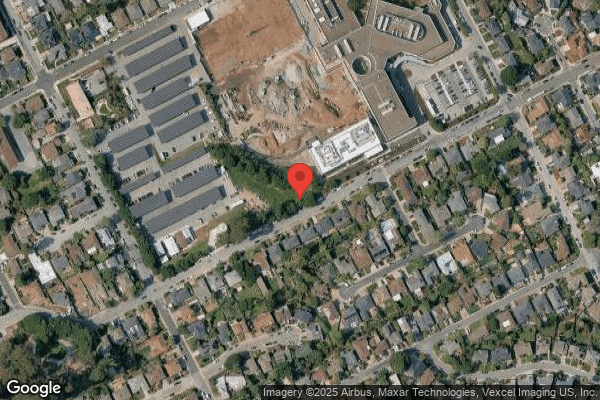
222 WEST 39TH AVENUE, SAN MATEO, CA 94403 (650) 573-3678
Government - County 345 Beds Independent Data: November 2025 3 Immediate Jeopardy citations
Trust Grade
0/100
#1102 of 1155 in CA
Last Inspection: July 2025

Inspected within the last 6 months. Data reflects current conditions.

Overview

San Mateo Medical Center D/P SNF has received a Trust Grade of F, indicating a poor performance with significant concerns about resident safety and care. Ranking #1102 out of 1155 facilities in California places it in the bottom half, and as the lowest-ranked facility in San Mateo County, families may want to consider other options. Although the facility is showing an improving trend, with the number of issues decreasing from 21 in 2024 to 14 in 2025, it still reported a concerning $152,052 in fines, which is higher than 79% of California facilities, suggesting repeated compliance problems. Staffing has a 3/5 rating, indicating average levels, but the facility has a good turnover rate of 0%, meaning staff are likely to be familiar with residents. However, serious incidents, such as failing to protect residents from sexual abuse and unsafe water temperatures leading to scalding risks, highlight significant weaknesses that families should carefully consider when researching this nursing home.

Trust Score
F
0/100
In California
#1102/1155
Bottom 5%
Safety Record
High Risk
Review needed
Inspections
Getting Better
21 → 14 violations
Staff Stability
○ Average
Turnover data not reported for this facility.
Penalties
○ Average
$152,052 in fines. Higher than 57% of California facilities. Some compliance issues.
Skilled Nurses
○ Average
Each resident gets 31 minutes of Registered Nurse (RN) attention daily — about average for California. RNs are the most trained staff who monitor for health changes.
Violations
⚠ Watch
62 deficiencies on record. Higher than average. Multiple issues found across inspections.
★☆☆☆☆
1.0
Overall Rating
★★★☆☆
3.0
Staff Levels
★★★☆☆
3.0
Care Quality
★☆☆☆☆
1.0
Inspection Score
Stable
2024: 21 issues
2025: 14 issues

The Good

  • Full Sprinkler Coverage · Fire safety systems throughout facility
  • No fines on record

Facility shows strength in fire safety.

The Bad

1-Star Overall Rating

Below California average (3.1)

Significant quality concerns identified by CMS

Federal Fines: $152,052

Well above median ($33,413)

Significant penalties indicating serious issues

The Ugly 62 deficiencies on record

3 life-threatening 8 actual harm
Jul 2025 14 deficiencies 1 IJ (1 affecting multiple)
CRITICAL (K) 📢 Someone Reported This

A family member, employee, or ombudsman was alarmed enough to file a formal complaint

Immediate Jeopardy (IJ) - the most serious Medicare violation

Accident Prevention (Tag F0689)

Someone could have died · This affected multiple residents

**NOTE- TERMS IN BRACKETS HAVE BEEN EDITED TO PROTECT CONFIDENTIALITY** Based on observation, interview, and record review, the facility failed to provide a safe environment free from potentially seri...

Read full inspector narrative →
**NOTE- TERMS IN BRACKETS HAVE BEEN EDITED TO PROTECT CONFIDENTIALITY** Based on observation, interview, and record review, the facility failed to provide a safe environment free from potentially serious accident hazards for all residents when its policies and procedures were not implemented for the following practices:1. The facility failed to ensure hot water in 6 of 8 residents' bathroom sinks were at a comfortable and safe temperature level.This deficient practice placed the residents (Residents 165, 187, and 259) at increased risk for scalding.An Immediate Jeopardy (IJ, a situation in which the provider's non-compliance with one or more requirements of participation has caused or is likely to cause serious injury, harm, impairment, or death to a resident) was declared at the [NAME] campus on 6/23/25 at 5:27 PM in the presence of the Administrator, Director of Nursing (DON), Regional Quality Management Consultants (RQMC), Assistant Chief Clinical Officer (ACCO), and [NAME] President of Operations (VPO) for the following deficient practice:Hot water temperatures were found to be between 121.6 F to 136.7 F in 6 of 8 sample rooms as evidenced by:a. room [ROOM NUMBER] = 132.2 Fb. room [ROOM NUMBER] = 136.0 Fc. room [ROOM NUMBER] = 136.7 Fd. room [ROOM NUMBER] = 121.6 Fe. room [ROOM NUMBER] = 131.9 Ff. room [ROOM NUMBER] = 130.5 F.On 6/24/25 at 10:38 AM, the facility submitted an unacceptable IJ Removal Plan (action to correct the deficient practices).On 6/24/25 at 2:36 PM, the facility submitted an unacceptable IJ Removal Plan #2.On 6/24/25 at 4:23 PM, the facility submitted an acceptable IJ Removal Plan #3.On 6/25/25 at 2:43 PM, the IJ was removed after the survey team validated onsite the IJ Removal Plan was implemented through observation, interview, and record review.2a. The facility failed to ensure safe smoking practices were followed when Resident 208 ignited her lighter inside the room while roommate (Resident 195) was actively receiving continuous supplemental oxygen.2b. The facility failed to implement their smoking policy and procedures (P&P) when it allowed five (5) of 14 residents (Resident 208, Resident 2, Resident 138, Resident 139, and Resident 81) who smoked in the facility to keep in possession of their own lighters and cigarettes inside the resident care area.These deficient practices posed an increased risk for combustion and/or fire, serious injury and/or death to residents, staff, and visitors.On 6/26/25 at 5:10 PM, an IJ was declared at the [NAME] campus in the presence of the Administrator, DON, RQMC, ACCO, and VPO for the following deficient practices:a. Without being prompted, Resident 208 ignited her lighter in the room while roommate (Resident 195) was actively receiving continuous oxygen at 2L(liters)/minute via nasal cannula. In addition, Resident 208 was in possession of three lighters and one opened pack of cigarettes.b. Resident and Staff interviews indicated, Resident 2, Resident 138, Resident 139, and Resident 81 were in possession of their own lighters and cigarettes.c. The facility failed to implement its smoking policy when it allowed Residents to keep in possession of their own lighters and cigarettes.On 6/27/25 at 11:13 AM, the facility submitted an unacceptable IJ Removal Plan.On 6/27/25 at 2:04 PM, the facility submitted an acceptable IJ Removal Plan #2.On 6/27/25 at 4:10 PM, the IJ was removed after the survey team reviewed and verified onsite the implementation of the IJ Removal Plan through observation, interview, and record review.3. The facility failed to ensure that one out of two sampled residents (Resident 898) receive adequate supervision to prevent elopement. This deficient practice resulted in Resident 898 eloping on 6/17/25 and putting Resident 898 at risk for serious injury or death.4. The facility failed to consistently implement effective interventions to prevent Resident 234 from elopement. This deficient practice resulted in Resident 234 eloping on 06/15/2025 and putting Resident 234 at risk for serious injury or death. Findings: 1. During an initial tour observation on 6/23/25 at 11:43 AM, in Residents' 195 and 208's room, while hand was held under running water in the bathroom sink faucet with hot and cold handles, the hot water was hot to touch. The bathroom was shared with Residents 1 and 214. During an initial tour observation on 6/23/25 at 11:57 AM, in Residents' 165 and 187's room, while hand was held under running water in the bathroom sink faucet with hot and cold handles, the hot water was hot to touch. During an initial tour observation on 6/23/25 at 1:05 PM, in Residents' 271 and 188's room, while hand was held under running water in the bathroom sink faucet with hot and cold handles, the hot water was hot to touch. The bathroom was shared with Resident 151. Resident 165 was admitted on [DATE] with diagnoses that included schizoaffective disorder (a mental health condition characterized by a combination of symptoms like hallucinations and delusions and mood disorder symptoms like depression or mania), cataract (a medical condition in which the lens of the eye becomes progressively opaque resulting in blurred vision), and glaucoma (a condition on increased pressure within the eyeball, causing gradual loss of sight). Resident 165's Minimum Data Set (MDS - an assessment tool), dated 5/14/25 indicated, vision and cognition were severely impaired. Resident 165's care plan for activities of daily living (ADL) indicated, .Date Initiated: 3/30/22 .Toilet Use: The resident is able to: ambulate to the bathroom (BR) on her own familiar to the location of the BR in her room and back . Resident 187 was admitted on [DATE] with diagnoses that included dementia (loss of memory, language, problem-solving and other thinking abilities that are severe enough to interfere with daily life), peripheral vascular disease (PVD - a slow and progressive circulation disorder affecting blood vessels in the arms and legs), and cognitive communication deficit (difficulties in communication arising from impairments in cognitive processes, rather than primary language or speech problems). Resident 187's MDS dated [DATE] indicated, cognition was moderately impaired, and resident can walk independently. Resident 187's ADL care plan indicated, .Toilet Use: The resident is able to transfer self to the BR .Revised on: 8/29/24 . Resident 259 was admitted on [DATE] with diagnoses that included cognitive communication deficit, Alzheimer's disease (a progressive brain disorder that gradually destroys memory and thinking skills, ultimately impacting the ability to carry out even simple tasks), and type 2 diabetes (a long-term condition in which the body has trouble controlling blood sugar and using it for energy). Resident 259's MDS dated [DATE] indicated, impaired vision, moderate cognitive impairment, can walk independently, and independent with ADLs. During an observation on 6/23/25 at 3:40 PM, with the MS, the hot water in the residents' bathroom sink faucet was turned on and ran for 10-15 seconds, then MS tested the hot water using the facility's thermometer. The hot water temperature for each of the following residents' rooms were room [ROOM NUMBER] = 132.2 °F, room [ROOM NUMBER] = 136.0 °F, room [ROOM NUMBER] = 136.7 °F, room [ROOM NUMBER] = 121.6 °F, room [ROOM NUMBER] = 131.9 °F, and room [ROOM NUMBER] = 130.5 °F. During an interview on 6/23/25 at 4:00 PM, the MS said that random bathroom water temperature check was done each day. MS stated, Anything over 120 °F is too hot. Review of facility's undated policy titled Water Temperatures indicated, .The Facility ensures water is maintained at temperatures suitable to meet residents' needs. Tap water in the Facility is maintained within a temperature range to prevent scalding of residents. Procedure: I. Water heaters that service resident rooms, bathrooms, common areas, and tub/shower areas are set to temperatures of no more than 120 °F (49 °C) . 2a. The list of smokers provided by the facility dated 6/23/25 indicated, there were 14 residents who smoke in the facility (Resident 208, 2, 138, 139, 81, 116, 57, 140, 5, 241, 263, 285, 58, and 182). During an observation on 6/26/25 at 10:27 AM, a “No Smoking Oxygen In Use sign was posted by the door of Resident 208 and Resident 195’s room. Resident 208’s roommate (Resident 195) was observed lying in bed receiving oxygen at two (2) liters per minute via a nasal cannula (NC, thin flexible tube with small prongs inserted into the nostrils). During an interview on 6/26/25 at 10:28 AM, Resident 208 stated the facility allowed her to smoke in the designated smoking area with staff supervision during smoking hours. When asked where she keeps her smoking materials, Resident 208 stated, “15 cigarettes are in the locked box in the utility room. [Staff Name] from Activities keeps them. But I keep [five] 5 cigarettes with me.” Resident 208 added, “I have a collector’s item lighter that I keep.” During concurrent observation and interview on 6/26/25 at 10:32 AM, in Resident 208’s room, without being prompted, Resident 208 opened the left bedside drawer and took out two (2) objects. Resident 208 showed a brown, pen shaped object with a skull design on one end and a silver, square shaped object with engraved letters on one side. Resident 208 identified the two objects as lighters and stated that she keeps these “two collector’s item lighters” in her possession. After showing the two lighters, Resident 208 suddenly removed the skull shaped part and without being prompted, ignited the lighter which sparked and produced a small yellow/orange flame. Furthermore, Resident 208’s roommate (Resident 195) was on the other bed actively receiving oxygen at 2 liters per minute via a nasal cannula. Review of Resident 195’s “Order Review History Report” for 6/1/25 to 6/30/25, indicated an order to administer “Oxygen 2L/min (liters per minute) via NC continuous to keep O2 Sat (oxygen saturation, amount of oxygen that’s circulating the blood) at/above 92 % (percent, a unit of proportion) for low oxygen every shift related to chronic respiratory failure (occurs when the lungs can't adequately oxygenate the blood or remove carbon dioxide, leading to long-term breathing difficulties) with hypoxia (low levels of oxygen in your body tissues). During a follow up interview on 6/26/25 at 10:42 AM, Resident 208 stated that she was informed of the “rules for smoking” six months ago. During an observation on 6/26/25 at 10:46 AM, in resident’s room, Resident 208 showed the brown and silver colored (collector’s item) lighters and without being prompted, Resident 208 ignited again the pen shaped lighter which immediately sparked. Further observation and interview on 6/26/25 at 10:48 AM, in Resident 208’s room, Resident 208 stated that she keeps some cigarettes and a disposable lighter in her possession because staff are not available at times to provide their smoking materials. During concurrent observation, Resident 208 took something out from the side of her wheelchair next to her bed and showed an opened cigarette pack. Resident 208 then opened the cigarette pack and showed the contents which included a few cigarettes sticks and a pink disposable lighter that had the last four letters of Resident 208’s name. Review of Resident 208’s admission record indicated, was admitted on [DATE] with diagnoses including nicotine dependence (an addiction to tobacco products caused by the drug nicotine), mild cognitive impairment (a condition in which people have more memory or thinking problems than other people their age), fracture of unspecified part of neck of right femur (refers to a broken bone in the neck of the right thigh bone, where the exact location of the fracture within the neck is not specified), presence of left artificial hip joint (indicates a hip replacement surgery where the damaged or diseased parts of the left hip joint have been replaced with artificial components, typically made of metal, ceramic, and/or plastic), and muscle weakness. Review of Resident 208's Minimum Data Set (MDS, a federally mandated resident assessment tool) assessment, dated 5/26/25, indicated no cognitive impairment. Under the Active Diagnoses section of the MDS assessment indicated, Resident 208’s active diagnoses included nicotine dependence, psychotic disorder (a group of serious mental illnesses characterized by psychosis, a condition where a person has difficulty distinguishing between what is real and what is not), and mild cognitive impairment. Review of Resident 208’s “Smoking and Safety” assessment dated [DATE], indicated, “Resident is not consistent with following smoking times. Spoke with resident again and reiterated rules and regulations of smoking protocol.” Resident 208’s “Smoking and Safety” assessment did not indicate Resident 208 was safe to have smoking materials in her possession. Furthermore, the assessment did not address the “Smoking Care Planning” section. Review of Resident 208’s smoking care plan revised on 12/2/24 indicated, individualized plan for safe use and storage of smoking materials was not addressed. Further review of Resident 208’s clinical record indicated, Resident 208 acknowledged and signed a copy of the facility’s “Smoking Policy” on 3/5/25. Review of the facility’s policy and procedures titled “Oxygen Therapy”, revised 11/2017, indicated, “Oxygen is administered under safe and sanitary conditions to meet resident needs … II. A. No smoking signs will be prominently displayed wherever oxygen is being stored or administered. B. Smoking is not allowed near where the oxygen is being stored or administered …” 2b. During an observation on 6/26/25 at 11:40 AM, in Resident 548 and Resident 2’s room, CNA 4 was attending to Resident 548 who was sitting on the bed receiving oxygen at 2 L/min via a nasal cannula. Resident 548’s roommate (Resident 2) was not in bed. During further observation, Resident 2 had an oxygen concentrator attached to an oxygen tubing next to her bed. During an interview on 6/26/25 at 11:41 AM, CNA 4 stated Resident 2 was out for an appointment and confirmed that Resident 2 uses the oxygen concentrator next to her bed whenever she’s in bed/room. CNA 4 also confirmed Resident 2 was an active smoker in the facility. CNA 4 stated that Resident 2 usually goes out to smoke with supervision and always keeps her smoking materials in her pocket. Review of Resident 548’s Order Review History Report for 6/1/25 to 6/30/25, indicated an order to administer Oxygen at 2L/min via nasal cannula to keep O2 Sat at/above 92% continuous for COPD (Chronic Obstructive Pulmonary Disease, a group of lung diseases that block airflow and make it difficult to breathe) / CHF (Congestive Heart Failure, a chronic condition in which the heart doesn't pump blood as well as it should). Review of Resident 2’s admission record indicated, was admitted on [DATE] with diagnoses including asthma (a chronic respiratory disease that affects the airways in the lungs, causing them to become inflamed and narrowed, making it difficult to breath), heart failure, and seizure disorder (abnormal electrical activity in your brain). Review of Resident 2’s Order Review History Report for 6/1/25 to 6/30/25, indicated an order to administer Oxygen at 2L/min via nasal cannula for mild SOB (shortness of breath) as needed. During concurrent observation and interview on 6/26/25 at 11:43 AM, Resident 81 was lying in bed, alert and oriented. Resident 81 stated he smokes in front of the building and keeps his cigarettes and lighter with him in the room. Resident 81 further stated, “I don’t give it to the nurse. I want it with me. It’s easier.” During an observation on 6/26/25 at 11:44 AM, Resident 138 was sitting in his wheelchair outside his room watching on a computer tablet. Resident 138 agreed for interview and went inside his room. During concurrent observation and interview at 11:45 AM, in the resident’s room, Resident 138’s bedside (top) drawer was unlocked and slightly opened. Resident 138 stated he keeps the lighter and cigarettes in his possession and was saying, “here, there”, while pointing to his pocket and to the unlocked bedside (top) drawer. Resident 138 refused to open and check the bedside drawer. During an interview on 6/26/25 at 11:47 AM, Certified Nursing Assistant (CNA) 3 stated, Resident 138 had a lighter and cigarettes kept in his pocket and bedside drawer. CNA 3 also stated that residents’ smoking materials were stored in the Activities Department. CNA 3 further stated that residents should not keep smoking materials in the room for safety reasons. During an interview on 6/26/25 at 11:48 AM, CNA 5 stated, residents should not keep cigarettes or lighters in their rooms and that she would report to the nurse immediately when she finds them in a resident’s room. During an interview on 6/26/25 at 11:54 AM, Resident 139 stated she smokes and vapes occasionally, and that she keeps her cigarettes and lighter in her fanny pack at all times. Resident 139 also stated, she is aware of the facility’s smoking policy which includes safe storage of smoking materials. Review of the facility’s undated “Smoking Policy” acknowledgement form indicated, “… 8. All residents that smoke will have their smoking materials (lighter, cigarettes, e-cigs [electronic cigarettes], etc.) kept in a safe place at Nursing Stations . 10. No resident is allowed to keep any smoking materials in their room . 14. Residents whether it is traditional tobacco cigarettes, pipes, cigars, or electronic (e-cigarettes) cigarettes are governed by this policy.” 3. During an interview on 07/02/2025 at 1:13 PM, with the Administrator, stated Resident 898 was found approximately 3 to 4 hours after Resident 898 was found missing from the facility on 06/17/2025 at 5:15 PM. Code Purple alarm was activated at the facility when Resident 898 was discovered to be missing, which involved an announcement of Code Purple through the overhead paging system (a system that allows a person to speak into a microphone and have their voice broadcast through speakers located throughout the facility). The facility defines Code Purple to mean a resident left the facility without the expectation for leaving the facility or supervision.During an interview on 07/02/2025 at 1:31 PM with the Director of Staff Development (DSD), Resident 898 had exit seeking behavior in the past.During an interview on 07/02/2025 at 2:18 PM with the Director of Nursing (DON), Resident 898 had a wander guard (a special bracelet worn by residents at risk for wandering and elopement, that alerts facility staff when resident leaves a safe area defined by the facility) in place prior to the elopement. During concurrent observation and interview on 07/02/2025 at 10:09 AM with Resident 898, Resident 898 was unable to remember the elopement. Resident 898 was also unable to correctly state the day of the week or current city. Resident 898 had difficulty stating names of siblings. Resident 898 was wearing both an identification wrist band on the right wrist and a wander guard wrist band on the left wrist. During a review of Progress Note entitled Communication with Physician and dated 06/17/2025 at 18:26 for Resident 898, the situation described was, Resident eloped from the facility. The background described is, Resident has a history of elopement and wandering. A recommendation that was made was, Send resident to [emergency room] ER if or when he returns to the facility to be evaluated.During an interview on 07/03/25 at 10:54 AM with the DON, Resident 898 was admitted to the facility on [DATE] for dementia and worsening mental status. Resident 898 was evaluated for elopement risk on 06/02/2025 and was determined to be at risk for elopement with a score of 6 out of 10. Resident 898 was evaluated again for elopement risk on 06/17/2025 and was determined to be at risk for elopement with a score of 6 out of 10, with no change in the elopement risk score. The higher the elopement risk score the higher the risk for elopement. The DON stated the facility has cameras in the hallway, but the facility was unable to identify Resident 898 on any of the camera recordings on the day of the elopement 06/17/2025. During a record review of Elopement Evaluations dated 06/02/2025 and 06/17/2025 did not reveal a specific total score for each evaluation. Both documents note, Score value of 1 or higher indicates Risk of Elopement. Elopement Evaluation for 06/02/2025 at 21:26 has 6 marked questions as yes answers from a total of 10 questions. Elopement Evaluation for 06/17/2025 at 17:40 has 3 marked questions yes answers from a total of 10 questions. The questions answered yes for the Elopement Evaluation for 06/02/2025 include the following: Does the Resident have a history of elopement or an attempted elopement while at home; Does the resident have a history of elopement or attempted leaving the facility without informing staff; Has the Resident verbally expressed the desire to go home, packed belongings to go home or stayed near an exit door; Does the Resident wander?; Is the wandering behavior a pattern, goal-directed (i.e. specific destination in mind, going home etc.; and, Is the Resident's wandering behavior likely to affect the safety or well-being of self/others. The questions answered yes for the Elopement Evaluation for 06/17/2025 include the following: Does the resident have a history of elopement or attempted leaving the facility without informing staff; Does the Resident wander?; and, Is the wandering behavior a pattern, goal-directed (i.e. specific destination in mind, going home etc.). During a record review of the Medication Administration Record (MAR) for June 2025 shows 3 separate orders for, Check placement of wander guard . with different stop and start dates. The order to Check placement of wander guard every shift is it in place, Yes or No? with start date of 06/10/2025 to 06/12/2025 is marked as completed for 2 days in June, 06/10/2025 and 06/11/2025. The order to, Check placement of wander guard on left wrist every shift is it in place, Yes or No? with start date of 06/14/2025 and no stop date is marked as completed for Day, Evening, and Night shifts from 06/15/2025 to 06/30/2025, and marked as completed for Evening and Night shift for 06/14/2025. The order to, Check placement of wander guard every shift for wanderer is it in place, Yes or No? with start date 06/02/2025 and end date of 06/10/2025 is marked completed for Day, Evening, and Night shifts for 06/03/2025 to 06/09/2025 and marked completed for Night shift only for 06/02/2025. During an interview on 07/03/25 at 1:38 PM with ADON 2, Resident 898's reason for admission to the facility was because Resident 898's caregiver was in the hospital. Resident 898 was found wandering around the vicinity of the caregiver's hospital and identified by police. Resident 898 was evaluated by Hospital 1 and later transferred to the facility for care, while Resident 898's caregiver was hospitalized and unable to care for Resident 898. During a record review of Discharge Summary from CPMC Mission [NAME] Campus dated 06/02/2025, Resident 898's principal problem is AMS (altered mental status) with active problems including, wandering behavior due to dementia, schizophrenia. During a record review of Physical History and Physical (H&P) dated 06/02/2025, the main reason Resident 898 had been admitted to Hospital 1 for 8 days, from 05/25/25 to 06/02/25, was because of AMS and family is unable to care for Resident 898.During a record review of Progress Note dated 06/17/2025 at 10:56 PM, Resident 898 was returned to the facility by [NAME] Police Department and there was no mention of injuries or where Resident 898 had been found. Pickup of Resident 898 was requested by Royal Ambulance. Resident 898 was picked up from the facility at 10:50 PM and taken to a Hospital 2 for evaluation. During a record review of Care Plan Report with no date, notes one of Resident 898's care plan focuses is an elopement risk/wanderer r/t [related to] Impaired safety awareness, cognitive impairment, history of elopement initiated on 06/03/2025 by ADON 2.During a record review of facility procedure entitled P-AP17 Wandering and Elopement and with revision date 01/31/2023, defines elopement as a behavior that may lead to the resident leaving the facility unsupervised and/or without permission. The procedure notes that if Facility Staff observes a resident leaving the premises unaccompanied or without having followed proper procedures, he/she may: a. Try to prevent the departure in a courteous manner. b. Get help from other Facility Staff in the immediate vicinity, if necessary. c. If the resident exits the facility despite efforts to stop the resident, a staff member will accompany or follow the resident to ensure the resident's safety until assistance arrives. 4. Review of Resident 234's records, titled RESIDENT INFORMATION, printed on 07/01/2025, indicated she had multiple diagnoses including: alcohol abuse (an impaired ability to stop/control alcohol use despite adverse consequences), .alcohol -induced persisting amnestic disorder (severe memory loss associated with chronic alcohol abuse), abnormal walking pattern, anxiety disorder (a mental disorder associated with excessive worry, fear, or nervousness that interferes with daily life), delusional disorder (a mental disorder when one cannot tell what is real from what is imaginary), and history of falls. During an interview on 07/01/2025 at 11:40 AM, CNA 1 stated she has cared for Resident 234 for 2-3 years. CNA 1 stated Resident 234 was very .forgetful, she is always trying to find her husband, constantly asking staff how to get a hold of her husband. She doesn't remember her husband passed away two years ago. CNA 1 stated Resident 234 has a history of trying to get out (elope). To keep her from elopement, CNA 1 stated she tries to distract (Resident 234) to activity (and Resident 234) wears a wanderguard. Wanderguard: a bracelet type device that activates an audible alarm when a resident is approaching an exit. Review of Resident 234's record titled Elopement, dated 07/10/2024, indicated Resident 234 eloped from the facility At .(1:15 PM, nurses were) alerted by staff that .(Resident 234) was seen exiting the facility .staff did a search of the facility and unable to locate her.[NAME] .(police department was) . contacted and a missing persons report filed. The document indicated Resident 234 was found 2 hours and 35 minutes later approximately 1 mile away from the facility. During a concurrent interview and record review on 06/26/2025 at 10:18 AM with LVN 1, review of the facility's daily log communication between shifts on the facility's computer (not titled), indicated Resident 234 Eloped on 06/15 at around 7:30 pm, went out on the street. LVN 1 was asked to search Resident 234's record for any documentation regarding this elopement. LVN 1 was unable to find any documentation in Resident 234's medical records regarding this elopement. During an interview on 07/02/2025 at 10:09 AM, CNA 2 stated Resident 234 was a high elopement risk because she .wanders around the facility she very active . We really need to keep an eye on her. she always says I need to go home. Things like that. We always keep an eye on her. CNA 2 stated on 06/15/2025, she does not . remember the exact time around break time so I was at the break room eating .(when)one of my co-workers called me that she saw .(Resident 234) outside so I ran out of the break room .ran out of the building .and we saw.(Resident 234) across . the road . On 07/01/2025 at 3:20 PM, the Registered Nurse Supervisor (RNS1) and the Director of Nursing (DON) were interviewed regarding Resident 234's elopement on 06/15/2025. The RNS 1 and the DON searched Resident 234's records and confirmed there was no documentation regarding the elopement. The DON stated her expectations were staff would initiate a change of condition charting, notify the responsible party, physician, ombudsman and CDPH (California Department of Public Health). The DON stated she expected staff to conduct an investigation to identify potential weakness in the facility's so the facility could put interventions in place to prevent Resident 234 from elopement. Review of the facility's policy titled Wandering and Elopement, Revised on 01/31/2023, indicate .Elopement - A behavior that may lead to the resident leaving the facility unsupervised and/or without permission. When the resident who eloped returns to the Facility, the Licensed Nurse should: i. Assess the resident for possible injuries, changes of condition and vital signs. ii. Notify the Attending Physician of the return of the resident and the result of the exam; and iii. Notify the resident's responsible party of the return of the resident and the result of the exam. iv. Upon return the Licensed Nurse will implement immediate interventions to prevent further elopement of the resident and update the plan of care. b. The Interdisciplinary Team as part of the investigation will conduct a post elopement meeting to determine if alternate prevention measures can be put in place (activities, rehab, etc.) and if necessary, determine if the resident can safely remain in the facility. c. If the resident cannot be safely kept in the facility the Interdisciplinary team will discuss with the physician and responsible party/surrogate decision maker, the transfer of the resident to a safe environment.
CONCERN (D)

Potential for Harm - no one hurt, but risky conditions existed

Deficiency F0554 (Tag F0554)

Could have caused harm · This affected 1 resident

**NOTE- TERMS IN BRACKETS HAVE BEEN EDITED TO PROTECT CONFIDENTIALITY** Based on observation, interview, and record review, the facility failed to appropriately administer medications when one of 35 s...

Read full inspector narrative →
**NOTE- TERMS IN BRACKETS HAVE BEEN EDITED TO PROTECT CONFIDENTIALITY** Based on observation, interview, and record review, the facility failed to appropriately administer medications when one of 35 sampled residents (Resident 33) was self-administering prescribed oral medications without being appropriately assessed and approved for self-administration. This failure had the potential to place Resident 33 at risk for adverse health reactions like aspiration (choking, the accidental inhalation of food, liquid, or other material into the lungs) from improperly administered medication.Review of Resident 33's admission Record, indicated Resident 33 was readmitted to the facility on [DATE] with diagnoses including thrombosis (a blood clot, usually in the leg, which can cause swelling, pain, and redness), hypertension (high blood pressure) and dysphagia (difficulty swallowing).Review of Resident 33's Minimum Data Set (MDS -a federally mandated resident assessment tool), dated 5/21/25, indicated Resident 33 had a Brief Interview for Mental Status (BIMS, MDS tool that measures resident cognition) score of 15 which reflects intact cognitive function.During an observation on 6/24/25 at 9:05 AM, Resident 33 had an unlabeled transparent medicine cup containing six pills and one capsule placed on the overbed table, with no facility staff or nurses nearby to supervise or observe oral medication administration.During a concurrent observation and interview on 6/24/25 at 9:10 AM, Resident 33 was observed coughing. When Resident 33 was asked about the specific medications found in the overbed table, Resident 33 stated, There are seven here. A couple of them are for high blood pressure and vitamin B12, and expressed uncertainty about the remaining oral medications.During a concurrent observation and interview on 6/24/25 at 9:14 AM in Resident 33's room, License Vocational Nurse (LVN) 1 acknowledged an unlabeled transparent medicine cup containing seven oral medications. The medications were identified as follows: tamsulosin (used to treat signs and symptoms of benign prostatic hyperplasia [BPH, men's urinary problem]), benazepril (used to treat high blood pressure), metoprolol (used to treat high blood pressure and chest pain), and Eliquis (a blood thinner used to treat and prevent blood clots and stroke). LVN 1 expressed uncertainty about the remaining oral medications. When asked about the expectations during medication administration, LVN 1 stated, the expectation is to ensure the resident takes all his medications before leaving the room. During a concurrent interview and record review on 7/2/25 at 9:39 AM with the Assistant Director of Nursing (ADON) 1, Resident 33's electronic health record was reviewed. The record indicated the facility had not conducted an assessment to determine whether Resident 33 was capable and appropriate to self-administer oral medications. There was no physician's order authorizing Resident 33 to self-administer oral medications, and neither a care plan nor interdisciplinary team (IDT) notes indicated Resident 33 can safely self-administer oral medications, despite being observed doing so. When asked about the expectations for licensed nurse during medication administration, the ADON 1 stated, the licensed nurse should watch the resident take all the medication, and should not leave it at bedside before leaving the room.Review of the facility's policy and procedure (P&P), titled, Medication - Self Administration, revised January 1, 2012, indicated, .The Facility will allow a resident to self-administer medications when determined capable to do so by the IDT and the resident's Attending Physician .
CONCERN (D)

Potential for Harm - no one hurt, but risky conditions existed

Deficiency F0605 (Tag F0605)

Could have caused harm · This affected 1 resident

**NOTE- TERMS IN BRACKETS HAVE BEEN EDITED TO PROTECT CONFIDENTIALITY** Based on interview and record review, the facility failed to ensure one of six sampled residents (Resident 53) was free from unn...

Read full inspector narrative →
**NOTE- TERMS IN BRACKETS HAVE BEEN EDITED TO PROTECT CONFIDENTIALITY** Based on interview and record review, the facility failed to ensure one of six sampled residents (Resident 53) was free from unnecessary psychotropic medications (drugs that affect brain activities associated with mental processes and behavior) when the order for Lorazepam (medication used to treat anxiety) PRN (as needed) did not have a stop date.This deficient practice had the potential for Resident 53 to receive unnecessary psychotropic medication, be exposed to adverse health consequences from the medication, which could negatively impact the resident's mental, physical, and psychosocial well-being.Resident 53 was admitted on [DATE] with diagnoses that included cerebral infarction (also known as ischemic stroke, a medical condition where a part of the brain is damaged due to a lack of blood supply), hemiplegia (paralysis on one side of the body) and hemiparesis (condition characterized by weakness on one side of the body). Resident 53 was in hospice care.Review of Resident 53's Order Review History Report for the month of June 2025 indicated, .Lorazepam Oral Tablet 0.5 mg (milligram) Give 1 tablet via G-tube (gastrostomy tube - tube inserted through the belly that brings nutrition, fluids, and medications directly to the stomach when oral intake is insufficient) every 6 hours as needed for restlessness and anxiety.Order Start Date 5/55/25. The order did not have an end date.Review of Resident 53's Medication Administration Record for June 2025 indicated, .Lorazepam Oral Tablet 0.5 mg. was administered on 6/7/25 at 4:46 PM.Review of Resident 53's Consultant Pharmacist's Medication Regimen Review (MRR) dated 6/28/25 indicated, .Patient is currently on PRN (as needed) Lorazepam since 5/15/25.the use of PRN psychotropics should be limited to 14 days in all but rare cases where therapeutic benefit outweighs risk. If patient must continue on the PRN psychotropic medication, the prescriber must clearly document rationale and indicate the duration of time the patient is to be on this PRN medication.During a concurrent interview and record review on 7/2/25 at 10:09 AM, with Licensed Vocational Nurse (LVN) 4, Resident 53's physician orders were reviewed. LVN 4 said Resident 53 had an order for Lorazepam 0.5 mg 1 tablet via G-tube every 6 hours as needed for restlessness and anxiety with a start date of 5/15/25 and indefinite as end date.During a concurrent interview and record review on 7/3/25 at 10:09 AM, with the Consultant Pharmacist (CP), Resident 53's physician orders were reviewed. For psychotropic medications, CP said PRN medications are recommended for 14 days and should be renewed after. CP stated, They haven't changed the order yet. They have to renew the date, not indefinite.During a concurrent interview and record review on 7/3/25 at 1:29 PM, with the Director of Nursing (DON), Resident 53's physician orders were reviewed. The DON acknowledged that there was no end date on Resident 53's order for PRN Lorazepam, and stated, For psychotropic medications ordered PRN, it's good for 14 days, and renewed after physician review. It's more than 14 days.Review of facility policy titled Behavior/Psychoactive Medication Management dated 5/22/25, indicated, .5. Any Psychoactive Medication ordered on an as necessary (prn) basis, must be ordered not to exceed 14 days. If the physician feels the medication needs to be continued, he/she must document the reason(s) for the continued usage and write the order for the medication; not to exceed a 90-day time frame.
CONCERN (D) 📢 Someone Reported This

A family member, employee, or ombudsman was alarmed enough to file a formal complaint

Potential for Harm - no one hurt, but risky conditions existed

Investigate Abuse (Tag F0610)

Could have caused harm · This affected 1 resident

Based on interview and record review, the facility failed to conduct a thorough investigation into an allegation of sexual abuse between Resident 116 and Resident 223, 2 of 8 sample residents with all...

Read full inspector narrative →
Based on interview and record review, the facility failed to conduct a thorough investigation into an allegation of sexual abuse between Resident 116 and Resident 223, 2 of 8 sample residents with allegations of abuse. Failure to thoroughly investigate an allegation of abuse did not ensure other residents were protected from abuse.Findings: Review of a facility's document titled Re: Five (5) Days Summary of Investigation, dated 05/30/2025, indicated .On 05/27/2025; .(Resident 223) told the receptionist on duty .that his male friend .(Resident 116) went to his room to visit him.However, this time on his visit, .(Resident 116) showed his private part(penis) and asked .(Resident 223) to touch it. On 06/26/2025 at 09:00 AM the Director of Nursing (DON) was asked to provide all documents regarding the facility's investigation into this allegation. Review of the documents requested, not titled and not dated, indicated the facility interviewed and assessed both Residents 116 and Resident 223. There was also a statement made by Activity Staff 1 (AS 1) who witnessed the alleged incident. Review of the AS 1's statement, dated 05/27/2025, indicated I went to do my rounds in the morning 5/27/2025 and I went to .(Resident 223's room) .as I walked in the room I saw .(Resident 116) inside .(Resident 116) attempted to pull his zipper down, I immediately told .(Resident 116) 'you are not supposed to be in his room.' Then .(Resident 116) left and went outside. I didn't see his .(genitals) exposed or out for that matter.On 07/02/2025 at 10:37 AM, the Administrator and the DON were interviewed about how they would conduct a thorough investigation into allegations of abuse. The Administrator stated we interview .staff and interview the other license nurses .DON .go look at the resident.we interview the previous shift go back 3 days .(if we have to,) we go further. We interview family, we check the environment in the resident room. If . (residents are) not interviewable then we interview staff or family. When asked what the facility would do if a resident was not interviewable and had no family. Both the DON and Administrator stated it sounds reasonable staff would then conduct body checks for defensive bruising, bruising/trauma around the private areas. Additionally, during these investigations, staff could assess these non-interviewable residents for changes in behavior: crying for no reason, insomnia, change in appetite, social withdrawal etc. The DON and Administrator were made aware, there was no evidence other residents in the area were assessed and/or interviewed during this investigation.Review of the facility's policy titled Abuse Prevention and Management, revised on 05/30/2024, indicated .Reports of resident abuse, mistreatment, neglect, exploitation, injuries of an unknown source, and any suspicion of crimes are promptly reported and thoroughly investigated. When the Administrator or designated representative receives a report of an allegation of resident abuse, mistreatment, neglect, abuse facilitated or enabled by technology, exploitation or injuries of an unknown source, or suspicion of a crime, the Administrator or designated representative, will initiate an investigation immediately.6. Immediate Actions .The administrator or designated representative conducting the investigation will interview individuals who may have information relevant to the allegation or suspected crime. i. Witnesses include but are not limited to the resident, witnesses to the incident, other residents under the care of the staff member involved, roommates, family, visitors, etc. Review of the facility's abuse policy indicated there was no language directing staff how to conduct a thorough investigation when a resident was not interviewable and/or has no family member/responsible party.
CONCERN (D)

Potential for Harm - no one hurt, but risky conditions existed

Comprehensive Assessments (Tag F0636)

Could have caused harm · This affected 1 resident

**NOTE- TERMS IN BRACKETS HAVE BEEN EDITED TO PROTECT CONFIDENTIALITY** Based on interview and record review, the facility failed to ensure the annual Minimum Data Set (MDS, a federally mandated resid...

Read full inspector narrative →
**NOTE- TERMS IN BRACKETS HAVE BEEN EDITED TO PROTECT CONFIDENTIALITY** Based on interview and record review, the facility failed to ensure the annual Minimum Data Set (MDS, a federally mandated resident assessment tool) assessment was completed within the required period of 14 calendar days from the Assessment Reference Date (ARD, specific endpoint for the look-back periods in the MDS assessment process) for one of 35 sampled residents (Resident 165).Failure to complete a comprehensive resident assessment within the required timeframe could result in delayed identification of needs and significant issues that may affect the physical, mental, and psychosocial well-being of Resident 165.Review of Resident 165's admission record indicated, was admitted to the facility on [DATE]. Review of Resident 165's annual MDS assessment with an ARD of 5/14/25, indicated, the assessment was signed as complete by the Registered Nurse (RN) Assessment Coordinator on 6/2/25, 19 days after the ARD. During a concurrent record review and interview on 7/3/25 at 4:07 PM, the MDS Coordinator (MDSC) reviewed Resident 165's annual MDS assessment with an ARD of 5/14/25 and confirmed the assessment was completed late. The MDSC stated, Resident 165's annual MDS assessment should have been completed and signed on 5/28/25. According to the Long-Term Care Facility Resident Assessment Instrument 3.0 User's Manual Version 1.19.1, dated October 2024, indicated, .The OBRA (Omnibus Budget Reconciliation Act of 1987) regulations require nursing homes that are Medicare certified, Medicaid certified or both, to conduct initial and periodic assessments for all their residents . The Annual assessment is a comprehensive assessment for a resident that must be completed on an annual basis (at least every 366 days) unless an SCSA (Significant Change in Status Assessment) or an SCPA (Significant Correction to Prior Comprehensive) has been completed since the most recent comprehensive assessment was completed. Its completion dates (MDS/CAA(s)/care plan) depend on the most recent comprehensive and past assessments' ARDs and completion dates . The MDS completion date (item Z0500B) must be no later than 14 days after the ARD (ARD + 14 calendar days) .
CONCERN (D)

Potential for Harm - no one hurt, but risky conditions existed

Deficiency F0637 (Tag F0637)

Could have caused harm · This affected 1 resident

**NOTE- TERMS IN BRACKETS HAVE BEEN EDITED TO PROTECT CONFIDENTIALITY** Based on interview and record review, the facility failed to complete a Significant Change in Status Assessment (SCSA - a compre...

Read full inspector narrative →
**NOTE- TERMS IN BRACKETS HAVE BEEN EDITED TO PROTECT CONFIDENTIALITY** Based on interview and record review, the facility failed to complete a Significant Change in Status Assessment (SCSA - a comprehensive assessment for a resident that must be completed when the IDT has determined that a resident meets the significant change guidelines for either major improvement or decline) for one of one sampled resident (Resident 53) when Resident 53 was admitted for hospice services.This failure could potentially delay the provision of appropriate treatment and services for Resident 53.Resident 53 was admitted on [DATE] with diagnoses that included cerebral infarction (also known as ischemic stroke, a medical condition where a part of the brain is damaged due to a lack of blood supply), hemiplegia (paralysis on one side of the body), and hemiparesis (condition characterized by weakness on one side of the body).During a concurrent interview and record review on 7/2/25 at 9:48 AM, with the MDS Coordinator (MDSC), Resident 53's Minimum Data Set (MDS - a resident assessment tool) with Assessment Reference Date (ARD - specific endpoint for the look-back periods in the MDS assessment process) of 1/10/25 was reviewed. MDSC confirmed that Resident 53 was admitted for hospice care on 12/23/24. According to the MDSC, a significant change assessment in the MDS was required to be completed 14 days after Resident 53 was admitted to hospice care. MDSC stated, It's late because it's not within the 14 days. We didn't know patient was on hospice.Review of Long-Term Care Facility Resident Assessment Instrument 3.0 User's Manual, dated October 2024, indicated, .The OBRA (Omnibus Budget Reconciliation Act of 1987) regulations require nursing homes that are Medicare certified, Medicaid certified or both, to conduct initial and periodic assessments for all their residents . An SCSA is required to be performed when a terminally ill resident enrolls in a hospice program and remains a resident at the nursing home. The ARD must be within 14 days from the effective date of the hospice election.This is to ensure a coordinated plan of care between the hospice and nursing is in place.
CONCERN (D)

Potential for Harm - no one hurt, but risky conditions existed

Deficiency F0658 (Tag F0658)

Could have caused harm · This affected 1 resident

Based on observation, interview, and record review, the facility failed to ensure safe medication administration for one of five residents (Resident 182) when Licensed Vocational Nurse (LVN) 1 did not...

Read full inspector narrative →
Based on observation, interview, and record review, the facility failed to ensure safe medication administration for one of five residents (Resident 182) when Licensed Vocational Nurse (LVN) 1 did not observe Resident 182 take his medication after leaving one prescription medication on the overbed table with the presence of an ambulatory roommate. The deficient practice resulted in a medication error for Resident 182; and may result in medication error and/or adverse health reactions when taken by the roommate. During medication pass observation on 7/2/25 at 9:20 AM, LVN 1 prepared fifteen (15) medications for Resident 182 including ClearLax Polyethylene Glycol 3350 Powder for Solution (used to treat occasional constipation). LVN 1 filled the measuring cap (purple bottle cap/cover) up to the rim which was above the 17 grams (g) mark (or line) and poured it in a cup with seven (7) ounces of water. During concurrent interview, LVN 1 was not aware of the 17 g mark/line inside the cap and stated that 17 g of the ClearLax was measured up to the rim of the cap. Review of Resident 182's Order Review History Report for 6/1/25 to 6/30/25 indicated, an order to administer Polyethylene Glycol Powder Give 17 gram by mouth one time a day for constipation mix with 4-8 oz (ounces) of water. Review of the product label and manufacturer's directions for ClearLax Polyethylene Glycol 3350 Powder for Solution Osmotic Laxative, indicated, Directions do not take more than directed unless advised by your doctor the bottle top is a measuring cap marked to contain 17 grams of powder when filled to the indicated line (white section in cap). fill to top of white section in cap which is marked to indicate the correct dose (17 g). During the administration of medication, Resident 182 took a few sips of the ClearLax then placed the cup on the overbed table in front of him. On 7/2/25 at 9:54 AM, LVN 1 administered the last medication and left Resident 182 with the ClearLax mixture on the overbed table. Resident 182's roommate was observed walking inside the room. During an observation on 7/2/25 at 10:04 AM, Resident 182 left the room to go to therapy with the ClearLax mixture left on the overbed table with the roommate present in the room. During a follow-up interview on 7/2/25 at 10:05 AM, LVN 1 acknowledged she left the ClearLax in Resident 182's overbed table and stated, she needs to observe the resident take the medications. During concurrent observation, LVN 1 took the ClearLax mixture from the overbed table and discarded it. During an interview on 7/2/25 at 2:58 PM, the Director of Nursing (DON) stated the nurse should check and observe if all medications were taken by the resident. The DON also stated the nurse was not supposed to leave the medication at the bedside.
CONCERN (D)

Potential for Harm - no one hurt, but risky conditions existed

Incontinence Care (Tag F0690)

Could have caused harm · This affected 1 resident

**NOTE- TERMS IN BRACKETS HAVE BEEN EDITED TO PROTECT CONFIDENTIALITY** Based on observation, interview, and record review, the facility failed to ensure care and services were provided to one of thre...

Read full inspector narrative →
**NOTE- TERMS IN BRACKETS HAVE BEEN EDITED TO PROTECT CONFIDENTIALITY** Based on observation, interview, and record review, the facility failed to ensure care and services were provided to one of three sampled residents (Resident 14) who had an indwelling urinary catheter, by failing to consistently monitor for catheter kinks.This deficient practice had the potential for Resident 14 to develop urinary tract infection.Definition of Terms:The MedicineNet Medical Dictionary define indwelling Foley catheter as a flexible plastic tube (a catheter) inserted into the bladder that remains ( dwells) there to provide continuous urinary drainageUrinary Tract Infection (UTI) - an infection in any part of the urinary system -the kidneys, ureters, bladder, and urethraCatheter-Associated Urinary Tract Infection (CAUTI) - occurs when germs enter the urinary tract through a urinary catheter and cause infectionDuring an observation on 6/23/25 at 10:13 AM, Resident 14 was in bed, with a Foley catheter attached to a collecting bag. Light yellowish urine was noted on the tubing, not draining to the collecting bag.During a follow-up observation on 6/30/25 at 2:55 PM, Resident 14 was in bed, with a Foley catheter attached to a collecting bag. Light yellowish urine was noted on the tubing, not draining to the collecting bag.During a follow-up observation on 7/1/25 at 11:30 AM, Resident 14 was in bed, with a Foley catheter attached to a collecting bag. Light yellowish urine was noted on the tubing, not draining to the collecting bag.During a concurrent observation and interview on 7/2/25 at 1:41 PM, with Licensed Vocational Nurse (LVN) 3, LVN 3 acknowledged that on the tubing connected to the Foley catheter, light yellowish urine was not draining to the collecting bag. LVN 3 checked Resident 14's Foley catheter, and stated, It's kinked. LVN 3 further stated, Bladder could be distended and rupture, and could result to UTI because bacteria is not eliminated, as possible risks associated with catheter kinking.During an interview on 7/2/25 at 2:15 PM, with Certified Nursing Assistant (CNA) 6, as part of Resident 14's urinary catheter care, CNA 6 empties the collecting bag and regularly checks the catheter for kinks and leaks, at start of shift, before/after lunch, and before end of shift. For urine in tubing not flowing to the collecting bag, CNA 6 stated, It is important to report (to Licensed Nurse) because it is dangerous. Urine might flow back and may cause infection.Resident 14 was admitted on [DATE] with diagnoses that included obstructive uropathy (a disorder of the urinary tract that occurs due to obstructed urinary flow), benign prostatic hyperplasia (BPH - a condition in which the prostate gland, located below the bladder in men, enlarges and can interfere with urination), UTI, and infection and inflammatory reaction due to indwelling urethral catheter (tube that lets urine leave your body).Review of Resident 14's Minimum Data Set (MDS - an assessment tool) dated 6/20/25 indicated, Resident 14 had moderately impaired cognition, was dependent on toileting hygiene, with indwelling catheter, and bowel incontinence.Review of Resident 14's electronic health record indicated, Resident 14 was hospitalized from [DATE] to 6/13/25 with diagnosis of septic shock (a widespread infection causing organ failure and dangerously low blood pressure) secondary to CAUTI.Review of facility policy titled Indwelling Catheter revised on 9/1/14, indicated, .Procedure.II. Drainage. B. The catheter and collecting tube will be kept free from kinking.According to the Centers for Disease Control and Prevention (CDC), The most important risk factor for developing a CAUTI is prolonged use of a urinary catheter.Patients should not twist or kink the catheter tubing. Proper techniques for urinary catheter maintenance.Maintain unobstructed urine flow. Keep the catheter and collecting tube free from kinking. [https://www.cdc.gov/infection-control/hcp/cauti/summary-of-recommendations.html] accessed 7/16/25.
CONCERN (D)

Potential for Harm - no one hurt, but risky conditions existed

Drug Regimen Review (Tag F0756)

Could have caused harm · This affected 1 resident

**NOTE- TERMS IN BRACKETS HAVE BEEN EDITED TO PROTECT CONFIDENTIALITY** Based on interview and record review, the facility failed to ensure the consultant pharmacist's (CP) recommendation for the use ...

Read full inspector narrative →
**NOTE- TERMS IN BRACKETS HAVE BEEN EDITED TO PROTECT CONFIDENTIALITY** Based on interview and record review, the facility failed to ensure the consultant pharmacist's (CP) recommendation for the use of psychotropic medication was acted upon for one of six sampled residents (Resident 53).This failure had the potential for Resident 53 to receive unnecessary psychotropic medication, be exposed to adverse health consequences from the medication, which could negatively impact the resident's mental, physical, and psychosocial well-being.Resident 53 was admitted on [DATE] with diagnoses that included cerebral infarction (also known as ischemic stroke, a medical condition where a part of the brain is damaged due to a lack of blood supply), hemiplegia (paralysis on one side of the body) and hemiparesis (condition characterized by weakness on one side of the body). Resident 53 was in hospice care.Review of Resident 53's Order Review History Report for the month of June 2025 indicated, .Lorazepam (medication used to treat anxiety) Oral Tablet 0.5 mg (milligram) Give 1 tablet via G-tube (gastrostomy tube - tube inserted through the belly that brings nutrition, fluids, and medications directly to the stomach when oral intake is insufficient) every 6 hours as needed for restlessness and anxiety.Order Start Date 5/15/25.Review of Resident 53's Consultant Pharmacist's Medication Regimen Review (MRR) dated 6/28/25 indicated, .Patient is currently on PRN (as needed) Lorazepam since 5/15/25.the use of PRN psychotropics should be limited to 14 days in all but rare cases where therapeutic benefit outweighs risk. If patient must continue on the PRN psychotropic medication, the prescriber must clearly document rationale and indicate the duration of time the patient is to be on this PRN medication.During a concurrent interview and record review on 7/2/25 at 10:09 AM, with Licensed Vocational Nurse (LVN) 4, Resident 53's physician orders were reviewed. LVN 4 said Resident 53 had an order for Lorazepam 0.5 mg 1 tablet via G-tube every 6 hours as needed for restlessness and anxiety with a start date of 5/15/25 and an end date of indefinite.During an interview on 7/3/25 at 10:09 AM, the CP said, MRR is done monthly, and all medications are reviewed. Identified irregularities are communicated to the nurse and the physician. CP acknowledged that there was no response from the physician, for recommendation in Resident 53's MRR on 6/28/25.During an interview on 7/3/25 at 1:29 PM, with the Director of Nursing (DON), the DON said, identified irregularities in the MRR are communicated by the nursing staff to the physician for review. The DON stated, For psychotropic medications ordered PRN, it's good for 14 days, and renewed after physician review.
CONCERN (D)

Potential for Harm - no one hurt, but risky conditions existed

Deficiency F0883 (Tag F0883)

Could have caused harm · This affected 1 resident

**NOTE- TERMS IN BRACKETS HAVE BEEN EDITED TO PROTECT CONFIDENTIALITY** Based on interview and record review, the facility failed to provide pneumococcal immunization (known as pneumococcal vaccinatio...

Read full inspector narrative →
**NOTE- TERMS IN BRACKETS HAVE BEEN EDITED TO PROTECT CONFIDENTIALITY** Based on interview and record review, the facility failed to provide pneumococcal immunization (known as pneumococcal vaccination, refers to the process of administering vaccines to protect against pneumococcal disease, caused by the bacteria Streptococcus pneumoniae, also known as pneumococcus. These vaccines work by triggering the body's immune system to produce antibodies that fight off the bacteria, preventing or reducing the severity of these infections) for one of 5 sampled residents (Resident 650) when there was no evidence that the pneumococcal vaccine was given to Resident 650 even after a phone consent had been received from the responsible party on 2/26/25.This failure had the potential to result in putting Resident 650 at risk for acquiring (getting), transmitting (causing infections to pass on from one place or person to another), or experiencing complications from pneumococcal disease.Review of Resident 650's clinical record indicated, Resident 650 was admitted to the facility with diagnoses including acute respiratory failure (a life-threatening condition where the lungs cannot provide enough oxygen to the body or remove enough carbon dioxide), acute cystitis (an infection of the bladder), and Alzheimer's disease (a disease characterized by a progressive decline in mental abilities). The record further indicated, #### (Resident 650's family member's name) was the responsible party.Review of Resident 650's Minimum Data Set (MDS, a federally mandated resident assessment tool) dated 2/27/25 indicated, Resident 650 was cognitively moderately impaired. Then, review of Resident 650's MDS dated [DATE] indicated, Resident 650 was cognitively severely impaired. During a concurrent Interview and record review on 7/3/25 at 10:11 AM with Preventionist (IP) 1, Resident 650's Immunization Report (IR) printed on 7/3/25 was reviewed. The IR indicated, there was no record of pneumococcal vaccine for Resident 650. IP 1 stated, No record when asked if the facility had provided the pneumococcal vaccine to Resident 650. IP 1 stated, It should be given when asked about the pneumococcal vaccine. IP 1 stated, They can get respiratory symptom when asked about the risk of not getting pneumococcal vaccine. IP 1 stated, I obtain consents for vaccines for residents and communicate with **** (pharmacy name) to schedule monthly vaccine clinics for them to send a team to help administer vaccines for our residents at our facility . when asked about IP's role regarding vaccination. IP 1 stated, I validate all appropriate vaccine consents are obtained, and vaccines are given by the pharmacy team during vaccine clinic days. IP 1 stated, Benefits of receiving vaccines can help resident build immunity against the viruses, when asked. IP 1 acknowledged, Not all residents are up to date with their vaccines when asked if Resident 650 had received the pneumococcal vaccine.During a concurrent interview and record review on 7/3/25 at 11:10 AM with IP 2, IP 2 stated, they should have contacted Resident 650's responsible party when asked about Resident 650's cognition (the process of knowing and understanding through thought, experience, and the senses) on the MDS dated [DATE] and dated 3/13/25.During a concurrent interview and record review on 7/3/25 at 12:37 PM with IP 1, Resident 650's consent titled, PNEUMOCOCCAL VACCINE INFORMED CONSENT/DECLINATION dated 2/26/25 was reviewed. The consent indicated, #### (Resident 650's responsible party and family member's name) gave verbal consent via the phone to allow the facility to give the pneumococcal vaccine to Resident 650. IP 1 verified, there was no record of Resident 650 receiving the pneumococcal vaccine even after receiving verbal consent from the responsible party by phone on 2/26/25.During a concurrent interview and record review on 7/3/25 at 12:40 PM with IP 2, Resident 650's Immunization Report (IR) printed on 7/3/25 was reviewed again. IP 2 stated, No when asked if there was a record of Resident 650 receiving the pneumococcal vaccine after receiving verbal consent from the responsible party by phone on 2/26/25. IP 2 stated, Yes when asked if the pneumococcal vaccine should have been given to Resident 650 after the verbal consent from the responsible party.Review of the facility's policy and procedure (P&P) titled, IPC601 Pneumococcal Vaccination dated 10/2/23 indicated, . The facility will provide all residents the opportunity to receive the pneumococcal vaccine . 4. Administer the appropriate vaccine . a. Document one of the following in the resident's medical record: i. The resident received the Pneumococcal vaccine .
CONCERN (D)

Potential for Harm - no one hurt, but risky conditions existed

Deficiency F0887 (Tag F0887)

Could have caused harm · This affected 1 resident

**NOTE- TERMS IN BRACKETS HAVE BEEN EDITED TO PROTECT CONFIDENTIALITY** Based on interview and record review, the facility failed to provide COVID-19 immunization (also known as COVID-19 vaccine that ...

Read full inspector narrative →
**NOTE- TERMS IN BRACKETS HAVE BEEN EDITED TO PROTECT CONFIDENTIALITY** Based on interview and record review, the facility failed to provide COVID-19 immunization (also known as COVID-19 vaccine that helps our bodies develop immunity to the virus that causes COVID-19 without us having to get the illness. Different COVID-19 vaccines may work in our bodies differently, but all provide protection against the virus that causes COVID-19) for one of 5 sampled residents (Resident 650) when there was no evidence that the COVID-19 vaccine was given to Resident 650 even after a phone consent had been received from the responsible party on 2/26/25.This failure had the potential to result in putting Resident 650 at risk for acquiring (getting), transmitting (causing infections to pass on from one place or person to another), or experiencing complications from Coronavirus disease (COVID-19, an infectious disease caused by the SARS-CoV-2 virus. Most people infected with the virus will experience mild to moderate respiratory illness and recover without requiring special treatment. However, some will become seriously ill and require medical attention).Review of Resident 650's clinical record indicated, Resident 650 was admitted to the facility with diagnoses including acute respiratory failure (a life-threatening condition where the lungs cannot provide enough oxygen to the body or remove enough carbon dioxide), acute cystitis (an infection of the bladder), and Alzheimer's disease (a disease characterized by a progressive decline in mental abilities). The record further indicated, #### (Resident 650's family member's name) was the responsible party.Review of Resident 650's Minimum Data Set (MDS, a federally mandated resident assessment tool) dated 2/27/25 indicated, Resident 650 was cognitively moderately impaired. Then, review of Resident 650's MDS dated [DATE] indicated, Resident 650 was cognitively severely impaired.During a concurrent Interview and record review on 7/3/25 at 10:11 AM with Infection Preventionist (IP) 1, Resident 650's Immunization Report (IR) printed on 7/3/25 was reviewed. The IR indicated, the last COVID-19 vaccine was given on 4/28/21, and there was no more record of COVID-19 vaccine after 4/28/21 for Resident 650. IP 1 stated, No record when asked if the facility had provided the COVID-19 vaccine to Resident 650 after 4/28/21. IP 1 stated, Nothing was documented. No records of it when asked again about the COVID-19 vaccine after 4/28/21. IP 1 stated, . It should be given when asked about COVID-19 vaccine. IP 1 stated, They can get respiratory symptom when asked about the risk of not getting COVID-19 vaccine. IP 1 stated, I obtain consents for vaccines for residents and communicate with **** (pharmacy name) to schedule monthly vaccine clinics for them to send a team to help administer vaccines for our residents at our facility . when asked about IP's role regarding vaccination. IP 1 stated, I validate all appropriate vaccine consents are obtained, and vaccines are given by the pharmacy team during vaccine clinic days. IP 1 stated, Benefits of receiving vaccines can help resident build immunity against the viruses, when asked. IP 1 acknowledged, Not all residents are up to date with their vaccines when asked if Resident 650 had received the COVID-19 vaccine.During a concurrent interview and record review on 7/3/25 at 11:10 AM with IP 2, IP 2 stated, they should have contacted Resident 650's responsible party when asked about Resident 650's cognition (the process of knowing and understanding through thought, experience, and the senses) on the MDS dated [DATE] and dated 3/13/25.During a concurrent interview and record review on 7/3/25 at 12:39 PM with IP 1, Resident 650's consent titled, RESIDENT COVID-19 VACCINE INFORMED CONSENT OR DECLINATION dated 2/26/25 was reviewed. The consent indicated, #### (Resident 650's responsible party and family member's name) gave verbal consent via the phone to allow the facility to give the COVID-19 vaccine to Resident 650. IP 1 verified, there was no record of Resident 650 receiving the COVID-19 vaccine even after receiving verbal consent from the responsible party by phone on 2/26/25.During a concurrent interview and record review on 7/3/25 at 12:40 PM with IP 2, Resident 650's Immunization Report (IR) printed on 7/3/25 was reviewed again. IP 2 stated, No when asked if there was a record of Resident 650 receiving the COVID-19 vaccine after receiving verbal consent from the responsible party by phone on 2/26/25. IP 2 stated, Yes when asked if the COVID-19 should have been given to Resident 650 after the verbal consent from the responsible party.Review of the facility's policy and procedure (P&P) titled, COVID-19 Vaccination Program Infection Control Manual revised on 3/15/22 indicated, . The facility will offer SARS-CoV-2 vaccinations . to all Residents . D. For Residents, transcribe all the information from the vaccination card into the Resident's medical record .
CONCERN (E)

Potential for Harm - no one hurt, but risky conditions existed

Food Safety (Tag F0812)

Could have caused harm · This affected multiple residents

**NOTE- TERMS IN BRACKETS HAVE BEEN EDITED TO PROTECT CONFIDENTIALITY** Based on observation, interview, and record review, the facility failed to ensure safe and sanitary conditions were met for food...

Read full inspector narrative →
**NOTE- TERMS IN BRACKETS HAVE BEEN EDITED TO PROTECT CONFIDENTIALITY** Based on observation, interview, and record review, the facility failed to ensure safe and sanitary conditions were met for food storage in the kitchen when:1. Diced peaches sat in a partially opened container in the refrigerator.2. A large cut of beef was inside a sealed clear plastic package with no expiration date in the freezer.3. Chocolate puddings were prepared in not fully dried small wet bowls.4. There were an expired container of liquid smoked sauce and brisk coffee roasters in a small bin found in the dry storage.5. Food distribution to the residents were delivered in a timely manner.These failures had the potential to result in putting residents at risk for foodborne illness (a disease caused by consuming contaminated food or drink).1. During a concurrent observation and interview on 6/30/25 at 2:24 PM with Dietary Manager (DM) 1 in the kitchen, diced peaches sat in a partially opened container in a refrigerator. DM 1 stated, I don't know when asked why the lid of the container was open. DM 1 stated, It should be closed when asked what to do with the lid of the container. During a concurrent observation and interview on 6/30/25 at 2:45 PM with Registered Dietitian (RD) 1, RD 1 stated, Limited contamination issue when asked about the risk of the diced peaches in the partially opened container in the refrigerator while watching the pictures of them. RD 1 stated, The lid should be closed when asked about the lid of the container. During a concurrent interview and record review on 6/30/25 at 4:08 PM with RD 1, the facility's policy and procedure (P&P) titled, Food Storage and Handling revised on 2/29/24 was reviewed. The P&P indicated, . 13. Dry Storage Area . g. Place opened products in storage containers with tight fitting lids . RD 1 stated, they are following this practice for all food storage including refrigerators in the kitchen when asked. RD 1 stated, the lid of the container did not fit well, and that's why the lid was open. RD 1 stated, she would replace the container with the new container. During an Interview on 7/03/25 at 11:08 AM with Infection Preventionist (IP) 1, IP 1 stated, It should be sealed when asked about the risk of the diced peaches in the partially opened container in the refrigerator. IP 1 stated, Potential exposure to outside elements like pest and dust when asked. IP 1 stated, the diced peaches in the partially opened container could create food born illness when asked. 2. During a concurrent observation and interview on 6/30/25 at 2:26 PM with DM 1 in the kitchen, a large cut of beef was inside a sealed clear plastic package with no expiration date in the freezer. DM 1 stated, I don't know when asked when the expiration date of the beef would be. DM 1 stated, We received it today, but he stated There should be some stamp when asked about the expiration date of the beef. During a concurrent observation and interview on 6/30/25 at 2:48 PM with RD 1, RD 1 stated, It needs to be dated. We don't know how long it was there (in the freezer) when asked about the large cut of beef inside the sealed clear plastic package with no expiration date in the freezer while watching the pictures of it. During an Interview on 7/03/25 at 11:09 AM with IP 1, IP 1 stated, Potential for food born illnesses when asked about the risk of the large cut of beef inside the sealed clear plastic package with no expiration date in the freezer. Review of the facility's P&P titled, Food Storage and Handling revised on 2/29/24 indicated, . All items will be correctly labeled and dated . b. Raw meat, poultry, and seafood should be labeled, dated . 3. During observation on 6/23/2025 at 11:45AM found a stack of partially dried small bowls in a stacking tray. During observation on 6/23/2025 at 11:46AM found a tray of wet small bowls containing chocolate pudding prepared for lunch at the tray line tableDuring an interview on 6/23/2025 at 11:51AM with Regional RD, stated we shouldn't be serving food with wet dinnerwares.4. During observation on 6/23/2025 at 9:35AM, in Dry storage found an expired container of liquid smoked sauce, date received 5/17/2024, prep date 1/23/2025. During observation on 6/23/2025 at 9:35AM, in Dry storage, a large quantity of packets of brisk coffee roasters with no expiry date or best before dates in a bin, found at the bottom shelf. 5. During observation on 7/3/25 at 9:20 AM in the kitchen, two metal dish drying racks are at the entrance and one in front of the handwashing sink. Cooks are busy with food preparation. The floor was wet with yellow cones. Observed staff wearing hair nets and face masks. Staff who just entered the kitchen washed their hands at the sink near the entrance before proceeding inside the kitchen. During an interview with the Regional Registered Dietitian (RD 1) consultant who stated: Our kitchen manager is [name]. The menu for the day is: Fish with dill sauce; seasoned fries; herbs; corn and tomato; wheat roll; and the dessert is ice cream. - The tray line starts from 11:30 AM to 11:45 AM. Mealtimes are Breakfast is 7 to 9 AM; Lunch is 12 to 2 PM; and Dinner is 5-7 PM. During a concurrent observation and interview at the tray line, food temperature checks with the RD 1 indicated only the hamburger patty (an alternative menu) was below the temperature heat range of 140°F and above. It was 126°F. The RD 1 called for the Regional Dietary Manager (RDM) who took the metal container of the hamburger patty for reheating. The hamburger patty came back at 12:10 PM with temperature of (surveyor's thermometer) 146.5°F while RD 1's thermometer read 160°F.During observation at the tray line observed [NAME] 1 was serving, assisted by a Kitchen Aide (KA 2). On the tray service line were three kitchen aides: KA 1; KA 3; and KA 4; the RDC in the center line, and RD 1 at the end of the line who checks the plates for accuracy before it was placed in the meal cart. The meal cart carrier is KA 5. During a concurrent observation and interview at the tray line on 7/3/25 around 1:30 PM the kitchen staff on tray line was still plating. The RD 1 was yelling, “we are late!” There are a total of eleven (11) meal carts for the whole facility. The last meal cart left the kitchen at 2:40 PM. RD 1 stated, I'm very sad, we are late today. Yesterday we were early. There were two call-ins today. During a review of the facility's policy and procedures (P&P) titled: Meal Service Times, Operational Manual – Dietary Services, date revised July 01, 2014. Purpose: To provide the dietary department with guidelines for meal service. Policy: Meals are served at a regular scheduled hour…. Procedure: … II. The Dietary Manager works with the Director of Nursing Services and other staff to determine routine mealtimes for daily service. A. Changes in mealtimes will be coordinated between the Dietary Manager and the Director of Nursing Services. III. The Dietary Manager is responsible for monitoring meal service time daily to ensure the facility meets posted mealtimes…. V. Mealtimes are typically at 7:00 am, 12:00 pm, and 5:00 pm.
CONCERN (E)

Potential for Harm - no one hurt, but risky conditions existed

Deficiency F0925 (Tag F0925)

Could have caused harm · This affected multiple residents

Based on observation, interview, and record review, the facility failed to maintain an effective pest control program when:1. A live cockroach was observed on the floor in the kitchen.2. A pest contro...

Read full inspector narrative →
Based on observation, interview, and record review, the facility failed to maintain an effective pest control program when:1. A live cockroach was observed on the floor in the kitchen.2. A pest control company report dated 5/27/25 indicated, confirmed cockroach activity in the downstairs kitchen and documented that service was performed. The company provided recommendations, made some recommendations; however, the facility has not implemented them.3. A pest control company report dated 6/30/25 indicated that service was performed to help control an ongoing cockroach problem. This indicates that, despite previous treatment on 5/27/25 cockroaches were still present in the kitchen.4.An interview with the pest control technician revealed that there was a small to moderate number of German cockroaches found in the kitchen. The technician also advised checking the bait stations (small containers with insecticide used to attract and kill pests) regularly to track and manage the cockroach activity 5. The recommendations of the pest control company were not followed, including proper sanitation of the kitchen and other areas of the facility, and bait stations were not monitored.6. The facility did not implement frequent and thorough monitoring for pest activity in high risk areas (places where pests are more likely to appear such as kitchen, food storage areas and locations with moisture or clutter), as recommended by the pest control company.7. Licensed Vocational Nurse (LVN) 2, interview stated she saw roaches in the activity room on the 2nd floor and reported the incident to the Maintenance Director on 6/10/25.This failure had the potential to create an unsanitary environment for a universe of 281 residents. The presence of pests can contribute to the spread of infection and food borne Illnesses (food poisoning) . Findings:1.During an observation on 6/30/2025 at 9:43AM in the kitchen food preparation area, a live cockroach around one centimeter long, crawling slowly on the floor under the steam table ( a heated serving table).During an interview on 6/30/2025 at 9:43AM with Dietary Manager (DM) 1, DM 1 stated, I've only been at the facility for three weeks, but I've never seen anything like that since I started. During an Interview on 06/30/25 02:28 PM with Registered Dietitian (RD) 1, RD 1 stated, I've never seen cockroaches in the kitchen until today. During an interview on 6/30/2025 at 2:31PM with [NAME] 1, [NAME] 1 stated, I only saw flies in the kitchen but not cockroach.During an observation on 6/30/2025 at 2:42PM, in the garbage area at the back of the facility, there were a lot of flies buzzing around the trash area. It reflects the facility's failure to maintain an effective pest control program. This condition combined with the sighting of a cockroach in the kitchen creates an environment that attracts and supports pest activity.During an interview on 6/30/2025 at 3:30PM with Licensed Vocational Nurse (LVN) 2, LVN 2 stated, I saw roaches in 2nd floor activity room on 6/10/2025. I reported the sighting verbally to Maintenance, but I haven't heard anything back from him since.2. During the interview on 7/1/2025 at 8:26AM with Environmental Supervisor (ES), ES stated, the pest control service came on 5/27/2025, to conduct an assessment. ES added, I've been trying to get the pest service back here for the past three weeks. I've been calling everyday and even escalated the issue to someone higher up to consider using a different vendor because I wasn't satisfied with the current pest control company's response and services. They keep re-scheduling or canceling whenever I make an appointment. During a review of the Pest Control Services (PCS) document dated 5/27/2025, PCS technician's comments summary noted, Cockroach activity noted in the downstairs kitchen Cockroach activity confirmed in the downstairs kitchen; treatment focused accordingly.Recommendations included:a. Maintain strict sanitation routine, especially in the downstairs kitchen where activity was found.b. Monitor bait stations regularly and report any increases in pest activity.c. Continue scheduled treatments and consider enhanced monitoring in high-risk areas like the kitchen and trash zones.3. During a review of the Pest Control Services (PCS) document dated 6/30/2025, PCS technician's comments summary indicated, Comprehensive pest control services were provided at a Senior Living Facility (Skilled Nursing Facility) to address cockroach, fly and ant activity. Treatment involved targeted applications of insecticide and insect growth regulator (IGR), along with installation of glue monitors (sticky trap) and bait placements for monitoring and control.Recommendations:a. Continue monitoring glue boards (sticky traps used to catch insects like cockroach by trapping them on a sticky surface) and bait placements (pest bait stations are small containers with food mixed with pesticide to attract and kill pests) regularly for pest activity.b. Maintain sanitation in kitchen and affected units to support control.During an interview on 6/30/2025 at 2:28PM with Registered Dietitian (RD) 1 RD 1 stated, Pest control is done monthly, they were actually here today. To my knowledge the Pest Control Company were here last May 2025 to do treatment and to make rounds. They also came last week I'm not sure of the exact date , to check and assess their previous treatment. To be clear they were here for the flies. We didn't notify them about the cockroach because there was no sightings but when they came in this morning, I told them we had seen a cockroach, so they sprayed.4. During an interview on 6/30/25 at 1:50 PM through telephone, with the Pest Control Technician (PCT) 1, PCT 1 stated, there is a low to mild infestation of German roaches in the kitchen. One of our recommendation was to monitor the roach bait stations so that the Pest Control Company could be alerted if there was a change in roach activity. I installed 15 bait stations in the kitchen the last time I went there on 5/27/2025. During an interview on 7/1/2025at 11:52AM with RD 1, RD 1 stated, we don't do the monitoring, I believe the maintenance supposed to check regarding pests but I haven't seen the maintenance checking the bait stations . To my knowledge we have only nine bait stations in the kitchen.5. During an observation on 6/30/2025 at 11:20AM, in the dishwashing area, stagnant water was seen under the drying rack and table. The floor was messy with food residues found underneath and on top of the metal table.During an observation on 6/30/2025 at 2:42PM, in the garbage area at the back of the facility, there were a lot of flies buzzing around the trash area. It reflects the facility's failure to maintain an effective pest control program. This condition combined with the sighting of a cockroach in the kitchen creates an environment that attracts and supports pest activity.During observation on 6/30/2025 at 2:54PM, In the dry storage area, a dried blackish banana peel was found at the bottom of the storage rack with a white plastic lid resting on top of it.During an observation on 6/30/2025 at 3:05PM under the dish drying rack in the kitchen, observed an opened packets of peppers, non-dairy creamer, sugar, bread plastic clip, and a lid for cup.During an observation on 7/1/2025 at 11:13AM, in the dry storage area, pieces of cereal were seen on the floor behind a container beside an air vent located at the bottom of a the wall. During an interview on 7/1/2025 at 11:23 with Dietary Aide (DA) 1, DA 1 stated, At times kitchen staff shows a lack of discipline when placing trays here on the dishwashing table, often leaving the plates with leftover foods instead of disposing of it in the trash bins.During an interview on 7/1/2025 at 11:52AM with RD 1, RD 1 stated, we don't do the monitoring, I believe the maintenance supposed to check regarding pests but I haven't seen the maintenance checking the bait stations . To my knowledge we have only nine bait stations in the kitchen.Record review titled Pest Control Policy dated 1/1/2012, Pest Control Policy indicated The facility maintains an ongoing pest control program to ensure the building and grounds are kept free of insects, rodents, and other pests. I. General Practices. The maintenance department assists, when appropriate and necessary, with pest control services. III. Staff Role: A. Facility Staff will report to the Housekeeping Supervisor any sign of rodents or insects, including ants, in the facility. i. The Housekeeping Supervisor takes immediate action to remove the pests from the facility. ii. If necessary, after informing the administrator, the housekeeping Supervisor will call the extermination company for assistance.During an interview on 7/1/2025 at 1:50PM with Environmental Supervisor (ES) 1, ES 1 stated, that the pest control company did not instruct facility staff to inspect or monitor the traps. ES 1 further explained that the previous administrator had left, and the responsibility for overseeing pest control was only recently assigned to me approximately a month ago. 6. During record review Pest Control Services (PCS) document dated 5/27/2025, PCS technician's comments summary indicated cockroach activity noted in the downstairs kitchen. No activity observed in bait stations .Cockroach activity confirmed in the downstairs kitchen; treatment focused accordingly. Recommendations: 1. Maintain strict sanitation routine, especially in the downstairs kitchen where activity was found. 2. Monitor bait stations regularly and report any increases in pest activity. 3. Continue scheduled treatments and consider enhanced monitoring in high-risk areas like the kitchen and trash zones.During an interview on 7/1/2025 at 1:50PM with ES 1, ES 1 stated, that the pest control company did not instruct facility staff to inspect or monitor the traps.7. During an interview on 6/30/2025 at 3:30PM with Licensed Vocational Nurse (LVN) 2, LVN 2 stated, I saw cockroaches in the second floor activity room on 6/10/2025. I reported the sighting verbally to Maintenance, but I haven't heard anything back from him since.During an observation on 6/30/2025 at 2:56PM , Resident 75 room, there were multiple opened food items ( Hawaiian bread, opened chips on the top of the fridge) and used containers. In addition, several flies were observed in the room and line of ants going into the bedside drawer.
CONCERN (F)

Potential for Harm - no one hurt, but risky conditions existed

Social Worker (Tag F0850)

Could have caused harm · This affected most or all residents

Based on interview and record review, the facility failed to employ a qualified social worker on a full-time basis that met the qualifications specified in the regulation for 267 of 267 residents resi...

Read full inspector narrative →
Based on interview and record review, the facility failed to employ a qualified social worker on a full-time basis that met the qualifications specified in the regulation for 267 of 267 residents residing in the facility. This failure had the potential to result in residents not receiving sufficient and appropriate coordination of medically related social services to meet their needs.Review of the facility's license to operate, it was indicated the facility had a bed capacity of 281, with an effective date of 2/1/25 and expiring date of 1/31/26.Review of the facility's census at the start of the survey, it was indicated 267 residents were admitted , with an additional two (2) residents on bedhold status. During an offsite preparation interview on 6/18/25 at 1:59 PM, Ombudsman 1 stated the facility has no full time Social Worker (SW), just temporary, resulting to no or delay discharge planning.During an interview on 6/23/25 at 11:10 AM, Resident 40 stated having difficulty hearing and was waiting for hearing aid. When asked if Resident 40 had spoken with the SW regarding the concern, Resident 40 stated, I haven't talked to one. It has been a long time.During an interview on 6/23/25 at 11:27 AM, Resident 204 complained of hand pain, stated, having carpal tunnel (condition where the nerve in the wrist gets pinched causing pain and tingling), and expressed the need for a brace. Resident 204 added, Certified Nursing Assistant (CNA) and License Nurse were informed about the concern. When asked if Resident 204 had spoken with the SW regarding the concern, Resident 204 stated wanting to speak with the SW and further stated, I have not met the Social Worker.During an interview on 7/3/25 at 1:25 PM, SW 1 stated she was designated as the Assistant Social Services Director of the facility but does not have a bachelor's degree in social work or human services field. Additionally, SW 1 stated she's only been working with the facility for three (3) months.During an interview on 7/3/25 at 1:44 PM, the Regional Discharge Liaison (RDL) confirmed and stated the three (3) Social Workers including SW 1 had no background in bachelor's degree in social work or human services field. The RDL also stated she's a regional consultant and oversees the discharge planning of the facility.Furthermore, the facility was unable to provide pertinent information regarding employing a qualified social worker on a full-time basis. The facility was unable to provide credentials for the three social workers, including SW 1 who was identified as the Assistant Social Services Director.During an interview on 7/3/25 at 4:04 PM with the [NAME] President of Operations (VPO), the Administrator (ADMIN), and the Director of Nursing (DON), the VPO acknowledged and stated, the facility does not have a full time Social Worker.
Mar 2024 19 deficiencies 2 Harm
SERIOUS (G) 📢 Someone Reported This

A family member, employee, or ombudsman was alarmed enough to file a formal complaint

Actual Harm - a resident was hurt due to facility failures

Free from Abuse/Neglect (Tag F0600)

A resident was harmed · This affected 1 resident

**NOTE- TERMS IN BRACKETS HAVE BEEN EDITED TO PROTECT CONFIDENTIALITY** Based on observation, interview, and record review, the facility failed to prevent abuse to one of one sample resident (Resident...

Read full inspector narrative →
**NOTE- TERMS IN BRACKETS HAVE BEEN EDITED TO PROTECT CONFIDENTIALITY** Based on observation, interview, and record review, the facility failed to prevent abuse to one of one sample resident (Resident 35) when another resident threw a bottle of deodorant at her resulting to an injury. The facility's failure resulted to Resident 35 to sustain a bump (swelling) over the right eye, and bruising (when a part of the body is injured and the blood gets trapped under the skin) to the right orbital areas (skin area around the eye). Findings: A review of the medical record face sheet (a document that provides resident information) indicated Resident 35 was admitted with diagnoses including dementia (decline in memory or other thinking skills) and stroke. A review of the Minimum Data Set (MDS, a standard assessment tool) dated 3/4/24, Brief Interview of Mental Status (BIMS, a brief memory test to help determine cognitive function [includes thinking, learning, and decision-making ability]) a score of 9 indicated Resident 35 had moderate cognitive impairment (decisions poor, supervision required). A review of the Interdisciplinary Team notes dated 3/7/24, indicated, . [Resident 35 named] .was a victim of her roommate [Resident 122 named]. [Resident 122] threw a bottle of deodorant at [Resident 35] face which resulted in a bump to right upper eyebrow. Bump measures approximately 4 centimeters (cm, a unit of measurement) by (x) 2.5. cm . [Resident 35] told police that she does not want to press charges but wants roommate [Resident 122] out of the room .noted bruising around right eye, purplish in color . During an observation on 3/11/24, at 11:55 AM, Resident 35 was asleep lying in bed with dark purplish, bluish skin discoloration around the right eye. During an interview on 3/12/24, at 2:38 PM, Housekeeping staff 1 as translator stated that Resident 35 verbalized having no recollection of the abuse incident. During an interview on 3/13/24, at 9:01 AM, Restorative Nurse Assistant (RNA, assist residents to help maintain functional abilities (includes walking,transferring in and out of bed and exercising) stated Resident 35 calls out ayuda (help) , ayuda because her legs were hurting and needed repositioning. During an interview on 3/13/24, at 9:04 AM, Certified Nurse Assistant (CNA, caregiver) 5 stated, When [Resident 35 named] calls out ayuda, ayuda, 90 percent it means her leg were hurting and needing help. [Resident 35 named) doesn't use the call light, she has dementia. A review of the medication review report for month of 3/2024, indicated application of ice pack for the right eye and treatment to laceration (a deep cut or tear in skin) on the right eyebrow. A review of the face sheet indicated Resident 122 was admitted with diagnoses including stroke and anoxic brain damage (caused by lack of oxygen in the brain). A review of MDS dated [DATE], BIMS score of 15 indicated Resident 122 was cognitively intact. No memory problem. The MDS also indicated that Resident 122 had trouble falling asleep. During an interview on 3/13/24, at 9:08 AM, Resident 122 stated, [Resident 35 named] was my roommate for almost two weeks. [Resident 35] talking nonstop and makes a lot of noise. [Resident 35] taps the cup on the table. I can't sleep. [Resident 35] calls out CNA, CNA, CNA; coffee, coffee, coffee; ayuda, ayuda, ayuda. [Resident 35] does that day and night. More during the night. I reported this to [Social Services Assistant , SSA 3 named]. I have been talking to (SSA 3 named) about (Resident 35 named) and I asked to be out of that room. [SSA 3] told me I have to wait. A review of the Order Review History Report for the month of 3/2024, indicated, Resident 122 received melatonin (supplement used for difficulty sleeping). A review of the medication administration record for the month of 3/2024, indicated Resident 122 was monitored for hours of sleep. During an interview on 3/14/24, at 2:34 PM, SSA 3 stated, [Resident 35 named] always say ayuda, ayuda. I don't know what that means. [Resident 35] speaks in Spanish. When (Resident 35 named) keep talking, I have to do this (the SSA then by gestured putting her right index finger over her closed lips) to tell (Resident 35) to be quiet. [Resident 122 named] had reported that [Resident 35 named] was making a lot of noise day and night, more at night. I talk to [Resident 122 named] almost every day, and says that (Resident 35 named) is noisy. She (Resident 122) asked to move to another room but it's hard to move residents. On 3/6/24, Resident 122 was moved to another room. A review of the facility investigation dated 3/13/24, indicated, .a nurse heard [Resident 35 named] yelling out for help. When she went to the room, [Resident 35] stated that her roommate had thrown a plastic bottle at her and hit her in the head . During an interview on 3/14/24, at 4:15 PM, Licensed Vocational Nurse (LVN) 11 reviewed care plan for Resident 35 and acknowledged there was no care plan with intervention completed and no monitoring to address constant talking and making noises, and stated, I don't see a care plan for that. LVN 11 also stated that there was no care plan and monitoring to address Resident 122's complaint of the roommate [Resident 35] constant talking and making noises. During an interview of Resident 35's current roommate on 3/19/24, at 9:10 AM, Resident 226 stated, I don't want to get to other peoples business, I have my own troubles and she got hers. I think the one causing trouble should move, not me. Resident 226 gestured with the right fingers thumb snapping and then pointed to roommate Resident 35. During an interview on 3/19/24, at 2:46 PM, the Director of Nursing stated that there was no behavior monitoring because there was no documented behavior for Resident 35. A review of the Policy and Procedure titled, Abuse-Prevention, Screening, & Training Program dated 7/2018, indicated, .The facility does not condone any form of resident abuse, neglect, misappropriation of resident property, exploitation, and/or mistreatment and develops policies and procedures, training programs, and screening and prevention systems to promote an environme free from abuse, neglect, misappropriation of resident property, exploitation, and mistreatment. The administrator is the abuse prevention coordinator is responsible for the coordination and implementation of the facilities abuse prevention, screening, and training program policies . The facility conducts resident pre-admission, admission, and ongoing assessments (screening) and care planning for appropriate intervention and monitoring of residents with needs and behaviors which might lead to conflict or neglect .The facility conducts mandatory staff training programs during orientation, annually and as needed on: Understand resident behavioral symptoms that may increase the risk of abuse, neglect and how to respond . A review of the facility Policy and Procedure, titled, Behavior/Psychoactive Drug Management dated 11/2018, indicated, .Dementia is a descriptive term for a collection of symptoms that can be caused by a number of disorders that affect the brain. People with dementia have significantly impaired intellectual functioning that interferes with normal activities and relationships. They also lose their ability to solve problems and maintain emotional control, and may experience personality changes and behavior problems such as agitation, delusions, and hallucinations .Upon admission, quarterly, annually, and upon change of condition, the interdisciplinary team will collect and assess information about the resident including but not limited to the past life experiences, description of behaviors, preferences such as those for daily routines, food, music, exercise and others; oral health, presence of pain, medical conditions; cognitive status and related abilities and medications. Collected information about the resident's physical, functional, psychosocial, and environmental conditions will be used as a basis to understand how the resident expresses distress, pain, hunger, discomfort, thirst, anger, and frustration . If the resident manifests a change in his/her mood or behavior symptoms, the licensed Nurse will conduct an assessment of the resident's mood and behavior status utilizing change in condition process . A review of the facility Policy and Procedure titled. Comprehensive Person-Centered Care Planning dated 11/2018, indicated, .It is the policy of the facility to provide person-centered comprehensive and interdisciplinary care that reflects best practice standards for meeting health, safety, psychosocial, behavioral, and environmental needs of residents in order to obtain or maintain the highest physical, mental, and psychosocial well-being .the comprehensive care will also be reviewed and revised at the following times: onset of new problems, change in condition, in preparation for discharge, to address changes in behavior and care, and other times appropriate or necessary .
SERIOUS (G)

Actual Harm - a resident was hurt due to facility failures

Pressure Ulcer Prevention (Tag F0686)

A resident was harmed · This affected 1 resident

**NOTE- TERMS IN BRACKETS HAVE BEEN EDITED TO PROTECT CONFIDENTIALITY** Based on observation, interview, and record review, the facility failed to prevent the development of a preventable pressure ulc...

Read full inspector narrative →
**NOTE- TERMS IN BRACKETS HAVE BEEN EDITED TO PROTECT CONFIDENTIALITY** Based on observation, interview, and record review, the facility failed to prevent the development of a preventable pressure ulcer ( PU) for one of three sampled residents (Residents 111) when staff did not perform an accurate body check that reflected and identified Resident 111's skin condition. This deficient practice resulted in the development of Stage III PU for Resident 111. Definition/Stages for Pressure Ulcer/Pressure Injury (also called a bed sore, is an injury to skin and underlying tissue resulting from prolonged pressure on the skin. Stage I: Intact skin with a localized area of non-blanchable redness (non-blanchable: redness persists and does not fade or turn white after removal of fingertip pressure). Stage II: Partial-thickness loss of skin with exposed upper skin layer. The wound bed is pink. May also present as an intact or ruptured blister. Fat tissue and deeper tissues (muscle, tendons, bone) are not visible. Stage III: Full-thickness tissue loss. Subcutaneous fat (fat under the skin) may be visible, but bone, tendon (connects muscles to bones) or muscle is not exposed. Slough (dead tissue) may be present but does not conceal the depth of tissue loss. Deep Tissue Injury (DTI): Purple or maroon localized area of discolored intact skin or blood-filled blister (bubble on the skin containing fluid) due to damage of underlying soft tissue from pressure and/or shear (a mechanical force that acts on an area of skin in a direction parallel to the body's surface). Findings: Review of Resident 111's clinical record indicated, resident was readmitted on [DATE] with diagnoses including diabetes (abnormally high sugar level in the blood), congestive heart failure (a serious condition where the heart doesn't pump blood as efficiently as it should) and malnutrition. The facility assessed Resident 111 as moderate risk for developing pressure ulcers. Review of Resident 111's Minimum Data Set (MDS - an assessment tool) dated 2/26/24, indicated, Resident 111 was dependent with bed mobility (resident does none of the effort to complete the activity) and was always incontinent with bladder and bowel functions (unable to control the excretion of urine or the contents of the bowels). Resident 111 had no pressure injuries on readmission. Review of Resident 111's Weekly Skin/Wound Assessment (WSWA) dated 2/4/24 indicated, a right lower arm skin tear with an onset date of 2/3/24. The WSWA did not mention other skin impairments. Review of Resident 111's WSWA dated 2/5/24 indicated, scattered discoloration on anterior (front) and posterior (back) of bilateral (both) lower legs, with an onset date of 2/3/24. The WSWA did not mention other skin impairments. Review of Resident 111's WSWA dated 2/7/24 indicated the following skin impairments: 1. Stage III pressure ulcers on the sacrum (a triangle-shaped bone at the base of the lower back) and on the upper back. Both had an onset date of 11/21/23 and were present on admission. 2. An initial wound assessment of a Stage III PU on the left heel, with a measurement of 0.8 centimeter (cm) x (by) 1.8 cm x 0.1 cm. The wound had an onset date of 2/6/24 and was in-house acquired ([NAME]-facility acquired). Review of Resident 111's WSWA dated 2/14/24 indicated, a bruise on the left lower extremity (the part of the body that includes the hip, thigh, knee, leg, ankle, and foot) with an onset date of 2/14/24. There were no new skin impairments identified. Review of Resident 111's WSWA dated 2/19/24 indicated the following new skin impairments: 1. Discoloration on right lower arm with an onset date of 2/3/24. 2. Stage III PU on the sacrum, with an onset date of 2/7/24 and was [NAME]. No wound measurement was indicated. 3. Stage III PU on the upper back, with an onset date of 2/7/24 and was [NAME]. No wound measurement was indicated. Resident 111's WSWA dated 2/23/24 indicated, pressure injuries to left heel, sacrum and upper back have all healed. There were no new skin impairments identified. Review of 111's WSWA dated 3/1/24 indicated, skin tear to right lower arm has healed. There were no new skin impairments identified. Review of 111's WSWA dated 3/11/24 indicated, .no new skin issues noted . During an interview on 3/19/24 at 10:47 AM, Licensed Vocational Nurse (LVN) 1 said, Resident 111 had Stage III pressure ulcers on the left heel with a wound onset date of 2/6/24 and on the left buttock with a wound onset date of 3/6/24. Both pressure ulcers were in-house acquired. During a concurrent interview and record review on 3/19/24 at 2:44 PM with LVN 2, Resident 111's WSWA dated 3/13/24 was reviewed. The WSWA indicated, Resident 111 had the following new skin impairments: 1. An initial assessment of a Stage III PU on the left buttock measuring 1.0 cm x 0.2 cm x 0.1 cm, with an onset date of 3/6/24 and was [NAME]. 2. Stage III PU on the left heel measuring 0.7 cm x 1.0 cm x 0.1 cm, with an onset date of 2/6/24 and was [NAME]. During the same concurrent interview and record review, Resident 111's Progress Notes (PN) was also reviewed. The PN dated 2/3/24 through 3/13/24 did not indicate licensed nurse was notified of a change in skin condition on the left buttock and left heel. LVN 2 said, the Certified Nurse Assistant (CNA) will report unusual skin conditions like redness, rash, skin tear, and wounds. The licensed nurses will then assess and report to the physician. LVN 2 stated, Stage 3 pressure ulcers could have been prevented if the previous pressure ulcer stages (Stages 1 and 2) were reported, or unusual skin conditions were reported by staff (CNA). I don't see anything reported because the initial assessment was at Stage 3 already. The PN did not indicate the physician was notified of the identified skin impairments. During an interview on 3/19/24 at 3:44 PM, CNA 1 said, skin conditions that should be reported to the nurse are rash, redness, and wounds. CNA 1 stated, Something that looks different or unusual in the skin, the nurse must be made aware. If not reported, it may worsen. During a concurrent wound care observation at Resident 111's bedside and interview on 3/20/24 at 10:10 AM, with the Wound Care Physician (WCP) and LVN 1, LVN 1 explained that he will do wound treatment on Resident 111's left heel and left buttock. WCP said, the left heel was a DTI and the left buttock was a Stage 2 PU. LVN 1 said, the left buttock PU was at Stage III when initially reported. Review of Resident 111's Interdisciplinary Team Progress Notes (IDTPN) dated 1/11/24 through 3/14/24 indicated, no IDTPN on 2/6/24 when the Stage III PU on the left heel was identified. There was no IDTPN on 3/6/24 when the Stage III PU on the left buttock was identified. Review of Resident 111's Care Plan (CP) revised on 7/28/23, indicated the following: .The resident has potential impairment to skin integrity (rashes, skin tear, pressure injury development) . Goal: The resident will have intact skin, free of redness, blisters, or discoloration by/through review date .revised on 2/28/24. Interventions: Follow facility policies/protocols for the prevention/treatment of skin breakdown. Monitor/document/report PRN (as needed) any changes in skin status: appearance, color, wound healing, s/sx (signs/symptoms) of infection, wound size (length x width x depth), stage .date initiated: 11/16/21. Review of facility policy titled Skin Integrity Management revised on 10/26/23 with an effective date of 11/14/23 indicated, .Policy: The facility will identify, evaluate, and intervene to prevent and/or heal pressure ulcers and any other skin integrity conditions. Purpose: A plan of care will be developed for residents who are at risk for development of skin integrity conditions, and to provide guidelines for the treatment of skin integrity conditions to facilitate healing. The policy did not indicate the process/procedure for risk assessment, skin inspection (monitoring, reporting), interventions (maintenance of skin integrity, wound care, education, and evaluation of plan of care), and documentation (skin integrity, wound assessment, interventions, and progress towards outcome focused goals). Review of facility policy titled Pressure Injury Prevention revised on 3/30/23 with an effective date of 4/10/23 indicated, .Policy: A plan of care will be developed for residents who have risk factors or are at risk for development of a pressure injury. Purpose: To prevent the development of pressure injury in residents identified at risk. The policy did not indicate the process/procedure for risk assessment, skin inspection (monitoring, reporting), interventions (maintenance of skin integrity, wound care, education, and evaluation of plan of care), and documentation (skin integrity, wound assessment, interventions, and progress towards outcome focused goals).
CONCERN (D) 📢 Someone Reported This

A family member, employee, or ombudsman was alarmed enough to file a formal complaint

Potential for Harm - no one hurt, but risky conditions existed

Deficiency F0558 (Tag F0558)

Could have caused harm · This affected 1 resident

Based on observation, interview, and record review, the facility failed to provide reasonable accommodation for one of one sampled resident (Resident 122) when resident preference for a female Certifi...

Read full inspector narrative →
Based on observation, interview, and record review, the facility failed to provide reasonable accommodation for one of one sampled resident (Resident 122) when resident preference for a female Certified Nurse Assistant (CNA) as caregiver was not provided. This failure resulted to Resident 122 verbalized she felt disrespected. Findings: A review of the face sheet indicated Resident 122 was admitted with diagnoses including stroke and anoxic brain damage (caused by lack of oxygen to the brain). A review of Minimum Data Set (MDS, a standard assessment tool) dated 2/2/24, Brief memory test to help determine cognitive functioning (BIMS, includes thinking, learning and decision making ability) score of 15 indicated Resident 122 was cognitively intact. During an interview oon 3/14/24, at 9:08 AM, Resident 122 stated, I told them that I prefer a female CNA but I get male CNA a lot of times. [CNA 7] said to me, I don't know why you don't want a male CNA. I don't want to be touched by a male. They continue to assign a male CNA to me. I feel disrespected. During an interview on 3/14/24, at 2:51 PM, Social Services Assistant (SSA) 3 stated, I am confident (Resident 122) is not getting a male CNA. The nurses know that [Resident 122] prefers a female CNA.There was no grievance filed. It is faster to report it to the Resident Care Coordinator (RCC named). RCC 1 was off work. During an interview on 3/14/24, at 3:10 PM, Certified Nurse Assistant (CNA, caregiver) 5 stated, I know she prefer a female CNA but the nurse assigns me to her (Resident 122). (Resident 122 named) doesn't ask too much from me when I'm her CNA. During an interview on 3/20/24, at 1:40 PM, CNA 6 stated, I know she (Resident 122) doesn't like male CNA. I still get assigned to her. During an interview on 3/20/24, at 3:23 PM, Licensed Vocational Nurse (LVN) 12 stated, Resident 122 always comes to me when a male CNA is assigned to her. That is not acceptable. During an interview on 3/20/24, at 3:34 PM, LVN 11 reviewed the careplan for Resident 122 and acknowledged there was no care plan with intervention was completed to address the residents preference for a male CNA. During a review of the facility Policy and Procedure titled, Resident Rights dated 12/2017, indicated, .Residents of skilled nursing facilities have a number of rights under the state and federal laws. The facility will promote and protect those rights. Resident' shave freedom of choice, as much as possible, about how they wish to live their everyday lives and receive care, subject to the Facility's rules and regulations and applicable state and federal laws governing the protection of resident health and safety. Employees are to treat all residents with kindness, respect, and dignity and honor the exercise of resident's rights .
CONCERN (D)

Potential for Harm - no one hurt, but risky conditions existed

Comprehensive Care Plan (Tag F0656)

Could have caused harm · This affected 1 resident

**NOTE- TERMS IN BRACKETS HAVE BEEN EDITED TO PROTECT CONFIDENTIALITY** Based on observation, interview and record review, the facility failed to develop a comprehensive care plan (CP) for each reside...

Read full inspector narrative →
**NOTE- TERMS IN BRACKETS HAVE BEEN EDITED TO PROTECT CONFIDENTIALITY** Based on observation, interview and record review, the facility failed to develop a comprehensive care plan (CP) for each resident that included measurable objectives and specific interventions for 2 of 38 sampled residents (Residents 111and 66) when: 1. No individualized person-centered CP was developed to address Resident 111's pressure ulcer (PU). 2. No individualized person-centered CP was developed for the use of Lorazepam (medication used to treat anxiety) for Resident 66. This failure had the potential for not meeting the residents' nursing needs and goals to attain their highest practicable well-being. Findings: 1. Resident 111 was readmitted on [DATE] with diagnoses including diabetes (abnormally high sugar level in the blood), congestive heart failure (a serious condition where the heart doesn't pump blood as efficiently as it should) and malnutrition. Review of Resident 111's Weekly Skin/Wound Assessment (WSWA) dated 3/13/24 indicated, Resident 111 had the following skin impairments: a. An initial assessment of a Stage 3 PU on the left buttock measuring 1.0-centimeter (cm) x (by) 0.2 cm x 0.1 cm, with an onset date of 3/6/24 and was in house acquired ([NAME]). b. Stage 3 PU on the left heel measuring 0.7 cm x 1.0 cm x 0.1 cm, with an onset date of 2/6/24 and was [NAME]. Review of Resident 111's Order Review History Report dated 2/20/24 through 3/20/24 indicated, .Left Heel: Cleanse with wound cleanser. Apply Ag (alginate) wound gel to wound base; cover with foam dressing .start date: 2/7/24 . Review of Resident 111's Care Plan (CP) indicated, .Focus: Risk for Impaired Skin Integrity .Healing Wound Left Heel Stage 3 PI (pressure injury) .Utilize pillows or foam wedges .Utilize pressure relieving devices . date initiated: 2/19/24 . During an interview on 3/19/24 at 10:47 AM, Licensed Vocational Nurse (LVN) 1 said, Resident 111 had Stage 3 pressure ulcers on the left heel with a wound onset date of 2/6/24 and on the left buttock with a wound onset date of 3/6/24. During a concurrent interview and record review on 3/19/24 at 2:44 PM with LVN 2, Resident 111's care plans were reviewed. LVN 2 acknowledged that there was no CP for newly identified Stage 3 PU on the left buttock. LVN 2 said, the CP for the left heel Stage 3 PU was not specific, and stated, Doesn't specify the interventions (doesn't reflect the physician's order for the care of the PU). 2. Resident 66 was admitted on [DATE] with diagnoses including dementia (the loss of cognitive functioning -thinking, remembering, and reasoning -to such an extent that it interferes with a person's daily life and activities), anxiety, and major depressive disorder (a mental health disorder characterized by persistently depressed mood or loss of interest in activities, causing significant impairment in daily life). Review of Resident 66's Order Summary Report for March 2024 indicated, Resident 66 had an order of Lorazepam with a start date of 3/11/24. During a concurrent interview and record review on 3/13/24 at 12:20 PM with LVN 6, Resident 66's care plans were reviewed. LVN 6 confirmed that the order for Resident 66's use of Lorazepam had a start date of 3/11/24. LVN 6 acknowledged that there was no care plan for Resident 66's antianxiety medication, and stated, I don't see it. Review of facility policy titled, Comprehensive Person-Centered Care Planning revised on November 2018 indicated, .Procedure .IV. Comprehensive Care Plan .c. The comprehensive care plan will be periodically reviewed and revised by IDT after each assessment which means after each MDS assessment as required, except discharge assessments. In addition, the comprehensive care plan will also be reviwed and revised at the following times: i. Onset of new problems .v. Other times as appropriate or necessary .
CONCERN (D) 📢 Someone Reported This

A family member, employee, or ombudsman was alarmed enough to file a formal complaint

Potential for Harm - no one hurt, but risky conditions existed

Accident Prevention (Tag F0689)

Could have caused harm · This affected 1 resident

**NOTE- TERMS IN BRACKETS HAVE BEEN EDITED TO PROTECT CONFIDENTIALITY** Based on observation, interview, and record review, the facility failed to follow their fall risk care plan for one of two sampl...

Read full inspector narrative →
**NOTE- TERMS IN BRACKETS HAVE BEEN EDITED TO PROTECT CONFIDENTIALITY** Based on observation, interview, and record review, the facility failed to follow their fall risk care plan for one of two sampled residents (Resident 209) when Resident 209 was transferred (moving a resident from one position to another) from the wheelchair to the bed with a two-person manual transfer (when two people physically lift someone to move them). This failure had the potential to result in a fall during transfers. Findings: A review of facility policy titled Fall Management Program, last revised 03/13/21, indicated that In an effort to prevent more falls, the IDT [Interdisciplinary Team, a collaborative group of people involved in a resident's care] will review and revised the care plan as necessary. A review of a face sheet (summary of resident's demographic and admitting information) for Resident 209, dated March 2024, indicated that Resident 209 has diagnoses including MUSCLE WEAKNESS and REPEATED FALLS. A review of Resident 209's Minimum Data Set (MDS, an assessment tool), dated 03/14/24, indicated that Resident 209 has a Brief Interview for Mental Status (BIMS, a cognitive screening tool) score of 0 out of 15, indicating severely impaired cognition (problems with thinking, reasoning, and problem solving). In addition, the MDS indicated that Resident 209 was admitted as dependent when transferring to and from a bed to a chair (or wheelchair). The MDS indicated that dependent means a Helper does ALL of the effort. Resident does none of the effort to complete the activity. Or, the assistance of 2 or more helpers is required for the resident to complete the activity. A review of an IDT note titled IDT Fall Progress Note, dated 03/08/24, indicated that IDT feels that his [Resident 209] plan of care of falls needs to be combined and updated, and that below interventions will be a good to initiate . 3. Hoyer lift [an assistive device using a special fabric sling to move residents], for resident's safety. Due to prior fracture SBA [stand by assistance, providing some support while resident moves self] may not be the best method to transfer - will need evaluation and input from PT [Physical Therapy, a health care service specialized in helping improve or maintain how bodies perform physical movements]. A review of a Health Status Note written by Licensed Vocational Nurse (LVN) 12, dated 03/08/24, indicated that Resident 209 returned to the facility on [DATE] . Was admitted to hospital d/t [due to] fall . Resident will now be a hoyer lift transfer. During an observation on 03/14/24 at 3:00 PM in Resident 209's room, Certified Nursing Assistant (CNA) 4 and Restorative Nursing Assistant (RNA, a nursing assistant specialized in helping with movement and exercise therapy) 1 were observed moving Resident 209 with their hands to lift Resident 209 from his wheelchair to his bed. No hoyer lift was used during transfer. During a concurrent interview and record review on 03/15/24 at 2:01 PM with the Director of Rehabilitation Services (DOR), a physical therapy note for Resident 209 titled PT Evaluation & Plan of Treatment, dated 03/08/24, was reviewed. The note's assessment summary indicated that due to the documented physical impairments and associated functional deficits [problems in physical abilities], without skilled therapeutic intervention, the patient [Resident 209] is at risk for: . falls. DOR stated the based on the full note, they understand that the resident is a hoyer lift transfer. During an interview on 03/15/24 at 2:38 PM with RNA 1, RNA 1 stated they did assist with the observed transfer that occurred on 03/14/24. RNA 1 stated it was a manual transfer from wheelchair to bed. During a concurrent interview and record review on 3/15/24 at 3:19 PM with the Director of Nursing (DON), Resident 209's fall care plan with a problem focus of resident has had an actual fall on 03/03/2024, with injury ., last revised 03/08/24, was reviewed. The fall care plan indicated under interventions that Hoyer lift, for resident's safety. Due to prior fracture SBA may to be the best method to transfer - will need evaluation and input from PT. The DON stated they helped update this care plan. The DON further stated that this care plan intervention means that Resident 209 transfer level would be both hoyer and pivot [the resident puts some weight on one or both legs and spins to move their bottom from one surface to another] because PT didn't make a recommendation. During an interview on 03/15/24 at 3:39 PM with the DON, the DON stated that he [Resident 209] could fall if a hoyer lift is not used during transfer.
CONCERN (D)

Potential for Harm - no one hurt, but risky conditions existed

Staffing Information (Tag F0732)

Could have caused harm · This affected 1 resident

Based on observation, interview and record review, the facility failed to post complete nurse staffing data daily from 3/11/24 to 3/15/24. Findings: During an observation on 3/11/24, on the initial to...

Read full inspector narrative →
Based on observation, interview and record review, the facility failed to post complete nurse staffing data daily from 3/11/24 to 3/15/24. Findings: During an observation on 3/11/24, on the initial tour, the nurse staffing posted for 3/11/14, indicated, name of facility, date, number of employees all shift, census. No total number and actual hours worked by each categories. During an observation on 3/12/24, the nurse staffing posted indicated, name of facility, date, number of employees all shifts, census. No actual number of hours worked by each categories. During an interview on 3/12/24 at 11AM, with Administrator, per Administrator there is a staffing person doing the posting, as a D/P SNF not obliged to comply with the DHPPD. (Direct Care Service Hours Per Patient Day). During an observation on 3/13/24, the nurse staffing posted indicated the same data. This posting remained till 3/15/24. During an interview with Administrator on 3/15/24 at 2:45 PM, showed him the posting dated 3/13/24. Administrator pulled posting and left. During an interview on 3/19/24 at 10:28 AM with Staffing Coordinator (SC), per SC staffing is posted at midnight. SC prepares the data for posting, leaves to NOC shift supervisor, NOC supervisor at midnight will change the posting to the next day. It was not the right posting for last week. per SC. A review of facility Policy and Procedure, Nursing Department, Staffing, Scheduling and Posting, dated 7/2018, indicated, Nurse Staffing Postings: A. The facility will post the following information on a daily basis: 1. Facility name 2. The current date 3. The total number and actual hours worked by the following categories of licensed and unlicensed nursing staff directly responsible for resident care per shift: a. Registered Nurses b. Licensed Practical Nurses or Licensed Vocational Nurses (as defined under State law) c. Certified Nurses Aides d. Resident Census B. Posting Requirements 1. The facility will post the nurse staffing data specified above, on a daily basis at the beginning of each shift .
CONCERN (D)

Potential for Harm - no one hurt, but risky conditions existed

Pharmacy Services (Tag F0755)

Could have caused harm · This affected 1 resident

Based on observation, interview, and record review, the facility failed to keep an accurate reconciliation (recordkeeping) for a controlled substance (a chemical or medication regulated by the federal...

Read full inspector narrative →
Based on observation, interview, and record review, the facility failed to keep an accurate reconciliation (recordkeeping) for a controlled substance (a chemical or medication regulated by the federal government due to high risk for abuse or dependence) when one out of six sampled narcotic records (a logbook used to keep track of controlled substances used/discarded and still available in supply) had an inaccurate count of medication. This failure has the potential to result in medication diversion (the transfer of a controlled substance from lawful to unlawful use). Findings: A review of a policy titled CONTROLLED MEDICATIONS, undated, indicated that When a controlled medication is administered, the licensed nurse administering the medication immediately enters the following information on the accountability record and the medication administration record (MAR): Date and time of administration, Amount administered, Signature of the nurse administering the dose, completed after the medication is actually administered. A review of a Resident 233's medication administration record, dated March 2024, indicated 2mg (milligrams) of Hydromorphone (a controlled substance and potent pain killer) is to be given every four hours as needed for severe pain. The administration record also indicated that Resident 233's Hydromorphone was administered at 9:00 AM on 03/12/24. During an interview on 03/12/24 at 12:02 PM with Licensed Vocational Nurse (LVN) 2, LVN 2 stated I gave two today already when referring to how many tablets of Hydromorphone LVN 2 gave Resident 233. During a concurrent observation and interview on 03/12/24 at 12:03 PM with LVN 2, Resident 233's supply of Hydromorphone was observed to contain 24 tablets. LVN 2 stated that she counts 24 tablets as well. During a concurrent interview and record review on 03/12/24 at 12:07 PM with LVN 2, page 135 of the Individual Narcotic Record was reviewed. Page 135 indicated that the record was for Resident 233's Hydromorphone tablets-each tablet containing 2mg. It further indicated that there should be 26 remaining tablets. LVN 2 stated yes when asked if the documented number of tablets in the narcotic record and actual number of tablets available are not the same. During an interview on 03/13/24 at 11:35 AM with the Director of Nursing (DON), the DON stated that when a controlled substance is given, the LVN should document [make a record of] immediately after the medication is given.
CONCERN (D)

Potential for Harm - no one hurt, but risky conditions existed

Drug Regimen Review (Tag F0756)

Could have caused harm · This affected 1 resident

**NOTE- TERMS IN BRACKETS HAVE BEEN EDITED TO PROTECT CONFIDENTIALITY** Based on interview, and record review, the facility failed to ensure the pharmacy consultant's recommendation for the use of psy...

Read full inspector narrative →
**NOTE- TERMS IN BRACKETS HAVE BEEN EDITED TO PROTECT CONFIDENTIALITY** Based on interview, and record review, the facility failed to ensure the pharmacy consultant's recommendation for the use of psychotropic medication was acted upon for one of three sampled residents (Resident 255). This failure had the potential for Resident 255 to receive unnecessary psychotropic medications, be exposed to adverse health consequences from the medications, which could negatively impact the resident's mental, physical, and psychosocial well-being. Findings: Resident 255 was admitted on [DATE] with diagnoses including dementia (the loss of cognitive functioning -thinking, remembering, and reasoning -to such an extent that it interferes with a person's daily life and activities) and anxiety (a feeling of fear, dread, and uneasiness). Review of Resident 255's Order Summary Report for the month of March 2024 indicated, .Lorazepam (medication used to treat anxiety) Oral Tablet 0.5 mg (milligram) Give 1 tablet by mouth every 4 hours as needed for anxiety .Start Date 11/25/23 . Review of Resident 255's Consultant Pharmacist's Medication Regiment Review (MRR) dated 12/30/23 indicated, .Patient is on Lorazepam PRN (as needed) .the use of PRN psychotropics (other than antipsychotics) should be limited to 14 days except in rare cases where therapeutic benefit outweighs risk. Please evaluate if PRN psychotropic can be discontinued. If patient must continue on PRN .require orders to be written for a maximum of 14 days with no refills . During a concurrent interview and record review on 3/13/24 at 2:12 PM, with Licensed Vocational Nurse (LVN) 5, Resident 255's physician's orders was reviewed. LVN 5 said, Resident 255 had an order for Lorazepam 0.5 mg 1 tablet every 4 hours as needed for anxiety with a start date of 11/25/23 and was discontinued on 3/1/24. During an interview on 3/13/24 at 3:38 PM with the Pharmacist (PHM), PHM said, MRR is done monthly, and all medications are reviewed. Identified irregularities are communicated to the nurse and the physician. PHM acknowledged that there was no response in January 2024 from the physician, for recommendations in MRR on 12/30/23. Review of facility policy titled, Drug Regimen Review with revision date of December 2016 indicated, .Policy .II. Facility must ensure that the attending physician documents in the resident's medical record that the identified irregularity has been reviewed and what, if any, action has been taken to address it. If there is to be no change in the medication, the attending physician should document his or her rationale in the resident's medical record .
CONCERN (D)

Potential for Harm - no one hurt, but risky conditions existed

Deficiency F0757 (Tag F0757)

Could have caused harm · This affected 1 resident

Based on observation, interview, and record review, the facility failed to follow physician's order of parameters regarding a pain medication for one of two sampled residents (Resident 233) when Resid...

Read full inspector narrative →
Based on observation, interview, and record review, the facility failed to follow physician's order of parameters regarding a pain medication for one of two sampled residents (Resident 233) when Resident 233 received an excessive dose of Hydromorphone (a potent pain medication). This failure has the potential to result in an adverse reaction (a harmful and unexpected effect of a medication) such as respiratory depression (slow breathing resulting in poor oxygen intake) Findings: A review of a policy titled Medication - Administration, last revised January 2012, indicated that If the PRN medication [Pro re nata, medication that is only given as needed for a specific reason or situation] is for complaint of pain, the Nurse will document the pain score prior to giving the medication . In addition, the policy indicated that Nursing Staff will keep in mind the seven 'rights' of medication [seven checks used to reduce risk of medication administration error] when administering medication . 'rights' of medication are: . the right amount [or dose of a medication]. During a concurrent observation and interview on 03/12/24 at 12:03 PM with Licensed Vocational Nurse (LVN) 2, Resident 233's supply of Hydromorphone was observed to contain 24 tablets. LVN 2 stated that she counts 24 tablets as well. During a concurrent interview and record review on 03/12/24 at 12:07 PM with LVN 2, page 135 of the Individual Narcotic Record (the controlled substance logbook) was reviewed. Page 135 indicated that the record was for Resident 233's Hydromorphone tablets-each tablet containing 2mg. It further indicated that there should be 26 remaining tablets. LVN 2 stated yes when asked if the documented number of tablets in the narcotic record and actual number of tablets available are not the same. During a concurrent interview and record review on 03/12/24 at 3:46 PM with LVN 2, Resident 233's Hydromorphone administration record, started in February 2024, was reviewed. The Hydromorphone administration record indicated that 2 mg (milligrams) of Hydromorphone is to be given every four hours as needed for severe pain. The administration record also indicated that Resident 233's pain level was scored as a 7 (see score interpretation in next paragraph) when Hydromorphone was administered at 9:00 AM on 03/12/24. LVN 2 stated she gave Resident 233 two tablets today. LVN 2 stated that I thought it [the physician order] said two tabs [tablets]. During a concurrent interview and record review on 03/12/24 at 3:54 PM with LVN 2, Resident 233's pain assessment order, started in January 2024, was reviewed. The pain assessment order indicated that a nurse should assess for pain every shift and chart [document] intensity of pain using 1-10 numeric pain scale. 0= no pain, 1-4= mild pain, 5-7= moderate pain, 8-9= severe pain, 10= excruciating pain. LVN 2 verified that they documented Resident 233's pain as a 7 when they administered the Hydromorphone. LVN 2 stated that a pain level of 7 is not considered severe according to the pain assessment order, 8 to 9 is severe pain. LVN 2 stated no when asked if Resident 233 should have received the Hydromorphone for a pain level of 7. During a concurrent interview and record review on 03/13/24 at 11:13 AM with the Director of Nursing (DON), Resident 233's orders and medication administration record, dated March 1, 2024 to March 31, 2024, was reviewed. The record indicated both the pain assessment order started in January 2024 and the administration record for Hydromorphone. The DON stated that she [LVN 2] gave the pain meds [medication] outside the parameters [specifications of a physician's order]. Furthermore, the DON stated that she [LVN 2] gave the wrong dose . she gave two instead of one [tablet] when asked about Resident 233's Hydromorphone.
CONCERN (D)

Potential for Harm - no one hurt, but risky conditions existed

Garbage Disposal (Tag F0814)

Could have caused harm · This affected 1 resident

Based on observation, interview, and record review, the facility failed to ensure a refuse (solid waste not carried by water through the sewage system) container were disposed in a proper manner with ...

Read full inspector narrative →
Based on observation, interview, and record review, the facility failed to ensure a refuse (solid waste not carried by water through the sewage system) container were disposed in a proper manner with the lid. This failure had the potential to promote development and spread of communicable diseases and infections that could jeopardize the health of the residents in the facility. Findings: During a concurrent observation and interview on 3/12/24 at 10:05 AM with Director of Food and Nutrition Services (DoFNS), and Clinical Services Manager (CSM) in the kitchen, a blue colored recycle container near flat top griddle was half-open and almost full of empty chocolate pudding cans with small pudding residue. CSM stated, Close when asked what to do with the lid of the blue colored recycle container. DoFNS disagreed, then stated, the lid of the container can be closed at the end of the day. During an interview on 3/13/24 at 2:23 PM with Infection Preventionist (IP) 2, and IP 3, when showed the pictures of the half-opened blue colored recycle container in the kitchen, IP 2 stated, the half-opened blue colored recycle container could contaminate food when it was near the food preparation area, and IP 3 was also in agreement. During a concurrent interview and record review on 3/13/24 at 4:41 PM with IP 2 and IP 3, the facility's policy and procedure (P&P) titled, Infection Control In Food And Nutrition Services, dated December 2020 was reviewed. The P&P indicated, . Food and Nutrition Services (FNS) maintains an active Infection Control program which includes proper safety procedures, safe food preparation, and proper sanitation techniques. These procedures must be followed at all times . H. Waste Disposal 1. All wet waste is disposed of into garbage disposal. Other waste will be disposed of in plastic liners within double-lined containers . with close-fitting covers . Both IP 2 and IP 3 verified, this P&P was applicable for the half-opened blue colored recycle container in the kitchen. Review of U.S. Food and Drug Administration's 2022 Food Code indicated, . Receptacles and waste handling units for REFUSE, recyclables, and returnables shall be kept covered: (A) Inside the FOOD ESTABLISHMENT if the receptacles and units: (1) Contain FOOD residue and are not in continuous use; or (2) After they are filled . Proper storage and disposal of garbage and refuse are necessary to minimize the development of odors, prevent such waste from becoming an attractant and harborage or breeding place for insects and rodents, and prevent the soiling of food preparation and food service areas. Improperly handled garbage creates nuisance conditions . and may be a possible source of contamination of food, equipment, and utensils . All containers must be maintained in good repair . in order to store garbage and refuse under sanitary conditions as well as to prevent the breeding of flies . Refuse, recyclables, and returnable items, such as beverage cans and bottles, usually contain a residue of the original contents. Spillage from these containers soils receptacles and storage areas and becomes an attractant for insects, rodents, and other pests . Waste materials and empty product containers are unclean and can be an attractant to insects and rodents .
CONCERN (D)

Potential for Harm - no one hurt, but risky conditions existed

Infection Control (Tag F0880)

Could have caused harm · This affected 1 resident

**NOTE- TERMS IN BRACKETS HAVE BEEN EDITED TO PROTECT CONFIDENTIALITY** 2. During a concurrent observation and interview on [DATE] at 11:44 AM with License Vocational Nurse (LVN) 4 outside of Resident...

Read full inspector narrative →
**NOTE- TERMS IN BRACKETS HAVE BEEN EDITED TO PROTECT CONFIDENTIALITY** 2. During a concurrent observation and interview on [DATE] at 11:44 AM with License Vocational Nurse (LVN) 4 outside of Resident 133's room, LVN 4 was observed cleaning a glucometer with a wet wipe after obtaining Resident 133's blood glucose. LVN 4 stated that she used a green non-bleach Clorox wipe to clean the glucometer. The green non-bleach Clorox wipe has an Environmental Protection Agency (EPA) registration number of 67619-31 . During a concurrent interview and record review on [DATE] at 10:05 AM with the IP 1, a glucometer manufacturer manual titled ARKAY Technical Brief, revised [DATE], was reviewed. The manual listed five types of cleaning and disinfecting wipes approved for use with the facility's glucometer. IP 1 stated that staff should use the Super Sani-Cloth Germicidal Wipes with the EPA registration number of 9480-4 after each use of the glucometer. If that is not available, IP 1 stated that the Clorox Germicidal Wipes with an EPA registration number of 67619-12 should be used. IP 1 stated that the green non-bleach Clorox wipes with EPA number of 67619-31 should not be used on the Glucometer. During a concurrent interview and record review on [DATE] at 1:43 PM with IP 1, a policy titled Cleaning & Disinfection of Resident Care Equipment, last revised [DATE], was reviewed. The policy stated that Critical items consist of items that carry a high risk of infection if contaminated with any microorganism [bacteria or virus]. The policy also stated that Reusable resident care equipment is decontaminated and/or sterilized between residents according to manufacturer's instructions. IP 1 stated that glucometers are considered critical items for cleaning and disinfection. Based on observation, interview, and record review, the facility failed to maintain infection control program and practices designed to help prevent the development and transmission of diseases and infections when: 1. There was unopened Biohazard Spill Kit (a cleaning supply to remove the biohazard and disinfect the area) with expiration date of [DATE] in the garage storage. 2. The facility did not implement the correct cleaning and disinfecting practices of a glucometer (a machine used to test a resident's blood sugar at the bedside) after obtaining a blood glucose (sugar) for one of two sampled residents (Resident 133). These failures had the potential for spread of infection or bloodborne pathogens (bacteria or viruses in blood that can spread disease) to residents and staff. Findings: 1. During a concurrent observation and interview on [DATE] at 11:30 AM with Infection Preventionist (IP) 1 in the garage storage, there was an unopened Biohazard Spill Kit indicated, . Expiration: [DATE] . IP 1 acknowledged, it was expired 4 years ago when asked. IP 1 stated, We need to throw it out . It should have been tossed out, when asked. During an interview on [DATE] at 2:09 PM with IP 1, IP 1 stated, No when asked if the Biohazard Spill Kit, which had expired on [DATE], was effective for disinfection. During an interview on [DATE] at 10:25 AM with IP 1, IP 1 stated, there was no policy regarding expiration dates for supplies. IP 1 stated, the facility's policy and procedure (P&P) titled, Medication Storage dated 2019, could be applied instead for cleaning supplies such as Biohazard Spill Kit. Review of the facility's P&P titled, Medication Storage dated 2019 indicated, . N. Outdated . or deteriorated medications . are immediately removed from stock, disposed of according to procedure for medication disposal (see Section IE: DISPOSAL OF MEDICATIONS AND MEDICAITON-RELATED SUPPLIES) .
CONCERN (D)

Potential for Harm - no one hurt, but risky conditions existed

Deficiency F0945 (Tag F0945)

Could have caused harm · This affected 1 resident

Based on observation, interviews and record review, the facility did not ensure staff were trained on infection control practices for oral suctioning, when eight residents have orders for suctioning P...

Read full inspector narrative →
Based on observation, interviews and record review, the facility did not ensure staff were trained on infection control practices for oral suctioning, when eight residents have orders for suctioning PRN, nurses unable to tell protocol on change of tubes and cleaning the canister. This failure could result in break in infection control practice that could spread infection among residents. Findings: During an observation on 3/11/24, observed resident's bedside table with a suction machine with a suction tip, not dated, with all other personal hygiene items including oral care items. During an interview on 3/11/24 at 2:45PM, with Certified Nursing Assistant (CNA) 2 , CNA 2 stated, resident is bedbound, total care, bedside table is like that, son's preference, I have not seen any nurse use this machine, son comes in the evening and use it per report to us. During an interview on 3/11/24 at 2:45 PM with Licensed Vocational Nurse (LVN) 3, per LVN 3 its' son's preference, he is the RP (responsible party) There is an order for suctioning . Have not seen him do it, it is care planned. The staff is not allowed to clean her bedside table, he comes every night, bring food and feed resident. Per LVN 3, does not change or clean the suction machine. I don't use it, don't know who changes the suction tip or was changed or cleaned last During an interview on 3/12/24 at 2 PM, with Resident Care Coordinator (RCC) 3, per RCC 3, we are aware of the suction machine in her room, as care planned it's the son's preference. He comes to visit at night, we tried to clean it but son does not like it. Tried to have care conference with him but he does not answer. Other family member cannot make decision. During an interview on 3/19/24 at 1PM, with Infection Preventionist (IP), per IP use of suction machine is Licensed nurse responsible for cleaning and changing the tube. We don't have specific policies and procedures for suctioning. During an interview on 3/20/24 at 11 AM, with LVN 7, LVN 7 stated, never used the suction machine on her. If I use it now, I will document on nurses' progress notes and endorse to next shift. I will look at facility protocol on changing of tubing. During an interview on 3/20/24 at 11:10AM, with LVN 8, LVN 8 , stated, I have never used the suction machine, labeling and dating is important to know when to change next, will look at policy . During an interview of 3/20/24 at 11:30 AM, with LVN 9, LVN 9 , stated,I used the suction machine before, change the tubing every 24 hours by NOC shift, empty the canister every shift. Don't know of the policy, I know from school. During an interview on 3/20/24 at 11:40AM, with LVN 11, LVN 11 stated, never used the suction machine in my shift, work full time here, it should be charted in Medication Administration Record (MAR) if used, change canister and tubing. I will follow up on the policy. No policy and procedure for oral suctioning orders found.
CONCERN (E)

Potential for Harm - no one hurt, but risky conditions existed

Resident Rights (Tag F0550)

Could have caused harm · This affected multiple residents

**NOTE- TERMS IN BRACKETS HAVE BEEN EDITED TO PROTECT CONFIDENTIALITY** Based on observation, interview and record review, the facility failed to ensure dignity and respect were maintained for one sam...

Read full inspector narrative →
**NOTE- TERMS IN BRACKETS HAVE BEEN EDITED TO PROTECT CONFIDENTIALITY** Based on observation, interview and record review, the facility failed to ensure dignity and respect were maintained for one sampled (Resident 255) and two random residents (Residents 165 and 162) when: 1. Staff stood over Resident 255 and Resident 165 to assist with meals. 2. Facility failed to provide access to communication with staff in a language that is clear and understandable to the resident when a language translation service was not available for use by Resident 162. These deficient practices would not allow for social interaction and had the potential to lower Resident 255 and Resident 165's self-esteem and had the potential for Resident 162 to feel frustrated for being unable to communicate with staff and relaying her needs and concerns and had the potential for the other residents with limited proficiency in English to not have access to communication with persons inside and outside the facility. Findings: 1. Resident 255 was admitted on [DATE] with diagnoses including dementia (the loss of cognitive functioning -thinking, remembering, and reasoning -to such an extent that it interferes with a person's daily life and activities) and anxiety (a feeling of fear, dread, and uneasiness). During a concurrent observation and interview on 3/11/24 at 10:50 AM, Certified Nursing Assistant (CNA) 5 was at Resident 255's bedside, standing while assisting resident with feeding. CNA 5 stated, It's better for me when I'm standing while feeding because when I sit down, it feels weird. During an interview on 3/11/24 at 10:56 AM, Licensed Vocational Nurse (LVN) 5 acknowledged that staff was standing over while assisting Resident 255 with feeding and said, staff should sit at the resident's eye level when feeding to make resident feel more comfortable. Resident 165 was admitted on [DATE] with diagnoses including dysphagia (difficulty swallowing), contracture (shortening of muscles, tendons, skin, and nearby soft tissues that causes the joints to shorten and become very stiff) of left elbow. Review of Resident 165's Minimum Data Set (MDS - an assessment tool) dated 1/4/24 indicated, Resident 165's cognitive skills was severely impaired, and was dependent (resident does none of the effort to complete the activity) with eating. During a concurrent observation and interview on 3/15/24 at 1:57 PM, CNA 6 was at Resident 165's bedside, standing while assisting resident with feeding. CNA 6 stated, I usually stand because it's easier for me. During an interview on 3/15/24 at 2:03 PM, LVN 3 acknowledged that staff was standing over while assisting Resident 165 with feeding and said, staff is supposed to be sitting down while feeding, at eye level for the resident to feel comfortable while eating. 2. Resident 162 was admitted on [DATE] with diagnoses including dementia (the loss of cognitive functioning -thinking, remembering, and reasoning to such an extent that it interferes with a person's daily life and activities) and anxiety (a feeling of fear, dread, and uneasiness). Review of Resident 162's MDS dated [DATE] indicated that the resident's preferred language is Cantonese and needs or wants an interpreter to communicate with a doctor or health care staff. Review of Resident 162's care plan indicated, The resident has a communication problem r/t (related to) Language barrier. Resident speaks Cantonese, decreased ability to make self understood and to understand others .Communication: Resident prefers to communicate in Cantonese .Date Initiated: 10/19/22 . During an observation on 3/19/24 at 10:12 AM, Resident 162 was in the hallway talking in her own language to LVN 2. LVN 2 was unable to understand what the resident was saying, hence, had to call other staff to interpret. During an interview on 3/19/24 at 10:26 AM, LVN 13 stated, I try my best to accommodate by pointing at things, facial expression, body language, or booklets that has pictures. If lucky, staff that speaks the same dialect/language. LVN 13 added, We don't have an interpreter to call. During an interview on 3/19/24 at 10:55 AM, LVN 2 said, Resident 162's language is Cantonese, and resident does not speak and understand English. LVN 2 communicates with the resident through hand gestures, language board with pictures where the resident can point, or through facial expressions. LVN 2 stated, I ask another staff to translate, or I call the family member. We don't have an interpreter to call. I pull out my phone and do Google translate. During an interview on 3/19/24 at 11:30 AM, Registered Nurse Supervisor (RNS) said that for communication, residents have a language book, but the easiest is to call the family or staff that can speak the language. RNS stated, We try to do hand gestures, try to anticipate what the resident needs. I don't know how else. When queried about facility's language line interpreter service, RNS stated, We don't have that. RNS further stated, We have a lot of residents who don't speak English, who speak different languages like Spanish, Polish, Chinese, Korean, and Japanese. There's no staff who speaks Korean or Japanese. RNS said, It's very hard to address the need of the resident because you cannot evaluate what their needs are. The residents will suffer because their needs are not met. During an interview on 3/10/24 at 12:06 PM, the Social Services Director (SSD) said, the facility has staff that speak most of the languages to accommodate residents' needs, picture boards, and staff can use Google translate. Staff can use the San [NAME] Medical Center line interpreter but it takes a little longer. For immediate medical concern, where accurate translation is needed, SSD stated, Quickest method is to call staff. During an interview on 3/19/24 at 3:47 PM, CNA 1 was not aware that the facility has a language line and stated, I have not been trained regarding the use of the language line. During an interview on 3/20/24 at 8:55 AM, CNA 7 said that she takes care of Hispanic and Chinese residents who don't speak English. CNA 7 stated, I ask a staff who can speak the language to interpret/translate in front of me. I ask the nurse to call the family so they will have direct communication. CNA 7 further stated, We don't have that language line. We use the phone (Google translate) if no one is available. Review of facility policy titled, Translation or Interpretation Services with revision date of 12/1/13 indicated, .Policy: The Facility provides assistance to residents with Limited English Proficiency .through translation and interpretation services. Procedure .IV. Facility Staff will orally inform the resident in a language they can understand of their right to obtain competent oral translation services free of charge .IX. Family members and friends are not to be relied upon to provide interpretation services for the resident, unless explicitly requested by the resident .X. Translation and interpretation are provided in a way that is culturally relevant and appropriate to the Limited English Proficiency individual .
CONCERN (E) 📢 Someone Reported This

A family member, employee, or ombudsman was alarmed enough to file a formal complaint

Potential for Harm - no one hurt, but risky conditions existed

Quality of Care (Tag F0684)

Could have caused harm · This affected multiple residents

**NOTE- TERMS IN BRACKETS HAVE BEEN EDITED TO PROTECT CONFIDENTIALITY** Based on observation, interviews and record reviews, facility did not ensure hospice services and interventions were addressed f...

Read full inspector narrative →
**NOTE- TERMS IN BRACKETS HAVE BEEN EDITED TO PROTECT CONFIDENTIALITY** Based on observation, interviews and record reviews, facility did not ensure hospice services and interventions were addressed for three of five residents (Resident 155, Resident A, Resident B) when: 1. No coordination for plan of communication with facility and hospice agency regarding changes in Resident A's condition and death, and the staff were not trained on the protocol of who is the responsible provider for each specific function, to notify family,MD and Hospice. 2. The care plan did not include specific interventions of coordination of care between facility and hospice agency for Resident 155 and Resident B. These failure resulted in family not notified of change in condition and death of Resident A, and had the potential to result in not providing the needed treatment care and services for Resident 155 and Resident B. Findings: 1. During a review of Resident A's admission Record, dated [DATE], indicated, resident admitted on [DATE] original date. admitted to Palliative Care on [DATE] with the diagnosis of Hypertensive heart( complications of high blood pressure) and chronic kidney disease (a longstanding disease of the kidneys leading to renal failure). During record review on [DATE] at 1:45 PM with (Resident Care Coordinator) RCC 2, Resident A's careplan, latest (interdisciplinary Team) IDT notes on [DATE] about pressure ulcer and skin issues were reviewed. Progress notes dated, [DATE], was reviewed, indicated, last BM [DATE], Hospice nurse assessed resident, abdomen soft and not distended. Digital rectal stimulation performed by Hospice nurse and no signs of fecal impaction noted. No stomach pain or discomfort. Resident eat 50-100% of meals and no nausea or vomiting noted. VS within normal limits. Plan of care ongoing. During a review of Hospice document, Discipline Communication Form, dated [DATE], entered by RN, indicated, Patient was confirmed expired (time of death) TOD, 7:15 PM, family notified spoke with Chariza. Mortuary notified body to be picked up at 10 PM to give family time with their mom. During a review of facility progress notes, dated [DATE] at 20:16 PM, indicated, Social Services Director (SSD) and Social Services Coordinator (SSC) greeted family upon arrival to the facility after resident expired. SSD ensured that Hospice was in the facility supporting and a mortuary location was located. SSD and SSC will continue to support until mortuary arrives to retrieve the body. During a review of Hospice document, Discipline Communication Form dated [DATE] by Licensed Vocational Nurse (LVN), Indicated, patient asleep, obtunded, hard to arouse to loud and shaking .Tachypneic 28 min on 3L/M. she is calm and .noted no informed LVN .to give morphine. Bedbound and still . During a concurrent interview and record review on [DATE] at 2 PM, with Resident Care Coordinator (RCC) 2, per RCC 2, no progress notes on day of death, no notification of MD. No notification of family. No notification of Hospice by facility staff. I dont see any chartings on the progress notes on the day of death. During an interview on [DATE] at 11 AM, with Social Worker (SW) 3, SW 3 stated, I know the patient, I was on Covid leave when she passed. Hospice is the one taking charge of patient's medical needs and staff assist them. Means of communication is thru the daughter even before transition to Hospice on [DATE]. During an interview on [DATE] at 2PM, with SSD, SSD stated, there is no protocol who will call the family or MD, when a Hospice patient expires. During an interview on [DATE] at 9 AM, with RCC4, RCC 4 stated, When a hospice patient dies, we call the Hospice and they call the family and MD. The facility Registered Nurse (RN) can pronounce patient expiration. 2. During a review of Resident 155's admission record, dated [DATE], indicated, resident admitted to facility on [DATE] with diagnoses including: Degenerative Disease of Nervous System (cells of the nervous system stop working or die), Encounter for Palliative Care( a specialized medical care focused on relieving the symptoms of a serious illness) on readmission on [DATE]. During a review of Resident 155's facility care plan, initiated [DATE], indicated, admitted under the care of Hospice agency with diagnosis of Arteriosclerotic heart Disease( (a medical condition when the arteries thickened or hardened) No interventions to indicate facility coordination with hospice for care of Resident 155. During an interview on [DATE] at 11 AM, with Licensed Vocational Nurse( LVN) 10, per LVN 10, Resident 155 is on Hospice, Hospice nurse comes and visit, they have a binder where they chart their visit. I don't see a care plan for Hospice in our chart. During an interview on [DATE] at 11:30 AM, with RCC 4, per RCC 4, the Hospice has the binder where they have their plan of care and visit notes entry. Care plan does not include hospice services, only name of Hospice agency and contact number. During an interview on [DATE] at 2:57 PM, with SSD, SSD stated, with hospice patients, SW (social worker) involved with quarterly, annual, change of condition, discharge and return or readmission assessments. With immediate family concern I am involved. More involved with Chinese patients. 3. Resident B was admitted on [DATE] with diagnoses including chronic obstructive pulmonary disease (COPD - a group of lung diseases that block airflow and make it difficult to breathe), diabetes (group of diseases that result in too much sugar in the blood), and dementia (general term for the impaired ability to remember, think, or make decisions that interferes with doing everyday activities). Resident B was admitted to hospice care on [DATE]. During a concurrent interview and record review on [DATE] at 8:45 AM with SW 1, Resident B's care plans were reviewed. SW 1 acknowledged that there was no care plan for hospice care for Resident B, and stated, No facility care plan for hospice. Review of facility policy titled, End of Life Care dated 12/2013, indicated, .VI. Coordination with Hospice .A. If hospice care is involved the resident's Care Plan will reflect Hospice interventions .B. Social Services and Nursing staff will coordinate with the Hospice team to ensure that the resident's needs are addressed . Review of facility policy titled, Hospice Care of Residents dated [DATE], indicated, .III. If the resident and/or surrogate decision maker decides to utilize hospice care, the Attending Physician will be contacted to make a final determination . B. The Hospice and Facility will collaborate on a Care Plan for the resident .C. Facility and Hospice staff will collaborate on a regular basis concerning the resident's care . Review of facility policy titled, Death of a Resident dated [DATE], indicated, .Purpose: To ensure the facility responds appropriately to the death of a resident . I. Pronouncement of Death .A. Only a licensed Physician may declare a resident dead . I. The licensed nurse will report the resident's symptoms to the attending Physician so the Attending Physician can make an official determination of death .B. Licensed nurse will document the symptoms of the resident's status (e.g., no breath sounds, no blood pressure, no pulse, color) .I. All information pertaining to a resident's symptoms will be recorded on the nurses notes .IV. Anticipated Death- DNR or NO code .A.The licensed Nurse will notify Attending Physician regarding resident's change in condition .B. The Resident will be declared dead only by the licensed physician .C. The licensed nurse or attending physician will notify the family/surrogate of the resident's death as soon as possible .
CONCERN (E)

Potential for Harm - no one hurt, but risky conditions existed

Medication Errors (Tag F0758)

Could have caused harm · This affected multiple residents

**NOTE- TERMS IN BRACKETS HAVE BEEN EDITED TO PROTECT CONFIDENTIALITY** Based on interview and record review, the facility failed to ensure three of three sampled residents (Residents 66, 118, and 255...

Read full inspector narrative →
**NOTE- TERMS IN BRACKETS HAVE BEEN EDITED TO PROTECT CONFIDENTIALITY** Based on interview and record review, the facility failed to ensure three of three sampled residents (Residents 66, 118, and 255) were free from unnecessary psychotropic medications (drugs that affect brain activities associated with mental processes and behavior) when: 1. For Resident 66, consent was not obtained for the use of Mirtazapine (medication used to treat depression). 2. For Resident 118, consents were not obtained for the use of Aripiprazole (medication used to treat depression and Tourette syndrome [a nervous system disorder involving repetitive movements or unwanted sounds]), Haloperidol (medication used to control symptoms of Tourette syndrome), and Buspirone (medication used to treat anxiety [[a feeling of fear, dread, and uneasiness]). 3. For Resident 255, consents were not obtained for the use of Lorazepam (medication used to treat anxiety) and Trazodone (medication used to treat depression), and order for Lorazepam PRN (as needed) did not have a stop date. These deficient practices had the potential for Residents 66, 118, and 255 to receive unnecessary psychotropic medications, be exposed to adverse health consequences from the medications, which could negatively impact the resident's mental, physical, and psychosocial well-being. Findings: 1. Resident 66 was admitted on [DATE] with diagnoses including dementia (the loss of cognitive functioning -thinking, remembering, and reasoning -to such an extent that it interferes with a person's daily life and activities), anxiety, and major depressive disorder (a mental health disorder characterized by persistently depressed mood or loss of interest in activities, causing significant impairment in daily life). Review of Resident 66's Order Summary Report for March 2024 indicated, .Mirtazapine Oral Tablet 15 mg (milligram) Give 1 tablet by mouth at bedtime on even days for depression .Start date: 11/10/23 . Review of Resident 66's Medication Administration Record for February 2024 indicated, .Mirtazapine Oral Tablet 15 mg . was administered on even days at 9:00 PM. Review of Resident 66's Medication Administration Record for March 2024 indicated, .Mirtazapine Oral Tablet 15 mg . was administered on even days at 9:00 PM from 3/1/24 through 3/13/24. During a concurrent interview and record review on 3/13/24 at 12:02 PM with Licensed Vocational Nurse (LVN) 6, Resident 66's consents for psychotropic medications were reviewed. LVN 6 said, consent for Remeron (brand name for Mirtazapine) was for 7.5 mg 1 tablet daily, and Resident 66's current order is for 15 mg 1 tablet once a day. LVN 6 stated, The consent should be changed to reflect the current order. I went through it all, I don't see it. None. During an interview on 3/13/24 at 3:55 PM with the Pharmacist (PHM), PHM stated, If dosage is increased, we need another consent. 2. Resident 118 was admitted on [DATE] with diagnoses including Tourette's syndrome, major depressive disorder and anxiety disorder. Review of Resident 118's Order Summary Report for March 2024 indicated, .Aripiprazole Tablet 5 mg .Start date: 10/13/23 .Buspirone HCl Oral Tablet 7.5 mg .Start date: 9/6/23 .Haloperidol Oral Tablet 5 mg .Start date: 2/15/24 . During an interview on 3/13/24 at 2:58 PM with Licensed Vocational Nurse (LVN) 6, LVN 6 checked if consents for Resident 118's use of psychotropic medications were obtained. LVN 6 said, there were no consents obtained for the use of Aripiprazole, Buspirone, and Haldol. LVN 6 stated, I don't see any consents for any of them (for the three medications). I don't see it. During an interview on 3/13/24 at 3:12 PM with Resident Care Coordinator (RCC) 3, RCC 3 said, Licensed Nurse is responsible for obtaining the consents. 3. Resident 255 was admitted on [DATE] with diagnoses including dementia and anxiety. Review of Resident 255's Order Summary Report for the month of March 2024 indicated, .Lorazepam (medication used to treat anxiety) Oral Tablet 0.5 mg (milligram) Give 1 tablet by mouth two times a day for agitation .Start Date: 12/14/23 .Trazodone HCl Oral Tablet 50 mg . During an interview on 3/13/24 at 2:12 PM, LVN 5 checked if consents for Resident 255's use of psychotropic medications were obtained. LVN 5 said, there were no consents obtained for the use of Trazodone and routine order of Lorazepam. Review of Resident 255's Order Summary Report for the month of March 2024 indicated, .Lorazepam Oral Tablet 0.5 mg Give 1 tablet by mouth every 4 hours as needed for anxiety .Start Date 11/25/23 . The order did not have an end date. During an interview on 3/13/24 at 2:12 PM, LVN 5 said, Resident 255 had an order for Lorazepam 0.5 mg 1 tablet every 4 hours as needed for anxiety with a start date of 11/25/23 and was discontinued on 3/1/24. Review of Resident 255's Medication Administration Record for February 2024 indicated, .Lorazepam Oral Tablet 0.5 mg Give 1 tablet by mouth every 4 hours as needed for anxiety Start date: 11/25/23 D/C (discontinue) date: 3/1/24 . was administered on 2/25/24. Review of Resident 255's Consultant Pharmacist's Medication Regiment Review (MRR) dated 12/30/23 indicated, .Patient is on Lorazepam PRN (as needed) .the use of PRN psychotropics (other than antipsychotics) should be limited to 14 days except in rare cases where therapeutic benefit outweighs risk. Please evaluate if PRN psychotropic can be discontinued. If patient must continue on PRN .require orders to be written for a maximum of 14 days with no refills . During an interview on 3/13/24 at 3:38 PM with the Pharmacist (PHM), for psychotropic medications, PHM said, PRN medications are recommended for 14 days and should be renewed after. Review of facility policy titled, Behavior/Psychoactive Drug Management with revision date of November 2018 indicated, .Procedure .II. Interventions .C. Whenever an order is obtained for psychoactive medication(s), the Licensed nurse verifies with the Attending Physician/Prescriber that informed consent has been obtained. The Licensed Nurse documents this verification of the order on NP-67-FormC-Verification of Informed Consent .III. Evaluation .D. Documentation Requirements .vi. Any Psychoactive Medication ordered on a prn basis, must be ordered not to exceed 14 days. If the physician feels the medication needs to be continued, he/she must document the reason(s) for the continued usage, and write the order for the medication; not to exceed the 14-day time frame .
CONCERN (E)

Potential for Harm - no one hurt, but risky conditions existed

Deficiency F0761 (Tag F0761)

Could have caused harm · This affected multiple residents

**NOTE- TERMS IN BRACKETS HAVE BEEN EDITED TO PROTECT CONFIDENTIALITY** Based on observation, interview and record review, the facility failed to ensure medications were not expired and stored properl...

Read full inspector narrative →
**NOTE- TERMS IN BRACKETS HAVE BEEN EDITED TO PROTECT CONFIDENTIALITY** Based on observation, interview and record review, the facility failed to ensure medications were not expired and stored properly when: 1. One out of six sampled medication carts had two prescription eye drops that were found to be expired or not labeled after opening, 2. Multiple medications were found to be stored in the garage without temperature control. This failure has the potential to result in medications being administered to residents that are expired, ineffective, or potentially hazardous to the resident. Findings: 1. During a concurrent observation and interview on [DATE] at 3:23 PM with Licensed Vocational Nurse (LVN) 3 at the Unit 3 nurse's station, an opened Latanoprost Ophthalmic solution (eye drops used to lower pressure in the eyes) was observed inside the medication cart drawer. The ophthalmic solution had an open date of [DATE] and an expiration date of [DATE]. LVN 3 stated that the medication was expired and should have been discarded. During a concurrent observation and interview on [DATE] at 3:25 PM with LVN 3 at the Unit 3 nurse's station, an opened Latanoprost Ophthalmic solution was observed inside the medication cart drawer. The ophthalmic solution had no open date or expiration date after opening. LVN 3 stated that medication could be expired and should have been discarded. 2. During a concurrent observation and interview on [DATE] at 11:35 AM with Infection Preventionist (IP) 1 in the garage storage, there were bottles of Hydrogen Peroxide 3% (an antiseptic to help prevent infection in minor cuts, scrapes, or burns), Milk of Magnesia (a laxative, a medicine that relieves constipation), ClearLax (a laxative), and Stomach Relief (Bismuth Subsalicylate, a medicine to treat occasional upset stomach, heartburn, and nausea) on the shelves. IP 1 acknowledged, they were over-the-counter drugs (medicines that can be bought without doctor's prescriptions). During a concurrent observation and interview on [DATE] at 11:44 AM with Central Supply Coordinator (CSC) in the garage storage, CSC stated, We are actually moving most of med (medication) stuff into the med room in the unit . They are supposed to be going up to each nursing station when asked about bottles of Hydrogen Peroxide 3%, Milk of Magnesia, ClearLax, and Stomach Relief (Bismuth Subsalicylate) on the shelves. CSC stated, No. Not at all, when asked if it is safe to store the over-the-counter drugs in the garage storage. CSC stated, I agree, when asked if the over-the-counter drugs should be in the medication room in the nursing station. During a concurrent observation and interview on [DATE] at 9:31 AM with IP 1 in the garage storage, there was no thermometer. IP 1 also could not find a thermometer in the garage storage when asked if he could see the thermometer. During a concurrent observation and interview on [DATE] at 9:35 AM with Environmental Services (EVS) staff 1 in the garage storage, EVS 1 stated, I don't think so, when asked if he could see a thermometer in the garage storage. EVS 1 stated, No when asked if there is a thermometer in the garage storage. EVS 1 stated, No when asked if there was a log to monitor the temperature in the garage storage. During an interview on [DATE] at 10:35 AM with CSC, he acknowledged, there was no thermometer and no temperature log in the garage storage. During an Interview on [DATE] at 11:37 AM with Pharmacist (PHM) via phone, PHM verified, bottles of Hydrogen Peroxide 3%, Milk of Magnesia, ClearLax, and Stomach Relief (Bismuth Subsalicylate) were over-the-counter drugs. PHM stated, she did not know they stored over-the-counter drugs in the garage storage. PHM stated, they were supposed to have thermometer in the garage storage because the over-the-counter drugs should be stored at room temperature, and temperature logs should be in place and documented every day. She stated, the over-the-counter drugs should be in the controlled temperature. Review of the facility's policy and procedure (P&P) titled, Medication Storage, dated 2019 indicated, . J. Medications requiring storage at room temperature are kept at temperatures ranging from 15 °C (59°F) to 30 °C (86°F) . N. Outdated . or deteriorated medications . are immediately removed from stock, disposed of according to procedure for medication disposal . O. Medication storage areas are kept . and free of . extreme temperatures . Review of the facility's P&P titled, Storage of Medications: General, dated [DATE] indicated, . P. Any medications that are not used, expired, or otherwise un-usable shall be returned to the pharmacy . or, when permitted, dispose of the medication in an approved manner (e.g., special bins designated for medication disposal) .
CONCERN (F)

Potential for Harm - no one hurt, but risky conditions existed

Deficiency F0806 (Tag F0806)

Could have caused harm · This affected most or all residents

**NOTE- TERMS IN BRACKETS HAVE BEEN EDITED TO PROTECT CONFIDENTIALITY** Based on observation, interview, and record review the facility failed to serve food and substitutes according to residents' pre...

Read full inspector narrative →
**NOTE- TERMS IN BRACKETS HAVE BEEN EDITED TO PROTECT CONFIDENTIALITY** Based on observation, interview, and record review the facility failed to serve food and substitutes according to residents' preferences when: Residents with food preferences such as Jook and soups were not honored. This failure has the potential to deny the basic rights of 31 residents in a census of 264 residents to receive the services and care necessary to achieve or maintain their quality of life. Findings: During a concurrent observation and interview with cook1 on 3/12/24 at 10:45 AM in the kitchen, observed him cooking pasta in a large skillet. He stated, today, we will serve meatballs, pasta, and spinach. During tray line observation, interview, and record review on 3/12/24 between 11:15 AM to 2:30 PM in the kitchen, observed some Residents' meal tickets indicated, likes Jook (porridge or Congee) and/or soup. During an interview with kitchen aide1, inquired, what is Jook? Kitchen aide1 stated, Jook is rice soup. There is no jook or soup today. During tray line observed several residents' meal tickets indicated, likes Jook. Some residents' meal tickets indicate likes soup, some chicken noodle soup, congee, some likes hamburger or burger. Resident 90's meal ticket indicated Likes Hamburger, Dislike pasta. No hamburger was served when the menu was meatballs. Per the Consultant Registered Dietician (CRD), the meatballs were made from scratch. During a review of the facility's meal tickets for lunch on 3/12/24, the following residents had these likes, some indicated add on their meal tickets: Likes: Jook - Residents: 154, 130, 218, 162, 47, 190, 209, 98, 163, and one unnumbered resident in room [ROOM NUMBER]. Residents with likes soup on their meal tickets are Residents: 2, 72, 5, 88 (pureed soup), 32, 205, 98, 255, 162, 44, 165, 18, 111, 168, and 107. The following residents with specific order of chicken noodle soup are Residents 122, 195, 132, and 153. Resident 248's meal ticket indicated, likes Chinese foods. During an interview with the cook of the day (Cook2) on 3/13/24 at 11:09 in the kitchen, he stated, we had no Jook, usually like a side soup, rice soup. If it is on the menu like tonight, there's soup. You are right. It was not on the tray line yesterday. During an interview with the Dietary Manager (DM) on 3/13/24 at 11:35 AM in the kitchen by the preparation table, the DM stated, about the Jook, we talked about that yesterday. During a review of the facility's policy and procedure titled, Dietary Profile and Resident Preference Interview, Operation Manual, Dietary with revised date, April 21, 2022, the purpose indicated, to ensure that residents are properly evaluated for dietary needs on an ongoing basis. Policy. The Dietary Manager will complete a dietary profile for residents to reflect current nutritional needs and Food Preferences Procedure: I. The DM will meet with the resident within 72 hours of admission and readmission to introduce the following: A. Responsibilities of the dietary department. B. Review attending Physician's order for diet. II. The DM will complete a dietary profile for residents within 72 hours of admission to capture and update information regarding nutritional needs and preferences. III. Resident Preferences will be reflected in the medical record and tray-card and updated in a timely manner.
CONCERN (F)

Potential for Harm - no one hurt, but risky conditions existed

Deficiency F0809 (Tag F0809)

Could have caused harm · This affected most or all residents

Based on observation, interview, and record review the facility failed to provide meals according to the facility's serving hour schedule when: During mealtimes observation, the meal cart was observed...

Read full inspector narrative →
Based on observation, interview, and record review the facility failed to provide meals according to the facility's serving hour schedule when: During mealtimes observation, the meal cart was observed arriving late on the second floor for breakfast and lunch. This failure to follow the 14-hour rule for mealtimes especially at breakfast time have the potential to deny the residents patient centered care that will affect their psychosocial well-being and health outcome. Findings: During a concurrent observation and interview on 3/11/24 at 10:15 AM, observed staff passing out trays into residents' room on the second floor. One HFEN Surveyor stated, they are just serving breakfast. During an interview with a certified nursing assistant (CNA5) on 3/11/24 at 10:26 AM on the second floor, she stated, yes, every day, the meal cart is always late. Breakfast just came in. During an interview with the Dietary Manager (DM) at 11 AM in the kitchen, the DM stated, the meal cart starts to go out at . Breakfast is served between 7 - 9AM, lunch at 11:30 -1:30 PM and dinner at 5-7 PM. During a concurrent observation and interview with the facility's Consultant and the Registered Dietitian Consultant (RDC) on 3/11/24 at around 11:15 AM in the kitchen, the RDC and the Consultant were informed that the breakfast was served late today. Observed both were quiet. During a concurrent interview and observation on 3/12/24 around 10:30 AM in the kitchen, the RDC stated, yesterday we have two staff on leave. Today, we have enough staff. During the kitchen tray line on 3/12/24 at 1:30 PM kitchen aide 1 stated we have a total of eleven carts to fill. Observed the last meal cart left the kitchen at 2:30 PM. Observed the Consultant was not present on 3/12/24. During a concurrent observation and interview on 3/13/24 around 10:15 AM at the kitchen entrance, observed the Consultant arrived entering the back door to the conference room. The Consultant stated with a smile, so, the meals were delivered earlier yesterday? The Consultant was not wearing a mask. The Consultant was informed, yesterday the last tray cart left the kitchen at 2:30 PM. During an interview with the RDC on 3/13/24 at 11:21 AM in the kitchen, the RDC stated, we are staffed today. During an observation and interview on 3/15/24 at around 12:45 PM in the hallway, observed Resident 107 ambulating towards his room holding on to the railings. When asked if he had eaten his lunch, Resident 107 stated, not yet everyone is waiting. Observed some residents sitting in their wheelchairs in front of the nurses' station. Observed Resident 131 standing by his door daily waiting for his lunch tray, but no complaints. Always smiling. During an interview with two resident complaints investigation on 3/13/24 at 11:45 AM, Resident 239 stated, they serve frozen foods here. Interview with Resident 6 at 2:30 PM in his room who stated, they serve me cold eggs in the morning. It needs to be re-heated. During an interview with the DM on 3/13/24 at 2:35 PM in the first-floor dining area by the piano, the DM stated Resident 6 gets an early tray. I visited him this morning. I will visit him again. I just started in this job last week. During an interview with the Dietary Supervisor on 3/13/24 at 2:45 PM in the first-floor dining area by the piano, the DS stated, I control, manage, and control the employees to make sure it comes out efficient and correctly . During a review of the facility's kitchen serving hours schedule, it indicated: Breakfast 7:00 - 9:00 AM Lunch 11:30 AM - 1:30 PM Dinner 5:00 PM - 7:00 PM During a review of the facility's policy and procedure titled, Dietary Profile and Resident Preference Interview, Operation Manual, with revised date, April 21, 2022, the purpose indicated, to ensure that residents are properly evaluated for dietary needs on an ongoing basis. Policy- The Dietary Manager will complete a dietary profile for residents to reflect current nutritional needs and Food Preferences Procedure: I. The DM will meet with the resident within 72 hours of admission and readmission to introduce the following: A. Responsibilities of the dietary department. B. Review attending Physician's order for diet. C. Schedule mealtimes and locations. The regulation requires there must be no more than 14 hours between a substantial evening meal and breakfast the following day, except when a nourishing snack is served at bedtime, up to 16 hours may elapse between a substantial evening meal and breakfast the following day if a resident group agrees to this meal span.
CONCERN (F)

Potential for Harm - no one hurt, but risky conditions existed

Food Safety (Tag F0812)

Could have caused harm · This affected most or all residents

5. During a concurrent observation and interview on 3/11/24 at 10:52 AM with Director of Food and Nutrition Services (DoFNS), and Clinical Services Manager (CSM) in the kitchen, there were 63 bowls of...

Read full inspector narrative →
5. During a concurrent observation and interview on 3/11/24 at 10:52 AM with Director of Food and Nutrition Services (DoFNS), and Clinical Services Manager (CSM) in the kitchen, there were 63 bowls of cream of rice on one tray and 40 bowls of oatmeal on two trays without dates on them (Total two items) in the refrigerator. DoFNS stated, the two items should have been dated with prep dates and used by dates. 6. During a concurrent observation and interview on 3/11/24 at 11:07 AM with DoFNS and CSM in the kitchen, there were one pack of mushy and overripe grapes with received date of 2/27/24, and the other pack of overripe grapes with received date of 2/24/24 in the refrigerator. DoFNS acknowledged, they were overripe, and some of them were mushy. CSM acknowledged, the grapes were overripe, and some of them were mushy. CSM also acknowledged, the received dates were 2/24/24 (16 days old) and 2/27/24 (13 days old) for respective grape packs. CSM stated, Discard when overripe when asked about the facility's policy regarding fruit. CSM stated, We would not have served it to anybody when asked. Review of the facility's Standard Operating Procedures titled, Date Marking Ready-to-eat, Potentially Hazardous Foods (Standard Operating Procedures), dated April 2022 indicated, Instructions . 3. Label all ready-to-eat, potentially hazardous foods that are prepared on-site and held for more than 24 hours. 4. Label any processed, ready-to-eat, or potentially hazardous foods when opened with a use-by date and following the department shelf-life charts . 6. Serve or discard refrigerated, ready-to-eat, potentially hazardous foods within 7 days or by the date/time stamp . 2. Foods that are not date marked or that exceed the 7-day time-period will be discarded . Review of the facility's Shelf Life Chart for Produce titled, Produce Refrigerated Storage Life of Foods, undated indicated, . Whole Raw Fruit . Discard When over ripe . Based on observation, interview and record review, the facility failed to ensure food safety requirements in accordance with professional standards for food service when: 1. Serving plastic bowls, large plastic food containers and baking pans were not dried appropriately. 2. Plate warmers were not cleaned. 3. Serving trays were stacked and stored on a dusty cart outside of the kitchen door. 4. The kitchen staff still uses the hand sanitizer in the kitchen. 5. Bowls of cream of rice and bowls of oatmeal in the refrigerator were undated. 6. Two packs of grapes in the refrigerator were overripe, and some of them were mushy. The failure to store, serve, hand sanitize and distribute food in an unsafe and sanitary manner had the potential to put residents at risk for foodborne illness leading to severe illness and even death for 262 residents who consumed food by mouth. Findings: 1.During a concurrent observation, interview, and record review in the kitchen with the facility's Consultant, the Regional Registered Dietician (RD) on 3/11/24 at around 10:30 AM, observed on the rack by the entrance door multiple stacks of small plastic bowls that are still moist and wet to touched. The next rack with piles of stacked big plastic food containers that are wet, and the next rack with baking pans that are stacked and were moist and wet. The Consultant stated, they are wet, and he called for a kitchen staff and directed them to wash it again. According to the 2022 Federal Food Code, after cleaning and sanitizing, equipment and utensils are to be air-dried before storing. According to the annex, wet nesting occurs when dishes or pots and pans are stacked, preventing them from drying, and creating conditions that are ripe for microorganisms to grow. During a review of the facility's policy and procedure titled P-DS48 Pot and Pan Cleaning with revised date 6/22/2023, it indicated, after cleaning the pots and pans . 9. Invert the pots and pans and place them on a drying rack or counter. Place small items in a dish rack to dry. 10. Allow the items to air dry. Do not use a towel. 11. When items are dry, store them in the proper storage area. 2. During observation and interview, with the Regional RD on 3/12/24 around 11 AM in the kitchen, observed three plate warmers that are not cleaned. The RD stated they were cleaned . Upon looking inside, the inside floor of the plate warmer was dirty with dust, pebbles, straws, stained papers, and other dried stuff. The RD also took some pictures of the inside of the plate warmer. During observation and interview with the regional RD on 3/14/24 at around 11:40 AM in the garage after checking the garbage bins and compost bins, observed one male staff doing some work on a metal table. The RD stated, he is cleaning the plate warmer. During a request for the facility's policy and procedure for the maintenance of plate warmer, received the policy and procedure titled: Lowerator -Operation and Cleaning. Operational Manual Dietary services, Revised date October 1, 2014. No policy and procedure for plate warmer maintenance. Review of the facility's policy and procedure for Dish Machine Operation and Cleaning with revised date October 01, 2014, the purpose indicates: To establish guidelines for the use and cleaning of dish machine. During a review of the facility's policy and procedure titled: Cleaning & Disinfection of Resident Care Equipment Infection Control Manual with revised date January 01, 2012. The purpose indicated, to ensure that the cleaning and disinfection of environmental surfaces is in accordance with Centers for Disease Control and Prevention (CDC) and Occupational Safety and Health Administration (OSHA) guidelines. 3. During observation and interview with the Regional RD on 3/14/24 at around 11:10 AM, observed multiple serving trays were stored and stacked outside the kitchen on a dusty cart. The RD stated, they are clean . Surrounding the stacked trays were opened packets of salt and pepper. The topmost trays with flat brown cartoon. The top of the flat cartoon on top of the stacked trays next to the door sat the box of hair caps. In the afternoon, observed the cart with stacked trays is gone near the entrance of the kitchen door. Observed a dusty floor where the cart was located. During a review of the facility's policy and procedure titled: Cleaning & Disinfection of Resident Care Equipment Infection Control Manual with revised date January 01, 2012. The purpose indicated, to ensure that the cleaning and disinfection of environmental surfaces is in accordance with Centers for Disease Control and Prevention (CDC) and Occupational Safety and Health Administration (OSHA) guidelines. 4. During a concurrent observation and interview with the kitchen manager (KM) and the Regional RD on 3/11/24 at 10 AM, observed a Purell hand sanitizer dispenser at the entrance to the kitchen, and above the hand washing sink inside the kitchen. During an interview with the regional RD, she stated that hand sanitizer dispenser has nothing in it. We are not using it. Informed the RD and the KM the hand sanitizer dispenser had sanitizer in it, and it is working. During an observation in the afternoon of 3/11/24, observed the hand sanitizer dispenser above the hand washing sink was removed from its mount. During a concurrent observation and interview on 3/13/24 around 11 AM outside the emergency storage room by the kitchen entrance, observed the hand sanitizer by the entrance door. Interview with the RD who stated it will be taken out. There should be no sanitizer. During observation in the afternoon of 3/13/24, the hand sanitizer at the entrance door to the kitchen was gone. During a review of an article titled Safe Food Handling in the Changing Long Term Care Environment (michigan.gov) indicates avoid cross contamination through safe food handling. All employees associated with handling of food must wash their hands. Alcohol based sanitizer is not a replacement for washing hands. During a review of the facility's operation manual-dietary services titled: Dietary Department-Infection Control for Dietary Employees with revised date, November 9, 2016. The purpose was, to ensure that the dietary department is maintained in a sanitary condition in order to prevent food contamination and growth of disease producing organisms and toxins.
Feb 2024 1 deficiency 1 Harm
SERIOUS (G) 📢 Someone Reported This

A family member, employee, or ombudsman was alarmed enough to file a formal complaint

Actual Harm - a resident was hurt due to facility failures

Pressure Ulcer Prevention (Tag F0686)

A resident was harmed · This affected 1 resident

**NOTE- TERMS IN BRACKETS HAVE BEEN EDITED TO PROTECT CONFIDENTIALITY** Based on interviews and record review, facility staff failed to provide pressure injury services for one of four sample resident...

Read full inspector narrative →
**NOTE- TERMS IN BRACKETS HAVE BEEN EDITED TO PROTECT CONFIDENTIALITY** Based on interviews and record review, facility staff failed to provide pressure injury services for one of four sample residents, Resident 1. For Resident 1, the facility failed to: 1. accurately assess Resident 1's pressure injuries (wounds caused by prolonged pressure to a body part, see definition below). 2. turn/reposition Resident 1 to prevent development and/or worsening of Resident 1's pressure injuries. These failures resulted in worsening of Resident 1's right hip pressure injury, development of a new right elbow pressure injury, and development of a new pressure injury to the right side of Resident 1's back. Definition for pressure injuries Stage I: Intact skin with a localized area of non-blanchable redness (non-blanchable: redness persist and does not fade or turn white after removal of fingertip pressure). Stage II: Partial-thickness loss of skin with exposed upper skin layer. The wound bed is pink. May also present as an intact or ruptured blister. Fat tissue and deeper tissues (muscle, tendons, bone) are not visible. Stage III: Full-thickness loss of skin, in which subcutaneous fat may be visible. Slough (Yellow/white dead tissue) and/or eschar (black dead tissue) may be visible but does not obscure the depth of tissue loss. The depth of tissue damage varies by location. Stage IV: Full-thickness skin and tissue loss with exposed muscle, tendon, ligament, cartilage or bone in the wound. Unstageable pressure injury: Full-thickness skin and tissue loss in which the extent of tissue damage cannot be confirmed because the wound bed is obscured by slough or eschar. Deep Tissue Injury (DTI): Intact skin with localized area of persistent non-blanchable deep red, maroon, purple discoloration due to damage of underlying soft tissue. This injury results from intense and/or prolonged pressure at the bone-muscle connection. The wound may evolve rapidly to reveal the actual extent of tissue injury. Reverse staging: The practice of applying a lower stage classification from the pressure injury staging system to describe a wound's appearance as it heals. This practice is discouraged as a healing pressure injury does not fully replace the damaged underlying tissues such as muscle and fat tissues. cm: centimeter (1 centimeter equals approximately 0.394 inches) Findings: Review of Resident 1's record titled Minimum Data Set assessment (MDS: a standardized resident assessment tool), dated 01/05/2024, indicated she was admitted to the facility on [DATE] with multiple diagnoses including: generalized muscle weakness, high blood pressure, difficulty swallowing food or liquids, and urine retention. His MDS indicated he had memory problems and was severely impaired in daily decision making. His MDS indicated he needed extensive assistance with bed mobility and was totally dependent on staff for dressing, eating, toileting and personal hygiene. Review of Resident 1's record titled Skin Only Evaluation, dated 12/28/22, indicated he was admitted with these pressure injuries: 1. Left hip, Stage II, size = 2.5 cm by 2 cm 2. Right hip, Stage I, size = 8 cm by 5 cm 3. Left heel, stage I, irregular size. 4. Right heel, stage I, irregular size Review of Resident 1's record titled Skin Only Evaluation, dated 01/02/2023, indicated reverse staging of Resident 1's left hip pressure injury from stage II to stage I. Review of the same document indicated Resident 1 developed a new pressure injury: a DTI (Deep Tissue Injury) to his left lateral foot. The same document also indicated that Resident 1 had discoloration to his right hip (size = 9 cm by 7 cm) and discoloration to his right mid back (size = 8 cm by 7cm). During a concurrent interview and record review on 01/19/2024 at 2:15 PM, LVN 1 (Licensed Vocational Nurse) stated he had been working as a LVN for three years. LVN 1 stated staff are not allowed to reverse stage pressure injuries. Record review with LVN 1 indicated he was the nurse who assessed and signed off on 1/2/23 that Resident 1's left hip pressure injury was now a stage I (left hip was previously assessed as a stage II on 12/28/22). LVN 1 offered no explanation regarding why he reverse staged Resident 1's left hip injury from a stage II to a stage I. Review of Resident 1's medical record titled Progress Notes, dated 01/03/2023, indicated he was transferred to a hospital emergency room for evaluation because Resident 1's responsible party was concerned about his increase muscle weakness and his decline in mobility since admission. Review of Resident 1's hospital records titled Careplan Notes, encounter date 01/03/2023, indicated upon admission he had these pressure injuries: 1. Right hip, unstageable pressure injury, size = 6 cm by 7 cm 2. Right back, unstageable pressure injury, size = 7 cm by 8cm 3. Right elbow, unstageable pressure injury, size = 1cm by 1 cm During an interview on 01/19/2024 at 2:15 PM, LVN 1 was shown the assessment discrepancies between his assessments dated 01/02/2023 and the hospital admission skin assessments dated 01/03/2023. Facility assessment 01/02/2023 1. right hip, Discoloration, size = 9 cm by 7 cm 2. right mid back, Discoloration, size =8cm by 7 cm 3. right elbow (no data) Hospital admission assessment, 01/03/2023 1. right hip, unstageable pressure injury, size = 8 cm by 7cm 2. Right back, unstageable pressure injury, size = 7 cm by 8cm 3. Right elbow, unstageable pressure injury, size = 1 cm by 1 cm During an interview on 01/22/2024 at 3:35 PM, Nursing Supervisor (NS) 1 was asked about turning/repositioning dependent residents. NS1 stated Definitely some of these residents are not turned every two hours. NS 1 stated she know these residents were not being turned because I watch the CNA (Certified Nursing Assistant). We don't have regular staff. Most of them are agency. So, it's very hard to supervise them. NS1 stated the facility does not have a turning/reposition system in place nor does the facility have a way for supervisors to audit to verify if dependent residents were turned/repositioned according to their needs. During an interview with the Administrator and the Director of Nursing (DON) on 01/23/2024 at 1:50 PM, the DON stated the facility does not document repositioning/turning of residents. The DON stated her expectation of staff was for staff to follow standard practice and she stated standard practice was to turn/reposition dependent residents every two hours. On 02/15/2024, the facility was asked to provide a list of Certified Nursing Assistants (CNA)who cared for Resident 1. The following interviews were with the CNAs who cared for Resident 1. During an interview on 02/16/2024 at 9:23 AM, CNA 1 was asked about her workload from December 2022 to January 2024. CNA 1 stated they were Short staff all the time that's why a lot of people left.There were a lot of .(residents) to take care of. The .(resident) ratio to staff was just ridiculous. You would have people on the schedule and people won't show up. 80% of the time you come in and they were short. They would tell you you got this whole hallway of 25 .(residents). A list of showers and take care of .(residents) and feed .(residents). It was hard to do all they want you to do. With the workload, it was hard to reposition dependent .(residents) on top of that you would have to find help to reposition some of these .(residents). During an interview on 02/16/2024 at 9:49 AM, CNA 2 was asked about her workload from December 2022 to January 2024. CNA 2 stated Staffing is always bad. 80% 95% of the time the staffing is bad. Sometimes we have 14 .(residents) to take care of in the morning.We can't give the right care. CNA 2 was asked to specify what she meant by the right care and CNA 2 stated ADL. CNA 2 was asked if this included turning and repositioning dependent residents and CNA 1 stated Yes sir. During an interview on 02/19/2024 at 8:25 AM, CNA 3 was asked if the unit was short staff from December 2022 to January 2023. CNA stated Yes. we only have 4 CNA on day shift. That's about 15-16 .(residents) per CNA in the morning. We should only have 7-8 (residents) in the morning. CNA 3 was asked if she was able to reposition dependent residents during her shift. CNA 3 stated We cannot, not with the workload we have. The facility was asked to provide facility policies regarding: 1. Turning and repositioning of dependent resident. Specifically, if there was a system in place for turning/repositioning, regarding how these activities are documented, and how direct care givers are supervised/audited to ensure compliance. 2. Staging of pressure injuries. Specifically, differentiating between stage I versus discoloration versus deep tissue injury, differentiating between stage I and stage II. The facility answered via email on 02/16/2024 that they do not have item 1 (turning and repositioning of dependent residents). Review of item 2 sent by the facility failed to address how staff were expected to differentiate between pressure injuries and other skin issues. Item 2 sent by the facility consisted of : 1. A policy titled SK04 Skin Integrity Management, revised on 10/26/2023 2. A policy titled SK01 Pressure Injury Prevention, revised on 03/30/2023. 3. A policy titled Skin and Wound Management, revised on 01/01/2012
Jan 2024 1 deficiency
CONCERN (D) 📢 Someone Reported This

A family member, employee, or ombudsman was alarmed enough to file a formal complaint

Potential for Harm - no one hurt, but risky conditions existed

Quality of Care (Tag F0684)

Could have caused harm · This affected 1 resident

**NOTE- TERMS IN BRACKETS HAVE BEEN EDITED TO PROTECT CONFIDENTIALITY** Based on interview and record review, the facility failed to provide treatment and care in accordance with professional standard...

Read full inspector narrative →
**NOTE- TERMS IN BRACKETS HAVE BEEN EDITED TO PROTECT CONFIDENTIALITY** Based on interview and record review, the facility failed to provide treatment and care in accordance with professional standards of practice when: 1. There was no evidence that the physician was notified of Resident 1's abnormal urinalysis (a medical test where the urine is examined to diagnose and monitor various illnesses). 2. There was no evidence Resident 1 was transferred to wheelchair daily as per the physician's order. These failures caused a delay in provision of treatment to Resident 1 and could have compromised Resident 1's ability to maintain her highest practicable physical, mental, and/or psychosocial wellbeing. Findings: 1. Review of Resident 1's clinical records indicated Resident 1 was admitted on [DATE] with diagnoses that include congestive heart failure (a long-term condition in which the heart cannot pump blood well enough to meet the body's needs), chronic respiratory failure (a condition that occurs when the lungs cannot get enough oxygen into the blood or eliminate enough carbon dioxide from the body), and chronic obstructive pulmonary disease (a common lung disease causing restricted airflow and breathing problems). Resident 1 was discharged on 1/26/19. Review of Resident 1's progress notes dated 1/21/19 at 7:30 PM, indicated Resident 1 had a temperature of 100.8 degrees Fahrenheit (a unit if measurement for temperature). Review of Resident 1's Telephone Physician's Orders, dated 1/22/19 at 1 PM indicated, For UA (urinalysis) 1/22/19. During a concurrent review of Resident 1's clinical records and interview, on 1/30/23 at 9:59 AM, the interim Director of Nursing (DON) reviewed Resident 1's urinalysis, collected on 1/22/19 and resulted on 1/23/19. The urinalysis indicated the following results and reference range (RR - a set of numbers that are the high and low ends of the range of results that is considered to be normal): -Protein: 2+ (RR: negative [protein should not be present in the urine]) - Leukocyte Esterase (a screening test used to detect a substance that suggests there are white blood cells in the urine): 2+ (RR: negative) - Apprearance: SL. (slightly) Cloudy (RR: clear) - [NAME] Blood Cell (help the body fight infection and other diseases): 11-20 (RR: between 0 [zero] to 5 [five]) - [NAME] Blood Cell clump (typically observed when there is inflammation or bacterial infections of the kidneys and urinary tract): Present (RR: none seen) - Bacteria: Few (RR: none seen) - Squamous Epithelial: Few (RR: None Seen) The DON stated, It (urinalysis result) is not normal. Review with the DON, of Resident 1's progress notes, dated 1/23/19 with no time documented, indicated, Nsg (nursing) PM (referring to work hours from 3 PM to 11:30 PM) . U/A (urinalysis) faxed to MD (medical doctor)/ on MD's chart . Further review of Resident 1's progress notes, dated 1/24/19 at 3PM indicated, UA results faxed to MD. No new orders received . The DON also reviewed Resident 1's progress notes dated 1/25/19 to 1/26/19 and verified that there was no documentation that the physician was notified of the UA results by telephone. The DON stated, There needs to be a follow up. There was no telephone order for antibiotics from the provider (physician) despite having the results faxed multiple times. They (staff) should have called the doctor. 2. Review of facility document, titled, Physician's Telephone Orders (PTO), dated 12/12/18 for Resident 1, indicated Transfer to w/c (wheelchair) daily qd (daily) 1x (time)/ (per) day 7 (seven) x (times) wk (week) by 2 (two) x (HHA [home health aide]) . Further review of Resident's PTO, dated 12/20/18, indicated, D/C (discontinue) manual HHA x 2 (two) order. Start Hoyer Lift (a mechanical lift device) 7x/wk as an optimal and safe procedure. Review of Resident 1's minimum data set (MDS - an assessment tool), dated 12/19/18 indicated Resident 1 was totally dependent on staff and required two or more persons physical assist to transfer to or from wheelchair. The MDS also indicated Resident 1 used a wheelchair for mobility. During a concurrent review of Resident 1's clinical records and interview on 1/30/24 at 10:52 AM, the DON reviewed Resident 1's care plan (CP), titled Resident needs assistance with .Transfer . dated 12/12/18. The CP indicated Approach .Transfer to w/c daily 1x/day 7x/wk by 2 assist (assistance) with HHA as per family request. The DON reviewed Resident 1's ADL (Activities of Daily Living) Flow Sheets for the months of December 2018 and January 2019. The ADL Flow Sheets included Transfers as one of the activities for Resident 1. The DON stated that transfers mean, transfer to and from the wheelchair. The ADL Flow Sheets, dated 12/12/18 to 12/14/18, 12/17/18, 12/29/18, 1/1/19, 1/5/19 to 1/1/10/19, 1/12/19 to 1/15/19, and 1/17/19 to 1/26/19 were marked with X on the check boxes for Transfers. The DON stated, 'X' indicates the CNA (certified nursing assistant) providing care did not write their initials which should support they got her up. The DON verified that there was no documentation of Resident 1's refusal to transfer on the ADL Flow Sheets. The DON also reviewed Resident 1's progress notes, dated 12/12/18 to 1/26/19 and stated, There's no documentation of resident refusal. If she refused, they (staff) should have documented it. Review of facility policy titled, Laboratory Services, revised on1/1/12, indicated, Procedure .II. Reporting Laboratory Results .C. The Licensed Nurse promptly notifies the Attending Physician of the laboratory test findings and reports the results according to the following guidelines .ii. Results abnormal - Telephone/page Attending Physician and fax to Attending Physician with date and time noted on results .D. The nurse documents the time when laboratory results were reported along with the Attending Physician's response in the resident's medical record .
Oct 2023 10 deficiencies 2 IJ
CRITICAL (J) 📢 Someone Reported This

A family member, employee, or ombudsman was alarmed enough to file a formal complaint

Immediate Jeopardy (IJ) - the most serious Medicare violation

Free from Abuse/Neglect (Tag F0600)

Someone could have died · This affected 1 resident

**NOTE- TERMS IN BRACKETS HAVE BEEN EDITED TO PROTECT CONFIDENTIALITY** Based on observation, interview, and record review, the facility failed to protect three of 3 sampled residents (Resident 2 and ...

Read full inspector narrative →
**NOTE- TERMS IN BRACKETS HAVE BEEN EDITED TO PROTECT CONFIDENTIALITY** Based on observation, interview, and record review, the facility failed to protect three of 3 sampled residents (Resident 2 and Resident 3, and Resident 8) from sexual abuse (non-consensual sexual contact of any type with a resident) by Resident 1 when: 1. Facility did not identify, report, and initiate an investigation of Resident 1 touching Resident 3's breast in the dining room in July 2023. Additionally, the facility did not develop and implement interventions to address Resident 1's behavior of touching female resident's sensitive area. This resulted in delayed identification and implementation of interventions to address Resident 1's sexually inappropriate behavior towards a female resident. 2. Facility did not report, investigate, develop, and implement interventions when Certified Nursing Assistant (CNA) 2 witnessed Resident 1 attempted to touch the private part of Resident 2 in August 2023. These failures resulted in continued access to Resident 2 and further sexual contact instigated by Resident 1 on 8/31/23. 3. Facility did not conduct a thorough investigation and implement interventions on an incident on 8/31/23 at 2:10 PM where CNA 2 observed Resident 2 standing in front of Resident 1, holding (in a sexual way) his penis while seated on a wheelchair in his room, with disposable brief and pants down. Resident 2 has communication deficit, cognitive (thought process) impairment, and lacked capacity to consent to sexual activity. These failures resulted in Resident 2 being subjected to a nonconsensual (not agreed to by one or more of the people involved) sexual contact instigated by Resident 1 and the potential to affect other vulnerable residents in the facility to experience sexual abuse. 4. Facility failed to protect Resident 8 from sexual abuse when one-to-one supervision was not provided to Resident 1, who briefly touched the right breast of Resident 8 on 10/12/23, at 4:55 PM. There was no documented evidence the facility implemented every 15 minutes monitoring for Resident 1. Additionally, the facility did not thoroughly assess and revise the care plan for Resident 1 to identify the potential risk to other female residents in the facility. These failures resulted to Resident 8 crying, feeling shocked, and upset; and placed other vulnerable residents in the facility at risk for sexual abuse by Resident 1. On 10/17/23 at 4:44 PM, an Immediate Jeopardy (IJ, a situation in which the facility's noncompliance with one or more requirements of participation has caused, or is likely to cause serious injury, harm, impairment, or death to a resident) situation was identified in the presence of the Administrator, Administrator in Training (AIT), Director of Nursing (DON), Assistant Director of Nursing (ADON) 2, and Senior [NAME] President of Operations (SVPO) for facility's failure to protect Resident 8 and other female residents in the facility from Resident 1's sexually inappropriate behavior. Five (5) IJ Removal Plan were not accepted. On 10/20/23 at 11:20 AM, the IJ was removed in the presence of the Administrator after the surveyors verified onsite through observation, interview, and record review the implementation of the facility's submitted and accepted IJ Removal Plan #6 (action to correct the deficient practices). The IJ Removal Plan #6 included the following information: 1. Resident 1 was sent to the acute hospital for an evaluation due to increase sexual behavior on 10/17/23 and returned to facility with new medication order. 2. Resident 8 was visited by Social Services Assistant (SSA) and Licensed Vocational Nurse (LVN) from the day of the incident and subsequent visits resulted in no reports or evidence of emotional distress or change in daily routines. 3. The Interdisciplinary Team (IDT, a group of healthcare professionals with various areas of expertise who work together toward the goals of the residents) met on 10/17/23 and updated Resident 8's care plan. 4. The IDT reviewed Resident 1's chart on 10/17/23 to determine root cause of behaviors, possible triggers and interventions that can be used to ensure safety of all residents in the facility. Resident 1's care plan was updated on 10/17/23 to reflect these findings. 5. SSAs and Administrator in Training (AIT) conducted interviews on 10/17/23 for all alert females to see if they feel safe and if they had been touched inappropriately. All residents stated they felt safe and no inappropriate touching had taken place. 6. Director of Nursing (DON)/Designee reviewed all change of condition and behavior monitoring on 10/18/23 for all nonverbal residents from July of 2023 to present to see if there were any indications of abuse. There was no nonverbal resident identified from those with change of condition and behavior monitoring. 7. The AIT in-serviced the Health Care Partners (HCP, non-licensed staff providing one-to-one [1:1] supervision to residents) on 10/13/23 regarding procedure for one-to-one monitoring. All HCPs will pass competency evaluation by 10/19/23. After 10/19/23, they will be allowed back on the floor until the competency evaluation is completed by the AIT/Designee. 8. One-to-one sitter was in place from 7:00 AM to 10:00 PM. Every (Q) 15-minute checks from 10:00 PM to 7:00 AM by CNA/Designee while resident is in his room and 1:1 if he wants to come out of his room. 9. Night shift CNAs, LVNs and RNs (Registered Nurse) were in-serviced on monitoring and Q 15-minute checks of Resident 1 by the Administrator on 10/18/23. 10. The Administrator checked the Q 15-minute log on 10/18/23 from the time Resident 1 returned from the acute hospital on [DATE]. The log was complete, and no gaps or issues were noted. The Administrator/Designee will check the log daily. Cross referenced to F607, F609, and F610. Findings: Review of Resident 1's admission record indicated, was admitted to facility on 8/30/22 with diagnoses including schizophrenia (a disorder that affects a person's ability to think, feel, and behave clearly), dementia (a group of symptoms affecting memory, thinking and social abilities), history of alcohol abuse, mild cognitive impairment (trouble remembering, learning new things, concentrating, or making decisions), and cognitive communication deficit (difficulty thinking and communicating). Further review, indicated, Resident 1 was his own responsible party (decision maker). Review of Resident 1's Minimum Data Set (MDS, a resident assessment tool) dated 9/1/23, indicated, Resident 1's cognition (thought process) was moderately impaired. The MDS indicated, Resident 1 did not exhibit any mood symptoms and physical behavioral symptoms directed towards others such as scratching, grabbing, and abusing others sexually. Further review of the MDS indicated, Resident 1 required supervision with set up help to one-person physical assist for bed mobility, transfer, walking, locomotion (ability to move from one place to another), eating, and toilet use. The MDS also indicated Resident 1 required extensive assistance with one-person physical assist for dressing and personal hygiene. Review of Resident 3's admission record indicated, was admitted to facility on 12/21/22 with diagnoses including hemiplegia (complete paralysis of side of the body), hemiparesis (partial weakness or paralysis of on one side of the body), dementia, and cognitive communication deficit. Review of Resident 3's MDS dated [DATE], indicated, Resident 3's cognition was severely impairment. The MDS indicated, Resident 3 did not exhibit any mood and behavioral symptoms. Further review of the MDS indicated, Resident 3 required extensive assistance with one-person physical assist for bed mobility and total dependence with one-person physical assist for transfer, walking, locomotion, eating, toilet use, and personal hygiene. Review of Resident 2's admission record indicated, was admitted to facility on 5/11/23 with diagnoses including encephalopathy (damage or disease that affects the brain), cognitive communication deficit, and catatonic disorder (a behavioral syndrome marked by an inability to moved normally). Review of Resident 2's MDS dated [DATE], indicated, Resident 2 has memory problem and moderately impaired decision-making skills under the staff assessment for mental status. The MDS indicated, Resident 2 had episodes of feeling or appearing down, depressed, or hopeless for 2 to 6 days under the staff assessment of resident mood. The MDS did not indicate any behavioral symptoms for Resident 2. Further review of the MDS indicated, Resident 2 required supervision with one-physical assist for transfer, walk in room, locomotion, and eating; limited assistance with one-physical assist for bed mobility and walk in corridor; extensive assistance with one-physical assist for dressing, toilet use, and personal hygiene. 1. Review of facility's untitled letter document dated 9/7/23, indicated, .On 8/31/2023, our resident [Resident 1] was observed in his room with a female resident (referring to Resident 2) who was touching his penis. The nurse separated the two residents. During the course of the investigation, it was found that [Resident 1] was involved in previous incident in July, in which he was seen touching a different resident on the breast . Review of CDPH's document titled, Complaint/Incident Intake Report, known as HS 802 indicated, the incident of Resident 1 touching Resident 3's breast was received on 9/1/23 at 5:20 PM by fax. Review of document titled, Report of Suspected Dependent Adult/Elder Abuse, date completed on 8/31/23, indicated, date and time of the incident Resident 1 touching Resident 3's breast was sometime in July. This alleged incident was reported to the police by phone and to CDPH (California Department of Public Health) and Ombudsman by fax on 8/31/23, no time indicated. Review of Resident 3's Change in Condition dated 9/1/23, indicated, Resident was reported to have been touched in the breast area by another resident. Assessment done without issues noted. SOC 341 completed. Ombudsman and [NAME] Police Department notified. Resident unable to verbalize any information. Daughter and MD notified. During an observation on 9/14/23 at 3:07 PM, Resident 1 was wearing a pair of green socks with a hole exposing his right big toe and was pushing his wheelchair while walking by himself towards his room. During an interview on 9/14/23 at 3:11 PM, Resident 1 stated he doesn't remember an incident of touching female residents in the facility. Resident 1 then started asking for the phone to call his sister. Resident 1 was asked once again if he remembers any encounter with female residents in the facility. Resident 1 then stated, Are you criticizing me for liking women? Resident 1 then started wheeling himself towards the front desk. During concurrent observation and interview on 9/14/23 at 3:16 PM, Resident 3 was not in her room. CNA 1 stated, Resident 3 was up on her wheelchair in the dining room. CNA 1 stated she was not present when Resident 1 allegedly touched the breast of Resident 3 in July 2023 but have heard about it. CNA 1 explained, Resident 3 used gestures when communicating her needs and was total dependent with ADLs (activities of daily living). During an observation on 9/14/23 at 3:19 PM on the second-floor dining room, Resident 3 was sitting on a reclining wheelchair and was verbally responsive in Cantonese. During an interview on 9/14/23 at 3:22 PM, Licensed Vocational Nurse (LVN) 1 stated, a CNA said that one resident tried to touch the breast of Resident 3 and that there was no report or documentation of the incident in resident's chart. During an interview on 9/14/23, at 3:30 PM, CNA 2 stated, this was the first incident she witnessed that involved Resident 1 and Resident 3 in July 2023 on the second-floor dining room. CNA 2 recalled the incident and stated, [Resident 1] was wheeling himself towards the dining area. I saw [Resident 1] rubbing left breast of [Resident 3] in circular motion. CNA 2 also stated, she reported the incident immediately to LVN 1 and took Resident 1 back to his room. During an interview on 9/14/23 at 3:46 PM, LVN 1 confirmed and stated, CNA 2 reported to her regarding Resident 1 touching Resident 3's breast but cannot remember the exact date of the incident. LVN 1 stated, I reported it (referring to touching Resident 3's breast) to Resident Care Coordinator (RCC). I don't know what happened after. No investigation after. LVN 1 explained that the witness should report to RCC and Administrator (ADM) and that she doesn't do anything after reporting an allegation of abuse. LVN 1 added, the RCC will then report to the Administrator and complete the documentation and investigation. During further interview on 9/14/23 at 3:48 PM, LVN 1 stated, Everybody are mandated reporters. LVN 1 also stated, I don't report (to the State Agency/Ombudsman). Only (report) to RCC. Review of Resident 3's clinical record indicated, there was no progress notes in July 2023 regarding the incident of Resident 1 touching Resident 3's breast. Further review indicated, there was no documented evidence a plan of care was initiated to address the incident. Review of Resident 1's clinical record indicated, there was no progress notes in July 2023 regarding the incident of Resident 1 touching Resident 3's breast. Further review indicated, there was no documented evidence a plan of care was initiated to address Resident 1's sexually inappropriate behavior. During concurrent interview and record review on 9/14/23 at 3:53 PM, LVN 1 was unable to find documentation of the incident in Resident 1 and Resident 3's clinical record. LVN 1 stated, I don't see it here. During an interview on 9/14/23 at 4:23 PM, RCC stated, she received two reports that involved Resident 1. RCC stated, the incident of Resident 1 touching Resident 3's breast was not reported to the Administrator/Abuse Coordinator. RCC stated, the way she understood the report was that Resident 1 tap or grab Resident 3's shoulder, therefore concluded that it was not abuse. Thus, no report and no further investigation was conducted. During further interview on 9/14/23 at 4:28 PM, RCC stated, any alleged incidents should be reported directly to the Administrator and/or designee and reporting should be whoever witness the incident. RCC further stated, a change of condition and staff interview should be conducted after a report of alleged abuse was made. During an interview on 9/14/23 at 4:57 PM, Social Worker (SW) 1 stated, she learned about the incident of Resident 1 touching Resident 3's breast during her interview with CNA 2 regarding the incident between Resident 1 and Resident 2 on 8/31/23. During an interview on 9/14/23 at 4:59 PM, Assistant Director of Nursing (ADON) 2 stated, the Abuse Coordinator was not notified of the touching of the breast. ADON stated, Abuse Coordinator should have been notified immediately which did not happen. During further interview on 9/14/23 at 5:03 PM, SW 1 stated that the alleged incident of Resident 1 touching Resident 3' breast was not investigated after learning about the incident. SW 1 stated, At that time the DON and Administrator said it will be taken care of but did not happen (referring to reporting and investigation of the incident). During an interview on 9/14/23 at 5:09 PM, DON stated, There was a miscommunication between LVN 1 and RCC. RCC did not understand what LVN explained. No follow-up interview to clarify the reported incident of Resident 1 touching Resident 3's breast. During a follow-up interview on 9/14/23 at 5:14 PM, RCC stated, I should have followed up more. Get more information. RCC also stated that there was no report or documentation regarding the alleged incident (referring to Resident 1 touching Resident 3's breast), I didn't do anything. No action done. 2. During an interview on 9/14/23 at 3:34 PM, CNA 2 stated, a month later, she witnessed and reported two incidents that involved Resident 1 and Resident 2. CNA 2 stated, on the same month (August 2023), prior to the reported incident on 8/31/23, [Resident 1] attempted to touch [Resident 2] vagina by the social worker's office. CNA 2 added, she reported the incident to the evening nurse and was told to monitor Resident 1 since it was only an attempt. CNA 2 further stated, she did not document the incident and cannot remember the exact date it happened. Review of Resident 1 and Resident 2's progress notes for August 2023 indicated, there was no documentation regarding Resident 1's attempt to touch Resident 2's vagina (female's private part). During an interview on 9/14/23 at 4:52 PM, SW 1 stated, she was not aware of Resident 1 attempted to touch Resident 2's vagina. During an interview on 9/14/23 at 5:19 PM, RCC stated, she did not get a report regarding Resident 1 attempted to touch Resident 2's vagina in August 2023. During a follow up telephone interview on 9/26/23 at 11:58 AM, CNA 2 stated, she reported the incident of Resident 1 attempted to touch Resident 2's vagina to the evening shift nurse (LVN 3) since the incident happened before dinner. CNA 2 added, [LVN 3] told me to monitor [Resident 1] since it was only an attempt. During a telephone interview on 9/27/23 at 10:35 AM, LVN 3 confirmed and stated, CNA 2 reported Resident 1 attempted to touch Resident 2's vagina during the evening shift and the two residents were separated immediately and monitored. LVN 3 also stated, I didn't document (referring to the incident). It was an attempt. I can't remember if I reported it. During an interview on 9/27/23 at 10:38 AM, ADON 1 stated, she was not aware of the attempt of Resident 1 touching Resident 2 that was reported by CNA 2 to LVN 3. ADON 1 added, If there's a report attempting to touch, it needs to be reported immediately. We need to do something right away. Review of Resident 2's care plan indicated, there was no documented evidence a care plan was initiated to address Resident 1's attempt to touch Resident's vagina in August 20223. 3. Review of document titled, Report of Suspected Dependent Adult/Elder Abuse, known as SOC 341, with date completed on 8/31/23, indicated, date and time of the incident of Resident 2 touching Resident 1's penis was 8/31/23 at 2:10 PM. The incident was reported to the police by phone on 8/31/23 at 4:30 PM; the facility reported to CDPH and Ombudsman by fax on 8/31/23, no time indicated. Review of Resident 2's Change in Condition dated 9/1/23, indicated, Resident was found in male resident room his [sic] hand in his penis. Resident separated from resident. Head to Toe assessment completed without issues noted. SOC 341 completed. Ombudsman and BPD ([NAME] Police Department) notified. BPD on scene and interviewed resident. Resident unable to verbalize any information. Family-Daughter and Dr [doctor] notified. Review of Resident 1's Change in Condition dated 9/1/23, indicated, At around 1410 (2:10 PM) on 08/31/2023 .the male resident on [room number] was witnessed by CNA inside [room number] with another female resident [room number], the alleged victim. The alleged abuser was sitting on the wheelchair, pants was down while the alleged victim is touching the alleged abuser's penis. Both residents were separated, and the alleged victim was escorted back to her own room for safety while the alleged abuser stayed inside the room . An SOC-341 (known as Report of Suspected Dependent Adult/Elder Abuse) was completed and filed . CDPH and Ombudsman were also notified of the incident . During an interview on 9/14/23 at 3:40 PM, CNA 2 stated that on 8/31/23, she was walking by Resident 1's room towards the nursing station and noticed the door was open and saw Resident 2 standing in front of Resident 1 who was sitting on his wheelchair. CNA 2 stated, [Resident 1] pull-ups (disposable brief) were down. [Resident 2] was touching his penis. CNA 2 further stated, she called Resident Care Coordinator (RCC) and was told to separate the two residents and bring Resident 2 back to her room. During further interview, CNA 2 stated, she was suspended during the investigation of the incident on 8/31/23 (Resident 1 and Resident 2) because she did not report the July 2023 (breast) incident directly to the Administrator. CNA 2 added that she reported the incident immediately to the charge nurse. CNA 2 then stated, It doesn't make sense to suspend me. Now I'm afraid to report. I might get suspended again. During an interview on 9/14/23 at 4:19 PM, RCC stated, CNA 2 called her to go to Resident 1's room whose sitting on a wheelchair with his pants down while Resident 2 was standing in front holding his penis. RCC stated, the two residents were separated immediately and told CNA 2 to assist Resident 2 to her room. RCC also stated that she brought CNA 2 to the ADON to report the incident. During an interview on 9/14/23 at 4:52 PM, SW 1 stated, she interviewed the staff regarding the incident and assisted the ADON in completing form SOC 341. SW 1 then stated, the DON and Administrator did the reporting and investigation of the incident. Review of Resident 2's care plan for At risk for decline in psychosocial well-being due to sexual contact instigated by male resident, initiated on 9/1/23, indicated, Resident 2 will express/demonstrate feeling safe in facility through the review date. The care plan indicated the following interventions: observe resident for occurrence of or changes in sleep pattern, depression, anxiety, anger, confusion, behavior, and appetite changes. Refer the resident to psych evaluation for a psychosocial wellbeing assessment. Report s/s (signs/symptoms) of psychosocial distress to nurse. Review the daily routine of the facility with the resident and accommodate wishes. Review the resident's coping skills and support the use of the coping mechanism as much as possible. Review of Resident 1's Interdisciplinary Team (IDT, a group of healthcare professionals with various areas of expertise who work together toward the goals of the residents) Note dated 9/7/23, indicated, Staff reported this resident (Resident 1) was with a female resident (Resident 2) in his room, touching his penis on 8/31/23 . Upon investigation of this incident on 8/31/23, we found that this same resident (Resident 1) was involved with another incident of touching the breast area of a female resident (Resident 3) in the dining hall in the month of July . The IDT Note indicated, Administrator, Abuse Coordinator, DON (Director of Nursing), MD (Medical Doctor), RP (responsible party), police, CDPH and Ombudsman were notified of the incident. Further review of the IDT Note indicated, the alleged perpetrator (Resident 1) was placed on 15-minute monitoring for signs and symptoms of adverse effects from the alleged incident, was transferred to another floor and room, referred for psych evaluation, and olanzapine (medication used to treat mental disorders) was increased to 10 mg (milligrams, a unit of measurement). The IDT Note did not indicate the incident of Resident 1 touching Resident 3's breast was further discussed and investigated. Review of Resident 1's Psych Assessment dated 9/1/23, indicated, Resident 1 was referred for psych evaluation due to the following targeted symptoms: sexually pre-occupied, impulsivity, and poverty of thought. The Psych Assessment indicated a diagnostic impression of schizophrenia with interventions including supportive psychotherapy (a type of therapy that primarily focuses on providing emotional support, encouragement, and validation during difficult life circumstances or psychological challenges), discontinue olanzapine 7.5 mg, start with olanzapine 10 mg 1 tablet per orem (po, per mouth) at hours of sleep (hs), and refer accordingly. Review of Resident 1's care plan for The resident was involved in alleged sexual abuse, initiated on 9/3/23, three days after the incident, indicated, the alleged abuser was sitting on the wheelchair, pants were down while the alleged victim is touching the alleged abuser's penis. The care plan indicated Resident 1 will have no evidence of behavior problems or will not display the same behavior until the next review. The care plan indicated the following interventions: Administer medications as ordered. Monitor/document for side effects and effectiveness. Anticipate and meet the resident's needs. Intervene as necessary to protect the rights and safety of others. Approach/Speak in a calm manner. Divert attention. Remove form situations. Document behavior and potential causes. Observed the behavior and report any abnormal findings. Separate/transfer the room of the abuser to [room number/unit]. SOC-341 was completed and filed. Further review of Resident 1's care plan indicated, there was no documented evidence a care plan was initiated to address Resident 1 touching Resident 3's breast and attempt to touch Resident 2's vagina. During an interview on 9/14/23 at 5:20 PM, ADON 1 stated, a plan of care was put in place after the reported incident on 8/31/23 between Resident 1 and Resident 2 and no other plan of care initiated after the incident in July 2023 between Resident 1 and Resident 3. During a joint interview on 9/14/23 at 5:27 PM, ADM and Regional Quality Management Consultant (RQMC) stated, the two staff (CNA 2 and LVN 1) were suspended for not reporting immediately to the Administrator. During an interview on 9/19/23 at 1:54 PM, Activity Assistant (AA) 2 stated, she observed Resident 1 winking at female residents during group activities and when he's out in the hallway. AA 2 also stated Resident 1 was just friendly and did not think of it as sexually inappropriate. During a concurrent interview and record review on 9/27/23 at 10:44 AM, ADON 1 stated there was no investigation and IDT conducted regarding the two incidents of Resident 1 touching Resident 3's breast and the attempt to touch Resident 2's vagina. During an interview on 9/27/23 at 1:08 PM, ADM stated, any allegations of abuse need to be reported by phone right away and faxed SOC 341 to SSA within two hours of the incident. ADM also stated, a 5-day follow-up or written result of the investigation should be faxed to the State Agency within five days from the incident or up to seven days including weekends, which did not happen. Review of facility's untitled letter document dated 9/7/23, indicated, This letter is to inform you the results of our investigation regarding a resident-to-resident sexual interaction that was reported to you on 8/31/23. Since the date of that report, there has been a change in two key positions which resulted in this letter not being completed within the five day time frame. Thank you for your understanding in this matter . During the course of the investigation, it was found that [Resident 1] was involved in previous incident in July, in which he was seen touching a different resident on the breast . [Resident 1] has been placed on increased monitoring to observe for behaviors and for psychosocial well-being. He was also moved to the first floor of the building near the nurse's station, away from the two female residents. he was evaluated by a psychiatrist who ordered a medication change. There have been no further incidents of inappropriate behavior . During further review, the untitled letter document did not indicate the result of the facility's investigation of the incident. 4. Review of Resident 8's admission record indicated, was admitted to facility on 3/17/21 with diagnoses including heart disease, stroke, functional quadriplegia (complete immobility due to severe disability or frailty from another medical condition without injury to the brain or spinal cord), and anxiety disorder (persistent and excessive worry that interferes with daily activities). Review of Resident 8's MDS dated [DATE] indicated, Resident 8 has a BIMS (Brief Interview of Mental Status, a brief screener that aids in detecting cognitive impairment) score of 15, a score of 15 means no cognitive impairment. The MDS also indicated, Resident 8 was non-ambulatory and required extensive assistance with two-person assist for bed mobility, transfer, and locomotion on and off the unit; and one-person assist for dressing, eating, toilet use, and personal hygiene. Review of document titled, Report of Suspected Dependent Adult/Elder Abuse, known as SOC 341, with date completed on 10/12/23, indicated, date and time of the incident was on 10/12/23 at 4:55 PM, Staff heard Resident in room [number] who was in the hallway by her room in her wheelchair crying loudly. Staff asked resident what was wrong she stated a 'male resident down the hall was passing her and touched her on her right breast.' Resident stated that she wasn't in any pain from the incident. Male resident relocated to a different room and hallway. Continue current interventions in place. During an interview on 10/16/23 at 2:38 PM, the ADM stated, on 10/12/23 at 4:55 PM, Resident 8 was heard crying loudly in the hallway saying, He touched my boob (breast). Resident 8 was asked who touched and claimed it was Resident 1. The ADM further stated, CNA 5 was going to give a shower to Resident 1 however, CNA 5 left Resident 1 in his room unaccompanied to check if the shower room was available. The ADM stated, CNA walked away from resident. The ADM added, Resident 1 was transferred to another room in the same Unit as Resident 8 but in a different hallway. Resident 1 continued to have a one-to-one sitter in the morning and evening shift while every 15 minutes monitoring during night shift. During an interview on 10/16/23 at 2:56 PM, ADON 1 stated, she went to check on Resident 8 after she heard her yelling in the hallway he touched me on the breast. ADON 1 then stated, she asked and wheeled Resident 8 to Resident 1's room, which was one room away from her, to show and confirm if it was Resident 1 who touched her on the breast. Resident 8 confirmed it was Resident 1 who touched her on the breast. During further interview, ADON 1 explained that CNA 5 brought the shower chair in Resident 1's room and informed him it was his shower time. ADON 1 added, CNA 5 stepped out of the room to check if the shower room was available. ADON 1 further stated, The sitter (a person who looks after or takes care of someone) left resident unfortunately. She thought the CNA was with him. During an observation on 10/16/23 at 3:04 PM, in Unit 1 hallway, Resident 1's room was located next to the Administrator's office and one room/door away from Resident 8's room, which was located on the same side of the hallway. Resident 8 was inside her room, sitting on a wheelchair next to her bed watching television (TV). Resident 8 was alert, verbally responsive, oriented to time, place, and person. During an interview on 10/12/23 at 3:05 PM, Resident 8 recalled the incident with Resident 1 on 10/12/23 and stated, I was sitting on the chair outside the room and then there's this man [Resident 1's Name was mentioned], wheeling. I thought he's just gonna (going to) wave at me. He squeezed my right breast. I was screaming out loud, crying. I screamed for help, 'maniac'. Resident 8 also stated, the social worker and supervisor came to asked what happened. Resident 8 then asked if Resident 1 can be in jail or moved somewhere. Resident 8 further stated, I was shocked. I was already crying. They (referring to supervisor and social worker) didn't ask me how I feel. During an observation on 10/16/23 at 3:12 PM, the shower room where CNA 5 went to check was located in Unit 2 hallway, across room [ROOM NUMBER], and back end of Unit 1 hallway. During an[TRUNCATED]
CRITICAL (J) 📢 Someone Reported This

A family member, employee, or ombudsman was alarmed enough to file a formal complaint

Immediate Jeopardy (IJ) - the most serious Medicare violation

Abuse Prevention Policies (Tag F0607)

Someone could have died · This affected 1 resident

**NOTE- TERMS IN BRACKETS HAVE BEEN EDITED TO PROTECT CONFIDENTIALITY** Based on observation, interview, and record review, the facility failed to provide process oversight and ensure effective implem...

Read full inspector narrative →
**NOTE- TERMS IN BRACKETS HAVE BEEN EDITED TO PROTECT CONFIDENTIALITY** Based on observation, interview, and record review, the facility failed to provide process oversight and ensure effective implementation of its abuse policies and procedures to protect three of three sampled residents (Resident 2, Resident 3, and Resident 8) when: 1. Facility did not ensure three allegations of sexual abuse (non-consensual sexual contact of any type with a resident) were reported to the State Survey Agency (SSA) within the required timeframe of two (2) hours for Resident 2 and Resident 3. Additionally, Certified Nursing Assistant (CNA) 2 and Licensed Vocational Nurse (LVN) 1 who witnessed and reported the sexual abuse allegations to the nurse-in-charge were placed on suspension. 2. Facility did not conduct a thorough investigation of the three allegations of sexual abuse for Resident 3 in July 2023 and two incidents for Resident 2 in August 2023. In addition, the facility did not report the results of the investigation for all three allegations of sexual abuse to the SSA within five (5) working days. 3. Facility did not identify triggers of Resident 1 to manifest the sexually abusive behavior which resulted to another incident of inappropriate touching of Resident 8's right breast on 10/12/23. The cumulative effects of these failures resulted in delayed identification of Resident 1's sexually inappropriate behavior towards Resident 2 and Resident 3; did not prevent further sexual abuse towards Resident 2 and Resident 8; and staff including CNA 2 and LVN 1, being afraid to report witnessed abuse incidents. Additionally, these failures placed other vulnerable residents in the facility to experience sexual abuse and the potential to compromise resident's safety from unreported and uninvestigated allegations of abuse. On 10/17/23 at 4:44 PM, an Immediate Jeopardy (IJ, a situation in which the facility's noncompliance with one or more requirements of participation has caused, or is likely to cause serious injury, harm, impairment, or death to a resident) situation was identified in the presence of the Administrator, Administrator in Training (AIT), Director of Nursing (DON), Assistant Director of Nursing (ADON) 2, and Senior [NAME] President of Operations (SVPO) for facility's failure to provide process oversight and ensure effective implementation of the facility's abuse policies and procedures during the provision of care and services for Resident 2, Resident 3, and Resident 8. Five (5) IJ Removal Plan were not accepted. On 10/20/23 at 11:20 AM, the IJ was removed in the presence of the Administrator after the surveyors verified onsite through observation, interview, and record review the implementation of the facility's submitted and accepted IJ Removal Plan #6 (action to correct the deficient practices). The IJ Removal Plan #6 included the following information: 1. CNA 2 and LVN 1 were both placed on suspension on 9/1/23 for 10 days and were given in-service on 9/1/23 regarding their duty as mandated reporter. 2. In-services were started by the Director of Staff Development (DSD) on 10/18/23 for all staff on abuse prevention and reporting. Any staff who did not receive training by 10/19/23 were not allowed back on the floor until they have received training and completed a Post Test and an Acknowledgement of Abuse and Neglect Training. In-services by the DSD will continue until all staff have been retrained. 3. The DSD/Designee started a weekly audit of all employees' file to ensure they received training on prohibiting and preventing abuse, identifying what constitutes abuse, recognizing signs of abuse, reporting abuse, and understanding resident behavioral symptoms that may increase the risk of abuse and neglect and how to respond. 4. SSAs and Administrator in Training (AIT) conducted interviews on 10/17/23 of all alert female residents to see if they feel safe and if they had been touched inappropriately. All residents stated they felt safe and no inappropriate touching had taken place. 5. Director of Nursing (DON)/Designee reviewed all change of condition and behavior monitoring on 10/18/23 for all nonverbal residents from July of 2023 to present to see if there were any indications of abuse. There was no nonverbal resident identified from those with change of condition and behavior monitoring. 6. The IDT reviewed Resident 1's chart on 10/17/23 to determine root cause of behaviors, possible triggers and interventions that can be used to ensure safety of all residents in the facility. Resident 1's care plan was updated on 10/17/23 to reflect these findings. Cross referenced to F600, F609, and F610. Findings: Review of Resident 1's admission record indicated, was admitted to facility on 8/30/22 with diagnoses including schizophrenia (a disorder that affects a person's ability to think, feel, and behave clearly), dementia (a group of symptoms affecting memory, thinking and social abilities), history of alcohol abuse, mild cognitive impairment (trouble remembering, learning new things, concentrating, or making decisions), and cognitive communication deficit (difficulty thinking and communicating). Review of Resident 1's Minimum Data Set (MDS, a resident assessment tool) dated 9/1/23, indicated, Resident 1's cognition (thought process) was moderately impaired. The MDS indicated, Resident 1 did not exhibit any mood symptoms and physical behavioral symptoms directed towards others such as scratching, grabbing, and abusing others sexually. Further review of the MDS indicated, Resident 1 required supervision with set up help to one-person physical assist for bed mobility, transfer, walking, locomotion (ability to move from one place to another), eating, and toilet use. The MDS also indicated Resident 1 required extensive assistance with one-person physical assist for dressing and personal hygiene. Review of Resident 2's admission record indicated, was admitted to facility on 5/11/23 with diagnoses including encephalopathy (damage or disease that affects the brain), cognitive communication deficit, and catatonic disorder (a behavioral syndrome marked by an inability to moved normally). Review of Resident 2's MDS dated [DATE], indicated, Resident 2 has memory problem and moderately impaired decision-making skills under the staff assessment for mental status. The MDS indicated, Resident 2 had episodes of feeling or appearing down, depressed, or hopeless for 2 to 6 days under the staff assessment of resident mood. The MDS did not indicate any behavioral symptoms for Resident 2. Further review of the MDS indicated, Resident 2 required supervision with one-physical assist for transfer, walk in room, locomotion, and eating; limited assistance with one-physical assist for bed mobility and walk in corridor; extensive assistance with one-physical assist for dressing, toilet use, and personal hygiene. Review of resident 3's admission record indicated, was admitted to facility on 12/21/22 with diagnoses including hemiplegia (complete paralysis of side of the body), hemiparesis (partial weakness or paralysis of on one side of the body), dementia, and cognitive communication deficit. Review of Resident 3's MDS dated [DATE], indicated, Resident 3's cognition was severely impairment. The MDS indicated, Resident 3 did not exhibit any mood and behavioral symptoms. Further review of the MDS indicated, Resident 3 required extensive assistance with one-person physical assist for bed mobility and total dependence with one-person physical assist for transfer, walking, locomotion, eating, toilet use, and personal hygiene. Review of Resident 8's admission record indicated, was admitted to facility on 3/17/21 with diagnoses including heart disease, stroke, functional quadriplegia (complete immobility due to severe disability or frailty from another medical condition without injury to the brain or spinal cord), and anxiety disorder (persistent and excessive worry that interferes with daily activities). Review of Resident 8's MDS dated [DATE] indicated, Resident 8 has a BIMS (Brief Interview of Mental Status, a brief screener that aids in detecting cognitive impairment) score of 15, a score of 15 means no cognitive impairment. The MDS also indicated, Resident 8 was non-ambulatory and required extensive assistance with two-person assist for bed mobility, transfer, and locomotion on and off the unit; and one-person assist for dressing, eating, toilet use, and personal hygiene. 1a. Review of facility's untitled letter document dated 9/7/23, indicated, .On 8/31/2023, our resident [Resident 1] was observed in his room with a female resident who was touching his penis. The nurse separated the two residents. During the course of the investigation, it was found that [Resident 1] was involved in previous incident in July, in which he was seen touching a different resident on the breast . Review of California Department of Public Health (CDPH) document titled, Complaint/Incident Intake Report, known as HS 802 indicated, the incident of Resident 1 touching Resident 3's breast was received on 9/1/23 at 5:20 PM by fax. Review of document titled, Report of Suspected Dependent Adult/Elder Abuse, known as SOC 341, with date completed on 8/31/23, indicated, date and time of the incident Resident 1 touching Resident 3's breast was sometime in July. This alleged incident was reported to the police by phone on 8/31/23, no time indicated; and to CDPH and Ombudsman by fax on 8/31/23, no time indicated. Review of facility document titled, Transmission Result Report, indicated, the facility faxed to CDPH on 8/31/23 at 8:03 PM. 1b. Review of CDPH's document titled, Complaint/Incident Intake Report, known as HS 802 indicated, the incident of Resident 2 touching Resident 1's penis was received on 9/1/23 at 10:39 AM by fax. Review of document titled, Report of Suspected Dependent Adult/Elder Abuse, known as SOC 341, with date completed on 8/31/23, indicated, date and time of the incident of Resident 2 touching Resident 1's penis was 8/31/23 at 2:10 PM. The incident was reported to the police by phone on 8/31/23 at 4:30 PM; the facility reported to CDPH and Ombudsman by fax on 8/31/23, no time indicated. Review of facility document titled, Transmission Result Report, indicated, the facility faxed to CDPH on 8/31/23 at 6:10 PM and to Ombudsman on 8/31/23 at 6:11 PM (4 hours after the incident). 1c. During an interview on 9/14/23, at 3:30 PM, CNA 2 stated, she witnessed the first incident involving Resident 1 and Resident 3 in July 2023 on the second-floor dining room. CNA 2 recalled the incident and stated, [Resident 1] was wheeling himself towards the dining area. I saw [Resident 1] rubbing left breast of [Resident 3] in circular motion. CNA 2 also stated, she reported the incident immediately to Licensed Vocation Nurse (LVN) 1 and took Resident 1 back to his room. During further interview, CNA 2 stated, she was suspended during the investigation of the incident on 8/31/23 (Resident 1 and Resident 2) because she did not report the July 2023 (breast) incident directly to the Administrator. CNA 2 added that she reported the incident immediately to the charge nurse. During an interview on 9/14/23 at 3:34 PM, CNA 2 stated, a month later, she witnessed and reported two incidents that involved Resident 1 and Resident 2. CNA 2 stated, on the same month (August 2023), prior to the reported incident on 8/31/23, [Resident 1] attempted to touch [Resident 2] vagina by the social worker's office. CNA 2 added, she reported the incident to the evening nurse and was told to monitor Resident 1 since it was only an attempt. CNA 2 further stated, she did not document the incident and cannot remember the exact date it happened. During an interview on 9/14/23 at 3:40 PM, CNA 2 stated, she was suspended during the investigation of the incident on 8/31/23 (Resident 1 and Resident 2) because she did not report the July 2023 (breast) incident directly to the Administrator. CNA 2 added that she reported the incident immediately to the charge nurse. CNA 2 then stated, It doesn't make sense to suspend me. Now I'm afraid to report. I might get suspended again. Review of Resident 1 and Resident 2's progress notes for August 2023 indicated, there was no documentation regarding Resident 1's attempt to touch Resident 2's vagina. During an interview on 9/14/23 at 3:46 PM, LVN 1 confirmed and stated, CNA 2 reported to her regarding Resident 1 touching Resident 3's breast but cannot remember the exact date of the incident. LVN 1 stated, I reported it (referring to touching Resident 3's breast) to Resident Care Coordinator (RCC). I don't know what happened after. No investigation after. LVN 1 explained that the witness should report to RCC and Administrator (ADM) and that she doesn't do anything after reporting an allegation of abuse. LVN 1 added, the RCC will then report to the Administrator and complete the documentation and investigation. During further interview on 9/14/23 at 3:48 PM, LVN 1 stated, Everybody are mandated reporters. LVN 1 also stated, I don't report (to the State Agency/Ombudsman). Only (report) to RCC. During an interview on 9/14/23 at 4:23 PM, RCC stated, she received two reports that involved Resident 1. RCC stated, the incident of Resident 1 touching Resident 3's breast was not reported to the Administrator/Abuse Coordinator. RCC stated, the way she understood the report was that Resident 1 tap or grab Resident 3's shoulder, therefore concluded that it was not abuse. Thus, no report and no further investigation was conducted. During further interview on 9/14/23 at 4:28 PM, RCC stated, any alleged incidents should be reported directly to the Administrator and/or designee and reporting should be whoever witness the incident. RCC further stated, a change of condition and staff interview should be conducted after a report of alleged abuse was made. During an interview on 9/14/23 at 4:52 PM, Social Worker (SW) 1 stated, she learned about the incident of Resident 1 touching Resident 3's breast during her interview with CNA 2 regarding the incident between Resident 1 and Resident 2 on 8/31/23. SW 1 further stated, the CNA, LVN, or RCC were expected to report the alleged incident of Resident 1 touching Resident 2's breast immediately or within two hours from the time they knew about the incident. During an interview on 9/14/23 at 4:59 PM, Assistant Director of Nursing (ADON) stated, the Abuse Coordinator was not notified of the touching of the breast. ADON stated, Abuse Coordinator should have been notified immediately which did not happen. During further interview on 9/14/23 at 5:03 PM, SW 1 stated that the alleged incident of Resident 1 touching Resident 3' breast was not investigated after learning about the incident. SW 1 stated, At that time the DON and Administrator said it will be taken care of but did not happen (referring to reporting and investigation of the incident). During an interview on 9/14/23 at 5:19 PM, RCC stated, she did not get a report regarding Resident 1 attempted to touch Resident 2's vagina in August 2023. During a joint interview on 9/14/23 at 5:27 PM, ADM and RQMC stated, the two staff (CNA 2 and LVN 1) were suspended for not reporting immediately to the Administrator. Review of CNA 2's employee file indicated, Corrective Action Memo dated 9/12/23 was given to and signed by CNA 2 on 9/12/23 indicating, .Employer Statement: Staff did not follow policy in properly reporting an alleged sexual abuse case to the abuse coordinator. On 8/31/23, [CNA 2] notified us about the alleged abuse case that happened in July, but the abuse coordinator was not informed . Employee Statement (Optional): I did notify the nurse in-charge and it was [LVN 1] and the nurse reported to the supervisor [RCC] and did mention to [LVN 3]. Review of LVN 1's employee file indicated, Corrective Action Memo dated 9/12/23 was given to and signed by LVN 1 on 9/12/23 indicating, .Employer Statement: [LVN 2] did not follow policy in properly reporting an alleged sexual abuse case to the abuse coordinator on time . Under the Employee Statement (Optional) indicated LVN 1 did not write her statement. Review of CNA 2 and LVN 1's timesheet dated 9/1/23 to 9/15/23 indicated, CNA 2 and LVN 1 were taken off the schedule from 9/1/23 through 9/8/23. During a follow up telephone interview on 9/26/23 at 11:58 AM, CNA 2 stated, she reported the incident of Resident 1 attempted to touch Resident 2's vagina to the evening shift nurse (LVN 3) since the incident happened before dinner. CNA 2 added, [LVN 3] told me to monitor [Resident 1] since it was only an attempt. During a telephone interview on 9/27/23 at 10:35 AM, LVN 3 confirmed and stated, CNA 2 reported Resident 1 attempted to touch Resident 2's vagina during the evening shift and the two residents were separated immediately and monitored. LVN 3 also stated, I didn't document (referring to the incident). It was an attempt. I can't remember if I reported it. During an interview on 9/27/23 at 10:38 AM, DON stated, she was not aware of the attempt of Resident 1 touching Resident 2 that was reported by CNA 2 to LVN 3. DON added, If there's a report attempting to touch, it needs to be reported immediately. We need to do something right away. During an interview on 9/27/23 at 1:08 PM, ADM stated, any allegations of abuse need to be reported by phone right away and faxed SOC 341 to SSA within two hours of the incident. 2. Review of Resident 3's clinical record indicated, there was no progress notes in July 2023 regarding the incident of Resident 1 touching Resident 3's breast. Further review indicated, there was no documented evidence a plan of care was initiated to address the incident. Review of Resident 1's clinical record indicated, there was no progress notes in July 2023 regarding the incident of Resident 1 touching Resident 3's breast. Further review indicated, there was no documented evidence a plan of care was initiated to address Resident 1's sexually inappropriate behavior. Review of Resident 1 and Resident 2's progress notes for August 2023 indicated, there was no documentation regarding Resident 1's attempt to touch Resident 2's vagina. During an interview on 9/14/23 at 3:46 PM, LVN 1 stated, I reported it (referring to touching Resident 3's breast) to Resident Care Coordinator (RCC). I don't know what happened after. No investigation after. LVN 1 explained that the witness should report to RCC and Administrator (ADM) and that she doesn't do anything after reporting an allegation of abuse. LVN 1 added, the RCC will then report to the Administrator and complete the documentation and investigation. During concurrent interview and record review on 9/14/23 at 3:53 PM, LVN 1 was unable to find documentation of the incident in Resident 1 and Resident 3's clinical record. LVN 1 stated, I don't see it here. During an interview on 9/14/23 at 4:23 PM, RCC stated, she received two reports that involved Resident 1. RCC stated, the incident of Resident 1 touching Resident 3's breast was not reported to the Administrator/Abuse Coordinator. RCC stated, the way she understood the report was that Resident 1 tap or grab Resident 3's shoulder, therefore concluded that it was not abuse. Thus, no report and no further investigation was conducted. During further interview on 9/14/23 at 4:28 PM, RCC stated, a change of condition and staff interview should be conducted after a report of alleged abuse was made. During an interview on 9/14/23 at 4:52 PM, SW 1 stated that the alleged incident of Resident 1 touching Resident 3' breast was not investigated after learning about the incident. During a concurrent interview and record review on 9/27/23 at 10:44 AM, DON stated there was no investigation and IDT conducted regarding the two incidents of Resident 1 touching Resident 3's breast and the attempt to touch Resident 2's vagina. Review of facility's untitled letter document dated 9/7/23, indicated, This letter is to inform you of the results of our investigation regarding a resident-to-resident sexual interaction that was reported to you on 8/31/2023. Since the date of that report, there has been a change in two key positions which resulted in this letter not being completed within the five-day time frame . During an interview on 9/27/23 at 1:08 PM, ADM stated, any allegations of abuse need to be reported by phone right away and faxed SOC 341 to SSA within two hours of the incident. ADM also stated, a 5-day follow-up or written result of the investigation should be faxed to the State Agency within five days from the incident or up to seven days including weekends, which did not happen. 3. Review of Resident 1's Interdisciplinary Team (IDT, a group of healthcare professionals with various areas of expertise who work together toward the goals of the residents) Note dated 9/7/23, indicated, Staff reported this resident (Resident 1) was with a female resident (Resident 2) in his room, touching his penis on 8/31/23 . Upon investigation of this incident on 8/31/23, we found that this same resident (Resident 1) was involved with another incident of touching the breast area of a female resident (Resident 3) in the dining hall in the month of July . The IDT Note indicated, Administrator, Abuse Coordinator, DON (Director of Nursing), MD (Medical Doctor), RP (responsible party), police, CDPH and Ombudsman were notified of the incident. Further review of the IDT Note indicated, the alleged perpetrator (Resident 1) was placed on 15-minute monitoring for signs and symptoms of adverse effects from the alleged incident, was transferred to another floor and room, referred for psych evaluation, and olanzapine (medication used to treat mental disorders) was increased to 10 mg (milligrams, a unit of measurement). The IDT Note did not indicate the incident of Resident 1 touching Resident 3's breast was further discussed and investigated. Review of Resident 1's Psych Assessment dated 9/1/23, indicated, Resident 1 was referred for psych evaluation due to the following targeted symptoms: sexually pre-occupied, impulsivity, and poverty of thought. The Psych Assessment indicated a diagnostic impression of schizophrenia with interventions including supportive psychotherapy (a type of therapy that primarily focuses on providing emotional support, encouragement, and validation during difficult life circumstances or psychological challenges), discontinue olanzapine 7.5 mg, start with olanzapine 10 mg 1 tablet per orem (po, per mouth) at hours of sleep (hs), and refer accordingly. Review of Resident 1's care plan for The resident was involved in alleged sexual abuse, initiated on 9/3/23, three days after the incident, indicated, the alleged abuser was sitting on the wheelchair, pants were down while the alleged victim is touching the alleged abuser's penis. The care plan indicated Resident 1 will have no evidence of behavior problems or will not display the same behavior until the next review. The care plan indicated the following interventions: Administer medications as ordered. Monitor/document for side effects and effectiveness. Anticipate and meet the resident's needs. Intervene as necessary to protect the rights and safety of others. Approach/Speak in a clam manner. Divert attention. Remove form situations. Document behavior and potential causes. Observed the behavior and report any abnormal findings. Separate/transfer the room of the abuser to [room number/unit]. SOC-341 was completed and filed. Further review of Resident 1's care plan indicated, there was no documented evidence a care plan was initiated to address Resident 1 touching Resident 3's breast and attempt to touch Resident 2's vagina. During an interview on 9/14/23 at 5:20 PM, ADON 1 stated, a plan of care was put in place after the reported incident on 8/31/23 between Resident 1 and Resident 2 and no other plan of care initiated after the incident in July 2023 between Resident 1 and Resident 3. Review of document titled, Report of Suspected Dependent Adult/Elder Abuse, known as SOC 341, with date completed on 10/12/23, indicated, date and time of the incident was on 10/12/23 at 4:55 PM, Staff heard Resident in room [number] who was in the hallway by her room in her wheelchair crying loudly. Staff asked resident what was wrong she stated a 'male resident down the hall was passing her and touched her on her right breast.' Resident stated that she wasn't in any pain from the incident. Male resident relocated to a different room and hallway. Continue current interventions in place. During an observation on 10/16/23 at 3:04 PM, in Unit 1 hallway, Resident 1's room was located next to the Administrator's office and one room/door away from Resident 8's room, which was located on the same side of the hallway. Resident 8 was inside her room, sitting on a wheelchair next to her bed watching television (TV). Resident 8 was alert, verbally responsive, oriented to time, place, and person. During an interview on 10/12/23 at 3:05 PM, Resident 8 recalled the incident with Resident 1 on 10/12/23 and stated, I was sitting on the chair outside the room and then there's this man [Resident 1's Name was mentioned], wheeling. I thought he's just gonna (going to) wave at me. He squeezed my right breast. I was screaming out loud, crying. I screamed for help, 'maniac'. Resident 8 also stated, the social worker and supervisor came to asked what happened. Resident 8 then asked if Resident 1 can be in jail or moved somewhere. Resident 8 further stated, I was shocked. I was already crying. They (referring to supervisor and social worker) didn't ask me how I feel. During an interview on 10/16/23 at 3:59 PM, RN 1 stated, [Resident 1] likes waving both hands like reaching out to you. Has a habit of reaching out. RN 1 further stated, Resident 1's habit of waving both hands and reaching out were not part of the behavior monitoring. During an interview on 10/16/23 at 4:47 PM, ADM stated that after the incident, new interventions were implemented for Resident 1 including room transfer close to the nurse's station, reminded staff not to leave resident alone, and to continue one-to-one sitter in the morning and evening shift, and Q 15 minutes check at night shift. During concurrent interview and record review on 10/16/23 at 5:06 PM, AIT reviewed and provided copies of Resident 1's Every 15 minutes Resident Monitoring for October 2023 and was unable to find documented evidence of Q 15 minutes monitoring on 10/12/23. Further review of the provided copies of Resident 1's Every 15 minutes Resident Monitoring for October 2023 indicated, monitoring sheets were missing on 10/1/23, 10/3/23, 10/6/23, 10/7/23, 10/8/23, 10/10/23, 10/11/23, 10/12/23, and 10/16/23. AIT stated, That's all of October's monitoring sheet. Review of Resident 1's care plan for A female resident claimed [Resident 1] allegedly touched her on the breast., initiated on 10/12/23, indicated, The resident will not exhibit any sexually inappropriate behavior problems until next review. The care plan indicated the following interventions: Continue with line sight supervision during the day and frequent checks while in room at night. Transfer to a different room . Monitor the resident for nay sexually inappropriate behavior and immediately intervene as necessary to protect the rights and safety of others. Approach/speak in a calm manner. Divert attention. Immediately remove from situation and take to alternate location as needed. Review of the facility's policy and procedure titled, Abuse - Prevention, Screening, & Training Program, revised July 2018, indicated, .Policy - The Facility does not condone any form of resident abuse .The Administrator as abuse prevention coordinator is responsible for the coordination and implementation of the Facility's abuse prevention, screening, and training program policies . Procedure 'Sexual abuse' is defines as non-consensual contact of any type, sexual harassment, sexual coercion, or sexual assault . III. Screening residents - A. The Facility conducts resident pre-admission, admission, and ongoing assessments (screening) and care planning for appropriate interventions and monitoring of residents with needs and behaviors which might lead to conflict or neglect. IV. Training - A. The facility conducts mandatory staff training programs during orientation, annually and as needed on: i. Prohibiting and preventing abuse . ii. Identifying what constitutes abuse . iii. Recognizing signs of abuse . iv. Reporting abuse . v. Understanding resident behavioral symptoms that may increase the risk of abuse and neglect and how to respond . V. Prevention . I. As appropriate, the Facility involves qualified psychiatrists, psychologists and other mental health professionals to help staff manage challenging or aggressive residents. J. The Facility establishes a safe environment that reasonably supports resident to the extent possible including, but not limited to, consensual sexual activity. K. The Facility identifies, corrects, and intervenes in situations in which abuse .is more likely to occur . M. The Facility conducts resident pre-admission, admission and ongoing assessments (screening) and care planning for appropriate interventions and monitoring of residents with needs and behaviors that might lead to conflict or neglect . Review of the facility's policy and procedure titled, Abuse Reporting and Investigations, revised 7/31/23 with effective date of 8/18/23, indicated, .The Facility promptly reports and thorough investigates allegations of resident abuse, mistreatment, neglect, exploitation, abuse facilitated or enabled by the use of technology, misappropriation of resident property, or injuries of unknown source, and suspicions of crimes . 1. Administrator as Abuse Prevention Coordinator . a. Allegations of abuse, neglect, mistreatment, exploitation, or reasonable suspicion of a crime to be reported to the Administrator or designated representative immediately. b. When the Administrator or designated representative receives a report of an incident or suspected incident of resident abuse, mistreatment, neglect, abuse facilitated or enabled technology, exploitation, or injuries of unknow source, or suspicion of a crime, the Administrator or designated representative will initiate an investigation immediately . ii. The facility will not inhibit facility staff/covered individuals from their mandated reporting obligations. iii. Facility staff/covered individuals will not be disciplined or retaliated against for good-faith reporting . 2. Immediate Action . b. The administrator or designated representative conducting the investigation will interview individuals who may have information relevant to the allegation or suspected crime . 3. Notification of Outside Agencies of Allegations of Abuse . b. Administrator or designed representative will notify the LTC (Long Term Care) Ombudsman, and CDPH (California Department of Public Health) by telephone and in writing (SOC 341) within two (2) hours of an initial report. 4. Notification of Outside Agencies of Allegations of Abuse Caused by a Resident with Dementia Diagnosed by a Physician . i. The Administrator or designated representative will notify within two (2) hours, notify by telephone, CDPH, the Ombudsman and Law Enforcement. ii. The Administrator or designated representative will send a written SOC 341 report to the Ombudsman and Law Enforcement and CDPH Licensing and Certification within 2 hours. 5. Notification of Outside Agencies of Allegation of Abuse With No Serious Bodily Injury - [TRUNCATED]
SERIOUS (G) 📢 Someone Reported This

A family member, employee, or ombudsman was alarmed enough to file a formal complaint

Actual Harm - a resident was hurt due to facility failures

Report Alleged Abuse (Tag F0609)

A resident was harmed · This affected 1 resident

**NOTE- TERMS IN BRACKETS HAVE BEEN EDITED TO PROTECT CONFIDENTIALITY** Based on interview and record review, the facility failed to ensure three allegations of sexual abuse (non-consensual sexual con...

Read full inspector narrative →
**NOTE- TERMS IN BRACKETS HAVE BEEN EDITED TO PROTECT CONFIDENTIALITY** Based on interview and record review, the facility failed to ensure three allegations of sexual abuse (non-consensual sexual contact of any type with a resident) were reported to the State Survey Agency (SSA) within the required timeframe of two (2) hours for three of 3 sampled residents (Resident 1, Resident 2, and Resident 3). 1. Certified Nursing Assistant (CNA) 2 witnessed Resident 1 touched Resident 3's breast in July 2023, alleged incident was not reported to SSA until 8/31/23. 2. A month later, CNA 2 had witnessed same resident (Resident 1) attempted to touch inappropriately another female resident's (Resident 2) vagina in August 2023, the alleged incident was not reported to SSA. 3. On 8/31/23 at 2:10 PM, CNA 2 witnessed Resident 1 in his room sitting on his wheelchair, with pants down while Resident 2 was touching Resident 1's penis, the alleged incident was reported at 6:10 PM (4 hours after the incident). These failures resulted in delayed identification and implementation of interventions to address Resident 1's sexually inappropriate behavior towards Resident 3 and Resident 2. In addition, these failures eventually resulted in further sexual abuse on 8/31/23 when Resident 1 continued to have access to Resident 23. Furthermore, these failures had the potential to compromise the safety of all residents in the facility from unreported and uninvestigated allegations of abuse. Findings: Review of Resident 1's admission record indicated, was admitted to facility on 8/30/22 with diagnoses including schizophrenia (a disorder that affects a person's ability to think, feel, and behave clearly), dementia (a group of symptoms affecting memory, thinking and social abilities), history of alcohol abuse, mild cognitive impairment (trouble remembering, learning new things, concentrating, or making decisions), and cognitive communication deficit (difficulty thinking and communicating). Further review, indicated, Resident 1 was his own responsible party (decision maker). Review of Resident 1's Minimum Data Set (MDS, a resident assessment tool) dated 9/1/23, indicated, Resident 1's cognition (thought process) was moderately impaired. The MDS indicated, Resident 1 did not exhibit any mood symptoms and physical behavioral symptoms directed towards others such as scratching, grabbing, and abusing others sexually. Further review of the MDS indicated, Resident 1 required supervision with set up help to one-person physical assist for bed mobility, transfer, walking, locomotion (ability to move from one place to another), eating, and toilet use. The MDS also indicated Resident 1 required extensive assistance with one-person physical assist for dressing and personal hygiene. Review of Resident 2's admission record indicated, was admitted to facility on 5/11/23 with diagnoses including encephalopathy (damage or disease that affects the brain), cognitive communication deficit, and catatonic disorder (a behavioral syndrome marked by an inability to moved normally). Review of Resident 2's MDS dated [DATE], indicated, Resident 2 has memory problem and moderately impaired decision-making skills under the staff assessment for mental status. The MDS indicated, Resident 2 had episodes of feeling or appearing down, depressed, or hopeless for 2 to 6 days under the staff assessment of resident mood. The MDS did not indicate any behavioral symptoms for Resident 2. Further review of the MDS indicated, Resident 2 required supervision with one-physical assist for transfer, walk in room, locomotion, and eating; limited assistance with one-physical assist for bed mobility and walk in corridor; extensive assistance with one-physical assist for dressing, toilet use, and personal hygiene. Review of Resident 3's admission record indicated, was admitted to facility on 12/21/22 with diagnoses including hemiplegia (complete paralysis of side of the body), hemiparesis (partial weakness or paralysis of on one side of the body), dementia, and cognitive communication deficit. Review of Resident 3's MDS dated [DATE], indicated, Resident 3's cognition was severely impairment. The MDS indicated, Resident 3 did not exhibit any mood and behavioral symptoms. Further review of the MDS indicated, Resident 3 required extensive assistance with one-person physical assist for bed mobility and total dependence with one-person physical assist for transfer, walking, locomotion, eating, toilet use, and personal hygiene. 1. Review of facility's untitled letter document dated 9/7/23, indicated, .On 8/31/2023, our resident [Resident 1] was observed in his room with a female resident who was touching his penis. The nurse separated the two residents. During the course of the investigation, it was found that [Resident 1] was involved in previous incident in July, in which he was seen touching a different resident on the breast . Review of CDPH's document titled, Complaint/Incident Intake Report, known as HS 802 indicated, the incident of Resident 1 touching Resident 3's breast was received on 9/1/23 at 5:20 PM by fax. Review of document titled, Report of Suspected Dependent Adult/Elder Abuse, known as SOC 341, with date completed on 8/31/23, indicated, date and time of the incident Resident 1 touching Resident 3's breast was sometime in July. This alleged incident was reported to the police by phone on 8/31/23, no time indicated; and to CDPH and Ombudsman by fax on 8/31/23, no time indicated. Review of facility document titled, Transmission Result Report, indicated, the facility faxed to CDPH on 8/31/23 at 8:03 PM. During an interview on 9/14/23, at 3:30 PM, CNA 2 stated, she witnessed the first incident involving Resident 1 and Resident 3 in July 2023 on the second-floor dining room. CNA 2 recalled the incident and stated, [Resident 1] was wheeling himself towards the dining area. I saw [Resident 1] rubbing left breast of [Resident 3] in circular motion. CNA 2 also stated, she reported the incident immediately to Licensed Vocation Nurse (LVN) 1 and took Resident 1 back to his room. During an interview on 9/14/23 at 3:46 PM, LVN 1 confirmed and stated, CNA 2 reported to her regarding Resident 1 touching Resident 3's breast but cannot remember the exact date of the incident. LVN 1 stated, I reported it (referring to touching Resident 3's breast) to Resident Care Coordinator (RCC). I don't know what happened after. No investigation after. LVN 1 explained that the witness should report to RCC and Administrator (ADM) and that she doesn't do anything after reporting an allegation of abuse. LVN 1 added, the RCC will then report to the Administrator and complete the documentation and investigation. During further interview on 9/14/23 at 3:48 PM, LVN 1 stated, Everybody are mandated reporters. LVN 1 also stated, I don't report (to the State Agency/Ombudsman). Only (report) to RCC. During concurrent interview and record review on 9/14/23 at 3:53 PM, LVN 1 was unable to find documentation of the incident in Resident 1 and Resident 3's clinical record. LVN 1 stated, I don't see it here. During an interview on 9/14/23 at 4:23 PM, RCC stated, she received two reports that involved Resident 1. RCC stated, the incident of Resident 1 touching Resident 3's breast was not reported to the Administrator/Abuse Coordinator. RCC stated, the way she understood the report was that Resident 1 tap or grab Resident 3's shoulder, therefore concluded that it was not abuse. Thus, no report and no further investigation was conducted. During further interview on 9/14/23 at 4:28 PM, RCC stated, any alleged incidents should be reported directly to the Administrator and/or designee and reporting should be whoever witness the incident. RCC further stated, a change of condition and staff interview should be conducted after a report of alleged abuse was made. During an interview on 9/14/23 at 4:52 PM, Social Worker (SW) 1 stated, she learned about the incident of Resident 1 touching Resident 3's breast during her interview with CNA 2 regarding the incident between Resident 1 and Resident 2 on 8/31/23. SW 1 further stated, the CNA, LVN, or RCC were expected to report the alleged incident of Resident 1 touching Resident 2's breast immediately or within two hours from the time they knew about the incident. During an interview on 9/14/23 at 4:59 PM, Assistant Director of Nursing (ADON) stated, the Abuse Coordinator was not notified of the touching of the breast. ADON stated, Abuse Coordinator should have been notified immediately which did not happen. During further interview on 9/14/23 at 5:03 PM, SW 1 stated that the alleged incident of Resident 1 touching Resident 3' breast was not investigated after learning about the incident. SW 1 stated, At that time the DON and Administrator said it will be taken care of but did not happen (referring to reporting and investigation of the incident). During an interview on 9/14/23 at 5:09 PM, Director of Nursing (DON) stated, There was a miscommunication between LVN 1 and RCC. RCC did not understand what LVN explained. No follow-up interview to clarify the reported incident. During a follow-up interview on 9/14/23 at 5:14 PM, RCC stated, I should have followed up more. Get more information. RCC also stated that there was no report or documentation regarding the alleged incident (referring to Resident 1 touching Resident 3's breast), I didn't do anything. No action done. 2. During an interview on 9/14/23 at 3:34 PM, CNA 2 stated, a month later, she witnessed and reported two incidents that involved Resident 1 and Resident 2. CNA 2 stated, on the same month (August 2023), prior to the reported incident on 8/31/23, [Resident 1] attempted to touch [Resident 2] vagina by the social worker's office. CNA 2 added, she reported the incident to the evening nurse and was told to monitor Resident 1 since it was only an attempt. CNA 2 further stated, she did not document the incident and cannot remember the exact date it happened. Review of Resident 1 and Resident 2's progress notes for August 2023 indicated, there was no documentation regarding Resident 1's attempt to touch Resident 2's vagina. During an interview on 9/14/23 at 4:52 PM, SW 1 stated, she was not aware of Resident 1 attempted to touch Resident 2's vagina. During an interview on 9/14/23 at 5:19 PM, RCC stated, she did not get a report regarding Resident 1 attempted to touch Resident 2's vagina in August 2023. During a follow up telephone interview on 9/26/23 at 11:58 AM, CNA 2 stated, she reported the incident of Resident 1 attempted to touch Resident 2's vagina to the evening shift nurse (LVN 3) since the incident happened before dinner. CNA 2 added, [LVN 3] told me to monitor [Resident 1] since it was only an attempt. During a telephone interview on 9/27/23 at 10:35 AM, LVN 3 confirmed and stated, CNA 2 reported Resident 1 attempted to touch Resident 2's vagina during the evening shift and the two residents were separated immediately and monitored. LVN 3 also stated, I didn't document (referring to the incident). It was an attempt. I can't remember if I reported it. During an interview on 9/27/23 at 10:38 AM, DON stated, she was not aware of the attempt of Resident 1 touching Resident 2 that was reported by CNA 2 to LVN 3. DON added, If there's a report attempting to touch, it needs to be reported immediately. We need to do something right away. 3. Review of CDPH's document titled, Complaint/Incident Intake Report, known as HS 802 indicated, the incident of Resident 2 touching Resident 1's penis was received on 9/1/23 at 10:39 AM by fax. Review of document titled, Report of Suspected Dependent Adult/Elder Abuse, known as SOC 341, with date completed on 8/31/23, indicated, date and time of the incident of Resident 2 touching Resident 1's penis was 8/31/23 at 2:10 PM. The incident was reported to the police by phone on 8/31/23 at 4:30 PM; the facility reported to CDPH and Ombudsman by fax on 8/31/23, no time indicated. Review of facility document titled, Transmission Result Report, indicated, the facility faxed to CDPH on 8/31/23 at 6:10 PM and to Ombudsman on 8/31/23 at 6:11 PM (4 hours after the incident). During an interview on 9/14/23 at 3:40 PM, CNA 2 stated that on 8/31/23, she was walking by Resident 1's room towards the nursing station and noticed the door was open and saw Resident 2 standing in front of Resident 1 who was sitting on his wheelchair. CNA 2 stated, [Resident 1] pull-ups (disposable brief) were down. [Resident 2] was touching his penis. CNA 2 further stated, she called Resident Care Coordinator (RCC) and was told to separate the two residents and bring Resident 2 back to her room. During further interview, CNA 2 stated, she was suspended during the investigation of the incident on 8/31/23 (Resident 1 and Resident 2) because she did not report the July 2023 (breast) incident directly to the Administrator. CNA 2 added that she reported the incident immediately to the charge nurse. CNA 2 then stated, It doesn't make sense to suspend me. Now I'm afraid to report. I might get suspended again. During an interview on 9/14/23 at 4:19 PM, RCC stated, CNA 2 called her to go to Resident 1's room whose sitting on a wheelchair with his pants down while Resident 2 was standing in front holding his penis. RCC stated, the two residents were separated immediately and told CNA 2 to assist Resident 2 to her room. RCC also stated that she brought CNA 2 to the ADON to report the incident. During an interview on 9/14/23 at 4:52 PM, SW 1 stated, she interviewed the staff regarding the incident and assisted the ADON in completing form SOC 341. SW 1 then stated, the DON and Administrator did the reporting and investigation of the incident. Review of Resident 1's Interdisciplinary Team (IDT, a group of healthcare professionals with various areas of expertise who work together toward the goals of the residents) Note dated 9/7/23, indicated, Staff reported this resident (Resident 1) was with a female resident (Resident 2) in his room, touching his penis on 8/31/23 . Upon investigation of this incident on 8/31/23, we found that this same resident (Resident 1) was involved with another incident of touching the breast area of a female resident (Resident 3) in the dining hall in the month of July . The IDT Note indicated, Administrator, Abuse Coordinator, DON (Director of Nursing), MD (Medical Doctor), RP (responsible party), police, CDPH and Ombudsman were notified of the incident. The IDT Note did not indicate the incident of Resident 1 touching Resident 3's breast and attempt to touch Resident 2's vagina was further discussed and investigated. During a joint interview on 9/14/23 at 5:27 PM, ADM and Nurse Consultant stated, the two staff (CNA 2 and LVN 1) were suspended for not reporting immediately to the Administrator. During a concurrent interview and record review on 9/27/23 at 10:44 AM, DON stated there was no investigation and IDT conducted regarding the two incidents of Resident 1 touching Resident 3's breast and the attempt to touch Resident 2's vagina. During an interview on 9/27/23 at 1:08 PM, ADM stated, any allegations of abuse need to be reported by phone right away and faxed SOC 341 to SSA within two hours of the incident. Review of the facility's policy and procedure titled, Abuse Reporting and Investigations, revised 7/31/23 with effective date of 8/18/23, indicated, .The Facility promptly reports and thorough investigates allegations of resident abuse, mistreatment, neglect, exploitation, abuse facilitated or enabled by the use of technology, misappropriation of resident property, or injuries of unknown source, and suspicions of crimes . a. Allegations of abuse, neglect, mistreatment, exploitation, or reasonable suspicion of a crime to be reported to the Administrator or designated representative immediately. b. When the Administrator or designated representative receives a report of an incident or suspected incident of resident abuse, mistreatment, neglect, abuse facilitated or enabled technology, exploitation, or injuries of unknow source, or suspicion of a crime, the Administrator or designated representative will initiate an investigation immediately . ii. The facility will not inhibit facility staff/covered individuals from their mandated reporting obligations. iii. Facility staff/covered individuals will not be disciplined or retaliated against for good-faith reporting . 3. Notification of Outside Agencies of Allegations of Abuse . b. Administrator or designed representative will notify the LTC (Long Term Care) Ombudsman, and CDPH (California Department of Public Health) by telephone and in writing (SOC 341) within two (2) hours of an initial report. 4. Notification of Outside Agencies of Allegations of Abuse Caused by a Resident with Dementia Diagnosed by a Physician . i. The Administrator or designated representative will notify within two (2) hours, notify by telephone, CDPH, the Ombudsman and Law Enforcement. ii. The Administrator or designated representative will send a written SOC 341 report to the Ombudsman and Law Enforcement and CDPH Licensing and Certification within 2 hours. 5. Notification of Outside Agencies of Allegation of Abuse With No Serious Bodily Injury - a. The Administrator or designated representative will notify within two (2) hours notify, by telephone, CDPH, the Ombudsman and Law Enforcement. b. The Administrator or designated representative will send a written SOC 341 report to the Ombudsman and Law Enforcement and CDPH Licensing and Certification within two (2) hours .
SERIOUS (G) 📢 Someone Reported This

A family member, employee, or ombudsman was alarmed enough to file a formal complaint

Actual Harm - a resident was hurt due to facility failures

Accident Prevention (Tag F0689)

A resident was harmed · This affected 1 resident

**NOTE- TERMS IN BRACKETS HAVE BEEN EDITED TO PROTECT CONFIDENTIALITY** Based on observation, interview and record review, the facility failed to provide supervision and assistance to prevent a fall t...

Read full inspector narrative →
**NOTE- TERMS IN BRACKETS HAVE BEEN EDITED TO PROTECT CONFIDENTIALITY** Based on observation, interview and record review, the facility failed to provide supervision and assistance to prevent a fall to Resident 4; and prevent injuries to three residents (Resident 5, Resident 6, and Resident 7) . This facility failure resulted in Resident 4 sustaining fractures (broken) to the 4th, 5th, 6th, 7th, and 8th right ribs (part of the bony framework that protect the chest) and Resident 5, Resident 6, and Resident 7, who were totally dependent on staff with their activities of daily living (ADL, self-care activities) were found with fractures of the femur (thigh bone) of unknown cause. Findings: A. A review of the face sheet indicated, Resident 4 was admitted with diagnoses including heart failure (when the muscles of the heart does not pump as strong as it should), and asthma (a lung disease). A review of the Minimum Data Set (MDS, a standard assessment tool) dated 3/20/23, Brief interview of mental status (BIMS, a brief memory test to help determine cognitive function) score of 2 indicated severe cognitive impairment. Under functional status, Resident 4 required one-person physical assistance in performance of ADL including mobility, transfer, and toilet use. Resident 4 was frequently incontinent (inability to control) bladder function (passing urine) and bowel function . A review of the Fall Risk assessment form dated, 3/20/23, indicated, . If the total score is 10 or greater, the resident should be considered at HIGH RISK for potential falls. Prevention protocol should be initiated immediately and documented on the care plan. A review of the fall risk evaluation dated 3/20/23, indicated Resident 4 had a score of 11, at risk for falls. A review of the Bowel and Bladder Program Screener for Resident 4 dated 3/20/23, indicated: a. Voids appropriately without incontinent: Not always, but at least daily, score of 2. b. Incontinent of stool 1-3 times (x) a week: score of 2. c. Ability to get to the bathroom (BR) /transfer to toilet/commode/urinal, adjust clothing and wipe: Independently, but slowly: score of 2. d. Mental status: Confused, needs prompting, score of 1. e. Mentally aware of need to toilet: Usually aware of need to toilet, score of 2. f. Condition of skin on genital, perineal, buttocks: No redness, score of 3. g. Predisposing factors: Diabetes, MS, Cerebrovascular accident (CVA, stroke, blood supply to the brain is blocked ), bladder or prostate disease, frequent urinary tract infection (UTI), spinal cord injuries, cerebral palsy. Score of 2. Score: 14. Category: Candidate for schedule toileting (timed voiding). A review of the care plan addressing Resident 4 risk for falls and injury, initiated on 11/29/22, indicated, .related to (r/t) confusion, deconditioning, gait balance problems, incontinence, poor communication/comprehension, psychoactive drug use, unaware of safety needs, uses wheelchair for locomotion on and off unit. Resident is noted to transfer self from bed and walk pushing her wheelchair, not redirectable at times, easily gets agitated .Interventions: Anticipate and meet (Resident 4) needs, she frequently goes up to the nurse ' s station for juice, sandwiches, and snacks. Educate resident about safety reminders and what to do if a fall occurs. Follow facility fall protocol. Involve family in explaining to the resident the risk and benefits of following safety protocol in their language. Provide nonskid socks when resident is walking barefoot. Physical therapy (PT) evaluates and treat as ordered or as needed (PRN). The resident needs a safe environment with even floors free from spills and/or clutter, adequate, glare free light, a working and reachable call light, the bed in low position at night, handrails on walls, personal items within reach . During observation on 9/14/23, at 2:56 PM, Resident 4 was sitting up in a wheelchair. She was alert, calm and pleasant. Resident 4 was calling out and waving to staff. Assistant Director of Nursing (ADON) 2 responded to Resident 4 and stated, She said that she doesn't' need anything. A review of the nurses' notes dated 5/18/23, 11:31 AM indicated, Patient (Resident 4) found on floor, next to bed side commode .patient was assisted back to bed and instructed to use the call light when she needs help .moderate pain on her right ribs . A review of the nurses' notes, a late entry, dated 5/18/23, indicated, .Resident (Resident 4) had an unwitnessed fall attempting to self-toilet to commode after breakfast without assist and without using call light . A review of the post fall assessment for Resident 4 dated 5/18/23, indicated, .Date/Time of fall: 5/18/23, 9:45 AM. Fall was not witnessed. Fall occurred in resident ' s room. Resident was attempting to self-toilet at the time of fall .Contributing factors: self-toileting using bedside commode without assistance .Conclusion .Any additional needs identified: Yes. Needs identified: Re-education. Additional needs note: teaching resident to use call light whenever she needs help. A review of the Interdisciplinary Team (IDT, group of healthcare professionals working together to provide care) notes dated 5/19/23, indicated, .Resident (Resident 4) had an unwitnessed fall on 5/18/23, at 9:15 AM when she attempted to use the bedside commode and was found sitting on the floor Resident did report 5/10 pain on her right ribs area.Resident is at high risk for falls related to impaired cognition, impaired safety awareness, impaired balance. In addition to taking medication that can increased the fall risk including diuretic, antidepressant, narcotic analgesic antihypertensive .The resident will benefit from assistance to the bedside commode after breakfast. Care plan reviewed with DON, ADON, SW. A review of nurse's notes for Resident 4 dated 5/19/23, indicated, .X-ray (a procedure to take pictures of the inside of the body) result came back on 9/19/23, with Mildly displaced (when bones come out of alignment) fractures of the lateral 4th, 5th, 6th, 7th, and 8th ribs . A review of the nurses' notes for Resident 4 addressing Change in Condition, dated 5/19/23, indicated, .Plan of care for this fall is to assist with toileting before and after meals and as needed because the resident had a fall when attempting to use the bedside commode without using the call light .call light within reach and educated to use the call light whenever she needs help . During an interview on 9/14/23, at 3:05 PM, Licensed Vocational Nurse (LVN) 2 stated, When she (Resident 4) wanted to go to the toilet, she will say pee (urinate, pass urine) or point to the bathroom. She is usually continent during the day, incontinent at night. She doesn't want to get up at night. We have been telling her to use the call light. She is not using the call light. She can't remember she needs to use the call light. During an interview on 9/14/23, at 3:24 PM, LVN 1 stated, The resident (Resident 4) doesn't use the call light. She doesn't remember the instructions on how to use the call light. And most of the time was not able to follow directions. She has dementia. During an interview on 9/14/23, at 4:28 PM, Certified Nurse Assistant (CNA) 3 stated, We are always short of staff. It's hard. There's not enough help. We have to hurry so everyone is taken cared of. During an interview on 9/14/23, at 4:55 PM, Physical Therapy (PT, used to improve movement and manage pain) Director stated, We do not evaluate a resident unless there is a physician order. We can screen. PT Director further stated that PT screening (used to identify resident's needs and rehabilitation potential) was not done to Resident 4 after the fall episode. During an interview on 9/17/23, at 1:54 PM, CNA 1 stated, I help her (Resident 4)go from bed to wheelchair. She cannot stand up by herself. She does not use the call light. She knocks on the table or knocks the door when she wants to go to the toilet. CNA 1 further stated that Resident 4 tries to transfer out of bed by herself that she had to check her more frequently. During an interview on 9/19/23. at 3:05 PM, ADON 1 stated, She (Resident 4) was not on any toileting program. The care plan for risk for fall and injury was not revised and updated to include that Resident 4 required one person assistance during mobility and transfer. A review of the care plan addressing bowel and bladder function was not revised and updated to include that Resident 4 required one-person physical assistance with toilet use. B1. A review of the face sheet indicated Resident 5 was admitted with diagnoses including stroke, seizure disorder (epilepsy) and dementia (decline in memory or other thinking skills). A review of MDS dated [DATE], BIMS indicated severe cognitive impairment. Under functional status Resident 5 was totally dependent with ADL including mobility, transfer, eating, and toileting. A review of the nurses' notes dated 5/24/23, addressing Resident 5's Change in Condition indicated, . CNA reported to Licensed Nurse (LN) that the resident 's (Resident 6) right thigh looked bigger than the left one .LN noted the resident with internal rotation of the right hip and swelling to the right thigh. With slight discomfort when right thigh was touched . A review of the Physician (Medical doctor) notes dated 5/24/23, indicated, .Patient (Resident 5) reported to have a possible fracture of which an x-ray was done on 5/24/23, showing right intertrochanteric (relating to the bones of the thigh) fracture, staff reports no fall . During an interview and review of the clinical record for Resident 5 on 9/14/23, at 3:05 PM, ADON 1 stated, I don't see an IDT charting about the incident. She's conserved (appointment of a guardian or a protector by a judge to manage the personal or financial affairs of another person who is incapable of fully managing their own affairs due to age or physical or mental limitations). The conservator (guardian, protector) transferred her to another facility. The conservator had another resident here. Both residents were transferred to another facility after both had a fracture. The Conservator for Resident 5 was not available for an interview. B2. A review of the face sheet indicated Resident 6 was admitted with diagnoses including dementia, heart failure, and diabetes (high levels of sugar in the blood). A review of the MDS for Resident 6 dated 4/7/23, Brief Interview of Mental Status score of 6 indicated severe cognitive impairment. Under functional status Resident 6 was dependent requiring one-person physical assistance with ADL ' s including mobility, transfer, dressing, and toilet use. A review of the nurses' notes for Resident 6 dated 5/24/23, indicated, CNA reported that the resident has bruising on her right thigh .noted scattered yellowish, greenish discoloration on the right groin, extending to the right hip to entire posterior (back) thigh .No fall incident reported during the past week Resident has cognitive impairment related to dementia, and unable to provide description on the origin of bruising . A review of the ER (Emergency Room) notes for Resident 6 dated 5/25/23, indicated, . closed fracture of the right hip . A review of the facility investigation dated 5/30/23, indicated, .Conclusion: Resident (Resident 6) has not experienced any falls or any unusual incidents in the past two weeks. (Resident 6) was found to have a spontaneous fracture which the leading cause is decreased bone mass which has a propensity to affect older female adults . The facility was not able to provide evidence of documentation that addressed Resident 6 had decreased bone mass. The Conservator for Resident 6 was not available for interview. B3. A review of the face sheet indicated Resident 7 was admitted with diagnoses including dementia, diabetes, and hypertension (abnormally high blood pressure). A review of the MDS dated [DATE], BIMS score of 7 indicated severe cognitive impairment. Under functional status Resident 7 was totally dependent and required one-person physical assistance with activities of daily living including mobility, transfer, eating and toileting. A review of care plan for Resident 7 addressing ADL's initiated 3/7/23, indicated, Resident needs assistance with ADL's. At risk for declining self-performance of ADL's related to (r/t) weakness, depression (severe feeling of hopelessness and loneliness), aging, impaired cognitive function, communication, mood and behavior problem due to dementia . Noted sometimes talking to self nonsense when awake. Goal: ADL and safely needs will be anticipated and met by staff daily . refer rehab consult as needed. Turn and reposition as ordered. Provide assistance with ADL's care as needed . The care plan was not revised and updated to include Resident 7 requiring one-person physical assistance with ADL's. During an observation on 10/5/23 at 3:48 PM, Resident 7 was asleep in bed in side lying position. During an interview on 10/5/23, at 3:49 PM, LVN 4 stated, The resident (Resident 7) barely speak, does not understand her condition and is totally dependent to staff with all her ADL needs . A review of the Change in Condition (CIC) Evaluation for Resident 7 dated 3/31/23, indicated . CNA reported .new skin issue . New onset of swelling and tenderness 4/10. Pain with touch . A review of the x-ray results for Resident 7 dated 4/3/23, indicated, .acute oblique fracture in the supracondylar region (when the thigh bone was broken at the knee) . A review of change in condition follow up note for Resident 7 dated 4/4/23, indicated, . Resident was sent to the ER (emergency room) yesterday to confirm fracture results obtained from the in house X-ray .Returned this morning with orders for oxycodone (used to treat moderate to severe pain) . A review of the emergency department notes for Resident 7 dated 4/3/23, indicated .Displaced (when bones come out of alignment) right distal femoral fracture .called nurses at (facility) .States that the patient is immobile . During an interview on 9/19/23, at 1:50 PM, Director of Staff Development stated she have not provided in-service to address accident prevention for residents for the last 12 months. A review of the Policy and Procedure titled, Fall Management Program, dated 2/1/11, indicated, Purpose: To provide residents a safe environment that minimizes complications associated with falls .The IDT and or the licensed nurse will develop a care plan according to the identified risk factors will initiate, update, and root cause(s) per care area guidelines. The IDT will initiate, review, and update the resident ' s fall risk status and care plan at the following intervals: on admission, quarterly, annually, upon identification of a significant change of condition, post fall and as needed. The license nurse will evaluate the resident ' s response to the interventions on the Weekly Summary and update the resident care plan as necessary . A review of the Policy and Procedure titled Safety and Supervision of Residents dated 1/2011, indicated, .Out facility strives to make the environment as free from accident hazard as possible. Resident safety and supervision and assistance to prevent accidents are facility wide priorities .Our facility-oriented approach to safety addresses risks for group of residents. Safety risks and environmental hazards are identified on an ongoing basis through a combination of employee training, employee monitoring, and reporting processes . When accident hazard are identified, the Safety Committee shall evaluate and analyze the causes of the hazards and develop strategies to mitigate or remove the hazards to the extent possible. Employees shall be trained and Inserviced on potential accident hazards and how to identify and report accident, and try to prevent avoidable accidents. The Safety Committee and staff shall monitor interventions to mitigate accident hazards in the facility and modify as necessary . Our resident-oriented approach to safety and accident hazards for individual residents. Staff shall use various sources to identify risks factors for residents, including the information obtained from the medical history, physical exam, observations of the resident, and the MDS. The interdisciplinary care team shall analyze information obtained from assessments and observations to identify any specific accident hazards or risks for that resident. The care team shall target interventions to reduce the potential for accidents. Implementing interventions to reduce accident risks and hazards shall include the following: communicating specific interventions to all relevant staff; assigning responsibility for carrying out interventions; providing training, as necessary; ensuring that interventions are implemented; and documenting interventions. Monitoring the effectiveness of interventions shall include the following: ensuring the interventions are implemented correctly and consistently; evaluating the effectiveness of interventions; modifying or replacing interventions as needed; and evaluating the effectiveness of new or revised interventions .The facility-oriented approach and resident-oriented approaches to safety are used together to implement a system approach to safety, which considers the hazards identified in the environment and individual resident risk factors, and then adjust interventions accordingly. Resident supervision is a core component of the systems approach to safety. The type and frequency of resident supervision is determined by the individual resident's assessed needs and identified hazards in the environment. The type and frequency of resident supervision may vary among residents and over time for the same resident. For example, resident supervision may need to be increased when there are temporary hazard in the environment .or if there is a change in condition .risks factors and environmental hazards include: bed safety, safe lifting and movement of the residents, falls, smoking, unsafe wandering, poison control, electrical safety, water temperature .
SERIOUS (G) 📢 Someone Reported This

A family member, employee, or ombudsman was alarmed enough to file a formal complaint

Actual Harm - a resident was hurt due to facility failures

Deficiency F0776 (Tag F0776)

A resident was harmed · This affected 1 resident

**NOTE- TERMS IN BRACKETS HAVE BEEN EDITED TO PROTECT CONFIDENTIALITY** Based on interview and record review, the facility failed to ensure a diagnostic procedure was provided for Resident 7 when a st...

Read full inspector narrative →
**NOTE- TERMS IN BRACKETS HAVE BEEN EDITED TO PROTECT CONFIDENTIALITY** Based on interview and record review, the facility failed to ensure a diagnostic procedure was provided for Resident 7 when a stat (medical term for rush) x-ray (a procedure to create images of the structure of the inside of the body, used to assess broken bones) was not completed as ordered by the physician. The failure resulted to the delay in identification and treatment of a femur (thigh bone) fracture (broken bone) for Resident 7. Findings: A review of the MDS dated [DATE], BIMS score of 4 indicated severe cognitive impairment. Under functional status Resident 7 was totally dependent and required one-person physical assistance with activities of daily living including mobility, transfer, eating and toileting. During an interview on 10/5/23, at 3:49 PM, Licensed Vocational Nurse (LVN) 4 stated, Resident (Resident 7) barely speak, does not understand her condition and is totally dependent to staff with all her ADL needs. She needs physical help from a staff. She didn't fall when she had the fracture. We use the numerical pain scale. 1-4 for mild pain, 5-7 for moderate pain, 8 -9 for severe pain, 10 and over is excoriating pain. A review of the Change in Condition (CIC) Evaluation dated 3/31/23, indicated . CNA reported .new skin issue . New onset of swelling and tenderness 4/10. Pain with touch . A review of the progress notes dated 3/31/23, indicated, (X-ray services provider named) called at 15:30 (3:30 PM) for stat x-ray and stated would arrive in four to six hours (4-6 hrs.) . A review of progress notes dated 4/1/23, indicated, .(X-ray services provider named) contacted and stated technician is sick . A review of CIC follow up note dated 4/2/23, indicated, .(X-ray services provider named) contacted and no time table for technician to arrive . A review of the x-ray results dated 4/3/23, indicated, .acute oblique fracture in the supracondylar region (when the thigh bone was broken at the knee) . A review of change in condition ff up note dated 4/4/23, indicated, .Resident (Resident 7) was sent to the ER (emergency room) yesterday to confirm fracture results obtained from the in house X-ray .Returned this morning with orders for oxycodone (used to treat moderate to severe pain) . A review of the ER notes dated 4/3/23, indicated, .Displaced (the bones have come out of alignment) right distal femoral fracture . During an interview on 10/5/23, at 10:55 AM, LVN 8 stated, We always have a problem with X-rays. And the laboratory (labs). Sometimes the urine specimen was picked up after three days. I have reported it. Everyone knows the problem. During an interview on 10/5/23, at 11: 15 AM, LVN 9 stated, X-rays and labs has been a problem with (X-ray and laboratory services provider named). We have reported it to the supervisors and to the DON. We are still using the same company. During an interview on 10/6/23, at 9:10 PM, LVN 3 stated, Stat means as soon as possible. Especially for suspected fracture, it should be right away. Stat x-rays never happened. They were never on time. A doctor will order an X-ray for today, its is not going to be done until the next day. Sometimes a stat order for a Friday will be done on a Monday. It's a long wait. We have been having this problem for so long now. The supervisors and the DON is aware. During an interview on 10/6/23, at 9:19 PM, LVN 10 stated, Stat order means as soon as possible. The stat order for X-ray for the resident (Resident 7) was done on 4/3/23. We have to wait until X-ray send someone. We have reported this problem. During an interview on 10/12/23, at 4:30 PM, Medical Director acknowledged that the staff had reached out to him regarding stat orders for x-rays were not completed as ordered. MD stated, Also the labs (test, ordered by a doctor to take a samples including blood, urine, other bodily fluid, to get information about your health) it takes days before it's done. The facility was not able to provide evidence of documentation the X-ray and Laboratory services were reviewed, and the staff concerns were addressed to ensure that the services are completed as ordered by the physician to meet the residents needs. A review of the Policy and Procedure titled, Laboratory Services dated 1/1/12, indicated, To ensure the provision of Laboratory services as required for the residents at the facility. The facility will provide laboratory services in an accurate and timely manner to meet the needs of residents per Attending Physician orders. Laboratory services will be provided when ordered by the Attending physician
SERIOUS (H) 📢 Someone Reported This

A family member, employee, or ombudsman was alarmed enough to file a formal complaint

Actual Harm - a resident was hurt due to facility failures

Investigate Abuse (Tag F0610)

A resident was harmed · This affected multiple residents

**NOTE- TERMS IN BRACKETS HAVE BEEN EDITED TO PROTECT CONFIDENTIALITY** 3. Resident 9 was admitted on [DATE], with diagnoses including Multiple sclerosis (Disabling disease of the brain and spinal cor...

Read full inspector narrative →
**NOTE- TERMS IN BRACKETS HAVE BEEN EDITED TO PROTECT CONFIDENTIALITY** 3. Resident 9 was admitted on [DATE], with diagnoses including Multiple sclerosis (Disabling disease of the brain and spinal cord), Diabetes mellitus (Disease that affect how the body uses blood sugar), Heart Failure (heart can't pump blood well enough to meet body's need). Review of SOC 341 Report of suspected Dependent Adult /Elder Abuse dated 7/17/23, Indicated Resident claims there is one half dose missing of my Ozempic. During an interview on 10/11/2023 at 9:10AM, with Interim director of nursing (ADON) 1, ADON 1 stated The new administration is still looking for the investigation summary but there is nothing we can find, that's why we have new administration. During review of Policy and Procedure, revised 7/31/23, titled ANOZ Abuse - Reporting and Investigations indicated a. The Administrator will provide a written report of the results of all abuse investigations and appropriate action taken to CDPH Licensing and Certification and others that may be required by state or local laws, within five (5) working days of the reported allegation. Based on observation, interview, and record review, the facility failed to conduct a thorough investigation for six of 7 sampled residents (Resident 1, Resident 2, Resident 3, Resident 5, Resident 6, and Resident 7) when: 1. Three allegations of sexual abuse (non-consensual sexual contact of any type with a resident) were not thoroughly investigated for Resident 1, Resident 2, and Resident 3. In addition, there was no documented evidence Resident 1's sexually inappropriate behavior towards Resident 2 and Resident 3 was addressed and measures were not implemented to prevent further sexual abuse towards Resident 2. Furthermore, the facility failed to report the results of all investigations of three allegations of sexual abuse to the administrator or designee and State Survey Agency (SSA) within 5 working days of the alleged incidents. 1a. Resident 1 was seen in the dining room touching Resident 3's breast in July 2023. 1b. Resident 1 attempted to touch inappropriately Resident 2's vagina in August 2023. 1c. On 8/31/23, CNA 2 witnessed Resident 1 in his room sitting on his wheelchair, with pants down while Resident 2 was touching Resident 1's penis. The cumulative effects of these failures resulted in delayed identification of Resident 1's sexually inappropriate behavior towards Resident 2 and Resident 3; and did not prevent further sexual abuse towards Resident 2. Additionally, these failures had the potential to compromise the safety of all residents in the facility from unreported and uninvestigated allegations of abuse. 2. The facility did not conduct a thorough investigation to determine the probable cause of injury for Resident 5, Resident 6, and Resident 7, who were totally dependent to staff for activities of daily living, were found with fracture (broken bone) of the femur (thigh bone). In addition, the facility did not report the results of the investigation related to Resident 5, Resident 6, and Resident 7's fracture to the administrator or his designee and to the SSA within 5 working days of the incident. These failures resulted in Resident 5, Resident 6, and Resident 7's delayed identification of fracture, diagnosis and treatment. In addition, these failures placed Resident 5, Resident 6, Resident 7, and all other residents with fracture at risk for untreated pain and further injury. 3. The facility failed to report the result of the abuse investigation to the California Department of Public Health (CDPH) within 5 working days in accordance with Federal requirements for one of three sampled abuse incidents (Resident 9). The alleged abuse incident for Resident 9 occurred on 6/26/23 and there was no result of facility investigation upon request on 10/5/23,10/6/23, 10/9/23 and 10/11/23. The facility's failure to report abuse according to the required time frame had the potential to delay the identification and implementation of appropriate corrective action that may place the resident at risk for abuse. Findings: 1. Review of Resident 1's admission record indicated, was admitted to facility on 8/30/22 with diagnoses including schizophrenia (a disorder that affects a person's ability to think, feel, and behave clearly), dementia (a group of symptoms affecting memory, thinking and social abilities), history of alcohol abuse, mild cognitive impairment (trouble remembering, learning new things, concentrating, or making decisions), and cognitive communication deficit (difficulty thinking and communicating). Further review, indicated, Resident 1 was his own responsible party (decision maker). Review of Resident 1's Minimum Data Set (MDS, a resident assessment tool) dated 9/1/23, indicated, Resident 1's cognition (thought process) was moderately impaired. The MDS indicated, Resident 1 did not exhibit any mood symptoms and physical behavioral symptoms directed towards others such as scratching, grabbing, and abusing others sexually. Further review of the MDS indicated, Resident 1 required supervision with set up help to one-person physical assist for bed mobility, transfer, walking, locomotion (ability to move from one place to another), eating, and toilet use. The MDS also indicated Resident 1 required extensive assistance with one-person physical assist for dressing and personal hygiene. Review of Resident 2's admission record indicated, was admitted to facility on 5/11/23 with diagnoses including encephalopathy (damage or disease that affects the brain), cognitive communication deficit, and catatonic disorder (a behavioral syndrome marked by an inability to moved normally). Review of Resident 2's MDS dated [DATE], indicated, Resident 2 has memory problem and moderately impaired decision-making skills under the staff assessment for mental status. The MDS indicated, Resident 2 had episodes of feeling or appearing down, depressed, or hopeless for 2 to 6 days under the staff assessment of resident mood. The MDS did not indicate any behavioral symptoms for Resident 2. Further review of the MDS indicated, Resident 2 required supervision with one-physical assist for transfer, walk in room, locomotion, and eating; limited assistance with one-physical assist for bed mobility and walk in corridor; extensive assistance with one-physical assist for dressing, toilet use, and personal hygiene. Review of Resident 3's admission record indicated, was admitted to facility on 12/21/22 with diagnoses including hemiplegia (complete paralysis of side of the body), hemiparesis (partial weakness or paralysis of on one side of the body), dementia, and cognitive communication deficit. Review of Resident 3's MDS dated [DATE], indicated, Resident 3's cognition was severely impairment. The MDS indicated, Resident 3 did not exhibit any mood and behavioral symptoms. Further review of the MDS indicated, Resident 3 required extensive assistance with one-person physical assist for bed mobility and total dependence with one-person physical assist for transfer, walking, locomotion, eating, toilet use, and personal hygiene. 1a. Review of CDPH's document titled, Complaint/Incident Intake Report, known as HS 802 indicated, the incident of Resident 1 touching Resident 3's breast was received on 9/1/23 at 5:20 PM by fax. Review of document titled, Report of Suspected Dependent Adult/Elder Abuse, known as SOC 341, with date completed on 8/31/23, indicated, date and time of the incident Resident 1 touching Resident 3's breast was sometime in July. This alleged incident was reported to the police by phone on 8/31/23, no time indicated; and to CDPH and Ombudsman by fax on 8/31/23, no time indicated. Review of facility document titled, Transmission Result Report, indicated, the facility faxed to CDPH on 8/31/23 at 8:03 PM. During an interview on 9/14/23, at 3:30 PM, CNA 2 stated, she witnessed the first incident involving Resident 1 and Resident 3 in July 2023 on the second-floor dining room. CNA 2 recalled the incident and stated, [Resident 1] was wheeling himself towards the dining area. I saw [Resident 1] rubbing left breast of [Resident 3] in circular motion. CNA 2 also stated, she reported the incident immediately to Licensed Vocation Nurse (LVN) 1 and took Resident 1 back to his room. During an interview on 9/14/23 at 3:46 PM, LVN 1 confirmed and stated, CNA 2 reported to her regarding Resident 1 touching Resident 3's breast but cannot remember the exact date of the incident. LVN 1 stated, I reported it (referring to touching Resident 3's breast) to Resident Care Coordinator (RCC). I don't know what happened after. No investigation after. LVN 1 explained that the witness should report to RCC and Administrator (ADM) and that she doesn't do anything after reporting an allegation of abuse. LVN 1 added, the RCC will then report to the Administrator and complete the documentation and investigation. Review of Resident 3's Change in Condition dated 9/1/23, indicated, Resident was reported to have been touched in the breast area by another resident. Assessment done without issues noted. SOC 341 completed. Ombudsman and [NAME] Police Department notified. Resident unable to verbalize any information. Daughter and MD notified. Review of Resident 3's clinical record indicated, there was no progress notes in July 2023 regarding the incident of Resident 1 touching Resident 3's breast. Further review indicated, there was no documented evidence a plan of care was initiated to address the incident. Review of Resident 1's clinical record indicated, there was no progress notes in July 2023 regarding the incident of Resident 1 touching Resident 3's breast. Further review indicated, there was no documented evidence a plan of care was initiated to address Resident 1's sexually inappropriate behavior. During concurrent interview and record review on 9/14/23 at 3:53 PM, LVN 1 was unable to find documentation of the incident in Resident 1 and Resident 3's clinical record. LVN 1 stated, I don't see it here. During an interview on 9/14/23 at 4:23 PM, RCC stated, she received two reports that involved Resident 1. RCC stated, the incident of Resident 1 touching Resident 3's breast was not reported to the Administrator/Abuse Coordinator. RCC stated, the way she understood the report was that Resident 1 tap or grab Resident 3's shoulder, therefore concluded that it was not abuse. Thus, no report and no further investigation was conducted. During further interview on 9/14/23 at 4:28 PM, RCC stated, any alleged incidents should be reported directly to the Administrator and/or designee and reporting should be whoever witness the incident. RCC further stated, a change of condition and staff interview should be conducted after a report of alleged abuse was made. During an interview on 9/14/23 at 4:52 PM, Social Worker (SW) 1 stated, she learned about the incident of Resident 1 touching Resident 3's breast during her interview with CNA 2 regarding the incident between Resident 1 and Resident 2 on 8/31/23. SW 1 further stated, the CNA, LVN, or RCC were expected to report the alleged incident of Resident 1 touching Resident 2's breast immediately or within two hours from the time they knew about the incident. During further interview on 9/14/23 at 5:03 PM, SW 1 stated that the alleged incident of Resident 1 touching Resident 3' breast was not investigated after learning about the incident. SW 1 stated, At that time the DON and Administrator said it will be taken care of but did not happen (referring to reporting and investigation of the incident). During an interview on 9/14/23 at 5:09 PM, DON stated, There was a miscommunication between LVN 1 and RCC. RCC did not understand what LVN explained. No follow-up interview to clarify the reported incident of Resident 1 touching Resident 3's breast. During a follow-up interview on 9/14/23 at 5:14 PM, RCC stated, I should have followed up more. Get more information. RCC also stated that there was no report or documentation regarding the alleged incident (referring to Resident 1 touching Resident 3's breast), I didn't do anything. No action done. 1b. During an interview on 9/14/23 at 3:34 PM, CNA 2 stated, a month later, she witnessed and reported two incidents that involved Resident 1 and Resident 2. CNA 2 stated, on the same month (August 2023), prior to the reported incident on 8/31/23, [Resident 1] attempted to touch [Resident 2] vagina by the social worker's office. CNA 2 added, she reported the incident to the evening nurse and was told to monitor Resident 1 since it was only an attempt. CNA 2 further stated, she did not document the incident and cannot remember the exact date it happened. Review of Resident 1 and Resident 2's progress notes for August 2023 indicated, there was no documentation regarding Resident 1's attempt to touch Resident 2's vagina. During an interview on 9/14/23 at 4:52 PM, SW 1 stated, she was not aware of Resident 1 attempted to touch Resident 2's vagina. During an interview on 9/14/23 at 5:19 PM, RCC stated, she did not get a report regarding Resident 1 attempted to touch Resident 2's vagina in August 2023. During a follow up telephone interview on 9/26/23 at 11:58 AM, CNA 2 stated, she reported the incident of Resident 1 attempted to touch Resident 2's vagina to the evening shift nurse (LVN 3) since the incident happened before dinner. CNA 2 added, [LVN 3] told me to monitor [Resident 1] since it was only an attempt. During a telephone interview on 9/27/23 at 10:35 AM, LVN 3 confirmed and stated, CNA 2 reported Resident 1 attempted to touch Resident 2's vagina during the evening shift and the two residents were separated immediately and monitored. LVN 3 also stated, I didn't document (referring to the incident). It was an attempt. I can't remember if I reported it. During an interview on 9/27/23 at 10:38 AM, DON stated, she was not aware of the attempt of Resident 1 touching Resident 2 that was reported by CNA 2 to LVN 3. DON added, If there's a report attempting to touch, it needs to be reported immediately. We need to do something right away. 1c. Review of CDPH's document titled, Complaint/Incident Intake Report, known as HS 802 indicated, the incident of Resident 2 touching Resident 1's penis was received on 9/1/23 at 10:39 AM by fax. Review of document titled, Report of Suspected Dependent Adult/Elder Abuse, known as SOC 341, with date completed on 8/31/23, indicated, date and time of the incident of Resident 2 touching Resident 1's penis was 8/31/23 at 2:10 PM. The incident was reported to the police by phone on 8/31/23 at 4:30 PM; the facility reported to CDPH and Ombudsman by fax on 8/31/23, no time indicated. During an interview on 9/14/23 at 3:40 PM, CNA 2 stated that on 8/31/23, she was walking by Resident 1's room towards the nursing station and noticed the door was open and saw Resident 2 standing in front of Resident 1 who was sitting on his wheelchair. CNA 2 stated, [Resident 1] pull-ups (disposable brief) were down. [Resident 2] was touching his penis. CNA 2 further stated, she called Resident Care Coordinator (RCC) and was told to separate the two residents and bring Resident 2 back to her room. During further interview, CNA 2 stated, she was suspended during the investigation of the incident on 8/31/23 (Resident 1 and Resident 2) because she did not report the July 2023 (breast) incident directly to the Administrator. CNA 2 added that she reported the incident immediately to the charge nurse. CNA 2 then stated, It doesn't make sense to suspend me. Now I'm afraid to report. I might get suspended again. During an interview on 9/14/23 at 4:19 PM, RCC stated, CNA 2 called her to go to Resident 1's room whose sitting on a wheelchair with his pants down while Resident 2 was standing in front holding his penis. RCC stated, the two residents were separated immediately and told CNA 2 to assist Resident 2 to her room. RCC also stated that she brought CNA 2 to the ADON to report the incident. During an interview on 9/14/23 at 4:52 PM, SW 1 stated, she interviewed the staff regarding the incident and assisted the ADON in completing form SOC 341. SW 1 then stated, the DON and Administrator did the reporting and investigation of the incident. Review of Resident 1's Change in Condition dated 9/1/23, indicated, At around 1410 (2:10 PM) on 08/31/2023 .the male resident on [room number] was witnessed by CNA inside [room number] with another female resident [room number], the alleged victim. The alleged abuser was sitting on the wheelchair, pants was down while the alleged victim is touching the alleged abuser's penis. Both residents were separated, and the alleged victim was escorted back to her own room for safety while the alleged abuser stayed inside the room . An SOC-341 (known as Report of Suspected Dependent Adult/Elder Abuse) was completed and filed . CDPH and Ombudsman were also notified of the incident . Review of Resident 1's care plan for The resident was involved in alleged sexual abuse, initiated on 9/3/23, 3 days after the incident, indicated, the alleged abuser was sitting on the wheelchair, pants were down while the alleged victim is touching the alleged abuser's penis. The care plan indicated Resident 1 will have no evidence of behavior problems or will not display the same behavior until the next review. The care plan indicated the following interventions: Administer medications as ordered. Monitor/document for side effects and effectiveness. Anticipate and meet the resident's needs. Intervene as necessary to protect the rights and safety of others. Approach/Speak in a clam manner. Divert attention. Remove form situations. Document behavior and potential causes. Observed the behavior and report any abnormal findings. Separate/transfer the room of the abuser to [room number/unit]. SOC-341 was completed and filed. Review of Resident 2's Change in Condition dated 9/1/23, indicated, Resident was found in male resident room his hand in his penis. Resident separated from resident. Head to Toe assessment completed without issues noted. SOC 341 completed. Ombudsman and BPD ([NAME] Police Department) notified. BPD on scene and interviewed resident. Resident unable to verbalize any information. Family-Daughter and Dr [doctor] notified. Review of Resident 2's care plan for At risk for decline in psychosocial well-being due to sexual contact instigated by male resident, initiated on 9/1/23, indicated, Resident 2 will express/demonstrate feeling safe in facility through the review date. The care plan indicated the following interventions: observe resident for occurrence of or changes in sleep pattern, depression, anxiety, anger, confusion, behavior, and appetite changes. Refer the resident to psych evaluation for a psychosocial wellbeing assessment. Report s/s (signs/symptoms) of psychosocial distress to nurse. Review the daily routine of the facility with the resident and accommodate wishes. Review the resident's coping skills and support the use of the coping mechanism as much as possible. Review of Resident 1's Interdisciplinary Team (IDT, a group of healthcare professionals with various areas of expertise who work together toward the goals of the residents) Note dated 9/7/23, indicated, Staff reported this resident (Resident 1) was with a female resident (Resident 2) in his room, touching his penis on 8/31/23 . Upon investigation of this incident on 8/31/23, we found that this same resident (Resident 1) was involved with another incident of touching the breast area of a female resident (Resident 3) in the dining hall in the month of July . The IDT Note indicated, Administrator, Abuse Coordinator, DON (Director of Nursing), MD (Medical Doctor), RP (responsible party), police, CDPH and Ombudsman were notified of the incident. Further review of the IDT Note indicated, the alleged perpetrator (Resident 1) was placed on 15-minute monitoring for signs and symptoms of adverse effects from the alleged incident, was transferred to another floor and room, referred for psych evaluation, and olanzapine (medication used to treat mental disorders) was increased to 10 mg (milligrams, a unit of measurement). The IDT Note did not indicate the incident of Resident 1 touching Resident 3's breast and attempt to touch Resident 2's vagina was further discussed and investigated. Review of facility's untitled letter document dated 9/7/23, indicated, This letter is to inform you of the results of our investigation regarding a resident-to-resident sexual interaction that was reported to you on 8/31/2023. Since the date of that report, there has been a change in two key positions which resulted in this letter not being completed within the five-day time frame .On 8/31/2023, our resident [Resident 1] was observed in his room with a female resident who was touching his penis. The nurse separated the two residents. During the course of the investigation, it was found that [Resident 1] was involved in previous incident in July, in which he was seen touching a different resident on the breast . During a concurrent interview and record review on 9/27/23 at 10:44 AM, DON stated there was no investigation and IDT conducted regarding the two incidents of Resident 1 touching Resident 3's breast and the attempt to touch Resident 2's vagina. During an interview on 9/27/23 at 1:08 PM, ADM stated, any allegations of abuse need to be reported by phone right away and faxed SOC 341 to SSA within two hours of the incident. ADM also stated, a 5-day follow-up or written result of the investigation should be faxed to the State Agency within five days from the incident or up to seven days including weekends, which did not happen. Review of the facility's policy and procedure titled, Abuse Reporting and Investigations, revised 7/31/23 with effective date of 8/18/23, indicated, .The Facility promptly reports and thorough investigates allegations of resident abuse, mistreatment, neglect, exploitation, abuse facilitated or enabled by the use of technology, misappropriation of resident property, or injuries of unknown source, and suspicions of crimes . 1. Administrator as Abuse Prevention Coordinator . b. When the Administrator or designated representative receives a report of an incident or suspected incident of resident abuse, mistreatment, neglect, abuse facilitated or enabled technology, exploitation, or injuries of unknow source, or suspicion of a crime, the Administrator or designated representative will initiate an investigation immediately . ii. The facility will not inhibit facility staff/covered individuals from their mandated reporting obligations. iii. Facility staff/covered individuals will not be disciplined or retaliated against for good-faith reporting . 2. Immediate Action . b. The administrator or designated representative conducting the investigation will interview individuals who may have information relevant to the allegation or suspected crime . 10. Investigator Consultation with Administrator - a. The individual who is conducting the investigation will consult daily with the Administrator concerning progress/findings of the investigation. 11. Informing Resident of Results of Investigation/Corrective Action - a. The Administrator will inform the resident and his/her representative of the results of the progress of the investigation. b. The Administrator will inform the resident and his/her representative of the results of the investigation and corrective action taken within five (5) working days of the reported incident. 12. Providing State Survey Agency and Other Agencies of the Results - a. The Administrator will provide a written report the results of all abuse investigations and appropriate action taken to CDPH Licensing and Certification and others that may be required state or local laws, within five (5) working days of the reported allegation . 2a. A review of the face sheet indicated Resident 5 was admitted with diagnoses including stroke, seizure disorder (epilepsy) and dementia (decline in memory or other thinking skills). A review of MDS dated [DATE], BIMS indicated Resident 5 has severe cognitive impairment. Under functional status Resident 5 totally dependent ADL's including mobility, transfer, eating, and toileting. A review of the nurses 'notes dated 5/24/23, addressing Resident 5 ' s Change in Condition indicated, .Certified Nurse Assistant (CNA, caregiver) reported to Licensed Nurse (LN) that the resident 's right thigh looked bigger than the left one .LN noted the resident with internal rotation of the right hip and swelling to the right thigh. With slight discomfort when right thigh was touched . A review of the Physician (Medical doctor) notes dated 5/24/23, indicated, .Patient (Resident 5) reported to have a possible fracture of which an x-ray was done on 5/24/23, showing right intertrochanteric fracture, staff reports no fall . During a review of the clinical record for Resident 5 and interview on 9/14/23, at 3:05 PM, ADON 1 stated, There was no IDT notes for the incident. I don ' t see any IDT charting. She ' s conserved. The conservator transferred her to another facility. The conservator has another resident here. Both residents were transferred to another facility after both had a fracture. 2b.A review of the face sheet indicated Resident 6 was admitted with diagnoses including dementia, heart failure, and diabetes. A review of the MDS, dated [DATE], BIMS score of 2 indicated severe cognitive impairment. Under functional status Resident 6 was dependent requiring one-person physical assistance with ADL's including mobility, transfer, dressing, and toilet use. A review of the nurses' notes, dated 5/24/23, indicated, CNA reported that the resident has bruising on her right thigh .notes scattered yellowish, greenish discoloration on the right groin, extending to the right hip to entire posterior (back) thigh .No fall incident reported during the past week . Resident has cognitive impairment related to dementia, and unable to provide description on the origin of bruising . A review of the ER visit notes dated 5/25/23, indicated, Resident 6 had .Diagnosis: closed fracture of the right hip. A review of the facility investigation dated 5/30/23, indicated, .Conclusion: Resident has not experienced any falls or any unusual incidents in the past two weeks. She was found to have a spontaneous fracture which the leading cause is decreased bone mass which has a propensity to affect older female adults . The facility was not able to provide evidence of documentation that indicated Resident 6 had, decreased bone mass. 2c. A review of the face sheet indicated Resident 7 was admitted with diagnoses including dementia, diabetes, and hypertension (abnormally high blood pressure). A review of the MDS dated [DATE], BIMS score of 4 indicated severe cognitive impairment. Under functional status Resident 7 was totally dependent and required one-person physical assistance with activities of daily living including mobility, transfer, eating and toileting. A review of care plan addressing ADLs initiated 3/7/23, indicated, Resident needs assistance with ADL's. At risk for declining self-performance of ADL's r/t weakness, depression, aging, impaired cognitive function, communication, mood, and behavior problem due to dementia . Noted sometimes talking to self-nonsense when awake. Goal: ADL and safely needs will be anticipated and met by staff daily . refer rehab consult as needed. Turn and reposition as ordered. Provide assistance with ADL's care as needed . During an observation on 10/5/23 at 3:48 PM, Resident 7 was asleep in bed on side lying position. During an interview on 10/5/23, at 3:49 PM, LVN 4 stated, Resident (Resident 7) barely speak, does not understand her condition and is totally dependent to staff with all her ADL needs. A review of the Change in Condition Evaluation dated 3/31/23, indicated . CNA reported .new skin issue . New onset of swelling and tenderness 4/10. Pain with touch . A review of change in condition ff up note dated 4/4/23, indicated, .Still noted with large yellowish discoloration to the right knee with swelling. Resident was sent to the ER (emergency room) . A review of the ER notes dated 4/3/23, indicated .Resident was sent in from the nursing home due to concern of a right-side femur fracture .X-ray resuilts: displaced distal femoral fracture .called nurses at (facility) .States that the patient is immobile . The facility was not able to provide evidence of documentation of a completed investigation of Resident 7's injury.
CONCERN (D) 📢 Someone Reported This

A family member, employee, or ombudsman was alarmed enough to file a formal complaint

Potential for Harm - no one hurt, but risky conditions existed

Deficiency F0602 (Tag F0602)

Could have caused harm · This affected 1 resident

**NOTE- TERMS IN BRACKETS HAVE BEEN EDITED TO PROTECT CONFIDENTIALITY** Based on interview and record review, the facility failed to ensure one of three sampled residents (Resident 9), was free from m...

Read full inspector narrative →
**NOTE- TERMS IN BRACKETS HAVE BEEN EDITED TO PROTECT CONFIDENTIALITY** Based on interview and record review, the facility failed to ensure one of three sampled residents (Resident 9), was free from misappropriation of resident's property when Former Director of Nursing (FDON) took Resident 9's Ozempic medication and kept it in his office. This failure resulted in Resident 9 not receiving his Ozempic medication. Findings: Resident 9 was admitted on [DATE], with diagnoses including Multiple sclerosis (Disabling disease of the brain and spinal cord), Diabetes mellitus (Disease that affect how the body uses blood sugar), Heart Failure (heart can't pump blood well enough to meet body's need). Resident 9 Brief interview for mental status indicated 15, which means intact cognitive response. During an Interview on 10/5/23, at 2:05 PM., with Resident 9, Resident 9 stated FDON took and kept my Ozempic pen for a week and did not return it. I noticed when it was returned to me that 1 needle was missing. After a few weeks it was then that I found out that one dose was missing. I have no idea why he took it. Resident 9 also added I don't want him working at other facilities where he can do the same thing. I am vocal and my mind is working fine but what if he does this with other patients that doesn't know any better. During an Interview on 10/5/23, at 2:40 PM., with Interim Director of Nursing (ADON) 1, ADON 1 stated . I don't know why it was in the FDON's office. Usually, it would be in the med cart or with patient if they self-administer. The medication was not given when it was due at around 2 PM. During an Interview on 10/5/2023 at 2:50 PM., with Registered Nurse (RN) 2, RN 2 stated FDON at the time, asked to see the medication, he texted me on June 21, 2023. 10:30 AM, I grabbed the box and gave it to FDON. I don't know why he wanted to see it. He didn't return it. Several nurses attempted to retrieve the pen after that day, but he didn't return it. During an interview on 10/11/23 at 3:47 PM, with Licensed Vocational Nurse (LVN) 11, LVN 11 stated Medication was due 2 PM -3 PM. I had 12 hours shift that day from 7AM to 7 PM. It was not given within my shift. I called Former Administrator (FADM) around 5 PM because the resident was really upset and informed him about the incident. FADM informed me that FDON will bring the pen back. Review of E-mail sent on 10/13/23 at 1:03 PM from Assistant Administrator (AADM) indicated Rockport and [NAME] Skilled Nursing let FDON go on September 5, 2023. During review of Policy and Procedure (P&P), revised date January 08, 2014, titled Abuse and Neglect, indicated iv. Upon an allegation of abuse by a Facility Staff member, the Facility Staff member will be suspended and removed from the premises. During review of P&P, date revised July 2018, Titled Abuse-Prevention, Screening, & Training Program indicated Misappropriation of resident property and financial abuse are defined as the deliberate misplacement, exploitation, or wrongful, temporary, or permanent use of a resident's belongings or money without the resident's consent.
CONCERN (D) 📢 Someone Reported This

A family member, employee, or ombudsman was alarmed enough to file a formal complaint

Potential for Harm - no one hurt, but risky conditions existed

Assessment Accuracy (Tag F0641)

Could have caused harm · This affected 1 resident

**NOTE- TERMS IN BRACKETS HAVE BEEN EDITED TO PROTECT CONFIDENTIALITY** Based on interview and record review, the facility failed to ensure accurate assessment was completed for one of 3 sampled resid...

Read full inspector narrative →
**NOTE- TERMS IN BRACKETS HAVE BEEN EDITED TO PROTECT CONFIDENTIALITY** Based on interview and record review, the facility failed to ensure accurate assessment was completed for one of 3 sampled residents (Resident 1) when Resident 1's physical behavioral symptom of abusing others sexually was not coded on the Minimum Data Set (MDS, a resident assessment tool) as of the Assessment Reference Date (ARD, specific endpoint for the look-back periods in the MDS assessment process). This failure had the potential to result in delayed identification and implementation of interventions for Resident 1's sexually inappropriate behavior; and the potential to place residents in the facility at risk for sexual abuse by Resident 1. Findings: Review of Resident 1's admission record indicated, was admitted to facility on 8/30/22 with diagnoses including schizophrenia (a disorder that affects a person's ability to think, feel, and behave clearly), dementia (a group of symptoms affecting memory, thinking and social abilities), history of alcohol abuse, mild cognitive impairment (trouble remembering, learning new things, concentrating, or making decisions), and cognitive communication deficit (difficulty thinking and communicating). Further review, indicated, Resident 1 was his own responsible party (decision maker). Review of Resident 1's annual Minimum Data Set (MDS, a resident assessment tool) assessment dated [DATE], indicated, Resident 1's cognition (thought process) was moderately impaired. The MDS indicated, Resident 1 did not exhibit any mood symptoms and physical behavioral symptoms directed towards others such as scratching, grabbing, and abusing others sexually. Review of Resident 1's Change in Condition dated 9/1/23, indicated, At around 1410 (2:10 PM) on 08/31/2023 .the male resident on [room number] was witnessed by CNA inside [room number] with another female resident [room number], the alleged victim. The alleged abuser was sitting on the wheelchair, pants was down while the alleged victim is touching the alleged abuser's penis. Both residents were separated, and the alleged victim was escorted back to her own room for safety while the alleged abuser stayed inside the room . An SOC-341 (known as Report of Suspected Dependent Adult/Elder Abuse) was completed and filed . CDPH and Ombudsman were also notified of the incident . During an interview on 9/14/23 at 3:40 PM, CNA 2 stated that on 8/31/23, she was walking by Resident 1's room towards the nursing station and noticed the door was open and saw Resident 2 standing in front of Resident 1 who was sitting on his wheelchair. CNA 2 stated, [Resident 1] pull-ups (disposable brief) were down. [Resident 2] was touching his penis. CNA 2 further stated, she called Resident Care Coordinator (RCC) and was told to separate the two residents and bring Resident 2 back to her room. Review of Resident 1's care plan for The resident was involved in alleged sexual abuse, initiated on 9/3/23, three days after the incident, indicated, the alleged abuser was sitting on the wheelchair, pants were down while the alleged victim is touching the alleged abuser's penis . During an interview on 9/19/23 at 10:00 AM, MDS Coordinator (MDSC) 1 stated, Resident 1's physical behavioral symptoms of sexually abusing others on 8/31/23 was not coded under Section E: Behavior (this section identifies behavioral symptoms in the last seven days that may cause distress to the resident, or may be distressing or disruptive to facility residents, staff members or the care environment) of his annual MDS that was completed on 9/1/23. MDSC 1 explained Resident 1's annual MDS had an ARD of 9/1/23, meaning any behaviors exhibited by the resident in the last 14 days from ARD date needs to be coded in Section E: Behavior to reflect current behavior. MDSC 1 stated, Resident 1's sexual behavior towards others should have been coded to reflect his current behavior status. Further interview with MDSC 1 indicated, a social worker is assigned to complete Section E: Behavior of the MDS. During an interview on 9/19/23 at 10:39 AM, Social Worker (SW) 2 stated, she completed Resident 1's Section E: Behavior of the MDS on 9/1/23. SW 2 acknowledged she did not code Resident 1's sexually inappropriate behavior towards Resident 2 on 8/31/23 because the incident did not happen in a public area and stated, I did not trigger because incident happened inside the room. Review of Long-Term Care Facility Resident Assessment Instrument 3.0 User's Manual, dated October 2019, indicated, .E0200: Behavioral Symptom - Presence & Frequency - Note presence of symptoms and their frequency . A. Physical behavioral symptoms directed towards others (e.g., hitting, kicking, pushing, scratching, grabbing, abusing others sexually) . New onset of behavioral symptoms warrants prompt evaluation, assurance of resident safety, relief of distressing symptoms, and compassionate response to the resident . Steps for Assessment: 1. Review the medical record for the 7-day look-back period. 2. Interview staff, across all shifts and disciplines, as well as others who had close interactions with the resident during the 7-day look-back period, including family or friends who visit frequently or have frequent contact with the resident. 3. Observe the resident in a variety of situations during the 7-day look-back period . Coding Tips . Code based on whether the symptoms occurred and not based on an interpretation of the behavior's meaning, cause, or the assessor's judgment that the behavior can be explained or should be tolerated . Review of the facility's policy and procedure titled, RAI (Resident Assessment Instrument) Process, revised on 10/4/16, indicated, .The Facility will utilize the RAI (Resident Assessment Instrument) process as the basis for the accurate assessment of each resident's functional capacity and health status, as outlined in the CMS RAI MDS 3.0 Manual . Review of the facility's policy and procedure titled, Social Service Assessment, revised on 12/1/13, indicated, .Policy I . A. The Social Service Assessment will address the resident's physical and psychosocial needs that should be considered in developing the resident's plan of care . Procedure . II. The Director of Social Services or designee will complete sections .E (behavior) .of the RAI Assessment based on federal timeframes . IV. Information obtained should be reflected in the coding of the MDS. A. When a Care Area is triggered, there should be documentation to reflect that the Facility has further assessed the Care Areas trigger prior to developing a Care Plan .
CONCERN (D) 📢 Someone Reported This

A family member, employee, or ombudsman was alarmed enough to file a formal complaint

Potential for Harm - no one hurt, but risky conditions existed

Comprehensive Care Plan (Tag F0656)

Could have caused harm · This affected 1 resident

**NOTE- TERMS IN BRACKETS HAVE BEEN EDITED TO PROTECT CONFIDENTIALITY** b. Resident 9 was admitted on [DATE], with diagnoses including Multiple sclerosis (Disabling disease of the brain and spinal cor...

Read full inspector narrative →
**NOTE- TERMS IN BRACKETS HAVE BEEN EDITED TO PROTECT CONFIDENTIALITY** b. Resident 9 was admitted on [DATE], with diagnoses including Multiple sclerosis (Disabling disease of the brain and spinal cord), Diabetes mellitus, Heart Failure (heart can't pump blood well enough to meet body's need). During a review of Resident 9's Clinical record on 10/11/23 at 9:10 AM, the Interim Director of Nursing (ADON) 1 acknowledged that the clinical record did not contain evidence of documentation of a care plan to address the missing medication. ADON 1 stated, There should be a customized care plan to address the incident, there is no care plan on incident of missing medication. During an interview on 10/11/23 at 3:47 PM, Licensed Vocational Nurse (LVN) 11 stated I did not write a care plan regarding the incident of missing medication. A review of facility Policy and Procedure titled Comprehensive Person-centered Care planning undated, indicated, .It is the policy of this facility to provide person-centered, comprehensive and interdisciplinary care that reflects best practice standards for meeting health, safety, psychosocial, behavioral, and environmental needs of the residents in order to obtain or maintain the highest physical, mental, and psychosocial well-being . Additional changes or updates to the resident's comprehensive CP will be made based on the assessed needs of the resident .The comprehensive CP will be periodically reviewed and revised by Interdisciplinary Team after each assessment which means after each MDS assessment as required . In addition, the comprehensive CP will also be reviewed and revised at the following times: i. Onset of new problems; ii. Change of condition; iii. In preparation for discharge; iv. To address changes in behavior and care, and v. Other times as appropriate or necessary . Based on observation, interview, and record review the facility failed to develop and implement a person-centered care plan (CP, a road map for patient care) for two of two sampled residents (Resident 7 and Resident 9) when: a. Resident 7 did not have a CP to address osteopenia (bone loss). This failure puts Resident 7 at risk to not receive necessary care and services to manage the possible complication from osteopenia. b. There was no care plan developed to address alleged incident of missing medication and medication not being given timely for Resident 9. This failure had the potential to delay the identification and implementation of appropriate corrective actions for a possible misappropriation of property. Findings: a. A review of the face sheet indicated Resident 7 was admitted with diagnoses including dementia (a decline in memory or other thinking skills), diabetes mellitus (abnormally high sugar level in the blood), and hypertension (abnormally high blood pressure). A review of the Minimum Data Set (MDS) dated [DATE], Brief interview of Mental Status (BIMS, a brief memory test to help determine cognitive functioning) indicated severe cognitive impairment. Under functional status Resident 7 was totally dependent and required one-person physical assistance with activities of daily living including mobility, transfer, eating and toileting. A review of care plan addressing ADL's initiated 3/7/23, indicated, Resident (Resident 7) needs assistance with ADL's. At risk for declining self-performance of ADL's related to (r/t) weakness, depression (severe feeling of hopelessness and loneliness), aging, impaired cognitive function, communication, mood and behavior problem due to dementia .Goal: ADL and safely needs will be anticipated and met by staff daily . refer rehab consult as needed. Turn and reposition as ordered. Provide assistance with ADL's care as needed . During an interview on 10/5/23, at 3:49 PM, LVN 4 stated, Resident (Resident 7) barely speak, does not understand her condition and is totally dependent to staff with all her ADL needs. A review of the x-ray results dated 4/3/23, indicated, .acute oblique fracture in the supracondylar region (when the thigh bone was broken at the knee) . A review of change in condition follow up note dated 4/4/23, indicated, .Resident was sent to the ER (emergency room) . A review of the ER notes dated 4/3/23, indicated, .Resident was sent in from the nursing home due to concern of a right side femur fracture . ER notes further indicated x-ray results revealed Resident 7 has osteopenia. There was no evidence of documentation a comprehensive care plan was developed and interventions were implemented to address osteopenia for Resident 7.
CONCERN (D) 📢 Someone Reported This

A family member, employee, or ombudsman was alarmed enough to file a formal complaint

Potential for Harm - no one hurt, but risky conditions existed

Deficiency F0658 (Tag F0658)

Could have caused harm · This affected 1 resident

**NOTE- TERMS IN BRACKETS HAVE BEEN EDITED TO PROTECT CONFIDENTIALITY** c2 . Resident 9 was admitted on [DATE], with diagnoses including Multiple Sclerosis (disabling disease of the brain and spinal c...

Read full inspector narrative →
**NOTE- TERMS IN BRACKETS HAVE BEEN EDITED TO PROTECT CONFIDENTIALITY** c2 . Resident 9 was admitted on [DATE], with diagnoses including Multiple Sclerosis (disabling disease of the brain and spinal cord), Diabetes Mellitus (disease that affect how the body uses blood sugar), Heart Failure (heart can't pump blood well enough to meet body's need). A review of Resident 9's Physician order Dated 6/14/23, indicated Semaglutide (0.25 or 0.5MG/DOS Subcutaneous solution. Pen injector 2MG/3ML (semaglutide) Inject 0.25MG subcutaneously in the afternoon every Monday for weight management until 7/10/2023 and Semaglutide (0.25 or 0.5MG/DOS Subcutaneous solution. Pen injector 2MG/3 ML (semaglutide) Inject 0.5 MG subcutaneously in the afternoon every Monday for weight management until 7/10/2023. During an interview on 10/11/23 at 9:10 AM with the ADON 1, ADON 1 reviewed Resident 9's Medication administration record (MAR), ADON 1 acknowledged the MAR did not contain evidence that medication was given on 6/26/23 and 7/10/23 and stated I don't know why there is no documentation of the meds being given on June 26 and July 10. Maybe the nurse forgot to sign it. During an interview on 10/11/23 at 3:47 PM, LVN 11 stated Medication was due 2 PM - 3 PM. I had 12 hours shift that day from 7 AM - 7 PM. It was not given within my shift. A review of the Policy and Procedure titled Medication Administration dated 1/1/2012, indicated, .To ensure accurate administration of medications for the residents in the facility. Medication will be administered directly by a Licensed Nurse and upon the order of the physician .Medications and treatments will be administered as prescribed to ensure compliance with dose guidelines .When as needed (PRN) medication is given, it will be charted on the MAR .If the PRN is for complaint of pain, the nurse will document the pain score prior to giving the medication and after administration of the pain medication . Nursing staff will keep in mind the seven rights when administering medications .The right medication. The right amount. The right resident. The right time. The right route. Resident has the right to know what the medication does. Resident has the right to refuse the medication . Based on observation, interview, and record review, the facility failed to provide necessary care and services to two of two sampled residents (Resident 10 and Resident 9) according to standards of practice when: a. There was no evidence of documentation of progress or decline during the stay in the facility for Resident 10. b. There was no evidence of documentation of pain assessment and management for Resident 10. c. There was no evidence of documentation prescribed medication was administered as ordered by the physician for Resident 10 and Resident 9. The facility failure has the potential for the residents to not receive necessary care and services and experience adverse effects due to untreated medical conditions. Findings: a. A review of the admission Summary for Resident 10 dated 10/24/22, indicated, . Diagnosis of closed left hip intertrochanteric (bones of the thigh) fracture status post (s/p) fall; s/p post open reduction and internal fixation (ORIF, a surgical procedure) of the fractured (broken bone) left hip, biliary cirrhosis (swelling of the bile ducts [small tubes inside the liver]), diabetes (abnormally high sugar level in the blood), heart failure (when the heart muscle does not pump as strong as it should), hyponatremia (abnormally low salt [sodium] content in the blood), dementia (decline in memory or other thinking skills), anxiety ( a mental illness), anemia (abnormally low count of the red blood cells), osteoarthritis (OSA, pain and swelling of the bones and joints), gastroesophageal reflux (GERD, when the stomach contents goes up to the esophagus [a long tube where the food passes from the throat down to the stomach]). A review of the Transfer Form for Resident 10 dated 10/25/22, at 11:35 AM, indicated, .Reason for transfer: sanguineous (leakage of fresh blood) drainage to left hip surgical site . During an interview on 9/14/23, at 3:42 PM, Social Worker (SW) 1 stated, I don't know that patient (Resident 10). During an interview and record review for Resident 10 on 9/19/23, at 9:53 AM, Assistant Director of Nursing (ADON) 1 stated, I only see the admission assessments and nothing else. The nurses' notes should include residents' condition during their shift. The nurses should document concerns, like pain, how was the surgical site, any signs of infection, reactions to medications. There are no nurses' notes. I don't see any nurses' notes. ADON 1 further acknowledged there were no evidence of documentation to address provision of care to the left hip surgical incision for Resident 10 and stated, There is no treatment administration record. During an interview and record review on 9/26/23, at 1:24 PM, Licensed Vocational Nurse (LVN) 6 stated, There's no nurse's notes (NN). I remember the [family member] saying that [Resident 10] was weaker. She was sent to emergency room (ER). The NN shows how a resident was doing during their shift. To communicate with other nurses. For new admission, NN is done every shift for the first three days. LVN 6 further acknowledged that there was no treatment administration record to address care for the left hip surgical incision. A review of the job description for a Registered Nurse (RN) and LVN indicated, .Records care information accurately, timely, and concisely. Completes all required documentation including resident observations, interventions, and patient response(s) in the medical record in accordance with policy .Prepares, administers medications as ordered by the physicians and within the legal scope of nursing . Completes all medical treatments as indicated and as ordered by the physician . A review of the Policy and Procedure, titled, Progress notes dated 1/1/12, indicated, Purpose: To provide an interdisciplinary record of each resident's progress. Each discipline will be responsible for documenting the resident's progress. All disciplines in the facility will document progress in the appropriate section of the resident's medical record according to professional standards and regulations. Progress notes will reflect the resident's current status, progress, or lack of progress, change in condition, adjustment to the facility, and other relevant information.Progress notes are to be documented in a timely manner. A review of the Policy and Procedure titled, Completion & Correction dated 1/1/12, indicated, .Entries will be recorded promptly as the events or observations occurs. Entries will be complete, legible, descriptive, and accurate. Any person (s) making observations or rendering direct services to the resident will document in the record . Information's concerning pertinent observations, psychosocial and physical manifestations, incidents, unusual occurrences, and abnormal behavior will be documented as soon as possible . b. A review of the Clinical admission Evaluation for Resident 10 dated 10/24/22, at 1400 (2 PM) indicated, .Indicators of pain: vocal complaints of pain. Detailed pain description (location, characteristics, etcetera [etc.]): pain in left hip surgical site. Most recent pain level: 5 .Frequency: multiple times a day . During an interview on 9/14/23, at 3:34 PM, ADON 1 stated, I do not know this patient. The nurse that admitted the resident (Resident 10) quit last year. A review of the change in condition notes dated 10/25/23, indicated, Resident 10 was transferred to the ER (Emergency Room). A review of the Order Summary Report (Physician [medical doctor] orders) for Resident 10 dated 10/24/22, indicated, . Acetaminophen tablet 500 mg (milligrams, a unit of measure), give one (1) tablet by mouth every four hours as needed for pain Gabapentin capsule, give 100 mg by mouth three times a day for nerve pain. Oxycodone HCL (used to treat severe pain) give 0.5 tablet by mouth every 6 hours as needed for pain . During an interview and record review on 9/19/23, at 9:53 AM, ADON 1 acknowledged there was no evidence of documentation that pain medication were administered to Resident 10 on 10/24/22 and 10/25/22. ADON 1 stated, Maybe she has no medications. Sometimes the medication is delivered the next day. ADON 1 reviewed the admission record and stated, She was admitted at 2 PM. But there are so many documentations on admission. It takes a while maybe that's why the medications were not ordered. During an interview on 9/19/23, at 12:40 PM, Pharmacist stated, (Our pharmacy named) stops accepting orders at 5 PM. During an interview on 9/19/23, at 1:10 PM, Director of Staff Development stated, The new admission medications orders should be sent to the pharmacy before five (5) PM to get them delivered the same day. If the orders were sent after 5 PM, it will be delivered the next day. We do not have Oxycodone Hydrochloride (Oxycodone HCL, used for moderate to severe pain) in the emergency supply. For pain medication not available in our emergency supply, the nurse should call and notify the doctor that we have tramadol available. The nurses know that. During an interview on 9/27/23, at 10:23 AM, LVN 5 stated, Sometimes the medications are delivered the next day. I have experienced my patient not having pain medications available. I called the doctor and told him we have Tramadol. Some doctors will give an order for Tramadol. That's how it's done. Other doctors will not change the order. It can be a problem. We have tylenol. A review of the Policy and Procedure titled, Pain Management dated 5/26/23, indicated .Pain assessment will be completed for each resident upon admission, quarterly, when there is a new onset of pain, exacerbation of pain, or when there is a significant change in status. The Licensed Nurse will complete a Pain Assessment for residents identified as having pain .The goal for pain management will be resident centered and determined by the resident's acceptable level of pain. Pain Management. The Licensed Nurse will administer pain medication as ordered and document medication administered on the Medication Administration Record (MAR). After medications/interventions are implemented, the licensed nurse will re-evaluate the resident's level of pain within one hour. The Licensed Nurse will assess the resident for pain and document results on the MAR each shift. If there is a new onset of pain, if the pain has changed in nature, or the pain has not been relieved with current medication, the Licensed Nurse will notify the Attending Physician .Documentation: Pain Assessments will be maintained in the resident's medical record. The licensed Nurse will document resident's pain level and response to interventions in the medical record. The licensed Nurse will update the Care Plan for pain management with any change in treatment and/or medication . c1. A review of the physician orders for Resident 10 dated 10/24/22, indicated, .Acetaminophen (used to relieve pain) tablet 500 mg. Give one (1) tablet by mouth every four (4) hours as needed for pain . Ferrous Sulfate (Iron supplement, helps in production of red blood delayed release 324 mg. Give one tablet by mouth with meals for supplement. Furosemide (water pill, helps the body get rid of extra fluids) tablet 20 milligrams (mg, a unit of measurement). Give 1 tablet by mouth two (2) times a day for CHF. Gabapentin (used to relieve pain) capsule. Give 100 mg by mouth three (3) times a day for nerve pain. Glipizide (used to lower blood sugar level) tablet 10 mg. Give 1 tablet by mouth 2 times a day for DM type 2. Lactulose solution 10 grams (GM, a unit of measurement) per 15 ml (milliliters, a unit of measure) (10 GM/15 ml). Give 45 ml by mouth three times a day for liver disease and constipation. Lipitor (used to lower the cholesterol level) tablet 40 mg. Give 40 mg by mouth one time a day. Metformin Hydrochloride (HCL) (used to lower blood sugar level) tablet 850 mg. Give 1 tablet by mouth 3 times a day for DM type 2. Metoprolol Tartrate (used to lower blood pressure) tablet 25 mg. Give 25 mg by mouth 2 times a day for hypertension (Abnormally high blood pressure) .Oxycodone Hydrochloride (HCL) (used to treat moderate to severe pain) tablet 5 mg. Give 0.5 tablet by mouth every six (6) hours as needed . Rifaximin (an antibiotic [used to kill bacteria] used to treat diarrhea) tablet 550 mg. Give one tablet by mouth 2 times a day . A review of the Medication Administration Record (MAR) for Resident 10 for the month of 10/2022, indicated medication administration schedule times as follows: .Lipitor 8 AM (0800). Furosemide 0900 ( 9 AM), 1700 (5 PM). Glipizide 9 AM, 5 PM. Metoprolol Tartrate 8AM, 5 PM. Rifaximin 8 AM, 5 PM. Ferrous sulfate 8 AM, 12 PM (1200), 7 PM. Gabapentin 9AM, 1300 (1 PM), 5 PM. Lactulose solution 9AM, 1300 (1 PM), 5 PM. Metformin HCL ( AM, 1 PM, 5 PM . Further review of the MAR dated 10/24/23, day of admission, indicated the medication administration schedule times were crossed out. A review of the MAR for resident 10 dated 10/25/22, indicated the following entries, .Lipitor 9 (Other, see progress notes). Furosemide 9, 6 (hospitalized ). Glipizide 9, 6. Metoprolol, 9, 6. Blood pressure 136/78. Rifaximin 9,6. Ferrous Sulfate 2 (drug refused), 6,6. Gabapentin 9, 6, 6. Lactulose solution 9, 6, 6. Metformin HCL 9, 6, 6 . A review of the progress notes for Resident 10 dated 10/25/22, indicated, .Lipitor .medication not available, admitted [DATE] . metformin .medication not available, admitted on [DATE], furosemide .not available, admitted [DATE], gabapentin .not available, admitted [DATE], glipizide .medication not available, admitted [DATE], lactulose solution .medication not available, admitted [DATE], rifaximin .medication not available, admitted [DATE], metoprolol tartrate . medication not available, admitted [DATE] . During an interview and record review on 9/19/23, at 9:53 AM, ADON 1 stated, Maybe she has no medications. Sometimes the medication is delivered the next day. During an interview on 10/5/23, 11:02 AM, LVN 8 stated, It happened to my residents a couple of times where the medications was not delivered. There's a time frame for ordering meds. The orders have to be sent to the pharmacy by 5 PM to get them by 9 PM the same day. I am not sure what is in the policy.
May 2023 2 deficiencies
CONCERN (D) 📢 Someone Reported This

A family member, employee, or ombudsman was alarmed enough to file a formal complaint

Potential for Harm - no one hurt, but risky conditions existed

Deficiency F0740 (Tag F0740)

Could have caused harm · This affected 1 resident

Based on interview and record review, the facility did not ensure behavioral health care services were provided to Resident A when there was delay and lack of coordination in providing Resident A with...

Read full inspector narrative →
Based on interview and record review, the facility did not ensure behavioral health care services were provided to Resident A when there was delay and lack of coordination in providing Resident A with behavioral health care services. 1. There was no Interdisciplinary Team (IDT) care conference meeting that evaluated the resident 's behavioral symptoms and treatment. 2. Behavioral care plans were not individualized and updated to reflect Resident A's clinical symptoms and treatments. 3. The Minimum Data Set (MDS, an assessment tool) on 1/4/23, did not include Resident A ' s behavioral diagnoses. 4. The physician's order, for psychiatry referral on 2/27/23, was not carried out timely by staff. These failures had the potential for Resident A to not attain or maintain the highest practicable physical, mental, and psychosocial well-being. Findings: 1. During a review of Resident A ' s History and Physical (H&P), dated 2/9/23, the H&P indicated, Resident A ' s diagnoses included polysubstance abuse (use of more than one drug including alcohol). The H&P indicated Resident A lacks medical decision-making capacity, decreased safety awareness and impulsivity. The record also indicated Resident A ' s decision maker was his mother. During a review of Resident A's physician Order Summary Report, printed on 3/14/23, the order summary indicated an active status order since 6/29/22 for a psychology/psychiatrist consult, with follow-up treatment as indicated. During an interview on 3/14/23, at 10:55 AM, with Certified Nursing Assistant (CNA), CNA stated Resident A was confused. CNA stated Resident A keeps on saying someone is standing behind curtain. During an interview on 3/14/23, at 10:59 AM, with Licensed Vocational Nurse (LVN), LVN stated Resident A was confused and had hallucinations (false sensory experiences). LVN stated Resident A told staff that he has computer chips on his head. During a review of Resident A ' s clinical records, the records indicated Resident A was seen by a psychologist for diagnoses of Adjustment Disorder [emotional or behavioral reaction to a stressful event] with Anxiety and Psychotic Disorder [mental disorder causing abnormal thinking] with hallucinations on 8/31/22, 9/1/22, 9/13/22, 10/20/22, 10/28/22, and 12/1/22. The clinical record dated on 12/1/22 indicated that the provider recommended psychological services to Resident A two times per month for two to four months and then a review. From 12/1/22 through 3/14/23, there was no record Resident A was provided psychology services for his diagnoses. During a concurrent interview and record review on 4/12/23 at 10:52 AM, with the Assistant Director of Nursing (ADON), Resident A's medical records were reviewed. When asked, ADON stated there were no care conference meetings held by the Interdisciplinary Team (IDT) since Resident A's admission to the facility on 6/29/23. ADON stated care conference meetings were done quarterly for residents. ADON stated she did not know what had happened. ADON stated she did not see records of care conference or IDT meetings that evaluated Resident A's behavioral symptoms and treatments from admission until the surveyor's visit on 3/14/23. ADON explained care conference meetings were important for the IDT to evaluate interventions that were appropriate to help Resident A with his diagnoses and behavioral issues. During a review of the facility ' s policy and procedure (P&P) titled, Comprehensive Person-Centered Care Planning, revision dated 11/2018, the P&P indicated, . Policy - It is the policy of this Facility to provide person-centered, comprehensive and interdisciplinary care that reflects best practice standards for meeting health, safety, psychosocial, behavioral and environmental needs of residents in order to obtain or maintain the highest, physical, mental, and psychosocial well-being . II. Interdisciplinary Team (IDT) a. The IDT team will include the following individuals: i. The Attending Physician. ii. A Registered Nurse with responsibility for the resident. iii. A nurse aide with responsibility for the resident. iv. A member of food and nutrition services staff. v. To the extent practicable, the resident and the resident ' s representative(s) . vi. Other appropriate staff or professionals in disciplines as determined by the resident ' s needs or as requested by the resident, such as: 1. The MDS nurse; 2. Social Service staff member responsible for the resident; 3. The Activity Director; 4. Therapists (as applicable); 5. Consultants (as appropriate); 6. The Director of Nursing (as applicable); 7. The Administrator; and 8. Other individuals as appropriate or necessary . V. IDT Care Planning Conference a. The Facility must provide the resident and representative, if applicable, reasonable notice of care planning conferences to enable resident and representative participation. Participation in care planning for both parties, if applicable, can be done via conference call, video-conferencing, etc. b. The Facility will notify the resident and his or her representative as applicable, of the care planning meetings and use its best efforts to schedule care planning meetings at times convenient for the resident and representative . c. The care planning meeting will be documented . 2. During a review of Resident A's clinical records from 8/31/22 through 12/1/22, the records indicated Resident 1 was seen by a psychologist for his psychiatric and substance abuse history. During a review of Resident A's clinical record dated 8/31/22, the record indicated Resident A's psychotic symptoms included auditory hallucinations which began after a stroke and possible brain injury from incident two years ago. The record indicated the provider's recommendation was for psychological services three times a month for two to four months and then a review. During a concurrent interview and record review on 4/12/23 at 11:18 AM with the Assistant Director of Nursing (ADON), Resident A's care plans were reviewed. ADON stated there was no care plan and interventions that addressed Resident A's symptoms of hallucinations related to his psychiatric diagnoses prior to Resident A's change in condition on 2/27/23. ADON stated Resident A s behavioral symptoms had to be care planned for the IDT to come up with interventions that could be implemented to help the resident with his behavior. ADON stated she did not know why there were no psychological services provided to Resident A after 12/1/22. During a concurrent interview and record review on 4/12/23 at 11:40 AM with the ADON, Resident A's care plan related to diagnosis of Adjustment Disorder with Anxiety, dated 7/27/22, was reviewed. ADON stated Resident A's care plan had to be updated and revised. ADON stated the care plan did not incorporate information including recommendations from Resident A's psychology service providers meetings from 8/31/22 through 12/1/22. ADON stated Resident A's care plans should be specific, measurable, and person-centered. During a review of the facility ' s policy and procedure (P&P) titled, Comprehensive Person-Centered Care Planning, revision dated 11/2018, the P&P indicated, Purpose - To ensure that a comprehensive person centered care plan is developed for each resident. Policy - It is the policy of this Facility to provide person-centered, comprehensive and interdisciplinary care that reflects best practice standards for meeting health, safety, psychosocial, behavioral and environmental needs of residents in order to obtain or maintain the highest, physical, mental, and psychosocial well-being . IV. Comprehensive Care Plan - a. Within 7 days from the completion of the comprehensive MDS assessment, the comprehensive care plan will be developed . b. Additional changes or updates to the resident ' s comprehensive care plan will be made based on the assessed needs of the resident . c. The comprehensive care plan will be periodically reviewed and revised by IDT after each assessment . In addition, the comprehensive care plan will also be reviewed and revised at the following times: i. Onset of new problems; ii. Change of condition . iv. To address changes in behavior and care; and v. Other times as appropriate or necessary . During a review of the facility ' s policy and procedure (P&P) titled, Behavior/Psychotropic Drug Management, revision dated 4/1/14, the P&P indicated, Purpose - To provide a therapeutic environment that supports residents to obtain or maintain the highest physical, mental, and psychosocial well-being . Procedure - I. Assessment . B. Collected information about the residents ' physical, functional, psychosocial, and environmental conditions will be used as a basis to understand how the resident expresses distress, pain . anger, and frustration . II. Interventions . ii. The Licensed Nurse will notify and collaborate with the Attending Physician, family, resident, Responsible Party, and IDT members regarding the identified contributing factors to the resident ' s mood/behavior problems and the non-drug interventions taken to address the problems, as well as to evaluate the effectiveness of the non-drug interventions for further recommendations. iii. The License Nurse will document the interventions taken and recommendations in the resident ' s Care Plan . III. Evaluation - A. Following admission, completion of MDS, quarterly, annually, and upon significant change of condition, the IDT will review the following and make recommendations based on resident ' s need: i. The effectiveness of non-drug interventions . 3. During a review of Resident A's clinical records, the records indicated Resident A was seen by a psychologist for diagnoses of Adjustment Disorder [emotional or behavioral reaction to a stressful event] with Anxiety and Psychotic Disorder [mental disorder causing abnormal thinking] with hallucinations [false sensory experiences] on 8/31/22, 9/1/22, 9/13/22, 10/20/22, 10/28/22, and 12/1/22. During a review of the Minimum Data Set (MDS, an assessment tool), dated 1/4/23, the MDS Section I, (Active Diagnoses) had no listed information pertinent to Resident A's diagnoses of Adjustment Disorder with Anxiety and Psychotic Disorder with hallucinations. During a concurrent interview and record review on 4/12/23 at 2:45 PM with the MDS Coordinator, Resident A's MDS record dated 1/4/23, including clinical records of the resident's psychological services from 8/31/22 through 12/1/22 were reviewed. The MDS Coordinator stated Resident A's psychological diagnoses were not included in the MDS Section I under additional active diagnoses. The MDS Coordinator stated we missed it. The MDS Coordinator stated the diagnoses were important as a basis for Resident A's visual hallucination. MDS Coordinator said, we should have known that he's [Resident A] having this hallucination on those quarterly [MDS assessments] so that we know what to expect when this happens. The MDS Coordinator stated the MDS assessments were the basis for the resident's care plans. MDS Coordinator stated, we missed it, we will do modification and include IDT meeting and care plan. 4. During a review of the nursing Progress Note (PN), dated 2/27/23 at 11:56 PM, the PN indicated family members visited Resident A. The PN further indicated that according to the resident's daughter, Resident A had increased confusion, and stated that Resident A was hearing voices, someone trying to harm him and someone put computer chips in his head. During a review of the nursing Change in Condition Evaluation report, dated 2/27/23 at 8:49 PM, the report indicated, the nurse notified the physician of Resident A's condition, and the physician's order included a referral to psychiatry. During a concurrent interview and record review of Resident A's clinical records on 3/14/23 at 4:25 PM, with the Assistant Director of Nursing (ADON), the ADON stated a psychiatry referral was ordered by the physician for Resident A on 2/27/23. ADON stated the referral was faxed on 3/13/23. ADON stated the nurse should have carried out and contacted the referral within 1 to 2 days from receipt of the order. ADON stated the delay was not acceptable. ADON stated she did not know the reason why the referral was made late and stated she was not informed of the situation. ADON explained it was important for Resident A to be seen by a psychiatrist sooner rather than later to be assessed and to be helped in case immediate attention was required. During a follow-up interview on 4/12/23 at 10:17 AM, with the ADON, ADON clarified and stated the staff requested and faxed Resident A's psychiatry referral on 3/14/23 at 3:38 PM, 15 days or more than two weeks from when the order was placed by the physician on 2/27/23. During a review of the facility's policy and procedure (P&P) titled, Physician Order, revision dated 8/21/20, the P&P indicated, . Procedure . VIII. Whenever possible, the licensed nurse receiving the order will be responsible for documenting and carrying out the order . X. Orders pertaining to other health care disciplines will be transcribed onto that discipline ' s appropriate communication system . XII. Documentation pertaining to physician orders will be maintained in the Resident ' s Medical record . During a review of the facility's policy and procedure (P&P) titled, Referrals to Outside Services, revision dated 12/1/13, the P&P indicated, Purpose - To provide residents with outside resources as required by physician orders or the Care Plan. Policy - I. The Director of Social Services coordinates the referral of residents to outside agencies/programs to fulfill resident needs for services not offered by the Facility . Procedure . IV - Referrals for medical services are only made pursuant to an Attending Physician ' s order. V. The Director of Social Services or his or her designee will coordinate with Nursing Staff to ensure that the Attending Physician ' s order and referral to outside provider is documented in the resident ' s medical record .
CONCERN (E) 📢 Someone Reported This

A family member, employee, or ombudsman was alarmed enough to file a formal complaint

Potential for Harm - no one hurt, but risky conditions existed

Grievances (Tag F0585)

Could have caused harm · This affected multiple residents

Based on observation, interview and record review, the facility failed to ensure prompt efforts were made to address and/or resolve complaints or grievances when: 1. Incoming telephone calls placed to...

Read full inspector narrative →
Based on observation, interview and record review, the facility failed to ensure prompt efforts were made to address and/or resolve complaints or grievances when: 1. Incoming telephone calls placed to communicate with residents in the facility were not answered 2. There was lack of oversight and implementation on the facility ' s complaint or grievance process and policies These failures could result in potential violation of resident rights related to communication with and access to persons and services outside the facility via the telephone system. These failures could result in avoidable delays in resolving concerns and issues related to care and services provided to residents at the facility. Findings: 1. During an interview on 3/13/23 at 1:33 PM, with Resident A ' s family member (FM), FM stated she had called the facility ' s telephone number multiple times to talk to his brother (Resident A), but nobody picks up the phone. FM stated the family gave a cellphone to Resident A, a month ago because they could not reach the resident when they call the facility ' s telephone number. During a concurrent observation and interview on 3/14/23 at 10:02 AM, with the facility ' s Front Desk Receptionist (FDR), the FDR stated telephone calls were received and answered by the Front Desk staff from 5 AM to 11 PM daily. FDR stated before or after these hours, telephone calls were automatically transferred to the nursing stations. During a concurrent observation and interview on 3/14/23 at 11:20 AM, with Resident A in his room, Resident A stated he had issues receiving incoming calls from his family. Resident A stated as a result, his family gave him a cellphone so that he can be contacted immediately. Resident A stated he did not know if the facility was aware that residents were not receiving phone calls from their families or friends. During an interview on 3/14/23 at 1:52 PM, with the Administrator (ADM), ADM confirmed he was aware of issues about the phone system and incoming calls to the facility. ADM stated there had been issues wherein telephone calls made to the facility were not answered. ADM stated some complaints were that outside calls did not get transferred to residents at the facility. ADM stated the complaints were from family members and case managers from hospitals. When asked, ADM stated he had known about these issues approximately three months ago. The facility ' s Grievance Log binder was reviewed for complaints and/or grievances regarding unanswered phone calls made to the facility. The grievance log indicated, there was a grievance/complaint received by the facility on 3/8/23 related to another resident, Resident B. The Grievance/Complaint Report, indicated, Son informed that he regularly has a difficult time connecting c¯ [with] the facility on several occasions to get updates on his mother [Resident B] phone rings and rings. The grievance/complaint report had no information on the following sections of the document: date of incident, assigned department ' s response to grievance/complaint, department ' s discussion of the grievance/complaint with the concerned party, concerned party ' s notification, and the concerned party ' s response, Department Supervisor/Designee ' s Signature and Date, Administrator/Designee Signature ad Date and Grievance Officer ' s Signature and Date. During a follow up interview on 3/14/23 at 2:11 PM, with the ADM, ADM stated another complaint he was aware about included a friend of Resident C who complained that he could not contact the patient nor the facility ' s Social Worker. ADM stated he did not write down this complaint in the grievance log. ADM stated another problem with telephone calls was that calls get through the reception desk but does not get through to the appropriate staff. ADM stated the facility ' s grievance system is broken. During a concurrent observation and interview on 3/14/23 at 6:18 PM and at 6:19 PM, with the Assistant Director of Nursing (ADON) and Social Services Assistant (SSA) present, the surveyor telephoned the facility ' s general telephone line using her mobile phone. The DON and SSA witnessed and confirmed the telephone rang multiple times and no one answered the telephone calls made to the facility. When asked, DON stated she was made aware of this issue last month. DON stated the front desk staff also informed her two weeks ago that the nurses did not answer phone calls transferred to the nursing stations. DON stated she was aware this issue happened during weekends and when nurses were administering medications to residents. When asked, SSA stated she was made aware of the same issues with the unanswered telephone calls two weeks ago. 2. During a concurrent interview and record review on 3/14/23 at 12:20 PM, with the Administrator (ADM), the facility ' s grievance log binder from 1/1/23 through 3/14/23 was reviewed. When asked, ADM stated the facility ' s grievance process was problematic. ADM stated, we get a lot of grievance. ADM explained grievances were discussed and resolved, but we've not done a good job documenting grievances. Review of the Resident Grievance/Complaint Log, for 3/1/23 through 3/14/23, indicated the following: Date Received Date Parties Informed of Findings Disposition of Complaint 3/7/23 Blank Blank 3/8/23 Blank Blank Review of Grievance/Complaint Report, dated 3/7/23 and 3/8/23, the reports had no information on the following sections of the document: assigned department ' s response to grievance/complaint, department ' s discussion of the grievance/complaint with the concerned party, concerned party ' s notification, and the concerned party ' s response. The Grievance/Complaint report on 3/8/23 also had no information on the date of the incident. Random review of the Resident Grievance/Complaint Log, for period 1/1/23 through 3/14/23, provided and updated by the facility on 3/17/23 at 7:19 PM, the log indicated that for the grievance/complaint received on 1/5/23, the parties [resident or interested party] were informed of the findings on 3/17/23. This was 71 days after the grievance/complaint was reported to the facility. The log also indicated that for the grievance/complaint received on 2/25/23, the parties [resident or interested party] were informed of the findings on 3/10/23. This was 13 days after the grievance/complaint was reported to the facility. For the grievance/complaint received on 2/28/23, the log indicated that the parties [resident or interested party] were informed of the findings on 3/17/23. This was 17 days after the grievance/complaint was reported to the facility. During an interview on 3/14/23 at 2:40 PM, with the ADM, ADM stated grievances should be logged according to the facility's policy. ADM explained the grievance log should be updated monthly, and reported, reviewed, and signed off by the Quality Assurance Team. When asked about resolution of grievances, ADM said, we try to resolve right away. ADM stated he did not know the timeline indicated in their policy. ADM stated the goal for him was to respond to the complainant in 2 to 3 days but depending on the issue. ADM stated it was the Social Services staff assigned to the unit who was responsible for contacting the complainant. ADM acknowledged the facility ' s grievance process including logs and forms were not tracked, monitored, and implemented according to the policy. ADM stated, We ' re not consistently filling out the forms. The system is broken. We got to fix it. When asked about the reported complaint on 3/8/23, regarding the unanswered phone calls at the facility, ADM stated he did not know who had followed up on the complaint, and that he had not responded to the complainant. ADM stated a response to this complaint was overdue. ADM stated the goal was to respond in 3 days. Review of the facility ' s Policy and Procedures (P&P), titled, Grievances and Complaints - Operational Manual - Resident Rights, revision dated 12/2017, the P&P indicated, . The Facility advises residents and their representatives (including family, legal representatives and/or advocates) of their right to file grievances without discrimination or reprisal, and of the process for filing grievances or complaints. The facility ensures that there is no retaliation for filing a grievance for complaint and ensures that there is a prompt review, investigation and response to and resolution of grievances and complaints. The disposition of all resident grievances and/or complaints is recorded in the Facility ' s Resident Grievance/Complaint Log. Procedure . II. The facility Administrator is the Grievance Official responsible for overseeing the grievance process, receiving and tracking grievances through their conclusion, maintaining the confidentiality of information associated with the grievance as necessary and assuring written grievance decisions are provided to the residents upon request. In the event the Administrator is not in the facility or is unavailable, he/she delegates the Grievance Official ' s responsibilities to the Assistant Administrator or Director of Nursing . VI. Duties and Obligations of Staff . D. As necessary, the facility staff will take immediate action to prevent further potential violation of resident right while the alleged violation is being investigated . VII. Grievance Investigation - A. Upon receiving a grievance/complaint report, the Grievance Official or designee provides a copy of the grievance/complaint report to the appropriate department manager to begin the investigation, and subsequent resolution . C. The Grievance official will be provided with a completed Resident Grievance/Complaint Investigation Report within five (5) business days of the start of the investigation . D. If follow up is required, the Grievance Official is responsible for ensuring that the follow up action is taken in a timely manner. E. Social Services department will maintain copies of resident grievance/complaint reports for 3 years from the date of grievance decision. F. The facility will inform the resident or his/her representative of the findings of the investigation and any corrective actions recommended in a timely manner. The facility may provide the resident or his/her representative with a copy of the Investigation Report . VIII. Grievance Complaint Log - A. The disposition of all written grievances is recorded on the Resident Grievance/Complaint Log . B. Social Services Department is responsible for recording and maintaining the log .C. At a minimum, the following information will be recorded . vi. The date the resident, or interested party, was informed of the findings; and vii. The disposition of the grievance (i.e., resolved, dispute, etc.) D. The Resident Grievance/Complaint Log is reviewed by the Quality Assurance and Assessment Committee at least quarterly . Forms: RR-11-Form B - Resident Grievance/Complaint Procedures, RR-11-Form C- Resident Grievance/Complaint Investigation Report, RR-11-Form D - Resident Grievance/Complaint Log . Review of the facility ' s Policy and Procedures (P&P), titled, Resident Rights - Operational Manual - Resident Rights, revision dated 1/2012, the P&P indicated, Purpose - To promote and protect the rights of all residents at the Facility. Policy - Residents of skilled nursing facilities have a number of rights under state and federal law. The Facility will promote and protect those rights . Procedure . VII. Residents are encouraged to interact with members of the community, both inside and outside the Facility .
Apr 2023 1 deficiency
CONCERN (D) 📢 Someone Reported This

A family member, employee, or ombudsman was alarmed enough to file a formal complaint

Potential for Harm - no one hurt, but risky conditions existed

Free from Abuse/Neglect (Tag F0600)

Could have caused harm · This affected 1 resident

**NOTE- TERMS IN BRACKETS HAVE BEEN EDITED TO PROTECT CONFIDENTIALITY** Based on interview and record review, the facility failed to ensure one of 2 sampled residents (Resident 1) was free from physic...

Read full inspector narrative →
**NOTE- TERMS IN BRACKETS HAVE BEEN EDITED TO PROTECT CONFIDENTIALITY** Based on interview and record review, the facility failed to ensure one of 2 sampled residents (Resident 1) was free from physical abuse when resident supervision was not provided, and Resident 2 punched Resident 1. This failure resulted in Resident 1 experienced physical pain, and had the potential cause of emotional distress. Findings: Record review of facility investigative report dated 9/1/21 indicated on 8/28/21 at 6:50PM, the facility charge nurse reported that the staff heard yelling from room [ROOM NUMBER]. Residents (Resident 1 and 2) were arguing over the use of the shared bathroom. Staff intervened and both residents were separated. Resident 2 went to the day/dining room and watched TV. A few minutes later, staff heard yelling again from the day/dining room were both residents were. Resident 1 reported being punched by Resident 2. Resident 2 admitted to punching Resident 1. The incident was witnessed by one of the residents who was watching TV at that time. The staff separated the residents again and transferred Resident 2 to a different room (as they were roommates). A review of Resident 1's face sheet (a document that gives patient's information) indicated Resident 1 was admitted to the facility on [DATE], with diagnoses including right heel/foot ulcer, with history of recurrent osteomyelitis of left calcaneum (diabetic foot complication associated with large neuropathic [a nerve problem that causes pain, numbness, tingling, swelling or muscle weakness] heel ulcers; s/p right below knee amputation and closure; diabetes type 2 (is a disease that occurs when blood glucose also called blood sugar is too high). A review of Resident 1's Minimum Data Set (MDS- a standardized assessment and care screening tool) dated 8/16/21 indicated Resident 1 had a mildly impaired cognition for daily decision making. The MDS indicated Resident 1 required supervision and set up assistance with bed mobility, transfer, locomotion in and off unit, dressing, eating toilet use and personal hygiene. A review of Resident 2's face sheet indicated Resident 2 was admitted to the facility on [DATE], with diagnoses including cerebrovascular accident (CVA- a loss of blood flow to part of the brain, which damages brain tissue) with left sided weakness and hypothyroidism (condition where the thyroid does not create and release enough thyroid hormone into the bloodstream). A review of Resident 2's MDS dated [DATE] indicated Resident 2's had intact cognition. It indicated Resident 2 required extensive assistance in walking in room and corridor, limited assistance in dressing and supervision in transfer, eating toilet use and personal hygiene. A review of Resident 1's nursing progress notes (NPN) dated 8/29/21 through 8/8/31/21 indicated, on 8/28/21, around 6:50 PM, charge nurse (CN) heard yelling in room [ROOM NUMBER] (Resident 1 and 2's room). Residents (Resident 1 and 2) were arguing regarding overuse of shared bathroom. The CN asked Resident 2 to leave the room with the help of Spanish interpreter. A few minutes later, the staff heard both residents yelling in the dining area. Resident 1 reported that he was assaulted by Resident 2 and Resident 2 admitted that he punched Resident 1. The NPN also indicated there was a resident who witnessed the incident. Resident 1 complained of pain around the area that was hit for several days after the incident. During an observation and concurrent interview with Resident 2 on 4/26/23 at 11:30 AM, with the SSD as the interpreter (Resident 2 speaks Spanish only). Resident 2 was observed in his wheelchair at the facility's garden, alone. Resident 2 still remembered Resident 1 and the incident happened on 8/28/21. Resident 2 admitted that he punched Resident 1 several times on the head, back and shoulder on his defense, because Resident 1 threatened him that he will hit him with his cane. Resident 2 stated he was not aware he had to report to the staff if someone threatened him. During a concurrent interview and record review with the Nurse Manager (NM) on 4/26/23 at 11:45 AM, Resident 1's NPN and the investigative summary report were reviewed. The NM verified and confirmed, Resident 1 and Resident 2 argued in their room and were separated by the staff on the same day (8/28/21) before the physical altercation incident happened. The NM acknowledged that the staff should have supervised both residents after they were separated, to know their whereabouts for their safety. The NM stated, It's a learning experience to us that if there is a resident-to-resident altercation, the staff should separate the residents, there should be a supervision. The staff should not leave them alone to prevent any harm and for resident's safety. The NM acknowledged the incident was substantiated for physical abuse when Resident 2 hit Resident 1 on the back, head, and neck. The NM added Resident 1 and the resident who witnessed the incident were already discharge from the facility. During a review of the facility's policy and procedure titled, ABUSE OF ELDER AND DEPENDENT ADULTS dated 12/16, indicated Each resident has the right to be free from abuse, corporal punishment, and involuntary seclusion. Residents must not be subjected to abuse by anyone, including but not limited to facility staff, other residents . The prevention, timely investigation, and appropriate intervention in each alleged or suspected abuse is the goal of Long-Term Care Services .PHYSICAL ABUSE: any of the following: a. Assault: controlling behavior through corporal punishment, such as hitting, slapping, pinching, or kicking .NEGLECT: negligent failure of any person having the care or custody of an elder/dependent adult to exercise that degree of care that a reasonable person in a like position would exercise. Neglect includes but is not limited to the following .failure to protect resident from health and safety hazards . Resident will be assessed, care planned, and monitored for needs and /or behaviors that might lead to conflict or neglect. These needs/behaviors may include a history of aggressive behavior, entering other resident's rooms, self-injurious behavior, communication disorders, requiring heavy nursing care .Resident identified to be at risk will be monitored .
Feb 2023 7 deficiencies 1 Harm
SERIOUS (G) 📢 Someone Reported This

A family member, employee, or ombudsman was alarmed enough to file a formal complaint

Actual Harm - a resident was hurt due to facility failures

Deficiency F0697 (Tag F0697)

A resident was harmed · This affected 1 resident

**NOTE- TERMS IN BRACKETS HAVE BEEN EDITED TO PROTECT CONFIDENTIALITY** Based on observation, interview and record review, the facility failed to monitor and manage the pain Resident 13 was experienci...

Read full inspector narrative →
**NOTE- TERMS IN BRACKETS HAVE BEEN EDITED TO PROTECT CONFIDENTIALITY** Based on observation, interview and record review, the facility failed to monitor and manage the pain Resident 13 was experiencing in the stomach, groin and catheter insertion area when the resident was lying in distress alone in his room. This untimely pain monitoring, management and intervention deficient practice on this morning shift, resulted in Resident 13 experiencing excruciating and uncontrollable pain level of 10 out of 10 in the numerical pain scale, when zero is no pain and 10 is the worst pain. Findings: During concurrent observation and interview on 9/7/22 at 11:00am, Surveyor walked into the resident's room and saw him in distress, moving his head side to side, almost crying and pointing his fingers to his stomach, groin and catheter insertion area. Resident who does not talk could not explain to Surveyor what his problem was. At this point his finger pointing intensified and his face color turned reddish. Surveyor checked his catheter, it had 600cc of brown colored urine. Surveyor called on his primary certified nurse assistant (CNA 3) to find out what was going on. CNA 3 could not make out the reason for the resident's distress. Surveyor called for the nurse manager. Registered Nurse 1 (RN1) assessed the situation, then emptied the catheter bag with brownish urine content. Resident 13 signaled feeling a relief. CNA 3 checked the catheter connection. Licensed Vocational Nurse (LVN 5) came in, spoke to the resident in Spanish and translated that the resident said that he was in pain and that he wanted to urinate but could not get the urine out. Asked CNA3 of the last time she saw the resident that morning. CNA 3 could not answer though she documented that his pain that morning was zero. During concurrent observation and interview at 2:30 pm on 9/7/22, after walking back into the resident's room to check on the resident, surveyor saw the urine content of the new catheter bag bloody, the resident's waist area was completely wet and he was pointing at these. During interview with the RN 1 about the color of the urine and wetness of the whole waist area, she stated she had just changed the catheter. Then she began to examine the wet area. When asked if she flushed the catheter after the change, she stated that the resident had neurogenic bladder (loss of bladder control). She also stated that one of the resident's problems before the catheter change was that the resident had said he wanted to urinate but he could not and he felt distressed. She further stated that resident wanted the catheter changed and that he was in pain. She also stated that resident complained that the tape on the stat lock (foley catheter stabilization device) was causing him the pain in the groin area. When asked about the intensity of the resident's pain, she stated that it was 9/10 before the catheter change but had gone down to 5/10 after. When asked if she assessed for fever, she stated that there was no fever, resident had neurogenic bladder (lack of bladder control) problem hence on permanent catheter. When asked how often they change the catheter; she stated if there's an obstruction or leakage. During observation and concurrent interview on 9/8/22 at 10:00am, Surveyor went back to check on Resident who was still complaining of pain. Surveyor inquired from the RN 1 if his Physician and family were called, she stated she had done that today, 9/8/22. Later that day resident was transferred to an acute care hospital for an excruciating and uncontrollable pain. During the Surveyor's call back to the facility, on 9/8/22 at 5:00 pm to check on Resident 13, RN 1 stated that Resident 13 was sent to the acute care hospital for excruciating and uncontrollable pain but he was sent back to the facility after the catheter was changed and resident got relief. Nurse's Note on 9/8/22 at 18:50 indicated, resident was sent to acute hospital on a gurney for uncontrollable pain. The writer flushed resident foley catheter with 20 cc of normal saline to help with pain. Patient pain did not reside. Family wanted pt sent out to the hospital. During the review of the Minimum Data Set (MDS), an assessment instrument dated 07/7/22, it indicated that Resident 13's Brief Interview for Mental Status (BIMS) score was 99 (resident unable to complete the interview). The MDS indicated that Resident was diagnosed with neurogenic bladder and bowel (lack of bladder and bowel control due to a brain, spinal cord or nerve problem), aphasia (loss of ability to understand or express speech), Cerebrovascular Accident (CVA, Stroke), severe cognitive impairment, was totally dependent with one-person physical assist for bed mobility, locomotion (movement) on and off the unit, dressing, toilet use, personal hygiene and bathing, and was always incontinent of bowel and bladder. During the review of a document titled [Named Hospital] Primary dated 9/27/22, page 12 indicated, [AGE] year old male lying supine in facility bed with fire department in care. Per caregiver present at scene, patient complains of pain from catheter Medical History: 110 - . personal history of (healed) traumatic fracture, dysphagia, . Other chronic pain . During the review of the Doctor's (Dr's) order dated 6/24/22 (still active) on 9/14/22 at 10:00am, it indicated: assess for pain per shift and chart the intensity of pain using 1-10 numeric pain level in pain scale 0-1 = no pain, 1-4 =mild pain, 5-7 = moderate pain, 8-9 = severe pain and 10 excruciating pain. The Physician order also indicated change catheter every 30 days or as needed. During the review of Nurses Care plan intervention on 9/14/22 dated 6/25/22 (still active), it indicated: Monitor and/document for pain/discomfort due to catheter (initiated). Monitor/record/report to MD for s/sx (sign/symptom) of UTI: pain, burning, blood-tinged urine, cloudiness, no output, deepening of urine color, increased pulse, increased temperature Change in behavior. During a review of the Progress Notes on 9/28/22, it indicated that Resident 13 was diagnosed with Chronic pain. During the review of Medication Administration Record (MAR) on 9/28/22 at 3:13 pm for July 1-31, 22 and August 1-31, 22, there was no indication of pain monitoring or medication administration. It stated N/A. The MAR for [DATE]-30, 22, indicated that Tylenol 325 MG was administered to Resident 13 at 1631 with a pain level of 8. During record review of the facility's Policy and Procedure (P&P) on 9/28/22, page 1-2 of 4, it indicated that: a) The Licensed Nurse will complete a Pain Assessment for residents identified as having pain. the Nurse will complete the pain flow sheet for residents receiving PRN pain medication to evaluate effectiveness of the pain medication regimen Nursing staff will implement timely interventions to reduce an increase in severity of pain
CONCERN (D) 📢 Someone Reported This

A family member, employee, or ombudsman was alarmed enough to file a formal complaint

Potential for Harm - no one hurt, but risky conditions existed

Tube Feeding (Tag F0693)

Could have caused harm · This affected 1 resident

**NOTE- TERMS IN BRACKETS HAVE BEEN EDITED TO PROTECT CONFIDENTIALITY** Based on interview and record review, the facility failed to ensure one of six sampled residents (Resident 3) who had a gastrost...

Read full inspector narrative →
**NOTE- TERMS IN BRACKETS HAVE BEEN EDITED TO PROTECT CONFIDENTIALITY** Based on interview and record review, the facility failed to ensure one of six sampled residents (Resident 3) who had a gastrostomy tube (G-tube, inserted through the belly that brings nutrition directly to the stomach) received the appropriate treatment and services, when licensed nurses did not assess and monitor Resident 3's G-tube site each shift for at least 72 hours. This failure had caused Resident 3's frequent clogging (blocked with thick accumulation) of the tube-feeding in placed and hospitalization on 6/24/22, 7/9/22 and 7/13/22. Findings: Resident 3 was admitted on [DATE] from another SNF, with diagnoses included heart failure (condition in which the heart doesn't pump blood as well as it should) and atrial fibrillation (an irregular and often very rapid heart rhythm that can lead to blood clots in the heart). Resident 3 had G-Tube in placed. Review of Resident 3's Change in Condition Evaluation (CCE) dated 6/24/22 indicated, Resident 3 was noted with G-tube blockage and was sent to general acute care where he was admitted . Resident 3 was readmitted to the facility on [DATE]. Review of Resident 3's CCE dated 7/9/22 indicated, Resident 3's G-tube was clogged and was transported to the emergency department. Resident 3 returned to the facility on the same day. Review of Resident 3's progress notes (PN) indicated, Resident 3 did not have a licensed nurse documentation for assessment and monitoring of G-tube site for 72 hours for the gastrostomy in placed except on 7/12/22 at 2:28 PM. During interview with RN 1 on 9/29/22 at 11:57 AM, RN 1 acknowledged that Resident 3's G-tube site had not been assessed nor monitored to inspect the tube regularly. Review of Resident 3's CCE dated 7/13/22 indicated, Resident 3's G-tube was clogged and was transported to the emergency department. Resident 3 was readmitted to the facility on [DATE]. Review of Resident 3's PN indicated, Resident 3 did not have a licensed nurse documentation in place upon his readmission on [DATE] for the gastrostomy in placed. Review of Resident 3's PN indicated, physician ordered to discontinue medications in tablet/capsule form due to increased episodes of G-tube clogging. Review of facility policy titled Change of Condition Notification revised on 4/1/15 indicated, .Procedure .VI. Documentation .C. A Licensed Nurse will document each shift for at least seventy-two (72) hours .
CONCERN (D) 📢 Someone Reported This

A family member, employee, or ombudsman was alarmed enough to file a formal complaint

Potential for Harm - no one hurt, but risky conditions existed

Deficiency F0745 (Tag F0745)

Could have caused harm · This affected 1 resident

**NOTE- TERMS IN BRACKETS HAVE BEEN EDITED TO PROTECT CONFIDENTIALITY** Based on interview and record review, the facility failed to ensure two of six residents reviewed (Resident 3 and 11) were provi...

Read full inspector narrative →
**NOTE- TERMS IN BRACKETS HAVE BEEN EDITED TO PROTECT CONFIDENTIALITY** Based on interview and record review, the facility failed to ensure two of six residents reviewed (Resident 3 and 11) were provided with medically related social services when initial assessment was not performed upon admission. This failure had the potential to result in neglect of residents' psychosocial needs related to relocation to a new environment. Findings: 1. Resident 11 was a [AGE] year old female, admitted on [DATE] from another skilled nursing facility (SNF) with diagnoses including Alzheimer's disease (a progressive disease that destroys memory and other important mental functions), hypertension (high blood pressure), vascular dementia (brain damage caused by multiple strokes), and congestive heart failure (occurs when the heart muscle doesn't pump blood as well as it should). During record review and concurrent interview with the Social Services Designee (SSD), on 10/3/22 at 1:41 PM, SSD said that part of the assessment was psychosocial adjustment factors that address adjustment to environment. SSD affirmed that Resident 11 had no social services (SS) initial assessment and stated, I don't see a SS initial assessment. SSD further stated, All newly admitted residents have to adjust when they come to the facility. They need some time to adjust to the new place and faces. SSD acknowledged that there was no care plan developed to address Resident 11's adjustment to environment. 2. Resident 3 was an [AGE] year old male, admitted on [DATE] from another SNF, with diagnoses including heart failure (condition in which the heart doesn't pump blood as well as it should) and atrial fibrillation (an irregular and often very rapid heart rhythm that can lead to blood clots in the heart). Resident 3 has a gastrostomy in place (a tube inserted through the belly that brings nutrition directly to the stomach). Resident 3 was on palliative care (medical care that relieves pain, symptoms and stress caused by serious illnesses). During a concurrent interview and record review with the SSD on 10/3/22 at 1:41 PM, SSD acknowledged Resident 3 had no SS initial assessment and there was no care plan developed to address resident's adjustment to environment. SSD stated, I don't see one. Review of facility policy titled Social Service Assessment revised on 12/1/13, indicated, .Policy I. The Director of Social Services or designee will complete a Social Service Assessment for new and readmitted residents within seven (7) days of admission. A. The Social Services Assessment will address the resident's physical and psychosocial needs that should be considered in developing the resident's plan of care . Review of facility document titled Social Service Coordinator Job Description indicated, .Principal Responsibilities: Clinical/Administrative: Ensure the residents' psychosocial and concrete needs are identified and met .Implement and update Resident Care Plan and Social History .
CONCERN (D) 📢 Someone Reported This

A family member, employee, or ombudsman was alarmed enough to file a formal complaint

Potential for Harm - no one hurt, but risky conditions existed

Deficiency F0757 (Tag F0757)

Could have caused harm · This affected 1 resident

**NOTE- TERMS IN BRACKETS HAVE BEEN EDITED TO PROTECT CONFIDENTIALITY** Based on interview and record review, the facility failed to ensure two (Resident 5 and 7) of three residents reviewed had adequ...

Read full inspector narrative →
**NOTE- TERMS IN BRACKETS HAVE BEEN EDITED TO PROTECT CONFIDENTIALITY** Based on interview and record review, the facility failed to ensure two (Resident 5 and 7) of three residents reviewed had adequate indication and monitoring for melatonin supplement (an oral supplement made in a lab and is commonly used for sleep disorders such as insomnia and jet lag). Failure to specify indication for use and adequately monitor the continuing need for Melatonin had the potential to result in overuse of medication. Findings: Review of the History and Physical (H&P) dated 6/17/22, indicated, Resident 5 was admitted to facility on 6/16/22 with diagnosis of dementia (a general term for impaired ability to remember, think, or make decisions), blepharitis (inflammation of the eyelid), and insomnia (persistent problems falling and staying asleep). The H&P indicated, Resident 5 was nonverbal, unable to follow commands, and required total care on her activities of daily living (ADL, activities related to personal care). Review of Resident 5's admission record including the discharge summary from [Facility Name] dated 6/13/22, indicated, .She is profoundly demented and is bed-bound and has been very quiet for past 2 months . She sleeps nearly 24 hours a day, she wakes up somewhat for meals and goes back to sleep . Physical Exam at discharge .nearly comatose with profound neurologic deficit. Review of Resident 5's Minimum Data Set (MDS, a resident assessment tool) dated 6/24/22, indicated, severe cognitive impairment on her mental status assessment. The functional status assessment, dated 6/24/22, indicated, total dependence with one person assist on her ADLs. Resident 5's mood and behavior assessment, dated 6/24/22, indicated, no symptom of trouble falling asleep or staying asleep, or sleeping too much. During an interview on 7/22/22, at 10:23 AM, Registered Nurse (RN) 1 stated, Resident 5 was nonverbal, fragile, frail and sleeps most of the time. RN 1 added, Resident 5 did not have behavioral issues while at the facility. Review of the Order Summary Report dated 6/16/22, indicated, Melatonin Tablet 3 MG (milligrams - unit of measurement) Give 1 tablet by mouth at bedtime for Supplement. Review of the Medication Administration Record (MAR) for June 2022 and July 2022, indicated, Resident 5 received Melatonin tablet 3 mg at bedtime for supplement on 6/16/22 to 7/6/22. During a concurrent interview and record review with MDS Coordinator (MDSC) 2 on 9/22/22, at 4:55 PM, Resident 5's Order Summary Report, MAR for June 2022 to July 2022, and care plan were reviewed. MDSC 2 confirmed Resident 5 was ordered and given Melatonin 3 mg for supplement from 6/16/22 to 7/6/22. MDSC 2 also verified there was no monitoring of hours of sleep indicated in Resident 5's MAR. MDSC 2 stated, hours of sleep should be monitored and documented in the MAR. In addition, MDSC 2 did not find a care plan or documentation indicating Resident 5 was having problems with her sleep. Review of New admission Medication Regimen Review (MRR, a thorough evaluation of the medication regimen of a resident), dated 6/17/22, indicated, No Recommendations from pharmacist. During an interview on 10/18/22, at 8:40 AM, Pharmacist Consultant (PC) stated, I did not come across Resident 5 in my review. The dispensing pharmacist did the new admission MRR. PC further stated, she did not have records for Resident 5 during her MRR in June and July 2022 and stated, I might have missed it. During a follow up interview on 10/18/22, at 9:15 AM, PC stated, Melatonin is an over-the-counter supplement used for lack of sleep. PC explained, Melatonin is considered over the counter supplement, but it is also treated as a psychotropic medication (used to treat mental illness) in terms of monitoring. PC stated that the hour of sleep needs to be monitored to determine if the medication or supplement is working or not and should be documented in the resident's chart. 2. Resident 7 was admitted to the facility on [DATE], with diagnoses including dementia (decline in memory and decision-making abilities) and neuroleptic induced parkinsonism (medication used for treatment of mental illness resulting in a condition causing movement problems such as tremors, slow movement, and stiffness). During a review of the facility Clinical admission Evaluation dated 6/21/22, indicated Resident 7 was not able to communicate, has severe cognitive impairment, was not able to understand or be understood. He was unable to move all extremities, incontinent of bowel and bladder function and possible swallowing problem. A review of the physician order for Resident 7 for month of 6/22, indicated, .Melatonin tablets 3 mg (milligrams - unit of measurement) by mouth as needed (PRN) . A review of Medication Administration Record (MAR) for 6/22, indicated melatonin was administered to Resident 7 from 6/21 to 6/30/22. During an interview and concurrent interview on 9/27/22, at 11:10 AM, Registered Nurse 1 stated, The resident (Resident 7) only open eyes once in a while, he is totally dependent with all activities of daily living (ADL's, includes: mobility, transfer, ambulation, eating, personal hygiene toileting and bathing). He cannot do anything for himself. He was not able to communicate. He was always asleep. RN 1 acknowledged there was a physician order for melatonin administration for Resident 7. RN 1 verified melatonin 3 mg was administered from 6/21/22 to 6/30/22 and there was no monitoring of hours of sleep indicated in Resident 7's MAR and stated, hours of sleep should be monitored and documented in the MAR. In addition, RN 1 did not find a care plan or documentation indicating Resident 7 was having problems with his sleep. During a follow up interview on 10/18/22, at 9:15 AM, Pharmacist Consultant (PC) stated, Melatonin is an over-the-counter supplement used for lack of sleep. PC explained, Melatonin is considered over the counter supplement, but it is also treated as a psychotropic medication (used to treat mental illness). In terms of monitoring, PC stated that the hours of sleep need to be monitored to determine if the medication or supplement is working or not and should be documented in the resident's chart.
CONCERN (E) 📢 Someone Reported This

A family member, employee, or ombudsman was alarmed enough to file a formal complaint

Potential for Harm - no one hurt, but risky conditions existed

Comprehensive Care Plan (Tag F0656)

Could have caused harm · This affected multiple residents

**NOTE- TERMS IN BRACKETS HAVE BEEN EDITED TO PROTECT CONFIDENTIALITY** 6. a. Resident 8 was admitted on [DATE] with diagnoses included spinal cord injury (damage to any part of the nerves at the end ...

Read full inspector narrative →
**NOTE- TERMS IN BRACKETS HAVE BEEN EDITED TO PROTECT CONFIDENTIALITY** 6. a. Resident 8 was admitted on [DATE] with diagnoses included spinal cord injury (damage to any part of the nerves at the end of the spinal canal), dementia without behavioral disturbance, paraplegia (paralysis that affects the lower half of your body). b. Resident 10 was admitted on [DATE] with diagnoses included hypertension (high blood pressure) and chronic kidney disease (a gradual loss of kidney function over time). Review of Resident 8 and 10's CCE, dated [DATE], indicated Resident 8 and 10 had a change in condition for exposure to Covid 19. There was no CP for Resident 8 and 10's exposure to Covid 19. During interview with RN 1 on [DATE], at 4:07 PM, RN 1 acknowledged the lack of care plan developed for Resident 8 and 10. 7. Resident 17 was admitted on [DATE] with diagnoses included head injury, diabetes mellitus, and aphasia (loss of ability to understand or express speech). Review of Resident 17's CCE, dated [DATE], indicated Resident 17 had a rash (area of redness on the person's skin) on his left inner thigh (area between the hip and the knee) measuring eight centimeter (cm, unit of length) by 14 cm and right inner thigh measuring six cm by eight cm. Review of Resident 17's CCE, dated [DATE], indicated Resident 17 had patches (skin imperfections) of redness noted to entire face related to diagnosis (act of identifying a disease from its signs) of skin conditions. Review of Resident 17's clinical record indicated, Resident 17 did not have a CP in place for rash on his left inner thigh and his right inner thigh, and patches of redness noted to entire face related to diagnosis of skin conditions. During interview with RN 1 on [DATE], at 3:30 PM, RN1 acknowledged there was no care plan and that there should have been CP made so staff will know what interventions to follow. 8. Resident 3 was admitted on [DATE] from another SNF, with diagnoses included heart failure (condition in which the heart doesn't pump blood as well as it should) and atrial fibrillation (an irregular and often very rapid heart rhythm that can lead to blood clots in the heart). Resident 3 had G-Tube in placed. Review of Resident 3's clinical record, there was no care plan to address Resident 3's G-tube in placed. During interview with RN 1 on [DATE] at 11:57 AM, RN 1 acknowledged that a care plan was not developed for clogged G-tube and stated, I don't think they did a care plan. There's none. RN 1 also stated, CP is important so staff will know what interventions to be done for the resident's condition. Review of facility policy titled Comprehensive Person-Centered Care Planning revised on [DATE] indicated, . Comprehensive Care Plan . The comprehensive care plan will be periodically reviewed and revised by the IDT after each assessment .In addition, the comprehensive care plan will also be reviewed and revised as the following times: . Change of condition . 4. Review of the History and Physical (H&P) dated [DATE], indicated, Resident 5 was admitted to facility on [DATE] with diagnosis of dementia (a general term for impaired ability to remember, think, or make decisions), blepharitis (inflammation of the eyelid), and insomnia (persistent problems falling and staying asleep). Review of Resident 5's MDS dated [DATE], indicated, severe cognitive impairment on her mental status assessment. The functional status assessment, dated [DATE], indicated, total dependence with one person assist on her activities of daily living (ADL, activities related to personal care). During concurrent interview and record review on [DATE], at 4:11 PM, MDS Coordinator (MDSC2) reviewed all areas of Resident 5's comprehensive care plan including the focus, goal, and interventions. The comprehensive care plan indicated, Date Initiated: [DATE]. MDSC 2 confirmed the date [DATE], was the date the comprehensive care plan was initiated. MDSC 2 stated, the comprehensive care plan was supposed to be initiated on [DATE] and completed after the completion of the comprehensive assessment. 5. Review of Resident 24's H&P, dated [DATE], indicated, admitted to facility on [DATE] with diagnoses including dementia, hemiplegia and hemiparesis (partial paralysis on one side of the body affecting the arms, legs, and facial muscles), and wandering. Review of Resident 24's MDS, dated [DATE], indicated, severe cognitive impairment on her mental status assessment. The functional status assessment, dated [DATE], indicated, total dependence with one person assist on her ADLs. The behavior assessment, dated [DATE], indicated, wandering behavior not exhibited. The MDS also indicated, wandering was listed on the active diagnoses section. Review of the Clinical admission Evaluation dated [DATE], indicated, Resident 24's safety concerns included fall risk and elopement risk. The admission summary dated [DATE], indicated, .Resident is alert and oriented to self only. Pleasantly confused. Unable to answer simple and basic questions. Unable to communicated needs. Resident is able to follow simple commands . Resident is wheelchair dependent, require extensive assistance with ADLs . Resident is at risk for elopement, wander guard placed . Review of Resident 24's physician's order, dated [DATE], indicated, Check function of wander guard daily every night shift. Check placement of wander guard: Left wrist every shift. During concurrent interview and record review on [DATE], at 5:08 PM, MDSC2 verified that Resident 24 was identified at risk for elopement and that a wander guard was placed on the resident. Resident 24's care plan was reviewed and MDSC2 unable to find a care plan addressing Resident 24's elopement risk. MDSC2 stated, There's no care plan for elopement. It should be care planned. Review of the facility's policy and procedure titled, Comprehensive Person-Centered Care Planning, revised [DATE], indicated, Purpose: To ensure that a comprehensive person-centered care plan is developed for each resident. Policy: It is the policy of this facility to provide person-centered, comprehensive and interdisciplinary caret that reflects best practice standards for meeting health, safety, psychosocial, behavioral, and environmental needs of resident in order to obtain or maintain the highest physical, mental, and psychosocial well-being. Procedure .IV. Comprehensive Care Plan - a. Within 7 days from the completion of the comprehensive MDS assessment, the comprehensive care plan will be developed. All goals, objectives, interventions, etc. from the current baseline care plan will be included in the resident's comprehensive care plan . 2. Review of Resident 7's clinical record, Resident 7 was admitted to the facility on [DATE], with diagnoses included dementia and parkinsonism. During review of Resident 7's CCE dated [DATE], indicated Resident 7 was non-verbal and had severe cognitive impairment. Resident 7 was unable to move all extremities and was incontinent of bowel and bladder function. A review of the nurse's notes dated [DATE], indicated Resident 7 had cough and congestion, and his oxygen saturation (measures the oxygen level in the blood) was 84% (normal level is over 90 %). Resident 7 required suctioning (evacuation of secretion to clear the airway) and oxygen supplementation. There was no evidence of documentation a care plan was completed to address these. During interview with MDS C 2, on [DATE] at 2:10 PM, MDS C 2 acknowledged there were no comprehensive care plans for Resident 7. 3. Resident 31 was admitted on [DATE], with diagnoses included dementia and osteoarthritis (swelling and pain of the joints of the bones). During review of Resident 31's social services history and initial assessment dated [DATE], psychosocial adjustment factors indicated adjustment to environment was unmarked. Hence there was no care plan developed to address this. Interview with SSD 1 on [DATE] at 1:45 pm, SSD 1 stated that since resident was recently transferred from another facility, that should have been marked to address it in the care plan. SSD 1 acknowledged the lack of care plan for this. SSD 1 stated residents have a routine they are accustomed to from where they used to reside. There will always be a concern about adjustment that will scare an elderly person. All newly admitted resident had to cope when they come to the facility and should have had a care plan for this. A review of facility Policy and Procedure titled, Social Services Assessment dated [DATE], indicated, Purpose. To assist Social Services Staff in obtaining information about the resident in an effort to develop a plan to address psychosocial, concrete and discharge planning needs. Policy. The Director of Social Services or designee will complete a Social Service Assessment for new and readmitted residents within seven (7) days of admission. A. The Social Services Assessment will address the resident's physical and psychosocial needs that should be considered in developing the resident's plan of care. During a review of the facility Policy and Procedure titled, Comprehensive Person-Centered Care Planning, dated [DATE], indicated, Purpose. To ensure that a comprehensive person-centered care plan is developed for each resident. Policy. It is the policy of this facility to provide person-centered, comprehensive, and interdisciplinary care that reflects best practice for meeting health, safety, psychosocial, behavioral, and environmental needs of residents in prefer to obtain or maintain the highest physical, mental, and psychosocial well-being . Comprehensive Care Plan. b. Additional changes or updates to the resident's comprehensive care plan will be made based on the assessed needs of the resident . Based on interview and record review, the facility failed to develop and implement comprehensive person-centered care plans (CP- care customized to an individual resident's needs) for 11 of 25 sampled residents (Residents 14, 22, 11, 7, 31, 5, 24, 8, 10, 17 and 3) when: 1. Resident 11, 14 and 22 did not have a CP for their change of condition; 2. Resident 7 did not have a care plan to address pertinent diagnoses and change in condition. 3. Resident 31 did not have a care plan to address adjustment to the environment. 4. Resident 5's CP was not developed within seven days from the completion of the comprehensive MDS. 5. Resident 24 had no CP to address risk for elopement (occurs when a resident leaves the premises or a safe area without authorization). 6. There was no CP for Resident 8 & 10's exposure to Covid19. 7. Resident 17 did not have CP to address rashes on his face & thighs. 8. Resident 3 did not have CP to address care of tube feeding. This failure had the potential to neglect residents' individualized care needs. Findings: 1. a. Review of Resident 11's clinical record, Resident 11 was admitted on [DATE] with diagnoses included Alzheimer's disease (a progressive disease that destroys memory and other important mental functions), vascular dementia (brain damage caused by multiple strokes), and congestive heart failure (occurs when the heart muscle doesn't pump blood as well as it should). Resident 11 was placed on hospice care on [DATE]. Resident expired on [DATE]. Review of Resident 11's change in condition evaluation (CCE) dated [DATE] indicated, Resident 11 had increased secretions and was on active passing. However, there was no care plan developed to address this change of condition. During interview with RN 1 on [DATE] at 11:28 AM, RN 1 stated that active passing means resident was exhibiting signs and symptoms of near-death. RN 1 acknowledged that there was indeed no CP was initiated during the time, and stated that there should have been a care plan made so staff will know what interventions to be done. Review of facility policy titled Comprehensive Person-Centered Care Planning revised on [DATE] indicated, .It is the policy of this facility to provide person-centered, comprehensive and interdisciplinary care that reflects best practice standards for meeting health, safety, psychosocial, behavioral, and environmental needs of residents in order to obtain or maintain the highest physical, mental, and psychosocial well-being .IV. Comprehensive Care Plan .a. Within 7 days from the completion of the comprehensive MDS assessment, the comprehensive care plan will be developed . c. The comprehensive care plan will be periodically reviewed and revised by the IDT after each assessment .In addition, the comprehensive care plan will also be reviewed and revised as the following times: .ii. Change of condition . b. Review of Resident 14's clinical record, Resident 14 was admitted on [DATE] with diagnoses included dementia and diabetes (high blood sugar). Review of Resident 14's CCE dated [DATE] indicated, Resident 14 had a possible exposure to Covid-19 positive staff and/or another resident on [DATE]. However there was no care plan to address this. c. Resident 22 was admitted on [DATE] with diagnoses included dementia with behavioral disturbance, anxiety (a feeling of worry, nervousness, or unease) disorder, and diabetes. Review of Resident 22's CCE dated [DATE], indicated Resident 22 had a change in skin color or condition with redness to groin (the area between the abdomen and the thigh on either side of the body) measuring 11 centimeter (cm, unit of length in metric system) by 5 cm. Review of Resident 22's clinical record indicated, Resident 22 did not have a CP in place for redness to her groin. During interview with RN 1 on [DATE] at 4:50 PM, RN 1 acknowledged the lack of CP for Resident 14 and 22, and stated there should have been a CP so staff will know what interventions to follow.
CONCERN (E) 📢 Someone Reported This

A family member, employee, or ombudsman was alarmed enough to file a formal complaint

Potential for Harm - no one hurt, but risky conditions existed

Medical Records (Tag F0842)

Could have caused harm · This affected multiple residents

**NOTE- TERMS IN BRACKETS HAVE BEEN EDITED TO PROTECT CONFIDENTIALITY** 2. Resident 17 was admitted on [DATE] with diagnoses included head injury, diabetes mellitus, and depression (a disorder that ca...

Read full inspector narrative →
**NOTE- TERMS IN BRACKETS HAVE BEEN EDITED TO PROTECT CONFIDENTIALITY** 2. Resident 17 was admitted on [DATE] with diagnoses included head injury, diabetes mellitus, and depression (a disorder that causes a persistent feeling of sadness and loss of interest). Review of Resident 17's Order Summary Report (OSR), active orders as of 8/25/22, indicated Levemir (a man-made form of insulin) solution 100 unit/milliliter (ml, a unit of measure for the capacity of an item typically liquid), inject 14 unit subcutaneously (below the skin) at bedtime for DM type two, hold if blood glucose (BG) is below 70; Glipizide (an oral diabetes medicine that helps control blood sugar levels) tablet 10 milligram (mg, a unit of mass in the metric system) by mouth two times a day for DM type two, hold for BG below 60; Melatonin (sleep aid) tablet three mg by mouth at bedtime for circadian rhythm (a natural, internal process that regulates the sleep-wake cycle and repeats roughly every 24 hours); Zonisamide (to prevent seizures) capsule 50 mg give three capsule by mouth one time a day for seizures; Chlorhexidine Gluconate (a germicidal mouthwash that reduces bacteria in the mouth) solution 0.12% give five ml by mouth two times a day for gingivitis (a mild form of gum disease); Assess for pain every shift (rotating schedule) and chart intensity of pain (the level of pain); Monitor hours of sleep, monitor vital signs (measures the body's basic function) and symptoms (describes how you feel) every day shift and evening shift . Review of Resident 17's medication administration record (MAR), dated 7/1/22 to 7/31/22, showed missing initials indicated that medications were not given and monitoring was not done on the following dates: Chlorhexidine Gluconate solution on 7/24/22 at 8:00 AM, 8/15/22 at 5:00 PM; Glipizide 10 mg tablet and BG check on 7/24/22 at 8:00 AM, 8/15/22 at 5:00 PM; Zonisamide Capsule on 7/26/22 at 9:00 AM; Levemir Solution, BG check on 7/26/22 at 9:00 PM; Melatonin tablet on 7/26/22 at 9:00 PM; Monitor vital signs and symptoms daily on 7/24/22 and on 7/31/22 on day shift, 7/26/22 on evening shift; Initiate transmission-based precaution on 7/24/22 at 9:00 AM, 7/26/22 at 9:00 PM, 7/31/22 on day shift; Assessment for pain every shift - 7/24/22 on day shift, 7/26/22 on evening shift, 7/31/22 on day shift; Monitor temperature, pulse, respiration - 7/31/22 at 12:00 PM; Monitor hours of sleep - 7/26/22 on evening shift. During interview with RN 1 on 9/14/22 at 11:50 AM, RN 1 acknowledged medications and assessments were not initialed as given or done. RN 1 stated that charge nurse might have given it but forgot to sign it. Licensed nurses should have signed to it to provide proof that it was rendered to ensure accurate resident assessment. Review of the facility's policy titled, Medication Administration with revision date of 1/1/2012, indicated, Procedure .1 .E. The licensed nurse will chart the drug, time administered and initial his/her name with each medication administration and sign full name and title on each page of the MAR. 3. a. Resident 4, who was conserved, was admitted on [DATE], from another skilled nursing facility, with diagnoses included prostate cancer (uncontrolled (malignant) growth of cells in the prostate gland), heart failure, and dysphagia (difficulty swallowing). His admission weight on 6/16/22 was 218.7 pounds. admission diet order was low fat, low cholesterol with thickened water. During review of Resident 4's MDCC dated 8/22/22, indicated, the team identified the weight loss with recommendations for supplements between meals, Magic Cup, Glucerna TID and appetite stimulant. Resident goes to Infusion Clinic every 24 weeks for Lupron treatment for Prostate Cancer. No input from Activities and Social Services. No documentation that IDT committee evaluated the effectiveness of the interventions. There was no further IDT committee evaluation done for September. Multidisciplinary Care Conference was not completed. b. Resident 10 was admitted on [DATE] with diagnoses included chronic kidney disease (kidneys are damaged and cannot filter blood the way they should), cerebrovascular disease (condition that affect the supply of blood to the brain), and seizures (sudden, uncontrolled electrical disturbance in the brain). Review of Resident 10's multidisciplinary care conference (MDCC) dated 8/22/22 at 4:18 pm, indicated meeting date and time on 8/25/22 at 10:00 AM for weight variance. The team members who attended were: registered nurse (RN), dietary, social worker (SW), activities and nursing administration (NA). There was no documentation for recreation, social services, and IDT (Interdisciplinary Team) to indicate summary of recommendations. c. Resident 16 was admitted on [DATE] with diagnoses of hypothyroidism (a condition where there is not enough thyroid hormone), liver cirrhosis (scarring), and psoriasis (skin disease that causes a rash with itchy, scaly patches). Review of Resident 16's MDCC dated 8/22/22 at 5:39 PM indicated there was no documentation for recreation, social services, resident/family expectations/concerns, and IDT to indicate summary of recommendations. d. Resident 17 was admitted on [DATE] with diagnoses of head injury, aphasia, and muscle weakness, Review of Resident 17's MDCC dated 7/12/22 at 1:56 PM, indicated no documentation for dietary, social worker, resident/family concerns, and IDT to indicate summary of recommendations. e. Resident 22 was admitted on [DATE] with diagnoses of hypertensive heart failure (when the heart muscle doesn't pump blood as well as it should), and chronic obstructive pulmonary disease (COPD, lung disease involving long term poor airflow). Review of Resident 22's MDCC, dated 8/22/22 at 5:52 PM indicated there was no documentation for recreation, SW, resident/family expectations/concerns, and IDT Summary was not completed to indicate summary of recommendations. f. Resident 34 was admitted on [DATE] with diagnoses included palliative (focused on improving the overall wellness of people with serious illnesses), and pressure ulcer (localized damage to the skin) of left heel unstageable (full thickness skin or tissue loss with unknown depth). Review of Resident 34's MDCC dated 8/30/22 at 4:37 PM indicated IDT Summary was not completed to indicate summary of recommendations. During interview with RN 1 on 9/7/22 at 3:15 PM, RN 1 acknowledged the MDCC reviewed were incomplete and she stated, In minimum, attendance in review/meeting should be nursing, SW, Rehab, Dietary if needed, team members checked on the list must attend and complete their section. The purpose of the meeting was to discuss resident's problem with recommendations. She also stated that if there's no entry or signature of facility staff, we cannot tell who the members were present on that date. During interview with RN 2 on 9/8/22 at 11:40 AM, RN 2 acknowledged missing IDT entries and stated, every discipline has to write their notes. During interview with RD 1 on 9/8/22 at 12:08 PM, RD 1 acknowledged that MDCC form was not completely filled out, and stated it should have been filled out completed. Review of the facility's policy titled Comprehensive Person-Centered Care Planning with revision date of 1/1/2019, indicated, .It is the policy of this facility to provide person-centered, comprehensive and interdisciplinary care that reflects best practice standards . II. Interdisciplinary Team (IDT) .a. the IDT team may include the following individuals but not limited to: Attending physician, RN with responsibility to the resident, a nurse aide with responsibility to the resident, a member of food and nutrition services staff to the extent practicable, the resident and the resident's representative . Other appropriate staff or professionals in disciplines as determined by the resident's needs or as requested by the resident, such as: MDS nurse, social service staff responsible for the resident, activity director, therapists (as applicable), consultants (as appropriate), DON (as applicable), administrator, other individuals as appropriate or necessary . V. IDT Care Planning Conference .a. the facility must provide the resident and representative, if applicable ample notice of care planning conference . b. the facility will notify the resident and his or her representative, as applicable, of the care planning meetings . c. the care planning meeting will be documented on the IDT Conference Record. 4. a. Resident 4, who was conserved, was admitted on [DATE], from another skilled nursing facility, with diagnoses included prostate cancer (uncontrolled (malignant) growth of cells in the prostate gland), heart failure, and dysphagia (difficulty swallowing). His admission weight on 6/16/22 was 218.7 pounds. admission diet order was low fat, low cholesterol with thickened water. Review of Resident 4's MAR dated 9/21/22, indicated Glucerna three times a day for supplement, initial every 10:00 AM, 2:00 PM and 8:00 PM. Ensure (supplement) three times a day started 9/20/22, Magic Cup for supplementation ordered 8/25/22 was not indicated on the MAR. Percentage of consumption for Glucerna, Ensure and Magic cup was not indicated on the MAR . During review of Resident 4's ADL flow sheet for months of July, August and September 2022, there was missing log for meal percentage consumption on 7/16, 7/27, 7/29, 7/30, 7/31, 9/4, 9/6 ,9/8 and 9/9/22. During interview with Unit Manager (UM 1) on 9/29/22 at 11:45 am, UM 1 acknowledged there was no documentation of how much Ensure was consumed. She stated that on the MAR, it should indicate percentage of supplement the resident consumed. b. Review of Resident 10's ADL flow sheet indicated several missing entries noted for Meal percentage, Enter % consumed on the following dates: Breakfast - 7/6, 7/7, 7/8, 7/29/22; 8/1, 8/4, 8/13, 8/16, 8/17, 8/18, 8/24/22; and 9/18/22; Lunch - 7/6, 7/7, 7/8, 7/29, 8/1, 8/4, 8/13, 8/16, 8/17, 8/18, 8/24 and 9/18/22; Dinner - 7/4, 7/6, 7/10, 7/14, 8/4, 8/9, 8/12, 8/27 and 9/9/22. Review of the MAR dated 9/1/22 until 9/30/22 indicated, Resident 10 was receiving Nephro two times a day for weight loss. There was no percentage of intake recorded for the resident at 10:00 AM and 8:00 PM from 9/1/22 thru 9/15/22. Review of the MAR dated 9/1/22 until 9/21/22 indicated, Resident 10 was receiving whole egg salad sandwich for afternoon snack every Tuesday, Thursday, Saturday for supplement start date 9/15/22 at 2:00 PM. unable to determine amount taken, no monitoring of percentage of intake recorded, unable to determine amount taken, no monitoring of percentage of intake recorded. Review of the MAR dated 9/1/22 until 9/30/22 indicated, Resident 10 was receiving whole tuna sandwich for afternoon snack every Monday, Wednesday, Friday, Sunday for supplement start date 9/16/22 at 2:00 PM, one missing initial noted on 9/16/22 at 2:00 PM, unable to determine amount taken, no monitoring of percentage of intake recorded. c. Review of Resident 16's ADL flow sheet indicated there missing entries for meal percentage consumption on the months of July thru September 2022. Review of the MAR dated 9/1/22 until 9/20/22 indicated, Resident 16 with order for Ensure two times a day for supplement starting 7/1/22, document amount of percentage intake, no percentage of intake recorded on 9/01 and 9/02/22. Review of the MAR dated 9/1/22 until 9/12/22 indicated, Resident 16 was receiving house supplement/milk shake four ounces two times a day for weight loss for lunch and dinner, unable to determine amount taken, no documentation and no physician order for amount of percentage taken by Resident 16. d. Review of Resident 17's ADL flow sheet indicated several missing entries noted for meal percentage consumed on 7/2022 and 8/2022. e. Review of Resident 22's ADL flow sheet indicated several missing entries noted for Meal percentage consumed on 7/2022, 8/2022 and 9/2022. Review of the MAR dated 9/1/22 until 9/21/22 indicated, Resident 22 was receiving Glucerna three times a day, unable to determine amount taken due to no documentation for amount of percentage to be monitored as taken by Resident 22. f. Review of Resident 34's ADL Flow Sheet indicated, several missing entries noted for Meal percentage consumed on 7/2022, 8/2022 and 9/2022. During interview with RN 1 on 9/14/22 at 11:50 AM, RN 1 acknowledged, meal and nourishments percentage were not documented, stated, Charge nurse might have given it but forgot to write it. Unable to provide proof that it was given, stated, if it was not signed, it was not given. Further stated, . if monitoring is not done, will not be able to do accurate assessment, resident can lose weight . During interview with unit manager (UM 1) on 9/29/22 at 11:45 AM, UM 1 acknowledged the above incomplete documentation and stated that CNA's should tell the licensed nurses of how much of the supplement was taken, then licensed nurse will document on progress notes and MAR. 5. a. During review of Resident 4's weights and vitals summary (WVS) dated 9/21/22 indicated: 6/16/22 - admission wt. = 218.7lbs, 7/13/22 - 218.1 lbs., 8/24/22 - 194.2 lbs. 8/25/22 - 194.2 lbs., 9/10/22 - 187 lbs., 9/17/22 - 194 lbs., 9/19/22 - 186.2 lbs. There was missing weight log on 9/2/22. During interview with registered dietician (RD 1), on 9/14/22 at 2:30 PM, RD 1 stated, All new residents as per facility policy and procedure, should have obtained weights daily for 3 days then weekly for 4 weeks then monthly. RD 1 acknowledged the missing weights above and stated that it should have been completed b. Review of Resident 10's Order Summary Report (OSR), order dated 8/24/22 indicated, weekly weights for four weeks for weight loss. Review of Resident 10's WVS indicated the following weight summary recorded on the Electronic Health Care System (EHCS): 6/23/22 at 3:33 pm - 167.8 lbs. 7/26/22 at 10:27 am - 163.6 lbs. 8/25/22 at 4:53 pm - 155.8 lbs. 9/19/22 at 7:14 pm - 154.4 lbs. However there were missing weight logs on the week of 9/1/22, 9/8/22, and 9/15/22. During interview with RD 1 on 9/21/22 at 11:30 AM, RD 1 acknowledged the missed weights and stated it should have been recorded. c. Review of Resident 17's WVS indicated, the following weight summary recorded on the Electronic Health Care System (EHCS): 6/30/22 - 160.6 lbs.; 7/9/22 - 158.1 lbs.; 7/13/22 - 158.8 lbs.; 8/22/22 - 149.4 lbs. There was no record of Resident 17's weekly weights being taken. During interview with LVN 2 on 9/8/22 at 12:20 PM, LVN 2 acknowledged there were no weekly weights recorded. d. Review of Resident 22's physician's active orders as of 7/1/22 indicated, monitor weight monthly and on 8/26/22 it indicated, weekly weights times four due to weight loss. Review of Resident 22's WVS indicated, the following weight summary recorded on the Electronic Health Care System (EHCS): 7/2/22 - 137.0 lbs; 7/8/22 - 135.2 lbs; 7/13/22 - 137.0 lbs; 8/20/22 -130.6 lbs; 9/10/22 - 130.8 lbs; 9/19/22 - 131.2 lbs. Weekly weight order was not followed, no weights recorded for the first weekly weight on 8/26/22 and for the second weekly weight on 9/2/22, third weekly weight taken on 9/10/22 and fourth weekly weight taken on 9/19/22. During interview with LVN 2 on 9/8/22 at 12:20 PM, LVN 2 acknowledged there was no weekly weights recorded, LVN 2 stated that protocol for new admission is weekly weights times four, we will not know if Resident 22 is having weight variance if not weighed. During the concurrent interview and record review of Resident 22's WVS on 9/21/22 at 11:30 AM with RD2, RD2 verified and acknowledged, stated, . there is no weekly weights recorded after physician ordered on 8/26/22, protocol for new admission is weigh everyday times three days then weekly weights times four, we will not know if resident is having weight variance if not weighed. e. Review of Resident 34's WVS indicated, the following weight summary recorded on the EHCS: 7/15/22 - 89.2 lbs.; 9/4/22 - 88.8 lbs.; 9/10/22 - 88.8 lbs.; 9/19/22 - 87.2 lbs Review of Resident 34's physician's active orders as of 7/14/22 indicated, monitor weight monthly. However, there were no weights recorded for the month of August 2022. During interview with RN 2 on 9/7/22 at 3:40 PM, RN 2 acknowledged no weight was recorded for Resident 34 on August and she stated, residents should be weighed every week times four on admission as a standard of practice, Risk of not weighing resident is that they are at risk for weight loss . Review of the facility's policy titled Evaluation of Weight & Nutritional Status (EWNS) with revision date of 4/21/22, the EWNS indicated, Policy . 1. The Facility will work to maintain an acceptable nutritional status for residents by: A. Assessing the resident's nutritional status and the factors that put the resident at risk of not maintaining acceptable parameters of nutritional status . Procedure: (A.) In connection with the assessments, the RD and the IDT will further assess nutritional needs and goals of the resident within the context of his/her overall condition, including the following: i. the frequency with which the resident will be weighed; xvi. Factors which may contribute to the possibility of unavoidable weight loss in the resident. (E.) Any resident meeting the criteria for physician prescribed weight loss and any resident at risk for weight loss or gain will be weighed weekly, with the weight entered to the weekly weight progress notes. Weekly weights will be reviewed during the meeting of the Nutrition and Weight Variance Committee. i. Residents at risk include (but are not limited to) the following: (a.) Significant weight loss or gain identified in a 30-, 90-, and 190-day periods; (b.) resident demonstrating insidious weight loss; (c.) residents under 100 pounds. Review of the facility's policy titled Nutritional Status Evaluation Committee (NSEC) with revision date of June 2018, the NSEC indicated, Policy: The weight of residents will be monitored for variance and the NSEC (made up by the IDT) will intervene when appropriate. lV. The committee may meet weekly but must meet no less than monthly. V. Objectives of the NSEC may include but are not limited to: (B.) Evaluating changes in diet, food preferences and increased caloric intake. Vl. Residents on the list will be reviewed monthly until their weight has stabilized. Based on interview and record review, the facility failed to ensure adequate medical record keeping, including sufficient information for eight of 25 residents reviewed (Resident 4, 5, 10, 16, 17, 21, 22, and 34) when: 1. Resident 5 had no evidence of documentation regarding her death status. 2. Licensed nurses did not sign with their initials on medication administration record (MAR, a tool used by nurses to keep track of the medications given to patients) as to indicate they have administered the physicians' order for Resident 17. 3. Interdisciplinary team (IDT) members did not complete their summary recommendations in the multidisciplinary care conference (MDCC, a gathering for discussion of planning and evaluating patient care with other health care discipline), for Resident 4, 10, 16, 17, 22 and 34. 4. Facility staff did not record Resident 4, 10, 16, 17, 21, 22 and 34's meal consumption on the activities of daily living (ADLs) flow sheet. 5. Resident 4, 10, 17, 21, 22 and 34's weights were not recorded per facility's standard of practice and physician's order. This failure had increased likelihood to affect clear & accurate residents' communication tool among health care providers. Findings: 1. Review of the history and physical (H&P) dated 6/17/22, indicated Resident 5 was admitted to facility on 6/16/22 with diagnoses included dementia, blepharitis (inflammation of the eyelid), and insomnia (persistent problems falling and staying asleep). During review of Resident 5's closed record, there was no documentation pertaining to Resident 5's death on 7/7/22. During interview on 7/22/22, at 10:23 AM, RN 1 stated Resident 5 died on 7/7/22 at the facility. RN 1 was unable to find documentation of Resident 5's status on 7/7/22. RN 1 confirmed there was no documentation pertaining to Resident 5's death on 7/7/22. RN 1 stated there should be a note in the chart describing Resident 5's condition prior to and the day she died. Review of the facility's policy and procedure titled, Death of a Resident, revised on 1/1/12, indicated, Purpose: To ensure the Facility responds appropriately to the death of a resident . Procedure: I. Pronouncement of Death (A) Only a Licensed Physician may declare a resident dead. (i) The Licensed Nurse will report the resident's symptoms to the Attending Physician so the Attending Physician can make an official determination of death. (B) A Licensed Nurse will document the symptoms of the resident's status (e.g., no breath sound, no blood pressure, no pulse, color). (i) All information pertaining to a resident's symptoms will be recorded on the nurses' notes, including but not limited to the date, time of absence of vital signs, and the name and title of the individual assessing the resident . VI. Record Keeping (A) All documentation pertaining to the resident's death, including the official pronouncement of death, communication with the resident's family/surrogate, communication with state agencies, and communication with the funeral home will maintained in the medical record. Document on the licensed progress notes when the Coroner's office was notified, the name of the officer, the deceased assigned case number and the disposition of the case.
CONCERN (E) 📢 Someone Reported This

A family member, employee, or ombudsman was alarmed enough to file a formal complaint

Potential for Harm - no one hurt, but risky conditions existed

Infection Control (Tag F0880)

Could have caused harm · This affected multiple residents

**NOTE- TERMS IN BRACKETS HAVE BEEN EDITED TO PROTECT CONFIDENTIALITY** 2. Patient 31 was a [AGE] year old female, admitted on [DATE], with diagnoses included dementia (memory loss). A review of Mini...

Read full inspector narrative →
**NOTE- TERMS IN BRACKETS HAVE BEEN EDITED TO PROTECT CONFIDENTIALITY** 2. Patient 31 was a [AGE] year old female, admitted on [DATE], with diagnoses included dementia (memory loss). A review of Minimum Data Set (MDS, a standardized assessment tool) dated 7/20/2022, indicated Resident 31 required one person physical assistance in performance of Activities of Daily Living (ADL's). Resident 31 was totally dependent with mobility, transfer, dressing, eating, personal hygiene and toilet use. Resident 31 is non ambulatory (unable to walk). A review of the facility census from dates 7/13 - 7/21/22, indicated Resident 31 occupied room V. During an interview on 9/27/22, at 11:08 AM, Infection Preventionist (IP) stated, The facility had a big COVID-19 outbreak that started on 7/12/22. We moved residents to other rooms to make rooms for COVID positive residents. During a review of the COVID-19 outbreak mapping provided by the Infection Preventionist (IP), indicated, the COVID-19 positive residents was occupying the rooms: C, D, E, F, G, H, I, J, K L, M, N, O, P, Q, R, S, T and U. During a review of the facility staff assignment sheet dated 7/20/22, indicated, during the night, day and evening shifts, a Certified Nurse Assistant (CNA) provided care to the residents in rooms 288 (COVID-19 positive resident) and 290 (occupied by Resident 31). A review of the facility COVID-19 outbreak mapping Provided by the IP, dated 7/20/22, at 17:41 (5:41 PM) indicated Resident 31 was moved to room B which was located across room A. A review of the facility COVID-19 outbreak report indicated, on 7/20/22, the resident occupying room A had symptoms of COVID -19 illness and on 7/21/22, tested positive for COVID-19. During a review of the facility staff assignment log dated 7/20/22, a CNA provided care to residents in rooms A (COVID-19 positive) and B (non COVID-19 positive). During an interview on 9/27/22, at 3:18 PM, the Director of Nursing acknowledged a CNA was assigned to provide care to COVID-19 positive and NON COVID-19 positive residents. During a review of the nurse's notes dated 7/21/22, indicated that Resident 31 developed fever and was diagnosed with COVID - 19 Infection. A review of the nurse's notes dated 7/22/22, indicated Resident 31 had shortness of breath requiring oxygen supplementation. A review of the nurse's notes dated 7/24/22, indicated Resident 31 passed away. During a review of the facility Mitigation Plan dated 4/22, indicated, . Cohorting residents . The RED cohort area (COVID-19 positive occupied rooms) will have it's own nursing staff and there can be no movement among staff assigned to care for that cohort to other areas . Additional cohorting requirements . d. staff, equipment, etc., will be dedicated to a cohort area (green, yellow or red) and will not be shared between designated color patient areas . 3. During observation and interview on 10/3/22, at 9:22 AM, Certified Nurse Assistant (CNA 2) stated, I am supposed to wear a medium of this N95 (N95 respirator mask [a protective device that filters 95% of particles, allergens, bacteria, dust, or viruses from air). But I wear a large one. I am suffocating on the medium size. I cannot breathe. I reported it to the Licensed Vocation Nurse 3 (LVN 3). She told me to use the medium. I adjust the straps if I need to loosen it. During a review of the manufacturer's instruction on the use of facility N95 supply indicated, .Instructions for use .Before the occupational use of the respirator, a written respiratory protection program must be implemented, meeting all local government requirements . which includes a medical evaluation, training, and fit testing. Fitting instructions . Step 4. Lift the head strap a little for easier adjustment. Pull the straps outwards at either side of the buckle for a tighter fit; push out the buckle for a looser fit . During a review of the facility report on employee COVID-19 positive cases indicated, on 6/22, at least 20 employees tested positive for COVID-19, and on 7/22, at least 43 employees tested positive for COVID-19 infection. During a review of facility N95 Respirator Fit testing indicated employee fit testing was performed between 11/25/21 - 3/24/21. The Director of Nursing verified that there was no evidence of documentation of a completed medical clearance, that employee training was provided prior to use of N95 respirators, and a current N95 Respirator fit testing was performed. During a review of facility Policy and Procedure titled, Respiratory Protection Program (RPP), indicated, Purpose exposure to infectious agents in the workplace through the proper use of respirators during an influenza or other respiratory disease emergency or pandemic . Respiratory Protection Program Administrator (RPPA) . Ensure that respirator users have received a medical evaluation and e medically qualified to use a respirator .Arrange for and/or conduct training and fit testing .RPP Supervisors. A. The RPP supervisors are responsible for the implementation of the RPP in their respective departments. Supervisor must also ensure that the program is understood and followed by the employees under their charge. The RPPA and IP may also serve as an RPP supervisor. B. Duties of the RPP supervisors include .verify that employees have received training and medical evaluations, Coordinating annual training and fit testing . Respirator fir testing, A. After the initial fit test, fit tests must be completed at least annually and more frequently if there is a change in status of the wearer or if the employer changes model or type of respiratory protection . C. Fit tests are conducted to determine that the respirator fits the user adequately and that a good seal can be obtained. Respirators that do not seal do not offer adequate protection. D. Fit testing is required for tight fitting respirators .If the employee reports that a respirator that previously passed a fit test is no longer providing an adequate fit . Medical evaluations .Employees who are required to wear respirators during an influenza or other respiratory disease emergency or pandemic must participate in a medical evaluation before being permitted to war a respirator on the job. Employees are not permitted to wear respirators until receiving medical clearance .Medical evaluations will be performed by the facility's Medical Director . The Occupational Safety and Health Hazard Administration (OSHA) (29CFR 1910.134) requires an annual respirator fit test to confirm the fit of any respirator that forms a tight seal on the wearer's face before it is used in the workplace. This ensures the users are receiving the expected level of protection by minimizing any contaminant leakage into the facepiece. In addition to fit testing upon initially selecting a model respirator, OSHA requires the fit testing be conducted annually, and repeated whenever an employee reports, or the employer or the physician or other licensed health care professional makes visual observation of changes in the employee's physical condition that could affect respirator fit (e.g. facial scarring, dental changes, cosmetic surgery, or an obvious change in body weight). OSHA [1998]. Respiratory Protection. 29 CFR 1910, 134, Final Rule. Fed Regist 63:1152-1300. Based on observation, interview and record reviews, the facility failed to maintain effective infection prevention and control, when: 1. Certified Nursing Assistant 2 (CNA 2) did not follow hand hygiene after she blew her nose into tissues. 2. A staff assigned to care for residents who were tested positive of COVID 19 infection was also caring for non -COVID 19 positive resident; 3. Annual fit testing for respiratory protection was not performed. This failure had the potential to result to cross contamination and spread of Covid-19 illness. Findings: 1. During observation on 9/7/22 at 10:30 am, CNA 2 was seen blowing her nose in tissues 3 times behind the nursing station and in front of the closed bathroom doors. CNA 2 threw the tissues in the trash in front of the closed bathroom doors and proceeded to pushing the hydration cart with three pitchers of hydration fluids on it, to serve the residents. CNA 2 did not wash her hands nor sanitized hands after she threw the tissues in the trash and then she touched the hydration cart. During interview with CNA 2, on 9/27/22, CNA 2 stated she should have washed her hands thoroughly after wiping her nose with tissue or before touching the hydration cart. During interview with nurse manager (RN 4) about hand hygiene after sneezing or blowing nose in tissues. She stated, you wash your hands then sanitize the hands. During the review of the in-service training slides, it indicated that: to prevent transmission of infectious agents, indications for performing hand hygiene: Touching intact and non-intact skin, contact with blood or body fluids, and touching of environmental or high -touch surfaces . During the review of facility's infection control -Policies & Procedures, it indicated that . Procedures . Staff are trained on infection control policies and procedures upon hire and periodically thereafter, including where and how to find and use pertinent procedures and equipment related to infection control.
May 2021 7 deficiencies
CONCERN (D)

Potential for Harm - no one hurt, but risky conditions existed

Deficiency F0578 (Tag F0578)

Could have caused harm · This affected 1 resident

**NOTE- TERMS IN BRACKETS HAVE BEEN EDITED TO PROTECT CONFIDENTIALITY** Based on record review and interview, the facility failed to ensure the Physician's Orders for Life Sustaining Treatment [POLST-...

Read full inspector narrative →
**NOTE- TERMS IN BRACKETS HAVE BEEN EDITED TO PROTECT CONFIDENTIALITY** Based on record review and interview, the facility failed to ensure the Physician's Orders for Life Sustaining Treatment [POLST- Patient indicated preferences regarding end-of-life care such as resuscitation measures and other life-sustaining treatment] was completed for one of eight sampled residents (Resident 102). This failure had the potential for the resident to receive incorrect or delayed treatment which is not compatible with the resident's or responsible party (RP)'s wishes during an emergency situation. Findings: A review of admission record indicated Resident 102 was admitted to the facility on [DATE] and was re-admitted on [DATE] with diagnoses including Type 2 diabetes mellitus (an impairment in the way the body regulates and uses blood sugar), hypertensive heart disease, dementia (impairment in memory, communication, and thinking). A review of the Minimum Data Set [MDS, a resident assessment and care screening], dated 3/8/21, indicated Resident 102 had severe cognitive impairment (ability to think and reason). During a record review of Resident 102's chart on 5/7/21, at about 12:45 PM, the POLST form was blank and not completed. During an interview with the Social Service Assistant (SSA) 4, on 5/7/21, at 1:10 PM, SSA 4 stated he was the one responsible for completion of the POLST. SSA 4 stated Resident 102's POLST was supposed to be completed on his readmission, but it was not completed. SSA 4 stated he was away at that time. SSA 4 stated he had spoken to the resident's RP and would place the POLST form in the binder for the physician to complete and sign.
CONCERN (D)

Potential for Harm - no one hurt, but risky conditions existed

Deficiency F0582 (Tag F0582)

Could have caused harm · This affected 1 resident

**NOTE- TERMS IN BRACKETS HAVE BEEN EDITED TO PROTECT CONFIDENTIALITY** Based on interview and record review, the facility failed to provide notice of changes in Medicare coverage to the responsible p...

Read full inspector narrative →
**NOTE- TERMS IN BRACKETS HAVE BEEN EDITED TO PROTECT CONFIDENTIALITY** Based on interview and record review, the facility failed to provide notice of changes in Medicare coverage to the responsible party (RP) of one of three residents (Resident 59) when there was no evidence Resident 59's RP received the Notice of Medicare Non-Coverage (NOMNC) and the Skilled Nursing Facility Advance Beneficiary Notice of Non-Coverage (SNFABN). This failure may result in Resident 59's RP of not being sufficiently informed of their right to appeal to end Medicare coverage of skilled services, and of the potential financial responsibility for services rendered no longer covered by Medicare. Definition of Terms: NOMNC - a notice that informs the resident or the resident RP when the skilled services the resident is receiving is ending, and provides information on how to make an appeal. SNFABN - A notice that provides information to the resident or the resident RP of the potential financial responsibility if they wish to continue to receive skilled services that are no longer covered by Medicare. Findings: A review of clinical record for Resident 59 indicated Resident 59 was admitted on [DATE]. During a review of Resident 59's clinical record, the NOMNC for Resident 59 indicated, . The Effective Date Coverage of your Current Skilled Nursing Services Will End: 1/23/21 . The NOMNC also indicated RP (responsible party) Informed . date . 1/21/21 . The Additional Information section on the NOMNC (indicating areas to fill in the date, time, name of the person spoken to (by the staff) and the relationship to the resident; and the signature and title of the staff who contacted the RP) was left blank. During a review of Resident 59's clinical record, the SNFABN for Resident 59 indicated that beginning on 1/24/21, Resident 59 . may have to pay out of pocket . for skilled nursing services not covered by another insurance. The SNFABN also had a handwritten entry indicating , .Resident Informed by SSA (referring to Social Services Assistant) ., dated . 1/21/21 . on the Signature of Patient or Representative section of the SNFABN. During a concurrent interview and record review on 5/7/21 at 3:40 PM, with SSA 1 and SSA 2, SSA1 and SSA 2 reviewed the SNFABN and the NOMNC forms for Resident 59. SSA 2 acknowledged the above findings and stated that the resident should sign the SNFABN and NOMNC forms if the resident is alert and oriented. SSA 2 also stated, . If resident is not alert, oriented . we call the RP . the SSA fills out the Additional Information' section . then staff (SSA) will sign it . SSA 2 stated that the forms should have been signed by the staff who provided the notices. During a concurrent interview and record review on 5/10/21 at 11:24 AM, with the Director of Social Services (DSS), the DSS reviewed Resident 59's SNFABN and NOMNC forms. The DSS was asked on the facility process for providing residents or their RP of NOMNC and SNFABN. The DSS stated if the resident is cognitively intact, the forms are explained and given to the resident, and have them sign the forms. During continued review of Resident 59's clinical records, the DSS reviewed Resident 59's minimum data set (MDS - a standardized assessment tool), dated 11/19/20. Resident 59's Brief Interview for Mental Status (BIMS) score from the MDS was 5, indicating that Resident 59 had severe cognitive impairment. Resident 59's Face Sheet indicated that Resident 59 had a RP as financial and medical contact. The DSS stated that Resident 59's RP should have been provided the NOMNC and SNFABN, and not the resident. The DSS also stated that the staff should have completed the Additional Information section on the NOMNC to identify the person the staff contacted for Resident 59, and when the person was contacted. When requested for evidence that the Resident 59's RP was provided the NOMNC and SNFABN, the DSS stated he would ask the Medical Records to look for documentation. During an interview on 5/10/21 at 3:58 PM, Staff 2 stated that the Medical Records could not find documentation that Resident 59's RP was provided the NOMNC and the SNFABN. During a review of the facility policy and procedure (P&P) titled, Medicare Denial Process, dated 3/1/18, the P&P indicated, .Policy . Medicare beneficiaries will be properly notified when it is determined that they do not meet the requirements for covered skilled services under the Medicare program .Procedure .I. Medicare State Change Form . c. The Social Services department staff or designee will issue the notice to the beneficiary or representative. The denial notices include the following: i. Notice of Medicare Non-Coverage ii. Advance Beneficiary Notice for Medicare Part B . II. Notice of Medicare Non-Coverage . The beneficiary or representative will sign and date the applicable generic notice acknowledging that it was received. If the facility is unable to personally deliver the generic notice to a person legally acting on behalf of the beneficiary, then the facility must contact the representative via telephone and advise the representative when the beneficiary's services are no longer covered .A. The facility designee will ensure that the communication of the generic notice to the representative occurs as follows: . iii. Following the conversation, include documentation of the telephone conversation on the generic notice under the section for additional information provided to the beneficiary. a. Name and relationship to the beneficiary b. Date and time of contact c. Telephone number called d. Information provided (i.e. last covered day .) e. Name and title or facility designee .
CONCERN (D)

Potential for Harm - no one hurt, but risky conditions existed

Comprehensive Care Plan (Tag F0656)

Could have caused harm · This affected 1 resident

**NOTE- TERMS IN BRACKETS HAVE BEEN EDITED TO PROTECT CONFIDENTIALITY** Based on observation, interview, and record review, the facility failed to develop a person-centered care plan with specific int...

Read full inspector narrative →
**NOTE- TERMS IN BRACKETS HAVE BEEN EDITED TO PROTECT CONFIDENTIALITY** Based on observation, interview, and record review, the facility failed to develop a person-centered care plan with specific interventions addressing fall prevention for one of 35 sampled residents (Resident 107) who had a history of repeated falls. This deficient practice placed Resident 107 at risk for further falls that could potentially result to harm and injuries. Findings: A review of Resident 107's clinical records indicated Resident 107 was admitted on [DATE] with diagnoses including anxiety disorder (psychiatric disorder that involve extreme fear or worry), osteoarthritis of knee (inflammation, breakdown, and eventual loss of cartilage in the joints), glaucoma (damage to the eye's optic nerve which could cause vision loss), depression (a constant feeling of sadness and loss of interest, which stops you doing your normal activities), hypertension (high blood pressure), seizure (uncontrollable shaking that is rapid and rhythmic, with the muscles contracting and relaxing repeatedly), post-traumatic stress syndrome (PTSD - a mental health condition that's triggered by a terrifying event, either experiencing it or witnessing it), and psychosis (a serious mental illness (such as schizophrenia) characterized by defective or lost contact with reality often with hallucinations or delusions). During a concurrent observation and interview on 5/6/21 at 12:07 PM, with Resident 107, Resident 107 was in bed, awake, conversant, holding onto a grab bar attached to the bed. Resident 107 stated she used the grab bar for changing positions and for sitting up in bed. Resident 107 also stated that she had several fall incidents in the past. During a review of Resident 107's clinical records, the minimum data set (MDS - a standardized assessment tool) dated, 3/9/21, indicated a brief interview for mental status (BIMS) score of 13, indicating Resident 107 is cognitively intact. Further review of the MDS indicated Resident 107 required the assistance of one person to provide weight-bearing support for mobility and toileting; has one-sided lower extremity impairment; and uses a wheelchair for mobility. A review of Resident 107's Morse Fall Risk Assessment (a simple method of assessing a patient's likelihood of falling), dated 2/19/21, indicated a score of 75, meaning Resident 107 had a high risk for fall. A review of Resident 107's SBAR (Situation-Background-Assessment-Recommendation - a communication technique among healthcare team used to facilitate prompt and appropriate communication) indicated that Resident 107 had unwitnessed fall incidents on 10/26/20, 12/6/20, 1/8/21, 1/10/21, 1/31/21, 2/13/21, and 2/19/21. A review of Resident 107's physician's orders for May 2021 indicated the following: Divalproex sodium (medication used to treat seizure disorders) DR (delayed-release) 250 mg (milligram - a unit of measurement) one tablet by mouth twice a day for seizure; Clonazepam (used to prevent and control seizures) 0.5 mg one tablet by mouth twice a day for anxiety; Zyrtec (also known as [aka] Cetirizine - used to relieve allergy symptoms) 10 mg one tablet by mouth as needed for allergic reaction; Atarax (aka Hydroxyzine hydrochloride - used to treat the symptoms of itching caused by allergies and anxiety) 25 mg one tablet by mouth four times a day as needed for itching; Oxycodone (an opioid pain medication) IR (immediate release) 10 mg one tablet by mouth every four hours as needed for pain; Venlafaxine (used to treat depression) HCL (hydrochloride) ER (extended release) 150 mg one capsule by mouth daily for depression; Micardis (aka Telmisartan - used to treat symptoms of high blood pressure) 20 mg one tablet by mouth daily for hypertension; Latanoprost Ophthalmic solution (used to treat high pressure inside the eye due to glaucoma) 0.005% one drop to both eyes daily at bedtime for glaucoma; Trazodone( used to treat depression) HCL (hydrochloride) 150 mg one tablet by mouth daily at bedtime for depression; and Seroquel (also known as Quetiapine - antipsychotic drug) 50 mg one tablet by mouth at bedtime for PTSD and psychosis. During a concurrent interview and record review of Resident 107's clinical record on 5/7/21 at 11:02 AM, with the Pharmacist Consultant (PC), a document indicating, MRR (a thorough evaluation of the medication regimen of a resident, with the goal of promoting positive outcomes and minimizing adverse consequences and potential risks associated with medication), dated 2/18/21, for Resident 107 was reviewed. The MRR indicated that the medications listed above can potentially exacerbate Resident 107's risk for fall. The PC stated that the combination of the above medications may cause side effects such as, but not limited to, drowsiness, dizziness, and blurring of vision, which may potentially contribute to fall incidents to Resident 107. The PC stated that the MRR was sent electronically to the interdisciplinary team including the Director of Nursing (DON) and the Assistant Director of Nursing on 2/18/21. During a concurrent interview and record review of Resident 107's clinical records on 5/10/21 at 10:19 AM, with Licensed Nurse (LN) 1 and LN 6, Resident 107's care plan (CP) titled, . Actual Fall ., dated 2/19/21 was reviewed. The goal of the CP is to .minimize risk for falls x (for) 90 days . The care plan interventions, with a start date of 2/19/21, indicated, . Monitor for side effects of medication. Report side effects to MD (medical doctor) as indicated .Provide activities that enhances mobility if not in conflict with medical condition . Provide education to resident, responsible party, and staff regarding special care needs . When LN 6 was asked which medication the CP was referring to, and what side effects of the medication referred to in the CP the staff should monitor for, LN 6 was unable to provide an answer. The MRR, dated 2/18/21, was reviewed with LN 1 and LN 6. When asked if the listed medications in the MRR should have been identified in the CP, LN 1 and LN 6 were unable to provide an answer. When asked, LN 1 and LN 6 were unable to identify the activities that could enhance Resident 107's mobility, and the special care needs of Resident 107. LN 6 was asked if the CP was person-centered. LN 6 stated, No . It's not specific to the resident . LN 1 stated, .We will review them (referring to CP) . we use a template (for the CP) . make them specified to the resident . During a concurrent interview and record review on 5/10/21 at 12:49 PM, with the Director of Nursing (DON), Resident 107's fall CP, dated 2/19/21 was reviewed. The DON stated, . We won't be able to identify which medications the CP was referring to .we'll look into that .they need to be specific to the resident . The DON acknowledged that the interventions indicated in the CP were not specific for Resident 107. During a review of the facility policy and procedure (P&P) titled, Fall Management Program (FMP), dated 8/18, the FMP indicated, . Purpose . To provide a safe environment that minimizes complications associated with falls . Policy . the facility will implement a Fall Management program that supports providing an environment free from the hazards . Procedure . IV. Fall Investigation/Reporting and Documentation . D. Falls are not just a nursing issue. In addition to nursing and other staff evaluation, the post-fall IDT review may include as appropriate consideration of medication regiments by the pharmacist .affecting fall risk .V. Recurrent Falls . A. A resident who sustains multiple falls as defined as more than one fall in a day, week or month, will be considered a high risk to fall and as a result, may sustain a major injury. B. These residents may: 1. May require more frequent observation of activities and whereabouts 2. May require a structured environment or routine . C. these interventions will be documented on the resident's plan of care and in the resident's clinical record . During a review of the facility P&P titled, Comprehensive Person-Centered Care Planning (CPCCP), dated 1/1/19, the CPCCP indicated, . Purpose . To ensure that a comprehensive person-centered care plan is developed for each resident. Policy . It is the policy of the this facility to provide person-centered, comprehensive and interdisciplinary care that reflects the best practice standards for meeting health, safety, psychosocial, behavioral, and environmental needs of residents in order to obtain or maintain the highest physical, mental, and psychological well-being .
CONCERN (D)

Potential for Harm - no one hurt, but risky conditions existed

Accident Prevention (Tag F0689)

Could have caused harm · This affected 1 resident

**NOTE- TERMS IN BRACKETS HAVE BEEN EDITED TO PROTECT CONFIDENTIALITY** Based on observation, interview, and record review, the facility failed to ensure a safe environment when there was no fire safe...

Read full inspector narrative →
**NOTE- TERMS IN BRACKETS HAVE BEEN EDITED TO PROTECT CONFIDENTIALITY** Based on observation, interview, and record review, the facility failed to ensure a safe environment when there was no fire safety signage indicating the administration of oxygen in room [ROOM NUMBER]. This failure could potentially compromise the safety of the residents, staff, and visitors. Findings: During a concurrent observation of room [ROOM NUMBER], and interview with Licensed Nurse (LN) 1, on 5/4/21 at 9:58 AM, Resident 100 was lying in bed, with a nasal cannula inserted into the resident's nostrils. The nasal cannula (a small, flexible tube that contains two open prongs intended to sit just inside the nostrils to deliver oxygen) was attached to an oxygen concentrator set at two liters per minute. There was no signage indicating the use of oxygen inside nor outside Resident 100's room. LN 1 verified the observation, and stated, . It (resident's room) must have a 'No Smoking' sign . we will put a sign . When asked of importance of placing a No Smoking sign, LN stated that the use of oxygen was a fire hazard. During an interview on 5/12/21 at 12:46 PM, with the Director of Nursing (DON), the DON stated that the licensed nurses were responsible for making sure a fire safety signage was placed outside the resident's room when a resident was receiving oxygen therapy, stating that it was .for patient safety . During a review of the facility policy and procedure (P&P) titled, Oxygen Therapy, dated 11/17, the P&P indicated . Purpose . To ensure the safe storage and administration of oxygen in the facility . Policy . Oxygen is administered under safe and sanitary conditions to meet resident needs .Procedure . II. Oxygen-Storage, Maintenance, and Handling. A. No Smoking signs will be prominently displayed whenever oxygen is being stored or administered . Review of the Wolters Kluwer Journal article titled, Fundamentals of Oxygen Therapy, dated March/April 2011 (retrieved on 5/12/21 from https://journals.lww.com/nursingmadeincrediblyeasy/fulltext/2011/03000/Fundamentals_of_oxygen_therapy) indicated, Potential complications and hazards . Oxygen is a potential fire hazard . No smoking and no open flames should be permitted for a distance of at least 10 feet .
CONCERN (E)

Potential for Harm - no one hurt, but risky conditions existed

Deficiency F0761 (Tag F0761)

Could have caused harm · This affected multiple residents

Based on observation, interview and record review, the facility failed to ensure safe medication storage and distribution practice when: 1) Twelve out of 13 eye drop bottles for seven residents, in n...

Read full inspector narrative →
Based on observation, interview and record review, the facility failed to ensure safe medication storage and distribution practice when: 1) Twelve out of 13 eye drop bottles for seven residents, in nursing unit 2, were not labeled with residents names or with the date the medication was first open for use. 2) The facility did not provide any documented evidence that refrigerated medications were stored under appropriate temperature in one out of two medications room inspected. The refrigerator temperature for five days in May, May 1 to May 5, 2021 were not recorded. These failure had the potential for resident to receive wrong medications, contaminated medication, and/or ineffective medication. Findings: 1. During an inspection of the medication cart on 5/5/21, at 11:05 AM, in unit 2, accompanied by Licensed Nurse (LN) 4, 12 bottles of eye drop belonging to seven residents did not have labels which included the residents' names. These bottles also did not have the date when these bottles were first opened. The eye drops belonged to the following residents: Resident 165 Dorzolamide 2% ophthalmic [used to treat high pressure inside the eye including glaucoma [a condition in which the pressure of fluid in the eye may be high. Latanoprost 0.005 % [a medication used to treat increased eye pressure]; Resident 132 Latanoprost 0.005% solution Dorzolamide 2% ophthalmic[opth] solution Brimonidine 0.2% solution [used to lower high eye pressure including glaucoma]; Resident 215 Latanoprost 0.005% opth solution Brimonidine 0.2 % opth solution Dorzolamide/Timolol 2.23/0.68% [a combination of eye drop used to lower eye pressure and treat glaucoma]; Resident 96 Latanoprost 0.005% opth solution; Resident 44 Latanoprost 0.005% opth solution; Resident 57 Olopatadine 0.2 % solution [an antihistamine eye drop used to treat itching & eye redness due to allergies]; Resident 25 Alphagan 0.1% ophthalmic [used to lower raised pressure in the eye and to treat glaucoma]; During concurrent observations and interviews, on 5/5/21, at 11:05 AM and 11:15 AM, LN 4 confirmed the above observation. LN 4 was unable to determine when the medications (eye drops) when they came from pharmacy. LN 4 acknowledged that some of the packets were torn, and that the bottles could have dropped out of the packets into the cassettes. LN 4 also acknowledged the potential risk of medication error. When asked about the facility's policy for labeling medications, LN 4 did not know their policy and procedure (P & P) for opened medications. During a concurrent observation and interview, on 5/5/21, at 11:16 AM, LN 1 confirmed the observation and stated that the packets were labeled and that was how the eye drops came from pharmacy. LN 1 acknowledged the absence of labels and dates the bottles were opened, and some of the packets' tops were torn. LN 1 stated she was unsure what their P & P state regarding opened medications. During a telephone and in person interview on 5/7/21, at 11:05 AM and at 1:45 PM, with the facility's Pharmacist Consultant (PC), PC stated the eye drop bottles were too small for the label to fit on, therefore, the pharmacy placed the labels only on the eye drop packets (containers). PC stated all the labels come in one size. PC stated the facility it was the facility's responsibilities to write the dates the eyedrops' bottles were opened for use. PC stated, if there was not enough space on the bottle, then they are supposed to write them on the packets where they would be noticeable. PC stated the facility is supposed to follow its policy on labeling of the bottles of eye drops. PC stated she gave the facility the beyond use and bulk medication list - and said that medication can be used for six weeks for opened date, or until the manufacturer expiration whichever comes. Upon request, the facility was not provide the surveyor with the policy for Medication storage and labeling. During an interview on 5/10/21, at PM, Staff 3 stated they do not have a P & P to address Medication storage and labeling and specifically for opened medications. 2. During an accompanied inspection of medication storage room in unit 2, on 5/5/21, at 10:31 AM, with LN 1, the medication refrigerator room in unit 2 did not have the temperature log for the month of May (May 1 to May 5, 2021). The April temperature log was still pasted on the medication refrigerator, but there was no evidence of temperature log documented for May 2021. The medication refrigerator in unit 2 had, unopened insulin vials, lorazepam vials, in addition to others. When asked for evidence for monitoring the refrigerator temperature for the month of May. LN 1 asked LN 6, then they checked and were unable to present the May refrigerator temperature log. During a concurrent interview on 5/5/21 at 10:35 AM, with LN 1 and LN 6, regarding refrigerated medications' temperature log, LN 1 stated the May temperature log could still be with the night shift staff. On 5/6/21, facility staff LN 1 and LN 6 did not provide any documented evidence that the temperature of the medication refrigerator was monitored for the month of May (May 1 to May 5, 2021). According to California Code of regulations, which sets the standards of practice in California as related to skilled nursing facilities, Title 22, Division 5. Chapter 3, Section 72357(f): Drugs shall be stored in appropriate temperatures.Drugs requiring refrigeration shall be stored in a refrigerator between 2 degrees C (36 degrees F) and 8 degrees C (46 degrees F). According to the guidelines of Code of Federal Regulation,42 part 483.45(h): .the medication label at a minimum includes the medication name .prescribed dose, strength, the expiration date when applicable, the resident's name, and route of administration .
CONCERN (E)

Potential for Harm - no one hurt, but risky conditions existed

Infection Control (Tag F0880)

Could have caused harm · This affected multiple residents

Based on observation, interview, and record review, the facility failed to implement infection control practices when: 1. Urinals (portable receptacles for urine) were found on the over bed table of ...

Read full inspector narrative →
Based on observation, interview, and record review, the facility failed to implement infection control practices when: 1. Urinals (portable receptacles for urine) were found on the over bed table of three residents (Resident 99, Resident 150, and Resident 222); 2. The nebulizer set (a medical device used to administer medication directly and quickly to the lungs) placed at bedside of Resident 135 was uncovered and unlabeled; 3. A nasal cannula (a small, flexible tube that contains two open prongs intended to sit just inside the nostrils to deliver oxygen) for Resident 148 was found on the floor in his room; These failures could potentially lead to cross-contamination, placing the residents at risk for infections. Findings: 1. During an observation on 5/4/21 at 9:36 AM, Resident 150 was in bed and reading a book. On the left side of Resident 150's bed were a night stand and an over bed table (a table that often has a rectangular table-top and has a four-wheeled base that slides beneath the bed, and is used to provide a solid surface over a bed or chair to enable activities like meals, etc.). On top of the over bed table was a urinal containing yellow-colored liquid placed beside a container with plastic forks, spoons, and knives. During a concurrent observation and interview on 5/4/21 at 9:45 AM, with Resident 99, a urinal containing yellow-colored liquid is placed on the over bed table of Resident 99. Resident 99 stated he placed the urinal on the over bed table. Resident 99 also stated that he uses the table when eating meals. Resident 99 stated that nobody at the facility has spoken with him about the potential risks of placing the urinal on the over bed table. During a concurrent observation and interview, on 5/4/21 at 9:50 AM, with Resident 222, Resident 222 was awake and sitting in bed. Resident 222 stated that he had just finished eating breakfast. A urinal was placed on the over bed table. When asked, Resident 222 stated he used the table for his meals, and was not aware of potential risks of placing the urinal on the over bed table. During a concurrent observation and interview on 5/4/21 at 10:02 AM, with CNA 1 in Resident 99's room, CNA 1 verified that there was a urinal containing urine on the over bed table of Resident 99. CNA 1 stated, . He likes to keep it (urinal) there (over bed table) . normally . we hang it on the bed rail but since there is no more bed rail, he (Resident 99) put it there . During a concurrent observation and interview on 5/4/21 at 10:24 AM, with Licensed Nurse (LN) 1, in Resident 150's room, LN 1 confirmed that a urinal containing urine was placed beside a canister containing plastic utensils. LN 1 stated that the urinal should not be placed on the over bed table . for infection control because utensils are used for meals . there's risk for cross-contamination . During a review of the facility policy and procedure (P&P) titled, Urinal and Bedpan-Offering and Removing, dated 1/1/12, the P&P indicated . Purpose . Residents who are unable to go to the bathroom are offered a . urinal . Policy . 1. Assure the .urinal is clean before use . Procedure . 1. General .D. Remove the urinal . from the resident's bedside stand. Assure that it is clean and dry. E. Follow specific procedure below for urinal .use. F. At the end of the procedure, take the .urinal into the bathroom . i. Empty the .urinal into the commode. Flush the commode. J. Sanitize the . urinal. Wipe dry with a clean paper towel . Store the .urinal .; do not leave it in the bathroom or on the floor . 2. During an observation in Resident 135's room on 5/4/21 at 9:43 AM, a nebulizer machine was found on top of Resident 135's night stand. A face mask connected to the tubing that was attached to the nebulizer were found inside the drawer of the night stand. The nebulizer was not covered, the tubing was unlabeled, and the face mask was placed outside an unlabeled black bag. During continued observation of Resident 135's room and concurrent interview on 5/4/21 at 9:43 AM, with CNA 1, CNA 1 acknowledged the observation and stated, .It (nebulizer, tubing and face mask) is supposed to be covered and dated . CNA 1 stated that the licensed nurses were responsible for ensuring the nebulizer was covered and for labeling the tubing. During a concurrent observation and interview on 5/4/21 at 10:22 AM, with LN 1, LN 1 verified the observation and stated that the nebulizer does not need to be covered when not in use, but the face mask must be stored inside the bag, and the tubing must be labeled with initialed and dated. When asked, LN 1 stated that labeling the tubing was important for infection control, . so staff are aware when it was last changed coz' there's number of days to use it (tubing and face mask) . During an interview on 5/7/21 at 2:39 PM, with the Infection Preventionist (IP), the IP stated that the nebulizer mask must be placed inside a bag and the tubing must be labeled to prevent cross-contamination. During a review of the facility policy and procedure (P&P) titled, Nebulizer, dated 10/15/20, the P&P indicated .Purpose . Safely and effectively use aerosol devices to deliver drugs rapidly and directly into the resident's airways .Procedure . I. Equipment .A. Nebulizer machine .D. Aerosol mask/mouthpiece . III. Assemble the necessary equipment needed for therapy. If new, label the set-up bag with resident's name and date . XI. Dry the nebulizer cup by placing the nebulizer in the resident's equipment bag and leaving the compressor on for approximately ten minutes . XII. Place the nebulizer back into the resident's set-up bag and leave the equipment at the bedside for further treatments . 3. During a concurrent observation of Resident 148's room and interview on 5/4/21 at 9:56 AM, with LN 1, Resident 148 was lying in bed, awake. A nasal cannula connected to an oxygen concentrator was found on the floor in Resident 148's room. LN 1 verified the observation, and stated that the nasal cannula should not be left on the floor, . It's for basic infection control . it (nasal cannula) should be inside a bag . LN 1 further stated, . They're (staff) exposing the resident at risk for cross-contamination when the tubing is on the floor . During an interview on 5/7/21 at 2:39 PM, with the IP, the IP stated that oxygen tubing should be placed inside a bag when not in use to prevent risk of infection. During a review of the facility policy and procedure (P&P) titled, Oxygen Therapy, dated 11/17, the P&P indicated, .Purpose . To ensure the safe storage and administration of oxygen in the Facility .Policy . Oxygen is administered under safe and sanitary conditions to meet resident needs . Procedure . 1. Administration of Oxygen . E. The humidifier and tubing should be changed no more than every 7 days and labeled with the date of change . The policy did not address the storage of nasal cannula when not in use.
CONCERN (F)

Potential for Harm - no one hurt, but risky conditions existed

Food Safety (Tag F0812)

Could have caused harm · This affected most or all residents

Based on observation, interview, and facility document review, the facility did not ensure safe and sanitation requirements were met when: 1. Handwashing sink faucet hot water was below the required t...

Read full inspector narrative →
Based on observation, interview, and facility document review, the facility did not ensure safe and sanitation requirements were met when: 1. Handwashing sink faucet hot water was below the required temperature: 2. kitchen appliances, can opener, industrial mixer, plate warmer, ice machine, were found soiled during inspection. 3. food stuff found in open, unsealed, and undated packaging. These failures had the potential to place residents at risk for serious complications from food borne illness because of a compromised health status, in a susceptible population of 222 residents who received food from the kitchen out of a census of 231 residents. Findings: Review of the form CMS-672 Resident Census and Conditions of Residents completed by the facility dated 5/4/21, showed 222 of 235 residents residing in the facility received food prepared in the kitchen. 1. According to the USDA Food Code 2017, Warm water is more effective than cold water in removing fatty soils encountered in kitchens. An adequate flow of warm water will cause soap to lather and aid in flushing soil quickly from the hands. ASTM standards for testing the efficacy of handwashing formulations specify a water temperature of 40 degrees Centigrade +/- 2 degrees Centigrade (100 degrees to 108 degrees Fahrenheit). (A) A handwashing sink shall be equipped to provide water at a temperature of at least 38 degrees C (100 degrees Farenheit) through a mixing valve or combination faucet (Food Code: 5-202.12 Handwashing Sink, Installation.). During an observation on 5/4/21 at 8:55 AM, the hot water from the handwashing sink faucet, located near the kitchen entrance, was tested with a temperature at 86.9 degrees Fahrenheit after five minutes of running water. During a concurrent observation and interview with the Dietary Manager (DM) on 5/4/21 at 8:55 AM, the DM stated No, it (water temperature) should be 100 degrees Fahrenheit. I will notify maintenance to adjust the water. During a follow up visit to the kitchen on 5/5/21 at 7:55 AM, the hot water from the handwashing sink faucet, located near the kitchen entrance, was tested with a temperature at 90.5 degrees Fahrenheit. During an interview on 5/5/21 with the DM and the Registered Dietician at 8:05 AM, the DM stated maintenance would ask the maintenance supervisor to adjust the water temperature. Review of the undated facility policy titled Water Temperatures, Operational Manual - Physical Environment (No. - PE - 18) indicated: The facility ensures water is maintained at temperatures suitable to meet residents' needs. Tap water in the facility is maintained within a temperature range to prevent scalding of residents. This policy did not address the temperature for handwashing sinks in the kitchen. During an interview with Staff 2 on 5/6/21 at 3:00 PM, Staff 2 stated that (the above facility policy) was the only one we have. 2. According to USDA Food Code 2017 4 - 202.16, Chapter 4 Equipment, Utensils, Non-food contact surfaces: Hard to clean areas could result in the attraction and harborage of insects, rodents, and allow the growth of foodborne pathogenic microorganisms. According to USDA Food Code 2017 4 - 601.11(c): Non-food contact surfaces of equipment shall be kept free of an accumulation of dust, dirt, food residue, and other debris. According to USDA Food Code 2017 4-501.11 Good Repair and Proper Adjustment, the cutting or piercing parts of can openers may accumulate metal fragments that could lead to food containing foreign objects and, possibly result in consumer injury. During an observation on 5/4/21 at 9:12 AM, the blade and the crevices around the steel mounted plate of the can opener were soiled with food debris, and a sticky brown material. During an concurrent interviews on 5/4/21 at 9:12 AM with the DM and the morning (AM) Cook, each concurred the can opener was soiled; the DM stated, it must never be dirty. During an observation and concurrent interviews with the DM and the AM [NAME] on 5/4/21 at 9:21 AM, the industrial mixer had dried batter on non food areas (above mixing blade) and on the outer surface of the bowl. The AM [NAME] stated he had not used the mixer in over a week. Both concurred the mixer must not have any food spatter on it. During an observation on 5/4/21 at 9:25 AM, the lowerator (plate warmer) had food debris, and old oil residue on the inside of the well of both plate warmers. One well did not have the well cover in place. The DM stepped in to quickly cover the well. During an interview on 5/4/21 at 9:25 AM, the Dietary Manager stated those parts are not cleaned because it's electric. When asked who is responsible for cleaning the plate warmers, she stated the kitchen staff was responsible for cleaning the non-electric parts. When asked if the wells should be covered when not in use, the DM stated yes, they should be covered. During an observation and concurrent interview on 5/4/21 at 9:32 AM, the underside of the splash curtain of the ice machine was wiped with a clean papertowel; a grayish, slimy material was removed on the papertowel. When asked, the Dietary Manager stated it should absolutely not be dirty. She stated that maintenance was responsible for cleaning the ice machine. When asked about the cleaning log, she stated the dietary aides clean, and sanitize the outside of the ice machine. When asked what she meant by sanitize, she was unable to describe the process. During an interview on 5/5/21 at 9:28 AM, the Maintenance Director stated maintenance of the ice machine was a shared responsibility. When asked what he meant by shared responsibility, he stated maintenance did a monthly cleaning and sanitizing according to manufacturers recommendations, but the daily cleaning is up to the kitchen staff. During a review of the document titled, ICE-O-MATIC Installation, Start-Up and Maintenance Manual indicated the recommended maintenance and cleaning should be scheduled at a minimum of twice per year. No. 7.remove the splash curtain and inspect the evaporator and water spillway to ensure all mineral residue has been removed. No. 9.clean the water trough thoroughly to remove all scale or slime build-up. During a review of the document titled Burlingame Long Term Care Center Diet Aides Daily Cleaning Log for (date appears to have been written over) 5/1/21, indicated the plate warmer should be cleaned and sanitized after each meal by dietary aide (4). The frequency was unchecked and the initials were all the same despite different dietary aides assigned to the tasks. The cleaning log did not include the can opener and/or the mixer. The ice machine task indicated clean, sanitize, and polish daily. Dietary Aides responsible for the tasks were not present for interview. The facility document titled Lowerator - Operation and Cleaning, Operational Manual - Dietary Services dated 10/1/2014 stated: Purpose - to establish guidelines for the use and cleaning of the lowerator .the lowerator will be cleaned routinely .use a soft-bristle brush, if needed, to get into the cracks, crevices and joints. 3. During an obervation of the kitchen on 5/4/21 at 9:35 AM with the DM, a package of shredded parmesan cheese and a package of hamburger buns were found opened and unsealed (sealed means free of cracks or othe openings that allow the entry or passage of moisture). The parmesan cheese was undated, the package of hamburger buns was unlabeled and undated. Several items in the refrigerator were labeled with an open date but did not have an expiration date or use by date, while other food items contained both. Signs on the wall of the refrigerator indicated LABEL all food items with the EXPIRATION DATE upon delivery or when opening the product for the first time ~ Use chart as guide. During an interview on 5/4/21 at 9:35 AM with the DM, she concurred that the bag of parmesan cheese and hamburger buns were unsealed; she stated when food was received and opened it must be labeled and dated. During an interview on 5/5/21 at 8:55 AM with the RD, she stated the facilitly use the chart as a guide and did not have to have a use by date. When asked to clarify why some items did have open dates and use by dates and others did not, she stated staff should be dating items when first opened and used the charts as a guide. She did not address the question asked regarding labeling and dating. During the interview, the RD acknowledged the practice of using a labeling system and following the storage guidelines could be confusing to staff. According to the USDA Food Code 2017 3-202.15 Package Integrity, Food packaging shall be in good condition and protect the integrity of the contents so that food is not exposed to adulteration or potential contaminants. According to the USDA Food Code 2017 3-601.11 Standards of Identity, packaged food shall comply with standard of identity requirements in 21 CFR 131 - 169 and 9 CFR 319 Definitions and standards of identity . According to the USDA Food Code 20173-602.11 Food Labels, (B) Label information shall include: (1) The common name of the food, or absent a common name, an adequately descriptive identity statement; . Review of the undated facility policy No. -DS-52 titled, Food Storage, Operational Manual - Dietary Services, indicated Food items will be stored .in accordance with good sanitary practice. All items will be correctly labeled and dated. Review of the document titled Dry Goods Storage Guidelines indicated .check expiration dates on boxes of foods to be sure the length of time is correct. Bread opened on shelf good for 5-7days; shredded cheeses good for one month. The guideline was posted on the inside wall of the refrigerator and in a plastic sleeve, requiring staff to pull this out and look at each item.
Understanding Severity Codes (click to expand)
Life-Threatening (Immediate Jeopardy)
J - Isolated K - Pattern L - Widespread
Actual Harm
G - Isolated H - Pattern I - Widespread
Potential for Harm
D - Isolated E - Pattern F - Widespread
No Harm (Minor)
A - Isolated B - Pattern C - Widespread

Questions to Ask on Your Visit

  • "What changes have you made since the serious inspection findings?"
  • "Can I speak with families of current residents?"
  • "What's your RN coverage like on weekends and overnight?"

Our Honest Assessment

Strengths
  • • Licensed and certified facility. Meets minimum state requirements.
Concerns
  • • Multiple safety concerns identified: 3 life-threatening violation(s), 8 harm violation(s), $152,052 in fines, Payment denial on record. Review inspection reports carefully.
  • • 62 deficiencies on record, including 3 critical (life-threatening) violations. These warrant careful review before choosing this facility.
  • • $152,052 in fines. Extremely high, among the most fined facilities in California. Major compliance failures.
  • • Grade F (0/100). Below average facility with significant concerns.
Bottom line: This facility has 3 Immediate Jeopardy findings. Serious concerns require careful evaluation.

About This Facility

What is San Mateo Medical Center D/P Snf's CMS Rating?

CMS assigns SAN MATEO MEDICAL CENTER D/P SNF an overall rating of 1 out of 5 stars, which is considered much below average nationally. Within California, this rating places the facility higher than 0% of the state's 100 nursing homes. A rating at this level reflects concerns identified through health inspections, staffing assessments, or quality measures that families should carefully consider.
How is San Mateo Medical Center D/P Snf Staffed?

CMS rates SAN MATEO MEDICAL CENTER D/P SNF's staffing level at 3 out of 5 stars, which is average compared to other nursing homes.

What Have Inspectors Found at San Mateo Medical Center D/P Snf?

State health inspectors documented 62 deficiencies at SAN MATEO MEDICAL CENTER D/P SNF during 2021 to 2025. These included: 3 Immediate Jeopardy (the most serious level, indicating potential for serious harm or death), 8 that caused actual resident harm, and 51 with potential for harm. Immediate Jeopardy findings are rare and represent the most serious regulatory concerns. They require immediate corrective action.
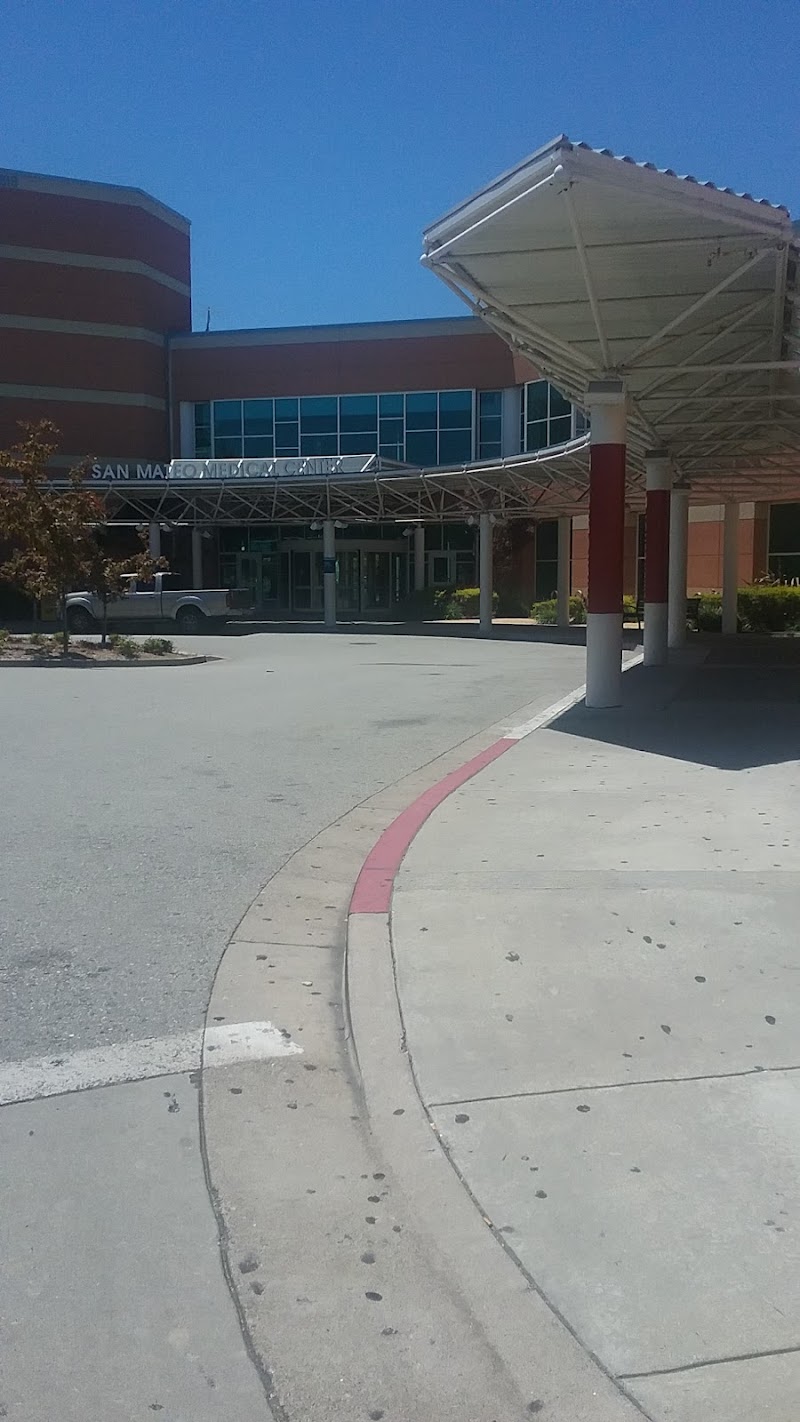
Who Owns and Operates San Mateo Medical Center D/P Snf?

SAN MATEO MEDICAL CENTER D/P SNF is owned by a government entity. Government-operated facilities are typically run by state, county, or municipal agencies. The facility operates independently rather than as part of a larger chain. With 345 certified beds and approximately 295 residents (about 86% occupancy), it is a large facility located in SAN MATEO, California.
How Does San Mateo Medical Center D/P Snf Compare to Other California Nursing Homes?

Compared to the 100 nursing homes in California, SAN MATEO MEDICAL CENTER D/P SNF's overall rating (1 stars) is below the state average of 3.1 and health inspection rating (1 stars) is much below the national benchmark.

What Should Families Ask When Visiting San Mateo Medical Center D/P Snf?

Based on this facility's data, families visiting should ask: "What changes have been made since the serious inspection findings, and how are you preventing similar issues?" "Can I visit during a mealtime to observe dining assistance and food quality?" "How do you handle medical emergencies, and what is your hospital transfer rate?" "Can I speak with family members of current residents about their experience?" These questions are particularly relevant given the facility's Immediate Jeopardy citations.

Is San Mateo Medical Center D/P Snf Safe?

Based on CMS inspection data, SAN MATEO MEDICAL CENTER D/P SNF has documented safety concerns. Inspectors have issued 3 Immediate Jeopardy citations (the most serious violation level indicating risk of serious injury or death). The facility has a 1-star overall rating and ranks #100 of 100 nursing homes in California. Families considering this facility should ask detailed questions about what corrective actions have been taken since these incidents.

Do Nurses at San Mateo Medical Center D/P Snf Stick Around?

SAN MATEO MEDICAL CENTER D/P SNF has not reported staff turnover data to CMS. Staff turnover matters because consistent caregivers learn residents' individual needs, medications, and preferences. When staff frequently change, this institutional knowledge is lost. Families should ask the facility directly about their staff retention rates and average employee tenure.

Was San Mateo Medical Center D/P Snf Ever Fined?

SAN MATEO MEDICAL CENTER D/P SNF has been fined $152,052 across 4 penalty actions. This is 4.4x the California average of $34,599. Fines at this level are uncommon and typically indicate a pattern of serious deficiencies, repeated violations, or failure to correct problems promptly. CMS reserves penalties of this magnitude for facilities that pose significant, documented risk to resident health or safety. Families should request specific documentation of what issues led to these fines and what systemic changes have been implemented.

Is San Mateo Medical Center D/P Snf on Any Federal Watch List?

SAN MATEO MEDICAL CENTER D/P SNF is not on any federal watch list. The most significant is the Special Focus Facility (SFF) program, which identifies the bottom 1% of nursing homes nationally based on persistent, serious quality problems. Not being on this list means the facility has avoided the pattern of deficiencies that triggers enhanced federal oversight. This is a positive indicator, though families should still review the facility's inspection history directly.