VALE HEALTHCARE CENTER

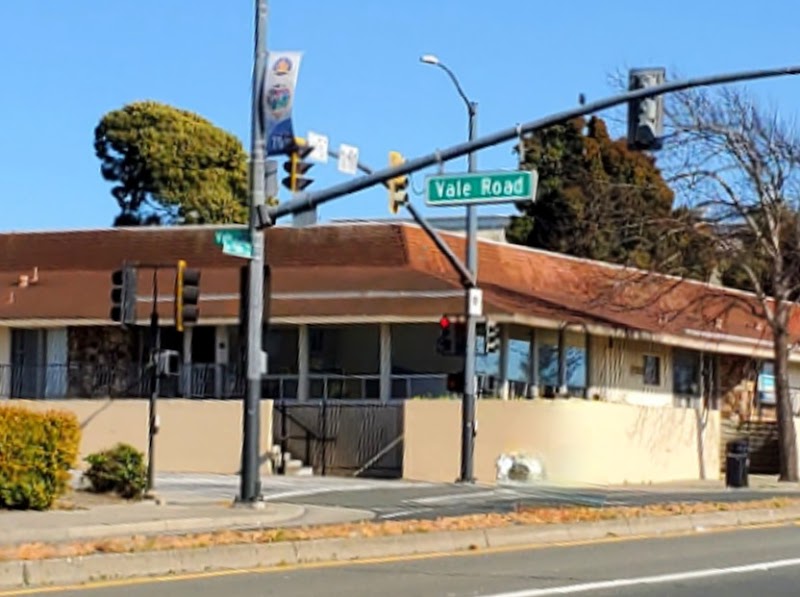
13484 SAN PABLO AVENUE, SAN PABLO, CA 94806 (510) 232-5945
For profit - Corporation 202 Beds MARINER HEALTH CARE Data: November 2025
Trust Grade
70/100
#489 of 1155 in CA
Last Inspection: July 2025

Inspected within the last 6 months. Data reflects current conditions.

Overview

Vale Healthcare Center in San Pablo, California has a Trust Grade of B, indicating it is a good, solid choice for families seeking care. They rank #489 out of 1155 facilities in California, placing them in the top half, and #21 out of 30 in Contra Costa County, which means there are only a few local options that are better. However, the facility is showing a worsening trend, with the number of issues increasing from 9 in 2024 to 15 in 2025. Staffing is a strength here, with a 4 out of 5-star rating and a turnover rate of 35%, which is below the state average. While there have been no fines, there are concerning incidents, including the failure to discard expired medications, neglecting to repair a dent in the wall of a resident's room, and not providing necessary podiatry referrals for residents, suggesting that attention to detail and care may need improvement. Overall, Vale Healthcare Center has some strong aspects but also notable weaknesses that families should consider.

Trust Score
B
70/100
In California
#489/1155
Top 42%
Safety Record
Low Risk
No red flags
Inspections
Getting Worse
9 → 15 violations
Staff Stability
○ Average
35% turnover. Near California's 48% average. Typical for the industry.
Penalties
✓ Good
No fines on record. Clean compliance history, better than most California facilities.
Skilled Nurses
⚠ Watch
Each resident gets only 19 minutes of Registered Nurse (RN) attention daily — below average for California. Fewer RN minutes means fewer trained eyes watching for problems.
Violations
⚠ Watch
45 deficiencies on record. Higher than average. Multiple issues found across inspections.
★★★★☆
4.0
Overall Rating
★★★★☆
4.0
Staff Levels
★★★★★
5.0
Care Quality
★★★☆☆
3.0
Inspection Score
Stable
2024: 9 issues
2025: 15 issues

The Good

  • 4-Star Staffing Rating · Above-average nurse staffing levels
  • 5-Star Quality Measures · Strong clinical quality outcomes
  • Full Sprinkler Coverage · Fire safety systems throughout facility
  • No fines on record
  • Staff turnover below average (35%)

    13 points below California average of 48%

Facility shows strength in staffing levels, quality measures, fire safety.

The Bad

Staff Turnover: 35%

11pts below California avg (46%)

Typical for the industry

Chain: MARINER HEALTH CARE

Part of a multi-facility chain

Ask about local staffing decisions and management

The Ugly 45 deficiencies on record

Jul 2025 14 deficiencies
CONCERN (D)

Potential for Harm - no one hurt, but risky conditions existed

Deficiency F0552 (Tag F0552)

Could have caused harm · This affected 1 resident

Based on interview and record review, the facility failed to update the code status (a medical term that indicates a patient's wishes regarding resuscitation and life-saving measures in the event of a...

Read full inspector narrative →
Based on interview and record review, the facility failed to update the code status (a medical term that indicates a patient's wishes regarding resuscitation and life-saving measures in the event of a medical emergency) for Resident 193.This deficient practice had the potential to result in the resident receiving treatments they may not want which could prolong their suffering or interventions inconsistent with their values and/or preferences.Findings: During a review of Resident 193's Face sheet, [undated], the Face sheet, indicated, that Resident 193 was admitted to the facility 7/9/25 and there was no Advance Directives (AD-a written statement of a person's wishes regarding medical treatment) or code status noted for this Resident. During a review of Resident 193's Progress Notes, dated 7/18/25, the Progress Notes, indicated, that at 8:50 p.m. Resident 193 was found unresponsive, no pulse, no respiration.Registered Nurse (RN) declare the time of death at 8:50 p.m. During a review of Resident 193's Physician Orders for Life-Sustaining Treatment (POLST- document to ensure that a patient's wishes are respected by healthcare providers in emergency situations or when they are unable to communicate for themselves completed by a physician, nurse practitioner, or physician assistant, in consultation with the patient or their healthcare proxy), [undated], the POLST indicated that the POLST form was prepared and signed by Resident 193 on 7/13/25 stating Do Not Resuscitate-(DNR); Comfort Focused (maximizing comfort). The POLST form also indicated that the form was signed by the medical provider 7/25/25. During a concurrent interview and record review on 7/25/25 at 4:06 p.m. with Director of Nursing (DON), Resident 193's Orders, Progress Notes, Face sheet and POLST were reviewed. The Orders did not show documentation of code status. The Face sheet did not show documentation of code status. The Progress Notes did not show documentation of code status prior to the Resident expiring on 7/18/25. The POLST indicated, that the POLST form was prepared and signed by Resident 193 on 7/13/25. The POLST form also indicated that the form was signed by the medical provider 7/25/25. The DON stated that the code status should be near the Resident name on the electronic health record (EHR) screen. DON also stated that if does not see no order for code status in the orders, resident records and has been trying to get a copy from Ace Hospice but has not been able to and that the POLST was signed today (7/25/25) by the medical provider. DON stated that would be easier if code status was in the orders. DON stated that if don't see order then assume full code status (all possible life-sustaining measures to be taken in the event of cardiac or respiratory arrest). During a review of the facility's policy and procedure (P&P) titled, Physician's Orders for Life Sustaining Treatment (POLST), [undated], the P&P indicated, .Completion of the POLST form must reflect a process of careful decision-making by the resident.in consultation with the Physician, about the resident's medical condition and known treatment preferences. During a review of policy and procedures (P&P) at website, https://emsa.ca.gov/dnr_and_polst_forms/ , titled, DNR and POLST Forms, dated 2025, the P&P indicated, .The Emergency Medical Services Authority (EMSA) approved POLST form must be signed and dated by a physician, or a nurse practitioner or a physician assistant acting under the supervision of the physician, and the patient or legally recognized health care decisionmaker. The POLST form should be clearly posted or maintained near the patient.
CONCERN (D)

Potential for Harm - no one hurt, but risky conditions existed

Grievances (Tag F0585)

Could have caused harm · This affected 1 resident

**NOTE- TERMS IN BRACKETS HAVE BEEN EDITED TO PROTECT CONFIDENTIALITY** Based on interview and record review, the facility failed to follow up on a grievance for one of 36 sampled residents (Resident ...

Read full inspector narrative →
**NOTE- TERMS IN BRACKETS HAVE BEEN EDITED TO PROTECT CONFIDENTIALITY** Based on interview and record review, the facility failed to follow up on a grievance for one of 36 sampled residents (Resident 38).This resulted in Resident 38's grievance to go unresolved. During a review of Resident 38's Facesheet (information containing contact details, brief medical history at a glance), the Face Sheet indicated, Resident 38 was admitted to the facility on [DATE]. Review of the resident's Minimum Data Set (MDS, an assessment tool used to guide care) dated 5/1/25, indicated Resident 38 had a brief interview for mental status or BIMS score of 15 (BIMS score of 13-15 indicates intact cognition).During an interview with Resident 38 on 7/21/25 at 12:03. p.m., Resident 38 stated my 500 dollars was stolen a few months ago and nothing has been done about it. Resident 38 also stated he had reported the missing money to the Director of Nursing (DON) and had not heard anything back.During a concurrent interview and record review, on 7/23/25, at 3:25 p.m., with DON, DON stated Resident 38 informed her of the missing money after the incident happened. DON stated that a grievance was done regarding the incident but a review of Resident 38's records did not indicate any documentation of the resident's missing money. During an interview with the Administrator (Adm) on 7/23/25 at 4:30 p.m., Adm stated that if Resident 38 filed a grievance regarding his lost money, the facility needed to investigate and there should be documentation of the incident in the resident's records. Adm stated there was no grievance filed for Resident 38‘s lost 500 dollars. Adm also stated, she had not heard of the incident until 7/23/25 when it was brought to her attention. During a review of the facility's undated policy and procedure (P&P) titled, Misappropriation of Resident Property, the P&P indicated, Reports of misappropriation of resident property shall be promptly and thoroughly investigated.Reports of misappropriation or mistreatment of resident property are to be investigated through the resident grievance process. and documented in the progress notes or through the grievance process .
CONCERN (D)

Potential for Harm - no one hurt, but risky conditions existed

Deficiency F0655 (Tag F0655)

Could have caused harm · This affected 1 resident

**NOTE- TERMS IN BRACKETS HAVE BEEN EDITED TO PROTECT CONFIDENTIALITY** Based on observation, interview and record review, for one of three sampled residents (Resident 200) who smoked, the facility fa...

Read full inspector narrative →
**NOTE- TERMS IN BRACKETS HAVE BEEN EDITED TO PROTECT CONFIDENTIALITY** Based on observation, interview and record review, for one of three sampled residents (Resident 200) who smoked, the facility failed to ensure a baseline care plan was developed to address Resident 200's smoking.This failure had the potential to result in the lack of interventions to promote safe smoking.During a review of Resident 200's RFS, the RFS indicated Resident 200 was admitted to the facility on [DATE] with diagnoses that included osteomyelitis (infection in the bone), severe sepsis (serious condition resulting from the body's response to infection, can lead to tissue damage and death if not treated promptly), and generalized anxiety disorder (mental health condition, persistent and excessive worry about various aspects of life). During an observation and interview on 7/22/25 at 4:42 p.m. with Resident 200, there was an open pack of cigarettes on the overbed table. Resident 200 stated going out to smoke four times a day and that the facility staff had allowed cigarettes to be kept at the bedside. During a concurrent interview and record review on 7/24/25 at 4:06 p.m. with Licensed Vocational Nurse (LVN) 5, LVN 5 stated Resident 200 smoked independently. LVN 5 stated the lighters and cigarettes were stored at the nurse station but was not sure if Resident 200 had some cigarettes at the bedside. LVN 5 stated a safe smoking assessment was initiated on 7/6/25 that indicated Resident 200 was a smoker but was not completed. LVN 5 also stated there was no baseline care plan completed to address Resident 200's smoking. LVN 5 stated the importance of ensuring smoking materials like cigarettes are not kept at the bedside, as residents could end up smoking in the room and potentially cause a fire. During a review of the Baseline Care Plan Summary (BCPS) dated 7/7/25, the BCPS did not indicate that Resident 200's smoking was addressed. During an interview on 7/25/25 at 3:55 p.m. with Minimum Data Set Coordinator (MDSC), MDSC stated any assessments upon admission would be completed by the admitting nurse, and any baseline care plan that should address the assessment results would be completed by the same admitting nurse. During a review of the facility's policy and procedure (P&P) titled Smoking Policy, undated, indicated a Safe Smoking Assessment is going to be completed to ensure safety or residents who may smoke and other residents other than smokers. The P&P also indicated, all residents that desire to exercise the privilege to smoke will be assessed to determine their smoking safety awareness, Interdisciplinary team (IDT, a group composed of individuals from different departments) will determine if a resident is a safe smoker, the Safe Smoking Assessment will be completed at the next morning meeting, following the resident's admission to the facility. Regardless of the Safe Smoking Assessment result, residents will need to keep smoking materials in the nurse station. Care plans will be developed based on assessment and findings of the IDT.
CONCERN (D)

Potential for Harm - no one hurt, but risky conditions existed

Accident Prevention (Tag F0689)

Could have caused harm · This affected 1 resident

**NOTE- TERMS IN BRACKETS HAVE BEEN EDITED TO PROTECT CONFIDENTIALITY** Based on observation, interview and record review, for two sampled residents (Resident 199 and 200), the facility failed to ensu...

Read full inspector narrative →
**NOTE- TERMS IN BRACKETS HAVE BEEN EDITED TO PROTECT CONFIDENTIALITY** Based on observation, interview and record review, for two sampled residents (Resident 199 and 200), the facility failed to ensure an environment free of accident hazards and failed to ensure residents receive adequate supervision when:1. Resident 199 left the facility unsupervised. This failure had the potential to result in significant risks to resident's safety.2. Resident 200 had cigarettes at the bedside. This failure had the potential to result in fire hazards. 1.During a review of Resident 199's Resident Face Sheet (RFS), the RFS indicated Resident 119 was admitted to the facility on [DATE] with diagnoses that included cerebral infarction (stroke), other non-toxic encephalopathy (brain disease), congestive heart failure and pleural effusion (fluid buildup around the lungs).During an interview on 7/21/25 at 10 a.m. with Resident 199, Resident 199 stated there was no reason to stay in the facility, and that staying longer would make Resident 199 lose the apartment. Resident 199 had expressed wanting to go home.During an observation between 7/21/25 and 7/22/25, Resident 199 was seen walking along the hallway, sometimes sitting on the couch around the corner near the Administrator's office, looking sad and worried. During an interview on 7/24/25 at 2 p.m. with Director of Nursing (DON), DON stated Resident 199 went out on pass on 7/23/25 and did not return to the facility.During a joint interview on 7/24/25 at 4:06 p.m., with the Medical Records Director (MRD) and Receptionist (REC), MRD stated that if a resident went Out on Pass (OOP, refers to someone who has been granted temporary leave from a place such as a facility), they should sign out in the OOP binder at the nurse station. MRD stated that the charge nurse would give the resident an OOP slip, which should be handed to the receptionist on the way out the door. REC stated that there was no OOP slip with Resident 199's name among the slips from 7/23/25. REC added that she would not know if Resident 199 had gone out the door, as she did not know who Resident 199 was and was not familiar with all the residents' faces.During a concurrent interview and review of the OOP binder at the nurse station on 7/24/25 at 5:17 p.m. with Registered Nurse Supervisor (RNS) 2, RNS 2 stated, first, there should be an order written for OOP before a charge nurse issued the OOP slip to a resident. RNS 2 stated if there was no OOP order in the clinical record, there would be no OOP slip given to the resident.During a telephone interview on 7/24/25 at 5:55 p.m. with Licensed Vocational Nurse (LVN) 8, LVN 8 stated she did not see Resident 199 at the start of the afternoon shift on 7/23/25. LVN 8 stated that around dinner time at 5:40 p.m., Resident 199 was missing and both DON and Administrator (ADM) were informed. LVN 8 stated she found an OOP order in the clinical record around 7-8 p.m.During an interview on 7/25/25 at 11:07 a.m. with LVN 5, who worked the morning shift on 7/23/25, LVN 5 stated she did not know Resident 199 had left the building. LVN 5 also stated if she had known, she would have stopped Resident 199, or checked if there was OOP order, and documented it in the clinical record.During a review of Resident 199's clinical record, the Progress Notes indicated the following:-7/16/25, Resident 199 attempted to elope from the facility, triggering the wander guard alarm. This licensed nurse, along with another nurse, promptly responded and safely redirected the resident back into the facility. The progress notes did not indicate Attending Physician (AP) 1 was notified of Resident 199's elopement attempt.-7/16/25, Resident 199 exhibited behavior posing danger to self and others. Statements made and behaviors raised significant concern for the resident's safety and mental stability. Resident 199 was aggressive, agitated and expressed paranoid delusions. Resident 199 refused redirection and appeared disoriented to time and place. Resident 199 was transferred to acute hospital -7/17/25, Resident 199 returned to facility, 5150 hold was dropped, resistive to the wander guard, but was re-assured it was okay to have it. [Resident 199] up running through facility. Redirection attempts [were] unsuccessful to stop running. [Resident 199] will be evaluated by facility psychiatrist in house. The clinical record did not indicate an evaluation was done by in house psychiatrist.-7/23/25 at 5:45 p.m., progress note marked invalid by LVN 8 on 7/23/25 at 11:51 p.m., indicated, Resident 199 was Unable to be found during rounds, this writer spoke with previous nurse and [Resident 199] was last seen at 2 p.m. at nursing station 1. Resident known to wander around building. Wander guard bracelet was noted on resident per report. At dinner, resident was still not seen and staff immediately started searching for resident in building around 5:42 p.m. Searched the whole building and unable to find resident. Informed MD, DON, and the administrator. SPPD (police department) called after searching inside and outside of facility and reported about missing resident.-7/23/25 at 5:45 p.m., written by LVN 8, After four hours of this writer shift resident has not returned to facility. DON and ADM informed. SPPD notified.-7/23/25 at 8:36 p.m., recorded as late entry on 7/23/25 at 7:49 p.m. by DON, indicated, during morning rounds on 7/23/25, Attending Physician was advised that Resident 199 no longer showed signs of aggression or elopement risk. AP 1 gave an order that Resident 199 may go out on pass.-7/23/25 at 6:37 p.m., progress note edited by Registered Nurse Supervisor (RNS) 3 on 7/23/25 at 11:57 p.m., indicated, Resident found eloped from the building around 5:42 p.m. Searched the whole building but not able to find [Resident 199]. Informed MD, DON, and the administrator. Called SPPD and reported about missing resident.-7/23/25 at 6:37 p.m. written by RNS 3, indicated, Resident did not return to the facility. Informed MD, DON, and the administrator. Called SPPD and reported about the resident.During a review of Resident 199's General Order (GO) dated 7/23/25, the GO indicated a physician's order created on 7/23/25 at 7:58 p.m. by DON, after Resident 199 went missing, that Resident 199 may go out on pass. The GO indicated AP 2 gave the OOP order.During a concurrent interview and review of the GO on 7/24/25 at 6:34 p.m. with DON, DON stated the OOP order came from AP 1 in the morning of 7/23/25. DON also stated, she will update the OOP order to indicate it was AP 1 who gave the order, and stated it was an easy fix. During a follow-up review of the GO for OOP, dated 7/23/25, the OOP order dated 7/23/25 ordered by AP 2 was updated on 7/24/25 at 6:42 p.m. by DON, and indicated, AP 1 gave the order for OOP. During a telephone interview on 7/25/25 at 9:36 a.m., with AP 1, AP 1 stated sending Resident 199 to the hospital on 7/16/25 after Resident 199 showed signs of aggression. AP 1 stated that at the time, Resident 199 posed a danger to self and other residents. AP 1 stated being in the facility on the morning of 7/23/25, and OOP order was discussed with the facility staff. AP 1 stated giving an OOP order but did not know Resident 199's elopement attempt on 7/16/25. 2. During a review of Resident 200's RFS, the RFS indicated Resident 200 was admitted to the facility on [DATE] with diagnoses that included osteomyelitis (infection in the bone), severe sepsis (serious condition resulting from the body's response to infection, can lead to tissue damage and death if not treated promptly), and generalized anxiety disorder (mental health condition, persistent and excessive worry about various aspects of life). During an observation and interview on 7/22/25 at 4:42 p.m. with Resident 200, there was an open pack of cigarettes on the overbed table. Resident 200 stated going out to smoke four times a day and that the facility staff had allowed cigarettes to be kept at the bedside. During a concurrent interview and record review on 7/24/25 at 4:06 p.m. with LVN 5, LVN 5 stated Resident 200 smoked independently. LVN 5 stated the lighters and cigarettes were stored at the nurse station but was not sure if Resident 200 had some cigarettes at the bedside. LVN 5 stated a safe smoking assessment was initiated on 7/6/25 that indicated Resident 200 was a smoker but was not completed. LVN 5 also stated there was no baseline care plan completed to address Resident 200's smoking. LVN 5 stated the importance of ensuring smoking materials like cigarettes are not kept at the bedside, as residents could end up smoking in the room and potentially cause a fire. During a review of the facility's policy and procedure (P&P) titled Smoking Policy, undated, indicated a Safe Smoking Assessment is going to be completed to ensure safety or residents who may smoke and other residents other than smokers. The P&P also indicated, all residents that desire to exercise the privilege to smoke will be assessed to determine their smoking safety awareness, Interdisciplinary team (IDT, a group composed of individuals from different departments) will determine if a resident is a safe smoker, the Safe Smoking Assessment will be completed at the next morning meeting, following the resident's admission to the facility. Regardless of the Safe Smoking Assessment result, residents will need to keep smoking materials in the nurse station.
CONCERN (D)

Potential for Harm - no one hurt, but risky conditions existed

Deficiency F0740 (Tag F0740)

Could have caused harm · This affected 1 resident

Based on interview and record review, for one of three (Resident 112) sampled residents reviewed for behavioral health services, the facility failed to follow the psychiatrist's recommendation when Co...

Read full inspector narrative →
Based on interview and record review, for one of three (Resident 112) sampled residents reviewed for behavioral health services, the facility failed to follow the psychiatrist's recommendation when Complete Blood Count (CBC, a common blood test that measures various components of your blood that included red blood cells, white blood cells, hemoglobin, etc. ), Basic Metabolic Panel (BMP, blood test that measures glucose, calcium, electrolytes, etc. to detect conditions such as liver and kidney disease and diabetes) and Urinalysis (UA, used to detect and manage disorders such as urinary tract infection, kidney disease and diabetes) and Culture and Sensitivity (C&S, used to diagnose urinary tract infection and guide antibiotic therapy) were not conducted.This failure had the potential to result in undetected abnormal blood levels due to current treatment. During a review of Resident 112's Resident Face Sheet (RFS), the RFS indicated Resident 112 was admitted to the facility in July 2024 with diagnoses that included cellulitis of the left lower limb, acute kidney failure, sepsis (life-threatening condition in response to an infection) and essential hypertension (high blood pressure), prediabetes (blood sugar levels are higher than normal but not high enough to be diagnosed as type 2 diabetes), and asthma.During an interview on 7/22/25 at 3:30 p.m. with Administrator (ADM), ADM stated Resident 112 allegedly attempted to touch Resident 19's arm. Resident 19 did not like the gesture and said, Don't touch me. ADM stated the incident ended with no further issues between the two residents.During a review of Resident 112's Progress Notes dated 3/21/25, the Progress Notes indicated Resident 112 cried and was emotionally distressed after the incident.During a review of Resident 112's Physician Order Report, dated 7/24/25, the Physician Order Report indicated an order dated 3/24/25 for psychiatric evaluation related to the physical altercation. The Physician Order Report also indicated an order dated 12/5/24 for Resident 112 to receive Seroquel (treats psychosis) 50 milligrams (mg) by mouth in the morning at 9 a.m. and 100 mg. tablet in the evening at 9 p.m. for agitation.During a concurrent interview and record review on 7/24/25 at 9:14 a.m. with Minimum Data Set Coordinator (MDSC), MDSC stated that there was no documentation in the clinical record indicating Resident 112 had been seen by a psychiatrist. MDSC stated they would check with Medical Records to see if there was anything that had not been uploaded to the electronic chart.During a concurrent interview and record review on 7/24/25 at 10:52 a.m. with MDSC, MDSC provided a copy of the psychiatrist recommendation, which she said was with the Social Services Department. A review of the Psychiatrist Visit Progress Report (PVPR) indicated, There are no immediate psychiatric or behavioral concerns per staff, therefore will recommend GDR (Gradual Dose Reduction, process to slowly decrease the dosage of a medication, particularly psychotropic drugs, to determine if patient can maintain stability on a lower dose or if the drug can be discontinued altogether) trial of quetiapine [Seroquel]. Under Medication Order, the PVPR also indicated to consider obtaining blood work (CBC, BMP/UACS) to rule out underlying medical issues with behavior changes. The evaluation also included a Physician's Telephone Orders dated 6/10/25 to decrease the 50 mg. dose to 25 mg. once daily.During a review of Consultant Pharmacist's Medication Regimen Review (CPMRR) dated 6/16/25, the CPMRR indicated, I do not see any notation/document that the resident was seen by the psychiatrist. Resident [112] is on Seroquel for agitation which is not an acceptable diagnosis for the use of an antipsychotic agent. In addition, he had a recent unwitnessed fall- Seroquel may be a contributing factor. Please follow-up psych[iatric] consult to assess Seroquel order.During an interview on 7/24/25 at 11:10 a.m. with Director of Nursing (DON), DON stated she was just now looking at the psychiatrist's recommendation for the first time and would get back to this writer as soon as she found out what happened. MDSC was with DON, and both were looking into Resident 112's chart.During a concurrent interview and review of Resident 112's PVPR on 7/24/25 at 11:12 a.m. with Licensed Vocational Nurse (LVN) 4, LVN 4 stated the PVPR dated 6/9/25 indicated GDR and laboratory tests, but the clinical record did not indicate any of the recommendations were done. LVN 4 stated the clinical record did not indicate that a GDR had been performed since Resident 112's admission to the facility in July 2024. LVN 4 stated the last laboratory test was dated 8/22/24.During a review of Resident 112's Progress Notes written by DON, with a run date of 7/24/25 at 12:17 p.m., the Progress Notes indicated an entry dated 6/12/25 at 11:46 a.m., recorded as late entry on 7/24/25 at 11:49 a.m. The Progress Notes indicated AP did not agree with the recommendation at the time due to Resident 112's behavior. Another Progress Notes written by DON indicated, Resident had been experiencing some tearfulness, and we went over the recommendations from the Psych evaluation and [AP] agreed to the GDR which I have changed as of today.During a review of Resident 112's Behavioral Monitoring Administration History from 7/1/2025-7/24/2025 (BMAH), the BMAH indicated side effects to be observed for Seroquel use that included sedation, drowsiness, dry mouth, constipation, blurred vision, extrapyramidal reaction, weight gain, seizures, urinary retention, tardive dyskinesia, and cognitive/behavior impairment. During a follow-up interview on 7/24/25 at 12:40 p.m. with LVN 4, LVN 4 stated they were not aware of the psych recommendation until today, 7/24/25.During a telephone interview on 7/25/25 at 9:36 a.m. with Attending Physician (AP) 1, AP 1 stated he was not aware of the psychiatrist's recommendation to do laboratory tests.
CONCERN (D)

Potential for Harm - no one hurt, but risky conditions existed

Deficiency F0745 (Tag F0745)

Could have caused harm · This affected 1 resident

Based on observations, interviews and record reviews the facility failed to ensure Resident 91 was updated regarding the status of her power wheelchairThis deficient practice had the potential to resu...

Read full inspector narrative →
Based on observations, interviews and record reviews the facility failed to ensure Resident 91 was updated regarding the status of her power wheelchairThis deficient practice had the potential to result in a significant impact on the resident's independence, quality of life, physical and mental health. During a review of Resident 91's Face sheet, dated 7/24/25, the Face sheet indicated, an initial admission date of 11/3/2018 and latest return date of 7/20/25. During a review of Resident 91's Face sheet, dated 7/24/25, the Face sheet indicated, Resident 91 had diagnoses to include: chronic obstructive pulmonary disease (COPD-chronic lung disease that makes it hard to breathe), diabetes mellitus type 2 (body either doesn't produce enough insulin or can't properly use the insulin it produces, leading to high blood sugar levels), chronic pain, anxiety disorder (excessive, persistent, and unreasonable fear and worry, often interfering with daily life), Major Depressive Disorder (MDD,persistent sadness, loss of interest, and other symptoms that significantly impair daily life), hypertension (high blood pressure), osteoarthritis (condition that causes joints to become painful and stiff), generalized muscle weakness and severe morbid obesity (a severe form of obesity characterized by a Body Mass Index (BMI) of 40 or higher, or a BMI of 35 or higher with obesity-related health complications. This condition significantly increases the risk of various health problems and can reduce life expectancy) During a review of Resident 91's Minimum Data Set (MDS-standardized assessment tool used to evaluate the health and functional status of residents), dated 4/22/25, the MDS indicated, the following: Section C (Cognitive Patterns-way of thinking) show a Brief Interview for Mental Status (BIMS-cognitive screening measure that focuses on orientation and short-term word recall) score was 15 (cognitively intact per BIMS score scale). The MDS Section GG (Functional Abilities) noted Dependent to moderate assist. During an interview on 7/21/25 at 3:56 p.m. with Resident 91, Resident 91 stated that she recently came back from the hospital. Resident 91 also stated that her electric wheelchair has been broken for about a year and that she has not been able to go out and do the things she like to do, like go to Dollar Tree or Ross right down the street. Resident 91 stated that she has not heard anything back regarding the power wheelchair and is using the manual wheelchair she is currently in but it is difficult to be as mobile as was when she had her power wheelchair. During a concurrent interview and record review on 7/23/25 at 12:36 p.m. with Social Worker (SW), Resident 91's Progress Notes dated 8/30/24, 12/10/24, 2/7/25 and 2/28/25 were reviewed. The Progress Notes for each date indicated: 8/30/24: Restorative Nursing Assistant (RNA) to weigh resident 91 in order to move forward with power wheelchair, 12/10/24: Facility received call from Durable Medical Equipment (DME) facility requesting resident 91 power wheelchair paperwork to be faxed on 11/25/24 that was refaxed 12/10/24, 2/7/25: A written order from provider was faxed to DME facility, 2/2/28/25: Facility received call from DME facility that resident 91 has an appointment in the facility 3/13/25 at 12:00 p.m. to assess her power wheelchair and resident 91 was made aware. SW stated the dates 8/30/24, 12/10/24, 2/7/24 and 2/28/25 were the only dates that could be found regarding the power wheelchair. SW stated that could not find documentation regarding 3/13/25 DME visit to the facility. The SW also stated that there should be document in the chart for this visit but I don't see it. During a concurrent interview and record review on 7/23/25 at 3:24 p.m. with SW, Resident 91's Insurance Letter, dated 4/30/25, was reviewed. The Insurance Letter indicated, that resident 91 was denied authorization for a power chair and that there was no follow up that can be found after that. SW also stated that resident 91 was informed at that time that authorization for the power wheelchair. During an interview on 7/23/25 at 3:49 p.m. with resident 91, resident 91 stated that it was as I told you before, I was not aware of any denial letter and nobody told me anything. Resident 91 also stated that I thought that they was still working on getting my power chair. During a review of the facility's policy and procedures (P&P) titled, Social Services, [undated], the P&P indicated, .2. The director of social services is responsible for.maintaining records related to social services.meeting or assisting with the medically-related social service needs of residents.3.Medically-related social services are provided to maintain or improve each resident's ability to control everyday physical needs (e.g. appropriate adaptive equipment for eating, ambulation, etc); and mental and psychosocial needs (e.g. sense of identity, coping abilities, and sense of meaningfulness or purpose.5. The social worker/social services staff are responsible for.making referrals and obtaining needed services from outside entities. During a review of the facility's policy and procedures (P&P) titled, Resident Rights, [undated], the P&P indicated, .Residents have freedom of choice, to the maximum extent possible, about how they wish to live their everyday lives and receive care.
CONCERN (D)

Potential for Harm - no one hurt, but risky conditions existed

Deficiency F0919 (Tag F0919)

Could have caused harm · This affected 1 resident

Based on observation, record review and interviews, the facility failed to provide call system (allows patients to request assistance from healthcare staff, typically nurses, by activating a call butt...

Read full inspector narrative →
Based on observation, record review and interviews, the facility failed to provide call system (allows patients to request assistance from healthcare staff, typically nurses, by activating a call button or other alerting device. These systems are crucial for patient safety and efficient care delivery, enabling patients to quickly summon help when needed) to Resident 107.This deficient practice had the potential to result in resident having trouble accessing help for medication needs basic comfort or hygiene needs to prevent falls.Findings:During a review of Resident 107's Face sheet, [undated], the Face sheet indicated, Resident 107 was admitted to the facility 4/9/24 and has diagnoses to include Chronic Obstructive Pulmonary Disease (COPD- condition caused by damage to the airways or other parts of the lung), Fracture of Left and Right Humerus (break in the upper arm bones), Vertigo (sensation that you or your surroundings are spinning or moving) Anxiety (feelings of worry, nervousness, or unease) and Depression (mood disorder that can affect how you think, feel, and handle daily activities). During an observation on 7/24/25 at 12:32 p.m. in Resident 107's room, above Resident 107's bed, there was no call light observed attached to the wall or at the bedside. There was also no call bell observed on the bedside table. During an interview on 7/24/25 at 12:32 p.m. with Resident 107, Resident 107 stated that he had not had a call bell for a long time. Resident 107 also stated that if he needed medications such as his pain or sleep medication, he would have to use his wheelchair to wheel himself to the nurses station to request them.During an interview on 7/24/25 at 12:34 p.m. with Licensed Vocational Nurse (LVN) 4, LVN 4 stated that it is important for the resident to have a call light because what if he can't get up. LVN 4 stated that will contact Maintenance to have a call light installed into the wall but will get bedside table call bell in the meantime.During a review of the facility's policy and procedure (P&P) titled, Resident Call System, [undated], the P&P indicated, Residents are equipped with a communication system allowing them to request assistance by contacting either a staff member directly or a centralized work station.3. The resident call system remains functional at all times.5. The resident call system is routinely maintained and tested by the maintenance department.
CONCERN (E)

Potential for Harm - no one hurt, but risky conditions existed

Safe Environment (Tag F0584)

Could have caused harm · This affected multiple residents

Based on observations and interviews, the facility failed to repair a moderate dent in the wall in Resident 107's room.This deficient practice had the potential to result in the resident not feeling o...

Read full inspector narrative →
Based on observations and interviews, the facility failed to repair a moderate dent in the wall in Resident 107's room.This deficient practice had the potential to result in the resident not feeling or having a safe and/or homelike environment.Findings: During a review of Resident 107's Face Sheet, dated 7/24/25, the Resident Face Sheet indicated, Resident 107 was admitted to facility 4/9/24. During an observation on 7/24/25 at 12:32 p.m. in Resident 107 room, there was a large dented and exposed wall area behind the head of Resident 107's bed. During an interview on 7/24/25 at 12:36 p.m. with Resident 107, Resident 107 stated that the dented and exposed wall looks awful and that they would not have their home look like this. During a concurrent observation and interview on 7/24/25 at 5:07 p.m. with Environmental Director (ED) in Resident 107 room, ED stated that the indented and exposed wall should not be there and will take care of it. During a review of the facility's policy and procedure (P&P) titled, Resident Rights, [undated], the P&P indicated, .The resident has a right to a dignified existence.Residents have freedom of choice, to maximum extent possible.
CONCERN (E)

Potential for Harm - no one hurt, but risky conditions existed

Deficiency F0687 (Tag F0687)

Could have caused harm · This affected multiple residents

Based on observation, interview and record review, for two sampled residents (Resident 15 and 184), the facility failed to provide podiatry referrals to treat their long toe nails. This failure did no...

Read full inspector narrative →
Based on observation, interview and record review, for two sampled residents (Resident 15 and 184), the facility failed to provide podiatry referrals to treat their long toe nails. This failure did not provide necessary services for treatment and foot care to these residents. During a review of Resident 15's Face Sheet dated 7/24/25, the Face Sheet indicated Resident 15 was admitted to the facility in November 2023.During a review of the Resident 15's Minimum Data Set (MDS, a resident assessment instrument used to identify resident care problems to be addressed in an individualized care plan), dated 4/25/25, it indicated Section B indicated Resident 15 had clear speech, able to express ideas and wants, and has the ability to understand others. Section C indicated Resident 15's a BIMS (Brief Interview for Mental Status-a standardized cognitive assessment tool) score: 14, intact cognition.During a review of the nursing Progress Note, dated 3/21/25, for Resident 15, the nursing note indicated resident wants to see the podiatrist, referral given to social service office. During an interview on 7/24/25 at 1:25 p.m., Resident 15 stated her toe nails are gross, terrible, that the nails are curling over her skin and toenails really need to be clipped. Resident 15 stated the last time she was seen by podiatry was 1 1/2 years ago. During an interview on 7/24/25 at 12:06 p.m., with Social Services Director (SSD), the SSD is responsible to coordinate resident referrals to podiatry. SSD stated the last time Resident 182 was seen by podiatry was in December by referral. During a review of the undated P&P, titled Podiatry Services, the P&P indicated scheduling and coordination of podiatry visits will be scheduled regularly (e.g., every 61 days routinely or as clinically indicated, or on an as-needed basis for acute issues all podiatry appointments will be documented in the facility's scheduling system and communicated to relevant staff and residents by the Social Services Director/designee. 2. During a review of Resident 182's Face Sheet dated 7/24/25, the Face Sheet indicated Resident 182 was admitted to the facility in May 2023.During a review of Resident 182's Minimum Data Set (MDS, a resident assessment instrument used to identify resident care problems to be addressed in an individualized care plan), dated 5/14/25, Section B indicated Resident 182 had clear speech, able to express ideas and words and has the ability to understand others. Section C indicated Resident 11's BIMS (Brief Interview for Mental Status score: 11, moderate cognitive impairment.During an observation on 7/21/25 at 12:19 p.m., Resident 182 was laying on top of his covers in bed. Resident 182's feet were bare and toenails long, curved and jagged. During an observation on 7/21/25 at 1:47 p.m., Resident 182 was observed in the hallway sitting in his wheelchair propelling with his bare feet. During a review of Resident 182's face sheet, Resident 182 had diagnoses to include congestive heart failure, psychoactive substance abuse and hypertension. During a concurrent interview and record review on 7/24/25 at 12:06 p.m., with Social Services Director (SSD), the SSD stated it was her responsibility to coordinate resident referrals to podiatry. SSD stated the last time Resident 182 was seen by podiatry was in December by referral. The SSD provided a physician order, dated 7/26/24 indicated to refer Resident 182 to house podiatry for history of nail fungus infection (onychomycosis). During a review of the undated P&P, titled Podiatry Services, the P&P indicated scheduling and coordination of podiatry visits will be scheduled regularly (e.g., every 61 days routinely or as clinically indicated, or on an as-needed basis for acute issues all podiatry appointments will be documented in the facility's scheduling system and communicated to relevant staff and residents by the Social Services Director/designee.
CONCERN (E)

Potential for Harm - no one hurt, but risky conditions existed

Deficiency F0761 (Tag F0761)

Could have caused harm · This affected multiple residents

**NOTE- TERMS IN BRACKETS HAVE BEEN EDITED TO PROTECT CONFIDENTIALITY** Based on observation, interview, and record review, the facility failed to ensure safe medication storage and labeling when: 1.O...

Read full inspector narrative →
**NOTE- TERMS IN BRACKETS HAVE BEEN EDITED TO PROTECT CONFIDENTIALITY** Based on observation, interview, and record review, the facility failed to ensure safe medication storage and labeling when: 1.One Breyna or Budesonide-Formoterol-Fumarate inhaler labeled only with a room number was found in medication cart 2 (an inhaler is a device used for delivering medicines into the lungs through breathing; Breyna is the brand name of Budesonide-Formoterol-Fumarate inhaler, and is a medication indicated for the treatment of breathing difficulties). 2. Two opened bottles of Refresh eyedrops (lubricating eye drops designed to soothe and relieve dry, irritated eyes) were found in medication cart 4. 3. Resident 11's one opened Incruse Ellipta inhaler was found with no open date label in medication cart 1 (Incruse Ellipta is an inhaler used to prevent and control symptoms associated chronic obstructive pulmonary disease or COPD, a long-term lung disease that makes it hard to breathe). 4. One opened unlabeled Nystatin powder and one unlabeled open tube of TheraHoney gel were found at Resident 121's bedside table ( Nystatin is a skin medication used to treat skin infections, TheraHoney is a skin medication used to heal wounds). 5. One used Purified Protein Derivative (PPD) vial was found with no open date label in Station 2‘s medication refrigerator (PPD is a substance used in skin tests to help detect tuberculosis infection - a contagious infection caused by bacteria that usually attack the lungs but can also affect other parts of the body). 6. One box of expired insulin syringes was stored in Station 2's medication room (insulin syringes are disposable tools designed to help people with diabetes inject insulin into their bodies; insulin is a medication that lowers blood sugar). 7. 12 loose pills were found in medication cart 3. Findings:1.During a concurrent observation and interview on [DATE], at 1149 a.m., with the Registered Nurse (RN) 1, while inspecting medication cart 1, observed an opened Breyna box with inhaler with no label except for the room number. The box of the inhaler had a handwritten note which read, 28 C. RN 1 stated that the inhaler belonged to Resident 121. Also stated Resident 121's inhaler should have been labeled with the resident's name and dosage, to prevent medication error. During a review of Resident 121's Facesheet (information containing contact details, brief medical history at-a-glance) indicated Resident 121 was readmitted to the facility on [DATE]. During a review of Resident 121's Physician Order (PO), dated [DATE], the PO indicated an order of Budesonide-Formoterol inhaler 2 puffs twice a day for COPD. During an interview on [DATE] at 3:25 p.m., the Director of Nursing (DON) stated all the residents' medications should have been labeled with the resident's name, dosage, open date and the initial of nurse who opened the medication and not just room number to prevent medication error. 2. During a concurrent observation and interview on [DATE], at 10:50 a.m., with the Licensed Vocational Nurse (LVN) 7, while inspecting medication cart 4, observed 2 opened boxes of Refresh eyedrops with just room [ROOM NUMBER] A written in both boxes. LVN 7 stated the eyedrops belonged to Resident 146. Stated the eyedrops should have been labeled with the resident's name and dosage to prevent medication error. Review of Resident 146's facesheet indicated the resident was admitted to the facility on [DATE]. A review of Resident 146's PO, dated [DATE] indicated an order of artificial tears OTC 1%, 1 drop in both eyes for dry eyes 3x a day (OTC means over the counter, Refresh Tears are a brand of artificial tears). During an interview on [DATE] at 3:25 p.m., the DON stated all the residents' medications should have been labeled with the resident's name, dosage, open date and the initial of nurse who opened the medication and not just room number to prevent medication error. During a review of the facility's policy and procedure titled, Medication and Medication Labels, dated 2007, indicated, . Medications are labeled in accordance with currently accepted professional principles including appropriate auxiliary and cautionary instructions to promote safe medication use following state and federal laws.1. Each prescription medication will be labeled to include a. Resident's name b. specific directions for use including route of administration. 3. During a concurrent observation and interview on [DATE], at 1149 a.m., with RN 1, while inspecting the medication cart 1, Resident 11's Incruse Ellipta inhaler was found with no open date label. RN 1 stated the inhaler should have had an open date label, because of the risk for Resident 11 to receive medication with less potency. During a review of box of Incruse Ellipta inhaler indicated, Discard the inhaler 6 weeks after opening the moisture protected foil tray . (The moisture protected foil tray is designed to safeguard the medication from moisture, which can decrease the inhaler's effectiveness).During a review Resident 11's Facesheet indicated the resident was admitted on [DATE]. During a review of Resident 11's Physician Order, dated [DATE], indicated an order for Incruse Ellipta inhaler 1 puff daily for COPD.During a review of Resident 11's Medication Administration Record (MAR) indicated Incruse Ellipta inhaler was last given on [DATE] at 8:16 a.m. During an interview on [DATE] at 8:27 a.m., with the DON, stated, the medication nurse who initially opened the inhaler should have written the open date label to make sure the facility could discard the medication as recommended by the manufacturer. During a review of the facility's policy and procedure titled, Medication and Medication Labels, dated 2007, indicated, . Medications are labeled in accordance with currently accepted professional principles including appropriate auxiliary and cautionary instructions to promote safe medication use following state and federal laws. 4. During a concurrent observation and interview on [DATE] at 10:46 a.m., with LVN 2, in Resident 121's room, one opened bottle of Nystatin powder and one opened tube of TheraHoney gel were found at Resident 121's bedside in the resident's wash basin mixed with other lotions and deodorant. LVN 2 stated Resident 121 used the basin of lotions and deodorant to apply it to her skin. Further stated the resident did not have physician orders of Nystatin powder and TheraHoney. Also stated the Nystatin and Therahoney should not be at the resident's bedside due to risk of allergic reaction if the resident accidentally applied them to her body. Review of Resident 121's indicated the resident was readmitted to the facility on [DATE]. A review of Resident 121's Minimum Data Set (MDS, an assessment tool) dated [DATE], indicated the resident was cognitively intact. During a review of Resident 121's PO, dated [DATE], the PO did not indicate an order of Nystatin powder and TheraHoney gel. During a review of the facility's policy and procedure titled, Bedside Medication Storage, dated 2007, indicated, . 5. All nurses and nursing aides are required to report to the charge nurse on duty any medications found at bedside not authorized for bedside storage . 5. During a concurrent observation and interview on [DATE] at 8:58., with RN 1, while inspecting the station 2 medication room refrigerator, one used PPD vial was found with no open date label. RN 1 stated should have open date label. During an interview on [DATE] at 3:25 p.m., the DON stated all the PPD vials required an open date label to ensure the potency and effectiveness of the solution. During a review of the facility's policy and procedure titled, Medication and Medication Labels, dated 2007, indicated, . Medications are labeled in accordance with currently accepted professional principles including appropriate auxiliary and cautionary instructions to promote safe medication use following state and federal laws.2. Multi dose vial shall be labeled to assure product integrity considering the manufacturers' specifications. nursing staff should document the date opened on multidose vials . 6. During a concurrent observation and interview on [DATE] at 8:58. a.m., with RN 1, while inspecting the station 2 medication room, one box of expired insulin syringes was found with an expiration date of [DATE]. RN 1 stated the expired insulin syringes should have been disposed due to the risk of adverse effects or unwanted undesirable effects that could be caused by using the expired syringes to the residents. During an interview on [DATE] at 3:25 p.m., the DON stated the expired insulin syringes should have been disposed and should not be in the medication room. During a review of the facility's undated policy and procedure titled, Cleaning Medication Storage Areas indicated, . Medication storage areas are kept neat and clean to prevent contamination of medication and treatment supplies. Keep the medication room organized. Check for discontinued outdated medication. Remove and dispose . 7. During an observation and concurrent interview with LVN 6, on [DATE], at 10:50 a.m., upon inspection of the medication cart 3, 12 loose tablets were found. LVN 6 was unable to identify the loose tablets and stated the loose tablets should not be in the medication cart and should have been disposed due to the risk of medication error. During an interview on [DATE] at 3:25 p.m., the DON stated the medication carts should be clean and there should not be loose pills due to the risk of drug diversion and medication error . During a review of the facility's undated policy and procedure titled, Cleaning Medication Storage Areas indicated, . Medication storage areas are kept neat and clean to prevent contamination of medication and treatment supplies. licensed staff should keep carts clean and organized. Check for discontinued outdated medication. Remove and dispose .
CONCERN (E)

Potential for Harm - no one hurt, but risky conditions existed

Dental Services (Tag F0791)

Could have caused harm · This affected multiple residents

Based on observation, record reviews and interviews, the facility failed to ensure that Resident 53 was provided with up-to-date annual dental services.This deficient practice had the potential to res...

Read full inspector narrative →
Based on observation, record reviews and interviews, the facility failed to ensure that Resident 53 was provided with up-to-date annual dental services.This deficient practice had the potential to result in the resident experiencing pain, infection or difficulty eating which could lead to potentially decreased nutritional intake and weight loss.Findings:During a review of Resident 53's Face sheet, dated 7/24/25, the Face sheet indicated, resident 53 was admitted to the facility 1/11/18. During a review of Resident 53's Face sheet, dated 7/24/25, the Face sheet indicated, Resident 53 had medical diagnoses to include altered mental status (change in a person's level of consciousness, alertness, and cognitive function), dementia (loss of memory, language, problem-solving and other thinking abilities), muscle weakness, dysphagia (difficulty swallowing) and visual impairment.During a review of Resident 53's Minimum Data Set (MDS-standardized assessment tool used to evaluate the health and functional status of residents), dated 7/16/25, The MDS indicated, the following: Section C (Cognitive Patterns-way of thinking) show a Brief Interview for Mental Status (BIMS-cognitive screening measure that focuses on orientation and short-term word recall) score was 3 (severe cognitive impairment per BIMS score scale), Section GG (Functional Abilities) noted Dependent assist (helper does all of the effort), Section K (Swallowing/Nutritional Status) noted with no check marks/documentation in this section at time of this survey and Section L (Oral/Dental Status) noted with no check marks/documentation in this section at the time of this survey.During a concurrent observation and interview on 7/21/25 at 12:11 p.m. with Resident 53 in their room, Resident 53's mouth was observed swollen gums with no teeth on the bottom row. Resident 53 stated, that at times it hurts to eat.During a review of the electronic health record (EHR) Provider Orders for Resident 53, dated 8/27/23, the Provider Orders indicated, Diet Order to be as follows: Regular: Pureed (all foods are blended or pureed to a smooth, pudding-like consistency); 1:1 Assist with feeds; Aspiration Precautions ; May have soft snacks such as bananas and soft sandwiches. and Refer for Dental Consult annually and as needed (if stay is long term).During a concurrent interview and record review on 7/22/25 at 1:04 p.m. with Social Worker (SW) in their office, EHR or hardcopy of dental records could not be found. SW stated that they always have a copy of gets dental done and we have a binder. SW stated that resident 53 has no teeth, so did not think needed an exam. SW stated that was unsure as to when resident 53 got their last annual dental exam. SW stated that Dental come often for the annual exams of the residents and they do it it in batches but could not find any recent record for resident 53.During a concurrent interview and record review on 7/22/25 at 1:04 p.m. SW in Facility Conference room, last documented record of an annual dental exam in the EHR or hardcopy was 11/2/22 with recommendation for annual exam.During a review of the facility's policy and procedures (P&P) titled, Dental Services, [undated], the P&P indicated, Routine and emergency dental services are available to meet the resident's assessment and plan of care.5. Social Services representatives will assist residents with appointments.6. Direct care staff will assist residents with denture care.
CONCERN (E)

Potential for Harm - no one hurt, but risky conditions existed

Food Safety (Tag F0812)

Could have caused harm · This affected multiple residents

Based on observation, interview and record review, the facility failed to ensure safe, sanitary storage of food when:Multiple opened food items stored in the dry storage and refrigerators did not have...

Read full inspector narrative →
Based on observation, interview and record review, the facility failed to ensure safe, sanitary storage of food when:Multiple opened food items stored in the dry storage and refrigerators did not have open dates and use-by dates.Paper bag with food labeled 7/14 stored in the refrigerator had directions give to resident next day This failure had the potential to place all residents getting meals from the kitchen to be at risk for foodborne illness potentially leading to hospitalization or death. 1. During an observation and concurrent interview on 7/21/25 at 8:50 a.m., in the kitchen, refrigerator #2 had an opened box of cheesecake, with no open date and no used-by-date. The Registered Dietician (RD)stated he does not know when it was opened. RD stated opened refrigerated cheesecake was good for five days. In the dry storage room, five prepared bowls of dry cereal did not have open date and no use-by-date. RD stated the bowls of cereal should indicate when it was prepared and have a use-by-date. In a storage container of aluminum sealed items, were two eaten banana peels and a soiled paper cup. In the unnumbered nourishment refrigerator, an opened gallon of milk and orange juice pitcher did not have an open dates and no use-by-dates. During a record review of the facility P&P titled, Sanitation and Infection Control Subject Food Receiving and Storage of Cold Foods, dated 2023, the P&P indicated all open food items will have an open date and use-by-date per manufacturer's guidelines .cold food storage areas will be clean, dry, and free of contamination. During a review of the facility P&P, titled Sanitation and Infection Control Subject Canned and Dry Good Storage, dated 2023, the P&P indicated all food items will have an open date and use-by-date per manufacturer's guidelines .the storage area will be cleaned and maintained. 2. During an observation and concurrent interview on 7/21/25 at 8:53 a.m., a paper bag labeled for a resident dated 7/14/25, had instructions Dialysis bag for next day at 9AM. The RD identified the items in the bag to have a ham sandwich and two fruit cups. The RD stated the ham sandwich was good for 7 days so it was good until tonight. During a record review of the facility P&P titled, Sanitation and Infection Control Subject Refrigerated Storage, dated 2023, the suggested refrigerated storage guidelines indicated luncheon meats to be stored until their expiration date or less than or equal to 7 days of opening.
CONCERN (E)

Potential for Harm - no one hurt, but risky conditions existed

Infection Control (Tag F0880)

Could have caused harm · This affected multiple residents

Based on observation, interview and record review, the facility failed to maintain an effective infection control program when:1.The specimen refrigerator (a specimen refrigerator is a specialized coo...

Read full inspector narrative →
Based on observation, interview and record review, the facility failed to maintain an effective infection control program when:1.The specimen refrigerator (a specimen refrigerator is a specialized cooling unit used to store various biological samples collected from patients, such as urine, stool, blood, or tissue) was observed to be stored in the same room with the ice container for residents' consumption. 2. Station 2 medication storage room drawer was found to be disorganized and contained medications mixed with specimen sample containers, central line dressing kit, needles and socks stored together. (a specimen container is used to store various biological samples collected from patients, such as urine, stool, blood, or tissue; Central Line Dressing kits are used for very clean resident dressing changes). These failures placed the facility residents at increased risk of healthcare associated infections. Findings:1.During a concurrent observation and interview on 7/22/25, at 4:19 p.m., with Registered Nurse Supervisor (RNS) 3, in the Station 1 utility room, the specimen refrigerator was observed to be stored in the same room with the ice container that held ice cubes used for consumption by the facility residents. The scooper used to get ice from the ice container was observed to be hanging in the wall exposed to air beside the ice container. Also, observed inside the specimen refrigerator were stool specimens, urine specimen samples and blood samples. RNS 3 acknowledged that the risk of having the specimen refrigerator and the ice container in the same room was spread of infection. During an interview on 7/23/25 at 12:16 p.m., with the Infection Preventionist (IP), IP stated, the risk of having the ice container and the specimen refrigerator in the same utility room was the risk of the spread of infection to the residents who were using the ice for oral consumption. Also stated the risk of having the ice scooper hanging in the wall exposed to air in the utility room was cross contamination. 2. During a concurrent observation and interview on 7/21/25, at 8:58 a.m., with RN 1, in Station 2 medication storage room, the drawer was found to contain two boxes of Lidocaine patch medications, specimen sample containers, unused needles, test tubes, a pair of unused socks and a central line dressing kit mixed untidily together. RN1 acknowledged that the medication room drawer should be clean and orderly and should not store medications, needles and central line dressing kit due to the risk of spread of infection to the residents if these supplies were used. During an interview on 7/23/25 at 12:16 p.m., with the IP, IP stated, the medication storage drawers should be tidy and clean. Further stated that the lidocaine patches, needles and central dressing kit should not be mixed with the specimen containers and socks due to the risk of cross contamination and spread of infection. During an interview on 7/23/25 at 3:25 p.m., with the DON, stated, the risk of having the medication storage drawer storing medications, needles and central sterile dressing mixed with specimen containers was infection control. During a review of the facility's policy and procedure (P&P) titled, Infection Control Program, updated 11/22/21, the P&P indicated, . The elements of the infection prevention and control program consist of coordination/oversight, policies/procedures, surveillance .prevention of infection .and safety . Prevention of Infection a. Important facets of infection prevention include .2) instituting measures to avoid complications or dissemination; (3) educating staff and ensuring that they adhere to proper techniques and procedures.
CONCERN (E)

Potential for Harm - no one hurt, but risky conditions existed

Deficiency F0912 (Tag F0912)

Could have caused harm · This affected multiple residents

**NOTE- TERMS IN BRACKETS HAVE BEEN EDITED TO PROTECT CONFIDENTIALITY** Based on observations and interviews, the facility had three Resident rooms (Rooms 35, 41 and 43) with multiple beds that provid...

Read full inspector narrative →
**NOTE- TERMS IN BRACKETS HAVE BEEN EDITED TO PROTECT CONFIDENTIALITY** Based on observations and interviews, the facility had three Resident rooms (Rooms 35, 41 and 43) with multiple beds that provided less that 80 square feet (sq. ft) per Resident who occupied these roomsThis deficient practice had the potential to result in inadequate space for the delivery of care to each Resident in each of these rooms and/or for storage of the Resident's belongings.Findings: During an observation 7/24/25 at 3:15 p.m., following rooms and corresponding sq. ft per bed were identified: room [ROOM NUMBER] had three beds, total sq. ft. is 231.6 and 77.2 sq. ft. per bed. room [ROOM NUMBER] had three beds, total sq. ft. is 231.6 and 77.2 sq. ft. per bed. room [ROOM NUMBER] had three beds, total sq. ft. is 231.6 and 77.2 sq. ft. per bed.During an interview on 7/24/25 at 12:32 p.m. with Resident 107, Resident 107 stated regarding the room size that it feels at little like a cubicle but making do and not to bothersome.During an interview on 7/24/25 at 12:43 p.m. with Resident 44, Resident 44 stated regarding the room size that it was ok, was not to bothersome and that she felt she had enough room to place her personal belongings.During an interview on 7/24/25 at 12:49p.m. with Resident 99, Resident 99 stated regarding the room size that it was fine and had no issues with space for her belongings.During an interview on 7/24/25 at 12:46 p.m. with Certified Nursing Assistant (CNA) 4, CNA 4 stated that they are staff personnel for the facility and has worked here for a while. CNA 4 stated that has worked and is currently working with the Residents in room [ROOM NUMBER]. CNA 4 stated the room size is adequate to provide care and for the Resident's belongings. CNA 4 stated that has not had issues with Resident transfers (moving a Resident from one place to another) or using wheelchairs in the room. During an observation on 7/24/25 at 12:32 p.m. of Resident room [ROOM NUMBER], no heavy medical equipment was observed that might interfere with each Resident's care. During an observation on 7/24/25 at 12:43 p.m. of Resident room [ROOM NUMBER], no heavy medical equipment was observed that might interfere with each Resident's care.During an observation on 7/24/25 at 12:49 p.m. of Resident room [ROOM NUMBER], no heavy medical equipment was observed that might interfere with each Resident's care.There were no complaints from any Residents in rooms 35, 41 and 43 regarding insufficient space for their belongings. There are no negative consequences that can be attributed to the decreased space and/or safety concerns in these rooms. Granting the room size waiver is recommended.
Apr 2025 1 deficiency
CONCERN (D) 📢 Someone Reported This

A family member, employee, or ombudsman was alarmed enough to file a formal complaint

Potential for Harm - no one hurt, but risky conditions existed

Deficiency F0790 (Tag F0790)

Could have caused harm · This affected 1 resident

**NOTE- TERMS IN BRACKETS HAVE BEEN EDITED TO PROTECT CONFIDENTIALITY** Based on observation, interview and record review, the facility failed to track, find, replace, and follow up with two of two Re...

Read full inspector narrative →
**NOTE- TERMS IN BRACKETS HAVE BEEN EDITED TO PROTECT CONFIDENTIALITY** Based on observation, interview and record review, the facility failed to track, find, replace, and follow up with two of two Residents (Resident 2 and Resident 3) whose dentures were lost at the facility. This failure resulted in two Residents not having their teeth to eat and talk which impacted their dignity and psychosocial well-being. Findings: During a review of Resident 2 ' s admission record titled Face Sheet, undated, the Face Sheet indicated Resident 2 was admitted to the facility on [DATE] for Heart Failure (A chronic condition where the heart doesn ' t pump blood as well as it should.). During a review of Resident 2 ' s Minimum Data Set (MDS- an assessment tool to guide care), the MDS assessment indicated Resident 2 had a Brief Interview for Mental Status (BIMS- a mental status exam) score of 15 indicating intact cognition. The MDS assessment also indicated Resident 2 required set up and assistance with oral hygiene, to include managing, denture soaking, and rinsing with use of equipment. During a record review of the Resident 2's Care Plan Essentials, dated 12/21/23, the care plan indicated Resident 2 had upper dentures on admission to facility. During an interview on 4/9/25 at 12:10 p.m. with Resident 2, Resident 2 stated her upper dentures were lost about 2 months ago. Resident 2 stated, the facility would get upset with her whenever she would ask about them. Resident 2 stated she was having to eat soft foods because of not having teeth to chew meat. Resident 2 stated she mostly ate mashed potatoes and soup. Resident 2 stated her dental insurance would cover the denture replacement, but no one at the facility had gotten back to them regarding her lost dentures. Resident 2 stated that it was upsetting not having her dentures. Resident 2 stated she felt like the facility blamed her for her missing dentures. Resident 2 also stated staff told her they found another Resident's dentures in the laundry room but they were not hers. During an interview on 4/9/25 at 1:40 p.m. with Director of Social Services (DSS), DSS stated they were aware of Resident 2 ' s lost dentures. DSS stated they found lost dentures in the laundry room, but they did not belong to Resident 2. During a review of Resident 3 ' s admission record titled, Face Sheet, undated, the Face Sheet indicated Resident 3 was admitted to the facility on [DATE] with a diagnosis of Cerebral Infarction, (A condition where the brain tissue dies due to lack of blood flow and oxygen), and is on hemodialysis, (A medical procedure that uses a machine to filter waste products and excess fluids from the blood, when the kidneys are failing) for end stage renal (kidney) disease. During a review of Resident 3 ' s MDS assessment, the MDS assessment indicated, Resident 3 had a BIMS score of 13. The MDS assessment also indicated Resident 3 required set up and assistance with oral hygiene, to include managing denture soaking and rinsing with use of equipment. During a review of the facility's document titled, Observation Data List Report, the Observation Data List Report indicated Resident 3 had both upper and lower dentures upon admission to the facility. During a review of Resident 3 ' s Progress Note, dated 9/12/24, at 12:18 p.m., the Progress Note indicated a call had been placed to Lumina Dental and that the facility would pay for x-rays and dentures. During an interview on 4/9/25 at 11:17 a.m. with Resident 3 ' s Family Member (FM), FM stated he contacted the facility about his dad ' s lost dentures, but no one had gotten back to him. During an interview on 4/9/25 at 11:30 a.m. with Social Worker (SW1), SW1 stated they were not aware of Resident 3 ' s lost dentures. SW1 stated the facility did not have a tracking log for Residents who had lost their dentures. SW1 stated they were not sure if Resident 3 ' s lost dentures were discussed at the Interdisciplinary Team (IDT-team members from different departments who work together to resolve patient care problems) meetings. During an interview on 4/9/25 at 12:50 p.m. with Resident 3, Resident 3 stated no one had gotten back to him about his lost dentures. Resident 3 stated he was using old temporary partials that did not fit properly which caused him to have trouble speaking and eating. Resident 3 stated his social interactions had been impacted. Resident 3 stated he felt upset and bad about himself. Resident 3 also stated his son has been trying to help with his lost dentures, but the facility had not gotten back to his son either. During an interview on 4/9/25 at 1:40 p.m. with Nursing Supervisor (NS), NS stated Resident 3 had a dental appointment scheduled by SW1. NS stated SW1 was responsible for following up on lost dentures. During a review of the facility's Policy and Procedures (P&P) titled, Residents and Personal Property, the P&P indicated, .reports of misappropriation or mistreatment of resident property are to be investigated through the resident theft/loss/grievance process and documented in the progress notes or through the grievance process .
Nov 2024 1 deficiency
CONCERN (E) 📢 Someone Reported This

A family member, employee, or ombudsman was alarmed enough to file a formal complaint

Potential for Harm - no one hurt, but risky conditions existed

Deficiency F0658 (Tag F0658)

Could have caused harm · This affected multiple residents

**NOTE- TERMS IN BRACKETS HAVE BEEN EDITED TO PROTECT CONFIDENTIALITY** Based on observation, interview, and record review, the facility failed to ensure residents received care and services in accord...

Read full inspector narrative →
**NOTE- TERMS IN BRACKETS HAVE BEEN EDITED TO PROTECT CONFIDENTIALITY** Based on observation, interview, and record review, the facility failed to ensure residents received care and services in accordance with professional standards of practice when: 1. For one of four sampled residents (Resident 3), the Interdisciplinary Team ' s (IDT, a group of health care professionals with various areas of expertise who work together toward the goals of their residents) recommendation for Psychology (Psych) Consult related to an abuse allegation was not referred by Social Services (SS) Department. This failure had the potential to put Resident 3 ' s safety at risk and could lead to abuse re-occurrence and resident feeling depressed, angry, and vulnerable. 2. For one of four sampled residents (Resident 1), an appropriate physical abuse care plan (CP, a document that outlines the resident ' s assessment health and social care needs and how it will be supported) was not created. This failure had the potential to put Resident 1 ' s safety at risk and for resident to not receive the care that he needed. 3. For four of four sampled residents (Resident 1, Resident 2, Resident 3, and Resident 4), IDT Meeting Notes showed but one member signature and did not reflect other IDT members ' attendance in developing new goals to meet the needs of the residents. This failure had the potential for the residents ' care plans to not be reviewed and revised by each team member ' s expertise as changes in the residents ' care and treatment occurred. Findings: 1. A review of Resident 3 ' s Face Sheet, printed on 10/30/24, indicated resident was admitted on [DATE] with multiple diagnoses that included diabetes mellitus (high blood sugar) and obesity (overweight). A review of Resident 3 ' s Minimum Data Set (MDS, a resident assessment tool used to provide care), dated 8/12/24, indicated Resident 3 had clear speech, was understood, and was able to understand others. The MDS also indicated Resident 3 was able to ambulate with a cane, and only required supervision or touching assistance (Helper provides verbal cues and/or touching/steadying and/or contact guard assistance as resident completes activity) to setup or clean-up assistance (helper sets up or cleans up; resident completes activity. Helper assists only prior to or following the activity) during his activities of daily living (ADLs, the basic self-care tasks an individual does on a day-to-day basis). A review of Resident 4 ' s Face Sheet, printed on 10/30/24, indicated Resident 4 was admitted on [DATE] with multiple diagnoses that included diabetes mellitus and hemiplegia (complete paralysis on one side of the body), and hemiparesis (partial weakness on one side of the body. A review of Resident 3 ' s SBAR-General (Situation Background Assessment Recommendation/Interventions, a structured communication tool to enhance communication between members of the healthcare team about a resident issue that needs to be addressed) dated 10/22/24, indicated Resident 3 had an altercation with Resident 4. A review of Resident 3 ' s Physician Order (PO), dated 10/23/24, indicated, MAY REFER TO PSYCHOLOGIST FOR AGGRESSIVE BEHAVIOR. A review of Resident 3 ' s Progress Notes, dated 10/23/24, at 9:52 a.m., indicated, MAY REFER TO PSYCHOLOGIST FOR AGGRESSIVE BEHAVIOR, SOCIAL SERVICE AWARE. During an interview on 11/7/24, at 12:05 p.m., with Social Services Assistant (SSA), SSA stated when Psych Consult was ordered and received for a resident, SS Department ' s responsibility was to contact and schedule an appointment with the Psych Clinic, usually via fax and/or a phone call. During an interview on 11/15/24, at 9:55 a.m., with Social Services Director (SSD), SSD stated Physician and/or Nursing Department would communicate with SS Department regarding ordered Psych Referrals. SSD stated SS Department was made aware regarding Resident 3 ' s PO for Psych Referral on 10/23/24, due to Resident 3 ' s aggressive behavior. However, SSD further stated SS Department was unable to find documentation that a fax was sent to Psych Clinic on that day. A review of the facility ' s record titled, Facsimile Transmittal, dated 11/5/24, indicated SSD submitted a request for Psych Consult for Resident 3 on this date. 2. A review of Resident 1 ' s Face Sheet, printed on 10/20/24, indicated resident was admitted on [DATE] with multiple diagnoses that included cirrhosis of the liver (chronic liver damage) and history of alcohol and nicotine dependence. A review of Resident 1 ' s MDS dated [DATE], indicated Resident 1 had clear speech, was usually understood, and was usually able to understand others. The MDS also indicated Resident 1 was independently able to ambulate with walker, and only required setup or clean-up assistance during his ADLs. A review of Resident 2 ' s Face Sheet, printed on 10/30/24, indicated Resident 2 was admitted on [DATE] with multiple diagnoses that included paraplegia (paralysis of the legs and lower body caused by spinal injury or a disease), depression, and psychoactive substance abuse (a strong desire to take drugs). A Review of Resident 1 ' s SBAR, dated 10/12/24, indicated Resident 1 had a physical altercation with Resident 2. A review of Resident 1 ' s Care Plan, dated 10/14/24, indicated, Behavioral Symptoms AGGRESSIVE BEHAVIOR TOWARDS ROOMMATE . During a concurrent interview and record review on 10/30/24, at 1 p.m., with the Minimum Data Set Coordinator (MDSC), MDSC stated she was unable to find the care plan for Resident 1 and Resident 2 ' s physical altercation that took place on 10/12/24. MDSC stated the only documented care plan closest to the date of altercation was the care plan, dated 10/14/24, regarding behavioral symptoms aggressive behavior towards roommate. During a telephone interview on 11/7/24, at 11:25 a.m., with the Director of Nursing (DON), DON confirmed Resident 1 ' s care plan, dated 10/14/24, for resident-to-resident altercation, was incorrect. DON stated care plan verbiage should have been adjusted and updated in a timely manner. A review of the facility ' s undated policy and procedure (P&P) titled, Comprehensive Plan of Care, indicated, Each resident will have a comprehensive care plan developed that includes goals, measurable objectives, and timetables to meet their medical, nursing, mental, and psychosocial needs identified during the comprehensive assessment .The comprehensive plan of care must: Address the resident ' s individual needs, strengths, and preferences .Include treatment goals and measurable objectives .Include interventions to attempt to manage risk factors .Be developed by an interdisciplinary team that includes the attending physician, a registered nurse, and other appropriate staff as determined by the resident ' s needs .Be periodically reviewed and revised by the interdisciplinary team as changes in the resident ' s care and treatment occur . 3. A review of Resident 1 ' s Risk Meeting Notes Weekly, dated 10/12/24, created by Registered Nurse 1 (RN 1), indicated notes were completed and recorded on 10/19/24. The IDT signature list revealed but one IDT member signature and did not reflect other IDT members ' attendance. A review of Resident 2 ' s Risk Meeting Notes Initial Week One, dated 10/14/24, indicated notes were completed and recorded on 10/14/24, created by RN 2. The IDT signature list revealed but one RN signature and did not reflect other IDT members ' attendance. A review of Resident 3 ' s Risk Meeting Notes Initial Week One, dated 10/22/24, indicated notes were completed and recorded on 10/22/24, created by RN 2. The IDT signature list revealed but one RN signature and did not reflect other IDT members ' attendance. A review of Resident 4 ' s Risk Meeting Notes Initial Week One, dated 10/22/24, indicated notes were completed and recorded on 10/22/24, created by RN 2. The IDT signature list revealed but one RN signature and did not reflect other IDT members ' attendance. During a telephone interview with the Director of Nursing (DON), on 11/7/24, at 11:25 a.m., the DON confirmed that Risk Meeting Notes were the facility ' s IDT Notes and IDT members were required to go back to the document to complete their part and sign their names as soon as possible. DON further stated it is a work in progress that needed to be corrected. During a concurrent interview and record review on 11/15/24, at 9:40 a.m., with the Minimum Data Set Coordinator (MDSC), Resident 1, Resident 2, Resident 3, and Resident 4 ' s Risk Meeting Notes were checked. MDCS stated the Meeting Notes only showed the creator ' s signature and no other IDT members had signed the completed notes. During an interview on 11/15/24, at 10:10 a.m., with the Assistant Director of Nursing (ADON), the ADON stated IDT members should sign their part on the Risk Meeting Notes as proof of IDT members ' attendance during the meeting, of which the resident ' s current issues had been reviewed, care plans updated, and interventions/goals have been discussed to prevent further negative incidents from happening. A review of the facility ' s undated policy and procedure (P&P) titled, Risk Meeting, indicated, The Risk Meeting is designed to bring current resident/patient issues to the interdisciplinary team for discussion, potential alterations to the care plan, notification to all disciplines regarding current status of residents/patients, and to develop proactive approaches designed to prevent acute episodes from ocurring .The following attendance is required for the meeting: Administrator .Director of Nursing (DON), Assistant Director of Nursing (ADON), Director of Staff Development (DSD), Unit Manager, Social Services, Activities, Minimum Data Set Coordinator (MDSC), Dietary, Therapy .Infection Preventionist .Wound Care Nurse .Restorative Nursing Assistant (RNA) .The process of the meeting is as follows: The DON runs the meeting, All team members will sign in on the Risk Meeting sign-in sheet .The DON will take notes using the Risk Meeting Minutes. Each discipline will receive a copy of the minutes immediately following completion of the meeting. Each discipline is to complete their departments ' section for recommendations and report back to the DON within 48 hours of meeting completion .
Jun 2024 1 deficiency
CONCERN (D) 📢 Someone Reported This

A family member, employee, or ombudsman was alarmed enough to file a formal complaint

Potential for Harm - no one hurt, but risky conditions existed

Pharmacy Services (Tag F0755)

Could have caused harm · This affected 1 resident

**NOTE- TERMS IN BRACKETS HAVE BEEN EDITED TO PROTECT CONFIDENTIALITY** Based on interview and record review, the facility failed to administer medications timely for one of three sampled residents (R...

Read full inspector narrative →
**NOTE- TERMS IN BRACKETS HAVE BEEN EDITED TO PROTECT CONFIDENTIALITY** Based on interview and record review, the facility failed to administer medications timely for one of three sampled residents (Resident 1), when multiple medications for Resident 1 were administered after the ordered administration time. This failure had the potential for exacerbating Resident 1's health condition and compromising their overall health and well-being. Findings: A record review of Resident 1 ' s Face Sheet, (undated), indicated Resident 1 was re-admitted to the facility on [DATE] with primary diagnoses including Human Immunodeficiency Virus (HIV, a virus that attacks cells that help the body fight infection, making a person more vulnerable to other infections and diseases), Chronic Obstructive Pulmonary Disease (COPD, refers to a group of diseases that cause airflow blockage and breathing-related problems. It includes emphysema and chronic bronchitis), End-Stage Renal Disease (ESRD, the final stage of long-term kidney disease when the kidneys are no longer sufficiently able to remove waste products and excess water to support the body ' s needs), Essential (primary) Hypertension (HTN, high blood pressure that is multi-factorial and doesn't have one distinct cause), Hyperlipidemia (an abnormally high concentration of or lipids in the blood), Clostridium Difficile (C-diff, a bacterium that can cause diarrhea and colitis, an inflammation of the colon. Infections can range from asymptomatic to life-threatening, and are the leading cause of diarrhea associated with antibiotics). A record review of Resident 1 ' s Minimum Data Set (MDS, a tool for assessing the health status of residents in long-term care nursing facilities that are certified to participate in Medicare or Medicaid), dated 5/21/24, indicated a Brief Interview for Mental Status (BIMS, is a scoring system used to determine the resident ' s cognitive status in regard to attention, orientation, and ability to register and recall information. A BIMS score of thirteen to fifteen is an indication of intact cognitive status) could not be assessed for Resident 1, and a staff assessment of mental status was conducted. The facility found Resident 1 had a short-term memory problem, and Resident 1 was moderately impaired in making decisions regarding tasks of daily life. During a record review of Resident 1 ' s Physician Order Report dated 6/1/24 - 6/11/24, the following prescribed medications included: 1. Amlodipine 5 mg (milligram-a unit of measurement) tablet, oral, one time daily at 9:00 a.m. for hypertension, start 5/23/24 - open ended. 2. Biktarvy 30-120-15 mg tablet, oral, once a day at 9:00 a.m. for HIV, start 5/23/24 - open ended. 3. Clopidogrel 75 mg tablet, oral, once a day at 9:00 a.m. for cardiovascular prophylaxis (refers to preventing heart attack and stroke through drug therapy for high risk individuals), start 5/23/24 - open ended. 4. Metronidazole 500 mg tablet, oral, every 8 hours at 12:00 a.m., 8:00 a.m., 4:00 p.m. for C-diff, start 5/17/24 - 6/1/24. 5. Sevelamer HCI 800 mg tablet, oral with meals (7:15 a.m. - 8:15 a.m., 12:00 p.m. - 1:00 p.m., 5:30 p.m. -6:30 p.m.) for ESRD, start 5/23/24 - open ended. A record review of Resident 1 ' s Medication Administration History dated 5/1/24 through 5/31/24 and 6/1/24 through 6/27/24 indicated: Amlodipine was administered 21 to 176 minutes late on the following dates: 10:24 a.m. on 5/30/24 10:21 a.m. on 6/4/24 10:52 a.m. on 6/8/24 10:32 a.m. on 6/9/24 1:16 p.m. on 6/15/24 Biktarvy was administered 24 to 176 minutes late on the following dates: 10:24 a.m. on 5/30/24 10:21 a.m. on 6/4/24 10:52 a.m. on 6/8/24 10:32 a.m. on 6/9/24 1:16 p.m. on 6/15/24 Clipidogrel was administered at 21 to 52 minutes late on the following date: 10:24 a.m. on 5/30/24 10:21 a.m. on 6/4/24 10:52 a.m. on 6/8/24 10:32 a.m. on 6/9/24 Metronidazole was administered 75 to 144 minutes late on the following dates: 5:45 p.m. on 5/19/24 5:46 p.m. on 5/23/24 9:49 a.m. on 5/26/24 5:18 p.m. on 5/26/24 9:55 a.m. on 5/28/24 5:21 p.m. on 5/28/24 10:24 a.m. on 5/30/24 9:15 a.m. on 6/1/24 Sevelamer HCI was administered 67 minutes to 326 minutes late on the following dates: 10:21 a.m. on 6/4/24 9:27 a.m. on 6/6/24 8:03 p.m. on 6/6/24 10:52 a.m. on 6/8/24 10:32 a.m. on 6/9/24 1:41 p.m. on 6/9/24 (breakfast dose) 10:14 a.m. on 6/20/24 10:06 a.m. on 6/27/24 During an interview on 6/12/24, at 1:24 p.m., with Licensed Vocational Nurse 1 (LVN 1), LVN 1 indicated she was rushed at times, and could not complete her medication pass on time. LVN 1 stated she was a registry nurse and was sometimes unfamiliar with residents. During an interview on 6/14/24, at 2:54 p.m., with Resident 1 ' s family member representative, the family member representative stated that it concerned her greatly that Resident 1 was always receiving medications late, and it made her worried about Resident 1 ' s overall health and well-being. During an interview on 6/27/24, at 11:48 a.m., with Licensed Vocational Nurse 2 (LVN 2), LVN 2 stated she was sometimes too busy to document at the time of medication administration, and documented it much later. LVN 2 stated she was aware this practice could cause errors, such as a resident receiving two doses of ordered medications. LVN 2 stated she ideally should document when residents have taken medications immediately after administration in the electronic medical health record. During an interview on 6/27/24, at 1:00 p.m., with the Assistant Director of Nursing (ADON), the ADON acknowledged appropriate standard of practice required time and date of medication administration should be recorded in resident charts immediately. During a record review of the facility ' s policy and procedure (P & P) titled, Medication Pass Guidelines, undated, indicated, Procedure: 6. Administer medications within 60 minutes of the scheduled time .for example, if the medication is ordered for 8:00 a.m., it must be given between 7:00 a.m. and 9:00 a.m. in ordered to be considered timely .Documentation: 1. Record the name, dose, route and time of medication on the Medication Administration Record .2.Use the electronic health record system where appropriate to complete the aforementioned documentation. 3. If the electronic record system is down, document on paper.
May 2024 7 deficiencies
CONCERN (D)

Potential for Harm - no one hurt, but risky conditions existed

Deficiency F0697 (Tag F0697)

Could have caused harm · This affected 1 resident

Based on observation, interview and record review, the facility failed to provide accurate pain assessment and pain management for one of 60 sampled residents (Resident 18) when Resident 18's left foo...

Read full inspector narrative →
Based on observation, interview and record review, the facility failed to provide accurate pain assessment and pain management for one of 60 sampled residents (Resident 18) when Resident 18's left foot pain was not accurately and regularly assessed using an appropriate pain scale (numerical expression of pain severity out of ten, 0, no pain, 1-3 mild pain, 4-7 moderate pain and 8-10 severe pain) and pain medications were not provided in a timely manner. This failure resulted in Resident 18 having 9/10 to 10/10 left foot pain which was not relieved for over one hour and was not accurately assessed during administration of pain medications delaying additional pain interventions. Findings: A review of Resident 18's admission record indicated an admission date of 4/2024 for a diagnosis of Crohn's disease (disease affecting the digestive tract), peripheral vascular disease (disorder of the blood vessels causing reduced blood flow) and unspecified atrial fibrillation (a disease of the electrical conduction of the heart). A record review of Resident 18's minimum data set (MDS, a resident assessment tool used to identify resident problems to be addressed in an individualized care plan), dated 4/28/24, indicated Resident 18 had a brief interview for mental status (BIMS, a scoring system used to determine resident's cognitive status in regard to attention, orientation and ability to register and recall information. A BIMS score of 13-15 indicates an intact cognitive status) score of 14. The MDS indicated Resident 18 could understand and was understood by others. A record review of Resident 18's physician's order set, Physician Order Report, dated 5/23/24, was reviewed. The order set indicated Resident 18, from 4/24/24 to 5/21/24, had an order for hydrocodone-acetaminophen (a medication for pain relief) 5-325 mg (milligram, unit of measurement) once a day PRN (as requested by resident) for foot pain and general pain. The order set indicated Resident 18 had acetaminophen (a medication for pain relief) 500mg tablet every six hours PRN for pain. The order set indicated on 5/21/24, Resident 18 had an order for hydrocodone-acetaminophen 5-325 mg one tablet scheduled for twice a day for foot pain and general pain. The order set indicated Resident 18 had orders for daily treatment and pain evaluation of left ankle pressure ulcer (localized damage to skin and underlying soft tissue over a boney prominence), left heel deep tissue injury (Persistent non-blanchable deep red, maroon or purple discoloration Intact or non-intact skin with localized area of persistent non-blanchable deep red, maroon, purple discoloration or epidermal separation revealing a dark wound bed or blood filled blister. Pain and temperature change often precede skin color changes). During an observation on 5/21/24, at 9:18 a.m., Resident 18 was heard moaning in his bed and appeared to be in pain. At 9:22 a.m., Resident 18 had the call light on. At 9:23 a.m., Certified Nursing Assistant 5 (CNA 5) came into the room and Resident 18 asked for pain medication. CNA 5 then left the room. During an observation and interview on 5/21/24, at 9:25 a.m., with Resident 18, Resident 18 was in his room in bed with the covers on. Resident 18 stated pressure ulcers on his left foot caused constant 9/10 throbbing pain which frequently increased to 10/10. Resident 18 stated the 10/10 pain caused him to moan and groan. Resident 18 stated the facility provided norco once a day and Tylenol every six hours for the last month for pain management. Resident 18 stated the pain management did not take away the throbbing pain, and the pain was unbearable. During the interview, Resident 18 occasionally paused and groaned. Resident 18 stated his pain had always been a 9-10/10 since the end of April 2024. Resident 18 stated the staff never assessed or reassessed after giving him pain medication and never assessed the severity of the pain. Resident 18 stated repeated requests for better pain relief did not result in changes to the pain management regimen. During an observation and interview on 5/21/24, at 9:32 a.m., with CNA 5 and Resident 18, CNA 5 entered the room and stated she had informed Resident 18's nurse about the request for pain medication. CNA 5 did not ask Resident 18's pain level. Resident 18 was in bed. Resident 18 allowed CNA 5 to remove the sock over Resident 18's left foot as long as she did it gently because the left foot was painful when manipulated roughly. Dressings for pressure ulcers at the heel, ankle, and a gangrenous left big toe was observed. Resident 18 pointed at the left foot and indicated the throbbing pain originated at the left foot. Resident 18 stated blood flow to the extremity was diminished and the foot might need to be amputated. A record review of Resident 18's medication administration record (MAR) titled, Medications Administration History, dated 4/22/24-5/22/24, was reviewed. The MAR indicated Resident 18 received hydrocodone-acetaminophen on 5/21/24, at 7:53 a.m. for gen pain (general pain) and did not include the severity of the pain. A reassessment was not recorded in the MAR. During a continuous observation on 5/21/24, from 9:28 a.m. to 10:31 a.m., Resident 18 remained in bed moaning from pain frequently. At 10:26 a.m., Licensed Vocational Nurse 3 (LVN 3) came into the room to administer Resident 18's acetaminophen 500 mg. LVN 3 was heard informing Resident 18 had acetaminophen 500 mg available, but did not assess the pain level or offer non-pharmacological pain relief. Resident 18 took the medication and LVN 3 left the room. During an interview on 5/21/24, at 10:32 a.m., with Resident 18, Resident 18 stated LVN 3 did not assess the pain level and did not offer to contact the physician about the current pain level. Resident 18 stated the left foot pain was 9/10, throbbing and the acetaminophen would not be effective pain relief. During an interview on 5/21/24, at 11:20 a.m., with LVN 3, LVN 3 stated Resident 18 had hydrocodone-acetaminophen 5-325 mg once a day and could have acetaminophen every six hours. LVN 3 stated Resident 18 had received hydrocodone-acetaminophen 5-325 mg earlier in the day and only had acetaminophen 500 mg available for pain relief. LVN 3 stated when she gave Resident 18 the acetaminophen earlier, Resident 18 had generalized pain which was rated at 4/10. LVN 3 stated Resident 18 did not have left foot pain. LVN 3 stated 4/10 pain was considered mild pain and acetaminophen was adequate for Resident 18's level of pain. LVN 3 stated CNA 4 had informed her of the 4/10 pain about 30 minutes prior to administering the medication. During a concurrent observation and interview on 5/21/24, at 11:30 a.m., with LVN 3 and Resident 18, Resident 18 was in his room in bed occasionally moaning in pain. LVN 3 went to reassess Resident 18's level of pain. Resident 18 stated a pain level of 9/10 at left foot. Resident 18 stated requests for better pain management had been ongoing for a month and if nothing changed, Resident 18 would leave the facility. LVN 3 stated she would inform the attending provider to re-evaluate Resident 18's pain management. During an interview on 5/21/24, at 11:35 a.m., with CNA 4, CNA 4 stated she had informed LVN 3 about Resident 18's request for pain medication, but did not inform LVN 3 about the severity of Resident 18's pain. CNA 4 stated she probably should have inquired with Resident 18 about the pain severity but did not. A record review of Resident 18's MAR titled, Medication Administration History, dated 4/22/24-5/22/24, was reviewed. The MAR indicated Resident 18 received acetaminophen 500 mg on 5/21/24, at 7:53 a.m. for gen pain. The entry did not indicate the severity of the pain. A record review of Resident 18's MAR titled, Medication Administration History, dated 4/22/24-5/22/24, was reviewed. The MAR indicated on 5/21/24, Resident 18 started to receive hydrocodone-acetaminophen 5-325 mg. The MAR indicated LVN 3 administered a dose of hydrocodone-acetaminophen 5-325 mg on 5/21/24 at 5:00 p.m. The entry did not indicate LVN 3 had assessed or reassessed Resident 18's pain before or after administration of the medication. A record review of Resident 18's MAR, dated 4/22/24 to 5/22/24, indicated LVN 3 had administered acetaminophen 500 mg on 5/21/24 at 10:31 a.m. and had documented PRN Reason: Pain Comment: c/o gen pain. The documentation did not indicate Resident 18's foot pain or its severity. During an observation and interview on 5/22/24, at 1:59 p.m., Resident 18 was in bed with the covers on. Resident 18 stated a pain level of 8/10 on the left foot. Resident 18 used his call light to ask for more pain medication. A record review of Resident 18's MAR titled, Medication Administration History, dated 4/22/24-5/22/24, was reviewed. The MAR indicated Resident 18 received hydrocodone-acetaminophen 5-325 mg on 5/21/24, at 9:00 a.m. The entry did not indicate the LVN 4 had assessed Resident 18's pain. The MAR indicated Resident 18 received acetaminophen 500 mg at 2:01 p.m. but a pain assessment identifying the location and severity of the pain was not recorded. During a concurrent interview and record review on 5/22/24, at 4:00 p.m., with Licensed Vocational Nurse 4 (LVN 4), Resident 18's pain assessments were reviewed. LVN 4 stated she had assessed a 6/10 pain when she gave Resident 18 the scheduled acetaminophen-hydrocodone medication in the morning. LVN 4 stated she did not document the assessment and was unable to show how to document the assessment retrospectively. During a concurrent interview and record review on 5/23/24, at 1:15 p.m., with the Assistant Director of Nursing (ADON), Resident 18's medical records titled Pain Evaluations, dated 5/22/24 and 4/22/24, MAR and progress notes were reviewed. The Pain Evaluation form was used to document the location, severity, duration, time of pain onset, non-verbal indications of pain and effectiveness of pain interventions. The ADON stated after review of Resident 18's medical record, Pain Evaluations for Resident 18 was only found for the two dates. The ADON stated staff were expected to document Resident 18's pain assessments at least daily on this form, in progress notes, or in the MAR when they gave the medication. After review of Resident 18's medication administration record for pain medications, the ADON stated nursing staff did not accurately document Resident 18's pain level using a pain scale in the MAR. The ADON stated the nursing staff can put in an accurate pain assessment in the MAR but did not. The ADON stated Resident 18's progress notes did not indicate nursing staff had documented pain assessments in the progress notes. During a review of facility policy and procedure (P&P) titled, Pain Management, undated, the P&P indicated staff regularly assess resident pain by using a pain rating scale: 0-No pain, 2-mild pain, 4 to 6-Moderate Pain, 8 to 10 severe, which will also assist in determining the appropriate type of pain therapeutic regimen interventions. The P&P indicated staff record the finding on the pain management flow sheet .observe .for signs and symptoms of pain . review the resident's response to treatment for pain daily. Adjust the care plan as needed to manage pain. During a review of the Merck Manual article titled, Evaluation of Pain, dated 3/2022, the article indicated clinicians should evaluate the cause, severity and nature of the pain .should include timing .quality .severity, location .exacerbating and relieving factors. The article indicated pain severity be assessed with formal measures to include verbal category scales (eg. mild, moderate, severe), Numeric scales, The Visual Analog Scale. For a numeric scale patients are asked to rate their pain from 0 to 10 (0=no pain; 10= the worst pain ever).
CONCERN (E)

Potential for Harm - no one hurt, but risky conditions existed

ADL Care (Tag F0677)

Could have caused harm · This affected multiple residents

**NOTE- TERMS IN BRACKETS HAVE BEEN EDITED TO PROTECT CONFIDENTIALITY** Based on observation, interview, medical record and document review, the facility failed to provide services for activities of d...

Read full inspector narrative →
**NOTE- TERMS IN BRACKETS HAVE BEEN EDITED TO PROTECT CONFIDENTIALITY** Based on observation, interview, medical record and document review, the facility failed to provide services for activities of daily living for 2 (Resident 36 and 73) of 35 sampled residents when: 1. For Resident 73, fingernails were long and had black debris under the fingernails. 2. For Resident 36, feet were dry and toenails long. 3. For Resident 36, nursing staff did not get resident up in his wheelchair for a substantial period of time. These failures resulted in basic needs necessary for a quality of life not being met. Findings: 1. During an observation on 5/20/24, at 9:42 a.m., Resident 73 was sitting in a wheelchair in the hallway. Resident 73 had black debris under his fingernails to both hands. Resident was not interviewable. During an observation and concurrent interview on 5/21/24, at 9:50 a.m., Resident 73 was sitting in a wheelchair in the hallway. Resident 73 had black debris under his fingernails of both hands. The licensed vocational nurse (LVN 1) stated his fingernails were dirty. LVN 1 stated she expected Resident 73's nails fingernails to be cleaned because Resident 73 was alert, used his hands to eat and touched things. LVN 1 stated dirty nails were an infection control issue. During a review of Resident 73's facility Face Sheet, the Face Sheet indicated an admission date of March 2024 with diagnoses of dementia (a brain disorder that affects the ability to remember, think clearly, communicate, and perform daily activities) and failure to thrive. During a review of Resident 73's quarterly Minimum Data Set (MDS- assessment tool used to guide care), dated 3/11/24, the MDS indicated a BIMS score of 99 (meaning resident was uninterviewable) with severely impaired cognition. Further review of the MDS, section GG for functional abilities and goals indicated Resident 1 was dependent on staff for maintaining personal hygiene. During a review of the facilities policy and procedure (P&P), titled, Fingernail Care, dated 5/22/24, the P&P indicated care of fingernails promotes circulation to the hands and helps prevent small tears around the nails that could lead to infections. Procedure directions included to assist resident position the fingers in a basin of water, soak 5 minutes, clean under the fingernails with an orange stick and dry the hands thoroughly. 2. During a review of Resident 36's facility Face Sheet, the Face Sheet indicated Resident 36 was admitted on [DATE], with diagnoses of dementia (a brain disorder that affects the ability to remember, think clearly, communicate, and perform daily activities) hemiplegia (paralysis on one side of the body), hemiparesis (weakness on one side) and diabetes (long-term disease in which the body cannot regulate the amount of sugar in the blood.). The Face Sheet included Resident 36's Responsible Party (RP) was his significant other in making health care decisions. During a review of Resident 36's quarterly MDS, dated [DATE], the MDS indicated Resident 36's Brief Interview for Mental Status (BIMS) score was 99 (meaning resident was uninterviewable) with severely impaired cognition. Further review of the MDS, section GG for functional abilities and goals indicated Resident 1 was dependent on staff for washing, drying self and maintaining personal hygiene. Also, Section F for preferences for customary routine and activities indicated family or significant other be involved in care discussions. During an observation on 5/22/24, at 9:50 a.m., Certified Nursing Assistant (CNA 4) prepared care items at Resident 36's bedside and provided Resident 36 a bed bath. During an observation and interview on 5/22/24, at 10:23 a.m., CNA 4 verified she gave Resident 36 a bed bath earlier this morning. CNA 4 removed Resident 36's socks and Resident 36 had long and thick toenails. Resident 36's skin around and between his toes were dry, cracked and flaky. CNA 4 stated she did not provide foot care. CNA stated she was not allowed to cut Resident 36's toenails and will inform the nurse. Review of the policy and procedure (P&P), titled, Foot Care, dated 5/22/24, the P&P indicated to promote cleanliness and prevent infection, procedures included to immerse foot in soap and water, rinse with washcloth, blot gently to dry thoroughly, especially between toes .A licensed nurse, therapist, or podiatrist must trim toenails of a diabetic resident Apply lotion to moisten dry skin or dust with water-absorbent powder between toes. 3. During an observation on 5/20/24, at 9:59 am., Resident 36 lay in a 30 degree angle in bed on his back. During an observation on 5/21/24, at 9:30 a.m., Resident lay in a 30 degree angle in bed on his left side. During an observation and concurrent interview on 5/22/24, at 10:23 a.m., Resident 36 lay in bed on his right side. CNA 4 stated Resident 36 did not get up out of bed because activities were temporarily ceased as a precaution from a covid (infectious disease) outbreak in the building. CNA 4 stated the outbreak was over two months ago. CNA 4 stated she was not informed Resident 36 could get up and was unaware that activities resumed. During an interview on 5/22/24, at 1:56 p.m., with the activities manager (AM) and activities assistant (AA), the AM stated activities were announced everyday in the morning and afternoon for CNAs to get residents up for activities. The AA stated, we go around and get residents and bring them to activities. The AA stated the CNAs were expected to get Resident 36 ready and up in a wheelchair, however, the CNAs don't always get Resident 36 up and ready.The AA stated she knew that Resident 36's RP would like him to get up. During a review of the Progress Notes, dated 2/12/24, Social Services (SS) noted the RP was upset when when Resident 36 missed watching the super bowl when the RP requested Resident 36 get up, including attending activities. Review of the Self Care Deficit care plan, dated 8/16/2018, indicated Resident 36 be out-of-bed to chair twice a day. During a telephone interview on 5/23/24, at 12:10 p.m., the RP stated Resident 36 needed to get up out of bed and sit in a geriatric (large padded chairs with wheeled bases, and are designed to assist seniors with limited mobility) chair that the facility provided. The RP stated it was the year 2020 that she recalled Resident 36 sat up and was out of bed. RP stated she did not expect Resident 36 to get up twice a day, but once in while and it's good for him. RP stated she had informed the facility staff.
CONCERN (E)

Potential for Harm - no one hurt, but risky conditions existed

Drug Regimen Review (Tag F0756)

Could have caused harm · This affected multiple residents

**NOTE- TERMS IN BRACKETS HAVE BEEN EDITED TO PROTECT CONFIDENTIALITY** Based on interview and record review, for one of two sampled residents (Resident 178), the facility failed to respond to a pharm...

Read full inspector narrative →
**NOTE- TERMS IN BRACKETS HAVE BEEN EDITED TO PROTECT CONFIDENTIALITY** Based on interview and record review, for one of two sampled residents (Resident 178), the facility failed to respond to a pharmacist's Medication Regimen Review (MRR, a thorough evaluation of the medication regimen of a resident) recommendations when facility did not act upon pharmacy recommendations for Resident 178's psychoactive medications behavior and side effects monitoring and Lisinopril pulse monitoring. These failures had the potential for missed opportunities to prevent, identify, report, and resolve medication-related problems, medication errors, and/or other irregularities for Residents 178. Findings: A review of Resident 178's Resident Face Sheet indicated Resident 178 was admitted to the facility on [DATE] with diagnoses that included Alzheimer's Disease (a progressive disease that affects memory, thinking, and behavior) and dementia (memory loss). A review of Resident 178's Minimum Data Set (MDS, a resident assessment tool used to provide care), dated 2/24/24, indicated resident was usually able to make self-understood and was usually able to understand others. The MDS indicated Resident 178 had a severely impaired cognition. Further review of the MDS also indicated resident received antipsychotics (drugs used to treat psychotic disorders) and antidepressants (drugs used to treat clinical depression). A review of Resident 178's Prescription Orders, indicated: 1. Seroquel (quetiapine, a drug used to treat major depressive disorder), received date and start date 4/12/24, give 25 milligram (mg) half a tablet (12.5 mg) twice a day for dementia with agitation, manifested by (m/b) restlessness and striking out. 2. Escitalopram oxalate (a drug used to treat depression and generalized anxiety disorder), received date and start date 4/4/24, give 5 mg 1 tablet once a day for major neurocognitive disorder, moderate to anxiety m/b sad facial expression. 3. Lamotrigine (drug used to treat seizures and bipolar disorder), received date 5/16/24 and start date 5/17/24, give 25 mg 2 tablets twice a day. 4. Lisinopril (drug used to treat hypertension [HTN]) received date and start date 4/4/24, give 20 mg 1 tablet once a day for HTN, hold for systolic blood pressure more than (>) 100, or heart rate (pulse) less than (<) 60. A review of the facility's clinical record titled, Consultant Pharmacist's Medication Regimen Review, for recommendations created between 4/1/2024 and 4/27/2024, indicated for Resident 178, Please be sure we have behavior and side effect monitoring for all three (3) orders being used as psychoactive orders (lamotrigine, quetiapine, and escitalopram), and The lisinopril has a holding parameter for pulse. This drug does not slow the pulse. Please ask if this holding parameter can be discontinued (dc'd). A review of Resident 178's electronic Medication Administration Record (eMAR), dated 5/1/24 - 5/22/24, did not indicate licensed nurses monitored and documented resident's behavior and side effects regarding psychoactive orders received as ordered. Further review of the eMAR also indicated Resident 178's Lisinopril continued to show a holding parameter each time the medication was received. During a concurrent interview and record review on 5/23/24, at 9:10 a.m., with the Assistant Director of Nursing (ADON), Resident 178's eMAR was reviewed. ADON stated there were no behavior or side effects monitored for the psychoactive orders (lamotrigine, quetiapine, and escitalopram) received by the resident. ADON stated monitoring and documenting the behavior and adverse effects were significant in finding out whether the medications taken were effective or not. During a follow up interview on 5/23/24, at 10:37 a.m., with the ADON, ADON stated Resident 178 was being monitored for pulse when taking Lisinopril. ADON stated pulse monitoring will be discontinued for Lisinopril as recommended by the pharmacist. A review of the facility's policy and procedure (P&P) titled, Psychotropic Medication Assessment & Monitoring, undated, indicated, .Monitoring for drug side effects leads to early identification and reporting .The behavior of residents receiving antipsychotic medication will be monitored by the licensed nurse every shift using the behavior monitoring record. The side effects (and black box warning for psychotropic medications with such classifications) will be monitored by the licensed nurse every shift using the side effect monitoring record. If side effects are identified, the licensed nurse will notify the attending physician accordingly for further orders/recommendations .Record behavior, interventions, and the effectiveness of interventions taken in the behavior monitoring record . A review of the facility's P&P titled, Medication Regimen Review and Reporting, dated 2007, indicated, .Resident specific MRR recommendations and findings are documented and acted upon by the nursing care center and/or physician .
CONCERN (E)

Potential for Harm - no one hurt, but risky conditions existed

Unnecessary Medications (Tag F0759)

Could have caused harm · This affected multiple residents

Based on observations, interviews, and record reviews, the facility failed to maintain a medication error rate below five percent (5%). During the medication pass on 05/21/24, three medication errors ...

Read full inspector narrative →
Based on observations, interviews, and record reviews, the facility failed to maintain a medication error rate below five percent (5%). During the medication pass on 05/21/24, three medication errors were observed out of thirty-five opportunities for two out of three residents, resulting in an error rate of 8.57%. This failure had the potential to result in more than minimal changes in the health and safety of Residents 78 and 155's conditions. Findings: During a review of the facility's policy and procedure (P&P) titled Medication Pass Guidelines [undated], it was indicated that Physician's Orders - Medications are administered in accordance with written orders of the attending physician. During a review of the facility's policy and procedure (P&P) titled Nursing Care Center Pharmacy Policy & Procedure Manual-Medication Administration, dated 2007, it was indicated Prior to administration, review and confirm medication orders for each individual resident on the Medication Administration Record (MAR) .Medications are administered in accordance with the written orders of the prescriber. During an observation on 5/21/24, at 8:12 a.m., in Resident 78's room, Licensed Vocational Nurse (LVN) 1 was observed using a clean syringe to flush Resident 78's gastrointestinal tube (GT). This tube, which is inserted through a surgically created hole in the abdomen to deliver food, medications, and fluids directly into the stomach, was flushed with 30 milliliters (ml) of tap water prior to the administration of medication via the GT. During an observation on 5/21/24, at 8:29 a.m., in Resident 78's room, LVN 1 was observed using the same syringe to flush Resident 78's GT with 30 milliliters (ml) of tap water after administering medication via the GT. During a concurrent interview and record review on 5/21/24, at 11:35 a.m. with LVN 1, Resident 78's Physician Orders dated February 18, 2024, were reviewed. The Physician Orders indicated that the GT should be flushed with 50 milliliters (ml) of water prior to and after medication administration. LVN 1 stated that they were not aware of this order and were accustomed to flushing the GT with 30 ml both before and after administering medication. LVN 1 mentioned that she is from a nurse registry, an agency that offers healthcare-related contracts to facilities, and this practice has always been their standard procedure. She added that she will be more aware of the provider's orders in the future. During a concurrent interview and record review on 5/21/24, at 11:37 a.m. with LVN 1, Resident 78's Physician Orders dated 5/20/24, were reviewed. The Physician Orders indicated that Famotidine should be given at bedtime (9:00 p.m.). LVN 1 stated that they only saw the 9:00 and did not notice the p.m. or bedtime specification. LVN 1 stated that they will contact the provider to inform them that they administered the Famotidine to Resident 78 in the morning instead of at night. During an observation on 5/21/24, at 8:15 a.m., in Resident 78's room, LVN 1 was observed using a syringe to administer Famotidine, a medication used to prevent and treat heartburn due to stomach acid, via the GT. During a review of the facility's policy and procedure (P&P) titled Nursing Care Center Pharmacy Policy & Procedure Manual-Oral Inhalations, dated 2007, it was indicated under Procedures For steroid inhalers, provide the resident with a cup of water and instruct him/her to rinse the mouth and spit water back into the cup. Additionally, during a review of the website https://www.breyna.com/ dated 2023, it provided important safety information regarding Breyna, indicating Important Safety Information: Breyna may cause serious side effects, including .Fungal infection in your mouth or throat (thrush). Rinse your mouth with water without swallowing after using BREYNA to help reduce your chance of getting thrush. During an observation on 5/21/24, at 9:25 p.m. in Resident 155's room, Registered Nurse (RN) 1 was observed administering Breyna, an inhaler used to control and prevent symptoms of asthma and other ongoing lung conditions, to Resident 155. RN 1 instructed Resident 155 to take a deep breath in and let it out, then put the inhaler into your mouth, when you breathe in press your inhaler. RN 1 further advised Resident 155 to hold it for as long as they could to ensure the medication reached their lungs. Resident 155, expressing familiarity with inhaler use, stated they knew what they were doing. RN 1 then instructed Resident 155 to rinse their mouth after using the inhaler. Resident 155 questioned this instruction, stating they had not done so before. RN 1 explained that rinsing was necessary because the medicine tasted bad. When Resident 155 asked again for the reason behind rinsing after inhaler use, RN 1 reiterated that it was necessary and emphasized that it was because the medicine tasted bad. During a concurrent interview and review on 5/21/24, at 11:28 a.m. with RN 1, Resident 155's Physician Orders dated January 18, 2024, were reviewed. The Physician Orders indicated 2 puffs twice a day and to rinse mouth after each use. RN 1 admitted to not knowing the reason for rinsing the mouth after inhalation and was unable to provide the manufacturer's instructions for Breyna.
CONCERN (E)

Potential for Harm - no one hurt, but risky conditions existed

Food Safety (Tag F0812)

Could have caused harm · This affected multiple residents

Based on observation, interview and record review, the facility failed to ensure safe, sanitary storage of food when: 1. A thawed pork loin tied closed with a disposable glove was found on a dirty pl...

Read full inspector narrative →
Based on observation, interview and record review, the facility failed to ensure safe, sanitary storage of food when: 1. A thawed pork loin tied closed with a disposable glove was found on a dirty plastic platform and was not labeled with a thaw or use by date, 2. The same thawed pork loin was later found in the freezer and red liquid was leaking from the package. This failure had the potential to place all residents getting meals from the kitchen to be at risk for foodborne illness potentially leading to hospitalization or death. Findings: 1. During an observation on 5/20/24, at 9:30 a.m., the kitchen walk-in refrigerator was inspected. A pork loin was resting on a plastic platform. The pork loin had a disposable glove tied to one end of the package to close the package. The plastic platform had accumulated debris on the surfaces which the pork loin was resting. The pork loin did not have a label indicating the thaw or use by date. During a concurrent observation and interview on 5/20/24, at 9:40 a.m., with Certified Dietary Manager (CDM), in the walk-in refrigerator the CDM stated the pork loin was previously frozen and thawing in the walk in refrigerator. The CDM stated the pork loin did not have a label with the thaw or use by date and did not know when the pork loin was pulled out to thaw. During a record review of facility policy and procedure (P&P) titled, Sanitation and Infection Control subject Refrigerated Storage, dated 2023, the P&P indicated, all meat and perishable food .placed in the refrigerator for thawing must be labeled and re-dated with the date the item was transferred to the refrigerator, with pull by date and used by date. During a review of Food and Drug Administration (FDA) code book titled, FDA Food Code 2022, dated 2022, indicated, food packages shall be in good condition and protect the integrity of the contents so that food is not exposed to adulteration or potential contaminants The code book indicated gloves are used for only one task .used for no other purpose, and discarded when damaged or soiled. The code book indicated temperature controlled food such as meats shall be clearly marked to indicate the date or day by which the food shall be consumed .or discarded when held at a temperature of 41F or less for a maximum of 7 days .food shall be discarded if it .is in a container or package that does not bear a date or day. 2. During an observation on 5/20/24, at 11:15 a.m., the kitchen walk-in freezer was inspected. The pork loin previously in the walk-in refrigerator was found in the walk-in freezer. Palpating the pork loin indicated it was partially refrozen. The same disposable glove was tied to the end of the pork loin and red liquid had leaked out from the packaging. The pork loin had a label affixed to the packaging indicating a prep date of 5/17/24 and use by date of 8/17/24. During a concurrent observation and interview on 5/20/24, at 11:18 a.m., with kitchen manager, the kitchen manager saw the pork loin in the walk-in freezer and stated it was inappropriate to refreeze the pork loin. The kitchen manager removed the pork loin and disposed of it in the garbage. During a record review of facility P&P titled, Sanitation and Infection Control Subject Freezer Storage, dated 2023, the P&P indicated, frozen food that has been thawed in the refrigerator should be used within 72 hours .thawed foods may not be refrozen. During a review of Food and Drug Administration (FDA) code book titled, FDA Food Code 2022, dated 2022, the code book indicated, drippage during the freezing process, partial thawing or incomplete seals on the package increase the risk of cross-contamination. The code book indicated, improper thawing provides an opportunity for surviving bacteria to grow to harmful numbers and/or produce toxins, if the food is then refrozen, significant numbers of bacteria and/or all preformed toxins are preserved.
CONCERN (F)

Potential for Harm - no one hurt, but risky conditions existed

Pharmacy Services (Tag F0755)

Could have caused harm · This affected most or all residents

Based on observation, interview and record review, the facility failed to ensure expired medications and COVID (a virus like the cold or flu) test kits were discarded when they were kept with ready to...

Read full inspector narrative →
Based on observation, interview and record review, the facility failed to ensure expired medications and COVID (a virus like the cold or flu) test kits were discarded when they were kept with ready to use medications in medication storage areas. This failure had the potential to result in residents receiving abnormal COVID test results, less potent or less effective doses of the medication which can lead to new health problems or adverse reactions. Findings: During an observation and interview on 05/21/24 at 2:18 p.m., with Registered Nurse (RN) Supervisor, in Nursing Station One refrigerator, an Emergency kit (E-kit- a small quantity of medications that can be used when pharmacy services are not available) was observed with two red tag clips. Expiration (EXP) date on this E-kit was observed to be 04/24. Opened this, E-kit had and it was observed to have the following expired meds in it: -Levemir 100 unit (u)/milliliter (ml) (medication used for high blood sugar) (EXP: 06/23) -Novolog 100 u/ml (medication used for high blood sugar) (EXP:02/23) -Novolin R 100 u/ml (fast acting medication to lower blood sugar) (medication used for high blood sugar) (EXP:03/24) -Novolin N 100 u/ml (slow acting medication to lower blood sugar) (medication used for high blood sugar) (EXP: 02/23) During an interview on 05/21/24 at 2:18 p.m. with Registered Nurse (RN) Supervisor at Nursing Station One, RN Supervisor stated that they saw that the E-kit found in Nursing Station One refrigerator had expiration date of 04/24. RN Supervisor stated that the Levemir had expiration date of 06/23, Novolog had expiration date of 02/23, Novolin R had an expiration date of 03/24 and Novolin N had an expiration date of 02/23). RN Supervisor stated that they did not know when this E-kit was opened or if the pharmacy was contacted contacted called to exchange it. RN Supervisor stated that anything that expired medications and E-kits medications should not be stored in the E-kit there stored in the medication storage room. During an interview on 05/21/24 at 2:24 p.m. with Assistant Director of Nursing (ADON), at Nursing Station Three's Medication Room, ADON stated that they are aware that there are expired E-kits in the facility. ADON stated those that were identified had a white paper taped on them that stated, DO NOT USE; NEW E-KITS ORDERED: 05/20/2024 and contacted the pharmacy to switch them out. ADON stated that they were supposed to come and switch them out today, but they will follow up with pharmacy. ADON stated that was not aware of the one in Nursing Station One's refrigerator. ADON stated this is a large facility with a lot of Residents and if there is need for emergency drugs there is a Pyxis (automated medication machine) that they can access. During a concurrent observation and interview on 05/21/24 at 2:45 p.m. with RN Supervisor, Super Nursing Station Three's Medication Room, there was an expired medium green E-kit bin (04/24) that contained 42 intravenous (IV) antibiotics (medications given in the vein to treat bad infections), 12 IV fluids (used to hydrate through veins) and four heparin syringes (blood thinner). During a concurrent observation and interview on 05/21/24 at 3:01 p.m. with RN Supervisor, at Nursing Station Three's Medication Room, nine expired unbranded COVID tests kids were noted. RN Supervisor stated that they still used the tests despite expiration date. RN Supervisor stated that is still results and seems ok. RN Supervisor stated she was unsure as to if they were still effective past expiration date. During a review of the facility's policy and procedure (P&P) titled, Storage of Medication, dated 2007, indicated, Procedures: 14) Outdated, contaminated, discontinued or deteriorated medications .are immediately removed from stock.
MINOR (B)

Minor Issue - procedural, no safety impact

Deficiency F0912 (Tag F0912)

Minor procedural issue · This affected multiple residents

**NOTE- TERMS IN BRACKETS HAVE BEEN EDITED TO PROTECT CONFIDENTIALITY** Based on observations and interviews, the facility had three Resident rooms (Rooms 35, 41 and 43) with multiple beds that provid...

Read full inspector narrative →
**NOTE- TERMS IN BRACKETS HAVE BEEN EDITED TO PROTECT CONFIDENTIALITY** Based on observations and interviews, the facility had three Resident rooms (Rooms 35, 41 and 43) with multiple beds that provided less that 80 square feet (sq. ft) per resident who occupied these rooms. This deficient practice had the potential to result in inadequate space for the delivery of care to each residents in each of these rooms and/or for storage of the resident's belongings. Findings: During an observation 05/22/24 at 3:15 p.m., following rooms and corresponding sq. ft per bed were identified: Room Activity Room Size 35 Resident Room 231.6 sq. ft 41 Resident Room 231.6 sq. ft 43 Resident Room 231.6 sq. ft Room Activity Floor Area 35 Bed A Resident Room 77.2 sq. ft 35 Bed B Resident Room 77.2 sq. ft 35 Bed C Resident Room 77.2 sq. ft 41 Bed A Resident Room 77.2 sq. ft 41 Bed B Resident Room 77.2 sq. ft 41 Bed C Resident Room 77.2 sq. ft 43 Bed A Resident Room 77.2 sq. ft 43 Bed B Resident Room 77.2 sq. ft 43 Bed C Resident Room 77.2 sq. ft During an interview on 05/22/24, at 3:18 p.m., with Resident 134, Resident 134 stated it felt a little cramped but manageable and did not really bother her. During an interview on 05/22/24, at 3:23 p.m., with Environmental Manager (EM), EM stated though there was one closet for Residents in rooms 35, 41 and 43, the facility had tried to create more space where residents could place their belongings. During an interview on 05/22/24, at 3:28 p.m., with Certified Nursing Assistant (CNA) 7, CNA 7 stated he was from a registry company (staff personnel provided by a placement service on a temporary or on a day-to-day basis, in a facility), but had worked here before. CNA 7 stated he had worked and is currently working with the residents in rooms [ROOM NUMBERS]. CNA 7 stated the room size was adequate to provide care and for the resident's belongings. CNA 7 stated he had not had issues with resident transfers (moving a Resident from one place to another). During an interview on 05/22/24, at 3:32 p.m., with CNA 8, CNA 8 stated in some of the rooms there used to be a lot of specialty beds but since there are none now, there were no issues since all the beds were the same size. During an observation on 05/22/24, at 3:35 p.m., of Resident rooms 35, 41 and 43, no heavy medical equipment was observed that might interfere with each Resident's care. During an observation on 05/23/24, at 10:40 a.m., of Resident rooms 35, 41 and 43 no heavy medical equipment was observed that might interfere with each Resident's care. There were no complaints from any residents in Rooms 35, 41 and 43 regarding insufficient space for their belongings. There were no negative consequences attributed to the decreased space and/or safety concerns in these rooms. Granting of room size waiver is recommended.
Dec 2023 3 deficiencies
CONCERN (D) 📢 Someone Reported This

A family member, employee, or ombudsman was alarmed enough to file a formal complaint

Potential for Harm - no one hurt, but risky conditions existed

Free from Abuse/Neglect (Tag F0600)

Could have caused harm · This affected 1 resident

**NOTE- TERMS IN BRACKETS HAVE BEEN EDITED TO PROTECT CONFIDENTIALITY** Based on observation, interview, and record review, the facility failed to protect one of four sampled residents (Resident 3) fr...

Read full inspector narrative →
**NOTE- TERMS IN BRACKETS HAVE BEEN EDITED TO PROTECT CONFIDENTIALITY** Based on observation, interview, and record review, the facility failed to protect one of four sampled residents (Resident 3) from physical abuse when Resident 2 attempted to hit Resident 3 with Resident 2 ' s walker. The failure to protect Resident 3, a wheelchair dependent resident, from Resident 2, a resident with known aggressive behaviors, caused Resident 3 to slide off her wheelchair to the floor and had the potential to cause Resident 3 emotional and/or psychological distress. Findings: A review of Resident 3 ' s Face Sheet, dated 12/7/23, indicated resident was admitted to the facility on [DATE] with diagnoses of dementia (memory loss) and Schizophrenia (a serious mental illness that affects how a person thinks, feels, and behaves). A review of Resident 3's Minimum Data Set (MDS, a comprehensive assessment tool to guide care), dated 10/18/23, indicated Brief Interview for Mental Status (BIMS, a screening tool to identify resident's cognitive status) score of 8, which showed Resident 2 had mildly impaired cognitive function. The MDS indicated Resident 3 used a wheelchair for locomotion. A review of Resident 2 ' s Face Sheet, dated 12/7/23, indicated resident was admitted to the facility on [DATE] with diagnoses of cerebral infarction (also known as stroke, referred to damaged tissues of the brain) and depression. A review of Resident 2's MDS Assessment, dated 9/7/23, indicated a BIMS score of 12, which showed Resident 2 had intact cognitive function. The MDS also indicated Resident 2 used a walker for ambulation with only supervision and no physical assistance needed for locomotion on the unit. The MDS indicated Resident 2 had multiple episodes of physical behavior symptoms directed toward others (e.g., hitting, kicking, pushing, scratching, grabbing, abusing others .). A review of Resident 2 ' s facility record titled, Situation, Background, Assessment, Recommendation (SBAR, a written communication tool that helps provide important information usually during resident ' s crucial situations) – General, dated 12/3/23, indicated Resident 2 had a physical altercation with another resident (Resident 3) on 12/3/23, at 3:27 p.m. Further review of Resident 2 ' s previous SBARs indicated on 11/13/23, Resident 2 had an alleged physical altercation with another resident, on 9/5/23, Resident 2 had a resident-to-resident physical altercation with another resident, and on 8/27/23, Resident 2 had an alleged physical abuse with another resident. During an interview on 12/7/23, at 1:28 p.m., with Licensed Vocational Nurse 2 (LVN 2), LVN 2 stated Resident 2 had the ability to ambulate with a walker, wandered around the hallway, and showed signs of emotional and behavioral changes which lead to aggressive behaviors. LVN 2 stated Resident 2 was hard to monitor when she wandered around the unit especially when staff were preoccupied with other tasks. During an interview on 12/20/23, at 11:20 a.m., with Resident 4, Resident 4 stated she remembered when Resident 2 hit her in the arm and how that made her feel threatened by Resident 2. Resident 4 stated Resident 2 should not be in this facility. During an interview on 12/20/23, at 11:30 a.m., with Resident 3, Resident 3 stated she did not remember much about the details of Resident 2 ' s aggressive behavior but remembered she felt flustered and would not want to see Resident 2 again. A review of the facility ' s policy and procedure (P&P) titled, Abuse Prevention Program, revised date 05/28/19, indicated, Our residents have the right to be free from abuse, neglect, misappropriation of resident property and exploitation. This includes but is not limited to freedom from corporal punishment, involuntary seclusion, verbal, mental, sexual, or physical abuse .Establish and implement a Quality Assurance and Performance Improvement (QAPI, a process used to ensure services are meeting quality standards and assuring care reaches a certain level) review and analysis of abuse incidents; and implement changes to prevent future occurrences of abuse .
CONCERN (D) 📢 Someone Reported This

A family member, employee, or ombudsman was alarmed enough to file a formal complaint

Potential for Harm - no one hurt, but risky conditions existed

Comprehensive Care Plan (Tag F0656)

Could have caused harm · This affected 1 resident

**NOTE- TERMS IN BRACKETS HAVE BEEN EDITED TO PROTECT CONFIDENTIALITY** Based on observation, interview, and record review, for one of four sampled residents (Resident 2), the facility failed to evalu...

Read full inspector narrative →
**NOTE- TERMS IN BRACKETS HAVE BEEN EDITED TO PROTECT CONFIDENTIALITY** Based on observation, interview, and record review, for one of four sampled residents (Resident 2), the facility failed to evaluate the effectiveness of the care plan and update as needed to include measurable objectives and timeframes to meet Resident 2 ' s immediate care and psychosocial needs. This deficient practice resulted in a care plan that did not accurately reflect specific medical interventions necessary to meet the resident ' s current nursing care needs. Findings: A review of Resident 2 ' s Face Sheet, dated 12/7/23, indicated resident was admitted to the facility on [DATE] with diagnoses of cerebral infarction (also known as stroke, refers to damaged tissues of the brain) and depression. A review of Resident 2's Minimum Data Set (MDS, a comprehensive assessment tool to guide care), dated 9/7/23, indicated Brief Interview for Mental Status (BIMS, a screening tool to identify resident's cognitive status) score of 12, which showed Resident 2 had intact cognitive function. The MDS indicated Resident 2 used a walker for ambulation with only supervision and no physical assistance needed for locomotion on the unit. The MDS indicated Resident 2 had multiple episodes of physical behavior symptoms directed toward others (e.g., hitting, kicking, pushing, scratching, grabbing, abusing others .). A review of Resident 2 ' s facility record titled, Situation, Background, Assessment, Recommendation (SBAR, a written communication tool that helps provide important information usually during a resident ' s crucial situation) – General, dated 12/3 23, indicated Resident 2 had a physical altercation with another resident (Resident 3) on 12/3/23, at 3:27 p.m. Further review of Resident 2 ' s previous SBARs indicated on 11/13/23, Resident 2 had an alleged physical altercation with another resident, on 9/5/23, Resident 2 had a resident-to-resident physical altercation with another resident, and on 8/27/23, Resident 2 had an alleged physical abuse with another resident. During a concurrent interview and record review on 12/7/23, at 12:08 p.m., with the Minimum Data Set Coordinator (MDSC), Resident 2 ' s Care Plan was reviewed. The care plan indicated, Problem: Negative/Untoward Event – Resident to Resident Alleged Physical Altercation with Verbal Aggression, date initiated 11/13/23, with revised date of 12/3/23. One Approach/Intervention was added, Monitor for physical altercation (negative behavior). MDSC stated this was the only new Approach/intervention update to the existing care plan after Resident 2 ' s most recent Resident to Resident Altercation on 12/3/23. During concurrent interviews on 12/20/23, at 11:40 a.m., with the Director of Nursing (DON) and Administrator (ADM), DON stated Resident 2 ' s care plan needed to be updated since the existing care plan approaches/interventions failed to address resident ' s immediate care and psychosocial needs. ADM was unable to provide a recent record of Resident 2 ' s Care Conference (meeting of the service providers, resident and/or Resident Representative and the Interdisciplinary Team (IDT) to discuss, identify, address, implement, and review plans to meet needs regarding the resident care) notes.
CONCERN (D) 📢 Someone Reported This

A family member, employee, or ombudsman was alarmed enough to file a formal complaint

Potential for Harm - no one hurt, but risky conditions existed

Deficiency F0687 (Tag F0687)

Could have caused harm · This affected 1 resident

**NOTE- TERMS IN BRACKETS HAVE BEEN EDITED TO PROTECT CONFIDENTIALITY** Based on observation, interview and record review, the facility failed to ensure one of four sampled residents (Resident 1) was ...

Read full inspector narrative →
**NOTE- TERMS IN BRACKETS HAVE BEEN EDITED TO PROTECT CONFIDENTIALITY** Based on observation, interview and record review, the facility failed to ensure one of four sampled residents (Resident 1) was referred to and provided Podiatry Services. This deficient practice resulted in Resident 1 having pain and at risk of injury because of his thick, long toenails to left foot. Findings: A review of Resident 1's Face Sheet, undated, indicated Resident 1 was admitted to the facility on [DATE] with diagnoses of Diabetes Mellitus (increased blood sugar level) and venous insufficiency (a condition when the heart cannot pump blood from the leg veins back to the heart). A review of Resident 1's Minimum Data Set (MDS, a comprehensive assessment tool to guide care), dated 11/21/23, indicated Brief Interview for Mental Status (BIMS, a screening tool to identify resident's cognitive status) score of 15, which showed Resident 1 had intact cognitive function. A review of Resident 1 ' s Physician Order Report, dated 11/7/23-12/7/23, indicated, Start Date 11/19/22 – Refer to Podiatry Services for treatment of hypertrophied (thickening and increased in size) toenails and/or other foot problems as needed. During a concurrent observation and interview on 12/7/23, at 12:30 p.m., with Resident 1, in Resident 1's room, Resident 1 was noted with bare feet, clipped toenails to his right foot and with thick, long toenails that extended beyond the ends of the toes (by a quarter inch) to his left foot. Resident 1 stated he did not know why his left foot toenails were left unclipped, when the right foot toenails were trimmed short. Resident 1 stated he wanted his long toenails trimmed because it was painful and created discomfort especially with socks on. During a concurrent observation, interview, and record review on 12/7/23, at 12:52 a.m., with Licensed Vocational Nurse 1 (LVN 1), in Resident 1's room, Resident 1 had long, thick toenails. A review of Resident 1 ' s Podiatry Services Notes indicated resident was seen on 2/8/23, which showed long, thick, painful toenails, and on 5/11/23, no need, already cut. LVN 1 stated she did not know either why the resident ' s right foot toenails were clipped, and the left foot toenails left long and untrimmed. LVN 1 stated long toenails could cause Resident 1 pain. During a concurrent interview and record review on 12/7/23, at 1:58 p.m., with the Minimum Data Set Coordinator (MDSC), Resident 1 ' s Podiatry Services Visit Records were reviewed. The Podiatric Evaluation and Treatment Record indicated the last time Resident 1 had his toenails trimmed was on 5/11/23. A review of Resident 1 ' s Social Services Progress Notes, dated 9/11/23, indicated resident was referred to a podiatrist. MDSC was unable to provide documentation of Resident 1 ' s Podiatric Evaluation and Treatment Record for the said date. MDSC stated Social Services was responsible for making the Podiatry Referrals in the facility, but since they currently have newly hired Social Services staff unaware of Resident 1 ' s toenail concern, follow up with podiatrist was not done. A review of the MDSC ' s email to writer on 12/11/23, regarding Resident 1 ' s Podiatry Services Referral, dated 12/7/23, indicated resident was not seen by podiatry in September. MDSC stated Resident 1 needed Podiatry Services and should be referred as soon as possible. During a follow-up visit to the facility, in a concurrent observation and interview on 12/20/23, with LVN 1, in Resident 1 ' s room, Resident 1 ' s left foot toenails remained long and untrimmed. Resident 1 stated nobody from Social Services Department, nor a Podiatrist had come to see Resident 1 for his toenail concern. Resident 1 stated his toenails were very brittle and was afraid it will get caught in the sheets, get pulled out, and will cause more pain one of these days. During concurrent interviews on 12/20/23, at 12:06 p.m., with the new Social Services Director (SSD) and new Assistant Social Services (ASS), ASS stated Resident 1 ' s Podiatry Services Referral had been placed on 12/7/23. ASS stated she had not followed up with Podiatry until after this morning when LVN 1 had raised the concern to SSD ' s attention. Both SSD and ASS stated they have not talked or met with Resident 1 regarding Resident 1 ' s untrimmed left foot toenails. A review of the facility's policy and procedure (P&P) titled, Referral to Outside Agencies, undated, indicated, Referrals can be made by the Social Service Director, licensed nurse, or a member of the Interdisciplinary Team (IDT) based on a resident ' s individualized, specific needs identified through interviews, evaluations, and assessments .Recommendations for approaches or interventions for the resident should be communicated to the direct care staff .Residents receiving services will be reviewed at least quarterly or more frequently as determined by the IDT. Referral for Professional Routine Services (i.e., vision, hearing, dental, podiatry, and other ancillary services) .Documentation is completed by the social worker upon making any referral and/or follow-up. Medical record documentation in the resident ' s: 1. Interdisciplinary Progress Notes 2. Comprehensive Plan of Care . A review of the facility's record titled, Social Services Assistant, undated, indicated, Provides services in support of responsibilities of the Social Services Department .Assist in the completion of care plans and psychosocial assessments .and coordination of care with Case Managers .Coordinates care plan meetings with families on admission and quarterly thereafter. Helps resolve grievances/concerns of Resident and/or families .
Aug 2023 2 deficiencies
CONCERN (D) 📢 Someone Reported This

A family member, employee, or ombudsman was alarmed enough to file a formal complaint

Potential for Harm - no one hurt, but risky conditions existed

Free from Abuse/Neglect (Tag F0600)

Could have caused harm · This affected 1 resident

Based on interview and record review, the facility failed to protect one of three sampled residents (Resident 1), from abuse when: Certified Nursing Assistant 1 (CNA 1) had a verbal altercation with R...

Read full inspector narrative →
Based on interview and record review, the facility failed to protect one of three sampled residents (Resident 1), from abuse when: Certified Nursing Assistant 1 (CNA 1) had a verbal altercation with Resident 1, called the resident inappropriate names, and threatened to run over resident with CNA 1's car when resident goes out to the store. This failure resulted in Resident 1 feeling upset, intimidated, and scared creating emotional distress. Findings: A review of Resident 1's Face Sheet, undated, indicated Resident 1 was admitted to the facility in November 2018, with diagnoses of morbid obesity, depression, and anxiety disorder. A review of Resident 1's Minimum Data Set (MDS, an assessment tool used to direct resident care) dated 4/26/23, indicated Resident 1 had a score of 15 on the Brief Interview for Mental Status exam. (BIMS is a scoring system used to determine the resident's cognitive status regarding attention, orientation, and ability to register and recall information. The scale is from zero to 15, with a score of 15 as intact cognition). The MDS indicated Resident 1 was a limited-assist on the assistance of one person for transfer between surfaces, and one person for bed mobility, dressing, toilet use, and personal hygiene. The MDS also indicated Resident 1 used a motorized wheelchair for locomotion. A review of Resident 1's facility report titled Investigation Summary, dated 5/22/23, by former Administrator (ADM), indicated, On 5/22/23, at 5:30 p.m., Resident 1 reported that around 11 a.m., another CNA (CNA 1) had a verbal altercation with her (Resident 1) and the CNA (CNA 1) was verbally abusive towards her (Resident 1). During an interview with Resident 1 on 8/8/23, at 12:26 p.m., Resident 1 stated she heard CNA 1 outside by her room saying repeatedly, I am going to get that big fat bitch. Resident 1 heard another staff ask CNA 1 who CNA 1 was referring to and CNA 1 stated, That big fat bitch in the room. Resident 1 stated CNA 1 cursed at her and said resident cannot come between CNA 1 and her friend. CNA 1 also stated, You better not let me catch you going to a store, I will run you over with my car. Resident 1 stated she felt hurt, embarrassed, and scared of what CNA 1 had said to her. During an interview on 8/8/23, at 11:54 a.m., with CNA 2, CNA 2 stated she was waiting to clock back in at 11:30 a.m., while standing in the hallway near the time clock located just across Resident 1's room. CNA 2 stated she saw and heard CNA 1 in the hallway talking to herself, apparently referring to Resident 1 who was inside her room, with the privacy curtain pulled to cover the view from the hallway, and with the room door open. CNA 1 stated Resident 1 had no business talking about her and her best friend. CNA 2 stated while CNA 1 was in the hallway and Resident 1 was in her room, CNA 1 and Resident 1 got into a heated verbal argument and were verbally abusive to each other. CNA 2 stated she advised CNA 1 to stop and go away. CNA 2 clocked back in to work just before CNA 1 clocked out for lunch at 11:30 a.m. Both CNAs worked the entire day shift from 7 a.m. to 3:30 p.m. and without reporting the incident to administration. A review of the facility's policy and procedure titled, Abuse Prevention Program, revised on 5/28/19, indicated, Our residents have the right to be free from abuse, neglect, misappropriation of resident property and exploitation. This includes but it not limited to freedom from corporal punishment, involuntary seclusion, verbal, mental, sexual, or physical abuse . CNA 1 and former ADM were not available for interview during the investigation.
CONCERN (E) 📢 Someone Reported This

A family member, employee, or ombudsman was alarmed enough to file a formal complaint

Potential for Harm - no one hurt, but risky conditions existed

Report Alleged Abuse (Tag F0609)

Could have caused harm · This affected multiple residents

Based on interview and record review, the facility failed to ensure an allegation of abuse was reported to appropriate authorities within the required regulatory timeframe for one of three sampled res...

Read full inspector narrative →
Based on interview and record review, the facility failed to ensure an allegation of abuse was reported to appropriate authorities within the required regulatory timeframe for one of three sampled residents (Resident 1) when: Resident 1 had a verbal altercation with Certified Nursing Assistant 1 (CNA 1) on 5/22/23, at 11 a.m., but was not reported by either CNA 1 or the witness staff CNA 2 until Resident 1 herself reported the incident to administration on 5/22/23, at 5:30 p.m. This failure resulted in the potential to negatively impact the protection of Resident 1 and the other residents in the facility from abuse. Findings: A review of Resident 1's Face Sheet, undated, indicated Resident 1 was admitted to the facility in November 2018, with diagnoses of morbid obesity, depression, and anxiety disorder. A review of Resident 1's Minimum Data Set (MDS, an assessment tool used to direct resident care) dated 4/26/23, indicated Resident 1 had a score of 15 on the Brief Interview for Mental Status exam. (BIMS is a scoring system used to determine the resident's cognitive status regarding attention, orientation, and ability to register and recall information. The scale is from zero to 15, with a score of 15 as intact cognition). The MDS indicated Resident 1 was a limited-assist on the assistance of one person for transfer between surfaces, and one person for bed mobility, dressing, toilet use, and personal hygiene. The MDS also indicated Resident 1 used a motorized wheelchair for locomotion. A review of Resident 1's facility report titled Investigation Summary, dated 5/22/23, by former Administrator (ADM), indicated, On 5/22/23, at 5:30 p.m., Resident 1 reported that around 11 a.m., another CNA (CNA 1) had a verbal altercation with her (Resident 1) and the CNA (CNA 1) was verbally abusive towards her (Resident 1). During an interview on 8/8/23, at 11:54 a.m., with CNA 2, CNA 2 stated she was waiting to clock back in at 11:30 a.m., while standing in the hallway near the time clock located just across Resident 1's room. CNA 2 stated she saw and heard CNA 1 in the hallway talking to herself, apparently referring to Resident 1 who was inside her room, with the privacy curtain pulled to cover the view from the hallway, and with the room door open. CNA 1 stated Resident 1 had no business talking about her and her best friend. CNA 2 stated while CNA 1 was in the hallway and Resident 1 was in her room, CNA 1 and Resident 1 got into a heated verbal argument and were verbally abusive to each other. CNA 2 stated she advised CNA 1 to stop and go away. CNA 2 clocked back in to work and did not notify the charge nurse or ADM about the incident. CNA 2 stated as a mandated reporter, she should have reported the incident to the charge nurse right away. During a concurrent interview on 8/23/23, at 12:45 p.m., with the newly hired ADM and Director of Nursing (DON), the ADM and DON both stated the incident should have been reported not later than two hours from the time of incident and should have been reported by either CNA 1 or CNA 2. A review of the facility's policy and procedure titled, Abuse Investigation and Reporting, last revised on 5/28/19, indicated, .An alleged violation of abuse, neglect, exploitation, or mistreatment (including injuries of unknown source and misappropriation of resident property) will be reported immediately, but not later than: a. Two (2) hours if the alleged violation involves abuse OR has resulted in serious bodily injury . A review of the facility's policy and procedure titled, Abuse Prevention Program, with revised date 5/28/19, indicated, .Investigate and report any allegations of abuse within timeframes as required by federal requirement . CNA 1 and former ADM were not available for interview during the investigation.
Aug 2022 16 deficiencies
CONCERN (D)

Potential for Harm - no one hurt, but risky conditions existed

Deficiency F0561 (Tag F0561)

Could have caused harm · This affected 1 resident

**NOTE- TERMS IN BRACKETS HAVE BEEN EDITED TO PROTECT CONFIDENTIALITY** Based on observation, interview, and record review the facility failed to assist one (Resident 38) of 35 sampled residents with ...

Read full inspector narrative →
**NOTE- TERMS IN BRACKETS HAVE BEEN EDITED TO PROTECT CONFIDENTIALITY** Based on observation, interview, and record review the facility failed to assist one (Resident 38) of 35 sampled residents with bathing according to her preferences. This failure had the potential to result in emotional distress and decreased self-esteem from not receiving showers for two years. Findings: During a review of Resident 38's admission Record, undated, the admission Record indicated that Resident 38 was re-admitted to the facility in November 2020 with a diagnosis of morbid obesity. During a review of Resident 38's Minimum Data Set (MDS, a resident assessment tool used to guide care) dated 4/27/2022, section G indicated Resident 21 needed limited assistance from one person for transfer between surfaces and bathing and was independent in locomotion with use of either a wheelchair or walker. The MDS indicated Resident 38 had unimpaired thinking and remembering skills. The MDS Annual assessment dated [DATE], indicated it was very important to Resident 38 to choose whether to have a tub bath, shower, or bed/sponge bath. During an interview on 7/25/22, at 10:04 a.m., Resident 38 stated she had not been able to shower for 2 years because she was afraid the facility shower chair was not sturdy or large enough. Resident 38 stated she had asked for a shower chair she could safely and comfortably use, but the facility had not supplied one. Resident 38 said not getting showers made her feel not clean. During a concurrent observation and interview on 7/27/22 at 9:20 a.m., with Certified Nursing Assistant 6 (CNA), in Shower room [ROOM NUMBER], the shower chair was smaller than Resident 38's body frame. CNA 6 stated she had been assigned to Resident 38 for one year and had only provided Resident 38 with sponge baths during the year. CNA 6 stated Resident 38 said she doesn't feel safe-she feels the chair is too small and she would fall if she used the shower chair in Shower room [ROOM NUMBER]. CNA 6 stated there was no other shower chair for Resident 38. During an interview on 7/29/22 at 9:44 a.m., with the Director of Nursing (DON), the DON stated she had not known Resident 38 wanted a bigger shower chair. During a review of facility's electronic health records for Resident 38's Activity of Daily Living, the records indicated Resident 38 received only bed baths from dates 7/2/22 through 7/21/22. During a review of the facility's policy and procedure titled, Tub Bath and Shower, dated 1/2010, indicated, The purposes of this procedure are to promote cleanliness, provide comfort to the resident and to observe the resident's skin.
CONCERN (D)

Potential for Harm - no one hurt, but risky conditions existed

Notification of Changes (Tag F0580)

Could have caused harm · This affected 1 resident

Based on observation, interview, and record review, the facility failed to notify the physician for two weeks when one (Resident 13) of 35 sampled residents developed a wound on the buttock. The fail...

Read full inspector narrative →
Based on observation, interview, and record review, the facility failed to notify the physician for two weeks when one (Resident 13) of 35 sampled residents developed a wound on the buttock. The failure to notify the physician resulted in delay of treatment and had the potential to result in delayed healing and exacerbation of the wound. Findings: During a record review of Resident 13's admission Record, the record indicated Resident 13 was admitted to the facility in 2017. A review of Resident 13's Minimum Data Set (MDS, a resident assessment tool used to guide care) dated 7/18/22, indicated he had a diagnosis of dementia (a chronic progressive disease marked by memory loss, personality changes and impaired reasoning). The MDS indicated Resident 13 had highly impaired vision, moderate difficulty hearing, unclear speech, was sometimes able to understand others, and was usually able to make himself understood. The MDS indicated Resident 13 required extensive physical assistance from one person for bed mobility and locomotion, and total assistance from one person for personal hygiene and toilet use. The MDS indicated Resident 13 had impairment of his legs and used a wheelchair for locomotion. During an interview, on 7/27/22, at 8:27 a.m., with Certified Nursing Assistant (CNA 2), CNA 2 stated Resident 13 had a quarter-sized wound on his buttock for the last two or three weeks. During a concurrent interview and record review, on 7/27/22, at 9:00 a.m., with Registered Nurse 3 (RN 3), Resident 13's wound care orders were reviewed. RN 3 stated her duties included skin assessments for newly admitted residents and any newly identified wound. RN 3 stated she would be responsible for any needed treatments for Resident 13. RN 3 stated Resident 13 had intact skin and did not have any current wound care orders. During a concurrent observation and interview, on 7/27/22, at 9:13 a.m., with RN 3 and CNA 2, in Resident 13's room, RN 3 and CNA 2 turned Resident 13 onto his side to permit visualization of his buttock area. Resident 13's right buttock had a quarter-sized wound; the base of the wound was pink and red. Resident 13's adult brief had dried red drainage where the brief had been in contact with the wound. CNA 2 stated she had seen the same wound two weeks ago, although it looked better now. RN 3 stated the wound looked like a skin tear (an injury in which skin is torn). RN 3 stated she had not known about the wound. RN 3 stated a certified nursing assistant (CNA) was expected to inform the charge nurse and complete a form called Stop and Watch when a resident had a change in skin condition. RN 3 stated delayed wound treatment could result in worsening and/or infection of the wound. During an interview on 7/27/22, at 10:06 a.m., with CNA 2, CNA 2 stated she had first noticed Resident 13's wound during a bed bath 2 or 3 weeks ago. CNA 2 stated she had not informed the charge nurse about the wound and had forgotten to complete the Stop and Watch form for the charge nurse notification. During a review of Resident 13's Shower Day Skin Inspection forms, dated 7/6/22 to 7/27/22, the forms for Resident 13's skin indicated the following: 7/6/22 - Resident 13's skin was marked as intact. 7/9/22 - Resident 13's skin was marked not intact with no description or identification of location. 7/13/22 - Resident 13's skin was marked not intact with no description or identification of location. 7/20/22 - Resident 13's skin was marked not intact with no description or identification of location. 7/27/22 - Resident 13's skin was marked not intact with a skin tear identified on right buttock. During a concurrent interview and record review, on 7/27/22, at 9:40 a.m., with Licensed Vocational Nurse 5 (LVN 5), Resident 13's Nursing Weekly Summary, dated 7/21/22, was reviewed. LVN 5 stated the Nursing Weekly Summary indicated Resident 13 had intact skin and no wounds. LVN 5 stated the night shift nurse completed the Nursing Weekly Summary. During a concurrent interview and record review, on 7/29/22, at 10:20 a.m., with Licensed Vocational Nurse 6 (LVN 6), Resident 13's Nursing Weekly Summary forms dated 7/14/22 and 7/21/22, were reviewed. LVN 6 stated he had completed the Nursing Weekly Summary forms. LVN 6 stated he had documented Resident 13 had skin free from any open areas on both 7/14/22 and 7/21/22. LVN 6 stated he had not had time to do the skin assessment of Resident 13 on the 7/21/22 form and had relied on information provided by Resident 13's CNA. LVN 6 stated licensed nurses were responsible to do weekly skin assessments for the Nursing Weekly Summary and notify the physician if there was a change in skin condition. During an interview, on 7/27/22, at 9:51 a.m., with the Director of Nursing (DON), the DON stated CNAs were expected to perform a skin check when assisting residents with personal hygiene and bathing. The DON stated CNAs should submit a Stop and Watch form to the charge nurse before the end of the shift if a resident had an area of new skin breakdown. The DON stated licensed nursing staff are expected to perform weekly skin checks and document the findings in the Nursing Weekly Summary. The DON stated it was important to have wounds reported to the physician when the wounds were first found to prevent delayed treatment. The DON was unable to provide a completed Stop and Watch form for Resident 13's buttock wound. During a review of the facility's policy and procedure titled, Tub Bath and Shower, dated 1/2010, the P&P indicated that staff report any skin discoloration, redness or other unusual findings to the charge nurse. Utilize the shower sheet or the STOP AND WATCH form. During a review of facility's, Stop and Watch Early Warning Tool form, the form indicated that if you have identified a change while caring for or observing a resident, please circle the change and notify a nurse. Either give the nurse a copy of this tool or review it with her/him as soon as you can. The form included a section specific to change in skin color or condition. During a review of the facility's policy and procedure titled, Changes in Resident Condition, dated 10/17, indicated, The resident, attending Physician and legal representative or designated family member are notified when there is: .a need to alter treatment significantly (i.e., a need to discontinue an existing form of treatment due to adverse consequences, or to commence a new form of treatment) .
CONCERN (D)

Potential for Harm - no one hurt, but risky conditions existed

Comprehensive Care Plan (Tag F0656)

Could have caused harm · This affected 1 resident

Based on interview and record review, the facility failed to update a comprehensive nutrition care plan that described services to be furnished for one (Resident 17) of 35 sampled residents. The failu...

Read full inspector narrative →
Based on interview and record review, the facility failed to update a comprehensive nutrition care plan that described services to be furnished for one (Resident 17) of 35 sampled residents. The failure to have a care plan which described Resident 17's current services and interventions for the nutritional needs associated with use of a gastrostomy tube (G-tube, a tube inserted through the abdomen that delivers nutrition directly to the stomach) had the potential to result in weight loss, malnutrition, and complications such as pneumonia. Findings: During a review of Resident 17's undated admission Record, the admission Record indicated Resident 17 was admitted to the facility in 2021. The admission Record indicated Resident 17 had difficulty swallowing, was on a tube feeding via gastrostomy tube, was unable to speak, and was unable to move himself in bed due to contractures (arm and leg are tight and prevent stretching of the limbs) from a cerebral infarction (damage to the brain, from interruption of the blood supply). During a review of the quarterly Minimum Data Set (MDS, an assessment tool to guide care), dated 4/19/22, the MDS indicated Resident 17 received more than 50 percent of his total calories and fluids from G-tube feedings. The MDS indicated Resident 17 had memory problems and severely impaired thinking and remembering skills for daily decision-making. The MDS indicated Resident 17 was totally dependent and required on two or more staff for physical assistance with bed mobility, transfer, and being able to go out of his room, using the wheelchair. During a review of Resident 17's Physician Order Report for 6/29/22 to 7/29/22, the Physician Order Report indicated an order, start date 5/22/22, for a G-tube feeding. The order indicated the feeding formula of Jevity 1.5, was to be infused via a pump at 55 milliliters/hour (mL/hr) for 23 hours a day for a total of 1265 mL per day, to deliver a total of 1699 kcal (calories) per day, with a 10 mL flush of water before and after each medication. The order indicated the feeding should be turned on at 9 a.m. and off at 8 a.m. the following morning. During a review of Resident 17's Physician Order Report for 6/29/22 to 7/29/22, the Physician Order Report indicated an order, start date 11/30/21. The order indicated nursing staff should check the G-tube for correct placement every shift and elevate the head of the bed to 30-45 degrees at all times. During a review of Resident 17's nutritional status nursing care plan, dated 4/28/22 - 7/27/2022, the care plan specified use of the wrong G-tube formula (Glucerna, instead of Jevity), did not include the every-shift G-tube placement assessment, and did not include the need for elevation of the head of the bed. During a concurrent interview and record review on 7/27/22 at 11:53 a.m., with the DON, Resident 17's nutritional status nursing care plan, dated 4/28/2022-7/27/2022 was reviewed. The DON stated the care plan was incomplete: the listed interventions had the wrong formula and did not include elevation of the head of the bed.
CONCERN (D)

Potential for Harm - no one hurt, but risky conditions existed

ADL Care (Tag F0677)

Could have caused harm · This affected 1 resident

Based on observation, interview, and record review the facility failed to ensure one (Resident 21) of 35 residents received grooming assistance. This failure resulted in Resident 21 feeling uncomforta...

Read full inspector narrative →
Based on observation, interview, and record review the facility failed to ensure one (Resident 21) of 35 residents received grooming assistance. This failure resulted in Resident 21 feeling uncomfortable due to long fingernails with black material under the nail tips and had the potential to result in scratches and infection. Findings: During a review of Resident 21's admission Record, the admission Record indicated that Resident 21 was admitted to the facility in January 2022. During a review of Resident 21's Minimum Data Set (MDS, a resident assessment tool used to guide care) dated 4/21/2022, the MDS indicated Resident 21 had a diagnosis of dementia (a brain disorder that affects the ability to remember, think clearly, communicate, and perform daily activities), but was able to understand others and be understood. The MDS indicated Resident 21 needed extensive assistance from one person for personal hygiene and grooming. During a concurrent observation and interview on 7/25/22, at 10:40 a.m., Resident 21 had thickened fingernails extending beyond the end of his fingertips with black material under the fingernail tips. Resident stated he had told nursing staff he didn't like the long fingernails and wanted them to be trimmed. During an interview on 7/25/22, at 10:40 a.m., with Certified Nursing Assistant 7 (CNA 7), CNA 7 stated he had noticed Resident 21 had long, thick nails, and she had informed her charge nurse. During an interview on 7/25/22 at 10:48 a.m., with Registered Nurse 5 (RN 5), RN 5 stated she remembered CNA 7 telling her that Resident 21 had long nails. RN 5 stated she had noticed Resident 21 having long, dirty nails. During an interview on 7/27/22 at 10:48 a.m., with Infection Preventionist (IP), IP stated facility staff should offer to trim Residents' nails and educate residents about the risk of infection from long, dirty nails.
CONCERN (D)

Potential for Harm - no one hurt, but risky conditions existed

Deficiency F0687 (Tag F0687)

Could have caused harm · This affected 1 resident

Based on observation, interview, and record review the facility failed to ensure one (Resident 173) of 35 residents received toenail care assistance according to the Resident's preferences. This failu...

Read full inspector narrative →
Based on observation, interview, and record review the facility failed to ensure one (Resident 173) of 35 residents received toenail care assistance according to the Resident's preferences. This failure had the potential to result in decreased self-esteem, decreased ability to wear shoes comfortably, and be scratched by the long toenails. Findings: During a review of Resident 173's admission Record, undated, the admission Record indicated Resident 173 was admitted to the facility in January 2022 with a diagnosis of paraplegia. During a review of Resident 173's Minimum Data Set (MDS, a resident assessment tool used to guide care) dated 7/8/2022, the MDS indicated Resident 173 was able to understand and be understood and had unimpaired thinking and remembering skills. The MDS indicated Resident 173 was totally dependent on one person for personal hygiene and grooming. During a concurrent observation and interview on 7/25/22, at 11:56 a.m., in Resident 173's room. Resident 173's bare left foot had toenails which extended beyond the ends of the toes by one quarter inch. Resident 173 stated he wanted his toenails to be cut. During an interview on 7/25/22, at 11:56 a.m., Certified Nursing Assistant 8 (CNA 8) stated she thought Resident 173 had long toenails but did not know if she was allowed to cut resident toenails. During an interview on 7/25/22, at 12:00 p.m., with Registered Nurse 5 (RN 5), RN 5 stated certified nursing assistants (CNAs) were allowed to trim residents' toenails if the residents were not diabetic. RN 5 stated if a resident was diabetic (a chronic disease which causes uncontrolled blood sugar) or the resident's toenails were difficult to cut, the facility would refer the resident to a Podiatrist (doctors who specialize in treatment of the foot). RN 5 stated long toenails could result in problems of infection. During a concurrent interview and record review on 07/29/22 at 10:36 a.m. with Social Service Coordinator (SSC) 1, Resident 173's progress notes were reviewed. SSC 1 stated the progress notes dated 5/7/2022 indicated Resident 173 had been referred to podiatry. SSC 1 was unable to provide documentation to show Resident 173 had been seen by podiatry.
CONCERN (D)

Potential for Harm - no one hurt, but risky conditions existed

Drug Regimen Review (Tag F0756)

Could have caused harm · This affected 1 resident

**NOTE- TERMS IN BRACKETS HAVE BEEN EDITED TO PROTECT CONFIDENTIALITY** Based on interview and record review the facility failed to respond to a pharmacist's medication regimen review recommendation f...

Read full inspector narrative →
**NOTE- TERMS IN BRACKETS HAVE BEEN EDITED TO PROTECT CONFIDENTIALITY** Based on interview and record review the facility failed to respond to a pharmacist's medication regimen review recommendation for one (Resident 136) of 35 residents for more than 30 days. The failure to respond to the recommendation for a gradual dose reduction of the medication aripiprazole (a psychotropic medication, a medication that affects brain activities associated with mental processes and behaviors) had the potential to result in adverse side effects from continued use for Resident 136 such as stroke, seizures, and suicide. Findings: During a review of Resident 136's face sheet dated 7/29/2022 the record indicated that Resident 136 was admitted to the facility on [DATE] with a diagnosis of dementia (a chronic progressive disease marked by memory loss, personality changes and impaired reasoning). During a review of Resident 136's Physician Order Report for 6/29/22 to 7/29/22, the Physician Order Report indicated an order, start date 6/17/2022 for daily administration of 15 milligrams (mg) of aripiprazole (a medication used to improve mood and behavior) for dementia. During a review of Resident 136's, Note to Attending Physician/Prescriber, dated 6/27/2022, signed by the Pharmacist, the Note indicated aripiprazole should be decreased from 15 mg to 10 mg per day for 7 days, then the dose should be further decreased to 5 mg daily for 7 days, then the medication should be discontinued. The Note to Attending Physician/Prescriber was signed by the physician (MD) on 7/20/2022. During a review of Resident's medication administration record (MAR) on 7/29/22, the MAR indicated Resident 136 was still receiving daily administration of 15 mg of aripiprazole with the most recent administration on 7/29/22 at 8:09 a.m. During an interview on 7/29/22 at 11:14 a.m., with the Assistant Director of Nursing (ADON), the ADON stated it was important for the reason for psychotropic drugs to be reviewed to prevent adverse side effects like confusion and agitation. During a review of the facility's policy and procedure titled, Medication Regimen Review and Reporting, dated 9/18, indicated, The nursing care center follows up on the recommendations to verify that appropriate action has been taken recommendations shall be acted upon within 30 calendar's days.
CONCERN (D)

Potential for Harm - no one hurt, but risky conditions existed

Medical Records (Tag F0842)

Could have caused harm · This affected 1 resident

Based on interview and record review, the facility failed to accurately document entries for two of two sampled residents (Resident 106 and Resident 128) on the Skilled Nursing Facility Advanced Benef...

Read full inspector narrative →
Based on interview and record review, the facility failed to accurately document entries for two of two sampled residents (Resident 106 and Resident 128) on the Skilled Nursing Facility Advanced Beneficiary Notice (ABN). This failure resulted in incomplete and inaccurate records. Findings: During a record review of Resident 106's undated Face Sheet, the Face Sheet indicated Resident 106 was admitted to the facility in 2017. During a record review of Resident 106's NOMNC, the NOMNC indicated the last day of Medicare part A coverage was 4/15/22. During a record review of Resident 128's undated Face Sheet, the Face Sheet indicated Resident 128 was admitted to the facility in 2015. During a record review of Resident 128's NOMNC, the NOMNC indicated the last day of Medicare part A coverage was 5/24/22. A review of the SNF ABN form (form CMS-10055, 2018) indicated, Signing below means that you've received and understand this notice During a concurrent interview and record review with the Social Service Coordinator (SSC) 1 on 7/28/22, at 10:06 a.m., the SNF ABN notices for Resident 106 and Resident 128 were reviewed: Resident 106's form was signed by Resident 106 and had a date of 4/13/22. Resident 128's form was signed by Resident 128 and had a date of 5/19/22. SSC 1 stated she had given the forms to Resident 106 and Resident 128 yesterday (7/27/22). During an interview on 7/28/22 at 10:10 a.m., with the Minimum Data Set Coordinator (MDSC), MDSC stated she had backdated the SNF ABN forms of Resident 106 and Resident 128. MDSC stated she had entered the date of 4/13/22 for Resident 106, and 5/19/22 for Resident 128. During a review of the facility's policy titled, Health Information and Record Manual, (revision date for 4/26/2004), the policy indicated, Every entry shall be recorded promptly as the events or observations occur . all entries shall be complete, concise, descriptive, and accurate.
CONCERN (E)

Potential for Harm - no one hurt, but risky conditions existed

Deficiency F0692 (Tag F0692)

Could have caused harm · This affected multiple residents

**NOTE- TERMS IN BRACKETS HAVE BEEN EDITED TO PROTECT CONFIDENTIALITY** Based on observation, interview, and record review, the facility failed to ensure two of two residents (Resident 17, Resident 13...

Read full inspector narrative →
**NOTE- TERMS IN BRACKETS HAVE BEEN EDITED TO PROTECT CONFIDENTIALITY** Based on observation, interview, and record review, the facility failed to ensure two of two residents (Resident 17, Resident 133) with a gastrostomy feeding tube (G-tube, a tube inserted through the abdomen that delivers nutrition directly to the stomach) received adequate nutrition and fluids when: 1.Resident 17's tube feeding was not administered according to physician order, the dietician recommendations were not communicated to the physician, and his weights were not monitored in three of the preceding six months. 2. Resident 133's tube feeding was not administered according to physician order, and the dietician recommendations were not communicated to the physician. These failures had the potential to result in undesirable weight loss or weight gain, dehydration, and malnutrition. Findings: 1. During a review of Resident 17's admission Record, undated, the record indicated Resident 17 was admitted to the facility in 2021. The admission Record indicated Resident 17 had difficulty swallowing, was on a tube feeding via gastrostomy tube, was unable to speak, and was unable to move himself in bed due to contractures (arm and leg are tight and prevent stretching of the limbs) from a cerebral infarction (damage to the brain, from interruption of the blood supply). During a review of Resident 17's Physician Order Report for 6/29/22 to 7/29/22, the Physician Order Report indicated an order, start date 5/22/22, for a G-tube feeding. The order indicated the feeding formula of Jevity 1.5, was to be infused via a pump at 55 milliliters/hour (mL/hr) for 23 hours a day for a total of 1265 mL per day, to deliver a total of 1699 kcal (calories) per day, with a 10 mL flush of water before and after each medication. The order indicated the feeding should be turned on at 9 a.m. and off at 8 a.m. the following morning. The Physician Order Report also indicated an order, start date 11/30/21, for monthly weights on the first Monday of each month. During a review of the quarterly Minimum Data Set (MDS, an assessment tool used to guide care), dated 4/19/22, the MDS indicated Resident 17 had memory problems and severely impaired thinking and remembering skills for daily decision-making. The MDS indicated Resident 17 was totally dependent and required on two or more staff for physical assistance with bed mobility, transfer, and being able to go out of his room, using the wheelchair. The MDS indicated Resident 17 was on a tube feeding via G-tube for more than 51 percent of his nutrition and fluids. During an observation on 7/28/2022, at 8:41 a.m., in Resident 17's room, the tube feeding pump was turned off; a tube feeding bag hung adjacent to the pump, a label on the bag indicated the solution was Jevity 1.5, hung at 7/27/22 at 11:55 p.m. During a concurrent observation and interview, on 7/28/22, at 11:26 a.m., inside Resident 17's room with Licensed Vocational Nurse 3 (LVN 3), Resident 17's feeding pump was turned off. The remaining volume in the feeding bag appeared unchanged from the 8:41 a.m. observation. LVN 3 stated she had turned the feeding pump off at 8 a.m. but had not turned it back on at 9 a.m. per physician's order, so Resident 17 had not received the tube feeding for three hours and 26 minutes. During a concurrent interview and record review on 7/27/22, at 11:35 a.m., with Registered Dietitian (RD), Resident 17's weight records were reviewed. The RD stated while Resident 17 had only lost one pound in the last two months, he had lost 23 pounds in the six months from 12/2021 to 6/2022, a 16.5 percent weight loss, which was considered a significant weight loss. RD stated she had noted the weight loss and had sent an email on 6/22/22 to alert the facility, specifically the Director of Nurses (DON), about Resident 17's weight loss with a recommendation to give Resident 17 added nutrition and calories twice a day by administration of Arginaid/Juven packets in 120 mL of water. RD stated she had not received a response from the facility or from the DON to the recommendations to increase the nutrition and fluids for Resident 17. During a review of Resident 17's progress notes dated 6/24/22, the RD weight variance notes indicated, nursing to ensure resident is receiving Jevity 1.5 formula and tolerating rate 55cc/hr. times 23 hours . add Arginaid/Juven packet BID mix each packet with 120 ml water via G- tube. MD to consider Iron panel, weekly weights x [times] 4 weeks. During a review of Resident 17's physician's order dated 6/29/22 - 7/29/22, the orders indicated the tube feed was reordered on 5/22/22, however, the tube feeding order did not include the twice daily Arginaid/Juven packet, iron panel, and weekly weights x 4 weeks as recommended by RD on 6/24/22. During a concurrent interview and record review on 7/26/22 at 11:24 a.m., with RN 3, both the electronic weight record and the Weight Binder was reviewed. RN 3 was unable to provide documentation of Resident 17's weights for 1/2022, 3/2022, and 4/2022. RN 3 confirmed the following documented weights for Resident 17: Date: Weight: 12/2021: 140.6 pounds (lbs) 2/16/22: 120.6 lbs 3/2022: 146.1 lbs 5/2022: 117.3 lbs 6/15/22: 117.4 lbs 7/26/22: 116.3 lbs During a concurrent interview and record review on 7/27/22 at 11:53 a.m., with the DON, the DON reviewed Resident 17's progress notes, physicians order, care plans, and RD recommendation notes from 6/2022 to 7/2022. The DON stated the previous RD had left around March, and the Interdisciplinary Team had not met to address Resident 17's significant weight loss issue. The DON stated she did not track RD recommendations but delegated the RD recommendations review to the evening nursing supervisors. The DON stated the evening supervisors were expected to notify the physicians about the recommendations, so the physicians could write a new order. The DON stated Resident 17 did not have a new order for the RD recommendations. During a review of Resident 17's progress notes, dated 12/1/21 - 7/29/22, there was no documentation for monthly Registered Dietician tube feeding or weight variance notes for 4/2022, and 5/2022. 2. During a review of Resident's 133's admission Record, undated, the admission Record indicated Resident 133 was admitted to the facility in 2020 with diagnoses of difficulty swallowing and a G-tube. During a review of Resident 133's Physician's Order Report for 6/29/22 to 7/29/22, the Physician's Order Report indicated an order, start date 3/8/22, for a G-tube feeding. The order indicated the feeding formula of Jevity 1.5, was to be infused via a pump at 70 mL/hr, for 20 hours a day, for a total of 1400 mL per day, to deliver a total of 2100 kcal (calories) per day. The order indicated the feeding should be turned on at 12 p.m. and off at 8 a.m. the following morning. During a review of Resident 133's MDS dated [DATE], the MDS indicated Resident 133 received at least 51 percent of his nutrition and fluids through a G-tube. The MDS indicated Resident 133 had unimpaired thinking and remembering skills, and was independent in walking, toileting, and personal hygiene, with supervision needed for bed mobility, and transfer between surfaces. During a concurrent observation and interview on 7/25/22, at 11:30 a.m., in Resident 133's room, Resident 133 lay in bed with his G-tube pump infusing at 80 mL/hr. Resident 133 pointed to his G-tube and stated the tube feeding ran all day and all night. Resident 133 stated he would turn the pump off and back on when he had to go to the bathroom. During an observation on 7/28/22, at 8:49 a.m., in Resident 133's room, the tube feeding pump was infusing at 80 mL/hr. During a concurrent observation and interview on 7/28/22, at 11:46 a.m., with unit manager Licensed Vocational Nurse 8 (LVN 8), in the Resident's 133's room, LVN 8 stated a new tube feeding bag had been hung at midnight and the formula had been infusing at 80 mL/hr since the bag was hung. During a concurrent observation and interview on 7/28/22, at 1:43 p.m., with the charge nurse Licensed Vocational Nurse 7 (LVN 7), LVN 7 checked the tube feeding pump and confirmed the pump was infusing at 80 mL/hr. LVN 7 stated the physician order was for the pump to be off from 8 a.m. to noon, and for the Jevity 1.5 to be infused at 70 mL/hr. During a review of Resident 133's progress notes, dated 6/9/22, the weight variance notes indicated the RD wanted to confirm if there was an order for a flush (water) of the G-tube. During an interview on 7/27/22, at 11:35 a.m., with RD, RD stated she had sent an email to the DON with recommendations for Resident 133. RD stated she had not received a response from the DON or anyone from the facility. During a review of an email from the RD to the DON, dated 6/22/22, the email indicated Resident 133 had no order for water flush, and the RD recommended Resident 133 receive 200 mL water flush per shift, to monitor hydration, and to check weekly weights for four weeks. During a review of the facility's policy titled, Weights & Vital signs, RD recommendations, revised 1/22, the policy stated, Weekly weight will be recorded in the weights and Vital Signs Record . All significant weight variances will be reviewed at the weekly Risk meeting to assure that the appropriate interventions are in place and that the desired outcome is attained .Registered Dietician's recommendations will be discussed with the DON/License Nurse Designee and acted upon within 72 hours. The physician will need to be notified for any RD recommendations that may require a physician's order. During a review of the facility's policy titled, Enteral Nutrition Guidelines, dated 3/2000, the policy indicated, the nurse, registered dietitian, dietary manager, and social worker collaborate with the physician to develop a comprehensive plan of care for the resident and the nurse administers the enteral feeding regimen according to formula, system type, and method of delivery ordered by the physician.
CONCERN (E)

Potential for Harm - no one hurt, but risky conditions existed

Deficiency F0726 (Tag F0726)

Could have caused harm · This affected multiple residents

Based on observation, interview, and record review, the facility failed to maintain staff competency records for four of four sampled licensed staff: Licensed Vocational Nurse 3 (LVN 3), Licensed Voca...

Read full inspector narrative →
Based on observation, interview, and record review, the facility failed to maintain staff competency records for four of four sampled licensed staff: Licensed Vocational Nurse 3 (LVN 3), Licensed Vocational Nurse 4 (LVN 4), Registered Nurse 1 (RN 1), and Registered Nurse (RN 2). This failure had the potential to result in inadequate and/or inappropriate nursing care for any of the 176 residents. Findings: During an interview with Director of Staff Development (DSD) on 7/28/22, at 10:01 a.m., in Sunshine Dining room, DSD stated she was responsible for maintaining documentation and records of staff training and staff probationary and annual evaluations. DSD stated the nursing staff probationary period was ninety days from date of hire. A review of the facility Employee Performance Appraisal form dated May 2021, indicated the purpose of the form was to, reflect the overall performance of the employee considering each factor as knowledge, skills, and abilities, but primarily on whether the employee 's performance produced the desired results. The form had seven sections titled: Job Skills and Knowledge, Dependability, Interpersonal Skills, Organizational Skills, Communication Skills, Problem Solving, and Safety and Health. The bottom of the form had an area designated for dated signatures of a supervisor and an employee, with instructions which indicated, The following signatures certify that the employee and supervisor participated in the review. During a concurrent interview and record review with DSD on 7/28/22, at 1:28 p.m., in Sunshine Dining room, the training and evaluation files for LVN 3, LVN 4, and RN 1 were reviewed. DSD stated staff should have annual evaluations and skill competency checks with specific checks for medication administration, and the ability to perform and evaluate resident blood sugar levels (glucose skill test). DSD stated she was the person who was responsible to maintain the training and evaluation files. DSD stated the DON would initiate the training and competency checks of new probationary staff, and the DSD had not checked those files initiated by the DON for completion but had assumed they were complete. DSD stated the files for the staff indicated the following: LVN 3, hire date 3/2/22, had no probationary evaluation, no Medication Skill Test, or Glucose Skill Test. The Nurse Competency Skills Test was completed but had no staff name, test date, or score. LVN 4, hire date 4/26/22, had no probationary evaluation, no Medication Skill Test, or Glucose Skill Test. The Nurse Competency Skills Test was completed but had no staff name, test date, or score. RN 1, hire date 11/27/07, had an annual Employee Performance Appraisal dated 10/4/21, with only the first section (Job Skills and Knowledge) completed. The Medication Administration System skills check off dated 7/21/21, was incomplete with no calculated medication error rate. There was no Glucose Skill Test. During an interview with the DON on 7/28/22, at 2:51 p.m., in the DON's office, the DON stated she was responsible for assisting with completion of the licensed nurses' annual performance and competency evaluations; it was a shared responsibility with the DSD. The DON stated it was important to have documentation of nursing competency and training to ensure it was completed and nurses were competent to provide required care. The DON stated if the Nurse Competency Test was not labeled with the nurses' name and date, there was no way to be sure when or who completed the form. The DON stated the Competency tests should be scored and incorrect items reviewed with the staff to provide re-education. The DON stated the Medication Skill Test and Glucose Skill Test had to be completed during the seven to ten days of orientation to the unit. During a concurrent review of RN 1's Performance Evaluation dated 10/4/21 the DON stated she was unable to provide an explanation for why RN 1's Performance Evaluation had only one of seven sections completed. During a concurrent interview and record review with RN 1 on 7/29/22 at 7:30 a.m., in Staffing Office, RN 1's Performance Evaluation dated 10/4/21 was reviewed. RN 1 stated DSD had her sign the form two days ago, but that neither DSD nor the DON had discussed the incomplete Performance Evaluation with her. During an interview with LVN 3 on 7/29/22, at 8:56 a.m., in Nursing Station 3B, LVN 3 stated she received ten days of orientation to the unit. LVN 3 stated she had no recollection of completing a Nurse Competency Test during her orientation. During a concurrent record review with DSD on 7/29/22, at 10:29 a.m., the training and evaluation files of RN 2, hired 10/25/12, were reviewed. DSD was unable to provide copies of annual performance appraisals or annual Blood Glucose Skills checks; the most recent Medication Administration System skills check was dated 6/13/18. During a review of the facility's policy and procedure (P&P) titled, Introductory Period, dated 01/00, the P&P indicated, It is the policy of the Company that all new employees must complete, to the Company's satisfaction, up to a 90-day introductory period beginning with the date of employment Completion of the 90-day introductory period does not entitle an employee to regular employment by the Company, nor does it change the employee's at-will status. During a review of the facility's policy and procedure (P&P) titled, Performance Evaluation, dated 04/07/2003, the P&P indicated, Expected Outcomes of Performance Reviews . evaluate the employee's performance in relation to the performance requirements identified in the job description Frequency of performance review . An employee should receive a performance evaluation at least annually Written performance reviews shall be conducted at the end of each employee's initial assessment period and at least annually for all employees thereafter. During a review of the facility's Job Description Director of Staff Development, dated 09/02/21, the job description indicated, Conducts, implement and maintain an effective new employee orientation program and coordinates competency completion. Responsible for coordination of completion of competency skills check of employees upon orientation and annually thereafter, and/or whenever there is a need for competency evaluation of an employee as deemed necessary by the department's supervisor. Responsible for coordination of annual performance evaluation completion for all employees. Maintains employee education, training, and health files. Perform administrative duties such as completing medical forms, reports, evaluations, studies, charting, etc., as necessary.
CONCERN (E)

Potential for Harm - no one hurt, but risky conditions existed

Pharmacy Services (Tag F0755)

Could have caused harm · This affected multiple residents

**NOTE- TERMS IN BRACKETS HAVE BEEN EDITED TO PROTECT CONFIDENTIALITY** 4. During a review of Resident 18's Physician's orders dated [DATE], the order indicated resident was on a prescription mouthwas...

Read full inspector narrative →
**NOTE- TERMS IN BRACKETS HAVE BEEN EDITED TO PROTECT CONFIDENTIALITY** 4. During a review of Resident 18's Physician's orders dated [DATE], the order indicated resident was on a prescription mouthwash, Peridex, two times a day. During a concurrent observation and record review on [DATE] at 10:20 a.m., a bottle of Peridex prescription mouthwash was on Resident 18's bedside table. The label indicated the name of a resident, not Resident 18's name, at the top of the label, with black lines across the resident name. During an interview on [DATE] at 10:20 a.m. with Certified Nursing Assistant 7 (CNA 7), CNA 7 stated she had used the prescription mouthwash with the scratched label to clean Resident 18's mouth that morning. During an interview with Registered Nurse Supervisor (RNS) on [DATE] at 10:13 a.m., stated medication belonging to another resident should not be left at Resident 18's bedside, or used for Resident 18. During a review of the facility's Policy and Procedure (P&P) titled, Medication Administration General Guidelines, dated 1/21 indicated Medications supplied for one resident are never administered to another resident. 3. A review of Resident 97's face sheet, undated, indicated Resident 97 was admitted in 2019, with diagnoses of chronic kidney disease, diabetes mellitus (the body's inadequate production of the hormone insulin results in high blood sugar levels causing excessive urination and damage to body organs), and dementia (a chronic progressive disease marked by memory loss, personality changes and impaired reasoning). A review of Resident 97's Prescription Order, dated [DATE], indicated three units of Novolog U-100 Insulin, (an insulin preparation with a concentration of 100 Units per milliliter) was to be injected before meals, three times a day at 6:45 a.m., 11:45 a.m., and 4:45 p.m. The Order indicted the medication was needed for treatment of Resident 97's diabetes mellitus. A review of Resident 97's Minimum Data Set (MDS, a resident assessment tool used to guide care), dated [DATE], indicated Resident 97 had an active diagnosis of diabetes mellitus and had received daily injections of insulin in the seven-day look-back assessment period. A review of Resident 97's care plan dated [DATE], indicated, Problem: Diabetes Mellitus .The resident is at risk for blood-glucose level imbalances . Approach: Administer medication as ordered. During a concurrent observation and interview on [DATE], at 2:04 p.m., with Licensed Vocational Nurse 3 (LVN 3), of medications in the Station 3 medication cart, there was an opened vial of NovoLog labeled with Resident 97's name and the words, Date opened [DATE]; Discard 28 days after opening. LVN 3 stated, she had administered Resident 97's scheduled NovoLog injection on [DATE], at 11:45 a.m., and had administered multiple doses of NovoLog to Resident 97 from the same vial during the past week. LVN 3 stated she could read the date opened on the vial of NovoLog as [DATE], but she did not know what the expiration date was. During an interview on [DATE], at 2:31 p.m., with the Director of Nursing (DON), DON stated NovoLog should be discarded 28 days after opening the vial, as the medication might not be as effective after 28 days. The DON stated Resident 97's NovoLog was currently nine days past the mandatory 28-days-after-opening expiration date. A review of Resident 97's, View 14 Day Administration History for Novolog U-100 Insulin, dated [DATE]-[DATE], indicated Resident 97 had received 26 doses of NovoLog since the vial had passed the 28-day discard date of [DATE], and the Novolog U-100 dose scheduled for [DATE] at 6:45 a.m. was not given. The Administration History indicated a comment dated [DATE] at 7:31 a.m., by Licensed Vocational Nurse 4 (LVN 4), Not Administered: Drug/Item unavailable. During a telephone interview on [DATE], at 11:08 a.m., with LVN 4, LVN 4 stated he did not give NovoLog Insulin to Resident 97 because it was not available. LVN 4 stated he did not contact the physician or pharmacy, nor did he notify the nurse on the following shift, Licensed Vocational Nurse 3 (LVN 3) that there was no NovoLog available to give Resident 97. During an interview on [DATE], at 2:04 p.m., with LVN 3, LVN 3 stated LVN 4 did not report to her that he had not given Resident 97 his morning NovoLog Insulin injection, but stated she had administered Resident 97's next scheduled NovoLog injection before lunch. During an interview on [DATE], at 2:31 p.m., with the Director of Nursing (DON), DON stated if a medication is not available at the scheduled time it is to be given, the licensed nurse should notify the physician immediately. DON stated Resident 97 had diabetes and needed to receive his Novolog U-100 because without it, Resident 97's blood sugar could become elevated which could lead to dangerous symptoms. A review of the policy and procedure (P&P) titled, Medication Pass Guidelines, dated [DATE], the P&P indicated, Administer medications within 60 minutes of the scheduled time. A review of the facility's policy and procedure (P&P) titled, Medication Administration General Guidelines, dated [DATE], indicated, Medications are administered as prescribed in accordance with manufacturers' specifications .No expired medication will be administered to a resident .Certain products or package types such as multi-dose vials .have specified shortened end-of-use dating, once opened, to ensure medication purity and potency. Based on observation, interview and record review the facility failed to ensure the accurate administration and disposition of medications for four (Residents 157, 170, 97, and 18) of 21 sampled residents when: 1. Registered Nurse 2 (RN 2) documented the administration of Resident 157's medication on the Medication Administration Record (MAR) when the medication was administered by Registered Nurse Supervisor (RNS). This failure had the potential to result in inaccurate documentation of medication administration. 2. Registered Nurse 1 (RN 1) discarded Resident 170's controlled medication (Controlled substances are medications with medical use but also are considered at risk of abuse and dependence and are regulated by the U.S. Drug Enforcement Agency.) in the non-controlled medication disposal container at the nursing station. This failure had the potential to result in diversion of controlled substances. 3. Resident 97 received 26 doses of expired insulin and did not receive one dose of insulin (a medication used to treat high blood sugar) as ordered by the physician. This failure had the potential to result in Resident 97 having excessively high blood sugar levels from absent and ineffective medication, which could lead to excessive urination, dehydration, organ damage, and death. 4. Nursing staff used a prescription mouthwash, Peridex, labeled for use by another resident, for Resident 18. Findings: 1. A review of Resident 157's facility document, View 14-day Administration History, for [DATE]-[DATE], the Administration History indicated RN 2 had signed the documents as the person who had administered Resident 157's intravenous (IV, a medication infused through a tube inserted in a vein) ceftriaxone (an antibiotic medication to treat infection) on [DATE]. During an interview on [DATE] at 1:45 p.m., with RNS, RNS stated she had prepared and administered the IV ceftriaxone for Resident 157 on [DATE] because RN 2 had needed assistance. RNS stated RN 2 had documented the administration of the IV ceftriaxone but RNS should have documented the administration since she had prepared and administered the medication. During an interview on [DATE] at 1:00 p.m., with RN 2, RN 2 stated she had needed assistance completing the residents' medication administration and had asked RNS to administer Resident 157's ceftriaxone. RN 2 stated she had documented Resident 157's ceftriaxone administration on [DATE] although she had not actually administered the medication. A review of the facility's policy and procedure titled, Medication Administration General Guidelines, dated 1/21 indicated, The individual who administers the medication dose, records the administration on the resident's MAR immediately following the medication being given . 2. During an observation and interview on [DATE] at 10:30 a.m., with Registered Nurse 1 (RN 1), RN 1 went to the nursing station and discarded Resident 170's damaged methadone pill (a controlled substance) in the non-controlled medication disposal container at the nursing station. RN 1 stated she it was acceptable to discard controlled substances in the non-controlled disposal container. During an interview on [DATE] at 1:30 p.m., with the director of Nursing (DON), the DON stated all controlled substances, including methadone, were required to be in a locked cabinet at all times, including those substances waiting for disposal. The DON stated there was a locked box in the DON's office specifically for disposal of controlled substances. A review of the facility's policy and procedure titled, Disposal of Medication, dated 12/12, indicated, . Medications included in the Drug Enforcement Administration (DEA) classification as controlled substances (or those classified as such by state regulation) are subject to special handling, storage, disposal, and record keeping in the nursing care center in accordance with federal and state laws and regulations .
CONCERN (E)

Potential for Harm - no one hurt, but risky conditions existed

Unnecessary Medications (Tag F0759)

Could have caused harm · This affected multiple residents

Based on observation, interview and record review, the facility failed to ensure its medication error rate did not exceed five percent. There were eight medication errors out of 25 opportunities for e...

Read full inspector narrative →
Based on observation, interview and record review, the facility failed to ensure its medication error rate did not exceed five percent. There were eight medication errors out of 25 opportunities for error that totaled 32 percent (%) error rate when: 1. Resident 35 received four medications more than one hour after the scheduled administration time: metoprolol (used to lower blood pressure and treat heart failure), Xarelto (a blood thinner used to prevent clot formation which can cause heart attacks and strokes), hydrochlorothiazide (used to increase urination), hydrocodone (used for pain control). 2. Resident 170 received four medications more than one hour after the scheduled administrations time: furosemide (to reduce fluid retention), methadone (for pain control), spironolactone (used to increase urination), intravenous vancomycin (an antibiotic given directly into the bloodstream through a tube inserted into a vein). The failure to ensure nurses administered medications within one hour of the scheduled administration time had the potential to result in medications being less effective and causing worsening of the disease/condition for which they were prescribed. Findings: 1. During an interview on 07/27/22 at 9:15 a.m., with Registered Nurse 1 (RN 1), RN 1 stated she had administered 9 a.m. medications to one resident, and had 29 more residents who had medications scheduled for 9 a.m. RN 1 stated she had to administer medications to about 30 residents during the medication pass at 9 a.m., so she would not be able to complete all the required medication administrations before 10 a.m. A review of Resident 35's Face Sheet, undated, indicated Resident 35 had a diagnosis of high blood pressure and acute embolism (obstruction of an artery, typically by a clot of blood or an air bubble). During an observation and concurrent interview on 7/27/22 at 10:25 a.m., in Resident 35's room, Registered Nurse (RN) 1 administered medications to Resident 35. RN 1 stated the medications were scheduled for 9 a.m. A review of Resident 35's Medication Administration Record (MAR) for 7/27/22 indicated the following medications were scheduled for administration at 9 a.m.: metoprolol, Xarelto, hydrochlorothiazide, hydrocodone. During an interview on 7/27/22 at 10:10 a.m., with Resident 35, Resident 35 stated the nurses were always late with his medication. Resident 35 stated he was dependent on receiving his pain medication regularly, around-the-clock, to control his pain, and would have to chase the nurses around the facility to get his medication on time. 2. A review of Resident 170's Face Sheet, undated, indicated Resident 170 had a diagnosis of an abscess (a swollen area within body tissue, containing an accumulation of pus). During an observation on 7/27/22 at 11:45 a.m., in Resident 170's room, RN 1 administered medications to Resident 170. RN 1 stated the medications were scheduled for 9 a.m. administration. A review of Resident 170's MAR for 7/27/22 indicated the following medications were scheduled for 9 a.m. administration: furosemide, methadone, spironolactone, intravenous vancomycin. During an interview on 7/27/22 at 1:30 p.m., with the Director of Nursing (DON), the DON stated the standard nursing practice at the facility was to start medication administration pass one hour before the scheduled administration time and finish the medication administration pass by one hour after the scheduled administration time. A review of the facility's policy and procedure, Medication Pass Guidelines, effective date 3/00, indicated, .6. Administer medications within 60 minutes of the scheduled time .
CONCERN (E)

Potential for Harm - no one hurt, but risky conditions existed

Deficiency F0761 (Tag F0761)

Could have caused harm · This affected multiple residents

**NOTE- TERMS IN BRACKETS HAVE BEEN EDITED TO PROTECT CONFIDENTIALITY** 5. A review of Resident 97's face sheet, undated, indicated Resident 97 was admitted in 2019, with diagnoses of chronic kidney d...

Read full inspector narrative →
**NOTE- TERMS IN BRACKETS HAVE BEEN EDITED TO PROTECT CONFIDENTIALITY** 5. A review of Resident 97's face sheet, undated, indicated Resident 97 was admitted in 2019, with diagnoses of chronic kidney disease, diabetes mellitus (the body's inadequate production of the hormone insulin results in high blood sugar levels causing excessive urination and damage to body organs), and dementia (a chronic progressive disease marked by memory loss, personality changes and impaired reasoning). A review of Resident 97's Prescription Order, dated [DATE], indicated three units of Novolog U-100 Insulin, (an insulin preparation with a concentration of 100 Units per milliliter) was to be injected before meals, three times a day at 6:45 a.m., 11:45 a.m., and 4:45 p.m. The Order indicted the medication was needed for treatment of Resident 97's diabetes mellitus. A review of Resident 97's Minimum Data Set (MDS, a resident assessment tool used to guide care), dated [DATE], indicated Resident 97 had an active diagnosis of diabetes mellitus and had received daily injections of insulin in the seven-day look-back assessment period. A review of Resident 97's care plan dated [DATE], indicated, Problem: Diabetes Mellitus .The resident is at risk for blood-glucose level imbalances . Approach: Administer medication as ordered. During a concurrent observation and interview on [DATE], at 2:04 p.m., with Licensed Vocational Nurse 3 (LVN 3), of medications in the Station 3 medication cart, there was an opened vial of NovoLog labeled with Resident 97's name and the words, Date opened [DATE]; Discard 28 days after opening. LVN 3 stated, she had administered Resident 97's scheduled NovoLog injection on [DATE], at 11:45 a.m., and had administered multiple doses of NovoLog to Resident 97 from the same vial during the past week. LVN 3 stated she could read the date opened on the vial of NovoLog as [DATE], but she did not know what the expiration date was. During an interview on [DATE], at 2:31 p.m., with the Director of Nursing (DON), DON stated NovoLog should be discarded 28 days after opening the vial, as the medication might not be as effective after 28 days. The DON stated Resident 97's NovoLog was currently nine days past the mandatory 28-days-after-opening expiration date. A review of Resident 97's, View 14 Day Administration History for Novolog U-100 Insulin, dated [DATE]-[DATE], indicated Resident 97 had received 26 doses of NovoLog since the vial had reached the 28-day discard date of [DATE]. A review of the facility's policy and procedure (P&P) titled, Medication Administration General Guidelines, dated [DATE], indicated, Medications are administered as prescribed in accordance with manufacturers' specifications .No expired medication will be administered to a resident .Certain products or package types such as multi-dose vials .have specified shortened end-of-use dating, once opened, to ensure medication purity and potency. A review of the Manufacturer's Instructions for Use of NovoLog, dated 12/2018, indicated, After vials have been opened: Throw away all opened NovoLog vials after 28 days, even if they still have insulin left in them. Based on observation, interview and record review the facility failed to ensure drugs and biologicals were labeled and stored properly when: 1. Ten pills, unlabeled, were at the bottom of one medication cart drawer. 2. One medication, labeled as needing refrigeration, was stored at room temperature in a medication cart. 3. A saline flush syringe (a syringe filled with a dilute salt solution, used to flush intravenous lines after medication delivery) was left unattended on a resident's bedside table. 4. The medication refrigerator's temperature log was incomplete for multiple days. 5. Resident 97's NovoLog vial (a type of insulin, a medication for treatment of diabetes mellitus, a condition of uncontrolled blood sugar) had been opened, but not labeled with an expiration date. These failures had the potential to result in the medications losing effectiveness and causing the residents to have a worsened condition from inadequate medications. Findings: 1. and 2. During an observation and interview on [DATE] at 11:30 a.m., with Licensed Vocational Nurse 2 (LVN 2), of the medication cart (med cart) at nursing station 1A, there was an unopened ten milliliter (mL) bottle of liquid lorazepam (anti-anxiety and sleeping medication), concentration of two milligrams per milliliter (mg/mL), stored in the med cart at room temperature. The label on the lorazepam bottle indicated, Keep in refrigerator. The bottom of the med cart drawer contained ten unlabeled pills. LVN 2 stated the lorazepam should be kept in the refrigerator, and there should not be unlabeled, loose pills in the bottom of the med cart. A review of the facility's policy and procedures, Medication Administration, dated 1/21, indicated, .Unused tablet portions are disposed of per nursing care center procedure for waste . A review of the facility's policy and procedures, Drugs & Biological storage, 3/00, indicated, . to store all medications under conditions that assure proper temperature, light, humidity and security per regulatory requirements. A review of the facility's policy and procedures, Disposal of medications, syringes and needles, dated 12/12, indicated, Outdated medications, contaminated or deteriorated medications, and the contents of containers with no label shall be destroyed according to the above policy . 3. During an observation and interview on [DATE] at 9:45 a.m., with Registered Nurse 4 (RN 4), in Resident 157's room, the top of Resident 157's bedside table had a sealed saline flush syringe. RN 4 stated the saline syringe should not be kept at the resident's bedside for the safety of residents. During an interview on [DATE] at 11:08 a.m., with the Director of Nursing (DON), the DON stated medications should not be left unattended at a resident's bedside because it was not safe, as anyone could access the medication. A review of the facility's policy and procedures, Medication Pass Guidelines, dated 3/00, indicated, Do not leave medications with the resident .Follow the guidelines for medication storage. 4. A review of the facility form, Medication Refrigerator Temperature Log-Done Twice Daily, indicated areas for recording the temperatures of the medication freezer and refrigerator on the AM shift and PM shift. The Temperature Log included an area for the person recording the temperatures to sign with their initials. A review of the facility form, Medication Refrigerator Temperature Log-Done Twice Daily, dated [DATE] had no initials for the following dates on AM shift: 3, 4, 5, 6, 9, 10, 11, 12, 15, 16, 17, 18, 21, 22, 23, 24, 27, 28, 29. The PM shift had no temperature entries for the following dates: 17, 21, 26, 27, 28 and 29. A review of the facility form, Medication Refrigerator Temperature Log-Done Twice Daily, dated [DATE], had no initials for the following dates on AM shift: 3, 4, 5, 6, 9, 10, 11, 12, 15, 16, 17, 18, 21, 22, 23, 24, 27, 28, 29 and 30. The PM shift had no initials for the following dates A review of the facility form, Medication Refrigerator Temperature Log-Done Twice Daily, dated [DATE] had no initials for the following dates on AM shift: 7, 8, 9, 10, 13, 14, 15, 16, 19, 20, 21, 22, 25, 26, 27, 28 and 31. The PM shift had no entry for temperatures of the refrigerator or freezer for [DATE], and had no initials for the following dates: 8, 9, 10, 11, 14, 15, 16, 17, 20, 21, 22, 23, 26, 27, 28 and 29. During a concurrent interview and record review on [DATE] at 4:20 p.m., with the Administrator (ADM), the Medication Refrigerator Temperature Log-Done Twice Daily dated March through May was reviewed. The ADM stated the logs were missing multiple entries of initials and temperature readings. The ADM stated it was important to have a completed log to ensure medications were stored at the correct temperature. During an interview on [DATE] at 10:41, with the facility's pharmacist (PH), PH stated the med's carts should not have any loose, unlabeled, medications. PH stated liquid lorazepam should be stored in the refrigerator as it would expire sooner than the date on the manufacturer's label if not refrigerated. A review of the facility's policy and procedures, Drugs & Biological storage, 3/00, indicated, Check refrigerator daily to ensure the temperature range is maintained . Maintain a temperature log on refrigerator temperatures .
CONCERN (E)

Potential for Harm - no one hurt, but risky conditions existed

Food Safety (Tag F0812)

Could have caused harm · This affected multiple residents

Based on observation, interview, and record review, the facility failed to use proper food handling techniques when in the kitchen during tray line, the hair for two dietary staff was not completely r...

Read full inspector narrative →
Based on observation, interview, and record review, the facility failed to use proper food handling techniques when in the kitchen during tray line, the hair for two dietary staff was not completely restrained with a hairnet. This failure had the potential to result in foodborne illness. Findings: During an observation on 7/27/22, at 12:08 p.m., in the kitchen, Dietary Aide 1 (DA 1) was in the tray line, plating food for lunch, with a hairnet only covering the back portion of her hair, leaving the top and front portion of her hair uncovered. During a concurrent observation and interview on 7/27/22, at 12:10 p.m., with Dietary Aide 2 (DA 2), in the kitchen, DA 2 was plating food with a hairnet covering only the crown of her head. DA 2 stated it was important to have a hairnet covering the entire head of hair so that no hair could drop into the food, which would be unsanitary. During an interview on 7/27/22, at 12:13 p.m., with the Dietary Manager (DM), in the kitchen, the DM stated dietary staff must wear hairnets to cover the entire head of hair, so that hair did not fall into residents' food and contaminate the food. A review of the United States Food and Drug Administration Food Code 2017, under the section titled, Hygienic Practices, Hair Restraints, section 2-402.11 indicated, FOOD EMPLOYEES shall wear hair restraints such as hats, hair coverings or nets, beard restraints, and clothing that covers body hair, that are designed and worn to effectively keep their hair from contacting exposed FOOD; clean EQUIPMENT, UTENSILS, and LINENS; and unwrapped SINGLESERVICE and SINGLE-USE ARTICLES.
CONCERN (E)

Potential for Harm - no one hurt, but risky conditions existed

Infection Control (Tag F0880)

Could have caused harm · This affected multiple residents

2. During a review of Resident 92's Face Sheet, the Face Sheet indicated Resident 92 was admitted to the facility in November 2021 with a diagnosis of dementia (a chronic progressive disease marked by...

Read full inspector narrative →
2. During a review of Resident 92's Face Sheet, the Face Sheet indicated Resident 92 was admitted to the facility in November 2021 with a diagnosis of dementia (a chronic progressive disease marked by memory loss, personality changes and impaired reasoning). During an observation and concurrent record review on 07/25/22, at 12:22 p.m., in the yellow zone, there was a sign posted on the door to Resident 92's room. The sign indicated anyone entering the room should wear the following PPE: gloves, a cover gown, goggles or face shield, a mask or respirator. During an observation on 07/25/22, at 12:22 p.m., Certified Nursing Assistant 6 (CNA 6) was feeding Resident 92 in a yellow zone room wearing a face shield and a mask but was not wearing a gown or gloves. During an interview on 07/25/22, at 12:22 p.m. with CNA 6, CNA 6 stated PPE was only needed when caring for Resident 92's roommate. During an interview on 7/27/22 at 11:32 a.m., with Infection Preventionist (IP), IP stated staff should wear all required PPE when entering a room in the yellow zone to prevent potential exposure and spreading of COVID. During a review of the facility's Policy and Procedure (P&P) titled, Personal Protective Equipment, dated 9/2021, the P & P indicated, Personal Protective Equipment appropriate to specific task requirements is available at all times. The facility will follow the CDC and/or CDPH guidelines on how to properly don/doff PPE. During a review of the Center for Disease Control article, Interim Infection Prevention and Control Recommendations for Healthcare Personnel During the Coronavirus Disease 2019 (COVID-19) Pandemic, dated 2/2/2022, indicated, HCP (healthcare personnel) who enter the room of a patient with suspected or confirmed SARS-CoV-2 infection should . use a N95 or equivalent or higher-level respirator, gown, gloves, and eye protection (i.e., goggles or a face shield that covers the front and sides of the face). Based on observation, interview, and record review the facility failed to ensure infection control policies and procedures were followed when: 1. One employee did not perform hand hygiene per protocol when doffing and donning gloves when providing direct care for one (Resident 56) of 35 sampled residents. 2. One employee did not wear appropriate Personal Protective Equipment (PPE, protective items or garments worn to protect the body or clothing from hazards that can cause injury) as required in the area for persons under investigation for infection with COVID (yellow zone) when caring for one (Resident 92) of 35 sampled residents. 3. Facility nurses did not date and initial the newly changed dressing of Resident 157's percutaneous line (a needle is inserted into a vein and a tube threaded through the needle and into the vein until reaching a high blood flow area in the trunk of the body). 4. Three medication carts had white particulates on top of the carts. 5. Nursing staff had not disinfected or cleaned a medication tray used to distribute medications between two residents. The failure to practice universal precaution and infection control had the potential to result in infection or spread of infection for residents in the facility. Findings: 1. A review of Resident 56's Face Sheet, undated, indicated Resident 56 was admitted in February 2022 with a diagnosis of COVID infection. During an observation on 7/25/22 at 10: 24 a.m., in Resident 56's room, Certified Nursing Assistant 1 (CNA 1) wore gloves while assisting a resident transfer from bed to a wheelchair. CNA 1 doffed the gloves, and donned a new pair of gloves, without intervening hand hygiene. CNA 1 then picked up Resident 56's TV remote control and adjusted the remote control. CNA 1 then picked up a soiled linen bag, exited the room, carried the soiled linen bag to a dirty utility room, opened the utility room door, and entered the soiled utility room. During an interview on 7/27/22 at 10:47 a.m., with the Infection Prevention Nurse (IP), IP stated it is the facility's expectation that all staff perform hand hygiene before entry and exit of resident's room and between doffing and donning of gloves. IP stated hand hygiene was necessary to prevent the spread of infection throughout the facility. During a review of the facility's policy and procedure (P & P), titled Hand Hygiene, dated February 2017, the P & P indicated, All personnel shall follow the handwashing/hand hygiene procedures to help prevent the spread of infections to other personnel, residents, and visitors. Use an alcohol-based hand rub containing at least 62% alcohol, or, alternatively, soap (antimicrobial or non-antimicrobial) and water for the following situations: m. after removing gloves. Hand hygiene is the final step after removing and disposing of personal protective equipment. The use of gloves does not replace hand washing/hand hygiene. Integration of gloves use along with routine hand hygiene is recognized as the best practice for preventing healthcare-associated infections. 3. During an observation and interview on 7/26/22 at 9:45 a.m., with Registered Nurse 4 (RN 4), in Resident 157's room. Resident 157 had a clear dressing on the right upper arm with a thin tube beneath the dressing inserted into her skin. RN 4 stated the clear dressing covered a PIC line (a type of long catheter that is inserted through a peripheral vein, often in the arm, into a larger vein in the body, used for long-term infusion of medications directly into veins). RN 4 stated the clear dressing had no label to indicate when the dressing was last changed or who had changed the dressing. RN 4 stated a label on the dressing would prove when the dressing was changed and when it needed changing again. A review of the facility's policy and procedures, Dressing change for Vascular Access Devices, dated 8/16, indicated, . Apply label on dressing with date and nurse's initials . 4. During an observation and interview on 7/27/22 at 10:30 a.m., with Registered Nurse 1 (RN 1) on medication cart 1 (Med Cart 1), Licensed Vocational Nurse 1 (LVN 1) on medication cart 2 (Med Cart 2), and Licensed Vocational Nurse 2 (LVN 2) on medication cart 3 (Med Cart 3), all t three medication carts (Med Cart 1, Med Cart 2, Med Cart 3) had white particles around the base of the computer holder and electrical outlets on top of the carts. RN 1 stated the medication carts should be clean and free of particulates as the particles could contaminate medications. During an interview on 7/29/22 at 10:41a.m., with the facility's pharmacist (PH), PH stated the medication carts were supposed to be clean with no dust to prevent infection. A review of the facility's policy and procedures, Med Pass with Medication Cart, effective date 3/00, indicated, .clean the exterior and interior surfaces of the cart . 5. During an observation and interview on 7/27/22 at 10:10 a.m., with RN 1 during medication pass, RN 1 placed medications on a tray and carried the tray into a resident room. RN 1 returned after the medication administration and without sanitizing the medication tray, placed medications on the tray and took the medication tray into the adjacent room for delivery. RN 1 stated she had not cleaned the tray between the delivery of medications into the two resident rooms.
MINOR (B)

Minor Issue - procedural, no safety impact

Deficiency F0582 (Tag F0582)

Minor procedural issue · This affected multiple residents

Based on interview and record review, the facility failed to provide the Skilled Nursing Facility Advanced Beneficiary Notice (SNF ABN) for two of three sampled residents (Resident 106 and Resident 12...

Read full inspector narrative →
Based on interview and record review, the facility failed to provide the Skilled Nursing Facility Advanced Beneficiary Notice (SNF ABN) for two of three sampled residents (Resident 106 and Resident 128) after they were discharged from Medicare Part A services and continued to live in the facility. This deficient practice resulted in Residents 106 and 128 and their responsible parties/representatives being uninformed about their potential liability for payment and related standard claim appeal rights. Findings: During a record review of Resident 106's undated Face Sheet, the Face Sheet indicated Resident 106 was admitted to the facility in 2017. During a record review of Resident 106's NOMNC, the NOMNC indicated the last day of Medicare part A coverage was 4/15/22. During a record review of Resident 128's undated Face Sheet, the Face Sheet indicated Resident 128 was admitted to the facility in 2015. During a record review of Resident 128's NOMNC, the NOMNC indicated the last day of Medicare part A coverage was 5/24/22. During a concurrent interview and record review on 7/28/22, at 10:06 a.m., with SSC 1, Resident 128 and Resident 106's SNF ABN notices were reviewed. SSC 1 was unable to provide completed SNF ABN forms signed by the residents/resident representatives at the initial time of notification. During a review of the facility's policy titled, Medicare Denial Letter, dated 12/8/2002, indicated, Medicare denial letters must be used to notify the resident of Medicare non-coverage at the admission or for notification of termination of the benefits following a covered Part A stay. The policy further indicated that, the social worker or designee will be responsible for completing the appropriate form and delivering the appropriate letter to the resident.
MINOR (B)

Minor Issue - procedural, no safety impact

Deficiency F0912 (Tag F0912)

Minor procedural issue · This affected multiple residents

**NOTE- TERMS IN BRACKETS HAVE BEEN EDITED TO PROTECT CONFIDENTIALITY** Based on observation and interview, the facility had three resident rooms (35, 41, and 43) with multiple beds that provided less...

Read full inspector narrative →
**NOTE- TERMS IN BRACKETS HAVE BEEN EDITED TO PROTECT CONFIDENTIALITY** Based on observation and interview, the facility had three resident rooms (35, 41, and 43) with multiple beds that provided less than 80 square feet per resident who occupied these rooms. This failure had the potential to result in inadequate space for the delivery of care to each of the residents who occupied each room, or for storage of the residents' belongings. Findings: During a concurrent observation and interview with the Maintenance Director/Coordinator (MDC) on 7/28/2022 at 10:39 a.m., the following resident rooms and corresponding square footage (sq. ft) were identified: room [ROOM NUMBER]: room size 228 sq. ft; floor area 76 sq. ft/bed. room [ROOM NUMBER]: room size 228 sq. ft; floor area 76 sq. ft/bed. room [ROOM NUMBER]: room size 228 sq. ft; floor area 76 sq. ft./bed. During random observations of care and services from 7/25/22 through 7/29/22, there was sufficient space for the provision of care for the residents in all the rooms. There was no heavy equipment kept in the rooms that might interfere with residents' care, and each resident had adequate personal space and privacy. There were no complaints from residents regarding insufficient space for their belongings. There were no negative consequences attributed to the decreased space and/or safety concerns in the three rooms. Granting of room size waiver recommended.
Understanding Severity Codes (click to expand)
Life-Threatening (Immediate Jeopardy)
J - Isolated K - Pattern L - Widespread
Actual Harm
G - Isolated H - Pattern I - Widespread
Potential for Harm
D - Isolated E - Pattern F - Widespread
No Harm (Minor)
A - Isolated B - Pattern C - Widespread

Questions to Ask on Your Visit

  • "Can I speak with families of current residents?"
  • "What's your RN coverage like on weekends and overnight?"

Our Honest Assessment

Strengths
  • • No major safety red flags. No abuse findings, life-threatening violations, or SFF status.
  • • No fines on record. Clean compliance history, better than most California facilities.
  • • 35% turnover. Below California's 48% average. Good staff retention means consistent care.
Concerns
  • • 45 deficiencies on record. Higher than average. Multiple issues found across inspections.
Bottom line: Mixed indicators with Trust Score of 70/100. Visit in person and ask pointed questions.

About This Facility

What is Vale Healthcare Center's CMS Rating?

CMS assigns VALE HEALTHCARE CENTER an overall rating of 4 out of 5 stars, which is considered above average nationally. Within California, this rating places the facility higher than 99% of the state's 100 nursing homes. This rating reflects solid performance across the metrics CMS uses to evaluate nursing home quality.

How is Vale Healthcare Center Staffed?

CMS rates VALE HEALTHCARE CENTER's staffing level at 4 out of 5 stars, which is above average compared to other nursing homes. Staff turnover is 35%, compared to the California average of 46%. This relatively stable workforce can support continuity of care.

What Have Inspectors Found at Vale Healthcare Center?

State health inspectors documented 45 deficiencies at VALE HEALTHCARE CENTER during 2022 to 2025. These included: 42 with potential for harm and 3 minor or isolated issues.

Who Owns and Operates Vale Healthcare Center?

VALE HEALTHCARE CENTER is owned by a for-profit company. For-profit facilities operate as businesses with obligations to shareholders or private owners. The facility is operated by MARINER HEALTH CARE, a chain that manages multiple nursing homes. With 202 certified beds and approximately 189 residents (about 94% occupancy), it is a large facility located in SAN PABLO, California.

How Does Vale Healthcare Center Compare to Other California Nursing Homes?

Compared to the 100 nursing homes in California, VALE HEALTHCARE CENTER's overall rating (4 stars) is above the state average of 3.2, staff turnover (35%) is significantly lower than the state average of 46%, and health inspection rating (3 stars) is at the national benchmark.

What Should Families Ask When Visiting Vale Healthcare Center?

Based on this facility's data, families visiting should ask: "Can I visit during a mealtime to observe dining assistance and food quality?" "How do you handle medical emergencies, and what is your hospital transfer rate?" "Can I speak with family members of current residents about their experience?"

Is Vale Healthcare Center Safe?

Based on CMS inspection data, VALE HEALTHCARE CENTER has a clean safety record: no substantiated abuse findings (meaning no confirmed cases of resident harm), no Immediate Jeopardy citations (the most serious violation level indicating risk of serious injury or death), and is not on the Special Focus Facility watch list (a federal program monitoring the lowest-performing 1% of nursing homes). The facility has a 4-star overall rating and ranks #1 of 100 nursing homes in California. While no facility is perfect, families should still ask about staff-to-resident ratios and recent inspection results during their visit.

Do Nurses at Vale Healthcare Center Stick Around?

VALE HEALTHCARE CENTER has a staff turnover rate of 35%, which is about average for California nursing homes (state average: 46%). Moderate turnover is common in nursing homes, but families should still ask about staff tenure and how the facility maintains care continuity when employees leave.

Was Vale Healthcare Center Ever Fined?

VALE HEALTHCARE CENTER has no federal fines on record. CMS issues fines when nursing homes fail to meet care standards or don't correct problems found during inspections. The absence of fines suggests the facility has either maintained compliance or corrected any issues before penalties were assessed. This is a positive indicator, though families should still review recent inspection reports for the full picture.

Is Vale Healthcare Center on Any Federal Watch List?

VALE HEALTHCARE CENTER is not on any federal watch list. The most significant is the Special Focus Facility (SFF) program, which identifies the bottom 1% of nursing homes nationally based on persistent, serious quality problems. Not being on this list means the facility has avoided the pattern of deficiencies that triggers enhanced federal oversight. This is a positive indicator, though families should still review the facility's inspection history directly.