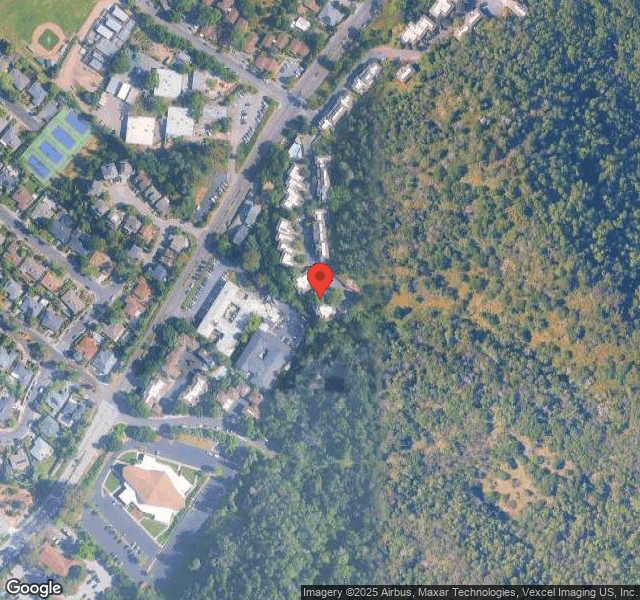
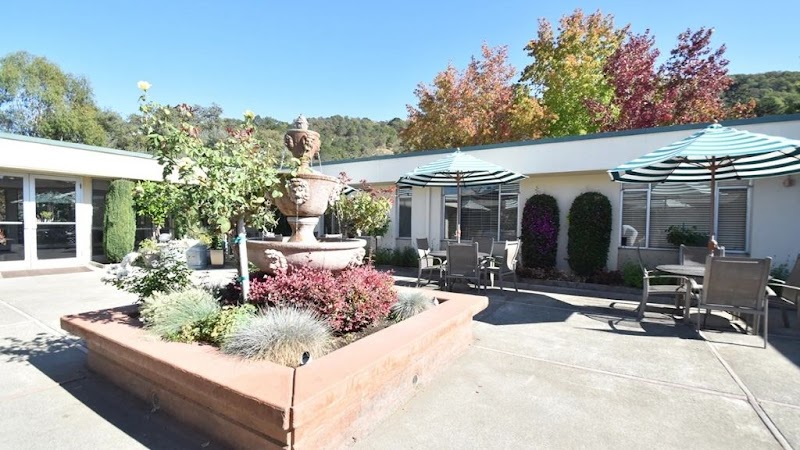

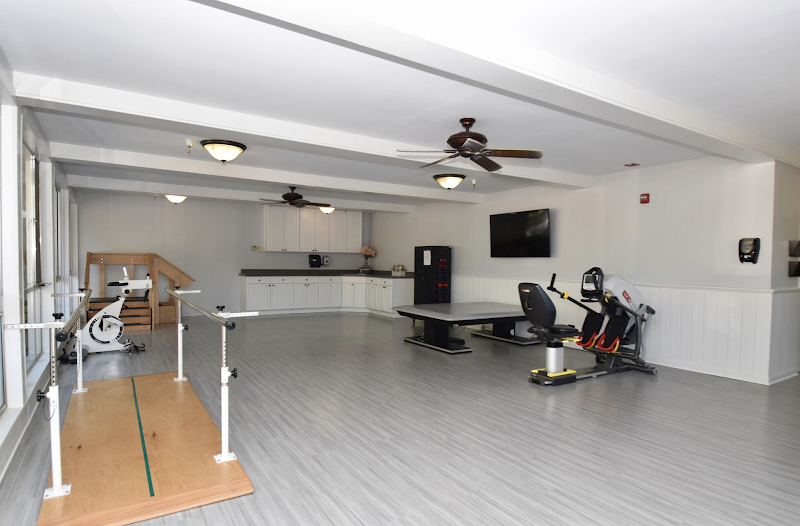
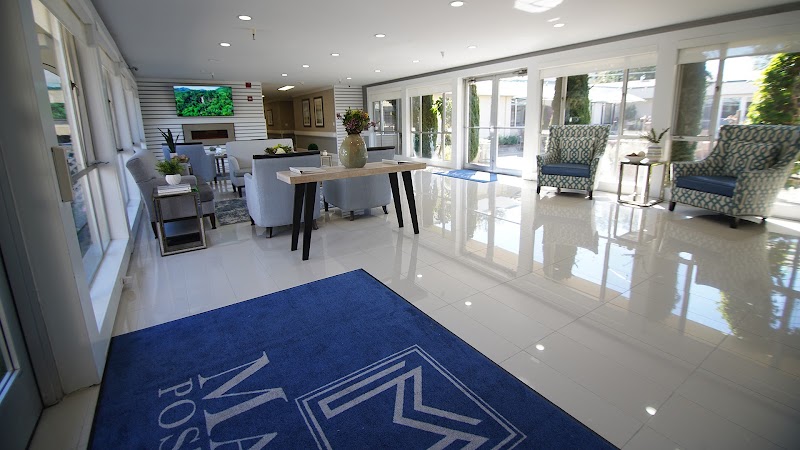
MARIN POST ACUTE

234 N. SAN PEDRO RD, SAN RAFAEL, CA 94903 (415) 479-3450
For profit - Limited Liability company 168 Beds PACS GROUP Data: November 2025
Trust Grade
50/100
#625 of 1155 in CA
Last Inspection: February 2024

Within standard 12-15 month inspection cycle. Federal law requires annual inspections.

Overview

Marin Post Acute in San Rafael, California has a Trust Grade of C, which means it is average and sits in the middle of the pack compared to other facilities. It ranks #625 out of 1155 facilities in California, placing it in the bottom half, but is #4 out of 11 in Marin County, indicating only three local options are better. The facility is improving, with issues decreasing from 7 in 2024 to 6 in 2025. Staffing is average with a rating of 3 out of 5 stars and a turnover rate of 43%, which is close to the state average of 38%. There are no fines on record, which is a positive sign, but the RN coverage is also average, meaning residents may benefit from more specialized care. However, there are some concerning incidents. For example, one resident developed a pressure ulcer due to a lack of preventive measures, and another resident suffered from severe pain because their pain management was not properly addressed. Additionally, there were deficiencies in social services staffing qualifications, which could impact residents' support needs. While there are strengths in the facility, families should weigh these weaknesses carefully as they make their decision.

Trust Score
C
50/100
In California
#625/1155
Bottom 46%
Safety Record
Moderate
Needs review
Inspections
Getting Better
7 → 6 violations
Staff Stability
○ Average
43% turnover. Near California's 48% average. Typical for the industry.
Penalties
✓ Good
No fines on record. Clean compliance history, better than most California facilities.
Skilled Nurses
⚠ Watch
Each resident gets only 24 minutes of Registered Nurse (RN) attention daily — below average for California. Fewer RN minutes means fewer trained eyes watching for problems.
Violations
⚠ Watch
44 deficiencies on record. Higher than average. Multiple issues found across inspections.
★★★☆☆
3.0
Overall Rating
★★★☆☆
3.0
Staff Levels
★★★★★
5.0
Care Quality
★★☆☆☆
2.0
Inspection Score
Stable
2024: 7 issues
2025: 6 issues

The Good

  • 5-Star Quality Measures · Strong clinical quality outcomes
  • Full Sprinkler Coverage · Fire safety systems throughout facility
  • No fines on record
  • Staff turnover below average (43%)

    5 points below California average of 48%

Facility shows strength in quality measures, fire safety.

The Bad

3-Star Overall Rating

Near California average (3.1)

Meets federal standards, typical of most facilities

Staff Turnover: 43%

Near California avg (46%)

Typical for the industry

Chain: PACS GROUP

Part of a multi-facility chain

Ask about local staffing decisions and management

The Ugly 44 deficiencies on record

2 actual harm
Aug 2025 1 deficiency
CONCERN (D) 📢 Someone Reported This

A family member, employee, or ombudsman was alarmed enough to file a formal complaint

Potential for Harm - no one hurt, but risky conditions existed

Free from Abuse/Neglect (Tag F0600)

Could have caused harm · This affected 1 resident

**NOTE- TERMS IN BRACKETS HAVE BEEN EDITED TO PROTECT CONFIDENTIALITY** Based on interview and record review, the facility failed to protect the resident's right to be free from physical abuse by anot...

Read full inspector narrative →
**NOTE- TERMS IN BRACKETS HAVE BEEN EDITED TO PROTECT CONFIDENTIALITY** Based on interview and record review, the facility failed to protect the resident's right to be free from physical abuse by another resident for one of four sampled residents (Resident 1) when Resident 2 entered his room and struck him with a hanger.This failure had the potential to result in serious physical injury to Resident 1.Findings:A review of Resident 1's admission record indicated he was last admitted in 5/25 with diagnoses of severe obesity and bed confinement.A review of Resident 1's Minimum Data Set (MDS- a federally mandated resident assessment tool), 6/18/25, indicated he had severe cognitive impairment.A review of Resident 1's Social Services note, dated 7/25/25, indicated the Social Services Director (SSD) had spoken to him and he confirmed a female resident had entered his room and hit him.A nursing note, dated 7/25/25 and written by Licensed Nurse 1 (LN 1), indicated Resident 1 had been assessed by her and found to have had two 1-centimeter (cm- a unit of measurement) scratches on his left cheek.A review of Resident 2's admission record indicated she was admitted in 2/25 with the diagnosis of Parkinson's disease (a progressive disease of the nervous system marked by tremor, muscular rigidity, and slow, imprecise movements).A review of Resident 2's MDS, dated [DATE], indicated she had moderate cognitive impairment.A review of Resident 2's Social Services note, dated 7/25/25, indicated Resident 2 had informed the SSD that on the previous day, she had entered Resident 1's room with a hanger and hit him with it because she was upset with his yelling.During an interview on 8/12/25 at 11:44 a.m. with Resident 1, Resident 1 stated a female resident had entered his room and struck him in the face with a hanger. Resident 1 could not recall her name and stated it was a while back. Resident 1 stated he had a couple of scratches on his face.During an interview on 8/12/25 at 12:17 p.m. with Resident 2, Resident 2 acknowledged she had entered Resident 1's room with a hanger.During an interview on 8/12/25 at 12:50 p.m. with the SSD. The SSD confirmed Resident 2 had reported the incident with Resident 1 to him, agreed it was the facility's responsibility to protect residents from other residents and being hit with a hanger was abusive.During an interview on 8/12/25 at 3:28 p.m. with LN 1, LN 1 stated she had completed a head-to-toe assessment on Resident 1 on 7/25/25, found two superficial scratches on his left cheek and confirmed the scratches were new injuries for him.During an interview on 8/12/25 at 4:11 p.m. with the Director of Nursing (DON), the DON stated she was aware of the incident between Resident 1 and Resident 2. The DON agreed Resident 1 had been physically abused by Resident 2 and it was the facility's responsibility to protect residents from all types of abuse.During a review of the facility's policy titled, Abuse, Neglect, Exploitation and Misappropriation Prevention Program, dated 2001, the policy stipulated, Residents have the right to be free from abuse.This includes.physical abuse.
May 2025 4 deficiencies
CONCERN (D) 📢 Someone Reported This

A family member, employee, or ombudsman was alarmed enough to file a formal complaint

Potential for Harm - no one hurt, but risky conditions existed

Deficiency F0658 (Tag F0658)

Could have caused harm · This affected 1 resident

**NOTE- TERMS IN BRACKETS HAVE BEEN EDITED TO PROTECT CONFIDENTIALITY** Based on observation, interview and record review, the facility failed to ensure one resident (Resident 2) of three sampled resi...

Read full inspector narrative →
**NOTE- TERMS IN BRACKETS HAVE BEEN EDITED TO PROTECT CONFIDENTIALITY** Based on observation, interview and record review, the facility failed to ensure one resident (Resident 2) of three sampled residents received care which met professional standards when a Licensed Nurse B (LN B) left a cup of medications by the Resident 2 ' s bedside, unattended, without a physician ' s order. This failure decreased the facility ' s potential to safely administer medications to residents. Findings: A review of Resident 2 ' s admission record indicated she was admitted to the facility on [DATE] with diagnoses including hemiplegia and hemiparesis (muscle weakness or partial paralysis) following unspecified cerebrovascular disease (a term used for conditions that affect blood flow to the brain) affecting her left side. A review of Resident 2 ' s Minimum Data Set (MDS- a federally mandated resident assessment tool), dated 2/9/25, indicated she had no memory impairment. During a concurrent observation and interview with Resident 2 on 5/1/25 at 10:40 a.m., a plastic cup containing nine pills were observed sitting on top of Resident 2 ' s bedside table, unattended. Resident 2 stated the nurse left them on her bedside table, after 10 a.m. that morning, to swallow, but one of her prescribed medications was missing. During an interview on 5/1/25 at 10:42 a.m., LN B confirmed she left Resident 2 ' s medications on top of Resident 2 ' s bedside table, unattended. During an interview with the Director of Staff Development (DSD) on 5/1/25 at 1:34 p.m., he stated Licensed Nurses were not allowed to leave unattended medications by a resident ' s bedside without a physician ' s order due to safety risks. The DSD also acknowledged there were no residents at the facility with a physician order for self-administration of medications, including Resident 2. A review of the facility ' s policy titled, Administering Medications, last reviewed in April of 2019, indicated, .Medications ordered for a particular resident may not be administered to another resident .Residents may self-administer their own medications only if the attending physician, in conjunction with the interdisciplinary care planning team, has determined that they have the decision-making capacity to do so safely. A review of the facility ' s document titled Job Description: LPN [Licensed Practical Nurse]/ [LVN [Licensed Vocational Nurse] prepared by Human Resources in February 2024 indicated, .Drug Administration Functions .Ensure that prescribed medication for one resident is not administered to another .Implement and maintain established nursing objectives and standards.
CONCERN (D) 📢 Someone Reported This

A family member, employee, or ombudsman was alarmed enough to file a formal complaint

Potential for Harm - no one hurt, but risky conditions existed

Deficiency F0725 (Tag F0725)

Could have caused harm · This affected 1 resident

**NOTE- TERMS IN BRACKETS HAVE BEEN EDITED TO PROTECT CONFIDENTIALITY** Based on observation, interview and record review, the facility failed to ensure call lights for two residents (Resident 1 & Res...

Read full inspector narrative →
**NOTE- TERMS IN BRACKETS HAVE BEEN EDITED TO PROTECT CONFIDENTIALITY** Based on observation, interview and record review, the facility failed to ensure call lights for two residents (Resident 1 & Resident 2) of three sampled residents were answered promptly when the Surveyor observed Resident 2 ' s call light ringing for 25 minutes before intervening. This failure decreased the facility ' s potential to provide prompt assistance to residents and resulted in Resident 2 feeling neglected. Findings: A review of Resident 1 ' s admission record indicated she was admitted to the facility on [DATE] with diagnoses including metabolic encephalopathy (brain dysfunction caused by the body ' s metabolism). A review of Resident 1 ' s Minimum Data Set (MDS- a federally mandated resident assessment tool), dated 2/26/25, indicated she had no memory impairment. During a phone interview on 5/1/25 at 3:02 p.m., Resident 1 stated the call light took from 30 minutes to an hour-and-a-half to be answered by staff. Resident 1 stated she pressed it on behalf of her roommate who required staff assistance, as she could not get out of bed. A review of Resident 2 ' s admission record indicated she was admitted to the facility on [DATE] with diagnoses including hemiplegia and hemiparesis (muscle weakness or partial paralysis) following unspecified cerebrovascular disease (a term used for conditions that affect blood flow to the brain) affecting her left side. A review of Resident 2 ' s MDS, dated [DATE], indicated she had no memory impairment. A review of Resident 2 ' s active care plan initiated on 2/10/21 regarding activities of daily living (ADLs – activities related to personal care such as bathing and dressing) indicated, Encourage the resident to use bell [or call light] to call for assistance. During an observation on 5/1/25 from 10:15 a.m. to 10:40 a.m., Resident 2 ' s call light was observed to be ringing for 25 minutes without a response from facility staff. After 25 minutes, the Surveyor entered Resident 2 ' s room for an interview with Resident 2 ' s permission. During a concurrent observation and interview with Resident 2 on 5/1/25 at 10:40 a.m., a plastic cup containing medications was observed on top of Resident 2 ' s bedside table, unattended. Resident 2 stated the nurse left them on the bedside table, after 10 a.m., for Resident 2 to swallow, but one of her prescribed medications was missing. Resident 2 stated she pressed her call light to notify the nurse of the missing medication and had been waiting for about twenty-five minutes for staff to respond to it. Resident 2 stated staff frequently took up to an hour to respond to call lights. Resident 2 stated she had been left wet and soiled for extended periods of time due to staff taking so long to answer call lights. Resident 2 stated she felt neglected when staff did not answer her call lights promptly. During an interview on 5/1/25 at 10:42 a.m., LN B was notified of Resident 2 ' s request for her missing medication. LN B was at the nurses ' station, which was not in the same hallway as Resident 2 ' s, therefore, the call light could not be visualized from there. LN B confirmed she left Resident 2 ' s medications on top of Resident 2 ' s bedside table, unattended after 10 a.m. LN B confirmed she missed a medication for Resident 2 during medication preparation, and stated she would get it immediately. The missing medication was metformin (a medication to regulate high blood sugar levels). During an interview with the Director of Nursing (DON) on 5/5/25 at 12:35 p.m., she stated staff were expected to answer call lights within 10 minutes. A review of the facility policy titled, Answering the Call Light, dated 2019, indicated, The facility will be adequately equipped to allow residents to call for staff assistance through a communication system which relay the all [sic] directly to a staff member or to a centralized staff work area .Answer the resident's call as soon as possible. A review of the facility ' s document titled Job Description: LPN [Licensed Practical Nurse]/ [LVN [Licensed Vocational Nurse] prepared by Human Resources in February 2024 indicated, .Ensure that personnel providing direct care to residents are providing such care in accordance with the resident ' s care plan and wishes .
CONCERN (D) 📢 Someone Reported This

A family member, employee, or ombudsman was alarmed enough to file a formal complaint

Potential for Harm - no one hurt, but risky conditions existed

Deficiency F0760 (Tag F0760)

Could have caused harm · This affected 1 resident

**NOTE- TERMS IN BRACKETS HAVE BEEN EDITED TO PROTECT CONFIDENTIALITY** Based on observation, interview and record review, the facility failed to ensure one resident (Resident 2) of three sampled resi...

Read full inspector narrative →
**NOTE- TERMS IN BRACKETS HAVE BEEN EDITED TO PROTECT CONFIDENTIALITY** Based on observation, interview and record review, the facility failed to ensure one resident (Resident 2) of three sampled residents was kept free of significant medication errors, when Licensed Nurse B ( LN B) administered her morning medications more than one hour late, left her medications by the resident ' s bedside unattended, and missed an important morning medication that was required to be administered with breakfast. These findings increased the potential to result in elevated blood pressure, elevated glucose levels, and harm to Resident 2. Findings: A review of Resident 2 ' s admission record indicated she was admitted to the facility on [DATE] with diagnoses including hemiplegia and hemiparesis (muscle weakness or partial paralysis) following unspecified cerebrovascular disease (a term used for conditions that affect blood flow to the brain) affecting her left side. A review of Resident 2 ' s Minimum Data Set (MDS- a federally mandated resident assessment tool), dated 2/9/25, indicated she had no memory impairment. During a concurrent observation and interview with Resident 2 on 5/1/25 at 10:40 a.m., a plastic cup containing nine medications was observed on top of Resident 2 ' s bedside table, unattended. Resident 2 stated the nurse left them on her bedside table, after 10a.m., to swallow, but one of her medications was missing. During an interview on 5/1/25 at 10:42 a.m., LN B confirmed she left Resident 2 ' s morning medications on top of Resident 2 ' s bedside table, unattended after 10a.m. LN B confirmed she missed a medication for Resident 2 during medication preparation, and stated she would get it immediately. The missing medication was metformin (a medication to regulate high blood sugar levels). During an observation on 5/1/25 at 10:50 a.m., Resident 2 was observed swallowing the nine medications in the cup, whole, with water, along with the new tablet of metformin LN B had just brought for her. A review of Resident 2 ' s Medication Administration Record (MAR) dated May 2025, indicated she had the following medications scheduled the morning of 5/1/25: 1. Gabapentin (medication used to treat chronic pain) 600 milligram (mg) tablet scheduled at 8 a.m. 2. Meclizine Hydrochloride (medication used to treat nausea) 12.5 mg tablet scheduled at 8 a.m. 3. Saccharomyces Boulardi (a supplement for gastrointestinal health) 250 mg capsule scheduled at 8 a.m. 4. Metformin 1000 mg tablet scheduled at 8 a.m. which also indicated, GIVE WITH BREAKFAST AND DINNER. 5. Metoprolol Tartrate (medication used to treat high blood pressure) 25 mg tablet scheduled at 8 a.m. which also indicated, GIVE WITH FOOD. 6. Famotidine (medication for heartburn or acid indigestion) oral tablet 40 mg scheduled at 9 a.m. 7. Duloxetine Hydrochloride (medication used to treat depression) 800 mg tablet scheduled at 8 a.m. 8. Clopidogrel Bisulfate (medication used to prevention of strokes) 75 mg tablet, scheduled at 8 a.m. 9. Amlodipine Besylate (medication used to treat high blood pressure) 5 mg tablet scheduled at 9 a.m. 10. Aspirin (medication used to prevent a blockage of blood flow to the brain) 81 mg tablet, scheduled at 8 a.m. Resident 2 ' s MAR did not indicate any medication scheduled to be administered at 10 a.m. or 11 a.m. During an interview on 5/1/25 at 1:03 p.m., LN B confirmed the 8 a.m. and 9 a.m. medications in Resident 2 ' s MAR were the medications left on Resident 2 ' s bedside table on 5/1/25 at 10:40 a.m., LN B stated breakfast was served between 8 a.m. and 8:30 a.m.; therefore, metformin had been administered after the prescribed time. During an interview on 5/1/25 at 1:34 p.m. the Director of Staff Development (DSD) stated medications were required to be administered within two hours of the scheduled time, from one hour before to one hour after. The DSD stated medications given outside of these parameters were considered medication errors. The DSD stated medications that were required to be given with food were expected to be administered when there was food in the stomach. The DSD stated administering which required it to be administered with breakfast but was administered at 10:30 a.m. was considered a medication error. A review of the facility policy titled, Administering Medications, last revised in April of 2019 indicated, Medications are administered in a safe and timely manner, and as prescribed . The individual administering the medication checks the label to verify the right resident, right medication, right dosage, right time and right method (route) of administration before giving the medication .
CONCERN (E) 📢 Someone Reported This

A family member, employee, or ombudsman was alarmed enough to file a formal complaint

Potential for Harm - no one hurt, but risky conditions existed

Deficiency F0825 (Tag F0825)

Could have caused harm · This affected multiple residents

**NOTE- TERMS IN BRACKETS HAVE BEEN EDITED TO PROTECT CONFIDENTIALITY** Based on interview and record review, the facility failed to ensure rehabilitative services were provided for one resident (Resi...

Read full inspector narrative →
**NOTE- TERMS IN BRACKETS HAVE BEEN EDITED TO PROTECT CONFIDENTIALITY** Based on interview and record review, the facility failed to ensure rehabilitative services were provided for one resident (Resident 2) of three sampled residents when restorative nursing services (nursing interventions that focus on helping residents maintain and improve their ability to function independently in activities of daily living and mobility) were not performed according to physician ' s orders. This failure decreased the facility ' s potential to ensure residents attained their highest practicable level of physical and functional well-being. Findings: A review of Resident 2 ' s admission record indicated she was admitted to the facility on [DATE] with diagnoses including hemiplegia and hemiparesis (muscle weakness or partial paralysis) following unspecified cerebrovascular disease (a term used for conditions that affect blood flow to the brain) affecting her left side. A review of Resident 2 ' s clinical record included the following documents: -A Minimum Data Set (MDS- a federally mandated resident assessment tool), dated 2/9/25, indicated she had no memory impairment. -An Order Summary Report, dated 5/1/25, indicated an active physician ' s (MD) order, started on 2/25/25, for restorative nursing services three times per week as tolerated. There was no end date indicated for this order. -Restorative Nurse Assistant (RNA- a staff member who assists residents in regaining or maintaining their skills and abilities through therapy and rehabilitation programs) Progress Reports dated 4/5/25 through 5/5/25 indicated Resident 2 received RNA services two times during the weeks of: 4/6/25 - 4/12/25, 4/20/25- 4/26/25, and 4/27/25- 5/3/25. During an interview on 5/1/25 at 10:40 a.m., Resident 2 stated she had not received her regular therapy services which were supposed to be provided three times per week. Resident 2 stated she needed these services to prevent her left hand from becoming stiff, since she could not move it due to a stroke (an interruption of blood flow to the brain which can result in physical changes to the body). During an interview on 5/1/25 at 1:52 p.m., RNA A stated the facility was frequently short-staffed for Certified Nursing Assistants (CNA- a staff member who provides basic nursing care and assistance with activities of daily living to residents) and as a result, RNA A was often assigned to work as CNA. Due to this, RNA A was unable to provide rehabilitation nursing services to the residents that required them, including Resident 2. RNA A stated he was not replaced by another RNA when assigned to work as a CNA. During a concurrent interview and record review on 5/5/25 at 12:19 p.m., the Director of Rehabilitation (DOR) stated Resident 2 should have been receiving restorative nursing services three times per week, but the RNA providing these services was sometimes assigned to work as a CNA and could not provide them. The DOR confirmed the RNA Progress Reports dated 4/6/25 - 4/12/25, 4/20/25- 4/26/25, and 4/27/25- 5/3/25 indicated Resident 2 received restorative nursing services two times per week instead of three. The DOR stated he had no control over staffing. The DOR stated restorative nursing services were aimed at maintaining the residents ' abilities so they would not decline. During an interview on 5/5/25 at 12:02 p.m., the Staffing Coordinator (SC) confirmed RNAs, including RNA A, were assigned to work as CNAs when other CNAs called off. The SC was asked to provide the following information to the Surveyor: 1. The dates in April 2025, RNA A was assigned to work as CNA instead of RNA. 2. The names of staff members who replaced RNA A as a restorative nursing assistant when RNA A was assigned the CNA position. A review of an electronic mail sent to the Surveyor from the facility Administrator (ADM) on 5/5/25 at 1 p.m. indicated, In reference to our RNA, [RNA A] The assignment sheets and times we emailed will show which days he worked. [RNA A] worked as a CNA for a portion of his days on 4/18/25 and 4/29/25 only. A review of the assignment sheets provided by the ADM on 5/5/25 at 1 p.m. indicated RNA A worked from 4/14/25-4/17/25, 4/19/25-4/23/25, and 4/25/25-4/28/25. The assignment sheets did not indicate which days or portion of the days RNA A was assigned to work as a CNA or an RNA. During an interview on 5/5/25 at 1:10 p.m., RNA A stated he was assigned to work as CNA more than half of his shifts (approximately more than 10 shifts) in April 2025. RNA A confirmed on the days he was assigned to work as CNA, no other RNAs replaced him. RNA A further stated that since there were no RNAs on the evening shift, the entire facility did not receive restorative nursing services for the day. RNA A also stated when CNAs did not come to work, he was automatically assigned to take the position of the absent CNA. RNA A stated he provided services to 20 to 22 residents per day; therefore, on the days when he worked as CNA, those 20 to 22 residents did not receive restorative nursing services. A review of the facility ' s policy titled, Therapy Services, last revised in July of 2013, indicated, Therapy services shall be scheduled in accordance with the resident ' s treatment plan .The therapist shall interview the resident and consult with the attending physician as to the type of treatment to be administered. A review of the facility ' s policy titled, Restorative Nursing Services, last revised in July of 2017, indicated, Residents will receive restorative nursing care as needed to help promote optimal safety and independence.
Mar 2025 1 deficiency
CONCERN (F) 📢 Someone Reported This

A family member, employee, or ombudsman was alarmed enough to file a formal complaint

Potential for Harm - no one hurt, but risky conditions existed

Social Worker (Tag F0850)

Could have caused harm · This affected most or all residents

Based on interview and record review, the facility failed to ensure the Social Service Director's (SSD) met the minimum qualifications of their positions per federal regulations, when one SSD did not ...

Read full inspector narrative →
Based on interview and record review, the facility failed to ensure the Social Service Director's (SSD) met the minimum qualifications of their positions per federal regulations, when one SSD did not have a Bachelor's Degree, and the other SSD did not have a Bachelor's degree in Social Work or in a Human Services field. This failure decreased the facility's potential to meet the social service needs of the residents. Findings: A review of the facility's license, dated 2/3/25 to 5/31/25, indicated the facility had 168 beds. During an interview on 3/13/25 at 11:11 a.m., the Human Resource Director (HRD) stated Social Services Director A (SSD A) worked on Unit One and Social Services Director B (SSD B) worked on Unit Two. During an interview on 3/13/25 at 11:28 a.m., SSD A stated she had a Bachelor's Degree in communications. During an interview on 3/13/25 at 11:42 a.m., SSD B stated she did not have a college degree. During a concurrent record review and interview on 3/13/25 at 12:05 p.m., the HRD confirmed SSD A had a signed job description in SSD A's employee file and SSD B had a signed job description in SSD B's e-mailbox. During a concurrent record review and interview on 3/13/25 at 3:18 p.m., the HRD confirmed there was no resume or a record of a college degree in SSD A's or SSD B's personnel file. Record review of a document titled, Job Description: Social Services Director Prepared by Human Resources March 2017, indicated, Qualification .Education and/or Experience .Bachelor's Degree in Social Work or in Human Services and 2 years of supervised social work experience in a health care setting working directly with individuals.
Feb 2024 7 deficiencies
CONCERN (D)

Potential for Harm - no one hurt, but risky conditions existed

Deficiency F0554 (Tag F0554)

Could have caused harm · This affected 1 resident

Based on observation, interviews, record review, and facility policy review, the facility failed to ensure 1 (Resident #134) of 2 sampled residents reviewed for choices was assessed to self-administer...

Read full inspector narrative →
Based on observation, interviews, record review, and facility policy review, the facility failed to ensure 1 (Resident #134) of 2 sampled residents reviewed for choices was assessed to self-administer their medication before the licensed nurse left the medication(s) with the resident to administer on their own. Findings included: A review of the facility policy, titled, Self-Administration of Medications, revised in February 2021 revealed, Residents have the right to self-administer medications if the interdisciplinary team has determined that it is clinically appropriate and safe for the resident to do so. Policy Interpretation and Implementation 1. As part of the evaluation comprehensive assessment, the interdisciplinary team (IDT) assesses each resident's cognitive and physical abilities to determine whether self-administering medications is safe and clinically appropriate for the resident. Per the policy, 3. If it is deemed safe and appropriate for a resident to self-administer medications, this is documented in the medical record and the care plan. A review of Resident #134's admission Record revealed the facility admitted the resident on 10/25/2023, with diagnoses that included sepsis, right upper extremity cellulitis, muscle weakness, and adult failure to thrive. A review of Resident #134's quarterly Minimum Data Set (MDS), with an Assessment Reference Date (ARD) of 01/25/2024, revealed the resident had a Brief Interview for Mental Status (BIMS) score of 12, which indicated the resident had moderate cognitive impairment. A review of Resident #134's comprehensive care plan with an admission date of 10/25/2023, revealed no evidence the resident was care planned to self-administer their medication(s). A review of Resident #134's Order Summary Report with active orders as of 02/14/2024, revealed no physician order to indicate the resident could self-administer their medication(s). On 02/12/2024 at 9:21 AM, Resident #134 was observed to have five large white circular pills in a small cup. The resident stated the nursed handed them their pills and left the room. Licensed Vocational Nurse (LVN) #1 entered the resident's room and acknowledged he left the pills with the resident to take. During an interview on 02/13/2024 at 12:12 PM, LVN #1 stated he left Resident #134 unattended with a medication cup that contained their pills in it while he secured and cleaned up his medication cart. LVN #1 stated he knew not to leave medications with residents to self-administer and should not have left Resident #134 alone to take their pills. During an interview on 02/14/2024 at 11:23 AM, LVN #4 stated it was never okay to leave Resident #134 to self-administer their medication(s). During an interview on 02/14/2024 at 1:43 PM, the Director of Nursing (DON) stated no residents of the facility self-administered their medications and no resident had requested to self-administer their medications. The DON stated she expected the nurses to stay with the residents during medication administration for safety reasons and to verify that the residents took all their medications. The DON stated Resident #134 was not assessed to self-administer their medications. During an interview on 02/15/2024 at 8:20 AM, the Administrator stated he expected the clinical team to have evaluated a resident for the ability to safely self-administer medications prior to allowing a resident to self-administer their medications.
CONCERN (D)

Potential for Harm - no one hurt, but risky conditions existed

Grievances (Tag F0585)

Could have caused harm · This affected 1 resident

Based on interviews, record review, document review, and facility policy review, the facility failed to ensure their grievance policy revealed who the Grievance Official was, their contact information...

Read full inspector narrative →
Based on interviews, record review, document review, and facility policy review, the facility failed to ensure their grievance policy revealed who the Grievance Official was, their contact information, and the contact information for independent entities to whom grievances may be files. The facility further failed to ensure there was documentation of a resident's grievance to include, the receipt of the grievance, a summary statement of the grievance, the steps taken to investigate the grievance , a summary of the pertinent findings/conclusion, any corrective action taken, whether the grievance was confirmed or not, and the date the written decision was issued to the resident for 1 (Resident #19) of 6 sampled residents reviewed for personal property. Findings included: A review of the facility policy titled, Resident Grievance/Complaint Procedures, revised in January 2017, revealed Any resident, family member, or appointed resident representative may file a grievance or complaint concerning care, treatment, behavior of other residents, staff members, theft of property, or any other concerns regarding his or her stay at this facility. Grievances also may be voiced or filed regarding care that has not been furnished. The policy did not reveal who the Grievance Official was, their contact information, or contact information for independent entities with whom grievances may be filed. A review of Resident #19's admission Record revealed the facility admitted the resident on 05/21/2023, with diagnoses to include metabolic encephalopathy, moderate persistent asthma, and chronic obstructive pulmonary disease. A review of Resident # 19's annual Minimum Data Set (MDS), with an Assessment Reference Date (ARD) date of 01/12/2024, revealed the resident had a Brief Interview for Mental Status (BIMS) of 14, which indicated the resident was cognitively intact. In an interview on 02/12/2024 at 11:50 AM, Resident #19 stated the Administrator threw out about $75.00 worth of groceries they had been in the facility's refrigerator. Resident #19 also reported missing items such as slippers, sheets, and personal items. According to Resident #19, they had been reimbursed for some of the items, but not all of them. A review of the facility grievance log for the last six months revealed no evidence to indicate Resident #19 had voiced or filed a grievance related to their missing personal items or their food that had been discarded from the facility's refrigerator. In an interview on 02/13/2024 at 1:34 PM, the Administrator stated last Monday (02/05/2024) during rounds, Resident #19's food items in the refrigerator were discarded as they were not properly labeled. According to the Administrator, this was explained to the resident and the resident would be reimbursed. In an interview on 02/14/2024 at 9:42 AM, the Administrator stated if the resident concern/grievance was handled in real time, there would be no documentation of the concern/grievance. In an interview on 02/14/2024 at 11:46 AM, the Social Services Director stated Resident #19 had been refunded for all their missing items; however, the facility had no documentation to justify what the resident's grievance was or how it was resolved. In an interview on 02/15/2024 at 9:01 AM, the Director of Nursing (DON) stated any time a staff member acted on a resident grievance/complaint, there should be documentation to indicate what the grievance/complaint was and how it was resolved. The DON stated she would provide education to the social service staff on the grievance process. The DON acknowledged the facility did not implement the grievance process correctly. In an interview on 02/15/2024 at 11:29 AM, the Administrator stated he had now informed the social service staff to document all actions taken related to a resident's grievance. In an interview on 02/15/2024 at 1:57 PM, the Administrator stated the facility's grievance policy had several holes in it and the entire policy and how things were done in the facility needed to be revamped. The Administrator acknowledged he was not aware of the components of the grievance policy or that residents should be provided with a written decision regarding the grievance findings.
CONCERN (D)

Potential for Harm - no one hurt, but risky conditions existed

Free from Abuse/Neglect (Tag F0600)

Could have caused harm · This affected 1 resident

Based on record reviews, interviews, and facility policy review, the facility failed to ensure 1 (Resident #22) of 1 sampled resident reviewed for abuse, was not physically abused by another resident....

Read full inspector narrative →
Based on record reviews, interviews, and facility policy review, the facility failed to ensure 1 (Resident #22) of 1 sampled resident reviewed for abuse, was not physically abused by another resident. Findings included: A review of a facility policy titled, Abuse Prevention Program, revised in December 2016, revealed, Policy Statement Our residents have the right to be free from abuse, neglect, misappropriation of resident property and exploitation. This includes but is not limited to freedom from corporal punishment, involuntary seclusion, verbal, mental, sexual or physical abuse, and physical or chemical restraint not required to treat the resident's symptoms. Policy Interpretation and Implementation As part of the resident abuse prevention, the administration will: 1. Protect our residents from abuse by anyone including, but not necessarily limited to : facility staff, other residents, consultants, volunteers, staff from other agencies, family members, legal representatives, friends, visitors, or any other individual. A review of Resident #22's admission Record revealed the facility admitted the resident on 09/16/2022, with diagnoses that included muscle weakness, hypertension, and cognitive communication deficit. A review of Resident #22's quarterly Minimum Data Set (MDS), with an Assessment Reference Date (ARD) of 12/22/2023, revealed the resident had a Brief Interview for Mental Status (BIMS) score of 12, which indicated the resident had moderate cognitive impairment. A review of Resident #350's admission MDS, with an ARD of 01/09/2023, revealed the facility admitted the resident on 01/05/2023. The MDS revealed Resident #350 had a BIMS score of 6, which indicated the resident had severe cognitive impairment. Per the MDS, the resident had active diagnoses to include non-Alzheimer's dementia and cancer. A review of Resident #350's Progress Notes, written by Registered Nurse (RN) #7 and dated 01/09/2023 at 11:22 PM, revealed a licensed nurse and a certified nursing assistant (CNA) witnessed Resident #350 strike another resident with a pole, as the resident laid in bed. A review of Resident #22's Progress Notes, written by RN #7 and dated 01/09/2023 at 10:41 PM, revealed the licensed nurse on duty heard a noise from the covid unit and when they arrived at the unit, they observed a resident (Resident #350) with a long pole in their hand. Per the Progress Note, the resident (Resident #350), who seemed confused and agitated, struck Resident #22 on their forehead three times while the resident laid in bed. The Progress Note indicated the residents were immediately separated by a licensed nurse and CNA. A review of Resident #22's Progress Notes, written by Licensed Vocational Nurse (LVN) #1 and dated 01/10/2023 at 3:10 PM, revealed the resident sustained a head injury due to a resident-to-resident physical altercation. In an interview on 02/14/2024 at 11:52 AM, Resident #22 stated when the incident occurred, the perpetrator (Resident #350) was confused and held a pole in their hand. Resident #22 stated Resident #350 yelled that he/she wanted to kill someone, so they yelled for help and pressed their call light. During an interview on 02/14/2024 at 2:00 PM, the MDS Coordinator stated she was the manager on duty when the altercation occurred between Resident #22 and Resident #350. The MDS Coordinator stated she heard someone and when she arrived a CNA had already separated the residents. Per the MDS Coordinator, Resident #350 was confused, threw a trash can, and stated something about getting out of here. The MDS Coordinator stated she instructed the nurse to notify the Administrator, Director of Nursing (DON), and 911. According to the MDS Coordinator, the police came and talked with the residents and the physician gave an order to send the resident out to the hospital. The MDS Coordinator stated she did not recall anything more about the incident. A telephone interview was attempted with the former DON on 02/15/2024 at 9:58 AM. A voicemail message was left, and no return call was received. A telephone interview was attempted with LVN #1 on 02/15/2024 at 10:00 AM. A voicemail message was left, and no return call was received. In a telephone interview on 02/15/2024 at 10:02 AM, RN #7 indicated she did remember the incident that occurred between Resident #22 and Resident #350, but not any of the details. RN #7 stated she documented in the resident's medical records and referred the surveyor to her documentation. During an interview on 02/15/2024 at 11:25 AM, the DON stated she did not work at the facility when the incident occurred between Resident #22 and Resident #350. However, she stated it was her expectation was for staff to report the incident right away to the nurse supervisor and the abuse coordinator.
CONCERN (D)

Potential for Harm - no one hurt, but risky conditions existed

Report Alleged Abuse (Tag F0609)

Could have caused harm · This affected 1 resident

Based on interviews, record reviews, document review, and facility policy review, the facility failed to timely report an allegation of physical abuse to the state agency that involved 1 (Resident #22...

Read full inspector narrative →
Based on interviews, record reviews, document review, and facility policy review, the facility failed to timely report an allegation of physical abuse to the state agency that involved 1 (Resident #22) of 1 sampled resident reviewed for abuse. Findings included: A review of a facility policy titled, Abuse Investigation and Reporting, revised in July 2017, revealed, All reports of resident abuse, neglect, exploitation, misappropriation of resident property, mistreatment and/or injuries of unknown source shall be promptly reported to local, state and federal agencies (as defined by current regulations) and thoroughly investigated by facility management. Findings of abuse investigations will also be reported. Per the policy, 2. An alleged violation of abuse, neglect, exploitation or mistreatment will be reported immediately, but not later than: a. Two (2) hours if the alleged violation involves abuse OR has resulted in serious bodily injury; or b. Twenty-four (24) hours if the alleged violation does not involve abuse AND has not resulted in serious bodily injury. A review of Resident #22's admission Record revealed the facility admitted the resident on 09/16/2022, with diagnoses that included muscle weakness, hypertension, and cognitive communication deficit. A review of Resident #22's quarterly Minimum Data Set (MDS), with an Assessment Reference Date (ARD) of 12/22/2023, revealed the resident had a Brief Interview for Mental Status (BIMS) score of 12, which indicated the resident had moderate cognitive impairment. A review of Resident #350's admission MDS, with an ARD of 01/09/2023, revealed the facility admitted the resident on 01/05/2023. The MDS revealed Resident #350 had a BIMS score of 6, which indicated the resident had severe cognitive impairment. Per the MDS, the resident had active diagnoses to include non-Alzheimer's dementia and cancer. A review of Resident #350's Progress Notes, written by Registered Nurse (RN) #7 and dated 01/09/2023 at 11:22 PM, revealed a licensed nurse and a certified nursing assistant (CNA) witnessed Resident #350 strike another resident with a pole, as the resident laid in bed. A review of Resident #22's Progress Notes, written by RN #7 and dated 01/09/2023 at 10:41 PM, revealed the licensed nurse on duty heard a noise from the covid unit and when they arrived at the unit, they observed a resident (Resident #350) with a long pole in their hand. Per the Progress Note, the resident (Resident #350), who seemed confused and agitated, struck Resident #22 on their forehead three times while the resident laid in bed. The Progress Note indicated the residents were immediately separated by a licensed nurse and CNA. A review of Resident #22's Progress Notes, written by Licensed Vocational Nurse (LVN) #1 and dated 01/10/2023 at 3:10 PM, revealed the resident sustained a head injury due to a resident-to-resident physical altercation. In an interview on 02/14/2024 at 8:16 AM, the Administrator stated a report was not submitted to the state agency as one of the residents had a diagnosis of dementia. In a follow-up interview on 02/14/2024 at 12:25 PM, the Administrator acknowledged that he did not report the incident to the state agency within the required timeframe. During an interview on 02/15/2024 at 11:25 AM, the Director of Nursing stated she did not work at the facility when the incident occurred between Resident #22 and Resident #350. However, she stated it was her expectation that the incident be reported to the state agency within the required timeframe. A review of a fax transmittal report revealed the facility notified the state agency on 01/10/2023 at 10:42 AM of the allegation of physical abuse that involved Resident #22 and Resident #350. Per the report, on the evening of 01/09/2023 at approximately 6:30 PM, Resident #350 removed a pol from the facility's covid unit barrier, entered the room of Resident #22, and struck Resident #22 on their forehead with the pole.
CONCERN (D)

Potential for Harm - no one hurt, but risky conditions existed

Deficiency F0645 (Tag F0645)

Could have caused harm · This affected 1 resident

Based on interviews, record review, and facility policy review, the facility failed to ensure a Level II mental health evaluation was completed for 1 (Resident #56) of 2 sampled residents reviewed for...

Read full inspector narrative →
Based on interviews, record review, and facility policy review, the facility failed to ensure a Level II mental health evaluation was completed for 1 (Resident #56) of 2 sampled residents reviewed for preadmission screening and resident review (PASARR). Findings included: A review of the facility policy titled, Pre-admission Screening and Resident Review, revised in December 2016 revealed, The objective of the PASARR policy is to ensure that individuals with mental illness and intellectual disabilities receive the care and services that they need in the most appropriate setting. Per the policy, c. Upon completion of the Level II screen, the facility will review the screen recommendations and determine the facility's ability to provide the specialized services outlined. A review of Resident #56's admission Record, revealed the facility admitted the resident on 05/23/2023, with diagnoses that included chronic post-traumatic stress disorder and depression. A review of Resident #56's admission Minimum Data Set (MDS), with an Assessment Reference Date (ARD) of 05/30/2023, revealed the resident had a Brief Interview for Mental Status (BIMS) score of 9, which indicated the resident had moderate cognitive impairment. A review of a letter from the State of California-Health and Human Services Agency Department of Health Care Services, dated 06/02/2023, revealed Resident #56 had a positive Level I screening and a Level II mental health evaluation was required. A review of Resident #56's medical record revealed no evidence to indicate a Level II mental health evaluation was completed. During an interview on 02/13/2024 at 9:32 AM, the MDS Coordinator stated she was not aware why Resident #56's Level II mental health evaluation was not completed. According to the MDS Coordinator, she would ensure the Level II mental health evaluation was completed. During an interview on 02/15/2024 at 8:55 AM, the Director of Nursing (DON) stated the MDS Coordinator was responsible for ensuring the Level II mental health evaluation was completed. The DON stated the MDS Coordinator should have followed up on the resident's Level II mental health evaluation. During an interview on 02/15/2024 at 11:18 AM, the Administrator stated the MDS Coordinator was responsible for ensuring any Level I or Level II evaluation was completed.
CONCERN (D)

Potential for Harm - no one hurt, but risky conditions existed

Accident Prevention (Tag F0689)

Could have caused harm · This affected 1 resident

Based on observations, interviews, record review, and facility policy review, the facility failed to ensure 1 (Resident #57) of 3 sampled residents reviewed for accidents was assessed for smoking. Fi...

Read full inspector narrative →
Based on observations, interviews, record review, and facility policy review, the facility failed to ensure 1 (Resident #57) of 3 sampled residents reviewed for accidents was assessed for smoking. Findings included: A review of the facility policy titled, Smoking Policy-Residents, revised in October 2023, revealed, This facility has established and maintains safe resident smoking practices. Per the policy, 7. Resident smoking status is evaluated upon admission. If a smoker, the evaluation includes: a. current level of tobacco consumption; b. method of tobacco consumption; c. desire to quit smoking; and d. ability to smoke safely with or without supervision (per a completed Safe Smoking Evaluation). A review of Resident #57's admission Record revealed the facility admitted the resident on 01/09/2024 with diagnoses that included nicotine dependence and chronic obstructive pulmonary disease. A review of Resident #57's admission Minimum Data Set (MDS), with an Assessment Reference Date (ARD) of 01/13/2024, revealed the resident had a Brief Interview for Mental Status (BIMS) score of 14, which indicated the resident was cognitively intact. T A review of Resident #57's Nursing-Smoking Observation/Assessment dated 01/09/2024, revealed the resident denied smoking or the use of all tobacco products. A review of Resident #57's care plan, initiated on 02/01/2024, revealed the resident had the potential for injury related to smoking. Intervention directed staff to assess the resident's ability to smoke safely. On 02/13/2024 at 1:49 PM, Resident #57 was observed in the main lobby with two packs of cigarettes and a lighter in their possession. In an interview on 02/13/2024 at 2:17 PM, Resident #57 stated they sometimes kept their cigarettes and lighter. On 02/13/2024 at 2:38 PM, Resident #57 went outside and lit their cigarette. There was no staff in the area to provide supervision for the resident. Later the Director of Nursing (DON) arrived and informed the resident they should have a staff member with them. The DON was noted to ask the resident if they had any more cigarettes in their possession and the resident replied, no. In an interview on 02/13/2024 at 2:55 PM, the DON stated Resident #57 did not smoke when they were admitted to the facility. The DON stated she had asked staff to complete a smoking assessment once she realized the resident began to smoke. Per the DON, she was not sure if a smoking assessment had been completed. In an interview on 02/13/2024 at 3:08 PM, the Activities Director (AD) stated Resident #57 began smoking about three weeks ago. The AD stated he was not sure if a smoking assessment had been completed for Resident #57 as the assessment is completed by a nurse. In an interview on 02/15/2024 at 11:18 AM, the Administrator indicated his expectation was for residents to be assessed upon admission. The Administrator stated if there was a change, a new assessment should be completed. The Administrator confirmed a smoking assessment had not been completed for Resident #57. In an interview on 02/15/2024 at 11:21 AM, the DON stated a new assessment should have been completed when the staff found out Resident #57 began to smoke.
CONCERN (D)

Potential for Harm - no one hurt, but risky conditions existed

Unnecessary Medications (Tag F0759)

Could have caused harm · This affected 1 resident

Based on observations, record reviews, interviews, and facility policy review, the facility failed to ensure the medication error rate was 5% or less. There were two medication errors out of 29 opport...

Read full inspector narrative →
Based on observations, record reviews, interviews, and facility policy review, the facility failed to ensure the medication error rate was 5% or less. There were two medication errors out of 29 opportunities, which yielded a medication error rate of 6.89%. This deficient practice was affected 2 (Resident #54 and Resident #75) of 8 residents observed for medication administration. Findings included: A review of the facility policy titled, Administering Medications, revised in April 2019, revealed, Medications are administered in a safe and timely manner, and as prescribed. Per the policy, 4. Medications are administered in accordance with the prescriber orders, including any required time frame. The policy revealed, 10. The individual administering the medication checks the label THREE (3) times to verify the right resident, right medication, right dosage, right time and right method (route) of administration before giving the medication. 1. A review of Resident #75's Order Summary Report, revealed the facility admitted the resident on 07/28/2021. The Order Summary Report revealed an order dated 08/16/2023, for a lidocaine external patch 4% to be applied topically to the resident's right hip every morning and at bedtime for pain. During medication administrator observation on 02/13/2024 at 7:06 AM, Registered Nurse (RN) #2 applied a lidocaine external patch to Resident #75's left hip. During an interview on 02/13/2024 at 2:59 PM, RN #2 acknowledged she applied the lidocaine patch to Resident #75's left hip. RN #2 confirmed the patch should have been applied to the resident's right hip. 2. A review of Resident #54's Order Summary Report, revealed the facility admitted the resident on 05/27/2023. The Order Summary Report revealed an order dated 06/01/2023, for memantine hydrochloride (HCI) 10 milligrams (mg) by mouth one time a day for dementia. During medication administration observation on 02/13/2024 at 7:30 AM, Licensed Vocational Nurse (LVN) #3 did not administer Resident #54 10 mg of memantine HCI. During an interview on 02/13/2024 at 1:55 PM, LVN #3 acknowledged she did not administer memantine HCI to Resident #54. During an interview on 02/14/2024 at 11:20 AM, the Director of Nursing stated staff were expected to follow physician's orders for the administration of medications. During an interview on 02/14/2024 11:29 AM, the Administrator stated he expected staff to administer resident medications according to the physician's orders.
Dec 2023 1 deficiency
CONCERN (D) 📢 Someone Reported This

A family member, employee, or ombudsman was alarmed enough to file a formal complaint

Potential for Harm - no one hurt, but risky conditions existed

Deficiency F0725 (Tag F0725)

Could have caused harm · This affected 1 resident

Based on Observation, interview and record review, the facility failed to provide sufficient staffing for basic care needs for two acute rehabilitation Residents (Resident 1) and (Resident 2). This fa...

Read full inspector narrative →
Based on Observation, interview and record review, the facility failed to provide sufficient staffing for basic care needs for two acute rehabilitation Residents (Resident 1) and (Resident 2). This failure resulted in the potential for injury for Resident 1 to endure Skin breakdown and Resident 2 to suffer a fall. Findings: During an interview on 12/14/23 at 10:30 a.m., Family Member 1 stated, whenever Family Member 1 or Resident 1 pushed the nurses call light, it could take as long as 45 minutes before a Certified Nursing Assistant (CNA) answered Resident 1 ' s call light. Family Member 1 stated, This long wait time has caused Resident 1 to become Incontinent of urine and that is a potential for skin breakdown. Family Member 1 stated, I am at the facility a lot because I do not trust there is sufficient staffing scheduled to care for [Resident 1 ' s] needs. Family Member 1 stated, I spoke with the Nursing Home Administrator (NHA) and Social Service Director (SSD) about the long wait periods for [Resident 1 ' s] call light to be answered, as well as my concerns about the lack of staffing. Family Member 1 stated he expressed concern to the NHA about the long wait period to have the nurses light answered. Family Member 1 stated the NHA informed him the CNA has 15 minutes to answer Resident 1 ' s nurses ' call light. Family Member 1 stated he also communicated to the SSD and NHA that he did not see enough staff on to address other residents' needs as well. During an interview with Resident 1 on 12/14/23 at 1:30 p.m., Resident 1 was queried as to her experience with the care in the facility. Resident 1 stated she thought the care was OK, but when she needed to urinate, she put her nurses' light on, and it took a long time for a CNA to answer it. Resident 1 was queried as to how long it took for someone to answer her nurses ' call light. Resident 1 responded she has had to wait as long as 45 minutes. During a review of Resident 1 ' s medical record on 12/20/23, Resident 1 ' s, Brief Interview for Status Score (BIMS) (mental health assessment for thinking, reasoning, and remembering) was 12 out of 15 with 15 being the highest score for cognition. During an interview with the Director of Nursing (DON) on 12/14/23 at 1:45 p.m., the DON was queried as to what the facility ' s, Call Light Policy, indicated for the response time for a Resident ' s call light. The DON responded, I think it is 5-10 minutes. The DON was queried about the facility ' s staffing ratios for licensed and certified staff. The DON responded she believed the CNA and Nurse ratios are one Licensed Vocational Nurse (LVN) for 28 patients and one CNA for 12 Residents. The DON stated, We also have an internal On-Call Schedule to cover for staff call outs. The internal On-Call Schedule was requested two separate times from the DON and the NHA but was never received. Staff sign in sheets were requested from the DON multiple times but these were not received. The DON was queried as to her expectation for the Staff sign-in on the Nursing Sign-In Sheets. The DON stated, I expect the staff to sign in. During an interview with the SSD on 12/14/23 at 2:05 p.m., the SSD was queried if she had spoken with Resident 1 regarding a complaint referencing long wait times to have her call light answered. The SSD stated she did speak with Resident 1 and Family Member 1 and thought Family Member 1 had unrealistic expectations for Resident 1 ' s care. The SSD stated she informed Family Member 1 that he was free to take Resident 1 home if they were not happy with the care at the facility. The SSD was queried if she was aware of the Call Light Policy and response times to answer the Resident ' s Call light. The SSD stated she was not familiar with the timeframe in the Call Light policy. During an interview with the NHA on 12/20/23 at 11:10 a.m., the facility ' s Internal On-Call Schedule, Staff Sign-In Sheets, and Census and Direct Care Service Hours Per Patient Day (DHPPD) were requested. The Sign-In Sheets from 11/28/23 through 12/8/23, were received and noted with very few staff signed in for their shifts. The NHA was queried regarding the Facility ' s Call Light Policy and the time frame expectation for staff to answer call lights. The NHA responded, The light should be answered within 5-10 minutes. The payroll information from 12/1/23 through 12/16/23, was requested for staff who worked these dates due to few signatures on the staff Sign-In Sheets. Though the NHA stated he would email it by close of business 12/21/23, no payroll accounting was ever received. Messages were left with call back number for the facility Staffing Coordinator on 1/2/24 and 1/3/24, without response. On 12/27/23 at 9:27 p.m., received an email from NHA indicating, I have been in communication with my team, and they will fill in the final hours first thing in the morning and get the DHPPDs to you as well as the payroll information. No payroll accounting was ever received from the NHA or his staff. Multiple requests to both the DON and NHA for the On-Call Schedule but no On-Call Schedule was ever received. During a review of the final DHPPD emailed from NHA on 12/19/23, the final DHPPD, dated 12/1/23 through 12/16/23, had no Actual CNA hours. The first DHPPD received from the NHA from 11/28/23 through 12/8/23, was noted to have nine out of ten days for, Actual CNA DHPPD, under two hours per Resident and did not meet the minimum standard of 2.4 hours of CNA time per Resident. During an observation on 12/20/23 at 11:10 a.m., on Unit 1 in the hallway, Resident 2 ' s nurses ' call light was noted to be on from 11:10 a.m. until 11:30 a.m. No CNAs were in the hallway or in other resident rooms. During an interview with Resident 2 on 12/20/23 at 11:25 a.m., Resident 2 was queried as to her average wait time for the facility staff to answer her call light. Resident 2 stated she had to wait sometimes as long as 45 minutes; and sometimes on night shift an hour before someone came to assist her to the bathroom. Resident 2 stated she was not strong enough to get to the bathroom by herself. While interviewing Resident 2, Unlicensed Staff A entered the room at 11:30 a.m., shut off Resident 2 ' s call light, did not ask Resident 2 what she needed and then left the room. During an interview with Unlicensed Staff A on 12/20/23 at 11:35 a.m., Unlicensed Staff A was queried as to the Facility ' s Call Light Policy and the response time in the policy for answering Residents' call lights. Unlicensed Staff A stated she was not aware of the Call Light Policy or the response time. A review of Unlicensed Staff A ' s Training File on 1/3/24, indicated she was aware of the Resident Rights which included, receive a prompt response to all responsible requests and inquiries, receive adequate and appropriate health care, medical treatment, and protective support services. During a review of the facility ' s policy and procedure titled, Answering the Call Light, [undated], indicated, The purpose of this procedure is to respond to the resident ' s requests and needs Be courteous in answering the Resident ' s call light .Identify yourself and call the resident by his/her name, how may I help you .listen to the residents request .Do what the Resident asks of you, if permitted. If you are uncertain as to whether or not a request can be fulfilled or if you cannot fulfill the residents request, ask the nurse supervisor for assistance .If you have promised the resident you will return with an item or information, do so promptly Turn the call light off only after the Resident ' s needs are met The facility will aim to answer call lights within an average of 5 to 10 minutes or less. During a review of the facility ' s policy and procedure titled, Staffing, Sufficient and Competent Nursing, Revised August 2022, indicated, Our facility provides sufficient numbers of nursing staff with the appropriate skills and competency necessary to provide nursing and related care services for all residents in accordance with resident care plans and the facility assessment .Licensed and certified nursing assistants are available 24 hours a day, seven (7) days a week to provide competent resident care services including: assuring resident safety, attaining or maintaining the highest practicable physical, mental and psychosocial well-being of each resident, assessing, evaluating, planning and implementing resident care plans; and responding to resident needs .Licensed nurses are required to supervise nurse aides/nursing assistants and are scheduled in such a way that permits adequate time to do so Staffing numbers and the skill requirements of direct care staff are determined by the needs of the residents based on each resident ' s plan of care, the resident assessments and the facility assessment .Factors considered in determining appropriate staffing ratios and skills include an evaluation of the diseases, conditions, physical or cognitive limitations of the resident population, and acuity Minimum staffing requirements imposed by the state, if applicable, are adhered to when determining staff ratios but are not necessarily considered a determination of sufficient and competent staffing Competent is a measurable pattern of knowledge, skills, abilities, behaviors, and other characteristics that an individual needs to perform work roles or occupational functions successfully .Staff must demonstrate the skills and techniques necessary to care for resident needs including (but not limited to) the following areas: resident rights, psychosocial care, person centered care, communication, basic nursing skills, and basic restorative services .Direct care daily staffing numbers (the number of nursing personnel responsible for providing direct care to residents) are posted in the facility for every shift Inquiries or concerns relative to our facility ' s staffing should be directed to the director of nursing services (DNA) or his/her designee.
Jun 2023 3 deficiencies
CONCERN (D) 📢 Someone Reported This

A family member, employee, or ombudsman was alarmed enough to file a formal complaint

Potential for Harm - no one hurt, but risky conditions existed

Deficiency F0726 (Tag F0726)

Could have caused harm · This affected 1 resident

Based on interview and record review, the facility failed to ensure 4 of 7 sampled licensed staff (Staff A, Licensed Staff B, Licensed Staff C and Licensed Staff D) and 3 of 4 sampled unlicensed staff...

Read full inspector narrative →
Based on interview and record review, the facility failed to ensure 4 of 7 sampled licensed staff (Staff A, Licensed Staff B, Licensed Staff C and Licensed Staff D) and 3 of 4 sampled unlicensed staff (Unlicensed Staff E, unlicensed staff F, and unlicensed staff G) had competency and skill sets to provide nursing related services to residents in a safe and professional manner. This failure posed the risk of all residents not receiving the highest practicable care or services to maintain physical, mental, and psychosocial well-being. Findings: During an employee file review on 5/17/23, 4 of 7 sampled licensed staff (Staff A, Licensed Staff B, Licensed Staff C, and Licensed Staff D) and 3 of 4 sampled unlicensed staff (Unlicensed Staff E, Unlicensed Staff F, and Unlicensed Staff G) did not have competency check lists in their files. During an interview on 5/17/23 3:21 p.m., the Director of Nursing (DON) and the Director of Staff Development (DSD) were asked why the employee files were incomplete. The DON stated she was arranging training with the Interdisciplinary Team (IDT, facility managers who oversee resident care) staff coordinating skills checks for the nursing staff and Certified Nursing Assistants (CNAs). The DSD stated the employee files were recently moved and some files were missing documents. A review of the facility job description titled, Registered Nurse (RN) dated, 9/2018, indicated, Ensure that direct nursing care be provided by a licensed nurse, a certified nursing assistant, and/or a nurse aide trainee qualified to perform the procedure. Participate in developing, planning, conducting, and scheduling in-service training classes that provide instructions on how to do the job, and ensure a well-educated nursing service department.
CONCERN (D) 📢 Someone Reported This

A family member, employee, or ombudsman was alarmed enough to file a formal complaint

Potential for Harm - no one hurt, but risky conditions existed

Deficiency F0839 (Tag F0839)

Could have caused harm · This affected 1 resident

**NOTE- TERMS IN BRACKETS HAVE BEEN EDITED TO PROTECT CONFIDENTIALITY** Based on interview and record review, the facility failed to ensure a staff member was licensed in accordance with applicable St...

Read full inspector narrative →
**NOTE- TERMS IN BRACKETS HAVE BEEN EDITED TO PROTECT CONFIDENTIALITY** Based on interview and record review, the facility failed to ensure a staff member was licensed in accordance with applicable State laws for one of four sampled licensed staff (Staff A) who worked at the facility and provided care to residents from [DATE] to [DATE] with no record of a California Registered Nursing License (RN). This deficient practice placed all 139 residents at risk for receiving improper or unsafe nursing care. Findings: During a review of the Board of Registered Nursing Website it was observed that Staff A was issued an Interim Nursing Permit #839031 on [DATE], with an expiration date of [DATE]; the status of this license was delinquent with no DISCIPLINARY ACTIONS. A Disclaimer noted on the form indicated, Expired: The License Is Expired and No Practice is Permitted Until the License Is Renewed In An Active Status. As of [DATE] there was no current or valid license for Staff A. During a record review on [DATE] several resident Medical Administration Records (MARs) showed Staff A had administered medications to several residents during the dates of [DATE] to [DATE]. A review of Staff A's employee file on [DATE] showed Staff A was hired by the facility on [DATE], and showed no proof of licensing, credentialing, or that a background check was conducted by the facility from [DATE] to [DATE]. During an interview on [DATE] at 3:21 p.m., the Director of Nursing (DON) and Director of Staff Development (DSD) was asked if Staff A had a California Registered Nurse License (RN). Both DON and DSD stated Staff A did not have a RN license to practice in California, she did have an RN license in the Philippines. When asking the DON and DSD about the background records and training for Staff A they stated Staff A was hired to help with medical records and did not give resident care. Both DON and DSD stated the Administrator and Human Resources Director (HR) were working on immigration paperwork for the staff member and the administrator and HR director knew the details around Staff A's licensing status. During an interview on [DATE] at 2:45 p.m., The Staffing Coordinator (SC) was asked to explain how licensed staff were listed on the daily staffing schedule sheets and how the staffing assignments are coordinated. The SC stated the staff would sign next to their name for each shift on the licensed daily staffing schedule (this showed who worked each shift and their assignment). The names listed under the charge nurses was a reminder list for the SC for staff that call-off or were on vacation. When asked why Staff A was listed on the staffing sheet, she stated it was a reminder for her that Staff A was working in medical records. During an interview on [DATE] at 3:00 p.m., the administrator was asked about the licensing status for Staff A and who was responsible for hiring nursing staff in the facility. The administrator stated staff referrals are reviewed and interviews were conducted by the DON and administrator. If the staff referral meets the requirements the documents were sent to the HR director who draws the paperwork for required credentials and start dates. The DSD will run the check for the nursing license. The administrator stated Staff A was hired 10/2022 through a company that specialized in (immigration process) recruiting nursing staff from the Philippines, we worked through our Immigration Attorney and when Staff A started to work in [DATE], we started her on orientation and was waiting for her RN license. The RN licensed was expected to come in a few days after she started work, when it did not come Staff A was taken off the schedule and reassigned as a Medical Records Assistant. The administrator was asked why Staff A was permitted to chart and administer medications to residents, he stated the facility forgot to remove Staff A from Point -Click-Care (PCC, electronic medical records) and she was reassigned to medical records as an assistant. The administrator stated Staff A had been suspended for a week ([DATE] to [DATE]) pending further investigation into her work status. When asked if Staff A had returned to work the administrator stated she was back to work and was working today [DATE]. During an interview on [DATE] at 4:00 p.m., Staff A was asked when she started to work at the facility. She stated the facility hired her in [DATE]. Staff A stated the facility oriented her, but she was not part of the nursing staff. The facility wanted her to do nursing assessments and helped the nurses with residents that had skin issues, Staff A stated she filled and gave out water pitchers and answered call lights. When asked if she gave medications to residents, Staff A stated she gave medications a few times assisted by a licensed nurse. When asked about her current nursing license she stated she passed the NCLEX back in 2009 but could not receive her RN license because she did not have her social security card. The facility was currently fixing her paperwork so she can get her SS card and nursing license. When asked what her current job functions were, Staff A stated she was doing batch orders (taking MD orders and putting them in the medical charts) and helping the nurses when they need help with the residents for skin care, turning residents, filling water pitchers . A review of the facility's policy and procedure (P&P), titled, Credentialing of Nursing Service Personnel, Revised [DATE], indicated, 1. Nursing personnel who require a license or certification to perform resident care or treatment without direction or supervision must present verification of such license/certification to the Director of Nursing Services prior to or upon employment. 2. Nursing personnel requiring a license/certification are not permitted to perform direct resident care services until all licensing/background checks have been completed. 4. A copy of all documents obtained during the verification and background check are filed in the employee's personnel file . A review of the facility's job description titled, Registered Nurse (RN) dated 9/2018, indicated, Nursing Care Functions: Ensure that direct nursing care be provided by a licensed nurse, a certified nursing assistant, and/or a nurse aide trainee qualified to perform the procedure. Must possess a current, unencumbered, active license to practice as an RN in this state. Current CPR certification. A review of the California Board of Nursing Business and Professions Code Sections 2795 and 2796, titled, Unlicensed Practice/Nurse Imposter indicated, it is unlawful for any person without an active RN license to practice or offer to practice as a registered nurse, use the title registered nurse or RN, impersonate a registered nurse or pretend to be licensed to practice as a registered nurse.
CONCERN (F) 📢 Someone Reported This

A family member, employee, or ombudsman was alarmed enough to file a formal complaint

Potential for Harm - no one hurt, but risky conditions existed

Deficiency F0836 (Tag F0836)

Could have caused harm · This affected most or all residents

**NOTE- TERMS IN BRACKETS HAVE BEEN EDITED TO PROTECT CONFIDENTIALITY** Based on interview and record review, the facility failed to ensure a staff member was licensed in accordance with applicable St...

Read full inspector narrative →
**NOTE- TERMS IN BRACKETS HAVE BEEN EDITED TO PROTECT CONFIDENTIALITY** Based on interview and record review, the facility failed to ensure a staff member was licensed in accordance with applicable State laws for one of four sampled licensed staff (Staff A) who worked at the facility and provided care to residents from [DATE] to [DATE] with no record of a California Registered Nursing License (RN). This deficient practice placed all 139 residents at risk for receiving improper or unsafe nursing care. Findings: During a review of the Board of Registered Nursing Website it was observed that Staff A was issued an Interim Nursing Permit #839031 on [DATE], with an expiration date of [DATE]; the status of this license was delinquent with no DISCIPLINARY ACTIONS. A Disclaimer noted on the form indicated, Expired: The License Is Expired and No Practice is Permitted Until the License Is Renewed In An Active Status. As of [DATE] there was no current or valid license for Staff A. During a record review on [DATE] several resident Medical Administration Records (MARs) showed Staff A had administered medications to several residents during the dates of [DATE] to [DATE]. A review of Staff A ' s employee file on [DATE] showed Staff A was hired by the facility on [DATE], and showed no proof of licensing, credentialing, or that a background check was conducted by the facility from [DATE] to [DATE]. During an interview on [DATE] at 3:21 p.m., the Director of Nursing (DON) and Director of Staff Development (DSD) was asked if Staff A had a California Registered Nurse License (RN). Both DON and DSD stated Staff A did not have a RN license to practice in California, she did have an RN license in the Philippines. When asking the DON and DSD about the background records and training for Staff A they stated Staff A was hired to help with medical records and did not give resident care. Both DON and DSD stated the Administrator and Human Resources Director (HR) were working on immigration paperwork for the staff member and the administrator and HR director knew the details around Staff A ' s licensing status. During an interview on [DATE] at 2:45 p.m., The Staffing Coordinator (SC) was asked to explain how licensed staff were listed on the daily staffing schedule sheets and how the staffing assignments are coordinated. The SC stated the staff would sign next to their name for each shift on the licensed daily staffing schedule (this showed who worked each shift and their assignment). The names listed under the charge nurses was a reminder list for the SC for staff that call-off or were on vacation. When asked why Staff A was listed on the staffing sheet, she stated it was a reminder for her that Staff A was working in medical records. During an interview on [DATE] at 3:00 p.m., the administrator was asked about the licensing status for Staff A and who was responsible for hiring nursing staff in the facility. The administrator stated staff referrals are reviewed and interviews were conducted by the DON and administrator. If the staff referral meets the requirements the documents were sent to the HR director who draws the paperwork for required credentials and start dates. The DSD will run the check for the nursing license. The administrator stated Staff A was hired 10/2022 through a company that specialized in (immigration process) recruiting nursing staff from the Philippines, we worked through our Immigration Attorney and when Staff A started to work in [DATE], we started her on orientation and was waiting for her RN license. The RN licensed was expected to come in a few days after she started work, when it did not come Staff A was taken off the schedule and reassigned as a Medical Records Assistant. The administrator was asked why Staff A was permitted to chart and administer medications to residents, he stated the facility forgot to remove Staff A from Point -Click-Care (PCC, electronic medical records) and she was reassigned to medical records as an assistant. The administrator stated Staff A had been suspended for a week ([DATE] to [DATE]) pending further investigation into her work status. When asked if Staff A had returned to work the administrator stated she was back to work and was working today [DATE] During an interview on [DATE] at 4:00 p.m., Staff A was asked when she started to work at the facility. She stated the facility hired her in [DATE]. Staff A stated the facility oriented her, but she was not part of the nursing staff. The facility wanted her to do nursing assessments and helped the nurses with residents that had skin issues, Staff A stated she filled and gave out water pitchers and answered call lights. When asked if she gave medications to residents, Staff A stated she gave medications a few times assisted by a licensed nurse. When asked about her current nursing license she stated she passed the NCLEX back in 2009 but could not receive her RN license because she did not have her social security card. The facility was currently fixing her paperwork so she can get her SS card and nursing license. When asked what her current job functions were, Staff A stated she was doing batch orders (taking MD orders and putting them in the medical charts) and helping the nurses when they need help with the residents for skin care, turning residents, filling water pitchers . A review of the facility's policy and procedure (P&P), titled, Credentialing of Nursing Service Personnel, Revised [DATE], indicated, 1. Nursing personnel who require a license or certification to perform resident care or treatment without direction or supervision must present verification of such license/certification to the Director of Nursing Services prior to or upon employment. 2. Nursing personnel requiring a license/certification are not permitted to perform direct resident care services until all licensing/background checks have been completed. 4. A copy of all documents obtained during the verification and background check are filed in the employee ' s personnel file . A review of the facility ' s job description titled, Registered Nurse (RN) dated 9/2018, indicated, Nursing Care Functions: Ensure that direct nursing care be provided by a licensed nurse, a certified nursing assistant, and/or a nurse aide trainee qualified to perform the procedure. Must possess a current, unencumbered, active license to practice as an RN in this state. Current CPR certification. A review of the California Board of Nursing Business and Professions Code Sections 2795 and 2796, titled, Unlicensed Practice/Nurse Imposter indicated, it is unlawful for any person without an active RN license to practice or offer to practice as a registered nurse, use the title registered nurse or RN, impersonate a registered nurse or pretend to be licensed to practice as a registered nurse.
Apr 2023 1 deficiency
CONCERN (D) 📢 Someone Reported This

A family member, employee, or ombudsman was alarmed enough to file a formal complaint

Potential for Harm - no one hurt, but risky conditions existed

Deficiency F0676 (Tag F0676)

Could have caused harm · This affected 1 resident

**NOTE- TERMS IN BRACKETS HAVE BEEN EDITED TO PROTECT CONFIDENTIALITY** Based on interview and record review, the facility failed to ensure residents received necessary care and services, when showers...

Read full inspector narrative →
**NOTE- TERMS IN BRACKETS HAVE BEEN EDITED TO PROTECT CONFIDENTIALITY** Based on interview and record review, the facility failed to ensure residents received necessary care and services, when showers for three (3) of eight (8) residents (Resident 1, Resident 2, and Resident 3) were not provided as scheduled. This failure could result to a decline in the ability of the residents to carry out activities of daily living and self-esteem. Findings: On 4/7/22 at 8:21 a.m., the Department received a report of Resident 1 not getting bathed for the duration of his stay in the facility. A review of Resident 1's face sheet indicated he was admitted to the facility from the acute care hospital on 3/25/22, with a diagnosis of calculus (stone composed of mineral salts) of the bile duct (a series of thin tubes that go from the liver to the small intestine. Their main job is to allow a fluid called bile to go from the liver and gallbladder into the small intestine, where it helps digest the fats in food) with acute and chronic cholangitis (inflammation or swelling in the bile duct), diabetes, etc. Resident 1 stayed in the facility for 12 days and was discharged on 4/6/22. A review of Resident 1's Minimum Data Set comprehensive assessment (MDS - standardized assessment tool that measures health status in nursing home residents), dated 4/1/22, indicated he had a Brief Interview for Mental Status score of 15 (BIMS is used to screen and identify the cognitive condition of residents upon admission into a long-term care facility. A score of 13 to 15 suggests the patient is cognitively intact, 8 to 12 suggests moderately impaired and 0 to 7 suggests severe impairment). A review of Resident 1 ' s MDS Section F for resident preferences for customary routine and daily activities, dated 4/1/22, indicated he had not rejected assistance for activities of daily living (ADL) necessary to achieve his goals for health and well-being, and it was very important for Resident 1 to choose between a tub bath, shower, bed bath, or sponge bath. Further review of Resident 1 ' s MDS Section G for Functional status on bathing, dated 4/1/22, indicated Resident 1 had not bathed for the entire 7-day look back period. During a follow-up visit on 12/1/22, at 2:23 p.m., Licensed staff Nurse Y reported she could not find documentation or the shower sheets to show Resident 1 was given a shower during his admission. A review of a copy of the undated facility shower schedule, indicated Resident 1 was scheduled to have a shower in the afternoons of Monday, Wednesday, and Friday and should have received at least five showers before discharge. During an interview on 12/8/22, at 4:20 p.m., Resident 1's family stated she had complained several times to a Kaiser Nurse in the facility that Resident 1 was not given a bath since admission. After the Kaiser Nurse advocated for them, Resident 1 was finally given a bath the day before discharge. During an interview on 4/11/22, at 3:53 p.m., Resident 2 stated she had been in the facility two weeks but was showered only once. A review of Resident 2's face sheet indicated she was admitted on [DATE], from an acute care hospital with a diagnosis of cord compression (pressure on the spine causing symptoms such as pain, numbness, or weakness in the arms, hands, legs, or feet). During review of records, Resident 2 ' s MDS comprehensive assessment, dated 4/1/22, indicated she had a BIMS score of 15, she did not reject assistance for ADL necessary to achieve her goals for health and well-being, and it was very important for her to choose between a tub bath, shower, bed bath, or sponge bath. A review of Resident 2 ' s Medication Administration Record (MAR) for 4/22, indicated she only had one shower, on 4/9/22. The undated facility shower schedule indicated she was scheduled to have a shower in the afternoons of Tuesday, Thursday, and Saturday and should have received five showers before the visit interview. During an interview on 4/11/22, at 4:36 p.m., Resident 3 stated she had been in the facility for about a week, but she had not showered even once. A review of Resident 3's face sheet indicated she was admitted on [DATE], from an acute care hospital with a diagnosis of chronic gout, moderate protein and calorie malnutrition, cancer of the pancreas, and difficulty walking and muscle weakness, among other disease conditions. During review of records, Resident 3 ' s MDS comprehensive assessment, dated 3/27/22, indicated she had a BIMS score of 12, she did not reject assistance for ADL necessary to achieve her goals for health and well-being, and it was very important for her to choose between a tub bath, shower, bed bath, or sponge bath. A review of Resident 3 ' s Medication Administration Record (MAR) for 4/22, indicated she only had one shower, on 4/11/22. The undated facility shower schedule indicated she was scheduled to have showers in the afternoon of Monday, Wednesday, and Fridays and should have received eight showers before the visit interview. During an interview on 12/1/22is , at 2:26 p.m., the Director of Nursing (DON) acknowledged providing showers was a challenge the facility was working on to ensure residents received showers as scheduled. She also expected the facility would receive a finding of non-compliance after the investigation. A review of the facility policy titled, Supporting Activities of Daily Living, dated 3/18, indicated residents would be provided with care and services to maintain or improve their ability to carry out ADLs. Appropriate care and services will be provided for residents who are unable to carry out ADLs independently with the consent of the resident and in accordance with the plan of care, including appropriate support and assistance with hygiene such as bathing, dressing, and grooming.
Mar 2023 1 deficiency
CONCERN (E)

Potential for Harm - no one hurt, but risky conditions existed

Deficiency F0883 (Tag F0883)

Could have caused harm · This affected multiple residents

**NOTE- TERMS IN BRACKETS HAVE BEEN EDITED TO PROTECT CONFIDENTIALITY** Based on interview and record review, the facility failed to ensure eligible residents were up to date on their pneumonia vaccin...

Read full inspector narrative →
**NOTE- TERMS IN BRACKETS HAVE BEEN EDITED TO PROTECT CONFIDENTIALITY** Based on interview and record review, the facility failed to ensure eligible residents were up to date on their pneumonia vaccines, when residents were not offered the PPSV23 (Pneumovax23 - pneumonia vaccine that protects against 23 types of bacteria which cause pneumococcal disease), according to the recommendation of the Advisory Committee on Immunizations Practices (ACIP- provides advice and guidance to the Director of the CDC [Centers for Disease Control] regarding use of vaccines and related agents for control of vaccine-preventable diseases in the civilian population of the United States), for 17 out of 78 sampled residents. This failure could potentially leave vulnerable residents unprotected from preventable lung infections that could lead to hospitalization or death. Findings: During a review of the CDC's Pneumococcal Vaccine Timing for Adults, dated 4/01/22, the CDC recommended revaccination of PPSV23 was at least one year after receiving PCV13 (Prevnar: Pneumococcal 13-valent Conjugate Vaccine - protects against 13 types of pneumococcal bacteria) dose and at least five years after any PPSV23 dose, for residents less than [AGE] years old, with underlying medical conditions or other risk factors, including but not limited to Alcoholism, Chronic Heart Disease (range of conditions that affect the heart), Chronic Liver Disease (is a progressive deterioration of liver functions), Chronic Lung Disease (long-term respiratory symptoms and airflow limitation), Cigarette Smoking, Diabetes Mellitus (disease that results in too much sugar in the blood), and Cochlear Implant (a small, complex electronic device that can help to provide a sense of sound to a person who is severely hard-of-hearing). https://www.cdc.gov/vaccines/vpd/pneumo/downloads/pneumo-vaccine-timing.pdf Review of the electronic medical records under the, Immunizations, section and review of the CAIRs (California Immunization Registry) for all 17 residents, revealed 14 residents (Resident 1, 2, 3, 4, 5, 6, 7, 8, 9, 10, 11, 13, 14 and 17), who had received PCV13, had not been offered PPSV23 at least one year after receiving PCV13. Resident 12's, Influenza and Pneumococcal Vaccine Consent, indicated Resident 12 received a pneumococcal vaccine on 12/21/10 and 6/2/15, but did not indicate what type of vaccine. Resident 12's electronic medical record, Immunization, section had no documentation of administration of a pneumonia vaccine, and Resident 12's CAIR indicated he had been due for PPSV23 since 10/13/05. Resident 15 and 16's electronic medical record, Immunization, section had no documentation of administration of a pneumonia vaccine, and Resident 15 and 16's CAIR indicated both residents had been due for PPSV23. During a concurrent interview and review of residents' electronic medical record, Immunization, section on 3/1/23 at 2 p.m., the MDS (Minimum Data Set) Coordinator stated she helped the IP (Infection Preventionist) make sure the residents were up to date with their pneumonia vaccines. Resident 1's electronic medical record, Immunization, section indicated Resident 1 received PCV13 on 11/9/17. The MDS Coordinator stated Resident 1 should have received another dose five years later, on 11/8/22. The MDS Coordinator stated she thought the CDC recommendations for the pneumococcal immunization was five years after the first dose. The MDS Coordinator stated she helped the IP track which residents had their vaccines, such as the pneumococcal vaccine, which residents were due, and which residents refused. The MDS Coordinator stated she just started doing her own audit for residents' pneumococcal vaccines, on 2/27/23. The MDS Coordinator stated, when assessing residents for their immunization vaccines and inputting results into the resident's MDS (Minimum Data Set, a clinical assessment process that provides a comprehensive assessment of the resident's functional capabilities and helps staff identify health problems) under Section O (where the resident's pneumococcal and influenza (flu) vaccines were addressed), the MDS Coordinator reviewed and documented if the resident was given a pneumococcal vaccine, date given, and if refused. The MDS Coordinator stated she did not have to know what type of pneumonia vaccine the resident received. The MDS Coordinator stated she reviewed the resident's, Influenza and Pneumococcal Vaccines Consent Form, to see if the resident refused. The MDS Coordinator stated she should be mindful of what type of pneumococcal vaccine the resident received because she thought she only needed to know if the resident had a pneumonia vaccine (did not matter what type), and if the resident needed another pneumonia vaccine in five years. The MDS Coordinator stated she was not aware, if a resident received the PCV13, the resident needed the PPSV23 within one year, for residents 65 and older. During an interview on 3/1/23 at 2:30 p.m. and 3 p.m., the IP stated she had access to CAIR, which showed what type of immunization vaccines the residents had been given outside of the facility. The IP stated, upon the resident's admission, the admission Nurse went over the resident's immunizations, which included asking if the resident had the pneumococcal vaccine, date given and what type. The nurse then input the resident's information into their electronic medical record under the, Immunization, section. The admission Nurse went over the, Influenza and Pneumococcal Vaccine Consent Form, which entailed the questions, I have received the pneumococcal vaccine the past date, Yes I wish to receive the pneumococcal vaccine, and No I do not wish to receive the pneumococcal vaccine. The IP stated both the influenza and the pneumococcal vaccine were offered, and the resident needed to sign the consent. The IP stated, if the resident needed the pneumococcal vaccine, the Admitting Nurse would obtain a phone order from the resident's physician and then fax the phone order to the pharmacy. During a concurrent interview on 3:20 p.m. the IP and DON (Director of Nursing) stated they were not aware of the guideline recommendations to the director of the CDC, whereby if a resident had received the PCV13, the resident should have received the PPSV23 within a year. The IP and DON stated it was important to make sure the residents were up to date on their pneumococcal vaccine because the residents had many comorbidities. If the residents caught pneumonia, there were many risk factors which could lead to hospitalization. For example, if the resident caught COVID-19, this could lead to respiratory issues. The IP and the DON stated, if the resident was not up to date on their pneumococcal vaccine, this could lead to the resident being even further compromised. During a concurrent interview on 3/2/23 at 10:50 a.m., when the IP was asked who was responsible in making sure residents immunizations, including their pneumococcal vaccine, were up to date, the IP stated it was her responsibility. The IP and the DON stated, upon their review of the pneumococcal immunization records for the 79 long-term residents on Unit 2, they found 11 residents who were not up to date on their pneumococcal vaccine. The IP and DON stated the other residents had either had the PPSV23 or had a consent refusing the vaccine. The IP stated she called the pharmacy the facility used and talked to the Pharmacist, who informed the IP the new pneumococcal recommendation for residents who were 65 and older was to be given the PCV20. During an interview on 11:10 a.m., the Pharmacist stated, per CDC guidelines, they recommended for residents 65 and older, to be given PCV20, not PPSV23, because it was more readily available. The Pharmacist was asked if the resident had been given the PCV13 or the PCV15 (pneumococcal conjugate vaccine to protect against the pneumococcal disease), should the PCV13 or PCV15 be followed by the PCV20 or the PPSV23, if the resident was 65 and older. The Pharmacist stated, if the resident had not had a pneumococcal vaccine, the resident should receive the PCV20, per the new CDC guidelines, and the resident would not need the PPSV23. The Pharmacist stated the most recent available of the two vaccines was the PCV20. The Pharmacist stated, if the resident had no history and no date of when they received a pneumococcal vaccine, the resident should receive the PCV20, per CDC guidelines. The Pharmacist reiterated, if the resident received the PCV13 or the PCV15 and were 65 and older, they should receive the PPSV23 eight weeks from their last dose (if they were immunocompromised) and within the year of receiving the first dose. If the resident received the PPSV23, the resident's pneumococcal vaccine was complete. The Pharmacist stated the PCV20 could be given in place of PPSV23, if not available, and the residents pneumococcal vaccines were then complete. During a concurrent interview on 3/2/23 at 11:20 a.m., the IP stated there were 79 long-term residents on Unit 2. The IP stated she reviewed all the resident's immunization records, including looking at the resident's CAIR. The IP stated there were 11 residents who were not up to date with their pneumococcal vaccines. All other residents were up to date or had refused the vaccine. The IP and the DON stated it was the responsibility of the IP to make sure the residents were up to date with their immunization vaccines including their pneumococcal vaccine. The Admitting Nurse would collect the data received from the hospital and input the information into the resident's electronic medical record under the section, Immunization, but the IP should make sure the resident was up to date with all their vaccines. The IP and DON stated the short-term residents, admitted for rehabilitation, were often not at the facility long enough to get the needed information regarding their pneumococcal vaccine. The IP and DON stated there was a potential for harm if the resident's vaccines, including their pneumococcal vaccine, were not up to date because of the resident's comorbidities and the possibility of catching COVID, which could lead to respiratory issues. The IP and DON stated they received updated information on immunization vaccines, including the pneumococcal vaccine, from the updated AFLs (California Department of Public Health All Facility Letters), their company's nurse consultant, their pharmacy consultant and CDC guidelines. The facility Policy and Procedure titled, Vaccination of Residents, revised 10/2019, indicated: Policy Statement: All residents will be offered vaccines that aid in preventing infectious diseases unless the vaccine is medically contraindicated, or the resident has already been vaccinated. Policy Interpretation and Implementation: 1. Prior to receiving vaccinations, the resident or legal representative will be provided information and education regarding the benefits and potential side effects of the vaccinations . 2. Provision of such education shall be documented in the resident's medical record. 3. All new residents shall be assessed for current vaccination status upon admission . The facility Policy and Procedure titled, Pneumonia Vaccine, revised 3/2022, indicated: Policy Statement: All residents are offered pneumococcal vaccines to aid in preventing pneumonia/pneumococcal infections. Policy Interpretation and Implementation: 1. Prior to or upon admission, residents are assessed for eligibility to receive the pneumococcal vaccine series, and when indicated, are offered the vaccine series within 30 days of admission to the facility unless medically contraindicated or the resident has already been vaccinated. 2. Assessments of pneumococcal vaccination status are conducted within five working days of the resident's admission if not conducted prior to admission . 4. Pneumococcal vaccines are administered to residents (unless medically contraindicated, already given, or refused) per the facility's medical record indicating the date of the refusal of the pneumococcal vaccination 7. Administration of the pneumococcal vaccines are made in accordance with the current Center for Disease Control and Prevention (CDC) recommendations at the time of the vaccination.
Nov 2022 1 deficiency
CONCERN (D) 📢 Someone Reported This

A family member, employee, or ombudsman was alarmed enough to file a formal complaint

Potential for Harm - no one hurt, but risky conditions existed

ADL Care (Tag F0677)

Could have caused harm · This affected 1 resident

**NOTE- TERMS IN BRACKETS HAVE BEEN EDITED TO PROTECT CONFIDENTIALITY** Based on interviews and records review, the facility failed to provide ADL care to one of two sampled residents (Resident 1), wh...

Read full inspector narrative →
**NOTE- TERMS IN BRACKETS HAVE BEEN EDITED TO PROTECT CONFIDENTIALITY** Based on interviews and records review, the facility failed to provide ADL care to one of two sampled residents (Resident 1), when Resident 1 was not provided a shower on her scheduled shower day and had an ongoing fungal rash to her perineum (an area between the anus and the posterior part of the external genitalia). This failure to maintain Resident 1's personal grooming and hygiene had the potential to raise the risk of unidentified skin issues, and delayed resolution of an ongoing fungal rash. Findings: On 7/26/22 at 3:57 p.m., the California Department of Public Health, Field Operations branch received a complaint involving Resident 1 not getting a shower. During a record review for Resident 1, the Face sheet (A one-page summary of important information about a resident) indicated Resident 1 was an [AGE] year-old woman with diagnoses including Hypertension (High Blood Pressure), Urinary Tract Infection (UTI - condition in which bacteria invade and grow in the urinary tract--the kidneys, ureters, bladder, and urethra) and Diabetes Mellitus (health condition that affects how your body turns food into energy). During a record review for Resident 1, the document titled, Nursing - Body Assessment/ Observation, dated 6/29/22 at 5:23 p.m., indicated Resident 1 had a fungal rash on her perineum. During a record review for Resident 1, the Minimum Data Set (MDS -health status screening and assessment tool used for all residents), dated 7/5/22, indicated Resident 1 was admitted on [DATE]. The MDS indicated Resident 1 had a BIMS score of 13 out of 15 points (Brief Interview for Mental Status - a 15-point cognitive screening measure that evaluates memory and orientation. A score of 13 - 15 is cognitively intact, 08 - 12 is moderately impaired, and 00 - 07 is severe impairment). The MDS indicated Resident 1 required extensive (resident involved in activity; staff provide weightbearing support) one-person assist with bathing. The MDS indicated it was important for Resident 1 to choose between a tub bath, shower, bed bath or sponge bath. The MDS indicated Resident 1 did not reject evaluation or care that was necessary to achieve her goals of health and well-being. During a record review for Resident 1, the document titled, Progress Notes, dated 7/12/22 at 9:44 p.m,. indicated Resident 1 had complained of, irretractable vaginal pain. Resident 1 was sent to the hospital for further evaluation. During a record review for Resident 1, the document titled, Progress Notes, dated 7/13/22 at 10:48 a.m., indicated Resident 1 returned to the facility from the hospital. The Progress note indicated Resident 1 reported she received an injection for severe yeast infection. During a record review for Resident 1, the document titled, Skilled Nursing Facility (SNF) Coordinator Pre-discharged Note, dated 7/13/22, indicated Resident 1 had an overnight stay at the hospital for vaginitis (inflammation of the vagina that can result in discharge, itching and pain). The author ' s note indicated Resident 1 had rash over her peri-area. During a record review for Resident 1, the document titled, Bathing, indicated Resident 1 received 11 bed baths from 7/1/22 to 7/18/22. The document did not indicate Resident 1 received a shower. There was no documentation from the Certified Nursing Assistants (CNA) indicating Resident 1 refused showers. During an interview with CNA A on 11/03/22 at 1:01 p.m., CNA A was asked when bed baths were provided to residents, CNA A stated, when residents refused showers on their scheduled shower day, a bed bath was offered. CNA A stated he would document when a resident refused showers and would notify the nurse. During an interview with CNA B on 11/03/22 at 1:09 p.m., CNA B was asked what the process was when a resident refused a shower, CNA B stated he would offer a bed bath if a resident refused ashower and report to the nurse. During an interview with CNA C on 11/03/22 at 1:14 p.m., CNA C was asked what the process was when a resident refused a shower, CNA C stated the resident would be offered a bed bath. CNA C stated s shower refusal would be documented. During a review of the document titled, Bathing, and concurrent interview with DSD (Director of Staff Development) D on 11/03/22 at 1:45 p.m., DSD D verified the document indicated Resident 1 received 11 bed baths, and no shower was provided from 7/1/22 to 7/18/22. When DSD D was asked if she had heard of Resident 1 refusing showers during her stay at the facility, DSD D stated she was not familiar with Resident 1. However, she stated she did not hear from CNAs of any resident refusing showers. When DSD D was asked about the risks to the residents for not getting showers, DSD D stated, Residents had a potential risk for skin breakdown and increased body odor. During an interview with ADON (Assistant Director of Nursing) E on 11/03/22 at 2 p.m., ADON E was asked for documentation of the Interdisciplinary Team (IDT - group of health care professionals who work together toward the goals of the resident) meeting discussing Resident 1 ' s bathing preference or shower refusals. ADON E stated she did not think there was IDT documentation discussing Resident 1 ' s bathing preference or refusing showers. Review of the Facility policy and procedure titled, Activities of Daily Living (ADLs), Supporting, revised in March 2018, indicated, Appropriate care and services will be provided for residents who are unable to carry out ADLs independently, with the consent of the resident and in accordance with the plan of care, including appropriate support and assistance with Hygiene (bathing, dressing, grooming, and oral care).
May 2021 17 deficiencies 2 Harm
SERIOUS (G)

Actual Harm - a resident was hurt due to facility failures

Pressure Ulcer Prevention (Tag F0686)

A resident was harmed · This affected 1 resident

**NOTE- TERMS IN BRACKETS HAVE BEEN EDITED TO PROTECT CONFIDENTIALITY** Based on interview and record review, the facility failed to implement interventions to prevent pressure ulcers for one of two r...

Read full inspector narrative →
**NOTE- TERMS IN BRACKETS HAVE BEEN EDITED TO PROTECT CONFIDENTIALITY** Based on interview and record review, the facility failed to implement interventions to prevent pressure ulcers for one of two residents (Resident 54) at risk for pressure ulcers. This failure resulted in Resident 54 developing a Stage 2 Pressure Ulcer on her coccyx. Findings: A review of Resident 54's admission Record indicated she was admitted to the facility on [DATE], with diagnoses including generalized muscle weakness, morbid obesity and abnormalities of gate and mobility. Resident 54's admission Record did not indicate a diagnosis of pressure ulcers. A review on Resident 54's record indicated, on 12/8/20, the day after admission, the facility assessed Resident 54's risk for pressure ulcers using the Braden Scale (a standardized tool for predicting a patient's risk for developing pressure ulcers). A review of Resident 54's Braden Scale, dated 12/8/20, indicated a score of 15 and indicating Resident 54 was, AT RISK, for developing pressure ulcers. Resident 54's Braden Scale assessment indicated Resident 54's mobility was, very limited. meaning Resident 54, makes occasional slight changes in body or extremity position but unable to make frequent or significant changes independently. A review of Resident 54's care plans indicated no care plan was created on 12/8/20, with interventions to prevent pressure ulcers, after the facility determined Resident 54 was at risk for pressure ulcers. A review of Resident 54's Progress Notes indicated the first progress note documented in Resident 54's chart was dated 12/9/20, at 3:56 p.m., and was titled, Weekly Summary Note. A review of this note indicated a skin assessment was done which did not list any pressure ulcers. A review of Resident 54's record indicated document titled, SBAR Communication Form, dated 12/13/20, at 2 p.m., indicating, Resident noted with open pressure/incontinence wound on coccyx 1x1CM [Centimeters]. Under, Recommendations of Primary Clinicians, the document indicated, Cleanse with wound cleanser and cover with foam dressing on coccyx. A review of Resident 54's Progress Notes indicated a, Change in Condition, note dated 12/13/20, at 3:10 p.m., which documented the detection of an, open pressure/incontinence wound on coccyx [sacrum area] 1x1 CM [centimeters]. According to the National Pressure Injury Advisory Panel (NPIAP), a pressure injury is localized damage to the skin and underlying soft tissue usually over a bony prominence or related to a medical or other device. The injury can present as intact skin or an open ulcer and may be painful. The injury occurs as a result of intense and/or prolonged pressure or pressure in combination with shear. (https://cdn.ymaws.com/npiap.com/resource/resmgr/online_store/npiap_pressure_injury_stages.pdf) The NPIAP divided pressure injuries/ulcers into four stages: Stage 1 Pressure Injury: Non-blanchable erythema of intact skin. Intact skin with a localized area of non-blanchable erythema, which may appear differently in darkly pigmented skin . Stage 2 Pressure Injury: Partial-thickness skin loss with exposed dermis. Partial-thickness loss of skin with exposed dermis . Stage 3 Pressure Injury: Full-thickness skin loss. Full-thickness loss of skin, in which adipose (fat) is visible in the ulcer and granulation tissue and epibole (rolled wound edges) are often present . Stage 4 Pressure Injury: Full-thickness skin and tissue loss. Full-thickness skin and tissue loss with exposed or directly palpable fascia, muscle, tendon, ligament, cartilage or bone in the ulcer (https://cdn.ymaws.com/npiap.com/resource/resmgr/online_store/npiap_pressure_injury_stages.pdf) A review of Resident 54 Care Plans indicated, on 12/13/20, the date the facility detected Resident 54's sacrum pressure ulcer, the facility created the first care plan for treatment and prevention of pressure ulcers. The care plan titled, Resident has . open wound on coccyx R/T [related to] pressure/incontinent, was initiated on 12/13/20, and had the goal of, No Pressure Sores X90days, and listed seven interventions to achieve the goal of no pressure ulcers: [1] Dietician consult as needed .[2] High Protein Supplement .[3] Keep clean and dry .[4] Moisturizing barrier cream to perineal and buttocks areas . [5] Pressure relieving devices in bed and chair . [6] Skin check with daily care .and [7] Turning/repositioning Q 2 hrs. A review of Resident 54's admission records, care plans, progress notes, medication administration records and treatment administration records revealed no documentation of interventions to prevent pressure ulcers from her admission on [DATE], until the development of the coccyx pressure ulcer on 12/13/20. A review of a Nurse Practitioner progress note, dated 12/16/20, at 3:49 p.m., indicated Resident 54's coccyx wound measured 1.5 x 1 centimeters and was a Stage 2 Pressure Ulcer which, appears to be a combination of both pressure and moisture related. The Nurse Practitioner recommended, prompt brief change after incontinence and, turn and reposition Q 2 hours. A review of Resident 54's Physician Orders indicated an order for a Low Air Loss Mattress (a special mattress to relieve pressure on bony prominences and prevent pressure ulcers) on 12/18/20, ten days after Resident 54 was assessed to be at risk for pressure ulcers During an interview on 5/6/21, at 10:05 a.m., Resident 54's Case Manager RN stated she was familiar with Resident 54, and stated Resident 54 had a history of pressure ulcers prior to being admitted to the facility on [DATE]. During an interview and record review on 5/6/21, at 11:30 a.m., the Director of Nursing (DON) and the Assistant Director of Nursing (ADON) reviewed Resident 54's record. They confirmed Resident 54 was admitted on [DATE], without pressure ulcers. They confirmed on 12/8/20, Resident 54 was assessed for risk of pressure ulcers using the Braden Scale, and the facility determined she was at risk for developing pressure ulcers. They confirmed on 12/13/20, Resident 54 developed a Stage 2 pressure ulcer on her coccyx. They confirmed the first care plan for prevention of pressure ulcers for Resident 54 was developed on 12/13/20, seven days after admission and on the same day, Resident 54 developed the pressure ulcer. The DON and ADON were asked if there was any documented evidence in Resident 54's clinical record indicating the facility implemented pressure ulcer prevention interventions for Resident 54, such as frequent turning and repositioning, from admission on [DATE], until the development of the coccyx pressure ulcer on 12/13/20. The DON and ADON reviewed Resident 54's clinical record, and stated they could not find any documentation of pressure ulcer prevention interventions during the period of 12/7/20 to 12/13/20, for Resident 54. They stated Resident 54 was non-compliant with care, and it was the facility's policy and practice to implement pressure prevention interventions for all residents at risk of developing pressure ulcers. A review of facility policy titled, Prevention of Pressure Injuries, Revised April 2020, indicated at least 19 interventions for prevention of pressure ulcers: Skin Care: (1) keep the skin clean and hydrated. (2) clean promptly after episodes of incontinence. (3) avoid alkaline soaps and cleansers. (4) Use a barrier product to protect skin from moisture. (5) Use incontinence products with high absorbency. (6) Do not rub or otherwise cause friction on skin that is at risk of pressure injuries, (7) Use facility-approved protective dressings for at risk individuals. Nutrition: (1) conduct nutritional screening for residents at risk. (2) conduct a comprehensive nutritional assessment for any resident at risk of pressure injury who is screened to be at risk for malnutrition, and for all adult residents with a pressure ulcer. (3) Establish and implement a nutrition care plan for any resident with or at risk for a pressure injury who is malnourished or at risk for malnutrition. (4) Provide optimal hydration, nutrient, protein and calories requirements as established by current practice guidelines. (5) Monitor the resident for weight loss and intake of food and fluids. (6) Include nutritional supplements in the resident's diet to increase calories and protein, as indicated in the care plan. Mobility/Repositioning: (1) Reposition all residents with or at risk of pressure injuries on an individualized schedule, as determined by the interdisciplinary care team. (2) Choose a frequency for repositioning based on a resident's risk factors and current clinical practice guidelines. (3) Teach residents who can change positions independently the importance of repositioning. Provide support devices and assistance as needed. Remind and encourage residents to change positions. Support surfaces and pressure redistribution: (1) Select appropriate support surfaces based on the resident's risk factors, in accordance with current clinical practice . Monitoring: (1) Evaluate, report and document potential changes in the skin. (2) Review the interventions and strategies for effectiveness on an ongoing basis.
SERIOUS (G)

Actual Harm - a resident was hurt due to facility failures

Deficiency F0697 (Tag F0697)

A resident was harmed · This affected 1 resident

Based on observation, interview and record review, the facility failed to identify and manage the pain of one of 27 sampled residents (Resident 76), in accordance with his tolerable level of pain, mon...

Read full inspector narrative →
Based on observation, interview and record review, the facility failed to identify and manage the pain of one of 27 sampled residents (Resident 76), in accordance with his tolerable level of pain, monitor if pain intervention was effective, and communicate with the providing physician when pain management intervention was not effective. This failure resulted in Resident 76 suffering through severe and debilitating pain, thus making him miserable and irritable. Findings: During observation in Resident 76's room and concurrent interview on 05/04/21 at 9:14 AM, Resident 76 was seated on his bed hunched over and grimacing in pain. He slowly and agonizingly stated, in a low faint voice, he had pain on his whole right side of the body. He stated he had a regular pain medication and another that he asked his nurse for when needed. He had a patch for pain before, but he did not know if it had been stopped as he no longer received it. He stated his pain medication was not given until he went to see the nurse and asked for it. During follow-up observation at Resident 76's room at 11:48 AM, Resident 76 was still grimacing in pain. He stated that he had just had his pain medication. A review of the Physician's Orders in Resident 76's Electronic Medical Record, dated 3/9/21, indicated he was admitted under Hospice care on 3/9/21, with a diagnosis of malignant neoplasm (cancerous mass or tissue) of unspecified bronchus (large air passage which leads from the windpipe to the lungs) or lungs. His medications included Morphine 100 mg/5 ml (mg: abbreviation of milligram - is a unit of measurement of mass in the metric system equal to a thousandths of a gram) and (ml: abbreviation for milliliter - is a unit of volume in the metric system equal to one thousandths of a liter) to be given 0.3 ml by mouth every one hour, as needed for moderate Pain (4-5) (based on a pain rating scale from 0 to 10, with 0 equal to no pain and 10 the highest level of pain); 0.5 ml by mouth every one hour, as needed for Severe Pain (7-8); and 1 ml by mouth every one hour, as needed for Severe Pain (9-10). He also had orders, dated 4/10/21, for Morphine 100 mg/5 ml, to be given 1 ml three times a day for moderate to severe pain and Methadone 10 mg/ml, 0.5 ml every 12 hours for moderate to severe pain. During observation and concurrent interview on 05/05/21 at 10:59 AM, Resident 76 was seated in his wheelchair in the hallway by the Activity Room. He was hunched over, silently waiting. When asked how he was, he responded irritably, and stated he was waiting for the lady who would accompany him outside to the smoking area. He said that he did not feel well and was in pain. He said he was given his pain medication maybe within an hour ago. He was still in pain at 9/10. He did not think he received his medication, as scheduled. The Administrator, who was walking the hall, also spoke with Resident 76. Resident 76 was heard to respond he was not feeling well and was in pain, and he received his medication a while ago. The Administrator left and spoke with Nurse J, then went back to Resident 76 to inform him his medication was discontinued. The Administrator asked Resident 76 if he wanted the medication to be resumed. The Administrator then spoke with Nurse J and went back to Resident 76, and told him that Nurse J would call the prescribing physician to resume his medication. At 05/05/21, on continued observation at 11:19 AM, Nurse J was not seen to approach Resident 76 to check his level of pain to determine the effectiveness of medication administration. At 11:36 AM, on continued observation, Nurse J still had not gone back to Resident 76 to check the effectiveness of the intervention. Resident 76 appeared irritated, looked more hunched over with both shoulders drawn inward and stated in a half growling/groaning tone he should not be suffering through this persistent severe pain. At 11:43 AM, Resident 76 was assisted to the smoking area by an Activity staff. During a telephone interview on 5/6/21 at 11:46 AM, Nurse J was asked what time she gave Resident 76 his pain medication on the morning of 5/5/21. Nurse J stated it was already after 9 AM. When asked if she followed-up and checked his pain level after medication administration, she responded she did after he returned from his smoke break before he was supposed to have his pain medication at 1 PM. When Nurse J was asked if she is aware she should have checked Resident 76's pain level after she gave him his pain medication, she responded, Yes. When asked if she followed-up to check the effectiveness of the pain medication she gave, she responded she should have. She also confirmed she was aware Resident 76 had a pain medication she could have given, as needed, had she checked his pain level and confirmed he was still in pain. On 05/06/21 at 3:03 PM, a review of Resident 76's pain medication orders, pain assessment records and care plans were done with the Director of Nursing (DON). Reviewed records showed there were no changes in the physician orders. Pain assessments prior to scheduled pain medication administration were documented, but no pain assessments after medication administration of scheduled and as needed pain medications were documented. The Progress Notes of Nurse J were reviewed. No documentation of pain assessments in her shift report could be found. There was also no mention of calling the ordering physician to request resumption of a discontinued medication, as was mentioned by the Administrator on 5/5/21. The DON could not find any other documentation of pain assessment after pain medication administration. In addition, Resident 76's Care Plan on Pain management also indicated his acceptable pain level or goal was not identified. It only indicated, ensure patient's comfort level. When asked why the specific acceptable or tolerable pain level was not documented, the DON stated they did not specifically state an acceptable level of pain. During interview with Resident 76 on 5/7/21 at 10:51 AM, he was asked what an acceptable or tolerable pain level was for him, and responded probably, a 4/10. His pain could just go up any second. He was just aching all over the right side of his body, and the pain could just came anytime. He stated he did not know what else could be done further, was at a loss for words and just grimacing and rocking back and forth in his bed.
CONCERN (D)

Potential for Harm - no one hurt, but risky conditions existed

Deficiency F0582 (Tag F0582)

Could have caused harm · This affected 1 resident

Based on observation, interview and record review, the facility failed to inform two of three reviewed residents (Resident 43 and Resident 13), that Medicare would not pay for other items or services,...

Read full inspector narrative →
Based on observation, interview and record review, the facility failed to inform two of three reviewed residents (Resident 43 and Resident 13), that Medicare would not pay for other items or services, the facility offered, that the resident would be required to pay for. This failure had the potential to cause confusion and anxiety for patients who did not understand why they were charged for services they expected Medicare to pay. Findings: On a concurrent observation and interview on 05/04/21 at 9:14 AM, Resident 43 stated he had been in the facility for about four months. He stated he had incurred charges on his bank account from this facility that he was not aware of. He stated he had several hundred dollars in his bank account when he was admitted . He was surprised one day that he had less than a hundred dollars left in the account. During record review on 05/04/21 at 1:06 PM, three residents, from the list of residents who were discharged from Medicare covered Part A stay, with benefit days remaining in the past six months, were selected. A SNF Beneficiary Protection Notification Review form for each of the three residents was given to the Social Services Director with instructions to complete. During an interview on 5/5/21 at 10:10 AM, the Social Services Director stated it was not the policy of the facility to issue an Advance Beneficiary Notification (ABN) to the residents as it was issued by Kaiser for their patients. She referred this surveyor to Staff I whom she stated would know more about it. During an interview on 5/5/21 at 3:25 PM, Staff I explained the facility did not issue the SNF ABN to Kaiser patients, and Kaiser took care of their patients their own way. On 5/6/21, during a review of a document on Beneficiary Protection Notification the facility submitted to the surveyor, the facility only had a Form Instruction for the Notice of Medicare Non-Coverage (NOMNC) CMS-10123. They had no document or procedure to complete a SNF Advance Beneficiary Notification.
CONCERN (D)

Potential for Harm - no one hurt, but risky conditions existed

Deficiency F0655 (Tag F0655)

Could have caused harm · This affected 1 resident

**NOTE- TERMS IN BRACKETS HAVE BEEN EDITED TO PROTECT CONFIDENTIALITY** Based on interview and record review, the facility failed to create a baseline care plan within 48 hours of admission, for one o...

Read full inspector narrative →
**NOTE- TERMS IN BRACKETS HAVE BEEN EDITED TO PROTECT CONFIDENTIALITY** Based on interview and record review, the facility failed to create a baseline care plan within 48 hours of admission, for one of two residents at risk for pressure ulcers (Resident 54). This failure had the potential for Resident 54 not to receive treatment and care to prevent pressure ulcers. One week after admission, Resident 54 developed a Stage 2 Pressure Ulcer. Findings: A review of Resident 54's admission Record indicated she was admitted to the facility on [DATE], with diagnoses including generalized muscle weakness, morbid obesity and abnormalities of gate and mobility. A review on Resident 54's record indicated, on 12/8/20, the facility assessed Resident 54's risk for pressure ulcers using the Braden Scale (a standardized tool for predicting a patient's risk for developing pressure ulcers). A review of Resident 54's Braden Scale indicated a score of 15, and Resident 54 was, AT RISK for developing pressure ulcers. A review of Resident 54's care plans indicated no care plans for prevention of pressure ulcers were created within 48 hours of her admission on [DATE]. A review of Resident 54's care plans indicated the first pressure ulcer care plan was created on 12/13/20, seven days after Resident 54's admission. During an interview on 5/6/21, at 11:30 a.m., the Director of Nursing (DON) reviewed Resident 54's care plans and confirmed no baseline care plan for pressure ulcers had been created for Resident 54 within 48 hours of admission.
CONCERN (D)

Potential for Harm - no one hurt, but risky conditions existed

Deficiency F0657 (Tag F0657)

Could have caused harm · This affected 1 resident

On 05/06/21 at 3:03 PM, a review of Resident 76's pain medication orders, pain assessment records and care plans was done with the Director of Nursing (DON). Reviewed records showed there were no chan...

Read full inspector narrative →
On 05/06/21 at 3:03 PM, a review of Resident 76's pain medication orders, pain assessment records and care plans was done with the Director of Nursing (DON). Reviewed records showed there were no changes in the physician orders. Pain assessments prior to scheduled pain medication administration were documented, but there were no pain assessments after medication administration of scheduled and as needed pain medications. The Progress Notes of Nurse J were reviewed. No documentation of pain assessments on her shift report could be found. There was also no mention of calling the ordering physician to request resumption of a discontinued medication as was mentioned by the Administrator on 5/5/21. The DON could not find any other documentation of pain assessment after pain medication administration. In addition, the Care Plan on Pain management also indicated Resident 76's acceptable pain level or goal was not identified. It only indicated, ensure patient's comfort level. When asked why the specific acceptable or tolerable pain level was not documented, the DON stated they did not specifically state an acceptable level of pain.
CONCERN (D)

Potential for Harm - no one hurt, but risky conditions existed

Deficiency F0806 (Tag F0806)

Could have caused harm · This affected 1 resident

During an observation and concurrent interview with Resident 72 on 5/4/21 at 10:55 a.m., when asked how was the food, Resident 72 stated: It could be better, not enough variety. During an interview on...

Read full inspector narrative →
During an observation and concurrent interview with Resident 72 on 5/4/21 at 10:55 a.m., when asked how was the food, Resident 72 stated: It could be better, not enough variety. During an interview on 5/4/21 at 12:20 p.m., when asked, what was for lunch today, Resident 43 stated: Spinach pasta, potatoes, spinach not for me. During an observation on 5/4/21 at 12:24 p.m., a CNA took the tray away from resident 43 and did did not offer an alternative to the spinach. During an interview on 5/5/21 at 2:45 p.m., Resident 43 stated she I not offered anything else. The CNA took the tray away and did not offer anything. I showed her the alternate menu., she had never seen it, it wouldn't matter, nothing is good. Review of facility policy, Resident Food Preferences, revised 7/2017, revealed, The Food Services Department will offer a variety of foods at each scheduled meal, as well as access to nourishing snacks through out the day and night. Based on interview and record review, the facility failed to offer two sampled residents (Residents 109 and 43) and three unsampled residents (Residents 119, 122, and 108) a choice of an alternate meal when they did not want to eat what they were served on their tray. This failure could potentially affect residents' nutritional status or quality of life. Findings: During an interview on 5/3/21 at 3:17 p.m., Resident 109 stated he did not like the food. When queried, Resident 109 stated the staff did not offer him an alternate because they were too busy. During an interview on 5/4/21 at 9:47 a.m., Unsampled Resident 119 stated he did not like the fish, but he had not told anyone he did not like fish. When queried, Resident 119 stated the alternate was just a sandwich, which was not appealing to him. Unsampled Resident 122 and Unsampled Resident 108 both agreed. During a concurrent record review and interview on 5/5/21 at 2:03 p.m., the alternate menu indicated, Sandwiches: Egg Salad, Tuna Salad, Turkey, Ham, Cheese, Peanut butter and jelly, Grilled Cheese, Chef's Salads, Soup of the Day, Cottage cheese and fruit. The Dietary Services Manager (DSM) stated the residents got the alternate menu from Social Services Director (SSD), on admission. The DSM stated, when she talked to the residents about their preferences on admission, she also went over the alternate menu. When queried about hot items on the alternate menu, the DSM stated they also had available bean and cheese burritos and cheese pizza, or the kitchen staff could prepare whatever the resident wanted. The SSD stated, within 24 hours of admit she visited with the residents, provided a copy of the alternate menu and explained to them the choices available if they did not like the choices on the regular menu. She explained to the residents they could order it at any time, even if it was when they got their trays. During an interview on 5/5/21 at 3:58 p.m., CNA P stated she had worked at the facility for 37 years. CNA P stated, if a resident wanted an alternate meal, she would tell the resident's nurse. CNA P stated the nurse would fill out a form, and then the CNA took the form down to the kitchen. During an interview on 5/5/21 at 4:12 p.m., Nurse Q stated, if a resident wanted an alternate meal, the CNA would tell her, then she (Nurse Q) wrote on a plain piece of paper the resident's name, their diet, and that the resident requested an alternate meal. Nurse Q stated the CNA would take the request to the kitchen, and the kitchen staff would send an alternate based on the resident's diet. She she stated she did not know what the alternate choices were. Nurse Q reviewed the alternate menu provided by the DSM, and stated she had never seen the menu before. Nurse Q stated the menu looked like the list of sandwiches for the week for the activities department.
CONCERN (E)

Potential for Harm - no one hurt, but risky conditions existed

Resident Rights (Tag F0550)

Could have caused harm · This affected multiple residents

Resident 38 During an interview on 5/4/21 at 9:14 a.m., Unsampled Resident 38 stated he felt, terrible about his vital signs being taken in the middle of the night. Resident 109 During an interview on...

Read full inspector narrative →
Resident 38 During an interview on 5/4/21 at 9:14 a.m., Unsampled Resident 38 stated he felt, terrible about his vital signs being taken in the middle of the night. Resident 109 During an interview on 5/5/21 at 10:17 a.m., Resident 109 stated he understood staff had to check his vital signs at night, but it was hard to get back to sleep. Unsampled Resident 71 stated he questioned the logic of the vital signs check in the middle of the night. Unsampled Resident 71 stated, Do they have to wake us up to do it? Can't they wait until we're conscious? Resident 13 During an interview on 5/5/21 at 3:02 p.m., Resident 13 stated no one could get proper rest because the staff, always interrupt our REM sleep (Rapid Eye Movement sleep, a phase of the sleep cycle) to take vital signs. Resident 76 agreed and stated, There's no need to be checking vital signs at that time of day. What's changed (since the vital signs were taken in the afternoon)? A review of facility policy titled, Quality of Life - Dignity, Revised February 2020, indicated: The facility culture is one that supports and encourages humanization and individuation of residents, and honors resident choices, preferences, values and beliefs . Review of facility policy, Quality of Life - Resident Self Determination and Participation, last revised 12/2016, revealed, Each resident is allowed to choose activities, schedules and health care that are consistent with his or her interests, values, assessments and plans of care, including: a. Daily routine, such as sleeping and waking . Based on observation and interview, the facility failed to respect the right of two of 27 sampled residents (Resident 294 and 109) and two unsampled residents (Unsampled Residents 38 and 13) to refuse care, when staff checked vital signs at night despite Resident 294 informing staff he did not want vital signs checked at night. This failure resulted in residents having their sleep disturbed. Findings: Resident 294 During an interview on 5/3/21, at 10:20 a.m., Resident 294 stated he had not been able to sleep in the past week because staff woke him up every night to check his vital signs. Resident 294 stated he did not want vital signs checked at night and had so informed the facility. Resident 294 pointed to a note placed on the foot of his bed that read: Do not wake up patient between 9 p.m. - 6 a.m. please. Resident 294 stated staff did not respect his refusal of vital signs and continued to wake him up every night for vital signs. A review of Resident 294's vital signs flowsheets indicated, during the period of 4/27/21 to 5/3/21, Resident 294 had vital signs taken at the following dates and times in the night shift: On 5/3/21 at 00:54 a.m., on 5/1/21 at 01:56 a.m., on 4/29/21 at 01:50 a.m., on 4/28/21 at 02:35 a.m., and on 4/27/21 at 00:34 a.m. During an interview on 5/5/21, at 11:30 a.m., the Director of Nursing (DON) stated Resident 294 did not have a physician's order for vital signs at night but it was the facility's policy to check the vital signs of every residents on every shift, including the night shift (11 p.m. to 7 a.m.). The DON stated that residents have the right to refuse vital signs and this should be respected by staff.
CONCERN (E)

Potential for Harm - no one hurt, but risky conditions existed

Deficiency F0561 (Tag F0561)

Could have caused harm · This affected multiple residents

**NOTE- TERMS IN BRACKETS HAVE BEEN EDITED TO PROTECT CONFIDENTIALITY** Based on interview and record review, the facility failed to honor the bath and shower preferences of two of 27 sampled resident...

Read full inspector narrative →
**NOTE- TERMS IN BRACKETS HAVE BEEN EDITED TO PROTECT CONFIDENTIALITY** Based on interview and record review, the facility failed to honor the bath and shower preferences of two of 27 sampled residents, Resident 109 and Resident 242. This failure had the potential to affect residents' quality of life. Findings: Resident 109 During an interview on 5/3/21 at 3:17 p.m., Resident 109 stated he had only gotten one shower the week prior to the survey. When asked how this made him feel, Resident 109 stated, It's hard because it's hot. During a record review on 5/5/21 at 9:59 a.m., Resident 109's electronic medical record revealed documentation of four showers in the past 30 days. During a record review on 5/6/21 at 11:59 a.m., the unit shower schedule revealed Resident 109 was scheduled for a shower every Tuesday, Thursday, and Saturday morning. During an interview on 5/6/21 at 12:14 p.m., which was a Thursday, Resident 109 stated he had not received a shower that morning. Resident 109 stated, Maybe I'll get one on Saturday. When queried, Resident 109 stated he preferred showers over bed baths. During a record review on 5/6/21 at 4:35 p.m., the Director of Nursing (DON) provided shower sheets completed by the Certified Nursing Assistants (CNAs) when baths or showers were done for the residents. Review of Resident 109's shower sheets revealed: Two showers, on 4/2/21 and 4/27/21; three sponge baths, on 4/22/21, 4/29/21, and 5/1/21; and two refusals, on 4/6/21 and 4/24/21. There were no shower sheets for Resident 109's scheduled showers on 4/8/21, 4/10/21, 4/13/21, 4/15/21, 4/17/21, or 4/20/21. During an interview and concurrent record review on 5/7/21 at 2:06 p.m., the Director of Staff Development (DSD) reviewed Resident 109's shower sheets and confirmed there were multiple shower days missing documentation of either a shower, bath, or refusal. The DSD stated staff should report any refusals of baths or showers to the charge nurse. The DSD stated CNAs should encourage residents to take their bath or shower, and the charge nurses should follow up with CNAs for their shower sheets. The DSD stated, if a resident requested a shower on day that was not on their schedule, the CNA should accommodate that request, if possible. The DSD stated linens should be changed daily or when damp or soiled. When queried, the DSD stated bathing was important for residents' dignity, to prevent or detect skin breakdown, and the DON stated bathing was important for residents' circulation. Resident 242 During an initial interview on 05/03/21, at 11:49 a.m., Resident 242 stated he requested to have a sponge bath and his bed linen changed two days ago, and it was not done yet. Resident 242 stated his room was humid, and he sweat last night. Resident 242 stated it made him feel like full of germs. Review of Resident 242's medical record, the admission Record indicated the facility admitted Resident 242 to the facility on [DATE], with the primary diagnosis of fusion of the spine in lumbosacral region (major surgery and medical procedure used to treat back injuries which includes using rods and screws, and bone grafts to stabilize the spine.) During an interview on 5/07/21, at 10:49 a.m., Nurse C stated staff gave showers/sponge baths every day depending on the schedule. When asked if a resident requested for a shower, Nurse C stated the staff tried to switch the schedule, and the nurse would request the CNA to provide the resident a shower. When asked how often the bed linens were changed, Nurse C stated, every single day. Review of Resident 242's medical record, the ADL-Bathing/Shower sheet, dated May 2021, indicated Resident 242's had his first bed bath since admission on [DATE] at 2:38 p.m. Review of the facility's shower schedule indicated residents in Resident 242's room, scheduled shower was on Tuesday, Thursday, and Saturday mornings. Review of the facility's policy and procedure titled, Activities of Daily Living (ADLs) dated 3/2018, indicated residents will be provided with treatment and services to maintain grooming and personal hygiene. Review of facility policy, Quality of Life - Resident Self Determination and Participation, last revised 12/2016, revealed, Each resident is allowed to choose activities, schedules and health care that are consistent with his or her interests, values, assessments and plans of care, including: . Personal care needs, such as bathing methods .
CONCERN (E)

Potential for Harm - no one hurt, but risky conditions existed

Deficiency F0577 (Tag F0577)

Could have caused harm · This affected multiple residents

Based on observation, interview, and record review, the facility failed to make the facility's survey results accessible to residents, when eight out of eight residents at a resident council interview...

Read full inspector narrative →
Based on observation, interview, and record review, the facility failed to make the facility's survey results accessible to residents, when eight out of eight residents at a resident council interview (Residents 9, 14, 42, 43, 66, 101, 122, 125), and one sampled resident (Resident 129), did not know the location of the binder containing the results, which was on the first floor, and not easily accessible to those who lived on the second floor. This failure was a violation of the residents' right to have survey results readily available to them for review. Findings: During a resident council interview on 5/4/21 at 10:33 a.m., when queried, eight out of eight residents were unable to verbalize where the results of previous surveys were located. Seven of the eight residents lived on the second floor: Residents 9, 14, 42, 43, 101, 122, 125. During an observation on 5/4/21 at 12 p.m., a binder containing survey results was sitting on a table in the main lobby near the entrance on the first floor. During interview on 5/4/21 at 3:11 p.m., the Administrator in Training stated that the State Survey binder in the lobby was the only one available for public reading. There was no other binder in the second floor of the facility. During an interview on 5/7/21 at 9:31 a.m., Resident 129 stated she did not know where the binder with the survey results was located. When informed the survey binder was downstairs, Resident 129 stated she could not go downstairs. Review of facility policy, Resident Rights, last revised 12/2016, revealed, Federal and state laws guarantee certain basic rights to all residents of this facility. These rights include the resident's right to: . examine survey results .
CONCERN (E)

Potential for Harm - no one hurt, but risky conditions existed

Comprehensive Care Plan (Tag F0656)

Could have caused harm · This affected multiple residents

**NOTE- TERMS IN BRACKETS HAVE BEEN EDITED TO PROTECT CONFIDENTIALITY** Based on interview and record review, the facility failed to create a comprehensive care plan which met the needs of residents, ...

Read full inspector narrative →
**NOTE- TERMS IN BRACKETS HAVE BEEN EDITED TO PROTECT CONFIDENTIALITY** Based on interview and record review, the facility failed to create a comprehensive care plan which met the needs of residents, for four of four residents (Residents 30, 39, 48 and 76). This failure had the potential for Residents 30, 39, 48 and 76 not having their care needs met. Findings: RESIDENT 30 A review of Resident 30's admission Record indicated she was admitted to the facility on [DATE], with diagnoses including cerebral infarction and dysphagia. During an interview on 5/6/21, at 1:55 p.m., the MDS Coordinator reviewed Resident 30's record, and stated Resident 30 had a nasogastric tube (NG Tube) and was receiving feeding through the NG tube. The MDS Coordinator stated Resident 30 was admitted from the hospital with the NG tube, on 11/24/20. The MDS Coordinator was asked if a care plan for maintenance and care of the NG tube was created for Resident 30. After reviewing Resident 30's care plans, the MDS Coordinator stated such care plan had not been created. RESIDENT 39 A review of Resident 39's admission Record indicated she was admitted to the facility on [DATE], with diagnoses including closed fracture and falls. During an interview on 5/6/21, at 7:45 a.m., the Director of Nursing (DON) reviewed Resident 39's record, and stated Resident 39 was diagnosed with a Urinary Tract Infection (UTI) on 2/20/21, and began receiving antibiotics on 2/22/21. The DON was asked if a care plan was created for Resident 39's UTI, and stated it had not been created. RESIDENT 48 A review of Resident 48's admission Record indicated he was admitted to the facility on [DATE], with diagnoses including a Deep Tissue Injury (a type of pressure ulcer) to the sacrum area. During an interview on 5/6/21, at 8:15 a.m., the Director of Nursing (DON) reviewed Resident 48's record, and stated Resident 48 was transferred to the hospital on 2/3/21, and upon his return on 2/10/21, was diagnosed with a Stage 4 Pressure Ulcer on his sacrum. The DON was asked if a care plan was created for Resident 48's Stage 4 Pressure Ulcer. The DON stated it had not been created. RESIDENT 76 On 05/06/21 at 3:03 PM, a review of Resident 76's pain medication orders, pain assessment records and care plans was done with the Director of Nursing (DON). Reviewed records showed there were no changes in the physician orders. Pain assessments prior to scheduled pain medication administration were documented, but there were no pain assessments after medication administration of scheduled and as needed pain medications. The progress Notes of Nurse J were reviewed. No documentation of pain assessments in her shift report could be found. There was also no mention of calling the ordering physician to request resumption of a discontinued medication, as was mentioned by the Administrator on 5/5/21. The DON could not find any other documentation of pain assessment after pain medication administration. In addition, the Resident 76's Care Plan on Pain management also indicated Resident 76's acceptable pain level or goal was not identified. It only indicated, ensure patient's comfort level. When asked why the specific acceptable or tolerable pain level was not documented, the DON stated they did not specifically state an acceptable level of pain. During concurrent observation and interview with Resident 76 on 5/7/21 at 10:51 AM, when Resident 76 was asked what an acceptable or tolerable pain level was for him. He responded probably, a 4/10. He indicated his pain could just go up any second. He was just aching all over the right side of his body, and the pain could just come anytime. He did not know what else could be done further, was at a loss for words and just grimacing and rocking back and forth in his bed. A review of facility policy titled, Care Planning - Interdisciplinary Team, revised September 2013, indicated: Our facility's Care Planning/interdisciplinary Team is responsible for the development of an individualized comprehensive care plan for each resident.
CONCERN (E)

Potential for Harm - no one hurt, but risky conditions existed

Deficiency F0688 (Tag F0688)

Could have caused harm · This affected multiple residents

Based on interview and record review, the facility failed to provide Restorative Nursing Assistant (RNA) services, as ordered, to three of 27 sampled residents (Residents 109, 127 and 33). This failur...

Read full inspector narrative →
Based on interview and record review, the facility failed to provide Restorative Nursing Assistant (RNA) services, as ordered, to three of 27 sampled residents (Residents 109, 127 and 33). This failure could potentially lead to residents' functional decline and contracture (loss of range of motion in a joint) development in a vulnerable population. Findings: Resident 109 During an interview on 5/3/21 at 3:17 p.m., Resident 109 stated he was scheduled for RNA sessions five days per week, but was only getting two or three sessions per week. Resident 109 stated he sometimes missed his appointment because he did not feel good, but he stated it was also because the RNA was getting pulled to be a CNA (Certified Nursing Assistant). During a record review on 5/5/21 at 9:45 a.m., Resident 109's medical record revealed an admission date of 9/20/20, and diagnoses including cerebrovascular (blood vessels in the brain) disease, muscle weakness, and abnormalities of gait and mobility. Resident 109's physical therapy note, dated 3/17/21, indicated, [Patient] to be placed on RNA program for BUE and BLE PROM (bilateral upper extremities and bilateral lower extremities passive range of motion, moving the joints of both arms and legs without using the muscles) with emphasis on stretching to prevent further contracture development. Review of Resident 109's physician orders revealed an order, dated 3/22/21, for RNA Program five times per week for PROM. Review of Resident 109's care plan revealed a focus area, [Resident 109] has contractures to both of his feet, dated 2/9/21. The goal for this focus area, indicated, [Resident 109] will have no further complications from contractures from affected extremities and no further contractures will develop. Interventions for this focus area included, Refer resident to therapy for evaluation and treatment. Provide ROM (Range of Motion) to affected area. Further review of Resident 109's care plan revealed a focus area, has an ADL (Activities of Daily Living) Self Care Performance Deficit [related to] impaired mobility, muscle weakness secondary to CVA (Cerebrovascular Accident, a stroke), muscle wasting. An intervention for this focus area included, [Physical Therapy]/[Occupational Therapy] evaluation and treatment as per [physician] orders. During a record review and concurrent interview on 5/7/21 at 9:57 a.m., the Assistant Director of Nursing (ADON) stated she has had oversight of the RNA program for one year. Th ADON stated, in April, the RNA was being pulled to the floor to work as a CNA so there were a lot of sessions missed. During review of RNA documentation for Resident 109 for April 2021, the ADON confirmed there were nine RNA sessions missed. When queried, the ADON stated residents' functionality could decline if RNA sessions are missed. Resident 127 During an observation on 05/04/21, at 11:12 a.m., Resident 127 was in his bed, drowsy, falling asleep between sentences and unable to response when addressed. At 11:15 a.m., Resident 127 was yelling for help and saying, hey Jon repeatedly. During an interview on 05/06/21, at 3:56 p.m., CNA M stated Resident 127 received RNA services. Review of the Resident 127's medical record, the Physician order, dated 3/16/21, indicated Resident 127 had an order for RNA Program five times per week for Gait & Active Range of Motion (ROM-a measurement of the distance and direction a joint could move to its full potential). Review of the facility's document titled, Restorative Nursing Flowsheet, for April 2021, indicated staff offered Resident 127 RNA services 12 times out of 20 opportunities, and two times when staff documented staff did not have enough time to see Resident 127. Resident 33 During an observation on the following dates and times: 05/04/21 11:35 a.m., 05/05/21, at 4:30 p.m., 05/06/21, at 11:44 a.m., Resident 33 was awake in bed. The Long-Term Care Survey Software Minimum Data Set (assessment tool) indicator indicated Resident 33 had limited Range of Motion, without Services. Review of the Resident 33's medical record, the Physician order, dated 2/19/20, indicated Resident 33 had an order for RNA Program three times per week, for Active ROM and Passive ROM. Review of the facility's document titled, Restorative Nursing Flowsheet, for April 2021, indicated staff offered Resident 33 RNA service six times out of 12 opportunities, and one time when staff documented staff did not have enough time to see Resident 33. During an interview on 05/07/21, at 10:37 a.m., Certified Nursing Assistant (CNA) A stated he was assigned to provide Restorative Nursing Assistant services (RNA - interventions to help promote optima safety and independence). CNA A stated he was pulled from doing RNA duties to provide nursing assistant duties, and no one would provide RNA services to residents. CNA A stated he had 47 residents who were supposed to receive RNA services, and sometimes he could not see all of them because there was not enough time, and sometimes he was not able to take breaks. CNA A stated he documented every time he provided RNA services and when residents refused the service. CNA A stated documenting, NA meant he did not have time to provide RNA services. Review of the RNA Order Listing Report document, provided by the facility on 5/6/21, indicated there were 74 residents under RNA Program services: One resident was supposed to receive this seven times/week, eight residents were supposed to receive this five times/week, and the rest of the residents were supposed to receive this three times/week. Review of the facility policy and procedure titled, Restorative Nursing Services, dated 7/2017, indicated, Restorative goal may include, but are not limited to supporting and assisting the resident in: a. Adjusting or adapting to changing abilities; b. Developing, maintaining or strengthening his/her physiological and psychological resources; c. Maintaining his/her dignity, independence, and self-esteem; and, d. Participating in the development and implementation of his/her plan of care.
CONCERN (E)

Potential for Harm - no one hurt, but risky conditions existed

Deficiency F0725 (Tag F0725)

Could have caused harm · This affected multiple residents

Based on observation, interview, and record review, the facility failed to provide enough staff to meet the needs of three of 27 sampled residents (Residents 76, 109, and 129) and eleven unsampled res...

Read full inspector narrative →
Based on observation, interview, and record review, the facility failed to provide enough staff to meet the needs of three of 27 sampled residents (Residents 76, 109, and 129) and eleven unsampled residents (Residents 13, 14, 16, 24, 26, 42, 43, 71, 92, 119 and 192). This failure caused delays in resident care, long waits while residents were soiled, residents missing scheduled sessions with Restorative Nursing Assistants, missed showers, missed medication, and caused residents to be cared for by staff who were, irritated, and threatening. Findings: During an interview on 5/3/21 at 11 a.m., Unsampled Resident 26 stated the facility needed more Certified Nursing Assistants (CNAs) because the care would be better if there were more. Unsampled Resident 26 stated the CNAs were overwhelmed, and he had to wait one and a half hours for help when he pressed his call light. During initial tour and concurrent interview on 05/03/21 at 11:14 AM, Resident 192 stated that facility staff took care of a lot, and the staff were slow. She broke her right hip and was admitted for physical therapy. She had asked for Tylenol several times as she was supposed to receive it four times, but it did not happen, and it was difficult to get medication. She had not had an accident yet from waiting long for service. During initial tour and concurrent interview on 05/03/21 12:13 PM, Resident 92 stated there was no change in her condition. She said staff were so slow responding that there was one time when she sat on her poop for some time when nobody came to check on her. During an interview on 5/3/21 at 3:17 p.m., Resident 109 stated he had been losing weight because he did not like the food. When queried, Resident 109 stated he did not ask for an alternate meal because staff were too busy. He stated the facility was short staffed, especially at night. Resident 109 stated he had waited up to three hours, when he pressed his call light, for pain medication or when his brief was soaking wet. Resident 109 stated he was scheduled for RNA sessions five days per week, but was only getting two or three sessions per week. Resident 109 stated he sometimes missed his appointment because he did not feel good, but he stated it was also because the RNA was getting pulled to be a CNA (Certified Nursing Assistant). Resident 109 stated he had also not been getting his scheduled showers. During an interview on 5/3/21 at 3:37 p.m., Unsampled Resident 71 stated he had to wait an hour for help to the bathroom the previous night. He stated his room did not have a bathroom, and he did not want to, go in [his] brief or use a bedpan. He stated staff sometimes acted like it was a lot of work to take him to the bathroom (down the hall), and one CNA had acted like she, was above, taking him to the bathroom. Unsampled Resident 71 stated the longest he had to wait for help was two hours. He stated he tried to be understanding, he knew there were a lot of people to take care of, there just was not enough staff. During an interview with Resident 16 on 5/4/21 at 8:20 a.m., when asked how long she had to wait, she stated: Sometimes one hour and a half, when asked how it made her feel, she replied, angry, that was a nurse at night. During an interview with Resident 24 on 5/4/21 at 8:25 a.m., she stated: Sitting in urine, one hour and a half sitting in urine, really upsets me, I have a rash. During interview on 05/04/21 at 9:14 AM, Resident 13 stated staff took a long time to respond to calls. Staff did not identify themselves; they just breeze in and out in a hurry, say they are coming back but do not come back. Resident 13 used a cow bell to summon staff. During an interview on 5/4/21 at 9:47 a.m., Unsampled Resident 119 stated he had had to wait up to an hour for assistance at night when he pressed his call light. During an interview on 5/4/21 at 9:57 a.m., Resident 129, on Unit 2, stated staffing on weekends was short. She stated two nights in a row they only had one nurse, and this had caused her to miss her thyroid medication. Resident 129 stated, when the night shift was short, her roommate was not changed all night. Resident 129 stated she sometimes had to call downstairs for help because there was no one up here (on the second floor). During a resident council interview on 5/4/21 at 10:33 a.m., Unsampled Resident 14 stated he had had to wait as long as an hour and a half for help when he pressed his call light. Resident 43 stated she has to wait a long time for response to her call light. Resident 42 stated, when she asked her CNA for a snack at night, They don't want to go and look for something, they're so busy. Resident 42 stated she has had to wait two hours at night to have her brief changed, which felt, a bit agonizing on your bottom. She also stated staff had been complaining they were understaffed and were irritated when she asked them to help her on the afternoon shift. Resident 42 felt it was, really upsetting when these people behave this way, some act very threatening when you ask these people to do something like change your diaper, we can't do these things ourselves. She stated it had been going on since November. During an observation on 5/4/2021 at 3:23 p.m., Resident 64 yelling for help, staff walked by, with no one answering During an interview on 5/5/21 at 3:02 p.m., Resident 76 and Resident 13 stated the night shift staff slept in the barber shop across the hall from their room all the time. During an interview on 5/7/21 at 9 a.m., CNA N stated he tried to answer resident call lights within three minutes, ten minutes at the most. CNA N stated a resident waiting one hour for help was too long. During a record review and concurrent interview on 5/7/21 at 9:57 a.m., the Assistant Director of Nursing (ADON) stated she has had oversight of the RNA program for one year. The ADON stated, in April, the RNA was being pulled to the floor to work as a CNA so there were a lot of sessions missed. Resident 109's RNA documentation for for April 2021, was reviewed. The ADON confirmed there were nine RNA sessions missed. When queried, the ADON stated residents' functionality could decline if RNA sessions were missed. During an interview on 05/07/21, at 10:37 a.m., Certified Nursing Assistant (CNA) A stated he was assigned to provide Restorative Nursing Assistant service (RNA - interventions to help promote optimal safety and independence). CNA A stated he was pulled from doing RNA duties to provide nursing assistant duties, and no one would provide RNA services to residents. CNA A stated he had 47 residents who were supposed to receive RNA services, and sometimes he could not see all of them because there was not enough time, and sometimes he was not able to take breaks. During an interview on 5/7/21 at 2:33 p.m., the Administrator stated he was addressing staffing by advertising positions on job websites and allowing new hires more time shadowing during orientation so they felt more comfortable. The Administrator stated he hoped more training would help with retention. During a record review on 5/7/21 at 3 p.m., the licensed staffing schedule indicated Unit 2 had one nurse on Saturday 5/1/21 from 3 a.m. to 5:30 a.m Review of Resident 129's Medication Administration Record indicated, on 5/1/21, her Levothyroxine (thyroid medication) was not documented as given.
CONCERN (E)

Potential for Harm - no one hurt, but risky conditions existed

Food Safety (Tag F0812)

Could have caused harm · This affected multiple residents

Based on observation, interview and record review, the facility failed to follow professional standards of food safety, (1) when the hand washing station, used by dietary staff in the kitchen, lacked ...

Read full inspector narrative →
Based on observation, interview and record review, the facility failed to follow professional standards of food safety, (1) when the hand washing station, used by dietary staff in the kitchen, lacked soap and paper towels and, (2) when one of the two ice machines, used to supply ice to the kitchen and the residents, was stored in a room with spider webs and a spider. These failures had the potential for food not to be prepared and served to residents in a sanitary manner, resulting in gastrointestinal illnesses. Findings: 1) During an observation of the kitchen on 5/3/21, at 9:30 a.m., the hand washing station, used by dietary staff, lacked soap and paper towels. During a concurrent interview, the Dietary Services Manager (DSM) confirmed the hand washing station lacked soap and paper towels. On 5/3/21 at 11:53 a.m., during observation of residents dining in their respective rooms, CNA K was serving Resident 191 her lunch on an overbed table. CNA K asked Resident 191 if she would like him to mix her pureed food. Resident 191 declined and took the spoon from the CNA. Resident 191 was slowly spooning food to her mouth. CNA K did not offer or sanitize Resident 191's hands, prior to eating. A review of facility policy titled, Handwashing/Hand Hygiene, Revised August 2019, indicated: Hand hygiene products and supplies (sinks, soap, towels .) shall be readily accessible and convenient for staff use to encourage compliance with hand hygiene policies. A review of records on 5/7/21 at 9 a.m., the facility's Handwashing/Hand Hygiene Policy, revised April 2019, indicated handwashing or hand hygiene was the primary means to prevent the spread of infections. Item 7.o., in the Policy Interpretation and Implementation, indicated to use an alcohol-based hand rub containing at least 62% alcohol; or, alternatively soap and water before and after eating. 2) During an observation of the ice machine located in the kitchen area on 5/4/21, at 2:23 p.m., there were spider webs in the room and a large spider on the wall. During a concurrent interview, the Dietary Services Manager (DSM) and the Registered Dietician (RD) stated this was one of the two ice machines in the facility, and ice from this machine was used in the kitchen and for the residents. A review of facility policy titled, Sanitation, Revised October 2008, indicated, The food service area shall be maintained in a clean and sanitary manner.
CONCERN (E)

Potential for Harm - no one hurt, but risky conditions existed

Garbage Disposal (Tag F0814)

Could have caused harm · This affected multiple residents

Based on observation, interview and record review, the facility failed to dispose of garbage and refuse properly, when there was kitchen trash scattered on the ground behind the trash disposal bins. T...

Read full inspector narrative →
Based on observation, interview and record review, the facility failed to dispose of garbage and refuse properly, when there was kitchen trash scattered on the ground behind the trash disposal bins. This failure had the potential to attract pests to the facility. Findings: During an observation on 5/4/21, at 2:18 p.m., there was kitchen trash, such as fruit and open food cans and containers, scattered on the ground behind the trash disposal bins. During a concurrent interview, the Dietary Service Manager (DSM) and the Registered Dietician (RD) stated kitchen trash was supposed to be put in trash bags and placed inside the trash containers to be later collected and disposed of. A review of facility policy titled, Sanitation, Revised October 2008, indicated, Kitchen wastes that are not disposed of by mechanical means shall be kept in clean, leakproof, nonabsorbent, tightly closed containers .
CONCERN (E)

Potential for Harm - no one hurt, but risky conditions existed

Infection Control (Tag F0880)

Could have caused harm · This affected multiple residents

**NOTE- TERMS IN BRACKETS HAVE BEEN EDITED TO PROTECT CONFIDENTIALITY** Based on observation, interview, and record review, the facility failed to maintain an effective infection control program when:...

Read full inspector narrative →
**NOTE- TERMS IN BRACKETS HAVE BEEN EDITED TO PROTECT CONFIDENTIALITY** Based on observation, interview, and record review, the facility failed to maintain an effective infection control program when: 1. Residents and staff in the common room did not maintain six feet distance from each other while not wearing masks; 2. A staff member passing lunch trays did not perform hand hygiene; 3. One out of two residents sampled for tube feeding did not have a label on their tube feeding set; and, 4. Staff failed to ensure visitors complied with Transmission-based Precautions, when four out of five visitors were not wearing gowns properly in residents' rooms in the Yellow Zone (designated area to quarantine newly-admitted residents to rule out COVID-19). These failures could potentially spread infectious agents, including SARS-COV-2, throughout a vulnerable population. Findings: 1. During an observation on 5/3/21 at 11:58 a.m., ten residents were in the common room watching a movie, eight did not have their nose and mouth covered, and they were not all six feet apart. During an interview on 5/3/21 at 12:07 p.m., when queried about social distancing and masks during activities in the common room, Activities Staff S stated, We try to remind them to put their mask on, and we try to keep them six feet apart. They were when I left a little while ago. During an observation on 5/3/21 at 12:10 p.m., 12 residents were in the common room, two were wearing masks over their nose and mouth. Lunch trays were being placed in front of residents who were sitting at the same table, not six feet apart. During an observation on 5/5/21 at 10:17 a.m., six residents were sitting around a rectangular table approximately two feet apart from each other in the common room. Each resident had a paper cup with a beverage in front of them, and none were wearing masks. Later, cake was served. A staff member was sitting, eating cake with residents who were sitting less than six feet apart at a round table. During an interview on 5/5/21 at 10:45 a.m., when asked about the spacing of the residents in the common room, Activities Staff R stated, Definitely not six feet, probably more like three feet. During an interview on 5/6/21 at 10:15 a.m., Infection Preventionist Nurse stated last night the COVID-19 test results came back positive for an activities staff member. The Infection Preventionist Nurse and Administrator stated, keeping masks on residents and keeping them six feet apart was challenging because residents were not compliant. She stated she had told staff already they were not to eat with the residents, but she would talk to them again. Review of Centers for Disease Control and Prevention guidance, Interim Infection Prevention and Control Recommendations to Prevent SARS-CoV-2 Spread in Nursing Homes, dated 3/29/21, indicated, Residents, if tolerated, should wear a well-fitting form of source control upon arrival and throughout their stay in the facility. Residents may remove their source control when in their rooms but should put it back on when around others (e.g., HCP [healthcare personnel] or visitors enter the room) and whenever they leave their room, including when in common areas or when outside of the facility. Although most care activities require close physical contact between residents and HCP, when possible, maintaining physical distance between people (at least 6 feet) is an important strategy to prevent SARS-CoV-2 transmission. 2. During an observation and concurrent interview on 5/6/21 at 11:46 a.m., CNA T was passing trays for lunch to residents in their rooms. CNA T did not perform hand hygiene between rooms [ROOM NUMBERS]. When queried, CNA T confirmed she did not sanitize her hands, and stated she did not have to if she is just passing trays. The Director of Nursing stated her expectation was that staff perform hand hygiene between rooms, even if they do not touch anything in the room. Review of facility policy, Handwashing/Hand Hygiene, last revised 8/2019, indicated, The facility considers hand hygiene the primary means to prevent the spread of infections. 3. During an observation on 5/4/21 at 9:01 a.m., Resident 27 was in bed, with a tube feeding bag hanging on a pole next to the bed. The tube feeding bag was empty, the tube feeding pump was off, and the label on bag had not been filled out. There was no date, no information about what was in the bag, and no resident name. During an observation and concurrent interview on 5/5/21 at 10:44 a.m., Resident 27 was in bed, and her tube feeding pump was on, pumping a formula from the tube feeding bag hanging on the pole. Nurse J confirmed the label on the tube feeding bag was not filled out and stated it should be filled out. When queried, Nurse J stated, If it's not filled, then we don't know what's in the bag or the amount that was in there. Nurse J confirmed without a date on the bag, she would not know how long the bag had been hanging there. During an interview on 5/6/21 at 12:20 p.m., the Director of Nursing stated the tube feeding bag should be changed every 24 hours and should have a label on it with the resident's name, the formula in the bag, and the date.4. During an observation on 05/03/21, at 10:26 a.m., Unit 1 on the East side was the designated Yellow zone. There were postings at the unit entrance and each resident room indicating what PPE to wear (gown, mask, eye/face protector, gloves). During an observation on 05/03/21, at 12:35 p.m., two visitors of Resident 245, left his room and walked towards the courtyard wearing isolation gowns. One visitor of Resident 242 left his room, walked towards the lobby, and removed the isolation and gown at the front door of the lobby. During an observation on 05/03/21, at 12:39 p.m., Resident 141 had a visitor inside the room not wearing an isolation gown and assisted Resident 141 with going to the bathroom. During an observation and interview on 05/06/21, at 2:34 p.m., in the lobby, Staff B was talking with a visitor wearing blue gown (isolation gown) and mask in the lobby, Staff B did not tell the visitor anything related to wearing the gown in the lobby. Staff B stated part of her duties was to make sure everyone entering the facility had been screened and provided with a gown and mask for visitors entering residents' room. Staff B stated it was hard for visitors to comply with removing the gown before leaving the residents' room. Staff B stated there could be recontamination if the gowns were not removed (inside the room). During an interview on 05/07/21, at 1:24 p.m., the Infection Preventionist (IP) Nurse stated the visitors should wear a gown before going in, usually standing out the door, and remove the gown by the door, before walking out the hallway. During an interview on 05/07/21, at 2:16 p.m., the Administrator stated visitors received information about wearing Personal Protective Equipment (PPE) before visiting the facility. The Administrator stated it was hard for visitors to comply (with proper PPE use). Review of Centers for Disease Control and Prevention recommendation titled, Updated Healthcare Infection Prevention and Control Recommendations in Response to COVID-19 Vaccination, dated 4/27/21, indicated, Visitors should be counseled about recommended infection prevention and control practices that should be used during the visit (e.g., facility policies for source control or physical distancing). https://www.cdc.gov/coronavirus/2019-ncov/hcp/infection-control-after-vaccination.html#anchor_1619116532180.
CONCERN (E)

Potential for Harm - no one hurt, but risky conditions existed

Deficiency F0919 (Tag F0919)

Could have caused harm · This affected multiple residents

Based on observation, interview, and record review, the facility failed to maintain a functioning call system, when three of 27 sampled residents and two unsampled residents (Sampled Residents 109 and...

Read full inspector narrative →
Based on observation, interview, and record review, the facility failed to maintain a functioning call system, when three of 27 sampled residents and two unsampled residents (Sampled Residents 109 and 129) and Unsampled Residents 13, 14 and 71) stated their call lights were not functioning properly. This failure caused delays in meeting residents' needs and one resident to feel hopeless. Findings: During an interview on 5/3/21 at 3:17 p.m., Resident 109 stated he had moved from bed-three to bed-two because the call light for bed-three did not work. During an observation and concurrent interview on 5/3/21 at 3:17 p.m., Unsampled Resident 71 had a red cow bell on his overbed table. He stated he had the bell because sometimes his call bell did not work. Unsampled Resident 71 pressed his call light. The light on the wall lit up and a buzzer sounded. When this surveyor pressed the call light for bed-three, there was no light on the wall and there was no buzzer. Unsampled Resident 71 stated, It must not be working. During an interview on 5/4/21 at 9:57 p.m. Resident 129 stated she had to wait for hours for help to the bathroom because her call light did not work sometimes. During a resident council interview on 5/4/21 at 10:33 a.m., Resident 14 stated he pressed his call light during night shift, and it did not work. He stated the hallway was deserted, and it made him feel hopeless. Resident 14 stated he had not been given a bell. During an observation and concurrent interview on 5/5/21 at 3:02 p.m., Unsampled Resident 13 had a red cow bell on his bedside table. He stated it was there because his call light had not worked for a long time. This surveyor pressed his call light. The buzzer sounded, but the light on the wall and the light in the hallway did not turn on. During an interview on 5/6/21 at 2:39 p.m., the Maintenance Director stated some call lights were working, some were not working. He stated, about six call lights were not working. He stated a new system had been approved, and it would be installed in four or five weeks. The Maintenance Director stated downstairs, they were working but the buzzer was not working. The light outside the door and the panel at the nurses' station would light up the room number. He stated the call lights on Unit 2 had not been working for one year. When it became known, he reported it to the Administrator, then they got an electrician about eight months ago, but the electrician said they could not fix it. The electrician said it would need new cables, everything. The Maintenance Director stated they did not make the parts anymore for the call system because it was so old, more than 50 years-old. After the electrician came, he told the Administrator the situation, and they decided to put in a new one. The Maintenance Director stated he did not know why it had taken so long to get it installed. During an interview and concurrent record review on 5/6/21 at 3:04 p.m., the Administrator provided copies of the installation quote and emails with service representative arranging for the installation. The new system would be house-wide, take two weeks to install, but every room would have a functioning call system during the installation. The Administrator stated they got a quote in March last year with the old Administrator. They were waiting for the pandemic to clear to revisit the idea. Review of the quote for new nurse call system revealed a date of 4/13/21, signed on 4/13/21. Review of email communication with the sale's representative for the new nurse call system, dated 4/28/21, indicated, Equipment was ordered for the installation and a project manager has been assigned. I am trying to push it faster, but equipment has a 6 week lead time due to a global shortage of electronic components . Review of facility policy, Maintenance Service, revised 12/2009, indicated, The Maintenance Department is responsible for maintaining the buildings, grounds, and equipment in a safe and operable manner at all times.
CONCERN (E)

Potential for Harm - no one hurt, but risky conditions existed

Safe Environment (Tag F0921)

Could have caused harm · This affected multiple residents

Based on observation, interview and record review, the facility failed to provide a safe, functional, and comfortable environment for ten residents: (1) when the bed light string for Resident 295 was ...

Read full inspector narrative →
Based on observation, interview and record review, the facility failed to provide a safe, functional, and comfortable environment for ten residents: (1) when the bed light string for Resident 295 was broken, (2) the window blinds in Resident 19's room were broken and bent, (3) the window screens in the rooms and bathroom of Residents 19, 39, 73, 98, 99, 133, 293, 294, 295 and 296, were not properly fitted to the window frames, with gaps through which insects and pests could enter facility and resident rooms. These failures prevented the residents from having a safe, functional, and comfortable environment. Findings: During an observation on 5/3/21, at 10:20 a.m., Resident 295 stated he could not turn on his bed light because the string used to operate the bed light was broken. Resident 295 stated it had been broken for about a week, and he requested it to be fixed but to no avail. During a concurrent observation, the string used by Resident 295 to turn on and off his bed light was broken. During an observation on 5/3/21, at 10:11 a.m., some of the window blinds in Resident 19's room were bent and broken. During an observation on 5/3/21, at 10 a.m., the windows in Resident 133's room were open, and there was a gap of approximately one inch between the window screen and the window frame. There were spider webs outside the window. During a concurrent interview, Resident 133 stated he enjoyed having the window open during the day for fresh air. During an observation on 5/3/21, at 10:08 a.m., the window in Resident 98's bathroom was open, and there was a gap of approximately one inch between the window screen and the window frame. There were spider webs outside the window. During an observation on 5/3/21, at 10:15 a.m., the windows in Resident 293's room had a gap of approximately one fourth of an inch between the window screen and the window frame. During an observation on 5/3/21, at 10:20 a.m., the window in Resident 294 and 295's bathroom was open, and there was a gap of approximately two inches between the window screen and the window frame. During an observation on 5/3/21, at 10:30 a.m., the window in Resident 99's bathroom had a gap of approximately one inch between the window screen and the window frame. There were spider webs outside the window. During an observation on 5/3/21, at 10:36 a.m., the windows in Resident 73 and 296's room had a gap of approximately one inch between the window screen and the window frame. During an observation on 5/3/21, at 10:45 a.m., the windows in Resident 39's room were open and there was a gap of approximately two inches between the window screen and the window frame. During a concurrent interview, Resident 39 stated she had seen insects, such as ants, in her room. A review of facility policy titled, Maintenance Service, Revised December 2009, indicated the building would be kept in good repair and free from hazards.
Jul 2019 7 deficiencies
CONCERN (D)

Potential for Harm - no one hurt, but risky conditions existed

Resident Rights (Tag F0550)

Could have caused harm · This affected 1 resident

Based on observation, interview, and record review, the facility failed to ensure 1 of 25 sampled residents (Resident 123) was treated with dignity and respect when she did not receive equal access to...

Read full inspector narrative →
Based on observation, interview, and record review, the facility failed to ensure 1 of 25 sampled residents (Resident 123) was treated with dignity and respect when she did not receive equal access to personal assistance, to attend to her needs, and staff did not answer her call light in a timely manner. These failures contributed to Resident 123 feeling embarrasssed, unworthy, anxious and humiliated. FINDINGS: During an observation and concurrent interview on 7/7/19 at 2:30pm, CNA (1) stated, I am giving her morning care to Resident 123 while in bed. During an interview on 7/9/19 at 11:41 a.m. Resident 123 stated, certified nursing assistants (CNAs) (resident cannot identify) would speak loudly in the hallway and said, she's heavy and I need help. Resident 123 stated, I felt embarrassed when I heared them talk about me in the hallway. Resident 123 stated CNAs were quick to go in and out of my room. CNAs don't have time to listen or talk to me; nor time to ask for what else I needed. I speak slowly because of Parkinsons and both hands with tremors (shaking). Staff does not answer my call light after 1 - 3 hours. Resident 123 stated, I felt anxious when my call lights were not answered immediately as sometimes my oxygen tubings were disconnected. I need my oxygen all the time. A CNA would assist me with activities of daily living at the end of morning or mid afternoon. Resident 123 stated, I have to lay in my urine and feces all morning before I received help. The Resident stated she felt humiliated when my roommate's visitors would arrive and I smelled. I preferred to be up in chair earlier daily. Sometimes CNA would tell me that they couldn't get me out of bed because of the hoyer lift was broken or it was not charged. So, I lay in my bed all day. Resident 123 stated, my clothes were wrinkled after washed from the laundry. Resident 123 stated, felt embarrassed to wear a very wrinkled clothes. A review the California Standard Admmission Agreement submitted by the administrator, on page 3, #12, relects a resident is to be treated with consideration, respect and full recognition of dignity and individuality, including privacy in treatment and in care of personal needs.
CONCERN (D)

Potential for Harm - no one hurt, but risky conditions existed

Abuse Prevention Policies (Tag F0607)

Could have caused harm · This affected 1 resident

**NOTE- TERMS IN BRACKETS HAVE BEEN EDITED TO PROTECT CONFIDENTIALITY** Based on interview and record review, the facility did not investigate one incident of potential sexual abuse per facility polic...

Read full inspector narrative →
**NOTE- TERMS IN BRACKETS HAVE BEEN EDITED TO PROTECT CONFIDENTIALITY** Based on interview and record review, the facility did not investigate one incident of potential sexual abuse per facility policy and procedure when Resident 79 was found in bed with a female resident (Resident 113, who had a diagnosis of dementia). Nursing staff documented finding Resident 79 in bed with Resident 113 but the facility did not notify the Administrator and conduct an investigation. This failure prevented the facility from conducting a timely investigation to ensure Resident 113 (and other residents) were safe from sexual abuse. Findings: Review of a nurse's note, dated 5/14/19 at 8:54 p.m., indicated, Resident 79 was found in bed with patient Resident 113 in room [ROOM NUMBER]. The nurse's note indicated, she (Resident 113) was asleep and didn't know but (Resident 79) was aware. The note revealed Resident 79 had been looking for a blanket and he, jumped up out of bed when the CNA's (certified nursing assistants) caught him . During an interview and concurrent medical record review on 7/12/19 at 9:15 a.m., Administrator A reviewed the nurse's note that documented Resident 79 being found in bed with Resident 113 (dated 5/14/19 at 8:54 p.m.). When asked if he was aware of the incident, Administrator A stated he was not aware and stated staff had not told him. During and interview on 07/12/19 at 10:30 a.m., Administrator A stated he had investigated the incident between Resident 79 and Resident 113. He stated Resident 113 was, super confused and Resident 79 had been wandering the hall. Administrator A confirmed Resident 79 had gotten into bed with Resident 113. Administrator A stated a licensed nurse had reported the incident to the manager (Licensed Nurse B) but Licensed Nurse B had not reported it to the Administrator. When asked what his expectation was for staff regarding abuse reporting, Administrator A stated nurses were Mandated Reporters (required by law to report suspected abuse) and they should have reported the incident to him. Review of facility policy titled, Abuse Prevention Program, subtitled, Policy Statement (revised 12/16) indicated, Our residents have the right to be free from abuse .(that) includes .sexual or physical abuse . Under subtitle, Policy Interpretation and Implementation, the policy indicated the administration would 1. Protect our residents from abuse by anyone including .other residents . and 7. Investigate and report any allegations of abuse within timeframes as required by federal requirements. Review of facility policy titled, Abuse Investigation and Reporting, subtitled, Policy Statement (revised 7/17) indicated, All reports of resident abuse .shall be .thoroughly investigated by facility management. Under subtitle, Policy Interpretation and Implementation, the policy indicated, 5. The Administrator will ensure that any further potential abuse .is prevented.
CONCERN (D)

Potential for Harm - no one hurt, but risky conditions existed

Report Alleged Abuse (Tag F0609)

Could have caused harm · This affected 1 resident

**NOTE- TERMS IN BRACKETS HAVE BEEN EDITED TO PROTECT CONFIDENTIALITY** Based on interview and record review, the facility failed to report one incident of potential sexual abuse, per facility policy ...

Read full inspector narrative →
**NOTE- TERMS IN BRACKETS HAVE BEEN EDITED TO PROTECT CONFIDENTIALITY** Based on interview and record review, the facility failed to report one incident of potential sexual abuse, per facility policy and procedure, to the appropriate agencies (including the State Agency -California Department of Public Health) within the required timeframes. Nursing staff documented finding Resident 79 (male) in bed with Resident 113 (female with dementia), but staff did not report the incident to the Administrator. This failure prevented the Department from conducting an independent abuse investigation to ensure resident safety and prevented the resident's family, physician, local law enforcement and Ombudsman from being aware of the incident. Findings: Review of a nurse's note, dated 5/14/19 at 8:54 p.m., indicated, Resident (79) was, found in bed with patient in room [ROOM NUMBER] (Resident 113). The nurse's note indicated, she (Resident 113) was asleep and didn't know but (Resident 79) was aware. The note revealed Resident 79 had been looking for a blanket and he, jumped up out of bed when the CNA's (certified nursing assistants) caught him . During an interview and concurrent medical record review on 7/12/19 at 9:15 a.m., Administrator A reviewed the nurse's note that documented Resident 79 was found in bed with Resident 113 (dated 5/14/19 at 8:54 p.m.). When asked if he was aware of the incident, Administrator A stated he was not aware and stated staff had not told him. During an interview on 07/12/19 at 10:30 a.m., Administrator A stated he had investigated the incident between Resident 79 and Resident 113. He stated Resident 113 was, super confused and Resident 79 had been wandering the hall. Administrator A confirmed Resident 79 had gotten into bed with Resident 113. Administrator A stated a licensed nurse had reported the incident to the manager (Licensed Nurse B) but Licensed Nurse B had not reported it to the Administrator. When asked what his expectation was for staff regarding abuse reporting, Administrator A stated nurses were Mandated Reporters (required by law to report suspected abuse) and they should have reported the incident to him. Review of facility policy titled, Abuse Prevention Program, subtitled, Policy Statement (revised 12/16) indicated, Our residents have the right to be free from abuse .(that) includes .sexual or physical abuse . Under subtitle, Policy Interpretation and Implementation, the policy indicated the administration would, 7. Investigate and report any allegations of abuse within timeframes as required by federal requirements. Review of facility policy titled, Abuse Investigation and Reporting, subtitled, Policy Statement (revised 7/17) indicated, All reports of resident abuse .shall be .promptly reported to local, state and federal agencies . Under subtitle, Reporting the policy indicated, 1. All alleged violations involving abuse will be reported by the facility Administrator .to the following persons or agencies: a. The State licensing/certification agency responsible for surveying/licensing the facility; b. The local/State Ombudsman; /c. The Resident's Representative (Sponsor) of Record; .e. Law enforcement officials; f. The resident's Attending Physician .
CONCERN (E)

Potential for Harm - no one hurt, but risky conditions existed

Comprehensive Care Plan (Tag F0656)

Could have caused harm · This affected multiple residents

**NOTE- TERMS IN BRACKETS HAVE BEEN EDITED TO PROTECT CONFIDENTIALITY** Based on interview and record review, the facility failed to develop and implement resident nursing care plans for resident safe...

Read full inspector narrative →
**NOTE- TERMS IN BRACKETS HAVE BEEN EDITED TO PROTECT CONFIDENTIALITY** Based on interview and record review, the facility failed to develop and implement resident nursing care plans for resident safety, per facility policy and procedure, for 1 of 25 sampled residents (Resident 79) to 1) prevent multiple falls and 2)prevent him eloping from the facility. These failures caused potential for facility staff to be unable to meet Resident 79's physical and psychosocial needs. Findings: 1) During a confidential interview on 7/09/19 at 10:30 a.m., Resident 79's confidential family member (CFM) stated Resident 79 had advanced Parkinson's disease (progressive nervous system disorder that affects movement) with cognitive impairment (she stated he was in and out of confusion). CFM stated Resident 79 had fallen at home and had been taken to the hospital (prior to admission to the facility) . CFM stated Resident 79 had fallen six times since admission to the facility (3/1/2019). She stated one fall required Resident 79 to be transferred to the emergency room (at a hospital) and admitted to the hospital (to treat pneumonia). CFM stated Resident 79 had had two falls during the current week. She stated he fell on 7/7/19 (and sustained a laceration) and 7/8/19 (and sustained a gash on his forehead). Review of Resident 79's medical record revealed he had diagnoses including Parkinson's disease, abnormal posture, generalized muscle weakness, and unsteadiness on feet. Resident 79's fall risk assessment, dated 4/6/19, indicated Resident 79 was a High Risk for falls. Review of Resident 79's minimum data set (MDS, a resident assessment tool) indicated he required extensive assistance from two staff for transferring. The MDS indicated Resident 79 required extensive assistance from one person to walk in his room and assistance from one person to walk in the corridors. The MDS indicated Resident 79's balance during transferring and walking was not steady and he was only able to stabilize with human assistance. Review of Resident 79's nursing plan of care for falls, initiated on 7/8/19 and printed on 7/10/19, indicated that Resident 79 had, an unwitness(ed) fall on 7/8/19. Interventions identified included discussion of the falls/history of falls/mentation changes during the (upcoming) care conference (to include family and Hospice staff) and incorporate feedback from the discussion into the plan of care moving forward. Interventions also included reminding/encouraging the resident not to get up unassisted, supervise resident frequently, direct to activities, keep resident clean and dry, move resident to room closer to nurses station. First Fall: Review of nurse's note dated 4/2/19 at 12:57 a.m., revealed Resident 79 had been, found face down on the floor in his room, and had multiple skin tears to his arms and legs, accompanied by some bleeding. The nurses note revealed the left side of Resident 79's face was discolored and swollen, he could not remember what had happened, and he was sent to the hospital. Review of the hospital admission note, dated 4/2/19, indicated Resident 79 had a history of multiple falls, had been sent to the hospital by the facility where,they said he had fallen. The hospital physician documented Resident 79 had, multiple abrasions on his knees and his legs and had pneumonia (lung infection). Review of the physician's hospital discharge note, dated 4/6/19, indicated Resident 79 had been admitted to the hospital after a fall at the facility and had been treated for pneumonia while hospitalized . The note revealed Resident 79 had severe Parkinson's disease with dementia and he would be placed on Hospice. Review of Resident 79's resolved nursing care plans (initiated 4/1/19) indicated Resident 79 had an unwittnessed fall inside his room on 4/1/19. Interventions included encourage resident to use call light, notify physician and family of any changes and physical/occupational evaluation if indicated. The interventions did not include supervision of the resident. Second Fall: Review of nurse's noted, dated 4/9/19 at 3:40 p.m., (approximately seven days after fall with hospitalization) indicated Resident 79 had, multiple episodes of attempting to transfer back to bed without staff assist and ambulated (walk) to the hallway. Review of nurse's note, dated 4/11/19 at 11:06 p.m., revealed, Resident (79) attempts to self ambulate and get out of bed by himself. (He) requires 1 person assist for transferring, toileting, bed mobility, and ADLs (activity of daily living). Patient has call light within reach, but does not use. High fall risk . Review of nurse's note, dated 4/17/19 at 3:54 p.m., indicated Resident 79 had an unwitnessed fall at 9:30 a.m. and was in a, sitting position in his room close to (the) bathroom door. The note indicated Resident 79 was unable to describe how he had fallen and sustained the following skin injuries: 1) skin tear on his right knee measuring 3x3 cm (centimeters), 2) 1 cm skin tear on his left knee, 3) 1 cm skin tear on his left third finger, 4) 4 cm skin tear on his left forearm. Review of Resident 79's resolved nursing care plans (revised 4/20/19) indicated Resident 79 had an unwitnessed fall inside his room on 4/17/19. Interventions included encourage resident to use call light, notify physician and family of any changes and physical/occupational evaluation if indicated. The interventions did not include supervision of the resident. Review of nurse's note, dated 4/19/19 at 4:12 p.m., (approximately two days after his second fall) indicated, Resident (79) continues to stand and transfer independently without assistance, encouraged resident to use call light for assistance. Review of nurse's note, dated 4/20/19 at 3:44 p.m., indicated, Resident (79) continues to transfer and ambulate in the room without staff assist. Resident continues to require 1 person EXT (extensive) assist for toileting, transfers, bed mobility, and meal set up. Review of nurse's note, dated 4/28/19 at 2:31 p.m., indicated, Resident (79) continues to transfer and ambulate in the room without staff assist regardless of redirection .Resident continues to require 1 person EXT (extensive) assist for toileting, transfers, bed mobility, and meal set up. Third Fall: Review of nurse's note, dated 6/26/19 at 11:57 p.m., indicated, .seen resident (79) sitting on floor with little skin tear on left forearm and lateral wrist . Review Interdisciplinary Team note, dated 6/27/19, indicated, According to charge nurse, he heard a sound from Resident's (79) room and responded immediately, found resident sitting on the floor close to bed and w/c (wheel chair). Resident stated that he was trying to transfer from bed to w/c but failed to sit down properly causing him to fall. Review of Resident 79's resolved nursing plan, initiated 6/26/19, indicated interventions included supervising resident frequently and as needed and staff would anticipate and attend to his needs in a timely manner. Fourth Fall: Review of Resident 79's nursing note dated 7/7/19 at 10:08 p.m. indicated he was in his wheel chair and stopped in front of the medication cart, when he stood up from the wheel chair and lost his balance. The note indicated the nurse, caught Resident 79 and helped him back into his wheel chair. The note indicated Resident 79 sustained an abrasion on his right knee and a skin tear to his left calf (lower leg). The note indicated Resident 79 was, encouraged to call for assistance and use a walker or wheel chair to move about. Fifth Fall: Review of nurse's note, dated 7/8/19/19 at 3:40 p.m. (one day after the fourth fall), indicated Resident 79 had an unwitnessed fall and was, found sitting on the bed with a roll of toilet paper that was pressed against R (right) frontal lobe (head), trying to stop bleeding. The nurses note indicated Resident 79 had, managed to get up independently on his feet and moved to the bed after (the) fall. The note indicated he sustained a laceration approximately 2.8 by 3 centimeters in size and steri-strips (adhesive tape used to close superficial skin injury) were applied. Review of IDT note dated 7/10/19 at 11:06 a.m. indicated the resident was up in his wheel chair in front of his room prior to the fall and staff position resident in a visible area in front of the nurse station for close supervision, keep him clean and dry, and offer fluids/snacks. The note indicated the staff would, continue to monitor resident, remind resident for safety awareness. No new interventions specific to Resident 14's known behavior of self-transferring and ambulating, and subsequently falling, were documented. During an interview on 07/09/19 at 12:39 p.m., Licensed Staff C stated she had been Resident 79's nurse for the past few days. She stated Resident 79 was a high falls risk and had fallen (unwitnessed) the previous evening. When asked what had happened, Licensed Staff C stated she did not know. When asked how many falls Resident 79 had had, she stated the thought it was two falls. When asked what staff were doing to about his falls, Licensed Staff C stated staff put him in the hall or dining room to watch him. During an interview and concurrent review of Resident 79's nursing care plans on 07/12/19 at 01:46 p.m., the DON was asked to review Resident 79's fall care clans. The DON reviewed the care plan titled, Unwittenessed (sic) fall inside room [ROOM NUMBER]/1/19, initiated 4/1/19, and confirmed no interventions for resident supervision were documented. During the same interview on 7/12/19, the DON reviewed the care plan titled, Un-witnessed fall inside room [ROOM NUMBER]/17/19, revised 4/20/19. The DON stated interventions to prevent falls included encourage resident to use of call light and notify medical doctor and responsible party of any changes. The DON confirmed staff supervision of Resident 79 was not identified/documented. The DON was asked what interventions were implemented after the fourth fall on 7/7/19, to prevent the fifth fall on 7/8/19. The DON stated she thought they called the Hospice nurse. In addition, she stated the resident was monitored by staff. When asked how frequently Resident 79 was monitored (since the care plan did not specify frequency), the DON stated monitoring was usually qs (once a shift) if it was not specified in the care plan. The DON confirmed no new supervision interventions were documented in care plan dated 7/7/19 for witnessed fall. The DON stated Resident 79 was now in a new unit and his room was within line of sight of the nurses station. The facility's policy and procedure titled, Safety and Supervision of Residents, subtitled Individualized, resident-Centered approach to Safety (undated) indicated, 3. The care team shall target interventions to reduce individual risks related to hazards in the environment, including adequate supervision . Review of subtitled section titled, Systems Approach to Safety indicated, 2. Resident supervision is a core component of the systems approach to safety. The type and frequency of resident supervision is determined by the individual resident's assessed needs . Review of facility document titled, Falls and Falls risk, Managing, subtitled, Resident-Centered Approaches to Managing falls and Fall Risk (undated) indicated, '5. If falling recurs despite initial interventions, staff will implement additional or different interventions, or indicate why the current approach remains relevant. Review of subtitled section titled, Monitoring Subsequent Falls and Fall Risk indicated 3. If the resident continues to fall, staff will re-evaluate the situation and whether it is appropriate to continue or change current interventions.' 2) During an interview on 7/09/19 at 10:30 a.m., CFM stated Resident 79 had a history of wandering and had eloped about three days ago. She stated Resident 79 was found wandering on three occasions (during the same night). During an interview on 07/09/19 at 12:39 p.m., Licensed Staff C stated Resident 79 tried to elope three times (last week) during the night shift. She stated she was not sure if he eloped (gotten off the facility premises) or just left the building. Review of nurses note, dated 7/4/19 at 11:49 p.m., indicated, .I saw resident walking downhill inside facility perimeter, and I assisted him (sic) sit on wheelchair and bring patient back inside facility. A nursing care plan that addressed his elopement risk was not located in Resident 79's medical record. During an interview on 07/12/19 at 1:46 p.m., the DON confirmed Resident 79 did not have a care plan addressing his elopement risk and did not have supervision interventions identified to address his wandering behavior. Review of facility policy titled, Care Plans, Comprehensive Person-Centered, subtitled, Policy Interpretation and Implementation (undated) indicated, 8. The comprehensive person centered care plan will: .G. Incorporate identified problem areas; h. Incorporate risk factors associated with identified problems .
CONCERN (E)

Potential for Harm - no one hurt, but risky conditions existed

Accident Prevention (Tag F0689)

Could have caused harm · This affected multiple residents

**NOTE- TERMS IN BRACKETS HAVE BEEN EDITED TO PROTECT CONFIDENTIALITY** Based on interview and record review, the facility failed to ensure resident safety when staff did not provide appropriate super...

Read full inspector narrative →
**NOTE- TERMS IN BRACKETS HAVE BEEN EDITED TO PROTECT CONFIDENTIALITY** Based on interview and record review, the facility failed to ensure resident safety when staff did not provide appropriate supervision or implement adequate interventions, per facility policy and procedure, for 1 of 25 sampled residents, Resident 79 to 1. prevent multiple falls and 2. prevent him eloping from the facility. These failures contributed to Resident 79 sustaining 5 falls, caused him to be transferred to the hospital Emergency Department for treatment, caused multiple skin tears and lacerations, and caused potential for harm when Patient 79 was found outside the facility, on the driveway leading to a busy street. Findings: 1) During a confidential interview on 7/09/19 at 10:30 a.m., Resident 79's confidential family member (CFM) stated Resident 79 had advanced Parkinson's disease (progressive nervous system disorder that affects movement) with cognitive impairment (she stated he was in and out of confusion). CFM stated Resident 79 had fallen at home and had been taken to the hospital (prior to admission to the facility) . CFM stated Resident 79 had fallen six times since admission to the facility (3/1/2019). She stated one fall required Resident 79 to be transferred to the emergency room (at a hospital) and admitted to the hospital (to treat pneumonia). CFM stated Resident 79 had had two falls during the current week. She stated he fell on 7/7/19 (and sustained a laceration) and 7/8/19 (and sustained a gash on his forehead). Review of Resident 79's medical record revealed he had diagnoses including Parkinson's disease, abnormal posture, generalized muscle weakness, and unsteadiness on feet. Resident 79's fall risk assessment, dated 4/6/19, indicated Resident 79 was a High Risk for falls. Review of Resident 79's minimum data set (MDS, a resident assessment tool) indicated he required extensive assistance from two staff for transferring. The MDS indicated Resident 79 required extensive assistance from one person to walk in his room and assistance from one person to walk in the corridors. The MDS indicated Resident 79's balance during transferring and walking was not steady and he was only able to stabilize with human assistance. Review of Resident 79's nursing plan of care for falls, initiated on 7/8/19 and printed on 7/10/19, indicated that Resident 79 had, an unwitness(ed) fall on 7/8/19. Interventions identified included discussion of the falls/history of falls/mentation changes during the (upcoming) care conference (to include family and Hospice staff) and incorporate feedback from the discussion into the plan of care moving forward. Interventions also included reminding/encouraging the resident not to get up unassisted, supervise resident frequently, direct to activities, keep resident clean and dry, move resident to room closer to nurses station. First Fall: Review of nurse's note dated 4/2/19 at 12:57 a.m., revealed Resident 79 had been, found face down on the floor in his room, and had multiple skin tears to his arms and legs, accompanied by some bleeding. The nurses note revealed the left side of Resident 79's face was discolored and swollen, he could not remember what had happened, and he was sent to the hospital. Review of the hospital admission note, dated 4/2/19, indicated Resident 79 had a history of multiple falls, had been sent to the hospital by the facility where,they said he had fallen. The hospital physician documented Resident 79 had, multiple abrasions on his knees and his legs and had pneumonia (lung infection). Review of the physician's hospital discharge note, dated 4/6/19, indicated Resident 79 had been admitted to the hospital after a fall at the facility and had been treated for pneumonia while hospitalized . The note revealed Resident 79 had severe Parkinson's disease with dementia and he would be placed on Hospice. Review of Resident 79's resolved nursing care plans (initiated 4/1/19) indicated Resident 79 had an unwittnessed fall inside his room on 4/1/19. Interventions included encourage resident to use call light, notify physician and family of any changes and physical/occupational evaluation if indicated. The interventions did not include supervision of the resident. Second Fall: Review of nurse's noted, dated 4/9/19 at 3:40 p.m., (approximately seven days after fall with hospitalization) indicated Resident 79 had, multiple episodes of attempting to transfer back to bed without staff assist and ambulated (walk) to the hallway. Review of nurse's note, dated 4/11/19 at 11:06 p.m., revealed, Resident (79) attempts to self ambulate and get out of bed by himself. (He) requires 1 person assist for transferring, toileting, bed mobility, and ADLs (activity of daily living). Patient has call light within reach, but does not use. High fall risk . Review of nurse's note, dated 4/17/19 at 3:54 p.m., indicated Resident 79 had an unwitnessed fall at 9:30 a.m. and was in a, sitting position in his room close to (the) bathroom door. The note indicated Resident 79 was unable to describe how he had fallen and sustained the following skin injuries: 1) skin tear on his right knee measuring 3x3 cm (centimeters), 2) 1 cm skin tear on his left knee, 3) 1 cm skin tear on his left third finger, 4) 4 cm skin tear on his left forearm. Review of Resident 79's resolved nursing care plans (revised 4/20/19) indicated Resident 79 had an unwitnessed fall inside his room on 4/17/19. Interventions included encourage resident to use call light, notify physician and family of any changes and physical/occupational evaluation if indicated. The interventions did not include supervision of the resident. Review of nurse's note, dated 4/19/19 at 4:12 p.m., (approximately two days after his second fall) indicated, Resident (79) continues to stand and transfer independently without assistance, encouraged resident to use call light for assistance. Review of nurse's note, dated 4/20/19 at 3:44 p.m., indicated, Resident (79) continues to transfer and ambulate in the room without staff assist. Resident continues to require 1 person EXT (extensive) assist for toileting, transfers, bed mobility, and meal set up. Review of nurse's note, dated 4/28/19 at 2:31 p.m., indicated, Resident (79) continues to transfer and ambulate in the room without staff assist regardless of redirection .Resident continues to require 1 person EXT (extensive) assist for toileting, transfers, bed mobility, and meal set up. Third Fall: Review of nurse's note, dated 6/26/19 at 11:57 p.m., indicated, .seen resident (79) sitting on floor with little skin tear on left forearm and lateral wrist . Review Interdisciplinary Team note, dated 6/27/19, indicated, According to charge nurse, he heard a sound from Resident's (79) room and responded immediately, found resident sitting on the floor close to bed and w/c (wheel chair). Resident stated that he was trying to transfer from bed to w/c but failed to sit down properly causing him to fall. Review of Resident 79's resolved nursing plan, initiated 6/26/19, indicated interventions included supervising resident frequently and as needed and staff would anticipate and attend to his needs in a timely manner. Fourth Fall: Review of Resident 79's nursing note dated 7/7/19 at 10:08 p.m. indicated he was in his wheel chair and stopped in front of the medication cart, when he stood up from the wheel chair and lost his balance. The note indicated the nurse, caught Resident 79 and helped him back into his wheel chair. The note indicated Resident 79 sustained an abrasion on his right knee and a skin tear to his left calf (lower leg). The note indicated Resident 79 was, encouraged to call for assistance and use a walker or wheel chair to move about. Fifth Fall: Review of nurse's note, dated 7/8/19/19 at 3:40 p.m. (one day after the fourth fall), indicated Resident 79 had an unwitnessed fall and was, found sitting on the bed with a roll of toilet paper that was pressed against R (right) frontal lobe (head), trying to stop bleeding. The nurses note indicated Resident 79 had, managed to get up independently on his feet and moved to the bed after (the) fall. The note indicated he sustained a laceration approximately 2.8 by 3 centimeters in size and steri-strips (adhesive tape used to close superficial skin injury) were applied. Review of IDT note dated 7/10/19 at 11:06 a.m. indicated the resident was up in his wheel chair in front of his room prior to the fall and staff position resident in a visible area in front of the nurse station for close supervision, keep him clean and dry, and offer fluids/snacks. The note indicated the staff would, continue to monitor resident, remind resident for safety awareness. No new interventions specific to Resident 14's known behavior of self-transferring and ambulating, and subsequently falling, were documented. During an interview on 07/09/19 at 12:39 p.m., Licensed Staff C stated she had been Resident 79's nurse for the past few days. She stated Resident 79 was a high falls risk and had fallen (unwitnessed) the previous evening. When asked what had happened, Licensed Staff C stated she did not know. When asked how many falls Resident 79 had had, she stated the thought it was two falls. When asked what staff were doing to about his falls, Licensed Staff C stated staff put him in the hall or dining room to watch him. During an interview and concurrent review of Resident 79's nursing care plans on 07/12/19 at 01:46 p.m., the DON was asked to review Resident 79's fall care clans. The DON reviewed the care plan titled, Unwittenessed (sic) fall inside room [ROOM NUMBER]/1/19, initiated 4/1/19, and confirmed no interventions for resident supervision were documented. During the same interview on 7/12/19, the DON reviewed the care plan titled, Un-witnessed fall inside room [ROOM NUMBER]/17/19, revised 4/20/19. The DON stated interventions to prevent falls included encourage resident to use of call light and notify medical doctor and responsible party of any changes. The DON confirmed staff supervision of Resident 79 was not identified/documented. The DON was asked what interventions were implemented after the fourth fall on 7/7/19, to prevent the fifth fall on 7/8/19. The DON stated she thought they called the Hospice nurse. In addition, she stated the resident was monitored by staff. When asked how frequently Resident 79 was monitored (since the care plan did not specify frequency), the DON stated monitoring was usually qs (once a shift) if it was not specified in the care plan. The DON confirmed no new supervision interventions were documented in care plan dated 7/7/19 for witnessed fall. The DON stated Resident 79 was now in a new unit and his room was within line of sight of the nurses station. The facility's policy and procedure titled, Safety and Supervision of Residents, subtitled Individualized, resident-Centered approach to Safety (undated) indicated, 3. The care team shall target interventions to reduce individual risks related to hazards in the environment, including adequate supervision . Review of subtitled section titled, Systems Approach to Safety indicated, 2. Resident supervision is a core component of the systems approach to safety. The type and frequency of resident supervision is determined by the individual resident's assessed needs . Review of facility document titled, Falls and Falls risk, Managing, subtitled, Resident-Centered Approaches to Managing falls and Fall Risk (undated) indicated, '5. If falling recurs despite initial interventions, staff will implement additional or different interventions, or indicate why the current approach remains relevant. Review of subtitled section titled, Monitoring Subsequent Falls and Fall Risk indicated 3. If the resident continues to fall, staff will re-evaluate the situation and whether it is appropriate to continue or change current interventions.' 2) During an interview on 7/09/19 at 10:30 a.m., CFM stated Resident 79 had a history of wandering and had eloped about three days ago. She stated Resident 79 was found wandering on three occasions (during the same night). Review of nurses note, dated 7/4/19 at 11:49 p.m., indicated, .I saw resident walking downhill inside facility perimeter, and I assisted him (sic) sit on wheelchair and bring patient back inside facility. During an interview on 07/09/19 at 12:39 p.m., Licensed Staff C stated Resident 79 tried to elope three times (last week) during the night shift. She stated she was not sure if he eloped (gotten off the facility premises) or just left the building. During an interview 7/9/19 at 4 p.m. Administrator A was asked about Resident 79's elopement from the facility. Administrator A stated Resident 79 had not eloped from the facility. He stated Resident 79 had wandered the last few days and stated July 4th could have been the day he was wandering. A nursing care plan that addressed his elopement risk was not located in Resident 79's medical record. During an interview on 07/12/19 at 1:46 p.m., the DON confirmed Resident 79 did not have a care plan addressing his elopement risk and did not have supervision interventions identified to address his wandering behavior. Review of facility policy titled, Care Plans, Comprehensive Person-Centered, subtitled, Policy Interpretation and Implementation (undated) indicated, 8. The comprehensive person centered care plan will: .G. Incorporate identified problem areas; h. Incorporate risk factors associated with identified problems .
CONCERN (E)

Potential for Harm - no one hurt, but risky conditions existed

Deficiency F0726 (Tag F0726)

Could have caused harm · This affected multiple residents

**NOTE- TERMS IN BRACKETS HAVE BEEN EDITED TO PROTECT CONFIDENTIALITY** Base on observation, interview and record review, the facility 1. Did not ensure staffing ratios for the CNA's (certified nursin...

Read full inspector narrative →
**NOTE- TERMS IN BRACKETS HAVE BEEN EDITED TO PROTECT CONFIDENTIALITY** Base on observation, interview and record review, the facility 1. Did not ensure staffing ratios for the CNA's (certified nursing assistants) were adequate to meet the needs of the residents and 2. Did not ensure registered nursing staff (RN's) had documented PICC line competencies (verification of essential job functions; skills/ability to safely perform PICC line care) in their employee files. These deficiencies caused potential for CNA's to be unable to provide needed care to residents and prevented the facility from being able to ensure licensed staff maintained professional standards of practice for RN's regarding PICC line care/use. (A PICC line is an intravenous catheter inserted into a vein in the arm, which is advanced toward the heart until the tip rests in the vein near the heart. A PICC is used to administer medication directly into the large vein near the heart). Findings: 1. During an interview on 07/07/19 at 3:50 p.m., CNA F stated he usually worked on Unit 2 (upstairs). CNA F stated his usual assignment on night shift was eighteen to twenty residents but he was assigned to care for twenty-seven residents one night earlier. When asked how his resident assignment affected his work, he stated the resident load sometimes prevented him from doing his job completely. CNA F stated he sometimes was not able to provide incontinent care (changing diapers, etc). During an observation and interview on 07/07/19 at 3:55 p.m., Resident 81 was lying on his back in bed. He stated he had a stroke in 2011 and had been living at the facility for eight years. When asked if he got up (out of bed) and went to activities, he stated, I just lie here. Stated he was paralyzed on one side and needed staff help to turn. When asked if staff turned him he stated, no turning. Resident 81 stated at night, they had a program called, Silence is Healing and they didn't turn him. He stated, they let us lie here. During an interview on 07/07/19 4:05 p.m., CNA G was asked about CNA staffing at the facility. CNA G stated currently (today), they had eight CNA's (Unit 2 AM shift staffing sheet, dated 7/7/10, indicated a resident census of seventy four residents; approximately 9 patients per CNA). CNA G stated they used Registry (staffing service) at times (to fill in). CNA G stated about a month ago, day shift CNA's had thirteen residents each and sometimes night shift CNA's had eighteen to twenty residents each. During an interview on 07/07/19 at 4:15 p.m., CNA H stated she regularly worked day shift and recently had twelve residents to take care of. She stated night shift CNA's recently had seventeen to twenty-one residents each. CNA H stated staff could provide ADL care (bathing, oral care, etc.) when caring for nine residents, but care was rushed (with no time to interact with residents). During an interview on 07/09/19 at 10:23 a.m., CNA I stated he was a Registry CNA. He stated the usual night assignment was three to four CNA's on the unit (unit 2, upstairs). When asked if that meant approximately seventy-five residents (census) divided by three to four CNA's, he stated, yes. (seventy-five divided by three equaled twenty-five residents per CNA; seventy-five divided by four equaled approximately nineteen residents per CNA). During an interview and document review on 07/11/19 at 10:15 a.m., Administrator A reviewed the CNA staffing schedule and facility generated staffing data sheet for Unit 2 for the prior two weeks. Administrator A confirmed the CNA's (based on staffing schedule and data sheet) took up to twelve residents on day and evening shifts and up to twenty-five residents on night shift. Administrator A stated nursing management helped out and would even bathe residents. Administrator A was asked about open (unfilled) CNA positions at the facility and stated day shift had three to four open CNA positions and night shift had four open positions. Review of facility assessment, dated 2019, page 8, indicated, Direct Care Staff would include, sixteen CNA's on day shift- eight per unit; fourteen CNA's on PM evening shift- seven per unit; and eight CNA's on night shift- four per unit. The facility assessment did not indicated the maximum number of residents a CNA could take. Review of facility policy titled, Staffing, subtitled, Policy Statement (undated) indicated, Our facility provides sufficient numbers of staff .to provide care and services for all residents in accordance with resident care plans and the facility assessment. Under subtitle, Policy Interpretation and Implementation, the policy indicated, 2. Staffing numbers and the skill requirements of direct care staff are determined by the needs of the residents . 2) During an interview on 07/11/19 at 8:45 a.m., RN J stated he was the wound nurse on Unit 1 (downstairs) and performed the PICC line dressing changes on Unit 1. When asked how he was trained to perform the dressing changes, he stated he had watched a video and an experienced nurse (RN K) had trained him. During an interview on 07/12/19 at 12:21 p.m., the DON stated Contractor L had reviewed all the facility RN's employee files and no PICC competencies were located in their files. The DON stated the facility had not confirmed RN PICC competencies since she started (in [DATE]). The DON provided a medical record face sheet (information sheet) from three residents who had PICC lines at the facility in the past six months (Residents 300, 301 and 302). She stated facility RN's had cared for their PICC lines. Review of facility policy and procedure titled, Competency of Nursing Staff, subtitled, Policy Interpretation and Implementation (revised 10/17) indicated, 6. Facility and resident-specific competency evaluations will include: .e. Demonstrated ability to perform activities that are within the scope of practice an individual is licensed or certified to perform. Review of Facility Assessment, dated 2019, indicated no information regarding RN training or competencies regarding PICC line care was addressed/documented in the Assessment. Requested policy and procedure for PICC lines from facility, but no policy was provided. The facility provided a policy and procedure for peripheral intravenous catheter insertion (not a PICC policy and procedure). According to the Journal of Infusion Nursing (the official publication of the Infusion Nurses Society), revised 2016, subtitled, Standards of Practice, further subtitled, Section One: Infusion Therapy Practice, further subtitled, 5. Competency Assessment and Validation, indicated, 5.1 As a method of public protection to ensure patient safety, the clinician is competent in the safe delivery of infusion therapy and vascular access device (VAD) insertion and/or management .5.3 Competency assessment and validation is performed initially and on an ongoing basis .5.4 Competency validation is documented in accordance with organizational policy. Subtitle, Practice Criteria, indicated, B. Use a standardized approach to competency assessment and validation across the health care system to accomplish the goal of consistent infusion practice C. Validate clinician competency by documenting the knowledge, skills, behaviors, and ability to perform the assigned job .1. Validate initial competency before providing patient care . According to [NAME] and [NAME], Clinical Nursing Skills & Techniques, (dated 2018), primary complications associated with central lines (PICC) are usually related to central line-associated bloodstream infections (CLABSI's) caused by .poor infection-prevention practice during .care and maintenance ([NAME] et al., 2010). 4. Insertion site dressing change .
CONCERN (E)

Potential for Harm - no one hurt, but risky conditions existed

Deficiency F0919 (Tag F0919)

Could have caused harm · This affected multiple residents

**NOTE- TERMS IN BRACKETS HAVE BEEN EDITED TO PROTECT CONFIDENTIALITY** Based on interview and observation, the facility did not maintain a functioning call light system for the residents. Not maintai...

Read full inspector narrative →
**NOTE- TERMS IN BRACKETS HAVE BEEN EDITED TO PROTECT CONFIDENTIALITY** Based on interview and observation, the facility did not maintain a functioning call light system for the residents. Not maintaining a working call light system had the potential to result in residents' needs not being met in a timely manner. Not answering the call light in a timely manner could cause the resident to attempt to get out of bed or out of their wheelchair without assistance which could result in injury. Findings: During an observation with concurrent interview on 7/8/19 at 11:30 a.m., Resident 130's son stated that the resident's call light ,which was put on to alert the staff that the resident needs assistance, turned on the light over the door to the room but did not light up the room number on the panel at the nurse's station or cause a beeping sound at the nurse's station. During an observation on 7/10/19 at 12 :05 p.m., this Health Facility Evaluator Nurse ( HFEN) turned on the call light for Resident 130 in room [ROOM NUMBER] and then went to the nurse's station. The area designated for room [ROOM NUMBER] on the panel at the nurse's station also had a small number 96 which was light green indicating that the call light was on. There was no beeping or buzzing sound to alert any staff at the station that the call light in room [ROOM NUMBER] was on. The light over the door of room [ROOM NUMBER] was on but could not be seen from the nurse's station. During an interview on 7/12/19 at 10 a.m., the Maintenance Director stated that he knew the buzzer at the nurse's station for room [ROOM NUMBER] was not working and he would try to fix it. The Maintenance Director stated that he knew that the small number 96 on the panel at the nurse's station that turns light green when the call light for room [ROOM NUMBER] was turned on was not easy to see.
Understanding Severity Codes (click to expand)
Life-Threatening (Immediate Jeopardy)
J - Isolated K - Pattern L - Widespread
Actual Harm
G - Isolated H - Pattern I - Widespread
Potential for Harm
D - Isolated E - Pattern F - Widespread
No Harm (Minor)
A - Isolated B - Pattern C - Widespread

Questions to Ask on Your Visit

  • "Can I speak with families of current residents?"
  • "What's your RN coverage like on weekends and overnight?"

Our Honest Assessment

Strengths
  • • No fines on record. Clean compliance history, better than most California facilities.
  • • 43% turnover. Below California's 48% average. Good staff retention means consistent care.
Concerns
  • • 44 deficiencies on record, including 2 serious (caused harm) violations. Ask about corrective actions taken.
  • • Grade C (50/100). Below average facility with significant concerns.
Bottom line: Mixed indicators with Trust Score of 50/100. Visit in person and ask pointed questions.

About This Facility

What is Marin Post Acute's CMS Rating?

CMS assigns MARIN POST ACUTE an overall rating of 3 out of 5 stars, which is considered average nationally. Within California, this rating places the facility higher than 0% of the state's 100 nursing homes. This mid-range rating indicates the facility meets federal standards but may have areas for improvement.

How is Marin Post Acute Staffed?

CMS rates MARIN POST ACUTE's staffing level at 3 out of 5 stars, which is average compared to other nursing homes. Staff turnover is 43%, compared to the California average of 46%. This relatively stable workforce can support continuity of care.

What Have Inspectors Found at Marin Post Acute?

State health inspectors documented 44 deficiencies at MARIN POST ACUTE during 2019 to 2025. These included: 2 that caused actual resident harm and 42 with potential for harm. Deficiencies causing actual harm indicate documented cases where residents experienced negative health consequences.

Who Owns and Operates Marin Post Acute?

MARIN POST ACUTE is owned by a for-profit company. For-profit facilities operate as businesses with obligations to shareholders or private owners. The facility is operated by PACS GROUP, a chain that manages multiple nursing homes. With 168 certified beds and approximately 144 residents (about 86% occupancy), it is a mid-sized facility located in SAN RAFAEL, California.

How Does Marin Post Acute Compare to Other California Nursing Homes?

Compared to the 100 nursing homes in California, MARIN POST ACUTE's overall rating (3 stars) is below the state average of 3.1, staff turnover (43%) is near the state average of 46%, and health inspection rating (2 stars) is below the national benchmark.

What Should Families Ask When Visiting Marin Post Acute?

Based on this facility's data, families visiting should ask: "Can I visit during a mealtime to observe dining assistance and food quality?" "How do you handle medical emergencies, and what is your hospital transfer rate?" "Can I speak with family members of current residents about their experience?"

Is Marin Post Acute Safe?

Based on CMS inspection data, MARIN POST ACUTE has a clean safety record: no substantiated abuse findings (meaning no confirmed cases of resident harm), no Immediate Jeopardy citations (the most serious violation level indicating risk of serious injury or death), and is not on the Special Focus Facility watch list (a federal program monitoring the lowest-performing 1% of nursing homes). The facility has a 3-star overall rating and ranks #100 of 100 nursing homes in California. While no facility is perfect, families should still ask about staff-to-resident ratios and recent inspection results during their visit.

Do Nurses at Marin Post Acute Stick Around?

MARIN POST ACUTE has a staff turnover rate of 43%, which is about average for California nursing homes (state average: 46%). Moderate turnover is common in nursing homes, but families should still ask about staff tenure and how the facility maintains care continuity when employees leave.

Was Marin Post Acute Ever Fined?

MARIN POST ACUTE has no federal fines on record. CMS issues fines when nursing homes fail to meet care standards or don't correct problems found during inspections. The absence of fines suggests the facility has either maintained compliance or corrected any issues before penalties were assessed. This is a positive indicator, though families should still review recent inspection reports for the full picture.

Is Marin Post Acute on Any Federal Watch List?

MARIN POST ACUTE is not on any federal watch list. The most significant is the Special Focus Facility (SFF) program, which identifies the bottom 1% of nursing homes nationally based on persistent, serious quality problems. Not being on this list means the facility has avoided the pattern of deficiencies that triggers enhanced federal oversight. This is a positive indicator, though families should still review the facility's inspection history directly.