THE HILLS POST ACUTE
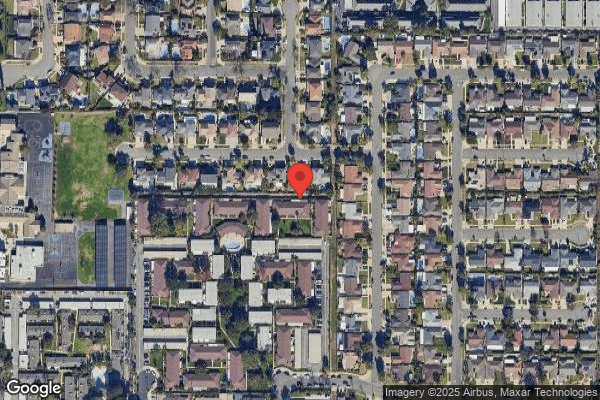
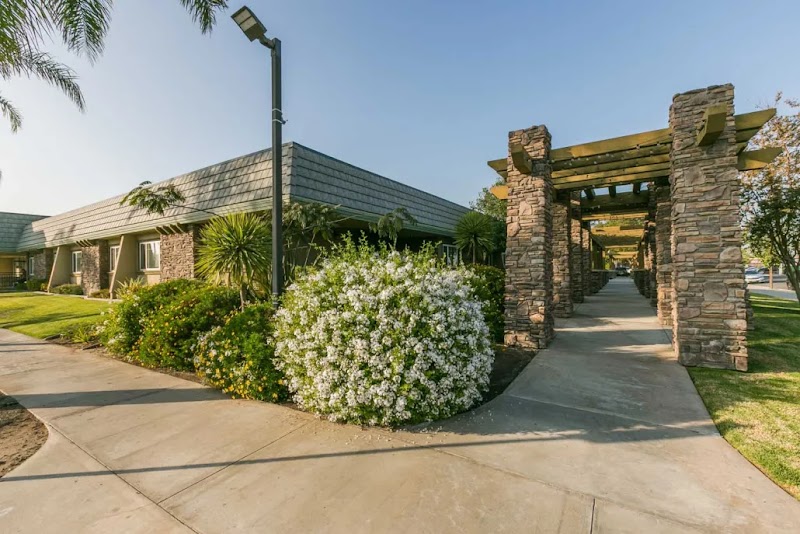
1800 OLD TUSTIN AVENUE, SANTA ANA, CA 92705 (714) 835-4900
For profit - Corporation 174 Beds THE ENSIGN GROUP Data: November 2025
Trust Grade
48/100
#924 of 1155 in CA
Last Inspection: March 2025

Within standard 12-15 month inspection cycle. Federal law requires annual inspections.

Overview

The Hills Post Acute in Santa Ana, California has a Trust Grade of D, which means it is below average and has some concerning issues. It ranks #924 out of 1155 facilities in California, placing it in the bottom half of nursing homes statewide, and #63 out of 72 in Orange County, indicating only a few local options are better. The facility is showing signs of improvement, decreasing from 60 issues in 2024 to 16 in 2025. Staffing is rated average with a 3/5 star rating and a turnover rate of 41%, which is on par with the state average. However, there are notable concerns, including failures to maintain IV care for multiple residents and issues with kitchen sanitation that could pose health risks, highlighting the need for families to weigh both the strengths and weaknesses of this facility.

Trust Score
D
48/100
In California
#924/1155
Bottom 20%
Safety Record
Low Risk
No red flags
Inspections
Getting Better
60 → 16 violations
Staff Stability
○ Average
41% turnover. Near California's 48% average. Typical for the industry.
Penalties
⚠ Watch
$4,893 in fines. Higher than 89% of California facilities, suggesting repeated compliance issues.
Skilled Nurses
⚠ Watch
Each resident gets only 20 minutes of Registered Nurse (RN) attention daily — below average for California. Fewer RN minutes means fewer trained eyes watching for problems.
Violations
⚠ Watch
120 deficiencies on record. Higher than average. Multiple issues found across inspections.
★★☆☆☆
2.0
Overall Rating
★★★☆☆
3.0
Staff Levels
★★★★☆
4.0
Care Quality
★★☆☆☆
2.0
Inspection Score
Stable
2024: 60 issues
2025: 16 issues

The Good

  • 4-Star Quality Measures · Strong clinical quality outcomes
  • Full Sprinkler Coverage · Fire safety systems throughout facility
  • No fines on record
  • Staff turnover below average (41%)

    7 points below California average of 48%

Facility shows strength in quality measures, fire safety.

The Bad

2-Star Overall Rating

Below California average (3.1)

Below average - review inspection findings carefully

Staff Turnover: 41%

Near California avg (46%)

Typical for the industry

Federal Fines: $4,893

Below median ($33,413)

Minor penalties assessed

Chain: THE ENSIGN GROUP

Part of a multi-facility chain

Ask about local staffing decisions and management

The Ugly 120 deficiencies on record

Mar 2025 15 deficiencies
CONCERN (D)

Potential for Harm - no one hurt, but risky conditions existed

Safe Environment (Tag F0584)

Could have caused harm · This affected 1 resident

**NOTE- TERMS IN BRACKETS HAVE BEEN EDITED TO PROTECT CONFIDENTIALITY** 5. Medical record review for Resident 70 was initiated on 3/17/25. Resident 70 was admitted to the facility on [DATE]. On 3/17/...

Read full inspector narrative →
**NOTE- TERMS IN BRACKETS HAVE BEEN EDITED TO PROTECT CONFIDENTIALITY** 5. Medical record review for Resident 70 was initiated on 3/17/25. Resident 70 was admitted to the facility on [DATE]. On 3/17/25 at 1600 hours, an observation and concurrent interview as conducted with Resident 70. Resident 70 was observed in his room (Room A) lying in his bed. The wall adjacent to Resident 70's bed was observed in disrepair, with scratches and chipped paint. Resident 70 stated the facility had recently repaired the wall adjacent to the entrance to his room; however, the facility had yet to repair the wall adjacent to his bed. Resident 70 stated he would like the wall adjacent to his bed repaired as he spent a lot of time inside of his room. On 3/24/25 at 1600 hours, an interview was conducted with the Administrator. The Administrator acknowledged the findings and stated the facility was in the process of repairing Resident 70's room. Based on observation and interview, the facility failed to maintain the comfortable and homelike environment for one of 33 final sampled residents (Resident 70) and four nonsampled residents (Residents 6, 40, 48, and 56) as evidenced by: * The facility failed to provide the environment with comfortable sound levels for Residents 6, 40, 48, and 56 . * The wall adjacent to Resident 70's bed was observed in disrepair, with scratches and chipped paint. These failures had the potential to result in negatively impact the residents' quality of life. Findings: Review of the facility's P&P titled Noise Control revised 2/2022 showed it is the policy of this facility to maintain a comfortable sound levels that enhance privacy when privacy is desired; as with any health care facility, the atmosphere should be calm, organized, and as quiet as possible. Employees should refrain from making loud noises or talking in a loud voice. 1. Medical record review for Resident 6 was initiated on 3/18/25. Resident 6 was admitted to the facility on [DATE], and readmitted on [DATE]. Review of Resident 6's H&P examination dated 11/20/24, showed the resident had the capacity to make medical decisions. 2. Medical record review for Resident 40 was initiated on 3/18/25. Resident 40 was admitted to the facility on [DATE], and readmitted on [DATE]. Review of Resident 40's H&P examination dated 3/10/25, showed the resident was alert and oriented to person, place, and time, but had no capacity to make medical decision. 3. Medical record review for Resident 48 was initiated on 3/18/25. Resident 48 was admitted to the facility on [DATE], and readmitted on [DATE]. Review of Resident 48's H&P examination dated 5/6/24, showed the resident had the capacity to understand and make medical decisions. 4. Medical record review for Resident 56 was initiated on 3/18/25. Resident 56 was admitted to the facility on [DATE] and readmitted on [DATE]. Review of Resident 56's H&P examination dated 10/9/24, showed the resident had the capacity to make medical decisions. On 3/18/25 at 1433 hours, during the resident council meeting, Resident 6, 40, 48, and 56 had concerns with the noise regarding slamming of the kitchen and dining room door, and the staff speaking loudly in the hallway during the shift change at night. On 3/18/25 at 1505 hours, an observation and concurrrent interview was conducted with the Administrator in regards to the noise when closing the dinning room door across from Resident 48's room. When closing the dining room door, the dining room door was observed making a loud noise. The Administrator was informed and verified the above findings. On 3/18/25 at 1520 hours, an interview was conducted with Resident 48, the resident stated the staff was slamming the dining room door at night, which was very loud, and he could not rest. On 3/18/25 at 1607 hours, an observation and concurrent interview was conduct with the Maintenance Director to check the kitchen door located across from Resident 40's room. When the dining door was closed, the dining room door made a loud noise. The Maintenance Director was informed and verified the dining room door was making a loud noise. The Maintenance Director stated, he would adjust the automatic door closer to make it close slowly, perhaps it would make less noise. On 3/18/25 at 1615 hours, an interview was conducted with Resident 40. Resident 40 stated the staff would go in and out of the kitchen, slamming the kitchen door throughout the day, which made a loud noise and she could not rest. The resident stated the facility knew about it but the issue was still there. On 3/19/25 at 0955 hours, an interview was conducted with Resident 6. Resident 6 stated the noise was very bad at the shift change. The staff got very loud and would gather in the hallway. Resident 6 stated it was very frustrating because she was trying to sleep. On 3/19/25 at 1330 hours, an interview was conducted with Residents 6, 40, and 56. The residents stated the noise from the staff was a big problem. Resident 56 stated at the 2300 hours shift change especially, the staff would gather in the hallway and socializes, and the noise would carry throughout the hallway. Residents 40 and 56 stated they had not been offered to move to another room in response to the noise complaints. On 3/24/25 at 1323 hours, an interview was conducted with the AD. The AD stated she was aware of the complaints about the noise level of the door slamming and staff talking loudly during the shift change. The AD stated the facility did the rounds to check with the residents regarding the noise level. The AD further stated it was still an ongoing issue but had improved. Review of the facility's Resident Council Meeting Minutes was initiated on 3/24/25. The minutes for January to March 2025 showed concerns with the noise level of staff talking loudly during the 2300 - 0700 hours shift change, and the kitchen and dining room doors were getting slammed at nighttime.
CONCERN (D)

Potential for Harm - no one hurt, but risky conditions existed

Deficiency F0657 (Tag F0657)

Could have caused harm · This affected 1 resident

**NOTE- TERMS IN BRACKETS HAVE BEEN EDITED TO PROTECT CONFIDENTIALITY** Based on interview, medical record review, and facility P&P review, the facility failed to ensure the comprehensive care plan wa...

Read full inspector narrative →
**NOTE- TERMS IN BRACKETS HAVE BEEN EDITED TO PROTECT CONFIDENTIALITY** Based on interview, medical record review, and facility P&P review, the facility failed to ensure the comprehensive care plan was revised for two of 33 final sampled residents (Residents 15 and 70). * The facility failed to ensure Resident 15's comprehensive care plan was revised to reflect a physician's order for the prescribed amount of fluid to be provided to Resident 15 with meals. The care plan showed to provide Resident 15 with 240 ml of fluid with meals; however, the physician had ordered Resident 15 to receive 360 ml of fluid with meals. * The facility failed to ensure Resident 70's comprehensive care plan was revised when there was a change of the behavior manifestation for Resident 70's use of Seroquel (antipsychotic) medication. These failures placed the residents at risk for not being provided with the appropriate, consistent, and individualized care. Findings: 1. Medical record review for Resident 15 was initiated on 3/17/25. Resident 15 was admitted to the facility on [DATE]. Review of Resident 15's Order Listing Report showed a physician's order dated 2/22/24, to monitor Resident 15's fluid intake and output every shift. Resident 15's physician ordered a fluid restriction of 2000 ml per 24 hours. Resident 15's fluid intake specific to the dietary was to provide Resident 15 with a total fluids of 1080 ml per 24 hours. Resident 15 was to receive 360 ml of fluid with each meal (breakfast, lunch, and dinner). On 3/20/25 at 1537 hours, an interview and concurrent medical record review was conducted with the RD. Review of Resident 15's care plan titled Protentional for Nutritional Problem revised 3/12/25, showed a dietary intervention to provide Resident 15 with 240 ml of fluid with meals (breakfast, lunch, and dinner). The RD verified the care plan needed to be revised to show the current physician's order for the prescribed amount of fluids to be provided to Resident 15 with meals. The RD verified the physician had ordered Resident 15 to receive 360 ml of fluid with each meal (breakfast, lunch, and dinner). 2. Review of the facility's P&P titled Psychotropic Medications, Pharmacy Services revised 2/2024 showed it is the policy of this facility to ensure that the residents who have not used the psychotropic drugs are not given these drugs unless the medication is necessary to treat a specific condition as diagnosed and documented in the clinical record. Psychotropic medications shall not be administered for the purpose of discipline or convenience. The Social Services (SSD) and/or nursing designee will be responsible for initiating the resident's individualized, person-centered psychosocial plan of care, based on their comprehensive initial admission assessment. Medical record for Resident 70 was conducted on 3/21/25. Resident 70 was initially admitted to the facility on [DATE], and readmitted on [DATE]. Review of Resident 70's Order Summary Report dated 3/19/25, showed a physician's order dated 8/4/24, for Seroquel oral tablet (anti-psychotic medication) 25 mg 1.5 tablets by mouth at bedtime for a total of 37.5 mg for psychosis m/b seeing objects that are not there and to monitor the episodes of psychosis m/b seeing objects that are not there every shift. Review of Resident 70's Care Plan initiated on 3/26/24, showed a care plan problem was developed to address Resident 70's psychotropic medications use related to psychosis as manifested by persecutory delusions (type of paranoia) thinking people are trying to shoot him. The goal included for Resident 70 to have fewer episodes of psychosis manifested by persecutory delusions thinking people are trying to shoot him. Review of Resident 70's Care Plan initiated on 6/17/24, showed a care plan problem was developed to address Resident 70's Seroquel use for psychosis m/b persecutory delusion thinking people are trying to shoot him. Further review of Resident 70's Care Plan failed to show the care plan was revised when there was a change of the the behavior manifestation for the Seroquel medication use on 8/4/24. On 3/21/25 at 1100 hours, an interview and concurrent medical record review was conducted with the MDS Coordinator on Resident 70's comprehensive care plans. The MDS Coordinator verified the care failed to show the current behavior manifestation of seeing objects that were not there as indicated in the physician's order for the use of the Seroquel medication. The MDS Coordinator stated the nurse who updated the behavior in the physician's order should have updated the care plan right away. On 3/21/25 at 1320 hours, an interview was conducted with the DON. The DON verified there was no revision of the care plan after a change in Resident 70's behavior manifestation.
CONCERN (D)

Potential for Harm - no one hurt, but risky conditions existed

ADL Care (Tag F0677)

Could have caused harm · This affected 1 resident

**NOTE- TERMS IN BRACKETS HAVE BEEN EDITED TO PROTECT CONFIDENTIALITY** Based on observation, interview, medical record review, and facility P&P review, the facility failed to ensure one of 12 final s...

Read full inspector narrative →
**NOTE- TERMS IN BRACKETS HAVE BEEN EDITED TO PROTECT CONFIDENTIALITY** Based on observation, interview, medical record review, and facility P&P review, the facility failed to ensure one of 12 final sampled residents (Resident 2) reviewed for ADL care received the adequate personal hygiene care. * The facility failed to provide the nail care for Resident 2 which caused self-inflicted scratches. This failure had the potential to not meet the personal care needs of the dependent residents in the facility. Findings: Review of the facility's P&P titled Activities of Daily Living revised 7/2015 showed the resident's abilities in ADL do not diminish unless circumstances on the individual's clinical condition demonstrate that diminution was unavoidable. This includes the resident's ability to bathe, dress, groom, transfer, ambulate, toilet, eat, and use speech, language, or other functional communication systems. Grooming is defined as how the resident maintains personal hygiene, including preparatory activities, combing hair, brushing teeth, shaving, nail care, applying make-up, washing/drying face, hands and perineum. Excludes baths and showers. The interventions will be provided by the staff in accordance with the professional standards of quality and clinical practices. Nursing assistants will provide assistance with the ADL based on the resident's individualized plan of care. On 3/18/25 at 1144 hours, during the initial tour of the facility, Resident 2 was observed awake and lying in the bed. Resident 2 was observed scratching his face. Resident 2 was observed with multiple dry round black and red scabs in the forehead and bilateral cheeks. Medical record review for Resident 2 was initiated on 3/19/25. Resident 2 was admitted to the facility on [DATE]. Review of Resident 2's Care Plan initiated on 12/19/24, showed a care plan focus problem addressing Resident 2's actual impairment to the skin integrity related to self-inflicted scratches. The interventions included to keep the fingernails short. Review of Resident 2's MDS assessment dated [DATE], showed Resident 2 had a short-term and long-term memory problems and dependent with his personal hygiene and grooming. On 3/20/25 at 0929 hours, an observation and concurrent interview was conducted with CNA 5. CNA 5 was observed repositioning Resident 2. CNA 5 stated Resident 2 needed a total care with ADL care. Resident 2 was observed scratching his face with his fingers. CNA 5 stated Resident 2 liked to scratch his face. Resident 2 was observed with long and sharp fingernails. CNA 5 stated the CNAs were responsible in cutting the resident's nails. CNA 5 verified Resident 2's fingernails were long and sharp. CNA 5 stated she could not remember when the last time she had cut Resident 2's fingernails. On 3/24/25 at 1005 hours, a follow-up observation of Resident 2 and concurrent interview was conducted with CNA 6. Resident 2 was awake and lying in the bed. Resident 2 was observed scratching his face with his fingernails. CNA 6 stated Resident 2 could not do any personal hygiene or care. CNA 6 was asked to check the fingernails of Resident 2. Resident 2 was observed still with long and sharp fingernails. CNA 6 verified the fingernails of Resident 2 were not short but long and sharp. CNA 6 stated she remembered cutting Resident 2's fingernails two weeks ago. CNA 6 stated providing the nail care to the residents was necessary for Resident 2's personal hygiene. On 3/24/25 at 1020 hours, an interview and concurrent medical record review was conducted with LVN 9. LVN 9 stated the care plan for each of the resident was individualized to meet the personal care need and should be followed. LVN 9 verified Resident 2's fingernails were long and sharp which caused skin impairment to the resident due to his self-inflicted scratches. LVN 9 stated Resident 2's fingernails should be kept short to prevent harm and infection to the resident. LVN 9 further stated Resident 2 was dependent with ADL care and the staff should assist Resident 2 with hygiene and grooming which included the trimming of the nails. On 3/24/25 at 1615 hours, an interview was conducted with the DON. The DON was notified and acknowledged the above findings.
CONCERN (D)

Potential for Harm - no one hurt, but risky conditions existed

Deficiency F0692 (Tag F0692)

Could have caused harm · This affected 1 resident

**NOTE- TERMS IN BRACKETS HAVE BEEN EDITED TO PROTECT CONFIDENTIALITY** Based on observation, interview, and medical record review, the facility failed to provide the prescribed amount of fluids with ...

Read full inspector narrative →
**NOTE- TERMS IN BRACKETS HAVE BEEN EDITED TO PROTECT CONFIDENTIALITY** Based on observation, interview, and medical record review, the facility failed to provide the prescribed amount of fluids with meals, for one of 33 final sampled residents (Resident 15). * Resident 15's physician had ordered for Resident 15 to receive 360 ml of fluids with meals (breakfast, lunch, and dinner). However, Resident 15 only received 240 ml of fluids with meals. This failure had the potential to compromise Resident 15's hydration status and posed the risk for negative health outcomes. Findings: Medical record review for Resident 15 was initiated on 3/17/25. Resident 15 was admitted to the facility on [DATE]. Review of Resident 15's H&P examination dated 1/14/25, showed Resident 15 had a diagnosis of End-Stage Renal Disease and required hemodialysis three times per week. Review of Resident 15's Order Listing Report showed a physician's order dated 2/22/24, to monitor Resident 15's fluid intake and output every shift. Resident 15's physician ordered a fluid restriction of 2000 ml per 24 hours. Resident 15's fluid intake specific to the dietary was to provide Resident 15 with a total fluids of 1080 ml per 24 hours. Resident 15 was to receive 360 ml with each meal (breakfast, lunch, and dinner). On 3/20/25 at 1355 hours, an observation and concurrent interview was conducted with Resident 15. Resident 15 was observed lying in bed. R esident 15 was asked to describe the amount of fluid she was provided with breakfast, lunch, and dinner. Resident 15 stated she only received a carton of Nepro (240 ml, supplement) with breakfast, lunch, and dinner. Resident 15 was asked to describe what fluids she liked to consume. Resident 15 stated she enjoyed several different types of fluids, which included water, juice (apple and cranberry), and hot chocolate. On 3/20/25 at 1557 hours, an interview and concurrent medical record review was conducted with the RD. The RD was asked the amount of the fluid from the kitchen provided to Resident 15 with her meals (breakfast, lunch, and dinner). The RD then reviewed Resident 15's kitchen's Diet Order dated 3/20/25. The RD stated Resident 15's Diet Order showed Resident 15 had a standing order for Nepro 8 fluid ounces (240 ml) to be provided to Resident 15 with meals. The RD was then asked to review the physician's order specific to the amount of fluid Resident 15 was to receive with meals. The RD verified Resident 15's physician had ordered a 2000 ml per 24 hour fluid restriction. The RD verified Resident 15's physician had ordered for the dietary to provide Resident 15 with 360 ml of fluids with each meal (breakfast, lunch, and dinner). The RD verified the dietary department was only providing Resident 15 with 240 ml of fluid with meals, and should have provided Resident 15 with the 360 ml of fluid with meals, in accordance with the physician's order. The RD stated Resident 15 having only received 240 ml of fluids with meals was consistent with a 1000 ml per 24 hour fluid restriction. However, Resident 15 should have been provided with 360 ml of fluids with meals, in accordance with the physician's order of 2000 ml per 24 hour fluid restriction. The RD reviewed Resident 15's medical record and verified there was no documentation Resident 15 had refused to receive the physician's ordered amount of fluids (360 ml) to be provided with meals. The RD also verified there was no documentation Resident 15's physician was notified Resident 15 had not received the ordered amount of fluids to be provided with meals. The RD was asked how long Resident 15 had not received the ordered amount of fluids (360 ml) with meals, to which the RD replied from at least 3/12/25. The RD stated she would speak to Resident 15 regarding fluid preferences and then provide Resident 15 with an additional 120 ml of fluids with meals, in accordance with the physician's order. On 3/20/25 at 1506 hours, an interview was conducted with Resident 15 and the RD. Resident 15 stated she wanted 360 ml of fluid with her meals, in accordance with her physician's order. Resident 15 stated she liked several types of fluids which included, juice (apple and cranberry), water, milk, and chocolate milk. The RD stated she would start to provide Resident 15 with 360 ml of fluids with her meals, in accordance with Resident 15's fluid preferences and the physician's order. Cross reference to F657, example #1.
CONCERN (D)

Potential for Harm - no one hurt, but risky conditions existed

Respiratory Care (Tag F0695)

Could have caused harm · This affected 1 resident

**NOTE- TERMS IN BRACKETS HAVE BEEN EDITED TO PROTECT CONFIDENTIALITY** 2. On 3/18/25 at 0852 hours, during the initial tour of the facility, Resident 815 was observed awake and sitting on the bed. Re...

Read full inspector narrative →
**NOTE- TERMS IN BRACKETS HAVE BEEN EDITED TO PROTECT CONFIDENTIALITY** 2. On 3/18/25 at 0852 hours, during the initial tour of the facility, Resident 815 was observed awake and sitting on the bed. Resident 815 was observed holding the oxygen tubing. The oxygen tubing was observed without a date label. Resident 815's oxygen concentrator setting was at a rate of 2 liters per minute. Medical record review for Resident 815 was initiated on 3/18/25. Resident 815 was admitted to the facility on [DATE]. Review of Resident 815's H&P examination dated 3/14/25, showed Resident 815 could make needs known but could not make medical decisions. Review of Resident 815's Order Summary Report showed a physician's order dated 3/18/25, for oxygen via nasal cannula at 2 liters per minute if the oxygen saturation level less than 90% as needed. Review of Resident 815's Weights and Vitals Summary showed Resident 815's oxygen saturation level in room air was 98% on 3/18/25. On 3/18/25 at 0932 hours, a follow-up observation of Resident 815 was conducted. Resident 815 was observed sitting at the edge of the bed. The oxygen tubing was observed on the bed and had no bag and label. The oxygen concentrator was observed to be on. On 3/18/25 at 1019 hours, an observation of Resident 815 and concurrent interview was conducted with LVN 1. The oxygen tubing was observed rolled and tucked in the oxygen concentrator's handle. LVN 1 stated the oxygen tubing should be labeled with the date when it was first used or changed and should be kept inside a plastic bag when not in use to avoid the buildup of residue in the tubing and for infection control measure. LVN 1 further stated the oxygen tubing was being changed every 72 hours. LVN 1 verified the oxygen tubing for Resident 815 was not labeled with the date when it was provided or changed and was not kept in a sanitary condition. LVN 1 stated she would dispose the oxygen tubing and replace with a new one. On 3/19/25 at 1418 hours, an interview was conducted with the IP. The IP stated the oxygen tubing was changed weekly. The IP stated the oxygen tubing should be labeled with the resident's name and the date when it was changed. The IP stated the oxygen tubing had to be placed in a plastic bag/storage when not in use. The IP stated if the oxygen tubing was on the floor or had touched any of the resident's surroundings, it had to be replaced because it had been contaminated and if it was used again, it could cause respiratory infection or illness. 3. Medical record review for Resident 695 was initiated on 3/18/25. Resident 695 was admitted to the facility on [DATE]. Review of Resident 695's H&P examination dated 3/11/25, showed Resident 695 was alert and oriented to self and location. Review of Resident 695's Order Summary Report dated 3/18/25, showed a physician's order dated 3/12/25, for oxygen to titrate at a rate of 2-5 liters per minute via nasal cannula continuously to maintain the oxygen saturation level at 92% every shift. On 3/17/25 at 1136 hours, an observation and concurrent interview for Resident 695 was conducted with LVN 2 at Resident 695's bedside. LVN 2 verified there was no date on Resident 695's nasal cannula and humidifier bottle. LVN 2 stated the nasal cannula and humidifier bottle should be labeled with the date for the staff to know when the nasal cannula and humidifier bottle should be changed. On 3/18/25 at 1425 hours, an interview was conducted with the DON. The DON was informed and verify the above findings. The DON stated it was important to put the date on the nasal cannula and humidifier bottle so they would know when to change them to prevent infection. Based on observation, interview, medical record review, and facility P&P review, the facility failed to provide the respiratory services in a safe and sanitary manner in accordance with the facility's P&P for three of three residents (final sampled resident, Residents 123 and 614; and nonsampled resident, Resident 815) reviewed for the respiratory care. * Resident 123 received oxygen therapy without a physician's order and Resident 123's oxygen tubing and nasal cannula were not maintained in a sanitary manner. * The facility failed to ensure the oxygen tubing was labeled and stored in sanitary manner for Resident 815. * The facility failed to ensure Resident 614's oxygen tubing and humidifier bottle were labeled with the date when they were last changed, in accordance with the facility's P&P. These failures had the potential for negative health outcomes for a highly vulnerable resident population related to poor infection control practices and the administration of the oxygen therapy without a physician's order. Findings: Review of the facility's P&P titled Oxygen, Use of revised 5/2021 showed the tubings, humidifiers and other disposables used for the oxygen administration will be dated in an identifiable fashion. 1. Medical record review for Resident 123 was initiated on 3/17/25. Resident 123 was admitted to the facility on [DATE], and readmitted on [DATE]. Review of Resident 123's Acute Care Hospital 1 H&P examination dated 1/25/25, showed Resident 123 was diagnosed with pneumonia. Review of Resident 123's Care Plan titled Pneumonia initiated on 2/7/25, showed Resident 123's pneumonia would resolve without complications. On 3/18/25 at 1143 hours, an observation was conducted of Resident 123. Resident 123 was observed lying in bed. An oxygen concentrator was observed adjacent to Resident 123's bed. The oxygen concentrator was set to administer a continuous oxygen at a rate of 2 liters per minute. The oxygen tubing and nasal cannula were observed attached to the oxygen concentrator. The oxygen tubing and nasal cannula were observed lying on the floor adjacent to Resident 123's bed. On 3/18/25 at 1145 hours, an observation, interview, and concurrent medical record review was conducted with LVN 1. LVN 1 stated Resident 123 was recently readmitted to the facility from the acute care hospital. LVN 1 stated Resident 123 had received an oxygen therapy from the time she was readmitted to the facility. LVN 1 stated Resident 123 had received continuous oxygen at a rate of 2 liters per minute throughout her shift today. LVN 1 was asked to review Resident 123's current physician orders specific to the oxygen therapy. LVN 1 then reviewed Resident 123's physician's orders and verified Resident 123 did not have a physician's order for the oxygen therapy. LVN 1 also verified Resident 123's oxygen tubing and nasal cannula were lying on the floor and needed to be maintained in a sanitary condition. Cross reference to F656.
CONCERN (D)

Potential for Harm - no one hurt, but risky conditions existed

Deficiency F0698 (Tag F0698)

Could have caused harm · This affected 1 resident

**NOTE- TERMS IN BRACKETS HAVE BEEN EDITED TO PROTECT CONFIDENTIALITY** Based on observation, interview, and medical record review, the facility failed to provide the necessary care and services to at...

Read full inspector narrative →
**NOTE- TERMS IN BRACKETS HAVE BEEN EDITED TO PROTECT CONFIDENTIALITY** Based on observation, interview, and medical record review, the facility failed to provide the necessary care and services to attain and maintain the highest practicable physical, well-being for two of 33 final sampled residents (Residents 162 and 816). * Resident 162 had scheduled dialysis treatments three times per week at a dialysis center. On the days Resident 162 was scheduled at dialysis, the resident's blood pressure medications were not held as ordered by the physician. This failure posed the risk for Resident 162 not being provided with appropriate care and treatment and possible medical complications. * The facility failed to ensure Resident 816's dialysis access site was assessed and monitored appropriately and consistently. This failure had the potential for Resident 816 not being provided with the appropriate care and medical complications related to the resident's dialysis access site. Findings: 1. Medical Record Review for Resident 162 was initiated on 3/18/25. Resident 162 was admitted to the facility on [DATE], and readmitted on [DATE]. Review of the Physician's Orders for 12/2024 showed the following physician's orders: - dated 12/19/24, not to administer antihypertensive medications on dialysis days (Monday, Wednesday, and Friday during the day shift). - dated 12/26/24, to discontinue the directive to withhold antihypertensive medications on dialysis days (Monday, Wednesday, and Friday during the day shift). - dated 12/29/24, to administer one tablet by mouth once daily for hypertension and to hold the dose if systolic blood pressure (SBP) less than 110 mmHg or on dialysis days. Review of Progress Notes for 12/24 showed the following: - dated 12/22/24 at 1257 hours, the resident refused a scheduled dialysis appointment. - dated 12/24/24, the resident was scheduled to be picked up around 0900 hours for dialysis. - dated 12/29/24 at 0856 hours, the resident left for the dialysis treatment in a wheelchair. - dated 12/31/24 at 0900 hours, the resident left for dialysis treatment in a wheelchair via transport. Review of the MAR for 12/24 showed the following: - The Benazepril hydrochloride (antihypertensive) oral tablet (10 mg) medication was administered on 12/22, 12/24, 12/29, and 12/31/24. On 3/20/25 at 1500 hours, an interview and concurrent medical record review were conducted with the DON. The DON was asked whether the blood pressure medication Benazepril should have been held as ordered by the physician on the dialysis days. The DON acknowledged that on 12/22, 12/24, 12/29, and 12/31/24, the resident went out for the dialysis, and the blood pressure medication should have been held as per the physician's order. The DON verified the findings. 2. Review of the facility's P&P titled Renal Dialysis, Care of Resident, Hemodialysis Access Site, Plan of Care revised 5/2019 showed: - the AV fistula and AV graft sites are checked for condition and bruit and thrill every shift; - the physician(s) are notified immediately of any apparent complications; - to inspect hemodialysis access site for redness, swelling and bleeding once per shift; and - to routinely check the AV fistula and/or AV graft site for bruit and thrill once per shift. If bruit changes in regularity and depth, notify the physician immediately. On 3/18/25 at 0940 hours, during the initial tour of the facility, Resident 816 was observed awake and lying in the bed. Resident 816 stated he had dialysis every Monday, Wednesday, and Friday (MWF). Resident 816 was observed with an AV shunt to the left upper arm. Medical record review for Resident 816 was initiated on 3/18/25. Resident 816 was admitted to the facility on [DATE]. Review of Resident 816's MDS assessment dated [DATE], showed Resident 816 was cognitively intact. Review of Resident 816's Order Summary Report showed the following physician's orders: - dated 3/10/25, to assess shunt site for bruit and thrill every shift. Document (+) or (-). Call the MD for absence; - dated 3/10/25, for AV shunt old site (left upper arm), to monitor for redness, bleeding, skin breakdown, and edema; and - dated 3/18/25, for the dialysis center schedule time MWF at 0400 hours. Review of Resident 816's Care Plan initiated on 3/12/25, showed a care plan focus problem addressing Resident 816 being on hemodialysis related to ESRD (end stage renal disease). The interventions included to monitor the AV shunt old site (left upper arm) for redness, bleeding, skin breakdown and edema, to assess shunt site for bruit and thrill every shift and document (+) or (-), and to call MD for absence. Review of Resident 816's MAR for March 2025 showed the licensed staff documented Resident 816's AV shunt as follows: - (-) or negative for thrill and bruit on 3/11 to 3/14 for the PM shift; - (-) or negative for thrill and bruit on 3/11, 3/12, 3/16, and 3/19, and (X) on 3/13 for the noc shift; - (Y) or yes for the presence of redness, bleeding, skin breakdown and edema in the AV shunt old site on 3/12 and 3/14/25 for the PM shift; and 3/11, 3/12, and 3/14/25 for the noc shift. Further review of Resident 816's medical record failed to show the physician was notified when the AV shunt was assessed with absence or negative for thrill and bruit, and for the presence of redness, bleeding, skin breakdown an edema. On 3/20/25 at 1120 hours, an interview and concurrent medical record review was conducted with LVN 10. LVN 10 verified Resident 816 had the left upper arm AV shunt. When asked about the assessment of the dialysis access site per shift as documented in the MAR, LVN 10 stated the positive sign + meant there was present, while the negative sign - and X meant there was none, or absent referring to the bruit and thrill noted from the resident's access site. LVN 10 stated the Y meant there was presence of redness, bleeding, skin breakdown or edema and those could be a sign of infection. LVN 10 verified Resident 816's AV shunt was assessed without thrill and bruit, and with presence of redness, bleeding, skin breakdown and edema as recorded in the MAR but there was no documentation of the physician being notified. LVN 10 stated the licensed staff should have notified the physician because it was a change in condition if the AV shunt was assessed without thrill and bruit and with the presence of redness, bleeding, skin breakdown and edema. On 3/20/25 at 1415 hours, an interview was conducted with RN 1. RN 1 stated it was necessary to assess the dialysis access site properly to determine if there was change in condition. RN 1 stated the physician was needed to be notified as soon as possible if there was absence of bruit and thrill, and for the presence of redness, edema, bleeding and skin breakdown to implement the proper interventions per the physician's order. On 3/24/25 at 1615 hours, an interview was conducted with the DON. The DON was informed and acknowledged the above findings.
CONCERN (D)

Potential for Harm - no one hurt, but risky conditions existed

Pharmacy Services (Tag F0755)

Could have caused harm · This affected 1 resident

**NOTE- TERMS IN BRACKETS HAVE BEEN EDITED TO PROTECT CONFIDENTIALITY** Based on observation, interview, facility record review, and facility P&P review, the facility failed to ensure proper accountin...

Read full inspector narrative →
**NOTE- TERMS IN BRACKETS HAVE BEEN EDITED TO PROTECT CONFIDENTIALITY** Based on observation, interview, facility record review, and facility P&P review, the facility failed to ensure proper accounting and safeguarding of the controlled medications to prevent loss, diversion, or accidental exposure; and failed to ensure proper administration of eye drop medication for one nonsampled resident (Resident 71). * The facility failed to ensure the incoming and outgoing licensed nurses assigned to Medication Carts 2 and Cart 3 consistently signed the narcotic binder titled Controlled Substance Log. This failure posed the risk for loss or diversion of controlled medications in the facility. * The facility failed to ensure the eye drop medication was administered properly to Resident 71. This failure posed the risk of not receiving the eye drop as ordered to maintain the resident's well being. Findings: Review of the facility's P&P titled Pharmacy Services, Controlled Medications revised 12/2019 showed it is the policy of this facility to provide separately locked, permanently affixed compartments for storage of controlled drugs listed in the Schedule II of the Comprehensive Drug Abuse Prevention and Control Act of 1976 and other drugs subject to abuse, except when the facility uses single unit package drug distribution systems in which the quantity stored is minimal and a missing dose can be readily detected. The Procedures section showed at each shift change, a physical inventory of all the controlled medications is conducted by two licensed nurses and is documented on every shift Controlled drug count audit record. Current controlled medication accountability records and every shift Controlled drug count audit are kept. a. Review of Medication Cart 2's Controlled Substance Log showed multiple missing nurses' signatures on the following: - dated 11/16/24, for 3-11 shift, outgoing nurse - dated 11/20/24, for 11-7 shift,outgoing nurse - dated 1/31/25, for 7-3 shift, outgoing nurse - dated 3/15/25, for 11-7 shift, incoming nurse On 3/18/25 at 1105 hours, an interview and concurrent facility document review was conducted with LVN 3. LVN 3 verified there were multiple licensed nurses' signatures missing in the Controlled Substance Log. LVN 3 stated the Controlled Substance Log should be signed or initialed by the nurses to account for the narcotic medications to avoid possible drug diversion. b. Review of Medication Cart 3's Controlled Substance Log showed multiple missing nurses' signatures on the following: - dated 1/12/25, for 3-11 shift, incoming nurse - dated 1/21/25, for 11-7 shift, outgoing nurse - dated 1/20/25, for 7-3 shift, outgoing nurse On 3/18/25 at 1135 hours, an interview and concurrent facility document review was conducted with LVN 4. LVN 4 verified multiple licensed nurses' signatures were missing in the Controlled Substance Log. On 3/21/25 at 1145 hours, an interview and concurrent facility document review of the Controlled Substance Logs for Medication Carts 2 and 3 was conducted with the DON. The DON verified the above findings. The DON stated the nurses should have signed the controlled log so that the medication were accounted, and the nurses knew the medications were complete when they come to work. 2. Review of the facility's P&P titled IIB5: Eye Drop Administration revised 10/2019 showed to administer ophthalmic solution/suspension into the eye in a safe, accurate, and effective manner. While the eye is closed, use one finger to compress the tear duct in the inner corner of the eye for one to two minutes. This reduces systemic absorption of the medication. Alternatively, the resident may keep his/her eyes closed for approximately three minutes. On 3/19/25 at 0908 hours, a medication administration observation was conducted with LVN 9. LVN 9 administered the brimonidine tartrate ophthalmic solution (an eye drop medication for glaucoma), one drop in both eyes of Resident 71. After instilling the eye drop solution to Resident 71's eyes, LVN 9 instructed the resident to close his eyes for one minute. However, Resident 9 opened his eyes immediately and started talking to LVN 9 informing LVN 9 that he wanted some sugar. LVN 9 left Resident 71's room to get the requested sugar. Resident 71 was observed opening and closing his eyes intermittently and wiped his eyes. Medical record review of Resident 71 was initiated on 3/19/25. Resident 71 was readmitted to the facility on [DATE]. Review of Resident 71's MDS assessment dated [DATE], showed Resident 71 had moderate cognitive impairment. Review of Resident 71's Order Summary Report for March 2024 showed a physician's order dated 1/17/25, to instill brimonidine tartrate ophthalmic solution 0.2% one drop in both eyes two times a day for mild open-angle glaucoma. On 3/19/25 at 1007 hours, an interview was conducted with LVN 9. LVN 9 stated she should have compressed the inner corner of the eyes of Resident 71 and stayed with the resident to make sure the eyes were closed for one full minute and the eye drop medication could have been absorbed fully. LVN 9 stated she would call Resident 71's physician and ask if another dose of the eye drop medication would be needed for the morning since she did not observe Resident 71's eyes were closed for one full minute. On 3/24/25 at 1615 hours, an interview was conducted with the DON. The DON was informed and acknowledged the above findings.
CONCERN (D)

Potential for Harm - no one hurt, but risky conditions existed

Deficiency F0761 (Tag F0761)

Could have caused harm · This affected 1 resident

**NOTE- TERMS IN BRACKETS HAVE BEEN EDITED TO PROTECT CONFIDENTIALITY** Based on observation, interview, facility document review, and facility P&P review, the facility failed to provide the necessary...

Read full inspector narrative →
**NOTE- TERMS IN BRACKETS HAVE BEEN EDITED TO PROTECT CONFIDENTIALITY** Based on observation, interview, facility document review, and facility P&P review, the facility failed to provide the necessary pharmacy services to ensure proper storage, labeling, and disposal of the medications. * One vial of Lidocaine (anasthetic, numbing medication) 1% removed from Medication room [ROOM NUMBER]'s IV e-kit was not documented in the Emergency Kit Usage Log. This failure has the potential for the medication in the emergency kit to be lost and/or not be replaced. * The facility failed to ensure the expired Santyl ointments were removed from Treatment Cart 2. This failure had to potential for using of the expired medications. Findings: 1. Review of the facility's P&P titled Pharmacy Services, Emergency Drug Supply revised 11/2007 showed it is the policy of this facility to establish a method of providing residents with emergency medications prior to the receipt of filled prescriptions for that medication. A physician's order is required to justify the use of any drug from the emergency drug supply. The Procedures section showed the following: 1. Check the medication on the outside or inside of the emergency box/ kit for the physician-ordered drug. 2. Break the seal lock on the box. 3. Remove medication to administer following dose ordered and fill out the information on the Emergency Kit Usage Log (date, resident, medication, and quantity). Place the log sheet in the emergency kit box and secure the box with a replacement lock. Repeat this procedure for each dose until the complete prescription is received from the Pharmacy. Keep a facility copy of the Emergency Kit Usage Log. On 3/18/25 at 0841 hours, an observation of Medication room [ROOM NUMBER]'s IV e-kit, facility document review, and concurrent interview was conducted with the IP. The IP stated if the e-kit box was sealed with red lock, it meant the kit was already opened and medication had been taken from the box. Review of the facility's IV e-kit inventory list showed the kit included one vial of Lidocaine. The IV e-kit was observed and one vial of Lidocaine was missing. Review of the Emergency Kit Usage Log failed to show documented evidence on the date, name of the resident, and quantity of Lidocaine taken. The IP verified the vial of Lidocaine was removed from the e-kit and there was no documentation showing when it was taken from the IV e-kit, to who it was given to and on what date. On 3/20/25 at 1615 hours, an interview was conducted with the IP and DON. The IP verified the findings. The DON stated the nurse who took the medication from the e-kit should have documented it on the usage log. 2. Review of the facility's P&P titled IC9: Medication Labels revised 9/2019 showed the medications are labeled in accordance with facility requirements and state and federal laws. Only the dispensing pharmacy/registered pharmacist can modify, change, or attach prescription labels. Using professional judgment, the pharmacist may label medications with different expiration dates that the manufacturers' labeling on the original container. The pharmacy label supersedes other information on the medication container and all other labeling recommendations. On 3/18/25 at 1408 hours, an inspection of Treatment Cart 2 and concurrent interview was conducted with LVN 8. The following findings were verified with LVN 8: - Santyl collagenase ointment ( a topical enzyme medication used for wound management) 30 grams 250 units/gram with an expiration date of 1/31/25, was written on a yellow label with initial; and - Santyl collagenase ointment 30 grams 250 units/gram with an expiration date of 2/8/25, was written on a yellow label with initial. LVN 8 further stated they should follow the date written if there was a label with a specific expiration date. LVN 8 stated any expired medications or medical supplies should be disposed. On 3/24/25 at 1615 hours, an interview was conducted with the DON. The DON was informed and acknowledged the above findings.
CONCERN (D)

Potential for Harm - no one hurt, but risky conditions existed

Deficiency F0810 (Tag F0810)

Could have caused harm · This affected 1 resident

**NOTE- TERMS IN BRACKETS HAVE BEEN EDITED TO PROTECT CONFIDENTIALITY** Based on observation, interview, and medical record review, the facility failed to ensure the special eating equipment was provi...

Read full inspector narrative →
**NOTE- TERMS IN BRACKETS HAVE BEEN EDITED TO PROTECT CONFIDENTIALITY** Based on observation, interview, and medical record review, the facility failed to ensure the special eating equipment was provided during the mealtime for one of 33 final sampled residents (Resident 27). This failure posed the risk for Resident 27 not maintaining or improving his independence in self-feeding skills when consuming meals and snacks. Findings: Medical record review of Resident 27 was initiated on 3/17/25. Resident 27 was admitted to the facility on [DATE], and readmitted on [DATE]. Review of Resident 27's Nutrition Evaluation and RD Nutritionist Review dated 10/8/24, showed the resident was to have a magic cup for lunch and dinner. Review of Resident 27's Order Summary Report dated 3/20/25, showed a physician order dated 2/7/25, may benefit from a sippy cup to promote independence with self-feeding. Review of Resident 27's Diet Card dated 3/20/25, showed for breakfast, lunch, and dinner to include the adaptive equipment: sippy cup. On 3/17/25 at 1220 hours, an observation of Resident 27 and concurrent interview was conducted with CNA 4. Resident 27 finished one cup of nectar milk in a regular cup and drank 3/4 of nectar cranberry juice from a regular cup. CNA 4 verified the resident did not have a sippy cup and the kitchen should have provided it. CNA 4 further stated LVN 8 checked the food tray. On 3/17/25 at 1230 hours, an interview and concurrent medical record review was conducted with LVN 8. LVN 8 stated Resident 27 should have been provided with a sippy cup and verified the findings.
CONCERN (D)

Potential for Harm - no one hurt, but risky conditions existed

Medical Records (Tag F0842)

Could have caused harm · This affected 1 resident

**NOTE- TERMS IN BRACKETS HAVE BEEN EDITED TO PROTECT CONFIDENTIALITY** 3. Medical record review for Resident 15 was initiated on 3/17/25. Resident 15 was admitted to the facility on [DATE]. Review of...

Read full inspector narrative →
**NOTE- TERMS IN BRACKETS HAVE BEEN EDITED TO PROTECT CONFIDENTIALITY** 3. Medical record review for Resident 15 was initiated on 3/17/25. Resident 15 was admitted to the facility on [DATE]. Review of Resident 15's Order Listing Report showed a physician's order dated 2/22/24, to monitor Resident 15's fluid intake and output every shift. Resident 15's physician ordered a fluid restriction of 2000 ml per 24 hours. Review of Resident 15's Order Summary Report showed a physician's order for weekly fluid intake and output evaluation, dated 11/30/23. On 3/20/25 at 1548 hours, an interview and concurrent medical record review was conducted with the DON. Review of Resident 15's MAR for January, February, and March 2025 showed the following documented weekly fluid intake amounts for Resident 15: - on 1/11 and 1/25/25, weekly fluid intake of 1200 ml - on 1/18, 2/1, 2/15, 2/22, 3/1, and 3/15/25, weekly fluid intake of 1400 ml - on 3/8/25, weekly fluid intake of 1500 ml The DON verified the documentation specific to Resident 15's weekly fluid intake amounts (for the above listed dates) was inaccurate. The DON stated most likely the nurses mistakenly calculated and documented daily (versus weekly) fluid intake totals for Resident 15. 2. Medical record review for Resident 20 was initiated on 3/18/25. Resident 20 was admitted to the facility on [DATE], and readmitted on [DATE]. On 3/20/25 at 1322 hours, an interview and concurrent medical record review was conducted with SSD 2. Review of Resident 20's POLST Section D Information and Signatures dated 9/25/24, failed to show a physician's name, telephone number, license number, signature, and date. The SSD 2 verified the findings and stated the POLST should have been accurately completed. On 3/20/25 at 1559 hours, an interview and concurrent medical record review was conducted with the DON. The DON acknowledged the findings and stated the POLST should have been accurately completed and filled out completely. The DON further stated the POLST should have the physician's printed name, telephone number, license number, signature, and date because it was a requirement. Based on interview, medical record review, facility document review, and the facility P&P review, the facility failed to ensure the medical records were complete and accurately maintained for three of 33 final sampled residents (Residents 15, 20, and 123). * Resident 123's MAR failed to show the Protonix (treats conditions that cause too much stomach acid) and humalog insulin (antidiabetic) per sliding scale were administered on 3/3/25 at 0630 hours. The MAR failed to show the tuberculin test was completed on 3/18/25. In addition, the MAR failed to show the hours of sleep monitoring, non-pharmacological interventions, monitoring of side effects of hypnotics, monitoring of signs and symptoms of bleeding related to anticoagulant use, and monitoring of pain level were completed on 3/2/25 for night shift. * Resident 20's POLST dated 9/25/24, under Section D Information and Signatures, showed the physician's name, telephone number, license number, and signature were left blank and undated for six months. * The facility failed to calculate and document accurate weekly fluid intake totals for Resident 15 in accordance with the physician's order. These failures had the potential for the residents' care needs not being met as their medical information was inaccurate and incomplete. Findings: Review of the facility's P&P titled Charting and Documentation revised 5/2007 showed the resident's clinical record is a concise and accurate account of treatment, care, response to care, signs, symptoms and progress of the resident's condition. Review of the facility's P&P titled Medication Administration revised 8/2021 showed if the drug is withheld, refused, or given other than at the scheduled time it should be appropriately documented on the MAR. 1. Medical record review for Resident 123 was initiated on 3/19/25. Resident 123 was readmitted to the facility on [DATE]. Review of Resident 123's MDS assessment dated [DATE], showed Resident 123 was cognitively intact. Review of Resident 123's Order Summary Report showed the following physician's orders: - dated 2/6/25, to administer protonix oral tablet delayed release 40 mg one tablet by mouth in the morning for GERD; - dated 2/6/25, to administer Humalog injection solution 100 units/ml as per sliding scale subcutaneously before meals and at bedtime; - dated 2/6/25, to monitor for hours of sleep every evening and night shift; - dated 2/6/25, to monitor and report to MD as needed the effects of hypnotic medications; - dated 2/6/25, to monitor for signs and symptoms of bleeding related to anticoagulation every shift and to notify the physician if any of the following signs and symptoms are present such as passing blood in the urine, severe bruising or bleeding gums; - dated 2/6/25, to monitor pain level using the following scale: 0 = no pain, 1-3 = mild, 4-6 = moderate, and 7-10 = severe every shift; and - dated 2/6/25, to provide non-pharmacological interventions such as massage, toiletted and snacks; - dated 3/17/25, to provide for annual TB test one dose 0.1 ml every evening shift every 365 days, start date 3/18/25. Review of Resident 123's MAR for March 2025 failed to showed the following: - There was no documented evidence Resident 123 was monitored for hours of sleep, side effects of hypnotics, signs and symptoms of bleeding related to anticoagulant use and pain level, and provided with non-pharmacological interventions on 3/2/25, for the night shift. - There was no documented evidence Resident 123 received the protonix and no blood sugar level recorded indicating if the resident needed the humalog insulin on 3/3/25 at 0630 hours. - There was no documented evidence Resident 123 received the tuberculin test on 3/18/25, for the evening shift. On 3/19/25 at 1348 hours, an interview and concurrent medical record review was conducted with LVN 1. LVN 1 stated the licensed nurse should document right away in the MAR after the medications administration or monitoring were done. LVN 1 further stated if it was not documented, it was not given. LVN 1 verified the missing documentation in Resident 123's MAR for March 2025. On 3/21/25 at 1458 hours, an interview was conducted with the DON. The DON was notified and acknowledged the above findings.
CONCERN (D)

Potential for Harm - no one hurt, but risky conditions existed

Infection Control (Tag F0880)

Could have caused harm · This affected 1 resident

**NOTE- TERMS IN BRACKETS HAVE BEEN EDITED TO PROTECT CONFIDENTIALITY** Based on observation, interview, and facility P&P review, the facility failed to ensure the appropriate infection control practi...

Read full inspector narrative →
**NOTE- TERMS IN BRACKETS HAVE BEEN EDITED TO PROTECT CONFIDENTIALITY** Based on observation, interview, and facility P&P review, the facility failed to ensure the appropriate infection control practices designed to provide a safe and sanitary environment and help prevent the development and transmission of infections were implemented. * Resident 139's urinal was placed next to a water pitcher and two cups of juice on the bedside table. * The facility failed to ensure a hand hygiene was performed before touching the GT. * The facility failed to ensure the staff practiced EBP when rendering GT care for one of 33 sampled residents (Resident 24). These failures posed the risk for transmission of disease-causing microorganisms. Findings: 1. On 3/17/25 at 0720 hours, during an observation, Resident 139's urinal was stored on the bedside table next to a water pitcher and two cups of juice. On 3/17/25 at 1030 hours, an observation in Resident 139's room and concurrent interview was conducted with the MDS Coordinator. The MDS Coordinator verified Resident 139's urinal contained approximately 200 ml of urine and was placed next to a water pitcher and two cups of juice on the bedside table. The MDS Coordinator verified the findings and acknowledged there was a potential for contamination of the drinks. 2. Review of the facility's P&P titled Hand Hygiene revised 3/2024 showed hand hygiene is one of the most effective measures to prevent the spread of infection. Studies show that effective hand decontamination can significantly reduce the rate of healthcare associated infection. All personnel shall follow the handwashing/hand hygiene procedure to help prevent the spread of infections to other personnel, residents, and visitors. Review of the facility's P&P titled Gastrostomy Tube Care revised 1/2022 showed the employee should wash hands before handling gastrostomy tubes and attachments to decrease the risk of infection. On 3/19/25 at 0822 hours, a medication administration observation was conducted with LVN 5. LVN 5 was observed administering medication to Resident 50 via GT. LVN 5 took the piston syringe (disposable irrigation syringe) with gloved hands to check for the GT's proper placement. LVN 5 pulled the privacy curtain with the gloved hands while still holding the piston syringe. LVN 5 proceeded with flushing the GT without performing hand hygiene and changing with new gloves. On 3/19/25 at 0840 hours, an interview was conducted with LVN 5. LVN 5 was informed regarding not performing the hand hygiene after touching the privacy curtain. LVN 5 acknowledged the findings. On 3/21/25 at 1458 hours, an interview was conducted with the DON. The DON was informed and acknowledged the above findings. 3. According to the CDC, EBP are an infection control intervention designed to reduce transmission of MDROs in nursing homes. EBP involves gown and glove use during high-contact resident care activities for residents known to be colonized or infected with a MDRO as well as those at increased risk of MDRO acquisition. Review of the facility's signage for EBP showed everyone must clean their hands, including before entering and when leaving the room. It also showed for the providers and staff must wear gloves and gown for the following high-contact resident care activities: dressing, bathing/ showering, transferring, changing linens, providing hygiene, changing briefs, or assisting with toileting, device care or use: central line, urinary catheter, feeding tube, tracheostomy, and wound care: any skin opening requiring a dressing. Review of the facility's P&P titled IPCP Standard and Transmission-Based Precautions revised date 3/2024 showed EBP: used in conjunction with standard precautions and expand the use of PPE through the use of gown and gloves during high-contact resident care activities that provide opportunities for indirect transfer of MDROs to staff hands and clothing then indirectly transferred to residents or from resident-to-resident. (e.g., residents with wounds and indwelling medical devices are at especially high risk of both acquisition of and colonization with MDROs). Medical record review for Resident 24 was initiated on 3/17/25. Resident 24 was admitted to the facility on [DATE], and readmitted on [DATE]. Review of Resident 24's H&P examination dated 7/24/23, showed Resident 24 had no capacity to understand and make decisions. Review of Resident 24's Order Summary Report dated 3/18/25, showed a physician's order dated 3/12/25 for EBP: PPE required for high resident contact care activities; and Indication: wounds, indwelling medical device every shift. Review of Resident 24's plan of care showed a care plan focus addressing Resident 24's Respiratory MDRO and an intervention dated 3/14/25, showed to use EBP. On 3/17/25 at 1003 hours, an observation of Resident 24 and concurrent interview was conducted with RN 4. Resident 24's room was observed with an orange sticker for EBP posted by the door. RN 4 was observed standing at the bedside and troubleshooting the GT feed tubing, priming the line and machine. RN 4 was only wearing the gloves but did not wear the gown and mask. RN 4 verified the orange sticker by the door and stated it was for EBP. RN 4 verified she should have donned PPE, and did not realize Resident 24 was on EBP.
CONCERN (E)

Potential for Harm - no one hurt, but risky conditions existed

Deficiency F0694 (Tag F0694)

Could have caused harm · This affected multiple residents

**NOTE- TERMS IN BRACKETS HAVE BEEN EDITED TO PROTECT CONFIDENTIALITY** Based on observation, interviews, medical record review, and facility P&P review, the facility failed to provide the necessary c...

Read full inspector narrative →
**NOTE- TERMS IN BRACKETS HAVE BEEN EDITED TO PROTECT CONFIDENTIALITY** Based on observation, interviews, medical record review, and facility P&P review, the facility failed to provide the necessary care and services to maintain the IV access for five of six final sampled residents (Residents 24, 125, 139, 145, and 816) reviewed for the IV care. * The facility failed to ensure the dressing change was completed weekly, the arm circumference and external catheter length of the PICC line were measured, and the care plan was developed timely for Resident 24's PICC line use . * The facility failed to ensure the dressing change was completed weekly, the arm circumference and external catheter length for midline were measured, and the care plan was developed for Resident 125's midline IV catheter use. * The facility failed to obtain a physician's order for the care and maintenance of the IV line and developed a plan of care for Resident 139's IV use. * The facility failed to ensure the arm circumference and external catheter length were measured on admission and during the PICC line dressing change for Resident 816's PICC line use. * The facility failed to ensure the peripheral IV site was label with date, time, and initials when the IV was inserted, the plan of care was developed for use of IV site, and a physician's order was obtained for the care and maintenance of the peripheral IV site as per the facility's P&P for Resident 145. These failures had the potential to delay the identification of catheter-related complications for the residents. Findings: Review of the facility's P&P titled Intravenous (IV) Administration of Drugs via Central Venous Catheter (CVC) or Peripherally Inserted Central Catheters (PICC) (undated) showed the central, PICC, and midline catheter dressing shall be changed every seven days from date of insertion or as ordered per they physician. Review of the facility's P&P titled Insertion of Peripheral I.V. Device (undated) showed to label the dressing with the date and time the site was inserted, the gauge and length of the catheter inserted, and the initials of the inserting nurse. 1. Medical Record Review for Resident 24 was initiated on 3/17/25. Resident 24 was admitted to the facility on [DATE], and readmitted on [DATE]. Review of Resident 24's Order Summary Report dated 3/18/25, showed a physician order dated 3/12/25, to measure the arm circumference in inches on admission and every seven days during the dressing changes every day shift, and measure the external catheter length in cm from end to the hub to the insertion site into skin. Review of Resident 24's Care Pan dated 3/18/25, showed a care plan problem addressing Resident 24 was on IV medications (Vancomycin or Ertapenem). The intervention included to check the dressing at the site daily. Review of Resident 24's IV MAR for March 2025 showed the following: - the dressing and securement device to change on 3/9/25, using the sterile techniques one time a day - on 3/13 and 3/20/25, showed an entry of N/A for the staff to measure the arm circumference in inches every seven days during dressing changes. On 3/19/25 at 1128 hours, an observation and concurrent interview was conducted with RN 2. Resident 24's PICC line dressing was observed to be loose, was dated 3/4/25, and required changing. RN 2 stated the dressing was dated 3/4. RN 2 added, We do measure it. We take a measurement of the length from the arm hub and arm circumference measurements during the dressing changes. On 3/20/25 at 1042 hours, an interview and concurrent record review was conducted with the MDS Coordinator. The MDS Coordinator stated the PICC line care plan was initiated on 3/18/25. The MDS Coordinator further stated the timeline was to initiate a care plan for the PICC line within 24 hours after 3/12/25. The MDS Coordinator acknowledged the care plan was initiated late and dressing change was not done weekly since Resident 24's PICC line dressing was dated 3/4/25. On 3/20/25 at 1509 hours, an interview and concurrent record review was conducted with the MDS Coordinator. The MDS Coordinator was asked for the measurements of the arm circumference and external catheter length of the PICC line. The MDS Coordinator was unable to provide the documentation. The MDS Coordinator stated additional education might be necessary to ensure the proper documentation. The documentation for the dressing change did not allow progression without entering a measurement, and the nurses had been bypassing this requirement by entering N/A. The MDS Coordinator verified the findings. 2. Medical record review for Resident 125 was initiated on 3/17/25. Resident 125 was admitted to the facility on [DATE], and readmitted on [DATE]. Review of Resident 125's IV MAR for March 2025 showed the following: - on 3/2, 3/9, and 3/16/25, the resident's dressing and securement device was changed using sterile techniques. - on 3/8/25, showed documentation of N/A and on 3/15/25, it was blank for the order to measure the arm circumference in inches during dressing changes On 3/17/25 at 0926 hours, an observation and concurrent interview was conducted with LVN 2. Resident 125's midline IV catheter was observed in the right upper arm and was dated 3/2/25. LVN 2 verified Resident 125's midline IV catheter dressing was dated 3/2/25. On 3/20/25 at 1042 hours, an interview and concurrent record review was conducted with the MDS Coordinator. The MDS Coordinator was asked when the arm circumference and external length of the midline IV catheter should be measured. The MDS Coordinator stated upon admission, they checked the dressing, measured the arm circumference, and measured the length of the midline IV catheter from the dressing to the hub. They also requested a confirmation X-ray to verify the placement and if necessary, the dressing was changed at that time. The MDS Coordinator stated the policy required the dressing changes every seven days, during which the measurements were also taken. The timeline mandated initiating a care plan for the midline IV catheter within 24 hours. The MDS Coordinator further stated if the midline IV catheter dressing was dated 3/2/25, it would indicate the dressing change was not performed weekly. Additionally, the MDS Coordinator stated the care plan was updated whenever there was a change of condition (COC), as well as upon admission and quarterly for the midline IV catheter. The MDS Coordinator further stated whoever admitted the resident was responsible for initiating a care plan for the midline IV catheter. The MDS Coordinator acknowledged there was no care plan for Resident 125's midline IV catheter. The policy for the dressing changes was the same for both the midline IV catheter and PICC lines. The RN administering the medication was responsible for checking the dressing date and changing it every seven days, or as needed. The IV monitoring was recorded on the IV MAR, which only the RN could access. The MDS Coordinator stated timely dressing changes were critical to maintaining the IV site cleanliness and preventing infection. A soiled IV dressing can loosen and increase the risk of infection, particularly with the central line, which carries a higher risk of infection. The MDS Coordinator verified the above findings. 4. On 3/18/25 at 0940 hours, during the initial tour of the facility, Resident 816 was observed awake and lying in the bed. Resident 816 was observed with a PICC line to the right upper arm. Resident 816 stated he was getting antibiotics for his bone infection. Resident 816's PICC line dressing was observed dated 3/17/25. Medical record review for Resident 816 was initiated on 3/18/25. Resident 816 was admitted to the facility on [DATE]. Review of Resident 816's Order Summary Report showed the following physician's orders dated 3/11/25, to measure the arm circumference in inches on admission, measure the arm circumference in inches every seven days during the dressing changes, and measure the external catheter length in centimeters from end to hub to the insertion site into skin. Review of Resident 816's MDS assessment dated [DATE], showed Resident 816 was cognitively intact. Review of Resident 816's IV MAR for March 2025 showed no documentation of the PICC line dressing changed on 3/17/25, measurement of the arm circumference, and length of the PICC line external catheter. Further review of Resident 816's medical record failed to show any documentation of the measurement of the arm circumference on admission and during the PICC line dressing change and the measurement of the external catheter length of the PICC line. On 3/20/25 at 1415 hours, an interview and concurrent medical record review was conducted with RN 1. RN 1 verified the PICC line dressing of Resident 816 was dated 3/17/25. RN 1 stated she worked that day but was not the one who did the PICC line dressing change for Resident 816. RN 1 stated it was necessary to assess and measure the arm circumference where the PICC line was inserted to determine if the PICC line site had any changes that could indicate signs of infection and as a basis of comparison for the next assessment to be done by the nurse. RN 1 stated the length of the external catheter of the PICC line should also be measured to ensure the proper placement of the PICC line and to prevent complications. RN 1 further stated the central line dressing kit the facility had been using also included the disposable paper measuring tape to be used in measuring the arm circumference and the length of the external catheter. RN 1 verified there was no documentation in Resident 816's medical record to show the arm circumference was measured on admission and during the dressing change of the PICC line, and no documentation the external catheter length of the PICC line was measured as well. On 3/24/25 at 1615 hours, an interview was conducted with the DON. The DON was informed and acknowledged the above findings. 5. On 3/17/25 at 0940 hours, Resident 145 was observed with a peripheral IV line on the right wrist with a single lumen port without label of the date, time and initials. On 3/17/25 at 1025 hours, an observation and concurrent interview for Resident 145 was conducted with the DON. The DON was informed and verified there was no date, time, and initial label on Resident 145's IV site. The DON further stated it was important to label the IV site to know when it was inserted and change the IV site appropriately. Medical record review for Resident 145 was initiated on 3/18/25. Resident 145 was admitted to the facility on [DATE], and readmitted on [DATE]. Review of Resident 145's H&P examination dated 2/19/25, showed the resident was alert and oriented to name, place, location, and time. Review of Resident 145's MDS dated [DATE], showed the resident had a BIMS score of 15, indicating the resident had intact cognition. Review of Resident 145's Order Summary Report dated 3/18/25, showed the following physician's order: - dated 3/15/25, to administer Ertapenem Sodium Solution (antibiotic) 1 gm intravenously one time a day for infection prevention status post procedure for 7 days until finished, and - dated 3/17/25, for maintenance, to flush with 10 ml of NS at least every 12 hours and PRN. Review of Resident 145's Progress Notes showed the nursing note completed by LVN 7 dated 3/14/25, showed the resident returned from his appointment with an IV line to the right hand, and the dressing was clean, dry, and intact. On 3/24/25 at 1026 hours, an interview and concurrent record review for Resident 145 was conducted with the DON. The DON was informed and verified there was no physician's order for the care and maintenance of the peripheral IV line, and no plan of care was developed for the use of the IV site on 3/14/25. The DON stated the physician's order for the IV maintenance and plan of care should have been initiated on 3/14/25, when Resident 145 had the peripheral IV line. 3. Review of the facility's P&P titled Intermittent Infusion Therapy via Peripheral Line (undated) showed that when the infusion is complete, the tubing set should be disconnected from the needleless injection cap, and the distal hub of the tubing set should be covered with a sterile protective cap. The injection cap, extension set, and access device should be flushed with 3 to 5 ml of normal saline. Documentation should include the licensed nurse's notes in the resident 's medical record, detailing the assessment of the access device while it was being flushed, any other infusion-related complications encountered, or any adverse reactions observed in the resident. Medical record review for Resident 139 was initiated on 3/17/25. Resident 139 was admitted to the facility on [DATE]. On 3/17/25 at 0720 and 0830 hours, Resident 139 was observed in bed with an IV line on the right hand. The transparent dressing on the IV site was dated 3/16/25. Review of the IV MAR for March 2025 showed the physician's order for one liter of sodium chloride solution 0.9% intravenously at a rate of 200 ml per hour as hydration therapy, which was administered on 3/16/25. On 3/18/25 at 1000 hours, an observation, interview and concurrent record review was conducted with RN 2. RN 2 verified Resident 139's IV line on the right hand and stated he was not aware of the IV line, and the IV line was used for Resident 139's hydration. RN 2 stated a physician's order for the IV maintenance should have been obtained when the IV hydration was administered. When asked whether any maintenance care or assessment of the IV site had been provided and a care plan had been developed to address Resident 139's IV site, RN 2 was unable to provide for any documentation for the maintenance, assessment, and care plan for Resident 139's IV site. RN 2 verified the findings. On 3/20/25 at 1500 hours, an interview and concurrent record review was conducted with RN 1. RN 1 stated for the maintenance care of peripheral IV line not in use, the nurse should assess the site every shift for complications and flush the IV line with 10 ml of normal saline at least every 12 hours and as needed. The IV catheter should remain in place as long as the site was free of complications, with a maximum duration of seven days, after which the IV should be discontinued. RN 1 further stated the nurse who initiated the IV line must obtain an order from the physician for the maintenance care.
CONCERN (E)

Potential for Harm - no one hurt, but risky conditions existed

Food Safety (Tag F0812)

Could have caused harm · This affected multiple residents

Based on observation, interview, facility document review, and facility P&P review, the facility failed to ensure the sanitary requirements were met in the kitchen as evidenced by: * The facility fai...

Read full inspector narrative →
Based on observation, interview, facility document review, and facility P&P review, the facility failed to ensure the sanitary requirements were met in the kitchen as evidenced by: * The facility failed to ensure the sanitary condition of the hood over the stove was maintained. * The facility failed to ensure the kitchen utensils had a smooth cleanable surface and in good condition. * The facility failed to ensure the kitchenware and kitchen utensils were clean and free of food particle or residue. * The facility failed to ensure the cutting boards were kept in a sanitary condition and with cleanable surface. * The facility failed to ensure the chest freezer had a thermometer to monitor the temperature of the freezer. * The facility failed to ensure the cold beverage were maintained within the acceptable temperature range. These failures had the potential for cross contamination and foodborne illnesses to the residents consuming the foods prepared in the facility's kitchen. Findings: Review of the facility's Diet Type Report dated 3/17/25, showed 151 of 160 residents consumed the foods prepared in the kitchen. 1. Review of the facility's P&P titled Hoods, Filters, and Vents (undated) showed the hoods must be cleaned every two weeks and must be free of dust and grease. According to the USDA Food Code 2022 Section 4-204.11 Ventilation Hood Systems, Drip Prevention. The dripping of grease or condensation onto food constitutes adulteration and may involve contamination of the food with pathogenic organisms. Equipment, utensils, linens, and single service and single use articles that are subjected to such drippage are no longer clean. On 3/17/25 at 0812 hours, during the initial kitchen tour, a concurrent observation and interview was conducted with the RD and Assistant DSS. The kitchen hood over the stove had black, dirt residue. The RD and Assistant DSS acknowledged the findings. The RD stated the dietary staff cleaned the hood once a month and the Assistant DSS stated it should have been cleaned for infection control purposes and it was a fire hazard. 2. Review of the facility's P&P titled Sanitation (undated) showed all the utensils, counters, shelves, and equipment shall be kept clean, maintained in good repair and shall be free from breaks, corrosions, open seam, cracks, and chipped areas. The plastic ware, China, and glassware that becomes unsightly, unsanitary, or hazardous because of chips, cracks, or loss of glaze shall be discarded. The plastic ware is bleached as necessary to prevent staining. According to the USDA Food Code 2022 Section 4-502.11 Good Repair and Calibration, (A) Utensils shall be maintained in a state of repair and condition that complies with the requirements specified under Parts 4-1 and 4-2 or shall be discarded. According to the USDA Food Code 2022, Section 4-101.11, Multiuse, Characteristics, materials that are used in the construction of utensils and food contact surfaces of equipment may not allow the migration of deleterious substances or impart colors, odors, or tastes to food and under normal use conditions shall be durable, corrosion-resistant, nonabsorbent, finished to have a smooth, easily cleanable surface, and resistant to pitting, chipping, crazing, scratching, scoring, distortion, and decomposition. On 3/17/25 at 0812 hours, during the initial kitchen tour, a concurrent observation and interview was conducted with the RD and Assistant DSS. The following was observed and verified by the RD and Assistant DSS: - Two slotted scoop with black handles partially melted. - One stainless steel slotted spatula with cream handle discolored and partially melted. - One slotted serving spoon with black handle partially melted. - Three slotted scoops with black handles were partially melted. - One scoop with black handle was partially melted. - One scoop with blue handle was partially melted. The RD and Assistant DSS acknowledged the above findings and stated worn out utensils and utensils with melted handles should have been replaced for infection control purposes. 3. Review of the facility's P&P titled Sanitation (undated) showed all the utensils, counters, shelves, and equipment shall be kept clean, maintained in good repair and shall be free from breaks, corrosions, open seam, cracks, and chipped areas. According to the USDA Food Code 2022, 4-601.11 Equipment, Food - Contact Surfaces, Nonfood Contact Surface, and Utensils, the equipment food-contact surfaces and utensils shall be clean to sight and touch, the food-contact surfaces of cooking equipment and pans shall be kept free of encrusted grease deposits and other soil accumulations; and the nonfood- contact surface of equipment shall be kept free of an accumulation of dust, dirt, food residue, and other debris. According to the USDA Food Code 2017, 4-602.13, Non- Contact Surfaces, nonfood-contact surfaces of equipment shall be cleaned at a frequency necessary to preclude accumulation of soil residues. On 3/17/25 at 0812 hours, during the initial kitchen tour, a concurrent observation and interview was conducted with the RD and Assistant DSS. The following was observed and verified by the RD and Assistant DSS: - One cutting knife with white handle and one cutting knife with black handle were observed fuzzy, had cloudy film and dry, crusted residue on the blade. - Two slotted scoops with green handles were dirty and had cloudy film and dry residue. - One scoop with black handle was dirty with dry, crusted residue and had dry watermark and cloudy film. - Two serving spoons with black handles had dry watermarks and cloudy film. - One stainless steel spatula with cream handle had dry, crusted residue and cloudy film. - One slotted serving spoon with black handle had cloudy film. - One stainless steel scoop was dirty with dry, crusted residue. The RD and Assistant DSS acknowledged the above findings and stated all the utensils should have been washed properly for infection control purposes. 4. Review of the facility's P&P titled Sanitation (undated) showed separate chopping boards are to be used for preparing meats and vegetables. After each use, chopping boards shall be thoroughly cleaned and sanitized. According to the USDA Food Code 2022, Section 4-501.12, Cutting Surfaces, for surfaces such as cutting boards and blocks that become scratched and scored may be difficult to clean and sanitize. As a result, pathogenic microorganisms transmissible through food may build up or accumulate. These microorganisms may be transferred to the foods that are prepared on such surfaces. On 3/17/25 at 0812 hours, during the initial kitchen tour, a concurrent observation and interview was conducted with the RD and Assistant DSS. The yellow, brown and green cutting boards were observed fuzzy, heavily marred and had deep groves. The RD and Assistant DSS verified the findings, and the RD stated the cutting boards were changed last month. The Assistant DSS stated they should have been replaced because it was an infection control issue. 5. Review of the facility's P&P titled Procedure for Freezer Storage (undated) showed each of the freezer must have two thermometers that are easily visible. In addition, review of the facility's P&P titled Sanitation (undated) showed the correct temperatures for the storage and handling of foods are used. The thermometers will be used to check the temperatures of the refrigerators, freezers, and food storeroom. The thermometers will also be used to check the food at mealtimes. According to the USDA Food Code 2022, Section 4-204.112, the placement of the temperature measuring device is important. If the device is placed in the coldest location in the storage unit, it may not be representative of the temperature of the unit. Food could be stored in areas of the unit that exceed Code requirements. Therefore, the temperature measuring device must be placed in a location that is representative of the actual storage temperature of the unit to ensure that all time/temperature control for safety foods are stored at least at the minimum temperature required. On 3/17/25 at 0812 hours, during the initial kitchen tour, a concurrent observation and interview was conducted with the RD and Assistant DSS. The chest freezer used for ice cream storage had no external and internal thermometer to measure the temperature. The RD and Assistant DSS verified the above findings and stated it needed a thermometer to monitor the freezer's temperature and maintained a certain temperature for ice cream storage. 6. Review of the facility's P&P titled Meal Service (undated) showed the food will be served on the tray line at the recommended temperatures indicated below and recorded on the daily therapeutic menu. The temperature of the foods should be periodically monitored throughout the meal service to ensure proper hot or cold holding temperatures. Further review of the facility's P&P showed the service temperature for milk was 41 degrees or less. Cold food items will be placed on the trays as close to serving time as possible to assure the temperature is below 41 degrees Fahrenheit. The recommended temperature at the delivery to the resident for milk/cold beverages showed less than or equal to 45 degrees. On 3/18/25 at 1136 hours, during the tray line observation, a concurrent observation and interview was conducted with the RD and DSS. The milk beverage had a temperature of 43 degrees Fahrenheit. Furthermore, during the test tray observation with the RD and DSS, the milk beverage had a temperature of 49.1 degrees Fahrenheit. The RD and DSS acknowledged the findings.
MINOR (B)

Minor Issue - procedural, no safety impact

Comprehensive Care Plan (Tag F0656)

Minor procedural issue · This affected multiple residents

**NOTE- TERMS IN BRACKETS HAVE BEEN EDITED TO PROTECT CONFIDENTIALITY** Based on observation, interview, and medical record review, the facility failed to ensure the comprehensive care plan was develo...

Read full inspector narrative →
**NOTE- TERMS IN BRACKETS HAVE BEEN EDITED TO PROTECT CONFIDENTIALITY** Based on observation, interview, and medical record review, the facility failed to ensure the comprehensive care plan was developed for one of 33 final sampled residents (Resident 123). * The facility failed to develop a comprehensive care plan to address the use of oxygen for Resident 123. This failure placed the resident at risk of not being provided the appropriate, consistent, and individualized care. Findings: Medical record review for Resident 123 was initiated on 3/17/25. Resident 123 was admitted to the facility on [DATE], and readmitted on [DATE]. Review of Resident 123's Acute Care Hospital 1 H&P examination dated 1/25/25, showed Resident 123 was diagnosed with pneumonia. On 3/18/25 at 1143 hours, an observation was conducted of Resident 123. Resident 123 was observed lying in bed. An oxygen concentrator was observed adjacent to Resident 123's bed. The oxygen concentrator was set to administer a continuous oxygen at a rate of 2 liters per minute. The oxygen tubing and nasal cannula were observed attached to the oxygen concentrator. On 3/18/25 at 1145 hours, an observation, interview, and concurrent medical record review was conducted with LVN 1. LVN 1 stated Resident 123 was recently readmitted to the facility from the acute care hospital. LVN 1 stated Resident 123 had received the oxygen therapy from the time she was readmitted to the facility. LVN 1 stated Resident 123 had received the continuous oxygen at a rate of 2 liters per minute throughout her shift today. LVN 1 reviewed Resident 123's physician's orders and verified Resident 123 did not have a physician's order for the oxygen therapy. On 3/19/25 at 1041 hours, an interview and concurrent medical record review was conducted with the DON. The DON reviewed Resident 123's medical record and verified a care plan was not initiated for Resident 123's use of the oxygen. The DON stated a care plan for the use of the oxygen therapy should have been initiated after Resident 123 was readmitted to the facility and at the time Resident 123 first received the oxygen therapy.
MINOR (B)

Minor Issue - procedural, no safety impact

Deficiency F0806 (Tag F0806)

Minor procedural issue · This affected multiple residents

**NOTE- TERMS IN BRACKETS HAVE BEEN EDITED TO PROTECT CONFIDENTIALITY** Based on observation, interview, and medical record review, the facility failed to ensure the food preference was honored for on...

Read full inspector narrative →
**NOTE- TERMS IN BRACKETS HAVE BEEN EDITED TO PROTECT CONFIDENTIALITY** Based on observation, interview, and medical record review, the facility failed to ensure the food preference was honored for one of 33 final sampled residents (Resident 34). This failure had the potential for poor meal intake and negatively impact Resident 34's psychosocial well-being. Findings: Medical Record Review of Resident 34 was initiated on 3/17/25. Resident 34 was admitted to the facility on [DATE], and readmitted on [DATE]. Review of Resident 34's care plan dated 2/24/25, showed a care plan for nutrition related to hyperlipidemia, asthma, anxiety, and risk for weight loss or gain. The interventions included honoring the resident's rights to make personal dietary choices and providing dietary education as needed. Review of Resident 34's Nutrition Evaluation and RD Nutrition Review dated 3/1/25, showed Resident 34 disliked the bacon, pork, mushrooms, spinach, olives, cabbage, and shredded carrots. Review of Resident 34's Diet Card dated 3/20/25, showed for breakfast, lunch, and dinner, Resident 34 disliked the bacon, pork, mushrooms, spinach, olives, cabbage, and shredded carrots. On 3/17/25 at 0730 hours, an observation and concurrent interview was conducted with Resident 34. Resident 34 was observed sitting upright in bed. Resident 34 expressed feeling upset because despite informing the staff of her food dislikes, some of these items were still being served to her. On 3/17/25 at 1140 hours, Resident 34 was observed sitting upright in bed. Resident 34 was served cabbage and carrots for lunch despite her diet card clearly noting her dislikes for the cabbage and shredded carrots. On 3/17/25 at 1225 hours, an observation of Resident 34 and concurrent interview was conducted with CNA 3. Resident 34 was observed not eating her lunch and requesting a turkey sandwich from CNA 3. CNA 3 was asked about the cabbage and shredded carrots on the lunch tray. CNA 3 acknowledged Resident 34 disliked those items. CNA 3 verified the lunch tray should not been served with cabbage and chopped carrots. CNA 3 verified the findings.
Feb 2025 1 deficiency
CONCERN (D) 📢 Someone Reported This

A family member, employee, or ombudsman was alarmed enough to file a formal complaint

Potential for Harm - no one hurt, but risky conditions existed

Deficiency F0805 (Tag F0805)

Could have caused harm · This affected 1 resident

**NOTE- TERMS IN BRACKETS HAVE BEEN EDITED TO PROTECT CONFIDENTIALITY** Based on interview, medical record review, facility document review, and facility P&P review, the facility failed to ensure the ...

Read full inspector narrative →
**NOTE- TERMS IN BRACKETS HAVE BEEN EDITED TO PROTECT CONFIDENTIALITY** Based on interview, medical record review, facility document review, and facility P&P review, the facility failed to ensure the appropriate dietary texture was provided for one of four sampled residents (Resident 1) as ordered by the physician. * The facility failed to ensure Resident 1 was provided with the appropriate food texture as per the physician's diet orders. This failure had put Resident 1 at risk for choking. Findings: Review of the facility's document titled Regular Pureed Diet dated 2020 showed the pureed diet is a regular diet that has been designed for the residents who have difficulty chewing and/or swallowing. The texture should be of a smooth and moist consistency and able to hold its shape. Foods such as cakes, cookies, pancakes, and breads may be soaked in milk syrup or slurries until the proper consistency is achieved. Additionally, the document showed the breads may be soaked in liquids such as milk, soup, broth or gelatin water or pureed; and under the miscellaneous section to avoid showed no peanut butter. Review of the facility's document titled Snack Spreadsheet (undated) showed if there is an x in the box, this item is not allowed. Further review of the Snack Spreadsheet showed the peanut butter sandwich and PB (peanut butter) and jelly sandwiches were marked with an x for the residents on pureed diet. Closed medical record review for Resident 1 was initiated on 2/11/25. Resident 1 was admitted to the facility on [DATE], and had expired in the facility on 2/5/25. Resident 1's diagnoses included dysphagia, acute respiratory failure, epilepsy, and autism. Review of Resident 1's H&P examination dated 12/8/24, showed Resident 1 had a fluctuating capacity to understand and make medical decisions. Review of Resident 1's BIMS dated 12/7/24, showed a score of 01 indicating severe cognitive impairment. Review of Resident 1's Progress Note and Change in Condition Evaluation dated 1/8/25, showed the resident had a choking episode with subsequent seizure like activity. Review of Resident 1's ST Progress Notes dated 1/8/25, showed Resident 1's diet was downgraded to puree consistency to reduce the risk for aspiration. Review of Resident 1's Order Summary Report showed a physician's order dated 1/8/25, for Resident 1's diet as fortified, puree texture, and nectar thick consistency. Review of Resident 1's Progress Notes dated 2/5/25, showed at approximately 0140 hours, the CNA approached the nurses' station stating Resident 1 was not breathing. The note showed when the nurse entered the room, Resident 1 was slouched forward unresponsive; and the nurse was unable to palpate the resident's pulse. Food was seen in Resident 1's mouth, Heimlich maneuver was performed, and a small amount of food was expelled from Resident 1's mouth. The CPR was initiated, the code blue was called, and the 911 was called by another licensed nurse. Review of Resident 1's Physicians Progress Notes dated 2/5/25, showed the physician was made aware Resident 1 had expired suddenly. The note further showed Resident 1 had been having breakthrough seizures during his stay, and it was a possibility a seizure event might have contributed to his asphyxiation. The note also showed the resident had behavior problems, difficulty to redirect, crawling on the floor, and biting at staff. The sandwiches were the primary food he would request and often used to settle the resident's behaviors On 2/11/25 at 1117 hours, an interview was conducted with HA 1. HA 1 stated during her shift (on 2/5/25), Resident 1 was upset stating he was hungry as he pointed to the bedside table where there was food. HA 1 stated she gave Resident 1 two sandwiches that were at the bedside table. The resident was still hungry after having finished the two sandwiches. She gave Resident 1 the third sandwich and he was about to finish the sandwich, he chewed and swallowed, mimicked the chewing again, opened his mouth, and froze with his eyes fixed, so she went to get help. When asked what kind of sandwiches they were, HA 1 stated a peanut butter sandwich, and one sandwich had strawberry jelly. When asked if the sandwiches were a regular sandwich texture or blended, HA 1 stated it was a regular sandwich texture. When asked if Resident 1's diet was ever communicated with her, HA 1 stated no. On 2/12/25 at 0911 hours, an interview was conducted with the Administrator and DON. The Administrator stated the food given to the resident was inconsistent with the resident's diet. The Administrator stated there was an order for pureed diet and they should have given Resident 1 pureed food. On 2/13/25 at 1412 hours, a follow-up interview was conducted with HA 1. HA 1 stated the resident had been always eating those sandwiches, so she always provided the sandwiches. On 2/14/25 at 0912 hours, an interview and concurrent closed medical record review was conducted with RN 1. RN 1 stated the process for communicating with the HA was that if the HA needed something, the HA was responsible to communicate with the CNA or licensed nurses. RN 1 verified Resident 1's diet orders were fortified, pureed texture, nectar thick liquids. When asked if a sandwich was allowed for a pureed diet, RN 1 stated no, it had to be pureed, blended. On 2/14/25 at 1452 hours, the Administrator and DON were made aware and acknowledged the above the findings.
Oct 2024 1 deficiency
CONCERN (D) 📢 Someone Reported This

A family member, employee, or ombudsman was alarmed enough to file a formal complaint

Potential for Harm - no one hurt, but risky conditions existed

Pharmacy Services (Tag F0755)

Could have caused harm · This affected 1 resident

**NOTE- TERMS IN BRACKETS HAVE BEEN EDITED TO PROTECT CONFIDENTIALITY** Based on interview, medical record review, facility document review, and facility P&P review, the facility failed to provide the...

Read full inspector narrative →
**NOTE- TERMS IN BRACKETS HAVE BEEN EDITED TO PROTECT CONFIDENTIALITY** Based on interview, medical record review, facility document review, and facility P&P review, the facility failed to provide the necessary pharmacy services to safeguard the controlled medications for nine of 11 sampled residents (Residents 3, 4, 5, 6, 7, 8, 9, 10, and 11) as evidenced by: * 116 tablets of tramadol (a controlled pain medication used to treat moderate to severe pain) 50 mg for Resident 3 were missing from the medication cart's locked narcotic drawer. * 39 tablets of hydrocodone-acetaminophen (a controlled pain medication made up of an opioid and a mild analgesic) 5 mg/325 mg for Resident 4 were missing from the medication cart's locked narcotic drawer. * 60 tablets of tramadol 50 mg for Resident 5 were missing from the medication cart's locked narcotic drawer. * 15 tables of Oxycontin (generic name is oxycodone, a controlled pain medication used to treat severe ongoing pain) 10 mg for Resident 6 were missing from the medication cart's locked narcotic drawer. * 87 tables of hydrocodone-acetaminophen 10 mg/325 mg for Resident 7 were missing from the medication cart's locked narcotic drawer. * 60 tablets of tramadol 50 mg for Resident 8 were missing from the medication cart's locked narcotic drawer. * 24 tablets of tramadol 50 mg for Resident 9 were missing from the medication cart's locked narcotic drawer. * 48 tablets of tramadol 50 mg for Resident 10 were missing from the medication cart's locked narcotic drawer. * 84 tablets of tramadol 50 mg for Resident 11 were missing from the medication cart's locked narcotic drawer. These failures resulted in the diversion of the controlled medications for Residents 3, 4, 5, 6, 7, 8, 9, 10, and 11, which had the potential to negatively impact the residents. Findings: According to the Drug Enforcement Administrator (DEA), the drugs are classified as controlled substances according to their actual or potential for abuse and their risk to the public health. Review of the facility's P&P titled Disposal of Medications and Medication - Related Supplies revised 8/2019 showed medications included in the Drug Enforcement Administration (DEA) classification as controlled substances are subject to special handling, storage, disposal, and recordkeeping in the facility in accordance with federal and state laws and regulations. The P&P also showed the medications must be obtained from a locked cabinet or secure storage. Additionally, the P&P showed when a dose of a controlled medication is wasted, it must be destroyed in the presence of two licensed nurses and documented on the accountability record/book. On [DATE], the CDPH, L&C Program received the SOC 341 form from the facility showing Resident 3's medications were allegedly unaccounted for on [DATE]. Review of the facility's 5-Day Investigation Report submitted on [DATE], showed the following controlled medications were missing: - tramadol 50 mg medication bubble pack containing 116 tablets for Resident 3; - hydrocodone-acetaminophen 5/325 mg medication bubble pack for Resident 4; - tramadol 50 mg medication bubble pack for Resident 5; - Oxycontin 10 mg medication bubble pack for Resident 6; - hydrocodone-acetaminophen 5/325 mg medication bubble pack for Resident 7; - tramadol 50 mg medication bubble pack for Resident 8; and - tramadol 50 mg medication bubble pack for Resident 10. a. Medical record review for Resident 3 was initiated on [DATE]. Resident 3 was admitted to the facility on [DATE]. Review of Resident 3's H&P examination dated [DATE], showed Resident 3 had the capacity to understand and make medical decisions. Review of Resident 3's MDS dated [DATE], showed Resident 3 had moderate cognitive impairment. Review of Resident 3's Order Summary Report showed a physician's order dated [DATE], to administer tramadol 50 mg one tablet by mouth every six hours as needed for moderate to severe pain. Review of Resident 3's controlled medication log showed 116 tablets of tramadol medication were received on [DATE]. The controlled medication log also showed a line drawn across the page with Returned to DON written above the line and dated [DATE]. Two signatures were observed underneath the line. b. Medical record review for Resident 4 was initiated on [DATE]. Resident 4 was admitted to the facility on [DATE]. Review of Resident 4's H&P examination dated [DATE], showed Resident 4 had the capacity to understand and make medical decisions. Review of Resident 4's MDS dated [DATE], showed Resident 4 was cognitively intact. Review of Resident 4's Order Summary Report showed a physician's order dated [DATE], to administer hydrocodone-acetaminophen 5 mg/325 mg one tablet every four hours as needed for moderate pain. Review of Resident 4's controlled medication log showed 42 tablets of hydrocodone-acetaminophen 5 mg/325 mg were received on [DATE]. Review of Resident 4's controlled medication log also showed the amount of tablets remaining in the bubble pack on [DATE] was 39 tablets. The controlled medication log showed a line drawn across the page with Transfer to DON written above the line and dated [DATE]. Two initials were observed underneath the line. c. Medical record review for Resident 5 was initiated on [DATE]. Resident 5 was admitted to the facility on [DATE]. Review of Resident 5's H&P examination dated [DATE], showed Resident 5 had the capacity to understand and make medical decisions. Review of Resident 5's MDS dated [DATE], showed Resident 5 was cognitively intact. Review of Resident 5's Order Summary Report showed a physician's order dated [DATE], to administer tramadol 50 mg one tablet by mouth every 12 hours as needed for breakthrough moderate to severe pain. Review of Resident 5's controlled medication log showed 60 tablets of tramadol 50mg were received on [DATE]. The controlled medication log showed a line drawn across the page with Transferred to DON written above the line and dated [DATE]. Two initials were observed underneath the line. d. Medical record review for Resident 6 was initiated on [DATE]. Resident 6 was admitted to the facility on [DATE]. Review of Resident 6's H&P examination dated [DATE], showed Resident 5 had the capacity to understand and make medical decisions. Review of Resident 6's MDS dated [DATE], showed Resident 6 was cognitively intact. Review of Resident 6's Order Summary Report showed the following physician's orders dated [DATE], to administer oxycodone HCl 5 mg one tablet by mouth every six hours as needed for moderate to severe pain and to administer oxycodone HCl 5 mg one tablet two times a day for pain management. Review of Resident 6's controlled medication log showed there were 15 tablets of Oxycontin 10mg remaining in the bubble pack on [DATE]. The controlled medication log showed a line drawn across the page with Transfer to DON written above the line and the date was illegible. Two initials were observed underneath the line. e. Closed medical record review for Resident 7 was initiated on [DATE]. Resident 7 was admitted to the facility on [DATE], and had expired on [DATE]. Review of Resident 7's MDS dated [DATE], showed Resident 7 was cognitively intact. Review of Resident 7's controlled medication log showed a physician's order for hydrocodone-acetaminophen 10 mg/325 mg one tablet every four hours as needed for moderate to severe pain. The controlled medication log showed there were 87 tablets of hydrocodone-acetaminophen remaining in the bubble pack on [DATE]. In addition, Resident 7's controlled medication log showed a line drawn across the page with Transferred to DON written above the line and the date was illegible Two initials were observed underneath the line. f. Closed medical record review for Resident 8 was initiated on [DATE]. Resident 8 was admitted to the facility on [DATE] and discharged on [DATE]. Review of Resident 8's H&P examination dated [DATE], showed Resident 8 had the capacity to understand and make medical decisions. Review of Resident 8's Medication Administration Record (MAR) for [DATE] showed a physician's order dated [DATE], to administer tramadol 50 mg one tablet by mouth every 8 hours as needed for mild to severe pain for 3 days only. Further review of Resident 8's MAR showed the tramadol medication was not administered. Review of Resident 8's controlled medication log showed there were 60 tablets of tramadol 50 mg tablets remaining in the bubble pack on [DATE]. The controlled medication log also showed a line drawn across the page with Transfer to DON written above the line and the date was illegible. Two initials were observed underneath the line. g. Closed medical record review for Resident 9 was initiated on [DATE]. Resident 9 was admitted to the facility on [DATE], and discharged on [DATE]. Review of Resident 9's H&P examination dated [DATE], showed Resident 9 had the capacity to understand and make medical decisions. Review of Resident 9's MDS dated [DATE], showed Resident 9 was cognitively intact. Review of Resident 9's controlled medication log showed there were 24 tablets of tramadol 50 mg remaining in the bubble pack. The controlled medication log also showed a line drawn across the page with Returned to DON written and two initials underneath the line. h. Closed medical record review for Resident 10 was initiated on [DATE]. Resident 10 was admitted to the facility on [DATE], and discharged on [DATE]. Review of Resident 10's H&P examination dated [DATE], showed Resident 10 had the capacity to understand and make medical decisions. Review of Resident 10's MDS dated [DATE], showed Resident 10 was cognitively intact. Review of Resident 10's Order Summary Report showed a physician's order dated [DATE], to administer tramadol 50 mg one tablet by mouth every six hours as needed for moderate pain and two tablets every six hours as needed for severe pain. Review of Resident 10's controlled medication log showed there were 48 tablets of tramadol 50 mg remaining in the bubble pack. The controlled medication log also showed a line drawn across the page with Transferred to DON written above the line and dated [DATE]. Two initials were observed underneath the line. i. Closed medical record review for Resident 11 was initiated on [DATE]. Resident 11 was admitted to the facility on [DATE] and discharged on [DATE]. Review of Resident 11's H&P examination dated [DATE], showed Resident 11 had the capacity to understand and make medical decisions. Review of Resident 11's MDS dated [DATE], showed the resident had moderate cognitive impairment. Review of Resident 11's Order Summary Report showed a physician's order dated [DATE], to administer tramadol 50 mg one tablet by mouth every four hours as needed for moderate pain. Review of Resident 11's controlled medication log showed there were 84 tablets of tramadol 50 mg remaining in the bubble pack on [DATE]. The controlled medication log also showed a line drawn across the page with Transferred to DON written above the line and dated [DATE]. On [DATE] at 1315 hours, an interview and concurrent facility document review was conducted with the DON and Administrator. The DON stated when a controlled medication was discontinued or a resident was transferred out of the facility, the controlled medication was transferred from the medication carts to the DON's locked cabinets. The DON stated the controlled medication logbook, to which the facility referred as the blue book was where they kept a record of the delivery, administration, and removal of the controlled medications from the medication carts. The DON stated both the controlled medications and blue book were kept locked in the medication carts. The DON stated when a controlled medication was transferred to her, a line was drawn across the page with the words transferred to DON or returned to DON written next to the line. The DON stated the licensed nurse signing over the controlled medications to the DON and the nurse witnessing the transfer would initial the transaction. The DON stated on [DATE] at around 1200 hours, RN 1 attempted to obtain the tramadol medication from Resident 3's bubble pack, but there was no tramadol available in the medication cart's locked narcotic drawer. RN 1 then reviewed the bluebook and noted the tramadol had been transferred to the DON for destruction. RN 1 then contacted the DON regarding the missing tramadol medication for Resident 3. The DON stated the signature on the controlled medication log for Resident 3's tramadol was forged. The DON verified the following controlled medications were missing: - 116 tablets of tramadol 50 mg for Resident 3; - 39 tablets of hydrocodone-acetaminophen 5 mg/325 mg for Resident 4; - 60 tablets of tramadol 50 mg for Resident 5; - 15 tablets of Oxycontin 10 mg for Resident 6; - 87 tablets of hydrocodone-acetaminophen 10 mg/325 mg for Resident 7; - 60 tablets of tramadol 50 mg for Resident 8; - 24 tablets of tramadol 50 mg for Resident 9; - 48 tablets of tramadol 50 mg for Resident 10; and - 84 tablets of tramadol 50 mg for Resident 11. The DON stated with each of the above missing controlled medications, the perpetrator drew a line across the controlled medication log, wrote the medication had been transferred to the DON, [NAME] the DON's signature, and [NAME] the signature of the witnessing nurse. The DON stated a narcotic count was done at the change of each shift, but the drug diversion went unnoticed because when the controlled substance log was crossed off, it showed the controlled medications were now in the possession of the DON. The DON stated the person or persons diverting the controlled medications chose the residents who had large amounts of controlled medications on hand, residents who took pain medication infrequently, or residents who were transferred out. On [DATE] at 1040 hours, a follow-up interview and concurrent facility document review was conducted with the DON. The DON stated during the facility's investigation, the facility discovered 84 tablets of tramadol 50 mg were missing for Resident 11.
Jul 2024 1 deficiency
MINOR (B) 📢 Someone Reported This

A family member, employee, or ombudsman was alarmed enough to file a formal complaint

Minor Issue - procedural, no safety impact

Quality of Care (Tag F0684)

Minor procedural issue · This affected multiple residents

**NOTE- TERMS IN BRACKETS HAVE BEEN EDITED TO PROTECT CONFIDENTIALITY** Based on interview, medical record review, and facility P&P review, the facility failed to ensure one of three sampled residents...

Read full inspector narrative →
**NOTE- TERMS IN BRACKETS HAVE BEEN EDITED TO PROTECT CONFIDENTIALITY** Based on interview, medical record review, and facility P&P review, the facility failed to ensure one of three sampled residents (Resident 3) received the necessary care and services to attain or maintain the highest practicable physical, mental, and psychosocial well-being. * Resident 3 had an unwitnessed fall with injury to his head. There were no details of skin documentation after Resident 3's fall. This failure had the potential to negatively affect the resident's health and well-being. Findings: Review of the facility's P&P titled Fall Management System (undated) showed when a resident sustains a fall, a physical assessment will be completed by a licensed nurse with the results documented in the Nursing Progress Notes. The follow-up assessment and documentation will be conducted for a minimum of 72 hours following the incident. On 7/15/24 at 1345 hours, an observation and concurrent interview was conducted with Resident 3. Resident 3 was observed lying in his bed. Resident 3 stated he had a pain level of 8 (on a 0-10 pain scale with 0 = no pain and 10 = worst pain) to his head and pointed to his right frontal temporal. A round bump with a tiny dry scab on Resident 3's head was observed, measuring approximately 2.5 cm (length) x 2.5 cm (width). Resident 3 stated he had an unwitnessed fall last week and was transferred to the acute care hospital. Resident 3 stated the injury on his head was twice as big before compared to now. Medical record review for Resident 3 was initiated on 7/15/24. Resident 3 was admitted to the facility on [DATE]. Review of Resident 3's H&P examination dated 5/1/24, showed Resident 3 had the capacity to understand and make decisions. Review of Resident 3's Nurse Progress Note dated 7/7/24 at 0015 hours, showed the resident's vital signs were documented as follows: BP - 119/82 mmHg, P - 114 beats per minute, RR - 15 breaths per minute, O2 - 98% at room air, and T - 98.0 degrees F. Upon assessment, Resident 3 was noted with hematoma on the right side of his head. Resident 3 stated on 7/6/24 at 1030 hours, on the previous shift, he attempted to use his walker in the hallway of his bedroom, fell and hit his head on the ground, bumped his right hip, and attempted to break his fall hurting both wrists. The opened wound was noted to the right side of his head with scant amount of blood. No deformity of the wrist was noted. No ecchymosis or redness area was noted to the hip area. Review of Resident 3's interact Transfer Form showed the resident was transferred to the acute care hospital due to a fall. There was no documentation regarding Resident 3's skin/wound. Review of Resident 3's Emergency Department Record dated 7/7/24, showed the resident sustained a hematoma, measuring approximately 2 cm x 1 cm to the right frontal temporal region with a sub-1 cm superficial abrasion. Review of Resident 3's Nurse Progress Note dated 7/7/24 at 0419 hours, showed Resident 3 would be sent back to the facility around 0530 hours. Resident 3 had a scan performed at which showed only normal findings. Resident 3 was stable with a right forehead hematoma. Review of Resident 3's Condition Follow up Nurse Progress notes dated 7/7/24 at 1409 hours, showed Resident 3 was on monitoring for status post fall. However, there was no documentation about the description of the hematoma on the right frontal temporal. On 7/16/24 at 1133 hours, an interview and concurrent medical record review was conducted with the DON. The DON verified the above findings. The DON acknowledged the staff should document the description of the hematoma.
Jun 2024 1 deficiency
CONCERN (D) 📢 Someone Reported This

A family member, employee, or ombudsman was alarmed enough to file a formal complaint

Potential for Harm - no one hurt, but risky conditions existed

Medical Records (Tag F0842)

Could have caused harm · This affected 1 resident

**NOTE- TERMS IN BRACKETS HAVE BEEN EDITED TO PROTECT CONFIDENTIALITY** Based on interview, medical record review, and facility P&P review, the facility failed to ensure the medical records for three ...

Read full inspector narrative →
**NOTE- TERMS IN BRACKETS HAVE BEEN EDITED TO PROTECT CONFIDENTIALITY** Based on interview, medical record review, and facility P&P review, the facility failed to ensure the medical records for three of eight sampled residents (Residents 2, 3, and 8) were complete and accurate. * The facility failed to ensure the licensed nurse documented the blood sugar levels and medications administered to Resident 2 in the MAR. * The facility failed to ensure the licensed nurse documented the blood sugar levelsand insulin medication administered to Resident 3 in the MAR. * The facility failed to ensure the licensed nurse documented the initials in the MAR when Resident 8's medications were administered. These failures had the potential for the residents' care needs not being met as their medical information were inaccurate and incomplete. Findings: Review of the facility's P&P titled Specific Medication Administration Procedures dated 10/2019, showed to obtain and record any vital signs or other monitoring parameters ordered or deemed necessary prior to medication administration; and after the administration of medication, return to the cart, replace medication container, and document the administration in the MAR or TAR. Review of the facility's P&P titled Obtaining a Fingerstick Glucose Level (undated) under the section for Documentation showed the person performing this procedure should record the following information in the resident's medical record: - the date and time the procedure was performed, - the name and title of the individual who performed the procedure, - all assessment data obtained during the procedure, - how the resident tolerated the procedure, - if the resident refused the procedure, the reason(s) why and the intervention taken, - the blood sugar results. To follow facility policies and procedures for appropriate nursing interventions regarding blood sugar results, and - the signature and title of the person recording the data. 1. Medical record review for Resident 2 was initiated on 6/24/24. Resident 2 was admitted to the facility on [DATE], and readmitted on [DATE]. Review of Resident 2's MAR for June 2024 showed the following medications were scheduled to be administered on 6/6 and 6/14/24, at 0630 hours: - levothyroxine sodium (a medication to treat hypothyroidism, an underactive thyroid) 75 mcg by mouth for low thyroid hormone - regular insulin human injection (a medication used to lower the blood sugar) to inject subcutaneously before meals and at bedtime as per sliding scale as follows: - BS less than 70 mg/dL, to follow the facility's protocol and notify the MD. - BS 0 – 150 mg/dL, give 0 (zero) units. - BS 151 – 200 mg/dL, give two units. - BS 201 – 250 mg/dL, give four units. - BS 251 – 300 mg/dL, give six units. - BS 301 – 350 mg/dL, give eight units. - BS 351 – 400 mg/dL, give 10 units. - BS greater than 400 mg/dL, give 12 units and notify MD. However, further review of Resident 2's MAR for June 2024 showed the spaces for the license nurse to document the blood sugar levels, levothyroxine administered, amount of the regular insulin administered, and licensed nurses' initials were blank on 6/6 and 6/14/24 at 0630 hours. On 6/24/24 at 1516 hours, an interview and concurrent medical record review for Resident 2 was conducted with the DON. The DON stated she expected the licensed nurses to document the administration of the medications in the MAR right after the medications were administered. The DON verified the above findings. On 6/25/24 at 1420 hours, the Administrator, DON, and DSD were informed and acknowledged the above findings. 2. Medical record review for Resident 3 was initiated on 6/24/24. Resident 3 was admitted to the facility on [DATE]. Review of Resident 3's MAR for June 2024 showed the following medication was scheduled to be administered on 6/6 and 6/14/24 at 0630 hours: - regular human insulin injections, subcutaneously before meals and at bedtime as per sliding scale as follows: - BS 150 – 200 mg/dL, give three units. - BS 201 – 250 mg/dL, give six units. - BS 251 – 300 mg/dL, give nine units. - BS 301 – 350 mg/dL, give 12 units. - BS 351 – 400 mg/dL, give 15 units. - BS greater than 400 mg/dL, to call the physician. However, further review of Resident 3's MAR for June 2024 showed the spaces to document the blood sugar levels, amount of the insulin administered, and license nurses' initials were blank on 6/6 and 6/14/24 at 0630 hours. On 6/24/24 at 1516 hours, an interview and concurrent medical record review for Resident 3 was conducted with the DON. The DON stated she expected the licensed nurses to document the administration of the medications in the MAR right after the medications were administered. The DON verified the above findings. On 6/25/24 at 1420 hours, the Administrator, DON, and DSD were informed and acknowledged the above findings. 3. Medical record review for Resident 8 was initiated on 6/24/24. Resident 8 was admitted to the facility on [DATE], and readmitted on [DATE]. Resident 8 had a diagnosis of Parkinsonism. Review of Resident 8's Order Summary Report showed the physician order to administer the following medications: - amantadine hcl (a medication used to treat Parkinson's disease) 100 mg capsule, one capsule by mouth in the morning for antiparkinson, ordered on 2/28/24; - entacapone (a medication used to treat Parkinson's disease) 200 mg tablet, half a tablet by mouth every four hours for parkinsons, ordered on 3/5/24; and - carbidopa-levodopa (a medication used to treat Parkinson's disease) 25-100 mg table, 1.5 tablets by mouth every four hours for parkinsons, ordered on 3/5/24. Review of Resident 8's MAR for June 2024 showed to administer the following medications on 6/14/24, as scheduled: - entacapone tablet 200 mg, half a tablet by mouth and carbidopa-levodopa oral tablet 25-100 mg, to give 1.5 tablets by mouth at 0100 and 0500 hours; and - amantadine hcl oral capsule 100 mg at 0630 hours. Review of Resident 8's MAR for June 2024 showed to administerthe following medications on 6/16/24, as scheduled: - entacapone tablet 200 mg, half a tablet by mouth and carbidopa-levodopa oral tablet 25-100 mg, to give 1.5 tablets by mouth at 0500 hours; and - amantadine hcl oral capsule 100 mg at 0630 hours. However, further review of Resident 8's MAR for June 2024 showed the spaces for the licensed nurses' initials for medication administration were blank for the above scheduled medications on 6/14 and 6/16/24. On 6/24/24 at 1516 hours, an interview was conducted with the DON. The DON stated she expected the licensed nurses to document the administration of the medications in the MAR right after the medications were administered. On 6/25/24 at 1129 hours, an interview and concurrent medical record review for Resident 8 was conducted with the DON. The DON verified the above findings. On 6/25/24 at 1420 hours, the Administrator, DON, and DSD were informed and acknowledged the above findings.
May 2024 1 deficiency
CONCERN (D) 📢 Someone Reported This

A family member, employee, or ombudsman was alarmed enough to file a formal complaint

Potential for Harm - no one hurt, but risky conditions existed

Pharmacy Services (Tag F0755)

Could have caused harm · This affected 1 resident

**NOTE- TERMS IN BRACKETS HAVE BEEN EDITED TO PROTECT CONFIDENTIALITY** Based on observation, interview, medical record review, facility document review, and facility P&P review, the facility failed t...

Read full inspector narrative →
**NOTE- TERMS IN BRACKETS HAVE BEEN EDITED TO PROTECT CONFIDENTIALITY** Based on observation, interview, medical record review, facility document review, and facility P&P review, the facility failed to provide the necessary pharmacy services for one of four sampledresidents (Resident 1). * The facility failed to ensure Resident 1's oxycodone medications (narcotic/pain medications) were stored properly that resulted in the missing medications. * The facility failed to ensure Resident 1's Controlled Drug record and the MAR documentation for oxycodone matched. * The facility failed to ensure the proper inventory of all narcotics during the incoming and outgoing shift changes for the licensed nurses assigned to Medication Carts 1, 2, 3, and 5. These failures had the potential for diversion of the controlled medications and possible health complications due to not administering the medications as prescribed. Findings: Review of the facility's P&P titled Medication Ordering and Receiving from Pharmacy revised 9/2019 showed only the licensed personnel may receive the controlled substances from the pharmacy driver/courier. a. A nurse signs for the medications, including the controlled substances, on the pharmacy delivery ticket and inspects the medications. b. The receiving nurse transfers medications and accompanying inventory sheets to an authorized nurse on the unit (if different than the nurse who received the medication). c. Two nurses witness placement of the controlled substances in the secured compartment of the medication cart. Review of the facility's P&P titled Medication Storage in the Facility revised 8/2019 showed Scheduled (II-IV) medications (narcotic medications) and other medications subject to abuse or diversion are stored in a permanently affixed, locked compartment separate from all other medications. Alternatively, in a unit dose system, these medications may be kept with other medications in the cart if the supply of medications is minimal and the shortage is readily detectable. The access system to controlled medications is not the same as the system giving access to other medications (the key that opens the compartment is different from the key that opens the medication cart). If a key system is used, the medication nurse on duty maintains possession of the key to controlled substance storage areas. Back-up keys to all medication storage areas, including those for controlled substance are kept by the director of nursing or designee. Medical record review for Resident 1 was initiated on 5/2/24. Resident 1 was admitted to the facility on [DATE], and readmitted on [DATE]. Review of Resident 1's Order Summary Report as of 2/29/24, showed a physician's order dated 1/25/24, to administer oxycodone 10 mg one tablet by mouth every 24 hours as needed for pain. Review of Resident 1's Order Summary Report as of 4/30/24, showed a physician's order dated 4/22/24, to administer oxycodone 5 mg one tablet by mouth every 24 hours as needed for pain. 1. Review of the facility's SOC 341 dated 4/29/24, showed the facility reported a suspected drug discrepancy and the medications for Resident 1 remained unaccounted for. On 5/2/24 at 1130 hours, an interview and concurrent facility document review was conducted with the DON. The following pharmacy documents were reviewed and verified by the DON: - A telephone order dated 4/11/24 at 2241 hours, showed the facility ordered Resident 1's oxycodone medications. - Consolidated Delivery Sheets dated 4/17/24 at 1600 hours, showed the facility received 30 tablets of oxycodone 10 mg for Resident 1. On 5/3/24 at 1224 hours, a telephone interview was conducted with RN 1. When asked about Resident 1's oxycodone medication delivered on 4/17/24, RN 1 acknowledged signing and receiving Resident 1's 30 tablets of oxycodone 10 mg. RN 1 stated after receiving the medications, the medications were placed inside the IV medication cart. RN 1 further stated he did not tell anyone about Resident 1's oxycodone medication inside the IV medication cart and did not recall what happened to the medication after putting it inside the IV medication cart. On 5/3/24 at 1345 hours, an interview was conducted with the Administrator. The Administrator acknowledged and was aware of RN 1 signing and receiving the oxycodone medications for Resident 1. On 5/3/24 at 1415 hours, a telephone interview was conducted with LVN 2. LVN 2 stated she followed up on Resident 1's oxycodone medication on 4/22/24. LVN 2 further stated the pharmacy made her aware RN 1 had signed and received Resident 1's oxycodone medication on 4/17/24. On 5/3/24 at 1430 hours, an interview was conducted with the Clinical Resource nurse. The Clinical Resource nurse verified LVN 2 made her aware of the missing oxycodone medications for Resident 1 on 4/22/24. The Clinical Resource nurse acknowledged and verified Resident 1's 30 tablets of oxycodone 10 mg medications were missing. 2. Review of the facility's P&P titled Preparation and General Guidelines revised 10/2019 showed when a controlled substance is administered, the licensed nurse administering the medication immediately enters the following information on the accountability record/and or the medication administration record (MAR): 1. Date and time od administration. 2. Amount administered. 3. Remaining quantity. 4. Signature of the nurse administering the dose on the accountability record at the time the medication is removed from supply. 5. Initials of the nurse administering the dose, completed after the medication is administered. Review of Resident 1's Internal Medicine H&P examination dated 1/24/24, showed Resident 1 had the capacity to understand and make decisions. Review of Resident 1's Controlled Drug Record for oxycodone 10 mg tablets and MARs for February and March 2024 showed the oxycodone 10 mg tablets were signed out from the controlled drug records on 2/5/24 at 2204 hours, 3/19/24 at 2130 hours, and 3/25/24 at 2350 hours. However, review of the MARs for February and March 2024 did not show the oxycodone 10 mg medications were administered on 2/5, 3/19, and 3/25/24. Review of Resident 1's Controlled Drug Record for oxycodone 5 mg tablet and MAR for May 2024 showed the oxycodone 5 mg tablet was signed out from the controlled drug records on 5/1/24 at 2330 hours. However, the review of the MAR for May 25024 showed the oxycodone 5 mg medication was not administered on 5/1/24. On 5/2/24 at 1100 hours, an interview and concurrent review of Resident 1's Controlled Drug Records and MARs for February to May 2024 were conducted with LVN 3. LVN 3 was made aware of Resident 1's oxycodone medication MARs and control drug records did not match. LVN 3 verified the findings. On 5/2/24 at 1120 hours, an interview was conducted with the DON. The DON was informed and acknowledged the above findings. The DON stated if a narcotic medication was administered,it should be documented in the MARs and controlled drug records, and both of those documents should match. 3. Review of the facility's P&P titled Medication Storage in the Facility revised 8/2019 showed the following: - at each shift change, or when keys are transferred a physical inventory of all controlled substances including the emergency supply is conducted by two licensed nurses and is documented; and - the DON in conjunction with the Pharmacy Consultant or designee routinely monitors the controlled substance storage, records (i.e., change of shift sheets, individual controlled substance accountability sheets, MARs, delivery confirmation sheets), and expiration dates during their monthly medication storage inspections. a. On 5/3/24 at 0745 hours, review of Medication Cart 3 Narcotic Binder was conducted with LVN 3. Review of the Shift Count sheets for the controlled drug showed themissing outgoing and/or incoming licensed nurses' signatures for the following dates: - On 1/27 and 1/29/24; - On 2/3, 2/4, 2/10, 2/11, 2/12, 2/17, 2/26, 2/27, 2/28, and 2/29/24; - On 3/2, 3/12, 3/15, 3/17, 3/27, and 3/23/24; and - On 4/14, and 4/28/24. On 5/3/24 at 0829 hours, LVN 3 verified the missing signatures for the controlled drugs shift count in the controlled substance binder for Medication Cart 3. On 5/3/24 at 0900 hours, an interview and concurrent facility document review was conducted with the DON and Clinical Resource nurse. The DON and Clinical Resource nurse were made aware of the findings and verified the missing signatures during the shift counts for Medication Cart 3. b. Review of Medication Cart 1's Narcotic Binder showed the Shift Count sheets with the missing licensed nurses' signatures on the following dates and shifts: - On 3/25/24, during the PM shift, there were no incoming and outgoing signatures; - On 4/6/, 4/7, 4/8, 4/9, 4/11, 4/16, and 4/21/24, during the PM shifts, there were no outgoing signatures; and - On 3/25, 3/26, 4/1, 4/7, 4/9, and 4/12/24, during the Noc shifts, there were no outgoing signatures. On 5/02/24 at 1654 hours, an interview and concurrent facility document review was conducted with LVN 6. LVN 6 verified for those multiple missing licensed nurses' signatures in the Shift Count sheets in the narcotic binder. LVN 6 was asked what the Shift Count narcotic sheet was for. LVN 6 stated it wasfor the outgoing and incoming shifts nurses to count the narcotic medications at the end of the shifts to make sure the narcotic medication counts were properly reconciled to prevent possible diversion of the medications. LVN 6 further stated after the count was confirmed, the incoming and outgoing nurses must sign the shift count sheets in the narcotic binder, and it should be done every end and start of each shift. c. Review of Medication Cart 5's Narcotic Binder showed the Shift Count sheets with the missing licensed nurses'signatures on the following dates and shifts: - On 3/24/24, during the AM shift, there was no incoming signature; - On 3/24 and 4/27/24, during the PM shifts, there were no incoming and outgoing signatures; - On 3/27 and 4/9/24, during the PM shifts, there were no outgoing signatures; and - On 4/23 and 4/27/24, during the Noc shifts, there were no outgoing signatures; On 5/3/24 at 0947 hours, an interview and concurrent facility document review was conducted with LVN 7. LVN 7 verified there were missing signatures on different days and shifts on the narcotics Shift Count sheet. LVN 7 was asked what the narcotics count sheet was for. LVN 7 stated the outgoing and incoming shifts nurses werecounting the narcotic medications at the end of the shifts to ensure the narcotic medication counts were reconciled properly to prevent possible diversion of the medications. LVN 7 further stated once the count was confirmed, both the incoming and outgoing nurses should sign the shift count sheets in the narcotic binder. d. Review of the Medication Cart 2's Narcotic Binder showed the Shift Count sheet with the missing licensed nurses' signatures on the following dates and shifts: - On 3/16 and 4/14/24, during the AM shifts, there were no outgoing signatures; - on 3/16 and 4/25/24, during the 3-11 shifts, there was no outgoing signature; and - on 2/25, 3/16, 3/25, 3/27, 4/1, and 4/14/24, during the Noc shifts, there were no outgoing signatures. On 5/3/24 at 1015 hours, an interview and concurrent facility documentreview was conducted with the DON. The DON verified there were multiple missing licensed nurses' signatures on the narcotic shift count sheets. The DON further stated the licensed nurses should have no missing documentation on each of the daily shift counts. On 5/3/24 at 1045 hours, a follow-up interview and concurrent facility document review was conducted with the DON. The DON verified the findings on the Shift Count sheets in the narcotic binder with multiple missing licensed nurses' signatures for Medication Carts 1, 2, and 5.
Feb 2024 37 deficiencies
CONCERN (D)

Potential for Harm - no one hurt, but risky conditions existed

Deficiency F0552 (Tag F0552)

Could have caused harm · This affected 1 resident

**NOTE- TERMS IN BRACKETS HAVE BEEN EDITED TO PROTECT CONFIDENTIALITY** 4. Medical record review for Resident 61 was conducted on 2/4/24. Resident 61 was admitted to the facility on [DATE], and readmi...

Read full inspector narrative →
**NOTE- TERMS IN BRACKETS HAVE BEEN EDITED TO PROTECT CONFIDENTIALITY** 4. Medical record review for Resident 61 was conducted on 2/4/24. Resident 61 was admitted to the facility on [DATE], and readmitted on [DATE]. Review of Resident 61's Order Summary Report dated 2/8/24, showed a physician's order dated 1/12/24, for nortriptyline HCL Oral capsule 10 mg one capsule by mouth one time a day for depression m/b sad facial expression. Review of Resident 61's MAR for 1/2024, showed Resident 61 received nortriptyline HCL 10 mg one capsule by mouth daily from 1/13-1/31/24. Review of Resident 61's MAR for 2/2024, showed Resident 61 received nortriptyline HCL 10 mg one capsule by mouth daily from 2/1-2/8/24. Review of Resident 61's medical record failed to show documented evidence an informed consent for nortriptyline HCL was obtained prior to the administration of the medication. On 2/8/24 at 0951 hours, an interview and concurrent medical record review for Resident 61 was conducted with LVN 12. LVN 12 verified Resident 61 had an order for the nortriptyline HCL medication. When asked regarding the facility's process before a resident was started on psychotropic medication, LVN 12 stated she needed to notify the physician for the informed consent. When asked if Resident 61 should have been administered the nortriptyline HCL without an informed consent, LVN 12 stated no. LVN 12 verified Resident 61 did not have an informed consent for the nortriptyline HCL. Based on interview, medical record review, and facility P&P review, the facility failed to ensure four of 33 final sampled residents (Residents 49, 61, 107, and 122) were informed in advance regarding their proposed treatments. * The facility failed to ensure the informed consent was obtained from Resident 107 before administering lorazepam (antianxiety medication) to Resident 107. * The facility failed to ensure the informed consent was obtained from Resident 49 before administering sertraline (antidepressant medication) to Resident 49. * The facility failed to ensure Resident 122's informed consent for mirtazapine (antidepressant medication) was obtained. * The facility failed to ensure Resident 61's informed consent for nortriptyline (antidepressant medication) was obtained prior to medication administration. These failures had the potential to compromise the rights of the residents or their responsible party (person designated to make decisions on behalf of the resident) to be fully informed regarding the medications and the potential side effects. Findings: Review of the facility's P&P titled Care and Treatment revised 5/2019 showed under the Informed Consent section, it is the policy of the facility that resident rights are not violated and a copy of these rights and pertinent polices are made available to the resident and to any representative of the resident. Among these rights under this section are: - The right to receive in advance all information that is material to a decision to accept or refuse treatment; - To consent to or refuse any treatment or procedure or participation in experimental research; and - To participate in care planning. Review of the facility's P&P titled Care and Treatment revised 8/2017 showed under the Psychotropic Drug use section, upon initial comprehensive assessment, the Social Services designee shall review new admission for any psychiatric, mood or behavior disorders, mental and psychosocial difficulties, and/or the physician's orders for psychotropic medications. These residents will be referred to the facility's Psychotropic Drug Review Committee and/or psychiatrist to ensure informed consent was obtained prior to medication use. 1. Medical record review for Resident 107 was initiated on 2/4/24. Resident 107 was readmitted to the facility on [DATE]. Review of Resident 107's MDS dated [DATE], showed Resident 107 was cognitively intact. Review of Resident 107's Order Summary Report showed a physician's order dated 9/26/23, to administer lorazepam 0.5 mg one tablet by mouth three times a day for anxiety. Review of Resident 107's MAR for January and February 2024 showed Resident 107 received the lorazepam medication from 1/1/24 to 2/4/24 at 0900, 1300, and 1700 hours. Further review of Resident 107's medical record did not show documented evidence an informed consent for the lorazepam medication was obtained from Resident 107. 2. Medical record review for Resident 49 was initiated on 2/4/24. Resident 49 was readmitted to the facility on [DATE]. Review of Resident 49's MDS dated [DATE], showed Resident 49 was cognitively intact. Review of Resident 49's Order Summary Report showed a physician's order dated 10/22/23, to administer sertraline 100 mg one tablet by mouth at bedtime for depression. Review of Resident 49's MAR for January and February 2024 showed Resident 49 received the sertraline medication from 1/1 to 2/1/24, and 2/3 to 2/7/24 at 2100 hours. Further review of Resident 49's medical record did not show documented evidence an informed consent for the sertraline medication was obtained from Resident 49. On 2/7/24 at 1310 hours, an interview and concurrent medical record review for Residents 49 and 107 was conducted with the DON. The DON verified the above findings. The DON verified there were no informed consent forms completed for Residents 49 and 107. 3. Resident 122 was admitted to the facility on [DATE], with a diagnosis of dementia. Review of Resident 122's Order Summary Report showed an order dated 4/47/23, for mirtazapine tablet 7.5 mg to be given by mouth at bedtime for depression manifested by poor appetite. Review of Resident 122's H&P examination dated 4/28/23, showed Resident 122 had impaired judgement. Review of Resident 122's MAR for January and February 2024 showed Resident 122 received mirtazapine every night. Review of Resident 122's medical record failed to show of an informed consent for mirtazapine. On 2/8/24 at 1902 hours, a concurrent interview and record review was conducted with the DSD. When asked about psychotropic medications, the DSD stated an informed consent should be signed by the resident or representative. Upon review of Resident 122's medical record, the DSD verified there was no informed consent for mirtazapine.
CONCERN (D)

Potential for Harm - no one hurt, but risky conditions existed

Deficiency F0554 (Tag F0554)

Could have caused harm · This affected 1 resident

**NOTE- TERMS IN BRACKETS HAVE BEEN EDITED TO PROTECT CONFIDENTIALITY** Based on observation, interview, medical record review, and facility P&P review, the facility failed to ensure one of 33 final s...

Read full inspector narrative →
**NOTE- TERMS IN BRACKETS HAVE BEEN EDITED TO PROTECT CONFIDENTIALITY** Based on observation, interview, medical record review, and facility P&P review, the facility failed to ensure one of 33 final sampled residents (Resident 24) was assessed to safely self-administer the medications prior to performing the self-administration of medications. This failure had the potential to negatively impact the resident's physiological well-being and could administer the medications inaccurately. Findings: Review of the facility's P&P titled Care and Treatment, Self Administration of Medications revised 5/2019 showed the purpose of the policy is to determine the ability of alert residents to participate in self-administration of medication and maintain the safety and accuracy of medication administration. The policy also showed if a resident desires to participate in self-administration, the interdisciplinary team will assess and periodically re-evaluate the resident based on change in the resident's status with the LN-Self Administration of Medication UDA. During the initial tour of the facility on 2/4/24 at 1154 hours, an observation and concurrent interview was conducted with Resident 24. Resident 24 was observed with the Dry Eye Relief (used to provide temporary relief of burning and irritation due to dryness of the eye) eye drop at bedside. When asked, Resident 24 stated she instilled the eye drop to both of her eyes at night and the licensed nurses were aware that she had the eye drop at the bedside. On 2/6/24 at 1630 hours, Resident 24 was observed with the Dry Eye Relief eye drop at the bedside. Medical record review for Resident 24 was initiated on 2/4/24. Resident 24 was readmitted to the facility on [DATE]. Review of Resident 24's H&P examination dated 10/3/23, showed Resident 24 had the capacity to make decisions for herself. Review of Resident 24's LN-Self Administration of Medications-Initial Evaluation dated 6/8/23, showed Resident 24 was not approved to self-administer because she was unable to exhibit the ability to understand medication administration. Further review of the medical record showed there was no physician's order for the self-administration of the Dry Eye Relief eye drop and for the medication to be stored at the resident's bedside. In addition, there was no care plan problem initiated or developed to address the resident's self-administration of the medication. On 2/4/24 at 1218 hours, an observation and concurrent interview was conducted with LVN 13. LVN 13 verified Resident 24 had the Dry Eye Relief eye drop at the bedside. LVN 13 stated it was the first time she observed the eye drop at the bedside. On 2/7/24 at 0818 hours, an interview and concurrent medical record review was conducted with RN 1. RN 1 was informed and verified Resident 24 did not have the physician's order for self-administration of the Dry Eye Relief eye drop and a care plan problem addressing the resident's self-administration of the eye drop medication. RN 1 verified Resident 24's LN-Self Administration of Medications- Initial Evaluation dated 6/8/23, showed she was not approved to self-administer. On 2/7/24 at 0828 hours, an interview was conducted with the DON. The DON stated the residents who wanted to self-administer medications should be assessed to ensure they were capable to safely self-administer the medications and a care plan should be developed to address the self-administration of the medications. In addition, the DON stated the physician should be notified to obtain the orders for the self-administration of the medication and to store the medication at the bedside.
CONCERN (D)

Potential for Harm - no one hurt, but risky conditions existed

Deficiency F0583 (Tag F0583)

Could have caused harm · This affected 1 resident

**NOTE- TERMS IN BRACKETS HAVE BEEN EDITED TO PROTECT CONFIDENTIALITY** 5. Review of the facility's undated P&P titled Resident Rights, Release of Information showed it is the policy of this facility ...

Read full inspector narrative →
**NOTE- TERMS IN BRACKETS HAVE BEEN EDITED TO PROTECT CONFIDENTIALITY** 5. Review of the facility's undated P&P titled Resident Rights, Release of Information showed it is the policy of this facility that the facility maintains the confidentiality of each resident's personal and clinical records. Resident records, whether medical, financial, or social in nature, are safeguarded to protect the confidentiality of the information. Medical record review for Resident 963 was initiated on 2/4/24. Resident 963 was admitted to the facility on [DATE]. On 2/4/24 at 0829 hours, during the initial tour of the facility, a medication cart was observed parked outside Room D. A clipboard with a document titled Laboratory & Pathological Services for Resident 963 was observed behind the computer on the medication cart. Resident 963's personal information was visible showing the resident's name, DOB, and CMP results with the collection date of 2/2/24. The residents and staff were observed walking in the hallway where the document was visible to them. On 2/4/24 at 0836 hours, an interview and concurrent observation was conducted with LVN 12. When asked how the facility safeguarded the resident's documents containing personal information, LVN 12 stated the computers were kept closed for everyone to see. When asked how the facility safeguarded the paper documents containing the resident's personal information, LVN 12 stated the documents were left faced down so none could see the documents, or left them covered. LVN 12 verified the lab results for Resident 963 were visible and unattended. LVN 12 stated she was not aware of the document placed behind the computer screen. LVN 12 verified the finindings and stated the lab results for Resident 963 should not have been left behind the computer screen. LVN 12 also verified the other residents and staff could definitely see Resident 963's lab results. 3. On 2/4/24 at 1005 hours, LVN 1 was observed providing wound care to Resident 128's sacral ulcer. LVN 1 verified the physician's order, performed hand-hygiene, but failed to provide privacy by leaving the window blind opened while providing the wound care. Resident 128's bed was positioned by the window. On 2/4/24 at 1020 hours, an interview with LVN 1 who was the treatment nurse was conducted. LVN 1 stated prior to providing wound care, she would need to verify the physician's order, perform hand-hygiene, and provide privacy. When asked if the window blinds should be closed, LVN 1 verbalized it should be closed for privacy. On 2/6/24 at 1410 hours, an interview was conducted with supervisor RN 1 confirmed all residents' care should encompassed the right to privacy. Based on observation, interview, and facility P&P review, the facility failed to provide privacy to six of 33 final sampled residents (Residents 1, 12, 61, 128, 131, and 133) and one nonsampled resident (Resident 963). * The facility failed to provide privacy by closing the curtains while applying the topical medication patch to Resident 12's right hip. * The facility failed to provide privacy by closing the curtains while administering the medications via GT for Resident 61. * The facility failed to provide privacy when providing wound care to Resident 128. * The facility failed to ensure Residents 1, 131, and 133 were provided a dignity bag for their indwelling urinary catheter drainage bag as per the facility's P&P. * The facility failed to ensure Resident 963's laboratory results were safeguarded to protect the resident's confidential health information. These failures had the potential for the residents to be exposed to the public view and negatively impact the residents' psychosocial wellbeing, right to privacy and preservation of dignity. Findings: Review of the facility's P&P titled Nursing Administration dated 11/21 showed the residents shall be examined and treated in a manner that maintains their privacy. 1. Medical Record review for Resident 12 was initiated on 2/4/24. On 2/4/24 at 0844 hours, during the medication administration obsservation for Resident 12, LVN 17 did not close the curtains while applying a lidocaine patch to Resident 12's right hip. LVN 17 acknowledged immediately and stated she forgot to close the curtains while applying the topical medication. 2. Medical Record review for Resident 61 was initiated on 2/4/24. On 2/4/24 at 0812 hours, the medication administration observation was conducted. During the medication administration via GT, LVN 8 closed Resident 61's door and curtains facing the door, but did not close the curtains facing the window. An observation and concurrent verification with LVN 8 was conducted. LVN 8 verified there were several missing blinds by the window and some blinds were left open. When asked, LVN 8 stated he should have closed the curtains closest to the window, and stated he was unsure how long the blinds had been missing. 4. Review of facility's P&P titled Catheter Care, Indwelling reviewed December 2019 showed to cover the drainage bag with a privacy bag. a. Medical record review for Resident 1 was initiated on 2/5/24. Resident 1 was admitted to facility on 7/29/22, and readmitted on [DATE]. Review of the H&P examination dated on 1/13/24, showed Resident 1 was able to make needs known and his own decision. Review of Resident 1's Order Summary Report for February 2024 showed a physician's order dated 1/6/24, for an indwelling urinary catheter for diagnosis of neurogenic bladder. On 2/4/24 at 0938 hours, during the initial tour, Resident 1's indwelling urinary catheter drainage bag was observed hanging to the right side of the bed without a dignity bag. On 2/4/24 at 0940 hours, a concurrent interview was conducted with CNA 7. CNA 7 verified the above findings and stated there should be a dignity bag for the urinary drainge bag. On 2/4/24 at 1038 hours, an interview with LVN 9 was conducted. LVN 9 stated the residents with indwelling urinary catheters should be provided with a dignity bag. On 2/7/24 at 0911 hours, an interview with the DON was conducted. The DON stated the urinary drainage bag should be in a dignity bag. The DON was informed and acknowledged the above findings. b. Medical record review for Resident 131 was initiated on 2/5/24. Resident 1 was admitted to facility on 4/21/23 and was readmitted on [DATE]. Review of Resident 131's Order Summary Report for February 2024 showed a physician's order dated 1/23/24, for a lower abdomen suprapubic urinary catheter for diagnosis of neurogenic dysfunction of urinary bladder. On 2/4/24 at 0930 hours, during the initial tour, Resident 131's indwelling urinary catheter drainage bag was observed hanging to the right side of the bed without a dignity bag. On 2/4/24 at 0938 hours, an interview and concurrent interview was conducted with CNA 7. CNA 7 verified the above findings and stated there should be a dignity bag for the indwelling urinary catheter urine bag. On 2/4/24 at 0943 hours, an interview with LVN 9 was conducted. LVN 9 stated the residents with indwelling urinary catheters should be provided with a dignity bag. On 2/7/24 at 0923 hours, an interview with the DON was conducted. The DON stated the urinary drainage bag should be in a dignity bag. The DON was informed and acknowledged the above findings. c. Medical record review for Resident 133 was initiated on 2/5/24. Resident 133 was admitted to facility on 9/22/23, and readmitted on [DATE]. Review of Resident 133's Order Summary Report for January 2024 showed a physician's order dated 12/21/23, for an indwelling urinary catheter. On 2/4/24 at 0941 hours, during the initial tour, Resident 133's indwelling urinary catheter drainage bag was observed hanging to the left side of the bed without a dignity bag. On 2/4/24 at 1041 hours, a concurrent observation and interview with LVN 9 was conducted. LVN 9 acknowledged Resident 133's drainage bag did not have a dignity bag. LVN 9 stated the residents with indwelling urinary catheters should be provided with a dignity bag. On 2/7/24 at 1030 hours, an interview with the DON was conducted. The DON stated the urinary drainage bag should be in a dignity bag. The DON was informed and acknowledged the above findings.
CONCERN (D)

Potential for Harm - no one hurt, but risky conditions existed

Safe Environment (Tag F0584)

Could have caused harm · This affected 1 resident

**NOTE- TERMS IN BRACKETS HAVE BEEN EDITED TO PROTECT CONFIDENTIALITY** Based on observation, interview, medical record review, facility document review, and facility P&P review, the facility failed t...

Read full inspector narrative →
**NOTE- TERMS IN BRACKETS HAVE BEEN EDITED TO PROTECT CONFIDENTIALITY** Based on observation, interview, medical record review, facility document review, and facility P&P review, the facility failed to maintain a clean, sanitary, and homelike environment for five of 33 final sampled residents (Residents 19, 61, 116, 122, and 128) and one nonsampled resident (Resident 74). * Resident 61's window was missing four blind slats and had three broken blind slats * Resident 122's room was observed with cracks and paint peeling on the ceiling * The facility failed to assess Resident 128's living condition for sanitary and homelike environment, as the bathtub and showerhead were observed with presence of rusty stain and calcium deposits. * The facility failed to ensure there were adequate washcloths to be used for Resident 19 in the facility during care. * The facility failed to ensure the resident's restroom was clean and free from bodily fluids on the bathroom floor for Resident 74. * The facility failed to ensure Resident 116 had adequate towels. These failures placed the residents at risk for living in an unkempt environment. Findings: Review of the facility's P&P titled Physical Environment, Environmental Conditions/Homelike Environment revised 11/2019 showed it is the policy of this facility that the facility must provide a safe, functional, sanitary, and comfortable environment for residents, staff, and the public through monthly environmental rounds. Resident rooms must be designed and equipped for adequate nursing care, comfort, and privacy of residents. 1. Medical record review for Resident 61 was initiated on 2/4/24. Resident 61 was admitted to the facility on [DATE], and readmitted on [DATE]. On 2/4/24 at 1046 hours, Resident 61's window was observed with four blind slats missing and three broken slats. On 2/4/24 at 1049 hours, an observation and concurrent interview was conducted with the Maintenance Director. The Maintenance Director verified Resident 61's window had four blind slats missing and three broken slats. The Maintenance Director stated he noted the three broken slats from Resident 61's window; however, did not see missing slats. 2. Medical record review for Resident 122 was initiated on 2/4/24. Resident 122 was admitted to the facility on 3/212, and readmitted on [DATE]. On 2/6/24 at 1235 hours, Resident 122's room was observed with cracks and paint peeling on the ceiling around the frame of the air vent. The IP verified the findings. On 2/6/24 at 1237 hours, the Administrator verified these findings. On 2/6/24 at 1304 hours, an observation and concurrent interview was conducted with the Life Safety Resource. The Life Safety Resource verified the findings and stated there was no leaking; however, someone was cleaning the air vent and part of the paint came off. The Life Safety Resource stated it should have been taken cared of and whoever cleaned it was supposed to cut around the edge of of the air vent, and should have reported it to the maintenance. 3. On 2/4/24 at 0930 hours, a large rusty dark stain was noted in Resident 128's bathtub. The shower head was also observed with some white calcium deposits surrounding it. On 2/5/24 at 0930 hours, an interview was conducted with CNA 6. CNA 6 stated the bathroom should be cleaned daily by the housekeeper; and if unable to remove stains or rusty parts found, the Maintenance Director should be notified. On 2/8/24 at 1640 hours, an interview with the Maintenance Director was conducted. The Maintenance Director stated all the residents' bathtubs and showerheads were in the process of being replaced. He would make a note to prioritize the ones with the most torn down or rusty. At this time, the residents were being asked to take their shower in the shared shower room. There were two shower rooms for each nursing station with three stalls in each room. The Maintenance Director further stated the housekeeper should do their daily rounds to ensure the residents' bathroom were cleaned and presentable. 5. On 2/5/24 at 1526 hours, an interview was conducted with Resident 74. Resident 74 stated his roommate had the tendency to urinate on the floor of the restroom and walked around the room and hallways with urine-soaked socks. Resident 74 stated the staff did not properly clean the restroom with disinfectant or clean the restroom when asked. On 2/7/24 at 1336 hours, an interview with CNA 12 was conducted. When asked what the process was for cleaning biological spills, CNA 12 stated the housekeeping staff were responsible, and she had not had any issues with the housekeeping staff not cleaning the rooms. CNA 12 stated the housekeeping staff cleaned it up right away. On 2/7/24 at 1350 hours, an interview with Housekeeping 1 was conducted. When asked what was used to clean the floors when biological spillage was noted, Housekeeping 1 stated the staff mopped first, then used a disinfectant. On 2/7/24 at 1353 hours, an interview with the Housekeeping Supervisor was conducted. When asked what the process was for cleaning biologicals off the floor, the Housekeeping Supervisor stated the CNAs would clean first, then housekeeping staff would clean with a chemical disinfectant. The Housekeeping Supervisor stated during the day, there was not an issue; but during the night shift, sometimes getting the rooms cleaned had been an issue and residents had to wait, but a resolution was executed within minutes. On 2/7/24 at 1449 hours, an observation was made of the hallways smelling of urine. On 2/8/24 at 1034 hours, an observation and interview of Resident 74 was conducted. During the observation of Resident 74's restroom, dried drops of fluid was observed on Resident 74 restroom floor, clear liquid was observed to the right side of Resident 74's toilet with crumpled up paper on the floor. On 2/8/24 at 1044 hours, the findings were verified by LVN 1. LVN 1 stated the housekeeping staff will be called to clean up the restroom, and the housekeeping staff were responsible for cleaning the floors of the restroom. 6. On 2/5/24 at 1328 hours, an interview with Resident 116 was conducted. Resident 116 stated the facility never had enough towels when providing personal care, and sometimes the resident would have to wait 30 minutes or so for towels, and the CNAs used pillowcases to clean the Resident 116. On 2/6/24 at 1419 hours, an interview with LVN 4 was conducted. LVN 4 stated she had not had any residents complained of not enough towels. LVN 4 stated the CNAs would complain there were not enough towels; and on occasion, the families would bring in wipes for the residents. 4. Medical record review for Resident 19 was initiated on 2/4/24. Resident 19 was readmitted to the facility on [DATE]. Review of Resident 19's MDS dated [DATE], showed Resident 19 was cognitively intact. On 2/7/24 at 1411 hours, an observation and interview was conducted with Resident 19. Resident 19 was observed in bed, with some bath towels at the bedside. Resident 19 stated the facility did not have enough washcloths for the residents. When asked to elaborate, Resident 19 stated whenever she asked the CNAs to give her washcloths, the CNAs would tell her that they had ran out of washcloths and did not have washcloths anymore. On 2/8/24 at 0939 hours, an observation of the linen closets and concurrent interview was conducted with the Housekeeping Supervisor. The Housekeeping Supervisor stated there were four linen closets in the facility. There were no washcloths observed in Linen Closets 1, 2, 3, and 4. These were verified by the Housekeeping Supervisor. The Housekeeping Supervisor stated the laundry person would deliver the clean washcloths in ten minutes. On 2/8/24 at 0948 hours, an observation of the laundry room and concurrent interview was conducted with Laundry Aide 2 and the Housekeeping Supervisor. There were 14 washcloths available in the clean linen area. When asked if they had more washcloths available for the residents to use, Laundry Aide 2 stated they did not have a lot of washcloths, and some of the washcloths were still in the dryer and clean linen bin. However, there were no washcloths observed neither in the clean linen bin nor the dryer. Laundry Aide 2 and the Housekeeping Supervisor verified the findings. The Housekeeping Supervisor stated they got complaints from the CNAs about not having enough washcloths; however, some of the CNAs also threw the washcloths and other linens in the trash. The Housekeeping Supervisor stated they informed this concern to the Maintenance Director. On 2/8/24 at 1018 hours, an observation of the emergency linen supply and concurrent interview was conducted with the Maintenance Director. When asked if he was aware if there was a shortage of washcloths in the facility, the Maintenance Director answered no, but he was aware of the staff throwing the washcloths and towels in the trash. When asked if they had more washcloths available for the residents to use, the Maintenance Director stated they had an emergency linen supply stored in a container van at the back of the facility. Upon inspection, there was no washcloths in the emergency linen supply. The Maintenance Director verified the findings. The Maintenance Director stated he would order more washcloths from their linen vendor.
CONCERN (D)

Potential for Harm - no one hurt, but risky conditions existed

Grievances (Tag F0585)

Could have caused harm · This affected 1 resident

**NOTE- TERMS IN BRACKETS HAVE BEEN EDITED TO PROTECT CONFIDENTIALITY** Based on observation, interview, facility document review, and facility P&P review, the facility failed to ensure the informatio...

Read full inspector narrative →
**NOTE- TERMS IN BRACKETS HAVE BEEN EDITED TO PROTECT CONFIDENTIALITY** Based on observation, interview, facility document review, and facility P&P review, the facility failed to ensure the information on how to file a grievance was provided to one of 33 final sampled residents (Resident 116) and one nonsampled residents (Resident 153). This failure posed the risk for the residents grievances not being addressed and resolved timely. Findings: Review of the facility's P&P titled Grievances revised December 2023 showed the information is made available to the resident and/or representative and posted in designated locations throughout the facility. Information includes the resident or resident representative have the right to file a grievance orally, in writing and/or anonymously, contact information of the facility grievance office to include name, business and email address, phone number, and reasonable expected time frame for completing review of the grievance. Review of the medical records for Residents 116 and 153 was initiated on 2/4/23. The medical records showed the following: - Resident 116 was admitted on [DATE], and readmitted to the facility on [DATE]. Resident 116's H&P examination dated 4/12/23, showed the resident had the capacity to understand and make decision. - Resident 153 was admitted on [DATE], and readmitted to the facility on [DATE]. Resident 153's H&P examination dated 1/24/24, showed the resident had the capacity to understand and make decision. Review of the facility's residents council minutes dated 11/15, 12/20/23, and 1/17/24, showed no documented evidence the grievance policy addressed the information on the procedure on how to file a grievance. On 2/5/24 at 1000 hours, during the resident council meeting Residents 116 and 153 had expressed their concerns regarding filing a grievance. Residents 116 and 153 stated they were not aware on how to file a grievance. Residents 116 and 153 further stated they would like to file a grievance anonymously but did not have an access to a mailbox to submit a grievance concern. On 2/5/24 at 1105 hours, Resident 116 stated she was not fully aware about the grievance process of the facility. Resident 116 further stated she would like to file a grievance anonymously as she felt if staff were aware of the complainant, there would be retaliation that she would experience. On 2/6/24 at 1032 hours, Resident 153 was asked if he was made aware about the grievance process of the facility. Resident 153 stated he was not aware of the grievance process in the facility. Resident 153 could not remember if the facility staff discussed the grievance process upon admission to the facility. On 02/07/24 at 1307 hours, an interview with the SSD was conducted. The SSD was asked about how the facility provided information about the grievance process. The SSD stated the grievance process was usually discussed during the resident council meeting. The SSD was asked about how the other residents not attending the council meeting would be aware of the grievance process. The SSD acknowledged not all the residents attended the resident council meeting and would not know the process of filing a grievance. The SSD was asked what the facility's process was to file an anonymous grievance procedure. The SSD stated currently, there was no anonymous grievance filing and would check on the process the facility had in place. On 2/7/24 at 1353 hours, an interview with the Administrator was conducted. The Administrator stated the SSD should discuss grievance policy to the residents upon admission. When ask about the posting of the information regarding grievance process to be made available to the residents and residents' representatives, the Administrator stated he would post the grievance process in the location which would be visible to the residents and residents' representatives. The Administrator was asked regarding the system in place for anonymous grievance filing, the Administrator stated he would look into this matter.
CONCERN (D) 📢 Someone Reported This

A family member, employee, or ombudsman was alarmed enough to file a formal complaint

Potential for Harm - no one hurt, but risky conditions existed

Deficiency F0625 (Tag F0625)

Could have caused harm · This affected 1 resident

**NOTE- TERMS IN BRACKETS HAVE BEEN EDITED TO PROTECT CONFIDENTIALITY** Based on interview, medical record review, and facility P&P review, the facility failed to ensure the residents or the residents...

Read full inspector narrative →
**NOTE- TERMS IN BRACKETS HAVE BEEN EDITED TO PROTECT CONFIDENTIALITY** Based on interview, medical record review, and facility P&P review, the facility failed to ensure the residents or the residents' representative were provided written or verbal notice of the facility's bed hold (holding or reserving a resident's bed while the resident in the acute care hospital) policy upon transfer to the acute care hospital for one of 33 final sampled residents (Resident 29) and one closed record sample resident (Resident 152). This failure had the potential for the residents and the residents' representative to be unaware of their rights to return to the facility following a hospitalization. Findings: Review of the facility's P&P titled Admission/Discharge/ Transfer, Bed Hold revised 11/2016 showed it is the facility's policy to inform the resident, or the resident's representative, in writing, of the right to exercise the bed hold provision of seven days, upon admission and before transfer to a general acute hospital or before the resident goes on therapeutic leave. 1. Medical record review for Resident 29 was initiated on 2/4/24. Resident 29 was readmitted to the facility on [DATE]. Review of Resident 29's MDS dated [DATE], showed Resident 29's cognitive skills for daily decision making was severely impaired. Review of Resident 29's eINTERACT Change in Condition Evaluation V4.2 dated 1/24/24, showed Resident 29 was transferred to the acute care hospital. Review of Resident 29's Bed Hold Notification showed Resident 29's representative signed the form on 9/21/23 (on admission). Further review of the medical record showed the sections for Confirmation of Transfer and Bed Hold Provision and 24-hour Notification were left blank. Review of Resident 29's medical record failed to show documented evidence Resident 29's representative was notified of the bed hold provision when the resident was transferred to the acute care hospital on 1/24/24. On 2/6/24 at 1007 hours, an interview and concurrent medical record review was conducted the DON. The DON verified the above findings. The DON stated the licensed nurses were responsible to notify the resident and/or their representative of the bed hold provision and complete the Bed Hold Notification form. 2. Closed medical record review for Resident 152 was initiated on 2/7/24. Resident 152 was admitted to the facility on [DATE]. Review of Resident 152's H&P examination dated 12/14/23, showed Resident 152 had the capacity to understand and make decisions. Review of Resident 152's E-Interact Transfer Form dated 1/30/24, showed Resident 152 was transferred to the acute care hospital at 2100 hours, for aggressive behavior. Further review of the closed medical record failed to show documented evidence a bed hold notice was provided to Resident 152 upon transfer to the acute care hospital. On 2/8/24 at 0930 hours, an interview was conducted with LVN 6. LVN 6 stated Resident 152 was violent when they sent him out to the acute care hospital and did not do a discussion with him for the bed hold. On 2/8/24 at 1118 hours, an interview was conducted with the SSD. The SSD verified the charge nurse was responsible for providing the bed hold notification and stated the nurse who did the transfer would initiate the bed hold at the time of discharge. On 2/8/24 at 1654 hours, an interview was conducted with the Administrator. The Administrator was informed and acknowledged the above findings.
CONCERN (D)

Potential for Harm - no one hurt, but risky conditions existed

PASARR Coordination (Tag F0644)

Could have caused harm · This affected 1 resident

**NOTE- TERMS IN BRACKETS HAVE BEEN EDITED TO PROTECT CONFIDENTIALITY** Based on interview and medical record review, and facility P&P review, the facility failed to ensure the recommendations from th...

Read full inspector narrative →
**NOTE- TERMS IN BRACKETS HAVE BEEN EDITED TO PROTECT CONFIDENTIALITY** Based on interview and medical record review, and facility P&P review, the facility failed to ensure the recommendations from the Preadmission Screening and Resident Review (PASARR - a federal requirement to help ensure that individuals are not inappropriately placed in nursing homes for long term care) level II determination was followed up and incorporated into the resident care for one of 33 final sampled residents (Resident 99). This failure had the potential for Resident 99 not receiving the adequate care that was recommended by PASARR level II determination and evaluation report assessed by a appropriate state-designated authority. Findings: Review of the facility's P&P titled Comprehensive Person-Centered Care Planning revised January 2022 showed the facility IDT will develop and implement a comprehensive person centered care plan for each resident within seven days of completion of the resident minimum data set and will include resident needs identified in the comprehensive assessment, any specialized services as a result of PASARR recommendation, and resident goals and desired outcomes, preferences for future discharge and discharge plans. Medical record review for Resident 99 was initiated on 2/5/24. Resident 99 was admitted to the facility on [DATE]. Review of Resident 99's H&P examination dated 6/26/23, showed Resident 99 was able to make decisions. Review of the letter sent to Resident 99 by the Department of Health Care Services dated 7/9/23, showed the PASARR level II evaluation was conducted on 7/7/23. The letter further showed the facility staff would receive the copy of the determination report and discuss the result with Resident 99 and would incorporate the recommendations into Resident 99's care plan. Review of Resident 99's PASARR Individualized Determination Report dated 7/9/23, showed Resident 99 required nursing facility services due to a medical and/or mental health condition. The PASARR Individualized Determination Report further showed special services were recommended. Review of the Resident 99's medical record did not show the recommendations from the PASARR Individualized Determination Report was followed up. Review of the Resident 99's Care Plan did not show a care plan problem addressing the recommendations from the PASARR Individualized Determination Report. On 2/6/24 at 1244 hours, an interview and a concurrent record review for Resident 99 was conducted with the MDS Coordinator. The MDS Coordinator verified the above findings and stated she was not able to find documented evidence showing the recommendations from the PASARR level II determination was followed up. The MDS Coordinator reviewed the care plan and stated she was not able to find the care plan problem addressing the recommendation for specialized services as per the PASARR Individualized Determination Report. The MDS Coordinator stated Resident 99 was receiving services recommended from PASARR level II determination even before PASARR level II evaluation was conducted and were already part of the Resident 99's care plan. However, the MDS Coordinator stated the care plan did not address the PASSAR level II evaluation and its result. The MDS Coordinator acknowledged there was a possibility the recommendation from the PASSAR level II evaluation could have been missed. On 2/7/24 at 1617 hours, an interview was conducted with the DON. The DON was informed and acknowledged above findings.
CONCERN (D)

Potential for Harm - no one hurt, but risky conditions existed

Deficiency F0655 (Tag F0655)

Could have caused harm · This affected 1 resident

**NOTE- TERMS IN BRACKETS HAVE BEEN EDITED TO PROTECT CONFIDENTIALITY** Based on interview, medical record review, and facility P&P review, the facility failed to ensure the baseline care plan for one...

Read full inspector narrative →
**NOTE- TERMS IN BRACKETS HAVE BEEN EDITED TO PROTECT CONFIDENTIALITY** Based on interview, medical record review, and facility P&P review, the facility failed to ensure the baseline care plan for one of 33 final sampled residents (Resident 133) were initiated upon admission. * The facility failed to ensure Resident 133's baseline care plan included the necessary information to properly care for the resident with the history of fluctuating weights, necessary nutritional interventions to maintain or prevent further weight loss, and individualized activity care plan to appropriate for the resident. This failure had the potential for Resident 133 not receiving necessary resident-centered care. Findings: Review of the facility's P&P titled Comprehensive Person-Centered Care Planning dated November 2016 showed within 48 hours of the resident's admission, the facility will develop and implement a baseline care plan that includes instructions needed to provide effective and person-centered care. The baseline care plan will include the minimum healthcare information necessary to properly care for a resident including, but not limited to: a) Initial goals based on admission orders, b) Physician orders, c) Dietary orders, d) Therapy services, e) Social services; and f) PASARR recommendations; if applicable Medical record review for Resident 133 was initiated on 2/5/24. Resident 133 was admitted to facility on 9/22/23 and was readmitted on [DATE]. Review of the H&P examination dated 12/21/23, showed Resident 133 had no capacity to understand and make decision. Review of Resident 133's Order Summary Report for February 2024 showed an enteral feeding order on 2/5/24, to provide Jevity 1.5 (enteral feeding formula) via GT at 66 ml/hr. for 20 hrs to provide 1320 ml of fluid, 1980 calories, 84.2 grams of protein, and 175 ml of water flushing every four hours to provide a total of 1050 ml water. Review of Resident 133's weights showed the following: - on 9/23/23, 129 lbs. - on 10/2/23, 129 lbs. - on 10/9/23, 128 lbs. - on 10/16/23, 126 lbs. - on 10/23/23, 126 lbs. - on 11/3/23, 130 lbs. - on 12/4/23, 120 lbs. - on 12/21/23, 126 lbs. - on 12/25/23, 126 lbs. - on 1/1/24, 126 lbs. - on 1/29/24, 121 lbs. Further review of resident's care plan failed to identify the resident's individualized goal and interventions to try to stabilize or improve nutritional status. On 2/4/24 at 0938 hours, an observation of Resident 133 was conducted. Resident 133 was lying in bed quietly with GT feeding of Jevity 1.5 infusing at 66 ml/ hr. with water flush at 44 ml/hr. On 2/6/24 at 1041 hours, an interview was conducted with the RD. The RD stated the resident weight loss was related to the recent hospitalization. The RD was asked about the resident's weight fluctuation since September 2023. The RD stated she would check on Resident 133's weight records. On 2/6/24 at 1335 hours, a concurrent interview and medical record review was with the RD. The RD stated the resident's weight loss was not alarming as Resident 133 was still within the +/- 10% of ideal body weight of 124 pounds. Resident 133's care plan was reviewed with the RD. The RD verified Resident 133's care plan failed to address the goal for the resident and interventions to maintain or prevent further weight loss. On 2/7/24 at 1041 hours, a concurrent interview and medical record review was conducted with the DON. The DON verified Resident 133's baseline care plan failed to identify the resident's individualized goals and interventions to try to stabilize or improve nutritional status. The DON was informed and acknowledged the above findings.
CONCERN (D)

Potential for Harm - no one hurt, but risky conditions existed

Deficiency F0679 (Tag F0679)

Could have caused harm · This affected 1 resident

**NOTE- TERMS IN BRACKETS HAVE BEEN EDITED TO PROTECT CONFIDENTIALITY** Based on interview, medical record review, and facility P&P review, the facility failed to ensure the care plans for two of 33 f...

Read full inspector narrative →
**NOTE- TERMS IN BRACKETS HAVE BEEN EDITED TO PROTECT CONFIDENTIALITY** Based on interview, medical record review, and facility P&P review, the facility failed to ensure the care plans for two of 33 final sampled residents (Residents 133 and 812) were developed to address the residents' activities. * The facility failed to ensure Resident 133 and 812's care plans included the individualized activity care plans to provide the appropriate activities for the residents. This failure posed the risk for Residents 133 and 812 not receiving the necessary resident-centered care. Findings: Review of the facility's P&P titled Comprehensive Person-Centered Care Planning dated November 2016 showed within 48 hours of the resident's admission, the facility will develop and implement a baseline care plan that includes instructions needed to provide effective and person-centered care. The baseline care plan will include the minimum healthcare information necessary to properly care for a resident including, but not limited to: a) Initial goals based on admission orders, b) Physician orders, c) Dietary orders, d) Therapy services, e) Social services; and f) PASARR recommendations; if applicable 1. Medical record review for Resident 133 was initiated on 2/5/24. Resident 133 was admitted to facility on 9/22/23, and readmitted on [DATE]. Review of the H&P examination dated 12/21/23, showed Resident 133 had no capacity to understand and make decision. On 2/4/24 at 1240 hours, an observation of Resident 133 was conducted. Resident 133 was observed lying in bed with drapes drawn closed. Resident 133 was verbally responsive; however, speaking Mandarin. No TV or music was observed provided to the resident. No activities were provided for Resident 133. On 2/4/24 at 1400 hours, an interview was conducted with CNA 13. CNA 13 stated Resident 133 usually stayed in his room and sometimes being visited by the wife. On 2/6/24 at 0900 hours, an observation of Resident 133 was conducted. Resident 133 was observed in room sound asleep with drapes drawn closed. No activities was observed. On 2/7/24 at 0903 hours, a concurrent interview and medical record review was conducted with the Activity Director. The Activity Director stated Resident 133 was Mandarin speaking, sometimes the Activity Director visited Resident 133 and provided hand massage to the resident. Review of Resident 133's care plan was conducted with the Activity Director. The Activity Director verified Resident 133's plan of care failed to show an activity care plan problem to address the individualized activity program for the resident. On 2/7/24 at 1041 hours, a concurrent interview and medical record review was conducted with the DON. The DON was informed and acknowledged the above findings. 2. Medical record review for Resident 812 was initiated on 2/5/24. Resident 812 was admitted [DATE]. On 2/4/24 at 0921 hours, during the initial tour, Resident 812 was observed lying on bed. Resident 812 stated she usually stayed in bed most of the time. Resident 812 verbalized she had not attended any activities in the facility and would like to attend and see the activities offered by the facility. On 2/6/24 at 1626 hours, Resident 812 was observed lying in bed using her cell phone. On 2/7/24 at 0838 hours, a concurrent interview and record review was conducted with the Activity Director. The Activity Director stated she had not seen the resident since admission. The Activity Director failed to show an activity care plan to address an individualized activity program for the resident. The Activity Director verified a care plan problem for activities was not initiated for Resident 812. On 2/7/24 at 1041 hours, a concurrent interview and medical record review was conducted with the DON. The DON verified Resident 812's baseline care plan failed to show the activity care plan problem to address an individualized activity program for the resident. The DON was informed and acknowledged the above findings.
CONCERN (D)

Potential for Harm - no one hurt, but risky conditions existed

Quality of Care (Tag F0684)

Could have caused harm · This affected 1 resident

**NOTE- TERMS IN BRACKETS HAVE BEEN EDITED TO PROTECT CONFIDENTIALITY** 5. Review of the facility's P&P titled Fall Management System, undated, showed it is the policy of this facility to provide each...

Read full inspector narrative →
**NOTE- TERMS IN BRACKETS HAVE BEEN EDITED TO PROTECT CONFIDENTIALITY** 5. Review of the facility's P&P titled Fall Management System, undated, showed it is the policy of this facility to provide each resident with appropriate assessment and interventions to prevent falls and to minimize complications if a fall occurs. When a resident sustains a fall, a physical assessment will be completed by a licensed nurse, with results documented in the Nursing Progress Notes. The Attending Physician and family/responsible party shall be notified of the fall and the resident status. Follow-up assessment and documentation will be conducted for a minimum of 72 hours following the incident. Review of the facility's P&P titled Change of Condition Reporting revised 2/2023 showed it is the policy of this facility that all changes in resident condition will be communicated to the physician. Any change in a resident's condition manifested by a marked change in physical or mental behavior will be communicated to the physician. If unable to contact attending physician or alternate physician timely, notify Medical Director for follow-up to change in resident condition. The licensed nurse responsible for the Resident will continue assessment and documentation every shift for at least 72 hours or until condition has stabled. Review of the facility's P&P titled Unusual Occurrences, undated, showed an unusual occurrences shall be reported by the facility within 24 hours either by telephone (and confirmed in writing) or telegraph to the local health officer and the Department. Medical record review for Resident 39 was initiated on 2/6/24. Resident 39 was readmitted to the facility on [DATE]. Review of Resident 39's MD Visit Note dated 10/9/23, showed Resident 39 was frail and required assistance for ADL care. Review of Resident 39's MDS dated [DATE], showed Resident 39's cognitive skills for daily decision making was severely impaired and dependent on staff for transfers. Review of Resident 39's eINTERACT Change in Condition Evaluation dated 1/27/24, showed Resident 39 had a change indicating a discoloration to her medial aspect of right knee starting on 1/27/24. The document showed the physician was notified; however, there was no recommendation from the physician. Further review of Resident 39's medical record failed to show Resident 39's physician was followed up with or the medical director was contacted for the change of condition on 1/27/24. There was no dcoumented evidence of assessment and monitoring after the change in condition. Review of Resident 39's Rehabilitation Services Screening Tool dated 2/1/24, showed Resident 39 had a change of status in her ROM to upper extremities and lower extremities and showed Resident 39 had pain. The therapist recommended an RNA program for gentle PROM exercises to BUE's and BLE's three times a week as tolerated. Review of Resident 39's Joint Mobility Evaluation, dated 2/1/24, showed Resident 39's joint mobility had worsened since the last assessment. The changes showed Resident 39 had a decreased ROM in the left shoulder, right hip and both knees and ankles, decreased strength in UE's and LE's with complaints of pain in the right lower extremity, left shoulder, and LLE during movement. The RNA orders were to be changed to PROM vs AROM exercises. Review of Resident 39's Order Summary Report showed a physician's order dated 2/2/24, for an x-ray of the bilateral knees for complaint of pain with PROM. Review of the Resident 39's Radiology Interpretation dated 2/3/24, showed Resident 39's left knee two view x-ray impression showed osteoporosis with oblique fracture distal femur. Further review of the medical record showed the resident was transferred to the acute care hospital on 2/3/24. Review of Resident 39's Nursing progress note dated 2/5/24, showed a late entry for 2/2/24 at 1400 hours, CNA reported Resident 39 had facial grimacing while providing care; per attending NP, bilateral knees x-ray was ordered. Resident 39 was resting comfortably in bed after care, will continue to monitor, will inform MD for any changes, and endorsed to the PM shift for follow up. Review of Resident 39's Change in Condition note dated 2/5/24, showed on 1/26/24 at approximately 1430 hours, CNA reported an assisted fall. The note stated the NP was notified on 1/26/24, and there were no new orders at this time. On 2/6/24 at 0846 hours, an interview was conducted with CNA 3. CNA 3 was asked about Resident 39's activity level. CNA 3 stated Resident 39 had no activity, and she had a lot of pain when they moved her. On 2/6/24 at 0850 hours, an interview was conducted with RNA 1. RNA 1 stated Resident 39 was discharged from RNA service on 1/31/24. RNA 1 stated RNA services was discontinued because he saw Resident 39 had discomfort, pain, and could not follow the routine. RNA 1 stated he reported the purple discoloration on Resident 39's right knee and her condition to the rehabilation and charge nurse. On 2/6/24 at 0913 hours, a concurrent interview and medical record review was conducted with LVN 3 about Resident 39's sustained a fracture and fall incident on 1/26/24. LVN 3 stated CNA 5 reported when doing a transfer of Resident 39 from the bed to the wheelchair, the resident got heavy for her, and CNA 5 guided her down to the floor. LVN 3 stated he asked Resident 39 if she was okay and checked her hip, knee, shoulder, and lower back. LVN 3 stated she was okay, and they picked Resident 39 up and put her back in bed. LVN 3 stated he assessed Resident 39, did not see any injuries, and decided to just monitor and passed it on. LVN 3 stated he did not know this was considered a fall. LVN 3 stated the next day, Resident 39's medial right knee had discoloration and he reported this to the physician; however, verified he did not get a response and passed it on to the next nurse. LVN 3 verified there was no followed up with the physician until the x-rays were ordered on 2/2/24. On 2/6/24 at 0959 hours, a concurrent interview and medical record review was conducted with RN 1 about Resident 39's change of condition. RN 1 verified there was no documented evidence Resident 39 sustained a fall on 1/26/24. RN 1 verified Resident 39's fall was not documented as a change of condition until 2/5/24, and should have been documented on the same day, 1/26/24. RN 1 verified there were no skin assessment completed, nursing progress note, and 72 hour monitoring completed for Resident 39's fall on 1/26/24. RN 1 then reviewed the 1/27/24 change of condition of discoloration on the medial aspect of right knee. RN 1 verified the discoloration was new, the physician was notified on 1/27/24, and there was no documentation of recommendations. RN 1 verified there was no followed up with the physician until 2/3/24, when the x-rays were taken. On 2/6/24 at 1235 hours, a follow-up interview and concurrent medical record review was conducted with LVN 3 about Resident 39's fall in her room. LVN 3 stated Resident 39 looked like she was propping herself up from the floor and had one hand on the bed and the other on the ground; her left leg was kind of straight and the right leg was bent with her knee facing the door. LVN 3 verified a change of condition documentation for the fall on 1/26/24, was not completed until 2/5/24. LVN 3 reviewed the documentation regarding notification to the provider and verified he made a mistake on the documentation and did not notify the provider about the fall on 1/26/24. On 2/6/24 at 1600 hours, a concurrent interview and medical record review was conducted with the DON. The DON acknowledged the above findings. The DON verified Resident 39 had an assisted fall on 1/26/24, while transferring from the bed to wheelchair. The DON stated CNA 5 sat Resident 39 down so LVN 3 did not consider this a fall. The DON stated an assisted fall was a fall. The DON verified there was no report of Resident 39's assisted fall. The DON verified there was no followed up with the physician for Resident 39's change of condition on 1/27/24, until 2/2/24. On 2/7/24 at 0859 hours, an interview was conducted with CNA 5. CNA 5 stated there were no slings and the hoyer lift did not work, and she tried to get Resident 39 up to the chair. CNA 5 stated usually they had two people, but everyone was busy on that day and verified she attempted to transfer Resident 39 by herself. CNA 5 stated Resident 39's body was wobbly and she assisted Resident 39 to the floor and sat her down on her bottom. CNA 5 stated she called LVN 3, and LVN 3 lifted the resident and put her back in the bed. On 2/7/24 at 0947 hours, a follow-up interview and medical record review was conducted with the DON. The DON stated they found out about the discoloration on Resident 39's right knee on 2/3/23, with the x-ray report and verified she was not aware of Resident 39's fall until 2/5/24, after they started interviewing staff. The DON verified the fracture was considered an unusual occurrence and was not reported timely within 24 hours. 4. Review of the facility's P&P titled Change of Condition Reporting revised 2/23 showed the facility must document the resident's change of condition and response in eINTERACT Change of Condition UDA. Medical record reviews for Residents 31 and 1012 were initiated on 2/4/24. Resident 31 was admitted to the facility on [DATE]. Resident 1012 was admitted to the facility on [DATE]. Review of Resident 31's medical record showed no eINTERACT Change of Condition UDA addressing the resident's COVID diagnosis. Review of Resident 1012's medical record showed no eINTERACT Change of Condition UDA addressing the resident's COVID diagnosis. On 2/7/24 at 1309 hours, an interview was conducted with the DSD/IP. When asked for the list of the residents who were diagnosed with COVID during their recent COVID outbreak on 1/16/24, which included Residents 1 and 1012, the DSD/IP stated Residents 31 and 1012 were diagnosed with COVID on 1/31/24, as part of their COVID response testing. On 2/8/24 at 1623 hours, a concurrent follow-up interview and medical record review was conducted with the DSD/IP. When asked about the Change of Condition process, the DSD/IP stated the nurse should complete the eINTERACT Change of Condition UDA form when a resident had a change in condition. When asked about Residents 31 and 1012, the DSD/IP verified there was no Change of Condition form completed when the residents were diagnosed with COVID on 1/31/24. The DSD/IP stated an eINTERACT Change of Condition UDA form should have been completed for those residents even though they did not have COVID symptoms. On 2/8/24 at 1757 hours, the DON and Corporate Clinical Resource were informed and acknowledge the above findings. Based on observation, interview, medical record review, and facility P&P review, the facility failed to provide the services to attain or maintain the highest practicable well-being for five of 33 final sampled residents (Residents 12, 31, 107, 105, and 1012) and one nonsampled resident (Resident 39). * The facility failed to ensure the systolic blood pressure and heart rate for Resident 107 were monitored before administering carvedilol (anihypertensive medication) medication as per the physician's order. * The facility failed to ensure the systolic blood pressure and heart rate for Resident 105 were monitored before administering amlodipine (antihypertensive medication) hydralazine (antihypertensive medication) medications as per the physician's order. * The facility failed to ensure the injection sites for lantus (insulin) administration for Resident 12 were rotated as per the physician's order. * The facility failed to ensure a Change in Condition was completed for Residents 31 and 1012 when the residents were diagnosed with COVID-19. * The facility failed to ensure Resident 39 was assessed and monitored after a fall incident. These failures had the potential to negatively affect the residents' health condition and well-being. Findings: 1. Medical record review for Resident 107 was initiated on 2/4/24. Resident 107 was readmitted to the facility on [DATE]. Review of Resident 107's Order Summary Report showed a physician's order dated 10/3/23, to administer carvedilol 12.5 mg two times a day for hypertension and hold if systolic blood pressure less than 110 mmHg or heart rate less than 60 beats per minute. Review of Resident 107's MAR for January and February 2024 showed Resident 107 was administered the carvedilol medication from 1/1 to 1/11/24, 1/13 to 1/23/24, 1/25, 1/26, 1/28 to 2/3/24 at 0900 hours; and 1/1 to 1/10/24, 1/13 to 1/18/24, 1/20, 1/21, 1/26, 1/29 to 2/1/24 at 1700 hours. However, there was no documented evidence to show Resident 107's systolic blood pressure and heart rate were monitored prior to administering the carvedilol medication to the resident. On 2/7/24 at 1310 hours, an interview and concurrent medical record review for Resident 107 was conducted with the DON. The DON verified there was no documented evidence to show Resident 107's systolic blood pressure and heart rate were monitored prior to administering the carvedilol medication to the resident. 2. Medical record review for Resident 105 was initiated on 2/4/24. Resident 105 was admitted to the facility on [DATE]. Review of Resident 105's Order Summary Report showed the following physician's orders: -On 12/21/23, to administer amlodipine 10 mg one time a day for hypertension and hold if systolic blood pressure less than 110 mmHg or heart rate less than 60 beats per minute; and -On 1/24/24, to administer hydralazine 25 mg three times a day for hypertension and hold if systolic blood pressure less than 110 mmHg or heart rate less than 60 beats per minute. Review of Resident 105's MAR for January and February 2024 showed the following: -Resident 105 was administered with the amlodipine medication from 1/1 to 1/16/24, and 1/24 to 2/6/24 at 0900 hours; and -Resident 105 was administered with the hydralazine medication from 1/24 to 2/6/24 at 0900, 1300, and 1700 hours However, there was no documented evidence to show Resident 105's systolic blood pressure and heart rate were monitored prior to administering the amlodipine and hydralazine medications to the resident. On 2/7/24 at 1340 hours, an interview and concurrent medical record review for Resident 105 was conducted with the DON. The DON verified the above findings. 3. According to Taylor's Clinical Nursing Skills seventh edition, the various sites used for subcutaneous injections are the outer aspect of the upper arm, the abdomen (from below the costal margin to the iliac crest), the anterior aspect of the thigh, the upper back, and the upper ventral (front upper) or dorsogluteal area (buttocks). It is necessary to rotate sites or areas for injection to prevent buildup of fibrous tissue and permits complete absorption of the medication. Medical record review for Resident 12 was initiated on 2/4/24. Resident 12 was readmitted to the facility on [DATE]. Review of Resident 12's Order Summary Report showed a physician's order dated 8/22/23, to administer Lantus solution (antidiabetic medication) 14 units subcutaneously at bedtime, hold of the blood sugar level less than 100 mg/dl, and rotate injection sites. Review of Resident 12's MAR for January and February 2024 showed Resident 12 was administered with 14 units of Lantus medication from 1/1 to 2/6/24 at 2100 hours. Review of Resident 12's Location of Administration Report for January 2024 showed Resident 12 received the Lantus medication on the left arm from 1/1 to 1/28/24. Review of Resident 12's Location of Administration Report for February 2024 showed Resident 12 received the Lantus medication on the right arm from 2/1 to 2/6/24. On 2/7/24 at 1250 hours, an interview and concurrent medical record review for Resident 12 was conducted with the DON. The DON verified the injection sites for the Lantus injection were not rotated for Resident 12. There was no documentation to show Resident 12 preferred the left arm or the right arm.
CONCERN (D)

Potential for Harm - no one hurt, but risky conditions existed

Pressure Ulcer Prevention (Tag F0686)

Could have caused harm · This affected 1 resident

**NOTE- TERMS IN BRACKETS HAVE BEEN EDITED TO PROTECT CONFIDENTIALITY** Based on observation, interview, medical record review, and facility P&P review the facility failed to provide the necessary car...

Read full inspector narrative →
**NOTE- TERMS IN BRACKETS HAVE BEEN EDITED TO PROTECT CONFIDENTIALITY** Based on observation, interview, medical record review, and facility P&P review the facility failed to provide the necessary care and services related to pressure injury for two of 33 final sampled residents (Residents 61 and 94). * The facility failed to ensure the bilateral heel protectors were provided as ordered by the physician for Residents 61 and 94. This failure posed the risk for skin breakdown for these residents. Findings: Review of the facility's P&P titled Skin and Wound Monitoring and Management revised 12/2023 showed it is the policy of this facility that a resident having pressure injury(s) receives necessary treatment and services to promote healing, prevent infection, and prevent new, avoidable pressure injuries from developing. 1. Medical record review for Resident 61 was initiated on 2/4/24. Resident 61 was admitted to the facility on [DATE], and readmitted on [DATE]. Review of Resident 61's Order Summary Report showed a physician's order dated 5/5/23, for bilateral heel protectors, may remove daily for skin checks every day shift. Review of Resident 61's Plan of Care showed a care plan problem dated 6/19/23, addressing the potential impairment to skin integrity related to fragile skin, limited mobility, episodes of incontinence, and history of right medial foot SDTI. The interventions included BLE heel protectors when in bed, may remove for skin checks. On 2/7/24 at 1352 hours, an observation and concurrent interview was conducted with CNA 9. CNA 9 was observed placing a pillow under Resident 61's legs; however, there were no heel protectors in place. CNA 9 verified there were no heel protectors applied to Resident 61 and stated she could not locate the heel protectors in Resident 61's room. 2. Medical record review for Resident 94 was initiated on 2/4/24. Resident 94 was admitted to the facility on [DATE], and readmitted on [DATE]. Review of Resident 94's Order Summary Report dated 2/8/24, showed a physician's order dated 2/6/24, for bilateral heel protectors for skin management, may remove for skin checks and treatment every shift. On 2/7/24 at 0800 hours, an observation was conducted for Resident 94. Resident 94 was sitting upright in bed with no bilateral heel protector. On 2/7/24 at 0900 hours, an observation and concurrent interview was conducted with LVN 7. LVN 7 verified the findings. On 2/7/24 at 0930 hours, and interview was conducted with CNA 12. CNA 12 verified Resident 94 received total care. CNA 12 also verified Resident 94 was not provided with the heel protectors in the morning. On 2/7/24 at 1034 hours, an observation and concurrent interview was conducted with LVN 3. Resident 94 did not have heel protectors applied to both heels as ordered by the physician. LVN 3 verified the findings. Furthermore, LVN 3 could not locate the heel protectors in Resident 94's room.
CONCERN (D) 📢 Someone Reported This

A family member, employee, or ombudsman was alarmed enough to file a formal complaint

Potential for Harm - no one hurt, but risky conditions existed

Accident Prevention (Tag F0689)

Could have caused harm · This affected 1 resident

**NOTE- TERMS IN BRACKETS HAVE BEEN EDITED TO PROTECT CONFIDENTIALITY** 2. Medical record review for Resident 122 was initiated on 2/4/23. Resident 122 was admitted to the facility on [DATE], and read...

Read full inspector narrative →
**NOTE- TERMS IN BRACKETS HAVE BEEN EDITED TO PROTECT CONFIDENTIALITY** 2. Medical record review for Resident 122 was initiated on 2/4/23. Resident 122 was admitted to the facility on [DATE], and readmitted on [DATE]. Review of Resident 122's Order Summary Report showed the physician's orders dated 5/9/23, for tab alarm while in bed and wheelchair every shift. The physician's orders failed to show indication for the use of tab alarm. On 2/5/24 at 0936 hours, an observation for Resident 122 and concurrent interview was conducted with RNA 1. Resident 122 was observed in bed. The tab alarm was observed attached to the right side of the bed frame; however, the cord and clip of the tab alarm was not attached to Resident 122. The tab alarm's clip with cord was hanging over the right side of Resident 122's bed frame. RNA 1 verified the findings and attached the clip to Resident 122's gown at the right shoulder area. On 2/6/24 at 1225 hours, Resident 122 was observed sitting in her wheelchair in her room. Resident 122's tab alarm was not attached to Resident 122. The tab alarm clip was hung over the back of Resident 122's wheelchair. When the clip was properly attached to the resident and the resident tried to get up, the tab attached to the cord would detach from the tab alarm causing an alarm sound to alert staff. On 2/6/24 at 1229 hours, an observation and concurrent interview was conducted with the IP. The IP stated she was not familiar with the device, however, verified the tab alarm clip was not attached to Resident 122's clothing. The IP stated she worked in the facility for a week and a half and requested to be educated regarding the tab alarm. On 2/6/24 at 1233 hours, the DSD came inside Resident 122's room. The DSD verified the tab alarm was supposed to have been attached to the resident while Resident 122 was either up in the wheelchair or in bed. On 2/8/24, at 1439 hours, the DSD verified she was not able to find documentation showing an inservice was conducted with staff regarding the use of tab alarm. The DSD also verified Resident 122's physician's order for the tab alarm did not include the indication for use and should have been included in the physician's order. Based on observation, interview, medical record review, and facility P&P review, the facility failed to provide the necessary care and services to ensure the adequate assistance and supervision were provided for two of 33 sampled residents (Residents 49 and 122). * The facility failed to ensure a portable space heater was not plugged in Resident 49's room at bedside. This failure provide an accident hazard for the resident and the facility in case of malfunction, and fire. * The facility failed to ensure Resident 122's tab alarm was attached to the resident. Furthermore, the facility failed to obtain directions for the use of the tab alarm. These failures had the potential to negatively impact the residents' well-being and increase the risk of the residents for more accidents which may result in further injuries. 1. On 2/4/24 at 0824 hours, during the initial facility tour, an observation and concurrent interview was conducted with Resident 49. A portable space heater was observed plugged directly into an outlet on the wall, and approximately six inches from the resident's bed. The portable space heater was turned off and not in use. Resident 49 stated he would use it when the room gets cold. Resident 49 stated the maintenance helped him when he had an issue with the portable heater. Medical record review for Resident 49 was initiated on 2/4/24. Resident 49 was readmitted to the facility on [DATE]. Review of Resident 49's MDS dated [DATE], showed Resident 49 was cognitively intact. On 2/5/24 at 1028 hours, the portable space heater was still observed plugged directly into an outlet on the wall, approximately six inches from the resident's bed. The portable space heater was turned off and not in use. Resident 49 stated he used the heater two weeks ago when the room was 42 degrees F. On 2/5/24 at 1029 hours, an observation for Resident 49 and concurrent interview was conducted with LVN 17. LVN 17 verified the portable space heater inside Resident 49's room. LVN 17 stated she was not aware Resident 49 had a portable heater inside his room. LVN 17 stated the residents were not allowed to have a portable heater inside their room. On 2/5/24 at 1040 hours, an interview was conducted with the Life Safety Resource. The Life Safety Resource stated the residents were not allowed to have a portable heater in their room. The Life Safety Resource checked the room temperature at 74.1 degrees F. The Life Safety Resource stated the residents should let the staff know when they had a concern with the room temperature.
CONCERN (D)

Potential for Harm - no one hurt, but risky conditions existed

Deficiency F0692 (Tag F0692)

Could have caused harm · This affected 1 resident

**NOTE- TERMS IN BRACKETS HAVE BEEN EDITED TO PROTECT CONFIDENTIALITY** Based on observation, interview, medical record review, and facility P&P review, the facility failed to ensure one of 33 final s...

Read full inspector narrative →
**NOTE- TERMS IN BRACKETS HAVE BEEN EDITED TO PROTECT CONFIDENTIALITY** Based on observation, interview, medical record review, and facility P&P review, the facility failed to ensure one of 33 final sampled residents (Resident 12)'s hydration needs were met. * The facility failed to monitor Resident 12's intake and output as per the physician's order. This failure had the potiential to negatively affect the resident's health and well-being. Findings: Review of the facility's P&P titled Intake and Output Documentation revised 6/2023 showed it is the policy of the facility to maintain a measurement of a resident's intake and output to assess fluid balance when indicated by the resident's clinical condition if ordered by the physician. This shall be reviewed and monitored by the license nurse. Measure and record all liquids taken by the resident on intake and output monitoring. Records of enteral and IV intake may be recorded on the MAR or electronic MAR in lieu of the intake and output record. Medical record review for Resident 12 was initiated on 2/4/24. Resident 12 was readmitted to the facility on [DATE]. Review of Resident 12's MDS dated [DATE], showed Resident 12 was cognitively intact. Review of Resident 12's Order Summary Report showed the following physician's orders: - On 9/31/21, for fluid restriction secondary to heart failure. To monitor intake and output every shift on 1200 cc. Fluid restriction as follows: dietary 720 cc (breakfast 240 cc, lunch 240 cc, and dinner 240 cc); and 200 cc for nursing from 0700 to 1500 shift, 200 cc for nursing from 1500 to 2300 hours, and 80 cc for nursing from 2300 to 0700 hours; - On 4/2/21, to monitor intake and output daily total every evening shift; - On 4/2/21, for weekly intake and output evaluation every evening shift every Saturday; and - On 9/27/22, for indwelling catheter French 16/10 ml. Review of Resident 12's MAR for January and February 2024 showed the following: - There was no documented evidence the resident's daily intake and output for every shift were monitored; - The checkmarks were documented from 1/1 to 2/6/24, for the monitoring of intake and output daily totals every evening shift. However, there was no documented evidence a daily intake and output total was monitored; and - The checkmarks were documented on 1/6, 1/13, 1/20, 1/27, and 2/3/24, for the weekly intake and output evaluation every evening shift every Saturday. There was no documented evidence a weekly intake and output evaluation. Review of Resident 12's plan of care showed a care plan problem revised 4/28/22, addressing Resident 12's refusal to have a measured water pitcher at bedside for fluid restriction monitoring. Further review of Resident 12's medical record review did not show documented evidence Resident 12's fluid intake and output were documented every shift, and the daily fluid intake and output was monitored daily and evaluated weekly. On 2/6/24 at 1323 hours, an observation and concurrent interview was conducted with Resident 12. Resident 12 was observed in bed. A plastic water bottle containing water and lemon was observed at bedside. Resident 12 also had an indwelling urinary catheter. When asked about her fluid intake, Resident 12 stated she did not want the staff to measure how much fluid she had taken, and she mainly drank the lemon water that she had at the bedside. On 2/7/24 at 1250 hours, an interview and concurrent medical record review for Resident 12 was conducted with the DON. The DON verified the above findings. The DON stated the licensed nurses were supposed to document the intake and output every shift, monitor the daily intake and output total, and evaluate the weekly intake and output every Saturday.
CONCERN (D)

Potential for Harm - no one hurt, but risky conditions existed

Tube Feeding (Tag F0693)

Could have caused harm · This affected 1 resident

**NOTE- TERMS IN BRACKETS HAVE BEEN EDITED TO PROTECT CONFIDENTIALITY** Based on observation, interview, medical record review, and facility P&P review, the facility failed to provide the necessary en...

Read full inspector narrative →
**NOTE- TERMS IN BRACKETS HAVE BEEN EDITED TO PROTECT CONFIDENTIALITY** Based on observation, interview, medical record review, and facility P&P review, the facility failed to provide the necessary enteral feeding (a way of delivering nutrition directly to the stomach or small intestine) care and services were provided to two of 33 final sampled residents (Residents 29 and 110). * The facility failed to ensure Resident 29's enteral syringe was labeled and dated. * The facility failed to ensure Resident 110's enteral syringe was changed daily as per the facility's policy. These failures posed the risk for complications related to the use of the enteral feeding for Residents 29 and 110. Findings: Review of the facility's P&P titled Medical Equipment, Storage, Labeling, Cleaning and Disinfecting revised 5/2020 showed it is the facility's policy to provide areas, equipment, and supplies to implement its Infection Control Program. The policy also showed enteral syringes are changed daily and as needed. 1. During the initial tour of the facility on 2/4/24 at 1031 hours, an observation was conducted with Resident 29. Resident 29 was observed in bed with an enteral feeding hanging and connecting via enteral feeding pump. Resident 29's enteral syringe was stored inside a clear plastic storage bag without the resident's name, date, and time. Medical record review for Resident 29 was initiated on 2/4/24. Resident 29 was readmitted to the facility on [DATE]. Review of Resident 29's MDS dated [DATE], showed Resident 29's cognitive skills for daily decision making was severely impaired. Review of Resident 29's H&P examination note dated 1/29/24, showed Resident 29 had a GT, and to continue the tube feeding. On 2/5/24 at 1300 hours, an observation was conducted with Resident 29. Resident 29's enteral syringe was stored inside a clear plastic storage bag without the resident's name, date, and time. On 2/5/24 at 1304 hours, an observation and concurrent interview was conducted with LVN 14. LVN 14 verified Resident 29's enteral syringe was not labeled with the resident's name, date, and time. LVN 14 stated he used Resident 29's enteral syringe earlier in the morning when he administered Resident 29's morning medications via GT. LVN 14 stated the night shift licensed nurse were responsible to change the enteral syringe daily and label it with the residents' name and date. 2. On 2/4/24 at 1145 hours, an observation was conducted with Resident 110. Resident 110 was observed in bed with enteral feeding hanging and connecting to the enteral feeding pump. Resident 110's enteral syringe was stored inside a clear plastic storage bag without the resident's name, date, and time. Medical record review for Resident 110 was initiated on 2/4/24. Resident 110 was readmitted to the facility on [DATE]. Review of Resident 110's H&P examination note dated 3/16/23, showed Resident 110 had dysphagia and enteral feeding. On 2/6/24 at 0825 hours, an observation was conducted with Resident 110. Resident 110 was observed in bed with enteral feeding and connecting to the enteral feeding pump. Resident 110's enteral syringe was stored a clear plastic storage bag labeled with the resident's name and date of 2/5/24. On 2/6/24 at 0829 hours, an observation and concurrent interview was conducted with LVN 11. LVN 11 verified Resident 110's enteral syringe was dated 2/5/24. LVN 11 stated the enteral syringe should be changed daily. LVN 11 was observed discarding the enteral syringe and placing an unopened and labeled enteral syringe on Resident 110's bedside table. On 2/6/24 at 1410 hours, an interview was conducted with the DON. The DON was informed and acknowledged the above findings. The DON stated the enteral syringes were changed every 24 hours by the night shift licensed nurses and should be labeled with the residents' name, date, and time when it was changed.
CONCERN (D)

Potential for Harm - no one hurt, but risky conditions existed

Deficiency F0694 (Tag F0694)

Could have caused harm · This affected 1 resident

**NOTE- TERMS IN BRACKETS HAVE BEEN EDITED TO PROTECT CONFIDENTIALITY** 2. Review of Resident 814's medical record was initiated on 2/4/24. Resident 814 was admitted on [DATE]. Review of the Physician...

Read full inspector narrative →
**NOTE- TERMS IN BRACKETS HAVE BEEN EDITED TO PROTECT CONFIDENTIALITY** 2. Review of Resident 814's medical record was initiated on 2/4/24. Resident 814 was admitted on [DATE]. Review of the Physician's Order Summary Report showed an order dated 1/22/24, to administer ceftriaxone sodium injection solution reconstituted 2 gm intravenously one time a day, to check blood return before and after medication administration, and flush with 10 ml of normal saline every shift. On 2/4/24 at 0934 hours, an observation of medication administration of 2 grams of ceftriaxone was conducted for Resident 814. Resident 814 was observed to have a two-lumen IV catheter on the right upper arm with the dressing dated 2/1/24. During the observation, RN 4 had prepared the antibiotic solution by attaching the powdered vial to a 100 ml bag of normal saline and reconstituted the medication. RN 4 primed the IV line and grabbed two 10 ml of prefilled normal saline syringes. RN 4 removed the cap of the IV hub of Resident 814 and cleaned with an alcohol swab and proceeded to check for blood return, then flushed the IV line with half (5 ml) of the 10 ml syringe into each lumen before medication administration. RN 4 flushed the lumens with 5 ml instead of 10 ml as ordered. On 2/4/24 at 1325 hours, RN 4 acknowledged the above findings. On 2/8/24 at 1158 at hours, the DON was informed of the above findings. Based on observation, interview, medical record review, and facility P&P review, the facility failed to provide the necessary care and services to maintain the intravenous accesses for one of 33 final sampled residents (Resident 105) and one nonsampled resident (Resident 814). * The facility failed to ensure Resident 105's midline catheter was assessed upon admission and weekly. In addition, Resident 105's midline catheter dressing was unlabeled and undated. * The facility failed to follow the physician's orders for flushing of the intravenous catheter before medication administration for Resident 814. These failures had the potential to delay identification of catheter related complications for the residents, an increased risk of potential drug incompatibility and lacking assessment of IV line patency prior to medication administration. Findings: According to Taylor's Fundamentals of Nursing, seventh edition, midline catheters are inserted peripherally, normally just above or below the antecubital fossa (located in the depression on the anterior surface of the elbow joint) into the proximal basilica or cephalic veins (basilic and cephalic veins begin their path from around the wrist and continue towards the area above the forearm). These catheters are longer than peripheral venous catheters, and the distal tip dwells in the basilic, cephalic, or brachial veins at or below the axillary level and distal to the shoulder. The CDC Guidelines for the Prevention of Intravascular Catheter-Related Infections, under Catheter Site Dressing Regimens, showed to monitor the catheter sites visually when changing the dressing or by palpation through an intact dressing on a regular basis, depending on the clinical situation of the individual patient. If patients have tenderness at the insertion site, fever without obvious source, or other manifestations suggesting local or bloodstream infection, the dressing should be removed to allow thorough examination of the site. 1. Medical record review for Resident 105 was conducted on 2/4/24. Resident 105 was admitted to the facility on [DATE]. Review of Resident 105's MDS dated [DATE], showed Resident 105 had a moderately impaired cognition. Review of the Order Summary Report showed the following physician's orders dated on: -12/27/23, to check blood return, and flush with 10 ml normal saline two times a day before and after medication administration; -12/27/23, to check blood return, and flush with 10 ml normal saline at least every 12 hours and as needed; -12/27/23, to monitor site complications every eight hours and notify the physician for complications; -12/27/23, may leave catheter in as long as site is free of complications, maximum of seven days; -12/27/23, to discontinue IV when complete; and -1/30/24, to administer Vancomycin IV solution 1.2 grams intravenously two times a day. Review of Resident 105's LN-Initial admission Record dated 1/23/24, did not show an assessment of the resident's midline catheter was documented upon admission. On 2/6/24 at 0901 hours, an observation and concurrent interview was conducted with Resident 105 with CNA 11 present. Resident 105 was observed with the double lumen intravenous catheter on his right arm. There was no date or label on the intravenous catheter dressing. A redness and scab was observed on the left lower edge of the intravenous catheter dressing. Resident 105 stated it started as itchy, then it became a blister about three days ago. On 2/6/24 at 1239 hours, an interview and concurrent medical record review was conducted with RN 1. RN 1 verified the above findings. RN 1 stated Resident 105 was admitted with the midline catheter. When asked about the assessment of Resident 105's midline catheter, RN 1 stated the RNs assessed the length of the catheter and the resident's arm circumference upon admission and weekly. RN 1 verified there was no documentation of the RNs' assessment of the length of the catheter and arm circumference for Resident 105. RN 1 also stated the RNs assessed the catheter site daily upon giving the IV medication and also changed the dressing weekly. RN 1 stated they were supposed to notify the physician such as redness, swelling, fever, and issues with the patency of the catheter. On 2/6/24 at 1302 hours, an observation for Resident 105 and concurrent interview was conducted with Resident 105 and RN 1. There was no date or label on the intravenous catheter dressing. A redness and scab were observed on the left lower edge of the intravenous catheter dressing. Resident 105 stated the skin irritation started three days ago. RN 1 verified there was no label or date on the IV catheter dressing. RN 1 stated she just noticed the redness and scab on the left lower edge of the dressing in the morning. RN 1 stated she notified the physician and informed the treatment nurse about it.
CONCERN (D)

Potential for Harm - no one hurt, but risky conditions existed

Respiratory Care (Tag F0695)

Could have caused harm · This affected 1 resident

**NOTE- TERMS IN BRACKETS HAVE BEEN EDITED TO PROTECT CONFIDENTIALITY** 11. Medical record review for Resident 61 was initiated on 2/4/24. Resident 61 was admitted to the facility on [DATE], and readm...

Read full inspector narrative →
**NOTE- TERMS IN BRACKETS HAVE BEEN EDITED TO PROTECT CONFIDENTIALITY** 11. Medical record review for Resident 61 was initiated on 2/4/24. Resident 61 was admitted to the facility on [DATE], and readmitted on [DATE]. Review of Resident 61's Order Summary Report dated 2/8/24, showed a physician's order dated 5/4/23, for arformoterol tartrate inhalation nebulization solution (medication used as maintenance treatment of air flow blockage in residents with COPD) 15 mcg/2 ml one vial inhale via nebulizer every 12 hours for congestion. On 2/4/24 at 0850 hours, during the initial tour of the facility, Resident 61's nebulizer mask and tubing attached to the nebulizer machine was observed on the nebulizer machine, unbagged, and exposed to air at the bedside table. An empty plastic bag was observed next to Resident 61's bed dated 1/31/24. On 2/4/24 at 0850 hours, an observation and concurrent interview was conducted with LVN 1. LVN 1 verified the findings and stated the nebulizer mask and tubing should have been stored in the plastic bag next to Resident 61's bed. Based on observation, interview, medical record review, and facility P&P review, the facility failed to provide the necessary respiratory care services for six of 33 final sampled residents (Residents 19, 29, 61, 107, 110, and 128) and six nonsampled residents (100, 134, 156, 162, 662, and 762). This failure posed the risk for residents' safety and respiratory related complications including infection. * The facility failed to obtain the physician's order for oxygen therapy for Residents 107 and 128. * The facility failed to ensure Resident 19's BiPap was stored properly and not hanging on the wall. * The facility failed to provide oxygen therapy as per the physician's order for Resident 662. * The faclity failed to ensure the nebulizer machine was not on the floor for Resident 134. * The facility failed to ensure the nebulizer mask and tubing were changed weekly and dated for Residents 29 and 156. * The facility failed to ensure the CPAP was being cleaned, the set up bag was dated, and the CPAP mask with tubing was not exposed to air for Resident 100. * The facility failed to ensure the nebulizer mask and tubing were stored in a set up bag for Residents 61, 162, 110, and 762. * The facility failed to ensure the BiPAP mask and tubing were routinely cleaned and stored in the set-up bag when not in use for Resident 162. These failures had the potential to negatively impact the residents and posed the risk for respiratory complications. Findings: Review of the facility's P&P titled Medical Equipment, Storage, Labeling, Cleaning and Disinfecting revised 5/2020 showed to change nebulizer mask, mouthpiece tubings once a week and as needed. In addition, the policy showed to store handheld nebulizer in plastic provided after each use. Review of the facility's P&P titled Resident Care, Oxygen, Use of revised 5/2021 showed tubing, masks, humidifiers, and other disposable used for oxygen administration will be dated in an identifiable fashion. Review of the facility's undated P&P titled CPAP showed fit the resident with proper size face or nasal CPAP mask utilizing the sizing gauge (small, medium, or large). For cleaning and maintenance wipe down any visible residue on mask or nasal pillow with wet wash cloth and leave to air dry. When the mask or nasal pillow is dry, reassemble according to the reassembly instructions. Do not use disinfectant. Handwash the tubing every week with warm water and soap and allow to air dry. Tubing is to be changed as needed. Review of the facility's undated P&P titled BiPAP's and CPAP showed for cleaning and maintenance, wipe down any visible residue on mask or nasal pillow with wet wash cloth and leave to air dry. When the mask or nasal pillow is dry, reassemble according to the reassembly instructions. Do not use disinfectant. Handwash the tubing every week with warm water and soap and allow to air dry. Tubing is to be changed as needed. Review of the facility's P&P titled Oxygen Administration reviewed 10/11/23, showed a physician's order must be obtained prior to oxygen therapy initiation and staff to follow the facility protocol for safe oxygen administration practice. 1. On 2/4/24 at 0930 hours, Resident 128 was observed lying in bed and receiving oxygen via nasal cannula at the rate of 4.5 lpm. Resident 128 stated he had been receiving oxygen therapy since he was admitted to the facility on [DATE]. Resident 128 pressed on the call light for assistance as the oxygen concentrator started to sound an alarm. LVN 2 came and replaced the distilled water as it was running low. Medical record review for Resident 128 was initiated on 2/4/24. Resident 128 was admitted to the facility on [DATE]. Review of Resident 128's Progress Note dated 2/4/24, showed the medical history of chronic hypoxemic respiratory failure. Review of the Order Summary Report dated 2/4/24, failed to show a physician's order for oxygen therapy. Review of the resident' Daily Skilled/Condition Monitoring dated 1/8 to 2/4/24, showed daily monitoring of oxygen saturation level with method of oxygen delivery via nasal cannula. Review of the Progress Note dated 2/4/24, at 1519 hours, showed a documentation entered by LVN 8 Spoke with MD regarding oxygen order. Agrees to have a continuous oxygen order via NC at 2 lpm for hypoxia. Will continue to monitor. On 2/5/24 at 0845 hours, Resident 128 was observed lying in bed and receiving oxygen therapy at 2 L/min via nasal cannula. On 2/5/24 at 1245 hours, an interview was conducted with LVN 8. LVN 8 stated Resident 128 had been receiving oxygen continuously; however, there was no physician's order in the system prior. LVN 8 further stated he was able to contact the physician to obtain an order for continuous oxygen via nasal cannula at 2 lpm due to hypoxia yesterday afternoon. On 2/6/24 at 1405 hours, an interview was conducted with RN 1. RN 1 verified the physician's order and care plan should be in place for all residents who required oxygen use. 10. Medical record review for Resident 100 was initiated on 2/4/24. Resident 100 was admitted on [DATE], and readmitted to the facility on [DATE]. Review of the H&P examination dated 1/1/24, showed the resident had the capacity to understand and make decisions. Review of the Order Summary Report for month of February 2024 showed a physician's order dated 1/2/24, as follows: - Apply CPAP any time after 2000 hours nightly with the resident's assistance. The resident may connect and apply to self nightly without assistance every evening and night shift. - For CPAP humidified container, to wash with hot water and soap, leave open to air every day shift every Sunday. - For CPAP mask: to wipe down visible residue with a wet washcloth and leave open to air dry every day shift. During the initial tour of the facility On 2/4/24 at 0950 hours, an observation and concurrent interview was conducted with Resident 100. Resident 100 stated the CPAP mask and tubing were not being cleaned routinely. The CPAP was observed stored in an unlabeled bag. Resident 100 further stated the mask did not fit her which awakens her at night. On 2/4/24 at 1038 hours, an observation and concurrent interview was conducted with LVN 9. LVN 9 verified the CPAP was inside an unlabeled bag. LVN 9 stated the tubing should be changed once a week and the bag should be labeled with a date. On 2/7/24 at 0911 hours, an interview was conducted with the DON. The DON stated she would expect the CPAP mask should be cleansed daily, tubing should be washed once a week, and stored in a bag changed weekly. The DON was informed and acknowledged the above findings. The DON further stated she would follow up to ensure Resident 100 had a mask that would fit her. 11. Medical record review for Resident 162 was initiated on 2/4/24. Resident 162 was admitted on [DATE], and readmitted to the facility on [DATE]. Review of the H&P examination dated 1/13/24, showed the resident had the capacity to make needs known and make own decisions. Review of the Order Summary Report for month of February 2024 showed the physician's orders dated 1/28/24, as follows: - Apply BiPAP at night and PRN with home settings every night shift. The resident may connect and apply to self nightly without assistance every evening and night shift. - For BiPAP humidified container, to wash with warm water and soap and allow to air dry weekly every day shift every Sunday. - For BiPAP Mask or nasal pillow, to wash with warm water and soap and allow to air dry daily every weekly every day shift every Sunday. - For BiPAP Mask or nasal pillow, to wipe down visible residue with a wet washcloth and leave open to air dry every day shift. - For BiPAP tubing, to rinse with water and allow to air dry daily every day shift, and to wash with warm water and soap and allow to air dry. - For BiPAP tubing, to wash with warm water and soap and allow to air dry daily every weekly every day shift every Sunday. During the initial tour of the facility on 2/4/24 at 1017 hours, Resident 162's BiPAP mask and tubing was observed in the top drawer of the night stand, opened, and exposed to air. There was a bag hanging at the night stand dated 1/10/24. Resident 162 stated the BiPAP mask and tubing were not being cleaned routinely. On 2/4/24 at 1038 hours, an observation and concurrent interview was conducted with LVN 9. LVN 9 verified the BiPAP mask and tubing was inside the top drawer of the night stand opened and exposed to air. LVN 9 also verified the bag hanging at the night stand was dated 1/10/24. LVN 9 stated the tubing should be changed once a week and stored in a bag labeled with a date. On 2/7/24 at 0911 hours, an interview was conducted with the DON. The DON stated she expected the BiPAP mask should be cleansed daily, tubing should be washed once a week, and stored in a bag changed weekly. The DON was informed and acknowledged the above findings. 5. On 2/6/24 at 1026 hours, Resident 134's nebulizer machine was observed on the floor underneath the resident's bedside table. On 2/6/24 at 1030 hours, an observation and concurrent interview was conducted with LVN 10. LVN 10 verified Resident 134's nebulizer machine was on the floor underneath the resident's bedside table. LVN 10 stated the nebulizer machine should be placed on top of the resident's bedside table. Medical record review for Resident 134 was initiated on 2/6/24. Resident 134 was admitted to the facility on [DATE]. Review of Resident 134's H&P examination dated 12/26/23, showed Resident 134 had the capacity to understand and make decisions. Review of Resident 134's Order Summary Report showed a physician's order dated 1/25/24, to administer budesonide (medication used to prevent difficulty breathing, chest tightness, wheezing and coughing) inhalation suspension 0.5 mg/2 ml inhale orally two times a day for shortness of breath for 14 days. The Order Summary Report also showed a physician's order dated 12/27/23, to administer ipratropium-albuterol (medication used to help relax and open the air passages to the lungs to make breathing easier) inhalation solution 3 mg/3 ml inhale orally every four times a day for bronchodilator. On 2/6/24 at 1410 hours, an interview was conducted with the DON. The DON was informed and acknowledged the above finding. 6. During the initial tour of the facility on 2/4/24 at 1040 hours, Resident 156's nebulizer mask and tubing were observed with the date of 1/17/24. Medical record review for Resident 156 was initiated on 2/4/24. Resident 156 was admitted to the facility on [DATE]. Review of Resident 156's Order Summary Report showed a physician's order dated 12/27/23, to administer albuterol sulfate (used to help open the airways to make breathing easier) nebulization solution 2.5 mg/3 ml inhale orally via nebulizer every six hours as needed for shortness of breath. On 2/4/24 at 1104 hours, an observation and concurrent interview was conducted with LVN 13. LVN 13 verified Resident 156's nebulizer mask and tubing were dated 1/17/24. LVN 13 stated she was from a registry company and was not oriented by the facility on how often the nebulizer equipment should be changed. 7. On 2/4/24 at 1031 hours and 2/5/24 at 1300 hours, Resident 29 was observed wearing a nasal cannula attached to an oxygen concentrator with a setting of 3 lpm. Resident 29's oxygen nasal cannula tubing was observed undated. Medical record review for Resident 29 was initiated on 2/4/24. Resident 29 was readmitted to the facility on [DATE]. Review of Resident 29's Order Summary Report showed a physician's order dated 2/4/24, to administer supplemental oxygen at 2 to 4 lpm via nasal cannula as needed to keep SP02 (oxygen saturation) level greater than 92%. On 2/5/24 at 1304 hours, an observation and concurrent interview was conducted with LVN 14. LVN 14 verified Resident 29's oxygen cannula tubing was undated. LVN 14 stated oxygen cannula tubing are changed every Wednesday by the central supply staff. However, LVN 14 stated the licensed nurses were responsible to ensure oxygen cannula tubing were dated. 8.a. Review of the facility's P&P titled Medication Administration- General Guidelines revised 10/2019 showed medications are administered as prescribed in accordance with good nursing principle and practices and only by persons legally authorized to do so. Personnel authorized to administer medications do so only after they have familiarized themselves with the medication. The policy also showed medications are administered only by licensed nursing, medical, pharmacy or other personnel authorized by state laws and regulations to administer medications. On 2/4/24 at 1330 hours, Resident 110 was observed receiving nebulizer treatment via nebulizer mask with the caregiver at bedside. OT 2 was observed at bedside providing therapy. The caregiver then, turned off the nebulizer machine. The caregiver stated LVN 16 instructed her to turn off the nebulizer machine when the medication was done. OT 2 verified the caregiver's statement and stated LVN 16 also instructed her to turn off the nebulizer machine when the medication was done. Medical record review for Resident 110 was initiated on 2/4/24. Resident 110 was readmitted to the facility on [DATE]. Review of Resident 110's Order Summary Report showed a physician's order dated 1/11/24, to administer ipratropium-albuterol inhalation solution 3 mg/3 ml inhale orally every four times a day for shortness of breath and wheezing. Review of Resident 110's MAR for February 2024 showed Resident 110 was administered ipratropium-albuterol inhalation solution on 2/4/24 at 1300 hours. On 2/4/23 at 1335 hours, an observation and concurrent interview was conducted with LVN 16. LVN 16 was informed of the above finding. LVN 16 stated other facility staff were allowed to turn off the nebulizer machine after the medication was administered. When asked if the caregiver was allowed to turn off the nebulizer machine, LVN 16 stated, no. LVN 16 stated she told OT 2 to turn off the nebulizer machine when the medication was done because OT 2 was working with Resident 110. b. On 2/7/24 at 0804 hours, Resident 110 was observed in bed. Resident 110's nebulizer mask was observed on the bedside table uncovered. Review of Resident 110's Order Summary Report showed the following physician's orders: - Dated 10/25/24, to administer acetylcysteine (used to thin out mucus so it may be coughed up) inhalation solution 10% four ml inhale orally every 12 hours for mucus secretion, - Dated 1/11/24, to administer ipratropium-albuterol inhalation solution 3 mg/3 ml inhale orally every four times a day for shortness of breath and wheezing, and - Dated 1/11/24, to administer ipratropium-albuterol inhalation solution 3 mg/3 ml inhale orally every six hours as needed for shortness of breath and wheezing. On 2/7/24 at 0829 hours, an observation and concurrent interview was conducted with LVN 11. LVN 11 verified the above finding. LVN 11 stated the nebulizer mask should be stored inside a plastic setup bag in between uses. On 2/7/24 at 0836 hours, an interview was conducted with the DON. When asked if caregivers and/or other facility staff besides licensed nurses were allowed to turn off the nebulizer machine once the nebulizer treatment was completed, the DON stated, no, even OT are not allowed. The DON stated turning on and off the nebulizer machine was considered medication administration and only the licensed nurses were allowed to do so. 9. On 2/4/24 at 1238 hours and 2/5/24 at 1240 hours, Resident 762's CPAP nose piece and tubing was observed on the dresser uncovered. Resident 762 stated he used the CPAP every night and the facility staff would usually leave the nose piece and tubing on the dresser uncovered. Medical record review for Resident 762 was initiated on 2/4/24. Resident 762 was admitted to the facility on [DATE]. Review of Resident 762's Order Summary Report dated 2/5/24, showed a physician's order dated 1/26/24, to use CPAP from home with the same settings at bedtime (from 2200 hours to 0600 hours per the resident's preference) for sleep apnea. On 2/5/24 at 1245 hours, an observation and concurrent interview was conducted with LVN 14. LVN 14 verified Resident 762's CPAP nose piece and tubing was on the dresser uncovered. LVN 14 stated the CPAP nose piece and tubing should be stored inside a plastic storage bag in between uses. On 2/6/24 at 0952 hours, an interview was conducted with the DON. The DON was informed and acknowledged the above finding. The DON stated licensed nurses were expected to rinse and air dry the nose piece and store inside a plastic storage bag. 4. On 2/4/24 at 0912 and 1100 hours, Resident 662 was observed receiving oxygen at 5 lpm via nasal cannula. Medical record review for Resident 662 was initiated on 2/4/24. Resident 662 was admitted to the facility on [DATE]. Review of the Resident 662's Physician Order Summary dated 1/25/24 showed an order to administer oxygen at 4 lpm via nasal cannula continuously. However, during the above observation, Resident 662 was on oxygen at 5 lpm via nasal canula. On 2/4/24 at 1108 hours, an observation, interview, and concurrent medical record review for Resident 662 was conducted with the MDS Coordinator. The MDS Coordinator was informed of the above finding. The MDS Coordinator acknowledged Resident 662 was receiving oxygen at 5 lpm instead of 4 lpm as ordered by the physician. On 2/7/24 at 1617 hours, an interview was conducted with the DON. The DON verified and acknowledged the above finding. 2. During the initial facility tour on 2/4/24 at 0908 hours, Resident 107 was observed sitting in bed and receiving oxygen via nasal cannula at 4.5 lpm. A set-up bag was observed at bedside dated 1/31/24, and the humidifier connected to the oxygen concentrator was dated 1/31/24. Medical record review for Resident 107 was initiated on 2/4/24. Resident 107 was readmitted to the facility on [DATE]. Review of Resident 107's MDS dated [DATE], showed Resident 107 was cognitively intact. Review of Resident 107's Order Summary Report failed to show a physician's order to administer oxygen. Further review of Resident 107's medical record review failed to show a physician's order was obtained prior to the use of oxygen. On 2/4/24 at 0911 hours, an observation for Resident 107 and concurrent interview and medical record review was conducted with LVN 12. LVN 12 verified the above finding. LVN 12 verified there was no physician's order obtained prior to the use of oxygen for Resident 12. 3. During the initial facility tour on 2/4/24 at 1112 hours, Resident 19 was observed in bed. A BiPap (bilevel positive airway pressure, or a non-invasive ventilation with a breathing support administered through a face mask, nasal mask, or a helmet to which the air, usually added with oxygen, is given through the mask under positive pressure) nasal mask was observed hanging on the wall. When asked about the BiPap, Resident 19 stated she used the BiPap machine every night. Medical record review for Resident 19 was initiated on 2/4/24. Resident 19 was readmitted to the facility on [DATE]. Review of Resident 19's MDS dated [DATE], showed Resident 19 was cognitively intact. Review of Resident 19's Order Summary Report showed the following physician's orders: - Dated 12/30/22, to wash the BiPap humidified container with hot water and soap, and leave open to air to air dry every day shift every Sunday. - Dated 12/30/22, to wipe down BiPap mask visible residue with a wet washcloth and leave to air dry every day shift. - Dated 12/30/22, BiPap setting. - Dated 1/31/23, to place BiPap when resident naps or settings. However, there was no Bipap setting ordered by the physician. Review of Resident 19's plan of care showed a care plan problem initiated on 12/30/22, to address the use of BiPap during naps and sleep. The interventions showed to ensure the BiPap was set as ordered. On 2/7/24 at 1351 hours, an interview was conducted with the DON. The DON verified the findings. The DON verified there were no BiPap settings indicated in the physician's order. The DON stated the BiPap was used by Resident 19 every night and cleaned by the licensed staff weekly. On 2/7/24 at 1409 hours, an observation of Resident 19 and concurrent interview was conducted with the DON. The BiPap nasal mask was observed hanging on the wall. The DON verified the finding. The DON stated the BiPap nasal mask should be stored in the set-up bag after it had been air dried.
CONCERN (D)

Potential for Harm - no one hurt, but risky conditions existed

Deficiency F0697 (Tag F0697)

Could have caused harm · This affected 1 resident

**NOTE- TERMS IN BRACKETS HAVE BEEN EDITED TO PROTECT CONFIDENTIALITY** Based on observation, interview, and medical record review, the facility failed to offer or provide adequate and appropriate pai...

Read full inspector narrative →
**NOTE- TERMS IN BRACKETS HAVE BEEN EDITED TO PROTECT CONFIDENTIALITY** Based on observation, interview, and medical record review, the facility failed to offer or provide adequate and appropriate pain management for one of 33 final sampled residents (Resident 34). * The facility failed to administer pain medication for Resident 34 after a fall on 1/26/24. This failure had the potential to cause the resident unnecessary pain and complications from worsened pain. Findings: On 2/4/24 at 1343 hours, during the initial tour of the facility, an interview was conducted with Resident 34. Resident 34 stated she had not been administered pain medication when she had a fall. When asked to elaborate, Resident 34 stated she had a horrible pain on her left ankle from a slow fall about two weeks ago. Resident 34 stated she was okay now, but it had a psychological effect on her, and she did not want to see the CNA who was assigned to her again. Medical record review for Resident 34 was initiated on 2/4/24. Resident 34 was readmitted to the facility on [DATE]. Review of Resident 34's MDS dated [DATE], showed Resident 34 was cognitively intact. Review of the eInteract Change in Condition Evaluation V4.2 dated 1/26/24, showed Resident 34 had a fall on 1/26/24, in the morning. Under the Pain Evaluation section showed Resident 34 had an acute pain on the left ankle, with a pain of 4, and was described as resident had pain in this area before fall that worsened after the fall. The evaluation form showed the physician was notified on 1/26/24 at 0400 hours, with pending response. Review of Resident 34's Order Summary Report showed the following physician's orders dated: - On 8/13/21, to monitor pain level using the following scale: 0= no pain, one to three = mild, four to six = moderate, and seven to ten = severe pain every shift; - On 8/13/21, for non-pharmacological interventions for pain 1 = repositioning, 2 = dim light/ quiet environment, 3 = relaxation, 4 = distraction, 5 = music, and 6 = massage as needed; - On 8/13/21, to apply lidocaine-prilocaine cream (topical anesthetic medication) 2.5 - 2.5% to the left leg topically every hours as needed for pain; - On 9/5/21, to document non-pharmacological interventions done every shift: 0= back rub, 1 = redirection, 2 = speak to/ approach in a calm manner, 3 = reposition, 4 = offer snacks/ fluid/ milk, 5 = assess for pain, 6 = provide a quiet environment, 7 = encourage to express feelings, 8 = take to activities, and 9 = provide reassurance as needed for complaint of pain before use of acetaminophen 325 mg two tablets; - On 9/7/21, to administer acetaminophen (over the counter pain medication) 325 mg two tablets by mouth every four hours as needed for mild pain one to three pain scale; - On 1/25/22, to apply lidocaine cream (local anesthetic medication) 5 % to the left lateral ankle topically every eight hours as needed for pain - On 9/20/22, to apply diclofenac sodium cream (a nonsteroidal anti-inflammatory drug used for the treatment of pain, fever, and inflammation) 3 % to the left foot ankle topically two times a day two times a day; and - On 11/30/23, to administer meloxicam (a nonsteroidal anti-inflammatory drug used for the treatment of pain) 15 mg one tablet by mouth as needed for pain management once a day. Review of Resident 34's MAR for January 2024 showed Resident 34 received the meloxicam medication on 1/26/24 at 0900 and 2100 hours. The record did not show Resident 34 was provided non-pharmacological interventions, and/or pain medication on 1/26/24, to address Resident 34's left ankle pain after the fall. Further review of Resident 34's medical record did not show a documented evidence non-pharmacological interventions or pain medication were administered to Resident 34 to address the resident's left ankle pain after the fall on 1/26/24. On 2/7/24 at 0921 hours, an interview and concurrent medical record review for Resident 34 was conducted with the MDS Coordinator. The MDS Coordinator verified the findings. The MDS Coordinator verified Resident 34 was not provided non-pharmacological interventions and was not administered pain medication for the resident's left ankle pain from the fall on 1/26/24.
CONCERN (D)

Potential for Harm - no one hurt, but risky conditions existed

Deficiency F0698 (Tag F0698)

Could have caused harm · This affected 1 resident

**NOTE- TERMS IN BRACKETS HAVE BEEN EDITED TO PROTECT CONFIDENTIALITY** 2. On 2/6/24 at 0940 hours, review of Resident 128's medical record was conducted. The Progress Note dated 2/6/24, showed Reside...

Read full inspector narrative →
**NOTE- TERMS IN BRACKETS HAVE BEEN EDITED TO PROTECT CONFIDENTIALITY** 2. On 2/6/24 at 0940 hours, review of Resident 128's medical record was conducted. The Progress Note dated 2/6/24, showed Resident 128 had a history of End Stage Renal Disease receiving hemodialysis 3 times a week (Monday, Wednesday, and Friday). On 2/6/24 at 0950 hours, review of Resident 128's Facility/Dialysis Center Nursing Communication Record forms showed the following: - no assessment for post dialysis treatment dated on 1/10/24, - missing the post treatment weight on 1/22 and 1/29/24, - missing the signature of licensed nurse for the post dialysis assessment dated [DATE]. In addition, the location of dialysis written on the communication form was not the location of the Dialysis Center where the resident actually received the dialysis treatment. On 2/6/24 at 1020 hours, an interview was conducted with LVN 8. LVN 8 stated upon return from the dialysis, a post assessment should be done to ensure the resident was safe. He further confirmed the dialysis communication forms were to be completed with every dialysis treatment for continuation of care. On 2/7/24 at 1142 hours, an interview was conducted with RN 1. RN 1 verbalized the nurse should assess the resident upon their return from dialysis to ensure the resident's safety and free from dialysis complications. She would also communicate with the nurses to confirm the correct dialysis location was written on the communication form. Based on observation, interview, medical record review, facility document review, and facility P&P review, the facility failed to provide the necessary care and services to attain the highest physical wellbeing for four of 33 final sampled residents (Residents 42, 107, 128, and 812) who required dialysis. * The facility failed to ensure Residents 812's pre dialysis assessment (access site, vital signs, time of last meal, blood sugar, lung sound assessment, LOC, Covid-19 signs, and symptoms), dialysis center assessment and post dialysis assessment (dressing in place, bleeding on site, SOB, assessment of dialysis site, signs and symptoms of infection to access site, vital signs, and Covid-19 signs and symptoms) were completed. * The facility failed to perform the post dialysis treatment assessment and ensure the dialysis communication forms for Resident 128 were completed. * The facility failed to consistently monitor Resident 107's weight and dialysis access site for pre and post-dialysis. In addition, the facility failed to implement and monitor the fluid intake and output for Resident 107 as per the physician's order. The licensed nurses and CNAs' documentation of Resident 107's intake and output were inaccurate. * The facility failed to ensure the facility and dialysis center communication forms were completed for Resident 42. These failures had the potential risk for Residents 812, 128, 107 and 42 not being provided the appropriate care and treatment, which could lead to medical complications. Findings: Review of the facility's P&P titled Dialysis (Renal), Pre and Post Care revised on December 2023 showed it is the policy of the facility to: - Assist resident in maintaining homeostasis pre and post renal dialysis - Assess and maintain patency of the renal dialysis access - Assess resident daily function related to renal dialysis - Participate in ongoing communication and collaboration with the dialysis facility regarding dialysis care and services. Documentation related to pre- and post-dialysis care will be placed in the clinical record and include the following: a. Resident assessments, interventions, and any provided education. b. Assessment of renal dialysis access site, to include presence or absence and quality care of a bruit and thrill (a thrill or buzz is like a vibration caused by blood flowing through the fistula and can be felt by placing fingers just above the access site. A bruit is a whooshing sound heard upon listening near the fistula site using a stethoscope) for residents with an arteriovenous fistula (a connection that's made between an artery and a vein for dialysis access). c. Communication between the facility and dialysis staff or medical provider. 1. Medical record review for Resident 812 was initiated on 2/5/24. Resident 812 was admitted [DATE]. Review of Resident 812's Order Summary Report for February 2024 showed a physician's order dated 2/2/24, to arrange hemodialysis every Tuesday, Thursday, and Saturday at the dialysis center. On 2/6/24 at 0902 hours, an interview was conducted with LVN 6. LVN 6 stated Resident 812 went out to dialysis this morning. LVN 6 stated the resident's pre-assessment was completed and the facility dialysis center communication form was taken by the resident to the dialysis center for communication of care. Review of Resident 812's facility and dialysis center nursing communication record forms showed the following: - The pre-dialysis assessment on 2/1/24, was incomplete. - The facility nurse/pre-dialysis assessment on 2/3/24, was not completed by the nurse from the dialysis center. - The post-dialysis assessments on 2/1 and 2/3/24, were incomplete. - The facility nurse/post dialysis assessment on 2/6/24, was not completed by the dialysis center nurse. On 2/6/24 at 1349 hours, interview and concurrent medical record review was conducted with LVN 6. LVN 6 was informed and acknowledged the findings. On 2/7/24 at 0935 hours, an interview with the DON was conducted. The DON was informed and acknowledged the above findings. 4. Medical record review for Resident 42 was initiated on 2/4/24. Resident 42 was readmitted to the facility on [DATE]. Review of Resident 42's History and Physical examination note dated 2/5/23, showed Resident 42 had diagnosis of End Stage Renal Disease and was on hemodialysis. Review of Resident 42's Facility/Dialysis Center Nursing Communication Record forms for November 2023 showed the Facility/Dialysis Center Nursing Communication Record forms on 11/3, 11/10, and 11/13/23 were not in Resident 42's medical record. Review of Resident 42's Facility/Dialysis Center Nursing Communication Record forms for December 2023 showed the Facility Nurse Post-Dialysis section was left blank on 12/15 and 12/24/23. Review of Resident 42's Facility/Dialysis Center Nursing Communication Record forms for January 2024 showed the following: - The Facility Nurse Post-Dialysis section was left blank on 1/29 and 1/31/24, - The Dialysis Nurse section for signature and date was left blank on 1/26/24, - The Facility Nurse Post-Dialysis section for signature and date was left blank on 1/5 and 1/15/24, and - The Facility/Dialysis Center Nursing Communication Record form was left blank on 1/12/24. Further review of Resident 42's medical record failed to show documented evidence Resident 42 left and returned to the facility for hemodialysis on 11/3, 11/10, 11/13 and 1/12/24. In addition, review of Resident 42's medical record failed to show documented evidence the scheduled hemodialysis on 11/10/23, was rescheduled due to the holiday. On 2/8/24 at 0903 hours, an interview and concurrent medical record review was conducted with the DON. The DON verified the above findings. 3. Medical record review for Resident 107 was initiated on 2/4/24. Resident 107 was readmitted to the facility on [DATE], with a diagnosis of end stage renal disease requiring hemodialysis treatment. Review of Resident 107's Order Summary Report showed the following physician's orders dated: - On 9/27/23, to assess dialysis site: left upper arm AV fistula for bruit and thrill every shift. Document (+) or (-), call MD for absence. - On 9/27/23, to assess shunt/ dialysis site: left arm fistula every shift and document C = clear, T = tenderness, R = redness, or B = bleeding every shift. - On 9/27/23, to monitor AV shunt site (left arm fistula) for redness, bleeding, skin breakdown, and edema every shift. - On 9/27/23, to check dialysis site post-dialysis: left upper arm AV fistula for bleeding every shift and remove pressure dressing after three hours. - On 10/4/23, to provide 1200 ml fluid restriction daily as follows: dietary total of 720 cc (breakfast 240 cc, lunch 240 cc, and dinner 240 cc); and nursing total of 480 cc (200 cc for nursing from 0700 to 1500 shift, 200 cc for nursing from 1500 to 2300 hours, and 80 cc for nursing from 2300 to 0700 hours). a. Review of Resident 107's Facility/ Dialysis Nursing Communication Record showed missing documentation of the pre and post-dialysis assessments and weights. For example: - On 12/24/23, the facility nurse/pre-dialysis section failed to show documented evidence the access site was assessed. In addition, a bleeding at the dialysis site was noted; however, there was no action documented in the post-dialysis section. - On 12/31/23, the facility nurse/pre-dialysis section was left blank. In addition, there was no pre and post-treatment weights documented by the dialysis nurse. Furthermore, a bleeding at the dialysis site was noted; however, there was no action documented in the post-dialysis section. - On 1/5/24, there were no pre and post-treatment weights documented by the dialysis nurse. In addition, the facility nurse/post-dialysis section was left blank - On 1/10/24, there was no documentation of the post-treatment weight by the dialysis nurse - On 1/19, and 1/24/24, the facility nurse/post-dialysis section was left blank - On 1/31/24, the facility nurse/post-dialysis section was incomplete, only the blood pressure and heart rate were documented - On 2/2/24, there were no pre and post-treatment weights documented by the dialysis nurse. b. Review of Resident 107's MAR for January and February 2024 showed the resident's intake exceeded the prescribed nursing fluid intake of 480 ml. For example: - On 1/1, 1/19, 1/25, and 1/30/24, Resident 107 had a total of 1200 ml of fluid intake. - On 1/2/24, Resident 107 had a total of 910 ml of fluid intake. - On 1/3, 1/10, 1/15, 1/19, 1/20, and 1/22/24, Resident 107 had a total of 860 ml of fluid intake. - On 1/4, 1/7, 1/14, 1/21, 1/27, 1/28 and 2/3/24, Resident 107 had a total of 920 ml of fluid intake. - On 1/5/24, Resident 107 had a total of 510 ml of fluid intake. - On 1/8/24, Resident 107 had a total of 960 ml of fluid intake. - On 1/9 and 1/17/24, Resident 107 had a total of 961 ml of fluid intake. - On 1/11 and 1/12/24, Resident 107 had a total of 750 ml of fluid intake. - On 1/13/24, Resident 107 had a total of 1120 ml of fluid intake. - On 1/16/24, Resident 107 had a total of 820 ml of fluid intake. - On 1/24/24, Resident 107 had a total of 560 ml of fluid intake. - On 1/26/24, Resident 107 had a total of 850 ml of fluid intake. - On 1/31/24, Resident 107 had a total of 1180 ml of fluid intake. - On 2/2/24, Resident 107 had a total of 780 ml of fluid intake. c. Review of the Documentation Survey Report v2 for January and February 2024 showed Resident 107 exceeded the prescribed dietary fluid intake of 720 ml. For example: - On 1/8/24, Resident 107 had a total of 800 ml of fluid intake. - On 1/9 and 1/29/24, Resident 107 had a total of 840 ml of fluid intake. - On 1/27/24, Resident 107 had a total of 1190 ml of fluid intake. - On 1/8/24, Resident 107 had a total of 800 ml of fluid intake. - On 1/30/24, Resident 107 had a total of 1040 ml of fluid intake. On 2/7/24 at 1310 hours, an interview and concurrent medical record for Resident 107 was conducted with the DON. The DON verified the above findings. The DON verified there was no physician's order for Resident 107's dialysis. The DON verified also the pre and post-dialysis assessments and weights were not documented. The DON verified the MAR and Documentation Survey Reports showed Resident 107 exceeded her nursing and dietary fluid intakes. The DON stated the Documentation Survey Report form was the form used by the CNA to document Resident 107's dietary fluid intake. The DON stated the CNAs were supposed to report to the charge nurses the resident's fluid intake. The DON stated the licensed nurses would then add the nursing fluid intake and document the resident's total fluid intake in the MAR.
CONCERN (D)

Potential for Harm - no one hurt, but risky conditions existed

Deficiency F0700 (Tag F0700)

Could have caused harm · This affected 1 resident

**NOTE- TERMS IN BRACKETS HAVE BEEN EDITED TO PROTECT CONFIDENTIALITY** Based on observation, interview, medical record review, and facility P&P review, the facility failed to provide the necessary ca...

Read full inspector narrative →
**NOTE- TERMS IN BRACKETS HAVE BEEN EDITED TO PROTECT CONFIDENTIALITY** Based on observation, interview, medical record review, and facility P&P review, the facility failed to provide the necessary care and services for two of 33 final sampled residents (Residents 12 and 89). * The facility failed to obtain the consent for 1/2 side rails for Resident 12 as per the physician's order. In addition, the facility failed to ensure the bed assessment was correct to reflect Resident 12's bariatric bed. These failures had the potential to put the residents at risk for serious injuries from side rail use. Findings: Review of the facility's P&P titled Bed Rails revised 12/2023 showed the following: - After the facility has attempted alternatives to bedrails and determined that these alternatives failed to meet the resident's assessed needs, the facility IDT will assess the resident for risks of entrapment. The risks and benefits regarding the use of bed rails will be considered for each resident; - If the use of bedrails is recommended by the IDT, the facility must obtain informed consent from the resident, or if applicable, the resident representative for the use of bed rails prior to installation or use; and - The facility should maintain evidence that it has provided sufficient information prior to installation so the resident or resident representative could make an informed decision. Information that the facility must provide to the resident, or resident representative includes, but are not limited to: a. What assessed medical need(s) would be addressed by the use of side rails; b. The resident's benefits from the use of bedrails and the likelihood of these benefits; c. The resident's risks from the use of bed rails and how these risks will be mitigated; and d. Alternatives attempted that failed to meet the resident's needs and alternatives considered but not attempted because they were considered to be inappropriate. On 2/4/24 at 1017 hours, 2/5/24 at 1215 hours, and 2/6/24 at 0918 hours, Resident 12 was observed in a bariatric bed with bilateral ½ (half) side rails elevated. Medical record review for Resident 12 was initiated on 2/4/24. Resident 12 was readmitted to the facility on [DATE]. Review of Resident 12's MDS dated [DATE], showed Resident 12 was cognitively intact and required partial/moderate assistance of one staff for bed mobility and transfer. Review of Resident 12's Order Summary Report showed a physician's order dated 9/15/21, for bariatric bed with bilateral ½ side rails as enabler for turning and repositioning. Review of the Facility Verification of Informed Consent dated 7/22/19, showed the consent was for the use ¼ (quarter) side rails on both sides of the bed for positioning. The consent form did not reflect the physician's order for ½ side rails. Review of the Bed Rail Safety Evaluation Form dated 2/1/24, under Equipment Factors section, showed Resident 12 had a standard type of bed in use. The evaluation form was inconsistent with the physician's order for a bariatric bed and the actual bed that Resident 12 was using. On 2/4/24 at 1017 hours, an observation and concurrent interview was conducted with Resident 12. Resident 12 was observed in a bariatric bed with bilateral side rails elevated. Resident 12 stated she had the bilateral rails for a long time and she also signed for it a long time ago. On 2/7/24 at 1250 hours, an interview and concurrent medical record review for Resident 12 was conducted with the DON. The DON verified the above findings. The DON verified the consent form did not reflect the physician's order for ½ side rails. The DON also verified the evaluation form was inconsistent with the physician's order for a bariatric bed, and the actual bed Resident 12 was using. Cross reference to F909, example #1.
CONCERN (D)

Potential for Harm - no one hurt, but risky conditions existed

Pharmacy Services (Tag F0755)

Could have caused harm · This affected 1 resident

**NOTE- TERMS IN BRACKETS HAVE BEEN EDITED TO PROTECT CONFIDENTIALITY** 3. Review of the facility's P&P titled Medication Orders-Controlled Substance Prescriptions updated 8/19 showed each controlled ...

Read full inspector narrative →
**NOTE- TERMS IN BRACKETS HAVE BEEN EDITED TO PROTECT CONFIDENTIALITY** 3. Review of the facility's P&P titled Medication Orders-Controlled Substance Prescriptions updated 8/19 showed each controlled substance prescription is documented in the resident's medication record with the date, time, and signature of the person receiving the prescription. On 2/5/24 at 1031 hours, an inspection of Medication Cart 1 and storage and concurrent document review was conducted with LVN 4. The reconciliation of the controlled drugs log with LVN 4 was conducted. Review of the blue book log for the controlled drugs for hydrocodone- acetaminophen oral tablet 5-325 mg tablet were signed out for Resident 162 on 2/1/24 at 0824 hours, and 2/4/24 at 2151 hours. Review of Resident 162's medical record was intiated on 2/5/24. Review of the MAR for February 2024 for Resident 162 showed no documented evidence the hydrocodone- acetaminophen oral tablet 5-325 mg was administered to the resident on the above dates and times when the medications were signed out from the narcotic controlled log. On 2/8/24 at 1158 at hours, the DON verified the above findings. 4. Review of the facility's P&P titled Preparation and General Guidelines-Medication Administration-General Guidelines updated 10/19 showed during the medication administration of medications, the medication cart is kept closed and locked when out of sight of medication nurse or aid. No medications are kept on top of the cart. On 2/4/24 at 0934 hours, an observation of medication administration was conducted for Resident 814. During the observation of medication administration, RN 4 was observed leaving a prefilled 10 ml of normal saline syringe on the medication cart while administering the resident's IV medications in Resident 814's room. RN 4 acknowledged the above findings. On 2/8/24 at 1158 at hours, the DON verified the above findings. Based on observation, interview, medical record review, facility document review, and facility P&P review, the facility failed to provide the pharmaceutical services to meet the residents' needs for two of 33 final sampled residents (Residents 24 and 42) and two nonsampled residents (Residents 162 and 814). In addition, the facility failed to ensure the controlled medication was accurately reconciled. * The facility failed to ensure Residents 24 and 42's scheduled medications were administered within 60 minutes of scheduled time per the facility's P&P. * The facility failed to ensure accurate documentation of the controlled medications to one nonsampled resident (Resident 162) for hydrocodone-acetaminophen 5-325 mg (narcotic pain medication). * The facility failed to ensure the prefilled normal saline syringe for Resident 814 was not left unattended on the medication cart. These failures had the potential to negatively affect the residents' health and drug diversion. Findings: Review of the facility's P&P titled Medication Administration- General Guidelines revised 10/2019 showed medications are administered within 60 minutes of scheduled time, except before and after meals orders, which are administered based on mealtimes. Unless otherwise specified by the prescriber, routine medications are administered according to the established medications administration schedule for the facility. 1. During the initial tour of the facility on 2/4/24 at 1154 hours, an interview was conducted with Resident 24. Resident 24 stated she had not gotten her morning medications. Resident 24 stated her medications were usually given late on the weekends when the licensed nurses from a registry company were scheduled. On 2/4/24 at 1202 hours, LVN 13 was observed entering Resident 24's room. Resident 24 was observed asking LVN 13 for her morning medications. LVN 13 then answered she would come back with Resident 24's medications. Medical record review for Resident 24 was initiated on 2/4/24. Resident 24 was readmitted to the facility on [DATE]. Review of Resident 24's H&P examination dated 10/3/23, showed Resident 24 had the capacity to make decisions for herself. Review of Resident 24's Order Summary Report dated 2/7/24, showed the following physician's orders: - dated 6/82/23, to administer insulin regular human (use to treat high blood sugar) injection solution per sliding scale subcutaneously before meals and at bedtime, - dated 6/82/23, to administer pregabalin (use to treat nerve pain) oral capsule 25 mg by mouth every eight hours, - dated 6/82/23, to administer simethicone (use to reduce bloating and pain caused by excessive gas) oral tablet 80 mg by mouth every eight hours, - dated 10/2/23, to administer Brilinta (blood thinner use to prevent stroke and other heart problems) oral tablet 90 mg by mouth one time a day, - dated 10/2/23, to administer carvedilol (use to treat high blood pressure) oral tablet 6.25 mg by mouth two times a day, - dated 10/2/23, to administer guaifenesin (cough medication) oral liquid 200 mg/5 ml by mouth one time a day, - dated 10/2/23, to administer hydralazine HCl (use to treat high blood pressure) oral tablet 25 mg give three tablets by mouth three times a day, - dated 10/2/23, to administer isosorbide mononitrate (use to prevent chest pain) ER (extended release) tablet 30 mg by mouth one time a day, - dated 10/2/23, to administer linagliptin (use to help control blood sugar) oral tablet 5 mg by mouth one time a day, - dated 10/2/23, to administer losartan potassium (use to treat high blood pressure) oral tablet 50 mg by mouth one time a day, - dated 10/22/23, to administer pantoprazole sodium (use to help decrease the amount of acid the stomach makes) oral tablet delayed release 40 mg by mouth in the morning, - dated 10/22/23, to administer Synthroid (use to treat underactive thyroid) oral tablet 70 mcg by mouth in the morning, administer with full glass of water on empty stomach, 30-60 minutes before breakfast, and - dated 1/19/24, to administer Paxlovid (use to treat mild to moderate COVID-19 symptoms) oral tablet 150/100 mg by mouth two times a day. Review of Resident 24's Medication Admin Audit Report dated 2/5/24, showed the following late medication administrations: - on 2/3/24, the 0600 hours doses for pregabalin and simethicone were administered at 0824 hours. - on 2/3/24, the 0630 hours dose for insulin regular human injection solution was administered at 0824 hours, and 0630 hours doses for Synthroid and pantoprazole were administered at 0825 hours. - on 2/4/24, the 0800 hours doses for guaifenesin, Brilinta, hydralazine, and losartan potassium were administered at 1243 hours. - on 2/4/24, the 0900 hours doses for Paxlovid, isosorbide mononitrate ER, linagliptin, and carvedilol were administered at 1243 hours. - on 2/4/24, the 1200 hours dose for hydralazine oral tablet was administered at 1502 hours. 2. On 2/4/24 at 1148 hours, Resident 42 was observed sitting on her wheelchair by her bed. Resident 42 stated she was waiting for her family member to visit. On 2/4/24 at 1208 hours, LVN 13 was observed entering Resident 42's room and telling Resident 42 that she was going to check her blood pressure and blood sugar level. On 2/4/24 at 1214 hours, LVN 13 was observed administering the medication to Resident 42. Medical record review for Resident 42 was initiated on 2/4/24. Resident 42 was readmitted to the facility on [DATE]. Review of Resident 42's MDS dated [DATE], showed Resident 42's had moderate cognitive impairment. Review of Resident 24's Order Summary Report dated 2/8/24, showed the following physician's orders: - dated 8/11/21, to administer famotidine (use to treat conditions that cause excess stomach acid) oral tablet 20 mg by mouth two times a day; - dated 8/31/21, to administer dorzolamide HCl-timolol (use to treat increased pressure in the eye) ophthalmic solution 2-0.5% instill one drop in the right eye two times a day; - dated 9/7/21, to administer [NAME]-Vite (use to treat or prevent vitamin deficiency, designed for dialysis residents) oral tablet by mouth one time a day; - dated 10/24/21, to administer amlodipine besylate (use to treat high blood pressure) oral tablet 10 mg by mouth one time a day; - dated 1/20/22, to administer docusate sodium (stool softener) oral capsule 100 mg by mouth every 12 hours; - dated 4/7/23, to administer losartan potassium oral tablet 100 mg by mouth one time a day; - dated 6/27/23, to administer Renvela (use to lower amount of phosphorus in the blood of residents receiving dialysis) oral tablet 800 mg two tablets by mouth three times a day; - dated 8/3/23, to administer Fosrenol (used to lower phosphorus level in the blood) oral packet 1000 mg by mouth with meals; - dated 1/12/24, to administer quetiapine fumarate (antipsychotic) oral tablet 200 mg by mouth two times a day; and - dated 1/28/24, to administer Novolin R (use to lower blood sugar) injection solution per sliding scale subcutaneously before meals and at bedtime. Review of Resident 42's Medication Admin Audit Report dated 2/5/24, showed the following late medication administrations: - on 2/1/24, the 0700 hours dose for Fosrenol oral packet was administered at 1217 hours. - on 2/1/24, the 0800 hours dose for Renvela oral tablet was administered at 1214 hours. - on 2/1/24, the 0900 hours doses for docusate sodium oral capsule, famotidine oral tablet, dorzolamide HCl-timolol ophthalmic solution, [NAME]-Vite oral tablet, and quetiapine fumarate oral tablet were administered on 1214 hours. - on 2/1/24, the 0900 hours doses for amlodipine besylate oral tablet, and losartan potassium oral tablet were administered at 1218 hours. - on 2/3/24, the 0630 hours dose for Novolin R injection solution was administered at 0823 hours. - on 2/4/24, the 0800 hours dose for Renvela oral tablet was administered at 1146 hours. - on 2/4/24, the 0900 hours doses for losartan potassium oral tablet, docusate sodium oral capsule, dorzolamide HCl- timolol ophthalmic solution, [NAME]-Vite oral tablet, famotidine oral tablet, and quetiapine fumarate oral tablet were administered at 1146 hours. - on 2/4/24, the 0900 hours dose for amlodipine besylate oral tablet was administered at 1147 hours. - on 2/4/24, the 1130 hours dose for Novolin R injection solution was administered at 1250 hours. - on 2/4/24, the 1200 hours dose for Renvela oral tablet was administered at 1147 hours. On 2/7/24 at 0828 hours, an interview and concurrent medical record review was conducted with the DON. The DON verified the above findings and stated the licensed nurses had a two-hour window from the scheduled time of the medications, one hour before and one hour after the scheduled time.
CONCERN (D)

Potential for Harm - no one hurt, but risky conditions existed

Drug Regimen Review (Tag F0756)

Could have caused harm · This affected 1 resident

**NOTE- TERMS IN BRACKETS HAVE BEEN EDITED TO PROTECT CONFIDENTIALITY** Based on interview, medical record review, and facility document review, the facility failed to ensure the Pharmacy Consultant's...

Read full inspector narrative →
**NOTE- TERMS IN BRACKETS HAVE BEEN EDITED TO PROTECT CONFIDENTIALITY** Based on interview, medical record review, and facility document review, the facility failed to ensure the Pharmacy Consultant's recommendations were acted upon for two of 33 final sampled residents (Residents 19 and 107). * The facility failed to follow-up on the Pharmacy Consultant recommendation to place hold parameters for minoxidil (a vasodilator used to treat high blood pressure) medication for Resident 107. * The facility failed to follow-up on the Pharmacy Consultant recommendation to place blood glucose hold parameters for glargine (a synthetic version of human insulin) medication for Resident 19. These failures had the potential to put the residents at risk for adverse consequences related to the medications. Findings: 1. Medical record review for Resident 19 was initiated on 2/4/24. Resident 19 was readmitted to the facility on [DATE]. Review of Resident 19's Order Summary Report showed a physician's orders dated 11/25/22, to administer insulin glargine 18 units subcutaneously two times a day for diabetes. Review of the Consultant Pharmacist's Medication Regimen Review for Resident 19 dated 1/14/23, showed to clarify the hold parameters (i.e. hold for blood glucose less than 100 mg/dl). Medications used to treat diabetes can cause hypoglycemia, and should include a blood glucose hold parameter as part of the order. Under the Follow-through section, a handwritten note showed the resident was not on glargine. 2. Medical record review for Resident 107 was initiated on 2/4/24. Resident 107 was readmitted to the facility on [DATE]. Review of Resident 107's Order Summary Report showed a physician's orders dated 9/27/23, to administer minoxidil 2.5 mg two tablets a day for hypertension. Review of the Consultant Pharmacist's Medication Regimen Review for Resident 107 dated 1/14/23, showed to clarify the order to show whether a dose was to be held for a low SBP, DBP, pulse or either/or to avoid medication orders. Under the Follow-through section, a handwritten note showed, done. On 2/8/24 at 1001 hours, an interview and concurrent medical record review for Residents 19 and 107 was conducted with the DON. The DON verified the above findings. When the DON was asked how the facility informed the prescribing physician about the pharmacy consultant's recommendations, the DON stated they called the prescribing physician to inform of the pharmacy consultant's recommendation or give the pharmacy consultant's recommendation form to the physician when they were at the facility. When asked about the pharmacy consultant's recommendation to place blood glucose hold parameters for the glargine medication for Resident 19, the DON could not provide documented evidence to show the nurses clarified the order for blood glucose parameters with the attending physician. When asked about the pharmacy consultant's recommendation to place hold parameters for the minoxidil medication for Resident 107, the DON could not provide documented evidence to show the nurses clarified the order for the hold parameters with the attending physician. When asked how soon the facility should follow-up on the pharmacy consultant's recommendations, the DON stated they tried to follow-up within a week after they received the consultation reports from the pharmacy consultant.
CONCERN (D)

Potential for Harm - no one hurt, but risky conditions existed

Deficiency F0757 (Tag F0757)

Could have caused harm · This affected 1 resident

**NOTE- TERMS IN BRACKETS HAVE BEEN EDITED TO PROTECT CONFIDENTIALITY** Based on observation, interview, and medical record review, the facility failed to ensure one of 33 final sampled residents (Res...

Read full inspector narrative →
**NOTE- TERMS IN BRACKETS HAVE BEEN EDITED TO PROTECT CONFIDENTIALITY** Based on observation, interview, and medical record review, the facility failed to ensure one of 33 final sampled residents (Resident 12) was free from the unnecessary drugs. * Resident 12 was administered midodrine (medication to treat low blood pressure) when Resident 12's blood pressure was above the parameter prescribed by the physicians. This failure had the potential for Resident 12 to develop significant side effects such as hypertension (high blood pressure). Findings: Medical record review for Resident 12 was initiated on 2/4/24. Resident 12 was readmitted to the facility on [DATE]. Review of Resident 12's Order Summary Report showed a physician's order dated 1/4/23, to administer midodrine 10 mg one tablet by mouth three times a day for hypertension, and to hold of systolic blood pressure above 130 mmHg. Review of Resident 12's MARs for January and February 2024 showed Resident 12 was administered the midodrine medication when the resident's systolic blood pressure was above 130 mmHg as follows: - On 1/10/24 at 0600 hours, a blood pressure of 134/78 mmHg; - On 1/17/24 at 0600 hours, a blood pressure of 132/70 mmHg; - On 1/20/24 at 1300 hours, a blood pressure of 132/72 mmHg; - On 1/25/24 at 2200 hours, a blood pressure of 135/78 mmHg; - On 1/28/24 at 0600 hours, a blood pressure of 132/74 mmHg; - On 1/31/24 at 0600 hours, a blood pressure of 132/76 mmHg; - On 2/5/24 at 2200 hours, a blood pressure of 132/10 mmHg; - On 2/6/24 at 0600 hours, a blood pressure of 134/66 mmHg; and - On 2/6/24 at 2200 hours, a blood pressure of 131/75 mmHg. On 2/7/24 at 1250 hours, an interview and concurrent medical record review for Resident 12 was conducted with the DON. The DON verified the midodrine medication was administered to Resident 12 when her blood pressure was above the parameter prescribed by the physician.
CONCERN (D)

Potential for Harm - no one hurt, but risky conditions existed

Medication Errors (Tag F0758)

Could have caused harm · This affected 1 resident

**NOTE- TERMS IN BRACKETS HAVE BEEN EDITED TO PROTECT CONFIDENTIALITY** Based on interview, medical record review, and facility P&P review, the facility failed to ensure three of 33 final sampled resi...

Read full inspector narrative →
**NOTE- TERMS IN BRACKETS HAVE BEEN EDITED TO PROTECT CONFIDENTIALITY** Based on interview, medical record review, and facility P&P review, the facility failed to ensure three of 33 final sampled residents (Residents 21, 34, and 49) were free from the unnecessary psychotropic drugs (any drug that affects brain activity associated with mental processes and behavior) as evidenced by: * The facility failed to ensure the PRN orders for lorazepam (antianxiety) and temazepam (hypnotic) medications were limited to 14 days. There was no documented evidence explaining why the PRN orders were extended beyond the 14 days. This failure had the potential for the resident to have adverse complications from the medications. * The facility failed to ensure the physician's order for Lexapro (antidepressant medication) included a specific behavior manifestation for Resident 34. In addition, the facility failed to complete the psychotropic summary sheets to monitor the number of behavioral episodes related to the use of Lexapro medication for Resident 34. * The facility failed to ensure the physician's order for sertraline (antidepressant medication) included a specific behavior manifestation for Resident 49. In addition, the facility failed to complete a psychotropic summary sheet to monitor the number of behavioral episodes related to the use of sertraline medication for Resident 49. These failures had the potential to negatively affect the residents' well-being. Findings: 1. Review of the facility's P&P titled Psychotropic Medications-Pharmacy Services revised 12/2023 showed PRN orders for psychotropic drugs are limited to 14 days. Except for PRN orders for anti-psychotic medications, if the attending physician or prescribing practitioner believes that is appropriate for the PRN psychotropic medication order to be extended beyond 14 days, he or she should document their rationale in the resident's medical record and indicate the duration for the PRN order. Review of the facility's P&P titled Consultant Pharmacist Reports-Medication Regimen Review (Monthly Report) updated 8/19 showed the recommendations are acted upon and documented by the facility staff and prescriber. The physician accepts and acts upon suggestion or rejects and provides an explanation for disagreeing. Medical Record review for Resident 21 was initiated on 2/4/24. Resident 21 was initially admitted on [DATE], and readmitted on [DATE]. Review of Resident 21's Physicians Order Summary Report showed the following: - an order dated 1/25/24, to administer lorazepam (antianxiety medication) 0.5 mg one tablet by mouth every six hours as needed for anxiety manifested by restlessness for 60 days. - an order dated 11/29/23, to administer temazepam (hypnotic medication) 7.5 mg one tablet by mouth every 22 hours as needed for insomnia. May administer at bedtime one time a day (may be less than 24 hours based on resident sleep cycle). Review of Resident 21's Medication Administration Record for January and February 2024 showed the following: - lorazepam 0.5 mg was administered on 1/26/24 at 1245 and 2050 hours; 1/27/24 at 1640 hours; 1/28/24 at 1614 hours; 1/29/24 at 1622 hours; 1/30/24 at 1622 hours; 1/31/24 at 1553 hours; 2/1/24 at 1522 hours; 2/2/24 at 1607 hours; and 2/3/24 at 1331 and 2135 hours - temazepam 7.5 mg was administered on 1/12/24 at 1931 hours; 1/13/24 at 1951 hours; 1/16/24 at 2100 hours; 1/18/24 at 1830 hours; 1/24/24 at 1954 hours; 1/25/25 at 1907 hours; 1/26/24 at 2050 hours; 1/28/24 at 1951 hours; 1/29/24 at 1914 hours; 1//30/24 at 1914 hours; 1/31/24 at 1921 hours; 2/2/24 at 2057 hours; and 2/3/24 at 2136 hours. Review of the Medication Regimen Review showed the Consultant Pharmacist recommended for lorazepam 0.5 mg every four hours as needed for anxiety and temazepam 7.5 mg at bedtime as needed to be limited to 14 days. If the attending physician or prescribing practitioner believes that it was appropriate for the PRN order to be extended beyond 14 days, he or she should document their rationale in the resident's medical record and indicate the duration for the PRN order. However, further review of the medical record showed no documented evidence the facility had addressed the Consultant Pharmacist's recommendation. There was no documented evidence explaining why the lorazapam and temazepam medications should be administered beyond 14 days. On 2/8/24 at 0938 hours, an attempt to call the Consultant Pharmacist was conducted and a message was left. The Consultant Pharmacist did not call back to discuss the identified concerns. On 2/8/24 1158 hours, the DON verified the above findings. 2. Medical record review for Resident 34 was initiated on 2/4/24. Resident 34 was readmitted to the facility on [DATE]. Review of Resident 34's Order Summary Report showed a physician's orders dated 9/23/23, to administer Lexapro 10 mg by mouth at bedtime for depression. Review of Resident 34's MARs for November, December, January, and February 2024 showed Resident 34 was administered the Lexapro medication from 11/1 to 2/6/24. Further review of Resident 34's medical record failed to show monthly psychotropic summaries were completed for Resident 34 related to the use of the Lexapro medication. On 2/7/24 at 0921 hours, an interview and concurrent medical record review for Resident 34 was conducted with the MDS Coordinator. The MDS Coordinator verified the above findings. The MDS Coordinator verified the physician's order for Lexapro medication did not include a specific behavior manifestation for Resident 34. The MDS Coordinator also verified there were no monthly psychotropic summaries completed for Resident 34 related to the use of the Lexapro medication. 3. Medical record review for Resident 49 was initiated on 2/4/24. Resident 49 was readmitted to the facility on [DATE]. Review of Resident 49's Order Summary Report showed a physician's orders dated 10/22/23, to administer sertraline 100 mg one tablet by mouth at bedtime for depression. Review of Resident 49's MARs for January and February 2024 showed Resident 49 was administered the sertraline medication from 1/1 to 2/7/24. Further review of Resident 49's medical record failed to show a monthly psychotropic summary was completed for Resident 49 related to the use of the sertraline medication. On 2/6/24 at 1610 hours, an interview and concurrent medical record review for Resident 49 was conducted with RN 2. RN 2 verified the above findings. RN 2 verified the physician's order for sertraline medication did not include a specific behavior manifestation for Resident 49. RN 2 also verified there was no monthly psychotropic summary completed for Resident 49 related to the use of the sertraline medication.
CONCERN (D)

Potential for Harm - no one hurt, but risky conditions existed

Unnecessary Medications (Tag F0759)

Could have caused harm · This affected 1 resident

Based on observation, interview, medical record review, and facility P&P review, the facility failed to ensure the medication error rate was below 5%. The facility's medication error rate was 12.82%. ...

Read full inspector narrative →
Based on observation, interview, medical record review, and facility P&P review, the facility failed to ensure the medication error rate was below 5%. The facility's medication error rate was 12.82%. Three licensed nurses (LVNs 8, 12, and 17) were found to have made errors during the medication administration for two of 33 final sampled residents (Residents 12 and 61) and one nonsampled resident (Resident 62). * LVN 8 failed to administer the Cholecalciferol Tablet and multivitamin with minerals for Resident 61. * LVN 17 failed to properly administer omeprazole (a medication used to treat gastroesophageal reflux disease (GERD) to suppress stomach acid secretions) for Resident 12. * LVN 12 failed to properly administer the eye drops for Resident 62. These failures had the potential to negatively affect the residents' health conditions. Findings: Review of the facility's P&P titled Preparation and General Guidelines-Medication Administration-General Guidelines dated 10/2019 showed medications are administered in accordance with written orders of the attending physician. 1. Review of Resident 61's Physicians Order Summary Report showed the following orders: - an order dated 6/3/23, for Cholecalciferol Tablet 1000 UNIT one tablet by mouth one time a day for wound healing/supplement. - an order dated 2/4/24, for multivitamin with minerals one tablet via GT one time a day for skin management. On 2/4/24 at 0812 hours, a medication administration observation for Resident 61 was conducted with LVN 8. The following medications were administered to Resident 61. - vitamin C 500 mg 1 tab GT daily - multivitamin one tablet GT daily - metoprolol 25 mg 1/2 tab via GT every 12 hours - nortriptyline 10 mg one tab GT daily - Gemtesa 75 mg via one tab GT daily - Allopurinol 100 mg one tab GT daily - Prostat 30 ml daily During the medication administration observation, Resident 61 was not administered a multivitamin with minerals. Review of Resident 61's MAR showed Cholecalciferol Tablet 1000 UNIT (vitamin D) was supposed to be administered at 0900 hours, but was not observed as administered during the above medication administration observation. On 2/4/24 at 1345 hours, an interview was conducted with LVN 8. LVN 8 verified the Cholecalciferon tablet was not given and the incorrect multivitamin was given to Resident 61. 2. According to Lexicomp, omeprazole should be taken 30 to 60 minutes before meal; best taken before breakfast. On 2/4/24 at 0844 hours, a medication administration observation and concurrent interview with Resident 12 was conducted with LVN 17. Resident 12 was observed in bed with a breakfast tray. Resident 12 stated she had eaten her breakfast. During medication administration, omeprazole 40 mg capsule was administered to Resident 12. Review of Resident 12's Physicians Order Summary Report showed an order dated 7/30/21, for omeprazole capsule delayed release 40 mg one capsule by mouth two times a day for GERD. 3. According to Lexicomp, the proper administration to administer eye drops is to instill into conjunctival sac avoiding contact of bottle tip with skin or eye. Apply gentle pressure to lacrimal sac during and immediately following instillation (1 minute) or instruct patient to gently close eyelid after administration, to decrease systemic absorption of ophthalmic drops (Ref). Separate administration of other ophthalmic agents by 5 minutes On 2/4/24 at 1000 hours, a medication administration observation was conducted with LVN 12 for Resident 62. LVN 12 was observed pulling out Resident 62's over the counter medications and stated she wanted to give eye drops first since they had to be administered five minutes apart. The eye drops shown to be administered were: - brimonidine -timolol 0.2-.5 % 1 drop BID both eyes glaucoma - dorzolamide sol 2% 1 drop both eyes TID, to administer 10 minutes LVN 12 was observed to instill the eye drops by lifting upper lid and dropping into the center of each eye Review of Resident 62's Physicians Order Summary Report showed the following orders: - an order dated 1/9/24, for Combigan Solution 0.2-0.5 % (Brimonidine Tartrate-Timolol) one drop to both eyes two times a day for Glaucoma - an order dated 5/26/23, for dorzolamide HCl Solution 2 % one drop in both eyes three times a day for glaucoma, to administer at least 10 minutes apart from brimonidine. On 2/8/24 1158 hours, the DON verified the above findings.
CONCERN (D)

Potential for Harm - no one hurt, but risky conditions existed

Menu Adequacy (Tag F0803)

Could have caused harm · This affected 1 resident

Based on observation, interview, facility document review, and facility P&P review, the facility failed to ensure six of 149 residents who received meals in the facility were provided the correct amou...

Read full inspector narrative →
Based on observation, interview, facility document review, and facility P&P review, the facility failed to ensure six of 149 residents who received meals in the facility were provided the correct amount of gravy as directed by the Cook's Spreadsheet. This failure had the potential to provide the residents who received meals in the facility with incorrect nutrients. Findings: Review of the facility's P&P, Menu Planning dated 2023 showed the facility's registered dietitian must sign and date spreadsheets when changes are made. Review of the facility form, Cook's Spreadsheet - Winter Menus dated 2/5/24, showed the lunch meal included one ounce of Cream Gravy to be served over the residents' patty and potatoes. One ounce of Cream Gravy was indicated for regular and therapeutic diets. Review of the facility's Diet Type Report dated 2/6/24, showed 149 residents received meals from the facility. The report showed 36 of 149 residents were on a fortified diet. On 2/5/24 at 1200 hours, an observation of the resident lunch tray line and concurrent interview with the RD was conducted. During the tray line observation, the Assistant Director of Dietary Services/Cook 2 (Assistant DDS/Cook 2) was observed using a two-ounce ladle to fully scoop Cream Gravy onto six residents' lunch trays. When asked, the RD verified the Assistant DDS/Cook 2 used the two-ounce ladle to scoop the gravy. The RD reviewed the Cook's Spreadsheet for 2/5/24, and stated the one-ounce ladle should be used to prepare the Cream Gravy. The RD further stated the fortified diets may have one extra ounce of gravy. When asked about the process for preparing fortified diets, the RD stated they would go by the Cook's Spreadsheet. On 2/8/24 at 1757 hours, the DON and Corporate Clinical Resource were informed and acknowledge the above findings.
CONCERN (D)

Potential for Harm - no one hurt, but risky conditions existed

Deficiency F0806 (Tag F0806)

Could have caused harm · This affected 1 resident

**NOTE- TERMS IN BRACKETS HAVE BEEN EDITED TO PROTECT CONFIDENTIALITY** Based on observation, interview, and facility document review, the facility failed to provide the food preference for two of 33 ...

Read full inspector narrative →
**NOTE- TERMS IN BRACKETS HAVE BEEN EDITED TO PROTECT CONFIDENTIALITY** Based on observation, interview, and facility document review, the facility failed to provide the food preference for two of 33 final sampled Residents (Residents 3 and 26). This failure had the potential for inadequate nutrition. Findings: Review of the facility's P&P titled Food Preferences dated 2023 showed the resident's food preferences will be adhered to within reason. Substitutes for all food disliked will be given from the appropriated food group. 1. Medical record review for Resident 3 was initiated on 2/4/24. Resident 3 was admitted to the facility on [DATE] and readmitted on [DATE]. Review of Resident 3's care plan dated 12/7/23, addressing nutritional problem or potential nutritional problem showed the interventions included to honor the resident rights to make personal dietary choices and provide dietary education as needed. Review of Resident 3's diet orders dated 2/4/24, for breakfast and 2/6/24, for lunch showed Resident 3 disliked eggs and salads. On 2/4/24 at 0800 hours, a concurrent observation and interview was conducted with Resident 3 and CNA 1. Resident 3 was served egg on her breakfast tray. Resident 3 stated they disliked egg and salad, but the facility still served eggs and salad to them. Resident 3's diet card showed the resident disliked eggs. CNA 1 stated he was assigned to Resident 3 but did not serve the breakfast tray. CNA 1 stated CNA 6 helped serve the residents breakfast and did not check the tray because LVNs 1 and 2 had checked the tray already. CNA 1 statated they were just passing the tray. CNA 1 stated the egg should not have been served to Resident 3. CNA 1 verified the findings. On 2/6/24 at 0110 hours, a concurrent observation and interview was conducted with Resident 3 and CNA 2. Resident 3 was served salad on her lunch tray. Resident 3's diet card showed the resident disliked salads. CNA 2 was asked if she was aware Resident 3 disliked salad and the salad was on her tray. CNA 2 stated LVN 1 and the MDS coordinator checked the tray so she did not check and passed the tray. CNA 2 stated the salad should not have been served to Resident 3. CNA 2 verified the finding. 2. Medical record review for Resident 26 was initiated on 2/4/24. Resident 26 was admitted to the facility on [DATE], and readmitted on [DATE]. Review of Resident 26's care plan dated 12/28/23, addressing nutritional problem or potential nutritional problem showed the intervention included to honor the resident rights to make personal dietary choices and provide dietary education as needed. On 2/6/24 at 1330 hours, a concurrent observation and interview was conducted with Resident 26. Resident 26 almost finished his lunch. Resident 26's diet card showed he preferred to have ice cream. No ice cream was observed on his lunch tray. Resident 26 was asked if he had received ice cream. Resident 26 stated no, but he would love to have ice cream. On 2/6/24 at 1335 hours, an interview was conducted with CNA 5. CNA 5 was asked if she had served the ice cream for Resident 26's lunch. CNA 5 stated no and Resident 26 should have had ice cream on his tray. CNA 5 verified the finding. On 2/8/24 at 1500 hours, an interview was conducted with the MDS Coordinator. The MDS Coordinator stated everyone should check the diet before serving trays to the residents.
CONCERN (D)

Potential for Harm - no one hurt, but risky conditions existed

Food Safety (Tag F0812)

Could have caused harm · This affected 1 resident

3. On 2/4/24 at 1217 hours , an observation and concurrent interview was conducted with the DOR. The DOR was observed walking out of dining room area to Station 1 carrying Resident 762's food tray. Re...

Read full inspector narrative →
3. On 2/4/24 at 1217 hours , an observation and concurrent interview was conducted with the DOR. The DOR was observed walking out of dining room area to Station 1 carrying Resident 762's food tray. Resident 762's pumpkin dessert was uncovered. The DOR confirmed the pumpkin dessert should have been covered and acknowledged the findings. 2. On 2/4/24 at 0938 hours, during the initial tour of the facility, Resident 1's night stand was observed with two opened bags of chips on top of the nightstand with no name and open date. Additionally, there were five bottles of coke and disposable drinking cups on the floor beside Resident 1's bed. On 2/4/24 at 0940 hours, an interview with CNA 7 was conducted. CNA 7 stated Resident 1 required assistance with eating. CNA 7 verified there were two opened bags of chips on top of the nightstand with no name and open date, and five bottles of coke and disposable drinking cups on the floor beside Resident 1's bed. On 2/4/24 at 1038 hours, an interview was conducted with LVN 9. LVN 9 verified the above findings. On 2/7/24 at 0911 hours, an interview was conducted with the DON. The DON stated the food needed to be in a closed container, labeled, and dated. The food and beverages must not be stored on the floor. The DON was informed and acknowledged the above findings. Based on observation, interview, medical record review, and facility P&P review, the facility failed to ensure proper sanitation was maintained for food prepared by the kitchen when: * The Assistant Director of Dietary Services/Cook 2 (Assistant DDS/Cook 2) failed to perform hand hygiene while preparing pureed food from the kitchen. * The facility failed to ensure Resident 762's dessert was stored and prepared under sanitary conditions when their pumpkin dessert was not covered or wrapped on the resident's meal tray while being transported by the staff to the resident's room. * The facility failed to ensure Resident 1's two bags of chips, five bottles of coke and disposable drinking cups were properly stored. These failures had the potential to cause foodborne illnesses and spread of infection. Findings: Review of the facility's P&P titled Food Preparation dated 2023 showed the facility must not use cleaning products or sanitizer in the food preparation areas, including spraying or pouring products near food items during preparation or cooking. Review of the facility's P&P titled Hand Hygiene revised 10/2022 showed hand hygiene must be performed before or after handling resident food. 1. On 2/5/24 at 1103 hours, an observation was conducted of the kitchen's preparation of pureed food. The Assistant DDS/Cook 2 was observed preparing pureed bread rolls in the X Prep Blender. After transferring the pureed bread from the blender onto the steam tray, the Assistant DDS/Cook 2 retrieved a blue and white wet cloth from under the preparation table and proceeded to wipe the puree preparation table on 2/5/24 at 1120 hours. Immediately after wiping the puree preparation table, the Assistant DDS/Cook 2 was observed scooping meat into the X Prep Blender to puree the meat. The Assistant DDS/Cook 2 did not perform hand hygiene after wiping the puree preparation table. On 2/5/24 at 1132 hours, an interview was conducted with the Assistant DDS/Cook 2. When asked about the wipe used to clean the table during puree preparation, the Assistant DDS/Cook 2 pointed to a red bucket under the table and stated she used a wipe from the sanitation bucket. The Assistant DDS/Cook 2 verified she did not wash her hands after using the sanitizer wipe and before preparing the pureed meat. The Assistant DDS/Cook 2 stated hands should be washed after using sanitizer so sanitizer did not get into the food. On 2/8/24 at 1757 hours, the DON and Corporate Clinical Resource were informed and acknowledge the above findings.
CONCERN (D)

Potential for Harm - no one hurt, but risky conditions existed

Medical Records (Tag F0842)

Could have caused harm · This affected 1 resident

**NOTE- TERMS IN BRACKETS HAVE BEEN EDITED TO PROTECT CONFIDENTIALITY** Based on interview and medical record review, the facility failed to ensure accurate and complete medical records for two sample...

Read full inspector narrative →
**NOTE- TERMS IN BRACKETS HAVE BEEN EDITED TO PROTECT CONFIDENTIALITY** Based on interview and medical record review, the facility failed to ensure accurate and complete medical records for two sampled residents (Residents 61 and 94) and one closed record sample resident (Resident 152). * Resident 61's physician's order was not consistent with the resident's condition. * The facility failed to ensure the discharge documentation was completed for Resident 152. * The facility failed to ensure the TAR was completed to show the treatment was administered for Resident 94. These failures had the potential to result in medication error and delay of care administration; and potential for lack of follow up. Findings: 1. On /7/24 at 1300 hours, medical record review was intiated for Resident 61. Resident 61 was admitted to the facility on [DATE]. Review of the physician's order dated 1/12/24, and MAR for January and February 2024 showed an order for Nortryptiline HCL oral capsule 10 mg one capsule by mouth one time a day for depression manifested by sad facial expression. However, further review of Resident 69's medical record showed the resident had a GT with orders for nothing by mouth or NPO. On 2/8/24 at 2000 hours, an interview and concurrent medical record review was conducted with the DON. The DON was informed and verified the above findings. 2. Closed medical record review for Resident 152 was initiated on 2/7/24. Resident 152 was admitted to the facility on [DATE]. Review of Resident 152's H&P Examination dated 12/14/23, showed Resident 152 had the capacity to understand and make decisions. Review of Resident 152's Discharge Summary and Post Discharge Plan of Care dated 1/31/24, showed a planned discharge date for Resident 152 on 1/31/24. The reason for discharge showed Resident 152's health had improved sufficiently, and Resident 152 was no longer needed the services of the facility. The document showed Motel 1 as Resident 152's discharge location and transportation was provided for Resident 152. Additionally, the document showed Resident 152 was to go to Treatment Center 1 on 2/1/24, per request. On 2/8/24 at 1118 hours, a concurrent interview and medical record review was conducted with the SSD. The SSD stated it was determined Resident 152 was ready to discharge back to the community and Resident 152 agreed to discharge to Motel 1. The SSD stated she provided Resident 152 with $150 for the night at Motel 1, and he would be admitted to Treatment Center 1 on 2/1/24. On 2/8/24 at 1238 hours and 1440 hours, a follow-up interview was conducted with the SSD. The SSD stated the DSD called Treatment Center 1 and said they would be accepting Resident 152 on the following day, 2/1/24. When asked where this communication was documented, the SSD verified there was no documented evidence the DSD contacted Treatment Center 1 about Resident 152's discharge. The SSD additionally verified there was no physician's order for Resident 152's discharge. On 2/8/24 at 1546 hours, a concurrent interview and medical record review was conducted with the DSD. The DSD stated she called Treatment Center 1 and the physician regarding the orders for discharge of Resident 152; however, was unable to provide documented evidence of communication. 3. Medical record review for Resident 94 was initiated on 2/4/24. Resident 94 was admitted to the facility on [DATE], and readmitted on [DATE]. - Review of Resident 94's TAR for January 2024 showed the following enntries were blank: - Monitor indwelling catheter every shift for the day shifts on 1/1, 1/4, 1/6, 1/27/24; night shifts on 1/2, 1/12, 1/14, 1/20, 1/22, 1/25, 1/30, and 1/31/24; and evening shifts on 1/14 and 1/28/24. - Catheter care- cleanse with soap and water and pat dry every shift for the night shifts on 1/25, 1/30, and 1/31/24; day shift on 1/27/24; and evening shift on 1/28/24. Review of Resident 94's TAR for February 2024 showed the following entries were blank: - Monitor indwelling catheter every shift for the evening shifts on 2/2/24; 2/5/24; and night shift on 2/6/24. - Catheter care- cleanse with soap and water and pat dry every shift for the evening shift on 2/2/24; 2/5/24; and night shift on 2/6/24. On 2/7/24 at 1340 hours, a concurrent interview and medical record review was conducted with LVN 7. LVN 7 was asked regarding the above findings and stated the nurse should document if they completed the treatment. LVN 7 verified the above findings.
CONCERN (D)

Potential for Harm - no one hurt, but risky conditions existed

Deficiency F0849 (Tag F0849)

Could have caused harm · This affected 1 resident

**NOTE- TERMS IN BRACKETS HAVE BEEN EDITED TO PROTECT CONFIDENTIALITY** Based on interview, medical record review, facility document review, and facility P&P review, the facility failed to ensure the ...

Read full inspector narrative →
**NOTE- TERMS IN BRACKETS HAVE BEEN EDITED TO PROTECT CONFIDENTIALITY** Based on interview, medical record review, facility document review, and facility P&P review, the facility failed to ensure the coordination of hospice services for one of 33 final sampled residents (Resident 32). * The facility failed to ensure Resident 32 had hospice visitation calendar projection for each month showing the scheduled visits of the hospice's staff. There was no coordination regarding the care plan. This failure had the potential for not providing the timely, appropriate, and consistent care to Resident 32. Findings: Review of the facility's P&P titled End of Life Care: Hospice and/or Palliative Care dated 1/2022 showed a care plan will be developed based on the individualized assessments, the desire of the resident/surrogate decision maker, and the physician's orders. Hospice services will be offered as appropriate and as ordered by the physician. These services will be integrated into the overall individualized, interdisciplinary care plan. Collaboration with the Hospice will include processes for orienting staff to facility policies and procedures which include resident's rights, documentation and record keeping requirements. Review of the facility's admission Agreement with Hospice A effective date 1/9/23, showed the hospice and facility shall develop a process to exchange information between the Interdisciplinary Group and facility staff regarding development and updating the POC (Plan of Care) and evaluation of the care outcomes to ensure that each Hospice resident receives necessary and appropriate care services. Medical record review for Resident 32 was initiated on 2/6/24. Resident 32 was admitted to the facility on [DATE], and readmitted on [DATE]. Review of Resident 32's physician's order dated 4/15/23, showed an order to admit to Hospice A with diagnosis of Coronary Artery Disease (damage or disease in the heart's major blood vessels due to build up of plaque causing narrowing and limiting blood flow to the heart) , nursing visit 1x a week (one visit a week). Review of Resident 32's Hospice A Monthly Visit Calendar for January 2024 showed Hospice A's nurse had visited Resident 32 on 1/1 and 1/6/24. There was no documented visit for the rest of the month of January 2024 and from 2/1 to 2/6/24. Review of Resident 32's care plan showed a care plan problem dated 3/27/23, addressing Resident 32's terminal prognosis related to coronary artery disease. Resident 32's plan of care failed to show Hospice A's nurse documented to acknowledge the facility's plan of care, nor Hospice A nurse had co-signed indicating the care plan was reviewed. On 2/6/24 at 1239 hours, an interview and concurrent medical record and facility document review was conducted with the SSD who was also the facility's Hospice Coordinator. The SSD was asked if Resident 32 had monthly hospice nurse visitation calendar projections. The SSD was not able to present the planned visit schedule, and verified there was no monthly calendar projection. The SSD stated she would ask Hospice A for the monthly visitation calendar projections. The SSD was asked regarding the coordination between the facility and Hospice A on Resident 32's plan of care. The SSD verified there was no care plan coordination between the facility and Hospice A. Hospice A had their own plan of care in their binder but was not coordinated with the facility and it was kept sometimes in the social services office or nurses station. On 2/6/24 at 1445 hours, an interview was conducted with LVN 10. When asked, LVN 10 stated Hospice A's binder with the resident's care plan was kept by the social services in her office. On 2/7/24 at 0948 hours, an interview was conducted with LVN 11. When asked about the hospice's binder with care plan, LVN 11 stated it was with the SSD and was not all the time in the nurse station.
CONCERN (D)

Potential for Harm - no one hurt, but risky conditions existed

Deficiency F0909 (Tag F0909)

Could have caused harm · This affected 1 resident

**NOTE- TERMS IN BRACKETS HAVE BEEN EDITED TO PROTECT CONFIDENTIALITY** Based on observation, interview, medical record review, facility document review, and facility P&P review, the facility failed t...

Read full inspector narrative →
**NOTE- TERMS IN BRACKETS HAVE BEEN EDITED TO PROTECT CONFIDENTIALITY** Based on observation, interview, medical record review, facility document review, and facility P&P review, the facility failed to ensure the residents' entrapment assessments were completed for two of 33 final sampled residents (Resident 12 and 34). This failure had the potential to negatively impact the residents resulting in possible entrapment, serious injury, and death. Findings: According to the Hospital Bed System Dimensional and Assessment Guidance to Reduce Entrapment, the term entrapment describes an event in which a patient/resident is caught, trapped, or entangled in the space in or about the bed rail, mattress, or hospital bed frame. Patient entrapments may result in deaths and serious injuries. These entrapment events have occurred in openings within the bed rails, between the bed rails and mattresses, under bed rails, between split rails, and between the bed rails and head or foot boards. The population most vulnerable to entrapment are elderly patients and residents, especially those who are frail, confused, restless, or who have uncontrolled body movement. The seven areas in the bed system where there is a potential for entrapment are: - Zone 1: within the rail; - Zone 2: under the rail, between the rail supports or next to a single rail support; - Zone 3: between the rail and the mattress; - Zone 4: under the rail, at the ends of the rail; - Zone 5: between split bed rails; - Zone 6: between the end of the rail and the side edge of the head or foot board; and - Zone 7: between the head or foot board and the mattress end. Review of the facility's P&P titled Bed Rails revised 12/2023 showed if a bed or side rail is used, the facility must ensure correct installation, use, and maintenance of bed rails. After the facility has attempted alternatives to bedrails and determined that these alternatives failed to meet the resident's assessed needs, the facility IDT will assess the resident for risks of entrapment. The risks and benefits regarding the use of bed rails will be considered for each resident. 1. On 2/4/24 at 1017 hours, 2/5/24 at 1215 hours, and 2/6/24 at 0918 hours, Resident 12 was observed in a bariatric bed with bilateral ½ side rails elevated. Medical record review for Resident 12 was initiated on 2/4/24. Resident 12 was readmitted to the facility on [DATE]. Review of Resident 12's MDS dated [DATE], showed Resident 12 was cognitively intact and required partial/moderate assistance of one staff for bed mobility and transfer. Review of Resident 12's Order Summary Report showed a physician's order dated 9/15/21, for bariatric bed with bilateral ½ side rails as enabler for turning and repositioning. Review of Resident 12's Bed Rail Safety Evaluation dated 2/1/24, under the Bed Rail Equipment Fitting section, showed the equipment safety check by maintenance was completed on 11/13/23, using a manual review system. The evaluation form did not show an entrapment assessment was completed. Further review of Resident 12's medical records failed to show documented evidence a side rail entrapment assessment was completed and documented. 2. On 2/4/24 at 1343 hours, 2/5/24 at 0847 hours, 2/6/24 at 0844 hours, and 2/7/24 at 0858 hours, Resident 34 was observed in bed with bilateral grab rails elevated. Medical record review for Resident 34 was initiated on 2/4/24. Resident 34 was readmitted to the facility on [DATE]. Review of Resident 34's MDS dated [DATE], showed Resident 34 was cognitively intact and required partial/moderate assistance of one staff for bed mobility and transfer. Review of Resident 34's Order Summary Report showed the following physician's orders dated: - 9/10/21, for bilateral grab bars to aid in turning and repositioning; - 4/5/22, for perimeter bed or large bed for safe bed mobility and fall prevention; and - 4/1/22, for perimeter bed for spatial orientation. Review of Resident 34's Bed Rail Safety Evaluation dated 10/10/23, showed the Bed Rail Equipment Fitting section was blank. The document did not when the equipment safety check was completed by the maintenance staff. In addition, the evaluation form did not show an entrapment assessment was completed. On 2/8/24 at 1018 hours, an interview and concurrent document review for Residents 12 and 34 was conducted with the Maintenance Director. The Maintenance Director stated he installed the side rails as soon as he received the resident's consent form. The Maintenance Director also stated the maintenance department was responsible for bed inspection and entrapment assessment. The Maintenance Director stated he documented his bed inspection to which he showed the Bed Rail 7 Zones Entrapment Assessment forms. - Review of the Bed Rail 7 Zones Entrapment Assessment for Resident 12 dated 11/13/23, under the Bed Safety Audit section, showed Zones 1 to Zones 7 were left blank. The document did not show whether the bed inspection was passed or failed. The Mattress Safety Audit section also showed Resident 12 had Level 1 type of mattress for regular foam mattress, and not Level 2 for perimeter mattress. Review of the Bed Rail 7 Zones Entrapment Assessment for Resident 34 dated 11/13/23, , under the Bed Safety Audit section, showed Zones 1 to Zones 7 were left blank. The document did not show whether the bed inspection was passed or failed. The Maintenance Director verified the above findings.
CONCERN (E) 📢 Someone Reported This

A family member, employee, or ombudsman was alarmed enough to file a formal complaint

Potential for Harm - no one hurt, but risky conditions existed

Deficiency F0761 (Tag F0761)

Could have caused harm · This affected multiple residents

**NOTE- TERMS IN BRACKETS HAVE BEEN EDITED TO PROTECT CONFIDENTIALITY** Based on observation, interview, medical record review, and facility P&P review, the facility failed to ensure the staff impleme...

Read full inspector narrative →
**NOTE- TERMS IN BRACKETS HAVE BEEN EDITED TO PROTECT CONFIDENTIALITY** Based on observation, interview, medical record review, and facility P&P review, the facility failed to ensure the staff implemented the proper storage, labeling, and disposal of medications in a safe manner as evidenced by: * The facility failed to ensure Resident 12's opened stool softener and fish oil were properly labeled and dated in Medication Cart 5. * The facility failed to dispose of the Ozempic pen after 28 days of the open date for Resident 12 in Medication Cart 4. * The facility failed to dispose the single use opened wound care treatments and expired wound care treatments in Medication Cart 4. * The facility failed to ensure a working thermometer was in place inside the refrigerator containing medications for Medication room [ROOM NUMBER]. * The facility failed to dispose expired COVID-19 testing kit in Medication Cart 3. * The facility failed to ensure opened eyedrop medications in Medication Cart 1 were dated. * The facility failed to ensure the refrigerated medications was properly stored. * The facility failed to ensure a pill cutter with residue in Medication Cart 1 was discarded. * The facility failed to dispose of the insulin pens with an opened date beyond 28 days in Medication Cart 3. Additionally, the insulin pens were not labeled with an open date. * The facility failed to ensure Medication Cart 3 was not left unlocked and unattended. * The facility failed to ensure safe storage of two chest vapor rub ointments found at Resident 110's bedside. These failures had potential to result in unsafe medication administration, cross-contamination of the medications, and pose a risk of reduced potency of the medications. Findings: 1. On [DATE] at 0844 hours, a medication administration observation was conducted for Resident 12 with LVN 17. LVN 17 administered stool softner and fish oil to Resident 12. There was no open date on the bottles of stool softener and fish oil. 2. On [DATE] at 0844 hours, a medication administration observation was conducted for Resident 12 with LVN 17. An Ozempic pen showed an open date of [DATE], in Medication Cart 4 for Resident 12. 3. Review of the facility's P&P titled Medication Storage in the Facility-Storage of Medications updated 8/2019 showed outdated, contaminated, or deteriorated medications and those in containers that are cracked, soiled, or without secure closures are immediately removed from stock, disposed of according to procedures for medication, and reordered from the pharmacy, if a current order exists. On [DATE] at 0810 hours, a concurrent observation, and interview of Medication Cart 4 was conducted with LVN 1. The following was observed and verified by LVN 1: - Equos Wound cleanser 8 fl oz spray bottle with no label of resident name and open date. LVN 1 verified the cleanser should be discarded. - xeroform packag was observed opened with no label of resident name and open date. LVN 1 verified they should have been discarded. - Calcium Alginate package was observed opened with no label of resident name and open date. LVN 1 verified it should have been discarded. - an opened, half full Sterile 0.9% NS 100 ml bottle was observed opened with no label of resident and open date. LVN 1 verified it should have been discarded. - Xeroform petrolatum had expired on [DATE] - Hydrofera antibacterial foam dressing had expired on [DATE] - a unlabled medication cup with white powder was in drawer. LVN 1 stated the contents was nystatin powder and it should have been discarded. 4. Review of the facility's P&P titled Nursing Clinical-Medication Access and Storage dated [DATE] showed to store all drugs and biologicals in locked compartments under proper temperature controls. Medications requiring refrigeration or temperatures between 2 degrees Celsius (36 degrees Fahrenheit) , and 8 degrees Celsius (46 degrees Fahrenheit) are kept in a refrigerator with a thermometer to allow temperature monitoring. Medications requiring storage in a cool place are refrigerated unless otherwise directed on the label. On [DATE] at 0900 hours, a concurrent observation of Medication room [ROOM NUMBER] and interview was conducted with the MDS Coordinator. The thermometer in the Medication room [ROOM NUMBER] refrigerator was not working. The MDS Coordinator stated the thermometer inside the refrigerator was incorrect and stated the wrong thermometer was placed inside the fridge. The freezer was observed to have ice buildup. 5. On [DATE] at 1017 hours, an observation of Medication Cart 3 and concurrent interview was conducted with RN 1. One box of iHealth COVID-19 test kits had expired on [DATE], and an extension was provided with an expiration date of [DATE]. 6. On [DATE] at 1031 hours, an observation of Medication Cart 1 and concurrent interview was conducted with LVN 4. The opened eyedrops and artificial tears bottles did not have open dates. 7. On [DATE] at 1031 hours, an observation of Medication Cart 1 and concurrent interview was conducted with LVN 4. Konvomep 2-84 mg/m was stored in the Medication Cart 1; however, this medication should be refrigerated and discarded after [DATE]. On [DATE] at 1429 hours, an interview was conducted with the DON. When asked, the DON stated the refrigerated medications had to be stored in the refrigerator. 8. On [DATE] at 1031 hours, an observation of Medication Cart 1 and concurrent interview was conducted with LVN 4. A medication pill cutter was observe to have rust and powder residue remaining. LVN 4 stated it should have been discarded. 9. On [DATE] at 1116 hours, an observation of Medication Cart 3 and concurrent interview was conducted with LVN 10. The following was observed: - an Insulin pens with dated 12/28, and to be discard after 28 days - an Insulin pen with no open dates - an Insulin pen with an open date of 12/28 - Humalog with an open date of 12/27, and to be discarded after 28 days of the open date - Three Artificial Tears with the open dates of 12/27, [DATE], and [DATE] - Timolol eyedrops with an open date of [DATE]. On [DATE] at 1328 hours, an interview was conducted with LVN 14. LVN 14 was asked about the facility's open date policy for medications and stated he was unsure and would have to check the policy. On [DATE] at 1429 hours, an interview was conducted with the DON. When asked, the DON stated the medication carts were checked daily and as needed. When the DON was asked what the facility policy was for dating the multi dose vials, the DON stated the open date should be written on the medication, and the discard date was usually indicated and written on the medication by the pharmacy. When asked about those medications without dates, the DON stated the medications should be discarded. On [DATE] 1158 hours, the DON acknowledged all the above findings. 11. Review of the facility's P&P titled Storage of Medications revised 8/2019 showed medications and biologicals are stored safely, securely, and properly, following manufacturer's recommendations or those of the supplier. The medication supply is accessible only to licensed nursing personnel, pharmacy personnel, or staff members lawfully authorized to administer medications. During the initial tour of the facility on [DATE] at 1145 hours, and [DATE] at 1436 hours, Resident 110 was observed with two chest vapor rub (use to relieve minor throat irritation and cough) ointments at the bedside. On [DATE] at 1335 hours, an observation and concurrent interview was conducted with LVN 16. LVN 16 verified the above finding. LVN 16 stated the chest vapor rub ointments were over the counter and she did not consider them as medications. Medical record review for Resident 110 was initiated on [DATE]. Resident 110 was readmitted to the facility on [DATE]. Further review of Resident 110's medical record did not show a physician's order for the chest vapor rub ointments. On [DATE] at 0836 hours, an interview and concurrent medical record review was conducted with the DON. The DON was informed and acknowledged the above finding. The DON verified Resident 110 did not have a physician's order for the two chest vapor rub ointments. The DON stated over the counter medications brought from home, like the chest vapor rub ointment, needed the physician's orders for use and to keep the medication bedside. The DON stated the licensed nurses were responsible to monitor the residents' room and belongings to ensure there were no medications left at the bedside without a physician's order. 10. On [DATE] at 1234 hours, Medication Cart 3 parked in the hallway was observed to be unlocked and unattended. There were several residents noted to be seated in their wheelchairs near the medication cart, a CNA was observed standing across the medication cart, and the visitors were observed passing by. On [DATE] at 1237 hours, the DON was observed in Nursing Station A. When asked who was in charged of Medication Cart 3, the DON answered RN 1 was in charged Medication Cart 3, but she went to give her IV medication at the time. The DON was asked to verify Medication Cart 3 was unlocked and the residents were passing by the medication cart. On [DATE] at 1240 hours, RN 1 verified she left Medication Cart 3 unlocked and unattended. RN 1 stated she forgot to lock Medication Cart 3. When asked what was inside Medication Cart 3, RN 1 opened Medication Cart 3 and several bags of IV antibiotic were observed inside the medication cart.
CONCERN (E)

Potential for Harm - no one hurt, but risky conditions existed

Infection Control (Tag F0880)

Could have caused harm · This affected multiple residents

**NOTE- TERMS IN BRACKETS HAVE BEEN EDITED TO PROTECT CONFIDENTIALITY** 7. During the initial facility tour on 2/4/24 at 1038 hours, LVN 9 removed their PPE when leaving Resident 162's room which was ...

Read full inspector narrative →
**NOTE- TERMS IN BRACKETS HAVE BEEN EDITED TO PROTECT CONFIDENTIALITY** 7. During the initial facility tour on 2/4/24 at 1038 hours, LVN 9 removed their PPE when leaving Resident 162's room which was a contact isolation room and did not perform hand hygiene. On 2/4/24 at 1040 hours, an interview was conducted with LVN 9. LVN 9 confirmed she should perform hand hygiene after coming out of a contact isolation room and removing the PPE. On 2/7/24 at 0911 hours, an interview with the DON was conducted. The DON was informed and acknowledged the above findings. 3.a. Review of the facility's P&P titled Emerging Infectious Disease (EID): Coronavirus Disease 2019 (COVID-19) revised 11/8/22 showed it is the facility's policy to implement recommended appropriate infection control strategies, guidance, and standards from the local, State, and Federal agencies for an EID event. The policy showed to include preparatory plans and actions to respond to the threat of the COVID-19 (an infectious disease caused by a virus), including but not limited to infection prevention and control practices in order to prevent transmission. In addition, the policy showed to place a patient with suspected or confirmed SARS-CoV-2 infection in a single-person room. The door should be kept closed (if safe to do so). On 2/4/24 at 0959 hours, the door for Room A was observed halfway open. A posted signage outside of the room was observed and showed the following: (a) Entering RED room, (b) You need the following PPE: N95 (use to protect the wearer from breathing in small particles in the air such as dust and mold) mask, face shield or goggle, gown, gloves, (c) contact/droplet/respiratory isolation. Resident 140 was observed directly across Room A's door, sitting in his wheelchair. On 2/4/24 at 1002 hours, the door for Room A was observed halfway open. Resident 140 was observed directly across Room A's door, sitting in his wheelchair. LVN 16 was observed parking her medication cart by Room A. On 2/4/24 at 1012 hours, an obsevation and concurrent interview was conducted with LVN 16. The door for Room A was observed halfway open. LVN 16 was observed telling a visitor that for Room A, they needed to don PPE prior to entering the room. LVN stated Room A was on COVID-19 isolation precaution. LVN 16 verified the door for Room A was opened when she parked the medication cart by Room A. b. On 2/4/24 at 1040 hours, the door for Room B was observed open. A posted signage outside of the room was observed and showed the following: (a) Entering RED room, (b) You need the following PPE: N95 mask, face shield or goggle, gown, gloves, (c) contact/droplet/respiratory isolation. c. On 2/4/24 at 1045 hours, the door for Room C was observed open. A posted signage outside of the room was observed and showed the following: (a) Entering RED room, (b) You need the following PPE: N95 mask, face shield or goggle, gown, gloves, (c) contact/ droplet/ respiratory isolation. On 2/4/24 at 1048 hours, an observation and concurrent interview was conducted with LVN 1. LVN 1 stated the door for the rooms with contact/droplet/ respiratory precaution were preferred to be closed. However, LVN 1 stated if the residents preferred to keep the door open, then the doors would have to kept open. LVN 1 was observed asking the residents in Rooms B and C if the door could be closed. LVN 1 was observed closing the doors for Rooms B and C. 4. Review of Room B's posted signage outside of the room showed the following: (a) Entering RED room, (b) You need the following PPE: N95 mask, face shield or goggle, gown, gloves, (c) contact/droplet/respiratory isolation. On 2/6/24 at 1024 hours, an observation and concurrent interview was conducted with CNA 14. CNA 14 was observed inside Room B providing care for Resident 24. CNA 14 was observed wearing a yellow gown, gloves, and surgical mask. CNA 14 stated she was aware Resident 24 was on contact/droplet/respiratory precaution and to also don the N95 mask and googles. However, CNA 14 stated she did not don the N95 mask because it was hard for her to breathe with the N95 mask on. CNA stated she forgot to don the goggles and left it outside the room. On 2/6/24 at 1030 hours, an observation and concurrent interview was conducted with LVN 10. LVN 10 was observed entering Room B wearing two surgical masks, goggles, yellow gown, and gloves. LVN 10 was observed speaking with Resident 42. LVN 10 stated she was also supposed to don the N95 mask prior to entering Room B. LVN 10 stated she was aware of the PPE needed and the type of isolation precaution that Resident 42 had because she saw the posted signage outside of the room. 5. Review of the facility's P&P titled Universal Precautions (undated) showed using good technique hands shall be washed: (a) before and after resident contact, (b) after contact with blood or body fluids, and (c) after removing gloves. Review of the facility's P&P titled Medication Administration- General Guidelines revised 10/2019 showed the person administering medications adheres to good hand hygiene, which includes washing hands thoroughly before beginning a medication pass, prior to handling medications, after coming in direct contact with a resident. On 2/4/24 at 1214 hours, LVN 13 was observed administering medications to Resident 42 while wearing a yellow gown, gloves, N95 mask and face shield. On 2/4/24 at 1215 hours, LVN 13 was observed turning off the enteral feeding machine and repositioning Resident 134, wearing the same PPE and gloves that she used during the medication administration for Resident 42. On 2/4/24 at 1218 hours, an interview was conducted with LVN 13. LVN 13 verified she wore the same gloves when she administered medications to Resident 42 and turned off the enteral feeding machine and repositioned Resident 134. 6. During the initial tour of the facility on 2/4/24 at 0811 hours, Resident 36 was observed in bed. The Pleur-evac chest drainage canister was observed on the floor and the open end of the Pleur-evac tubing (where it connects to the resident) was placed on top of the dresser. The Pleur-evac tubing was not connected to Resident 36. The Pleur-evac chest drainage canister and tubing were observed and filled with yellow tinged fluid. On 2/4/24 at 0832 hours, an observation and concurrent interview was conducted with LVN 1. LVN 1 verified the above finding. LVN 1 stated the tubing should be kept clamped because the fluid contents could leak out. LVN 1 stated the Pleur-evac chest drainage system should be discarded in the biohazard. On 2/6/24 at 1321 hours, an interview and concurrent medical record review was conducted with the IP. The IP was informed and acknowledged the above findings. The IP stated the door for the rooms with contact/droplet/respiratory precaution should be closed at all times. However, the IP stated if the resident was high risk for fall, then the door could be kept slightly open to monitor the resident. The IP stated the facility staff were expected to follow the PPE requirements posted outside of the room. The IP stated the facility staff were expected to change their gloves and perform hand hygiene between each resident care. On 2/7/24 at 0941 hours, an interview was conducted with the DON. The DON was informed and acknowledged the above findings. The DON verified the Pleur-evac chest drainage system was not being used by Resident 36. The DON stated the facility did not manage the chest tubes and she was unaware Resident 36 had the drainage system at the bedside. The DON stated the department managers made rounds to all the residents' rooms at least two times a day, from Monday through Friday; and the manager on duty was responsible to make rounds and check the residents' rooms for infection control concerns. Based on observation, interview, medical record review, and facility P&P review, the facility failed to ensure the proper infection control as evidenced by: * The facility failed to perform infection surveillance for 23 of 23 residents (Resident 7, 13, 14, 20, 21, 24, 31, 42, 46, 59, 78, 90, 92, 97, 110, 132, 134, 135, 136, 762, 763, 1012, and 1013) during their COVID-19 outbreak. * The facility failed to ensure the infection control practices were maintained in the facility's laundry room area when Laundry Aide 1 was observed picking linen from the floor and then putting it in a clean laundry bin with other clean laundry. Additionally, the soiled linen carts were kept in the clean linen area touching the cover of a clean linen cart and the clean laundry bin was not covered. * Rooms A, B, and C had posted signage outside of the rooms for contact/droplet/respiratory precaution. The facility failed to ensure the doors for Rooms A, B, and C were closed. * The facility failed to ensure the staff practiced the contact/droplet/respiratory precaution when entering Room B that had posted signage outside of the room for contact/droplet/respiratory precaution and required personal protective equipment (PPE). * LVN 13 failed to change gloves and perform handwashing after administering medications to Resident 42 and before repositioning Resident 136. * The facility failed to ensure Resident 36's Pleur-evac (collects drainage from a chest tube) chest drainage system was discarded properly and timely. * The facility failed to ensure LVN 9 performed hand hygiene after removing PPE from a contact isolation room. * The facility failed to ensure the correct isolation signages were posted by the residents' doors for Residents 105 and 512. These failures had the potential to transmit communicable diseases and infections to the residents living in the facility. Findings: 1. Review of the facility's P&P, Infection Prevention and Control Program, revised 10/2023, showed that the facility should provide surveillance of infections among residents by maintaining a record of infection incidences and corrective action taken. On 2/7/24 at 1309 hours, an interview was conducted with the DSD/IP. When asked how the facility provided infection surveillance, the DSD/IP stated they used an Infection Prevention and Control Surveillance Log and a facility map to monitor infections that occurred in the facility. When a resident has an infection, the team will discuss the resident's infection and symptoms during their clinical meeting. At that time, the IP should complete the Infection Prevention and Control Surveillance Log. The facility map of infections should also be completed to distinguish where the different infections are located in the facility. When asked about COVID-19, the DSD/IP stated one positive case of COVID-19 was considered as an outbreak. The DSD/IP further stated the facility had a current COVID-19 outbreak which started on 1/16/24. When asked if they had their Infection Prevention and Control Surveillance Log or facility map of infections for the COVID-19 outbreak, the DSD/IP stated it was not started and it should have been done. On 2/7/24 at 1526 hours, a follow-up interview and concurrent record review was conducted with the DSD/IP. When asked for the list of residents who tested positive for COVID-19 since the start of their outbreak, the DSD/IP reviewed the medical records and stated the following: a. Resident 59 was tested positive for COVID-19 on 1/16/24. b. Resident 90 was tested positive for COVID-19 on 1/17/24. c. Resident 13 was tested positive for COVID-19 on 1/21/24. d. Resident 42 was tested positive for COVID-19 on 1/25/24. e. Resident 134 was tested positive for COVID-19 on 1/25/24. f. Resident 24 was tested positive for COVID-19 on 1/29/24. g. Resident 7 was tested positive for COVID-19 on 1/25/24. h. Resident 762 was tested positive for COVID-19 on 1/25/24. i. Resident 1013 was tested positive for COVID-19 on 1/25/24. j. Resident 110 was tested positive for COVID-19 on 1/25/24. k. Resident 763 was admitted to the facility on [DATE], with a positive COVID-19 test. l. Resident 136 was tested positive for COVID-19 on 1/29/24. m. Resident 135 was tested positive for COVID-19 on 1/29/24. n. Resident 1012 was tested positive for COVID-19 on 1/31/24. o. Resident 21 was tested positive for COVID-19 on 1/31/24. p. Resident 78 was tested positive for COVID-19 on 1/31/24. q. Resident 31 was tested positive for COVID-19 on 1/31/24. r. Resident 132 was tested positive for COVID-19 on 1/31/24. s. Resident 20 was tested positive for COVID-19 on 1/31/24. t. Resident 14 was tested positive for COVID-19 on 1/31/24. u. Resident 92 was tested positive for COVID-19 on 2/3/24. v. Resident 46 was tested positive for COVID-19 on 2/3/24. w. Resident 97 was tested positive for COVID-19 on 2/3/24. The DSD/IP verified the facility had a total of 23 positive COVID-19 cases since the start of their outbreak on 1/16/24, and stated they did not have the COVID-19 Surveillance Log. On 2/8/24 at 1757 hours, the DON and Corporate Clinical Resource were informed and acknowledge the above findings. 2. Review of the facility P&P titled Infection Prevention- Linen Management, undated, showed soiled laundry/bedding shall be handled in a manner that prevents gross microbial contamination of the air and personal handling of the linen. Under the procedure section showed clean linen are to be kept covered and protected from dust and other contamination prior to use, clean linen should not touch the floor when folded, clean and dirty linen areas should be separate and clearly designated. Only clean linens are transported on clean carts and only dirty linens are transported in container designated for dirty linens. a. On 2/6/24 at 1601 hours, a laundry area observation and concurrent interview was conducted with the IP. Laundry Aide 1 was observed taking clean linen out of the dryer. Laundry Aide 1 dropped a clean linen on the floor. Laundry Aide 1 picked up the linen from the floor and put it in the bin with other clean linen. The IP verified the finding and stated Laundry Aide 1 should not have picked up the linen from the floor and put it in the bin with other clean linens. b. On 2/6/24 at 1608 hours, a concurrent laundry observation and interview was conducted with the Housekeeping Supervisor. There were four carts with soiled linen in the clean laundry area touching the cover of the clean linen cart. The Housekeeping Supervisor verified the observation and stated the carts with soiled linen should not have been in the clean laundry area. Additionally in the laundry room, a clean linen bin containing clean socks and gowns was observed with no cover. The Housekeeping Supervisor verified the observation and stated the bin containing clean socks and gowns should have been covered to prevent the environmental contamination. On 2/7/24 at 1617 hours, an interview was conducted with the DON. The DON was informed and acknowledged the above findings. 8.a. On 2/4/24 at 1030, 1035, and 1057 hours, an Enhanced Barrier Precaution sign was observed posted outside Resident 105's room alerting anyone to perform hand hygiene before entering and when leaving the room. The sign also alerted the providers and staff to wear gloves and a gown for high-contact resident care activities. A cart containing gowns was observed under the posted enhanced standard precautions sign. Medical record review for Resident 105 was initiated on 2/4/24. Resident 105 was readmitted to the facility on [DATE]. Review of Resident 105's Order Summary Report showed a physician's order dated 12/17/23, for contact isolation for MRSA (Methicillin-resistant Staphylococcus aureus infection caused by a type of staph bacteria that's become resistant to many of the antibiotics used) on the left foot diabetic ulcer (an open sore or wound that occurs in people with diabetes, and is commonly located on the bottom of the foot), and candida infection (a fungal infection caused by a yeast or fungus called Candida) every shift. On 2/5/24 at 0850 hours, a Contact Precaution sign was observed posted outside Resident 105's room alerting anyone to perform hand hygiene before entering and when leaving the room. The sign also alerted the providers and staff to wear gloves and a gown before room entry, discard gloves and the gown before room exit, and to use dedicated or disposable equipment. A cart containing gowns was observed under the posted enhanced standard precautions sign. b. On 2/4/24 at 1030 and 1035 hours, a cart containing gowns was observed under the posted enhanced standard precautions sign, but there was no isolation sign observed by the resident's door. Medical record review for Resident 512 was initiated on 2/4/24. Resident 512 was readmitted to the facility on [DATE]. Review of Resident 512's Order Summary Report showed a physician's order dated 2/5/24, for contact isolation for MRSA to the left stump. On 2/4/24 at 1035 hours, an observation and concurrent interview Residents 105 and 512 was conducted with LVN 17. LVN 17 verified the above findings. LVN 17 verified there was no isolation sign observed by Resident 512's door. When asked about Resident 512's isolation, LVN 17 stated Resident 512 was on enhanced precaution which was the same as Resident 105's isolation. On 2/4/24 at 1048 hours, Resident 512 was observed sitting in a wheelchair in the room. An Enhanced Barrier Precaution sign was observed posted outside Resident 512's room. On 2/5/24 at 0850 hours, a Contact Precaution sign was observed posted outside Resident 512's room. A cart containing gowns was observed under the posted enhanced standard precautions sign. On 2/8/24 at 1434 hours, an interview and concurrent medical record review for Residents 105 and 512 was conducted with LVN 17. LVN 17 verified the above findings. LVN 17 verified the Enhanced Barrier Precaution signs were posted outside Residents 105 and 512's door. LVN 17 stated the Contact Isolations signs should have been posted outside Residents 105 and 512's door, to match the physician's order.
CONCERN (E)

Potential for Harm - no one hurt, but risky conditions existed

Antibiotic Stewardship (Tag F0881)

Could have caused harm · This affected multiple residents

**NOTE- TERMS IN BRACKETS HAVE BEEN EDITED TO PROTECT CONFIDENTIALITY** Based on interview, medical record review, and facility P&P review, the facility failed to provide the antibiotic stewardship fo...

Read full inspector narrative →
**NOTE- TERMS IN BRACKETS HAVE BEEN EDITED TO PROTECT CONFIDENTIALITY** Based on interview, medical record review, and facility P&P review, the facility failed to provide the antibiotic stewardship for the residents as evidenced by: * The facility failed to monitor antibiotic use for 33 of 33 residents who were ordered antibiotics in January 2024. * The facility failed to identify Residents 20 and 100's antibiotic use did not meet McGeer's criteria to notify the physician to evaluation of the prescribed antibiotics. These failures had the potential to expose the residents to the adverse effects of unnecessary antibiotic use. Findings: Review of the facility's P&P titled Antibiotic Stewardship revised 1/2022 showed the facility must assess residents for any infection using McGeer's criteria. 1. Review of the facility's Order Listing Report for January 2024 showed 33 residents were prescribed with antibiotics and anti-infective agents. On 2/7/24 at 1309 hours, an interview was conducted with the DSD/IP. When asked how the facility provided antibiotic stewardship, the DSD/IP stated the facility used McGeer's criteria to monitor their antibiotic use. When antibiotics or antivirals were ordered for the residents, the IP would complete the Infection Surveillance Log and a Surveillance Data Collection Form, which helped the facility reviewed the ordered antibiotics using McGeer's criteria. The forms should be completed it right away during their team clinical meeting. On 2/8/24 at 0822 hours, a follow-up interview and concurrent record review was conducted with the DSD/IP. When asked about McGeer's criteria, the DSD/IP stated the facility used the Surveillance Data Collection Form to determine if a resident's infection symptoms met McGeer's criteria. If a resident is ordered an antibiotic and did not meet McGeer's criteria, the IP or nurse should notify the physician to reevaluate the antibiotic treatment. When asked how they provided antibiotic stewardship for the 33 residents ordered antibiotics in January 2024, the DSD/IP stated they did not complete Surveillance Data Collection Forms for January 2024. The DSD/IP stated it should have been done. 2. Medical record review for Resident 100 was conducted on 2/8/24. Resident 100 was admitted to the facility on [DATE], with diagnoses including COPD. Review of the Order Listing Report for January 2024 showed Resident 100 had an order dated 1/22/24, for Levaquin oral tablet 750 mg one tablet by mouth in the evening for pneumonia for seven days. Review of Resident 100's MAR for January 2024 showed the resident received the Levaquin from 1/22/24 to 1/28/24. Review of Resident 100's Change in Condition Form dated 1/22/24, showed Resident 100 had symptoms of a productive cough, shortness of breath, and anxiousness. Review of Resident 100's Radiology Results Report dated 1/22/24, showed x-ray results of clear lungs. On 2/8/24 at 0822 hours, a concurrent interview and record review was conducted with the DSD/IP. When asked if a Surveillance Data Collection Form was completed for Resident 100, the DSD/IP stated no. When asked if Resident 100 met McGeer's criteria, the DSD/IP reviewed a blank Surveillance Data Collection Form for respiratory tract infections and stated Resident 100 did not meet McGeer's criteria. When asked if the physician was informed that Resident 100 did not meet McGeer's criteria for antibiotic use, the DSD/IP stated no. 3. Medical record review for Resident 20 was conducted on 2/8/24. Resident 20 was admitted to the facility on [DATE], with diagnoses including dementia. Review of the Order Listing Report for January 2024 showed Resident 20 had an order dated 1/5/24, for Keflex oral capsule 500 mg one capsule by mouth every eight hours for UTI for seven days. Review of Resident 20's MAR for January 2024 showed the resident received Keflex from 1/6/24 to 1/12/24. Review of Resident 20's Change in Condition Form dated 1/4/24, showed Resident 20 had symptoms of increased confusion. On 2/8/24 at 1623 hours, a concurrent interview and record review was conducted with the DSD/IP. When asked if a Surveillance Data Collection Form was completed for Resident 20, the DSD/IP stated no. When asked if Resident 20 met McGeer's criteria, the DSD/IP reviewed a blank Surveillance Data Collection Form for urinary tract infections and stated Resident 20 did not meet McGeer's criteria. When asked if the physician was informed that Resident 20 did not meet McGeer's criteria for antibiotic use, the DSD/IP stated no. On 2/8/24 at 1757 hours, the DON and Corporate Clinical Resource were informed and acknowledged the above findings.
MINOR (B) 📢 Someone Reported This

A family member, employee, or ombudsman was alarmed enough to file a formal complaint

Minor Issue - procedural, no safety impact

Deficiency F0553 (Tag F0553)

Minor procedural issue · This affected multiple residents

**NOTE- TERMS IN BRACKETS HAVE BEEN EDITED TO PROTECT CONFIDENTIALITY** Based on observation, interview, medical record review, and facility P&P review, the facility failed to ensure one of 33 final s...

Read full inspector narrative →
**NOTE- TERMS IN BRACKETS HAVE BEEN EDITED TO PROTECT CONFIDENTIALITY** Based on observation, interview, medical record review, and facility P&P review, the facility failed to ensure one of 33 final sampled residents (Resident 812) was provided with the opportunity to participate in care plan meeting. * The facility failed to ensure Resident 812 was provided with the opportunity to be informed of the plan of care. This failure had the potential for Resident 812 to not be able to choose the treatment options and make the decisions in the care planning. Findings: Review of the facility's P&P titled Comprehensive Person-Centered Care Planning dated November 2016 showed within 48 hours of the resident's admission, the facility will develop and implement a baseline care plan that includes instructions needed to provide effective and person-centered care. The baseline care plan will include the minimum healthcare information necessary to properly care for a resident including, but not limited to: a) Initial goals based on admission orders, b) Physician orders, c) Dietary orders, d) Therapy services, e) Social services; and f) PASARR recommendations; if applicable. The facility team will provide a written summary of the baseline care plan to the resident and their representative that includes the initial goals of the resident, a summary of medications and dietary instructions, and any services and treatments to be administered. On 2/4/24 at 0921 hours, during the initial tour of the facility, Resident 812 was observed lying in bed and stated there had not been any care plan meeting to discuss her care. Resident 812 stated she would like to know about her treatment. Medical record review for Resident 812 was initiated on 2/5/24. Resident 812 was admitted [DATE]. Further review of Resident 812's medical record failed to show an IDT meeting for the baseline care plan was conducted for Resident 812 On 2/6/24 at 1400 hours, a concurrent interview and medical record review with the MDS Coordinator was conducted. The MDS Coordinator stated all staff were responsible for developing the care plans for the residents. The MDS Coordinator further stated the SSD would send the invitation to the resident and/or resident representative to attend the care plan meeting. The MDS Coordinator reviewed Resident 812's medical record and verified the findings. On 2/7/24 at 0925 hours, a concurrent interview and medical record review with the DON was conducted. The DON stated the baseline care plan should be done within 48 hours. The residents were usually informed of their plans of care within two to three days after admission and usually done at the bedside. The baseline care plan should be documented in the IDT notes. Review of Resident 812's medical record with the DON failed to show any documentation regarding the discussion of the plan of care with Resident 812. The DON was informed and acknowledged the above findings. On 2/7/24 at 1344 hours, an interview with the SSD was conducted. The SSD stated baseline care plan meeting had not been conducted for Resident 812.
MINOR (B) 📢 Someone Reported This

A family member, employee, or ombudsman was alarmed enough to file a formal complaint

Minor Issue - procedural, no safety impact

Comprehensive Care Plan (Tag F0656)

Minor procedural issue · This affected multiple residents

**NOTE- TERMS IN BRACKETS HAVE BEEN EDITED TO PROTECT CONFIDENTIALITY** 2. Review of the facility's P&P titled Comprehensive Person-Centered Care Plan dated 1/22 showed a baseline care plan is require...

Read full inspector narrative →
**NOTE- TERMS IN BRACKETS HAVE BEEN EDITED TO PROTECT CONFIDENTIALITY** 2. Review of the facility's P&P titled Comprehensive Person-Centered Care Plan dated 1/22 showed a baseline care plan is required when any type of therapy is initiated. On 2/4/24 at 0930 hours, Resident 128 was observed lying in bed and receiving oxygen via nasal cannula at the rate of 4.5 L/min. Resident 128 stated he had been using the oxygen since he was admitted to this facility on 1/8/24. Review of the medical reocrd for Resident 128 was initiated on 2/4/24 at 0940 hours. Review of the Progress Note dated 2/4/24, showed Resident 128 with medical history of chronic respiratory failure with hypoxia. Further review of the resident' Daily Skilled/Condition Monitoring dated 1/8 to 2/4/24, showed the resident's oxygen saturation levels had been recorded daily with the oxygen method use via nasal cannula. Review of the Order Summary Report for February 2024 showed no physician order for the oxygen therapy or a care plan was developed. On 2/6/24 at 1025 hours, an interview was conducted with LVN 8 regarding plan of care for the oxygen therapy. LVN 8 stated the RN was in charge of establishing plan of care for the resident. On 2/6/24 at 1425 hours, an interview was conducted with RN 1. RN 1 confirmed Resident 128 did not have a care plan developed for the resident's oxygen therapy. RN 1 further stated a care plan was necessary to evaluate the effectiveness of the oxygen use. Based on observation, interview, medical record review, and facility P&P review, the facility failed to develop the comprehensive plans of care to reflect the use of oxygen therapy for two of 33 final sampled residents (Resident 128) and one nonsampled resident (Resident 662). This failure had the potential for not providing appropriate, consistent, and individualized care to these residents. Findings: Review of the facility's P&P titled Comprehensive Person-Centered Care Planning revised January 2022 showed the comprehensive, person-centered care plan that includes measurable objectives and timeframes to meet a resident's medical, nursing, mental and psychosocial needs that are identified in the comprehensive assessment. 1. On 2/4/24 at 0912 and 1100 hours, during an observation, Resident 662 was observed receiving oxygen at 5 liters per minute via nasal cannula. Medical record review for Resident 662 was initiated on 2/4/24. Resident 662 was admitted to the facility on [DATE]. Review of Resident 662's Care Plan did not show a documented evidence a care plan problem was developed to address the resident's use of oxygen therapy. On 2/4/24 at 1100 hours, a concurrent observation, interview, and medical record review for Resident 662 was conducted with the MDS Coordinator. The MDS Coordinator verified the above findings and stated there should have been a care plan initiated for Resident 662's oxygen therapy. On 2/7/24 at 1617 hours, an interview was conducted with the DON. The DON was informed and acknowledged the above findings. The DON stated the oxygen was a therapy and it required a care plan. The DON stated a care plan for the oxygen therapy for Resident 662 should have been initiated.
MINOR (B)

Minor Issue - procedural, no safety impact

Deficiency F0657 (Tag F0657)

Minor procedural issue · This affected multiple residents

**NOTE- TERMS IN BRACKETS HAVE BEEN EDITED TO PROTECT CONFIDENTIALITY** 2. Medical record review for Resident 1 was initiated on 2/5/24. Resident 1 was admitted to facility on 7/29/22 and readmitted o...

Read full inspector narrative →
**NOTE- TERMS IN BRACKETS HAVE BEEN EDITED TO PROTECT CONFIDENTIALITY** 2. Medical record review for Resident 1 was initiated on 2/5/24. Resident 1 was admitted to facility on 7/29/22 and readmitted on [DATE]. Review of the H&P examination dated on 1/13/24, showed Resident 1 was able to make needs known and his own decision. Review of Resident 1's Order Summary Report for February 2024 showed a physician's order on 1/9/24, to administer Norco oral tablet 7.5-325 mg one tablet by mouth every six hours as needed for moderate pain, a pain level of 4-6 (on a 0=10 pain scale, with 0=no pain and 10=worst pain) and Norco oral tablet 7.5-325 mg two tablets by mouth every six hours as needed for severe pain, a pain level of 7-10. Review of Resident 1's care plan problem addressing the potential for an adverse outcomes from opioid use dated 1/7/24, showed the use of an opioid (Dilaudid). There was no entry for the use of the Norco medication. On 2/6/24 at 1004 hours, a concurrent interview and medical record review was conducted with LVN 6. LVN 6 stated Resident 1 sometimes complained of pain and was previously taking Dilaudid when the resident was on hospice services. LVN 6 stated when Resident 1 was discharged from hospice services, the pain medication was changed to Norco. Resident 1's care plan problem was reviewed with LVN 6. LVN 6 verified Resident 1's care plan problem did not reflect the use of Norco. On 2/7/24 at 0911 hours, a concurrent interview and medical record review was conducted with the DON. The DON was made aware of the above findings. The DON reviewed Resident 1's care plan and stated the resident's care plan needed a revision to reflect use of Norco. Based on observation, interview, medical record review, and facility P&P review, the facility failed to ensure the comprehensive plan of care for one of 33 final sampled residents (Resident 1) and one nonsampled resident (Resident 762) were revised to reflect the residents' current care needs and interventions. * Resident 762's care plan for obstructive sleep apnea (occurs when the upper airway becomes blocked, leading to brief pauses in breathing during sleep) was not revised to address the current CPAP (machine used to provide mild air pressure to keep breathing airways open during sleep) order. * The facility failed to ensure Resident 1's plan of care was revised to reflect the use of hydrocodone-acetaminophen (Norco is used to relieve moderate to severe pain). These failures posed the risk of not providing the residents with individualized and person-centered care. Findings: Review of the facility's P&P titled Comprehensive Person-Centered Care Planning revised 1/2022 showed the interdisciplinary team (IDT) shall develop a comprehensive person-centered care plan for each resident that includes measurable objectives and timeframes to meet a resident's medical, nursing, mental and psychosocial needs that are identified in the comprehensive assessment. The policy also showed the resident's comprehensive plan of care will be reviewed and/or revised by the IDT after each assessment, including both the comprehensive and quarterly review assessments. 1. During the initial tour of the facility on 2/4/24 at 1238 hours, an observation and concurrent interview was conducted with Resident 762. Resident 762 was observed in bed with the CPAP machine observed at bedside. Resident 762 stated he used the CPAP every night. Medical record review for Resident 762 was initiated on 2/4/24. Resident 762 was admitted to the facility on [DATE]. Review of Resident 762's H&P examination dated 1/22/24, showed Resident 762 had the capacity to understand and make decisions and had obstructive sleep apnea. Review of Resident 762's Order Summary Report for February 2024 showed a physician's order dated 1/26/24, to use CPAP from home with the same settings at bedtime (from 2200 hours to 0600 hours per the resident's preference) for sleep apnea. Review of Resident 762's plan of care showed a care plan problem revised 1/21/24, addressing the resident's altered respiratory status/difficulty breathing related to obstructive sleep apnea. However, the plan of care was not revised to reflect Resident 762's CPAP use as per the physician's order. On 2/5/24 at 1510 hours, an interview and concurrent medical record review was conducted with LVN 14. LVN 14 verified the above findings. On 2/5/24 at 1515 hours, an interview and concurrent medical record review was conducted with the MDS Coordinator. The MDS Coordinator verified Resident 762's plan of care addressing his obstructive sleep apnea was not revised to reflect Resident 762's CPAP use per the physician's order. The MDS Coordinator stated the licensed nurses who received and documented the physician's order in the resident's medical record should update the plan of care. On 2/6/24 at 0952 hours, an interview was conducted with the DON. The DON was informed and verified the above findings.
MINOR (B)

Minor Issue - procedural, no safety impact

Deficiency F0808 (Tag F0808)

Minor procedural issue · This affected multiple residents

Based on observation, interview, and facility document review, the facility failed to ensure one nonsampled resident (Resident 69 ) was provided with the prescribed therapeutic diet. * Resident 69 was...

Read full inspector narrative →
Based on observation, interview, and facility document review, the facility failed to ensure one nonsampled resident (Resident 69 ) was provided with the prescribed therapeutic diet. * Resident 69 was prescribed with a low fat low cholesterol diet food, fat free skim milk. The resident was not provided skim milk or alternative on the lunch tray. This failure had the potential for Resident 69 to not receive adequate nutrition which poses a risk of compromising the resident's nutritional and medical status. Findings: On 2/4/24 at 1224 hours, Resident 69 was observed in the dining room feeding self independently. The resident's dietatry slip (the diet slip is used to identify the resident's ordered diet and food preferences for meal service) on Resident 69's meal tray showed, Regular, low fat, low cholesterol, No Added Salt, Thin liquids with 4 oz skim milk 4 oz prune juice, and dislikes Brussel Sprouts, broccoli, gravy. There was no 4oz of skim milk observed on the resident's tray. On 2/4/24 at 1230 hours, an observation and concurrent interview was conducted with LVN 2. LVN 2 was asked to checked the diet slip on Resident 69's tray and if it matched with the items on the tray. LVN 2 stated the resident did not have the the milk. When asked if it did not match what the LVN should do, LVN 2 stated to let the kitchen know what was missing. LVN 2 further stated the kitchen staff was made aware but there was not enough skim milk right now. He stated he did not know what the facility would do if there was no skim milk available. Medical record review was initiated on 2/4/24 for Resident 69. Review of Resident 69's physician's orders showed an order for a low fat low cholesterol diet food, fat free skim milk. On 2/6/24 at 1409 hours an interview was conducted with the RD. The RD was asked how the RD knew about the diet order for the resident. The RD stated upon review and reading the dietary documents for low fat/low cholesterol diet which showed a nutritional breakdown 1800-2000 calories a day, protein 90-100 gm, fat 55-65 gm, carbohydrates 230 -240 gm, cholesterol 300 mg (less than). The RD verified the physician's diet order and she stated the skim milk was placed on the resident's diet slip; however, there was no skim milk yesterday at the time of delivery, and there was no alternative available for the skim milk.
Jan 2024 19 deficiencies
CONCERN (D) 📢 Someone Reported This

A family member, employee, or ombudsman was alarmed enough to file a formal complaint

Potential for Harm - no one hurt, but risky conditions existed

Deficiency F0561 (Tag F0561)

Could have caused harm · This affected 1 resident

**NOTE- TERMS IN BRACKETS HAVE BEEN EDITED TO PROTECT CONFIDENTIALITY** Based on observation, interview, and medical record review, the facility failed to ensure one of 29 sampled residents (Resident ...

Read full inspector narrative →
**NOTE- TERMS IN BRACKETS HAVE BEEN EDITED TO PROTECT CONFIDENTIALITY** Based on observation, interview, and medical record review, the facility failed to ensure one of 29 sampled residents (Resident 3) was provided the right to self-determination and communication regarding the changes of Resident 3 ' s Social Security Income (provides monthly payments to people with disabilities and older adults who have little or no income or resources) collection. This failure had the potential to affect Resident 3 ' s quality of life. Findings: Medical record review for Resident 3 was initiated on 1/9/24. Resident 3 was admitted on [DATE], and readmitted to the facility on [DATE]. Review of Resident 3 ' s History and Physical examination dated 10/25/23, showed Resident 3 had the capacity to understand and make decisions. Review of Resident 3 ' s MDS dated [DATE], showed Resident 3 was cognitively intact. On 1/9/24 at 0920 hours, an observation and concurrentinterview were conducted with Resident 3. Resident 3 was observed in her room, awake, lying in her bed. Resident 3 stated she had been receiving money from SSI on a monthly basis and the money had been directly deposited to her personal bank account. Resident 3 stated she was surprised to check that no money was deposited to her account from the SSI for December 2023. Resident 3 stated when she spoke with an SSI representative, she was informed that her money was being deposited to the facility. Resident 3 stated she felt pissed off not receiving her moneyand for not being informed about the changes. Resident 3 further acknowledged her delinquency on her outstanding balance from the facility. Review of the SSA, Retirement, Survivors, and Disability Insurance letter dated 10/10/23, showed the facility hadbeen chosen to be Resident 3 ' s representative payee (a representative who manages the payments on behalf of the beneficiaries). The SSA, Retirement, Survivors, and Disability Insurance record further showed the facility wasreceiving Resident 3 ' s SSIbenefit payments since September 2023. On 1/9/24 at 1015 hours, an interview and concurrent record review was conducted with the Business Office Director and Business Office Assistant. The Business Office Director and Business Office Assistant were unable to provide documentation to show the facility provided notification to Resident 3 that her SSI payments had been changed to be deposited to the facility ' s account instead of Resident 3 ' s personal bank account. Review of the facility ' s Collections Statement for Resident 3, as of 1/9/24 at 1001 hours, showed the amounts of $2,494.00 on 10/11/23, $2,459.00 on 11/10/23, $2,459.00 on 1/6/24, and $2,573.00 on 1/8/24,were credited towards Resident 3 ' s outstanding payment from the facility.
CONCERN (D) 📢 Someone Reported This

A family member, employee, or ombudsman was alarmed enough to file a formal complaint

Potential for Harm - no one hurt, but risky conditions existed

Deficiency F0578 (Tag F0578)

Could have caused harm · This affected 1 resident

**NOTE- TERMS IN BRACKETS HAVE BEEN EDITED TO PROTECT CONFIDENTIALITY** Based on interview, medical record review, and facility P&P review, the facility failed to ensure the Physician Orders for Life ...

Read full inspector narrative →
**NOTE- TERMS IN BRACKETS HAVE BEEN EDITED TO PROTECT CONFIDENTIALITY** Based on interview, medical record review, and facility P&P review, the facility failed to ensure the Physician Orders for Life Sustaining Treatment (POLST) and advance directives information were accurate for four of 29 sampled residents (Residents 1, 2, 3, and 22) and one nonsampled resident (Resident B). These failures had the potential for the facility to provide treatment and services against the resident's wishes. Findings: Review of the facility's P&P titled Advance Directives revised 11/2019 showed the facility will be utilizing the POLST form for the residents with the capacity to make decisions and legal representatives to communicate their choices of medical interventions and procedures and end-of-life decisions if they wish to formulate an Advance Directive. Should the Resident indicate that he or she has issued advance directives about his/her care and treatment, the facility will require that a copy of such directives be included in the medical record. 1.a. Closed medical record review was initiated for Resident 1 on [DATE]. Resident 1 was readmitted to the facility on [DATE], and expired on [DATE]. Review of Resident 1's H&P Examination dated [DATE] showed Resident 1 did not have the mental capacity to make informed decisions. Review of Resident 1's POLST, dated [DATE], showed Resident 1 had no advance directives. However, further review of Resident 1's medical record showed the Advance Healthcare Directive dated [DATE], showing Resident 1 had a Durable Power of Attorney for Health Care. The document was uploaded to the facility's electronic medical record system on [DATE]. On [DATE] at 1210 hours, a concurrent interview and medical record review was conducted with SSD 1. SSD 1 stated the POLST was updated upon admission and as needed and should be completed within the first three to seven days of admission. SSD 1 verified Resident 1's POLST dated [DATE], was not accurate to show Resident 1 had an advance directive in place and stated the IDT was responsible to make sure the POLST was accurate. SSD 1 stated the POLST should be available in the chart. b. Review of Resident 1's Progress Notes dated [DATE], showed Resident 1 was found to be unresponsive at 2035 hours. The Progress Note further showed Resident 1 was verbal and vocal at 2015 hours, according to LVN 8. RN 1 arrived at the bedside at 2035 hours, and assessed Resident 1. Vital signs were attempted, and no blood pressure, pulse or respiratory rate were present. CPR (cardiopulmonary resuscitation) was initiated and emergency services were called at 2040 hours. On [DATE] at 1010 hours, an interview was conducted with RN 4 regarding the above event which occurred on [DATE]. RN 1 stated they immediately began to initiate CPR and called emergency services. RN 4 stated he went to Resident 1's medical record to see the POLST for the measures, but the POLST was blank and did not show Resident 1's code status (type of resuscitation procedures the resident or their responsible party would like the healthcare team to conduct if the resident's heart stopped beating or the resident stopped breathing). RN 4 stated he treated Resident 1 as a full code (all resuscitation procedures will be provided to keep a person alive). RN 4 stated he informed Responsible Party 1 that the POLST was blank; and knowing she was the DPOA for healthcare, he wanted to confirm her wishes and Responsible Party 1 stated to perform CPR. On [DATE] at 1332 hours, an interview was conducted with LVN 8. LVN 8 stated on the night of [DATE], Resident 1 was placed on an hourly visual check and LVN 8 kept an eye on Resident 1 because he kept crawling out of his bed. LVN 8 stated Resident 1 was yelling, cursing, and crying out for his daughter; and then heard him stop crying out for his daughter. LVN 8 stated he checked and found Resident 1 on the floor unresponsive around 2000 hours. LVN 8 stated he called the family member for the POLST because it was not signed and got confirmation Resident 1 was a full code. 2. Medical record review for Resident 2 was initiated on [DATE]. Resident 2 was readmitted to the facility on [DATE]. Review of Resident 2's MDS dated [DATE], showed Resident 2 was cognitively intact. Review of Resident 2's POLST (undated) showed a physician's signature dated [DATE]; however, there was no information filled out on the POLST form. Additionally, there was no resident identifier to know who the physician had signed the POLST for. On [DATE] at 1241 hours, an interview and concurrent medical record review was conducted with SSD 1. SSD 1 reviewed Resident 2's medical record and verified there was no POLST or advance directive available in Resident 2's medical record and verified they should be in the medical record. On [DATE] at 1255 hours, a concurrent interview and medical record review was conducted with the ADON and SSD 1. The ADON stated she looked at Resident 2's medical record and the POLST was not completed. The ADON verified the POLST was left blank with a physician's signature. 3. On [DATE] at 0746 hours, a concurrent interview and medical record review was conducted with RN 1. RN 1 stated on admission, her responsibility would be the admission packets and consents. RN 1 showed Resident B's medical record to explain what the admission packet and consents were. Upon review, Resident B's POLST was observed to be in the medical record with no information filled out on the POLST form except for a physician's signature dated [DATE]. There was no resident identifier to know who the physician had signed the POLST for. RN 1 verified the findings and stated it should be filled out immediately soon after the resident's admission. Medical record review for Resident B was initiated on [DATE]. Resident B was readmitted to the facility on [DATE]. Review of Resident B's H&P Examination dated [DATE], showed Resident B had the capacity to understand and make decisions. 4. Medical record review for Resident 3 was initiated on [DATE]. Resident 3 was admitted to the facility on [DATE], and readmitted on [DATE]. Review of Resident 3's MDS dated [DATE], showed Resident 3 was cognitively intact. Review of Resident 3's medical record failed to show documentation Resident 3 was provided with written information regarding advance directives. On [DATE] at 0920 hours, an interview was conducted with Resident 3. When asked if she had an advance directive, Resident 3 stated she did not know. When asked if the staff had provided her with information regarding advance directives, Resident 3 stated no. On [DATE] at 1210 hours, an interview and concurrent medical record review for Resident 3 was conducted with the SSD. The SSD stated an advance directive showed the resident's wishes regarding medical care and treatment should the resident become incapacitated to make decisions in the future. The SSD verified there was no documentation to show Resident 3 was provided with written information regarding advance directives or how to formulate one. On [DATE] at 1051 hours, an interview and concurrent medical record review was conducted with LVN 4. LVN 4 verified no documentation regarding advance directives had been discussed with Resident 3. LVN 4 further verified a blank POLST was found in Resident 3's medical record with a physician's signature. LVN 4 verified the physician's signature belonged to Physician 1. Review of the facility's Signature Log for Certified Physicians and NP showed Physician 1 signed the blank POLST found in Resident 3's medical record. 5. Medical record review for Resident 22 was initiated on [DATE]. Resident 22 was admitted to the facility on [DATE], and readmitted on [DATE]. Further review of Resident 22's medical record did not show a signed advance directive. Review of Resident 22's MDS dated [DATE], showed Resident 22 was moderately cognitively impaired. On [DATE] at 1552 hours, an interview and concurrent medical record review was conducted with the ADON. The ADON verified there was no documented evidence the facility reached out to Resident 22's public guardian to notify them of Resident 22's admission and readmission on [DATE], and [DATE], and to discuss the resident's wishes. On [DATE] at 1101 hours, an interview was conducted with the Admissions Director. The Admissions Director stated if a resident was cognitively impaired, resident cannot be self-responsible to sign the admission consents, the facility should reach out to the responsible party to sign the legal documents pertaining to the resident's admission to the facility like consents and advance directive. The Admissions Director verified no consent nor advance directive was signed during Resident 22's admission to the facility on 10/23 and [DATE]. On [DATE] at 1400 hours, an interview with Resident 22's Public Guardian was conducted. The Public Guardian stated no one from the facility reached out to her regarding Resident 22's admission to the facility on 10/23 and [DATE], until [DATE].
CONCERN (D) 📢 Someone Reported This

A family member, employee, or ombudsman was alarmed enough to file a formal complaint

Potential for Harm - no one hurt, but risky conditions existed

Safe Environment (Tag F0584)

Could have caused harm · This affected 1 resident

Based on observation, interview, medical record review, and facility P&P review, the facility failed to maintain the comfortable temperatures for six of 80 resident rooms (Rooms A, B, C, D, E, and F) ...

Read full inspector narrative →
Based on observation, interview, medical record review, and facility P&P review, the facility failed to maintain the comfortable temperatures for six of 80 resident rooms (Rooms A, B, C, D, E, and F) housing 12 residents (Residents 2, 4, 17, 18, 23, 25, 27, E, F, G, H, and I). This failure had the potential for negatively affect the residents' health and well-being. Findings: Review of the facility's P&P titled Comfortable & Safe Air Temperature Levels revised 1/1/24, showed it is the policy of this facility to monitor, measure ambient air temperature and make sure the ambient temperature is comfortable and at a safe level, to minimize resident's susceptibility to loss of body heat and risk of hypothermia or susceptibility to respiratory ailment. It will be the responsibility of the maintenance staff to monitor the ambient temperature of the resident's room and residents occupied area. Any temperatures that record below 71 degrees F (Fahrenheit) or exceed the upper range of 81 degrees F, the HVAC (heating, ventilation, and air conditioning) system will be adjusted to meet the resident comfortable and safe level. 1.a. On 1/11/24 at 2059 hours, an observation and concurrent interview was conducted with Resident 2. Resident 2 stated it was very cold and said the vent in his room would blow cold air. Resident 2 was observed laying under blankets in bed under the air vent. b. On 1/11/24 at 2110 hours, an observation and concurrent interview was conducted in Room E. Resident I was observed in bed with a blanket and thick comforter on. When asked if she was cold, Resident I nodded yes. c. On 1/11/24 at 2134 hours, an observation and concurrent interview was conducted with Resident 27. Resident 27 was observed wearing two shirts and a jacket with long jeans. Resident 27 stated it was always cold in the facility no matter the time of day. Resident 27 stated he was wearing layers because it was so cold, and he would prefer to be wearing something else. d. On 1/11/24 at 0820 hours, Resident 18 was observed sitting at the edge of his bed wearing a coat in Room F. There was no thermostat observed to be in Resident 18's room. Resident 18 verified the temperature in his room was too cold and stated he has told the facility staff about the cold temperature in his room many times, but they did not do anything. e. On 1/11/24 at 0833 hours, Resident 4 was observed in bed covered with three blankets in Room B. Resident 4 was asked if he was cold and his roommate, Resident 17, stated it felt cold as hell all the time. Resident 4 agreed with Resident 17 regarding the temperature of the room. Resident 4 stated the cold was uncomfortable and would happen day and night. On 1/11/24 at 0837 hours, Resident 17 stated he had five blankets on and would freeze at night. Resident 17 stated it was so cold, he would wear earmuffs so his ears do not get cold and felt like he was in Alaska. Resident 17 stated at night about 8 PM, it got bad and felt an uncontrollable freeze. 2.a. On 1/11/24 at 2152 hours, an observation was conducted with Maintenance Assistant 2. Maintenance Assistant 2 used the facility's temperature gun to measure the ambient temperature in Rooms A-F. The measurements were as follows: - Room A was 69.6 degrees F, - Room B was 68.9 degrees F, - Room C was 68.3 degrees F, - Room D was 69.6 degrees F, - Room E was 70.7 degrees F; and - Room F was 67.6 degrees F. b. On 1/11/24 at 2200 hours, an interview was conducted with the Administrator. The Administrator was asked what the room temperatures should be in the resident rooms. The Administrator stated the temperatures should be between 71 and 81 degrees F. On 1/11/24 at 0815 hours, the thermostat in Nurse's Station C was observed to be off with no reading shown on the thermostat. The thermostat was observed to be covered by a clear lock box and was observed locked. On 1/11/24 at 0907 to 0926 hours, a concurrent observation and interview was conducted with Maintenance Assistant 1. Maintenance Assistant 1 stated they checked the resident room temperatures monthly and had not done the checks for January 2024 yet. Maintenance Assistant 1 stated the comfortable temperatures would be 71 degrees F at the lowest and 73 or 74 degrees F at the highest. Maintenance Assistant 1 stated he checked the temperatures with a temperature gun. Maintenance Assistant 1 was then asked to check the temperatures for Rooms F and B. For Room B, Maintenance Assistant 1 was observed using the temperature gun measuring the temperature in the middle of the room. The temperature reading was 66.9 degrees F. Maintenance Assistant 1 verified the temperature was cold and stated one thermostat controlled a few rooms. For Room F, the temperature reading was 67.1 degrees F. Maintenance Assistant 1 verified the temperature was cold. Maintenance Assistant 1 verified the thermostat in Nurse's Station A controlled the temperatures for three rooms and the whole hallway. Maintenance Assistance 1 verified the thermostat was off. Maintenance Assistant 1 stated he would need to check why the thermostat was off and verified only him and the Maintenance Supervisor had the keys to access and adjust the thermostat. Maintenance Assistant 1 verified if the thermostat was off, it would affect the temperature of the rooms and hallway. Maintenance Assistant 1 added he did not know how long it had been off.
CONCERN (D) 📢 Someone Reported This

A family member, employee, or ombudsman was alarmed enough to file a formal complaint

Potential for Harm - no one hurt, but risky conditions existed

Transfer Requirements (Tag F0622)

Could have caused harm · This affected 1 resident

**NOTE- TERMS IN BRACKETS HAVE BEEN EDITED TO PROTECT CONFIDENTIALITY** Based on interview, medical record review, and facility P&P review, the facility failed to ensure the safe and appropriate disch...

Read full inspector narrative →
**NOTE- TERMS IN BRACKETS HAVE BEEN EDITED TO PROTECT CONFIDENTIALITY** Based on interview, medical record review, and facility P&P review, the facility failed to ensure the safe and appropriate discharge when one of 29 sampled residents (Resident 1) was discharged to another skilled nursing facility approximately 36.5 miles away. * The facility failed to ensure Resident 1 met the facility's criteria for discharge according to the facility's P&P. * The facility failed to document Resident 1's transfer information in the medical record. * The facility failed to ensure appropriate information was communicated to SNF 2 prior to the transfer of Resident 1. These failures had the potential of miscommunication of information, unsafe discharge, and not providing necessary care and services to the resident. Findings: Review of the facility's P&P titled Criteria for Transfer and Discharge revised 11/2016 showed it is the policy of this facility that each resident will remain in the facility, and not be transferred or discharged unless the discharge or transfer is appropriate as per the existing criteria. When the facility transfers or discharges a resident, the facility shall ensure that the transfer or discharge is documented in the resident's medical record and appropriate information is communicated to the receiving health care institution or provider. The facility shall permit each resident to remain in the facility, and not transfer or discharge the resident from the facility unless: a. The transfer or discharge is necessary for the resident's welfare and the resident's needs cannot be met in the facility; b. The transfer or discharge is appropriate because the resident's health has improved sufficiently so the resident no longer needs the services provided by the facility; c. The safety of individuals in the facility is endangered due to the clinical or behavioral status of the resident; d. The health of individuals in the facility would otherwise be endangered; e. The resident has failed, after reasonable and appropriate notice, to pay for a stay at the facility. Nonpayment applies if the resident does not submit the necessary paperwork for third party payment or after the third party, including Medicare or Medicaid, denies the claim and the resident refuses to pay for his or her stay. For a resident who becomes eligible for Medicaid after admission, the facility may charge a resident only allowable charges under Medicaid; or, f. The facility ceases to operate. Closed medical record review was initiated for Resident 1 on 1/9/24. Resident 1 was readmitted to the facility on [DATE], and discharged to SNF 2 on 4/11/23. Review of Resident 1's Order Summary Report dated 1/9/24, showed a physician's order dated 4/11/23, to transfer Resident 1to SNF 2 on 4/11/23. Review of Resident 1's Progress Notes (written by RN 7) dated 4/11/23, showed Resident 1 was discharged to another facility (SNF 2) at 1620 hours. The Progress Notes also showed Resident 1 was picked up by transportation and a report was given to a nurse on duty. Further review of Resident 1's closed medical record failed to show any documented evidence of Resident 1 meeting the facility's discharge criteria and why the facility was transferring Resident 1 to another SNF. Furthermore, the review failed to show any documented evidence of a transfer record (a resident's medical information to ensure continuity of care) to SNF 2. Review of Resident 1's closed medical record from SNF 2 showed the resident was admitted to SNF 2 on 4/11/23. Review of Resident 1's admission Summary from SNF 2, dated 4/11/23, showed Resident 1 arrived at SNF 2 unexpectedly and arrived with transportation with only a driver in a car accompanying Resident 1. Resident 1 came into the facility walking with items of belongings in his hands. Resident 1 was very confused and very unsure of where he was. Resident 1 voiced no complaints of any pain or discomfort, no skin impairments, no shortness of breath or any acute distress. The admission Summary also showed the writer of the report spoke with RN 7 from the facility due to not having any report or any paperwork and received a limited report. On 1/9/24 at 1210 hours, an interview and concurrent closed medical record review was conducted with SSD 1. SSD 1 was unable to locate the documented evidence why Resident 1 was transferred to SNF 2 and verified the above findings. On 1/9/24 at 1555 hours, an interview and concurrent closed medical record review was conducted with the ADON. The ADON was unable to locate the documented evidence why Resident 1 was transferred to SNF 2and verified the above findings. Cross references to F623, F624, and F660.
CONCERN (D) 📢 Someone Reported This

A family member, employee, or ombudsman was alarmed enough to file a formal complaint

Potential for Harm - no one hurt, but risky conditions existed

Transfer Notice (Tag F0623)

Could have caused harm · This affected 1 resident

**NOTE- TERMS IN BRACKETS HAVE BEEN EDITED TO PROTECT CONFIDENTIALITY** Based on interview and medical record review, the facility failed to notify one of 29 sampled residents (Resident 1) and their r...

Read full inspector narrative →
**NOTE- TERMS IN BRACKETS HAVE BEEN EDITED TO PROTECT CONFIDENTIALITY** Based on interview and medical record review, the facility failed to notify one of 29 sampled residents (Resident 1) and their representative of their transfer/discharge and the reasons for the move in writing. In addition, the facility failed to send a copy of the transfer/discharge to the representative of the Office of the State Long-Term Care Ombudsman (a person who routinely visits the facility and advocated for the residents). These failures resulted in Resident 1 and the representative to be not aware of the discharge. Findings: Closed medical record review was initiated for Resident 1 on 1/9/24. Resident 1 was readmitted to the facility on [DATE], and discharged to SNF 2 on 4/11/23. Review of Resident 1's Order Summary Report, dated 1/9/24, showed a physician's order dated 4/11/23, to transfer to SNF 2 on 4/11/23. Review of Resident 1's Progress Notes (written by RN 7) dated 4/11/23, showed Resident 1 was discharged to another facility (SNF 2) at 1620 hours. The Progress Notes also showed Resident 1 was picked up by transportation and a report was given to a nurse on duty. Further review of Resident 1's closed medical record failed to show documented evidence Resident 1's responsible party was notified in writing prior to Resident 1's discharge on [DATE]. In addition, the facility failed to show documented evidence the Long-Term Care Ombudsman was notified of Resident 1's discharge to SNF 2. Review of Resident 1's medical record from SNF 2 showed the resident was admitted to SNF 2 on 4/11/23. Review of Resident 1's admission Summary from SNF 2 dated 4/11/23, showed a facility staff called Resident 1's responsible party (Responsible Party 1) to inform her of the resident being admitted to the facility about 1830 hours. The document showed Responsible Party 1 verbalized she was not aware of the transfer and never gave the permission or approval to the facility to transfer Resident 1 to SNF 2. The document further showed Responsible Party 1 verbalized the facility never called her prior to Resident 1'stransfer. Responsible Party 1 stated she would go to the facility and speak with them and call back. Review of Resident 1's Nursing note written by the ADON dated 4/11/23, showed Responsible Party 1 requested for Resident 1 to return back to the facility. Resident 1's physician was made aware of the request and agreed for Resident 1 to return. On 1/9/24 at 1210 hours, an interview and concurrent closed medical record review was conducted with SSD 1. SSD 1 was unable to locate the documented evidence Responsible Party 1 or Resident 1 was provided the notice before Resident 1 was transferred/discharged and verified the above findings. SSD 1 also verified a notice of transfer was not provided to the Office of the State Long-Term Care Ombudsman. On 1/9/24 at 1555 hours, an interview and concurrent closed medical record review was conducted with the ADON. The ADON was unable to locate the documented evidence regarding notice of transfer/discharge and verified the above findings. Cross references to F622, F624, and F660.
CONCERN (D) 📢 Someone Reported This

A family member, employee, or ombudsman was alarmed enough to file a formal complaint

Potential for Harm - no one hurt, but risky conditions existed

Deficiency F0624 (Tag F0624)

Could have caused harm · This affected 1 resident

**NOTE- TERMS IN BRACKETS HAVE BEEN EDITED TO PROTECT CONFIDENTIALITY** Based on interview and medical record review, the facility failed to provide and document sufficient orientation and preparation...

Read full inspector narrative →
**NOTE- TERMS IN BRACKETS HAVE BEEN EDITED TO PROTECT CONFIDENTIALITY** Based on interview and medical record review, the facility failed to provide and document sufficient orientation and preparation to ensure the safe and orderly discharge for one of 29 sampled residents (Resident 1) prior to Resident 1's discharge to another healthcare facility, SNF 2. This failure resulted in Resident 1 and his responsible party of not having the necessary information for a safe and orderly discharge. Findings: Closed medical record review was initiated for Resident 1 on 1/9/24. Resident 1 was readmitted to the facility on [DATE], and discharged to SNF 2 on 4/11/23. Review of Resident 1's Order Summary Report dated 1/9/24, showed a physician's order dated 4/11/23, to transfer to SNF 2 on 4/11/23. Review of Resident 1's Progress Notes (written by RN 7) dated 4/11/23, showed Resident 1 was discharged to another facility (SNF 2) at 1620 hours. The Progress Notes also showed Resident 1 was picked up by transportation and a report was given to a nurse on duty. Further review of Resident 1's closed medical record failed to show documented evidence Resident 1 and his responsible party were provided sufficient preparation or notification regarding Resident 1 was being transferred to SNF 2. On 1/9/24 at 1210 hours, an interview and concurrent closed medical record review was conducted with SSD 1. SSD 1 was unable to locate the documented evidence the facility had prepared or informed Resident 1 or their responsible party of Resident 1 being transferred to another facility. SSD 1 verified the above findings. Cross references to F622, F623, and F660.
CONCERN (D) 📢 Someone Reported This

A family member, employee, or ombudsman was alarmed enough to file a formal complaint

Potential for Harm - no one hurt, but risky conditions existed

Deficiency F0657 (Tag F0657)

Could have caused harm · This affected 1 resident

**NOTE- TERMS IN BRACKETS HAVE BEEN EDITED TO PROTECT CONFIDENTIALITY** Based on interview and medical record review, the facility failed to ensure the comprehensive plans of care for two of 29 sample...

Read full inspector narrative →
**NOTE- TERMS IN BRACKETS HAVE BEEN EDITED TO PROTECT CONFIDENTIALITY** Based on interview and medical record review, the facility failed to ensure the comprehensive plans of care for two of 29 sampled residents (Residents 1 and 17) were revised to reflect the resident's current care needs and interventions. * Resident 1's plan of care was not updated to include all the fall interventions recommended by the IDT. * Resident 17's plan of care failed to show a care plan problem addressing the use of Seroquel. These failures posed the risk of not providing the residents with individualized and person-centered care. Findings: 1. Review of the facility's P&P titled Fall Management System (undated) showed it is the policy of this facility to provide each resident with appropriate assessment and interventions to prevent falls and to minimize complications if a fall occurs. Review of the fall incident will include investigation to determine probably causal factors considering environmental factors, resident medical condition, resident behavioral manifestations, and medical of assistive devices that may be implicated in the fall. Resident existing care plan will be reviewed and updated by IDT. Closed medical record review was initiated for Resident 1 on [DATE]. Resident 1 was readmitted to the facility on [DATE], and expired on [DATE]. Review of Resident 1's H&P Examination dated [DATE],showed Resident 1 fell from standing the week prior and was sent to the hospital for a hip fracture. Resident 1 was readmitted to the facility [DATE], after hip surgery status post left hip hemiarthroplasty (joint replacement surgery). Shortly after, Resident 1 was sent to the acute care hospital and a CT angiogram of the chest showed bilateral lobar pulmonary embolism (blood clots in the lungs). Resident 1 was discharged back the facility [DATE], and on six months of PO Eliquis (blood thinner). The document also showed Resident 1 did not have the mental capacity to make informed decisions. Review of Resident 1's IDT Note dated [DATE], showed in part, the IDT met to discuss a plan of care status post fall on [DATE]. Resident 1 sustained a fall, after losing balance when walking in the hallway .Resident 1 returned to the facility on [DATE], with a diagnosis of left hip fracture. The IDT interventions included low bed, bilateral floor mats, PT/OT evaluation and treatment, and orthopedic follow up. Review of Resident 1's plan of care showed a care plan focus dated [DATE], addressing Resident 1's risk for falls. The approach plan failed to show other interventions, including bilateral floor mats and the orthopedic follow up. Review of Resident 1's Nursing note dated [DATE], showed Resident 1 was found lying flat on his back on the floor near the foot of the bed with his head towards the door of the room. Resident 1 was noted with skin tears to bilateral elbows. No other injuries noted. On [DATE] at 0855 hours, an interview and concurrent closed medical record review was conducted with the ADON. The ADON stated an IDT for Resident 1's fall on [DATE], was entered on [DATE]. The ADON stated the IDT recommendations were for floor mats, low bed, PT/OT, and orthopedic follow up. The ADON verified Resident 1's plan of care failed to show all the fall interventions recommended by the IDT and needed to be revised to include all the updated interventions. 2. According to Lexicomp (an online medication database), older patients have an increased risk of adverse reactions to antipsychotics (a medication used to treat certain types of mental health problem whose symptoms include psychotic experiences) and there is a black box warning about increased risk of death in older patients with dementia who are treated with antipsychotics. In light of this risk, and relative to their small beneficial effect in the treatment of dementia-related psychosis and behavioral disorders, patients should be evaluated for possible reversible causes before being started on an antipsychotic. Nonpharmacologic interventions should be tried before initiating an antipsychotic. Medical record review for Resident 17 was initiated on [DATE]. Resident 17 was admitted to the facility on [DATE], and readmitted [DATE],with diagnoses including dementia. Review of Resident 17's Order Summary Report showed an order dated [DATE], for Seroquel (an antipsychotic medication) oral tablet 50 mg, give one tablet by mouth at bedtime for hallucinations. Review of Resident 17's plan of care failed to show a care plan problem addressing the use of Seroquel. On [DATE] at 0744 hours, an interview and concurrent medical record review was conducted with LVN 13. LVN 13 reviewed Resident 17's medical record and verified Resident 17 had a physician's order for Seroquel; however, there was no care plan addressing the risks. Cross reference to F758
CONCERN (D) 📢 Someone Reported This

A family member, employee, or ombudsman was alarmed enough to file a formal complaint

Potential for Harm - no one hurt, but risky conditions existed

Deficiency F0660 (Tag F0660)

Could have caused harm · This affected 1 resident

**NOTE- TERMS IN BRACKETS HAVE BEEN EDITED TO PROTECT CONFIDENTIALITY** Based on interview and medical record review, the facility failed to develop the discharge plan for one of 29 sampled residents ...

Read full inspector narrative →
**NOTE- TERMS IN BRACKETS HAVE BEEN EDITED TO PROTECT CONFIDENTIALITY** Based on interview and medical record review, the facility failed to develop the discharge plan for one of 29 sampled residents (Resident 1) when Resident 1 was discharged to another healthcare facility, SNF 2. Subsequently, Resident 1 was discharged to another skilled nursing facility approximately 36.5 miles away. This failure had the potential to negatively impact the resident's well-being. Findings: On 1/4/24 at 1538 hours, a telephone interview was conducted with Resident 1's responsible party (Responsible Party 1). Responsible Party 1 stated Resident 1 had lewy body dementia (disease which leads to problems with thinking, movement, behavior, and mood) and stated Resident 1 was an exit seeker and ambulatory. Responsible Party 1 stated the facility did not discuss a plan to indicate Resident 1 was going to another facility with her. Closed medical record review was initiated for Resident 1 on 1/9/24. Resident 1 was readmitted to the facility on [DATE], and discharged to SNF 2 on 4/11/23. Review of Resident 1's Order Summary Report dated 1/9/24, showed a physician's order dated 4/11/23, to transfer to SNF 2 on 4/11/23. Review of Resident 1's Progress Notes (written by RN 7) dated 4/11/23, showed Resident 1 was discharged to another facility (SNF 2) at 1620 hours. The Progress Notes also showed Resident 1 was picked up by transportation and a report was given to a nurse on duty. Further review of Resident 1's medical record failed to show documented evidence the facility formulated a discharge plan to transfer Resident 1 to SNF 2. On 1/9/24 at 1210 hours, an interview and concurrent closed medical record review was conducted with SSD 1. SSD 1 verified the above findings. SSD 1 was unable to locate the documented evidence of discharge planning for Resident 1's discharge or that the resident's responsible party was given the opportunity to participate in the discharge planning. On 1/9/24 at 1555 hours, an interview and concurrent closed medical record review was conducted with the ADON. The ADON verified the above findings. The ADON was unable to locate the documented evidence of discharge planning for Resident 1's discharge or that the resident's responsible party was given the opportunity to participate in the discharge planning. Cross references to F622, F623, and F624.
CONCERN (D) 📢 Someone Reported This

A family member, employee, or ombudsman was alarmed enough to file a formal complaint

Potential for Harm - no one hurt, but risky conditions existed

Pressure Ulcer Prevention (Tag F0686)

Could have caused harm · This affected 1 resident

**NOTE- TERMS IN BRACKETS HAVE BEEN EDITED TO PROTECT CONFIDENTIALITY** Based on observation, interview, and medial record review, the facility failed to ensure the necessary care and services were pr...

Read full inspector narrative →
**NOTE- TERMS IN BRACKETS HAVE BEEN EDITED TO PROTECT CONFIDENTIALITY** Based on observation, interview, and medial record review, the facility failed to ensure the necessary care and services were provided to prevent the development and worsening of pressure injuries for three of 29 sampled residents (Residents 14, 15, and 24). * The facility failed to provide the appropriate and necessary nursing services to ensure Resident 14 received daily wound treatments for his Stage 4 pressure injury (a wound caused by pressure which results in tissue loss with exposed bone, tendon, or muscle) as per the physician's orders. * The facility failed to ensure Resident 15 received daily wound treatments for his Stage 4 pressure injury as per the physician's orders. * Resident 24 had a physician's order for a low air loss mattress (a special mattress designed to distribute the resident's body weight over a broad surface area and help prevent skin breakdown); however, Resident 24 was observed on a regular mattress on multiple occasions. These failures had the potential for the residents to not receive the appropriate care and services to promote healing or prevent the development and worsening of pressure injuries. Findings: Review of the facility's P&P titled Skin and Wound Monitoring and Management revised 12/2019 showed it is the policy of this facility that a resident having pressure injury(s) receives necessary treatment and services to promote healing, prevent infection, and prevent new, avoidable pressure injuries from developing. Once an area of alteration in skin integrity has been identified, assessed, and documented, nursing shall administer treatment to each affected area as per the Physician's Order. Review of the facility's P&P titled Skin Management System revised 5/2019 showed a plan of care will also be initiated to address areas of actual skin breakdown. The plan of care will be reviewed and revised as needed. 1. Medical record review for Resident 14 was initiated on 1/17/23. Resident 14 was readmitted to the facility on [DATE]. Review of Resident 14's Skin Pressure Ulcer Weekly dated 1/5/24, showed Resident 14 had a Stage 4 pressure injury at the sacro-coccyx present on admission. The interventions included to provide treatments as ordered. Review of Resident 14's Order Summary Report for January 2024 showed the physician's orders dated 12/21/23, to perform wound treatment for the resident's Stage 4 pressure injury as follows: clean with normal saline, pat dry, apply med-honey, apply calcium alginate (a type of wound dressing), and cover with an absorbent bordered gauze every day shift. Review of Resident 14's TAR for January 2024 showed no documented evidence the above wound treatment was provided to the resident on 1/1, 1/6, and 1/11/24. On 1/18/24 at 0729 hours, an interview was conducted with Resident 14. Resident 14 was observed in bed with a low-air loss mattress. Resident 14 stated he had a bed sore on his back side and the wound was treated every day. Resident 14 stated he had missed treatments about once a week. 2. Medical record review for Resident 15 was initiated on 1/17/23. Resident 15 was readmitted to the facility on [DATE]. Review of Resident 15's Skin Ulcer Non-Pressure Weekly dated 1/15/24, showed Resident 15 had a left lower extremity venous stasis ulcer (a wound on the leg caused by problems with circulation in the leg veins) and moisture-associated dermatitis (skin damage/inflammation caused by prolonged exposure to moisture) to his sacral coccyx. The two wounds had an unknown onset and the interventions included to provide treatments as ordered. Review of Resident 15's Skin Pressure Ulcer Weekly dated 1/15/24, showed Resident 15 had a stable right buttock Stage 4 pressure injury and was seen by the provider for wound care. Review of Resident 15's plan of care showed a care plan problem addressing Resident 15's Stage 4 pressure injury. Review of Resident 15's Order Summary Report dated 1/17/24, showed the physician's orders for the following wound treatments: - For the right buttock Stage 4 pressure injury: cleanse with normal saline, pat dry, apply medi-honey and calcium Alginate and cover with dry dressing every day shift, ordered on 4/5/23. - For the left ischium healed Stage 4 pressure injury: cleanse with normal saline, pat dry, apply barrier cream, leave open to air, every day shift for maintenance, ordered on 12/5/23. - For the left lower extremity scattered peripheral vascular disease (PVD, a circulation disorder caused by narrowed blood vessels in the limbs) ulcers: cleanse with normal saline, pat dry, apply xeroform and collagen powder, cover with an abdominal pad and wrap with a gauze every day shift, every other day, ordered 8/17/23. - For the sacral coccyx MASD: apply barrier cream to clean dry skin and leave open to air every day shift for treatment, ordered on 10/2/23 Review of Resident 15's TAR for December 2023 and January 2024 showed no documented evidence the above wound treatments were provided on 12/2, 12/15, 12/16, 12/17, 12/18, and 12/20/23, 1/1, 1/2, 1/4, 1/5, 1/6, 1/11, and 1/12/24. On 1/17/24 at 1430 hours, a wound care observation of Resident 15's wound was conducted with LVN 5. After the wound care observation, LVN 5 was interviewed regarding the above findings. LVN 5 acknowledged and verified the above findings. LVN 5 verified Resident 15 did not have a care plan to address his pressure injury. LVN 5 verified if there was no signature present on the TAR, then the wound treatment was not done. When asked about the missed wound treatments, LVN 5 acknowledged there was difficulty with being the only treatment nurse on staff and he could have up to 80 residents with wound treatment orders if he was alone. LVN 5 stated he would prioritize if he was alone and would do all the treatments for pressure wounds, surgical wounds, diabetic wounds, and admissions; and the charge nurses were in charge of creams and GT dressings. Cross reference to F725. 3. On 1/17/24 at 1242 hours, Resident 24 was observed in bed lying on a regular mattress. On 1/17/24 at 1510 hours, Resident 24 again was observed in bed, lying on her left side on a regular mattress. Medical record review for Resident 24 was initiated on 1/17/24. Resident 24 was admitted to the facility on [DATE], and readmitted to the facility on [DATE]. Review of Resident 24's Order Summary Report showed an order dated 11/29/23, for a low air loss mattress. Review of Resident 24's plan of care showed a care plan problem dated 6/29/23, addressing the potential for pressure injury development related to impaired mobility. On 1/18/24 at 0651 hours, an observation, interview, and concurrent medical record review was conducted with RN 8. Resident 24 was observed on a regular mattress. RN 8 verified this finding and verified Resident 24 was not on a low air loss mattress but had a physician's order for one. RN 8 also verified Resident 24 was at risk for pressure injury development.
CONCERN (D) 📢 Someone Reported This

A family member, employee, or ombudsman was alarmed enough to file a formal complaint

Potential for Harm - no one hurt, but risky conditions existed

Accident Prevention (Tag F0689)

Could have caused harm · This affected 1 resident

**NOTE- TERMS IN BRACKETS HAVE BEEN EDITED TO PROTECT CONFIDENTIALITY** Based on interview, medical record review, and facility P&P review, the facility failed to ensure three of 29 sampled residents ...

Read full inspector narrative →
**NOTE- TERMS IN BRACKETS HAVE BEEN EDITED TO PROTECT CONFIDENTIALITY** Based on interview, medical record review, and facility P&P review, the facility failed to ensure three of 29 sampled residents (Residents 19, 20, and 21) remained free from accident hazards. * The facility failed to update a care plan to address the fall sustained by Resident 20 on 1/6/24, and Resident 21 on 12/15/23. * The facility failed to ensure the IDT had met and discussed the factors that lead to the fall and the intervention on how to prevent further falls for Resident 19 who sustained a fall on 1/6/24, Resident 20 who sustained a fall on 1/6/24, and Resident 21 who sustained a fall on 12/15/23. These failures had the potential for the residents to sustain additional falls and possible injuries. Findings: Review of the facility's P&P titled Nursing Administration, Section Continuum of Care, Subject Fall Prevention revised 8/2020 showed the following: a. Falls are reviewed in clinical stand-up meeting after the fall. b. Residents that will be reviewed by the Fall Interdisciplinary (ID) Team will be identified in the following ways: - All residents who have experienced a fall during the prior week. - Resident referred to the committee by nursing, social services, activities, rehabilitation services, physician and others. c. A Post Fall Assessment including recommendations and care plan changes will be completed for all residents who have experience a fall. With the purpose to investigate the circumstances surrounding each resident fall and implement actions to reduce the incidence of additional falls and minimize potential for injury. The procedures showed if appropriate, interventions will be initiated per ID Team member recommendations and when necessary, physician orders (i.e., Physical Therapy Services, initiation or modification of a device etc.) for any fall related incident. The falls ID Team will meet to complete the Post Fall Assessment, identify contributing factors, and make recommendations and care plan changes for all residents who have experiences a fall during the prior week. Discussion topics may include, but are not limited to the following: - apparent trigger of the fall - pattern of the fall (time, place, activity) - recent medication changes - medication status - mental status - orthopedic and/or neuromuscular condition - changes in condition The IDT will generate recommendations which may include, but not limited to: - nursing interventions - falls assessment - medical follow up - physical therapy evaluation and treatment for seating and positioning, gait training, ect. - pain assessment Care plans will be revised and/or updated to reflect changes in intervention. 1. Medical record review for Resident 20 was initiated on 1/18/24 at 0651 hours. Resident 20 was admitted to the facility on [DATE]. Review of Resident 20's MDS dated [DATE], showed Resident 20 had a BIMS score of 5 (score of 0-7 suggests severe cognitive impairment). Review of Resident 20's Fall Risk Evaluation dated 12/6/23, showed Resident 20 was at high risk for fall. Review of Resident 20's Change in Condition Evaluation dated 1/6/24, showed Resident 20 had a fall in the afternoon of 1/6/24. Review of Resident 20's comprehensive plan of care did not show an update to address Resident 20's fall sustained on 1/6/24. 2. Medical record review for Resident 21 was initiated on 1/18/24. Resident 21 was admitted to the facility on [DATE], and readmitted on [DATE]. Review of Resident 21's MDS dated [DATE], showed a BIMS score of 1 (score of 0-7 suggests severe cognitive impairment). Further review of the MDS showed Resident 21 was dependent with staff when moving from sitting to standing position. Review of Resident 21's Fall Risk Evaluation dated 12/15/23, showed Resident 21 was at high risk for fall. Review of Resident 21's Change in Condition Evaluation dated 12/15/23, showed Resident 21 had a fall on 12/15/23, sustaining a laceration above the right eyebrow. Review of Resident 21's plan of care did not show an update care plan to address Resident 21's fall on 12/15/23. 3. Medical record review for Resident 19 was initiated on 1/18/24. Resident 19 was admitted to the facility on [DATE], and readmitted on [DATE]. Review of Resident 19's MDS dated [DATE], showed a BIMs score of 15 (score of 13-15 cognitively intact). Review of Resident 19's Quarterly Fall Risk Evaluation dated 10/17/23, showed Resident 19 was a medium risk for fall. Review of Resident 19's Change in Condition Evaluation dated 1/6/24, showed Resident 19 was found sitting on the floor on 1/6/24, in the morning. The Change of Condition Evaluation showed Resident 19 stated she was organizing her belongings when she slid down from her wheelchair and fell on the floor. On 1/17/24 at 1424 hours, an interview and concurrent record review was conducted with RN 1. RN 1 stated when a resident sustained a fall, the facility's practice would be to document the incident through the change of condition, where the resident would be assessed post fall, and physician and family member would be notified. RN 1 also stated the IDT would meet to discuss what triggers the fall and how to prevent future falls, with the care plan being updated. RN 1 verified there was no documented evidence to show the IDT had met and discussed Residents 19, 20, and 21's falls, and verified Residents 20 and 21's care plans were not updated. On 1/18/24 at 0749 hours, an interview and concurrent medical record review was conducted with RN 5. RN 5 verified there was no documented evidence to show the IDT had met to identify Residents 19, 20 and 21's falls to discuss contributing factors to the fall, make recommendations, and update the care plan to prevent future falls. RN 5 further verified Residents 20 and 21's care plans were not updated. On 1/18/24 at 0855 hours, an interview and concurrent medical record review with the ADON was conducted. The ADON verified no documented evidence to show the IDT had met to identify Resident 19's fall on 1/6/34, Resident 20's fall on 1/6/24, and Resident 21's fall on 12/15/23, to discuss recommendations and care plan changes were completed and implemented actions to reduce the incidence of additional falls and minimize potential injury.
CONCERN (D) 📢 Someone Reported This

A family member, employee, or ombudsman was alarmed enough to file a formal complaint

Potential for Harm - no one hurt, but risky conditions existed

Incontinence Care (Tag F0690)

Could have caused harm · This affected 1 resident

**NOTE- TERMS IN BRACKETS HAVE BEEN EDITED TO PROTECT CONFIDENTIALITY** Based on observation, interview, and medical record review, the facility failed to ensure the proper indwelling urinary catheter...

Read full inspector narrative →
**NOTE- TERMS IN BRACKETS HAVE BEEN EDITED TO PROTECT CONFIDENTIALITY** Based on observation, interview, and medical record review, the facility failed to ensure the proper indwelling urinary catheter care for one of 29 sampled residents (Resident 17). * Resident 17 was observed with an indwelling urinary catheter bag on the floor and/or attached to a trash can on multiple occasions. This failure put Resident 17 at risk for infection, such as UTI. Findings: According to the CDC guidelines, the proper urinary catheter maintenance includes keeping the collecting bag below the level of the bladder at all times. Do not rest the bag on the floor. On 1/9/24 at 1000 hours, Resident 17 was observed in bed with a urinary catheter bag. The urinary drainage bag was observed hooked to the top of Resident 17's trash can and with the drainage bag touching the floor. When asked about the urinary drainage bag, Resident 17 stated he had an operation and a nephrostomy (a drainage tube inserted into the kidney used to drain urine through an opening in the skin). On 1/9/24 at 1014 hours, a concurrent observation and interview was conducted with RN 1. RN 1 verified the urinary drainage bag was hooked to the top of Resident 17's trash can and touching the floor. RN 1 verified the urinary drainage bag should not be hooked on top of the trash can. RN 1 proceeded to move the urinary drainage bag to hang off the bed instead. On 1/11/24 at 0837 hours, Resident 17 was observed again with his urinary drainage bag hooked to the top of his trash can with the drainage bag touching the floor. During an observation at Resident 17's bedside on 1/17/24 at 1006 hours, Resident 17 was observed in bed with an indwelling urinary drainage catheter in place. The drainage bag was hanging on a trash receptacle to the right side of the bed and touching the floor. On 1/17/24 at 1008 hours, an observation and concurrent interview was conducted with LVN 12 at Resident 17's bedside. LVN 12 verified Resident 17's urinary catheter drainage bag was hanging on a trash receptacle and touching the floor. LVN 12 stated it was an infection risk. Medical record review for Resident 17 was initiated on 1/12/24. Resident 17 was admitted to the facility on [DATE], and readmitted [DATE]. Review of Resident 17's Order Summary Report showed an order dated 1/17/24, to change urostomy bag as needed for leakage, accumulation of sediment, discoloration of the bag as needed. Review of Resident 17's urinary culture laboratory test results dated 1/21/24, showed Resident 17 had multiple bacteria in his urine.
CONCERN (D) 📢 Someone Reported This

A family member, employee, or ombudsman was alarmed enough to file a formal complaint

Potential for Harm - no one hurt, but risky conditions existed

Deficiency F0697 (Tag F0697)

Could have caused harm · This affected 1 resident

**NOTE- TERMS IN BRACKETS HAVE BEEN EDITED TO PROTECT CONFIDENTIALITY** Based on interview, medical record review, and facility P&P review, the facility failed to ensure the appropriate pain managemen...

Read full inspector narrative →
**NOTE- TERMS IN BRACKETS HAVE BEEN EDITED TO PROTECT CONFIDENTIALITY** Based on interview, medical record review, and facility P&P review, the facility failed to ensure the appropriate pain management was provided to two of 29 sampled residents (Residents 10 and 23). * The licensed nurse failed to notify the physician regarding Resident 10's complaint of pain level more than 6 and the resident's prescribed PRN pain medications were only for the pain levels of 1-6. * The facility failed to ensure the pain medication was given as ordered by the physician. Resident 23 waited six hours to receive the next pain medication dose. These failures resulted in the residents not receiving effective pain management. 1. Medical record review for Resident 10 was initiated on 1/10/24. Resident 10 was admitted to the facility on [DATE]. Review of Resident 10's H&P examination dated 11/13/23, showed diagnoses of tremors, neuralgia, neuritis, diabetes mellitus, muscle weakness, hypertension, and hyperlipidemia. Review of Resident 10's Order Summary Report for January 2024 showed an order dated 11/10/23, to administer acetaminophen 650 mg by mouth every four hours as needed for general discomfort, a 1-3 pain level (on a 1-10 pain scale, with 0=no pain and 10=worst pain), and tramadol HCl 50 mg by mouth every four hours as needed for moderate pain, a 4-6 pain level. Review of Resident 10's MAR for December 2023 showed tramadol HCl 50 mg was administered to Resident 10 on the following dates and times: - 12/5/23 at 0605 hours, for a pain level of 8 - 12/6/23 at 1557 hours, for a pain level of 7 - 12/7/23 at 0830 hours, for a pain level of 7 - 12/8/23 at 0133 hours, for a pain level of 8 - 12/9/23 at 0959 hours, for a pain level of 7 - 12/10/23 at 1023 hours, for a pain level of 7 - 12/13/23 at 0900 hours, for a pain level of 7 - 12/15/23 at 0955 hours, for a pain level of 9 - 12/22/12 at 1002 hours, for a pain level of 7 - 12/25/23 at 0500 hours, for a pain level of 7 - 12/26/23 at 0134 hours, for a pain level of 8 - 12/27/23 at 1418 hours, for a pain level of 7 - 12/27/23 at 0653 hours, for a pain level of 7 - 12/27/23 at 2114 hours, for a pain level of 8 - 12/28/23 at 0951 hours, for a pain level of 8 - 12/29/23 at 0336 hours, for a pain level of 8 - 12/29/23 at 0956 hours, for a pain level of 9 Review of Resident 10's MAR for January 2024 showed tramadol HCl 50 mg was administered to Resident 10 on the following dates and times: - 1/1/24 at 0055 hours, for a pain level of 8 - 1/8/24 at 0455 hours, for a pain level of 7 - 1/11/24 at 0125 hours, for a pain level of 7 - 1/11/24 at 1010 hours, for a pain level of 8 - 1/15/24 at 1350 hours, for a pain level of 7 On 1/9/24 at 0950 hours, an interview with Resident 10 was conducted. Resident 10 stated she still experienced pain even after taking her tramadol in the past. Resident 10 further stated the licensed nurse did not offer her other medications to relieve her pain other than the tramadol 50 mg and repositioning to which did not help much. On 1/10/24 at 0949 hours, an interview as conducted with LVN 4. LVN 4 verified the physician should have been notified of Resident 10's pain level more than 7. On 1/12/24 at 1100 hours, an interview and concurrent record review with RN 5 was conducted. RN 5 verified an order of tramadol HCl 50 mg by mouth every four hours as needed was for moderate pain level of 4-6; and a pain level of more than 6 should have been addressed and the nursing staff should have notified the physician to provide comfort to the resident. 2. On 1/17/24 at 0930 hours, an observation and concurrent interview was conducted with Resident 23. Resident 23 was observed in bed. Resident 23 was asked about care and services received in the facility. Resident 23 stated on 1/14/23, he did not receive his scheduled pain medication at 0600 hours. Resident 23 stated he had constant pain and needed his medications around the clock. Resident 23 stated nobody tried to wake him up, nor offered the medication. Resident 23 was asked if he instructed the staff not to wake him for medications, and he stated no. Resident 23 stated he was made to wait until his 1200 hours dose to take the medication. Medical record review for Resident 23 was initiated on 1/17/24. Resident 23 was admitted to the facility on [DATE], and readmitted [DATE]. Review of Resident 23's History and Physical Form dated 10/6/23, showed Resident 23 had chronic pain syndrome. Review of Resident 23's Order Summary Report showed an order dated 7/15/21, for Lyrica (a medication used to treat pain) 100 mg, give one capsule by mouth three times a day for nerve pain. Review of Resident 23's MAR for January 2024 showed Resident 23 was scheduled to have Lyrica at 0600, 1200, and 1800 hours daily. On 1/13/24 at 0600 hours, Resident 23's Lyrica medication was documented as not given because the resident was sleeping. Further review of the MAR showed Resident 23 next received the scheduled Lyrica at 1200 hours on 1/13/24. On 1/17/24 at 1015 hours, an interview was conducted with the DON. The DON was asked about Resident 23's missed medication. The DON stated she was aware of the situation. The DON stated Resident 23 was asleep and would sometimes yell at the staff if he was woken up, so the nurse did not give the 0600 hours dose of medication on 1/13/24.
CONCERN (D) 📢 Someone Reported This

A family member, employee, or ombudsman was alarmed enough to file a formal complaint

Potential for Harm - no one hurt, but risky conditions existed

Pharmacy Services (Tag F0755)

Could have caused harm · This affected 1 resident

**NOTE- TERMS IN BRACKETS HAVE BEEN EDITED TO PROTECT CONFIDENTIALITY** Based on observation, interview, medical record review, facility document review, and facility P&P review, the facility failed t...

Read full inspector narrative →
**NOTE- TERMS IN BRACKETS HAVE BEEN EDITED TO PROTECT CONFIDENTIALITY** Based on observation, interview, medical record review, facility document review, and facility P&P review, the facility failed to provide the pharmaceutical services to ensure the accurate administration, reconciliation, and disposition of all drugs to meet the needs of the residents. * The facility failed to ensure the physical inventory of controlled medications was conducted during shift change as per the facility's P&P, for one of the six medication carts (Medication Cart A). * The facility failed to ensure administration of the medications for Resident 9 and Resident D were accurately documented to ensure accurate reconciliation and prevent medication errors. These failures posed the risk for diversion and medication administration errors. Findings: 1. Review of the facility's P&P titled Controlled Substances Log Blue Book Process (undated) showed for the shift-to-shift count, the controlled medication reconciliation will occur between incoming and outgoing nursing at shift change for the physical inventory of controlled medications. The license nurses will sign on the Shift Count page. On 1/12/2024 at 1036 hours, an interview and concurrent facility document review with LVN 1 was conducted. LVN 1 was asked to explain the facility's P&P for the accurate accounting and inventory of controlled medications. LVN 1 stated at the end of every shift, the oncoming and outgoing licensed nurses accounted for all resident controlled medications in the facility's medication cart. A physical count of all resident-controlled medications was conducted and verified with the narcotic count sheet for each controlled medication. At the conclusion of the count, if both licensed nurses confirmed the controlled medication count was accurate, the licensed nurses would then sign the facility's Shift Count form. LVN 1 stated any discrepancies would immediately be reported to the DON. LVN 1 verified if signature was missing in the Shift Count form, the physical count of controlled medications was not performed. Review of the facility's Shift Count form showed the controlled medications count for Medication Cart 1 were missing signatures on 12/26/23 for the 11-7 shift, 1/2/24 for 1500-2300 shift and 2300-0700 shift, 1/8/24 for the 2300-0700 shift, and 1/12/24 for the 2300-0700 shift. LVN 1 verified she was assigned to Medication Cart 1 on 1/12 at 0700-1500 hours shift. LVN 1 further verified the Shift Count form was missing signatures on the above dates. LVN 1 further stated the licensed staff was required to conduct a physical count of all the controlled medications in Medication Cart A with another licensed nurse between shifts, then sign the form to conform accuracy of the narcotics in Medication Cart A. On 1/12/24 at 1053 hours, an interview and concurrent facility record review with RN 5 was conducted. RN 5 verified the above findings. 2. Review of the facility's P&P titled Preparation and General Guidelines Medication Administration dated 10/2019 showed during the administration, the medications are administered in accordance with written orders of the attending physician, medications are administered within (60 minutes) of scheduled time, except before or after meal orders, which are administered (based on mealtimes). Unless otherwise specified by the prescriber routine medications are administered according to the established medication administration schedule for the facility. During documentation, the individual who administers the medication dose records the administration on the resident's MAR after the medication pass is complete. At the end of each medication pass, the person administering the medications reviews the MAR to ensure necessary does were administered and documented. If a dose of regularly scheduled medication is withheld, refuse, not available, or given at a time other than the scheduled time (e.g. the resident is not in the facility at scheduled dose time, or a starter dose of antibiotic is needed), the space provided on the front of the MAR for that dosage administration is (initialed and circled) An explanatory note is entered on the reverse side of the record provided for PRN documentation. If (two consecutive doses) of a vital medication are withheld, refuse, or not available the physician is notified. a. Medical record review for Resident 9 was initiated on 1/10/24. Resident 9 was admitted to the facility on [DATE]. Review of Resident 9's Order Summary Report for January 2024 showed the following physician's orders: - dated 12/13/23, to administer atorvastatin calcium 80 mg by mouth at bedtime for hyperlipidemia. - dated 12/13/23, to administer topiramate 25 mg two times a day by mouth for migraines. - dated 12/13/23, to administer insulin lispro 100 unit/ml inject subcutaneously before meals and at bedtime as per sliding scale: if BS level 150-200 mg/dl = 2 units, 201-300 mg/dl = 4 units, 301- 400 mg/dl = 6 units, 401-500 mg/dl = 8units, and 501-600 mg/dl = 10 units, and call MD. - dated 12/13/23, to administer cefazolin sodium 1 gram intravenously every eight hours for osteomyelitis. - dated 12/14/23, to administer trazadone 50 mg by mouth at bedtime for depression manifested by inability to sleep. - dated 12/14/23, to administer buspirone HCl 5 mg two times a day by mouth for anxiety manifested by verbalization of feeling anxious. - dated 12/14/23, to administer pregabalin 75 mg two times a day by mouth for neurological pain. On 1/11/24 at 2110 hours, a medication administration observation was conducted for Resident 9. During the medication administration, LVN 7 was observed administering trazadone and two units of insulin lispro after obtaining blood glucose level of 184 mg/dl. LVN 7 verified Resident 9 only had two medications due at 2100 hours. However, review of Resident 9's MAR for January 2024 showed Resident 9's following medications were administered on 1/11/24 at 2100 hours, not only two medications as per the above observation and LVN 7's interview: - atorvastatin calcium 80 mg by mouth at bedtime for hyperlipidemia - trazadone HCl 50 mg by mouth at bedtime for depression - buspirone HCl 5 mg for anxiety - pregabalin75 mg for neurological pain - topiramate 25 mg for migraines - insulin lispro injection as per sliding scale Review of Resident's 9 Medication Admin Audit Report showed the actual times when the LVN administered the resident's medications on 1/11/24, as follows: - atorvastatin calcium 80 mg by mouth at bedtime for hyperlipidemia was administered at 2038 hours. - trazadone HCl 50 mg by mouth at bedtime for depression was administered at 2116 hours. - buspirone HCl 5 mg for anxiety was administered at 2038 hours. - pregabalin75 mg for neuro pain was administered at 2038 hours. - topiramate 25 mg for migraines was administered at 2038 hours. - insulin lispro injection per sliding scale was administered at 2116 hours. b. Medical record review for Resident D was initiated on 1/13/24. Resident D was admitted to the facility on [DATE]. On 1/11/24 at 2141 hours, a medication administration observation was conducted for Resident D with LVN 7. LVN 7 was observed administering the following medications: - melatonin 5 mg one tablet - senna 8.6 mg two tablets - mag oxide 400 mg one tablet - dilaudid 2 mg one tablet Review of Resident D's Order Summary Report for January 2024 showed the following orders: - dated 11/5/23, to administer hydromorphone HCl 2 mg by mouth every four hours for moderate pain - dated 12/13/23, to administer asper cream lidocaine external cream 4% apply to painful areas topically every 24 hours for pain management apply for 12 hours then remove - dated 12/13/23, to administer gabapentin 900 mg by mouth every eight hours for neurological pain - dated 12/13/23, to administer melatonin 5 mg by mouth at bedtime for insomnia - dated 12/13/23, to administer senokot extra strength two tablets by mouth at bedtime for constipation - dated 12/14/23, cyclobenzaprine HCl 10 mg one tablet every eight hours by mouth for muscle spasm Review of Resident D's MAR for January 2024 showed Resident D was administered the following medications on 1/11/24: - melatonin 5 mg one tablet by mouth at bedtime for maintain cardiac rhythm at 2100 hours. - senokot extra strength 17.2 mg two tablets by mouth at bedtime for bowel management at 2100 hours. - cyclobenzaprine HCl one tablet by mouth every eight hours for muscle spasm at 2100 hours. - gabapentin 900 mg by mouth every eight hours for neuro pain at 2200 hours. - hydromorphone HCl 2 mg one tablet by mouth every four hours as needed for moderate pain at 2143 hours. - asper cream lidocaine external cream 4% apply to painful areas topically every 24 hours for pain management at 2126 hours. Review of Resident D's Medication Admin Audit Report from 1/1/24 to 1/16/24, showed the actual times when LVN 7 administered the resident's medications on 1/11/24, as follows: - Asper cream lidocaine external cream 4% apply to painful areas topically every 24 hours for pain management apply for 12 hours then remove was administered at 2126 hours. - senokot extra strength 17.2 mg 2 tablets by mouth at bedtime for constipation hold for loose stools was administered at 2142 hours. - melatonin 5 mg 1 tablet by mouth at bedtime to maintain cardiac rhythm was administered at 2142 hours. - hydromorphone HCl 2 mg by mouth every 4 hours as needed for moderate pain was administered at 2144 hours. - gabapentin 900 mg by mouth every 8 hours for neuro pain was administered at 2126 hours. - cyclobenzaprine HCl 10 mg one tablet by mouth every eight hours for muscle spasm was administered at 2126 hours. On 1/11/24 at 2203 hours, an interview was conducted with LVN 7. LVN 7 stated she had administered Resident 9's atorvastatin, buspar, lyrica, and topamax prior to the medication administration observation at 2110 hours. LVN 7 further stated she had administered Resident D's gabapentin prior to the above medication administration observation at 2120 hours. LVN 7 stated she sometimes gave the medications and did not sign and would sign it as given later. LVN 7 stated she gave the residents' medications when they needed it, and every resident was different. Sometimes she signed without giving the medications, then gave the medications when the residents were ready. LVN 7 further stated this was her practice. LVN 7 stated she did not notify the MD of these changes. On 1/12/24 at 1042 hours, an interview with RN 5 was conducted. RN 5 stated the policy of the facility for medication administration was to record the administration of the medication on the resident's MAR right after the medication pass. RN 5 stated, it is not the policy of the facility to give a medication now then sign later, or sign now then give the medication later.
CONCERN (D) 📢 Someone Reported This

A family member, employee, or ombudsman was alarmed enough to file a formal complaint

Potential for Harm - no one hurt, but risky conditions existed

Medication Errors (Tag F0758)

Could have caused harm · This affected 1 resident

**NOTE- TERMS IN BRACKETS HAVE BEEN EDITED TO PROTECT CONFIDENTIALITY** Based on interview, medical record review, and facility P&P review, the facility failed to ensure one of 29 sampled residents' (...

Read full inspector narrative →
**NOTE- TERMS IN BRACKETS HAVE BEEN EDITED TO PROTECT CONFIDENTIALITY** Based on interview, medical record review, and facility P&P review, the facility failed to ensure one of 29 sampled residents' (Resident 17) medication regimen was managed and monitored to promote or maintain the resident's highest practicable mental, physical, and psychosocial well-being. * Resident 17 had a physician's order for the use of Seroquel (antipsychotic medication) for hallucinations; however, there was no monitoring of the behaviors and side effects in place. This failure had the potential for Resident 17 to receive the unnecessary psychotropic medication and/or the physician to not know the effects of the medication. Findings: Review of the facility's P&P titled Psychotropic Drug Use revised 8/2017 showed the licensed nurse shall review the classification of the drug, the appropriateness of the diagnosis, its indication/behavior monitors and related adverse effects prior to verification of admission orders with the attending physician. The SSD and/or nursing designee will be responsible for initiating the resident's individualized, person-centered psychosocial plan of care, based on their comprehensive initial admission assessment. Monitoring for adverse consequences and effectiveness of the medications are in place. Medical record review for Resident 17 was initiated on 1/12/24. Resident 17 was admitted to the facility on [DATE], and readmitted [DATE]. Review of Resident 17's Order Summary Report showed an order dated 1/15/24, for Seroquel oral tablet 50 mg, give one tablet by mouth at bedtime for hallucinations. Further review of the medical record failed to show any monitoring for the episodes of hallucinations or side effects of the medication. On 1/18/24 at 0744 hours, an interview and concurrent medical record review was conducted with LVN 13. LVN 13 reviewed Resident 17's medical record and verified Resident 17 had a physician's order for Seroquel; however, there was no behavior or side effects monitoring in place. Cross reference to F657.
CONCERN (D) 📢 Someone Reported This

A family member, employee, or ombudsman was alarmed enough to file a formal complaint

Potential for Harm - no one hurt, but risky conditions existed

Deficiency F0760 (Tag F0760)

Could have caused harm · This affected 1 resident

**NOTE- TERMS IN BRACKETS HAVE BEEN EDITED TO PROTECT CONFIDENTIALITY** Based on interview and medical record review, the facility failed to ensure two of 29 sampled residents (Residents 8 and 9) were...

Read full inspector narrative →
**NOTE- TERMS IN BRACKETS HAVE BEEN EDITED TO PROTECT CONFIDENTIALITY** Based on interview and medical record review, the facility failed to ensure two of 29 sampled residents (Residents 8 and 9) were free from the significant medication errors. The facility failed to administer Residents 8 and 9 their scheduled medications. This failure put the Residents 8 and 9 at risk for medical complications. Findings: Review of the facility's P&P titled Preparation and General Guidelines Medication Administration-General Guidelines dated October 2016 showed the following: - The medications are administered in accordance with written orders of the attending physician. - The medications are administered are administered within (60 minutes) of scheduled time, except before and after meal orders, which are administered (based on mealtimes). Unless otherwise specified by the prescriber, routine medications are administered according to the established medication administration schedule of the facility. - If a dose of regularly scheduled medication is withheld, refused, not available, or given at a time other than the scheduled time (e.g. the resident is not in the facility at scheduled dose time, or a starter dose of antibiotic is needed), the space provided on the front of the MAR for that dosage administration is (initialed in circled). An explanatory note is entered on the reverse side of the record provided for PRN documentation. If (two consecutive doses) of a vital medication are withheld, refused, or not available the physician is notified. 1. Medical record review for Resident 8 was initiated on 1/10/24. Resident 8 was admitted to the facility on [DATE]. Review of Resident 8's H&P examination dated 12/4/23, showed a diagnosis of major depressive disorder (a mental health disorder characterized by persistently depressed mood or loss of interest in activities), functional quadriplegia (complete immobility due to severe disability), polyneuropathy (when multiple peripheral nerves become damaged), and anxiety(intense, excessive, and persistent worry and fear about everyday situations). Review of Resident 8's Order Summary Report showed the following physician's orders: - dated 11/30/23, to administer aripiprazole 10 mg by mouth at bedtime related to unspecified psychosis, - dated 11/30/23, to administer melatonin 10 mg by mouth at bedtime for insomnia, - dated 11/30/23, to administer docusate sodium 100 mg by mouth two times a day for bowel management, - dated 11/30/23, to administer Eliquis 5 mg by mouth two times a day for DVT (deep vein thrombosis-a blood clot in a deep vein, usually in the legs) prophylaxis, - dated 11/30/23, to administer gabapentin 300 mg by mouth every eight hours for neuropathy (weakness, numbness, and pain in the hands and feet), - dated 12/1/23, to administer trazadone HCl 50 mg by mouth at bedtime for depression manifested by inability to sleep Review of Resident 8's MAR for January 2023 showed no documented evidence Resident 8 was administered the above medications on 1/9/24 at 2100 hours, as ordered by the physician: On 1/12/24 at 1045 hours, an interview and concurrent medical record review was conducted with RN 5. RN 5 verified the above findings. RN 5 further verified there was no documented evidence Resident 8's physician was notified on medications not administered. 2. Medical record review for Resident 9 was initiated on 1/10/24. Resident 9 was admitted to the facility on [DATE] Review of Resident 9's MDS showed a BIMS score of 15 (score of 13-15 signifies cognitively intact). During an observation on 1/10/23 at 0810 hours, Resident 9 came to Nursing Station 1B. Resident 9 stated she did not get her scheduled medications last night at 2100 hours. Review of Resident 9's Order Summary Report for January 2024 showed the following physician's orders: - dated 12/13/23 to administer atorvastatin calcium 80 mg by mouth at bedtime for hyperlipidemia. - dated 12/13/23 topiramate 25 mg two times a day by mouth for migraines. - dated 12/13/23 to administer insulin lispro 100 unit/ml inject subcutaneously as per sliding scale: if BS level 150-200 mg/dl = 2 units, 201-300 mg/dl = 4units, 301-400 mg/dl = 6units, 401-500 mg/dl = 8units, 501-600 mg/dl =10 units, call MD. - 12/13/23, to administer cefazolin sodium 1 gram intravenously every eight hours for osteomyelitis. - dated 12/14/23,to administer trazadone 50 mg by mouth at bedtime for depression manifested by inability to sleep. - dated 12/14/23,to administer buspirone HCl 5 mg two times a day by mouth for anxiety manifested by verbalization of feeling anxious. - dated 12/14/23,to administer pregabalin 75 mg two times a day by mouth for neurological pain. Review of Resident 9's MAR for January 2023 showed no documented evidence the above medications were administered to Resident 9 on 1/9/24 at 2100 hours. The MAR also showed insulin lispro was not administered on 1/13/24 at 0630, 1630, and 2000 hours. Further review of Resident 9's IV MAR for January 2023 showed no documented evidence Resident 9 was administered the cefazolin sodium intravenously on 1/5, 1/6, 1/8 at 0600 hours, as ordered by the physician. On 1/12/24 at 1045 hours, an interview and concurrent medical record review was conducted with RN 5. RN 5 verified the above findings. RN 5 further verified insulin lispro was not administered per sliding scale on 1/9/24 at 2000 hours, and 1/13/24 at 0630, 1630, and 2000 hours; and cefazolin sodium 1 gram on 1/5, 1/6, 1/8, and 1/9/24 at 0600 hours, as ordered by the physician. Cross reference to F684.
CONCERN (E) 📢 Someone Reported This

A family member, employee, or ombudsman was alarmed enough to file a formal complaint

Potential for Harm - no one hurt, but risky conditions existed

Deficiency F0558 (Tag F0558)

Could have caused harm · This affected multiple residents

**NOTE- TERMS IN BRACKETS HAVE BEEN EDITED TO PROTECT CONFIDENTIALITY** Based on observation, interview, medical record review, and facility P&P review, the facility failed to ensure the call lights f...

Read full inspector narrative →
**NOTE- TERMS IN BRACKETS HAVE BEEN EDITED TO PROTECT CONFIDENTIALITY** Based on observation, interview, medical record review, and facility P&P review, the facility failed to ensure the call lights for 10 of 29 sampled residents (Residents 2, 3, 4, 7, 8, 11, 12, 24, 25, and 26) were answered promptly. In addition, the facility failed to ensure Residents 2, 4, and 7 ' s call lights were within the resident ' s reach. These failures had the potential for the residents to not get their needs met timely. Findings: Review of the facility ' s P&P titled Call Light/Bell (undated) showed to answer the light/bell within a reasonable time, respond to the resident ' s request, and leave the resident comfortable. 1. On 1/9/24 at 0919 hours, an interview was conducted with Resident 11. Resident 11 stated the facility seemed understaffed with CNAs and they were given too many residents to take care of. Resident 11 stated every time she turned on her call light, she would have to also call the facility ' s main telephone lineto have someone callfor a CNA to assist her. On 1/9/24 at 1607 hours, a follow-up interview was conducted with Resident 11 in Resident 11 ' s room. Resident 11 stated she needed the facility staff to assist with diaper changes and she had to wait at least 30 minutes to one hour for any assistance. Resident 11 stated when it was past half an hour, she would call the facility ' s front desk. Resident 11 stated the day prior, it seemed like she did not have a CNA for most of the day because she did not get any assistance. When asked how she felt about waiting in her soiled diaper, Resident 11 stated she felt pissed off because the facility did not want to hire more staff. Medical record review for Resident 11 was initiated on 1/9/24. Resident 11 was readmitted to the facility on [DATE]. Review of Resident 11 ' s MDS dated [DATE], showed Resident 11 was cognitively intact, required partial/moderate assistance from staff for toileting hygiene and bed mobility, and was occasionally incontinent for bowel and bladder. 2. On 1/9/24 at 0923 hours, an interview was conducted with Resident 12. Resident 12 stated she could not walk and needed full assistance from the facility staff but could turn in bed by herself. Resident 12 stated she was able to put herself on and off the bedpan but needed assistance to clean herself. Resident 12 stated she pushed the call light that morning at 3:30 AM and did not get assistance to be cleaned until 7:30 AM. Resident 12 stated she used the clock on her phone to know the time she called. Resident 12 stated she felt disgusted having to wait that long to be assisted. Resident 12 stated the facility seemed short staffed. Medical record review for Resident 12 was initiated on 1/9/24. Resident 12 was readmitted to the facility on [DATE]. Review of Resident 12 ' s MDS dated [DATE], showed Resident 12 was cognitively intact, required partial/moderate assistance from staff for toileting hygiene, and was frequently incontinent for bowel and bladder. 3.a. On 1/9/24 at 1032 hours, an interview was conducted with Resident 2. Resident 2 was observed in bed and the call light was not observed to be next to him. Resident 2 stated he was almost 100% dependent on the facilitystaff to assist him with ADL care and could not do much of anything. Resident 2 stated he used a soft touch call light and it needed to be next to his head to call the facility staff for assistance. Resident 2 stated the call light was on his bed; however, the call light was next to his shoulder. Resident 2verified the call light was not within his reach and could not call for help. Resident 2 stated he needed to use his phone to call the facility staff for assistance if his call light was not within reach. Resident 2 stated it would sometimes take one hour or more for someone to answer the call light and provide assistance. Resident 2 stated he felt anxious, worried, and insignificant when asked about how long he waited to be assisted. On 1/9/24 at 1035 hours, an observation and concurrent interview was conducted with CNA 1. CNA 1 verified Resident 2 ' s call light was not within Resident 2 ' s reach. CNA 1 was then observed to move the call light next to Resident 2 ' s chest. Medical record review for Resident 2 was initiated on 1/9/24. Resident 2 was readmitted to the facility on [DATE]. Review of Resident 2 ' s MDS dated [DATE], showed Resident 2 was cognitively intact, was dependent on staff for mobility, and was always incontinent for bowel and bladder. Review of Resident 2 ' s plan of care showed a care plan focus dated 11/7/23, addressing Resident 2 ' s potential for pressure ulcer development. The approach plan showed an intervention to have Resident 2 ' s call light within reach. b. On 1/11/24 at 2059 hours, a follow-up interview was conducted with Resident 2. Resident 2 was asked about care and services received in the facility. Resident 2 stated the facility often did not answer call lights, especially when the registry staff worked. Resident 2 stated he would use the cell phone to call the facility ' s phone to get help, but nobody would answer. Resident 2 stated he needed help with changing because he was incontinent. Medical record review for Resident 2 was initiated on 1/11/24. Resident 2 was admitted to the facility on [DATE], and readmitted [DATE]. Review of the MDS dated [DATE], showed Resident 2 was cognitively intact, always incontinent of bowel and bladder, and dependent on staff for toileting hygiene (the ability to maintain perineal hygiene, adjust clothes before and after using toilet, commode, bedpan, or urinal). On 1/12/24 at 0923 hours, a follow-up interview was conducted with Resident 2. Resident 2 was asked how long he waited for assistance after using the call light. Resident 2 stated he had waited up to 7 hours during the night (2300 to 0700 hours) shift. Resident 2 stated there were times he had to sit in his stool, and it made him feel uncomfortable and caused pain. 4. On 1/9/24 at 0943 hours, Resident 7 was observed in bed. Resident 7 stated she was waiting for her CNA to change her diaper and clothes. Resident 7 stated she used the call light to ask for help but did not know where the call light was. Resident 7 ' s call light was observed to be clipped to the wall behind the resident ' s bed and not within Resident 7 ' s reach. On 1/9/24 at 0953 hours, an observation and concurrent interview was conducted with LVN 3. LVN 3 unclipped the call bell located on the wall behind Resident 7 ' s bed and handed it to Resident 7. Resident 7 then pressed the call light. LVN 3 stated she moved the call light next to Resident 7 and stated the call light should be within Resident 7 ' s reach. Medical record review for Resident 7 was initiated on 1/9/24. Resident 7 was readmitted to the facility on [DATE]. Review of Resident 7 ' s MDS dated [DATE], showed Resident 7 was cognitively intact, was dependent on staff for mobility, and was always incontinent for bowel and bladder. Review of Resident 7 ' s plan of care showed a care plan focus dated 1/18/23, addressing Resident 7 ' s risk for falls. The approach plan showed an intervention to have Resident 7 ' s call light within reach and encourage her to use it to call for assistance as needed. 5. On 1/9/24 at 0957 hours, Resident 4 was observed in bed. Resident 4 stated he needed help to get dressed, bathe, and to eat sometimes; and would use the call light but did not know where it was. Resident 4 ' s call light was observed hanging in between the siderail and the bed and not within his reach. Resident 4 stated he had to wait for someone to show up before getting any assistance. On 1/9/24 at 1004 hours, a concurrent observation and interview was conducted with RN 1 and CNA 1. RN 1 and CNA 1 acknowledged the above findings. CNA 1 stated the call light should be within Resident 4 ' s reach. Medical record review for Resident 4 was initiated on 1/9/24. Resident 4 was readmitted to the facility on [DATE]. Review of Resident 4 ' s MDS dated [DATE], showed Resident 4 required partial/moderate assistance from staff for bed mobility and was always incontinent for bowel and bladder. Review of Resident 4 ' s plan of care showed a care plan focus dated 5/15/19, addressing Resident 4 ' s risk for falls. The approach plan showed an intervention to have Resident 4 ' s call light within reach and encourage him to use it to call for assistance as needed. On 1/18/24 at 0631 hours, an interview was conducted with CNA 2. CNA 2 stated they were short staffed on weekdays and weekends; and when they were short, he would have 28 to 30 assigned residents to take care of. CNA 2 stated this would happen five out of seven days in a week. On 1/18/24 at 0641 hours, an interview was conducted with LVN 7. LVN 7 stated on a normal day, the facility staffed two or three LVNs and she would have 50 to 60 residents. LVN 7 stated she felt overwhelmed when she had that many residents and the residents would have to wait longer for care to be provided. LVN 7 stated it was not safe for the residents and staff. LVN 7 stated the residents complained they had to wait and if they werein their soiled diapers for a long time. 6. On 1/9/24 at 0920 hours, an interview with Resident 3 was conducted. Resident 3 stated she waited as long as two hours almost every day to get assistance from the facility staff. Resident 3 stated she had a mobile phone to check how long she waited. Resident 3 stated she activated her call light because she needed assistance to have her diaper changed, Resident 3 felt awful not having her diaper changed immediately. Medical record review for Resident 3 was initiated on 1/9/24. Resident 3 was admitted to the facility on [DATE],and readmitted to the facility on [DATE]. Review of Resident 3 ' s MDS dated [DATE], showed Resident 3 was cognitively intact. Further review of theMDS showed Resident 3 required substantial assistance with toileting, and frequently incontinent of bowel and bladder. 7. On 1/10/24 at 0810 hours, an interview with Resident 8 was conducted. Resident 8 stated on 1/9/24, during the night shift, no one answered his call light andassisted himto turn to his side. Resident 8 added that he sat on poo all night. Resident 8 further stated he did not get his scheduled medications at 2100 hours on 1/9/24. Medical record review for Resident 8 was initiated on 1/10/24. Resident 8 was admitted to the facility on [DATE]. Review of Resident 8 ' s MDS dated [DATE], showed Resident was cognitively intact. Further review of the MDS showed Resident 8 required substantial assistance in rolling from left and right, and was occasionally incontinent of bowel. On 10/10/24 at 0810 hours, an interview with CNA 8 was conducted. CNA 8 stated she came to work this morning in Nursing Station B with all her assigned residents ' diaper soaking wet. CNA 8 further stated she feltbad for the residents because there was nothing they could do but wait. On 1/10/24 at 0918 hours, and interview with LVN 4 was conducted. LVN 4 stated when the facility was short staffed, she fell behind on providing care to the residents. LVN 4 stated the facility was short staffed especially during the weekends. During the times when the facility was short staffed, LVN 4 stated she gotoverwhelmed, was not able to answer call lights timely; and the residents had to wait longer because she was attending to other residents. LVN 4 added that for the facility staff to respond to the resident, that resident would sometime be soaking wet of urine for waiting too long. 8. On 1/12/24 at 0906 hours, an interview was conducted with Resident 25. Resident 25 was asked about the call light response time in the facility. Resident 25 stated it depended on who was working and how many residents the facility staff were assigned with; but generally, it was worse on the night shift (2300 to 0700 hours). Resident 25 stated he had to wait up to 2.5 hours for assistance. Resident 25 stated he had to call the facility ' s front desk to receive assistance. Resident 25 stated he needed assistance with hygiene, as he was not always continent. Medical record review for Resident 25 was initiated on 1/11/24. Resident 25 was admitted to the facility on [DATE], and readmitted on [DATE]. Review of the MDS dated [DATE], showed Resident 25 was cognitively intact, occasionally incontinent of urine, and dependent on staff for toileting hygiene. 9. On 1/12/24 at 1025 hours, an interview was conducted with Resident 26. Resident 26 was asked about the call light response time. Resident 26 stated she had waited about 3 hours for care during the night shift. Resident 26 stated she was incontinent of urine and was made to sit in her urine. Resident 26 stated she was practically crying and very upset. Resident 26 stated she knew how long it took because she looked at her cell phone. Resident 26 stated it was very uncomfortable to sit in her urine. Medical record review for Resident 26 was initiated on 1/12/24. Resident 26 was admitted to the facility on [DATE], and readmitted [DATE]. Review of the MDS dated [DATE], showed Resident 26 was cognitively intact and dependent on staff for toileting hygiene. Review of the POC (Point of Care) Response History for bladder and bowel continence showed Resident 26 was often incontinent of both urine and stool. 10. On 1/17/24 at 1242 hours, an interview was conducted with Resident 24. Resident 24 was asked about call light response time. Resident 24 stated she had to wait for assistance from 20 minutes all the way to two hours depending on who was working. Resident 24 said she knew how long it took because she looked at her cell phone. Resident 24 stated she had been left in a wet diaper before for nine hours and it made her feel like the staff did not have any compassion. Medical record review for Resident 24 was initiated on 1/17/24. Resident 24 was admitted to the facility on [DATE], and readmitted to the facility on [DATE]. Review of the MDS dated [DATE], showed Resident 24 was cognitively intact, frequently incontinent of urine and stool, and dependent on staff for toileting hygiene. Review of the plan of care showed a care plan problem dated 9/18/23, addressing the potential for bowel/bladder incontinence related to impaired mobility, resident remains frequently incontinent with her bowel/bladder and requires total assist with her toileting needs. The care plan interventions included to provide assistance with toileting needs. On 1/18/24 at 0622, an interview was conducted with CNA 15. CNA 15 was asked if she was always able to get her work done and answer the call lights. CNA 15 stated when there were lots of patients assigned to her and the facility staff could not answer the call lights timely. Cross reference to F725.
CONCERN (E) 📢 Someone Reported This

A family member, employee, or ombudsman was alarmed enough to file a formal complaint

Potential for Harm - no one hurt, but risky conditions existed

Quality of Care (Tag F0684)

Could have caused harm · This affected multiple residents

**NOTE- TERMS IN BRACKETS HAVE BEEN EDITED TO PROTECT CONFIDENTIALITY** Based on observation, interview, medical record review, and facility P&P review, the facility failed to provide the necessary ca...

Read full inspector narrative →
**NOTE- TERMS IN BRACKETS HAVE BEEN EDITED TO PROTECT CONFIDENTIALITY** Based on observation, interview, medical record review, and facility P&P review, the facility failed to provide the necessary care and services to ensure eight of 29 sampled residents (Residents 1, 3, 6, 8, 9, 10, 13, and 22) and one nonsampled resident (Resident B) attained and maintained their highest practicable and physical well-being. * The facility failed to provide the appropriate and necessary nursing services to ensure Resident 13 received daily wound treatments for his diabetic foot ulcer (a wound complication of diabetes which can cause bone infection and amputations) as per the physician's orders. In addition, the facility failed to evaluate Resident 13's skin upon admission and failed to implement weekly skin assessments as per the facility P&P. The facility additionally failed to ensure Resident 13's admission assessments were completed upon his admission to the facility. * The facility failed to ensure Resident B's readmission assessments and admission consents were completed upon her readmission to the facility on [DATE]. * The facility failed to ensure Resident 1's readmission assessments were completed timely upon readmission to the facility on [DATE] and [DATE]. In addition, the facility failed to ensure Resident 1 received the enoxaparin (blood thinner) medication as per the physician's orders. * The facility failed to follow the physician's order to administer Residents 6, 8, 9, 10, and 22's scheduled medications at 2100 hours on [DATE]. * The facility failed to ensure the content of the California Standard admission Agreement for Skilled Nursing Facilities (which contained information regarding resident bill of rights, financial arrangements, transfers/discharges, personal property, medical information confidentiality, facility rules, and facility grievance procedures) was provided and explained to the resident or resident's responsible party prior to or during the resident's admission to the facility for two of 22 sampled residents (Residents 3 and 22). This failure had the potential for Residents 3, and Resident 22's responsible party to be uninformed of the residents' rights during the time Resident 3, and Resident 22 resided in the facility. These failures had the potential for the residents to not receive the appropriate care and services for their medical conditions. Findings: Review of the facility's P&P titled Skin and Wound Monitoring and Management revised 12/2019 showed it is the policy of this facility that a resident having pressure injury(s) receives necessary treatment and services to promote healing, prevent infection, and prevent new, avoidable pressure injuries from developing. The P&P also showed the following: * Resident assessment: the nurse responsible for assessing and evaluating the resident's condition on admission and readmission is expected to take the following actions - complete initial admission record and Braden Scale to identify risk and to identify any alterations in skin integrity noted at that time. Braden Scale should be completed on admission. * Skin and wound assessment on admission and readmission: a licensed nurse must assess/evaluate a resident's skin on admission. All areas of breakdown, excoriation, or discoloration, or other unusual findings, will be documented on the Initial admission Record. A licensed nurse will assess/evaluate a resident's skin at least weekly. Areas of breakdown, excoriation, or discoloration, or unusual findings, must be documented in the nursing notes or on the appropriate weekly assessment form. Once an area of alteration in skin integrity has been identified, assessed, and documented, nursing shall administer treatment to each affected area as per the Physician's Order. Review of the facility's P&P titled admission revised 5/2007 showed all admissions shall be assessed by the interdisciplinary health care team. The licensed nurse responsible for admitting the resident will complete the initial admission assessment within 24 hours of admission. Review of the facility's P&P titled Nutrition revised 5/2019 showed each resident's nutritional status is assessed on admission and at least quarterly thereafter. Review of the facility's P&P titled Fall Management System, undated, showed on admission, each resident is assessed using the Fall Risk Evaluation to determine his/her risk for fall. Review of the facility's P&P titled Pain Management, undated, showed the resident will be assessed for pain on admission with a pain-related diagnosis, or if pain is indicated. Complete the Pain Management Review is to be completed on admission, quarterly, and annually thereafter. Review of the facility's P&P titled Elopement/Unsafe Wandering revised 6/2018 showed Residents with capabilities of ambulation and/or mobility in wheelchair will have an Elopement/Wandering Evaluation completed to determine the risks for elopement and unsafe wandering on admission and with observed behaviors of wandering or attempting to elope. 1.a. Medical record review for Resident 13 was initiated on [DATE]. Resident 13 was admitted to the facility on [DATE],with a primary diagnosis of acute osteomyelitis (infection of the bone) of left ankle and foot. Review of Resident 13's H&P Examination dated [DATE], showed Resident 13 had a left diabetic foot ulcer, and to continue the current treatment and medications and to see orders for details of plan. Further review of Resident 13's medical record failed to show a skin evaluation or Braden scale was completed upon Resident 13's admission on [DATE]. Review of Resident 13's Order Summary Report for [DATE] showed the physician's orders dated [DATE] (10 days after Resident 13's admission), for the following wound treatment: cleanse the left heel diabetic ulcer with normal saline, pat dry, apply medi-honey (an antibacterial gel used on wounds), and cover with a bordered gauze every day shift for wound healing. Review of Resident 13's Skin Evaluation - PRN/Weekly, dated [DATE] (10 days after Resident 13's admission to the facility), showed the skin assessment was completed by the treatment nurse and the resident had a diabetic heel wound to the left foot. The measurements were 4.5 cm (length) by 2.5 cm (width), and unable to determine depth. Review of Resident 13's Skin Ulcer Non-Pressure Weekly dated [DATE] (10 days after Resident 13's admission to the facility), showed an initial evaluation of Resident 13's left heel diabetic ulcer. The interventions included to provide treatment as ordered. Further review of Resident 13's medical record failed to show a weekly skin evaluation was completed for Resident 13, except on [DATE]. Review of Resident 13's TAR dated [DATE] and [DATE] showed the above wound care order: cleanse the left heel diabetic ulcer with normal saline, pat dry, apply medi-honey (an antibacterial gel used on wounds), and cover with a bordered gauze every day shift for wound healing. However, there were no license nurses' initials showing the wound care was provided on 12/29, [DATE], 1/24, 1/5, 1/6, 1/10, and [DATE]. On [DATE] at 1244 hours, an interview was conducted with Resident 13. When asked about his left foot, Resident 13 stated he had not been wearing appropriate shoes and got an infection. Resident 13 stated they treated his foot and came every other day but they did not come any more. On [DATE] at 1430 hours, a wound care observation of Resident 13's wound was conducted with LVN 5. After the wound care observation, LVN 5 was interviewed and verified the above findings. LVN 5 verified Resident 13 did not have a skin assessment completed upon admission and stated the assessment should be done within 48 hours of the resident's admission. In addition, LVN 5 verified there was no Braden scale completed upon admission or weekly wound assessments completed for Resident 13's wound. LVN 5 verified if there is no signature on the TAR, then the wound treatment was not done. LVN 5 verified Resident 13's treatments were not completed on the above listed dates. When asked about the missed wound treatments, LVN 5 stated there was difficulty with being the only treatment nurse on staff and he could have up to 80 residents with wound treatment orders if he was alone. LVN 5 stated he would prioritize if he was alone and would do all the treatments for pressure wounds, surgical wounds, diabetic wounds, and admissions; and the charge nurses were in charge of creams and GT dressings. Cross reference to F725. b. Further review of Resident 13's medical record failed to show admission assessments were completed within 24 hours upon Resident 13's admission on [DATE]. On [DATE] at 0746 hours, a concurrent interview and medical record review was conducted with RN 1. RN 1 stated on admission, her responsibility would be the admission packets and consents. RN 1 verified Resident 13 did not have an initial admission record, skin evaluation, pain management review, nutrition/hydration risk evaluation, elopement/wandering evaluation, admission drug regimen review, Braden Scale, or fall risk evaluation completed upon admission to the facility. RN 1 stated the admission assessments had to be done immediately. RN 1 stated there was only one RN in the daytime and she tried to do as much as she could. 2. Medical record review for Resident B was initiated on [DATE]. Resident B was readmitted to the facility on [DATE]. Review of Resident B's medical record failed to show the admission assessments and consents were completed within 24 hours of Resident B's readmission to the facility on [DATE]. Review of Resident B's H&P Examination dated [DATE], showed Resident B had the capacity to understand and make decisions. On [DATE] at 0746 hours, a concurrent interview and medical record review was conducted with RN 1. RN 1 stated on admission, her responsibility would be the admission packets and consents. RN 1 showed Resident B's medical record to explain what the admission packet and consents were. Upon review, Resident B's admission consent forms were observed in the medical record with no information filled out. The documents included a Physician's Order for Life Sustaining Treatment (POLST), Consent to Treat, inventory of Resident's Personal Belongings, Bed Hold Notification, Resident Informed Consent for COVID-19 Testing, and the Resident admission Influenza, Pneumococcal Vaccines Consent Form. RN 1 verified the findings and stated it should be filled out immediately soon after the resident's admission. RN 1 verified Resident B did not have an initial admission record, skin evaluation, elopement/wandering evaluation, admission drug regimen review, or fall risk evaluation completed within 24 hours upon readmission to the facility. 3.a. Closed medical record review was initiated for Resident 1 on [DATE]. Resident 1 was readmitted to the facility on [DATE], discharged , then readmitted to the facility again on [DATE]. Resident 1 had expired on [DATE]. Review of Resident 1's medical record failed to show the admission assessments were completed within 24 hours of Resident 1's readmission on 12/9 and [DATE]. On [DATE] at 0855 hours, a concurrent interview and closed medical record review was conducted with the ADON. The ADON stated for admissions, the RNs would do the assessment, consents, and care plan for the residents. The ADON verified the above findings and verified they would need to complete the documentation within 24 hours of admission. b. Closed medical record review was initiated for Resident 1 on [DATE]. Resident 1 was readmitted to the facility on [DATE]. Resident 1 was sent to the acute care hospital on [DATE], due to bilateral lobar pulmonary embolism (blood clots in the lungs). Review of Resident 1's MAR for [DATE] showed Resident 1 had a physician's order dated [DATE], for enoxaparin sodium solution 40 mg/0.4 ml, inject 40 mg subcutaneously in the evening for prevent blood clotting. The order was placed on hold on [DATE], and discontinued on [DATE]. Further review of the MAR showed documentation of 7 on [DATE], which indicated on the MAR that 7 meant to see the nurses notes. Further review of Resident 1's closed medical record failed to show any nurses' notes regarding the reasoning as to why Resident 1 did not receive the enoxaparin medication on [DATE]. On [DATE] at 0855 hours, an interview and concurrent closed medical record review was conducted with the ADON. The ADON verified there was no documented evidence Resident 1 was administered the enoxaparin on [DATE], as ordered by the physician. 4. Review of the facility's P&P Preparation and General Guidelines dated 10/2019 showed the medications are administered in accordance with written orders of the attending physician. The medications are administered within (60 minutes time) of scheduled, except before or after meal orders, which are administered (based on mealtimes). Unless otherwise specified by the prescribed routine medications are administered according to the established medication administration schedule of the facility. a. Medical record review for Resident 6 was initiated on [DATE]. Resident 6 was admitted to the facility on [DATE], and readmitted on [DATE]. Review of Resident 6's H&P examination dated [DATE], showed a diagnosis of depression (is a mood disorder that causes a persistent feeling of sadness and loss of interest). Review of Resident 6's Order Summary Report as of [DATE], showed the following orders: - dated [DATE], to administer duloxetine HCl 60 mg by mouth at bedtime for depression manifested by verbalizing feeling depressed. - dated [DATE], to administer mirtazapine 15 mg by mouth at bedtime for depression manifested by inability to sleep. Review of Resident 6's MAR for [DATE] showed no documented evidence Resident 6 was administered duloxetine HCl 60 mg and mirtazapine 15 mg as ordered by the physician on [DATE] at 2100 hours. b. Medical record review for Resident 8 was initiated on [DATE]. Resident 8 was admitted to the facility on [DATE]. Review of Resident 8's H&P examination dated [DATE], showed a diagnosis of major depressive disorder (a mental health disorder characterized by persistently depressed mood or loss of interest in activities), functional quadriplegia (complete immobility due to severe disability), polyneuropathy (when multiple peripheral nerves become damaged), and anxiety (intense, excessive, and persistent worry and fear about everyday situations). Review of Resident 8's Order Summary Report showed the following orders: - dated[DATE], to administer aripiprazole 10 mg by mouth at bedtime related to unspecified psychosis; - dated [DATE], to administer melatonin 10 mg by mouth at bedtime for insomnia; - dated [DATE], to administer docusate sodium 100 mg by mouth two times a day for bowel management; - dated [DATE], to administer Eliquis 5 mg by mouth two times a day for DVT (deep vein thrombosis, a blood clot in a deep vein, usually in the legs) prophylaxis; - dated [DATE], to administer gabapentin 300 mg by mouth every eight hours for neuropathy (weakness, numbness, and pain in the hands and feet); and - dated [DATE], to administer trazadone HCl 50 mg by mouth at bedtime for depression manifested by inability to sleep. Review of Resident 8's MAR for [DATE] showed no documented evidence Resident 8 was administered the above medications scheduled at 2100 hours on [DATE], as ordered by the physician. c. Medical record review for Resident 9 was initiated on [DATE]. Resident 9 was admitted to the facility on [DATE]. Review of Resident 9's H&P examination dated [DATE], showed a diagnoses of finger osteomyelitis (inflammation of bone caused by infection), diabetes mellitus (high blood glucose), hypertension (high blood pressure), and hyperlipidemia (high level of fat particles in the blood). Review of Resident 9's Order Summary Report for [DATE] showed the following orders: - dated [DATE], to administer atorvastatin calcium 80 mg by mouth at bedtime for hyperlipidemia. - dated [DATE], to administer topiramate 25 mg two times a day by mouth for migraines. - dated [DATE],to administer insulin lispro 100 unit/ml inject subcutaneously before meals and at bedtime as per sliding scale: if BS level 150-200 mg/dl = 2 units, 201-300 mg/dl = 4 units, 301- 400 mg/dl = 6 units, 401-500 mg/dl = 8units, and 501-600 mg/dl = 10 units, and call MD. - dated [DATE],to administer cefazolin sodium 1 gram intravenously every eight hours for osteomyelitis. - dated [DATE],to administer trazadone 50 mg by mouth at bedtime for depression manifested by inability to sleep. - dated [DATE],to administer buspirone HCl 5 mg two times a day by mouth for anxiety manifested by verbalization of feeling anxious. - dated [DATE],to administer pregabalin 75 mg two times a day by mouth for neurological pain. Review of Resident 9's MAR for [DATE] showed no documented evidence Resident 9 was administered the above oral medications scheduled at 2100 hours on [DATE], as ordered by the physician. Further review of Resident 9's IV MAR for [DATE] showed no documented evidence Resident 9 was administered the cefazolin sodium intravenously scheduled at 0600 hours on 1/5, 1/6, and [DATE], as ordered by the physician. d. Medical record review for Resident 10 was initiated on [DATE]. Resident 10 was admitted to the facility on [DATE]. Review of Resident 10's H&P examination dated [DATE], showed a diagnosis of tremors (an involuntary, quivering movement), neuralgia (is a sharp, shocking pain that follows the path of a nerve and is due to irritation or damage to the nerve), neuritis (an inflammatory or degenerative lesion of a nerve marked especially by pain), diabetes mellitus (high blood sugar), muscle weakness, hypertension (high blood pressure), hyperlipidemia (high levels of fat particles in the blood) Review of Resident 10's Order Summary Report for [DATE] showed the physician's orders dated [DATE], to administer the following medications: - atorvastatin calcium 20 mg by mouth at bedtime for lipidemia, - docusate sodium 250 mg by mouth at bedtime for bowel management, - melatonin 3 mg by mouth at bedtime for insomnia, - apixaban 2.5 mg by mouth two times a day for DVT prophylaxis, - gabapentin 300 mg by mouth every eight hours for neuropathy Review of Resident 10's MAR for [DATE] showed no documented evidence Resident 10 was administered the above medications scheduled at 2100 hours on [DATE], as ordered by the physician. e. Medical record review for Resident 22 was initiated on [DATE]. Resident 22 was admitted to the facility on [DATE], and readmitted on [DATE]. Review of Resident 22's H&P examination dated [DATE], showed Resident 22 showed a diagnosis of anemia (blood lacks adequate healthy red blood cells), hypertension (high blood pressure), schizophrenia (a disorder that affects a person's ability to think, feel, and behave clearly), diabetes mellitus (high blood glucose) Review of Resident 22's Order Summary Report as of [DATE], showed the following orders: - dated [DATE], to administer Clorazil 100 mg by mouth at bedtime for schizophrenia (a disorder that affects a person's ability to think, feel, and behave clearly). - dated [DATE], to administer Depakote ER 500 mg by mouth at bedtime for schizophrenia. - dated [DATE], to administer oxybutynin chloride 5 mg by mouth at bedtime for overactive bladder. - dated [DATE], to administer Zyprexa 5 mg by mouth at bedtime for schizophrenia. - dated [DATE], to administer methocarbamol 500 mg by mouth every eight hours for generalized pain. - dated [DATE], to administer oxycodone HCl 10 mg two tablets every eight hours for cancer related pain. - dated [DATE], to administer gabapentin 800 mg every eight hours for neurological pain. - dated [DATE], to administer valacyclovir HCl 1 gram by mouth every eight hours for HSV (herpes simplex virus, a virus causing contagious sores, most common around the mouth or on the genitals). - dated [DATE], to administer Restoril 15 mg by mouth at bedtime for insomnia (sleep disorder). - dated [DATE], to administer nortriptyline HCl 10 mg by mouth at bedtime for pain causation cancer. Review of Resident 22's MAR for [DATE] showed no documented evidence Resident 22 was administered the above medications scheduled at 2100 hours on [DATE], as ordered by the physician. On [DATE] at 1045 hours, an interview and concurrent medical record review was conducted with RN 5. RN 5 verified there were no documented evidence Residents 6, 8, 9, 10, and 22 were administered their medications as ordered. RN 5 further verified there was no documented evidence to show the physician was notified of the missed medications for these residents. 5.a. Medical record review for Resident 3 was initiated on [DATE]. Resident 3 was admitted to the facility on [DATE], and readmitted on [DATE]. Review of Resident 3's MDS dated [DATE], showed Resident 3 had a BIMS score of 13 (score of 13-15 suggests that cognition is intact). Further review of the medical record showed Resident 3's California Standard admission Agreement for Skilled Nursing Facilities admission/readmission packet was not signed. b. Medical record review for Resident 22 was initiated on [DATE]. Resident 22 was admitted to the facility on [DATE], and readmitted on [DATE]. Review of Resident 22's H&P examination dated [DATE], showed Resident 22 had fluctuating capacity to understand and make decisions. On [DATE] at 0749 hours, an interview and concurrent medical record review was conducted with RN 5. RN 5 verified Residents 3 and 22's California Standard admission Agreement for Skilled Nursing Facilities did not contain the signatures the residents nor their responsible parties (indicating the contents of the admission agreement were discussed). RN 5 further verified there was no documented evidence the facility attempted to contact the responsible party for Resident 22 on 10/23 and [DATE] admissions. On [DATE] at 1101 hours, an interview and concurrent medical record review was conducted with the facility's Admissions Coordinator. The Admissions Coordinator stated upon admission to the facility, a determination was made as to whether a resident was self-responsible or had a designated responsible party. Once the responsible party was established, the facility then reviewed the California Standard admission Agreement with the responsible party. The admission Coordinator stated this review may be conducted in person or over the phone and would take place within two business days after a resident was admitted to the facility. The admission Coordinator stated if the facility was unable to review the California Standard admission Agreement with the responsible party (within two business days), attempts to do so would continue while the resident remained in the facility. The admission Coordinator stated the California Standard admission Agreement for Skilled Nursing Facilities defined the resident rights and obligations. The Admissions Coordinator further verified Residents 3 and 22 did not have a signed California Standard admission Agreement in file. Cross reference toF725.
CONCERN (E) 📢 Someone Reported This

A family member, employee, or ombudsman was alarmed enough to file a formal complaint

Potential for Harm - no one hurt, but risky conditions existed

Deficiency F0725 (Tag F0725)

Could have caused harm · This affected multiple residents

**NOTE- TERMS IN BRACKETS HAVE BEEN EDITED TO PROTECT CONFIDENTIALITY** Based on interview and facility document review, the facility failed to ensure adequate 24-hour staffing was maintained to meet ...

Read full inspector narrative →
**NOTE- TERMS IN BRACKETS HAVE BEEN EDITED TO PROTECT CONFIDENTIALITY** Based on interview and facility document review, the facility failed to ensure adequate 24-hour staffing was maintained to meet the residents' care needs. This failure had the potential to result in the residents not being provided with care consistent with professional standards of practice and care as outlined in their person-centered plans of care. * The facility failed to have adequate licensed nurses to administer the scheduled medications at 2100 hours on 1/9/24, for Residents 8, 9,and 10. * The facility failed to have adequate licensed nurses to provide the wound care to Residents 13, 14, and 15. * The facility failed to have adequate staff to ensure the care was provided timely to the residents on 1/9/24. These failures placed the residents at risk for adverse outcomes. Findings: Review of the facility's Facility Assessment, Part 3: Facility Resources Needed to Provide Competent Support and Care for out Resident Population Everyday and During Emergencies, showed the following nursing staffing plan: - Director of Nursing Services: One, Full-time - RN Supervisors: Three, daily (AM, PM, NOC) - Wound/treatment nurses: One to Two, daily - MDS Nurses: Two, Full-time - Restorative Nurse Assistants: Two to Three, Daily - RN/LVN Charge Nurses: Fourteen to Sixteen, Daily - CNAs: Thirty-Eight to Forty-Seven, Daily - LVN Case Manager: One, Full-time The document also showed the facility hires and schedules staff for an average census (135-165), including staff to cover vacation and sick time. The census average has been consistent at 125-165, and the highs and lows are brief periods. If the census peaks or there is a brief increase in admissions, PRN staff are scheduled or staff are scheduled overtime for additional coverage. Review of the facility's document resident census dated 1/8/24, showed a total of 166 residents. 1. On 1/10/24 at 0810 hours, an interview was conducted with Residents 8, 9, and 10. The residents reported their concerns about not receiving their scheduled medications 2100 hours, due to insufficient staffing during the evening shift. On 1/10/24 at 0918 hours, and interview with LVN 4 was conducted. LVN 4 stated she was not sure if all residents were medicated on 1/9/24, because there were only two LVNs for the census of 168. LVN 4 further stated she got behind with passing the residents' medications due to being overwhelmed with 26-30 residents assigned to her today. On 1/10/24 at 1051 hours, an interview with LVN 7 was conducted. LVN 7 stated she reported for work on 1/9/24 at 2300 hours, where she was assigned to Nursing Station D. LVN 7 further stated LVN 1 left earlier than usual on 1/9/24, but no one took over LVN 1's assigned residents. LVN 7 stated the residents were complaining on the night of 1/9/24, about the medications were not given and call lights were not answered; and the resident were not happy when LVN 7 came to work at 2300 hours. LVN 7 verified this occurrence was not new, it happened almost every day and verbalized it was overwhelming even though she was doing her best. LVN 7 stated she cannot blame the residents if they screamed at the facility staff because they did not get the care that they need. On 1/11/24 at 1611 hours, an interview was conducted with the ADON. The ADON stated LVN 1 worked the day shift (0700-1500 hours) and evening shift (1500-2300 hours) on 1/9/24: however, LVN 1 left early at approximately 1900 hours, and did not finish the evening shift. The ADON stated she was unable to tell who replaced LVN 1 when she left. a. Medical record review for Resident 8 was initiated on 1/10/24. Resident 8 was admitted to the facility on [DATE]. Review of Resident 8's MDS dated [DATE], showed Resident 8 was cognitively intact. Review of Resident 8's Order Summary Report for January 2024 showed the physician's orders for the following medications: - aripiprazole 10 mg by mouth at bedtime related to unspecified psychosis, - melatonin 10 mg by mouth at bedtime for insomnia, - docusate sodium 100 mg by mouth two times a day for bowel management, - Eliquis 5 mg by mouth two times a day for DVT (deep vein thrombosis) prophylaxis, - gabapentin 300 mg by mouth every eight hours for neuropathy, - trazadone HCl 50 mg by mouth at bedtime for depression manifested by inability to sleep Review of Resident 8 ' s MAR for January 2023 showed no documented evidence Resident 8 was administered the above medications scheduled at 2100 hours on 1/9/24, as ordered by the physician. On 1/12/24 at 1045 hours, an interview and concurrent medical record review was conducted with RN 5. RN 5 verified there was no documented evidence Resident 8 was administered the aripiprazole 10 mg, melatonin 10 mg, trazadone HCl 50 mg, docusate sodium 100 mg, Eliquis 5 mg, gabapentin 300 mg on 1/9/24 at 2100 hours, as ordered by the physician. RN 5 further verified there was no documented evidence Resident 8's physician was notified on the medications not administered. b. Medical record review for Resident 9 was initiated on 1/10/24. Resident 9 was admitted to the facility on [DATE] On 1/10/23 at 0810 hours, Resident 9 was observed to have ambulated to Nursing Station D. Resident 9 stated she did not get her scheduled medications on 1/9/24 at 2100 hours. Resident 9 further stated no one answered her call lights for the whole night last night because there was no nurse and CNA. Resident 9 further stated she activated her call light but did not get any response. Review of Resident 9's Order Summary Report for January 2024 showed the following orders: - dated 12/13/23, to administer atorvastatin calcium 80 mg by mouth at bedtime for hyperlipidemia. - dated 12/13/23, to administer topiramate 25 mg two times a day by mouth for migraines. - dated 12/13/23, to administer insulin lispro 100 unit/ml inject subcutaneously before meals and at bedtime as per sliding scale: if BS level 150-200 mg/dl = 2 units, 201-300 mg/dl = 4 units, 301- 400 mg/dl = 6 units, 401-500 mg/dl = 8units, and 501-600 mg/dl = 10 units, and call MD. - dated 12/13/23, to administer cefazolin sodium 1 gram intravenously every eight hours for osteomyelitis. - dated 12/14/23, to administer trazadone 50 mg by mouth at bedtime for depression manifested by inability to sleep. - dated 12/14/23, to administer buspirone HCl 5 mg two times a day by mouth for anxiety manifested by verbalization of feeling anxious. - dated 12/14/23, to administer pregabalin 75 mg two times a day by mouth for neurological pain. Review of Resident 9's MAR for January 2024 showed no documented evidence Resident 9 was administered the above oral medications scheduled at 2100 hours on 1/9/24, as ordered by the physician. Further review of Resident 9's IV MAR for January 2024 showed no documented evidence Resident 9 was administered the cefazolin sodium intravenously scheduled at 0600 hours on 1/5, 1/6, and 1/8/24, as ordered by the physician. On 1/12/24 at 1045 hours, an interview and concurrent medical record review was conducted with RN 5. RN 5 verified the above findings. RN 5 further verified there was no documented evidence Resident 9's physician was notified the medications were not administered. c. Medical record review for Resident 10 was initiated on 1/10/24. Resident 10 was admitted to the facility on [DATE]. Review of Resident 10's H&P examination dated 11/13/23, showed a diagnosis of tremors (an involuntary, quivering movement), neuralgia (is a sharp, shocking pain that follows the path of a nerve and is due to irritation or damage to the nerve), neuritis (an inflammatory or degenerative lesion of a nerve marked especially by pain), diabetes mellitus (high blood sugar), muscle weakness, hypertension (high blood pressure), hyperlipidemia (high levels of fat particles in the blood) Review of Resident 10's Order Summary Report for January 2024 showed the physician's orders dated 11/10/23, to administer the following medications: - atorvastatin calcium 20 mg by mouth at bedtime for lipidemia, - docusate sodium 250 mg by mouth at bedtime for bowel management, - melatonin 3 mg by mouth at bedtime for insomnia, - apixaban 2.5 mg by mouth two times a day for DVT prophylaxis, - gabapentin 300 mg by mouth every eight hours for neuropathy Review of Resident 10's MAR for January 2024 showed no documented evidence Resident 10 was administered the above medications scheduled at 2100 hours on 1/9/24, as ordered by the physician. On 1/12/24 at 1045 hours, an interview and concurrent medical record review was conducted with RN 5. RN 5 verified the above findings. RN 5 further verified there was no documented evidence Resident 10's physician was notified of the medications not administered on 1/9/24. Review of the facility's census from 1/8/24 to 1/10/24, showed the census ranged from 167 to 168 residents, with the average of 167. Review of the Nursing Staffing Assignment and Sign-in Sheets dated 1/9/24, showed six LVNs (including one LVN who went home early) were on duty from 1500-2300 hours, and two LVNs were on duty on 2300-0700 hours. Review of the Facility assessment dated [DATE], showed the facility's average census was 135 to 165 residents, with an average of 120-150 residents requiring assistance from one to two staff members for medical treatment like medication administration. The Facility Assessment Tool showed the total number of RN/LVN Charges Nurses needed daily was 14 to 16 daily. 2. Review of the facility document titled List of Residents Requiring Treatments dated 1/22/24, showed 36 residents, including Residents 13, 14, and 15 required wound care treatments. The wound care treatments were reviewed for Residents 13, 14, and 15 and showed the following: a. Medical record review for Resident 13 was initiated on 1/16/23. Resident 13 was admitted to the facility on [DATE], with a primary diagnosis of acute osteomyelitis (infection of the bone) of left ankle and foot. Review of Resident 13's Order Summary Report for January 2024 showed the physician's orders dated 12/26/23 (10 days after Resident 13's admission), for the following wound treatment: cleanse the left heel diabetic ulcer with normal saline, pat dry, apply medi-honey (an antibacterial gel used on wounds), and cover with a bordered gauze every day shift for wound healing. Review of Resident 13's TAR dated December 2023 and January 2024 showed the above wound care order; however, there were no license nurses' initials showing the wound care was provided on 12/29, 12/31/23, 1/24, 1/5, 1/6, 1/10, and 1/12/24. On 1/17/24 at 1430 hours, a wound care observation of Resident 13's wound was conducted with LVN 5. After the wound care observation, LVN 5 was interviewed and verified the above findings. LVN 5 verified if there is no signature on the TAR, then the wound treatment was not done. LVN 5 verified Resident 13's treatments were not completed on the above listed dates. When asked about the missed wound treatments, LVN 5 stated there was difficulty with being the only treatment nurse on staff and he could have up to 80 residents with wound treatment orders if he was alone. LVN 5 stated he would prioritize if he was alone and would do all the treatments for pressure wounds, surgical wounds, diabetic wounds, and admissions; and the charge nurses were in charge of creams and GT dressings. b. Medical record review for Resident 14 was initiated on 1/17/23. Resident 14 was readmitted to the facility on [DATE]. Review of Resident 14's Order Summary Report for January 2024 showed the physician's orders dated 12/21/23, to perform wound treatment for the resident's Stage 4 pressure injury as follows: clean with normal saline, pat dry, apply med-honey, apply calcium alginate (a type of wound dressing), and cover with an absorbent bordered gauze every day shift. Review of Resident 14's TAR for January 2024 showed no documented evidence the above wound treatment was provided to the resident on 1/1, 1/6, and 1/11/24. On 1/18/24 at 0729 hours, an interview was conducted with Resident 14. Resident 14 was observed in bed with a low-air loss mattress. Resident 14 stated he had a bed sore on his back side and the wound was treated every day. Resident 14 stated he had missed treatments about once a week. c. Medical record review for Resident 15 was initiated on 1/17/23. Resident 15 was readmitted to the facility on [DATE]. Review of Resident 15's Order Summary Report dated 1/17/24, showed the physician's orders for the following wound treatments: - For the right buttock Stage 4 pressure injury: cleanse with normal saline, pat dry, apply medi-honey and calcium Alginate and cover with dry dressing every day shift, ordered on 4/5/23. - For the left ischium healed Stage 4 pressure injury: cleanse with normal saline, pat dry, apply barrier cream, leave open to air, every day shift for maintenance, ordered on 12/5/23. - For the left lower extremity scattered peripheral vascular disease (PVD, a circulation disorder caused by narrowed blood vessels in the limbs) ulcers: cleanse with normal saline, pat dry, apply xeroform and collagen powder, cover with an abdominal pad and wrap with a gauze every day shift, every other day, ordered 8/17/23. - For the sacral coccyx MASD: apply barrier cream to clean dry skin and leave open to air every day shift for treatment, ordered on 10/2/23 Review of Resident 15's TAR for December 2023 and January 2024 showed no documented evidence the above wound treatments were provided on 12/2, 12/15, 12/16, 12/17, 12/18, and 12/20/23, 1/1, 1/2, 1/4, 1/5, 1/6, 1/11, and 1/12/24. On 1/17/24 at 1430 hours, a wound care observation of Resident 15's wound was conducted with LVN 5. After the wound care observation, LVN 5 was interviewed regarding the above findings. LVN 5 acknowledged and verified the above findings. LVN 5 verified if there was no signature present on the TAR, then the wound treatment was not done. When asked about the missed wound treatments, LVN 5 acknowledged there was difficulty with being the only treatment nurse on staff and he could have up to 80 residents with wound treatment orders if he was alone. LVN 5 stated he would prioritize if he was alone and would do all the treatments for pressure wounds, surgical wounds, diabetic wounds, and admissions; and the charge nurses were in charge of creams and GT dressings. Review of the facility staffing assignments showed the following number of treatment nurses were on duty for the above missed treatment days: - 12/15/23 - one - 12/16/23 - none - 12/17/23 - one - 12/18/23 - one - 12/20/23 - one - 12/29/23 - one - 12/31/23 - none - 1/1/24 - none - 1/2/24 - one - 1/4/24 - one - 1/5/24 - one - 1/6/24 - one - 1/10/24 - one - 1/11/24 - one - 1/12/24 - one The facility failed to ensure adequate nursing staff to meet the residents' care needs. On 1/23/24 at 1130 hours, the Administrator and DON were informed of and acknowledged the above findings. Cross references to F684 and F686. 3.a. On 1/9/24 at 0919 hours, an interview was conducted with Resident 11. Resident 11 stated the facility seemed understaffed with CNAs and they were given too many residents to take care of. Resident 11 stated every time she turned on her call light, she would have to also call the facility's main telephone line to have someone call for a CNA to assist her. b. On 1/9/24 at 0923 hours, an interview was conducted with Resident 12. Resident 12 stated she could not walk and needed full assistance from the facility staff but could turn in bed by herself. Resident 12 stated she was able to put herself on and off the bedpan but needed assistance to clean herself. Resident 12 stated she pushed the call light that morning at 3:30 AM and did not get assistance to be cleaned until 7:30 AM. Resident 12 stated she used the clock on her phone to know the time she called. Resident 12 stated she felt disgusted having to wait that long to be assisted. Resident 12 stated the facility seemed short staffed. c. On 1/12/24 at 0923 hours, another follow-up interview was conducted with Resident 2. Resident 2 was asked how long he waited for assistance after using the call light. Resident 2 stated he had waited up to 7 hours during the night (2300 to 0700 hours) shift. Resident 2 stated there were times he had to sit in his stool, and it made him feel uncomfortable and caused pain. Cross reference to F558. The facility failed to ensure adequate staff to meet the residents' care needs. Review of the facility's document resident census dated 1/8 and 1/9/24, showed a total of 166 and 168 residents, respectively. On 1/10/24 at 1051 hours, an interview was conducted with RN 2 regarding her shift on 1/9/24. RN 2 stated the facility was extremely understaffed and two LVNs had called off. RN 2 stated there were two LVNs and one RN on that night (not counting RN 2). RN 2 stated they were overwhelmed, and it was overly stressful and impossible to come up with a workable assignment. RN 2 stated the assigned workload was 83 patients to each LVN and one CNA had abandoned her shift that night. RN 2 stated RN 3 did not come into work until 1:15 AM. On 1/10/24 at 1116 hours, an interview was conducted with RN 3 regarding his shift on 1/9/24. RN 3 stated he got to the facility around 12 o'clock that night and was assigned to more than 50 residents. RN 3 stated they were extremely understaffed that night, and there were two LVNs and two RNs, but he was working on the medication cart. RN 3 stated it was so many residents and could not recall who he was able to get to that night.
MINOR (B) 📢 Someone Reported This

A family member, employee, or ombudsman was alarmed enough to file a formal complaint

Minor Issue - procedural, no safety impact

Garbage Disposal (Tag F0814)

Minor procedural issue · This affected multiple residents

Based on observation and interview, the facility failed to ensure the garbage was stored in a sanitary manner. This posed a threat of pest contamination. According to the USDA Food Code 2017, 5-501.11...

Read full inspector narrative →
Based on observation and interview, the facility failed to ensure the garbage was stored in a sanitary manner. This posed a threat of pest contamination. According to the USDA Food Code 2017, 5-501.113, Covering Receptacles, receptacles and waste handling units for refuse .shall be kept covered (B) with tight-fitting lids or doors if kept outside the food establishment. On 1/17/24 at 1424 hours, an observation and concurrent interview with Maintenance Assistant was conducted. Two of two dumpsters were observed overflowing with garbage restricting the lid from closing. The Maintenance Assistant confirmed dumpsters should be closed.
Dec 2023 5 deficiencies
CONCERN (D) 📢 Someone Reported This

A family member, employee, or ombudsman was alarmed enough to file a formal complaint

Potential for Harm - no one hurt, but risky conditions existed

Deficiency F0688 (Tag F0688)

Could have caused harm · This affected 1 resident

**NOTE- TERMS IN BRACKETS HAVE BEEN EDITED TO PROTECT CONFIDENTIALITY** Based on observation, interview, and record review, the facility failed to ensure one of 10 sampled residents (Resident 3) who h...

Read full inspector narrative →
**NOTE- TERMS IN BRACKETS HAVE BEEN EDITED TO PROTECT CONFIDENTIALITY** Based on observation, interview, and record review, the facility failed to ensure one of 10 sampled residents (Resident 3) who had limited mobility and ROM received the appropriate treatment and services to maintain or improve their ROM functions and prevent further decline in their ROM functions. * Resident 3 had orders for RNA services to both BUE and BLE;however, Resident 3 was not provided RNA services for the BLE since it was ordered by the OT on 5/2/23. In addition, Resident 3 had physician ' s orders for a hand surgeon consultation due to hand contracture ordered on 8/22/23; however, the order was not addressed until 12/7/23. This failure had the potential for Resident 3 to experience a decline his physical abilities. Findings: Review of the facility ' s P&P titled ROM and Contracture Prevention revised 5/2019 showed it is the policy of this facility to ensure the residents receive services, care, and equipment to assure every resident maintains and/or improves to his/her highest level of ROM and mobility. On 12/6/23 at 1212 hours, Resident 3 was observed in his room laying on his bed with the head of the bed elevated. Resident 3 was observed holding a utensil with his right-hand and eating lunch independently. Resident 3 ' s left hand was observed to be contracted (deformity from permanent shortening of muscle, tendon, or scar tissue). Medical record review for Resident 3 was initiated on 12/7/23. Resident 3 was admitted to the facility on [DATE], and readmitted on [DATE]. Review of the PT Discharge summary dated [DATE], showed Resident 3 required skilled physical therapy services from 4/5/23 through 5/2/23,to address Resident 3 ' s diagnoses of muscle weakness and reduced mobility. The document showed Resident 3 was discharged from PT services on 5/2/23, and required maximum assistance for bed mobility and transfers at the time of discharge. Resident 3 was referred for Restorative Nursing Program (RNA services) by the PT. Review of the OT Discharge summary dated [DATE], showed Resident 3 required skilled OT services. The document showed at the time of discharge from OT services, Resident 3 ' s BUE strength was described as able to move BUE through full range against gravity with slight to moderate resistance. The document also showed Resident 3 was discharged from OT services on 5/2/23, and recommended for RNA for AROM (assisted ROM) BUE threetimes a week as tolerated; and the restorative program was established/trained with the RNA. Review of Resident 3 ' s telephone order dated 5/2/23, showed an order for RNA for AROM BUE three times a week as tolerated every day shift; and another order dated 5/2/23, for RNA program with AAROM BLE daily three times a week or as tolerated every day shift. Review of Resident 3 ' s care plan showed a care plan focus dated 4/5/23, to address the resident ' s ADL self care performance deficit related to left femur fracture, hypotension (low blood pressure), hypertension (high blood pressure), gout (a type of joint inflammation), and seizures (abnormal electrical activity in the brain). The interventions included for the RNA to perform the AAROM exerciseto the BLE three times a week or as tolerated initiated 5/3/23, and for the RNA to perform the AROM BUE exercise three times a week as tolerated initiated 5/2/23. Review of Resident 3 ' s Joint Mobility Evaluation dated 4/5 and 7/10/23, showed Resident 3 had no ROM limitations to his BLU, including no ROM limitations to the left wrist or fingers. Review of Resident 3 ' s Rehabilitation Services Screening Tool dated 8/23/23, showed a screening/consultation was conducted due to recommended by nursing for functional status changed or problem identified. The document showed Resident 3 had a ROM change in status to his upper extremities, with a comment stating the resident showedcontracture to the left hand and wrist, pending orthotic consultation. Additionally, the RNA program was ordered for RNA ROM to BUE every day, three times a week as tolerated. Review of Resident 3 ' s Joint Mobility Evaluation dated 10/9/23, showed Resident 3 had moderate ROM limitations to his left wrist and indicated Resident 3 ' s condition had worsened since the last assessment. The description of changes showed a decrease in ROM of the left wrist from no limitation to moderate limitation and to continue RNA program for AAROM BUE and BLE three times a week as tolerated. Review of Resident 3 ' s Restorative Nursing flowsheets from July 2023 through December 2023 showed Resident 3 received RNA services three times a week for AAROM exercise to the BLE three times a week or as tolerated during the above listed dates. However, the flowsheets failed to show Resident 3 received any RNA services for ROM exerciseto the BUE as ordered. In addition, review of Resident 3 ' s Order Summary Report, dated 12/2/23, showed a physician ' s order for a hand surgery visit for the left hand contracture ordered on 8/22/23. Further review of Resident 3 ' s medical record showed no documented evidence of the follow up regarding the physician ' s order for the hand surgery visit. On 12/6/23 at 1400 hours, an interview was conducted with RNA 1. RNA 1 stated Resident 3 was on RNA services for only his ROM exercise to BLE three times a week. RNA 1 stated he [NAME] seen Resident 3 out of bed and provided ROM services while Resident 3 was in bed. RNA 1 stated he only focused on Resident 3 ' s BLE and verified he did not do any ROM exercises forResident 3 ' s BUE. On 12/6/23 at 1527 hours, a follow-up interview and concurrent record review was conducted with RNA 1. RNA 1 stated there was a box inside the rehabilitation room where the new orders would be placed, and would go there everyday to see what orders he would have. RNA 1 stated the therapist would print out the orders and sign-in sheet. RNA 1 stated there was no RNA flowsheet for BUE exercise. RNA 1 stated he only followed the ordered for the BLE exercise and was never asked to work on Resident 3 ' s BUE. On 12/7/23 at 0914 hours, an interview was conducted with Resident 3. Resident 3 was observed lying in bed and stated he was able to move his arms and legs. Resident 3 was asked if the RNA had worked onhis BUE and Resident 3 stated no. On 12/7/23 at 1130 hours, an interview and concurrent record review was conducted with the ADOR. The ADOR stated after Resident 3 had been discharged from therapy services, he had not seen the resident up in a wheelchair and saw the resident in bed all the time. The ADOR stated the evaluating therapist was responsible and in charge of putting the resident on the RNA program and should communicate with the RNA. The ADOR was informed Resident 3 had only been receiving the RNA program for his BLE and not his BUE as ordered. The ADOR stated he was not sure why the orders for BUE were not addressed. On 12/7/23 at 1232 hours, an interview was conducted with the SSD. The SSD verified the physician ' s order for hand surgeon consultation for Resident 3 was not followed up with until 12/7/23, more than three months after the physician ordered for the consultation. On 12/7/23 at 1331 hours, a follow-up interview was conducted with the ADOR. The ADOR verified Resident 3 had an order for AROM exerciseto his BUE since 5/2/23, and the order was not communicated to the RNA. On 12/7/23 at 1441 hours, the Administrator, DON, and ADON were informed and acknowledged the above findings.
CONCERN (D) 📢 Someone Reported This

A family member, employee, or ombudsman was alarmed enough to file a formal complaint

Potential for Harm - no one hurt, but risky conditions existed

Deficiency F0757 (Tag F0757)

Could have caused harm · This affected 1 resident

**NOTE- TERMS IN BRACKETS HAVE BEEN EDITED TO PROTECT CONFIDENTIALITY** Based on interview, medical record review, and facility P&P review, the facility failed to ensure the proper side effect monitor...

Read full inspector narrative →
**NOTE- TERMS IN BRACKETS HAVE BEEN EDITED TO PROTECT CONFIDENTIALITY** Based on interview, medical record review, and facility P&P review, the facility failed to ensure the proper side effect monitoring of blood thinner medications for one of 10sampled residents (Resident 8) and one nonsampled resident (Resident GG); and hemodialysis monitoring for Resident GG while on hemodialysis as evidenced by: * The facility failed to monitor for bleeding or bruising for Resident 8 while on the blood thinner medications. * The facility failed to monitor Resident GG for bleeding or bruising while on a blood thinner medication and hemodialysis monitoring while on hemodialysis. These failures had the potential to cause negative outcomes for the residents. Findings: Review of the facility ' s P&P titled Specific Medication Administration Procedures revised on 10/2019 showed to administer medications in a safe and effective manner and monitor for side effects or adverse drug reactions immediately after administration and throughout each shift. Review of the facility ' s P&P titled Nursing Clinical - Dialysis (Renal), Pre and Post Care revised on 3/2009 showed the facility is to assess or evaluate the resident ' s condition and monitor for complications before and after hemodialysis treatments. 1. Closed medical record review for Resident 8 was initiated on 12/26/23. Resident 8 was admitted to the facility on [DATE], and transferred to the acute care hospital on [DATE]. Review of Resident 8's physician's orders showed the resident had the following orders dated: - 12/15/23, to administer Aspirin 81 mg (nonsteroidal anti-inflammatory and blood thinner) oral twice daily on; and, -12/18/23, to administerPlavix 75 mg (blood thinner) oral daily. Further review of Resident 8 ' s medical record showed no documented evidence Resident 8 was being monitored for bleeding or bruising for the use of anticoagulant medications. On 12/26/23 at 1530 hours, a telephone interview was conducted with Pharmacist 1 from the facility ' s contracted pharmacy. Pharmacist 1 verified the residents on anticoagulant medications such as Plavix were at risk for bleeding and must have monitoring orders for bleeding and bruising. On 12/28/23 at 1030 hours, a concurrent interview and medical record review was conducted with the ADON. The ADON verified Resident 8 was on blood thinner medications; however, did not have documented evidence of monitoring for bleeding or bruising. The ADON further stated bleeding and bruising monitoring was to ensure the residents being monitored for potential bleeding or skin discoloration caused by anticoagulant medications. On 12/28/23 at 1226 hours, a concurrent interview and medical record review was conducted with LVN 12. LVN 12 verified Resident 8 was on Plavix and aspirin. 2. Medical record review for Resident GG was initiated on 12/26/23. Resident GG was admitted to the facility on [DATE]. Review of Resident GG ' s physician ' s orders showed the resident had the following ordersdated: - 2/16/23, to administer Clopidogrel bisulfate 75 mg (blood thinner) oral daily; and, - 12/26/23, for dialysis onM-W-F [Monday, Wednesday, and Friday] (Pickup time 7:45AM). Further review of Resident GG ' s medical record showed no documented evidence of monitoring for bleeding or bruising for the use of anticoagulant medication or monitoring for complications before and after dialysis for Resident GG. On 12/28/23 at 1129 hours, a concurrent interview and medical record review was conducted with the ADON. The ADON stated Resident GG did not have documented evidence of monitoring orders for bleeding or bruising while on clopidogrel bisulfate and did not have monitoring orders for hemodialysis. The ADON stated hemodialysis residents were monitored before and after hemodialysis to ensure their hemodialysis site was clean, dry, and without signs of infection or bleeding. Moreover, the ADON stated excessive bleeding can lead to fainting, loss of consciousness, even death. On 12/28/23 at 1226 hours, a concurrent interview and medical record review was conducted with LVN 12. LVN 12 verified Resident GG was on anticoagulant medication and hemodialysis on Mondays, Wednesdays, and Fridays. LVN 12 further verified Resident GG did not have monitoring for bleeding and bruising and no documented evidence of hemodialysis monitoring. LVN 12 stated monitoring for bleeding and bruising for theresidents on anticoagulants was to ensure the residents were assessed for side effects while on a blood thinner and could inform the physician if bleeding was observed. LVN 12 further stated the residents on hemodialysis were expected to have monitoring orders including monitoring the hemodialysis site, monitor for bleeding and bruising, and for signs and symptoms of infection. On 12/28/23 at 1640 hours, an interview with the Administrator and DON was conducted. The Administrator and DON verified the above findings.
CONCERN (D) 📢 Someone Reported This

A family member, employee, or ombudsman was alarmed enough to file a formal complaint

Potential for Harm - no one hurt, but risky conditions existed

Food Safety (Tag F0812)

Could have caused harm · This affected 1 resident

Based on observation, interview, and facility P&P review, the facility failed to ensure the food safety requirements were met. * The frozen foods stored in the freezer were not maintained at a tempera...

Read full inspector narrative →
Based on observation, interview, and facility P&P review, the facility failed to ensure the food safety requirements were met. * The frozen foods stored in the freezer were not maintained at a temperature to keep the frozen food solid. The freezer had no thermometer to monitor food temperatures and functioning of the freezer. * The foods stored in the freezer were not dated. * The freezer was not maintained in a clean and sanitary condition. These failures had the potential to cause foodborne illnesses in a medically vulnerable resident population. Findings: Review of the facility ' s P&P titled Resident/Personal Food Storage revised 11/2019 showed food or beverage brought in from outside sources for storage in facility pantries, refrigeration units, or personal/resident room refrigeration units will be monitored by designated facility staff for food safety. Food storage areas shall be clean at all times. Outside foods brought to the residents by visitors will be stored in personal refrigerators or facility refrigerators designated for resident use. All refrigeration units will have internal thermometers to monitor for safe food storage temperatures. Units must maintain safe internal temperatures in accordance with state and federal standards for safe food storage temperatures. Staff will monitor and document unit refrigerator temperatures. Review of the facility ' s P&P titled Cold Storage Temperature Monitoring and Record Keeping dated 2023 showed the freezer temperature standards are 0 degrees Fahrenheit or below. On 12/13/23 at 0940 hours, an interview was conducted with Resident 6 who expressed frustration because he had recently bought groceries (four frozen meals and four small containers of ice cream) which were stored in the facility ' s freezer but could not be served because they had all melted. Resident 6 stated he was informed by the staff that the food had melted because the freezer was not cold enough or was left open. On 12/13/23 at 1034 hours, an observation of the refrigerator and freezer (designated for resident use) in the utility room in Station A and concurrent interview was conducted with the Maintenance Supervisor. The freezer had no internal thermometer in place and was observed soiled. Two large brown paper bags labeled with Resident 6 ' s name, undated, were sitting in a large puddle of brown liquid which saturated the paper bags. In one bag, there were four small containers of ice cream which were partially melted with some of their lids off of the container. In the other bag, there were four frozen meals. The ice cream containers and frozen meals were soft to the touch and were not frozen. The Maintenance Supervisor verified the findings. The Maintenance Supervisor stated he did not know what the temperature of the freezer was as there was no thermometer and stated he did not know what the temperature of the freezer should be. The Maintenance Supervisor stated he was only responsible for cleaning the refrigerator and freezer. The Maintenance Supervisor verified there was no daily temperature logs for the refrigerator and freezer. On 12/13/23 at 1101 hours, an interview was conducted with LVN 7. LVN 7 stated the nurses were not responsible for checking the temperature of the refrigerator and freezer in the utility room in Station A and only checked the temperatures of the medication refrigerators. LVN 7 stated he was not sure who was responsible for checking the refrigerator and freezer contents for expired food items. On 12/13/23 at 1115 hours, an interview was conducted with the RD. The RD stated she was unsure of who was responsible for checking the temperature of the refrigerator and freezer in Station A or its contents but stated it was important that the refrigerator and freezer be kept within their safe temperature ranges to ensure food safety. On 12/13/23 at 1212 hours, a follow-up interview was conducted with the Maintenance Supervisor who stated he spoke to his resource from the corporate. The Maintenance Supervisor stated the IP nurse used to be responsible for checking the Station A refrigerator and freezer temperatures and its contents but had quit. The Maintenance Supervisor stated he did not know when the temperatures of the refrigerator and freezer were last checked. The Maintenance Supervisor verified the freezer required an internal thermometer which he had just purchased. On 12/13/23 at 1432 hours, an interview was conducted with the ADON. The ADON stated the IP nurse was responsible for checking the Station A refrigerator and freezer temperatures and its contents until she had quit. The ADON verified the task was not reassigned to another staff member since the IP nurse had quit.
CONCERN (D) 📢 Someone Reported This

A family member, employee, or ombudsman was alarmed enough to file a formal complaint

Potential for Harm - no one hurt, but risky conditions existed

Medical Records (Tag F0842)

Could have caused harm · This affected 1 resident

**NOTE- TERMS IN BRACKETS HAVE BEEN EDITED TO PROTECT CONFIDENTIALITY** Based on interview and medical record review, the facility failed to ensure the medical record for two of 10 sampled residents (...

Read full inspector narrative →
**NOTE- TERMS IN BRACKETS HAVE BEEN EDITED TO PROTECT CONFIDENTIALITY** Based on interview and medical record review, the facility failed to ensure the medical record for two of 10 sampled residents (Residents 1 and 2) were accurate and complete. * Residents 1 and 2 ' s medical recordshad inconsistent documentation on the MAR for checking the placement and functionality of their WanderGuards (a safety bracelet with a sensor which a resident will wear. When the resident approaches a monitored door, the system with alert with a loud noise. WanderGuards are typically utilized for residents who are at risk for wandering and elopement). This failure had the potential for the staff to not have accurate and complete medical information, which could contribute to accidents and hazards associated with malfunctioning of the WanderGuards. Findings: 1. Medical record review for Resident 1 was initiated on 12/6/23. Resident 1 was readmitted to the facility on [DATE]. Review of Resident 1 ' s H&P examination, dated 11/22/23, showed Resident 1was often wandering in hallway and confused. Review of Resident 1 ' s Order Summary Report dated 12/7/23, showed a physician ' s orders dated 11/21/23, to monitor placement and functioning of WanderGuard every shift. Review of Resident 1 ' s MAR for November and December 2023 showed the above treatments ordered from 11/21/23 through 12/5/23, were completed; however, the documentation showed the treatment was documented on for 39 shifts, including + for 23 shifts, - for 14 shifts, and 0 for two shifts. 2. Medical record review for Resident 2 was initiated on 12/6/23. Resident 2 was admitted to the facility on [DATE]. Review of Resident 2 ' s Order Summary Report dated 12/7/23, showed a physician ' s orders dated 3/1/23, to monitor placement and functionality of WanderGuard every shift. Review of Resident 1 ' s MAR for November and December 2023 showed the above treatments ordered 3/1/23, were completed; however, the documentation showed the documentation of Y, N, and NA. For the two months, there were documentation of N seven times and NA two times, otherwise, it was documented as Y on all the other shifts. On 12/6/23 at 1445 hours, an interview and concurrent medical record review was conducted with LVN 2. LVN 2 stated it was the LVN ' s responsibility to check the WanderGuard with a device in their medication cart every shift and document this on the MAR. LVN 2 verified on Resident 1 ' s MAR, the + meantthe WanderGuard was checked for placement and functionality and the - meant it was not checked. LVN 2 stated she did not know what the N meant but would have a progress note to explain further. LVN 2 acknowledged there were no progress notes in Resident 2 ' s medical record related to the WanderGuard function. On 12/7/23 at 1043 hours, an interview and concurrent medical record review was conducted with LVN 3. LVN 3 reviewed Resident 1 ' s MAR and stated the + meant the WanderGuard was checked with the WanderGuard device and the - meant that it was not. LVN 3 acknowledged she did not know what the documentation of 0 meant. LVN 3 acknowledged there was no indication the WanderGuard was on Resident 1 and functioning during the shifts documented with -or 0. On 12/7/23 at 1400 hours, an interview and concurrent medical record review was conducted with the DON. The DON reviewed the MARs for Residents 1 and 2. The DON acknowledged the documentation of -, N, or NA meant the WanderGuard may have not been checked or functioning during the shift.
CONCERN (D) 📢 Someone Reported This

A family member, employee, or ombudsman was alarmed enough to file a formal complaint

Potential for Harm - no one hurt, but risky conditions existed

Infection Control (Tag F0880)

Could have caused harm · This affected 1 resident

**NOTE- TERMS IN BRACKETS HAVE BEEN EDITED TO PROTECT CONFIDENTIALITY** Based on observation, interview and medical record review, and facility P&P review, the facility failed to maintain the infectio...

Read full inspector narrative →
**NOTE- TERMS IN BRACKETS HAVE BEEN EDITED TO PROTECT CONFIDENTIALITY** Based on observation, interview and medical record review, and facility P&P review, the facility failed to maintain the infection control practiceswhen Resident 9 ' s family member was observed not wearing the PPE while inside a contact isolation room. This failure had the potential to spread the infection to the staff and residents. Findings: Review of the facility ' s P&P titled Infection Prevention – Control of Transmission of Infection revised on 5/2023 showed contact precautions refer to measures that are intended to prevent transmission of infectious agents which are spread by direct or indirect contact with resident or resident ' s environment. Staff can use gloves and gowns in order to prevent contamination of hands and clothing while performing high-contact resident care activities that pose the highest risk for MDRO transmission. Furthermore, the P&P showed the facility will implement a system to alert staff, residents and visitors that a resident is on transmission-based precautions. Review of the facility ' s P&P titled Personal Protective Equipment, undated, showed Personal Protective Equipment (PPE) includes the use of gowns, gloves, masks, and eye protection during the performance of patient care and routine facility tasks to prevent exposure to or transmission of actual or potential sources of infectious organisms to patients and staff. Medical record review for Resident 9 was initiated on 12/28/23. Resident 9 was admitted to the facility on [DATE], and readmitted from hospital on [DATE]. Review of the medical record showed Resident 9 was on contact isolation for ESBL in the urine on 12/26/23. On 12/28/23 at 1400 hours, an observation and concurrent interview with Family Member 1 was conducted. Family Member 1 was observed inside Resident 9 ' s contact isolation room without an isolation gown or gloves. Family Member 1 stated he was aware Resident 9 was on contact isolation; however, he was not educated on the PPE required for contact isolation and stated he assisted Resident 9 to the bathroom. On 12/28/23 at 1405 hours, an observation and concurrent interview with LVN 6 was conducted. LVN 6 stated Resident 9 was on contact isolation for ESBL in the urine. LVN 6 verified Family Member 1 was observed inside Resident 9 ' s room without wearing an isolation gown or gloves for contact isolation and observed assisting Resident 9 from bathroom to the chair at bedside. LVN 6 further stated Family Member 1 was required to wear isolation gown and gloves in a contact isolation room to prevent the spread of infection. On 12/28/23 at 1640 hours, an interview with the Administrator and DON was conducted. The Administrator and the DON verified the above findings.
Nov 2023 2 deficiencies
CONCERN (D) 📢 Someone Reported This

A family member, employee, or ombudsman was alarmed enough to file a formal complaint

Potential for Harm - no one hurt, but risky conditions existed

Deficiency F0558 (Tag F0558)

Could have caused harm · This affected 1 resident

**NOTE- TERMS IN BRACKETS HAVE BEEN EDITED TO PROTECT CONFIDENTIALITY** Based on observation, interview, medical record review, and facility P&P review, the facility failed to provide the reasonable a...

Read full inspector narrative →
**NOTE- TERMS IN BRACKETS HAVE BEEN EDITED TO PROTECT CONFIDENTIALITY** Based on observation, interview, medical record review, and facility P&P review, the facility failed to provide the reasonable accommodations to meet the care needs for one of five sampled residents (Resident 1). * The facility failed to ensure Resident 1's call light was kept within sight and reach. This failure had the potential to negatively impact Resident 1's psychosocial well-being or result in a delay to provide care and services to the resident. Findings: Review of the facility's P&P titled Policy/Procedure- Nursing Clinical Subject: Call Light/Bell (undated) showed to leave the resident comfortable and place the call device within resident's reach before leaving room. During the initial facility tour on 11/29/23 at 0956 hours, Resident 1 was observed lying in bed. Resident 1's call light was observed on the floor under Resident 1's bed headboard. Resident 1 stated he was not able to see or reach his call light button if the call light button was on the floor. Medical record review for Resident 1 was initiated on 11/29/23. Resident 1 was readmitted to the facility on [DATE]. Review of Resident 1's H&P examination dated 7/14/23, showed Resident 1 had a diagnosis of cerebrovascular accident (a stroke which can cause a loss of brain function due to disturbance of blood supply) with right-sided weakness. In addition, Resident 1 was alert and oriented x3 to person, place, and time. Review of Resident 1's MDS dated [DATE], showed Resident 1 had moderate cognitive impairment, and required total assistance of one staff for transfer and extensive assistance of one staff for bed mobility. On 11/29/23 at 1001 hours, an observation and concurrent interview was conducted with CNA 1. CNA 1 verified Resident 1's call light was on the floor under Resident 1's bed headboard. CNA 1 stated the call light should be left within reach of the resident. On 11/29/23 at 1020 hours, an interview was conducted with LVN 1. LVN 1 stated the resident's call lights should be within the resident's reach.
CONCERN (D) 📢 Someone Reported This

A family member, employee, or ombudsman was alarmed enough to file a formal complaint

Potential for Harm - no one hurt, but risky conditions existed

Medical Records (Tag F0842)

Could have caused harm · This affected 1 resident

**NOTE- TERMS IN BRACKETS HAVE BEEN EDITED TO PROTECT CONFIDENTIALITY** Based on interview and medical record review, the facility failed to ensure the medical record for one of five sampled residents...

Read full inspector narrative →
**NOTE- TERMS IN BRACKETS HAVE BEEN EDITED TO PROTECT CONFIDENTIALITY** Based on interview and medical record review, the facility failed to ensure the medical record for one of five sampled residents (Resident 5) was accurate and complete. * The facility's licensed nurse failed to document a summarization of Resident 5's change of condition event, interventions provided after Resident 5 had experienced signs of unresponsiveness, and if the medical information of Resident 5 was reported to the receiving acute care hospital. This failure had the potential for medical information for Resident 5 to be inaccurate and incomplete. Findings: Closed medical record review for Resident 5 was initiated on 11/30/23. The closed medical record showed Resident 5 was admitted to the facility on [DATE], and transferred to the acute care hospital on [DATE]. Review of Resident 5's eInteract Change in Condition Evaluation dated 11/24/23, showed Resident 5's physician recommended to send Resident 5 to the ER for signs of unresponsiveness. Further closed medical record review for Resident 5 did not show an eInteract Transfer Form was completed. In addition, Resident 5's closed medical record did not show documentation of a summarization of the change of condition event, the interventions provided after Resident 5 experienced signs of unresponsiveness, and if report of Resident 5's medical information was provided to the receiving acute carehospital. On 11/30/23 at 1103 hours, an interview and concurrent closed medical record review was conducted with LVN 5. LVN 5 verified the above finding. LVN 5 stated an eInteract Transfer Form should be completed upon a resident's discharge to an acute hospital. LVN 5 stated the eInteract Transfer Form contained information regarding the hospital that the resident was sent to, reason of transfer, resident's medical information, and notification to the physician and resident's responsible party. LVN 5 verified Resident 5's progress notes did not show details of the event of Resident 5's change of condition of unresponsiveness, the interventions provided after Resident 5 experienced signs of unresponsiveness, who transported Resident 5 to the acute hospital, and if the report Resident 5's medical condition was provided to the receiving party. On 11/30/23 at 1116 hours, an interview and concurrent closed medical record review was conducted with the ADON. The ADON verified the above finding. The ADON stated could not determine if Resident 5's discharge was via 911 or non-urgent transfer to the acute care hospital. The ADON stated there should be an eInteract Transfer Form completed when a resident was being transferred to an acute hospital. The ADON stated the licensed nurses should document the additional information in the resident's progress notes such as detailed information of the summarization of Resident 5's change in condition of unresponsiveness. On 11/30/23 at 1333 hours, an interview and concurrent closed medical record review was conducted with the DON. The DON verified and acknowledged the above finding.
Oct 2023 4 deficiencies
CONCERN (D) 📢 Someone Reported This

A family member, employee, or ombudsman was alarmed enough to file a formal complaint

Potential for Harm - no one hurt, but risky conditions existed

Transfer Notice (Tag F0623)

Could have caused harm · This affected 1 resident

**NOTE- TERMS IN BRACKETS HAVE BEEN EDITED TO PROTECT CONFIDENTIALITY** Based on interview, medical record review, and facility document review, the facility failed to ensure the Long-Term Care Ombuds...

Read full inspector narrative →
**NOTE- TERMS IN BRACKETS HAVE BEEN EDITED TO PROTECT CONFIDENTIALITY** Based on interview, medical record review, and facility document review, the facility failed to ensure the Long-Term Care Ombudsman (a person who routinely visits the facility and advocated for the residents) was notified of the discharge for four of 18 closed record sampled residents (Residents 15, 16, 17, and 18). This failure had the potential of not providing the residents with access to an advocate who could inform them of their options and rights related to discharge. Findings: Review of the facility's document titled Admission/Discharge To/From Reports dated 2/1/23 to 9/29/23, showed the following: - Resident 15 was transferred to the acute care hospital on 6/15/23. - Resident 16 was transferred to the acute care hospital on 3/15/23. - Resident 17 was transferred to the acute care hospital on 3/17/23. - Resident 18 was transferred to the acute care hospital on 8/1/23. 1. Closed medical record review for Resident 15 was initiated on 10/12/23. Resident 15 was admitted to the facility on [DATE], and transferred to the acute care hospital on 6/15/23. Review of the Nursing Home to Hospital Transfer Form dated 6/15/23, showed Resident 15 was transferred to an acute care hospital due to nausea/vomiting. 2. Closed medical record review for Resident 16 was initiated on 10/12/23. Resident 16 was admitted to the facility on [DATE], and transferred to the acute care hospital on 3/15/23. Review of the Nursing Home to Hospital Transfer Form dated 3/15/23, showed Resident 16 was transferred to an acute care hospital due to altered mental status. 3. Closed medical record review for Resident 17 was initiated on 10/12/23. Resident 17 was admitted to the facility on [DATE], and transferred to the acute care hospital on 3/17/23. Review of the Nursing Home to Hospital Transfer Form dated 3/17/23, showed Resident 17 was transferred to an acute care hospital due to low oxygen saturation (low levels of oxygen in the blood). 4. Closed medical record review for Resident 18 was initiated on 10/12/23. Resident 18 was admitted to the facility on [DATE], and transferred to the acute care hospital on 8/1/23. Review of the Nursing Home to Hospital Transfer Form dated 8/1/23, showed Resident 18 was transferred to an acute care hospital due to nausea/vomiting. Further review of these residents' medical records failed to show documentation the Long-Term Care Ombudsman was notified of Residents 15, 16, 17, and 18's transfers to the acute care hospitals. On 10/11/23 at 1642 hours, an interview was conducted with the SSD. The SSD was informed of the findings. The SSD stated they would notify the Ombudsman for any discharges on a weekly basis through fax. On 10/12/23 at 1458 hours, a concurrent interview and medical record review was conducted with the ADON. The ADON stated Residents 15, 16, 17, and 18 were transferred to the acute care hospital. The ADON further stated the Social Services staff was responsible for notifying the Long-Term Care Ombudsman. On 10/17/23 at 1340 hours, a follow-up interview was conducted with the SSD. The SSD was unable to find documented evidence the Ombudsman was notified of Residents 15, 16, 17, and 18's discharges. On 10/17/23 at 1431 hours, an interview was conducted with the DON. The DON was informed and acknowledged the above findings. On 10/18/23 at 0843 hours, a follow-up telephone interview was conducted with the Ombudsman. The Ombudsman stated their office did not receive any discharge notifications for Residents 15, 16, 17, and 18.
CONCERN (D) 📢 Someone Reported This

A family member, employee, or ombudsman was alarmed enough to file a formal complaint

Potential for Harm - no one hurt, but risky conditions existed

Deficiency F0625 (Tag F0625)

Could have caused harm · This affected 1 resident

**NOTE- TERMS IN BRACKETS HAVE BEEN EDITED TO PROTECT CONFIDENTIALITY** Based on interview, medical record review, and facility P&P review, the facility failed to ensure the resident or the resident's...

Read full inspector narrative →
**NOTE- TERMS IN BRACKETS HAVE BEEN EDITED TO PROTECT CONFIDENTIALITY** Based on interview, medical record review, and facility P&P review, the facility failed to ensure the resident or the resident's representative was provided written or verbal notice of the facility's bed hold policy upon transfer to the acute care hospital for one of 18 sampled residents (Resident 4). This failure had the potential for the resident or the resident's representative to not being aware of their rights to return to the facility following a hospitalization. Findings: Review of the facility's P&P titled Admission/Discharge/Transfer, Bed Hold revised 11/2016, showed it is the facility's policy to inform the resident, or the resident's representative, in writing, of the right to exercise the bed hold provision of seven days, upon admission and before transfer to a general acute hospital or before the resident goes on therapeutic leave. Further review of the policy showed a copy of this notification shall become a part of the resident's health record at the time of transfer. On 9/2/23 at 1013 hours, an interview was conducted with Resident 4. Resident 4 stated he was transferred to the acute hospital on 8/24/23, and came back to his previous room in the facility. Medical record review for Resident 4 was initiated on 9/29/23. Resident 4 was admitted to the facility on [DATE], and readmitted on [DATE]. Review of Resident 4's MDS dated [DATE], showed Resident 4's cognition was intact. Review of Resident 4's eInteract Change in Condition Evaluation V4.2 dated 8/24/23, showed Resident 4 was transferred to the acute hospital. Review of Resident 4's Bed Hold Notification showed Resident 4 signed the form on 3/8/22 (on admission). Further review of the medical record showed the section of the form for Confirmation of Transfer and Bed Hold Provision was completed on 8/24/23, at the time of transfer. However, the section for 24-hour notification was left blank. Review of Resident 4's Progress Notes dated 8/24/23, failed to show documented evidence Resident 4 was notified of the bed hold provision. On 9/29/23 at 1243 hours, a concurrent interview and medical record review was conducted with RN 1. RN 1 verified and acknowledged the above findings.
CONCERN (D) 📢 Someone Reported This

A family member, employee, or ombudsman was alarmed enough to file a formal complaint

Potential for Harm - no one hurt, but risky conditions existed

Pharmacy Services (Tag F0755)

Could have caused harm · This affected 1 resident

**NOTE- TERMS IN BRACKETS HAVE BEEN EDITED TO PROTECT CONFIDENTIALITY** Based on interview, medical record review, and facility P&P review, the facility failed to ensure the medications were administe...

Read full inspector narrative →
**NOTE- TERMS IN BRACKETS HAVE BEEN EDITED TO PROTECT CONFIDENTIALITY** Based on interview, medical record review, and facility P&P review, the facility failed to ensure the medications were administered as ordered by the physician for three of 18 sampled residents (Residents1, 2, and 3). * Resident 1's nystatin external cream (antifungal cream) doses were missed and administered six hours later than scheduled. * Resident 2's gabapentin (a medication used to treat nerve pain) doses were not administered as prescribed. * Resident 3's insulin injection (a medication used lower the level of glucose (type of sugar in the blood) doses was not administered as prescribed. These failures had the potential to result in poor health outcomes to the residents. Findings: Review of the facility's P&P titled Specific Medication Administration Procedures . Administration Procedures for all Medications dated 10/2019 showed it was the facility's policy to administer medications in a safe and effective manner. Further review of the policy showed after administration, return to cart, replace medication container (if multi-doses remain), and document administration in the MAR or TAR. Review of the facility's P&P tilted Medication Ordering and Receiving from Pharmacy . Ordering and Receiving Non-Controlled Medications from the Dispensing Pharmacy dated 9/2019 under Ordering Medications from the Dispensing Pharmacy section showed reorder medication (three to four) days in advance of need to assure an adequate supply is on hand. 1. On 9/28/23 at 1448 hours, an interview was conducted with Resident 1. Resident 1's right lower leg was observed with pink patches below her knee which extended to the calf area. Resident 1 stated she wore an immobilizer boot on her right lower leg continuously. Resident 1 stated five days ago, she noticed pink skin below her knee and the skin was hot to touch. Resident 1 stated she got fungal medication for her right lower leg and was supposed to get the medication two times a day in the morning and night. Resident 1 stated she asked the DON four times today for the medication and still had not received it. On 9/28/23 at 1509 hours, LVN 1 was observed entering Resident 1's room with a medication cup containing a light-yellow cream. LVN 1 stated the medication was Resident 1's nystatin cream and would be applying the cream right now. Medical record review for Resident 1 was initiated on 9/28/23. Resident 1 was readmitted to the facility on [DATE]. Review of Resident 1's H&P examination dated 12/12/22, showed Resident 1's judgement and insight are intact. Review of Resident 1's Order Summary Report dated 9/28/23, showed a physician's order dated 9/20/23, to apply Nystatin external cream 100000 unit/gm to lateral right lower extremity topically two times a day for redness to the right lower extremity. Review of Resident 1's TAR for September 2023 showed a blank administration record for Nystatin on the following dates: - 9/22 and 9/27/23at 0900 hours - 9/23 and 9/26/23at 2100 hours Review of Resident 1's Medication Admin Audit Report dated 9/28/23, showed the following late medication administration for Nystatin external cream: - 9/28/23, the 0900 hours, dose was given at 1525 hours (more than six hours later than scheduled) On 9/28/23 at 1600 hours, an interview and concurrent medical record review was conducted with the MDS coordinator. The MDS coordinator acknowledged Resident 1's TAR was left blank and did not know whether the medication was given on the above dates to Resident 1. The MDS coordinator stated the medications should be administered within one hour before or one hour after it was scheduled. The MDS coordinator stated they should notify the doctor for late medications administration. On 9/28/23 at 1636 hours, an interview and concurrent medical record review was conducted with the DON. The DON stated Resident 1 was on nystatin cream for a fungal infection. The DON acknowledged the above findings. The DON verified there was no documented evidence of a progress note or notification to the physician regarding the missed or late doses of the medication. 2. On 9/22/23 at 1227 hours, an interview was conducted with Resident 2. Resident 2 stated he was on gabapentin medication but did not receive it due to the medication was unavailable. Medical record review for Resident 2 was initiated on 9/22/23. Resident 2 was admitted to the facility on [DATE]. Review of Resident 2's MDS dated [DATE], showed Resident 2's cognition was intact. Review of Resident 2's Order Summary Report showed a physician's order dated 4/7/23, to administer gabapentin oral capsule 300 mg (milligrams) by mouth three times a day. Review of Resident 2's MAR for June 2023, showed gabapentin oral capsule 300 mg by mouth three times a day was not administered on the following dates: - 6/7/23 at 0900 and 1700 hours, and - 6/8/23 at 0900 hours Review of Resident 2's Progress Notes showed on 6/7/23 at 1026 and 1740 hours, and 6/8/23 at 0923 hours, showed gabapentin medication was not administeredbecause the medication was not available. On 9/29/23 at 0825 hours, a concurrent interview and medical record review was conducted with LVN 3. When asked regarding Resident 2's gabapentin medication order, LVN 3 stated Resident 2 was taking gabapentin medication three times a day. LVN 3 stated on 6/7/23 at 1026 and 1740 hours, and 6/8/23 at 0923 hours, gabapentin was not administered because the medication was not available. LVN 3 further stated the MD should be notified when medications were not administered as prescribed and to reorder the medications three days before the medication runs out. 3. On 9/27/23 at 1146 hours, an interview was conducted with Resident 3. Resident 3 stated he wasgiven insulin injection and did not get it at nighttime. Medical record review for Resident 3 was initiated on 9/27/23. Resident 3 was admitted to the facility on [DATE], and readmitted on [DATE]. Review of Resident 3's MDS dated [DATE], showed Resident 3's cognition was intact. Review of Resident 3's Order Summary Report showed the following physician's orders: - on 10/19/22, to inject insulin lispro (one unit dial) solution pen-injector 100 unit/ml subcutaneously before meals and at bedtime asper sliding scale as follows: - to hold insulin if blood sugar level less than 99 mg/dl - if blood sugar level 100 - 150 = 10 units; 151 - 200 = 12 units; 201 – 250 = 14 units; 251 – 300 = 16 units; 301 – 350 = 18 units; and higher than 350 mg/dl, inject 18 units and notify physician. - on 3/22/23, to inject 38 units subcutaneously (applied under the skin) of insulin glargine solution 100 unit/ml in the morning, Review of Resident 3's MAR for September 2023 showed the entries for 38 units of insulin glargine solution and insulin lispro (one unit dial) solution pen-injector on 9/10 and 9/11/23 at 0630 hours, were left blank. On 9/29/23 at 1447 hours, a concurrent interview and medical record review was conducted with RN 1. RN 1 was informed and acknowledged the above findings. RN 1 further stated it should have been documented to know if the medication was given. On 9/29/23 at 1611 hours, a concurrent interview and medical record review was conducted with LVN 4. LVN 4 verified and acknowledged the above findings. LVN 4 further stated to document in the MAR when the medications were given. On 9/29/23 at 1701 hours, an interview was conducted with the DON. The DON acknowledged the above findings. The DON further stated the medications should be reordered 4 days before the completion of medications and to document medications when given to residents.
MINOR (B) 📢 Someone Reported This

A family member, employee, or ombudsman was alarmed enough to file a formal complaint

Minor Issue - procedural, no safety impact

Deficiency F0836 (Tag F0836)

Minor procedural issue · This affected multiple residents

**NOTE- TERMS IN BRACKETS HAVE BEEN EDITED TO PROTECT CONFIDENTIALITY** Based on observation, interview, and facility P&P review, the facility failed to comply with the State law related to four emplo...

Read full inspector narrative →
**NOTE- TERMS IN BRACKETS HAVE BEEN EDITED TO PROTECT CONFIDENTIALITY** Based on observation, interview, and facility P&P review, the facility failed to comply with the State law related to four employees (LVNs 5 and 6; and Housekeeping Staff 1 and 2) not wearing their name badges while on duty. This failure had the potential to place the residents at risk to be cared for by unidentified persons. Findings: According to Title 22, Article 5, Administration, § 72501 (h) showed the licensee shall ensure that all employees serving patients, or the public shall wear name and title badges unless contraindicated. Review of the facility's P&P titled Identification Badges revised 4/2004showed it is the facility's policy that all employees must wear identification badges. Further review of the policy showed all personnel are required to wear identification tags/badges during their work shifts. On 9/22/23 between 1049 hours to 1110 hours, an initial tour of the facility was conducted. Four staff in the facility were observed to be on duty but not wearing any identification badge as follows: - LVN 5 was charting in Nurses' Station A, - LVN 6 was walking in the hallway by Nurses' Station A, - Housekeeping 1 was mopping the floor in room [ROOM NUMBER], and - Housekeeping 2 was picking up soiled linens outside of Shower room [ROOM NUMBER]. On 9/27/23 at 1205 hours, an interview was conducted with the DON. The DON was informed and acknowledged the above findings.
Sept 2023 3 deficiencies
CONCERN (D) 📢 Someone Reported This

A family member, employee, or ombudsman was alarmed enough to file a formal complaint

Potential for Harm - no one hurt, but risky conditions existed

Respiratory Care (Tag F0695)

Could have caused harm · This affected 1 resident

**NOTE- TERMS IN BRACKETS HAVE BEEN EDITED TO PROTECT CONFIDENTIALITY** Based on interview and medical record review, the facility failed to provide the necessary respiratory care to meet the needs of...

Read full inspector narrative →
**NOTE- TERMS IN BRACKETS HAVE BEEN EDITED TO PROTECT CONFIDENTIALITY** Based on interview and medical record review, the facility failed to provide the necessary respiratory care to meet the needs of one of four sampled residents (Resident 3). * The facility failed to ensure Resident 3 was assessed and monitored after Resident 3 had complained of difficulty breathing and shortness of breath (known medically as dyspnea, often described as an intense tightening in the chest, air hunger, difficulty breathing, breathlessness or a feeling of suffocation). * The facility failed to ensure Resident 3 was adequately oxygenated when she was hypoxemic (a low level of oxygen in the blood) and experienced symptoms of hypoxia (low levels of oxygen in the body tissues; symptoms may include confusion, restlessness, difficulty breathing, rapid heart rate, and bluish skin). Instead of placing Resident 3 on a high flow of supplemental oxygen when her oxygen saturation level was in the low 60% (normal level of oxygen saturation is usually 95% or higher; some people with chronic lung disease or sleep apnea can have normal levels around 90%), the staff placed Resident 3 on her CPAP machine (continuous positive airway pressure, a non-invasive ventilation machine that involves the administration of air by an external device at a predetermined level of pressure). These failures had the potential to negatively impact the resident's well-being. Findings: a. On 9/12/23 at 1334 hours, a telephone interview was conducted with Family Member 1. Family Member 1 reported she was speaking with Resident 3 on the telephone on 9/9/23 around 1030 hours, when Resident 3 complained of being short of breath. Closed medical record review for Resident 3 was initiated on 9/13/23. Resident 3 was admitted to the facility on [DATE], and readmitted on [DATE]. Review of Resident 3's History and Physical Examination dated 4/12/23, showed Resident 3 had the capacity to understand and make decisions and her diagnoses included chronic hypoxemia and COPD (chronic obstructive pulmonary disease, a chronic inflammatory lung disease that causes obstructed airflow from the lungs; symptoms include breathing difficulty, cough, sputum production and wheezing). Review of Resident 3's MDS dated [DATE], showed Resident 3 was cognitively intact. On 9/13/23 at 1112 hours, a telephone interview was conducted with CNA 4. CNA 4 stated she first noticed Resident 3 not breathing well around 1000 to 1030 hours on 9/9/23, and reported it to LVN 3 and RN 2. On 9/13/23 at 1257 hours, a telephone interview was conducted with LVN 3. LVN 3 verified Resident 3 reported difficulty breathing and shortness of breath and had requested a breathing treatment on 9/9/23 around 1000 hours. However, LVN 3 stated she did not give Resident 3 a breathing treatment and notified RN 2 about Resident 3's health condition. Review of Resident 3's plan of care showed a care plan problem dated 8/10/23, addressing the resident's COPD. The interventions included to monitor the resident for signs and symptoms of respiratory insufficiency such as anxiety, confusion, restlessness, shortness of breath at rest, cyanosis (a bluish discoloration of the skin resulting from poor circulation or inadequate oxygenation of the blood), and somnolence (state of drowsiness). A care plan problem dated 8/10/23, addressing oxygen therapy related to COPD showed the interventions included to monitor the resident for signs and symptoms of respiratory distress and report them to the physician. A care plan problem dated 8/14/23, addressing Resident 3's shortness of breath related to hypoxia showed the interventions included to monitor and document the changes in orientation, increased restlessness, anxiety, and air hunger. Review of Resident 3's Progress Notes and assessments did not show documented evidence Resident 3 was assessed and monitored after she had reported difficulty breathing and shortness of breath on 9/9/23 around 1000 to 1100 hours. On 9/13/23 at 1039 hours, an interview and concurrent closed medical record review was conducted with RN 1. RN 1 stated if a resident complained of shortness of breath, the nurse had to assess the resident, administer oxygen and breathing treatment or inhaler if ordered, monitor the resident, and document the assessment and monitoring. RN 1 also stated the physician should be notified if the resident's symptoms was not improving. RN 1 verified there was no documented evidence Resident 3 was assessed and monitored after she had reported difficulty breathing and shortness of breath on 9/9/23 around 1000 hours. RN 1 verified there was no documentation until 1331 hours when Resident 3 was transferred to the acute care hospital. On 9/13/23 at 1217 hours, an interview and concurrent medical record review was conducted with the DON. The DON stated if a resident reported shortness of breath the nurse was supposed to assess the resident, administer any ordered medications for the shortness of breath, and monitor the resident. b. Review of Egan's Fundamentals of Respiratory Care 11th edition showed given the presence of hypoxemia in patients, the initial goal is always to treat the low oxygen saturation levels. The overall goal of oxygen therapy is to maintain adequate tissue oxygenation, while minimizing cardiopulmonary work. The clinical goals for oxygen therapy include correcting documented or suspected acute hypoxemia. Oxygen therapy achieves this by elevating levels of oxygen in the alveoli (the many tiny air sacs of the lungs which allow for rapid gaseous exchange) and blood. Review of Resident 3's Progress Notes dated 9/9/23 at 1331 hours, completed by LVN 2 showed the CNA called the LVN to the room. Resident 3 had altered level of consciousness and her oxygen saturation level was 63% on 3 LPM (liters per minute) of supplemental oxygen therapy via nasal cannula (medical device to provide supplemental oxygen therapy, a lightweight tube which on one end splits into two prongs which are placed in the nostrils). LVN 2 applied the resident's CPAP machine and noted the resident's oxygen saturation increased to 65% only. The entry further showed 911 was called and were onsite to transfer the resident to the acute care hospital. Review of Resident 3's Order Summary Report showed an order dated 5/31/23, to place Resident 3 on the CPAP at bedtime for COPD. There was no physician's order to place Resident 3 on the CPAP for hypoxemia. On 9/13/23 at 1039 hours, an interview and concurrent closed medical record review was conducted with RN 1. RN 1 stated if a resident still had spontaneous breathing but a low oxygen saturation level, the nurses were supposed to place the resident on a 100% non-rebreather mask (a device used in medicine to assist in the delivery of higher concentrations of oxygen) of oxygen at 15 LPM to oxygenate the resident. RN 1 verified the above Progress Notes entry showing the LVN discovered Resident 3 with an abnormally low oxygen saturation level of 63% and placed the resident on the CPAP machine. RN 1 verified the LVN was supposed to oxygenate the resident using a non-rebreather mask instead of placing the resident on the CPAP machine. On 9/13/23 at 1050 hours, an observation of Resident 3's CPAP machine in the resident's room was conducted with RN 1. RN 1 verified Resident 3's CPAP machine had no oxygen input port and the LVN should have placed Resident 3 on a higher concentration of oxygen using the non-rebreather mask when they found Resident 3's oxygen saturation level at 63%. RN 1 stated the non-rebreather mask and other emergency equipment were available in the crash cart. On 9/13/23 at 1058 hours, a telephone interview was conducted with LVN 2. LVN 2 stated Resident 3 was not her assigned resident, but she was alerted by CNA 4 that Resident 3 was in distress. LVN 2 stated she found Resident 3 lying in bed with 3 LPM of supplemental oxygen on via nasal cannula, but the resident had an altered mental status, her speech was not clear, and she was not at her baseline. LVN 2 stated she checked Resident 3's oxygen saturation level and it was around 63% with the nasal cannula on. LVN 2 stated she placed Resident 3 on the CPAP machine and asked the CNA to get the RN Supervisor. LVN 2 stated Resident 3's oxygen saturation level only increased to 65% on the CPAP machine. When asked if any staff member had brought in the crash cart and placed the resident on a higher concentration of oxygen using the non-rebreather mask, LVN 2 replied no. On 9/13/23 at 1217 hours, an interview and concurrent closed medical record review was conducted with the DON. The DON verified if a resident still had spontaneous breathing with a low oxygen saturation level in the sixties, the nurse should have placed the resident on a high concentration of oxygen using the non-rebreather mask and not on the CPAP machine.
CONCERN (D) 📢 Someone Reported This

A family member, employee, or ombudsman was alarmed enough to file a formal complaint

Potential for Harm - no one hurt, but risky conditions existed

Deficiency F0726 (Tag F0726)

Could have caused harm · This affected 1 resident

**NOTE- TERMS IN BRACKETS HAVE BEEN EDITED TO PROTECT CONFIDENTIALITY** Based on interview, medical record review, facility document review, and facility P&P review, the facility failed to ensure one ...

Read full inspector narrative →
**NOTE- TERMS IN BRACKETS HAVE BEEN EDITED TO PROTECT CONFIDENTIALITY** Based on interview, medical record review, facility document review, and facility P&P review, the facility failed to ensure one LVN (LVN 3) had the specific competencies and skill sets necessary to care for the residents' needs. The facility failed to ensure LVN 3 was competent in the administration of medications via inhalation. This failure had the potential to negatively impact the resident's well-being. Findings: Review of the facility's P&P titled Nursing Staff Competency revised January 2022 showed it is the policy of the facility to have sufficient nursing staff with the appropriate competencies and skills sets to provide nursing and related services to assure resident safety and attain or maintain the highest practicable physical, mental, and psychosocial well-being of each resident. Within 30 days of the date of hire, the nursing staff member shall complete the orientation competency assessment for the appropriate job category to meet the needs of the facility's resident population. The competency in skills and techniques necessary to care for the residents' needs include but not limited to: basic nursing skills and medication management. The Director of Staff Development, nurse manager or designee must validate all skills listed on the form for competent performance. Records of each staff development program shall be maintained. On 9/12/23 at 1334 hours, a telephone interview was conducted with Family Member 1. Family Member 1 stated she told LVN 3 over the telephone that Resident 3 needed an Albuterol breathing treatment for her shortness of breath, but according to Resident 3 the nurse kept reaching for the CPAP machine instead. On 9/13/23 at 1257 hours, a telephone interview was conducted with LVN 3. LVN 3 verified Resident 3 reported difficulty breathing and shortness of breath and had requested a breathing treatment on 9/9/23 around 1000 hours. However, LVN 3 stated she did not give Resident 3 a breathing treatment but notified RN 2 about Resident 3's health condition. Closed medical record review for Resident 3 was initiated on 9/13/23. Resident 3 was admitted to the facility on [DATE], and readmitted on [DATE]. Review of Resident 3's Order Summary Report showed orders dated 6/2/23, to administer Albuterol Sulfate inhalation nebulization solution 2.5 mg/3 ml via nebulizer every eight hours as needed for shortness of breath and an order to administer Albuterol Sulfate inhalation aerosol powder breath activated two puffs (via metered dose inhaler MDI]) inhaled orally every six hours as needed for shortness of breathing/wheezing related to COPD. Review of Resident 3's plan of care showed a care plan problem dated 8/10/23, addressing the resident's COPD. The interventions included to administer bronchodilators (medication that make breathing easier by relaxing the muscles in the lungs and widening the airways, including Albuterol) as ordered. A care plan problem dated 9/11/23, addressing Resident 3's potential for altered respiratory status and difficulty breathing also showed interventions to administer medications/puffers as ordered. Review of Resident 3's Medication Administration Record dated September 2023 did not show documented evidence the Albuterol Sulfate inhalation nebulization solution 2.5 mg/3 ml via nebulizer or the Albuterol Sulfate inhalation aerosol powder breath activated two puffs via MDI ordered for shortness of breath were administered to Resident 3 on 9/9/23. On 9/13/23 at 1203 hours, an interview and concurrent facility document review was conducted with the ADON. The ADON stated the purpose of evaluating the staff for competencies and skills was to ensure the staff could provide safe care to the residents by demonstrating they are competent with certain skills or equipment use. Review of LVN 3's Licensed Nurse Comprehensive Clinical Competency Review Skills and Checklist showed LVN 3's date of hire was 7/6/23, and the name of the observer was the ADON. LVN 3 was not evaluated for competency on CPAP support, oxygen administration, pulse oximetry, and administering medications via inhalation. The ADON verified the findings and stated they were waiting for the pharmacist to check LVN 3 off on medication administration.
MINOR (B) 📢 Someone Reported This

A family member, employee, or ombudsman was alarmed enough to file a formal complaint

Minor Issue - procedural, no safety impact

ADL Care (Tag F0677)

Minor procedural issue · This affected multiple residents

**NOTE- TERMS IN BRACKETS HAVE BEEN EDITED TO PROTECT CONFIDENTIALITY** Based on interview and medical record review, the facility failed to provide the necessary care and services to ensure two of fo...

Read full inspector narrative →
**NOTE- TERMS IN BRACKETS HAVE BEEN EDITED TO PROTECT CONFIDENTIALITY** Based on interview and medical record review, the facility failed to provide the necessary care and services to ensure two of four sampled residents (Residents 1 and 2) maintained good grooming and personal hygiene. This failure had the potential for the residents to experience the physical discomfort, emotional distress, health complications, and a decreased quality of life. Findings: 1a. On 9/8/23 at 1016 hours, an interview was conducted with Resident 2. Resident 2 stated prior to moving rooms on 9/7/23, he had showers scheduled two days a week on Tuesdays and Fridays. Resident 2 stated there were a few times when he only received one shower a week, thinking the staff must have forgotten or skipped him because they were too busy. Resident 2 stated he did not refuse his scheduled showers. Medical record review for Resident 2 was initiated on 9/8/23. Resident 2 was admitted to the facility on [DATE]. Review of Resident 2's MDS dated [DATE], showed Resident 2 was cognitively intact and totally dependent on the staff for assistance with bathing (how the resident takes full-body bath/shower). Review of the Shower Schedule 7-3 showed Resident 2 had showers scheduled on Tuesdays and Fridays. Review of Resident 2's Documentation Survey Reports dated August and September 2023 showed Resident 2 was not provided showers on 8/25 and 9/1/23. On 9/8/23 at 1157 hours, an interview and concurrent medical record review was conducted with the ADON. The ADON verified Resident 2's scheduled shower days and the Documentation Survey Reports showing Resident 2 was not provided showers on 8/25 and 9/1/23. The ADON confirmed there was no documented evidence Resident 2 had refused his scheduled showers. b. Closed medical record review for Resident 1 was initiated on 9/8/23. Resident 1 was admitted to the facility on [DATE]. Review of Resident 1's MDS dated [DATE], showed Resident 1 was cognitively intact and totally dependent on two or more staff members for assistance with bathing. Review of the Shower Schedule 3-11 showed Resident 1 had showers scheduled on Tuesdays and Fridays. Review of Resident 1's Documentation Survey Reports dated August and September 2023 showed Resident 2 was provided sponge baths instead of his scheduled showers. On 9/8/23 at 1157 hours, an interview and concurrent medical record review was conducted with the ADON who verified the above findings. The ADON stated the residents were scheduled for showers twice a week unless they refused. The ADON verified there was only one documented entry of Resident 1 refusing his scheduled shower, which was on 8/22/23.
Aug 2023 4 deficiencies
CONCERN (D) 📢 Someone Reported This

A family member, employee, or ombudsman was alarmed enough to file a formal complaint

Potential for Harm - no one hurt, but risky conditions existed

Accident Prevention (Tag F0689)

Could have caused harm · This affected 1 resident

**NOTE- TERMS IN BRACKETS HAVE BEEN EDITED TO PROTECT CONFIDENTIALITY** Based on interview, medicalrecord review, and facility P&P review, the facility failed to ensure one of eight sampled residents ...

Read full inspector narrative →
**NOTE- TERMS IN BRACKETS HAVE BEEN EDITED TO PROTECT CONFIDENTIALITY** Based on interview, medicalrecord review, and facility P&P review, the facility failed to ensure one of eight sampled residents (Resident 1) was free from the accidents when the facility failed to investigate and assess Resident 1 ' s fall risk after the fall incidents. This failure put Resident 1 at risk for further accidents and injuries. Findings: Review of the facility ' s P&P titledFall Management System revised June 2028 showed after a fall incident, the facility should complete a Fall Risk Evaluation. The P&P also showed the facility ' s IDT should document the fall investigation and their recommendations. Medical record review for Resident 1 was initiated on 7/25/23. Resident 1 was admitted to the facility on [DATE], with a diagnosis of dementia and a history of falls at the facility. Review of Resident 1 ' s Change of Condition Evaluation Form and Progress Notes showed Resident 1 fell at the facility on 4/30, 5/17, 6/23, and 7/14/23. Review of Resident 1 ' s Fall Risk Assessments dated 4/30, 5/18, and 7/19/23, showed Resident 1 was a high risk for falls. The Fall Risk assessment dated [DATE], showed Resident 1 was a medium risk for falls. However, The Fall Risk Assessments failed to show the facility hadassessed Resident 1 after the resident fell on 6/23/23. Review of Resident 1 ' s IDT Notes showed the IDT had met and provided the fall recommendations after Resident 1 fell on 4/30 and 7/14/23. However, the IDT Notes failed to show the IDT had met and provided any recommendations after Resident 1 fell on 5/17 and 6/23/23. On 8/15/23 at 1345 hours, an interview was conducted with LVN 2. When asked what the process was after a resident ' s falls, LVN 2 stated the nurses should complete the Fall Risk Assessments. On 8/15/23 at 1415 hours, an interview and concurrent medical record review was conducted with RN 1. When asked what the process was after a resident ' s falls, RN 1 stated a Fall Risk Assessment should be completedto determine a resident ' s fall risk severity. When asked what a high risk for falls meant, RN 1 stated a resident with a high risk for falls might be confused, demented, restless, have unsteady balance, and try to get out of bed. RN 1 further stated the IDT would meet within 24 hours after a resident fell to discuss the fall interventions. When asked what could happen if the IDT did not meet after a resident fell, RN 1 stated a resident would be at further risk for falls. Upon review of Resident 1 ' s medical record, RN 1 verified Resident 1 fell on 4/30, 5/17, 6/23, and 7/14/23. When asked if the IDT had documented their investigation and recommendations, RN 1 stated she did not see theIDT Notes after Resident 1 ' s fell on 5/17 and 6/23/23. On 8/15/23 at 1615 hours, an interview and concurrent medical record review was conducted with the ADON. When asked what the process was when a resident fell, the ADON stated a Fall Risk Assessment should be completed and the IDT would meet within a day. Upon review of the Resident 1 ' s medical record, the ADON verified the IDT did not document their investigation and recommendations after Resident 1 fell on 5/17 and 6/23/23. When asked about the Fall Risk Assessment, the ADON verified a Fall Risk Assessment was not conducted after Resident 1 fell on 6/23/23. On 8/16/23 at 1523 hours, a follow-up interview was conducted with the ADON. When asked to further explain the IDT process after a fall incident, the ADON stated when the IDT met, they would discuss and document the fall investigation summary, cause of the falls, interventions completed, and recommendations for the resident ' s care. On 8/16/23 at 1640 hours, the Administrator and ADON were informed and acknowledged the above findings. Based on interview, medicalrecord review, and facility P&P review, the facility failed to ensure one of eight sampled residents (Resident 1) was free from the accidents when the facility failed to investigate and assess Resident 1's fall risk after the fall incidents. This failure put Resident 1 at risk for further accidents and injuries. Findings: Review of the facility's P&P titledFall Management System revised June 2028 showed after a fall incident, the facility should complete a Fall Risk Evaluation. The P&P also showed the facility's IDT should document the fall investigation and their recommendations. Medical record review for Resident 1 was initiated on 7/25/23. Resident 1 was admitted to the facility on [DATE], with a diagnosis of dementia and a history of falls at the facility. Review of Resident 1's Change of Condition Evaluation Form and Progress Notes showed Resident 1 fell at the facility on 4/30, 5/17, 6/23, and 7/14/23. Review of Resident 1's Fall Risk Assessments dated 4/30, 5/18, and 7/19/23, showed Resident 1 was a high risk for falls. The Fall Risk assessment dated [DATE], showed Resident 1 was a medium risk for falls. However, The Fall Risk Assessments failed to show the facility hadassessed Resident 1 after the resident fell on 6/23/23. Review of Resident 1's IDT Notes showed the IDT had met and provided the fall recommendations after Resident 1 fell on 4/30 and 7/14/23. However, the IDT Notes failed to show the IDT had met and provided any recommendations after Resident 1 fell on 5/17 and 6/23/23. On 8/15/23 at 1345 hours, an interview was conducted with LVN 2. When asked what the process was after a resident's falls, LVN 2 stated the nurses should complete the Fall Risk Assessments. On 8/15/23 at 1415 hours, an interview and concurrent medical record review was conducted with RN 1. When asked what the process was after a resident's falls, RN 1 stated a Fall Risk Assessment should be completedto determine a resident's fall risk severity. When asked what a high risk for falls meant, RN 1 stated a resident with a high risk for falls might be confused, demented, restless, have unsteady balance, and try to get out of bed. RN 1 further stated the IDT would meet within 24 hours after a resident fell to discuss the fall interventions. When asked what could happen if the IDT did not meet after a resident fell, RN 1 stated a resident would be at further risk for falls. Upon review of Resident 1's medical record, RN 1 verified Resident 1 fell on 4/30, 5/17, 6/23, and 7/14/23. When asked if the IDT had documented their investigation and recommendations, RN 1 stated she did not see theIDT Notes after Resident 1's fell on 5/17 and 6/23/23. On 8/15/23 at 1615 hours, an interview and concurrent medical record review was conducted with the ADON. When asked what the process was when a resident fell, the ADON stated a Fall Risk Assessment should be completed and the IDT would meet within a day. Upon review of the Resident 1's medical record, the ADON verified the IDT did not document their investigation and recommendations after Resident 1 fell on 5/17 and 6/23/23. When asked about the Fall Risk Assessment, the ADON verified a Fall Risk Assessment was not conducted after Resident 1 fell on 6/23/23. On 8/16/23 at 1523 hours, a follow-up interview was conducted with the ADON. When asked to further explain the IDT process after a fall incident, the ADON stated when the IDT met, they would discuss and document the fall investigation summary, cause of the falls, interventions completed, and recommendations for the resident's care. On 8/16/23 at 1640 hours, the Administrator and ADON were informed and acknowledged the above findings. Based on interview, medicalrecord review, and facility P&P review, the facility failed to ensure one of eight sampled residents (Resident 1) was free from the accidents when the facility failed to investigate and assess Resident 1's fall risk after the fall incidents. This failure put Resident 1 at risk for further accidents and injuries. Findings: Review of the facility's P&P titledFall Management System revised June 2028 showed after a fall incident, the facility should complete a Fall Risk Evaluation. The P&P also showed the facility's IDT should document the fall investigation and their recommendations. Medical record review for Resident 1 was initiated on 7/25/23. Resident 1 was admitted to the facility on [DATE], with a diagnosis of dementia and a history of falls at the facility. Review of Resident 1's Change of Condition Evaluation Form and Progress Notes showed Resident 1 fell at the facility on 4/30, 5/17, 6/23, and 7/14/23. Review of Resident 1's Fall Risk Assessments dated 4/30, 5/18, and 7/19/23, showed Resident 1 was a high risk for falls. The Fall Risk assessment dated [DATE], showed Resident 1 was a medium risk for falls. However, The Fall Risk Assessments failed to show the facility hadassessed Resident 1 after the resident fell on 6/23/23. Review of Resident 1's IDT Notes showed the IDT had met and provided the fall recommendations after Resident 1 fell on 4/30 and 7/14/23. However, the IDT Notes failed to show the IDT had met and provided any recommendations after Resident 1 fell on 5/17 and 6/23/23. On 8/15/23 at 1345 hours, an interview was conducted with LVN 2. When asked what the process was after a resident's falls, LVN 2 stated the nurses should complete the Fall Risk Assessments. On 8/15/23 at 1415 hours, an interview and concurrent medical record review was conducted with RN 1. When asked what the process was after a resident's falls, RN 1 stated a Fall Risk Assessment should be completedto determine a resident's fall risk severity. When asked what a high risk for falls meant, RN 1 stated a resident with a high risk for falls might be confused, demented, restless, have unsteady balance, and try to get out of bed. RN 1 further stated the IDT would meet within 24 hours after a resident fell to discuss the fall interventions. When asked what could happen if the IDT did not meet after a resident fell, RN 1 stated a resident would be at further risk for falls. Upon review of Resident 1's medical record, RN 1 verified Resident 1 fell on 4/30, 5/17, 6/23, and 7/14/23. When asked if the IDT had documented their investigation and recommendations, RN 1 stated she did not see theIDT Notes after Resident 1's fell on 5/17 and 6/23/23. On 8/15/23 at 1615 hours, an interview and concurrent medical record review was conducted with the ADON. When asked what the process was when a resident fell, the ADON stated a Fall Risk Assessment should be completed and the IDT would meet within a day. Upon review of the Resident 1's medical record, the ADON verified the IDT did not document their investigation and recommendations after Resident 1 fell on 5/17 and 6/23/23. When asked about the Fall Risk Assessment, the ADON verified a Fall Risk Assessment was not conducted after Resident 1 fell on 6/23/23. On 8/16/23 at 1523 hours, a follow-up interview was conducted with the ADON. When asked to further explain the IDT process after a fall incident, the ADON stated when the IDT met, they would discuss and document the fall investigation summary, cause of the falls, interventions completed, and recommendations for the resident's care. On 8/16/23 at 1640 hours, the Administrator and ADON were informed and acknowledged the above findings.
CONCERN (D) 📢 Someone Reported This

A family member, employee, or ombudsman was alarmed enough to file a formal complaint

Potential for Harm - no one hurt, but risky conditions existed

Deficiency F0694 (Tag F0694)

Could have caused harm · This affected 1 resident

**NOTE- TERMS IN BRACKETS HAVE BEEN EDITED TO PROTECT CONFIDENTIALITY** Based on observation, interview, medical record review, and facility P&P review, the facility failed to ensure the vascular acce...

Read full inspector narrative →
**NOTE- TERMS IN BRACKETS HAVE BEEN EDITED TO PROTECT CONFIDENTIALITY** Based on observation, interview, medical record review, and facility P&P review, the facility failed to ensure the vascular access device was maintained consistently with professional standards of practice for one of eight sampled residents (Resident 7). The facility failed to perform the PICC dressing change for Resident 7 every seven days asper the facility ' s P&P. This failure posed the risk for the residents to develop complications such as vascular access devices associated complications such as device associated infection. Findings: Review of the facility ' s P&P titled Infection Control .Universal Precautions (undated) showed all central line occlusive dressings shall be changed using sterile technique every seven days or sooner if the integrity of the dressing was compromised. Medical record review for Resident 7 was initiated on 8/14/23. Resident 7 was admitted to the facility on [DATE]. Review of Resident 7 ' s H&P examination dated 7/24/23, showed Resident 7 had the capacity to understand and make decisions. Further review of the medical record showed Resident 7 had a PICC line on her left upper extremity. Review of Resident 7 ' s IV Medication Administration Record for July 2023 failed to show documentation Resident 7 ' s PICC line dressing was changed. Further review of Resident 7 ' s medical record failed to show any documented evidence for the dressing changes to the PICC line. On 8/14/23 at 1134 hours, a concurrent observation and interview was conducted with Resident 7. Resident 7 stated her PICC line dressing had not been changed. Resident 7 then proceeded to show the PICC line on her left upper arm with a transparent dressing dated 8/5/23. On 8/15/23 at 1028 hours, a concurrent interview and medical record review was conducted with RN 1. RN 1 stated the PICC line dressings were changed every week and usually on Sundays. RN 1 verified there was no documentation for Resident 7 ' s PICC line dressing was changed. RN 1 further stated the PICC line dressing should have been changed to prevent infection. On 8/15/23 at 1557 hours, an interview was conducted with the ADON. The ADON was informed and acknowledged the above findings. Based on observation, interview, medical record review, and facility P&P review, the facility failed to ensure the vascular access device was maintained consistently with professional standards of practice for one of eight sampled residents (Resident 7). The facility failed to perform the PICC dressing change for Resident 7 every seven days asper the facility's P&P. This failure posed the risk for the residents to develop complications such as vascular access devices associated complications such as device associated infection. Findings: Review of the facility's P&P titled Infection Control .Universal Precautions (undated) showed all central line occlusive dressings shall be changed using sterile technique every seven days or sooner if the integrity of the dressing was compromised. Medical record review for Resident 7 was initiated on 8/14/23. Resident 7 was admitted to the facility on [DATE]. Review of Resident 7's H&P examination dated 7/24/23, showed Resident 7 had the capacity to understand and make decisions. Further review of the medical record showed Resident 7 had a PICC line on her left upper extremity. Review of Resident 7's IV Medication Administration Record for July 2023 failed to show documentation Resident 7's PICC line dressing was changed. Further review of Resident 7's medical record failed to show any documented evidence for the dressing changes to the PICC line. On 8/14/23 at 1134 hours, a concurrent observation and interview was conducted with Resident 7. Resident 7 stated her PICC line dressing had not been changed. Resident 7 then proceeded to show the PICC line on her left upper arm with a transparent dressing dated 8/5/23. On 8/15/23 at 1028 hours, a concurrent interview and medical record review was conducted with RN 1. RN 1 stated the PICC line dressings were changed every week and usually on Sundays. RN 1 verified there was no documentation for Resident 7's PICC line dressing was changed. RN 1 further stated the PICC line dressing should have been changed to prevent infection. On 8/15/23 at 1557 hours, an interview was conducted with the ADON. The ADON was informed and acknowledged the above findings. Based on observation, interview, medical record review, and facility P&P review, the facility failed to ensure the vascular access device was maintained consistently with professional standards of practice for one of eight sampled residents (Resident 7). The facility failed to perform the PICC dressing change for Resident 7 every seven days asper the facility's P&P. This failure posed the risk for the residents to develop complications such as vascular access devices associated complications such as device associated infection. Findings: Review of the facility's P&P titled Infection Control .Universal Precautions (undated) showed all central line occlusive dressings shall be changed using sterile technique every seven days or sooner if the integrity of the dressing was compromised. Medical record review for Resident 7 was initiated on 8/14/23. Resident 7 was admitted to the facility on [DATE]. Review of Resident 7's H&P examination dated 7/24/23, showed Resident 7 had the capacity to understand and make decisions. Further review of the medical record showed Resident 7 had a PICC line on her left upper extremity. Review of Resident 7's IV Medication Administration Record for July 2023 failed to show documentation Resident 7's PICC line dressing was changed. Further review of Resident 7's medical record failed to show any documented evidence for the dressing changes to the PICC line. On 8/14/23 at 1134 hours, a concurrent observation and interview was conducted with Resident 7. Resident 7 stated her PICC line dressing had not been changed. Resident 7 then proceeded to show the PICC line on her left upper arm with a transparent dressing dated 8/5/23. On 8/15/23 at 1028 hours, a concurrent interview and medical record review was conducted with RN 1. RN 1 stated the PICC line dressings were changed every week and usually on Sundays. RN 1 verified there was no documentation for Resident 7's PICC line dressing was changed. RN 1 further stated the PICC line dressing should have been changed to prevent infection. On 8/15/23 at 1557 hours, an interview was conducted with the ADON. The ADON was informed and acknowledged the above findings.
CONCERN (D) 📢 Someone Reported This

A family member, employee, or ombudsman was alarmed enough to file a formal complaint

Potential for Harm - no one hurt, but risky conditions existed

Pharmacy Services (Tag F0755)

Could have caused harm · This affected 1 resident

**NOTE- TERMS IN BRACKETS HAVE BEEN EDITED TO PROTECT CONFIDENTIALITY** Based on observation, interview, and facility document review, the facility failed to implement the pharmaceutical P&P to ensure...

Read full inspector narrative →
**NOTE- TERMS IN BRACKETS HAVE BEEN EDITED TO PROTECT CONFIDENTIALITY** Based on observation, interview, and facility document review, the facility failed to implement the pharmaceutical P&P to ensure the accurate documentation when the medications were taken out of the E-Kit according to the facility ' s P&P. This failure had the potential for an E-Kit to have an insufficient amount of an emergency supply of medication available for the facility's residents. Findings: Review of the facility ' s P&P titled Medication Ordering and Receiving from Pharmacy dated September 2019 showed when an emergency or state dose of a medication is needed, the nurse unlocks the container and removes the required medications. After removing the medication, complete the emergency E-Kit slip and reseal the emergency supply. An entry is made in the emergency logbook containing all required information. Medical record review for Resident 7 was initiated on 8/14/23. Resident 7 was admitted to the facility on [DATE]. Review of Resident 7 ' s Order Summary Report showed a physician ' s order dated 8/14/23, to administer cefazolin (a medication used for the treatment of several bacterial infections) sodium injection solution two grams IV every eight hours. Review of Resident 7 ' s IV Medication Administration Record for August 2023 showed Resident 7 ' s cefazolin was administered on 8/15/23 at 0100 hours. Review of the facility ' s Emergency Kit Pharmacy Log (undated) did not show documentation of cefazolin medication removed from the E-Kit. On 8/15/23 at 1028 hours, a concurrent observation and interview was conducted with RN 1. When asked about the IV medication for Resident 7, RN 1 stated she called the pharmacy to deliver Resident 7 ' s IV medications and the morning dose was taken out of the E-Kit. Upon inspection of the E-Kit container, RN 1 stated two vials of cefazolin one gram weretaken out. However, RN 1 stated there was no documentation in the E-Kit log to show both vials of cefazolin were taken from the E-kit. RN 1 verified the above findings and further stated it should have been documented in the E-Kit log for the pharmacy to keep track of the medications. On 8/15/23 at 1557 hours, an interview was conducted with the ADON. The ADON was informed and acknowledged the above findings. The ADON further stated it should have been documented to keep track of the medications and usage of the E-Kit. Based on observation, interview, and facility document review, the facility failed to implement the pharmaceutical P&P to ensure the accurate documentation when the medications were taken out of the E-Kit according to the facility's P&P. This failure had the potential for an E-Kit to have an insufficient amount of an emergency supply of medication available for the facility's residents. Findings: Review of the facility's P&P titled Medication Ordering and Receiving from Pharmacy dated September 2019 showed when an emergency or state dose of a medication is needed, the nurse unlocks the container and removes the required medications. After removing the medication, complete the emergency E-Kit slip and reseal the emergency supply. An entry is made in the emergency logbook containing all required information. Medical record review for Resident 7 was initiated on 8/14/23. Resident 7 was admitted to the facility on [DATE]. Review of Resident 7's Order Summary Report showed a physician's order dated 8/14/23, to administer cefazolin (a medication used for the treatment of several bacterial infections) sodium injection solution two grams IV every eight hours. Review of Resident 7's IV Medication Administration Record for August 2023 showed Resident 7's cefazolin was administered on 8/15/23 at 0100 hours. Review of the facility's Emergency Kit Pharmacy Log (undated) did not show documentation of cefazolin medication removed from the E-Kit. On 8/15/23 at 1028 hours, a concurrent observation and interview was conducted with RN 1. When asked about the IV medication for Resident 7, RN 1 stated she called the pharmacy to deliver Resident 7's IV medications and the morning dose was taken out of the E-Kit. Upon inspection of the E-Kit container, RN 1 stated two vials of cefazolin one gram weretaken out. However, RN 1 stated there was no documentation in the E-Kit log to show both vials of cefazolin were taken from the E-kit. RN 1 verified the above findings and further stated it should have been documented in the E-Kit log for the pharmacy to keep track of the medications. On 8/15/23 at 1557 hours, an interview was conducted with the ADON. The ADON was informed and acknowledged the above findings. The ADON further stated it should have been documented to keep track of the medications and usage of the E-Kit. Based on observation, interview, and facility document review, the facility failed to implement the pharmaceutical P&P to ensure the accurate documentation when the medications were taken out of the E-Kit according to the facility's P&P. This failure had the potential for an E-Kit to have an insufficient amount of an emergency supply of medication available for the facility's residents. Findings: Review of the facility's P&P titled Medication Ordering and Receiving from Pharmacy dated September 2019 showed when an emergency or state dose of a medication is needed, the nurse unlocks the container and removes the required medications. After removing the medication, complete the emergency E-Kit slip and reseal the emergency supply. An entry is made in the emergency logbook containing all required information. Medical record review for Resident 7 was initiated on 8/14/23. Resident 7 was admitted to the facility on [DATE]. Review of Resident 7's Order Summary Report showed a physician's order dated 8/14/23, to administer cefazolin (a medication used for the treatment of several bacterial infections) sodium injection solution two grams IV every eight hours. Review of Resident 7's IV Medication Administration Record for August 2023 showed Resident 7's cefazolin was administered on 8/15/23 at 0100 hours. Review of the facility's Emergency Kit Pharmacy Log (undated) did not show documentation of cefazolin medication removed from the E-Kit. On 8/15/23 at 1028 hours, a concurrent observation and interview was conducted with RN 1. When asked about the IV medication for Resident 7, RN 1 stated she called the pharmacy to deliver Resident 7's IV medications and the morning dose was taken out of the E-Kit. Upon inspection of the E-Kit container, RN 1 stated two vials of cefazolin one gram weretaken out. However, RN 1 stated there was no documentation in the E-Kit log to show both vials of cefazolin were taken from the E-kit. RN 1 verified the above findings and further stated it should have been documented in the E-Kit log for the pharmacy to keep track of the medications. On 8/15/23 at 1557 hours, an interview was conducted with the ADON. The ADON was informed and acknowledged the above findings. The ADON further stated it should have been documented to keep track of the medications and usage of the E-Kit.
CONCERN (D) 📢 Someone Reported This

A family member, employee, or ombudsman was alarmed enough to file a formal complaint

Potential for Harm - no one hurt, but risky conditions existed

Deficiency F0760 (Tag F0760)

Could have caused harm · This affected 1 resident

**NOTE- TERMS IN BRACKETS HAVE BEEN EDITED TO PROTECT CONFIDENTIALITY** Based on observation, interview, medical record review, and facility P&P review, the facility failed to ensure one of eight samp...

Read full inspector narrative →
**NOTE- TERMS IN BRACKETS HAVE BEEN EDITED TO PROTECT CONFIDENTIALITY** Based on observation, interview, medical record review, and facility P&P review, the facility failed to ensure one of eight sampled residents (Resident 7) was free from the significant medication errors. * The facility failed to administer Resident 7 ' s full dose of cefazolin (medication to treat wide variety of bacterial infection) sodium as ordered by the physician. * The facility failed to ensure three doses of cefazolin sodium were administered as prescribed. These failures had the potential to increase the risk of infection for Resident 7. Findings: Review of the facility ' s P&P titled Specific Medication Administration Procedures .Administration Procedures for all Medications dated October 2019 showed it is the facility ' s policy to administer medications in a safe and effective manner. Further review of the policy showed to document administration of medications in the MAR. Review of the facility ' s P&P titled Medication Guidelines .Antibiotic Infusion Guidelines (undated) showed it is the facility ' s policy to administer the antibiotic infusions to achieve a consistent, rapid, high blood level of antibiotic often indicated in the treatment of a serious infection. Further review of the record showed to administer any medications as ordered by the resident ' s physician. Medical record review for Resident 7 was initiated on 8/14/23. Resident 7 was admitted to the facility on [DATE]. Review of Resident 7 ' s H&P examination dated 7/24/23, showed Resident 7 had the capacity to understand and make decisions. Review of Resident 7 ' s medical record from the acute hospital titled Hospitalist Discharge summary dated [DATE], showed Resident 7 had a diagnosis of osteomyelitis (an infection in the bone) of the right ankle. Further review of the medical record showed to continue the IV antibiotic threetimes a day for six weeks. Review of Resident 7 ' s Order Summary Report showed a physician ' s order dated 7/27/23, to administer cefazolin sodium injection solution two grams IV every eight hours for osteomyelitis of the right ankle until 9/2/23. a. Review of Resident 7 ' [NAME] Medication Administration Record for July 2023 failed to show documentation the cefazolin sodium medication was administered on 7/29, 7/30, and 7/31/23 at 0600 hours as ordered by the physician. Further review of the medical record failed to show documented evidence Resident 7 ' s IV cefazolin was administered on 7/29, 7/30, and 7/31/23. On 8/14/23 at 1134 hours, a concurrent observation and interview was conducted with Resident 7. Resident 7 was observed in bed and her right lower leg was wrapped with bandage. Resident 7 stated she was getting the IV antibiotic medicationthree times a day for the right leg infection. Resident 7 further stated there was a time she did not receive her morning doses of IV antibiotics for three consecutive days two weeks ago. On 8/14/23 at 1426 hours, a concurrent interview and medical record review was conducted with the ADON. The ADON was informed and acknowledged the above findings. The ADON stated the administrator of medications should have been documented when given to the residents. The ADON further stated there were no documented evidence showing Resident 7 ' s antibiotics were administered. b. On 8/14/23 at 1110 hours, during the tour of the facility, a vial of cefazolin two grams connected to a small bag of normal saline was observed at Resident 7 ' s bedside. Furthermore, there was approximately one to two ml of liquid inside the vial was observed. On 8/14/23 at 1205 hours, an interview was conducted with RN 2. When asked how to prepare and administer IV medications, RN 2 stated if the medication vial contained a powdered form of medication, she would squeeze normal saline into the vial with powdered medication, mix it, and squeeze the mixture back into the normal saline bag. RN 2 further stated to make sure nothing left inside the vial for the resident to get the full dose of the antibiotic. On 8/14/23 at 1213 hours, a concurrent observation and interview was conducted with RN 2. RN 2 was informed and acknowledged the above findings. RN 2 stated the vial should be empty so the resident could get the full dose of the IV medication. On 8/15/23 at 1557 hours, an interview was conducted with the ADON. The ADON was informed of the above findings. The ADON stated RN 2 showed the remaining medication in the vial and Resident 7 ' s physician was notified with no new orders. Based on observation, interview, medical record review, and facility P&P review, the facility failed to ensure one of eight sampled residents (Resident 7) was free from the significant medication errors. * The facility failed to administer Resident 7's full dose of cefazolin (medication to treat wide variety of bacterial infection) sodium as ordered by the physician. * The facility failed to ensure three doses of cefazolin sodium were administered as prescribed. These failures had the potential to increase the risk of infection for Resident 7. Findings: Review of the facility's P&P titled Specific Medication Administration Procedures .Administration Procedures for all Medications dated October 2019 showed it is the facility's policy to administer medications in a safe and effective manner. Further review of the policy showed to document administration of medications in the MAR. Review of the facility's P&P titled Medication Guidelines .Antibiotic Infusion Guidelines (undated) showed it is the facility's policy to administer the antibiotic infusions to achieve a consistent, rapid, high blood level of antibiotic often indicated in the treatment of a serious infection. Further review of the record showed to administer any medications as ordered by the resident's physician. Medical record review for Resident 7 was initiated on 8/14/23. Resident 7 was admitted to the facility on [DATE]. Review of Resident 7's H&P examination dated 7/24/23, showed Resident 7 had the capacity to understand and make decisions. Review of Resident 7's medical record from the acute hospital titled Hospitalist Discharge summary dated [DATE], showed Resident 7 had a diagnosis of osteomyelitis (an infection in the bone) of the right ankle. Further review of the medical record showed to continue the IV antibiotic threetimes a day for six weeks. Review of Resident 7's Order Summary Report showed a physician's order dated 7/27/23, to administer cefazolin sodium injection solution two grams IV every eight hours for osteomyelitis of the right ankle until 9/2/23. a. Review of Resident 7'[NAME] Medication Administration Record for July 2023 failed to show documentation the cefazolin sodium medication was administered on 7/29, 7/30, and 7/31/23 at 0600 hours as ordered by the physician. Further review of the medical record failed to show documented evidence Resident 7's IV cefazolin was administered on 7/29, 7/30, and 7/31/23. On 8/14/23 at 1134 hours, a concurrent observation and interview was conducted with Resident 7. Resident 7 was observed in bed and her right lower leg was wrapped with bandage. Resident 7 stated she was getting the IV antibiotic medicationthree times a day for the right leg infection. Resident 7 further stated there was a time she did not receive her morning doses of IV antibiotics for three consecutive days two weeks ago. On 8/14/23 at 1426 hours, a concurrent interview and medical record review was conducted with the ADON. The ADON was informed and acknowledged the above findings. The ADON stated the administrator of medications should have been documented when given to the residents. The ADON further stated there were no documented evidence showing Resident 7's antibiotics were administered. b. On 8/14/23 at 1110 hours, during the tour of the facility, a vial of cefazolin two grams connected to a small bag of normal saline was observed at Resident 7's bedside. Furthermore, there was approximately one to two ml of liquid inside the vial was observed. On 8/14/23 at 1205 hours, an interview was conducted with RN 2. When asked how to prepare and administer IV medications, RN 2 stated if the medication vial contained a powdered form of medication, she would squeeze normal saline into the vial with powdered medication, mix it, and squeeze the mixture back into the normal saline bag. RN 2 further stated to make sure nothing left inside the vial for the resident to get the full dose of the antibiotic. On 8/14/23 at 1213 hours, a concurrent observation and interview was conducted with RN 2. RN 2 was informed and acknowledged the above findings. RN 2 stated the vial should be empty so the resident could get the full dose of the IV medication. On 8/15/23 at 1557 hours, an interview was conducted with the ADON. The ADON was informed of the above findings. The ADON stated RN 2 showed the remaining medication in the vial and Resident 7's physician was notified with no new orders. Based on observation, interview, medical record review, and facility P&P review, the facility failed to ensure one of eight sampled residents (Resident 7) was free from the significant medication errors. * The facility failed to administer Resident 7's full dose of cefazolin (medication to treat wide variety of bacterial infection) sodium as ordered by the physician. * The facility failed to ensure three doses of cefazolin sodium were administered as prescribed. These failures had the potential to increase the risk of infection for Resident 7. Findings: Review of the facility's P&P titled Specific Medication Administration Procedures .Administration Procedures for all Medications dated October 2019 showed it is the facility's policy to administer medications in a safe and effective manner. Further review of the policy showed to document administration of medications in the MAR. Review of the facility's P&P titled Medication Guidelines .Antibiotic Infusion Guidelines (undated) showed it is the facility's policy to administer the antibiotic infusions to achieve a consistent, rapid, high blood level of antibiotic often indicated in the treatment of a serious infection. Further review of the record showed to administer any medications as ordered by the resident's physician. Medical record review for Resident 7 was initiated on 8/14/23. Resident 7 was admitted to the facility on [DATE]. Review of Resident 7's H&P examination dated 7/24/23, showed Resident 7 had the capacity to understand and make decisions. Review of Resident 7's medical record from the acute hospital titled Hospitalist Discharge summary dated [DATE], showed Resident 7 had a diagnosis of osteomyelitis (an infection in the bone) of the right ankle. Further review of the medical record showed to continue the IV antibiotic threetimes a day for six weeks. Review of Resident 7's Order Summary Report showed a physician's order dated 7/27/23, to administer cefazolin sodium injection solution two grams IV every eight hours for osteomyelitis of the right ankle until 9/2/23. a. Review of Resident 7'[NAME] Medication Administration Record for July 2023 failed to show documentation the cefazolin sodium medication was administered on 7/29, 7/30, and 7/31/23 at 0600 hours as ordered by the physician. Further review of the medical record failed to show documented evidence Resident 7's IV cefazolin was administered on 7/29, 7/30, and 7/31/23. On 8/14/23 at 1134 hours, a concurrent observation and interview was conducted with Resident 7. Resident 7 was observed in bed and her right lower leg was wrapped with bandage. Resident 7 stated she was getting the IV antibiotic medicationthree times a day for the right leg infection. Resident 7 further stated there was a time she did not receive her morning doses of IV antibiotics for three consecutive days two weeks ago. On 8/14/23 at 1426 hours, a concurrent interview and medical record review was conducted with the ADON. The ADON was informed and acknowledged the above findings. The ADON stated the administrator of medications should have been documented when given to the residents. The ADON further stated there were no documented evidence showing Resident 7's antibiotics were administered. b. On 8/14/23 at 1110 hours, during the tour of the facility, a vial of cefazolin two grams connected to a small bag of normal saline was observed at Resident 7's bedside. Furthermore, there was approximately one to two ml of liquid inside the vial was observed. On 8/14/23 at 1205 hours, an interview was conducted with RN 2. When asked how to prepare and administer IV medications, RN 2 stated if the medication vial contained a powdered form of medication, she would squeeze normal saline into the vial with powdered medication, mix it, and squeeze the mixture back into the normal saline bag. RN 2 further stated to make sure nothing left inside the vial for the resident to get the full dose of the antibiotic. On 8/14/23 at 1213 hours, a concurrent observation and interview was conducted with RN 2. RN 2 was informed and acknowledged the above findings. RN 2 stated the vial should be empty so the resident could get the full dose of the IV medication. On 8/15/23 at 1557 hours, an interview was conducted with the ADON. The ADON was informed of the above findings. The ADON stated RN 2 showed the remaining medication in the vial and Resident 7's physician was notified with no new orders.
Jun 2023 1 deficiency
CONCERN (D) 📢 Someone Reported This

A family member, employee, or ombudsman was alarmed enough to file a formal complaint

Potential for Harm - no one hurt, but risky conditions existed

Medical Records (Tag F0842)

Could have caused harm · This affected 1 resident

**NOTE- TERMS IN BRACKETS HAVE BEEN EDITED TO PROTECT CONFIDENTIALITY** Based on observation, interview, and medical record review, the facility failed to ensure the medical record for one of two samp...

Read full inspector narrative →
**NOTE- TERMS IN BRACKETS HAVE BEEN EDITED TO PROTECT CONFIDENTIALITY** Based on observation, interview, and medical record review, the facility failed to ensure the medical record for one of two sampled residents (Resident 1) were accurate and complete. * Resident 1 had incomplete documentation for turning, repositioning, dietary intake, and eating assistance in the Documentation Survey Reports, and incomplete documentation in the TAR. This had the potential for the staff and physician to not have accurate and complete medical information which could contribute to the resident's medical complications. Findings: Medical record review for Resident 1 was initiated on 6/7/23. Resident 1 was admitted to the facility on [DATE]. Review of Resident 1's Order Summary Report dated 6/7/23, showed the following physician's orders: - dated 4/3/23, to provide the following treatment to the coccyx fragile skin: cleanse with soap and water, pat dry, apply barrier cream for skin maintenance, and LOTA ointment every day during the day shifts. - dated 4/13/23, to provide the following treatment to the left first metatarsal head ulcer Stage 2 PI: clean with normal saline, pat dry, apply Thera honey, and cover with a dry dressing every day during the day shifts. - dated 1/12/23, to provide the alternating pressure mattress and monitor its proper function every shift - dated 12/19/22, to apply the BLE heel protectors while in bed and may remove it for skin checks every shift. Review of Resident 1's TAR for April 2023 showed no entries to show the above treatments were completed on the following days: - 4/9, 4/16, and 4/24/23, for the coccyx fragile skin. - 4/16 and 4/21/23, for the left first metatarsal head ulcer Stage 2 PI. - 4/9, 4/16, and 426/23, for the day shifts; on 4/7, 4/13, and 4/28/23, for the evening shifts; and 4/7, 4/14, 4/15, 4/23, 4/24, 4/29/23, for the night shifts to monitor the alternating pressure mattress's proper function. - 4/9, 4/16, and 4/26/23, for the day shifts; 4/7, 4/13, and 4/28/23, for the evening shifts; and 4/7, 4/14, 4/15, 4/23, 4/24, and 4/29/23, for the night shifts to apply the BLE heel protectors while in bed and may remove it for skin checks. Review of Resident 1's TAR for May 2023 showed no entries to show the above treatments were completed on the following days: - 5/7 and 5/16/23, for the left first metatarsal head ulcer Stage 2 PI. - 5/7 and 5/21/23, for the day shifts; 5/4, 5/8, and 5/10/23, for the evening shifts; and 5/14 and 5/21/23, for the night shifts to monitor the alternating pressure mattress's proper function. - 5/7 and 5/21/23, for the day shifts; 5/4, 5/8, and 5/10/23 for the evening shifts; and 5/14 and 5/21/23, for the night shifts, to apply the BLE heel protectors while in bed and may remove it for skin checks. Review of Resident 1's Documentation Survey Report for April 2023 showed no entries to show turning and repositioning the resident were performed every shift on the following days: - 4/2/23, 4/3, 4/4/, 4/6, 4/7, 4/9, 4/11, 4/16, 4/25, and 4/29/23, for the night shifts Review of Resident 1's Documentation Survey Report for May 2023 showed no entries to show turning, repositioning and dietary intake/eating assistance were done on the following days: - 5/28/23, during the day shifts; 5/1, 5/7, 5/83, and 5/26/23, during the night shifts; and 5/7/23, during the evening shifts to turn and reposition the resident every shift. - 5/28/23 at 0730 hours; on 5/12, 5/21, and 5/28/23 at 1200 hours; and 5/7/23 at 1730 hours, for the resident's food intake. On 6/8/23 at 1300 hours, an interview was conducted with the ADON. The ADON stated the nurses from each shift were responsible for documenting in TAR and Documentation Survey Reports. The ADON further stated the entries should not be blank, and if the resident refused or was transferred the acute care hospital, the staff needed to document Code 1 or 2 to see the progress notes in the treatment or ADL records. The ADON acknowledged the staff had to document all the treatments and was unable to explain why those documents were left blank. The ADON verified the finding.
Jun 2023 2 deficiencies
CONCERN (D) 📢 Someone Reported This

A family member, employee, or ombudsman was alarmed enough to file a formal complaint

Potential for Harm - no one hurt, but risky conditions existed

Deficiency F0558 (Tag F0558)

Could have caused harm · This affected 1 resident

**NOTE- TERMS IN BRACKETS HAVE BEEN EDITED TO PROTECT CONFIDENTIALITY** Based on interview, medical record review, facility document review and facility P&P review, the facility failed to ensure five ...

Read full inspector narrative →
**NOTE- TERMS IN BRACKETS HAVE BEEN EDITED TO PROTECT CONFIDENTIALITY** Based on interview, medical record review, facility document review and facility P&P review, the facility failed to ensure five of six sampled residents (Residents 1, 2, 3, 4 and 5) had the rights to receive reasonable accommodation of needs and preferences when their call lights were not answered in a timely manner. This failure had the potential to negatively impact the residents' well-being. Findings: Review of the facility's P&P titled Call lights/Bell (undated) showed it is the policy of this facility to provide the resident a means of communication with nursing staff. Answer the light/bell within a reasonable time. Turn off the call light/bell. Listen to the resident's request/need. Respond to the request. If the item is not available or you are unable to assist, explain to the resident and notify the nursing supervisor for further instructions. Review of the facility's Resident Council Meeting notes dated 3/13/23, showed it took 30-45 minutes for the staff to respond to the residents' call lights, and since the RNAs were pulled to be performing the CNA work, the residents were not receiving the RNA exercises. Review of the facility's Resident Council Meeting notes dated 4/12/23, showed the call light responses needed to be improved during 11 PM – 7 AM for Nursing Stations 2 and 3, and since the RNAs were pulled to be performing the CNA work, the residents were not receiving the RNA exercises. Review of the facility's Resident Council Meeting notes dated 5/8/23 the call light responses needed to be improved during 11 PM – 7 AM for Nursing Stations 2 and 3, many residents per staff, and since the RNAs were pulled to be performing the CNA work, the residents were not receiving the RNA exercises. 1. Medical record review for Resident 1 was initiated on 6/7/23. Resident 1 was admitted to the facility on [DATE], and readmitted on [DATE]. Review of Resident 1's H&P examination dated 6/1/23, showed Resident 1 had the capacity to understand and make decisions. On 6/7/23 at 0900 hours, an interview was conducted with Resident 1. Resident 1 expressed the concerns regarding the call light. Resident 1 stated when she pressed the call light, it was on, but the staff turned it off. Resident 1 stated two days ago, she needed her medicine for the breathing treatment during the night shift and waited more than an hour for it. 2. Medical record review for Resident 2 was initiated on 6/7/23. Resident 2 was admitted to the facility on [DATE]. Review of Resident 2's H&P examination dated 4/12/23, showed Resident 2 had the capacity to understand and make decisions On 6/7/23 at 1220 hours, an interview was conducted with Resident 2. Resident 2 stated she pressed the call light for assistance to go to the restroom at night, but her CNA was looking for the lift machine and could not find the harness. It took 30 minutes for her CNA to return and provide the assistance. Resident 2 further stated the call lights sometime took an hour to be answered. Resident 2 stated she sometimes missed her RNA exercise because the RNA had to work the floor as CNAs if the facility was short of staff. 3. Medical record review for Resident 3 was initiated on 6/7/23. Resident 3 was admitted to the facility on [DATE], and readmitted on [DATE]. On 6/7/23 at 1630 hours, an interview was conducted with Resident 3. Resident 3 expressed her concerns regarding the call light. Resident 3 stated on the morning of 6/6/23, she called for her nurse to change the diaper and waited one hour. Resident 3 stated she had brought up the call light issue during the resident council meetings, and it was improved but went back again. Resident 3 stated the night shifts had short of staff more often, and the residents often waited 30 minutes to one hour at nighttime. On 6/12/23 at 1240 hours, an interview was conducted with CNA 2. CNA 2 stated there were two other residents pressing their call lights at the same time. CNA 2 tried to help their needs first and then two other residents (Resident 3 and Resident 3's roommate) also called for assistance at the same time. CNA 2 stated itis stressful because of the high amount of work. 4. Medical record review for Resident 4 was initiated on 6/7/23. Resident 4 was admitted to the facility on [DATE]. On 6/7/23 at 1120 hours, an interview was conducted with Resident 4. Resident 4 stated she felt upset because sometimes she needed assistance for diaper change or repositioning and waited 40 minutes at nighttime. 5. Medical record review for Resident 5 was initiated on 6/7/23. Resident 5 was admitted to the facility on [DATE] and readmitted on [DATE]. Review of Resident 1's H&P examination dated 1/13/23, showed Resident 5 had the capacity to understand and make decisions. On 6/7/23 at 1200 hours, an interview was conducted with Resident 5. Resident 5 expressed the call light was answered slower during the night shifts compared to the day shifts. Resident 5 stated there were less staff to answer the call lights, it took more than 30 minutes to change diapers, and during the shift change, the staff took longer time to answer the residents' call lights. On 6/7/23 at 1600 hours, an interview was conducted with the ADON. The ADON stated the facility was still using registry staff and continued in the process of hiring more staff. The ADON stated she went to the job fairs to recruit more staff and asked the current staff to work double shifts. The ADON stated it was hard sometimes to find the staff replacement for last minute call ins. On 6/8/23 at 1400 hours, an interview and concurrent facility document review was conducted with the Activities Director. The Activities Director acknowledged the residents during the council meeting continued to express the ongoing issue with the call lights during the night shifts. The Activities Director stated the residents complained of the call light taking too long to answer during the night shifts and especially, when the residents needed assistance for changing or toileting. The Activities Director verified the findings. On 6/12/23 at 0735 hours, an interview was conducted with RN 1. RN 1 stated CNAs could be busy when they had many residents assigned and would not be able to attend to them all at once.
CONCERN (D) 📢 Someone Reported This

A family member, employee, or ombudsman was alarmed enough to file a formal complaint

Potential for Harm - no one hurt, but risky conditions existed

Deficiency F0688 (Tag F0688)

Could have caused harm · This affected 1 resident

**NOTE- TERMS IN BRACKETS HAVE BEEN EDITED TO PROTECT CONFIDENTIALITY** Based on interview and medical record review, the facility failed to provide RNA services for one of six sampled residents (Resi...

Read full inspector narrative →
**NOTE- TERMS IN BRACKETS HAVE BEEN EDITED TO PROTECT CONFIDENTIALITY** Based on interview and medical record review, the facility failed to provide RNA services for one of six sampled residents (Resident 2). This failure had the potential to negatively affect the resident's health. Findings: Review of the Facility's P&P titled ROM and Contracture Prevention dated 5/2019 showed the appropriate documentation is completed to address the goals of the program and resident tolerance to the program. Medical record review for Resident 2 was initiated on 6/7/23. Resident 2 was admitted to the facility on [DATE]. Review of Resident 2's Order Summary Report dated 4/28/23, showed the following physician's orders: - dated 4/15/23, to provide the RNA program for sit and stand using the side rail daily twice a week or as tolerated during the day shifts. - to provide the RNA program for ambulation on level using a performance walker with 2-3 persons' assistance daily three times a week or as tolerated. - dated 3/22/23, to provide the RNA program to don the right-hand splint five times a week for two hours as tolerated during the day shifts. - dated 5/12/22, to provide the RNA program to don the left-hand splint five times a week as tolerated during the day shifts. - dated 4/15/22, to provide the RNA program for AAROM exercises to the RLE and PROM exercises to the LLE as tolerated five times a week during the day shifts. - to provide the RNA for AROM exercises to the BUE every day five days a week as tolerated during the day shifts. Review of Resident 2's Restorative nursing log for April 2023 showed no entries for the following orders on 4/5/23: - RNA program for AROM exercises to the BLU every day five days a week as tolerated - RNA program for AAROM exercises to the RLE and PROM exercises to the LLE as tolerated for every day five times a week - RNA program for ambulation on level using a performance walker with two persons' assistance every day for three times a week Review of Resident 2's Restorative nursing logs for May 2023 showed no entries for the following orders on 5/25 and 5/26/23, for the day shifts: - RNA to don the left-hand splint five times a week as tolerated - RNA to don the right-hand splint five times a week for two hours as tolerated Review of the facility's Resident Council Meeting notes dated 3/13/23, showed it took 30-45 minutes for the staff to respond to the residents' call lights, and since the RNAs were pulled to be performing the CNA work, the residents were not receiving the RNA exercises. Review of the facility's Resident Council Meeting notes dated 4/12/23, showed the call light responses needed to be improved during 11 PM – 7 AM for Nursing Stations 2 and 3, and since the RNAs were pulled to be performing the CNA work, the residents were not receiving the RNA exercises. Review of the facility's Resident Council Meeting notes dated 5/8/23 the call light responses needed to be improved during 11 PM – 7 AM for Nursing Stations 2 and 3, many residents per staff, and since the RNAs were pulled to be performing the CNA work, the residents were not receiving the RNA exercises. On 6/7/23 at 1220 hours, an interview was conducted with Resident 2. Resident 2 stated she had sometimes missed her RNA services and brought it up in the council meetings, but it was still an ongoing issue. Resident 2 stated RNA 1 told her RNA 1 had to work on the floor to be CNA because they were short of staff. On 6/8/23 at 1500 hours, a concurrent interview and medical record review was conducted with RNA 1. RNA 1 stated on 5/25 and 4/5/23, RNA 1 was working on the floor as CNAand did not know if any other staff would have provided RNA programs for Resident 2. RNA 1 stated if it was provided, it should have been documented in the medical record. RNA 1 verified the finding.
May 2023 2 deficiencies
CONCERN (D) 📢 Someone Reported This

A family member, employee, or ombudsman was alarmed enough to file a formal complaint

Potential for Harm - no one hurt, but risky conditions existed

Deficiency F0552 (Tag F0552)

Could have caused harm · This affected 1 resident

**NOTE- TERMS IN BRACKETS HAVE BEEN EDITED TO PROTECT CONFIDENTIALITY** Based on interview, medical record review, and facility P&P review, the facility failed to ensure one of two sampled residents (...

Read full inspector narrative →
**NOTE- TERMS IN BRACKETS HAVE BEEN EDITED TO PROTECT CONFIDENTIALITY** Based on interview, medical record review, and facility P&P review, the facility failed to ensure one of two sampled residents (Resident 1) was informed in advance of the risks and benefits of their proposed treatment regarding the use of psychotropic medications. * The facility failed to ensure the informed consents were obtained from Resident 1's responsible party for the use of Lexapro (antidepressant medication) and risperidone (antipsychotic medication). This failure had the potential for Resident 1 and their responsible party not being informed of their medications and the potential side effects. Findings: Review of the facility's P&P titled Informed Consent revised date 5/2019 showed the physician's orders related to the use of psychotherapeutic drug and physical restraints should not be initiated until an informed consent is obtained. The P&P defined informed consent as the voluntary agreement of a resident or a representative on an incapacitated resident to accept a treatment or procedure after receiving information. Review of the SOC 341 Report of Suspected Dependent Adult/Elder Abuse dated 4/20/23, showed Family Member 1 requested Resident 1's medication list and discovered the resident had been prescribed several psychotropic medications. However, Family Member 1 did not authorize or consent to Resident 1 taking these medications. Medical record review for Resident 1 was initiated on 5/2/23. Resident 1 was admitted to the facility on [DATE], and discharged on 4/20/23. Review of Resident 1's History and Physical Examination dated 3/16/23, showed Resident 1 did not have the capacity to understand and make decisions. Resident 1's diagnoses included Alzheimer's Dementia (loss of memory and other cognitive abilities serious enough to interfere with daily life). Review of Resident 1's Order Summary Report showed the following psychotropic drugs ordered on: - 3/28/22, to administer one tablet of Lexapro 10 mg one time a day for depression. - 4/11/23, to administer one tablet of risperidone 0.5 mg two times a day for schizoaffective disorder (a mental health disorder marked by a combination of schizophrenia symptoms, such as hallucinations or delusions, and mood disorder symptoms, such as depression or mania). Review of Resident 1's medical record failed to show the informed consents were obtained from Resident 1's responsible party for the use of Lexapro and risperidone. On 5/2/23 at 1111 hours, an interview and concurrent medical record review was conducted with the ADON and Medical Records Director. The ADON stated Family Member 1 was Resident 1's responsible party and decision maker. The ADON verified that obtaining the informed consents from the resident or their responsible party was required prior to starting any resident on psychotropic drugs. The ADON and Medical Records Director reviewed Resident 1's medical record and verified the informed consents had not been obtained from Resident 1's responsible party for the use of the Lexapro and risperidone.
CONCERN (D) 📢 Someone Reported This

A family member, employee, or ombudsman was alarmed enough to file a formal complaint

Potential for Harm - no one hurt, but risky conditions existed

Safe Environment (Tag F0584)

Could have caused harm · This affected 1 resident

Based on interview and facility document review, the facility failed to maintain the comfortable and safe temperature levels for one of two sampled residents (Resident 1). * The HVAC ceiling air vent ...

Read full inspector narrative →
Based on interview and facility document review, the facility failed to maintain the comfortable and safe temperature levels for one of two sampled residents (Resident 1). * The HVAC ceiling air vent in Resident 1's room was completely covered with plastic and taped off. This prevented air from being circulated in the room and potentially hindered the regulation of the room temperature. * The facility failed to conduct the routine temperature checks to ensure a comfortable and safe temperature level was maintained throughout the building. These failures had the potential to affect the comfort, health outcomes, and wellbeing of the residents. Findings: Review of the SOC 341 Report of Suspected Dependent Adult/Elder Abuse dated 4/20/23, showed Family Member 1 reported that the air vent in Resident 1's room was completely taped over, and the ambient temperature of the room was hot. On 5/2/23 at 1011 hours, an interview was conducted with the DON. The DON reported Family Member 1 had raised concerns, sometime in April 2023, about feeling suffocated in Resident 1's room due to the room feeling hot and the air vent being taped over. The DON confirmed the air vent was covered and reported that the staff had promptly addressed the issue by removing the cover on the air vent upon being notified. On 5/2/23 at 1045 hours, an interview was conducted with the Maintenance Supervisor. The Maintenance Supervisor stated the temperature checks were supposed to be conducted and logged at least weekly. The Maintenance Supervisor confirmed a department manager had reported the air vent in Resident 1's room was taped over and stated no covering should be on the air vents because it would obstruct the airflow, which could affect the room temperature. On 5/2/23 at 1101 hours, a concurrent interview and facility document review was conducted with the Maintenance Supervisor. Review of two separate facility documents titled Work History Report and Logbook Documentation (Air & Water Temperature Checks: Test and log ambient air temperature throughout the building) showed the last documented ambient air temperature check was conducted on 3/17/23. No further temperature checks were conducted throughout the facility to ensure a comfortable and safe temperature level was maintained from 3/17 to 5/2/23. The Maintenance Supervisor verified the findings.
Apr 2023 2 deficiencies
CONCERN (D) 📢 Someone Reported This

A family member, employee, or ombudsman was alarmed enough to file a formal complaint

Potential for Harm - no one hurt, but risky conditions existed

Deficiency F0657 (Tag F0657)

Could have caused harm · This affected 1 resident

**NOTE- TERMS IN BRACKETS HAVE BEEN EDITED TO PROTECT CONFIDENTIALITY** Based on interview, medical record review, and facility P&P review, the facility failed to revise the care plan problem for one ...

Read full inspector narrative →
**NOTE- TERMS IN BRACKETS HAVE BEEN EDITED TO PROTECT CONFIDENTIALITY** Based on interview, medical record review, and facility P&P review, the facility failed to revise the care plan problem for one of two sampled residents (Resident 2). This failure placed the resident at risk for their specific care needs not being addressed. Findings: Review of the facility's P&P titled Change of Condition dated 5/2019 showed when a change of condition is initiated, the care plan is updated. Medical record review for Resident 2 was initiated on 3/30/23. Resident 2 was admitted to the facility on [DATE], and could make needs known. Review of Resident 2's progress notes dated 3/1/23, showed a change of change of condition for the left thigh and hip discomfort was initiated, a STAT x-ray of the left hip was ordered, and Resident 2 was transferred to the acute care hospital on 3/1/23, for further evaluation. Review of Resident 2's care plan showeda care plan problem dated 1/9/23, with a revision date of3/6/23, to address Resident 2's risk for falls related to seizures. The goal stated for Resident 2 to be free of falls through the review date of 3/6/23. The interventions included toanticipate needs, educate Resident 2 about safety reminders, keep the bed in the low position and call light within reach, keep floor mats at bedside, and follow facility fall protocol. Review of Resident 2's Incidents by Incident Type dated 3/13/23, showed Resident 2 had an additional fall on 2/14/23. Further review of Resident 2's medical record showed a change of condition was completed on 2/14/23; however, no care plan was created to reflect the new measurable goals for falls precautions, and no IDT meeting was documented in the progress notes. On 4/13/23 at 1100 hours, a concurrent interview and medical record review was conducted with the ADON. The ADON verified after a change in condition, a care plan would be initiated or revised and an IDT meeting would be held. When asked if the IDT had met to address Resident 2's falls on 2/14/23, the ADON was not able to provide documentation the IDT had met, or a care plan was completed.
CONCERN (D) 📢 Someone Reported This

A family member, employee, or ombudsman was alarmed enough to file a formal complaint

Potential for Harm - no one hurt, but risky conditions existed

Deficiency F0761 (Tag F0761)

Could have caused harm · This affected 1 resident

**NOTE- TERMS IN BRACKETS HAVE BEEN EDITED TO PROTECT CONFIDENTIALITY** Based on observation, interview, and facility P&P review, the facility failed to ensure the proper storage of the medications fo...

Read full inspector narrative →
**NOTE- TERMS IN BRACKETS HAVE BEEN EDITED TO PROTECT CONFIDENTIALITY** Based on observation, interview, and facility P&P review, the facility failed to ensure the proper storage of the medications for one sampled Resident (Resident 1) in a safe manner when the medications were kept in the bedside drawer and clothing closet. This failure had the potential to cause unsafe handling and storage of resident medications. Findings: Review of the facility's P&P titled Medication Access and Storage revised 2/2019 showed it is the policy of this facility to store all drugs and biological in locked compartments under proper temperature controls. Medical record review of Resident 1 was initiated on 3/9/23. Resident 1 was admitted to the facility on [DATE] and readmitted on [DATE]. An observation of Resident 's 1 room and concurrent interview with Resident 1 and CNA 1 was conducted on 3/9/23 at 1000 hours. One opened bottle of Diabetic Tussin with an expiration date of 9/2024 was observed unattended at Resident 1's bedside drawer. One unopened nasal spray and one opened bottle of Asper creme with lidocaine were observed in Resident 1's clothing closet. Resident 1 was unable to state who brought the medications and kept them in the drawer and closet. CNA 1 stated she was not aware those medications were in the bedside drawer and closet and verified the findings. On 3/9/23 at 1010 hours, an interview with LVN 4 was conducted. LVN 4 stated the medicine should be stored in medicine room or medicine cart. LVN 4 verified the finding.
Apr 2023 1 deficiency
CONCERN (D) 📢 Someone Reported This

A family member, employee, or ombudsman was alarmed enough to file a formal complaint

Potential for Harm - no one hurt, but risky conditions existed

Deficiency F0757 (Tag F0757)

Could have caused harm · This affected 1 resident

**NOTE- TERMS IN BRACKETS HAVE BEEN EDITED TO PROTECT CONFIDENTIALITY** Based on interview and medical record review, the facility failed to ensure the proper side effect monitoring of blood thinner m...

Read full inspector narrative →
**NOTE- TERMS IN BRACKETS HAVE BEEN EDITED TO PROTECT CONFIDENTIALITY** Based on interview and medical record review, the facility failed to ensure the proper side effect monitoring of blood thinner medications for one of two sample residents (Resident 1). This failure had the potential to cause negative outcomes for the resident. Findings: Medical record review was initiated on 3/9/23 for Resident 1. Resident 1 was admitted to the facility on [DATE]. Review of Resident 1's physician's orders showed the resident had the following orders: - Enoxaparin 30 mg/0.3 ml (blood thinner) subcutaneous daily on 1/28/23, and - Aspirin 81 mg (nonsteroidal anti-inflammatory and blood thinner) oral daily on 1/28/23. Review of the change of condition report dated 2/20/23, showed Resident 1 had the right hip yellow discoloration and right torso purplish discoloration. Review of Resident 1's care plan problem addressing the resident on the anticoagulant therapy (Enoxaparin SQ) related to DVT prophylaxis dated 1/29/23, showed the interventions included to monitor, document, and report to MD as needed sign and symptoms of anticoagulant complications including bruising and bleeding. Further review of Resident 1's medical record showed no documented evidence of monitoring for bleeding or bruising for the use of anticoagulant medications. On 3/29/23 at 1357 hours, an interview was conducted with the ADON. The ADON verified the residents on the blood thinner medications were to be monitored for bleeding and bruising. The ADON further stated the admitting nurses was to ensure the monitoring orders were obtained and implemented upon admission. On 3/29/23 at 1440 hours, a concurrent interview and medical record review was conducted with LVN 4. LVN 4 verified Resident 1 was on Enoxaparin 30 mg/0.3 ml daily and Aspirin 81 mg daily. LVN 4 verified Resident 1 did not have monitoring orders for bleeding or bruising since admission. LVN 4 stated the residents on blood thinners needed to be monitored for bleeding and bruising as a point of reference to ensure there was no subdermal bleeding noted. On 3/30/23 at 1530 hours, an interview was conducted with RN 1. RN 1 verified the residents on blood thinners needed to be monitored for bleeding and bruising. RN 1 stated the importance of monitoring was to identify if the residents had bleeding episodes to notify the physician.
Feb 2023 1 deficiency
CONCERN (D) 📢 Someone Reported This

A family member, employee, or ombudsman was alarmed enough to file a formal complaint

Potential for Harm - no one hurt, but risky conditions existed

Deficiency F0602 (Tag F0602)

Could have caused harm · This affected 1 resident

**NOTE- TERMS IN BRACKETS HAVE BEEN EDITED TO PROTECT CONFIDENTIALITY** Based on interview, medical record review, facility document review, and facility P&P review, the facility failed to ensure two ...

Read full inspector narrative →
**NOTE- TERMS IN BRACKETS HAVE BEEN EDITED TO PROTECT CONFIDENTIALITY** Based on interview, medical record review, facility document review, and facility P&P review, the facility failed to ensure two of two sampled residents (Residents 1 and 2) were free from misappropriation of property. * Resident 1's money in the bank was withdrawn by the maintenance staff without consent. * Resident 2 gave money to the maintenance staff to buy items but never received them. These failures had the potential to negatively impact the well-being of Residents 1 and 2 for losing their money. Findings: Review of the facility's P&P titled Reporting Alleged Violations of Abuse, Neglect, Exploitation or Mistreatment dated 11/2017 showed the facility should ensure the resident rights to be free from misappropriation of property (the deliberate misplacement, exploitation, or wrongful, temporary, or permanent use of a resident's belongings or money without the resident's consent). Review of the facility's completed investigation report dated 12/6/22, showed Resident 1 reported money missing from his bank account. Resident 1 reported he lent the maintenance staff his debit card to purchase some items. Additionally, Resident 2 reported she lent the maintenance staff money to purchase items but never received them. The facility substantiated the allegation of financial abuse by the maintenance staff for Residents 1 and 2. 1. Medical record review for Resident 1 was initiated on 12/22/22. Resident 1 was admitted to the facility on [DATE]. On 12/22/22 at 0950 hours, an interview was conducted with Resident 1. Resident 1 stated he asked the maintenance staff to buy him a cigarette, so he gave his debit card. Resident 1 stated he was notified by his bank about his remaining balance in his account. Resident 1 stated there was a withdrawal from his bank account that he was never aware of. Resident 1 stated he never gave a consent to anyone to withdraw his money from the bank. Resident 1 stated, he felt awful and got robbed. Resident 1 stated he reported right away, and the facility became aware of his money was lost from his bank account. 2. Medical record review for Resident 2 was initiated on 12/22/22. Resident 2 was admitted to the facility on [DATE]. On 12/22/22 at 1045 hours, an interview was conducted with Resident 2. Resident 2 stated she gave her money to the maintenance staff to buy some supplies. Resident 2 stated she did not receive the items or a return of the cash she had given him. On 12/22/22 at 1300 hours, an interview was conducted with the SSD. The SSD stated Resident 1 informed her about missing money on Resident 1's bank account. The SSD stated Resident 1's bank statement showed multiple ATM withdrawals. The SSD stated she verified the bank statement of Resident 1 and Resident 1 stated he had not authorized withdrawal of money. The SSD stated she just found out about Resident 2 lending the maintenance staff money on 12/22/22, and had no further information. On 12/22/22 at 1400 hours, an interview was conducted with the Administrator. The Administrator stated Resident 1 lost his money from his bank. The Administrator stated during his investigation, he found out Resident 2 gave her money to the maintenance staff. The Administrator stated per the facility's policy, no staff should receive any gifts, money or any other valuables from the residents.
Feb 2023 1 deficiency
CONCERN (D) 📢 Someone Reported This

A family member, employee, or ombudsman was alarmed enough to file a formal complaint

Potential for Harm - no one hurt, but risky conditions existed

Pharmacy Services (Tag F0755)

Could have caused harm · This affected 1 resident

**NOTE- TERMS IN BRACKETS HAVE BEEN EDITED TO PROTECT CONFIDENTIALITY** Based on interview, medical record review, and facility P&P review, the facility failed to have a system in place to ensure safe...

Read full inspector narrative →
**NOTE- TERMS IN BRACKETS HAVE BEEN EDITED TO PROTECT CONFIDENTIALITY** Based on interview, medical record review, and facility P&P review, the facility failed to have a system in place to ensure safeguarding and accurate accountability of the controlled medications (medications with high potential for abuse or addiction) for one of four sampled residents (Resident 1). The facility was unable to account for the missing controlled medications for Resident 1. This failure had resulted in controlled medication abuse or diversion. Findings: Review of the facility's P&P titled Controlled Substance Storage dated 8/2019 showed at each shift change, or when the keys are transferred, a physical inventory of all controlled substances including the emergency supply is conducted by two licensed nurses and is documented. Review of Resident 1's medical record was initiated on 1/27/23. Resident 1 was admitted to the facility on [DATE], and discharged on 12/31/22. Review of Resident 1's Order Summary Report showed a physician's order dated 12/28/22, to administer hydrocodone-acetaminophen 5-325 mg (controlled medication used to treat pain) one tablet by mouth every four hours as needed for moderate pain and hydrocodone-acetaminophen 10-325 mg one tablet every four hours as needed for severe pain. Review of Resident 1's Consolidated Delivery Sheet showed RX # 02171165 with 42 tablets of hydrocodone-acetaminophen 5-325 mg and RX # 02171166 with 42 tablets of hydrocodone-acetaminophen 10-325 mg were delivered to the facility early on 12/29/22. Review of Resident 1's Medication Administration Record for December 2022 showed Resident 1 did not receive hydrocodone-acetaminophen 5-325 mg or hydrocodone-acetaminophen 10-325 mg tablets while at the facility. Review of Resident 1's controlled medication count records showed a record with RX # 2171165 and RX # 2171166. The record with RX # 2171166 was crossed out and an error-duplicate was written on it. On 1/27/23 at 1130 hours, an interview was conducted with the RN Clinical Resource. The RN Clinical Resource stated the facility's DON was not available. The RN Clinical Resource stated on 1/24/23 at 0800 hours, the DON reported the facility was investigating the controlled drug discrepancy. The RN Supervisor had reported to the DON that the outgoing LN and the incoming LN had reported a discrepancy on Resident 1's hydrocodone-acetaminophen 5-325 mg tablets. The discrepancy was discovered while they were counting thecontrolled medications during shift change. They searched for the medications in other medication carts. The controlled medication record was in the blue binder, but the medication bubble pack was missing. The RN Clinical Resource also verified the controlled medication count report with RX # 217166 was crossed and had error and duplicate written on it. The RN Clinical Resource acknowledged the Consolidated Delivery Sheet showed two bubble packs of 42 tablets hydrocodone-acetaminophen 5-325 mg and 42 tablets hydrocodone-acetaminophen 10-325 mg were delivered to the facility for Resident 1. The RN Clinical Resource verified the two bubble packs were missing, but only one controlled drug report was in the binder. On 1/27/23 at 1535 hours, a follow-up interview was conducted with the RN Clinical Resource. The RN Clinical Resource stated the LNs were expected to conductan accurate count of the controlled medications and reconciliation during all shift changes. On 1/30/23 at 0820 hours, an interview was conducted with LN 1. LN 1 stated he worked the 11 pm to 7 am shift. LN 1 stated the oncoming LN would count the medications in bubble packs and the outgoing LN would check the controlled medication count sheet. The bubble packs would have the number of the corresponding controlled medication sheet written on them. The oncoming LN would call out the page number on the bubble pack and the outgoing LN would go to the corresponding page on the count sheet and call out resident's name, medication name, dose, and quantity. On 1/24/23, LNs 1 and 2 were counting the controlled medications; however, LN 2 could not locate Resident 1's hydrocodone-acetaminophen 5-325 mg. Both LNs 1 and 2 checked the medication cart and could not find Resident 1's medication. On 1/30/23 at 1000 hours, an interview was conducted with LN 2. LN 2 stated he worked the 7 am to 3:30 pm shift. LN 2 stated during shift change on 1/24/23, LN 1 had the count sheet blue book, and LN 2 counted medications in the bubble pack. LN 2 stated the nurseswould normally go by the bubble pack number. During the count, LN 2 stated they discovered Resident 1's bubble pack was missing. The RN Supervisor was notified and verified the bubble pack was missing. The RN Supervisor notified the DON. The DON came and checked the bubble packs but was unable to find the missing medications. On 2/1/23 at 0845 hours, an interview was conducted with LN 3. LN 3 stated she worked the 11 pm to 7 am shift. LN 3 stated she did not remember signing for Resident 1's medications on 12/29/22. LN 3 explained that Resident 1 was not her assigned resident; however, she remembered helping sign for controlled medications because the pharmacy delivereda lot of medications that day. The night shift RN Supervisor handed Resident 1's medications to the appropriate LN. On 2/2/23 at 0805 hours, an interview was conducted with LN 4. LN 4 stated he worked the 7 am to 3:30 pm shift. LN 4 could not recall documenting Resident 1's controlled medications that were received on 12/29/22, on the controlled count sheet. He stated heusually received a lot of controlled medications for his residents. During an interview on 2/2/23 at 1605 hours, the RN Clinical Resource acknowledged that after the investigation, the facility was unable to determine who was responsible for the missing medications and the exact date whenthe controlled medications went missing.
Dec 2022 3 deficiencies
CONCERN (D)

Potential for Harm - no one hurt, but risky conditions existed

Comprehensive Care Plan (Tag F0656)

Could have caused harm · This affected 1 resident

**NOTE- TERMS IN BRACKETS HAVE BEEN EDITED TO PROTECT CONFIDENTIALITY** Based on observation, interview, and medical record review, the facility failed to develop the care plans for one of six sampled...

Read full inspector narrative →
**NOTE- TERMS IN BRACKETS HAVE BEEN EDITED TO PROTECT CONFIDENTIALITY** Based on observation, interview, and medical record review, the facility failed to develop the care plans for one of six sampled residents (Resident 4) and one nonsampled resident (Resident B). This failure put the residents at risk of not having their care needs addressed. Findings: 1. Review of Resident 4's medical record was initiated on 12/29/22. Resident 4 was admitted to facility on 10/31/22, and readmitted on [DATE]. Review of Resident 4's Order Summary Report as of 12/30/22, showed a physician's order dated 11/16/22, to implement the contact isolation precautions due to C. auris (emerging multidrug-resistant yeast) infection. Review of Resident 4's Care Plan showed care plan problems addressing acute/chronic pain, at risk for pressure ulcer, swallowing problem, nutritional problem, and self-care deficit. However, there was no documented evidence a care plan was developed addressing the contact isolation precautions due to C. auris infection. On 12/30/22 at 1135 hours, an interview and concurrent medical record review was conducted with the IP. When asked if there was a care plan addressing Resident 4's contact isolation precautions due to C. auris, the IP replied none. 2. On 12/30/22 at 0919 hours, an observation of Resident B was conducted with the IP. A BiPAP machine was observed on the resident's nightstand. When asked about the BiPAP machine, Resident B stated she used the BiPAP machine often. The IP was asked to provide a care plan problem addressing Resident B's use of the BiPAP machine; however, the IP was unable to provide it. Medical record review for Resident B was initiated on 12/30/22. Resident B was admitted to the facility on [DATE], and readmitted on [DATE]. Review of Resident B's MDS dated [DATE], showed Resident B was cognitively intact. Review of Resident B's Progress Notes dated 11/28/22, showed Resident B had a past medical history of obstructive sleep apnea. Resident B was on BiPAP machine for 16 hours and as needed when sleeping. Review of Resident B's plan of care showed care plan problems addressing self-care deficit, bowel/bladder incontinence, risk for pressure ulcer, and risk for acute pain. However, there was no documented evidence a care plan problem addressing the use of the BiPAP machine was developed.
CONCERN (D)

Potential for Harm - no one hurt, but risky conditions existed

Respiratory Care (Tag F0695)

Could have caused harm · This affected 1 resident

**NOTE- TERMS IN BRACKETS HAVE BEEN EDITED TO PROTECT CONFIDENTIALITY** Based on observation, interview, medical record review, and facility P&P review, the facility failed to ensure the physician's o...

Read full inspector narrative →
**NOTE- TERMS IN BRACKETS HAVE BEEN EDITED TO PROTECT CONFIDENTIALITY** Based on observation, interview, medical record review, and facility P&P review, the facility failed to ensure the physician's orders were obtained for the use of BiPAP machines for two nonsampled residents (Residents A and B). This failure put the residents at risk for the inappropriate use of the BiPAP machines. Findings: Review of the facility's P&P for the use of BiPAP (undated) showed an order must be obtained for the use of BiPAP with the inspiratory and expiratory settings. Residents must have a physician's order to utilize such equipment. 1. On 12/30/22 at 0907 hours, an observation of Resident A was conducted with LVN 2. A BiPAP machine was observed on the resident's nightstand. When asked about the BiPAP machine, Resident A stated she used the BiPAP machine every night. LVN 2 was asked to provide the physician's order for Resident A's BiPAP machine. LVN 2 was unable to find a physician's order for the use of the BiPAP machine. Medical record review for Resident A was initiated on 12/30/22. Resident A was admitted to the facility on [DATE], and readmitted [DATE], with a diagnosis of sleep apnea. Review of Resident A's History and Physical Examination dated 8/20/22, showed Resident A had the capacity to understand and make decisions. Review of Resident A's Order Summary Report as of 12/30/22, failed to show a physician's order for the use of the BiPAP machine. 2. On 12/30/22 at 0919 hours, an observation of Resident B was conducted with the IP. A BiPAP machine was observed on the resident's nightstand. When asked about the BiPAP machine, Resident B stated she used the BiPAP machine often. The IP was asked to provide the physician's order for the use of the BiPAP machine; however, the IP was unable to provide it. Medical record review for Resident B was initiated on 12/30/22. Resident B was admitted to the facility on [DATE], and readmitted on [DATE]. Review of Resident B's Progress Notes dated 11/28/22, showed Resident B had a past medical history of obstructive sleep apnea. Resident B was on BiPAP for 16 hours and as needed when sleeping. Review of Resident B's Order Summary Report as of 12/30/22, failed to show a physician's order for the use of the BiPAP machine. Cross reference to F880.
CONCERN (D)

Potential for Harm - no one hurt, but risky conditions existed

Infection Control (Tag F0880)

Could have caused harm · This affected 1 resident

**NOTE- TERMS IN BRACKETS HAVE BEEN EDITED TO PROTECT CONFIDENTIALITY** Based on observation, interview, medical record review, and facility P&P review, the facility failed to implement their P&P rela...

Read full inspector narrative →
**NOTE- TERMS IN BRACKETS HAVE BEEN EDITED TO PROTECT CONFIDENTIALITY** Based on observation, interview, medical record review, and facility P&P review, the facility failed to implement their P&P related to cleaning and maintenance of a BiPAP machine for one nonsampled resident (Resident B). This failure had the potential to spread the infection in the facility. Findings: Review of the facility's P&P for cleaning and maintenance of BiPAP machine (undated) showed to wipe down any visible residue from the mask/nasal pillow with wet wash cloth and leave to air dry. Hand wash the tubing once a week with warm water and soap; and allow to air dry. Medical record review for Resident B was initiated on 12/30/22. Resident B was admitted to the facility on [DATE], and readmitted on [DATE]. Review of Resident B's MDS dated [DATE], showed Resident B was cognitively intact. Review of Resident B's Progress Notes dated 11/28/22, showed Resident B had a past medical history of obstructive sleep apnea. Resident B was on BiPAP for 16 hours and as needed when sleeping. On 12/30/22 at 0919 hours, an observation of Resident B was conducted with the IP. A BiPAP machine was observed on the resident's nightstand. An unlabeled tubing from the BiPAP was attached to a mask on Resident B's bed. When asked about the BiPAP, Resident B stated she used the BiPAP often. When asked about cleaning of the BiPAP machine, Resident B stated she had never cleaned it nor did she observed the facility staff clean the BiPAP machine. The IP was asked to provide documented evidence the BiPAP was cleaned as per the facility's P&P; however, the IP was unable to provide documented evidence that their P&P related to cleaning of the BiPAP machine was implemented. When asked about the risk to the resident if the BiPAP was not cleaned, the IP stated it was a risk of infection. Cross reference to F695, example #2.
Dec 2022 1 deficiency
CONCERN (D) 📢 Someone Reported This

A family member, employee, or ombudsman was alarmed enough to file a formal complaint

Potential for Harm - no one hurt, but risky conditions existed

Medical Records (Tag F0842)

Could have caused harm · This affected 1 resident

**NOTE- TERMS IN BRACKETS HAVE BEEN EDITED TO PROTECT CONFIDENTIALITY** Based on interview, medical record review, and facility document review, the facility failed to ensure the medical records for t...

Read full inspector narrative →
**NOTE- TERMS IN BRACKETS HAVE BEEN EDITED TO PROTECT CONFIDENTIALITY** Based on interview, medical record review, and facility document review, the facility failed to ensure the medical records for three of three sampled residents (Resident 1, Resident 2, and Resident 3) were accurate. * The facility failed to accurately document Residents 1, 2, and 3's dialysis access site assessments for bruits and thrills. This failure put the residents at risk for errors in their medical care as their assessment documentations were inaccurate. Findings: Review of facility's P&P titled Dialysis (Renal), Pre- and Post-Care revised January 2022, under the section for documentation, showed documentation related to pre- and post-dialysis care will be placed in the clinical records and include assessments of the renal dialysis access sites to include presence or absence and quality of bruits and thrills for the residents with arteriovenous fistulas. 1. Medical record review for Resident 1 was conducted on 10/19/22. Resident 1 was admitted to the facility on [DATE], and readmitted on [DATE]. Review of Resident 1's Order Summary Report showed a physician's order dated 1/30/22, to assess the shunt site for bruit and thrill every shift, document (+) or (-), and call MD for absence. Review of Resident 1's October 2022 MAR for the shunt site assessments for bruits and thrills showed documentation of (-) on the following dates: - 10/1/22 pm shift, - 10/9/22 day shift, - 10/11/22 noc shift, - 10/12/22 day shift, and - 10/13/22 pm shift Further review of Resident 1's October 2022 MAR for the shunt site assessments for bruits and thrills showed documentation of NA or C on the following dates: - 10/3/22 day shift, - 10/7/22 day and noc shifts, - 10/10/22 day shift, and - 10/13/22 day shift On 12/1/22 at 1338 hours, an interview and concurrent medical record review of Resident 1's October 2022 MAR was conducted with LVN 3. LVN 3 acknowledged she worked on 10/9/22 day shift and documented (-). LVN 3 stated a (+) or (-) should be indicated when documenting for the shunt assessments for bruits and thrills and a (-) finding should be reported to MD. LVN 3 stated the MD was notified because the documentation of (-) on the 10/9/22 day shift was not accurate and should have been documented (+). 2. Medical record review for Resident 2 was conducted on 10/19/22. Resident 2 was admitted to the facility on [DATE], and readmitted on [DATE]. Review of Resident 2's Order Summary Report showed a physician's order dated 7/26/20, to assess the shunt for bruits and thrills every shift. Review of Resident 2's October 2022 MAR for the shunt site assessments for bruits and thrills showed documentation of (-) on the following dates: - 10/1/22 day and pm shifts, - 10/2/22 day shift, - 10/4/22 day shift, - 10/12/22 day shift, and - 10/13/22 pm shift Further review of Resident 2's October 2022 MAR for the shunt site assessments for bruits and thrills showed documentation of NA on the following dates: - 10/3/22 day shift, - 10/7/22 day shift, - 10/10/22 day shift, and - 10/13/22 day shift On 12/1/22 at 1338 hours, an interview and concurrent medical record review of Resident 2's October 2022 MAR was conducted with LVN 3. LVN 3 acknowledged she worked on the 10/2/22 day shift and documented (-). LVN 3 stated a (+) or (-) should be indicated when documenting for the shunt assessments for bruits and thrills and a (-) finding should be reported to MD. LVN 3 stated the MD was notified because the documentation of (-) on the 10/2/22 day shift was not accurate and should have been documented (+). 3. Medical record review for Resident 3 was conducted on 10/19/22. Resident 3 was admitted to the facility on [DATE], and readmitted on [DATE]. Review of Resident 3's Order Summary Report showed a physician's order dated 9/22/22, to assess the shunt site for bruits and thrills every shift, document (+) or (-), and call MD for absence. Review of Resident 3's October 2022 MAR for the shunt site assessments for bruits and thrills showed documentation of (-) on the following dates: - 10/1/22 noc shift, - 10/2/22 day and pm shifts, - 10/3/22 day and pm shifts, - 10/4/22 day and noc shifts, - 10/5/22 day shift, - 10/6/22 day and noc shifts, - 10/8/22 pm shift, - 10/10/22 day and noc shifts, - 10/11/22 noc shift, - 10/12/22 noc, and - 10/18/22 noc shift On 12/1/22 at 1355 hours, an interview and concurrent medical record review of Resident 3's October 2022 MAR was conducted with LVN 4. LVN 4 acknowledged he worked on the 10/4/22 and 10/6/22 day shifts and had documented (-). LVN 4 stated the MD was notified because the documentation of (-) on the 10/4/22 and 10/6/22 day shifts were not accurate and should have been documented (+). On 12/1/22 at 1430 hours, an interview and concurrent medical record review of Residents 1, 2, and 3's October 2022 MARs were conducted with the DON. The DON stated the (-) documentation in Residents 1, 2, and 3's MAR were errors and not accurate. The DON verified NA or C were not the correct the way to document the shunt site assessments for bruits and thrills.
Nov 2022 1 deficiency
CONCERN (D) 📢 Someone Reported This

A family member, employee, or ombudsman was alarmed enough to file a formal complaint

Potential for Harm - no one hurt, but risky conditions existed

Quality of Care (Tag F0684)

Could have caused harm · This affected 1 resident

**NOTE- TERMS IN BRACKETS HAVE BEEN EDITED TO PROTECT CONFIDENTIALITY** Based on interview, medical record review, facility document review, and facility P&P review, the facility failed to assist one ...

Read full inspector narrative →
**NOTE- TERMS IN BRACKETS HAVE BEEN EDITED TO PROTECT CONFIDENTIALITY** Based on interview, medical record review, facility document review, and facility P&P review, the facility failed to assist one of three sampled residents (Resident 1) in arranging for a transportation to and from the resident's medical appointment outside of the facility. This failure resulted in Resident 1 missing her medical appointment, which had the potential to negatively impact the resident's well-being. Findings: Review of the facility's P&P titled Resident Appointment and Transportation dated May 2007 showed the facility will assist residents in arranging appointments and transportation to and from the facility when necessary. Should it become necessary for the facility to provide transportation, the social service designee will be responsible for arranging transportation. Medical record review was initiated on 11/22/22. Resident 1 was admitted to the facility on [DATE]. Review of Resident 1's MDS Quarterly assessment dated [DATE], showed Resident 1 was cognitively intact. Review of Resident 1's Order Summary Report for November 2022 showed an order dated 10/25/22, for a follow up orthopedic appointment at an orthopedic clinic for follow up with weight-bearing status on 11/21/22 (Monday) at 1030 hours. The physician order also showed to arrange for transportation. However, further review of Resident 1's medical record failed to show documented evidence the facility had arranged for Resident 1's transportation to her orthopedic appointment. On 11/22/22 at 0845 hours, an interview was conducted with Resident 1. Resident 1 stated she had an orthopedic follow up appointment on 11/21/22 at 1030 hours; however, when she went to the front desk on 11/21/22 at 0930 hours to ask the staff for the arrival time of her transportation to her orthopedic appointment. However, the front desk staff stated there was no transportation arranged which resulted in Resident 1 missing her orthopedic appointment. On 11/22/22 at 0956 hours, an interview was conducted with the Social Worker. The Social Worker stated she was responsible for arranging transportation for residents to their appointments. The Social Worker stated when the nurses arrange for the residents' appointments, they would also complete the Social Services Transportation Referral Request Form. The Social Worker would arrange the transportation for the resident's appointment and return the form with detailed information of the transportation including the time of pick up and the transportation company to the nurses. The Social Worker stated she was not aware of Resident 1's appointment because she did not receive a Social Services Transportation Referral Request Form from the nurses and was unable to arrange Resident 1's transportation for the orthopedic follow up appointment. On 11/22/22 at 1019 hours, an interview was conducted with RN 1. RN 1 stated the case manager was responsible for arranging the resident's appointment and the Social Worker was responsible for arranging for resident's transportation. RN 1 further stated the nurses would help with arranging for resident appointments when necessary. On 11/22/22 at 1053 hours, an interview and concurrent review of the Appointment and Transportation binder was conducted with LVN 2. LVN 2 verified there was no Social Services Referral Transportation Request Form completed for Resident 1's orthopedic follow up appointment on 11/21/22. On 11/22/22 at 1428 hours, an interview and concurrent medical record review was conducted with the DON. The DON verified the orthopedic follow up appointment order was not carried out appropriately in the electronic medical record. The DON acknowledged this might be the reason why Resident 1 missed her appointment.
Nov 2022 1 deficiency
CONCERN (D) 📢 Someone Reported This

A family member, employee, or ombudsman was alarmed enough to file a formal complaint

Potential for Harm - no one hurt, but risky conditions existed

Deficiency F0679 (Tag F0679)

Could have caused harm · This affected 1 resident

**NOTE- TERMS IN BRACKETS HAVE BEEN EDITED TO PROTECT CONFIDENTIALITY** Based on interview, medical record review, and facility P&P review, the facility failed to ensure the adequate pain management w...

Read full inspector narrative →
**NOTE- TERMS IN BRACKETS HAVE BEEN EDITED TO PROTECT CONFIDENTIALITY** Based on interview, medical record review, and facility P&P review, the facility failed to ensure the adequate pain management was provided to one of five sampled residents (Resident 2). Resident 2 was administered his scheduled pain medication more than two hours late. This failure had the potential to result in Resident 2 experiencing increased pain. Findings: Review of the facility's P&P titled Pain Management (undated) showed resident's pain will be assessed and managed to achieve the highest practicable outcome. The facility assists residents with pain to maintain or achieve the highest practicable level of well-being and functioning by developing and implementing a plan, using pharmacologic and/or non-pharmacologic interventions to manage the pain, and/or try to prevent the pain consistent with the resident's goals. Medical record review for Resident 2 was initiated on 11/2/22. Resident 2 was admitted to the facility on [DATE], and readmitted to the facility on [DATE]. Review of Resident 2's Order Summary Report showed an order dated 10/7/22, to administer Norco (a narcotic medication used to treat pain) 5-325 mg one tablet by mouth three times a day for moderate to severe pain. Review of Resident 2's Controlled Medication Log for Norco 5-325 mg showed on 10/27/22, one tablet of Norco 5-325 mg was removed at 0600 hours, 1230 hours, and again at 2100 hours. Review of Resident 2's Medication Admin Audit Report showed Norco 5-325 mg was scheduled to be administered daily three times a day at 0700 hours, 1300 hours, and 1900 hours. On 10/27/22, Resident 2 was administered Norco 5-325 mg at 0809 hours, 1230 hours, and 2134 hours, two hours and 34 minutes after the scheduled administration time. On 11/2/22 at 1352 hours, an interview was conducted with Resident 2. Resident 2 stated he had orders for routine pain medication for knee pain; however, whenever he would not get his medication on time, he experienced increased pain on his knee. Resident 2 further stated on 10/27/22, his routine pain medication was not administered at the scheduled time. On 11/2/22 at 1558 hours, an interview and concurrent medical record review was conducted with the Interim DON. The Interim DON verified Resident 2 had a physician's order for Norco 5-325 mg to be administered three times a day at 0900, 1300, and 1900 hours. The Interim DON verified Resident 2 was administered Norco 5-325 mg at 2134 hours, two hours and 34 minutes after the scheduled administration time. On 11/2/22 at 1603 hours, an interview and concurrent medical record review was conducted with LVN 1. LVN 1 verified he worked on 10/27/22, for the evening shift and denied any staffing issues that day. LVN 1 verified the Medication Admin Audit Report showed he had administered Norco 5-325 mg to Resident 2 at 2134 on 10/27/22. LVN 1 was unable to provide any explanation why the medication was administered more than two hours late.
Oct 2021 10 deficiencies
CONCERN (D)

Potential for Harm - no one hurt, but risky conditions existed

Comprehensive Care Plan (Tag F0656)

Could have caused harm · This affected 1 resident

**NOTE- TERMS IN BRACKETS HAVE BEEN EDITED TO PROTECT CONFIDENTIALITY** Based on observation, interview, and medical record review, the facility failed to ensure a comprehensive patient-center care pl...

Read full inspector narrative →
**NOTE- TERMS IN BRACKETS HAVE BEEN EDITED TO PROTECT CONFIDENTIALITY** Based on observation, interview, and medical record review, the facility failed to ensure a comprehensive patient-center care plan was developed to address the respiratory care needs for one of 25 final sampled residents (Resident 48). * The facility failed to ensure a care plan was developed to address Resident 48's need for oxygen therapy. This failure posed the risk for a delay in identifying and implementing interventions to monitor the potential adverse effects of oxygen. Findings: Medical record review for Resident 48 was initiated on 10/11/21. Resident 48 was admitted to the facility on [DATE], and readmitted on [DATE]. Review of the care plan failed to show a care plan problem addressing Resident 48's need for oxygen therapy. On 10/11/21 at 1058 hours, Resident 48 was observed lying in bed with nasal cannula in place. Resident 48 was receiving oxygen at three litter per minute. On 10/11/21 at 1134 hours, an interview was conducted with Resident 48. Resident 48 stated he needed oxygen therapy since he had difficulty in breathing while he was sleeping. Resident 48 stated he needed a continuous supply of oxygen for his medical condition. On 10/13/2 at 1454 hours, an interview and concurrent medical record review was conducted with the DON. The DON verified a care plan was not developed to address Resident 48's oxygen needs. The DON stated the licensed nurse should have developed a care plan addressing Resident 48's care for oxygen therapy.
CONCERN (D)

Potential for Harm - no one hurt, but risky conditions existed

Deficiency F0657 (Tag F0657)

Could have caused harm · This affected 1 resident

**NOTE- TERMS IN BRACKETS HAVE BEEN EDITED TO PROTECT CONFIDENTIALITY** Based on interview and medical record review, the facility failed to ensure the plan of care for one of 25 final sampled residen...

Read full inspector narrative →
**NOTE- TERMS IN BRACKETS HAVE BEEN EDITED TO PROTECT CONFIDENTIALITY** Based on interview and medical record review, the facility failed to ensure the plan of care for one of 25 final sampled residents (Residents 10) was revised to address the residents' specific care needs. * The facility failed to ensure Resident 10's care plan was revised to reflect the resident's sleeping problem which resulted in an increase in her trazodone (antidepressant depression) dose. This failure had the potential to negatively impact the resident's well-being. Findings: Medical record review for Resident 10 was initiated on 10/18/21. Resident 10 was readmitted to the facility on [DATE]. Review of the Therapist Progress Note dated 10/7/21, showed Resident 10 had requested an adjustment of her medication for depression and insmonia. Resident 10 had reported recent episodes in difficulty in sleeping with mild depression. Resident 10's therapist reommended to increase trazodone to 350 mg every hour of sleep. Review of Resident 10's Physician Orders showed an order dated 2/1/21, for trazodone 300 mg one tablet by mouth at bedtime for depression. Another physician's order dated 10/8/21, showed to administer trazodone 50 mg by mouth at bedtime for depression. Review of Resident 10's plan of care showed a care plan problem dated 8/5/20, addressing the use of antidepressant medication related to inability to sleep. Resident 10's care plan was not revised to reflect the increase in trazodone dose due to recent sleeping problems and depression. On 10/18/21 at 1011 hours, an interview and concurrent medical record review was conducted with RN 1. RN 1 verified the care plan problem was not revised to reflect Resident 10's current trazodone dose.
CONCERN (D)

Potential for Harm - no one hurt, but risky conditions existed

Respiratory Care (Tag F0695)

Could have caused harm · This affected 1 resident

**NOTE- TERMS IN BRACKETS HAVE BEEN EDITED TO PROTECT CONFIDENTIALITY** Based on observation, interview, and medical record review, the facility failed to provide the respiration care need to one of 2...

Read full inspector narrative →
**NOTE- TERMS IN BRACKETS HAVE BEEN EDITED TO PROTECT CONFIDENTIALITY** Based on observation, interview, and medical record review, the facility failed to provide the respiration care need to one of 25 final sampled residents (Resident 48). * Resident 48 was placed on oxygen therapy without a physician's order. This had the potential to put the Resident 48 at risk for adverse effects of the improper care and administration of oxygen. Findings: Medical record review for Resident 48 was initiated on 10/11/21. Resident 48 was admitted to the facility on [DATE], and readmitted on [DATE]. Review of the Order Summary Report dated 10/12/21, failed to show a physician's order to administer oxygen for Resident 48. On 10/11/21 at 1058 hours, Resident 48 was observed lying in bed with nasal cannula in place. Resident 48 was receiving oxygen at three litter per minute. On 10/12/21 at 1055 hours, an interview and concurrent medical review was conducted with LVN 1. LVN 1 acknowledged Resident 48 received oxygen via nasal cannula. When asked if Resident 48's physician had ordered to administer oxygen, LVN 1 verified there was no order. LVN 1 stated the oxygen was considered as a medication and the licensed nurse had to get the order from the physician prior to administering oxygen. LVN 1 verified the licensed nurses failed to get the physician's order to administrator oxygen. On 10/13/21 at 1454 hours, an interview and concurrent medical record review was conducted with the DON. The DON verified the nurses failed to obtain the physician's order for administering oxygen. Cross reference to F656.
CONCERN (D)

Potential for Harm - no one hurt, but risky conditions existed

Deficiency F0698 (Tag F0698)

Could have caused harm · This affected 1 resident

**NOTE- TERMS IN BRACKETS HAVE BEEN EDITED TO PROTECT CONFIDENTIALITY** Based on interview, medical record review, and facility P&P review, the facility failed to ensure necessary care and services we...

Read full inspector narrative →
**NOTE- TERMS IN BRACKETS HAVE BEEN EDITED TO PROTECT CONFIDENTIALITY** Based on interview, medical record review, and facility P&P review, the facility failed to ensure necessary care and services were provided for one of 25 final sampled residents (Resident 84). * The facility failed to complete the Intake and Output weekly evaluation for Resident 84 in accordance with their P&P. * The facility failed to notify Resident 84's physician regarding the fluid intake exceeding the fluid restriction ordered. * The RD failed to assess the Intake and Output record which showed Resident 84's daily fluid intake above the fluid restriction ordered by the physician. These failures had the potential to result in health complications for the resident. Findings: Review of the facility's P&P titled Renal Dialysis, Care of Resident, Hemodialysis Access Site, Plan of Care revised 05/2019 showed it is the policy of the facility to provide standards in the care of the residents on renal dialysis and care of vascular access site for hemodialysis. Review of the facility's P&P titled Intake and Output Documentation revised 05/2019 showed it is the policy of the facility that fluid intake and output shall be recorded for residents with an indwelling urinary catheter, or when indicated by the residents' clinical condition as prescribed by the physician. This shall be recorded and monitored by a licensed nurse. The intake and output information is to be recorded at the end of each shift by a licensed nurse. The 24-hour total is to be entered. Weekly evaluations are to be written and shall include the average I&O for the past week, hydration status, resident's response and progress toward goal(s) established on the care plan, characteristics of the urine, problem identification, assessment, and interventions taken. Medical record review for Resident 84 was initiated on 10/11/21. Resident 84 was admitted to the facility on [DATE]. Review of the Order Summary Report showed a physician's order dated 8/12/21, to monitor the intake and output every shift for 1,200 cc fluid restrictions per 24 hours. Review of the Intake and Output Record showed the following dated: - 7/4 to 7/10/21, Resident 84's average 24-hour intake was 1,694 cc. - 7/11 to 7/17/21, Resident 84's average 24-hour intake was 1,882 cc. - 7/18 to 7/24/21, showed the Weekly Intake and Output Evaluation was not filled out, the 24-hour total intake was not recorded, and there were shifts with no intake recorded. For example, on 7/22/21, Resident 84's documented intake from the 2300 to 0700 hours and 0700 to 1500 hours shifts was 1,437 cc, eventhough there was no documentation of the intake for the 1500 to 2300 hours shift. The documentation also showed Resident 84 exceeded the 1,200 cc fluid restriction daily. For example, on 7/18/21, Resident 84 had a total of 2,200 cc fluid intake. - 7/25 to 7/31/21, showed the Weekly Intake and Output Evaluation was not done. There were no documentation of the average 24-hour intake and output and assessment conducted. For 7/27 and 7/28/21, Resident 84 had a total of 1,720 cc fluid intake for each day. The other days for this week did not show a complete 24-hour total fluid intake. - 8/1 to 8/7/21, showed the Weekly Intake and Output Evaluation was not done. There were no documentation of the average 24-hour intake and output and assessment conducted. For 8/2/21, Resident 84 had a total fluid intake of 1,690 cc. For 8/4/21, Resident 84 had a total fluid intake of 1300 cc. - 9/26 to 10/2/21, showed an average 24-hour intake of 1,433 cc. - 10/2 to 10/9/21, showed an average 24-hour intake of 1,629 cc. - 10/10 to 10/16/21, showed an average 24-hour intake of 1,600 cc. On 10/18/21 at 0953 hours, an interview and concurrent medical record review was conducted with LVN 5. LVN 5 verified Resident 84 was on fluid restriction. When asked how he monitored Resident 84's fluid restriction, he stated he kept track of what the resident received from him and the dietary. LVN 5 also stated the licensed nurses checked the meal tray for accuracy of the fluids provided to Resident 84. LVN 5 was asked how he ensured the resident did not go over the fluid restriction ordered. LVN 5 stated by checking the trays and looking at the Intake and Output records. When asked if he saw the Intake and Output records from 10/10 to 10/16/21, he stated he didn't take a look at the Intake and Output records. On 10/18/21 at 1050 hours, an interview and concurrent medical record review was conducted with RN 3. RN 3 was asked who was responsible for completing the weekly Intake and Output evaluation. RN 3 stated it was the charge nurse on the 1500 to 2300 hours shift. When asked if she reviewed the Intake and Output, she stated she checked to make sure no charting gaps, the information was accurate, and the fluid restriction ordered was being followed. RN 3 verified Resident 84 had fluid intakes exceeding the 1,200 cc fluid restriction per 24 hours. When asked what could have been done if the resident was going over the fluid restriction ordered, she stated the resident needed to be assessed and the physician needed to be notified. RN 3 also verified the weekly Intake and Output for the weeks of 7/18, 7/25, and 8/1/21, were not completed. When asked what could potentially happen when the weekly evaluations were not done, RN 3 stated the assessment needed could have been missed such as assessing for signs of edema. On 10/18/21 at 1403 hours, an interview was conducted with the DON. The DON verified the fluid restriction was not being followed for Resident 84. The DON stated the nurses should have assessed for the signs and symptoms of fluid overload such as congestion, edema, coughing, abnormal lung sounds; and should have notified the physician. On 10/18/21 at 1545 hours, an interview and concurrent medical record review was conducted with the RD. The RD stated he did not see Resident 84 but reviewed her records. When asked if he was aware of Resident 84 being on fluid restriction, he stated he was aware. When asked if he was aware if Resident 84 was not following the fluid restriction ordered, he stated he did not recall. When asked if he reviewed Resident 84's Intake and Output sheets, the RD stated he did not see the Intake and Output records and did not include in his assessment. When asked what could potentially happen since Resident 84 was not compliant with the fluid restriction ordered, the RD stated it could damage the kidneys. On 10/18/21 at 1600 hours, a follow-up interview was conducted with the DON. The DON stated she was not able to find documentation regarding Resident 84's physician being notified of the resident's fluid intake exceeding the fluid restriction ordered.
CONCERN (D)

Potential for Harm - no one hurt, but risky conditions existed

Deficiency F0808 (Tag F0808)

Could have caused harm · This affected 1 resident

**NOTE- TERMS IN BRACKETS HAVE BEEN EDITED TO PROTECT CONFIDENTIALITY** Based on observation, interview, facility P&P review, and facility document review, the facility failed to ensure one of 25 fina...

Read full inspector narrative →
**NOTE- TERMS IN BRACKETS HAVE BEEN EDITED TO PROTECT CONFIDENTIALITY** Based on observation, interview, facility P&P review, and facility document review, the facility failed to ensure one of 25 final sampled residents (Resident 58) was provided the prescribed therapeutic diet. This failure posed the risk of the resident's nutrition needs not being met. Findings: Review of the facility's P&P titled Therapeutic Diets revised 05/2019 showed it is the policy of the facility that therapeutic diets shall be prescribed by the attending physician. A tray identification system is established to ensure that each resident receives his/her diet as ordered. On 10/11/21 at 1149 hours, a lunch observation was conducted. CNA 5 served Resident 58 her lunch tray in her room. The meal ticket showed a diet order for a mechanical soft, ground, renal. Medical record review for Resident 58 was initiated on 10/11/21. Resident 58 was admitted to the facility on [DATE], and readmitted on [DATE]. Review of the Order Summary Report showed a physician's order dated 9/28/21, for a regular diet, mechanical soft, ground texture. On 10/11/21 at 1549 hours, an interview and concurrent medical record review was conducted with RN 3. RN 3 verified Resident 58 was served lunch with a meal ticket showing a mechanical soft, ground, renal diet. RN 3 verified Resident 58's diet order as of 9/28/21, was a regular mechanical soft, ground texture. RN 3 stated the diet ordered and the meal served to Resident 58 were not the same, and the kitchen probably was not notified of the diet change.
CONCERN (D)

Potential for Harm - no one hurt, but risky conditions existed

Medical Records (Tag F0842)

Could have caused harm · This affected 1 resident

**NOTE- TERMS IN BRACKETS HAVE BEEN EDITED TO PROTECT CONFIDENTIALITY** Based on interview and medical record review, the facility failed to ensure the medical record of one of the three closed record...

Read full inspector narrative →
**NOTE- TERMS IN BRACKETS HAVE BEEN EDITED TO PROTECT CONFIDENTIALITY** Based on interview and medical record review, the facility failed to ensure the medical record of one of the three closed record sampled residents (Resident 115) was complete. Resident 115's medical record did not have the physician's H&P examination. This failure may result in the resident's clinical information to not be readily accessible to provide appropriate care to the resident. Findings: Closed medical record review for Resident 115 was initiated on 10/14/20. Resident 115 was admitted to the facility on [DATE], and discharged on 8/8/21. Review of Resident 115's H&P Examination form showed a note see H&P in PCC dated 8/2/21. Review of Resident 115's electronic medical record did not show the physician's H&P examination. On 10/14/21 at 1430 hours, an interview and concurrent medical record review was conducted with the Medical Records Director. The Medical Records Director verified the physician's H&P note was not in Resident 115's electronic medical record. On 10/18/21 at 1411 hours, an interview and concurrent medical record review was conducted with the DON. The DON verified the physician's H&P note was not included in Resident 115's electronic medical record.
CONCERN (E)

Potential for Harm - no one hurt, but risky conditions existed

Assessment Accuracy (Tag F0641)

Could have caused harm · This affected multiple residents

**NOTE- TERMS IN BRACKETS HAVE BEEN EDITED TO PROTECT CONFIDENTIALITY** 8. Medical Record Review was initiated on 10/11/21. Resident 96 was readmitted to the facility on [DATE]. Review of the MDS dat...

Read full inspector narrative →
**NOTE- TERMS IN BRACKETS HAVE BEEN EDITED TO PROTECT CONFIDENTIALITY** 8. Medical Record Review was initiated on 10/11/21. Resident 96 was readmitted to the facility on [DATE]. Review of the MDS dated [DATE], showed Resident 96 was not a tobacco user. Review of the LN Smoking Evaluations dated 5/2/19, 2/25/21, 8/11/, and 10/11/21, showed Resident 96 was assessed to be an independent smoker. On 10/14/21 at 1120 hours, an interview was conducted with MDS Coordinator Assistant. The MDS Coordinator Assistant verified Resident 96 was not coded accurately for tobacco use. 7. Medical record review for Resident 54 was initiated on 10/14/21. Resident 54 was admitted to the facility on [DATE]. Review of the Initial admission Record dated 6/22/20, under Other Assessments-Smoking, showed Resident 54 smoked tobacco. Review of the MDS dated [DATE], showed Resident 54 was not a tobacco smoker. On 10/14/21 at 1135 hours, an interview and concurrent medical record review was conducted with the MDS Coordinator. The MDS Coordinator confirmed Resident 54 was smoking. The MDS Coordinator verified the MDS J1300 should have been coded to reflect Resident 54's tobacco use. Cross reference F 689. Based on observation, interview, and medical record review, the facility failed to complete the MDS assessments accurately for four of 25 final sampled residents (Residents 46, 54, 62, and 92) and four nonsampled residents (Residents 30, 43, 68, and 96). These failures posed the risk of the residents not receiving an individualized plan of care based on the residents' specific needs Findings: 1. On 10/12/21 at 1330 hours, an observation and concurrent interview was conducted with Resident 43. Resident 43 was observed smoking in the patio. Resident 43 stated she had been smoking for years. Resident 43 stated she usually smoked in the morning and evening and was able to consume 4-5 cigarettes each time. Medical record review for Resident 43 was initiated on 10/11/21. Resident 43 was admitted to the facility on [DATE], and readmitted on [DATE]. Review of the MDS dated [DATE], showed Resident 43 was cognitively intact. Resident 43 was assessed as a non-smoker. Review of the LN Smoking Evaluations dated 2/25, 5/19, 8/17/21, showed Resident 43 was able to smoke independently. On 10/14/21 at 1120 hours, an interview and concurrent medical record review with the MDS Coordinator Assistant. The MDS Coordinator Assistant verified Residents 43 was not coded accurately for tobacco use. 2. On 10/13/21 at 1430 hours, Resident 46 was observed smoking in the patio with other residents. Medical record review for Resident 46 was initiated on 10/11/21. Resident 46 was admitted to the facility on [DATE], and readmitted on [DATE]. Review of the MDS dated [DATE], showed Resident 46 was cognitively intact. Resident 46 was a non-smoker. Review of the LN Smoking Evaluations dated 2/23 and 8/19/21 showed Resident 43 smoked varying times per day. On 10/14/21 at 1120 hours, an interview and concurrent medical record review with the MDS Coordinator Assistant. The MDS Coordinator Assistant verified Resident 46 was not coded accurately for tobacco use. 3. Medical record review for Resident 92 was initiated on 10/12/21. Resident 92 was admitted to the facility on [DATE], and readmitted on [DATE]. Review of the MDS dated [DATE], under Section J, Tobacco Use showed Resident 92 was a non-smoker. Review of the LN Smoking Evaluation dated 7/29/20, showed Resident 92 smoked 4-5 times per day. On 10/14/21 at 1120 hours, an interview and concurrent medical record review with the MDS Coordinator Assistant. The MDS Coordinator Assistant verified Resident 92 was not coded accurately for tobacco use. 4. Medical record review for Resident 62 was initiated on 10/11/21. Resident 62 was admitted to the facility on [DATE]. Review of the MDS dated [DATE], showed Resident 62 was cognitively intact. Review of the MDS dated [DATE], showed Resident 62 was not a smoker. Review of the Smoking Evaluation dated 9/2/21, showed the resident was a smoker and the number of times Resident 62 smoked varied during the day, and the resident was able to smoke independently. On 10/12/21 at 0805 hours, an interview and concurrent observation was conducted with Resident 62. Resident 62 was observed smoking in the patio. When asked how many times he smoked, he stated at least 10 times per day. On 10/14/21 at 1133 hours, an interview and concurrent medical record review was conducted with the MDS Coordinator Assistant. The MDS Coordinator Assistant verified Resident 62 was a smoker and the MDS coding on the MDS dated [DATE], was inaccurate and should have been coded as a yes for smoker. 5. Medical record review for Resident 30 was initiated on 10/11/21. Resident 30 was admitted to the facility on [DATE]. Review of the Smoking Evaluation dated 2/17/20, showed Resident 30 was a smoker and the number of times Resident 30 smoked varied during the day. Review of the MDS dated [DATE], showed Resident 30 was not a smoker. On 10/12/21 at 1531 hours, an interview was conducted with Resident 30. Resident 30 stated she smoked 2 cigarettes per day. 6. Medical record review for Resident 68 was initiated on 10/11/21. Resident 68 was admitted to the facility on [DATE], and readmitted on [DATE]. Review of the Smoking Evaluation dated 9/10/21, showed Resident 68 was a smoker, able to smoke independently, and the number of times Resident 68 smoked varied during the day. Review of the MDS dated [DATE], showed Resident 68 was not a smoker. On 10/12/21 at 1238 hours, an interview was conducted with Resident 68. Resident 68 stated he smoked twice a day, around noon time and midnight. On 10/14/21 at 1120 hours, an interview and concurrent medical record review was conducted with the MDS Coordinator Assistant. The MDS Coordinator Assistant stated she was provided with the list of smokers and she coded in the MDS, Section J for the tobacco use. The MDS Coordinator Assistant stated she also based her coding on the IDT meetings to evaluate whether the residents smoked or not. The coding in Section J for tobacco use was done during the admission, annual, or significant change in condition. The MDS for Residents 30 and 68 were reviewed with the MDS Coordinator Assistant. The MDS Coordinator Assistant verified the residents were coded as No for tobacco use. The MDS Coordinator Assistant acknowledged she should have coded Yes to accurately reflect Residents 30 and 68 as smokers.
CONCERN (E)

Potential for Harm - no one hurt, but risky conditions existed

Accident Prevention (Tag F0689)

Could have caused harm · This affected multiple residents

**NOTE- TERMS IN BRACKETS HAVE BEEN EDITED TO PROTECT CONFIDENTIALITY** Based on observation, interview, medical record review, and facility P&P review, the facility failed to provide an environment f...

Read full inspector narrative →
**NOTE- TERMS IN BRACKETS HAVE BEEN EDITED TO PROTECT CONFIDENTIALITY** Based on observation, interview, medical record review, and facility P&P review, the facility failed to provide an environment free from accident hazards for six of 25 final sampled residents (Residents 10, 39, 46, 54, 62, and 514) and eight of 12 nonsampled residents (Residents 29, 30, 43, 68, 75, 83, 92, and 103). * The facility failed to ensure safe smoking practices for 12 of 13 residents (Residents 10, 29, 30, 39, 43, 46, 54, 62, 68, 83, 92, and 103) who smoked in the facility. The residents were not monitored while smoking including the safe keeping of smoking materials. In addition, there were no individualized care plan problems developed addressing safe storage and use of smoking materials. These failures posed the risk of fire and injury to the residents and staff in the facility. * The facility failed to initiate the plan of action when the behavior of attempt to leave the building was identified for one of 25 final sampled residents (Resident 514). Resident 514 had multiple reported attempts and verbalization of wanting to go outside, but the facility failed to assess the resident for elopement. This failure resulted in Resident 514 being found in the parking lot of the bank, which had the potential to negatively impact the resident's well-being. * One razor was found at the bedside for Resident 75. This failure posed the risk of injury to the resident and staff. Findings: Review of the facility's P&P titled Elopement/Unsafe Wandering revised date 6/2018 showed the residents with capabilities of mobility in wheelchair will have an Elopement/Wandering Evaluation completed to determine risks for elopement and unsafe wandering on admission and with observed behaviors of wandering or attempting to elope. Facility staff shall promptly report any resident who is trying to leave the premises to the charge nurse or supervisor to evaluate the need for further interventions. 1. On 10/7/21, the CDPH, L&C Program received a facility reported incident showing Resident 514 was found by staff wheeling himself in the parking lot of a bank. On 10/11/21 at 1100 hours, an interview and concurrent medical record review was conducted with the Administrator. The Administrator confirmed Resident 514 was found by staff in the parking lot of the bank. The Administrator stated Resident 514 was assisted by staff to return to the facility. Medical record review for Resident 514 was initiated on 10/11/21. Resident 514 was readmitted to the facility on [DATE]. Review of Resident 514's Annual MDS dated [DATE], showed Resident 514 had moderately impaired cognition. On 10/11/21 at 1524 hours, an observation and concurrent interview was conducted with Resident 514. Resident 514 was observed in his wheelchair. Resident 514 stated he went out of the facility, the staff found him outside of the building, and he was escorted back to the facility. Resident 514 stated he just wanted some freedom. On 10/13/21 at 1545 hours, an interview was conducted with RN 1. RN 1 stated Resident 514 was able to self-propel his wheelchair and go around the hallways and stay in the lobby. RN 1 stated she received a report from the staff that Resident 514 was seen attempting to get out of the gate and redirected back inside the facility. RN 1 stated she reminded the staff to frequently monitor the resident. RN 1 was asked what should have been done when the resident attempted to go outside the facility. RN 1 stated an IDT meeting should have been held to reassess the resident for elopement. RN 1 was asked if the IDT meeting was held for Resident 514, RN 1 stated no. On 10/14/21 at 1040 hours, an interview was conducted with the Receptionist. The Receptionist stated Resident 514 stayed in the lobby and asked her if he could get outside to get some fresh air. The Receptionist stated she redirected Resident 514 to the nonsmoking patio area. On 10/14/21 at 1158 hours, an interview was conducted with the DON. The DON stated Resident 514 was always in the patio and assessed as a low risk for elopement and Resident 514 was under general supervision. The DON stated for residents who had an attempt and verbalized of getting out of the facility, the facility needed to reassess for risk of elopement. The DON stated there should have been a documentation for the reported attempt and verbalization of Resident 514 wanting to get out, and the assessment should have been done. 2. According to the facility's P&P titled Smoking Policy revised 4/3/21, the residents who desire to smoke will be assessed upon admission for their ability to smoke safely. A designated locking storage container for tobacco products and smoking devices will be offered to each resident who chooses to smoke. If the IDT determines that the resident is unable to safely store their smoking materials or require supervision to smoke safely, the smoking products will be kept in a secured cabinet, only accessible to staff. The IDT recommendations will be care planned for residents who smoke. The frequency of smoking for residents that require staff supervision will be discussed by the IDT and a supervised smoking schedule will be implemented for the residents. a. Medical record review for Resident 10 was initiated on 10/14/21. Resident 10 was readmitted to the facility on [DATE]. Review of the MDS dated [DATE], showed Resident 10 needed extensive assistance with most ADL care. Resident 10 was a smoker. Review of the plan of care showed a care plan problem initiated on 10/16/20, addressing Resident 10's smoking. Interventions included to report noncompliance or unsafe smoking habits to the MD and responsible party and monitor Resident 10 to assess compliance with the facility smoking policy/individual plan. On 10/11/21 at 1000 hours, an observation and concurrent interview was conducted with Resident 10. A yellow color lighter was observed on top of Resident 10's bedside table. When asked about the lighter, Resident 10 stated she threw the lighter in the trash can and missed. Resident 10 stated someone picked up the lighter and placed it back on top of the bedside table. Resident 10 stated she went to the patio to smoke. When asked how her cigarettes and lighters were kept secured, Resident 10 showed her purse. Resident 10 stated she kept her smoking materials inside her purse. On 10/11/21 at 1015 hours, Resident 10 was observed smoking in the patio. There was no facility staff present to monitor if Resident 10 was compliant with the facility's smoking policies. On 10/12/21 at 0904 hours, a follow-up interview was conducted with Resident 10. Resident 10 stated the facility provided her a red box with the lock and key for storage of her smoking materials. Resident 10 stated she used to store her cigarettes and lighter in the red box, but it was too bulky and not easy to use. Resident 10 stated she stopped using the red box since nobody was monitoring her whether she was using it or not. On 10/13/21 at 1447 hours, an interview was conducted with CNA 1. CNA 1 stated she was not responsible for checking Resident 10's smoking paraphernalia. CNA 1 stated Resident 10 had always kept her cigarettes and lighter in her purse. On 10/13/21 at 1500 hours, an interview was conducted with LVN 2. LVN 2 stated Resident 10 had been refusing to use the red box to store her cigarette lighter and cigarettes. LVN 2 stated he did not check if Resident 10 was storing her cigarettes and lighters in the red box for safety. LVN 2 verified Resident 10's had been keeping her cigarettes and lighters in her purse. b. Medical record review for Resident 54 was initiated on 10/14/21. Resident 54 was readmitted to the facility on [DATE]. Review of the MDS dated [DATE], showed Resident 54 was cognitively intact and required supervision and limited assistance with his ADL cares. Resident 54 did not smoke tobacco. Review of the LN Smoking Evaluation dated 6/19/20, showed Resident 54 smoked two times a day. Resident 54 will be monitored for safety. Further review of the medical record failed to show a documentation showing the IDT had met and made recommendations regarding Resident 54's smoking. Review of the plan of care showed a care problem dated 9/6/21, addressing Resident 54's cigarette use. The care plan did not show specific interventions on how the facility would monitor Resident 54 for compliance with the smoking policy. On 10/11/21 at 1000 hours and on 10/12/21 at 1100 hours, an interview was conducted with Resident 54. Resident 54 stated she was provided the red box for storage of her cigarettes and lighter. Resident 54 stated she always kept her cigarette in her pocket since no one monitored the red box anyway. On 10/13/21 at 1439 hours, an interview was conducted with CNA 2. CNA 2 stated Resident 54 was a smoker. When asked where the Resident 54's cigarettes and lighters were stored for safety, CNA 2 stated she was not sure. CNA 2 stated it was not necessary to check the cigarettes and lighters of alert residents. Cross reference F 641. c. Medical record review for Resident 39 was initiated on 10/14/21. Resident 39 was readmitted to the facility on [DATE]. Review of Resident 39's plan of care showed a care problem dated 9/10/21, addressing smoking. The interventions included to observe Resident 39 for unsafe smoking behaviors. On 10/11/21 at 1031 hours, Resident 39 was observed smoking in the smoking patio area. Resident 39's cigarettes and lighter were observed inside his pocket. On 10/12/21 at 1100 hours, an interview was conducted with Resident 39. When asked on how his cigarettes and lighters were stored for safekeeping, Resident 39 stated he had always kept his smoking materials in his wheelchair. Resident 39 stated he was provided a lock box, but none of the staff checked if he returned his cigarettes and lighters to the box. On 10/13/21 at 1255 hours, an interview was conducted with CNA 3. CNA 3 stated Resident 39 was able to smoke independently. CNA 3 stated she was not sure if the charge nurse was checking on the residents' cigarettes and lighters. d. Medical record review for Resident 103 was initiated on 10/14/21. Resident 103 was readmitted to the facility on [DATE]. Review of the MDS dated [DATE], showed Resident 103 was cognitively intact. Resident 103 did not smoke tobacco. Review of Resident 103's plan of care showed a care problem dated 3/10/21, addressing smoking. Interventions included was to monitor Resident 103's compliance to the smoking policy. On 10/12/21 at 0852 hours and on 10/13/21 at 0850 hours, the concurrent observations and interviews were conducted with Resident 103. Resident 103 was observed ambulating with his forward wheel walker to the smoking patio area. Resident 103 had a cigar and blue light in his pocket. Resident 103 stated he had always kept his tobacco and lighter in his pocket. Resident 103 stated he was provided a box with lock and a key to store his cigarettes and lighter. Resident 103 stated it was just easier to keep them in his pocket and none of the staff checked his box. Resident 103 stated none of the facility staff were present when he smoked in the smoking patio area. On 10/13/21 at 1447 hours, an interview was conducted with CNA 1. CNA 1 stated she did not check Resident 103's cigarettes and lighter. CNA 1 stated he had seen Resident 103 with his cigars and lighter in his pocket. CNA 1 stated he was not aware of who supposed to check if the residents had stored their cigarettes and lighters properly. On 10/13/21 at 1500 hours, an interview was conducted with LVN 2. LVN 2 stated none of the staff monitored the residents' cigarettes and lighters e. Medical record review for Resident 29 was initiated on 10/12/21. Resident 29 was admitted to the facility on [DATE]. Review of the MDS dated [DATE], showed Resident 29 was cognitively intact. Resident 29 needed assistance with his ADL cares. Resident 29 was not assessed for smoking. Review of the care plan failed to show a care plan problem addressing Resident 29's smoking was developed. Review of the LN Smoking Evaluation dated 8/11/21, showed Resident 29 smoked four to five times a day. There was no documentation to show if Resident 29 was able to smoke independently. Further review of the medical record failed to show a documentation showing the IDT had met and made recommendations regarding Resident 29's smoking evaluation. On 10/12/21 at 1500 hours, an interview was conducted with Resident 29. Resident 29 stated he went to the patio for smoking any time he wanted without staff supervision. Resident 29 stated he smoked one or two cigarettes at one time. When asked how he kept his cigarettes and lighter, Resident 29 stated he had a red box with a key to keep his cigarettes and lighter. On 10/12/21 at 1515 hours, an interview was conducted with LVN 6. LVN 6 stated the red boxes were provided by the social services staff to the smokers. LVN 6 stated the social service staff had provided a red box with a key to the residents who were assessed to be able to smoke independently. LVN 6 stated the red boxes were used to keep their cigarettes and lighters for safe keeping. When asked who was responsible in monitoring if the residents were keeping their cigarettes and lighters in the red box, LVN 6 stated she had never checked on the residents and did not know if the residents were returning their smoking paraphernalias inside the red boxes. f. Medical record review for Resident 43 was initiated on 10/11/21. Resident 43 was admitted to the facility on [DATE], and readmitted on [DATE]. Review of the LN Smoking Evaluation dated 8/17/21, showed Resident 43 was able to smoke independently. Further review of the medical record failed to show a documentation showing the IDT had met and made recommendations based on Resident 43's smoking evaluation. On 10/12/21 at 1330 hours, Resident 43 was observed in the patio for smoking. Resident 43 was asked how many times a day she smoked. Resident 43 stated she smoked usually in the morning with four to five cigarettes each time. Resident 43 stated she sometimes she smoked in the evening. Resident 43 stated she had been smoking for years. Resident 43 then refused being interviewed. On 10/12/21 at 1530 hours, an interview was conducted with LVN 7. LVN 7 stated Resident 43 was a smoker. When asked how Resident 43 kept her cigarettes and lighter, LVN 7 stated he had seen Resident 43's cigarettes and lighter on the side of her wheelchair. LVN 7 stated Resident 43 had a red box to keep her cigarettes and lighter; however Resident 43 had not used her red box. When asked who was responsible in monitoring if Resident 43 used her red box to store her cigarettes and lighter, LVN 17 stated the staff had never checked the smokers' red boxes. g. On 10/13/21 at 1430 hours, Resident 46 was observed smoking in the patio with other residents. There were no staff present to monitor Resident 46's compliance with the facility's smoking policy. Medical record review for Resident 46 was initiated on 10/11/21. Resident 46 was admitted to the facility on [DATE], and readmitted on [DATE]. Review of the MDS dated [DATE], showed Resident 46 was cognitively intact. Resident 46 was a non-smoker. Review of the Smoking Evaluation dated 2/23/21 and 8/19/21, showed Resident 46 smoked at varying times in a day. The recommendation section was left blank. The assessment did not show if Resident 46 needed supervision when smoking. Review of the Care Plan showed a care plan problem dated 8/24/21, addressing Resident 46's risk of injury related to smoking with only two interventions which were to complete the smoking assessment and explain the smoking policy. The care plan did not address Resident 46's safety while smoking. Further review of the medical record failed to show a documentation showing the IDT had met and made recommendations based on Resident 46's smoking evaluation. Cross reference to F 641. h. On 10/12/21 at 1330 hours, Resident 92 was observed smoking in the patio. There was no staff present while Resident 92 was smoking. Medical record review for Resident 92 was initiated on 10/12/21. Resident 92 was admitted to the facility on [DATE], and readmitted on [DATE]. Review of the MDS dated [DATE], under Section J, Tobacco Use showed Resident 92 was a non-smoker. Review of the LN Smoking Evaluation dated 7/29/20, showed Resident 92 smoked 4-5 times per day. The recommendation section was left blank. On the plan of care section was used to assure the resident was safe while smoking was answered no. The evaluation did not show if Resident 92 needed supervision when smoking. Review of the care plans showed a care plan dated 8/19/21, addressing Resident 92's risk for physical injury related to smoking. Interventions included to monitor the resident's compliance to the smoking policy. i. Medical record review for Resident 68 was initiated on 10/11/21. Resident 68 was admitted to the facility on [DATE], and readmitted on [DATE]. Review of the MDS dated [DATE], showed Resident 68 was cognitively intact and required limited assistance with most of his ADL care. Review of the plan of care showed a care plan problem initiated on 6/12/19, addressing Resident 68's smoking. The interventions included to monitor the resident's compliance to smoking policy. On 10/12/21 at 1238 hours, an observation and concurrent interview was conducted with Resident 68. Resident 68 was observed wheeling himself to the smoking patio. Resident 68 stated he smoked twice a day, around noon, and midnight, and kept his own cigarettes with him. j. Medical record review for Resident 30 was initiated on 10/11/21. Resident 30 was admitted to the facility on [DATE]. Review of the MDS dated [DATE], showed Resident 30 was cognitively intact and required limited assistance with most of her ADL care. Review of the plan of care showed a care plan problem initiated on 6/7/19, addressing Resident 30's smoking. The interventions included to educate the resident/healthcare decision maker on the facility's smoking policy, and to reassess the resident's ability to smoke independently with any change in condition. On 10/12/21, an observation and concurrent interview was conducted with Resident 30. Resident 30 showed the red box with a key attached. Resident 30 stated she placed the cigarettes and lighter in the box once she was done with smoking; however, when asked if the staff monitored her box and smoking materials, Resident 30 stated no. k. Medical record review for Resident 62 was initiated on 10/11/21. Resident 62 was admitted to the facility on [DATE]. Review of the MDS dated [DATE], showed Resident 62 was cognitively intact and required limited assistance with most of his ADL care. Review of the plan of care showed a care plan problem initiated on 6/19/20, addressing Resident 62's smoking on a regular basis. The interventions included smoking assessment and to observe the resident for safely handling the smoking equipment. On 10/12/21 at 0908 hours, two packs of cigarettes and lighter were observed on Resident 62's window sill. Resident 62 verified the smoking materials belonged to him. On 10/12/21 at 1232 hours, a lighter was observed on one of the tables in the patio, left unattended, and unlabeled. RN 4 verified the findings and she stated she did not know whose the lighter belonged to. When asked how the staff monitored for safety, she stated the assessments were done and safety box was given to the residents to store the cigarette and lighters, and the residents were to put their smoking materials in the red box when they were done smoking. When asked how the staff ensured or checked the residents storing the smoking materials when they were done smoking, RN 4 stated she could not answer the question. When asked what could potentially happen with the lighter left unattended, RN 4 stated somebody else could have taken it and it was a safety issue. On 10/12/21 at 1258 hours, the DON verified the lighter belonged to Resident 62 and Resident 62 left the lighter on the table in the patio because it was empty. When the lighter was checked, the lighter was able to produce a spark. l. Medical record review for Resident 83 was initiated on 10/11/21. Resident 83 was admitted to the facility on [DATE], and readmitted on [DATE]. Review of the MDS dated [DATE], showed Resident 83 had moderate cognitive impairment, required extensive assistance with most of his ADL care, and was a smoker. Review of the plan of care showed a care plan problem initiated on 10/11/19, addressing Resident 83's smoking. The interventions included the resident required a smoking apron to prevent injury, and was assessed to be able to smoke independently but needed to use the smoking apron. Review of the Smoking Evaluation dated 9/16/21, showed Resident 83 was a smoker and smoked five to six times per day. The Smoking Evaluation also showed Resident 83 needed assistance to get into and out of the smoking area due to the ramp. On 10/12/21 at 1508 hours, an interview was conducted with Resident 83. Resident 83 stated he smoked twice a day, morning and night. Resident 83 stated his wife brought him cigarettes. When asked if he kept his own cigarettes, Resident 83 stated he kept his cigarettes in his pocket. When asked if he kept his own lighter too, Resident 83 stated he borrowed his roommate's lighter. When asked if the staff knew he had cigarettes, he stated he did not know. When asked where he kept his cigarettes after he smoked, Resident 83 stated he kept it with him or on his table. On 10/13/21 at 1109 hours, an interview was conducted with the Social Services Assistant. The Social Services Assistant stated she and the Social Services Director were responsible for conducting the smoking assessments of the residents. When the Social Services Assistant was asked how she conducted the smoking assessments, she stated she conducted the assessments by herself with one observation for each resident who was assessed for smoking safety status. When asked regarding the process of communication with the other IDT members regarding the smoking assessment conducted, the Social Services Assistant stated there was no IDT meeting and the IDT members could read her assessment. When asked if there was a care plan meeting after the assessment was conducted, the Social Services Assistant stated she did not remember. When asked if it was important to communicate the outcome of the smoking assessment, the Social Services Assistant stated it was important in order to formulate a care plan problem and evaluate whether the care plan was being implemented because the main reason was for the safety of the residents. The Social Services Assistant stated there was no IDT meeting conducted because it was verbally communicated to the IDT. On 10/12/21 at 1521 hours, an interview was conducted with LVN 5. When asked how often the residents went for smoke breaks, he stated he needed to verify the information. When asked how many smokers resided at the facility, he stated the facility had a list but did not know how many. When asked who provided the residents with cigarettes and lighters, he stated if the resident was independent, the resident was provided with a locked box and the cigarettes and lighters were to be placed in the box when not being used. When asked if he checked the residents' boxes to make sure the smoking materials were returned when the residents were done smoking, LVN 5 stated he did not. 3. On 10/11/21 at 0959 hours, during the initial tour of the facility, a disposable razor was observed at Resident 75's bedside. The razor was unlabeled and unattended. On 10/11/21 at 1007 hours, an observation and concurrent interview was conducted with LVN 4. LVN 4 verified the razor at Resident 75's bedside. LVN 4 stated Resident 75 was alert, but should not have the razor left at bedside for safety issues.
CONCERN (E)

Potential for Harm - no one hurt, but risky conditions existed

Deficiency F0726 (Tag F0726)

Could have caused harm · This affected multiple residents

Based on observation, interview, facility P&P review, and facility document review, the facility failed to ensure the licensed nurses had specific competencies and skill sets needed to care for the re...

Read full inspector narrative →
Based on observation, interview, facility P&P review, and facility document review, the facility failed to ensure the licensed nurses had specific competencies and skill sets needed to care for the residents. The facility failed to conduct the staff competency for the use of Wanderguard (an electronic device worn on the wrist or ankle to alert staff if a resident went beyond a sensing device at the doorway) and the proper way to check for its functionality. This failure placed the residents at risk for unsafe practices and adverse outcomes. Findings: Review of the facility's P&P titled Wander System Monitoring Program revised 05/2019 showed each Wanderguard will be monitored every shift for placement and function and replaced as needed per manufacturer's recommendations. Review of the Wander Management Transmitters manufacturer's manual showed never to take a resident to a door to test their transmitter. The following steps are followed when testing the operation of the transmitter: place the transmitter tester directly on the transmitter; press and hold the button on the left side of the transmitter tester. The device beeps once when the button is initially pressed. While holding the button in, the indicator light flashes and a tone sounds once per second. Wait for at least three flashes of the indicator light and three tones from the transmitter tester to verify that the transmitter is functioning correctly. On 10/13/21 at 0926 hours, an interview was conducted with LVN 4. LVN 4 was asked how he checked for the functionality of the Wanderguard. LVN 4 stated he would take the resident to the front door which would trigger a beeping sound indicating the Wanderguard was working. On 10/13/21 at 0955 hours, an interview was conducted with the DON. The DON was asked how the staff checked for the functionality of the Wanderguard. The DON stated the staff took the residents by the door. On 10/13/21 at 1355 hours, an interview was conducted with RN 2. RN 2 was asked how she checked for the functionality of the Wanderguard. RN 2 stated she would take the resident to the front door to test if the alarm would sound. Review of the list of residents with Wanderguard orders provided by the DON showed there were 4 residents: Residents 50, 85, 96, and 514. On 10/13/21 at 1501 hours, an interview was conducted with the DSD. When the DSD was asked on what would be the expectation from the staff if a resident had an order for a device such as the Wanderguard, the DSD stated the nurses needed to check for the functionality. When the DSD was asked how the staff checked for the functionality of the Wanderguard, the DSD stated the staff had been told to take the resident to the door to check if it worked. On 10/18/21 at 0923 hours, an interview was conducted with the DON. The DON was asked on how often the facility conducted the competency checks. The DON stated the competency checks were done upon hire, before the staff went to the floor, or during orientation; and should have been done yearly. When asked how the facility ensured the staff knew how to check for the functionality of the Wanderguard, the DON stated the staff did check the Wanderguard but were doing it incorrectly by taking the residents to the door because nobody knew the staff were not supposed to take the residents to the door. The DON also verified there was no competency done regarding the use of Wanderguard and checking for functionality.
CONCERN (E)

Potential for Harm - no one hurt, but risky conditions existed

Food Safety (Tag F0812)

Could have caused harm · This affected multiple residents

Based on observation, interview, facility P&P review, and facility document review, the facility failed to ensure the sanitary conditions and practices were maintained during food storage. Multiple fo...

Read full inspector narrative →
Based on observation, interview, facility P&P review, and facility document review, the facility failed to ensure the sanitary conditions and practices were maintained during food storage. Multiple food items were not labeled with the open dates. These failures posed an increased risk of cross-contamination and created a potential for pathogens to cause food borne illnesses in the highly susceptible resident population. Findings: Review of the CMS 672 Resident Census and Conditions of Residents completed by the facility dated 10/11/21, showed 103 of the 114 residents residing in the facility received food prepared in the kitchen. Review of the facility's P&P titled Procedures for Dry Storage dated 2018 showed dry foods including spices which have been opened , will be tightly closed, labeled, and dated. Liquid foods including, syrup, oil, molasses, which have been opened will be tightly closed, labeled, and dated. According to the Dry Goods Storage Guidelines dated 2018 the vegetable oil should be stored 3 months on shelf after opening. The extracts of vanilla, or lemon, or almond, etc, should be stored on shelf for a year after opening. On 10/11/21 at 0725 hours, an initial kitchen tour was conducted with the DSS. The following items were observed on the shelves designated for the storage of dried goods without labeling the opened dates: - a bottle of imitation coconut extract with the received date of 6/22/20, the bottle lid was broken and left open to air. - a box of roast chicken base with the received date of 9/1/21 - a bottle of granulated onion with the received date of 9/1/21 The DSS acknowledged the staff should label the opened dates when opening and using the dried goods. The DSS verified the findings. 2. Review of the facility's P&P titled Resident/Personal Food Storage revised 5/9/19, showed the outside foods brought in for the residents by visitors will be stored in the facility's refrigerator designated for resident use. On 10/11/21 at 0848 hours, during the initial tour of the facility, Resident 12 was observed with a clear Tupperware container at bedside with pickled Jalapenos, undated. Resident 12 stated his family brought it from home the day prior. On 10/11/21 at 0858 hours, LVN 3 and CNA 4 verified the findings. LVN 3 stated the pickled Jalapenos brought from home should have been dated and refrigerated.
Understanding Severity Codes (click to expand)
Life-Threatening (Immediate Jeopardy)
J - Isolated K - Pattern L - Widespread
Actual Harm
G - Isolated H - Pattern I - Widespread
Potential for Harm
D - Isolated E - Pattern F - Widespread
No Harm (Minor)
A - Isolated B - Pattern C - Widespread

Questions to Ask on Your Visit

  • "Can I speak with families of current residents?"
  • "What's your RN coverage like on weekends and overnight?"

Our Honest Assessment

Strengths
  • • No major safety red flags. No abuse findings, life-threatening violations, or SFF status.
  • • $4,893 in fines. Lower than most California facilities. Relatively clean record.
  • • 41% turnover. Below California's 48% average. Good staff retention means consistent care.
Concerns
  • • 120 deficiencies on record. Higher than average. Multiple issues found across inspections.
  • • Grade D (48/100). Below average facility with significant concerns.
Bottom line: Trust Score of 48/100 indicates significant concerns. Thoroughly evaluate alternatives.

About This Facility

What is The Hills Post Acute's CMS Rating?

CMS assigns THE HILLS POST ACUTE an overall rating of 2 out of 5 stars, which is considered below average nationally. Within California, this rating places the facility higher than 0% of the state's 100 nursing homes. A rating at this level reflects concerns identified through health inspections, staffing assessments, or quality measures that families should carefully consider.
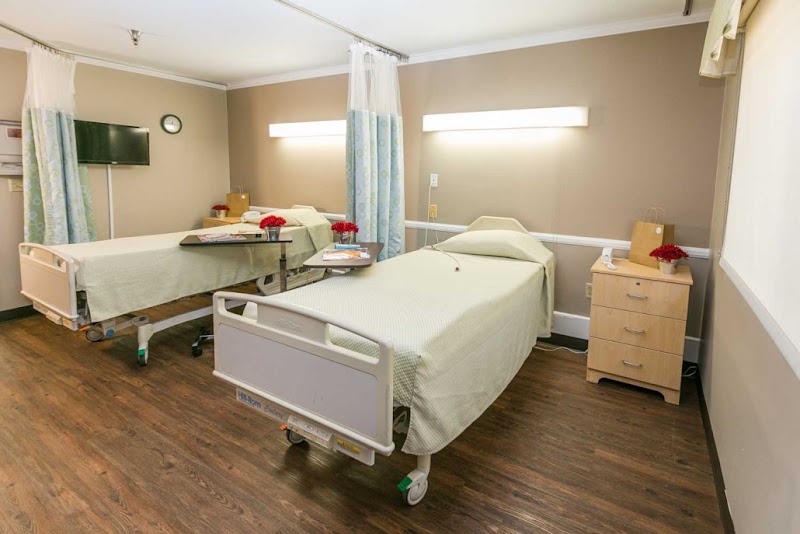
How is The Hills Post Acute Staffed?

CMS rates THE HILLS POST ACUTE's staffing level at 3 out of 5 stars, which is average compared to other nursing homes. Staff turnover is 41%, compared to the California average of 46%. This relatively stable workforce can support continuity of care.

What Have Inspectors Found at The Hills Post Acute?

State health inspectors documented 120 deficiencies at THE HILLS POST ACUTE during 2021 to 2025. These included: 110 with potential for harm and 10 minor or isolated issues. While no single deficiency reached the most serious levels, the total volume warrants attention from prospective families.

Who Owns and Operates The Hills Post Acute?

THE HILLS POST ACUTE is owned by a for-profit company. For-profit facilities operate as businesses with obligations to shareholders or private owners. The facility is operated by THE ENSIGN GROUP, a chain that manages multiple nursing homes. With 174 certified beds and approximately 162 residents (about 93% occupancy), it is a mid-sized facility located in SANTA ANA, California.
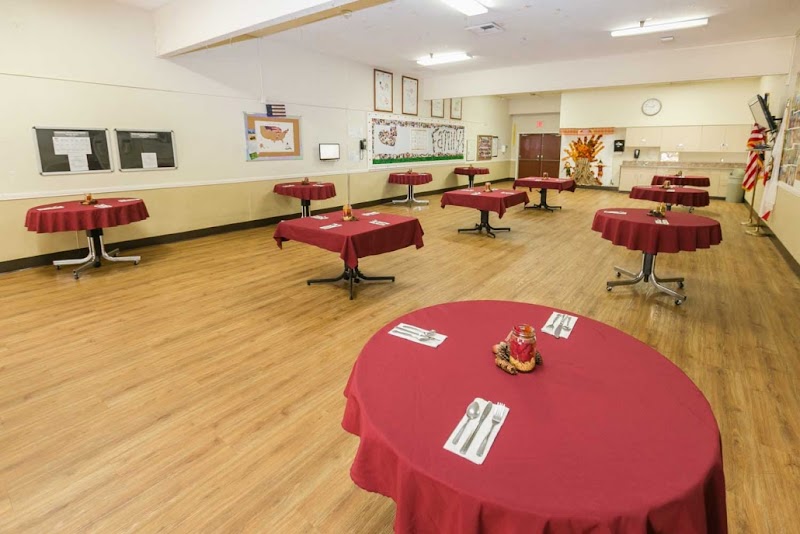
How Does The Hills Post Acute Compare to Other California Nursing Homes?

Compared to the 100 nursing homes in California, THE HILLS POST ACUTE's overall rating (2 stars) is below the state average of 3.1, staff turnover (41%) is near the state average of 46%, and health inspection rating (2 stars) is below the national benchmark.

What Should Families Ask When Visiting The Hills Post Acute?

Based on this facility's data, families visiting should ask: "Can I visit during a mealtime to observe dining assistance and food quality?" "How do you handle medical emergencies, and what is your hospital transfer rate?" "Can I speak with family members of current residents about their experience?"

Is The Hills Post Acute Safe?

Based on CMS inspection data, THE HILLS POST ACUTE has a clean safety record: no substantiated abuse findings (meaning no confirmed cases of resident harm), no Immediate Jeopardy citations (the most serious violation level indicating risk of serious injury or death), and is not on the Special Focus Facility watch list (a federal program monitoring the lowest-performing 1% of nursing homes). The facility has a 2-star overall rating and ranks #100 of 100 nursing homes in California. While no facility is perfect, families should still ask about staff-to-resident ratios and recent inspection results during their visit.

Do Nurses at The Hills Post Acute Stick Around?

THE HILLS POST ACUTE has a staff turnover rate of 41%, which is about average for California nursing homes (state average: 46%). Moderate turnover is common in nursing homes, but families should still ask about staff tenure and how the facility maintains care continuity when employees leave.

Was The Hills Post Acute Ever Fined?

THE HILLS POST ACUTE has been fined $4,893 across 2 penalty actions. This is below the California average of $33,128. While any fine indicates a compliance issue, fines under $50,000 are relatively common and typically reflect isolated problems that were subsequently corrected. Families should ask what specific issues led to these fines and confirm they've been resolved.

Is The Hills Post Acute on Any Federal Watch List?

THE HILLS POST ACUTE is not on any federal watch list. The most significant is the Special Focus Facility (SFF) program, which identifies the bottom 1% of nursing homes nationally based on persistent, serious quality problems. Not being on this list means the facility has avoided the pattern of deficiencies that triggers enhanced federal oversight. This is a positive indicator, though families should still review the facility's inspection history directly.