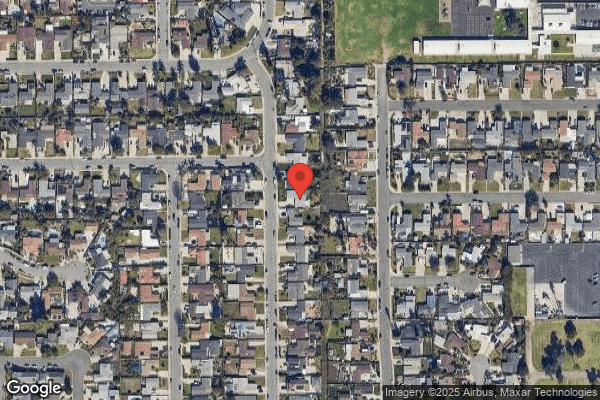
ROWNTREE GARDENS

12151 DALE AVENUE, STANTON, CA 90680 (714) 971-6865
Non profit - Church related 58 Beds Independent Data: November 2025
Trust Grade
73/100
#448 of 1155 in CA
Last Inspection: October 2024

Within standard 12-15 month inspection cycle. Federal law requires annual inspections.

Overview

Rowntree Gardens in Stanton, California, has a Trust Grade of B, indicating it is a good choice among nursing homes, providing solid care but with room for improvement. It ranks #448 out of 1,155 in the state, placing it in the top half, and #33 out of 72 in Orange County, suggesting there are a few better local options. The facility is improving, with issues decreasing from 18 in 2024 to just 1 in 2025. Staffing is a strength, rated 4 out of 5 stars with a turnover rate of 26%, which is lower than the state average, showing that staff members tend to stay and build relationships with residents. There have been no fines recorded, which is a positive sign, and while RN coverage is average, it is reassuring that RNs are present to oversee care. However, there are notable concerns. Recent inspections revealed lapses in food safety practices, including improper handwashing and failure to discard expired food, which could pose health risks. Additionally, the facility did not complete required assessments for residents using bed rails, which raises safety concerns about potential entrapment. While there are strengths in staffing and a good overall rating, families should consider these issues when evaluating Rowntree Gardens for their loved ones.

Trust Score
B
73/100
In California
#448/1155
Top 38%
Safety Record
Low Risk
No red flags
Inspections
Getting Better
18 → 1 violations
Staff Stability
✓ Good
26% annual turnover. Excellent stability, 22 points below California's 48% average. Staff who stay learn residents' needs.
Penalties
✓ Good
No fines on record. Clean compliance history, better than most California facilities.
Skilled Nurses
○ Average
Each resident gets 32 minutes of Registered Nurse (RN) attention daily — about average for California. RNs are the most trained staff who monitor for health changes.
Violations
⚠ Watch
49 deficiencies on record. Higher than average. Multiple issues found across inspections.
★★★★☆
4.0
Overall Rating
★★★★☆
4.0
Staff Levels
★★★★★
5.0
Care Quality
★★★☆☆
3.0
Inspection Score
Stable
2024: 18 issues
2025: 1 issues

The Good

  • 4-Star Staffing Rating · Above-average nurse staffing levels
  • 5-Star Quality Measures · Strong clinical quality outcomes
  • Low Staff Turnover (26%) · Staff stability means consistent care
  • Full Sprinkler Coverage · Fire safety systems throughout facility
  • No fines on record
  • Staff turnover is low (26%)

    22 points below California average of 48%

Facility shows strength in staffing levels, quality measures, staff retention, fire safety.

The Bad

No Significant Concerns Identified

This facility shows no red flags. Among California's 100 nursing homes, only 1% achieve this.

The Ugly 49 deficiencies on record

Feb 2025 1 deficiency
CONCERN (D) 📢 Someone Reported This

A family member, employee, or ombudsman was alarmed enough to file a formal complaint

Potential for Harm - no one hurt, but risky conditions existed

Transfer Requirements (Tag F0622)

Could have caused harm · This affected 1 resident

**NOTE- TERMS IN BRACKETS HAVE BEEN EDITED TO PROTECT CONFIDENTIALITY** Based on interview, medical record review, facility document review, and facility P&P review, the facility failed to send the re...

Read full inspector narrative →
**NOTE- TERMS IN BRACKETS HAVE BEEN EDITED TO PROTECT CONFIDENTIALITY** Based on interview, medical record review, facility document review, and facility P&P review, the facility failed to send the required discharge referral documents to the HHA for one of three sampled residents (Resident 1). This failure resultedin Resident 1 not receiving the ongoing care needs. Findings: Review of the facility's P&P titled Discharge Summary and Plan revised October 2022 showed the post discharge plan is developed by the care planning team with the assistance of the resident and his or her family and includes: a. Where the individual plans to reside b. Arrangements that have been made for follow- up care and services On 1/30/25 at 1421 hours, CDPH, L&C Program received a complaint stating Resident 1 did not receive PT services until the PT order was faxed on 1/29/25. The complaint showed the discharge team had waited 12 days to do anything. On 2/6/25 at 1140 hours, a telephone call was conducted with Resident 1's family member. Resident 1's family member stated Resident 1's home health with PT services was not arranged. Closed medical record review for Resident 1 was initiated on 2/6/25. Resident 1 was admitted to the facility on [DATE], and discharged on 1/17/25. Review of Resident 1's Physician Order dated 1/16/25, showed to discharge Resident 1 on 1/17/25, to Facility A with home health services, including to provide RN services for medication management and PT services for safety. Review of Resident 1's Discharge Summary/Comprehensive assessment dated [DATE], showed Resident 1 needed assistance with bathing, dressing, eating, personal hygiene, bed mobility, toilet use and was dependent on transfers. Review of Resident 1's Post Discharge Plan of Care dated 1/17/25, showed Resident 1 was transferred to Facility A. The section for the Post Discharge Plans/Community Agencies showed for home health services. Review of the facility's document of the fax confirmation dated 1/29/25, showed a 19-pages fax had been successfully delivered to the HHA's fax number on 1/29/25 at 1402 hours. The fax subject line showed Resident 1's home health referral. On 2/10/25 at 1115 hours, an interview and concurrent closed medical record review was conducted with the SSD. The SSD acknowledged he forgot to fax the required documents related to HHA services to the HHA until he received the call from Resident 1's family member on 1/29/25, 12 days later, to inquire about HHA services. On 2/10/25 at 1432 hours, an interview and concurrent closed medical record review was conducted with the DON. The DON was informed and acknowledged the above findings.
Oct 2024 18 deficiencies
CONCERN (D)

Potential for Harm - no one hurt, but risky conditions existed

Deficiency F0558 (Tag F0558)

Could have caused harm · This affected 1 resident

**NOTE- TERMS IN BRACKETS HAVE BEEN EDITED TO PROTECT CONFIDENTIALITY** Based on observation, interview, medical record review, and facility P&P review, the facility failed to provide the reasonable a...

Read full inspector narrative →
**NOTE- TERMS IN BRACKETS HAVE BEEN EDITED TO PROTECT CONFIDENTIALITY** Based on observation, interview, medical record review, and facility P&P review, the facility failed to provide the reasonable accommodations to meet the needs for one nonsampled residents (Resident 545). * The facility failed to ensure the call light was within reach and accessible for Resident 545. This failure had the potential to negatively impact the resident's psychosocial well-being or result in a delay to receive care. Findings: Review of the facility's P&P titled Answering the Call Light revised September 2022 showed the following: - Upon admission and periodically as needed, explain and demonstrate the use of call light to the resident; - Ask the resident to return and demonstration; and - Ensure the call light is accessible to the resident when in bed, from the toilet, from the shower or bathing facility, and from the floor; On 10/22/24 at 0953 hours, during the initial tour of the facility, a concurrent observation and interview was conducted with Resident 545. Resident 545 was observed awake and lying in bed in her room. Resident 545 was observed with a blue sling wrapped on her right arm. Resident 545 stated she fell at home. When asked if she had any concerns, Resident 545 stated when she needed help going to the restroom, no one came every time she called using the call light. The call light was observed clipped to the outer side of the left upper bed rail. Resident 545 showed how she used the call light; however, Resident 545 was observed pressing the bed remote and stated it was the call light. Resident 545 was informed the call light was the one clipped to the outer side of left upper bed rail. When asked if she was able to reach the call light, Resident 545 stated she could not reach the call light. Medical record review for Resident 545 was initiated on 10/22/24. Resident 545 was admitted to the facility on [DATE], and readmitted on [DATE]. Review of Resident 545's H&P examination dated 10/20/24, showed Resident 545 had fluctuating capacity to understand and make decisions. Review of Resident 545's MDS dated [DATE], showed Resident 545 had a BIMS score of 14 (cognitively intact) and needed substantial to maximal assistance with toileting hygiene (including how the resident maintain perineal hygiene, adjust clothes before and after voiding or having a bowel movement) and with mobility. On 10/22/24 at 1000 hours, an interview was conducted with LVN 1. LVN 1 verified the call light for Resident 545 was not within the resident's reach. LVN 1 stated the call light should always be placed within the resident's reach. LVN 1 was observed placing the call light within Resident 545's reach and started teaching and reminding Resident 545 on how to use the call light. On 10/29/24 at 1559 hours, an interview was conducted with the DON. The DON stated the expectations for the call light were to be placed within the resident's reach; and it should be always be working and answered as soon as possible. The DON was informed and acknowledged the above findings.
CONCERN (D)

Potential for Harm - no one hurt, but risky conditions existed

Comprehensive Care Plan (Tag F0656)

Could have caused harm · This affected 1 resident

**NOTE- TERMS IN BRACKETS HAVE BEEN EDITED TO PROTECT CONFIDENTIALITY** 2. According to the BD manufacturer's recommendation on cleaning the PureWick's collection canister, the collection canister, ca...

Read full inspector narrative →
**NOTE- TERMS IN BRACKETS HAVE BEEN EDITED TO PROTECT CONFIDENTIALITY** 2. According to the BD manufacturer's recommendation on cleaning the PureWick's collection canister, the collection canister, canister lid, collector tubing, pump tubing, and PureWick Urine Collection System base should be cleaned and disinfected at the time of each use, or at a minimum daily. The power cord should be cleaned and disinfected at the time of each use, or at a minimum daily. Gloves should be worn when handling soiled or dirty accessories. The manufacturer's guidelines also showed specific procedure or steps to clean the Purewick's collection canister. Medical record review for Resident 37 was initiated on 10/22/24. Resident 37 was admitted to the facility on [DATE]. Review of Resident 37's Order Summary Report showed a physician's order dated 6/20/24, for PureWick catheter attached to canister- may drain every shift and PRN when the resident is in bed. Another physician's order dated 6/20/24, showed may remove the PureWick catheter when out of bed, in the wheelchair per the resident's request. Review of Resident 37's H&P examination dated 6/21/24, showed Resident 37 had the capacity to understand and make decisions. Review of Resident 37's MDS dated [DATE], showed the BIMS score of 15 (a person's cognition is intact:). Review of Resident 37's MDS dated [DATE], under Section H, showed the use of external catheter appliance. Under the section for urinary incontinence showed Resident 37 was occasionally incontinent. Review of Resident 37's last change in condition evaluation was dated 10/6/24, showed the resident had an open skin to the right lateral lower thigh. Review of Resident 37's care plan showed no care plan to address the risk of infection control related to education Resident 37 and family member on providing PureWick catheter supplies in a timely manner. There was no care plan developed to address the cleaning of the collection canister, collector, and pump tubing. On 10/22/24 at 1021 hours, an observation was conducted in Resident 37's room. Resident 37's PureWick collection canister was observed to have dry, dark green residue. There was no label and date shown when the PureWick canister, collector, and pump tubing were last cleaned or changed. On 10/22/24 at 1032 hours, a concurrent room observation and interview was conducted with LVN 2. LVN 2 acknowledged the PureWick collection canister had a dry, dark green residue. When asked about the PureWick canister, collector, and tubing were last changed or cleaned, LVN 2 stated Resident 37's family member brought the PureWick catheter supplies to the facility. LVN 2 further stated he was not familiar with the PureWick catheter care. LVN 2 added LVN 3 would know more for further details. On 10/22/24 at 1045 hours, a concurrent observation and interview was conducted with LVN 3. LVN 3 verified the PureWick collection canister had a dry dark green residue. When LVN 3 was asked when the PureWick canister, collector and tubing were last changed or cleaned, LVN 3 stated she was not informed nor could provide any documentation when the PureWick canister, collector and tubing were last changed and could not provide any information or documentation on when Resident 37's family member had last brought any PureWick catheter supplies. LVN 3 also acknowledged no care plan problem was developed to address the risk of infection control related to education for Resident 37 and the resident's family member regarding the provision of PureWick catheter care and supplies that were needed in a timely manner. On 10/22/24 at 1105 hours, an interview was conducted with Resident 37. Resident 37 stated she could not recall when the new PureWick canister and other supplies were brought by her family member. Resident 37 stated she and her family member were not provided with an education on the importance or reason for bringing the PureWick catheter supplies in a timely manner and not aware how her PureWick canister, collector, and tubing should have been cleaned by the facility staff. Resident 37 stated a new PureWick canister and other supplies would be provided by her family member. On 10/22/24 at 1101 hours, a concurrent observation and interview was conducted with the ADON. The ADON stated the PureWick canister should not have a dry, dark green residue and should have been checked by the staff every shift. The ADON acknowledged the staff were unable to determine when the PureWick canister was last changed nor cleaned. The ADON also verified there was no care plan problem developed to address the risk of infection prevention and control related to education for Resident 37 and resident's family member regarding the provision of PureWick catheter care and supplies that were needed in a timely manner. On 10/29/24 at 1635 hours, an interview was conducted with the DON. The DON verified the above findings. Based on interview, medical record, and facility P&P review, the facility failed to develop the comprehensive plans of care to reflect the individual care needs for one of 13 final sampled resident (Resident 35) and one nonsampled resident (Resident 37). * The facility failed to develop a care plan problem to address Resident 35's use of antibiotic for UTI. * The facility failed to ensure a care plan problem was developed to address the risk of infection prevention and control related to education for Resident 37 and family member to provide the PureWick catheter supplies in a timely manner and cleaning of the collection canister, collector, and pump tubing. These failures posed the risk of not providing appropriate, consistent, and individualized care to the residents. Findings: Review of the facility's P&P titled Care Plans, Comprehensive Person-Centered revised 3/2022 showed a comprehensive, person-centered care plan that includes measurable objectives and timetable to meet the resident's physical, psychosocial and functional needs is developed and implemented for each resident. 1. Review of Resident 35's medical record was initiated on 10/22/24. Resident 35 was admitted to the facility on [DATE]. Review of Resident 35's H&P examination dated 9/17/24, showed Resident 35 had fluctuating capacity to understand and make decisions. Review of Resident 35's Order Summary Report dated 10/22/24, showed a physician's order dated 10/20/24, for Levaquin (an antibiotic medication that treats bacterial infections) 500 mg one tablet by mouth one time a day for abnormal urinalysis (a medical test that examines urine to check for urinary tract infections, kidney problems, or diabetes) for seven days. Review of Resident 35's MAR showed Levaquin 500 mg one tablet by mouth one time a day was administered to the resident on 10/20 and 10/21/24. Review of Resident 35's Plan of Care failed to show documented evidence of a care plan problem developed to address Resident 35's use of Levaquin for UTI. On 10/25/24 at 1050 hours, an interview and concurrent record review was conducted with LVN 4. LVN 4 verified Resident 35's plan of care failed to show a care plan problem was developed for the use of Levaquin medication for UTI. On 10/25/24 at 1054 hours, an interview and concurrent record review was conducted with the ADON. The ADON verified there was no care plan developed for Resident 35 for the use of Levaquin medication for UTI. On 10/29/24 at 1424 hours, an interview with the DON was conducted. The DON was informed and acknowledged the above findings.
CONCERN (D)

Potential for Harm - no one hurt, but risky conditions existed

Pressure Ulcer Prevention (Tag F0686)

Could have caused harm · This affected 1 resident

**NOTE- TERMS IN BRACKETS HAVE BEEN EDITED TO PROTECT CONFIDENTIALITY** Based on observation, interview, medical record review, and facility P&P review, the facility failed to ensure the necessary car...

Read full inspector narrative →
**NOTE- TERMS IN BRACKETS HAVE BEEN EDITED TO PROTECT CONFIDENTIALITY** Based on observation, interview, medical record review, and facility P&P review, the facility failed to ensure the necessary care and services were provided to prevent the development of new pressure injury and promote healing of existing pressure ulcer for one of one final sampled resident (Resident 41) reviewed for pressure injury. * Resident 41 developed a Stage 3 pressure injury to the coccyx after admission to the facility. The facility failed to ensure Resident 41 was provided with high protein snacks at bedtime as recommended by the RD. In addition, LVN 3 failed to provide protective barrier to protect the wound during wound care per facility P&P. These failures posed Residents 41 at risk for developing new pressure ulcers and worsening of the existing pressure ulcer. Findings: Review of the facility's P&P titled Wound Care undated showed the purpose of this procedure is to provide guidelines for the care of wound to promote healing. The procedure section includes to position the resident and place disposable cloth next to the resident (under the wound) to serve as a barrier to protect the bed linen and other body sites. Medical record review for Resident 41 was initiated on 10/22/24. Resident 41 was admitted to the facility on [DATE]. Review of Resident 41's Admit/Screener 3.0 dated 8/16/24, showed an assessment of the resident's skin integrity with no pressure injury identified. Review of the physician's order dated 8/16/24, showed an order for enhanced barrier precaution related to use of medical device, indwelling urinary catheter. Review of Resident 41's H&P examination dated 8/19/24, showed the resident had capacity to understand and make decisions. Review of the physician's order dated 8/23/24, showed an order to give HS snack. Review of Resident 41's care plan revised on 8/29/24, showed a care plan problem addressing the risk for altered nutritional status, and weight fluctuation, skin breakdown, with an approach to provide HS snack daily. Review of Resident 41's Weekly Observation Tool dated 9/20/24, showed the resident acquired Stage 2 pressure injury to the coccyx area, measuring 1.0 cm (length) x 1.5 cm (width) x 0.1 cm (depth). Review of Resident 41's Nutrition/Dietary Note dated 10/2/24, showed appropriate high protein HS snacks continuing in place. Further review of Resident 41's care plan updated 10/7/24, showed a care plan problem addressing altered skin integrity related to Stage 3 pressure injury with the intervention including to give nutritional/dietary supplements as ordered. However, the care plan was not revised to show the high protein HS snacks as per the RD's note. Further review of Resident 41's Weekly Observation Tool dated 10/8/24, showed worsening of the pressure injury of the coccyx, SDTI, measuring 3.0 cm x 2.5 cm x 0.1 cm, with a 100% slough wound bed. Review of the physician's order dated 10/11/24, showed an order to perform wound care to the coccyx (tailbone) pressure injury sore as follows: to cleanse with NSS, pat and dry, apply a collagen dressing, cover with an optifoam dressing daily for 21 days. Review of Resident 41's TAR for 10/1/24 -10/31/24, showed an entry to provide dated 10/12/24, treatment to the coccyx pressure injury sore, to cleanse with NSS, pat and dry, apply collagen, cover with an optifoam dressing daily for 21 days. On 10/24/24 at 0855 hours, a wound care observation for Resident 41's coccyx was conducted with LVN 3. LVN 3 was observed to remove the dressing from the wound and exposed the wound bed to the resident's diaper. LVN 3 cleansed the coccyx pressure injury with NSS, applied a collagen dressing, and covered with an optifoam dressing. On 10/24/24 at 0910 hours, an interview was conducted with the LVN 3. LVN 3 verified she did not use protective barriers to protect the wound base when doing the treatment for the resident and exposed the wound to the resident's diaper. On 10/25/24 at 1007 hours, an interview with LVN 3 was conducted. LVN 3 verified Resident 41's Stage 3 pressure injury in the coccyx developed in the facility. On 10/25/24 at 1034 hours, an interview with the DON was conducted. The DON verified Resident 41's Stage 3 pressure injury in the coccyx was developed in the facility. The DON verified Resident 41's HS snack was ordered on 8/23/24, and should have been high protein snacks. On 10/29/24 at 1323 hours, an interview with the RD was conducted. The RD stated she recommended high protein snacks which should include cottage cheese and yogurt for the Resident 41. The RD verified Resident 41's current order was HS snacks. On 10/29/24 at 1425 hours, an interview with the DON was conducted. The DON was informed and acknowledged the above findings.
CONCERN (D)

Potential for Harm - no one hurt, but risky conditions existed

Incontinence Care (Tag F0690)

Could have caused harm · This affected 1 resident

**NOTE- TERMS IN BRACKETS HAVE BEEN EDITED TO PROTECT CONFIDENTIALITY** Based on observation, interview, medical record review, and facility P&P review, the facility failed to provide the appropriate ...

Read full inspector narrative →
**NOTE- TERMS IN BRACKETS HAVE BEEN EDITED TO PROTECT CONFIDENTIALITY** Based on observation, interview, medical record review, and facility P&P review, the facility failed to provide the appropriate care and services to prevent urinary tract infections for two of three sampled residents (one final sampled resident, Resident 41; and one nonsample resident, Resident 37) reviewed for urinary catheter care. * The staff failed to ensure proper monitoring and care for Resident 37's Pure Wick collection canister. Resident 37's Pure Wick collection canister was observed to have dry, dark green residue. * The facility failed to ensure Resident 41's indwelling urinary catheter drainage bag was positioned below the resident's bladder and prevent tugging of the catheter for adequate urinary drainage and resident discomfort. Resident 41's indwelling urinary catheter tubing was observed on the floor under the resident's bed. These failure posed the risk for Residents 37 and 41 to develop catheter-associated urinary tract infections. Findings: 1. According to the BD manufacturer's recommendation for cleaning the PureWick's collection canister, the collection canister, canister lid, collector tubing, pump tubing, and PureWick Urine Collection System base should be cleaned and disinfected at the time of each use, or at a minimum daily. The power cord should be cleaned and disinfected at the time of each use, or at a minimum daily. Note: Gloves should be worn when handling soiled or dirty accessories. The manufacturer's guidelines showed the following: Cleaning: Prepare a soapy solution by mixing one teaspoon (approximately 5 ml) of dish soap with 1 gallon (approximately 4 liters) of cool tap water. Fully submerge canister and lid in the solution. Allow it to sit for a minimum of ten minutes. While submerged, use of a toothbrush to brush all accessible areas of the canister and lid for a minimum of one minute to remove any visible signs of debris or dirt. Rinsing: Rinse the canister and the lid thoroughly with cool tap water until there is no visible signs of the cleaning solution. Visual Inspection: Inspect the canister and the lid to ensure that all debris and dirt have been removed. If there is any sign of debris or dirt, repeat steps above until there is no sign of debris or dirt remaining on the canister and lid. Disinfection: Fully submerge the canister and lid in 70% isopropyl alcohol (IPA). Allow it to sit for a minimum of ten minutes. Rinse: Rinse the canister and the lid thoroughly with cool tap water. Drying: Dry the canister and lid with clean low tint towel or cloth. Cleaning the Collector and Pump Tubing. Instructions for cleaning the collector tubing with elbow connector and pump tubing showed the following: - Initial Rinse: Disconnect the connector and disconnect the elbow connector from the lid. Rinse the disconnected tubing thoroughly by running cool tap water through the inside of the tubing. While rinsing, remove any excess dirt by wiping the outside of the tubing and elbow connector with low lint disposable wipes. While rinsing, flush the tubing with cool tap water to remove any excess dirt. - Cleaning: Prepare a soapy solution by mixing one teaspoon (approximately 5 ml) of dish soap with one gallon of cool tap water. Completely submerge the tubing and elbow connector in the solution and allow it to soak for a minimum of ten minutes. At the beginning of the soak time, flush the inside of the tubing with the prepared solution. While submerged, use a soft toothbrush to brush all accessible areas of the tubing and elbow connector for a minimum of one minute to remove any visible signs of debris or dirt. - Rinsing: Rinse the tubing and elbow connector thoroughly with cool tap water until there is no visible sign of soap cleaning solution. While rinsing, flush the inside of the tubing with tap water. - Visual Inspection: Inspect the tubing to ensure that all debris and dirt have been removed. If there is any sign of debris or dirt, repeat the steps above until there is no sign of debris or dirt remaining on or inside the tubing. - Disinfection: Fully submerge the tubing and elbow connector in 70% isopropyl alcohol (IPA). Allow it to soak for a minimum of ten minutes. Flush the IPA through the tubing, prior to starting the ten-minute time. - Rinse: Rinse the tubing and elbow connector thoroughly with cool tap water, ensuring that the inside of the tubing is flushed with water. - Drying: Dry the tubing and elbow connector outer surface with a clean low lint towel or cloth and allow the inside of the tubing to air dry for a minimum of thirty minutes at room temperature. Medical record review for Resident 37 was initiated on 10/22/24. Resident 37 was admitted to the facility on [DATE]. Review of Resident 37's Order Summary Report showed a physician's order dated 6/20/24, for PureWick catheter attached to canister, may drain every shift and PRN when the resident is in bed. Another physician's order dated 6/20/24, showed may remove the PureWick catheter when out of bed in the wheelchair per the resident's request. Review of Resident 37's H&P examination dated 6/21/24, showed Resident 37 had the capacity to understand and make decisions. Review of Resident 37's MDS dated [DATE], showed the BIMS score of 15 (a person's cognition is intact:). Review of Resident 37's MDS dated [DATE], under Section H, showed the use of an external catheter appliance. The section for urinary incontinence showed Resident 37 was occasionally incontinent. Review of Resident 37's last change in condition evaluation was dated 10/6/24, showed the resident with an open skin to the right lateral lower thigh. Review of the Cleaning and Maintenance of PureWick In-services dated 2/16, 2/24, and 2/25/24, provided by the IP showed not all staff had attended the in-service. The in-services sign in sheet showed no attendance of LVNs 2 and 3. On 10/22/24 at 1021 hours, an observation was conducted in Resident 37's room. Resident 37's PureWick collection canister was observed to have dry, dark green residue. There was no label and date shown when the PureWick canister, collector and pump tubing were last cleaned or changed. On 10/22/24 at 1032 hours, a concurrent room observation and interview was conducted with LVN 2. LVN 2 acknowledged the PureWick collection canister had a dry, dark green residue. When asked when the PureWick canister, collector, and tubing were last changed or cleaned, LVN 2 stated Resident 37's family member was bringing the PureWick catheter supplies to the facility. LVN 2 further stated he was not familiar with the PureWick catheter care. LVN 2 added LVN 3 would know more for further details. On 10/22/24 at 1045 hours, a concurrent observation and interview was conducted with LVN 3. LVN 3 verified the PureWick collection canister had a dry dark green residue. When LVN 3 was asked when the PureWick canister, collector, and tubing were last changed or cleaned, LVN 3 stated she was not informed nor could provide any documentation when the PureWick canister, collector, and tubing were last changed and could not provide any information or documentation on when Resident 37's family member had last brought any PureWick catheter supplies. LVN 3 also acknowledged PureWick catheter care was something new to her. On 10/22/24 at 1101 hours, a concurrent observation and interview was conducted with the ADON. The ADON stated the PureWick canister should not have a dry, dark green residue and should have been checked by the staff every shift. The ADON acknowledged the staff were unable to determine when the PureWick canister was last changed nor cleaned. The ADON also verified the PureWick canister was something new to the staff. On 10/24/24 at 0853 hours, an interview was conducted with the DSD/Acting IP. The DSD/Acting IP acknowledged the PureWick Catheter care was something new and it was her first time to encounter a resident with PureWick catheter. The DSD/Acting IP also verified not all the staff attended the in-service about the PureWick catheter care and the in-service should have been provided to all the facility staff. On 10/29/24 at 1635 hours, an interview was conducted with the DON. The DON acknowledged the above findings. 2. Medical record review for Resident 41 was initiated on 10/22/24. Resident 41 was admitted to the facility on [DATE]. Review of Resident 41's H&P examination dated 8/19/24, showed the resident had capacity to understand and make decisions. Review of Resident 41's Order Summary Report dated 10/25/24 showed the following physician's orders: - an order dated 10/10/24, may insert Foley catheter (20 Fr/30 ml) as needed. - an order dated 8/16/24, to provide Foley catheter care every shift. Review of Resident 41's care plan initiated on 8/17/24, and revised on 8/28/24, showed a care plan problem addressing at risk for infection due to use of the Foley catheter with approach to plan of care to avoid and check for kinks in tubing, keep drainage system closed, and to ensure collection unit positioned below the resident's bladder. On 10/29/24 at 0851 hours, an interview with Resident 41 was conducted. Resident 41 stated it felt the catheter was tight. Resident 41's indwelling urinary catheter drainage bag was observed on the floor under the resident's bed. On 10/29/24 at 0900 hours, an interview with the ADON was conducted. The ADON verified the resident's indwelling urinary catheter drainage bag was on the floor. The ADON stated the indwelling urinary catheter drainage bag was not supposed to be on the floor. The ADON hanged the indwelling catheter drainage bag on the resident's bed frame.
CONCERN (D)

Potential for Harm - no one hurt, but risky conditions existed

Respiratory Care (Tag F0695)

Could have caused harm · This affected 1 resident

**NOTE- TERMS IN BRACKETS HAVE BEEN EDITED TO PROTECT CONFIDENTIALITY** Based on observation, interview, and medical record review, the facility failed to ensure one of seven final sampled residents (...

Read full inspector narrative →
**NOTE- TERMS IN BRACKETS HAVE BEEN EDITED TO PROTECT CONFIDENTIALITY** Based on observation, interview, and medical record review, the facility failed to ensure one of seven final sampled residents (Residents 38) reviewed for respiratory care was provided the appropriate respiratory care. * The facility failed to ensure Resident 38's storage bag for the Yankauer suction tip was changed weekly. This failure had the potential to affect the respiratory health and well-being of the residents in the facility. Findings: Medical record review for Resident 38 was initiated on 10/22/24. Resident 38 was admitted to the facility on [DATE], and readmitted back to the facility on 5/4/24. Review of Resident 38's H&P examination dated 5/7/24, showed Resident 38 did not have the capacity to understand and make decisions. Review of Resident 38's Order Summary Report for October 2024, showed a physician's order dated 5/27/24, to suction oral secretions as needed for excessive secretions. On 10/22/24 at 0935 hours, a concurrent observation and interview was conducted with LVN 5 in Resident 38's room. LVN 5 verified Resident 38's storage bag for theYankauer suction tip was dated 10/4/24. LVN 5 stated the respiratory storage bags including the bag for the Yankauer suction tip which was to be changed weekly on Thursdays and should have been changed. LVN 5 stated changing the storage bags weekly was to ensure infection control would be maintained and limited bacteria build up. On 10/29/24 at 1625 hours, and interview with the DON was conducted. The DON stated the respiratory supplies and storage bags were expected to be replaced weekly or as needed, and Resident 38's storage bag for the Yankauer suction tip should have been replaced. The DON acknowledged the above findings.
CONCERN (D)

Potential for Harm - no one hurt, but risky conditions existed

Deficiency F0726 (Tag F0726)

Could have caused harm · This affected 1 resident

**NOTE- TERMS IN BRACKETS HAVE BEEN EDITED TO PROTECT CONFIDENTIALITY** Based on interview, medical record review, facility document review, and facility P&P review, the facility failed to ensure the ...

Read full inspector narrative →
**NOTE- TERMS IN BRACKETS HAVE BEEN EDITED TO PROTECT CONFIDENTIALITY** Based on interview, medical record review, facility document review, and facility P&P review, the facility failed to ensure the specific competencies and skill sets necessary to care for the residents' needs. * The facility failed to ensure the Certification of Infection Preventionist Training Course was updated for the DSD/Acting IP. * The facility failed to ensure the nursing staff' competency on how to care for Resident 37's pure wick canister, collector and tubing. These failures had the potential to negatively impact the resident's well-being. Findings: 1. Review of the facility's P&P titled Infection Preventionist revised 2001 showed the infection preventionist is responsible for coordinating the implementation and updating of the infection prevention and control program. Qualifications: 1. The infection preventionist is qualified by education, training, experience and/or certification and has sufficient knowledge to perform the role. 2. The infection preventionist remains current with infection prevention and control issues and is aware of national organizations' guidelines as well as those from national/state/local public health authorities. On 10/28/24 at 0955 hours, a concurrent certification record review and interview was conducted with the DSD/Acting IP. The DSD/Acting IP's Certification of Nursing Home Infection Preventionist Training Course was on 9/11/22. When the DSD/Acting IP was asked if it was overdue, the Acting IP stated it should be due. On 10/29/24 at 1635 hours, an interview was conducted with the DON. The DON acknowledged the above findings. 2. According to the BD manufacturer's recommendation on cleaning the PureWick's collection canister, the collection canister, canister lid, collector tubing, pump tubing, and PureWick Urine Collection System base should be cleaned and disinfected at the time of each use, or at a minimum daily. The power cord should be cleaned and disinfected at the time of each use, or at a minimum daily. Note: Gloves should be worn when handling soiled or dirty accessories. The manufacturer's guidelines also showed the specific procedures and steps for cleaning and how to care for them. Review of the facility's P&P titled In- Service Training showed all staff must participate in initial orientation and annual in-service training. Policy Interpretation and Implementation included all staff are required in regular in-service education. For the purposes of this policy, staff means all new and existing personnel, individuals providing services under contractual agreement, and volunteers. The primary objective of the in-service training is to ensure that staff are able to interact in a manner that enhances the resident's quality of life and quality of care and can demonstrate competency in the topic areas of training. Required training topics include the following: - Effective communication with residents and family (direct care staff). - The infection prevention and control program standards, policies and procedures. Medical record review for Resident 37 was initiated on 10/22/24. Resident 37 was admitted to the facility on [DATE]. Review of Resident 37's Order Summary Report showed a physician's order dated 6/20/24, for PureWick catheter attached to canister- may drain every shift and PRN when the resident is in bed. Another physician's order dated 6/20/24, showed may remove the PureWick catheter when out of bed, in the wheelchair per the resident's request. Review on Cleaning and Maintenance of Pure Wick In-services dated 2/16, 2/24, and 2/25/24 provided by the IP showed not all staff attended the in-service. The in-services document showed no attendance of LVNs 2 and 3. On 10/22/24 at 1032 hours, a concurrent room observation and interview was conducted with LVN 2. LVN 2 acknowledged the PureWick collection canister had a dry, dark green residue. When asked when the PureWick canister, collector, and tubing were last changed or cleaned, LVN 2 stated Resident 37's family member was bringing the PureWick catheter supplies to the facility. LVN 2 further stated he was not familiar with the PureWick catheter care. LVN 2 added LVN 3 would know more for further details. On 10/22/24 at 1045 hours, a concurrent observation and interview was conducted with LVN 3. LVN 3 verified the PureWick collection canister had a dry dark green residue. When LVN 3 was asked when the PureWick canister, collector, and tubing were last changed or cleaned, LVN 3 stated she was not informed nor could provide any documentation when the PureWick canister, collector, and tubing were last changed and could not provide any information or documentation on when Resident 37's family member had last brought the PureWick catheter supplies. LVN 3 also acknowledged the PureWick catheter care was something new to her. On 10/22/24 at 1101 hours, a concurrent observation and interview was conducted with ADON. The ADON stated the PureWick canister should not have a dry, dark green residue and should have been checked by the staff every shift. The ADON acknowledged the staff were unable to determine when the PureWick canister was last changed nor cleaned. The ADON also verified the PureWick canister was something new to the staff. On 10/24/24 at 0853 hours, an interview was conducted with the DSD/Acting IP. The DSD/Acting IP acknowledged the PureWick catheter care was something new to most staff and it was her first time as well to encounter a resident with Pure Wick catheter. The DSD/Acting IP also verified not all staff had attended the in-service about the PureWick catheter care and the in-service should have been provided to all the facility staff. On 10/29/24 at 1635 hours, an interview was conducted with the DON. The DON acknowledged the above findings. Cross reference F690, example #1.
CONCERN (D)

Potential for Harm - no one hurt, but risky conditions existed

Pharmacy Services (Tag F0755)

Could have caused harm · This affected 1 resident

**NOTE- TERMS IN BRACKETS HAVE BEEN EDITED TO PROTECT CONFIDENTIALITY** Based on observation, interview, medical record review, and facility P&P review, the facility failed to provide the pharmaceutic...

Read full inspector narrative →
**NOTE- TERMS IN BRACKETS HAVE BEEN EDITED TO PROTECT CONFIDENTIALITY** Based on observation, interview, medical record review, and facility P&P review, the facility failed to provide the pharmaceutical services to ensure accurate reconciliation and administration as evidenced by: * The facility failed to ensure administration of the controlled medications for one nonsampled resident (Resident 42) was accurately documented to ensure accurate reconciliation and to prevent the medication administration errors. This failure had the potential for medication administration error, inaccurate reconciliation, and drug diversion (illegal distribution or abuse of prescription drugs or their use for unintended purposes). Findings: 1. Review of facility's P&P titled Controlled Substance revised November 2022 showed controlled substance inventory is monitored and reconciled to identify loss or potential diversion in a manner that minimizes the time between loss or diversion and detection follow-up. The system of reconciling the receipt, dispensing and disposition of controlled substances includes the following: a. Records of personnel access and usage; b. Medication administration records; c. Declining inventory records; and d. Destruction, waste and return to pharmacy records. On 10/23/24 at 0942 hours, review of the controlled medications was conducted. Review of the Controlled Medication Count Sheet for Resident 42's hydrocodone/acetaminophen (an opioid pain medication) 5-325 mg showed the medication was removed on 9/28/24 at 0600 hours, signed by a nurse; however, there was no documentation in the MAR or in Medication Administration Notes showing the medication was administered to the resident. Medical record review for Resident 42 was initiated on 10/23/24. Resident 42 was admitted on [DATE]. Review of Resident 42's H&P examination dated 8/19/24, showed the resident had fluctuating capacity to understand and make decisions. Review of the Order Summary Report dated 10/23/24, showed a physician's order dated 8/17/24, for hydrocodone/ acetaminophen 5-325 mg one tablet by mouth every four hours as needed for moderate to severe pain (pain levels of 4 - 10) (using a pain scale level of 0 to 10, with 0 = no pain and 10 = worst pain) not to exceed acetaminophen 3 grams in 24 hrs. Review of Resident 42's MAR for 9/1/24 - 9/30/24, showed an entry for hydrocodone/acetaminophen 5-325 mg one tablet by mouth every four hours as needed for moderate to severe pain (pain levels of 4 - 10), not to exceed acetaminophen 3 grams in 24 hrs. Further review of Resident 42's MAR failed to show documentation for the administration of hydrocodone/acetaminophen 5-325 on 9/28/24 at 0600 hours. On 10/23/24 at 0945 hours, an interview, and a concurrent record review was conducted with LVN 2. LVN 2 verified the MAR failed to show documentation the hydrocodone/acetaminophen 5-325 mg was administered to the resident on 9/28/24 at 0600 hours. On 10/24/24 at 1145 hours, an interview with the ADON was conducted. The ADON verified the Controlled Medication Count Sheet for Resident 42's hydrocodone/acetaminophen 5-325 mg tablet record showed a nurse signature on 9/28/24 at 0600 hours, however, the MAR failed to show documentation the hydrocodone/ acetaminophen 5-325 mg tablet was administered to the resident on 9/28/24 at 0600 hours. On 10/29/24 at 1430 hours, an interview with the DON was conducted. The DON was informed and acknowledged the findings.
CONCERN (D)

Potential for Harm - no one hurt, but risky conditions existed

Unnecessary Medications (Tag F0759)

Could have caused harm · This affected 1 resident

**NOTE- TERMS IN BRACKETS HAVE BEEN EDITED TO PROTECT CONFIDENTIALITY** Based on observation, interview, medical record review, and facility's P&P, the facility failed to ensure the medication error r...

Read full inspector narrative →
**NOTE- TERMS IN BRACKETS HAVE BEEN EDITED TO PROTECT CONFIDENTIALITY** Based on observation, interview, medical record review, and facility's P&P, the facility failed to ensure the medication error rate was below 5%. The facility's medication rate was 8%. One licensed nurses (LVN 1) observed administering the medications was found to have errors while administering the medications to two nonsampled residents (Residents 11 and 29). * The facility failed to ensure Resident 11 received the prescribed eye drops and in accordance with the facility's P&P. * The facility failed to ensure Resident 29 received the prescribed medication with food as ordered by the physician. These failures had the potential for the residents developing complications and ineffective therapeutic effects of the medications. Findings: 1. Review of the facility's P&P titled Specific Medication Administration Procedures: Eye Drop Administration Revised December 2019 showed to gently pull down lower eyelid to form a pouch, while instructing resident to look up. Place other hand against resident's forehead to steady. Hold inverted medication bottle between the thumb and index finger and press gently to instill prescribed number of drops into pouch near outer corner of eye. Do not let tip of dropper touch the eye or any other surface. Medical record review for Resident 11 was initiated on 10/23/24. Resident 11 was admitted to the facility on [DATE]. On 10/23/24 at 0836 hours, a medication administration observation was conducted with LVN 1. LVN 1 administered one drop of dorzolamide hcl and timolol malate (eye drops used to treat increased pressure in the eye caused by glaucoma) ophthalmic solution directly on Resident 11's inner canthus (inner corner of the eyes). LVN 1 did not gently pull down the lower eyelid to form a pouch, while instructing the resident to look up and press gently to instill the prescribed number of drops into pouch near outer corner of eye per the facility's P&P. LVN 1 instilled more than one drop to the resident's left eye. LVN 1 had to get another unit dose vial of dorzolamide hcl and timolol malate to administer to the resident's right eye. Review or Resident 11's Order Summary Report for Octorber 2024 showed a physician's order dated 8/26/23, for dorzolamide hcl and timolol malate ophthalmic solution 2-0.5%, instill 1 drop in both eyes every 12 hours for glaucoma (a group of eye diseases that can damage the optic nerve and lead to vision loss or blindness); and give 5 (five) minutes apart from other eye drops. On 10/23/24 at 1455 hours, an interview with LVN 1 was conducted. LVN 1 verified she instilled the eye drops into Resident 11's inner corner of the eyes because it was hard for the resident to tilt his head back when in wheelchair and had put too much of a drop to the residents left eye. LVN 1 stated she had to get another vial to administer to the resident's right eye because there was no medication left to administer in the resident's right eye. On 10/29/24 at 1428 hours, an interview with the DON was conducted. The DON was informed and acknowledged the findings. 2. Review of the facility's P&P titled Preparation and Guidelines: Medication Administration Guidelines Revised December 2019 showed the medications are administered in accordance with written orders of the prescriber. Medications are administered within 60 minutes of scheduled time except before, with or after meal orders, which are administered based on mealtimes. Medical record review for Resident 29 was initiated on 10/23/24. Resident 29 was admitted to the facility on [DATE] and was readmitted on [DATE]. On 10/23/24 0843 hours, a medication administration observation was conducted with LVN 1. LVN 1 was observed to administered methenamine hippurate 1 gm one tablet by mouth to Resident 29 without any food. Review of Resident 29's Order Summary Report as of 10/23/24, showed a physician's order dated 9/18/24, for methenamine hippurate 1 gm one tablet by mouth two times a day for UTI prophylaxis (prevention); and to give with food. Review of Resident 29's MAR for October 2024 showed methenamine hippurate oral tablet 1 gm one tablet by mouth two times a day for UTI prophylaxis was scheduled to be administered at 0730 and 1730 hours. On 10/23/24 at 1455 hours, an interview with LVN 1 was conducted. LVN 1 verified she administered methenamine hippurate 1 gm one tablet by mouth to Resident 29 without any food. LVN 1 stated she was late in giving medication and was not able to give methenamine hippurate with food. On 10/29/24 at 1428 hours, an interview with the DON was conducted. The DON was informed and acknowledged the findings as above.
CONCERN (D)

Potential for Harm - no one hurt, but risky conditions existed

Deficiency F0761 (Tag F0761)

Could have caused harm · This affected 1 resident

**NOTE- TERMS IN BRACKETS HAVE BEEN EDITED TO PROTECT CONFIDENTIALITY** 2. Review of the facility's P&P titled Medication Storage in the Facility revised 1/2018 showed all the medications are maintain...

Read full inspector narrative →
**NOTE- TERMS IN BRACKETS HAVE BEEN EDITED TO PROTECT CONFIDENTIALITY** 2. Review of the facility's P&P titled Medication Storage in the Facility revised 1/2018 showed all the medications are maintained within the temperature ranges noted in the United States Pharmacopeia (USP) and by the Centers for Disease Control (CDC). Medications requiring storage at room temperature are kept at temperatures ranging from 59 degrees Fahrenheit (15 degrees Celsius) degrees to 77 degrees Fahrenheit (25 degrees Celsius). Medications requiring refrigeration are kept in a refrigerator at temperatures between 36 degrees Fahrenheit (2 degrees Celcius) and 46 degrees Fahrenheit (8 degrees Celsius) with a thermometer to allow temperature monitoring. The facility should maintain a temperature log in the storage area to record temperatures at least once a day. Record review of the facility's Medication Room Temperature Log showed to keep the medication room temperature at 66 degrees - 77 degrees Fahrenheit. The Medication Room temperature Log showed the year, month, dates, medication temperature, and initials of the staff for documentation. Record review of the facility's Refrigerator Temperature Log showed to check the refrigerator temperature twice daily, 11-7 and 3-11 shifts and initial upon record. Medication Refrigeration Temperature was to be at 36 - 46 degrees, to clean every Friday and initial date when done. On [DATE] at 0808 hours, a concurrent observation of the Medication Storage Room, record review, and concurrent interview was conducted with the ADON. The Medication Room temperature was observed to be 70 degrees Fahrenheit and the Medication Refrigerator temperature was observed to be 42 degrees Fahrenheit. When the ADON provided the Medication Room Temperature Record Log, it was observed there were missing documentation on the following dates: - On 4/24, no documentation of the medication room temperature and initials. - On 6/24, no documentation of the medication room temperature and initials. - On 9/24, no documentation of the medication room temperature and initials. The ADON verified all the missing documentation in the Medication Room Temperature Log. The ADON was also asked to show the Refrigerator Temperature Record Log. The Refrigerator Temperature Record Log showed missing documentation on the following dates: - on 8/19, 8/20, 8/28, 9/12, 9/14, 9/25, and [DATE], 1500 - 2300 hours shift, no documentation of the refrigerator temperature and initials. - on [DATE], 1500 - 2300 hours shift, no documentation of the refrigerator temperature, initials and cleaning. - on [DATE], 2300 - 0700 hours shift, no documentation of the refrigerator temperature and initials. The ADON acknowledged all the missing documentation in the Refrigerator Temperature Log and stated the assigned staff should have checked and recorded, cleaned, and signed their initials. On [DATE] at 1645 hours, an interview was conducted with the DON. The DON verified the above findings. Based on observation, interview, facility document review, and facility P&P review, the facility failed to ensure the medications were properly stored and labeled. * The facility failed to dispose of the prescription medications as nitroglycerine tablets in Medication Cart A. * The facility failed to store the external and internal medications separately. *The facility failed to accurately monitor the Glucose Quality Control of the glucometer in Medication Cart A. * The facility failed to disposed of the opened sterile dressings, expired dressings, indwelling catheters in the treatment cart. *The facility failed to appropriately label multiple ointments with open date. * The facility failed to ensure accuracy and complete records in the facility's Medication Room temperature log and Medication Refrigerator temperature log. These failures had the potential to negatively impact the residents' well-being. Findings: 1. Review of the facility's P&P titled Medication Labeling and Storage revised February 2023 showed if the facility has discontinued, outdated, or deteriorated medications or biologicals, the dispensing pharmacy is contacted for instructions regarding returning or destroying these items. Medications for external use as well as hazardous drugs, and biologicals, are clearly marked as such, and are stored separately from the other medications. Review of the facility's P&P titled Obtaining a Fingerstick Glucose Level revised [DATE] showed to ensure the equipment and devices are working properly by performing calibrations or checks as instructed by the manufacturer or the facility. Review of the facility's P&P titled Glucometer Cleaning and Control Testing dated [DATE] showed for glucose control test daily and as needed. a. On [DATE] at 0942 hours, an inspection of Medication Cart A and concurrent interview was conducted with LVN 2. The following findings were identified and verified by LVN 2: - a nitroglycerine (a fast-acting medication that's used to prevent and treat angina or chest pain) 0.4 mg with a label to discard after [DATE]. - four diclofenac sodium (a medication that treats arthritis of the knee to decrease inflammation) topical gels, calcium citrate (a supplement for the bone), PreserVision (eye vitamin) and three lidocaine (a medicated patch to help relieve minor pain in the neck, arms, shoulders, and legs) patch boxes were stored together in the middle part of the bottom drawer of Medication Cart A. - two metamucil (fiber supplement) bottles and opened container of sanitizing wipes were stored together in the right side of the bottom drawer of Medication Cart A. b. Review of the Glucometer Evencare Diabetes Care System Quality Control Log Sheet for [DATE] showed an entry for 10/22 and [DATE], the lot strips number was 168240832002. However, the bottled of the Glucose test strip was labeled with date opened [DATE], showed the lot test strips number was 16823102016. c. On [DATE] at 1026 hours, an inspection of the medication storage and labeling of the treatment cart and concurrent interview was conducted with LVN 3 with the following findings: - three opened syringes - one iodoform packing strip (wound packing strips are continuous, one-piece strips of material used to fill empty space in a deep cavity or tunneling wounds.) with the expiration date of 6/2018 - three Silicone-elastomer Coated Latex Foley Catheter (a urinary indwelling catheter) with the expiration date of [DATE] - an opened xeroform petroleum dressing (dressing is primarily used for wounds healing) - skin integrity hydrogel tube (a gel used to maintain a moist environment to dry or minimally exudating wounds) with no open date - two estradiol cream (is a hormone medication, used by women to help reduce vaginal symptoms of menopause such as vaginal dryness, burning or itching). 0.01% with no open date On [DATE] at 1428 hours, an interview was conducted with the DON. The DON was informed and acknowledged the above findings.
CONCERN (D)

Potential for Harm - no one hurt, but risky conditions existed

Deficiency F0806 (Tag F0806)

Could have caused harm · This affected 1 resident

**NOTE- TERMS IN BRACKETS HAVE BEEN EDITED TO PROTECT CONFIDENTIALITY** Based on observation, interview, medical record review, and facility P&P review, the facility failed to follow the food preferen...

Read full inspector narrative →
**NOTE- TERMS IN BRACKETS HAVE BEEN EDITED TO PROTECT CONFIDENTIALITY** Based on observation, interview, medical record review, and facility P&P review, the facility failed to follow the food preferences for one nonsampled resident (Resident 25) observed during the dining observation. * The facility failed to ensure Resident 25 received a chocolate shake as shown on the meal ticket as the preferred drink. This failure had the potential to affect the resident not receiving food as per their preference. Findings: Review of the facility's P&P titled Resident Food Preferences revised on 7/2017 showed the individual food preferences will be assessed upon admission and communicated to the interdisciplinary team. The modifications to the diet will only be ordered with the resident's or representative's consent. Upon the resident's admission (or within 24-hours after his/her admission) the dietitian or nursing staff will identify a resident's food preferences. Medical record review for Resident 25 was initiated on 10/22/24. Resident 25 was admitted to the facility on [DATE]. Review of Resident 25's H&P examination dated 7/22/24, showed Resident 25 had capacity to understand and make decisions. Review of Resident 25's Order Summary Report for October 2024 showed an order dated 8/12/24, for Resident 25 to be on a regular diet mechanical soft texture. Review of Resident 25's meal ticket dated 10/22/24, showed to provide one high calorie chocolate shake (four fluid ounces carton). On 10/22/24 at 1220 hours, a concurrent observation and interview was conducted with CNA 5 and Resident 25 during the dining observation. Resident 25's lunch tray was observed with four fluid ounces of strawberry shake. Resident 25's meal ticket showed to provide one four fluid ounces of high calorie chocolate shake. CNA 5 verified the findings and stated Resident 25 liked chocolate and usually received the chocolate shake; however, CNA 5 did not know why he got strawberry shake. When Resident 25 was asked if he preferred the strawberry shake or the chocolate shake, Resident 25 stated he preferred the chocolate shake. On 10/22/24 at 1229 hours, a concurrent observation and interview was conducted with the RD. The RD verified the findings and stated the meal ticket showed the residents' food preferences. The RD stated she would check in the kitchen for a chocolate shake. Upon return from the kitchen, the RD stated the facility had chocolate shake, but acknowledged the chocolate shake was not provided to Resident 25 at the time of meal preparation and stated she would provide the chocolate shake to the resident. On 10/29/24 at 1625 hours, and interview with the DON was conducted. The DON acknowledged the above findings.
CONCERN (D)

Potential for Harm - no one hurt, but risky conditions existed

Deficiency F0813 (Tag F0813)

Could have caused harm · This affected 1 resident

Based on observation, interview, and facility P&P review, the facility failed to ensure the facility's P&P for the resident's food brought by the visitors was followed. * The facility failed to show e...

Read full inspector narrative →
Based on observation, interview, and facility P&P review, the facility failed to ensure the facility's P&P for the resident's food brought by the visitors was followed. * The facility failed to show evidence of safe food handling instructions provided to the residents' family or visitors bringing food to the resident from outside. * The facility failed to ensure the resident refrigerator was clean. These failures had the potential to cause foodborne illnesses to the medically vulnerable resident population who consumed food brought from outside sources. Findings: 1. Review of CMS S&C-09-39 dated 5/29/09, showed the residents have the right to choose to accept food from visitors, family, friends, or other guests according to their rights to make choices. The CMS guideline further showed the facility has the responsibility under the food safety regulation to help visitors to understand safe food handling practices such as not holding or transporting foods containing perishable ingredients at temperatures above 41 degrees Fahrenheit. Further Review of the facility's P&P untitled and undated showed no documented evidence of safe food handling instructions were provided to the visitors or residents' family members bringing food from outside. On 10/24/24 at 1443 hours, an interview was conducted with LVN 1. LVN 1 stated they allowed the resident's family or visitor to bring food from outside for the resident. When asked if the staff provided the visitors information on safe food handling including proper hand hygiene, LVN 1 stated they would only instruct the resident's family member or visitor regarding the type and consistency of the resident's diet. LVN 1 further stated they did not provide specific instructions to the resident's family member or visitor regarding safe food handling. On 10/24/24 at 1509 hours, a concurrent interview and facility document review was conducted with the RD. The RD stated the resident's family members or visitors were educated regarding the type of diet when the food should be consumed or tossed. The RD stated the residents' family members or visitors were not educated specifically on the safe food handling including proper hygiene. 2. Review of the facility's P&P titled Deep Cleaning Refrigerators in a Skilled Nursing Facility undated showed environmental services will perform the deep cleaning of all the refrigerators within the facility to ensure optimal sanitation, prevent foodborne illnesses, and maintain a safe and hygienic environment for residents. On 10/23/24 at 1530 hours, an observation of the resident's refrigerator located in the kitchen of the nursing unit was conducted with the RD. The freezer door with shelves inside were observed dusty and with black residue all over which was verified by the RD. On 10/24/24 at 1545 hours, a concurrent interview and facility document review was conducted with the Facility Services Director. The Facility Services Director stated all of refrigerators' interior and exterior were being cleaned by the housekeeping staff daily and the deep cleaning was being done monthly. The Facility Services Director further stated the facility had no record documented for the deep cleaning of all the refrigerators. On 10/29/24 at 1559 hours, an interview was conducted with the DON. The DON was informed and acknowledged the above findings.
CONCERN (D)

Potential for Harm - no one hurt, but risky conditions existed

Infection Control (Tag F0880)

Could have caused harm · This affected 1 resident

**NOTE- TERMS IN BRACKETS HAVE BEEN EDITED TO PROTECT CONFIDENTIALITY** 2. Medical record review for Resident 595 was initiated on 10/23/24. Resident 595 was admitted to the facility on [DATE]. Review...

Read full inspector narrative →
**NOTE- TERMS IN BRACKETS HAVE BEEN EDITED TO PROTECT CONFIDENTIALITY** 2. Medical record review for Resident 595 was initiated on 10/23/24. Resident 595 was admitted to the facility on [DATE]. Review of Resident 595's Order Summary Report dated 10/23/24, showed an order dated 10/7/24, for EBP (Enhanced Barrier Precautions) related to use of urinary indwelling catheter. On 10/23/24 at 0858 hours, a medication administration observation for Resident 595 was conducted with LVN 2. LVN 2 wiped the inner part of the blood pressure cuff and stethoscope. LVN 2 failed to completely wipe off the entire BP cuff and did not clean pulse oximeter, and thermometer prior to obtaining the resident's vital signs. On 10/23/24 at 0859 hours, an interview was conducted with LVN 2. LVN 2 verified he did not clean the entire the blood pressure cuff, pulse oximeter, and thermometer. 3. On 10/23/24 at 1414 hours, a medication administration observation for Resident 38 was conducted with LVN 2. LVN 2 was observed donned the gloves prior administering medication through resident's GT without performing hand hygiene and after removing gloves to change to a new pair of gloves. Medical record review for Resident 38 was initiated on 10/23/24. Resident 38 was admitted to the facility on [DATE]. Review of Resident 38's Order Summary Report dated 10/23/24, showed an order dated 5/6/24, for EBP related to use of GT. On 10/23/24 at 1458 hours, an interview with LVN 2 was conducted. LVN 2 verified he did not perform hand hygiene before and after removing gloves prior changing to new pair of gloves. On 10/29/24 at 1428 hours, an interview with the DON was conducted. The DON was informed and acknowledged the findings. Based on observation, interview, and facility P&P review, the facility failed to ensure infection prevention and control program were maintained per facility's P&P as evidence by: * The facility failed to ensure the clean linen folding table in the laundry was free from personal items. * The facility failed to ensure LVN 2 completely wipe off the entire BP cuff, pulse oximeter, and thermometer prior obtaining one nonsampled resident's (Resident 595) vital signs who was on EBP observed during the medication administration. * The facility failed to ensure LVN 2 performed hand hygiene before and after removing gloves prior to changing to new pair of gloves during the medication administration for one final sampled resident (Resident 38), who was on EBP. These failures had the potential to cause safety hazards and the spread of infection to staff and residents. Findings: Review of the facility's P&P titled Procedures for Handling, Storage, Transportation, and Processing of Linens, undated showed clean linen storage is to be stored in designated areas that are clean, dry, and free from contamination. The P&P further showed to fold linens neatly and inspect them for cleanliness, stains, or damage before storing or delivering. Following these procedures ensures the safe and efficient handling, storage, transportation, and processing of lines, minimizing contamination risks and extending the life of the fabrics. 1. On 10/23/24 at 1537 hours, a concurrent observation and interview was conducted with the Facility Service Director. The Facility Service Director verified the clean linen folding table in the laundry room had one white portable fan and one black stationary storage container on top of the clean linen folding table. The Facility Service Director acknowledged the potential for contamination with the personal items and clean linens. On 10/29/24 at 1625 hours, an interview with the DON was conducted. The DON acknowledged the above findings.
CONCERN (D)

Potential for Harm - no one hurt, but risky conditions existed

Antibiotic Stewardship (Tag F0881)

Could have caused harm · This affected 1 resident

**NOTE- TERMS IN BRACKETS HAVE BEEN EDITED TO PROTECT CONFIDENTIALITY** Based on interview, medical record review, facility document review, and facility P&P review, the facility failed to implement t...

Read full inspector narrative →
**NOTE- TERMS IN BRACKETS HAVE BEEN EDITED TO PROTECT CONFIDENTIALITY** Based on interview, medical record review, facility document review, and facility P&P review, the facility failed to implement their antibiotic stewardship program when the facility failed to conduct an assessment for the McGeer's criteria to determine the true infection for four sampled residents (two final sampled residents, Residents 23 and 30; and two nonsampled residents, Residents 9 and 397). * The facility failed to assess for the McGeer's criteria for Residents 9, 23, 30 and 397 with prescribed antibiotics in the month of September. This failure had the potential for inaccurately identifying for true infections and potentially inhibited the residents' physicians from discontinuing the unnecessary antimicrobials. Findings: Review of the facility's P&P titled Antibiotic Stewardship revised 12/2016 showed the antibiotics will be prescribed and administered to the residents under the guidance of the facility's antibiotic stewardship program. The purpose of our antibiotic stewardship program is to monitor the use of antibiotics in our residents. When a resident is admitted from an emergency department, acute care facility, or other care facility, the admitting nurse will review discharge and transfer paperwork for current antibiotic/anti-infective orders. Review of the facility's P&P titled Antibiotic Stewardship - Review and Surveillance of Antibiotic and Outcomes revised 12/2016 showed the antibiotic usage and outcome data will be collected and documented using a facility-approved antibiotic surveillance tracking form. The data will be used to guide decisions for improvement of individual resident antibiotic prescribing practices and facility-wife antibiotic stewardship. As part of the facility antibiotic stewardship program, all clinical infections treated with antibiotics will undergo review by the infection preventionist or designee. The P&P further showed all the residents antibiotic regimens will be documented on a facility-approved antibiotic surveillance tracking form. Review of the facility's document titled Monthly Infection Surveillance Report dated September 2024 showed four residents were admitted from the acute care hospital in September with antibiotics. However, the facility failed to show documentation the McGeer's form or an antibiotic surveillance tracking form was completed to assess for the true infection for the residents who were admitted from the acute care hospital with antibiotics. 1. Medical record review for Resident 9 was initiated on 10/25/24. Resident 9 was admitted to the facility on [DATE]. Review of Resident 9's H&P examination dated 10/1/24, showed Resident 9 had capacity to understand and make decisions. Review of Resident 9's Order Summary Report upon admission dated September 2024 showed the following: - an order dated 9/26/24, to administer Doxycycline (antibiotic) 100 mg one tablet by mouth every 12 hours for BLE cellulitis (bacterial infection that affects the deep layers of the skin and underlying tissues) for two days. 2. Medical record review for Resident 23 was initiated on 10/22/24. Resident 23 was admitted to the facility on [DATE], and readmitted back to the facility on 9/25/24. Review of Resident 23's H&P examination dated 9/26/24, showed Resident 23 had capacity to understand and make decisions. Review of Resident 23's Order Summary Report upon readmission dated September 2024 showed the following: - an order dated 9/25/24, to administer Meroenem (antibiotic) 1 gm IV every eight hours for ESBL urine for seven days. 3. Medical record review for Resident 30 was initiated on 10/22/24. Resident 30 was admitted to the facility on [DATE], and readmitted back to the facility on 9/30/24. Review of Resident 30's H&P examination dated 10/2/24, showed Resident 30 had capacity to understand and make decisions. Review of Resident 30's Order Summary Report upon readmission dated September 2024 showed the following: - an order dated 9/30/24, to administer Ertapenem (antibiotic) 1 gm IV daily for anterior abdominal wall abscess. 4. Medical record review for Resident 397 was initiated on 10/25/24. Resident 397 was admitted to the facility on [DATE]. Review of Resident 397's H&P examination dated 9/19/24, showed Resident 397 had capacity to understand and make decisions. Review of Resident 397's Order Summary Report upon admission dated September 2024 showed the following: - an order dated 9/12/24, to administer Doxycycline 100 mg one tablet by mouth twice daily for H Pylori (type of infection) for seven days. On 10/25/24 at 1321 hours, a concurrent interview and facility document review was conducted with the DSD/Acting IP . The DSD/Acting IP verified the above findings. The DSD/Acting IP stated the facility did not complete a McGeer's form or an antibiotic surveillance tracking form for the residents who were admitted from the acute care hospital with antibiotics. The DSD/Acting IP stated the purpose of the antibiotic stewardship was to limit the excess use of antibiotics and to discuss the physicians if an antibiotic was still needed for the resident or if the antibiotic can be discontinued. The DSD/Acting IP further stated the purpose of identifying and completing an antibiotic surveillance form was to prevent the increase or overuse of antibiotics. On 10/29/24 at 1625 hours, and interview with the DON was conducted. The DON verified the facility did not assess the McGeer's criteria for the residents admitted from the acute care hospital with the antibiotic orders. The DON acknowledged the above findings.
CONCERN (E)

Potential for Harm - no one hurt, but risky conditions existed

Deficiency F0700 (Tag F0700)

Could have caused harm · This affected multiple residents

**NOTE- TERMS IN BRACKETS HAVE BEEN EDITED TO PROTECT CONFIDENTIALITY** 12. Medical record review for Resident 8 was initiated on 10/22/24. Resident 8 was admitted to the facility on [DATE]. Review of...

Read full inspector narrative →
**NOTE- TERMS IN BRACKETS HAVE BEEN EDITED TO PROTECT CONFIDENTIALITY** 12. Medical record review for Resident 8 was initiated on 10/22/24. Resident 8 was admitted to the facility on [DATE]. Review of Resident s H&P examination dated 11/12/23, showed Resident 8 had the capacity to understand and make decisions. Review of Resident 8's MDS dated [DATE], showed the resident's BIMS score of 15 (a person's cognition is intact). Review of Resident 8 's Order Summary Report showed a physician's order dated 11/3/22, for bilateral 1/4 side rails up when in bed as enabler for bed mobility. Further review of Resident 8's medical record showed no documented evidence the side rail entrapment assessment was completed prior to the use of side rails. On 10/22/24 at 1034 hours, an observation was conducted on Resident 8's room. Resident 8's bed had bilateral upper ¼ side rails. On 10/25/25 at 1547 hours, a concurrent facility record review and interview was conducted with the RA. When the RA was asked if he had any documentation showing the risk of entrapment assessment on Resident 8, the RA was not able to provide the documentation for the risk for entrapment assessment conducted for Resident 8. The RA verified he did not measure the zones of entrapment specific to each resident's body weight and height. On 10/29/24 at 1625 hours, and interview with the DON was conducted. The DON acknowledged the above findings. 13. Medical record review for Resident 37 was initiated on 10/22/24. Resident 37 was admitted to the facility on [DATE]. Review of Resident 37's H&P examination dated 6/21/24, showed Resident 37 had the capacity to understand and make decisions. Review of Resident 37's MDS dated [DATE], showed the resident's BIMS score of 15 (a person's cognition is intact). Review of Resident 37's Order Summary Report showed a physician's order dated 6/21/24, for bilateral side rails up when in bed as enabler for bed mobility. However, further review of Resident 37's medical record showed no documented evidence the side rail entrapment assessment was completed prior to the use of side rails. On 10/22/24 at 1021 hours, an observation was conducted on Resident 37's room. Resident 37's bed had the bilateral upper ¼ side rails elevated. On 10/25/25 at 1547 hours, a concurrent facility record review and interview was conducted with the RA. When the RA was asked if he had any documentation for the risk of entrapment assessment on Resident 37, the RA was not able to provide the documentation for the risk of entrapment assessment conducted for Resident 37. The RA verified he did not measure the zones of entrapment specific to each resident's body weight and height. On 10/29/24 at 1625 hours, an interview with the DON was conducted. The DON acknowledged the above findings. 7. On 10/22/24 at 0950 hours, 10/23/24 at 1545 hours, and 10/25/24 at 1445 hours, Resident 6 was observed in bed with bilateral upper side rails elevated. Medical record review for Resident 6 was initiated on 10/25/24. Resident 6 was admitted to the facility on [DATE] and readmitted on [DATE]. Review of Resident 6's H&P examination dated 2/25/24, showed Resident 6 had fluctuating capacity to understand and make decisions. Review of Resident 6's MDS dated [DATE], showed Resident 6 had moderate cognitive impairment, with no impairment to the upper extremities, with impairment to both lower extremities, and dependent with mobility. Review of Resident 6's Order Summary Report showed a physician's order dated 2/25/24, for bilateral 1/4 (quarter) side rails up when in bed as enabler for bed mobility. Review of the Side Rails Screening Tool dated 8/20/24, showed the reason for the use of the side rails were to support self during care (holding rail to stay positioned while caregiver is providing care), to place bed control where resident can easily reach, and to give the resident the sense of security and comfort by managing the fear of rolling out of bed when turning. The form further showed the potential risks of the side rails use were strangling, suffocating, bodily injury, or death where residents or part of their body get caught between the rails or between the bed rails and mattress. However, further review of Resident 6's medical record failed to show documented evidence of the side rail entrapment assessment was completed and documented prior to the use of side rails. On 10/25/24 at 1456 hours, an interview was conducted with LVN 4. When asked about Resident 6's use of bed rails, LVN 4 stated Resident 6 used the bed rails when turning on her side during personal care. LVN 4 further stated Resident 6 had been using the bed rails for a long time. 8. On 10/22/24 at 1157 hours, 10/23/24 at 1540 hours, and 10/25/24 at 1440 hours, Resident 14 was observed in bed with bilateral upper side rails elevated. Medical record review for Resident 14 was initiated on 10/25/24. Resident 14 was admitted to the facility on [DATE] and readmitted on [DATE]. Review of Resident 14's H&P examination dated 3/4/24, showed Resident 14 had fluctuating capacity to understand and make decisions. Review of Resident 14's MDS dated [DATE], showed Resident 14 had moderate cognitive impairment, with impairment to both sides of upper and lower extremities, and dependent with mobility. Review of Resident 14's Order Summary Report showed a physician's order dated 4/15/22, for bilateral 1/4 side rails up when in bed as enabler for bed mobility. Review of the Side Rails Screening Tool dated 9/3/24, showed the reason for the use of the side rails were to support self during care (holding rail to stay positioned while caregiver is providing care), to place bed control where resident can easily reach, and to give the resident the sense of security and comfort by managing the fear of rolling out of bed when turning. The form further showed the potential risks of the side rails use were strangling, suffocating, bodily injury, or death where residents or part of their body get caught between the rails or between the bed rails and mattress. However, further review of Resident 14's medical record failed to show documented evidence of the side rail entrapment assessment was completed and documented prior to the use of side rails. On 10/25/24 at 1456 hours, an interview was conducted with LVN 4. When asked about Resident 14's use of bed rails, LVN 4 stated Resident 14 used the bed rails during repositioning and Resident 14 held on the bed rails during personal care when being turned on one side. LVN 4 further stated Resident 14 had been using the bed rails for a long time. 9. On 10/23/24 at 0953 hours, 10/24/24 at 1100 hours, and 10/25/24 at 1430 hours, Resident 15 was observed in bed with bilateral upper side rails elevated. Medical record review for Resident 15 was initiated on 10/25/24. Resident 15 was admitted to the facility on [DATE] and readmitted on [DATE]. Review of Resident 15's H&P examination dated 11/10/23, showed Resident 15 had no capacity to understand and make decisions. Review of Resident 15's MDS dated [DATE], showed Resident 15 had severe cognitive impairment, with impairment to both sides of upper and lower extremities, and dependent with mobility. Review of Resident 15's Order Summary Report showed a physician's order dated 11/13/23, for bilateral 1/4 side rails up when in bed as enabler for bed mobility. Review of the Side Rails Screening Tool dated 8/1/24, showed the reason for the use of the side rails were to get in and out of bed safely, to transfer from bed to wheelchair or vice versa, support self during care (holding rail to stay positioned while caregiver is providing care), to scoot self-up in bed to maintain proper positioning, to place bed control where resident can easily reach, and to give the resident the sense of security and comfort by managing the fear of rolling out of bed when turning. The form further showed the potential risks of the side rails use were strangling, suffocating, bodily injury, or death where residents or part of their body get caught between the rails or between the bed rails and mattress. However, further review of Resident 15's medical record failed to show documented evidence of the side rail entrapment assessment was completed and documented prior to the use of side rails. On 10/25/24 at 1448 hours, an interview was conducted with CNA 4. CNA 4 verified Resident 15's used of the bilateral ¼ bed rails. CNA 4 stated Resident 15 had been using the bed rails for assistance with bed mobility and turning. 10. On 10/22/24 at 1004 hours, 10/23/24 at 0800 hours, and 10/25/24 at 1400 hours, Resident 30 was observed in bed with bilateral upper side rails elevated. Medical record review for Resident 30 was initiated on 10/25/24. Resident 30 was admitted to the facility on [DATE], and readmitted on [DATE]. Review of Resident 30's H&P examination dated 10/2/24, showed Resident 30 had no capacity to understand and make decisions. Review of Resident 30's MDS dated [DATE], showed Resident 30 was cognitive intact, with impairment to both sides of upper and lower extremities, and needed substantial assistance to partial and moderate assistance with mobility. Review of Resident 30's Order Summary Report showed a physician's order dated 10/1/24, for bilateral 1/4 side rails up when in bed as enabler for bed mobility. Review of the Side Rails Screening Tool dated 9/30/24, showed the reason for the use of the side rails were to support self during care (holding rail to stay positioned while caregiver is providing care) and to place bed control where resident can easily reach. The form further showed the potential risks of the side rails use were strangling, suffocating, bodily injury, or death where residents or part of their body get caught between the rails or between the bed rails and mattress. However, further review of Resident 30's medical record failed to show documented evidence of the side rail entrapment assessment was completed and documented prior to the use of side rails. On 10/25/24 at 1448 hours, an interview was conducted with CNA 4. CNA 4 verified Resident 30's used of the bilateral ¼ bed rails. CNA 4 stated Resident 30 would hold on to the bed rails during repositioning and when being provided with personal care. 11. On 10/22/24 at 1056 hours, 10/23/24 at 0830 hours, and 10/25/24 at 0850 hours, Resident 545 was observed in bed with bilateral upper side rails elevated. Medical record review for Resident 545 was initiated on 10/25/24. Resident 545 was admitted to the facility on [DATE] and readmitted on [DATE]. Review of Resident 545's H&P examination dated 10/20/24, showed Resident 545 had fluctuating capacity to understand and make decisions. Review of Resident 545's MDS dated [DATE], showed Resident 545 was cognitively intact and needed substantial to maximal assistance with mobility. Review of Resident 545's Order Summary Report showed a physician's order dated 10/21/24, for bilateral 1/4 side rails up when in bed as enabler for bed mobility. Review of the Side Rails Screening Tool dated 10/18/24, showed the reason for the use of the side rails were to transfer from bed to wheelchair or vice versa, to transfer from bed to the bedside commode, to hold on to the side rail when standing up from bed, support self during care (holding rail to stay positioned while caregiver is providing care), to scoot self-up in bed to maintain proper positioning, when changing from lying to sitting position, and to place bed control where resident can easily reach, and to give the resident the sense of security and . The form further showed the potential risks of the side rails use were strangling, suffocating, bodily injury, or death where residents or part of their body get caught between the rails or between the bed rails and mattress. However, further review of Resident 545's medical record failed to show documented evidence of the side rail entrapment assessment was completed and documented prior to the use of side rails. On 10/25/24 at 1456 hours, an interview was conducted with LVN 4. When asked about Resident 545's use of bed rails, LVN 4 stated Resident 545 used the bed rails when turning, repositioning, and for transfer. On 10/25/25 at 1548 hours, a concurrent interview and facility record review was conducted with the RA. The RA failed to provide the bed inspection and side rail risk and entrapment assessments conducted for Residents 6, 14, 15, 30, and 545. when asked, the RA stated he generally conducted the bed zone measurements but did not inspect or measure the bed's dimensions per the resident's size, weight, and height. On 10/29/24 at 1559 hours, an interview was conducted with the DON. The DON was informed and acknowledged the above findings for Residents 6, 14, 15, 30, and 545. Based on observation, interview, medical record review, facility document review, and facility P&P review, the facility failed to ensure 13 of 13 final sampled residents reviewed for side rail use (Residents 6, 8, 10, 14, 15, 23, 30, 35, 37, 38, 41, 545, and 602) were assessed to ensure the safety use of side rails. * The facility failed to ensure the risks of entrapment assessments were completed prior to the use of side rails and failed to ensure the bed dimensions appropriate for the residents' sizes and weights for Residents 6, 8, 10, 14, 15, 23, 30, 35, 37, 38, 41, 545, and 602. This failure had the potential to put the residents at risk for entrapment and serious injuries. Findings: The FDA issued a Safety Alert entitled Entrapment Hazards with Hospital Bed Side Rails. Residents most at risk for entrapment are those who are frail or elderly or those who have conditions such as agitation, delirium, confusion, pain, uncontrolled body movement, hypoxia, fecal impaction, acute urinary retention, etc., that may cause them to move about the bed or try to exit from the bed. Entrapment may occur when a resident is caught between the mattress and bed rail or in the bed rail itself. Inappropriate positioning or other care related activities could contribute to the risk of entrapment. Review of the facility's P&P titled Entrapment/Bed Assessment revised 10/2018 showed the following: - The resident is assessed for the use of bed rails, which includes a review of risks including entrapment; - The facility must ensure the bed is appropriate for the resident and that the bed rails are properly installed and maintained. - Assess the resident for risk of entrapment from bed rails prior to installation; and - Ensure that the bed's dimensions are appropriate for the resident's size and weight. Review of the facility's P&P titled Proper Use of Side Rails revised 10/2018 showed an assessment will be made to determine the resident's symptoms, risk of entrapment and reason for using the side rails on admission, bed change, quarterly, and as needed. When used for mobility or transfer, an assessment will include a review of the resident's bed mobility, ability to change positions, transfer to and from bed or chair, and to stand and toilet, risk of entrapment from the use of side rails, and the bed's dimensions are appropriate for the resident's size and weight. 1. Review of Resident 35's medical record was initiated on 10/22/24. Resident 35 was admitted to the facility on [DATE]. Review of Resident 35's H&P examination dated 9/17/24, showed Resident 35 had fluctuating capacity to understand and make decisions. Review of Resident 35's admission MDS assessment dated [DATE], showed the resident's BIMS Summary Score of 9 (indicates moderate cognitive impairment). The resident was able to make self-understood and understand others. Resident 35's functional abilities showed impairment on one side of the resident's upper extremity and no functional limitation impairment of both sides of lower extremity. Review of Resident 35's Order Summary Report dated 9/17/24, showed a physician's order for the use of bilateral ¼ side rails while in bed as enabler for bed mobility. Review of Resident 35's Side Rails Screening Tool dated 9/17/24, showed the IDT had recommended the use of the bilateral ¼ side rails due to generalized weakness and decreased mobility and requiring assistance with bed mobility resident will be able to use side rails as grab device for bed mobility and assistance. However, further review of Resident 35's medical record failed to show documented evidence of the side rail entrapment assessment was completed and documented prior to the use of side rails. On 10/23/24 at 0833 hours, Resident 35 was observed lying in bed with bilateral upper ¼ bed rails elevated. On 10/25/25 at 1548 hours, an interview with the RA was conducted. The RA fail to provide the measurement of assessment for Resident 35's bed. The RA stated he generally measured the bed but did not measure the bed dimensions for the resident's height or body size. On 10/29/24 at 1422 hours, an interview with the DON was conducted. The DON made aware of the findings. 2. Medical record review for Resident 41 was initiated on 10/22/24. Resident 41 was admitted to the facility on [DATE]. Review of Resident 41's H&P examination dated 8/19/24, showed the resident had capacity to understand and make decisions. Review of Resident 41's admission MDS assessment dated [DATE], showed the resident's BIMS Summary Score of 14 (indicates that a person's cognition is intact). The resident was able to make self-understood and understand others. Resident 41's functional abilities assessment showed no functional limitation impairment of both sides of upper and lower extremities. Review of Resident 41's Order Summary Report for October 2024 showed a physician's order for the use of bilateral ¼ side rails while in bed as enabler for bed mobility. Review of Resident 41's Side Rails Screening Tool dated 8/18/24, showed the IDT had recommended use of bilateral ¼ side rails due to decreased mobility and generalized weakness requiring assistance with bed mobility and transfers to use as positioning device for bed mobility and assistance. However, further review of Resident 41's medical record failed to show documented evidence of the side rail entrapment assessment was completed and documented prior to the use of side rails. On 10/24/24 at 0800 hours, Resident 41 was observed lying in bed with bilateral upper ¼ bed rails elevated. On 10/24/24 at 0801 hours, an interview with Resident 41 was conducted. Resident 41 stated he used the side rails to pull himself up. On 10/25/25 at 1548 hours, an interview with the RA was conducted. The RA fail to provide the measurement of assessment for Resident 41's bed. The RA stated he generally measured the bed but did not measure the bed dimensions for the resident's height or body size. On 10/29/24 at 1422 hours, an interview with the DON was conducted. The DON made aware of the findings. 3. Medical record review for Resident 10 was initiated on 10/22/24. Resident 10 was admitted to the facility on [DATE]. Review of Resident 10's H&P examination dated 9/12/24, showed Resident 10 had no capacity to understand and make decisions. Review of Resident 10's Order Summary Report dated October 2024 showed a physician's order dated 9/11/24, for bilateral ¼ side rails up when in bed as enabler for bed mobility. Further review of Resident 10's medical record showed no documented evidence the side rail entrapment assessment was completed prior to the use of side rails. On 10/22/24 at 0907 hours, Resident 10 was observed laying in bed with bilateral upper ¼ side rails elevated. 4. Medical record review for Resident 23 was initiated on 10/22/24. Resident 23 was admitted to the facility on [DATE], and readmitted back to the facility on 9/25/24. Review of Resident 23's H&P examination dated 9/26/24, showed Resident 23 had capacity to understand and make decisions. Review of Resident 23's Order Summary Report dated September 2024, showed a physician's order dated 9/26/24, for bilateral ¼ side rails up when in bed as enabler for bed mobility. Further review of Resident 23's medical record showed no documented evidence the side rail entrapment assessment was completed prior to the use of side rails. On 10/22/24 at 0905 hours, Resident 23's bed was observed with bilateral upper ¼ side rails elevated. 5. Medical record review for Resident 38 was initiated on 10/22/24. Resident 38 was admitted to the facility on [DATE], and readmitted to the facility on [DATE]. Review of Resident 38's H&P examination dated 5/7/24, showed Resident 38 had no capacity to understand and make decisions. Review of Resident 38's Order Summary Report dated October 2024, showed a physician's order dated 5/6/24, for bilateral ¼ side rails up when in bed as enabler for bed mobility. Further review of Resident 38's medical record showed no documented evidence the side rail entrapment assessment was completed prior to the use of side rails. On 10/22/24 at 0929 hours, Resident 38 was observed laying in bed with bilateral upper ¼ side rails elevated. 6. Medical record review for Resident 602 was initiated on 10/22/24. Resident 602 was admitted to the facility on [DATE]. Review of Resident 602's H&P examination dated 10/21/24, showed Resident 602 had capacity to understand and make decisions. Review of Resident 602's Order Summary Report dated October 2024, showed a physician's order dated 10/21/24, for bilateral ¼ side rails up when in bed as enabler for bed mobility. Further review of Resident 602's medical record showed no documented evidence the side rail entrapment assessment was completed prior to the use of side rails. On 10/24/24 at 0909 hours, Resident 602 was observed laying in bed with bilateral upper ¼ side rails elevated. On 10/25/25 at 1547 hours, a concurrent interview and facility document review with the RA was conducted. The RA was not able to show documented evidence the risk for entrapment assessment conducted for Residents 10, 23, 38, and 602. The RA verified he did not measure the zones of entrapment specific to each resident's body weight and height. The RA stated he should have accurate conducted the entrapment assessments to ensure the residents would be free from entrapment and injuries with the use of the side rails. On 10/29/24 at 1625 hours, and interview with the DON was conducted. The DON acknowledged the above findings.
CONCERN (E)

Potential for Harm - no one hurt, but risky conditions existed

Food Safety (Tag F0812)

Could have caused harm · This affected multiple residents

Based on observation, interview, facility document review, and facility P&P review, the facility failed to ensure the food safety and sanitary requirements were met in the kitchen as evidenced by: * T...

Read full inspector narrative →
Based on observation, interview, facility document review, and facility P&P review, the facility failed to ensure the food safety and sanitary requirements were met in the kitchen as evidenced by: * The facility failed to ensure the proper hand washing was performed when preparing food. * The facility failed to ensure proper labeling and dating of the opened food in the freezer. * The facility failed to ensure the expired food was discarded. * The facility failed to ensure a dry food storage container was properly sealed. * The facility failed to ensure the food preparation equipment were in good condition. * The facility failed to ensure the food preparation equipment were properly air dried prior to storage. * The ice machine was not clean. These failures had the potential to cause foodborne illnesses in a medically vulnerable resident population who consumed food prepared from the kitchen. Findings: Review of the facility's Resident Assessment Report (CMS-802) dated 10/22/24, showed 46 of 48 residents residing in the facility received food prepared in the kitchen. 1. Review of the facility's P&P titled Handwashing Facilities and Handwashing Procedure guidelines revised 4/1/22, showed the following: - Hands must be washed frequently and correctly: a. During food preparation, as often as necessary to remove soil and contamination when changing tasks; b. Before donning gloves to initiate a task that involves working with food; and c. After engaging in other activities that contaminate the hands. According to the USDA Food Code 2022 Section 2-301.14, food employees shall clean their hands before donning gloves to initiate a task that involves working with food. On 10/23/24 at 0938 hours, a concurrent observation and interview with [NAME] 1 was conducted. [NAME] 1 was observed preparing the pureed vegetables. [NAME] 1 was observed leaving the pureed meal preparation counter and touched several kitchen equipment, and returned to start the pureed vegetable preparation. [NAME] 1 was observed donning his gloves without performing handwashing prior. On 10/23/24 at 1010 hours, an interview was conducted with the Food Services Director. The Food Services Director was informed of the findings. The Food Services Director stated the staff should perform handwashing all the time before donning gloves. 2. Review of the facility's P&P titled Labeling and Dating dated 1/2022 showed all foods are labeled, dated, and securely covered and use-by dates are monitored and followed. On 10/22/24 at 0800 hours, during the initial tour of kitchen with the Food Services Director, an observation of the freezer showed the following: a. The following food items had an opened and unsealed package and were not dated with an open date: - one bag of corn kernel, - one bag of lobsters, - one bag of pork sausage patties, - one bag of turkey sausage, - one bag of chicken fritters, - one container of basil pesto - one bag of plant-based chicken breast, and - one bag of plant-based ground beef In addition, the above food items appeared with freezer burned (a condition caused by reaching the surface of the food). b. Cooked pork shoulder with label used by 10/2/24 at 11:22 AM; prepared 9/30/24 at 11:22 AM still stored in the freezer. The Food Services Director verified and acknowledged the above findings. The Food Services Director stated she would discard the food items and would remind the staff to label all opened food packages and monitor the usage of food items. 3. Review of the facility's P&P titled Food Storage revised 4/1/22, showed food shall be protected from contamination by storing food in an area where it is not exposed to splash, dust, or other contamination. On 10/22/24 at 0818 hours, during the initial tour of the kitchen with the Food Services Director, a container of thickener was observed with the plastic cover not properly sealed near the sink area. The Food Services Director verified the findings. 4. According to the USDA Food Code 2022, Section 4-601.11 Equipment, Food - Contact Surfaces, Nonfood Contact Surface, and Utensils, the equipment food-contact surfaces and utensils shall be clean to sight and touch, the food-contact surfaces of cooking equipment and pans shall be kept free of encrusted grease deposits and other soil accumulations; and the nonfood- contact surface of equipment shall be kept free of an accumulation of dust, dirt, food residue, and other debris. According to the USDA Food Code 2022, Section 4-601.11 Equipment, Food-Contact Surfaces, Nonfood-Contact Surfaces, and Utensils, (A) Equipment, Food-Contact surfaces and utensils shall be clean to sight and touch. According to the USDA Food Code 2022 Section 4-502.11 Good Repair and Calibration, (A) Utensils shall be maintained in a state of repair and condition that complies with the requirements specified under Parts 4-1 and 4-2 or shall be discarded. On 10/22/24 at 0818 hours, during the initial tour of kitchen with the Food Services Director, the following items were observed: - one large frying pan with thick black residue buildup on the cooking surface, and - five black and four purple scoops' rubber handles were worn out with heavy white residue. The Food Services Director verified the findings and stated she would discard the items and would replace with new ones. 5. According to the USDA Food Code 2022, Section 4-901.11, Equipment and Utensils, Air- Drying Required, showed items must be allowed to drain and to air-dry before being stacked or stored. Stacking wet items such as pans prevents them from drying and may allow an environment where microorganism can begin to grow. Cloth drying of equipment and utensils is prohibited to prevent the possible transfer of microorganisms. Review of the facility's P&P titled Sanitation and Infection Control, Subject: Dishwasher Storage revised 5/2023 showed the dishware will be air dried prior to storage after coming out of the dish machine. On 10/22/24 at 0820 hours, during the initial tour of the kitchen with the Food Services Director, one large, tall pot was observed to be stored with the inside still wet. The Food Services Director verified the findings and stated the equipment was not air dried properly. 6. According to the USDA Food Code 2022, Section 4-601.11 Equipment, Food-Contact Surfaces, Nonfood-Contact Surfaces, and Utensils, (A) Equipment, Food-Contact surfaces and utensils shall be clean to sight and touch. Review of the facility's P&P titled Ice Machine Sanitation undated showed all ice shall be prepared and service in the most sanitary way. On 10/23/24 at 1510 hours, an observation of the ice machine located in the main kitchen and concurrent interview was conducted with the Food Services Director. The ice machine was observed with a slimy yellow residue and black residue on the ice machine deflector (a device that directs ice from the machine into the ice storage bin), on the cover, and on the groove on top of deflector when wiped with white paper towel. The Food Services Director stated the ice machine was being cleaned by the dishwasher biweekly in both interior and exterior part of the ice machine. The Food Services Director stated a contracted company did the overall deep cleaning and sanitizing every six months.
CONCERN (E)

Potential for Harm - no one hurt, but risky conditions existed

Deficiency F0909 (Tag F0909)

Could have caused harm · This affected multiple residents

Based on observation, interview, medical record review, facility document review, and facility P&P review, the facility failed to ensure the residents' entrapment assessments were completed and the me...

Read full inspector narrative →
Based on observation, interview, medical record review, facility document review, and facility P&P review, the facility failed to ensure the residents' entrapment assessments were completed and the measurements were recorded during the bed inspection when identifying areas of possible entrapment with the use of side rails for 13 of 13 residents observed with bed rails (Residents 6, 8, 10, 14, 15, 23, 30, 35, 37, 38, 41, 545, and 602). These failures had the potential to negatively impact the residents resulting in possible entrapment, serious injury, and death. Findings: Review of the facility's P&P titled Entrapment/Bed Assessment revised 10/2018 showed the following: - The resident is assessed for the use of bed rails, which includes a review of risks including entrapment; - The facility must ensure the bed is appropriate for the resident and that the bed rails are properly installed and maintained. - Assess the resident for risk of entrapment from bed rails prior to installation; and - Ensure that the bed's dimensions are appropriate for the resident's size and weight. Review of the facility's P&P titled Proper Use of Side Rails revised 10/2018 showed an assessment will be made to determine the resident's symptoms, risk of entrapment and reason for using the side rails on admission, bed change, quarterly, and as needed. When used for mobility or transfer, an assessment will include a review of the resident's bed mobility, ability to change positions, transfer to and from bed or chair, and to stand and toilet, risk of entrapment from the use of side rails, and the bed's dimensions are appropriate for the resident's size and weight. According to the Hospital Bed System Dimensional and Assessment Guidance to Reduce Entrapment, the term entrapment describes an event in which a patient/resident is caught, trapped, or entangled in the space in or about the bed rail, mattress, or hospital bed frame. Patient entrapments may result in deaths and serious injuries. These entrapment events have occurred in openings within the bed rails, between the bed rails and mattresses, under bed rails, between split rails, and between the bed rails and head or foot boards. The population most vulnerable to entrapment are elderly patients and residents, especially those who are frail, confused, restless, or who have uncontrolled body movement. The seven areas in the bed system where there is a potential for entrapment are: - Zone 1: within the rail; - Zone 2: under the rail, between the rail supports or next to a single rail support; - Zone 3: between the rail and the mattress; - Zone 4: under the rail, at the ends of the rail; - Zone 5: between split bed rails; - Zone 6: between the end of the rail and the side edge of the head or foot board; and - Zone 7: between the head or foot board and the mattress end. Review of the facility's document titled Bed Zone Measurements showed Zones 1, 2, 3, 4, 6, and 7 were inspected. Zone 5 showed, N/A. The document showed Zone 5 was not inspected for possible entrapment. Review of the medical records for Residents 6, 8, 10, 14, 15, 23, 30, 35, 37, 38, 41, 545, and 602 showed these residents used the side rails while in bed. However, the entrapment risk assessment was not completed prior to the use of side rails for these residents and no documented evidence the measurements of bed dimensions appropriated for the resident's size and weight. Cross reference to F700. In addition, there was no documented evidence of the routine bed inspection conducted to identify areas for possible entrapment. On 10/25/25 at 1548 hours, a concurrent interview and facility record review was conducted with the RA. When asked if he inspected the bed when there was a change of bed or mattress or a new resident to determine if any areas of possible entrapment were present based on the change of the bed, or mattress, or user, the RA stated he generally conducted the bed zone measurements but did not inspect or measure the bed's dimensions per the resident's size, weight and height or if there would be a change of bed or mattress.
MINOR (B)

Minor Issue - procedural, no safety impact

Resident Rights (Tag F0550)

Minor procedural issue · This affected multiple residents

**NOTE- TERMS IN BRACKETS HAVE BEEN EDITED TO PROTECT CONFIDENTIALITY** Based on observation, interview, and medical record review, the facility failed to promote the dignity and respect for one of 13...

Read full inspector narrative →
**NOTE- TERMS IN BRACKETS HAVE BEEN EDITED TO PROTECT CONFIDENTIALITY** Based on observation, interview, and medical record review, the facility failed to promote the dignity and respect for one of 13 final sampled residents (Resident 3). * Resident 3 was observed waiting for someone to assist him to eat his meals and CNA 3 was standing over Resident 3 while assisting the resident to eat his meal. This failure posed the risk of not treating the resident with respect. Findings: Medical record review for Resident 3 was initiated on 10/22/24. Resident 3 was admitted to the facility on [DATE]. Review of the resident's H&P examination dated 3/12/24, showed the resident had no capacity to understand and make decisions. Review of Resident 3's care plan initiated on 3/11/24, showed a care plan problem addressing the risk for altered nutritional status, weight fluctuation, and skin breakdown due to variable oral intake, with approaches in the plan of care to assist with set up trays during meals and assist with eating as needed. Review of Resident 3's MDS Significant Change in Status assessment dated [DATE], showed in section GG, functional abilities and goals, the resident had limitation in range of motion to both upper and lower extremities. Resident 3 required substantial or maximal assistance (helper does more than half the effort) when eating. On 9/3/24 at 0927 hours, an observation and concurrent interview was conducted with Resident 3. Resident 3 was observed lying in bed with a breakfast tray on the overbed table in front of him. Resident 3 stated no one assisted him to eat breakfast and asked the surveyor to feed him. On 10/22/24 at 0930 hours, an interview was conducted with CNA 2. CNA 2 was informed of Resident 3 looking for someone to assist him to eat. CNA 2 stated there was an assigned staff to assist the resident to eat. CNA 2 further stated she would find out who was assigned to help the resident. On 10/22/24 at 0940 hours, an interview and concurrent observation with Resident 3 was conducted. Resident 3 stated he was hungry because he did not have his breakfast yet. The meal tray was observed in front of the resident. Resident 3 asked the surveyor to feed him. On 10/22/24 at 0945 hours, CNA 2 was observed assisting Resident 3 to eat. On 10/22/24 at 1206 hours, an observation with Resident 3 was conducted. The lunch meal tray was served to Resident 3. On 10/22/24 at 1212 hours, an observation with CNA 3 was conducted. CNA 3 was observed setting up the lunch meal tray, removing the plate cover, and placing the overbed table in front of the Resident 3. CNA 3 informed Resident 3 to wait for someone to assist the resident to eat. Resident 3 was observed looking at his food in front of him. Resident 3 asked CNA 3 when someone would come in to feed him. On 10/22/24 at 1215 hours, an interview with CNA 3 was conducted. CNA 3 stated he was assigned to another resident and could not start assisting the resident because he would need to stop when the lunch tray of his assigned residents arrived. On 10/22/24 at 1218 hours, an observation with Resident 3 was conducted. Resident 3 was observed asking CNA 3 who would be coming to feed him. CNA 3 responded to the resident, Someone is coming to help you. On 10/22/24 at 1220 hours, an observation with CNA 3 was conducted. CNA 3 was observed standing at Resident 3's bedside while assisting the resident who was lying on the bed to eat. On 10/22/24 at 1221 hours, an interview with CNA 3 was conducted. CNA 3 verified he was standing up while feeding the resident. CNA 3 was asked if he would like to sit down while feeding the resident. CNA 3 pulled a chair and sat. CNA 3 stated he needed to sit to be in the same level with the resident. On 10/29/24 at 1420 hours, an interview with the DON was conducted. The DON was informed and acknowledged the findings.
MINOR (B)

Minor Issue - procedural, no safety impact

Deficiency F0582 (Tag F0582)

Minor procedural issue · This affected multiple residents

**NOTE- TERMS IN BRACKETS HAVE BEEN EDITED TO PROTECT CONFIDENTIALITY** Based on interview, medical record review, and facility document review, the facility failed to provide the Skilled Nursing Faci...

Read full inspector narrative →
**NOTE- TERMS IN BRACKETS HAVE BEEN EDITED TO PROTECT CONFIDENTIALITY** Based on interview, medical record review, and facility document review, the facility failed to provide the Skilled Nursing Facility Advance Beneficiary Notice of Non-coverage (SNF ABN) Form CMS-10055 to one nonsampled resident (Resident 22) reviewed for beneficiary notification. The SNF ABN Form CMS-10055 was used to inform the residents of their potential financial liability and appeal rights and protections should they wish to receive care and services that may not be covered by Medicare. This failure had the potential for not allowing Resident 22 to make an informed decision regarding their Medicare services. Findings: Medical record review for Resident 22 was initiated on 10/29/24. Resident 22 was admitted to the facility on [DATE]. On 10/29/24 at 0940 hours, an interview and concurrent facility document review was conducted with the SSD. The SSD was asked to provide documentation of the SNF ABN Form CMS-10055 for Resident 22. The SSD stated Resident 22 had skilled days remaining but was discharged from Medicare Part A services and continued to live in the facility. The SSD further stated he missed to provide the SNF ABN form to Resident 22. The SSD verified the facility was not able to provide the SNF ABN form to Resident 22 or her representative. On 10/29/24 at 1440 hours, an interview was conducted with the DON. The DON was informed and acknowledged the above finding.
Mar 2023 21 deficiencies
CONCERN (D)

Potential for Harm - no one hurt, but risky conditions existed

Resident Rights (Tag F0550)

Could have caused harm · This affected 1 resident

Based on interview, medical record, facility P&P review, and facility document review, the facility failed to ensure the staff provided care and promoted dignity and respect for one of 14 final sample...

Read full inspector narrative →
Based on interview, medical record, facility P&P review, and facility document review, the facility failed to ensure the staff provided care and promoted dignity and respect for one of 14 final sampled residents (Resident 16) and one nonsampled resident (Resident 7). * CNA 1 was observed going into Rooms A, B, C, and D without knocking during a dining observation. * RNA 1 was observed assisting Residents 7 and 16 with meals at the same time. RNA 1 was also observed standing over Resident 16 while assisting the resident with meals. These failures had the potential to negatively impact the residents' well-being. Findings: Review of the facility's P&P titled Dignity revised 2/2021 showed the staff are expected to knock and request permission before entering the residents' rooms. Review of the facility's P&P titled Assistance with Meals revised 3/2022 showed the residents who cannot feed themselves will be fed with attention to safety, comfort and dignity, for example not standing over resident while assisting them with meals. 1. During the initial dining observation, CNA 1 was observed not knocking before entering the residents' rooms. For example: - On 2/28/23 at 1220 hours, CNA 1 was observed holding a lunch tray and entering Room A without knocking. CNA 1 was observed placing the lunch tray in front of Resident 16, then exited the room. - On 2/28/23 at 1221 hours, CNA 1 was observed holding a lunch tray and entering Room A without knocking. CNA 1 was observed placing the lunch tray in front of Resident 7, then exited the room. - On 2/28/23 at 1228 hours, CNA 1 was observed entering Room B without knocking. - On 2/28/23 at 1229 hours, CNA 1 was observed entering Room C without knocking, and exited the room. Then CNA 1 was observed re-entering Room C without knocking. - On 2/28/23 at 1231 hours, CNA 1 was observed entering Room D without knocking. On 2/28/23 at 1232 hours, an interview was conducted with CNA 1. CNA 1 verified the above findings. CNA 1 stated she was holding a lunch tray while entering and she was unable to knock. When asked if she could have at least spoke and ask permission to enter the residents' rooms, CNA 1 stated she was so focus on what she was doing and may have forgotten to knock and ask permission before entering the residents' rooms. CNA 1 acknowledged she should have introduced herself and let the residents know she was entering their room. On 3/1/23 at 1545 hours, an interview and concurrent the facility P&P review was conducted with the DSD. The DSD stated the staff were supposed to knock before entering the residents' rooms, and to always introduce themselves or their name to the residents to promote the residents' dignity. 2. On 3/2/23 at 0826 hours, RNA 1 was observed assisting Resident 16 with meals. RNA 1 was observed cutting the resident's donut and was standing over Resident 16. Then RNA 1 was observed sitting beside Resident 7 and fed the resident. On 3/2/23 at 0828 hours, RNA 1 was observed standing up, went over to Resident 16 and cut up Resident 16's food. Then RNA 1 was observed sitting beside Resident 7 and fed the resident. On 3/2/23 at 0828 hours, RNA 1 was observed standing up, went over to Resident 16, and offered food to Resident 16. Then RNA 1 was observed sitting beside Resident 7 and fed the resident. On 3/2/23 at 0837 hours, RNA 1 was observed standing up, went over to Resident 16, and offered food to Resident 16. Then RNA 1 was observed sitting beside Resident 7 and fed the resident. On 3/2/23 at 1437 hours, an interview was conducted with RNA 1. RNA 1 verified the findings. RNA 1 verified she was assisting two residents at the same time for feeding. RNA 1 stated she was feeding Resident 7 and cuing and assisting Resident 16 with her food. RNA 1 verified she was standing over Resident 16 while she was assisting the resident with her meals. RNA 1 stated she was told it was okay to assist two residents with feeding at the same time, but she was also told to sit down while assisting the residents with feeding. On 3/2/23 at 1540 hours, an interview was conducted with the DSD. The DSD stated it was not recommended to feed two residents at the same time, because it was not proper. The DSD stated it was okay for the staff to stand up when cutting up the resident's food or helping with the resident's food; however, it was recommended for the staff to sit down while feeding the residents. Cross reference to F880, example #3.
CONCERN (D)

Potential for Harm - no one hurt, but risky conditions existed

Deficiency F0554 (Tag F0554)

Could have caused harm · This affected 1 resident

**NOTE- TERMS IN BRACKETS HAVE BEEN EDITED TO PROTECT CONFIDENTIALITY** Based on observation, interview, medical record review and facility P&P review, the facility failed to determine if it was safe ...

Read full inspector narrative →
**NOTE- TERMS IN BRACKETS HAVE BEEN EDITED TO PROTECT CONFIDENTIALITY** Based on observation, interview, medical record review and facility P&P review, the facility failed to determine if it was safe for one nonsampled resident (Residents 405) to self-administer the medications. * Resident 405 was observed with a cup containing several Lactaid (enzyme supplement) medication at bedside. Resident 405 did not have the assessment, physician's order, and care plan problem addressing the resident's self-administration of medications. This had the potential for Resident 405 to administer medications inaccurately. Findings: Review of the facility's P&P titled Self-Administration of Medications revised 2/2021 showed as part of the evaluation comprehensive assessment, the IDT assesses each resident's cognitive and physical abilities to determine whether self-administering medication is safe and clinically appropriate for the resident. Any medication found at the bedside that are not authorized for self-administration are turned over to the nurse in charge for return to the family or responsible party. On 2/28/23 at 1201 hours, Resident 405 was observed lying in bed, with a plastic cup containing several white tablets near her lunch tray on her overbed table. Resident 405 stated those were Lactaid medications, and she had been taking the medication by herself, prior to eating her meals. Resident 405 stated her daughter brought the medication last Saturday (2/25/23), and the nurses were aware. Medical record review for Resident 405 was initiated on 2/28/23. Resident 405 was admitted to the facility on [DATE]. Review of Resident 405's MDS dated [DATE], showed Resident 405 was cognitively intact and without impairment to the upper extremities. Review of the resident's medical record failed to show a physician's order for the Lactaid medication, nor an assessment was completed for Resident 405 to safely self-administer medications. Review of the plan of care failed to show a care plan problem was developed to address Resident 405's self-administration of the Lactaid medications. On 2/28/23 at 1207 hours, an observation for Resident 405 and concurrent interview and concurrent medical record review was conducted with the ADON. The ADON was called to Resident 405's room and verified the above findings. Resident 405 stated she had the bottle of the Lactaid medication inside her bedside drawer. The ADON was observed opening Resident 405's bedside drawer and found a bottle of the Lactaid medication. On 3/3/23 at 1059 hours, an interview and concurrent medical record review and facility P&P review for Resident 405 was conducted with the DON and ADON. When asked how the residents were evaluated to self-administer medication, the ADON stated a self-administration assessment would be completed if the resident wished to self-administer their medications, and the resident had the cognitive and physical ability to self-administer their medications. The ADON stated if a resident was assessed to be able to self-administer her medication, the resident should be provided with a locked drawer to store the medications. The ADON stated there should be a physician's order for the resident's self-administration of medication, and this should be addressed in the care plan. When asked if it was appropriate for Resident 405 to keep medications at the bedside if there was no assessment for the resident to able to self-administer medications, the DON stated no.
CONCERN (D)

Potential for Harm - no one hurt, but risky conditions existed

Deficiency F0578 (Tag F0578)

Could have caused harm · This affected 1 resident

**NOTE- TERMS IN BRACKETS HAVE BEEN EDITED TO PROTECT CONFIDENTIALITY** Based on interview and medical record review, the facility failed to maintain a copy of the resident's advance directives in the...

Read full inspector narrative →
**NOTE- TERMS IN BRACKETS HAVE BEEN EDITED TO PROTECT CONFIDENTIALITY** Based on interview and medical record review, the facility failed to maintain a copy of the resident's advance directives in the medical record for one of 14 final sampled residents (Resident 40). This had the potential for Resident 40's decisions regarding her healthcare and treatment options not being honored. Findings: Medical record review for Resident 40 was initiated on 2/28/23. Resident 40 was readmitted to the facility on [DATE]. Review of the POLST dated 2/25/19, showed Resident 40 had an advance directive. Review of the Advanced Healthcare Directive (AHCD) Acknowledgment Form dated 2/8/23, showed Resident 40 had an advance directive. The boxed for copy requested by facility was checked. Review of Resident 40's medical record failed to show a copy of the advance directive was maintained in Resident 40's medical record. On 3/1/23 at 1614 hours, an interview and concurrent medical record review was conducted with the SSD. The SSD verified a copy of Resident 40's advance directive was not maintained in Resident 40's medical record nor was it uploaded to Resident 40's electronic health record. The SSD stated the residents and/or their family or representative were asked upon admission if they had formulated an advance directive. The SSD stated if the resident had and advance directive, the facility would ask for a copy of the advance directive; and the social services would have to follow up right away if the resident or representative could not provide a copy of the advance directive. The SSD stated they would have to document any follow up done by the facility regarding Resident 40's advance directives. The SSD could not provide documentation for following up Resident 40's advance directive.
CONCERN (D) 📢 Someone Reported This

A family member, employee, or ombudsman was alarmed enough to file a formal complaint

Potential for Harm - no one hurt, but risky conditions existed

Transfer Notice (Tag F0623)

Could have caused harm · This affected 1 resident

**NOTE- TERMS IN BRACKETS HAVE BEEN EDITED TO PROTECT CONFIDENTIALITY** Based on interview, medical record review, facility P&P review, and facility document review, the facility failed to ensure the ...

Read full inspector narrative →
**NOTE- TERMS IN BRACKETS HAVE BEEN EDITED TO PROTECT CONFIDENTIALITY** Based on interview, medical record review, facility P&P review, and facility document review, the facility failed to ensure the Long-Term Care Ombudsman (a person who routinely visits the facility and advocated for the residents) was notified of the transfer to the acute care hospital for one of three closed record sampled residents (Resident 50). This failure had the potential of not providing Resident 50 with access to an advocate who could inform them of their options or rights related to transfer. Findings: Review of the facility's P&P titled Transfer or Discharge Notice dated 3/2021 showed a copy of the notice is sent to the Office of the State Long-Term Care Ombudsman at the same time the notice of transfer or discharge is provided to the resident and representative. Review of the facility's document titled Notice of Transfer and Discharge with effective discharge date of 1/6/23, failed to show documented evidence the State Long-Term Care Ombudsman was notified of Resident 50's transfer to the acute care hospital. Closed medical record review for Resident 50 was initiated on 3/3/23. Resident 50 was admitted to the facility on [DATE], readmitted on [DATE], and transferred to the acute care hospital on 1/6/23. Review of the Progress Notes dated 1/1 to 1/6/23, failed to show documentation of Resident 50's transfer to the acute care hospital notification to the Ombudsman. On 3/3/23 at 1005 hours, a concurrent interview and facility document review was conducted with LVN 4. LVN 4 stated the Ombudsman was notified upon a resident's discharge or transfer via faxing a copy of the Notice of Transfer and Discharge document, and a copy of the fax confirmation would be placed in the resident's medical record. LVN 4 was unable to show a copy of the fax confirmation for the Notice of Transfer and Discharge document nor documentation where the Ombudsman was notified of Resident 50's transfer to the acute care hospital. On 3/3/23 at 1043 hours, an interview and concurrent facility document review was conducted with the MRD. The MRD verified the above findings and was unable to locate the copy of the fax confirmation for the Notice of Transfer and Discharge document in Resident 50's medical record.
CONCERN (D) 📢 Someone Reported This

A family member, employee, or ombudsman was alarmed enough to file a formal complaint

Potential for Harm - no one hurt, but risky conditions existed

Deficiency F0625 (Tag F0625)

Could have caused harm · This affected 1 resident

**NOTE- TERMS IN BRACKETS HAVE BEEN EDITED TO PROTECT CONFIDENTIALITY** Based on interview, medical record review, and facility P&P review, the facility failed to ensure one of three closed record sam...

Read full inspector narrative →
**NOTE- TERMS IN BRACKETS HAVE BEEN EDITED TO PROTECT CONFIDENTIALITY** Based on interview, medical record review, and facility P&P review, the facility failed to ensure one of three closed record sampled residents (Resident 50) and/or their representative were provided with the written or verbal information regarding the facility's bed-hold (holding or reserving a resident's bed while the resident is in the acute care hospital) policy when the resident was discharged to the acute care hospital. This failure had the potential for Resident 50 or their representative to be unaware of their right to request a bed-hold and their right to return to the first available bed should resident's hospital stay exceed the seven-day bed-hold period. Findings: Review of the facility's P&P titled Transfer or Discharge Notice dated 3/2021, showed the resident and representative are notified in writing of the following information .e. the facility bed-hold policy. Closed medical record review for Resident 50 was initiated on 3/3/23. Resident 50 was admitted to the facility on [DATE], readmitted on [DATE], and transferred to the acute care hospital on 1/6/23. Review of Resident 50's MDS dated [DATE], showed Resident 50's cognition was moderately impaired. Review of Resident 50's Progress Notes dated 1/6/23 at 1003 hours, showed Resident 50 was transferred to the acute care hospital. Review of Resident 50's Progress Notes dated 1/1 to 1/6/23, failed to show documentation Resident 50's responsible party was provided with the written or verbal information regarding the facility's bed-hold policy when the resident was discharged to the acute care hospital. Review of Resident 50's Bed Hold Informed Consent dated 1/2021 showed, You have the option of requesting a seven (7) day bed hold to keep a bed vacant and available to return to the facility, Non-Medi/Cal beneficiaries for reasonable costs not to exceed the beneficiaries daily room rate insurance may or may not cover such charges. Medi/Cal will cover the cost of the bed hold if the residents share cost has been satisfied for the month, unless we receive written notice from the attending physician that the stay in the acute hospital is expected to exceed seven (7) days. If you desire this option, the facility must be notified within 24 hours of transfer. The section titled Conformation of Transfer and Bed Hold Provision and 24 Hour Notification was blank. On 3/3/23 at 1005 hours, a concurrent interview and facility document review was conducted with LVN 4. LVN 4 stated upon Resident 50's transfer to the acute care hospital, Resident 50's representative should be notified of the bed-hold option, and to document Resident 50's representative response or have the Resident 50's representative come in the facility the next day to sign the Bed Hold Informed Consent document. LVN 4 verified Resident 50 or Resident 50's representative was not informed of bed-hold option when Resident 50 was transferred to the acute care hospital. On 3/3/23 at 1100 hours, an interview with the SSD was conducted. The SSD verified the above findings and stated he did not have the document for the Bed Hold Informed Consent where Resident 50's representative was informed of the bed hold option when Resident 50 was transferred to the acute care hospital.
CONCERN (D)

Potential for Harm - no one hurt, but risky conditions existed

Assessment Accuracy (Tag F0641)

Could have caused harm · This affected 1 resident

**NOTE- TERMS IN BRACKETS HAVE BEEN EDITED TO PROTECT CONFIDENTIALITY** Based on interview and medical record review, the facility failed to show an accurate assessment that represented an accurate pi...

Read full inspector narrative →
**NOTE- TERMS IN BRACKETS HAVE BEEN EDITED TO PROTECT CONFIDENTIALITY** Based on interview and medical record review, the facility failed to show an accurate assessment that represented an accurate picture of the residents' status during the observation period of the MDS for one of 14 final sampled residents (Resident 28). This failure had the potential for Resident 28's care needs not being met. Findings: Medical record review for Resident 28 was initiated on 2/28/23. Resident 28 was admitted to the facility on [DATE], and readmitted on [DATE]. Review of Resident 28's Order Summary Report showed an order dated 12/7/22, for a No Concentrated Sweets (NCS - a liberalized diet to keep blood sugar levels under control) diet, regular texture, and consistency. Review of Resident 28's plan of care dated 10/10/22, showed a care plan problem addressing Resident 28 required extensive assistance (resident involved in activity) by one staff member with eating oral diet. Review of Resident 28's MDS, under the functional status section dated 10/12/22, and 1/9/23, showed Resident 28's eating status was total dependence (full staff performance every time during entire seven-day period). Review of Resident 28's medical record tilted ADLs (Activities of Daily Living), under the eating section, between the dates of 10/6/22 to 10/12/22, and 1/3/23 to 1/9/23, showed Resident 28 mostly required extensive assistance with the help of one person. On 3/2/23 at 0755 hours, an interview was conducted with CNA 2. CNA 2 stated Resident 28 required total assistance except when eating and needed extensive assistance or supervision from staff. On 3/2/23 at 0818 hours, a concurrent interview and medical record review was conducted with the MDS Coordinator. The MDS Coordinator stated she was responsible of the assessment of residents upon admission and quarterly thereafter. The MDS Coordinator stated she would gather her data based on staff interviews, documentation, observation, and interviews with the residents. The MDS Coordinator was shown the resident's MDS assessments dated 10/6/22, and 1/9/23. The MDS Coordinator stated she would look at the look back period when the assessments for the MDSs shown were completed. The MDS Coordinator further stated she based her assessment with the resident's most dependent assistance. On 3/3/23 at 0819 hours, a follow-up interview and concurrent medical record review was conducted with the MDS Coordinator. The MDS Coordinator stated Resident 28's MDS assessments completed on 10/12/22, and 1/9/23, were based on staff documentation which showed the resident mostly required extensive assistance with the help of one person. The MDS Coordinator verified the MDSs dated 10/12/22, and 1/9/23, were coded in error.
CONCERN (D)

Potential for Harm - no one hurt, but risky conditions existed

Quality of Care (Tag F0684)

Could have caused harm · This affected 1 resident

**NOTE- TERMS IN BRACKETS HAVE BEEN EDITED TO PROTECT CONFIDENTIALITY** Based on observation, interview, medical record review, and facility document review, the facility failed to provide the necessa...

Read full inspector narrative →
**NOTE- TERMS IN BRACKETS HAVE BEEN EDITED TO PROTECT CONFIDENTIALITY** Based on observation, interview, medical record review, and facility document review, the facility failed to provide the necessary care and services to ensure one of 14 final sampled residents (Resident 38) on hospice services attained and maintained the highest practicable well-being. * The facility failed to communicate with the hospice agency regarding the RN/ LVN and CHHA visits. This had the potential of a delay in hospice care regarding changes in Resident 38's condition. Findings: Medical record review for Resident 38 was initiated on 2/28/23. Resident 38 was admitted to the facility on [DATE]. Review of the Order Summary Report showed a physician's order dated 3/9/22, for Resident 38 to be admitted to hospice services under a routine level of care. Review of the hospice projected calendar showed the following: - For December 2022, there were no documentation for visitation frequencies for the RN/LVN, CHHA, SC, and MSW. Further review of the hospice calendar showed the RN/LVN was scheduled to visit on 12/6, 12/8, 12/13, 12/14/22; the CHHA was to visit on 12/2, 12/5, 12/7, 12/9, 12/12, 12/14/22; and the SC was to visit on 12/12/22. There were no RN/LVN and CHHA scheduled visits for the weeks of 12/18/22 to 12/24/22, and 12/25/22 to 12/31/22. - For January 2023, the RN/LVN was scheduled to visit two times per week, the CHHA was scheduled to visit three times per week, and the SC and MSW was scheduled to visit once a month. However, the hospice calendar failed to show the scheduled visitation days for the RN/LVN and CHHA. - For February 2023, the RN/LVN was scheduled to visit two times per week, the CHHA was scheduled to visit three times per week, and the SC and MSW were scheduled to visit once a month. Further review of the hospice calendar showed the RN/LVN was scheduled to visit on 2/2, 2/6, 2/8, 2/14, 2/16, 2/20, 2/22, 2/28/23; the CHHA was scheduled to visit on 2/1, 2/3, 2/6, 2/8, 2/10, 2/13, 2/15, 2/17, 2/20, 2/22, 2/24, 2/27/23; the SC was scheduled to visit on 2/11/23; and the MSW was scheduled to visit on 2/27/23. Review of the hospice untitled and undated documents, and hospice visit notes showed Resident 38 was visited by the hospice's staff as follows:: - For December 2022, Resident 38 was visited by the RN/LVN on 12/6, 12/8, 12/13, 12/14, 12/20, 12/22, and 12/28/22. However, the RN/LVN visited Resident 38 only once on the week of 12/25 to 12/31/22. There was no documented visits of the hospice CHHA. - For January 2023, Resident 38 was visited by the RN/LVN on 1/3, 1/6, 1/10, 1/13, 1/17, 1/20, and 1/31/23. However, there was no documented visits of the RN/LVN during the week of 1/22 to 1/28/23. In addition, the RN/LVN visited Resident 38 only once during the week of 1/29 to 2/4/23. There were no documented visits of the hospice CHHA. - For February 2023, Resident 38 was visited by the RN/LVN on 2/7, 2/8, 2/14, 2/116, 2/21, and 2/22/23. However, there was no documented visits by the RN/LVN during the week of 2/26 to 3/4/23. Review of the facility's record titled Quality Assessment/Improvement Hospice Monitor showed Resident 38's hospice audit was on 3/2/22. Further review of Resident 38's medical record failed to show the hospice Sign-In Form for the months of December 2022, January, and February 2023. On 3/3/23 at 1320 hours, an observation was conducted with Resident 38. Resident 38 was observed in bed and appeared to be well groomed; and the television was on. On 3/323 at 1329 hours, an interview was conducted with CNA 2. CNA 2 stated the hospice CHHA would come on Mondays, Wednesdays, and Fridays. On 3/3/23 at 1403 hours, an interview was conducted with LVN 4. LVN 4 stated the hospice CHHA would come three times a week, and the RN/LVN would come two times a week. LVN 4 stated the hospice CHHA would let the facility staff electronically signed in when they visited. LVN 4 further stated the Medical Records staff was responsible for checking the hospice documentation. On 3/3/23 at 1411 hours, a concurrent interview and medical record review was conducted with the Medical Records Assistant. The Medical Records Assistant stated she was responsible for checking the hospice missing documents. The Medical Records Assistant verified the findings and stated after the initial audit for Resident 38's hospice documents, she audited the hospice certification and calendar. On 3/3/23 at 1427 hours, an interview was conducted with the ADON. The ADON stated she was assigned to check the hospice documentations. The ADON further stated the hospice should have a log to show how often the hospice staff visited Resident 38. On 3/3/23 at 1438 hours, a follow-up interview and concurrent medical record review was conducted with the ADON. The ADON was informed and acknowledged the above findings. On 3/3/23 at 1614 hours, an interview with the ADON was conducted with the DON present. The DON stated when the hospice staff visited Resident 38, they would let the facility staff sign-in electronically. The DON stated the hospice staff should follow the visitation frequency in their projected calendar. The ADON stated the facility tried calling the hospice agency about the missing documents and was told that the hospice would provide the missing documents. The DON acknowledged the above findings. On 3/3/23 at 1620 and 1758 hours, a follow-up interview was conducted with the DON. The DON stated there was no additional documents provided from the hospice agency.
CONCERN (D)

Potential for Harm - no one hurt, but risky conditions existed

Respiratory Care (Tag F0695)

Could have caused harm · This affected 1 resident

**NOTE- TERMS IN BRACKETS HAVE BEEN EDITED TO PROTECT CONFIDENTIALITY** Based on observation, interview, medical record review, and facility P&P review, the facility failed to ensure the equipment uti...

Read full inspector narrative →
**NOTE- TERMS IN BRACKETS HAVE BEEN EDITED TO PROTECT CONFIDENTIALITY** Based on observation, interview, medical record review, and facility P&P review, the facility failed to ensure the equipment utilized to provide oxygen and nebulizer treatments for three of the 14 final sampled residents (Residents 5, 28, and 403) and four nonsampled residents (Residents 8, 17, 20, and 25) were changed and/or labeled in accordance with the facility's P&P. * The facility failed to ensure Resident 5's nasal cannula and nebulizer mask were labeled with the date when they were changed. * The facility failed to ensure Resident 17's nasal cannula was labeled with the date when it was changed and failed to ensure Resident 17's oxygen concentrator humidifier bottle and plastic bag were changed every seven days as per the facility's P&P. * The facility failed to ensure Resident 20's nebulizer mask was labeled with the date when it was changed and failed to ensure Resident 20's oxygen concentrator humidifier bottle was changed. * The facility failed to ensure Resident 8's nasal cannula and humidifier were changed as per the facility's P&P. In addition, Resident 8's nebulizer mask bag was not labeled with the resident's name as per the facility's P&P. * The facility failed to ensure Resident 403's nasal cannula and nebulizer mask were changed every seven days and labeled with the resident's name and dated. * The facility failed to ensure Residents 25 and 28's nebulizer mask and tubing were stored as per the facility's P&P. These failures posed the risk for resident's equipment to become contaminated which had the potential to negatively affect the resident's medical condition. Findings: Review of the facility's P&P titled Departmental Respiratory Therapy - Prevention of Infection revised November 2011 showed the following: - General guidelines: distilled water used in respiratory therapy must be dated and initialed when opened and discarded after 24 hours. - Infection Control Considerations to Oxygen administration: use distilled water for humidification per facility protocol, mark bottle with date and initials upon opening and discard after 24 hours and change the oxygen cannula and tubing every seven days or as needed. - Infection Control Considerations related to Medication nebulizer/continuous aerosols: store the circuit in plastic bag, marked with date and resident's name between uses, and discard the administration set-up every seven days. 1. Medical record review for Resident 5 was initiated on 2/28/23. Resident 5 was admitted to the facility on [DATE]. Review of Resident 5's H&P examination dated 1/10/23, showed Resident 5 had diagnoses including hypoxemia (a low level of oxygen in the blood). Review of Resident 5's Order Summary Report showed a physician's order dated 1/1/23, to administer oxygen inhalation at two liters per minute via nasal cannula to keep oxygen saturation level greater than 92% or complaint of shortness of breath as needed; and a physician's order dated 2/22/23, to administer ipratropium-albuterol (breathing treatment medication) 0.5-2.5 mg/3 ml inhale orally via nebulizer every six hours as needed for SOB or wheezing (breathing with difficulty and with a whistling sound and shortness of breath). Review of Resident 5's MAR for February 2023 showed Resident 5 was administered ipratropium-albuterol medication on 2/22, 2/25, and 2/26/23. On 2/28/23 at 1025 hours, an observation was conducted in Resident 5's room. Resident 5 was observed lying on bed receiving oxygen therapy via nasal cannula. Resident 5's nebulizer mask was observed inside a plastic bag. Resident 5's nasal cannula and nebulizer mask were not dated. On 2/28/23 at 1036 hours, an observation and concurrent interview was conducted with LVN 1. LVN 1 verified Resident 5's nasal cannula and nebulizer mask were not dated. When asked how often Resident 5's nasal cannula and nebulizer mask should be changed, LVN 1 stated it should be changed once a week for infection control. 2. On 2/28/23 at 0912 and 1051 hours, an observation was conducted in Resident 17's room. Resident 17's oxygen concentrator humidifier and plastic bag were observed labeled and dated 2/10/23. Resident 17's nasal cannula stored inside a plastic bag had no date. Medial record review for Resident 17 was conducted on 2/28/23. Resident was admitted to the facility on [DATE]. Review of Resident 17's Physician's Order dated 2/19/23, to administer oxygen inhalation at two liters per minute via nasal cannula as needed to keep oxygen saturation level greater than 92% for SOB. Review of Resident 17's Oxygen Saturation readings showed Resident 17 received oxygen on 2/9 and 2/15/23. On 2/28/23 at 1100 hours, an observation and concurrent interview was conducted with LVN 2. LVN 2 verified Resident 17's oxygen concentrator humidifier bottle and plastic bag were dated 2/10/23, and Resident 17's nasal cannula was not dated. When asked how often Resident 17's humidifier, plastic bag, and nasal cannula should be changed, LVN stated it should be changed and dated once a week to prevent infection. 3. Medical record review for Resident 20 was initiated on 2/28/23. Resident was initially admitted to the facility on [DATE], and readmitted to the facility on [DATE]. Review of Resident 20's H&P examination dated 4/14/22, showed the resident's diagnoses including COPD. Review of Resident 20's Physician's Order dated 2/5/23, to administer oxygen inhalation at two liters per minute via nasal cannula as needed to keep oxygen saturation level greater than 92% for SOB. Review of Resident 20's Order Summary Report showed a physician's order dated 8/4/22, to administer ipratropium-albuterol solution 0.5-2.5 mg/3 ml one vial inhale orally via nebulizer two times a day for COPD. Review of Resident 20's Oxygen Saturation readings showed Resident 20 received oxygen on 2/6, 2/7, and 2/11/23. On 2/28/23 at 1022 hours, an observation was conducted in Resident 20's room. Resident 20's oxygen concentrator humidifier bottle was observed dated 2/5/23, and Resident 20's nebulizer mask was observed with no date inside a plastic bag. On 2/28/23 at 1029 hours, an observation and concurrent interview was conducted with LVN 1. LVN 1 verified Resident 20's oxygen concentrator humidifier bottle was dated 2/5/23, and Resident 20's nebulizer mask was not dated. When asked how often Resident 20's oxygen humidifier bottle and nebulizer mask should be changed, LVN 1 stated it should be changed once a week for infection control. 6. Medical record review for Resident 25 was initiated on 2/28/23. Resident 25 was readmitted to the facility on [DATE]. Review of Resident 25's History and Physical examination dated 2/2/23, showed a diagnosis of COPD. Review of Resident 25's Order Summary Report showed an order dated 2/6/23, to administer budesonide inhalation suspension 0.5 mg/2 ml, inhale 2 ml orally by nebulizer two times a day for COPD. Review of Resident 25's electronic Medication Administration Record dated February 2023 showed to administer budesonide inhalation suspension 0.5 mg/2 ml, inhale 2 ml orally by nebulizer two times a day for COPD. Further review of Resident 25's medial record showed the nebulizer treatment was administered on 2/28/23 at 0900 hours. Review of Resident 25's care plan problem addressing a risk for shortness of breath secondary to his disease process revised on 2/7/23, showed to administer budesonide medication as ordered. On 2/28/23 at 0938 and 1027 hours, a nebulizer machine was observed on Resident 25's bedside table. Resident 25's nebulizer tubing was observed to be attached to the nebulizer machine, but part of the nebulizer tubing was touching the floor. Resident 25's nebulizer mask was observed to be placed in a plastic bag dated 2/10/23, inside Resident 25's top drawer. On 2/28/23 at 1028 hours, an interview was conducted with LVN 1. When asked about the process for storing the nebulizer mask and tubing, LVN 1 stated that it should be changed every week, put inside a plastic bag, and dated when it was changed. On 2/28/23 at 1041 hours, a concurrent observation and a follow-up interview was conducted with LVN 1. LVN 1 verified and acknowledged the above findings. LVN 1 further stated the nebulizer tubing should not be touching the floor and it should have been changed for infection control purposes. On 3/1/23 at 1711 hours, an interview was conducted with the IP. The IP was informed about the above findings and stated the nebulizer tubing should not be touching the floor and it should be changed every week for infection control purposes. 7. Medical record review for Resident 28 was initiated on 2/28/23. Resident 28 was readmitted to the facility on [DATE]. Review of Resident 28's H&P examination dated 9/28/22, showed Resident 28 had the capacity to understand and make decisions. Review of Resident 28's Order Summary Report showed an order dated 9/27/22, to administer ipratropium-Albuterol solution (medications used to treat and prevent symptoms of wheezing) 0.5-2.5(3) mg/3 ml one vial inhale orally every six hours as needed for wheezing and/or SOB. On 2/28/23 at 0929 and 1023 hours, a concurrent observation and interview was conducted with Resident 28. A nebulizer machine was observed on Resident 28's bedside table. Resident 28's nebulizer tubing was observed not attached to the nebulizer machine and the end port (the part to be connected to the resident's nebulizer machine) was on the floor. Resident 28's nebulizer mask was observed to be placed in a plastic bag dated 1/11/23, inside Resident 28's top drawer. Resident 28 stated she sometimes used it. On 2/28/23 at 1028 hours, an interview was conducted with LVN 1. When asked about the process for storing the nebulizer mask and tubing, LVN 1 stated it should be changed every week, put inside a plastic bag, and dated when it was changed. LVN 1 further stated it should be changed if the nebulizer tubing was on the floor even it was not in use. On 2/28/23 at 1044 hours, a concurrent observation and a follow up interview was conducted with LVN 1. LVN 1 verified and acknowledged the above findings. LVN 1 stated the nebulizer tubing should not be on the floor and the plastic bag was dated 1/7/23. LVN 1 further stated it should have been changed for infection control purposes. LVN 1 was observed discarding the nebulizer mask and tubing in the trash. On 3/1/23 at 1711 hours, an interview was conducted with the IP. The IP was informed about the above findings and stated the nebulizer tubing should not be touching the floor and it should be changed every week for infection control purposes. 4. On 2/28/23 at 0830 hours, Resident 8 was observed in bed. A bag containing a nasal annular tubing was dated 2/12/23. The humidifier connected to the oxygen concentrator was dated 2/13/23. A bag containing a nebulizer mask was dated 2/24/23, but was not labeled with the resident's name per the facility's P&P. Medical record review for Resident 8 was initiated on 2/28/23. Resident 8 was readmitted to the facility on [DATE]. Review of Resident 8's Order Summary Report showed the following physician's orders: - dated 1/21/23, to administer budosenide suspension (a synthetic steroid that reduces inflammation in the body) 0.5 mg/2 ml via nebulizer every 12 hours for asthma; and - dated 2/8/23, to administer oxygen two liters per minute via nasal annular as needed to keep oxygen saturation level greater than 92%. Review of Resident 8's Medication Administration Record for February 2023 showed Resident 8 was administered budosenide suspension via inhalation from 2/1 to 2/28/23 at 0900 and 2100 hours, and oxygen on 2/13 and 2/16/23. On 2/28/23 at 1059 hours, an observation for Resident 8 and concurrent interview was conducted with LVN 2. LVN 2 verified the above findings. LVN 2 also verified the resident's nasal cannula bag was dated 2/12/23, and humidifier was dated 2/12/23. LVN 2 acknowledged Resident 8 was being administered nebulizer routinely and oxygen as needed. LVN 2 stated the oxygen nasal cannula, humidifier, and nebulizer mask and tubing were supposed to be changed every Thursday by the NOC (2300 - 0700 hours) nurse. 5. On 2/28/23 at 0923 hours, Resident 403 was observed in bed. A bag containing a nasal cannula was dated 2/16/23. A bag containing a nebulizer mask was undated and not labeled with the resident's name per the facility's P&P. Medical record review for Resident 403 was initiated on 2/28/23. Resident 403 was initially admitted to facility on 2/5/23, and readmitted to the facility on [DATE]. Review of Resident 403's Order Summary Report showed the following physician's order dated 2/22/23: - To administer oxygen at three liters per minute via nasal annular as needed for SOB and wheezing, to maintain oxygen saturation level more than 92%; and - ipatropium-albuterol solution (bronchodilator, used to treat air flow blockage in the lungs) 0.5-2.5 mg/3 ml one vial inhale two times a day for SOB or wheezing. Review of Resident 403's Medication Administration Record for February 2023 showed Resident 403 was administered ipratropium-albuterol solution via inhalation from 2/23 to 2/28/23 at 0900 and 1700 hours, and oxygen on 2/23/23. On 2/28/23 at 1057 hours, an observation for Resident 403 and concurrent interview was conducted with LVN 1. LVN 1 verified the above findings. LVN 1 acknowledged Resident 403 was on continuous oxygen. LVN 1 stated the nasal cannula and nebulizer mask and tubing were supposed to be labeled with the resident's name and date, and these were to be changed every Thursday by the NOC (2300 - 0700 hours) nurse.
CONCERN (D)

Potential for Harm - no one hurt, but risky conditions existed

Deficiency F0697 (Tag F0697)

Could have caused harm · This affected 1 resident

**NOTE- TERMS IN BRACKETS HAVE BEEN EDITED TO PROTECT CONFIDENTIALITY** Based on observation, interview, medical record review, and facility P&P review, the facility failed to provide appropriate pain...

Read full inspector narrative →
**NOTE- TERMS IN BRACKETS HAVE BEEN EDITED TO PROTECT CONFIDENTIALITY** Based on observation, interview, medical record review, and facility P&P review, the facility failed to provide appropriate pain management for one of 14 final sampled residents (Resident 40). * The facility failed to ensure Resident 40 was administered her pain medication promptly after Resident 40 complained of severe pain to her right lower back. The licensed nurses failed to dispense the pain medication which was available in the facility's emergency kit (contains a small quantity of medications that can be dispensed when pharmacy services are not available). This failure resulted in Resident 40's pain left unmanaged and feeling helpless for not receiving her pain medication to manage her severe pain. Findings: Review of the facility's P&P titled Pain Assessment and Pain Management revised 3/2020 showed acute pain (or significant worsening of chronic pain) should be assessed every 30 to 60 minutes after the onset and reassessed as indicated until relief is obtained. Under Implementing Pain Management Strategies, showed to implement the medication regimen as ordered, carefully documenting the results of the interventions. On 3/1/23 at 1250 hours, an interview was conducted with Resident 40. Resident 40 stated she had right rib pain, and right lower back pain, and her pain level was 7 out of 10 (on a pain scale of 0 to 10 with 0 = no pain and 10 = severe pain). Resident 40 stated she had asked for her pain medication at 1200 hours and not yet received her pain medication. Resident 40 stated she asked for the ointment to be applied to her right lower back and her Norco pain medication. Resident 40 stated she was told by the charge nurse that her Norco was not available, and it was pending delivery from the pharmacy. Resident 40 stated she did not understand why she ran out of the pain medication and the licensed nurses could not tell her when her pain medication would become available. Resident 40 stated she felt helpless not knowing when she could get her pain medication. Medical record review for Resident 40 was initiated on 2/28/23. Resident 40 was readmitted to the facility on [DATE]. Review of Resident 40's Order Summary Report showed the following physician's orders dated 2/8/23: - To monitor pain every shift using a 0-10 pain scale as follows: 0 = no pain, 1-3 = mild pain, 4-6 moderate pain, and 7 -10 severe pain; - ibuprofen (used to treat mild to severe pain) 200 mg three tablets by mouth every six hours as needed for neck pain breakthrough pain; - diclofenac sodium (used to relieve joint pain) external gel 1%, apply to the right side rib/hip area three times a day for pain management; - acetaminophen (used to treat mild to moderate pain) 325 mg two tablets by mouth every four hours for mild pain, 1-3 pain level; - acetaminophen extra strength 500 mg two tablets by mouth every six hours for moderate pain, 4-6 pain level; and - Norco (a combination opioid medication used to manage moderate to severe pain) one tablet by mouth every eight hours as needed for severe pain, 7-10 pain level. On 3/1/23 at 1310 hours, an interview was conducted with LVN 2. LVN 2 verified Resident 40 complained of severe right lower back pain and requested for her ointment (diclofenac gel) and Norco pain medication at around 1200 hours. LVN 2 stated she was not able to administer the diclofenac gel because Resident 40 was sitting in her wheelchair, and she needed Resident 40 to be in bed so she could administer the diclofenac gel to the resident's hip area. LVN 2 stated she was waiting for the CNA to assist Resident 40 back to bed. When asked about the Norco pain medication, LVN 2 stated she did not administer the Norco because the facility ran out of her Norco and she was waiting for the pharmacy to deliver the Norco. When asked if she had checked the emergency kit for the availability of the Norco, LVN 2 looked for the emergency kit and verified Norco was available in the emergency kit. LVN 2 stated she was not aware if there was already a pharmacy authorization to get the Norco from the emergency kit. On 3/1/23 at 1315 hours, an interview was conducted with LVN 4. LVN 4 stated she had called the pharmacy earlier regarding the authorization. LVN 4 stated she got the pharmacy authorization to get the Norco pain medication from the emergency kit, and she already informed LVN 2 earlier. On 3/3/23 at 1059 hours, an interview and concurrent medical record review was conducted with the DON and ADON. The DON and ADON verified the above findings. The DON stated as soon as we had the authorization from the pharmacy, the charge nurse should have opened the emergency kit and given the Norco pain medication to Resident 40.
CONCERN (D)

Potential for Harm - no one hurt, but risky conditions existed

Deficiency F0698 (Tag F0698)

Could have caused harm · This affected 1 resident

**NOTE- TERMS IN BRACKETS HAVE BEEN EDITED TO PROTECT CONFIDENTIALITY** Based on interview, medical record review, and facility P&P, the facility failed to provide the necessary care for one of 14 fin...

Read full inspector narrative →
**NOTE- TERMS IN BRACKETS HAVE BEEN EDITED TO PROTECT CONFIDENTIALITY** Based on interview, medical record review, and facility P&P, the facility failed to provide the necessary care for one of 14 final sampled residents (Resident 32). * The facility failed to ensure Resident 32's medication and supplement were administered as ordered by the physician on the days the resident left the facility for dialysis (a process of purifying the blood of a person whose kidneys are not working normally). This had the potential for Resident 32 not getting the appropriate doses of medication and supplement as ordered, resulting in health complications. Findings: Review of the facility's P&P titled Medication Administration General Guidelines revised 1/2017 showed the medications are administered as prescribed in accordance with good nursing principles and practices. It also showed that medications are administered in accordance with written orders of the attending physician. Medical record for Resident 32 was initiated on 2/28/23. Resident 32 was admitted to the facility on [DATE], and readmitted [DATE]. Review of the Order Summary Report showed a physician's orders dated: - 12/19/21, to administer Brilinta (a blood thinner medication to prevent stroke, heart attack, and other heart problems) 90 mg one tablet by mouth two times a day for atrial fibrillation (an irregular, often rapid heart rate that commonly causes poor blood flow) at 1400 and 2200 hours. - 1/26/22, to administer one scoop of Beneprotein (instant protein powder that supplies the protein needed to help maintain muscles) three times a day with meals at 0800, 1200, and 1800 hours. Review of the Order Summary Report did not show a physician's order to hold or reschedule Resident 32's medications or supplements on dialysis days. Review of Resident 32's Medication Administration Record dated February 2023 showed no documented evidence the Benprotein and Brilinta were administered to the resident on the following dates. The MAR showed code 5 or 9 was recorded on those dates (code 5 = hold/see progress notes and code 9 = other/see progress notes). - Beneprotein one scoop at 1200 hours on 2/1, 2/3, 2/6, 2/8, 2/13, 2/15, 2/17, 2/20, 2/22, 2/24, and 2/27/23; and - Brilinta 90 mg at 1400 hours on 2/1, 2/3, 2/15, 2/22, 2/24, and 2/27/23. Review of the medical record titled Progress Notes dated 2/1, 2/3, 2/6, 2/8, 2/13, 2/15, 2/17, 2/20, 2/22, 2/24, and 2/27/23, showed Resident 32 was at dialysis. On 3/3/23 at 0753 hours, and interview was conducted with CNA 3. CNA 3 stated Resident 32 went to dialysis on Mondays, Wednesdays, and Fridays. CNA 3 further stated Resident 32 was picked up after 0900 hours, and returned from dialysis between 1500 to 1530 hours. On 3/3/23 at 1018 hours, an interview and concurrent medical record review was conducted with LVN 3. LVN 3 stated Resident 32 returned from dialysis around 1445 hours. LVN 3 was asked what the chart code 9 on the Medication Administration Record meant, LVN 3 stated that chart code 9 meant to refer to the progress notes. LVN 3 stated the progress notes showed documented evidence Resident 32 was at dialysis. LVN 3 verified there was no physician's order to hold nor reschedule Resident 32's medication and supplement on the days he had dialysis treatments. LVN 3 further stated it should have been clarified with the physician if unable to administer Resident 32's medications or supplements. On 3/3/23 at 1039 hours, an interview was conducted with the DON. The DON was informed and acknowledged the above findings. The DON stated it should have been clarified with the physician so Resident 32 would not missed his medication and supplement as ordered. Cross reference to F760.
CONCERN (D)

Potential for Harm - no one hurt, but risky conditions existed

Deficiency F0700 (Tag F0700)

Could have caused harm · This affected 1 resident

**NOTE- TERMS IN BRACKETS HAVE BEEN EDITED TO PROTECT CONFIDENTIALITY** 2. On 2/28/23 at 0841 hours, 3/1/23 at 1015 hours, and 3/3/23 at 0902 hours, Resident 14 was observed in bed with bilateral side...

Read full inspector narrative →
**NOTE- TERMS IN BRACKETS HAVE BEEN EDITED TO PROTECT CONFIDENTIALITY** 2. On 2/28/23 at 0841 hours, 3/1/23 at 1015 hours, and 3/3/23 at 0902 hours, Resident 14 was observed in bed with bilateral side rails elevated. Medical record review for Resident 14 was initiated on 2/28/23. Resident 14 was admitted to the facility on [DATE]. Review of Resident 14's Order Summary Report showed a physician's order dated 1/12/23, to provide bilateral 1/4 side rails up when in bed as an enabler for bed mobility. Review of Resident 14's MDS dated [DATE], showed Resident 14 required extensive assistance with two persons assistance for bed mobility. Review of Resident 14's medical record failed to show an assessment was completed for the risk of entrapment prior to use of the bilateral side rails. On 3/3/23 at 1322 hours, an observation and concurrent interview was conducted with the IP nurse. The IP nurse verified Resident 14 was in bed with bilateral 1/4 side rails elevated. On 3/3/23 at 1335 hours, an interview and concurrent medical record review for Resident 14 was conducted with LVN 4. When asked if Resident 14 was assessed for risk for of entrapment, LVN 4 was unable to provide the documentation of Resident 14's entrapment assessment. On 3/3/23 at 1415 hours, an interview was conducted with the MT and DON. The MT and DON acknowledged Resident 14 was not assessed for risk of entrapment prior to the side rails use. Cross reference to F909, example #2. Based on observation, interview, medical record review, and facility P&P review, the facility failed to provide the necessary care and services for two of 14 final sampled residents (Residents 14 and 40). * Resident 40 who had bilateral 1/4 (quarter) side rails in bed was not assessed for risk for entrapment. * Resident 14 who had bilateral 1/4 (quarter) side rails in bed was not assessed for risk for entrapment. This failure posed the risk for injury for Residents 14 and 40 from side rail use. Findings: The FDA issued a Safety Alert entitled Entrapment Hazards with Hospital Bed Side Rails. Residents most at risk for entrapment are those who are frail or elderly or those who have conditions such as agitation, delirium, confusion, pain, uncontrolled body movement, hypoxia, fecal impaction, acute urinary retention, etc., that may cause them to move about the bed or try to exit from the bed. Entrapment may occur when a resident is caught between the mattress and ed rail or in the bed rail itself. Inappropriate positioning or other care related activities could contribute to the risk of entrapment. Review of the facility's P&P titled Proper Use of Side Rails revised 12/2016 showed an assessment will be made to determine the resident's symptoms, risk of entrapment and reason for using side rails. When used for mobility or transfer, an assessment will include a review of the resident's bed mobility, ability to change positions, transfer to and from bed or chair, and to stand and toilet, risk of entrapment from the use of side rails, and that the bed dimensions are appropriate for the resident's size and weight. 1. On 3/1/23 at 1250 hours, 3/2/23 at 1153 hours, and 3/3/23 at 0843 hours, Resident 40 was observed in bed, with bilateral side rails elevated. Medical record review for Resident 40 was initiated on 2/28/23. Resident 40 was readmitted to the facility on [DATE]. Review of Resident 40's Order Summary Report showed a physician's order dated 2/9/23, for bilateral 1/4 side rails in bed as enabler for bed mobility. Review of Resident 40's MDS dated [DATE], showed Resident 40 required extensive assistance on one staff for bed mobility. Review of the Bedside Rails Informed Consent and Release dated 2/8/23, showed the risks of using the bed side rails included entrapment in the following ways: through the bars of an individual side rail, through the space between the split side rails, between the side rails and mattress, and between the headboard or footboard, side rails and mattress. Review of the Side Rails Screening Tool dated 2/8/23, showed the IDT recommended the use of side rails, and Resident 40 was able to hold on the rails during ADL care such as for bed mobility and for turning . Review of Resident 40's plan of care showed a care plan problem addressing the use of bilateral 1/4 side rails as enable to improve mobility and transfers. The approaches/tasks included to assess ability to use side rails on admission, quarterly, and as needed. The IDT was to discuss results and risks and benefits with the resident/family. Further review of Resident 40's medical record did not show documentation Resident 40 was assessed for the risk for entrapment. On 3/3/23 at 1335 hours, when asked about the process for the residents who used the side rails, LVN 4 stated the RN supervisors were responsible for conducting the side rail assessments including the entrapment assessments. When asked to show if Resident 40 was assessed for the risk for entrapment, LVN 4 verified there was none. On 3/3/23 at 1413 hours, an interview with the MT and DON. The MT stated the maintenance department was responsible for the bed inspection. The MT and DON failed to show an entrapment assessment was conducted with Resident 40. Cross reference to F909, example #1.
CONCERN (D)

Potential for Harm - no one hurt, but risky conditions existed

Pharmacy Services (Tag F0755)

Could have caused harm · This affected 1 resident

**NOTE- TERMS IN BRACKETS HAVE BEEN EDITED TO PROTECT CONFIDENTIALITY** Based on observation, interview, medical record review, and facility P&P review, the facility failed to provide the necessary ph...

Read full inspector narrative →
**NOTE- TERMS IN BRACKETS HAVE BEEN EDITED TO PROTECT CONFIDENTIALITY** Based on observation, interview, medical record review, and facility P&P review, the facility failed to provide the necessary pharmacy services for one of 14 final sampled residents (Resident 43) and three nonsampled residents (Residents 9, 11, and 30). * Resident 43's Tramadol (a narcotic pain medication) Controlled Medication Count Sheet did not match Resident 43's MAR. * Resident 9's hydrocodone-acetaminophen (a narcotic pain medication) Controlled Medication Count Sheet did not match Resident 9's MAR. * Resident 11's hydrocodone-acetaminophen Controlled Medication Count Sheet did not match Resident 11's MAR. * The facility failed to ensure Resident 30's biotin (a supplement) was administered as ordered by the physician. These failures posed the risk for diversion of controlled medications and possible health complications due to not administering a medication as prescribed. Findings: Review of the facility's P&P titled Preparation and General Guidelines: Medication Administration General Guidelines revised January 2017, under the section for Administration, showed medications are administered in accordance with written orders of the attending physician. Under the Documentation section showed the individual who administered the medication dose records the administration on the resident's MAR after the medication pass is completed. At the end of each medication pass, the person administering the medication reviews the MAR to ensure necessary doses were administered and documented. In no case, the individual who administers the medications reports off-duty without first recording the administration of any medication. 1. On 3/1/23 at 1552 hours, review of Residents 9, 11, and 43's Controlled Medication Count Sheets and MARs was conducted with LVN 5. a. Review of Resident 43's Tramadol Controlled Medication Count Sheet showed Resident 43 was administered Tramadol 50 mg one tablet on 1/4/23 at 0500 hours, and 1/25/23 at 2000 hours. Review of Resident 43's January 2023 MAR failed to show documentation of administration of Tramadol on 1/4/23 at 0500 hours, and 1/25/23 at 2000 hours. LVN 5 verified Resident 43's Controlled Medication Count Sheet did not match Resident 43's MAR for January 2023. Medical record review for Resident 43 was initiated on 3/1/23. Resident 43 was initially admitted to the facility on [DATE], and readmitted on [DATE]. Review of Resident 43's Order Summary Report showed a physician's order dated 1/19/23, to administer Tramadol 50 mg one tablet by mouth every six hours as needed for moderate to severe pain. b. Review of Resident 9's hydrocodone-acetaminophen Controlled Medication Count Sheet showed Resident 9 was administered hydrocodone-acetaminophen 10-325 mg one tablet on 1/29/23 at 0000 hours, 2/3/23 at 1600 hours, and 2/11/23 at 0900 hours. Review of Resident 9's January 2023 MAR failed to show documentation of administration of hydrocodone-acetaminophen on 1/29/23 at 0000 hours. LVN 5 verified Resident 9's Controlled Medication Count Sheet did not match Resident 9's MAR for January 2023. Review of Resident 9's February 2023 MAR failed to show documentation of administration of hydrocodone-acetaminophen on 2/3/23 at 1600 hours, and 2/11/23 at 0900 hours. LVN 5 verified Resident 9's Controlled Medication Count Sheet did not match Resident 9's MAR for February 2023. Medical record review for Resident 9 was initiated on 3/1/23. Resident 9 was initially admitted to the facility on [DATE] and re-admitted on [DATE]. Review of Resident 9's Order Summary Report showed a physician's order dated 1/24/23, to administer hydrocodone-acetaminophen 10-325 mg one tablet by mouth every four hours as needed for severe pain. c. Review of Resident 11's hydrocodone-acetaminophen Controlled Medication Count Sheet showed Resident 11 was administered hydrocodone-acetaminophen one tablet on 1/30/23 at 2000 hours, 2/1/23 at 0500 hours, 2/1/23 at 1100 hours, and 2/11/23 at 0600 hours. Review of Resident 11's January 2023 MAR failed to show documentation of administration of Resident 11's hydrocodone-acetaminophen on 1/30/23 at 2000 hours. LVN 5 verified Resident 11's Controlled Medication Count Sheet did not match Resident 11's MAR for January 2023. Review of Resident 11's February 2023 MAR failed to show documentation of administration of Resident 11's hydrocodone-acetaminophen on 2/1/23 at 0500 hours, 2/1/23 at 1100 hours, and 2/11/23 at 0600 hours. However, Resident 11's MAR for February 2023 showed Resident 11 was given hydrocodone-acetaminophen one tablet on 2/1/23 at 2100 hours. LVN 5 verified Resident 11's Controlled Medication Count Sheet did not match Resident 11's MAR for February 2023. Medical record review for Resident 11 was initiated on 3/1/23. Resident 11 was initially admitted to the facility on [DATE], and readmitted on [DATE]. Review of Resident 11's Order Summary Report showed a physician's order dated 10/20/22, to administer hydrocodone-acetaminophen 5-325 mg one tablet by mouth every six hours as needed for moderate to severe pain. On 3/1/23 at 1659 hours, an interview and concurrent medical record review of Residents 9, 11, and 43's Controlled Medication Count Sheet and MAR was conducted with the DON. The DON verified the above findings. When asked regarding the controlled drug documentation, the DON stated the nurse should sign the Controlled Medication Count Sheet and MAR right away when the controlled drug was administered. 2. On 3/2/23 at 0826 hours, a medication administration observation was conducted with LVN 3. LVN 3 prepared and administered Resident 30's medications. However, LVN 3 failed to administer Resident 30's biotin gummy supplement as ordered. Medical record review for Resident 30 was initiated on 3/2/23. Resident 30 was admitted to the facility on [DATE]. Review of Resident 30's Order Summary Report showed a physician's order dated 2/15/22, to administer Biotin Capsule 1000 mcg one gummy by mouth one time a day for supplement. On 3/2/23 at 1157 hours, an interview was conducted with LVN 3. LVN 3 verified Resident 30's biotin was not administered. LVN 3 stated Resident 30's biotin supply did not match the dose in Resident 30's physician's order and Resident 30's biotin gummy medication was not available in the facility's house supply.
CONCERN (D)

Potential for Harm - no one hurt, but risky conditions existed

Deficiency F0760 (Tag F0760)

Could have caused harm · This affected 1 resident

**NOTE- TERMS IN BRACKETS HAVE BEEN EDITED TO PROTECT CONFIDENTIALITY** Based on interview, medical record review, and facility P&P review, the facility failed to ensure one of 14 final sampled reside...

Read full inspector narrative →
**NOTE- TERMS IN BRACKETS HAVE BEEN EDITED TO PROTECT CONFIDENTIALITY** Based on interview, medical record review, and facility P&P review, the facility failed to ensure one of 14 final sampled residents (Resident 32) was free from the significant medication errors when the facility failed to administer Resident 32's Brilinta (a blood thinner medication to prevent stroke, heart attack, and other heart problems) during dialysis (a process of purifying the blood of a person whose kidneys are not working normally) days and failed to ensure a physician's order was obtained to hold or reschedule the blood thinner medication as ordered on dialysis days. This failure had placed Resident 32 at risk for medical complications. Findings: Review of the facility's P&P titled Medication Administration General Guidelines revised 1/2017 showed the medications are administered as prescribed in accordance with good nursing principles and practices. The P&P also showed medications are administered in accordance with written orders of the attending physician. Medical records for Resident 32 was initiated on 2/28/23. Resident 32 was admitted to the facility on [DATE], and readmitted [DATE]. Review of the Order Summary Report showed a physician's orders dated 12/19/21, to administer Brilinta (a blood thinner medication to prevent stroke, heart attack, and other heart problems) 90 mg one tablet by mouth two times a day for atrial fibrillation (an irregular, often rapid heart rate that commonly causes poor blood flow) at 1400 and 2200 hours. Review of the Order Summary Report did not show a physician's order to hold or reschedule Resident 32's medication on dialysis days. Review of Resident 32's MAR dated February 2023 showed Brilinta 90 mg at 1400 hours on 2/1, 2/3, 2/15, 2/22, 2/24, and 2/27/23, were documented with code 5 or 9. The MAR showed code 5 = hold/see progress notes and code 9 = other/see progress notes. Review of the Progress Notes dated 2/1, 2/3, 2/15, 2/22, 2/24, and 2/27/23, showed Resident 32 was at dialysis. Further review of Resident 32's medical record failed to show documentation Brilinta 90 mg was administered twice a day as ordered by the physician on 2/1, 2/3, 2/15, 2/22, 2/24 and 2/27/23. The medical record also failed to show Resident 32's physician was notified that Resident 32 did not receive his medication as ordered. On 3/3/23 at 0753 hours, and interview was conducted with CNA 3. CNA 3 stated Resident 32 went to dialysis on Mondays, Wednesdays, and Fridays. CNA 3 further stated Resident 32 was picked up after 0900 hours, and returned from dialysis between 1500 to 1530 hours. On 3/3/23 at 1018 hours, an interview and concurrent medical record review was conducted with LVN 3. LVN 3 stated Resident 32 returned from dialysis around 1445 hours. LVN 3 was asked what code 9 on the MAR meant, LVN 3 stated code 9 meant to refer to progress notes. LVN 3 stated the progress notes showed Resident 32 was at dialysis. LVN verified there was no physician's order to hold nor reschedule Resident 32's medication on the days he had dialysis treatments. LVN 3 further stated it should have been clarified with the physician if unable to administer Resident 32's medication. On 3/3/23 at 1039 hours, an interview was conducted with the DON. The DON was informed and acknowledged the above findings. The DON stated it should have been clarified with the physician so that Resident 32 would not missed his medication as ordered.
CONCERN (D)

Potential for Harm - no one hurt, but risky conditions existed

Deficiency F0761 (Tag F0761)

Could have caused harm · This affected 1 resident

**NOTE- TERMS IN BRACKETS HAVE BEEN EDITED TO PROTECT CONFIDENTIALITY** Based on observation, interview, medical record review, and facility P&P review, the facility failed to store and label the medi...

Read full inspector narrative →
**NOTE- TERMS IN BRACKETS HAVE BEEN EDITED TO PROTECT CONFIDENTIALITY** Based on observation, interview, medical record review, and facility P&P review, the facility failed to store and label the medications properly and failed to discard the expired supplies. * Medication Cart 1 had two opened and unlabeled Chloraseptic spray bottles (a medication to treat sore throat or mouth) without resident's name and/or room number. This had the potential for the medication to be used for other residents. * The facility failed to store Resident 17's artificial tears bottle (a medication to treat dry eyes) in a safe manner. This had the potential for the medication to be used for other residents. * Medication room [ROOM NUMBER] drawer had expired port-a-cath needles. This had the potential for use of expired supplies. Findings: Review of the facility's P&P titled Storage of Medication revised [DATE] showed the facility stores all drugs and biologicals in a safe, secure, and orderly manner. Review of the facility's P&P titled Preparation and General Guidelines for Medication Administration revised date [DATE] showed medication supplied for one resident are never administered to another resident. 1. On [DATE] at 1552 hours, an inspection of Medication Cart 1 was conducted with LVN 5. Two opened and unlabeled Chloraseptic spray bottles were observed inside Medication Cart 1. LVN 5 verified the two Chloraseptic bottles were opened and had no resident name and/or room number. When asked who the Chloraseptic medication bottles belonged to, LVN 5 stated the Chloraseptic medications belonged to Resident 17. LVN 5 acknowledged it should have been labeled with Resident 17's name and room number. Medical record review for Resident 17 was initiated on [DATE]. Resident was admitted to the facility on [DATE]. Record review of Resident 17's Order Summary Report showed a physician's order dated [DATE], to administer Phenol (Chloraseptic) aerosol solution 1.4% apply to throat/mouth topically every six hours for mucositis (a painful irritation of the lining of mouth or intestinal tract). Review of Resident 17's MAR for February 2023 showed Resident 17 received Phenol medication daily every six hours. 2. On [DATE] at 0826 hours, a medication administration observation was conducted with LVN 3. Resident 17's artificial tears bottle was opened and unlabeled. LVN 3 acknowledged Resident 17's artificial tears bottle should have been labeled with the resident's name and/or room number. Medical record review for Resident 17 was initiated on [DATE]. Resident 17 was admitted to the facility on [DATE]. Review of Resident 17's Order Summary Report showed a physician's order dated [DATE], to administer artificial tears solution 0.2-0.2-1% instill one drop to left eye two times a day for left eye redness. Review of Resident 17's MAR for February 2023 showed Resident 17 received the artificial tears medication two times daily. 3. On [DATE] at 0922 hours, an inspection of Medication room [ROOM NUMBER] was conducted with the ADON. Two port-a-cath needles expired on [DATE], was observed in Medication room [ROOM NUMBER] drawer. The ADON acknowledged the expired needles should have been discarded. On [DATE] at 0802 hours, an interview was conducted with the DON. When asked regarding Chloraseptic and artificial tears OTC supplies, the DON stated it was used for single resident and should be labeled with the resident's name and or/room number, and any expired supply should be disposed and replaced.
CONCERN (D)

Potential for Harm - no one hurt, but risky conditions existed

Menu Adequacy (Tag F0803)

Could have caused harm · This affected 1 resident

Based on observation, interview, facility P&P, and facility document review, the facility failed to ensure the puree recipes were followed during the puree procedure of the residents food. This failur...

Read full inspector narrative →
Based on observation, interview, facility P&P, and facility document review, the facility failed to ensure the puree recipes were followed during the puree procedure of the residents food. This failure posed the risk for the inconsistent puree product which could alter the quality and nutrient content of the puree food for seven of 49 residents who received a puree diet. Findings: Review of the facility's P&P titled Puree Procedure (undated) showed to prepare regular item according to the recipe. The P&P also showed to place one portion of regular texture item in the blender or Robot Coupe/food processor, add additional appropriate liquid for the original recipe, and start with minimal amount of fluid and increase as needed to achieve puree consistency. 1. Review of the Simple Steamed Cabbage, Simply Good from Food.com dated 11/10/22, showed the handwritten instructions for puree as follows: take a four-ounce serving of cabbage and place in food processor; puree until smooth (add vegetable stock if needed); thickened with one teaspoon or one tablespoon at a time; pudding-like consistency. On 3/1/23 at 1257 hours, a concurrent observation and interview was conducted with [NAME] 3. During the puree procedure observation, [NAME] 3 stated he was preparing the puree foods for the dinner meal. [NAME] 3 did not have a recipe for the puree foods that he was preparing. [NAME] 3 stated he was preparing seven portions of puree steamed squash. [NAME] 3 placed four ounces per serving into the blender and added an unmeasured quantity of vegetable-based broth then blended the product. The puree squash had a liquid consistency. [NAME] 3 placed the blended squash in a circular metal bowl. [NAME] 3 placed the rest of the squash in the blender and added an unmeasured quantity of vegetable-based broth and blended the product. The puree squash had a liquid consistency. [NAME] 3 added the blended squash to the circular metal bowl. [NAME] 3 stated the consistency of the puree food should be pudding-like consistency. [NAME] 3 stated he was using a two-tablespoon scoop for the thickener powder. [NAME] 3 added two scoops of thickener powder to the blended squash and then whisked the product. [NAME] 3 continued to add the thickener powder until the product reached a pudding-like consistency. [NAME] 3 added a total of seven scoops (14 tablespoons) of thickener powder to the squash. When [NAME] 3 completed preparing the puree squash, [NAME] 3 placed the puree squash in a small metal pan and covered the top with a plastic wrap, then placed the puree squash in an oven with a temperature of 180 degrees Fahrenheit. On 3/2/23 at 0811 hours, an interview was conducted with the RDN. The RDN stated she approved the menus which included the recipes for menu items. The RDN confirmed the recipe for steamed cabbage included handwritten instructions for the puree process written by the DSN. The RDN confirmed the written puree process stated to add vegetable broth if needed after the cabbage had been blended. The RDN confirmed the vegetables had a high water content and most vegetables could be pureed without adding liquid. Cross reference to F804. 2. Review of the Roast Beef (Puree) recipe from DRIVE dated 3/1/23, showed recipe scaled to two pounds, 13 ounces (3 x batch). Procedure: prepare recipes according to recipe. In food processor, add beef and hot stock. Process for two to three minutes, or until smooth. CCP-hold hot (140 degrees Fahrenheit or above) for service. Portion: use as directed by menu service plan. On 3/1/23 at 1312 hours, during the pureed food preparation, a concurrent observation and interview was conducted with [NAME] 3. When asked how many servings of mechanically altered roast beef he was preparing, without having a recipe to refer to, [NAME] 3 stated he was preparing a total of 18 servings, about six pounds of roast beef for the puree and mechanical soft textures. [NAME] 3 placed an unmeasured amount of roast beef into the Robot Coupe/food processor and blended the meat until a ground consistency was achieved. [NAME] 3 then placed an unmeasured quantity of the ground meat in a steamtable pan and stated the meat was for mechanical soft diets. When asked how much roast beef was left for the puree meat, [NAME] 3 stated half of the meat was for puree, a total of seven puree servings. [NAME] 3 added an unmeasured quantity of ground roast beef to the blender. When asked how much roast beef he added to the blender, [NAME] 3 stated, Five cups. Using a four-ounce ladle, [NAME] 3 added three partially full ladles of beef broth to the blender. [NAME] 3 stated he made the beef broth by mixing five tablespoons of beef base with two gallons of water. [NAME] 3 then added two more partially full ladles of beef broth to the ground meat in the blender. The meat and broth mixture were blended, then [NAME] 3 added two tablespoons of thickener, mixed the product, and added two additional tablespoons of thickener. [NAME] 3 put the finished pureed roast beef into the holding oven at 180 degrees Fahrenheit. During the pureed food preparation, the cook did not refer to a recipe or puree procedure. On 3/2/23 at 0811 hours, an interview was conducted with the RDN. The RDN stated she approved the menus which included the recipes for menu items. The RDN confirmed the recipe for the puree roast beef was not for seven servings and she would have to adjust the recipe to reflect the servings sizes that were appropriate for the facility size. The RDN confirmed the goal for pureed food was to achieve the correct consistency using a minimal amount of liquid so thickener was not needed.
CONCERN (D)

Potential for Harm - no one hurt, but risky conditions existed

Deficiency F0804 (Tag F0804)

Could have caused harm · This affected 1 resident

Based on observation, interview, facility P&P, and facility document review, the facility failed to ensure the puree food was prepared to preserve nutritive value as evidenced by: * Excess water and t...

Read full inspector narrative →
Based on observation, interview, facility P&P, and facility document review, the facility failed to ensure the puree food was prepared to preserve nutritive value as evidenced by: * Excess water and thickener were added to the puree vegetables. * Puree vegetables were cooked more than three hours prior to meal service and held in a hot oven. These failures posed the risk for not meeting the nutritional needs of seven residents who received a puree diet. Findings: Review of the professional reference titled https://www.healthline.com/nutrition/cooking-nutrient-content dated 11/7/19, showed the reference indicated, . The following nutrients are often reduced during cooking: water-soluble vitamins: vitamin C and the B vitamins - thiamine (B1), riboflavin (B2), niacin (B3), pantothenic acid (B5), pyridoxine (B6), folic acid (B9), and cobalamin (B12), fat-soluble vitamins: vitamins A, D, E, and K, and minerals: primarily potassium, magnesium, sodium, and calcium . Review of the Mealtimes showed the following: breakfast at 0705, lunch at 1130, and dinner at 1705 hours. On 3/1/23 at 0818 hours, an interview was conducted with [NAME] 3. When asked to observe the puree process, [NAME] 3 stated puree foods for lunch was completed. [NAME] 3 stated he started preparing the puree food for lunch time at 0800 hours. [NAME] 3 showed the puree breaded cod and puree cabbage in two small pans placed in a large pan on the stove above boiling water. On 3/1/23 at 1257 hours, a concurrent observation and interview was conducted with [NAME] 4. During the puree procedure observation, [NAME] 4 stated he was preparing the puree foods for dinner time. [NAME] 4 stated he was preparing seven portions of steamed squash. [NAME] 4 placed four ounces per serving into the blender, added vegetable-based broth, and blenderized the mixture. Then [NAME] 4 placed the blenderized squash in a circular metal bowl and placed the rest of the squash in the blender, added a little vegetable-based broth, and blenderized the mixture. Then [NAME] 4 added the blenderized squash to the circular metal bowl. [NAME] 4 was asked what was the consistency of the puree food and stated pudding like consistency. [NAME] 4 stated he was using a two tablespoons scoop for the thickener powder. [NAME] 4 added two scoops of thickener powder to the blenderized squash and then whisked. At the end of the puree process, [NAME] 4 used a total of seven scoops of thickener powder to reach the consistency of puree. [NAME] 4 stated after some time, the vegetable would water down that was why he added extra thickener. When completed preparing the puree squash, [NAME] 4 placed the puree squash in a small metal pan and covered with saran wrap, then placed in an oven with temperature of 180 degrees Fahrenheit. On 3/2/23 at 0829 hours, an interview was conducted with the RDN. When asked how much liquid should be added when the puree vegetable was prepared, the RDN stated the vegetable with a higher liquid content should not be added with a lot of liquid or thickener. When asked what time should the puree foods be prepared and the RDN stated the less amount of time, the better, and within reason as close to tray line as possible.
CONCERN (D)

Potential for Harm - no one hurt, but risky conditions existed

Deficiency F0806 (Tag F0806)

Could have caused harm · This affected 1 resident

Based on observation, interview, and facility document review, the facility failed to ensure the entree substitutes offered were of equal nutritive value when grilled cheese sandwiches were not equal ...

Read full inspector narrative →
Based on observation, interview, and facility document review, the facility failed to ensure the entree substitutes offered were of equal nutritive value when grilled cheese sandwiches were not equal in protein content to the main entrée. This failure had the potential of not meeting the resident's nutritional needs. Findings: On 3/1/23 at 1108 hours, during the lunch tray line observation and concurrent interview was conducted with [NAME] 3. [NAME] 3 was observed preparing a grilled cheese sandwich which consisted of two pieces of white bread and three slices of yellow cheese. [NAME] 3 stated he was preparing a grilled cheese sandwich as a meal alternate. Review of the facility document titled Nutrition Facts Sheet -US Beer Battered Fresh Cod Nutritional Facts dated 3/1/23, showed one serving of the beer battered fresh cod used to make the crispy cod sandwich entrée served for the lunch meal on 3/1/23, provided 24 grams of protein. Review of the cheese package used to make the grilled cheese sandwich entrée alternate served for the lunch meal on 3/1/23, showed Great Lakes Cheese American Pasteurized Process Cheese Nutrition Facts: serving size two slices (28 grams) provided five grams of protein. Therefore, three slices of the American Pasteurized Process Cheese used to make the grilled cheese sandwich entrée alternate was equivalent to 7.5 grams of protein which was 16.5 grams of protein less than the beer battered fresh cod used to make the crispy cod sandwich entrée. On 3/2/23 at 0832 hours, an interview was conducted with the RDN. The RDN was shown the nutrition facts label for the main entrée, beer battered fresh cod used to make the crispy cod sandwich and the nutrition facts label for the alternate entrée, Great Lakes American Pasteurized Process Cheese used to make the grilled cheese sandwich. The RDN verified the protein value of the alternative option was not equal to the protein provided in the main entrée.
CONCERN (D)

Potential for Harm - no one hurt, but risky conditions existed

QAPI Program (Tag F0867)

Could have caused harm · This affected 1 resident

Based on interview and facility document review, the facility failed to implement their Quality Assessment and Assurance (QA&A) plan of action. There was no documentation to show the facility was moni...

Read full inspector narrative →
Based on interview and facility document review, the facility failed to implement their Quality Assessment and Assurance (QA&A) plan of action. There was no documentation to show the facility was monitoring the effects of the corrective action plans to identify if they had achieved and sustained the improvement for the repeated deficient practices cited at F698 and F812 in accordance with their POC for an abbreviated survey completed on 12/9/19. This had the potential to affect the quality of care for all the residents in the facility. Findings: On 3/3/23 at 1605 hours, an interview and concurrent facility document review was conducted with the Administrator. Review of the POC submitted by the facility to the CDPH, L&C Program for the recertification survey completed on 12/9/2019, showed the following deficient practices cited: a. For F698 related to the medications held for the residents receiving dialysis care in the facility, the POC included the following: * Medication orders for all residents being admitted with dialysis treatment order would be reviewed by the admitting nurse upon admission and verified by the DON or designee. * Adjusted medication administration time order would be obtained from the MD to ensure that medications would be given to the resident according to their dialysis days. * The DON or designee would monitor clinical record to review all admission orders for dialysis residents 24 hours after admission and 24 hours after every new medication order to ensure that medications were being given timely during dialysis days to ensure compliance is sustained and deficient practice does not occur. *All findings would be reported to the QA&A and carried over to the quarterly QAPI. b. For F812 related to labeling and dating food in the kitchen, the POC included the following: * All kitchen staff would have to correctly answer the question-and-answer test titled Labeling and Dating Quiz. This test would be required for kitchen staff and to be given by the Dietary Director of designee monthly for the next three months and quarterly thereafter. * To ensure this deficient practice does not recur, the Dietary Director or designee would check labels and dates daily during their shift and verified by the RD or designee. Weekly checks by the RD or designee would be conducted. *All findings would be reported to the QA&A and carried over to the quarterly QAPI. The Administrator failed to show documented evidence of the question-and-answer tests administered to the kitchen staff, or the daily and weekly checks by the RD or designee, and documentation of any findings that were presented to the quarterly QAPI meeting in relation to F812 POC. On 3/3/23 at 1700 hours, an interview and medical record review was conducted with the DON. The DON showed the progress notes to show the facility had verified the medications for the resident receiving dialysis care. When asked if the DON presented her findings to the quarterly QAPI meeting in relation to F698 POC, the DON answered no.
CONCERN (D)

Potential for Harm - no one hurt, but risky conditions existed

Infection Control (Tag F0880)

Could have caused harm · This affected 1 resident

Based on observation, interview, facility P&P review, and facility document review, the facility failed to establish and maintain the infection control program and practices designed to help prevent t...

Read full inspector narrative →
Based on observation, interview, facility P&P review, and facility document review, the facility failed to establish and maintain the infection control program and practices designed to help prevent the development and transmission of diseases and infections. * The facility failed to ensure the licensed nurse performed hand hygiene during wound care treatment for Resident 28. * The facility failed to ensure the infection control practices were maintained in the facility's laundry room area when three dusty fans were in use in the clean linen area and empty water bottle was in the clean linen area. * The facility failed to ensure RNA 1 performed hand hygiene when assisting meals between two residents (Residents 7 and 16). * The facility failed to ensure the pads used on the bed side rails for one of 14 residents (Resident 403) were cleanable and were not porous, torn and frayed. These failures posed the risk for transmission of disease-causing microorganisms and infections to the residents. Findings: Review of the facility's P&P titled Handwashing/ Hand Hygiene revised date 8/2019 showed to use an alcohol-based hand rub containing at least 62% alcohol, or, alternatively, soap (antimicrobial or non-microbial) and water for the following situations: - before and after direct contact with residents; - before handling clean or soiled dressings, gauze pads, etc; - after handling used dressings, contaminated equipment, etc; - after removing gloves; and - before and after assisting a resident with meals. 1. Review of Resident 28's Order Summary Report showed an order dated 3/1/23, to cleanse the sacral scar tissue with skin redness around with normal saline solution (NSS), pat dry, apply Calazime (a cream used to treat skin irritation) cream, and cover with a dry dressing and Optifoam (a foam dressing that is waterproof) dressing daily. On 3/1/23 at 1006 hours, a wound care observation for Resident 28 was conducted with the Treatment Nurse. The Treatment Nurse was observed cleaning Resident 28's sacral scar tissue with normal saline (a solution of salt and water) solution, pat dried with a clean gauze, and took the measurements of the sacral wound. The Treatment Nurse proceeded to change gloves without washing her hands and was observed applying Calazime cream to Resident 28's sacral scar tissue. Then Treatment Nurse changed gloves without washing her hands and applied a clean gauze and Optifoam dressing to the sacral scar tissue area. On 3/1/23 at 1033 hours, the Treatment Nurse was informed of the observations during wound care treatment for Resident 28. The Treatment Nurse acknowledged the above findings and further stated washing her hands after removing gloves was important for infection control purposes; however, she was not sure about the facility's policy of washing hands when changing of gloves. On 3/1/23 at 1043 hours a follow-up interview was conducted with the Treatment Nurse. The Treatment Nurse stated as per the facility's policy, she should wash her hands when changing gloves. On 3/2/23 at 0740 hours, an interview was conducted with the DON. The DON was informed of the above findings. The DON acknowledged and stated hand hygiene should be performed when changing gloves as per the facility's policy. The DON further stated it was the best practice to wash hands in between changing of gloves to prevent the spread of bacteria. 2. Review of the facility's P&P titled Fan Ventilation Cleaning undated showed it is the facility's policy to use the fans in the laundry processing areas to prevent cross-contamination (transfer of harmful bacteria from one person, object, or place to another) of clean linens from air blowing from soiled processing areas (for example, the ventilation should not flow from soiled processing areas to clean laundry areas). Further review of the facility's policy showed the fans are cleaned twice a week or as needed. Review of the facility's P&P titled Employee Hygiene Guidelines for personal food and beverage dated 2/23 showed that it is the facility's policy for the food and beverage items to remain at a distance from general clean work areas. Further review of the facility's policy showed there are designated places for personal food and beverage items. Review of the facility's document titled Bi-weekly (occurring every two weeks) fan cleaning log sheet Dryer Room undated showed no documented evidence of cleaning the fans used in the clean laundry area. On 3/1/23 at 0755 hours, a laundry area inspection was conducted with the housekeeping staff. a. Three fans were observed in use with accumulated dust on the grill metal cover and blade of the fans in the clean laundry area. One fan was observed on the wall above the clean linen folding area, one fan was observed on top of a covered cabinet, and the other fan was observed on the wall above the clean linen area. b. An empty water bottle was observed on the counter while the laundry staff was folding clean linens. On 3/1/23 at 0830 hours, an interview was conducted with the Laundry Supervisor. When asked who was responsible for cleaning of the fans in the clean laundry area, the Laundry Supervisor stated the maintenance cleaned the fans three times a week, bu he was not sure if the maintenance kept a cleaning log. When asked about the empty water bottle on the counter of the folding area, the Laundry Supervisor verified and further stated it should not supposed to be there for infection control purposes. On 3/1/23 at 0925 hours, a concurrent observation and interview was conducted with the Facility Services Coordinator and Maintenance Technician. The Facility Services Coordinator stated the fans used in the clean laundry area were cleaned monthly; however they did not have a cleaning log. The Facility Services Coordinator and Maintenance Technician verified and acknowledged the above findings. On 3/1/23 at 0957 hours, an interview with the IP was conducted. The IP was informed and acknowledged of the above findings. The IP stated that the clean laundry area should be kept clean for infection control purposes. 3. On 3/2/23 at 0826 hours, RNA 1 was observed assisting Resident 16 with meals. RNA 1 was observed standing over Resident 16 and cutting the resident's donut. Then RNA 1 sat in front of Resident 7 and fed the resident. RNA 1 was not observed performing hand hygiene before and after assisting each resident with meals. On 3/2/23 at 0828 hours, RNA 1 was observed standing up, went over to Resident 16, and cut up Resident 16's food. Then RNA 1 was observed sitting in front of Resident 7 and fed the resident. RNA 1 was not observed performing hand hygiene before and after assisting each resident with meals. On 3/2/23 at 0828 hours, RNA 1 was observed standing up, went over to Resident 16, and offered food to Resident 16's. Then RNA 1 was observed sitting in front of Resident 7 and fed Resident 7. RNA 1 was not observed performing hand hygiene before and after assisting each resident with meals. On 3/2/23 at 0837 hours, RNA 1 was observed standing up, went over to Resident 16, and offered food to Resident 16. Then RNA 1 was observed sitting in front of Resident 7 and fed the resident. RNA 1 was not observed performing hand hygiene before and after assisting each resident with meals. On 3/2/23 at 1437 hours, an interview was conducted with RNA 1. RNA 1 verified the findings. RNA 1 verified she was assisting two residents at the same time for feeding. RNA 1 stated she was feeding Resident 7 and also cuing and assisting Resident 16 with her food. RNA 1 verified she did not wash or sanitize her hands before and after assisting each resident with meals. On 3/2/23 at 1540 hours, an interview was conducted with the DSD. The DSD stated the staff should have performed hand hygiene before and after assisting each resident with meals. Cross reference to F550, example #2. 4. On 2/28/23 at 0922 hours, 3/1/23 at 0930 hours, 3/2/23 at 1106 hours, and 3/3/23 at 0821 hours, Resident 403 was observed in bed with padded side rails. However, the side rail pads were observed porous with tears, holes, and fraying edges. On 3/3/23 at 1322 hours, an observation for Resident 403 and concurrent interview was conducted with the IP. The IP verified the pads used for Resident 403's side rails were porous with tears, holes, and fraying edges. The IP verified the padding could not be cleaned and stated they needed to be replaced right now.
CONCERN (D)

Potential for Harm - no one hurt, but risky conditions existed

Deficiency F0909 (Tag F0909)

Could have caused harm · This affected 1 resident

**NOTE- TERMS IN BRACKETS HAVE BEEN EDITED TO PROTECT CONFIDENTIALITY** 2. On 2/28/23 at 0841 hours, 3/1/23 at 1015 hours, and 3/3/23 at 0902 hours, Resident 14 was observed in bed with low air loss m...

Read full inspector narrative →
**NOTE- TERMS IN BRACKETS HAVE BEEN EDITED TO PROTECT CONFIDENTIALITY** 2. On 2/28/23 at 0841 hours, 3/1/23 at 1015 hours, and 3/3/23 at 0902 hours, Resident 14 was observed in bed with low air loss mattress and bilateral side rails elevated. Medical record review for Resident 14 was initiated on 2/28/23. Resident 14 was admitted to the facility on [DATE]. Review of Resident 14's Order Summary Report showed a physician's order dated 1/12/23, to provide bilateral 1/4 side rails up when in bed as an enabler for bed mobility. Further review of Resident 14's Order Summary Report showed a physician order dated 2/15/23, to provide low air loss mattress for maintenance. Review of Resident 40's MDS dated [DATE], showed Resident 14 required extensive assistance with two persons assistance for bed mobility. On 3/3/23 at 1415 hours, an interview and concurrent document review was conducted with the MT and DON. The MT stated the maintenance department was responsible for the bed inspection, maintenance of the side rail risk and entrapment assessment every six months. When asked if the MT conducted the bed inspection and side rails risk and entrapment assessments when there was a change of room, bed, or mattress, the MT stated no. The DON stated the facility had no process for notifying the maintenance department when changes occurred. When asked for the most recent bed inspection, the MT showed the Bed Assignment Log Cart 2 documentation dated 6/28/22. The MT stated the bed inspection and side rail risk and entrapment assessments were not done in December 2022. The MT and DON made aware of Resident 14's admission to the facility on 1/10/23. When asked if the bed inspection and side rails risk and entrapment assessments were conducted for Resident 14, the MT and DON acknowledge they were not done. Cross reference to F700, example #2 Based on observation, interview, and facility P&P review, the facility failed to ensure the regular inspection of all bed frames, mattresses, and side rails as part of the regular maintenance program to identify areas of possible entrapment. This had the potential to negatively impact the residents resulting to entrapment, serious injuries, and death. Findings: Review of the facility's P&P titled Bed Safety revised date 12/2007 showed to try to prevent deaths/ injuries from the beds and related equipment (including the frame, mattress, side rails, headboard, foot board and bed accessories) the facility shall promote the following approaches: - Inspection by maintenance staff of all beds and related equipment as part of our regular bed safety program to identify risks and problems including potential entrapment risks; - Review that gaps within the bed system are within the dimensions established by the FDA (Note: the review shall consider situations that could caused by the resident's weight, movement or bed position.); and - Identify additional safety measures for resident show have been identified as having higher than usual risk for injury including entrapment (such as altered mental status, restlessness, etc.). According to the Hospital Bed System Dimensional and Assessment Guidance to Reduce Entrapment, the term entrapment describes an event in which a patient/resident is caught, trapped, or entangled in the space in or about the bed rail, mattress, or hospital bed frame. Patient entrapments may result in deaths and serious injuries. These entrapment events have occurred in openings within the bed rails, between the bed rails and mattresses, under bed rails, between split rails, and between the bed rails and head or foot boards. The population most vulnerable to entrapment are elderly patients and residents, especially those who are frail, confused, restless, or who have uncontrolled body movement. The seven areas in the bed system where there is a potential for entrapment are: - Zone 1: within the rail; - Zone 2: under the rail, between the rail supports or next to a single rail support; - Zone 3: between the rail and the mattress; - Zone 4: under the rail, at the ends of the rail; - Zone 5: between split bed rails; - Zone 6: between the end of the rail and the side edge of the head or foot board; and - Zone 7: between the head or foot board and the mattress end. Review of the facility's document titled Bed Assignment Log Cart 2 dated 6/28/22, showed the bed frame, mattress length, and side rails were inspected. Review of the facility's document titled Maintenance Side Rail Risk and Entrapment Assessment form showed the listed questions about the gap between the side rail and headboard; side rail being fitted correctly, secure, compatible with the bed frame and in good working order; access to call bell; electrical cord in working condition; and bed overall in good working order. Review of the facility's document titled Bed Zone Measurements showed Zones 1, 2, 3, 4, 6, and 7 were inspected. The column for Zone 5 showed N/A. The document showed Zone 5 was not inspected for possible entrapment. Further review of the residents' medical records and facility document showed the residents beds in the facility were not properly inspected for possible entrapment. For example: 1. On 3/1/23 at 1250 hours, 3/2/23 at 1153 hours, and 3/3/23 at 0843 hours, Resident 40 was observed in bed with bilateral side rails elevated. Medical record review for Resident 40 was initiated on 2/28/23. Resident 40 was readmitted to the facility on [DATE]. Review of Resident 40's Order Summary Report showed a physician's order dated 2/9/23, for bilateral 1/4 (quarter) side rails in bed as enabler for bed mobility. Review of the Side Rails Screening Tool dated 2/8/23, showed the IDT recommended the use of side rails, and Resident 40 was able to hold on the rails during ADLs such as for bed mobility and for turning . Cross reference to F700, example #1. On 3/3/23 at 1413 hours, an interview with the MT and DON. The MT stated the maintenance department was responsible for the bed inspection, maintenance of the side rail risk, and entrapment assessment. When asked about the bed inspection process, the MT stated he checked if there was a gap between the mattress and the side rails. When asked when the bed inspection and side rail risk and entrapment assessments should take place, the DON stated these should be done upon admission and would be conducted every six months by the maintenance department. The MT stated the bed inspection, maintenance of the side rail risk, and entrapment assessment were done every six months. When asked for the most recent bed inspection, the MT showed the Bed Assignment Log Cart 2 dated 6/28/22. The DON and MT verified the bed inspection and the side rail risk and entrapment assessments were not conducted every six months. When asked for the bed inspection and side rail risk and entrapment assessments conducted for Resident 40, the DON and MT could not provide documentation. When asked if he inspected the bed when there was a change of bed or mattress or a new resident to determine if any areas of possible entrapment were present based on the change of the bed, or mattress, or user, the MT answered no. The MT stated he was not informed when a resident switched bed or mattress. The MT stated he did not know he had to inspect the bed for possible entrapment each time there was a change of bed, mattress, or resident.
CONCERN (E) 📢 Someone Reported This

A family member, employee, or ombudsman was alarmed enough to file a formal complaint

Potential for Harm - no one hurt, but risky conditions existed

Food Safety (Tag F0812)

Could have caused harm · This affected multiple residents

**NOTE- TERMS IN BRACKETS HAVE BEEN EDITED TO PROTECT CONFIDENTIALITY** Based on observation, interview, and facility P&P review, the facility failed to ensure the sanitary requirements were met in th...

Read full inspector narrative →
**NOTE- TERMS IN BRACKETS HAVE BEEN EDITED TO PROTECT CONFIDENTIALITY** Based on observation, interview, and facility P&P review, the facility failed to ensure the sanitary requirements were met in the kitchen. * The facility failed to ensure the proper hand washing was performed when preparing food. * The facility failed to ensure the wiping cloths used to sanitize the kitchen surfaces were stored in the sanitizing solution. * The facility failed to ensure the use of a cool down procedure for Time/Temperature Control for Safety Foods for the food that required time and temperature controls to limit the growth of pathogens. * The facility failed to ensure the ice machine was clean. * The facility failed to ensure the food items in the freezer was properly labeled. * The facility failed to ensure the food preparation equipment was air dried. * The facility failed to ensure the use hair restraints was implemented to the dietary staff working in the kitchen. * The facility failed to ensure the backflow prevention of two food preparation sinks was properly maintained. * The facility failed to ensure the food service utensils were in good repair. * The facility failed to ensure one food cart was clean. * The facility failed to ensure the knife rack was clean. * The facility failed to ensure the cleaning equipment was stored properly. These failures had the potential to expose 46 facility residents who consumed food prepared in the kitchen to foodborne illnesses. Findings: Review of the CMS 672 Resident Census and Conditions of Residents completed by the facility dated 3/1/23, showed 46 of 49 residents in the facility received food prepared in the kitchen. 1. According to the USDA Food Code 2022 Section 2-301.14, food employees shall clean their hands before donning gloves to initiate a task that involves working with food. On 2/28/23 at 0830 hours, a concurrent observation and interview with the NSD was conducted. The TA was observed preparing salads. The TA was observed to change his gloves twice without performing handwashing between changing his gloves. The NSD verified the finding and stated the TA should perform handwashing between glove changes. 2. Review of the facility's P&P titled Sanitizing Red Buckets dated 1/2022 showed to keep the wiping cloths stored in bucket with sanitizer solution when not being used. According to the USDA Food Code 2022 Section 3-304.14 Wiping Cloths, Use Limitation . (B) Cloths in-use for wiping counters and other surfaces shall be: (1) Held between uses in a chemical sanitizer solution at a concentration specified under § 4-501.114 . On 3/1/23 at 0902 hours, a concurrent observation and interview was conducted with the NSD. Three wiping cloths used to sanitize the kitchen surfaces were observed in a red sanitizing bucket. The red sanitizing bucket was not large enough to submerge three wiping cloths in the sanitizing solution. One wiping cloth was not submerged in the sanitizing solution. The NSD verified the finding and stated all wiping cloths should be submerged in the sanitizing solution. The NSD added only two rags should be stored in the red sanitizing bucket. 3. Review of the facility's P&P titled Food Safety Management System, C-23 Cooling and Chilling dated 4/1/22 showed cooling and chilling temperature must be taken with a calibrated thermometer and recorded on the HACCP Cooling and Chilling log. According to the USDA Food Code 2022, Section 3-501.14 Cooling, (B) Time Temperature for Safety Food shall be cooled within four hours to five degrees C (Celsius) 41 degrees F (Fahrenheit) or less if prepared from ingredients at ambient temperature .such as canned tuna. On 3/1/23 at 0908 hours, an interview was conducted with [NAME] 1. [NAME] 1 was asked to explain the facility's cooling process when preparing salads from ambient food. [NAME] 1 stated she used tuna from the dry storage room. After mixing the ingredients with the tuna, [NAME] 1 stated she took the temperature and placed the tuna salad in the refrigerator. [NAME] 1 was asked to show the cooling monitor log for the ambient foods prepared. [NAME] 1 was unable to provide a record of a cooling log. On 3/1/23 at 0908 hours, an interview was conducted with the NSD. The NSD verified the finding and stated we need to put a cooling monitor log in place. 4. According to the USDA Food Code 2022 Section 4-601.11, Equipment, Food-Contact Surfaces, Nonfood-Contact Surfaces, and Utensils, (A) Equipment, Food-Contact and utensils shall be clean to sight and touch . On 2/28/23 at 1028 hours, a concurrent observation and interview was conducted with the MT. An observation of the ice machine showed a rough black substance on the inside near the ice chute. The MT verified the finding and stated the surface was not smooth and he was unsure of what the substance was. 5. Review of the facility's P&P titled Labeling and Dating dated 1/2022 showed all foods are labeled, dated, and securely covered and use-by dates are monitored and followed. On 2/28/23 at 0806 hours, during the initial tour of kitchen with the NSD, an observation of the freezer showed three five-pound lamb [NAME], one 25 pound top round, two bags of sausage patties, one bag of tatter tots, two bags of onion rings, and one five pound ground beef were not dated. The NSD verified the foods listed above were not dated and stated the person who had put the food away should label and date the food. 6. Review of the facility's P&P titled Air Drying of dishes, equipment, and utensils undated showed dishware is stored in a clean, dry location and not exposed to splash, dust, or other contamination, and covered or inverted. According to the USDA Food Code 2022 Section 4-901.11 Equipment and Utensil, Air Drying required, after cleaning and sanitizing, equipment and utensils: (A) shall be air dried . On 2/28/23 at 0806, during the initial tour of kitchen with the NSD, the food preparation equipment that had just been washed in the manual dishwashing sink were observed stacked in a drying area, measuring approximately four feet in length by three feet in width. The NSD verified the findings and stated no food preparation equipment should be stacked while air drying. The NSD stated they had a separate rack that the staff could use to air dry. On 3/1/23 at 0854 hours, a concurrent observation and interview was conducted with the NSD. An observation of Dishwasher 2 storing clean dishware was conducted. Dishwasher 2 stacked the clean, wet plates and bowls on a metal table near the dish machine. The NSD confirmed all resident dishware should be air dried. 7. According to the USDA Food Code 2022 Section 2-402.11 Effectiveness, (A) .Food employees shall wear hair restraints such as hats, hair coverings or nets, beard restraints, and clothing that covers body hair, that are designed and worn to effectively keep their hair from contacting exposed food; clean equipment, utensils . On 2/28/23 at 1424 hours, a concurrent observation and interview was conducted with the NSD. Dishwasher 1 was observed with a beard not covered with a hair restraint. The NSD verified the finding and stated Dishwasher 1 needed a beard covering. On 3/1/23 at 1120 hours, a concurrent observation and interview was conducted with the NSD. During meal service, Cooks 1 and 2's hair were not completely covered with the hair restraint. The NSD verified the findings and stated hair should be completely covered with the hair restraint. 8. According to the USDA Food Code 2022 Section 5-202.13 Backflow prevention, Air Gap, an air gap between the water supply inlet and flood level rim of the plumbing fixture, equipment, or nonfood equipment shall be at least twice the diameter of the water supply inlet and may not be less than 25 mm. On 2/28/23 at 1046 hours, a concurrent observation and interview was conducted with the FSC. An observation of the drainpipe from two food preparation sinks was conducted. No air gap was visible for both food preparation sinks. When asked about the lack of an air gap, the FSC stated the plumbing went directly into the wall and did not have an air gap. 9. According to the USDA Food Code 2022 Section 4-502.11 Good Repair and Calibration, (A) Utensils shall be maintained in a state of repair and condition that complies with the requirements specified under Parts 4-1 and 4-2 or shall be discarded. On 2/28/23 at 0806 hours, during the initial tour of kitchen with the NSD, three white rubber spatulas were observed to be chipped. The NSD verified the finding and stated the spatulas needed replacement. 10. According to the USDA Food Code 2022 Section 4-601.11 Equipment, food-contact surfaces, nonfood-contact surfaces and utensils, (C) Nonfood-contact surfaces of equipment shall be kept free of an accumulation of dust, dirt, food residue and other debris. On 2/28/23 at 1208 hours, a concurrent observation and interview was conducted with the RDN. During the meal observation, one of five food carts was observed with a thick, crusty black residue along the bottom of cart which came off when scaped. The rubber handle of the food cart was worn exposing metal with a brown residue which resembled rust. The RDN verified the findings and agreed the food cart needed washing. On 2/28/23 at 1446 hours, an interview was conducted with the NSD. The NSD stated there was no cleaning schedule for the food carts but were periodically cleaned. 11. According to the USDA Food Code 2022 Section 4-602.13 Nonfood-contact surfaces, nonfood-contact surfaces of equipment shall be cleaned at a frequency necessary to preclude accumulation of soil residue. On 2/28/23 at 1051 hours, during the initial tour of kitchen with the NSD, an observation of the knife rack was conducted. Three knives were seen hanging from the knife rack mounted on the wall. The knife rack magnetic strip had a brown substance which resembled rust. The NSD verified the findings and stated the magnetic strip of the knife rack needed replacement. 12. According to the USDA Food Code 2022 Section 6-501.113, Maintenance tools such as brooms, mops, vacuum cleaners, and similar items shall be: .(B) Stored in an orderly manner that facilitates cleaning the area used for storing the maintenance tools. On 2/28/23 at 0806 hours, during the initial tour of kitchen with the NSD, an observation of the chemical room showed a broom was on the floor. The NSD stated the broom should not be on the floor, the broom should be hung on the broom rack, and the chemical room door should be locked.
Dec 2019 9 deficiencies
CONCERN (D)

Potential for Harm - no one hurt, but risky conditions existed

Quality of Care (Tag F0684)

Could have caused harm · This affected 1 resident

**NOTE- TERMS IN BRACKETS HAVE BEEN EDITED TO PROTECT CONFIDENTIALITY** Based on observation, interview, and medical record review, the facility failed to ensure one of 15 sampled residents (Resident ...

Read full inspector narrative →
**NOTE- TERMS IN BRACKETS HAVE BEEN EDITED TO PROTECT CONFIDENTIALITY** Based on observation, interview, and medical record review, the facility failed to ensure one of 15 sampled residents (Resident 29) was not placed at risk for aspiration drinking fluids. Resident 29 was assessed to be at risk of aspiration of fluids when using a straw to drink fluids. There was a physician's order for no straws to drink liquids from. However, the straws were observed placed into Resident 29's fluids. This had the potential for the resident to aspirate her drinking fluids and develop aspiration pneumonia. Findings: Medical record review for Resident 29 was initiated on 12/4/19. Resident 29 was readmitted to the facility on [DATE]. Review of the history and physical examination dated December 2019 showed Resident 29 did not have the capacity to make decisions. Review of Resident 29's Physician's Order Reconciliation for December 2019 showed an order dated 11/9/19, for Resident 29 to have no straws. Review of a Speech Therapy Therapist Progress & Discharge summary dated [DATE], showed Resident 29 was to be served fluids without straws. The resident had an increased risk of aspiration and drinking fluids from a straw increased their risk of aspirating the liquids. On 12/9/19 at 0808 hours, CNA 3 was observed taking Resident 29's breakfast tray from the food cart and delivering to Resident 29's overbed table. A plastic cup located next to Resident 29's water pitcher was observed with a straw in it. Review of Resident 29's diet card showed NO STRAWS. However, Resident 29's breakfast tray included straws. CNA 3 was observed placing straws into the resident's drinks. CNA 3 was asked if Resident 29 was to have straws and after reviewing the diet card, CNA verified Resident 29 was not supposed to have straws. On 12/9/19 at 0854 hours, an interview was conducted with LVN 3. When asked about the straws on Resident 29's tray, LVN 3 stated she missed the notation for NO STRAWS on Resident 29's diet card when she checked the breakfast tray food cart.
CONCERN (D)

Potential for Harm - no one hurt, but risky conditions existed

Accident Prevention (Tag F0689)

Could have caused harm · This affected 1 resident

**NOTE- TERMS IN BRACKETS HAVE BEEN EDITED TO PROTECT CONFIDENTIALITY** 2. Medical record review for Resident 14 was initiated on 12/4/19. Resident 14 was admitted to the facility on [DATE] and had a ...

Read full inspector narrative →
**NOTE- TERMS IN BRACKETS HAVE BEEN EDITED TO PROTECT CONFIDENTIALITY** 2. Medical record review for Resident 14 was initiated on 12/4/19. Resident 14 was admitted to the facility on [DATE] and had a diagnosis of seizure disorder. Review of the MDS dated [DATE], showed Resident 14 had severely impaired cognition. Review of the physician's order dated 7/3/19, showed an order for Keppra (anti-seizure medication) 500 mg orally twice a day for seizures. A physician's order dated 7/3/19, showed an order for bilateral elevated side rails when in bed as an enabler during bed mobility. The order specified the side rails were to be padded due to Resident 14's seizure disorder. Review of Resident 14's care plan problem titled risk for injury due to seizures initiated 7/3/19, showed to provide Resident 14 with padded side rails. On 12/4/19 at 0844 hours, Resident 14 was observed lying in bed with bilateral elevated side rails at the head of the bed. The side rails were observed without padding. On 12/5/19 at 0926 hours, Resident 14 was observed lying in bed with bilateral elevated side rails at the head of the bed. The side rails were observed without padding. On 12/5/19 at 1011 hours, a concurrent observation, interview, and medical record review was conducted with the ADON. Resident 14 was observed lying in bed with bilateral elevated side rails at the head of the bed. The side rails were observed without padding. The ADON verified the findings and stated Resident 14's side rails should have been padded as per the physician's order. Based on observation, interview, and facility document review, the facility failed to ensure two of 15 sampled residents (Residents 8 and 14) remained free of accident hazards as evidenced by: * The staff failed to use a Hoyer lift when transferring Resident 8. This had the potential for Resident 8 to experience a fall or injury. * Resident 14 had a diagnosis of seizure disorder with a physician's order for padded side rails. The facility failed to carry out the physician's order which placed the resident at risk for injuries. Findings: 1. Review of the facility's policy titled Gait and Transfer Belts revised 9/18 showed the gait/transfer belts are to be used on all transfers unless otherwise documented on the resident's index card. Medical record review for Resident 8 was initiated on 12/4/19. Resident 8 was readmitted to the facility on [DATE]. Review of Resident 8's quarterly MDS dated [DATE] showed Resident 8 did not have the capacity to make decisions and needed two or more persons assistance for her transfers. On 12/5/19 at 0857 hours, CNA 3 was observed asking CNA 1 how much assistance was needed to transfer Resident 8 from a shower chair back to the resident's bed. CNA 3 stated he would look in Resident 8's closet to find the information about how much assistance Resident 8 needed for transfers. Then both CNAs 3 and 1 were observed to begin transferring Resident 8 by placing their hands underneath Resident 8's armpits and transferring her from the shower chair to her bed. Review of Resident 8's ECC Resident Index located inside Resident 8's closet showed Resident 8 needed two persons' assistance and the use of a Hoyer lift for transfers. On 12/5/19 at 1155 hours, an interview was conducted with CNA 3. CNA 3 stated he did not know how much assistance Resident 8 required for transfers. When asked about looking at Resident 8's ECC Resident Index (located in Resident 8's closet) for how much assistance Resident 8 needed, CNA 3 stated he did not look at it. CNA 3 confirmed he had not used a gait belt to transfer the resident back to bed after her shower earlier that morning. On 12/5/19 at 1202 hours, an interview was conducted with CNA 1. CNA 1 verified she did not use a gait belt or Hoyer lift when transferring Resident 8 from the shower chair to bed after the resident's shower that morning. When asked about using a Hoyer lift to transfer Resident 8 as per Resident 8's ECC Resident Index, CNA 1 verbalized she did not know a Hoyer lift was to be used. On 12/5/19 at 1210 hours, a concurrent interview and medical record review for Resident 8 was conducted with the Case Manager and Facility Coordinator. Both staff verified a Hoyer lift was to be used when transferring Resident 8.
CONCERN (D)

Potential for Harm - no one hurt, but risky conditions existed

Deficiency F0698 (Tag F0698)

Could have caused harm · This affected 1 resident

**NOTE- TERMS IN BRACKETS HAVE BEEN EDITED TO PROTECT CONFIDENTIALITY** Based on interview and medical record review, the facility failed to ensure one of 15 final sampled residents (Resident 20) was ...

Read full inspector narrative →
**NOTE- TERMS IN BRACKETS HAVE BEEN EDITED TO PROTECT CONFIDENTIALITY** Based on interview and medical record review, the facility failed to ensure one of 15 final sampled residents (Resident 20) was provided with care consistent with professional standards of practice for care relating to dialysis. * Resident 20's antihypotensive medications were administered on the days the resident had dialysis treatments as ordered. The resident had orders to receive antihypertensive medication among other important medications, but the resident was not in the facility at the time they were routinely ordered for. In addition, the facility failed to ensure the medications scheduled to be administered to Resident 20 on the days the resident had dialysis treatments was clarified and had a physician's order to be held or were rescheduled. These failures had the potential for the resident to not receive necessary therapeutic effect of the medications nd to experience adverse effects. Findings: Medical record review for Resident 20 was initiated on 12/4/19. Resident 20 was admitted to the facility on [DATE], with diagnoses including ESRD requiring hemodialysis. Review of the Order Summary Report showed the following physician's orders received on: - 11/13/19, dialysis treatment every Monday, Wednesday, and Friday. Pick up for transportation to dialysis is 0915 hours, - 10/11/19, aspirin 81 mg one tablet every day at 0730 hours, - 10/11/19, vitamin D3 1,000 unit one tablet by mouth every day at 0900 hours, - 10/11/19, Gabapentin (for nerve pain) 250 mg/5 ml oral solution by mouth every day at 0900 hours, - 10/11/19, Levothyroxine (for low thyroid/hormones) 75 mcg one tablet by mouth before breakfast every morning at 0600 hours, - 11/6/19, Midodrine (antihypotensive) 10 mg one tablet by mouth three times per week (Monday, Wednesday, Friday) before hemodialysis at 0900 hours, - 10/11/19, Sevelamer HCl (a phosphate binder to help prevent low levels of calcium in the body) 800 mg one tablet by mouth three times a day with meals at 0730, 1200, 1730 hours, - 10/11/19, Brilinta (anticoagulant) 90 mg one tablet by mouth twice a day with food at 0730, and 1730 hours, - 10/11/19, Allupurinol (medication to decrease high blood uric acid level) 300 mg one tablet every day with food at 0730 hours, - 10/11/19, Linzess (laxative) 290 mcg one tablet every day at 0900 hours, - 10/11/19, Losartan (antihypertensive) 50 mg one tablet every day at 0900 hours, - 10/11/19, Montelukast (asthma medication) 10 mg one tablet every day at 0900 hours, and - 11/7/19, [NAME]-Vite (vitamins supplement) 0.8 mg one tablet every day at 0900 hours. Review of the Order Summary Report did not show a physician's order to clarify Resident 20's medications administration on dialysis days. For example, should the morning medications be held, should they be administered medications just prior to him leaving for dialysis or if they should be administered after Resident 20 returned to the facility from his dialysis treatment. On 12/6/19 at 0926 hours, an interview and concurrent medical record review was conducted with LVN 2. LVN 2 stated Resident 20 had dialysis treatment every Monday, Wednesday, and Friday and was picked up around 0915 hours, and returned to the facility around 1500 hours. LVN 2 verified there was no physician's order to hold Resident 20's medications on dialysis days or to administer the medications late when Resident 20 returned from dialysis treatment. LVN 2 verified there was no documentation to show the physician was notified Resident 20 was routinely out of the facility three days a week when the medications were ordered to be administered. LVN 2 stated she needed to clarify with the physician to determine whether Resident 20's medications needed to be held during the dialysis appointments or be rescheduled. On 12/6/19 at 0956 hours, an interview and concurrent medical record review was conducted with the DON. The DON was informed of the above findings and verified the findings.
CONCERN (D)

Potential for Harm - no one hurt, but risky conditions existed

Deficiency F0700 (Tag F0700)

Could have caused harm · This affected 1 resident

**NOTE- TERMS IN BRACKETS HAVE BEEN EDITED TO PROTECT CONFIDENTIALITY** Based on observation, interview, and medical record review, the facility failed to ensure one of 15 final sampled residents (Res...

Read full inspector narrative →
**NOTE- TERMS IN BRACKETS HAVE BEEN EDITED TO PROTECT CONFIDENTIALITY** Based on observation, interview, and medical record review, the facility failed to ensure one of 15 final sampled residents (Resident 299) and one non-sampled resident (Resident 298) remained free from accident hazards due to the use of elevated side rails on their beds. * The facility failed to attempt alternatives prior to the use of elevated side rails for Residents 298 and 299. This had the potential to place the residents at risk for entrapment and serious injury. Findings: The FDA issued a Safety Alert entitled Entrapment Hazards with Hospital Bed Side Rails. Residents most at risk for entrapment are those who are frail or elderly or those who have conditions such as agitation, delirium, confusion, pain, uncontrolled body movement, hypoxia, fecal impaction, acute urinary retention, etc., that may cause them to move about the bed or try to exit from the bed. Entrapment may occur when a resident is caught between the mattress and bed rail or in the bed rail itself. Inappropriate positioning or other care related activities could contribute to the risk of entrapment. 1. Medical record review for Resident 299 was initiated on 12/4/19. Resident 299 was admitted to the facility on [DATE]. Review of the physician's order dated 12/3/19, showed an order for elevated bilateral side rails when in bed, as an enabler during bed mobility due to weakness. Review of Resident 299's admission Side Rail assessment dated [DATE], showed alternatives to side rails were attempted. The alternatives documented were frequent monitoring, reminder to use the call light, regular toileting, and comfortable bed. On 12/4/19 at 1010 hours, an observation and concurrent interview was conducted with Resident 299. Resident 299 was observed lying in bed with bilateral side rails elevated at the head of the bed. Resident 299 stated she was admitted to the facility yesterday after having had surgery in the hospital. Resident 299 stated she used the side rails to reposition herself in bed. Resident 299 stated alternatives were not attempted prior to the implementation of elevated side rails. On 12/4/19 at 1558 hours, Resident 299 was observed lying in bed with bilateral side rails elevated at the head of the bed. On 12/4/19 at 1622 hours, an interview and concurrent medical record review for Resident 299 was conducted with LVN 1. LVN 1 stated she conducted Resident 299's Side Rail Assessment on 12/3/19. LVN 1 stated the alternatives to side rails she documented were attempted after Resident 299's elevated bilateral side rails were implemented. 2. Medical record review for Resident 298 was initiated on 12/4/19. Resident 298 was admitted to the facility on [DATE]. Review of Resident 298's care plan problem titled At Risk Fr Injury due to Weakness and Dementia dated 12/3/19, showed to keep Resident 298's environment free of hazards. Review of the physician's order dated 12/3/19, showed an order for elevated the resident's bilateral side rails when in bed, as an enabler during bed mobility due to weakness. Review of Resident 298's admission Side Rail assessment dated [DATE], showed alternatives to side rails were attempted. The alternatives documented were frequent monitoring, meaningful pleasurable activities, reminder to use the call light, regular toileting, physical therapy consult, low bed, comfortable environment and to put resident in bed when fatigued. On 12/4/19 at 0950 hours, an observation and concurrent interview was conducted with Resident 298's family member (Family Member A). Resident 298 was observed lying in bed with bilateral side rails elevated at the head of the bed. Family Member A stated Resident 298 used the side rails to transfer in and out of bed and for bed mobility. Family Member A stated Resident 298 was admitted to the facility yesterday and Family Member A was present at the time of admission. Family Member A stated no alternatives were attempted by the staff prior to elevating the side rails at the time of admission. On 12/4/19 at 1539 hours, an interview and concurrent medical record review for Resident 298 was conducted with the ADON. The ADON stated she conducted Resident 298's Side Rail Assessment on 12/3/19. The ADON stated the alternatives to side rails she documented were attempted after Resident 298's elevated bilateral side rails were implemented.
CONCERN (E)

Potential for Harm - no one hurt, but risky conditions existed

Food Safety (Tag F0812)

Could have caused harm · This affected multiple residents

Based on observation, interview, facility P&P review, and facility document review, the facility failed to ensure the sanitary requirements were met in the kitchen as evidenced by the following: * The...

Read full inspector narrative →
Based on observation, interview, facility P&P review, and facility document review, the facility failed to ensure the sanitary requirements were met in the kitchen as evidenced by the following: * The facility failed to ensure the proper labeling and dating of food items in the kitchen and the expired food items in the refrigerator were discarded. * The facility failed to store food under the sanitary conditions. One dented can was observed in the top shelf of the preparation area. * The facility failed to ensure the scoop for the thickener (a substance which can increase the viscosity of a liquid) was stored properly to prevent cross-contamination. The scoop was observed left inside the storage bin before and after use. These failures had the potential to cause foodborne illnesses in a medically vulnerable resident population who consumed food prepared in the kitchen. Findings: Review of the Form CMS-672 titled Resident Census and Conditions of Residents completed by the DON dated 12/5/19, showed 46 of 48 residents residing in the facility received food prepared in the kitchen. 1. According to the Federal Food Code 2017, Section 3-501.17, Ready-to-Eat, Time/Temperature Control for Safety Food, Date Marking, refrigerated foods shall be clearly marked at the time the original container is opened. If the food is held for more than 24 hours, indicate the date or day by which the food shall be consumed. Review of the facility's P&P titled Food Storage (Label/Dates) with a revised date of 11/2002, showed to wrap, cover, label, date and store all foods in safe manner to prevent food borne illness. On 12/4/19 at 0737 hours, an initial tour in the kitchen was conducted with the Dietary Assistant Supervisor. The following items in the dry storage area and the refrigerator were identified: - a dry storage bin of elbow macaroni pasta was undated and unlabeled - a clear plastic container of cheese sauce with a label of use by date 11/20 The Dietary Assistant Supervisor verified the findings. The Dietary Assistant Supervisor was observed to removed the unlabeled and expired items from the dry storage area and the refrigerator. 2. According to the Federal Food Code 2017, Section 3-101.11, Safe, Unadulterated, and Honestly Presented, rusted, pitted, and dented cans may present a serious potential hazard. On 12/4/19 at 0737 hours, an initial tour in the kitchen was conducted with the Dietary Assistant Supervisor. In the top shelf of the preparation area, a small can of condensed milk inside of the clear plastic bowl was observed and was dented. The Dietary Assistant Supervisor stated dented cans usually stored in the bin labeled with dented cans. The Dietary Assistant Supervisor was observed to removed the dented can and placed it in the bin. 3. During the initial tour of the kitchen on 12/4/19 at 0737 hours, in the top shelf of the preparation area, a clear plastic storage bin labeled thickener was observed with a clear plastic scoop inside the bin. The Dietary Assistant Supervisor verified the finding and stated it should not be left inside the container. The Dietary Assistant Supervisor was observed to removed the plastic scoop from the container. The DSS was informed of the above findings and verified the findings.
CONCERN (E)

Potential for Harm - no one hurt, but risky conditions existed

Room Equipment (Tag F0908)

Could have caused harm · This affected multiple residents

Based on observation, interview, and facility document review, the facility failed to maintain the equipment in the kitchen in good repair. The facility failed to maintain the walk-in freezer in the k...

Read full inspector narrative →
Based on observation, interview, and facility document review, the facility failed to maintain the equipment in the kitchen in good repair. The facility failed to maintain the walk-in freezer in the kitchen in good repair. This failure had the potential to cause foodborne illnesses in the highly susceptible resident population. Findings: Review of the CMS Form 672 Resident Census and Conditions of Residents completed by the DON on 12/5/19, showed 46 of 48 residents received food prepared and served from the facility's dietary department. On 12/4/19 at 0737 hours, during the initial tour of the kitchen an observation of the kitchen's walk-in freezer and concurrent interview was conducted with the Dietary Assistant Supervisor. One of two pipes from the freezer's condenser was observed with ice buildup. There was frozen condensation on the inside ceiling with frozen drippings on the floor and ice build up on the door seal. The Dietary Assistant Supervisor verified the ice buildup on the walk-in freezer. The Dietary Assistant Supervisor stated she would informed the maintenance to look at it. On 12/5/19 at 0945 hours, an observation of the kitchen's walk-in freezer and concurrent interview was conducted with the Maintenance Director and DSS. The Maintenance Director stated an outside company did the maintenance of the equipments in the kitchen every three months. The Maintenance Director verified of the ice build up in the walk-in freezer and stated the leak from the condenser pipe and an improper fit of the door seal might be the cause the ice build up . The Maintenance Director stated he was informed about the walk-in freezer ice build up yesterday and he contact the outside contractor. The DSS was asked what was the schedule in maintaining and cleaning of the walk-in freezer. The DSS stated the kitchen staff cleaned the walk-in freezer once a week. The DSS was asked for the cleaning log for the walk-in freezer, the DSS stated she would look for the record. On 12/6/19 at 1125 hours, an interview and concurrent facility's document review was conducted with the DSS. The DSS stated there was no cleaning log for the walk-in freezer. The DSS stated she was aware of the ice build up in the walk-in freezer and they were monitoring it. On 12/6/19 at 1215 hours, an interview was conducted with the Administrator and the Assistant Administrator. The Administrator and Assistant Administrator stated they were not aware of the walk-in freezer condenser pipe was leaking and an ice build up in the walk-in freezer. The Administrator and Assistant Administrator stated they would ask the Maintenance Director and the DSS about it and would work on it. On 12/9/19 at 0915 hours, the Assistant Administrator stated the outside company contractor had visited the facility and checked the walk-in freezer. The contract had found a leak on the condenser pipe, and the door seal was not properly sealing the whole door. The Assistant Administrator stated the contractor repaired the leaking pipe of the freezer condenser and replaced the door seal on the walk-in freezer.
MINOR (B)

Minor Issue - procedural, no safety impact

Comprehensive Care Plan (Tag F0656)

Minor procedural issue · This affected multiple residents

**NOTE- TERMS IN BRACKETS HAVE BEEN EDITED TO PROTECT CONFIDENTIALITY** Based on observation, interview, and medical record review, the facility failed to ensure the comprehensive plans of care for tw...

Read full inspector narrative →
**NOTE- TERMS IN BRACKETS HAVE BEEN EDITED TO PROTECT CONFIDENTIALITY** Based on observation, interview, and medical record review, the facility failed to ensure the comprehensive plans of care for two of 15 sampled residents (Residents 6 and 248) were developed to address their individual care needs as evidenced by: * Resident 6 did not have a care plan problem to address her oral care needs. * Resident 248 did not have a care plan problem to address her intravenous device. These failures had the potential for the residents not receiving adequate care. Findings: 1. On 12/4/19 at 1126 hours, a sign was observed above Resident 6's head of bed identifying the resident had dentures. On 12/4/19 at 1522 hours, an interview was conducted with CNA 2. CNA 2 stated Resident 6 needed extensive assistance with all of her ADL care. Medical record review for Resident 6 was initiated on 12/4/19. Resident 6 was readmitted to the facility on [DATE]. Review of the resident's plan of care found no care plan problem to address the resident's oral care needs or use of dentures. On 12/4/19 at 1612 hours, a concurrent observation and interview was conducted with LVN 1 inside Resident 6's room. When asked to observe Resident 6's mouth, a layer of thick white substance was observed covering Resident 6's tongue. LVN 1 verified the finding. On 12/5/19 at 0815 hours, a concurrent interview and medical record review for Resident 6 was conducted with the Case Manager and Social Worker Director. When asked about a care plan problem to address Resident 6's oral care needs, including use of dentures. Both the Case Manager and Social Worker Director verified a care plan problem to address these needs was not developed. 2. On 12/4/19 at 0748 hours, Resident 248 was observed inside her room. Next to the resident's bed was an intravenous pole with intravenous tubing hanging from it. Medical record review for Resident 248 was initiated on 12/9/19. Resident 248 was originally admitted to the facility on [DATE] and readmitted on [DATE], with diagnoses including urinary tract infection with orders for intravenous antibiotic therapy. Review of Resident 248's plan of care failed to show a care plan problem was developed to address her intravenous therapy or device care. On 12/9/19 at 1315 hours, the DON verified a care plan problem to address Resident 248's intravenous device was not developed.
MINOR (B)

Minor Issue - procedural, no safety impact

Menu Adequacy (Tag F0803)

Minor procedural issue · This affected multiple residents

Based on observation, interview, facility document review, and facility P&P review, the facility failed to ensure the pureed zucchini was prepared according to the facility's recipe. This failure resu...

Read full inspector narrative →
Based on observation, interview, facility document review, and facility P&P review, the facility failed to ensure the pureed zucchini was prepared according to the facility's recipe. This failure resulted in residents not receiving the right therapeutic diets. Findings: Review of the facility's P&P titled Puree Foods with a revised 11/2002 showed the standardized recipes will be used for all foods requiring blenderization to promote optimal appearances, texture, flavor, and nutritional value. Review of the Recipe: Zucchini (Puree) dated 10/22/2001, showed the ingredients included were steamed fresh zucchini, margarine and vegetable liquid. On 12/5/19 at 0925 hours, a concurrent observation, interview, and document review conducted with [NAME] 2. [NAME] 2 was observed preparing the pureed zucchini for residents' lunch. [NAME] 2 combined the steamed zucchini and water in the food processor, processed it and added a thickener (a substance which can increase the viscosity of a liquid). [NAME] 2 poured the pureed zucchini in a small pan and set it aside. [NAME] 2 was asked to review the recipe for the pureed zucchini. [NAME] 2 was asked if he put margarine in the pureed zucchini, [NAME] 2 stated he forgot, and grabbed the sauce pan labeled melted margarine and added it to the puree zucchini. On 12/6/19 at 1125 hours, an interview and concurrent facility document review was conducted with the DSS and the RD. The DSS and the RD was informed of the above findings. The DSS stated [NAME] 2 should have followed the recipe. The RD was asked what was the significance of the margarine in the puree zucchini recipe, the RD stated it was for flavor.
MINOR (B)

Minor Issue - procedural, no safety impact

Garbage Disposal (Tag F0814)

Minor procedural issue · This affected multiple residents

Based on observation and interview, the facility failed to ensure the garbage and refuse were properly stored in three of four garbage dumpsters. Failure of the facility to keep the garbage contained ...

Read full inspector narrative →
Based on observation and interview, the facility failed to ensure the garbage and refuse were properly stored in three of four garbage dumpsters. Failure of the facility to keep the garbage contained and covered had the potential to attract pests/rodents that carried diseases. Findings: According to the 2017 FDA (Food and Drug Administration) Food Code, outside refuse storage receptacles shall be of sufficient capacity to hold refuse that accumulates. Refuse shall be stored in receptacles to prevent access to insects and rodents. On 12/4/19 between 0700 hours and 1345 hours, observations of the facility's garbage dumpsters were conducted. Three of four garbage dumpsters located outside and adjacent to the facility were observed to have the lids propped open by garbage, preventing the lids from fully closing. The DON verified the findings. On 12/4/19 at 1350 hours, an interview was conducted with the Administrator. The Administrator was asked how often the garbage was picked up. The Administrator stated the garbage disposal company picked up garbage from the facility six days a week.
Understanding Severity Codes (click to expand)
Life-Threatening (Immediate Jeopardy)
J - Isolated K - Pattern L - Widespread
Actual Harm
G - Isolated H - Pattern I - Widespread
Potential for Harm
D - Isolated E - Pattern F - Widespread
No Harm (Minor)
A - Isolated B - Pattern C - Widespread

Questions to Ask on Your Visit

  • "Can I speak with families of current residents?"
  • "What's your RN coverage like on weekends and overnight?"

Our Honest Assessment

Strengths
  • • No major safety red flags. No abuse findings, life-threatening violations, or SFF status.
  • • No fines on record. Clean compliance history, better than most California facilities.
  • • 26% annual turnover. Excellent stability, 22 points below California's 48% average. Staff who stay learn residents' needs.
Concerns
  • • 49 deficiencies on record. Higher than average. Multiple issues found across inspections.
Bottom line: Mixed indicators with Trust Score of 73/100. Visit in person and ask pointed questions.

About This Facility

What is Rowntree Gardens's CMS Rating?

CMS assigns ROWNTREE GARDENS an overall rating of 4 out of 5 stars, which is considered above average nationally. Within California, this rating places the facility higher than 99% of the state's 100 nursing homes. This rating reflects solid performance across the metrics CMS uses to evaluate nursing home quality.

How is Rowntree Gardens Staffed?

CMS rates ROWNTREE GARDENS's staffing level at 4 out of 5 stars, which is above average compared to other nursing homes. Staff turnover is 26%, compared to the California average of 46%. This relatively stable workforce can support continuity of care.

What Have Inspectors Found at Rowntree Gardens?

State health inspectors documented 49 deficiencies at ROWNTREE GARDENS during 2019 to 2025. These included: 44 with potential for harm and 5 minor or isolated issues.

Who Owns and Operates Rowntree Gardens?

ROWNTREE GARDENS is owned by a non-profit organization. Non-profit facilities reinvest revenue into operations rather than distributing to shareholders. The facility operates independently rather than as part of a larger chain. With 58 certified beds and approximately 42 residents (about 72% occupancy), it is a smaller facility located in STANTON, California.

How Does Rowntree Gardens Compare to Other California Nursing Homes?

Compared to the 100 nursing homes in California, ROWNTREE GARDENS's overall rating (4 stars) is above the state average of 3.2, staff turnover (26%) is significantly lower than the state average of 46%, and health inspection rating (3 stars) is at the national benchmark.

What Should Families Ask When Visiting Rowntree Gardens?

Based on this facility's data, families visiting should ask: "Can I visit during a mealtime to observe dining assistance and food quality?" "How do you handle medical emergencies, and what is your hospital transfer rate?" "Can I speak with family members of current residents about their experience?"

Is Rowntree Gardens Safe?

Based on CMS inspection data, ROWNTREE GARDENS has a clean safety record: no substantiated abuse findings (meaning no confirmed cases of resident harm), no Immediate Jeopardy citations (the most serious violation level indicating risk of serious injury or death), and is not on the Special Focus Facility watch list (a federal program monitoring the lowest-performing 1% of nursing homes). The facility has a 4-star overall rating and ranks #1 of 100 nursing homes in California. While no facility is perfect, families should still ask about staff-to-resident ratios and recent inspection results during their visit.

Do Nurses at Rowntree Gardens Stick Around?

Staff at ROWNTREE GARDENS tend to stick around. With a turnover rate of 26%, the facility is 20 percentage points below the California average of 46%. Low turnover is a positive sign. It means caregivers have time to learn each resident's needs, medications, and personal preferences. Consistent staff also notice subtle changes in a resident's condition more quickly.

Was Rowntree Gardens Ever Fined?

ROWNTREE GARDENS has no federal fines on record. CMS issues fines when nursing homes fail to meet care standards or don't correct problems found during inspections. The absence of fines suggests the facility has either maintained compliance or corrected any issues before penalties were assessed. This is a positive indicator, though families should still review recent inspection reports for the full picture.

Is Rowntree Gardens on Any Federal Watch List?

ROWNTREE GARDENS is not on any federal watch list. The most significant is the Special Focus Facility (SFF) program, which identifies the bottom 1% of nursing homes nationally based on persistent, serious quality problems. Not being on this list means the facility has avoided the pattern of deficiencies that triggers enhanced federal oversight. This is a positive indicator, though families should still review the facility's inspection history directly.