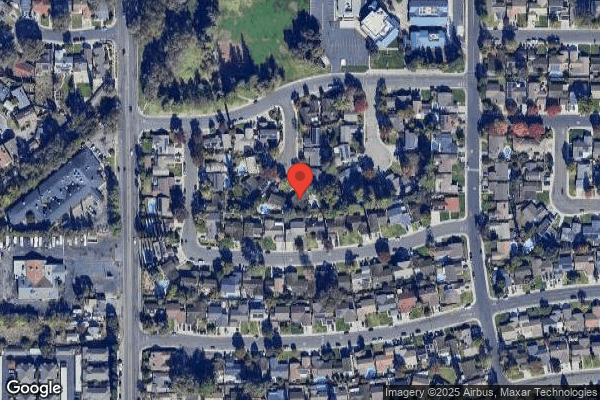
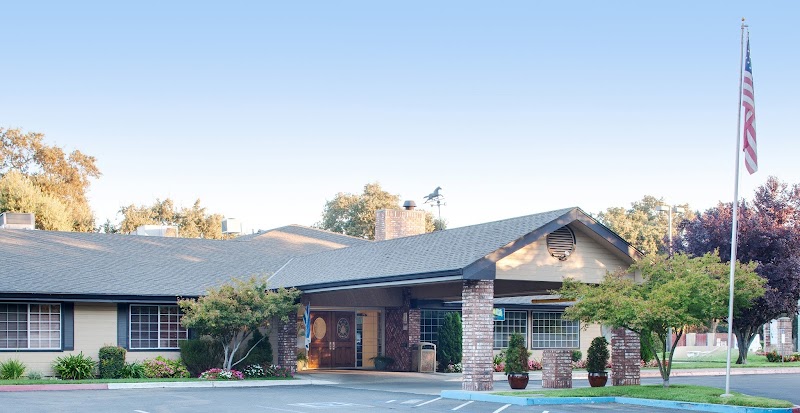

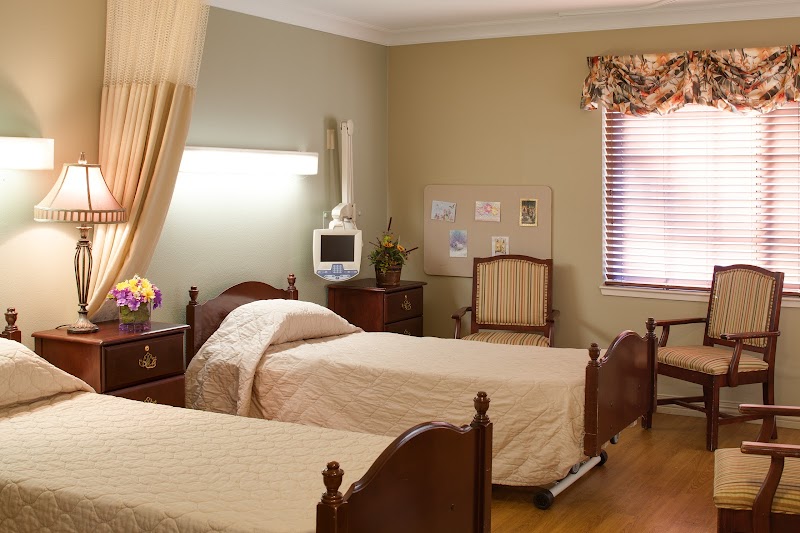
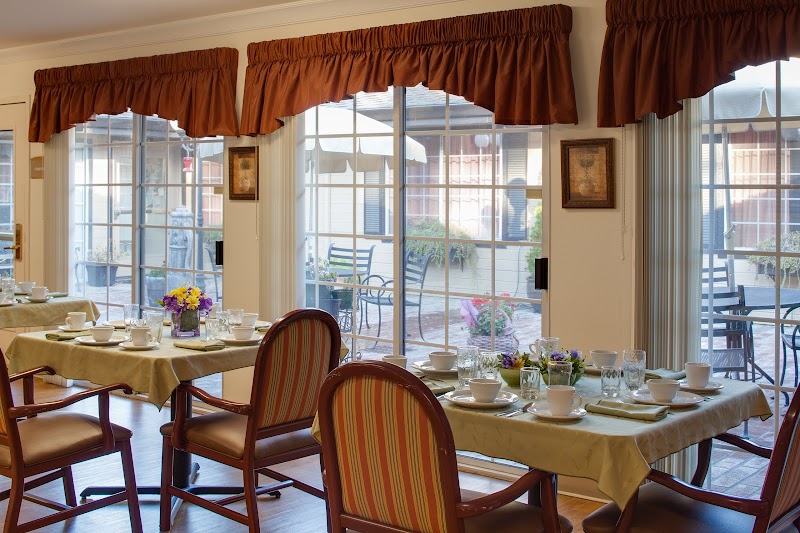
CREEKSIDE CENTER

9107 N. DAVIS ROAD, STOCKTON, CA 95209 (209) 478-6488
For profit - Limited Liability company 75 Beds GENESIS HEALTHCARE Data: November 2025
Trust Grade
55/100
#563 of 1155 in CA
Last Inspection: December 2024

Within standard 12-15 month inspection cycle. Federal law requires annual inspections.

Overview

Creeekside Center has a Trust Grade of C, which means it is average and in the middle of the pack for nursing homes. It ranks #563 out of 1,155 facilities in California, placing it in the top half, and #11 out of 24 in San Joaquin County, indicating only a few local options are better. The facility is improving, with issues decreasing from 11 in 2024 to just 3 in 2025. However, staffing is a concern with a rating of 2 out of 5 stars and a 56% turnover rate, significantly higher than the California average of 38%. While there have been no fines, which is a positive sign, there are issues with food safety practices, such as improperly stored food and inadequate food preparation methods that could lead to health risks for residents. Additionally, the facility has less RN coverage than 85% of California facilities, which may affect the quality of care.

Trust Score
C
55/100
In California
#563/1155
Top 48%
Safety Record
Low Risk
No red flags
Inspections
Getting Better
11 → 3 violations
Staff Stability
⚠ Watch
56% turnover. Above average. Higher turnover means staff may not know residents' routines.
Penalties
✓ Good
No fines on record. Clean compliance history, better than most California facilities.
Skilled Nurses
⚠ Watch
Each resident gets only 17 minutes of Registered Nurse (RN) attention daily — below average for California. Fewer RN minutes means fewer trained eyes watching for problems.
Violations
⚠ Watch
41 deficiencies on record. Higher than average. Multiple issues found across inspections.
★★★☆☆
3.0
Overall Rating
★★☆☆☆
2.0
Staff Levels
★★★★☆
4.0
Care Quality
★★★☆☆
3.0
Inspection Score
Stable
2024: 11 issues
2025: 3 issues

The Good

  • 4-Star Quality Measures · Strong clinical quality outcomes
  • Full Sprinkler Coverage · Fire safety systems throughout facility
  • No fines on record

Facility shows strength in quality measures, fire safety.

The Bad

3-Star Overall Rating

Near California average (3.1)

Meets federal standards, typical of most facilities

Staff Turnover: 56%

Near California avg (46%)

Frequent staff changes - ask about care continuity

Chain: GENESIS HEALTHCARE

Part of a multi-facility chain

Ask about local staffing decisions and management

Staff turnover is elevated (56%)

8 points above California average of 48%

The Ugly 41 deficiencies on record

Aug 2025 1 deficiency
CONCERN (F) 📢 Someone Reported This

A family member, employee, or ombudsman was alarmed enough to file a formal complaint

Potential for Harm - no one hurt, but risky conditions existed

Infection Control (Tag F0880)

Could have caused harm · This affected most or all residents

**NOTE- TERMS IN BRACKETS HAVE BEEN EDITED TO PROTECT CONFIDENTIALITY** These findings represent past non compliance with this regulatory requirement. There was significant evidence the facility corre...

Read full inspector narrative →
**NOTE- TERMS IN BRACKETS HAVE BEEN EDITED TO PROTECT CONFIDENTIALITY** These findings represent past non compliance with this regulatory requirement. There was significant evidence the facility corrected the non compliance as of 08/15/25 and there were no other occurrences of the same deficient practice at the time of the survey. The facility was in substantial compliance with this regulatory requirement and there for doesn't not require a plan of correction. Based on observation, interview, and record review, the facility failed to implement a comprehensive water safety management program based on nationally accepted standards to minimize the risk of Legionella Disease (a type of pneumonia (lung infection) caused by the bacteria Legionella pneumophila) and other opportunistic waterborne pathogens (a microorganism (bacteria) that exists in water sources or plumbing (pipes required for the water supply, heating, and sanitation in a building) systems that can cause serious illness in people over [AGE] years of age and have weakened immune systems) for a census of 71 when:a. The facility did not implement adequate water safety control measures; b. The facility did not establish sufficient water safety monitoring protocols; andc. The facility did not create an intervention plan for when control limits were not met.These failures put the residents and staff at risk of potential Legionella and other opportunistic waterborne pathogen exposure, threatening their health and well-being.Findings:During an interview on 8/14/25 at 9 AM, the local Public Health Officer (PHO) confirmed she discussed with the facility about improving their water management plan. The PHO stated the facility's plan and policy in place did not align with nationally accepted standards to minimize the risk of Legionella contamination. The PHO further stated when she reviewed the Water Safety Management Program (Legionella) policy and procedures, and stated the facility was missing important components such as the roles of each member of the water management program must be assigned and listed. The PHO further explained these roles once they were assigned, the staff should be aware and knowledgeable when they were needed. The PHO explained, during a meeting with the facility on 8/6/25, the facility was provided with the information needed to have a complete and compliant water management program. The PHO stated the information needed to be mapped out with an action plan, including who they would contact and work with to chlorinate and flush lines in case of a Legionella outbreak.During an interview with Licensed Nurse 1 (LN1) on 8/14/25 at 1:31 PM, LN1 stated since being employed at the facility for a little over a year she did not receive any training on water management during her employment at this facility. LN1 stated, on 7/22/25 staff received their first notification via text indicating the water would be off for some time for maintenance.During an interview with the Maintenance Director (MTD) on 8/14/25 at 3 PM, the MTD stated upon recommendation of his regional headquarters due to the recent legionella alert he recently completed replacing the showerheads and placing filters on all areas where water was used for consumption by the residents. A walk through in the kitchen and visualization of the specialized filters confirmed placement. The MTD stated preventative maintenance was important to prevent the residents from getting sick. The MTD explained the special filters on the showerheads and eye washing station help filter diseases like Legionella from the water. The MTD further stated it was important to test the water to prevent sicknesses which could harm the residents and cause death. The MTD could not explain the facilities process for decontaminating the facilities water systems if necessary. The MTD confirmed they did not have an outside source contracted to decontaminate the water system, prior to the notification of a positive Legionella resident and a company was scheduled to come on 8/15/25. The MTD stated it was important to have a contracted company to be aware if there were harmful things in the water.During an interview on 8/14/25 at 4:10 PM with the Administrator (ADM), the ADM stated the facility was notified by the Public Health Department (PHD) on 7/22/25 that a resident who was sent to the hospital from the facility tested positive for Legionella pneumophila (a severe form of pneumonia -a lung infection caused by Legionella bacteria). The ADM further stated the facility contacted the local Public Health Department after they initially contacted the facility to schedule a meeting to develop a better understanding of how to address this issue. This meeting was conducted on 8/6/25 for detailed guidance on how to handle the results. The ADM explained the PHD asked that the water samples be collected by a company certified to do so. The ADM explained the PHD also wanted the facility to be contracted with a company to provide certified testing and facility water maintenance in case of a positive result. The ADM stated they did not have a contracted provider at the time and requested a list of certified companies from the PHD. The ADM explained the facility contracted with a company who will be coming out to the facility on 8/15/25 to collect six samples to test the water. The ADM confirmed the facility did not have records of baseline testing for legionella or any comparative results that would inform the facility of the need for immediate corrective action.During an interview with the Director of Nursing and the Infection Preventionist (IP) on 8/14/25 at 4:30 PM, the DON explained the PHD told them to test the residents with respiratory symptoms (signs like runny nose, cough, and difficulty breathing that indicate a problem with your breathing or lungs) and to test their water for Legionella by a certified company. The DON stated they tested all the residents in the facility with respiratory symptoms and all results were negative. The DON and the IP confirm the facility did not have a risk management program (program is a proactive plan to find and fix any problems in a building's water system that could allow dangerous Legionella bacteria to grow and spread) in place and documentation of utilization of the program nor a protocol for testing the residents. The DON stated the staff have not had any water management training prior to the notification from the PHD about the positive legionella case.During a follow up interview and record review of the policy and procedures with the ADM, on 8/15/25 at 5 PM while reviewing the facilities water management program, the ADM confirm the facility did not have assigned duties to each member of the water management program team.During a follow-up interview on 8/15/25 at 3:46 PM, the DON stated the water management plan prior to the incident did not meet her expectations. The DON further stated although the facility did have water management in place all the components and requirements were not utilized to the standards of the PHD. The DON explained legionella can grow and spread in stagnant water and plumbing. The DON further explained it was important to have a detailed water safety management program and plan in place to prevent the residents from getting Legionella pneumonia. The DON stated the risk to the residents was respiratory distress and illness.A review of the facilities Policy and Procedures (P&P) titled, Water Safety Management Program (Legionella) dated, 7/21, the P&P indicated, .1. As part of the infection prevention and control program, our facility has a water management program, which is overseen by the water management team. 2. The water management team consists of at least the following personnel: a. The infection preventionist; b. The administrator; c. The medical director (or designee); d. The director of maintenance; and e. The director of environmental services. 3. The purposes of the water management program are to identify areas in the water system where Legionella bacteria can grow and spread, and to reduce the risk of Legionnaire's disease. 4. The water management program used by our facility is based on the Centers for Disease Control and Prevention and ASHRAE [American Society of Heating, Refrigerating and Air-Conditioning Engineers] recommendations for developing a Legionella water management program . A system to monitor control limits and the effectiveness of control measures; i. A plan for when control limits are not met and/or control measures are not effective; and j. Documentation of the program.A review of the Centers for Disease Control's online guide titled Overview of Water Management Programs, published 3/15/24, the guide indicated, .Key Points.Many buildings need a water management program (WMP) for their building water system.WMPs identify hazardous conditions and outline steps to minimize the health impact of waterborne pathogens.Developing and maintaining a WMP is a multi-step process that requires continuous review.Seven steps of a Legionella WMP are to: 1. Establish a WMP team 2. Describe the building water systems 3. Identify areas where Legionella could grow and spread 4. Decide where to apply and how to monitor control measures 5. Establish interventions when control limits aren't met 6. Ensure the program runs as designed and is effective 7. Document and communicate all activities.the principle of effective water management includes Ensuring adequate disinfection.Maintaining devices to prevent.Sediment, Scale, Corrosion, Biofilm.Maintaining water temperatures to limit Legionella growth, preventing water stagnation.Once established, WMPs require regular monitoring of key areas for potentially hazardous conditions. The programs use predetermined responses to respond when control measures aren't met.Each program has to be tailored for each building at a particular point in time.In some settings, the entire building needs a WMP: Hospitals and long-term care facilities.(https://www.cdc.gov/control-legionella/php/wmp/index.html)
May 2025 1 deficiency
CONCERN (D) 📢 Someone Reported This

A family member, employee, or ombudsman was alarmed enough to file a formal complaint

Potential for Harm - no one hurt, but risky conditions existed

Accident Prevention (Tag F0689)

Could have caused harm · This affected 1 resident

Based on interview, and record review, the facility failed to provide an environment to ensure residents' needs related to nursing services were met for a census of 72 when only one scheduled nurse wo...

Read full inspector narrative →
Based on interview, and record review, the facility failed to provide an environment to ensure residents' needs related to nursing services were met for a census of 72 when only one scheduled nurse worked the entire night shift on 5/4/25. This failure had the potential for residents' care services not being met by nursing staff and could affect the health and well-being of all residents in the facility. Findings: During an interview on 5/8/25, at 2:58 p.m., Licensed Nurse (LN) 1 stated that in emergency situations such as a code blue (a medical emergency requiring urgent medical help) a nursing shortage could lead to placing residents' safety and well-being at risk. During a phone interview on 5/8/25, at 3:54 p.m., LN 2 confirmed there was one nurse for the entire night shift on 5/4/25. LN 2 stated that it was not a safe practice to have one nurse for the entire facility if a resident had a medical emergency. LN 2 further stated that this unsafe practice could possibly affect residents' safety. During an interview on 5/9/25, at 6:15 a.m., Certified Nursing Assistant (CNA) 1 stated there was a possibility of placing all residents' safety at risk when there was one licensed nurse working on the floor for the whole night shift. CNA 1 further stated medical emergencies could happen anytime during the shift and it would be difficult for one licensed nurse to handle the emergency. During an interview on 5/9/25, at 6:32 a.m., CNA 2 stated shortages in nursing would impact residents' health and safety. CNA 2 further stated there was a possibility for residents to not to receive medications as they were scheduled by the physician which could lead to a decline in health and suffer in emergency situations. During a concurrent interview and record review on 5/9/25, at 9:35 a.m., with the Staffing Coordinator (SC), the facility document titled, [facility name] DAILY STAFFING, dated 5/4/25 was reviewed. The SC confirmed that on 5/4/25, during the 10:30 p.m.-7 a.m. night shift, only one LN worked for the entire shift, and the second LN clocked out at 12:25 a.m. on 5/4/25. The SC further stated that one of the nurses tried calling staff to fill in the shortage. During a concurrent interview and record review on 5/9/25, at 10:52 a.m., with the Director of Nursing (DON) the facility document titled, [facility name] Daily Census, and [facility name] DAILY STAFFING, dated 5/4/25 were reviewed. The DON confirmed that they were short of one licensed nurse from 12:25 a.m.-7 a.m. for a census of 72 and stated that it might result in placing a census of 72 at risk for not receiving medications in a timely manner, increased risk for falls, and unable to meet resident needs in a medical emergency that would affect residents' safety and well-being. The DON further stated her expectation from the licensed staff was to leave a voicemail message when a licensed nurse called her on 5/4/25 at 11:32 p.m. The DON stated her expectation was not met by the licensed staff. A review of an undated facility provided document titled, Facility Assessment Tool, indicated, .Guidelines for Conducting the Assessment .4. The Facility Assessment will be used to .c. Consider the specific staffing needs for each shift, such as day, evening, night and adjust as necessary based on any changes to the resident population .3. Facility resources .staffing plan 3.2. Based on the facility's resident population and their needs for care and support, describe the facility's general approach to staffing to ensure that it has sufficient staff members with the appropriate competencies and skill sets to meet the needs of the residents, as identified through resident assessments and care plans at any given time . A review of the facility provided job description titled, Director of Nursing, revised on October 2020, indicated, .The primary purpose of this position is to plan, organize, develop and direct the overall operation of the nursing services department in accordance with current federal, state and local standards, guidelines and regulations that govern the facility and as directed by the Administrator and the Medical Director to ensure that the highest degree of quality care is maintained at all times .Duties and Responsibilities .Provide direct nursing care and resident assessments .Ensure the facility has sufficient nursing staff .Working Conditions .Works beyond normal working hours and on weekends and holidays when necessary .
Mar 2025 1 deficiency
CONCERN (D) 📢 Someone Reported This

A family member, employee, or ombudsman was alarmed enough to file a formal complaint

Potential for Harm - no one hurt, but risky conditions existed

Quality of Care (Tag F0684)

Could have caused harm · This affected 1 resident

Based on interview and record review, the facility failed to ensure adequate treatment and services were provided for one of three sampled residents (Resident 1) when, Resident 1 was not transferred t...

Read full inspector narrative →
Based on interview and record review, the facility failed to ensure adequate treatment and services were provided for one of three sampled residents (Resident 1) when, Resident 1 was not transferred to an acute care hospital (provides short-term treatment for illnesses, injuries, or surgeries that require immediate medical attention) in a timely manner for further evaluation after Resident 1 had an unwitnessed fall with a head injury on 2/17/25 and Resident 1 had a fall again on 2/28/25 with noted pain to Resident 1 ' s left hip. This failure placed Resident 1 at risk for delayed treatment and services that could possibly result in a decline in health and well-being. Findings: On 2/24/25, the Department received a complaint report that Resident 1 was not transferred after a fall on 2/17/25 to the acute care hospital for further evaluation till the following day. On 3/4/25, the Department received an additional complaint report that Resident 1 was not transferred after a fall on 2/28/25 to the acute care hospital for further evaluation until the following day. Review of Resident 1 ' s admission RECORD, indicated Resident 1 was admitted to the facility in early 2025 with diagnoses which included dementia (a decline in memory or other thinking skills severed enough to reduce a person ' s ability to perform everyday activities), difficulty in walking, muscle weakness, and repeated falls. Review of Resident 1 ' s Minimum Data Set (MDS-an assessment and care planning tool), dated 1/25/25, the cognitive patterns section of the MDS indicated Resident 1 had a BIMS (Brief Interview for Mental Status) Summary Score of 3 out of 15 indicating a severely impaired mental functioning (a significant decline in cognitive abilities that substantially interferes with daily life and activities). Review of Resident 1 ' s HISTORY AND PHYSICAL EXAMINATION, dated 1/25/25, indicated Resident 1 had fluctuating capacity to understand and make decisions due to cognitive impairment. A. Review of Resident 1 ' s eInteract SBAR [Situation Background Assessment Recommendation; verbal or written communication tool that helps provide essential, concise information] Summary, dated 2/17/25, indicated Resident 1 had a fall on 2/17/25 at 3:30 a.m. This summary also revealed Resident 1 had indicated she hit her head and a small hematoma (bruise or swelling caused by bleeding under the skin or into a tissue) was noted to the right posterior lobe (back area of the brain) of the head and she was in pain. Review of Resident 1 ' s Fall Care Plan, dated 2/17/25, indicated, .The resident has had an actual fall with hematoma to back of head . Review of Resident 1 ' s eInteract SBAR Summary, dated 2/18/25, at 8:35 a.m., indicated, .Resident noted to have two episodes of nausea with vomiting. S/p [status post] unwitnessed fall resulting in head injury on 2/17. Resident now present with increased confusion and unable to tell what time of the day it is, her age, and states she does not remember yesterday which is abnormal from baseline . Review of Resident 1 ' s Progress Note, dated 2/18/25, at 9:56 a.m., indicated, .resident was sent out to the hospital for further evaluation . During an interview on 3/6/25, at 10:19 a.m. with Licensed Nurse (LN) 1, LN 1 stated she would call the attending physician and would request to send the resident to the acute care hospital for further evaluation when a head injury was involved, and it was an unwitnessed fall. LN 1 also stated the resident would be better assessed when transferred to the acute care hospital. During a phone interview on 3/27/25, at 2:55 p.m. with LN 2, LN 2 stated she would also notify the Director of Nursing (DON) for a fall involving a head injury for further instructions especially if the attending physician did not respond immediately. Further review of Resident 1 ' s eInteract SBAR Summary, dated 2/17/25, there was no documented evidence the DON was notified immediately after the fall. During an interview on 3/6/25, at 12:45 p.m. with the DON, the DON stated she would have expected to be called regarding an unwitnessed fall with a head injury to ensure proper implementation of interventions. B. Review of Resident 1 ' s eInteract SBAR Summary, dated 2/28/25, indicated Resident 1 had a fall on 2/28/25, at 11:49 p.m. Resident 1 ' s SBAR summary also indicated, .legs bent and soles of feet on the floor .Nodule noted to left hip . This summary also revealed Resident 1 was in pain. Review of Resident 1 ' s eInteract Change in Condition Evaluation, dated 2/28/25, under section Functional Status Evaluation indicated, .Is the fall: 1. Associated with any suspected serious injury (e.g. fracture) any hip pain, or more than minor pain elsewhere [was marked] . Under the section Provider Notification and Feedback indicated, .2. Date and time of clinician notification: 3/1/25 [at] 6 a.m . Under the section Pain Status Evaluation indicated, .7a. Does the resident/patient have pain? 1. Yes [was marked] .Describe musculoskeletal pain: 1. Marked localized bruising, swelling, or pain over joint or bone, with or without recent fall [was marked] .7e. Specify exact location of pain .Left trochanter (hip) .Small nodule noted with pain to touch . Under section Resident Representative Notification, indicated, .2. Date and time of family/resident representative notification: 3/1/25 [at] 6:07 a.m . Review of Resident 1 ' s Nurses Progress Note, dated 3/1/25 at 8:10 a.m., indicated, .he [family member] preferred her [Resident 1] be sent out [transfer to acute hospital] for further evaluation and treatment . Review of Resident 1 ' s eInteract Transfer Form, dated 3/1/25, at 2:12 p.m., indicated Resident 1 was transferred to the acute care hospital. Review of Resident 1 ' s General Progress Note, dated 3/1/25, at 6:25 p.m., indicated, .pt [patient/Resident 1] admitted .due to sustaining a left hip fracture . Review of Resident 1 ' s Interdisciplinary Care Conference, dated 3/3/25, indicated, .Concern/Issue: Fall with major injury significant event occurring on 3/1/25 regarding the resident where she had sustained a fall on the night of 2.28.2025, resulting in the transfer and admission to the acute [care hospital] with a left hip fracture . Review of Resident 1 ' s Discharge Summary from the acute care hospital, dated 3/1/25, indicated, .Left greater trochanter fracture and inferior pubic ramus fracture [broken bone to left hip and lower part of the pelvis] . During an interview on 3/6/25, at 10:53 a.m. with the Primary Care Physician (PCP), the PCP stated he knew about the Resident 1 ' s fall and had ordered for an x-ray based on the reported assessment and information received from the facility nurse. The PCP further stated family had requested to transfer Resident 1 to the acute care hospital and had the x-ray done at the hospital. The PCP explained if a resident ' s fall did not involve a head injury, was not on any blood thinner, and could move all extremities, he would order an x-ray. The PCP stated had he would have known the resident to have signs of fracture, he would had ordered to transfer the resident to the acute care hospital. The PCP further explained he did not receive a report from the facility nurse regarding Resident 1 ' s signs of a fracture. During an interview on 3/6/25, at 12:45 p.m., with the DON, the DON stated she would have expected to be called of an unwitnessed fall with an injury or with pain involved to ensure proper implementation of care and services to prevent any delay in treatment. The DON confirmed she was not notified of the fall till the next morning. During an interview on 3/27/25, at 2:55 p.m. with LN 2, LN 2 stated she assessed Resident 1 and stated Resident 1 had indicated she had soreness to left hip. LN 2 further stated there was also some bruising to Resident 1 ' s left hip. LN 2 explained she had monitored Resident 1 during her night shift but did not fully check on Resident 1 ' s leg. Review of the facility ' s Clinical Protocol titled, Acute Condition Changes, revised 3/18, indicated, .Before contacting a physician about someone with an acute change of condition, the nursing staff will collect pertinent details to report to the physician .Phone calls to attending or on-call physicians should be made by an adequately prepared nurse who collected and organized pertinent information, including the resident/patient ' s current symptoms and status .The nursing staff will contact the physician based on the urgency of the situation .The attending physician .will respond in a timely manner to notification of problems or changes in condition and status .The nursing staff will contact the medical director for additional guidance and consultation if they do not receive a timely or appropriate response .
Dec 2024 6 deficiencies
CONCERN (D)

Potential for Harm - no one hurt, but risky conditions existed

Resident Rights (Tag F0550)

Could have caused harm · This affected 1 resident

Based on observation, interview, record review, the facility failed to ensure one of five sampled residents (Resident 16) was treated with dignity and respect when Certified Nursing Assistant (CNA) 1 ...

Read full inspector narrative →
Based on observation, interview, record review, the facility failed to ensure one of five sampled residents (Resident 16) was treated with dignity and respect when Certified Nursing Assistant (CNA) 1 stood over Resident 16 while assisting with feeding. This failure had the potential to impact Resident 16's self-esteem and negatively affect dining experience. Findings: Resident 16 was admitted to the facility with diagnoses including Gastro Esophageal Reflux Disease (a condition where the stomach acid back flows towards the throat). Review of Resident 1's Minimum Data Set (MDS-a resident assessment tool) indicated Resident 1 required partial to moderate assistance with feeding. During an observation on 12/4/24 at 12:44 PM, CNA 1 was observed standing on the right side of Resident 16 while feeding Resident 16 lunch. CNA 1 stood throughout the entire meal. During an interview on 12/4/24 at 12:58 PM, CNA1 stated standing was the only choice due to a chair not being available. During a concurrent interview and record review 12/6/24 at 10:05 AM, the Director of Staff Development (DSD) reviewed the facility document titled, CERTIFED NURSING ASSISTANT SKILLS PERFORMANCE EVALUATION .Tray Pass .Resident ready for meal .sit down to feed resident . and stated the facility expected CNAs to sit with residents when assisting with meals. During an interview on 12/6/24 at 10:29 AM, the DSD stated staff standing while feeding residents placed the resident at risk for choking. The DSD also stated this practice decreased eye contact and could make the resident feel rushed. During an interview with Licensed Nurse (LN) 3, on 12/4/24 at 1:02 PM, LN 3 stated CNA 1 was standing while feeding a resident because of the decreased number of chairs for staff to sit down while feeding. During an interview with the Director of Nursing (DON) on 12/6/24 at 10:47 AM, the DON stated staff was expected to sit down while feeding residents in order to preserve their dignity. A review of the facility provided document titled, Dignity dated February 2021, indicated, .Each resident shall be cared for in a manner that promotes and enhances his or her sense of well-being, level of satisfaction with life, and feelings of self-worth and self-esteem .Residents are treated with dignity and respect at all times.
CONCERN (D)

Potential for Harm - no one hurt, but risky conditions existed

Deficiency F0658 (Tag F0658)

Could have caused harm · This affected 1 resident

**NOTE- TERMS IN BRACKETS HAVE BEEN EDITED TO PROTECT CONFIDENTIALITY** Based on interview and record review, the facility failed to provide services which met professional standards of quality for 2 ...

Read full inspector narrative →
**NOTE- TERMS IN BRACKETS HAVE BEEN EDITED TO PROTECT CONFIDENTIALITY** Based on interview and record review, the facility failed to provide services which met professional standards of quality for 2 of 16 sampled residents (Resident 60 and Resident 179) when, 1. The physician was not notified when vital signs were outside of ordered parameters for Resident 60; and, 2. The physician was not notified timely of abnormal lab results for Resident 179. These failures had the potential for unsafe medication use and risk of adverse effects for Resident 60, and the potential for a delay in treatment for Resident 179. Findings: 1. A review of Resident 60's admission Record indicated Resident 60 was admitted to the facility in 2024 with diagnoses including end stage renal disease (failure of the kidneys to function normally), dependance on renal dialysis (a type of treatment that helps your body remove extra fluid and waste products from your blood when your kidneys are unable to), and congestive heart failure (a chronic condition in which the heart does not pump blood as well as it should, causing fluid to back up into the lungs). During a review of Resident 60's Care Plan, dated 7/26/24, the Care Plan, indicated, .Focus .Resident exhibits or is at risk for cardiovascular symptoms or complications related to diagnosis of heart failure .Interventions .Assess and monitor vital signs as ordered and report abnormalities to physician . During a review of Resident 60's Physician Order Summary, dated 7/26/24, the summary indicated, .Metoprolol Tartrate [medication given to treat high blood pressure, a condition in which the force of the blood pushing against the blood vessel walls is consistently too high. This causes the heart to work harder to pump blood] oral tablet 50 mg [unit of measure] give 1.5 tablet by mouth two times a day for hypertension [high blood pressure] . Notify MD [physician] if SBP [systolic blood pressure, maximum pressure in the body's vessels when the heart squeezes and pumps blood] < [less than] 100 or HR [heart rate] <60 . During a review of Resident 60's Medication Administration Record (or MAR, a list of medications and treatments provided to a resident) dated November 2024, the MAR indicated Resident 60's Metoprolol was held (not given) on 11/17/24 and 11/28/24 for heart rate outside of parameters ordered by the physician. During a review of Resident 60's Progress Notes, dated 11/17/24, there was no documentation the physician was notified of the heart rate outside of parameters. During a review of Resident 60's Progress Notes, dated 11/28/24, there was no documentation the physician was notified of the heart rate outside of parameters. During an interview and concurrent record review of Resident 60's Electronic Medical Record (EMR) on 12/4/24 at 2:15 p.m. with Licensed Nurse (LN) 1 at the nurses' station, LN 1 stated if a medication was not given, the nurse documented NG on the MAR. LN 1 stated if the medication order directed the nurse to notify the physician with vital signs outside of the parameters, LNs documented the physician was notified in the resident's progress notes. LN 1 confirmed that on 11/17/24 and 11/28/24, Resident 60's Metoprolol dose was documented as not given on the MAR. LN 1 confirmed the progress notes did not indicate Resident 60's physician was notified that Resident 60's heart rate was outside of parameters on 11/17/24 and 11/28/24. During an interview on 12/4/24 at 3:55 p.m. with the Director of Nursing (DON), the DON stated her expectation was that the vital signs were taken and recorded prior to giving a medication with vital signs parameters. The DON stated that if the physician wrote orders to be notified when vital signs were outside of the ordered parameters, LNs would document physician notification in the resident's progress notes. The DON acknowledged the facility policy was not followed. During a review of a facility policy and procedure (P&P) titled, Administering Medications, revised April 2019, the P&P indicated, Medications are administered in a safe and timely manner, and as prescribed .Medications are administered in accordance with prescriber orders .If a dosage is believed to be inappropriate .the person preparing or administering the medication will contact the prescriber . During a review of an online document published by the National Library of Medicine, National Institutes of Health (NIH), titled, Stat Pearls Metoprolol, last review dated 2/29/24, indicated, .Common adverse effects .bradycardia [slow heart rate] .Monitoring .Metoprolol is a .medication that requires careful monitoring .The following parameters should be monitored .blood pressure and heart rate .Metoprolol can lower blood pressure and heart rate . 2. A review of Resident 179's admission Record indicated Resident 179 was admitted to the facility in 2024 with diagnoses including cerebral infarction (a result of disrupted blood flow of the brain due to problems with blood vessels that supply it, also known as a stroke), anemia (a condition where the body doesn't have enough healthy red blood cells or hemoglobin [a protein in red blood cells that carries oxygen] to carry oxygen to the body's tissues), and hyponatremia (occurs when the level of sodium in the blood is too low). A review of Resident 179's Laboratory Results, dated 11/20/24, indicated the following abnormal results: . Reported Date: 11/20/24 20:13 [8:13 p.m.] .Red Blood Cells (RBC) 3.58 10*6/ul (reference range [set of values that doctors use to interpret a patient's test results] 3.9-5.5 10*6/ul) .Hemoglobin 8.3 g/dl [grams per deciliter-measurement used to report certain results] (reference range 11.0-18.0 g/dl) . Sodium 129 mEq/L [milliequivalent per liter-used to report certain results] (reference range 135-145 mEq/L) . Alkaline Phosphatase [an enzyme found in many tissues throughout the body] 1024 IU/L [international units per liter-used to report certain results](reference range 30-147 IU/L) . During a review of Resident 179's Progress Notes dated 11/20/24 through 11/23/24, there was no documentation the physician was notified regarding the abnormal lab results reported to the facility on [DATE]. During an interview and concurrent record review of Resident 179's Electronic Medical Record (EMR) on 12/5/24 at 10:50 a.m. with Licensed Nurse (LN) 2 at the nurses' station, LN 2 stated that when LNs received abnormal lab results, the physician was called and notified. LN 2 stated the LNs either attached the progress note with physician notification to the abnormal lab results in the EMR, or the LNs opened a progress note and documented the physician was notified of the abnormal lab results in the Progress Notes section of the EMR. LN 2 stated that baseline labs (an initial measurement that is used for comparison over time) were ordered for residents admitted to the facility. LN 2 confirmed Resident 179's EMR did not indicate the physician was notified regarding the abnormal lab results reported to the facility on [DATE]. LN 2 stated resident safety was at risk, as staff needed to follow up with the physician on abnormal lab results. LN 2 stated that physician notification of abnormal lab results needed to be documented in the resident's EMR. During an interview and concurrent review of Resident 179's EMR on 12/5/24 at 1:10 p.m. with the Director of Nursing (DON), the DON stated the expectation was that the LNs checked the dashboard for lab results, assessed the resident for signs and symptoms related to the abnormal lab results, reported abnormal labs promptly to the resident's physician, and documented the lab result was reported in the resident's medical record. The DON stated not reporting the abnormal lab results promptly to the physician could result in decline of a resident's condition. The DON stated the physician was notified on 12/4/24 of the abnormal lab results for Resident 179 received on 11/20/24. The DON stated the physician should have been notified of the abnormal lab results sooner. DON acknowledged that the facility policy was not followed. During an interview by phone on 12/5/24 at 3:30 p.m. with Resident 179's physician (MDr), the MDr stated he expected to be notified right away of abnormal lab results. The MDr stated that if Resident 179's lab results were reported to him on 11/20/24, he would have sent orders for the abnormal results on the same day or the next day. A review of Resident 179's Physician Order Summary Report did not indicate any physician orders were written related to the abnormal lab results on 11/20/24 or on 11/21/24. During a review of a facility policy and procedure (P&P) titled, Lab and Diagnostic Test Results - Clinical, revised November 2018, the P&P indicated, .Protocol .Review by Nursing Staff .1. When test results are reported to the facility, a nurse will first review the results .3. A nurse will identify the urgency of communicating with the Attending Physician based on .the seriousness of any abnormality .If the resident has signs or symptoms of acute illness or condition change and he/she is not stable or improving, or there are no previous results for comparison, then the nurse will notify the physician promptly to discuss the situation, including a description of relevant clinical findings as well as the test results .Facility staff should document information about when, how, and to whom the information was provided and the response. This should be done in the Progress Notes section of the medical record . During a review of an online document published by Medline, National Institutes of Health (NIH), titled Complete Blood Count (CBC), last review dated 10/15/24, indicated, .abnormal levels of red blood cells, hemoglobin, or hematocrit may be a sign of .anemia . During a review of an online document published by Medline, National Institutes of Health (NIH), titled Sodium Blood Test, last review dated 12/4/24, indicated, .A sodium blood test .may be used to help find and monitor conditions .without treatment, extremely low levels of sodium may also lead to a coma and become life-threatening . During a review of an online document published by Medline, National Institutes of Health (NIH), titled Alkaline Phosphatase, last review dated 11/5/24, indicated, .alkaline phosphatase test is often used to screen or to help diagnose diseases of the liver or bones .high alkaline phosphatase levels may be a sign of a liver problem or a bone disorder .
CONCERN (D)

Potential for Harm - no one hurt, but risky conditions existed

Infection Control (Tag F0880)

Could have caused harm · This affected 1 resident

Based on observation, interview, and record review, the facility failed to maintain infection prevention and control practices for a census of 67 residents when: 1. Urinals (a urine collection contain...

Read full inspector narrative →
Based on observation, interview, and record review, the facility failed to maintain infection prevention and control practices for a census of 67 residents when: 1. Urinals (a urine collection container) were not labeled and stored in a sanitary manner; 2. Two resident wash basins were stored on the floor in the bathroom, one was not labeled, and contained a soiled cloth; and, 3. Intramuscular Muscular Injection (an injection deep in the muscles) reconstitution (adding liquid to dry medication) was not properly handled; These failures increased the risk of infectious diseases for residents in the facility. Findings: 1.During a concurrent observation and interview with Certified Nursing Assistant (CNA) 1, on 12/3/24, at 9:32 AM, there were two urinals in a resident bathroom. One was not labeled with a name or room number and was upside down top of the toilet above the flushing handle. The other was placed on the assistive handrail next to the toilet. CNA 1 stated the urinal should be labeled and stated the location of both containers placed the residents at risk of an infection and cross contamination. During an interview on 12/6/24 at 9:05 AM, the Infection Preventionist (IP) stated the urinal, should have been properly labeled to ensure the residents did not use each other's items. The IP stated urinals should not be stored upside down on the toilet or hanging from handrails used by residents. 2. During a concurrent observation and interview on 12/3/24, at 9:05 AM, with Licensed Nurse (LN) 3, in a shared resident bathroom on station 2, there were two grey wash basins (buckets used to bath residents in bed) on the floor. One was not labeled, and the basins were stacked on top of each other, with a soiled dried washcloth hanging out between the basins. LN 3 stated the basins should not be kept on the floor and should be labeled, since this was a shared room and bathroom. LN 3 stated the cloth between the basins was soiled and should have been placed in the dirty linen after use. LN 3 stated this placed residents at risk for infection spreading. During an interview on 12/6/24 at 9:05 AM, the IP stated the basins should be properly labeled, sanitized after use, and placed in the residents' personal area. During an interview with the DON, on 12/6/24 at 11:15 AM, the DON stated the condition the urinals were found in did not meet the facility's expectations. The DON stated urinals should be labeled with name, room number, and date. The DON stated urinals should not be placed on the handrails, as this placed the residents at risk for falling. The DON stated the basins should have been labeled with name, room number and date, and placed with the residents' personal items, and the placement of the basins and presence of the soiled cloth placed the residents at risk for infection. A review of a facility document titled, Infection and Prevention Control Program dated 9/2024, indicated, Policy .The elements of the infection prevention control program consists of coordination/oversight policies/procedures, .prevention of infection .The infection prevention control committee .review will include .assessment of staff compliance with existing policies and regulations. A review of a facility document titled, Bedpan/urinal/offering and removing undated, indicated, After Assisting the Resident .Discard soiled towels, wash cloth, etc., in the soiled laundry container .clean, wash, and return to designated storage area. 3. During an interview on 12/4/24, at 10 a.m. with Licensed Nurse (LN) 4, LN 4 stated Resident 130 would be receiving an IM (intramuscular) injection later in the morning and would be receiving an antibiotic that would require reconstitution. A review of Resident 130's medication label, dated 12/3/24, indicated to give ertapenem [an antibiotic]1 gm [gram-unit of measurement] vial, reconstitute vial with 3.2 ml [milliliter-unit of measurement] lidocaine [used to block pain]1% and inject 1.8 ml intramuscularly once a day for possible pnuemonia for 2 days. During an observation on 12/4/24, at 11:46 a.m. on LN 4's medication cart, LN 4 took out two vials from her cart. One vial was the powdered antibiotic medication (ertapenem) and the other vial was the liquid solution (lidocaine) to mix with the powdered antibiotic. LN 4 took out a brand new 3 ml syringe with needle from her cart and drew up 3 ml lidocaine solution. LN 4 then placed the syringe with the lidocaine on top the cart leaving the needle exposed. LN 4 then injected the 3 ml licodaine into the powdered medication. LN 4 then took the same syringe with needle and drew up the remaining 0.2 ml from the lidocaine solution and injected this into the powdered antibiotic medication. During an interview on 12/4/24, at 2:14 p.m, with LN 4, LN 4 confirmed she used the same syringe with the needle twice to draw up the lidocaine with 3 ml of lidocaine and then 0.2 ml. LN 4 stated that it was the correct technique when reconstituting medications. During an interview on 12/4/24, at 2:14 p.m. with the Director of Nursing (DON), the DON explained when reconstituting a medication, it was a best practice to not to inject the syringe with a needle twice into the same vial. The DON stated she expected the LN to have used multiple syringes with needles in reconstituting a medication and not to put the syringe with exposed needle on top of a contaminated surface. The DON further explained using the same needle to aspirate the lidocaine and exposing the needle to unclean surfaces could possibly lead to cross contamination that could result in an infected injection site. According to Center for Disease Control (CDC), The One and Only Campaign, a public health effort to eliminate unsafe medical injections, indicated, .Medication vials are entered with a new needle and a new syringe, even when obtaining additional doses for the same patient . www.cdc.gov/injection safety/1anonly.html. (12/19/2024)
CONCERN (E)

Potential for Harm - no one hurt, but risky conditions existed

Deficiency F0804 (Tag F0804)

Could have caused harm · This affected multiple residents

**NOTE- TERMS IN BRACKETS HAVE BEEN EDITED TO PROTECT CONFIDENTIALITY** Based on observation, interview, and record review, the facility failed to puree (blend foods to smooth consistency) foods using...

Read full inspector narrative →
**NOTE- TERMS IN BRACKETS HAVE BEEN EDITED TO PROTECT CONFIDENTIALITY** Based on observation, interview, and record review, the facility failed to puree (blend foods to smooth consistency) foods using methods that conserve nutritive value and flavor when excessive fluid was added, necessitating the addition of thickener. This failure had the potential of leading to poor intake, nutrient deficiencies, and weight loss for the 4 out of 62 residents eating facility prepared pureed meals. Findings: During a kitchen visit on 12/4/24 at 10:52 a.m., [NAME] (Ck) 1 was preparing the lunch meal. Ck 1 stated she had four residents on a pureed diet but would prepare five servings to add a buffer. Ck 1 placed five meatloaf servings in the food processor bowl and blended for approximately three seconds. She repeated blending for a few more seconds as the texture wasn't smooth enough. Ck 1 then added an unmeasured amount of broth and blended again for a few seconds, repeating this process several more times. After the fourth time of adding broth, Ck 1 found the meatloaf was runny and added a plastic spoonful of thickener, repeating four times before she was satisfied. Ck1 stated the goal was a consistency of baby food. During the same kitchen visit on 12/4/24 at 11:10 a.m., Ck 1 pureed the Au Gratin potatoes by scooping out five servings into the food processor bowl and blending for a total of approximately 6 seconds. Ck 1 added an unmeasured amount of milk to the bowl and blended. After blending, Ck 1 added thickener (1 plastic spoonful, twice) to correct the texture as the product was too runny. Review of [NAME] Dietitians, Guide to IDDSI [International Dysphagia Diet Standardization Initiative] Pureed at (www.rochedietitians.com) indicated, Individuals who are served . Pureed have a serious swallowing disorder called dysphagia [difficulty swallowing]. This means they cannot safely chew or swallow, so the food we serve must be smooth, moist, and prepared ready to swallow to minimize their risk of choking .Food texture characteristics include: -Smooth and free of lumps -Thick enough to hold shape on a plate or spoon -Falls off spoon in a single spoonful when tilted . -Cannot be poured, slow movement . During the plating of the meal on 12/4/24 starting at 12:15 p.m., the pureed meatloaf did not hold shape on the plate, instead forming a puddle. During a taste tray on 12/4/24 at 1:25 p.m., surveyors found the pureed meatloaf and pureed peas to be flavorless and gummy. During a phone interview with the Registered Dietitian (RD) on 12/5/24 at 1:05 p.m., the RD was asked about her expectation for pureeing food. The RD stated the process of adding liquids and thickener could change the taste of food. The RD concurred that excess liquids and thickener could affect the nutritional content of the foods. A review of Pureed Food: How To, Diet, and Uses Healthline website at www.healthline.com indicated, You can make almost any meal or snack into a purée by simply blending it with a little extra liquid, such as juice, water, or broth.
CONCERN (E)

Potential for Harm - no one hurt, but risky conditions existed

Deficiency F0806 (Tag F0806)

Could have caused harm · This affected multiple residents

Based on observation, interview, and record review, the facility failed to provide alternative meal options of similar protein content to the meal entrée when grilled cheese and peanut butter a...

Read full inspector narrative →
Based on observation, interview, and record review, the facility failed to provide alternative meal options of similar protein content to the meal entrée when grilled cheese and peanut butter and jelly (PB&J) sandwiches were provided in place of the entree. This had the potential of leading to decreased protein intake for those choosing these alternatives. Findings: During the initial kitchen tour on 12/3/24 at 8:25 a.m., the alternative menu was observed hanging outside of the kitchen. This menu included Grilled Cheese and other sandwiches. During the lunch meal plating on 12/4/24 starting at 12:15 p.m., sandwiches such as grilled cheese and PB&J were provided on some meal trays due to resident request. These meals included the other side items from the lunch meal, but no additional source of protein. During an interview on 12/5/24 at 1:05 p.m. with the Registered Dietitian (RD), the RD concurred that some residents did receive sandwiches for their entrée without an additional source of protein. Review of facility provided grilled cheese sandwich recipe indicated that it provided 15 grams of protein. Review of the facility provided PB&J recipe indicated that a sandwich would provide 18 grams of protein. The facility provided Meatloaf recipe did not include the nutrition breakdown. Review of website Nutritionvalue.org indicated that 3 ounces of beef meatloaf would provide 24 grams of protein.
CONCERN (F)

Potential for Harm - no one hurt, but risky conditions existed

Food Safety (Tag F0812)

Could have caused harm · This affected most or all residents

Based on observation, interview, and record review, the facility failed to store, prepare, distribute, and serve food in accordance with professional standards for food service safety when: 1) Clean ...

Read full inspector narrative →
Based on observation, interview, and record review, the facility failed to store, prepare, distribute, and serve food in accordance with professional standards for food service safety when: 1) Clean food service items were found put away wet (e.g. trays, steam table pans, scoops, and blender); 2) Can opener, food processor, and large saucepan were found dirty and/or rusted; 3) Raw chicken was prepared on a metal rack that had an uncovered container of dessert cups underneath; 4) Three bags in the freezer were open to the environment (sausage patties, biscuits, and mixed vegetables); 5) Staff were unable to demonstrate/explain the testing of sanitation concentration for the dish machine and red buckets/manual dish washing); and, 6) Resident refrigerator contained multiple food items with no name and/or date; and nursing staff were uncertain of how to label food brought in from outside, as well as where to reheat. These failures had the potential to lead to food borne illness for the 62 residents eating facility prepared meals. Findings: 1) During the initial kitchen tour on 12/3/24, beginning at 8:27 a.m. with the Dietary Director (DD), the blender was observed to be covered (indicating it was ready for use), but was found wet inside when the cover was removed. Two green scoops and one blue scoop were found in the scoop drawer stored wet. 17 out of 17 large steam table pans were found in the storage racks wet; and 7 out of 10 quarter sized steam table pans were stored wet. During a concurrent interview with the DD, she stated her expectation was that staff put away dishes after they were fully air dried. She went on to state that, wet nesting (placing wet items inside another item) could lead to contamination. Review of a facility provided policy titled, Ware washing (Healthcare Services Group, Inc., and its subsidiaries, revised 2/2023) stated in bullet 4, All dishware will be air dried and properly stored. Review of the United States (US) Food and Drug Administration (FDA) Food Code 2022, Section 4-901.11, indicated, items must be allowed to drain and to air-dry before being stacked or stored. Stacking wet items such as pans prevents them from drying and may allow an environment where microorganisms can begin to grow. 2) During the initial kitchen tour/observation on 12/3/24, at 9:14 a.m. with the DD and the Regional Dietary Director (RDD) 1, the can opener, can opener sheath/base were found dirty with dark discoloration and rust. The food processor bowl, when opened, showed tan-colored crumbs inside. A large saucepan hanging in the ready to use area had food particles and rust inside. RDD 1 acknowledged the dirty and/or rusted items and moved them to the dish wash area for cleaning. During a concurrent interview with the DD, she stated her expectation was that staff properly wash cooking equipment and have it air dried after each use to avoid contamination. Review of a facility provided policy titled, Equipment (Healthcare Services Group, Inc., and its subsidiaries, Revised 9/2017) stated in bullet 3, All food contact equipment will be cleaned and sanitized after every use. In bullet 4 it further indicated, All non-food contact equipment will be clean and free of debris. A review of the US FDA 2022 Food Code, section 4-601.11, titled, Equipment, Food-Contact Surfaces, Nonfood-Contact Surfaces, and Utensils, 1/18/23 version, indicated, .(C) Nonfood-Contact Surfaces of Equipment shall be kept free of an accumulation of dust, dirt, food residue, and other debris. 3) During the initial kitchen tour on 12/3/24 at 9:38 a.m., [NAME] (Ck) 1 was preparing raw chicken for the lunch meal by mixing it with seasonings in a large metal bowl. The bowl was placed on top of a metal cart where clean, uncovered dessert bowls were being stored. During an interview on 12/4/24 at 8:48 a.m., with the DD in the kitchen, Ck 1 was beginning to make meatloaf on this same metal cart. The DD stated that they had limited space in the kitchen and proceeded to move the dessert bowls to another area of the kitchen. A review of the US FDA Food Code 2022, 4-903.12 Prohibitions. Chapter 4. Titled, Equipment, Utensils, and Linens indicated that: (A) Except as specified in (B) of this section, cleaned and sanitized equipment . may not be stored: . 8) Under other sources of contamination. 4) During the initial kitchen tour on 12/3/24, at 9:54 a.m. with the DD and RDD 1, the walk-in freezer was observed. The freezer had three boxes (sausage patties, biscuits, and mixed vegetables) which contained plastic bags of these foods that had been left open to the environment. During a concurrent interview with RDD 1, he acknowledged the opened packages of frozen foods and stated they should be resealed and covered to prevent air exposure (potentially leading to cross contamination of the food) and freezer burn (which damages food). Review of a facility provided policy titled, Food Receiving and Storage-Refrigerated/Frozen Storage (Healthcare Services Group, Inc. and its subsidiaries, Revised 9/2017) indicated in bullet 1, All foods stored in the refrigerator or freezer are covered, labeled and dated. Review of the US FDA Food Code 2022 Annex 3. Public Health Reasons/Administrative Guidelines on section 3-302.11 Title Packaged and Unpackaged Food - Protection Separation, Packaging, and Segregation indicated, . Packaging must be appropriate for preventing the entry of microbes and other contaminants such as chemicals. These contaminants may be present on the outside of containers and may contaminate food if the packaging is inadequate or damaged, or when the packaging is opened. 5) During a concurrent observation and interview on 12/3/24 at 9:24 a.m., Dietary Aide (DA) 1 was washing the dishes from breakfast. She demonstrated how to check the sanitation concentration of the dish machine with a test strip into the rinse water via the initial dish machine drain. When asked to retest at the plate level, she was unable to get a reading which indicated the sanitation was effective. RDD 1 then attempted to test and noted sanitizer was not going through the tube to the machine. During a concurrent observation and interview on 12/3/24 at 4:02 p.m. DA 2 showed how he would check the dish machine sanitizer using a test strip. DA 2 placed the strip into the initial drain of the dishwashing machine instead of testing the plates that had been run through the machine to ensure that they were sanitized. The Department asked him to retest at the plate level which showed a concentration of 200 parts per million (ppm). When asked what the desired numbers were, DA 2 stated, any of the [four] levels would be OK. The DD corrected DA 2 and stated, the lightest color would not be concentrated enough, and the darkest color would be too concentrated. During this same kitchen visit on 12/3/24 at 4:11 p.m., DA 2 went on to show how he would wash dishes using the 3-compartment manual dishwashing process. He proceeded to show how to set up for washing, rinsing, and sanitizing but was unsure of the correct water temperature. He was shown the instructions posted over the sink but did not find the temperature on these instructions. RDD 1 stated he thought, it should be 110 F (Fahrenheit, a unit of measurement). DA 2 then demonstrated how he would test the sanitation concentration for the manual dish washing and red bucket sanitizing solution. The testing concentration showed 100 ppm which RDD 1 stated was OK even though it was the lowest of the 3 possible colors. A review of the test strip bottle on 12/3/24 at 4:17 p.m. did not show the desired concentration. RDD 1 was asked to provide instructions for the two sanitation strips (dish machine and red bucket/manual dish washing) the facility used. On 12/4/24 at 9:00 a.m., the DD was asked again to provide the dish machine and red bucket/manual dish washing instructions for test strips used in the facility. During a return visit to the kitchen on 12/4/24 at 9:12 a.m., DA 3 was asked to demonstrate sanitizing using the red buckets that are used to sanitize counters and fixed equipment. DA 3 stated they use the same sanitizer for the red buckets as they do to wash dishes by hand when the dishwasher is not working. DA 3 proceeded to describe the 3-compartment manual wash process. DA 3 was unable to state the temperature needed for effective cleaning and sanitizing. After checking with her supervisor, DA 3 stated, the temperature of the water in the sink should be 110 F. When asked about how long the dishes needed to remain in the sanitizer, she stated she would sanitize the dishes for 5-10seconds. Instructions over the sink stated to leave the dishes in the sanitizer for 10 minutes. During a demonstration of how to test the sanitizer solution the test strip concentration level result was 200 ppm. On 12/4/24 at 11:15 a.m., the DD brought the surveyors instructions for the red bucket/manual dish washing sanitizer solution, though nothing for the dishwashing machine. Review of given instructions showed that the red bucket instructions were not for the product that had been demonstrated (6 potential color options as opposed to the 3 on the bottle observed and had a 5 second wait time as opposed to 1 second on the bottle viewed). During a revisit to the kitchen on 12/4/24 at 11:46 a.m., the Department discussed with RDD 2 that these instructions were not same as the test strip bottle. RDD 2 concurred and said he would correct and get the instructions for dishwashing machine as well. No instructions were given prior to the end of survey. Review of the US FDA Food Code 2022, 4-501.116 titled, Warewashing Equipment, Determining Chemical Sanitizer Concentration indicated that Concentration of the sanitizing solution shall be accurately determined by using a test kit or other device. The Food Code also indicated in Annex 3-174 . a sanitizing solution that is too weak would be a violation of section 4- 501.114. A solution that is too strong would be a violation of section 7-204.11. Review of the US FDA Food Code 2022, Annex 3. Public Health Reasons/Administrative Guidelines. 7-204.11 Titled, Sanitizers, Criteria indicated that Chemical sanitizers are included with poisonous or toxic materials because they may be toxic if not used in accordance with requirements listed in the Code of Federal Regulations (CFR). Large concentrations of sanitizer in excess of the CFR requirements can be harmful because residues of the materials remain . According to the US FDA Food Code 2022, Chapter 4, Equipment, Utensils, and Linens. 4-501.114 titled, Manual and Mechanical Ware washing Equipment, Chemical Sanitization - Temperature, pH (a measure of how acidic or basic a substance or solution is), Concentration, and Hardness indicated that A chemical sanitizer used in a sanitizing solution for a manual or mechanical operation at contact times specified under 4-703.11(C) shall meet the criteria specified under §7-204.11 . shall be used in accordance with the EPA-registered label use instructions, and shall be used as follows: (A) A chlorine solution shall have a minimum temperature based on the concentration and pH of the solution as listed in the following chart; as indicated .by the manufacturer's use directions included in the labeling. 6) During a visit to the resident dining room on 12/4/24 at 9:51 a.m. two refrigerators were observed in the area. Activities staff explained that the small refrigerator was used to stock snacks like sandwiches and pudding for residents who may want a snack after the kitchen closed. The second refrigerator contained resident food brought in from outside of the facility. When the large refrigerator was opened, it was filled with drinks and containers of food. Some items included names, room numbers, and dates. The refrigerator also contained the following items: -A fast food bag which listed an initial and last name, as well as a date of 11/3 (no year), but no room number, -A bag containing 5 string cheese with a room number, but no name or date, -A bottle of sports drink with a room number, but no name or date, -A package of noodle soup with a room number, but no name or date, and -A bag containing three plastic containers, which include a room number and date, but no name. During an interview on 12/5/24 at 9:55 a.m. Certified Nursing Assistant (CNA) 2 stated residents may receive food from outside sources. If the resident wanted it to be kept for later, the nurses would label it with the resident's name, room number and date by which it needed to be consumed. When asked how they would determine the date, she stated, it would depend, but was unable to give the criteria for figuring out the date. CNA 2 also stated that outside food would be heated for the resident in the microwaves in the employee break room. During an interview with CNA 3 on 12/5/24 at 10:13 a.m., she stated, the residents may bring store bought food or food prepared by family members to the facility. CNA 3 stated the food needs to be labelled with name or room number. When asked about the need for a date she was unsure. When prompted further about date labeling, she was unclear if the date would represent when the food was opened or brought in. CNA 3 further stated food would be discarded by common sense, such as it looks bad or is just sitting there or they can check the expiration date. CNA 3 went on to state that food would be reheated in the therapy microwave. During an interview on 12/5/24 at 10:25 a.m. the Rehabilitation Therapy Director (RTDr) stated the microwave in her department was only used for therapy purposes and it was not used for resident food heating. During an interview with the Director of Nursing (DON) on 12/5/24 at 1:40 p.m., the process for food brought from outside the facility was discussed. The DON was unfamiliar with the specifics of the policy but concurred that labeling with only a room number could lead to an inappropriate food being served to a resident. The DON further stated that the resident name is needed because sometimes residents are moved to another room. The DON went on to state, the staff knows where to reheat food and pointed to the staff breakroom. Review of facility provided policy titled, Safe Handling of Foods From Visitor dated 8/25/21 indicated in bullet 3 number 4, When food items are intended for later consumption, the responsible staff member will: a. Ensure that the food is stored separate or easily distinguishable from the facility food. b. Ensure that foods are in a sealed container to prevent cross contamination. c. Label foods with the resident's name and the current date and use by date (2 days from the date when the food was brought in) Example: day 1 is the date of food was brought in = 2/1/21. Use by date is = 2.2.21.
Oct 2024 1 deficiency
CONCERN (D) 📢 Someone Reported This

A family member, employee, or ombudsman was alarmed enough to file a formal complaint

Potential for Harm - no one hurt, but risky conditions existed

Quality of Care (Tag F0684)

Could have caused harm · This affected 1 resident

Based on interview, and record review, the facility failed to ensure adequate treatment and services were provided for one of five sampled residents (Resident 1) when, a. Resident 1 needed to be sucti...

Read full inspector narrative →
Based on interview, and record review, the facility failed to ensure adequate treatment and services were provided for one of five sampled residents (Resident 1) when, a. Resident 1 needed to be suctioned (secretions from the mouth and throat are removed with a device for individuals who are not able to swallow or clear their own secretions) and the suction machine was not present at his bedside; and, b. Resident 1's change in condition was not assessed and reported to the physician in a timely manner. These failures placed Resident 1 at risk for aspirating (when liquid or solids are inhaled and may cause breathing difficulty and pneumonia), and his condition to be unrecognized and untreated. Findings: A review of Resident 1's admission Record indicated Resident 1 was admitted to the facility in October 2021 with diagnoses included End Stage Renal Disease (irreversible kidney failure), Dysphagia (trouble swallowing) following a stroke, and Hemiplegia (total paralysis of the arm, leg, and trunk on the same side of the body). A review of Resident 1 ' s Physician Orders for Life-Sustaining Treatment (POLST), dated 6/2/23, indicated, Medical Interventions: if person has pulse and/or is breathing. Comfort Measures only: Relieve pain and suffering through the use of medication by any route, positioning, wound care and other measures. Use oxygen, suction, and manual treatment of airway obstruction as needed for comfort. Transfer to hospital only if comfort needs can not be met in current location. A review of Resident 1's Minimum Data Set (MDS - a federally mandated resident assessment tool) dated 8/23/24, indicated Resident 1's cognitive (memory) skill for daily decision making was severely impaired. Review of Resident 1 ' s hospital record, History and Physical, dated 8/16/24, indicated Resident 1 was, sent from [name of facility] for altered mental status. He appeared lethargic today. He also had a vomiting spell. Assessment/Plan pneumonia —could be aspiration. Review of Resident 1 ' s clinical record, HISTORY AND PHYSICAL EXAMINATION, dated 8/25/24, written by Resident 1 ' s facility physician (MD), indicated, .recently in hospital for aspiration pneumonitis [inflammation of lung tissue caused by inhaling food or liquid] . During a concurrent interview and record review on 10/2/24 at 3:13 p.m. with Licensed Nurse (LN) 4, LN 4 stated she was assigned to care for Resident 1 on 8/26/24 for the morning shift. LN 4 stated Resident 1 ' s family member (FM) visited on 8/26/24 in the morning and found Resident 1 had vomited. LN 4 stated Resident 1 ' s FM was upset that there was no suction machine at the bedside to remove the vomited liquid and secretions from his mouth. LN 4 stated she brought one in and suctioned Resident 1, and stated, there were a lot of secretions. LN 4 stated Resident 1 ' s condition was declining. LN 4 reviewed Resident 1 ' s clinical record and stated she did not document Resident 1 ' s change of condition in his record, and there were no further vital signs checked after 11:38 am. LN 4 stated she did not call Resident 1 ' s physician. During a concurrent interview and record review on 10/2/24 at 3:17 p.m. with LN 4, Resident 1 ' s clinical record titled, Order Summary Report was reviewed. Resident 1 ' s active physician order indicated, Suction orally PRN [as needed] for excessive secretions, as needed- order date 06/21/2023. LN 4 stated Resident 1 needed suction during his stay in the facility to maintain a patent airway because he was not able to swallow his secretions. During a concurrent interview and record review on 10/2/24 at 3:21p.m. with LN 4, Resident 1 ' s Treatment Administration Record for the months of July and August were reviewed. LN 4 confirmed there was no documentation Resident 1 was suctioned orally for oral secretions in the months of July and August. LN 4 verified she did not document suctioning Resident 1 on 8/26/24. There was no documented evidence Resident 1 was suctioned on 8/16/24, when he vomited prior to going to the hospital. During a concurrent interview and record review on 10/2/24 at 5:14 p.m. LN 3 stated she was the assigned nurse to care for Resident 1 on 8/26/24 for the evening shift. LN 3 stated Resident 1 ' s oxygen saturation (O2 Sat- a measurement of how much oxygen the blood is carrying as a percentage) dropped to the 80 ' s (a normal blood oxygen saturation level is between 95 % and 100%) even with oxygen on at 4 liters per minute (the rate of oxygen flow) with a nasal canula (a small plastic tube which fits into the nostrils for providing supplemental oxygen). LN 3 stated she texted the MD about Resident 1 ' s change in condition but the MD did not respond. LN 3 reviewed Resident 1 ' s clinical record and confirmed no vital signs were documented on 8/26/24 for the evening shift. LN 3 also stated when there was change in a resident ' s condition, vital signs should be checked more often to monitor the resident. A review of Resident 1's clinical record, Progress Note, dated 8/26/24, indicated, 1530 [3:30 p.m.] Received resident in stable condition, no s/s [signs and symptoms] of respiratory distress noted 1644 [4:44 p.m.] on 8/26/24, resident was unresponsive to verbal and tactile stimuli, heart and lung sounds are absent. During a review of Resident 1 ' s electronic clinical records titled, Weights and Vitals Summary, dated 8/26/24 indicated, Resident 1 ' s vital signs (Blood pressure, pulse, respirations, and temperature) readings were as follows: 8/26/24 at 5:37 a.m., Blood pressure 99/60, no pulse, no respirations, and no temperature were documented. 8/26/24 at 8:46 a.m., Blood Pressure 122/70, no pulse, no respirations, and no temperature were documented. 8/26/24 at 11:38 a.m., Blood Pressure 110/60, no pulse, no respirations, and no temperature were documented. During a review of a facility document titled, STATION 1B VITALS, dated 8/26/24 indicated, Resident 1 ' s vital signs were not taken for the evening shift. During an interview on 10/2/24 at 5:32 p.m. with the Director of Nursing (DON), the DON stated her expectation was that nurses should have assessed, reported, and documented when there was a change in Resident 1 ' s condition. The DON explained Resident 1 ' s condition changed when he vomited during the morning of 8/26/24, and the MD should have been notified. The DON stated the vital signs should have been taken more often, and further stated when Resident 1 ' s condition started worsening, Resident 1 should have been transferred to the acute care hospital for higher level of care. The DON stated Resident 1 ' s daughter was not called until after Resident 1 passed away. During a telephone interview on 10/4/24 at 3:40 p.m. with the MD, the MD stated Resident 1 should have been transferred to the acute care hospital when his condition started deteriorating for higher level of medical treatment.
Feb 2024 1 deficiency
CONCERN (D) 📢 Someone Reported This

A family member, employee, or ombudsman was alarmed enough to file a formal complaint

Potential for Harm - no one hurt, but risky conditions existed

Deficiency F0558 (Tag F0558)

Could have caused harm · This affected 1 resident

Based on observation, interview, and record review, the facility failed to ensure one of three sampled residents' (Resident 1) needs were accommodated promptly, when Resident 1's call light was not wi...

Read full inspector narrative →
Based on observation, interview, and record review, the facility failed to ensure one of three sampled residents' (Resident 1) needs were accommodated promptly, when Resident 1's call light was not within her reach. This failure had the potential of Resident 1's needs not being met and to cause psychosocial and/or physical harm for Resident 1 when Resident 1 was unable to contact staff for assistance if needed. Findings: Review of Resident 1's admission Record indicated Resident 1 was admitted to the facility in early 2024 with multiple diagnoses including unsteadiness, and muscle weakness. Review of Resident 1's admission assessment titled, Nursing Documentation Evaluation dated 2/3/24, indicated, .Fall Risk indicators Identified .ABLE TO MAKE NEEDS KNOWN .1 PERSON ASSIST WITH ADLS [Activities of Daily Living] .CALL LIGHT WITHIN REACH, INSTRUCTED TO CALL FOR ASSISTANCE . Review of Resident 1's Change in Condition Evaluation record dated 2/4/24, indicated, .Pt. [Patient] noted on floor next to bed with back resting on side of bed. Pt. stated took brief off due to had an incontinent [lacks bowel/bladder control] episode, pt. attempted to get up and slid on her BM [Bowel Movement]. Denies hitting head but noted indentation across mid back from bed frame where she was resting her back .Pt. assisted back to bed with 2 staff assistance and pt. cleaned by CNA. Encouraged to use call light for assistance . During an observation on 2/12/24, at 2:29 p.m., Resident 1 was lying in bed in her room. Resident 1's call light was coiled up to the wall and was not within her reach. During a concurrent interview and record review on 2/12/24, at 3:13 p.m. Certified Nursing Assistant (CNA) 1 stated Resident 1 needed assistance with transfers and to use the bathroom. CNA 1 stated staff educated her to use the call light to call for assistance when needed. CNA 1 stated Resident 1 understood and used the call light to call for staff help when needed. CNA 1 confirmed Resident 1's call light was coiled up to the wall and was not within Resident 1's reach. CNA 1 stated the call light should be within the residents reach at all times because residents could not move much and could not reach the call light at the wall if they needed help. CNA 1 further stated residents could fall on the floor. CNA 1 added residents would not be able to call staff for assistance if they fell when the call light was not within reach and could remain on the floor for a long time without staff knowing. CNA 1 stated the call light should be within residents reach at all times so that staff can assist residents promptly when needed. During an interview on 2/12/24, at 3:46 p.m., Licensed Nurse (LN) 1 stated Resident 1 needed assistance with transfers and to use the bathroom. LN 1 stated Resident 1 knew how to use the call light and had been using the call light. LN 1 stated Resident 1's call light should be within her reach at all times for her safety, to call for help if she needed something, to prevent falls, and to meet her needs. During an interview on 2/12/23, at 6:28 p.m., the Director of Nursing (DON) stated Resident 1 was at risk for falls and had fallen on 2/4/24. The DON stated the call light should be within reach so that residents could use it when assistance was needed, to prevent falls, and to meet their needs. The DON stated if a resident's call light was not within reach the resident would try to reach for it and could end up on the floor. The DON further stated with a call light out of reach, a resident would not be able to call for help to use the bathroom and could have an accident on themselves, and the resident's needs would not be met. Review of Resident 1's care plan dated 2/5/24, indicated, .Resident had a unwitnessed fall on 2/4/2024 cognitive loss lack of safety awareness, Impaired mobility .Interventions .- Remind resident to use call light when attempting to ambulate or transfer .place all necessary personal items within reach . Review of a facility policy titled Answering the Call Light revised September 2022, indicated, .The purpose of this procedure is to ensure timely responses to the resident's requests and needs .Ensure that the call light is accessible to the resident when in bed, from the toilet, from the shower or bathing facility and from the floor .
Feb 2024 2 deficiencies
CONCERN (D) 📢 Someone Reported This

A family member, employee, or ombudsman was alarmed enough to file a formal complaint

Potential for Harm - no one hurt, but risky conditions existed

Free from Abuse/Neglect (Tag F0600)

Could have caused harm · This affected 1 resident

Based on interview and record review, the facility failed to protect one of three sampled residents (Resident 1) from verbal abuse when Certified Nursing Assistant (CNA) 1 told Resident 1, I could kil...

Read full inspector narrative →
Based on interview and record review, the facility failed to protect one of three sampled residents (Resident 1) from verbal abuse when Certified Nursing Assistant (CNA) 1 told Resident 1, I could kill you. This failure resulted in verbal abuse and potential psychological harm for Resident 1. Findings: Review of a facility reported incident received on 1/28/24, indicated, .RESIDENTS . [Resident 1] .Alleged Perpetrator . [CNA 1] . Date of Alleged Event: 01/26/2024 .Resident reported to nurse that on Friday, CNA made statement, I could kill you and nobody would know. Review of Resident 1's admission Record indicated Resident 1 was admitted to the facility in early 2024 with multiple diagnoses including anxiety disorder, heart failure, difficulty in walking, and muscle weakness. Review of Resident 1's Minimum Data Set (MDS, a standardized assessment tool that measures health status in nursing home residents) dated 1/18/24, indicated Resident 1 had intact cognition (The assessment uses a points system that ranges from 0 to 15 points, 0 to 7 points suggests severe cognitive impairment. 8 to 12 points suggests moderate cognitive impairment. 13 to 15 points suggests that cognition is intact). During an interview on 2/12/24, at 2:52 p.m., CNA 2 stated either on January 26th or 27th, CNA 1 called her to Resident 1's room to assist with his care. CNA 2 stated CNA 1 and Resident 1 were talking when CNA 1 told Resident 1, I will kill you. During an interview on 2/12/24, at 3:26 p.m., Licensed Nurse (LN) 1 stated Resident 1 informed her on Sunday, 1/28/24, around 4:15 p.m. that CNA 1 told him on Friday 1/26/24, that, I can kill you and get away with it. LN 1 stated Resident 1 told her that he did not tell anyone about it until he told her. LN 1 stated Resident 1 told her that when CNA 1 made the comment, CNA 2 was in his room's doorway, exiting the room. LN 1 stated Resident 1 told her that he did not know if CNA 1 heard it or not. LN 1 stated CNA 1 was working on 1/28/24 and she confronted CNA 1. LN 1 further stated CNA 1 confirmed she did say that and was just joking. LN 1 stated Resident 1 told her that CNA 1 did not have a joking face when she made the comment. LN 1 added Resident 1 told her that CNA 1 went back to him an hour later and apologized and said she was kidding but she did not say that right away. LN 1 stated Resident 1 was very upset. LN 1 stated the words CNA 1 chose to use were very threatening. LN 1 stated when she informed Resident 1 that they took CNA 1 off the schedule, Resident 1 was very appreciative and was relieved. During a phone interview on 2/12/24, at 4:56 p.m., Resident 1 stated CNA 1 came up to his bed and was mad because he was pressing his call light too much. Resident 1 stated CNA 1 told him, Do you know I can kill you in your sleep and no-one would know nothing. Resident 1 stated he told her to get out of his room. Resident 1 stated later CNA 1 came back to apologize. Resident 1 added, I told her to get out of my room. I was scared for my life. I was getting nightmares because of this lady. I got nightmares that she came to my bed and had bullet on my forehead. Resident 1 further stated, I was scared she was going to come back and hurt me, that's why I left the facility. I couldn't even walk. Resident 1 stated he was very upset about the comment made to him by CNA 1. During a phone interview on 2/13/24, at 3:11 p.m., CNA 1 stated on Friday 1/26/24, in Resident 1's room, herself and CNA 2 were providing care to Resident 1 when she told Resident 1, I could kill you. CNA 1 stated she did not say, no-one would ever know. CNA 1 stated they were joking around, nobody was upset, nobody was mad. CNA 1 stated it just came out of her mouth and she didn't mean to say it. CNA 1 stated she apologized to him when she went back to answer his call light again. CNA 1 stated Resident 1 told her it was ok, and he already forgot about it. CNA 1 stated on Sunday morning, she heard from another CNA that Resident 1 was upset about it. CNA 1 stated the Director of Nursing (DON) called her on Sunday and told her the facility had to do an investigation into the allegation and the comment she made was verbal abuse towards Resident 1, and she was taken off the schedule. During a concurrent interview with the Administrator (ADM) and the DON on 2/12/24, at 5:58 p.m., the DON stated LN 1 informed her on 1/28/24, that Resident 1 voiced that CNA 1 made a statement that she would kill him, and no one will know about it. The ADM stated on Sunday 1/28/24, around 4 p.m., he received a call from the DON that Resident 1 claimed CNA 1 told him, I can kill you and no one would know about it. The ADM stated he came to the facility the same day and spoke with Resident 1. The ADM stated Resident 1 told him that on Friday 1/26/24, CNA 1 was providing care to him and made that statement. The ADM stated Resident 1 told him that CNA 1 came in later and apologized to him. The ADM stated CNA 2 witnessed the incident. The ADM stated CNA 1 made an inappropriate comment to Resident 1 and that was not acceptable. Review of Resident 1's Change in Condition Evaluation record dated 1/28/24, indicated, .PATIENT ACCUSED A CNA VERBALIZED INAPPROPRIATE VERBIAGE [words] TO THE PATIENT. PT [patient] REPORTED TO NURSE. NURSE REPORTED TO ADMINISTRATOR AND DON. CNA TOOK OFF ASSIGNMENT, IMMEDIATELY .PT AWARE OF ALL ACTIONS BEING TAKEN AND APPRECIATES THE EFFORTS . Review of Resident 1's record titled Follow-up Documentation dated 1/29/24, indicated, .Resident is on monitoring for accusation of inappropriate verbiage day #1. Nurse spoke to resident, resident reported having a stressful past few days and reported chest pain .Resident reported feeling anxious and stressed Review of Resident 1's Social Services note dated 1/29/24, indicated, Followed up with resident regarding incident .Resident verbalized still feeling stressed over incident .He was appreciative for writer following up and talking with him. He would like to coordinate discharge for tomorrow if possible .Writer encouraged him to express his feelings and concerns to staff when needed . Review of Resident 1's Social Services note dated 1/30/24, indicated, Resident discharged home .on 1/30/24 .Health/wound teachings and medication reviewed with resident by LN. Wheelchair was ordered and delivered to facility . prior to discharge .Discharge was resident driven, risk vs [versus] benefits explained to resident .Resident sent with 5 days of wound care supplies . Review of the facility policy titled Abuse Prohibition Policy and Procedure dated 2/23/21, indicated .HealthCare Centers prohibit abuse, mistreatment, neglect, misappropriation of resident property, and exploitation for all residents .Verbal Abuse is any use of oral, written, or gestured language that willfully includes disparaging and derogatory terms to patients or their families, or within their hearing distance, regardless of their age, ability to comprehend, or disability. Examples of verbal abuse include, but are not limited to: threats of harm; saying things to frighten a patient, such as telling a patient that he/she will never be able to see his/her family again .The Center Executive Director, or designee, is responsible for operationalizing policies and procedures that prohibit abuse, neglect, and involuntary seclusion, injuries of unknown source, exploitation, and misappropriation of property .
CONCERN (D) 📢 Someone Reported This

A family member, employee, or ombudsman was alarmed enough to file a formal complaint

Potential for Harm - no one hurt, but risky conditions existed

Report Alleged Abuse (Tag F0609)

Could have caused harm · This affected 1 resident

Based on interview and record review, the facility staff failed to report an abuse allegation for one of three residents (Resident 1), when Certified Nursing Assistant (CNA) 2 witnessed CNA 1 telling ...

Read full inspector narrative →
Based on interview and record review, the facility staff failed to report an abuse allegation for one of three residents (Resident 1), when Certified Nursing Assistant (CNA) 2 witnessed CNA 1 telling Resident 1 that she could kill him on 1/26/24 . This failure resulted in delayed immediate protection of Resident 1 and a delayed investigation of the alleged abuse and placed other residents in the facility at risk of abuse. Findings: Review of a facility reported incident received on 1/28/24 at 5:31 p.m., indicated, .RESIDENTS . [Resident 1] .Alleged Perpetrator . [CNA 1] . Date of Alleged Event: 01/26/2024 .Resident reported to nurse that on Friday, CNA made statement, I could kill you and nobody would know. Review of Resident 1's admission Record indicated Resident 1 was admitted to the facility in early 2024 with multiple diagnoses including anxiety disorder, heart failure, difficulty in walking, and muscle weakness. Review of Resident 1's Minimum Data Set (MDS, a standardized assessment tool that measures health status in nursing home residents) dated 1/18/24, indicated Resident 1 had intact cognition (The assessment uses a points system that ranges from 0 to 15 points, 0 to 7 points suggests severe cognitive impairment. 8 to 12 points suggests moderate cognitive impairment. 13 to 15 points suggests that cognition is intact). During an interview on 2/12/24, at 2:52 p.m., CNA 2 stated either on January 26th or 27th, CNA 1 called her to Resident 1's room to assist with his care. CNA 2 stated CNA 1 and Resident 1 were talking when CNA 1 told Resident 1, I will kill you. CNA 2 stated at that time she did not think it was an inappropriate comment since CNA 1 was smiling and seemed to be joking around. CNA 2 stated she did not inform anyone of the comment made to Resident 1. CNA 2 stated later, she was approached by the Director of Nursing (DON) who informed her of the different types of abuse and the importance of reporting abuse. CNA 2 stated she took responsibility for not reporting and learned from the incident. CNA 2 stated she was informed that Resident 1 reported the incident to facility staff on 1/28/24. During an interview on 2/12/24, at 3:26 p.m., Licensed Nurse (LN) 1 stated Resident 1 informed her on Sunday, 1/28/24, around 4:15 p.m. that CNA 1 told him on Friday 1/26/24, that, I can kill you and get away with it. LN 1 stated Resident 1 told her that he did not tell anyone about it until he told her. LN 1 stated Resident 1 told her that when CNA 1 made the comment, CNA 2 was in Resident 1's doorway, exiting the room. LN 1 stated Resident 1 told her that he did not know if CNA 1 heard it or not. LN 1 stated CNA 1 was working on 1/28/24 and she confronted CNA 1. LN 1 further stated CNA 1 confirmed she did say that but was just joking. LN 1 stated Resident 1 told her that CNA 1 did not have a joking face when she made the comment. LN 1 added Resident 1 told her that CNA 1 went back to him an hour later and apologized and said she was kidding but she did not say that right away. LN 1 stated Resident 1 was very upset. LN 1 stated the words CNA 1 chose to use were very threatening. LN 1 stated when she informed Resident 1 that they took CNA 1 off the schedule, Resident 1 was very appreciative and was relieved. During a phone interview on 2/12/24, at 4:56 p.m., Resident 1 stated CNA 1 came up to his bed and was mad because he was pressing his call light too much. Resident 1 stated he did not remember the exact date and time but it was towards the end of January around 4 p.m., on a Wednesday or Thursday. Resident 1 stated CNA 1 told him, Do you know I can kill you in your sleep and no-one would know nothing. Resident 1 stated he told CNA 1 to get out of his room. Resident 1 stated later CNA 1 came back to apologize. Resident 1 added, I told her to get out of my room. I was scared for my life. I was getting nightmares because of this lady. I got nightmares that she came to my bed and had bullet on my forehead. Resident 1 further stated, I was scared she was going to come back and hurt me, that's why I left the facility. I couldn't even walk. Resident 1 stated he was very upset about the incident. During a phone interview on 2/13/24, at 3:11 p.m., CNA 1 stated on Friday 1/26/24, in Resident 1's room, herself and CNA 2 were providing care to Resident 1 when she told Resident 1, I could kill you. CNA 1 stated she did not say, no-one would ever know. CNA 1 stated they were joking around, nobody was upset, and nobody was mad. CNA 1 stated it just came out of her mouth and she didn't mean to say that. CNA 1 stated she apologized to him when she went back to answer his call light again. CNA 1 stated Resident 1 told her it was ok, and he already forgot about it. CNA 1 stated on Sunday morning, she heard from another CNA that Resident 1 was upset about it and did not like the comment made. CNA 1 stated the DON called her on Sunday and told her that the facility had to do an investigation into the alleged verbal abuse against Resident 1, and she was taken off the schedule. During a concurrent interview with the Administrator (ADM) and the DON on 2/12/24, at 5:58 p.m., the DON stated LN 1 informed her on 1/28/24, that Resident 1 voiced that CNA 1 made a statement that she will kill him, and no one would know about it. The ADM stated on Sunday 1/28/24, around 4 p.m., he received a call from the DON that Resident 1 claimed CNA 1 told him, I can kill you and no one would know about it. The ADM stated he came to the facility the same day and spoke with Resident 1. The ADM stated Resident 1 told him that on Friday 1/26/24, CNA 1 was providing care to him and made that statement. The ADM stated Resident 1 told him that CNA 1 came in later and apologized to him. The ADM stated the incident happened on Friday 1/26/24, but no one reported it until Resident 1 himself reported it to LN 1 on Sunday 1/28/24. The ADM stated CNA 2 witnessed the incident. The ADM further stated CNA 2 thought they were joking around and the comment was not serious. The ADM stated staff should report abuse allegations immediately. The ADM stated CNA 2 should have reported it immediately even if she thought it was a joking matter to make sure Resident 1 was safe. The ADM stated not reporting abuse could cause harm to the residents. The ADM stated CNA 1 made an inappropriate comment to Resident 1 and that was not acceptable. Review of Resident 1's Change in Condition Evaluation record dated 1/28/24, indicated, .PATIENT ACCUSED A CNA VERBALIZED INAPPROPRIATE VERBIAGE [words] TO THE PATIENT. PT [patient] REPORTED TO NURSE. NURSE REPORTED TO ADMINISTRATOR AND DON. CNA TOOK OFF ASSIGNMENT, IMMEDIATELY .PT AWARE OF ALL ACTIONS BEING TAKEN AND APPRECIATES THE EFFORTS . Review of Resident 1's record titled Follow-up Documentation dated 1/29/24, indicated, .Resident is on monitoring for accusation of inappropriate verbiage day #1. Nurse spoke to resident, resident reported having a stressful past few days and reported chest pain .Resident reported feeling anxious and stressed Review of Resident 1's Social Services note dated 1/29/24, indicated, Followed up with resident regarding incident .Resident verbalized still feeling stressed over incident .He was appreciative for writer following up and talking with him. He would like to coordinate discharge for tomorrow if possible .Writer encouraged him to express his feelings and concerns to staff when needed . Review of Resident 1's Social Services note dated 1/30/24, indicated, Resident discharged home .on 1/30/24 .Health/wound teachings and medication reviewed with resident by LN. Wheelchair was ordered and delivered to facility . prior to discharge .Discharge was resident driven, risk vs [versus] benefits explained to resident .Resident sent with 5 days of wound care supplies . Review of the facility policy titled Abuse Prohibition Policy and Procedure dated 2/23/21, indicated .HealthCare Centers prohibit abuse .Verbal Abuse is any use of oral, written, or gestured language that willfully includes disparaging and derogatory terms to patients or their families, or within their hearing distance, regardless of their age, ability to comprehend, or disability. Examples of verbal abuse include, but are not limited to: threats of harm; saying things to frighten a patient, such as telling a patient that he/she will never be able to see his/her family again .The Center Executive Director, or designee, is responsible for operationalizing policies and procedures that prohibit abuse .Training and reporting obligations will be provided to all employees .Anyone who witnesses an incident of suspected abuse .is to tell the abuser to stop immediately and report the incident to his/her supervisor immediately .The notified supervisor will report the suspected abuse immediately to the Center Executive Director (CED) or designee and other officials in accordance with state law The employee alleged to have committed the act of abuse will be immediately removed from duty, pending investigation .All reports of suspected abuse must also be reported to the patient's family and attending physician Upon receiving information concerning a report of suspected or alleged abuse, mistreatment, or neglect, the CED or designee will perform the following . Report allegations involving abuse (physical, verbal, sexual, mental) not later than two (2) hours after the allegation is made .Notify local law enforcement, Ombudsman, Licensing District Office, Licensing Boards, Registries and other agencies as required Provide subsequent reports to the Department as often as necessary to inform the Department of significant changes in the status of affected individuals or changes in material facts originally reported .Initiate an investigation within 2 hours of an allegation of abuse that focuses on .whether abuse or neglect occurred and to what extent; Abuse Prohibition Policy and Procedure .clinical examination for signs of injuries, if indicated . causative factors; and Interventions to prevent further injury .
Jan 2024 1 deficiency
CONCERN (D) 📢 Someone Reported This

A family member, employee, or ombudsman was alarmed enough to file a formal complaint

Potential for Harm - no one hurt, but risky conditions existed

Free from Abuse/Neglect (Tag F0600)

Could have caused harm · This affected 1 resident

**NOTE- TERMS IN BRACKETS HAVE BEEN EDITED TO PROTECT CONFIDENTIALITY** Based on observation, interview, and record review, the facility failed to ensure one resident (Resident 2) of three sampled res...

Read full inspector narrative →
**NOTE- TERMS IN BRACKETS HAVE BEEN EDITED TO PROTECT CONFIDENTIALITY** Based on observation, interview, and record review, the facility failed to ensure one resident (Resident 2) of three sampled residents was free from abuse when Resident 1 hit Resident 2 with Resident 1 ' s fist causing ecchymosis (a bruise, with skin discoloration from damaged, leaking blood vessels underneath the skin) in Resident 2 ' s left eye. This failure resulted in Resident 2 not free from abuse by Resident 1. Findings: A review of an admission RECORD indicated Resident 1 was admitted to the facility in late 2018 with multiple diagnoses which included paranoid schizophrenia (a mental disorder which makes a person feels distrustful and suspicious of other people and acts accordingly), psychosis (seeing or hearing things that other people cannot see or hear). A review of a Minimum Data Set (MDS, an assessment tool), dated 8/18/23, indicated Resident 1 had very mild memory problems. A review of Resident 1 ' s care plan (CP) dated 6/17/21, 2/1/21, and 1/8/24 respectively, indicated, Resident has a tendency to exhibit aggressive behavior . The CP ' s interventions indicated, Staff will increase their visual observation of him and provide .companionship .Divert resident . by giving . activities .music therapy and socialization .monitor res [resident] whereabout . offer different activities . A review of Resident 1 ' s Change of Condition Evaluation report (COC) dated 1/8/24, indicated, .Res stood up so fast and hit another res [2] with his fist towards another res [2] left eye and chest . The COC also indicated, [Resident 1 was] self RP [responsible party] . A review of Resident 1 ' s Progress Notes (PN) dated 1/9/24, indicated, IDT [interdisciplinary team] Meeting .On the morning of January 8th, 2024, [Resident 1 ' s name] was outside his room facing hallway 1B and . was about to put his coffee mug in the cart. The victim yelled at [Resident 1 ' s name] stop stealing which triggered [Resident 1 ' s name] and he struck him [Resident 2] . A review of an admission RECORD indicated Resident 2 was admitted to the facility late 2023 with multiple diagnoses which included fracture of bone on left thigh, difficulty walking, muscle weakness, and anxiety. A review of a MDS dated [DATE], indicated Resident 2 had some behavior problems directed towards with impact on others. A review of Resident 2 ' s Change of Condition Evaluation report (COC) dated 1/8/24, indicated, .Res and the other res [1] was in the hallway, arguing and the other res [1] stood up so fast and punch him [Resident 2] hard from his [Resident 1] right fist towards res [2] chest and left eye . The COC also indicated, [Resident 2 was] self-responsible [own RP] . A review of Resident 2 ' s Progress Notes (PN) dated 1/9/24, indicated, IDT [interdisciplinary team] Meeting .On the morning of January 8th, 2024, [Resident 2 ' s name] was next to the meal cart and the aggressor [Resident 1] struck him . on his left eye and one time to left side of chest . During an interview on 1/18/24, at 10:40 a.m., with the Assistant Director of Nursing (ADON), the ADON stated, . [Resident 1 ' s name] stood up really quick and hit [Resident 2 ' s name] on the left eye and chest . The ADON confirmed during Resident 1 and Resident 2 were on the same hallway during the incident. The ADON said that Resident 1 gets aggravated and has history of altercation with other residents. During a concurrent observation and interview on 1/18/24, at 11:23 a.m., with Resident 2, in room [ROOM NUMBER], Resident 2 was observed to have about one-inch-long bruise below his left eye. When asked what caused the bruising on his left eye, Resident 2 stated, .He ' s on the other side of the hallway . he hit me in the eye . he got up and he hit me . It hurt . I feel afraid going to the activities because of him . don ' t feel safe with this guy . I feel he ' s ready to hurt me, yes . It ' s not right for someone to hit someone .he ' s just a punk . During an interview on 1/18/24, at 11:42 a.m., Licensed Nurse (LN) 1 stated, . [Resident 1 ' s name] [had] many altercations with other residents . history of aggression . LN 1 acknowledged and said, for this incident to happen, no one was keeping an eye on Resident 1. During a concurrent observation and interview on 1/18/24, at 12 noon, with Resident 1, outside room [ROOM NUMBER], Resident 1 was in his wheelchair, alert and oriented. When asked what happened during the incident, Resident 1 stated, [Resident 2 ' s name] makes me angry . I was drinking coffee, I put it back in the container and [Resident 2 ' s name] told me I was stealing something .then he was taunting me, told me do it, do it .I was so angry he told me I was stealing I hit him [Resident 2], then I moved back so he couldn ' t hit me, then I rolled back [with his wheelchair] . While talking, Resident 1 was observed demonstrating a punching motion with his right clenched fist how he hit Resident. During an observation on 1/18/24, at 12:15 p.m., Resident 1 was in his wheelchair able to wheel himself and wandered to end of station 1B hallway away from staff with no one nearby watching him. During an interview on 1/18/24, at 12:19 p.m., Certified Nursing Assistant (CAN) 1 stated, . [Resident 1] can be aggressive, wants to fight other residents, if he doesn ' t like residents, he starts trouble . CAN 1 acknowledged and said, if someone was keeping an eye on him it wouldn ' t have happened. During an interview on 1/18/24, at 12:29 p.m., LN 2 stated, . [Resident 1] easily get mad, if he gets mad, he hit patients . not acceptable, because he hit the resident it ' s a physical abuse .expect all residents to be free from any type of abuse . When ask what could have prevented the incident, LN 2 stated, .Every shift, all the staff can watch, continuous watching and monitoring . During an interview on 1/18/24, at 12:57 p.m., the ADON acknowledged the bruising on Resident 2 ' s left eye because of Resident 1 hitting him. When asked what could have prevented the incident, the ADON said, it could help prevent the altercation if someone was keeping an eye on him. The ADON stated, .It ' s considered abuse and it ' s a violation of their freedom to be free from abuse .not acceptable .Expect for all resident[s] to be free from any type of abuse . [all residents] have the right to be free from any type of abuse and our job is to protect hem them from any type of abuse . A review of the facility ' s policy and procedure titled, Abuse, Neglect, Exploitation and Misappropriation Prevention Prog, revised April 2021, indicated, Residents have the right to be free from abuse .Protect residents from abuse .by anyone including .other residents .
Dec 2023 5 deficiencies
CONCERN (D)

Potential for Harm - no one hurt, but risky conditions existed

Quality of Care (Tag F0684)

Could have caused harm · This affected 1 resident

Based on interviews, record review, and facility policy review, the facility failed to obtain a timely urine specimen for urinalysis for 1 (Resident #54) of 2 sampled residents reviewed for hospitaliz...

Read full inspector narrative →
Based on interviews, record review, and facility policy review, the facility failed to obtain a timely urine specimen for urinalysis for 1 (Resident #54) of 2 sampled residents reviewed for hospitalization. Findings included: Review of a facility policy titled, Lab and Diagnostic Test Results - Clinical Protocol, revised in November 2018, indicated, 1. The physician will identify and order diagnostic and lab testing based on the resident's diagnostic and monitoring needs. Review of Resident #54's admission Record revealed the facility admitted the resident on 08/31/2023, with diagnoses that included unspecified cirrhosis of the liver and left clavicle fracture. Review of Resident #54's admission Minimum Data Set (MDS), with an Assessment Reference Date (ARD) of 09/03/2023, revealed Resident #54 had a Brief Interview for Mental Status (BIMS) score of 12, which indicated the resident had moderate cognitive impairment. The MDS indicated the resident required substantial/maximal assistance with toileting hygiene and was always continent of bowel and bladder function. Review of Resident #54's care plan, initiated on 11/22/2023, revealed the resident required assistance with activities of daily living (ADLs). Review of an eINTERACT Change in Condition Evaluation - V 5.2, dated 11/01/2023, revealed Resident #54 was tired, weak, confused, or drowsy. The evaluation indicated the recommendation from the primary clinician was to obtain laboratory tests to include a urinalysis (UA). Review of Resident #54's Order Recap Report for the timeframe from 11/01/2023 to 12/31/2023, revealed a physician's order dated 11/01/2023, for urinalysis (UA) with culture and sensitivity (C&S) if indicated. Review of Resident #54's Follow-up Documentation, dated 11/02/2023 at 9:54 AM, revealed attempts were made to collect a urine specimen for urinalysis. Review of Resident #54's Follow-up Documentation, dated 11/03/2023 at 12:56 AM, revealed attempts were made to collect a urine specimen for urinalysis. Review of Resident #54's Follow-up Documentation, dated 11/03/2023 at 1:28 PM, revealed a specimen was collected for urinalysis from Resident #54. During an interview on 12/20/2023 at 9:20 AM, Licensed Vocational Nurse (LVN) #10 stated it took a few days to get Resident #54's urine specimen for urinalysis because Resident #54 urinated in an incontinence brief and was unable to use a urinal at that time. LVN #10 stated staff attempted to collect a urine sample on 11/02/2023, and staff obtained the urine specimen on 11/03/2023. During an interview on 12/21/2023 at 9:00 AM, Registered Nurse (RN) #7 stated that if a resident was incontinent and staff could not get a clean catch urine sample, staff would get a physician's order to obtain the sample by way of g straight catheterization (a soft, thin tube used to pass urine from the body). During an interview on 12/21/2023 at 9:49 AM, the Director of Nursing (DON) stated on 11/01/2023, staff unsuccessfully attempted to collect a urine specimen from Resident #54, and the unsuccessful attempt was reported to the next shift. The DON stated the urine specimen was collected on 11/03/2023. The DON stated she was unable to find documentation to indicate the doctor was made aware that staff had been unable to collect the urine sample for two days. The DON stated nursing staff should have contacted the doctor to ask if he wanted the nurse to collect a urine specimen by way of straight catheterization.
CONCERN (D)

Potential for Harm - no one hurt, but risky conditions existed

Deficiency F0883 (Tag F0883)

Could have caused harm · This affected 1 resident

Based on interviews, record review, and facility document and policy review, the facility failed to provide a pneumococcal vaccination for 1 (Resident #37) of 5 sampled residents reviewed for immuniza...

Read full inspector narrative →
Based on interviews, record review, and facility document and policy review, the facility failed to provide a pneumococcal vaccination for 1 (Resident #37) of 5 sampled residents reviewed for immunizations. Findings included: Review of a facility policy titled, Pneumococcal Vaccine, revised in October 2019, revealed, All residents will be offered pneumococcal vaccines to aid in preventing pneumonia/pneumococcal infections. The policy specified, Pneumococcal vaccines will be administered to residents (unless medically contraindicated, already given, or refused) per our facility's physician-approved pneumococcal vaccination protocol. Review of Resident #37's admission Record revealed the facility most recently admitted the resident on 05/12/2022, with diagnoses that included unspecified dementia. Review of Resident #37's quarterly Minimum Data Set (MDS), with an Assessment Reference Date (ARD) of 09/09/2023, revealed Resident #37 had a Brief Interview for Mental Status (BIMS) score of 4, which indicated the resident had severe cognitive impairment. Review of a Pneumococcal Vaccine Informed Consent revealed Resident #37's responsible party (RP) gave verbal consent on 09/15/2023, for the facility to administer the pneumococcal vaccine to the resident. Review of Resident #37's Immunization Record, revealed Resident #37 did not receive the pneumococcal vaccine. During an interview on 12/20/2023 at 9:45 AM, the Infection Preventionist (IP) stated Resident #37 did not receive the pneumococcal vaccine. The IP stated Resident #37 had not received the vaccination because she had not gotten to it yet. During an interview on 12/21/2023 at 9:33 AM, the Director of Nursing (DON) stated the IP was responsible for obtaining consents and physician's orders for vaccines. The DON stated this was done upon admission and seasonally. The DON stated that once there was a completed consent form, the vaccine should be given as soon as there was a physician's order. The DON stated that it might take a few days between the consent being signed and when residents were given the vaccine. The DON stated if Resident #37's RP consented to the vaccine, the vaccine should have been given. During an interview on 12/21/2023 at 10:54 AM, the Administrator stated after a resident was provided education on the risks and benefits of a vaccine, the vaccine should be administered.
CONCERN (D)

Potential for Harm - no one hurt, but risky conditions existed

Deficiency F0887 (Tag F0887)

Could have caused harm · This affected 1 resident

Based on interviews, record reviews, facility policy review, and review of the Centers for Disease Control and Prevention (CDC) guidance titled Interim Clinical Considerations for Use of COVID-19 Vacc...

Read full inspector narrative →
Based on interviews, record reviews, facility policy review, and review of the Centers for Disease Control and Prevention (CDC) guidance titled Interim Clinical Considerations for Use of COVID-19 Vaccines in the United States, the facility failed to provide a COVID-19 vaccination for 2 (Resident #37 and Resident #16) of 5 sampled residents reviewed for immunizations. Findings included: Review of a facility policy titled, Coronavirus Disease (COVID-19)- Vaccination of Residents, revised in June 2022, revealed, Each resident is offered the COVID-19 vaccine unless the immunization is medically contraindicated or the resident has already been immunized. The policy specified, 15. Booster vaccine doses are provided in accordance with current CDC guidance and 19. If a resident requests vaccination, but missed earlier opportunities for any reason, the vaccine will be offered to that resident as soon as possible. Efforts to help the resident obtain vaccination are documented. Review of CDC guidance titled, Interim Clinical Considerations for Use of COVID-19 Vaccines in the United States, last updated on 11/03/2023, revealed the section titled, COVID-19 vaccination guidance for people who are moderately or severely immunocompromised, Ages 12 years and older, indicated that individuals who received two doses of any Moderna COVID-19 vaccine prior to the updated 2023-2024 Formula should receive one dose of the updated 2023-2024 formula at least four weeks after their last dose. The guidance specified that an individual who received three or more doses of any mRNA (messenger ribonucleic acid) vaccine prior to the updated 2023-2024 formula should receive one dose of the updated 2023-2024 formula at least eight weeks after their last dose. 1. Review of Resident #37's admission Record revealed the facility most recently admitted the resident on 05/12/2022, with diagnoses that included unspecified dementia. Review of Resident #37's quarterly Minimum Data Set (MDS), with an Assessment Reference Date (ARD) of 09/09/2023, revealed Resident #37 had a Brief Interview for Mental Status (BIMS) score of 4, which indicated the resident had severe cognitive impairment. Review of Resident #37's care plan, initiated 05/13/2022, revealed the resident was at risk for COVID-19 exposure. Review of a COVID-19 Vaccine Consent Form, revealed Resident #37's responsible party (RP) provided Resident #37's prior COVID-19 vaccination history and gave verbal consent on 09/15/2023, for the facility to administer the COVID-19 vaccine to the resident. According to the COVID-19 Vaccine Consent Form, Resident #37 received their first dose of the Moderna COVID-19 vaccination series on 04/13/2021 and their second dose on 05/12/2021, as well as boosters on 03/11/2022 and 08/26/2022. Review of Resident #37's Immunization Record, revealed the resident had not received another dose of the COVID-19 vaccine after the facility received consent on 09/15/2023. During an interview on 12/20/2023 at 9:45 AM, the Infection Preventionist (IP) stated Resident #37's RP consented for the resident to receive the COVID-19 vaccine. The IP stated she attempted to administer the vaccine, but Resident #37 refused two times, although these attempts were not documented. The IP stated the staff needed to catch Resident #37 when the resident was in a better mood. 2. Review of Resident #16's admission Record revealed the facility admitted the resident on 05/06/2021, with diagnoses that included chronic kidney disease with heart failure. Review of Resident #16's annual Minimum Data Set, with an Assessment Reference Date (ARD) of 10/06/2023, revealed Resident #16 had a Brief Interview for Mental Status (BIMS) score of 4, which indicated the resident had severe cognitive impairment. Review of Resident #16's care plan, initiated 05/07/2021, revealed the resident was at risk for COVID-19 exposure. Review of a COVID-19 Vaccine Consent Form, revealed Resident #16's conservator gave consent on 09/18/2023, for the facility to administer the COVID-19 vaccine to the resident. According to the COVID-19 Vaccine Consent Form, Resident #16 received their first dose of the Pfizer COVID-19 vaccination series on 04/15/2021 and their second dose on 05/06/2021, as well as boosters on 02/25/2022 and 08/26/2022. Review of Resident #16's Immunization Record, revealed the resident had not received another dose of the COVID-19 vaccine after the facility received consent on 09/18/2023. During an interview on 12/20/2023 at 9:50 AM, the Infection Preventionist (IP) stated the facility had the consent for Resident #16 to receive the COVID-19 vaccination, but it had not been administered. The IP stated there was not a reason that it was not given. During an interview on 12/21/2023 at 9:33 AM, the Director of Nursing (DON) stated the IP was responsible for obtaining consents and physician's orders for vaccines. The DON stated this was done upon admission and seasonally. The DON stated once there was a completed consent form, the vaccine should be given as soon as there was a physician's order. The DON said this should take no more than a few days. The DON stated if the facility had received consents to administer Resident #37's and Resident #16's vaccines, the vaccines should have been given. During an interview on 12/21/2023 at 10:54 AM, the Administrator stated after a resident was provided education on the risks and benefits of a vaccine, the vaccine should be administered.
CONCERN (E)

Potential for Harm - no one hurt, but risky conditions existed

Comprehensive Care Plan (Tag F0656)

Could have caused harm · This affected multiple residents

Based on observations, record reviews, interviews, and facility policy review, the facility failed to update comprehensive care plans to include bed rail recommendations for 2 (Resident #26 and Reside...

Read full inspector narrative →
Based on observations, record reviews, interviews, and facility policy review, the facility failed to update comprehensive care plans to include bed rail recommendations for 2 (Resident #26 and Resident #31) of 3 sampled residents reviewed for bed rail usage. Findings included: A review of the facility's policy titled, Care Plans, Comprehensive Person-Centered, with a revision date of March 2022, revealed, The comprehensive, person-centered care plan: a. includes measurable objectives and timeframes; b. describes the services that are to be furnished to attain or maintain the resident's highest practicable physical, mental, and psychosocial well-being. 1. A review of Resident #26's admission Record revealed the facility admitted the resident on 04/22/2021 with diagnoses that included aphasia (a comprehension and communication disorder) following a cerebral infarction (stroke), chronic kidney disease, dementia, and schizophrenia. A review of Resident #26's quarterly Minimum Data Set (MDS), with an Assessment Reference Date (ARD) of 11/05/2023, revealed Resident #26 had a Brief Interview for Mental Status (BIMS) score of 5, which indicated the resident had severe cognitive impairment. According to the MDS, Resident #26 required supervision or touching assistance when rolling left and right in bed and when moving from a sitting position to lying flat in the bed. The MDS revealed the resident required partial to moderate assistance when moving from lying flat in the bed to a sitting position, when standing from a sitting position, and when transferring to and from the bed to a chair or wheelchair. A review of a document titled, Bed Rail Evaluation, with an effective date of 11/05/2023, revealed Resident #26's bed rail recommendation was for one-quarter side rails for both the left and right upper sides of the bed as an enabler for turning side to side in bed, moving up and down in bed, pulling up into a sitting position from lying down, and during transfers in and out of bed. A review of Resident #26's care plan, last reviewed on 11/27/2023, revealed the care plan did not address the resident's bed rail recommendation. Observation on 12/18/2023 at 10:18 AM, revealed Resident #26 was lying in bed and had quarter bed rails up on both sides of the upper bed. 2. A review of Resident #31's admission Record revealed the facility most recently admitted the resident on 09/09/2023. According to the admission Record, Resident #31 had a medical history that included diagnoses of fusion of the cervical spine, osteoarthritis of the knee, polyneuropathy (damage to multiple peripheral nerves), protein-calorie malnutrition, muscle weakness, abnormal posture, unsteadiness on feet, and difficulty walking. A review of Resident #31's admission Minimum Data Set (MDS), with an Assessment Reference Date (ARD) of 09/12/2023, revealed Resident #31 had a Brief Interview for Mental Status (BIMS) score of 15, which indicated the resident was cognitively intact. According to the MDS, Resident #31 required limited assistance of one staff with bed mobility and transfers. A review of a document titled, Bed Rail Evaluation, with an effective date of 12/09/2023, revealed Resident #31's bed rail recommendation was for one-quarter side rails for both left and right upper sides of the bed as an enabler for turning side to side, pulling up into a sitting position from lying down, and during transfers. A review of Resident #31's care plan, last reviewed on 12/18/2023, revealed the care plan did not address the resident's bed rail recommendation. Observation on 12/19/2023 at 9:33 AM, revealed Resident #31 was in bed with quarter bed rails up on both upper sides of the bed. During an interview on 12/21/2023 at 9:02 AM, the Director of Rehabilitation (DOR) stated the use of bed rails should be care planned. During an interview on 12/21/2023 at 9:07 AM, Registered Nurse (RN) #7 stated the use of bed rails should be included on the resident's care plan. During an interview on 12/21/2023 at 9:15 AM, Licensed Vocational Nurse (LVN) #3 stated upon admission nursing assessed the residents for the use of bed rails, and if they determined that bed rails were appropriate then nursing would get an order, get consent, and then update the resident's care plan. LVN #3 stated the nurse who did the assessment should initiate or update the resident's care plan. During an interview on 12/21/2023 at 10:02 AM, LVN #2 stated if a resident was able to use bed rails for turning and repositioning, nursing would contact the physician to obtain an order, then update the resident's care plan. During an interview on 12/21/2023 at 10:14 AM, the Director of Nursing (DON) stated the nurse who conducted the bed rail assessment should have added the bed rail recommendations to the residents' care plans. The DON further stated nursing managers also updated care plans when they reviewed new admissions. During an interview on 12/21/2023 at 11:30 AM, LVN #8 stated the use of bed rails should be reflected on residents' care plans. During an interview on 12/21/2023 at 11:52 AM, the Administrator stated the use of bed rails should be reflected on residents' care plans.
CONCERN (E)

Potential for Harm - no one hurt, but risky conditions existed

Deficiency F0700 (Tag F0700)

Could have caused harm · This affected multiple residents

Based on observations, record reviews, interviews, and facility policy review, the facility failed to obtain consents and physician's orders for the use of bed rails for 2 (Resident #26 and Resident #...

Read full inspector narrative →
Based on observations, record reviews, interviews, and facility policy review, the facility failed to obtain consents and physician's orders for the use of bed rails for 2 (Resident #26 and Resident #31) of 3 sampled residents reviewed for bed rail usage. Findings included: A review of the facility policy titled, Bed Safety and Bed Rails, revised in August 2022, revealed, The use of bed rails or side rails (including temporarily raising the side rails for episodic use during care) is prohibited unless the criteria for use of bed rails have been met, including attempts to use alternatives, interdisciplinary evaluation, resident assessment, and informed consent. Per the policy Before using bed rails for any reason, the staff shall inform the resident or representative about the benefits and potential hazards associated with bed rails and obtain informed consent. The following information will be included in the consent: a. The assessed medical needs that will be addressed with the use of bed rails; b. The resident's risks from the use of bed rails and how these will be mitigated; c. The alternatives that were attempted but failed to meet the resident's needs; and d. The alternatives that were considered but not attempted and the reasons. 1. A review of Resident #26's admission Record revealed the facility admitted the resident on 04/22/2021 with diagnoses that included aphasia (a comprehension and communication disorder) following a cerebral infarction (stroke), chronic kidney disease, dementia, and schizophrenia. A review of Resident #26's quarterly Minimum Data Set (MDS), with an Assessment Reference Date (ARD) of 11/05/2023, revealed Resident #26 had a Brief Interview for Mental Status (BIMS) score of 5, which indicated the resident had severe cognitive impairment. According to the MDS, Resident #26 required supervision or touching assistance when rolling left and right in bed and when moving from a sitting position to lying flat in the bed. The MDS revealed the resident required partial to moderate assistance when moving from lying flat in the bed to a sitting position, when standing from a sitting position, and when transferring to and from the bed to a chair or wheelchair. A review of a document titled, Bed Rail Evaluation, with an effective date of 11/05/2023, revealed Resident #26's bed rail recommendation was for one-quarter side rails for both the left and right upper sides of the bed as an enabler for turning side to side in bed, moving up and down in bed, pulling up into a sitting position from lying down, and during transfers in and out of bed. Per the evaluation, the final actions needed for bed rail use were to obtain consent and a physician's order. A review of Resident #26's electronic health record (EHR) revealed no evidence informed consent was obtained for the use of bed rails for the resident. A review of Resident #26's Order Summary Report, listing active orders as of 12/20/2023, revealed no order for the use of bed rails. Observation on 12/18/2023 at 10:18 AM, revealed Resident #26 was lying in bed and had quarter bed rails up on both sides of the upper bed. 2. A review of Resident #31's admission Record revealed the facility most recently admitted the resident on 09/09/2023. According to the admission Record, Resident #31 had a medical history that included diagnoses of fusion of the cervical spine, osteoarthritis of the knee, polyneuropathy (damage to multiple peripheral nerves), protein-calorie malnutrition, muscle weakness, abnormal posture, unsteadiness on feet, and difficulty walking. A review of Resident #31's admission Minimum Data Set (MDS), with an Assessment Reference Date (ARD) of 09/12/2023, revealed Resident #31 had a Brief Interview for Mental Status (BIMS) score of 15, which indicated the resident was cognitively intact. According to the MDS, Resident #31 required limited assistance of one staff with bed mobility and transfers. A review of a document titled, Bed Rail Evaluation, with an effective date of 12/09/2023, revealed Resident #31's bed rail recommendation was for one-quarter side rails for both left and right upper sides of the bed as an enabler for turning side to side, pulling up into a sitting position from lying down, and during transfers. The evaluation indicated final actions needed for bed rail use were to obtain consent and to obtain a physician's order. A review of Resident #31's electronic health record (EHR) revealed no evidence informed consent was obtained for the use of bed rails for the resident. A review of Resident #31's Order Summary Report, listing active orders as of 12/19/2023, revealed no order for the use of bed rails. Observation on 12/19/2023 at 9:33 AM, revealed Resident #31 was in bed with quarter bed rails up on both upper sides of the bed. During an interview on 12/19/2023 at 12:43 PM, the Director of Nursing (DON) stated the facility did not have consents for the use of bed rails for Resident #26 or Resident #31. During an interview on 12/21/2023 at 9:02 AM, the Director of Rehabilitation (DOR) stated nursing staff did the initial assessment for bed rails, and then they referred the resident to the therapy department to determine what type of rails to use. The DOR stated therapy then relayed information back to the DON to get consent from the resident or resident representative. The DOR stated as far as she knew, a physician's order was needed for the use of bed rails. During an interview on 12/21/2023 at 9:07 AM, Registered Nurse (RN) #7 stated residents were assessed upon admission for the use of bed rails, and the staff got consent for the use of bed rails at that time. RN #7 stated that to know if a resident needed bed rails, she would have to look in the EHR at the resident's physician orders to verify and then make sure that an informed consent was in place. During an interview on 12/21/2023 at 9:15 AM, Licensed Vocational Nurse (LVN) #3 stated upon admission, nursing staff assessed residents for the use of bed rails, and if they determined that bed rails were appropriate, nursing staff should obtain a physician's order and consent for the bedrails. During an interview on 12/21/2023 at 10:02 AM, LVN #2 stated upon admission, residents were assessed to determine whether they were able to move around in the bed, and if they could not, the resident would not be appropriate for the use of bed rails. LVN #2 stated if the resident was able to use the rails for turning and repositioning, nursing staff would obtain a physician's order and get informed consent. In a follow-up interview on 12/21/2023 at 10:14 AM, the DON stated if a resident required the use of bed rails, a physician's order, and consent from either the resident or the resident representative was obtained. During an interview on 12/21/2023 at 11:52 AM, the Administrator stated he was unsure about the need for bed rail consents.
Dec 2023 1 deficiency
CONCERN (D) 📢 Someone Reported This

A family member, employee, or ombudsman was alarmed enough to file a formal complaint

Potential for Harm - no one hurt, but risky conditions existed

Resident Rights (Tag F0550)

Could have caused harm · This affected 1 resident

**NOTE- TERMS IN BRACKETS HAVE BEEN EDITED TO PROTECT CONFIDENTIALITY** Based on interviews, clinical record review, and facility documents review, the facility failed to ensure Resident 1 was treated...

Read full inspector narrative →
**NOTE- TERMS IN BRACKETS HAVE BEEN EDITED TO PROTECT CONFIDENTIALITY** Based on interviews, clinical record review, and facility documents review, the facility failed to ensure Resident 1 was treated with dignity and respect when Certified Nursing Assistant (CNA 1) stated, You know how to pee on the toilet. You need to pee on the toilet. I don't know why you are peeing in your diaper. You're going to have a pissy bed. This failure had the potential for Resident 1 to feel emotional distress. Findings: Resident 1 was admitted to the facility on [DATE], with diagnoses that included cirrhosis of liver (liver damage from a variety of causes leading to scarring and liver failure), difficulty in walking and muscle weakness. Review of Resident 1's Nursing Documentation Evaluation, dated 11/22/23, indicated Resident 1 was alert and orientated to time, place, and person. The evaluation documented Resident 1 had clear speech, no behavioral issues and was Spanish speaking only. During a review of Facility Reported Event, dated 11/15/23, indicated Licensed Nurse (LN) 1 reported, that offensive statements were made to Resident 1 by CNA 1. You know how to pee on the toilet. You need to pee on the toilet. I don't know why you are peeing in your diaper. You're going to have a pissy bed. I am not going to be changing him all day when he knows he can use the bathroom, not today. Review of Resident 1's IDT (Interdisciplinary Team) meeting note, dated 11/17/23 at 4 p.m., indicated Resident 1 was being monitored for an alleged abuse allegation from a staff member. The incident was reported on 11/15/2023. CNA (CNA 1) assigned to him approached resident and made comment, You know how to pee on the toilet. You need to pee on the toilet. I don't know why you are peeing in your diaper. You're going to have a pissy bed. I am not going to be changing him all day when he knows he can use the bathroom, not today. This statement was heard by another CNA (CNA 2) and nurse (LN 1). Incident was reported to management. CNA (CNA 1) was immediately suspended pending investigation. ADON immediately assessed and made sure the resident was immediately attended to by other nursing staff. Review of LN 1's written statement, dated 11/15/23 indicated, she overheard CNA 1 stating, You know how to pee on the toilet. You need to pee on the toilet. I don't know why you are peeing in your diaper. You ' re going to have a pissy bed. LN 1 documented she observed CNA 1 leaving Resident 1 room saying, I am not going to be changing him all day when he knows he can use the bathroom. Not today. Review of the facility's interview with CNA 2, dated 11/17/23 at 9 a.m. indicated, CNA 2 was taking of care of Resident 1's roommate when CNA 1 came in to provide care to Resident 1. CNA 2 stated, She was saying stuff to him, I told her that he doesn't speak English. She (CNA 1) said, he understands me. She (CNA 1) was saying I don't know why you don't go to the bathroom, why do you wet the bed. She (CNA 1) came out of the room upset, saying, Why is this guy so lazy. I (CNA 2) tried to stop her in the hallway and tell her that she needed to get resident up for therapy and she said, I'm not going to get anybody up. During an interview on 12/1/23 at 11:11 a.m., with LN 1, she stated she was in the hallway when she overheard CNA 1 stating something like, why you pee in the bed. You know how to use the bathroom, if you don't use the bathroom you are going to lay in a wet bed. During an interview with 12/1/23 at 11:26 a.m., with CNA 2, CNA 2 stated she was assigned to B bed and was in the room. CNA 1 was assigned to A bed (Res 1). CNA 2 told CNA 1 resident doesn't speak English. CNA 1 stated he can understand her. CNA 2 heard CNA 1 saying, why you pee the bed, you can go to the bathroom. Review of the facility's Resident Rights, undated, indicated, Employees shall treat all residents with kindness, respect, and dignity These rights include the resident's right to: .be treated with respect, kindness, and dignity . During an interview on 12/1/23 at 11:49 a.m., with the Administrator, he stated the accusation was substantiated. CNA 1 was terminated and was reported to CNA Licensing Bureau.
Oct 2023 2 deficiencies
CONCERN (D) 📢 Someone Reported This

A family member, employee, or ombudsman was alarmed enough to file a formal complaint

Potential for Harm - no one hurt, but risky conditions existed

Pressure Ulcer Prevention (Tag F0686)

Could have caused harm · This affected 1 resident

**NOTE- TERMS IN BRACKETS HAVE BEEN EDITED TO PROTECT CONFIDENTIALITY** Based on observation, interview, and record review, the facility failed to provide adequate care and services to promote healing...

Read full inspector narrative →
**NOTE- TERMS IN BRACKETS HAVE BEEN EDITED TO PROTECT CONFIDENTIALITY** Based on observation, interview, and record review, the facility failed to provide adequate care and services to promote healing and prevent pressure ulcers (a localized injury to the skin and/or underlying tissue because of pressure) for one of three sampled residents (Resident 2), when an air mattress was not provided to Resident 2 as ordered. This failure had the potential to worsen the pressure ulcer and to develop new pressure ulcers for Resident 2. Findings: Review of an admission Record indicated Resident 2 was admitted to the facility in September 2023 with multiple diagnoses including protein-calorie malnutrition (not consuming enough calories), malignant neoplasm of liver (liver cancer), muscle weakness, and difficulty in walking. Review of the Minimum Data Set (MDS: a standardized assessment tool that measures health status in nursing home residents), dated 9/20/23, indicated Resident 2 had moderately impaired cognition, had a pressure ulcer and was at risk of developing new pressure ulcers. Review of Resident 2's physician order, dated 9/22/23, indicated, .LAL [low air loss: mattress designed to distribute a person's body weight over a broad surface area and helps prevent, treat and heal pressure ulcers] mattress on bed, setting to resident comfort . Review of Resident 2's physician orders, dated 10/10/23, indicated Resident 2 had a stage 3 (full thickness tissue loss) pressure ulcer on his sacrum (tailbone). Review of Resident 2's care plan revised 10/10/23, indicated, .Resident at risk for skin breakdown and has actual skin breakdown related to decreased activity, frail fragile skin. Resident had diarrhea at hospital, liver cancer, bladder cancer, anemia [low blood count] puts resident at high risk: UTD [Unable to determine: pressure ulcer stage] .9/20/23 (Dr. [name] clarified as stage 3) .Resident has poor PO [oral] intake, refused therapy services, limited mobility, protein calorie malnutrition .At Risk Goal: The resident will not show signs of skin breakdown .Healing Goal: The resident's wound /skin impairment will heal .Interventions .LAL mattress on bed . During a concurrent observation and interview on 10/10/23, at 11:25 a.m., Resident 2 was lying in his bed on his back with the head of bed elevated to 45 degrees. Resident 2 did not have a LAL mattress. Resident 2 stated he had a sore on his back. Resident 2 stated he did not get up because he could not walk. During a concurrent interview and record review on 10/10/23, at 4:50 p.m., the Director of Nursing (DON) stated Resident 2 had a stage 3 pressure ulcer. The DON confirmed Resident 2 had an order for a LAL mattress and she added it to his care plan herself. The DON stated Resident 2 did have a LAL mattress. During a concurrent observation and interview on 10/10/23, at 5 p.m., Resident 2 was lying in his bed and did not have a LAL mattress. The DON verified Resident 2 did not have a LAL mattress. The DON stated Resident 2 should have a LAL mattress to promote wound healing, prevent deterioration of his pressure ulcer and the development of new pressure ulcers. Review of a facility policy titled, Skin Integrity Management dated 5/26/21, indicated, .PURPOSE To provide safe and effective care to prevent the occurrence of pressure ulcers, manage treatment, and Promote healing of all wounds .The implementation of an individual patient's skin integrity management occurs within the care delivery process. Staff continually observes and monitors patients for changes and implements revisions to the plan of care as needed .Implement pressure ulcer prevention for identified risk factors .Determine the need for support surface for bed and chair .Implement Special Wound Care treatments/techniques, as indicated and ordered .
CONCERN (E) 📢 Someone Reported This

A family member, employee, or ombudsman was alarmed enough to file a formal complaint

Potential for Harm - no one hurt, but risky conditions existed

Infection Control (Tag F0880)

Could have caused harm · This affected multiple residents

**NOTE- TERMS IN BRACKETS HAVE BEEN EDITED TO PROTECT CONFIDENTIALITY** Based on observation, interview and record review, the facility failed to ensure adequate infection prevention and control measu...

Read full inspector narrative →
**NOTE- TERMS IN BRACKETS HAVE BEEN EDITED TO PROTECT CONFIDENTIALITY** Based on observation, interview and record review, the facility failed to ensure adequate infection prevention and control measures were practiced for a census of 71, when, 1. Staff donned (put on) an N95 (type of mask that offers the highest level of respiratory protection) on top of a surgical facemask (does not filter or block very small particles in the air that may be transmitted by coughs, sneezes, or certain medical procedures), 2. Staff did not don a faceshield/goggles before entering a COVID room (in which COVID positive residents reside for isolation), and 3. Staff did not change an N95 between the care of a resident in a COVID room and non-COVID room. These failures had the potential to spread COVID-19 infection among residents and staff which could cause serious illness and/or even death. Findings: During an observation on 10/10/23, at 10:52 a.m., the Director of Nursing (DON) stated a COVID positive resident was on isolation precautions (separated from others and measures taken to prevent the spread of infection such as facemask, faceshield, gown, gloves) in room [ROOM NUMBER]. During an observation on 10/10/23, at 12:03 p.m., Certified Nursing Assistant (CNA) 1 donned an N95 on top of a surgical facemask and did not don a faceshield/goggles before entering room [ROOM NUMBER]. During an interview on 10/10/23, at 12:05 p.m., CNA 1 confirmed she donned an N95 on top of surgical facemask. CNA 1 stated it was not mentioned in the training that she needed to remove the surgical facemask before donning an N95. During an interview on 10/10/23, at 12:10 p.m., CNA 1 stated she checked with the DON, and she should not have donned an N95 on top of a surgical facemask. CNA 1 verified she did not don a faceshield/goggles before entering room [ROOM NUMBER]. During an observation on 10/10/23, at 12:20 p.m., Licensed Nurse (LN) 1 donned an N95 on top of a surgical facemask and did not don a faceshield/goggles before entering room [ROOM NUMBER]. During a continued observation on 10/10/23, at 12:21 p.m., LN 1 came out of room [ROOM NUMBER] and did not take off her N95. During a continued observation on 10/10/23, at 12:22 p.m., LN 1 went to room [ROOM NUMBER] and administered medications to the resident in room [ROOM NUMBER]. LN 1 came out of room [ROOM NUMBER] and removed and discarded her N95. During an interview on 10/10/23, at 12:26 p.m., LN 1 stated room [ROOM NUMBER] was COVID positive and was on isolation precautions. LN 1 stated staff needed to wear an N95, gown, gloves and a faceshield before entering a COVID positive room. LN 1 stated staff needed to take the N95 off at the COVID room doorway when leaving the room. LN 1 verified she did not don a faceshield before entering room [ROOM NUMBER]. LN 1 stated she donned an N95 on top of the surgical facemask because she thought it would provide double protection. LN 1 confirmed staff were not supposed to wear an N95 over a facemask. LN 1 stated it would not fit properly and would not provide maximum protection. LN 1 added double masking defeated the purpose (to prevent infection transmission). LN 1 stated she forgot to remove her N95 after she came out of the COVID room. LN 1 stated she should have removed her N95 before she went to give medications to the resident in room [ROOM NUMBER] to prevent the spread of COVID-19. During an interview on 10/10/23, at 3:39 p.m., the Infection Preventionist (IP) stated staff should don an N95, gown, gloves, and a faceshield/goggles before entering a COVID room. The IP stated staff should remove and discard the N95 outside the COVID room upon leaving COVID rooms and don a surgical facemask to prevent COVID transmission. The IP stated staff should not don an N95 on top of a surgical facemask because it would affect the seal of the N95 on the face and be exposed to COVID, get COVID, and expose and spread COVID to others. The IP stated a faceshield should be donned always in a COVID room regardless of how long the staff were going to stay in the room for protection from droplets and to prevent COVID transmission. Review of a facility policy titled Coronavirus Disease (COVID-19)- Using Personal Protective Equipment revised September 2022, dated, .When caring for a resident with suspected or confirmed SARS-Co V-2 [COVID-19] infection: a. Personnel who enter the room of a resident with suspected or confirmed SARS-CoV-2 infection adhere to standard precautions and use a NIOSH [National Institute for Occupational Safety and Health] -approved N95 or equivalent or higher-level respirator, gown, gloves, and eye protection .An N95 respirator (or equivalent or higher-level respirator) is donned before entry into the resident room or care area . respirators are removed and discarded after exiting the resident's room or care area and closing the door .Eye protection (i.e., goggles or a face shield that covers the front and sides of the face) is applied upon entry to the resident room or care area . According to Centers for Disease Control and Prevention's (CDC) COVID-19 guidelines updated May 11, 23, .It is important to wear your respirator properly, so it forms a seal to your face. Gaps can let air with respiratory droplets leak in and out around the edges of the respirator. Gaps can be caused by choosing the wrong size or type of respirator or when a respirator is worn with facial hair .NIOSH approves many types of filtering facepiece respirators. The most widely available are N95 respirators .Do NOT wear NIOSH-approved respirators .With other masks or respirators . https://www.cdc.gov/coronavirus/2019-ncov/prevent-getting-sick/types-of-masks.html
Jul 2023 1 deficiency
CONCERN (D) 📢 Someone Reported This

A family member, employee, or ombudsman was alarmed enough to file a formal complaint

Potential for Harm - no one hurt, but risky conditions existed

Infection Control (Tag F0880)

Could have caused harm · This affected 1 resident

Based on observation, interview, and record review, the facility failed to establish and maintain a separate isolation area for two of two sampled residents (Resident 2 and Resident 3), when Resident ...

Read full inspector narrative →
Based on observation, interview, and record review, the facility failed to establish and maintain a separate isolation area for two of two sampled residents (Resident 2 and Resident 3), when Resident 2, who initially did not have COVID-19, was kept in the same room as Resident 3, who had tested positive for COVID-19. This failure resulted in Resident 2 contracting a COVID-19 infection. Findings: During an interview on 5/30/23, at 10:47 AM, at the Unit 1 nursing station, Licensed Nurse (LN) 2 stated when a resident tested positive for COVID-19, the roommate was isolated with the positive resident for 10 days. During an interview on 5/30/23, at 10:50 AM, at the Unit 1 nursing station, LN 1 stated the roommate was kept in the same room because they were exposed to the COVID-19 virus from their COVID-19 positive roommate. During an interview on 5/30/23, at 10:50 AM, at the Unit 2 nursing station, LN 3 stated when a resident at the facility tested positive for COVID-19, both the resident who tested positive and their roommate were isolated together for 11 days and taken off of isolation when the infection control nurse cleared them. During an interview on 5/30/23, at 11:38 AM, Resident 2 stated he had COVID-19, but did not have it anymore. During an interview on 5/30/23, at 11:58 AM, Resident 3 stated he tested positive for COVID-19 approximately three weeks prior. Resident 3 stated he stayed in his same room after being diagnosed with COVID-19, and Resident 2 remained in the room as well. During an interview on 5/30/23, at 12:47 PM, the DON stated residents who tested positive for COVID were kept with their current roommate and isolated for 10 days. The DON stated the resident was kept with their roommate due to the roommate having been exposed to the COVID-19 virus. A review of an undated facility document titled MASTER COPY of NEW COVID-19 LINE LIST, indicated Resident 3 tested positive for COVID-19 on 5/9/23. A review of an undated facility document titled MASTER COPY of NEW COVID-19 LINE LIST, indicated Resident 2 tested positive for COVID-19 on 5/12/23. A review of the facility policy titled, Infection Control, revised on 2/1/23, indicated, .Facility will have a plan based on County, State CMS, [Centers for Medicare and Medicaid Services] and CDC [Centers for Disease Control and Prevention] recommendations to prevent transmission, such as having a dedicated space in the facility for cohorting [pairing of individuals who have things in common] and managing care for Resident with COVID-19 . A review of a California Department of Public Health document dated October 5, 2022, titled, All Facilities Letter 22-13.1 indicated .SNFs [Skilled Nursing Facilities] should continue to ensure residents identified with confirmed COVID-19 are promptly isolated in a designated COVID-19 isolation area. The COVID-19 isolation area may be a designated floor, unit, or wing, or a group of rooms at the end of a unit that is physically separate and ideally includes ventilation measures to prevent transmission to other residents outside the isolation area. SNFs that do not have any residents with COVID-19 and do not have a current need for an isolation area should remain prepared to quickly reestablish the area and provide care for and accept admission of residents with COVID-19 . A review of a Centers For Medicare and Medicaid Services (A federal agency that oversees public health programs) document, revised on 5/8/2023, titled QSO-20-39-NH, indicated, .Core Principles of COVID-19 Infection Prevention and Control (IPC) Effective cohorting of residents (e.g., separate areas dedicated to COVID-19 care) .These core principles are consistent with the Centers for Disease Control and Prevention (CDC) guidance for nursing homes, and should be adhered to at all times .
Jun 2023 6 deficiencies
CONCERN (D) 📢 Someone Reported This

A family member, employee, or ombudsman was alarmed enough to file a formal complaint

Potential for Harm - no one hurt, but risky conditions existed

Deficiency F0552 (Tag F0552)

Could have caused harm · This affected 1 resident

Based on interview, and record review, the facility failed to involve the resident and responsible party (RP, person designated to make decisions on behalf of a resident) about available COVID-19 trea...

Read full inspector narrative →
Based on interview, and record review, the facility failed to involve the resident and responsible party (RP, person designated to make decisions on behalf of a resident) about available COVID-19 treatments for one of three sampled residents (Resident 1) when Resident 1 tested positive for COVID-19 in the facility. This failure had the potential to affect the ability of the resident and/or RP to participate in Resident 1's treatment and care. Findings: A review of Resident 1's admission Record indicated Resident 1 was admitted to the facility in 2023 with diagnoses which included chronic obstructive pulmonary disease (COPD, group of diseases that cause airflow blockage and breathing-related problems), diabetes (chronic condition resulting in too much sugar in the blood), and chronic kidney disease. Review of Resident 1's COVID-19 Vaccine Consent Form, indicated, .I do not give consent . Further review of the document indicated there was no signature from Resident 1 or his RP. A review of Resident 1's clinical record titled, Progress Notes, dated 5/15/23, indicated, .Order to do a covid testing .Initiated covid rapid test, Results positive . During an interview on 6/9/23, at 11:20 a.m., the Infection Preventionist (IP) confirmed Resident 1 was not given any medications to treat his COVID infection. The IP further confirmed she did not ask the physician if Resident 1 would be a good candidate for available medications for COVID. The IP stated it was up to the physician to decide if a resident would be prescribed the medicine. The IP further stated the medications that were available lessened the COVID symptoms for some residents. The IP explained she should have reached out to the primary physician, medical director, and the Director of Nursing (DON) because medications to treat COVID were available to the facility. During an interview on 6/16/23, at 10:38 a.m., the Medical Doctor (MD) 1 stated there should have been a discussion about starting a medication to treat the COVID infection since some residents had experienced lingering symptoms of COVID. MD 1 stated a conversation with the resident and responsible party should have happened. During an interview on 6/29/23, at 4:51 p.m., family member (FM) 1 stated she was notified by the facility when Resident 1 tested positive for COVID and was placed under isolation. FM 1 further stated the nursing staff, or the primary physician never held any discussions with Resident 1 or herself regarding any possible medications being available to treat Resident 1's COVID infection.
CONCERN (D) 📢 Someone Reported This

A family member, employee, or ombudsman was alarmed enough to file a formal complaint

Potential for Harm - no one hurt, but risky conditions existed

Notification of Changes (Tag F0580)

Could have caused harm · This affected 1 resident

Based on interview, and record review, the facility failed to report a change of condition (COC, a change in the resident's normal physical, mental, or behavioral state) for one of three sampled resid...

Read full inspector narrative →
Based on interview, and record review, the facility failed to report a change of condition (COC, a change in the resident's normal physical, mental, or behavioral state) for one of three sampled residents (Resident 1) to the physician when: 1. Resident 1 refused his meals for four days; and, 2. Resident 1's blood pressure (BP, the measurement of the pressure or force of blood inside the arteries) was noted to be 84/52 on 5/20/23 and 96/56 on 5/28/23. This failure had the potential for a delay in intervention and care and cause a decline in function in Resident 1. Findings: 1. A review of Resident 1's admission Record indicated Resident 1 was admitted to the facility in 2023 with diagnoses which included chronic obstructive pulmonary disease (COPD, group of diseases that cause airflow blockage and breathing-related problems), diabetes (chronic condition resulting in too much sugar in the blood), and chronic kidney disease. During a concurrent interview and record review with the Infection Preventionist (IP) on 6/9/23, at 11:35 a.m., Resident 1's meal intakes for 5/2023 were reviewed with the IP, the IP confirmed Resident 1 refused multiple meals four days in a row, breakfast and lunch on 5/17, lunch on 5/18, breakfast on 5/19, and breakfast on 5/20. The IP further confirmed there was no documentation to show meal refusals or physician notification in the nurses progress notes. The IP stated there was also no documentation the registered dietitian (RD) was notified about Resident 1's meal refusals. The IP further stated the nurses were responsible for reviewing meal intakes and making sure the residents were eating. The IP explained the physician, RD and the Director of Nursing (DON) should have been notified about Resident 1's meal refusals. The IP explained the risk would be for Resident 1 to lose weight. During a concurrent interview and record review with licensed nurse (LN) 3 on 6/9/23, at 4:02 p.m., Resident 1's electronic clinical record was reviewed, LN 3 confirmed she was not aware Resident 1 had been refusing meals. LN 3 further confirmed there was no documentation from her or other licensed nurses showing the physician or RD were notified about the meal refusals. LN 3 stated the meal refusals were concerning and she should have notified the physician and RD. LN 3 further stated Resident 1 was already thin on admission so there was a risk of malnutrition and dehydration. During an interview on 6/9/23, at 5:35 a.m., the DON stated the RD and physician should have been notified about Resident 1 refusing his meals for 4 days. The DON further stated she considered multiple meal refusals as a change of condition. During a concurrent interview and record review with the DON on 6/9/23, at 5:40 a.m., Resident 1's nutritional care plan was reviewed with the DON, the DON confirmed the care plan was not followed because staff had not monitored changes in Resident 1's nutritional status. The DON stated the nurses were responsible for following care plan interventions and communicating them to the certified nursing assistants (CNA). The DON explained the CNAs should have notified the nurses of the meal refusals who should have notified her, the RD, and the physician. The DON stated the facility could have tried other interventions for Resident 1 to help improve his meal intake if they had known. During an interview on 6/16/23, at 10:38 a.m., Medical Doctor (MD) 1 acknowledged the primary physician was not notified about Resident 1's meal refusals. MD 1 stated it was a standard policy and he would expect the nursing staff to notify the physician about a resident's meal refusals. During an interview on 6/16/23, at 11:22 a.m., the RD confirmed she was not notified by staff regarding Resident 1's meal refusals. The RD stated she was not aware Resident refused meals for 4 days. The RD further stated she expected to be notified and the nursing staff should have called or texted her about Resident 1. The RD explained Resident 1 could have benefited from an additional nutritional assessment because he had been already identified at risk for malnutrition on admission. Review of facility policy titled, Nutrition (Impaired)/ Unplanned Weight Loss, dated September 2017, indicated, .The nursing staff will monitor and document the weight and dietary intake of residents .The staff will report to the physician significant weight gains or losses or any abrupt or persistent change from baseline appetite or food intake . 2. During a concurrent interview and record review with the IP on 6/9/23, at 11:38 a.m., Resident 1's clinical record was reviewed with the IP. The IP confirmed Resident 1's blood pressure was 84/52 on 5/20/23 and 96/56 on 5/28/23. The IP further confirmed there was no documentation the physician was notified about Resident 1's low blood pressure readings even even though there was a physicians order which read to notify the physician if Resident 1's systolic blood pressure (top number, measures the pressure in your arteries when your heart beats) dropped below 100. The IP stated the nurse should have called the physician. The IP further stated the risk for not addressing a low blood pressure would be dizziness, fall, and injury. During an interview on 6/16/23, at 9:14 a.m., LN 4 confirmed she worked on 5/20/23. LN 4 stated she was not aware Resident 1 had a low blood pressure reading of 84/52 on her shift and she did not notify the physician. LN 4 stated a further evaluation was needed for a low blood pressure reading and the physician should have been notified. LN 4 further stated the risk could be harm to the resident. During an interview on 6/9/23, at 6:16 p.m., the DON acknowledged the physician was not notified about Resident 1's low blood pressure readings. The DON stated low blood pressure was considered a change of condition and the nurse should have notified the physician. The DON further stated the risk would be the resident experiencing dizziness or a fall. During an interview on 6/16/23, at 12:33 p.m., Medical Doctor (MD) 2 stated he did not remember if the facility had notified him about Resident 1's low blood pressure readings. MD 2 stated he expected the nurses to notify him about low blood pressure readings. MD 2 stated the risk could be a lot of things such as an infection or heart problems. Review of facility policy titled, Change of Condition, dated 11/2017, indicated, .Upon noting or receiving report of a change in a resident's physical, mental or psycho social status, the licensed nurse will evaluate the resident's condition .notify the resident's physician of the clinical findings .
CONCERN (D) 📢 Someone Reported This

A family member, employee, or ombudsman was alarmed enough to file a formal complaint

Potential for Harm - no one hurt, but risky conditions existed

Quality of Care (Tag F0684)

Could have caused harm · This affected 1 resident

Based on interview, and record review, the facility failed to ensure care was provided to meet the needs of one of three sampled residents (Resident 1) when Resident 1's vital signs (a measure of bloo...

Read full inspector narrative →
Based on interview, and record review, the facility failed to ensure care was provided to meet the needs of one of three sampled residents (Resident 1) when Resident 1's vital signs (a measure of blood pressure, heart rate, breathing rate, and oxygen levels in the body) were not checked every four hours per physician's order when he tested positive for COVID-19 in the facility. This failure had the potential for the facility not to recognize Resident 1's change in condition and possible signs of COVID-19 infection which could result in harm. Findings: A review of Resident 1's admission Record indicated Resident 1 was admitted to the facility in 2023 with diagnoses which included chronic obstructive pulmonary disease (COPD, group of diseases that cause airflow blockage and breathing-related problems), diabetes (chronic condition resulting in too much sugar in the blood), and chronic kidney disease. A review of Resident 1's clinical record titled, Progress Notes, dated 5/15/23, indicated, .Order to do a covid testing .Initiated covid rapid test, Results positive . During a concurrent interview and record review with the Infection Preventionist (IP) on 6/9/23, at 11:42 a.m., Resident 1's medication administration record (MAR) for 5/2023 was reviewed with the IP. The IP confirmed the midnight and four- o'clock vitals were identical for Resident 1's blood pressure, heart rate, temperature, oxygen and respirations for a total of 10 days. The IP further confirmed the identical vitals meant Resident 1's vitals were not checked every 4 hours. The IP stated the 10 days coincided when Resident 1 was in isolation after testing positive for COVID. The IP further stated all COVID positive residents were required to have their vitals checked every 4 hours and it should have been done for Resident 1. The IP explained the nurse was responsible for making sure the vitals were checked every 4 hours. The IP stated this was not acceptable and the risk was missing a new symptom of COVID. During an interview on 6/9/23, at 6:07 p.m., the Director of Nursing (DON) acknowledged Resident 1's vitals were identical for the midnight and four- o'clock vitals. The DON further acknowledged the four- o clock vitals appeared to be copied from the midnight vitals. The DON stated Resident 1's vitals were not checked every 4 hours for a total of ten days. The DON stated it was not appropriate and the floor nurse would be responsible for making sure the vitals were checked and documented. The DON further stated vitals could change quickly for COVID positive residents. The DON explained the risk was staff not knowing if a resident developed any new symptoms. During an interview on 6/16/23, at 9:14 a.m., licensed nurse (LN) 4 confirmed she worked the night shift on 5/19 and 5/20. LN 4 stated she did not knowingly copy the midnight and four'oclock vitals in Resident 1's MAR. LN 4 further stated it was a mis-click in Resident 1's electronic clinical record and it was not intentional. During an interview on 6/16/23, at 12:33 p.m., the Medical Doctor (MD) 2 acknowledged Resident 1's VS were not checked every 4 hours while the resident was in isolation for a total of ten days. MD 2 stated the order should have been followed. During an interview on 7/7/23, at 9:29 a.m., medical records (MR) stated the facility's electronic clinical record program allowed the nurse to auto populate the MAR with the most recently recorded vitals on file with the click of a button. MR explained the certified nursing assistant (CNA) can enter vitals into the system, or the nurse can enter them into the system manually. If the nurse used the autopopulate button on the MAR and the most recent vitals in the system were the previous vitals documented, those same vitals would populate/duplicate. MR stated it would be the nurses responsibiltiy to ensure accuracy of the vitals. Review of facility policy titled, (COVID-19) - Identification and Management of Ill Residents, indicated, .Clinical monitoring of residents with suspected or confirmed COVID-19 SARS-CoV-2 infection is increased, including assessment of symptoms, vital signs .to identify and quickly manage serious infection . Review of facility policy, titled, Charting and Documentation, dated, July 2017, indicated, .Documentation in the medical record will be objective (not opinionated or speculative), complete, and accurate .
CONCERN (D) 📢 Someone Reported This

A family member, employee, or ombudsman was alarmed enough to file a formal complaint

Potential for Harm - no one hurt, but risky conditions existed

Deficiency F0692 (Tag F0692)

Could have caused harm · This affected 1 resident

Based on interview, and record review, the facility failed to maintain acceptable parameters of nutritional status for one of three sampled residents (Resident 1), when Resident 1's pattern of meal re...

Read full inspector narrative →
Based on interview, and record review, the facility failed to maintain acceptable parameters of nutritional status for one of three sampled residents (Resident 1), when Resident 1's pattern of meal refusals was not referred to the registered dietitian for an evaluation and assessment. This failure had the potential for Resident 1 to continue having poor intake and lose weight, which could result in further decline of health status of Resident 1. Findings: A review of Resident 1's admission Record indicated Resident 1 was admitted to the facility in 2023 with diagnoses which included chronic obstructive pulmonary disease (COPD, group of diseases that cause airflow blockage and breathing-related problems), diabetes (chronic condition resulting in too much sugar in the blood), and chronic kidney disease. During a concurrent interview and record review with the Infection Preventionist (IP) on 6/9/23, at 11:35 a.m., Resident 1's meal intakes for the month of May were reviewed with the IP, the IP confirmed Resident 1 was refusing multiple meals for four days in a row, breakfast and lunch on 5/17, lunch on 5/18, breakfast on 5/19, and breakfast on 5/20 . The IP further confirmed there was no documentation to show meal refusals and the physician was not notified in the nurses progress notes. The IP stated there was also no documentation the registered dietitian (RD) was notified about Resident 1's meal refusals. The IP further stated the nurses were responsible for reviewing meal intakes and making sure the residents were eating. The IP explained the physician, RD and the Director of Nursing (DON) should have been notified about Resident 1's meal refusals. The IP explained the risk would be for Resident 1 to lose weight. During a concurrent interview and record review with licensed nurse (LN) 3 on 6/9/23, at 4:02 p.m., Resident 1's electronic clinical record was reviewed, LN 3 confirmed she was not aware Resident 1 had been refusing meals. LN 3 further confirmed there was no documentation from her or other licensed nurses showing the physician or RD was notified about the meal refusals. LN 3 stated the meal refusals were concerning and she should have notified the physician and RD. LN 3 further stated Resident 1 was already thin on admission so there was a risk of malnutrition (lack of proper nutrition) and dehydration (caused by not drinking enough fluid or by losing more fluid than you take in). During an interview on 6/9/23, at 5:35 a.m., the DON stated the RD and physician should have been notified about Resident 1's meal refusals. The DON further stated she considered multiple meal refusals as a change of condition. During a concurrent interview and record review with the DON on 6/9/23, at 5:40 p.m., Resident 1's nutritional care plan was reviewed with the DON, the DON confirmed the care plan was not followed because staff had not monitored changes in Resident 1's nutritional status. The DON stated the nurses were responsible for following care plan interventions and communicating them to the certified nursing assistants (CNA). The DON explained the CNAs should have notified the nurses of the meal refusals who should have notified her, the RD and physician. The DON stated the facility could have tried other interventions for Resident 1 to improve his meal intake. During an interview on 6/16/23, at 11:22 a.m., the RD confirmed she was not notified by staff regarding Resident 1's meal refusals. The RD stated she was not aware Resident 1 refused meals for 4 days. The RD further stated she expected to be notified and the nursing staff should have called or texted her about Resident 1. The RD explained Resident 1 could have benefited from an additional nutritional assessment because he had been already identified at risk for malnutrition on admission. Review of facility policy titled, Nutrition (Impaired)/ Unplanned Weight Loss, dated September 2017, indicated, .The nursing staff will monitor and document .dietary intake of residents .The staff will report to the physician .any abrupt or persistent change from baseline appetite or food intake .
CONCERN (D) 📢 Someone Reported This

A family member, employee, or ombudsman was alarmed enough to file a formal complaint

Potential for Harm - no one hurt, but risky conditions existed

Medical Records (Tag F0842)

Could have caused harm · This affected 1 resident

Based on interview, and record review, the facility failed to ensure medical records were complete and accurately documented for one of three sampled residents (Residents 1) when midnight vitals (the ...

Read full inspector narrative →
Based on interview, and record review, the facility failed to ensure medical records were complete and accurately documented for one of three sampled residents (Residents 1) when midnight vitals (the measurement of blood pressure, respirations, heart rate, temperature, and oxygen levels in the blood) were copied to the four-o'clock vitals in Resident 1's medication administration record (MAR) for 5/2023. This failure had the potential for the records not to fully reflect the accurate health status of Resident 1 after becoming COVID positive in the facility which could have resulted in a delay of interventions or treatments. Findings: A review of Resident 1's admission Record indicated Resident 1 was admitted to the facility in 2023 with diagnoses which included chronic obstructive pulmonary disease (COPD, group of diseases that cause airflow blockage and breathing-related problems), diabetes (chronic condition resulting in too much sugar in the blood), and chronic kidney disease. A review of Resident 1's clinical record titled, Progress Notes, dated 5/15/23, indicated, .Order to do a covid testing .Initiated covid rapid test, Results positive . During a concurrent interview and record review with the Infection Preventionist (IP) on 6/9/23, at 11:42 a.m., Resident 1's MAR for the month of May was reviewed with the IP, the IP confirmed the midnight and four- o'clock vitals were exactly identical for Resident 1's blood pressure, heart rate, temperature, oxygen and respirations for a total of 10 days. The IP further confirmed the identical vitals meant Resident 1's vitals were not checked every 4 hours. The IP stated the 10 days coincided when Resident 1 was in isolation after testing positive for COVID. The IP further stated all COVID positive residents were required to have their vitals checked every 4 hours and it should have been done for Resident 1. The IP explained the nurse would be responsible for making sure the vitals were checked every 4 hours. The IP stated this was not acceptable and the risk was missing a new symptom of COVID. During an interview on 6/9/23, at 6:07 p.m., the Director of Nursing (DON) acknowledged Resident 1's vitals were identical for the midnight and four-o'clock vitals. The DON further acknowledged the four- o clock vitals appeared to be copied from the midnight vitals. The DON stated Resident 1's vitals were not checked every 4 hours for a total of ten days. The DON stated it was not appropriate and the floor nurse would be responsible for making sure the vitals were checked and documented. The DON further stated vitals could change quickly for COVID positive residents. The DON explained the risk was staff not knowing if a resident developed any new symptoms. During an interview on 6/16/23, at 9:14 a.m., licensed nurse (LN) 4 confirmed she worked the night shift on 5/19 and 5/20. LN 4 stated she did not knowingly copy the midnight and four'oclock vitals in Resident 1's MAR. LN 4 further stated it was a mis- click in Resident 1's electronic clinical record and it was not intentional. During an interview on 6/16/23, at 12:33 p.m., the Medical Doctor (MD) 2 acknowledged Resident 1's VS were not checked every 4 hours while the resident was in isolation for a total of ten days. MD 2 stated the order should have been followed. During an interview on 7/7/23, at 9:29 a.m., medical records (MR) stated the facility's electronic clinical record program allowed the nurse to auto populate the MAR with the most recently recorded vitals on file with the click of a button. MR explained the certified nursing assistant (CNA) can enter vitals into the system, or the nurse can enter them into the system manually. If the nurse used the autopopulate button on the MAR and the most recent vitals in the system were the previous vitals documented, those same vitals would populate/duplicate. MR stated it would be the nurses responsibiltiy to ensure accuracy of the vitals. Review of facility policy titled, (COVID-19) - Identification and Management of Ill Residents, indicated, .Clinical monitoring of residents with suspected or confirmed COVID-19 SARS-CoV-2 infection is increased, including assessment of symptoms, vital signs .to identify and quickly manage serious infection . Review of facility policy, titled, Charting and Documentation, dated, July 2017, indicated, .Documentation in the medical record will be objective (not opinionated or speculative), complete, and accurate .
CONCERN (E) 📢 Someone Reported This

A family member, employee, or ombudsman was alarmed enough to file a formal complaint

Potential for Harm - no one hurt, but risky conditions existed

Deficiency F0887 (Tag F0887)

Could have caused harm · This affected multiple residents

Based on interview, and record review, the facility failed to provide education regarding the benefits, and potential side effects, of the COVID-19 vaccine, for one of three sampled residents (Residen...

Read full inspector narrative →
Based on interview, and record review, the facility failed to provide education regarding the benefits, and potential side effects, of the COVID-19 vaccine, for one of three sampled residents (Resident 1, Resident 2, and Resident 3) when all three residents refused to receive the COVID vaccine. This failure had the potential for the residents and resident's responsible parties to not be fully informed about the risks and benefits of the COVID-19 vaccine. Findings: A review of Resident 1's admission Record indicated Resident 1 was admitted to the facility in 2023 with diagnoses which included chronic obstructive pulmonary disease (COPD, group of diseases that cause airflow blockage and breathing-related problems), diabetes (chronic condition resulting in too much sugar in the blood), and chronic kidney disease. A review of Resident 2's admission Record indicated Resident 2 was admitted to the facility in 2023 with diagnoses which included asthma (chronic disease that causes the airways of the lungs to swell and narrow). A review of Resident 3's admission Record indicated Resident 3 was admitted to the facility in 2023 with diagnoses which included multiple sclerosis (a nervous system disease that affects the brain and spinal cord), and paraplegia (partial or complete paralysis of the lower half of the body). Review of Resident 1's COVID-19 Vaccine Consent Form, indicated, the box was marked for .I do not give consent . Further review of the document indicated there was no signature from Resident 1 or his RP. Review of Resident 2's COVID-19 Vaccine Consent Form, indicated, the box was marked for .I do not give consent . Further review of the document indicated there was a signature from Resident 2. Review of Resident 3's COVID-19 Vaccine Consent Form, indicated, the box was marked for .I do not give consent . Further review of the document indicated there was a signature from Resident 3. During a concurrent interview and record review with the infection preventionist (IP) on 6/9/23, at 11:32 a.m., Resident 1's clinical record was reviewed with the IP, the IP confirmed there was no documentation about Resident 1, or the RP being educated about the risks/ benefits of the COVID vaccine. The IP stated the vaccine information sheet was only given to the resident if they received the vaccine, but nothing was handed out if the resident refused the COVID vaccine. The IP further stated education by the nurse was normally done verbally. The IP explained the nurse should have documented in the resident's clinical record. The IP stated the risk was the resident and RP would not be aware of the risks/ benefits of the COVID vaccine. During a concurrent interview and record review with the IP on 6/9/23, at 11:33 a.m., Resident 2 and Resident 3's clinical records were reviewed with the IP, the IP confirmed there was no documentation that Resident 2 and Resident 3 received education about the risks and benefits of the COVID vaccine. The IP stated the nurse should have documented the education in a progress note. During an interview on 6/9/23, at 5:58 p.m., the Director of Nursing (DON) acknowledged there was no education documented for Resident 1, Resident 2 and Resident 3 when they refused their COVID vaccine. The DON stated the facility's current COVID vaccine consent form was not sufficient to show if a resident was educated about the risks and benefits of the COVID vaccine. During an interview on 6/29/23, at 4:51 PM, family member (FM) 1 stated no education regarding the COVID vaccine was provided to the resident or RP. FM 1 further stated the staff never discussed the risks and benefits of the COVID vaccine. Review of facility document titled, Vaccine Information Sheet, dated 12/8/22, indicated, .COVID-19 disease is caused by a coronavirus called SARS-CoV-2. You can get COVID-19 through contact with another person who has the virus. It is predominately a respiratory illness that can affect other organs. People with COVID-19 have had a wide range of symptoms reported, ranging from mild symptoms to severe illness leading to death . Review of facility policy titled, COVID-19- Vaccination of Residents, indicated, .COVID-19 vaccine education, documentation, and reporting are overseen by the infection preventionist .The resident's medical record includes documentation that indicates .That the resident or resident representative was provided education regarding the benefits and potential risks associated with COVID-19 vaccine, including .samples of the education materials used .
Apr 2023 2 deficiencies
CONCERN (D) 📢 Someone Reported This

A family member, employee, or ombudsman was alarmed enough to file a formal complaint

Potential for Harm - no one hurt, but risky conditions existed

Deficiency F0583 (Tag F0583)

Could have caused harm · This affected 1 resident

Based on interview and record review, the facility failed to ensure a resident's right to confidentiality of medical records when one out of three sampled residents (Resident 2's) medical records were...

Read full inspector narrative →
Based on interview and record review, the facility failed to ensure a resident's right to confidentiality of medical records when one out of three sampled residents (Resident 2's) medical records were sent with Resident 1 to a General Acute Care Hospital (GACH). This failure resulted in unauthorized access and use of Resident 2's personal and health information. Findings: Review of the clinical records indicated Resident 1 was readmitted to the facility in early 2023. Further review of Resident 1's Progress Note, dated 3/7/23 at 1:30 a.m., indicated, .Paramedics where [sic] called. Resident transferred to hospital. Review of Resident 1's Progress Note, dated 3/7/23, at 9:24 p.m., indicated, Resident was sent out at NOC [nocturnal, night shift hours] shift. [Resident 2's] sister called SNF [skilled nursing facility] and was concerned about [Resident 2's] condition. Sister stated hospital called [Resident 2's] son for updates regarding [Resident 1]. Received a call from [name of Nurse from GACH] regarding resident because family called stating [Resident 2] was not the right patient that they had admitted . Due to a mix up with paperwork during initial send out from SNF to acute care, [name of Nurse from GACH] stated they have been charting on [Resident 2]. [Name of Nurse from GACH] called SNF and stated that due to the mix up, they needed a staff from [name of skilled nursing facility] to confirm [Resident 1] is really [Resident 1]. DON [Director of Nursing] updated. Review of Resident 1's Progress Note, dated 3/7/23, at 11:14 p.m., indicated, Fax requested was sent over to [name of Nurse from GACH] . Fax confirmation also attached .POLST [Physician Orders for Life-Sustaining Treatment, a written medical order from a physician specifying the types of medical treatment they want to receive during serious illness] .Interfacility transfer report .enlarged photo of resident .facesheet .H & P [history and physical] .attached with facesheet . During a telephone interview on 4/12/23 at 11:02 a.m., the Family Member (FM) stated the FM went to visit Resident 2 at the skilled nursing facility. The FM further mentioned after visit with Resident 2, the FM received a phone call from the GACH stating Resident 2 was in the hospital. The FM stated they called the skilled nursing facility and had the nurse check three times to see if Resident 2 was there. The nurse at the skilled nursing facility confirmed Resident 2 was still at the skilled nursing facility. The FM also stated they told the nurse at the GACH, they had the wrong file and wrong person. The FM further mentioned the FM was upset the skilled nursing facility sent Resident 2's medical record to the GACH with the wrong person. During a telephone interview on 4/12/23, at 4:50 p.m., Licensed Nurse (LN) 3 confirmed writing the progress note for Resident 1 dated 3/7/23 at 1:30 a.m. LN 3 stated they called 911 and sent Resident 1 out to a higher level of care. LN 3 also mentioned they did not know about the mix up of paperwork and it was the DON who called LN 3 and informed her of what happened. LN 3 stated they recalled printing out other residents' paperwork for the following day prior to Resident 1's change of condition. LN 3 further mentioned they printed out Resident 1's documents and accidentally grabbed the wrong face sheet and stapled the documents together. LN 3 stated LN 3 only viewed the hospital, medication list, and the POLST. LN 3 further did not look to see if they had the correct face sheet with the name and picture and should have looked at it. During an interview on 4/12/23 at 5:46 p.m., the DON mentioned the DON, the Assistant Director of Nursing (ADON), and the Administrator (ADM) were aware of the situation. The DON expected staff to get the necessary documents such as the face sheet, the POLST, the H&P, labs, current physician's orders, physician's notes, and previous hospital notes to the Emergency Medical Technicians (EMT). The DON stated the purpose of giving the correct medical records was so that the resident in distress would receive the proper care and treatment. Review of the facility's policy titled, Confidentiality of Information and Personal Privacy revised October 2017, indicated .The facility will safeguard the personal privacy and confidentiality of all resident personal and medical records .Access to resident personal and medical records will be limited to authorized staff and business associates .If the resident is transferred to another facility, medical information pertaining to the resident ' s treatment, plan of care, diagnosis, etc., [et cetera, used at the end of a list to indicate that further, similar items are included] will be released to the other facility in accordance with current transfer/discharge requirements.
CONCERN (D) 📢 Someone Reported This

A family member, employee, or ombudsman was alarmed enough to file a formal complaint

Potential for Harm - no one hurt, but risky conditions existed

Transfer Requirements (Tag F0622)

Could have caused harm · This affected 1 resident

Based on interview and record review, the facility failed to ensure the correct medical records were given to the Emergency Medical Technician (EMT) when Resident 1 was sent with Resident 2's medical ...

Read full inspector narrative →
Based on interview and record review, the facility failed to ensure the correct medical records were given to the Emergency Medical Technician (EMT) when Resident 1 was sent with Resident 2's medical records to a General Acute Care of Hospital (GACH). This failure had the potential to result in a delay of care for Resident 1. Findings: Review of the clinical records indicated Resident 1 was readmitted to the facility in early 2023 with diagnoses which included metabolic encephalopathy (a problem in the brain caused by a chemical imbalance in the blood), progressive multifocal leukoencephalopathy (a disease that attacks part of the brain), cerebral autosomal dominant arteriopathy with subcortical infarcts and leukoencephalopathy (an inherited condition that causes stroke and other impairments), chronic obstructive pulmonary disease (lung disease), muscle weakness, heart failure, dementia (impairment of brain function including loss of memory and judgment), hypothyroidism (thyroid gland does not make enough thyroid hormones to meet the body's needs), visual loss, hypertension (high blood pressure), paroxysmal atrial fibrillation (an irregular, often rapid heart rate causes poor blood flow), and osteoporosis (bone disease). Review of Resident 1's Physician Orders for Life-Sustaining Treatment (POLST, a written medical order from a physician specifying the types of medical treatment they want to receive during serious illness), dated 2/24/23, indicated Do Not Attempt Resuscitation/DNR (Allow Natural Death) .MEDICAL INTERVENTIONS .Limited Additional Interventions . Review of Resident 1's clinical record, Progress Note, dated 3/7/23 at 1:30 a.m., indicated, Resident was confused and loud during beginning of shift. O2 [oxygen] sat [saturation, measures in percentage the amount of oxygen that is circulating in blood] checked: 74% [percent] via mask O2L/min. [2 liters of oxygen per minute, unit of measurement] .O2 provided via O2 tank, unable to increase O2 sat, ranging from 74% to 81% HR [heart rate] ranging from 145 to 190. Resident was agitated. Paramedics where [sic] called. Resident transferred to hospital. Review of Resident 1's clinical record, Progress Note, dated 3/7/23 at 9:24 p.m., indicated, Resident was sent out at NOC [nocturnal, night shift hours] shift. [Resident 2's] sister called SNF [skilled nursing facility] and was concerned about [Resident 2's] condition. Sister stated hospital called . for updates regarding [Resident 1]. Received a call from [name of Nurse from GACH] .Due to a mix up with paperwork during initial send out from SNF to acute care, [name of Nurse from GACH] stated they have been charting on [Resident 2]. [Name of Nurse from GACH] called SNF and stated that due to the mix up, they needed a staff from [name of skilled nursing facility] to confirm [Resident 1] is really [Patient 1]. DON [Director of Nursing] updated. Review of Resident 1's clinical record, Progress Note, dated 3/7/23 at 11:14 p.m., indicated, Fax requested was sent over to [name of Nurse from GACH] . Fax confirmation also attached .POLST .Interfacility transfer report .enlarged photo of resident .facesheet .H & P [history and physical] .attached with facesheet . During a telephone interview on 4/12/23, at 11:02 a.m. the Family Member (FM) stated the FM went to visit Resident 2 at the skilled nursing facility. The FM further mentioned after visit with Resident 2, the FM received a phone call from the GACH stating Resident 2 was in the hospital. The FM stated the FM called the skilled nursing facility and had the nurse check three times to see if Resident 2 was there. The nurse at the skilled nursing facility confirmed Resident 2 was still at the skilled nursing facility. The FM also stated the FM told the nurse at the GACH, they had the wrong file and wrong person. The FM further mentioned the FM was upset the skilled nursing facility sent Resident 2's medical record to the GACH with the wrong person. The following was found in Resident 1's hospital record: Review of Resident 1's Final Report from GACH, dated 3/7/23, indicated .Reason for Visit: Agitation or violent behavior; SOB-Shortness of breath .Arrival Time: 3/7/2023 01:58 [a.m.] . Diagnosis: AMS (altered mental status); Subarachnoid bleed. [bleeding in the brain] Review of Resident 1's Progress Note-Nurse from GACH, dated 3/7/23 at 9:00 p.m., indicated Asked pt. [patient] her name to identify her, she said [Resident 1's name]. It did not match with her armband. Notified . [name of nurse from GACH Emergency Department]. Called the facility to identify her, said they said [sic] the wrong packet of different pt. with her. It does not match with what pt. says. Pt. has h/o [history of] dementia .All due medication not given to pt. Review of Resident 1's Progress Note-Nurse from GACH, dated 3/7/23 at 9:15 p.m., indicated [name of Doctor from GACH] notified and made aware regarding the pt. identification. Review of Resident 1's Progress Note-Nurse from GACH, dated 3/7/23 at 9:20 p.m., indicated Supervisor made aware of the pt. identification, said not to give any medications. [name of charge nurse from GACH] is aware. Review of Resident 1's Final Report Document Contains Addenda, dated 3/8/23, written by GACH physician indicated, . [Resident 1] .brought in by ambulance from [name of skilled nursing facility] for evaluation of altered mental status. Per EMS [emergency medical service] report, patient became altered and significantly agitated at [Resident 1's] facility. Per EMS, patient's code status is DNR [do not resuscitate]. History is extremely limited and obtained exclusively from EMS report at time of triage due to patient's altered mental status on arrival .reviewed the patient's prior records, external to the emergency department, from prior visits. Initially patient registered under the wrong MRN [medical record number] and those records were reviewed .I ordered and independently reviewed the following labs, imaging, and diagnostic studies, and per my interpretation .Code status: FULL CODE .patient initially registered under the wrong patient name due to incorrect paperwork and identification information provided by facility. I was notified around [11:45 p.m.] by nursing supervisor that patient ' s correction identification had been updated. At this time, patient has already been admitted to .service for > [greater than] 12 hours . During a telephone interview on 4/12/23, at 4:50 p.m., Licensed Nurse (LN) 3 stated LN 3 called 911 and sent Resident 1 out to a higher level of care. LN 3 stated LN 3 recalled printing out other residents ' paperwork for the following day prior to Resident 1's change of condition. LN 3 further mentioned LN 3 printed out Resident 1's documents and accidentally grabbed the wrong face sheet and stapled the documents together. LN 3 further stated LN 3 did not look if LN 3 had the correct face sheet with the name and picture and should have looked at it. LN 3 mentioned the purpose of the giving the correct medical records so the resident would be able to receive the correct care or treatment. LN 3 also stated the risk of not giving the correct medical records was the incorrect responsible party (RP, a person the facility contacts to notify and consult regarding plan of care) would be called, resident's safety, harm to the resident, not being resuscitated if full code, and can result in death. During an interview on 4/12/23, at 5:46 p.m. the DON expected staff to get the necessary documents such as the face sheet, the POLST, the H&P, labs, current physician's orders, physician's notes, and previous hospital notes if any to the Emergency Medical Technicians (EMT). The DON stated the purpose of giving the correct medical records was the resident in distress would receive the proper care and treatment. The DON further mentioned the risks of not giving the correct medical records the resident could receive the wrong treatment, harm to the resident, and potential death. During an interview on 4.13.23m at 3:37 p.m. the ADM acknowledged this incident had the potential for harm to the resident because the wrong documentation was given. Review of the facility's policy titled, Transfer or Discharge, Emergency revised August 2018, indicated .Should it become necessary to make an emergency transfer or discharge to a hospital .our facility will .Prepare the resident for transfer .Prepare a transfer form to send with the resident .
Mar 2023 1 deficiency
CONCERN (D) 📢 Someone Reported This

A family member, employee, or ombudsman was alarmed enough to file a formal complaint

Potential for Harm - no one hurt, but risky conditions existed

Deficiency F0557 (Tag F0557)

Could have caused harm · This affected 1 resident

**NOTE- TERMS IN BRACKETS HAVE BEEN EDITED TO PROTECT CONFIDENTIALITY** Based on interviews, clinical record review, and facility document review, the facility failed to ensure one of three sampled re...

Read full inspector narrative →
**NOTE- TERMS IN BRACKETS HAVE BEEN EDITED TO PROTECT CONFIDENTIALITY** Based on interviews, clinical record review, and facility document review, the facility failed to ensure one of three sampled residents (Resident 1) was treated with dignity and respect when Certified Nursing Assistant (CNA) 1 told Resident 1, You're not getting up because you're acting up. This failure resulted in Resident 1 crying. Findings: Resident 1 was admitted to the facility on [DATE] with diagnoses that included aphasia (difficulty with language or speech) following a cerebrovascular disease (affects the supply of blood to the brain) and diabetes. Resident 1's Annual Minimum Data Set (MDS-an assessment tool), dated 12/23/22, described her as sometimes able to make herself understood and sometimes able to understand others. Resident 1's BIMS (a brief screening that aids in detecting cognitive impairment) score was 3 which indicated she had severe cognitive impairment. The MDS described Resident 1 as having no signs or symptoms of delirium and as having other behavioral symptoms not directed toward others. The MDS also described Resident 1 as needing extensive assistance with bed mobility, transfers, locomotion off the unit, dressing, toilet use and personal hygiene. During a review of the facility's 5 Day Investigation summary, dated 2/10/23, the summary indicated on 2/7/23 the CNA Training Program Instructor reported to the facility that two of her students, Student 1 and Student 2, were assisting CNA 1 with showering Resident 1. Resident 1 became upset and started cursing and yelling at CNA 1. Resident 1 was placed back in her bed after her shower,when Student 1 and Student 2 heard CNA 1 tell Resident 1, You're not getting up because you're acting up. Resident 1 began to cry and yell at CNA 1. Student 1 asked Resident 1 if she wanted to go to the activity room and Resident 1 replied, Yes. Resident 1 was transferred to her wheelchair, dressed and wheeled to the activity room by the students. According to the summary CNA 1 was located in the breakroom and asked her what occurred with the resident. She said that the resident was agitated, cursing and yelling. She gave her a shower and then she didn't want to go back to bed. She said that the students were present and repeatedly asking the resident if she wanted to go the activity room. She denies telling the resident that she could not go to the activity room. During a review of Student 1's written statement, dated 2/7/23 at 11:34 a.m., she indicated around 9 a.m. she walked into Resident 1's room to assist with care, as the resident had just received a shower. Resident 1 started yelling at CNA 1 to get her up. Student 1 heard CNA 1 yell at Resident 1, You're not getting up, because you're acting up. Resident 1 began to cry and yelled at CNA 1, You asshole. Student 1 asked Resident 1 if she wanted to go to the activity room and Resident 1 replied, Yes. Student 1 asked Resident 1 if she could assist her in getting ready to go to activities, Resident 1 replied, Yes. CNA 1 stated, Leave her alone, go call the nurse. Student 1 left the room to notify the nurse that CNA 1 was requesting her to Resident 1's room. Student 1 walked back into Resident 1's room and proceeded to dress and comb Resident 1's hair. Student 1 then assisted in transferring Resident 1 into her wheelchair to go to activities. During a review of Student 2's written statement, dated 2/7/23 at 10:38 a.m., she indicated around 9 a.m. she was told to help CNA 1 shower Resident 1. CNA 1 told Student 2, she would shower the resident alone because she is being combative. CNA 1 told Student 2 to strip Resident 1's bed. CNA 1 continued to shower Resident 1. Resident 1 is screaming, so CNA 1 leaves the room to get another CNA to help. After they are done, CNA 1 tells Resident 1, Your (sic) not going to activity room because your (sic) acting up. CNA 1 then told Student 1 to go get the nurse. CNA 1 then told Student 2 to assist her with a bed bath for another resident, Resident 1's roommate. The nurse came to the room and Resident 1 was transferred to her wheelchair and Student 1 took Resident 1 to the activity room. During an interview on 2/17/23 at 10:32 a.m., with the Administrator, she stated the facility has CNA students from a local college. The CNA student stated she was assisting CNA 1 with showering Resident 1. Resident 1 became agitated and seemed irritated with CNA 1. Resident 1 called CNA 1 an asshole. CNA 1 told Res 1 she wasn't getting up because she was acting up. CNA students asked Resident 1 if she wanted to go to activities. Resident 1 replied that she did. CNA 1 was immediate suspended and later that same day. CNA 1 called and informed the DSD she self terminated. Review of the facility's document, California Code of Regulations Title 22 .Section 72527. Skilled Nursing Facilities .Patients have the right: .To be treated with consideration, respect and full recognition of dignity and individuality .
Feb 2023 1 deficiency
CONCERN (D) 📢 Someone Reported This

A family member, employee, or ombudsman was alarmed enough to file a formal complaint

Potential for Harm - no one hurt, but risky conditions existed

Report Alleged Abuse (Tag F0609)

Could have caused harm · This affected 1 resident

**NOTE- TERMS IN BRACKETS HAVE BEEN EDITED TO PROTECT CONFIDENTIALITY** Based on observation, interview, and record review, the facility failed to report alleged abuse between two of three sampled res...

Read full inspector narrative →
**NOTE- TERMS IN BRACKETS HAVE BEEN EDITED TO PROTECT CONFIDENTIALITY** Based on observation, interview, and record review, the facility failed to report alleged abuse between two of three sampled residents (Resident 1 and Resident 2) within the two-hour required time frame. This failure had the potential for ongoing abuse, injury, or psycho-social harm. Findings: On 1/5/23, the Department received a report from the facility describing an incident between Residents 1 and 2 that involved possible abuse. Resident 1 was admitted to the facility in the fall of 2018 with weakness of one side, depression, memory impairment and mental illness. A review of Resident 1's Minimum Data Set (MDS, an assessment tool), dated 12/16/22, indicated Resident 1 had moderate memory impairment and was independent in most Activities of Daily Living (ADL's). Resident 2 was admitted to the facility in the winter of 2022 with difficulty walking, muscle weakness and memory impairment. A review of Resident 2's MDS, dated [DATE], indicated moderate memory impairment. Resident 2 required extensive assistance with most activities of daily living. During a review of a facility document (FD), dated 12/25/22, the FD indicated, On 12/24/22 @ approx. 6:24 pm [Resident 2] accidentally ran into [Resident 1] with his wheelchair, hitting his left handgrip into [Resident 1] right chest. [Resident 2] started swearing at [Resident 1] and [Resident 1] started swearing back at [Resident 2] and proceeded to hit him in his chest using his right hand. The nurse and the receptionist tried to separate Resident, but [Resident 2] was holding onto [Resident 1] wheelchair and not wanting to let go. [Resident 1] hit [Resident 2] again . The FD indicated, CDPH .Date Faxed 1/3/2023. During an interview on 1/17/23, at 11:45 am, with the Administrator (ADM) and the Director of Nurses (DON) both stated that they did not know why the incident on 12/24/22 was not reported within two hours, as required. The ADM and DON both stated they were aware of the reporting requirement. During a telephone interview on 1/18/22, at 3:45 pm, with Licensed Nurse (LN) 6, LN 6 stated that both the ADM and the DON were notified by her of the incident on 12/24/22 between Resident 1 and Resident 2 and stated that she was aware of the two-hour reporting requirement and was not aware the ADM or DON had not reported to CDPH. A review of the facility policy and procedure titled, Abuse Prohibition Policy and Procedure, dated 2/23/21, indicated, Upon receiving information concerning a report of suspected or alleged abuse, mistreatment . the CED [Center Executive Director] or designee will perform the following . Report allegations involving abuse (physical, verbal, sexual, mental) not later than two (2) hours after the allegation is made .Notify .Licensing District Office .as required .
May 2021 8 deficiencies
CONCERN (D)

Potential for Harm - no one hurt, but risky conditions existed

ADL Care (Tag F0677)

Could have caused harm · This affected 1 resident

**NOTE- TERMS IN BRACKETS HAVE BEEN EDITED TO PROTECT CONFIDENTIALITY** Based on observation, interview, and record review, the facility failed to provide the necessary care to 2 of 18 sampled residen...

Read full inspector narrative →
**NOTE- TERMS IN BRACKETS HAVE BEEN EDITED TO PROTECT CONFIDENTIALITY** Based on observation, interview, and record review, the facility failed to provide the necessary care to 2 of 18 sampled residents (Resident 5 and Resident 40) to maintain good grooming and personal hygiene. This failure resulted in Resident 5 and Resident 40 having long and dirty fingernails. This failure also increased the risk of self-injury and bleeding for Resident 5 and Resident 40. Findings: a. Review of Resident 40's admission record indicated Resident 40 was admitted to the facility in early April 2019. Review of Minimum Data Set (MDS- an assessment tool used to guide resident care) dated 4/23/21 indicated Resident 40 had severely impaired cognition and required extensive assistance to maintain personal hygiene. During an observation on 05/18/21 at 10:35 a.m., Resident 40 had long thick dirty fingernails. Review of Resident 40's care plan revised on 1/6/21 indicated, Resident/Patient requires assistance/is dependent for ADL [Activities of Daily Living] care in . grooming, personal hygiene .Residents/Patients ADL care needs will be anticipated and met . Review of Resident 40's care plan dated 5/18/21 indicated, Resident has a tendency to pick at old scabs .ensure resident's nails are clean, cut and filed smoothly without sharp edges . b. Review of Resident 5's admission record indicated Resident 5 was admitted to the facility in late August 2020. Review of Resident 5's MDS assessment dated [DATE], indicated Resident 5 was cognitively intact and needed extensive assistance to maintain personal hygiene. During a concurrent interview and observation on 5/18/21 at 10:54 a.m., Resident 5 had long dirty fingernails. Resident 5 had multiple small red spots and tiny skin growths on his forearms. Resident 5 stated facility staff had not clipped his nails for about 3-4 weeks. Resident 5 stated he did not know how he got the red spots. Resident 5 stated red spots turns into those small growths, and he picks at them. Review of Resident 5's physician orders indicated Resident 5 was taking a blood thinner medication (reduces blood clotting and increases the risk of bleeding). Review of Resident 5's care plan revised on 5/14/21 indicated, Resident at risk for skin breakdown . related to Advanced aged .frail fragile skin . Review of Resident 5's care plan revised on 1/6/21 indicated, Resident is at risk for injury or complications related to the use of .medication [blood thinner] . During an interview with Certified Nursing Assistant (CNA) 1 on 5/18/21 at 3:00 p.m., CNA 1 stated she clips her residents' nails twice a week. She verified Resident 5's fingernails were long and filled with dirt. CNA 1 also verified and stated Resident 40's fingernails were too long and filled with dirt. CNA 1 stated she did not clip Resident 5 and Resident 40's fingernails recently for an unknown amount of days. CNA 1 stated Resident 5 and Resident 40's fingernails needed to be trimmed and cleaned. She stated she should have clipped and cleaned Resident 5 and Resident 40's long fingernails. During an interview on 05/18/21 at 03:10 p.m., Resident 5 stated his nails were really long and needed to be cut. Resident 5 stated his family member is coming to visit him tomorrow, he will ask him to bring a clipper to clip his nails. Resident 5 stated staff did not offer to clip his nails. During an interview with LN (Licensed Nurse) 1 on 05/18/21 at 3:25 p.m., LN 1 stated staff should check residents' fingernails daily to determine if they need to be cleaned or trimmed. She verified Resident 5's fingernails were long and dirty. She stated Resident 5's fingernails should have been trimmed and cleaned. She stated Resident 5 may have gotten red spots on his arms from scratching with his long fingernails. LN 1 also verified Resident 40's nails were long and dirty. She stated Resident 40 has tendency to scratch himself and that is how the scab on the left side of his forehead was opened again. LN 1 stated Resident 40 also had a tendency to reach into his diaper. She stated Resident 40's fingernails needed to be trimmed and should have been trimmed and cleaned. During an interview with the Director of Nursing (DON) on 05/20/21 at 4:44 p.m., the DON stated staff should be checking the residents' fingernails daily. The residents' fingernails should always be kept short and cleaned. The DON stated scratching with long nails increases the risk of bleeding for the residents on blood thinner or with fragile skin. The DON stated Resident 40 had a tendency to scratch his head and pick at old scabs. Review of facility policy titled, .Activities of Daily Living (ADLs) revised on 11/30/20, indicated, .patient .will receive the necessary level of ADL assistance to maintain good .grooming, and personal .hygiene .
CONCERN (D)

Potential for Harm - no one hurt, but risky conditions existed

Deficiency F0761 (Tag F0761)

Could have caused harm · This affected 1 resident

Based on observation, interview and record review, the facility failed to ensure medications were stored appropriately for a census of 67 residents, when: 1. Discontinued medications for Resident 311...

Read full inspector narrative →
Based on observation, interview and record review, the facility failed to ensure medications were stored appropriately for a census of 67 residents, when: 1. Discontinued medications for Resident 311 and Resident 312 were not stored separately from active medications; and 2. Staff food items were located in a medication cart where resident medications were stored. These failures had the potential for use of a discontinued medication and possible medication contamination. Findings: 1. A review of Resident 311's admission Record indicated, Resident 311 was admitted to the facility in early 2021 and discharged from the facility to home on 5/18/21. A review of Resident 312's admission Record indicated, Resident 312 was admitted to the facility in early 2021 and discharged from the facility to an acute care hospital on 4/29/21. During a concurrent observation and interview, on 5/20/21, at 1:37 p.m., in the Medication Storage Room on Station 2, the Director of Staff Development (DSD) confirmed, the medication storage room was where medications which needed refrigeration were stored. The DSD confirmed five intravenous (IV -a method to receive medication through your veins) fluid bags of Vancomycin (an antibiotic to treat an infection) for Resident 312 and eleven IV fluid bags of Vancomycin for Resident 311 were in the locked refrigerator in the medication storage room. The DSD confirmed, the refrigerator contained both active medications for resident's currently in the facility and discontinued medications for resident's who no longer reside at the facility. During an interview, on 5/21/21, at 11:02 a.m., the Pharmacy Consultant (PC) stated, discontinued medications should be separated from active medications. Review of a facility Policy and Procedure (P&P) titled, Storage and Expiration Dating of Medications, Biologicals, Syringes and Needles, revised 10/31/16, indicated, Facility should ensure that medications .for .discharged or hospitalized .residents are stored separately, away from use, until destroyed or returned to the provider . 2. During an interview, on 5/20/21, at 4:47 p.m., on Station 2, Licensed Nurse (LN) 2 confirmed, Medication Cart B contained 2 packets of instant coffee and 2 packets of cookies in the bottom drawer of the medication cart that did not belong to any residents. LN 2 stated, the food items should not be stored in the medication cart. During an interview, on 5/21/21, at 11:02 a.m., the Pharmacy Consultant (PC) stated, no food items should be stored in the medication cart. Review of a facility Policy and Procedure (P&P) titled, Storage and Expiration Dating of Medications, Biologicals, Syringes and Needles, revised 10/31/16, indicated, Facility should ensure that food is not to be stored in .general storage areas where medications and biologicals are stored .
CONCERN (D)

Potential for Harm - no one hurt, but risky conditions existed

Menu Adequacy (Tag F0803)

Could have caused harm · This affected 1 resident

Based on observation, interview, and record review, the facility failed to ensure that residents' preferences were honored for one of 18 sampled residents (Resident 41), when Resident 41 complained he...

Read full inspector narrative →
Based on observation, interview, and record review, the facility failed to ensure that residents' preferences were honored for one of 18 sampled residents (Resident 41), when Resident 41 complained he was served milk every morning despite his known dislike for milk. This failure resulted in Resident 41 being served food the resident did not like. Findings: A review of the admission record indicated Resident 41 was admitted to the facility earlier this year with multiple diagnoses which included end stage of renal disease and dependence on renal dialysis (a process of blood filtering). The Minimum Data Set (MDS, an assessment tool), dated 4/27/21 indicated Resident 41 was alert and oriented with no memory impairment. During an interview on 5/18/21, at 12:05 p.m., Resident 41 stated he informed multiple staff on multiple occasions, including dietary staff, that he could not have dairy products. Resident 41 continued, They are serving me milk and cereal every morning and I can't have dairy, told them many times and they still serve me milk. The other day they served me cheese ravioli, and I couldn't eat it. On 5/19/21, at 7:50 a.m., during a breakfast meal observation, Resident 41's breakfast included cream of rice cereal, glass of milk, and a glass of apple juice. Resident 41 pointed to the milk and stated, See, they still sending me milk. I don't care about juice either. Resident 41 stated he was upset because it happened all the time and he felt like nobody listened to his requests. A review of Resident 41's clinical records revealed a document titled, Nutritional Assessment, dated 5/11/21. The document indicated, .food preferences updated: dislike soup, salad, shrimp. No juice .No dairy products; no cheese. On 5/19/21, at 11:30 a.m., a concurrent interview and Resident 41's tray card review (a form that included diet order, resident's likes and dislikes, and food preferences) were conducted with Director of Nutritional Services (DNS). Resident 41's breakfast tray cards for 5/19 and 5/20/21 indicated, No dairy, no cheese, no juice. WATER ONLY. The DNS verified Resident 41's likes, dislikes, and special requests were recorded in the resident's profile and acknowledged Resident 41's beverage preferences were not honored. The DNS stated, If the card indicates no milk, no juice, no cheese - residents should not receive these foods. We should be honoring resident's choices. A review of the facility's policy titled, Dining and Food Preferences, dated 9/17, indicated, Individual dining, food, and beverage preferences are identified for all residents .Food dislikes and fluid preferences will be entered into the resident profile .The individual tray assembly ticket will identify all food items appropriate for the resident .based .on preferences.
CONCERN (D)

Potential for Harm - no one hurt, but risky conditions existed

Medical Records (Tag F0842)

Could have caused harm · This affected 1 resident

Based on observation, interview and record review, the facility failed to ensure the staff adequately documented 1 of 4 resident's (Resident 40's) urinary catheter (a sterile tube that is inserted int...

Read full inspector narrative →
Based on observation, interview and record review, the facility failed to ensure the staff adequately documented 1 of 4 resident's (Resident 40's) urinary catheter (a sterile tube that is inserted into the bladder to drain urine) care monitoring. This failure placed Resident 40 at risk of delayed identification of possible complications from catheter use and delay in necessary treatment if needed. Findings: During an observation on 5/18/21 at 10:35 a.m., Resident 40 had a urinary catheter with cloudy urine with sediments in the catheter tubing. Review of Resident 40's admission record indicated resident 40 was admitted to the facility in early April 2019. Review of Minimum Data Set (MDS- an assessment tool used to guide resident care) dated 4/23/21 indicated Resident 40 had severely impaired cognition. Review of Resident 40's care plan revised on 1/6/21 indicated, Resident requires indwelling foley [urinary] catheter for . bladder retention [inability to urinate] .Monitor urine for sediment, cloudy, odor, blood and amount .Report to physician promptly if the urine contains any sediment .is cloudy . Review of Resident 40's clinical records indicated no documentation of Resident 40's urine characteristics and notification to Resident 40's physician of cloudy urine with sediments. During a concurrent observation and interview with Licensed Nurse (LN) 1 on 5/18/21 at 2:49 p.m., LN 1 verified Resident 40 had cloudy urine with sediments. LN 1 stated she needed to notify resident's physician of his urine characteristics, cloudy with sediments. LN 1 also stated Resident 40's urinary catheter and drainage system (catheter tubing and bag) needed to be changed. LN 1 stated she did not know when the last time catheter and drainage system was changed. During an interview on 5/18/21, at 3:25 p.m., LN 1 stated staff did not document when they changed the urinary catheter. She stated the morning nurse told her that she changed Resident 40's catheter a couple weeks ago. During an interview with the Director of Nursing (DON) on 5/19/21 at 4:33 p.m., the DON stated cloudy urine with sediments could be a sign of urinary infection but for Resident 40 these urine characteristics were his baseline and it was an ongoing condition. The DON stated Resident 40's physician had been notified of this in the past but he did not know when in the past and for how long Resident 40 had these urinary characteristics. The DON stated it should be documented in the resident's clinical records when the abnormal urine was first identified and the subsequent notification to his physician . The DON stated staff should document urine characteristics of a resident with urinary catheter at least weekly. During concurrent review of Resident 40's records no weekly documentation of Resident 40's ongoing urine characteristics and notification to the physician was found. The DON stated he himself notified Resident 40's physician again early this morning about the resident's ongoing urine characteristics, cloudy with sediments. The physician acknowledged the report and had no medical concerns, but he did not document this communicatino in Resident 40s' record. The DON stated the facility staff changed urinary catheters and drainage systems only if needed, when soiled, worn out, ripped, or leaking. He stated every time the urinary catheter or drainage system was changed it should be documented in the resident's clinical record. The facility was unable to provide any documentation from Residen 40's clinical record that indicated Resident 40 had ongoing abnormal urine characteristics, when they were first identified or the physician was notified. During an interview on 5/21/21 12:40 p.m., the DON stated the facility staff should have documented Resident 40's ongoing urine condition and notification to his physician in Resident 40's clinical records when first identified. The DON stated Resident 40's care plan should have also been revised to reflect Resident 40's ongoing urine condition. Review of the facility policy titled,Nursing Documentation dated 12/01/06, indicated, .documentation will follow the guidelines of good communication and be concise, clear, pertinent, and accurate .to communicate resident's status and provide accurate accounting of care and monitoring provided .
CONCERN (E)

Potential for Harm - no one hurt, but risky conditions existed

Deficiency F0697 (Tag F0697)

Could have caused harm · This affected multiple residents

Based on observation, interview, clinical record and facility policy review, the facility failed to ensure adequate pain management was provided for one of 18 sampled residents (Resident 212) when: 1....

Read full inspector narrative →
Based on observation, interview, clinical record and facility policy review, the facility failed to ensure adequate pain management was provided for one of 18 sampled residents (Resident 212) when: 1. Resident 212's pain level was not assessed and documented as ordered; 2. Resident 212's current pain medication was not evaluated for effectiveness; 3. Resident 212 had no pain medication ordered for severe pain; and 4. Resident 212 was given acetaminophen (a pain medication) without proper indication for pain. These failures had the potential to cause Resident 212 to experience unrelieved pain and discomfort, which could negatively affect quality of life. Findings: Resident 212 was admitted to the facility in 2021 with diagnoses of prepatellar bursitis (inflammation of the kneecap causing pain and swelling) and fibromyalgia (a condition that causes pain all over the body). During a concurrent observation and interview on 5/18/21, at 9:33 a.m., Resident 212 was in bed moaning, groaning, and crying out that her leg was in pain. When asked what her pain level (a pain scale that represents different levels of pain, from 0-no pain to 10-severe pain) was, she responded a pain level of 10. During a subsequent interview with Licensed Nurse (LN) 5, she stated, Resident 212 had Tylenol (a pain medication) at 9:30 a.m. During an observation on 5/19/21, at 9:19 a.m., Resident 212 described to Physical Therapist (PT) 1 a sharp pain in her right leg. During an interview on 5/20/21, at 11 a.m., Resident 212 stated, her right leg hurts and at a level of 10. During an interview on 5/20/21, at 11:09 a.m., PT 1 stated, he worked with Resident 212 yesterday and he made sure Resident 212 was pre-medicated with hydrocodone-acetaminophen (a narcotic pain reliever). Review of Resident 212's physician's order dated 5/12/21, indicated, .PAIN ASSESSMENT: 0=NO PAIN, 1-2=MILD, 3-4 MODERATE, 5-6=MODERATE TO SEVERE, 7-8=SEVERE TO HORRIBLE, 9-10=EXCRUCIATING every shift . Resident 212's physician's order also indicated, .Acetaminophen (a pain medication) Tablet 325 MG (mg-unit of measurement) Give 2 tablet [sic] by mouth every 6 hours as needed for FEVER . Review of Resident 212's medication administration record (MAR) dated 5/12/21, indicated the following pain records: On 5/13/21, at 7:49 p.m., acetaminophen tablet indicated for fever, was given for a pain level of 9. On 5/14/21, at 5:19 a.m., acetaminophen tablet indicated for fever, was given for a pain level of 4. On 5/14/21, at 1:17 p.m., acetaminophen tablet indicated for fever, was given for a pain level of 4. On 5/18/21, at 9:30 a.m., acetaminophen tablet indicated for fever, was given for a pain level of 3. Resident 212's physician's order further indicated, . Norco Tablet 5-325 MG (HYDROcodone-Acetaminophen) [a narcotic pain reliever] Give 1 tablet by mouth every 6 hours as needed for MODERATE PAIN (4-6) . Review of Resident 212's MAR dated 5/12/21, indicated the following pain records: On 5/18/21, at 12 p.m., there was no documented evidence the pain level was assessed and documented prior to administering the hydrocodone-acetaminophen tablet indicated for moderate pain. On 5/19/21, at 8:12 a.m., there was no documented evidence the pain level was assessed and documented prior to administering the hydrocodone-acetaminophen tablet indicated for moderate pain. During a concurrent interview and record review of Resident 212's MAR on 5/20/21, at 11:49 a.m., the director of staff development (DSD) confirmed there were no records of pain levels assessed and documented prior to administering the hydrocodone-acetaminophen tablet and there were no records the pain medication was re-assessed, and no documentation of effectiveness using the pain scale. Review of Resident 212's pain care plan dated 5/12/21, indicated interventions to, .utilize pain scale .medicate resident as ordered for pain and monitor for effectiveness . During an interview on 5/20/21, at 12:34 p.m., LN 4 stated, she gave the hydrocodone-acetaminophen tablet for a pain level of 7 to Resident 212. She confirmed level 7 in the pain scale was severe pain. She also confirmed there was no order for a pain medication for severe pain. She stated, she gave the hydrocodone-acetaminophen indicated for moderate pain. During a concurrent observation and interview on 5/20/21, at 1:30 p.m., Resident 212 was in bed working with PT 2. PT 2 confirmed Resident 212 received her pain medication prior to therapy. Resident 212 stated her pain level was 10 when she moved her leg. During an interview on 5/20/21, at 4:27 p.m., the director of nursing (DON) stated, his expectation was for licensed nurse staff to document the levels of pain prior to pain medication administration, to re-assess, and document the effectiveness of the pain medication. He further stated, he would have expected the licensed nurses to notify the attending physician for an order for severe pain and, an acetaminophen tablet indicated for pain. He added, the pain medication for severe pain should have been ordered already to avoid delay of care. During an interview on 5/21/21, at 12:15 p.m., the pharmacy consultant confirmed there was no order for severe pain, and acetaminophen tablet was administered without the proper indication for pain. Review of the facility policy titled, Pain Management, revised 11/1/19, indicated, .The nurse will notify the physician .and obtain treatment orders as indicated .patients will be evaluated for the presence of pain by making an inquiry of the patient or by observing for signs of pain .Patients receiving interventions for pain will be monitored for the effectiveness .in providing pain relief. Document .Effectiveness of PRN [as needed] medications .
CONCERN (E)

Potential for Harm - no one hurt, but risky conditions existed

Pharmacy Services (Tag F0755)

Could have caused harm · This affected multiple residents

**NOTE- TERMS IN BRACKETS HAVE BEEN EDITED TO PROTECT CONFIDENTIALITY** Based on observation, interview, and record review, the facility failed to maintain an accurate record of controlled drugs (medi...

Read full inspector narrative →
**NOTE- TERMS IN BRACKETS HAVE BEEN EDITED TO PROTECT CONFIDENTIALITY** Based on observation, interview, and record review, the facility failed to maintain an accurate record of controlled drugs (medications that are tightly controlled by the government because they may be abused or cause addiction) when: 1. Licensed staff failed to obtain and document a witness signature when a controlled drug had been wasted for one of 67 residents (Resident 17); and 2. Licensed staff failed to document removal of a controlled substance on the controlled drug record for five of 67 residents (Resident 2, Resident 4, Resident 26, Resident 362, Resident 17). These failure had the potential to result in drug diversion. Findings: 1. During a concurrent interview and record review of Resident 17's CONTROLLED DRUG RECORD for LORazepam 0.5MG [a medication given for anxiety], on [DATE], at 5:46 p.m., the Director of Nursing (DON) confirmed, two initials were not recorded when the nurse indicated 1/2 [tablet] wasted. The DON stated, when a controlled drug was wasted there should be two nurses initials on the controlled drug record in the column where it had been recorded as wasted. During an interview, on [DATE], at 11:02 a.m., the Pharmacy Consultant (PC) stated, two licensed staff should sign the controlled drug record when a controlled drug was wasted. Review of a facility Policy & Procedure, titled, Disposal/Destruction of Expired or Discontinued Medication, revised [DATE], indicated, Wasted controlled medications should be destroyed by two licensed nurses employed by Facility, and the disposal should be documented on the accountability record on the line representing that dose. This procedure should apply to the disposal of unused doses (whole tablets, partial tablets .) wasted for any reason. 2. During a concurrent observation, interview, and record review, on [DATE], at 4:47 p.m., on Station 2, with Licensed Nurse (LN) 2, a controlled drug reconciliation (to ensure all controlled medications are accounted for) had been completed for Medication Cart B. During the controlled drug reconciliation, LN 2 signed Resident 2's Controlled Drug Record for OxyCONTIN 10MG [a medication given for pain], and stated, the medication had been given around 3 p.m., but had not been signed out at the time of removal of the medication from the bubble packet. LN 2 confirmed the following: a. Resident 2's Controlled Drug Record for OxyCONTIN 10MG, indicated, Amount Remaining 1 and no bubble pack was located in the medication cart. b. Resident 4's Controlled Drug Record for LORazepam 0.5MG, indicated, Amount Remaining 42 and 41 medications were remaining in the bubble pack. c. Resident 26's Controlled Drug Record for HYDROCODONE - ACET [acetaminophen] 5 MG - 325MG [a medication given for pain], indicated, Amount Remaining 26 and 25 medications were remaining in the bubble pack. d. Resident 362's Controlled Drug Record for OXYCODONE - ACET 10MG - 325MG [a medication given for pain], indicated, Amount Remaining 17 and 16 medications were remaining in the bubble pack. e. Resident 17's Controlled Drug Record for LORazepam 0.5MG, indicated, Amount Remaining 40 and 39 medications were remaining in the bubble pack. LN 2 confirmed, Resident 2, Resident 4, Resident 26, Resident 362, and Resident 17 were administered a controlled medication within the last hour and a half, but she had forgotten to sign the controlled drug record at the time the medication was taken out from the bubble pack. During an interview, on [DATE], at 11:02 a.m., the Pharmacy Consultant (PC) stated, the expectation and best practice would be for the nurse to document on the controlled drug record once a controlled drug had been given.
CONCERN (E)

Potential for Harm - no one hurt, but risky conditions existed

Food Safety (Tag F0812)

Could have caused harm · This affected multiple residents

Based on observation, interview and record review, the facility failed to follow proper sanitation and food handling practices, when: 1. Dietary Aide (DA) 1 was not able to correctly explain and demon...

Read full inspector narrative →
Based on observation, interview and record review, the facility failed to follow proper sanitation and food handling practices, when: 1. Dietary Aide (DA) 1 was not able to correctly explain and demonstrate the process for sanitation of non-food contact surfaces; 2. Ice machine filter and the plastic panel covering the filter were not clean; and 3. Resident's personal food was not labeled when stored in the refrigerator for residents' food. These failures had the potential to result in food contamination for residents receiving food from the kitchen and put them at risk for foodborne illness for a census of 67. Findings: 1. On 5/20/21, at 12:40 p.m., the Dietary Aide (DA) 1 was observed preparing a sanitation solution for sanitizing kitchen counters and the food cart. The DA 1 ran sanitizer (a chemical used for sanitizing non-food surfaces) from a dispenser into the red sanitation bucket containing hot water. The DA 1 stated he used sanitation test strips (chemically treated paper strips to test the strength of the sanitizing solution) to measure the appropriate concentration of sanitizer. The DA 1 was not able to verbalize the correct concentration needed to sanitize surfaces and was not able to identify what type of sanitizer he and the other kitchen staff were using. When the DA 1 was asked to demonstrate how the test strips were used, he reached for the test strips and inserted the strip into the bucket with chemical-water solution for approximately 10 seconds. The DA 1 then compared the color on the strip to the color of the strip roll, but was not able to explain what numbers he was looking at to assure the level of concentration solution was correct. In a continued observation and interview on 5/20/21, at 12:50 p.m., the DA 1 was asked to demonstrate the process of cleaning and sanitizing of the kitchen counters and the food carts. The DA 1 used the rag from sanitizing solution and wiped the counter in the kitchen. The DA 1 then took the rag from the green bucket with soap and water solution and wiped the same counter. The DA 1 then used the rag from the sanitizing solution and proceeded to wipe the top counter that was located above the previously wiped counter. He then wiped that counter with the soap and water solution. The DA 1 proceeded to wipe the inside of the food cart with sanitizing solution first and followed up with soap and water solution. The District Manager of Food Services (DMFS) who was present during the observation confirmed DA 1 was not able to explain and demonstrate the correct process of sanitation. The DMFS acknowledged DA 1 cleaned and sanitized the counter and food cart in reverse order. The DMFS stated DA 1 should be using soap and water solution first to clean the debris and then sanitize the counters and cart with the sanitation solution. The DMFS added that cleaning and sanitizing of the counters should be started from the top to bottom to make sure the food debris will not fall on the already cleaned surface. A review of the manufacturer's directions for use of the sanitizing solution instructed staff to clean the non-food contact surfaces before sanitizing with sanitation solution and then let it air dry. Review of the facility's policy titled, Environment, dated 9/17, indicated, All food preparation areas, food service areas .will be maintained in a clean and sanitary condition .All food contact surfaces will be cleaned and sanitized after each use .The Dining Services Director will ensure that all employees are knowledgeable in the proper process for cleaning and sanitizing of all food service equipment and surfaces. 2. On 5/18/21, at 8:15 a.m., during the initial tour of the kitchen and a concurrent interview with the Director of Nutritional Services (DNS), the ice maker filter and the plastic panel covering the filter were observed to have an accumulated gray, fluffy substance. The DNS acknowledged the filter and the panel were not cleaned recently and were due for cleaning. The printing on the ice maker indicated, Clean air filter twice a month. The ice machine cleaning log from January to April 2021 indicated the ice maker had been cleaned once a month. In an interview with the facility's Maintenance Director (MD) on 5/20/21, at 9:05 a.m., he stated the ice maker was cleaned once a month. The MD stated he did not clean filter and outer parts of the ice machine, including the panel covering the filter. The MD stated kitchen staff were responsible for cleaning outer parts and the filter. During an interview with DMFS on 5/21/21, at 12:05 p.m., the DMFS stated, I was under the impression that maintenance cleaned it [ice machine] monthly. The DMFS confirmed the sign on the machine indicated the filter should be cleaned twice a month and stated the filter should be cleaned as recommended. Upon a review of the cleaning log, the DMFS stated the last time the filter and panel were cleaned was 4/26/21, which was more than 3 weeks ago. Review of the 2017 Federal Food Code, Section 2-401.11, titled Equipment, Food-Contact Surfaces, Nonfood-Contact Surfaces, and Utensils, indicated, .Nonfood contact surfaces of equipment shall be kept free of accumulation of dust, dirt, .and other debris. A review of the facility's policy and procedure, titled, Equipment, dated 9/17, indicated, All foodservice equipment will be clean, sanitary, and in proper working order .All non-food contact equipment will be clean and free of debris. 3. An observation of the refrigerator designated to store residents' food brought from home was conducted on 5/20/21, at 9:10 a.m. During an observation of the refrigerator a plastic container with leftover foods and a glass with liquid yellow substance were observed on the shelf. The container and the glass were not labeled with resident's names and not dated. On the bottom shelf there were three 2 -liters bottles half-filled with different types of soda. The bottles were not labeled and did not have the dates when they were first opened. The freezer contained two unlabeled boxes of frozen food. The Staffing Coordinator (SC) who was present during the observation confirmed residents' food and beverages were not labeled and not dated. In a follow up observation and interview with the Director of Nursing on 5/20/21, at 9:20 a.m., the DON confirmed the refrigerator was used for the residents' food brought from home. The DON stated all food should be labeled with the resident's name, date it was opened, and should be discarded if not consumed within 72 hours. Review of the undated facility's policy titled, Foods Brought by Family/Visitors, indicated, Perishable foods must be stored in re-sealable containers in the refrigerator. Containers will be labeled with the resident's name, the item and the date the food was brought in. Food will be held in the refrigerator for three (3) days following the date on the label and will be discarded by staff.
CONCERN (E)

Potential for Harm - no one hurt, but risky conditions existed

Infection Control (Tag F0880)

Could have caused harm · This affected multiple residents

Based on observation, interview, and record review, the facility failed to maintain an effective infection control program when: 1. Resident 2 and Resident 54 were not assisted to perform hand hygiene...

Read full inspector narrative →
Based on observation, interview, and record review, the facility failed to maintain an effective infection control program when: 1. Resident 2 and Resident 54 were not assisted to perform hand hygiene prior to a meal. 2. Licensed Nurses did not perform hand hygiene before and after glove use, after medication preparation and prior to entering a resident's room; and 3. Food items were stored inside the medication cart. These failures had the potential for spreading infection for a census of 67. Findings: 1. Resident 2 was admitted with diagnoses including Schizophrenia (a disorder that affects a person's ability to think, feel, and behave clearly). Resident 2's Brief Interview for Mental Status (BIMS, a tool used to assess memory) dated 2/10/21 indicated Resident 2 had moderate memory problems. Resident 54 was admitted with diagnoses including hemiplegia and hemiparesis following cerebral infarction affecting the left side (left-sided weakness due to stroke). Resident 54's BIMS dated 5/1/21 indicated Resident 54 had no memory problems. During a meal observation on 5/18/21 starting at 1:02 p.m., the Restorative Nursing Assistant (RNA) delivered Resident 54's lunch tray in the room. The RNA left Resident 54's room without offering or assisting Resident 54 to perform hand hygiene using the moist towelette included in the meal tray. In an interview on 5/18/21 at 1:04 p.m., the RNA confirmed she did not remind or assist Resident 54 to perform hand hygiene using the moist towelette prior to her meal. During another meal observation on 5/18/21 starting at 1:10 p.m., Certified Nursing Assistant (CNA) 1 delivered Resident 2's lunch tray in the room. CNA 1 left the room without offering or assisting Resident 2 to perform hand hygiene using the moist towelette included in the meal tray. In an interview on 5/18/21 at 1:12 p.m., CNA 1 confirmed the moist towelette on Resident 2's tray was unopened when the resident was eating her meal. CNA 1 stated she should have assisted Resident 2 to perform hand hygiene prior to her meal. An interview with the Infection Preventionist (IP) was conducted on 5/20/21 at 5:52 p.m. The IP stated, the staff passing the meal trays were expected to assist residents with hand hygiene. A review of a facility policy titled Patient Hand Hygiene dated 11/28/17 indicated, Staff should assist patients with hand hygiene .before meals, as needed .Educate patient .on performing hand hygiene .before eating. 2. During a medication administration observation on 5/19/21 starting at 6:20 a.m., Licensed Nurse (LN) 6 performed a blood sugar check (the process of using a small, sharp needle to prick the finger and allow blood to drip on a test strip. The test strip would be inserted into a meter that would show the blood sugar level) for Resident 40. LN 6 put on clean gloves before the blood sugar check and removed the gloves after the procedure. LN 6 did not perform hand hygiene before and after glove use. In an interview on 5/19/21 at 6:55 a.m., LN 6 confirmed she did not perform hand hygiene in between glove removal. LN 6 further stated she should have sanitized her hands before putting on gloves and after removing her gloves. During a concurrent medication administration observation and interview on 5/21/21 starting at 9:08 a.m., LN 7 entered the resident's room after medication preparation. LN 7 assisted the resident to sit up in bed before medications were administered. LN 7 did not perform hand hygiene after medication preparation and before entering the resident's room. LN 7 confirmed the observation and stated he should have performed hand hygiene after medication preparation and before entering the resident's room. An interview with the Infection Preventionist (IP) was conducted on 5/20/21 at 5:52 p.m. The IP stated licensed nurses were expected to perform hand hygiene before and after glove use. In a follow-up interview with the IP on 5/21/21 at 4:36 p.m., the IP stated licensed nurses were expected to perform hand hygiene before and after medication preparation and prior to entering a resident's room. A review of a facility document titled, Putting On (Donning) Personal Protective Equipment (PPE) / Taking Off (Doffing) PPE indicated, .Gloving .performs hand hygiene after removing gloves. A review of a facility policy titled Hand Hygiene revised 11/15/20 indicated, .Perform hand hygiene: .After any contact with blood or other body fluids, even if gloves are worn . 3. During a concurrent inspection of the Medication Cart B in Station 2 and interview with LN 2 on 5/20/21 starting at 4:47 p.m., there were two packets of cookies and two packets of instant coffee located in the bottom drawer of the medication cart. LN 2 confirmed these food items should not be stored inside the medication cart. In an interview with the Pharmacy Consultant (PC) on 5/21/21 at 11:02 a.m., the PC stated food items should not be stored inside the medication cart. A review of a facility policy titled, 5.3 Storage and Expiration Dating of Medications, Biologicals, Syringes and Needles revised 10/28/19 indicated, .Facility should ensure that food is not to be stored in the .general storage areas where medications and biologicals are stored.
Understanding Severity Codes (click to expand)
Life-Threatening (Immediate Jeopardy)
J - Isolated K - Pattern L - Widespread
Actual Harm
G - Isolated H - Pattern I - Widespread
Potential for Harm
D - Isolated E - Pattern F - Widespread
No Harm (Minor)
A - Isolated B - Pattern C - Widespread

Questions to Ask on Your Visit

  • "Why is there high staff turnover? How do you retain staff?"
  • "Can I speak with families of current residents?"
  • "What's your RN coverage like on weekends and overnight?"

Our Honest Assessment

Strengths
  • • No major safety red flags. No abuse findings, life-threatening violations, or SFF status.
  • • No fines on record. Clean compliance history, better than most California facilities.
Concerns
  • • 41 deficiencies on record. Higher than average. Multiple issues found across inspections.
  • • Grade C (55/100). Below average facility with significant concerns.
  • • 56% turnover. Above average. Higher turnover means staff may not know residents' routines.
Bottom line: Mixed indicators with Trust Score of 55/100. Visit in person and ask pointed questions.

About This Facility

What is Creekside Center's CMS Rating?

CMS assigns CREEKSIDE CENTER an overall rating of 3 out of 5 stars, which is considered average nationally. Within California, this rating places the facility higher than 0% of the state's 100 nursing homes. This mid-range rating indicates the facility meets federal standards but may have areas for improvement.

How is Creekside Center Staffed?

CMS rates CREEKSIDE CENTER's staffing level at 2 out of 5 stars, which is below average compared to other nursing homes. Staff turnover is 56%, which is 10 percentage points above the California average of 46%. High turnover can affect care consistency as new staff learn residents' individual needs.

What Have Inspectors Found at Creekside Center?

State health inspectors documented 41 deficiencies at CREEKSIDE CENTER during 2021 to 2025. These included: 41 with potential for harm.

Who Owns and Operates Creekside Center?

CREEKSIDE CENTER is owned by a for-profit company. For-profit facilities operate as businesses with obligations to shareholders or private owners. The facility is operated by GENESIS HEALTHCARE, a chain that manages multiple nursing homes. With 75 certified beds and approximately 72 residents (about 96% occupancy), it is a smaller facility located in STOCKTON, California.

How Does Creekside Center Compare to Other California Nursing Homes?

Compared to the 100 nursing homes in California, CREEKSIDE CENTER's overall rating (3 stars) is below the state average of 3.1, staff turnover (56%) is near the state average of 46%, and health inspection rating (3 stars) is at the national benchmark.

What Should Families Ask When Visiting Creekside Center?

Based on this facility's data, families visiting should ask: "How do you ensure continuity of care given staff turnover, and what is your staff retention strategy?" "Can you walk me through typical staffing levels on day, evening, and night shifts?" "Can I visit during a mealtime to observe dining assistance and food quality?" "How do you handle medical emergencies, and what is your hospital transfer rate?" These questions are particularly relevant given the facility's high staff turnover rate and the below-average staffing rating.

Is Creekside Center Safe?

Based on CMS inspection data, CREEKSIDE CENTER has a clean safety record: no substantiated abuse findings (meaning no confirmed cases of resident harm), no Immediate Jeopardy citations (the most serious violation level indicating risk of serious injury or death), and is not on the Special Focus Facility watch list (a federal program monitoring the lowest-performing 1% of nursing homes). The facility has a 3-star overall rating and ranks #100 of 100 nursing homes in California. While no facility is perfect, families should still ask about staff-to-resident ratios and recent inspection results during their visit.

Do Nurses at Creekside Center Stick Around?

Staff turnover at CREEKSIDE CENTER is high. At 56%, the facility is 10 percentage points above the California average of 46%. High turnover means new staff may not know residents' individual needs, medications, or preferences. It can also be disorienting for residents, especially those with dementia who rely on familiar faces. Families should ask: What is causing the turnover? What retention programs are in place? How do you ensure care continuity during staff transitions?

Was Creekside Center Ever Fined?

CREEKSIDE CENTER has no federal fines on record. CMS issues fines when nursing homes fail to meet care standards or don't correct problems found during inspections. The absence of fines suggests the facility has either maintained compliance or corrected any issues before penalties were assessed. This is a positive indicator, though families should still review recent inspection reports for the full picture.

Is Creekside Center on Any Federal Watch List?

CREEKSIDE CENTER is not on any federal watch list. The most significant is the Special Focus Facility (SFF) program, which identifies the bottom 1% of nursing homes nationally based on persistent, serious quality problems. Not being on this list means the facility has avoided the pattern of deficiencies that triggers enhanced federal oversight. This is a positive indicator, though families should still review the facility's inspection history directly.