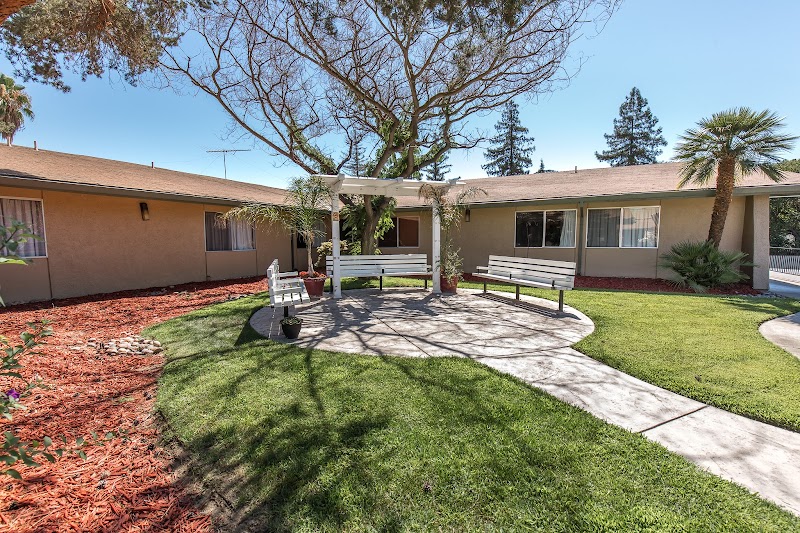
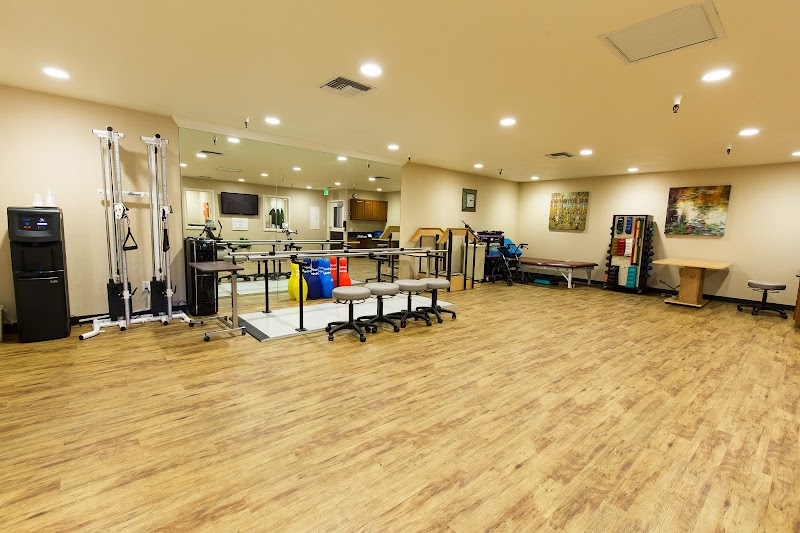


HAMPTON POST ACUTE

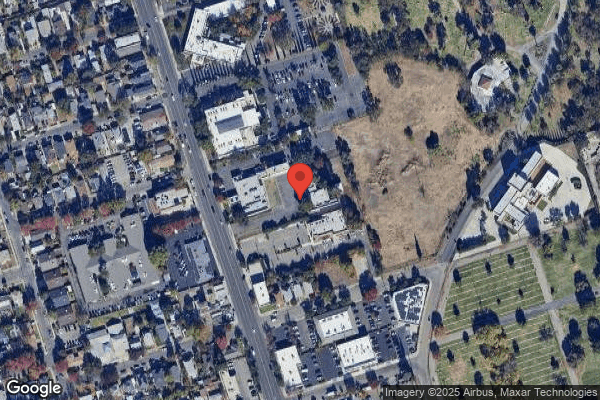
442 HAMPTON STREET, STOCKTON, CA 95204 (209) 466-0456
For profit - Limited Liability company 120 Beds WINDSOR Data: November 2025
Trust Grade
18/100
#1034 of 1155 in CA
Last Inspection: July 2025

Inspected within the last 6 months. Data reflects current conditions.

Overview

Hampton Post Acute in Stockton, California, has received a Trust Grade of F, indicating significant concerns and a poor quality of care. It ranks #1034 out of 1155 facilities in California, placing it in the bottom half, and #22 out of 24 in San Joaquin County, meaning there are only two local facilities with worse ratings. While the facility is showing some improvement, with issues decreasing from 49 in 2024 to 42 in 2025, the overall situation remains troubling. Staffing received a 2/5 star rating, indicating below-average support, and the turnover rate is average at 38%. Notably, the facility has faced serious incidents, including a resident sustaining a head injury after falling from a wheelchair that lacked a footrest and another resident who was not properly monitored and fell while attempting to leave the premises, which raised significant safety concerns.

Trust Score
F
18/100
In California
#1034/1155
Bottom 11%
Safety Record
High Risk
Review needed
Inspections
Getting Better
49 → 42 violations
Staff Stability
○ Average
38% turnover. Near California's 48% average. Typical for the industry.
Penalties
✓ Good
$21,548 in fines. Lower than most California facilities. Relatively clean record.
Skilled Nurses
⚠ Watch
Each resident gets only 24 minutes of Registered Nurse (RN) attention daily — below average for California. Fewer RN minutes means fewer trained eyes watching for problems.
Violations
⚠ Watch
118 deficiencies on record. Higher than average. Multiple issues found across inspections.
★☆☆☆☆
1.0
Overall Rating
★★☆☆☆
2.0
Staff Levels
★★☆☆☆
2.0
Care Quality
★☆☆☆☆
1.0
Inspection Score
Stable
2024: 49 issues
2025: 42 issues

The Good

  • Full Sprinkler Coverage · Fire safety systems throughout facility
  • No fines on record
  • Staff turnover below average (38%)

    10 points below California average of 48%

Facility shows strength in fire safety.

The Bad

1-Star Overall Rating

Below California average (3.1)

Significant quality concerns identified by CMS

Staff Turnover: 38%

Near California avg (46%)

Typical for the industry

Federal Fines: $21,548

Below median ($33,413)

Minor penalties assessed

Chain: WINDSOR

Part of a multi-facility chain

Ask about local staffing decisions and management

The Ugly 118 deficiencies on record

4 actual harm
Jul 2025 16 deficiencies
CONCERN (D)

Potential for Harm - no one hurt, but risky conditions existed

Deficiency F0558 (Tag F0558)

Could have caused harm · This affected 1 resident

Based on observation, interview, and record review, the facility failed to accommodate the needs of 2 out of 38 sampled residents (Resident 45 and Resident 56) when:1. Resident 45's call light (a devi...

Read full inspector narrative →
Based on observation, interview, and record review, the facility failed to accommodate the needs of 2 out of 38 sampled residents (Resident 45 and Resident 56) when:1. Resident 45's call light (a device used in healthcare settings to allow patients to remotely request assistance from nurses or staff) was not working and was not within reach; and,2. Resident 56's call light was hanging on the wall behind the bed and was not within reach.These failures had the potential to increase the risk of falls and unmet needs for Resident 45 and Resident 56 due to their inability to request assistance from staff.Findings:1. During a concurrent observation and interview on 7/21/25 at 3:23 PM, Certified Nursing Assistant (CNA) 4 confirmed that Resident 45's call light was on the floor and not within reach. CNA 4 stated it was important for Resident 45 to have the call light within reach in case he needed anything.During a concurrent observation and interview on 7/21/25 at 3:23 PM in Resident 45's room, Licensed Nurse (LN) 6 also confirmed Resident 45's call light was on the floor and not within reach. LN 4 stated that it was important for residents to have call lights within reach in case they were thirsty or needed assistance from staff.A review of Resident 45's Care Plan Report, dated 5/29/25, indicated, . [Resident 45] is a moderate risk for falls r/t [related to] Confusion, Unaware of safety needs.Be sure the resident's call light is within reach.needs prompt response to all requests for assistance.2. During a concurrent observation and interview on 7/21/25 at 9:50 AM in Resident 56's room, CNA 3 confirmed that Resident 56's call light was hanging on the wall behind Resident 56's bed and not within reach. CNA 3 stated that it was important for the call light to be within reach in case of a fall or if Resident 56 needed anything to reach us fast.During an interview on 7/24/25 at 12:46 PM, the Director of Nursing (DON) explained it was her expectation that each resident had a working call light, and that it was within reach of the residents. The DON further explained she expected the CNAs to round the rooms, check on the residents throughout the shifts, and make sure call lights were within reach. The DON stated when a call light was not within reach of the residents, the risk to the residents was unmet needs.A review of facility policy and procedure titled Answering the Call Light, revised 10/2024, indicated, .The purpose of this procedure is to ensure timely responses to the residents' requests and needs.Ensure that the call light is accessible to the resident when in bed.
CONCERN (D)

Potential for Harm - no one hurt, but risky conditions existed

Deficiency F0582 (Tag F0582)

Could have caused harm · This affected 1 resident

Based on interview and record review, the facility failed to provide required notices to one of three residents (Resident 4) reviewed for the beneficiary protection notification (residents who receive...

Read full inspector narrative →
Based on interview and record review, the facility failed to provide required notices to one of three residents (Resident 4) reviewed for the beneficiary protection notification (residents who received Medicare Part A Services have specific rights and protections related to financial liability and appeal rights which are communicated to beneficiaries through notices given by providers), when Resident 4 was not issued a Skilled Nursing Facility Advanced Beneficiary Notice (SNF ABN: CMS 10055 a form which gives the choice to continue services under private pay if Medicare does not provide payment) and Notice of Medicare Non Coverage (NOMNC: CMS 10123 a form that Medicare providers must give to beneficiaries when their Medicare-covered services are ending) notices upon changes in his Medicare Part A service coverage.This failure had the potential for Resident 4 and his representatives not being informed of their specific rights and protections related to financial liability for medical expenses incurred as well as the right to appeal.Findings:Review of an undated form filled out by the facility titled, BENEFICIARY NOTICE - RESIDENTS discharged WITHIN THE LAST SIX MONTHS/MEDICARE PART A, indicated Resident 4 was discharged from Medicare Part A services on 5/23/25 with remaining skilled benefit days but continued to remain at the facility.During a concurrent interview and record review on 7/24/25, at 2:47 p.m., the Director of Nursing (DON) verified Resident 4 was discharged from Medicare Part A services with remaining skilled benefit days on 5/23/25 but continued to stay at the facility. The DON verified there was no evidence that Resident 4 was issued a SNF ABN and a NOMNC form. The DON stated that anytime a resident stayed in the facility after they were discharged from Medicare Part A with remaining skilled benefit days, they should be issued a NOMNC and SNF ABN notice so that they were made aware of changes and could make mindful financial decisions.Review of an undated facility policy titled, Medicare Advance Beneficiary and Medicare Non-Coverage Notices, indicated, .The facility will issue a Skilled Nursing Facility Advance Beneficiary Notice (SNF ABN CMS form 10055) to any Medicare (Fee for Service) resident prior to providing care that Medicare usually covers, but may not pay.If the resident's Medicare covered Part A stay or when all of Part B therapies are ending, a Notice of Medicare Non-Coverage (CMS form 10123) is issued to the resident at least two calendar days before Medicare covered services end.
CONCERN (D)

Potential for Harm - no one hurt, but risky conditions existed

ADL Care (Tag F0677)

Could have caused harm · This affected 1 resident

Based on observation, interview, and record review, the facility failed to ensure activities of daily living (ADLs) were provided to maintain good hygiene for 1 of 38 sampled residents (Resident 45) w...

Read full inspector narrative →
Based on observation, interview, and record review, the facility failed to ensure activities of daily living (ADLs) were provided to maintain good hygiene for 1 of 38 sampled residents (Resident 45) when:1. Resident 45's fingernails were long and sharp with a brown substance caked underneath them; and,2. Resident 45 had no documented bathing for the month of 7/2025.These failures resulted in Resident 45 not having had a documented bath or shower in 7/2025, with Resident 45's nails being long, sharp, and dirty with a brown substance underneath, hands and nails not being cleansed prior to eating meals, the potential for injury due to long sharp nails, and infection from the nails harboring microorganisms (bacteria, virus, or fungus).Findings:During a concurrent observation and interview on 7/23/25 at 9:43 AM, in Resident 45's room, Resident 45 was observed sitting up in bed wearing a yellow hospital gown. When asked, Resident 45 stated yes, he wanted to be cleaned and have his nails cut.During a concurrent observation, interview, and record review, on 7/23/25 at 9:46 AM, in Resident 45's room, Licensed Nurse (LN) 4 confirmed Resident 45 was dependent on staff for care and ADLs. LN 4 further confirmed Resident 45's nails were long and dirty with a brown substance under them. LN 4 explained it was expected that Resident 45's nails would be cleaned multiple times daily prior to each meal, and nails cleaned and trimmed with bathing. LN 4 further explained the risk to Resident 45 was self-injury on his skin, and that touching food with his dirty nails could cause an infection. LN 4 completed a review of Resident 45's electronic health record (EHR - a digital collection of a resident's medical history and other health information) and stated she could not find any documented record of Resident 45 receiving a bath or shower for the month of July, and added Resident 45's bathing/showering days were Tuesday and Friday. LN 4 confirmed Resident 45 did not appear to have any recent nail care or hand hygiene performed. During a concurrent observation and interview on 7/22/25 at 10:14 AM, in Resident 45's room, CNA 5 explained Resident 45 needed assistance with ADLs. CNA 5 stated she gave Resident 45 a bed bath the day before on 7/21/25. CNA 5 further stated she did not do hand hygiene or trim Resident 45's nails. CNA 5 stated she did Resident 45's hand hygiene prior to assisting him with meals on 7/21/25. CNA 5 reviewed Resident 45's EHR and could not find documentation that indicated she completed the tasks. CNA 5 confirmed Resident 45's nails were untrimmed and dirty. CNA 5 explained the risk to Resident 45 for having long dirty nails was infection and scratching himself and cutting himself with them. CNA 5 further explained it was important to stick to Resident 45's bathing and nail cleaning and trimming schedule to prevent infection and to maintain good hygiene.During an interview on 7/24/25 at 12:53 PM, the Director of Nursing (DON) stated it was her expectation for staff to be providing ADL care to residents who required assistance like Resident 45. The DON further stated they should be providing showers, hygiene, nail care, and that it was important for personal hygiene and dignity. The DON explained she expected staff to accurately document in the resident's EHR when they received bathing/showering and all hand hygiene prior to meals/snacks. The DON reviewed Resident 45's EHR and confirmed Resident 45 had no documented baths/showers for the month of 7/2025. The DON explained that Resident 45's long dirty nails, and lack of bathing documentation did not meet her expectation for resident cleanliness or hygiene.A review of Resident 45's, Care Plan Report, dated 5/29/25, indicated, . [Resident 45] has Skin Tear/potential for skin tear r/t [related to] lack of safety awareness.Identify causative factors and eliminate/resolve.Keep skin clean and dry.A review of Resident 45's, Care Plan Report, dated 6/3/25, indicated, .Self-care Deficit (hygiene) r/t cognitive impairment [a decline in one or more functions such as memory, attention, language, reasoning, decision-making], poor judgement.Goal Pt [patient] will maintain personal hygiene with staff assistance.Educate pt [patient].the importance of hygiene for infection prevention and skin integrity.Ensure a clean safe environment; promptly remove feces and disinfect.Provide hygiene care. A review of facility Policy and Procedure (P&P) titled, Activities of Daily Living (ADLs), Supporting, revised March 2018, indicated, .Residents who are unable to carry out activities of daily living independently will receive the services necessary to maintain good nutrition, grooming and personal and oral hygiene.
CONCERN (D)

Potential for Harm - no one hurt, but risky conditions existed

Deficiency F0694 (Tag F0694)

Could have caused harm · This affected 1 resident

Based on observation, interview, and record review, the facility failed to ensure professional standards of practice were followed in accordance with physician orders for 1 out of 38 sampled residents...

Read full inspector narrative →
Based on observation, interview, and record review, the facility failed to ensure professional standards of practice were followed in accordance with physician orders for 1 out of 38 sampled residents when nursing staff inserted intravenous lines (IV - a thin tube inserted into a vein for administration of medications, fluids and/or blood products usually in the lower arm or hand for short term use) into Resident 33's arm and then removed the IV's without a physician's order on two occasions.These failures had the potential to expose Resident 33 to unnecessary risks related to IV insertion including developing an infection or other health complications and resulted in Resident 33 receiving services without a physicians order.Findings:During an observation on 7/21/2025 at 9:00 AM, Resident 33 was noted with an IV line on the right upper arm (Peripherally inserted central catheter-PICC- an IV that can be used for a prolonged period inserted into a large vein near the heart) and an IV in the left lower arm.A review of Resident 33's medical record titled, admission RECORD dated 6/23/25, indicated that Resident 33 was diagnosed with an infection in an artificial hip joint caused by Methicillin Resistant Staphylococcus Aureus (germs that are resistant to certain antibiotics). A review of Resident 33's medical record titled, admission Summary, dated 6/27/2025 indicated, .PICC to RUA [right upper arm] dated 6/27.During a concurrent observation, interview, and record review, on 7/22/2025 at 10:02 AM with Licensed Nurse (LN) 4 in Resident 33's room, Resident 33's medical record was reviewed. LN 4 confirmed Resident 33 was admitted to the facility with a PICC line. LN 4 stated Resident 33 pulled out his PICC line on 7/18/2025 and LN 2 inserted an IV on the left lower arm within the same shift. LN 4 stated the PICC line was reinserted on 7/19/2025 by the facility's vendor (a mobile company specializing in PICC line insertions). LN 4 stated the IV on the left lower arm should have been removed immediately after the PICC line was reinserted because they are only using the PICC line on the right upper arm to administer medications. LN 4 stated every IV could potentially cause an infection. LN 4 was then observed removing the IV on the left lower arm of Resident 33.A review of Resident 33's medical record titled, Nurses Progress Note dated 7/7/2025, indicated, Started IV.on the resident's right arm with good blood return. Procedure tolerated well.A review of Resident 33's medical record titled, Nurses Progress Note dated 7/12/2025, indicated, IV.on the right wrist/forearm d/cd (discontinued) with tip intact. No acute bleeding. Resident has another working IV line.A review of Resident 33's medical record titled, Nurses Progress Note dated 7/18/2025, indicated, .resident pulled his PICC line.Inserted.IV line.on the Left arm.Waiting for new orders.A review of Resident 33's medical record titled, Nurses Progress Note dated 7/18/2025, indicated, .LN found resident's PICC line was pulled. LN called RN (Registered Nurse) to check. RN reported that she was able to insert [IV] on resident's Lt (left) arm.A review of Resident 33's medical record titled, Nurses Progress Note dated 7/19/2025, indicated, PICC line was inserted to right upper arm and placement was verified by RN.During a concurrent interview and record review on 7/23/2025 at 10:59 AM with the Infection Preventionist (IP), the IP stated she expected the nurses to insert IV's when the PICC was accidentally removed. The IP stated she expects the nurse to remove the IV when the PICC line has been reinserted. The IP stated that an unused IV could lead to infection. The IP stated she expected the nurses to obtain orders from the doctor before inserting and removing an IV. The IP confirmed upon record review of Resident 33's medical record that there were no physician orders for the insertion and removal of the IV's inserted by facility staff. The IP stated that nursing staff always needed physician orders for patient care and safety.During a telephone interview on 7/23/2025 at 3:25 PM with LN 2, LN 2 stated Resident 33 pulled his PICC line out on the evening of 7/18/2025 and she called the after-hours nurse line to inform them that she inserted an IV. LN 2 confirmed Resident 33 did not have an order for the IV-line insertion. LN 2 agreed that there should have been an order for the IV insertion and doing a procedure without a doctor's order would be a safety risk for the resident.During an interview and record review on 7/24/2025 at 11:24 AM with the Director of Nursing (DON), the DON stated when a PICC line was suddenly dislodged, she expected her staff to do an assessment and notify the doctor, and the responsible party. The DON stated the nurses needed a doctor's order before inserting and removing an IV line because it was not safe practice without an order. The DON stated there would be a potential safety issue for the residents if a procedure were started without a doctor's order. Upon record review, the DON acknowledged facility nursing staff had inserted the IV lines for Resident 33 on 7/7/2025 and 7/18/2025 and removed the IV's on 7/12/25 and 7/22/25 without a physician's order. The DON stated there was a risk for infection and risk for clogging when the IV was left on a resident's arm without proper monitoring. The DON stated this method of practice was not acceptable.A review of facility document titled, GENERAL POLICIES FOR IV THERAPY dated June 2018, indicated, .Physician's orders are required for initiating intravenous/subcutaneous [under the skin] therapy.
CONCERN (D)

Potential for Harm - no one hurt, but risky conditions existed

Unnecessary Medications (Tag F0759)

Could have caused harm · This affected 1 resident

Based on observation, interview, and record review the facility failed to ensure safe medication administration practices when the medication error rate was more than 5% (% or percentage- number or ra...

Read full inspector narrative →
Based on observation, interview, and record review the facility failed to ensure safe medication administration practices when the medication error rate was more than 5% (% or percentage- number or ratio expressed as a fraction of 100) for a census of 118 residents. Medication administration observations were conducted over multiple days, at varied times, in random locations throughout the facility. The facility had a total of two errors out of 26 opportunities which resulted in a facility wide medication error rate of 7.69 % for two out of seven sampled residents (Resident 24 and Resident 119) observed for medication administration observations as follows: 1. Resident 119 was given a medication (sucralfate - a medication often prescribed to treat ulcers and other stomach conditions) prescribed for Resident 20; and, 2. Resident 24 was given the wrong dose of duloxetine (a prescribed medication used to treat depression and anxiety disorders). These failures resulted in unsafe medication use, medication errors, and not following doctor's orders for Resident 119 and Resident 24.Findings:1. During a medication administration observation on 7/21/25 at 8:23 AM with Licensed Nurse (LN) 11, in the hallway outside Resident 119's room, LN 11 poured sucralfate into a medication cup from a bottle prescribed to Resident 20. LN 11 administered the liquid medication from Resident 20's sucralfate bottle to Resident 119. Review of Resident 119's medical record titled, Medication Administration Record (MAR - a record that records the administration of medications to a patient to ensure patient safety and track medication use), dated 7/1/25 - 7/31/25, indicated the following doctor's order: .Sucralfate Suspension 1GM/10ML (GM or gram - a unit of measurement that represents a specific weight or mass of the active ingredient in a medication; ML or milliliter - a unit of volume to measure a fluid).Give 10 milliliter by mouth four times a day for gastric [stomach] protection.Start Date.03/01/25.During a concurrent interview and record review on 7/21/25 at 1:55 PM with LN 11, Resident 119's MAR dated 7/1/25 - 7/31/25 and the sucralfate bottle's medication label for Resident 20 were reviewed. LN 11 confirmed the medication bottle of sucralfate used for Resident 119 was poured from the prescription bottle of Resident 20. LN 11 stated he used the bottle prescribed to Resident 20 because he did not have that medication on hand for Resident 119. LN 11 verified that the process, if medication was not available for the right resident, would be to order a new bottle by sending a request form to the pharmacy. LN 11 confirmed he did not follow the rights of medication administration (a set of principles designed to prevent medication errors and ensure patient safety by acting as a checklist for healthcare professionals, especially nurses, to confirm that a patient receives the correct medication) when Resident 119 received Resident 20's sucralfate.During a concurrent interview and record review on 7/21/25 at 2:14 PM with the Director of Nursing (DON), Resident 119's MAR dated 7/1/25-7/31/25 and the sucralfate bottle's medication label for Resident 20 were reviewed. The DON confirmed Resident 119 did not have a bottle of sucralfate prescribed to him in the [NAME] Cart 1 (medication cart - a portable cart designed to store, organize, and transport medications) and the cart contained a bottle of sucralfate prescribed for Resident 20. The DON stated, the sucralfate prescribed for Resident 20 should not have been administered to Resident 119.A review of the facility's procedure titled, SPECIFIC MEDICATION ADMINISTRATION PROCEDURES, dated April 2008, indicated, .To administer medications in a safe and effective manner.Read medication label before administering.Identify resident before administering medication.Review of the National Library of Medicine-National Center for Biotechnology Information webpage titled Nursing Rights of Medication Administration, dated 9/4/23, indicated, .It is standard during nursing education to receive instruction on a guide to clinical medication administration and upholding patient safety known as the ‘five rights' or ‘five R's' of medication administration.Right Patient.ascertaining [making sure] that a patient being treated is, in fact, the correct recipient for whom medication was prescribed. (https://www.ncbi.nlm.nih.gov/books/NBK560654/)2. During a medication administration observation on 7/21/25 at 8:58 AM, LN 11 popped one pill from a bubble pack (a type of packaging that organizes and protects individual doses of medication) of Duloxetine HCl (hydrochloride- a type of salt added to medication improving the drug's absorption and effectiveness) DR (delayed release-a type of medication that is designed to release its active ingredients at a slower rate in the gastrointestinal tract) 30 MG Cap (Capsule) and placed the capsule inside a medication cup with six other medications. LN 11 administered the medications in the medication cup to Resident 24.Review of Resident 24's medical record titled, Medication Administration Record, dated 7/1/25 - 7/31/25 indicated, .Duloxetine HCl Oral Capsule Delayed Release Sprinkle 20 MG [Duloxetine HCl 20 MG Cap].Give 1 capsule by mouth two times a day for depression.Start date 7/12/25. The MAR indicated Duloxetine HCl 20 MG was given two times a day (9:00 AM and 5:00 PM) from 7/12/25 through 7/23/25.During a concurrent interview and record review on 7/21/25 at 1:55 PM with LN 11, Resident 24's MAR dated 7/1/25-7/31/25 and the bubble pack used for Duloxetine HCl administration were reviewed. LN 11 confirmed, the Duloxetine HCl administered to Resident 24 was from a bubble pack labeled Duloxetine HCL DR 30 MG CAP [Duloxetine HCl 30 MG Cap] and the current order was for Duloxetine HCL Oral Capsule Delayed Release Sprinkle 20 MG. LN 11 further stated, the current order and the dose given did not match. LN 11 stated, when the order on the MAR and the pharmacy's sticker on the bubble pack do not match, the pharmacy should be contacted and a new pack of the medication with the correct dose would be obtained. LN 11 verified, he did not contact the pharmacy to replace the bubble pack for this medication.During a concurrent interview and record review on 7/21/25 at 2:19 PM with the DON, Resident 24's MAR dated 7/1/25 - 7/31/25 and the bubble pack for Duloxetine HCl were reviewed. The DON confirmed, Resident 24 did not have the correct bubble pack reflecting the current order for Duloxetine HCl 20 MG Cap in the [NAME] Cart 1 medication cart. The DON stated, the bubble pack for Resident 24's order of Duloxetine HCl 30 MG Cap that was in the medication cart should have been removed. The DON further stated, the Duloxetine HCL 30 MG Cap were discontinued on 7/11/25. The DON verified, the wrong dose of Duloxetine was given to Resident 24, and Resident 24 had received too much medication. The DON stated, Resident 24 could experience side effects of weight loss, anorexia, dry mouth, and dizziness if the wrong dose of medication was given.A review of the facility's procedure titled, SPECIFIC MEDICATION ADMINISTRATION PROCEDURES, dated April 2008, indicated, .To administer medications in a safe and effective manner.Read medication label before administering.Review of the National Library of Medicine-National Center for Biotechnology Information webpage titled Nursing Rights of Medication Administration, dated 9/4/23, indicated, .It is standard during nursing education to receive instruction on a guide to clinical medication administration and upholding patient safety known as the ‘five rights' or ‘five R's' of medication administration.Right dose. Even if it is the correct medication and the patient's identity is verified. ensure it is the correct strength for the patient. (https://www.ncbi.nlm.nih.gov/books/NBK560654/)
CONCERN (D)

Potential for Harm - no one hurt, but risky conditions existed

Medical Records (Tag F0842)

Could have caused harm · This affected 1 resident

**NOTE- TERMS IN BRACKETS HAVE BEEN EDITED TO PROTECT CONFIDENTIALITY** Based on interview and record review, the facility failed to maintain a complete and accurate clinical record for one of 38 samp...

Read full inspector narrative →
**NOTE- TERMS IN BRACKETS HAVE BEEN EDITED TO PROTECT CONFIDENTIALITY** Based on interview and record review, the facility failed to maintain a complete and accurate clinical record for one of 38 sampled residents (Resident 56) when the resident's Physician Orders for Life-Sustaining Treatment (POLST -outlines a patients end-of-life care and wishes) was not readily accessible in Resident 38's electronic health record (EHR -a digital collection of a patient's medical information that is stored and accessed quickly).This deficient practice had the potential to go against Resident 56's wishes to not be resuscitated (revived from unconsciousness or apparent death) if Resident 56 became unresponsive, which could result in serious physical harm to Resident 56.Findings:During an interview on [DATE] at 8:48 AM in Resident 56's room, Resident 56 stated he had signed a POLST indicating he wanted to be a Do-Not-Resuscitate (DNR -a medical order instructing healthcare professionals not to perform cardiopulmonary resuscitation [CPR] if a person's heart stops or they stop breathing) around the time he was admitted to the facility.During a concurrent interview and record review on [DATE] at 8:53 AM, Licensed Nurse (LN) 7 checked Resident 56's EHR and stated Resident 56 did not have a code status (a patient's pre-determined instructions regarding medical interventions that should be performed in the event of a cardiac [heart] or respiratory [lungs, breathing] arrest [stops]) entered. LN 7 further stated that since Resident 56 did not have a code status readily available in their EHR, Resident 56, would be treated as a full-code (medical term that indicates a patient's wish to receive all possible life-saving measures in the event of cardiac or respiratory arrest) and CPR would be initiated. During a concurrent interview and record review on [DATE] at 9:35 AM, LN 9 checked a binder at the East nurse's station and found the written POLST form signed by Resident 56 and the physician that indicated Resident 56 was a DNR. LN 9 explained they were to assume a resident was a full-code and someone would check the EHR to confirm their code status as they began CPR. LN 9 further stated that the POLST should have been entered in the Residents EHR and entered as a physician's order when the POLST was signed by Resident 56 and the physician on admission, LN 9 confirmed neither was completed. During an interview on [DATE] at 1:16 PM the Director of Nursing DON stated it was her expectation that the resident's code status be readily available when the resident was pulled up in the EHR. The DON further stated if no code status was listed, it was assumed the residents were a full code, and CPR would be initiated.A review of Resident 56's Care Plan Report, dated [DATE], indicated, . [Resident 56] is DNR.Will respect and adhere to [Resident 56] care directives.Do Not Resuscitate.No Life Prolonging Procedure -No Intubation.A review of facility policy titled, Do Not Resuscitate Order, revised [DATE], indicated, .Our facility will not use cardiopulmonary resuscitation [CPR] and related emergency measures to maintain life functions on a resident when there is a Do Not Resuscitate Order in effect.
CONCERN (E)

Potential for Harm - no one hurt, but risky conditions existed

Deficiency F0692 (Tag F0692)

Could have caused harm · This affected multiple residents

Based on observation, interview, and record review, the facility failed to ensure proper hydration (process of providing fluid to the body) for three of 38 sampled residents (Resident 32, Resident 45,...

Read full inspector narrative →
Based on observation, interview, and record review, the facility failed to ensure proper hydration (process of providing fluid to the body) for three of 38 sampled residents (Resident 32, Resident 45, and Resident 112), per facility policy and each resident's comprehensive plan of care, and failed to maintain the usual body weight of 1 of 3 sampled residents (Resident 73) with weight loss when: 1. Resident 32 did not have available fluids to drink at bedside; and,2. Resident 45 did not have available fluids to drink at bedside; and,3. Resident 112 did not have available fluids to drink at bedside; and,4. Resident 73 had a weight loss of 11.1% over a 6-month period. These failures had the potential to result in altered hydration status, and complications associated with fluid imbalance (when the body loses or gains too much water/fluids) for Resident 32, Resident 45, and Resident 112; in addition, Resident 73's weight loss could lead to malnutrition (not consuming enough calories) and potentially decrease his functional status, immune function, and muscle mass. Findings: 1. During a concurrent observation and interview in Resident 32’s room on 7/21/25 at 9:22 AM Licensed Nurse (LN) 3 confirmed Resident 32 did not have available fluids at bedside. LN 3 further stated it was important for fluids to be available at bedside so that Resident 32 did not get dehydrated (a harmful reduction in the amount of water in the body). During a concurrent observation and interview in Resident 32’s room on 7/23/25 at 8:42 AM LN 7 confirmed Resident 32 did not have fluids available at bedside. LN 7 further confirmed Resident 32 had cracked and chapped lips. LN 7 explained the risk of Resident 32 not having fluids available to drink at bedside was dehydration, urinary tract infections (UTI -an infection in the bladder or urinary tract), chapped lips and dry skin. LN 7 further explained it was important for fluids to be in reach of Resident 32 so she could drink when she wanted to. LN 7 asked Resident 32 if she was thirsty and Resident 32 shook her head up and down in an affirmative motion. A review of Resident 32’s “Care Plan Report” (a document detailing an individual’s health needs, goals, and the steps needed to achieve those goals) revised 7/15/2025, indicated, “…Interventions…Monitor for s/s [signs and symptoms] of dehydration…Encourage increase fluid intake…” 2. A review of Resident 45’s “admission RECORD” indicated Resident 45 was admitted to the facility with a diagnosis including but not limited to urinary tract infection. During a concurrent observation and interview in Resident 45’s room on 7/21/25 at 3:23 PM LN 6 confirmed Resident 45 did not have fluids available at bedside. LN 3 stated the risk to Resident 45 not having fluids available at bedside was dehydration. LN 3 observed Resident 45’s urinary catheter collection bag (a medical device used to collect urine from a person with a urinary catheter (a flexible tube inserted into the bladder to drain urine)) and confirmed Resident 45’s urine was dark in color. LN 3 further explained the risk to Resident 45 not having fluids available at bedside to drink not only made him at risk for dehydration but could also put him at risk for another UTIDuring a concurrent observation and interview in Resident 45’s room on 7/23/25 at 9:46 AM, LN 4 confirmed Resident 45’s water cup was empty, and Resident 45 requested more water. LN 4 further confirmed resident 45 had chapped, dry lips. LN 4 explained the risk to Resident 45 not having fluids available was dehydration and risk for another UTI. A review of Resident 45’s “Care Plan Report” revised 6/8/25, indicated, “… [Resident 45] has dehydration or potential fluid deficit r/t [related to] poor intake…Encourage the resident to drink fluids of choice…Ensure [Resident 45] has access to…fluids…cold water…whenever possible…promote additional fluid intake…offer drinks…” A review of Resident 45’s “Care Plan Report” revised 7/23/25 indicated, “… [Resident 45] has indwelling foley catheter…Monitor and document intake…” 3. During a concurrent observation and interview in Resident 112’s room on 7/21/25 at 10:24 AM, Resident 112 stated he was thirsty and had wanted a refill of water. Resident 112 further stated he had needed his cup refilled since 8 AM, and he felt unimportant and frustrated when his needs were not met by the facility. During a concurrent observation and interview in Resident 112’s room on 7/21/2025 at 10:43 AM, LN 3 confirmed Resident 112 did not have fluids available. LN 3 further stated it was important for fluids to be available at bedside so Resident 112 did not get dehydrated. A review of Resident 112’s “Care Plan Report” revised 2/4/2025, indicated, “…[Resident 112] has potential fluid deficit/dehydration r/t Diuretic [a drug that causes the increase passing of urine] use…[Resident 112] needs assistance/encouragement/supervision with fluid intake in order to meet daily requirements…The resident/family need to be instructed on the importance of fluid intake…” During an interview on 7/24/25 at 12:37 PM, the Director of Nursing (DON) stated her expectation was that fluids to drink were available at bedside for all residents. The DON stated the facilities process was for the CNA to provide fluids to the residents at the beginning of each shift, with meals, and at the resident’s request. The DON further stated the risk to the residents was dehydration and hypotension (low blood pressure). The DON explained that residents with foley catheters would be at more risk of UTI’s and expected the nurses to observe for signs of dehydration, hypotension, fever, headache, dry mouth, dry skin and chapped lips. The DON further explained her expectations were not met. A review of the facility’s Policy and Procedure (P&P) titled, “Resident Hydration and Prevention of Dehydration,” revised 3/4/2025, indicated, “…Nurses will assess for signs and symptoms of dehydration during daily care…Nurses’ Aides will provide and encourage intake of bedside, snack and meal fluids, on a daily and routine basis…” 4. Review of Resident 73’s medical record titled, “admission RECORD,” indicated Resident 73 was admitted to the facility in with diagnoses that included type 2 diabetes mellitus (a disorder characterized by difficulty in blood sugar control and poor wound healing), anemia (a condition where the body does not have enough healthy red blood cells) and mild protein-calorie malnutrition (a condition where the body doesn't get enough protein and calories to meet its needs). During an interview on 7/22/25, at 8:08 a.m., with Resident 73, Resident 73 stated he had lost weight going from 165 pounds (lbs – unit of measurement) to his current weight of 111 lbs. Resident 73 stated that his weight loss was due to his dislike of the food at the facility, and that his likes and dislikes were not always followed. Review of Resident 73’s weight history for 2025 were as follows: 1. 12/8/24 – 125.6 lbs 2. 3/2/25 – 113.8 lbs. 3. 5/7/25 – 110.4 lbs. 4. 6/1/25 – 112 lbs. Review of Resident 73’s progress notes found one documented weight refusal note dated 7/8/25, which indicated “Resident refused to be weighed, offered 3x [times], explain risk and benefits”. No refusal progress notes for the months of January, February and April 2025 were found. Review of Resident 73’s care plans (a form where you can summarize a person's health conditions, specific care needs, and current treatments) did not include his refusal of weight checks. Review of Resident 73’s medical record titled, “Care Plan Report,” initiated on 1/4/22, indicated “…Focus…[Resident 73] is at risk for altered nutrition/hydration status and/or weight fluctuation…Goal…Resident will consume at least 75% meals, maintain adequate hydration status, maintain current weight = +/-5% [plus or minus 5 percent of normal body weight] .Interventions/Tasks…Monitor weight monthly or as indicated…” Review of Resident 73’s Nutritional Assessment, dated 3/25/25, indicated Resident 73’s usual body weight was 125-135 lbs. Goal weight range was gradual weight gain to UBW (usual body weight), recent weight change -11.8 lbs. (loss of 11.8 lbs. or a 9.4% weight change) in 3 months. Review of Resident 73’s Interdisciplinary Care Conference (enabling facility staff to discuss residents' unique situations, develop shared understandings, and integrate care plans with input from the resident) note, dated 3/25/25, verified Resident 73’s weight variance of -11.8 lbs. (9.4%) over the past three months. Dietary review indicated, “…67 y/o [year old] male with diabetes, mild malnutrition, gastritis (irritation of the stomach lining) and anemia noted with weight loss over the past 3 months, now considered underweight…Nutritional Diagnosis: unintended weight loss r/t [related to] predicted inadequate oral intake aeb [as evidenced by] -11.8 lbs (9.4%) x 3m [times three months]…” During a concurrent interview and record review on 7/23/25, at 1:00 p.m., with the Registered Dietitian (RD), the RD stated the facility normally did weekly weights for four weeks when a resident was newly admitted to the facility and if stable would be done monthly. The RD stated weekly interdisciplinary meetings were done to discuss any weight changes. The RD reviewed Resident 73’s weights and stated Resident 73 was definitely underweight and no weight was taken for July 2025 yet, which was a concern. The RD stated Resident 73 had a dietary assessment done in March 2025, which indicated he had lost 11 lbs. The RD reviewed Resident 73’s weights for 2025 and verified the missing weights for the months of January, February and April 2025. The RD stated it was expected for the facility to have monthly weights to be completed and should have been documented if the resident refused . The RD also stated that weights would usually increase in frequency after weight loss, which did not seem to happen for Resident 73. During an interview on 7/24/25, at 8:35 a.m., with Resident 73, Resident 73 stated he gets weighed once a month and only refused to be weighed once which was about a month ago. During an interview on 7/24/25, at 8:51 a.m., with Certified Nursing Assistant (CNA) 6, CNA 6 stated residents are weighed by the RNA (Restorative Nursing Assistant) monthly during the 1st week of the month. CNA 6 stated if a resident refused to be weighed, the RNA would have notified the Licensed Nurse (LN) of the refusal. CNA 6 stated she was not sure if Resident 73 had any refusals to be weighed because he was someone who wanted to know how much he weighed. CNA 6 stated it was important to monitor a resident’s weight because it was the facility’s responsibility to determine if he needed supplements or needed more food to eat. CNA 6 stated the risk of not monitoring the weights would be weight loss and the residents’ weight might have already dropped if it was not checked. During a concurrent interview and record review on 7/24/25, at 9:03 a.m., with LN 14, LN 14 stated the residents’ weights were monitored monthly or depending on the doctor’s order. LN 14 stated the RNA was responsible for obtaining the resident’s weights and if a resident refused, the RNA would have notified the LN so the LN could speak with the resident to explain the risks and benefits. LN 14 further stated if a resident still refused after speaking with the LN, the LN would then notify the resident’s doctor. LN 14 reviewed Resident 73’s weight summary for the year 2025 and confirmed weights were missing for the months of January, February and April 2025. LN 14 stated Resident 73 had a drop in weight from 125 lbs. in December 2024 to 113 lbs. in March 2025. LN 14 reviewed Resident 73’s progress notes to verify if there were refusals to obtain weights for the missing months (January, February and April 2025) and confirmed no refusal notes were found. LN 14 stated it would be ideal for the RNA to have notified the LN if Resident 73 refused to be weighed and the LN would have noted it in his chart. LN 14 reviewed Resident 73’s care plans and verified no care plans were found for refusal to obtain weights and found an active care plan intervention to monitor his monthly weight instead. LN 14 stated it was important to monitor a resident’s weight to find out if the resident was refusing to eat or if it was due to a disease process. LN 14 stated the risk of not monitoring weights would be the potential for the residents to lose weight due to an unknown diagnosis and failure to thrive (potentially weight loss, decreased appetite, poor nutrition, and reduced physical activity, often accompanied by depression, and social withdrawal). During an interview on 7/24/25, at 9:23 a.m., with RNA 1, RNA 1 stated residents’ weights were done during the first week of the month. RNA 1 stated the RNA staff checks the resident’s weight and then submits them to the MDS (Minimum Data Set, an assessment tool) Coordinator to be entered into the resident’s medical record. RNA 1 stated if Resident 73 refused to get his weight checked, she would try again the next day and if he still refused then she would have notified the LN. RNA 1 stated it was important to monitor a resident’s weight to determine if they were losing or gaining weight. RNA 1 stated the risk of not checking a resident’s weight would be the potential for skin breakdown, weight loss, and overall not feeling good. During an interview on 7/24/25, at 11:43 a.m., with RNA 2, RNA 2 stated resident weights were done monthly unless they were new admissions or if there was a specific doctor’s order for weekly weights. RNA 2 stated they used a form to document the weight of the residents, which was then submitted to the DON (Director of Nursing), RD, and MDS coordinator. RNA 2 stated the weights were done on the first weekend of the month, (either the first Friday, Saturday and Sunday of the month). RNA 2 stated if a resident refused to be weighed, she would go back to try again later in the day and would attempt for those three days from Friday to Sunday. RNA 2 further stated if the resident still refused the three attempts, she would have to notify the LN and the LN would make their own attempt and the LN would notify the DON, MDS and RD for discussion in the interdisciplinary meeting with the resident. RNA 2 stated Resident 73 had not had his weight checked at the beginning of the month even though he was on monthly weight checks, and instead noted his weight had been checked yesterday (7/23/25). RNA 2 stated it was important to monitor Resident 73’s weight to know of any significant weight loss or gain. RNA 2 stated the risk of not monitoring a resident’s weight would be weight loss, worsening of conditions, dehydration, depression and even death. During a concurrent interview and record review on 7/24/25, at 9:35 a.m., with the MDS, the MDS stated the facility just started a new process wherein the RNA obtained the resident’s weight and then she would enter the resident’s weight into the resident’s electronic medical record and she would make a list for the IDT (Interdisciplinary Team) to have a discussion about weight variances during the meetings and the RD (Registered Dietician) would keep track of the weights for any weight loss or gain. The MDS stated that it was the expectation for the staff to have documented in the resident’s chart for weight check refusals. The MDS further stated the LN would have to talk to the resident to discuss the risks and benefits of monitoring the weights and then to have notified the doctor and resident’s responsible party of the refusal, especially if they have a weight variance. The MDS reviewed Resident 73’s weights for 2025 and verified no weights were documented for January, February and April 2025 and stated Resident 73 lost weight from his weights back in December 2024 to March 2025. The MDS stated Resident 73’s weights should have been checked monthly and if the weight was checked in January and February, the weight would have already triggered a weight loss in the system. The MDS reviewed and verified Resident 73’s progress notes and care plans did not have any refusal of weights found. The MDS stated it was important to monitor the resident’s weight because they are at high risk of malnutrition, dehydration, skin breakdown and overall decline in health. During a concurrent interview and record review on 7/24/25, at 12:15 p.m., with the Director of Staff Development (DSD), the DSD stated the expectation for was for weights to be done monthly for residents unless they were on specific monitoring or based on their condition. The DSD stated if a resident refused to be weighed, the RNA should notify the LN and they should both document on the resident’s chart of the refusal. The DSD stated both the RNA and LN should make three attempts and if the resident still refused, then a change of condition (COC) report should be made, and the doctor should be notified. The DSD reviewed Resident 73’s weights and confirmed weights were not documented for the months of January, February and April 2025. The DSD further reviewed 73’s progress notes and care plans and verified no documentation was found for weight check refusals. The DSD stated Resident 73’s LN should have been notified of the weight check refusals and a change of condition (COC) should have been done, given how much weight he lost based on his March 2025 weight compared to his December 2025 weight. The DSD stated Resident 73 was at risk of losing weight because he gets picky with his food. The DSD stated it was important to monitor residents’ weights to ensure they are getting all the nutrition they need and to determine if there were any issues, if supplements were needed or lacking. The DSD stated the risk of not monitoring weights would be malnutrition and weight loss. During a concurrent interview and record review on 7/24/25, at 2:26 p.m., with the DON, the DON stated the expectation for weight check frequency for stable residents would be monthly. The DON stated if a resident refused to be weighed, the RNA was supposed to notify the LN to continue checking and following up, and a care plan should be implemented for the resident’s refusal. The DON stated if a resident refused the three attempts to obtain the weight, the doctor should be notified. The DON reviewed Resident 73’s medical record and verified his weights were supposed to be done monthly or as needed. The DON confirmed Resident 73’s weights were not documented for the months of January, February and April 2025 and stated the weights should have been done monthly. The DON stated her expectation was for the RNA and LN to have documented Resident 73’s refusal of weight checks. The DON further stated that a COC should have been initiated for weight loss of at least 5% and a care plan should have been implemented for any refusal of weight to be taken. The DON stated it was important to monitor residents’ weights to monitor their body weight and to keep them healthy. The DON stated the risk of not monitoring the residents’ weights would be weight loss or gain and could lead to complications to their health conditions. Review of facility’s undated policy titled, “Weight Management,” indicated “…Policy Statement…To obtain baseline weight and identify significant weight change. To determine possible causes of significant weight change…To determine possible causes of significant weight change. Each individual’s weight will be obtained and documented upon admission to the facility…Policy Interpretation and Implementation…General Guidelines…1…Initial and subsequent measurements for weight will also be documented on in the weight/Vital tab in PCC [Point Click Care – a healthcare software company] or tracked in the electronic medical record and/or computer database…2.In nursing facilities, weights will be obtained weekly for 4 weeks after admission. Subsequent weights will be obtained monthly unless physician’s orders or an individual’s condition warrants more frequent weight measurements…”
CONCERN (E)

Potential for Harm - no one hurt, but risky conditions existed

Pharmacy Services (Tag F0755)

Could have caused harm · This affected multiple residents

Based on observation, interview, and record review, the facility failed to ensure safe disposal of medications and reduce the risk of drug diversion (unauthorized drug loss/use) when:1. Medication dis...

Read full inspector narrative →
Based on observation, interview, and record review, the facility failed to ensure safe disposal of medications and reduce the risk of drug diversion (unauthorized drug loss/use) when:1. Medication disposals in pill form and in liquid form were identifiable and retrievable by hand when discarded into pharmaceutical waste containers in both medication rooms; and,2. Staff's personal backpack was stored in the medication room where controlled and prescription medications were stored.These failures had the potential to result in unauthorized use of medication and increased the risk of drug diversion.Findings:1. During a concurrent observation and interview on 7/24/25, at 9:14 a.m. in the East Nurses' Station medication room with Licensed Nurse (LN) 5, a pharmaceutical waste container was noted with medications in pill form and liquid form discarded into the waste container that were identifiable and retrievable by hand. LN 5 confirmed there were pills still in their original packaging and a liquid medication still in the bottle.During a concurrent observation and interview on 7/24/25, at 9:40 a.m. in the [NAME] Nurses' Station medication room with LN 5, an opened pharmaceutical waste container was noted with medications in pill form and liquid form discarded into the waste container that were identifiable and retrievable by hand. LN 5 confirmed there were pills still in plastic packs and a liquid medication still in the bottle. LN 5 stated the pills should be disposed of properly and should not be retrievable by hand. LN 5 also stated the liquid medication should have been dumped and mixed with the pills. LN 5 further stated the medications discarded into the pharmaceutical waste containers should not have been recognizable.During a concurrent observation and interview on 7/24/25, at 9:49 a.m. in the [NAME] Nurses' Station medication room with the Director of Staff Development (DSD), she confirmed medications in pill form and liquid form were discarded into the pharmaceutical waste containers which could be identified and retrieved by hand. The DSD stated the medications should have been disposed of properly. The DSD further stated the pills should not have been recognizable and liquid medications should have been dumped from the bottle.During an interview on 7/24/25, at 11:03 a.m. with the Director of Nursing (DON), the DON stated medications discarded into the pharmaceutical waste container should not be identifiable and retrievable by hand. The DON also stated the medications in pill forms should have been removed from their original packaging and the liquid medications should have been dumped and mixed with the pills. The DON explained there would be a high risk for unauthorized use of the medications thrown in the waste containers if medications were not disposed of properly.A review of the facility's policy and procedure titled, Discarding and Destroying Medications, revised November 2022, indicated, .Non-controlled substances [medications] are disposed of in accordance with state regulations and federal guidelines.EPA [Environmental Protective Agency] recommends destruction and disposal of the substance with other solid waste.take the medication out of the original containers.Mix medication, either liquid or solid, with an undesirable substance.include sand, coffee grounds, kitty litter, or other absorbent materials. Place the waste mixture in a sealable bag, empty can, or other container to prevent leakage.2. During a concurrent observation and interview on 7/24/25, at 9:40 a.m. in the [NAME] Nurses' Station medication room with LN 5, a sign posted above the sink was observed that read, No personal items in med [medication] room. During further inspection, a black backpack was found under the sink. LN 5 confirmed and verified the black backpack belonged to one of the staff. LN 5 stated personal items should not have been in the medication room due to possible risk of theft, misuse of medications, or drug diversion.During an interview on 7/24/25, at 11:03 a.m. with the Director of Nursing (DON), the DON stated she expected the medication room to be clear of staff personal items due to possible risk of unauthorized use of the medications and potential for drug diversion.During a review of the facility's policy and procedure titled, MEDICATION STORAGE IN THE FACILITY, dated April 2008, indicated, .Medications and biologicals are stored safely, securely, and properly.The medication supply is accessible only to licensed nursing personnel, pharmacy personnel, or staff members lawfully authorized.
CONCERN (E)

Potential for Harm - no one hurt, but risky conditions existed

Deficiency F0761 (Tag F0761)

Could have caused harm · This affected multiple residents

Based on observation, interview, and record review, the facility failed to ensure safe medication storage and labeling practices in one out of two medication rooms and three out of three medication ca...

Read full inspector narrative →
Based on observation, interview, and record review, the facility failed to ensure safe medication storage and labeling practices in one out of two medication rooms and three out of three medication carts when:1. Prescription Patches of medication were available to use in a medication cart and medication storage room without a prescription,2. Three bottles of Drug Buster (an eco-friendly, liquid solution designed for safe and effective disposal of unwanted or expired medications. It dissolves pills, tablets, capsules, and other forms of medication on contact, rendering them non-toxic and safe for disposal in regular trash) were found soiled and in active use in three different medication carts, and 3. An unknown medication was found in a medication cart compartment without packaging. These failed practices could contribute to unsafe medication use, medication errors, and the risk of contaminated products or supplies.Findings:1a. During a concurrent interview and inspection of the facility's medication storage room at East Station, on 7/22/25 at 9:10 AM, accompanied by Licensed Nurse (LN) 12, multiple packages of Lidocaine Patch 5% (a prescription medication that prevents pain by blocking the signals at the nerve endings in the skin) were observed to be stored without a prescription. LN 12 stated that the medication should have had a resident's name and label on it. LN 12 also stated that there was a risk of the medication being given to an unintended resident if there was no label on the packaging.During a concurrent interview and inspection of the facility's medication storage room at East Station, on 7/22/25 at 9:50 AM, accompanied by the Director of Nursing (DON), multiple packages of Lidocaine Patch 5% were observed to be stored without a prescription. The DON confirmed that packages of Lidocaine Patch 5% were stored in the medication storage room without a prescription label.During an interview on 7/22/25 at 3:05 PM with the Director of Staff Development (DSD), the DSD stated the nurses could think that the medication Lidocaine Patch 5% could be a house supply medication (medications that are readily available to use and do not require a prescription). The DSD also stated that Lidocaine Patch 5% should have been prescribed to someone and not be available as house supply. The DSD further stated the risks of not having proper labels on medications could lead to the nurses not knowing the proper directions on how to give the medications.During an interview on 7/22/25 at 3:31 PM with the Infection Preventionist (IP), the IP stated that Lidocaine Patch 5% should have an active doctor's prescription and not be available as house supply. The IP also stated that the staff would not know who the medication belongs to if there was not a prescription label on it. The IP further stated that a doctor's order was needed in order to give Lidocaine Patch 5%.During an interview on 7/25/25 at 5:19 PM with the Pharmacy Consultant (PC), the PC stated that prescription strength Lidocaine Patch 5% should not have been available to use as a house supply medication. The PC further stated he was not sure why the facility ordered that strength of medication when Lidocaine Patch 4% is safe to use without a prescription.During a review of the facility's policy and procedure (P&P) titled, Labeling of Medication Containers revised 04/19, the P&P indicated, .All medications maintained in the facility are properly labeled in accordance with current state and federal guidelines and regulations .Any medication packaging or containers that are inadequately or improperly labeled are returned to the issuing pharmacy.Labels for individual resident medications include all necessary information, such as: .The prescription number.1b. During a concurrent interview and inspection of facility's medication cart 1 at East Station, on 7/22/25 at 9:37 AM, accompanied by LN 7, a box containing patches of Lidocaine Patch 5% were observed without a prescription. LN 7 stated that Lidocaine Patch 4% was okay to have without a prescription. LN 7 also stated that Lidocaine Patch 5% should have a prescription.2a. During a concurrent interview and inspection of facility's medication cart 2 at East Station, on 7/22/25 at 9:22 AM, accompanied by LN 13, a bottle of Drug Buster solution was observed to be soiled and dirty. LN 13 confirmed that the bottle of Drug Buster was soiled and was touching other medications as well as making the medication cart dirty. LN 13 stated that it was an infection control issue having a dirty Drug Buster available for use in the medication cart.During an interview on 7/22/25 at 3:05 PM with the DSD, the DSD stated that having dirty and soiled bottles of Drug Buster solutions in the medication carts readily available for use was a cross-contamination risk. The DSD also stated that the solution could spill and get onto other medications in the carts. The DSD further stated that having dirty medication carts caused an infection control risk and did not meet her expectations on cleanliness.During an interview on 7/22/25 at 3:31 PM with the IP, the IP stated that the dirty Drug Buster solutions in the medication carts could lead to infection control issues and that medication carts should have been clean. The IP also stated that the solution could spill and cause other medications in the cart to get dirty.During an interview on 7/23/25 at 2:21 PM with the DON, the DON stated that it was an infection control risk having dirty Drug Buster solutions available for use in the medication carts. The DON also stated that bottles of Drug Buster should not be dirty as it can cause a cross-contamination risk and make the medication carts dirty as well.During an interview on 7/25/25 at 5:19 PM with the PC, the PC stated that the dirty bottles of Drug Buster should have been thrown away. The PC also stated that the spillage of the solutions could ruin labels and packages, making them unreadable.During a review of the facility's P&P titled, MEDICATION STORAGE IN THE FACILITY, dated 04/08, the P&P indicated, .Medication storage areas are kept clean.2b. During a concurrent interview and inspection of facility's medication cart 1 at East Station, on 7/22/25 at 9:37 AM, accompanied by LN 7, a bottle of Drug Buster solution was observed to be soiled and dirty. LN 7 confirmed that the bottle of Drug Buster was soiled and was touching other medications as well as making the medication cart dirty. LN 7 stated that the medication cart should not be dirty as it created a cross-contamination risk in the cart.2c. During a concurrent interview and inspection of facility's medication cart 1 at [NAME] Station, on 7/22/25 at 10:10 AM, accompanied by LN 10, a bottle of Drug Buster solution was observed to be soiled and dirty. LN 10 stated that it was an infection control issue having a medication cart being contaminated with the soiled bottle of Drug Buster.3. During a concurrent interview and inspection of facility's medication cart 1 at [NAME] Station, on 7/22/25 at 10:10 AM, accompanied by LN 10 and the IP, an unidentified pill was located inside of a compartment. The pill was noted to be loose and was not inside of a medication blister pack (a card that packages doses of medication within small, clear, or light-resistant amber-colored plastic bubbles [or blisters]. Each pack is secured by a strong, paper-backed foil that protects the pills until dispensed) or a medication container. LN 10 stated that the loose pill should not have been in the cart as it posed an infection control risk.During an interview on 7/22/25 at 3:05 PM with the DSD, the DSD stated that a resident may not have gotten their medication if loose pills were in the medication cart. The DSD also stated that the medication carts should not have any loose pills floating around in them. The DSD further stated that the loose pill should have been disposed of in the Drug Buster.During an interview on 7/22/25 at 3:31 PM with the IP, the IP stated that the staff would not be sure if a resident received their medication if it was loose in the medication cart. The IP also stated she was not sure how long the pill had been in the medication cart. The IP further stated all pills should be stored properly in bubble packs or their original containers.During an interview on 7/23/25 at 2:21 PM with the DON, the DON stated that some medications could fall out of their original containers if too many medication cards are stacked too tightly. The DON also stated this practice posed an infection control risk.During a review of the facility's P&P titled, Discarding and Destroying Medications, revised 11/22, the P&P indicated, .Non-controlled and Schedule V (non-hazardous) controlled substances [medications] are disposed of in accordance with state regulations and federal guidelines regarding disposition of non-hazardous medications.During a review of the facility's P&P titled, MEDICATION STORAGE IN THE FACILITY, dated 04/08, the P&P indicated, .Medications and biologicals are stored safely, securely, and properly, following manufacturer's recommendations or those of the supplier .The provider pharmacy dispenses medications in containers that meet legal requirements, including standards set forth by the United States Pharmacopeia (USP). Medications are kept in these containers .Outdated, contaminated, or deteriorated medications and those in containers that are cracked, soiled, or without secure closures are immediately removed from stock, disposed of according to procedures for medication disposal, and reordered from the pharmacy if a current order exists.
CONCERN (E)

Potential for Harm - no one hurt, but risky conditions existed

Deficiency F0919 (Tag F0919)

Could have caused harm · This affected multiple residents

Based on observation, interview, and record review, the facility failed to ensure their call light system (system/device used by residents to call staff for assistance) was functioning for 5 out of 38...

Read full inspector narrative →
Based on observation, interview, and record review, the facility failed to ensure their call light system (system/device used by residents to call staff for assistance) was functioning for 5 out of 38 sampled residents (Resident 3, Resident 13, Resident 34, Resident 71, Resident 112) and 1 unsampled resident (Resident 92), per facility policy when:1. Resident 3, Resident 13, Resident 34, and Resident 71 did not have a functioning call light and an alternative means to call for assistance was not provided; and, 2. Resident 112 and unsampled Resident 92 did not have a functioning call light in their room and an alternative means to call for assistance was not provided.These failures resulted in Residents 3, 13, 34, 71, 92, and 112 being unable to call staff for assistance when needed, their physical and emotional needs were not met; and Resident 112 felt frustrated and that his needs were not important. Findings:1. During an observation in the [NAME] side nursing station on 7/21/25 at 9:10 a.m., Resident 34's call light was alarming but there was no visible light outside the resident's room. During a concurrent observation and interview on 7/21/25 at 10:14 a.m. with the Certified Nursing Assistant (CNA) 1, CNA 1 verified that Resident 34's call light was pressed, and no visual alert was observed outside the resident's room. CNA 1 proceeded to test the other resident's room and confirmed that Resident 3, 13, and 71's did not have their lights turned on outside their doors when the call light was pressed. CNA 1 stated that having a working call light was important because it let staff know that residents need assistance. CNA 1 also stated that it put the residents at risk for harm especially in an emergency.During a concurrent observation and interview on 7/21/25 at 11:24 a.m. in the hallway of the [NAME] side nursing station with Licensed Nurse (LN) 1, LN 1 confirmed Resident 3, 13, 34, and 71's call lights were not working when pressed and the residents did not have a bell to use at bedside. LN1 stated that it was important for the residents to have a working call light for their safety, and it also would alert staff when the residents needed help. LN 1 also stated that it could put the residents at risk for harm in emergency situations. 2. During a concurrent observation and interview on 7/21/25 at 10:24 PM, in Resident 112 and Resident 92's room, Resident 112 stated he was thirsty and wanted more water to drink but could not find his call light. Resident 112 was given his call light that was found on the floor and pressed it for assistance. Resident 112 further stated he had tried to use his call light all weekend, and it was not working. Resident 112 explained he and Resident 92 told staff their call lights were not working, and they were not given an alternative way to call for assistance. Resident 112 stated it made him feel not important and frustrated, that he had no way to get help unless Resident 92 yelled for assistance. Resident 92 confirmed the call lights had not been working all weekend and that he yelled each time he or Resident 112 needed assistance. Resident 92 further confirmed they were not given an alternative way to call for assistance.During a concurrent observation and interview on 7/21/25 at 10:38 AM, LN 4 confirmed the call light was not coming on above the door entrance to Resident 112 and Resident 92's room and confirmed the call light was also not sounding at the nurse's station or lighting up at the nurse's station call light board. LN 4 stated functioning call lights were important in case the resident's needed assistance. LN 4 explained the risk to the residents for their call light not working could be a resident falling and getting injured.A review of Resident 112's, Care Plan Report, dated 8/7/2023, indicated, .[Resident 112 is high risk for falls.Be sure resident's call light is within reach.needs prompt response to all requests for assistance.[Resident 112 needs a safe environment.a working and reachable call light.During an interview on 7/23/25 at 2:58 p.m. with the Maintenance Assistant (MA), the MA stated that resident call lights were checked monthly. Staff reports on any broken equipment using the TELS system (program used by staff to report any broken equipment). The MA stated the call lights were manually checked in June 2025 because he did not have access to the TELS system during that time and there were no broken call lights in the facility. The MA added that the call lights were important for the resident's safety. During an interview and record review on 7/22/25 at 10:18 a.m. with the Director of Nursing (DON), the DON stated having a working call light system was important for the residents because staff can provide the needed care and, they could notify staff of any concerns. The DON further stated that having a non-functional call light system placed residents at risk of harm because they were unable to request assistance when needed. The DON explained this could lead to unsafe situations, such as residents attempting to get up without help, which could result in falls and potential injuries. The DON confirmed that the call light policy was not followed. During a follow up interview on 7/24/25 at 12:46 PM, the DON confirmed residents should be given an alternative way to contact staff when assistance was needed and the facility had bells to give to the residents in these circumstances. A review of the facility's policy and procedure, Answering the Call Light, revised 10/24, indicated, .Be sure the call light is plugged in and functioning at all times.Report all defective call lights.
CONCERN (F)

Potential for Harm - no one hurt, but risky conditions existed

Deficiency F0801 (Tag F0801)

Could have caused harm · This affected most or all residents

Based on observation, interview, and record review, the facility failed to ensure the Dietary Manager met Federal, California, and facility standards for food service manager. This failure had the pot...

Read full inspector narrative →
Based on observation, interview, and record review, the facility failed to ensure the Dietary Manager met Federal, California, and facility standards for food service manager. This failure had the potential of leading to food borne illness and malnutrition for the 112 residents eating facility prepared meals.During an interview with the Dietary Manager (DM), on 7/21/25, at 7:54 AM, the DM stated she had not completed the Certified Dietary Manager (CDM) program which had been purchased in January 2025, after starting work as the DM for the facility in December 2024. The DM also stated she was currently working 40 hours a week as the DM. A review of the facility provided job description titled, Certified Dietary Manager, dated October 2020, indicated the following: Education -Must possess, as a minimum, a bachelor's degree in nutrition, dietary management field from an accredited college or university.Specific Requirements-Must be a Certified Dietary Manager (or comparable certification) in the state. During an interview with Registered Dietitian 2 (RD 2) on 7/23/25, at 1:01 pm, RD 2 described her duties at the facility. RD 2 worked primarily with the residents providing clinical nutrition (assessments, reassessments, care planning nutrition issues, etc.). When asked about her involvement in the kitchen, RD 2 stated that she did a monthly inspection of the kitchen, as well as a monthly observation of the meal plating and a monthly taste test of the meal. Review of California Health and Safety Code 1265.4 indicated that licensed health facilities who do not hire a full-time registered dietitian to manage the kitchen, must employ a full-time Dietary Manager. The Code lists seven pathways, such as a bachelor's degree in food and nutrition, dietetics, or food management, or graduation from a dietetic technician, Dietary Services Supervisor, and Certified Dietary Manager program. It also indicated that A graduate of a dietetic services training program approved by the Dietary Managers Association and is a certified dietary manager credentialed by the Certifying Board of the Dietary Managers Association, must maintain this certification, as well as having received at least six hours of in-service training on the specific California dietary service requirements contained in Title 22 of the California Code of Regulations prior to assuming full-time duties as a dietetic services supervisor at the health facility .
CONCERN (F)

Potential for Harm - no one hurt, but risky conditions existed

Deficiency F0804 (Tag F0804)

Could have caused harm · This affected most or all residents

Based on observation, interview and record review, the facility failed to ensure the nutritive value of food was maintained when:1. The menu recipe was not followed for the baked ziti with meat sauce ...

Read full inspector narrative →
Based on observation, interview and record review, the facility failed to ensure the nutritive value of food was maintained when:1. The menu recipe was not followed for the baked ziti with meat sauce and when:2. Resident 30 and Resident 98 did not receive all food ordered on their lunch tray.These failures had the potential of leading to nutrient deficiency for the 112 residents receiving facility prepared meals. 1.During a concurrent observation and interview on 7/22/25, at 9:24 a.m., with Dietary [NAME] (DC) 1 in the food preparation area of the kitchen, DC1 prepared the baked ziti for the lunch meal. After straining the pasta, he split it between two large pans and a quarter size pan and proceed to add meat sauce to the pasta. He added 5 containers to one large steam table pan, 4 containers to a second large steam table pan, and 2 containers to the quarter pan. When asked how many cups were in the container, he stated he was unsure. No markings were listed on the container.During this same observation and interview on 7/22/25, at 9:43 a.m., DC 1 was asked how the sauce was made and stated a jarred product was used. After mixing the pasta with the sauce, DC 1 finished the ziti by adding cheese. DC1 took two opened cottage cheese containers and spread an unmeasured amount on top of the pasta and then poured an unmeasured amount of shredded cheese from the manufacturer packaging on top of it.Review of facility provided recipe, BAKED ZITI/MEATSAUCE (S) METHOD (Healthcare Providers Services Inc. menu), dated 2025, ingredients indicated, .1 and 1/8 cup of cottage cheese.3 and 1/2 cup of mozzarella cheese.3 and 3/4 cup of mozzarella cheese or provolone cheese.Review of facility provided recipe, BAKED ZITI/MEATSAUCE (S) METHOD (Healthcare Providers Services Inc. menu), dated 2025, sauce ingredients indicated, . 3 and 3/4 can diced tomatoes .1 and 1/8 cup chopped onions .2 tablespoon (tbs) and 1/2 teaspoon (tsp) basil .1 tbs parsley, 1 and 3/8 tsp parsley .1 and 1/8 tsp salt .Review of facility provided recipe, BAKED ZITI/MEATSAUCE (S) METHOD (Healthcare Providers Services Inc. menu), dated 2025, included but not limited to the following directions:-Brown ground beef in a large kettle or stock pot. - Add tomatoes, tomato puree, 1st amount of parsley, onions, and other seasonings. Cover and simmer for 10 min. Turn off heat. Omit salt from sauce for salt free diet.- [NAME] pasta in salted water, (for salt free diets omit salt) according to package, drain well.- Layer as follows in 12 x 20 x 2 baking pans:a) sauceb) cooked zitic) cottage cheeseFor each pan:- Smooth more sauce over the top.- Sprinkle the 2nd amount of parsley over the sauce.- Sprinkle 8oz mozzarella (or provolone) cheese over the parsley. 2. During an observation and interview on 7/22/25, at 2.21 p.m., with the DM, Resident 30's lunch tray was reviewed. The DM verified Resident 30 meal ticket indicated, .pureed garlic bread, and moist iced brownie . The DM verified the garlic bread was missing from the tray and a pureed brownie was served instead of a moist iced brownie. During this same observation and interview, Resident 90's lunch tray was reviewed. The DM verified Resident 90 meal ticket indicated, .pureed garlic bread, and moist iced brownie . The DM verified the garlic bread was missing from the tray and a pureed brownie was served instead of a moist iced brownie.During a concurrent interview and record review on 7/22/25, at 2:05 p.m., with Registered Dietitian (RD) 2, the facility kitchen spreadsheet titled, CYCLE 3 2025 dated 7/22/25 was reviewed. The spreadsheet indicated there were several diets that were suppose to be prepared as salt free. RD 2 stated it was important to follow spreadsheet and meal ticket. Residents will not receive adequate nutrition if meal tickets are not followed. RD 2 further stated it was her expectation food preparation followed the recipe instructions as not following the recipe could, affect quality, taste, nutritional value, and actual intake of calories. RD 2 also stated the jarred sauce product likely contains sodium potentially affecting residents on a salt free diet. During a review of the facility's policy and procedure titled, Menus, dated 10/2022, indicated, .Menus will be served as written unless a substitution is provided in response to preference, unavailability of an item, or a special meal.
CONCERN (F)

Potential for Harm - no one hurt, but risky conditions existed

Food Safety (Tag F0812)

Could have caused harm · This affected most or all residents

**NOTE- TERMS IN BRACKETS HAVE BEEN EDITED TO PROTECT CONFIDENTIALITY** Based on observation, interview, and record review the facility failed to provide food storage and preparation, as well as maint...

Read full inspector narrative →
**NOTE- TERMS IN BRACKETS HAVE BEEN EDITED TO PROTECT CONFIDENTIALITY** Based on observation, interview, and record review the facility failed to provide food storage and preparation, as well as maintain kitchen equipment and food contact surfaces in accordance with professional standards for food safety for the 112 residents who ate facility prepared meals when:1. Food items were not labeled properly in the food preparation area and reach-in refrigerator;2. Reach-in refrigerator temperature log was found with missing data for July 2025;3. Three out of four kitchen fans were found with dust buildup;4. Food preparation area had chipped paint;5. Soft and moldy zucchinis and potatoes were found in the walk-in refrigerator, and spices were found beyond the use by date;6. Food products were not fully covered in two out of three reach-in freezers; and,7. The resident's refrigerator had the following:a. Temperature log had an out-of-range temperature reading that was not addressed;b. Stored foods that were improperly labeled; and,c. Stored food were not in compliance with the facility's policy. These failures had the potential to put residents who ate the facility prepared meals at risk for foodborne illnesses.Findings:1. During a concurrent observation and interview during the initial kitchen tour on 7/21/25, at 8:21 a.m., with the Dietary Manager (DM), the following were confirmed with the DM: a. An opened container of Thyme leaves was found in the food preparation area with a label that lacked an open date. The DM confirmed the container of Thyme leaves did not have an open date and staff would not be able to know when to discard. b. A container of peaches found in the walk-in refrigerator had a label that lacked a use by date. c. A container of strawberry gelatin found in the walk-inrefrigerator had a label that indicated the prepared date of 7-18 and use by date of 7-22. The DM confirmed these two dates were missing the year and that staff wouldn't know if the product was still safe when the date was incomplete. d. A jar of buttermilk ranch found in the walk-in refrigerator had a label that indicated use by date of 7/18/25 and open date of 9/18/25. The DM stated the dates were written backwards which would cause confusion to staff regarding the safety of the product.During an interview on 7/23/25, at 2:26 p.m., with the DM, the DM stated food labeling was usually reviewed by the DM or the assistant DM. During this check, they would ensure that everything was labeled and dated for items in the refrigerator and the food preparation areas. During an interview on 7/23/25, at 1:00 p.m., with the Registered Dietician (RD), the RD stated food items should be labelled with the item's name, open date, made by date, and use by date. The RD stated it would be a problem if the labels were not complete as they help ensure food freshness and safety, and that improperly labeled food should therefore be tossed out. Review of the facility's undated policy titled, LABELING AND DATING OF FOOD, indicated .Policy: All food will be dated, labeled, and prepared for storage to prevent contamination, deterioration, and dehydration.Procedure:.All products must be clearly labeled with the date when the product was opened.Review of facility's undated policy titled, Food Receiving and Storage, indicated .Refrigerated/Frozen Storage.1. All foods stored in the refrigerator or freezer are covered, labeled and dated.7. Refrigerated foods are labeled, dated.2. During the initial kitchen tour on 7/21/25, at 8:28 a.m., with the DM, the walk-in refrigerator was observed with a temperature log posted on the door for the month of July 2025. Review of the kitchen's walk-in refrigerator temperature log for the month of July 2025, titled Refrigerator Temperature Log, indicated missing entries for the following: a. 7/9/25 and 7/10/25 - missing PM temperature and staff initials b. 7/12/25 - missing PM temperature and staff initialsc. 7/13/25 - missing PM temperature and staff initialsd. 7/14/25 - missing AM and PM temperature and staff initialse. 7/15/25 - missing AM and PM temperature and staff initialsf. 7/17/25 - missing AM temperature and staff initialsg. 7/18/25 to 7/20/25 - missing PM temperature and staff initialsReview of the log showed 24 out of 80 entries were not entered and left blank. During an interview with the DM on 7/21/25 at 8:38 a.m., the DM concurred that entries were left blank and stated all kitchen staff were responsible for checking and making sure that the temperature logs were completed.During an interview on 7/23/25, at 1:00 p.m., with the RD, the RD stated that specific staff positions would be assigned the task to of monitoring temperature on and the supervisor should be reviewing to make sure it is being done since temperature control is critical in food safety. The RD verified that sections were not filled out on the walk-in refrigerator temperature log for the month of July 2025. The RD stated it was important that the temperature logs were completed for food safety as food left above 41 degrees F (Fahrenheit, a unit of measure) could lead to food poisoning. Review of facility's undated policy titled, Food Receiving and Storage, indicated .Refrigerated/Frozen Storage.5. Functioning of the refrigeration and food temperatures are monitored daily and at designated intervals throughout the day by the food and nutrition services manager or designee and documented according to state-specific requirements.3. During the initial kitchen tour on 7/21/25, at 8:37 a.m., three out of four fans within the kitchen area were as follows: a. A large stand fan by the steamer was coated with dust and was blowing air around the food preparation area and tray line. b. A blue industrial floor fan was coated with dust with and had an onion skin stuck on the front screen. c. An overhead fan facing the dishwashing area was coated with dust. During an interview with the DM at 8:38 a.m., the DM concurred that the fans appeared dirty and stated the maintenance department was supposed to clean them. During an interview on 7/23/25, at 1:00 p.m., with the RD, the RD verified three out of four fans within the kitchen were dirty. The RD stated having dirty fans within the kitchen would put the resident's food at risk of becoming contaminated with dust particles. Review of the FDA 2022 Food Code, section 6-201.17 on Walls and Ceilings, Attachments indicated, .(A) Except as specified in (B) of this section, attachments to walls and ceilings such as light fixtures, mechanical room ventilation system components, vent covers, wall mounted fans, decorative items, and other attachments shall be EASILY CLEANABLE. (https://www.fda.gov/food/fda-food-code/food-code-2022) 4. During the initial kitchen tour on 7/21/25, at 8:43 a.m., the walls of the kitchen were noted to be chipped in the food preparation area. During a concurrent interview with the DM, the DM stated she noted the chipped paint when she had started working at the facility 6 months ago and had reported it to Maintenance. Review of the FDA 2022 Food Code, section 4-202.11 Food-Contact Surfaces indicated, .(A) Multiuse FOOD-CONTACT SURFACES shall be: (1) Smooth; (2) Free of breaks, open seams, cracks, chips, inclusions, pits, and similar imperfections. and section 6-101.11 Surface Characteristics indicated, .(A) Except as specified in (B) of this section, materials for indoor floor, wall, and ceiling surfaces under conditions of normal use shall be: (1) SMOOTH, durable, and EASILY CLEANABLE for areas where FOOD ESTABLISHMENT operations are conducted. (https://www.fda.gov/food/fda-food-code/food-code-2022)5. During a concurrent observation and interview during the initial kitchen tour on 7/21/25, at 8:21 a.m., with the DM, the following items were found and confirmed with the DM: a. A container of Mediterranean style ground oregano was found in the food preparation area with a use by date of 6/25/25. b. A container of Light chili powder was found in the food preparation area with a label that indicated a use by date of 7/17/25. c. A container of jelly was found inside the walk-in refrigerator was found with a use by date of 7/19/25. d. Three zucchini and two potatoes in the walk-in refrigerator were found to be soft and moldy. The DM took the items to be discarded.Review of facility's undated policy titled, Food Receiving and Storage, indicated .Food shall be received and stored in a manner that complies with safe food handling practices.Refrigerated/Frozen Storage.1. All foods stored in the refrigerator are covered, labeled and dated.7. Refrigerated foods are labeled, dated. Review of the FDA 2022 Food Code, section 3-302.11 Packaged and Unpackaged Food - Separation, Packaging, and Segregation indicated, .(A) FOOD shall be protected from cross contamination by:.(7) Storing damaged, spoiled, or recalled food being held in the food establishment as specified under S 6-404.11. and section 6-404.11 Segregation and Location indicated, .Products which are damaged, spoiled, or otherwise unfit for sale or use in a food establishment may become mistaken for safe and wholesome products and/or cause contamination of other foods, equipment, utensils, linens, or single-service or single-use articles. (https://www.fda.gov/food/fda-food-code/food-code-2022) 6. During a concurrent observation and interview during the initial kitchen tour on 7/21/25, at 10:04 a.m., with the DM, two out of three reach-in freezers were found and confirmed by the DM with the following: a. The second middle reach-in freezer in the kitchen was found to have a box of vegan chicken with the inner plastic bag not completely sealed allowing air exposure. This freezer also contained an ice cream tub with a damaged lid cover. The DM confirmed the ice cream lid cover was damaged and should have been thrown out. b. The third reach-in freezer was found to have a box of rolls that were not completely covered and exposed to air. During an interview on 7/23/25, at 2:26 p.m., with the DM, the DM stated the risk of having food items not completely sealed would be for bacterial exposure.Review of facility's undated policy titled, Food Receiving and Storage, indicated .Refrigerated/Frozen Storage.1. All foods stored in the refrigerator or freezer are covered, labeled and dated.8. Frozen foods are maintained at a temperature to keep the food frozen solid. Wrappers of frozen foods must stay intact until thawing. 7. During a concurrent observation and interview during the initial kitchen tour on 7/21/25, at 10:18 a.m., with the DM, the DM stated she was responsible for checking and cleaning out the resident's refrigerator in the dining room. The DM further stated she usually checked the resident's refrigerator on Monday's.The front of the refrigerator had the following instructions listed: Please!!! Label all items being placed in fridge and freezer with resident's name, room#, and date being placed in fridge/freezer and Stop!!! If items are not labeled and dated they will be thrown out. This is company policyThe following items in the resident's refrigerator in the dining room were found and confirmed with the DM: a. A refrigerator temperature log for the month of July 2025 was posted outside the resident's refrigerator with an out-of-range temperature reading of 42 degrees F on 7/8/25 for the AM temperature. The DM stated the acceptable temperature for the resident's refrigerator was 41 degrees and below and verified the reading of 42 degrees on 7/8/25 was out of range and no corrective action had been taken. The DM stated the kitchen staff were supposed to report any out-of-range temperature readings to her, and she should have rechecked the temperature and then noted the temperature on the temperature log. The DM stated the risk of having the temperature being out of range could have caused bacteria to grow, leaving the food unsafe. b. One plastic bag was found labelled with only the resident's first name and room number. The DM confirmed that there could be multiple residents with the same first name, and that room numbers could change, allowing this food to be provided to the wrong resident(s). c. A second plastic bag had an unreadable resident identifier.d. A plastic bag with bagel bites out of the manufacturer's box was found with 2/21/25 [DATE] written on it. During an interview on 7/23/25, at 2:26 p.m., with the DM, the DM stated the food inside the resident's refrigerator would have to be consumed within 3 days if opened or based on the expiration date if unopened. The DM stated the food items should be labelled with the resident's name, room number and date of when it was placed in the resident's refrigerator. The DM further stated that if the resident's food item was opened, the staff should write the opened date on it. The DM stated she kept track of the resident's refrigerator along with her assistant and kitchen cooks. During an interview on 7/23/25, at 1:00 p.m., with the RD, the RD stated the resident's refrigerator temperature should be logged, resident's food items should be labelled inside, and leftovers should not be stored. The RD stated if the resident's refrigerator temperature reading was out of range, the resident's food items should not be used due to the temperature being in the danger zone and placing the residents at risk of food poisoning. Review of facility's policy titled, PERSONAL FOOD STORAGE, reviewed/revised 4/17, indicated .Policy: Food or beverage brought in from outside sources for storage in facility, refrigeration units, or personal room refrigeration units will be monitored by designated facility staff for food safety.Procedure:.4. All refrigeration units will have an internal thermometer and temperature log to monitor for safe food storage temperatures in accordance with state and federal regulations. Staff will monitor and documents unit refrigerator temperatures daily.5. All opened food will be labeled with resident's name, date and placed in storage. Food should not be stored for more than 72 hours. Review of facility's policy titled, Safe Handling of foods from Visitor, revised on 3/28/24, indicated .II. Policy.5. When food items are intended for later consumption, the responsible staff member will:.c. Label foods with resident's name, and the current date and use by date. Items will be thrown out after 48 hours. Example: Day 1 is the date of food was brought in = 2/1/21 - Use by date is = 2/3/21. Items not opened can follow the manufacturer use by date.6. Refrigerator/freezer for storage of foods brought in by visitors will be properly maintained and:.b. Have temperature monitored daily for refrigeration < 41 deg F and freezer < 0 degrees F.c. Daily monitoring for refrigerated storage duration and discard of any food items that have been stored for > 2 days.
CONCERN (F)

Potential for Harm - no one hurt, but risky conditions existed

Deficiency F0865 (Tag F0865)

Could have caused harm · This affected most or all residents

Based on interview and record review, the facility failed to implement and maintain a comprehensive QAPI (QAPI- a data driven and proactive approach to improvement used to ensure services are meeting ...

Read full inspector narrative →
Based on interview and record review, the facility failed to implement and maintain a comprehensive QAPI (QAPI- a data driven and proactive approach to improvement used to ensure services are meeting quality standards) program and plan when the facility did not implement and maintain a comprehensive QAPI program, and did not provide documentation or evidence of ongoing QAPI activities.These failures had the potential to result in the facility's inability to identify and correct deficiencies which could negatively impact the residents' physical and psychosocial health and well-being. Findings: During a concurrent interview and record review on 7/24/25 at 4:05 PM, the Administrator (ADM) reviewed the QAPI program and confirmed that they did not have appropriate monitoring and documentation portion of the QAPI program. The QAPI program binder was reviewed with the ADM, and the ADM confirmed they should have focused more on documenting the QAPI program. The ADM further stated that the QAPI program was lacking in detail, follow-up and documentation. The ADM explained that the QAPI team did a lot of work behind the scenes, however, they did not have any documentation that showed the results of their monitoring. The ADM stated that the risk of not having a well-documented QAPI program and plan placed the residents at risk of having quality of care issues not reviewed and correction plans not being developed and implemented. A review of the facility's undated policy and procedure (P&P) titled, Quality Assurance and Performance Improvement (QAPI) Program - Governance and Leadership Policy Statement indicated, . 1. The Administrator, whether a member of the QAPI Committee or not, is ultimately responsible for the QAPI Program, and for interpreting its results and findings to the governing body. 2. The governing body is responsible for ensuring that the QAPI program: a. Is implemented and maintained to address identified priorities; b. Is sustained through transitions of leadership and staffing;.Coordinate the development, implementation, monitoring, and evaluation of performance improvement projects to achieve specific goals.
CONCERN (F)

Potential for Harm - no one hurt, but risky conditions existed

QAPI Program (Tag F0867)

Could have caused harm · This affected most or all residents

Based on interview and record review, the facility failed to use its Quality Assurance Performance Improvement (QAPI- a data driven and proactive approach to improvement used to ensure services are me...

Read full inspector narrative →
Based on interview and record review, the facility failed to use its Quality Assurance Performance Improvement (QAPI- a data driven and proactive approach to improvement used to ensure services are meeting quality standards) program to develop and implement P&Ps for data collection systems, feedback, monitoring, analysis, and action, including adverse event monitoring when the facility did not collect data (information) or identify corrective measures for any issues affecting the facility.These failures had the potential for goals to go unreviewed, issues to go unidentified, and quality care improvement activities not to be evaluated and revised as needed, which could lead to declines in residents' overall quality of care.During a concurrent interview and record review on 7/24/25 at 4:05 PM, the Administrator (ADM) reviewed the QAPI policy and confirmed that data collection, monitoring, analysis and action including adverse event monitoring measures were not added to the QAPI program and were never addressed. The ADM stated that We don't have monitoring and documentation portion of the QAPI plan, it's not compiled and input in our records. I know that it is not up to standards. A review of the facility's policy and procedure (P&P) titled, Quality Assurance and Performance Improvement (QAPI) Program - Governance and Leadership Policy Statement indicated, . The Quality Assurance and Performance Improvement Program is overseen and implemented by the QAPI Committee, which reports its findings, actions and results to the Administrator and governing body . Is based on data, resident and staff input, and other information that measures performance; and e. Focuses on problems and opportunities that reflect processes, functions and services provided to the residents.
CONCERN (F)

Potential for Harm - no one hurt, but risky conditions existed

Deficiency F0868 (Tag F0868)

Could have caused harm · This affected most or all residents

Based on interview and record review, the facility's Quality Assessment and Assurance (QAA: a proactive process that aims to prevent errors, identify standards of practice that are not being met, and ...

Read full inspector narrative →
Based on interview and record review, the facility's Quality Assessment and Assurance (QAA: a proactive process that aims to prevent errors, identify standards of practice that are not being met, and ensure health care services consistently meet or exceed predetermined standards) committee failed to meet quarterly with all required members for a census of 118, when:1. The required quarterly Quality Assurance Performance Improvement (QAPI: a data driven and proactive approach to improve the quality of life, quality of care and services delivered in nursing facilities) meeting was not held in April 2025, and,2. The Director of Nurses (DON) did not attend the January 6, 2025, quarterly meeting and the Administrator did not attend the QAPI meeting held on June 26, 2025.These failures had the potential for goals to go unreviewed, issues to go unidentified, and quality care improvement activities not to be evaluated and revised as needed, which could lead to declines in residents' overall quality of care.Findings:1. During a concurrent interview and record review on 7/24/2025 at 4:05 PM, the Administrator (ADM) stated that the QAA committee should meet frequently but not less than quarterly. Quarterly QAPI meeting minutes were reviewed with the ADM. The ADM confirmed that the committee met on January 1, 2025, and June 26, 2025, to review quality reports, safety concerns, and ensure corrective actions had been implemented but had failed to meet in April 2025. The ADM stated, We don't have monitoring and documentation portion of the QAPI plan, it's not compiled and input in our records. I know that it is not up to standards.2. During a concurrent interview and record review of the QAA Committee attendance sheets on 7/24/2025 at 4:05 PM, the ADM confirmed the DON had not attended the QAPI meeting held on January 1, 2025, and he had not attended the June 26, 2025, QAPI meeting. The ADM stated, I should have focused more on QAPI, I didn't work on it as I should have. The ADM added that all required members of the QAA Committee, which included the ADM and the DON, should attend the QAPI meeting. The ADM stated that the risk of required members of the QAA Committee not attending the QAPI meeting placed residents at risk of having quality of care issues not reviewed and correction plans not being developed and implemented.Review of a facility policy titled Quality Assurance and Performance Improvement (QAPI) Program - Governance and Leadership revised March 2020, indicated, .The following individuals serve on the committee: a. Administrator, or a designee who is in a leadership role; b. Director of Nursing Services; c. Medical Director; d. Infection Preventionist.The committee meets at least quarterly (or more often as necessary).
Jul 2025 2 deficiencies
CONCERN (D) 📢 Someone Reported This

A family member, employee, or ombudsman was alarmed enough to file a formal complaint

Potential for Harm - no one hurt, but risky conditions existed

Deficiency F0657 (Tag F0657)

Could have caused harm · This affected 1 resident

Based on interview and record review, the facility failed to ensure resident Interdisciplinary Team Care Conferences (IDT, a care plan meeting with the resident and/or family members where interdiscip...

Read full inspector narrative →
Based on interview and record review, the facility failed to ensure resident Interdisciplinary Team Care Conferences (IDT, a care plan meeting with the resident and/or family members where interdisciplinary team members from different healthcare disciplines discuss, identify, address, implement and review plans to meet needs regarding the resident's care) were conducted quarterly to review and/or revise care plans for one of three sampled residents (Resident 3), when no IDT Care Conferences were held after quarterly assessments were completed in 2025 for Resident 3.This failure had the potential for unmet care needs for Resident 3.Findings:A review of Resident 3's admission RECORD, indicated that Resident 3 was admitted to the facility in 2024 with diagnoses which included cerebral infarction (a result of disrupted blood flow of the brain due to problems with blood vessels that supply it, also known as a stroke), and quadriplegia (the condition in which both the arms and legs are paralyzed and lose normal motor function).A review of Resident 3's Minimum Data Set (MDS, a comprehensive care assessment tool), dated 5/5/25, indicated Resident 3 was dependent on others for all activities of daily living (ADLs, tasks of everyday life including eating, dressing, bathing, or showering, and using the bathroom; activities related to daily care).During a phone interview on 7/15/25, at 11:25 a.m., with the Responsible Party (RP, the person designated to direct the care of a loved one admitted into a nursing facility), the RP stated that no one at the facility had communicated anything to her regarding Resident 3's care. The RP further stated that it seemed like no one cared about Resident 3.A review of resident 3's Progress Notes, indicated that there were no documented quarterly IDT meetings for the first and second quarters of 2025.During a concurrent interview and record review on 7/16/25, at 11:30 a.m., with the MDS Coordinator (MDS, a nurse that collects data related to residents in order to develop and evaluate a comprehensive care plan and to make sure the facility gets insurance payments), Resident 3's Progress Notes, were reviewed. The MDS stated that IDT care conferences for short-term residents were held within 72 hours of their admission, and IDT care conferences for long-term residents were held quarterly, and if there was a significant change in condition. The MDS confirmed that Resident 3 was a long-term resident of the facility. The MDS further confirmed that there were no IDT care conferences documented in Resident 3's Electronic Medical Record (EMR) for the first and second quarters of 2025. The MDS stated that the risk of not having quarterly IDT care conferences was that the residents, RPs and/or family would not know the plan of care.During an interview with the Administrator (ADM) on 7/16/25, at 2:37 p.m., the ADM stated that his expectation was that IDT care conferences were held quarterly for long-term care residents. The ADM acknowledged that IDT care conferences were not held in 2025 for some residents.A review of a facility policy and procedure (P&P) titled, Care Planning - Interdisciplinary Team, dated 8/25/21, the P&P indicated, .Purpose .Our facility's Interdisciplinary Team is responsible for the development of an individualized comprehensive care plan for each resident .3. The resident, the resident's family and/or the resident's representative are encouraged to participate in the development of and revisions to the resident's care plan .
CONCERN (E) 📢 Someone Reported This

A family member, employee, or ombudsman was alarmed enough to file a formal complaint

Potential for Harm - no one hurt, but risky conditions existed

Pressure Ulcer Prevention (Tag F0686)

Could have caused harm · This affected multiple residents

Based on interview and record review, the facility failed to ensure three of three sampled residents (Resident 1, Resident 2, and Resident 3) received care consistent with professional standards of pr...

Read full inspector narrative →
Based on interview and record review, the facility failed to ensure three of three sampled residents (Resident 1, Resident 2, and Resident 3) received care consistent with professional standards of practice to prevent pressure injury (localized damage to the skin and/or underlying tissue caused by staying in one position for too long) when staff failed to document that the functioning of the residents' low air loss alternating pressure mattresses (medical air mattresses designed to reduce pressure on the skin) were checked each shift daily per the physician's orders.These failures had the potential for the residents to sustain pressure injuries and decreased well-being.Findings:a. A review of Resident 1's admission RECORD, indicated that Resident 1 was admitted to the facility with diagnoses which included Alzheimer's disease (a gradual decline in memory, thinking, behavior and social skills which causes the brain to shrink and brain cells to eventually die. These changes affect a person's ability to function). A review of Resident 1's Braden Scale for Predicting Pressure Sore Risk [assesses a resident's risk for developing pressure injury], dated 12/18/23, indicated that Resident 1 was at high risk for developing a pressure injury. Resident 1's Care Plan Report, indicated, .Focus .Has higher risk/potential for pressure ulcer development .revised 10/18/24 .Goal .The resident will have intact skin, free of redness, blisters, or discoloration .Interventions .SPECIAL BED/MATTRESS: LOW AIR LOSS MATTRESS (SETTING: 10 MINUTES ALTERNATING PRESSURE) IN PLACE FOR PRESSURE REDISTRIBUTION AND SKIN MANAGEMENT. MONITOR FOR FUNCTIONING. MAY KEEP LAL [low air loss] MATTRESS CUSHION LEVEL @ CURRENT WT [weight] SETTINGS WHEN RESIDENT IS RESTING. MAY INFLATE TO MAXIMUM DURING ADL [ADL; tasks of everyday life including eating, dressing, bathing, or showering, and using the bathroom] CARE. EVERY SHIFT AND AS NEEDED. MONITOR FOR FUNCTIONING . A review of Resident 1's Minimum Data Set [MDS, a comprehensive care assessment tool] Section GG-Functional Abilities, dated 6/2/25, indicated that Resident 1 was dependent on others for ADL's. A review of Resident 1's Physician Order Summary, dated 7/2/24, indicated, .SPECIAL BED/MATTRESS: LOW AIR LOSS MATTRESS (SETTING: 10 MINUTES ALTERNATING PRESSURE) IN PLACE FOR PRESSURE REDISTRIBUTION AND SKIN MANAGEMENT. MONITOR FOR FUNCTIONING. MAY KEEP LAL MATTRESS CUSHION LEVEL @ CURRENT WT SETTINGS WHEN RESIDENT IS RESTING. MAY INFLATE TO MAXIMUM DURING ADL CARE. EVERY SHIFT AND AS NEEDED. MONITOR FOR FUNCTIONING . A review of Resident 1's Treatment Administration Record [TAR, a document listing provided treatments] - May 2025, indicated that the function of Resident 1's low air loss mattress was not checked each shift on May 18th, May 24th, May 25th, and May 27th. A review of Resident 1's TAR - June 2025, indicated that the function of Resident 1's low air loss mattress was not checked each shift on June 2nd, June 3rd, June 8th, and June 12th. A review of Resident 1's TAR - July 2025, indicated that the function of Resident 1's low air mattress was not checked each shift on July 1st, July 9th, and July 15th. b. A review of Resident 2's admission RECORD, indicated that Resident 2 was admitted to the facility with diagnoses which included fracture of lumbar vertebra (the cracking or breaking of bones in the lower back), and depression (a persistent feeling of sadness and loss of interest that can interfere with activities of daily living). A review of Resident 2's Braden Scale for Predicting Pressure Ulcer Risk, dated 10/20/23 indicated that Resident 2 was at high risk for pressure ulcer development. A review of Resident 2's Care Plan Report, indicated, .Focus .Has higher risk/potential for pressure ulcer development .Goal .The resident will have intact skin free of redness, blisters, or discoloration .Revised on 6/2/2025 .Interventions .SPECIAL BED/MATTRESS: LOW AIR LOSS MATTRESS (SETTING: 10 MINUTES ALTERNATING PRESSURE) IN PLACE FOR PRESSURE REDISTRIBUTION AND SKIN MANAGEMENT. MONITOR FOR FUNCTIONING. MAY KEEP LAL MATTRESS CUSHION LEVEL @ CURRENT WT SETTINGS WHEN RESIDENT IS RESTING. MAY INFLATE TO MAXIMUM DURING ADL CARE. EVERY SHIFT AND AS NEEDED. MONITOR FOR FUNCTIONING . A review of Resident 2's MDS Section GG-Functional Abilities, dated 5/8/25 indicated that Resident 2 was dependent on others for ADLs. A review of Resident 2's Physician Order Summary, dated 7/2/24, indicated, .SPECIAL BED/MATTRESS: LOW AIR LOSS MATTRESS (SETTING: 10 MINUTES ALTERNATING PRESSURE) IN PLACE FOR PRESSURE REDISTRIBUTION AND SKIN MANAGEMENT. MONITOR FOR FUNCTIONING. MAY KEEP LAL MATTRESS CUSHION LEVEL @ CURRENT WT SETTINGS WHEN RESIDENT IS RESTING. MAY INFLATE TO MAXIMUM DURING ADL CARE. EVERY SHIFT AND AS NEEDED. MONITOR FOR FUNCTIONING . A review of Resident 2's TAR - May 2025, indicated that the function of Resident 2's low air loss mattress was not checked each shift on May 27th. A review of Resident 2's TAR - June 2025, indicated that the function of Resident 2's low air loss mattress was not checked each shift on June 4th and June 8th. A review of Resident 2's TAR - July 2025, indicated that the function of Resident 2's low air loss mattress was not checked each shift on July 5th and July 15th. c. A review of Resident 3's admission RECORD, indicated that Resident 3 was admitted to the facility with diagnoses which included cerebral infarction (a result of disrupted blood flow of the brain due to problems with blood vessels that supply it, also known as a stroke), and quadriplegia (the condition in which both the arms and the legs are paralyzed and lose normal motor function). A review of Resident 3's Braden Scale for Predicting Pressure Ulcer Risk, dated 4/9/25 indicated that Resident 3 was at high risk for pressure injury. A review of Resident 3's Care Plan Report, indicated, Focus .Resident at risk for skin breakdown/pressure injuries .Healing Goal .the resident's wound/skin impairment will heal .Interventions .SPECIAL BED/MATTRESS: LOW AIR LOSS MATTRESS (SETTING: 10 MINUTES ALTERNATING PRESSURE) IN PLACE FOR PRESSURE REDISTRIBUTION AND SKIN MANAGEMENT. MONITOR FOR FUNCTIONING. MAY KEEP LAL MATTRESS CUSHION LEVEL @ CURRENT WT SETTINGS WHEN RESIDENT IS RESTING. MAY INFLATE TO MAXIMUM DURING ADL CARE. EVERY SHIFT AND AS NEEDED. MONITOR FOR FUNCTIONING . A review of Resident 3's MDS Section GG-Functional Abilities, dated 5/5/25, indicated that Resident 3 was dependent on others for all ADLs. A review of Resident 3's Physician Order Summary, dated 4/3/25, indicated, .SPECIAL BED/MATTRESS: LOW AIR LOSS MATTRESS (SETTING: 10 MINUTES ALTERNATING PRESSURE) IN PLACE FOR PRESSURE REDISTRIBUTION AND SKIN MANAGEMENT. MONITOR FOR FUNCTIONING. MAY KEEP LAL MATTRESS CUSHION LEVEL @ CURRENT WT SETTINGS WHEN RESIDENT IS RESTING. MAY INFLATE TO MAXIMUM DURING ADL CARE. EVERY SHIFT AND AS NEEDED. MONITOR FOR FUNCTIONING . A review of Resident 3's TAR - May 2025, indicated that the function of Resident 3's low air loss mattress was not checked each shift on May 18th, May 24th, May 25th, and May 27th. A review of Resident 3's TAR - June 2025, indicated that the function of Resident 3's low air loss mattress was not checked each shift on June 2nd, June 3rd, June 8th, June 12th, and June 22nd. A review of Resident 3's TAR - July 2025, indicated that the function of Resident 3's low air loss mattress was not checked each shift on July 1st, July 9th, and July 15th. During an interview on 7/15/25, at 2:30 p.m., with Licensed Nurse (LN) 1, LN 1 stated that she was the treatment nurse. LN 1 stated that some residents who were at increased risk for pressure injury had a low air loss mattresses ordered by the physician. During an interview on 7/16/25, at 9:28 a.m., LN 2 stated that staff turned and repositioned dependent residents (residents who need assistance for ADLs) every two hours. LN 2 stated that staff checked the low air loss mattresses if applicable to make sure that the mattresses were properly inflated to protect against skin breakdown. LN 2 further stated that she checked the low air loss mattresses every time she entered the residents' rooms because sometimes, they were accidentally unplugged. LN 2 stated that the low air loss mattresses would alarm when they were unplugged. LN 2 further stated that she checked to make sure that the low air loss mattresses were properly inflated by pressing her hand on the mattress. LN 2 stated that some residents had physician orders to check the functioning of the mattresses, and the checks were documented in the residents' TARs. LN 2 explained that if there was no order, she sometimes documented in the progress notes that she checked the low air loss mattress. During a concurrent phone interview and record review on 7/17/25, at 4:08 p.m., with the Director of Staff Development (DSD), Physician Orders, and TARs for May, June, and July 2025 were reviewed for Resident 1, Resident 2, and Resident 3. The DSD stated that when a resident's physician order specified to check the functioning of the low air loss mattresses every shift each day, the LNs documented the checks in the residents' TARs. The DSD confirmed that Resident 1, Resident 2, and Resident 3 all had physician orders to check the low air loss mattresses functioning every shift every day. The DSD further confirmed that the low air loss mattress checks were not documented every shift every day for Resident 1, Resident 2, and Resident 3 on their TARs during the months of May, June, and July of 2025. The DSD stated that the risk of not checking the function of the low air loss mattresses was if the low air loss mattresses were not working properly then residents could develop pressure injuries. The DSD acknowledged that the facility policy was not followed. During a review of a facility policy and procedure (P&P) titled, Positioning/Transfer and Changing Resident with Airloss [sp] Mattress, revised 10/24/24, the P&P indicated, .Policy Explanation and Compliance Guidelines .1. Low air loss mattresses are designed to distribute the patient's body weight over a broad surface area and help prevent skin breakdown . During a review of a facility P&P titled, Skin Integrity Management, dated 5/26/21, the P&P indicated, .Purpose .To provide safe and effective care to prevent the occurrence of pressure ulcers .Procedure .2. Complete comprehensive evaluation of the patient .2.1 Complete risk evaluation .3. Identify patient's skin integrity status and need for prevention intervention .
Jul 2025 1 deficiency
CONCERN (D) 📢 Someone Reported This

A family member, employee, or ombudsman was alarmed enough to file a formal complaint

Potential for Harm - no one hurt, but risky conditions existed

Deficiency F0687 (Tag F0687)

Could have caused harm · This affected 1 resident

Based on observation, interview, and record review, the facility failed to ensure one of three sampled residents (Resident 2) received proper foot treatment and care to maintain good foot health when ...

Read full inspector narrative →
Based on observation, interview, and record review, the facility failed to ensure one of three sampled residents (Resident 2) received proper foot treatment and care to maintain good foot health when podiatry services (medical care and treatment of the foot) were not provided to Resident 2. This failure resulted in Resident 2's family member administering her foot care and had the potential to result in injury, pain, and infection.A review of Resident 2's admission RECORD, indicated she was readmitted to the facility in late 2024 with diagnoses which included type 2 diabetes mellitus (DM 2, a chronic condition in which the body has trouble controlling blood sugar levels which can lead to slow healing of wounds and infections).A review of Resident 2's Brief Interview for Mental Status (BIMS) (a tool used to screen for cognitive impairment), dated 5/17/25, indicated a score of 14 which suggested an intact cognition.During a concurrent observation and interview on 7/15/25, at 9:43 AM, with Resident 2, Resident 2 was observed lying in bed with her feet uncovered. Resident 2's toenails were observed to be long and jagged. Resident 2 stated the facility staff did not cut her toenails because of her DM 2 diagnosis. Resident 2 further stated her nephew cut her toenails even though he did not want to. Resident 2 stated she had not been offered podiatry care since her admission to the facility.During an interview on 7/15/25, at 9:55 AM, with the Regional Clinical Resource Nurse (RCRN), the RCRN stated certified nurse assistants (CNAs) and licensed nurses (LN's) referred residents for nail care when they were observed to have long toenails. The RCRN further stated the LN would complete a form to indicate which residents needed podiatry care and send it to the Social Services (SS) department for follow up. The RCRN stated residents were added to the podiatry visit list if they had long toenails, yellow discolored toenails, or they had been seen previously by the podiatrist.During an interview on 7/15/25, at 10:06 AM, with the Social Services Assistant (SSA), the SSA stated, the podiatrist came to the facility every 62 days to see residents. The SSA further stated prior to their visit, the facility census was sent to the podiatrist and the podiatrist faxed back a list of residents to be seen. The SSA stated residents with a DM diagnosis were added to the podiatry list only if their nails were long or it was requested.During a concurrent observation and interview on 7/15/25, at 10:41 AM, in Resident 2's room, with LN 2 and Resident 2, LN 2 confirmed Resident 2's toenails were long and needed to be trimmed. LN 2 stated she was surprised that Resident 2 had not been provided podiatry care. LN 2 further stated the staff did not trim Resident 2's toenails due to her DM 2 diagnosis. LN 2 further stated residents with a DM 2 diagnosis were seen by the podiatrist due to the risk of infection. Resident 2 stated her nephew hated to cut her toenails because he was afraid of hurting her.A review of Resident 2's Care Plan Report, initiated 5/30/25, indicated, .Focus.The resident has a diagnosis of diabetes.Interventions.Diabetic foot check. Observe feet/toes.Toenails for shape, length and color.Monitor for signs and symptoms of infection.A review of Resident 2's Order Details, dated 12/28/24, indicated, .Podiatry eval [evaluation] and treatment PRN [as needed].A review of Resident 2's clinical document titled, Interdisciplinary Care Conference. dated 5/24/25, indicated, .Social services provided/needed.Resident has received the following services.Podiatry- Referred.During a concurrent interview and record review on 7/15/25, at 12:32 PM, with the Infection Preventionist (IP), the IP confirmed Resident 2 had not received podiatry care since her admission to the facility. The IP further stated she would have expected Resident 2 to have received podiatry care because it was part of her admission orders. The IP stated Resident 2 was not included on the podiatry list because the CNAs and LNs did not make a referral to the SS department.A review of a facility policy titled, Foot Care, revised 10/22, indicated, .Residents receive appropriate care and treatment in order to maintain mobility and foot health.Residents are provided with foot care and treatment in accordance with professional standards of practice.Overall foot care includes the care and treatment of medical conditions to prevent foot complications from these conditions (e.g. diabetes.Residents with foot disorders or medical conditions associated with foot complications are referred to qualified professionals.
Jul 2025 2 deficiencies
CONCERN (D) 📢 Someone Reported This

A family member, employee, or ombudsman was alarmed enough to file a formal complaint

Potential for Harm - no one hurt, but risky conditions existed

Accident Prevention (Tag F0689)

Could have caused harm · This affected 1 resident

Based on interview, and record review, the facility failed to provide adequate monitoring and supervision in accordance with accepted professional standards for one of three sampled residents (Residen...

Read full inspector narrative →
Based on interview, and record review, the facility failed to provide adequate monitoring and supervision in accordance with accepted professional standards for one of three sampled residents (Resident 1) when: Resident 1 had an instance of elopement (a patient who is incapable of adequately protecting himself, and who departs the health care facility unsupervised and undetected) from the facility on 6/23/25 and staff did not redirect him back in a timely manner; and, 2. Three of six fire alarms were found to be set on a timer as opposed to being in continuous mode.These failures had the potential to cause injury to Resident 1 and other at-risk residents residing within the facility. Findings:1. A review of Resident 1's admission RECORD indicated Resident 1 was admitted to the facility in 2024, with a diagnosis of, but not limited to, unspecified dementia, moderate, with other Behavioral Disturbance (an umbrella term for a decline in mental abilities severe enough to interfere with daily life. It affects memory, thinking, and behavior, and is not a normal part of aging).During a review of Resident 1's Elopement Evaluation, dated 5/12/25, the record indicated that Resident 1 had a history of wandering. Further review indicated that Resident 1 has verbally expressed the desire to go home, packed belongings to go home and stayed near an exit door.During a review of Resident 1's Care Plan Report, dated 5/12/25, the Care Plan Report, under the section, Interventions, indicated, .Monitor the resident's location with visual checks during routine care and as needed.During a review of Resident 1's Care Plan Report, dated 6/23/25, the Care Plan Report, under the section, Focus, indicated, .Resident wandered off from the facility due to confusion.During an interview on 7/3/25, at 9:50 AM, with the Director of Nursing (DON), the DON stated Resident 1 was able to walk and had a good ambulatory status (the act or process of walking or moving from place to place). The DON further stated the Housekeeper (HSK) 1 was by the door where Resident 1 eloped from and she did not notify anyone. The DON stated that HSK 1 no longer worked at the facility. The DON further stated Resident 1 was found about two blocks away from the facility.During an interview on 7/3/25, at 11:05 AM, with Licensed Nurse (LN) 1, LN 1 stated Resident 1 was not alert and oriented (a medical term describing a person's level of consciousness and cognitive function). LN 1 further stated Resident 1 would not be safe by himself outside the facility.During an interview on 7/3/25, at 11:29 AM, with Certified Nurse Assistant (CNA) 1, CNA 1 stated Resident 1 was usually confused all the time.During a concurrent observation and interview on 7/3/25, at 12:44 PM, with the Director of Staff Development (DSD) and the Infection Preventionist (IP), the location where Resident 1 was found was observed. The approximate distance was 0.1 miles (unit of distance) or about 4 to 5 minutes walking distance from the facility. The IP stated she brought Resident 1 in her car once the DSD located him.During an interview on 7/3/25, at 1:32 PM, with the DSD, the DSD stated that HSK 1 was by Door 6 at the [NAME] Station. The DSD further stated the HSK 1 saw Resident 1 leave and did not tell anyone until the DSD approached her. The DSD explained that it was not safe for residents with a dementia diagnosis to leave the facility unattended.During an interview on 7/3/25, at 2:01 PM, with Resident 2, Resident 2 stated that he saw Resident 1 attempting to leave through Door 6 on 6/23/25, as his room was right next to Door 6 at the [NAME] Station. Resident 2 further stated that he was able to convince Resident 1 to turn around the first time he was by the door but was unsuccessful when Resident 1 came back later. Resident 2 stated he also pressed his call light (a communication tool used in healthcare settings to allow patients to request assistance from nurses or other staff) to get assistance for Resident 1, but no one came to assist in a timely manner.During an interview on 7/3/25, at 2:20 PM, with the DON, the DON stated residents with dementia should not leave the building as they could disappear and would not be able to help themselves. The DON further stated that it was a dangerous situation for Resident 1 to be in.During an interview on 7/11/25, at 1:05 PM, with the Administrator (ADM), the ADM stated HSK 1 was cleaning a room in the area and did not report to anyone that Resident 1 had left the building. The ADM further stated that when HSK 1 was questioned about the incident, she stated that she was a housekeeping staff member and was not part of the nursing staff. The ADM explained that HSK 1 and the Maintenance Director (MD) were no longer working at the facility. The ADM stated that he did not want residents with dementia to leave the building unattended as it posed a safety risk to them.During a review of the facility's policy and procedure (P&P) titled, Safety of Residents, dated 6/27/22, the P&P indicated, .Employees shall be trained on potential accident hazards and demonstrate competency on how to identify and report accident hazards, and try to prevent avoidable accidents.Implementing interventions to reduce accident risks and hazards shall include the following.Communicating specific interventions to all relevant staff.Ensuring that interventions are implemented.Ensuring that interventions are implemented correctly and consistently.2. During a review of an undated facility provided map titled, WANDERGUARD ALARM SYSTEM, Resident 1's room was located near the front of the East Station. Door 6 was located at the very back of the [NAME] Station on the other side of the facility from Resident 1's room location.During an interview on 7/11/25, at 11:05 AM, with LN 1, LN 1 stated the [NAME] Station door fire alarm would turn off by itself and was not continuous. LN 1 further stated the Wander Guard system (a system designed to detect, track and alert staff when a patient or resident attempts to exit a designated area or enters an unauthorized zone checks) and fire door alarms should be always working. LN 1 stated that if the alarm systems were not working or stopping after a short while, residents could elope (leaving the facility unsupervised), and the staff would not be aware of them leaving.During an interview on 7/3/25, at 11:16 AM, with LN 2, LN 2 stated that the door alarm system was not working on 6/23/25 when Resident 1 eloped.During an interview on 7/3/25, at 11:44 AM, with the Assistant Maintenance Director (AMD), the AMD stated Resident 1 left through Door 6 on the [NAME] Station. The AMD further stated that Door 6's alarm system was set to be on a timer of 30 seconds up to 3 minutes as opposed to a continuous mode. The AMD stated that one of the batteries was dead on a door and he had to replace it as well.During a subsequent interview on 7/3/25, at 1:02 PM, with the AMD, the AMD stated that he checked all six exit doors throughout the facility and discovered that three doors were set on a timer like Door 6 at [NAME] Station. The AMD further stated that the purpose of the alarm system was for staff to see if residents were leaving the facility. The AMD stated that the risks of the alarm system not being continuous was that the response time and alertness of the staff would be lowered and they may not act accordingly.During an interview on 7/3/25, at 1:23 PM, with LN 3, LN 3 stated she was working the day Resident 1 left the facility. LN 3 further stated she was giving medications to another resident at the time of the incident and did not know why the alarm was shut off. LN 3 stated that the purpose of the alarm was to draw people's attention right away to a situation. LN 3 further stated that the alarm system should be continuous and that 30 seconds to 3 minutes was too short of a time frame for the staff to be alerted to.During an interview on 7/3/25, at 1:32 PM, with the DSD, the DSD stated that the purpose of the alarm was to alert staff members in case of a possible emergency. The DSD further stated that the alarm on Door 6 lasted for maybe 30 seconds at the most. The DSD stated that if an alarm was shutting off too quickly, it was not doing what it was supposed to do and should always be on a continuous mode timer.During an interview on 7/3/25, at 2:01 PM, with Resident 2, Resident 2 stated the alarm was set on low mode and was not very loud. Resident 2 further stated that the alarm also shut off quickly.During an interview on 7/3/25, at 2:20 PM, with the DON, the DON stated the purpose of the alarm was to keep the residents safe and to alert the staff for possible emergencies. The DON further stated that alarms should be on continuous mode and not be on timers.During an interview on 7/11/25, at 1:05 PM, with the ADM, the ADM stated that the door alarm for Door 6 stopped after about 30 seconds of running. The ADM further stated when he questioned the MD about the timers of the alarms, the MD stated that the nursing staff did not want the alarm to ring continuously. The ADM stated that his expectation was for the alarms throughout the building to be in a continuous mode as opposed to being on a 30 second timer. The ADM further stated that the risk of only having a 30 second timer on alarms was that residents would not have proper supervision.
CONCERN (D) 📢 Someone Reported This

A family member, employee, or ombudsman was alarmed enough to file a formal complaint

Potential for Harm - no one hurt, but risky conditions existed

Medical Records (Tag F0842)

Could have caused harm · This affected 1 resident

Based on interview, and record review, the facility staff failed to maintain complete and accurate medical records in accordance with accepted professional standards for one of three sampled residents...

Read full inspector narrative →
Based on interview, and record review, the facility staff failed to maintain complete and accurate medical records in accordance with accepted professional standards for one of three sampled residents (Resident 1) when:1. The Elopement Assessment (a process to identify individuals at risk of leaving a supervised environment [like a care facility or school] without permission or supervision, potentially putting themselves in danger) was not completed after Resident 1 had eloped from the building; and,2. The Treatment Administration Record ([TAR] a document used in healthcare settings to keep track of the medications and treatments administered to patients) was not accurately completed for the months of June and July.These deficient practices had the potential to result in confusion in the care and services for Resident 1 and placed the resident at risk of not receiving appropriate care due to inaccurate and incomplete documentation.Findings:1. A review of Resident 1's admission RECORD indicated Resident 1 was admitted to the facility in 2024, with a diagnosis of, but not limited to, unspecified dementia, moderate, with other Behavioral Disturbance (an umbrella term for a decline in mental abilities severe enough to interfere with daily life. It affects memory, thinking, and behavior, and is not a normal part of aging).During a review of the facility reported 5-day summary report titled, Unusual occurrence, dated 6/24/25, the report indicated that the facility would conduct an updated elopement assessment for Resident 1.During a review of Resident 1's electronic health record (EHR), Resident 1's previous Elopement Evaluations, were reviewed. The EHR indicated that Resident 1 had previous Elopement Evaluations conducted on 5/1/24 and 5/12/25. No Elopement Evaluations were conducted after 6/23/25.During an interview on 7/11/25, at 1:05 PM, with the Administrator (ADM), the ADM confirmed that the elopement assessment was not completed for Resident 1. The ADM stated if the facility did not do the elopement assessments, high risk factors could be overlooked. The ADM further stated that the facility could not be proactive in preventing elopement instances if the assessments were not completed.During a concurrent interview and record review on 7/11/25, at 1:42 PM, Resident 1's Elopement Evaluations were reviewed with the Director of Nursing (DON). The DON confirmed that the facility did not complete an Elopement Evaluation at any time after 6/23/25 for Resident 1.During a review of the facility's policy and procedure (P&P) titled, Elopements, revised 2/21/25, the P&P indicated, .The facility shall establish and utilize a systematic approach to monitoring and managing residents at risk for elopement or unsafe wandering, including identification and assessment of risk, evaluation and analysis of hazards and risks, implementing interventions to reduce hazards and risks, and monitoring for effectiveness and modifying interventions when necessary.Documentation in the medical record will include: findings from nursing and social service assessments.During a review of the facility's P&P titled, Tab Alarms, Bed Alarms, Wanderguard System, revised 12/12/24, the P&P indicated, .Nursing Assessment of each resident must be done on admission and change in status to evaluate if he/she is at risk for falls or elopement.2. During a review of Resident 1's Care Plan Report, dated 7/3/25, the Care Plan Report under the section Interventions, indicated, .monitor wander guard q (every) shift for functioning.During a review of Resident 1's June TAR, dated 7/3/25, two instances of the Wander Guard system (a system designed to detect, track and alert staff when a patient or resident attempts to exit a designated area or enters an unauthorized zone checks) were not documented. The scheduled dates included 6/4/25 and 6/14/25.During a review of Resident 1's July TAR, dated 7/11/25, three instances of the Wander Guard system checks were not documented. The scheduled dates included 7/2/25, 7/6/25, and 7/9/25.During an interview on 7/11/25 at 1:05 PM with the ADM, the ADM stated that it was important for the staff to document daily if the Wander Guard devices were working properly. The ADM further stated that the facility may not know if the devices were functioning effectively if the documentation was incomplete.During a concurrent interview and record review on 7/11/25, at 1:42 PM, Resident 1's June TAR), dated 7/3/25 was reviewed with the DON. The DON confirmed that the TAR indicated, on 6/4/25 and 6/14/25, the administration dates for the following treatment were left blank without any licensed staff initials: Wander Guard/Wander Elopement Device #8077 to Right Ankle check Placement and function every shift check function.During a concurrent interview and record review on 7/11/25 at 1:44 PM, Resident 1's July TAR), dated 7/11/25 was reviewed with the DON. The DON confirmed that the TAR indicated, 7/2/25, 7/6/25, and 7/9/25, the administration dates for the following treatment were left blank without any licensed staff initials: -Wander Guard/Wander Elopement Device #8076 to Right Ankle check Placement and function every shift check function.The DON stated that it was important for the nurses to check placement of the Wander Guard devices to determine if the devices are working properly or malfunctioning. The DON further stated that if the devices were not being checked every shift, a resident could elope. The DON stated that her expectation was for the nurses to fully complete their documentation. The DON further stated that the staff were not following doctor orders and facility policy by not completing their documentation.During a review of the facility's P&P titled, Nursing Documentation, dated 6/27/22, the P&P indicated, .Nursing documentation will follow the guidelines of good communication and be concise, clear, pertinent, and accurate based on the resident's/patient's condition, situation, and complexity.Timely entry of documentation must occur as soon as possible after the provision of care and in conformance with time frames for completion as outlined by other policies and procedures.During a review of the facility's job description titled, Licensed Practical (Vocational) Nurse (LPN)/(LVN), revised 5/22, the job description indicated, .Provide nursing services to residents in accordance with scope of practice, facility policies and professional standards of care.Maintain documentation of all nursing care and services provided to the residents; use nurse's notes, flow sheets and electronic medical records according to facility protocol.During a review of the facility's P&P titled, Nursing Documentation, dated 6/27/22, the P&P indicated, .Facility will create and maintain a correct and accurate medication and/or treatment/therapy record for each resident receiving medication assistance or administration and or treatments and therapies.Documentation of medication/treatment/therapy reminders, medication/treatment/therapy assistance or medication/treatment/therapy administration will be completed by the person who performed the task immediately after the medication assistance/administration is completed.
Jun 2025 5 deficiencies
CONCERN (D) 📢 Someone Reported This

A family member, employee, or ombudsman was alarmed enough to file a formal complaint

Potential for Harm - no one hurt, but risky conditions existed

Free from Abuse/Neglect (Tag F0600)

Could have caused harm · This affected 1 resident

Based on observation, interview, and record review, the facility failed to protect the residents' right to be free from verbal and physical abuse by another resident for two of three sampled residents...

Read full inspector narrative →
Based on observation, interview, and record review, the facility failed to protect the residents' right to be free from verbal and physical abuse by another resident for two of three sampled residents (Resident 9 and Resident 13) when:1 Resident 12 yelled and hit Resident 13 on the back of his head on 1/29/2025; and,2 Resident 12 and Resident 9 yelled and swung at each other on 5/9/25.These failures had the potential to cause physical and psychosocial harm to Resident 9 and Resident 13. Findings:1.A review of Resident 12's clinical record titled, admission RECORD, indicated that Resident 12 was admitted to the facility with diagnoses that included stimulant abuse (consumption of a drug that caused a state of alertness, attention, and energy) and unspecified dementia (a group of symptoms that negatively affected memory, thinking, and social abilities). A review of Resident 13's clinical record titled, admission RECORD, indicated that Resident 13's diagnoses included mild cognitive disorder with behavioral disturbance (a condition characterized by a slight decline in cognitive abilities, such as memory, language, or problem-solving skills) and unspecified mood disorder (symptoms are characteristic of a depressive disorder and caused clinically significant distress or impairment in social, occupational, or other important areas of functioning).A review of Resident 12's clinical record titled, Brief Interview of Mental Status (BIMS) Evaluation, (BIMS-an assessment tool facilities used to screen and identify memory, orientation, and judgement status of the resident) dated 5/26/25, indicated that Resident 12 had a score of 13 (Resident 12 was cognitively intact).A review of Resident 13's clinical record titled, Brief Interview of Mental Status (BIMS) Evaluation, dated 5/21/25, indicated Resident 13 had a score of 10 (Resident 13 had moderate cognitive impairment). A review of Resident 12's clinical record titled, eInteract Change of Condition Evaluation, dated 1/29/25, indicated, .Per CNA (Certified Nursing Assistant) witness, PT [patient] roommate [Resident 13] was trying to move by him [Resident 12] in their room, when PT [Resident 12] stated, 'Get the [expletive] out of my way' and was seen physically hitting his roommate [Resident 13] and pushing his wheelchair aggressively.During a concurrent observation and interview on 6/24/25, at 9:25 a.m., with Resident 12, Resident 12 acknowledged that he had been involved in a resident-to-resident altercation with Resident 13 on 1/29/25. Resident 12 became verbally aggressive during the interview and stated, It was a long time ago, now get the [expletive] out and stop bothering me with that [expletive]! Resident 12 refused to answer any more questions regarding the prior events. During an interview on 6/24/25, at 9:45 a.m., with Resident 13, Resident 13 stated that he recalled when Resident 12 hit him in January 2025. During a phone interview on 6/25/25, at 1:29 p.m., with CNA 6, CNA 6 stated that she was in the hall when she heard yelling coming from Resident 12 and Resident 13's room. CNA 6 stated she went to see what was going on and noted that Resident 13 was trying to get out of the room and asked Resident 12 to move out of the way. CNA 6 stated that Resident 12 became angry and yelled and swore at Resident 13. CNA 6 stated that she stepped into the room and spoke with both residents and then started to help Resident 13 move past Resident 12 to exit the room. CNA 6 stated it was at that time that Resident 12 stood from his wheelchair and struck Resident 13 on the back of the head. CNA 6 stated that Resident 12 had a history of verbal aggression towards residents and staff.During an interview on 6/24/25, at 2:17 p.m., with CNA 3, CNA 3 stated that she heard noises coming from Resident 12 and Resident 13's room. CNA 3 stated that she assisted CNA 6 in separating Resident 12 and Resident 13, but when CNA 6 assisted Resident 13 out of the way, Resident 12 stood from his wheelchair, reached out and hit Resident 13 on the back of his head. CNA 3 stated that Resident 12 had been aggressive towards other residents and staff.During a concurrent interview and record review on 6/24/25, at 11:42 a.m., with Licensed Nurse (LN) 5, Resident 12's care plans were reviewed. LN 5 stated a verbal report had been received on 1/29/25 from CNA 6 that Resident 12 struck Resident 13 on the back of the head. LN 5 stated that Resident 12 had a history of verbal aggression towards staff and residents. LN 5 confirmed that Resident 12 had a history of aggressive behaviors towards staff and residents, but a care plan had not been developed to address the aggressive behavior. LN 5 stated it was important for staff to have guidance on how to address Resident 12's aggression so that they could prevent a recurrence of the altercations. 2. A review of Resident 9's clinical record titled, admission RECORD', indicated that Resident 9's diagnoses included Cerebral Infarction (a medical condition that occurred when the blood flow to the brain was disrupted) and Encephalopathy (a group of conditions that causes confusion, memory loss, and personality changes).A record review of Resident 9's clinical record titled, Brief Interview of Mental Status [BIMS] Evaluation, completed on 5/9/25, indicated Resident 9's BIMS score was 14 (Resident 9 was cognitively intact).During an interview on 6/24/25, at 2:08 p.m., with CNA 5, CNA 5 stated that on 5/9/25 she saw Resident 9 and Resident 12 yell at one another, told each other to get out of the way, and then Resident 9 and Resident 12 swung at each other. CNA 5 stated that the Director of Staff Development (DSD) had intervened and separated the two residents. During a concurrent interview and record review on 6/24/25, at 1:38 p.m., with the Director of Staff Development (DSD), the DSD stated that on 5/9/25 she witnessed Resident 9 and Resident 12 yell, cuss, and swing at each other. The DSD stated that she separated the two residents. The DSD confirmed that she had not documented the event in Resident 9 or Resident 12's Electronic Health Record (EHR) on 5/9/25. The DSD confirmed that the altercation that she witnessed on 5/9/25 between Resident 9 and Resident 12 would have been classified as Resident-to-Resident abuse. During a concurrent interview and record review on 6/24/25, at 2:37 p.m., with the Director of Nursing (DON), the DON stated that the facility was aware that Resident 12 had become verbally aggressive with residents who were in his way prior to the 1/29/25 altercation between Resident 12 and Resident 13 and that the altercation was considered resident-to-resident abuse. The DON confirmed a care plan was not created/developed to address Resident 12's aggressive behaviors to prevent potential altercations. The DON stated that the altercation between Resident 9 and Resident 12 that occurred on 5/9/25 might have been prevented had a care plan been developed and implemented to address Resident 12's verbal and physical aggressive behaviors.During a review of a facility provided policy titled Abuse Prohibition, dated 10/25/24, indicated, .Health Care Centers prohibit abuse, mistreatment,.for all residents.The Center will implement an abuse prohibition program through the following.Prevention of occurrences .Verbal Abuse is any use of oral, written or gestured language that willfully includes disparaging and derogatory terms to patients. Physical Abuse includes hitting, slapping, pinching, kicking, etc .Identifying, correcting and intervening in situation in which abuse.is more likely to occur.The Center will provide adequate supervision when the risk of resident-to-resident altercation is suspected. The Center is responsible for identifying residents who have a history of disruptive or intrusive interactions or who exhibit other behaviors that make them more likely to be involved in an altercation.
CONCERN (D) 📢 Someone Reported This

A family member, employee, or ombudsman was alarmed enough to file a formal complaint

Potential for Harm - no one hurt, but risky conditions existed

Report Alleged Abuse (Tag F0609)

Could have caused harm · This affected 1 resident

Based on interview and record review, the facility failed to submit their investigation results of a resident-to-resident altercation that occurred on 5/9/25 involving two residents (Resident 9 and Re...

Read full inspector narrative →
Based on interview and record review, the facility failed to submit their investigation results of a resident-to-resident altercation that occurred on 5/9/25 involving two residents (Resident 9 and Resident 12) to the State Survey Agency within 5 working days .This failure had the potential to affect the staff and the residents' safety and had the potential to continue to endanger the wellbeing of the residents.Findings:During a concurrent interview and record review on 6/24/25 at 11:30am a facility provided undated document was reviewed with the Director of Nurses (DON). The document indicated that it was the 5 day follow up investigation regarding the altercation between Resident 9 and Resident 12. The DON confirmed the report indicated the incident had occurred on 5/8/25 and that there was no physical contact between the two men. The DON stated that the altercation actually happened on 5/9/25 and that Resident 9 and Resident 12 swung at each other. The DON was unable to confirm if the 5-day follow-up investigation had been sent to the State Survey Agency within the 5 working days. The DON stated the report was inaccurate and she would review it with the Administrator.During a phone conversation with the Administrator on 6/27/25 at 1:46pm, the Administrator was unable to confirm that the 5-day follow-up investigation report for the resident-to-resident abuse incident that occurred on 5/9/25 had been sent into CDPH. The Administrator stated that the 5-day follow-up investigation report should have been sent to the Survey agency.A review of facility provided policy titled Abuse Prohibition date 10/25/24 the policy indicated .The CED [Center Executive Director] or designee will: Report findings of all completed investigations within five (5) working days to the Licensing District Office.
CONCERN (D) 📢 Someone Reported This

A family member, employee, or ombudsman was alarmed enough to file a formal complaint

Potential for Harm - no one hurt, but risky conditions existed

Comprehensive Care Plan (Tag F0656)

Could have caused harm · This affected 1 resident

Based on interview and record review, the facility failed to develop and implement person-centered comprehensive care plans (a detailed document outlining a person's healthcare needs, goals, and the s...

Read full inspector narrative →
Based on interview and record review, the facility failed to develop and implement person-centered comprehensive care plans (a detailed document outlining a person's healthcare needs, goals, and the specific care and support they will receive) for two of three sampled residents (Resident 12 and Resident 13) when, 1. Resident 12's comprehensive care plan did not include the verbal and physically aggressive behaviors that Resident 12 displayed towards other residents and staff or personalized interventions to prevent or mitigate those behaviors from escalating including when Resident 12 yelled and hit Resident 13 on the back of his head on 1/29/2025, and when Resident 12 and Resident 9 yelled and swung at each other on 5/9/25; and, 2. Resident 13's comprehensive care plan did not reflect the risk of psychosocial harm Resident 13 may have experienced after a verbal and physical altercation with Resident 12 on 1/29/25; and, 3. Resident 12 was not referred to psychiatric services (a broad range of medical and therapeutic interventions designed to diagnose, treat, and prevent mental, emotional, and behavioral disorders) as care planned on 5/13/25.These failure's placed other facility residents at risk for being verbally and physically assaulted by Resident 12 and placed Resident 13 at risk for not receiving the care and interventions needed to address any psychosocial adverse outcomes from the assault by Resident 12.Findings:1.A review of Resident 12's clinical record titled, admission RECORD, indicated that Resident 12 was admitted to the facility with diagnoses that included stimulant abuse (consumption of a drug that caused a state of alertness, attention, and energy) and unspecified dementia (a group of symptoms that negatively affected memory, thinking, and social abilities). A review of Resident 12's clinical record titled, Brief Interview of Mental Status (BIMS) Evaluation, (BIMS-an assessment tool facilities used to screen and identify memory, orientation, and judgement status of the resident) dated 5/26/25, indicated that Resident 12 had a score of 13 (Resident 12 was cognitively intact).During a concurrent interview and record review on 6/24/25 at 2:08 p.m., with the Certified Nursing Assistant (CNA) 5, CNA 5 stated that on 5/9/25 she saw Resident 9 and Resident 12 yell at one another, told each other to get out of the way, and then Resident 9 and Resident 12 swung at each other. CNA 5 stated that the Director of Staff Development (DSD) had intervened and separated the two residents. CNA 5 further stated Resident 12 had displayed behaviors that consisted of verbal aggression towards residents and staff and physical behaviors that included pushing and shoving other residents. CNA 5 stated Resident 12's behaviors and interventions should have been reflected on the CNA Kardex (a summary of Resident 12's plan of care) or in Resident 12's Electronic Health Record (EHR) for the CNAs to review. CNA 5 confirmed that there were no behaviors or interventions listed on Resident 12's Kardex or in CNA tasks.During a concurrent interview and record review on 6/24/25, at 11:42 a.m., with the Licensed Nurse (LN) 5, LN 5 confirmed that Resident 12 had a tendency to become verbally and physically aggressive towards other residents when they were not getting out of his way fast enough. LN 5 stated that the care plan for Resident 12 should have been updated after the altercation with Resident 13 on 1/29/25 and after Resident 12 and Resident 9 yelled and swung at each other on 5/9/25. LN 5 confirmed Resident 12's care plan was never updated but should have included interventions that the staff could implement to prevent Resident 12 from becoming verbally and physically aggressive towards residents and staff. LN 5 stated that it was possible that had the care plan and interventions been developed, the resident-to-resident altercations may have been prevented.2. A review of Resident 13's medical record admission RECORD' indicated that Resident 13 had diagnoses that included a mild neurocognitive disorder with behavioral disturbance (a condition with a decline in memory, language, or problem-solving skills) and unspecified mood disorder (depressive disorder that can cause impairment in social, occupational, or other important areas of functioning).A review of Resident 13's BIMS evaluation completed on 5/21/25 had a score of 10 indicating that Resident 13 had moderate impairment for cognitive functioning.During a concurrent interview and record review on 6/24/25 at 11:42 with LN 5, LN 5 stated that a care plan was not developed for Resident 13 for the incident that occurred with Resident 12 on 1/29/25. LN 5 further stated a care plan should have been developed for Resident 13 to address any potential psychosocial adverse reactions.3. During a concurrent interview and record review on 6/26/25 at 3:38pm the SSD confirmed that Resident 12's care plan, initiated on 5/13/25 included an intervention for referral to the facility's psychiatric services provider. The SSD confirmed that Resident 12 was not referred to psychiatric services as care planned.During a concurrent interview and record review of Resident 12's and Resident 13's EHR on 6/24/25 at 2:37pm with the Director of Nurses (DON), the DON confirmed that Resident 12's care plan was not an accurate reflection of the aggressive behaviors that Resident 12 displayed and did not include interventions that staff could have implemented to prevent a recurrence of resident to resident altercations including the incident on 5/9/25 between Resident 9 and Resident 12. The DON confirmed that Resident 13's care plan did not include the risk for psychosocial harm that Resident 13 could be experiencing due to the incident with Resident 12 on 1/29/25. The DON stated it would be important to develop a care plan after a resident-to-resident altercation so that the interventions developed by the Interdisciplinary Team (a group of professionals from various disciplines who work together to provide comprehensive care to a patient or group of patients) could be implemented by the staff. The DON stated that she would expect that a resident involved in an altercation would have a care plan created and implemented to prevent further altercations. The DON confirmed that Resident 12 had not been referred to psychiatric services and that it should have occurred to address Resident 12's behaviors.A record review of facility Policy and Procedure titled CARE PLANNING - INTERDISCIPLINARY TEAM dated 8/25/21 indicated . Our facility's Interdisciplinary Team is responsible for the development of an individualized comprehensive care plan for each resident.
CONCERN (D) 📢 Someone Reported This

A family member, employee, or ombudsman was alarmed enough to file a formal complaint

Potential for Harm - no one hurt, but risky conditions existed

Quality of Care (Tag F0684)

Could have caused harm · This affected 1 resident

Based on observation, interview, and record review, the facility failed to provide care in accordance with professional standards of practice for one of 14 sampled residents (Resident 7), when require...

Read full inspector narrative →
Based on observation, interview, and record review, the facility failed to provide care in accordance with professional standards of practice for one of 14 sampled residents (Resident 7), when required neurological checks (neurochecks - vital signs [heart and respiratory rate per minute, blood pressure, and temperature] and assessments done following a head injury) were not completed per policy. This failure resulted in Resident 7 not receiving the required neurochecks and had the potential to result in neurological issues going unrecognized, which could have negatively impacting Resident 7's health and well-being.Findings:A review of Resident 7's clinical record titled, admission RECORD, (contains clinical and demographic data) indicated Resident 7 was admitted to the facility with a diagnosis which included aphasia (a language disorder that affects a person's ability to communicate).A review of Resident 7's clinical record titled, Change in Condition Evaluation, dated 5/5/25, indicated, .Signs & Symptoms Identified . Other change in condition . Resident to resident altercation . 05/05/25 . Review Findings and Provider Notification . Per staff witness, PT (Resident 7) was seen getting physically stricked [sic] by another resident in the activity room . PT was noted with new bruising to facial area after incident . Neurological Status Evaluation . Is a neurological assessment relevant to the change in condition been reported . Not clinically applicable to the change in conditions being reported . During an interview with the licensed nurse (LN) 5, on 6/26/25, at 10:59 a.m., LN 5 stated that he did not recall if he did any neurochecks for Resident 7. LN 5 explained neurochecks were supposed to be taken for any kind of head injury. LN 5 stated the importance of the neurochecks was to assess if there were any new changes after head trauma. A review of Resident 7's clinical document titled, NEUROLOGICAL RECORD, dated 5/5/25, indicated vital signs and assessments (right and left pupil reaction to light) were supposed to be completed at 10:45 a.m., 11:00 a.m., 11:15 a.m., 11:30 a.m., 11:45 a.m., 12:15 p.m., 12:45 p.m.,1:15 p.m.,1:45 p.m., 2:15 p.m., and 2:45 p.m. The document indicated the vital signs were initiated at 3:15 p.m., approximately 4 hours after Resident 7 received a blow to the head. During an interview with the Director of Nursing (DON), on 6/24/25, at 4:15 p.m., the DON stated Resident 7's neurochecks should have been completed immediately after the head injury. The DON explained the importance of the neurochecks was to check if Resident 7 had or any physical or mental changes after the head injury. During an interview with the DON, on 7/3/25, at 1:20 p.m., the DON stated the altercation with Resident 7 occurred around 11 a.m., on 5/5/25.A review of the facility policy titled, NEUROLOGICAL ASSESSMENT (NEURO-CHECKS), revised 11/2012, indicated, .Neuro checks will be completed by a licensed nurse after a fall involving a blow or injury to the head .Collect neurological signs data as follows . Every 15 minutes for the first hour . Every 30 minutes for the next 4 hours . Every hour for the next 2 hours . Every shift for a total of 72 hours . Record findings on Neurological Signs Form .
CONCERN (D) 📢 Someone Reported This

A family member, employee, or ombudsman was alarmed enough to file a formal complaint

Potential for Harm - no one hurt, but risky conditions existed

Accident Prevention (Tag F0689)

Could have caused harm · This affected 1 resident

**NOTE- TERMS IN BRACKETS HAVE BEEN EDITED TO PROTECT CONFIDENTIALITY** Based on interview and record review the facility failed to provide adequate supervision and implement preventative measures to ...

Read full inspector narrative →
**NOTE- TERMS IN BRACKETS HAVE BEEN EDITED TO PROTECT CONFIDENTIALITY** Based on interview and record review the facility failed to provide adequate supervision and implement preventative measures to reduce the risk of elopement (when a resident leaves the facility without supervision) for one of the three sampled residents who were at risk for elopement (Resident 1), when Resident 1 left the facility unsupervised on 1/1/25 and on 1/4/25. These failures had the potential for Resident 1 to experience serious harm or injury during an elopement.Findings:A review of Resident 1's clinical record titled, admission RECORD, indicated, she was admitted to the facility in late 2024, with diagnoses which included dementia (condition characterized by memory disorders, personality changes and impaired reasoning) and falls. A review of Resident 1's clinical record titled, Progress Notes, dated 12/31/24, at 3:14 PM, indicated .Social Services Progress Note .Met with resident in the front lobby, who was attempting to leave and return home. Resident insisted on leaving .Explained that it would not be safe to leave the facility without proper procedures .Resident was escorted .back to her room with belongings .A review of Resident 1's clinical record titled, .Change in Condition Evaluation ., dated 1/1/25, at 1:30 PM, indicated, .Pt [patient] left facility without notifying staff .At approximately 1320 [1:20 PM], daughter came to visit and noted that pt was not in her room and neither at the facility. Staff searched for pt .confirmed that pt is at the hospital brought by herself .Resident also has a history of trying to leave AMA [against medical advice] .A review of Resident 1's clinical record titled, Care Plan Report, initiated 1/1/25, indicated, .Focus .Resident has a history of leaving the facility without letting staff know .Goal .Resident will not leave the facility without an escort . The interventions dated for 1/1/25, indicated, .Interventions .Encourage resident to engage in services and establishment of an appropriate discharge plan .encourage resident participation in activity preferences .Allow time for expression of feelings .Personalize resident's room with familiar objects .A review of Resident 1's Progress Notes, dated 1/2/25, at 10:39 AM, indicated, Nurse has requested an order from the MD [medical doctor] for a wander Guard [device worn by a resident to activate exit door alarms and alert staff when the resident exits the facility] .Waiting for response .A review of Resident 1's Progress Notes, dated 1/4/25, at 1:35 PM, indicated, . Interdisciplinary Care Conference (meeting of facility healthcare professionals who assess and coordinate care) .Around 8:20 this morning staff observed the resident walking by the corner of [NAME] St and California St During interview resident said she wanted to go to [specific address] .consented to wearing a wander guard device .A review of Resident 1's Order Summary Report, indicated, .Wander Guard/Wander Elopement Device .Order Date 1/4/25 .During an interview on 6/24/25, at 1:34 PM, with Licensed Nurse (LN) 2, LN 2 stated Resident 1 frequently went outside and would not come back in. LN 2 stated residents who were at risk of, or had a history of, elopement were provided with wander guard devices. LN 2 further stated a physician's order was required before a wander guard was placed on a resident. LN 2 stated when a wander guard was ordered the care plan was updated to indicate its use. LN 2 further stated he did not remember if Resident 1 had a wander guard device.During an interview on 6/24/25, at 3:26 PM, with the Director of Nurses (DON), the DON confirmed Resident 1 had no interventions in place, after the elopement on 1/1/25, to prevent her from leaving the facility unattended. The DON stated it was her expectation that a wander guard device would have been ordered right away and placed on Resident 1 on 1/1/25. The DON further stated it was her expectation that a 1-1 staff member would have been assigned to Resident 1 until the wander guard order was received. The DON stated Resident 1 was at risk of injury or harm when she eloped.A review of a facility policy titled, Elopements, revised 2/21/25, indicated, .The residents who exhibit wandering behavior and/or are at risk for elopement receive adequate supervision to prevent accidents, and receive care .The facility shall establish and utilize a systematic approach to monitoring and managing residents at risk for elopement or unsafe wandering .implementing interventions to reduce hazards and risks .
Jun 2025 1 deficiency
CONCERN (D) 📢 Someone Reported This

A family member, employee, or ombudsman was alarmed enough to file a formal complaint

Potential for Harm - no one hurt, but risky conditions existed

Deficiency F0805 (Tag F0805)

Could have caused harm · This affected 1 resident

Based on interviews and record reviews the facility failed to ensure that the nutritional needs were met for one out of nine sampled residents (Resident 4) on a pureed diet (food that is ground, press...

Read full inspector narrative →
Based on interviews and record reviews the facility failed to ensure that the nutritional needs were met for one out of nine sampled residents (Resident 4) on a pureed diet (food that is ground, pressed and/or strained to a soft, smooth consistency like a pudding) when Resident 4 was served potato chunks mixed in with mashed potatoes during the dinner meal service on 4/30/25. This failure had the potential for Resident 4 to aspirate (to have trouble swallowing normally when food enters the resident's airways or lungs causing coughing, difficulty breathing, discomfort, and sometimes choking) and could have also resulted in decreased meal intake. Findings: A review of Resident 4's admission Record indicated that Resident 4 was admitted to the facility in 2020 with diagnoses which included Alzheimer's Disease (the most common cause of dementia - a gradual decline in memory, thinking, behavior and social skills which causes the brain to shrink and brain cells to eventually die. These changes affect a person's ability to function), and Traumatic Subdural Hemorrhage (bleeding between the skull and the brain caused by injury). A review of Resident 4's Physician Order Summary , dated 7/18/24, indicated, .Order summary .Regular diet puree texture, Nectar/Mildly Thick Liquids (same consistency as eggnog or fruit nectar which provides extra time for a resident with dysphagia [difficulty swallowing] to swallow without choking) consistency, related to DYSPHAGIA .*Double portion per family's request* .Start Date: 7/18/2024 .End Date: Indefinite . A review of Resident 4's Care Plan Report dated 3/9/25, indicated, .Focus .nutrition risk secondary to .dysphagia, therapeutic diet .Aspiration/choking risk such as coughing while eating, shortness of breath .Goal .Resident will be free of aspiration/choking episodes .Interventions .Assist with meals as needed .Diet as ordered .Observe for signs of aspiration . A review of Resident 4's Social Service Progress Notes , dated 6/13/25 16:49, indicated, .Note: Care conference held in conference room on 6/13 @ 11:15 a.m. Participants .daughter .ombudsman (an independent advocate who assists residents with issues related to health, safety, and rights) .Dietary .DON .SSA (Social Services Assistant) .Dietary team reviewed the resident's dietary profile, which currently includes a regular pureed diet with double portions . During an interview with Certified Nursing Assistant 1 (CNA) 1 on 6/13/25 at 11:55 a.m., CNA 1 stated that the Licensed Nurses (LNs) checked the residents' food trays before they were given to the residents to make sure that the correct diets were on the trays. CNA 1 stated that after the LNs confirmed that the diets were correct, the CNAs passed out the meal trays and did hand hygiene between each tray pass. CNA 1 stated that staff offered hand hygiene to the residents before they ate. CNA 1 stated that staff assisted residents with their meals as needed. CNA 1 stated that if residents needed to be fed, the CNAs fed the residents. CNA 1 stated that if the diet on the tray was not correct, the LNs called the kitchen to get the correct diet tray for the residents. During an interview with LN 1 on 6/13/25 at 12:00 p.m., LN 1 stated that the LNs checked the residents diet trays before the meals were given to the residents. LN 1 stated that the CNAs passed out the meal trays to the residents after the LNs confirmed that the meal trays were correct. LN 1 stated that if there was a meal that was not correct, the LN called the kitchen to get the correct meal tray for the resident. LN 1 stated that residents that ate their meals in the Activity Dining Room were assisted by CNAs and Restorative Nursing Assistants (RNAs, nursing aides that help residents to maintain their function and joint mobility), and if the residents ate in their rooms they were assisted by CNAs if family members were not here to assist. During an interview with LN 2 on 6/13/25 at 2:30 p.m., LN 2 confirmed that the LNs checked the meal trays before the CNAs passed out the meals to the residents. LN 2 stated that she remembered the incident where Resident 4 had large chunks of potatoes in her mashed potatoes on her dinner tray on 4/30/25. LN 2 stated that the potato chunks were mixed in with the mashed potatoes. LN 2 stated that she had to help remove the large chunks of potatoes from Resident 4's mouth so that she would not choke on them. LN 2 stated that she told the Dietary Manager and the Assistant Director of Nursing about the incident that day and ordered the correct meal tray for Resident 4. LN 2 stated that the Assistant Director of Nursing no longer worked at the facility. LN 2 stated that the correct meal tray was brought out by the Dietary Manager. During an interview with the Dietary Manager (DM) on 6/13/25 at 2:42 p.m., the DM stated that in-services were provided for the kitchen staff on diets and food textures. The DM stated that she was notified that Resident 4 received mashed potatoes on her dinner tray that had chunks of potatoes in it on 4/30/25 when she was at home. The DM stated that she came back to the facility when staff notified her. The DM stated that she saw Resident 4's food tray with the mashed potatoes with large hard chunks of potatoes in it. The DM stated that she interviewed the cook on duty that day to find out what happened. The DM stated that she asked the cook if she knew that Resident 4 was on a pureed diet. The DM stated that the cook on duty stated that she did not know where Resident 4's meal tray ticket was. The DM confirmed that Resident 4 was on a pureed diet. The DM stated that the cook that prepared the meal tray for Resident 4 was terminated that day. The DM stated that the risk for Resident 4 was choking. The DM confirmed that the facility policy was not followed. During an interview and concurrent record review of the facility menu for the week of 4/27/25 and the pureed diet menu for Resident 4 for the week of 4/27/25 with the DM and the Registered Dietitian Consultant (RD) in the RD office on 6/16/25 at 1:30 p.m., the RD stated that she was notified about the incident with Resident 4's meal tray on 4/30/25. The DM and the RD confirmed that the menu for dinner on 4/30/25 was citrus glazed grilled fish, rice pilaf, tomato cucumber salad, roll/margarine, seasonal fresh fruit, and beverage and/or water. The DM and the RD confirmed that the pureed diet dinner menu items for Resident 4 on 4/30/25 were pureed citrus glazed grilled fish, seasoned cream of rice, pureed cooked vegetable, pureed bread with margarine, pureed seasonal fresh fruit, nectar/mildly thick beverage, and nectar/mildly thick water. The RD stated that Resident 4 should have received a pureed diet for dinner on 4/30/25. The RD stated that in-service education was provided to the staff on pureed and textured diets. The RD stated that the risk of serving Resident 4 a meal tray with chunks of potato was choking. The RD stated that the cook who prepared Resident 4's pureed dinner was terminated. The RD confirmed that the facility policy was not followed. During an interview with CNA 2 on 6/16/25 at 3:02 p.m., CNA 2 stated that he knew Resident 4. CNA 2 stated that Resident 4 was one of his assigned residents. CNA 2 stated that he fed Resident 4 dinner unless her family was here. CNA 2 stated that he remembered that he fed Resident 4 on 4/30/25. CNA 2 stated that he began feeding Resident 4, then Resident 4's family came and finished feeding Resident 4. CNA 2 stated that he did not notice chunks of potatoes in the mashed potatoes. CNA 2 stated that Resident 4 had double portions during her meals. CNA 2 stated that he had not started feeding Resident 4 the mashed potatoes when the family came and took over feeding her. During an interview with the facility Administrator (ADM) on 6/16/25 at 4:05 p.m., the ADM stated that he was notified that Resident 4 had received mashed potatoes with hard chunks of potatoes on her dinner tray on 4/30/25. The ADM stated that he moved immediately to remove the cook after the incident on 4/30/25 since the cook had received in-service education on pureed diets and diet consistency. The ADM confirmed that Resident 4 was not served the diet prescribed by her physician. The ADM stated that the risk to Resident 4 if she ate chunks of potatoes was choking. The ADM confirmed that the facility policy was not followed. A review of a facility policy and procedure (P&P) titled, Therapeutic Diets , revised October 2017, the P&P indicated, .Therapeutic diets are prescribed by the Attending Physician to support the resident's treatment and plan of care and in accordance with his or her goals and preferences .4. A therapeutic diet is considered a diet ordered by a physician .as part of treatment for a disease or clinical condition, to modify specific nutrients in the diet, or to alter the texture of a diet .5. If a mechanically altered diet is ordered, the provider will specify the texture modification .
Jun 2025 1 deficiency
CONCERN (D) 📢 Someone Reported This

A family member, employee, or ombudsman was alarmed enough to file a formal complaint

Potential for Harm - no one hurt, but risky conditions existed

Resident Rights (Tag F0550)

Could have caused harm · This affected 1 resident

Based on observation, interview, and record review, the facility failed to ensure that 1 of 6 sampled residents (Resident 1) was treated with dignity in an environment that promoted and enhanced the q...

Read full inspector narrative →
Based on observation, interview, and record review, the facility failed to ensure that 1 of 6 sampled residents (Resident 1) was treated with dignity in an environment that promoted and enhanced the quality of life when staff did not answer Resident 1's call light (system/device used by residents to call staff for assistance) in a timely manner. This deficient practice had the potential to affect Resident 1's sense of self-worth and self-esteem. Findings: During a review of Resident 1's clinical record titled, admission RECORD, the record indicated Resident 1 was admitted to the facility with diagnosis of hemiplegia and hemiparesis following cerebral infarction affecting left non-dominant side (a stroke [a sudden disruption of blood flow to the brain] which indicated damage to the right side of the brain, which controlled the left side of the body). During a review of Resident 1's clinical record titled, MDS 3.0 Section H - Bladder and Bowel, dated 4/21/2025, indicated, .Urinary continence [ability to hold urine] and Bowel continence [ability to hold stool] .Frequently Incontinent [not able to hold urine or stool without soiling one's self] . During a review of Resident 1's clinical record titled, Care Plan Report, dated 6/6/25, indicated .Focus: Resident/Patient assistance/is dependent for ADL care in .toileting .The interventions include: Arrange resident/patient environment as much as possible to facilitate ADL performance . During an observation on 6/5/25, at 10:45 AM, in the east station hallway, Resident 1's call light was turned on. Upon further observation, various staff members including Certified Nurse Assistants (CNAs), Physical Therapist Assistants (PTAs), Licensed Nurses (LNs), and other staff members walked through the east station hallway and did not answer the call light. During the observation, four staff members sat at the east nurse's station while the call light system (located at the station) blinked and made an auditory alert noise. At approximately 11:07 AM, the Activity Director (AD) was observed entering Resident 1's room. During an interview on 6/5/25, at 11:10 AM, with the AD, the AD stated that all staff in the building were responsible to answer call lights including staff from the rehabilitation department. The AD stated she had just answered the call light for Resident 1 and Resident 1's brief (adult diaper) needed to be changed. The AD further stated she had notified the CNA that Resident 1 needed assistance. During an interview on 6/5/25 at 12:48 PM, with CNA 1, CNA 1 stated Resident 1 should not have waited approximately 20 minutes for his/her call light to be answered and further stated the 20-minute timeframe was too long for Resident 1 to wait for assistance. CNA 1 stated the call light should have been answered as soon as possible. During an interview on 6/5/25 at 2:37 PM, with Resident 1, Resident 1 stated that it took the staff 30 minutes to answer her call light. Resident 1 further stated that her son was present in the room and that her brief needed to be changed. Resident 1 stated in the past; she has had to yell in order for someone to come and assist her. Resident 1 expressed that it made her upset, and she did not feel like living there at the facility. During a concurrent interview on 6/5/25 at 3:10 PM, with the Director of Staff Development (DSD) and the Infection Preventionist (IP), the DSD stated that the call lights should have been answered in a reasonable time. The DSD further stated that waiting more than 25 minutes was too long for the Resident 1 to wait. The IP stated that there was a risk of skin breakdown and dignity issues could have occurred when the call light was not answered in a timely manner. The DSD expressed that all staff who sat at a nurse's station should have helped with answering call lights. The DSD and the IP both stated that their expectation was for staff to answer call lights within 5-10 minutes. During an interview on 6/6/25, at 11:07 AM, with Licensed Nurse (LN) 1, LN 1 stated Resident 1 had a stroke and has left-sided weakness. LN 1 further stated that Resident 1 was incontinent of bowel and bladder but did have the ability to use the call light and understood when she needed her brief changed. LN 1 stated that the CNA ' s were the main people involved with answering call lights, but it was the responsibility of all staff working to answer call lights in a timely manner. During an interview on 6/6/25, at 12:15 PM, with the Administrator (ADM), the ADM stated that it was the responsibility of all staff members to answer the call lights. The ADM further stated that the importance of timely answering of call lights was to preserve the dignity of Resident 1. During a review of the facility's document titled, Homelike Environment, revised on 2/21, the Policy and Procedure indicated, .Staff provides person-centered care that emphasizes the residents' comfort, independence and personal needs and preferences . During a review of the facility's document titled, Answering the Call Light, revised on 10/24/24, the Policy and Procedure indicated, .If the resident needs assistance, indicate the approximate time it will take for you to respond .If the resident's request is something you can fulfill, complete the task within five minutes if possible . During a review of the facility's document titled, Resident Rights, revised on 12/21, the Policy and Procedure indicated, .These rights include the resident's right to .a dignified existence .
May 2025 1 deficiency
CONCERN (D) 📢 Someone Reported This

A family member, employee, or ombudsman was alarmed enough to file a formal complaint

Potential for Harm - no one hurt, but risky conditions existed

ADL Care (Tag F0677)

Could have caused harm · This affected 1 resident

**NOTE- TERMS IN BRACKETS HAVE BEEN EDITED TO PROTECT CONFIDENTIALITY** Based on interview and record review, the facility failed to provide adequate assistance with activities of daily living (ADLs- ...

Read full inspector narrative →
**NOTE- TERMS IN BRACKETS HAVE BEEN EDITED TO PROTECT CONFIDENTIALITY** Based on interview and record review, the facility failed to provide adequate assistance with activities of daily living (ADLs- activities such as bathing, dressing and toileting a person performs daily) for one of four sampled residents (Resident 1), when Resident 1's showers were not provided as scheduled. This failure had the potential to negatively impact Resident 1's personal hygiene and psychosocial well-being. Findings: A review of Resident 1's medical record titled admission RECORD, indicated Resident 1 was admitted to the facility in 2025 with diagnoses including chronic obstructive pulmonary disease (COPD-a chronic lung disease causing difficulty in breathing), convulsions (a type of seizure characterized by involuntary and rhythmic muscle contractions and relaxations) and generalized muscle weakness. A review of Resident 1's Minimum Data Set (MDS- an assessment tool), dated 4/20/25, under Section C, indicated Resident 1 had a BIMS (Brief Interview for Mental Status-an assessment tool used by facilities to screen and identify memory, orientation, and judgement status of the resident) score of 15 (a BIMS score of 15 means a resident's cognitive function is intact and considered to be functioning normally in terms of their thinking and memory abilities). During an interview on 5/30/25, at 12:19 p.m., with Resident 1, Resident 1 stated he never had a shower since the day he got admitted to this facility until after he complained yesterday. Resident 1 stated he felt fresh and felt good after his shower. Resident 1 stated that he did not know when his showers were scheduled and there was no discussion about it with the facility staff. Resident 1 stated the staff did not give him options of when to shower or offered alternatives to showering. A review of the facility's shower schedule indicated Resident 1 was scheduled to receive showers on Tuesdays and Fridays during the afternoon shift. During a concurrent interview and record review on 5/30/25, at 1:39 p.m., with Certified Nurse Assistant (CNA) 1, CNA 1 stated she gave Resident 1 a shower yesterday. CNA 1 stated that all residents are scheduled to have showers at least twice a week. CNA 1 reviewed the facility's shower schedule and confirmed Resident 1 was scheduled for showers every Tuesday and Friday. CNA 1 stated Resident 1 was not scheduled for his shower yesterday, but since he requested for a shower she added him to the schedule. CNA 1 further stated that Resident 1 gets up on his wheelchair so he likes to go into the shower room instead of having bed baths. CNA 1 stated that the CNA staff are responsible to document when showers were given in Resident 1's medical record. CNA 1 stated that it was important for residents to get their showers because they can get skin issues like bed sores (injuries to the skin and underlying tissue) that could lead to possible infection. During an interview on 5/30/25, at 1:57 p.m., with CNA 2, CNA 2 stated if a resident refused the scheduled shower the nurse would be notified, and a shower sheet would be filled out. CNA 2 stated the CNA staff will document on both the resident's chart and on the shower sheets when showers were done or when residents would refuse the showers. CNA 2 stated it was important for residents to receive their scheduled showers for them to feel better, feel clean, and to prevent them from having skin issues. During an interview on 6/4/25, at 8:45 a.m., with CNA 3, CNA 3 stated Resident 1 was alert and was able to make his needs known. CNA 3 stated that residents should get showered at least twice a week. CNA 3 stated she had never given Resident 1 a shower or a bed bath, and he had never asked her for one since she worked during the morning shift and his showers were scheduled for the evening shift. CNA 3 stated when she gave residents a shower or bed bath, she would document it in the resident's chart and fill out a shower sheet. CNA 3 stated it was important to document resident's showers because it would be considered proof that the shower was done. CNA 3 stated it was important for residents to have their showers to maintain good health and to not smell bad. CNA 3 stated if residents did not get their showers, they could feel irritated or develop rashes and skin issues. During a concurrent interview and record review on 5/30/25, at 3:49 p.m., with Licensed Nurse (LN) 1, LN 1 verified Resident 1 had a bed bath done on 5/7/25, 5/11/25, 5/14/25, and 5/19/25 according to his bathing task report for the month of May 2025. LN 1 verified that based on Resident 1's shower schedule, his scheduled shower dates of 5/2/25, 5/6/25, 5/9/25, 5/13/25, 5/16/25 and 5/20/25 showed no evidence showers were given. LN 1 confirmed Resident 1 should have received a shower twice a week and his shower schedule was not followed. LN 1 verified Resident 1 did not have any documented showers for the month of May 2025 and was not able to access the bathing task report for the month of April 2025. LN 1 reviewed Resident 1's chart further and stated Resident 1 did not have any shower refusals under progress notes for May 2025. LN 1 stated that the CNA should have documented if Resident 1 refused any showers and should have notified the nurse. LN 1 stated she was not aware of any shower refusals by Resident 1 and verified that Resident 1 did not have any care plans regarding shower refusal behavior. LN 1 stated it was important for residents to have their showers to provide personal care, maintain good hygiene, and to preserve their dignity. LN 1 further stated body checks were also needed to be done during showers and having missed showers meant missed opportunities to assess the resident for any skin issues. A review of Resident 1's bathing task report for the month of May 2025, indicated .Task: BATHING Tuesday Friday. Repeat 1 weeks. QShift [every shift]: *3p-11p . Bed bath/sponge were marked with a check for dates 5/7/25, 5/11/25, 5/14/25 and 5/19/25. During an interview on 5/30/25 at 4:31 p.m., with LN 2, LN 2 stated that residents should be getting their showers two or three times a week. LN 2 stated he was not aware of any shower refusals or preferences for Resident 1. LN 2 stated that the CNA staff were the ones documenting showers in the resident's chart and they would also fill out the shower sheets. LN 2 further stated that the resident's shower sheets were given to the nurse for any refusals or issues and then eventually submitted to the Director of Staff Development (DSD). LN 2 stated it was important for the resident to have their showers to prevent infections and pressure ulcers (injuries to the skin and underlying tissue). During a concurrent interview and record review on 5/30/25, at 4:46 p.m., with the DSD, the DSD stated that medical records could not pull the bathing task report for April 2025 because their system only allowed them to do the 30-day look back. The DSD provided copies of Resident 1's shower sheets titled Skin Review Form , dated 4/9/25, 4/25/25 and 5/29/25 and monitoring report titled Documentation Survey Report for the bathing task for the month of April and May 2025. The DSD confirmed that Resident 1 only had these three shower sheets and stated it was her expectation for the CNA staff to fill out Resident 1's Skin Review Form every time he received a shower or bed bath. A review of Resident 1's three shower sheets titled SKIN REVIEW FORM, indicated the following: form dated 4/9/25 indicated Resident 1 had a shower, form dated 4/25/25 indicated Resident 1 refused x 3 (refused three times), and form dated 5/29/25 indicated Resident 1 had a shower. A review of Resident 1's bathing task monitoring report for the month of April 2025, indicated codes entered for 4/28/25 as 05 (Setup or Clean-up assistance) during the evening shift, and for 4/29/25 as 02 (Substantial/maximal assistance) during the evening shift. The remainder of the codes noted on the monthly report for the other dates started from the initial admission date of 4/24/25 and ended at 4/30/25, with codes -97 (Not Applicable). The bathing task monitoring report for the month of May 2025 indicated codes entered on 5/7/25 as 04,B (04 - Supervision or touching assistance and B stood for bed bath/sponge), code entered on 5/9/25 as 01 (Dependent - full assist of staff), code entered on 5/11/25 as 02,B (02 - Substantial/maximal assistance and B stood for bed bath/sponge), code entered on 5/14/25 as 04,B (04 - Supervision or touching assistance and B stood for bed bath/sponge), and code entered on 5/19/25 as 04,B (04 - Supervision or touching assistance and B stood for bed bath/sponge). Resident 1 was admitted to the hospital from [DATE] to 5/27/25. The remainder of the codes for the rest of the month were codes -97 (Not Applicable) and -99 (Resident not available) for 5/23/25. Several dates without documentation were noted for dates 4/30/25 during night shift, 5/7/25 during evening shift, 5/9/25 during day shift, 5/10/25 during evening shift, 5/15/25 during evening shift, 5/17/25 during night shift, and 5/18/25 both evening and night shifts. During an interview on 5/30/25, at 4:49 p.m., with LN 3, LN 3 stated she did not know of any issues with Resident 1's showering. LN 3 stated the CNA should notify the nurse if a resident refuses their shower and the nurse would ask the resident three times but if the resident still refused then the nurse would document it in the resident's chart, the MD would be notified and a care plan would be initiated. LN 3 stated that the CNA would document in the resident's chart and would also turn in the skin review form for each shower or bed bath occurrence. LN 3 stated that it was the resident's right to get a shower or be offered alternatives, but sometimes due to staff shortages during the evening shift, some residents would not be able to get their showers on time and would then refuse since it was already too late in the day. LN 3 stated that during showers, it would be an opportunity for the CNA to check on the resident to see if there were any skin issues noted. During a concurrent interview and record review on 6/3/25, at 3:02 p.m., with the DSD, the DSD verified Resident 1's shower schedule was on Tuesdays and Fridays. The DSD stated she could only view Resident 1's chart bathing report during the month of May 2025, which indicated a shower/bed bath was done on 5/7/25, 5/9/25, 5/11/25, 5/14/25, 5/19/25, 5/23/25 and 5/29/25. The DSD stated Resident 1 missed two out of the nine scheduled showers for the month of May 2025. When asked what type of bathing Resident 1 received during the dates noted, the DSD stated Resident 1's chart did not show whether these dates documented were a shower or a bed bath. The DSD verified Resident 1 only had three shower sheets dated 4/9/25, 4/25/25 and 5/29/25 and staff should have completed one for every scheduled shower or resident refusal. The DSD stated Resident 1's shower sheet dated 4/9/25 was possibly someone else's sheet or wrong month listed since Resident 1 was admitted to the facility at a much later date. When asked which LN signed off on the 4/9/25 shower sheet, the DSD confirmed she was the LN who signed off on it and stated it might have actually been on 4/29/25, and not 4/9/25. The DSD stated it was important to have the shower sheets and electronic charting completed to keep track and ensure the CNA staff were doing their daily tasks. The DSD stated the importance of providing residents with their showers were to maintain resident's dignity and to maintain cleanliness. During a concurrent interview and record review on 5/30/25, at 4:56 p.m., with the Director of Nursing (DON), the DON stated residents should have their showers a minimum of twice a week and staff were expected to follow the schedule. The DON confirmed Resident 1 only had three shower sheets dated 4/9/25, 4/25/25 and 5/29/25. The DON stated the shower sheet dated 4/9/25 should have been dated 5/9/25, since Resident 1 was admitted to the facility on [DATE] and it was just written wrong. The DON stated it was her expectation to have the shower sheets filled out by the CNA for each scheduled shower day or attempt for a shower with Resident 1. The DON reviewed the monitoring report titled Documentation Survey Report for the task bathing for April and May 2025 with the noted coding and multiple days without documentation and stated this documentation was not accurate. The DON stated the CNA staff were expected to follow the shower schedule and document based on it. The DON stated that it was important for the staff to have documented correctly in Resident 1's chart to ensure that the task was completed or done by the staff. The DON stated it was important for residents to get their showers to provide a home-like environment and to preserve their dignity. A review of facility's policy document titled, Bath, Shower/Tub, revised on 2/18, indicated .The purposes of this procedure are to promote cleanliness, provide comfort to the resident and to observe the condition of the resident's skin .Documentation .1. The date and time the shower/tub bath was performed. 2. The name and title of the individual(s) who assisted with the shower/tub bath. 3. All assessment data (e.g.m any redenned areas, sores, etc., on the resident's skin) obtained during the shower/tub bath. 4. How the resident tolerated the shower/tub bath. 5. If the resident refused the shower/tub bath, the reason(s) why and the intervention taken. 6. The signature and title of the person recording the data .
May 2025 1 deficiency
CONCERN (D) 📢 Someone Reported This

A family member, employee, or ombudsman was alarmed enough to file a formal complaint

Potential for Harm - no one hurt, but risky conditions existed

Infection Control (Tag F0880)

Could have caused harm · This affected 1 resident

Based on observation, interview, and record review, the facility failed to follow its infection control policy and procedures when there was no sign for Enhanced Barrier Precautions (EBP - infection c...

Read full inspector narrative →
Based on observation, interview, and record review, the facility failed to follow its infection control policy and procedures when there was no sign for Enhanced Barrier Precautions (EBP - infection control intervention to reduce transmission of resistant microorganisms through gown and glove use during high-contact resident care activities) nor a cart with the required personal protective equipment (PPE - gowns, gloves, eye protection, facemasks or respirators used to prevent the spread of germs) outside of Resident 2's room. This failure could have resulted in the spread of a multidrug resistant organism (MDROs, germs that are more difficult to kill with antibiotics) and the need for additional medical interventions (medications and/or treatments) for a census of 115 residents. Findings: A review of Resident 2's admission RECORD, indicated Resident 2 was admitted to the facility in 2023 with diagnoses which included chronic obstructive pulmonary disease (COPD, a group of diseases that cause airflow blockage and breathing related problems, shortness of breath and cough), and heart failure (a chronic condition in which the heart does not pump blood as well as it should, causing fluid to back up into the lungs). A review of Resident 2's Acute Care Discharge Summary, dated 4/12/25, indicated, .the patient was admitted .the patient also had .an abnormal UA (urinalysis, a test of urine to check for illness) .she was placed on ertapenem (medication prescribed to treat infection [illness caused by germs]) .after several days the culture (test to check for germs in a urine sample) resulted with CRE (Carbapenem-resistant Enterobacteriaceae, a germ that is difficult to kill with medications prescribed to treat infection) .likely colonization (presence of germs in or on the resident without signs or symptoms of illness but with the ability to spread germs to other people and their environment) . A review of Resident 2's Physician Order Summary, dated 5/7/25, indicated, .Enhanced Barrier Precautions For: CRE . A review of Resident 2's Care Plan Report, dated 5/7/25, indicated, .Focus: Resident is colonized with .CRE and has bowel incontinence, increasing the risk of transmission .Goal: Prevent transmission of CRE to other residents and staff .Interventions .Implement Enhanced Barrier Precautions . A review of Resident 2's Progress Notes, dated 5/7/25, at 10:29 a.m., indicated, .Resident is colonized with .CRE, without active infection, wounds, invasive devices (tubes or catheters), or incontinence .Resident is managed with Enhanced Barrier Precautions . During an observation outside of Resident 2's room on 5/14/25, at 10:30 a.m., Resident 2 was noted in her room with a visitor at her bedside. A Maintenance worker was observed changing the battery in the wall clock in Resident 2's room. There was no sign outside Resident 2's door that indicated EBP. There was no cart with PPE outside or near Resident 2's room door. During an interview on 5/14/25, at 12:09 p.m., with the Infection Preventionist (IP), the IP stated Resident 2 was on EBP for CRE. The IP stated that both Resident 2 and Resident 2's roommate required total care for toileting and did not use the shared bathroom. The IP confirmed that there was not a sign on the wall near the door of Resident 2's room that indicated EBP. The IP further confirmed that there was no cart with PPE outside or near Resident 2's room. The IP stated that the risk of not having an EBP isolation sign and a cart with PPE equipment outside or near Resident 2's room was that the staff would not know the proper PPE to wear when providing direct care to the resident and could spread infection. During a review of a facility policy and procedure (P&P) titled, Enhanced Standard/Barrier Precautions, revised 2/21/25, the P&P indicated, .It is the policy of this facility to implement enhanced barrier precautions for the prevention of transmission of multidrug-resistant organism .2. Initiation of Enhanced Barrier Precautions .b. The residents that will benefit with [sp] EBP are the following: ii. Infection or colonization with a MDRO .3. Implementation of Enhanced Barrier Precautions: a. Make personal protective equipment available near or outside of the resident's room .6. Examples of MDROs .Carbapenem-resistant Enterobacteriaceae . Review of an online document published by the Centers for Disease Control and Prevention (CDC) titled, Carbapenem-resistant Enterobacterales CRE An Urgent Public Health Threat, at https://www.cdc.gov/cre/hcp/infection-control/index.html indicated, .CRE infections don't respond to common antibiotics .Patients colonized with CRE can be a source of spread to other patients .How your facility can prevent the spread of CRE .perform hand hygiene (hand washing with soap and water and/or alcohol-based hand sanitizer) .Enhanced Barrier Precautions .PPE .Follow your facility's cleaning and disinfection protocols .
May 2025 1 deficiency
CONCERN (E) 📢 Someone Reported This

A family member, employee, or ombudsman was alarmed enough to file a formal complaint

Potential for Harm - no one hurt, but risky conditions existed

Deficiency F0726 (Tag F0726)

Could have caused harm · This affected multiple residents

**NOTE- TERMS IN BRACKETS HAVE BEEN EDITED TO PROTECT CONFIDENTIALITY** Based on interview, and record review, the facility failed to ensure Certified Nurse Assistant (CNA) 1 was qualified to provide ...

Read full inspector narrative →
**NOTE- TERMS IN BRACKETS HAVE BEEN EDITED TO PROTECT CONFIDENTIALITY** Based on interview, and record review, the facility failed to ensure Certified Nurse Assistant (CNA) 1 was qualified to provide care and treatment to residents in the facility when CNA 1 was allowed to work with an expired CNA certificate from [DATE] to [DATE]. This deficient practice had the potential to put the residents' care and safety at risk. Findings: During an interview on [DATE], at 1:56 p.m., Licensed Nurse (LN) 1 confirmed CNA 1 was working on [DATE] as a CNA and she had been providing direct resident care. During an interview on [DATE], at 2:10 p.m., CNA 1 stated she had been providing direct resident care for the last three years at the facility. CNA 1 further stated that her CNA certificate was currently active, and she had renewed her certificate before it expired. CNA 1 further stated she had never worked as a CNA with an expired certificate. During an interview on [DATE], at 9:19 a.m., the Staffing Coordinator (SC) stated the Director of Staff Development (DSD) would notify her when a staff member had an issue with their CNA certificate and had to be taken off the staff schedule. The SC further stated she was not aware CNA 1's certificate had expired. During a concurrent interview and record review on [DATE], at 9:35 a.m., CNA 1's timecard and CNA certificate was reviewed with the DSD, the DSD confirmed CNA 1's CNA certificate expired on [DATE]. The DSD stated CNA 1 had worked with residents from [DATE] through [DATE] with an expired CNA certificate. The DSD stated she had submitted CNA 1's certificate renewal application online on [DATE] at 11:29 a.m. The DSD further stated that there was a lack of communication, and she should have notified CNA 1 at least sixty days prior to her certificate expiring to avoid a delay in the renewal process. The DSD stated CNA 1 should not have been scheduled to provide direct resident care with an expired CNA certificate. During a concurrent interview and record review on [DATE], at 11:26 a.m., CNA 1's timecard and CNA certificate was reviewed with the Administrator (ADM), the ADM confirmed CNA 1 had worked while waiting for her renewed certificate. The ADM further stated the expectation was for the DSD, payroll staff, and the Staffing Coordinator to make sure the staff schedule was done appropriately. Further review of CNA 1's timecard and staff schedule indicated CNA 1 worked with an expired CNA certificate for a total of thirty-two days (from [DATE] to [DATE]) providing direct resident care. A review of the facility's policy titled, Staffing, revised on 10/2017, indicated, .Licensed nurses and certified nursing assistants are available 24 hours a day to provide direct resident care services . A review of the facility's job description titled, Certified Nursing Assistant, revised on 10/2020, indicated, .Staff Development Functions .to maintain current certification as a CNA .Experience - Must be a licensed Certified Nursing Assistant (CNA) in accordance with laws of the state .
Apr 2025 1 deficiency
CONCERN (D) 📢 Someone Reported This

A family member, employee, or ombudsman was alarmed enough to file a formal complaint

Potential for Harm - no one hurt, but risky conditions existed

Deficiency F0776 (Tag F0776)

Could have caused harm · This affected 1 resident

**NOTE- TERMS IN BRACKETS HAVE BEEN EDITED TO PROTECT CONFIDENTIALITY** Based on interview, and record review, the facility failed to ensure the contracted (an agency hired by the facility to provide ...

Read full inspector narrative →
**NOTE- TERMS IN BRACKETS HAVE BEEN EDITED TO PROTECT CONFIDENTIALITY** Based on interview, and record review, the facility failed to ensure the contracted (an agency hired by the facility to provide a service) radiological (x-ray) services were available for a census of 116 when an x-ray ordered ASAP (urgent, stat, as soon as possible) was not performed for one resident (Resident 4). This failure resulted in a delay in care and treatment for Resident 4 with a potential risk for unmanaged pain. Findings: A review of Resident 4's admission RECORD, indicated Resident 4 was admitted to the facility in 2023 with diagnoses which included cerebral infarction (a result of disrupted blood flow of the brain due to problems with blood vessels that supply it, also known as a stroke). During an interview on 4/11/25, at 1:10 p.m., with Resident 4 in his room, Resident 4 stated that in June 2024, he had a dream and when he woke up his left thigh was hurting. Resident 4 stated that he reported the pain to one of the nurses, but he did not remember who he reported it to. Resident 4 further stated about one month prior to being hospitalized at the acute care facility, he heard his left thigh pop. Resident 4 stated that he told one of the nurses, but did not remember who it was that he told. Resident 4 further stated he was sent to the acute care facility for an x-ray for his left thigh last June, and afterwards he returned to the facility. Resident 4 stated the x-ray showed a broken bone in his left thigh. During a review of Resident 4's Progress Notes, indicated, .6/24/24 15:40 [3:40 PM] .SBAR [a communication tool used to structure conversations in high-risk situations like healthcare, by organizing information into four key areas: Situation, Background, Assessment, and Recommendations. It helps ensure clear and concise communication, promoting efficiency, and reducing errors] Summary for Providers .Situation: The Change in Condition/s [CIC, a sudden, clinically important (a deviation that, without intervention, may result in complications or death) deviation from a patient's baseline in physical, cognitive, behavioral, or functional domains] reported on this CIC evaluation are/were: Pain (uncontrolled) .Primary Diagnosis: Cerebral Infarction .Nursing observations, evaluation, and recommendations are: Resident complain of 6/10 pain [Pain scale, a method of rating level of pain numerically with 0 meaning no pain and 10 meaning worst pain] on his left thigh .pain meds given with relief .Primary Care Provider (physician) Feedback: x-ray of the left thigh, femur . During a review of Resident 4's Progress Notes, indicated, .General Progress Note .6/24/24 23:33 .X-ray Tech did not come to give pt [Resident 4] x-ray. Order is still in the binder and the MAR [Medication Administration Record, a document listing medications and monitoring parameters] . During a review of Resident 4's Progress Notes, indicated, .SNF/NF [skilled nursing facility/ nursing facility] To Hospital Transfer Form .sent to [acute care facility] .Date of Transfer: 6/25/24 14:53 . During a review of Resident 4's X-ray Left Hip, dated 6/25/24, indicated, .6/25/24 16:25 .X-ray evaluation hip, 2 views .Findings: [AGE] year-old patient. Left hip pain .oblique fracture of the proximal left femoral shaft, slightly distracted [a thigh bone broken at a diagonal angle across the length of the bone that is slightly shifted out of alignment] . During a review of Resident 4's Progress Notes, indicated, .General Progress Note .6/25/24 23:14 [11:14 PM] .Pt admitted to [acute care hospital] admitting dx [diagnosis]: femur fx [fracture] . During a concurrent interview and record review on 4/11/25, at 1:16 p.m., with a Licensed Nurse (LN) 1, Resident 4's electronic medical record (EMR) was reviewed. LN 1 stated that a stat x-ray was ordered to be done by a contracted x-ray service at the facility for Resident 4's left femur (thigh bone) and hip on 6/24/24, at 3:40 p.m., because he complained of pain in his left thigh. LN 1 further stated the Progress Notes, dated 6/24/24, at 11:33 p.m., indicated the stat x-ray was not done. LN confirmed that Resident 4 was sent to the acute care facility to have the x-ray done on 6/25/24. LN 1 acknowledged it was a delay in care for the resident. LN 1 stated that if the x-ray technician from the contracted x-ray service had not arrived at the facility to do the x-ray on 6/24/24, she would have called the x-ray technician to see how long it would take for them to arrive because Resident 4 complained of pain. LN 1 further stated that if the x-ray technician stated that they couldn't come to the facility to do the x-ray, she would have called Resident 4's physician to notify him and to request that Resident 4 be sent to the acute care facility to have the x-ray done. During a phone interview on 4/11/25, at 2:15 p.m., with X-ray Technician (TECH) from the facility's contracted x-ray services, TECH stated that when an x-ray was ordered ASAP or stat by the facility, the x-ray was done within six hours depending on the volume of stat orders received by the contracted services. During a concurrent interview and record review on 4/11/25, at 3:35 p.m., with the Assistant Director of Nursing (ADON), Resident 4's EMR was reviewed. The ADON confirmed there was a Change In Condition (CIC) form documented on 6/24/24, at 3:40 p.m., that indicated Resident 4 complained of 6 out of 10 pain in his left thigh, and indicated that there was a physician order for an x-ray of the left hip and femur ordered stat on 6/24/24. The ADON further confirmed that a progress note documented on 6/24/24, at 11:33 p.m., indicated that the x-ray had not been done. The ADON confirmed that a transfer form documented on 6/25/24, at 11:49 a.m., indicated that Resident 4 had 7 out of 10 pain in his left thigh and was sent to the acute care emergency department for assessment and care. The ADON further confirmed that a progress note documented on 6/25/24, at 11:14 p.m., indicated Resident 4 was admitted to the acute care facility with an acute left femur fracture. The ADON stated there was a delay in care. The ADON further stated the risk was that the resident was not safe and experienced more pain. The ADON confirmed that the facility policy was not followed.
Apr 2025 1 deficiency
CONCERN (D) 📢 Someone Reported This

A family member, employee, or ombudsman was alarmed enough to file a formal complaint

Potential for Harm - no one hurt, but risky conditions existed

Resident Rights (Tag F0550)

Could have caused harm · This affected 1 resident

Based on observation, interview, and record review the facility failed to maintain the dignity and privacy of one unsampled resident (Resident 1) when staff transported Resident 1 from his bedroom to ...

Read full inspector narrative →
Based on observation, interview, and record review the facility failed to maintain the dignity and privacy of one unsampled resident (Resident 1) when staff transported Resident 1 from his bedroom to the shower room with his penis and scrotum exposed. This failure violated Resident 1's right to privacy and dignity, with the potential to negatively affect Resident 1's psychosocial wellbeing. Findings: During a review of Resident 1's admission RECORD, indicated he was admitted to the facility in late 2024 with diagnoses that included unsteadiness on feet. During a concurrent observation and interview on the west wing hallway on 4/23/25, at 4:01 PM, Certified Nurse Assistant (CNA) 4 was observed transporting Resident 1, in a shower chair with a toilet seat opening, across the hallway from his room to the shower room. Resident 1 was unclothed with a blanket in his lap covering the front of his legs, the sides were uncovered. Resident 1's penis and scrotum were observed from the side of the shower chair, hanging below the shower seat opening. The Infection Preventionist (IP) confirmed Resident 1 was not covered in a manner that promoted dignity and privacy. During an interview on 4/23/25, at 4:05 PM, the Director of Staff Development (DSD), DSD stated staff were educated on the importance of maintaining residents' privacy and dignity. The DSD further stated Resident 1 should have been covered and not exposed to others. The DSD stated Resident 1's privacy was not maintained when his genitals were exposed to others in the hallway. During an interview on 4/23/25, at 4:18 PM, CNA 4 confirmed she had received training about covering residents and the importance of maintaining their dignity. CNA 4 further stated she had not realized Resident 1 was exposed when she transported him through hallway. A review of a facility policy titled, Dignity, revised 2/2021, indicated, .Each resident shall be cared for in a manner that promotes and enhances his or her sense of well-being, level of satisfaction with life, and feelings of self-worth and self-esteem .Residents are treated with dignity and respect at all times .Staff promote, maintain and protect resident privacy, including bodily privacy during assistance with personal care .
Apr 2025 1 deficiency 1 Harm
SERIOUS (G) 📢 Someone Reported This

A family member, employee, or ombudsman was alarmed enough to file a formal complaint

Actual Harm - a resident was hurt due to facility failures

Accident Prevention (Tag F0689)

A resident was harmed · This affected 1 resident

Based on interview and record review, the facility failed to provide adequate supervision to prevent an avoidable accident for one of three sampled residents (Resident 3) when, Resident 3 exhibited ex...

Read full inspector narrative →
Based on interview and record review, the facility failed to provide adequate supervision to prevent an avoidable accident for one of three sampled residents (Resident 3) when, Resident 3 exhibited exit seeking behaviors (type of wandering where residents actively try to leave a designated area, often with the intention of going to a familiar place), Resident 3 was not re-evaluated for risk of elopement (when a resident leaves the premises or a safe area without the facility's knowledge and supervision), and interventions to prevent Resident 3's exit seeking behaviors were not created. This failure resulted in Resident 3 falling from a wheelchair on 3/28/25 while exiting the front door and striking her head on the concrete causing a one-and-a-half-inch open wound that required 6 stitches (used to close a wound by sewing the edges of the cut together to help with wound healing), an abrasion (an injury caused by the skin rubbing off) to Resident 3's right elbow and right knee. Findings: A review of Resident 3's admission RECORD indicated, Resident 3 was admitted to the facility in early 2020 with a diagnosis that included, Alzheimer's Disease (a progressive disease that destroys memory and other important mental functions). During an interview on 4/8/25 at 4:42 PM, in the [NAME] Station Hallway, Licensed Nurse (LN) 1 confirmed she was working PM shift (evening shift from 3 PM - 11:30 PM) on 3/28/25 when Resident 3 eloped and was injured. LN 1 stated Resident 3 was awake and in a wheelchair following LN 3 around the [NAME] Station. LN 1 explained later in the shift, LN 3 came up to her and asked if she had seen Resident 3. LN 1 further explained she went looking for Resident 3 toward the front lobby because Resident 3 has a history of .always trying to leave . LN 1 stated she found an empty wheelchair inside the lobby near the front door. LN 1 further stated she checked the name on the wheelchair, and it belonged to Resident 3. LN 1 stated she opened the front door and then found Resident 3 outside on the ground. LN 1 explained she observed Resident 3 partially sitting up, holding a napkin to her head, and had blood running down her face. LN 1 stated she quickly assessed Resident 3 and went to get staff to assist Resident 3. LN 1 further stated Resident 3 had known behaviors of stating she wanted to leave the facility in the past and was making statements earlier in the evening on 3/28/25. LN 1 stated on the evening of 3/28/25 prior to Resident 3 falling, Resident 3 was very adamant and stated several times she wanted to go home. During a telephone interview on 4/9/25 at 3:29 PM, LN 3 stated on 3/28/25, during the PM shift, Resident 3 was in a wheelchair and followed LN 3 from room to room in the [NAME] Hallway while medications were being passed to other residents. LN 3 explained just before 9 PM she had to go into a room where she had to put on full personal protective equipment (PPE -clothing and equipment that is worn or used to provide protection against germs) and give a medication through a gastrostomy tube (GT -a surgically placed tube that provides direct access to the stomach for food or medications) which takes more time to prepare and give. LN 3 further explained she came out of the room, documented the medication in the electronic health record (a collection of resident health information stored in a digital format), and then moved to the next room. LN 3 stated she then realized Resident 3 was no longer following her. LN 3 further stated she checked the nurse's station, the resident's room, bathroom, and other resident's rooms while LN 1 went toward the sound of an alarm at the front door. LN 3 stated LN 1 came back and said she found Resident 3 outside the front door and needed assistance getting her back in the wheelchair. LN 3 stated she checked Resident 3 for injuries, called the MD (medical doctor) and received an order to send Resident 3 to the hospital for evaluation and treatment. LN 3 confirmed Resident 3 did not have on a monitoring bracelet (a device used to alert staff of a resident leaving the premises) on the date of the fall (3/28/25). LN 3 explained Resident 3 had a previous incident of being agitated and verbalized she wanted to leave in the recent past. LN 3 stated last week the resident had wandered (move in a leisurely, casual, or aimless way) into another resident's room towards East station and was asking another residents family member to give her a ride home. LN 3 stated she did not complete an elopement risk assessment but documented the behaviors. During an interview on 4/8/25 at 5:35 PM, Certified Nursing Assistant (CNA) 3 confirmed she was working PM shift on 3/28/25 and assisted in helping Resident 3 back into the wheelchair. CNA 3 further stated she heard the front door alarm sounding for about 5-8 minutes before she was asked to help Resident 3 back into the wheelchair after the fall. CNA 3 explained Resident 3 did not have a monitoring bracelet on at the time of the fall. CNA 2 further explained the front door was armed to alert staff when someone came or left the front door after the front desk staff left for the evening. During a concurrent interview and record review on 4/8/25 at 4:52 PM, Resident 3's Elopement Evaluation, dated 7/12/24 and 3/29/25, were reviewed with LN 2. LN 2 stated Resident 3 was assessed for elopement risk on 3/29/25, one day after the fall with injuries. LN 2 further stated Resident 3 was not considered an elopement risk prior to 3/28/25 because she did not meet criteria when assessed for an elopement risk on 7/12/24. LN 2 explained the elopement risk criteria included: Elopement attempts, verbalizing wanting to leave, and exit seeking behaviors. LN 2 further explained when a resident was on elopement risk monitoring, they add additional interventions like the use of a monitoring bracelet, redirecting the resident from known elopement behaviors, and ensuring the residents are more closely watched. During an interview on 4/8/25 at 5:53 PM, the Assistant Director of Nursing (ADON-Interim Director of Nursing) stated her expectation when a new behavior occurs in cognitively impaired (problems with a person's ability to think, learn, remember, use judgement, and make decisions) resident was the staff were required to complete a Change of Condition (COC) form and then they collaborate with their Interdisciplinary Team (IDT - a team of healthcare professionals) to come up with a goal to help the resident. The ADON explained an elopement risk assessment should be completed on admission and when the resident displayed any behaviors that would trigger an assessment. The ADON stated a resident who verbalized they wanted to leave or had exit seeking behaviors would trigger an elopement risk assessment to be done and the resident should be placed on additional monitoring for elopement, including a monitoring bracelet placement. During a concurrent interview and record review on 4/8/25 at 6:15 PM, the ADON reviewed the facility policy titled, Elopements, revised 2/25, and Resident 3's progress notes (a written record of events related to resident care), dated 3/20/25, 3/23/35, and 3/25/25. The ADON stated, per the facility's elopement policy, an elopement risk assessment should be completed on admission, yearly, and when a resident exhibits elopement behaviors of wandering, repetitively verbalizing a desire to go home or leave, and wanders the facility. The ADON reviewed Resident 3's Progress Notes and confirmed Resident 3 had documented exit seeking behaviors on 3/20/25, 3/23/25 and 3/25/25 when Resident 3 went outside stating she wanted to go home and refused to come back inside the facility. The ADON confirmed these three documented events all occurred prior to Resident 3's fall on 3/282/5. The ADON confirmed Resident 3's elopement risk assessment and care plan (a detailed individualized resident document outlining the specific needs, goals and interventions to meet the goals) for elopement risk was not completed until after the elopement and fall. The ADON further stated a monitoring bracelet was placed on Resident 3 however, it was not documented as placed and monitored until 3/31/25, three days after Resident 3 eloped and was injured. The ADON explained the fall possibly could have been prevented if additional interventions had been in place including: a monitoring bracelet, every 15-minute visual checks (resident safety visual checks to verify resident location) when Resident 3 was in the wheelchair, and an update to the resident's care plan with additional interventions related to an elopement risk. The ADON reviewed Resident 3's, Interdisciplinary Care Conference (a meeting where a team made up of different healthcare disciplines meet to discuss resident care and create a plan for interventions) dated 3/31/25, and stated the root cause of the elopement and fall for Resident 3 was due to cognitive impairment and inadequate supervision. A review of Resident 3's clinical record titled, SBAR [Situation Background Assessment Recommendation; a communication tool used to structure conversations] Communication Form dated 3/20/2025, indicated, . [Resident 3] INCREASED CONFUSION .REPEATEDLY SAYING SHE WANTS TO GO HOME .REQUESTING FOR A RIDE, HEADING TO EXITS .THEN BECAME AGGRESSIVE .Primary Care Clinician notified .3/20/2025 Time: 11:00 PM . A review of Resident 3's clinical record titled, Progress Notes *NEW*, dated 3/23/25 at 3:49 PM, indicated, . [Resident 3] got in her wheelchair and stated she was going home .[Resident 3]went to the front .staff continued to redirect .[Resident 3] to stay inside the facility. After multiple attempts, [Resident] agreed to wait inside in the lobby . A review of Resident 3's clinical record titled, Progress Notes *NEW*, dated 3/25/25 at 3:39 PM, indicated, .[Resident 3] was noted to be agitated .repeatedly stating she wanted to go home, requesting a ride .MD [medical doctor] was notified, and orders were received .for agitation .Behavior monitoring initiated . A review of Resident 3's clinical record titled, View Progress Note, dated 3/25/25 at 4:22 PM, indicated, .[Resident 3] brought in by staff to use the restroom. [Resident 3] still demanding to go home, went back outside the facility. Staff present with [Resident 3] in front of the facility . A review of Resident 3's clinical record titled, Progress Notes *NEW*, dated 3/28/25 at 10:54 AM, indicated, .[Resident 3] requested to talk to family member .stating she wants to go home . A review of Resident 3's clinical record titled, View Progress Note, dated 3/28/28 at 10:42 PM, indicated, .Found [Resident 3] laying in partial supine/sitting position by the front door .checked for injuries .MD [medical doctor] notified with order to send [Resident 3] out to [Hospital name] ED [emergency department]. Noted and carried out . A review of Resident 3's clinical record titled, Progress Notes *NEW*, dated 3/39/25 at 2:41 AM, indicated, .Back to the facility .from [hospital name] .head injury, fall .1 ½ inch laceration to right side of forehead with 6 stitches .slight swelling and bruising and bleeding, abrasion to right elbow, abrasion to right knee . A review of Resident 3's clinical record titled, Care Plan Report, revised 9/20/23, indicated, .The resident is at high risk for falls r/t [related to] Confusion .Alzheimer's Dementia .unsafe independent activities .Resident attempted to get OOB [out of bed], Resident was agitated, anxious and was exit seeking and attempted to ambulate [walk] by herself . A review of Resident 3's clinical record titled, Care Plan Report, revised 3/13/24, indicated, .[Resident 3] is at risk for falls: cognitive loss [a decline in thinking, learning, and remembering abilities], lack of safety awareness [a deficiency in recognizing, understanding, and reacting to potential hazards and risks in various situation], Impaired mobility [limitation in a person's ability to move independently] .Interventions .Assess for changes in medical status .mental status and report MD as indicated .Assist resident getting in and out of bed with assistance .Assist resident with ambulation providing assistance using a front wheel walker . A review of Resident 3's clinical record titled, Care Plan Report, initiated on 3/4/25, indicated, .[Resident 3] has an ADL [Activities of Daily Living - tasks you do on a regular basis to take care of your body and overall well-being ] Self Care Performance Deficit r/t Alzheimer's, impaired balance .Goal .[Resident 3] will remain free of complications related to .fall related injury . A review of Resident 3's clinical record titled, Care Plan Report, initiated 3/29/25, indicated, .Elopement risk R/T [related to] Dementia and verbalization of wanting to go home. 3/28/25 WENT TO THE FRONT UNATTENDED. WILL HAVE NO FURTHER EPISODES OF LEAVING THE FACILITY. MONITOR WHEREABOUTS WHEN UP ON HER WHEELCHAIR .[brand name of monitoring bracelet] device #8732 to Right side of wheelchair. Date initiated 4/11/25 . A review of the facility policy and procedure titled, Elopements, revised 2/21/25, indicated, .residents who exhibit wandering behavior and/or are at risk for elopement receive adequate supervision to prevent accidents, and receive care in accordance with their person-centered plan of care .1. The facility shall establish and utilize a systematic approach to monitoring and managing residents at risk for elopement or unsafe wandering, including identification and assessment of risk, evaluation and analysis of hazards and risk, implementing interventions to reduce hazards and risks .Monitoring and Managing Residents at Risk for Elopement or Unsafe Wandering. a. Residents will be assessed for risk of elopement and unsafe wandering upon admission and annually .further evaluate the unique factors contributing to risk in order to develop a person-centered care plan .effectiveness of interventions will be evaluated, and changes will be made as needed .
Apr 2025 2 deficiencies
CONCERN (D) 📢 Someone Reported This

A family member, employee, or ombudsman was alarmed enough to file a formal complaint

Potential for Harm - no one hurt, but risky conditions existed

Grievances (Tag F0585)

Could have caused harm · This affected 1 resident

Based on interview, and record review, the facility failed to document and investigate the grievances (complaints) of one of three sampled residents (Resident 3), regarding his care concerns. This fai...

Read full inspector narrative →
Based on interview, and record review, the facility failed to document and investigate the grievances (complaints) of one of three sampled residents (Resident 3), regarding his care concerns. This failure had the potential for Resident 3's care concerns not being addressed timely. Findings: A review of Resident 3's admission RECORD, indicated Resident 3 was admitted to the facility in 2024 with diagnoses which included cerebral infarction (a result of disrupted blood flow of the brain due to problems with the blood vessels that supply it, also known as a stroke or CVA). A review of Resident 3's Nurses Progress Notes, dated 10/18/24, indicated, .Had a meeting with [Resident 3] today and shared some concerns including previous grievances that he submitted (copies at hand) .Resident shared he requested for another provider .Resident is requesting to see a podiatry [foot doctor] .He is requesting for ophthalmology [eye doctor] for his eyes, he is also requesting for x rays to right shoulder, right foot, right hip, right and left knees . A review of Resident 3's Nurse Progress Notes, dated 10/25/24, indicated, .[Resident 3] came to my office upset with grievance form on hand .Resident is very upset about waiting too long for the podiatry and the ophthalmology to see him .Resident requested copies of his recent x rays .He shared frustration that it is taking too long for the ancillary [additional medical services] providers to come . During a concurrent interview and record review on 3/21/25, at 12:16 p.m., with Resident 3 in his room, Resident 3 stated that he filed grievances at the facility and kept personal copies of the grievances that he filed. Resident 3 further stated that after he made copies of the completed grievance forms, he took the original grievance forms to the Social Services department. Resident 3 stated that he felt that his grievances were not being addressed by the facility in a timely manner. During a concurrent interview and record review on 3/21/25, at 3 p.m., with the Social Services Director (SSD), the facility Grievances Binder was reviewed. The SSD stated regarding grievances that if a resident had a grievance, the facility had the resident complete a grievance form. The SSD further stated the completed grievance form was forwarded to the affected department. The SSD explained that after three days, the affected department manager followed up with the resident. The SSD stated the facility kept track of the grievance forms in the Grievance Binder. The SSD further stated the grievances were sorted in the binder by resident name and by month. The SSD explained that after the follow-up, the affected department returned copies of the grievance investigation forms to the Social Services office, and the grievance investigation forms were kept in the Grievance Binder. The SSD stated that the grievance investigation forms were stored for three years per facility policy. The SSD confirmed that there were no copies of Resident 3's grievance forms in the Grievance Binder. The SSD acknowledged that the facility policy was not followed. During a concurrent interview and record review on 3/21/25, at 5:02 p.m., with the Assistant Director of Nursing (ADON), Resident 3's Nursing Progress Notes, were reviewed. The ADON stated the facility Grievance officers were Social Services and the Administrator. The ADON confirmed that the nursing progress notes in Resident 3's medical record indicated that Resident 3 discussed grievances with the Director of Nursing (DON) with grievance forms in hand on 10/18/24 and on 10/25/24. The ADON further confirmed that there were no grievance forms stored for Resident 3 in the facility Grievance Binder. The ADON confirmed that the facility policy was not followed. A review of a facility policy and procedure (P&P) titled, Grievances/Complaints, Filing, revised April 2017, the P&P indicated, .Residents and their representatives have the right to file grievances, either orally or in writing, to the facility staff or to the agency designated to hear grievances .The Administrator and staff will make prompt efforts to resolve grievances to the satisfaction of the resident and/or representative .3. All grievances .concerning issues of resident care in the facility will be considered. Actions on such issues will be responded to in writing, including a rationale for the response .8. Upon receipt of a grievance and/or complaint, the Grievance Officer will review and investigate the allegations and submit a written report of such findings to the Administrator within five (5) working days of receiving the grievance and/or complaint .12. The resident, or person filing the grievance and/or complaint on behalf of the resident, will be informed (verbally and in writing) of the findings of the investigation and the actions that will be taken to correct any identified problems .b. A written summary of the investigation will also be provided to the resident, and a copy will be filed in the business office .14. The results of all grievances files, investigated and reported will be maintained on file for a minimum of three years from the issuance of the grievance decision . A review of a facility P&P titled, Grievances/Complaints - Staff Responsibility, revised October 2017, indicated, .Staff members are encouraged to guide residents about where and how to file a grievance and/or complaint when the resident believes that his/her rights have been violated .1. Should a staff member overhear or be the recipient of a complaint voiced by a resident, a resident's representative (sponsor), or another interested family member of a resident concerning the resident's medical care, treatment .the staff member is encouraged to guide the resident, or the person acting on the resident's behalf, as to how to file a written complaint with the facility .2. Staff members will inform the resident or the person acting on the resident's behalf that he or she may file a grievance or complaint with the Administrator or other government agencies .without fear or threat or any form of reprisal .
CONCERN (D) 📢 Someone Reported This

A family member, employee, or ombudsman was alarmed enough to file a formal complaint

Potential for Harm - no one hurt, but risky conditions existed

Deficiency F0657 (Tag F0657)

Could have caused harm · This affected 1 resident

Based on interview, and record review, the facility failed to consistently conduct Interdisciplinary Team (IDT, a care team consisting of different disciplines who assess and coordinate care) care pla...

Read full inspector narrative →
Based on interview, and record review, the facility failed to consistently conduct Interdisciplinary Team (IDT, a care team consisting of different disciplines who assess and coordinate care) care plan conferences (a meeting which provides opportunities for the resident and/or his/her representative, and each discipline to revise the resident's care plans) for two of three sampled residents (Resident 1 and Resident 2) when there was no documentation of quarterly IDT care plan conferences held for Resident 1 and Resident 2. These failures had the potential for unmet care needs for Resident 1 and Resident 2. Findings: a. A review of Resident 1's admission RECORD, indicated Resident 1 was admitted to the facility in 2024 with diagnoses which included diabetes mellitus (a chronic condition that affects the way the body processes blood sugar), and hypertension (a condition in which the force of the blood pushing against the blood vessel walls is consistently too high. This causes the heart to work harder to pump blood). During an interview on 3/21/25, at 3:34 p.m., with Resident 1 in his room, Resident 1 stated that he did not recall ever being invited to a care conference. b. A review of Resident 2's admission RECORD, indicated Resident 2 was admitted to the facility in 2024 with diagnoses which included chronic kidney disease (a progressive damage and loss of function of the kidneys), and malignant neoplasm of the prostate (prostate cancer). During an interview on 3/21/25, at 3:04 p.m., with Resident 2 in his room, Resident 2 denied ever attending a care conference meeting or being invited to one. Resident 2 stated that there was a meeting when he first got to the facility, but nothing since then. During a concurrent interview and record review on 3/21/25, at 3 p.m., with the Social Services Director (SSD), Resident 1 and Resident 2's elcetronic medical records (EMR) were reviewed. The SSD stated the IDT care conferences were held upon the resident's admission, every three months (quarterly), and annually. The SSD further stated that during the initial IDT care conference, Social Services, Physical Therapy, Director of Nursing, Dietary, Activities, the resident and/or the resident's responsible party (RP, the person designated to direct the care of a loved one admitted into a nursing facility) attended the care conference meeting. The SSD stated the same participants attended the quarterly meetings and the annual meetings. The SSD further stated the IDT care conferences was held in the conference room on Tuesdays and Thursdays. The SSD explained that if the dates/times for the meetings were not convenient for the resident and/or RP, the SSD scheduled a meeting date/time that was convenient for the resident and/or RP. The SSD stated the notes from the IDT care conferences were completed by all disciplines then saved in the resident's EMR. During a review of Resident 1's EMR, the SSD confirmed that there was no quarterly IDT care conferences documented in Resident 1's EMR since admission. During a subsequent review of Resident 2's EMR, the SSD confirmed that there was no quarterly IDT care conferences documented in Resident 2's EMR since admisssion. The SSD stated the risk of not having the quarterly IDT meetings was that the residents' concerns were not addressed and that there was no plan of care. During a concurrent interview and record review on 3/12/125, at 5:01 p.m., with the Assistant Director of Nursing (ADON), Resident 1 and Resident 2's EMR were reviewed. The ADON confirmed no quarterly IDT care plan conferences were documented in Resident 1 and Resident 2's EMR since admission. The ADON further confirmed the facility policy was not followed. A review of a facility policy and procedure (P&P) titled, Care Planning - Interdisciplinary Team, dated 8/25/21, indicated, .Our facility's Interdisciplinary Team is responsible for the development of an individualized comprehensive care plan for each resident .3. The resident, the resident's family and/or the resident's representative are encouraged to participate in the development of and revisions to the resident's care plan .
Mar 2025 1 deficiency
CONCERN (E) 📢 Someone Reported This

A family member, employee, or ombudsman was alarmed enough to file a formal complaint

Potential for Harm - no one hurt, but risky conditions existed

Deficiency F0725 (Tag F0725)

Could have caused harm · This affected multiple residents

Based on observation, interview, and record review, the facility failed to consistently have sufficient staffing to provide adequate care and services and to assure the residents received care to main...

Read full inspector narrative →
Based on observation, interview, and record review, the facility failed to consistently have sufficient staffing to provide adequate care and services and to assure the residents received care to maintain their highest practicable physical, mental, and psychosocial well-being for 3 of 4 sampled residents (Resident 2, Resident 3, and Resident 4) when: 1. Resident 2 was unable to get out of out bed at the time of his choosing; 2. Resident 3 felt unable to use the call light to be changed when needed; and, 3. Resident 4 was not being turned every two hours per the plan of care and was sitting in wet urine for long periods of time waiting to be changed. These staffing failures resulted in residents of the facility being at risk of not having their needs met, Resident 2 feeling upset and frustrated, Resident 3 not feeling like he could ask for assistance, and left Resident 4 feeling disrespected and upset and thought staff did not care about her or her needs. Findings: 1. During an interview on 3/27/25 at 5:04 PM, in the [NAME] Hallway, Resident 2 stated the staffing at the facility was continuously bad. Resident 2, visibly upset, stated he had to wait 30-40 minutes for his call light to be answered when he wanted to get out of bed. Resident 2 explained on 3/27/25 he asked staff to get him out of bed at 3 PM so he could go outside for a facility scheduled smoke break. Resident 2 stated since he needed assistance getting into his wheelchair to be able to go outside, he asked staff for assistance ahead of time since they usually were short staffed. Resident 2 explained he waited for a while, then used his call light to ask for them to help him out of bed. Resident 2 stated they did not come to get him up until 4:15 PM. Resident 2 stated when he asked a Certified Nurse Assistant (CNA) to take him outside for his break, they told him they did not have enough staff to take him outside and that he missed the scheduled time to go outside for a smoke break. Resident 2 stated he had been trying to work with the Case Manager to get transferred out of the facility since the staffing was so bad. Resident 2 was upset and felt frustrated when he attempted to plan with facility staff to go outside during the scheduled time, only to be told he was late, but stated he had no choice but to wait for help. 2. During an interview on 3/27/25 at 4:26 PM, Licensed Nurse (LN) 3 stated the facility needed to do a better job with staffing. LN 3 stated she worked on 3/16/25 and usually they have six to seven CNAs on each unit (two units in total), but on that day, they only had three CNA's per unit. LN 3 stated she helped the CNAs as much as she could. LN 3 stated Resident 3 complained to her that he had to wait to be repositioned because it required two staff members to turn him (turning/repositioning in bed to prevent skin breakdown). LN 3 further stated the Administrator (ADM) knew they were short staffed because he brought in pizza for the staff and said it was because they were short staffed. During an interview on 3/27/25 at 5:17 PM, in Resident 3's room, Resident 3 stated the facility was short staffed regularly. Resident 3 stated he was initially upset on 3/16/25 because he was very aware of his care needs, and they were supposed to reposition him every 2 hours. Resident 3 explained once the CNA said how short staffed they were, he stated, I'm fair, if they are short, I will wait. Resident 3 further explained the CNAs each had 23 residents and he was asked to be patient with them. Resident 3 further stated after he found out how short staffed his CNAs were he felt bad for them and did not feel like he could ask for assistance. Resident 3 confirmed there was a delay in his care, but he tried to be understanding. 3. During an interview on 3/27/25 at 4:13 PM, CNA 5 stated they were short staffed on 3/16/25, 3/27/25, and many more days. CNA 5 explained she came into work on 3/16/25 and saw the low staffing. CNA 5 stated they had seven to eight residents who needed assistance with eating their meals and some were assisted with their dinner meal late due to short staffing. CNA 5 stated the CNAs told all the residents they were short staffed, and they would have longer than normal wait times. CNA 5 confirmed some residents had long call light wait times. CNA 5 stated Resident 4 was upset and complained about waiting in urine for over an hour. CNA 5 stated short staffing at the facility had been a continuous problem since last year. During an interview on 3/27/25 at 5:31 PM, in Resident 4's room, Resident 4 stated on 3/16/25 a CNA came in to tell her they were working short staffed. Resident 4 stated she was upset because they took a long time to answer the call light, and explained they were supposed to reposition her every few hours. Resident 4 stated it was not her fault they did not have enough staff, she needed to be changed and repositioned. Resident 4 stated they only came in once all evening (8 hour shift). Resident 4 explained she complained about it and other issues on 3/17/25 because she did not feel like they cared about her or her needs. Resident 4 further stated she felt disrespected. A review of Resident 4s admission RECORD indicated, Resident 4 was admitted to the facility in 2024 with a diagnosis including but not limited to, .HEMIPLEGIA AND HEMIPARESIS FOLLOWING CEREBRAL INFARCTION AFFECTING LEFT NON-DOMINANT SIDE . (weakness or total loss of movement on one side of the body). A review of a facility provided document for Resident 4, titled, Nurses Progress Note dated 3/17/2025, indicated, .Resident complained that the CNA's take too long to answer the call light when needing to be changed. According to the resident they can take up to 45 minutes or longer .when they come to her, resident states that the CNA's are rude and argumentative . A review of a facility provided document for Resident 4, titled, Care Plan Detail, undated, indicated, .Resident at risk for skin breakdown .limited mobility .Assist resident in turning and reposition at least every 2 hrs [hours] .Resident at risk for skin breakdown related to Tine Corporis [sic -a fungal infection of the skin] of lower back and bilateral shoulders .Turn and/or Reposition and check skin every 2 hours . During an interview on 3/26/25 at 4:51 PM, the Assistant Director of Nursing (ADON-Acting Director of Nursing) stated her expectation for staffing was a minimum of 6 to 7 CNA's each per unit, at least 12 to 14 CNAs total on PM shift. The ADON confirmed there were two units in the facility: [NAME] Station and East Station. The ADON acknowledged they only had three CNA's each per unit on Sunday 3/16/25. During a follow-up interview on 3/27/25 at 5:46 PM, the ADON stated on 3/16/25 she worked the AM shift on a cart (medication cart -a mobile storage unit used to store and transport medications to residents) since AM shift was short staffed. The ADON further stated that no one had called in sick to her for the PM shift. The ADON further explained the expectation was when staff called in sick, they would be to speak with her or the scheduled Unit Manager (UM). The ADON stated the ADM sent her a text message toward the end of AM shift that PM shift was short staffed. During a concurrent interview and record review, on 3/27/25 at 6:40 PM, the ADON reviewed Resident 4's medical record and confirmed Resident 4 had interventions on her care plan that required turning and repositioning every two hours. The ADON also confirmed Resident 4 was only repositioned once on 3/16/25 at 4:31 PM, according to Resident 4's electronic health record. The ADON stated the facility needs to reinforce the care plan interventions with the staff. The ADON stated the risk to the resident not being turned every two hours was further skin issues, pneumonia (lung infection), and aspiration (inhaling foreign material into the lungs). The ADON further confirmed it was important to follow Resident 4's care plan because it was the way they resolved or prevented problems from occurring. The ADON further stated it was important to answer call lights right away or immediately, because we do not know what they need, could be anything. During an interview on 3/26/25 at 5:29 PM, the Administrator (ADM) stated his expectation for staffing per unit on AM or PM shift, was no more than nine or ten residents per CNA. The ADM further stated the bare minimum that should be staffed was five CNAs per unit. The ADM confirmed there was a chronic staffing issue and having three CNAs per unit did not meet his expectations for resident care. The ADM explained the staffing on 3/16/25 PM shift was unacceptable. During a follow-up interview on 3/27/25 at 6:46 PM, the ADM acknowledged the facility staffing and sick calls were a systemic on-going problem and needed to be addressed. The ADM stated the ADON was responsible to find additional staffing since she was working as a Unit Manager (UM) on 3/16/25. The ADM stated he did send pizzas to the facility and was aware of the short staffing on 3/16/25. Review of facility provided documents titled, Census and Direct Care Service Hours Per Patient Day (DHPPD), indicated, the facility was below the State CNA staffing requirement on 2/14/25 through 2/20/25, 2/22/25 through 3/12/25, and 3/14/25 through 3/17/25 (calculations are determined by the number of residents in a nursing facility and the number of clinical staff caring for them during each shift). Review of a facility provided policy and procedure (P&P) titled, Staffing, revised 10/17, indicated, .Our facility provides sufficient numbers of staff .necessary to provide care and services for all residents in accordance with resident care plans .staffing numbers and the skills requirements of direct care staff are determined by the needs of the residents based on the residents plan of care . Review of a facility provided P&P titled, Answering the Call Light, revised 10/24, indicated, .The purpose of this procedure is to ensure timely responses to the resident's requests and needs .
Jan 2025 1 deficiency 1 Harm
SERIOUS (G) 📢 Someone Reported This

A family member, employee, or ombudsman was alarmed enough to file a formal complaint

Actual Harm - a resident was hurt due to facility failures

Accident Prevention (Tag F0689)

A resident was harmed · This affected 1 resident

Based on interview, and record review, the facility failed to ensure an environment free of accidents or hazards for one out of four sampled residents (Resident 1) when Resident 1 fell forward to the ...

Read full inspector narrative →
Based on interview, and record review, the facility failed to ensure an environment free of accidents or hazards for one out of four sampled residents (Resident 1) when Resident 1 fell forward to the floor while being pushed in a wheelchair that lacked a footrest. This failure resulted in Resident 1 sustaining injuries to the left knee, left side of the forehead and a fracture (break) of her left leg. Findings: A review of Resident 1's admission RECORD, indicated that Resident 1 was admitted to the facility with diagnoses which included type 2 diabetes mellitus (a chronic condition in which the body has trouble controlling blood sugar levels), dysphagia (difficulty swallowing), and bipolar disorder (a mental health disorder which causes dramatic shifts in mood, energy, and activity levels). During a review of Resident 1's Interdisciplinary Team Progress Notes, (IDT- a team of professional staff or a care team consisting of different disciplines working together towards the goals of the residents) dated 10/15/24, the IDT Progress Notes indicated, .Type of IDT Care Conference: Fall Incident .Date and Time of Fall Incident: 10/14/2024 10:49 [a.m.] .Fall Report (brief summary of the incident): Resident was being wheeled in the hallway when her left shoe gripped the floor causing her to fall forward. On initial assessment, resident sustained skin tear [a rip in the skin causing injury] to left knee and below knee including bruising to left side of forehead. Resident was sent out to E[emergency department]. Resident returned to facility with diagnosis of left tibia [the larger of two bones between the knee and the ankle] fracture .Current functional level. Resident requires assistance with .Transfers .Ambulation [walking] .Dressing .Toilet use .Hygiene .Safety Review/Risk Factors .Other: Resident requires 1 person assist with ADLs [activities of daily living (grooming, toileting, dressing)] and transfers [moving from bed to chair]. Resident mostly stays in bed and requires maximum assistance with wheelchair mobility . During a review of Resident 1's [Acute Care] Emergency Documentation, dated 10/14/24, the record indicated, .Diagnostic Radiology [a branch of medicine that uses non-invasive imaging to locate and identify certain conditions and diseases] .Report .Procedure Date: October 14, 2024 .Exam .Knee 3V [view] .LT [left] .IMPRESSION .tibial [tibia] .fracture .joint effusion [swelling of a joint] and soft tissue swelling . During an interview by phone on 1/3/25, at 10:37 a.m., with Resident 1's Responsible Party (RP), RP stated that the Restorative Nursing Assistant (RNA) pushed the wheelchair too fast. The RP further stated the RNA did not put the left leg rest on the wheelchair. The RP stated that she believed Resident 1's left leg got tired, and her leg slipped down, then the wheelchair tipped (on 10/14/24). The RP further stated Resident 1 was afraid to get up on her feet because of pain but felt that [Resident 1] needed to progress with therapy so that she could return home. During an interview on 1/3/25, at 11:35 a.m., with Certified Nursing Assistant (CNA), CNA stated she heard about Resident 1's fall (on 10/14/24). CNA further stated Resident 1 got up out of bed with assistance since she fell. During an interview on 1/3/25, at 11:36 a.m., with Licensed Nurse (LN) 1, LN 1 stated she was in the facility on the day that Resident 1 fell (on 10/14/24) but did not witness the event. LN 1 further stated Resident 1 loved bingo but had not been to bingo very much since she fell. LN 1 stated Resident 1 also liked talking with staff at the nurses' station but had not been up to the nurses' station since she fell. During an interview on 1/3/25, at 11:40 a.m., with Resident 1 in her room, Resident 1 stated that she had not been up in a chair or to bingo for a while. Resident 1 further stated her leg went under the wheelchair then she fell forward. Resident 1 stated that [RNA 1] was pushing the wheelchair when she fell (on 10/14/24). Resident 1 stated she had not been in the wheelchair since she fell and was receiving physical therapy in her room. During an interview by phone on 1/3/25, at 12:16 p.m., with RNA 1, RNA 1 stated that she remembered the incident when Resident 1 fell (on 10/14/24). RNA 1 further stated that she picked Resident 1 up for physical therapy in her room. RNA 1 stated Resident 1 was already up in the wheelchair dressed and ready. RNA 1 further stated that she did not check to see if the left footrest was on the wheelchair but should have checked. RNA 1 stated that she pushed the wheelchair down the hallway and Resident 1's left foot got tangled with her right foot and Resident 1 fell out of the wheelchair. RNA 1 further stated that she got an LN to help get Resident 1 off the floor. RNA 1 stated that the footrests should always be on the wheelchair. RNA 1 further stated that the incident would have been avoided if the left footrest was on the wheelchair. During an interview on 1/3/25, at 12:47 p.m., with LN 2, LN 2 stated the expectation was that before residents were transported by wheelchair, staff would check the arm rests, footrests, cushions if the resident needed a cushion, and checked to make sure the wheelchair was well functioning before residents were transported. LN 2 further stated that if the footrests were not on the wheelchair, the risk was that the resident's foot could get caught on the floor, and the resident could fall forward and sustain an injury. During an interview by phone on 1/3/25, at 2:22 p.m., with RNA 2, RNA 2 stated that she remembered Resident 1. RNA 2 further stated the wheelchair should have both footrests in place before residents were transported. RNA 2 stated that the risk was the resident may fall. During an interview by phone on 1/3/25, at 3:11 p.m., with Resident 1's physician (MD), the MD stated that he remembered the incident. The MD further stated that when Resident 1 fell, it was a shock to the system. The MD stated after a fall, residents sometimes tried to be more careful not to fall, or became less active or depressed. During an interview by phone on 1/16/25, at 9:50 a.m., with the Director of Nursing (DON), the DON stated she was made aware by staff after Resident 1's fall occurred (on 10/14/24). The DON further stated that the left footrest should have been on Resident 1's wheelchair. The DON stated that she felt that the fall interfered with Resident 1's quality of life. The DON further stated that the accident was preventable. During a concurrent interview and record review on 1/16/25, at 10:30 a.m., with the Activities Director (AD), the AD stated that she was in the facility when Resident 1 fell, but did not witness the fall. The AD further stated that she visited Resident 1 in her room after she came back from the hospital. The AD stated Resident 1 had told her that she needed to heal and receive therapy before participating in activities in the Activity Room. During a follow-up concurrent interview and record review on 1/16/25, at 11 a.m., with the AD, Resident 1's Activity Records (documentation of Resident 1's participation in facility activities) for October, November, and December 2024 were reviewed. The AD stated Resident 1 attended activities regularly until she fell. The AD further stated that when Resident 1 returned to the facility after the fall in October 2024, Resident 1's participation in activities decreased. The AD stated that she did one-on-one visits (meeting or intereaction between only two individuals regarding a specific need, concern or interest) with Resident 1 in October 2024 when she returned to the facility to encourage her to participate in activities when she saw a decrease in Resident 1's participation. A review of a facility document titled, Restorative Nursing Assistant, revised October 2020, indicated, .The primary purpose of these positions is to perform restorative nursing procedures [nursing interventions that promote the resident's ability to adapt and adjust to living as independently and as safely as possible] that maximize the resident's existing abilities, emphasize independence instead of dependence and minimize the negative effects of disability .Duties and Responsibilities .Personal Nursing Care Functions .Essential Functions .Observe body alignment of all residents in bed, chairs and wheelchairs .Monitor wheelchair-bound residents to ensure proper use, positioning and fit of leg extenders and footrests .Follow appropriate safety .measures . A review of a facility policy and procedure (P&P) titled, Repositioning, revised May 2013, indicated, .The purpose of this procedure is to provide guidelines for the evaluation of resident repositioning needs, to aid in the development of an individualized care plan for repositioning, to promote comfort for all bed-bound or chair-bound residents .Evaluation .Components to evaluate when a resident is in a chair .Does the resident need intervention to maintain postural alignment [refers to how the head, shoulders, spine, hips, knees, and ankles relate and line up with each other] .Does the resident need devices to maintain sitting balance [ability to maintain the seated posture without falling over. To get a balanced sitting position, choose a chair that supports your spine, adjust the chair height so that your feet rest flat on the floor, or use a footrest so that your thighs are parallel to the floor] .
Jan 2025 4 deficiencies
CONCERN (D) 📢 Someone Reported This

A family member, employee, or ombudsman was alarmed enough to file a formal complaint

Potential for Harm - no one hurt, but risky conditions existed

Accident Prevention (Tag F0689)

Could have caused harm · This affected 1 resident

Based on observation, interview, and record review, the facility failed to ensure one of eight sampled residents' (Resident 1) environment was free of potential hazards when Resident 1's footboard was...

Read full inspector narrative →
Based on observation, interview, and record review, the facility failed to ensure one of eight sampled residents' (Resident 1) environment was free of potential hazards when Resident 1's footboard was not in place to keep the mattress secure, and Resident 1's mattress was positioned approximately 6 inches (unit of measurement) over the foot of the bed and left a 12-inch gap at the head of the bed. This failure resulted in Resident 1 experiencing anxiety about sliding out of the bed and had the potential to result in injury. Findings: A review of Resident 1's admission RECORD, indicated Resident 1 was admitted to the facility with diagnoses which included chronic obstructive pulmonary disease (COPD a lung disease that makes it difficult to breath) and MORBID (SEVERE) OBESITY WITH ALVEOLAR HYPOVENTILATION [a respiratory condition that occurs when someone who is morbidly obese has difficulty breathing]. During a concurrent observation and interview on 1/7/25, at 8:40 AM, with Resident 1, Resident 1's call light was on when entering the room. Resident 1 was in bed, with her bed in a flat position. The end of Resident 1's mattress was hanging over the end of the bedframe by approximately 6 inches, and the head of Residents 1's mattress was approximately 12 inches away from the headboard. The footboard for Resident 1's bed was not attached to the bedframe. It was leaning against the wall. Resident 1 appeared to be breathing heavily and stated she was not comfortable lying flat, but was worried if she raised her head, the mattress would slide more. During a concurrent observation and interview on 1/7/25, at 8:42 AM, four staff members entered Resident 1's room, Licensed Nurse (LN) 1, the Activities Director (AD), LN 2, and Certified Nursing Assistant (CNA) 1. LN 1, LN2, CNA 1, AD, attempted to push/pull the mattress back into place with Resident 1 still in the bed, but they were not able to move the mattress. Resident 1 was on a bariatric mattress (a heavy-duty mattress designed to support the weight of larger people). During a concurrent observation and interview on 1/7/25, at 8:50 AM, with the Maintenance Director (Mnt Dir), the Mnt Dir stated Resident 1's footboard had been off her bed since she returned from her previous hospital stay, 11 days prior. The Mnt Dir stated the footboard was missing a screw and he would go fix it. During an interview on 1/7/25, at 8:52 AM, with LN 1, LN 1 stated she could not remember how long the footboard had been off Resident 1's bed. LN 1 explained it was not safe for the bed not to have a footboard and stated, The mattress slid all the way like that pointing to where the mattress had slid over and off the bedframe. LN 1 further explained without the footboard the mattress could slide all the way off and it was unsafe. During an interview on 1/7/25, at 8:54 AM, with Resident 1, Resident 1 stated the footboard had been off her bed since the day she returned from the hospital a couple of weeks ago. A review of Resident 1's medical record indicated Resident 1 returned from her previous hospital stay on 12/27/24. During an interview on 1/7/25, at 9:03 AM, with CNA 1, CNA 1 stated it was not safe for the footboard to be off the bedframe as there was nothing to keep the mattress in place and the mattress and resident could fall off the bed. During an interview on 1/7/25, at 9:06 AM, with Resident 1, Resident 1 stated she felt like she was going to fall with her mattress hanging over the end of the bed. A review of the facility policy titled, Maintenance Service, revised 12/09, indicated, .Maintenance service shall be provided to all areas of the building, grounds, and equipment .The Maintenance Director is responsible for developing and maintaining a schedule of maintenance service to assure that the buildings, grounds, and equipment are maintained in a safe and operable manner .Maintenance personnel shall follow established safety regulations to ensure the safety and well-being of all concerned .
CONCERN (D) 📢 Someone Reported This

A family member, employee, or ombudsman was alarmed enough to file a formal complaint

Potential for Harm - no one hurt, but risky conditions existed

Deficiency F0761 (Tag F0761)

Could have caused harm · This affected 1 resident

Based on observation, interview, and record review, the facility failed to store medication safely when a bubble pack of Hydralazine (a medication used to control high blood pressure), containing 24 t...

Read full inspector narrative →
Based on observation, interview, and record review, the facility failed to store medication safely when a bubble pack of Hydralazine (a medication used to control high blood pressure), containing 24 tablets, was left unsecured on top of the medication cart, and the cart was unattended. This failure had the potential for other residents to take the medication, causing harm to the person ingesting the medication. Findings: During an observation on 1/7/25, at 4:18 PM, there was a bubble pack of hydralazine 10 milligram (unit of measure) tablets on top of the cart in the west hall. The pack contained 24 tablets. The Licensed Nurse (LN) was not in view of the medication cart. During a concurrent interview and observation on 1/7/25, at 4:28 PM, with LN 1, LN 1 returned to the medication cart. LN 1 stated the medication should not have been left on top of the cart and confirmed she had left it there. LN 1 explained another patient could walk by and grab the medication. LN 1 further explained if the resident ingested the medication their blood pressure could go dangerously low. During an interview on 1/7/25, at 4:34 PM, with the Assistant Director of Nursing (ADON), the ADON stated medications should not be left on top of the medication cart where they can be taken by people who are not supposed to be handing them. The ADON explained hydralazine was a high blood pressure medication and could cause low blood pressure to a resident who accidentally took it. A review of the facility policy titled, Security of Medication Cart, revised April 2007, indicated, .The medication cart shall be secured during medication passes .The nurse must secure the medication cart during the medication pass to prevent unauthorized entry .Medication carts must be securely locked at all times when out of the nurse's view .When the medication cart is not being used, it must be locked and parked at the nurses' station or inside the medication room .
CONCERN (E) 📢 Someone Reported This

A family member, employee, or ombudsman was alarmed enough to file a formal complaint

Potential for Harm - no one hurt, but risky conditions existed

Deficiency F0658 (Tag F0658)

Could have caused harm · This affected multiple residents

Based on interview, and record review, the facility failed to ensure professional standards of practice were maintained for a census of 113 residents when: 1. Licensed nurse (LN) 8 refused to take the...

Read full inspector narrative →
Based on interview, and record review, the facility failed to ensure professional standards of practice were maintained for a census of 113 residents when: 1. Licensed nurse (LN) 8 refused to take the keys for the medication cart and take report from the previous shift resulting in residents receiving their medications late (refer to F755); and, 2. LN 3 walked out on her assignment at the beginning of her shift because she did not like her assignment and on two other nights neglected to pass scheduled medications resulting in several residents not receiving their medications (refer to F755). These failures placed the safety of residents at risk. Findings: 1. A review of the facility document titled, NURSING STAFFING ASSIGNMENT AND SIGN-IN SHEET, dated 12/13/24, indicated LN 8 was scheduled for the NOC (night 11 PM to 7:30 AM) shift. A handwritten notation on the staffing sheet indicated a different LN was a No call no show, which would require LN 8 to take report from the evening shift and accept the keys to pass medications. During an interview on 1/7/25, at 12:40 PM, with LN 3, LN 3 stated when she arrived at 3 AM to assist on 12/13/24, she had to pass all medications for the [NAME] 1 medication cart and the East 1 medication cart as they had not been given prior to her arriving, and they were due at 12 AM. LN 3 further stated LN 8 was would not answer her when she asked if the residents had received their medications. LN 3 stated the keys for the [NAME] 1 medication cart were still in the binder (this indicated the nurse did not take them for medication administration) and LN 8 would not give her report. During an interview on 1/7/25, at 4:33 PM, with LN 6, LN 6 stated she worked the evening shift on 12/12/24 and was not able to endorse the medication cart to LN 8 because LN 8 did not want to take over the cart. During an interview on 1/7/25, at 4:40 PM, with LN 7, LN 7 stated LN 8 wanted to be Unit Manager and not pass medications. LN 7 stated LN 8 appeared angry about the change in the assignment. During an interview on 1/29/25, at 9:05 AM, with the Administrator (ADM), the ADM stated he received a phone call during the night shift on 12/13/24 from a PM shift staff member, still on duty past their off time, stating LN 8 was unwilling to take responsibility of the medication cart. The ADM explained he instructed LN 8 to take the keys for the medication cart, as she was not just a desk nurse. The ADM explained his expectation was that LN 8 assume responsibility for the medication cart. 2. A review of the facility document titled, NURSING STAFFING ASSIGNMENT AND SIGN-IN SHEET, dated 12/15/24, indicated LN 3 was scheduled for the NOC (night 11 PM to 7:30 AM) shift. A handwritten notation on the staffing sheet indicated, Left because she didn't like her assignment, with an arrow pointing to LN 3's name. During an interview on 1/9/25, at 1:55 PM, with LN 4, LN 4 stated LN 3 left her shift because she did not want her assignment. During an interview on 1/29/25, at 9:05 AM, with the ADM, the ADM stated there was some disagreement regarding assignments for NOC shift on 12/15/24. The ADM stated from what he understood, LN 8 informed LN 3 if she did not want her assignment she could go home right now. The ADM explained he called LN 3 to let her know his expectation was for her to go back to the facility and complete her assignment. LN 3 informed the ADM that she had taken sleep medication and would be unable to return that evening. A review of the facility document titled, Licensed Practical (Vocational) Nurse (LPN)/(LVN), revised 5/22, indicated, .Provide nursing services to residents in accordance with scope of practice, facility policies and professional standards of care .Maintain Documentation of all nursing care and services provided to the residents .Administer medications within the scope of practice and according to practitioner orders. Report adverse consequences, side effects or any medication errors .Cooperate with other personnel to achieve department objectives and maintain good employee, interdepartmental and public relations . A review of the facility document titled, Registered Nurse (RN), revised 5/22, indicated, .Provide oversight of .licensed nurses .Maintain Documentation of all nursing care and services provided to the residents .Administer medications according to practitioner orders and report any adverse consequence, side effect or any medication errors .Cooperate with other personnel to achieve department objectives and maintain good employee, interdepartmental and public relations .
CONCERN (E) 📢 Someone Reported This

A family member, employee, or ombudsman was alarmed enough to file a formal complaint

Potential for Harm - no one hurt, but risky conditions existed

Pharmacy Services (Tag F0755)

Could have caused harm · This affected multiple residents

Based on interview, and record review, the facility failed to ensure medications were administered according to physician orders for five of eight sampled residents (Resident 2, Resident 3, Resident 4...

Read full inspector narrative →
Based on interview, and record review, the facility failed to ensure medications were administered according to physician orders for five of eight sampled residents (Resident 2, Resident 3, Resident 4, Resident 5, and Resident 6) when: 1. Resident 3, and Resident 4 missed medication doses on 12/11/24 and 12/20, and Resident 5 missed a dosage of medication on 12/20/24; and, 2. Resident 2, Resident 3, Resident 4, and Resident 6's medications were administered late. These failures had the potential to negatively affect the health and well-being for Resident 2, Resident 3, Resident 4, Resident 5, and Resident 6, and the efficacy of the medications being administered. Findings: 1a. A review of Resident 3's admission RECORD, indicated Resident 3 was admitted to the facility with diagnoses which included muscle weakness and partial paralysis to the dominant right side following a stroke (lack of blood flow to part of the brain) and aphasia (language disorder that makes it difficult to communicate). A review of Resident 3's physician orders, dated 3/30/23, indicated, .Baclofen [used to relieve muscle spasms] Tablet 10 MG [milligrams a unit of measure] Give 1 tablet by mouth every 6 hours for MUSCLE SPASM . A review of Resident 3's clinical document titled, Medication Administration Record, (MAR) dated 12/1/24 through 12/31/24, indicated, .Baclofen Tablet 10 MG Give 1 tablet by mouth every 6 hours for MUSCLE SPASM ., indicated the following doses were not administered: 12/11/24 6 AM dose 12/20/24 12 AM dose During a telephone interview on 1/28/24, at 11:55 AM, with the Infection Preventionist (IP), the IP reviewed Resident 3's record and stated Baclofen was not administered on the above dates and times. The IP stated there were no progress notes to indicate why the medication was not administered. The IP further stated the physician was not notified of the omitted medication administrations. b. A review of Resident 4's admission RECORD, indicated Resident 4 was admitted to the facility with diagnoses which included aphasia, diabetes (problems with blood sugar regulation), quadriplegia (significant paralysis below the neck) persistent vegetative state (a condition in which a person is awake but has no awareness of their surroundings or themselves), and autonomic dysreflexia (a dangerous syndrome involving overreaction of the autonomic nervous system -part of the nervous system that controls involuntary body functions). A review of Resident 4's physician orders for Baclofen and Gabapentin (a medication used for seizures or nerve pain), dated 8/10/24, indicated, .Baclofen Oral Tablet 10 MG .Give 1 tablet .every 6 hours for muscle relaxant r/t [related to] autonomic dysreflexia ., and .Gabapentin Oral Solution 250 MG/5ML [milliliters a unit of volume] .Give 14 ml .for neuropathy [nerve damage that can cause pain, numbness, tingling or weakness] . A review of Resident 4's MAR dated 12/1/24 through 12/31/24, indicated the following medications were not administered: i.Baclofen Oral Tablet 10 MG .Give 1 tablet .every 6 hours for MUSCLE RELAXANT R/T [related to] AUTONOMIC DYSREFLEXIA .Start Date .08/10/2024 . The MAR indicated Resident 4's Baclofen was not administered on the following dates and times: 12/11/24 6 AM dose 12/20/24 12 AM dose ii.Gabapentin Oral Solution 250 MG/ML .Give 14 ml .every 8 hours .Start Date .08/10/2024 . The MAR indicated Resident 4's Gabapentin was not administered on the following dates and times: 12/11/24 6 AM dose 12/20/24 12 AM dose. During a telephone interview on 1/28/24, at 11:55 AM, with the IP, the IP reviewed Resident 4's record and stated Baclofen and Gabapentin were not administered to Resident 4 on the above dates and times. The IP stated there were no progress notes to indicate why the medications were not administered. The IP further stated the physician was not notified of the missed medication administrations. c. A review of Resident 5's admission RECORD, indicated Resident 5 was admitted to the facility with diagnoses which included chronic obstructive pulmonary disease (COPD - a lung disease that makes it difficult to breath). A review of Resident 5's physician's orders, dated 10/8/22, indicated, .Ipratropium-Albuterol [medication used to help control symptoms of lung diseases] Solution .1 vial inhale orally every 8 hours for COPD . A review of Resident 5's MAR dated, 12/1/24 through 12/31/24, indicated Resident 5 did not receive his Ipratropium-Albuterol treatment on 12/11/24 at 6 AM. During a telephone interview on 1/28/24, at 11:55 AM, with the IP, the IP reviewed Resident 5's record and stated the Ipratropium-Albuterol treatment was not administered to Resident 5 on the above date and time. The IP stated there were no progress notes to indicate why the medication was not administered. The IP further stated the physician was not notified of the missed medication administration. The IP stated the process to follow when medications were not administered was to write a progress note and notify the physician to let him know the medication was not administered and to see if he wanted to continue, discontinue or change the medication to something else. 2a. A review of Resident 2's admission RECORD, indicated Resident 2 was admitted to the facility with diagnoses which included multiple sclerosis (condition that affects the central nervous system) and paraplegia (inability to voluntarily move the lower parts of the body). During an interview on 1/8/25, at 11:08 AM, with Resident 2, Resident 2 stated during a one-week period in December 2024, he received his midnight Baclofen and Gabapentin late, at around 3 AM or 4 AM in the morning. Resident 2 explained the first time it was late was on 12/13/24 and he couldn't remember the date of the second time but stated it was within a week or two of the first time. A review of Resident 2's physician orders, dated 6/12/24, indicated: i.Baclofen Oral Tablet 10 MG .Give 3 tablet by mouth three times a day for Muscle Spasms .; and, ii.Gabapentin Oral Tablet 600 MG .Give 2 tablet by mouth three times a day for Neuropathy [nerve pain] . A review of Resident 2's untitled report provided by the facility, dated 12/9/24 through 12/22/24 and 12/10/24 through 12/22/24 respectively, indicated the medications Baclofen and Gabapentin were administered late on the following dates and times: i. 12/13/24 12 AM dose administered at 2:43 AM; 12/20/23 12 AM dose administered at 3:59 AM; and, ii. 12/13/24 12 AM dose administered at 2:43 AM; 12/20/23 12 AM dose administered at 3:59 AM. During a telephone interview on 1/28/24, at 11:55 AM, with the IP, the IP reviewed Resident 2's record and stated Baclofen and Gabapentin were administered late for Resident 2 on the above dates and times. The IP stated there were no progress notes to indicate why the medication was administered late and the physician should have been notified. b. A review of Resident 3's admission RECORD, indicated Resident 3 was admitted to the facility with diagnoses which included muscle weakness and partial paralysis to the dominant right side following a stroke and aphasia. A review of Resident 3's physician orders, dated 3/30/23, indicated, .Baclofen Tablet 10 MG Give 1 tablet by mouth every 6 hours for MUSCLE SPASM . A review of Resident 3's untitled report provided by the facility, with dates 12/4/24 through 12/23/24, for the medication Baclofen Tablet 10 MG ., indicated the following doses were administered late: 12/13/24 12AM dose was administered at 2:47 AM. The subsequent dose was administered on 12/13/24, at 6:19 AM, 3 hours and 32 minutes after her previous dose. During a telephone interview on 1/28/24, at 11:55 AM, with the IP, the IP reviewed Resident 3's record and stated Baclofen was administered late for Resident 3, on the above date and time. The IP stated there were no progress notes to indicate why the medication was administered late. The IP further stated the physician was not notified of the late administration and stated he may have instructed the next dose be held or delayed. c. A review of Resident 4's admission RECORD, indicated Resident 4 was admitted to the facility with diagnoses which included aphasia, diabetes, quadriplegia and persistent vegetative state. A review of Resident 4's physician orders for Baclofen and Gabapentin, both dated 8/10/24, indicated: i.Baclofen Oral Tablet 10 MG .Give 1 tablet .every 6 hours for muscle relaxant r/t autonomic dysreflexia .; and, ii.Gabapentin Oral Solution 250 MG/5ML Give 14 ml .for neuropathy . A review of Resident 4's untitled report provided by the facility, with dates 12/8/24 through 12/21/24, for the medications, Baclofen Oral Tablet 10 MG, and Gabapentin Oral Solution 250 MG/5ML, were administered late on the following dates and times: i. Baclofen due on 12/13/24 at 12 AM, administered at 1:58 AM; Baclofen due on 12/15/24 at 12 AM, administered at 2:47 AM. ii. Gabapentin due on 12/13/24 at 12 AM, administered at 1:58 AM; Gabapentin due on 12/15/24 at 12 AM, administered at 2:48 AM. During a telephone interview on 1/28/24, at 11:55 AM, with the IP, the IP reviewed Resident 4's record and stated Baclofen and Gabapentin were administered late for Resident 4 on the above dates and times. The IP stated there were no progress notes to indicate why the medication was administered late. The IP further stated the physician should have been notified of the late administration but was not. d. A review of Resident 6's admission RECORD, indicated Resident 6 was admitted to the facility with diagnoses which included hemiplegia and hemiparesis, aphasia, and stroke. A review of Resident 6's physician orders, dated 10/14/24, indicated, .Cyproheptadine HCI [medication used relieve allergic symptoms] Oral Tablet 4 MG .Give 1 tablet by mouth every 6 hours for generalized itching . A review of Resident 6's untitled report provided by the facility, dated 12/10/24 through 12/21/24, indicated the medication Cyproheptadine 4 MG was administered late on the following date and time: 12/15/24 12 AM dose administered at 2:27 AM. During a telephone interview on 1/28/24, at 11:55 AM, with the IP, the IP reviewed Resident 6's record and stated Cyproheptadine was administered late for Resident 6, on the above date and time. The IP stated there were no progress notes to indicate why the medication was administered late. The IP explained the importance of writing a progress note for late administration of medications was to mitigate any potential issues such as overlapping medication administration. The IP further explained it was important for the physician to be notified, as subsequent doses may not be safe to administer if given too close together. A review of the facility titled, Medication Administration Schedule, revised 11/20, indicated, .Scheduled medications are administered within one (1) hour of their prescribed time .The exact time of medication administration is documented in the MAR. If medication is administered early, late (beyond the allowable interval), or is omitted, the reason is also documented .
Dec 2024 2 deficiencies
CONCERN (D) 📢 Someone Reported This

A family member, employee, or ombudsman was alarmed enough to file a formal complaint

Potential for Harm - no one hurt, but risky conditions existed

Pressure Ulcer Prevention (Tag F0686)

Could have caused harm · This affected 1 resident

Based on observation, interview, and record review, the facility failed to implement pressure ulcer (injury to skin and underlying tissue resulting from prolonged pressure on the skin) prevention inte...

Read full inspector narrative →
Based on observation, interview, and record review, the facility failed to implement pressure ulcer (injury to skin and underlying tissue resulting from prolonged pressure on the skin) prevention interventions for one of two sampled residents (Resident 1) when, in accordance with Resident 1's care plan interventions, Resident 1's incontinence briefs (the inability to control the flow of urine or bowel movement/disposable absorbent underwear that absorb urine and contain bowel movements) were not checked/changed at least every two hours and Resident 1 was not repositioned at least every two hours. These failures had the potential to result in skin issues (such as skin break down, rash, bacterial or fungal infections) and/or pressure ulcer development for Resident 1. Findings: During an observation on 12/10/24, at 12:02 PM, a staff person pushed Resident 1 in a wheelchair from the dining area to the hallway next to the west side nursing station and parked the wheelchair. During an observation on 12/10/24, at 12:38 PM, Resident 1 remained in the same location in her wheelchair on the west hallway. During an observation on 12/10/24, at 1:09 PM, on the west hallway, Resident 1 remained in the same place in the hallway. During an observation on 12/10/24, at 1:17 PM, Licensed Nurse (LN) 1 adjusted the pillow located behind Resident 1's back. During an observation on 12/10/24, at 1:29 PM, Restorative Nursing Aide (RNA) 1 pushed Resident 1 in her wheelchair to the physical therapy department room and parked her wheelchair in an open area. RNA 1 then assisted other residents in the therapy room. During a concurrent observation and interview on 12/10/24, at 1:56 PM, RNA 1 removed the pillows from under Resident 1's legs, a wedge located on Resident 1's right side (located between the wheelchair arm and Resident 1's thigh) and pushed Resident 1 up to the exercise bike. RNA 1 then strapped Resident 1's feet into the pedals on the exercise bike. RNA 1 stated Resident 1 had RNA services (program to regain or maintain their mobility, strength, and independence) ordered for her lower extremities only and Resident 1 would do fifteen minutes of therapy on the exercise bike. During an observation on 12/10/24, at 2:19 PM, RNA 1 removed Resident 1's feet from the foot petals on the exercise bike and placed Resident 1's legs back on the leg rest of the wheelchair. RNA 1 then placed the pillows back under Resident 1 legs and placed a wedge on Resident 1's right side, between the arm of the wheelchair and Resident 1's thigh. During an observation on 12/10/24, at 2:24 PM, RNA 1 pushed Resident 1 back to the west hallway and placed Resident 1 back in the same spot in the hallway near the nurse's station. During an interview on 12/10/24, at 2:46 PM, Certified Nursing Assistant (CNA) 1 stated she assisted Resident 1 into her wheelchair at 10 AM today and Resident 1 went to the dining room for lunch between 11 AM and 12 PM. CNA 1 further stated sometime after 12 PM she used the sling located under Resident 1 and straightened her in her wheelchair because Resident 1 was leaning to one side but did not reposition Resident 1 off her bottom. CNA 1 stated the last time Resident 1's brief was checked or changed was when she put her in the wheelchair at 10 AM. CNA 1 further stated Resident 1 required repositioning ever hour and Resident 1's brief should be checked every two hours. CNA 1 stated Resident 1's brief should be checked often because Resident 1 tended to get a lot of rashes on her bottom and to prevent Resident 1 from getting a rash again. During an interview on 12/10/24 at 3:06 PM, the Director of Nursing (DON) stated the expectation was for staff to check residents' briefs during rounds to see if the brief was wet or soiled (with a bowel movement). The DON further stated staff should then reposition the resident to their left or right side to offload pressure on an area. The DON explained, depending on the resident, checking the residents brief, and repositioning the resident should be done at least twice a shift or every two hours. The DON stated repositioning a resident would be done to prevent a pressure ulcer from occurring. The DON further stated brief checks should be done to prevent prolonged exposure to urine or a bowel movement which could result in skin breakdown and moisture associated skin damage. The DON stated if a resident ' s care plan stated to change and reposition the resident every two hours, then the expectation would be for the staff to do that. Review of Resident 1's medical record document titled, BRADEN SCALE [a tool used to predict a patient's risk of developing a pressure ulcer or injury] FOR PREDICTING PRESSURE SORE [also known as pressure ulcer] RISK ORIGINAL, dated 12/10/24, indicated Resident 1 was at High Risk for pressure ulcer development. Review of Resident 1's care plan, initiated on 1/10/24, in the section titled, Focus, indicated, .Resident at risk for skin breakdown related to dry or cracking skin around anus [the end of your large intestine, where food waste completes its journey through your digestive tract and makes its exit] due to frail fragile skin, history of pressure ulcer, incontinence, moisture/excessive perspiration, shear/friction risks [the damaging force created when skin is subjected to both friction (rubbing against a surface) and shear (a sliding movement of tissue layers in opposite directions)] . The interventions included, .Assist resident in turning and reposition at least every 2 hrs . Resident 1's care plan, initiated on 10/3/24, in the section titled, Focus, indicated, .Resident at risk for skin breakdown/ pressure injuries related to Advanced age (greater than 75 years), decreased activity, frail fragile skin, impaired Cognition [problems with a person's ability to think, learn, remember, and make decisions], incontinence, limited mobility [reduced ability to move around freely and easily], moisture/excessive perspiration [sweat], shear/friction risks . The interventions included, .Assist resident in turning and reposition every 2 hrs [hours] while in bed and wheel chair . Review of Resident 1's ADL [activities of daily living] care plan, initiated 5/5/22, in the section titled, Focus, indicated .[Resident 1] has an ADL Self Care Performance Deficit r/t [related to] debility . The interventions included, .TOILET USE: The resident is totally dependent on staff for toilet use .BED MOBILITY: The resident requires extensive staff participation to reposition and turn in bed . Review of Resident 1's care plan, initiated on 5/5/22, in the section titled, Focus, indicated, The resident has Bowel Incontinence . The interventions included, .Check resident at least every 2 hours & PRN [as needed] and assist with toileting as needed . Review of a facility policy and procedure (P&P) titled, Skin Integrity Management, dated 5/26/21, indicated, .To provide safe and effective care to prevent the occurrence of pressure ulcers, manage treatment, and promote healing of all wounds .The implementation of an individual patient's skin integrity management occurs within the care delivery process. Staff continually observes and monitors patients for changes and implements revisions to the plan of care as needed .Implement pressure ulcer prevention for identified risk factors .Turning and repositioning based on resident care needs . Review of a facility P&P titled, CARE PLAN COMPREHENSIVE, dated 8/25/21, indicated, .An individualized comprehensive care plan that includes objectives and timetables to meet the resident's medical, physical, mental and psychosocial needs shall be developed for each resident .The facility's Interdisciplinary Team [a group of professionals with different areas of expertise who work together to achieve a common goal], in coordination with the resident and/or his/her family or representative, must develop and implement a comprehensive person-centered care plan .
CONCERN (E) 📢 Someone Reported This

A family member, employee, or ombudsman was alarmed enough to file a formal complaint

Potential for Harm - no one hurt, but risky conditions existed

Infection Control (Tag F0880)

Could have caused harm · This affected multiple residents

Based on observation, interview, and record review, the facility failed to implement infection control measures to prevent the spread of germs for six of eight sampled residents (Resident 4, Resident ...

Read full inspector narrative →
Based on observation, interview, and record review, the facility failed to implement infection control measures to prevent the spread of germs for six of eight sampled residents (Resident 4, Resident 6, Resident 7, Resident 8, Resident 9, and Resident 10) when, staff did not provide or offer hand washing (hand hygiene) to Resident 4, Resident 6, Resident 7, Resident 8, Resident 9, and Resident 10 prior to the lunch meal on 12/10/24. This failure had the potential for Resident 4, Resident 6, Resident 7, Resident 8, and Resident 9 to get sick from the germs on their hands that may have contaminated the food they were eating. Findings: During a concurrent observation and interview on 12/10/24, at 12:16 PM, Certified Nursing Assistant (CNA) 2 pushed a large metal cart near the end of the west hallway. CNA 2 stated the cart contained the last of the resident lunch trays to be delivered to the residents. During an observation on 12/10/24, at 12:23 PM, CNA 2, CNA 3, and Licensed Nurse (LN) 1 began delivering the lunch trays to the residents' rooms. During a concurrent observation and interview on 12/10/24, at 12:39 PM, CNA 2 confirmed she delivered meal trays to Resident 4, Resident 6, Resident 7, and Resident 10 and did not provide hand hygiene to the residents prior to them eating their lunch meal. CNA 2 stated hand hygiene should be offered between meals, but she had forgotten to do so today. CNA 2 further stated hand hygiene should be provided so residents could eat their meals with clean hands. During an interview on 12/10/24, at 12:59 PM, LN 1 confirmed she delivered the lunch trays to Resident 8 and Resident 9, but did not offer hand hygiene to either resident. LN 1 stated hand hygiene should be offered prior to residents eating their meal to prevent residents from getting sick and for resident dignity. During an interview on 12/10/24, at 3:23 PM, Resident 10 stated he was not offered to wash his hands before the lunch meal today. Resident 10 further stated hand washing was not usually offered, and he would like to wash his hands before he ate his food. During an interview on 12/10/24, at 1:22 PM, the Director of Staff Development (DSD) stated residents should be offered hand hygiene prior to each meal. The DSD further stated if the resident was able to go to the sink, then soap and water should be used for hand hygiene and if not then hand sanitizer should be used. The DSD stated the purpose of providing hand hygiene to residents was because they may have touched the wheels on the wheelchair (to self-propel) or other dirty surfaces. The DSD further stated hand hygiene provided clean hands and removed germs, including germs on the hands that you could not see. The DSD stated the risk to residents when hand hygiene was not performed could result in the resident getting sick or resulting in an infection. The DSD explained some residents may not know what was going on, but if they did know, they would want to wash their hands. During an interview on 12/10/24, at 3:06 PM, the Director of Nursing (DON) stated resident hand hygiene should be provided to the resident before meals. The DON further stated the risk to residents when hand hygiene was not done could result in exposure to organisms (germs) and could cause an infection for the residents. Review of an online article by the Centers for Disease Control and Prevention (CDC) titled, About Hand Hygiene for Patients in Healthcare Settings, dated 2/27/24, indicated, .Patients in healthcare settings are at risk of getting infections while receiving treatment for other conditions .Cleaning your hands can prevent the spread of germs, including those that are resistant to antibiotics, and protects healthcare personnel and patients .Your hands can spread germs .Hands have good germs that your body needs to stay healthy. Hands can also have bad germs on them that make you sick .When patients and visitors should clean their hands .Before preparing or eating food . (https://www.cdc.gov/clean-hands/about/hand-hygiene-for-healthcare.html)
Nov 2024 2 deficiencies
CONCERN (D) 📢 Someone Reported This

A family member, employee, or ombudsman was alarmed enough to file a formal complaint

Potential for Harm - no one hurt, but risky conditions existed

Deficiency F0561 (Tag F0561)

Could have caused harm · This affected 1 resident

Based on interview and record review the facility failed to promote and facilitate one of three sampled residents (Resident 1) right to self-determination (To have the right to make decisions about me...

Read full inspector narrative →
Based on interview and record review the facility failed to promote and facilitate one of three sampled residents (Resident 1) right to self-determination (To have the right to make decisions about medical care, including whether or not to accept treatment) when on 9/26/24, Resident 1 was not ensured the right to refuse an intravenous (IV-medication given directly into the blood stream) antibiotic (medication used to treat infections) called Ertapenem that ultimately was prescribed to another resident (Resident 3). This failure resulted in Resident 1 feeling off and confused and upset after being given Resident 3 ' s medication. Findings: A review of Resident 1 ' s admission Record, indicated Resident 1 was admitted to the facility with a diagnosis of end stage renal disease (ESRD -irreversible kidney failure) with a dependence on dialysis (a treatment to cleanse the blood of wastes and extra fluids artificially through a machine when the kidney(s) have failed). During an interview on 11/19/24 at 1:35 PM in Resident 1 ' s room, Resident 1 stated she had just returned from the hospital and Licensed Nurse (LN) 1 wanted to give her an antibiotic. Resident 1 stated she told LN 1 she did not want the antibiotic because she was supposed receive her prescribed IV antibiotic at dialysis. Resident 1 also stated she told LN 1 that the antibiotic looked different, but LN 1 ignored her and gave it anyway. Resident 1 stated that LN 1 would not let her refuse the medication and LN 1 just kept saying that she had a physician ' s order for it. Resident 1 stated after being given the medication she felt off and confused which lasted for a few weeks. Resident 1 stated she felt [upset] that she was given the wrong medication. Resident 1 stated LN 3 told her later that night she was given another resident ' s (Resident 3) medication in error. During an interview on 11/19/24 at 3:29 PM with LN 2, LN 2 stated she was working PM shift (3:00 PM – 11:30 PM) on 9/26/24 along with LN 1 who was working on admission orders for Resident 1 and Resident 3. LN 2 stated when she returned the next morning, she was informed by LN 3 that LN 1 had given Resident 3 ' s IV antibiotic to Resident 1 in error. LN 2 stated Resident 1 was upset because she tried to tell LN 1 it was a different medication and that she receives her antibiotic at dialysis. LN 2 stated Resident 1 was alert and oriented (someone who is alert and oriented to person, place, time, and event) and was aware she should not have received the medication and tried to refuse it. During a telephone interview on 11/20/2024 at 9:10 AM with LN 1, LN 1 confirmed she was working on the evening of 9/26/24. LN 1 confirmed she gave an antibiotic to Resident 1 which was prescribed to Resident 3. LN 1 stated when she rounded (checked on assigned residents) with LN 3 at the end of her shift she realized the error. LN 1 stated she did not ask Resident 1 to verify her name and date of birth prior to the medication administration and she did not verify the medication was labeled with Resident 1 ' s name. LN 1 stated the policy was to verify the right resident, right medication, right dose, right route, and the right time. LN 1 explained that she usually checks the resident ' s identification band to verify the correct resident. LN 1 stated due to being in a hurry she did not follow the facility policy. LN 1 stated the risk to Resident 1 could have been an allergic reaction, or worse, made her very sick. LN 1 explained it was important to follow the policy, so no harm occurs. During an interview with the facility Administrator (ADM) on 11/20/24 at 9:59 AM the ADM stated he started his investigation of the medication error on 9/27/24. The ADM explained that when LN 1 was interviewed she admitted the mistake. The ADM stated during his interview with Resident 1, Resident 1 explained she noticed before getting the medication that the vial was different and told LN 1 that it did not look right. The ADM stated the risk to Resident 1 was the potential for harm or adverse effects of the medication. The ADM stated during monitoring of Resident 1 she complained of feeling off and having headaches. The ADM further explained it was clear a mistake was made, and the policy was not followed, and residents have the right to refuse medications. The ADM advised that it was his expectation for their staff to make a progress note when the error occurred, to follow their nursing process, and follow policy. During an interview on 11/20/2024 at 10:56 AM with Resident 2, in Resident 2 ' s room, Resident 2 stated he was present in the room on 9/26/24 when the error occurred. Resident 2 explained that Resident 1 told LN 1 she was not supposed to have the medication. Resident 2 stated LN 1 insisted Resident 1 have it now, then LN 1 just started the IV medication. Resident 2 expressed anger for Resident 1 being given the medication even though Resident 1 tried to refuse. A review of the facility ' s policy and procedure (P&P) titled Resident Rights, revised 2021, indicated, .Federal and state laws guarantee certain basic rights to all residents of this facility .self-determination .be supported by the facility in exercising his or her right .be informed of, and participate in, his or her .treatment . In an online article from Drugs.com titled Ertapenem, updated 11/18/24, the article indicated, .Ertapenem side effects .Get emergency medical help if you have signs of an allergic reaction: hives; difficulty breathing; swelling of your face, lips, tongue, or throat. Ertapenem may cause serious side effects. Call your doctor at once if you have .a seizure (convulsions) .severe stomach pain, diarrhea that is watery or bloody (even if it occurs months after your last dose) .Common side effects include .nausea, vomiting .diarrhea .headache .Tell your doctor if you have ever had .kidney disease . https://www.drugs.com/mtm/ertapenem.html
CONCERN (D) 📢 Someone Reported This

A family member, employee, or ombudsman was alarmed enough to file a formal complaint

Potential for Harm - no one hurt, but risky conditions existed

Deficiency F0760 (Tag F0760)

Could have caused harm · This affected 1 resident

Based on observation, interview, and record review, the facility failed to ensure one of three sampled residents (Resident 1) was free from a significant medication error when on, 9/26/24, Resident 1 ...

Read full inspector narrative →
Based on observation, interview, and record review, the facility failed to ensure one of three sampled residents (Resident 1) was free from a significant medication error when on, 9/26/24, Resident 1 was given an intravenous (IV -medication given directly into the blood stream) antibiotic to treat an infection that was not prescribed to her called Ertapenem. This failure resulted in Resident 1 feeling off and confused after being given the medication and had the potential to result in worsening of her health condition, or an adverse reaction (an undesirable effect of a health product, such as a medication) occurring to the medication. Findings: A review of Resident 1 ' s admission Record, indicated Resident 1 was admitted to the facility with a diagnosis of end stage renal disease (ESRD -irreversible kidney failure) with a dependence on dialysis (a treatment to cleanse the blood of wastes and extra fluids artificially through a machine when the kidney(s) have failed). During an interview on 11/19/24 at 1:35 PM in Resident 1 ' s room, Resident 1 stated she had just returned from the hospital (on 9/26/24) and Licensed Nurse (LN) 1 wanted to give her an antibiotic. Resident 1 stated she told LN 1 she did not want the antibiotic because she was supposed to receive her antibiotic at dialysis, not at the facility. Resident 1 also stated she told LN 1 the antibiotic looked different from what she usually received, but LN 1 gave it anyway through an IV in her right arm. Resident 1 stated LN 1 would not let her refuse the antibiotic and just kept saying there was a physician ' s order for it. Resident 1 stated after being given the medication she felt off and confused which lasted for a few weeks. Resident 1 stated she felt [upset] she was given the wrong medication. Resident 1 stated LN 3 told her later that night she was given another resident ' s (Resident 3) antibiotic in error. During an interview on 11/19/24 at 3:29 PM with LN 2, LN 2 stated she was working PM shift (3:00 PM – 11:30 PM) on 9/26/24 along with LN 1 who was working on admission orders for Resident 1 and Resident 3. LN 2 stated when she returned the next morning, she was informed by LN 3 that LN 1 had given Resident 3 ' s IV antibiotic to Resident 1 in error. LN 2 stated Resident 1 was upset because she tried to tell LN 1 it was a different medication and that she receives her antibiotic at dialysis. LN 2 stated Resident 1 was alert and oriented (someone who is alert and oriented to person, place, time, and event) and was aware she should not have received the medication and tried to refuse it. During a telephone interview on 11/20/2024 at 9:10 AM with LN 1, LN 1 confirmed she was working on the evening of 9/26/24. LN 1 confirmed she gave an IV antibiotic to Resident 1 that was prescribed to Resident 3. LN 1 stated when she rounded (checked on assigned residents) with LN 3 at the end of her shift she realized she made the error. LN 1 explained when she realized the error she went into Resident 1 ' s room but the antibiotic had already finished. LN 1 stated she did not tell Resident 1 about the medication error. LN 1 stated she did not ask Resident 1 to verify her name and date of birth prior to the medication administration and she did not verify the medication was labeled with Resident 1 ' s name. LN 1 stated the policy was to verify the right resident, right medication, right dose, right route, and the right time, but due to being in a hurry she did not follow the facility policy. LN 1 stated that due to being in a hurry she did not follow the facility policy. LN 1 explained she did not document in Resident 1 ' s record or the Medication Administration Record (MAR) after the error was found. LN 1 stated the risk to Resident 1 could have been an allergic reaction to the medication, or worse, made her very sick. LN 1 explained it was important to follow the policy, so no harm occurs. During an interview with the facility Administrator (ADM) on 11/20/24 at 9:59 AM, the ADM stated he was alerted of the error when he arrived at the facility on the morning of 9/27/24 and began an investigation. The ADM stated his investigation showed LN 3 found the medication error when she asked LN 1 to confirm if the antibiotic was given to Resident 1. The ADM stated during the conversation between LN 1 and LN 3 at shift change (just prior to midnight) the medication error was realized. The ADM stated LN 3 was the nurse that assessed Resident 1 after the error was found. The ADM explained when LN 1 was interviewed she stated she was overwhelmed with admissions and admitted the mistake. The ADM advised that during his interview with Resident 1, Resident 1 explained she noticed before being given the medication that the vial was different and told LN 1 it did not look right. The ADM stated the risk to Resident 1 was the potential for harm or adverse effects. The ADM stated that during monitoring of Resident 1 a few days later she complained of feeling off and having headaches. The ADM further explained it was clear a mistake was made, and the policy was not followed, residents have the right to refuse medications. The ADM advised it was his expectation for their staff to type a progress note in the resident ' s record when an error occurred, to follow their nursing process, and to follow policy. During a telephone interview on 11/21/24 at 8:48 AM with LN 3, LN 3 confirmed she found the medication error. LN 3 stated she did not see any documentation from LN 1 in Resident 1 ' s record about the medication error, so LN 3 documented the error occurred. A review of Resident 1 ' s Progress Notes, dated 9/27/24 at 3:18 AM, written by LN 3, indicated, .Writer clarified with Nurse [LN 1] if she carried out order of Ertapenem 1gm (gram -unit of measure) to [Resident 1]. She stated, Yes, I already administered it to [Resident 1]. LN 1 was aware she made a med [medication] error. Resident on monitoring for IV ABT (antibiotics) adverse effect reaction .MD, SSD (Social Services Director), ADON (Assistant Director of Nurses), ADMIN (Administrator) made aware . A review of Resident 1 ' s Progress Notes, dated 10/02/24 at 5:43 PM, indicated, .Resident stated she is feeling ' off ' after receiving an Entrepment [sic] antibiotic that was not intended for her. Upon further investigation, it was confirmed that the antibiotic was administered in error. The resident does not exhibit any immediate signs of distress, but she continues to verbalize that she feels unwell .MD notified . A review of a facility policy and procedure (P&P) titled Medication Administration -General Guidelines, dated 10/2017, indicated, .Prior to administration, the medication and dosage schedule on the medication administration record (MAR) is compared with the medication label. If the label and MAR are different . the physicians orders are checked for the correct dosage schedule .Medications are administered in accordance with written orders of the attending physician .Residents are identified before medication is administered. Methods of identification include checking identification band, checking photograph attached to medical record .The individual who administers the medication dose records the administration on the resident ' s MAR directly after the medication is given. At the end of each medication pass, the person administering the medications reviews the MAR to ensure necessary doses were administered and documented. In no case should the individual who administered the medication report off-duty without first recording the administration of any medications . A review of the facility ' s P&P titled Medication Errors, dated 6/2022, indicated, . Medication error means the administration of the medication: to the wrong resident, at the wrong time, at the wrong dose .Which is not currently prescribed .The medication given in error is documented in the Medication Administration Record (MAR) . In an online article from Drugs.com titled Ertapenem, dated 11/18/24, the article indicated, .Ertapenem side effects .Get emergency medical help if you have signs of an allergic reaction: hives; difficulty breathing; swelling of your face, lips, tongue, or throat. Ertapenem may cause serious side effects. Call your doctor at once if you have .a seizure (convulsions) .severe stomach pain, diarrhea that is watery or bloody (even if it occurs months after your last dose) .Common side effects include .nausea, vomiting .diarrhea .headache .Tell your doctor if you have ever had .kidney disease . https://www.drugs.com/mtm/ertapenem.html
Jun 2024 29 deficiencies 2 Harm
SERIOUS (G)

Actual Harm - a resident was hurt due to facility failures

Accident Prevention (Tag F0689)

A resident was harmed · This affected 1 resident

**NOTE- TERMS IN BRACKETS HAVE BEEN EDITED TO PROTECT CONFIDENTIALITY** Based on observation, interview, and record review, the facility failed to ensure a safe environment for six of 40 sampled resid...

Read full inspector narrative →
**NOTE- TERMS IN BRACKETS HAVE BEEN EDITED TO PROTECT CONFIDENTIALITY** Based on observation, interview, and record review, the facility failed to ensure a safe environment for six of 40 sampled residents (Resident 15, Resident 14, Resident 23, Resident 75, Resident 54, Resident 74), and residents who required bathing in the east hall shower room when: 1. Resident 14 and 15-minute elopement risk (a resident who is incapable of adequately protecting themselves, and who departs the health care facility unsupervised and undetected) monitoring was not done; 2. The East Hall shower room's grab bar was detached from the wall with screws exposed. 3. A fall mat (a soft mat laid on the floor to help prevent injury from a fall) was not in place for Resident 75; 4. Resident 54's morning medications were left at the bedside; 5. Resident 74's personal items were stored on the floor causing clutter; and, 6. Resident 15 had access to, and consumed, dietary restricted food on 3/24/24 and choked. These failures placed Resident 14 at risk for elopement; Resident 75 at risk for injury when falling from her bed; Residents wandering into Resident 54's room at risk for accidental ingestion of medications not prescribed to them; Residents and staff in 74's room at risk of tripping/falling over the clutter of Resident 74's personal items; Resident 15 at risk for death due to choking and resulted in her hospitalization on 3/24/24; and Residents using the East Hall shower room at risk for falling and skin tears and injuries from the exposed screws; with all these risks posing a hazardous environment for residents residing in the facility and negatively affecting their health and well-being. 1. A review of Resident 14's admission RECORD, indicated he was admitted to the facility with diagnoses which included dementia (a condition characterized by memory disorders, personality changes and impaired reasoning) and schizophrenia (a disorder that affects a person's ability to clearly think, feel and behave). A review of Resident 14's care plan initiated 5/27/23, indicated, .The resident is an elopement risk/wanderer AEB [as evidenced by] History of attempts to leave facility unattended .Resident wanders aimlessly .Goal .The resident's safety will be maintained .Interventions .Monitor location every shift .WANDERGUARD [a bracelet that triggers an alarm when a resident attempts to leave the facility] (ON LEFT WRIST) and check per facility policy . During a concurrent interview and record review on 6/5/2024, at 8:59 AM, the Director of nurses (DON) stated staff monitored the residents who are at risk for wandering by utilizing the wander guard bracelet which is monitored for placement on the resident every shift. The DON stated the functioning of the bracelet was monitored either by walking the resident to the door to trigger the alarm or with a handheld testing device. The DON further stated the handheld testing device did not always function properly and had been misplaced. The DON stated the facility had instituted 15-minute monitoring for the Residents who were elopement risks. The DON confirmed Resident 14's document for 15-minute monitoring dated 6/2/2024 did not include any documentation after 7 AM. The DON stated if Resident 14 was not monitored every 15 minutes he was at risk for elopement and of unintended safety issues. A review of a facility policy and procedure titled, Elopement of Resident, revised 7/12/2023, indicated, .Purpose .To provide a process for managing residents at risk for elopement .Those determined to be at risk will receive appropriate interventions to reduce risk and minimize injury . 2. During an observation in the East Hall shower room on 6/4/2024, at 7:28 AM, Licensed Nurse (LN) 8 confirmed the bottom portion of the grab bar was not secured to the wall and the screws were completely exposed. LN 8 stated there was the potential for a resident to fall or sustain an injury due the bar being unsecured. A review of a facility work order log dated March 5, 2024- June 4, 2024, indicated, Work order number .2671 .East shower 1 safety pool [sic] is loose/bolts coming out of wall .Priority .critical . Work order number .2929 .THE HANDLEBAR IN THE SHOWER ROOM ON EAST NEEDS TO BE REPLACED .priority .high . During a concurrent observation and interview on 6/5/2024, at 7:16 AM, in the East Hall shower room, the Maintenance Director (MainD) stated repairing the shower bar was a priority due to the risk of resident safety. The MainD stated issues that affected resident safety were top priority. A review of a facility job description titled, Director of Maintenance, revised October 2020, indicated, .Administrative Functions .Ensure the safe and proper functioning of the environment and equipment that are necessary to care for the resident population in the facility .Provide oversight of staff and contractors to ensure projects are completed correctly .Ensure the facility is .maintained to protect the health and safety of residents . 3. A review of Resident 75's admission Record indicated Resident 75 was admitted to the facility with diagnoses which included osteoporosis (A condition which causes the bones to become weak and break more easily). During an observation, on 6/5/24, at 6:36 AM, in Resident 75's room, Resident 75's bed was in low position, and there was not a fall mat on the floor. A review of Resident 75's Care Plan indicated fall mats were to be in place. A review of Resident 75's clinical document titled, Progress Notes, dated 5/8/24 and 5/13/24, indicated Resident 75 had falls on both dates. The progress note dated 5/13/24, indicated, .Nursing observations .[Resident 75] was found side lying on her right side on the floor mat [fall mat] beside her bed . During an interview with certified nursing assistant (CNA) 11, on 6/5/24, at 7:45 AM, CNA 11 stated the fall mat was not in place when he came into the room. During an interview with licensed nurse LN 8, on 6/5/24, at 7:45 AM, LN 8 stated the importance of the fall mat was in case Resident 75 fell she would not get injured. During an interview with the DON, on 6/5/24, at 10 AM, the DON stated the care planned interventions should be implemented. 4. A review of Resident 54's admission Record indicated Resident 54 was admitted to the facility with diagnoses which included Alzheimer's Disease (a brain disorder that slowly destroys memory and thinking skills and, eventually, the ability to carry out the simplest tasks), diabetes (problems with blood sugar), and hypertension (high blood pressure). During an observation, on 6/3/24, at 10:44 AM, in Resident 54's room, Resident 54's bedside table had a medication cup with three medications inside of it. During an interview with licensed nurse LN 7, on 6/3/24, at 10:49 AM, LN 7 stated he was supposed to make sure Resident 54 took all of her medications and confirmed he had not. LN 7 explained the medications left at Resident 54's bedside were Losartan (a blood pressure medication), Jardiance (medication used to control blood sugar), and Metformin (medication used to control blood sugar). LN 7 further explained the importance of making sure Resident 54 took all of her medications was so that someone else did not take them, which could lead to adverse effects on that person. During an interview with the Assistant Director of Nursing (ADON), on 6/6/24, at 5:59 PM, the ADON stated it was important to make sure residents took all their medications and were not left at the bedside for the safety of the residents. A review of the facility policy titled, Medication Administration-General Guidelines, effective date 10/2017, indicated, .The resident is always observed after administration to ensure that the dose was completely ingested [swallowed] . 5. Review of Resident 74's admission RECORD indicated Resident 74 was admitted with diagnoses which included repeated falls and morbid (severe) obesity (individuals' weight is more than 80 to 100 pounds above their ideal body weight). During an observation on 6/3/24 at 11:07 a.m., it was observed that Resident 74 was not in her room and multiple small containers were on the floor filled with miscellaneous items including hygiene care, shoes, miscellaneous non-food items, and food and drink items were located next to and underneath Resident 74's bed. During a concurrent observation and interview on 6/3/24 at 11:13 a.m., with CNA 1, CNA 1 stated that Resident 74 does not want the housekeeper to clean her room because she does not want her stuff touched. CNA 1 stated that the risk for having too many items and containers on the floor next to the residents bed was it could cause a tripping hazard to the resident and it would be hard to access the resident in case of emergency. During an interview on 6/3/24 at 11:18 a.m., with the Housekeeper (HK), the HK stated that she had not cleaned Resident 74's side of the room for three months because Resident 74 does not want her to touch her things. The HK stated that Resident 74 has a lot of items on the floor. The HK stated that she had let staff know that she was not able to clean Resident 74's room and was told to just clean around the items. The HK stated that the risk to the resident would be a possible fire hazard. During an interview on 6/4/24 at 9:11 a.m., Resident 74 stated that she wants her things more organized and not on the floor. Resident 74 stated that she had asked the maintenance manager about a month ago and several times before that, for a container with drawers to organize her things. Resident 74 stated that the maintenance director told her he would look into it. Resident 74 stated she saw a container with drawers in the dining room and pointed it out to the maintenance assistant who was in the room with her and told him that she needed a similar container to help organize her things in her room. Resident 74 stated the maintenance assistant told her that she could not have one. Resident 74 stated she wanted to organize her things and for over two months she had been asking staff for help. Resident 74 stated it was not easy to find her things because they were not organized, and she must bend over to get her things off the floor. Resident 74 stated a drawer system would help her with organizing and accessing her things. Resident 74 stated that she had so many clothes that she used parts of her neighbor's closet. During a concurrent observation and interview on 6/6/24 at 9:44 a.m. with the MainD, the MainD stated that he was the interim Director of Maintenance from a sister site facility and stated that he was not very familiar with the residents at this facility. The MainD stated if there were extra items in a residents room, he would refer the resident to social services to see if they could help because a lot of residents like to have a lot of things in their room. The MainD stated that they will try to assess the area and see if the items are used infrequently and can be stored away or if the items were used frequently. MainD stated that this would help him decide in terms of clearing the resident's room. The MainD stated he would clear the floor of the residents' room because it was important for the safety of the residents. The MainD stated that storing items on the floor was not safe because if there was an emergency the items could be in the way and prevent the resident from being provided needed care. The MainD stated that if a resident needed more space for their things than the provided closet and bedside cabinet, then he would do an assessment to see if they could provide more storage. The MainD stated this would go through social services. The MainD stated that his part was to determine if items were safe to be in the room, and if it not safe we would still not let items be on the ground, we would try to accommodate belongings in the space provided. In an interview on 6/6/24 at 2:33 p.m. with the Assistant Director of Nursing (ADON), the ADON stated that for safety reasons, especially for a resident who was ambulatory (has ability to walk), then it was her expectation that items should be stored in a closet. The ADON stated that items should not be on the floor and staff should be notifying social services or any management so that we could order something (to store the items in) for the resident. In a concurrent interview and record review on 6/6/24 at 3:40 p.m., with the Social Services Director (SSD) and the Social Services Assistant (SSA), the SSD stated that if we see that a resident has a collection of many items then we meet with resident to see if there are some things that they can take home or if they are open to having a CNA organize it. The SSA stated they also contact the Maintenance Department to check if they have storage devices such as Tupperware drawers. The SSD stated that for Resident 74 she was aware that she was particular and wants her things near her. The SSD verified and confirmed through a record review that Resident 74 did not have care plans developed related to the issue of having too many items. The SSD stated that she liked to put in a care plan for residents such as Resident 74 who had a behavior of collecting, so staff knew how to approach the resident with respect. The SSD stated that a care plan contained a problem, interventions and goals and Resident 74's collecting of things on the floor, could have included interventions such as an additional drawer provided to Resident 74 to help her with organization. The SSD stated she would like to meet with Resident 74 on a quarterly basis to help the resident with parting ways with her items. The SSD stated that this included being mindful of space, creating interventions for safety and potential fire hazards. The SSD stated that Resident 74 was a resident who she would identify as needing a care plan. The SSD verified that no order was placed with maintenance and that an additional storage drawer was not ordered for Resident 74 for the organization of her things. The SSD stated that potential hazards of too many things included being a fall risk, and risk of not being able to access the resident in case of emergency. In an interview on 6/6/24 at 6:10 p.m. with the Administrator (Admin), the Admin stated her expectation was that resident belongings are off the floor. The Admin stated that the risk to the resident would be that residents could have a fall, and resident care could be delayed in an emergency. 6. A review of Resident 15's admission Record indicated Resident 15 was admitted to the facility with multiple diagnoses which included, hemiplegia (weakness on one side of the body), and food in the respiratory tract (airway and lungs). A review of Resident 15's Minimum Data Set (MDS- an assessment tool used to guide the care of a resident) section C, dated 5/3/24, indicated Resident 1 had a Brief Interview for Mental Status (BIMS- a tool to assess cognition, the ability to think and understand) score of 7 out of 15 (The BIMS assessment uses a points system that ranges from 0 to 15 points: 0 to 7 points suggests severe cognitive impairment, 8 to 12 points suggests moderate cognitive impairment, 13 to 15 points suggests that cognition is intact). A review of Resident 15's care plan initiated on 9/16/23, indicated, . [Resident 15] is at risk for aspiration [when something that is swallowed gets in the lungs] .Dysphagia [Difficulty in swallowing] .interventions .Resident will be given snacks by staff after ensuring it follows her diet and diet texture [meals or drinks that have been prepared in a special way to create a certain texture or consistency] .RESIDENT WILL BE ON ASPIRATION PRECAUTION .Residents tray and snacks will be checked before giving to patient . A review of Resident 15's nutrition assessment titled, Nutritional Assessment V 1, dated 3/4/24, the sections Diet Texture and Thickened Liquids indicated, Resident 15 was on a Dysphagia Puree [food with the consistency of mashed potatoes to make swallowing easier] and Nectar like diet [drinks with the consistency of thick syrup]. A review of Resident 15's physician order, dated 3/7/24, and titled Order Summary Report, indicated .Fortified [Foods that have added vitamins and minerals] NAS [No Added Salt] diet Puree texture, thick liquids-Nectar consistency .** STRICT PRECAUTIONS** related to DYSPHAGIA . A review of Resident 15's nursing progress note, dated 3/8/2024, at 5:50 p.m., indicated, Resident was seen by staff coming to nurses station and taking left over snacks left during AM [Morning shift] not proper for patient diet. Resident on puree diet and took a sandwich and [NAME] crackers, nurse told resident she could not have those snacks and offered pudding or applesauce in substitute, but resident refused A review of Resident 15's Speech Therapy SLP [Speech Language Pathologist (specialist)] Evaluation & Plan of Treatment Certification Period: 3/18/2024-4/14/2024 indicated, .Patient .found to have a swallowing disorder .Definite risk for: Aspiration, Delayed or slow swallow reflex . A review of Resident 15's nursing progress note, dated 3/24/24, indicated, .around 1545 [3:15 p.m.] roommates family member came to get nurse stated there was something wrong with the resident. Nurse went into residents room and found resident in her chair staring at the sky blinking but not talking. Nurse noticed resident had food stuck in her throat. Nurse tried to the dislodge food but could not. Nurse yelled for help. CNA [Certified Nursing Assistant] yelled that resident was choking on [NAME] crackers. At approximately 1550 [3:50 p.m.] UM [Unit Manager] went in to assist with Heimlich maneuver [sudden upward pressure on the upper abdomen of a choking victim to force a foreign object from the airway] along with other nurses. Airway was still partially obstructed [blocked] when UM performed Heimlich. Sating [Measurement of oxygen in blood] at 75 to 80% [95%-100% is the normal range] and suction [A process of inserting a small tube into the airway to remove blockages] was given. Some cracker pieces were noted when suctioned. Heimlich, oxygen and suction continued until firefighters arrived at approximately 1555 [3:55 p.m.]. Resident was sent out to [acute care hospital name] approx.[approximately] 1600 [4 p.m.] . A review of Resident 15's hospital Discharge summary, dated [DATE], indicated, Patient [Resident 15] was admitted [DATE] with aspiration PNA [Pneumonia- infection of the lungs] after choking on food at [Facility] .Patient .presents to the ED [Emergency Department] after a choking episode and found to be saturating in the 50's on admission resulting in intubation [a tube inserted into the airway used to deliver oxygen to the body] in the ED .Patient was admitted for management and evaluation of acute hypoxic respiratory failure [when the body lacks enough oxygen in the blood] secondary to choking episode resulting in aspiration pneumonia . Patient intubated on arrival and extubated [a process where the inserted tube is removed from the airway] on 03/26 .Tube Feedings (nutrition delivered to the body through a tube)- Continuous .Route of admin [Administration]: Small Bowel Feeding Tube [a tube that is surgically placed in the gut] . A Review of Resident 15's active physician order, dated 4/3/24, indicated, .NPO (Nothing by mouth) diet NPO texture, NPO on all fluids . A review of Resident 15's nutrition assessment titled, Nutritional Assessment V 1, dated 4/10/24, in the section Diet order indicated, Resident 15 was receiving nutrition through a feeding tube. A Review of Resident 15's active physician order, dated 6/4/24, indicated, .Enteral Feed [nutrition given through a tube] Order five times a day . During an interview on 6/6/24 at 8:50 a.m., Licensed Nurse (LN) 4 stated, all snacks used to be kept at the nursing station. LN 4 stated they (facility/staff) were no longer keeping any snacks at the nursing station after Resident 15 choked on crackers. LN 4 explained metal gates were installed at the entrances to the nursing stations in the facility for the safety of the residents. During a concurrent interview and record review on 6/6/24, at 9:22 a.m., with LN 13, Resident 15's physician order dated 3/7/24 was reviewed. The physician order indicated Resident 15 was on a fortified pureed nectar thickened diet, confirmed by LN 13. LN 13 stated Resident 15's physician order dated 4/3/24, indicated Resident 15 was now NPO and required a feeding tube. LN 13 further stated Resident 15 could have died from choking and the incident was avoidable. During an interview on 6/6/24 at 10:35 a.m. with the Director of Staff Development (DSD), the DSD confirmed Resident 15 choked on crackers. The DSD stated this was an unfortunate incident and could have been avoided. The DSD further stated after the incident metal gates were installed on both nursing stations and they should be locked all the times. During a concurrent interview and record review on 6/6/24, at 1:45 p.m. with the Director of Nursing (DON), Resident 15's 3/24/24 progress notes were reviewed. The DON confirmed Resident 15 choked on crackers while eating them in her room and was transferred to hospital. The DON stated if Resident 15's behavior of grabbing snacks from the nursing station was identified on 3/8/24, the choking incident on 3/24/24 was avoidable. During an interview on 6/10/24 at 12:43 p.m. with the Medical Director (MD), the MD stated, Resident 15 was on a puree nectar thickened diet when she choked on crackers. The MD also stated this incident was avoidable. The MD further stated, Resident 15 had enteral feeding after the incident, and it had changed Resident 15's quality of life.
SERIOUS (G)

Actual Harm - a resident was hurt due to facility failures

Dental Services (Tag F0791)

A resident was harmed · This affected 1 resident

**NOTE- TERMS IN BRACKETS HAVE BEEN EDITED TO PROTECT CONFIDENTIALITY** Based on observation, interview, and record review, the facility failed to ensure residents received dental services to meet the...

Read full inspector narrative →
**NOTE- TERMS IN BRACKETS HAVE BEEN EDITED TO PROTECT CONFIDENTIALITY** Based on observation, interview, and record review, the facility failed to ensure residents received dental services to meet their needs for one of forty sampled residents (Resident 84), when Resident 84 did not receive routine and urgent dental care services which contributed to Resident 84's unintended weight loss of 22.2 pounds over a six month time period (11/2023 - 5/2024). This failure had the potential for muscle loss, loss of resident independence, poor healing, and increased susceptibility to infections for Resident 84. Findings: Review of Resident 84's admission RECORD indicated Resident 84 was admitted to the facility in November of 2023 with multiple diagnoses including but not limited to acute infarction of the intestine (occurs when there is a narrowing or blockage of one or more of the arteries that supply the small intestine), diverticulitis (inflammation of irregular bulging pouches in the wall of the large intestine), and Crohn's disease (an inflammatory bowel disease that causes chronic inflammation of the digestive tract). During a concurrent observation and interview on 6/3/24, at 9:15 AM, Resident 84 stated she had lost a lot of weight while living in the facility. Resident 84 stated she had teeth only on the upper right side and on the bottom middle front of her mouth. Resident 84 stated she had only one spot to chew where her upper tooth touched the bottom tooth. Resident 84 stated she had been asking the facility staff to see a dentist. Resident 84 further stated the dentist came to see other residents but did not see her. Resident 84 stated she would love to have dentures. Observed Resident 84 had teeth only on the upper right side of her mouth. Resident 84 had teeth on the bottom front of her lower gums and no teeth on the left and right side on the lower gums. On Resident 84's wall was a list created by her son which indicated Resident 84 takes a long time to eat due to her history of stomach surgery and missing teeth. During a concurrent observation and interview with Certified Nursing Assistant (CNA) 8 and Resident 84 on 6/5/24, at 10:43 AM, in Resident 84's room, CNA 8 stated Resident 84 was still eating breakfast. Resident 84 stated, I have nothing to bite. CNA 8 verified Resident 84 had only 4-5 teeth on the right side of the upper gums and the rest of the teeth were missing on the upper gums. CNA 8 further confirmed Resident 84 had 5 teeth in the middle front on the bottom gums and the rest of the teeth were missing on both sides of the lower gums. CNA 8 stated Resident 84 always took two hours to eat her meals. CNA 8 stated if Resident 84 had dentures that would help her. During a concurrent observation and interview with Licensed Nurse (LN) 5 and Resident 84 on 6/5/24, at 10:54 AM, in Resident 84's room, LN 5 stated Resident 84 had issues with weight loss and eating. LN 5 stated she did not know for sure if Resident 84 had issues with chewing food. When LN 5 asked, Resident 84 replied, I only have one area to chew. When LN 5 asked if Resident 84 wanted to see a dentist, Resident 84 replied, Yeah, I have been wanting to see a dentist. He goes to everyone else but not to me. Resident 84 stated she would like to have dentures. Resident 84 further stated she had partial dentures many many years ago. LN 5 told Resident 84 that she would inform Social Services that she would like to see a dentist. Resident 84 was tearful and replied, That would be wonderful. It would improve my life and my eating. LN 5 confirmed Resident 84 had only one spot where she could bite and chew food and had missing teeth on the upper and lower gums. During an interview with the Social Services Director (SSD) and the Social Services Assistant (SSA) on 6/5/24, at 11:12 AM, the SSD stated the dentist came to the facility every six weeks to see residents for routine dental services and as needed for urgent dental services. The SSD stated if a resident upon admission had missing teeth, discomfort, or pain then they arranged for urgent dental services. The SSD stated they kept track of residents' dental visits and services provided in an ancillary services (supplemental or diagnostic services provided in support of, or in addition to, care) binder in their office. The ancillary services binder was reviewed with the SSD. The SSD stated she did not see a dental record in the binder for Resident 84. The SSD stated Resident 84 had not been served by a dentist since admitted to the facility. The SSD stated she could not recall any one mentioning that Resident 84 needed dental services. The SSD stated residents should be seen by the dentist for routine services within the first 60 to 90 days at the latest when transitioned to long term care status (resident will reside in the nursing home without a plan to return to their former home) in December of 2023. The SSD stated the SSA was responsible to add new residents on the dentist list for routine services (includes screenings, check-ups, and resident counseling to prevent illnesses, disease, or other health problem). The SSD stated she did not know how Resident 84 was missed and was not placed on the dentist list. During an interview on 6/5/24, at 2:36 PM, the SSD stated, based on their facility policy residents should be seen by the dentist every three months for routine dental services. The SSD verified Resident 84 had been in the facility for seven months and had not been seen by the dentist yet. The SSD stated it could affect Resident 84 in multiple ways such as; experiencing oral pain and could potentially experience weight loss. The SSD stated the SSA attended residents' weight loss IDT (An interdisciplinary team brings together knowledge from different health care disciplines to help resident receive the care they need) meetings. During an interview on 6/5/24, at 2:40 PM, the SSA stated she attended Resident 84's weight loss IDT meetings and did not recall any issues discussed about her chewing or dental health. During an interview on 6/5/24, at 11:49 AM, the Registered Dietitian (RD) stated Resident 84 was missing a lot of teeth since she had been in the facility. The RD stated he notified the Social Services regarding Resident 84. The RD stated Resident 84 was on the dentist list to see if she could have dentures which the Social Services was in-charge of. The RD stated part of Resident 84's weight loss problem was her missing teeth. The RD further stated Resident 84 was not able to chew a lot of the food that she wanted to eat which was potentially causing weight loss. The RD stated if Resident 84 would get dentures then she would be able to chew and eat the food she wanted which would help with her weight loss problem and would help Resident 84 to gain weight. The RD stated Resident 84's weight goal was 120 pounds to get her back close to what her usual weight was. During a concurrent interview and record review on 6/5/24 at 12:35 p.m. with the Minimum Data Set Nurse 1 (MDS Nurse 1), the MDS Nurse 1 stated that if a resident had missing teeth, broken teeth, or cavities causing difficulty with chewing, staff would code this on the MDS section L (oral health) on both the admission and quarterly reviews. Review of Resident 84's MDS admission assessment was coded that she had no broken or missing natural teeth. The MDS nurse 1 coordinator confirmed that the admission MDS Assessment (dated 11/30/23) was incorrect, and that the Quarterly assessments (dated 3/1/24 and 6/1/24) were also incorrect. The MDS Nurse 1 further stated that Assessments should be accurate because it affects resident nutrition and the potential for weight loss. When a resident is not assessed correctly, a plan of care is not developed to meet their needs. She (Resident 84) needs a dental appointment and follow up with a dentist. Her care got delayed. During an interview on 6/5/24, at 5:13 PM, the Director of Nursing (DON) stated if a resident had an order of dental consult then he expected Social Services to send a referral to their dental providers so the resident could be seen by a dentist. The DON stated residents should receive routine dental services every three months and as needed. The DON stated it was important so that residents could eat appropriately, resident's teeth were healthy, and any oral issues and dental issues were addressed timely. The DON stated he would have expected Resident 84 to be seen sooner by the dentist especially when they were aware of Resident 84's dental and chewing issues. Review of Resident 84's medical record failed to show that Resident 84 was seen by a dentist. Review of Resident 84's record titled [Facility Name] Dietary Profile dated 11/29/23, indicated, .states appetite is good; normally consumes 3 meals per day .prefers softer foods (easy to chew) due to dentition [teeth] .dentition: missing teeth . Review of Resident 84's physician order dated 11/29/23, indicated, .Dental consult & t/X [treatment] as indicated for dental issues . Review of Resident 84's weight record indicated: 11/30/24 - 127 lbs (pounds: unit of measurement) 12/24/23 -116 lbs 1/23/24 - 107 lbs 2/22/24 - 106 lbs 3/24/24 - 108 lbs 4/28/24 - 106.9 lbs 5/26/24 - 104.8 lbs Review of Resident 84's care plan dated 12/18/23, indicated, .Unexpected wt. [weight] loss .Monitor/record the resident's eating habits, and patterns to assist in determining cause of losing wt Review of Resident 84's Nutritional assessment dated [DATE], indicated, .wt loss -11 lbs/-8.7% x [times] 1 month .Recommend: Change diet to Regular, easy to chew, thin liquids D/C [discontinue] SF [sugar free] [brand name] shake Add [brand name, high calorie nutrition supplement] or equivalent BID [twice a day] . Review of Resident 84's Nutritional assessment dated [DATE], indicated, .Rt [Resident] with Hx [history] of chewing issues .Rt .under review r/t[related to] significant weight loss: -6# [lbs] (5.5 % [percent]) weight loss over~ 1 month. Rt. is also triggering for 17.9% weight loss over~ 2 months . Review of Resident 84's care plan revised 2/6/24, indicated, Resident is at nutritional risk r/t: Underweight, Significant weight loss . Mechanically-altered diet. Feb: Significant weight loss: -6#[pounds-unit of measurement] (5.5%) ~1month. CBW [current body weight] (2/4): 104.3#. Weight loss not desired Honor food preferences within meal plan .Encourage resident to chew and swallow each bite . Review of Resident 84's Speech Therapy Evaluation, dated 2/2/24-2/9/24 indicated, .The patient was referred to speech therapy for evaluation of least restrictive diet. The patient currently has a soft and bite sized diet due to reduced dentition [teeth] and significant wt [weight] loss since the start of care at this facility. The son reported that the patient has difficulty with mastication [chewing] due to poor alignment of dentition [teeth] . (Reduced dentition: Top right row of teeth to from k9 [long pointed tooth located in the upper jaw] to molar and 4 lower front teeth, but no overlap so the majority of mastication happens with upper right dentition against her lower gums.) .Swallowing Disorder Phase: The patient presents with moderate oral phase dysphagia [swallowing difficulty] secondary to poor dentition resulting in poor breakdown of solid presentations. The patient was challenged with various solid textures Including puree [food that has been blended to the consistency of a creamy paste or liquid], mechanical soft [foods that were altered in some way so they are easy to chew and swallow], and regular textures . When challenged with regular textures, due to her reduced dentition, she presented poor breakdown of the presentation and prolonged mastication. After an extended period of time she completed was able to swallow the presentation . The patient was educated and was suggested to continue with soft and bite sized texture to ensure she is able to meet her daily nutritional needs. The patient and son reported that they did not wish to continue with soft and bite sized textures, but rather to try advanced diet textures . Review of Resident 84's Nutrition Assessment, dated 3/7/24, indicated, .Feeding ability: Limited assistance often required Meal intake: 50-75%; Hx [history] of chewing issues; trialed soft & bite-sized [textured modified diet] but preferred to return to Easy-to-Chew. Review of Resident 84's Dietary/Nutritional progress note dated 4/19/24, indicated, Rt [Resident] c/o [complain of] texture of food (easy to chew). Rt noted with poor dentition and current issues are r/t chewing. Social services was made aware and Rt. added to dentistry list. Review of a facility policy titled, Dental Services, revised 12/2016, indicated, .Routine and emergency dental services are available to meet the resident's oral health services in accordance with the resident's assessment and plan of care .Social services representatives will assist residents with appointments .All dental services provided are recorded in the resident's medical record .
CONCERN (D)

Potential for Harm - no one hurt, but risky conditions existed

Deficiency F0561 (Tag F0561)

Could have caused harm · This affected 1 resident

Based on observation, interview, and record review, the facility failed to promote and facilitate resident choices and preferences for care in accordance with professional standards of practice for 1 ...

Read full inspector narrative →
Based on observation, interview, and record review, the facility failed to promote and facilitate resident choices and preferences for care in accordance with professional standards of practice for 1 of 40 sampled residents (Resident 10) when, Resident 10 was not given her preferred method of bathing on her shower day and did not receive her shower when she requested it. This deficient practice had the potential to negatively impact Resident 10's maintaining and/or achieving independent functioning, dignity, and well-being due to not being able to make decisions regarding her care. Findings: 1. A review of Resident 10's admission RECORD indicated that Resident 10 was admitted with diagnoses which included cerebral infarction (stroke, blood supply to the brain is blocked or reduced and prevents brain tissue from getting oxygen and nutrients) and hemiplegia (loss of movement on one side of the body). During an interview on 6/3/24 at 12:47 p.m., Resident 10 she was not given her shower this last Saturday (6/1/24), which she stated was her shower day. Resident 10 stated that she was told by the Certified Nursing Assistant (CNA) that there were no towels. During a concurrent observation and interview on 6/3/24 at 12:48 p.m., CNA 1 stated that the facility did not have enough towels and linen. CNA 1 stated for about a month the staff had to use wipes or whatever the facility had in stock for resident care. CNA 1 stated there were no towels for residents to use for their showers and they were instead having to use pillowcases or draw sheets (small bed sheet). CNA 1 stated that some of the residents complained, and she had informed the charge nurse but there were still no linens. CNA 1 opened the linen closet and confirmed that there were no towels. During a concurrent observation and interview on 6/3/24 at 12:58 p.m. with Licensed Nurse (LN) 7, LN 7 stated that getting linen had been a problem. LN 7 stated that if there were no towels then residents would have to wait to take a shower. LN 7 stated that if a resident was not given their shower then the risk to the resident was skin breakdown and infections. LN 7 stated that last week there were residents who were not able to take a shower. During a concurrent interview and observation on 6/3/24 at 3 p.m., Resident 10 stated that she had missed three showers recently. Resident 10 stated that on this last Saturday she was told by her CNA that there were not any towels in the facility so she could not take a shower. Resident 10 stated she asked her CNA if she could take a shower yesterday and again was told that there were no towels in the facility and was offered a bed bath instead. Resident 10 stated she would have preferred a shower. Resident 10 stated that not having a shower made her feel dirty and stinky. During an interview on 6/5/24 at 2:55 p.m. with LN 7, LN 7 stated that if it was a resident's shower day then they should get a shower. LN 7 stated a shower was the preferred method of washing because residents will get clean all over and it was a better way to clean instead of a bed bath. LN 7 stated that when a resident had a shower it would prevent skin breakdown. LN 7 stated that if a resident requested a shower on their off-shower day, then the CNA should do it. LN 7 stated that if there were no towels, then the resident should still get their shower and staff would have to use something other than a towel to dry the resident. LN 7 stated that personal hygiene was important, and it could affect the residents' dignity and residents' independence if a resident did not have their shower requests honored. During an interview on 6/6/24 at 10:24 a.m., Resident 10 stated that Wednesday and Saturday were her shower days. Resident 10 stated that she prefered a shower because she felt she was cleaned better in a shower. Resident 10 stated that her hair was washed in the shower and that it was uncomfortable to have staff wash her hair in her bed during a bed bath because she had to .lift my head and it hurts my neck. When I take a shower, I can be more independent in washing my own hair and I try to do most everything by myself. It does affect my dignity, because I hate showing my body, and I am very self-conscious. Staff said they had to use a pillowcase to wipe my butt, I think its gross that they are using a pillowcase to clean my butt because I know that I will be using that pillowcase on my pillow, and I know it's being used on other people that way too. It makes me feel dirty, frustrated, and angry because we are paying to stay here so we should not need to worry about not having enough linens. Yesterday, I asked for a shower as it was my shower day, and I was told I could not have one because there was not enough linen. I was offered a bed bath and told them no because I want a shower and I was told I could not. During an interview on 6/6/24 at 5:45 p.m. with CNA 11, CNA 11 stated that she was the evening CNA for Resident 10 last night, on 6/5/24, and confirmed that 6/5/24 was Resident 10's shower day. CNA 11 stated that she did not give Resident 10 her shower or bed bath last night because there were no towels available to use for Resident 10. CNA 11 stated that it takes six big towels, and it is also her day to have a linen change but because there were no towels, she did not give Resident 10 her shower. CNA 11 stated that Resident 10 did request her shower, but she told Resident 10 she could not have one. CNA 10 stated that she did tell the charge nurse that there were no towels and that she was unable to give her resident a shower. CNA 11 stated that we cannot give a resident a shower on a day that was not their shower day. CNA 11 stated that the risk to the resident if they were not given a shower on their shower day would be the resident would not be able to get clean and could get an infection. During an interview on 6/6/24 at 6:35 p.m. with LN 13, LN 13 stated that the CNA's should tell the nurse if there were no towels or linen in the linen closet. LN 13 stated that she would then call the administrator and they would follow up with laundry to get the linen to the floor. LN 13 stated that the resident should get their shower because the importance of their shower was to check the resident for skin breakdown and the risk if the resident did not get their shower would be infection and could also affect the resident's dignity. During an interview on 6/6/24 at 2:33 p.m. with the Assistant Director of Nursing (ADON), the ADON stated that her expectation was that if it was a resident's shower day and a resident wanted a shower then they should get their shower. The ADON stated that residents should get a shower over a bed bath and that was the preferred method of bathing. The ADON stated that the risk to the resident if they were not to get their shower and/or their preferred bathing method would be risk of poor hygiene and possible infections. The ADON stated that resident dignity could be affected, feeling of choices being taken away, and not feeling clean. During a review of the facility's policy and procedure (P&P) titled, Bath, Shower/Tub, revised 2/2018, indicated, .The purposes of this procedure is to promote cleanliness, provide comfort to the resident and to observe the condition of the resident's skin . During a review of the facility's P&P titled, Dignity, revised 2/2021, indicated, .Each resident shall be cared for in a manner that promotes and enhances his or her sense of well-being, level of satisfaction with life, and feelings of self-worth and self-esteem .When assisting with care, residents are supported in exercising their rights .
CONCERN (D)

Potential for Harm - no one hurt, but risky conditions existed

Report Alleged Abuse (Tag F0609)

Could have caused harm · This affected 1 resident

Based on interview and record review, the facility failed to ensure an allegation of potential abuse was reported to the Department in a timely manner for a census of 113. This failure resulted in a d...

Read full inspector narrative →
Based on interview and record review, the facility failed to ensure an allegation of potential abuse was reported to the Department in a timely manner for a census of 113. This failure resulted in a delay in the abuse investigation process and decreased the facility's potential to protect residents from physical and psychosocial harm. Findings: A review of Resident 110's admission RECORD, indicated he was admitted to the facility in spring of 2024. A review of Resident 321's admission RECORD, indicated she was admitted to the facility in spring of 2024. A review of Resident 113's admission RECORD, indicated she was admitted to the facility in spring of 2024. A review of Resident 110's Progress Notes, dated 6/1/24, at 11:53 AM, indicated, .On 6/1/24 Activities aide was notified that this resident had approached 2 female residents and stated what are you [profanity] up to? He then stated to one resident I can't wait until you get better so I can make sweet love to you then proceeded to poke the other female resident in the chest area with his cane . During an interview on 6/4/2024, at 3:39 PM, Activities Assistant (AA) 1 stated the two female residents reported the incident regarding Resident 110 on 6/1/24. AA 1 further stated Resident 321 was very vocal about how Resident 110 talked to them and how disrespectful it was. AA 1 stated Resident 113 told her Resident 110 made her feel uncomfortable. AA 1 further stated she was not sure how to respond today when Resident 110 came into the activity room and sat next to Resident 113. AA 1 stated, no one told me what to do. During an interview on 6/5/2024, at 7:57 AM, the Activities Director (AD) stated she had not received a report of any incident involving Resident 110. The AD further stated the incident should have been reported immediately. The AD stated not reporting the incident put the residents at risk of another interaction with the potential abuser. During an interview on 6/5/24, at 9:32 AM, AA 1 stated she believed she had reported the incident when she documented in Resident 110's electronic health record. AA 1 further stated she was not aware she needed to call anyone to report the incident. AA 1 stated when she had completed abuse training online, she did not have access to sound or closed captions (words on the screen) which prevented her from obtaining all the necessary information. During an on interview on 6/5/24, at 9:46 AM, the Administrator (ADM) stated it was her expectation that all staff knew the abuse reporting process and reported potential abuse incidents immediately to administration. The ADM further stated the interaction would have made her feel uncomfortable and it should have been reported immediately. A review of a facility policy and procedure titled, Abuse Prohibition Policy and Procedure, dated, 2/23/2021, indicated, . Verbal Abuse is any use of oral, written, or gestured language that willfully includes disparaging and derogatory terms to patients or their families or within their hearing distance, regardless of their age, ability to comprehend, or disability. Anyone who witnesses an incident of suspected abuse . report the incident to his/ her supervisor immediately .To ensure that Center staff are doing all that is within their control to prevent occurrences of abuse .
CONCERN (D)

Potential for Harm - no one hurt, but risky conditions existed

Deficiency F0655 (Tag F0655)

Could have caused harm · This affected 1 resident

Based on observation, interview, and record review, the facility failed to develop a baseline care plan for 1 of 40 sampled residents (Resident 25) when a baseline care plan was not developed for Resi...

Read full inspector narrative →
Based on observation, interview, and record review, the facility failed to develop a baseline care plan for 1 of 40 sampled residents (Resident 25) when a baseline care plan was not developed for Resident 25's nephrostomy (a tube that lets urine drain from the kidney through an opening in the skin on the back into a collection bag) within 48 hours of admission to the facility. This failure had the potential to cause adverse health events for Resident 25 and for Resident 25's care needs to not be met. Findings: Review of Resident 25's admission Record indicated Resident 25 was admitted to the facility with multiple diagnoses including but not limited to sepsis (a life-threatening complication of an infection), malignant neoplasm of bladder (bladder cancer), artificial openings of urinary tract (surgical opening), displacement of nephrostomy catheter (removal from the normal or usual position or place), and kidney failure. A review of Resident 25's admission progress note dated 3/5/24, indicated, Resident admitted .with bilateral nephrostomy tube [nephrostomy on both sides of the back for each kidney] . A review of Resident 25's care plans failed to show a baseline care plan was developed for the nephrostomy within 48 hours of admission to the facility. During an observation on 6/5/24, at 4:45 PM, Resident 25 was resting in bed and his left nephrostomy urine bag was on the bed next to him. Resident 25's nephrostomy bag and tube were full with urine. During an interview on 6/6/24, at 10:32 AM, LN 4 verified a nephrostomy care plan was not developed for Resident 25. LN 4 stated a nephrostomy care plan should have been initiated within 48 hours of admission along with other baseline care plans since Resident 25 was admitted with the nephrostomy. During an interview on 6/6/24, at 3:07 PM, the Director of Nursing (DON) stated a nephrostomy urine bag should be emptied before it was completely full. The DON stated staff should not wait to empty the nephrostomy bag until it was completely full to prevent urine backflow into the kidneys that could cause an infection. The DON stated there should have been a nephrostomy care plan developed. The DON stated care plans were developed to ensure both staff and the resident were aware of how they were going to take care of the resident and to ensure the residents needs were being met. Review of a facility policy titled Care Plans - Baseline dated 8/25/21, indicated, .A baseline care plan for each resident that includes the instructions needed to provide effective and person-centered care of the resident that meet professional standards of quality care shall be developed and implemented for each resident .The baseline care plan is developed within 48 hours of a resident's admission .
CONCERN (D)

Potential for Harm - no one hurt, but risky conditions existed

Comprehensive Care Plan (Tag F0656)

Could have caused harm · This affected 1 resident

Based on observation, interview, and record review, the facility failed to ensure a comprehensive person-centered care plan was developed for two of 40 sampled residents (Resident 25 and Resident 84),...

Read full inspector narrative →
Based on observation, interview, and record review, the facility failed to ensure a comprehensive person-centered care plan was developed for two of 40 sampled residents (Resident 25 and Resident 84), when: 1. A Nephrostomy (a tube that lets urine drain from the kidney through an opening in the skin on the back into a collection bag) care plan was not developed for Resident 25, and 2. A Oral/dental health care plan was not developed for Resident 84. These failures had the potential of care needs not being met for Resident 25 and Resident 84. Findings: 1. A review of Resident 25's admission Record indicated Resident 25 was admitted to the facility in early 2024 with mutiple diagnoses including but not limited to sepsis (a life-threatening complication of an infection), malignant neoplasm of bladder (bladder cancer), artificial openings of urinary tract (surgical opening), displacement of nephrostomy catheter (Removal from the normal or usual position or place), and kidney failure. During an observation on 6/5/24, at 4:45 PM, Resident 25 was resting in bed and his left nephrostomy urine collection bag was on the bed next to Resident 25. Resident 25's nephrostomy bag and tube were full with urine. During a concurrent observation, interview, and record review on 6/5/24, at 4:47 PM, Licensed Nurse (LN) 6 confirmed Resident 25 had a nephrostomy on each side of his back. LN 6 stated there should be a care plan for Resident 25's nephrostomy. LN 6 verified a nephrostomy care plan was not developed for Resident 25. LN 6 stated a care plan tracked goals and included interventions to meet resident needs. LN 6 stated the interventions were designed to help improve and prevent adverse health conditions. During an interview on 6/6/24, at 3:07 PM, the Director of Nursing (DON) stated the nephrostomy urine collection bag should be emptied before it was completely full. The DON stated staff should not wait to empty a nephrostomy bag until it was completely full to prevent urine backflow that could cause an infection. The DON stated care of the nephrostomy should have been outlined in a comprehensive care plan. The DON stated care plans were developed to ensure staff and residents were aware of how they were going to take care of a resident and to ensure resident needs were met. 2. Review of the admission Record indicated Resident 84 was admitted to the facility in late 2023 with multiple diagnoses including but not limited to acute infarction of intestine (occurs when there is a narrowing or blockage of one or more of the arteries that supply the small intestine), diverticulitis (inflammation of irregular bulging pouches in the wall of the large intestine), Crohn's disease (an inflammatory bowel disease that causes chronic inflammation of the digestive tract). During a concurrent observation and interview on 6/3/24, at 9:15 AM, Resident 84 stated she had lost a lot of weight in the facility. Resident 84 stated she had teeth only on the right upper side and in the middle front of her mouth. Resident 84 stated she had only one spot to chew where her upper tooth touched the bottom tooth. Resident 84 stated she had been asking to see a dentist. Resident 84 further stated a dentist came to see other residents but did not see her. Resident 84 stated she would love to have dentures. During a concurrent observation and interview with Certified Nursing Assistant (CNA) 8 and Resident 84 on 6/5/24, at 10:43 AM, CNA 8 stated Resident 84 was still eating breakfast. Resident 84 stated, I have nothing to bite. CNA 8 verified Resident 84 had only 4-5 teeth on the right upper side of her mouth and 5 teeth on the bottom front part of her mouth. CNA 8 stated Resident 84 always took two hours to eat her meals. CNA 8 stated if Resident 84 had dentures that would help her. During a concurrent interview and record review on 6/5/24, at 11:12 AM, the Social Services Director (SSD) stated the dentist came to the facility every 6 weeks to see residents for routine dental services and as needed for urgent dental services. The SSD stated if a resident upon admission had missing teeth, discomfort, or pain, then they arranged for urgent dental services. The SSD stated upon admission they inspected resident's oral/dental health and documented the findings in the resident's progress note. The SSD stated nurses would initiate a dental care plan if a resident had dental issues. The SSD added if she noticed that a resident had missing teeth or dentures but a care plan was not developed then she would develop a care plan. Review of Resident 84's record titled [Facility Name] Dietary Profile dated 11/29/23, indicated, .states appetite is good; normally consumes 3 meals per day .prefers softer foods (easy to chew) due to .missing teeth . Review of Resident 84's care plans failed to show a care plan was developed for Resident 84's oral/dental issues. During a concurrent interview and record review on 06/05/24, at 5:13 PM, the Director of Nursing (DON) verified a care plan was not developed for Resident 84's oral/dental health issues. The DON stated a care plan should have been developed for Resident 84's oral/dental health issues to ensure Resident 84's oral/dental health issues were addressed and to meet her needs. Review of the facility policy titled CARE PLAN COMPREHENSIVE dated 8/25/21, indicated, .An individualized comprehensive care plan that includes measureable objectives and timetables to meet resident's medical, physical, mental and psychosocial needs shall be developed for each resident .
CONCERN (D)

Potential for Harm - no one hurt, but risky conditions existed

Deficiency F0692 (Tag F0692)

Could have caused harm · This affected 1 resident

Based on observation, interview, and record review, the facility failed to offer water to one of forty sampled residents (Resident 34). This failure had the potential for Resident 34 to not maintain ...

Read full inspector narrative →
Based on observation, interview, and record review, the facility failed to offer water to one of forty sampled residents (Resident 34). This failure had the potential for Resident 34 to not maintain adequate hydration and placed Resident 34 at risk for a fall. Findings: A review of Resident 34's 'admission RECORD indicated Resident 34 was admitted to the facility with multiple diagnoses which included Encephalopathy (A disease in which the functioning of the brain is affected), Severe Sepsis (A serious condition in which the body responds improperly to an infection) with Septic shock (A critical condition brought on by the sudden drop of blood flow through the body) and Fall. During an observation on 6/3/24, at 12:37 p.m., Resident 34 was sitting at the edge of the bed. There was no water pitcher on Resident 34's side table. Resident 34's lips were dry and cracked. During an interview on 6/3/24, at 12:38 p.m. with Resident 34, Resident 34 stated, he was thirsty, and he did not have a water pitcher since he had been in the facility. Resident 34 also stated, he had been drinking water from the bathroom with a cup. During an interview on 6/3/24, at 12:45 p.m. with Certified Nursing Assistant (CNA) 9, CNA 9 confirmed Resident 34 had no water pitcher at the bedside. During an interview on 6/6/24, at 1:36 p.m. with the Director of Nursing (DON), the DON stated the residents should have water pitchers. The DON also stated water pitchers should be within reach. The DON further stated it was a residents' right to have a water pitcher within reach and CNAs are expected to check and offer fluids to the residents. The DON explained when the water pitcher was not within reach there was a risk of dehydration. During a telephone interview with the Registered Dietitian (RD) on 6/10/24 at 4:14 p.m., the RD stated the residents should have water at the bedside. The RD also stated providing water to residents was very important for electrolyte balance and proper cellular function. Review of Resident 34's care plan initiated on 5/24/24, indicated, . [Resident 34] is at risk for dehydration .interventions .Offer small amounts of fluids frequently .Offer /encourage fluids of choice . Review of Resident 34's Fall care plan, initiated on 5/20/24, indicated, .Fall risk .Interventions .Place all necessary items within reach . Review of Resident 34's care plan initiated on 5/24/24, indicated, . [Resident 34] has an actual infection .Interventions .Monitor for changes in hydration status . Review of a facility's policy titled Resident Hydration and Prevention of Dehydration, revised 10/2017, indicated, .This facility will strive to provide adequate hydration and to prevent and treat dehydration .Nurses' aides will provide and encourage intake of .fluids on a daily and routine basis as part of daily care .
CONCERN (D)

Potential for Harm - no one hurt, but risky conditions existed

Deficiency F0700 (Tag F0700)

Could have caused harm · This affected 1 resident

Based on observation, interview, and record review, the facility failed to ensure a bed rail assessment was completed for one of forty sampled residents (Resident 11) when a new bariatric mattress (wi...

Read full inspector narrative →
Based on observation, interview, and record review, the facility failed to ensure a bed rail assessment was completed for one of forty sampled residents (Resident 11) when a new bariatric mattress (wider than a standard hospital bed and are reinforced to support a higher weight capacity than the typical hospital bed) was placed on Resident 11's bed. This failure resulted in Resident 11 being unable to grab the side rails for mobility as the new mattress was above the bed rails. Findings: A review of Resident 11's admission Record (contains clinical and demographic data) indicated Resident 11 was admitted to the facility with diagnoses which included morbid obesity (weight is more than 80 to 100 pounds above their ideal body weight). A review of Resident 11's clinical document titled, Progress Notes, dated 5/21/24, indicated, Resident received her new mattress today. Resident was assisted safely by multiple staff including 2 RNAs [rehabilitative nursing assistant], Maintenance Assistant and Activity director. DON [Director of Nursing], SSD [Social Services Director] and Maintenance Director were also present . A review of Resident 11's clinical document titled, Bed Rail Evaluation, dated 5/29/24, indicated the bed rail assessment was not completed until 8 days after the new mattress was installed. During an interview with Resident 11, on 6/4/24, at 9:31 AM, Resident 11 stated she could not use the bed rails, they needed adjusting, and maintenance had not been in. Resident 11 stated she had been requesting for someone to come in to adjust her bed rails since 5/30/24. During an interview with the Director of Nursing (DON), on 6/5/24, at 3:46 PM, the DON confirmed the new mattress was installed on 5/21/24, and the bed rail assessment was done on 5/29/24. The DON explained the bed rail assessment should have been done the same day the new mattress was installed. During an interview with the Occupational Therapy Program Director (OTPD) on 6/5/24, at 2:55 PM, the OTPD stated she was not aware of the new mattress and should have assessed the bed rails as soon as the new mattress was put in. The OTPD explained she was responsible for doing bed rail assessments for the bed rails, and nursing was responsible for doing bed rail assessment for trap zones. During an interview with the Assistant Director of Nursing (ADON), on 6/6/24, at 2:13 PM, the ADON stated Resident 11 could move her arms by turning and she could hold on to the bedrails. The ADON confirmed resident 11 had always been able to move her arms to get things. The ADON explained a bed rail assessment should have been done in order to check for gaps in the bed rails and if the resident could hold on to bed rails. Her new mattress was thicker so we knew it was going to be off from Resident 11's previous mattress and the bed rails would have needed to be assessed. A review of the facility policy titled, Bed Rails, revised 9/1/22, indicated, .The Bed Rail Evaluation will be completed upon admission, re-admission, quarterly, change in bed or mattress, and with significant change in condition .
CONCERN (D)

Potential for Harm - no one hurt, but risky conditions existed

Pharmacy Services (Tag F0755)

Could have caused harm · This affected 1 resident

Based on observation, interview, and record review, the facility failed to ensure safe medication documentation, and handling of hazardous medications (Drugs that pose short or long-term harm upon exp...

Read full inspector narrative →
Based on observation, interview, and record review, the facility failed to ensure safe medication documentation, and handling of hazardous medications (Drugs that pose short or long-term harm upon exposure to human via skin or inhalation) with census of 113 when: 1. Resident 89's pain medication uses for Norco (a narcotic opioid controlled drug; drug of abuse) was not consistently documented in the Medication Administration Record (or MAR, a document listed the drugs given to residents) when removed from Controlled Drug Record (or CDR, paper-based record with pharmacy label, drug name, resident's name, and lines indicating the number of pills removed or used). 2. Facility did not ensure safe practices in handling hazardous medication during storage and administration. These failed practices may pose unsafe use of narcotic opioid medication use and unsafe handling of hazardous medications could pose health risk to staff and residents. Findings: 1. During a review of Resident 89's record, titled . Controlled Drug Record (CDR), with date range of 5/13/24 to 6/2/24, the record indicated a label for a pain killer called Norco (also known as Hydrocodone/Acetaminophen, an opioid controlled drug) with nursing documentation of Norco removal. When the CDR record was compared to MAR record, the following Norco removals were not documented in the MAR: 5/15/24 at 9:12 AM 5/20/24 at 10:00 AM 5/22/24 at 9:00 AM 5/29/24 at 9:00 AM The record did not have any notes indicating if the Norco was given, wasted or refused. In an interview with Licensed Nurse 6 (LN 6), on 6/4/24, at 5:15 PM, LN 6 stated the workflow for use of narcotic pain medications was to first check the resident's pain level, check the last dose given, then sign out the drug from the CDR and document the use in the MAR. LN 6 stated the nurse should also document after use assessment to see if the pain medication was effective with no side effects. In an interview with the DON, on 6/5/24, at 10:11 AM, the DON reviewed the CDR discrepancies and acknowledge the findings. The DON stated he could not find any nursing notes in the medical record to address lack of documentation in the MAR when Norco were removed from the CDR. Review of the facility's policy, titled Controlled Medications, dated 8/2014, the record indicated When a controlled medication is administered, the licensed nurse administering the medication immediately enters the following information on the accountability record and the medication administration record. 2. During a medication pass observation, with Licensed Nurse 7 (LN 7), on 6/3/24, at 9:31 AM, at the facility's [NAME] 1 station, LN 7 administered a medication in the pill form called divalproex (also known as Depakote; used for seizure or nerves) to Resident 291 with no gloves on. The medication packets (or bubble pack, type of packaging) did not have a hazardous label warning and a small white color marking note at the bottom edge of the label indicated Warning: If you become pregnant do not take this drug. Review of the Resident 291's MAR, the MAR did not have a hazardous warning and did not alert the nurses to use gloves during medication administration process. The MAR was noted with BBW marking (Black Box Warning, the highest safety-related warning that medications can have assigned by the Food and Drug Administration [or FDA, a federal agency for safe use of drugs]. These warnings was intended to bring attention to the major risks of the drug) as follow: Divalproex Sodium Oral Tablet . (Depakote); Give 1 tablet by mouth every 12 hours . ***BBW*** -Start Date-05/24/24. During medication cart inspection in East Station Medication Cart #2, on 6/3/24, at 11:25 AM, accompanied by LN 9, the medication storage cart contained a liquid bottle of the drug called Valproic Acid Oral Solution (liquid form) in a dark bottle. The bottle had red color spills on the outer surface and was not stored inside a protective zip lock bag. The pharmacy label on the medication bottle did not have any information on safe handling. During medication cart inspection in [NAME] Station Medication Cart #1, on 6/3/24, at 2:15 PM, accompanied by LN 7, the medication storage cart contained a liquid bottle of the drug called Valproic Acid Oral Solution in a dark bottle. The bottle had red color spills on the outer surface and was not stored inside a protective zip lock bag. The pharmacy label on the medication bottle did not have any information on safe handling. In an interview with LN 7 on 6/3/24, at 2 PM, LN 7 reviewed the MAR record for Resident 291 and stated there was only the BBW listed on the MAR. LN 6 was not aware of using gloves when handling the hazardous drugs. In an interview with the Director of Nursing (DON), in his office, on 6/4/24, at 4:12 PM, the DON stated the pharmacy provider should have placed a label indicating safe handling during storage and administration. The DON stated the staff should have used appropriate protective measures including gloves when handling the hazardous medications and the safe handling should have been noted in the MAR to be seen at the point of patient care. Review of the FDA's BBW on Divalproex, last accessed on 6/13/24, via https://www.accessdata.fda.gov/drugsatfda_docs/label/2011/018723s037lbl.pdf indicated risks related to liver damage and birth defects for at risk population. The BBW did not address the safe handling during storage or medication administration by health care staff. Review of the Center for Disease Control's National Institute for Occupational Safety and Health (CDC, and NIOSH, a federal agency sets standard of safety in health care) document, titled Managing Hazardous Drug Exposures: Information for Healthcare Settings, dated 4/2023, the document indicated Many . drugs intended for individual use can be hazardous to healthcare workers with potential occupational exposure to those who handle, prepare, dispense, administer, or dispose of these drugs. Workplace exposure to hazardous drugs can result in negative acute and chronic health effects in healthcare workers including adverse reproductive outcomes. PPE (or Personal Protective Equipment, items like glove or mask) provides worker protection to reduce exposure to hazardous drugs. Efforts should be made to reduce all worker exposures to hazardous drugs. Occupational exposure to hazardous drugs merits serious consideration, as workers may be exposed daily to multiple hazardous drugs over many years. NIOSH suggests careful precautions and safeguards to protect workers, fetuses, and breastfed infants. Further review of the document indicated to use single glove for handling intact tablet form and double glove for handling oral liquid form of the hazardous medications as directed. Review of the facility's policy, titled Hazardous Drugs, dated 4/2019, the policy indicated hazardous pharmaceutical drugs are handled according to practice standards so as to minimize staff and resident exposure and environmental damage . Hazardous drug handled in this facility are identified according to criteria published by National Institute for Occupational Safety (NIOSH) . Any staff member who come in contact with hazardous drugs are trained and exhibit competency in handling these drugs according to current safety and practice standards . Staff are trained on and required to wear personal protective equipment (PPE) specific to the risk of exposure and activities performed.
CONCERN (D)

Potential for Harm - no one hurt, but risky conditions existed

Deficiency F0757 (Tag F0757)

Could have caused harm · This affected 1 resident

Based on interview and record review the facility failed to ensure Resident 63's medication refusal to take seizure (or epilepsy, a sudden uncontrolled burst of electrical activity in the brain causin...

Read full inspector narrative →
Based on interview and record review the facility failed to ensure Resident 63's medication refusal to take seizure (or epilepsy, a sudden uncontrolled burst of electrical activity in the brain causing uncontrolled body movement and loss of consciousness) medication called Valproic Acid (or Depakote, drug used to treat seizure and used as mood stabilizer) were reported to medical doctor in a sample of 5 residents assessed for un-necessary medications. This failed practice may have contributed to a seizure event and hospitalization. Findings: During a review of Resident 63's electronic medical record, titled Discharge Summary, dated 5/8/24, the record indicated Resident 63 was admitted to the Hospital A from the facility on 3/7/24 for ongoing seizure like activity . due to concerns for status epilepticus s/p (status post; after) head injury while on anticoagulants (blood thinner drugs that could cause bleeding). The record indicated Resident 63 was discharged back to the facility on 5/8/24. During a record review of the Resident 63's electronic medical record, titled Medication Administration Record (or MAR, listed medications ordered and administered by nursing staff), dated 2/1/24 to 2/29/24 and 3/1/24 to 3/31/24, the record indicated a seizure medication order as follow: Divalproex Sodium Oral Tablet 500 MG (or Depakote; MG is milligram, a unit of measure); Give 1 tablet by mouth two times a day for SEIZURE PREVENTION .-Start Date- 2/13/24. The MAR record for the month of March 2024 indicated 4 episodes of refusal of medication three days prior to hospitalization as follow: 3/4/24 at 9 AM, R or refusal, 3/4/24 at 5 PM, R or refusal, 3/5/24 at 9 AM, R or refusal, 3/7/24 at 9 AM, R or refusal. The MAR record for the month of February 2024 marked as R for refusal of medication and S as resident was sleeping as follow: 2/13/24 at 9 AM R or refusal, 2/14/24 at 9 AM R or refusal, 2/16/24 at 5 PM R or refusal, 2/17/24 at 5 PM S or sleeping, 2/20/24 at 9 AM R or refusal, 2/22/24 at 5 PM R or refusal, 2/24/24 at 9 AM R or refusal, 2/25/24 at 5 PM S or sleeping. The records did not show any nursing documentation or notes if the medical doctor was notified of missed seizure medications and refusal. In an interview with LN 6, in the East Nursing station, on 6/5/24 at 4 PM, LN 6 stated he was familiar with Resident 63, and he had never refused medication administration from him. LN 6 stated if a medication not given, he would mark it in the MAR and documented doctor notification. LN 6 stated the nurse should find a way to find the patient in the right state of mind so he would take his drugs without refusal and keep trying till resident take their necessary pills. During a concurrent interview and record review of Resident 63's MAR, with the Assistant Director of Nursing (ADON), on 6/5/24, at 4:21 PM, the ADON confirmed the documentation of seizure medication refusal and not given due to sleeping prior to hospitalization and after readmission to the facility again. The ADON confirmed there was no notification of medical doctor by nursing staff, regarding Resident 63 not receiving important drug that helped prevents seizure events. The ADON confirmed Resident 63 was admitted to hospital after a seizure like event and fall. The ADON stated the nursing staff were expected to notify the doctor if a medication repeatedly refused and document it in the medical record. Review of the facility's policy, titled Medication Administration-General Guidelines, dated 10/2017, the policy indicated Medications are administered as prescribed in accordance with good nursing principles and practices . Personnel authorized to administer medication do so only after they have familiarized themselves with the medication . If a dose of regularly scheduled medication is withheld, refused, . the MAR for that dosage administration is initial and circled. Documentation procedure may be revised based on electronic MAR protocol. the policy did not address at what point the medical doctor should have been notified by nursing staff and if certain medications had higher priority on missed doses.
CONCERN (D)

Potential for Harm - no one hurt, but risky conditions existed

Medication Errors (Tag F0758)

Could have caused harm · This affected 1 resident

Based on observation, interview, and record review the facility failed to ensure Resident 46's medication order for a mind-altering drug called olanzapine (or Zyprexa, used to treat mood disorder) was...

Read full inspector narrative →
Based on observation, interview, and record review the facility failed to ensure Resident 46's medication order for a mind-altering drug called olanzapine (or Zyprexa, used to treat mood disorder) was supported by medical or mental health doctor's diagnosis when a sample of 5 patients were reviewed for unnecessary drug use. This failure could contribute to unsafe and unnecessary drug use with side effects and health safety issues. Findings: During a record review of the Resident 46's medical record, titled Discharge Summary, dated 11/4/23, the record indicated Resident 46 was admitted to the Hospital B for shortness of breath. The record further indicated Resident 46 suffered a blood infection affecting his heart muscles and subsequently was transferred to the facility for post hospital care. Review of Resident 46's medical record, titled Medication Administration Record (or MAR, where medication orders were listed and tracked for administration), dated June 2024, the MAR indicated an order for a mind-altering drug called Zyprexa (or Olanzapine, used to treat mental health issues) as follow: ZyPREXA Oral Tablet 5 MG (Olanzapine; MG is milligram, a unit of measure); Give 1 tablet by mouth at bedtime for PARANIOA/DELUSIONS . HEARING VOICES . -Start Date- 12/12/23. Further review of the MAR's section on Medical Condition, where the Resident 46's diagnosis listed, indicated anxiety and depression as the mental health diagnosis. Review of Resident 46's admission History and Physical (H&P) record, dated 12/19/23, written by Medical Doctor 1 (MD 1), the record indicated diagnosis of anxiety and depression among other medical conditions. During a record review of the Resident 46's medical record, titled Discharge Summary, dated 11/4/23, the record listed the medications to continue upon discharge from Hospital B. The record did not include Zyprexa as a discharge medication. Review of Resident 46's electronic medical record, titled Care Plan (a plan of care to provide a centralized document of the patient's condition, diagnosis, the nursing team's goal), dated 11/9/23, the record did not have a nursing plan of care for use and monitoring of the Zyprexa. During a review of Resident 46's electronic medical record, titled MDS (Minimum Data Set, a report that listed residents' diagnosis and reported to federal government), the report did not show any diagnosis related to the paranoia or hearing voices. During a review of the Resident 46's electronic medical record, titled Inpatient (Hospital) Discharge Instruction, from visit date of 12/15/23, the record listed Zyprexa among medications to take with no diagnosis or indication. The record on nursing evaluation indicated Patient's Behavior Status as pleasant and happy. During an interview with Resident 46, in his room, on 6/5/24, at 10:58 AM, Resident 46 stated he was a heavy smoker and was aware he was taking blood thinners and heart medications. Resident 46 stated he could not recall being told he was paranoid or hearing voices. Resident 46's main issue was what appeared to be a fluid filled bulge on his right elbow and wanted it to be fixed by his doctor. In a concurrent interview and record review with Assistant Director of Nursing (ADOP), on 6/5/24, at 4:05 PM, the ADON could not find any nursing plan of care since the Zyprexa was started on 12/12/23. The ADON review of the hospital A's discharge summary and list of the medications, did not indicate any mental health diagnosis for paranoia or hearing voice and Zyprexa was not part of the discharged medication list by hospital doctor. In a telephone interview with facility's Consultant Pharmacist (CP), on 6/5/24, at 4:41 PM, the CP stated during the patient care conference the team evaluated the Zyprexa use and recommended to be discontinued. The CP stated there was no documented diagnosis and no behavior issues justified its use. Review of the facility's policy, titled Psychotropic Medication Use (Psychotropic means mind- and mood-altering drugs), dated 7/2022, the policy indicated Residents will not receive medications that are not clinically indicated to treat specific condition . Residents who have not used psychotropic medication are not prescribed or given these medications unless the medication is determined to be necessary to treat specific condition that is diagnosed and documented in the medical record . Consideration of the use of any psychotropic medication is based on comprehensive review of the resident. This includes evaluation of the resident's sign and symptoms in order to identify underlying causes.
CONCERN (D)

Potential for Harm - no one hurt, but risky conditions existed

Deficiency F0760 (Tag F0760)

Could have caused harm · This affected 1 resident

Based on interview and record review, the facility failed to ensure one of 40 sampled residents (Resident 53) was free of significant medication errors when Resident 53 did not receive his morning ins...

Read full inspector narrative →
Based on interview and record review, the facility failed to ensure one of 40 sampled residents (Resident 53) was free of significant medication errors when Resident 53 did not receive his morning insulin (medication to control blood sugar levels) as ordered by the physician. This failure resulted in Resident 53's blood sugar increasing from 357 to 371 by the time his lunch time dose was due and resulted in increased anxiety as verbalized by Resident 53, negatively affecting his physical, mental, and psychosocial wellbeing. Findings: A review of Resident 53's admission Record indicated Resident 53 was admitted to the facility with diagnoses which included Type 2 diabetes mellitus (disease that occurs when blood sugar is too high) and anxiety. During an interview, with Resident 53, on 6/3/24, at 11:30 AM, Resident 53 stated he had not received his insulin, stating, I didn't get any [insulin] this morning. That's what I'm waiting for right now .I need my insulin . A review of Resident 53's clinical document titled, Order Summary Report, dated 6/6/24, indicated, Humalog [a fast acting medication to regulate blood sugar] solution 100 UNIT/ML [unit - a unit of measure and ML - a unit of measure] .Inject 11 unit .in the morning for diabetes .Order Date 4/9/24 .Start Date .4/10/24 . and, Humalog solution 100 UNIT/ML .inject as per sliding scale [additional fast acting insulin to be administered dependent on blood sugar reading]: if 201-249 = 2 units1-2 .250-300 = 4 units; 301-350 = 6 units; 351-400 = 8 units; 401-450 = 10 units . During an interview with licensed nurse (LN) 2, on 6/3/24, at 11:37 AM, LN 2 stated she missed giving Resident 53 his insulin for the 7:30 dose. LN 2 explained she was behind in the morning. LN 2 further explained insulin was very important. LN 2 confirmed Resident 53's blood sugar (measurement that show how much glucose you have in the blood) in the morning was 357. A review of Resident 53's clinical document titled, Medication Administration Record, (MAR), date printed 6/6/24, for 6/1/24 through 6/30/24, indicated an X where the blood sugar value should have been for the 0730 blood sugar check. During a follow up interview with LN 2, on 6/4/24, at 10:22 AM, LN 2 stated she had marked the insulin as given in the MAR. LN 2 explained she did not do the process. LN 2 explained she was supposed to mark it as a medication error, write a progress note, and alert the DON. LN 2 stated she informed the DON but had not marked it as a medication error and had not written a progress note. During an interview with the Assistant Director of Nursing (ADON), on 6/6/24, at 6:04 PM, the ADON stated the process for a medication error was to call the physician and notify about them about the missed dose. The ADON explained if the physician had an order, we have to carry out the order. The ADON further explained the missed dose was considered a medication error. The ADON stated Resident 53's blood sugar was increased because of the missed dose. The ADON explained the importance for a diabetic person to receive their insulin was that their pancreas was not working, and their blood sugar could be high or low and it was the reason blood sugars were monitored. A review of the facility policy titled, Medication Errors, effective 6/28/22, indicated, .All errors related to the administration of medications or treatments will be reported to the Director of Nursing Services, the attending physician, and the Administrator immediately . A review of the facility document titled, Medication Administration-General Guidelines, effective 10/2017, indicated, .Medications are administered as prescribed in accordance with good nursing principles and practices .Medications are administered in accordance with written orders of the attending physician .Medications are administered within 60 minutes of scheduled time (1 hour before and 1 hour after), except before or after meal orders, which are administered based on mealtimes . The individual who administers the medication dose records the administration on the residents MAR directly after the mediation is given. At the end of each medication pass, the person administering the medications reviews the MAR to ensure necessary doses were administered and documented .
CONCERN (D)

Potential for Harm - no one hurt, but risky conditions existed

Deficiency F0761 (Tag F0761)

Could have caused harm · This affected 1 resident

Based on interview, observation, and record review the facility failed to ensure safe medication storage practices in medication rooms and medication carts including expired and unlabeled medications,...

Read full inspector narrative →
Based on interview, observation, and record review the facility failed to ensure safe medication storage practices in medication rooms and medication carts including expired and unlabeled medications, unlocked and frosted refrigerator and the storage of staff's personal belonging in the medication storage area. These unsafe medication storage practices and the use of outdated and spoiled medications could contribute to residents' safe medication use and risk of drug diversion (drug Loss). Findings: 1. During a concurrent interview and inspection of medication room at [NAME] nursing station, on 6/3/24, at 9:59 AM, accompanied by Licensed Nurse 2 (LN 2), the following were observed: I. The medication refrigerator was not locked where Ativan bottles, in liquid form, as a controlled drug (or lorazepam, used to anxiety, a drug with risk of abuse) were stored inside. The Lorazepam liquid bottles were not dated when first opened. The label on the box indicated Discard Opened bottle after 90 days. II. The medication refrigerator had heavy frost on the top section where vaccines and insulin were stored. III. One opened vial of testing drug called Mantoux (or known as Tuberculin Purified Protein Derivative [PPD] used to test for tuberculosis, a dangerous lung infection) was not dated when first opened. The product label on the box indicated Discard opened product after 30 days. IV. Staff's personal items including backpacks and bottles were observed on the medication room's countertop. LN 2 acknowledged the findings in medication room at [NAME] station. 2. During a concurrent interview and inspection of medication room at East nursing station, on 6/3/24, at 1:31 PM, accompanied by Licensed Nurse 4 (LN 4), the following were observed: I. The medication refrigerator was not locked where multiple bottles of Ativan in liquid form as a controlled drug (or Lorazepam, used to anxiety, a drug with risk of abuse) were stored inside. The Lorazepam liquid bottles were not dated when first opened. The label on the box indicated Discard Opened bottle after 90 days. II. The medication refrigerator had heavy frost on the top section where insulins were stored. III. Staff's personal items including backpacks, purses and food items were observed in the medication room inside a cabinet marked as personal Belongings. LN 4 acknowledged the findings in medication room at East station. 3. During a concurrent interview and inspection of the facility's Medication Cart #2 at East station, on 6/3/24, at 11:25 AM, accompanied by LN 9, the following were observed: I. Opened and undated bottles of test strip (brand name EvenCare; used to test blood sugar) was stored. The label on the bottle indicated Use within 6 months after first opening . II. Opened and undated insulin pen called Semglee (same as glargine or Lantus, a medication administration device containing insulin for blood sugar disease) was stored. The label indicated discard unused portion after 28 days. III. Opened and undated inhalation medication known as Advair (or Fluticasone and Salmeterol, used to treat breathing problems) was stored. The label on the box indicated Discard the inhaler 1 month after opening the foil pouch . IV. Opened and unlabeled eye drop called dorzolamide and timolol (known as Cosopt, used to treat eye disease) was stored. The label on the box indicated throw away any unused single-use containers 15 days after first opening the pouch. LN 9 acknowledged the findings in medication Cart #2 at East station. 4. During a concurrent interview and inspection of the facility's Medication Cart #1 at [NAME] station, on 6/3/24, at 2 PM, accompanied by LN 7, the following were observed: I. Opened and undated bottle of eye drop called latanoprost (or Xalatan, eye drop used to treat eye disease). The label on the bag indicated Discard unused portion after 28 days. II. Opened and unlabeled insulin vial called Lantus (or glargine insulin; long-acting insulin used to treat blood sugar). The open date sticker on the bottle was not marked. III. Opened and undated insulin in pen form called Basaglar (or glargine insulin in pen form for easy administration) IV. An original bottle of liquid medication called gabapentin (or Neurontin, used to treat nerve pain or treat epilepsy-uncontrolled brain nerve activity disease), marked with open date of 5/24/24, was stored in the medication cart without being in the refrigerator. The label on the bottles indicated Store refrigerated . V. Multiple opened and undated of inhalation medication known as DuoNeb (Ipratropium and albuterol, a combination medication to treat asthma and breathing problems) where foil pouches were opened and not dated. The label on the foil pouch indicated Once removed from foil pouch, the individual vials should be used within two weeks. VI. Liquid bottles of hazardous medication (hazardous drugs could affect the health care personnel when it comes in contact with them) called valproic acid (used to treat mood disorder or epilepsy) did not have safe handling notation and containments to prevent touch contamination. VII. Opened and undated inhalation medication known as Breo Ellipta (or Fluticasone and Vilanterol, used to treat breathing problems). The label on the box indicated Discard the inhaler 6 weeks after opening the moisture-protective foil tray . LN 7 acknowledged the findings in medication Cart #1 at [NAME] station. In an interview with Director of Nursing (DON), in his office, on 6/4/24, at 3:32 PM, the DON stated he expected the nursing staff to keep the medication refrigerator locked after each use. The DON stated when the nursing staff performed the daily temperature check, they should have looked at any issues such excess frost and reported it to a supervisor for defrosting. The DON stated he expected the nursing staff to carefully read the label of medications for dating the product and how long they are good for. The DON stated the staff were not allowed to store personal item in the medication rooms where prescription and controlled drugs were stored. The DON stated, in his short presence at the facility, he had been promoting a safe and clear workflow for nursing staff for patient and medication safety. In a telephone interview with the facility's Consultant Pharmacist (CP), on 6/5/24, at 4:41 PM, the CP stated a random check of the facility's medication storage areas were done on monthly basis and she had noticed repeated issues in terms of unlabeled or undated products. The CP stated the nurse consultant had done nursing education on safe storage of medications. The CP stated, she will make suggestions to the provider pharmacy to have a labeling system that helped nurses recognize safe handling of the hazardous medications. Review of the facility policy, titled Labeling of Medication Containers, dated 4/2019, the policy indicated All medication maintained in the facility are properly labeled in accordance with current state and federal guidelines and regulations. Review of the facility policy, titled Storage of Medications, dated 4/2008, the policy indicated Medications and biologicals are stored safely, securely, and properly following manufacturers recommendation or those of the supplier. The medication supply is accessible only to licensed nursing personnel, pharmacy personnel, or staff members lawfully authorized . Schedule II, III, IV, and V controlled substance medications (drugs regulated by government with risk of abuse) are stored separately from other medication in a double locked compartment designated for that purpose . Medication requiring refrigeration . are kept in a refrigerator . Medication storage conditions are monitored on routine basis and corrective action taken if problems are identified.
CONCERN (D)

Potential for Harm - no one hurt, but risky conditions existed

Food Safety (Tag F0812)

Could have caused harm · This affected 1 resident

Based on observation, interview, and record review the facility failed to provide food storage and preparation, as well as maintain kitchen equipment and food contact surfaces in accordance with profe...

Read full inspector narrative →
Based on observation, interview, and record review the facility failed to provide food storage and preparation, as well as maintain kitchen equipment and food contact surfaces in accordance with professional standards for food safety for the 98 residents who ate facility prepared meals when: 1. Mixer not wrapped to maintain cleanliness, and plastic fragments found in metal mixer bowl; 2. A can opener was found with a dried red stain on the tip of the blade; 3. Cutting board stored near fruit sink had markings and yellow particles on it; 4. Five of seven muffin pans with dried brown, flaky substance in muffin wells; 5. Large metal strainer with handles with areas of discoloration; 6. Ovens were noted with build-up of black, grimy areas; 7. Two fans inside the dishwashing area were seen with rust-colored buildup on them; 8. A dish of sliced pineapple, a container of salad, and a small container of salad dressing in refrigerator were not dated; 9. Facility staff observed touching eating surfaces of clean silverware with bare hands; 10. A food preparation sink lacked an air gap (a backflow prevention device to prevent contaminated water from re-entering the sink); 11. Resident snack refrigerator/freezers on nursing stations with ice buildup in 3 out of 4 compartments, and one with dried brown substance in ice; 12. Staff in food prep area with hair partially covered; and, 13. Staff unable to correctly verbalize manual dishwashing steps. These failures had the potential to put residents eating facility prepared meals at risk for foodborne illnesses. Findings: 1. During a concurrent observation and interview in the kitchen on 6/3/24 at 8:50 a.m., a large mixer was noted in the food preparation area. The mixer was not covered, and plastic fragments were noted in the metal mixer bowl. This was confirmed by the DM. 2. During a concurrent observation and interview in the kitchen on 6/3/24 at 8:51 a.m., a can opener mounted on the counter near the food preparation area was found with a dried red stain on the tip of the blade. This was confirmed by the DM. 3. During a concurrent observation and interview in the kitchen on 6/3/24 at 8:56 a.m., a green cutting board near the fruit and vegetable wash sink was noted to have dark markings and yellow particles (resembling crumbs) on both sides of the board, stored in the ready to use area. This was confirmed by the DM. 4. During a concurrent observation and interview in the kitchen on 6/3/24 at 9:13 a.m., five (out of seven) large metal muffin pans were noted to have a dried brown, powdery substance which flaked off when touched. This was confirmed by the DM. 5. During a concurrent observation and interview in the kitchen on 6/3/24 at 9:16 a.m., a large metal strainer with handles was noted to have areas of discoloration. This was confirmed by the DM. 6. During a concurrent observation and interview in the kitchen on 6/3/24 at 9:18 a.m., the ovens were noted to have a black, grimy, discoloration on the inner oven doors, as well as the inside bottoms of the ovens, side walls and shelves. This was confirmed by the DM. 7. During a concurrent observation and interview in the kitchen on 6/3/24 at 9:24 a.m., two fans in the dishwashing area were noted to have rust colored buildup on them. This was confirmed by the DM. A review of the US FDA Food Code 2022, section 4-601.11, titled, Equipment, Food Contact Surfaces, Nonfood-Contact Surfaces and Utensils, indicated, (A) Equipment food-contact surfaces and utensils shall be clean to sight and touch. A review of the US FDA 2022 Food Code, January 18 2023 version, section 4-602.11, indicated, (A)food contact surfaces of equipment and utensils shall be cleaned at any time during the operation when contamination may have occurred . A review of facility policy and procedure (P&P), dated 2017, titled Equipment, indicated, .Policy statement . all food service equipment will be clean, sanitary, and in proper working order .Procedures . 2. All staff members will be properly trained in the cleaning and maintenance of all equipment .3. All food contact equipment will be cleaned and sanitized after every use . A review of the US FDA 2022 Food Code, section 4-601.11, titled, Equipment, Food-Contact Surfaces, Nonfood-Contact Surfaces, and Utensils, 1/18/23 version, indicated, .(C) Non-Food Contact Surfaces of Equipment shall be kept free of an accumulation of dust, dirt, food residue, and other debris . 8. During a concurrent observation and interview in the kitchen on 6/3/24 at 8:58 a.m., a dish of sliced pineapple, a container of salad, and a small container of salad dressing were noted to lack labels which would include use-by dates on them in the refrigerator. This was confirmed by the DM. A review of an undated facility P&P titled, Food Receiving and Storage, indicated, .Refrigerated/Frozen Storage .7. Refrigerated foods are labeled, dated, and monitored so they are used by their use-by date, frozen, or discarded . A review of the US FDA Food Code 2022, section 3-501.17 (A)(B)(C)(D), indicated, Time/Temperature Control for Safety Food prepared and held in a food establishment for more than 24 hours shall be clearly marked to indicate the date or day by which the food shall be consumed ., sold, or discarded when held at a temperature of 5 degrees Celsius (41 degrees Fahrenheit) or less for a maximum of seven days. The day of preparation shall be counted as Day 1. 9. During a concurrent observation and interview in the kitchen on 6/3/24 at 9:35 a.m., Dietary Aide 2 (DA2) was observed grabbing the eating surfaces of clean utensils with bare hands as she put them away. This was confirmed by the DM. A review of the Code of Regulations Title 21 Chapter 1 FDA Part 1250.33 (b) [21 CFR 1250.33 (b)], indicated, .(b) All multiuse eating and drinking utensils shall be thoroughly cleaned in warm water and subjected to an effective bactericidal treatment after each use. All other utensils that come in contact with food and drink shall be similarly treated immediately following the day's operation .After bactericidal treatment, utensils shall be stored and handled in such a manner as to prevent contamination before reuse . 10. During a concurrent observation and interview in the kitchen on 6/3/24 at 8:55 a.m., the fruit and vegetable sink was noted to lack an airgap. This was confirmed by the DM, the Regional Dietitian (RegD), and the (RD). During a concurrent observation and interview in the kitchen at the fruit sink on 6/3/24 at 9:26 a.m. with the Maintenance Assistant (Main Asst), the DM, RegD, and the RD, the Main Asst asked for information regarding the air gap. After the air gap information was given, the Main Asst stated that his supervisor notified that an air gap was needed for the fruit sink. A review of the US FDA 2022 Food Code, Section 5-202.13, titled, Backflow Prevention, Air Gap, 1/18/23 version, indicated, .Providing an air gap between the water supply outlet and the flood level rim of a plumbing fixture or equipment prevents contamination that may be caused by backflow . 11. During a concurrent observation and interview at the [NAME] Unit nurses' station resident supplement refrigerator on 6/3/24 at 4:22 p.m., ice buildup was noted along the top, bottom, and sides of the freezer. The ice buildup along the bottom and rear of the freezer had been stained with a brownish substance. Licensed Nurse 2 (LN2) stated that the resident food can be kept in the refrigerator for two days. LN2 was not sure who was responsible for cleaning the refrigerator. During a concurrent observation and interview at the East Unit nurses' station resident supplement refrigerator on 6/3/24 at 4:28 p.m., ice buildup was noted covering most of the back wall of the refrigerator. Supplements were noted in the refrigerator. Licensed Nurse 3 (LN3) stated the supplements were for the facility residents. LN3 was not sure who was responsible for cleaning the refrigerator. During an interview with the Director of Nursing (DON) near the DON office on 6/3/24 at 4:35 p.m., the DON stated that Housekeeping cleaned the resident supplement refrigerators on the East and [NAME] nursing units. The DON stated that the refrigerators should be inspected daily. The DON stated that if there are spills in the refrigerators, the nurses either clean it or contact Housekeeping. The DON stated that the morning and evening supervisors check the refrigerators and report to Housekeeping if the refrigerators need to be cleaned. A review of an undated facility P&P titled, Food Receiving and Storage, the P&P indicated, .Policy Interpretation and Implementation .Food services, or other designated staff, maintain clean and temperature/humidity-appropriate food storage areas at all times . A review of a facility provided P&P titled, Safe Handling of Foods from Visitor, revised 2024, the P&P indicated, .4. All food brought in for a resident: a) Will be checked by a licensed nurse ., .6. Refrigerator/freezer for storage of foods brought in .will be properly maintained and .c) Daily monitoring for refrigerated storage duration and discard of any food items that have been stored for greater than 2 days .d) Cleaned daily . 12. During an observation in the kitchen on 6/3/24 at 4:40 p.m., a cook (Cook 2) was observed with a hair covering leaving exposed an inch and a half of hair around the forehead, sides, and the nape of her neck while performing food preparation. During an interview with the RD in the kitchen on 6/3/24 at 4:41 p.m., the RD stated that the expectation is that all hair of employees in the kitchen need to have hair covered with a hair covering in order that hair doesn't come in contact with food which could be a source of contamination. The DM went to [NAME] 2 and escorted [NAME] 2 away from the food prep area. [NAME] 2 returned to the food prep area with all hair covered with a hair covering. During an observation in the kitchen on 6/4/24 at 2:45 p.m., [NAME] 2 was again observed in the food prep area with a hair covering leaving exposed an inch and a half of hair around the forehead, sides, and the nape of her neck while performing food preparation. This was confirmed by the DM. The DM went to [NAME] 2 and escorted [NAME] 2 away from the food prep area. [NAME] 2 returned to the food prep area with all hair covered with a hair covering. A review of the 2022 US FDA Food Code, section 2-402.11, indicated, .food employees shall wear hair restraints such as hats, hair coverings or nets, beard restraints, and clothing that covers body hair, that are designed and worn to effectively keep their hair from contacting exposed food; clean equipment, utensils, and Linens; and unwrapped single-service and single-use articles . 13. During a concurrent observation and interview in the kitchen on 6/3/24 at 9:40 a.m., DA2 stated that when the dishwasher was not working, dishes were manually washed and rinsed at the clean sink. DA2 stated that instructions for manually washing dishes were posted at the dish wash sink. When asked, DA2 was unable to state the correct water temperature for manually washing dishes or the amount of time they needed to remain in the sanitizer. DM prompted DA2 to read the instructions posted over the sinks. During an interview in the kitchen on 6/3/24 at 4:44 p.m. with the Assistant Dietary Manager (Assist DM), the Assist DM stated that when the dishwasher was not working, dishes were manually washed per the water temperature on the chart. Assist DM checked the chart, and stated she was not sure of the correct water temperature used for manual dishwashing. The instructions titled, Steps for Washing Dishes Manually (WRSA), posted on the wall at the dish wash sink indicated, .Wash and Rinse Temps: 110 - 120 .Quat Sanitizer 200-400ppm/Temp: 65-75 . A review of the facility P&P dated 2022 titled, Manual Warewashing, indicated, Policy Statement: All cookware, dishware, and serviceware that is not processed through the dish machine will be manually washed and sanitized .Procedures .1. The Dining Service staff will be knowledgeable in proper technique including: soap dispensing, wash temperature at no less than 100 degrees Fahrenheit, Chemical sanitizer dispensing, Chemical sanitizer testing and concentrations .
CONCERN (E)

Potential for Harm - no one hurt, but risky conditions existed

Resident Rights (Tag F0550)

Could have caused harm · This affected multiple residents

**NOTE- TERMS IN BRACKETS HAVE BEEN EDITED TO PROTECT CONFIDENTIALITY** 4. A review of Resident 14's admission RECORD, indicated he was admitted to the facility in early 2023. A review of Resident 14'...

Read full inspector narrative →
**NOTE- TERMS IN BRACKETS HAVE BEEN EDITED TO PROTECT CONFIDENTIALITY** 4. A review of Resident 14's admission RECORD, indicated he was admitted to the facility in early 2023. A review of Resident 14's care plan initiated 5/24/2023, indicated, .The resident has an . Self Care Performance Deficit r/t [related to] Confusion, Dementia [condition characterized by memory disorders, personality changes and impaired reasoning], Impaired balance, Limited mobility .TOILET USE . requires limited assistance . to use the toilet .DRESSING . requires assistance with choices, cueing, encouragement, physical assistance to dress . During an observation on 6/3/2024, at 2:46 PM, Resident 14 was observed walking around his room and standing in his doorway wearing a T-shirt, socks, and a loose incontinence brief. Resident 14 was observed grabbing the brief to keep it in place. The brief was hanging open on one side exposing his private parts. During an interview on 6/4/2024, at 7:43 AM, CNA 14 stated Resident 14 could not make it to the bathroom in time if he was wearing pants. CNA 14 further stated she did not put pants on Resident 10 during the AM shift 6/3/24 to prevent his pants from getting wet. CNA 14 stated when Resident 14 wore pants she had to change his clothes three times per day. During an interview on 6/6/24, at 12:09 PM the DON stated that residents should be clean, comfortable and wear the clothes of their preference. The DON further stated he would not expect staff to dress a resident in only a brief without pants. The DON stated he would consider that a dignity and privacy issue. The DON further stated residents should be dressed appropriately. During an interview on 6/6/24, at 3:14 PM, the Assistant Director of Nurses (ADON) stated it was her expectation that residents would be fully dressed to maintain their dignity and privacy. The ADON further stated even if it created a challenge for the staff the resident's dignity and privacy should be respected. A review of a facility policy titled, Quality of Life- Dignity, revised 2020, indicated, .Each resident should be cared for in a manner that promotes and enhances his or her sense of well-being, level of satisfaction with life, feeling of self-worth and self-esteem . Residents are treated with dignity and respect at all times . Some examples of ways in which respect for choices and values are exercised: personal grooming-residents are groomed as they wish to be groomed . Residents are encouraged and assisted to dress in their own clothes . Staff promote, maintain and protect resident privacy, including bodily privacy . Staff are expected to promote dignity and assist residents . 2. A review of Resident 84's admission Record indicated Resident 84 was admitted to the facility with multiple diagnoses including acute infarction of intestine (occurs when there is a narrowing or blockage of one or more of the arteries that supply the small intestine/gut), Diverticulitis (irritation of bulging pouches in the wall of the large intestine), and Crohn's disease (irritation of the digestive tract). During a concurrent observation and interview on 6/3/24, at 9:15 AM, Resident 84 stated she had lost a lot of weight in the facility. Resident 84 stated some of the food they gave her was not acceptable and she would not eat it. Resident 84 stated the facility did not serve her food as per her preferences. Resident 84 stated she did not like scrambled eggs or hard boiled eggs but they served her both several times a week. During a concurrent observation and interview with Resident 84 and CNA 8 on 6/5/24, at 8:41 AM, Resident 84 was eating breakfast in her bed that consisted of toast with butter and jelly, sausage, oatmeal with milk and butter, and a glass of almond milk. CNA 8 stated Resident 84 was served oatmeal cooked with milk but Resident 84 preferred to eat oatmeal cooked with water. CNA 8 added Resident 84 liked butter on her bread, but not in her oatmeal. CNA 8 stated Resident 84 would not eat the oatmeal and would only drink almond milk. CNA 8 stated Resident 84 did not like sausage. Resident 84 stated she almost died twice from choking on sausage and did not want the sausage. Resident 84 stated, It's terrible. it's everything I don't want they give me. They know what I want. I have been here long enough. During a concurrent interview and record rveiew on 6/5/24, at 10:54 AM, Licensed Nurse (LN) 5 stated Resident 84 had issues with weight loss and eating. LN 4 stated sometimes Resident 84 was not interested in her food. During an interview on 6/5/24, at 11:49 AM, the Registered Dietitian (RD) stated the Dietary Manager would see a resident upon admission and collected all of their dietary preferences at that time. The RD stated he would update resident's food preferences as needed when he saw residents for issues such as weight loss. The RD stated Resident 84 had a lot of preferences. The RD further stated Resident 84 preferred sweetened almond milk, liked her oatmeal cooked with water not milk, and then added her own almond milk to the oatmeal. The RD stated Resident 84's food preferences included wheat bread, oatmeal cooked in water, soup in a cup, apple and orange juice with each meal, and she disliked eggs and pudding. The RD verified Resident 84's meal ticket did not include her food preferences for soup, oatmeal, and juice or her dislike of pudding. The RD stated the meal ticket should reflect all food preferences and should be served food as per her preferences. The RD stated residents' should be served their preferred food so they want to eat it. The RD added, They don't like it they won't eat it. The RD stated Resident 84 had been losing weight. During an interview on 6/5/24, at 5:26 PM, the Director of Nursing (DON) stated residents should be served their preferred foods, should not be served disliked foods, and should have their preferences honored to ensure they have adequate meal consumption, to promote healthy weight, and to prevent weight loss. Review of Resident 84's Nutrition assessment dated [DATE] indicated, .Dietary to honor food preferences .CBW [Current Body Weight]: 116 lbs [pounds-unit of measurement] .1 month: 127 lbs -11 lbs/-8.7% .Problem Unintended weight loss .wt loss -11 lbs/-8.7% x [times] 1 month . The assessment indicated Resident 84 lost 11 pounds in one month, which was 8.7% of her overall body weight. Review of a facility policy titled, Resident Food Preferences revised July 2017, indicated, .Individual food preferences will be assessed upon admission and communicated to the interdisciplinary team .Modifications to diet will only be ordered with the resident's food preferences .Upon the resident's admission .the Dietitian or nursing will identify a resident's food preferences .Nursing staff will document the resident's food and eating preferences in the care plan .The Food Services Department will offer a variety of foods at each scheduled meal, as well as access to nourishing snacks throughout the day and night . 3. During a concurrent observation and interview with LN 11, on 6/3/24, at 11:15 AM, at the East Nursing station with a direct view of shower room [ROOM NUMBER], Resident 28 was observed in the shower room sitting on a wheelchair with no clothes on. Resident 28 was then wheeled out of the shower room into the hallway by CNA 11. CNA 11 went back inside the shower room and about 4-5 minutes later brought a blanket/sheet and put it over Resident 28's nude body. LN 11 acknowledged the observation of Resident 28 initially being taken out of the shower room by CNA 11 without any clothes on or being covered. During an interview with CNA 11, on 6/3/24, at 2:35 PM, in the East hallway, CNA 11 confirmed she gave a shower to Resident 28 earlier. CNA 11 stated Resident 28 was aggressive during the shower. CNA 11 stated she did not realize she rolled him out of the shower room into the hall without covering him. CNA 11 stated she was in a rush to get him out of the shower to calm him down and got the blanket to cover him after the shower was already done. During an interview on 6/6/24, at 3:15 PM, the DON stated if a resident was brought into the hallway in a shower chair without any clothes on, completely nude, that was, Absolutely not appropriate. The DON stated staff should cover the resident with a shower blanket from top to bottom and should not have any exposure of their private or sensitive parts of the body. The DON stated the resident should be covered with a shower blanket before leaving the shower room. The DON stated the resident would feel embarrassed and affect their self-esteem. The DON stated Resident 28's right to privacy and dignity was violated. Based on observation, interview, and record review, the facility failed to ensure 4 of 40 sampled residents (Resident 19, Resident 84, Resident 28, and Resident 14) were treated with dignity and respect when: 1a. Resident 19 was showered with the shower room door propped open; 1b. Resident 19 was escorted from the shower room to her room with a gown draped over her chest with her left breast and backside exposed; 1c. Resident 19 was dressed in front her roommate following her shower; 2. Resident 84's food preferences were not honored; 3. Resident 28 was brought into the hallway from the shower room, nude (without any clothes); and, 4. Resident 14 was not provided pants and dressed in a loose incontinence brief (protective underwear used by people who are not able to control their bladder or bowel), leaving his private areas exposed while in public view. These failures had the potential to negatively affect the self-worth and self-esteem of Resident 19, Resident 84, Resident 28, and Resident 14. Findings: 1a. A review of Resident 19's admission Record indicated Resident 19 was admitted to the facility with diagnoses which included the need for assistance with personal care. During an observation outside of the west hall shower, on 6/5/24, at 9:57 AM, Resident 19 was observed being given a shower by certified nursing assistant (CNA) 12 and the shower room door was propped open with a small trashcan. During an interview with CNA 12, on 6/5/24, at 10:15 AM, CNA 12 stated she propped the shower room door open because it gets hot in the shower room. CNA 12 explained the shower door should have been closed for privacy and CNA 12 confirmed the shower door was not closed. During an interview with the Director of Nursing (DON), on 6/5/24, at 11:50 AM, the DON stated his expectation of staff when they bathe residents was to provide privacy in the shower room and the shower room door should be closed. The DON explained the importance of having the door closed was to provide the resident with privacy and dignity. 1b. During an observation outside of the west hall shower, on 6/5/24, at 9:57 AM, Resident 19's shower was completed; and CNA 12 was observed escorting Resident 19 from the shower room. Resident 19 was covered by a gown with her left breast exposed and there was nothing covering her bottom, leaving her exposed to whoever was in the hall. During an interview with CNA 12, on 6/5/24, at 10:15 AM, CNA 12 stated Resident 19 should have been covered by a bath sheet, but the facility did not have enough linens, so she covered Resident 19 with a gown. CNA 12 explained she did not notice that Resident 19 had pulled the gown down exposing her left breast. During an interview with the DON, on 6/5/24, at 11:50 AM, the DON confirmed Resident 19 should have been covered by a bath blanket when escorting her from the shower room to her room. The DON explained Resident 19 should have been covered from top to bottom. 1c. During a concurrent observation and interview in Resident 19's room, on 6/5/24, at 10:15 AM, with CNA 12, CNA 12 was observed dressing Resident 19 in her room, between A bed and B bed without the privacy curtain being drawn and in full view of the resident in A bed. CNA 12 explained Resident 19 should not have been dressed in front of her roommate, and the privacy curtain should have been drawn. During an interview with the DON, on 6/5/24, at 11:50 AM, the DON stated the privacy curtain should have been drawn for privacy. The DON explained the privacy curtain should be drawn for resident privacy while dressing them. The DON further explained drawing the privacy curtain was important to maintain privacy and dignity for the resident. A review of the facility policy titled, Dignity, revised 2/2021, indicated, .Each resident shall be cared for in a manner that promotes and enhances his or her sense of well-being, level of satisfaction with life, and feelings of self-worth and self-esteem .Staff promote, maintain and protect resident privacy, including bodily privacy during assistance with personal care .
CONCERN (E)

Potential for Harm - no one hurt, but risky conditions existed

Deficiency F0558 (Tag F0558)

Could have caused harm · This affected multiple residents

Based on observation, interview, and record review, the facility failed to provide reasonable accommodation of needs for 3 of 40 sampled residents (Resident 42, Resident 74, and Resident 94) when: 1. ...

Read full inspector narrative →
Based on observation, interview, and record review, the facility failed to provide reasonable accommodation of needs for 3 of 40 sampled residents (Resident 42, Resident 74, and Resident 94) when: 1. Resident 94's call light (a device used to call for assistance) was not within reach; 2. Resident 42 was not assessed for and provided wheelchair accommodations; and, 3. Resident 74 requested storage for her personal items that were located on her floor, causing clutter, and the request was not addressed by the facility. These failures had the potential to result in Resident 94 being unable to ask for needed assistance, possible impairment of Resident 42's ability to maintain independent functioning, and had the potential to affect Resident 74's psychosocial well-being and placed Resident 74's safety at risk. Findings: 1. A review of Resident 94's admission Record indicated Resident 94 was admitted to the facility with multiple diagnoses which included Encephalopathy (a disease in which the functioning of the brain is affected) and history of falling. During an observation on 6/3/24, at 11:46 a.m., in Resident 94's room, Resident 94 was observed resting in bed with no call light visible. During a concurrent observation and interview on 6/3/24, at 11:49 a.m., with Certified Nursing Assistant (CNA) 7 in Resident 94's room, CNA 7 confirmed Resident 94's call light was on the floor and out of reach. CNA 7 further stated when Resident 94's call light was not within reach, Resident 94 would not be able to call for assistance. During an interview on 6/6/24 at 1:33 p.m. with the Director of Nursing (DON), the DON stated residents should have access to their call light. The DON further stated if the call light was not within reach of the resident, facility staff would not be able to meet the residents' needs. A review of Resident 94's Care plan initiated on 11/1/23, indicated, The resident is at risk for falls r/t [related to] past history .Interventions .Be sure the resident's call light is within reach and encourage the resident to use it . A review of the facility's policy and procedure (P&P) titled, Answering the Call Light, revised February 2020, indicated, .The purpose .is to ensure timely responses to the resident's requests and needs .Ensure that the call light is accessible to the resident when in bed . 2. Review of Resident 42's admission Record indicated Resident 42 was admitted with diagnoses which included muscle weakness, need for assistance with personal care, hemiplegia and hemiparesis (weakness on one side of the body) following cerebral infarction (stroke, blood supply to the brain is blocked or reduced and prevents brain tissue from getting oxygen and nutrients), and dependence on renal dialysis (a procedure to remove waste products and excess fluid from the blood). During an interview on 6/3/24 at 12:23 p.m., Resident 42 stated that he had been in the facility for two or three years. Resident 42 stated that he was recently given use of a wheelchair but that it was hard for him to use because he felt like the wheels were not spinning. Resident 42 stated that he had asked the maintenance director to help him and had asked him to look at the wheels. Resident 42 stated he told the maintenance director that the wheelchair was hard for him to wheel and that he only had the use of one hand. Resident 42 stated that it made him feel frustrated to use his wheelchair because his left arm does not work. Resident 42 stated that staff did not help him because they thought he was independent, and he did not need the help. Resident 42 stated that he did need staff help because he could not wheel his wheelchair on his own, but that he got tired of asking for staff to help push his wheelchair for him. Resident 42 stated that not being able to independently wheel his wheelchair made him feel helpless. During an interview on 6/3/24 at 2:50 p.m., Resident 42 stated he had no movement of his left arm and leg due to a stroke. Resident 42 stated he did not have any feeling in his left arm or hand. Resident 42 stated that when the facility first offered him the wheelchair, he told staff that he would not be able to use it due to his inability to use his left side of his body. Resident 42 stated that he told staff that he would only be able to push himself in a circle due to only having use of his right arm and right leg. Resident 42 stated that there were no modifications made to his wheelchair. Review of Resident 42's Order Summary Report indicated that on 5/15/24 an order was placed for MAY BE UP IN THE WHEELCHAIR AS TOLERATED .Physical therapy [PT, the treatment of disease, and injury by physical methods such as massage, heat treatment, and exercise] eval [evaluation] & treatment as indicated .Occupational therapy [OT, therapy to help people to live their lives more independently] and eval & treatment as indicated . During a concurrent interview and record review on 6/5/24 at 2:14 p.m. with Physical Therapist (PT) 1 and Occupational Therapist (OT) 1, PT 1 stated she completed Resident 42's physical therapy assessment and made recommendations on 5/17/24. PT 1 stated that she was not aware that there was an issue or difficulty with Resident 42 using his wheelchair and that Resident 42 did not have any adaptations made to his wheelchair. PT 1 stated that Resident 42 was on her caseload, and he had PT four times a week with her, but she did not work with him on using his wheelchair. OT 1 stated that he worked with Resident 42 three times a week and was not aware that Resident 42 had difficulty with using his wheelchair, nor did he work with Resident 42 on using his wheelchair. OT 1 stated that there were modifications that could be made to Resident 42's wheelchair, such as applying an adaptive device to the right wheel, so that Resident 42 was able to control both the left and right wheel at the same time. OT 1 stated that these adaptive devices were for residents who do not have use of one side of their body, such as Resident 42. During an interview on 6/6/24 at 9:08 a.m. with Restorative Nursing Assistant (RNA) 1, RNA 1 stated that he had worked with Resident 42 and stated that he often helped push Resident 43 because he would get tired and could not wheel his wheelchair. RNA 1 stated he would push Resident 42 in his wheelchair to and from Physical Therapy (PT) because Resident 42 would get tired. During a concurrent interview and observation on 6/6/24 at 10:52 a.m. with Certified Nursing Assistant (CNA) 10, CNA 10 stated that when Resident 42 was back from renal dialysis, the front lobby would call for someone to wheel him back to his room because he usually wanted someone to push him because he got tired. During an interview on 6/6/24 at 10:07 a.m. with the Maintenance Director (MainD), the MainD confirmed that the maintenance department was responsible for maintaining the integrity and function of the residents' wheelchairs. The MainD stated that he was filling in this week as the MainD due to the regular MainD for this facility being currently out for the week. The MainD stated that a lot of times PT would contact them if they noticed anything wrong with the wheelchairs. The MainD stated that if the wheelchair needed an adaptive device, PT would put the order in and maintenance would install. The MainD stated that if a resident was to notify maintenance of needing an adaptive device or if they were having difficulty using their wheelchair, then maintenance would refer the resident to PT through text message or email. The MainD stated that if a resident made a request, then a work order should have been made if it was something on site that could be installed within hours, or the facility would special order if they did not have it. The MainD stated that he would address it within an hour and prioritize wheelchair items because that would be a priority. The MainD stated that wheelchair issues could cause a jeopardy to the resident, as they could fall or get tired if not able to use the wheelchair properly, and the residents' dignity could be affected. The MainD stated that limiting a resident's ability by not providing him with needed equipment on the wheelchair could limit a resident's ability to function and cause residents to decrease their movement and become dependent on others for help. During a concurrent interview and record review on 6/6/24 at 11:30 a.m. with the Rehab Program Director (RPD), the RPD stated that her expectation for a resident who does not have use of his left side of his body would depend on if it was a new stroke and then we would try to get them back to being functional. The RPD stated that if the stroke was a long time ago then our focus was to make the resident as functional and independent as possible in their environment. The RPD stated that part of the physical therapy assessment for Resident 42, since he was high level functioning, would include the use of his wheelchair and making the wheelchair more accessible for him to use. The RPD stated that because Resident 42 did leave the environment/facility to go to dialysis three times a week, a motorized scooter might be more functional for him to use. The RPD stated that other modifications made to Resident 42's wheelchair would be for him to gain independence, as that would help with Resident 42's dignity. The RPD stated modifying Resident 42's wheelchair would have allowed Resident 42 to be able to fully use it and be independent. The RPD stated that included in the rehab program, whether part of OT or PT, was to teach residents to use their wheelchair appropriately. The RPD stated this promotes a resident's safety and energy conservation. The RPD confirmed during a record review of facility document titled, Physical Therapy, PT Evaluation & Plan of Treatment and Occupational Therapy, OT Evaluation & Plan of Treatment, both dated 5/17/24, that Resident 42's PT and OT assessment did not reflect an assessment had been completed for Resident 42 for wheelchair management training and no physical therapy or occupational goals were created for Resident 42 for wheelchair management. The RPD stated if Resident 42 did not have use of his left side of his body then it would make it difficult for him to use the wheelchair without adaptations. The RPD stated that it would easily fatigue Resident 42 and it was her expectation that a wheelchair assessment would have been completed as part of the PT or OT assessment that was performed on 5/17/24. The RPD stated that if a wheelchair management training and assessment had been performed then interventions and goals could have been developed for Resident 42. The RPD stated this would have helped with his functionality of his wheelchair and increased his dignity and independence. The RPD stated her expectation would have been for maintenance staff or other staff members to report it to her if they knew of a resident having difficulty with using their wheelchair. During an interview on 6/6/24 at 6:02 a.m. with the Administrator (ADM), the ADM stated that it was her expectation that for residents using wheelchairs that they have ordered assessments that PT and OT assess and complete evaluations for residents' use of their wheelchair. The ADM stated this was important to see if we could better accommodate residents using wheelchairs. The ADM stated it was her expectation that staff, including Maintenance, communicate with PT and OT, and it was not the responsibility of the resident to know the correct person they should communicate their problems related to wheelchair use to. 3. Review of Resident 74's admission RECORD indicated Resident 74 was admitted with diagnoses which included repeated falls and obesity. During an observation on 6/3/24 at 11:07 a.m., Resident 74 was not in her room and multiple small containers were on the floor filled with miscellaneous items including hygiene care, shoes, miscellaneous non-food items, and food and drink items were located next to and underneath Resident 74's bed. During a concurrent observation and interview on 6/3/24 at 11:13 a.m., with CNA 1, CNA 1 stated Resident 74 did not want the housekeeper to clean her room because she did not want her stuff touched. CNA 1 stated that the risk for having too many items and containers on the floor next to the residents bed was it could cause a tripping hazard to the resident, it would be hard to access the resident in case of emergency, and could lead to an infection risk for Resident 74. During an interview on 6/3/24 at 11:18 a.m., with the Housekeeper (HK), the HK stated that she had not cleaned Resident 74's side of the room for three months because Resident 74 did not want her to touch her things. The HK stated that Resident 74 has a lot of items on the floor. The HK stated that she had let staff know that she was not able to clean Resident 74's room and was told to just clean around the items. The HK stated that the risk to the resident would be infection or pests such as gnats (small insects) in the room from food and a possible fire hazard. During an interview on 6/4/24 at 9:11 a.m., Resident 74 stated that she wants her things more organized and not on the floor. Resident 74 stated that she had asked the maintenance manager about a month ago and several times before that, for a container with drawers to organize her things. Resident 74 stated that the maintenance director told her he would look into it. Resident 74 stated she saw a container with drawers in the dining room and pointed it out to the maintenance assistant who was in the room with her and told him that she needed a similar container to help organize her things in her room. Resident 74 stated the maintenance assistant told her that she could not have one. Resident 74 stated she wanted to organize her things and for over two months she had been asking staff for help. Resident 74 stated it was not easy to find her things because they were not organized, and she must bend over to get her things off the floor. Resident 74 stated a drawer system would help her with organizing and accessing her things. Resident 74 stated that she had so many clothes that she used parts of her neighbor's closet. During a concurrent observation and interview on 6/6/24 at 9:44 a.m. with the MainD, the MainD stated that he was the interim Director of Maintenance from a sister site facility and stated that he was not very familiar with the residents at this facility. The MainD stated if there were extra items in a residents room, he would refer the resident to social services to see if they could help because a lot of residents like to have a lot of things in their room. The MainD stated that they will try to assess the area and see if the items are used infrequently and can be stored away or if the items were used frequently. MainD stated that this would help him decide in terms of clearing the resident's room. The MainD stated he would clear the floor of the residents' room because it was important for the safety of the residents. The MainD stated there was a risk for infections due to the food on the floor and it could make the residents sick. The MainD stated that storing items on the floor was not safe because if there was an emergency the items could be in the way and prevent the resident from being provided needed care. The MainD stated that if a resident needed more space for their things than the provided closet and bedside cabinet, then he would do an assessment to see if they could provide more storage. The MainD stated this would go through social services. The MainD stated that his part was to determine if items were safe to be in the room, and if it not safe we would still not let items be on ground, we would try to accommodate belongings in the space provided. In an interview on 6/6/24 at 2:33 p.m. with the Assistant Director of Nursing (ADON), the ADON stated that for safety reasons, especially for a resident who was ambulatory (has ability to walk), then it was her expectation that items should be stored in a closet. The ADON stated that items should not be on the floor and staff should be notifying social services or any management so that we could order something for the resident. In a concurrent interview and record review on 6/6/24 at 3:40 p.m., with the Social Services Director (SSD) and the Social Services Assistant (SSA), the SSD stated that if they saw that a resident had a collection of many items then they would meet with resident to see if there were some things that they could take home or whether they were open to having a CNA organize. The SSA stated they also contacted the Maintenance Department to check if they have storage devices such as Tupperware drawers. The SSD stated that for Resident 74 she was aware that she was particular and wanted her things near her. The SSD verified and confirmed through a record review that Resident 74 did not have care plans developed related to the issue of having too many items. The SSD stated that she liked to put in a care plan for residents such as Resident 74 who had a behavior of collecting, so staff knew how to approach the resident with respect. The SSD stated that a care plan contained a problem, interventions and goals and Resident 74's collecting of things on the floor, could have included interventions such as an additional drawer provided to Resident 74 to help her with organization. The SSD stated she would like to meet with Resident 74 on a quarterly basis to help the resident with parting ways with her items. The SSD stated that this included being mindful of space, creating interventions for safety and potential fire hazards. The SSD stated that Resident 74 was a resident who she would identify as needing a care plan. The SSD verified that no order was placed with maintenance and that an additional storage drawer was not ordered for Resident 74 for the organization of her things. The SSD stated that potential hazards of too many things included being a fall risk, risk of not being able to access the resident in case of emergency, loss of belongings, and pests infesting perishable items. In an interview on 6/6/24 at 6:10 p.m. with the Administrator (Admin), the Admin stated her expectation was that resident belongings are off the floor. The Admin stated that the risk to the resident would be that residents could have a fall, and resident care could be delayed in an emergency. A review of the facility's policy and procedure titled Quality of Life-Accommodation of Needs, revised 8/2009, indicated, .The resident's individual needs and preferences, including the need for adaptive devices and modifications to the physical environment, shall be evaluated upon admission and reviewed on an ongoing basis .staff attitudes and behaviors must be directed towards assisting the residents in maintaining independence, dignity and well-being to the extent possible and in accordance with the resident' wishes .
CONCERN (E)

Potential for Harm - no one hurt, but risky conditions existed

Deficiency F0578 (Tag F0578)

Could have caused harm · This affected multiple residents

**NOTE- TERMS IN BRACKETS HAVE BEEN EDITED TO PROTECT CONFIDENTIALITY** 2b. A review of Resident 112's 'admission RECORD, indicated he was admitted to the facility in mid-2024. During a concurrent int...

Read full inspector narrative →
**NOTE- TERMS IN BRACKETS HAVE BEEN EDITED TO PROTECT CONFIDENTIALITY** 2b. A review of Resident 112's 'admission RECORD, indicated he was admitted to the facility in mid-2024. During a concurrent interview and record review on [DATE], at 12:14 PM, LN 9 confirmed Resident 112's code status was not available in the electronic health record. LN 9 stated each residents code status was confirmed on admission and a POLST was completed. LN 9 stated the completed POLST would then be uploaded in the residents' medical record for staff to access in a medical emergency. LN 9 confirmed a POLST was not available in Resident 112's medical record. LN 9 stated if staff were unable to locate a residents POLST they would consider the resident a full code status (initiate cardiopulmonary resuscitation (CPR), chest compressions and rescue breathing) even if they had requested to be a Do Not Resuscitate (DNR, declined CPR). During an interview on [DATE], at 12:45 PM, the DON stated the POLST for Resident 112 had been located in the medical record under the title PASRR (Pre-admission Screening and Resident Review). The DON confirmed staff would not be able to locate the POLST in the medical record if it was labeled incorrectly. 2c. A review of Resident 319's admission RECORD, indicated she was admitted to the facility in mid-2024. During a concurrent interview and record review on [DATE], at 12:14 PM, LN 9, reviewed Resident 319's medical record and confirmed there was no code status documented and no POLST available. LN 9 further stated if he was unable to locate a residents code status in the medical record he would run to medical records, if medical records was closed, he would initiate CPR. During an interview on [DATE], at 12:33 PM, the DON stated the POLST was completed on admission for all residents. The DON further stated it was his expectation that in an emergency staff would access the POLST in the medical record under the miscellaneous tab to determine the residents wishes. The DON stated if the POLST was not available, he expected staff to call the physician or 911. A review of a facility policy titled, Do Not Resuscitate Order, revised [DATE], indicated, .In addition to the advance directive and DNR order form, state-specific forms may be used to specify whether to administer CPR in case of a medical emergency. State-specific forms include .Physician Orders for Life Sustaining Treatment (POLST) . A review of a facility job description titled, Registered Nurse (RN), revised [DATE], indicated, .Ensure that all newly admitted residents have physician orders for immediate care . Based on interview and record review, the facility failed to ensure emergency treatment documents were available for 4 of 40 sampled residents (Resident 28, Resident 55, Resident 112 and Resident 319) when, 1. A copy of Resident 28's Advance Directive (a written instruction relating to the health care of an individual if they are unable to speak for themselves) was not available in his electronic medical record at the facility; and, 2. Resident 55's, Resident 112's, and Resident 319's POLST (Physician Orders for Life Sustaining Treatment: a medical order signed by both a patient and physician that specifies the types of medical treatment a patient wishes to receive in emergency situations) or the physician's ordered code status (indicates whether or not to resucitate in the event of a person's heart stopping or not breathing) was not completed/available. These failures had the potential for wishes not being honored for Resident 28, Resident 55, Resident 112 and Resident 319. Findings: 1. Review of Resident 28's admission record indicated Resident 28 was admitted to the facility with multiple diagnoses including lack of expected normal development in childhood and Schizophrenia (disorder that affects a person's ability to clearly think, feel, and behave). Review of Resident 28's POLST dated [DATE], indicated, .Section D .Discussed with .Legally Recognized Decision maker .Health Care Agent if named in Advance Directive .Name [two names listed] .Phone [two phone numbers listed] . Further review of Resident 28's record failed to show a copy of his Advance Directive was available. During a concurrent interview and record review on [DATE], at 2:56 PM, Licensed Nurse (LN) 4 stated when the POLST was completed with the resident/resident representative, facility staff inquired about resident's Advance Directive to complete section D and filled in the information from the Advance Directive if the resident had one. Resident 28's POLST was reviewed with LN 4. LN 4 verified section D of Resident 28's POLST indicated Resident 28 had an Advance Directive since the written healthcare agent information from Advance Directive was listed. LN 4 stated a copy of Resident 28's Advance Directive should be available in his electronic medical record. LN 4 verified a copy of Resident 28's Advance Directive was not available in his record. LN 4 stated she did not know if the facility was required to keep a copy of a resident's Advance Directive in their record. LN 4 stated an Advance Directive would include a resident's representative information and treatment choices in case of a life threatening situation and the resident was unable to speak for themselves. During an interview on [DATE], at 5:36 PM, the Director of Nursing (DON) stated the POLST should be discussed with the resident and family as appropriate. The DON stated all sections of the POLST should be completed including physician signatures and Advance Directive information. The DON stated staff should obtain information on the resident's Advance Directive from the resident or the resident's representative and if they have one, facility staff should ask them to provide a copy of the Advance Directive to the facility to keep in their file. The DON stated if healthcare agent information was filled out in section D of the POLST then that meant the resident had an Advance Directive. The DON stated a copy of the resident's Advance Directive should be kept in their record to ensure resident wishes were followed and to know who would be the decision maker if the resident was no longer able to make their own decisions. 2. A review of Resident 55's medical record failed to show code status was documented, or that a POLST was completed/available. During a concurrent interview and record review on [DATE], at 10:22 AM, LN 10 stated she would know what a resident's code status was from the POLST or the resident's electronic health record. LN 10 verified neither a POLST or code status information was available in Resident 55's record. LN 10 stated a POLST should be completed and available in the medical record in case of emergency so the facility was able to honor the residents wishes. During an interview on [DATE], at 2:41 PM, the Director of Nursing (DON) stated staff would know what a resident's code status was from their POLST, or a physician's order for code status. The DON stated if a POLST was not completed and code status information was not available in a residents' record then there was potential to provide inaccurate or improper treatment to the resident.
CONCERN (E)

Potential for Harm - no one hurt, but risky conditions existed

Deficiency F0583 (Tag F0583)

Could have caused harm · This affected multiple residents

Based on observation, interview, and record review, the facility failed to protect resident privacy and confidentiality when tray tickets (paper tickets served with each meal that include the resident...

Read full inspector narrative →
Based on observation, interview, and record review, the facility failed to protect resident privacy and confidentiality when tray tickets (paper tickets served with each meal that include the resident name, room number, diet order, date of meal, resident likes and dislikes, food allergies, special equipment needs, and assistance needs) were thrown into the general trash. This failure had the potential to compromise resident information for the 98 residents receiving facility prepared meals. Findings: During a concurrent observation and interview on 6/3/24 at 8:22 a.m., Dietary Aide 2 (DA2) was washing the dishes from the breakfast meal. As she removed the meal trays from the transport cart, she scrapped leftover food, napkins, and meal tickets into the trash can (which would ultimately be taken to the outside dumpster). When asked if this was the correct procedure, the Registered Dietitian (RD) stated that the tray tickets should be destroyed to ensure privacy. The Dietary Manager (DM) stated tray tickets should be shredded, but admitted that they currently did not have a procedure for the tray tickets coming back to the kitchen. During an interview on 6/05/24 at 10:29 a.m., the Director of Nursing (DON) stated the tray tickets were collected by the Certified Nursing Assistants (CNA). He stated that they used the ticket to mark the percentage of meal intake, and then passed them on to the unit nurse for documentation. His expectation was that the unit nurse would put the tray tickets into a box in medical records for scanning and destruction. During an interview on 6/05/24 at 10:38 a.m., with Medical Records staff 1, she denied that there was a box for tray tickets kept in the medical records department. She further stated that she had worked at the facility for many years and was not familiar with the procedure for tray tickets. Review of a facility provided policy titled Confidentiality of Information and Personal Privacy (Med-Pass, revised October 2017), indicated, .1. The facility will safeguard the personal privacy and confidentiality of all resident personal and medical records. 2. The facility will strive to protect the resident's privacy regarding his or her: a. accommodations; b. medical treatment; .d. personal care; .4. Access to resident personal and medical records will be limited to authorized staff .
CONCERN (E)

Potential for Harm - no one hurt, but risky conditions existed

Safe Environment (Tag F0584)

Could have caused harm · This affected multiple residents

**NOTE- TERMS IN BRACKETS HAVE BEEN EDITED TO PROTECT CONFIDENTIALITY** 2. During an observation in the East Hall shower room on 6/4/2024, at 7:28 AM, Licensed Nurse (LN) 8 confirmed the bottom portio...

Read full inspector narrative →
**NOTE- TERMS IN BRACKETS HAVE BEEN EDITED TO PROTECT CONFIDENTIALITY** 2. During an observation in the East Hall shower room on 6/4/2024, at 7:28 AM, Licensed Nurse (LN) 8 confirmed the bottom portion of the grab bar was not secured to the wall and the screws were completely exposed. LN 8 stated there was the potential for a resident to fall or sustain an injury due the bar being unsecured. LN 8 further stated she would not want to be showered in that room. A review of a facility work order log dated March 5, 2024- June 4, 2024, indicated, Work order number .2671 .East shower 1 safety pool [sic] is loose/bolts coming out of wall .Priority .critical . Work order number .2929 .THE HANDLEBAR IN THE SHOWER ROOM ON EAST NEEDS TO BE REPLACED .priority .high . During a concurrent observation and interview on 6/5/2024, at 7:16 AM, in the East Hall shower room, the Maintenance Director (MainD) stated repairing the shower bar was a priority due to the risk of resident safety. The MainD stated issues that affected resident safety were top priority. The MainD further stated cosmetic issues were addressed within 24 hours of notification and priority issues were addressed right away. The MainD stated maintenance received notification of issues through their electronic system which was checked hourly by the MainD or the assistant. 3. During an observation on 6/5/2024, in room [ROOM NUMBER], Certified Nurse Assistant (CNA) 14, confirmed there was a hole on the outside of the bathroom door measuring approximately 2 inches in diameter (from one side to the other). CNA 10 stated the hole may have been caused by someone knocking too hard. 4. During a concurrent observation and interview on 6/3/2024, at 12:28 PM, in room [ROOM NUMBER] B, Resident 47 was observed lying in the bed. The wall on the left side of her bed had a large white unpainted patched area, measuring approximately 26 inches by 30 inches. When asked about the patched area, Resident 47 stated, .I do not care for it . 5. During a concurrent observation and interview on 6/5/2024, at 6:58 AM, in room [ROOM NUMBER] A, CNA 14 confirmed there were two large white unpainted patched areas on either side of the light fixture above the bed. The areas measured approximately 10 inches by 11 inches on the left side and 8.5 inches by 8 inches on the right side. CNA 10 stated the light fixture was fixed a few months ago and the area around it needed to be repainted. During a concurrent observation and interview on 6/5/24, at 7:20 AM, in room [ROOM NUMBER], the MainD observed the patched areas of the wall and around the light fixture. The MainD stated the areas did not look good. The MainD further stated the areas did not provide a homelike atmosphere and required attention. 6. During a concurrent observation and interview on 6/5/2024, at 7:02 AM, in room [ROOM NUMBER] and 41's shared bathroom, CNA 10 confirmed the linoleum was peeling up from the floor and wall on both sides exposing unpainted, stained wall and floor on both sides of the room. During a concurrent observation and interview on 6/5/2024, at 7:22 AM, in the bathroom shared by rooms [ROOM NUMBERS] the MainD stated the flooring was not acceptable. The MainD further stated someone could trip and fall or cut themselves on the edges of the peeling linoleum. The MainD stated the linoleum pulling away from the floor and wall provided a potential infection control issue. 7. During a concurrent observation and interview on 6/4/24, at 8:30 AM, in room [ROOM NUMBER], LN 9 confirmed the wall under the window had a damaged area near the baseboard measuring approximately 6 inches in length by 1.5 inches in height, the area was partially covered with two lidocaine patches (a medicated patch used to reduce pain). LN 9 stated maintenance was aware of the damaged area. During a concurrent observation and interview 6/4/24, at 8:35 AM, in room [ROOM NUMBER], Resident 93 stated he put his lidocaine patches over the hole in the wall to prevent ants and spiders from coming into his room. Resident 93 further stated it took maintenance a long time to make repairs because he was a .a low priority . During a concurrent observation and interview on 6/5/2024, at 7:24 AM, in room [ROOM NUMBER], the MainD observed the damaged wall covered with lidocaine patches and stated it was unacceptable. During an interview on 6/5/2024, at 7:31 AM, the Administrator (ADM) confirmed the detached grab bar in the shower room, unpainted patched areas, and holes in doors and walls did not present a homelike environment for the residents. A review of a facility job description titled, Director of Maintenance, revised October 2020, indicated, .Administrative Functions .Ensure the safe and proper functioning of the environment and equipment that are necessary to care for the resident population in the facility .Provide oversight of staff and contractors to ensure projects are completed correctly .Ensure the facility is .maintained to protect the health and safety of residents . A review of a facility policy titled, Homelike Environment, revised February 2021, indicated, .Residents are provided with a safe, clean, comfortable, and homelike environment . The facility staff and management maximizes, to the extent possible, the characteristics of the facility that reflect a personalized, homelike setting. These characteristics include: clean, sanitary and orderly environment . Based on observation, interview, and record review the facility failed to provide a safe and comfortable homelike environment when: 1. Resident 1 and Resident 89's room temperatures were above a comfortable range (71-81 degrees); 2. The East Hall shower room grab bar (a safety device attached to a wall to assist in standing up or maintaining balance) was detached from the wall with exposed screws; 3. room [ROOM NUMBER] had a hole in the bathroom door; 4. room [ROOM NUMBER]B had a large unpainted patched area on the wall beside the bed; 5. room [ROOM NUMBER]A had two unpainted patched areas on either side of the overhead light fixture above the bed; 6. rooms [ROOM NUMBERS]'s shared bathroom had linoleum peeling away from the floor and wall on both sides of the room; and, 7. room [ROOM NUMBER]B had a hole in the wall above the base board covered with pain relieving patches (an adhesive patch which adheres to the skin and provides pain relief). These failures removed the residents' rights to a dignified homelike environment, with the potential to result in physical and psychosocial harm. Findings: 1. A review of Resident 1's admission Record indicated Resident 1 was admitted to the facility in late-2023 with multiple diagnoses which included Multiple Sclerosis (A disorder causing weakness, numbness, a loss of muscle of coordination, and problems with vision, speech, and bladder control), Paraplegia (weakness of the lower half of the body), and chronic pain. A review of Resident 1's Minimum Data Set (MDS, an assessment and care screening tool) dated 5/11/24, indicated Resident 1 had the ability to understand and be understood by others with an intact memory and a Brief Interview for Mental Status (BIMS) score of 15 (The BIMS assessment uses a points system that ranges from 0 to 15 points: 0 to 7 points suggests severe cognitive impairment. 8 to 12 points suggests moderate cognitive impairment. 13 to 15 points suggests that cognition is intact). A review of Resident 89's admission Record indicated Resident 89 was admitted to the facility in mid-2023 with multiple diagnoses which included Asthma (A chronic disease of the lungs when airways become narrowed and swollen, making it difficult to breathe), Heart Failure (A chronic condition in which the heart doesn't pump blood as well as it should) and obesity. A review of Resident 89's MDS, dated [DATE], indicated Resident 89 had the ability to understand and be understood by others with memory intact and a BIMS score of 12. During a concurrent observation and interview on 6/3/24 at 4:41 p.m., with Resident 89 in Resident 89's room, Resident 89 and Resident 1 were observed sharing room [ROOM NUMBER]. Resident 89 stated the room had been very hot and uncomfortable. During an interview on 6/3/24 at 4:50 p.m., with Resident 1, Resident 1 stated it had been very hot in the room and he was not comfortable. During a concurrent observation and interview on 6/3/24, at 5:11 p.m., with the Administrator (ADM), the temperature of room [ROOM NUMBER] was measured by the ADM using the facility's temperature gun (a device with a thermometer that permits temperature measurement of a room) with a reading of 82.4 degrees. The ADM stated the room's temperature being above normal range was an issue. During a concurrent observation and interview on 6/5/24 at 5:20 p.m., with Resident 89 in Resident 89's room, Resident 89 was observed fanning herself with a piece of cardboard. Resident 89 was drenched in sweat. One fan was observed in use in the room. Resident 89 stated the fan was blowing hot air and it was still hot in the room. Resident 89 also stated she felt awful. During a concurrent observation and interview on 6/5/24, at 5:25 p.m., with the ADM, the temperature of room [ROOM NUMBER] was measured by the ADM using the facility's temperature gun with a reading of 84 degrees. The ADM stated the room's temperature of 84 degrees was an issue. During an interview on 6/6/24 at 1:41 p.m., the Director of Nursing (DON) stated resident room temperatures of 82-84 degrees was above the normal range and was not acceptable. The DON also stated temperatures above normal range could cause heat related illness to the residents. A review of Accuweather Forecast (an online application to check the weather) for [city of facility] for June 2024 indicated the following temperatures: 6/3/24=83 degrees F 6/4/24=101 degrees F 6/5/24= 95 degrees F Review of the facility's policy titled Homelike Environment, revised February 2021, indicated, .Residents are provided with a .comfortable and homelike environment .Comfortable and safe temperatures (71 degrees-81 degrees) . A review of an online article by the National Institute of Health (NIH) titled, Keep it Cool with Hot Weather Advice for the older People, indicated the older person are at a high risk for developing heated-related illness because the ability to respond to summer heat can be less efficient with advancing years. @https://www.nih.gov/news-events/news-releases/keep-it-cool-hot-weather-advice-older-people
CONCERN (E)

Potential for Harm - no one hurt, but risky conditions existed

Assessment Accuracy (Tag F0641)

Could have caused harm · This affected multiple residents

**NOTE- TERMS IN BRACKETS HAVE BEEN EDITED TO PROTECT CONFIDENTIALITY** Based on observation, interview, and record review, the facility failed to ensure assessments were completed accurately for 2 of...

Read full inspector narrative →
**NOTE- TERMS IN BRACKETS HAVE BEEN EDITED TO PROTECT CONFIDENTIALITY** Based on observation, interview, and record review, the facility failed to ensure assessments were completed accurately for 2 of 40 sampled residents (Resident 3 and Resident 84), when: 1. Resident 3's Minimum Data Set (MDS, a standardized assessment tool that measures health status in nursing home residents) assessment dated [DATE], did not reflect the use of oxygen; and 2. Resident 84's MDS assessments dated 11/30/23, 3/1/24, and 6/1/24 did not reflect her oral/dental health condition accurately. These failures resulted in inaccurate assessments and had the potential for Resident 84's and Resident 3's needs not being met. Findings: 1. Review of Resident 3's admission record indicated Resident 3 was admitted to the facility with multiple diagnoses including obstructive sleep apnea (occasional airflow blockage during sleep) and chronic obstructive pulmonary disease (COPD: a group of lung diseases that block airflow and make it difficult to breathe). During a concurrent observation and interview on 6/3/24, at 10:41 AM, Resident 3 had an oxygen concentrator (a medical device that uses air in the room, filters it, and delivers it to a resident for additional oxygen) and Bipap (a machine that helps you breathe) at his bedside. Resident 3 stated he used the Bipap at night with oxygen. During an interview on 6/03/24, at 10:59 AM, Licensed Nurse (LN) 7 confirmed Resident 3 used oxygen with his Bipap at night. Review of Resident 3's physician order dated 9/27/23 indicated, BIPAP ON .LARGE ADULT FACE MASK .WITH .O2 [Oxygen] AT 3L/MIN [liters per minute] at bedtime for OBSTRUCTIVE SLEEP APNEA . Review of Resident 3's physician order dated 2/12/24, indicated, OXYGEN 2L/MIN .NC [nasal cannula: a thin, flexible tube with two prongs that go inside nostrils that deliver the oxygen] PER CONCENTRATOR as needed for COPD . Review of Resident 3's MDS assessment Section O dated 5/7/24, indicated oxygen therapy was not coded as used by Resident 3. During concurrent interview and record review on 6/6/24, at 11:45 AM, MDS Nurse 2 stated if a resident was using a Bipap with oxygen, then oxygen use should be coded as being used in the MDS assessment. MDS Nurse 2 verified Resident 3 received oxygen as needed and when he used his Bipap. MDS Nurse 2 verified Resident 3's annual MDS dated [DATE] did not reflect the use of oxygen. MDS Nurse 2 stated the assessment was coded wrong. During an interview on 6/6/24, at 2:34 PM, the Director of Nursing (DON) stated if a resident was using oxygen with a Bipap then it should reflect on his MDS assessment. The DON stated MDS assessments should be accurate to ensure an accurate assessment of the resident, to reflect the residents condition accurately, and to follow and meet the plan of care of the resident. 2. Review of Resident 84's admission record indicated Resident 84 was admitted to the facility with multiple diagnoses including acute infarction of intestine (lack of blood flow to the small intestine/gut), diverticulitis (irritation of pouches in the wall of the large intestine/gut), and Crohn's disease (a disease of the digestive tract). During a concurrent observation and interview on 6/3/24, at 9:15 AM, Resident 84 stated she had lost a lot of weight in the facility. Resident 84 stated she only had teeth on the right upper side of her mouth and in the lower, middle front of her mouth. Resident 84 stated she had only one spot to chew where an upper tooth touched a bottom tooth. Resident 84 stated she had been asking to see a dentist. Resident 84 further stated the dentist came to see other residents but did not see her. Resident 84 stated she would love to have dentures. Resident 84 was observed to have missing teeth on her upper and lower gums. During a concurrent observation and interview with Certified Nursing Assistant (CNA) 8 and Resident 84 on 6/5/24, at 10:43 AM, CNA 8 stated Resident 84 was still eating breakfast. Resident 84 stated, I have nothing to bite. CNA 8 verified Resident 84 had only 4-5 teeth on the right upper side of her mouth, the rest of her teeth were missing on the upper gums. CNA 8 further confirmed Resident 84 had 5 teeth in the middle, lower front of her mouth and the rest of her teeth were missing on both sides of the lower gums. CNA 8 stated Resident 84 always took two hours to eat her meals. CNA 8 stated if Resident 84 got dentures that would help her. During an interview on 6/5/24, at 11:49 AM, the Registered Dietitian (RD) stated Resident 84 was missing a lot of teeth and was admitted to the facility like that. The RD stated part of Resident 84's weight loss problem was her missing teeth. The RD further stated Resident 84 was not able to chew a lot of the food that she wanted to eat which was potentially causing her to lose weight. Review of Resident 84's record titled [Facility Name] Dietary Profile dated 11/29/23, indicated, .states appetite is good; normally consumes 3 meals per day .prefers softer foods (easy to chew) due to .missing teeth . Review of Resident 84's Nutritional assessment dated [DATE], indicated, .Rt [Resident] with Hx [history] of chewing issues . Review of Resident 84's Dietary/Nutritional progress note dated 4/19/24, indicated, Rt [resident] c/o [complain of] texture of food .Rt noted with poor dentition [teeth] and current issues are r/t [related to] chewing. Social services was made aware and Rt. added to dentistry list. Review of Resident 84's MDS assessment dated [DATE], indicated, .Section L - Oral/Dental Status .Check all that apply .Obvious or likely cavity or broken natural teeth [was not checked] .Mouth or facial pain, discomfort or difficulty with chewing [was not checked] .None of the above were present [was checked] . Review of Resident 84's MDS assessment dated [DATE], indicated, .Section L - Oral/Dental Status .Check all that apply .F. Mouth or facial pain, discomfort or difficulty with chewing . was not checked. Review of Resident 84's MDS assessment dated [DATE], indicated, .Section L - Oral/Dental Status . Mouth or facial pain, discomfort or difficulty with chewing . was coded No. During a concurrent interview and record review on 6/5/24, at 12:35 PM, MDS Nurse 1 stated if a resident had missing teeth then he would code yes in the MDS assessment for the option, obvious or likely cavity or broken natural teeth. MDS Nurse 1 stated if a resident had chewing issues, then he would code yes for the option, difficulty with chewing in the MDS assessment. MDS Nurse 1 verified Resident 84 was admitted with missing teeth and had difficulty with chewing. Resident 84's MDS assessments dated 11/30/23, 3/1/24, and 6/1/24 were reviewed with MDS Nurse 1. MDS Nurse 1 verified Resident 84's MDS assessments were coded wrong for Oral/Dental status. MDS Nurse 1 stated Resident 84's admission and quarterly MDS assessments were incorrect. MDS Nurse 1 stated assessments should be accurate because it affected the resident's nutrition. MDS Nurse 1 further stated when residents were not assessed correctly, then the plan of care would not be developed to meet their needs. MDS Nurse 1 stated Resident 84 needed a dental appointment and should have been referred to a dentist. MDS Nurse 1 stated Resident 84's care was delayed. During an interview on 6/5/24, at 5:13 PM, the DON stated resident assessments should be completed accurately to reflect the resident's health condition. The DON stated MDS assessments should reflect resident's missing teeth and difficulty with chewing. The DON stated assessments should be completed accurately to create and develop a plan of care appropriately and to ensure resident issues were addressed timely. Review of a facility policy titled, Resident Assessments revised October 2023, indicated, .A comprehensive assessment of each resident is completed .The resident assessment coordinator is responsible for ensuring that the interdisciplinary team conducts timely and appropriate resident assesments .The interdisciplinary team uses the MDS form currently mandated by federal and state regulations to conduct the resident assessment .The results of the assessments are used to develop, review and revise the resident's comprehensive care plan .
CONCERN (E)

Potential for Harm - no one hurt, but risky conditions existed

Deficiency F0657 (Tag F0657)

Could have caused harm · This affected multiple residents

Based on interview and record review, the facility failed to ensure resident's care conferences ( a care plan meeting with the resident and family members where interdisciplinary team members from dif...

Read full inspector narrative →
Based on interview and record review, the facility failed to ensure resident's care conferences ( a care plan meeting with the resident and family members where interdisciplinary team members from different health care disciplines discuss, identify, address, implement, and review plans to meet needs regarding the resident's care) were conducted upon admission, quarterly, and as requested for two of 40 sampled residents (Resident 84 and Resident 50), when: 1. admission and quarterly (every 3 months) care conferences were not conducted for Resident 84; and, 2. Resident 50's representative's request for a care conference was not honored. These failures potentially resulted in necessary interventions and goals, specific to client needs and care, not being implemented, negatively affecting Resident 50's and Resident 84's health and well-being. Findings: 1. A review of of Resident 84's admission Record indicated Resident 84 was admitted to the facility in late 2023 with multiple diagnoses including acute infarction of intestine (occurs when there is a narrowing or blockage of one or more of the arteries that supply blood to the small intestine), diverticulitis (inflammation of irregular bulging pouches in the wall of the large intestine), Crohn's disease (an inflammatory bowel disease that causes chronic inflammation of the digestive tract), surgical aftercare following surgery on the digestive system, myocardial infarction (heart attack caused by a lack of blood to the heart), and chronic kidney disease. During a concurrent observation and interview on 6/3/24, at 9:15 AM, Resident 84 stated she had lost a lot of weight in the facility, had missing teeth, and wanted to see a dentist about being fitted for dentures. A review of Resident 84's record failed to show any care conferences were conducted. During a concurrent interview and record review on 6/6/24, at 12:00 PM, the Social Services Director (SSD) stated they held residents' care conferences upon admission and quarterly. The SSD stated residents' care conferences were documented in a social services progress note in the residents electronic health record. The SSD stated initial care conferences upon admission should be held within 72 hours and then quarterly thereafter. The SSD stated the Social Services Assistant handled residents' care conferences. Resident 84's record was reviewed with the SSA. The SSA stated she could not find an admission or quarterly care conference notes for Resident 84. The SSD and the SSA verified Resident 84's admission and quarterly care conferences were not conducted. The SSD stated Resident 84 had been in the facility since late 2023 and should have had an initial care conference done within 72 hours of admission and two quarterly care conferences done by now. The SSD stated the importance of care conferences were to ensure residents and family members were informed of how resident care was going, ensure all proper resident documentation was in place, to discuss any concerns residents experienced, to discuss planning for resident care, and discharge planning. During an interview on 6/6/24, at 2:54 PM, the Director of Nursing (DON) stated residents' care conferences should be done upon admission within 72 hours, quarterly, and as needed. The DON stated the care conference was conducted by the IDT (an interdisciplinary team brings together knowledge from different health care disciplines to help resident receive the care they need) with the resident, and the family. The DON added they invited the physician to attend resident care conferences as well. The DON stated during a care conference staff talked about residents' plan of care, went over residents' wishes, preferences, and anything they wanted to discuss about their care. The DON stated if care conferences were not conducted the residents' needs would not be met, staff would not know how to meet resident needs, and residents' customized care plans would not be developed and implemented. 2. A review of Resident 50's admission Record, indicated Resident 50 was admitted to the facility with diagnoses which included Alzheimer's disease (a brain disorder that slowly destroys memory and thinking skills and, eventually, the ability to carry out simple tasks). During an interview with Resident 50's Resident Representative (RP) 1, on 6/3/24, at 10:06 AM, RP 1 stated the facility had not responded to her request for a care conference. RP 1 further explained the long term care (LTC) Ombudsman (resident advocate) had e-mailed the facility to help facilitate the request and the facility never responded to the request. A review of a document, provided by the facility, dated 4/25/24, indicated a request from the LTC Ombudsman was sent on 4/25/24, requesting a care conference on any of the following days, 4/30/24, 5/1/24, and 5/2/24. During an interview with the Social Services Director (SSD), on 6/6/24, at 5:32 PM, the SSD confirmed the LTC Ombudsman requested a care conference on 4/25/24. The SSD explained she should have responded to the request within 72 hours and had not. The SSD stated the importance of the of care conferences was to ensure families were aware they were working to give them peace of mind regarding their concerns. Review of a facility policy titled, CARE PLAN CONFERENCE revised 11/2012, indicated, .Each resident will have an interdisciplinary Team Conference during initial admission period, quarterly and on an as needed basis. Purpose .To conduct initially and periodically a comprehensive and standardized assessment of each resident's functional capacity .To evaluate and approve prospective residents for admission to the Unit To develop, review and update the resident's plan of care .To involve the resident and/or family members in the development and ongoing review of his/her plan of care The Director of Nursing is responsible for .The coordination and overseeing of the Interdisciplinary Team Conference .The Social Worker is responsible to .Assist the Director of Nursing .
CONCERN (E)

Potential for Harm - no one hurt, but risky conditions existed

Deficiency F0658 (Tag F0658)

Could have caused harm · This affected multiple residents

Based on observation, interview, and record review the facility failed to ensure professional standards of quality care were met for 2 of 40 sampled residents, (Resident 112, and Resident 319) when: 1...

Read full inspector narrative →
Based on observation, interview, and record review the facility failed to ensure professional standards of quality care were met for 2 of 40 sampled residents, (Resident 112, and Resident 319) when: 1. Resident 112 did not have an order for intravenous (IV) catheter (thin tubing placed in a vein of the upper arm for the administration of fluids or medication) dressing changes; and, 2. Resident 319's IV catheter dressing was documented as changed when it was not, and Resident 319 did not have an IV care plan developed. These failures had the potential to increase the risk of infection for Resident 112 and Resident 319. Findings: 1. A review of Resident 112's 'admission RECORD, indicated he was admitted to the facility in mid-2024 with diagnoses which included arthritis due to bacteria (germs), infective endocarditis (infection caused by bacteria that enter the bloodstream and settle in the heart), osteomyelitis of vertebra, lumbar region (infection in bones of the lower back), and bacteremia (infection in the blood). During a concurrent observation and interview on 6/4/24, at 11:01 AM, in Resident 112's room, Licensed Nurse (LN) 9 confirmed Resident 112's IV dressing was dated 5/24/24 (4 days overdue). LN 9 stated the dressing should be changed every three days. LN 9 further stated there was no IV dressing change order from a physician in Resident 112's chart. A review of Resident 112's care plan initiated 5/4/2024, indicated, .IV due to infection .Goal .Resident will have no complications related to IV therapy .Interventions .Change dressing per policy and prn [as needed] . During an interview on 6/6/24, at 06:10 PM, the Assistant Director of Nurses (ADON) stated Resident 112's dressing should have been changed on 5/31/24. The ADON further stated not changing the dressing put Resident 112 at risk of infection. The ADON stated it was her expectation that a dressing change order would have been obtained on the day of admission. 2. A review of Resident 319's admission RECORD, indicated she was admitted to the facility in mid-2024, with diagnoses which included urinary tract infection (UTI). A review of Resident 319's Medication Administration Record (MAR), for June 2024, indicated, .IV .Dressing change Q [every] 7 days & PRN . the dressing was documented as changed on 6/1/2024. During a concurrent observation, interview, and record review on 6/4/24, at 5:13 PM, LN 12 confirmed Resident 319's IV dressing was dated 5/27/24 and was loose on one side. LN 12 confirmed the dressing was documented as changed on 6/1/24. LN 12 stated not changing the dressing put Resident 319 at risk of infection and of her IV line becoming dislodged. During an interview on 6/5/24, at 1:57 PM, LN 14 confirmed she did not change the IV dressing on 6/1/24. LN 14 stated when she signed the MAR she thought she was signing that the dressing was intact, not that she had changed the dressing. During a concurrent interview and record review on 6/5/24, at 5:06 PM, the ADON stated documentation should occur after a task was done. The ADON further stated staff should not have signed Resident 319's dressing change as completed if it was not done. The ADON stated not changing the dressing put Resident 319 at risk of infection. The ADON confirmed Resident 319 did not have a care plan developed for her IV. The ADON stated Resident 319 should have an IV care plan to inform staff of how to care for her IV so staff knew what to do including monitoring for IV dislodgment and signs and symptoms of infection. A review of a facility policy and procedure titled, PICC [Peripherally Inserted Central Catheter (type of IV)] DRESSING CHANGE, dated June 2018, indicated, .Dressing changes . are performed .At least weekly .if the integrity of the dressing has been compromised (wet, loose or soiled) . A review of a facility job description titled, Registered Nurse, indicated, .Resident Care Functions .Provide nursing services to residents in accordance with scope of practice, facility policies and professional standards of care .Ensure that newly admitted residents have physician orders for immediate care .Adhere to the facility infection prevention and control practices .
CONCERN (E)

Potential for Harm - no one hurt, but risky conditions existed

Quality of Care (Tag F0684)

Could have caused harm · This affected multiple residents

Based on observation, interview, and record review, the facility failed to ensure three residents (Resident 96, Resident 53, Resident 46) in a sample of 40 received care and treatments in accordance w...

Read full inspector narrative →
Based on observation, interview, and record review, the facility failed to ensure three residents (Resident 96, Resident 53, Resident 46) in a sample of 40 received care and treatments in accordance with professional standards of practice when: 1. Resident 96's hospice binder and hospice visit documentation were not available; 2. Resident 53's insulin was not administered as ordered and the process for reporting a medication error was not followed; 3. The facility did not perform daily quality control and testing (a test required by device manufacturer to check the device's ability to measure accurate test results) of the glucometer (a device that measured blood sugar in diabetes residents) devices for over one week for both East and [NAME] nursing stations affecting four glucometer devices used on a daily basis to measure residents' blood sugars; and, 4. Resident 46's right elbow mass was not monitored, the physian was not notified of the change in Resident 46's right elbow mass, and the mass was not treated per Resident 46's request. These failures resulted in Resident 96 and Resident 53 not receiving required care and could have resulted in inaccurate blood sugar levels measurement for all residents tested for blood sugar, with possible negative impact on their health and wellbeing. These failures resulted in pain, discomfort, and a right elbow mass not being treated for Resident 46. Findings: 1. A review of Resident 96's admission RECORD, indicated, she was admitted to the facility in the spring of 2024 with diagnoses which included senile degeneration of the brain (loss of intellectual ability associated with aging) and acute congestive heart failure (a condition in which fluid builds up around the heart and causes it to pump inefficiently). A review of Resident 96's clinical document titled FACILITY admission PHYSICIAN ORDERS, dated 4/8/2024, indicated, .Admit patient to Hospice Services with [name of hospice] . A review of Resident 96's Hospice PATIENT FACE SHEET, dated 4/8/2024, indicated, .Orders . Disciple .Medical Social Worker 1 m [one time per month] start date 4/9/2024 .Skilled nursing; 1-3 wk [licensed hospice nurse visits 1-3 times per week] .start date 4/8/2024 . During a record review on 6/5/24, at 1:35 PM, no hospice documentation was found in Resident 96's chart since admission to services on 4/9/2024. During a phone interview on 6/5/24, at 1:36 PM, Hospice Nurse (HN) 1 stated hospice aides visited Resident 96 twice per week and a licensed nurse visited every 7 days. HN 1 stated all hospice documentation was kept in a binder at the nurse's station. During an interview on 6/5/24, at 1:40 PM, at the nurses' station, Licensed Nurse (LN) 4 stated she was unable to locate a hospice binder for Resident 96. During an interview on 6/5/24, at 2:33 PM, LN 9 stated hospice had been aware there was no binder since last week. LN 9 further stated he had an issue last week when he tried to contact hospice for Resident 96 and could not find the binder to locate the company's contact number. LN 9 stated he googled the phone number but was unable to contact a nurse. During an interview on 6/6/24, at 12:03 PM, the Director of Nurses (DON) stated the hospice binder was a form of communication between the teams and should be available for staff reference. The DON stated it was his expectation that the hospice binder and contact information would be available to staff. During an interview on 6/6/24, at 3:16 PM, the Assistant Director of Nurses (ADON) stated the hospice binder should be accessible to all staff for continuity of care. The ADON further stated the purpose of the binder was to provide staff with contact numbers, hospice aide and licensed nurse notes, care plans, and physician orders. A review of a document titled, AGREEMENT FOR THE PROVISION OF SERVICES BETWEEN [HOSPICE NAME] AND [FACILITY NAME], dated, 8/26/13, indicated, .Hospice shall designate a Registered Nurse that is responsible for coordinating and evaluating care furnished to the Hospice Patient .Hospice staff is available twenty- four (24) hours a day, seven (7) days a week for on call response concerning the implementation, coordination, and evaluation of the Hospice Patient's Plan of Care .Hospice and Facility shall each prepare and maintain complete and detailed clinical records concerning each Hospice Patient receiving services under this Agreement in accordance with prudent record keeping procedures and as required by applicable federal and state laws and regulations .Each clinical record shall completely, promptly, and accurately document all services provided to, and events concerning each Hospice Patient . 4. During a concurrent observation and interview on 6/6/24, at 9:58 AM, Resident 46 showed an about 5 cm (centimeter) by 5 cm mass bulge on his right elbow. Resident 46 stated it had been there for about two months and it bothered him. Resident 46 stated he had told multiple staff members about it but nothing had been done. During a concurrent observation and interview with Licensed Nurse (LN) 10 and Resident 46 on 6/6/24, at 10:01 AM, LN 10 stated Resident 46 was on hospice (specialized care that focuses on the palliation of a terminally ill patient's pain and symptoms and attending to their emotional and spiritual needs at the end of life, and prioritizes comfort and quality of life by reducing pain and suffering). LN 10 stated she noted the mass on Resident 46's right elbow and notified his hospice physician and facility physician. LN 10 stated the hospice physician ordered to monitor Resident 46's right elbow mass for discomfort, increased swelling, and worsening. Resident 46 stated he was told that he had to get off of hospice services to get it treated. Resident 46 stated,It's bothering me. I can't sit my arm down. LN 10 palpated Resident 46's right elbow mass and stated it was a mass with fluid and felt like a mass bouncing with fluid. LN 10 stated the facility physician was going to drain it but since the hospice physician said to monitor it then the facility physician said to just do that since Resident 46 was on hospice. Resident 46's medical record was reviewed with LN 10. Review of Resident 46's nurses note dated 4/1/24, indicated, .Spoke with [hospice staff name] from [hospice company name] hospice. New orders are to monitor right elbow mass and notify Hospice of worsening changes . Review of Resident 46's physician orders indicated Resident 46's right elbow mass was monitored only for 14 days. LN 10 stated they should still be monitoring it. LN 10 stated she received the order and it was not for 14 days only. LN 10 stated it had definitely gotten bigger since April 2024, was uncomfortable, and bothering Resident 46. LN 10 stated the change should have been reported to hospice. Resident 46 stated, It's bothering me more and more. It hurts sometimes . LN 10 stated the hospice physician was not notified of the facility physician's primary plan to drain it. LN 10 stated the hospice physician should have been notified. LN 10 stated Resident 46 was in pain, discomfort, and was not able to put his clothes on because of the swollen right elbow mass. LN 10 verified Resident 46's POLST (Physician Orders for Life Sustaining Treatment) indicated Resident 46 chose to receive full treatment. LN 10 stated Resident 46 wanted to treat his right elbow mass and it should have been treated. LN 10 stated Resident 46's wish should have been honored. During an interview on 6/6/24, at 2:43 PM, the Director of Nursing (DON) stated if there was a significant change and a resident issue worsened then staff should have communicated it to the physician for further guidance on what to do. The DON stated he expected staff to communicate with the hospice physician of the facilities physician's recommendation/plan to drain Resident 46's elbow mass. The DON stated if Resident 46 wanted to take care of his right elbow mass and it bothered him, then staff should have communicated that with the physician that Resident 46 was cognitively intact and wanted to treat it. The DON stated if it was bothering him then it was not comfortable. The DON stated hospice residents' goal was to keep them comfortable. The DON stated Resident 46's right elbow mass should have been addressed with the hospice physician and the mass should have been treated. 3. During a medication pass observation, with Licensed Nurse 2 (LN 2), in the facility's [NAME] 2 station, on 6/3/24, at 12:21 PM, LN 2 with gloved hands entered Resident 49's room holding the glucometer with a test strip inserted to measure Resident 49's blood sugar. LN 2 poked Resident 49's finger, got adequate blood to the test strip, but the glucometer gave an error message and did not register the blood sugar measurement. LN 2 exited the room with a new supply of test strip and repeated the finger poking and testing again, the glucometer gave another error message despite adequate blood sample. LN 2 for the third time tried to check the blood sugar using the same glucometer and the third time did not work and the glucometer gave an error message. LN 2 then went to West-1 station and asked to use or borrow the glucometer. LN 2 was able to get a blood sugar reading the fourth time. During an inspection of the facility document, titled Blood glucose system Daily Quality Control Record (the Quality control ensures the glucometer is working properly, tests correctly, and the meter was providing accurate and reliable results), dated for May 2024 and June 2024, showed that the record had one page of daily documentation for each glucometer in both nursing stations. Further review of the paper record indicated the daily documentation of quality checks was not recorded since 5/29/24. During a concurrent interview and review of the glucometer's quality control records, with LN 12, at the East nursing station, on 6/4/24, at 5:15 PM, LN 12 acknowledged the finding and stated the quality control were done by night shift and she was not sure why quality control tests had not been documented. LN 12 stated staffing issues for night shift with the use of new staff members could have been the issue. During a concurrent interview and record review of the glucometer's quality control records, with LN 15, at the [NAME] nursing station, on 6/4/24, at 5:29 PM, LN 15 acknowledged the finding and stated the quality control was important for accuracy of blood sugar measurement. LN 15 stated the calibration helped to see if the glucometers were still working accurately. LN 15 was not sure why it was not done. In an interview with ADON, on 6/5/24, at 4:30 PM, the ADON stated the glucometer quality control task was performed by the night shift nurses. The ADON stated she was not aware that it was not done in the past week. The ADON stated the testing helped ensure the glucometer devices were working properly and accurately. Review of the manufacture of EVENCare-G2, the glucometer brand used by the facility, dated 2017, last accessed on 6/12/24, via https://diabeticoutlet.com/wp-content/uploads/2016/04/EvenCare-G2-Pro-Users-Manual.pdf , the document indicated, The purpose of the control solution testing is to make sure the EvenCare G2 meter and . test strips are working properly. Review of the facility's undated policy titled Glucometer Cleaning, did not address the daily quality control as noted on the facility's document for Blood glucose system Daily Quality Control Record.2. A review of Resident 53's admission RECORD indicated Resident 53 was admitted to the facility with diagnoses which included Type 2 diabetes mellitus (disease that occurs when blood sugar is too high) and anxiety. During an interview, with Resident 53, on 6/3/24, at 11:30 AM, Resident 53 stated he had not received his insulin, stating, I didn't get any [insulin] this morning. That's what I'm waiting for right now .I need my insulin . A review of Resident 53's clinical document titled, Order Summary Report, dated 6/6/24, indicated, Humalog [a fast acting medication to regulate blood sugar] solution 100 UNIT/ML [unit - a unit of measure and ML - a unit of measure] .Inject 11 unit .in the morning for diabetes .Order Date 4/9/24 .Start Date .4/10/24 . and, Humalog solution 100 UNIT/ML .inject as per sliding scale [additional fast acting insulin to be administered dependent on blood sugar reading]: if 201-249 = 2 units1-2 .250-300 = 4 units; 301-350 = 6 units; 351-400 = 8 units; 401-450 = 10 units . During an interview with licensed nurse (LN) 2, on 6/3/24, at 11:37 AM, LN 2 stated she missed giving Resident 53 his insulin for the 7:30 AM dose. LN 2 explained she was behind in the morning. LN 2 further explained insulin was very important. LN 2 confirmed Resident 53's blood sugar (measurement that show how much glucose you have in your blood) in the morning was 357. A review of Resident 53's clinical document titled, Medication Administration Record [MAR], printed on 6/6/24, for 6/1/24 through 6/30/24, indicated an X where the blood sugar value should have been for the 7:30 AM blood sugar check. During a follow up interview with LN 2, on 6/4/24, at 10:22 AM, LN 2 stated she had marked the insulin as given on Resident 53's MAR. LN 2 explained she did not do the process. LN 2 explained she was supposed to mark it as a medication error, write a progress note, and alert the Director of Nursing (DON). LN 2 stated she informed the DON but had not marked it as a medication error and had not written a progress note. During an interview with the DON, on 6/6/24, at 6:10 PM, the DON stated he had not been informed by LN 2 of the medication error regarding the missed dose of insulin for Resident 53. During an interview with the Assistant Director of Nursing (ADON), on 6/6/24, at 6:04 PM, the ADON stated the process for a medication error was to call the physician and notify them about the missed dose. The ADON explained if the physician had an order, we have to carry out the order. The ADON further explained the missed dose was considered a medication error. The ADON stated Resident 53's blood sugar was increased because of the missed dose. The ADON explained the importance for a diabetic person to receive their insulin was that their pancreas was not working, and their blood sugar could be high or low and it was the reason blood sugars were monitored. A review of the facility policy titled, Medication Errors, effective 6/28/22, indicated, .All errors related to the administration of medications or treatments will be reported to the Director of Nursing Services, the attending physician, and the Administrator immediately . A review of the facility document titled, Medication Administration-General Guidelines, effective 10/2017, indicated, .Medications are administered as prescribed in accordance with good nursing principles and practices .Medications are administered in accordance with written orders of the attending physician .Medications are administered within 60 minutes of scheduled time (1 hour before and 1 hour after), except before or after meal orders, which are administered based on mealtimes .The individual who administers the medication dose records the administration on the residents MAR directly after the mediation is given. At the end of each medication pass, the person administering the medications reviews the MAR to ensure necessary doses were administered and documented .
CONCERN (E)

Potential for Harm - no one hurt, but risky conditions existed

Deficiency F0688 (Tag F0688)

Could have caused harm · This affected multiple residents

Based on interview and record review, the facility failed to ensure services to prevent los of mobility ordered by the physician, were provided by restorative nursing assistants (RNA) to 3 of 40 resid...

Read full inspector narrative →
Based on interview and record review, the facility failed to ensure services to prevent los of mobility ordered by the physician, were provided by restorative nursing assistants (RNA) to 3 of 40 residents receiving RNA services (Resident 16, Resident 71, and Resident 84) when there was limited or no documented evidence of RNA services received, and there were insufficient RNA staff to provide the needed services This failure had the potential to result in a decline in physical functioning for Resident 16, Resident 71, and Resident 84, negatively impacting their health and wellbeing. Findings: A review of Resident 16's record titled, MDS [minimum data set - contains demographic and clinical information], indicated Resident 16's diagnoses included cervical disc disorder with myelopathy (results from compression of the spinal cord in the neck (cervical area of the spine. Symptoms of cervical myelopathy may include problems with fine motor skills, pain or stiffness in the neck, loss of balance, and trouble walking) and muscle weakness. A review of Resident 16's clinical document titled, Order Summary Report, printed 6/6/24, indicated, RNA Program: AROME [active range of motion] BUE [bilateral upper extremities - both arms] 3X [times]/week, plus daily placement of resting hand splint on BUE x 2 hours (1 hand at a time) 3X/week .Order Status: Active .Last Order Date: 3/17/24 . During an interview with Resident 16 on 6/3/24, at 11:09 AM, Resident 16 stated she was not getting any therapy and wanted to know why she was not receiving any. Resident 16 explained she had spoken to 'everyone' about not receiving her therapy. A review of Resident 16's Point of Care (POC) charting for RNA services from 5/8/24 to 6/6/24, indicated Resident 16 received services 1 time out of 12 opportunities to provide services. During an interview with RNA 2 on 6/6/24, at 9:51 AM, RNA 2 stated if she does the RNA services she documents, if she does not do it, she does not document that she did. RNA 2 stated when she is the only RNA working, she is not able to get to all the residents who require services. During an interview with RNA 1 on 6/6/24, at 10:20 AM, RNA 1 stated when he is the only RNA on duty, he is not able to get to all the residents requiring RNA services. RNA 1 explained he only charted on residents he provided RNA services for. RNA 1 further stated when both RNA's are on duty they are able to get to all the residents needing services. RNA 1 further explained since January 2024, there were two RNA's, when prior to January there had been three. A review of Resident 71's clinical document titled, Order Summary Report, printed 6/6/24, indicated, RNA Program: PROME [passive range of motion] on LUE [left upper extremity] as tolerated for 15mins [minutes] 3X/week. A review of Resident 71's POC charting from 5/8/24 to 5/24/24, for RNA services, indicated Resident 71 did not receive any RNA services. A review of Resident 84's clinical document titled, Order Summary Report, printed 6/6/24, indicated, RNA Program: Gait [walking] training with FWW [front wheeled walker] X 10-25 FT [feet] or as tolerated 3X/week. A review of Resident 84's POC charting, from 5/8/24 to 5/24/24, for RNA services, indicated Resident 84 received services 7 times, refused 2 times, out of 12 opportunities. During an interview with the Assistant Director of Nursing (ADON), on 6/6/24, at 10:19 AM, the ADON stated if there was no documentation for RNA services she could not state that the services were provided. During an interview with the ADON, on 6/6/24, at 5:54 PM, the ADON stated RNA services were important to prevent future decline in range of motion to the resident. The ADON confirmed some documentation was missing. A review of the facility document titled, Restorative Nursing Services, revised July 2017, indicated, .Residents will receive restorative nursing care as needed to help promote optimal safety and independence .Restorative nursing care consists of nursing interventions that may or may not be accompanied by formalized rehabilitative services (i.e., [for example] physical, occupational, or speech therapies) .Restorative goals may include, but are not limited to supporting and assisting the resident in: .Developing, maintaining or strengthening his/her physiological and psychological resources .Maintaining his/her dignity, independence and self-esteem .
CONCERN (E)

Potential for Harm - no one hurt, but risky conditions existed

Deficiency F0694 (Tag F0694)

Could have caused harm · This affected multiple residents

Based on observation, interview, and record review, the facility failed to ensure 2 of 40 sampled residents (Resident 112 and Resident 319) who received parental fluids (delivery of fluid or medicatio...

Read full inspector narrative →
Based on observation, interview, and record review, the facility failed to ensure 2 of 40 sampled residents (Resident 112 and Resident 319) who received parental fluids (delivery of fluid or medication through a vein) were provided services consistent with professional standards of practice when: 1. Resident 112 did not have an order for an intravenous catheter (IV, thin tubing placed in a vein of the upper arm for the administration of fluids or medication) dressing changes; and, 2. Resident 319's IV catheter dressing was documented as changed when it was not, and Resident 319 did not have an IV care plan developed. These failures had the potential to increase the risk of infection for Resident 112 and Resident 319. Findings: 1. A review of Resident 112's admission RECORD, indicated Resident 112 was admitted to the facility in May of 2024 with diagnoses which included arthritis due to bacteria (germs), acute and subacute infective endocarditis (infection caused by bacteria that enter the bloodstream and settle in the heart), osteomyelitis of vertebra, lumbar region (infection in bones of the lower back), and bacteremia (infection in the blood). During a concurrent observation and interview on 6/4/24, at 11:01 AM, in Resident 112's room, Licensed Nurse (LN) 9 confirmed Resident 112s IV dressing was dated 5/24/24. LN 9 stated the dressing should be changed every three days. LN 9 further stated there was no IV dressing change order in Resident 112's chart. A review of Resident 112's care plan initiated 5/4/24, indicated, .IV due to infection .Goal .Resident will have no complications related to IV therapy .Interventions .Change dressing per policy and prn [as needed] . During an interview on 6/6/24, at 6:10 PM, the Assistant Director of Nurses (ADON) stated Resident 112's dressing should have been changed on 5/31/24. The ADON further stated not changing the dressing put Resident 112 at risk of infection. The ADON stated it was her expectation that a dressing change order would have been obtained on the day of admission. 2. A review of Resident 319's admission RECORD, indicated Resident 319 was admitted to the facility May 31, 2024, with diagnoses which included urinary tract infection (UTI). A review of Resident 319's Medication Administration Record (MAR), for June of 2024, indicated, .IV Central Lines .Dressing change Q [every] 7 days & PRN [as needed] . the dressing was documented as changed on 6/1/2024. During a concurrent observation, interview, and record review on 6/4/2024, at 5:13 PM, LN 12 confirmed Resident 319's IV dressing was dated 5/27/24 and was loose on one side. LN 12 confirmed the dressing was documented as changed on 6/1/24. LN 12 stated not changing the dressing put Resident 319 at risk of infection and of her IV line becoming pulled out. During an interview on 6/5/2024, at 1:57 PM, LN 14 confirmed she did not change the IV dressing on June 1, 2024. LN 14 stated when she signed the MAR she thought she was signing that the dressing was intact, not that she had changed the dressing. During a concurrent interview and record review on 6/5/24, at 5:06 PM, the ADON stated documentation should occur after a task is done. The ADON further stated staff should not have signed Resident 319's dressing change as completed if it was not done. The ADON stated not changing the dressing put Resident 319 at risk of infection. The ADON confirmed Resident 319 did not have a care plan developed for her IV. The ADON stated Resident 319 should have an IV care plan to inform staff of how to care for her IV so staff knew what to do, including monitoring for IV dislodgment and signs and symptoms of infection. A review of a facility policy and procedure titled, PICC [Peripherally Inserted Central Catheter] DRESSING CHANGE, dated 6/2018, indicated, .Dressing changes . are performed .At least weekly .if the integrity of the dressing has been compromised (wet, loose or soiled) . A review of a facility job description titled, Registered Nurse, indicated, .Resident Care Functions .Provide nursing services to residents in accordance with scope of practice, facility policies and professional standards of care .Ensure that newly admitted residents have physician orders for immediate care .Adhere to the facility infection prevention and control practices .
CONCERN (E)

Potential for Harm - no one hurt, but risky conditions existed

Respiratory Care (Tag F0695)

Could have caused harm · This affected multiple residents

Based on observation, interview, and record review, the facility failed to ensure respiratory care was provided in accordance with professional standards of practice for four of forty sampled resident...

Read full inspector narrative →
Based on observation, interview, and record review, the facility failed to ensure respiratory care was provided in accordance with professional standards of practice for four of forty sampled residents (Resident 3, Resident 46, Resident 13, and Resident 219) when: 1. Oxygen in use safety signage was not posted outside Resident 3's room; 2a. Resident 46's oxygen was not provided at the prescribed flow rate; 2b. Humidifier connector was not changed weekly for Resident 46; 2c. Humidifier bottle was not labeled and was empty for Resident 46; and, 3. Oxygen tubing was not changed weekly for Resident 3, Resident 46, Resident 13, and Resident 219. These failures had the potential to result in negative impacts on the health and safety of Resident 3, Resident 46, Resident 13 and Resident 219 including risks for ineffective oxygen therapy, respiratory distress, infection and the potential for fire. Findings: 1. Review of admission record indicated Resident 3 was admitted to the facility in 2018 with multiple diagnoses including but not limited to obstructive sleep apnea (intermittent airflow blockage during sleep), chronic obstructive pulmonary disease (COPD: a group of lung diseases that block airflow and make it difficult to breathe). Review of Resident 3's physician order dated 9/27/23 indicated, BIPAP [a type of device that helps with breathing] ON VIA LARGE ADULT FACE MASK .WITH .O2 [Oxygen] AT 3L/MIN [liters per minute] at bedtime for OBSTRUCTIVE SLEEP APNEA . Review of Resident 3's physician order dated 2/12/24, indicated, OXYGEN 2L/MIN VIA NC [Nasal Cannula: a thin, flexible tube with two prongs that go inside nostrils that deliver the oxygen] PER CONCENTRATOR [a medical device that uses the air in the atmosphere, filters it, and allows a person to use supplemental oxygen] as needed for COPD . During a concurrent observation and interview on 6/3/24, at 10:59 AM, LN 7 verified Resident 3 used oxygen with a Bipap at night. LN 7 verified Oxygen in use safety signage was not posted outside Resident 3's room. LN 7 stated there should be an Oxygen in use signage posted at Resident 3's room doorway to alert others that he was using oxygen and no smoking near it, to prevent a fire hazard. During an interview on 6/6/24, at 2:34 PM, the Director of Nursing (DON) stated Oxygen in use safety sign should be posted at resident's room doorway who was using oxygen to ensure everyone was aware that room was using supplemental oxygen, to be alert that oxygen was combustible, to keep combustible items away, and to prevent fire hazard. 2. Review of admission Record indicated Resident 46 was admitted to the facility in 2023 with multiple diagnoses including but not limited to respiratory failure with hypercapnia (a buildup of carbon dioxide in the bloodstream), and chronic obstructive pulmonay disease. During an observation on 6/3/24, at 2:41 PM, Resident 46 was receiving oxygen via a nasal cannula from an oxygen concentrator at his bedside at a flow rate of 3L/MIN (liters per min). The oxygen tubing was dated 5/12/23. The humidifier bottle connected to the oxygen concentrator was empty and was not labeled with a date. The humidifier connector was labeled 5/12/24. Resident 46 had a portable oxygen cylinder at the back of his wheelchair in his room and the oxygen tubing connected to portable oxygen cylinder was dated 5/12/24. During a concurrent observation and interview on 6/3/24, at 2:45 PM, Licensed Nurse (LN) 11 verified Resident 46 was receiving oxygen at 3 L/MIN. LN 11 stated Resident 46 had an oxygen order of 2L/MIN but sometimes was given oxygen at 3L/MIN. LN 11 stated the oxygen tubing and humidifier were changed every week on Saturday on the night shift. LN 11 stated there should be a label with date on the oxygen tubing, humidifier bottle, and humidifier connecter. LN 11 verified Resident 46's concentrator and portable oxygen tubing, and humidifier connector were all dated 5/12/24. LN 11 verified Resident 46's humidifier bottle was not dated and was empty. LN 11 stated Resident 46's oxygen tubings, humidifier connector, and bottle were not changed weekly. LN 11 stated it should have been changed to prevent bacteria, for hygiene, and to not get clogged. LN 11 stated the humidifier was used to know the oxygen was working. Review of Resident 46's physician order dated 12/26/23, indicated, .ON CONTINOUS O2 [oxygen] @ 2L/MIN VIA NC PER CONCENTRATOR every shift for COPD . Review of Resident 46's care plan dated 11/29/23, indicated, . The resident has Oxygen therapy r/t [related to] Ineffective gas exchange .The resident has O2 via nasal prongs/mask @[at]2L continuously via nasal cannula . During an observation on 6/6/24, at 9:58 AM , Resident 46 was receiving oxygen at a flow rate of 3 L/MIN from oxygen concentrator at his bedside. During a concurrent observation, interview and record review on 6/6/24, at 10:01 AM, LN 10 verified Resident 46 was receiving oxygen at a flow rate of 3 L/MIN. LN 10 confirmed Resident 46's physician order was to receive oxygen at flow rate of 2L/MIN continuous for COPD. LN 10 stated oxygen should be given as per the physician order because the physician sets limitations, and they did not want Resident 46 to rely on more oxygen. LN 10 stated if oxygen was given at higher rate than required, then it could cause oxygen toxicity (lung damage that happens from breathing in too much extra supplemental oxygen), resident could feel dizzy, and light headed. 3a. Review of Resident 3's physician order dated 9/27/23 indicated, BIPAP ON VIA LARGE ADULT FACE MASK .WITH .O2[Oxygen] AT 3L/MIN [liters per minute] at bedtime for OBSTRUCTIVE SLEEP APNEA . Review of Resident 3's physician order dated 2/12/24, indicated, OXYGEN 2L/MIN VIA NC PER CONCENTRATOR as needed for COPD . During an observation and interview on 6/3/24, at 10:41 AM, Resident 3 had an oxygen concentrator and Bipap (Bilevel positive airway pressure: a form of non-invasive ventilation therapy used to help breathe) on his bedside table. Resident 3 stated he used the Bipap at night with oxygen. Resident 3 stated a staff member who used to change the oxygen tubing had been gone for about six weeks and his oxygen tubing had not been changed since then. Resident 3's oxygen tubing was dated 5/12/24. During a concurrent observation and interview on 6/3/24, at 10:43 AM, Licensed Nurse (LN) 2 stated oxygen tubing was supposed to be changed once a week, every Saturday. LN 2 stated they had to label the tubing with a date it was changed on. LN 2 verified Resident 3's oxygen tubing was dated 5/12/24. LN 2 stated Resident 3's oxygen tubing had not been changed for a few weeks. LN 2 stated oxygen tubing had to be changed weekly to ensure it was clean, not clogged, and to prevent infection. During an interview on 6/6/24, at 2:43 PM, the DON stated oxygen tubing, humidifier bottle, and humidifier connector should be labeled and changed weekly. The DON stated if the humidifier bottle was empty and not labeled then you could not tell when it was changed. The DON stated when the humidifier bottle was empty and not changed, then the resident might experience nasal dryness that could cause further health issues such as nose bleeding. The DON stated tubings should be changed weekly to prevent infection and to maintain tubing integrity. 3b. During a review of Resident 13's admission RECORD indicated that Resident 13 was admitted with diagnosis which included but not limited to obstructive pulmonary disease (condition caused by damage to the airways or other parts of the lung that blocks airflow and makes it hard to breathe). During an observation on 6/3/24 at 11:51 a.m., Resident 13 was observed in her room, sleeping on her bed, and was receiving 3.5 L/min (liters per minute) of oxygen via nasal canula (device that delivers extra oxygen through a tube and into your nose) attached to her nose. It was observed that the oxygen tubing was not labeled with a date. During a concurrent interview and observation 6/3/24 at 12:06 a.m. with the Director of Nursing (DON), in Resident 13's room, the DON confirmed that Resident 13's oxygen tubing was not dated. 3c. During a review of Resident 219's admission RECORD indicated that Resident 219 was admitted with diagnosis which included but not limited to sepsis (serious condition in which the body responds improperly to an infection) and pneumonia (an infection that inflames the air sacs in one or both lungs). During an observation on 6/3/24 at 11:41 a.m., Resident 219 was observed in her room, laying on her bed and was receiving oxygen at 2L/min via a nasal canula attached to her nose. It was observed that the oxygen tubing was not labeled with a date. During a concurrent interview and observation 6/3/24 at 12:11 a.m. with the DON, in Resident 219's room, the DON confirmed that Resident 219's oxygen tubing was not dated. The DON stated that due to the concern of infection for the resident that oxygen tubing should be placed in a clean bag and dated. The DON stated that oxygen tubing should be changed out weekly. The DON stated that this was done to prevent infection for resident. During an interview on 6/5/24 at 9:55 a.m. with the Assistant Infection Preventionist (AIP). The AIP stated that a resident's Oxygen tubing should be labeled with a resident's name and the date when it was changed. The AIP stated that oxygen tubing is expected to be changed every seven days. The AIP state that if oxygen tubing was not labeled, then staff could miss when it was last changed. The AIP stated that if the oxygen tubing is not labeled with the resident's name and if there are two residents using oxygen in the same room, then staff could get confused as to who the tubing belongs to. The AIP stated that if oxygen tubing was not changed it could lead to bacteria build up and risk of infection to resident. Review of a facility policy titled Oxygen Administration dated 1/31/23, indicated, .The purpose of this procedure is to provide guidelines for safe oxygen administration .Verify that there is a physician's order for this procedure .Review the physician's orders .for oxygen administration .Place an Oxygen in use sign on the outside of the room entrance door .Place an Oxygen in use sign in a designated place on or over the resident's bed .Turn on the oxygen. Unless otherwise ordered, start the flow of oxygen at the rate of 2 to 3 liters per minute .Be sure there is water in the humidifying jar and that the water level is high enough that the water bubbles as oxygen flows through .
CONCERN (E) 📢 Someone Reported This

A family member, employee, or ombudsman was alarmed enough to file a formal complaint

Potential for Harm - no one hurt, but risky conditions existed

Deficiency F0813 (Tag F0813)

Could have caused harm · This affected multiple residents

Based on observation, interview and record review, the facility staff failed to assist the residents in consuming food at a safe temperature when a microwave was not available at the nursing stations....

Read full inspector narrative →
Based on observation, interview and record review, the facility staff failed to assist the residents in consuming food at a safe temperature when a microwave was not available at the nursing stations. This failure could result in poor food consumption, weight loss, malnutrition, and food borne illness for the 98 residents receiving facility prepared meals. Findings: During a concurrent observation and interview on 6/3/24 at 4:22 p.m., in the [NAME] Nursing Station, the resident food refrigerator was reviewed. Licensed Nurse 2 (LN2) discussed how food from outside of the facility could be kept for up to 2 days in the refrigerator at the nursing station. When asked how food was warmed, she stated that they did not have a microwave on the unit to reheat food, and that some staff would use the microwave in the employee breakroom. During a concurrent observation and interview on 6/3/24 at 4:28 p.m., in the East Nursing Station, the resident refrigerator was reviewed. LN3 opened the refrigerator to show it contained nutrition supplements. No microwave was observed at the nursing station, and LN3 stated she would have to ask staff how they heat resident food, as she was uncertain. During an interview with the Registered Dietitian (RD) in the kitchen on 6/5/24 at 9:47 a.m., the RD confirmed that there were no microwaves on the nursing units to heat or reheat resident food. He further stated that he believed that the Administrator (ADM) had ordered new microwaves. When an invoice was requested, the regional dietitian stated that it had not been ordered yet. Review of facility provided policy titled Safe handling of foods from Visitor (Revised 03/28/24), indicated in bullet 4, that All food brought in for a resident: a) Will be checked by a licensed nurse . d) Assist with reheating food in the microwave . Bullet 7 Indicated The responsible facility staff member will: a. Be responsible for reheating foods in the unit microwave.
CONCERN (E)

Potential for Harm - no one hurt, but risky conditions existed

Medical Records (Tag F0842)

Could have caused harm · This affected multiple residents

**NOTE- TERMS IN BRACKETS HAVE BEEN EDITED TO PROTECT CONFIDENTIALITY** Based on interview and record review, the facility failed to maintain medical records in accordance with accepted professional s...

Read full inspector narrative →
**NOTE- TERMS IN BRACKETS HAVE BEEN EDITED TO PROTECT CONFIDENTIALITY** Based on interview and record review, the facility failed to maintain medical records in accordance with accepted professional standards and practices for two of forty sampled residents (Resident 28 and Resident 84), when: 1. Resident 28's record had conflicting Advance Directive (a written instruction, such as a living will or durable power of attorney for health care, recognized under State law relating to the provision of health care when the individual is incapacitated) information; 2. A Social Service Assessment reflected inaccurate cognition level for Resident 28; and 3. Resident 84's food preferences were not reflected/updated in her record. These failures resulted in incomplete and inaccurate medical records and had the potential for a negative impact on Resident 28 and Resident 84's health and well being. Findings: 1. A review of Resident 28's admission record indicated Resident 28 was admitted to the facility with multiple diagnoses including a lack of expected normal development in childhood, and Schizophrenia (disorder that affects a person's ability to think, feel, and behave clearly). A review of Resident 28's POLST (Physician Orders for Life Sustaining Treatment: a medical order signed by both a patient and physician that specifies the types of medical treatment a patient wishes to receive toward the end of life) dated 5/2/24, indicated, .Section D .Discussed with .[box marked in front of option] Legally Recognized Decision maker .Health Care Agent if named in Advance Directive .Name [two names listed] .Phone [two phone numbers listed] . Further review of Resident 28's record failed to show a copy of his Advance Directive was available. Review of Resident 28's Social Services Assessment & Documentation dated 5/10/24, indicated, .Legal Status .Patient/resident responsible for self .Yes .Power of Attorney .No .Advance Directives (e.g. Living Will, Healthcare Power of Attorney or Healthcare Proxy) in place .No .Opportunity to complete advance directive offered .Yes . During concurrent interview and record review on 6/5/24, at 2:56 PM, Licensed Nurse (LN) 4 stated when a POLST was completed with the resident/resident representative, they inquired about the resident's Advance Directive to complete section D and filled in the information from the Advance Directive if the resident had one. Resident 28's POLST was reviewed with LN 4. LN 4 verified section D of Resident 28's POLST indicated Resident 28 had an Advance Directive since the written healthcare agent information from Advance Directive was filled in. LN 4 stated a copy of Resident 28's Advance Directive should be available in his electronic record. LN 4 verified a copy of Resident 28's Advance Directive was not available in his record. LN 4 stated an Advance Directive would include a resident's representatives information and treatment choices in case of life threatening situations if the resident became unable to make their own decisions. Resident 28's Social Services Assessment was reviewed with LN 4. LN 4 verified the Social Services assessment indicated Resident 28 did not have an Advance Directive. LN 4 stated the POLST indicated he did. LN 4 stated it was conflicting. LN 4 stated she would go by the POLST, that Resident 28 did have Advance Directive. 2. A review of Resident 28's Minimum Data Set (MDS, a standardized assessment tool that measures health status in nursing home residents) assessment dated [DATE], indicated Resident 28 had a severely impaired cognition level. A review of Resident 28's Social Services Assessment & Documentation dated 5/10/24, indicated, .Legal Status .Patient/resident responsible for self .Yes . During a concurrent interview and record review on 6/5/24, at 5:04 PM, Resident 28's 5/10/24 Social Services Assessment was reviewed with the Social Services Assistant (SSA). The SSA stated she collected information from Resident 28's emergency contact person to complete the social services assessment. The SSA stated Resident 28's emergency contact person informed her that Resident 28 was not able to make his own decisions. The SSA verified the Social Services Assessment indicated Resident 28 was self responsible. The SSA stated she was not sure why she documented Resident 28 was self responsible. The SSA stated, Maybe it's a mistake on my side. The SSA stated a resident's medical record should reflect accurate information to understand what was going on with the resident. During an interview on 6/5/24, at 5:36 PM, the Director of Nursing (DON) stated a POLST should be discussed with the resident and family as applicable. The DON stated all sections on the POLST should be completed including physician signatures and Advance Directive. The DON stated if healthcare agent information was filled in on section D of the POLST then that meant the resident had an Advance Directive. The DON stated Social Services would go over the Advance Directive during a care conference meeting and should verify and revise the resident record to reflect accurate information. The DON stated resident medical records should match and should be accurate so that staff know resident's correct information and could honor and follow resident wishes. The DON stated the Social Services Assessment should be completed accurately to ensure resident needs were met, to respect resident wishes and to provide appropriate care. 2. A review of Resident 84's admission Record indicated Resident 84 was admitted to the facility in late 2023 with multiple diagnoses including acute infarction of intestine (occurs when there is a narrowing or blockage of one or more of the arteries that supply the small intestine), Diverticulitis ( inflammation of irregular bulging pouches in the wall of the large intestine), and Crohn's disease (an inflammatory bowel disease that causes chronic inflammation of the digestive tract). During a concurrent observation and interview on 6/3/24, at 9:15 AM, Resident 84 stated she had lost a lot of weight in the facility. Resident 84 stated some of the food they gave her, she would not eat, it was not acceptable. Resident 84 stated they would not serve her food as per her preferences. Resident 84 stated she did not like scrambled eggs and hard boiled eggs but they served her both several times a week. During a concurrent observation and interview with Resident 84 and Certified Nursing Assistant (CNA) 8 on 6/5/24, at 8:41 AM, Resident 84 was eating breakfast in her bed and had toast with butter and jelly on the side, sausage, oatmeal with milk and butter, and a glass of almond milk. CNA 8 stated she was served oatmeal cooked with milk but Resident 84 preferred to eat oatmeal cooked with water. CNA 8 stated Resident 84 did not like butter in her oatmeal. CNA 8 added Resident 84 liked butter on her bread. CNA 8 stated Resident 84 would not eat oatmeal and Resident 84 would only drink almond milk. CNA 8 stated Resident 84 did not like sausage. CNA 8 stated Resident 84 told her about her food preferences. Resident 84 stated she almost died twice due to choking on sausage. Resident 84 further stated she did not want sausage. Resident 84 stated, It's terrible. it's everything I don't want they give me. They know what I want. I have been here long enough. Review of Resident 84' Dietary Profile dated 11/29/23 indicated, .K. Likes/Dislikes [left blank] 2a. Breakfast Dislikes .1. Eggs .6. Sausage 10. Other [none of the options were selected] .2b. Dairy Products Dislikes .1. All Dairy .6. Milk .7. Other [None of the options were selected .2e. Fruit and Fruit Juice Dislikes [None of the options were selected] .R .prefers softer foods (easy to chew) due to dentition (no salads, broccoli, green beans) enjoys chocolate pudding as a snack item . During a concurrent interview and record review on 6/5/24, at 10:54 AM, Licensed Nurse (LN) 5 stated Resident 84 had issues with weight loss and eating. LN 4 stated sometimes Resident 84 was not interested in her food. LN 5 stated the dietary department would check with residents about their food preferences and allergies. LN 5 stated she did not know Resident 84's food preferences or if she had any food allergies. LN 5 stated she could not find Resident 84's food preferences or food allergies in her record. During an interview on 6/5/24, at 11:49 AM, the Registered Dietitian (RD) stated the Dietary Manager would see residents upon admission and collected all their dietary preferences. The RD stated he would update the resident's food preferences as needed when saw residents for issues such as weight loss. The RD stated Resident 84 had a lot of preferences. The RD further stated Resident 84 preferred sweetened almond milk, liked her oatmeal cooked with water not milk, and thenadds her own almond milk. The RD stated Resident 84's son provided her food preference list and they had it in their dietary system which only dietary department had access to. The RD stated resident's food preferences were listed on their meal tray tickets. The RD stated resident's food preferences should also be listed in the nutritional assessments and the Dietary Manager assessments for other departments to know so that they could cross reference. The RD verified Resident 84's current dietary preferences were not updated in her record. The RD stated Resident 84 preferred wheat bread, oatmeal cook in water, soup in a cup, apple and orange juice with each meal, and disliked eggs and pudding. The RD verified Resident 84's meal ticket did not include food preferences of soup, oatmeal, juice each meal and no pudding. The RD stated a meal ticket should reflect all food preferences. The RD verified Resident 84's nutrition assessments did not reflect her updated food preferences and the likes and dislikes sections were left blank. During an interview on 6/5/24, at 5:26 PM, the Director of Nursing (DON) stated residents' food preferences, likes, dislikes should be reflected on their meal trays, nutrition assessment, and in care plans. The DON stated resident food preferences should be updated and reflected in their record so that nursing staff could ensure resident food preferences were honored and staff could cross reference. Review of a facility policy titled, Resident Food Preferences revised July 2017, indicated, .Individual food preferences will be assessed upon admission and communicated to the interdisciplinary team .Upon the resident's admission .the Dietitian or nursing will identify a resident's food preferences .Nursing staff will document the resident's food and eating preferences in the care plan . Review of a facility policy titled Social Assessment revised July 2014, indicated, .A social assessment will be done to help identify the resident's personal and social situation, needs, and problems .Data obtained from the social assessment shall be used to develop all relevant portions of the care plan .Components of the Social Assessment .Cognitive factors including .Resident's orientation to self-identity and to time, place, and situations .Cognitive skills for daily decision making . Review of a facility policy titled, Nursing Documentation dated 6/27/22, indicated, .To communicate patient's status and provide complete, comprehensive, and accessible accounting of care and monitoring provided .Nursing documentation will follow the guidelines of good communication and be concise, clear, pertinent, and accurate based on the resident's .condition, situation, and complexity .All patient information will be documented, scanned, or entered in the appropriate section of the clinical record following established guidelines .
CONCERN (F)

Potential for Harm - no one hurt, but risky conditions existed

Infection Control (Tag F0880)

Could have caused harm · This affected most or all residents

**NOTE- TERMS IN BRACKETS HAVE BEEN EDITED TO PROTECT CONFIDENTIALITY** 2. A review of Resident 15's medical record indicated Resident 15 was admitted in early 2023 with diagnoses which included but w...

Read full inspector narrative →
**NOTE- TERMS IN BRACKETS HAVE BEEN EDITED TO PROTECT CONFIDENTIALITY** 2. A review of Resident 15's medical record indicated Resident 15 was admitted in early 2023 with diagnoses which included but was not limited to cerebral infarction (a result of disrupted blood flow of the brain due to problems with blood vessels that supply it, also used with the term stroke), acute respiratory failure (disease that can cause shortness of breath, anxiety, and confusion) with hypoxia (low levels of oxygen in the body tissues), food in respiratory tract causing asphyxiation (choking), and gastrostomy tube (G-tube- a feeding tube that is surgically inserted into the resident's stomach to allow access for food, fluids, and medications). During an observation on the facility's East Unit on 6/3/24 at 1:25 p.m., CNA 6 walked into room [ROOM NUMBER] without PPE despite an EBP isolation sign posted near the door, and PPE supplies near the door in a cart. The Rehabilitation Regional Resource (RRR) approached room [ROOM NUMBER] and talked to CNA 6 at the door of room [ROOM NUMBER]. CNA 6 walked out of room [ROOM NUMBER], put on PPE, and walked back into room [ROOM NUMBER]. During an interview on the facility's East Unit on 6/3/2024 at 1:30 p.m. with CNA 6, CNA 6 stated she provided cleaning for Resident 15. CNA 6 confirmed RRR told CNA 6 to come out of room [ROOM NUMBER] and put on PPE. CNA 6 stated that the risk of not wearing the appropriate PPE while cleaning a resident in an EBP isolation room was contamination (the spread of germs). During an interview on 6/3/2024 at 1:35 p.m. with the RRR, the RRR stated that he put Resident 15 back to bed in room [ROOM NUMBER] because Resident 15 stated that she needed cleaning. The RRR stated that after he put Resident 15 back in bed, the RRR told CNA 6 that Resident 15 needed cleaning, and that Resident 15 was back in bed. The RRR stated when he gave a resident a lunch tray, he noticed that CNA 6 was in room [ROOM NUMBER] cleaning Resident 15 without PPE. The RRR stated he went to the door of room [ROOM NUMBER] and told CNA 6 to come out to put on PPE. The RRR stated that the risk of not wearing PPE while cleaning Resident 15 as indicated on the EBP isolation sign outside the room is spread of germs. During an interview on 6/5/24 at 9:01 a.m. at the East Unit nurses' station with LN 4, LN 4 stated EBP was used for Resident 15's gastrostomy tube care, and for cleaning after incontinence (involuntary loss of urine or feces). During an interview on 6/5/24 at 10:28 a.m. with the Director of Nursing (DON), the DON stated that the expectation is that EBP isolation precautions should be followed by staff. The DON stated that the risk of not wearing PPE required by EBP isolation is cross-contamination (spread of germs). During a review of an undated facility policy and procedure (P&P) titled, Enhanced Standard/Barrier Precautions, the P&P indicated, 'Enhanced Standard/Barrier Precautions' refer to the use of gown and gloves during high-contact resident care activities for residents known to be colonized (germs on the body but do not make you sick), or infected (to affect or contaminate with disease-producing germs), with a MDRO (Multi-drug resistant organism- germs that are resistant to three or more drugs that kill infection), as well as those at increased risk of MDRO acquisition (obtaining), (e.g., residents with wounds or indwelling medical devices (relating to a device that is left inside the body, such as a tube or catheter) . , .Policy Interpretation & Implementation .Policy Explanation and Compliance Guidelines ., .2. Initiations of Enhanced Barrier Precautions . c. Characteristics of Residents at High Risk for MDRO Colonization and Transmission Functional Disability: .i. Presence of indwelling devices: urinary catheter, feeding tube, tracheostomy tube ., .3. Implementation of Enhanced Barrier Precautions .c. Wear gowns and gloves while performing the following tasks associated with the greatest risk for MDRO contamination of health care provider hands, clothes, and the environment .iii. Any care activity where close contact with the resident is expected to occur such as bathing, helping with personal hygiene, assisting with toileting, changing incontinence ., 6. Enhanced barrier precautions should be used for the duration of the affected resident's stay in the facility or until the wound heals or indwelling medical device is removed Review of an online document published by the Centers for Disease Control and Prevention (CDC) titled, Implementation of Personal Protective Equipment (PPE) Use in Nursing Homes to Prevent Spread of Multidrug-Resistant Organisms (MDROs), last reviewed dated 7/12/22, indicated, .The use of gown and gloves for high-contact resident care activities is indicated .Enhanced Barrier Precautions expand the use of PPE and refer to the use of gown and gloves during high-contact resident care activities that provide opportunities for transfer of MDROs to staff hands and clothing .MDROs may be indirectly transferred from resident-to-resident during these high-contact resident care activities .Post clear signage on the door or wall outside of the resident room indicating the type of Precautions and required PPE (e.g., gown and gloves) . 3. During a concurrent observation and interview on 5/3/24 at 12:34 p.m., Resident 71 was observed in his bed with one urinal sitting on Resident 71's bedside table and a second urinal hanging off the drawer of the bedside table. It was observed that neither urinal had the residents name or other identifier labeled on the urinal. Resident 71 stated that they were his urinals. During a concurrent interview and observation on 6/3/24 at 12:55 p.m. with Certified Nursing Assistant (CNA) 1. CNA 1 confirmed that Resident 71's two urinals did not have his name or other identifier placed on the urinals. CNA 1 stated that the urinals should be labeled with the resident's name and date issued. CNA 1 stated the urinals are to be changed out every two weeks. CNA 1 stated that the risk to resident if the urinal was not labeled with resident's name would be infection since someone else could use it. During an interview on 6/5/24 at 9:55 a.m. with the Assistant Infection Preventionist (AIP), the AIP stated that a resident's urinal should be placed in a holder at their bedside, if the urinal was placed on a table there could be risk of infection due to the bodily fluids and contamination. The AIP stated that residents' urinals should be replaced if there were not in good condition and the urinals were to be changed weekly. The AIP stated that the urinal should be labeled with the resident's name and should be dated. The AIP stated that if the resident's name was not on the urinal, then it could be used for someone else accidentally. The AIP stated that this was a risk especially since they have shared bathrooms another resident could use it and the risk to the residents would be spreading infection. During an interview on 6/6/24 at 5:37 p.m. with the Assistant Director of Nursing (ADON), the ADON stated that her expectation was that resident's urinals are labeled with the resident's name and room number and should be place in holder at the resident's bedside. 4. During an interview on 6/6/2024, at 10:21 AM, the Maintenance Director (MainD) stated the facility's Legionnaires water management plan included monthly flushing of water heaters and water lines that were infrequently used. The MainD stated he was unable to provide documentation of the system flushing having been performed. The MainD stated the facility had been contracted with a company to perform water testing previously but had cancelled the contract in 2023. A review of an undated, untitled, facility document, provided by the MainD, indicated, DAILY ELECTRONIC FAUCETS/DAILY PURGE .WEEKLY .ELECTRONIC AND MANUAL FAUCETS/AERATORS .CLEAN WITH MILD BIOCIDE SUCH AS VINEGAR .EYE WASH STATION .PLUMBED UNITS ARE TO BE ACTIVATED WEEKLY FLUSH THE LINE AT LEAST 3 MINUTES FLUSHING .LITTLE USED OUTLETS .FLUSH FOR SEVERAL MINUTES UNTIL TEMP STABILIZE AND COMPARABLE TO SUPPLY WATER .MONTHLY .WATER FILTERS/[NAME] (POINT OF USE FILTERS .FLUSH MOUNT FITTINGS AND TEST FOR BACTERIAL INFESTATION . The MainD was unable to provide documentation of completion of these tasks. During an interview on 6/6/2024, at 11:41 AM, the MainD stated he was unable to provide a written description of the facilities water systems or documentation of visual inspections having been performed. A review of an undated facility policy titled, Legionella Surveillance and Detection, indicated, .Our facility is committed to the prevention, detection and control of waterborne contaminants including Legionella. Legionnaires disease is included as part of our infection surveillance activities Legionella can grow in parts of building water systems that are continually wet ( . pipes, faucets, water storage tanks, decorative fountains), and certain devices can spread contaminated water droplets via aerosolization [ converted into a spray\ mist in the air]. Legionellosis outbreaks are generally linked to locations where water is held or accumulates and pathogens can reproduce. Transmission from these water systems to humans occurs when the water is aerosolized (converted into a spray\ mist in the air) . 5. During an observation on 6/5/2024, at 12:13 PM, in the laundry room, the Account Manager (AM) was observed loading soiled linen into the washing machine. The AM, wearing gloves and no gown, leaned against the soiled linen barrel, and reached in to obtain the soiled linen causing the front of her shirt to make contact with the rim of the barrel. The soiled linen was observed to make contact with the AM's shirt when she transferred it to the washing machine from the barrel. During an observation on 6/5/2024, at 12:21 PM, in the clean linen room, the AM was observed folding a blanket, a sheet, a towel, and a gown. The AM was observed holding the items against her shirt front as she folded them. During an interview on 6/5/2024, at 1:17 PM, the AM confirmed she did not wear a gown when she transferred soiled linen into the washing machine, and she should have. The AM stated the purpose of wearing a gown over her clothing was to prevent cross contamination (transferring germs from one item to another) of dirty linen to clean linen. During an interview on 6/6/24, at 8:06 AM, the Infection Preventionist (IP) stated, laundry staff should wear gowns and gloves when they processed soiled linen. The IP further stated not wearing protective clothing created the risk of cross contamination of clean linens with feces (bowel movement) and other bodily fluids and had the potential risk of spreading illness. A review of a facility document titled LAUNDRY OPERATIONS, revised 6/2016, indicated, .Laundry workers must always wear the proper personal protective equipment when handling soiled linen The laundry room must have a process in place to effectively sort soiled linen without cross contaminating clean linen . All soiled linens are sorted into the proper wash classifications, employees must wear their proper personal protective equipment (PPE) which includes gloves and a protective gown . 6. During an interview on 6/03/24, at 2:31 PM, Certified Nurse Assistant (CNA) 14 stated the facility did not have enough linen. CNA 14 further stated staff never had enough linen and needed to go to the laundry room several times per day to get what they needed. CNA 14 stated she had to make a bed with only a bath blanket and bedspread because there were no sheets or pillowcases available. During an interview on 06/04/24, at 9:12 AM, CNA 11 stated staff were constantly running around trying to find linen. CNA 11 further stated there were never any washcloths. CNA 11 stated showers were missed when there was no linen and staff used pillowcases and gowns to dry residents. CNA 11 further stated residents became upset when staff did not have the supplies needed to perform their care. During an observation and interview on 6/5/2024, at 2:41 PM, in the east hall linen closet, the Account Manager (AM) stated staff tried to re- stock the closets to PAR level but frequently could not. During a concurrent interview and record review on 6/6/2024, at 9:41 AM, the District Manager (DM) provided copies of the forms used by the laundry staff to document the amounts of items placed in each linen closet during restocking. The forms consisted of four sections to document restocking each closet four times. The DM was only able to provide documentation for the dates of 6/5/2024 and 6/6/2024. The DM confirmed there were no other forms completed for restocking deliveries. The forms indicated a par level of 30 each for flat sheets, fitted sheets, pillowcases, blankets, and bath blankets. The form dated 6/5/2024, no time recorded, documented restocking each closet one time in the amounts as follows: West 1 flat sheets on shelf= 0 delivered =6 West 1 fitted sheets on shelf =2 delivered= 4 West 1 pillowcases on shelf =1 delivered =6 West 1 blankets on shelf =9 delivered =2 West 1 bath blankets on shelf= 0 delivered =7 West 2 flat sheets on shelf =0 delivered =7 West 2 Fitted sheets on shelf =0 delivered =6 West 2 pillowcases on shelf =0 delivered =3 West 2 blankets on shelf= 4 delivered =9 West 2 bath blanket on shelf= 0 delivered= 7 East 1 flat sheets on shelf =10 delivered =blank East1 Fitted sheets on shelf =0 delivered =6 East 1 pillowcases on shelf =3 delivered = 10 East 1 blankets on shelf =1 delivered =5 East 1 bath blanket on shelf =0 delivered =6 East 2 flat sheets on shelf =18 delivered =11 East 2 fitted sheets on shelf =1 delivered =4 East 2 pillowcases on shelf =16 delivered =14 East 2 blankets on shelf =6 delivered = 6 East 2 bath blanket on shelf = 0 delivered = 6 The form dated 6/5/24, at 5:30 PM, documented restocking amounts as follows: There was no documentation for [NAME] 1 and [NAME] 2 linen closets, East 1 flat sheets on shelf =15 delivered =8 East1 Fitted sheets on shelf =1 delivered =6 East 1 pillowcases on shelf =2 delivered = 7 East 1 blankets on shelf =4 delivered =4 East 1 bath blanket on shelf =0 delivered =7 East 2 flat sheets on shelf =15 delivered =10 East 2 fitted sheets on shelf =4 delivered =2 East 2 pillowcases on shelf =5 delivered =12 East 2 blankets on shelf =4 delivered = 4 East 2 bath blanket on shelf = 0 delivered = 7 The form dated 6/5/24, at 8 PM, documented restocking amounts as follows: There was no documentation for East 1 and East 2 linen closets, West 1 flat sheets on shelf= 10 delivered =12 West 1 fitted sheets on shelf =4 delivered= 4 West 1 pillowcases on shelf =1 delivered =12 West 1 blankets on shelf =5 delivered =7 West 1 bath blankets on shelf= 0 delivered =7 West 2 flat sheets on shelf =2 delivered =12 West 2 Fitted sheets on shelf =8 delivered =0 West 2 pillowcases on shelf =8 delivered =6 West 2 blankets on shelf= 8 delivered =7 West 2 bath blanket on shelf= 0 delivered= 7 The form dated 6/6/24, indicated AM with two re-stocking areas completed, documented restocking amounts as follows: West 1 flat sheets on shelf= 12 delivered = 8 West 1 fitted sheets on shelf =3 delivered= 2 West 1 pillowcases on shelf =20 delivered =11 West 1 blankets on shelf =9 delivered =4 West 1 bath blankets on shelf= 0 delivered =5 West 2 flat sheets on shelf =2 delivered =12 West 2 Fitted sheets on shelf =4 delivered =2 West 2 pillowcases on shelf =0 delivered =10 West 2 blankets on shelf= 0 delivered =5 West 2 bath blanket on shelf= 0 delivered= 5 East 1 flat sheets on shelf =1 delivered = 8 East 1 Fitted sheets on shelf = 7 delivered = 2 East 1 pillowcases on shelf =0 delivered = 5 East 1 blankets on shelf =2 delivered =5 East 1 bath blanket on shelf =0 delivered =6 East 2 flat sheets on shelf =10 delivered =6 East 2 fitted sheets on shelf =8 delivered =2 East 2 pillowcases on shelf =0 delivered = 5 East 2 blankets on shelf =7 delivered = 3 East 2 bath blanket on shelf = 1 delivered = 5 And, West 1 flat sheets on shelf= 8 delivered = 13 West 1 fitted sheets on shelf =7 delivered= 2 West 1 pillowcases on shelf =2 delivered = 5 West 1 blankets on shelf =9 delivered = 3 West 1 bath blankets on shelf= 5 delivered =4 West 2 flat sheets on shelf = 8 delivered =10 West 2 Fitted sheets on shelf = 10 delivered =2 West 2 pillowcases on shelf =5 delivered =4 West 2 blankets on shelf= 13 delivered = 2 West 2 bath blanket on shelf= 4 delivered= 4 East 1 flat sheets on shelf = 30 delivered = 3 East 1 Fitted sheets on shelf = 4 delivered = 2 East 1 pillowcases on shelf = 41 delivered = 0 East 1 blankets on shelf =10 delivered =3 East 1 bath blanket on shelf = 0 delivered = 3 East 2 flat sheets on shelf =14 delivered = 7 East 2 fitted sheets on shelf = 5 delivered =2 East 2 pillowcases on shelf = 4 delivered = 0 East 2 blankets on shelf =5 delivered = 3 East 2 bath blanket on shelf = 5 delivered = 3 During the continued interview on 6/6/24, at 9:41 AM, the DM confirmed the facility had not been meeting its PAR levels. The DM further stated the facility currently had only one of their two washing machines in service and could not process all the linen. The DM confirmed there was no timeline for when the new washer would be delivered. During an interview on 6/06/24, at 10:40 AM, Laundry Aide (LA) 1 stated, the facility had been short on linen and had not had enough to restock to PAR for a few months. During an interview on 6/03/24, at 12:48 PM, certified nursing assistant (CNA) 1 stated the facility did not provide enough linen. CNA 1 further stated staff had to give showers without towels. CNA 1 stated staff used whatever they could find in the linen closet to dry the residents. During an observation and interview on 6/5/2024, at 2:41 PM, in the east hall linen closet, the Account Manager (AM) stated staff tried to re- stock the closets to PAR level but frequently could not. During an interview on 6/06/24, at 10:40 AM, Laundry Aide (LA) 1 stated, the facility has been short on linen and had not had enough to restock to PAR for a few months. During a concurrent interview and record review on 6/6/2024, at 9:41 AM, the District Manager (DM) provided copies of the forms used by the laundry staff to document the amounts of items placed in each linen closet during restocking. The forms consisted of four sections to document restocking each closet four times. The DM was only able to provide documentation for the dates of 6/5/2024 and 6/6/2024. The DM confirmed there were no other forms completed for restocking deliveries. The forms indicated a par level of 30 each for towels and 231 each for wash clothes. The form dated 6/5/2024, no time recorded, documented restocking each closet one time in the amounts as follows: West 1 towels on shelf= 0 delivered =7 West 1 wash clothes on shelf =0 delivered= 7 West 2 towels on shelf = 0 delivered =13 West 2 wash clothes on shelf = 0 delivered = 3 East 1 towels on shelf = 0 delivered = 15 East 1 wash clothes on shelf =0 delivered = 10 East 2 towels on shelf = 0 delivered = 15 East 2 wash clothes on shelf =0 delivered = 15 The form dated 6/5/24, 5:30 PM, documented restocking amounts as follows: There was no documentation for [NAME] 1 and [NAME] 2 linen closets, East 1 towels on shelf = 0 delivered = 10 East 1 wash clothes on shelf =0 delivered = 7 East 2 towels on shelf = 5 delivered = 4 East 2 wash clothes on shelf =0 delivered = 4 The form dated 6/5/24, 8 PM, documented restocking amounts as follows: There was no documentation for East 1 and East 2 linen closets, West 1 towels on shelf= 0 delivered =10 West 1 wash clothes on shelf =0 delivered= 0 West 2 towels on shelf = 0 delivered =14 West 2 wash clothes on shelf = 0 delivered = 0 The form dated 6/6/24, indicated AM with two re-stocking areas completed, documented restocking amounts as follows: West 1 towels on shelf= 0 delivered =7 West 1 wash clothes on shelf =0 delivered= 108 West 2 towels on shelf = 0 delivered = 7 West 2 wash clothes on shelf = 0 delivered = 108 East 1 towels on shelf = 0 delivered = 7 East 1 wash clothes on shelf =0 delivered = 108 East 2 towels on shelf = 0 delivered = 5 East 2 wash clothes on shelf =0 delivered = 108 And, West 1 towels on shelf= 4 delivered =6 West 1 wash clothes on shelf =78 delivered= 1 West 2 towels on shelf = 0 delivered = 12 West 2 wash clothes on shelf = 75 delivered = 0 East 1 towels on shelf = 4 delivered = 3 East 1 wash clothes on shelf = 85 delivered = 0 East 2 towels on shelf = 14 delivered = 2 East 2 wash clothes on shelf = 89 delivered = 0 During the continued interview on 6/6/24, at 9:41 AM, the DM confirmed the facility had not been meeting its PAR levels. The DM further stated the facility currently had only one of their two washing machines in service and could not process all the linen. The DM confirmed there was no timeline for when the new washer would be delivered. A review of a facility document titled, MANAGEMENT OF THE LAUNDRY, dated, 6/2016, indicated, .ESTABLISHING LINEN PARS .a linen par is the amount of linen needed to satisfy the daily needs of each and every resident. Established linen pars allow us to provide nursing with the linens they need in the proper amounts and at the proper time .The RULE OF THUMB is that linen inventory should be a minimum of three times your par the (amount of linen needed to satisfy the daily needs of each and every resident) . it is important that nursing play an integral role in setting the linen pars. If account managers have good records of linen use they can review delivery history and usage on various units, however nursing has final say about delivery pars . During an interview on 6/5/2024, at 1:24 PM, the Administrator (ADM) confirmed a washing machine had been ordered in February of 2024. A review of a facility document titled, MANAGEMENT OF THE LAUNDRY, dated, 6/2016, indicated, .ESTABLISHING LINEN PARS .a linen par is the amount of linen needed to satisfy the daily needs of each and every resident. Established linen pars allow us to provide nursing with the linens they need in the proper amounts and at the proper time .The RULE OF THUMB is that linen inventory should be a minimum of three times your par the (amount of linen needed to satisfy the daily needs of each and every resident) . it is important that nursing play an integral role in setting the linen pars. If account managers have good records of linen use they can review delivery history and usage on various units, however nursing has final say about delivery pars .Based on observation, interview, and record review, the facility failed to practice appropriate infection prevention and control measures for a census of 113, when: 1. Resident 25's nephrostomy (a tube that lets urine drain from the kidney through an opening in the skin on the back into a collection bag) urine bag was on the fall mat (soft mat on the floor to help prevent injuries from falls) on the floor; 2. Staff entered Resident 15's room to provide personal care to a resident on Enhanced Standard Precautions (EBP - infection control intervention to reduce transmission of resistant germs through gown and glove use during high-contact resident care activities) without putting on the required personal protective equipment (PPE - gowns, gloves, eye protection, facemasks or respirators used to prevent the spread of germs); 3. The facility did not ensure Resident 71 ' s urinal (a bottle used for urination) was labeled with Resident 71 ' s name or another identifier; 4. Water management system measures to prevent the growth of legionella (a bacteria that causes a severe type of lung infection) and other opportunistic waterborne pathogens (germs) were not in place; 5. Staff did not wear appropriate protective clothing while handling soiled linen; 6. The facility failed to maintain a sufficient amount of clean linen, wash cloths and towels to meet patient care needs for a census of 113, when the facility's linen closets did not meet their Periodic Automatic Replacement (PAR, amount of inventory necessary to fulfill demand) levels for sheets, blankets, pillowcases, towels and wash cloths; and, 7. Shared glucometers (a device that measured blood sugar in diabetes residents) were not cleaned and sanitized based on standards of practice or manufacturer guidelines for three residents (Resident 85, Resident 49, and Resident 53). These failures had the potential to spread infection and cause health problems to the residents for a census of 113. Findings: 1. Review of admission Record indicated Resident 25 was admitted to the facility early 2024 with mutiple diagnoses including but not limited to sepsis (a life-threatening complication of an infection), malignant neoplasm of bladder (bladder cancer), artificial openings of urinary tract (surgical opening), displacement of nephrostomy catheter (Removal from the normal or usual position or place), kidney failure. During an observation on 6/5/24, at 4:45 PM, Resident 25 was resting in bed and his left nephrostomy urine bag was on the bed next to Resident 25. Resident 25's nephrostomy bag and tube were full with urine. During an observation on 6/3/24, at 04:33 PM, Resident 25 was lying in his bed and his nephrostomy urine bag was on a fall mat on the floor. During a concurrent observation and interview on 6/3/24, at 4:36 PM Licensed Nurse (LN) 11 stated Resident 25 had nephrostomy tubes. LN 11 confirmed Resident 25's nephrostomy urine drainage bag was on the fall mat on the floor. LN 11 stated it should be secured with the bed. LN 11 stated the nephrostomy urine bag should not be on the floor due to risk of contamination. During an interview on 6/3/24, at 4:47 PM, LN 11 stated Resident 25's nephrostomy urine bag should be below his bladder level and should have been attached to his leg with a strap. During an interview on 6/6/24, at 3:07 PM, the Director of Nursing (DON) stated a nephrostomy urine bag should be below the bladder level as long as it was not touching the ground. The DON stated it should not be on the fall mat on the floor due to possible infection concerns. 7a. During a medication pass observation, with LN 2, in the facility's [NAME] 2 station, on 6/3/24, at 12:18 PM, LN 2 with a gloved hand entered Resident 85's room holding the glucometer with test strip (test strip used to hold on to the blood being tested) inserted, and other supplies needed to measure blood sugar. LN 2 placed the glucometer on the Patient 85's bed sheet, then poked Resident 85's left finger to get blood and measured the blood sugar. Upon exit from Resident 85's room, LN 2 stated she had to give Insulin (medication to treat high blood sugar) based on doctor's order. LN 2 placed the glucometer on top of medication cart without cleaning and sanitizing the machine. LN 2 administered the insulin and moved on to the next patient. 7b. During a medication pass observation, with LN 2, in facility's [NAME] 2 station, on 6/3/24, at 12:21 PM, LN 2 with gloved hands entered Resident 49's room holding the same uncleaned glucometer [from previous resident use] with test strip inserted, and other supplies needed to measure blood sugar. LN 2 placed the glucometer on top of the bed sheet, poked the finger, got adequate blood to the test strip, but the glucometer gave an error message and did not register the blood sugar measurement. LN 2 exited the room and returned with a new supply of test strips and repeated the finger poking and testing again, the glucometer gave another error message despite adequate blood sample. LN 2 for the third time tried to check the blood sugar using the same glucometer and the third time did not work and the glucometer gave an error message. LN 2 then went to West-1 station and asked to use or borrow another glucometer. LN 2 quickly wiped/cleaned the outer surface of the borrowed glucometer waited approximately 2 minutes and was able to get a blood sugar reading. LN 2 stated the blood sugar number did not require insulin use. LN 2 placed the glucometer on top of the medication cart without cleaning and sanitizing the machine. 7c. During a medication pass observation, with LN 2, in facility's [NAME] 2 station, on 6/3/24, at 12:32 PM, LN 2 with gloved hands entered Resident 53's room holding the same uncleaned glucometer (from previous resident use) with test strip inserted, and other supplies needed to measure blood sugar. LN 2 placed the glucometer on Patient 53's bed sheet, then poked Resident 53's right index finger to get blood and measured the blood sugar. LN 2 stated she needed to administer insulin to the resident based on the blood sugar results. LN 2 did not clean and sanitize the glucometer after use and placed it on top of the medication cart. In an interview with DON, on 6/4/24, at 3:56 PM, the DON stated the staff were trained to use the approved disinfectant wipe to clean and sanitize the glucometer and let it sit based off wet time (amount of time an object is kept wet with a sanitizing solution to kill germs) to kill all the germs. The DON stated the two-step process was a safer method to ensure infection was not spread by the shared glucometer. In an interview with IP nurse, on 6/5/24, at 9:45 AM, the IP stated the facility had two glucometers in each cart and the staff were trained to clean the glucometer if soiled, then sanitize to allow for a wet time recommended by the sanitizer wipe instructions. When questioned if the germs could be seen by the naked eye and if the facility's policy followed standards of practice for cleaning, the IP stated the facility followed their policy which was supported by standards of practice. The IP acknowledged that cleaning and sanitizing by using two wipes will ensure safe sanitization. In an interview with LN 2, on 6/5/24, at 9:23 AM, LN 2 stated she didn't clean and sanitize the glucometer after each use. LN 2 stated she recalled cleaning the glucometer she borrowed from another cart. LN 2 stated she was in-serviced a long time ago and understood the two-step cleaning and sanitizing process was important to prevent the spread of infection. Review of the facility's preferred anti-microbial (cleaning) wipe label called Sani-Cloth Bleach, the label on the packet indicated All blood and other body fluids must be thoroughly cleaned from surfaces . before disinfection by the germicidal wipe . Use second germicidal wipe to thoroughly wet the surface. Allow to remain wet for . 4 minutes wet contact time . Review of the undated facility's policy, titled Cleaning Glucometer, the policy indicated All glucometers will be clean and disinfected using [Brand name] germicidal wipe . All glucometers that will be shared by multiple patients will be thoroughly wiped with disinfectant and allowed to air dry after every use and between every patient . Prior to being returned to the docking station. All glucometers are cleaned and disinfected . a. use a fresh germicidal wipe to thoroughly clean all external surfaces. Discard the wipe . b. Using a fresh germicidal wipe, thoroughly wipe all external surfaces of the meter in both horizontal and vertical directions . Ensure the meter stays wet for one minute. and is then allowed to dry. Review of Evencare G2 glucometer (brand name glucometer used in the facility) manufacturer instructions, dated 2017, last accessed on 6/12/24 via https://diabeticoutlet.com/wp-content/uploads/2016/04/EvenCare-G2-Pro-Users-Manual.pdf, the document indicated there were two steps for cleaning[TRUNCATED]
May 2024 2 deficiencies
CONCERN (D) 📢 Someone Reported This

A family member, employee, or ombudsman was alarmed enough to file a formal complaint

Potential for Harm - no one hurt, but risky conditions existed

Deficiency F0658 (Tag F0658)

Could have caused harm · This affected 1 resident

Based on interview, and record review, the facility failed to follow their Food and Nutrition Services policy and procedure to meet the professional standards of practice when the dietary profile for ...

Read full inspector narrative →
Based on interview, and record review, the facility failed to follow their Food and Nutrition Services policy and procedure to meet the professional standards of practice when the dietary profile for 1 of 3 sampled residents (Resident 1) was not completed on admission. This failure had the potential to negatively impact Resident 1's nutritional needs and failed to honor her food preferences. Findings: A review of Resident 1's admission Record, indicated Resident 1 was admitted to the facility in 2024 with multiple diagnoses which included obesity, difficulty swallowing, acid reflux disease (a condition that causes the backward flow of stomach acid) and diabetes (chronic condition that results in elevated blood sugar levels). Resident 1 scored 13 out of 15 in a Brief Interview for Mental Status (BIMS, tests memory and recall) contained in the initial admission assessment. This indicated Resident 1 was cognitively intact and able to make her own decisions. During a concurrent interview and record review on 5/20/24, at 12:55 p.m., with the facility's Registered Dietician (RD), Resident 1's Dietary Profile was reviewed. The RD confirmed the record that indicated the diet order, food allergies, chewing problems, food preferences, appetite among others was not completed for Resident 1. The RD stated the Dietary Supervisor (DS) was supposed to complete it on the day of admission. The RD further stated he was not aware it was not completed. During an interview on 5/20/24, at 1:14 p.m., with the DS, the DS stated she should have completed Resident 1's dietary profile on the day of admission. The DS stated she had not gotten time to complete the profile. This represented 47 days delay in completion of the dietary profile for Resident 1. During a concurrent observation and interview with Resident 1 on 5/20/24, at 1:39 p.m., Resident 1 was noted in bed and was able to carry out a meaningful conversation. Resident 1 stated when the food served was not appealing to her, she requested the staff to get her an alternative meal from the kitchen. During a joint interview with the facility's Administrator (ADM) and Director of Nursing (DON) on 5/20/24, at 2:35 p.m., the ADM stated she expected the dietary profiles for residents to be completed on admission. A review of the facility's policy and procedure titled, Food and Nutrition Services, dated 10/2017, indicated in part that the care team was responsible for assessing each resident's nutritional needs which included food likes/dislikes, eating habits, physical ability to feed self and factors that may affect nutritional intake.
CONCERN (D) 📢 Someone Reported This

A family member, employee, or ombudsman was alarmed enough to file a formal complaint

Potential for Harm - no one hurt, but risky conditions existed

ADL Care (Tag F0677)

Could have caused harm · This affected 1 resident

Based on observation, interview, and record review, the facility failed to provide grooming and bathing needs for 1 of 3 sampled residents (Resident 1) when showers or bed baths were not consistently ...

Read full inspector narrative →
Based on observation, interview, and record review, the facility failed to provide grooming and bathing needs for 1 of 3 sampled residents (Resident 1) when showers or bed baths were not consistently done and Resident 1's hair was observed tangled. This failure had the potential to diminish Resident 1's self esteem and denied her the opportunity to have the skin observed for any changes. Findings: A review of Resident 1's admission Record, indicated Resident 1 was admitted to the facility in 2024 with multiple diagnoses including obesity, difficulty swallowing, acid reflux disease (a condition that causes the backward flow of stomach acid) and diabetes (a chronic condition that results in elevated blood sugar levels). Resident 1 scored 13 out of 15 in a Brief Interview for Mental Status (BIMS, tests memory and recall) contained in the initial admission assessment. This indicated Resident 1 was cognitively intact and able to make her own decisions. During a concurrent observation and interview with Resident 1 on 5/20/24, at 1:39 p.m., Resident was observed in bed and was able to carry out a meaningful conversation. Resident 1 stated her hair was tangled and did not recall the last time she got a shower or when her hair was shampooed. Resident 1 further stated she did not have personal hair conditioning products to detangle her hair. During an interview with Certified Nursing Assistant (CNA) 1 on 5/20/24, at 1:42 p.m., CNA 1 stated Resident 1 required assistance with activities of daily living including incontinent care, bathing and showers. CNA 1 acknowledged Resident 1's hair was tangled and stated the resident refused to have her hair combed because it was painful. CNA 1 stated Resident 1's showers were scheduled during the afternoon shift. CNA 1 further stated the hair was to be washed during showers twice per week. A review of the facility's undated Shower Schedule, indicated Resident 1's showers were scheduled weekly on Monday and Thursday during the afternoon shift. During a concurrent interview and record review with the Director of Nursing (DON) and the Director of Staff Development (DSD) on 5/20/24, at 2:30 p.m., Resident 1's shower records, Shower Checklist, dated 4/15/24 through 5/19/24 were reviewed. The DSD stated the resident was scheduled to have two showers a week every week on Monday and Thursday. Further review of the shower sheets indicated Resident 1 did not receive showers or bed baths on 4/25/24 and 5/13/24 for the period reviewed. The DSD confirmed the shower/bed bath were not documented under tasks in the resident's electronic record for 4/25/24 and 5/13/24. The DON stated the showers including shampooing the hair for the resident should have been provided as per schedule. A review of the facility's policy and procedure titled, Shower, dated 2/2018, indicated, The purposes of this procedure are to promote cleanliness, provide comfort to the resident and to observe the condition of the resident's skin.
Apr 2024 1 deficiency
CONCERN (D) 📢 Someone Reported This

A family member, employee, or ombudsman was alarmed enough to file a formal complaint

Potential for Harm - no one hurt, but risky conditions existed

ADL Care (Tag F0677)

Could have caused harm · This affected 1 resident

Based on observation, interview, and record review, the facility failed to carry out activities of daily living to maintain good hygiene for one of three sampled residents (Resident 1) when Resident 1...

Read full inspector narrative →
Based on observation, interview, and record review, the facility failed to carry out activities of daily living to maintain good hygiene for one of three sampled residents (Resident 1) when Resident 1's fingernails on her left hand had a dark brown/black substance underneath them, and her front bottom teeth had a white substance built up on them. These failures had the potential to negatively affect Resident 1's psychosocial wellbeing, cause dental disease, and cause infection. Findings: A record review of Resident 1's care plan, revised 3/18/24, indicated, .[Resident 1] has an ADL Self Care Performance Deficit r/t [related to] .Dementia .confusion .limited mobility .The resident requires extensive staff participation with personal hygiene and oral care . A record review of Resident 1's Minimum Data Set (MDS, an assessment tool) dated 12/15/23, indicated a score of 1 for oral hygiene and personal hygiene. A score of 1 was defined as .Dependent-Helper does ALL of the effort. Resident does none of the effort to complete the activity . During an interview with Certified Nursing Assistant (CNA) 1 on 4/19/24 at 10:39 a.m., CNA 1 stated Resident 1 required the full assistance of staff for Activities of Daily Living (ADL, personal hygiene, and mobility) every day. CNA 1 stated Resident 1 required a pureed diet (food that is blended to a mashed potatoes consistency) because she did not have any teeth. During a concurrent observation and interview with Licensed Nurse (LN) 1 on 4/19/24 at 1:41 p.m., Resident 1 was observed to be sitting in her wheelchair in the hallway outside of her room. LN 1 confirmed Resident 1's fingernails on her left hand had a dark brown/black substance underneath them. When asked, LN 1 stated it was the CNA's responsibility to ensure the residents had clean fingernails. LN 1 was unsure if Resident 1 had any teeth. During an interview with CNA 2 on 4/19/24 at 2:18 p.m., CNA 2 confirmed Resident 1 had a few teeth. CNA 2 stated sometimes staff were able to use a toothbrush or a sponge swab (a sponge at the end of a short stick) to clean Resident 1's teeth/mouth but it depended on her mood. CNA 2 stated it was the responsibility of the CNAs to ensure residents nails were kept clean and oral hygiene was provided. During a concurrent observation and interview with LN 1 on 4/19/24 at 2:50 p.m., LN 1 pointed out that Resident 1 was moving her mouth in a way her bottom front teeth were visible. LN 1 confirmed there was a white substance built up on Resident 1's teeth. LN 1 confirmed it was the CNA's responsibility to ensure oral hygiene was performed for all of the residents. A review of the facility's policy and procedure titled Mouth Care , revised 2/2018, indicated, .Purpose .to keep the resident's lips and oral tissues moist, to cleanse and freshen the resident's mouth, and to prevent oral infection .Equipment and supplies .toothbrush .toothpaste .fresh water .mouthwash, if permitted .applicators or gauze sponges .Steps of the Procedure .moisten the applicators with the mouthwash solution .wipe the roof of the resident's mouth .inside the cheeks, the tongue, and the teeth with the applicator .rinse the resident's mouth by using fresh water on the applicators .Documentation .If the resident refused the treatment, the reason(s) why and the intervention taken .Notify the supervisor if the resident refuses the mouth care .report other information in accordance with facility policy and professional standards of practice . A review of the facility's policy and procedure titled, Fingernails/Toenails, Care of , revised 2/2018, indicated, .The purposes of this procedure are to clean the nail bed .and to prevent infections .Nail care includes daily cleaning .
Apr 2024 1 deficiency
CONCERN (E) 📢 Someone Reported This

A family member, employee, or ombudsman was alarmed enough to file a formal complaint

Potential for Harm - no one hurt, but risky conditions existed

ADL Care (Tag F0677)

Could have caused harm · This affected multiple residents

**NOTE- TERMS IN BRACKETS HAVE BEEN EDITED TO PROTECT CONFIDENTIALITY** Based on observation, interview, and record review, the facility failed to provide incontinent (little or no control over bladde...

Read full inspector narrative →
**NOTE- TERMS IN BRACKETS HAVE BEEN EDITED TO PROTECT CONFIDENTIALITY** Based on observation, interview, and record review, the facility failed to provide incontinent (little or no control over bladder and bowel function) care in a timely manner for one of 3 sampled residents (Resident 1) when she had to wait for the assigned staff to get more staff to change her wet and/or soiled incontinent brief. This failure had the potential for Resident 1 to develop skin breakdown and made Resident 1 feel uncomfortable and disrespected. Findings: A review of the initial report dated 4/11/24 indicated in part, Resident 1 had .to wait for long periods of time for assistance . is now sitting in her urine, and has been for a couple of hours . she is wet in her inner thighs and the urine is running down her leg and burning her skin. According to the admission Record the facility admitted Resident 1 last year with multiple diagnoses which included heart failure, edema (swelling), need for assistance with personal care and severe obesity (overweight). Resident 1's most recent minimum data set (MDS, an assessment tool) quarterly assessment dated [DATE] indicated she was cognitively intact (able to make decisions independently), was always incontinent of urine and bowel, and required maximum assistance of staff to provide incontinent care. Resident 1's Care Plan initiated on 7/31/23 indicated she was incontinent of bladder and had impaired mobility. The goal was that she used incontinent briefs and remained free from skin breakdown. The care plan interventions included checking the resident for incontinence at least every 2 hours and as needed, provide incontinent care, and change clothing as needed with each incontinent episode. The care plan further indicated the resident was taking Lasix (commonly known as a water pill, Lasix is used to treat swelling and in doing so, it increases episodes of urination). During a concurrent observation and interview on 4/15/24 at 1:15 p.m., Resident 1 was in bed fully awake. Resident 1 stated she needed help to change her wet briefs and had not been changed during this day shift (day shift 7 a.m. to 3:30 p.m.). Resident 1 stated she had to wait most of the time for her assigned Certified Nursing Assistant (CNA) to get more help from another staff member. Resident 1 stated she needed 4-5 staff to change her wet brief and wet bedding. Resident 1 stated she had to wait during all 3 shifts and, .makes me feel uncomfortable and disrespected because I am big [obese] . yes I am big but can't help it. During an interview with CNA 1 on 4/15/24 at 1:31 p.m., CNA 1 stated she had not provided incontinent care to Resident 1 since she came on shift at 7 a.m. because other CNAs were busy helping other residents. CNA 1 stated she placed pads in between the resident ' s thighs to catch the urine and she pulled them out when they were soaking wet with urine and replaced them with dry ones. CNA 1 stated the facility administration was aware of the challenges of providing Resident 1's incontinent care, .it's impossible to change her more than twice a shift because I can't get help . I ask her to wait and I go looking but everybody is busy . I have no choice but to make her wait. During an interview with Licensed Nurse (LN) 2 on 4/15/24 at 2:19 p.m., LN 2 stated she was aware Resident 2 required 4 staff to provide incontinent care and the assigned CNA was supposed to get help from others which was not always possible and Resident 1 ended up waiting to be changed. LN 2 stated that no resident should have to wait for more than 15 minutes to get their soiled brief changed. During an interview with LN 1 on 4/15/24 at 3:11 p.m., LN 1 stated Resident 1 was dependent on staff to provide incontinent care in bed. LN 1 stated, . because of her weight many staff are needed and it ' s not easy to get 5 CNAs at the same time to help . LN 1 stated the administration was aware the resident was having to wait to have her wet brief changed. During an interview with CNA 2 on 4/15/24 at 2:22 p.m., CNA 2 stated she had assisted Resident 1's assigned CNA to provide incontinent care to Resident 1 about 2 weeks ago and 4-5 staff were needed to complete the task. CNA 2 stated the resident ended up waiting to get her soiled brief changed. During a concurrent interview and record review on 4/15/24 at 3:35 p.m., with the Assistant Director of Nursing (ADON), the ADON validated Resident 1 was dependent on staff for incontinent care and the care plan dated 7/31/23 directed staff to provide care every 2 hours and as needed. The ADON acknowledged the CNA ' s assigned to Resident 1 did not document incontinent care was provided during the day shift on 4/1/24, 4/2/24, 4/7/24 and 4/10/24; no documentation during the afternoon shift on 4/8/24 and, no documentation on night shift on 4/1/24 and 4/11/24. The ADON stated the care provided should be documented. The ADON stated 3-5 staff were needed to provide incontinent care to Resident 1 and the expectation was to change her in a timely manner within 15 minutes. The ADON reported the facility was having challenges in providing incontinent care to Resident 1 in a timely manner. A review of the facility's ' Procedure for Incontinence Management Program ' dated 11/2012, indicated, Check the resident at regular intervals (usually every 2 hours) to determine if he/she is wet or dry . If the resident is wet, provide thorough incontinent care and change absorbent pads or briefs . Check perineum and buttock areas for skin integrity problems . Apply barrier/protective ointments . Document the number of times the resident is incontinent during your shift .
Mar 2024 1 deficiency
CONCERN (E) 📢 Someone Reported This

A family member, employee, or ombudsman was alarmed enough to file a formal complaint

Potential for Harm - no one hurt, but risky conditions existed

Deficiency F0658 (Tag F0658)

Could have caused harm · This affected multiple residents

**NOTE- TERMS IN BRACKETS HAVE BEEN EDITED TO PROTECT CONFIDENTIALITY** Based on observation, interview, and record review the facility failed to ensure care was provided to meet professional standard...

Read full inspector narrative →
**NOTE- TERMS IN BRACKETS HAVE BEEN EDITED TO PROTECT CONFIDENTIALITY** Based on observation, interview, and record review the facility failed to ensure care was provided to meet professional standards of practice for three of eight sampled residents (Resident 1, Resident 6, and Resident 8) when: 1. a Resident 1's insulin dose was not given on 12/16/23; b. Resident 1 ' s blood sugar was not checked on 12/16/23; c. Resident 1 ' s high blood sugar of 417 on 12/17/23, was not reported to the physician; and, d. There were no parameters in Resident 1's insulin orders for monitoring blood sugar levels and reporting abnormal values. 2. Resident 1's opioid dependency was not addressed upon admission to the facility; 3. Resident 6 and Resident 8's medications were not administered timely; and 4. Resident 8's Phenytoin, a seizure medication was not administered correctly. These failures had the potential for: Resident 1 to experience adverse effects of unstable blood sugar, opioid withdrawal, or drug overdose; and, Resident 6 to experience reduced effectiveness of medication given late, and not given prior to eating breakfast; and, Resident 8 to be placed at increased risk for seizures. Findings: 1. A review of Resident 1's admission Record, indicated Resident 1 was admitted to the facility on [DATE] with diagnoses which included diabetes and opioid abuse. A review of Resident 1's medical record titled, Order Summary Report, (document containing physician's orders) indicated, Insulin .Inject 58 unit [a unit of measure] .in the evening for DM2 [diabetes] .Order Date: 12/14/23 .Start Date: 12/15/23 . A review of Resident 1's medical record titled, Medication Administration Record, (MAR) dated 12/1/23 through 12/31/23, indicated, Insulin .Inject 58 unit [a unit of measure] .in the evening for DM2 [diabetes] .Order Date: 12/14/23 .Start Date: 12/15/23 . with the following blood sugar levels recorded: 12/15/23 blood sugar was 301. 12/16/23 blood sugar entered was NA. There was no blood sugar result recorded. The entry for the insulin dose indicated, S 12/17/23 blood sugar was 417. 12/18/23 blood sugar was 234. A review of Resident 1's Care Plan, Focus: The resident has a diagnosis of diabetes: Non-Insulin (injectable drug to treat high blood sugar) Dependent, initiated 12/19/23, indicated, .Interventions: Access and record blood glucose levels .Monitor for signs and symptoms of hyper/hypoglycemia [high or low blood sugar. The American Diabetes Association goal for diabetics ' blood sugar control is 70-130 before meals, and less than 180 after meals] A review of Resident 1's medical document titled, Progress Notes, dated 12/19/23, indicated, .resident was laying on mattress with altered LOC [level of consciousness] .Resident verbally unresponsive, able to open and close his eyes, resident had a pulse and was breathing .Charge nurse instructed to call 911 .FSBS[finger stick blood sugar-a test to check blood sugar] 50 .Resident able [sic] to follow verbal commands. Glucagon [treatment for low blood sugar] was given on right thigh .second FSBS 30, Second glucagon was injected into right thigh, 3rd FSBS 28. EMR [ emergency medical response] arrived and took over . During an interview with the Assistant Director of Nursing (ADON), on 2/23/24, at 1:10 PM, the ADON stated the S entered on 12/16/23 for Resident 1 ' s insulin dose indicated Resident 1 was asleep. The ADON indicated the blood sugar test may also have been missed on 12/16/23 due to him being asleep. The ADON stated there was no documentation in Resident 1 ' s progress notes however, and the nurse should have made sure Resident 1 ' s blood sugar was checked, and the insulin was given. The ADON confirmed Resident 1 did not receive his insulin on 12/16/23, stating, He missed his dose that night and then the next night his blood sugar was 417. The ADON further stated the physician was not notified of Resident 1 ' s blood sugar of 417 on 12/17/23. The ADON stated the nurse should have notified the physician. The ADON confirmed the physician did not order parameters for monitoring and reporting Resident 1 ' s blood sugars. During an interview with Resident 1's physician (MD) 1, on 3/20/24, MD 1 stated if a resident was on insulin, the FSBS should be checked once a day no matter what. A review of the facility policy titled, Diabetes - Clinical Protocol, revised November 2020, indicated, As part of the initial assessment, the physician will help identify individuals with elevated blood sugar, impaired glucose tolerance, or confirmed diabetes .For residents with confirmed diabetes, the nurse shall assess and document/report the following during the initial assessment: .Resident's blood sugar history over 48 hours .For the resident receiving insulin who is well controlled: monitor blood glucose twice a day if on insulin .The physician will order desired parameters for monitoring and reporting information related to blood sugar management .The staff will incorporate such parameters into the Medication Administration Record and care plan . 2. A review of Resident 1's medical record titled, Discharge Summary, from the acute care hospital, dated 12/14/23, indicated, .Opioid dependence on methadone [a medication used to treat Opioid Use Disorder (OUD)] .home dose of 110 mg [milligrams - a unit of measure] . A review of Resident 1's medical record titled, Progress Notes, dated 12/18/23, at 4:58 AM, indicated, Pt [Resident 1] told nurse he wants to go AMA [against medical advice] in the morning due to not being able to take methadone. A review of Resident 1's Care Plan, dated 12/19/23, indicated, Focus: At risk for opioid overdose due to .History of Opioid use disorder, use of opioid .Date Initiated 12/19/23 .Created on 12/19/23 . Interventions: monitor resident for Signs and symptoms of overdose Monitoring for Opioid overdose symptoms: .Constricted or pinpoint pupils .Fall asleep or losing consciousness .slow, Weak or no breathing .Choking or gurgling sounds .Limp body .Cold and/or clammy skin .Discolored skin(especially in lips and nails) . A review of Resident 1's medical document titled, Progress Notes, dated 12/19/23, indicated, .resident was laying on mattress with altered LOC [level of consciousness] .Charge nurse instructed to call 911. Oxygen checked and noted to be 68% on room air .Resident placed on supplemental oxygen .15L [liters a unit of measure and oxygen delivery rate] of oxygen, Resident was instructed and encouraged by nurse to breath in and out .EMR [ emergency medical response] arrived and took over . During an interview with the Assistant Director of Nursing (ADON), on 2/23/24, at 1:10 PM, the ADON stated there should have been a care plan on admission Resident 1 ' s history of opioid use and there was not one until Resident 1's day of discharge. The ADON explained it was important to have the information on the baseline care plan to monitor for signs and symptoms of withdrawal and what interventions are available for the nurses. During an interview with Resident 1's physician (MD) 1, on 3/20/24, at 2:56 PM, MD 1 stated, .You can ' t just stop it [opioid medication]. You have to give him some opioids. I don ' t know why anything wasn ' t given. Another opioid should have been given in its place because of the risk for withdrawals. They get agitated, they start sweating, cramping. It possibly could have been followed through better. Residents who are opioid dependent should be followed pretty closely .I would act on it immediately, based on history of opioid dependence, that is my expectation . During a concurrent interview and record review with the DON, on 3/20/24, at 3:45 PM, the DON confirmed opioid dependence should have been part of Resident 1's baseline care plan and it was not. During an interview with the Administrator (ADM) on 3/27/24, at 12:55 PM, the ADM stated she expected a resident with history of opioid use to be monitored on admission to the facility for withdrawal symptoms. A review of the facility policy titled, Care Plan - Baseline, effective date 8/25/21, indicated, .A baseline care plan for each resident that includes the instructions needed to provide effective and person-centered care of the resident that meet professional standards of quality care shall be developed and implemented for each resident by the Interdisciplinary Team (IDT) .The baseline care plan is developed within 48 hours of a resident's admission .baseline care plan includes the minimum healthcare information necessary to properly care for a resident including, but not limited to .goals based on admission orders .Physician orders .The baseline care plan will be used until the IDT can conduct the comprehensive assessment . 3a. A review of Resident 6's admission Record indicated Resident 6 was admitted to the facility with diagnoses which included opioid dependence and gastrointestinal hemorrhage (bleeding that starts in the digestive tract). A review of Resident 6's medical record titled, Medication Admin Audit Report, (a report with the date and time of medication administration and physician's orders), indicated: i. Sucralfate Suspension [a medication used to protect from stomach acid] 1GM [gram a unit of measure]/10ML [milliliter a unit of volume] Give 10 ml by mouth before meals and at bedtime for GI [gastrointestinal] Bleed. Schedule Date: 3/20/24 07:30 (7:30 AM) .Administration Time: 3/20/24 10:42 ii. Methadone [a narcotic] HCI Solution 10 MG/ML Give 16 ml by mouth one time a day for Opiate Abuse .Schedule Date 3/20/24 09:00 [9 AM] Administration Time: 3/20/24 10:42. iii. Gabapentin Capsule [used to treat nerve pain and seizure disorders] 300 MG (milligram - a unit of measure) Give 1 capsule by mouth three times a day for Neuropathy (nerve pain) .Schedule Date: 3/20/24 0:900 .Administration Time 3/20/24 10:42. During an observation of Resident 6's care on 3/20/24, at 10:42 AM, licensed nurse (LN) 8 was observed administering Resident 6's medications at 10:42 AM. During an interview with LN 8, on 3/20/24, at 10:50 AM, LN 8 stated she was, Super behind, in passing her 7:30 and 9 AM medications. During an interview with the Director of Staff Development (DSD), on 3/20/24, at 1:08 PM, the DSD stated the 9 AM medications could be passed an hour before and an hour after 9 AM, between 8 AM and 10 AM. The DSD explained if medications are given late the LN should write a progress note, inform the DON and physician [MD]. During an interview with the DON, on 3/20/24, at 2:10 PM, the DON stated it was important for residents to receive their medications as scheduled and it was important for the sucralfate to have been given before breakfast. 3b. A review of Resident 8's admission Record indicated Resident 8 was admitted to the facility with diagnoses which included Lennox-Gastaut syndrome (LGS - a severe form of epilepsy with seizures that begin in early childhood, usually between the ages of 2 and 5, and continue into adulthood) and gastrostomy (A surgical opening into the stomach for feedings and medications to be delivered via gastrostomy tube). A review of Resident 8's medical record titled, Medication Admin Audit Report, indicated: i. Gabapentin Solution [a seizure medication] 250 MG/5ML Give 10 ml via PEG-Tube [gastrostomy tube] three times a day for Epilepsy [seizure disorder] .Schedule Date: 3/20/24 09:00 .Administration Time: 3/20/24 10:58 ii. Levetiracetam Solution [seizure medication]100 MG/ML Give 15 ml via PEG-Tube two times a day related to Lennox-Gastaut Syndrome .Schedule Date: 3/20/24 09:00 .Administration Time: 3/20/24 10:58 iii. Phenobarbital [seizure medication] Oral Tablet 97.2 MG .Give 0.5 tablet via PEG-tube every 12 hours for Seizure .Schedule Date 3/20/24 09:00 .Administration Time: 3/20/24 10:59] iv. Phenytoin Oral Suspension 125MG/5ML (Phenytoin) Give 4 ml via PEG-tube three times a day for Epilepsy .Schedule Date 3/20/24 09:00 .Administration Time: 3/20/24 10:59 During an interview with the DSD, on 3/20/24, at 1:08 PM, the DSD stated the 9 AM medications could be passed an hour before and an hour after 9 AM, between 8 AM and 10 AM. The DSD explained if medications are given late the LN should write a progress note, inform the DON and MD. The DSD explained Resident 8's medications listed above are considered important medications for Resident 8 to receive on time. The DSD further explained the MD should be notified about the late medications and why they were late, and the LN should write a progress note. During a concurrent interview and record review with the DON, on 3/20/24, at 2:10 PM, the DON stated it was imperative seizure medications were given on time to prevent seizures. A review of the facility policy titled, Administering Medications, revised November 2018, indicated, .Medications are administered in a safe and timely manner, as prescribed .Medications are administered within one (1) hour of their prescribed time, unless otherwise specified (for example, before and after meals) . 4. During an observation in Resident 8's room, on 3/20/24, at 10:34 AM, Resident 8's PEG-tube feeding was being used to administer nutrition. During an interview with LN 8 on 3/20/24, at 10:50 AM, LN 8 stated she was super behind on passing medications. During an observation in Resident 8's room, on 3/20/24, at 10:59 AM, LN 8 was observed administering medication to Resident 8. LN 8 stated she would have to look up and see if there were any special instructions for administering the medication Phenytoin. During an interview with LN 8 on 3/20/24, at 12:05 PM, LN 8 stated she should have turned the PEG-tube feeding off 30 minutes before administering the Phenytoin and left the feeding off for 30 minutes after administration. During an interview with the DSD on 3/20/24, at 1:08 PM, the DSD stated Phenytoin needed to be given on time for therapeutic effect. The DSD explained Phenytoin should not be given with other medications. The DSD further explained for the resident to get the full therapeutic effect of the medication you needed to stop the PEG-tube feeding one hour prior to administering the medication and not restart it until an hour after administration. During an interview with the DON, 3/20/24, at 2:10 PM, the DON stated Resident 8 ' s feeding should have been turned off for an hour prior to administering the Phenytoin, in order not to alter the absorption of the medication. A review of the of a peer reviewed article titled, Phenytoin absorption from tube feedings, indicated, Phenytoin, administered by suspension into a feeding tube through which continuous enteral feedings are being given, is very poorly absorbed . https://pubmed.ncbi.nlm.nih.gov/3116961/
Mar 2024 2 deficiencies
CONCERN (D) 📢 Someone Reported This

A family member, employee, or ombudsman was alarmed enough to file a formal complaint

Potential for Harm - no one hurt, but risky conditions existed

Deficiency F0583 (Tag F0583)

Could have caused harm · This affected 1 resident

Based on observation, interview, and record review, the facility failed to respect the resident's right to personal privacy, including the right to promptly receive unopened mail/packages, delivered t...

Read full inspector narrative →
Based on observation, interview, and record review, the facility failed to respect the resident's right to personal privacy, including the right to promptly receive unopened mail/packages, delivered to the facility for one of four sampled residents (Resident 4) when Resident 4's mail/packages were placed in the Social Service Department's storage closet upon delivery to the facility. This failure had the potential to result in feelings of hopelessness and a lack of privacy for Resident 4. Findings: During an interview on 3/13/24 at 4:32 p.m., the Ombudsman (OMB) stated that Resident 4 had trouble with getting her smaller packages delivered to her room. The OMB further stated that the facility Social Services Director (SSD) was called on 2/26/24 and asked to give Resident 4 her packages so she could see what she could safely keep in her designated area. The OMB stated that the facility's SSD said they would go and talk to Resident 4. The OMB followed up with Resident 4 on 2/27/24, and the SSD had not followed up with Resident 4 but stated that they would follow up and check on it the following Monday. The OMB checked with Resident 4 the following week, and the SSD had not followed up with Resident 4. During an interview on 3/20/24 at 9:52 a.m., Certified Nursing Assistant (CNA) 1 stated that the residents' mail was delivered to the front desk, and the mail was then delivered to the residents. During an interview on 3/20/24 at 10:06 a.m., Licensed Nurse (LN) 1 stated that if a resident ordered a package but said they had not received it, staff would go to the receptionist to see if the package was there. LN 1 further stated that the receptionist would call staff if they received a package for a resident. During an interview on 3/20/24 at 10:25 a.m., LN 2 stated that if a resident stated they had not received a package, it was reported to Social Services and the front desk. During an interview on 3/20/24 at 11:06 a.m., CNA 2 stated that if a resident was waiting for a package, the package would be delivered to the resident upon receipt. During an interview on 3/20/24 at 11:13 a.m., Resident 4 stated she received emailed notifications when her packages were delivered to the facility, but some packages were not brought to her room. Resident 4 further stated that the facility's SSD and the OMB were notified regarding the missing packages, but she still had not received them. During an interview on 3/21/24 at 12:03 p.m., the SSD stated that Resident 4's packages were in the Social Services Department's storage closet because having too many items in a resident's room was a fire hazard. During an interview on 3/21/24 at 2:55 p.m., the Director of Nursing (DON) stated that the expectation was that mail and packages would be delivered to the resident as soon as packages and/or mail arrived at the facility according to facility policy. The DON further stated that the SSD informed the DON that some of Resident 4's packages were being held in the Social Services Department ' s storage closet due to being a fire hazard, and because Resident 4 was a hoarder, (a person who has difficulty throwing away or parting with possessions because they believe they need to save them). A review of Resident 4's care plan, initiated 10/11/23, in the section, Focus, indicated, .[Resident 4] hoards food in a drawer . In the section Interventions, indicated, .CNA to report to charge nurse when pt [patient] is hoarding food .Dietary manager to review diet and assess if pt needs to be added to pm [evening] snack .IP [Infection Preventionist] nurse to do spot check for hoarding .nurse to provide education on health risks of hoarding food . No care plan was provided indicating Resident 4 hoarded items, or had too many items to safely keep in her room. During a concurrent observation and interview on 3/20/24 at 3:45 p.m., the Social Services Assistant (SSA) confirmed that Resident 4's delivered packages were in the facility's Social Services Department's storage closet. The SSA escorted the Department to the storage closet and showed the Department Resident 4's delivered packages in two cardboard boxes measuring twenty-two inches long by twelve inches wide by fifteen inches high, which were taped closed and labelled with the resident's name. Review of an undated facility policy and procedure titled MAIL AND ELECTRONIC COMMUNICATION, indicated, Residents are allowed to communicate privately with individuals of their choice and may send and receive personal mail, email, and other electronic forms of communication confidentially .Mail will be delivered to the resident unopened .mail and packages will be delivered to the resident within twenty-four (24) hours of delivery on premises or to the facility's post office box (including Saturday deliveries) .
CONCERN (E) 📢 Someone Reported This

A family member, employee, or ombudsman was alarmed enough to file a formal complaint

Potential for Harm - no one hurt, but risky conditions existed

Resident Rights (Tag F0550)

Could have caused harm · This affected multiple residents

Based on observation, interview, and record review, the facility failed to ensure residents were treated with dignity and respect when two of three certified nursing assistants (CNA), CNA 1 and CNA 3,...

Read full inspector narrative →
Based on observation, interview, and record review, the facility failed to ensure residents were treated with dignity and respect when two of three certified nursing assistants (CNA), CNA 1 and CNA 3, referred to four of four residents (Resident 6, Resident 7, Resident 8, Resident 8) requiring assistance with meals, in the assisted dining room, as feeders (term used for individuals requiring assistance with meals). This failure resulted in residents (Resident 6, Resident 7, Resident 8, and Resident 9) not being treated with dignity and respect and had the potential to negatively impact their self-worth and self-esteem. Findings: A review of Resident 6's admission Record, (record containing clinical and demographic data) indicated Resident 6 was admitted to the facility with diagnoses which included Alzheimer's disease (a type of dementia (a loss of brain function that occurs with certain diseases) that affects memory, thinking and behavior) and major depressive disorder (a mood disorder that causes a persistent feeling of sadness and loss of interest). A review of Resident 7's admission Record, indicated Resident 7 was admitted to the facility with diagnoses which included dementia and major depressive disorder. A review of Resident 8's admission Record, indicated Resident 8 was admitted to the facility with diagnoses which included mild cognitive impairment (a condition in which people have more memory or thinking problems than other people their age). A review of Resident 9's admission Record, indicated Resident 9 was admitted to the facility with diagnoses which included dementia. During a concurrent observation and interview, in the assistive dining room, with CNA 3, on 3/20/24, at 11:40 AM, CNA 3 was observed using hand sanitizing wipes to clean the resident's hands. CNA 3 stated, in the presence of the four residents (Resident 6, Resident 7, Resident 8, and Resident 9) in the assistive dining room, the residents were feeder. During an interview, in the assistive dining room, with CNA 1, on 3/20/24, at 11:45 AM, CNA 1 stated, in the presence of the four residents (Resident 6, Resident 7, Resident 8, and Resident 9) in the assistive dining room, the residents in the assistive dining room were, All the feeders. During a follow-up interview with CNA 3, on 3/20/24, at 12:02 PM, CNA 3 stated, Yes. They are feeders, when asked if it was appropriate to refer the residents as feeders. During a follow up interview with CNA 1, on 3/20/24, at 12:03 PM, CNA 1 stated, Yes, when asked if it was appropriate to refer to the residents as feeders. During an interview with the Director of Nurses (DON), on 3/20/24, at 3:27 PM, the DON stated, I would not call them feeders. I would call them residents requiring feeding assistance. I would consider that a dignity issue. A review of the facility policy titled, Dignity, revised February 2021, indicated, .Each resident shall be cared for in a manner that promotes and enhances his or her sense of well-being, level of satisfaction with life, and feelings of self-worth and self-esteem .Residents are treated with dignity and respect at all times .When assisting with care, residents are supported in exercising their rights. For example, residents are .provided with a dignified dining experience .Staff speak respectfully to residents at all times, including addressing the resident by his or her name of choice and not labeling or referring to the resident by his or her room number, diagnosis, or care needs .
Mar 2024 1 deficiency
CONCERN (D) 📢 Someone Reported This

A family member, employee, or ombudsman was alarmed enough to file a formal complaint

Potential for Harm - no one hurt, but risky conditions existed

Deficiency F0698 (Tag F0698)

Could have caused harm · This affected 1 resident

Based on interview and record review, the facility failed to ensure that two of two sampled residents (Resident 1 and Resident 2) were provided dialysis (the process of removing excess water, solutes,...

Read full inspector narrative →
Based on interview and record review, the facility failed to ensure that two of two sampled residents (Resident 1 and Resident 2) were provided dialysis (the process of removing excess water, solutes, and toxins from the blood in people whose kidneys can no longer perform these functions naturally) care and services consistent with professional standards of practice when, 1. Resident 1 was unable to attend their scheduled dialysis session due to transport being unavailable; and 2. The facility did not consistently provide and/or complete dialysis communication sheets for Resident 1 and Resident 2. The failure of unavailable transportation led to a delay in dialysis care for Resident 1 with a potential to alter Resident 1's health status. The failure to complete and/or provide communication related to Resident 1 and Resident 2's health status pre, during, and post dialysis treatment had the potential for staff to be unaware of potential health complications. Findings: 1. During a review of Resident 1's Electronic Health Record (EHR), a physician order dated 1/27/24, indicated Resident 1 was to attend scheduled Dialysis sessions three times a week. The specific days were Tuesday, Thursday, Saturday at 5:25 in the morning. The order indicated the social services department needed to arrange transportation. During a review of Resident 1's progress note, dated 1/27/24, the progress note indicated, . [name of transportation company] transport did not arrive at all for pick up for dialysis. Dialysis clinic contacted and appointment rescheduled for 2:30 pm. Reported to Nurse. Arranging transport. During a review of Resident 1's progress note, dated 1/27/24, indicated, . resident did not go to dialysis due to transportation issues. PM nurse asked [Social Services Worker] on 1/26/24 if transportation was taking [sic] care of for today and she responded, I think she should, honestly I don ' t know admission is handling that one. Resident dialysis chair time was at 5:45 am with pick up at 4 am. No transportation arrived, night shift nurse called and rescheduled her dialysis to 3 pm and pick up was at 2:30 pm. No transportation arrived .PM nurse notified. During an interview on 3/5/24 at 2:52 pm with the Social Services Director (SSD) and the Social Services Aide (SSA), the SSD confirmed that Resident 1 did not go to her regularly scheduled dialysis session on 1/27/24. SSD confirmed that Resident 1 was not able to keep her appointment due to transportation issues. SSD stated that, dialysis appointments cannot be missed, and it can lead to death. The entire facility is at fault. Nursing and social services played a role. There could have been better communication. The SSD further confirmed that the social services department would be responsible to arrange transportation. During an interview on 3/5/24 at 3:35 pm with Licensed Nurse (LN) 2, LN 2 confirmed that Resident 1 did not attend her dialysis session on 1/27/24. LN 2 stated she thinks there were insurance and transportation issues that may have caused Resident 1 to miss her appointment on 1/27/24. During an interview on 3/5/24 at 4 pm with the Assistant Director of Nursing (ADON), the ADON noted the importance of dialysis residents to attend their sessions. The ADON stated possible issues of missing dialysis appointments could be fluid overload (a condition in which the liquid portion of the blood is too high), heart issues, and changes in mental status. The ADON confirmed Resident 1 did not attend her dialysis session on 1/27/24 due to the facility not providing transportation to the appointment. During a phone interview on 3/7/24 at 11:58 am with the dialysis center nurse (DN), the DN confirmed Resident 1 missed her dialysis appointment on 1/27/24 and confirmed Resident 1 came in on 1/29/24 for an emergency appointment and then resumed her normal schedule by returning to dialysis center on 1/30/24. A review of a facility policy and procedure titled DIALYSIS, COORDINATION OF CARE & ASSESSMENT OF RESIDENT, dated 1/2018, in the section Procedure, indicated, . The facility shall arrange appropriate transportation to and from the Dialysis Center . 2. During a concurrent interview and record review on 3/5/24 at 5:20 pm, with the ADON and Administrator (ADM), Resident 1's and Resident 2's dialysis communication sheets titled Dialysis Communication Record for the months of January and February of 2024 were reviewed. The ADON confirmed the facility failed to provide documentation of the dialysis communication sheets for Resident 1 on the following dates: 1/9/24, 1/11/24, 1/29/24, 2/8/24. The ADON further confirmed the facility failed to document on the post-dialysis section of the communication sheets for Resident 1 on the following dates: 1/3/24, 1/6/24, 1/10/24, 1/13/24, 1/16/24, 1/18/24, 1/20/24, 1/23/24, 1/25/24, 1/30/24. The ADM confirmed the facility failed to document on the post-dialysis section of the communication sheets for Resident 2 on the following dates: 1/12/24, 1/15/24, 1/17/24, 1/21/24. The ADON explained that this can lead to staff being unaware of any potential health complications that may arise from dialysis treatments and lead to a lack of coordination of care. During a phone interview on 3/7/24 at 11:58 am with the DN, the DN stated the purpose of a Dialysis Communication Record was a way to communicate with the Skilled Nursing Facility (SNF), in addressing any problems that may arise for residents receiving dialysis services. The DN further stated the pre-hemodialysis assessment would be completed by the LN in the SNF before transferring the resident to a dialysis center, and explained there was a section that would be completed by the dialysis nurse while the resident was at the dialysis center. The DN stated the receiving LN at a SNF needed to complete the post-hemodialysis assessment which included: date, receiving time when the resident was back from dialysis, vital signs, neurological checks, cardio checks, edema (swelling), lung assessments, breath sounds, and skin color. The DN further stated it was important to fill out the Graft Assessment (an access made by using a piece of soft tube to join an artery and vein in your arm) to assess the resident ' s access site, and stated that it was important to fill out the post-hemodialysis assessment in order to make sure the resident was okay and to check for any health changes that may have occurred. The DN stated the risks for not assessing a resident post-dialysis would cause the nursing staff to not know or miss a change in a resident ' s health status. Review of a facility policy and procedure titled DIALYSIS, COORDINATION OF CARE & ASSESSMENT OF RESIDENT, dated 1/2018, in the section Procedure, indicated, . While at the skilled facility: This facility has direct responsibility for the care of the resident, including the customary standard care provided by the facility and the following . Assessment of the resident, including . Monitoring of vital signs post dialysis .
Mar 2024 6 deficiencies
CONCERN (D) 📢 Someone Reported This

A family member, employee, or ombudsman was alarmed enough to file a formal complaint

Potential for Harm - no one hurt, but risky conditions existed

Safe Environment (Tag F0584)

Could have caused harm · This affected 1 resident

Based on observation, interview, and record review, the facility failed to ensure a clean and homelike environment for one of four sampled residents (Resident 2) when there was a coffee spill in Resid...

Read full inspector narrative →
Based on observation, interview, and record review, the facility failed to ensure a clean and homelike environment for one of four sampled residents (Resident 2) when there was a coffee spill in Resident 2's room, that had been there for approximately three days. This failure had the potential to attract pests, such as ants and roaches, and negatively impact Resident 2's quality of life. Findings: During a concurrent observation and interview in Resident 2's room, with certified nurse assistant (CNA) 2, on 1/17/24, at 3:39 PM, Resident 2's floor area was noted to have a large dark tan, thick substance, on the tile floor near the dresser. CNA 2 stated it was coffee and had been there for 3 days. During a concurrent observation and interview with the Wound Care Nurse (WCN) on 1/17/24, at 3:39 PM, the WCN stated the coffee should not be left on the floor as it could attract pests. During an interview with the Director of Nursing (DON), on 1/17/24, at 6:45 PM, the DON explained leaving a coffee spill on the floor can invite pests and the pests could cause contamination and infection for vulnerable residents.
CONCERN (D) 📢 Someone Reported This

A family member, employee, or ombudsman was alarmed enough to file a formal complaint

Potential for Harm - no one hurt, but risky conditions existed

Deficiency F0804 (Tag F0804)

Could have caused harm · This affected 1 resident

Based on observation, interview, and record review, the facility failed to ensure one of five sampled residents' (Resident 5) food was at a safe and appetizing temperature, when Resident 5's lunch tra...

Read full inspector narrative →
Based on observation, interview, and record review, the facility failed to ensure one of five sampled residents' (Resident 5) food was at a safe and appetizing temperature, when Resident 5's lunch tray was available for his consumption at 4:10 PM. This failure had the potential to cause foodborne illness in Resident 5, negatively impacting his health and well-being. Findings: A review of the facility document titled, Meal Cart Schedule, undated, indicated, .Lunch .11:35-11:40AM Assisted Dining .11:45-11:50AM Social Dining .11:50-11:55AM East Side .12:00-12:05PM [NAME] Side .12:08-12:13PM East Side .12:15-12:20PM [NAME] Side .12:23-12:28PM East side . During a concurrent observation and interview with Resident 5, in Resident 5's room, on 1/17/24, at 4:10 PM, Resident 5 was observed stirring a red like creamy substance in a bowl. There was a strawberry nutritional shake, a drink which appeared to be milk, and a bowl of applesauce on a tray on Resident 5's overbed table. Resident 5 stated he had not asked for his lunch tray to be left. A review of Resident 5's lunch ticket (describes items on the lunch tray) dated 1/17/24, Noon Meal, indicated, .Tomato Soup .House Shake .Milk Whole . The label on the applesauce indicated, .1/17/24-PM Snack .Applesauce . During a concurrent observation and interview with the wound care nurse (WCN), on 1/17/24, at 4:13 PM, the WCN confirmed Resident 5's lunch tray was available for consumption. The WCN stated the strawberry shake and milk were supposed to be cold and stated they were not, they were at room temperature, and the tomato soup was also at room temperature. The WCN explained the concern was the strawberry shake, milk, and tomato soup could go bad and get Resident 5 sick. During an interview with the Certified Dietary Manager (CDM), on 1/17/24, at 6:20 PM, the CDM stated Resident 5's lunch tray should not have been left available for consumption at 4:10 PM. The CDM explain the concern was foodborne illness (caused by consuming contaminated foods or beverages). A review of the facility policy titled, Food and Nutrition Services, revised October 2017, indicated, .Foods that are left without a source of heat (for hot foods) or refrigeration (for cold foods) longer than 2 hours will be discarded .
CONCERN (D) 📢 Someone Reported This

A family member, employee, or ombudsman was alarmed enough to file a formal complaint

Potential for Harm - no one hurt, but risky conditions existed

Garbage Disposal (Tag F0814)

Could have caused harm · This affected 1 resident

Based on observation, interview, and record review, the facility failed to ensure garbage was disposed of properly when a trash can in the kitchen by the back door, did not have a lid on it, and two l...

Read full inspector narrative →
Based on observation, interview, and record review, the facility failed to ensure garbage was disposed of properly when a trash can in the kitchen by the back door, did not have a lid on it, and two large trash bins in the back of the facility did not have their lids closed. This failure had the potential to cause insect and rodent infestation to these areas, potentially contaminating and spreading bacteria (germs) to the food the facility provides to 104 residents who receive food from the kitchen. Findings: During a concurrent observation and interview in the back of the facility with Laundry Staff 1, on 1/17/24, at 5:40 PM, two large trash bins were noted to have their lids in the open position. Laundry Staff 1 confirmed the two large trash bins had their lids open. Laundry Staff 1 explained the two large trash bins should have been closed to prevent pests like flies, roaches, and rodents. During a concurrent observation in the kitchen, and interview with [NAME] 1, on 1/17/24, at 5:40 PM, [NAME] 1 confirmed the trash can in the kitchen, by the back door, did not have a lid. [NAME] 1 explained the trash can should have a lid on it. During a telephone interview with the Certified Dietary Manager (CDM), on 1/17/24, at 6:20 PM, the CDM stated the trash can by the back door and the two large trash bins should be kept closed. The CDM explained it was important for pest control. The CDM further explained that pests know where the food sources were, and pests spread disease and residents could get sick. A review of the facility policy titled, .Miscellaneous Areas .Miscellaneous Areas will follow procedure to maintain a clean and sanitary condition Procedures for Garbage .Adequate, clean, vermin-proof areas must be provided for storage of garbage and rubbish .Garbage and trashcans must be inspected daily .The trash collection area is a potential feeding ground for vermin and rodents and must be kept clean .Flies are carriers of disease and are a constant enemy of high standards of sanitation . A review of the facility policy titled, Sanitation, undated, indicated, .Kitchen waste which are not disposed of by garbage disposal units shall be kept in leak-proof, non-absorbent and tightly closed containers and shall be disposed of as necessary to prevent a nuisance or unsightliness .
CONCERN (D) 📢 Someone Reported This

A family member, employee, or ombudsman was alarmed enough to file a formal complaint

Potential for Harm - no one hurt, but risky conditions existed

Infection Control (Tag F0880)

Could have caused harm · This affected 1 resident

Based on observation, interview, and record review, the facility failed to ensure a sanitary environment for a census of 109 residents residing in the facility when housekeeping staff were observed dr...

Read full inspector narrative →
Based on observation, interview, and record review, the facility failed to ensure a sanitary environment for a census of 109 residents residing in the facility when housekeeping staff were observed dragging a bag of trash and soiled linen on the floor through the hallway, in an area where resident rooms were located. This failure had the potential to contaminate the floor and cause illness for residents. Findings: During a concurrent observation and interview with Housekeeper (HSK) 1, on 1/17/24, at 3:27 PM, HSK 1 was observed dragging a bag of trash and a bag of wet, used towels and mop heads on the floor in the hallway where resident rooms were located. HSK 1 stated she should not be dragging the trash and used towels and mop heads across the floor. During an interview with the Wound Care Nurse (WCN), on 1/17/24, at 3:32 PM, the WCN stated the bags of trash and used items could rip open and spread germs and bacteria onto the floor. The WCN explained the germs and bacteria could get on the wheels of wheelchairs. During an interview with the Director of Nurses (DON), on 1/17/24, at 6:45 PM, the DON explained the residents were vulnerable and dragging the garbage bags across the floor could spread contamination causing infections.
CONCERN (E) 📢 Someone Reported This

A family member, employee, or ombudsman was alarmed enough to file a formal complaint

Potential for Harm - no one hurt, but risky conditions existed

Food Safety (Tag F0812)

Could have caused harm · This affected multiple residents

Based on observation, interview, and record review, the facility failed to ensure the kitchen area was maintained in a safe and sanitary manner when: 1. Utensil drawers contained dust and debris; 2. T...

Read full inspector narrative →
Based on observation, interview, and record review, the facility failed to ensure the kitchen area was maintained in a safe and sanitary manner when: 1. Utensil drawers contained dust and debris; 2. The oven overhead area contained grease, dust, and debris; 3. The stove and oven vent hoods contained grease, dust, and debris; and, 4. The walk-in and reach-in refrigerator temperature logs and freezer temperature logs had not been consistently filled out for January 2024. These failures had the potential to spread food borne illness (caused by consuming contaminated foods or beverages) among 104 residents receiving food from the kitchen, negatively impacting their health and wellbeing. Findings: During a concurrent observation and interview, in the kitchen, with [NAME] 1, on 1/17/24, at 5:40 PM, the following was noted: 1. Three utensil bins were noted to have dust and debris in them. [NAME] 1 confirmed the finding. 2. The overhead oven area contained grease, dust, and debris. [NAME] 1 confirmed the finding. 3. The stove and oven vent hoods contained grease, dust, and debris. [NAME] 1 confirmed the finding. During a telephone interview with the Certified Dietary Manager (CDM), on 1/17/24, at 6:20 PM, the CDM stated there should not be dust and debris in the utensil bins. The CDM further stated, You don't want anything getting into the residents' food. The CDM explained the utensil bins should be clean and covered. The CDM stated the vent hoods were supposed to be pressure washed by [name of pressure washing company]. During a telephone interview with the Pressure Washing Company Owner (PWCO), on 1/18/24, at 4:27 PM, the PWCO stated they had not been out to pressure wash the vent hoods due to nonpayment. The PCWO explained the last visit to the facility was on 6/13/23, and the vent hoods required quarterly cleaning. A review of a document attached to the vent hood indicated it had last been pressured washed on 6/13/23, and was due to be pressured washed every 90 days. A review of the facility policy titled, Sanitation, undated, indicated, .All utensils, counters, shelves and equipment shall be kept clean . 4. During a concurrent interview and record review with the Administrator (ADM), on 1/17/24, at 6:14 PM, a review of the temperature logs for the kitchen walk-in and reach-in refrigerators and freezer did not contain documented temperatures for the following days and shifts: Walk-in Refrigerator: AM shift 1/1/24; 1/13/24, 1/14/24 PM shift 1/5/24, 1/6/24; 1/12/24 Reach-in Refrigerator: AM shift 1/1/24-1/8/24; 1/11/24-1/14/24 PM shift 1/5/24, 1/6/24; 1/12/24 Freezer: AM shift 1/1/24; 1/13/24; 1/14/24 PM shift 1/12/24 The ADM confirmed the walk-in freezer, reach-in freezer, and freezer temperature logs did not contain documented temperatures for the above dates. During a telephone interview with the CDM, on 1/17/24, at 6:20 PM, the CDM stated it was important to log temperatures for the walk-in and reach-in refrigerators, and the freezer, to know if the equipment was in good working order. The CDM explained it was a food safety issue. A review of the facility policy titled, Cold Food Storage Areas, undated, indicated, .Safely and sanitarily store cold food .Refrigerators and freezers are designed to keep food cold enough to prevent or slow the growth of bacteria .Record and monitor temperatures of refrigerators and freezers at least twice daily on the Temperature Log .
CONCERN (E) 📢 Someone Reported This

A family member, employee, or ombudsman was alarmed enough to file a formal complaint

Potential for Harm - no one hurt, but risky conditions existed

Medical Records (Tag F0842)

Could have caused harm · This affected multiple residents

Based on interview and record review, the facility failed to ensure medical records for two of four sampled residents (Resident 1 and Resident 2) were complete and accurate, when skin treatments were ...

Read full inspector narrative →
Based on interview and record review, the facility failed to ensure medical records for two of four sampled residents (Resident 1 and Resident 2) were complete and accurate, when skin treatments were not documented as being completed. This failure had the potential for Resident 1's and Resident 2's medical record to have insufficient information to reflect the condition, care, and services provided. Findings: a. A review of Resident 1's medical record titled, Treatment Administration Record [TAR], dated 1/1/24 through 1/31/24, indicated the following: Apply barrier cream/ointment to anus two times a day for cracking in skin due to dryness for 14 days-Start Date-1/11/2024 0800 [8 AM]. The TAR was not signed off as completed on 1/11/24, for the 5 PM treatment. Cleanse with NS [normal saline - water and salt solution], pat dry, apply triad paste [treatment to protect skin], cover with dry dressing for 14 days and reassess. every shift for R [right] and L [left] buttocks: MASD [moisture associated skin damage - caused by exposure to moisture, including urine or stool, and is characterized by inflammation of the skin] for 14 Days-Start Date 12/27/2023 0700 [7 AM]. The TAR was not signed off as completed on the following days: Day Shift - 1/7/24 Night Shift - 1/1/24, 1/2/24, 1/7/24, 1/8/24. b. A review of Resident 2's medical record titled, Treatment Administration Record [TAR], dated 1/1/24 through 1/31/24, indicated the following: LT [left] extending to RT [right] butock [sic] MASD: Cleanse with NS pat dry, apply zinc oxide paste [skin protective treatment] and leave open to air. every day and evening shift for 14 Days-Start Date-01/06/2024 0700. The TAR was not signed off as completed on 1/11/24, evening shift. Reposition Q [every] 2 hrs [hours] while in bed for pressure injury prevention. every shift-Start Date-05/05/2023 1500 [3 PM]. The TAR was not signed off for the repositioning on the following days: PM Shift - 1/11/23 Evening Shift - 1/7/23, 1/8/23, 1/13/23 Special Bedmattress [sic]: Low Air Loss Mattress [LAL - mattress to prevent skin and tissue injury] (10 minutes alternating pressure) In place for pressure re-distribution and skin management. Monitor for functioning. May keep LAL mattress cushion level @ current WT [weight] settings when resident is resting. May inflate to maximum during ADL [activities of daily living] care. every shift-Start Date- 04/20/2023 2300 [11 PM]. The TAR was not signed off for checking the LAL on the following days: Day Shift - 1/13/24 PM Shift - 1/11/24 Night Shift - 1/7/24, 1/8/24, 1/13/24 During a concurrent interview and record review with the Assistant Director of Nurses (ADON), on 3/5/24, at 3:50 PM, the ADON confirmed the omissions in the TAR for the above listed shifts. The ADON explained the importance of documenting wound care was to ensure the wound was checked and to make sure there were no signs and symptoms of infection or complications.
Jan 2024 1 deficiency
CONCERN (D) 📢 Someone Reported This

A family member, employee, or ombudsman was alarmed enough to file a formal complaint

Potential for Harm - no one hurt, but risky conditions existed

Comprehensive Care Plan (Tag F0656)

Could have caused harm · This affected 1 resident

Based on observation, interview and record review, the facility failed to implement policies and procedures when a nursing care plan (NCP) was not developed and implemented for one of three sampled re...

Read full inspector narrative →
Based on observation, interview and record review, the facility failed to implement policies and procedures when a nursing care plan (NCP) was not developed and implemented for one of three sampled residents (Resident 1) when Resident 1 developed a blister on their right hand. This failure had the potential to result in Resident 1 not receiving the necessary care to heal their blister, leading to complications. Findings: During a review of Resident 1 ' s admission record, Resident 1 was admitted at the facility in the latter part of 2020 with diagnoses including a traumatic brain injury. During a review of Resident 1 ' s Change of Condition (COC) Evaluation written by Licensed Nurse (LN) 2 dated 12/23/23 at 4:53 p.m., the COC indicated Resident 1 had a skin tear on the left hand which started on 12/23/23 in the morning as reported by the Certified Nursing Assistant (CNA). The COC report also indicated, .while showering the resident, skin tear was found on the left hand. During a review of Resident 1 ' s Progress Note (PN) by LN 2 dated 12/23/23 at 5:03 p.m., LN 2 indicated, CNA found skin tear on left hand while showering her. During a review of Resident 1 ' s Body Check (skin assessment report) on 12/25/23, the Body Check indicated Resident 1 had a blister on the right hand. During a review of Resident 1 ' s PN written by LN 2 dated 12/25/23 at 4:40 p.m., the PN indicated, Nurse did tx (treatment) for her R [right] wrist skin lesion (blister that popped). During a review of Resident 1 ' s Interdisciplinary Team (IDT) PN dated 12/26/23 at 5:08 p.m., the PN indicated, Right hand open blisters . left hand, skin tear, no skin injury note. During a concurrent observation and interview with Restorative Nursing Assistant (RNA) 1 on 1/16/24 at 12 p.m., Resident 1 ' s right was observed. The hand appeared to have a scar and a thin layer of skin peeling off from the the back of the hand on the outer edges. RNA 1 confirmed the observation. RNA 1 stated that she had taken care of Resident 1 in the latter days of December 2023 and had noticed the dressing on her right hand. During a concurrent interview and record review of Resident 1 ' s COC record with LN 1 on 1/16/24 at 12:15 p.m., LN 1 confirmed that there was a change of condition (COC) documentation done on 12/23/23 for the injury on the left hand. LN 1 stated she did not see evidence of a NCP for the injury. During a concurrent interview and record review with the Director for Staff Development (DSD) on 1/16/24 at 12:30 p.m., the DSD confirmed the documentation for COC on 12/23/23 indicated the injury was a skin tear on the left hand. DSD stated that she saw Resident 1 ' s right hand had a thin layer of skin peeling off during the care conference with Resident 1 ' s daughter on 12/29/23. DSD confirmed there was no NCP written for Resident 1 ' s blister on the right hand. During a concurrent interview and record review of Resident 1's COC with LN 2 on 1/16/24 at 12:54 p.m., LN 2 confirmed that she wrote the COC for Resident 1 on 12/23/23 for the skin tear on the left hand. LN 2 stated that it was CNA 1 who saw the skin tear when Resident 1 was having a shower and reported it to LN 2. LN 2 also stated that the Charge Nurse (CN) and the Treatment Nurse (TN) were informed, and they came to assess Resident 1. LN 2 also stated that a NCP should have been written for this COC. LN 2 stated that whoever wrote the COC should have been the one to write the NCP. LN 2 stated there was no NCP written for for Resident 1 ' s blister. During a concurrent interview and record review with the DSD on 1/16/24 at 1:10 p.m., the DSD stated that every COC should have a corresponding NCP written. The DSD further stated that any staff who initiated the COC should be writing the NCP. The DSD confirmed there was no NCP written for Resident 1 ' s injury on the right hand. During an interview with the Certified Nursing Assistant (CNA 1) on 1/16/24 at 1:30 p.m., CNA 1 confirmed that CNA 1 observed the injury on Resident 1 ' s left hand during the shower and this was reported to LN 2. During a concurrent interview and record review with the Assistant Director of Nursing (ADON), Director of Nursing (DON) and Administrator (ADM) on 1/16/24 at 2:45 p.m., the ADON, DON and ADM confirmed they were all present during the care conference on 12/29/23 regarding Resident 1 ' s injury. The ADON and DON stated staff who identified a COC on a resident had to write a NCP. The DON confirmed there was no NCP developed for the Resident 1 ' s injured right hand. During a review of the facility policy titled, Care Plan, Baseline and Comprehensive, dated 11/17, the policy indicated, It is the policy of this facility to develop .an interim and comprehensive care plan for the resident .a comprehensive person-centered care plan consistent with resident ' s rights .will include measurable objectives and time frames to meet a resident ' s medical, nursing, and mental and psychosocial needs that are identified in the comprehensive assessment.
Jan 2024 1 deficiency
CONCERN (D) 📢 Someone Reported This

A family member, employee, or ombudsman was alarmed enough to file a formal complaint

Potential for Harm - no one hurt, but risky conditions existed

Comprehensive Care Plan (Tag F0656)

Could have caused harm · This affected 1 resident

Based on interview and record review, the facility failed to develop and implement a comprehensive person-centered care plan for two of five sampled residents (Resident 2 and Resident 5) when: 1. Resi...

Read full inspector narrative →
Based on interview and record review, the facility failed to develop and implement a comprehensive person-centered care plan for two of five sampled residents (Resident 2 and Resident 5) when: 1. Resident 2's care plan for an allegation of touching another resident on the private area on 12/16/23 and Resident 5's care plan for an allegation of being hit and stabbed by a staff on 12/19/23 were not adequately developed; and, 2. Resident 5's care plan for accusative behavior was not addressed properly. These failures placed Resident 2, Resident 5, and other residents in the facility at increased risk for physical and/or psychosocial harm. Findings: 1a. A review of Resident 2's clinical record indicated Resident 2 was originally admitted August of 2023 and had diagnoses that included depression and anxiety disorder (a mental health disorder characterized by feelings of worry, anxiety, or fear that are strong enough to interfere with one's daily activities). A review of Resident 2's Minimum Data Set (MDS- an assessment tool used to guide care) Cognitive Patterns, dated 11/9/23, indicated, Resident 2 had a Brief Interview for Mental Status (a tool to assess cognition) score of 14 out of 15 which indicated Resident 2 had intact cognition. A review of Resident 2's MDS Mood Status, dated 11/9/23, indicated Resident 2 sometimes had feeling of loneliness or isolation from those around him. A review of Resident 2's Nurse's progress notes, dated 12/16/23, indicated, Resident is being accused by another resident who was his roommate of inappropriate touching . A review of Resident 2's care plan, initiated 12/16/23, indicated, Resident/Patient has a tendency to exhibit sexually inappropriate behavior related to: inappropriate touching. The care plan interventions placed did not address all specific actions done for the particular allegation. 1b. A review of Resident 5's clinical record indicated Resident 5 was originally admitted October of 2023 and had diagnoses that included urinary tract infection (an infection of any part of the urinary system which may cause pelvic pain, nausea, vomiting, fever, and/or sudden confusion) and Methicillin-resistant Staphylococcus aureus infection (a type of infection that is difficult to treat because of resistance to some antibiotics). A review of Resident 5's MDS Cognitive Patterns, dated 11/23/23, indicated, Resident 5 had a BIMS score of 13 out of 15 which indicated Resident 5 had intact cognition. A review of Resident 5's Nurse's progress notes, dated 12/19/23, indicated, Resident alleged that she was hit and stabbed by multiple staff members with many witnesses who were laughing . A review of Resident 5's care plan, dated 12/19/23, indicated, Resident/Patient exhibits or has the potential to demonstrate verbal behaviors related to hallucination. The care plan interventions placed did not address all specific actions done for the particular allegation. During an interview on 1/2/24 at 1:23 p.m. with Licensed Nurse (LN) 1, LN 1 stated all allegations for each resident should be care planned properly. LN 1 further stated, .The risk [if allegations of abuse are not care planned comprehensively] is we [staff] will not know that incident happened to them [residents] and we [staff] won't have proper communication of the interventions placed [for the residents]. During an interview on 1/2/24 at 2:11 p.m. with Unit Manager (UM) 1, UM 1 stated she expects care plans to be specific for each allegation. UM 1 further stated, Risk is no follow through regarding that specific allegation .no communications on the interventions specifically done for that allegation. During a concurrent interview and record review on 1/2/24 at 4:10 p.m. with UM 2, UM 2 confirmed that Resident 2's care plan for an allegation of touching another resident on the private area on 12/16/23 and Resident 5's care plan for an allegation of being hit and stabbed by a staff on 12/19/23 were not properly developed. UM 2 also confirmed that interventions on Resident 2 and Resident 5's care plans did not address all specific actions done for the particular allegation. UM 2 stated, .Care plans should be specific for each allegation and interventions should be actual and specific also .Interventions should show all things done for the allegation .It [care plans for the allegations] does not have the date or what happened exactly on that allegation .For me, I'll renew the care plan. I don't know what happened that time, but it should have been updated. During an interview on 1/2/24 at 4:51 p.m. with the Director of Nursing (DON), the DON agreed that all allegations should have its own care plan. The DON stated, .There should be a date [on the care plan of each allegation]. It [care plan] should have been specific .Care plan and interventions should be specific and should reflect what was done. The DON further stated if care plan for allegations was not developed adequately, staff would not know when and what happened on that allegation. 2. A review of Resident 5's care plan, dated 11/2/23 indicated, The resident has a behavior problem r/t accusing staff of false accusations. A review of Resident 5's care plan goal, dated 11/2/23 indicated, The resident will have fewer episodes of accusing staff of false accusations weekly by review date. Care plan interventions did not include monitoring of Resident 5's accusative behavior. During a concurrent interview and record review on 1/2/24 at 4:10 p.m. with UM 2, UM 2 confirmed that Resident 5's care plan for accusative behavior did not include an intervention of monitoring of Resident 5's accusative behavior. UM 2 stated, .There is no order for accusative behavior monitoring .It's [accusative behavior] in the care plan on 11/2/23 so it should have been monitored to know if she was having fewer episodes .We [staff] usually put it in the MAR [Medication Administration Record, a legal document used to record medications given to the residents, treatments, and monitoring of residents' behavior or responses to medication) but I cannot see it [accusative behavior monitoring] here [MAR]. UM 2 also stated that care plan interventions should reflect all the necessary actions to address the problem. UM 2 further stated, . [if Resident 5's accusative behavior is not monitored] there won't be current and updated status of the resident reflected on his chart. During an interview on 1/2/24 at 4:51 p.m. with the DON, the DON stated, .Monitoring [of accusative behavior] should have been in place. [This is] To make sure the behavior is observed and if it's getting worst or not .The risk [if Resident 5's accusative behavior is not monitored] is it can happen again because she is not being monitored for it. A review of the facility's P&P titled, Care Plans, Comprehensive Person-Centered, revised 11/2012, indicated, 5. To assure that the comprehensive plan of care for each resident meets professional standards of quality objectives and timetables in order to meet the resident's need and to maintain the highest practicable, physical mental and psycho-social wellbeing.
Nov 2023 1 deficiency
CONCERN (D) 📢 Someone Reported This

A family member, employee, or ombudsman was alarmed enough to file a formal complaint

Potential for Harm - no one hurt, but risky conditions existed

Safe Environment (Tag F0584)

Could have caused harm · This affected 1 resident

Based on interview, record and facility policy review, the facility failed to protect residents' personal property from theft or loss for one of three sampled residents (Resident 1) when her inventory...

Read full inspector narrative →
Based on interview, record and facility policy review, the facility failed to protect residents' personal property from theft or loss for one of three sampled residents (Resident 1) when her inventory list was not updated in a consistent manner. This failure had the risk potential for Resident 1 to have lost valuable personal items. Findings: According to the 'admission Record,' the facility admitted Resident 1 over 5 years ago, was discharged and returned to facility on 5/11/23. Resident 1 had a diagnosis of diabetes with a right above the knee amputation. Resident 1 scored 14 out of 15 in a Brief Interview For Mental Status (BIMS, a tool used to assess memory and recall) contained in her Quarterly Minimum Data Set (MDS, an assessment tool) which indicated she was cognitively intact. A review of 'Intake Information' report received by the Department on 11/2/23, indicated in part, Resident 1 had attempted to reach the facility about her belongings that she had lost when she was assigned to a different room. Furthermore, her family had purchased items including clothing for her birthday during their visit in 6/2023. Additionally, items that the resident brought with her during her stay at the facility listed as her own clothes, amputee shoe and toiletries. During a review of Resident 1's inventory dated 5/11/23, one dress was listed. Another inventory dated 7/14/23 had a mobile phone, charger, black purse, blanket, and glasses listed. During an interview and concurrent record review with the Social Services Director (SSD) on 11/6/23, at 2:12 p.m., she validated Resident 1 had moved from one room to another and her personal belonging were kept in a storage area within the facility. The SSD stated she was not aware Resident 1 had lost any items because a discharge progress note, dated 11/17/23, indicated there were no missing belongings. An interview conducted with Licensed Nurse (LN 1) on 11/6/23, at 12:57 p.m., she stated she was assigned to Resident 1 during her shift. LN 1 reviewed the two inventory lists dated 5/11/23 and 7/14/23 and stated Resident 1 had more than the one dress on the inventory list. LN 1 stated the resident's family had visited her from another State around the time of her 2023 birthday and brought her a wheelchair, clothing, and other personal items/gifts. LN 1 stated she had labeled the wheelchair, but the Certified Nursing Assistants (CNAs) were supposed to complete an inventory of the personal items the resident's family brought for her. LN 1 stated she could not recall documenting the wheelchair on Resident 1's inventory list. LN 1 stated she had not seen Resident 1 wearing an amputee shoe, however; she wore a black shoe to her left leg. LN 1 stated the social services department dealt with the residents' missing items. On 11/6/23, at 2:29 p.m., a staff member brought in a right leg prosthesis (an artificial device made to fit a missing part of the body e.g., leg). The staff reported he found the prosthesis in the storage. The prosthesis was not labeled, and he stated he did not know who it belonged to. During a telephone call on 10/6/23, at 3:32 p.m., Resident 1 reported she had lost multiple items during her stay at the facility, and she had spoken to the Ombudsman about it. Resident 1 stated she could not see properly and would ask her grandson to write a list of what she had lost. Resident 1 requested to talk to the person who can help her get her lost belongings and she spoke to the SSD. The SSD, after the call with the resident, stated the facility policy was to replace items that were missing, and she would reach out to Resident 1's family. A review of the facility's policy titled 'Lost and Found,' dated revised 1/2008 indicated, Our facility shall assist all personnel and residents in safeguarding their personal property . Resident or family complaints of missing items must be reported to the Director of Nursing Services.
Aug 2023 1 deficiency
CONCERN (D) 📢 Someone Reported This

A family member, employee, or ombudsman was alarmed enough to file a formal complaint

Potential for Harm - no one hurt, but risky conditions existed

Accident Prevention (Tag F0689)

Could have caused harm · This affected 1 resident

Based on observation, interview and record review, the facility failed to provide dialysis services(a type of treatment that helps your body remove extra fluid and waste products from your blood when ...

Read full inspector narrative →
Based on observation, interview and record review, the facility failed to provide dialysis services(a type of treatment that helps your body remove extra fluid and waste products from your blood when the kidneys are not able to), consistent with professional standards of practice, to meet the needs of one of 3 sampled residents (Resident 1) when: 1. Resident 1 missed scheduled dialysis appointments due to transportation issues on 6/29/23 and 7/27/23 and 2. Resident 1's post dialysis communication and assessment documents, dated 6/3/23 and 7/25/23, were not completed. These failures increased Resident 1's risk for developing post dialysis medical complications that were not identified by the nursing staff. Findings: According to Resident 1's admission Record, the facility admitted him originally over 2 months ago with multiple diagnoses which included end stage renal (kidney) disease dependent on dialysis and after care following a hip surgery. Resident 1's scored 15 out of 15 in a Brief Interview for Mental Status (BIMS, tests memory and recall) contained in his assessment which indicated he was cognitively intact. 1.During an observation and concurrent interview with Resident 1 on 7/27/23, at 1:51 p.m., he was observed in bed fully awake and was able to carry out a meaningful conversation. Resident 1 stated he was scheduled for dialysis 3 times per week and, prior to admission, he was able to drive himself to the dialysis center. During the conversation with the resident, a nurse came in and told him his dialysis was rescheduled to the following day in the afternoon because the driver was not available. Resident 1 stated he was not sure if he had missed dialysis before and he was concerned because, my kidneys don't work properly. A review of Resident 1's physician order, dated 7/18/23, indicated he was scheduled for dialysis 3 times per week on Tuesday, Thursday, and Saturday. The transportation company and telephone number was included in the body of the order. A review of Resident 1's dialysis care plan, initiated 7/19/23, indicated the facility would coordinate dialysis treatments scheduled on Tuesday, Thursday and Saturday as ordered by the physician to prevent complications related to renal disease. An interview conducted with a Licensed Nurse (LN 1), on 7/27/23, at 2:06 p.m., LN 1 stated she was assigned to Resident 1, and he had missed dialysis twice, last month and this morning due to transportation issues. LN 1 stated she was told by the social services staff that the transportation came in this morning and left without the resident because he was still in bed instead of in a wheelchair. LN 1 stated she had not documented the information and had not notified the physician of the missed dialysis. During an interview and review of Resident 1's clinical record concurrently with the Social Services Director (SSD) on 7/27/23, at 2:55 p.m., a progress note, dated 6/29/23, indicated the resident missed dialysis due to transportation insurance coverage issues. The SSD stated that she was not aware the resident had missed dialysis this morning. The SSD stated that the facility had vendors that could have been called to transport the resident because dialysis was a medical necessity. The SS assistant (SSA) who was present during the interview, reported the driver who came to pick up Resident 1 this morning could not wait for him to be prepared and transferred into a wheelchair because he had other patients to pick up. The SSA stated she did not call any other transportation company to take the resident to dialysis. During an interview with the Director of Nursing (DON), on 7/27/23 at 3:26 p.m., the DON stated she was not aware Resident 1 had missed dialysis this morning and it had not been documented in his clinical record. The DON stated she expected the social services staff to get an alternative means of transportation. The DON validated Resident 1 had also missed dialysis on 6/29/23 due to transportation issues. The DON stated she expected the nurse to notify the physician of missed dialysis as it may result in a change of condition. A review of the facility's policy and procedure titled, Dialysis, Coordination of Care & Assessment of Resident and dated 1/2018 indicated, The facility shall arrange appropriate transportation to and from the Dialysis Center, if not previously arranged prior to admission to the facility. 2. Resident 1's physician Order Summary Report, printed on 7/27/23, included orders/instructions for monitoring the left arm dialysis access site and checking vital signs pre and post dialysis. A review of Resident 1's Dialysis Communication Record, dated 6/3/23 and 7/25/23, concurrently with the DON on 7/27/23, at 3:26 p.m., the post dialysis assessment section was not done by the facility's nursing staff. The section included checking the resident's vital signs, mental status, presence of edema (swelling), breath sounds and the status of the dialysis access site (the dialysis access site allows blood to travel through the dialysis machine to be dialyzed- cleaned). The DON stated her expectation was that the nurse assigned to the resident should have assessed him immediately on return to the facility from the dialysis center and documented the findings on the communication record as per the dialysis policy. The DON stated the assessment of the dialysis access site was important as the resident had a high risk for bleeding from the site. A review of the facility's policy and procedure titled, Dialysis, Coordination of Care & Assessment of Resident and dated 1/2018, indicated the facility had direct responsibility for the care of the resident including, Monitoring vital signs post dialysis . inspect [access] site for infection per physician's order . Check [access] site [for functioning or lack of it] and notify physician .protect the extremity where the [access] site is located . Leave dressing in place (if present) for 24 hours post dialysis . inspect for drainage or bleeding .).
Jun 2023 23 deficiencies
CONCERN (D)

Potential for Harm - no one hurt, but risky conditions existed

Resident Rights (Tag F0550)

Could have caused harm · This affected 1 resident

Based on observation, interview, and record review, the facility failed to provide one resident (Resident 103) with a dignified existence and self-determination following a room change, when Resident ...

Read full inspector narrative →
Based on observation, interview, and record review, the facility failed to provide one resident (Resident 103) with a dignified existence and self-determination following a room change, when Resident 103's clothes were left in a large garbage bag on the floor of his new room, Resident 103's wheelchair was not provided to him in his new room, and Social Services did not follow-up with Resident 103 following a room change. These failures had the potential for Resident 103 to experience negative feelings of self-worth and resulted in a loss of independence. Findings: Review of Resident 103's admission Record indicated Resident 103 was admitted to the facility in 2023, with diagnoses which included, muscle weakness and cervical spinal fusion (surgery that joins two or more of the bones in the neck). During a concurrent observation and interview on 6/5/23, at 2:48 PM, in Resident 103's room, a large garbage bag full of clothes was noted to be in the corner of Resident 103's room. Resident 103 stated he changed rooms on 6/1/23. Resident 103 further stated he had been asking for his wheelchair (w/c) but staff had not brought it to him and he had not been able to get out of bed without it. Resident 103 further stated he had told multiple staff about his clothes and missing w/c and nothing had been done. During a concurrent observation and interview on 6/6/23, at 9:24 AM, certified nursing assistant (CNA) 2 confirmed Resident 103's clothes were in a large garbage bag on the ground and explained Resident 103's clothes should be in the closet, not in a garbage bag on the floor. CNA 2 confirmed Resident 103's w/c should be available for his use but was not. During an interview on 6/6/23, at 9:29 AM, licensed nurse (LN) 1 stated Resident 103 was moved to his new room about a week ago. LN 1 further stated she assumed there was a dresser in the room for him to use. During an interview on 6/7/23, at 11:27 AM, the Social Services Director (SSD) explained once a room change was completed social services would check on the resident's psychosocial well being for 72 hours to make sure the resident was transitioning well. The SSD further stated the resident's belongings should go with them and be placed in the closet and nightstand. Regarding Resident 103, the SSD stated his w/c should have been available to him. The SSD confirmed she did not follow up with Resident 103 during the 72 hours following the room change as she was required to do. During an interview on 6/8/23, at 2:42 PM, the Assistant Director of Nursing (ADON) stated Resident 103's w/c should have been available to him after he moved. The ADON confirmed Resident 103 could have experienced agitation and depression without his w/c. Review of the facility policy and procedure titled, Title: Room or Roommate Change, effective 6/27/22, indicated, I. PURPOSE: To ensure resident is able to exercise their right to change rooms or roommates .III. PROCEDURE: .b. When making a change in room .the resident's needs and preferences are considered and will be accommodated .c. Social Services Staff or designee will assist in orienting the resident to his or her new room and/or roommate. Social Services Staff will make a follow up visit to facilitate adjustment.
CONCERN (D)

Potential for Harm - no one hurt, but risky conditions existed

Deficiency F0558 (Tag F0558)

Could have caused harm · This affected 1 resident

Based on observation, interview, and record review, the facility failed to provide reasonable accommodation of needs and preferences for 1 of 31 sampled residents (Resident 8) when Resident 8's call l...

Read full inspector narrative →
Based on observation, interview, and record review, the facility failed to provide reasonable accommodation of needs and preferences for 1 of 31 sampled residents (Resident 8) when Resident 8's call light was not within reach. This failure had the potential for Resident 8 to not have her needs met. Findings: During an observation on 6/5/23, at 2:58 p.m., Resident 8 was lying in bed on her right side. To the left of Resident 8 was a nightstand. Resident 8's call light was draped over the nightstand out of Resident 8's reach. During a concurrent observation and interview on 6/5/23, at 3:05 p.m., CNA 1 confirmed Resident 8's call light was draped over the nightstand and Resident 8 would not be able to reach the call light from where it was located. During an interview on 6/8/23, at 1:13 p.m., the DON stated the expectation was for a resident's call light to be within reach. Review of Resident 8's fall care plan, revised 11/28/22, in the section titled Interventions, indicated, .Be sure the resident's call light is within reach and encourage the resident to use it for assistance as needed . Review of a facility policy titled CALL LIGHT, ANSWERING, revised 4/1/19, indicated, .Place the call light within reach of the resident .
CONCERN (D)

Potential for Harm - no one hurt, but risky conditions existed

Safe Environment (Tag F0584)

Could have caused harm · This affected 1 resident

2. During an interview on 6/6/23, at 8:24 a.m., Resident 2 reported that he noted his wireless earbuds were missing on 1/20/23. Resident 2 stated he told certified nursing assistant (CNA) 2, and CNA 2...

Read full inspector narrative →
2. During an interview on 6/6/23, at 8:24 a.m., Resident 2 reported that he noted his wireless earbuds were missing on 1/20/23. Resident 2 stated he told certified nursing assistant (CNA) 2, and CNA 2 stated he would report it to the social services department. Resident 2 stated no one from the social services department came to talk to him about his report of his missing wireless earbuds. Resident 2 stated he mentioned his missing wireless earbuds again around the 24th or 25th of January to the previous Director of Nursing who told him it would be taken care of that day, but still no one came in to talk to him about it. Resident 2 stated he did not expect the facility to replace the wireless earbuds because they were not listed on his inventory sheet. Resident 2 explained, the wireless earbuds were not listed on the inventory sheet because he did not have them long enough and the CNAs were too busy here to update the inventory sheets. During an interview on 6/7/23, at 2:40 p.m., CNA 2 stated Resident 2 reported that his wireless earbuds were missing in the beginning of the year (2023). CNA 2 explained, he reported the missing wireless earbuds to the social services department. During an interview on 6/7/23, at 4:52 p.m., the Social Services Assistant (SSA) stated a CNA reported that Resident 2 was missing his wireless earbuds. The SSA explained, when a resident reported a missing item, if it was not listed on the resident's inventory sheet, then a theft and loss form was not completed. The SSA confirmed she did not visit Resident 2 after the report of the missing wireless earbuds and there were no social services note in Resident 2's medical record to indicate what was done about the reported missing item. During an interview on 6/7/23, at 4:25 p.m., the Social Services Director (SSD) stated when an item was reported as missing the resident inventory sheet was checked. The SSD explained, if the item was listed on the inventory sheet, then the process to replace or reimburse the item was started if the item could not be found. The SSD stated a theft and loss form was only completed if the item reported missing was noted on the resident's inventory sheet. During an interview on 6/7/23, at 4:42 p.m., the Administrator (ADM) stated the expectation was for the resident inventory sheets to be updated when a personal item was brought into the facility. The ADM explained, even if an item was not listed on the inventory sheet, the item could still be replaced if staff can confirm that the resident had the item that was reported missing. Review of a facility policy titled THEFT & LOSS OF RESIDENT'S PERSONAL PROPERTY, revised 1/2018, indicated, It is the policy of this facility to make reasonable efforts to protect the personal property of residents in a manner which comply with regulatory requirements .A written personal property inventory will be made at the time of admission by nursing staff and retained during the stay in the medical record .Subsequent items brought into or removed from the facility will be added or deleted from the inventory list at the request of the Resident/resident representative .The Social Services Director/Designee will maintain a log book which Theft and Loss Reports of action taken on the Theft/loss of property with a value of$25.00 [sp] or more will be filed. These reports will be retained for a period of one year .Upon completion of the investigation, the Social Services Director/Designee is responsible for notifying the resident/resident representative of the results of the investigation and for taking corrective action . Based on interview and record review, the facility failed to accurately track, replace, and/or reimburse two of 31 sampled residents (Resident 2 and Resident 59) personal belongings when: 1. An inventory of Resident 59's personal belongings revealed items not on the facility inventory sheets, and personal belongings on the inventory sheets were missing. 2. Resident 2's personal property was not considered for replacement or reimbursement, nor was Resident 2 informed of the outcome of the reported theft and loss of a personal item. These failures resulted in missing and unreimbursed personal belongings for Resident 2 and Resident 59 and had the potential for additional items, not listed on the inventory sheets, to go unreimbursed if they went missing. 1. Review of Resident 59's 'admission Record' indicated Resident 59 was admitted with diagnoses which included, Alzheimer's Disease (a progressive disease that destroys memory) and dementia (a group of thinking and social symptoms that interferes with daily functioning). Review of Resident 59's clinical document titled, Brief Interview for Mental Status ., (BIMS), dated 5/25/23, indicated a score that was NA (not applicable), which indicated severe cognitive (ability to think and reason) impairment. During an interview on 6/6/23, at 11:28 a.m., Family Member (FM) 1 stated, A lot of [Resident 59] things have come up lost and stolen. FM 1 explained she was not sure if the items were on the inventory sheet. FM 1 further stated she had observed Resident 59's clothes on other residents. During a concurrent interview and record review on 6/8/23, at 2:02 p.m., the Social Services Director (SSD) stated Resident 59's belongings were not accurately accounted for on the inventory sheet. A review of Resident 59's belongings on the inventory sheet revealed multiple personal items such as clothes had not been added to Resident 59's, INVENTORY OF PERSONAL EFFECTS.
CONCERN (D)

Potential for Harm - no one hurt, but risky conditions existed

Comprehensive Assessments (Tag F0636)

Could have caused harm · This affected 1 resident

**NOTE- TERMS IN BRACKETS HAVE BEEN EDITED TO PROTECT CONFIDENTIALITY** Based on observation, interview and record review, the facility failed to ensure Minimum Data Set (MDS- comprehensive mandatory ...

Read full inspector narrative →
**NOTE- TERMS IN BRACKETS HAVE BEEN EDITED TO PROTECT CONFIDENTIALITY** Based on observation, interview and record review, the facility failed to ensure Minimum Data Set (MDS- comprehensive mandatory assessment process for facilitating care management for all residents in nursing homes) assessments were completed accurately for one of 31 sampled residents (Resident 34), when Resident 34 was inaccurately coded as not using wanderguard (a device that alerts the staff when a resident at risk of elopement approaches a monitored exit door) on her annual and quarterly MDS assessments. This failure resulted in inaccurate assessments, had the potential of inaccurate care planning, and had the potential for Resident 34 to not receive necessary care. Findings: Review of an admission Record indicated Resident 34 was admitted to the facility in 2015 with multiple diagnoses including dementia (a condition that impairs a person's brain function such as ability to remember, think, or make decisions that interferes daily life activities). Review of Resident 34's physician order dated 4/20/19, indicated, Monitor for episodes of EXIT SEEKING BEHAVIOR every shift. Review of Resident 34's physician orders dated 6/29/21, indicated, WANDERGARD CHECK every shift ** CHART PLACEMENT/SITE ** .WANDERGARD: MAINTENANCE TO CHECK WEEKLY FOR PROPER FUNCTIONING .MONITOR FOR # EPISODES OF ELOPEMENT every shift . Review of a care plan, revised 5/4/21, indicated Focus .[Resident 34] is an elopement risk/wanderer .Disoriented to place, Impaired safety awareness, Resident wanders aimlessly medical dx[diagnosis] of UNSPECIFIED DEMENTIA WITH BEHAVIORAL DISTURBANCE .Interventions .WANDER ALERT: Device WANDER GUARD . Review of Resident 34's Wandering Risk Assessment dated 11/3/22, indicated Resident 34 was at high risk for wandering. During a concurrent observation and interview on 6/7/23, at 10:53 a.m., Unit Manager (UM) 1 verified Resident 34 had wanderguard on her left wrist. UM 1 stated Resident 34 always had wanderguard on her left wrist for her safety due to being an elopement risk. Review of Resident 34's annual MDS assessment, dated 5/3/23, indicated in section E0900 that wandering behavior occurred daily and in section P0200 that a wander/elopement alarm was not used. Review of Resident 34's quarterly MDS assessments, dated 2/2/23 and 11/2/22, indicated in section E0900 that wandering behavior occurred daily and in section P0200 that a wander/elopement alarm was not used. During a concurrent interview and record review on 6/7/23, at 2:58 p.m., MDS Coordinator (MDSC) 1 stated data used to complete the MDS was collected from the resident's records such as physician's orders and the Medication Administration Record (MAR). Resident 34's physician's orders, MAR's, and MDS assessments were reviewed with MDSC 1. MDSC 1 verified Resident 34 had an active physician's order for wanderguard use since 6/29/2. MDSC 1 verified Resident 34's multiple MDS assessments including the annual MDS assessment dated [DATE], and quarterly MDS assessments dated 2/2/23 and 11/2/22, were coded incorrectly and did not indicate Resident 34 used a wander/elopement device. MDSC 1 added, This is bad, probably overlooked. MDSC 1 further stated it should have been recorded correctly that Resident 34 used a wander/elopement device. MDSC 1 stated MDS assessments should be accurate because, it's a reflection, mirror image of the patient that helps drive quality of care, it derives the resident plan of care. It affects their care. During an interview on 6/8/23, at 3:24 p.m., the Director of Nursing (DON) stated the MDS assessment should reflect the accurate assessment of a resident, if a resident was using wanderguard, it should reflect it. The DON stated MDS assessments should be accurate to ensure the care provided to the resident's was appropriate. Review of the facility policy titled RESIDENT ASSESSMENT INSTRUMENT (RAI/MDS) revised 11/2012, indicated, The Resident Assessment Instrument will be completed timely and accurately, per Federal Guidelines, and will serve as a foundation for the comprehensive care planning process .
CONCERN (D)

Potential for Harm - no one hurt, but risky conditions existed

Deficiency F0657 (Tag F0657)

Could have caused harm · This affected 1 resident

Based on interview and record review, the facility failed to ensure a nutrition care plan was accurate and revised for one of 31 sampled residents (Resident 35), when Resident 35's care plan reflected...

Read full inspector narrative →
Based on interview and record review, the facility failed to ensure a nutrition care plan was accurate and revised for one of 31 sampled residents (Resident 35), when Resident 35's care plan reflected the incorrect intervention for the use of Total Parenteral Nutrition (TPN: feeding of nutritional products to a person intravenously, bypassing the usual process of eating and digestion). This deficient practice resulted in inaccurate care planning and had the potential for Resident 35 to receive inadequate care. Findings: Review of an admission Record indicated Resident 35 was admitted to the facility in mid-2022 with multiple diagnoses including disease of the stomach and duodenum (first part of small intestine), disease of the pancreas (an organ of digestive system), esophagitis (inflammation of the food pipe), and abnormal weight loss. Review of Resident 35's care plan, revised 12/8/22, indicated, Focus: [Resident 35] is at risk for altered nutrition/hydration status and/or weight fluctuation r/t [related to] .DX [diagnoses]: AKF [Acute Kidney Failure], nausea and vomiting, UTI [urinary tract infection], disease of pancreas, disease of stomach and duodenum .Sig [significant] weight loss x 30 days and x 90 days r/t decreased po intake Interventions .Provide TPN as ordered . Review of Resident 35's active physician's orders failed to show an order for TPN. Review of Resident 35's Medication Administration Record (MAR) for May of 2023 and June of 2023 failed to show TPN was administered. During an observation on 6/5/23, at 1:04 p.m., Resident 35 was eating lunch. Review of Resident 35's RD (Registered Dietitian) Note dated 2/10/23, indicated, .discontinued TPN on 10/19. RD spoke with resident at bedside. Resident reports she is eating her usual intake and not sure why is continuing to lose weight because she is eating enough. Resident with decreased po [per oral] intake likely contributing to weight loss. Resident with significant weight loss x 1 month, x 3 months, and x 6 months. Weight loss is undesirable d/t [due to] BMI [body mass index], age and condition . During a concurrent interview and record review on 6/7/23 at 4:10 p.m., Licensed Nurse (LN) 10 stated Resident 35 was not receiving TPN currently. LN 10 verified Resident 35 did not have active TPN orders. LN 10 stated Resident 35 used to be on TPN when first admitted to the facility. LN 10 verified Resident 35's care plan indicated to provide TPN as ordered. LN 10 stated it was not correct and should have been discontinued/resolved when TPN was discontinued. LN 10 stated the care plan should be revised and accurate that way we know exactly what we are treating or caring patient for [sic], if outdated it can harm patient, can cause med errors and resident may not get adequate care. During an interview on 6/8/23, at 3:11 p.m., the Director of Nursing (DON) stated the purpose of care plans were to make sure the facility was providing appropriate interventions and the resident received adequate care to meet measurable goals. The DON stated care plans needed to be revised when physician orders changed, for a change of condition, or if the resident was not meeting their goals. The DON added care plans should reflect the accurate condition of the resident because residents receive care according to the care plan. The DON stated if a resident was no longer on TPN then it should reflect that on the care plan. Review of the facility policy titled, CARE PLAN COMPREHENSIVE dated 8/25/21, indicated, .An individualized comprehensive care plan that includes measurable objectives and timetables to meet the resident's medical, physical, mental and psychosocial needs shall be developed for each resident .Each resident's comprehensive care plan is designed to .Identifying problem areas and their causes and developing interventions that are targeted and meaningful to the resident .Assessments of residents are ongoing and care plans are reviewed and revised as information about the resident and resident's condition change .
CONCERN (D)

Potential for Harm - no one hurt, but risky conditions existed

Deficiency F0658 (Tag F0658)

Could have caused harm · This affected 1 resident

Based on interview and record review the facility failed to adhere to accepted standards of quality, delivery of care, and documentation practices when: 1. The routine quality control tests (a test to...

Read full inspector narrative →
Based on interview and record review the facility failed to adhere to accepted standards of quality, delivery of care, and documentation practices when: 1. The routine quality control tests (a test to ensure accurate functioning and results of a medical device) were not performed on all glucometer devices (device used to measure blood sugar in diabetic residents) actively used on each medication cart (a mobile cart that stored resident's medications, supplies and devices) in the facility's East station (a unit in the facility). 2. The medical doctor did not document or provide clinical justification for a psychiatric diagnosis in one out of 32 sampled residents (Resident 74). These failed practices may result in inaccurate test results, unsafe medication use, or inaccurate monitoring of the residents blood sugar levels. Findings: 1. During a review of the facility's glucometer quality control document, titled Daily Quality Control Record, dated for 5/2023 and 6/2023, the document for the East station indicated daily quality control testing of one glucometer device for each of the three medication carts. The quality control document did not have testing documentation for the second glucometer in each medication cart. Furthermore, the quality control sheet did not include the serial number of the glucometer tested on the document as shown. In an interview with Licensed Nurse (LN) 15, at the East nursing station, on 6/6/23, at 11:40 AM, LN 15 stated the glucometer quality tests were completed by the night shift staff. LN 15 stated the facility had two glucometers on each medication cart that nursing staff alternately used in-between resident care. LN 15 confirmed that the glucometer quality control document recorded one glucometer was tested but did not show which glucometer was tested. In an interview with the Director of Nursing (DON), on 6/7/23, at 10:10 AM, the DON stated she expected the staff to follow the facility's policy and each actively used glucometer should have been tested and had its own documentation sheet for quality testing. Review of the facility's policy, titled Blood Glucose Monitoring and Quality Control, dated 11/2022, indicated, Procedure for Quality Glucose Control indicated Quality control testing for both high and low ranges is completed daily during the designated shift and documented on the quality control log. In addition, testing will be done .if meter is dropped; when opening a new test strip bottle with different lot #; when the resident's blood glucose level contradicts the resident's condition or at any time function of the meter in question . 2. Review of Resident 74's medical record titled Medication Administration Record (MAR, a document that listed medication orders, nursing monitoring and administration records), with a date range of 6/1/23 to 6/30/23, the record indicated orders for mind altering medication as follows: Seroquel Oral Tablet 25 MG [or Quetiapine, a mind-altering drug; MG, a unit of measure]; Give 1 tablet by mouth at bedtime for TERMINAL PSYCHOSIS [restless or distressed behaviour that can occur at the end of life] M/B [manifested by] VERBAL AGITATION .-Start Date-05/25/2023 -D/C [discontinued] Date- 06/05/2023 Seroquel Oral Tablet 25 MG Give 1 tablet by mouth at bedtime every other day for BIPOLAR DISORDER [a type of mental disease causing extreme mood swings] M/B CONTINUED YELLING/VERBAL AGRESSION for 2 Weeks-Start Date-06/06/2023 Review of Resident 74's medical records titled, Plan of Care (nursing plan for care of the resident), with initiation date of 2/6/23, the record indicated Resident 74 is on SEROQUEL r/t (Related to) Terminal Psychosis manifested by behaviors of Continued yelling/aggression; Date Initiated: 02/06/23; .Revision on: 05/10/23 Review of a medication order for Resident 74, ordered via telephone by medical doctor (MD) 2, on 6/6/23, the order indicated the medication was used for a diagnosis of Bipolar Disorder and read as follows: Seroquel Oral Tablet 25 MG (Quetiapine .); Give 1 tablet by mouth at bedtime every other day for BIPOLAR DISORDER M/B CONTINUED YELLING/VERBAL AGRESSION for 2 Weeks-Start Date-06/06/2023 Review of MD 2's progress notes for Resident 74, dated 2/15/23, 2/28/23, 4/28/23, 5/11/23, and 5/30/23, revealed the notes did not indicate a psychiatric diagnosis for bipolar disorder. Review of Resident 74's admission Packet, dated 1/9/23 and 1/31/23, revealed current and past medical history, and did not show a diagnosis for bipolar disorder. Review of Resident 74's MDS record (Minimum Data Set- federally mandated process for clinical assessment of all residents), dated 2/10/23, and reviewed on 6/7/23, did not include any diagnosis of bipolar disorder. In an interview with the Assistant Director of Nursing (ADON), on 6/7/23, at 5:07 PM, the ADON stated the telephone order for Seroquel was part of a gradual dose reduction for Resident 74. The ADON could not comment on how the bipolar disorder diagnosis was documented with the latest order of Seroquel. In a telephone interview with MD 2, on 6/8/23, at 1 PM, MD 2 stated he was not an expert in mental health areas and can not recall why a bipolar diagnosis was documented in the medical record. MD 2 stated on his next visit he will review and correct it. MD 2 stated his monthly progress notes were signed by him and was written by his assistant that accompanies him to the facility. MD 2 acknowledged his progress notes did not provide information or justification for Resident 74's medication use related to a mental health diagnosis. Review of the facility's policy, titled Psychotropic (mind altering) Medication Management, dated 10/24/17, indicated, .When psychoactive medications are prescribed for a specific condition or targeted behavior, the clinical record will be reflective of the diagnosis, reason for use ., and have a care plan in place .
CONCERN (D)

Potential for Harm - no one hurt, but risky conditions existed

ADL Care (Tag F0677)

Could have caused harm · This affected 1 resident

**NOTE- TERMS IN BRACKETS HAVE BEEN EDITED TO PROTECT CONFIDENTIALITY** Based on observation, interview, and record review, the facility failed to provide the necessary care and services for two of 31...

Read full inspector narrative →
**NOTE- TERMS IN BRACKETS HAVE BEEN EDITED TO PROTECT CONFIDENTIALITY** Based on observation, interview, and record review, the facility failed to provide the necessary care and services for two of 31 sampled residents (Resident 8 and Resident 72 ) when, staff did not offer or assist to get Resident 8 and Resident 72 out of bed. These failures resulted in unmet care needs for Resident 8 and Resident 72, with the potential to remove Resident 8's and Resident 72's ability to achieve their highest practicable well-being and quality of life. Findings: 1a. During a concurrent observation and interview on 6/7/23, at 9 AM, Resident 8 was observed to be in bed. Certified Nursing Assistant (CNA) 5 stated that Resident 8 did not get out of bed at all. CNA 5 stated she assisted Resident 8 to eat her breakfast meal in bed. CNA 5 confirmed Resident 8 did not have a wheelchair in her room to get out of bed and she had not seen one in her room before. CNA 5 stated she was not aware if Resident 8 could get out of bed as no other staff had relayed that information to her. During an interview on 6/7/23, at 9:10 AM, the Assistant Director of Nursing (ADON) stated Resident 8 should be out of the bed at least one time a day. The ADON stated, prior to COVID-19 Resident 8 would get out of bed to eat her meals in the dining room. The ADON stated residents who needed assistance to eat their meals should be out of bed at mealtimes. The ADON confirmed there was no wheelchair available in Resident 8's room. During an interview on 6/7/23, at 9:23 AM, Licensed Nurse (LN) 5 stated Resident 8 gets out of bed, but very seldomly. Review of Resident 8's ADL (Activity of Daily Living) care plan, revised on 6/8/21, in the section titled Interventions, indicated, .TRANSFER: The resident has [sic] requires extensive assistance with transfers . Review of Resident 8's Minimum Data Set (MDS, an assessment tool), dated 5/30/23, in the section titled Functional Status, indicated Resident 8 required total assistance (full staff performance every time during entire 7-day period) with two+ person assistance to transfer (movement between surfaces including to or from the bed and wheelchair). 1b. During an interview on 6/7/23, at 12:23 PM, Restorative Nurse Aide (RNA) 1 stated Resident 72 could sit in the wheelchair without any issues and was able to get around in the wheelchair on his own. RNA 1 stated Resident 72 seemed happy when he was up in the wheelchair. RNA 1 was unsure why other CNAs did not get Resident 72 out of bed, but he always got him up when he was assigned to him. During an interview on 6/7/23, at 3:08 PM, CNA 4 confirmed she was assigned to Resident 72 on 6/7/23 for the last 8 hours and did not get Resident 72 out of bed or offer Resident 72 to get out of bed. CNA 4 explained, she just never thought to ask Resident 72 if he wanted to get out of bed. CNA 4 stated she had seen Resident 72 in his wheelchair in the past, but usually just when his family was visiting. During an interview on 6/8/23, at 1:13 PM, the Director of Nursing (DON) stated residents should be up and out of bed from 9am to 11am. The DON stated it was good for residents to be out of bed for their mobility, for their mental health, for a change of position, to provide a different view for the resident, and for general quality of life. Review of Resident 72's order, dated 4/14/21, indicated, .OUT OF BED AT LEAST TID [three times a day] . Review of Resident 72's fall risk care plan, revised 8/15/22, in the section titled Interventions, indicated, .up in w/c [wheelchair] daily . Review of Resident 72's ADL care plan, revised 12/13/22, indicated, .TRANSFER: The resident has [sic] requires staff participation with transfers . Review of Resident 72's MDS, dated [DATE], in the section titled Functional Status, indicated Resident 8 required two+ person assistance to transfer (movement between surfaces including to or from the bed and wheelchair). Review of a facility policy titled Activities of Daily Living (ADLs), Supporting, revised 3/2018, indicated, .Residents will be provided with care, treatment and services as appropriate to maintain or improve their ability to carry out activities of daily living .Appropriate care and services will be provided for residents who are unable to carry out ADLs independently, with the consent of the resident and in accordance with the plan of care, including appropriate support and assistance with .Mobility (transfer and ambulation, including walking) .
CONCERN (D)

Potential for Harm - no one hurt, but risky conditions existed

Deficiency F0679 (Tag F0679)

Could have caused harm · This affected 1 resident

**NOTE- TERMS IN BRACKETS HAVE BEEN EDITED TO PROTECT CONFIDENTIALITY** Based on observation, interview, and record review, the facility failed to provide an ongoing activity program to meet the needs...

Read full inspector narrative →
**NOTE- TERMS IN BRACKETS HAVE BEEN EDITED TO PROTECT CONFIDENTIALITY** Based on observation, interview, and record review, the facility failed to provide an ongoing activity program to meet the needs and interests for two of 31 sampled residents (Resident 88 and Resident 94) to ensure the residents maintained their highest practicable physical, mental, and psychosocial well-being. This failure had the potential to cause feelings of social isolation and depression among the residents. Findings: During an observation on 6/5/23, at 10:33 AM, Resident 88 was lying in bed and was wearing a hospital-type gown. Resident 88 was awake and looking around his room but did not speak when spoken to or make eye contact. Review of a medical record titled 'admission Record', dated 6/8/23, indicated Resident 88 had a diagnosis of spastic quadriplegic cerebral palsy (a disease affecting arm and leg movement), Lennox-Gastaut Syndrome (a seizure disorder), and developmental disorder of speech and language (inability to speak). During an observation on 6/5/23, at 11:28 AM, Resident 94 was lying in bed and wearing a T-shirt, an adult brief (provides protection for someone with decreased bladder function) and was partially covered with a bedsheet. Resident 94 was awake and watching TV but did not speak when spoken to. A review of medical record titled 'admission Record', dated 6/8/23, indicated Resident 94 was admitted to the facility on [DATE] with a diagnosis of respiratory failure with hypoxia (decreased blood oxygen and ability to breathe), sepsis (a blood infection), and cerebral infarction (stroke). During a concurrent observation and interview on 6/8/23, at 8:49 AM, the Activities Director (AD) confirmed Resident 88 and Resident 94 were lying in bed in their rooms. During a concurrent observation and record review with the AD, on 6/8/23, at 8:54 AM, the AD viewed activity documentation in PCC (Point Click Care is an electronic medical chart) for the last 20 days. The AD confirmed there was no activity documentation for Resident 88 or Resident 94 over the previous 20 days. The AD stated resident activity and interaction was important because without activities, residents risk a major decline in psycho/social (emotional, mental, and spiritual) wellbeing. The AD stated if a task was not documented in the medical chart, then the task was considered not completed. During an interview on 6/8/23, at 2:43 PM, the Director of Nursing (DON) stated the expectation for activity participation was the same for vulnerable residents as it was for independent residents. The DON stated vulnerable residents may need activities more than residents who can move around because they have higher risk for isolation. The DON stated vulnerable residents needed more stimulation and they needed to feel included. The DON stated documentation should be completed for each activity, and in real time. The DON stated if there were no activities charted, it was considered not done. The DON stated charting was important, even for activity refusals, because it was important to look at trends. Review of Resident 88's ADL care plan, dated 5/22/23, in the section Interventions, indicated, .The resident needs 1 to 1 . bedside/in-room visits and activities if unable to attend out of room events . Review of Resident 88's fall care plan, dated 5/22/22 indicated, .Encourage resident to participate in activities that promote exercise and physical activity for strengthening and improved mobility . A review of Resident 88's medical record titled Order Summary Report, a physician order dated 5/20/22, indicated, .May participate in activities as tolerated . and .MAY [sic] UP IN WHEELCHAIR AS TOLERATED . A review of Resident 94's care plan, titled The resident has impaired cognitive function or impaired thought processes r/t CVA [stroke], Initiated on 4/14/23, indicated, .Engage the resident in simple, structured activities . A review of Resident 94's care plan, titled The resident is at risk for falls r/t confusion ., initiated on 4/14/23, indicated, .Encourage the resident to participate in activities that promote exercise, physical activity for strengthening and improved mobility . A review of Resident 94's medical record titled Order Summary Report, a physician order, dated 4/14/23, indicated, .May participate in activities as tolerated . and, .MAY [sic] UP IN WHEELCHAIR AS TOLERATED . A review of a medical record titled Order Summary Report, a physician order dated 4/14/23, indicated, .May participate in activities as tolerated . and, .MAY [sic] UP IN WHEELCHAIR AS TOLERATED .
CONCERN (D)

Potential for Harm - no one hurt, but risky conditions existed

Quality of Care (Tag F0684)

Could have caused harm · This affected 1 resident

Based on observation, interview, and record review, the facility failed to ensure treatment and care provided to two out of 31 sampled residents (Resident 88 and Resident 22) was in accordance with qu...

Read full inspector narrative →
Based on observation, interview, and record review, the facility failed to ensure treatment and care provided to two out of 31 sampled residents (Resident 88 and Resident 22) was in accordance with quality care and professional standards of practice when; 1. Facility staff failed to document physician ordered repositioning (turning resident from side-to-side in bed at specific intervals) for Resident 88 and, 2. Licensed nurses (LN) did not clarify and carry out verbal physician orders for Resident 22. These failures had the potential to result in Resident 88 developing pressure ulcers (skin wounds), and experiencing increased pain, and resulted in delayed care for Resident 88 and Resident 22. Findings: 1. During a concurrent interview and record review on 6/8/23, at 7:23 AM, Resident 88's Bed Mobility Tasks, with a date range of 5/20/23 to 6/5/23, was reviewed with Certified Nursing Assistant (CNA) 7. CNA 7 confirmed Resident 88's bed mobility task was documented every shift instead of every two hours. CNA 7 stated turning and repositioning was completed by the CNA's and documented under the bed mobility tasks when completed. During a concurrent interview and record review on 6/8/23, at 2:43 PM, in the Director of Nursing (DON) office, the DON stated if Resident 88's care plan indicated turning every two hours, then it should have been done as directed and charted in real time. The DON verified bed mobility charting was completed every shift and not every two hours. The DON stated if tasks were not charted they were considered not done. The DON stated the risk to the resident was pressure injuries, reduced pressure injury healing for preexisting pressure injuries, decreased quality of life, and increased pain. A review of a medical record titled admission Record, dated 6/8/23, indicated Resident 88 was admitted to the facility with diagnoses including spastic quadriplegic cerebral palsy (a disease affecting arm and leg movement), Lennox-Gastaut Syndrome (a seizure disorder), and developmental disorder of speech and language (inability to speak). A review of a medical record titled BED MOBILITY: SELF PERFORMANCE, dated 5/20/23 through 6/8/23, indicated Resident 88 was totally dependent on staff to assist with turning and repositioning. Review of Resident 88's care plan titled .Has higher risk/potential for pressure ulcer development r/t [(related to)] Hx [(history)] of ulcers [pressure ulcers], immobility, incontinence [(loss of bowel and bladder function)] ., initiated on 5/26/22, indicated, .The resident needs assistance to turn/reposition at least every 2 hours, more often as needed . A review of Resident 88's care plan titled The resident has an ADL Self Care Performance Deficit r/t Cerebral Palsy with Spastic Quadriplegia, initiated on 5/22/22, indicated, .BED MOBILITY: The resident is totally dependent on staff for repositioning and turning in bed . A review of an undated facility policy titled Turning a Resident on His/Her Side Away From You, indicated, .The purposes of this procedure are to provide comfort to the resident, to prevent skin irritation and breakdown, and to promote good body alignment . 2. Review of Resident 22's admission Record indicated Resident 22 was admitted to the facility in Spring of 2019 with diagnoses which included, cervical disc disorder with myelopathy (results from compression of the spinal cord in the neck. Symptoms may include problems with fine motor skills, pain or stiffness in the neck, loss of balance, and trouble walking), and muscle weakness. Review of Resident 22's minimum data set (MDS, an assessment tool) Section C, indicated Resident 22 had a Brief Interview for Mental Status score of 15, which indicated Resident 22 was cognitively (ability to think and reason) intact. During an interview on 6/5/23, at 12:52 PM, Resident 22 stated, My stomach is swolled up, they said they were going to check on my stomach. During a follow-up interview on 6/5/23, at 3:39 PM, Resident 22 stated the nurse told her the doctor ordered X-rays for her stomach last month. Review of Resident 22's clinical document titled, Progress Notes: Type: Health Status Note, dated 5/25/23, at 10:52 PM, indicated, Resident requested x-ray and prescription for oxycodone. M.D notified of resident request. M.D responded via text message yes to both for tomorrow. Review of Resident 22's clinical document titled, Progress Notes: Type: Health Status Note, dated 5/25/23, at 10:57 PM, indicated, M.D said yes to xray and oxycodone request. waiting on orders. A review of Resident 22's clinical record indicated the x-ray and pain medication order was not carried out until 6/5/23, 11 days after it was ordered. During an interview on 6/7/23, at 4:20 PM, licensed nurse (LN) 3 stated, Doctor didn't clarify what order he wanted. It was my first day back and she still didn't have her X-ray LN 3 explained, .Whoever took that verbal should have put it in .Whoever got the verbal order should have clarified and put the order in [into the electronic health record] right then and there. The only way I knew she [Resident 22] wanted an X-ray is she told me directly. During a telephone interview on 6/7/23, at 4:38 PM, LN 4 stated, I didn't have a physical order. It was for an x-ray and a medication. I did pass it on to the next shift. LN 4 explained the order should have been carried out the next day as the Doctor stated. During an interview on 6/7/23, at 4:44 PM, the Director of Nursing (DON) stated, .I encourage all medical staff [physicians] to place their own order, but we have physicians that do not enter their own orders. Staff have been instructed to transcribe the order and read it back to ensure it is sufficient and accurate and then at that point they are to go into [electronic health record] and place the valid order with the ordering physicians name . Review of the facility policy and procedure titled, PHYSICIAN ORDERS, ACCEPTING, TRANSCRIBING AND IMPLEMENTING (NOTING), revised 11/2012, the P&P indicated, .Policy: Licensed nursing personnel will ensure that telephone and verbal orders will be recorded and implemented. All physician orders are to be complete and clearly defined to ensure accurate implementation .Procedure: 1. Telephone and Verbal Orders: .b. Record the actual order received from the physician with the date and time that the order was received. c .Telephone and verbal orders shall be immediately recorded on the resident's Clinical Record. 2. Implementation of Orders (Noting): a. Licensed nurses shall verify each order for completeness, clarity and appropriateness of doses and allergies .d. Transcribe orders onto appropriate forms (medication, administration record, treatment administration record, etc.) and date .
CONCERN (D)

Potential for Harm - no one hurt, but risky conditions existed

Pressure Ulcer Prevention (Tag F0686)

Could have caused harm · This affected 1 resident

Based on observation, interview, and record review, the facility failed to ensure necessary care and services were provided to prevent the development of pressure ulcers (injury to skin and underlying...

Read full inspector narrative →
Based on observation, interview, and record review, the facility failed to ensure necessary care and services were provided to prevent the development of pressure ulcers (injury to skin and underlying tissue resulting from prolonged pressure on the skin) for one of 31 sampled residents (Resident 265), when Resident 265 was lying on an air mattress that was not plugged in and was completely deflated. This deficient practice had the potential to cause discomfort and placed Resident 265 at higher risk of developing pressure ulcers and/or skin breakdown. Findings: Review of an admission Record indicated Resident 265 was admitted to the facility in 2023 with multiple diagnoses including metabolic encephalopathy (a brain disorder caused by various diseases or toxins that affect the body's chemistry and disrupt the brain's function), epilepsy (a neurological disorder that causes seizures or unusual sensations and behaviors), muscle weakness, need for assistance with personal care, and difficulty in walking. Review of Braden Scale For Predicting Pressure Score Risk [a tool used to assess a resident's risk of developing a pressure ulcer] dated 5/26/23, indicated Resident 265 was at high risk of developing pressure ulcers. Review of Resident 265's care plan dated 6/1/23, indicated, Focus .Has higher risk/potential for pressure ulcer development r/t [related to] Immobility, Incontinence .The resident needs assistance to turn/reposition at least every 2 hours, more often as needed or requested .The resident requires Pressure relieving/reducing device on his bed . During a concurrent observation and interview on 6/5/23, at 2:13 p.m., Resident 265 was lying in his bed on a completely deflated air mattress that was not turned on. Licensed Nurse (LN) 11 stated Resident 265 had a special low air loss mattress to prevent the development of pressure ulcers due to immobility. LN 11 verified Resident 265's air mattress was not turned on and he was lying on a completely deflated flat air mattress with no cushioning at all. LN 11 stated Resident 265 could develop pressure ulcers, poor blood circulation, back pain and would be uncomfortable from lying on a deflated air mattress. During a concurrent observation and interview on 6/6/23, at 12:54 p.m., Resident 265 was lying in his bed on a completely deflated air mattress that was not turned on. Resident 265 attempted to turn to his side unsuccessfully and appeared uncomfortable. During a subsequent interview, the Assistant Director of Nursing (ADON) verified Resident 265's air mattress was not plugged in and he was lying on a completely deflated air mattress. The ADON stated Resident 265 looked uncomfortable. The ADON stated an air mattress should be inflated all the time to alternate the pressure on the resident's body to prevent the development of pressure ulcers. The ADON stated Resident 265 was placed at a risk of developing pressure ulcers when he was lying on a deflated air mattress. During an interview on 6/8/23 at 3:20 p.m., the Director of Nursing (DON) stated a resident's air mattress should be on and functioning all the time. The DON stated when a resident's air mattress was not plugged in and was deflated, it placed the resident at risk of developing pressure ulcers rather than preventing pressure ulcers. Review of the facility policy and procedures titled, BEDS, SPECIAL- LOW AIR LOSS THERAPY revised 11/2012, indicated, .It is the policy of the facility to utilize low air loss therapy under the direction of a physician's order .Always leave unit turned on when in use . Review of the facility policy titled PRESSURE INJURY WOUND GUIDELINES revised 6/2018, indicated, .The plan of care will be updated and implemented, based on individual needs identified by a complete resident assessment, comprehensive skin assessment and score on the Braden Scale and changes observed during routine care .
CONCERN (D)

Potential for Harm - no one hurt, but risky conditions existed

Accident Prevention (Tag F0689)

Could have caused harm · This affected 1 resident

Based on observation, interview, and record review, the facility failed to ensure the safety of one of one sampled resident (Resident 34) who was an elopement risk, when: 1. Resident 34's wanderguard...

Read full inspector narrative →
Based on observation, interview, and record review, the facility failed to ensure the safety of one of one sampled resident (Resident 34) who was an elopement risk, when: 1. Resident 34's wanderguard (a device that alerts the staff when a resident at risk of elopement approaches a monitored exit door) was not checked weekly for proper functioning, and 2. Resident 34's wanderguard placement was not assessed accurately. These failures placed Resident 34 at risk of elopement and possible injury/harm. Findings: 1. Review of an admission Record indicated Resident 34 was admitted to the facility in 2015 with multiple diagnoses including dementia (a condition that impairs a person's brain function such as ability to remember, think, or make decisions that interferes daily life activities), and psychosis (a mental disorder characterized by a disconnection from reality). Review of Resident 34's Wandering Risk Assessment dated 11/3/22, indicated Resident 34 was at high risk for wandering. Review of a care plan revised 5/4/21, indicated Focus .[Resident 34] is an elopement risk/wanderer . Disoriented to place, Impaired safety awareness, Resident wanders aimlessly medical dx[diagnosis] of UNSPECIFIED DEMENTIA WITH BEHAVIORAL DISTURBANCE .Interventions .WANDER ALERT: Device WANDER GUARD . Review of Resident 34's active physician orders dated 6/29/21, indicated, WANDERGARD: MAINTENANCE TO CHECK WEEKLY FOR PROPER FUNCTIONING Review of Resident 34's medical record failed to show weekly wanderguard functioning checks. During a concurrent observation and interview on 6/7/23, at 10:53 a.m., Unit Manager (UM) 1 verified Resident 34 had wanderguard on her left wrist. UM 1 stated maintenance checked residents wanderguards for proper functioning every week. During a concurrent interview on 6/7/23, at 11:13 a.m. with the Maintenance Assistant (MA) and the Maintenance Supervisor (MS), the MA and the MS stated they checked functioning of wanderguard sensors at the facility exit doors but not of residents' wanderguards. The MA and the MS stated residents' wanderguards were checked by the nurses. The MA stated he did not have a log for residents' wanderguard functioning check since he did not do it. During an interview on 6/7/23, at 11:26 a.m., the Assistant Director of Nursing (ADON) stated maintenance checked the facility exit door sensors and residents' wanderguards for proper functioning once a week. The ADON stated maintenance should have a log of residents' weekly wanderguard functioning checks. The ADON stated if residents' wanderguards were not tested routinely for proper functioning then if a resident tried to leave the facility it might not alarm, possibly putting the resident's safety at risk. 2. Review of Resident 34's active physician order dated 6/29/21, indicated, WANDERGARD CHECK every shift ** CHART PLACEMENT/SITE ** . Review of Medication Administration Record (MAR) for May 2023 and June 2023 indicated Resident 34's wanderguard placement site was documented as being secured to her wheelchair (wc). During concurrent observation, interview and record review on 6/7/23, at 10:53 a.m., Unit Manager (UM) 1 verified Resident 34 had wanderguard at her left wrist. UM 1 verified there was no wanderguard on Resident 34's wheelchair. UM 1 stated Resident 34's wanderguard had always been on her left wrist. Resident 34's MAR for May 2023 and June 2023 was reviewed with UM 1. UM 1 stated Resident 34's MAR indicated staff checked the placement of Resident 34's wanderguard and recorded the device being attached to her wheelchair. UM 1 added, It's wrong. UM 1 further stated Resident 34 never had wanderguard on her wheelchair, staff had not been assessing her wanderguard placement, they were just documenting. UM 1 stated on 6/2/23, she did not check the placement of Resident 34's wanderguard and just copied the last nurse's documentation. The UM 1 stated they should check resident's wanderguard placement to make sure the wanderguard was in place properly for patient safety, if wanderguard is not there, the patient can elope [leave]. During a concurrent interview and record review on 6/7/23, at 11:07 a.m., Licensed Nurse (LN) 14 stated she worked with Resident 34 on 6/4/23. LN 14 stated she did not remember where Resident 34's wanderguard was placed. LN 14 stated she usually checked residents' wanderguard placement to ensure they could not elope due to being a safety risk. Resident 34's MAR for June 2023 was reviewed with LN 14. LN 14 stated she did not know why she recorded wanderguard at being attached to the wc for Resident 34 on 6/4/23. LN 14 stated she did not know what wc meant. LN 14 further stated Resident 34 never had wanderguard on her wheelchair to her knowledge. LN 14 stated wanderguard should not be on a resident's wheelchair, it should be on the resident. During a concurrent interview and record review on 6/7/23, at 12:59 p.m., LN 15 stated he worked with Resident 34 in May 2023 and June 2023. LN 15 stated he did not know that Resident 34 was at risk of elopement. LN 15 stated Resident 34 was usually in her wheelchair and wheeled herself around. LN 15 stated he did not know if Resident 34 had a wanderguard. LN 15 added, I didn't check. LN 15 verified he recorded in the MAR that Resident 34's wanderguard placement was checked and wanderguard was attached to her wheelchair. During an interview on 6/8/23, at 3:24 p.m., the Director of Nursing (DON) stated staff should assess the placement of a resident's wanderguard and record the placement accurately. The DON further stated, if the location of the wanderguard was recorded as being attached to the wheelchair but was actually attached to the residents wrist then staff were clearly not looking. The DON further stated when wanderguard placement was not accurately assessed, it placed the resident at risk of elopement and put the resident's safety at risk. The DON stated staff should check the functionality of resident's wanderguard weekly to ensure it was working to prevent the risk of elopement and for resident safety. Review of the facility policy titled WANDERGUARD, Code Alert etc. Resident Monitoring System revised 11/2012, indicated, It is the policy of [facility name] to provide a safe and secure environment to ensure the safety of any resident attempting to elope from the facility .The Nursing Department or designee tests the monitoring device wore on resident at least weekly .Nursing will use the testing device provided by the manufacturer to ensure proper working order and document result . Review of the facility policy titled CHARTING ERRORS and/or OMISSIONS revised 11/2012, indicated, .Accurate medical records will be maintained by this facility .
CONCERN (D)

Potential for Harm - no one hurt, but risky conditions existed

Pharmacy Services (Tag F0755)

Could have caused harm · This affected 1 resident

Based on interview and record review the facility failed to ensure narcotic (or controlled drugs like opioid or medications with potential for abuse) medications for pain control were accurately used ...

Read full inspector narrative →
Based on interview and record review the facility failed to ensure narcotic (or controlled drugs like opioid or medications with potential for abuse) medications for pain control were accurately used and documented in the medical records for one of 31 sampled residents (Resident 74). These failures could contribute to unsafe narcotic drug use, lack of monitoring, and posed a risk for drug diversion (when drugs are abused or stolen). Findings: 1a. During review of the Resident 74's Medication Administration Record (MAR, a document listed drug use and administration record), with date ranges of 4/1/23 to 4/30/23, the record indicated an order for pain medication as follows: Oxycodone .Oral Tablet 10 MG (a narcotic pain medication; MG is unit of measure); Give 2 tablet by mouth every 8 hours as needed for severe pain -Start Date- 02/03/23. During a comparative review of Resident 74's narcotic drug sheet for oxycodone, titled Controlled Drug Inventory (or CDI- an accountability sheet that tracks the narcotic use), and the MAR, with date ranges of 4/1/23 to 4/30/23, the record indicated the following discrepancies in documentation: I. Oxycodone documented as removed from the CDI on 4/11/23 at 12:10 PM but not documented in the MAR II. Oxycodone documented as removed from the CDI on 4/23/23 at 10:15 AM but not documented in the MAR and only one tablet removed versus 2 tablets as ordered. III. Oxycodone documented as removed from the CDI on 4/27/23 at 1 PM but not documented in the MAR IV. Oxycodone documented as removed from the CDI on 4/28/23 at 1:30 PM but not documented in the MAR only one tablet removed versus 2 tablets as ordered. V. Oxycodone documented as removed from the CDI on 4/29/23 at 12:26 PM but not documented in the MAR only one tablet removed versus 2 tablets as ordered. Further review of the Resident 74's MAR documentation, dated April 2023, indicated the pain level for oxycodone administration did not match the doctor's order as follows: I. On 4/1/23 at 12:12 PM, the pain level was documented as number or level 2 (Pain range 1-10 expressed the intensity of pain; with a pain level of 7 to 10 considered to be a severe pain level) and did not match severe pain level ordered. II. On 4/22/23 at 12:54 PM, the pain level was documented as number 3 and did not match the severe pain level. III. On 4/25/23 at 11:37 AM, the pain level was documented as number zero (no pain) and did not match the severe pain level. 1b. During review of the Resident 74's MAR, for May 2023 and June 2023, the record indicated an order for pain medication as follows: Hydrocodone-Acetaminophen (or Norco; opioid pain medication) Tablet 10-325 MG; Give 1 tablet by mouth every 12 hours as needed for mod [moderate] pain .-Start Date- 02/03/23 During a comparative review of Resident 74's narcotic drug sheet for Norco, titled Controlled Drug Inventory (CDI), and the MAR, for May 2023 and June 2023, the record indicated the following discrepancies in documentation: I. Norco documented as removed from the CDI on 5/5/23 at 10:07 AM but not documented in the MAR. II. Norco documented as removed from the CDI on 5/30/23 at 14:50 PM but not documented in the MAR. III. Norco documented as removed from the CDI on 6/1/23 at 14:20 PM but not documented in the MAR. In a concurrent interview and record review with the Director of Nursing (DON) and the Assistant Director of Nursing (ADON), on 6/7/23, at 10:30 AM, the DON stated she expected the staff to document the administration of a narcotic at the time of administration and assess the pain before and after each use. The DON was not aware of any ongoing audit for the narcotic accountability sheet or the CDI as they have had no issues related to narcotic loss or diversion. Review of the facility policy, titled Controlled Medications, dated 4/2008, the policy indicated Medications included in the . classification as controlled substances are subject to special handling, storage, disposal, and recordkeeping in the facility, in accordance with federal and state laws and regulations. The policy further indicated when controlled medication is administered, the licensed nurse administering the medication immediately enters .information on the accountability record and the medication administration record (MAR) .
CONCERN (D)

Potential for Harm - no one hurt, but risky conditions existed

Deficiency F0760 (Tag F0760)

Could have caused harm · This affected 1 resident

**NOTE- TERMS IN BRACKETS HAVE BEEN EDITED TO PROTECT CONFIDENTIALITY** Based on interview, and record review, the facility failed to ensure medication for treatment of high blood sugar called insulin...

Read full inspector narrative →
**NOTE- TERMS IN BRACKETS HAVE BEEN EDITED TO PROTECT CONFIDENTIALITY** Based on interview, and record review, the facility failed to ensure medication for treatment of high blood sugar called insulin was accurately reconciliated upon admission to the facility from the hospital for one resident (Resident 55) out of 31 sampled residents. This failure may have contributed to uncontrolled blood sugar levels, and missed insulin treatment and monitoring for the high-risk medication (high risk medication could cause adverse outcome without monitoring). Findings: During review of Resident 55's medical record titled Medication Administration Record (or MAR, had the medication and therapies ordered and administered), with date range of 6/1/23 to 6/30/23, the MAR indicated one order for a diabetic medication (diabetic-a person who is unable to regulate their blood sugar levels without diet or medicaiton) as follows: Lantus .(or Insulin Glargine, a long-acting diabetes injections into the skin); Inject 10 unit (a unit of measure) subcutaneously (under the skin) at bedtime for DM2 (or diabetes- or blood sugar disease) **HOLD FOR FSBS < 100** (means hold the shot if blood sugar value was less than 100, with normal level being 80-120); start date: 5/24/23. Further review of the MAR and medical record did not show any order to measure blood sugar levels and no record of any such measurements for Resident 55. Review of Resident 55's medical record titled Progress Notes; Nursing, dated 6/5/23, indicated Patient was found on the floor on her stomach without her clothes on. She had an un-witnessed fall during shift change around 2340 [11:40 PM]. Review of Resident 55's medical record titled Progress Notes; Nursing, dated 6/3/23, indicated Resident states that she had an unwitnessed fall this morning around 4am .Resident states she was trying to transfer herself to wheelchair and that she hit her head on the wall and her rib on the left side is hurting. Resident is c/o of head and left side rib pain 8/10 [means pain level of 8 out of 1-10 level, 10 being the highest]. MD [doctor] notified and ordered to send resident out [to hospital]. Review of Resident 55's Hospital A [redacted- Hospital A] records, titled Emergency Documentation, dated 6/3/23, the record indicated blood sugar level Glucose [blood sugar level] at 6/3/23, at 11:39 AM at 354; Glucose POC [finger poked for blood] at 6/3/23, at 12:46 AM at 368. Further review of the record indicated an order for short acting regular insulin for control of blood sugar as follows: Insulin regular .Sliding Scale- Medium dose- .(sliding scale means the insulin dose adjusted based off of blood sugar level) Subcutaneous four times a day before meals and at bedtime. Further review of Resident 55's MAR for the month of June 2023, reviewed on 6/7/23, did not show any order for regular insulin or blood sugar measurements. Review of Resident 55's admission record indicated Resident 55 was admitted to Hospital A on 5/19/23, prior to the stay at the facility, for altered mental status and severe form of high blood sugar called Hyperosmolar Hyperglycemic state (or HHS, a life-threatening complication of diabetes and it happens when blood glucose [sugar] levels are too high for a long period, leading to severe dehydration and confusion). The discharge instructions to the facility on 5/24/23 included an order for short acting regular insulin for control of blood sugar as follows: Insulin regular . Sliding Scale- Medium Dose . four times a day (before meals and at bedtime). Further review of the facility records for Resident 55, did not show if this order was carried out or transcribed along with other transfer medications upon admission on [DATE]. Review of Resident 55's medical record titled Nursing: Skilled Evaluation, dated 5/26/23, 5/27/23, 5/31/23, 6/1/23, 6/2/23, 6/3/23, 6/4/23, and 6/5/23, indicated vital sign monitoring including Blood Glucose without any numbers or monitoring. Review of Resident 55's record titled Plan of Care, dated 5/29/23, indicated At Risk of Hypo/Hyperglycemia (means very low or very high blood sugar) . Lantus . Diabetes medication as ordered by doctor. Monitor/document for side effects and effectiveness . Fasting Serum Blood Sugar as ordered by doctor. In an interview with Assistant Director of Nursing (ADON), on 6/7/23, at 4:43 PM, the ADON stated the transfer orders from the hospital are entered into the resident's electronic medical record by the unit manager. The ADON stated, the orders were reviewed by a medical doctor electronically or when they visited the resident in-person. The ADON acknowledged the insulin order and blood sugar monitoring orders were missed upon admission on [DATE] and then again after an emergency room visit on 6/3/23. The ADON stated the facility did not have a double check system to review new admission orders and if there were any issues, they discussed it during Standup rounds [team huddle or meeting] during the work week. In an interview with Medical Doctor (MD) 1, on 6/8/23, at 5:05 PM, MD 1 stated he usually reviewed the admission records within 72 hours and believed the nursing staff would call if there were any medication related questions or clarifications needed. MD 1 could not recall specifics of the missed orders for Resident 55. Review of the facility's policy titled Physician Orders, Accepting, Transcribing and Implementing, dated 11/2012, the policy indicated All physician orders are to be complete and clearly defined to ensure accurate implementation. The policy did not address admission orders and medication reconciliation and review process by a medical doctor for ensuring accurate reconciliation.
CONCERN (D)

Potential for Harm - no one hurt, but risky conditions existed

Medical Records (Tag F0842)

Could have caused harm · This affected 1 resident

Based on observation, interview, and record review, the facility failed to ensure accurate medical records were maintained for one of thirty-one sampled residents (Resident 34) when Resident 34's wand...

Read full inspector narrative →
Based on observation, interview, and record review, the facility failed to ensure accurate medical records were maintained for one of thirty-one sampled residents (Resident 34) when Resident 34's wanderguard placement was not assessed and recorded accurately. This failure resulted in an inaccurate medical record for Resident 34. Findings: Review of an admission Record indicated Resident 34 was admitted to the facility in 2015 with multiple diagnoses including dementia (a condition that impairs a person's brain function such as ability to remember, think, or make decisions that interferes daily life activities), and psychosis (a mental disorder characterized by a disconnection from reality). Review of Resident 34's active physician order dated 6/29/21, indicated, WANDERGARD CHECK every shift ** CHART PLACEMENT/SITE ** Review of a Medication Administration Record (MAR) for May of 2023 and June of 2023 indicated Resident 34's wanderguard placement site was documented wheelchair (wc). During a concurrent observation, interview and record review on 6/7/23, at 10:53 a.m., Unit Manager (UM) 1 verified Resident 34 had wanderguard on her left wrist. UM 1 verified there was no wanderguard on Resident 34's wheelchair. UM 1 stated Resident 34's wanderguard had always been on her left wrist. Resident 34's MAR for May of 2023 and June of 2023 was reviewed with UM 1. UM 1 stated Resident 34's MAR indicated staff checked the placement of Resident 34's wanderguard and recorded the wanderguard was on her wheelchair. UM 1 added, It's wrong. UM 1 further stated Resident 34 never had wanderguard on her wheelchair, and staff had not been assessing her wanderguard placement, they were just documenting. The UM 1 stated on 6/2/23, she did not check the placement of Resident 34's wanderguard and just copied the last nurses documentation. UM 1 stated they should check the resident's wanderguard placement to make sure wanderguard was in place properly for patient safety, if wanderguard is not there, the patient can elope. During a concurrent interview and record review on 6/7/23, at 11:07 a.m., Licensed Nurse (LN) 14 stated she worked with Resident 34 on 6/4/23. LN 14 stated she did not remember where Resident 34's wanderguard was. LN 14 stated she usually checked residents' wanderguard placement to ensure they could not elope due to being a safety risk. Resident 34's MAR for June of 2023 was reviewed with LN 14. LN 14 stated she did not know why she recorded the wanderguard site as wc for Resident 34 on 6/4/23. LN 14 stated she did not know what wc meant. LN 14 further stated Resident 34 never had wanderguard on her wheelchair to her knowledge. LN 14 stated wanderguard should not be on the resident's wheelchair, it should be on the resident. During a concurrent interview and record review on 6/7/23, at 12:59 p.m., LN 15 stated he worked with Resident 34 in May of 2023 and June of 2023. LN 15 stated he did not know that Resident 34 was at risk of elopement. LN 15 stated Resident 34 was usually in her wheelchair and wheeled herself around. LN 15 stated he did not know if Resident 34 had a wanderguard. LN 15 added, I didn't check. LN 15 verified he recorded in the MAR that Resident 34's wanderguard placement was checked and was on her wheelchair. LN 15 stated he never checked Resident 34's wanderguard placement and did not know if there was a wanderguard on Resident 34 or on her wheelchair. LN 15 further stated he recorded without checking the placement of Resident 34's wanderguard. During an interview on 6/8/23, at 3:24 p.m., the Director of Nursing (DON) stated staff should assess the placement of the resident's wanderguard and record it accurately. The DON further stated if wanderguard was recorded as being on the wheelchair but was actually on the resident's wrist then staff clearly were not looking. The DON stated staff would not know if the resident's wanderguard was present or not without assessing the placement, which placed the resident at risk of elopement and the resident's safety at risk. The DON stated staff should check the functionality of the resident's wanderguard weekly to ensure it was working to prevent the risk of elopement and for resident safety. Review of the facility policy titled CHARTING ERRORS and/or OMISSIONS revised 11/2012, indicated, .Accurate medical records will be maintained by this facility .
CONCERN (E)

Potential for Harm - no one hurt, but risky conditions existed

Deficiency F0578 (Tag F0578)

Could have caused harm · This affected multiple residents

1d. During an interview on 6/7/23, at 1 p.m., Resident 84 stated she was unaware of what an Advanced Directive was and did not recall anyone from the facility speaking to her about one. During a conc...

Read full inspector narrative →
1d. During an interview on 6/7/23, at 1 p.m., Resident 84 stated she was unaware of what an Advanced Directive was and did not recall anyone from the facility speaking to her about one. During a concurrent interview and record review on 6/8/23, at 8:52 a.m., Resident 84's medical record was reviewed with UM 1. UM 1 confirmed Resident 84's POLST, dated 9/15/21, revealed the checkboxes related to an Advanced Directive were left blank. UM 1 confirmed Resident 84's admission Summary, dated 9/15/21, also did not indicate that an Advanced Directive was discussed with Resident 84. UM 1 reviewed the health service notes from the first week of Resident 84's admission to the facility and confirmed there was no record that an Advanced Directive was discussed with Resident 84. UM 1 stated the purpose of an Advanced Directive was if a resident was ever unable to make medical decisions for themselves, then the Advanced Directive would outline what the resident's wishes were. UM 1 stated when the section of the POLST that discussed ADs was not filled out, there was a potential that resident wishes might not be met. UM 1 explained, when section D of the POLST was left blank then we do not know if an Advanced Directive was discussed with the resident or if they had an Advanced Directive. During an interview on 6/8/23, at 1:13 p.m. , the Director of Nursing (DON) stated the expectation was that an Advanced Directive was talked about and/or offered to a resident upon admission and assistance to complete an Advanced Directive was provided per the resident request if the resident did not have one. Review of a facility policy titled Advance Directive, dated 3/23/22, indicated, .PURPOSE To provide residents with the opportunity to make decisions regarding their health care .POLICY At the time of admission, admission Staff or designee will inquire about the existence of an Advanced Directive If no Advanced Directive exists, the Facility provides the resident with an opportunity to complete the Advanced Directive Form upon resident request . Based on interview and record review, the facility failed to ensure four of 31 sampled residents (Resident 5, Resident 53, Resident 84 and Resident 96) had their rights, related to medical treatment preferences, known and protected when there was no evidence an Advance Directive (a legal document consistent with known requests or desires of a person's medical treatment preferences) was discussed and/or offered to Resident 5, Resident 53, Resident 84 and Resident 96. This failure had the potential to result in Resident 5, Resident 53, Resident 84, and Resident 96 being uninformed of their right to complete an Advance Directive and their treatment preferences not being followed. Findings: 1a. Review of an admission Record indicated Resident 5 was admitted to the facility in 2023 with multiple diagnoses including end stage renal disease (the final, permanent stage of kidney disease, where kidneys can no longer function on their own), dependence on renal dialysis (a procedure of removing excess water, and toxins from the blood in people whose kidneys can no longer perform these functions naturally). Review of Resident 5's POLST (Physician Orders for Life Sustaining Treatment: care directives during life threatening situations) dated 4/9/23, revealed the Advance Directive portion of Section D on the form was incomplete. Section D should have indicated if an Advance Directive was discussed with Resident 5, if Resident 5 had an Advance Directive, or if Resident 5 was offered the opportunity to formulate an Advance Directive if one did not exist. During an interview on 6/7/23, at 4:04 p.m., Resident 5 stated the facility had not discussed an Advance Directive with her, or given her an opportunity to formulate an Advance Directive. 1b. Review of an admission record indicated Resident 53 was admitted to the facility in 2023 with multiple diagnoses including heart failure and kidney failure. Review of Resident 53's POLST dated 4/10/23, revealed the Advance Directive portion of Section D on the form was incomplete. During an interview on 6/6/23, at 12:44 p.m., Resident 53 stated the facility had not discussed an Advance Directive with him, or given him an opportunity to formulate an Advance Directive. Resident 53 stated he would like to appoint his wife as his legal decision maker in case he was no longer able to make decisions for himself. 1c. Review of an admission Record indicated Resident 96 was admitted to the facility in 2023 with multiple diagnoses including heart failure, and respiratory failure. Review of Resident 96's POLST dated 5/24/23, revealed the Advance Directive portion of Section D on the form was incomplete. During an interview on 6/7/23, at 4:21 p.m., the social services director (SSD) stated she did not discuss, or assist residents with formulating an Advance Directive. The SSD stated she only ensured residents had a POLST and an Advance Directive on file at the facility, and if not, she would inform the staff in medical records. The SSD stated physicians and nurses discussed the POLST and Advance Directive with the resident. During a concurrent interview and record review on 6/8/23, at 8:51 a.m., Unit Manager (UM) 1 stated upon admission to the facility the charge nurse or UM asked the resident if they had an Advance Directive, and if so, to bring a copy to the facility. UM 1 further stated if a resident did not have an Advance Directive, they would be given the opportunity to formulate one. If the resident agreed, the charge nurse/UM would ask Social Services to assist the resident in formulating an Advance Directive. UM 1 stated the discussion of an Advance Directive with the resident was documented in Section D of their POLST or documented in their admission summary or progress notes. Resident 5, Resident 53, and Resident 96's POLST was reviewed with UM 1. UM 1 verified section D on Resident 5, Resident 53, and Resident 96's POLST was incomplete. UM 1 verified there were no boxes marked to indicate if Resident 5, Resident 53 and Resident 96 had an Advance Directive, or were offered to formulate an Advance Directive. UM 1 verified there was no documentation in Resident 5, Resident 53 and Resident 96's medical record to indicate Advance Directives were discussed and/or offered to Resident 5, Resident 53 and Resident 96.
CONCERN (E)

Potential for Harm - no one hurt, but risky conditions existed

Comprehensive Care Plan (Tag F0656)

Could have caused harm · This affected multiple residents

Based on observation, interview, and record review, the facility failed to ensure a comprehensive person-centered care plan was developed for five of 31 sampled residents (Resident 55, Resident 110, R...

Read full inspector narrative →
Based on observation, interview, and record review, the facility failed to ensure a comprehensive person-centered care plan was developed for five of 31 sampled residents (Resident 55, Resident 110, Resident 5, Resident 20, and Resident 465) when: 1. Resident 465 did not have a care plan for her indwelling catheter (a tube placed in the bladder to drain urine), 2. Resident 110 did not have a smoking care plan in place, 3. A care plan for oxygen use was not developed for Resident 20 and Resident 55, and, 4. Resident 5's care plan did not reflect an accurate dialysis (a procedure of removing excess water, and toxins from the blood in people whose kidneys can no longer perform these functions naturally) access site. These failures had the potential for safety risk and not to receive adequate care for Resident 55, Resident 110, Resident 5, Resident 20, and Resident 465. Findings: 1. A review of an admission record indicated Resident 465 was admitted to the facility in 2023 with multiple diagnoses including urinary tract infection and neurogenic bladder(when a person lacks bladder control due to brain, spinal cord, or nerve problems). A review of Resident 465's MDS (Minimum Data Set- a resident assessment and screening tool) Section C, dated 5/30/23, indicated, Resident 465 had moderate cognitive impairment and MDS Section H indicated Resident 465 had an indwelling catheter. During an observation on 6/5/23 at 11:17a.m., Resident 465 was lying in bed on her side and had an indwelling catheter. A review of an active physician order dated 5/27/23, indicated Resident 465 had an indwelling catheter. During a concurrent interview and record review on 6/8/23 at 11:23 a.m., licensed nurse (LN) 14 confirmed there was not an indwelling catheter care plan for resident 465 in her clinical record. LN 14 stated if there was no care plan then there would be a lack of care. 2. A review of Resident 110's MDS Section C dated 5/29/23, indicated, Resident 110 had no cognitive impairment. Review of Resident 110's clinical document titled, Smoking Assessment, dated 5/20/23, indicated Resident 110 was a smoker, can not light her own cigarette, needs one on one assistance while smoking, and uses vape pens (a smoking device). During a concurrent interview and record review on 6/6/23, at 11:17 a.m., LN 11 confirmed a care plan for smoking was not developed for Resident 110. LN 11 stated if there was no care plan for smoking, the interventions Resident 110 required to smoke safely would not be implemented. 3. Review of Resident 55's admission Record indicated, Resident 55 was admitted to the facility in 2023 with multiple diagnoses including Encephalopathy and Acute Respiratory Failure with Hypoxia (an absence of enough Oxygen in the tissues to sustain bodily functions). Review of Resident 55's MDS Section C dated 5/29/23, indicated, Resident 55 had mild cognitive impairment and Section O indicated Resident 55 used supplemental oxygen. During an observation on 6/5/23 at 11:20 a.m., Resident 55 was sitting at the edge of the bed and had oxygen on at a flow rate of 2 liters (a unit of measure) via nasal cannula (NC- a small, flexible tube that contains two open prongs intended to sit just inside the nostrils). During a concurrent interview and record review on 6/7/23, at 5:10 p.m., with LN 13 confirmed no oxygen care plan had been developed. LN 13 further stated, if there was no care plan, the resident would not receive required care. 3b. Review of an admission Record indicated Resident 20 was admitted to the facility in 2023 with multiple diagnoses including sepsis (a life-threatening complication of an infection). During an observation on 6/5/23, at 9:03 a.m., Resident 20 had oxygen on at a flow rate of 4.5 liters via nasal cannula. Review of Resident 20's physician order dated 5/5/23, indicated, ON CONTINOUS O2 [oxygen] @ 2L/MIN [liters per minute] VIA NC PER CONCENTRATOR [an oxygen delivery device] every shift Review of Resident 20's care plans failed to show an oxygen use care plan was developed. During a concurrent interview and record review on 6/7/23, at 12:28 p.m., the Assistant Director of Nursing (ADON) verified Resident 20 did not have an oxygen use care plan. During an interview on 6/7/23, at 2:49 p.m., the ADON stated an oxygen use care plan should be developed when a resident was initiated on oxygen therapy. The ADON stated it was important to develop an oxygen use care plan to ensure the resident had correct interventions, staff were aware of the interventions, and the interventions followed the plan of care to achieve the goals for the health condition. 4. Review of an admission Record indicated Resident 5 was admitted to the facility in 2023 with multiple diagnoses including end stage renal disease (ESRD, the final stage of chronic kidney disease, where kidneys can no longer function on their own), and dependence on renal dialysis (a process to filter toxins from the blood). Review of Resident 5's physician order dated 4/9/23, indicated, RIGHT CHEST - Monitor access site for redness, swelling, drainage & pain. Notify MD [medical doctor] if (+) every shift Review of Resident 5's care plan dated 4/10/23 indicated, Focus The resident has potential for complications of ESRD/Dialysis .Interventions .Access Site/Location: A/V Shunt [a surgical connection made between an artery and a vein, created by a specialist usually in the arm for dialysis treatment] . During a concurrent observation and interview on 6/6/23, at 12:12 p.m., Resident 5 stated her dialysis access was at her right upper chest, a perma cath (a special tube placed into the blood vessel for dialysis treatment). Resident 5 stated she did not have an A/V shunt in either arm. During a concurrent interview and record review on 6/7/23, at 10:45 a.m., Unit Manager (UM) 1 verified Resident 5 had a perma cath on her right upper chest and did not have an A/V shunt in her arm for dialysis access. UM 1 verified Resident 5's care plan indicated Resident 5 had an A/V shunt for dialysis access, which was incorrect. UM 1 stated the care plan should be personalized and should reflect the correct dialysis access site. Due to the inaccurate care plan, UM 1 stated Resident 5 was placed at risk of not getting her dialysis access site assessed which could lead to unidentified infection, bleeding, and shock. During an intervew on 6/8/23 at 3:11 p.m., the Director of Nursing (DON) stated a care plan should be developed as soon as a condition was identified, or a change in condition/care was identified, to ensure goals and interventions were developed to prevent infection, to improve the condition, and to prevent complications. The DON stated the purpose of the care plan was to ensure the facility was providing appropriate interventions and so that the resident received adequate care to meet measurable goals. The DON stated an oxygen use care plan should be developed at the time oxygen was initiated. The DON stated care plans should reflect a residents condition accurately, and a dialysis care plan should accurately reflect the dialysis access site to ensure proper assessment of the resident including skin integrity, signs and symptoms of infection, bleeding, and to ensure the dialysis access site was working. Review of a facility policy titled, CARE PLAN COMPREHENSIVE dated 8/25/21, indicated, .An individualized comprehensive care plan that includes measureable objectives and timetables to meet the resident's medical, physical, mental and psychosocial needs shall be developed for each resident .Each resident's comprehensive care plan is designed to .Identifying problem areas and their causes and developing interventions that are targeted and meaningful to the resident .Assessments of residents are ongoing and care plans are reviewed and revised as information about the resident and resident's condition change .
CONCERN (E)

Potential for Harm - no one hurt, but risky conditions existed

Deficiency F0688 (Tag F0688)

Could have caused harm · This affected multiple residents

Based on interview and record review, the facility failed to consistently provide treatment and services to increase range of motion (ROM) and/or prevent further decline in ROM for seven of 46 residen...

Read full inspector narrative →
Based on interview and record review, the facility failed to consistently provide treatment and services to increase range of motion (ROM) and/or prevent further decline in ROM for seven of 46 residents (Resident 45, Resident 72, Resident 84, Resident 2, Resident 22, Resident 51, and Resident 59) who were on a restorative nursing aide program (to assist the resident in performing tasks that restore or maintain physical function) when, Resident 45, Resident 72, Resident 84, Resident 2, Resident 22, Resident 51, and Resident 59 were not provided RNA services at the frequency ordered. This failure removed the opportunity to potentially improve ROM and had the potential to result in a decline of ROM for Resident 45, Resident 72, Resident 84, Resident 2, Resident 22, Resident 51, and Resident 59. Findings: 1a. During an interview on 6/7/23, at 12:23 PM, Restorative Nurse Aide (RNA) 1 stated the facility had pulled the RNAs to work on the floor as a Certified Nursing Assistant (CNA) over the past three months. RNA 1 stated he worked four days a week and on average was pulled from providing RNA services three of the four of his scheduled days. RNA 1 stated last weekend both RNAs were pulled to the floor to work as a CNA. RNA 1 stated that there was not enough time to also provide ROM services to residents when working as a CNA. RNA 1 stated ROM services were important for the residents to prevent their extremities from becoming contracted (when your muscles, tendons, joints, or other tissues tighten or shorten causing a deformity) and to prevent decline in movement. During an interview on 6/5/23, at 3:30 PM, Resident 45 stated this past weekend the RNAs were pulled to the floor and there was no one to provide RNA services. Resident 45 stated the RNA's had been pulled to the floor a lot lately and it had got to the point where he had only been provided services one time a week. Resident 45 stated the RNA services that were provided to him included weights and riding the stationary bicycle. Resident 45 stated he could do the weights on his own but needed staff assistance to get on the bicycle. Review of Resident 45's order, dated 4/5/23, indicated, .RNA PROGRAM: BLE [bilateral lower extremities; both legs] ON [Motorized Therapeutic Exercise System] FOR 10-15 MINUTES 5X/WEEK [5 times a week] . During a concurrent interview and record review on 6/8/23, at 11:44 AM, Resident 45s Task for RNA Services, dated 5/10/23 through 6/7/23, was reviewed with the Assistant Director of Nursing (ADON). The ADON confirmed the documentation showed Resident 45 completed the motorized therapeutic exercise system two times out of 23 opportunities. The ADON confirmed there were no documented refusals. 1b. During an interview on 6/6/23, at 8:41 AM, Resident 2 stated he was supposed to be provided RNA service for his arms and wrists, but the RNAs had been pulled to the floor so much to provide CNA duties. Resident 2 stated it had been three or four months since he received RNA services. Resident 2 stated that his range of motion was still at baseline, but it would not hurt to have the services provided to him. During a concurrent interview and record review on 6/8/23, at 11:49 AM, Resident 2s Task for RNA Services, dated 5/10/23 through 6/7/23, was reviewed with the ADON. The ADON confirmed the documentation showed Resident 2 refused RNA services one time and was marked as not applicable (not done) a total of ten times. Review of Resident 2's RNA care plan, revised on 1/3/20, in the section titled Focus, indicated, .The resident requires RNA ROME [range of motion exercises] BUE/BLE [bilateral upper extremities/bilateral lower extremities] r/t [related to]: risk for further decline in ROM of BUE/BLE . In the section titled Interventions, indicated, .RNA Program 3x/week for AAROME/PROME [Active Assistive Range of Motion Exercise/Passive Range of Motion Exercise] for BLE and AAROME to BUE . 1c. During a concurrent interview and record review on 6/8/23, at 11:47 AM, Resident 72's Task for RNA Services, dated 5/10/23 through 6/7/23, was reviewed with the ADON. The ADON confirmed the documentation showed Resident 72 completed the RNA services one time and was marked as not applicable a total of ten times. Review of Resident 72's RNA care plan, revised on 4/16/21, in the section titled Focus, indicated, .The resident requires RNA - ROME r/t [related to]: risk for further decline in ROM of BUE/BLE . In the section titled Interventions, indicated, .RNA Program 3x/week for BUE/BLE ROME . Review of Resident 72's order, dated 6/1/23, indicated, .RNA PROGRAM: AROME LUE/LLE [left upper extremity/left lower extremity} AND PROME ON RLE/RUE [right lower extremity/right upper extremity] 3X/WEEK . 1d. During an interview on 6/5/23, at 2:20 PM, Resident 84 stated sometimes the RNAs had to work on the floor (as a CNA). Resident 84 stated last week there was no RNA available to go walking with her. Resident 84 explained, last week on Thursday, Saturday, and Sunday the RNAs were pulled to the floor. Resident 84 stated it was not good that she was not provided the RNA services, but she had to just go with the flow. During a concurrent interview and record review on 6/8/23, at 11:40 AM, Resident 84's Task for RNA Services, dated 5/10/23 through 6/7/23, was reviewed with the ADON. The ADON confirmed the documentation showed Resident 84 completed the RNA services four times and was marked as not applicable a total of seven times. During an interview on 6/8/23, at 11:16 AM, the ADON confirmed when the RNA services were not provided it was because the RNA was pulled to the floor to work as a CNA. The ADON confirmed there was forty-six residents who had an order for RNA services. During an interview on 6/8/23, at 11:30 AM, the Director of Nursing (DON) stated if there was an order for RNA services then it should be completed. During an interview on 6/8/23, at 11:52 AM, the DON stated the risk to the resident when they did not receive RNA services as scheduled could result in a resident not reaching their goals, with an effect on residents' mobility, independence, and functionality. The DON stated there was a risk for a resident to regress in their range of motion. The DON stated there should be dedicated RNA staff that should not be pulled to the floor. 1e. Review of the admission Record for Resident 22 indicated, Resident 22 was admitted to the facility in the Spring of 2019, with diagnoses which included, neuralgia (a type of nerve pain), and muscle weakness. During an interview on 6/5/23, at 12:52 PM, with Resident 22, Resident 22 stated, I'm not happy with care. I'm supposed to get therapy for my hands feet .They said they were going to get me therapy and they haven't. Everytime I asked them, they forgot. During a follow up interview on 6/6/23, at 1:49 PM, Resident 22 stated they were not receiving their RNA services. During a record review of the facility document titled, Order Listing Report, regarding Resident 22, the document indicated, RNA PROGRAM: AROME [active range of motion exercise] BUE [bilateral upper extremities] 3X/WEEK PLUS DAILY PLACEMENT OF RESTING HAND SPLINT ON BUE X 2 HOURS (1 HAND AT A TIME). During a concurrent interview and record review with the DON and ADON, on 6/8/23, at 11:15 AM, Resident 22's clinical document titled, Task: RNA PROGRAM, with the above physician's order was reviewed with the ADON for a 30-day look back period from May 11, 2023, through June 8, 2023. The ADON stated Resident 22 was supposed to receive services 3 days a week. The ADON explained Resident 22 received five out of 12 RNA services and Resident 22 had not refused any services. The ADON confirmed Resident 22's hand splints were recorded as being applied eight times in 30 days. The ADON further confirmed Resident 22's last weekly summary for RNA services was 4/16/23. 1f. Review of the admission Record for Resident 51 indicated, Resident 51 was admitted to the facility in the Spring of 2022, with diagnoses which included, muscle weakness and difficulty walking. During a record review of the facility document titled, Order Listing Report, regarding Resident 51, the document indicated, RNA PROGRAM: AROME .BUE/BLE .VIA ERGOMETER [an apparatus for measuring the work performed (as by a person exercising)] 3X/WEEK. During a concurrent interview and record review with the ADON, on 6/8/23, at 11:24 AM, Resident 51's clinical document titled, Task: RNA PROGRAM, with the above physician's order was reviewed with the ADON for a 30-day look back period from May 11, 2023, through June 8, 2023. The ADON stated, Resident 51 refused 3 times and 8 times RNA services were not provided. The ADON further stated Resident 51's last RNA weekly summary was March 26, 2023. 1g. Review of the admission Record for Resident 59 indicated, Resident 59 was admitted to the facility in the Winter of 2020, with diagnoses which included, Alzheimer's disease and muscle weakness. During an interview on 6/6/23, at 11:43 AM, with Family Member (FM) 1, FM 1 stated she feels Resident 59's decline is due to things the facility is not doing, referring to RNA services. During a record review of the facility document titled, Order Listing Report, regarding Resident 59, the document indicated, RNA PROGRAM: PROM [passive range of motion] BLE [bilateral lower extremities] USING CYCLE ERGOMETRY [a science that measures the amount of physical work done by the body] X 15 MIN [minutes] OR AS TOLERATED 3X/WEEK. During a concurrent interview and record review on 6/8/23, at 11:25 AM, with the ADON, Resident 59's clinical document titled, Task: RNA PROGRAM, with the above physician's order was reviewed with the ADON for a 30-day look back period from May 10, 2023, through June 7, 2023. The ADON stated, They were done only one time. It's suppose to be 3x a week. She did not receive services 10 times . During a concurrent interview and record review on 6/8/23, at 11:30 AM, with the ADON and DON, the DON stated, Its not appropriate for a resident to receive RNA services for less than what is ordered, and the ADON stated, We have some staffing issues. Review of Resident 59's clinical document for RNA weekly summaries revealed the last weekly summary was in March 2023. The DON confirmed RNA weekly summaries were not completed in April and May for Resident 59. During an interview on 6/7/23, at 2:45 PM, CNA 3 stated they had only seen 1 RNA today. CNA 3 further stated there should be one on each side of the building (a total of two). Review of the facility document titled, 2023 MONTHLY SCHEDULE: AM SHIFT R.N.A /C.N.A 7AM TO 3PM, indicated, 12 out of 30 days in June, 2023, only one RNA was scheduled. Review of schedules for RNA's working at the facility from May 8, 2023, through June 8, 2023, indicated, out of 48 RNA shifts scheduled, RNA's were pulled to the floor to work as CNA's 12 times; on 5/10/23, 2 RNAs scheduled were pulled to the floor; on 5/15/23, 5/20/23, 5/26/23, 5/27/23, 6/2/23, 2 RNA's scheduled were pulled to the floor; on 6/3/23, 2 RNA's scheduled were pulled to the floor; and on 6/4/23, 2 RNA's scheduled were pulled to the floor. On the following dates, there were no RNA's working in the capacity of an RNA: 5/10/23, 5/20/23, 5/24/23, 5/26/23, 5/27/23, 5/31/23, 6/2/23, 6/3/23, 6/4/23. On the following dates there was 1 RNA working on the floor: 5/9/23, 5/15/23, 5/19/23, 5/21/23, 5/22/23, 5/23/23, 5/30/23, 6/1/23, 6/5/23, 6/6/23, and 6/7/23. Review of the facility policy titled, Restorative Nursing Services, revised July 2017, indicated, Policy Statement: Resident will receive restorative nursing care as needed to help promote optimal safety and independence 5. Restorative goals may include .supporting and assisting the resident in: .b. Developing, maintaining or strengthening his/her physiological and psychological resources .
CONCERN (E)

Potential for Harm - no one hurt, but risky conditions existed

Respiratory Care (Tag F0695)

Could have caused harm · This affected multiple residents

Based on observation, interview and record review, the facility failed to ensure respiratory care was provided in accordance with professional standards of practice for five out of five sampled reside...

Read full inspector narrative →
Based on observation, interview and record review, the facility failed to ensure respiratory care was provided in accordance with professional standards of practice for five out of five sampled residents who received respiratory therapy (Resident 36, Resident 2, Resident 15, Resident 96, and Resident 20) when: 1. Resident 36's nebulizer mask (used to provide inhaled medication) was not dated; and, 2. Resident 20's oxygen was administered at a higher flow rate than prescribed; and, 3. Oxygen in use signage was not posted at Resident 2's, Resident 15's, Resident 96's, and Resident 20's doorway; and, 4. Resident 96 and Resident 15's oxygen humidifier bottle (medical device used to increase moisture and decrease dryness from supplemental oxygen) was not changed timely; and, 5. Resident 2, Resident 15 and Resident 96's oxygen tubing was not changed at least weekly. These failures had the potential to result in negative impacts on Resident 36's, Resident 2's, Resident 15's, Resident 96's, and Resident 20's health and safety, including risks for ineffective oxygen therapy, respiratory distress, and for fire to occur. 1. During a concurrent observation and interview on 6/5/23, at 12:22 PM, Licensed Nurse (LN) 2 confirmed Resident 36's nebulizer mask and tubing did not have a date to indicate when it was changed last. LN 2 explained, when the nebulizer mask was changed, a date was written on a bag that the nebulizer mask was placed in. LN 2 stated there was not a certain day of the week when the nebulizer mask was changed. LN 2 stated she did not know when the nebulizer mask was changed last. LN 2 stated the mask would be changed after it was a week old for infection reasons. The nebulizer mask was not in a bag. Review of Resident 36's Medication Administration Record (MAR), dated 6/2023, indicated, .Albuterol Sulfate Nebulization Solution .inhale orally vis nebulizer every 4 hours as needed for Shortness of Breath or wheezing . As of 6/8/23, Resident 36 was last administered an albuterol nebulizer treatment on 6/4/23. 2. During an observation on 6/5/23 at 9:03 a.m., Resident 20 had oxygen on at a flow rate of 4.5 liters via nasal cannula (NC: a small, flexible tube that contains two open prongs intended to sit just inside the nostrils). Review of Resident 20's physician order dated 5/4/23, indicated, Start O2 [Oxygen] 2L/min [liters per minute, a unit of measure] via nasal canula to keep saturation [oxygen level in the blood] above 92% as needed Review of Resident 20's physician order dated 5/5/23, indicated, ON CONTINOUS O2 @ 2L/MIN VIA NC PER CONCENTRATOR [an oxygen delivery device] every shift During a concurrent observation, interview, and record review on 6/5/23, at 2:25 p.m., LN 15 verified Resident 20 was receiving oxygen at a flow rate of 4.5 liters. LN 15 verified Resident 20's oxygen order was to be administered continuously at a flow rate of 2 liters. LN 15 stated Resident 20 should have received oxygen at a flow rate of 2 liters. LN 15 stated when oxygen was given at a higher rate than prescribed, it could collapse the resident's lungs, change the resident's level of consciousness, and could cause shortness of breath. During an interview on 6/6/23, at 1:03 p.m., the Assistant Director of Nursing (ADON) stated oxygen should be given at the prescribed flow rate. The ADON stated if oxygen was given at a higher flow rate than prescribed, it could cause oxygen toxicity [too much oxygen in the blood]. 3a. During an observation on 6/5/23 at 9:03 a.m., Resident 20 was on continuous oxygen and an oxygen in use warning sign was not displayed at Resident 20's room doorway. During a concurrent observation and interview on 6/5/23, at 2:38 p.m., the Infection Preventionist (IP) verified the oxygen in use warning signage was not displayed at Resident 20's room doorway until a few minutes ago when she placed it there. The IP stated an oxygen in use warning sign should be placed at a resident's doorway when a resident was initiated on oxygen therapy. The IP stated oxygen in use warning signage should have been placed at Resident 20's room doorway when she was started on oxygen for the resident's safety, to alert others that the resident was on oxygen, and to warn of no smoking near oxygen to prevent a fire hazard. 3b. During an observation on 6/5/23, at 9:19 a.m., Resident 96 had oxygen on at a flow rate of 3 liters via nasal cannula and there was no oxygen in use warning signage displayed at Resident 96's room doorway. During a concurrent observation and interview on 6/5/23 at 2:22 p.m., LN 11 verified oxygen in use warning signage was not displayed at Resident 96's room doorway when Resident 96 was using oxygen. LN 11 stated an oxygen in use warning signage should have been displayed at Resident 96's room doorway to alert people that oxygen was in use and to prevent a fire hazard. During a concurrent observation and interview on 6/05/23, at 12:45 PM, with the Director of Nursing (DON) and the ADON, the ADON stated if a resident used an oxygen concentrator, an oxygen in use sign should be placed at the doorway for fire safety reasons. The ADON confirmed Resident 2 used a concentrator at night with his bi-pap (helps push air into your lung while you are sleeping) machine and there was no oxygen in use sign located at the doorway. 3c. During an observation on 6/5/23, at 11:27 AM, outside of Resident 15's room, there was no signage on the door indicating oxygen was in use. During a concurrent interview and observation on 6/6/23, at 7:36 AM, LN 2 confirmed there was not an Oxygen in Use sign posted on Resident 15's door. 4a. During an observation on 6/5/23, at 9:19 a.m., Resident 96 had oxygen on at a flow rate of 3 liters via nasal cannula and his oxygen humidifier bottle was dated 5/25/23. During a concurrent observation and interview on 6/5/23 at 2:03 p.m., LN 11 verified Resident 96's oxygen humidifier bottle was not changed since 5/25/23. LN 11 stated it should have been changed sooner. LN 11 stated she did not know if there was a standard facility practice to change oxygen humidifier bottles after a certain number of days. LN 11 added she usually changed oxygen humidifier bottles every 1-2 days when the fluid level got lower than half the bottle to prevent dryness and infection. During an interview on 6/8/23 at 3:11p.m., the DON stated humidifier bottles should be changed every 5 days as per their policy to prevent infection. The DON added bacterial growth in the tubing can cause infection and make resident sick. 4b. During an observation on 6/5/23, at 11:27 AM, Resident 15's humidifier bottle had a date of 5/25/23, indicating it had been changed 11 days prior. During an interview on 6/6/23, at 7:36 AM, LN 2 stated a humidification bottle was supposed to be changed every 7 days, and LN 2 confirmed Resident 15's humidification bottle should have been changed. LN 2 explained the importance of changing the humidification bottle was for infection control. If it was dirty, the resident would be inhaling it. 5a. During an observation on 6/5/23, at 11:27 AM, Resident 15's oxygen tubing had a date of 5/25/23, indicating it had been changed 11 days prior. During an interview on 6/6/23, at 7:36 AM, LN 2 stated oxygen tubing was supposed to be changed every 7 days, and LN 2 confirmed Resident 15's oxygen tubing should have been changed. LN 2 explained the importance of changing the oxygen tubing was for infection control. If it was dirty, the resident would be inhaling it. 5b. During an observation on 6/5/23, at 9:19 a.m., Resident 96 had oxygen on at a flow rate of 3 liters via nasal cannula and oxygen tubing was dated 5/25/23. During a concurrent observation and interview on 6/5/23 at 2:03 p.m., Licensed Nurse (LN) 11 stated oxygen tubing was changed every 7 days or sooner as needed. LN 11 verified Resident 96's oxygen tubing was last changed on 5/25/23, 11 days ago. LN 11 stated it should have been changed on 6/1/23. LN 11 stated oxygen tubing should be changed every 7 days to prevent infection. 5c. During an interview on 6/05/23, at 12:33 PM, Resident 2 stated the last time the oxygen tubing was changed was in January of 2023. Resident 2 stated it was changed then because he had requested for it to be changed after he had a respiratory infection. During a concurrent observation and interview on 6/5/23, at 12:45 PM, with the DON and the ADON, the DON confirmed that oxygen tubing was changed once a week and as needed. The ADON stated the nurses charted in the Medication Administration Record when the tubing was changed last and was changed weekly for infection control reasons. The ADON confirmed tubing connected from a concentrator to a bi-pap machine should also be changed on a weekly basis. The ADON confirmed there was no date on the oxygen tubing Resident 2 was using, nor a bag with a date to indicate when it was changed last. A review of a facility policy titled, Oxygen, revised 11/2012, indicated, .humidifier bottles will be dated, and changed every 5 days .to reduce the fire hazard in the adminstration of oxygen .prominently display Oxygen in Use warning signs at the entrance way to resident rooms .change oxygen cannula and tubing weekly .
CONCERN (E)

Potential for Harm - no one hurt, but risky conditions existed

Deficiency F0757 (Tag F0757)

Could have caused harm · This affected multiple residents

Based on interview and record review the facility failed to ensure safe monitoring and assessment of medication use in four out of 31 sampled residents (Resident 73, Resident 55, Resident 59, and Resi...

Read full inspector narrative →
Based on interview and record review the facility failed to ensure safe monitoring and assessment of medication use in four out of 31 sampled residents (Resident 73, Resident 55, Resident 59, and Resident 14) when: 1. The facility did not monitor safety parameters for blood thinning medication (a medication that could cause bleeding by thinning the blood) and blood pressure medication (medication to control the force of blood against blood vessel walls) for Resident 14, Resident 55, and Resident 73. 2. The facility did not reassess continued use of a medication used to counter act the side effects of mind-altering medications for Resident 59. These failures could contribute to unsafe medication use and further side effects. Findings: 1a. Review of Resident 14's medical record, titled Medication Administration Record (or MAR, a document listed active medications orders and drug monitoring), with a date range of 6/1/23 to 6/30/23, the document indicated a doctor's order for blood thinner medication as follows: Rivaroxaban Oral Tablet 10 MG (or Xarelto, a blood thinner with risk of bleeding; MG is a unit of measure); Give 1 tablet by mouth one time a day for DVT PROPHYLAXIS (means prevention of blood clots in the body) -Start Date-1/19/23. Further review of the MAR did not show any side effect monitoring parameters for nursing staff to monitor bleeding risks from the blood thinner. Review of Resident 14's admission record from Hospital B, dated 1/13/23, indicated the blood thinner was used for a heart rhythm problem called A. Fib (or Atrial Fibrillation- a type of irregular or fast heartbeat). Review of Resident 14's medical record, titled Plan of Care, initiated date of 1/2023, indicated The resident has High Risk for Bleeding, Bruising, and/or Skin Discoloration .Anticoagulant Therapy: Rivaroxaban; Date Initiated: 01/20/23 .Administer medications as ordered and monitor for side effects. Review of Resident 14's medical record, titled Nursing Progress Notes: Assessment Summary, dated 6/1/23, 5/26/23, and 5/19/23, did not address anticoagulant use and/ or assessment of bleeding risk. Review of Resident 14's medical record, titled Nursing progress note: Health Status note, dated 6/6/23 at 9:43 PM, the note indicated (BLEEDING OF THE RIGHT EAR) - PT NOTED TO HAVE BLEEDING OF THE RIGHT EAR THIS EVENING. PT STATED DOCTOR CAME IN THIS AFTERNOON TO CLEAN AND REMOVE MY EAR WAX AND DUG TOO DEEP ON THE RIGHT EAR. AN HOUR LATER IT FELT LIKE I HAVE WATER RUNNING DOWN MY EAR BUT IT WAS ACTUALLY BLOOD. PROVIDED BASIC WOUND CARE AND PACKED THE RIGHT EAR TO STOP THE BLEEDING. MD MADE AWARE .ORDERED TO HOLD RIVAROXABAN FOR 3 DAYS. 1b. Review of Resident 55's MAR, with a date range of 6/1/23 to 6/30/23, indicated a blood pressure (the force of blood against blood vessels) medication order as follows: Hydralazine Oral Tablet 25 MG (Hydralazine used to lower blood pressure; MG is a unit of measure); Give 1 tablet by mouth three times a day for HTN (hypertension or high blood pressure) -Start Date- 05/25/23. The order in the MAR did not have any parameters to hold or check the blood pressure when this medication was administrated or when to call the doctor for guidance. Review of Resident 55's medical record, titled Plan of Care, dated 5/29/23, indicated .The resident has Hypertension .[taking] Hydralazine; Date Initiated: 05/29/23; .Obtain blood pressure readings. Take blood pressure readings under the same conditions each time . 1c. Review of Resident 73's medical record, titled Medication Administration Record (MAR), with date range of 6/1/23 to 6/30/23, indicated two blood thinner medication orders as follows: Apixaban Oral Tablet 5 MG (blood thinner); Give 1 tablet by mouth two times a day; for A-FIB (or Atrial Fibrillation; heart rhythm disease) -Start Date- 5/10/23 Aspirin Oral Tablet Chewable 81 MG (Aspirin); Give 1 tablet by mouth one time a day for STROKE [when blood supply to part of the brain is blocked or when a blood vessel in the brain bursts] PREVENTION -Start Date- 05/11/23 Further review of the MAR indicated no side effect monitoring initiated for blood thinner medication before 6/5/23. Review of Resident 73's medical record, titled Plan of Care, initiated date of 5/11/23, indicated Resident 73 [redacted] has High Risk for Bleeding, Bruising, and/or Skin Discoloration r/t (related to) Anticoagulant (blood thinner) Therapy: APIXABAN; . Administer medications as ordered and monitor for side effects. Date Initiated: 05/11/23. Review of Resident 73's medical record, titled Progress Notes: Physician's Order Note, dated 5/10/23 at 9:29 PM, the records indicated a computer-generated alert with severe level warning for combination use of two blood thinners (aspirin and Apixaban) and the required extra monitoring due to increased risk of bleeding. Review of Resident 73's medical record, titled Progress Note, dated 5/25/23, the note indicated .Change in Condition (CIC) .bleeding; .CNA (Certified Nurse Assistant) reported resident bleeding from penis during brief change. Blood was present on the penis head .MD notified . The progress notes subsequently, on 5/26/23, indicated a doctor's order to hold both aspirin and Apixaban for 3 days. In an interview with the Assistant Director of Nursing (ADON), on 6/7/23, at 4:45 PM, the ADON stated the monitoring parameters for medications were often included in transfer orders and if none were listed, the facility used a pre-set basic parameter that included a call to provider. The ADON stated the behavior and side effect monitoring of medications were part of the initial admission and care planning workflow. In an interview with Certified Nurse Assistant (CNA) 10, on 6/8/23, at 11:54, in the [NAME] station, CNA 10 stated part of their responsibilities was to look for skin issues when providing care and taking vital signs at the beginning of their shift. CNA 10 stated, the vital sign paper was given to nursing staff in addition to entering it in the computer. In an interview with the facility's Consultant Pharmacist (CP), on 6/8/23, at 11:25 AM, the CP stated on his monthly review of medications he often brought up the need for medication monitoring parameters on his nursing recommendations including a note on 3/3/23 for Resident 14 to monitor bleeding, bruises, etc. Review of the facility's policy titled Physician Orders, Accepting, Transcribing and Implementation, dated 11/2012, the policy indicated All physician orders are to be complete and clearly defined to ensure accurate implementation . Institute monitoring criteria for the medication (vital signs, behavior, laboratory tests, etc.) if applicable. Review of the facility's policy titled Interdisciplinary Team (IDT)/ Resident Plan conference Review (RCC), dated 11/2017, the policy indicated IDT meetings are an ongoing process throughout a resident's stay and is an integral part of the daily IDT discussion/communication to best meet the needs of a resident. 2. Review of Resident 59's medical record titled Medication Administration Record (MAR), with date range of 6/1/23 to 6/30/23, the record indicated an order as follows: Benztropine (used to counter other medications side effect or treat uncontrolled tremor or body shaking caused by a disease or medication) Tablet 0.5 MG (MG is a unit of measure); Give 1 tablet by mouth one time a day for EPS SYMPTOMS (or Extrapyramidal Side Effects, a set of physical symptoms including muscle spasm, rigidity, tremor, or jerky movements) -Start Date- 05/05/22. Further review of the medical record under Plan of Care, dated 5/5/23, the record indicated The resident has impaired cognitive function/dementia or impaired thought processes .monitor/document/report to MD any changes in cognitive function . Review of Resident 59's progress notes written by Medical Doctor (MD) 2, dated 5/30/23, 5/11/23, 4/28/23, 4/11/23, 2/28/23, 1/10/23, and notes from 5/2022 to 12/2022, the record consistently indicated anxiety and Depression and select medical issues as assessment diagnosis. The record on all the notes indicated Continue Present Care. Review of Resident 59's medical record, titled Physician Progress Notes, dated 6/22/22 and 6/29/22, the handwritten record indicated psychiatry notes (mental health) .concern: EPS .decreasing involuntary movements. In an interview with the ADON, on 6/7/23, at 4:45 PM, the ADON stated the facility monitored EPS for resident 54 due to use of a mind-altering medication called Depakote (a medication for seizure and behavior control). In an interview with activity staff (AD) 1, on 6/8/23, at 11:54 AM, in the [NAME] station, AD 1 stated she had not noticed any movement issues while working with Resident 59. In an interview with CNA 4, on 6/8/23, at 12:02 PM, in the [NAME] station, CNA 4 stated Resident 59 was often non-verbal and weak. CNA 4 stated she had not noticed any body movement or shaking of body parts during her care. In a telephone interview with MD 2, on 6/8/23, at 1:15 PM, MD 2 stated benztropine medication must have been ordered by the mental health doctor as he was not an expert in the mental health area of care. MD 2 stated he had not assessed continued use of benztropine and could not recall details of Resident 59's medication regimen. MD 2 stated he will discuss it with the facility's staff, and they may have overlooked its continued need if applicable. MD 2 was aware that benztropine could contribute to worsening mental confusion and memory. Review of Lexicomp, an online drug information on use of benztropine, last accessed on 6/13/23, the information indicated Older Adult Considerations: Anticholinergic agents (class of drugs that block the action of chemicals in brain that stop involuntary muscle movements and could cause other) are generally not well tolerated in the elderly (often results in bowel, bladder, and CNS [mental] adverse effects) and their use should be avoided when possible. In the elderly, anticholinergic agents should not be used as prophylaxis against extrapyramidal symptoms.
CONCERN (E)

Potential for Harm - no one hurt, but risky conditions existed

Deficiency F0761 (Tag F0761)

Could have caused harm · This affected multiple residents

**NOTE- TERMS IN BRACKETS HAVE BEEN EDITED TO PROTECT CONFIDENTIALITY** Based on observation, interview, and record review the facility failed to ensure safe medication storage practices in two out of...

Read full inspector narrative →
**NOTE- TERMS IN BRACKETS HAVE BEEN EDITED TO PROTECT CONFIDENTIALITY** Based on observation, interview, and record review the facility failed to ensure safe medication storage practices in two out of two medication rooms (a locked room for storage of prescription, non-prescription and controlled medications) and three out of five medication carts (mobile cart that stored resident's medication and supplies) when: 1. Multi dose medication containers and supplies were not dated per manufacturer guidelines. 2. Expired (outdated) medications were stored in active storage areas. 3. Staff's personal belonging were stored in the same room as medication storage. 4. Resident's personal medications were stored in medication cart with no labeling or accountability information. 5. Emergency kit (or Ekit- a box that stored medication for emergency use) was opened and unsealed with no documentation of its use. 6. Medication refrigerator/freezer was frosted when medications and biologicals sensitive to freezing were stored in proximity. These unsafe medication storage practices could contribute to medication error, unsafe medication use and storage. Findings: During a concurrent observation, and interview with Licensed Nurse (LN) 6, in the facility's East side medication room, on [DATE], at 10:05 AM, the following were noted and acknowledge by LN 6. Multidose bottles of lorazepam liquid (or Ativan, controlled medication for anxiety for oral use) had no marking for a date open (the date that the bottle was first opened for use). The manufacturer's label on the box indicated Discard opened bottle after 90 days. Multi dose bottle of liquid medications called FirVanq (or vancomycin, an antibiotic for oral use and treatment of infection) was not dated with beyond use date (the date, the medication bottle should not be used). The manufacturer's label on the bottle indicated Content must be used within 14 days. Multi dose bottle of injectable (shot into skin) testing medication called Aplisol (test for Tuberculosis or TB, a lung infection) was outdated and stored in the active storage area. The manufacturer's label on the box indicated, once entered, vial should be discarded after 30days. The handwritten date on the box indicated 4/18 (or [DATE]), which was more than 30 days beyond its expiration. Six unopened bottles of multivitamin with iron pills (or called one daily, a vitamin supplement) were outdated with an expiration date of 5/23 on the bottle and stored in the active storage area in the East unit's medication room. Emergency Kit for IV (into the vein) therapy was open with no documentation of who opened it or when it was opened in the East unit's medication room. Medication refrigerator was frosted on the top where the refrigerated Ekit containing insulin was stored in the East's Unit medication refrigerator. LN 6 acknowledged the insulins should not be exposed to frost or freezing temperature. During a concurrent interview with LN 6, and inspection of the facility's East-1 medication cart, on [DATE], at 11:25 AM, the following were acknowledged by LN 6: Bottles of glucometer (a device for measuring blood sugar) test strips (supply used to test the blood for blood sugar) called Assure Platinum Blood Glucose (sugar)Test Strips were not dated with beyond use date in the East-1 medication cart. Bottles of the glucometer control solution (a liquid used to perform quality testing) were not dated when it was first opened in the East -1 medication cart. Boxes of inhalation medication called DuoNeb (a combination of two drugs in one [Ipratropium and albuterol] used to treat breathing difficulty) were not dated when foil wrap was opened in the East-1 cart. The manufacturer's label on the package indicated once removed from the foil pouch, the individual vials should be used within two weeks. Two bottles of nicotine lozenges (or Polacrilex, a medication used to help stop smoking) were outdated on 7/2022 and stored in active storage area in the East- 1 medication cart. Resident's personal medications (Resident 55) were stored in the East-1 medication cart with active storage areas without any markings. Hand gel bottles on top of the medication carts and nursing station had an expiration date of 8/2022. During a concurrent interview with LN 7, and inspection of the facility's West-1 medication cart, on [DATE], at 2:34 PM, the following were acknowledged by LN 7: Eye drop medication called Latanoprost (or Xalatan, an eye drops for eye disease) was open and not dated with beyond use date in West-1 medication cart. The manufacturer's label and pharmacy label on the box indicated Discard opened bottle after 6 weeks. Two discontinued eye antibiotic medications were stored in the active storage area in the West-1 medication cart. (Ciprofloxacin eye drop and erythromycin eye ointment- both antibiotic for eye infection) Opened inhalation medicine called fluticasone and salmeterol (also known as Advair, used to treat breathing disease) was not dated when first opened and it was dispensed on 10/2022, in the West-1 medication cart. The manufacturer's label on the box indicated Discard inhaler 1 month after opening the foil pouch. Opened inhalation medicine called Symbicort (used to treat lung disease) was not dated when first opened in West-1 medication cart. The manufacturer's label on the box indicated Discard within three months after removing from foil pouch. Budesonide (a medication for breathing treatment) Inhalation packet was open with no date when opened in West-1 medication cart. The manufacturer's label on the box indicated Once the foil envelope opened, use the ampules within 2 weeks. A bottle of liquid medication in an amber color bottle dispensed by provider pharmacy was missing the main information with drug name, direction, and resident's name. Facility staff relied on a small side label marked as levetiracetam (or Keppra, a liquid medication for treating seizure) and a handwritten note with resident's room number in the West-1 medication cart. During a concurrent observation, and interview with LN 8, in the facility's [NAME] side medication room, on [DATE], at 10:24 AM, the following were noted and acknowledged by LN 8. Opened vial of Insulin-R (or Humulin, medication to treat diabetes or blood sugar disease) was opened with no open date marking in the [NAME] medication room. Opened bottles of Normal Saline labeled as sterile (or germ free) in the cabinet with no open date marking in the [NAME] medication room. Expired packets of lubricating Jelly were stored in the [NAME] medication room. The expiration date marked on the packets was [DATE]. Used and opened supplies for IV (Into vein) or tube feeding were stored in the medication room drawers. LN 8 was not sure why opened and out of the wrapping supplies were not thrown away. In a concurrent interview with Director of Nursing (DON) and Assistant Director of Nursing (ADON), on [DATE] at 10:20 AM, the DON stated she expected the nursing staff to check medications for beyond use date at the time of re-stocking or administration. The DON added the supplies and medications should have been rotated to prevent expiration of unused medications. The DON stated, storing staff's personal backpacks and belongings in the medication rooms were discouraged. The DON additionally stated the resident's own medications should have been returned to family if applicable or inventoried and labeled as such to prevent loss or inappropriate use. Review of the facility's policy titled Medication Storage in the Facility, dated 4/2008, indicated Medications and biologicals are stored safely, securely, and properly, following manufacture's recommendations or those of the supplies . Medication storage conditions are monitored on a routine basis and corrective action taken if problems are identified. Review of the facility's policy, titled vials .Injectable Medications, dated 4/2008, the policy indicated vials .of injectable medications are used in accordance with the manufacturer's recommendation . The policy on section B indicated the date open and the initials of the first person to use the vial are recorded on multidose vial . The policy on section F indicated Medications in multi-dose vials ma be used until the manufacture's expiration date or 6 months after opening unless otherwise specified. Review of the facility's policy, titled Emergency Pharmacy Service and Emergency Kits, dated 4/2008, indicated when an emergency .dose of a medication is needed, the nurse unlocks the container and removes the required medication. After removing the medication, complete the emergency eKit slip and re-seal the emergency supply . Review of the facility's policy, titled Discontinued Medications, dated 10/2017, indicated when medications are expired, discontinued by a prescriber, ., the medications are marked as discontinued or stored in a separate location . Review of the facility's policy, titled Medications Brought to the Facility by a Resident or Family Members, dated 4/2008, indicated Medications not ordered by the resident's physician, or unacceptable for other reasons, are returned to the family .If unclaimed within 30 days, the medications are disposed of in accordance with facility .procedures.
CONCERN (E)

Potential for Harm - no one hurt, but risky conditions existed

Deficiency F0804 (Tag F0804)

Could have caused harm · This affected multiple residents

Based on observation, interview, and record review, the facility failed to ensure that residents receive and consume foods in the appropriate form and/or the appropriate nutritive content as prescribe...

Read full inspector narrative →
Based on observation, interview, and record review, the facility failed to ensure that residents receive and consume foods in the appropriate form and/or the appropriate nutritive content as prescribed by a physician, and/or assessed by the interdisciplinary team to support the resident's treatment, plan of care, in accordance with his/her goals and preferences for a total of 104 who received food from the kitchen when, 1. The facility failed to ensure standardized recipes were followed for puree (smooth texture) food preparation, 2. The facility failed to provide food that was palatable (tastes good and is attractive in appearance and smell). These failures had the potential to result in resident nutritional impairment and food with decreased nutritive value. 1. During a concurrent observation and interview on 6/6/23, at 11:14 AM, in the kitchen, [NAME] 1 stated a slurry (a powdery substance dissolved in water forming a mixture) was made with water and thickener and preheated. [NAME] 1 stated she poured the thickener in the water to create a nectar thick (like syrup) mixture and did so by sight instead of using measuring cups. [NAME] 1 placed cooked vegetables into a mixer, turned the mixer on, and blended vegetables. [NAME] 1 turned the mixer off and poured a portion of the slurry over the mixed vegetables. [NAME] 1 then turned the mixer on again, and blended the vegetables with the slurry. [NAME] 1 confirmed she poured the slurry over the mixed vegetables and determined the puree thickness by sight. A review of facility recipe titled 'Italian Blend Veg', dated 2002 - 2023, indicated .PUREED: PLACE REGULAR PORTIONS NEEDED INTO A FOOD PROCESSOR. PROCESS UNTIL FINE IN TEXTURE. FOR EVERY 5 PORTIONS NEEDED, ADD 3 tbsp THICKENER AND ¼ CUP HOT LIQUID . During concurrent observation and interview on 6/6/23 at 11:05 AM, [NAME] 1 placed pieces of cooked pork in a mixer, then poured a slurry of preheated water and thickener from a pitcher (a container with a pour spout) into the mixer. [NAME] 1 started the mixer, stopping intermittently to observe food texture and consistency, and then adding more slurry. [NAME] 1 confirmed adding slurry by signt and stated the pork was being mixed to a pudding-thick consistency. A review of facility recipe titled 'PORK ROAST/GRVY (S), dated 2002-2023, indicated . Place portions of meat needed (2 oz each), into a food processor. Process to a fine texture. For ever Process 5 for portions needed, prepare a slurry with 1/4 cup thickener and 1 cup hot liquid (water or broth) . A review of a facility policy titled Menus, dated January 2013, indicated .Menus must: be followed . 2. During an observation on 6/6/23, at 1:10 PM, in the activities room, one test tray contained a pureed (food which is blended but still holds form) meal and one test tray contained a regular meal. Both meals consisted of pork, bread, rice, vegetables, gravy, and cake. Four out of four surveyors (nurses employed by the Department) determined the pureed food test tray items were bland in taste and had a thinner texture than is required for pureed food. Three out of four surveyors determined the regular tray was bland in taste and had cooked vegetables which were mushy in texture. During an interview on 6/8/23, at 3:07 PM, in the Dietician (RD) office, the RD stated the expectation was that the recipe and menus would be followed because they were based on specific nutrient analysis. The RD stated the risk to the residents was decreased quality of food and decreased nutrient intake. RD stated that both of these risks could result in poor wound healing and decreased nutritional intake. The RD stated the goal of pureed food was to maintain nutrients and stated that typically, puree recipes required a fluid similar to the food being cooked, and not just water. 2a. During an interview on 6/5/23, at 12:33 PM, Resident 15 stated they served carrots with every meal and the food was not good. During an interview on 6/5/23, at 2:30 PM, Resident 73 stated they received hard dry toast. During an interview on 6/6/23, at 2 PM, Resident 73 stated he did not like the food, it was not good, and he received food that was not on the menu.
CONCERN (E)

Potential for Harm - no one hurt, but risky conditions existed

Food Safety (Tag F0812)

Could have caused harm · This affected multiple residents

**NOTE- TERMS IN BRACKETS HAVE BEEN EDITED TO PROTECT CONFIDENTIALITY** 2. During concurrent observation and interview, on 6/6/23, at 9:21 AM, in the facility kitchen dry storage area, accompanied by ...

Read full inspector narrative →
**NOTE- TERMS IN BRACKETS HAVE BEEN EDITED TO PROTECT CONFIDENTIALITY** 2. During concurrent observation and interview, on 6/6/23, at 9:21 AM, in the facility kitchen dry storage area, accompanied by the Dietary Manager (DM), the following was noted: 2a. One-half of a bread loaf was located on a multi-tier rolling cart. The loaf of bread has no label. 2b. Ziplock-type bag with vanilla wafer-type cookies had a use by date of 5/30/23. 2c.One box of grits are open and unlabeled. The DM stated the loaf of bread should have been thrown out because they did not want to give a resident something that would make them sick. The DM also stated expired food items might have a bad taste. During concurrent observation and interview, on 6/6/23, at 9:30 AM, in the facility kitchen walk-in refrigerator, accompanied by the Dietary Manager (DM), the following was noted: 2d. Several packs of tortillas on top shelf of refrigerator were undated. 2e. One large bag with lettuce is open and undated. 2f. One bag of whole carrots that were previously open were undated. 2g. One bag of carrots and chicken are in a sealed bag but were out of their original container and were undated. The DM confirmed the packages with tortillas were undated and stated that they should have been thrown away. The DM stated the bag of lettuce should be closed so that debris does not contaminate it. The DM stated food should be labeled with an opened on and an expiration date. The DM stated the risk to the resident could be food borne illness from spoiled or exposed food. A review of a facility policy titled 'Storing Frozen Foods', dated January 2013, indicated .Date and label all products removed from the original containers ., and .Store frozen food item in original packaging, in moisture-proof wrapping, or in approved containers to prevent freezer burn . A review of a facility policy titled 'General Receiving of Delivery of Food and Supplies' dated January 2013, indicated . 13. All food will be dated - month and year . Based on observation, interview, and record review, the facility failed to store foods in accordance with professional standards for food safety for a total of 104 residents who received food from the kitchen when: 1. There were expired food items, and food items not labeled with a date located in the resident refrigerator; and 2. Food items in the kitchen were not labeled with an expiration date. These failures had the potential to result in foodborne illnesses among residents. Findings: 1. During a concurrent observation and interview on 6/7/23, at 10:23 AM, in the [NAME] Hall Medication Storage Room, Licensed Nurse (LN) 5 confirmed the refrigerator used to store resident food contained an opened lemon meringue pie container, a plastic storage container with beans in it, and two orange juice containers with an expiration date of 6/2/23. LN 5 confirmed the lemon meringue pie, and the beans did not have a date on them. LN 5 stated there needed to be a date on the food items because they could spoil, and the facility needed to know how long the food had been in the refrigerator. During an interview on 6/8/23, at 3:25 PM, the Infection Preventionist (IP) stated food stored in the resident refrigerator was only good for three days and then it should be discarded. The IP stated the resident food located in the refrigerator should be checked daily to determine if it needed to be discarded. The IP stated, staff should write the name of the resident and the date on the food items placed in the resident refrigerator and check the expiration date. The IP explained, this process should be completed because we do not want residents to get sick and to prevent food-borne illnesses to the residents. Review of a facility policy titled PERSONAL FOOD STORAGE, dated 4/2017, indicated, .Food or beverage brought in from outside sources for storage in facility, refrigeration units, or personal room refrigeration units will be monitored by designated facility staff for food safety .All opened food will be labeled with the resident's name, date and placed in storage. Food should not be stored for more than 72 hours . Review of a facility document titled FOOD SAFETY FOR YOUR LOVED ONES, dated 4/2017, indicated, .Food or beverages that have past the manufacturer's expiration date should be thrown away .Food or beverage items without a manufacture's expiration date should be dated upon arrival in the facility and thrown away three days after the date marked . Surveyor: [NAME], [NAME]
CONCERN (E)

Potential for Harm - no one hurt, but risky conditions existed

Infection Control (Tag F0880)

Could have caused harm · This affected multiple residents

2. During an observation on 6/5/23, at 5:27 p.m., Certified Nursing Assistant (CNA) 9 took off his facemask and placed it on an open box of clean gloves on top of the PPE cart outside a COVID-19 posit...

Read full inspector narrative →
2. During an observation on 6/5/23, at 5:27 p.m., Certified Nursing Assistant (CNA) 9 took off his facemask and placed it on an open box of clean gloves on top of the PPE cart outside a COVID-19 positive resident's room. 3. During an observation on 6/5/23, at 5:27 p.m., CNA 9 did not put on a faceshield before entering a COVID-19 positive resident's room. During an interview on 6/5/23, at 5:30 p.m., CNA 9 verified he placed his contaminated facemask on top of an opened box of clean gloves. CNA 9 stated he should not have placed his contaminated facemask on an opened box of clean gloves. CNA 9 stated he had to put on an N95 respirator [face mask that filters the air], faceshield, gown and gloves before entering a COVID-19 positive resident's room. CNA 9 verified he did not put a faceshield on when he entered a COVID-19 positive resident's room. CNA 9 stated, I didn't remember to put on faceshield. During an interview on 6/8/23, at 10:43 a.m., the Infection Preventionist (IP) stated staff were required to wear a faceshield, N95, gown and gloves before entering a COVID-19 positive resident's room. The IP stated faceshields provided protection from spreading the infection since the virus lingered in the air and eyes were a port of entry. The IP stated staff should dispose of used facemasks when removed and should not place it on top of a clean box of gloves or the PPE cart, because it was contaminated and to prevent exposure and the spread of infection. Review of the facility policy titled Infection Control revised 2/1/23, indicated, .In addition to Standard Precautions [use of glove, gown, facemask, goggles, faceshield], Contact [use of gown and gloves] and Droplet Precautions [use of mask and faceshield/goggles] will be implemented for Resident suspected or confirmed to have COVID-19 . Based on observation, interview and record review, the facility failed to ensure adequate infection prevention and control measures were practiced for a census of 108, when, 1. Shared glucometers (a device that measured blood sugar in diabetes residents) were not cleaned and sanitized based on standards of practice or manufacturer guidelines for four residents (Resident 17, Resident 98, Resident 70, and Resident 465), 2. A facility staff placed a contaminated facemask on an open box of clean gloves on the top of the PPE (Personal protective equipment worn to prevent the exposure to infectious materials such as gown, gloves, mask, goggles/face shield) cart prior to entering an isolation room, and, 3. A facility staff did not put on the required PPE when entering a COVID-19 positive resident's room. These failures had the potential to spread infection among residents and staff in the facility that could lead to serious illness. Findings: 1a. During a medication pass observation, with Licensed Nurse (LN) 2, in the facility's [NAME] station, on 6/5/23, at 11:38 AM, LN 2 entered Resident 17's room holding a small tray containing a bottle of glucometer test strips (strips used with glucometer machine to measure blood sugar), the glucometer, and other supplies needed to measure blood sugar. LN 2 poked Resident 17's right finger to get blood and measured the blood sugar. Upon exit from Resident 17's room, LN 2 stated no Insulin (medication to treat high blood sugar) required and she used one Sani-Cloth Bleach wipe (a brand name for a wipe treated with anti-germ chemicals) to wrap around the glucometer and placed it on top of the cart inside a cup. LN 2 did not clean the tray or test strip bottles upon exiting the room. A further medication pass observation, with LN 2, in the facility's [NAME] station, on 6/5/23, at 11:41 AM, LN 2 entered Resident 98's room, using the same tray and test strip bottles and a second glucometer to measure the blood sugar. LN 2 upon exit from Resident 98's room, wrapped the glucometer with one Sani-Cloth Bleach wipe without cleaning it and placed it on the medication cart counter. LN 2 cleaned the inside of the medication tray only. During medication pass observation, with LN 2, in the facility's [NAME] station, on 6/5/23, at 11:48 AM, LN 2 entered Resident 70's room using the previous medication tray with the test strip bottle and the first glucometer. LN 2 measured the blood sugar and stated the resident needed insulin medication for the measured blood sugar based on the doctor's order. Upon exiting the room LN 2 wrapped the glucometer in one Sani-Cloth Bleach wipe without cleaning it and the medication tray was left on top of the medication cart. 1b. During a medication pass observation, with LN 9, in the facility's East station, on 6/5/23, at 5:31 PM, LN 9 entered Resident 465's room with the glucometer and the attached test strip and a glove on one hand. LN 9 measured the blood sugar and then exited the room without sanitizing her hand after glove removal. LN 9 then wrapped the glucometer in a Sani-cloth wipe and placed it on the top of the cart. In an interview with LN 9 on 6/5/23, at 5:49 PM, LN 9 stated she was trained to wrap the glucometer with one wipe after use and was not aware of a two-step process with first cleaning with one wipe and then sanitizing with a bleach wipe per manufacturer or facility's policy. In an interview with the Director of Staff Development (LN 8), on 6/6/23 at 10:51 AM, LN 8 stated that the last staff training and instruction on glucometer use, and cleaning was performed by the previous Director of Nursing (DON) and she attended that training session. In an interview with the Infection Prevention Nurse (IP), on 6/6/23, at 11:01 AM, in the [NAME] station, the IP stated, she expected the nursing staff to clean and sanitize the glucometer at the beginning of each shift and in between resident use following the policy and manufacturer guidelines. In an interview with the Director of Nursing (DON), on 6/7/23, at 10 AM, the DON stated the staff should follow the policy and standard of practice with cleaning, and sanitizing including the required wet time (the time that device surfaces should remain soaked with anti-germ liquid or wipe) for the shared glucometer in between resident use. Review of the facility's preferred anti-microbial wipe label called Sani-Cloth Bleach, the label on the packet indicated .All blood and other body fluids must be thoroughly cleaned from surfaces .before disinfection by the germicidal wipe .Use second germicidal wipe to thoroughly wet the surface. Allow to remain wet for .4 minutes wet contact time . Review of the facility's policy, titled Cleaning and disinfection of Glucometer, dated 11/2017, indicated .The following policy provides guidance for cleaning and disinfection of glucometer in between resident use: Disinfect (after each use) after cleaning the exterior surfaces following manufacturer direction . Review of the undated document on Assured Platinum glucometer (a brand name for glucometer used at the facility), the maintenance instruction section indicated .We suggests cleaning and disinfecting the meter between patient use .Option 1: Cleaning and disinfecting can be completed by using commercially available .disinfectant or germicide (kills germs) wipes .follow product label to disinfect the meter .
May 2023 1 deficiency
CONCERN (D) 📢 Someone Reported This

A family member, employee, or ombudsman was alarmed enough to file a formal complaint

Potential for Harm - no one hurt, but risky conditions existed

Resident Rights (Tag F0550)

Could have caused harm · This affected 1 resident

**NOTE- TERMS IN BRACKETS HAVE BEEN EDITED TO PROTECT CONFIDENTIALITY** Based on interviews, record review and facility policy and procedure review, the facility failed to ensure Resident 1 was treate...

Read full inspector narrative →
**NOTE- TERMS IN BRACKETS HAVE BEEN EDITED TO PROTECT CONFIDENTIALITY** Based on interviews, record review and facility policy and procedure review, the facility failed to ensure Resident 1 was treated with dignity and respect when Licensed Nurse (LN) 1 hit Resident 1 on the hand and kicked her wheelchair. This failure resulted in Resident 1 to attempt to hit LN 1 back, and had the potential to diminish her dignity and feelings of safety. Findings: Resident 1 was admitted to the facility on [DATE] and diagnoses that included dementia and diabetes. Review of Resident 1's Quarterly MDS (Minimum Data Set-an assessment tool), dated 1/31/23 described Resident 1 as able to make herself understood and as having the ability to understand others. The MDS described Resident 1 as having a BIMS (a brief screening that aids in detecting cognitive impairment) score 10 which indicated she was moderately impaired cognitively and as having no delirium or behavioral symptoms. During a review of Resident 1's SBAR Communication Form, dated 4/9/23, indicated another resident, Resident 2, alleged a staff member (LN 1) hit Resident 1's hand and kicked her wheelchair. During a review of the facility's 5 Day Investigation Summary, dated 4/13/23, indicated it was reported by Resident 2 that LN 1 hit Resident 1 on the hand and kicked her wheelchair. Upon interviewing Resident 1, she was unable to remember what happened and no skin issues and no bruising was noted on Resident 1's hand. Review of the facility's 5 Day Investigation Summary, dated 4/13/23 indicated Resident 2 was interviewed. Resident 2 stated during the night shift on 4/8/23 he was at the [NAME] Station Nurse's Station and witnessed Resident 1 going to grab items on the nurses' cart. Resident 2 then witnessed LN 1 approach Resident 1 and hit her on the hand twice. Resident 2 then said he witnessed Resident 1 try to hit LN 1, LN 1 kicked the resident's wheelchair. Resident 2 stated a Certified Nursing Assistant (CNA 1) took Resident 1 back to her room for bed. The 5 Day Investigation Summary, dated 4/13/23 indicated CNA 1 was interviewed. CNA 1 stated she witnessed LN 1 try to redirect and restrict Resident 1 from taking cups off the medication cart. CNA 1 stated she then reported seeing LN 1 kick the resident's wheelchair. CNA 1 stated she intervened and took Resident 1 to bed. During an interview with Resident 2, on 4/14/23 at 11:04 a.m. Resident 2 stated during a night shift he was on other side of the facility (West Station) when he saw a little lady (Resident 1) in her wheelchair trying to grab at spoons and other items on the medication cart. The nurse (LN 1) went up to the resident and hit her twice on the hand. LN 1 stated something like she's always trying to steal stuff. The little resident (Resident 1) then tried to hit LN 1. LN 1 then kicked the resident's wheelchair. A CNA came up and rolled the resident, back to her room. During an interview with the Director of Nursing (DON) and Administrator, on 4/14/23 at 11:38 a.m. The Administrator stated the allegation was substantiated. Review of the facility Abuse Prohibition & Prevention Policy and Procedure and Reporting Reasonable Suspicion of a Crime Policy and Procedure, revised August 2022 indicated, This facility prohibits and prevents abuse, neglect, exploitation, misappropriation of property, and mistreatment. Each resident has the right to be free from abuse, neglect, exploitation, misappropriation of property, and mistreatment. Residents must not be subjected to abuse by anyone, including but not limited to, facility staff, other residents, consultants, volunteers, staff of other agencies serving the resident, family members, legal guardians, friends, and any other individuals.
May 2023 1 deficiency
CONCERN (D) 📢 Someone Reported This

A family member, employee, or ombudsman was alarmed enough to file a formal complaint

Potential for Harm - no one hurt, but risky conditions existed

Deficiency F0660 (Tag F0660)

Could have caused harm · This affected 1 resident

Based on interview, record review, and facility policy review, the facility failed to discharge on e of three sampled residents (Resident 1) to an appropriate destination when Resident 1, who was at r...

Read full inspector narrative →
Based on interview, record review, and facility policy review, the facility failed to discharge on e of three sampled residents (Resident 1) to an appropriate destination when Resident 1, who was at risk for elopement (when a person with cognitive problems leaves a safe area without staff knowledge and may become harmed) was discharged to a room and board (a facility which provides a bed and meals) which did not provide monitoring and supervision. This failure resulted in Resident 1 going to a facility not equipped to meet his needs for supervision and safety after discharge; and resulted in Resident 1 eloping from the room and board facility and then admitted to a general acute care hospital. Findings: Review of Resident 1's clinical records, the admission Record indicated Resident 1 was admitted to the facility in early 2023 with encephalopathy (disorder which affects mental status), dementia (loss of memory), and the need for assistance with personal care. The Minimum Data Set (MDS-an assessment tool) dated 3/31/23, indicated Resident 1 had a Brief Interview for Mental Status (BIMS) score of 6 out of 15 which suggested Resident 1 had severe cognitive impairment. A Physician's Order dated 3/4/23, indicated Resident 1 was to be monitored for episodes of wandering (elopement). Review of Resident 1's clinical record, Progress Notes, dated 3/4/23, indicated Resident 1 eloped and was found six blocks away from the facility. Review of Resident 1's clinical record, Physician's Order, dated 3/30/23, indicated Resident 1, .May discharge .[to Facility B] per preference with all personal belongings and all medications . Review of Resident 1's clinical record, Discharge Summary, undated, signed by the attending physician indicated Resident 1's disposition was Facility B with diagnosis of Dementia. Review of Resident 1's clinical record, Physician's Report for Residential Care Facilities for the Elderly (RCFE- a facility licensed by the State which provides personal care and assistance) undated, signed by the attending physician indicated Resident 1 could not manage his own medications, had wandering behavior, and a diagnosis of Dementia. During an interview with Agent 1 on 5/2/23, at 8:12 a.m., Agent 1 explained room and board facilities did not require a license to operate because they did not provide care and supervision to tenants, whereas board and care facilities required a license because they provided room, board, and 24-hour staffing assistance and care with things like dressing, bathing, and medication management. Agent 1 stated Resident 1 was discharged to a room and board facility (Facility B) that was unlicensed and was discharged there inappropriately. During an interview with the facility Case Manager (CM) 1 on 5/2/23, at 1:51 p.m., CM 1 explained the facility used a placement agency (PA) to help residents who were ready to go back to the community to look for placement other than to home. CM 1 stated Facility B was a licensed facility, and the PA would not recommend a facility that was unlicensed. CM 1 further explained the Physician's Report for RCFE should be signed by the attending physician to verify the cognitive status and medical diagnosis of the residents. CM 1 went on to say this report was used to determine if residents would be appropriate for the type of placement. CM 1 added the RCFE operator would then assess the resident face to face. During an interview with the Social Service Director (SSD) on 5/2/23, at 3:23 p.m., the SSD stated Resident 1's family agreed to Facility B placement because it would accept the amount of income Resident 1 was receiving. The SSD stated Facility B was licensed and would provide 24-hour monitoring and would help with activities of daily living (ADL-refer to daily self-care activities such as dressing and bathing) and medications. During a phone interview with CM 2 on 5/4/23, at 3:40 p.m., CM 2 stated she used the Physician's Report for RCFE as a preliminary assessment tool for the PA to look for an appropriate licensed facility and within the resident's price range. CM 2 also stated it was the family's preference to discharge Resident 1 to Facility B. During a phone interview with the PA on 5/4/23, at 4:12 p.m., the PA explained she helped facilities to look for placement appropriate for residents who were ready for discharge and wanted to go back to the community. The PA confirmed Facility B did not need to be licensed because you were .just like renting a room, no ADL provided, no medication assistance provided . The PA also explained the Physician's Report for RCFE was not needed for Facility B. This report was only needed for RCFEs. The PA stated she would not have placed Resident 1 with Facility B because Resident 1 had a diagnosis of Dementia. The PA also stated if it was the family's decision to place Resident 1 with Facility B, the family would be responsible for Resident 1's medications, ADL care needs daily, and Resident 1's whereabouts. During a phone interview with Facility B's director (FBD) on 5/4/23, at 5:13 p.m., the FBD confirmed Facility B .do not assist with anything . The FBD explained tenants at Facility B were independent with ADLs and medications, and they were free to leave the facility on their own unsupervised. The FBD also explained Facility B only provided three meals a day and transportation to and from appointments or groceries. The FBD stated he assessed Resident 1 via face time, and he saw Resident 1 walking. The FBD stated he was not aware Resident 1 was at risk for elopement and had a diagnosis of Dementia. He further stated Facility B was not allowed to ask for the Physician's Report nor discuss residents' diagnoses because Facility B was not a licensed facility with the State. Review of Resident 1's clinical record, Discharge Planning Review, undated, indicated Resident 1 had a discharge goal to return to the community. There was no documented evidence the facility discussed with the family the limited services Facility B provided. There was no documented evidence the family would assume responsibility for Resident 1's ADL care needs, medications, and supervision in an unlocked facility. During an interview with the Assistant Director of Nursing (ADON) on 5/2/23, at 5:10 p.m., the ADON agreed the Discharge Planning Review would provide information on the care of a resident upon discharge and to provide continuity of care. The ADON confirmed the Discharge Planning Review did not include pertinent information regarding the care of Resident 1. During a phone interview with the ADON on 5/5/23, at 9:34 a.m., the ADON stated he was not aware Resident 1 was discharged to an unlicensed facility with no assistance with care and medications, and not a locked facility. The ADON agreed Resident 1 would not receive the required assistance in Facility B. Review of the facility's policy and procedure titled, Discharge Summary and Plan revised December 2016, indicated, .When a resident's discharge is anticipated, a discharge summary and post-discharge plan will be developed to assist the resident to adjust to his/her new living environment .4. Every resident will be evaluated for his or her discharge needs and will have an individualized post-discharge plan .5. The post-discharge plan will be developed by the Care Planning/Interdisciplinary Team with the assistance of the resident and his or her family and will include .a. Where the individual plans to reside .d. The degree of caregiver/support person availability, capacity and capability to perform required care .7. The resident/representative will be involved in the post-discharge planning process and informed of the final post-discharge plan .13. A copy of the following will be provided to the resident and receiving facility .a. an evaluation of the resident's discharge needs .b. the post discharge plan .
Understanding Severity Codes (click to expand)
Life-Threatening (Immediate Jeopardy)
J - Isolated K - Pattern L - Widespread
Actual Harm
G - Isolated H - Pattern I - Widespread
Potential for Harm
D - Isolated E - Pattern F - Widespread
No Harm (Minor)
A - Isolated B - Pattern C - Widespread

Questions to Ask on Your Visit

  • "Can I speak with families of current residents?"
  • "What's your RN coverage like on weekends and overnight?"

Our Honest Assessment

Strengths
  • • 38% turnover. Below California's 48% average. Good staff retention means consistent care.
Concerns
  • • Multiple safety concerns identified: 4 harm violation(s). Review inspection reports carefully.
  • • 118 deficiencies on record, including 4 serious (caused harm) violations. Ask about corrective actions taken.
  • • $21,548 in fines. Higher than 94% of California facilities, suggesting repeated compliance issues.
  • • Grade F (18/100). Below average facility with significant concerns.
Bottom line: Trust Score of 18/100 indicates significant concerns. Thoroughly evaluate alternatives.

About This Facility

What is Hampton Post Acute's CMS Rating?

CMS assigns HAMPTON POST ACUTE an overall rating of 1 out of 5 stars, which is considered much below average nationally. Within California, this rating places the facility higher than 0% of the state's 100 nursing homes. A rating at this level reflects concerns identified through health inspections, staffing assessments, or quality measures that families should carefully consider.

How is Hampton Post Acute Staffed?

CMS rates HAMPTON POST ACUTE's staffing level at 2 out of 5 stars, which is below average compared to other nursing homes. Staff turnover is 38%, compared to the California average of 46%. This relatively stable workforce can support continuity of care. RN turnover specifically is 60%, which is notably high. RNs provide skilled clinical oversight, so turnover in this role can affect medical care quality.

What Have Inspectors Found at Hampton Post Acute?

State health inspectors documented 118 deficiencies at HAMPTON POST ACUTE during 2023 to 2025. These included: 4 that caused actual resident harm and 114 with potential for harm. Deficiencies causing actual harm indicate documented cases where residents experienced negative health consequences.

Who Owns and Operates Hampton Post Acute?

HAMPTON POST ACUTE is owned by a for-profit company. For-profit facilities operate as businesses with obligations to shareholders or private owners. The facility is operated by WINDSOR, a chain that manages multiple nursing homes. With 120 certified beds and approximately 115 residents (about 96% occupancy), it is a mid-sized facility located in STOCKTON, California.

How Does Hampton Post Acute Compare to Other California Nursing Homes?

Compared to the 100 nursing homes in California, HAMPTON POST ACUTE's overall rating (1 stars) is below the state average of 3.1, staff turnover (38%) is near the state average of 46%, and health inspection rating (1 stars) is much below the national benchmark.

What Should Families Ask When Visiting Hampton Post Acute?

Based on this facility's data, families visiting should ask: "Can you walk me through typical staffing levels on day, evening, and night shifts?" "Can I visit during a mealtime to observe dining assistance and food quality?" "How do you handle medical emergencies, and what is your hospital transfer rate?" "Can I speak with family members of current residents about their experience?" These questions are particularly relevant given the below-average staffing rating.

Is Hampton Post Acute Safe?

Based on CMS inspection data, HAMPTON POST ACUTE has a clean safety record: no substantiated abuse findings (meaning no confirmed cases of resident harm), no Immediate Jeopardy citations (the most serious violation level indicating risk of serious injury or death), and is not on the Special Focus Facility watch list (a federal program monitoring the lowest-performing 1% of nursing homes). The facility has a 1-star overall rating and ranks #100 of 100 nursing homes in California. While no facility is perfect, families should still ask about staff-to-resident ratios and recent inspection results during their visit.

Do Nurses at Hampton Post Acute Stick Around?

HAMPTON POST ACUTE has a staff turnover rate of 38%, which is about average for California nursing homes (state average: 46%). Moderate turnover is common in nursing homes, but families should still ask about staff tenure and how the facility maintains care continuity when employees leave.

Was Hampton Post Acute Ever Fined?

HAMPTON POST ACUTE has been fined $21,548 across 2 penalty actions. This is below the California average of $33,294. While any fine indicates a compliance issue, fines under $50,000 are relatively common and typically reflect isolated problems that were subsequently corrected. Families should ask what specific issues led to these fines and confirm they've been resolved.

Is Hampton Post Acute on Any Federal Watch List?

HAMPTON POST ACUTE is not on any federal watch list. The most significant is the Special Focus Facility (SFF) program, which identifies the bottom 1% of nursing homes nationally based on persistent, serious quality problems. Not being on this list means the facility has avoided the pattern of deficiencies that triggers enhanced federal oversight. This is a positive indicator, though families should still review the facility's inspection history directly.