TEMECULA HEALTHCARE CENTER
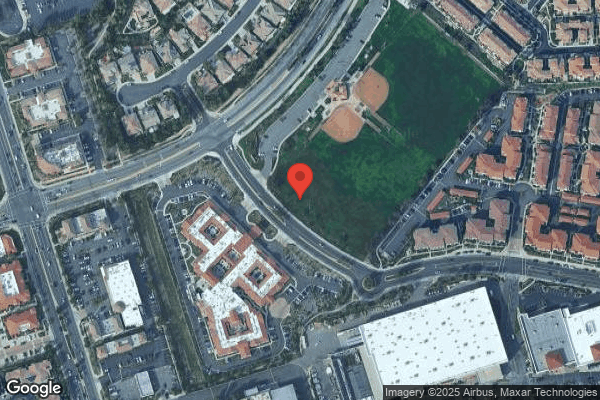
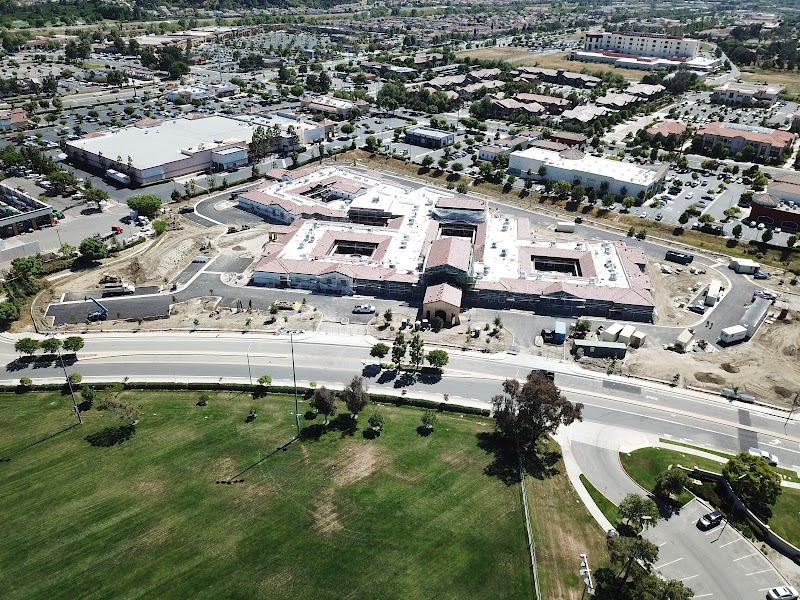
44280 CAMPANULA WAY, TEMECULA, CA 92592 (951) 466-0200
For profit - Limited Liability company 115 Beds GENERATIONS HEALTHCARE Data: November 2025 1 Immediate Jeopardy citation
Trust Grade
36/100
#919 of 1155 in CA
Last Inspection: April 2025

Within standard 12-15 month inspection cycle. Federal law requires annual inspections.

Overview

Temecula Healthcare Center has received a Trust Grade of F, indicating poor performance with significant concerns about care quality. It ranks #919 out of 1155 facilities in California, placing it in the bottom half, and #45 out of 53 in Riverside County, meaning there are very few local options that are worse. The facility's trend is worsening, having increased from 13 issues in 2024 to 16 in 2025. Staffing is rated average, with a 3/5 star score and a turnover rate of 45%, which aligns with the state average. However, there are concerning incidents reported, such as failing to maintain proper infection control during a COVID-19 outbreak, which could risk spreading the virus among residents, and unsafe food handling practices, such as storing expired food and improper thawing of chicken, which could lead to foodborne illnesses.

Trust Score
F
36/100
In California
#919/1155
Bottom 21%
Safety Record
High Risk
Review needed
Inspections
Getting Worse
13 → 16 violations
Staff Stability
⚠ Watch
45% turnover. Above average. Higher turnover means staff may not know residents' routines.
Penalties
⚠ Watch
$17,765 in fines. Higher than 99% of California facilities. Major compliance failures.
Skilled Nurses
✓ Good
Each resident gets 43 minutes of Registered Nurse (RN) attention daily — more than average for California. RNs are trained to catch health problems early.
Violations
⚠ Watch
32 deficiencies on record. Higher than average. Multiple issues found across inspections.
★★☆☆☆
2.0
Overall Rating
★★★☆☆
3.0
Staff Levels
★★★★☆
4.0
Care Quality
★★☆☆☆
2.0
Inspection Score
Stable
2024: 13 issues
2025: 16 issues

The Good

  • 4-Star Quality Measures · Strong clinical quality outcomes
  • Full Sprinkler Coverage · Fire safety systems throughout facility
  • No fines on record

Facility shows strength in quality measures, fire safety.

The Bad

2-Star Overall Rating

Below California average (3.1)

Below average - review inspection findings carefully

Staff Turnover: 45%

Near California avg (46%)

Higher turnover may affect care consistency

Federal Fines: $17,765

Below median ($33,413)

Minor penalties assessed

Chain: GENERATIONS HEALTHCARE

Part of a multi-facility chain

Ask about local staffing decisions and management

The Ugly 32 deficiencies on record

1 life-threatening
Sept 2025 2 deficiencies
CONCERN (D) 📢 Someone Reported This

A family member, employee, or ombudsman was alarmed enough to file a formal complaint

Potential for Harm - no one hurt, but risky conditions existed

Accident Prevention (Tag F0689)

Could have caused harm · This affected 1 resident

**NOTE- TERMS IN BRACKETS HAVE BEEN EDITED TO PROTECT CONFIDENTIALITY** Based on observation, interview, and record review, the facility failed to ensure use of the Hoyer lift (a portable total patien...

Read full inspector narrative →
**NOTE- TERMS IN BRACKETS HAVE BEEN EDITED TO PROTECT CONFIDENTIALITY** Based on observation, interview, and record review, the facility failed to ensure use of the Hoyer lift (a portable total patient lifting tool to assist in transferring patients in and out of bed) was operated with two persons for one of four residents (Resident 1). This failure placed Resident 1 at risk for falls and physical injury due to lack of adequate staff support during mechanical lift transfer. Findings:On September 9, 2025, at 2:12 p.m., observed the Physical Therapist (PT) operating the Hoyer lift to transfer Resident 1 from bed to wheelchair without a second staff member assisting. The PT roll the Hoyer lift over towards the wheelchair, with Resident 1 in the Hoyer lift. On September 9, 2025, at 2:17 p.m., during an interview with the CNA, the CNA stated that the Hoyer lift was to be used with two people to ensure resident safety. On September 9, 2025, at 2:51 p.m., during an interview with the PT, the PT stated that Resident 1 required maximum assistance for bed transfers. The PT stated that the Hoyer lift should be operated with two people, and he was operating the Hoyer lift by himself with Resident 1.Resident 1's record was reviewed. Resident 1 was admitted to the facility on [DATE], with diagnoses which included hemiplegia (paralysis of one side of the body) and Parkinson's disease (a progressive disease of the nervous system marked by tremor, muscular rigidity and imprecise movement).A review of Resident 1's care plan dated October 3, 2023, indicated, .ADL (activities of daily living) Self-Care Performance Deficit .Interventions .Provide appropriate self-performance and support needed during ADL care .A review of Resident 1's Functional Abilities and Goals, dated August 8, 2025, indicated .Mobility .Chair/bed-to-chair transfer .substantial/maximal assistance [resident does 25-49% of the effort] .A review of the facility's policy and procedure titled Lifting Machine, Using a Mechanical revised July 2017, indicated The purpose of this procedure is to establish the general principles of safe lifting using a mechanical lifting device. 1. At least two (2) nursing assistants are needed to safely move a resident with a mechanical lift. 2. Mechanical lifts may be used for tasks that require b. Transferring a resident from bed to chair.
CONCERN (D) 📢 Someone Reported This

A family member, employee, or ombudsman was alarmed enough to file a formal complaint

Potential for Harm - no one hurt, but risky conditions existed

Medical Records (Tag F0842)

Could have caused harm · This affected 1 resident

**NOTE- TERMS IN BRACKETS HAVE BEEN EDITED TO PROTECT CONFIDENTIALITY** Based on observation, interview, and record review, the facility failed to ensure accurate documentation of an incident for one ...

Read full inspector narrative →
**NOTE- TERMS IN BRACKETS HAVE BEEN EDITED TO PROTECT CONFIDENTIALITY** Based on observation, interview, and record review, the facility failed to ensure accurate documentation of an incident for one of four sampled residents (Resident 3), when the facility did not document a verbal altercation and related behaviors in the medical record.This failure had the potential for events to go unreported, increasing the recurrence, inadequate monitoring, and poor resident outcomes.Findings:On September 9, 2025, at 11:13 a.m., an unannounced visit to the facility was conducted to investigate an allegation of abuse.A review of Resident 3's medical records indicated resident was admitted on [DATE], with diagnoses of monoplegia, (paralysis restricted to one limb or region of the body), of lower limb following cerebral infarction, (stroke), affecting left non-dominant side.A review of Resident 3's History and Physical dated June 28, 2025, indicated .doing well overall. In goodspirits (sic).A review of Resident 4's medical records indicated resident was admitted on [DATE], with diagnoses of displaced intertrochanteric fracture of right femur, (broken hip), subsequent encounter for closed fracture with routine healing, diabetes mellitus type 2, (a chronic condition that affects the way the body uses sugar. The body either resists the effects of insulin - a hormone that regulates the movement of sugar into the cells - or doesn't produce enough insulin to maintain normal sugar levels), and major depressive disorder, (a mood disorder that causes a persistent feeling of sadness and loss of interest).A review of Resident 4's History and Physical dated August 3, 2025, indicated resident had the capacity to make decisions.On September 9, 2025, at 11:47 a.m., during an interview with Resident 4, Resident 4 stated Resident 3 was bumping her wheelchair into everything and appeared agitated. Resident 4 stated that she overheard Resident 3 on the phone threatening to beat someone up. Resident 4 stated she put on her call light, and staff removed Resident 3 from the room. On September 9, 2025, at 1:24 p.m., during an interview with Resident 3, Resident 3 admitted that she wanted to beat up Resident 2, her previous roommate. Resident 3 denied intending to beat up Resident 4. On September 9, 2025, at 1:35 p.m., during an interview with the Licensed Vocational Nurse, (LVN), the LVN stated that when a resident is involved in a verbal altercation, they document a Change of Condition in the medical records. On September 9, 2025, at 1:38 p.m., during an interview with the Assistant Director of Nursing, (ADON), the ADON stated that Resident 3 had a verbal altercation with Resident 2 and was moved to a new room with Resident 4. The ADON stated that Resident 4 overheard Resident 3 on the phone talking about the altercation with Resident 2, earlier in the day. On September 9, 2025, at 3:23 p.m., during an interview with the Certified Nursing Assistant, (CNA 1), CNA 1 stated that on September 4, 2025, Resident 3 was moved from another room due to an altercation. CNA 1 stated that Resident 3 was upset, cursing and yelling from the previous altercation with Resident 2. CNA 1 stated she stepped away from the room and noticed Resident 4 had put on her call light, responded to the call light, and found Resident 4 crying, stating that she overheard Resident 3 was going to beat her ass CNA 1 notified the Registered Nurse and moved Resident 4 to a different room. On September 9, 2025, at 4:38 p.m., during an interview and record review with the Director of Nursing, (DON), the DON reviewed Resident 3's progress notes and confirmed there was no documentation of the incident with Resident 4. There was no evidence of documentation in Resident 3's medical records regarding the incident with Resident 4.A review of Resident 4's eINTERACT SBAR Summary for Providers dated September 4, 2025, indicated .Nursing observations, evaluation, and recommendations are: [Resident 4's room number] Call light was on and attended call light noted patient emotionally distress and crying r/t [related to] new room mate, (sic). According to [Resident 3], roommate went to her bed andtouch [sic] her bed. Roommate was on the phone saying I am gonna beat her up. Separated patient and have a CNA watch them to prevent further incident while CN [charge nurse] informed RN [Registered Nurse] that [Resident 4] and roommate [Resident 3] are not compatible. Case Manager talked to [Resident 3] and said that she was talking on the phone about her old roommate in [room number].A review of Resident 4's IDT Note dated September 4, 2025, at 8 p.m., indicated Late Entry: Clinical Event Type:: Alleged Verbal AltercationDate and Time of Event:: 9/4/25 at around 6pm. Root Cause Analysis (RCA). Include Potential Underlying Cause(s)/Contributing Factor(s):: At around 6pm, the assigned LN [licensed nurse] and CNA reported to the writer that patient and her roommate are not compatible. Patient was crying after hearing her roommate on the phone saying she's going to beat her up. Writer went to the room, saw CM [case manager] speaking with theroommate (sic) and also social services speaking with the patient to get her statement. DON, [Director of Nursing], ADON, [Assistant Director of Nursing], Administrator, and Social Services notified. LN also reported that patient stated that her roommate slapped her bed, however roommate denied this. Patient's roommate clarified that she was on the phone talking about her previous roommate. Shortly after, patient was moved to a different room and station.Resident Description of Event:: Nursing staff and writer have been informed that patient had an alleged verbal altercation with her room mate (sic) who was moved into the room.[Resident 4] stated that she overheard a phone conversation of her room mate (sic) stating I will punch her and felt threatened by the comment. Prior to the comment, new room mate (sic) [Resident 3] alleged pushed her wheelchair into patients wheelchair who was sitting in bed at the time. Per [Resident 4] did not like that behavior but did not say anything.A review of the facility's policy and procedure titled Charting and Documentation revised July 2017, indicated .All services provided to the resident, progress toward the care plan goals, or any changes in the resident's medical, physical, functional or psychosocial condition, shall be documented in the resident's medical record. The medical record should facilitate communication between the interdisciplinary team regarding the resident's condition and response to care. 2. The following information is to be documented in the resident medical record. d. Changes in the resident's condition; e. Events, incidents or accidents involving the resident.
Apr 2025 2 deficiencies
CONCERN (D) 📢 Someone Reported This

A family member, employee, or ombudsman was alarmed enough to file a formal complaint

Potential for Harm - no one hurt, but risky conditions existed

Report Alleged Abuse (Tag F0609)

Could have caused harm · This affected 1 resident

**NOTE- TERMS IN BRACKETS HAVE BEEN EDITED TO PROTECT CONFIDENTIALITY** Based on interview, and record review, the facility failed to ensure an injury of unknown origin involving one of five residents...

Read full inspector narrative →
**NOTE- TERMS IN BRACKETS HAVE BEEN EDITED TO PROTECT CONFIDENTIALITY** Based on interview, and record review, the facility failed to ensure an injury of unknown origin involving one of five residents, (Resident 2) was reported to the State Survey Agency, (SSA), within two hours. Resident 2 was found by staff on April 22, 2025, visibly distressed, and verbally expressing severe pain with a bleeding wound on the right posterior scalp, which the resident could not explain the cause. This failure had the potential for a delay in the SSA investigation, which could result in missed opportunities for safety improvement and implementation of corrective actions. Findings: On April 22, 2025, at 4:38 p.m., the state survey agency received a call from the facility ' s Director of Nursing (DON), to report Resident 2 ' s injury of unknown origin that occurred on April 22, 2025, at approximately 3 a.m. A review of Resident 2 ' s admission record indicated Resident 2 was admitted on [DATE], with diagnoses of displaced (the bone fragments are not properly aligned) intertrochanteric fracture of left femur (a break in the upper part of the thigh bone), aneurysm of artery (a bulge or ballooning in the wall of a blood vessel) of lower extremity, and rheumatoid arthritis (a chronic progressive disease-causing inflammation in the joints and resulting in painful deformity and immobility). Further review of the record indicated Resident 2 was transferred to the general acute care hospital (GACH) on April 22, 2025. A review of Resident 2 ' s History and Physical dated March 17, 2025, indicated no focal deficits (problem with nerve, spinal cord, or brain function). On April 24, 2025, at 1:50 p.m., during an interview with the Licensed Vocational Nurse (LVN), the LVN stated that on April 22, 2025, at approximately 3 a.m., Resident 2 was found in her room with blood dripping from her head. The LVN stated they were unable to determine what had happened and Resident 2 was unable to verbalize what had happened. The LVN stated that they should report an injury of unknown origin to the DON or the Administrator right away. On April 24, 2025, at 3:36 p.m., during an interview, the Assistant Director of Nursing (ADON) stated Resident 2 had an injury of unknown origin that happened on April 22, 2025, at 3 a.m. The ADON stated that the facility is required to report injuries of unknown origin within two hours to the SSA, the Ombudsman, and law enforcement. The ADON stated the facility reported Resident 2 ' s injury of unknown origin after twelve hours. On April 24, 2025, at 5:06 p.m., during a telephone interview, the Certified Nursing Assistant (CNA) stated she was caring for Resident 2 on April 22, 2025. The CNA stated on April 22, 2025, at 2:52 a.m., as she was walking by Resident 2 ' s room, she observed Resident 2 thru the open door, leaning over her over-bed table. The CNA stated she noticed the resident ' s walker was turned over on the side, and there was a large pool of blood in the middle of the floor. The CNA stated she called for assistance, and the facility called 911; and transferred Resident 2 to the hospital. A review of Resident 2 ' s eINTERACT SBAR, dated April 22, 2025, at 3:31 a.m., indicated .Situation: The Change In Condition/s reported on this CIC Evaluation are/were: Bleeding (other than GI) . Nursing observations, evaluation, and recommendations are: Patient (sic) was observed standing in her room, using her bedside table for support, and repeatedly yelling to call her (family member). Blood was noted on the floor, as well as on the patient ' s jacket (sic) and the right posterior side of her head. Upon assessment, a wound was identified on the right posterior scalp. The patient was visibly distressed, verbally expressing severe pain and yelling. She complained of an intense headache. When asked why and how she started bleeding patient is unable to recall. Primary Care Provider Feedback: Primary Care Provider responded with the following feedback: A. Recommendations: Transfer to acute hospital for further eval due to bleeding from the back of head . A review of Resident 2 ' s Progress Notes, dated April 22, 2025, at 8:24 a.m., indicated Late Entry: Writer called and faxed SOC 341 to CDPH and Ombudsman Office. (Name of City) Police was notified (sic) . A review of Resident 2 ' s Progress Notes, dated April 22, 2025, at 12:52 p.m., indicated Late Entry . resident was last seen by the CNA at around 1:40 am on 4/22/25 and observed to be asleep in bed. CNA stated: Throughout the night, I checked on the patient three times prior to the incident—each time to assist with her bedpan. On all three occasions, she appeared to be in a deep sleep and required waking to respond. The first time I had checked her was about 11:30 pm, while the last time I had went into her room (before the fall) was around 1:30/1:40 am before I went to my lunch. Shortly after returning from my lunch break around 2:52 am, I was walking past her room when I noticed the patient had just opened the door, same time as I was walking by. I found the patient (sic) hunched over her bedside table (at around 2:52 am). I immediately observed her walker knocked over on the floor, a significant amount blood in the middle of room on the ground, and bleeding from a head wound. I tried asking her what had happened but did not get a response until the nurse came in who speaks the same language as her. I quickly approached to support her and called out for the nurse on duty. We promptly assisted her back to bed, notified the RN supervisor, and contacted emergency services (911). During this time, the patient appeared confused, repeatedly asked for her son, and expressed head pain. LVN stated: Upon assessment, the patient was noted to have an open wound on the right side of the back of her head. When asked if she had fallen, (sic) the patient stated, I don't know what happened to me, and was unable to recall the event . A review of Resident 2 ' s Hospital History and Physical, dated April 22, 2025, at 6:05 p.m. indicated .Patient was found to have trace pneumocephalus, (the presence of air or gas within the skull), SAH, (subarachnoid hemorrhage - bleeding in the area between the brain and the thin tissues that cover and protect it), and SDH, (subdural hematoma - a collection of blood that forms between the brain and the inner layer of the protective tissue surrounding the brain), and will be admitted to ICU (Intensive Care Unit), for further monitoring with trauma team as primary. A review of the facility ' s policy and procedure titled, Abuse, Neglect, Exploitation or Misappropriation - Reporting and Investigating, revised October 2022, indicated . Reporting Allegations to the Administrator and Authorities . If resident abuse, neglect, exploitation, misappropriation of resident property or injury of unknown source suspected, the suspicion must be reported immediately to the administrator and to other officials according to state law . 2. The administrator and/or designee or the individual making the allegation immediately reports his or her suspicion to the following persons or agencies: a. The state licensing/certification agency responsible for surveying/licensing the facility; b. The local/state ombudsman; c. The resident's representative; d. Adult protective services (where state law provides jurisdiction in long-term care); e. Law enforcement officials; f. The resident's attending physician; and g. The facility medical director. 3. Immediately is defined as: a. within two hours of an allegation involving abuse or result in serious bodily injury .
CONCERN (D) 📢 Someone Reported This

A family member, employee, or ombudsman was alarmed enough to file a formal complaint

Potential for Harm - no one hurt, but risky conditions existed

Deficiency F0628 (Tag F0628)

Could have caused harm · This affected 1 resident

Based on interview and record review, the facility failed to ensure a copy of the discharge notice was sent to the Long-Term Care (LTC) Ombudsman at the same time the notice was provided to one of fou...

Read full inspector narrative →
Based on interview and record review, the facility failed to ensure a copy of the discharge notice was sent to the Long-Term Care (LTC) Ombudsman at the same time the notice was provided to one of four sampled residents (Resident 1). This failure had the potential for the LTC Ombudsman not to be able to advocate for the resident in protecting their rights from inappropriate transfer and discharge. Findings: On April 30, 2025, at 9:14 a.m., an unannounced visit to the facility was initiated to investigate an admission, transfer, and discharge rights concern. A review of Resident 1 ' s History and Physical, dated April 3, 2025, indicated Resident 1 was alert and oriented to person, place, and time. On April 30, 2025, at 10:29 a.m., during an interview, the Social Services Designee (SSD 1) stated that the discharge notice for Resident 1 should be sent to the LTC Ombudsman office at the same time the discharge notice is sent to the resident or the resident representative, which should have been on April 22, 2025, for Resident 1. On April 30, 2025, at 10:54 a.m., an interview was conducted with SSD 2. SSD 2 stated that the discharge notice for Resident 1 was provided to Resident 1 ' s family member over the phone and a copy was provided to Resident 1, on April 22, 2025. SSD 2 stated that they sent the discharge notice to LTC Ombudsman on April 25, 2025, by fax. A review of Resident 1 ' s Notice of Transfer / Discharge, issued on April 22, 2025, indicated .Notification Date: 4/22/25 .Effective Date:: 4/25/25 .This notice to inform you that transfer/discharge is necessary for the following reasons .The transfer or discharge is appropriate because your health has improved sufficiently so you no longer require services by this facility .Copy of State LTC Ombudsman Office date: 4/25/25 . A review of Resident 1 ' s Progress Notes, dated April 25, 2025, at 3 p.m., indicated .Patient with an order to Discharge to home . Patient left the facility at around 3 pm pickup by [name of transportation company] . A review of the facility policy and procedure titled Transfer or Discharge Notices, revised March 2025, indicated .Notice of Transfer or Discharge (Anticipated) . 4. A copy of the notice is sent to the Office of the State Long-Term Care Ombudsman at the same time the notice of transfer or discharge is provided to the resident and representative .
Apr 2025 8 deficiencies
CONCERN (D)

Potential for Harm - no one hurt, but risky conditions existed

Deficiency F0558 (Tag F0558)

Could have caused harm · This affected 1 resident

**NOTE- TERMS IN BRACKETS HAVE BEEN EDITED TO PROTECT CONFIDENTIALITY** Based on observation, interview, and record review, the facility failed to accommodate the needs for one of three sampled reside...

Read full inspector narrative →
**NOTE- TERMS IN BRACKETS HAVE BEEN EDITED TO PROTECT CONFIDENTIALITY** Based on observation, interview, and record review, the facility failed to accommodate the needs for one of three sampled residents (Resident 275), when the call light button was observed on the floor and not within reach. This failure had the potential for Resident 275 not to be able to call staff for assistance which could result in needs of the resident not being met as well as a delay in the provision of care. Findings: Resident 275's record was reviewed. Resident 275 was admitted to the facility on [DATE], with diagnoses which included right below knee amputation (removal of leg). A review of Resident 275's Minimum Data Set (an assessment tool), dated April 9, 2025, indicated, Resident 275 had a Brief Interview of Mental Status (BIMS - a tool to assess cognitive function of an individual) score of 12 (moderate cognitive impairment). A review of Resident 275's Care Plan, initiated on April 2, 2025, indicated, .ADL (Activities of Daily Living) Self-Care Performance Deficit .Encourage the use of call light for assistance - Ensure call light is within reach . On April 13, 2025, at 3:54 p.m., during an observation and concurrent interview with Resident 275, the resident's call light button was on the floor and not within reach. Resident 275 stated, he could not reached it and needed the call light to be closer in order to call the nurse. On April 13, 2025, at 3:57 p.m., an observation in Resident 275's room and concurrent interview were conducted Licensed Vocational Nurse (LVN) 1. LVN 1 stated Resident 275's call light was on the floor and not within reach. LVN 1 further stated, the call light should not be on the floor and should be within the resident's reach to ensure the resident could call for assistance as needed and have their needs met. On April 13, 2025, at 4:10 p.m., an interview was conducted with Director of Staff Development (DSD). The DSD stated Resident 275's call light should not have been on the floor and should have been within reach. The DSD stated without the call light, he would not be able to get assistance in an emergency and his needs would not be met. On April 14, 2025, at 9:25 a.m., an interview was conducted with Assistant Director of Nursing (ADON) 1. ADON 1 stated it is the facility's practice to ensure resident's call lights are kept within reach. ADON 1 stated the Resident 275's call light should have been within reach and not on the floor. ADON 1 further stated not having the call light within reach could delay the resident's care and result in unmet needs. A review of the facility's policy and procedure titled Answering the Call Light, revised September 2022, indicated .The purpose of this procedure is to ensure timely responses to the resident's request and needs .ensure that the call light is accessible to the resident when in bed, from the toilet, from the shower or bathing facility and from the floor .
CONCERN (D)

Potential for Harm - no one hurt, but risky conditions existed

Accident Prevention (Tag F0689)

Could have caused harm · This affected 1 resident

**NOTE- TERMS IN BRACKETS HAVE BEEN EDITED TO PROTECT CONFIDENTIALITY** Based on interview and record review the facility failed to ensure one of three residents reviewed for accidents (Resident 40) w...

Read full inspector narrative →
**NOTE- TERMS IN BRACKETS HAVE BEEN EDITED TO PROTECT CONFIDENTIALITY** Based on interview and record review the facility failed to ensure one of three residents reviewed for accidents (Resident 40) was free from exposure to chemical hazards when a housekeeper (HK) left a toilet bowl cleaning solution within the resident's reach. This failure had the potential for Resident 40 to be exposed to chemical poisoning or chemical burn if the substance was ingested or mistakenly taken. Findings: On April 16, 2025, at 12:57 p.m., during an interview with Resident 40's Family Member (FM), she stated, on April 15, 2025, at 11 a.m., she found a white cup containing a pink solution with a brush inside, placed on the bedside table near Resident 40's drinking cup. The FM stated, the nurse told her that the brush was a toilet brush and the pink solution was a toilet cleaner. A review of Resident 40's admission record, indicated, Resident 40 was admitted to the facility on [DATE], with diagnoses which included dementia (forgetfulness). A review of Resident 40's History and Physical Examination dated February 6, 2025, indicated, Resident 40 can not make medical decisions . On April 16, 2025, at 1:12 p.m., during an interview with Licensed Vocational Nurse (LVN) 2, LVN 2 stated she found the toilet cleaning solution near Resident 40's water bottle. LVN 2 stated, there was a potential risk the resident could have accidentally ingested the cleaning solution, which could have caused poisoning. She further stated, this situation was unsanitary, and the cleaning solution should not have been near the resident. LVN 2 stated, it should have been properly secured away from Resident 40's room. On April 16, 2025, at 2:57 p.m., during an interview with Housekeeping Supervisor (HS), the HS stated, residents should not have access to chemical cleaning agents. The HS stated, housekeeping staff are expected to secure all cleaning solutions safely and away from resident areas. On April 17, 2025, at 10:31 a.m., during an interview with the Housekeeper (HK), she stated, she left the cleaning solution inside Resident 40's room. The HS stated, there was a potential for Resident 40 to access the cleaning solution and be harmed. The HK further stated, she should have stored the cleaning solution in the proper storage area before leaving the room. A review of the facility policy and procedure titled, Storage Area-Environmental Service, dated July 1, 2020, indicated .cleaning supplies .maintained in safe manner .
CONCERN (D)

Potential for Harm - no one hurt, but risky conditions existed

Deficiency F0865 (Tag F0865)

Could have caused harm · This affected 1 resident

Based on interview and record review, the facility failed to effectively utilize its Quality Assessment and Performance Improvement (QAPI) program to address an ongoing issue involving missing covers ...

Read full inspector narrative →
Based on interview and record review, the facility failed to effectively utilize its Quality Assessment and Performance Improvement (QAPI) program to address an ongoing issue involving missing covers on all three dumpsters. This failure resulted in the facility to not implement timely preventative measures and increased potential risk of cross-contamination. Findings: A review of facility document titled Food & Nutrition Services: Daily Supervisor Rounds Checklist, dated March 2, 2025, to April 17, 2025, indicated that the task Trash Lids closed and clean . was not checked off on any day. On April 17, 2025, at 8:37 a.m., during a concurrent interview and record review with the Administrator (ADM), the ADM stated, one of the current QAPI projects was replacing the covers for the three dumpster bins. The ADM stated, they have not been able to check off the task because the dumpster bins remained uncovered. The ADM stated, the facility made multiple attempts to contact the waste management company to replace or repair the bins, but appointments were repeatedly canceled. The ADM stated, while they considered temporary measures such as placing metal mesh over the openings, no interim solutions were implemented. The ADM stated, they should have taken action to prevent animal access and potential contamination while awaiting a resolution. The facility's policy and procedure titled, Quality Assurance and Performance Improvement (APIA) Plan, revised April 16, 2021, indicated, .This facility shall develop, implement and maintain an ongoing, facility-wide Quality Assurance and Performance Improvement (QAPI) Plan designed to monitor and evaluate the quality of resident care, pursue methods to improve quality of care and resolve identified problems .
CONCERN (D)

Potential for Harm - no one hurt, but risky conditions existed

Infection Control (Tag F0880)

Could have caused harm · This affected 1 resident

Based on observation, interview, and record review, the facility failed to ensure infection control practices were implemented when a licensed nurse did not clean and disinfect a shared blood pressure...

Read full inspector narrative →
Based on observation, interview, and record review, the facility failed to ensure infection control practices were implemented when a licensed nurse did not clean and disinfect a shared blood pressure (BP-pressure of blood in blood vessels) cuff according to the manufacturer's recommended contact time (the required duration the equipment must remain wet with the disinfectant to effectively kill microorganisms [germs]). This failure had the potential to expose vulnerable residents to cross-contamination and increase the risk of infections. Findings: On April 15, 2025 at 9:30 a.m., during a medication pass observation, LVN 3 was observed wiping a shared manual blood pressure cuff with a (brand name) disposable wipe after removing it from Resident 223's right upper arm. LVN 3 was not observed leaving the blood pressure cuff surface visibly wet for at least one minute. LVN 3 stated, she should have allowed the cuff to air dry for three minutes. LVN 3 reviewed the manufacturer's instructions and stated the required contact time was one minute. On April 15, 2025 at 10:31 a.m., during an interview with the Infection Preventionist (IP), the IP stated the facility's expectation was for nursing staff to clean shared resident equipment, such as blood pressure cuffs and stethoscopes, before and after each use. The IP stated nursing staff should read and follow the manufacturer's instructions printed on the (brand name) disposable wipe container to ensure the item remains wet for the full recommended contact time. The IP stated, following these instructions is critical to prevent the spread of organisms and infections. On April 17, 2025 at 9:10 a.m., during an interview with Assistant Director of Nursing (ADON) 2, ADON 2 stated the expectation was for nursing staff to disinfect shared resident equipment according to the (brand name) disposable wipe manufacturer's instructions. The ADON 2 stated nursing staff should have followed the manufacturer's instructions to ensure the effectiveness of the product and prevent cross contamination and infection. A review of the facility's policy and procedure titled, Cleaning and Disinfection of Resident-Care Items and Equipment, dated March 2021, the P&P indicated, .reusable resident care equipment will be decontaminated and/or sterilized between residents according to manufacturer's instructions. A review of the manufacturer's instructions for contact time for the (brand name) disposable wipes provided by the facility, the manufacturer's instructions indicated, .Contact time .Allow surface to remain wet for 1 full minute .
CONCERN (E)

Potential for Harm - no one hurt, but risky conditions existed

Deficiency F0578 (Tag F0578)

Could have caused harm · This affected multiple residents

**NOTE- TERMS IN BRACKETS HAVE BEEN EDITED TO PROTECT CONFIDENTIALITY** Based on interview and record review, the facility failed to ensure, 11 of 14 residents reviewed for Advance Directive (AD - wri...

Read full inspector narrative →
**NOTE- TERMS IN BRACKETS HAVE BEEN EDITED TO PROTECT CONFIDENTIALITY** Based on interview and record review, the facility failed to ensure, 11 of 14 residents reviewed for Advance Directive (AD - written statement of a person's wishes regarding medical treatment) (Residents 13, 17, 19, 70, 78, 84, 90, 97, 319, 320, and 322) a copy of the AD was available and the resident or their resident representative (RP) had been provided follow up information regarding the formulation of an AD. These failures had the potential to result in the ADs for Residents 13, 17, 19, 70, 78, 84, 90, 97, 319, 320, and 322 not being readily accessible to staff and physicians, which could lead to the residents' wishes regarding medical treatment being unknown and ultimately not honored. Findings: 1. On April 14, 2025, at 3:58 p.m., an interview was conducted with Resident 70. Resident 70 stated that he was unsure of having an AD and unsure if asked if he would like to formulate one. Resident 70's record was reviewed. Resident 70 was admitted to the facility on [DATE]. A review of the Advance Directive Acknowledgment form, dated March 19, 2025, indicated, .I have not executed any advance directives . A review of Resident 70's Physician Orders for Life-Sustaining Treatment (POLST), dated March 19, 2025, did not indicate Resident 70 had an AD. A review of Resident 70's Minimum Data Set (MDS - an assessment tool), dated March 26, 2025, indicated Resident 70 had Brief Interview of Mental Status (BIMS - a tool to assess cognitive function of an individual) score of 15 (intact cognitive response). A review of the Resident Care Conference dated March 20, 2025, indicated, .Advance Directive/POLST/code status order .(check marked). There was no documented evidence the resident or (RP) was provided information about the right to formulate an AD. On April 17, 2025, at 9:40 a.m., a concurrent interview and record review was conducted with the Social Service Director (SSD) 1. Resident 70's Care Conference dated March 20, 2025, was reviewed with the SSD 1. SSD 1 stated, upon admission, residents in the facility are provided an acknowledgement form indicating whether they have an AD. SSD 1 stated, if a resident has an AD, they would request a copy for facility records; if not, the resident is provided with education on how to create one. SSD 1 further stated a review of the AD should be conducted during the resident care conference. SSD 1 stated that there was no documentation showing Resident 70 or the RP was informed of the right to formulate an AD. SSD 1 stated, it should have been documented and followed up during the resident care conference. SSD 1 stated without an AD on file there was a risk the facility may not be able to honor the resident's care. 2. On April 14, 2025, at 4:00 p.m., an interview was conducted with Resident 90. Resident 90 stated that he was unsure of having an AD and unsure if asked if he would like to formulate one and would like to know more about it. Resident 90's record was reviewed. Resident 90 was admitted to the facility on [DATE]. A review of the Advance Directive Acknowledgment form, dated November 27, 2024, indicated, .I have not executed any Advance Directives . A review of Resident 90's POLST, dated October 10, 2024, indicated, .No advance Directive . A review of Resident 90's the MDS, dated [DATE], indicated Resident 90 had a BIMS score of 15. A review of the Resident Care Conference dated November 28, 2024, indicated, .Advance Directive/POLST/code status order .(check marked). There was no documented evidence the resident or (RP) was provided follow up information about the right to formulate an AD. On April 17, 2025, at 9:43 a.m., a concurrent interview and record review was conducted with SSD 1. Resident 90's care conference dated November 28, 2024, was reviewed SSD 1. SSD 1 stated that there was no documentation showing Resident 90's or the RP were informed about their right to formulate an AD and that it should have been documented and followed up during the resident care conference. 3. On April 14, 2025, at 3:50 p.m., an interview was conducted with Resident 97. Resident 97 stated that she was unsure of having an AD and unsure if asked if she would like to formulate one. Resident 97's record was reviewed. Resident 97 was admitted to the facility on [DATE]. A review of the Advance Directive Acknowledgment form, dated March 19, 2025, indicated, .I have not executed any advance directives . A review of Resident 97's POLST, dated March 13, 2025, did not indicate Resident 97 had an AD. A review of Resident 97's MDS, dated [DATE], indicated Resident 97 had BIMS score of 11 (moderate cognitive impairment). A review of the Resident Care Conference dated March 13, 2025, indicated, .Advance Directive/POLST/code status order .(check marked). There was no documented evidence the resident or (RP) was provided follow up information about the right to formulate an AD. On April 17, 2025, at 9:54 a.m., a concurrent interview and record review was conducted with SSD 1. Resident 97's care conference dated March 13, 2025, was reviewed with SSD 1. SSD 1 stated that there was no documentation indicated Resident 97 or the RP were informed about their right to formulate an AD and that it should have been documented and followed up during the resident care conference. 4. On April 14, 2025, at 3:46 p.m., an interview was conducted with Resident 84. Resident 84 stated that he was unsure of having an AD and unsure if asked if he would like to formulate one. Resident 84's record was reviewed. Resident 84 was admitted to the facility on [DATE]. A review of the Advance Directive Acknowledgment form, dated October 10, 2024, indicated, .I have not executed any advance directives . A review of Resident 84's POLST, dated October 10, 2024, indicated, No advance Directive. A review of Resident 84's MDS, dated [DATE], indicated Resident 84 had BIMS score of 12 (moderate cognitive impairment). A review of the Resident Care Conference dated January 9, 2025, indicated, .Advance Directive/POLST/code status order .(check marked). There was no documented evidence the resident or (RP) was provided follow up information about the right to formulate an AD. On April 17, 2025, at 9:57 a.m., a concurrent interview and record review was conducted with SSD 1. Resident 84's care conference dated January 9, 2025, was reviewed with SSD 1. SSD 1 stated that there was no documentation indicated Resident 84 or the RP were informed about their right to formulate an AD and that it should have been documented and followed up during the resident care conference. 11. On April 15, 2025, at 10:36 a.m. an interview was conducted with Resident 78. Resident 78 stated initially he did not execute an AD but would like to complete one now. Resident 78 further stated, he could not recall being asked about it again and would like more information. A review of Resident 78's admission Record indicated Resident 78 was admitted to the facility on [DATE]. A review of Resident 78's Physician Orders for Life-Sustaining Treatment (POLST), dated February 6, 2025, indicated resident did not have an AD. A review of Resident 78's MDS dated [DATE], indicated Resident 78 had a BIMS score of 15 (cognitively intact). A review of the Advance Directive Acknowledgment form, dated August 1, 2024, indicated, .I have not executed any advance directives . A review of the Resident Care Conference dated March 27, 2025, indicated, .Advance Directive/POLST/Code Status Order (check marked) . There was no documented evidence Resident 78 or RP were provided follow up information or education about the right to formulate an AD. On April 17, 2025, at 10:22 a.m. a concurrent interview and record review of Resident 78's Care Conference was conducted with the Social Service Director (SSD) 1. SSD 1 stated residents in the facility are provided an acknowledgement form upon admission and if they had an AD, they would request a copy to be available in the facility. SSD 1 stated if they did not have one, they would provide a handout with information and provide education on how to formulate one. SSD 1 further stated during a resident's Care Conference, which was done quarterly, a follow up with the resident or RP about AD would be conducted. She stated there was no documentation which indicated Resident 78 and/or RP were provided follow up information during the care conference. The SSD stated if there was no AD on file there was a potential for the facility to not be able to honor their wishes for care. A review of the facility's policy and procedure titled, Advance Directives, revised September 2022, indicated, .the resident has the right to formulate an advance directive, including the right to accept or refuse medical or surgical treatment .advance directives are honored in accordance with state law and facility policy .Prior to or upon admission of a resident, the social services director or designee inquires of the resident, his/her family members and/or his legal representative, about the existence of any written advance directives .The resident or representative is provided with written information concerning the right to refuse .and to formulate an advance directive if he or she chooses to do so .If the resident does not have an advanced directive .the facility staff will offer assistance in establishing advance directive .staff will document in the medical record the offer to assist and the residents decision to accept or decline assistance .Information about whether or not the resident has executed an advance directive is displayed prominently in the medical record in a section of the record that is retreivable by any staff . 5. During an interview on April 15, 2025 at 4:15 p.m. with Resident 13, Resident 13 stated she believed she had an AD and the facility should have a copy. A review of Resident 13's admission Record indicated Resident 13 was admitted [DATE]. A review of Resident 13's POLST, dated March 18, 2025, did not indicate Resident 13 had an AD. A review of Resident 13's MDS, dated [DATE], indicated Resident 13 had a BIMS score of 15 - (intact cognitive response). There was no documented evidence the resident or (RP) were provided follow up information or education about the right to formulate an AD and that a copy was available for reference. A review of the Advance Directive Acknowledgment form, dated March 18, 2025, indicated, .I have not executed any advance directives . A review of the Resident Care Conference dated March 19, 2025, indicated, .Advance Directive/POLST/code status order .(check marked). On April 17, 2025 at 10 a.m., during a concurrent interview and record review of Resident 13's Care Conference dated March 19, 2025, with Social Service Director (SSD) 1, SSD 1 stated upon admission, residents in the facility are provided an acknowledgement form indicating whether they have an AD. SSD 1 stated if a resident had an AD they would request for a copy to have available in the facility or will provide them with education on how to formulate one. SSD 1 further stated a review of the AD should be conducted during the resident care conference. SSD 1 stated that there was no documentation showing Resident 13 or the representative parties were informed about their right to formulate an AD and should have been documented and followed up during the resident care conference. SSD 1 stated if there was no AD on file there was a potential for the facility to not be able to honor their wishes for care. 6. During an interview on April 15, 2025 at 4:30 p.m. with Resident 320, Resident 320 stated she does not have an AD and would like to have one. Resident 320 stated she was unsure if it was offered and if it was followed up. A review of Resident 320's admission Record indicated Resident 320 was admitted [DATE]. A review of Resident 320's POLST, dated April 4, 2025, did not indicate Resident 320 had an AD. A review of Resident 320's MDS, dated [DATE], indicated Resident 320 had a BIMS score of 14 - (intact cognitive response). There was no documented evidence the resident or (RP) were provided follow up information or education about the right to formulate an AD. A review of the Advance Directive Acknowledgment form, dated April 4, 2025, indicated, .I have not executed any advance directives . A review of the Resident Care Conference dated April 5, 2025, indicated, .Advance Directive/POLST/code status order .(check marked). On April 17, 2025 at 10:03 a.m., during a concurrent interview and record review of Resident 320's Care Conference dated April 5, 2025, with Social Service Director (SSD) 1, SSD 1 stated that there was no documentation showing Resident 320 or the representative parties were informed about their right to formulate an AD and should have been documented and followed up during the resident care conference. 7. During an interview on April 15, 2025 at 3:55 p.m. with Resident 322, Resident 322 stated he did not have an AD and was not interested at this time. Resident 322 stated he could not remember if it was offered. A review of Resident 322's admission Record indicated Resident 322 was admitted [DATE]. A review of Resident 322's POLST, dated January 25, 2025, indicated Resident 322 did not have an AD. A review of Resident 322's MDS, dated [DATE], indicated Resident 322 had a BIMS score of 10 - (moderately impaired cognitive response). There was no documented evidence the resident or (RP) were provided follow up information or education about the right to formulate an AD. A review of the Advance Directive Acknowledgment form, dated January 25, 2025, indicated, .I have not executed any advance directives . A review of the Resident Care Conference dated January 27, 2025, indicated, .Advance Directive/POLST/code status order .(check marked). On April 17, 2025 at 10:06 a.m., during a concurrent interview and record review of Resident 322's Care Conference, dated January 27, 2025, with Social Service Director (SSD) 1, SSD 1 stated that there was no documentation showing Resident 322 or the representative parties were informed about their right to formulate an AD and that it should have been documented and followed up during the resident care conference. SSD 1 stated if there was no AD on file there was a potential for the facility to not be able to honor their wishes for care. 8. During an interview on April 15, 2025 at 4:35 p.m. with Resident 319, Resident 319 stated she did not have an AD but was interested and was unsure if the facility followed up with her. A review of Resident 319's admission Record indicated Resident 319 was admitted [DATE]. A review of Resident 319's POLST, dated April 9, 2025, did not indicate Resident 319 had an AD. There was no documented evidence the resident or (RP) were provided follow up information or education about the right to formulate an AD. A review of the Advance Directive Acknowledgment form, dated April 9, 2025, indicated, .I have not executed any advance directives . A review of the Resident Care Conference dated April 10, 2025, indicated, .Advance Directive/POLST/code status order .(check marked). On April 17, 2025 at 10:10 a.m., during a concurrent interview and record review of Resident 319's Care Conference, dated April 10, 2025, with the Social Service Director (SSD) 1, SSD 1 stated that there was no documentation showing Resident 319 or the representative parties were informed about their right to formulate an AD and that it should have been documented and followed up during the resident care conference. SSD 1 stated if there was no AD on file there was a potential for the facility to not be able to honor their wishes for care. 9. During an interview on April 16, 2025 with Resident 19, Resident 19 stated he did not have an AD but is interested in formulating one and was unsure if the facility followed up. A review of Resident 19's admission Record indicated Resident 19 was admitted on [DATE]. A review of Resident 19's POLST, dated February 13, 2025, did not indicate Resident 19 had an AD. A review of Resident 19's MDS, dated [DATE], indicated Resident 19 had a BIMS score of 11 - (moderately impaired cognitive response). There was no documented evidence the resident or (RP) were provided follow up information or education about the right to formulate an AD. A review of the Advance Directive Acknowledgment form, dated April 3, 2024, indicated, .I have not executed any advance directives . A review of the Resident Care Conference dated March 18, 2025, indicated, .Advance Directive/POLST/code status order .(check marked). On April 17, 2025 at 10:14 a.m., during a concurrent interview and record review of Resident 19's Care Conference, dated March 18, 2025, with the Social Service Director (SSD) 1, SSD 1 stated that there was no documentation showing Resident 19 or the representative parties were informed about their right to formulate an AD and that it should have been documented and followed up during the resident care conference. SSD 1 stated if there was no AD on file there was a potential for the facility to not be able to honor their wishes for care. 10. During an interview on April 14, 2025 at 12:45 p.m. with Resident 17, Resident 17 stated she did not have an AD but would like to have one and was unsure if it was offered or followed up. A review of Resident 17's admission Record indicated Resident 17 was admitted on [DATE]. A review of Resident 17's POLST, dated January 17, 2025, did not indicate Resident 17 had an AD. A review of Resident 17's MDS, dated [DATE], indicated Resident 17 had a BIMS score of 15 - (intact cognitive response). There was no documented evidence the resident or (RP) were provided follow up information or education about the right to formulate an AD. A review of the Advance Directive Acknowledgment form, dated January 17, 2025, indicated, .I have not executed any advance directives . A review of the Resident Care Conference dated April 10, 2025, indicated, .Advance Directive/POLST/code status order .(check marked). On April 17, 2025 at 10:16 a.m., during a concurrent interview and record review of Resident 17's Care Conference dated April 10, 2025, with the Social Service Director (SSD) 1, SSD 1 stated that there was no documentation showing Resident 17 or the representative parties were informed about their right to formulate an AD and that it should have been documented and followed up during the resident care conference. SSD 1 stated if there was no AD on file there was a potential for the facility to not be able to honor their wishes for care.
CONCERN (E)

Potential for Harm - no one hurt, but risky conditions existed

Respiratory Care (Tag F0695)

Could have caused harm · This affected multiple residents

**NOTE- TERMS IN BRACKETS HAVE BEEN EDITED TO PROTECT CONFIDENTIALITY** Based on observation, interview, and record review, the facility failed to follow the policy and procedures for oxygen use for t...

Read full inspector narrative →
**NOTE- TERMS IN BRACKETS HAVE BEEN EDITED TO PROTECT CONFIDENTIALITY** Based on observation, interview, and record review, the facility failed to follow the policy and procedures for oxygen use for two of two sampled residents (Resident 17 and 70) when: 1. Resident 70 was observed receiving continuous oxygen at an incorrect flow rate, without proper documentation or assessment; and 2. Resident 17 had an unlabeled nasal cannula (oxygen tubing - a device that delivers oxygen). These failures had the potential to result in unnecessary or unsafe oxygen administration and increased risk of infection for Residents 17 and 70. Findings: 1. On April 14, 2025, at 2:21 p.m., a concurrent observation and interview was conducted for Resident 70. Resident 70 was alert, oriented and able to verbalize his needs. Resident 70 was observed with oxygen on at six liters per minute (a unit of measure) via nasal cannula. Resident 70 stated he had been on oxygen since the early morning. On April 14, 2025, Resident 70's record was reviewed. Resident 70 was admitted to the facility on [DATE], with diagnosis which included Chronic Obstructive Pulmonary Disease (COPD -a lung disease that makes it difficult to breathe). A review of Resident 70's physicians order dated April 1, 2025, indicated, .Oxygen: at 2-4 L/Min (liters per minute) via NC (nasal cannula) PRN (as needed) to keep O2 sats (oxygen saturation) greater then 90% as needed . A review of Resident 70's Care Plan initiated on March 19, 2025, indicated, .resident has a medical diagnosis of COPD .Goal .the resident will display optimal breathing patterns daily .Approaches .administer oxygen therapy as ordered by physician . On April 14, 2025, at 2:44 p.m., during a concurrent interview and record review, Licensed Vocational Nurse (LVN) 3 stated, Resident 70's oxygen was set at six liters. LVN 3 stated, Resident 70 should not be on six liters. LVN 3 stated, the resident's oxygen use that early morning had not been assessed or documented, and the nurses had not reported the higher oxygen level. LVN 3 stated she should have checked on Resident 3. On April 15, 2025, at 3:51 p.m., during an interview with Registered Nurse Supervisor (RN) 1, RN 1 stated she was not informed that Resident 70 had shortness of breath or any change in condition. RN 1 stated, if there is a physician's order for oxygen, the correct amount should be monitored and maintained. RN 1 stated, staff should report any changes in a resident's condition. RN 1 stated, giving more oxygen than ordered could lead to adverse effects, such as over-oxygenation. On April 17, 2025, at 9:20 a.m., an interview was conducted with the Director of Nursing (DON). The DON stated, all nurses are responsible for proper resident assessments, which included monitoring of vitals signs, identifying changes in condition, and following physicians orders. The DON stated, if a resident is not in respiratory distress and has a as needed oxygen order, nurses must follow the physician's specified rate and frequency. The DON stated, Resident 70 should not have been on six liters of oxygen and should have been receiving oxygen at the rate between two and four liters as needed. The DON further stated, providing too much oxygen could worsen the resident's breathing. A review of the facility policy and procedure titled, Oxygen Administration, dated 2001, indicated, .Before administering oxygen, and while the resident is receiving oxygen therapy, assess for the following .signs or symptoms of oxygen toxicity .tracheal irritation, difficulty breathing, or slow, shallow rate of breathing .adjust the oxygen delivery device so that it is comfortable for the resident and the proper flow of oxygen is being administered .observe the resident upon setup and periodically thereafter to be sure oxygen is being tolerated .documentation .the rate of oxygen flow, route, and rationale .the frequency and duration of the treatment . 2. During an observation on April 13, 2025 at 9:45 a.m., Resident 17 was observed in bed using oxygen via nasal cannula at two liters per minute. The nasal cannula tubing was unlabeled. On April 13, 2025 at 9:45 a.m. during a concurrent observation and interview with RN Supervisor (RN) 2, RN 2 acknowledged and stated Resident 17's nasal cannula tubing was not labeled with the date and it should have been. RN 2 further stated there is a risk of infection if oxygen tubing was unlabeled. A review of Resident 17's admission Record indicated Resident 17 was admitted [DATE], with the diagnoses which included acute respiratory failure (a sudden condition when there is not enough oxygen or too much carbon dioxide in the body) and pleural effusion (collection of fluid around the lungs). A review of the Physician Orders dated January 18, 2025, the orders indicated, .Oxygen: Change Oxygen tubing to include NC and/or Mask and Storage Bag every week and prn .every night shift every Sun. During an interview on April 16, 2025 at 10:05 a.m. with the Assistant Director of Nursing (ADON 1), ADON 1 stated staff are expected to label all oxygen tubing with the date to prevent infection. The ADON 1 stated the tubing must be changed every Sunday on the night shift and as needed. A review of the facility's policy and procedure titled, Oxygen Administration, dated October 2010, indicated, .Oxygen tubing and humidifier (if in use) will be changed and labeled every 7 days and as needed.
CONCERN (E)

Potential for Harm - no one hurt, but risky conditions existed

Deficiency F0802 (Tag F0802)

Could have caused harm · This affected multiple residents

Based on observation, interview, and record review, the facility failed to ensure the dietary staff were adequately trained to carry out duties in a sanitary and safe manner when one dietary staff did...

Read full inspector narrative →
Based on observation, interview, and record review, the facility failed to ensure the dietary staff were adequately trained to carry out duties in a sanitary and safe manner when one dietary staff did not follow the manufacturer's instructions for the testing of Quaternary (Quaternary ammonium compounds [quats]are a group of chemicals used for disinfectants) sanitizer. This failure had the potential to result in inaccurate readings of the sanitizing solution, which could lead to cross-contamination. Findings: On April 15, 2025, at 10:23 a.m., during an observation of a Dietary Aide (DA) testing the sanitizing solution in the three-compartment sink, the DA was observed dipping the Quat strip into the sanitizing solution for four seconds before comparing the strip to the color comparator chart. A review of the Directions for use Quat-10 Testing Paper indicated .Dip paper for 10 seconds then compare to colors on test strip package . During a concurrent interview with the DA, he stated he should have waited for 10 seconds before comparing the test strip to the color chart. The DA stated, failing to follow the correct procedure could result in inaccurate readings, leading to ineffective sanitization, and increasing the risk for food borne illness (stomach illness acquired from ingesting contaminated food) as well as compromised cleanliness of kitchen surfaces and utensils. On April 15, 2025, at 1:30 p.m., during an interview with Registered Dietician (RD) 1, the RD 1 stated the DA should have followed the manufacturer's instructions when testing the sanitizing solution. A review of the facility policy and procedure titled, Policy & Procedure Manual Resource-Sanitation of Dishes/Manual Washing - Quaternary Ammonium Compound Solutions - Concentration as indicated by manufacturer .
CONCERN (F)

Potential for Harm - no one hurt, but risky conditions existed

Food Safety (Tag F0812)

Could have caused harm · This affected most or all residents

Based on observation, interview, and record review, the facility failed to ensure safe and sanitary food preparation and storage practices when: 1. One sandwich snack was observed to be expired; 2. O...

Read full inspector narrative →
Based on observation, interview, and record review, the facility failed to ensure safe and sanitary food preparation and storage practices when: 1. One sandwich snack was observed to be expired; 2. One dispensing scoop was left inside the container and not stored outside or on top of the mashed potato powder; 3. The kitchen door located near the garbage container area was left open for 20 minutes; and 4. Three garbage containers did not have covers. These failures had the potential to cause foodborne illness (stomach illness acquired from ingesting contaminated food) among a vulnerable population of 112 out of 115 residents who received food prepared in the facility's kitchen. Findings: 1. On April 13, 2025, at 9:20 a.m., during an initial kitchen observation, with the Assistant Dietary Supervisor (ADS), one peanut butter and jelly sandwich was found in the snacks refrigerator with a label that read Expired on April 9, 2025, readily available. During a concurrent interview with the ADS, the ADS stated the sandwich was prepared on April 6, 2025, and should have been discarded on April 9, 2025. The ADS stated, the sandwich should not have been found in the refrigerator. The ADS further stated, if the sandwich had been served to a resident, it could have caused illness. On April 15, 2025, at 1:25 p.m., during an interview with the Registered Dietician (RD) 1, the RD 1 stated the sandwich was past its expiration date, should have been discarded, and was not safe to serve to residents. A review of the facility policy and procedure titled, Food Safety Product Labeling and Dating Guide, dated July 29, 2014, indicated, .clearly marked with use by date (day or date product must be discarded) . 2. On April 13, 2025, at 9:27 a.m., a dispensing scoop was observed stored inside a container, in direct contact with mashed potato powder. During a concurrent interview with the ADS , the ADS stated the scoop should not be in contact with the powder and should be stored in its designated place. On April 15, 2025, at 1:25 p.m., during an interview with Registered Dietician (RD) 1, RD 1 stated a dispensing scoop should be hanging and not touching the product, to prevent cross-contamination. A review of the professional reference U.S. FDA (Food and Drug Administration) Food Code 2022, Section 3-304.12 In-Use Utensils, Between-Use Storage. indicated, .During pauses in FOOD preparation or dispensing. FOOD preparation and dispensing UTENSILS shall be stored: .in the food with their handles above the top of the food . 3. On April 13, 2025, at 9:47 a.m., the kitchen door leading to the garbage area was observed to be open. During a concurrent interview with the ADS, he stated, the door was propped open for approximately 20 minutes. The ADS stated, the door should not have been left open due to risk of insects and dust entering the kitchen, which could lead to cross-contamination. A review of the professional reference U.S. FDA Food Code 2022, Section 6-202.14 Outer Openings, Protected. indicated, .The outer openings of a FOOD ESTABLISHMENT shall be protected against the entry of insects and rodents by Solid, Self-closing, tight fitting doors . 4. On April 13, 2025, at 9:51 a.m., three large dumpsters were observed without a tight fitting covers. During a concurrent interview with the ADS, the ADS stated the dumpsters should be covered to prevent insects and rodents infestation. A review of the facility policy titled, .Dispose of Garbage and Refuse, dated November 2018, indicated .Garbage and refuse containers are maintained in good condition .and waste is properly contained in dumpsters .with lids covered .
Mar 2025 3 deficiencies
CONCERN (D) 📢 Someone Reported This

A family member, employee, or ombudsman was alarmed enough to file a formal complaint

Potential for Harm - no one hurt, but risky conditions existed

Deficiency F0573 (Tag F0573)

Could have caused harm · This affected 1 resident

**NOTE- TERMS IN BRACKETS HAVE BEEN EDITED TO PROTECT CONFIDENTIALITY** Based on interview and record review the facility failed to provide access to personal and medical records within two working da...

Read full inspector narrative →
**NOTE- TERMS IN BRACKETS HAVE BEEN EDITED TO PROTECT CONFIDENTIALITY** Based on interview and record review the facility failed to provide access to personal and medical records within two working days upon request by the resident's legal representative, for one of three sampled residents (Resident 1). This failure has the potential to delay care and treatment, affecting the resident's physical well-being. Findings: On March 3, 2025, at 9:05 a.m., an unannounced visit to the facility was conducted to investigate a resident's rights issue. A review of Resident 1's admission Record, indicated, Resident 1 was admitted to the facility on [DATE], and was discharged from the facility on January 29, 2025. A review of Resident 1's Release of Medical Information, request, dated February 11, 2025, indicated, .(name) requester .Please consider this as (Resident 1 name) request, by and through this office as legal representative, that all writings related to her within your care, custody and control .that be made available within two working days from the receipt of this correspondence . On February 3, 2025 at 1:02 p.m., during a concurrent interview and review of Resident 1's release of medical information request form with the Medical Records Director (MRD), she stated the process for handling requests for a resident's medical records from a law firm, requires such request to be sent to the facility's legal team. The MRD stated, the facility's legal team either releases the records to the requester or provides approval before any records are released. The MRD further stated the records would be released to the requester within the time specified by the requester or within 15 days, in accordance with facility policy. The MDR stated on February 11, 2025, at 1:08 p.m., she received the request and forwarded it to the facility's legal team, requesting Resident 1's medical records be released to Resident 1's legal representative within two working days. The MRD stated on February 14, 2025, at 12:15 p.m., Resident 1's legal representative contacted the facility to follow up on Resident 1's medical records request. The MRD further stated she contacted the facility's legal team who requested additional records for review. The MRD stated she did not provide an update to the legal representative and had not followed up with the legal team since February 14, 2025. The MRD stated Resident 1's medical records had not been released to the requester. The MRD stated Resident 1's medical records should have been provided within two working days as specified by the requester or within 15 days, in accordance with the facility policy. On February 3, 2025 at 2 p.m., during an interview with the Assistant Director of Nursing (ADON), she stated, medical records could be requested by residents, their representatives or legal representative, and should be provided within two days after the facility received the request. During a review of the facility policy and procedure titled, Resident/Personal Representative Access To Protected Health Information, dated June 2016, indicated, .The facility shall allow an adult resident or his/her personal representative to .receive copies of his/her protected health information (PHI) in a designated record set with an oral or written requests .The requested PHI shall be provided timely .discharged Residents: Within 15 calendar days after the receipt of written request .
CONCERN (D) 📢 Someone Reported This

A family member, employee, or ombudsman was alarmed enough to file a formal complaint

Potential for Harm - no one hurt, but risky conditions existed

Quality of Care (Tag F0684)

Could have caused harm · This affected 1 resident

**NOTE- TERMS IN BRACKETS HAVE BEEN EDITED TO PROTECT CONFIDENTIALITY** Based on interview and record review the facility failed to ensure for one of three sampled residents (Resident 2) had a physici...

Read full inspector narrative →
**NOTE- TERMS IN BRACKETS HAVE BEEN EDITED TO PROTECT CONFIDENTIALITY** Based on interview and record review the facility failed to ensure for one of three sampled residents (Resident 2) had a physician order prior to hospital transfer. This failure had the potential to affect Resident 2's overall health and wellbeing. Findings: On March 3, 2025, at 9:05 a.m., an unannounced visit to the facility was conducted to investigate a complaint incident. A review of Resident 2's admission Record, indicated, Resident 2 was admitted to the facility on [DATE], with diagnoses which included atrial flutter (an abnormal heart rhythm that can cause an individual to faint). A review of Resident 2's Health Status Note, dated February 19, 2025, indicated, .Was helping patient to use the bathroom, while sitting on toilet patient was straining and eyes rolled back and proceeded to pass out .AMR (American Medical Response) was called and arrived on scene where he (Resident 2) was then transported to (name of hospital) for further assessments . A review of Resident 2's SNF/NF to Hospital Transfer Form, dated February 19, 2025, indicated, .Sent to (name of hospital) .Date of transfer: 2/19/2025 17:50 (5:50 p.m.) .Reason for Transfer: Unresponsive . Further review of Resident 2's medical records, indicated Resident 2 was transferred to the hospital without a physician order. On March 3, 2025, at 9:50 a.m., during a concurrent interview and review of Resident 2's Health Status Note with Registered Nurse (RN) 1, he stated the process when a resident has a change in condition includes notifying the physician and obtaining a transfer order prior to hospital transfer. RN 1 stated, on February 19, 2025, Resident 2 was transferred to the hospital without a physician's order. RN 1 stated an order should have been in place prior to Resident 2 transfer to the hospital. On March 3, 2025, at 2 p.m., during a concurrent interview and review of Resident 2's Health Status Note with the Assistant Director of Nursing (ADON), the ADON stated prior to a hospital transfer, the physician should be notified, and an order must be in place. The ADON stated, Resident 2 was transferred on February 19, 2025, without a physician's order. The ADON stated, an order is essential to ensure resident safety and appropriateness of the transfer. A review of the facility policy and procedure titled, Change in a Resident's Condition or Status, dated 2001, indicated, .The nurse will notify the resident's attending physician or physician on call when there has been a .need to transfer the resident to a hospital/treatment center .discharge without proper medical authority .
CONCERN (D) 📢 Someone Reported This

A family member, employee, or ombudsman was alarmed enough to file a formal complaint

Potential for Harm - no one hurt, but risky conditions existed

Medical Records (Tag F0842)

Could have caused harm · This affected 1 resident

**NOTE- TERMS IN BRACKETS HAVE BEEN EDITED TO PROTECT CONFIDENTIALITY** Based on interview and record review, the facility failed to ensure medical records were accurate for one of three sampled resid...

Read full inspector narrative →
**NOTE- TERMS IN BRACKETS HAVE BEEN EDITED TO PROTECT CONFIDENTIALITY** Based on interview and record review, the facility failed to ensure medical records were accurate for one of three sampled residents (Resident 2) when the time of the alleged abused was not consistent with the time of reporting. This failure resulted in inconsistencies in the reporting timeline for Resident 2. Findings: On March 3, 2025, at 9:05 a.m., an unannounced visit to the facility was conducted to investigate an allegation of financial abuse. A review of Resident 2's admission Record, indicated, Resident 2 was admitted to the facility on [DATE]. A review of Resident 2's Minimum Data set (MDS - an assessment tool), dated August 12, 2024, indicated Resident 2 had a Brief Interview for Mental Status (tool used to assess a resident's cognitive function) score of 11 (moderate cognitive impairment). A review of Resident 2's eINTERACT SBAR Summary for Providers, dated February 18, 2025, at 7:49 a.m., indicated, .Alleged financial abuse against pt's (patient's) wife . A review of Resident 2's IDT (Interdisciplinary team) Note, dated February 18, 2025, at 6:22 p.m., indicated, .Alleged financial abuse by wife . Facility was made aware of alleged abuse today .Ombudsman, CDPH (California Department of Public Health) and Police have been contacted . On March 3, 2025, at 11:20 a.m., during a concurrent interview and review of Resident 2's eINTERACT SBAR Summary for Providers note with the Social Service Director (SSD), she stated, on February 18, 2025, Resident 2 alleged his wife was using his bank account and a large sum of money was missing. The SSD further stated Resident 2's daughter informed the Case Manager (CM) of the allegation on February 18, 2025, around 2 p.m. and the allegation did not happen at 7:49 a.m. The SSD stated she did not know why the nurse documented the incident time as 7:49 a.m. On March 3, 2025, at 12:21 p.m., during a concurrent interview and review of Resident 2's eINTERACT SBAR Summary for Providers note with Registered Nurse (RN) 2, she stated, she was the nurse who created and documented the note. RN 2 further stated she was not at work when Resident 2 alleged financial abuse on February 18, 2025, and she did not know what time the abuse incident occurred. RN 2 stated when she came to work on February 19, 2025, the Director of Nursing (DON) asked her to create a late entry note for Resident 2's abuse allegation incident and she just followed what the DON said. RN 2 stated she should not have documented on Resident 2's medical records because she was not at work when the abuse allegation happened, and it created confusion and inaccuracy on Resident 2's medical records. On March 3, 2025, at 12:51 p.m., during an interview with the CM, she stated on February 18, 2025, at 2 p.m., Resident 2's daughter reached out to her and alleged Resident 2's wife used his money without Resident 2's approval. On March 3, 2025, at 2:43 p.m., during an interview with the DON, he stated on February 18, 2025, at 2 p.m., Resident 2's daughter had alleged financial abuse by Resident 2's wife. The DON stated, on February 19, 2025, he had asked RN 2 to create a late entry documenting Resident 2's abuse allegation, but RN 2 had forgotten to adjust the time of the incident. The DON stated, RN 2 had not been working at the facility on February 18, 2025, and should not have documented in Resident 2's medical records. The DON stated, it's my mistake, and he should not have asked RN 2 to document the incident and should have written it himself. The DON further stated, it created confusion and inaccuracy of Resident 2 medical records. The DON stated the facility did not have a specific policy related to late charting, but it was standard of practice for staff not to document in a resident's medical record if staff was not scheduled to work. A review of the facility policy and procedure titled, Charting and Documentation, dated 2001, indicated .All services provided to the resident .Or any changes in the resident's medical, physical, functional or psychosocial condition, shall be documented in the resident's medical record .Documentation in the medical record will be objective, complete and accurate .
Jan 2025 1 deficiency
CONCERN (D) 📢 Someone Reported This

A family member, employee, or ombudsman was alarmed enough to file a formal complaint

Potential for Harm - no one hurt, but risky conditions existed

Accident Prevention (Tag F0689)

Could have caused harm · This affected 1 resident

**NOTE- TERMS IN BRACKETS HAVE BEEN EDITED TO PROTECT CONFIDENTIALITY** Based on observation, interview, and record review, the facility failed to ensure an environment free of accident hazards was pr...

Read full inspector narrative →
**NOTE- TERMS IN BRACKETS HAVE BEEN EDITED TO PROTECT CONFIDENTIALITY** Based on observation, interview, and record review, the facility failed to ensure an environment free of accident hazards was provided, when the bed alarm was not implemented for one of five residents reviewed for falls (Resident 1). In addition, Resident 1's fall risk assessment was not updated to reflect newly identified fall risks discussed during the interdisciplinary team (IDT - a group of healthcare professionals who work together for the common goal of the resident) meeting. These failures had the potential to result in further falls and injuries for Resident 1. Findings: On January 28, 2025, at 12:58 p.m. Resident 1 was observed to be sitting in a chair at the bedside. No bed alarm was observed on the bed or chair. A review of Resident 1's record indicated, Resident 1 was admitted to the facility on [DATE], with diagnoses which included repeated falls, unspecified dementia (memory loss). A review of Resident 1's Minimum Data Set, dated December 30, 2024, indicated Resident 1's Brief Interview for Mental Status score was 7 (severely impaired cognitive status). A review of Resident 1's SBAR, (Situation-Background-Assessment-Recommendation- communication tool) dated January 18, 2025, indicated, .Patient (Resident 1) was found sitting on the floor beside her bed, when asked what happened patient stated that she was trying to take herself to the bathroom. When asked why she did not put on her call light, she said she thought she could do it by herself . A review of Resident 1's Care Plan initiated on January 18, 2025, with a revision on January 20, 2025, indicated, .Resident had an unwitnessed fall, was observed on the floor .review information related to the fall and conduct a root cause analysis to determine possible cause of fall. Alter/remove any potential causes if possible to determine new intervention .electronic alarm to (Specify: bed, wheelchair) .check functionality and placement every shift .alarm assessed as a possible restraint and does not prevent resident from rising . A review of Resident 1's IDT (Interdisciplinary Team - a group of healthcare professionals who work together for the common goal of the resident) Post Accident/Fall document, dated January 20, 2025, indicated, .Determined follow-up measures that are needed to reduce the risk of reoccurrence .bed alarm .updated post fall evaluation .new resident specific intervention initiated .bed alarm .updated post fall evaluation . Further review of Resident 1's medical record indicated there was no updated post fall evaluation for Resident 1. On January 28, 2025, at 1:13 p.m. an interview was conducted with the Certified Nursing Assistant (CNA). The CNA stated Resident 1 did not have a bed alarm in use and that she was not informed by nursing staff that a bed alarm should be in place for Resident 1. On January 28, 2025, at 2:12 p.m., a concurrent interview and record review were conducted with the Registered Nurse Supervisor (RN). The RN stated during the resident's IDT meeting, the team determined that Resident 1 should have a bed alarm and that an update to the post fall evaluation should be completed. The RN further stated Resident 1's care plan should have been implemented after January 20, 2025, as part of a fall prevention intervention. The RN stated, interventions outlined in care plans should be carried out and that post-fall interventions should be updated to reflect the current fall risks of residents at risk for falls. The RN stated, an update to Resident 1's fall risk assessment was not conducted. The RN also stated, the bed alarm should have been placed, and an updated fall prevention evaluation should have been completed to mitigate further fall risks for Resident 1. On January 28, 2025, at 3:33 p.m., an interview was conducted with the Director of Nursing (DON). The DON stated Resident 1 had one fall in the facility and that during the IDT meeting on January 20, 2025, it was determined that Resident 1 would benefit from having a bed alarm and that an updated post fall evaluation should be conducted. The DON stated a few days after the meeting, the care team determined that Resident 1 no longer needed the bed alarm and that the care plan should have been updated to reflect this change. The DON stated it was facility policy to update the fall evaluation after a resident experiences a fall to determine current fall risks and needs. The DON stated an updated post-fall evaluation was not conducted for Resident 1 and stated that it should have been completed to provide the most up-to-date and accurate assessment of fall risks, ensuring appropriate interventions to prevent further falls. The facility policy and procedure titled, Safety and Supervision of Residents, dated 2001, indicated, .individualized, resident-centered approach to safety .the interdisciplinary care team shall analyze information obtained from assessments and observations to identify any specific accident hazards or risks for individual residents .the care team shall target interventions to reduce individual risks .implementing interventions to reduce accident risks and hazards shall including the following .communicating specific interventions to all relevant staff .assigning responsibility for carrying out interventions .ensuring that interventions are implemented; and documenting interventions .falls . The facility policy and procedure titled, Falls-Clinical Protocol, dated 2001, indicated, .the staff .will continue to collect and evaluate information until either the cause of the falling is identified, or it is determined that the cause cannot be found or is not correctable .the staff .will identify pertinent interventions to try to prevent subsequent falls and to address the risks of clinically significant consequences of falling .
Dec 2024 1 deficiency
CONCERN (D) 📢 Someone Reported This

A family member, employee, or ombudsman was alarmed enough to file a formal complaint

Potential for Harm - no one hurt, but risky conditions existed

Report Alleged Abuse (Tag F0609)

Could have caused harm · This affected 1 resident

**NOTE- TERMS IN BRACKETS HAVE BEEN EDITED TO PROTECT CONFIDENTIALITY** Based on interview and record review, the facility failed to report an allegation of physical abuse within two hours to the Cali...

Read full inspector narrative →
**NOTE- TERMS IN BRACKETS HAVE BEEN EDITED TO PROTECT CONFIDENTIALITY** Based on interview and record review, the facility failed to report an allegation of physical abuse within two hours to the California Department of Public Health (CDPH) after the facility was made aware of the allegation, for one of four sampled residents (Resident 1). This failure had the potential to result in further abuse of Resident 1, affecting the resident's emotional and psychosocial well-being. Findings: On December 22, 2024 at 2:07 p.m., CDPH received a fax (facsimile - telephonic transmission of scanned-in printed material) report involving a complaint allegation of physical abuse for Resident 1. On December 2, 2024, at 9:31 a.m., an unannounced visit to the facility was conducted to investigate an allegation of abuse. A review of Resident 1's admission Record, indicated, Resident 1 was admitted to the facility on [DATE] with diagnoses which included Bipolar Disorder (a mental illness affecting mood and concentration). A review of Resident 1's Minimum data Set (an assessment tool) dated October 10, 2024, indicated a Brief Interview for Mental Status (used to identify the cognitive condition of a resident) score of 14 (cognitively intact). A review of Resident 1s eINTERACT Change in Condition Evaluation, dated November 21, 2024, indicated, . At around 4 p.m. CNA (Certified Nurse Assistant) reported patient refused to take a shower .patient complained of pain when she was brushing tangle hair . A review of Resident 1s SBAR Communication Form, dated November 22, 2024, indicated, . at approximately 0245 (2:45 a.m.) resident verbalized to staff that allegedly abused during PM shift .Resident stated alleged abuse occurred when staff attempted to shower her. A Review of Resident 1 Progress Notes, dated November 22, 2024 at 6:37 a.m., indicated .Called CDPH .in regards to allegation of abuse . On December 2, 2024, at 10:05 a.m., during an interview with Resident 1, she stated on November 21, 2024 around 4:30 p.m., during her scheduled shower, CNA 1 brushed and pulled her hair hard. Resident 1 further stated she told CNA 1 she will not tolerate the abuse, and CNA 1 left the room afterward. Resident 1 stated she reported the incident to Licensed Vocational Nurse (LVN) 2, but LVN 2 did not do anything, so I reported to the night nurse. On December 2, 2024, at 10:30 a.m., during a concurrent interview and review of Resident 1 medical records with LVN 1, she stated all facility staff are mandated reporters and any allegation of abuse must be reported right away or within two hours to the CDPH, Ombudsman, police after the facility was made aware of the allegation. LVN 1 further stated on November 21, 2024 at around 4 p.m. CNA 1 reported to LVN 2 that Resident 1 complained of pain while her tangled hair was being brushed and alleged abuse. LVN 1 stated the incident was not reported to CDPH until November 22, 2024 at 6:37 a.m. (14 hours later). LVN 1 stated LVN 2 should have reported the abuse allegation incident to CDPH on November 21, 2024 to prevent further abuse. On December 2, 2024, at 11:45 a.m., during an interview with CNA 1, she stated on November 21, 2024 around 4:30 p.m., Resident 1 complained of pain and alleged abuse while she brushed and untangled Resident 1 hair during a scheduled shower. CNA 1 further stated she left Resident 1's room and reported the abuse allegation to LVN 2. On December 2, 2024, at 2:20 p.m., during a concurrent interview and review of Resident 1 medical records with the Assistant Director of Nursing (ADON), the ADON stated, any type of abuse or allegations of abuse should be reported to CDPH, ombudsman, police within two hours. The ADON further stated any allegation or suspicion of abuse should be reported to ensure the safety of the resident and prevent further abuse. The ADON stated on November 21, 2024 around 4:00-5:00 p.m., Resident 1 alleged abuse that CNA 1 pulled her hair too hard. The ADON further stated the abuse incident was not reported to CPDH until November 22, 2024 at 6:37 a.m. The ADON stated LVN 2 should have reported the abuse incident within two hours to CDPH on November 21, 2024. On December 3, 2024 at 1:53 p.m. during an interview with LVN 2, LVN 2 stated she was the nurse on duty when the incident occurred on November 21, 2024, around 4 p.m. LVN 2 stated CNA 1 came to her and informed her Resident 1 had alleged abuse while her hair was being brushed and untangled. LVN 2 stated she did not report the abuse allegation to CDPH and the incident was not reported until early morning on November 22, 2024. LVN 2 stated she should have reported the incident within 2 hours after being made aware of the allegation. A review of the facility policy and procedure titled, Abuse, Neglect, Exploitation or Misappropriation – Reporting and Investigation, dated October 2022, indicated, . All reports of resident abuse .are reported to local, state, and federal agencies .Immediately .within two hours of an allegation involving abuse or result in serious bodily injury .
Oct 2024 2 deficiencies
CONCERN (D) 📢 Someone Reported This

A family member, employee, or ombudsman was alarmed enough to file a formal complaint

Potential for Harm - no one hurt, but risky conditions existed

Transfer Notice (Tag F0623)

Could have caused harm · This affected 1 resident

**NOTE- TERMS IN BRACKETS HAVE BEEN EDITED TO PROTECT CONFIDENTIALITY** Based on interview, and record review, the facility failed to ensure two of three residents, (Residents 4 and 5), had a discharg...

Read full inspector narrative →
**NOTE- TERMS IN BRACKETS HAVE BEEN EDITED TO PROTECT CONFIDENTIALITY** Based on interview, and record review, the facility failed to ensure two of three residents, (Residents 4 and 5), had a discharge notice sent to the Ombudsman, (advocate for residents of nursing homes), prior to their discharges. This failure had the potential for Residents 4 and 5 to not have an advocate prior to their discharges. Findings: On October 10, 2024, at 11:10 a.m., an unannounced visit to the facility on two complaints and one Facility Reported Incident was initiated. 1. A review of Resident 4's medical record indicated he was admitted to the facility on [DATE], with diagnoses of hemiplegia, (paralysis of one side of the body), and hemiparesis, (weakness of one side of the body), following cerebral infarction, (stroke), affecting left non-dominant side. Resident 4 was discharged on October 9, 2024. A review of Resident 4's History and Physical, dated September 23, 2024, indicated he was forgetful. A review of Resident 4's Order Summary Report, for the month of October 2024, indicated, .LCD (last cover day) 10/8/24 (October 8, 2024) discharge 10/9/24 (October 9, 2024) . A review of Resident 4's NOTICE OF TRANSFER / DISCHARGE, effective date of October 9, 2024, indicated .This notice is to inform you that transfer/discharge is necessary for the following reason .The transfer or discharge is appropriate because your health has improved sufficiently so that you no longer require services provided by the facility . A review of Resident 4's Progress Notes, dated October 9, 2024, at 1:10 p.m., indicated DC [discharge] for doctors (sic) order, went home with son .all meds and belongings given. leave (sic) the facility . On October 10, 2024, at 3:30 p.m., an interview was conducted with the Social Service Designee (SSD) 1. SSD 1 stated that discharge and transfer notices are sent to the Ombudsman by email on the first of the month. SSD 1 stated there was no way to send them every day prior to the resident being discharged . On October 10, 2024, at 5:16 p.m., an interview was conducted with SSD 2. SSD 2 stated that Resident 4 was discharged on October 9, 2024. The SSD 2 stated that Resident 4's discharge notice had not been sent to the Ombudsman office yet. 2. A review of Resident 5's medical records indicated he was admitted to the facility on [DATE], and discharged on September 11, 2024, with diagnoses of aftercare cervical decompression, (a procedure that removes any structures compressing the nerves in the neck), type 2 diabetes mellitus, (high blood sugar level), dementia, (memory loss), and multiple fractures of ribs. A review of Resident 5's Order Summary Report, for the month of October 2024, indicated: - Dated June 11, 2024, .Resident is Incapable Of Understanding Rights, Responsibilities, And Informed Consent . - Dated September 9, 2024, .LCD 9/10/24 (September 10, 2024), DC (discharge) home 9/11/24 (September 11, 2024) . A review of Resident 5's NOTICE OF TRANSFER / DISCHARGE effective date of September 11, 2024, indicated .This notice is to inform you that transfer/discharge is necessary for the following reason .The transfer or discharge is appropriate because your health has improve sufficiently so that you no longer require services provided by the facility . A review of Resident 5's Progress Notes dated September 11, 2024, at 2:30 p.m., indicated .Discharge Note Resident is awake alert and oriented noted with no sob [shortness of breath] no distress noted all needs have been attended and anticipated resident was discharged home today .resident left with personal belongings via private transportation. Email VirtualFax Sent fax result 1(951)658-1140 September Notice of Transfers/Discharges Date Tue October 1, 2024, at 2:20 p.m. On October 10, 2024, at 3:30 p.m., an interview was conducted with Social Service Designee (SSD) 1. SSD 1 stated that discharge and transfer notices are sent to the Ombudsman by email on the first of the month. The SSD 1 stated there was no way to send them every day prior to the resident being discharged . On October 10, 2024, at 5:16 p.m., an interview was conducted with SSD 2. SSD 2 stated Resident 5 was discharged on September 11, 2024. The SSD 2 stated that Resident 5's discharge notice was sent to the Ombudsman office by email on October 1, 2024. A review of the facility ' s policy and procedure titled Transfer or Discharge, Facility-Initiated revised October 2022, indicated .Facility-Initiated Transfer or Discharge .Facility-initiated transfer or discharge means a transfer or discharge which the resident objects to, or did not originate through a resident's verbal or written request .Notice of Transfer or Discharge (Planned) . 3. A copy of the notice is sent to the Office of the State Long-Term Care Ombudsman at the same time the notice of transfer or discharge is provided to the resident and representative .
CONCERN (D) 📢 Someone Reported This

A family member, employee, or ombudsman was alarmed enough to file a formal complaint

Potential for Harm - no one hurt, but risky conditions existed

Accident Prevention (Tag F0689)

Could have caused harm · This affected 1 resident

**NOTE- TERMS IN BRACKETS HAVE BEEN EDITED TO PROTECT CONFIDENTIALITY** Based on observation, interview, and record review, the facility failed to ensure one of three residents, (Resident 1), had bila...

Read full inspector narrative →
**NOTE- TERMS IN BRACKETS HAVE BEEN EDITED TO PROTECT CONFIDENTIALITY** Based on observation, interview, and record review, the facility failed to ensure one of three residents, (Resident 1), had bilateral floor mats in place as ordered. This failure had the potential for Resident 1 to have an injury due to a fall. Findings: On October 10, 2024, at 11:10 a.m., an unannounced visit to the facility on two complaints and one Facility Reported Incident was initiated. A review of Resident 1 ' s medical records indicated she was admitted on [DATE], with diagnoses of hypothyroidism, (a condition resulting from decreased production of thyroid hormones), rheumatoid arthritis, (a chronic progressive disease-causing inflammation in the joints and resulting in painful deformity and immobility), dementia, (a chronic or persistent disorder of the mental processes caused by brain disease or injury and marked by memory disorders, personality changes, and impaired reasoning), hemiplegia, (paralysis of one side of the body), and hemiparesis, (weakness of one side of the body), following cerebral infarction, (stroke), affecting left non-dominant side. A review of Resident 1 ' s History and Physical dated May 28, 2024, indicated she could make needs known but was unable to make decisions due to dementia. A review of Resident 1 ' s Order Summary Report dated September 4, 2024, indicated .Safety: Floor/Landing Pad To Be Placed Next To Bed (Right/Left) When Resident Is In Bed. every shift . On October 10, 2024, at 3:01 p.m., observed Resident 1 in bed. She had a floor mat on the right side of her bed. On October 10, 2024, at 3:01 p.m., an interview was conducted with Resident 1. Resident 1 denied that she had a fall and was unsure why she had a floor mat on the floor next to her bed. On October 10, 2024, at 3:10 p.m., an interview was conducted with the Certified Nursing Assistant, (CNA). The CNA stated she was taking care of Resident 1. The CNA stated that Resident 1 was a fall risk. The CNA stated that there should be a floor mat on each side of the bed since Resident 1 would get up on her own. On October 10, 2024, at 3:20 p.m., an interview was conducted with the Assistant Director of Nursing, (ADON). The ADON stated that if there was an order for bilateral floor mats for Resident 1, then a floor mat should be on each side of her bed. A review of the facility ' s policy and procedure titled Falls - Clinical Protocol revised March 2018, indicated .Treatment/Management .the staff and physician will identify pertinent interventions to try to prevent subsequent falls and to address the risks of clinically significant consequences of falling .
Aug 2024 1 deficiency
CONCERN (D) 📢 Someone Reported This

A family member, employee, or ombudsman was alarmed enough to file a formal complaint

Potential for Harm - no one hurt, but risky conditions existed

Deficiency F0573 (Tag F0573)

Could have caused harm · This affected 1 resident

**NOTE- TERMS IN BRACKETS HAVE BEEN EDITED TO PROTECT CONFIDENTIALITY** Based on interview and record review, the facility failed to provide copies of medical records upon request and within two busin...

Read full inspector narrative →
**NOTE- TERMS IN BRACKETS HAVE BEEN EDITED TO PROTECT CONFIDENTIALITY** Based on interview and record review, the facility failed to provide copies of medical records upon request and within two business days after receiving the request from an attorney on behalf of the resident, for one of four residents reviewed, Resident 3. This failure is a violation of Resident 3 and the resident's representatives ' rights. Findings: On August 29, 2024, at 9:50 a.m., an unannounced visit was conducted at the facility to investigate a complaint allegation. On August 29, 2024, at 10:39 a.m., during an interview with Licensed Vocational Nurse (LVN) 1, LVN 1 stated residents, their responsible parties and durable power of attorney (DPOA - a legal document that allows someone to appoint another person to make medical decisions on their behalf if they are unable to do so) can request for medical records. LVN 1 stated if a resident or the family member requested for medical records, they are directed to the Medical Records (MR). LVN 1 stated the timeframe to fulfill a medical record request was 24 to 48 hours from the day it was requested, depending on the number of records requested. On August 29, 2024, at 10:51 a.m., during an interview with the MR, the MR stated anybody listed on a resident ' s face sheet can request for medical records. The MR stated the resident had to give an authorization to have family members request for their medical records. The MR stated anything that was legal, they would have to check for DPOA. The MR stated medical records request are to be processed and fulfilled within 24 to 48 hours. The MR stated she processed the medical record requests on a first come, first served basis. The MR stated there were a lot of legal medical records request right now for full charts, and she asked her assistants if there were any regular medical records requests. The MR stated regular medical record requests were if a resident wanted to see the medication list, physician ' s orders, laboratory, and x-ray results. The MR stated legal medical record requests were when they receive subpoenas, requests for full chart and requests from law firms. The MR stated she recalled receiving medical record requests from law firms for Resident 3 and two other residents. On August 29, 2024, at 11:18 a.m., during a follow up interview with the MR, the MR stated the medical records request for Resident 3 was sent to the corporate office because corporate was handling those requests now. On August 29, 2024, at 11:44 a.m., the Administrator (ADM) provided a copy of the letter sent by Resident 3 ' s attorney. The ADM stated the letter and medical record request of Resident 3 was from her attorney and it was dated August 19, 2024. The ADM stated he would have to check when the facility received the letter for the medical record request. A review of Resident 3 ' s medical records indicated Resident 3 was admitted to the facility on [DATE], with diagnoses which included fracture (break in the bone) of the left thigh and diabetes mellitus (high blood sugar level). A review of the Minimum Data Set (MDS- an assessment tool) dated June 3, 2024, indicated she had severe cognitive impairment. A further review of Resident 3 ' s medical record indicated Resident 3 was transferred out to a general acute care hospital on June 9, 2024, and did not return to the facility. A review of the letter sent by Resident 3 ' s attorney dated August 19, 2024 indicated .Please consider this as (name of Resident 3) request, by and through this office as a legal representative, that all writings related to her within your care, custody and control as to (name of Resident 3) and that they be made available within two working days from the receipt of this correspondence for photocopying . Attached to the letter was an AUTHORIZATION FOR THE RELEASE OF MEDICAL INFORMATION . that indicated the facility was authorized to disclose to (name of law firm) all medical records, business office files and writings related to Resident 3, for the period of first day of service to present, for legal matters and it was signed by Resident 3 ' s family member on August 15, 2024. On August 29, 2024, at 12:00 p.m., during a follow up interview with the MR, the MR stated she received the medical record request for Resident 3 on August 20, 2024, and she sent it to the corporate office via e-mail (electronic mail) on August 20, 2024. The MR stated the corporate office instructed her not to respond to the request and that the request will be communicated with the facility ' s attorney. A review of e-mail messages between the MR and the Risk Manager (RM), who is from the facility ' s corporate office, indicated the MR sent an email of medical record request for Resident 3 to the RM on April 20, 2024, and the RM replied .We will have our attorney respond to this request for records, please do not respond . on August 20, 2024. On August 29, 2024, at 12:29 p.m., during an interview with the ADM, the ADM stated when the facility received medical record requests from attorneys, the facility ' s legal department dealt with those requests. The ADM stated he was not sure when the facility ' s attorneys fulfill those requests. The ADM stated when residents or family members requests for medical record and there was no legal action, they can review the chart within 24 business hours or get a copy within 48 business hours. The ADM further stated it had been seven business days since the facility received the medical record request form for Resident 3. A review of the facility ' s policy and procedure titled RESIDENT / PERSONAL REPRESENTATIVE ACCESS TO PROTECTED HEALTH INFORMATION dated June 6, 2016 indicated, .The facility shall allow an adult resident or his/her personal representative to inspect or receive copies of his/her protected health information (PHI) in a designated record set with an oral or written requests .The requested PHI shall be provided timely .Timing is critical since there is a short period to respond to resident/personal representative .
Apr 2024 1 deficiency
CONCERN (D) 📢 Someone Reported This

A family member, employee, or ombudsman was alarmed enough to file a formal complaint

Potential for Harm - no one hurt, but risky conditions existed

Accident Prevention (Tag F0689)

Could have caused harm · This affected 1 resident

Based on observation, interview, and record review, the facility failed to provide adequate supervision for two residents reviewed for elopement (Resident 1 and Resident 2) when Resident 1 and Residen...

Read full inspector narrative →
Based on observation, interview, and record review, the facility failed to provide adequate supervision for two residents reviewed for elopement (Resident 1 and Resident 2) when Resident 1 and Resident 2 had separate elopement (incident when a resident leaves the facility without authorization or supervision necessary for safety) episodes. This failure resulted in Resident 1 and Resident 2 being able to leave the facility undetected, which could have subsequently result in accidents, injuries, or even death to the residents. Findings: On March 28, 2024, at 9 a.m., an unannounced visit was conducted at the facility to investigate two incidents of elopement. On March 28, 2024, at 10:10 a.m., an observation and interview with Resident 1 was conducted. Resident 1 was alert and confused. Resident 1 was observed ambulating independently and stated she wanted to go home. Resident 1 did not remember the elopement incident. On March 28, 2024, at 12:26 p.m., an interview with Registered Nurse (RN) 1 was conducted. RN 1 stated Resident 1 eloped on March 26, 2024, around 8 pm. Resident 1 was found outside the facility. RN 1 stated Resident 1 was an elopement risk because of confusion and wanted to leave the facility. RN 1 stated Resident 1 was not properly supervised to prevent elopement. On March 28, 2024, at 12:38 p.m., an interview with Certified Nursing Assistant (CNA) 1 was conducted. CNA 1 stated Resident 1 eloped on March 26, 2024, around 8 pm. CNA 1 stated Resident 1 had a Wanderguard (a personal alarm) on her left wrist because she was confused, was ambulatory and walked fast, independently. CNA 1 stated staff searched for Resident 1 inside and outside of the facility and did not find her. CNA 1 stated Resident 1 returned about 30 minutes later with a family member, in the family member's car. CNA 1 stated Resident 1 was not properly monitored and supervised to prevent elopement. Resident 1's record was reviewed. Resident 1 was admitted at the facility on March 20, 2024, with diagnoses which included cerebral infarction (lack of blood flow to the brain), and cognitive communication deficit. Resident 1's Elopement Risk assessment, effective date March 21, 2024, indicated: .Will not leave facility unattended .At risk for elopement . Resident 1's care plan, initiated March 24, 2024, indicated: .At episode of elopement r/t (related to) the following risk factors: expresses a desire to go home, history of elopement, resident representative voiced concerns resident may wander or attempt to leave facility .Goal . will not leave facility unattended . On March 28, 2024, at 11:57 a.m., an interview with RN 2 was conducted. RN 2 stated Resident 2 eloped on March 22, 2024, around 5 am, and was later found outside of the facility. RN 2 stated Resident 2 had a personal alarm on because she was an elopement risk due to confusion and elopement attempts. RN 2 stated Resident 2 was not properly supervised, and should have been supervised to prevent elopement. On March 28, 2024, at 1:08 p.m., an interview with CNA 2 was conducted. CNA 2 stated Resident 2 eloped on March 22, 2024, around 5 am. CNA 2 stated Resident 2 had a personal alarm on because she was an elopement risk. CNA 2 stated facility staff found Resident 2 outside of the facility and returned her to the facility. CNA 2 stated she was busy and was not able to respond to Resident 2's alarm on time. CNA 2 stated there was lack of supervision for Resident 2 in order to prevent elopement. On March 28, 2024, at 2:08 p.m., an interview with the Director of Nursing (DON) was conducted. The DON stated Resident 1 and Resident 2 elopement episodes were due to an issue of monitoring for safety. Resident 2's record was reviewed. Resident 1 was readmitted at the facility on March 20, 2024, with diagnoses which included psychosis (disconnection from reality), anxiety and depression. Resident 2's Elopement Risk assessment, effective date March 21, 2024, indicated: .Will not leave facility unattended .At risk for elopement . Resident 2's care plan, initiated March 21, 2024, indicated: .At episode of elopement r/t (related to) the following risk factors: cognitive deficits, expresses a desire to go home, history of elopement, resident representative voiced concerns resident may wander or attempt to leave facility .Goal . will not leave facility unattended . The facility policy and procedure titled, Wandering, Unsafe Resident, dated July 1, 2020, was reviewed. The policy indicated, .The facility will strive to prevent unsafe wandering while maintaining the least restrictive environment for residents who are at risk for elopement .The resident's care plan will indicate the resident is at risk for elopement or other safety issues. Interventions to try to maintain safety, and monitoring as needed .
Feb 2024 6 deficiencies 1 IJ (1 facility-wide)
CRITICAL (L)

Immediate Jeopardy (IJ) - the most serious Medicare violation

Infection Control (Tag F0880)

Someone could have died · This affected most or all residents

⚠️ Facility-wide issue

**NOTE- TERMS IN BRACKETS HAVE BEEN EDITED TO PROTECT CONFIDENTIALITY** Based on document reviews, interviews, review of the Centers for Disease Control and Prevention (CDC) guidelines/recommendations...

Read full inspector narrative →
**NOTE- TERMS IN BRACKETS HAVE BEEN EDITED TO PROTECT CONFIDENTIALITY** Based on document reviews, interviews, review of the Centers for Disease Control and Prevention (CDC) guidelines/recommendations, and the facility policy, the facility failed to maintain an infection prevention and control program to prevent the transmission of Coronavirus Disease 2019 (COVID-19) to staff and residents on 4 of 4 units. Specifically, the facility failed to conduct contact tracing (identification and monitoring of individuals who have been exposed to a disease to prevent further spread) for staff during an outbreak of COVID-19. The facility determined usage of N95 respirators (source control) negated the CDC recommendation/guidelines for testing individuals' exposure to COVID-19. Subsequently, the facility failed to test all residents and staff who had been in close contact with others who had COVID-19. The facility further failed to conduct broad-based COVID-19 testing when contact tracing failed to halt transmission of COVID-19 per the facility's policy. The failed practices had the potential to affect all 111 residents who resided in the facility. As of 02/22/2024, the facility had eight residents and two staff that tested positive for COVID-19. It was determined the facility's non-compliance with one or more requirements of participation had caused, or was likely to cause, serious injury, harm, impairment, or death to residents. The Immediate Jeopardy (IJ) was related to State Operations Manual, Appendix PP, 483.80 (Infection Control) at a scope and severity of L. The IJ began on 01/26/2024 when Resident #76 tested positive for COVID-19 and the facility failed to do appropriate contact tracing and testing of everyone that had contact with Resident #76. Subsequently, Resident #63, Resident #45, Resident #81, Resident #251, Resident #252, and Resident #288, who resided on different units of the facility, tested positive for COVID-19 through 02/22/2024. The Administrator and Director of Nursing (DON) were notified of the IJ and provided the IJ template on 02/23/2024 at 6:20 PM. A Removal Plan was requested. The Removal Plan was accepted by the state survey agency on 02/24/2024 at 5:50 PM. The IJ was removed on 02/25/2024 at 11:35 AM, after the survey team performed onsite verification of the Removal Plan implementation. Noncompliance for F880 remained at the lower scope and severity of widespread, with actual harm that was not immediate jeopardy for F880. Findings included: A review of the CDC's Interim Infection Prevention and Control Recommendations for Healthcare Personnel During the Coronavirus Disease 2019 (COVID-19) Pandemic updated 05/08/2023, revealed Responding to a newly identified SARS-CoV-2-infected [severe acute respiratory syndrome coronavirus 2] HCP [health care personnel] or resident. - A single new case of SARS-CoV-2 infection in any HCP or resident should be evaluated to determine if others in the facility could have been exposed. - The approach to an outbreak investigation could involve either contact tracing or a broad-based approach; however, a broad-based approach is preferred if all potential contacts cannot be identified or managed with contact tracing or if contact tracing fails to halt transmission. A review of the facility policy titled, COVID-19 Policies and Procedures COVID-19 Mitigation Plan, revised 09/01/2023, revealed Post Exposure and Response Testing * Immediate investigation of potential outbreak should be performed when one (or more) COVID-19 positive individuals (resident or HCP) is identified in a facility. SNFs [skilled nursing facilities] should perform contact tracing within the facility to identify any HCP who have had a higher-risk exposure or residents who may have had high-risk close contact with the individual with SARS-CoV-2 infection: All HCP who have had a higher-risk exposure without source control and residents who have had close contacts, regardless of vaccination status, should be tested promptly (but not earlier that 24 hours after the exposure) and, if negative, again at 3 days and at 5 days after the exposure. The policy revealed, If testing of close contacts reveals additional HCP or residents with SARS-CoV-2 infection, contact tracing should be continued to identify residents with close contact or HCP with higher-risk exposures to the newly identified individual(s) with SARS-CoV-2 infection. A facility-wide or group level approach with quarantine for exposed groups should be considered if all potential contacts cannot be identified or managed with contact tracing or if contact tracing fails to halt transmission. A review of the facility COVID-19 Outbreak Log, dated 01/24/2024, revealed Resident #77 was positive for COVID-19 upon admission to the facility on [DATE]. Further review revealed four days later, Licensed Vocational Nurse (LVN) #1 had cold symptoms and tested positive for COVID-19 on 01/26/2024. In addition, Resident #76, who resided on the same unit as Resident #77 had shortness of breath and tested positive for COVID-19 on 01/26/2024. There was no documented evidence the facility conducted contact tracing when LVN #1 tested posted for COVID-19 to determine whether residents had been exposed to LVN #1. During an interview on 02/23/2024 at 9:15 AM, the Infection Preventionist (IP) stated LVN #1 cared for residents the day before (01/25/2024) the nurse tested positive for COVID-19. According to the IP. the facility did not test any of the residents LVN #1 cared for as LVN #1 wore an N95 respirator. A review of the facilityCOVID-19 Outbreak Log, dated 02/07/2024, revealed Resident #63 had a cough and tested positive for COVID-19 on 02/05/2024, Resident #45 had a cough and shortness of breath and tested positive for COVID-19 on 02/06/2024, Resident #81 had a cough and tested positive for COVID-19 on 02/06/2024, and the Director of Environmental Services had a fever, headache, body aches, and cough and tested positive for COVID-19 on 02/07/2024. There was no documented evidence the facility conducted contact tracing when the Director of Environmental Services tested positive for COVID-19 to determine whether residents had been exposed to the Director of Environmental Services. A review of the facility COVID-19 Outbreak Log, dated 02/11/2024, revealed Resident #251 had a headache, nausea, and fatigue and tested positive for COVID-19 on 02/11/2024. There was no documented evidence the facility completed contact tracing when Resident #251 tested positive for COVID-19 to determine who had been exposed to the resident. A review of the facility COVID-19 Outbreak Log, dated 02/19/2024, revealed Resident #252 had shortness of breath and tested positive for COVID-19 on 02/16/2024. A review of the facility COVID-19 Outbreak Log, dated 02/22/2024, revealed Resident #288 tested positive for COVID-19 on 02/21/2024. During an interview on 02/23/2024 at 9:15 AM, the IP stated the facility did not test any staff during the COVID-19 outbreak because staff woreN-95 respirators, and the facility did not consider the staff to have been exposed to COVID-19. During an interview on 02/23/2024 at 5:10 PM, Clinical Care Coordinator (CCC) #3 stated she was the IP at the facility for two years prior to the current IP. According to CCC #3, the facility believed staff usage of N95 respirators prevented exposure to COVID-19. During an interview on 02/23/2024 at 11:27 AM, the DON stated facility staff had been wearing N95 respirators since December 2023. During an interview on 02/23/2024 at 3:17 PM, a representative from the local health department stated the facility should complete contact tracing for any resident or staff that were exposed, whether the staff wore an N95 respirator or not. During a follow up interview on 02/23/2024 at 4:16 PM, the DON stated he did not believe staff needed to complete COVID-19 testing because staff wore N95 respirators. During an interview on 02/24/2024 at 9:45 AM, the IP stated she was not able to determine how each resident contracted COVID-19. During an interview on 02/23/2024 at 11:24 PM, the Administrator stated the facility did not test staff after a resident tested positive for COVID-19 if staff wore source control (N95 respirator). During an interview on 02/23/2024 at 6:32 PM, the Administrator stated the staff usage of the N95 respirators negated their need to be tested for COVID-19. On 02/24/2024 at 5:50 PM, a Removal Plan was submitted by the facility and accepted by the state survey agency. It read as follows: 1. How corrective action was taken for identified resident. On February 23, 2024, the Director of Nursing (DON), Assistant Director of Nursing (ADON), Infection Preventionist (IP), Quality Assurance Nurse (QAN) immediately tested those on scheduled PM shift on the 23rd, NOC [night] shift on the 24th and AM shift on the 24th. In addition, the Department Heads reached out to staff not scheduled yesterday or today to check their availability to come in and be tested and have an in-service. The scheduled staff and a large portion of the unscheduled staff who were available were tested and available residents and staff for COVID-19 exposure even if they were near the positive resident or not, and no additional residents or staff had positive covid test results. The DON, ADON, IP and QA Nurse reviewed and updated care plans based on residents needs for all those identified within the Immediate Jeopardy (IJ) documentation. In addition, they reviewed current practices during the PM shift on February 23, 2024, to ensure staff are exercising appropriate infection control procedures. The Director of Nursing (DON), Assistant Director of Nursing (ADON), Infection Preventionist (IP), Quality Assurance Nurse (QAN) were in-serviced and instructed, by the Corporate Nurse Consultant, on what was needing to be updated in the facility mitigation plan dated February 23, 2024 as well as general infection control and transmission based precautions to include but not limited to following: immediate investigation of potential outbreak should be performed when one or more COVID-19 positive individuals (resident or staff) is identified in the facility, immediate contact tracing by the infection preventionist or designee within the facility to identify any health care provider who have had higher risk exposure or residents who may have had high-risk close contact with the individual with SARS-CoV-2 infection, testing of residents and staff during an outbreak of COVID-19, on days 1, 3, and 5 following exposure, screening of all visitors and staff prior to entering the care area, correct donning and doffing of personal protective equipment of all staff and visitors in the COVID-19 unit and in rooms under transmission-based precaution, and how to recognize and report signs and symptoms of COVID-19 infection to prevent transmission. In consultation with the DON, IP, Director of Staff Development (DSD) and ADON began in-service of all staff verbally and in writing on February 23, 2024, through February 24, 2024. The in-service will be provided to all staff, prior to starting their shift. As the staff report to work for their shift after the 23rd of February, they will be in-serviced prior to starting their shift. This will be done in the Director of Staff Development (DSD) or area that accommodates the number of staff being in-serviced. The in-service will include the facility's revised new mitigation plan and guidelines dated February 23, 2024, general infection control and transmission based precautions to include but not limited to following: immediate investigation of potential outbreak should be performed when one or more COVID-19 positive individuals (resident or staff) is identified in the facility, immediate contact tracing by the infection preventionist or designee within the facility to identify any health care provider who have had higher risk exposure or residents who may have had high-risk close contact with the individual with SARS-CoV-2 infection, testing of residents and staff during an outbreak of COVID-19, on days 1, 3, and 5 following exposure. screening of all visitors and staff prior to entering the care area, correct donning and doffing of personal protective equipment of all staff and visitors in the COVID-19 unit and in rooms under transmission-based precaution, and how to recognize and report signs and symptoms of COVID-19 infection to prevent transmission. The record of education was filed and placed in the education binder by the Director of Nursing (DON). The Quality Assessment and Performance Improvement (QAPI) Committee met on February 24, 2024, to review and approve the QAPI which was created to address this issue. The Medical Director was made aware on February 23, 2024, regarding the IJ and the direction we were taking in the removal plan. The QAPI is part of our Plan of Correction (POC) as we move forward and includes system changes, monitoring and education as needed. The following QAPI Committee members were involved: Administrator Ast. [Assistant] Administrator/Admissions Director Business Office Manager Central Supply Coordinator Director of Staff Development Dietary Supervisor Resident Care Coordinator Station 1 Resident Care Coordinator Station 2 Resident Care Coordinator Station 3 Director of Enviro Services Infection Preventionist Director of Medical Records MDS Director of Rehabilitation Services Social Services Social Services Director of Activities Director of Nursing Assistant Director of Nursing QA Nurse/ADON Nurse Consultant Specific Staff involved in implementing the corrective action: Administrator, DON, ADON, IP, and DSD shall immediately provide education and training to residents, visitors, physicians and staff about the facility's new mitigation plan and policies and procedures as it relates to infection prevention and control by [DATE]. 2. Other residents at risk: All other residents and staff have the potential to be affected by the deficient practice. DON, IP, ADON and the DSD completed COVID-19 testing using antigen testing/POC {Point-Of-Care Test) of all residents on February 23rd into the 24th of February and for all scheduled and available staff on the 23rd into the 24th. No additional positive cases and other reportable incidents were observed. The DON, IP and DSD conducted a random assessment on the 23rd through 24th of February, of staff competency in screening all visitors entering the facility, and staff wearing appropriate personal protective equipment to prevent the spread of infection. No other reportable incidents were found. 3. Systemic Changes: The DON, IP, ADON and DSD began in-service of all staff verbally and in writing on February 23, 2024 in groups held in the DSD office, and at the nurses' station and presented a copy of the facility's new mitigation plan revised February 23, 2024, titled Mitigation Plan Policies and Procedures to include but not limited to the following: improvement plan as listed on the QAPI, contact tracing of residents and staff during an outbreak of the COVID-19 and immediate testing of residents and staff with close contact exposure to an individual who is COVID-19 positive, all visitors shall be screened utilizing the coronavirus screening tool, ensure screening of all who enter the facility for fever, and COVID 19 symptoms, visitors should not go to the designated visitation area to see the resident or enter any of our resident care areas until screening is completed and proper orientation regarding facility protocol is provided. The receptionist or assigned front desk shall provide visitors with coronavirus screening questionnaire form for them to complete, receptionist or assigned staff shall inform and explain to visitors that checking of temperature is also part of our screening process, receptionist or assigned staff shall review the form and not allow entrance to the facility if they answer at least one yes on the questionnaire. 4. Monitoring The DON, IP, ADON, and DSD and other nursing leadership will conduct rounds throughout the facility daily during an outbreak that will encompass all shifts, to ensure staff are exercising appropriate infection control procedures particularly in screening all visitors entering the facility, staff are wearing appropriate personal protective equipment to prevent the spread of infection. The supporting documentation will be kept within the QAPI minutes and reviewed monthly by the QAPI Committee to ensure compliance. Additional monitoring on what measure will be used, and the frequency, as listed under monitoring on the QAPI audit tool shall be performed by the DON, IP, ADON and the DSD weekly. Findings shall be discussed during standup and presented to the Quality Assurance (QA) committee monthly until significant compliance has been demonstrated for three consecutive months. 5. All corrections were completed on 2/24/2024. 6. The immediacy of the IJ was removed on 2/24/2024. Onsite Verification: The IJ was removed on 02/25/2024 at 11:35 AM, after the survey team verified the implementation of the Removal Plans as follows: A review of facility Sars-Cov2 Rapid Antigen Testing (POC) forms revealed all residents were tested on [DATE] or 02/23/2024 and all were negative for COVID-19. On 02/24/2024 at 6:00 PM, all staff listed on a facility working assignment sheet were verified to have been tested. A review of sign-in sheets revealed the Nurse Consultant instructed the DON, ADON, IP, and QAN on needed updates to the facility's mitigation plan. Interviews with the DON, ADON, IP and QAN revealed they had received education regarding the updated plan. A review of a facility document revealed the DON had a telephone conversation with the medical director regarding the IJ and the removal plan. A review of the facility's updated COVID-19 Mitigation Plan for Testing, Quarantine, Isolation, and Vaccination of Health Care Personnel (HCP) and Residents revised 02/23/2024 revealed it was up to date with current CDC guidelines. The facility's mitigation plan was revised to include all HCP who had a higher-risk exposure and residents who had close contact, regardless of vaccination status, should be tested promptly (but not earlier than 24 hours after exposure) and, if negative, again at day three and day five after the exposure. A review of In Service Compliance Training Record revealed staff sign-in sheets dated 02/23/2024 and 02/24/2024 revealed staff were educated on the updated mitigation plan and testing requirements following exposure. Interviews with staff from all three shifts and all disciplines revealed staff were able to verbalize the testing requirements for COVID-19 after being exposed to a resident or staff that had confirmed COVID-19. A review of a facility Random Assessment of Staff Competency dated 02/23/2024, revealed the facility randomly audited staff donning and doffing personal protective equipment, handwashing, visitor screening, and signage. The facility developed a form titled Rounding Tool for COVID-19 to be used for daily rounds and quality assurance and performance improvement (QAPI) audit tools were reviewed. A review of a facility QA/QAPI Committee Meeting Sign-In revealed the facility held a QAPI meeting on 02/24/2024.
CONCERN (D)

Potential for Harm - no one hurt, but risky conditions existed

PASARR Coordination (Tag F0644)

Could have caused harm · This affected 1 resident

Based on interviews, record review, and facility policy review, the facility failed to follow-up with the local authority for the completion of a Level II Preadmission Screening and Resident Review (P...

Read full inspector narrative →
Based on interviews, record review, and facility policy review, the facility failed to follow-up with the local authority for the completion of a Level II Preadmission Screening and Resident Review (PASARR) for 1 (Resident #93) of 2 sampled residents reviewed for PASARRs. Findings included: Review of a facility policy titled, California Preadmission Screening and Resident Review, effective 07/01/2020, revealed It is the policy of this facility that a Preadmission Screening and Resident Review Level I is completed to identify individuals who have a mental illness (MI) or intellectual disabilities (ID) and ensure that these residents receive the services and setting determined by the California Department of Health Care Services (DHCS). Level II Full Evaluation should be conducted by a DHCS Contractor for determination when the Level I Screen identifies the resident have Mental Illness (MI) or Intellectual Disability (ID). The policy specified, 6. A positive Level I screen necessitates an in-depth evaluation of the individual by the state-designated authority, known as PASARR Level II. A review of Resident #93's admission Record revealed the facility the resident on 11/24/2023, with diagnoses to include schizophrenia and anxiety disorder. A review of Resident #93's quarterly Minimum Data Set (MDS), with an Assessment Reference Date (ARD) of 01/22/2024, revealed the resident had a Brief Interview for Mental Status (BIMS) score of 12, which indicated the resident had moderate cognitive impairment. Per the MDS, the resident had active diagnoses to include anxiety disorder, depression, psychotic disorder, and schizophrenia. A review of Resident #93's care plan, initiated on 12/05/2023, revealed the resident received antipsychotic medications related to medical diagnoses that included schizophrenia and psychosis. A review of a letter from the State Department of Health Care Services Department of Health Care Services, addressed to the Administrator and dated 11/27/2023, revealed Resident #93 was unable to participate in the Level II evaluation. During an interview on 02/24/2024 at 3:32 PM, the Director of Medical Records stated all PASARR calls and questions were forwarded to the Assistant Director of Nursing (ADON). During an interview on 02/22/2024 at 8:27 AM, the ADON acknowledged Resident #93 was in the facility at the time the Level II evaluation was scheduled. During an interview on 02/22/2024 at 8:48 AM, the MDS Registered Nurse (RN) stated he was unaware Resident #93 was not available for the Level II evaluation. The MDS RN stated facility staff did not follow-up with the local authority to ensure Resident #93's Level II evaluation was completed. During an interview on 02/24/2024 at 1:27 PM, the Director of Nursing (DON) stated the ADON was responsible for the PASARR process. According to the DON, the ADON should have notified the local authority immediately so that Resident #93 could receive the appropriate treatment services.
CONCERN (D)

Potential for Harm - no one hurt, but risky conditions existed

Deficiency F0645 (Tag F0645)

Could have caused harm · This affected 1 resident

Based on record review, interviews, and facility policy review, the facility failed to submit a Level I Preadmission Screening and Resident Review (PASARR) for 1 (Resident #63) of 2 sampled residents ...

Read full inspector narrative →
Based on record review, interviews, and facility policy review, the facility failed to submit a Level I Preadmission Screening and Resident Review (PASARR) for 1 (Resident #63) of 2 sampled residents reviewed for PASARRs. Findings included: Review of a facility policy titled, California Preadmission Screening and Resident Review, effective 07/01/2020, revealed It is the policy of this facility that a Preadmission Screening and Resident Review Level I is completed to identify individuals who have a mental illness (MI) or intellectual disabilities (ID) and ensure that these residents receive the services and setting determined by the California Department of Health Care Services (DHCS). The policy revealed 3. The 'Resident Review (RR) (Status Change)' is selected if the resident has already been admitted to the facility and the facility is updating the existing PASRR [PASARR] on file for either of the following reasons: a. The resident stay has exceeded the 30-day exempted hospital discharge. The Resident Level I 6170 should be submitted by the 40th calendar day after admission for such cases. A review of Resident #63's admission Record revealed the facility originally admitted Resident #63 on 07/26/2023 and readmitted the resident on 12/19/2023. The admission Record indicated the resident had diagnoses that included bipolar disorder and anxiety disorder. A review of Resident #63's admission Minimum Data Set (MDS), with an Assessment Reference Date (ARD) of 12/22/2023, revealed the resident had a Brief Interview Mental Status (BIMS) of 15, which indicated the resident was cognitively intact. The MDS revealed the resident had an active diagnosis of bipolar disorder. A review of Resident #63's care plan, initiated on 01/09/2024, revealed the resident received anti-anxiety medication related to a medical diagnosis of anxiety. A review of letter from the State of California-Health and Human Services Agency Department of Health Care Services, dated 11/07/2023, revealed if Resident #63 remained in the nursing facility longer than 30 days, the facility should submit a new Level I screening as a resident review on the 31st day. During an interview on 02/21/2024 at 2:13 PM, the Assistant Director of Nursing (ADON) acknowledged a new Level I screening for Resident #63 was not submitted because she was not aware the letter indicated instructions to resubmit a Level I evaluation if the resident remained in the facility longer than 30 days. During an interview on 02/21/2024 at 2:50 PM, the MDS Registered Nurse (RN) stated the facility made a mistake and did not complete a new Level I screening for Resident #63. The MDS RN stated he was not aware of the letter that specified the facility should resubmit a new Level I evaluation on the 31st day. During an interview on 02/24/2024 at 1:27 PM, the Director of Nursing stated that the ADON was responsible for the submission of the Level I screening. During an interview on 02/24/2024 at 3:47 PM, the Administrator stated the facility should have called on the 31st day to ensure a Level I screening was completed.
CONCERN (D)

Potential for Harm - no one hurt, but risky conditions existed

Deficiency F0658 (Tag F0658)

Could have caused harm · This affected 1 resident

Based on record reviews, interviews, and facility policy review, the facility failed to schedule physician ordered follow-up appointments for 2 (Resident #111 and Resident #188) of 25 sampled resident...

Read full inspector narrative →
Based on record reviews, interviews, and facility policy review, the facility failed to schedule physician ordered follow-up appointments for 2 (Resident #111 and Resident #188) of 25 sampled residents. Findings included: Review of a facility policy titled, Resident Appointments, dated March 2023, revealed Our facility has set the process on how appointments are made from the initial consult [consultation]/order to actual transport. Procedure: 1. Entering the initial order for consult in [the electronic medical record] to see a specialist falls on the RN [registered nurse] responsibility. 2. RN prints the order and place in the Case Manager's slot located in the station labeled Case Manager. 3. Case Manager collects the consult order and refer to the designated business office clerk to call the health plan/medical group for authorization as needed. 4. Business Office Clerk should note the order with the authorization number or simply write no auth [authorization] required with the case manager's name. 5. Once the schedule for the appointment is set, business office clerk enters the order in [the electronic medical record] and communicate to CM [case manager] via email. 6. Business Office Clerk to place the noted order in the purple folder inside the yellow appointment binder. 1. A review of Resident #111's admission Record, revealed the facility admitted the resident on 12/26/2023, with diagnoses that included a displaced fracture of shaft of the left clavicle and unspecified dislocation of the right ulnohumeral joint (part of the elbow joint). A review of Resident #111's admission Minimum Data Set (MDS), with an Assessment Reference Date (ARD) of 01/01/2024, revealed the resident had a Brief Interview for Mental Status (BIMS) score of 13, which indicated the resident was cognitively intact. A review of Resident #111's orthopedic surgery consultation from the local hospital dated 12/19/2023, revealed the resident was to follow-up in clinic this week for an outpatient evaluation. A review of Resident #111's trauma surgery consultation from the local hospital dated 12/19/2023, revealed the orthopedist recommended outpatient follow-up for the resident. A review of Resident #111's admission Data Collection and Baseline Care Plan, dated 12/26/2023, revealed the resident had a post-operation follow-up appointment with an orthopedic surgeon. A review of Resident #111's Order Summary Report, for the time period 12/26/2023 to 02/29/2024, revealed an order dated 12/29/2023, that instructed staff to arrange post-operation follow up with the orthopedic surgeon, During an interview on 02/22/2024 at 2:28 PM, the Administrative Assistant/Case Manager Assistant (AA/CMA) stated when new residents were admitted to the facility from the hospital, he looked to see if there were any appointments the resident needed. According to AA/CMA, he tried to schedule an orthopedic appointment for Resident #111, but he was not sure what happened. During an interview on 02/23/2024 at 9:30 AM, the Director of Nursing (DON) stated that staff were in the process of scheduling Resident #111's orthopedic appointment. The DON acknowledged the appointment should have been scheduled when the resident admitted to the facility. The DON confirmed the facility missed scheduling Resident #111's orthopedic appointment. During an interview on 02/25/2024 at 8:35 AM, the Administrator stated he expected staff to handle appointments per the facility policy. 2. A review of Resident #188's admission Record, revealed the facility admitted the resident on 01/31/2024, with diagnoses that included disorders of kidney and ureter, acute kidney failure, artificial openings of the urinary tract status, and hydronephrosis (swelling of one or both kidneys). A review of Resident #188's hospital discharge summary, electronically signed by a physician and dated 01/25/2024, revealed the follow-up/discharge instruction indicated the resident was to follow-up with an internal medical doctor within five to seven days, an oncologist within one to two weeks, an urologist within three to four weeks, and schedule an appointment with a hematologist/oncologist within one to two weeks. A review of Resident #188's admission Minimum Data Set (MDS), with an Assessment Reference Date (ARD) of 02/07/2024 revealed the resident had a Brief Interview for Mental Status (BIMS) score of 13, which indicated the resident was cognitively intact. A review of Resident #188's Order Summary Report, for active orders as of 02/21/2024, revealed orders, dated 02/03/2024, that instructed staff to arrange an appointment with an oncologist within one to two weeks, an urologist within three to four weeks, and to schedule an appointment with a hematologist/oncologist. During an interview on 02/21/2024 at 10:13 AM, Resident #188 stated no one had spoken to them about any follow-up appointments after their hospital stay. The resident stated they had not had any scheduled follow-up appointments. During an interview on 02/22/2024 at 2:28 PM, the Administrative Assistant/Case Manager Assistant (AA/CMA) stated he scheduled resident appointments, called the physicians' offices, and organized transportation. According to the AA/CMA, he had not received anything from a case manager to schedule appointment for Resident #188. During an interview on 02/25/2024 at 8:35 AM, the Administrator stated he expected staff to handle appointments per the facility policy.
CONCERN (D)

Potential for Harm - no one hurt, but risky conditions existed

Drug Regimen Review (Tag F0756)

Could have caused harm · This affected 1 resident

Based on record review, interviews, and facility policy review, the facility failed to have evidence to indicate a pharmacy recommendation was reviewed by the physician for 1 (Resident #10) of 5 sampl...

Read full inspector narrative →
Based on record review, interviews, and facility policy review, the facility failed to have evidence to indicate a pharmacy recommendation was reviewed by the physician for 1 (Resident #10) of 5 sampled residents reviewed for medication regimen review (MRR). Findings included: Review of a facility policy titled, Medication Regimen Reviews, revised in May 2019, revealed, The Consultant Pharmacist reviews the medication regimen of each resident at least monthly. The policy indicated, 8. Within 24 hours of the MRR, the Consultant Pharmacist provides a written report to the attending physicians for each resident identified as having a non-life threatening medication irregularity. The report contains: 1. The resident's name; b. The name of the medication; c. The identified irregularity; and d. The pharmacist's recommendation. Per the policy, 12. The attending physician documents in the medical record that the irregularity has been reviewed and what (if any) action was taken to address it. The policy specified, 15. Copies of medication regimen reports, including physician responses, are maintained as part of the permanent medical record. A review of Resident #10's admission Record, revealed the facility admitted the resident on 01/15/2024, with diagnoses that included heart failure and dementia. A review of Resident #10's admission Minimum Data Set (MDS), with an Assessment Reference Date (ARD) of 01/18/2024, revealed the resident had a Brief Interview for Mental Status (BIMS) score of 12, which indicated the resident had moderate cognitive impairment. A review of Resident #10's Order Summary Report, with active orders as of 02/23/2024, revealed an order dated 01/16/2024, for primidone oral tablet 50 milligrams (mg), give two tablets by mouth one time a day for seizure. A review of the Consultant Pharmacist's Medication Regimen Review, for recommendations created between 02/01/2024 and 02/07/2024, revealed a recommendation for a primidone level for Resident #10. During an interview on 02/22/2024 at 3:15 PM, the Director of Nursing (DON) stated he was responsible to ensure the pharmacy recommendations were followed up on. The DON said he delegated the pharmacy recommendations out to one of his quality assurance nurses to ensure completion. The DON stated the Consultant Pharmacist's Medication Regimen Review for 02/07/2024 was delegated to Licensed Vocational Nurse (LVN) #34. During a telephone interview on 02/23/2024 at 10:15 AM, LVN #34 stated she sent the pharmacy recommendations in a text message to the physician. LVN #34 said she documented in the resident's electronic medical record when she received a response from the physician and the physician's response. However, LVN #34 stated she only documented in the resident's medical record when the physician responded with orders for changes in the resident's medications or laboratory orders and did not document if the physician did not agree with the pharmacist's recommendations. LVN #34 stated she did not recall if the physician responded to the recommendations for Resident #10's laboratory request and acknowledged there was no documentation to indicate the physician was notified of the pharmacist's recommendation. During an interview on 02/24/2024 at 1:11 PM, the DON stated the physician addressed the pharmacist's recommendation for Resident #10 but did not document it. According to the DON, LVN #34 followed-up on the recommendation for Resident #10 but failed to document. During an interview on 02/25/2024 at 8:35 AM, the Administrator stated he expected follow up on the pharmacy recommendations to be done correctly and accurately. The Administrator s stated staff should document the recommendations made by the physician, to include whether the physician agreed or disagreed with the pharmacist's recommendation, in the resident's progress notes.
CONCERN (F)

Potential for Harm - no one hurt, but risky conditions existed

Food Safety (Tag F0812)

Could have caused harm · This affected most or all residents

Based on observation, interviews, and facility policy review, the facility failed to chicken was thawed in a safe manner for 106 of 113 sampled residents who received food from the kitchen. Findings ...

Read full inspector narrative →
Based on observation, interviews, and facility policy review, the facility failed to chicken was thawed in a safe manner for 106 of 113 sampled residents who received food from the kitchen. Findings included: Review of a facility policy titled General HACCP [Hazard Analysis and Critical Control Point] Guidelines for Food Safety, with a copyright date of 2017 revealed, 6. Safe Thawing Practices a. Thaw meat, fish and or poultry in a refrigerator in a drip proof container and in a way that prevents cross contamination. b. Completely submerge the item in clean running water that is running fast enough to agitate and float off loose ice particles. c. Thaw the item in a microwave oven using the defrost mode if it is to be cooked immediately after thawing. d. Thaw as part of the cooking process. During a concurrent observation and interview on 02/20/2024 at 8:44 AM, four bags of chicken were observed in water in a sink in the facility's kitchen. There was not a continuous flow of cold water on the four bags of chicken. Dietary Aide/Assistant Supervisor (DA/AS) #35 stated the bags of chicken were placed in the sink by [NAME] #33. DA/AS #35 turned the cold water on so there would be a continuous flow of cold water on the four bags of chicken and stated cold water was used to thaw the chicken. During an interview on 02/21/2024 at 1:02 PM, [NAME] #33 stated the process for thawing meat was to place the meat in a continuous flow of cold water. [NAME] #33 stated he placed the chicken in the sink with hot water, because he wanted to thaw the four bags of chicken more quickly. During an interview on 02/20/2024 at 11:36 AM, the Dietary Supervisor stated she was informed by DA/AS #35 of the concern regarding how four bags of chicken was being thawed. According to the Dietary Supervisor, she informed DA/AS #35 to discard the chicken. During a follow-up interview on 02/23/2024 at 9:03 AM, the Dietary Supervisor stated staff should thaw chicken according to the facility policy. During an interview on 02/24/2024 at 1:33 PM, the Director of Nursing stated kitchen staff should thaw meat under a flow of continuous flow of cold water. During an interview on 02/24/2024 at 3:55 PM, the Administrator stated his expectation was for the kitchen staff to follow the food and safety guidelines for how meats should be thawed.
Feb 2024 1 deficiency
CONCERN (E) 📢 Someone Reported This

A family member, employee, or ombudsman was alarmed enough to file a formal complaint

Potential for Harm - no one hurt, but risky conditions existed

Deficiency F0558 (Tag F0558)

Could have caused harm · This affected multiple residents

**NOTE- TERMS IN BRACKETS HAVE BEEN EDITED TO PROTECT CONFIDENTIALITY** Based on observation, interview, and record review, the facility failed to ensure the call lights (device used by residents to c...

Read full inspector narrative →
**NOTE- TERMS IN BRACKETS HAVE BEEN EDITED TO PROTECT CONFIDENTIALITY** Based on observation, interview, and record review, the facility failed to ensure the call lights (device used by residents to communicate/indicate the need for assistance) were answered in a timely manner for five of seven residents (Residents 2, 3, 4, 5, 6, and 7). This failure had the potential for delayed medical management and unmet care needs. Findings: On February 5 and 6, 2024, an unannounced visit was conducted at the facility for a complaint investigation. During an observation on February 5, 2024, the following were observed: - at 2:58 p.m., Resident 2 ' s call light was on; - at 3:01 p.m., Resident 3 ' s call light was on; and - at 3:02 p.m., Resident 4 ' s call light was on. During a concurrent observation and interview on February 5, 2024, at 3:10 p.m., with Resident 2, Resident 2 was lying in bed in an upright position. Resident 2 stated most of the time, it took longer for the call light to get answered. Resident 2 stated at times, she had to wait for an hour for her call light to be answered by staff. During a concurrent observation and interview on February 5, 2024, at 3:18 p.m., with Resident 3, Resident 3 was lying in bed in a semi-Fowler ' s position (the head of the bed is elevated at 30 to 45 degrees angle). Resident 3 stated it would take an hour for the call light to be answered and it applied to all shifts. During a concurrent observation and interview on February 5, 2024, at 3:27 p.m., with Resident 4, Resident 4 was lying in bed in an upright position. Resident 4 stated it took too long for the call light to get answered. Resident 4 stated it would take at least 45 minutes for the staff to answer the call lights. Resident 4 stated nursing staff needed help in answering the call light. During a concurrent observation and interview on February 5, 2024, at 3:35p.m., with Resident 5, Resident 5 was lying in bed, awake and alert. Resident 5 stated the usual wait time for the call light to get answered was 15 minutes or longer. Resident 5 stated there was an occasion when she called, and a staff went to her room, turned off the call light, and never came back. Resident 5 stated no nurse came to her room and she had to call again and wait for her call light to get answered. During a concurrent observation and interview on February 6, 2024, at 9:40 a.m., with Resident 6, Resident 6 was in his room, sitting in the wheelchair. Resident 6 had a left sided weakness. Resident 6 ' s call light was on. Resident 6 stated he was calling for about two minutes. Resident 6 was asked what the average response time for the staff to answer the call light. Resident 6 stated the last time he called, he waited for more than an hour for his call light to get answered. Resident 6 stated they need to have a better system of responding to call lights. Resident 6 stated sometimes he would change his own brief. Resident 6 stated he did not want to sit on a soiled brief. During an interview on February 6, 2024, at 1:11 p.m., with Certified Nurse Assistant (CNA) 1, CNA 1 stated he felt like he was pressed for time with the amount of work. CNA 1 stated his usual response time for the call light was three to seven minutes. CNA 1 stated it also depend on if he was busy with another resident. CNA 1 stated when everyone was busy, then maybe the resident waited longer. During a concurrent observation and interview on February 6, 2024, at 1:20 p.m., with Resident 7, Resident 7 was sitting in the wheelchair, feeding herself. Resident 7 ' s visitor was at the bedside. Resident 7 ' s visitor stated she stayed with Resident 7 for several hours and no staff would check on Resident 7. Resident 7 ' s visitor stated when Resident 7 was in a different room, her roommate ' s call light was on for twenty minutes and nobody answered the call light. Resident 7 ' s visitor stated the roommate was trying to get out of bed and the bed alarm was so loud. During an interview on February 6, 2024, at 1:27 p.m., with the Licensed Vocational Nurse (LVN), the LVN stated occasionally or sometimes, it could take up to 30 minutes before the call light could be answered. During an interview on February 6, 2024, at 1:33 p.m., with CNA 2, CNA 2 stated the response time to answer the call light should be three minutes, but they get busy especially on the day shift and it was hard to get things done. CNA 2 stated sometimes she felt like they do not have enough time. CNA 2 stated sometimes the call light response time took longer than three minutes. CNA 2 stated maybe about ten minutes on average. During an interview on February 6, 2024, at 2:05 p.m., with the Director of Nursing (DON), the DON stated the staff were instructed to answer the call light within three minutes. The DON stated it is the facility practice to respond to call light within three minutes. During a review of Resident 2 ' s admission Record (AR), the AR indicated Resident 2 was admitted to the facility on [DATE], with diagnoses which included pelvic fracture. Resident 2 ' s Brief Interview of Mental Status (BIMS – an assessment tool), dated February 5, 2024, indicated, Resident 2 had a score of 15 (cognitively intact). During a review of Resident 3 ' s AR, the AR indicated Resident 3 was admitted to the facility on [DATE], with diagnoses which included chronic obstructive pulmonary disease (COPD – a group of disease that cause airflow blockage and breathing-related problems). Resident 3 ' s BIMS dated January 23, 2024, indicated Resident 3 had a score of 13 (cognitively intact). During a review of Resident 4 ' s AR, the AR indicated Resident 4 was admitted to the facility on [DATE], with diagnoses which included COPD. Resident 4 ' s BIMS dated January 18, 2024, indicated Resident 4 had a score of 12 (moderately impaired). During a review of Resident 5 ' s AR, the AR indicated Resident 5 was admitted to the facility on [DATE], with diagnoses which included congestive heart failure (CHF – a chronic condition in which the heart does not pump blood as well as it should). Resident 5 ' s BIMS dated February 3, 2024, indicated Resident 5 had a score of 12 (moderately impaired). During a review of Resident 6 ' s AR, the AR indicated Resident 6 was admitted to the facility on [DATE], with diagnoses which included hypertension (high blood pressure). Resident 6 ' s BIMS dated February 4, 2024, indicated, Resident 5 had a score of 14 (cognitively intact). A review of the facility ' s policy and procedure titled, Call Lights, dated February 2022, indicated, It is the policy of this facility to answer call lights in a timely manner. The facility has a best practice of a No Pass call light philosophy; empowering all staff to answer resident call lights regardless of patient care assignments.
Jan 2024 1 deficiency
CONCERN (E) 📢 Someone Reported This

A family member, employee, or ombudsman was alarmed enough to file a formal complaint

Potential for Harm - no one hurt, but risky conditions existed

Deficiency F0552 (Tag F0552)

Could have caused harm · This affected multiple residents

**NOTE- TERMS IN BRACKETS HAVE BEEN EDITED TO PROTECT CONFIDENTIALITY** Based on observation, interview and record review, the facility failed to ensure 13 residents consented to COVID, Influenza (flu...

Read full inspector narrative →
**NOTE- TERMS IN BRACKETS HAVE BEEN EDITED TO PROTECT CONFIDENTIALITY** Based on observation, interview and record review, the facility failed to ensure 13 residents consented to COVID, Influenza (flu), and/or RSV (respiratory syncytial virus - a viral infection) vaccination prior to administering the vaccine (Residents 1 through Resident 13). This failure in not ensuring residents ' rights could potentially result in negative side effects and psychosocial outcomes. Findings: On January 3, 2024, at 10:45 a.m., an interview with the Licensed Vocational Nurse (LVN) was conducted. The LVN stated Resident 4 received the COVID and flu vaccine without prior consent. The LVN stated all residents should sign informed consent prior to getting any vaccine. The LVN stated Resident 4 did not have capacity to consent, and in that case the resident's representative should be given the option to consent for the vaccines. On January 3, 2024, at 10:53 a.m., an observation was conducted with Resident 4. Resident 4 was observed confused and was unable to be interviewed. Resident 4's record was reviewed. Resident 4 was admitted to the facility on [DATE], with diagnoses which included Parkinson's disease (a disease that affects the nervous system and movement), dementia (memory loss and confusion) and psychosis (disconnection from reality). On January 3, 2024, at 11:17 a.m., an interview with the Registered Nurse Supervisor (RNS) was conducted. The RNS stated the practice of the facility was prior to administering a vaccine to any resident, the resident or the resident ' s representative should sign a consent. The RNS stated the resident's Power of Attorney or Advance Directive should be reviewed to see who the representative was. The RNS stated the resident, or the representative had the option to accept or deny the vaccine. On January 3, 2024, at 11:28 a.m., an observation and concurrent interview was conducted with Resident 2. Resident 2 was alert and oriented. Resident 2 stated she received a flu vaccine on October 19, 2023. Resident 2 stated she did not consent for the vaccine prior to receiving it. Resident 2 stated she signed the consent after the fact, a few days later after she received the vaccine. Resident 2 stated the facility should have asked her to sign the consent prior to receiving the vaccine. Resident 2's record was reviewed. Resident 2 was admitted to the facility on [DATE], with diagnoses which included: subluxation of humerus (shoulder dislocation), chronic obstruction pulmonary disease (a disease causing restricted air flow and breathing problems) and malignant neoplasm of uterus (cancer of the female reproductive system). On January 3, 2024, at 11:39 a.m., an interview and concurrent record review was conducted with the Infection Preventionist (IP). The IP stated facility contracted (name of pharmacy) to administer COVID and flu vaccines for several residents. The pharmacy administered the COVID, the flu vaccine, or both, to 13 residents on October 19, 2023. The IP stated the pharmacy did not inform the facility the 13 residents did not sign a consent for the vaccine. The IP stated the pharmacy administered the vaccine without obtaining prior informed consent. The IP stated after the fact the Director of Nursing (DON) informed all residents or their representatives and they gave their consent, except for the representative for Resident 1. The IP stated Resident 1 received both Influenza and COVID vaccines on October 19, 2023, without consent. The IP stated the facility should have had the resident's representative sign an informed consent prior to administering the vaccines. The IP stated it was the facility practice to have any resident sign a consent prior to receiving any vaccine. On January 3, 2024, at 1:38 p.m., an interview was conducted with the DON. The DON stated the facility contracted (name of pharmacy) to administer COVID and flu vaccines for several residents. The DON stated the pharmacy administered the COVID, the flu vaccine, or both, to 13 residents on October 19, 2023, without informing the facility the residents did not sign a consent for the vaccine. The DON stated he informed all residents or their representatives after the vaccines were administered. The DON stated the representative (RR) for Resident 1 declined the consent for the vaccines. The DON stated the facility should have had the RR sign an informed consent prior to administering the vaccines. The DON stated any resident should have had a signed consent prior to receiving any vaccine at the facility. The DON stated the facility was ultimately responsible for obtaining informed consent prior to the administration of a vaccine to any resident. On January 3, 2024, at 12 p.m., an observation and concurrent interview was conducted with Resident 3. Resident 3 was alert and oriented. Resident 3 stated facility gave her COVID and flu vaccine shots and then came back a few days later to have her sign the consent. Resident 3 stated facility should have given her the consent first, before the vaccine shots. Resident 3's record was reviewed. Resident 3 was admitted to the facility on [DATE], with diagnoses which included hemiplegia affecting left side (paralysis of left side of the body). On January 3, 2024, at 11:05 a.m., an observation was conducted with Resident 1. Resident 1 was observed nonverbal and unable to be interviewed. On January 3, 2024, at 12:25 p.m., an interview was conducted with Resident 1 ' s representative (RR). The RR stated she was contacted on October 23, 2023, by the DON, who informed her that her mother received a COVID and a flu vaccine on October 19, 2023. The RR stated she was not informed properly her mother was to receive a vaccine. The RR stated she was informed after the fact, after her mother had the vaccines administered. The RR stated she declined both vaccines and signed the declination form on October 24, 2023, but it was too late. The RR stated she should have been informed by the facility ahead of time about the plan to administer vaccines to her mother. Resident 1's record was reviewed. Resident 1 was admitted to the facility on [DATE], with diagnoses which included: Alzheimer ' s disease (memory loss and confusion) and anxiety disorder. Resident 1 ' s care plan, initiated March 12, 2022, indicated: .Resident has Advance Directives .Resident ' s Advance Directives will be honored . The facility document titled, Immunization History Report, was reviewed. The report indicated 13 residents had vaccines administered at the facility on October 19, 2023, as follows: Resident 1: Influenza Resident 2: Influenza Resident 3: COVID and Influenza Resident 4: COVID and Influenza Resident 5: COVID and Influenza Resident 6: COVID, Influenza and RSV Resident 7: COVID and Influenza Resident 8: COVID and Influenza Resident 9: COVID and Influenza Resident 10: COVID and Influenza Resident 11: Influenza Resident 12: COVID and Influenza Resident 13: COVID and Influenza A review of the policy and procedure titled, Vaccination of Residents, dated July 1st, 2020, indicated, .Prior to receiving vaccinations, the resident or legal representative will be provided information and education regarding the benefits and potential side effects of the vaccinations .The resident or the resident's legal representative may refuse vaccines for any reasons .
Dec 2023 1 deficiency
CONCERN (D) 📢 Someone Reported This

A family member, employee, or ombudsman was alarmed enough to file a formal complaint

Potential for Harm - no one hurt, but risky conditions existed

Deficiency F0558 (Tag F0558)

Could have caused harm · This affected 1 resident

**NOTE- TERMS IN BRACKETS HAVE BEEN EDITED TO PROTECT CONFIDENTIALITY** Based on observation, interview, and record review, the facility failed to ensure one of three residents, (Resident 3)'s call li...

Read full inspector narrative →
**NOTE- TERMS IN BRACKETS HAVE BEEN EDITED TO PROTECT CONFIDENTIALITY** Based on observation, interview, and record review, the facility failed to ensure one of three residents, (Resident 3)'s call light was within reach. This failure had the potential for Resident 3 to have unmet needs, and unable to call for assistance. Findings: On November 27, 2023, at 1:10 p.m., an unannounced visit to the facility on a complaint investigation was initiated. On November 27, 2023, at 3:19 p.m., a concurrent observation and interview was conducted with Resident 3. Resident 3 was lying on his back in bed. His call light was on the left side of the bed on the floor, outside of Resident 3's reach. Resident 3 stated he did not know where his call light was or how he would call for help. On November 27, 2023, at 3:31 p.m., an interview was conducted with the Certified Nursing Assistant, (CNA). The CNA stated Resident 3's call light was not within reach and should have been within reach. A record review of Resident 3's medical records indicated he was admitted to the facility on [DATE], with diagnoses of congestive heart failure, (CHF - a chronic condition in which the heart doesn't pump blood as well as it should), acute pulmonary edema, (a condition where fluid accumulates in lung tissues), diabetes mellitus type 2, (a chronic condition that affects the way the body uses sugar. The body either resists the effects of insulin — a hormone that regulates the movement of sugar into the cells — or doesn't produce enough insulin to maintain normal sugar levels), protein-calorie malnutrition, (PCM - a nutritional status in which reduced availability of nutrients leads to changes in body composition and function), acute pyelonephritis, (bacterial infection causing inflammation of the kidneys), peripheral vascular disease, , (condition in which arteries outside the heart become narrowed or blocked), and dementia, (a chronic or persistent disorder of the mental processes caused by brain disease or injury and marked by memory disorders, personality changes, and impaired reasoning). A review of Resident 3's History and Physical dated October 22, 2023, indicated he was alert and oriented x 3, (refers to a person's level of awareness of self, place, time, and situation). A review of Resident 3's Care Plan initiated on October 23, 2023, indicated Focus .ADL [Activities of Daily Living], Self-Care Performance Deficit .Interventions .Ensure call light is within reach, secure to bed for easy access .
Oct 2023 1 deficiency
CONCERN (D) 📢 Someone Reported This

A family member, employee, or ombudsman was alarmed enough to file a formal complaint

Potential for Harm - no one hurt, but risky conditions existed

Safe Environment (Tag F0584)

Could have caused harm · This affected 1 resident

**NOTE- TERMS IN BRACKETS HAVE BEEN EDITED TO PROTECT CONFIDENTIALITY** Based on observation, interview, and record review, the facility failed to ensure reasonable care for the protection of personal...

Read full inspector narrative →
**NOTE- TERMS IN BRACKETS HAVE BEEN EDITED TO PROTECT CONFIDENTIALITY** Based on observation, interview, and record review, the facility failed to ensure reasonable care for the protection of personal property for one of three sampled residents (Resident 1). This failure resulted in the temporary loss of Resident 1's personal property. Findings: A review of Resident 1's medical record was conducted on October 5, 2023. The record indicated Resident 1 was admitted to the facility on [DATE], with a diagnosis of compression fracture (a type of break in the bones in your back that stack up to form the spine) of the first and second lumbar vertebra, type 2 diabetes (occurs when the blood glucose, also called blood sugar, is too high) and history of falls with syncope (a loss of consciousness for a short period of time) and collapse. During a telephone interview with Resident 1 on October 5, 2023, at 11:32 a.m., Resident 1 stated he was admitted to the facility with a walker as well as other personal items. Resident 1 stated the walker was missing upon his discharge on [DATE]. Resident 1 stated on September 20, 2023, he notified the case manager and discharge nurse of the missing walker. Resident 1 was discharged home without a walker. Resident 1 stated the facility did return the walker to him two days after he was discharged . During an interview with Certified Nurse Aide (CNA) 1 on October 5, 2023, at 1:50 p.m., CNA 1 stated a resident's personal walker or wheelchair is labeled with the residents last name and first initial, and remains in the resident's room and was included on the inventory sheet. During an interview with Licensed Vocational Nurse (LVN) 1 on October 5, 2023, at 2:17 p.m., LVN 1 stated the CNA takes the inventory sheet, accounts for all the property and goes over with the patient what they brought to the facility. The document is signed by the resident and the CNA, and it is given to nursing staff. LVN 1 stated upon discharge from the facility the CNA goes over the resident's personal belongings and the inventory sheet for discharge is signed by the resident and the CNA signs. During an interview with LVN 2 on October 5, 2023, at 2:33 p.m., LVN 2 stated we log in DME (durable medical equipment) to the inventory list and items such as clothes, cellphone, jewelry and walkers. LVN 2 stated all equipment should be labeled so we can identify what belongs to the patient and what belongs to the facility. LVN 2 stated the inventory sheet is scanned and put into the electronic records system and if there is property that comes in after the initial inventory sheet is completed, it is updated with a date and description. LVN 2 stated Resident 1 had a walker from the hospital that was brought here with him. He pointed it out and showed it to me. During a review of Resident 1's inventory sheet on October 5, 2023, the document, dated September 21, 2023, indicated one shirt, one pair of sweatpants, one wallet, which included two $10.00 bills, two $5.00 bills and five $1.00 bills totaling $35.00, bank debit card, and one set of keys. The inventory sheet did not indicate a personal walker . A review of facility policy titled Resident Personal Belonging/Inventory dated January 10, 2021, indicated a resident belongings/inventory form of the resident's personal effects shall be completed at the time of admission and discharge/termination by the resident/responsible party, with the support of the facility at the time of the admission and/or discharge/termination. Once the resident/responsible party has completed the resident personal belonging inventory form they must sign the form and present it to the facility representative to have them sign the form. The original form will be kept with the facility and the copy shall be provided to the resident/ responsible party with the original placed in the health record.
Jan 2023 1 deficiency
CONCERN (D) 📢 Someone Reported This

A family member, employee, or ombudsman was alarmed enough to file a formal complaint

Potential for Harm - no one hurt, but risky conditions existed

Deficiency F0697 (Tag F0697)

Could have caused harm · This affected 1 resident

**NOTE- TERMS IN BRACKETS HAVE BEEN EDITED TO PROTECT CONFIDENTIALITY** Based on observation, interview, and record review, for one of four residents reviewed (Resident 1), the facility failed to ensu...

Read full inspector narrative →
**NOTE- TERMS IN BRACKETS HAVE BEEN EDITED TO PROTECT CONFIDENTIALITY** Based on observation, interview, and record review, for one of four residents reviewed (Resident 1), the facility failed to ensure pain relief and control was provided for Resident 1 the night she was admitted on [DATE]. The facility failure had resulted to Resident 1 to experience restless night and discomfort which prompted her to leave AMA (against medical advice) early on October 25, 2022. Findings: On December 14, 2022, at 10:45 a.m., the facility was visited for complaint investigation. On December 14, 2022, at 11:14 a.m., Resident 1 was interviewed by telephone. Resident 1 stated she had a fall with back injury and was hospitalized for pain and discomfort. Resident 1 stated she was sent to the facility for after care, rehabilitation therapy, and pain management on October 24, 2022. On December 14, 2022, Resident 1's record was reviewed. Resident 1 was admitted to the facility on [DATE], between the hours of 7:30 - 9:30 p.m. Admitting diagnoses included: Encounter for Surgical Aftercare (the care you need after surgery), Osteoarthritis L-hip (a type of arthritis that occurs when flexible tissue at the ends of bones wears down), Fibromyalgia (widespread muscle pain and tenderness), and Anxiety Disorder (a mental health disorder characterized by feelings of worry, or fear that are strong enough to interfere with one's daily activities). On December 14, 2022, Resident 1's acute hospital record was reviewed. The record indicated Resident 1 had, back surgery with laminectomy (surgery that creates space by removing bone and tissues associated with arthritis of the spine) 1 week ago .presented for left hip pain lasting 1 day .exacerbated with movement, weightbearing .Patient also reports concern that home health agency has not gone back to her after her surgery 1 week ago. Patient endorses little support at home .Discharge Diagnosis: Fibromyalgia, Hip pain, S/P (status post) laminectomy .Plan: Wound Care, Pain management, PT/OT (Physical/Occupational Therapy) .Medication Reconciliation Physician Orders for Discharge .Morphine (controlled substance to treat moderate to severe pain) 4 mg/mL (milligram/milliliter) inj (injection), 4mg = 1mL, IV (intravenous) Push, q (every) 4H (hour), PRN (as needed) Pain 7 - 10 (severe), last administered 10/24/2022 11:46 . On December 14, 2022, at 12:33 p.m., Licensed Vocational Nurse (LVN) 1 was interviewed. LVN 1 stated that early morning on October 25, 2022, Resident 1's FM (family member) arrived to inform her he was there to pick up the resident. LVN 1 stated Resident 1 was agitated and wanted to go home. On December 14, 2022, at 1:42 p.m., LVN 2 was interviewed. LVN 2 stated she remembered Resident 1. LVN 2 stated after a back surgery pain control had to be the priority. LVN 2 stated if pain control is not provided recovery is harder, and it will affect the resident's comfort, and performance with their activities of daily living (ADL). LVN 2 stated residents depend on the nurses to keep them safe and at their best of health. LVN 2 stated the nurses should not wait late in the night to call the doctor to ask for pain control and coverage. LVN 2 further stated they should anticipate that the primary concern for surgical patient is pain control and relief. A review of the Baseline Care Plan written by the Assistant Director of Nursing (ADON), dated October 24, 2022, at 9:02 p.m., indicated, To assure that the resident's immediate care needs are met and maintained, a baseline care plan has been developed within forty-eight (48) hours of the resident's admission .6. Nursing Services/Goals For Care: a. Wound Care .d. Pain Management . There was no documented evidence the admitting nurse anticipated pain relief for Resident 1, or if medication was sought to address potential pain and discomfort Resident 1 could experience early on admission on [DATE]. On December 14, 2022, Resident 1's record was reviewed. The Progress Notes entry from LVN 3, dated October 25, 2022, at 3:02 a.m., indicated, .waiting for (name of doctor) response to get a new order for a stronger pain medication . On December 14, 2022, at 2:01 p.m., LVN 3 was interviewed. LVN 3 stated she referred the resident's request for pain medication and got an order around 6 a.m., but the resident by then refused to take it. LVN 3 stated that when a patient was not provided with pain control pain could get worse and harder to control. LVN 3 stated that next time she admits a resident with any kind of surgery she will determine what pain medication they are on early on admission and what works for them. On December 14, 2022, at 2:31 p.m., LVN 4 was interviewed. LVN 4 stated she was the admitting nurse for Resident 1 on October 24, 2022. LVN 4 stated Resident 1 had recent back surgery and pain control had to be the priority. LVN 4 stated that if pain control was not provided the resident could get upset and would not be able to participate in their ADL's. LVN 4 further stated that she would check the admission paperwork to verify what pain medication the resident was on and refer it to the doctor early on admission. On December 14, 2022, at 3:10 p.m., the Director of Nursing (DON) was interviewed. The DON stated Resident 1 was a new admit who complained of pain on her back because of recent surgery. The DON stated Resident 1 refused the Tylenol (an analgesic medication to treat minor aches and pains) and asked for a stronger medication. The DON stated they notified (name of doctor) for a stronger medication around 1 a.m. The DON stated they were not able to get the doctor's order until after 6 a.m., and the pharmacy gave the permission to get it from the eKit (emergency medication kit). Resident 1 by then refused and went AMA. The DON stated Resident 1 was admitted on [DATE], at 9:02 p.m. The DON stated pain is the number one issue for residents with back surgery and the pain affects a lot of issues. The DON stated pain can affect eating, comfort, and performance with their ADL's. A review of the facility's policy titled, Pain Assessment and Management, dated September 19, 2022, indicated, PURPOSE: The purposes of this procedure are to help the staff identify pain in the resident, and to develop interventions that are consistent with the resident's goals and needs and that address the underlying causes of pain .5. Conduct a comprehensive pain assessment upon admission to the facility .when there is onset of new pain or worsening of existing pain .a. History of pain and its treatment (including non-pharmacological and pharmacological treatment and Medication Assisted Treatment [MAT] and whether or not each treatment has been effective) .
Understanding Severity Codes (click to expand)
Life-Threatening (Immediate Jeopardy)
J - Isolated K - Pattern L - Widespread
Actual Harm
G - Isolated H - Pattern I - Widespread
Potential for Harm
D - Isolated E - Pattern F - Widespread
No Harm (Minor)
A - Isolated B - Pattern C - Widespread

Questions to Ask on Your Visit

  • "What changes have you made since the serious inspection findings?"
  • "Can I speak with families of current residents?"
  • "What's your RN coverage like on weekends and overnight?"

Our Honest Assessment

Strengths
  • • Licensed and certified facility. Meets minimum state requirements.
Concerns
  • • Multiple safety concerns identified: 1 life-threatening violation(s). Review inspection reports carefully.
  • • 32 deficiencies on record, including 1 critical (life-threatening) violation. These warrant careful review before choosing this facility.
  • • $17,765 in fines. Above average for California. Some compliance problems on record.
  • • Grade F (36/100). Below average facility with significant concerns.
Bottom line: Trust Score of 36/100 indicates significant concerns. Thoroughly evaluate alternatives.

About This Facility

What is Temecula Healthcare Center's CMS Rating?

CMS assigns TEMECULA HEALTHCARE CENTER an overall rating of 2 out of 5 stars, which is considered below average nationally. Within California, this rating places the facility higher than 0% of the state's 100 nursing homes. A rating at this level reflects concerns identified through health inspections, staffing assessments, or quality measures that families should carefully consider.
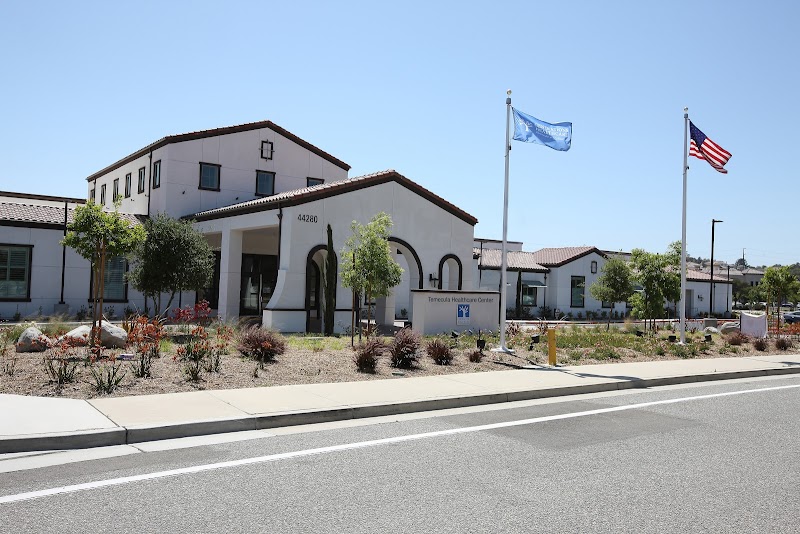
How is Temecula Healthcare Center Staffed?

CMS rates TEMECULA HEALTHCARE CENTER's staffing level at 3 out of 5 stars, which is average compared to other nursing homes. Staff turnover is 45%, compared to the California average of 46%. This relatively stable workforce can support continuity of care.

What Have Inspectors Found at Temecula Healthcare Center?

State health inspectors documented 32 deficiencies at TEMECULA HEALTHCARE CENTER during 2023 to 2025. These included: 1 Immediate Jeopardy (the most serious level, indicating potential for serious harm or death) and 31 with potential for harm. Immediate Jeopardy findings are rare and represent the most serious regulatory concerns. They require immediate corrective action.
Who Owns and Operates Temecula Healthcare Center?

TEMECULA HEALTHCARE CENTER is owned by a for-profit company. For-profit facilities operate as businesses with obligations to shareholders or private owners. The facility is operated by GENERATIONS HEALTHCARE, a chain that manages multiple nursing homes. With 115 certified beds and approximately 111 residents (about 97% occupancy), it is a mid-sized facility located in TEMECULA, California.
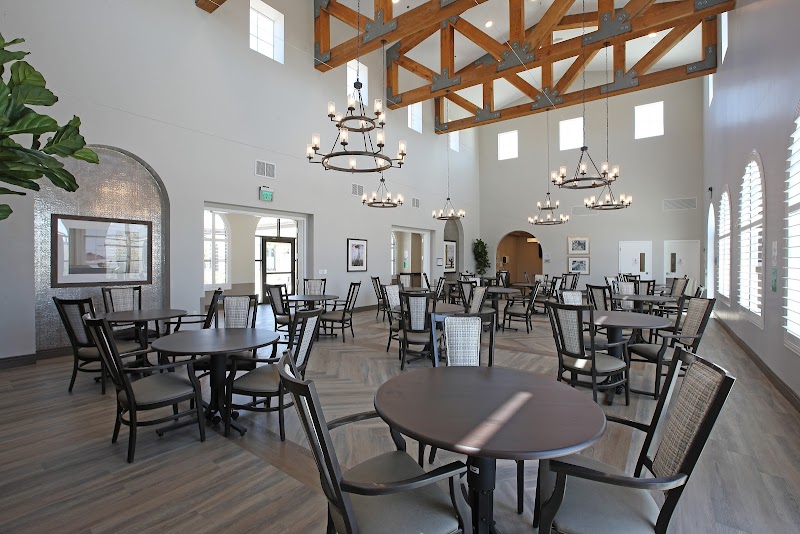
How Does Temecula Healthcare Center Compare to Other California Nursing Homes?

Compared to the 100 nursing homes in California, TEMECULA HEALTHCARE CENTER's overall rating (2 stars) is below the state average of 3.1, staff turnover (45%) is near the state average of 46%, and health inspection rating (2 stars) is below the national benchmark.

What Should Families Ask When Visiting Temecula Healthcare Center?

Based on this facility's data, families visiting should ask: "What changes have been made since the serious inspection findings, and how are you preventing similar issues?" "Can I visit during a mealtime to observe dining assistance and food quality?" "How do you handle medical emergencies, and what is your hospital transfer rate?" "Can I speak with family members of current residents about their experience?" These questions are particularly relevant given the facility's Immediate Jeopardy citations.

Is Temecula Healthcare Center Safe?

Based on CMS inspection data, TEMECULA HEALTHCARE CENTER has documented safety concerns. Inspectors have issued 1 Immediate Jeopardy citation (the most serious violation level indicating risk of serious injury or death). The facility has a 2-star overall rating and ranks #100 of 100 nursing homes in California. Families considering this facility should ask detailed questions about what corrective actions have been taken since these incidents.

Do Nurses at Temecula Healthcare Center Stick Around?

TEMECULA HEALTHCARE CENTER has a staff turnover rate of 45%, which is about average for California nursing homes (state average: 46%). Moderate turnover is common in nursing homes, but families should still ask about staff tenure and how the facility maintains care continuity when employees leave.

Was Temecula Healthcare Center Ever Fined?

TEMECULA HEALTHCARE CENTER has been fined $17,765 across 1 penalty action. This is below the California average of $33,257. While any fine indicates a compliance issue, fines under $50,000 are relatively common and typically reflect isolated problems that were subsequently corrected. Families should ask what specific issues led to these fines and confirm they've been resolved.

Is Temecula Healthcare Center on Any Federal Watch List?

TEMECULA HEALTHCARE CENTER is not on any federal watch list. The most significant is the Special Focus Facility (SFF) program, which identifies the bottom 1% of nursing homes nationally based on persistent, serious quality problems. Not being on this list means the facility has avoided the pattern of deficiencies that triggers enhanced federal oversight. This is a positive indicator, though families should still review the facility's inspection history directly.