NORTH PARK POST-ACUTE
2586 BUTHMANN AVE, TRACY, CA 95376 (209) 832-2273
For profit - Limited Liability company 99 Beds ASPEN SKILLED HEALTHCARE Data: November 2025
Trust Grade
55/100
#638 of 1155 in CA
Last Inspection: October 2024

Within standard 12-15 month inspection cycle. Federal law requires annual inspections.

Overview

North Park Post-Acute has a Trust Grade of C, indicating they are average compared to other nursing homes. They rank #638 out of 1,155 facilities in California, placing them in the bottom half, and #15 out of 24 in San Joaquin County, meaning only a few local options are better. The facility is improving, with issues decreasing from 12 in 2024 to just 1 in 2025. Staffing is a strength, receiving a 4 out of 5 stars rating, which is good, and their 37% turnover rate is slightly below the state average, suggesting stability among staff. There were concerning incidents where a diabetic resident experienced a fall due to low blood sugar without timely intervention from nursing staff, and there were multiple food safety violations, including expired yogurt and improper food storage practices, indicating that while the facility may be improving overall, there are significant areas that still need attention.

Trust Score
C
55/100
In California
#638/1155
Bottom 45%
Safety Record
Moderate
Needs review
Inspections
Getting Better
12 → 1 violations
Staff Stability
○ Average
37% turnover. Near California's 48% average. Typical for the industry.
Penalties
✓ Good
No fines on record. Clean compliance history, better than most California facilities.
Skilled Nurses
✓ Good
Each resident gets 45 minutes of Registered Nurse (RN) attention daily — more than average for California. RNs are trained to catch health problems early.
Violations
⚠ Watch
48 deficiencies on record. Higher than average. Multiple issues found across inspections.
★★★☆☆
3.0
Overall Rating
★★★★☆
4.0
Staff Levels
★★★★☆
4.0
Care Quality
★★★☆☆
3.0
Inspection Score
Stable
2024: 12 issues
2025: 1 issues

The Good

  • 4-Star Staffing Rating · Above-average nurse staffing levels
  • 4-Star Quality Measures · Strong clinical quality outcomes
  • Full Sprinkler Coverage · Fire safety systems throughout facility
  • No fines on record
  • Staff turnover below average (37%)

    11 points below California average of 48%

Facility shows strength in staffing levels, quality measures, fire safety.

The Bad

3-Star Overall Rating

Near California average (3.1)

Meets federal standards, typical of most facilities

Staff Turnover: 37%

Near California avg (46%)

Typical for the industry

Chain: ASPEN SKILLED HEALTHCARE

Part of a multi-facility chain

Ask about local staffing decisions and management

The Ugly 48 deficiencies on record

1 actual harm
Mar 2025 1 deficiency
CONCERN (D) 📢 Someone Reported This

A family member, employee, or ombudsman was alarmed enough to file a formal complaint

Potential for Harm - no one hurt, but risky conditions existed

Transfer Requirements (Tag F0622)

Could have caused harm · This affected 1 resident

Based on interview and record review, the facility failed to ensure the transfer or discharge requirements were met for one sampled resident (Resident 1) when, the facility issued a 30-Day Notice of D...

Read full inspector narrative →
Based on interview and record review, the facility failed to ensure the transfer or discharge requirements were met for one sampled resident (Resident 1) when, the facility issued a 30-Day Notice of Discharge/Eviction to Resident 1 and Resident 1's Responsible Party (RP) for a denial of payment for services while an application for Medi-Cal (a public health insurance program which provides needed health care services for low-income people) was pending. This failure had the potential to negatively impact Resident 1's psychosocial well-being due to being given the 30-Day Notice of Discharge/Eviction. Findings: A review of Resident 1's social services note, dated 1/8/25, at 3:15 PM, indicated the facility was aware Resident 1's Medi-Cal application was in review. Review of Resident 1's social services note, dated 1/11/25, at 3:31 PM, indicated, Resident 1's RP acknowledged that Resident 1's Medi-Cal application was still under review and was not currently active. During an interview on 3/27/25, at 2:05 PM, with the Social Service Director (SSD), the SSD stated if a Medi-Cal application was pending, or a proposed discharge was being appealed it was within the resident's rights to be allowed to stay at the facility. During a concurrent interview and record review, on 3/27/25, at 3:17 PM, Resident 1's medical record was reviewed with the Social Services Assistant (SSA). The SSA confirmed that on 1/17/25 a 30-Day Notice of Discharge/Eviction Due to Denial of Payment was given to Resident 1. The SSA further stated it was on 1/11/25 when the facility was made aware of a Medi-Cal application on Resident 1's behalf by Resident 1's RP. During an interview on 3/27/25, at 4:17 PM, with the Administrator (ADM), the ADM stated it was on 1/30/25 when he was made aware of Resident 1's approval for Medi-Cal coverage retroactively effective on 1/1/25. Review of the California Advocates for Nursing Home Reform (CANHR) online website article titled TRANSFER AND DISCHARGE RIGHTS, updated 9/4/24, in the section titled Converting to Medi-Cal, indicated, .Facilities are prohibited from transferring or discharging residents who have made a timely application for Medi-Cal and for whom an eligibility determination has not been made .If a resident's initial Medi-Cal application is denied but appealed, the resident is not considered to be in nonpayment status. Thus, an appeal suspends a finding of nonpayment . (https://canhr.org/transfer-and-discharge-rights/)
Oct 2024 10 deficiencies 1 Harm
SERIOUS (G) 📢 Someone Reported This

A family member, employee, or ombudsman was alarmed enough to file a formal complaint

Actual Harm - a resident was hurt due to facility failures

Quality of Care (Tag F0684)

A resident was harmed · This affected 1 resident

**NOTE- TERMS IN BRACKETS HAVE BEEN EDITED TO PROTECT CONFIDENTIALITY** Based on interview, and record review, the facility failed to ensure one of twenty-three sampled residents (Resident 596) receiv...

Read full inspector narrative →
**NOTE- TERMS IN BRACKETS HAVE BEEN EDITED TO PROTECT CONFIDENTIALITY** Based on interview, and record review, the facility failed to ensure one of twenty-three sampled residents (Resident 596) received quality care when, Resident 596, who was diabetic (inability for the body to regulate blood sugar/glucose levels) and received insulin (injectable medication used to control/regulate blood sugar/glucose levels) and oral anti-diabetic medications; 1. Experienced injuries from an unwitnessed fall resulting from low blood sugar levels on 9/20/24, 2. Exhibited signs of confusion and altered level of consciousness (a change in a person's state of awareness) and a licensed nurse did not implement emergent nursing interventions to assess Resident 596's blood glucose (BG) level on 9/20/24, 3. A licensed nurse did not inform Emergency Medical Services (EMS, ambulance/fire/police) of Resident 596's diabetic diagnosis or when she had her last dose of Lantus (Insulin) on 9/20/24; and, 4. Resident 596's Attending Physician (AP) did not ensure she had orders for BG monitoring and testing. These failures led to Resident 596 being treated by EMS for a critically low blood sugar level of 20 (normal blood sugar range is 70-100), being admitted into the intensive care unit (ICU, a special care unit within a hospital for the critically ill), and resulted in Resident 596 having two seizures (a temporary, abnormal burst of electrical activity in the brain that can cause physical changes in behavior). Findings: Review of Resident 596's admission RECORD, indicated Resident 596 was initially admitted to the facility on [DATE], with diagnoses including but not limited to diabetes. Review of Resident 596's admission readmission Screen and Baseline Care Plan 4.2, dated 9/12/24, indicated Resident 596 was admitted from Hospital B and was alert, orientated, and verbally appropriate. Review of Resident 596's skilled nursing facility (SNF) physician orders from Hospital B, dated 9/12/24, indicated .continue all attached orders for 30 days .or until reviewed by SNF Attending Physician .Diabetes Orders .Finger stick blood glucose [BG] [blood test used to determine blood sugar level] qAC [before meals] and qHS [before bedtime] .Notify Physician for Change in Condition .Fingerstick Blood Sugar: Notify provider if two BG results are <70 [less than] or > 400 [greater than] in a 24-hour timeframe and/or change in condition; if no condition change, notify provider on the next business day. Notify provider of .any hypoglycemic event . During a telephone interview on 10/4/24, at 1:31 p.m., LN 4 stated she was the admitting nurse for Resident 596 when she first came to the facility on 9/12/24. LN 4 stated she did not put in the portion of the orders which outlined the BG testing/parameters when she entered Resident 596's anti-diabetic medication orders. Further review of Resident 596's SNF physician orders from Hospital B, dated 9/12/24, indicated Resident 596 was ordered routine intermediate acting insulin (Humulin-an injectable anti-diabetic medication which is between a short acting and long-acting insulin) twice per day (morning and evening), and two oral anti-diabetic medications (Glipizide and Metformin). Attached to the Humulin insulin orders were orders to check Resident 596's BG level. During a concurrent interview and record review on 10/3/24, at 4:16 p.m., LN 3 stated she remembered rounding (looking at residents) with Resident 596's Attending Physician (AP) on 9/13/24. LN 3 stated she remembered the AP changed Resident 596's insulin orders and oral anti-diabetic orders verbally. A review of Resident 596's 9/2024 medication administration record (MAR) with LN 3 indicated Humulin insulin (injectable medication used to control/regulate blood sugar/glucose levels) was changed to Lantus insulin (long acting injectable medication used to control/regulate blood sugar/glucose levels) and when the Humulin insulin order was changed on 9/13/24, there were no more orders for Resident 596's BG to be checked. Further review of the MAR with LN 3 indicated the AP discontinued Resident 596's order for oral Glipizide (oral medication that directs your body to store blood sugar) and doubled the order for oral Metformin (oral medication used to help lower blood sugar levels). LN 3 confirmed the last time Resident 596 had her BG tested was on 9/13/24, one day after admission and no new orders to check Resident 596's BG were written by the AP. LN 3 confirmed she changed Resident 596's orders based on the verbal orders of the AP during rounding. Review of Resident 596's Baseline Care Plan Summary, (a plan of care developed within 48 hours of admission that includes the instructions needed to provide effective and person-centered care of the resident that meet professional standards of quality care) dated 9/13/24, did not indicate a diabetic diagnosis nor mention any of Resident 596's anti-diabetic medications used to treat Resident 596's diagnosis of diabetes. During a concurrent interview and record review on 10/4/24, at 9:41 a.m., the AP stated Resident 596 was admitted to the facility on [DATE] and she came into the facility to evaluate the resident on 9/13/24. The AP stated Resident 596 was on a very high dose of insulin twice per day and she recalled telling Family Member (FM) 1 that Resident 596 could not handle the high doses of insulin, including Humulin. The AP stated her BG was controlled when she was at the hospital, so she decided to change the Humulin to Lantus, and then doubled her dose of Metformin. The AP confirmed she did not write orders for BG monitoring or write orders for a sliding scale (the amount of insulin a person would receive depending on their BG result using a scale ordered by the physician). The AP stated it was a system failure. The AP stated Resident 596 was underweight and continued to receive insulin without BG monitoring and this led to the resident having a fall and a change of condition in the facility. The AP confirmed she should have written orders for Resident 596 regarding hypoglycemia (blood sugar level drops too low) and hyperglycemia (blood sugar levels are too high) management, and parameters including a sliding scale (indicates how much insulin to take before each meal dependent on the blood sugar level), and when to inform the physician as part of diabetic management. The AP stated it might have been an oversight on her part. The AP stated she should have gone over Resident 596's orders more carefully. When asked what the risk to Resident 596 was, the AP stated the risk would be death, seizures, or a hypoglycemic event. Review of Resident 596's clinical progress note titled, Change of Condition, dated 9/20/24, indicated Resident 596 was found lying on the floor with blood coming from her mouth and was transferred to Hospital A via ambulance. Further review of the progress note did not indicate emergent nursing interventions were implemented to assess Resident 596's BG level after the fall. Review of Resident 596's Hospital A's emergency department note, dated 9/20/24, indicated, .presents from nursing home for found down on ground with concerns of hypoglycemia found to have glucose of less than 20 [normal BG is 70-100] by EMS [can include police/fire/ambulance] given D10 [sugar water given through a vein for treatment of hypoglycemia] .Patient had facial trauma with some blood noticed on her oropharynx [the middle section of the throat, located behind the mouth] .Became more awake and alert, however remains non-verbal on route after glucose given .diabetes on Lantus as well as metformin .unclear if she has been having recent episodes of hypoglycemia .Patient herself is nonverbal unable to get history from patient .Unable to perform ROS [review of symptoms]: Mental status change . Review of Resident 596's Hospital A transfer summary, dated 9/21/24, indicated, .presents with severe hypoglycemia in 20's noted at nursing home with patient found on ground seizing [seizure] per report and oral trauma and abrasion to right knee and left foot . Resident 596 was initially transferred to Hospital A after her fall and was then transferred to Hospital B for further care and treatment. Review of Resident 596's Hospital B transfer summary, dated 9/26/24, indicated, .presented to [Hospital A] on 9/20 due to a ground-level fall at nursing facility. Patient was noticed to be hypoglycemic by EMS with a glucose less than 20 .Patient reportedly had seizure episode twice and was started on Keppra [medication used to treat seizures] .MRI [Magnetic resonance imaging, medical imaging test that produces detailed images of almost every internal structure in the human body] of brain was suggestive of signal abnormality [abnormal electrical activity in the brain] .new onset seizures and involuntary movements .jerks of the right upper extremity .Per neurology [medical specialty that focuses on the diagnosis and treatment of disorders of the brain, spinal cord, and nerves] who evaluated the patient .seizures were triggered by severe hypoglycemia .Reason for Hospital admission .seizures due to hypoglycemia . During an interview on 10/4/24, at 12:24 p.m., Licensed Nurse (LN) 1 stated she was Resident 596's LN on 9/20/24 and stated around 2 a.m. the certified nurse assistant (CNA) called for her and she found Resident 596 on the floor, next to her bed and there was blood coming from her mouth. LN 1 stated Resident 596 was alert but not acting normal. LN 1 stated Resident 596 was very lethargic (tired/weak). LN 1 stated she checked Resident 596's blood pressure, oxygen level, and immediately called 911 for EMS. LN 1 confirmed she was aware Resident 596 was diabetic but did not take Resident 596's BG level after the fall. LN 1 stated she did not inform the EMS team who arrived that Resident 596 was diabetic or taking insulin. LN 1 stated it would have been important to inform EMS of Resident 596's diabetic status as they would have been able to treat her more immediately. LN 1 stated when she had a new resident, she would review their orders, but she did not get a chance to look at Resident 596's medical history or her orders during her shift on 9/20/24. LN 1 explained it was important to review the clinical record of the resident she was providing nursing care to so she knew about the patient to provide appropriate care. LN 1 stated she could have given Resident 596 glucagon IM (intramuscular; an emergency medicine used to treat severe hypoglycemia administered into a muscle) to treat her hypoglycemia if her BG level was known. LN 1 stated it was important to follow hypoglycemia protocol because this would have helped treat Resident 596's low BG level and would have prevented further decline of the resident. During an interview on 10/2/24, at 10:41 a.m., FM 1 stated Resident 596 came into the facility following a Urinary Tract Infection (UTI, an infection of the urinary system) and was receiving physical therapy to help her with her strength and was set to be released from the facility on 9/24/24. FM 1 stated she received a phone call on 9/20/24 around 2:30 a.m. from Resident 596's nurse who told her Resident 596 had a seizure and was being rushed to the hospital. FM 1 stated the hospital told her Resident 596's blood glucose was below 20. FM 1 stated Resident 596 had never experienced that low of a BG level. FM 1 stated she spoke with LN 4 on 9/23/24 and she told her Resident 569 had a seizure at the facility, and facility staff had not been checking her blood sugars. FM 1 stated Resident 596 had never experienced low blood sugar and had never experienced a seizure prior to this. FM 1 stated Resident 596 still had slight tremors to her right arm and hand and could not open her mouth completely. Review of a facility Policy & Procedure (P&P) titled, admission Criteria, dated 3/2019, indicated, .Prior to or at the time of admission, the resident's attending physician provides the facility with information needed for the immediate care of the resident, including orders covering at least .medication orders, including (as necessary) a medical condition or problem associated with each medication; and .routine care orders to maintain or improve the resident's function until the physician and care planning team conduct a comprehensive assessment and develop a more detailed interdisciplinary care plan .Residents are admitted to this facility as long as their needs can be treated adequately by the facility. Examples of condition that can be treated adequately in this facility include .diabetes . Review of a facility P&P titled, Specific Medication Administration Procedures, dated 4/2008, indicated a goal of .to administer medications in a safe and effective manner . Review of a facility P&P titled Nursing Care of the Resident with Diabetes Mellitus, revised 12/29/18, indicated, .The purposes of this guideline are to: 1. Review the most common and serious conditions and complications associated with diabetes .3. Prevent recurrent hyperglycemia/hypoglycemia .4. Recognize, manage, and document the treatment of complications commonly associated with diabetes .Hypoglycemia .Signs and symptoms of hypoglycemia usually have a sudden onset and may include the following .weakness, dizziness, or faintness .irritability or bizarre changes in behavior .numbness of the tongue and lips/thick speech .(More severe) stupor [unable to act or think normally], unconsciousness and/or convulsions [rapid, involuntary muscle contractions that cause uncontrollable shaking and arm/leg movement] .(More severe) coma [ a deep state of prolonged unconsciousness in which a person cannot be awakened, fails to respond normally to painful stimuli, light, or sound] .Glucose Monitoring .1. The management of individuals with diabetes mellitus should follow relevant protocols and guidelines .2. The physician will order the frequency of glucose monitoring .Management of HYPOGLYCEMIA .For unresponsive residents with hypoglycemia (Blood glucose .70 .or less than the physician ordered parameter) .Immediately administer 1 mg [milligram; a unit of measurement] glucagon IM [intramuscular] .and notify MD [Medical Doctor] for further orders. If pt. [patient] remains unresponsive; call 911 (in accordance with patient's advance directives [a legal documents that provide instructions for medical care and go into effect if you cannot communicate your own]) and notify MD; Monitor vital signs; hold diabetic medications & notify MD; monitor vital signs; hold all diabetic medications .
CONCERN (D)

Potential for Harm - no one hurt, but risky conditions existed

Safe Environment (Tag F0584)

Could have caused harm · This affected 1 resident

Based on observation, interview, and record review, the facility failed to ensure a homelike environment was provided for 2 of 23 sampled residents (Resident 382 and Resident 3) when: 1. Resident 382'...

Read full inspector narrative →
Based on observation, interview, and record review, the facility failed to ensure a homelike environment was provided for 2 of 23 sampled residents (Resident 382 and Resident 3) when: 1. Resident 382's floor tiles were replaced with a rubber strip; and, 2. Resident 3 had broken blinds in her room. This failure had the potential to negatively impact Resident 382 and Resident 3's feelings of well-being in the facility. Findings: 1. During an interview on 10/2/24, at 3:59 PM, with Resident 382's Responsible Party (RP) 1, RP 1 stated she was afraid of tripping over the black part on the floor. RP 1 further stated that she had tripped over the black rubber strip a couple times in the past. RP 1 explained Resident 382's room was the only room on the unit that had the black rubber strip located right at the doorway entrance. RP 1 stated that she did not like the way the rubber strip looked and considered it to be a hazard. During concurrent observation and interview at 10/2/24, at 4:10 PM, with the Maintenance Director (DOM), the DOM confirmed no other doorways in the North Station had black rubber strips in the entrance like Resident 382's room. The DOM stated the black rubber strip had been there for at least a year due to the broken and uneven tiles beneath the strip on the floor. During an interview on 10/3/24, at 4:15 PM, with Certified Nurse Assistant (CNA) 2, CNA 2 stated the black rubber strip had been there for a long time. CNA 2 further stated that she had to pay attention to the black rubber strip, or someone could fall and get hurt. CNA 2 stated the floor needed to be more even because wheelchairs got stuck on the black rubber strip. During a concurrent observation and interview on 10/3/24, at 4:20 PM, with the Administrator (ADM) outside of Resident 382's doorway, the ADM confirmed that a black rubber strip was on the floor covering up three tiles. The ADM stated this was not uniform with the rest of the resident rooms and was likely done to replace broken or missing tiles. During a concurrent observation and interview on 10/4/24, at 9:30 AM, with the Director of Nursing (DON), outside of Resident 382's doorway, the DON stated she was not aware of the black rubber strip in the doorway of Resident 382's room. The DON further stated she was surprised to see the floor in that manner. The DON stated the flooring should be uniform in a homelike environment. During a review of the facility policy titled, Quality of Life - Homelike Environment, revised 5/2017, indicated, .The facility staff and management maximize, to the extent possible, the characteristics of the facility that reflect a personalized, homelike setting. These characteristics include: Clean, sanitary, and orderly environment .d. personalized furniture and room arrangements . During a review of the facility policy titled, Maintenance Service, revised 12/2009, indicated, .Maintaining the building in good repair and free from hazards . 2. During a concurrent observation and interview on 10/1/24, at 9:33 AM, with the DOM, the DOM confirmed Resident 3 had a section of missing blinds on her window. During an interview on 10/2/24, at 3:05 PM, with Resident 3, Resident 3 stated she would like the blinds in her room replaced. Resident 3 stated her blinds looked kind of shaggy, and stated her blinds had been broken for a quite a while. During an interview on 10/3/24, at 3:55 PM, with the DSD, the DSD stated the blinds in the resident rooms should be well-fitting and fixed appropriately. The DSD further stated the blinds should not be broken and that it would not create a homelike environment. During an interview on 10/4/24, at 9:21 AM, with the DON, the DON stated each resident room should have blinds on the windows. The DON further stated she did not want broken blinds in the resident rooms. The DON stated that blinds should be well-fitting. During a review of the facility policy titled, Resident Rights, revised 8/2022, indicated, .a dignified existence .privacy and confidentiality . During a review of an undated facility policy titled, Windows and Blinds, indicated, .Blinds or curtains must be operational and free from damage .Staff must ensure that blinds or curtains are properly adjusted to maintain residents' privacy, especially in shared rooms during personal care .
CONCERN (D) 📢 Someone Reported This

A family member, employee, or ombudsman was alarmed enough to file a formal complaint

Potential for Harm - no one hurt, but risky conditions existed

Deficiency F0655 (Tag F0655)

Could have caused harm · This affected 1 resident

**NOTE- TERMS IN BRACKETS HAVE BEEN EDITED TO PROTECT CONFIDENTIALITY** Based on interview, and record review, the facility failed to develop baseline care plans (captures key resident needs and must ...

Read full inspector narrative →
**NOTE- TERMS IN BRACKETS HAVE BEEN EDITED TO PROTECT CONFIDENTIALITY** Based on interview, and record review, the facility failed to develop baseline care plans (captures key resident needs and must be developed within 48 hours of admission) for 2 of 23 sampled residents (Resident 545 and Resident 596) when: 1. A baseline care plan was not developed for Resident 545's right groin redness, left groin redness and perirectal (affecting the skin around the rectum) area redness within 48 hours of Resident 545's admission; and, 2. A diabetic (blood sugar disease) baseline care plan was not developed for Resident 596's plan of care to address management, treatment, and monitoring of her diagnosis of diabetes and multiple diabetic medications including insulin (a drug given as shot to treat blood sugar) and oral antidiabetic medications. These failures had the potential to result in Resident 545's identified skin issues to worsen and care needs not being met and resulted in a lack of healthcare information necessary to provide effective and person-centered care for Resident 596 which contributed to Resident 596 experiencing a fall as a result of low blood sugar, hospitalization, and subsequent adverse events, including new onset seizures (unusual brain activity/brief, involuntary muscle jerks or twitches), and potentially resulted in not being assessed or treated immediately after the fall. Findings: 1. Review of Resident 545's admission RECORD, indicated Resident 545 was admitted on [DATE], with multiple diagnoses including but not limited to Enterocolitis due to clostridium difficile (C. Diff; a bacterial infection that causes inflammation of the colon and diarrhea), dementia (loss of the ability to think, remember and reason), generalized muscle weakness, and need for assistance with personal care. During a concurrent interview and record review on 10/4/24, at 2:30 PM, Resident 545's medical record was reviewed with the Director of Nursing (DON). The DON confirmed Resident 545's Admission/readmission Screen and Baseline Care Plan 4.2, dated 9/25/24, indicated that Resident 545 had left groin redness, right groin redness, and perirectal redness on admission. The DON reviewed Resident 545's care plans which indicated, .Altered skin integrity r/t [related to] right groin redness .Altered skin integrity r/t left groin redness .Altered skin integrity r/t perirectal redness . and confirmed these were all initiated on 10/3/24 (eight days after admission). The DON confirmed Resident 545's baseline care plans should have been initiated within 48 hours of admission. The DON stated the risk for not having care plans initiated for residents included the risk of treatment not being effective, inability to determine if the skin issue deteriorated, or if there was a need to change interventions. 2. Review of Resident 596's admission RECORD, indicated Resident 596 was initially admitted to the facility on [DATE], with a diagnosis of diabetes, among other diagnoses. Review of Resident 596's admission orders from Hospital B, dated 9/12/24, indicated the following orders, .Diabetes Orders .Finger stick blood glucose [FSBG, a way to measure blood sugar level] qAC [before meals] and qHS [before bedtime] .Notify Physician for Change in Condition .Fingerstick Blood Sugar: Notify provider if two BG [blood glucose] results are <70 [less than] or > 400 [greater than] in a 24-hour timeframe and/or change in condition; if no condition change, notify provider on the next business day. Notify provider of .any hypoglycemic event . Further review of Resident 596's facility clinical record revealed these batch orders (the combination of several orders into one) were not carried out upon her admission to the facility on 9/12/24. During an interview on 10/4/24, at 1:31 p.m., LN 4 stated she was the admitting nurse for Resident 596 when she first came to the facility on 9/12/24. LN 4 further stated Resident 596 was diabetic. LN 4 stated she did not enter the batch order for hypoglycemia (low BG) and hyperglycemia (HIGH BG) protocols and treatment when Resident 596 was first admitted . LN 4 further stated she did not initiate the care plan and stated the care plan was important because it directed the care nursing staff should be providing to the diabetic resident. Review of Resident 596's admission readmission Screen and Baseline Care Plan 4.2, dated 9/12/24, indicated Resident 596 was admitted from the hospital with a diagnosis of septic shock (severe blood infection) and was alert and orientated and verbally appropriate. Review of Resident 596's Baseline Care Plan Summary, dated 9/13/24, the record did not indicate a diabetic diagnosis nor mention of any of Resident 596's medications for treatment of her diabetes. Review of Resident 596's clinical progress note titled, Change of Condition, dated 9/20/24, indicated Resident 596 was found lying on the floor with blood coming from her mouth and was then transferred to the hospital via ambulance. Further review of the document did not indicate any nursing interventions to assess her blood glucose level for hypoglycemia. During a telephone interview on 10/4/24, at 12:24 p.m., with Licensed Nurse (LN) 1, LN 1 stated she was Resident 596's LN on 9/20/24 and stated around 2 a.m. the certified nurse assistant (CNA) called for her and she found Resident 596 on the floor, next to her bed, and there was blood coming from her mouth. LN 1 further stated Resident 596 was alert but not orientated and was not acting normal. LN 1 stated Resident 596 was very lethargic (weak/tired), and she checked her blood pressure, oxygen saturation [amount of oxygen in blood], and immediately called 911 for EMS (police/fire/ambulance). LN 1 further stated she was aware Resident 596 was diabetic, but did not take Resident 596's BG. Review of Resident 596's Hospital A's emergency department note, dated 9/20/24, the note indicated, .presents from nursing home for found down on ground with concerns of hypoglycemia found to have glucose of less than 20 [normal blood sugar is 80-120 mg/dL] by EMS .Patient had facial trauma with some blood noticed on her oropharynx [mouth] .Became more awake and alert, however remains nonverbal on route after glucose [sugar] given .Mental status change . Review of Resident 596's Hospital B's Discharge summary, dated [DATE], indicated, .Patient reportedly had seizure episode twice .Per neurology (doctor who diagnoses, treats, and manages disorders of the brain, spinal cord and nerves) .seizures were triggered by severe hypoglycemia . During an interview on 10/2/24, at 10:41 a.m., Family Member (FM) 1 stated Resident 596 had never experienced that low of a blood sugar before. FM 1 further stated she spoke with LN 4 on 9/23/24 and was told that Resident 569 had a seizure at the facility, and the facility staff were not checking her BG. During a concurrent interview and record review on 10/4/24, at 2:30 p.m., with the Director of Nurses (DON), Resident 596's clinical record was reviewed. The DON stated care plans were important to create a pathway of care for the resident. The DON explained care plans listed how to monitor treatments related to the problem, and to determine if treatment was effective for the resident. The DON stated the components of a care plan included a focus, goal, and interventions, and directed the care of the resident for the staff. The DON further stated care plans were person centered and should include frequent checks for the residents. The DON confirmed there was no diabetic care plan for Resident 596 and stated Resident 569 should have had a diabetic baseline care plan. The DON explained the baseline care plan directed the initial plan of care until the comprehensive care plan (an ongoing, long term plan of care) could be completed. Review of a facility Policy and Procedure (P&P) titled, Care Plans - Baseline, dated 2001, indicated, .A baseline plan of care to meet the resident's immediate needs shall be developed for each resident within forty-eight (48) hours of admission .To assure that the resident's immediate care needs are met and maintained .The Interdisciplinary Team [a group of health care professionals with different areas of expertise who work together to achieve a common goal] will review the healthcare practitioner's orders .medications .initial goals based on admission order .physician orders .The baseline care plan will be used until the staff can conduct the comprehensive assessment [comprehensive care plan] .
CONCERN (D) 📢 Someone Reported This

A family member, employee, or ombudsman was alarmed enough to file a formal complaint

Potential for Harm - no one hurt, but risky conditions existed

Deficiency F0710 (Tag F0710)

Could have caused harm · This affected 1 resident

**NOTE- TERMS IN BRACKETS HAVE BEEN EDITED TO PROTECT CONFIDENTIALITY** Based on interview, and record review, the attending physician (AP) failed to provide orders for routine blood glucose (sugar) m...

Read full inspector narrative →
**NOTE- TERMS IN BRACKETS HAVE BEEN EDITED TO PROTECT CONFIDENTIALITY** Based on interview, and record review, the attending physician (AP) failed to provide orders for routine blood glucose (sugar) monitoring and provide adequate physician oversight and management for diabetic (blood sugar disease) care for one of twenty-three sampled residents (Resident 596) when, Resident 596 who was diabetic and received multiple medications to treat her diabetes did not have orders for routine blood sugar monitoring and did not have orders to manage complications associated with her anti-diabetic medication administration and diabetic diagnosis and care. This failure contributed to Resident 596 experiencing a fall related to low blood sugar, resulting in hospitalization and transfer to the intensive care unit (a department within a hospital for the critically ill), and subsequent adverse events including new onset seizures (unusual brain activity and involuntary movement). Findings: Review of Resident 596's admission RECORD, indicated Resident 596 was initially admitted to the facility on [DATE], with a diagnosis of diabetes among other diagnoses. Review of Resident 596's admission orders from Hospital B dated 9/12/24, indicated, .Diabetes Orders .Finger stick blood glucose [FSBG] qAC [before meals] and qHS [before bedtime] .Notify Physician for Change in Condition .Fingerstick Blood Sugar: Notify provider if two BG results are <70 [less than] or > 400 [greater than] in a 24-hour timeframe and/or change in condition .Notify provider of .any hypoglycemic [low blood sugar] event . Further review of Resident 596's clinical record indicated these admitting orders were not carried out upon her admission to the facility on 9/12/24. Review of Resident 596's Order Summary Report, (document which includes all medication, tests, and non-medication orders) dated 9/13/24, the report did not include orders for FSBG before meals or before bedtime, orders for when to notify the physician for change in condition, nor did it include orders for parameters for hypoglycemia (low blood sugar) or hyperglycemia (high blood sugar), and an order for physician notification for Resident 596. Review of Resident 596's Order Summary Report, dated 9/13/24, signed by the Attending Physician (AP), indicated handwritten orders as follows: .Active Orders As Of .9/12/24 .I have approved these orders for [Resident 596] .Physician .[AP name] .Signature .[AP name] .Date .9/13/24 . 1. start Lantus [long acting injectable insulin/antidiabetic medication] insulin - 25 units [measure of dosage] subcut [subcutaneous, inject under the skin] at bedtime . 2. [increase] metformin [oral medication to treat to diabetes] .1 gm po BID [gm is gram a unit of measure, po by mouth, BID means twice a day] . 3. stop glipizide[oral diabetic medication to treat diabetes] .[AP signature] .9/13/24 . Review of the record indicated Resident 596's summary of all medical orders entered by facility's nursing staff onto the Order Summary Report, were reviewed and approved by the AP. Further review of the Order Summary Report, indicated the AP did not include orders to stop Resident 596's NPH insulin (intermediate-acting insulin) and did not include orders for FSBG monitoring. The AP did not order diabetic emergency medication administration for reversal of low or high blood sugars. The AP did not order parameters to monitor and guide the nursing staff on use of high-risk medications such as insulin, or orders for nursing staff to monitor the resident for signs and symptoms of very low or very high blood sugar, or orders for when to notify the physician. Review of Resident 596's clinical record titled, Physician admission Progress Note, written by the AP, dated 9/13/24, and faxed to the facility four days later on 9/16/24, the document indicated Resident 596 was to have a sliding scale (FSBG determines the amount of insulin received) for insulin administration and NPH was to be discontinued, however there were no orders written in the clinical record for staff to follow. The progress note did not include FSBG checks, did not include orders for hypoglycemia or hyperglycemia management, or parameters of when to notify the physician regarding her diabetic management, nor were there orders for emergency medications to treat a hypoglycemic or hyperglycemic event. During a review of Resident 596's Medication Administration Record, (MAR, a document listing all medications and tests administered/carried out by nursing staff) dated 9/24, indicated Resident 596 was receiving multiple diabetic medications including insulin and oral anti-diabetic medication. The record indicated Resident 596 did not have orders for blood glucose monitoring, no orders for emergency diabetic medications to treat hypoglycemia, no parameters or a sliding scale for her insulin administration, and no instructions on when to notify the physician regarding her blood glucose management including hypoglycemic or hyperglycemic events. Further review of Resident's 596's MAR indicated the nursing staff recorded two FSBG measurements in the first 24 hour of admission, while administering NPH insulin and glipizide (an oral antidiabetic drug), as follows: 9/12/24, BG was 301 mg/dL at 8 p.m., and on 9/13/24 BG was 232 mg/dL at 7 a.m. The record did not indicate if the AP reviewed the first 24-hour BG records when she visited the resident in the facility. The record indicated blood sugar measurements were discontinued after the AP visit. During a concurrent interview and record review, with Licensed Nurse (LN) 3, on 10/3/24, at 4:16 p.m., LN 3 stated she was the nurse who managed the care of Resident 596 in the facility. LN 3 stated the workflow was for the admission nurse to go over admitting orders and ensured they were inputted accurately in the computer system. LN 3 stated she remembered rounding (checking on residents) with Resident 596's AP during her initial visit when the AP changed the insulin and diabetic orders. LN 3 stated she put the new orders in the computer system and stopped the NPH insulin although there was no written order to do so. LN 3 stated the FSBS orders were discontinued when the NPH order was stopped. LN 3 stated no orders for emergency rescue medication and treatment of low and high blood sugar were processed or entered in the computer system during Resident 596's stay at the facility. Review of Resident 596's MAR (9/24), indicated Resident 596 received seven doses of Lantus 100 units/mL (unit of measure), inject 25 units subcutaneously at bedtime on 9/13/24/, 9/14/24, 9/15/24, 9/16/24, 9/17/24, 9/18/24, and 9/19/24. Further review of Resident 596's clinical record did not include entries for FSBG associated with the medication administration. Review of Resident 596's clinical progress note titled, Change of Condition, dated 9/20/24, indicated the resident was found lying on the floor with blood coming from her mouth and was then transferred to the hospital via ambulance. Further review of the document did not indicate any nursing intervention to assess Resident 596's blood glucose level or treatment. Review of Resident 596's Hospital A's emergency department note, dated 9/20/24, indicated, .presents from nursing home for found down on ground with concerns of hypoglycemia found to have glucose of less than 20 [normal blood sugar is 80-120] by EMS [emergency medical services] .Patient had facial trauma with some blood noticed on her oropharynx [mouth] .Became more awake and alert, however remains nonverbal on route after glucose [sugar] given .type 2 diabetes on Lantus [long-acting insulin] as well as metformin .unclear if she has been having recent episodes of hypoglycemia .Patient herself is nonverbal unable to get history from patient .Unable to perform ROS [review of symptoms]: Mental status change . Review of Resident 596's Hospital B (transferred to this hospital from Hospital A for further care and treatment) Discharge summary, dated [DATE], indicated, .presented to [Hospital A] on 9/20 due to a ground-level fall at nursing facility. Patient was noticed to be hypoglycemic by EMS with a glucose less than 20 Patient reportedly had seizure episode twice and was started on Keppra [medication used to treat seizures] .MRI [Magnetic resonance imaging, medical imaging test that produces detailed images of almost every internal structure in the human body] of brain was suggestive of signal abnormality .Seizure x2 [two times] .new onset .jerks of the right upper extremity. Neurology [brain physician] evaluated the patient. Per neurology .seizures were triggered by severe hypoglycemia . During a concurrent interview and record review on 10/4/24, at 9:41 a.m., with the AP, the AP stated Resident 596 was admitted on [DATE] and she came into the facility to evaluate the resident on 9/13/24. The AP stated she would come into the facility to review the medications and check if there were any problems with the resident. The AP stated her expectation of LN's were to follow the orders from the hospital until the facility doctor comes into the facility. The AP stated she recalled seeing Resident 596, and acknowledged she was very thin and weighed about 100 lbs. (pounds- a unit of weight). The AP stated Resident 596 was on a very high dose of insulin twice per day. The AP reviewed her clinical charting notes and her admission orders and confirmed she did not write an order to stop the NPH. The AP confirmed Resident 596's diabetes was not well controlled and had unstable blood sugars. The AP stated Resident 596 should have had a sliding scale combined with a short acting insulin (an insulin that works right away) for better BG control. The AP confirmed there was no order for short acting insulin and confirmed there was no orders for BG monitoring or testing. The AP stated her notes from her visit on 9/13/24, for Resident 596, were faxed to the facility four days later, on 9/16/24. The AP stated staff may have not read her notes. The AP confirmed that LN's could not have implemented new orders for a resident unless they were written or confirmed by the medical doctor. The AP stated she assumed the orders for management of high and low blood sugar did not require an order as it was standard protocol at another facility she worked at. The AP stated she should have gone over Resident 596's orders more carefully as this resident did experience a fall, low blood sugar, and seizures. The AP stated she was ultimately the responsible person for the medical care provided to a resident. During an interview with the facility's Medical Director (MD), on 10/4/24, at 1:13 p.m., the MD stated BG checks for diabetic residents on insulin should have been at least ordered twice a day, in the morning and before bed. The MD stated the resident should have been tested more often if there were signs and symptoms of hypoglycemia or hyperglycemia. The MD stated all residents who receive insulin in the facility should have emergency medication orders to treat hypoglycemia. Duirng a concurrent interview and record review on 10/4/24, at 2:30 p.m., the Director of Nurses (DON) stated there was no policy that diabetic residents should have had a standard or standing order for blood glucose monitoring. The DON stated her expectation was that all diabetic residents should have orders and/or guidelines for nursing staff to treat hypoglycemia and hyperglycemia. The DON stated the facility needed a doctor's order to administer emergency medication for treatment of a low blood sugar. The DON stated Resident 596 was at risk for blood sugar irregularities without FSBG checks. The DON stated Resident 596 experienced a fall in the facility, perhaps as a result of low blood sugar, and later found out her blood sugar was extremely low when emergency medical services arrived and checked her blood sugar. Review of a facility policy and procedure (P & P) titled, admission Criteria, dated March 2019, indicated, .Our Facility admits only residents whose medical and nursing care needs can be met .Prior to or at the time of admission, the resident's attending physician provides the facility with information needed for the immediate care of the resident, including orders covering at least .medication orders, including (as necessary) a medical condition or problem associated with each medication; and .routine care orders to maintain or improve the resident's function until the physician and care planning team conduct a comprehensive assessment and develop a more detailed interdisciplinary care plan .Residents are admitted to this facility as long as their needs can be treated adequately by the facility. Examples of condition that can be treated adequately in this facility include .diabetes . Review of a facility P&P titled, Nursing Care of the Resident with Diabetes Mellitus, revised 12/29/18, the policy under Glucose Monitoring indicated, .The physician will order the frequency of glucose monitoring. The policy further indicated, management of hypoglycemia and hyperglycemia per physician ordered parameters.
CONCERN (D)

Potential for Harm - no one hurt, but risky conditions existed

Deficiency F0761 (Tag F0761)

Could have caused harm · This affected 1 resident

**NOTE- TERMS IN BRACKETS HAVE BEEN EDITED TO PROTECT CONFIDENTIALITY** Based on observation, interview, and record review, the facility failed to ensure safe medication storage practices in medicatio...

Read full inspector narrative →
**NOTE- TERMS IN BRACKETS HAVE BEEN EDITED TO PROTECT CONFIDENTIALITY** Based on observation, interview, and record review, the facility failed to ensure safe medication storage practices in medication carts (a mobile cart storing medications to be administered to residents) for a census of 93 when: 1. Medication Cart #4 at the facility's South station stored an outdated Lantus insulin Pen (blood sugar drug in a pen form) with an open date (the date the insulin was out of refrigerator and was started to be used) of [DATE] and the pharmacy label indicated discard 28 days after opening; and, 2. The treatment cart at the facility's North station stored an opened bottle of Sterile Sodium Chloride [a mixture of salt and water that is free from bacteria which is used to rinse sinuses, clean wounds, flush eyes and more] in the cart. These failed practices may result in residents receiving expired or unusable medications. Findings: 1. During a concurrent interview and inspection of medication cart #4 at facility's North Station, on [DATE], at 11:27 AM, accompanied by Licensed Nurse 5 (LN) 5, the cart stored an insulin Lantus pen that was opened on [DATE] and the label on the pen indicated discard the product 28 days after opening. LN 5 acknowledged the insulin pen was beyond its use date. 2. During a concurrent interview and inspection of the facility's treatment cart at the South station, on [DATE], at 4:38 PM, accompanied by LN 6, the treatment cart contained one opened bottle of a wound care solution (liquid form) called Sterile Sodium Chloride Irrigation (Microbe free salt solution). The container's label indicated sterile .Single use, Discard unused portion. LN 6 acknowledged the finding and stated the bottle should have been tossed out. During an interview on [DATE], at 4:25 PM, with the Director of Nursing (DON), the DON stated the insulin pen should have been discarded after 28 days and single use products should have been tossed out after use. Review of the facility's policy titled, Medication Storage in the Facility, dated 4/2008, the policy indicated, .outdated, contaminated, or deteriorated medications .are immediately removed from stock and disposed of according to procedure for medication disposal .
CONCERN (D)

Potential for Harm - no one hurt, but risky conditions existed

Deficiency F0883 (Tag F0883)

Could have caused harm · This affected 1 resident

Based on interview, and record review, the facility failed to provide documented evidence of education for immunizations (a process by which a person becomes protected against a disease through vaccin...

Read full inspector narrative →
Based on interview, and record review, the facility failed to provide documented evidence of education for immunizations (a process by which a person becomes protected against a disease through vaccination) when: 1. One of four sampled residents' (Resident 14) and one unsampled resident (Resident 23) records did not indicate education was provided for the Influenza (a common, sometimes deadly viral infection of the nose, throat and lungs, also called flu) vaccine; and, 2. One unsampled resident's (Resident 23) record did not indicate education was provided for the Pneumococcal Polysaccharide (PPSV 23 - for prevention of pneumonia; an infection that affects one or both lungs) vaccine. This failure had the potential for Resident 14 and Resident 23 to not be aware or informed of the benefits, risks, and potential side-effects of the vaccinations prior to receiving or declining the vaccination. Findings: 1. During a concurrent record review and interview on 10/4/24, at 8:40 AM, with the Infection Preventionist (IP), Resident 14's Influenza record, dated 9/29/23, was reviewed. The IP acknowledged the box titled, Education Provided to Resident/Family, was not checked and the IP confirmed there was no documented evidence of education provided to Resident 14 regarding the Influenza vaccination he received on 9/29/23. During a concurrent record review and interview on 10/4/24, at 8:40 AM, with the IP, Resident 23's Influenza record, dated 12/13/23, was reviewed. The IP acknowledged the box titled, Education Provided to Resident/Family, was not checked and the IP confirmed there was no documented evidence provided to Resident 23 regarding the risk and benefits of refusing the Influenza Vaccination. A review of the facility policy titled, Influenza Vaccine, revised August 2016, indicated, .Prior to the vaccination, the resident (or resident's legal representative) or employee will be provided information and education regarding the benefits and potential side effects of the influenza vaccine .Provision of such education shall be documented in the resident's/employee's medical record .A resident's refusal of the vaccine shall be documented on the Informed Consent for Influenza Vaccine and placed in the resident's medical record . 2. During a concurrent record review and interview on 10/4/24, at 8:40 AM, with the IP, Resident 23's PPSV 23 record, dated 5/6/21, was reviewed with the IP. The IP acknowledged the box titled, Education Provided to Resident/Family, was not checked and the IP confirmed there was no documented evidence of education provided to Resident 23 regarding the PPSV 23 vaccination she received on 5/6/21. During an interview on 10/4/24, at 9:25 AM, the Director of Nursing (DON), the DON stated providing education to residents prior to administer or refusal of a vaccination gives the resident sufficient information on the medication they were receiving such as the risks and benefits. The DON explained it gave the resident the opportunity to agree or not agree to recieve the vaccination. A review of the facility policy titled, Pneumococcal Vaccine, revised August 2016, indicated, .Before receiving a pneumococcal vaccine, the resident or legal representative shall receive information and education regarding the benefits and potential side effects of the pneumococcal vaccine .Provision of such education shall be documented in the resident's medical record .Residents/representatives have the right to refuse vaccination. If refused, appropriate entries will be documented in each resident's medical record indicating the date of the refusal of the pneumococcal vaccination .
CONCERN (E) 📢 Someone Reported This

A family member, employee, or ombudsman was alarmed enough to file a formal complaint

Potential for Harm - no one hurt, but risky conditions existed

Deficiency F0757 (Tag F0757)

Could have caused harm · This affected multiple residents

Based on interview, and record review, the facility failed to ensure the safe use of insulin (a high-risk injectable medication used to treat diabetes, a blood sugar disease) for two residents with di...

Read full inspector narrative →
Based on interview, and record review, the facility failed to ensure the safe use of insulin (a high-risk injectable medication used to treat diabetes, a blood sugar disease) for two residents with diabetes (Resident 1 and Resident 596) out of a sample of 23 residents, when: 1. Resident 1's order for insulin did not include parameters with instruction when blood sugar was high, and ongoing high blood sugar levels were not treated or reported to the medical doctor; and, 2. Resident 596's diabetic medication and insulin use was not monitored by blood sugar measurement. These failures may have contributed to unsafe insulin and antidiabetic drug use and subsequent adverse events. Findings: 1. During a review of Resident 1's electronic medical record (EMR) titled, Diagnosis, the record indicated diagnoses of diabetes, heart, and kidney disease while under hospice care (comfort care) via primary care Medical Doctor (MD). During a review of Resident 1's EMR titled, Medication Administration Record, (or MAR, a document which lists medications and treatments administered based on doctor's order) for 9/2024 and 10/2024, the record indicated Resident 1 was given two types of insulin with four times per day blood sugar monitoring as follows: i. HumaLOG .[Insulin Lispro, a short acting insulin]; Inject 3 unit subcutaneously [injection under the skin, unit is how insulin dose is measured] before meals for DM [diabetes]; Hold Humalog insulin if blood sugar less than 70 [normal blood sugar number is between 80-120]; Start date: 9/30/24. ii. Lantus . [Insulin Glargine, a long-acting insulin]; Inject 20 unit subcutaneously at bedtime for DM Hold if BS [Blood Sugar] less than 70; Start Date: 6/8/24. Further review of insulin orders indicated there was no parameter to address high blood sugar numbers and the order did not address when or at what point the physician should have been contacted. Review of Resident 1's blood sugar numbers documented in the EMR for September 2024 and the first 3 days of October 2024, indicated high blood sugar numbers as follows: I. September 2024- 9 PM blood sugar recordings indicated 19 times when the blood sugar was above 300 and 8 times when it was above 400 with no additional treatments or interventions. II. September 2024- 5 PM blood sugar recordings indicated 18 times when the blood sugar was above 300 and 9 times above 400 with no additional interventions. III. September 2024- 12 noon blood sugar recordings indicated 13 times the blood sugar was above 300 and no additional interventions. IV. October 2024- 5 blood sugars were recoded above 300 in the first three days of October with no additional interventions. Review of Resident 1's EMR titled, Progress Notes, with date range of 9/3/24 to 10/3/24, did not show any nursing documentation to address high blood sugar numbers or notification of the MD. Review of MD 1's progress notes titled, Office Visit, dated 9/24/24, under assessment and plan for diabetes indicated, .monitor FSBG [Finger Stick Blood Sugar-when finger is poked to get blood to measure blood sugar level]; Continue current meds [Medications]. The doctor's monthly note did not address Resident 1's current trends and high blood sugar numbers. Review of Resident 1's plan of care (a nursing care plan on how to monitor resident's medical condition) for diabetes, last revised on 8/26/24, indicated, observe/report sign and symptoms of hyperglycemia [high blood sugar] .to MD promptly .Check blood sugar via finger stick as ordered. Notify MD if blood sugar less than 70 or more than 400. During an interview on 10/4/24, at 9:02 AM, with Licensed Nurse (LN ) 7 at the North station, LN 7 stated she had cared for Resident 1 for a while. LN 7 further stated MD 1 followed him. LN 7 stated the insulin order did not have a sliding scale (to give insulin based on the blood sugar number) to address variation in the blood sugar. LN 7 further stated the order in the MAR did not have parameters to notify the doctor and acknowledged high blood sugar numbers in the evenings. During a telephone interview on 10/4/24, at 12:59 PM, with MD 1, MD 1 stated he was not aware of Resident 1's blood sugar was in the 300 to 400 range. MD 1 could not recall if he addressed the high blood sugar numbers in his monthly notes. MD 1 stated he needed to address the blood sugar control in the setting of the hospice care when multiple high-risk medications continued to be given per his orders. During an interview on 10/4/24, at 3:35 PM, with the Director of Nursing (DON), in her office, the DON stated the nursing staff should have called the doctor to get parameters to address the high and low blood sugar. The DON stated the physician should have reviewed the trend in blood glucose and guided the nurses on how to monitor or when to call the provider. Review of the facility's policy titled, Nursing Care of the Resident With Diabetes Mellitus, dated 12/2019, the policy under Purpose indicated, The purpose of this guideline are to: 1. Review the most common and serious conditions and complications associated with diabetes .3. Prevent recurrent hyperglycemia/hypoglycemia [High and Low blood sugar complications]; 4. Recognize, manage, and document the treatment of complications commonly associated with diabetes . The policy under, Management of HYPERGLYCEMIA indicated, If Blood glucose is 400 mg/dL [mg/dL is milligram per Deciliter, a measure of blood sugar value] and above, or more than the MD physician ordered parameter: Administer insulin as ordered and call physician. Review of a facility policy titled, Specific Medication Administration Procedures, dated 4/2008, the policy indicated the goal to administer medications in a safe and effective manner.
CONCERN (E)

Potential for Harm - no one hurt, but risky conditions existed

Deficiency F0760 (Tag F0760)

Could have caused harm · This affected multiple residents

Based on interview, and record review, the facility failed to ensure an anti-anxiety medication was administered correctly for 1 of 23 sampled residents (Resident 61) when Resident 61 received a lower...

Read full inspector narrative →
Based on interview, and record review, the facility failed to ensure an anti-anxiety medication was administered correctly for 1 of 23 sampled residents (Resident 61) when Resident 61 received a lower dose of anxiety medication 18 times in May of 2024 and once in September of 2024. This failure had the potential for Resident 61 to experience increased anxiety and emotional distress. Findings: Review of Resident 61's physician orders indicated, Lorazepam [or Ativan-an anxiety medication] oral tablet 1 mg [mg-milligram is a unit of measure]; Give 1 tablet by mouth every 6 hours for agitation with behaviors; Start Date: 4/29/24. During a comparative review of Resident 61's Controlled Drug Record (CDR, a paper record that keeps track of controlled medications and is used for accountability) and the MAR (a record of medications ordered and administered) for May 2024 and September 2024, the MAR documentation did not match the removal from the CDR when Ativan 0.5 mg was removed by nursing staff as follows: 5/3/24- two times Ativan 0.5mg given and documented as Ativan 1 mg given, 5/4/24- three times Ativan 0.5mg given and documented as Ativan 1 mg given, 5/5/24- four times Ativan 0.5mg given and documented as Ativan 1 mg given, 5/6/24- five times Ativan 0.5mg given and documented as Ativan 1 mg given, 5/7/24- two times Ativan 0.5mg given and documented as Ativan 1 mg given, 5/9/24- two times Ativan 0.5mg given and documented as Ativan 1 mg given, 9/10/24- one time Ativan 0.5mg given and documented as Ativan 1 mg given, The MAR documentation sheet for Ativan indicated the nursing staff documented the Ativan 0.5 mg administration under the higher dose of Ativan 1 mg on the above dates. During an interview on 10/2/24, at 11:27 AM, with the Director of Nursing (DON), the DON stated Resident 61 did not receive the medication as ordered by physician and Resident 61 received Ativan 0.5mg instead of Ativan 1 mg dose which was half of the dose ordered by the doctor. A review of the facility's policy and procedure titled, PREPARATION AND GENERAL GUIDELINES; CONTROLLED MEDICATIONS, dated August 2014, indicated, When a controlled medication is administered, the licensed nurse administering the medication immediately enters the following information on the accountability record and the medication administration record (MAR): 1) Date and time of administration 2) Amount administered 3) Signature of the nurse administered the dose on the accountability record the time the medication is removed from the supply. 4) Initials of the nurse administering the dose on the MAR after the medication is administered . A review of the facility's policy and procedure titled, SPECIFIC MEDICATION ADMINSTRATION PROCEDURES, dated 4/2008, indicated To administer medications in a safe and effective manner .read medication label before administering.
CONCERN (E)

Potential for Harm - no one hurt, but risky conditions existed

Deficiency F0887 (Tag F0887)

Could have caused harm · This affected multiple residents

Based on interview, and record review, the facility failed to provide documented evidence of education for immunizations when four of four sampled residents' (Resident 14, Resident 17, Resident 20, an...

Read full inspector narrative →
Based on interview, and record review, the facility failed to provide documented evidence of education for immunizations when four of four sampled residents' (Resident 14, Resident 17, Resident 20, and Resident 42) and one unsampled resident's (Resident 23) clinical records did not contain documented evidence of education for the COVID-19 vaccination. This failure had the potential for Resident 14, Resident 17, Resident 20, Resident 42, and Resident 23 to not be aware or informed of the benefits, risks, and potential side-effects of the COVID-19 vaccination prior to receiving or declining the vaccination. Findings: During a concurrent interview and record review on 10/4/24, at 8:40 AM, with the Infection Preventionist (IP), the IP acknowledged the box titled, Education Provided to Resident/Family, was not checked, and the IP confirmed the medical records for Resident 14, Resident 17, Resident 20, Resident 42, and Resident 23 did not contain documented evidence of education for the COVID-19 vaccinations risk and benefits to the above residents was provided. During an interview on 10/4/24, at 9:25 AM, with the Director of Nursing (DON), the DON stated providing education to the resident prior to administer or refusal of a vaccination gave the resident sufficient information on the medication they were receiving such as the risks and benefits. The DON explained it gave the resident the opportunity to agree or not agree. A review of the facility policy titled, COVID-19 Vaccination, revised 10/4/23, indicated, .Before the COVID-19 vaccine is offered, the Resident and Staff are provided with education regarding the benefits, risks, and potential side effects associated with the vaccine .The Resident's medical record includes documentation that indicates the following .That the Resident or Resident Representative was offered the COVID-19 vaccine or information on obtaining the COVID-19 vaccine .
CONCERN (F)

Potential for Harm - no one hurt, but risky conditions existed

Food Safety (Tag F0812)

Could have caused harm · This affected most or all residents

Based on observation, interview, and record review, the facility failed to store and distribute food in accordance with professional standards for food service and safety when: 1. Dietary Aide (DA) 1 ...

Read full inspector narrative →
Based on observation, interview, and record review, the facility failed to store and distribute food in accordance with professional standards for food service and safety when: 1. Dietary Aide (DA) 1 was not wearing a hair net while in the kitchen, 2. Drinking glasses and food containers were wet nested (stacked wet promoting growth of bacteria), 3. Clean fruit cups, stored under the dishwasher, had water dripping onto them, 4. Expired yogurt was available for resident consumption, 5. Dishwasher water temperature was not in range, 6. Parts per million (PPM - amount of solution in water) of the dishwashing solution was below the accepted standard, 7. Two of three utensil drawers contained a moderate amount of dust and debris, 8. Two dented cans of corn were found in food storage; available for resident consumption, 9. Three fans in the kitchen, including the food prep area, contained a moderate amount of dust and debris; and, 10. There was a moderate amount of dust and debris on the counter above the stove top and on the oven. These failures had the potential of leading to food borne illnesses in the 89 residents receiving facility prepared meals. Findings: 1. During a concurrent observation and interview on 10/1/24, at 8:32 AM, with the Dietary Services Supervisor (DSS), a Dietary Aide (DA) 1, was observed in the kitchen, not wearing a hairnet. DA 1 stated he should have been wearing a hairnet, so hair did not get into the food. The DSS confirmed DA 1 was not wearing a hairnet. The DSS explained the importance of hairnets was to prevent hair from falling into the food, which could negatively impact food safety. 2. During a concurrent observation and interview on 10/1/24, at 8:35 AM, with the DSS, the DSS confirmed plastic glasses and food containers were wet nested. During a follow up interview on 10/1/24, at 9:30 AM, with the DSS, the DSS explained wet nesting could promote bacterial growth and it would not be safe for patients to consume food from dishes that had been wet nested. A review of the facility policy titled, Sanitization, revised October 2008, indicated, The food service area shall be maintained in a clean and sanitary manner .All kitchens, kitchen areas and dining areas shall be kept clean .All utensils, counters, shelves and equipment shall be kept clean . 3. During a concurrent observation and interview on 10/1/24, at 8:35 AM, with the DSS, the DSS confirmed there was water dripping from the dishwasher area onto clean fruit cups. The DSS explained clean fruit cups should not have water dripping on them from the dishwasher above. A review of the facility policy titled, Sanitization, revised October 2008, indicated, The food service area shall be maintained in a clean and sanitary manner .All kitchens, kitchen areas and dining areas shall be kept clean .All utensils, counters, shelves and equipment shall be kept clean . 4. During a concurrent observation and interview on 10/1/24, at 8:53 AM, with the DSS, in the kitchen walk-in refrigerator, the DSS confirmed there were two containers of yogurt, past their best-by date, available for resident consumption. The DSS explained they should have been discarded and not available for resident consumption. A review of the facility policy titled, Food Receiving and Storage, revised October 2017, indicated, .All refrigerated unopened foods must be consumed by useby or best by date . 5. During a concurrent observation and interview on 10/1/24, at 8:55 AM, with DA 2, DA 2 stated the dishwasher should be 120 degrees. During a concurrent observation and interview on 10/1/24, at 9 AM, with the DSS, the DSS stated the dishwasher temperature should be 120 degrees or greater. The DSS confirmed the dishwasher temperature was 110 degrees, 10 degrees below the required 120 degrees. During a follow up interview on 10/1/24, at 9:30 AM, with the DSS, the DSS explained it was important to make sure the dishes were clean to ensure it was safe for the residents to eat off them. A review of the facility policy titled, Sanitization, revised October 2008, indicated, .Low-Temperature Dishwasher .Wash temperature (120 degrees F [Fahrenheit a unit of measure]) . 6. During a concurrent observation and interview on 10/1/24, at 8:56 AM, with DA 2, DA 2 tested the PPM of the dishwasher solution, it was 10 PPM and stated it should have been between 50-100 PPM. During a follow up interview on 10/1/24, at 9:30 AM, with the DSS, the DSS explained it was important to make sure the dishes were clean to ensure it was safe for the residents to eat off them. A review of the facility policy titled, Sanitization, revised October 2008, indicated, .Low-Temperature Dishwasher (Chemical Sanitization) .Final rinse with 50 parts per million (ppm) hypochlorite (chlorine) for at least 10 seconds . 7. During a concurrent observation and interview on 10/1/24, at 9 AM, with the DSS, two of three utensil drawers were noted to have a moderate amount of dust and debris. The DSS confirmed there was a moderate amount of dust and debris in the two utensil drawers. During a follow up interview on 10/1/24, at 9:30 AM, with the DSS, the DSS explained it would not be safe to use the utensils for cooking, they needed to be cleaned for food safety. A review of the facility policy titled, Sanitization, revised October 2008, indicated, The food service area shall be maintained in a clean and sanitary manner .All kitchens, kitchen areas and dining areas shall be kept clean .All utensils, counters, shelves and equipment shall be kept clean . 8. During a concurrent observation and interview on 10/1/24, at 9 AM, with the DSS, the DSS confirmed there were two dented cans of corn in the food storage area, available for resident consumption. The DSS explained the dented cans should be returned and not available for resident consumption. A review of the facility document titled, Sanitation and Infection Control .Canned and Dry Goods Storage, dated 2023, indicated, .Canned food items should be routinely inspected for damage such as dented, bulging or leaking cans. These items should be set aside in a designated area for return to the vendor or disposed of properly . 9. During a concurrent observation and interview on 10/1/24, at 9:30 AM, with the DSS, the DSS confirmed three fans in the kitchen, including the food preparation area contained moderate amounts of dust and debris. The DSS explained the dust and debris were a concern for infection prevention and food safety. A review of the facility policy titled, Sanitization, revised October 2008, indicated, The food service area shall be maintained in a clean and sanitary manner .All kitchens, kitchen areas and dining areas shall be kept clean .All utensils, counters, shelves and equipment shall be kept clean . 10. During a concurrent observation and interview on 10/1/24, at 9:30 AM, with the DSS, the DSS confirmed there was a moderate amount of dust and debris on the counter above the stove top and on top of the oven. The DSS explained the dust and debris could get in residents' food and it would not be safe for the residents to consume the food. A review of the facility policy titled, Sanitization, revised October 2008, indicated, The food service area shall be maintained in a clean and sanitary manner .All kitchens, kitchen areas and dining areas shall be kept clean .All utensils, counters, shelves and equipment shall be kept clean .
Apr 2024 1 deficiency
CONCERN (E) 📢 Someone Reported This

A family member, employee, or ombudsman was alarmed enough to file a formal complaint

Potential for Harm - no one hurt, but risky conditions existed

Pharmacy Services (Tag F0755)

Could have caused harm · This affected multiple residents

Based on observation, interview and record review, the facility failed to follow facility policy and standards of practice for medication administration for three of four sampled residents, (Resident ...

Read full inspector narrative →
Based on observation, interview and record review, the facility failed to follow facility policy and standards of practice for medication administration for three of four sampled residents, (Resident 1, Resident 2, and Resident 3) when: 1. Licensed Nurse (LN) 2, failed to sign off medications at the time of administration for Resident 1, Resident 2, and Resident 3; 2. LN 6 administered morning medications late to Resident 1 on 3/7/24; and, 3. LN 4 left the medication cart unattended with medications on top. These failures had the potential for Resident 1, Resident 2, and Resident 3 to receive a duplication of their medications, for Resident 1 to experience health effects from late medications, and for a resident to inadvertently take medications left out on the cart. Findings: 1a. A review of the Medication Administration Audit Report (MAAR), dated 3/5/24 to 3/7/24, indicated medications due for Resident 1 on 3/6/24 at 7 AM, 8 AM, and 11 AM were signed off by LN 2 as follows: Prednisone (a steroid medication) and Rivaroxaban (a blood thinner medication) due at 7 AM were signed off at 9 AM. Lasix (medication to decrease excess fluid in the body) due at 7 AM was signed off at 3:40 PM. Atenolol (a blood pressure medication) due at 8 AM, was signed off at 3:40 PM. Atrovent Inhalation (an inhaled medication to treat lung disease) due at 11 AM, was signed off at 12:40 PM b. A review of the MAAR, dated 4/10/24 to 4/11/24, indicated medications due for Resident 2, on 4/11/24, at 7 AM, 7:30 AM, and 9 AM, were signed off by LN 2 as follows: Farxiga (for diabetes – a disease which affects blood sugars) due at 7 AM, was signed off at 2:08 PM. Metformin (for diabetes), due at 7:30 AM, was signed off at 2:02 PM. Amoxicillin (an antibiotic for infection), due at 9 AM, was signed off at 2:02 PM. Aspirin (medication used to prevent blood clots), due at 9 AM, was signed off at 2:02 PM. Donepezil (medication for dementia - a loss of brain function which affects memory, thinking, language, or behavior), due at 9 AM, was signed off at 2:03 PM. Clonidine patch (medication applied to the skin for blood pressure control), due at 9 AM, was signed off at 2:02 PM. Losartan (for high blood pressure), due at 9 AM, was signed off at 2:05 PM. Metoprolol (for high blood pressure and heart conditions), due at 9 AM, was signed off at 2:05 PM. Multivitamin, due at 9 AM, was signed off at 2:06 PM. Potassium (an electrolyte supplement), due at 9 AM, was signed off at 2:06 PM. Rybelsus (medication for diabetes), due at 9 AM, was signed off at 2:06 PM. Glimepiride (medication for diabetes) due at 9 AM, was signed off at 2:04 PM. Vascepa (used to reduce triglycerides, a type of fat in the blood), due at 9 AM, was signed off at 2:04 PM. Hydrochlorothiazide (a blood pressure medication, also reduces excess fluids), due at 9 AM, was signed off at 2:04 PM. c. A review of the MAAR, dated 4/14/24 to 4/16/24, indicated medications due for Resident 3 on 4/16/24, at 9 AM and 12 PM, were signed off by LN 2 as follows: Metoprolol, due at 9 AM, was signed off at 1:34 PM. Vancomycin (an antibiotic) due at 12 PM, was signed off at 1:35 PM. During an interview with LN 2, on 4/23/24, at 3:50 PM, LN 2 stated she administered medications on time, and when she had time later, she signed them off. During an interview with LN 4, on 4/23/24, at 4:45 PM, LN 4 stated the importance of signing off medications after you administer them was to ensure all medications due were administered. During an interview with LN 5, on 4/23/24, at 5 PM, LN 5 stated she signed off medications after administration, she did not wait to sign them off later as this placed residents at risk for medication error. During an interview with the Director of Nurses (DON), on 4/23/24, at 5:25 PM, the DON stated the importance of documenting medications when given, was proof that the medication was administered. 2. During an interview with LN 6 on 4/24/24, at 11:49 AM, LN 6 stated she passed the medications late to Resident 1 on 3/7/24, for the 7 AM doses. A review of the Medication Administration Audit Report (MAAR), dated 3/5/24 to 3/7/24, indicated the following medications were administered late to Resident 1: Lasix Oral Tablet 40 MG [milligrams a unit of measure] .Give 3 tablet by mouth in the morning for HTN [high blood pressure] .Schedule date: 03/07/24 07:00 [7 AM] .Administration Time: 03/07/24 8:56 [AM] . Prednisone Oral Tablet .5 MG . Give 2 tablet by mouth in the morning for asthma [breathing difficulties] .Schedule Date: 03/07/24 07:00 .Administration Time: 03/07/24 09:03 [AM] . Rivaroxaban Oral Tablet 10 MG . Give 2 tablet by mouth in the morning .Schedule Date: 03/07/24 07:00 .Administration Time: 09:04 [AM] . During an interview with the DON on 5/3/24, at 1:42 PM, the DON explained the importance of administering medications on time was to ensure the therapeutic effect of the medication. 3. During a concurrent medication pass observation and interview with LN 4 on 4/23/24, at 4:45 PM, LN 4 was observed preparing medications for administration and was interrupted by a resident's family member. LN 4 left the medication cart with prepared medications on top of the cart unattended. LN 4 returned to the medication cart, apologized to the Department for leaving the medications unattended, and continued with the medication pass. LN 4 explained the importance of securing the medication was anything could happen; anyone could take them. During an interview with the DON on 4/23/24, at 5:25 PM, the DON explained the importance of securing medications was to make sure no other residents had access to medications that are not prescribed, for the safety of the residents. A review of the facility policy titled, Administering Medications, revised December 2012, indicated, .Medications shall be administered in a safe and timely manner, and as prescribed .Medications must be administered within one (1) hour of their prescribed time .During administration of medications, the medication cart will be kept closed and locked when out of sight of the mediation nurse or aide. It may be kept in the doorway of the resident's room, with open drawers facing inward and all other sides closed. No medications are kept on top of the cart. The cart must clearly be visible to the personnel administering mediations, and all outward sides must be inaccessible to residents or others passing by .If a drug is withheld, refused, or given at a time other than the scheduled time, the individual administering the medication shall initial and circle the MAR space provided for that drug and dose .
Jan 2024 1 deficiency
CONCERN (D) 📢 Someone Reported This

A family member, employee, or ombudsman was alarmed enough to file a formal complaint

Potential for Harm - no one hurt, but risky conditions existed

Transfer Requirements (Tag F0622)

Could have caused harm · This affected 1 resident

**NOTE- TERMS IN BRACKETS HAVE BEEN EDITED TO PROTECT CONFIDENTIALITY** Based on interview and record review the facility failed to readmit Resident 1 after he transferred to an acute care hospital an...

Read full inspector narrative →
**NOTE- TERMS IN BRACKETS HAVE BEEN EDITED TO PROTECT CONFIDENTIALITY** Based on interview and record review the facility failed to readmit Resident 1 after he transferred to an acute care hospital and was ready to return to the facility. This failure resulted in a violation of Resident 1's right to return to the facility and had the potential to cause psychosocial harm due to not being able to return to the facility. Findings: Resident 1 was admitted to the facility in July of 2023 with diagnoses which included unspecified cirrhosis of the liver (a disorder in which the liver is scarred or permanently damaged) and chronic pain syndrome. During a telephone interview on 1/5/24, at 8:03 AM, the Ombudsman (OMB) stated there had been a conflict between Resident 1 and the facility. The OMB further stated the facility contacted law enforcement, and Resident 1 was sent to an acute care hospital. The OMB stated hospital staff talked to the Administrator (ADM) and the social services department and they refused to accept Resident 1 back. During a telephone interview on 1/5/24, at 11:10 AM, the hospital Case Manager (CM), stated Resident 1 was transferred to the hospital on [DATE]. The CM further stated the facility reported Resident 1 was throwing food at them and they were sending him out. The CM stated the facility was told the transfer was inappropriate, but they would not take him back. The CM further stated, .they dumped him . The CM stated Resident 1 remained at the hospital until they could find him alternate placement which occured on 11/15/23. During an interview on 1/10/24, at 9:28 AM, the OMB stated Resident 1 had been upset because he still had belongings at the facility and the facility did not want him back. During an interview on 1/12/24, at 12:31 PM, the OMB stated during a visit with Resident 1 on 1/10/24, he stated he had wanted to return to the facility after his hospital stay to be closer to his family and because he liked the atmosphere there. A review of Resident 1's electronic health record (EHR), in the section titled, Progress Notes from the period of 11/10/23 through 11/14/23 indicated: 11/10/23 at 1:32 PM, .Social Services Note .Administrator came in to speak with the patient, I stayed at the door. The administrator told the patient that he needs to stop being abusive to the staff, he continues to curse, throw, and threaten staff. Today he had food piled behind the door, he throws his food on the floor daily and he opens ranch packets and spills the ranch all over 11/10/23 at 1:34 PM, .Social Services note .Patient continues abusive behavior, I called the police department to speak with the resident and take the appropriate steps 11/10/23 at 4:29 PM, .Social Services note .Incident report number # [xxxxx] for todays call to the police department 11/14/23 at 10:38 AM, .Nurses Notes .Resident discharged on 11/10/23 There were no further entries documented in Resident 1's progress notes. During a concurrent interview and record review on 1/5/24, at 11:28 AM, the Social Services Director (SSD), stated Resident 1 requested to be sent to the hospital, he said he was in pain, and we were not providing him care. The SSD further stated they had been discussing his behaviors and decided to call the police. The SSD stated the police called the fire department because Resident 1 was in pain. The SSD confirmed there was no documentation in Resident 1's EHR regarding the transfer or discharge. The SSD further stated they did not accept Resident 1 back to the facility because he was not appropriate, he was rude to his roommate and his behaviors put other residents at risk. The SSD confirmed there was no documentation of referrals for psychiatric services or of IDT (interdisciplinary team, group of health care professionals from different disciplines who assess and coordinate care) meetings regarding his behaviors. The SSD stated Resident 1's belongings were brought to the hospital on [DATE]. The SSD confirmed Resident 1 did not sign the inventory list confirming receipt of his belongings. During an interview on 1/5/24, at 12:18 PM, Licensed Nurse (LN) 1, stated during her shift on 11/10/23, Resident 1 had asked for pain medication. LN 1 further stated she administered the medication and then after 30 minutes Resident 1 was screaming and talking to social services. LN 1 stated the Administrator (ADM) went in Resident 1's room and then the police were called. LN 1 stated she did not see Resident 1 after that. During a concurrent interview and record review on 1/5/24, at 12:42 PM, LN 2 stated Resident 1 did not want to go with the police he wanted to go to the hospital instead. LN 2 confirmed Resident 1's EHR did not have a physician order for transfer/discharge to the hospital. LN 2 further confirmed there was no documentation in Resident 1's EHR regarding his transfer to the hospital. During an interview on 1/5/24, at 1:09 PM, the ADM stated the hospital was upset that they transferred Resident 1 to them. The ADM further stated Resident 1 had been hostile and verbally aggressive which prompted them to call the police. The ADM stated they had every indication that Resident 1 would leave with the police but Resident 1 demanded to go to the hospital. The ADM confirmed there was no documentation regarding Resident 1's transfer to the hospital. A review of Resident 1's admission document titled, California Standard admission Agreement for Skilled Nursing Facilities and Intermediate Care Facilities, dated July 5, 2023, indicated, .Bed holds and readmission .If you must be transferred to an acute hospital for seven days or less, we will notify you or your representative that we are willing to hold your bed . The form was electronically signed by Resident 1 on July 5, 2023. A review of Resident 1's document titled, BED HOLD NOTIFICATION, dated 11/10/23 indicated, .confirmation of transfer & bed hold provision .transferred to [line was blank] .on 11/10/23 at 1:45 . the form indicated Resident 1's daughter was notified on 11/10/23 at 2 PM by the ADM of the bed hold notification. During a concurrent interview and record review with the ADM on 1/5/24, at 2:04 PM, the ADM confirmed the facility's daily census report dated 11/10/23, indicated, Resident 1's name was listed in the column titled Discharges/send outs. The census dated 11/12/23, 11/13/23 and 11/14/23 did not have Resident 1's name listed. The census did list on 11/12/23-11/14/23 another resident's name with the letters BH (bed hold) next to his name in red. The ADM confirmed the letters BH stood for bed hold and further confirmed the census did not designate Resident 1 as on a bed hold for those dates. Resident 1's room remained empty until 11/14/23, when another resident's name was listed in Resident 1's previous room, per the census report. The ADM was unable to provide a Bed hold policy upon request. A review of a facility policy and procedure (P&P) titled, Transfer or Discharge Documentation, revised December 2016, indicated, .When a resident is transferred or discharged , details of the transfer or discharge will be documented in the medical record .Each resident will be permitted to remain in the facility, and not be transferred or discharged unless .the transfer or discharge is necessary for the resident's welfare and the resident's needs cannot be met in the facility .When a resident is transferred .the following information will be documented in the medical record .The basis for transfer or discharge .the specific resident needs that cannot be met .the facility's attempt to meet those needs .the receiving facility's service(s) that are available to meet those needs .the date and time of the transfer or discharge .the new location of the resident .the mode of transportation .A summary of the resident's overall medical, physical and mental condition .Disposition of personal effects .
Dec 2023 1 deficiency
CONCERN (D) 📢 Someone Reported This

A family member, employee, or ombudsman was alarmed enough to file a formal complaint

Potential for Harm - no one hurt, but risky conditions existed

Deficiency F0657 (Tag F0657)

Could have caused harm · This affected 1 resident

Based on interview and record review the facility failed to consistently schedule and document quarterly Interdisciplinary Team (IDT, care team consisting of different disciplines who assess and coord...

Read full inspector narrative →
Based on interview and record review the facility failed to consistently schedule and document quarterly Interdisciplinary Team (IDT, care team consisting of different disciplines who assess and coordinate care), care plan conferences (a meeting which provides opportunities for the resident's and/or their representative, and each discipline to revise the residents plan of care) for three of three sampled residents (Resident 1, Resident 2, and Resident 3). These failures had the potential for unmet care needs for Resident 1, Resident 2, and Resident 3. Findings: 1. A review of Resident 1's admission RECORD, indicated she was admitted to the facility in September of 2021, with diagnoses which included unspecified dementia (condition characterized by memory disorders, personality changes and impaired reasoning), and psychotic disorder with delusions (a mental disorder characterized by disconnection from reality). A review of Resident 1's clinical document titled, Multidisciplinary Care Conference v.3, dated 9/29/22, indicated there was no entry in the following sections: .Meeting Date and Time .Attendees .RESIDENT/RESIDENT REPRESENTATIVE .conference notification .Nursing .Care Plan Review .Social Services . The final page was unsigned. A review of Resident 1's clinical document titled, Multidisciplinary Care Conference v.3, dated 12/20/22, at 10:45 a.m., indicated, RESIDENT/RESIDENTS REPRESENTATIVE .conference notification, was blank. The section titled, Activity, was blank. the section titled, Nursing .Care Plan Review . was blank. The final page was unsigned. A review of Resident 1's clinical document titled, Multidisciplinary Care Conference v.3, dated 3/22/23, at 11:00 a.m., indicated no entry in the section, Nursing .Care Plan Review . Resident 1's electronic health record had no documentation of care conferences for the months of June or September of 2023. During a concurrent interview and record review on 12/26/23, at 12:11 PM, licensed nurse (LN) 1 stated care conferences were held quarterly for all long-term care residents. LN 1 confirmed Resident 1 did not have a care conference documented after 3/22/23. LN 1 stated she was not sure why the conferences were not completed in June and September of 2023. 2. A review of Resident 2's admission RECORD, indicated she was admitted in March of 2021 with diagnoses which included hemiplegia (paralysis of one side of the body) and hemiparesis (weakness or inability to move one side of the body) following cerebrovascular accident (stroke) affecting right dominant side and dysphagia (difficulty swallowing). A review of Resident 2's clinical document titled, Multidisciplinary Care Conference v.3, dated 5/24/23, had no entries in the following sections: .Meeting Date and Time .Attendees .RESIDENT/RESDEINTS REPRESENTATIVE .conference notification .Nursing .Care Plan Review .Social Services . The final page was unsigned. A review of Resident 2's clinical document titled, Multidisciplinary Care Conference v.3, dated 11/16/23, had no entries in the following sections: .Meeting Date and Time .Attendees .RESIDENT/RESIDENTS REPRESENTATIVE .conference notification .Nursing .Care Plan Review . The final page was unsigned. Resident 2's electronic health record had no documentation of a care conference for the month of August 2023. 3. A review of Resident 3's admission RECORD, indicated she was admitted to the facility in June of 2022, with diagnoses which included, senile degeneration of the brain (condition characterized by memory disorders, personality changes and impaired reasoning). A review of Resident 3's clinical document titled, Multidisciplinary Care Conference v.3, dated 12/11/23, indicated, .Meeting Date and Time 12/11/23 11:00 . The section titled, Nursing .Care Plan Review . was blank. The section titled, Social Services, was blank. The section titled, Activity, was blank. Resident 3's electronic health record had no documentation of a care conference for the month of June 2023. During an interview on 12/26/23, at 12:47 PM, the Social Services Director (SSD), stated there had been only one social worker for a period of several months. The SSD stated during that time they prioritized short term resident care conferences. The SSD further stated long term care residents did not change that much. The SSD stated the purpose of the care conference was to make sure nothing had changed, to keep contact with families and to provide updates on the plan of care. The SSD further stated the care plan and any changes in resident preferences were updated during the care conference. During an interview on 12/26/23, at 1:10 PM, the Director of Nurses (DON), the DON stated the purpose of the care conference was to review the plan of care and update the family on the resident's condition, identify issues and new goals for all departments. The DON further stated it was her expectation that care conferences would occur every quarter. During a concurrent interview and record review on 12/26/23, at 4:12 PM, the DON confirmed Resident 1 should have had care conferences in June and September of 2023 and did not. The DON confirmed Resident 2 should have had a care conference in August of 2023 and did not. The DON confirmed Resident 3 should have had a care conference in June of 2023 and did not. During an interview on 12/26/23, at 2:10 PM, the Administrator (ADM) stated the purpose of the care conference was to keep families up to date on the residents stay. The ADM further stated care conferences were attended by the IDT which consisted of nursing, social services, dietary, activities, therapy, and the family. During an interview on 12/27/23, at 12:55 PM, the Social Services Assistant (SSA) stated care conferences were scheduled every quarter and annually. The SSA confirmed there were several months when care conferences had not occurred for long term care residents . The SSA further stated the process during the care plan conference was for each department to review the care plans for their specific areas to ensure residents met their goals and to make the appropriate updates. The SSA stated after each department had completed their portion the final page of the form was signed and the document was locked in the electronic health record. The SSA confirmed missed care conferences and incomplete documentation of care conferences for Resident 1, Resident 2, and Resident 3. A review of a facility policy and procedure (P&P) titled, Care Planning – Interdisciplinary Team, revised September 2013, indicated, .Our facility's Care Planning/Interdisciplinary Team is responsible for the development of an individualized comprehensive care plan for each resident .The care plan is .developed by a Care Planning/Interdisciplinary Team which includes, but is not limited to .The residents Attending Physician, The Registered Nurse responsible for the resident, The Dietary Manager/Dietician, The social services worker .The Activity Director/Coordinator, Therapists .Consultants .The Director Of Nursing .The Charge Nurse .Nursing Assistants .Others as appropriate .the resident and residents family .are encouraged to participate .Every effort will be made to schedule care plan meetings at the best time of day for the resident and the family . A review of a facility P&P titled, Resident Participation-Assessment/Care Plans, revised December 2016, indicated, .The care planning process will: Facilitate the inclusion of the resident and /or representative; Include the assessment of the resident's strengths and his or her needs: Incorporate the resident's personal and cultural preferences in establishing goals of care .a seven (7) day advance notice of the care planning conference is provided to the resident and his or her representative .
Oct 2023 1 deficiency
CONCERN (E) 📢 Someone Reported This

A family member, employee, or ombudsman was alarmed enough to file a formal complaint

Potential for Harm - no one hurt, but risky conditions existed

Deficiency F0558 (Tag F0558)

Could have caused harm · This affected multiple residents

**NOTE- TERMS IN BRACKETS HAVE BEEN EDITED TO PROTECT CONFIDENTIALITY** Based on observation, interview, and record review, the facility failed to ensure resident needs were met when: 1. Staff did not...

Read full inspector narrative →
**NOTE- TERMS IN BRACKETS HAVE BEEN EDITED TO PROTECT CONFIDENTIALITY** Based on observation, interview, and record review, the facility failed to ensure resident needs were met when: 1. Staff did not respond in a timely manner to calls for help for 5 of 13 sampled residents (Resident 2, Resident 3, Resident 5, Resident 7, and Resident 13); and, 2. The nursing call light system was not fully functional for rooms 28-53 (South Hall) and 45 of 47 residents were not provided an alternate audible method to call staff for help. These failures resulted in Resident 7 not receiving the assistance needed after she fell on 9/2/23 and 9/5/23, and Resident 2, Resident 3, Resident 5, and Resident 13 waiting up to three hours for assistance, with a potential to experience anxiety and feelings of neglect. Findings: 1a. A review of Resident 7's admission Record indicated Resident 7 was admitted to the facility with diagnoses which included a fracture of her right lower leg and unsteadiness on her feet. During an interview with Family Member (FM) 2, on 9/26/23, at 8:28 AM, FM 2 stated Resident 13 called her around 7 PM or 7:15 PM on 9/2/23, because her roommate, Resident 7, had fallen. FM 2 stated Resident 13 pressed her call light, and no one came. FM 2 explained she could hear yelling and screaming over the phone. FM 2 stated she then called the facility, but no one answered the phone, and she decided to call the police department to do a welfare check for Resident 7. A review of the police department (PD) document titled, Police Event Information, dated 9/2/23, indicated the call from FM 2 was initiated at 7:45 PM, with dispatch receiving the information at 7:47 PM, and the call being dispatched at 7:49 PM indicating, 2ND HAND INFO FROM [Resident 13] WHOM IS A RESIDENT .ROOMMATE FELL WHEN TRYING TO USE THE BATHROOM -- SHE HAS BEEN SCREAMING FOR HELP FROM THE NURSE AND NOBODY IS COMING -- RP [FM 2]TRIED TO CALL NUMBERS SHE HAS FOR FACILITY AND NOBODY ANSWERED . The PD record indicated two attempts were made to reach the facility by phone. A review of Resident 7's clinical document titled, Progress Notes, dated 9/2/23 at 8:59 PM, indicated, Resident called the police and informed them she had fall [sic] and nobody came for [sic] help . During a telephone interview with the Police Department Representative (PD Rep), on 9/26/23, at 8:45 AM, the PD Rep confirmed they received a call to do a welfare check at the facility, on 9/2/23, at 7:47 PM, stating the call was made for Resident 13 regarding Resident 7. A voicemail left by Police Officer (PO) 1, on 9/26/23, at 2:56 PM, indicated, .[FM 2] called in about another resident [Resident 7] who had fallen. When we arrived on scene she was already in bed and was okay. She advised she had fallen a while prior to our arrival but that it was an accident, and she was able to pick herself up after some time. She advised she did urinate on herself, so nurses were advised. Nurses were confused when I arrived looking for the patient to see if she was still on the floor. They didn't know she had fallen or anything like that . During an interview with PO 1, on 9/26/23, at 5:42 PM, PO 1 stated prior to arriving at the facility they tried to call the facility twice and no one answered the phone. During a telephone interview with Licensed Nurse (LN) 7, on 10/19/23, at 11:26 AM, LN 7 stated she remembered the fall Resident 7 had on 9/2/23. LN 7 further stated the police came around 8 PM stating Resident 7's roommate had called 911. LN 7 explained it was after the police arrived that she learned about Resident 7's fall. b. During an interview with FM 1 on 9/26/23, at 8:15 AM, FM 1 stated Resident 13 (Resident 7's roommate) called around 2 AM on 9/5/23. FM 1 stated Resident 13 was distraught, stating she had been trying to get staff members' attention and had been pressing her call light and no one answered. FM 1 stated after he got off the phone with his family member, he tried calling the facility and no one answered. FM 1 explained Resident 13 called him later crying, stating her roommate had passed away. During a telephone interview with Certified Nursing Assistant (CNA) 4, on 9/27/23, at 3:40 AM, CNA 4 stated she assisted another CNA to place Resident 7 back into bed after she had fallen and passed away. CNA 4 stated it was around 2:50 AM. During a telephone interview with LN 4, on 9/27/23, at 4:33 AM, LN 4 stated Resident 7 was found on the floor unresponsive and 911 was called at 2:54 AM, the police were called at 3:04 AM. During an interview with CNA 8, on 9/27/23, at 12:05 PM, CNA 8 stated on the morning of 9/5/23 at 2:30 AM she returned from her lunch break and saw two call lights on for room [ROOM NUMBER] and room [ROOM NUMBER]. CNA 8 stated she went to room [ROOM NUMBER] first. CNA 8 explained when she went to room [ROOM NUMBER], Resident 13's call light was on. CNA 8 further explained she saw Resident 7 laying on the floor and ran out to get the nurse, stating LN 4 was in the hallway. CNA 8 stated she called other nurses from other stations and the nurses checked on Resident 7, and one of them called 911. 1c. During an interview with Resident 2 in the South Hall, on 9/26/23, at 9:41 AM, Resident 2 stated staff did not always answer the call light. Resident 2 explained the longest she has had to wait for staff to answer her call light was 1 hour and 45 minutes, stating that she timed it. During an interview with Resident 3 in the South Hall, on 9/26/23, at 9:50 AM, Resident 3 stated it took a very long time for staff to answer the call light. Resident 3 stated the night shift was the worst, taking 30-90 minutes to answer the call light. Resident 3 further explained he was concerned about how long it took staff to respond to his call light, and stated, .It makes me nervous that they take so long .they wouldn't get here in time to have any effect on an event like a heart attack . During an interview with Resident 5 in the South Hall, on 9/26/23, at 10 AM, Resident 5 stated it has taken up to 3 hours for call lights to be responded to. A review of the facility policy titled, CALL LIGHT ANSWERING, revised 8/12/21, indicated, .It is the policy of this facility to provide the resident a means of communication nursing staff as indicated .Answer the call light/bell within a reasonable time .Acknowledge the resident's call light/bell .The nursing staff will ensure that the resident's call for assistance is acknowledged . 2. During an observation at the South Hall Nursing Station, on 9/26/23, at 3:15 AM, the Nursing Call Light System panel had lights displaying, but was not making an audible tone. Upon further observation, the system was set to low tone. There was still no audible tone when switched to Hi tone. During an interview with Licensed Nurse (LN) 2, on 9/26/23, at 3:30 AM, LN 2 stated the call light system in the South Nursing Station broke a while ago. LN 2 explained the call system in the South Nursing Station had not been working since January or February 2023. During an interview with LN 1 on 9/26/23, at 3:32 AM, LN 1 stated the importance of the call light system working was so she could hear the tone and see where the light was, so she could go attend to it in time. LN 1 further explained a functioning call light system was so that residents would have their needs met. During an interview with LN 3, on 9/26/23, at 4:10 AM, LN 3 stated if the audible tone of the call light system is not working, residents should have a bell to ring and explained the facility had bells. During an interview with LN 1, on 9/26/23, at 4:30 AM, LN 1 confirmed there was no audible tone at the South Hall Nurses Station when the call lights were pressed in rooms 36 through 53. During an interview with Resident 1who resided in the South Hall on 9/26/23, at 4:38 AM, Resident 1 stated she was given a bell to ring in case she was choking, and no one was coming when she pressed her call light. During an interview with the Director of Nursing (DON) on 9/26/23, at 6:50 AM, the DON stated there should have been sound for the call lights, and further stated she was not sure how long they had not been working. The DON confirmed there was no sound when she pressed a call light in room [ROOM NUMBER] either at the room or at the nurse's station. The DON stated the importance of the Nurse Call Light System was so staff were aware of residents needing assistance. The DON explained if the sound was not working residents should be supplied with manual bells to ring. During a concurrent observation and interview with the Maintenance Director (MNT Dir), on 9/27/23, at 11:25 AM, the MNT Dir and The Department tested every call light from room [ROOM NUMBER]-53. The MNT Dir confirmed there was no audible sound from the call lights and no sound at the South Hall Nurses Station for rooms 28-53. During an interview with LN 5 on 9/27/23, at 11:57 AM, LN 5 stated the call lights had not made sounds since she started working at the facility in July 2023. During an interview with CNA 7, on 9/27/23, at 12 PM, CNA 7 stated in the year she had worked at the facility the sound has never worked at the South Nurses Station. During an interview with LN 6, on 9/27/23, at 12:02 PM, LN 6 stated it had been over 6 months since the sound for the call lights in the South Nursing had worked. During an interview with the DON, on 9/27/23, at 2:20 PM, the DON stated the residents should have a bell if the sound was not working on the call light system. The DON confirmed 2 of the 47 residents in the South Hall had bells on 9/26/23.
Sept 2023 14 deficiencies
CONCERN (D)

Potential for Harm - no one hurt, but risky conditions existed

Deficiency F0558 (Tag F0558)

Could have caused harm · This affected 1 resident

Based on observation, interview and record review, the facility failed to ensure a call light was within reach for 1 of 25 sampled residents (Resident 64). This failure had the potential to result in...

Read full inspector narrative →
Based on observation, interview and record review, the facility failed to ensure a call light was within reach for 1 of 25 sampled residents (Resident 64). This failure had the potential to result in Resident 64 being unable to ask for needed assistance and to negatively impact his physical and psychosocial well-being. Findings: A review of Resident 64's admission Record indicated Resident 64 was admitted to the facility with multiple diagnoses which included Alzheimer's Disease (a brain disorder that slowly destroys memory and thinking skills, and to carry out the simplest tasks), acute respiratory failure, anxiety, major depressive disorder, heart failure and presence of cardiac pacemaker (a medical device to stimulate heart muscles to ensure the heart is beating). During a concurrent observation and interview on 8/29/23, at 12:06 p.m., with Licensed Nurse (LN) 1, Resident 64's's door was closed. Upon entry into the room, Resident 64 was sleeping in bed with no call light in reach. LN 1 looked for the call light and found it inside Resident 64's dresser drawer, and stated the call light should have been in Resident 64's reach. LN 1 stated Resident 64 preferred the door to be closed and without the call light might not be heard when Resident 64 needed help. A review of Resident 64's Care plan initiated on 7/3/23, indicated, .High risk for falls and injury related to poor judgement .Interventions .Have things needed by the resident within reach including call light . A review of the facility's policy and procedure (P&P) titled, Quality of life- Accommodation of Needs, revised 8/2009, the P&P indicated, .Our facility's environment and staff behaviors are directed toward assisting the resident in maintaining and/ or achieving independent functioning, dignity and wellbeing .in order to accommodate individual needs and preferences, adaptations may be made to the physical environment . A review of the facility's P&P titled,Call Light Answering, revised 8/12/21, indicated, .When the resident is in bed .be sure the call light is within easy reach of the resident.
CONCERN (D)

Potential for Harm - no one hurt, but risky conditions existed

Deficiency F0561 (Tag F0561)

Could have caused harm · This affected 1 resident

Based on observation, interview and record review, the facility failed to ensure 1 of 25 sampled resident's (Resident 396) right to self-determination was respected when, Resident 396 and Family Membe...

Read full inspector narrative →
Based on observation, interview and record review, the facility failed to ensure 1 of 25 sampled resident's (Resident 396) right to self-determination was respected when, Resident 396 and Family Member (FM) 1 requested a female Certified Nursing Assistant (CNA) as a care giver and staff did not honor Resident 396's wishes. This failure had the potential to negatively impact Resident 396's psychosocial well-being. Findings: Review of Resident 396's admission Record indicated Resident 396 was admitted to the facility in 2023. Review of Resident 396's Minimum Data Set (MDS- an assessment tool used to guide resident care) section G, dated 8/25/23, indicated, Resident 396 needed, . physical assist in dressing, toilet use and personal hygiene, including total dependence for bathing. During an interview on 8/29/23, at 3:07 p.m., Family Member (FM) 1 indicated Resident 396 preferred a female CNA as her care giver. FM 1 stated he had communicated Resident 396's preference to the Case Manager (CM). FM 1 further stated Resident 396's assigned CNA was a male on 8/29/23. During a concurrent observation and interview on 8/29/23, at 3:07 p.m., a male CNA (CNA 2) was observed entering Resident 396's room. CNA 2 confirmed he was the CNA assigned to Resident 396 for the day. During an interview on 8/30/23 at 2:30 p.m., the Case Manager (CM) confirmed FM 1 told her that Resident 396 preferred a female CNA, and she did not follow up with the request. The CM stated there was a reason Resident 396 and FM 1 requested for only female CNA's and not honoring their request could make Resident 396 uncomfortable. During an interview on 8/30/23, at 3:40 p.m., the Director of Nursing (DON) stated, residents' wishes should be respected. During a review of Resident 396's care plan with focus, Self Care Deficit . initiated on 8/21/23, indicated Resident 396 preferred a female caregiver. During a review of the facility's policy and procedure (P&P) titled, Resident Rights, revised December 2016, the P&P indicated, .Federal and state laws guarantee certain basic rights to all residents of this facility. These rights include the resident's right to: a dignified existence .self-determination . During a review of the facility's P&P titled, Quality of life- Accommodation of Needs, revised August 2009, the P&P indicated, .The resident's individual needs and preferences shall be accommodated to the extent possible . During a review of the facility's P&P titled, Quality of life- Resident Self Determination and Participation, revised August 2009, the P&P indicated, . our facility respects and promotes the right of each resident to exercise his or her autonomy regarding what the resident considers to be important facets of his or her life . In order to facilitate resident choices, the administration and staff inform the residents and family members of the residents' right to self-determination .
CONCERN (D)

Potential for Harm - no one hurt, but risky conditions existed

Comprehensive Care Plan (Tag F0656)

Could have caused harm · This affected 1 resident

Based on interview and record review, the facility failed to ensure 1 of 25 sampled residents (Resident 16), had a care plan (a formal process that correctly identifies existing needs and recognizes p...

Read full inspector narrative →
Based on interview and record review, the facility failed to ensure 1 of 25 sampled residents (Resident 16), had a care plan (a formal process that correctly identifies existing needs and recognizes potential needs or risks) developed to address Resident 16's arteriovenous fistula (AV- connection between an artery and a vein used as an access site for dialysis, a procedure to remove wastes and excess fluids from the body when the kidneys stop working properly.) This failure had the potential for Resident 16's fistula to be unattended and could possibly lead to complications and risk for infection. Findings: A review of Resident 16's admission Record indicated Resident 16 was admitted to the facility in 2022 with diagnoses which included end stage renal disease (a medical condition when the kidneys are unable to filter waste products from the blood) and dependence on dialysis. According to Resident 16's Minimum Data Set (MDS- an assessment tool), dated 8/7/23, indicated, Resident 16 required dialysis. During a concurrent interview and record review on 9/1/23, at 12:41 p.m., with licensed nurse (LN) 2, Resident 16's care plans were reviewed. LN 2 stated Resident 16's care plans did not include Resident 16's AV fistula to the right upper arm. LN 2 further stated a care plan should have been created to address any issues with Resident 16's fistula. LN 2 explained the risk was complications including infection. During an interview on 9/1/23, at 2:24 p.m., with the Director of Nursing (DON), the DON acknowledged Resident 16 did not have a care plan to address his AV fistula to the right upper arm. The DON stated she expected a care plan to be developed since Resident 16's access site for dialysis was active. During a review of a facility policy titled, Care Plans, Comprehensive Person- Centered, dated December 2016, indicated, .A comprehensive, person-centered care plan that includes measurable objectives and timetables to meet the resident's physical, psychosocial and functional needs is developed and implemented for each resident .Incorporate identified problem areas .Incorporate risk factors associated with identified problems . During a review of a facility policy titled, End-Stage Renal Disease, Care of a Resident with, dated September 2010, indicated, .The resident's comprehensive care plan will reflect the resident's needs related to ESRD [end stage renal disease]/dialysis care .
CONCERN (D)

Potential for Harm - no one hurt, but risky conditions existed

Deficiency F0658 (Tag F0658)

Could have caused harm · This affected 1 resident

Based on observation, interview, and record review, the facility failed to ensure safe monitoring practices for high-risk medication (drugs with potential to cause harm without monitoring) use in 2 ou...

Read full inspector narrative →
Based on observation, interview, and record review, the facility failed to ensure safe monitoring practices for high-risk medication (drugs with potential to cause harm without monitoring) use in 2 out of 25 sampled residents (Resident 60 and Resident 390) when: 1. Resident 60 was prescribed a high-risk blood thinner medication called apixaban (or Eliquis, a blood thinner medication that could cause bleeding) without side effect monitoring and assessment; and, 2. Resident 390 was prescribed a high-risk medication called digoxin (used to control heart rate and rhythm) without any monitoring parameter or care planning. These failures had the potential to result in unsafe medication use and adverse consequences. Findings: 1. Review of Resident 60's electronic medical record, Progress Notes: Nursing, dated 8/1/23, indicated, [Resident 60] was admitted [to the facility] on 7/31/23 for .Therapy .and nursing services for medication management. The note further indicated Resident 60 was receiving an injectable (shot into the skin) form of blood thinner called Enoxaparin (a blood thinner drug) for 7 days. Further review of Resident 60's medical record titled, Medication Administration Record (or MAR- lists medication administration and monitoring parameters for nursing staff to document on), dated 8/2023, indicated three medications with indications for infection, heart rhythm problem, and a blood thinner drug called apixaban as follows: Apixaban Tablet 2.5 MG [MG - a unit of measurement]; Give 1 tablet by mouth two times a day for ATRIAL FIBRILLATION [a type of irregular heart rhythm] for 7 Days; INCREASE TO 5MG TWICE AFTER A WEEK IF NO BLEEDING. -Start Date 8/27/23. Diltiazem HCl ER . 120 MG [ER is Extended Release or slow absorption- drug to treat heart rhythm] Give 1 capsule by mouth one time a day for ATRIAL FIBRILLATION -Start Date- 08/27/23. Fluconazole Oral Tablet 100 MG (Fluconazole); Give 1 tablet by mouth one time a day for UTI (bladder infection) for 7 Days -Start Date- 8/27/23. Review of Resident 60's MAR did not show any monitoring parameters for nursing staff to monitor sign and symptoms of bleeding with apixaban use. Review of Resident 60's medical record, Progress Notes: Order Note on 8/26/23 at 6:51 PM, the note alerted that, The system [computer] has identified a possible drug interaction, and indicated fluconazole and diltiazem may increase the effect of apixaban in the body. During a medication pass observation with Licensed Nurse (LN) 4, in the South unit, on 8/29/23, at 9:36 AM, LN 4 administered the blood thinner drug called apixaban. LN 4 measured Resident 60's vital signs and did not explain the medication nor assess for bleeding or bruises. In a telephone interview with the facility's Consultant Pharmacist (CP), on 8/31/23, at 3:16 PM, the CP stated the blood thinner medications should be monitored for risks of bleeding. During an interview with LN 5 on 8/31/23, at 4:42 PM, LN 5 stated for monitoring a blood thinner, as a nurse she would look for sign and symptoms of bleeding like nosebleed, and bruises to assess possible adverse effects from medication and would have documented it in the monitoring section of the MAR. In an interview with the Director of Nursing (DON), on 8/31/23, at 5:37 PM, the DON stated the MAR prompted the nursing staff for monitoring parameters and the nurses critical thinking also played a role in assessment of high-risk medications use. 2. Review of Resident 390's medical record, Medication Administration Record (MAR), dated 8/2023, indicated Resident 390 was on a heart medication called digoxin (a drug that slows the heart down) used to control heart rate and rhythm as follows: Digoxin Oral Tablet 125 MCG [MCG stands for microgram - a unit of measurement]; Give 1 tablet by mouth one time a day for Afib [or Atrial Fibrillation, a type of heart disease causing irregular heart rhythm]-Start Date 8/23/23. Further review of Resident 390's MAR did not show if there was a monitoring parameter to assess the heart rate with digoxin use. Review of Resident 390's medical record, titled Plan of Care, reviewed on 8/29/23, the record did not have a nursing plan of care for use of digoxin for Atrial Fibrillation diagnosis. In an interview with LN 5 on 8/31/23, at 4:42 PM, LN 5 stated for digoxin monitoring she would have monitored blood pressure, respiratory rate, and pulse and if she did not see a hold parameter, she would have told her manager or called the doctor to put it in the MAR. In an interview with DON, on 8/31/23, at 5:37 PM, the DON stated there should be hold parameters to prompt nursing staff to assess the resident's pulse with digoxin use. Review of the facility's policy titled Specific Medication Administration Procedure, dated 4/2008, the policy indicated Administer medication in a safe and effective manner . Explain to resident the type of medication being administered . Obtain and record any vital signs as necessary prior to medication administration. The facility did not provide a specific policy on use or monitoring of high-risk medications. Review of the facility's policy titled Care Plans, Comprehensive Person- Centered, dated 12/2016, the policy indicated the . Care Plan will . incorporate identified problem areas . Incorporate risk factors associate with identified problems. Review of ISMP's (Institute for Safe Medication Practices- a leading patient safety organization) document, titled High-Alert Medications in Long-Term Care (LTC) Settings last accessed on 9/4/23 via https://www.ismp.org/system/files/resources/2021-05/HighAlertMedications_LTC-2021.pdf and https://www.ismp.org/recommendations/high-alert-medications-long-term-care-list, the document indicated High-alert medications are drugs that bear a heightened risk of causing significant patient harm . Although mistakes may or may not be more common with these drugs, the consequences of an error are clearly more devastating to patients or residents. Further review of document indicated the blood thinner medications known as Direct oral anticoagulants (e.g., . Apixaban .) and Specific Medications . Digoxin . oral were included for heightened vigilance for safe use and monitoring.
CONCERN (D)

Potential for Harm - no one hurt, but risky conditions existed

Deficiency F0698 (Tag F0698)

Could have caused harm · This affected 1 resident

Based on observation, interview, and record review, the facility failed to ensure residents receiving dialysis (procedure done by a trained professional to remove wastes and excess fluids from the bod...

Read full inspector narrative →
Based on observation, interview, and record review, the facility failed to ensure residents receiving dialysis (procedure done by a trained professional to remove wastes and excess fluids from the body when the kidneys stop working properly) received quality care and services consistent with professional standards of practice for one of three residents (Resident 16), when Resident 16's arteriovenous fistula (AV- connection between an artery and a vein used as an access site for dialysis) was not assessed and monitored regularly for bruit (a sound heard through a stethoscope) and/or thrill (vibrations felt by touch). This failure increased the potential risk for delayed detection, reporting, and/or management of complications from the dialysis access site for Resident 16. Findings: A review of Resident 16's admission Record indicated Resident 16 was admitted to the facility in 2022 with diagnoses which included end stage renal disease (a medical condition when the kidneys are unable to filter waste products from the blood) and dependence on dialysis. According to the Minimum Data Set (MDS- an assessment tool) dated 8/7/23, indicated Resident 16 required dialysis. During an interview on 8/29/23, at 2:33 p.m., with Resident 16, Resident 16 stated he had an AV fistula to his right upper arm that was being used during his dialysis visits. During an interview on 9/1/23, at 12:11 p.m., with the Dialysis Nurse (DN), the DN stated Resident 16's active access site for dialysis was the AV fistula located on his right upper arm since 10/4/22. The DN further stated Resident 16's AV fistula had to be monitored daily. The DN explained monitoring the fistula meant listening for a bruit, feeling the thrill, checking for any bleeding, and looking for any signs and symptoms of infection. During a concurrent interview and record review on 9/1/23, at 12:41 p.m., with licensed nurse (LN) 2, Resident 16's clinical record was reviewed. LN 2 stated Resident 16's active physician orders did not include monitoring Resident 16's AV fistula to the right upper arm. LN 2 further stated Resident 16's medication administration record (MAR) did not show Resident 16's AV fistula was monitored for bruit and thrill. LN 2 explained Resident 16's fistula to the right upper arm was an active access site and it should be monitored regularly. LN 2 stated the risk was complications including infection. During a concurrent observation and interview on 9/1/23, at 2:24 p.m., with the Director of Nursing (DON) in Resident 16's room, the DON stated Resident 16's AV fistula on the right upper arm was his only active access dialysis site. The DON acknowledged Resident 16's AV fistula was not monitored for bruit and thrill regularly by licensed nurses. The DON stated she expected the nurses to monitor Resident 16's AV fistula for bruit and thrill every shift. During a review of a facility policy titled, Hemodialysis Access Care, dated September 2010, indicated, .Care involves the primary goals of preventing infection and maintaining patency of the catheter (preventing clots) .The general medical nurse should document in the resident's medical record every shift .Location of catheter .Condition of dressing .Observations post-dialysis . During a review of a facility policy titled, End-Stage Renal Disease, Care of a Resident with, dated September 2010, indicated, .Residents with end-stage renal disease (ESRD) will be cared for according to currently recognized standards of care .Education and training of staff includes .The care of grafts and fistulas .
CONCERN (D)

Potential for Harm - no one hurt, but risky conditions existed

Pharmacy Services (Tag F0755)

Could have caused harm · This affected 1 resident

Based on interview and record review the facility failed to ensure safe disposal and destruction of the non-narcotic (not an opioid drug) prescription medications for a census of 97. This failed pract...

Read full inspector narrative →
Based on interview and record review the facility failed to ensure safe disposal and destruction of the non-narcotic (not an opioid drug) prescription medications for a census of 97. This failed practice could result in drug diversion or unsafe and unlawful use of prescription medications. Findings: During an inspection of the facility's medication room in the South station on 8/29/23, at 9:50 a.m., accompanied by the Case Manager (CM), the logbook titled, Medication Disposition Record/Pass Log, with date range of 3/25/23 and 8/27/23, indicated disposition of the medications was not witnessed by a second licensed staff. The column on the log sheet, titled as Witnessed by ., was not marked by a second signature. CM confirmed the markings on the logbook. In an interview with Director of Nursing (DON) on 8/31/23, at 9: 39 a.m., the DON stated the nursing staff were assigned to destroy unused or discontinued prescription medications on a regular basis. The DON stated the destructions were performed by one licensed nurse. The DON further stated the facility's policy allowed one nurse to destroy prescription medication. Review of the facility's policy titled XIII. Disposal of Medications, with revision date of 11/2017, the policy on section D for Disposal of Non-Controlled Drugs, indicated Medications not listed in schedule . of the controlled substances . shall be destroyed in the presence of an RN (Registered Nurse) and a pharmacist or another licensed nurse employed by the facility. Documentation shall include . the signature of witnesses may be two licensed nurses (in any combination) or nurse and pharmacist. Review of facility's policy, titled Discarding and Destroying Medications, dated 10/2014, the policy on section 10 indicated, The medications disposition record will contain the following information .Signature of witnesses.
CONCERN (D)

Potential for Harm - no one hurt, but risky conditions existed

Deficiency F0805 (Tag F0805)

Could have caused harm · This affected 1 resident

Based on observation, interview, and record review, the facility failed to ensure 1 resident's in a sample of 25 (Resident 140) nutritional needs were met when the facility did not provide a mechanica...

Read full inspector narrative →
Based on observation, interview, and record review, the facility failed to ensure 1 resident's in a sample of 25 (Resident 140) nutritional needs were met when the facility did not provide a mechanically soft diet (food chopped for easier chewing and swallowing). This failure had the potential for Resident 140 to aspirate (choke on food) her food. Findings: A review of Resident 140's admission Record, indicated Resident 140 was admitted to the facility with diagnoses which included, pneumonia (respiratory infection) and chronic kidney disease (a gradual loss of kidney function over time). During a concurrent observation and interview with Resident 140 on 8/31/23, at 8:03 AM, Resident 140's meal tray arrived. The tray consisted of two sausages with gravy, french toast with no syrup on it, an over easy egg, and hot cereal. Resident 140 stated she did not like the breakfast. The tray card indicated the meal should be of mechanical soft consistency. The food was not of a mechanical soft consistency. During an interview with certified nursing assistant (CNA) 1, on 8/31/23, at 8:40 AM, CNA 1 stated the tray card was checked by a licensed nurse, and explained Resident 140's tray card indicated a mechanical soft diet and the food should have been cut up. During an interview with the Registered Dietitian (RD) on 8/31/23, at 9:06 AM, the RD stated Resident 140's breakfast food should have been chopped up, especially the sausage. The RD explained the purpose of a mechanical soft diet was so the person would not choke on it, further explaining when the food was chopped the resident should be able mush it with their tongue, basically removing the chewing process to help them so they did not need to chew the food very much. During an interview with the Dietary Aide/Cook on 8/31/23, at 9:18 AM, the Dietary Aide/Cook explained Resident 140's food should be chopped up for mechanical soft diet so it's easier for her to eat. A review of the facility policy titled, Therapeutic Diets, revised October 2017, .Therapeutic diets are prescribed by the Attending Physician to support the resident's treatment and plan of care and in accordance with his or her goals and preferences .A 'therapeutic diet [sic] is considered a diet ordered by a physician .as part of treatment for a disease or clinical condition, to modify specific nutrients in the diet or to alter the texture of a diet, for example .Altered consistency diet .
CONCERN (D)

Potential for Harm - no one hurt, but risky conditions existed

Deficiency F0806 (Tag F0806)

Could have caused harm · This affected 1 resident

Based on observation, interview, and record review, the facility failed to ensure 1 resident in a sample of 25 (Resident 140) food preferences were honored when Resident 140's food preferences were no...

Read full inspector narrative →
Based on observation, interview, and record review, the facility failed to ensure 1 resident in a sample of 25 (Resident 140) food preferences were honored when Resident 140's food preferences were not listed on her tray card (a card that displays the resident's name, food preferences, likes and dislikes, and meal type and consistency). This failure had the potential for Resident 140 to eat less of her meals and result in weight loss. Findings: A review of Resident 140's admission Record, indicated Resident 140 was admitted to the facility with diagnoses which included, pneumonia (respiratory infection) and chronic kidney disease (a gradual loss of kidney function over time). During an interview on 8/29/23, at 2:52 PM, Resident 140 stated her food preferences were not being honored. Resident 140 further stated she received food she doesn't like, such as gravy and hot cereals. Resident 140 stated she had put her food likes and dislikes on the tray card but was still receiving food she did not like. During a follow up observation and interview with Resident 140 on 8/31/23, at 8:03 AM, Resident 140 stated staff had never spoken with her about her food preferences. Resident 140 explained she would write down her preferences on the tray card, further explaining the first time she received a meal at the facility she wrote down her preferences on the tray card. Resident 140 stated the person who picked up her tray stated they would let the kitchen know. During the interview Resident 140's tray arrived. She received two sausages with gravy, french toast with no syrup on it, an over easy egg, and hot cereal. Resident 140 stated she did not like the breakfast, further stating she did not like gravy and she had told staff many times she did not like hot cereal. The tray card did not reflect Resident 140's food preferences. During an interview with certified nursing assistant (CNA) 1, on 8/31/23, at 8:11 AM, CNA 1 stated the tray card should have likes and dislikes on it and confirmed it did not. During an interview with the Registered Dietitian (RD) on 8/31/23, at 9:06 AM, the RD stated Resident 140's breakfast should have been served with syrup.The RD explained the likes and dislikes should be updated the same day they are received. During an interview with the Dietary Aide/Cook on 8/31/23, at 9:18 AM, the Dietary Aide/Cook stated the tray cards for 8/31/23 were printed the previous day and confirmed Resident 140's was not updated at that time. A review of the facility policy titled, FOOD PREFERENCES, dated 2018, indicated, .Food preferences will be obtained as soon as possible through the initial resident screening .
CONCERN (D)

Potential for Harm - no one hurt, but risky conditions existed

Infection Control (Tag F0880)

Could have caused harm · This affected 1 resident

Based on observation, interview, and record review, the facility failed to maintain its infection control program when licensed nurse (LN) 1 did not don(put on) personal protective equipment (PPE - wo...

Read full inspector narrative →
Based on observation, interview, and record review, the facility failed to maintain its infection control program when licensed nurse (LN) 1 did not don(put on) personal protective equipment (PPE - worn to protect against bacteria and viruses) correctly prior to entering the room of a COVID-19 positive resident. This failure had the potential for LN 1 to become infected with COVID 19 and transmitting COVID 19 to other residents in her care. Findings: During an observation on 9/1/23, at 9:46 AM, a staff member donned PPE to enter a resident room, including an N95 respirator (a respiratory protective device designed to achieve a very close facial fit and efficient filtration of airborne particles). Signage on the door indicated, RED ZONE [a room designated to isolate a resident with COVID-19]. During a concurrent observation and interview with licensed nurse (LN) 1, on 9/1/23, at 9:48 AM, LN 1 exited the room. LN 1 had a regular face mask under the N95. LN 1 confirmed she was wearing the N95 respirator over a regular face mask. LN 1 stated she should not be wearing an N95 respirator over a regular face mask, explaining it left a space for the virus to go in, and she could become sick. During an interview with the Director of Nursing (DON), on 9/1/23, at 9:58 AM, the DON stated her expectations when a staff member entered a room with a COVID positive resident was for staff to gown, don an N95 respirator, a faceshield and gloves. The DON explained staff can not wear an N95 with a face mask under it. The DON further explained the N95 respirator has to fit perfectly on the skin to prevent inhalation of the virus. The DON stated it would increase the risk of the virus getting in if they had the regular face mask under the N95 respirator. A review of the facility policy and procedure (P&P) titled, COVID-19: ISOLATION/QUARANTINE, PPE REQUIREMENTS, dated August 4, 2023, the P&P indicated, .PPE REQUIREMENTS: .Staff need to wear eye protection (face shield, goggles), N95 respirator, gown and gloves when caring for symptomatic or confirmed COVID-19 positive residents in isolation .
CONCERN (E)

Potential for Harm - no one hurt, but risky conditions existed

Accident Prevention (Tag F0689)

Could have caused harm · This affected multiple residents

**NOTE- TERMS IN BRACKETS HAVE BEEN EDITED TO PROTECT CONFIDENTIALITY** Based on observation, interview, and record review, the facility failed to ensure a safe and hazard free environment when safe w...

Read full inspector narrative →
**NOTE- TERMS IN BRACKETS HAVE BEEN EDITED TO PROTECT CONFIDENTIALITY** Based on observation, interview, and record review, the facility failed to ensure a safe and hazard free environment when safe water temperatures were not maintained in five of five sampled resident restrooms, and two out of four resident shower rooms. This failure had the potential to cause physical harm to the residents in the facility. Findings: During a record review of the facility document titled, Water Temperature Checks: Test and log the hot water temperatures, dated February through July of 2023, indicated the following out of range water temperatures: 2/13/2023 RM (room) 1 126 F (Fahrenheit - a unit of measure), RM [ROOM NUMBER] 122 F, RM [ROOM NUMBER] 128 F, RM [ROOM NUMBER] 130 F; 3/31/2023 Front Bathroom [ROOM NUMBER] F, RM [ROOM NUMBER] 122 F, RM [ROOM NUMBER] 118 F, RM [ROOM NUMBER] 124 F, RM [ROOM NUMBER] 124 F; 4/7/2023 RM [ROOM NUMBER] 118 F, RM [ROOM NUMBER] 119 F, RM [ROOM NUMBER] 122 F, Front Bathroom [ROOM NUMBER] F; 4/10/2023 Front Bathroom [ROOM NUMBER] F, RM [ROOM NUMBER] 122 F; 7/17/2023, RM [ROOM NUMBER] 122 F During an interview with the Director of Nursing (DON), on 8/31/23, at 12:58 PM, the DON stated with elevated water temperatures there could be a risk for injury, a burn injury, which could negatively impact the residents' quality of life. During an observation and interview with the Maintenance Director (Mnt Dir), on 8/31/23, at 1:15 PM, the Mnt Dir measured the water temperatures and confirmed two of four shower rooms water temperature was too hot: 126.5 F in the small north hall shower and 135.6 F in the larger north hall shower. The Mnt Dir confirmed the water temperatures were too hot in five of five resident bathrooms that were located in the resident rooms when the following temperatures were taken by the Mnt Dir: RM [ROOM NUMBER] 134.7 F; RM [ROOM NUMBER] 123.6 F; RM [ROOM NUMBER] 142.6 F; RM [ROOM NUMBER] 141.6 F; RM [ROOM NUMBER] 141.5 F A review of the facility document titled, Water Temperature Checks: Test and log the hot water temperatures, undated, indicated, .Ensure patient room water temperatures are between 105 [degrees] and 115 [degrees] Fahrenheit (or as specified by state requirements) .California .105 [degrees] to 120 [degrees] .
CONCERN (E)

Potential for Harm - no one hurt, but risky conditions existed

Respiratory Care (Tag F0695)

Could have caused harm · This affected multiple residents

Based on observation, interview, and record review, the facility failed to ensure respiratory care provided was consistent with professional standards of practice for 2 of 12 residents receiving respi...

Read full inspector narrative →
Based on observation, interview, and record review, the facility failed to ensure respiratory care provided was consistent with professional standards of practice for 2 of 12 residents receiving respiratory treatment (Resident 22 and Resident 65) when: 1. Oxygen therapy was provided without a physician order for Resident 22; and, 2. Resident 65's oxygen order was not followed. These failures placed Resident 22 and Resident 65 at risk for respiratory distress and inadequate treatment. Findings: 1. A review of Resident 22's admission Record indicated Resident 22 was admitted to the facility in 2021 with diagnoses which included chronic respiratory failure (when the lungs cannot get enough oxygen into the blood or eliminate enough carbon dioxide from the body). During a review of Resident 22's oxygen care plan, dated 8/15/23, the care plan indicated, Interventions .Administered [sic] oxygen as ordered . During a concurrent observation and interview on 8/30/23, at 2:31 p.m., with licensed nurse (LN) 6 in Resident 22's room, Resident 22 was observed lying in bed and receiving oxygen via nasal cannula (a small flexible tube that contains two open prongs intended to sit just inside the nostrils). LN 6 stated the oxygen concentrator was on and running at 2 liters per min (LPM, a unit of measurement for oxygen delivery). LN 6 further stated Resident 22 had been using oxygen for a while and needed it. During a concurrent interview and record review on 8/30/23, at 2:34 p.m., with LN 6, Resident 22's current physician orders were reviewed, LN 6 stated there was no oxygen order when Resident 22 was admitted to the facility. LN 6 further stated Resident 22 was using oxygen without an oxygen order since admission. LN 6 explained the nurse should have clarified the order with the physician. LN 6 stated the risk would be breathing problems and not knowing how much oxygen to administer to the resident. During an interview on 9/1/23, at 11:45 a.m., with the Director of Nursing (DON), the DON stated residents who were receiving oxygen therapy were expected to have a physician order for oxygen use. The DON further stated it was the responsibility of the licensed nurse to make sure there was an active oxygen order or clarify with the physician to obtain the oxygen order. 2. A review of Resident 65's admission Record, indicated Resident 65 was admitted to the facility with diagnoses which included chronic obstructive pulmonary disease (COPD - a group of diseases that cause airflow blockage and breathing-related problems). During a concurrent observation, interview, and record review with the Case Manager (CM), on 8/29/23, at 10:59 AM, in Resident 65's room, the CM confirmed the oxygen was set at 3 LPM. The CM confirmed Resident 65's physician's order indicated oxygen was to be at 2 LPM. A review of Resident 65's Physician Orders, dated 3/16/23, indicated, Oxygen @ 2 L/min [liters per minute] via nasal cannula continuously every shift. During an interview on 8/30/23, at 2:34 PM, with the Director of Nursing (DON), the DON stated the order should match what has been implemented. The DON further stated if there was a discrepancy the order needed to be clarified with the physician. A review of the facility policy titled, Oxygen Administration, revised October 2010, indicated, .guidelines for safe oxygen administration .Verify there is a physician's order .
CONCERN (E)

Potential for Harm - no one hurt, but risky conditions existed

Deficiency F0711 (Tag F0711)

Could have caused harm · This affected multiple residents

**NOTE- TERMS IN BRACKETS HAVE BEEN EDITED TO PROTECT CONFIDENTIALITY** Based on interview and record review the facility failed to ensure doctor's progress notes (doctor's note about resident progres...

Read full inspector narrative →
**NOTE- TERMS IN BRACKETS HAVE BEEN EDITED TO PROTECT CONFIDENTIALITY** Based on interview and record review the facility failed to ensure doctor's progress notes (doctor's note about resident progress, care, and medical issues) and/or History and Physical (or H&P - the most formal and complete assessment of the resident's medical problems) were documented and available in the medical records for 3 of 25 sampled residents (Resident 23, Resident 27, and Resident 45). These failed practices may contribute to unsafe care and poor communication, or coordination of care among staff members caring for the residents. Findings: 1. A review of Resident 23's electronic medical record indicated Resident 23 was re-admitted to the facility on [DATE], with multiple medical diagnoses and medications to treat them. During a concurrent interview and review of Resident 23's medical record, both electronic and paper version, on 8/30/23, at 8:48 AM, Licensed Nurse (LN) 6 acknowledged the physician's progress notes were not available in the medical record both electronically and in the paper chart. LN 6 also acknowledged the last History and Physical (H&P) in the medical record was dated 7/7/21, over two years old. LN 6 stated progress notes and H&P should have been available in the chart for all staff to see doctor's assessments and medical guidance. In a concurrent interview and record review of Resident 23, with Director of Nursing (DON), on 8/31/23, at 5: 30 PM, the DON acknowledged the progress notes were not documented in the records and the last H&P in the paper chart was from 7/7/21. The DON stated these records should have been available in the medical records. 2. A review of Resident 27's electronic medical record, indicated Resident 27 was re-admitted to the facility on [DATE], with multiple medical diagnoses and medications to treat them. During a concurrent interview and review of Resident 27's medical record, with the DON, on 8/31/23, at 5:30 PM, the DON acknowledged there were no progress notes in the paper chart. The review of the electronic medical record indicated the last progress note was dated 6/2/23. 3. A review of Resident 45's electronic medical record, indicated Resident 45 was re-admitted to the facility on [DATE], with multiple medical diagnoses and medications to treat them. During a concurrent interview and review of Resident 45's medical record, both electronic and paper version, on 8/30/23, at 8:48 AM, LN 6 acknowledged the physician's progress notes were not available in the medical record both electronically and in the paper chart. LN 6 also acknowledged the last History and Physical (H&P) in the medical record was dated 3/18/22, over one year old. LN 6 stated progress notes and H&P should have been available in the chart for all staff to see doctor's assessments and medical guidance. During a concurrent interview and review of Resident 45's medical record, with the DON, on 8/31/23, at 5:30 PM, the DON acknowledged there was no progress notes in the chart and the last H&P was dated 3/18/22. In a telephone interview with Medical Doctor (MD) 1, on 8/31/23, at 3:32 PM, MD 1 stated he visited the facility three times per week and his notes were scribed electronically. MD 1 stated the History and Physical were handwritten in paper for the records. MD 1 was not sure why his progress notes were not available in both electronic and paper charts. MD 1 could not recall the last H&P he performed on these residents. In an interview with facility's Medical Record staff (MR), who worked mainly at another facility, on 8/31/23, at 2:35 PM, in the medical records office, the MR stated the H&Ps were done 72 hours after admission and annually thereafter. The MR stated the progress notes could be written anytime the doctor visited the residents and it was up to the doctor to provide the paper or electronic version of the visit report to the facility. Review of the facility's policy titled, Medical Director dated 7/2016, indicated Physician services shall be under the supervision of the Medical Director . Medical Director functions also include, . Assuring that physician services comply with current rules, regulations, and guidelines concerning long-term care. Review of the facility's policy, titled Physician Services, dated 4/2013, the policy indicated The medical care of each resident is under the supervision of a Licensed Physician . The physician will perform pertinent, timely medical assessments . visit the resident at appropriate intervals . Physician orders and progress notes shall be maintained in accordance with current . regulations and facility policy . Physician visits, frequency of visits, . are provided in accordance with . regulations and facility policy.
CONCERN (E)

Potential for Harm - no one hurt, but risky conditions existed

Food Safety (Tag F0812)

Could have caused harm · This affected multiple residents

Based on observation, interview, and record review, the facility failed to ensure safe food production when: 1. Open food packages (1 bag of bread rolls, and a box of fried chicken breast patties) wer...

Read full inspector narrative →
Based on observation, interview, and record review, the facility failed to ensure safe food production when: 1. Open food packages (1 bag of bread rolls, and a box of fried chicken breast patties) were not labeled with an open date; and, 2. An expired food product (an open bag of carrot cake mix) was not removed. These failures had the potential to expose 96 residents of a census of 97 to food borne illnesses (refers to illness caused by the ingestion of contaminated food or beverages). Findings: On 8/29/23, at 8:47 a.m., during an initial tour of the kitchen accompanied by the [NAME] (CK), the following findings were observed: 1. a. An opened clear plastic bag containing approximately 20 bread rolls was not labeled with an open date. The CK stated the bag should have been labeled with an open date. 1b. An opened box containing approximately 20 fried chicken breast patties was not labeled with an open date. The CK further stated it should have been labeled with an open date once the box was opened by kitchen staff. The CK explained the risk was not knowing how old the food was. 2. During a concurrent observation and interview on 8/29/23, at 9:04 a.m., with the CK, the CK stated an opened 7 pound box of carrot cake mix was labeled with an open date of 6/8/23 and a use by date of 7/8/23. The CK further stated according to the use by date the cake mix was considered expired, and it should have been thrown out by kitchen staff. The CK explained the risk was residents getting sick. During an interview on 8/30/23, at 1:27 p.m., with the Acting Certified Dietary Manager (Acting CDM), the Acting CDM acknowledged there were open food packages which were not labeled with an open date. The Acting CDM further acknowledged there was an expired food product found in the kitchen. The Acting CDM stated she expected kitchen staff to label all open food products with an open date. The Acting CDM further stated having expired food in the kitchen was not acceptable and should have been thrown out. During an interview on 9/1/23, at 1:47 p.m., with the Registered Dietician, the RD stated all open food packages should be labeled with an open date. The RD further stated it was not acceptable to keep expired food products and should have been discarded by the kitchen staff. During a review of the facility policy titled, PROCEDURE FOR REFRIGERATED STORAGE, dated 2018, indicated, .Individual packages of refrigerated or frozen food taken from the original packing box need to be labeled and dated . During a review of the facility policy titled, PROCEDURE FOR FREEZER STORAGE, dated 2018, indicated, .All frozen food should be labeled and dated .
CONCERN (E)

Potential for Harm - no one hurt, but risky conditions existed

Antibiotic Stewardship (Tag F0881)

Could have caused harm · This affected multiple residents

**NOTE- TERMS IN BRACKETS HAVE BEEN EDITED TO PROTECT CONFIDENTIALITY** Based on interview and record review, the facility failed to maintain its Antibiotic Stewardship Program (ASP- efforts to measur...

Read full inspector narrative →
**NOTE- TERMS IN BRACKETS HAVE BEEN EDITED TO PROTECT CONFIDENTIALITY** Based on interview and record review, the facility failed to maintain its Antibiotic Stewardship Program (ASP- efforts to measure and improve how antibiotics prescribed by doctors and used by patients with goal of reducing inappropriate antibiotic use) when the facility did not ensure appropriate monitoring and use of antibiotics for 3 of 17 residents who were on antibiotics (Resident 27, Resident 40, and Resident 69) when: 1. Resident 27 was prescribed two antimicrobials (drugs that treat infections caused by microbes like bacteria, yeast, or mold) for ongoing use without any documentation of continued use and re-assessment. 2. Resident 40 was prescribed an antibiotic for ongoing use without any documentation of continued use or re-assessment. 3. Resident 69 was prescribed an antibiotic for ongoing use to which the bacteria was resistant. These failed practices could pose unsafe antimicrobial drug use and contribute to resistance patterns (resistance happens when germs like bacteria or yeast develop the ability to defeat the drugs designed to kill them) and ineffectiveness. Findings: 1. During a review of Resident 27's medical records, Medication Administration Record (or MAR- lists all the medications and nursing record of monitoring and use), the MAR indicated two antimicrobial drugs with no end date as follows: [Brand name nitrofurantoin] Oral Capsule 100 MG [MG-milligram is a unit of measure]; Give 1 capsule by mouth one time a day for CHRONIC UTI [ongoing bladder infection]-Start Date- 12/26/22. [Brand name fluconazole] Oral Tablet 200 MG: Give 1 tablet by mouth one time a day for elevated Cocci titer level [the cocci titer was a blood test marker that could persist for months after an infection; Also indicates past infection and not a new infection] -Start Date- 6/17/23. Review of Resident 27's medical record, titled Office Visit, dated 2/24/23 and 6/5/23, written by Medical Doctor (MD) 1 and MD 2 respectively, indicated Resident 27 was admitted to the facility on [DATE] with a 7-day course of fluconazole for bladder infection. The notes also indicated Resident 27 was receiving ongoing preventive nitrofurantoin and fluconazole antimicrobial therapy. The MD plan of care did not address or assess continued use of these two antimicrobials and the cocci titer level as noted on the fluconazole order for bladder infection. The medical record of Resident 27, both paper and electronic version, contained an old History and Physical (formal and complete assessment of the resident and the medical problems) from 3/9/22 and the last doctor's progress note was on 6/5/23. Review of Hospital A's Discharge summary, dated [DATE], indicated Resident 27 had Candida UTI (yeast infection of bladder) and was discharged on fluconazole therapy for 7 days after discharge. Review of Resident 27's medical record, for laboratory tests on fluconazole use, indicated two test results for Cocci Titer on 4/10/23 and 6/11/23 without any assessment from medical doctors for indication and use of the fluconazole. Review of Resident 27's medical record, titled Care Plan, last accessed on 8/31/23, indicated, Resident has active infection in Urine as evidenced yeast infection on Lab result- Date Initiated: 01/19/2023 . At risk for recurrent bladder infection R/T [related to] Chronic UTI- Date Initiated: 03/13/22 . The resident is at risk for antibiotic resistance due to prolonged antibiotic use without the presence of signs and symptoms of urinary tract infection- Date Initiated: 08/01/23. In an interview with the facility's Consultant Pharmacist (CP), on 8/31/23, at 3:16 PM, the CP stated he reviewed the medication profile for antimicrobial use and never got a full explanation of use. The CP stated the ongoing use of antibiotics should be re-evaluated. In a telephone interview with MD 1, on 8/31/23, at 3:32 PM, MD 1 stated he had to review the chart on the ordered labs and assess continued use of fluconazole and nitrofurantoin. MD 1 stated he often consulted the specialist doctors on infectious disease and lung doctor. MD 1 was not sure why the monthly progress notes did not reflect Resident 27's assessment of continued use of antimicrobials. MD 1 was aware of risks of resistance with ongoing use without clear indication. MD 1 stated the Cocci titer tests were based on specialist's (lung doctor) recommendation and it should have been assessed by the specialist. In an interview with facility's Infection Preventionist (IP), on 8/31/23, at 4:25 PM, the IP stated she was new to her role and had an antibiotic use tracker that was shared with medical doctor and the Director of Nursing (DON). The IP stated the facility followed the doctor's order for use and monitoring of antimicrobials. IP stated long term preventive use of antibiotics could contribute to antibiotic resistance. In an interview with DON, in her office, on 8/31/23, at 5:37 PM, the DON stated the facility had a process in place to assess if all elements of appropriate antimicrobial use were present for antibiotic orders. The DON stated the facility followed the doctor's order and could not question medical doctor's indication or duration of use on antimicrobials. DON stated she was aware of issues with antibiotic resistance with inappropriate antibiotic use. 2. During a review of Resident 40's medical records, Medication Administration Record (MAR), the MAR indicated an antibiotic drug nitrofurantoin (the generic name) with no end date as follows: [Brand name nitrofurantoin] Oral Capsule 100 MG .Give 1 capsule by mouth one time a day for PPX FOR CHRONIC UTI (preventive for ongoing bladder infection) -Start Date- 10/27/22. Review of Resident 40's medical record, titled Office Visit, dated 3/31/23, written by Medical Doctor (MD),1 the record indicated a diagnosis of bladder infection due to Proteus (a type of bug responsible for complicated bladder infection). Resident 40's medical record, both electronic and paper based, did not have any other record of physician's assessment on antibiotic use for bladder infection and the last History and Physical (formal and complete assessment of the resident and the medical problems) was dated 5/21/21. Review of Resident 40's medical record for laboratory tests, titled Urine Culture (a urine test for microbes), dated 3/29/23, indicated the nitrofurantoin antibiotic was resistant to Proteus bug that was identified in the urine culture specimen. Review of Resident 40's medical record, titled Care Plan, last accessed on 8/31/23, the plan of care indicated The resident is at risk for antibiotic resistance related to long term use of antibiotic - Resident on [Brand name nitrofurantoin] . PPX FOR CHRONIC UTI; Date Initiated: 03/11/22; . Revision on: 04/13/23.'' In a telephone interview with Medical Doctor 1 (MD 1), on 8/31/23, at 3:32 PM, MD 1 stated he had to check the records as he recalled consulting an infectious disease doctor for prophylactic (ongoing use) use of the nitrofurantoin. MD 1 was not sure if he documented the infectious disease doctor's consult in his notes. MD 1 was not aware of last urine culture results being resistant to nitrofurantoin and stated he would get a second opinion. In an interview with the facility's Infection Preventionist (IP), on 8/31/23, at 4:25 PM, the IP stated she was new to her role and had an antibiotic use tracker that was shared with the medical doctor and the Director of Nursing (DON). The IP stated the facility followed the doctor's order for use and monitoring of antimicrobials. The IP stated long term preventive use of antibiotics could contribute to antibiotic resistance. In an interview with the DON, on 8/31/23, at 5:37 PM, the DON stated the facility had a process in place to assess if all elements of appropriate antimicrobial use were present for antibiotic orders. The DON stated the facility followed the doctor's order and could not question medical doctor's indication or duration of use on antimicrobials. The DON stated she was aware of issues with antibiotic resistance with inappropriate antibiotic use. 3. A review of Resident 69's admission Record, indicated Resident 69 was admitted to the facility with diagnoses which included diabetes (problems with blood sugar) and chronic kidney disease (a gradual loss of kidney function over time). A review of Resident 69's physician's order dated 7/7/23, indicated, Macrobid Capsule 100 MG (MG-a unit of measure) .Give 1 capsule by mouth one time a day for CHRONIC UTI PPX [prophylaxis-action to prevent disease]. There was not an end date of therapy indicated. A review of Resident 69's clinical document referred to as a Care Plan, with a reviewed date 8/20/23, indicated, Focus: The resident is at risk for antibiotic resistance due to prolonged antibiotic use without the signs and symptoms of urinary tract infection .Goal: The resident will not suffer adverse reaction of current antimicrobial medication use through the next review date . A review of Resident 69's clinical laboratory results dated [DATE], indicated, .Urine Culture Results: ISOLATE: Klebsiella pneumoniae [a bacteria] isolated .Susceptibility Test: .Nitrofurantoin >=512 R [resistant] ., indicating the bacteria was resistant to the antibiotic prescribed on 7/7/23. During an interview with the Infection Preventionist (IP) on 9/1/23, at 12:02 PM, the IP stated if the bacteria was resistant to the antibiotic treatment, they would inform the physician right away to give a different medication and the physician can reassess the resident. The IP further explained the resident should not continue on the antibiotic if the bacteria was resistant. During an interview with the Case Manager (CM) on 9/1/23, at 1:06 PM, the CM stated it was defeating the purpose of treatment for Resident 69 to continue on an antibiotic the bacteria was resistant to. During an interview with the Director of Nursing (DON) on 9/1/23, at 3:59 PM, the DON confirmed it was not appropropriate to continue antibiotics if the bacteria was resistant to the antibiotic. A review of the facility document titled, Antibiotic Stewardship, revised December 2016, indicated, .The purpose of our Antibiotic Stewardship Program is to monitor the use of antibiotics in our residents .When a culture and sensitivity (C&S) is ordered lab results and the current clinical situation will be communicated to the prescriber as soon as available to determine if antibiotic therapy should be started, continued, modified, or discontinued . A review the facility document titled, Antibiotic Stewardship - Orders for Antibiotics, Revised December 2016, indicated, . If an antibiotic is indicated, prescribers will provide complete antibiotic orders including the following elements .Duration of treatment . Start and stop date, or . Number of days of therapy . Indications for use . Appropriate indications for use of antibiotics include: a. Criteria met for clinical definition of active infection or suspected sepsis; and b. Pathogen susceptibility, based on culture and sensitivity, to antimicrobial (or therapy began while culture is pending) . When a culture and sensitivity (C&S) is ordered, it will be completed, and . Lab results and the current clinical situation will be communicated to the prescriber as soon as available to determine if antibiotic therapy should be started, continued, modified, or discontinued . Review of CDC (Center for Disease Control, a federal agency) web site via www.cdc.gov/antibiotic-use, the CDC shared a best practice informational page titled Limit Prolonged Antibiotic Prophylaxis for Urinary Tract Infection, the document indicated there is no clear evidence on prevention of recurrent UTIs among nursing home residents with asymptomatic (means no symptom) bacteriuria (means bacteria in the urine). Furthermore, antibiotic use carries the risk of harm to residents, including adverse drug events and increased antibiotic resistance, which argue against the use of prolonged antibiotic therapy in nursing home residents.
Jan 2023 1 deficiency
CONCERN (D) 📢 Someone Reported This

A family member, employee, or ombudsman was alarmed enough to file a formal complaint

Potential for Harm - no one hurt, but risky conditions existed

Free from Abuse/Neglect (Tag F0600)

Could have caused harm · This affected 1 resident

**NOTE- TERMS IN BRACKETS HAVE BEEN EDITED TO PROTECT CONFIDENTIALITY** Based on interview, record, and facility policy review, the facility failed to ensure one of three sampled residents (Resident 1...

Read full inspector narrative →
**NOTE- TERMS IN BRACKETS HAVE BEEN EDITED TO PROTECT CONFIDENTIALITY** Based on interview, record, and facility policy review, the facility failed to ensure one of three sampled residents (Resident 1) was free from physical abuse when Resident 2 slapped Resident 1 in the face. This failure had the potential to negatively affect Resident 1's psychosocial well-being. Findings: Review of Resident 1's admission Record indicated Resident 1 was admitted to the facility in the middle of 2022 with diagnosis of depressive disorder (mood disorder that causes persistent feeling of sadness and loss of interest). Review of Resident 1's Minimum Data Set (MDS, an assessment tool), dated 8/15/22, indicated Resident 1 had a Brief Interview for Mental Status (BIMS) score of 12 out of 15 which suggested mild memory impairment. Review of Resident 2's admission Record indicated Resident 2 was admitted to the facility in late 2019 with diagnoses of depressive and anxiety disorders (feelings of excessive, unrealistic worry and tension with little or no reason). Review of Resident 2's MDS, dated [DATE], indicated a BIMS score of 15 out of 15, indicating intact memory. During an interview with the Director of Nursing (DON) on 12/12/22, at 3:19 p.m., the DON stated the incident happened on Sunday 11/27/22, while residents played cards in the main dining room. The DON indicated staff were not always present when residents chose to play cards. Review of Resident 1's clinical record titled, Progress Notes, dated 11/28/22, the Social Services Director's (SSD) note revealed Resident 1 indicated she was playing cards with Resident 2 along with two other individuals when Resident 1 told Resident 2 to count her cards. Resident 1 indicated Resident 2 was upset. Resident 2 started yelling out she was not cheating. Resident 2 approached Resident 1 and slapped Resident 1 in the face. Review of Resident 2's clinical record titled, Progress Notes, dated 11/28/22, the DON's note revealed, Resident 2 indicated, .I am tired of [Resident 1] calling me a cheater each time we play, so I slapped her [Resident 1] . During an interview with Resident 3 on 12/12/22, at 4:52 p.m., Resident 3 stated she was in the main dining room watching Resident 1, Resident 2, and two other individuals play cards. Resident 3 further stated Resident 1 and Resident 2 were arguing, then suddenly Resident 2 went over to Resident 1 and slapped Resident 1 in the face. Residents 1's eye glasses fell to the floor. Resident 3 also stated, .[Resident 2] should have not slapped [Resident 1] . During an interview with Resident 2 on 12/12/22, at 5:04 p.m., Resident 2 stated she regretted slapping Resident 1, but it was already done. Resident 2 further stated, .I should have not slapped her [Resident 1] .I was tired of her [Resident 1] accusing people as cheaters . During an interview with Certified Nurse Assistant (CNA) 1 on 12/12/22, at 5:22 p.m., CNA 1 stated Residents usually played cards at the smaller dining room by the Nurses' Station at the North Unit (resident's living space in the facility) where the Residents could be monitored. During an interview with the Licensed Nurse (LN) 1 on 12/12/22, at 5:29 p.m., LN 1 stated there were more nurses who walked by the dining area at the North Station and could have heard the Residents arguing and could have prevented the physical contact between Resident 1 and Resident 2. LN 1 further stated the residents should have been monitored and supervised. During an interview with the DON and the Director of Staff Development (DSD, provides training to staff) on 12/12/22, at 5:40 p.m., the DON explained residents were allowed to play cards in small groups when the activity was planned by the residents themselves. The DSD stated the residents usually played in the North Station dining room, where there was more foot traffic of staff. The DSD further explained staff could have heard the argument and could have intervened. During an interview with Resident 1 on 12/12/22, at 5:58 p.m., while in Resident 1's room, Resident 1 stated she told Resident 2 to count her cards, but Resident 2 threw her cards on the table and accused Resident 1 of calling her a cheater. Resident 1 stated Resident 2 went over to where Resident 1 was sitting at the table, then slapped Resident 1 in the face. Resident 1 also stated she would not attend activities if Resident 2 was a part of it. During an interview with DON and SSD on 12/30/22, at 10:27 a.m., the DON stated the facility's ultimate goal was to make sure incidents like this did not happen to the residents, and for the residents to experience good quality of life while residing in the facility. The DON also acknowledged the residents have the right to be free from physical abuse. Review of the facility's policy and procedure titled, ABUSE PREVENTION PROGRAM, revised 12/1/22, indicated, .To promote an environment free from any form of resident abuse . Review of the facility's policy and procedure titled, Resident Rights, revised 8/2022, indicated, .Federal and state laws guarantee certain basic rights to all residents of this facility. These rights include the resident's right to .be free from abuse .
Feb 2020 18 deficiencies
CONCERN (D)

Potential for Harm - no one hurt, but risky conditions existed

Deficiency F0557 (Tag F0557)

Could have caused harm · This affected 1 resident

Based on observation, interview, clinical record review, and facility policy and procedure review, the facility failed to treat one of 25 residents (Resident 72), with dignity and respect when Residen...

Read full inspector narrative →
Based on observation, interview, clinical record review, and facility policy and procedure review, the facility failed to treat one of 25 residents (Resident 72), with dignity and respect when Resident 72 was temporarily transferred to another room for contact isolation (precautions used for infections, diseases, or germs that are spread by touching the resident or items in the room), and her personal items were left in her former room. This failure resulted in Resident 72 being at risk for psychosocial harm. Resident 72 was admitted to the facility in late 2019 with diagnoses which included essential (primary) hypertension (high blood pressure) and dysphagia (swallowing difficulties). Findings: A review of Resident 72's clinical record titled, Progress Notes, dated 2/6/20 at 10:14 p.m., indicated, .Family notified, resident refused to move in isolation room, Stated 'its too late, i will move tomorrow' . A review of Resident 72's clinical record titled, Progress Notes, dated 2/18/20 at 11:17 a.m., indicated, MD [medical doctor] order to d/c [discontinue] isolation noted and carried out. A review of Resident 72's clinical record titled, Physician's Telephone Order, dated 2/18/20, revealed an order to, DC [discontinue] Isolation. During an interview on 2/19/20, at 7:53 a.m., Resident 43 indicated she was not in her regularly assigned room. Resident 43 was in Resident 72's regularly assigned room. Resident 43 indicated she was moved out of her room due to her roommate being placed on contact isolation. Resident 43 indicated that none of the personal items on the dresser, on the walls, and in the closet belonged to her. The personal items belonged to Resident 72. Resident 72 was moved out of the bed that Resident 43 occupied, to be placed in contact isolation in another room. During a concurrent observation and interview on 2/20/20, at 9:10 a.m., with Licensed Nurse (LN) 3, LN 3 indicated Resident 43 was in Resident 72's bed due to Resident 43's roommate being put on contact isolation. Resident 72 was in another room on contact isolation elsewhere in the facility. LN 3 stated, I know when I move someone I need to move everything. That is [Resident 72's] stuff, dresser, clothes. Her clothes are still in the closet. LN 3 was observed looking in the closet and confirmed Resident 72's clothes were in the closet. During an interview on 2/20/20, at 9:20 a.m., with the social services director (SSD), the SSD stated, No, that's not appropriate, referring to Resident 72's personal items still being in her room when Resident 43 was transferred to Resident 72's room, while Resident 72 was in isolation. During an interview on 2/20/20, at 9:25 a.m., with the administrator (ADM), the ADM indicated that everything should have been moved. The ADM indicated that it was not appropriate for a resident to be transferred to a room that still had the previous residents personal items in the room. During an interview on 2/21/20, at 7:25 a.m., with Resident 72, Resident 72 indicated that no one had spoken to her about another resident, Resident 43, being assigned to her room when she was assigned to another room during isolation. Resident 72 indicated she would get mad if another resident was assigned to her room and she was not informed about it. Resident 72 indicated that no one had spoken to her regarding this. During an interview on 2/21/20, at 10:16 a.m., with the social services director (SSD), the SSD stated, I'm not really sure if she was told, let me talk to the nurses, referring to Resident 72 being aware of another resident, Resident 43, being temporarily transferred to her room containing all of her personal items. During an interview on 2/21/20, at 10:21 a.m., with the director of staff development (DSD), the DSD stated, They talked to her last night, but I'm not sure what was said. During an interview on 2/21/20, at 10:29 a.m., with the SSD, the SSD called Resident 72's responsible party (RP). Resident 72's RP indicated that she was not notified there was another resident in Resident 72's room. The RP stated that a notification would have been appreciated. During an interview on 2/21/20, at 10:36 a.m., with the administrator (ADM) and director of nursing (DON), the ADM and DON indicated the RP should have been notified that someone else was in Resident 72's room when Resident 72 was in isolation. A review of the facility document titled, Notice of Resident Rights Under California State Law, updated July 2015, indicated, .Rights As A Resident Of This Center: .16. To retain and use personal clothing and possessions as space permits, unless to do so would infringe upon the health, safety or rights of the Resident or other residents. A review of the facility document titled, Admission/Discharge Cleaning, revised June 2016, indicated, .Nursing must empty dressers & closets. If resident is to return, put personal items in storage.
CONCERN (D)

Potential for Harm - no one hurt, but risky conditions existed

Safe Environment (Tag F0584)

Could have caused harm · This affected 1 resident

Based on observation, interview, record review, and facility document review, the facility failed to ensure one of 25 sampled residents (Resident 43) was provided a comfortable, homelike environment w...

Read full inspector narrative →
Based on observation, interview, record review, and facility document review, the facility failed to ensure one of 25 sampled residents (Resident 43) was provided a comfortable, homelike environment when Resident 43 was transferred to a different room without any of her belongings and the belongings of the previous resident were still in the room. This failure placed Resident 43 at potential risk of being denied a comfortable, homelike environment. Findings: Resident 43 was admitted to the facility in early 2018 with diagnoses which included major depressive disorder (depression) and essential (primary) hypertension (high blood pressure). During an observation on 2/19/20, at 7:43 a.m., Resident 43's room contained personal items consisting of flowers and personal mail on the dresser, television remote on the nightstand, signs on the walls, and clothes in the closet. During an interview on 2/19/20, at 7:53 a.m., Resident 43 indicated she was not in her regularly assigned room. Resident 43 indicated she was moved out of her regular room due to her roommate being put on contact isolation (precautions used for infections, diseases, or germs that are spread by touching the resident or items in the room). Resident 43 indicated that none of the personal items on the dresser, on the walls, and in the closet belonged to her, they belonged to Resident 72. Resident 72 was moved out of the bed that Resident 43 occupied to go into contact isolation in another room. During a concurrent observation and interview on 2/20/20, at 9:10 a.m., with Licensed Nurse (LN) 3, LN 3 indicated Resident 43 was in Resident 72's bed due to Resident 43's roommate being put on contact isolation and Resident 72's was in another room on contact isolation elsewhere in the facility. LN 3 stated, I know when I move someone I need to move everything. That is [Resident 72's] stuff, dresser clothes, her clothes are still in the closet. LN 3 was observed looking in the closet and confirmed Resident 72's clothes were in the closet. During an interview on 2/20/20, at 9:15 a.m., with Resident 43, Resident 43 indicated that her personal belongings, including her clothes, were still in her previous room where her roommate was on contact isolation. During an interview on 2/20/20, at 9:20 a.m., with the social services director (SSD), the SSD stated, No, that's not appropriate, referring to Resident 72's personal items still being in her room when Resident 43 was transferred to Resident 72's room while Resident 72 was in isolation. During an interview on 2/20/20, at 9:25 a.m., with the administrator (ADM), the ADM indicated that everything should have been moved. The ADM stated, The bed should be terminally (a method used in healthcare environments to control the spread of infections) cleaned, housekeeping does the terminal cleaning. The ADM indicated that it was not appropriate for a resident to be transferred to a room that still had the previous residents personal items in the room. A review of Resident 43's clinical record document titled, Progress Notes, dated 2/17/20, at 10:09 p.m., indicated Resident 43 was transferred to a different room the previous day on 2/16/20. A review of the facility policy titled, Room Changes/New Roommate, updated November 2016, indicated, Policy Statement: Room or roommate changes are considered as required to improve the resident's physical, mental, and psychosocial well-being. Procedure: 1. The Center Interdisciplinary Team: a. Evaluates the impact of a room change on the resident before making changes (when possible) by determining the desire to move, roommate compatibility, and psychosocial well-being .e. Coordinates the move with housekeeping, Maintenance, and Nursing. A review of the facility document titled, Notice of Resident Rights Under California State Law, updated July 2015, indicated, .Rights As A Resident Of This Center: .16. To retain and use personal clothing and possessions as space permits, unless to do so would infringe upon the health, safety or rights of the Resident or other residents. A review of the facility document titled, Admission/Discharge Cleaning, revised June 2016, indicated, .Nursing must empty dressers & closets. If resident is to return, put personal items in storage.
CONCERN (D)

Potential for Harm - no one hurt, but risky conditions existed

Assessment Accuracy (Tag F0641)

Could have caused harm · This affected 1 resident

**NOTE- TERMS IN BRACKETS HAVE BEEN EDITED TO PROTECT CONFIDENTIALITY** Based on interview and record review, the facility failed to ensure accurate documentation for 2 of 2 sampled residents (Residen...

Read full inspector narrative →
**NOTE- TERMS IN BRACKETS HAVE BEEN EDITED TO PROTECT CONFIDENTIALITY** Based on interview and record review, the facility failed to ensure accurate documentation for 2 of 2 sampled residents (Resident 282 and Resident 83) when: 1. Resident 282's Minimum Data Set (MDS-a comprehensive assessment tool) did not reflect an accurate current diagnosis, and 2. Resident 83's MDS did not reflect an accurate discharge status. This failure had the potential for Resident 282 to receive inadequate medical care, and for Resident 83 to receive an inappropriate discharge plan. Findings: 1. According to the resident face sheet, Resident 282 was admitted to the facility in 2020 with diagnosis which included urinary tract infection (UTI). A review of the clinical record for Resident 282 included: A urine culture (a test for bacteria) performed on 1/19/20, was positive for Pseudomonas (a type of bacteria), and another urine culture performed on 1/24/20, was positive for Klebsiella (a type of bacteria) while at the hospital. Resident 282's hospital records dated 1/30/20, included a discharge diagnosis of pyelonephritis (a type of UTI that generally begins in your urethra [the tube that leads from the bladder and transports and discharges urine outside the body] or bladder and travels to one or both of your kidneys). The MDS, section I, which codes the medical diagnoses, was marked as not having a UTI in the last 30 days on 2/16/20. In an interview on 2/20/20, at 11:50 a.m., with the MDS Coordinator (MDSC) 1, she stated it was a mistake and that the diagnosis section is supposed to auto populate. 2. According to the resident face sheet, Resident 83 was admitted to the facility in 2019 with diagnoses which included pneumonia (a lung infection). A review of the clinical record for Resident 83 included: A progress note by social services written on 1/2/20, indicated Resident 83's daughter had spoken with the executive director and wanted to take him home. A nursing progress note on 1/2/20, indicated Resident 83 discharged home when his daughter picked him up. The MDS, dated [DATE], indicated discharge status was Acute Hospital, signed on 1/8/20. During concurrent interview and record review with the MDSC 2 on 2/21/20, at 11:04 a.m., she confirmed the discharge status was coded incorrectly. MDSC 2 stated it was a mistake.
CONCERN (D)

Potential for Harm - no one hurt, but risky conditions existed

Deficiency F0645 (Tag F0645)

Could have caused harm · This affected 1 resident

Based on observation, interview, and record review, the facility failed to ensure one of 25 sampled residents (Resident 70) was screened accurately upon admission when details regarding Resident 70's ...

Read full inspector narrative →
Based on observation, interview, and record review, the facility failed to ensure one of 25 sampled residents (Resident 70) was screened accurately upon admission when details regarding Resident 70's mental illness were not entered correctly into her preadmission screening. This failure had the potential to result in missed specialized mental health services for Resident 70. Findings: Resident 70 was admitted to the facility with diagnoses including schizophrenia (a mental disorder that affects the way a person thinks, acts, expresses emotions, and perceives reality. Symptoms may include hallucinations). Review of the minimum data set (MDS-a resident assessment and care screening tool) dated 1/21/20, indicated, Resident 70 had a brief interview for mental status (BIMS) score of 14. A score of 13-15 indicated intact memory. The MDS further indicated Resident 70 routinely received an antipsychotic medication (to treat symptoms of psychosis such as delusions (for example, hearing voices), hallucinations, paranoia, or confused thoughts) since her admission to the facility. During a concurrent observation and interview on 2/18/20, during the initial screening, Resident 70 was lying in bed. Resident 70 indicated she was hearing voices and stated, .What am I supposed to do .I get so scared sometimes . During a concurrent observation and interview on 2/18/20, at 2:23 p.m., Resident 70 was in bed. Resident 70 stated, .I don't think I can have a shower this afternoon .I'm having too many problems this afternoon . A review of Resident 70's screening tool, titled Preadmission Screening and Resident Review (PASRR), dated 5/8/19, indicated: a.In addition, the mental health disorder results in functional limitations in major life activities within the past 6 months. For example, the resident is no longer able to meet work demands . This answer had a choice of Yes, No or Unknown, and was marked No. b.The recent treatment history indicates that the resident, within the last two years, has experienced at least one of the following: Psychiatric treatment more intensive than outpatient care (e.g., hospitalization or other acute intervention). (Due to the mental disorder) an episode of significant disruption to the normal living situation requiring supportive services, relocation to a residential treatment environment . Suicide attempts . This answer had a choice of Yes, No or Unknown, and was marked No. Review of Resident 70's clinical record, Social Service Progress Notes dated 5/9/19, indicated, .Plan is [long term care] in [skilled nursing facility] setting .[Resident 70] was living [with] sister .but unable to provide care anymore, and sister declined to help [Resident 70] at all . Review of Resident 70's clinical record indicated a letter from the department of health care services was sent to Resident 70 and referred to the screening performed on 5/8/19, .LEVEL I SCREEN INDICATES NO NEED FOR A PASRR LEVEL II EVALUATION .PASRR is an abbreviation for Preadmission and Resident Review .required by Federal law to ensure that every resident entering a Nursing Facility .receives a Level I screening and if necessary a Level II evaluation .to identify what specialized services they may need . The letter indicated Resident 70 did not qualify for any further evaluation. During a concurrent interview and record review on 2/21/20, at 11:01 a.m., with the director of nursing (DON), the DON reviewed Resident 70's screening answers as described above. The DON stated, .She did come from a normal living situation. It [the question about experience of disruption to living situation] should have been yes. She [Resident 70] might have qualified for level II. We don't know . During a concurrent interview and record review on 2/21/20, at 11:44 a.m., with the business office manager (BOM), the BOM indicated she reviewed the admission paperwork to complete the questions on screening. The BOM indicated there was information she was not able to find, such as prior mental health hospitalization. The BOM indicated this was actually unknown and stated, .The living situation question, it should have been yes [to indicate Resident 70 experienced a disruption to her normal living situation in coming to live at a skilled nursing facility].
CONCERN (D)

Potential for Harm - no one hurt, but risky conditions existed

ADL Care (Tag F0677)

Could have caused harm · This affected 1 resident

Based on observation, interview, and record review, the facility failed to provide personal care and grooming for one of 25 residents (Resident 24), when Resident 24's fingernails were long and dirty,...

Read full inspector narrative →
Based on observation, interview, and record review, the facility failed to provide personal care and grooming for one of 25 residents (Resident 24), when Resident 24's fingernails were long and dirty, and his dentures were not cleaned and provided to wear. This failure had the potential to result in infection from soiled fingernails, a sense of embarrassment, and potential difficulty with eating and speaking. Findings: Resident 24 was admitted to the facility in 2019 with diagnoses including urinary tract infection and muscle weakness. Review of the minimum data set (MDS-a resident assessment and care screening tool) dated 12/7/19, indicated Resident 24 required extensive assistance by one person for personal hygiene. This included brushing teeth and washing hands. The MDS further indicated Resident 24 did not reject care. During initial screening on 2/18/20, Resident 24 was observed lying in bed. His fingernails were long and dirty. During a concurrent observation and interview on 2/19/20, at 8:33 a.m., Resident 24 was in bed. His fingernails were long and a blackish substance was observed under his nails. Resident 24 indicated he had dentures, but they were not clean. During a concurrent observation and interview on 2/21/20 at 9:16 a.m., Resident 24's nails were observed long and dirty. His left index fingernail was approximately 1/3 to ½ inch in length. His right index finger and right thumb nails were approximately ¼ inch in length. There was brown substance on the surface of his right index finger and his left third nail. The undersurface of all nails were dirty. When the Department asked Resident 24 about his dentures, he stated, No clean. When asked if his hands were washed, Resident 24 stated, No clean. During a subsequent observation and concurrent interview on 2/21/20, at 9:28 a.m., Certified Nurses Assistant (CNA) 3 stated, His {Resident 24] nails are long and dirty. CNA 3 indicated she was going to clean Resident 24's hands and nails. Resident 24 pointed to his denture cup lying on the nightstand and stated, Clean? CNA 3 stated, .He doesn't use them . and indicated as a result she did not clean them. CNA 3 opened Resident 24's denture cup. There was no water in the cup and the dentures were dirty, with brown substance on the teeth and the plate portion. During a subsequent observation and concurrent interview, CNA 4 entered to assist with translation. Resident 24 indicated he received the dentures when he lived oversees and they were very old. He indicated they were last cleaned in the facility approximately 2 weeks ago, and he would like to be able to wear them. Resident 24 indicated his hands were washed occasionally, not every day. Resident 24 indicated his hands were not cleaned before meals. CNA 4 indicated Resident 24 would sometimes touch his bowel movements with his hands. When asked if this should result in good handwashing, CNA 4 stated, I guess so. CNA 3 arranged a basin on Resident 24's overbed table and Resident 24 was smiling while holding his hands in the basin of soapy water. During an interview on 2/21/20, at 9:49 a.m., with Licensed Nurse (LN) 9, LN 9 stated Resident 24's shower sheet should have an entry by a CNA regarding a need to trim fingernails. CNA 3 completed Resident 24's shower sheet from his bathing on 2/20/20, the previous day, and added a note to trim his nails. During an interview on 2/21/20 at 11:36 a.m., with the director of nursing (DON), the DON stated, . they should wash hands before and after each meal. That's common sense. I tell them [CNA's] to soak his hands . The DON indicated Resident 24's dentures should be cleaned with a toothbrush and placed in a cup with water and a cleaning tablet every evening. The dentures should be rinsed in the morning and offered to Resident 24. The DON indicated these practices would assist with infection control and promote hygiene.
CONCERN (D)

Potential for Harm - no one hurt, but risky conditions existed

Pressure Ulcer Prevention (Tag F0686)

Could have caused harm · This affected 1 resident

Based on interview and record review, the facility failed to identify the development of a pressure ulcer (tissue damage caused by pressure over a bony area) for one of 25 sampled residents (Resident ...

Read full inspector narrative →
Based on interview and record review, the facility failed to identify the development of a pressure ulcer (tissue damage caused by pressure over a bony area) for one of 25 sampled residents (Resident 28), when nursing staff did not consistently monitor Resident 28's skin under a leg immobilizing brace for signs of damage. This failure placed Resident 28 at risk in a delay of identifying and treating the pressure ulcer on the right ankle. Findings: Resident 28 was admitted to the facility in 2019 with diagnoses including diabetes (a disease caused by too much sugar in the blood) and anxiety. Resident 28 was admitted with palliative care (end of life care focused on comfort and quality of life). Review of Resident 28's clinical record Nursing Progress Note dated 12/16/19, at 4:20 p.m., indicated, .saw patient on the floor laying supine [on her back] .Noted [Resident 28] to have right knee redness and swelling .transferred to [general acute care hospital-GACH] . Review of Resident 28's clinical record, Nursing Progress Note dated 12/17/19, at 10:10 p.m., indicated, .Splint in place on right leg . Review of physician orders for Resident 28, dated 12/19/19, indicated, Monitor: Right Leg under brace qshift [every shift-there are three shifts in every 24-hour day] . Review of Resident 28's clinical record indicated she was seen by an orthopedist (a doctor who specializes in bone injury) at the facility on 12/19/19. The physician note indicated, .She has a knee immobilizer in place, and this is reasonable treatment. Her skin should be checked regularly for any pressure injury . Review of the minimum data set (MDS-a resident assessment and care screening tool) dated 12/16/19, indicated Resident 28 was completely dependent on staff for dressing and changing her position in bed during the seven-day period prior to 12/16/19. Resident 28 was completely dependent on staff for personal hygiene needs. Review of Resident 28's clinical record, Nursing Progress Note dated 1/13/20 at 11:57 a.m., completed by Licensed Nurse (LN) 5, one of the treatment nurses, indicated, .Removed brace .Resident noted with DTI [deep tissue injury-damage to tissue from chronic pressure with skin intact] .to R [right] lateral [outer] ankle . During an interview on 2/21/20, at 10:31 a.m., with LN 2, LN 2 indicated she cared for Resident 28 during the 2 weeks prior to the discovery of Resident 28's DTI. LN 2 stated, .we were afraid to use the brace and move it too much. I checked the pedal pulse [a pulse which can be felt on the top of a foot] but .I didn't look far underneath .The treatment nurse was the one who would look at it mostly in the morning .It's [the brace] very complicated .We should have had some training or maybe physical therapy could have told us how to handle it [the brace]. Review of Resident 28's treatment administration record (TAR) for January 2020, indicated a treatment nurse monitored Resident 28's right leg on ten of the 36 shifts prior to the discovery of Resident 28's DTI on her right ankle on 1/13/20. There was no entry made during the afternoon shift of 1/9/20. Review of the TAR for December 2019 indicated there were seven shifts between 12/19/19 and 12/31/19 with no entry by a nurse that the skin of Resident 28's leg was monitored as ordered. Review of a surgical consult for Resident 28, conducted by a wound care physician on 1/29/20, indicated Resident 28's right ankle wound was covered with dead tissue and required debridement (removal of dead tissue). The facility indicated they did not have a pressure ulcer prevention policy. During an interview on 2/21/20, at 11:39 a.m., with the director of nurses (DON), the DON indicated the nurses should have known how to remove Resident 28's brace.
CONCERN (D)

Potential for Harm - no one hurt, but risky conditions existed

Accident Prevention (Tag F0689)

Could have caused harm · This affected 1 resident

Based on observation, interview, record review, and facility policy review, the facility failed to ensure safety from injury for one of 25 sampled residents (Resident 28), when fall precautions were n...

Read full inspector narrative →
Based on observation, interview, record review, and facility policy review, the facility failed to ensure safety from injury for one of 25 sampled residents (Resident 28), when fall precautions were not implemented according to resident 28's plan of care. This failure place Resident 28 at risk of suffering pain and injury in the event of another fall. Findings: Resident 28 was admitted to the facility in 2019 with diagnoses including diabetes (a disease caused by too much sugar in the blood) and anxiety. Resident 28 was admitted with palliative care (end of life care focused on comfort and quality of life). Review of Resident 28's clinical record, Nursing Progress Note dated 12/16/19, at 4:20 p.m., indicated, .saw patient on the floor laying supine [on her back] .Noted [Resident 28] to have right knee redness and swelling .transferred to [general acute care hospital-GACH] . Review of Resident 28's record from the emergency department at the GACH dated 12/16/19, contained the following x-ray results: Pelvis (bone structure located between the abdomen and the legs)-indicated a prior surgical repair with a screw placed near the hip. The screw was not in the place it belonged. The result did not indicate whether this happened as a result of Resident 28's fall; and. Tibia/Fibula (the leg bones below the knee)-indicated a suspected fracture near the knee which was non displaced (the pieces of bone did not separate). Review of the minimum data set (MDS-a resident assessment and care screening tool) dated 12/16/19, indicated Resident 28 was dependent on staff for dressing and changing her position in bed during the seven-day period prior to 12/16/19. Resident 28 required assistance of two staff for any transfer between her bed and a chair. Review of Resident 28's clinical record, Interdisciplinary Progress Notes dated 12/17/19, indicated, Resident 28's fall was discussed and the interdisciplinary team (IDT) recommended, .bed to be in lower position and use of landing mat to minimize injury . Review of Resident 28's nursing care plan for fall prevention, revised on 12/17/19, indicated Resident 28's bed was to remain in a low position, and she was to have a mat on the floor at each side of her bed. A fall mat provided some protection from the floor in case of a fall. During an observation on 2/20/20, at 12:49 p.m., Resident 28's room was observed with one mat on the floor at the right side of her bed. There was no mat on the other side. During a subsequent interview, observation, and record review in the hall outside Resident 28's room, on 2/20/20, at 12:49 p.m., Certified Nurses Assistant (CNA) 1 stated, .Maybe they took out the fall mat. She [Resident 28] has one on one side . CNA 1 checked the care directive sheet which hung inside Resident 28's closet. This was intended to provide care information to the CNA's. The care directive section titled, Devices was not marked for low bed or mat on floor. CNA 1 stated, .They're [the care directive] not updated . During an interview on 2/21/20, at 11:25 a.m., with the director of nurses (DON), the DON stated, .The nurse should update it [care directive] when the care plan is changed . Review of the facility policy titled, Care Directive updated November 2016, indicated, .A Licensed Nurse establishes a Care Directive .and updated with change in condition or care .The Care Directive is part of the care planning process .The Nursing Assistant .review the Care Directive Form to specify care services and approaches that are to be provided to the individual resident . Review of the facility policy, Fall Evaluation .and Management updated March 2018, indicated, .Implement appropriate care plan interventions for fall management .The LN updates Care Plans and Care Directives reflecting items/interventions .
CONCERN (D)

Potential for Harm - no one hurt, but risky conditions existed

Deficiency F0740 (Tag F0740)

Could have caused harm · This affected 1 resident

Based on observation, interview, and record review, the facility failed to ensure behavioral health needs were met for one of 25 sampled residents (Resident 70) when; 1. Resident 70 missed 5 doses of ...

Read full inspector narrative →
Based on observation, interview, and record review, the facility failed to ensure behavioral health needs were met for one of 25 sampled residents (Resident 70) when; 1. Resident 70 missed 5 doses of clozapine (a medication used to treat schizophrenia); 2. Resident 70's care plan did not contain specific and individualized interventions related to the use of clozapine; and, 3. There was no attempt by the facility to make a follow-up appointment with Resident 70's psychiatrist until 2/20/20, seven months after her last visit. These failures placed Resident 70 at risk of poorly controlled mental health symptoms, inadequate monitoring of clozapine side effects, and resulted in Resident 70 experiencing anxiety about missing her medication. Findings: Resident 70 was admitted to the facility with diagnoses including schizophrenia (a mental disorder that affects the way a person thinks, acts, expresses emotions, and perceives reality. Symptoms may include hallucinations). Review of the minimum data set (MDS-a resident assessment and care screening tool) dated 1/21/20, indicated Resident 70 had a brief interview for mental status (BIMS) score of 14. A score of 13-15 indicated intact memory. 1. During a concurrent observation and interview on 2/18/20, during the initial screening, Resident 70 was lying in bed. Resident 70 indicated she was hearing voices and stated, .Last night I didn't get my meds [psychiatric medication]. They ran out. I need my medications .What am I supposed to do .I get so scared sometimes . During a concurrent observation and interview on 2/18/20, at 2:23 p.m., Resident 70 was in bed. Resident 70 indicated she was still worried about her medications. Resident 70 stated, .I don't think I can have a shower this afternoon. I'm having too many problems. They [nurses] said the pharmacy hasn't delivered my meds yet. They said they didn't have any .I'm having too many problems this afternoon . A review of Resident 70's physician orders dated 5/8/19, indicated, clozapine tablet 100 MG [milligram-a unit of measurement] Give 1 tablet by mouth two times a day . A review of Resident 70's physician orders dated 7/7/19, indicated, clozapine tablet 50 MG [milligram-a unit of measurement] Give 1 tablet by mouth two times a day . Review of Resident 70's medication administration record (MAR) for February 2020, indicated Resident 70 was scheduled to receive clozapine 100 mg at 8 a.m. and at 9 p.m., and clozapine 50 mg at 12 p.m., and at 5 p.m. every day. Review of Resident 70's MAR for February 2020, indicated she missed her clozapine 100 mg dose on 2/17/20 at 9 p.m. and on 2/18/20 at 8 a.m., and her clozapine 50 mg dose on 2/17/20, at 12 p.m. and 5 p.m. and on 2/18/20 at 12 p.m. The notes written on the reverse side of the MAR dated 2/17/20, indicated, Clozapine .not available, not given . An entry on 2/18/20, at 12 p.m. indicated, Clozapine still not available . During an interview on 2/20/20, at 8:41 a.m., with Licensed Nurse (LN) 9, LN 9 indicated Resident 70 was out of the clozapine on 2/17/20, and the medication came in during the afternoon on 2/18/20. Review of Resident 70's clinical record indicated a notification from [Name of laboratory] was faxed to the facility on 2/14/20, at 10:31 p.m. The note indicated, .[Resident 70]'s enrollment status with Clozapine REMS [risk evaluation and mitigation strategy-a centralized mandatory system to monitor clozapine use and side effects] has been de-activated. The patient's previous psychiatrist .has de-activated her because she is not being treated by them anymore. She will need to have her Clozapine prescriptions updated to a new doctor that is certified with Clozapine REMS (usually a psychiatrist.) .[Resident 70's primary doctor from the facility] is not certified with REMS . During an interview on 2/20/20, at 10:21 a.m., the pharmacist indicated the required lab result was sent to the pharmacy on 2/14/20, but the pharmacy was not able to dispense the medication. The pharmacist stated, .It looks like there was a de-activation by her [Resident 70] psychiatrist from REMS .we were trying to register her with a certified doctor . Review of information by the food and drug administration (FDA) at the following address: https://www.fda.gov/drugs/postmarket-drug-safety-information-patients-and-providers/information-clozapine, indicated, .Clozapine .an antipsychotic medicine used to treat schizophrenia in patients whose symptoms are not controlled with standard antipsychotic drugs .there are risks associated with this drug. Specifically, clozapine can decrease the number of neutrophils, a type of white blood cell, that functions in the body to fight off infections. When neutrophils are significantly decreased, severe neutropenia may result, and the body may become prone to infections. For this reason, patients taking clozapine need to have their absolute neutrophil count (ANC) monitored on a regular basis. This monitoring requirement serves as the basis for the Clozapine Risk Evaluation and Mitigation Strategy (REMS) . The Clozapine REMS program .is a shared-system program .ensures optimal patient monitoring for and management of clozapine-induced severe neutropenia, providing a centralized system for prescribers and pharmacists in managing patient risk . Mandatory certifications required by the REMS program went into effect on 2/28/19. 2. During a concurrent interview and record review on 2/20/20, at 9:57 a.m., with LN 4 and the social services director (SSD), Resident 70's care plan titled, Potential for changes in behavior [related to] schizophrenia [manifested by] hallucinations initiated 7/11/19, was reviewed. The interventions included directions for nursing staff, .Lab per MD [doctor] order .RX [prescription] per MD order . The care plan included a list of antipsychotic medication side effects. The list was not specific to clozapine. It did not include the risk for severe neutropenia. The SSD indicated the information about the clozapine REMS program should have been included in Resident 70's care plan. LN 4 indicated the information about REMS was not included. When asked to explain Clozapine REMS, LN 4 stated, .I'm not sure what it is . LN 4 was unable to explain why blood testing needed to be monitored for clozapine. The care plan did not contain information regarding how staff were to coordinate care with Resident 70's psychiatrist. During an interview on 2/21/20, at 11:01 a.m., the director of nursing (DON) stated, I didn't know [Resident 70] was de-activated. The nurses have not had any training on the REMS program for [brand name clozapine] .the nurses are not aware of the specific lab that is affected .We don't need to rely on the psychiatrist. Actually, we were relying on [Resident 70's facility physician to do it [order and oversee the clozapine] .I have no idea about the REMS system and if he's [Resident 70's facility physician] certified . 3. In an interview on 2/18/20, during the initial screening, Resident 70 indicated she was hearing voices more lately and that she did not see a psychiatrist regularly. During a concurrent observation and interview on 2/18/20, at 2:23 p.m., Resident 70 was in bed. Resident 70 stated, .I'm having too many problems this afternoon. They [facility staff] said they're going to send a psychiatrist later on this evening . During a concurrent interview and record review on 2/20/20, at 9:26 a.m., with the social services director (SSD), the SSD reviewed Resident 70's clinical record for psychiatry progress notes. The SSD indicated the record contained an order written by the psychiatrist dated 7/11/19, for Resident 70's clozapine and monthly testing of complete blood count (CBC). There was no progress note in the clinical record from the visit on 7/11/19, and there was no documented evidence Resident 70 was seen by the psychiatrist after 7/11/19. The SSD stated, .It doesn't say on here when she has to go back . There was no documented evidence Resident 70 was seen on 2/18/20, as she expected. During an interview and concurrent record review on 2/20/20, at 3:19 p.m., with the director of nursing (DON) and the SSD, the SSD reviewed the psychiatry visit notes faxed to the facility on 2/20/20. The note was from Resident 70's visit to the psychiatrist on 7/11/19. Six of eight pages were available to review. The SSD stated, .This note should have been in her chart in July last year . The DON stated, .I will ask for the rest if I can figure out who to call . Review of Resident 70's clinical record, Nursing Progress Note dated 2/20/19, at 2:39 p.m. indicated, [Appointment] made with [psychiatrist] on 4/24/20 . This indicated Resident 70's follow-up with the psychiatrist was requested 7 months after her last visit.
CONCERN (D)

Potential for Harm - no one hurt, but risky conditions existed

Deficiency F0741 (Tag F0741)

Could have caused harm · This affected 1 resident

Based on interview and record review, the facility failed to ensure competency of staff to care for the behavioral health needs of one of 25 sampled residents (Resident 70), when staff were not traine...

Read full inspector narrative →
Based on interview and record review, the facility failed to ensure competency of staff to care for the behavioral health needs of one of 25 sampled residents (Resident 70), when staff were not trained on specific monitoring required for clozapine (an antipsychotic medication - a class of medication primarily used to manage delusions, hallucinations, paranoia or disordered thought). These failures placed Resident 70 at potential risk of poorly controlled mental health symptoms and inadequate monitoring of clozapine side effects. Findings: Resident 70 was admitted to the facility with diagnoses including schizophrenia (a mental disorder that affects the way a person thinks, acts, expresses emotions, and perceives reality. Symptoms may include hallucinations). Review of the minimum data set (MDS-a resident assessment and care screening tool) dated 1/21/20, indicated Resident 70 had a brief interview for mental status (BIMS) score of 14. A score of 13-15 indicated intact memory. During a concurrent observation and interview on 2/18/20, during the initial screening, Resident 70 was lying in bed. Resident 70 indicated she was hearing voices and stated, .Last night I didn't get my meds [psychiatric medication]. They ran out. I need my medications .What am I supposed to do .I get so scared sometimes . During a concurrent observation and interview on 2/18/20, at 2:23 p.m., Resident 70 was in bed. Resident 70 indicated she was still worried about her medications. Resident 70 stated, .I don't think I can have a shower this afternoon. I'm having too many problems. They [nurses] said the pharmacy hasn't delivered my meds yet. They said they didn't have any .I'm having too many problems this afternoon . A review of Resident 70's physician orders dated 5/8/19, indicated, clozapine tablet 100 MG [milligram-a unit of measure] Give 1 tablet by mouth two times a day . and dated 7/7/19, indicated, clozapine tablet 50 MG [milligram-a unit of measure] Give 1 tablet by mouth two times a day . A physician order dated 7/11/19, indicated. Monthly CBC [complete blood count, a test to measure components of blood, including white blood cells ]. Review of Resident 70's MAR (medication administration record) for February 2020, indicated she missed her clozapine 100 mg dose on 2/17/20 at 9 p.m. and on 2/18/20 at 8 a.m., and her clozapine 50 mg dose on 2/17/20, at 12 p.m. and 5 p.m. and on 2/18/20 at 12 p.m. The notes written on the reverse side of the MAR dated 2/17/20, indicated, Clozapine .not available, not given . An entry on 2/18/20, at 12 p.m. indicated, Clozapine still not available . Review of Resident 70's clinical record indicated a notification from [Name of laboratory] was faxed to the facility on 2/14/20, at 10:31 p.m. The note indicated, .[Resident 70]'s enrollment status with Clozapine REMS [risk evaluation and mitigation strategy-a centralized mandatory system to monitor [brand name clozapine] use and side effects] has been de-activated. The patient's previous psychiatrist .has de-activated her because she is not being treated by them anymore. She will need to have her Clozapine prescriptions updated to a new doctor that is certified with Clozapine REMS (usually a psychiatrist.) .[Resident 70's primary doctor from the facility] is not certified with REMS . Review of information by the food and drug administration (FDA) at the following address: https://www.fda.gov/drugs/postmarket-drug-safety-information-patients-and-providers/information-clozapine, indicated, .Clozapine .an antipsychotic medicine used to treat schizophrenia in patients whose symptoms are not controlled with standard antipsychotic drugs .there are risks associated with this drug. Specifically, clozapine can decrease the number of neutrophils, a type of white blood cell, that functions in the body to fight off infections. When neutrophils are significantly decreased, severe neutropenia may result, and the body may become prone to infections. For this reason, patients taking clozapine need to have their absolute neutrophil count (ANC) monitored on a regular basis. This monitoring requirement serves as the basis for the Clozapine Risk Evaluation and Mitigation Strategy (REMS) . The Clozapine REMS program .is a shared-system program .ensures optimal patient monitoring for and management of clozapine-induced severe neutropenia, providing a centralized system for prescribers and pharmacists in managing patient risk . Mandatory certifications required by the REMS program went into effect on 2/28/19. During a concurrent interview and record review on 2/20/20, at 9:57 a.m., with LN 4 and the social services director (SSD), Resident 70's care plan titled, Potential for changes in behavior [related to] schizophrenia [manifested by] hallucinations initiated 7/11/19, was reviewed. The SSD indicated the information about the clozapine REMS program should have been included in Resident 70's care plan. When asked to explain Clozapine REMS, LN 4 stated, .I'm not sure what it is . LN 4 was unable to explain why blood testing needed to be monitored for clozapine. During an interview on 2/21/20, at 11:01 a.m., the DON stated, I didn't know [Resident 70] was de-activated. The nurses have not had any training on the REMS program for [brand name clozapine] .the nurses are not aware of the specific lab that is affected .We don't need to rely on the psychiatrist. Actually, we were relying on [Resident 70's facility physician to do it [order and oversee the clozapine] .I have no idea about the REMS system and if he's [Resident 70's facility physician] certified . This indicated the DON was not aware Resident 70's facility physician was not authorized to order clozapine and Resident 70 would be at risk for further interrupted medication dosages without oversight by the facility and a psychiatrist.
CONCERN (D)

Potential for Harm - no one hurt, but risky conditions existed

Deficiency F0761 (Tag F0761)

Could have caused harm · This affected 1 resident

Based on interview and record review, the facility failed to ensure a cabinet storing controlled medications in the director of nursing office was permanently affixed for a census of 87. This failure ...

Read full inspector narrative →
Based on interview and record review, the facility failed to ensure a cabinet storing controlled medications in the director of nursing office was permanently affixed for a census of 87. This failure had the potential to lead to drug diversion. Findings: During a concurrent interview and observation on 2/20/20, at 12:30 PM with the director of nursing (DON) in the DON's office, the DON opened up a locked, free standing two drawer metal cabinet where controlled substances were stored. When asked if the metal cabinet was permanently affixed, the DON stated she did not know that it had to be permanently secured. The DON stated the cabinet was not attached to the wall or floor of her office.
CONCERN (D)

Potential for Harm - no one hurt, but risky conditions existed

Deficiency F0806 (Tag F0806)

Could have caused harm · This affected 1 resident

Based on observation, interview, record review, and facility policy review, the facility failed to accommodate the drink preferences for one of 25 sampled residents (Resident 133) . This failure resul...

Read full inspector narrative →
Based on observation, interview, record review, and facility policy review, the facility failed to accommodate the drink preferences for one of 25 sampled residents (Resident 133) . This failure resulted in Resident 133 receiving a drink not in line with dietary preferences and intolerances, and had the potential to negatively affect the over-all health and psycho-social well-being for Resident 133. Findings: According to the admission record, Resident 133 was admitted to the facility in 2020, with type 2 diabetes mellitus (high blood sugar) without complications. During an initial conversation with Resident 133 on 2/18/20, at 10:12 a.m., she indicated the facility was not accommodating her food and drink preferences or intolerance's, and stated the facility continues serving her eggs and regular milk. Resident 133 went on to say she is lactose intolerant and regular milk makes her stomach upset and gives her diarrhea. She is unable to remember who she had spoken to about her preferences but stated, I've told a lot of people. Resident 133 stated she enjoys lactose free milk on her [Name brand] hot cereal. An observation in Resident 133's room on 2/19/20, at 7:56 a.m., revealed her breakfast tray being delivered by certified nurses assistant (CNA) 2. Before CNA 2 left the room, Resident 133 requested a glass of lactose free milk. CNA 2 acknowledged Resident 133 and left the room. The tray card observed on Resident 133's meal tray listed her current diet order and her food dislikes, which included milk and eggs. When CNA 2 returned with the glass of milk, the plastic lid on top of the cup revealed NF written in black marker. When CNA 2 was asked if she requested lactose free milk from the kitchen for Resident 133, she stated, Yes. During a concurrent observation and interview in the facility's kitchen with dietary aid (DA)1 on 2/19/20, at 8:15 a.m., no lactose free milk was observed with the other milk in the reach-in refrigerator. When DA 1 was asked if the facility's kitchen had lactose free milk, she only revealed non-fat and 2% milk. During an interview with the dietary manager (DM) on 2/19/20, at 8:45 a.m., she confirmed they do not have lactose free milk to offer the residents. When the milk's lid from Resident 133's breakfast tray was presented to the DM, she confirmed the contents of the cup would have been non-fat milk, and this was not equivalent to lactose free milk. When the DM was asked how resident dietary preferences are determined, she stated she passes out menus to all of the residents in the facility on Fridays, and speaks to them about their preferences at that time. The DM went on to say she does not document her Friday menu preference conversations with the residents. During an observation on 2/20/20 at 7:56 a.m., Resident 133 was observed with an eight ounce glass of milk. Resident 133 stated she had made a request to the staff member who delivered her tray to get her a glass of lactose free milk from the kitchen. There was nothing written on the plastic lid of the milk cup that indicated what type of milk was served to Resident 133. During an interview with the DM on 2/20/20, at 8:15 a.m., she confirmed a CNA had come to the kitchen and asked for lactose free milk. The DM stated she gave a glass of soy milk to the CNA. The DM went on to say she was unaware of any resident who wanted lactose free milk, and she will be going to the store today to purchase lactose free milk. During a record review on 2/20/20, at 10 a.m., the, FOOD PREFERENCES RECORD FORM for Resident 133 should have been completed by 2/14/20 per facility policy. The record was not completed by the DM until 2/20/20, which was six days overdue. In an interview with the DM in the facility's kitchen on 2/20/20, at 11:40 a.m., she revealed her responsibilities included kitchen management, ordering supplies, and maintaining resident dietary preferences. The DM stated per facility policy the, FOOD PREFERENCES RECORD FORM must be completed within two days of admission. The DM verified she was late in completing the food preferences for some residents. In an interview with the registered dietician on 2/20/20, at 12 p.m., she stated that resident preferences should be on their diet card. A review of the facility's policy and procedure titled, Food Preference Record updated March 2016, indicated, .A Food Preferences Record identifying the resident's likes, dislikes, and eating habits is completed .within two working days of admission.
CONCERN (E)

Potential for Harm - no one hurt, but risky conditions existed

Deficiency F0658 (Tag F0658)

Could have caused harm · This affected multiple residents

Based on observation, interview, clinical record review, and facility policy review, the facility failed to ensure care for four of 25 sampled residents (Resident 13, Resident 34, Resident 4, and Resi...

Read full inspector narrative →
Based on observation, interview, clinical record review, and facility policy review, the facility failed to ensure care for four of 25 sampled residents (Resident 13, Resident 34, Resident 4, and Resident 65) met professional standards of care when: 1. The facility did not ensure Resident 13's nephrostomy site (a tube is passed through an opening in the skin, into the kidney, and urine drains into a bag) was covered during bathing; 2. The facility did not follow physician orders to monitor Resident 34 for side effects of oxybutynin (a medication used to treat overactive bladder); 3. Staff did not administer treatment orders for Resident 4 and Resident 65. These failures had the potential to result in: 1. An infection of Resident 13's nephrostomy site or kidney infection; 2. Resident 34 would experience side effects not identified by staff which could affect her health and quality of life. 3. A negative impact on Resident 4 and Resident 65's quality of life, and care and services received. Findings: 1. Resident 13 was admitted to the facility in 2019 with diagnoses including hydronephrosis (occurs when a kidney swells due to urine failing to drain from the kidney to the bladder) and nephrostomies to both kidneys. Review of Resident 13's clinical record indicated his left nephrostomy tube was accidentally pulled out on 12/6/19. Review of physician orders for Resident 13 dated 12/24/19, indicated, Right Side Nephrostomy-Cleanse w[with]/wound cleanser, pat dry, apply .antibiotic ointment .every day . During a concurrent observation and interview on 2/20/20, at 1:39 p.m., Resident 13 did not have a dressing to cover his right nephrostomy site. Licensed Nurse (LN) 5 performed site care to Resident 13's right nephrostomy site and indicated he did not need a dressing to cover it. When asked about protection during a shower or bathing, LN 5 indicated the site should be covered during bathing. Review of Resident 13's clinical record, Care Directive last reviewed on 11/8/19, indicated a section titled, Toileting contained no information about Resident 13's nephrostomy status. The sections titled, Dressing and Grooming indicated Resident 13 needed extensive assistance. There were no instructions for the certified nurse assistant (CNA) regarding protection of Resident 13's nephrostomy site on the care directive form. Review of Resident 13's nursing care plan titled, Aftercare for placement of .nephrostomy tubes with drains [related to] hydronephrosis . initiated 7/25/19, did not contain any instruction to protect Resident 13's nephrostomy site during bathing. During an interview on 2/20/20, at 2:22 p.m., LN 4 stated, .at least it [the nephrostomy site] should be covered when he [Resident 13] takes a shower . During a concurrent interview and record review on 2/20/20, at 2:40 p.m., CNA 5 reviewed Resident 13's care directive form and stated, .They should have instructions on the ADL [activities of daily living-care directive] sheet if he [Resident 13] needs a cover or something. There's no instruction about his tube here . During a concurrent interview and record review on 2/21/20, at 11:16 a.m., with the director of nursing (DON), the DON indicated, Resident 13's nephrostomy site needed to be covered during bathing. The DON reviewed Resident 13's care directive and stated, .It [instruction for the nephrostomy site] should be on the care directive. I don't even see bathing on here. There's nothing about covering the tube . The DON indicated not covering Resident 13's nephrostomy site during bathing could present a risk for infection. The facility did not have a policy to direct care of a nephrostomy. Review of the facility policy titled, Care Directive updated November 2016, indicated, .A Licensed Nurse establishes a Care Directive .and updated with change in condition or care .The Care Directive is part of the care planning process .The Nursing Assistant .review the Care Directive Form to specify care services and approaches that are to be provided to the individual resident . Review of the California Nursing Practice Act enacted 1/1/13 indicated, . The practice of nursing .means those functions, including basic health care, that help people cope with difficulties in daily living that are associated with their actual or potential health or illness problems or the treatment thereof, and that require a substantial amount of scientific knowledge or technical skill, including all of the following: (1) Direct and indirect patient care services that ensure the safety, comfort, personal hygiene, and protection of patients; and the performance of disease prevention and restorative measures . 2. Resident 34 was admitted to the facility in 2016 with diagnoses including kidney cancer, overactive bladder, and cardiac arrhythmia (heart beat irregularity). Review of physician orders for Resident 34, dated 11/8/17, indicated, Oxybutynin .5 MG [milligram-a unit of measurement] .two times a day . Review of Resident 34's clinical record indicated, the pharmacist evaluated Resident 34's medications between 1/1/19, and 1/18/19. The pharmacist made a recommendation to Resident 34's physician about oxybutynin on a form titled, Reporting to Medical Director in Addition to Attending MD [physician]. Further review of the pharmacist recommendation for Resident 34's oxybutynin indicated, .This drug [oxybutynin] has significant .properties such as dry mouth, tachycardia (fast heart beat) .guidelines consider this drug as problematic when used in older adults .may be associated with an increased risk of dementia .If therapy is to continue, please also document risk vs [versus] benefit to justify its use. The physician response to the pharmacist recommendation was written on the lower portion of the form and indicated, Monitor side effects. The fax date on the form indicated the physician's response to the report was faxed to the facility on 2/11/19. There was no documented evidence in Resident 34's clinical record that the physician order was carried out. The direction to monitor side effects of oxybutynin was not in the medication administration record (MAR), the nursing care plan, or in the physician orders. During a concurrent interview and record review with Licensed Nurse (LN) 10, LN 10 stated, .I don't think we have any orders to monitor [side effects of oxybutynin]. LN 10 reviewed Resident 34's MAR and indicated there were no instructions to monitor for these side effects. LN 10 was not able to list any side effects for oxybutynin. During an interview on 2/21/20, at 11:28 a.m., with the director of nursing (DON), the DON stated, .I don't see that it was ever noted [the physician order to monitor side effects of oxybutynin] so no it didn't get implemented. The DON indicated physician orders needed to be followed. 3a . Resident 4 was re-admitted to the facility in late 2019 with multiple diagnoses which included peripheral vascular disease (poor blood circulation in the leg), and type 2 diabetes mellitus (high levels of sugar in the blood). A record review of Resident 4's Wound Skin Evaluation and Documentation Form indicated no documented evidence of wound and skin evaluation on 2/4/20. During a record review of Resident 4's Treatment Administration Record (TAR), dated 2/5/20, the TAR indicated, Left lateral heel Stage 3 [full-thickness skin loss potentially extending into the subcutaneous tissue layer] Cleanse with wound cleanser Pat dry. Apply skin prep to wound edges, Apply [Brand name for collagenase, an enzyme ointment that removes dead tissue from wounds so they can start to heal] and Calcium alginate [type of dressing that keeps the wound dry to help heal]. Cover with foam dressing QD [each day] & PRN [as needed] if soiled or dislodged. The TAR indicated no documented evidence the treatments were carried out on 2/5/20. b. Resident 65 was re-admitted to the facility in early 2020 with multiple diagnoses which included abscess (skin conditions) without bleeding, and contracture (deformity) of right hand. During a record review of Resident 65's Treatment Administration Record (TAR) dated 2/1/20, 2/3/20, and 2/5/20, the TAR indicated, [1] (Groin) Cleanse with wound cleaner, pat dry, apply nystatin powder (MASD) [Moisture Associated Skin Damage] Redness . [2] (Abdominal fold) Cleanse with wound cleaner, pat dry, apply nystatin powder (MASD) Redness . [3] Brace to right arm on pm @ bedtime, off on am [morning]. The TAR indicated no documented evidence the treatments were carried out 2/1/20, 2/3/20, and 2/5/20. During an interview on 2/20/20, at 4 p.m., with Licensed Nurse (LN) 6, LN 6 confirmed, [She] Didn't do [the] treatment .[and] Didn't carry out the orders for Resident 4 and Resident 65. LN 6 also stated, We were short of nurses. During an interview on 2/21/20, at 7:57 a.m., with LN 4, LN 4 acknowledged the only way to verify that the order was carried out was for the LN to write their signature or initials. LN 4 also acknowledged if there are no initials or not documented, the order was not carried out. LN 4 further acknowledged orders were not carried out for Resident 4 and Resident 65. During an interview on 2/21/20, at 8:24 a.m., with the director of staff development (DSD), the DSD stated, [It was] Expected for LNs to carry out treatment orders. The DSD acknowledged the orders were not carried out for Resident 4 and Resident 65. During a concurrent interview and record review on 2/21/20, at 8:57 a.m., with the medical records director (MRD), the MRD confirmed the facility didn't have policies and procedures for physician orders. The MRD stated, LNs follow the standard procedure for carrying out physician orders. The MRD further stated, LNs were supposed to administer treatment per physician orders. During an interview on 2/21/20, at 10:23 a.m., with the director of nursing (DON), the DON stated, LNs were expected to carry out and administer physician treatment orders.
CONCERN (E)

Potential for Harm - no one hurt, but risky conditions existed

Pharmacy Services (Tag F0755)

Could have caused harm · This affected multiple residents

Based on observation, interview, and facility policy review, the facility failed to ensure proper disposal of hazardous medications when medications were not disposed of safely and non-licensed person...

Read full inspector narrative →
Based on observation, interview, and facility policy review, the facility failed to ensure proper disposal of hazardous medications when medications were not disposed of safely and non-licensed personnel had access for a census of 87. This failure had the potential for drug diversion. During a concurrent interview and observation on 2/20/20, at 12:02 PM with the director of nursing (DON) and Licensed Nurse (LN) 4 in the north station medication room, LN 4 described the process of logging and putting medications to be disposed of in blue bins. LN 4 stated, when medications are to be disposed of/destroyed they are put in a blue bin after two licensed nurses log them into a binder of how many, which resident, and what medication are being disposed of. In a concurrent interview and observation on 2/20/20, at 12:05 PM with LN 4 in the south station medication room there were two blue (and white) bins, one was filled with medications. LN 4 observed and verified the blue bin in the south nurses station was full of medications. LN 4 stated, when the blue bins are full they are transferred to the biohazard room where there are large red bins (next to the south nurses station on hall between nurses stations). LN 4 added, the medications to be disposed of are then placed in the red bins and a company then picks them up. When LN 4 was asked to show where the medications are disposed of in the biohazard room, LN 4 did not have her keys available and had the maintenance supervisor (MS) open up the room. Per LN 4, both the maintenance personnel and LNs have a key to the biohazard room. During an interview and observation on 2/20/20, at 12:07 PM with the MS, the MS opened up the biohazard room where there were two large red bins. The MS verified the medications in the blue bins are transferred to the red bins in the biohazard room. The MS stated a company that comes to pick up the medications for destruction also has a key to the biohazard room. In a concurrent interview and observation on 2/20/20, at 12:15 PM with LN 4 in the south station medication room, when asked if there was any liquid or other substance added in the bin to make the medications not usable LN 4 stated no, they are transferred to the red bins in the biohazard room. In a concurrent interview, observation, and record review on 2/20/20, at 12:30 PM with the DON in the DON's office, the DON opened up a locked metal cabinet where controlled substances were stored. The DON stated controlled substances are placed in a blue bin when she and the pharmacist sign off and verify the amounts of controlled substances are being disposed of. The DON stated there was a log where a resident's name, what medications, and amounts being disposed of are entered. Per the DON, when the pills are popped out of the bubble card, the label with resident's name and the medication are then placed into blue bin. The DON states any liquid controlled medications are poured onto the medication in the blue bin. Per the DON, no other liquids or substances are place in the blue bins with the controlled medications to be disposed of. The pharmacist then seals and signs the blue bin which is place in the biohazard room. Per the DON, the blue bin with non-controlled medications did not have any substance poured or placed in blue bin. Review of the facility policy titled, DISPOSAL OF MEDICATIONS AND MEDICATION-RELATED SUPPLIES revised January 2018, indicated, Only authorized licensed nursing and pharmacy personnel have access to controlled medications . Controlled medications ready for disposal shall be kept with the regular supply of controlled substances under double lock until destroyed . All controlled substances ready for destruction shall be counted every shift, along with the regular supply of controlled substance, until destroyed . Upon destruction, the following shall be documented on the correct page in the controlled substance record book .7) Method of destruction (e.g. Drug Buster, Rx Destroyer, etc).
CONCERN (E)

Potential for Harm - no one hurt, but risky conditions existed

Deficiency F0801 (Tag F0801)

Could have caused harm · This affected multiple residents

Based on observation, interview, facility document and policy review, the facility failed to ensure competency of the Dietary Manager (DM) to carry out the functions of the food and nutrition service ...

Read full inspector narrative →
Based on observation, interview, facility document and policy review, the facility failed to ensure competency of the Dietary Manager (DM) to carry out the functions of the food and nutrition service when: 1. Food preferences were not completed for Resident 133 and Resident 134 within two days of admission; and 2. Dietary staff was unable to correctly calibrate the thermometer. These failures increased the potential to lead to an adverse food reaction for residents as well as foodborne illness for all residents receiving food from the kitchen. Findings: 1. During the Initial Kitchen Tour on 2/18/20, at 7:50 a.m., two tubs of pre-poured drinks were found in the refrigerator without any labeling and dating. One tub contained five plastic cups with eight ounces of a milk type product. The other tub contained 26 cups which held four ounces each of a milk type product. In a concurrent interview and observation on 2/18/20, at 7:50 a.m., the DM stated, It's all whole milk. When asked how staff would differentiate between different kinds of milk, she stated, They just know. Resident 133 was admitted in 2020. During a record review on 2/19/20, food preferences were not documented in the chart. In an interview on 2/18/20, at 10:12 a.m., Resident 133 stated regular milk makes her stomach upset and gives her diarrhea. Resident 134 was admitted in 2020. There was no documented evidence for food preferences. In an interview on 2/20/20, at 11:40 a.m., the DM stated she had not completed Resident 133 and Resident 134's food preferences and verified she was late in completing the food preferences for some residents. Review of the job description for the dietary services manager titled, Job Description updated November 2016, listed responsibilities which included, .Visits residents to obtain food preferences . Review of the policy titled, Food Preference Record, dated March 2016, indicated, Food preferences should be obtained within two days of admission. 2. During a visit to the facility's kitchen on 2/20/20, at 10:30 a.m., a thermometer calibration (testing a thermometer using an ice bath to ensure accuracy of the thermometer) was observed being performed by the morning cook (AMC) 1. AMC 1 filled a cup with water and a small amount of ice and put two metal stemmed thermometers into the container. The tips of the thermometers were resting on the bottom of the container. When AMC 1 was asked what temperature the thermometer should read in an ice bath, she stated, 35 degrees. When the thermometers were no longer decreasing in temperature, AMC 1 put more ice in the container. AMC 1 then put a third metal stemmed thermometer into the cup. When asked if the thermometers should be resting on the bottom of the cup AMC 1 stated, No, it's warmer at the bottom. During a concurrent observation and interview with AMC 1 on 2/20/20, at 10:30 a.m., she stated the thermometers are calibrated by the night shift kitchen staff. When asked if there were thermometer calibration logs AMC 1 stated, To be honest we don't have a log, I've never seen one. In an interview on 2/20/20, at 11:50 a.m., with the registered dietitian (RD), she stated that in-service trainings for staff are provided by both herself and the dietary manager (DM). The RD explained she had conducted a staff training regarding calibration of thermometers on 11/12/19. Review of the sign in sheet indicated (by signatures) that six staff members were present, AMC 1 was not listed. In an interview with the RD on 2/20/20, at 12 p.m., she stated thermometers should be calibrated daily before each tray-line (plating of the meal). The RD stated she is responsible for kitchen staff in-service training, including training on calibration of the kitchen's thermometers. In an interview on 2/20/20, at 3:30 p.m. with the DM regarding training competency, she stated she only kept the sign-in sheets from trainings. She stated that up to this point she had not required a competency evaluation such as a knowledge test or skill demonstration.
CONCERN (E)

Potential for Harm - no one hurt, but risky conditions existed

Deficiency F0802 (Tag F0802)

Could have caused harm · This affected multiple residents

Based on observation, interview, facility document and policy review, the facility failed to ensure dietary staff were trained to effectively carry out the functions of the food and nutrition service ...

Read full inspector narrative →
Based on observation, interview, facility document and policy review, the facility failed to ensure dietary staff were trained to effectively carry out the functions of the food and nutrition service when dietary staff was unable to correctly calibrate the thermometer. These failures increased the potential to lead foodborne illness for all residents receiving food from the kitchen. Findings: During a visit to the facility's kitchen on 2/20/20, at 10:30 a.m., a thermometer calibration (testing a thermometer using an ice bath to ensure accuracy of the thermometer) was observed being performed by the morning cook (AMC) 1. AMC 1 filled a cup with water and a small amount of ice and put two metal stemmed thermometers into the container. The tips of the thermometers were resting on the bottom of the container. When AMC 1 was asked what temperature the thermometer should read in an ice bath, she stated, 35 degrees. When the thermometers were no longer decreasing in temperature, AMC 1 put more ice in the container. AMC 1 then put a third metal stemmed thermometer into the cup. When asked if the thermometers should be resting on the bottom of the cup AMC 1 stated, No, it's warmer at the bottom. During a concurrent observation and interview with AMC 1 on 2/20/20, at 10:30 a.m., she stated the thermometers are calibrated by the night shift kitchen staff. When asked if there were thermometer calibration logs AMC 1 stated, To be honest we don't have a log, I've never seen one. In an interview on 2/20/20, at 11:50 a.m., with the registered dietitian (RD), she stated that in-service trainings for staff are provided by both herself and the dietary manager (DM). The RD explained she had conducted a staff training regarding calibration of thermometers on 11/12/19. Review of the sign in sheet indicated (by signatures) that six staff members were present, AMC 1 was not listed. During an interview with the RD on 2/20/20, at 12 p.m., she stated thermometers should be calibrated daily before each tray-line (plating of the meal). The RD stated she is responsible for kitchen staff in-service training, including training on calibration of the kitchen's thermometers. In an interview on 2/20/20, at 3:30 p.m., with the DM regarding training competency, she stated she only kept the sign-in sheets from trainings. She stated that up to this point she had not required a competency evaluation such as a knowledge test or skill demonstration. According to the Federal Food Code 2017, Section 4-502.11 indicated, (B) FOOD TEMPERATURE MEASURING DEVICES shall be calibrated in accordance with manufacturer's specifications as necessary to ensure their accuracy. A review of the dietary in-service form, Thermometer Calibration INSERVICE TRAINING revealed an in-service was given by the RD to six kitchen staff on 11/12/19 at 2 p.m. The dietary in-service reads, .To prevent foodborne illness .thermometers used are correctly calibrated for accuracy. The in-service training form included the ice method for thermometer calibration and indicated the thermometer readings should be 32 °F [Fahrenheit, unit of measurement]+/-2 °F [or 0 °C[Celsius, unit of measurement]+/-1 °C]. The form also indicated thermometer calibration is to be done before each shift. The in-service form does not have a signature from AMC 1 which indicated she did not have training on how to calibrate a thermometer on 11/12/19. A review of the facility's job description for a cook included, .Confirm proper temperatures are reached, maintained .Demonstrates competency in operating kitchen equipment. The facility's policy titled, Calibrating a Thermometer dated July 2009, indicated, .Thermometers are calibrated before each shift. The policy goes on to read, .To calibrate a metal stemmed thermometer: a. Fill a glass with ice. b. Add tap water to fill the glass .d. Immerse thermometer stem a minimum of two inches in mixture, touching neither the sides nor the bottom of the glass .
CONCERN (E)

Potential for Harm - no one hurt, but risky conditions existed

Medical Records (Tag F0842)

Could have caused harm · This affected multiple residents

Based on interview and record review, the facility failed to ensure complete and accurate documentation for 2 of 25 sampled residents (Resident 4 and Resident 65) when staff did not initial, did not c...

Read full inspector narrative →
Based on interview and record review, the facility failed to ensure complete and accurate documentation for 2 of 25 sampled residents (Resident 4 and Resident 65) when staff did not initial, did not circle initials, and did not document the reason for non-administration of orders on the Treatment Administration Record (TAR) for Resident 4 and, Resident 65. These failures resulted in an incomplete and inaccurate resident records and had the potential to result in not meeting objectives to evaluate progress towards the residents' goals. Findings: Resident 4 was re-admitted to the facility in 2019 with multiple diagnoses which included peripheral vascular disease (poor blood circulation in the leg), and type 2 diabetes mellitus (high levels of sugar in the blood). During a record review of Resident 4's Treatment Administration Record (TAR), the TAR indicated, Left lateral heel Stage 3 [full thickness skin loss involving damage] Cleanse with wound cleanser Pat dry. Apply skin prep to wound edges, Apply [name brand for collagenase] ointment [medicine that removes dead tissue from wounds so they can start to heal] and Calcium alginate [type of dressing that keeps the wound dry to help heal]. Cover with foam dressing QD [each day] & PRN [as needed] if soiled or dislodged. The TAR indicated no LN initials, no circle around initials, and no documentation of the reason for non-administration of the order on 2/5/20. Resident 65 was re-admitted to the facility in 2020 with multiple diagnoses which included abscess (skin conditions) without bleeding, and contracture (deformity) of right hand. During a record review of Resident 65's Treatment Administration Record (TAR), the TAR indicated, [1] (Groin) Cleanse with wound cleaner, pat dry, apply nystatin powder . (MASD) [Moisture Associated Skin Damage]Redness . [2] (Abdominal fold) Cleanse with wound cleaner, pat dry, apply nystatin powder .(MASD) Redness . [3] Brace to right arm on pm @ bedtime, off on am [morning]. The TAR indicated no LN initials, no circle around initials, and no documentation of the reason for non-administration of the order on 2/1/20, 2/3/20, and 2/5/20. During an interview on 2/21/20, at 7:57 a.m., with Licensed Nurse (LN) 4, LN 4 acknowledged not documenting the reason for non-administration of orders was not the appropriate thing to do. During an interview 2/21/20, at 8 a.m., with LN 7, LN 7 stated, If not able to administer .[the] treatment orders, the LNs should sign their initial, circle them and document the reason for non-administration. During an interview on 2/21/20, at 8:24. a.m., with the director of staff development (DSD), the DSD stated, LNs were expected to sign/initial the TAR after administration or non-administration of the order. During an interview on 2/21/20, at 10:23 a.m., with the director of nursing (DON), the DON confirmed, LNs were expected if not able to administer medication and treatment orders, the LNs signs their initial, circle them and document the reason for non-administration per policy. A review of the facility's policy and procedure titled, Medication Administration, updated June 2017, indicated, .The nurse documents in the TAR .If .the .treatment is unable to be administered, the nurse signs their initials, circles them, and documents .the reason on the .TAR .
CONCERN (E)

Potential for Harm - no one hurt, but risky conditions existed

Infection Control (Tag F0880)

Could have caused harm · This affected multiple residents

3. During an observation on 2/18/20, at 10:44 a.m., Resident 134's oxygen tubing with a nasal cannula (a device that delivers oxygen via the nostrils) was wrapped tightly around the bed's side rail on...

Read full inspector narrative →
3. During an observation on 2/18/20, at 10:44 a.m., Resident 134's oxygen tubing with a nasal cannula (a device that delivers oxygen via the nostrils) was wrapped tightly around the bed's side rail on the right side of the bed. Directly under the nasal cannula was a urinal with an open lid containing 300 ml's (milliliter, a unit of measurement) of urine. During a concurrent observation and interview in Resident 134's room with the director of staff (DSD) on 2/18/20, at 2:39 p.m., she confirmed Resident 134's oxygen tubing should not have been near the urinal. She also confirmed it was not following infection control practice. The DSD went on to say the urinal and oxygen should have been placed on opposite sides of the bed. In an interview with the director of nursing (DON) on 2/20/20, at 3:36 p.m., she also confirmed it was not following infection control practice when Resident 134's oxygen tubing was near his open urinal. A review of the facility's policy and procedure titled, Respiratory Care; Equipment Care and Handling, updated November 2018, indicated, .Respiratory equipment is handled in a manner that maintains good working order and promotes proper infection control. 2. Resident 43 was admitted to the facility in early 2018 with diagnoses which included major depressive disorder (depression) and essential (primary) hypertension (high blood pressure). During an interview on 2/19/20, at 7:51 a.m., with Resident 43, Resident 43 indicated that the room she was in was not her regularly assigned room. Resident 43 indicated her roommate, in her regularly assigned room, was on contact isolation (precautions used for infections, diseases, or germs that are spread by touching the patient or items in the room) and if she (Resident 43) needed any of her personal items, including her clothes, she needed to go into her regularly assigned room that was on contact isolation. During an interview on 2/19/20, at 8:30 a.m., with Resident 43, Resident 43 indicated that when she needed her personal items from her regularly assigned room, she entered the room without gowning up or wearing gloves. During a concurrent observation and interview on 2/20/20, at 9:10 a.m., with Licensed Nurse (LN) 3, LN 3 indicated Resident 43 was in Resident 72's bed due to Resident 43's roommate being put on contact isolation and Resident 72 was in another room on contact isolation elsewhere in the facility. LN 3 stated, I know when I move someone I need to move everything. That is [Resident 72's] stuff, dresser, clothes, her clothes are still in the closet. LN 3 was observed looking in the closet and confirmed Resident 72's clothes were in the closet. During an interview on 2/20/20, at 9:20 a.m., with the social services director (SSD), the SSD stated, No, that's not appropriate, referring to Resident 72's personal items still being in her room when Resident 43 was transferred to Resident 72's room while Resident 72 was in isolation. During an interview on 2/20/20, at 9:25 a.m., with the administrator (ADM), the ADM indicated that everything should have been moved. The ADM stated, The bed should be terminally (a method used to prevent to spread of infection) cleaned, housekeeping does the terminal cleaning. The ADM indicated that it was not appropriate for a resident to be transferred to a room that still had the previous residents personal items in the room. During an interview on 2/20/20, at 9:30 a.m., with the housekeeping supervisor (HS), the HS indicated that the certified nurses assistant's (CNA) should have moved the resident, the residents bed, and the residents belongings to the room they were going to. During an interview on 2/20/20, at 9:40 a.m., with the director of nursing (DON), the DON stated, Everything should be moved with the patient, the patient's bed should have been moved with the patient. In regards to Resident 43 being transferred to another room, the DON stated, That is not the norm, the bed and the patient get moved, along with all their personal belongings. Regarding Resident 43 going into her regularly assigned room to get her personal items the DON indicated it should not be happening. During an interview on 2/20/20, at 2:20 p.m., with the director of staff development (DSD), the DSD indicated she makes infection control rounds every Sunday. The DSD indicated that she had not realized there was an infection control issue with Resident 43 and stated, Next time room changes are done, moving forward I have to keep an eye on that. I want to make sure that they move the whole bed, and the residents items, dressers, clothes, and personal items. A review of the facility policy and procedure titled, Transmission-Based Precautions (Isolation), dated May 2015, indicated, Policy Statement: Standard Precautions [a set of infection control practices used to prevent transmission of diseases that can be acquired by contact with blood, body fluids, non-intact skin (including rashes), and mucous membranes ] are used when caring for residents at all times regardless of their suspected or confirmed infection status. Transmission-Based Precautions are used when caring for residents who are documented or suspected to have communicable diseases or infections that can be transmitted to others .Contact Precautions: 1. In addition to Standard Precautions, implement Contact Precautions for residents known or suspected to be infected with microorganisms [a microscopic organism, especially a bacterium, virus, or fungus] that can be transmitted by direct contact with the resident or indirect contact with environmental surfaces or resident-care items in the residents environment .c. i. In addition to wearing gloves as outlined under Standard Precautions, wear gloves (clean, non-sterile) when entering the room .d. i. Wear a disposable gown upon entering the Contact precautions room or cubicle. ii. After removing the gown, do not allow clothing to contact potentially contaminated environmental surfaces. Based on observation, interview, clinical record review, and facility policy review, the facility failed to ensure proper infection control practices were maintained for three of 25 sampled residents (Resident 4, Resident 43, and Resident 134) when: 1. Staff did not maintain proper hand hygiene during wound care for Resident 4; 2. Resident 43 was assigned to a room where the previous resident was placed on contact isolation and transferred to another room, and all the previous resident's personal items were left in the room Resident 43 was assigned to. Resident 43's personal items were left in her former room that was on contact isolation, including her clothes; and 3. Resident 134's oxygen tubing was wrapped around his bed's side rail next to his urinal. These failures had the potential to increase the spread of infection for a census of 87. Findings: 1. Resident 4 was re-admitted to the facility in late 2019 with multiple diagnoses which included peripheral vascular disease (poor blood circulation in the leg), and type 2 diabetes mellitus (high levels of sugar in the blood). During an observation on 2/19/20, at 8:40 a.m., Licensed Nurse (LN) 5 did not wash her hands after removal of soiled gloves and before applying a new pair of gloves five times during wound care. During an interview on 2/19/20, at 9:08 a.m., LN 5 stated, I didn't know [to perform hand hygiene after removing soiled gloves]. During an interview on 2/19/20, at 9:10 a.m., with the administrator (ADM), the ADM stated, the expectation from staff was to perform hand hygiene between gloves. During an interview on 2/19/20, at 9:30 a.m., with the director of staff development (DSD), the DSD stated LNs were expected to wash their hands after removing gloves when providing patient care. When providing wound care, LNs were expected to wash hands after removing used gloves and before putting a new pair to help prevent the spread of infections. During an interview on 2/19/20, at 9:43 a.m., with the director of nursing (DON), the DON stated, It was expected for LNs to wash their hands after removing soiled gloves . The DON acknowledged it was an infection control issue. A review of the facility's policy and procedure titled, Handwashing/Hand Hygiene, updated March 2018, indicated, This Center considers hand hygiene the primary means to prevent the spread of infections .Use alcohol-based hand rub containing at least 62% alcohol, or, alternatively, soap and water for the following situations: after handling used dressings; .after removing gloves; .The use of gloves does not replace hand washing/hand hygiene.
CONCERN (F)

Potential for Harm - no one hurt, but risky conditions existed

Food Safety (Tag F0812)

Could have caused harm · This affected most or all residents

Based on observation and interview, the facility failed to ensure food safety practices were in accordance with professional standards when: 1. Two tub containers with 26 cups of poured beverages in t...

Read full inspector narrative →
Based on observation and interview, the facility failed to ensure food safety practices were in accordance with professional standards when: 1. Two tub containers with 26 cups of poured beverages in the reach-in refrigerator were undated and unlabeled; and 2. One container with egg salad and one container with cream of chicken soup in the walk-in refrigerator were unlabeled. These failures placed residents at risk of receiving the wrong food or drink items that could negatively affect the overall health and lead to food borne illnesses, for a census 85 out of 87 residents who receive food from the kitchen. Findings: 1. During the initial tour of the kitchen on 2/18/20, at 7:50 a.m., three gray tubs were observed in the reach-in refrigerator near the ice machine. The first tub was dated 2/18/20, and contained cups of milk with plastic lids. The second tub was not dated and contained a mixture of juice in cups with plastic lids, and five, eight ounce cups of milk with lids. The third tub was not dated and contained 26, four ounce cups of milk with plastic lids. In a concurrent observation and interview with the dietary manager (DM) on 2/18/20, at 7:50 a.m., she was asked how staff can differentiate between the types of milk if the lids are not labeled, and she stated, They just know. In a concurrent observation and interview with dietary aid (DA) 2 on 2/18/20, at 8 a.m., he stated the lids of the milk should be labeled with the type of milk in the cup. DA 2 went on to say a W means whole milk, a 2 means 2% milk, and NF means non-fat milk. When asked if he was able to tell the difference between the milk in the gray tubs, DA 2 stated, They are all 2% milk, we ran out of whole milk yesterday. 2. In a concurrent observation and interview with the dietary manager (DM) on 2/18/20, at 8:15 a.m., multiple food items in the walk in refrigerator were not labeled. Inside of a white plastic container a white substance was observed with the dates 2/16/20 and 2/19/20. When the DM was asked what the food item was, she stated it was egg salad. In another white plastic container a yellow substance was observed with the dates 2/16/20 and 2/19/20. When the DM was asked what the food item was, she stated it was pudding. The DM then pulled the yellow substance off the shelf and it was observed the yellow substance was runny. The DM opened the lid and stated, Oh no, it's not pudding, it's cream of chicken soup. The DM stated that all food containers observed should have had a label naming the food item in the container. In an interview with the registered dietician on 2/20/20, at 12 p.m., she stated that she expected the facility's kitchen staff to label food items. According to the Federal Food Code 2017, Section 3-602.11 Food Labels, indicated, Label information shall include: (1) The common name of the FOOD, or absent a common name, an adequately descriptive identity statement .
Understanding Severity Codes (click to expand)
Life-Threatening (Immediate Jeopardy)
J - Isolated K - Pattern L - Widespread
Actual Harm
G - Isolated H - Pattern I - Widespread
Potential for Harm
D - Isolated E - Pattern F - Widespread
No Harm (Minor)
A - Isolated B - Pattern C - Widespread

Questions to Ask on Your Visit

  • "Can I speak with families of current residents?"
  • "What's your RN coverage like on weekends and overnight?"

Our Honest Assessment

Strengths
  • • No fines on record. Clean compliance history, better than most California facilities.
  • • 37% turnover. Below California's 48% average. Good staff retention means consistent care.
Concerns
  • • 48 deficiencies on record, including 1 serious (caused harm) violation. Ask about corrective actions taken.
  • • Grade C (55/100). Below average facility with significant concerns.
Bottom line: Mixed indicators with Trust Score of 55/100. Visit in person and ask pointed questions.

About This Facility

What is North Park Post-Acute's CMS Rating?

CMS assigns NORTH PARK POST-ACUTE an overall rating of 3 out of 5 stars, which is considered average nationally. Within California, this rating places the facility higher than 0% of the state's 100 nursing homes. This mid-range rating indicates the facility meets federal standards but may have areas for improvement.
How is North Park Post-Acute Staffed?

CMS rates NORTH PARK POST-ACUTE's staffing level at 4 out of 5 stars, which is above average compared to other nursing homes. Staff turnover is 37%, compared to the California average of 46%. This relatively stable workforce can support continuity of care.

What Have Inspectors Found at North Park Post-Acute?

State health inspectors documented 48 deficiencies at NORTH PARK POST-ACUTE during 2020 to 2025. These included: 1 that caused actual resident harm and 47 with potential for harm. Deficiencies causing actual harm indicate documented cases where residents experienced negative health consequences.
Who Owns and Operates North Park Post-Acute?

NORTH PARK POST-ACUTE is owned by a for-profit company. For-profit facilities operate as businesses with obligations to shareholders or private owners. The facility is operated by ASPEN SKILLED HEALTHCARE, a chain that manages multiple nursing homes. With 99 certified beds and approximately 91 residents (about 92% occupancy), it is a smaller facility located in TRACY, California.
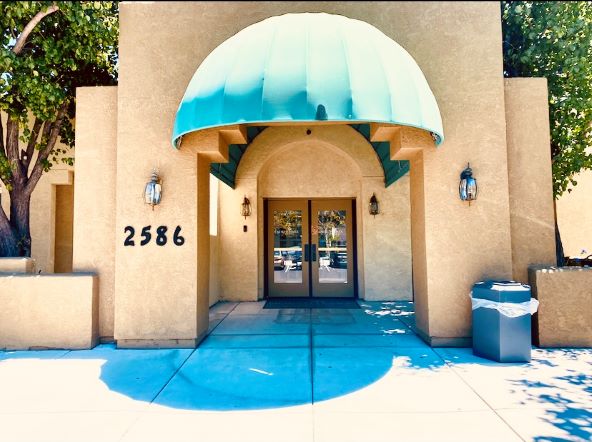
How Does North Park Post-Acute Compare to Other California Nursing Homes?

Compared to the 100 nursing homes in California, NORTH PARK POST-ACUTE's overall rating (3 stars) is below the state average of 3.1, staff turnover (37%) is near the state average of 46%, and health inspection rating (3 stars) is at the national benchmark.

What Should Families Ask When Visiting North Park Post-Acute?

Based on this facility's data, families visiting should ask: "Can I visit during a mealtime to observe dining assistance and food quality?" "How do you handle medical emergencies, and what is your hospital transfer rate?" "Can I speak with family members of current residents about their experience?"

Is North Park Post-Acute Safe?

Based on CMS inspection data, NORTH PARK POST-ACUTE has a clean safety record: no substantiated abuse findings (meaning no confirmed cases of resident harm), no Immediate Jeopardy citations (the most serious violation level indicating risk of serious injury or death), and is not on the Special Focus Facility watch list (a federal program monitoring the lowest-performing 1% of nursing homes). The facility has a 3-star overall rating and ranks #100 of 100 nursing homes in California. While no facility is perfect, families should still ask about staff-to-resident ratios and recent inspection results during their visit.

Do Nurses at North Park Post-Acute Stick Around?

NORTH PARK POST-ACUTE has a staff turnover rate of 37%, which is about average for California nursing homes (state average: 46%). Moderate turnover is common in nursing homes, but families should still ask about staff tenure and how the facility maintains care continuity when employees leave.

Was North Park Post-Acute Ever Fined?

NORTH PARK POST-ACUTE has no federal fines on record. CMS issues fines when nursing homes fail to meet care standards or don't correct problems found during inspections. The absence of fines suggests the facility has either maintained compliance or corrected any issues before penalties were assessed. This is a positive indicator, though families should still review recent inspection reports for the full picture.

Is North Park Post-Acute on Any Federal Watch List?

NORTH PARK POST-ACUTE is not on any federal watch list. The most significant is the Special Focus Facility (SFF) program, which identifies the bottom 1% of nursing homes nationally based on persistent, serious quality problems. Not being on this list means the facility has avoided the pattern of deficiencies that triggers enhanced federal oversight. This is a positive indicator, though families should still review the facility's inspection history directly.