FOOTHILL REGIONAL MEDICAL CENTER D/P SNF
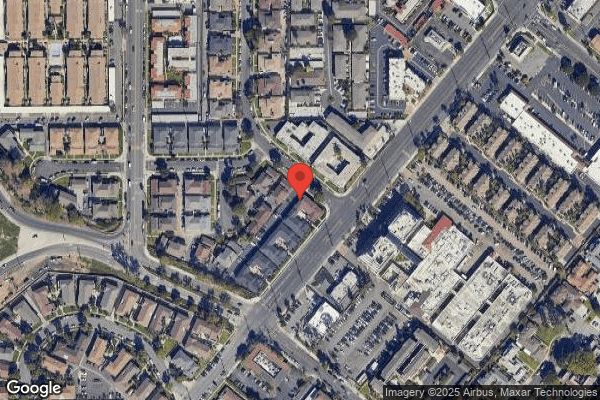
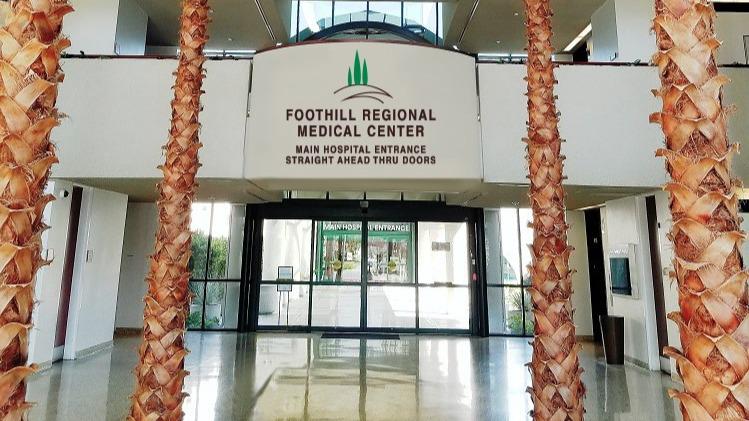
14662 NEWPORT AVENUE, TUSTIN, CA 92780 (714) 619-7700
For profit - Corporation 42 Beds Independent Data: November 2025
Trust Grade
78/100
#76 of 1155 in CA
Last Inspection: February 2025

Within standard 12-15 month inspection cycle. Federal law requires annual inspections.

Overview

Foothill Regional Medical Center D/P SNF has a Trust Grade of B, indicating it is a good facility and a solid choice for families. It ranks #76 out of 1,155 nursing homes in California, placing it in the top half, and #6 out of 72 in Orange County, meaning it has only five local competitors that are better. The facility is on an improving trend, with the number of issues decreasing from 18 in 2024 to 16 in 2025, but it still has a total of 62 issues, including a serious incident where a resident received enteral feeding incorrectly, leading to a hospitalization for aspiration pneumonia. While staffing is a strong point, rated 5 out of 5 stars with only 21% turnover, indicating staff stability, there are concerning incidents regarding medication administration that could pose risks to residents. Overall, the facility has good RN coverage, but there have been issues with infection control practices and medication dispensing that families should consider.

Trust Score
B
78/100
In California
#76/1155
Top 6%
Safety Record
Moderate
Needs review
Inspections
Getting Better
18 → 16 violations
Staff Stability
✓ Good
21% annual turnover. Excellent stability, 27 points below California's 48% average. Staff who stay learn residents' needs.
Penalties
⚠ Watch
$9,750 in fines. Higher than 87% of California facilities, suggesting repeated compliance issues.
Skilled Nurses
✓ Good
Each resident gets 162 minutes of Registered Nurse (RN) attention daily — more than 97% of California nursing homes. RNs are the most trained staff who catch health problems before they become serious.
Violations
⚠ Watch
62 deficiencies on record. Higher than average. Multiple issues found across inspections.
★★★★★
5.0
Overall Rating
★★★★★
5.0
Staff Levels
★★★★★
5.0
Care Quality
★★★☆☆
3.0
Inspection Score
Stable
2024: 18 issues
2025: 16 issues

The Good

  • 5-Star Staffing Rating · Excellent nurse staffing levels
  • 5-Star Quality Measures · Strong clinical quality outcomes
  • Low Staff Turnover (21%) · Staff stability means consistent care
  • Full Sprinkler Coverage · Fire safety systems throughout facility
  • No fines on record
  • Staff turnover is low (21%)

    27 points below California average of 48%

Facility shows strength in staffing levels, quality measures, staff retention, fire safety.

The Bad

Federal Fines: $9,750

Below median ($33,413)

Minor penalties assessed

The Ugly 62 deficiencies on record

1 actual harm
Feb 2025 16 deficiencies
CONCERN (D)

Potential for Harm - no one hurt, but risky conditions existed

Comprehensive Care Plan (Tag F0656)

Could have caused harm · This affected 1 resident

**NOTE- TERMS IN BRACKETS HAVE BEEN EDITED TO PROTECT CONFIDENTIALITY** Based on observation, interview, medical record review, and facility P&P review, the facility failed to develop the comprehensiv...

Read full inspector narrative →
**NOTE- TERMS IN BRACKETS HAVE BEEN EDITED TO PROTECT CONFIDENTIALITY** Based on observation, interview, medical record review, and facility P&P review, the facility failed to develop the comprehensive plans of care to reflect the individual care needs for two of nine final sampled residents (Residents 7 and 18). * The facility failed to develop a comprehensive person-centered care plan to address Resident 18's nutritional oral gratification and GT feeding. In addition, the facility failed to develop a comprehensive care plan for the use of the abdominal binder. * The facility failed to develop a comprehensive person-centered care plan to address Resident 7's GT feeding. These failures had the potential risk of not providing appropriate, consistent, and individualized care to these residents. Findings: Review of the facility's P&P titled Resident Care Plan revised 7/2024 showed all the residents will have an individualized comprehensive person-centered care plan developed and implemented based on residents individual care needs and includes all problems, goals, and interventions will be documented. 1a. On 1/29/25 at 0901 hours, Resident 18 was observed up in the baby chair and assisted by the family member with eating the baby food using a small rubberized spoon. Medical record review for Resident 18 was initiated on 1/30/25. Resident 18 was admitted to the facility on [DATE]. On 1/30/25 1011 hours, Resident 18 was observed on a wheelchair with the GT feeding infusing at 37 ml per hour. Review of Resident 18's physician's order dated 1/29/25, showed to provide a pureed diet with instructions for Resident 18 to eat baby food one to two times a day for oral gratification, to be fed by family member only, and to continue with routine Jejunostomy (surgical opening in the small intestine from the outside of the body) tube feeding. Another physician's order dated 1/21/25, showed to provide tube feeding with Elecare 26 kcal at 37 ml per hour for 22 hours and to stop for oral feeding. Review of Resident 18's plan of care did not show documented evidence a care plan was developed to address the nutritional problem of Resident 18. There was no documented evidence the care plan was formulated for the oral gratification and tube feeding. On 1/30/25 at 1058 hours, an interview for Resident 18 was conducted with CNA 3. CNA 3 verified Resident 18's family member assisted the resident with eating the baby food and Resident 18 was on tube feeding. b. Review of Resident 18's physician order dated 9/27/24, showed to apply the abdominal binder continuously for GT dislodgement prevention, and with instructions to use elastic bandage with self closure and cut to the appropriate size when resident was not wearing snappable clothing, and to check the skin every two hours. Review of Resident 18's plan of care did not show documented evidence a care plan was developed to address the use of the abdominal binder to prevent GT dislodgement for Resident 18. On 1/30/25 at 1058 hours, an interview for Resident 18 was conducted with CNA 3. CNA 3 verified Resident 18 had an abdominal binder on to prevent the resident from pulling out the tubes on her abdomen. On 2/03/25 at 0849 hours, and interview and concurrent medical record review for Resident 18 was conducted with RN 2. RN 2 verified Resident 18 was on oral feeding and the family member was able to assist the resident with eating. RN 2 verified Resident 18 moved a lot and the licensed nurses applied the elastic bandage as an abdominal binder. RN 2 verified Resident 18 had a physician's order for the elastic bandage to apply as an abdominal binder and to perform a skin checks every two hours. RN 2 stated the licensed nurses checked the placement of the elastic bandage. RN 2 was asked if there was a plan of care formulated for the GT feeding, oral feeding, and the use of the abdominal binder. RN 2 verified there was no care plan formulated for the the GT feeding, oral feeding and the use of the abdominal binder for Resident 18. On 2/03/25 at 1418 hours hours, an interview and concurrent medical record review for Resident 18 was conducted with the CNO. The CNO was informed and verified the above findings. 2. On 1/29/25 at 0842 hours, Resident 7 was observed lying in bed. Resident 7's tube feeding was observed running at 118 ml per hour. Medical record review for Resident 7 was initiated on 1/29/25. Resident 7 was admitted to the facility on [DATE]. Review of Resident 7's H&P examination dated 6/2/24, showed Resident 7 was dependent on GT (a thin, flexible tube inserted through the abdominal wall and into the stomach) feeding. Review of the Resident 7's Patient Orders, showed a physician's order dated 7/12/24, to promote with fiber tube feeding at 118 ml per hour via the GT. Review of Resident 7's plan of care failed to show documented evidence a care plan addressing Resident 7's GT feeding was initiated. On 1/31/25 at 1345 hours, an interview and concurrent medical record review for Resident 7 was conducted with RN 1. RN 1 verified the above findings and stated the facility did not initiate a person centered care plan to address the resident's enteral feeding. RN 1 stated she used her standard professional practice to care for the residents with tube feeding. On 1/31/25 at 1621 hours, the CNO and Director of Quality and Risk was informed and acknowledged the above findings.
CONCERN (D)

Potential for Harm - no one hurt, but risky conditions existed

Deficiency F0688 (Tag F0688)

Could have caused harm · This affected 1 resident

**NOTE- TERMS IN BRACKETS HAVE BEEN EDITED TO PROTECT CONFIDENTIALITY** Based on observation, interview, medical record review, and facility P&P review, the facility failed to ensure the treatment was...

Read full inspector narrative →
**NOTE- TERMS IN BRACKETS HAVE BEEN EDITED TO PROTECT CONFIDENTIALITY** Based on observation, interview, medical record review, and facility P&P review, the facility failed to ensure the treatment was provided to two of nine final sampled residents (Residents 4 and 12). * The facility failed to assess and check the skin of Residents 4 and 12 every two hours when the splint device was applied as ordered by the physician. In addition, the plans of care to address the function and mobility of Residents 4 and 12 were not included in the interventions for skin assessments every two hours when the splint device was applied. These failures had the potential to affect the residents well being while wearing the splint device. Findings: Review of the facility's P&P titled Splint Application revised 7/2024 showed the supportive devices will be applied to the resident as per physician's order. Prior and after application of the splint device, skin and site will be visually viewed for any changes. Document the application and removal of the splint device on the residents record. a. On 1/29/25 at 1234 hours and 1/30/25 at 0825 hours, Resident 4 was observed with contractures on both upper and lower extremities, no splint device was in place for the upper and lower extremities. Medical record review for Resident 4 was initiated on 1/30/25. Resident 4 was admitted to the facility on [DATE]. Review of Resident 4's physician's order dated 9/14/24, to apply the bilateral splint to both upper extremity WHFO for four to six hours or as tolerated with every two hours skin check during the day shift six times per week for 90 days. Another physician's order dated 12/27/24, to apply the bilateral splint AFO's as tolerated for six to 10 hours during the day shift, six times per week for 90 days and perform the skin checks every two hours. Review of Resident 4's plan of care showed a care plan problem dated 11/18/24, to address Resident 4's impaired physical mobility. However, there was no documented evidence in the interventions included to perform the skin assessments every two hours when the splint device was applied. On 1/30/25 at 1425 hours, an interview and concurrent medical record review was conducted for Resident 4 with RNA 1. RNA 1 verified Resident 4 had an RNA order and stated Resident 4 had a WHFO for the upper extremity and AFO for the lower extremity, to be applied for six to 10 hours or as tolerated. RNA 1 was asked for the documentation of the application of the splint device. RNA 1 reviewed Resident 4's treatment record flowsheet. RNA 1 documented the WHFO and AFO were applied and removed. RNA 1 verified she did not document the exact time because she had no time to check every two hours on all the resident who was wearing a splint device. On 1/30/25 at 1441 hours, an interview and concurrent medical record review for Resident 4 was conducted with LVN 1. LVN 1 stated she observed the RNA's provided the treatment to Resident 4 including the application of the splint device on both upper and lower extremity of Resident 4. LVN 1 stated the RNA document the treatment provided for Resident 4 on the treatment record flowsheet including the skin assessment of the resident every two hours. LVN 1 verified there was no documentation of the exact time the RNA's checked the skin of the resident when the splint devices were applied. b. On 1/29/25 at 0927 hours and 1/30/25 at 0927 hours, Resident 12 was observed in bed asleep, and had contractures on both upper and lower extremities. No splint device was in place at this time. Medical record review for Resident 12 was initiated on 1/30/25. Resident 12 was admitted to the facility on [DATE]. Review of Resident 12's physician's order dated 1/17/25, to apply the bilateral splint to both upper extremity WHFO for four to six hours or as tolerated with every two hours skin check during the day shift, six times per week for 90 days. Review of Resident 12's plan of care showed a care plan problem dated 11/4/24, to address Resident 12's impaired physical mobility. However, there was no documented evidence in the interventions included to perform the skin assessment every two hours when the splint device was applied. On 1/30/25 at 1121 hours, an interview and concurrent medical record review for Resident 12 was conducted with RNA 1. RNA 1 verified Resident 12' use of splint device on upper extremities have the WHFO applied daily for four to six hours or as the resident tolerated. RNA 1 was asked for the documentation of the application of the splint device. RNA 1 reviewed Resident 12's treatment record flowsheet. RNA 1 documented the WHFO was applied and removed. RNA 1 verified she did not document the exact time because she had no time to check every two hours on all the resident who was wearing a splint device. On 1/30/25 at 1354 hours, an interview and concurrent medical record review for Resident 12 was conducted with LVN 4. LVN 4 verified Resident 12's physician's order for the RNA treatment and stated she had seen the RNA's providing treatment and application of the splint to Resident 12. LVN 4 stated she assisted the RNA on checking the resident's skin when providing care and also when the splint device was placed. LVN 4 was asked where did the RNA documented for the assessment of the skin every two hours while the splint device was applied. LVN 4 stated in the flowsheet, the LVN reviewed the flowsheet for the RNA and verified there was no documentation of Resident 12's skin was assessed every two hours by the RNA. In addition, LVN 4 was asked for the care plan of Resident 12's problem of function and mobility. LVN 4 was able to show the long term care plan of the resident, however, there was no intervention on applying the splint device on the resident and assessment of the skin every two hours when the splint device was applied. On 2/3/25 at 0916 hours, an interview and concurrent medical record review for Residents 4 and 12 was conducted with RN 2. RN 2 verified Residents 4 and 12 had an order for the splint device and was applied to the resident by the RNAs. RN 2 verified there was no documentation by the RNA for the skin assessment was performed on Residents 4 and 12 when the split devices were applied. RN 2 verified there was a care plan for Residents 4 and 12 to address the problem of function and mobility; however, the application of the splint device was not included in the interventions including the skin assessments every two hours. On 2/3/25 at 1418 hours, an interview and concurrent medical record review for Residents 4 and 12 was conducted with the CNO. The CNO informed of the findings and verified the above findings.
CONCERN (D)

Potential for Harm - no one hurt, but risky conditions existed

Tube Feeding (Tag F0693)

Could have caused harm · This affected 1 resident

**NOTE- TERMS IN BRACKETS HAVE BEEN EDITED TO PROTECT CONFIDENTIALITY** 4. On 1/29/25 at 0842 hours, Resident 7 was observed lying in bed. Resident 7's tube feeding was observed running at 118 ml per...

Read full inspector narrative →
**NOTE- TERMS IN BRACKETS HAVE BEEN EDITED TO PROTECT CONFIDENTIALITY** 4. On 1/29/25 at 0842 hours, Resident 7 was observed lying in bed. Resident 7's tube feeding was observed running at 118 ml per hour. Resident 7's HOB was not observed elevated at a 30 degree angle. The indicator on the bed showed the angle of the HOB was at a 15 degree angle. Medical record review for Resident 7 was initiated on 1/29/25. Resident 7 was admitted to the facility on [DATE]. Review of Resident 7's H&P examination dated 6/2/24, showed Resident 7 was dependent on tracheostomy (an opening surgically created through the neck into the trachea [windpipe] to allow air to fill the lungs), gastrotomy tube. Review of the Resident 7's Patient Orders, showed a physician's order dated 7/12/24, to promote with fiber tube feeding at 118 ml per hour via the GT. On 1/29/25 at 0853 hours, a concurrent observation and interview was conducted with RN 4. RN 4 stated the HOB of the resident who was receiving the enteral feeding should be elevated at least at a 30 degree angle, to prevent complications of the tube feeding, including aspiration pneumonia. RN 4 verified the above observation and stated the HOB for Resident 7 should have been elevated to at least a 30 degree angle when the resident was receiving the enteral feeding. RN 4 was observed elevating the HOB for Resident 7 to a 30 degree angle. On 1/31/25 at 1621 hours, the CNO and Director of Quality and Risk were informed and acknowledged the above findings. Based on observation, interview, medical record review, and facility P&P review, the facility failed to ensure appropriate care and services for the use of a GT for two of nine final sampled residents (Residents 7 and 12) and two nonsampled residents (Residents 1 and 9). * The facility failed to ensure LVN 1 elevated Resident 9's HOB at a 30 degree angle or above prior to the administration of medication via the GT, to reduce the risk of aspiration. * The facility failed to ensure LVN 3 elevated Resident 12's HOB at a 30 degree angle or above prior to the administration of the medication via the GT, to reduce the risk of aspiration. * The facility failed to ensure Resident 1's HOB was elevated at a 30 degree angle or above during the enteral feeding via the GT. * The facility failed to ensure Resident 7's HOB was elevated at a 30 degree angle or above when Resident 7 was receiving the enteral feeding via the GT. These failures posed the risk for complications related to use of the GT for Residents 1, 7, 9, and 12. Findings: Review of the facility's P&P titled Enteral Nutrition and Medication Administration revised 2/2018 showed during enteral feeding, keep the patient's head of the bed at a 30 degree angle to promote optimal flow of feeding. 1. Medical record review for Resident 9 was initiated on 1/30/25. Resident 9 was admitted to the facility on [DATE]. Review of Resident 9's H&P examination dated 2/10/23, showed Resident 9 was a GT dependent. Review of Resident 9's MDS dated [DATE], showed Resident 9 had a feeding tube. On 1/30/25 at 1532 hours, during a medication administration observation with LVN 1, LVN 1 was observed administering Resident 9's medication with the HOB at a 20 degree angle. On 1/30/25 at 1538 hours, an interview and concurrent observation was conducted with LVN 1. LVN 1 stated for the administration of the medications via the GT, the HOB should be elevated at a 30 degree angle or more. LVN 1 was asked how she checked to ensure the HOB was at an appropriate angle, LVN 1 stated the beds had a leveler which indicated the angle of the HOB. LVN 1 checked the leveler on Resident 9's bed and verified the HOB was at a 20 degree angle. LVN 1 was then observed raising Resident 9's HOB. 2. Medical record review for Resident 12 was initiated on 2/3/25. Resident 12 was admitted to the facility on [DATE]. Review of Resident 12's H&P examination dated 4/28/21, showed Resident 12 was a GT dependent. Review of Resident 12's MDS dated [DATE], showed Resident 12 had a feeding tube. On 2/3/25 at 0928 hours, during a medication administration observation with LVN 3, LVN 3 was observed elevating the HOB of Resident 12's bed before administering the medications. However, the indicator on Resident 12's bed showed the HOB was between 15 and 30 degree angle. On 2/3/25 at 0954 hours, an interview and concurrent observation was conducted with LVN 3. LVN 3 was asked about the facility's practice for the administration of medications via the GT. LVN 3 stated for the administration of medication via the GT, the HOB should be at a 45 to 60 degree angle, to prevent the risk of aspiration. When asked how LVN 3 determined the appropriate angle for the HOB during the medication administration, LVN 3 stated it was per her visual judgement. When asked about the HOB indicator on Resident 12's bed, LVN 3 stated she did not use the indicator and was not aware of its function. LVN 3 verified the indicator showed the angle was less than 30 degrees. On 2/3/25 at 1321 hours, an interview was conducted with the DSD/MDS Coordinator. The DSD/MDS Coordinator stated for the administration of medications via the GT, the HOB should be maintained above a 30 degree angle. The DSD/MDS Coordinator stated some of the beds had indicators to show the angle of the HOB. The DSD/MDS Coordinator further stated if the beds had the indicators on them, the licensed nurses should check the indicator to ensure the HOB was at the appropriate angle prior to the administration of the medication via the GT, to prevent aspiration. On 2/3/25 at 1409 hours, an interview was conducted with the CNO and Director of Quality and Risk. The CNO stated the facility's practice for the administration of the medications via the GT, was for the HOB to be at a 30 degree angle or more, to prevent aspiration. The CNO stated the indicators/levelers on the beds indicated the angle of the HOB. The CNO further stated, the nurses should check the indicator prior to the administration of the medications via the GT, to ensure the HOB was at the appropriate level. The CNO was informed and acknowledged the above findings. 3. Review of the Foundations and Adult Health Nursing published 2023 showed when administering medication through the nasogastric tubing, place the patient in high Fowler's position (upper body elevated at a 60-90 degree angle). On 1/29/25 at 0940 hours, during the initial facility tour, Resident 1 was observed lying in bed with the HOB elevated less than 30 degrees and receiving tube feeding. Medical record review for Resident 1 was initiated on 1/29/25. Resident 1 was admitted to the facility on [DATE]. Review of Resident 1's H&P examination dated 12/10/22, showed Resident 1 had hypoxic ischemic encephalopathy (a disorder in which clinical manifestations indicate brain dysfunction). Review of Resident 1's Patient Orders (displayed orders) dated 1/30/25, showed a physician's order dated 7/18/24, to administer Jevity (enteral feeding) 1.2 calorie tube feeding at 105 ml/hour via GT every day. On 1/29/25 at 1050 hours, an observation and concurrent interview was conducted with LVN 1. The HOB angle indicator on Resident 1's bed showed Resident 1's HOB was at a 20 degree angle, while the tube feeding was infusing. LVN 1 verified Resident 1's HOB was at a 20 degree angle. LVN 1 stated the HOB should have been at a 30 degree angle, to prevent aspiration pneumonia (an infection caused by inhaling something other than air into the lungs). On 1/31/25 at 1621 hours, an interview was conducted with the CNO and Director of Quality and Risk. The DON and Director of Quality and Risk were informed and acknowledged the above findings.
CONCERN (D)

Potential for Harm - no one hurt, but risky conditions existed

Deficiency F0700 (Tag F0700)

Could have caused harm · This affected 1 resident

**NOTE- TERMS IN BRACKETS HAVE BEEN EDITED TO PROTECT CONFIDENTIALITY** Based on interview, medical record review, and facility P&P review, the facility failed to obtain the informed consent for the u...

Read full inspector narrative →
**NOTE- TERMS IN BRACKETS HAVE BEEN EDITED TO PROTECT CONFIDENTIALITY** Based on interview, medical record review, and facility P&P review, the facility failed to obtain the informed consent for the use of side rails for one of three final sampled residents (Resident 11) reviewed for side rails. This failure posed the risk for Resident 11 and/or his representative to not be informed of his care and the risks for the padded bilateral upper and lower siderails. Findings: Review of the facility's P&P titled Side Rails revised 9/2023 showed all the residents shall have side rails in the full up position while in bed or crib. If the four siderails are required for the patient safety, a consent is required. Review of the Foundations and Adult Health Nursing published 2023 showed under Informed Consent, the Patient Care Partnership establishes the patient's right to make decisions regarding his or her health care. On 1/29/25 at 0823 hours, during the initial facility tour, Resident 11 was observed lying in bed with padded bilateral upper and lower siderails elevated. Medical record review for Resident 11 was initiated on 1/29/25. Resident 11 was admitted to the facility on [DATE]. Review of Resident 11's H&P examination dated 4/30/20, showed Resident 11 had encephalopathy (a disturbance of brain function). Review of Resident 11's Physician Order: Pediatric Subacute Restraints dated 1/25/25, showed a physician's order for padded siderails elevated times four. Further review of Resident 11's medical record did not show documented evidence the informed consent for the use of the padded bilateral upper and lower siderails was obtained from Resident 11's representative. On 1/30/25 at 1500 hours, an observation and concurrent interview was conducted with CNA 1. CNA 1 verified Resident 11's padded bilateral upper and lower siderails were elevated. CNA 1 stated Resident 11 moved in the bed and had side rails to prevent him from falling. On 1/31/25 at 1357 hours, an interview and concurrent medical record review was conducted with RN 1. RN 1 verified there was no informed consent for the use of padded bilateral upper and lower side rails for Resident 11. RN 1 stated Resident 11's bed was changed to a bed with side rails last weekend and the informed consent was not done yet. RN 1 stated the licensed nurse should have obtained the informed consent prior to Resident 11 using the padded bilateral upper and lower side rails . On 1/31/25 at 1621 hours, an interview was conducted with the CNO and Director of Quality and Risk. The CNO and Director of Quality and Risk were informed and acknowledged the above findings.
CONCERN (D)

Potential for Harm - no one hurt, but risky conditions existed

Pharmacy Services (Tag F0755)

Could have caused harm · This affected 1 resident

Based on observation, interview, medical record review, and facility P&P review, the facility failed to provide the pharmaceutical services to ensure the accurate administration and storage of the med...

Read full inspector narrative →
Based on observation, interview, medical record review, and facility P&P review, the facility failed to provide the pharmaceutical services to ensure the accurate administration and storage of the medications as evidenced by: * The facility's medication error rate was 3.85%. One of four licensed nurses (LVN 4) who were observed during the medication administration was found to have an error. LVN 4 failed to administer the complete dose of one of Resident 3's medications when significant residual of the medication was observed in the medication cup after administering the multivitamin (supplement) via GT to Resident 3. * The facility failed to ensure the electronic MAR for Resident 3 was not signed prior to the medication administration. These failures had the potential to negatively affect the resident's health conditions and posed the risk for possible complications or delay in interventions. Findings: Review of the facility's P&P titled Medication Administration, General Guidelines revised 3/2024 showed all medication orders must be ordered for a specific patient and include the name of the drug, exact dosage, route, and frequency. The five rights shall be observed in the administration of all medications: 1. Right patient; 2. Right drug; 3. Right dose; 4. Right route; and 5. Right time. Further review of the facility's P&P showed all the licensed nurses must administer and chart the medication prepared and given by them. The licensed nurse shall dispense the medication for one resident at a time and document immediately. Review of the facility's P&P titled Enteral Nutrition and Medication Administration revised 2/2018 showed when the medications are administered via the enteral routes, the tube will be checked for placement/residual, flushed with a minimum of 10 ml of water, the medication given and then another fluid flush to follow before the feeding is resumed. 1a. On 1/30/25 at 0931 hours, a medication administration observation for Resident 3 was conducted with LVN 4. LVN 4 prepared and administered Resident 3's medications which included the following: - one tablet of glycopyrrolate (anticholinergic medication, used for secretion control) 1 mg. - one tablet of multivitamin (supplement). - one ½ (half) tablet of famotidine (antacid) 10 mg. - one tablet of calcium carbonate (supplement) 500 mg. - one ml of cholecalciferol (vitamin D3) solution, equaling to 400 international units. - one ocular lubricant ophthalmic ointment to each eye. LVN 4 was observed administering the above medications to Resident 3 via the GT. After administering the medication, the medication cup labeled multivitamin was observed with significant amount of orange-colored medication residue. On 1/30/25 at 0954 hours, an interview and concurrent observation was conducted with LVN 4. LVN 4 verified the above findings. LVN 4 was asked when there are noticeable medication residue in the medicine cup what should she do. LVN 4 stated she should add more water, stir the contents, and then administer the remaining residue. On 2/3/25 at 1409 hours, an interview was conducted with the CNO. The CNO stated medications should be administered as ordered by the physician, including the complete dose. The CNO stated for the administration of medication via the GT, if there was significant residue in the medicine cup, the nurse was expected to add water, mix the contents, and administer the dose. The CNO was informed and acknowledge the above findings. 1b. Review of the Resident 3's Patient Orders showed a physician's order dated 2/3/24, to administer saliva substitute oral gel 5 ml topically to the mouth every six hours for oral hygiene. On 1/30/25 at 1047 hours, an interview and concurrent medical record review for Resident 3 was conducted with LVN 4. LVN 4 verified she did not administer the saliva substitute oral gel scheduled for 1000 hours during the medication administration observation. LVN 4 then stated she still had a one-hour window before and after the scheduled time to administer the medication. LVN 4 stated she would administer the medication now and was observed walking to her medication cart. On 1/30/25 at 1100 hours, an interview was conducted with LVN 4. LVN 4 stated her cart did not have the saliva substitute oral gel and she had requested and obtained a new tube of the saliva substitute oral gel medication for Resident 3. Review of Resident 3's Medication Administration History Visit showed the scheduled saliva substitute oral gel medication was documented as administered to Resident 3 on 1/30/25 at 1016 hours. On 1/30/25 at 1410 hours, an interview and concurrent medical record review for Resident 3 was conducted LVN 4. LVN 4 verified she signed the electronic MAR for the administration of the saliva substitute oral gel medication before she had administered the medication to Resident 3. On 2/3/25 at 1409 hours, an interview was conducted with the CNO and Director of Quality and Risk. The CNO stated the licensed nurses should sign the electronic MAR either during the administration of the medication in the resident's room, or right after administering and exiting the resident's room. The CNO further stated the licensed nurses should not sign the electronic MAR before actually administering the medication. The CNO and Director of Quality and Risk were informed and acknowledged the above findings.
CONCERN (D)

Potential for Harm - no one hurt, but risky conditions existed

Deficiency F0757 (Tag F0757)

Could have caused harm · This affected 1 resident

**NOTE- TERMS IN BRACKETS HAVE BEEN EDITED TO PROTECT CONFIDENTIALITY** Based on observation, interview, and medical record review, the facility failed to ensure one of nine final sampled residents (R...

Read full inspector narrative →
**NOTE- TERMS IN BRACKETS HAVE BEEN EDITED TO PROTECT CONFIDENTIALITY** Based on observation, interview, and medical record review, the facility failed to ensure one of nine final sampled residents (Resident 4) were free from the unnecessary medications. * The facility failed to ensure to document the monitoring of seizure activities and side effects related to Resident 4's use of clobazam, clonazepam, diazepam, lacosamide, lamotrigine, and levetiracetam (anticonvulsant medications to prevent seizure). This failure had the potential for Resident 4 to receive unnecessary medications and develop significant adverse effects, and risk for adverse effects from prolonged used of medications. Findings: Medical record review for Resident 4 was initiated on 1/30/24. Resident 4 was admitted to the facility on [DATE]. Review of Resident 4's physician's order showed the following orders: - dated 2/23/24, to administer clobazam 10 mg via GT every day for seizure. - dated 3/23/24, to administer clonazepam 0.5 mg via GT every eight hours for seizure. - dated 4/15/24, to administer diazepam 7.5 mg via GT every six hours as needed for seizure. - dated 3/23/24, to administer lacosamide 100 mg via GT three times a day for seizure. - dated 3/23/24, to administer lamotrigine 100 mg via GT every eight hours for seizure. - dated 11/1/24, to administer levetiracetam 1000 mg via GT every eight hours for seizure. Further review of Resident 4's physician's orders failed to show documented evidence a physician's order to monitor for seizure activities and side effects of the anti-seizure medications were obtained. On 2/03/25 at 1300 hours, an interview and concurrent medical record review for Resident 4 was conducted with RN 2. RN 2 verified Resident 4 had a seizure diagnosis and was on prescribed anti-seizure medications. RN 2 was asked to show the monitoring of the seizure episodes of Resident 4. RN 2 accessed the electronic medical record and stated 11/8/24 was the last recorded seizure activity for Resident 4 when Resident 4 had a seizure activity that lasted for about a minute according to the resident's mother. RN 2 was asked if there was a physician's order for the monitoring of the seizure activity and the side effects of the anti-seizure medications listed above. RN 2 verified there was no physician's order obtained for the monitoring of the seizure activity and the side effects of the anticonvulsant medications for Resident 4. On 2/03/25 at 1418 hours, an interview and concurrent medical record review for Resident 4 was conducted with the CNO. The CNO was informed and verified the above findings.
CONCERN (D)

Potential for Harm - no one hurt, but risky conditions existed

Medication Errors (Tag F0758)

Could have caused harm · This affected 1 resident

**NOTE- TERMS IN BRACKETS HAVE BEEN EDITED TO PROTECT CONFIDENTIALITY** Based on interview, and medical record review, the facility failed to ensure one of five final sampled residents (Resident 2) re...

Read full inspector narrative →
**NOTE- TERMS IN BRACKETS HAVE BEEN EDITED TO PROTECT CONFIDENTIALITY** Based on interview, and medical record review, the facility failed to ensure one of five final sampled residents (Resident 2) reviewed for unnecessary medications was free from the unnecessary psychotropic medication when: * The facility failed to monitor the behaviors specific to the use of clonidine (antihypertensive and sedative medication) for Resident 2. * The facility failed to ensure the informed consent was obtained from the resident representative for the use of the psychotropic medication (clonidine) when the route of administration, dose, and targeted behaviors were changed for Resident 2. These failures had the potential for the residents to receive unnecessary medications and not effectively evaluate the effectiveness of the psychotropic medications, and had the potential for Resident 2's representative not being informed of his clonidine medication and potential effects from the changed routes of administration, doses and targeted behavior. Findings: Review of the article published in National Library of Medicine titled Clonidine dated 7/17/23, showed clonidine is an antihypertensive medication and has multiple off labels uses which included treating anxiety. Medical record review for Resident 2 was initiated on 1/29/25. Resident 2 was admitted in the facility on 9/8/23. Review of the Resident 2's MDS dated [DATE], showed Resident 2 had a memory problem and severely impaired cognitive skills for daily decision making. Review of Resident 2's Patient Orders showed following orders: - dated 1/29/25, to administer clonidine hydrochloride 0.1 mg tablet via GT at bedtime at scheduled administration times. - dated 12/20/24, to administer clonidine hydrochloride 0.05 mg tablet via GT daily at scheduled administration times. Further review of the above Patient Orders showed the indication for the use of the clonidine medication was irritability. Further review of Resident 2's medical record failed to show if Resident 2's behavior of irritability was monitored. On 2/3/25 at 1035 hours, an interview was conducted with the Director of Pharmacy. The Director of Pharmacy stated if the clonidine was used to control the resident's behavior, then it was considered a psychotropic medication. The Director of Pharmacy further stated the effectiveness of the psychotropic medication and targeted behavior should be monitored. On 2/3/25 at 1250 hours, an interview and concurrent medical record review for Resident 2 was conducted with RN 2. RN 2 stated Resident 2 had a behavior of irritability. RN 2 stated when Resident 2 had the episodes of irritability, he would resist care, move his body, and his facial expression would change with an increase in his heart rate. When RN 2 was asked if the facility monitored the episodes of Resident 2's irritability behavior to monitor the effectiveness of the medications prescribed, RN 2 stated the behavior should be monitored. RN 2 reviewed Resident 2's medical record and stated she was not able to show the documented evidence Resident 2's behavior of irritability was monitored for the use of the clonidine medication. 2. Review of the Resident 2's Psychoactive Medication Consent dated 9/8/23, showed for clonidine patch 0.2 mg every seven days. Under the section specific targeted behavior, showed agitation. Further review of the document showed the informed consent was obtained via telephone and was signed by the physician. Further review of Resident 2's the medical record failed to show if the informed consent was obtained when the clonidine medication route of administration, dose (changed to tablet 0.1 mg at bedtime and 0.05 mg daily via GT) and the indication was changed to irritability. On 1/31/25 at 1326 hours, an interview and concurrent medical record review for Resident 2 was conducted with RN 1. RN 1 verified the Psychoactive Medication Consent showed the clonidine patch 0.2 mg every seven days for agitation. RN 1 stated Resident 2 was currently on clonidine 0.1 mg at bedtime and 0.05 mg daily for irritability via GT. RN 1 was not able show if the informed consent was obtained when the clonidine medication dose, route of administration, and targeted behavior were changed. On 2/3/25 at 1009 hours, an interview was conducted with the Director of Quality and Risk. The Director of Quality and Risk stated the facility did not have the residents with psychiatric issues, so facility did not have the policy and procedures for the use of psychotropic medication. On 2/3/25 at 1410 hours, the CNO and Director of Quality and Risk were informed and acknowledged the above findings.
CONCERN (D)

Potential for Harm - no one hurt, but risky conditions existed

Deficiency F0761 (Tag F0761)

Could have caused harm · This affected 1 resident

Based on observation, interview, and facility P&P review, the facility failed to ensure the residents' medications were stored and labeled properly. * The facility failed to ensure the medications we...

Read full inspector narrative →
Based on observation, interview, and facility P&P review, the facility failed to ensure the residents' medications were stored and labeled properly. * The facility failed to ensure the medications were stored inside a locked medication cart and were not left unattended by the licensed nurse. * Resident 12's simethicone (antiflatulence) medication was not labeled with the opened date. These failures had the potential for medication diversion and resident exposure to the expired medications with questionable potency and efficacy. Findings: 1. Review of the facility's P&P titled Medication Storage revised 9/2024 showed the drugs are stored in an orderly manner in cabinets, drawers, or carts of sufficient size to prevent crowding. All the medications and other drugs, including treatment items, are stored in a locked cabinet or room inaccessible to patients and visitors. Drugs are accessible only to the licensed personnel. The drugs of each resident are kept and stored in secure containers. On 1/30/25 at 0931 hours, during a medication administration observation with LVN 4, LVN 4 was observed preparing for the medication administration for Resident 3. LVN 4 was observed taking the medication out of Medication Cart B. On 1/30/25 at 0941 hours, LVN 4 was observed pushing her computer towards Resident 3's room in preparation for the medication administration. Medication Cart B was observed with the following medications left on top of the cart: one green bottle of refresh eye lubricant, four packets of polyethylene glycol (laxative), and three individual dose of the calcium carbonate (supplement) 500 mg tablets. On 1/30/25 at 0957 hours, LVN 4 was observed returning to Medication Cart B, after the medication administration for Resident 3. The above items were observed on Medication Cart B. LVN 4 verified the above findings and stated the medications should be put away in the medication cart when the medication cart was left unattended. LVN 4 stated the potential risk of leaving the medications unattended on top of the medication cart included the risk of someone taking the medication or the potential for the medication to be administered to another resident. 2. Review of the facility's P&P titled Medication Administration, General Guidelines, revised 3/2024 showed once punctured, multi-dose vials have 28 days expiration. They must be labeled with the expiration date. If not labeled, return to the Pharmacy. On 2/3/25 at 0904 hours, during a medication administration observation with LVN 3, a bottle of simethicone was observed opened without an opened date on the label. LVN 3 verified Resident 12's bottle of simethicone had no open date written on the bottle. LVN 3 stated the nurse who first opened the medication, should have labeled the medication with an opened and expiration date. On 2/3/25 at 1409 hours, an interview was conducted with the CNO and Director of Quality and Risk. The CNO stated the medications in the medication carts should be inside the cart and locked when unattended, to prevent the risk of medication theft, cross-medication administration to another resident and unauthorized access of the medication to anyone walking by. The CNO also stated for the multi-dose medications, the licensed nurses were expected to label the medication with the opened date when it was first opened. The CNO and Director of Quality and Risk were informed and acknowledged the above findings.
CONCERN (D)

Potential for Harm - no one hurt, but risky conditions existed

Food Safety (Tag F0812)

Could have caused harm · This affected 1 resident

Based on observation, interview, facility document review, and facility P&P review, the facility failed to ensure the food safety and sanitation guidelines were followed when: * The facility failed to...

Read full inspector narrative →
Based on observation, interview, facility document review, and facility P&P review, the facility failed to ensure the food safety and sanitation guidelines were followed when: * The facility failed to ensure the kitchen equipment was maintained in a sanitary condition. * The facility failed to ensure the food items was properly stored and maintained. These failures had the potential to result in foodborne illnesses for the residents receiving kitchen services in the facility. Findings: Review of the facility's untitled document for diet orders for the residents dated 1/29/25, showed one of 18 residents was receiving food prepared from the kitchen. 1. According to the USDA Food Code 2022, Section 4-601.11 Equipment, Food- Contact Surfaces, Nonfood Contact Surface, and Utensils. Equipment food - contact surfaces and utensils shall be clean to sight and touch. According to FDA Food Code 2022, Section 4-501.12, Cutting Surfaces, surfaces such as cutting boards and blocks that become scratched and scored may be difficult to clean and sanitize. As a result, pathogenic microorganisms transmissible through food may build up or accumulate. These microorganisms may be transferred to the foods that are prepared on such surfaces. On 1/29/25 at 0748 hours, an observation and concurrent interview was conducted with the CDM. The following was observed in the clean dish storage area: - Seven black cups was observed with white stain inside the cup. - A plastic container lid was observed with dust. - A white tray with multiple ceramics cups was observed with brown stain and dust. The CDM verified the above findings and stated the seven black cups with white stain, plastic container lid, and the white tray with ceramic cups needed to be washed again. The CDM was observed taking all of the above items to the dish washing area for cleaning. On 1/30/25 at 0751 hours, an observation and concurrent interview was conducted with the CDM. Two green, and three red cutting boards were observed to be heavily marred with whitish discoloration. The CDM verified the observation and stated the above cutting boards needed to be replaced. 2. Review of the facility's P&P titled Food and Supply Storage Dated 1/2024 showed all the food, non-food items, and supplies used in food preparation shall be stored in such a manner as to prevent contamination to maintain the safety and wholesomeness of the food for human consumption. Must, but not all, products contain an expiration date. The words sell by, best by, enjoy by or use by should precede the date. Food pass the use by, sell by, or best by or enjoy by date should be discarded. Further review of the P&P showed cover, label and date unused portions and open packages. Under the section refrigerated storage, showed unused portion of canned fruits and vegetables must be transferred to clean, approved storage container, do not store in open cans, remove any serving utensils and cover tightly, and label and date the container. On 1/29/25 at 0748 hours, an observation and concurrent interview was conducted with the CDM. The following was observed: - Meat in a clear plastic bag on a tray was observed on the second shelf from the bottom of the walk-in refrigerator, with good through date of 1/28/25. The CDM verified the observation and stated the meat needed be discarded. - On the second shelf from the top of the walk-in refrigerator, one plastic container was observed with black beans and a good through date of 1/27/25, and another plastic container was observed with pineapples with good through date of 1/23/25. The CDM verified the observation and stated the canned black beans and the pineapples in the plastic containers needed to be discarded. - A piece of cake in multiple plastic containers were observed with no label in the walk-in refrigerator. The CDM verified the observation and stated the staff member should have labeled and dated each of the cake in the multiple plastic containers. - A bin with flour was observed with no label. The CDM verified the observation and stated the bin with flour should have been labeled and dated. - In a dry food storage area, a plastic container containing corn was observed with no use by date. The CDM verified the observation and stated the corn in the plastic container should have been labeled when the packaged was opened from the original packaging with the use by date. The CDM verified all the above findings.
CONCERN (D)

Potential for Harm - no one hurt, but risky conditions existed

Deficiency F0887 (Tag F0887)

Could have caused harm · This affected 1 resident

**NOTE- TERMS IN BRACKETS HAVE BEEN EDITED TO PROTECT CONFIDENTIALITY** Based on interview, medical record review, and facility P&P review, the facility failed to ensure the COVID-19 immunization was ...

Read full inspector narrative →
**NOTE- TERMS IN BRACKETS HAVE BEEN EDITED TO PROTECT CONFIDENTIALITY** Based on interview, medical record review, and facility P&P review, the facility failed to ensure the COVID-19 immunization was offered and administered to three of five sampled residents (two final sampled residents, Residents 17 and 6; and one nonsampled resident (Resident 1) reviewed for COVID-19 immunization. This failure placed the residents at risk to acquire COVID-19 infection. Findings: Review of the facility's P&P titled Coronavirus Disease (COVID-19) Mitigation Plan: 2019, 2020, 2021, 2022,2023 dated 9/2023 showed the Infection Prevention will maintain a listing of the residents eligible for vaccination. Consent will be obtained from resident or responsible person after education is provided. Consent will be maintained in the medical record. The resident or responsible party has the right to refuse vaccination and refusal will be documented and placed in the medical record. Review of the COVID-19 Vaccine information sheet dated 10/17/24, showed COVID-19 vaccine can prevent COVID-19 disease. The vaccine information sheet further showed the updated 2024-2025 COVID-19 vaccine is recommended for everyone six months of age and older. 1.a. Medical record review for Resident 1 was initiated on 1/30/25. Resident 1 was admitted to the facility on [DATE]. Review of Resident 1's Immunization Record failed to show documented evidence of the administration of COVID-19 vaccination. On 1/31/25 at 0908 hours, an interview and concurrent medical record review was conducted with the Director of Staff Development (DSD)/MDS Coordinator. The Director of Staff Development (DSD)/MDS Coordinator acknowledged she did not offer to Resident 1's responsible party the COVID-19 vaccination for Resident 1. The Director of Staff Development (DSD)/MDS Coordinator stated the residents could get COVID-19 if they did not receive the vaccination. b. Medical record review for Resident 17 was initiated on 1/30/25. Resident 17 was admitted to the facility on [DATE]. Review of Resident 17's Immunization Record failed to show documented evidence of the administration of COVID-19 vaccination from year 2023 to year 2025. On 1/31/25 at 0908 hours, an interview and concurrent medical record review was conducted with the Director of Staff Development (DSD)/MDS Coordinator. The Director of Staff Development (DSD)/MDS Coordinator verified she did not offer to Resident 17's responsible party the COVID-19 vaccination for Resident 17. The Director of Staff Development (DSD)/MDS Coordinator stated the residents could get COVID if they did not receive vaccination. The Director of Staff Development (DSD)/MDS Coordinator stated COVID-19 should be offered to the residents. On 1/31/25 at 1326 hours, an interview was conducted with the Director of Infection Prevention. The Director of Infection Prevention acknowledged the findings. 2. Medical record review for Resident 6 was initiated on 1/30/25. Resident 6 was admitted to the facility on [DATE]. Review of Resident 6's COVID-19 Vaccine Consent form showed on 1/6/23, Resident 6's responsible party consented for Resident 6 to receive the COVID-19 vaccination. Review of Resident 6's Immunization Record failed to show documented evidence of the administration of COVID-19 vaccination. On 1/31/25 at 0908 hours, an interview and concurrent medical record review was conducted with the Director of Staff Development (DSD)/MDS Coordinator. The Director of Staff Development (DSD)/MDS Coordinator verified Resident 6's responsible party signed the consent for COVID-19 vaccination but the vaccine was not administered to Resident 6. The Director of Staff Development (DSD)/MDS Coordinator stated it was an oversight and the COVID-19 vaccination should have been given at that time to Resident 6. On 1/31/25 at 1326 hours, an interview and concurrent medical record review was conducted with the Director of Infection Prevention. The Director of Infection Prevention acknowledged the findings. The Director of Infection Prevention stated the Director of Staff Development (DSD)/MDS Coordinator should have followed up and administered the COVID-19 vaccination to Resident 6. On 1/31/25 at 1621 hours, an interview was conducted with the CNO and Director of Quality and Risk. The DON and Director of Quality and Risk were informed and acknowledged the above findings.
CONCERN (D)

Potential for Harm - no one hurt, but risky conditions existed

Room Equipment (Tag F0908)

Could have caused harm · This affected 1 resident

Based on observation, interview, facility document review, and facility P&P review, the facility failed to ensure the dish machine was repaired in a timely manner to ensure the dish machine final wate...

Read full inspector narrative →
Based on observation, interview, facility document review, and facility P&P review, the facility failed to ensure the dish machine was repaired in a timely manner to ensure the dish machine final water temperature reached a minimum of 180 degrees Fahrenheit (F) as per manufacturer instruction. This failure had the potential to cause foodborne illness for residents using dishes that were not properly sanitized. Findings: Review of the facility's untitled document for diet orders for the residents dated 1/29/25, showed one of 18 residents was receiving food prepared from the kitchen. According to the USFDA Food Code 2022 Annex 3, Equipment 4-501.11 Good Repair and Proper Adjustment, proper maintenance of equipment to manufacturer specifications helps ensure that it will continue to operate as designed. Failure to properly maintain equipment could lead to violations of the associated requirements of the Code that place the health of the consumer at risk. Review of the facility's P&P titled Dishmachine Temperature revised 1/2024, under the section High Temperature Machine showed multi tank, conveyor, multi-temperature machine: wash temperature should be 150 degrees F, pumped rinse temperature should be 160 degrees F and final rinse temperature should be 180 degrees F- 190 degrees F. Further review of the P&P showed for high temperature dishmachine- record on Dish Machine Temperature Record form during each period of use . in the event of inappropriate temperature director to determine if reading is due to malfunctioning of gauge or inappropriate temperature, makes management decision concerning adequacy of sanitation of service ware, contact sources of repair and document action taken on the back of form. On 1/20/25 at 0751 hours, an observation and concurrent interview was conducted with the CDM. The CDM stated the facility used high temperature dish washing machine. Upon observation of the dish machine, the water temperature gauze for the final rinse temperature showed E. The instruction on the dish machine showed for final rinse temperature should be 180-195 degrees F. The CDM was observed using the waterproof thermometer to check for the surface temperature of the utensils, showed 162 degrees F. The CDM verified the observation and stated the dish washing machine had not been showing final rinse temperature and he had submitted work order to the engineering department; however, it has not been fixed yet. The CDM further stated to ensure the sanitization of the service ware facility had been using pot sink (three compartment manual dish washing) for sanitation. Review of the facility's document titled Dish Machine Temp Log showed following: - On 1/2025, daily final rinse temperature showed less than 180 degrees F. In the column corrective action taken and manager weekly review did not show any entry. - On 12/2024, daily final rinse temperature showed less than 180 degrees F. In the column corrective action taken and manager weekly review did not show any entry. - On 11/2024, daily final rinse temperature showed less than 180 degrees F, with the exceptions of 11/6/24. In the column corrective action taken and manager weekly review did not show any entry. - On 10/2024, daily final rinse temperature showed less than 180 degrees F, with the exceptions of 10/8, 10/9, and 10/16/2024. In the column corrective action taken and manager weekly review did not show any entry. - On 9/2024, the final rinse temperature showed less than 180 degrees F on 9/9, 9/11, 9/12, 9/13, 9/15, 9/16, 9/17, 9/27, 9/28, 9/29, and 9/30/2024. In the back of the log showed facility started sanitizing service ware using three compartment sinks until further notice. - On 8/2024, the final rinse temperature showed less than 180 degrees F on 8/2, 8/12, 8/14, 8/15, 8/16, 8/21, and 8/26/2024. In the column corrective action taken and manager weekly review did not show any entry. Further review of the above logs showed facility was performing daily second checking system Utensils Surface Temperature showed temperature above 160 degrees F. In addition, a note under the above logs showed if the wash temperature was less than 150 degrees F, or final rinse temperature less than 180 or higher than 194, test surface temperature with waterproof thermometer (standard 160 degrees F) and notify the manager, use pot sink, call engineering, and state emergency. Review of the facility's document titled Engineering Dept. Work Order summary showed work order was requested on 6/12/24, and 9/10/24, for the dish washing temperature not reaching final rinse temperature 180 degrees F. Under the section solution showed a service was done and final rinse temperature within range of 180-degree F. On 1/30/25 at 1400 hours, an interview was conducted with the CDM. The CDM verified the dishwashing machine final rinse temperature was not within range starting August 2024 and submitted only two work order. The CDM stated when the dish washing machine did not reach the final rinse temperature the staff member should start using the manual dish washing machine for sanitizer and call the engineering right away. The CDM stated he sent an email to follow up with the engineering upper management for the same issue on 10/23/25; however, he did not get any response. Review of the email addressed to the Plant Operations Director dated 10/23/24, showed an email was sent by the CDM stating the dish washing machine was not reaching the temperature and an outside company assessed and confirmed the broken water system. The email further showed for the outside company to fix the issue they needed the payment. On 1/30/25 at 1414 hours, an interview was conducted with the Plant Operations Director. The Plant Operations Director stated the engineering department only received two work orders on 6/12/24, and 9/10/24 for the dish washing machine not reaching the final temperature of 180 degrees and was able to fix the issue at that time. When asked the Plant Operations Director if he received the follow up email from the CDM regarding the same issue he stated yes; however, he was not able to fix the issue with the water system that was identified by the outside company. The Plant Operations Director was not able to show if he followed up when the CDM sent an email on 10/23/24, regarding the concern with dish washing machine not reaching final rinse temperature. On 1/31/25 at 1621 hours, the CNO and Director of Quality and Risk was informed and acknowledged the above findings.
CONCERN (E)

Potential for Harm - no one hurt, but risky conditions existed

Infection Control (Tag F0880)

Could have caused harm · This affected multiple residents

**NOTE- TERMS IN BRACKETS HAVE BEEN EDITED TO PROTECT CONFIDENTIALITY** 5. Review of the CMS's QSO-24-08-NH Enhanced Barrier Precautions in Nursing Homes dated 3/20/24 and effective 4/1/24, showed Enh...

Read full inspector narrative →
**NOTE- TERMS IN BRACKETS HAVE BEEN EDITED TO PROTECT CONFIDENTIALITY** 5. Review of the CMS's QSO-24-08-NH Enhanced Barrier Precautions in Nursing Homes dated 3/20/24 and effective 4/1/24, showed Enhanced Barrier Precautions (EBP) refer to an infection control intervention designed to reduce transmission of multidrug-resistant organisms that employs targeted gown and glove use during high contact resident care activities. The QSO further showed EBP recommendations now include use of EBP for the residents with chronic wounds or indwelling medical devices during high-contact resident care activities regardless of their multidrug-resistant organism status. Indwelling medical device examples include central lines, urinary catheters, feeding tubes, and tracheostomies. On 1/31/25 at 0848 hours, RCP 2 was observed entering the room and performing hand hygiene donned gloves. RCP 2 proceeded to suction the Resident 7 through the tracheostomy tube. RCP 2 was not observed wearing gown while performing suctioning of the Resident 7 through the tracheostomy tube. No EBP sign was observed outside the room. On 1/31/25 at 0850 hours, an interview was conducted with RCP 2. RCP 2 verified the observation and stated Resident 7 was not on any isolation precautions, so he was not required to wear gown while performing suctioning to the resident through tracheostomy. When asked RCP 2 if he was aware about the EBP, he stated he did not know about EBP and had not received any training on EBP. Medical record review for Resident 7 was initiated on 1/29/25. Resident 7 was admitted to the facility on [DATE]. Review of the H&P examination dated 6/2/24, showed Resident 7 was dependent on tracheostomy (an opening surgically created through the neck into the trachea {windpipe} to allow air to fill the lungs), gastrotomy tube (a thin, flexible tube inserted through the abdominal wall and into the stomach), and mechanical ventilator ( A mechanical ventilator is a machine that takes over the work of breathing when a person is not able to breathe enough on their own). Review of the Resident 7's Patient Orders, showed the following orders: - dated 7/12/24, for Promote with fiber tube feeding to give 118 ml per hour via GT. - dated 7/1/24, for tracheostomy tube change and mechanical ventilation. 6. On 1/31/25 at 0904 hours, LVN 2 was observed performing hand hygiene, donning gloves and entering the room of Resident 14 with the medication on her hand. LVN 2 was observed administering the medication through the GT. LVN 2 was not observed wearing gown before entering the room and administering the medication through the GT. On 1/31/25 at 0909 hours, an interview was conducted with LVN 2. LVN 2 verified the observation and stated Resident 14 was not on any isolation precautions, so she was not required to wear gown while administering medication through the GT. LVN 2 was asked if she was aware about the EBP, she stated she did not know about EBP and had not received any training on EBP. Medical record review for Resident 14 was initiated on 1/31/25. Resident 14 was admitted to the facility on [DATE]. Review of the Resident 14's Patient Orders showed an order dated 1/12/25, for tube feeding, Nutramigen (children's formula feeding) at 90 ml per hour via GT for nine hours from 2000 to 0500 hours. On 1/31/24 at 1448 hours, an interview was conducted with the Infection Control Coordinator. The Infection Control Coordinator stated EBP was not practiced in the facility, and she recently became aware about the residents with tracheostomy, GT, indwelling urinary catheters, central lines, colostomy, wounds needed the standard EBP precautions, including the use of gown and gloves during direct care,and medication administration for the residents with GT. The Infection Control Coordinator was informed of the above findings and stated the staff member should have wore gown in addition to the gloves while providing suctioning to Resident 7, and while administering medication through the GT for Resident 14. On 2/3/25 at 1410 hours, the CNO and Director of Quality and Risk were informed and acknowledged the above findings. 3. On 1/30/25 at 1524 hours, during the medication administration observation for Resident 9, LVN 1 was observed using a stethoscope and syringe to check for the GT placement and then placing the stethoscope around her neck. After completing Resident 9's medication administration, LVN 1 was observed performing hand hygiene and exited Resident 9's room. LVN 1 did not disinfect the stethoscope prior to exiting Resident 9's room. On 1/30/25 at 1540 hours, an interview and concurrent observation was conducted with LVN 1 in the hallway. LVN 1 stated the stethoscope should be disinfected after each use and prior to exiting the resident's room. LVN 1 verified she did not disinfect her stethoscope after using the stethoscope to check Resident 9's GT placement, and prior to exiting Resident 9's room. 4.a. On 2/3/25 at 0928 hours, during the medication administration observation for Resident 12, LVN 4 was observed using a stethoscope and syringe to check for the GT placement and then placing the stethoscope around her neck. After completing Resident 12's medication administration, LVN 4 removed her gloves, washed her hands, and exited Resident 12's room. LVN 4 did not disinfect the stethoscope prior to exiting Resident 12's room. On 2/3/35 at 0955 hours, an interview was conducted with LVN 3. LVN 3 stated after using the stethoscope to check for GT placement, the stethoscope should be disinfected prior to exiting the resident's room to prevent the transmission of organisms to other residents. LVN 3 verified she did not disinfect her stethoscope after using the stethoscope to check Resident 12's GT placement and prior to exiting Resident 12's room. On 2/3/25 at 1024 hours, an interview was conducted with the Infection Control Coordinator. The Infection Control Coordinator stated the licensed staff are expected to disinfect the stethoscope after each use on the resident and the stethoscope should be disinfected before leaving the resident's room to prevent cross contamination and the transmission of organisms to others. On 2/3/25 at 1409 hours, an interview was conducted with the CNO. The CNO stated the stethoscope should be disinfected with the appropriate disinfectant after each use and before leaving the resident's room to prevent the cross contamination and transmission of infections. The CNO was informed and acknowledged the above findings. b. Review of the CDC'S Long-Term Care Facilities: Implementation of Personal Protective Equipment (PPE) Use in Nursing Homes to Prevent Spread of Multidrug- resistant Organisms (MDROs), dated 4/2/24, showed multidrug-resistant organism (MDRO) transmission is common in skilled nursing facilities, contributing to substantial resident morbidity and mortality and increased healthcare costs. Enhanced Barrier Precautions (EBP) are an infection control intervention designed to reduce transmission of resistant organisms that employs targeted gown and glove use during high contact resident care activities. EBP may be indicated (when Contact Precautions do not otherwise apply) for residents with any of the following: - Wounds or indwelling medical devices, regardless of MDRO colonization status - Infection or colonization with an MDRO. Review of the CDC's Enhanced Barrier Precaution sign showed providers and staff must also: wear glove and gown for the following high- contact resident care activities: - dressing - bathing/showering - transferring - changing linens - providing hygiene - changing briefs or assisting with toileting - device care or use: central line, urinary catheter, feeding tube, tracheostomy - wound care: any skin opening requiring a dressing. Medical record review for Resident 12 was initiated on 2/3/25. Resident 12 was admitted to the facility on [DATE]. Review of Resident 12's H&P examination dated 4/28/21, showed Resident 12 was a GT dependent. Review of Resident 12's MDS dated [DATE], showed Resident 12 had a feeding tube. On 2/3/25 at 0928 hours, during a medication administration observation with LVN 3. LVN 3 was observed administering Resident 12's medication via GT. LVN 3 was not observed wearing a gown during the medication administration. On 2/3/25 at 0955 hours, an interview was conducted with LVN 3. LVN 3 was asked about the proper PPE during the administration of medications to a resident with a GT. LVN 3 stated for the residents who did not have an active infection, and have a GT, she did not don a gown during the medication administration. LVN 3 further stated Resident 12 was not under any isolation. LVN 3 verified she did not don a gown during the medication administration observation. LVN 3 was asked about the enhanced barrier precautions and LVN 3 stated she was not familiar with the precautions. On 2/3/25 at 1024 hours, an interview was conducted with the Infection Control Coordinator. The Infection Control Coordinator was asked about her understanding of the enhanced barrier precautions. The Infection Control Coordinator stated when the staff member were providing care for a resident with a GT, the staff member must don a gown and gloves. The Infection Control Coordinator further stated a gown and gloves were required when providing a direct resident care and when administering medications via the GT. The Infection Control Coordinator was asked if the licensed nursed were aware of the enhanced barrier precautions guidelines, the Infection Control Coordinator stated the facility practice was that the residents who did not have an order for isolation and did not have an active infection, the licensed nurses were using standard precautions during the medication administration via the GT and when providing care. On 2/3/25 at 1409 hours, an interview was conducted with the CNO and Director of Quality and Risk. The CNO was informed and acknowledged the above findings. Based on observation, interview, facility document review, and facility P&P review, the facility failed to ensure the appropriate infection control practices designed to provide the safe and sanitary environment were implemented. * The facility failed to record all the residents with infection on the facility's infection surveillance tool. The facility's infection surveillance tool did not include all the residents identified with infections. Only the residents with positive culture results were identified as having infection and were listed on the surveillance list. * The facility failed to ensure Resident 8's water pitcher was clean. * LVN 1 failed to disinfect the stethoscope after use on Resident 9 and prior to exiting the room. * LVN 4 failed to disinfect the stethoscope after use on Resident 12 and prior to exiting the room; additionally, LVN 4 failed to don proper PPE during the administration of the medications to Resident 12 via the GT. * The facility failed to ensure RCP 2 wore proper PPE when providing suctioning through tracheostomy for Resident 7. * The facility failed to ensure LVN 2 wore proper PPE when administering medication through the GT for Resident 14. These failures posed a risk for transmission of disease-causing microorganisms and infections and incorrect notification of infection control practices. Findings: 1. Review of the facility's P&P titled Pediatric Sub-Acute Infection Prevention Program Plan revised 1/2023 showed the Peds Subacute Infection Control plan covers the care, treatment, and services for the facility subacute care. The Peds Sub-Acute Infection Prevention Program Plan uses sound epidemiologic principles to implement, evaluate, and improve infection prevention and control strategies. Surveillance, epidemiological investigation, consultation, and education are critical components of the program. Prevention and control efforts will include, but are not limited to: * Identifying, managing, and reporting persons with transmissible diseases as mandated by the state communicable disease regulations * Identifying infections in patients present on admission or occurring thereafter, and infections present in staff upon initial employment or occurring as a result of an exposure * Measuring, monitoring, evaluating, and reporting program effectiveness Review of the facility's infection surveillance list did not show a record of all the residents with infection. Only the residents with positive culture results were listed on the surveillance list. On 1/30/25 at 1018 hours, an interview and concurrent record review was conducted with the Director of Infection Prevention. The Director of Infection Prevention stated he was responsible for the infection control surveillance in the Subacute unit. When asked if the facility included on their infection surveillance form the residents with identified infections who met the McGeer's criteria but did not have a positive culture, the Director of Infection Prevention stated they were only tracking the residents with positive culture results and listed on the surveillance list. The Director of Infection Prevention verified the surveillance forms did not include all the residents identified with infection and only the residents with positive culture results were listed on the infection surveillance form. The Director of Infection Prevention stated he followed the NHSN guidelines to see if it met the true infection of HAI. 2. Review of the facility's P&P titled Pediatric Sub-Acute Infection Prevention Program Plan revised 1/2023 showed the Pediatric Sub-Acute Infection Prevention Program Plan established by the facility provides a multidisciplinary systemic approach to promoting quality patient care, emphasizing risk reduction of disease transmission in the healthcare environment. During the initial facility tour on 1/29/25 at 0829 hours, Resident 8's water pitcher was observed on top of the side table. The cover of Resident 8's water pitcher was dirty and had yellowish powder and stain. Medical record review for Resident 8 was initiated on 1/29/25. Resident 8 was admitted to the facility on [DATE]. Review of the Physician H&P General dated 10/16/24, showed Resident 8 had global developmental delay (a significant delay in two or more domains of development, including activities of daily living as well as motor, cognitive, speech/language, and personal/social skills). On 1/29/25 at 1114 hours, an observation and concurrent interview was conducted with LVN 2. LVN 2 verified the cover of Resident 8's water pitcher was dirty and had yellowish powder and stain. LVN 2 stated the staff member used the water from the water pitcher during the medication administration. LVN 2 stated the staff member should have changed Resident 8's water pitcher for infection control. On 1/31/25 at 1621 hours, an interview was conducted with the CNO and Director of Quality and Risk. The DON and Director of Quality and Risk were informed and acknowledged the above findings.
MINOR (B)

Minor Issue - procedural, no safety impact

Deficiency F0625 (Tag F0625)

Minor procedural issue · This affected multiple residents

**NOTE- TERMS IN BRACKETS HAVE BEEN EDITED TO PROTECT CONFIDENTIALITY** Based on interview, medical record review, and facility P&P review, the facility failed to notify one of two final sampled resid...

Read full inspector narrative →
**NOTE- TERMS IN BRACKETS HAVE BEEN EDITED TO PROTECT CONFIDENTIALITY** Based on interview, medical record review, and facility P&P review, the facility failed to notify one of two final sampled residents (Resident 8) reviewed for hospitalization of his rights to a bed hold (holding or reserving a resident's bed while the resident in the acute care hospital) policy upon the transfer to the acute care facility in writing. This failure had the potential for the resident and/or his representative to be unaware of their rights to request a bed hold upon transfer. Findings: Review of the facility's P&P titled Bed Hold revised 9/2024 showed the residents will be informed upon admission of their right for a bed hold in the event the resident must be transferred to an acute facility or during therapeutic leave. The resident or representative will be given notice of the rights to a bed hold at the time of transfer or leave. Medical record review for Resident 8 was initiated on 1/29/25. Resident 8 was admitted to the facility on [DATE]. Review of Resident 8's H&P examination dated 10/16/24, showed Resident 8 had global developmental delay (a significant delay in two or more domains of development, including activities of daily living as well as motor, cognitive, speech/language, and personal/social skills). Review of Resident 8's Notice of Transfer or discharge date d 10/4/24, showed Resident 8 was transferred to the acute care hospital. On 1/31/25 at 1408 hours, an interview and concurrent medical record review was conducted with RN 1. When asked to show the bed hold notification for Resident 8, RN 1 stated she did not know where to find the bed hold notification. On 1/31/25 at 1417 hours, an interview and concurrent medical record review was conducted with the Pediatric Social Worker. The Pediatric Social Worker verified he did not provide a written copy of the bed hold notification to Resident 8's representative. The Pediatric Social Worker further stated the Notice of Transfer or Discharge form included the seven-day hold notification. The Pediatric Social Worker stated the nurse called Resident 8's family member and he faxed the Notice of Transfer or Discharge form to the Ombudsman. The Pediatric Social Worker stated he never gave a copy of the Notice of Transfer or Discharge form to Resident 8's representative because the form did not have an instruction to provide a copy to the resident's representative. On 1/31/25 at 1621 hours, an interview was conducted with the CNO and Director of Quality and Risk. The CNO and Director of Quality and Risk were informed and acknowledged the above findings.
MINOR (B)

Minor Issue - procedural, no safety impact

Deficiency F0638 (Tag F0638)

Minor procedural issue · This affected multiple residents

**NOTE- TERMS IN BRACKETS HAVE BEEN EDITED TO PROTECT CONFIDENTIALITY** Based on interview and medical record review, the facility failed to ensure the quarterly MDS assessment was completed for one f...

Read full inspector narrative →
**NOTE- TERMS IN BRACKETS HAVE BEEN EDITED TO PROTECT CONFIDENTIALITY** Based on interview and medical record review, the facility failed to ensure the quarterly MDS assessment was completed for one final sampled resident (Resident 6) and one nonsampled Resident (Resident 13). This had the potential to not provide appropriate care when there was no MDS assessment information available. Findings: 1. Medical record review for Resident 6 was initiated on 1/29/25. Resident 6 was admitted to the facility on [DATE]. Further review of Resident 6's medical record showed the last quarterly MDS assessment was completed on 9/6/24. However, there was no documented evidence a quarterly MDS assessment was completed after 9/6/24. 2. Medical record review for Resident 13 was initiated on 1/30/25. Resident 6 was admitted to the facility on [DATE]. Further review of Resident 13's medical record showed the last annual MDS assessment was completed on 9/6/24. However, there was no documented evidence a quarterly MDS assessment was completed after 9/6/24. On 1/30/25 at 1440 hours, an interview and concurrent medical record review for Residents 6 and 13 was conducted with the MDS Coordinator/DSD. The MDS Coordinator/DSD verified Residents 6 and 13's last MDS assessments were completed on 9/6/24, and there was no quarterly MDS assessment in December 2024. The MDS Coordinator/DSD acknowledged it was missed and stated it was due to a discrepancy in the date of submission on her calendar. On 2/3/25 at 1409 hours, an interview was conducted with the CNO and Director of Quality and Risk . The CNO stated she expected the MDS Coordinator to complete and submit each MDS assessment on time. The CNO was informed and acknowledged the above findings.
MINOR (B)

Minor Issue - procedural, no safety impact

Assessment Accuracy (Tag F0641)

Minor procedural issue · This affected multiple residents

**NOTE- TERMS IN BRACKETS HAVE BEEN EDITED TO PROTECT CONFIDENTIALITY** Based on interview and medical record review, the facility failed to ensure the MDS was coded accurately for one of nine final s...

Read full inspector narrative →
**NOTE- TERMS IN BRACKETS HAVE BEEN EDITED TO PROTECT CONFIDENTIALITY** Based on interview and medical record review, the facility failed to ensure the MDS was coded accurately for one of nine final sampled residents (Resident 6). This failure had the potential for the resident's negative health outcome as the information was not accurate. Findings: Medical record review for Resident 6 was initiated on 1/29/25. Resident 6 was admitted to the facility on [DATE]. Review of Resident 6's Patient Orders, showed the following physician's orders: - dated 1/31/25, to administer aspirin (anti-inflammatory medication) 40.5 mg chewable tablet via GT daily. The indication for the use of the aspirin medication showed anticoagulation. - dated 3/20/24, and discontinued on 1/28/25, to administer aspirin 40.5 mg chewable tablet via GT daily. The indication for the use of the aspirin medication showed anticoagulation. Review of Resident 6's Quarterly MDS dated [DATE], showed Resident 6 was coded for the use of an anticoagulant. On 1/30/25 at 1440 hours, an interview and concurrent medical record review for Residents 6 was conducted with the DSD/MDS Coordinator. The DSD/MDS Coordinator verified the above findings and agreed although the indication for the use of the aspirin medication was for anticoagulation, the aspirin medication was not an anticoagulant medication. The DSD/MDS Coordinator stated she coded the MDS assessment incorrectly. On 2/3/25 at 1409 hours, an interview was conducted with the CNO and the Director of Quality and Risk. The CNO stated she expected the DSD/MDS Coordinator to complete and submit each MDS assessment timely and accurately. The CNO was informed and acknowledged the above findings.
MINOR (B)

Minor Issue - procedural, no safety impact

Garbage Disposal (Tag F0814)

Minor procedural issue · This affected multiple residents

Based on observation and interview, the facility failed to ensure the garbage and refuse were properly stored in one of one garbage dumpster and compactor. Litter, and dark liquid collected with odor ...

Read full inspector narrative →
Based on observation and interview, the facility failed to ensure the garbage and refuse were properly stored in one of one garbage dumpster and compactor. Litter, and dark liquid collected with odor was observed under and around the garbage dumpster and compactor. This failure had the potential to harbor pests or rodents which carry diseases. Findings: According to FDA Food Code 2022, 5-501.115, Maintaining Refuse Areas and Enclosures, A storage area and enclosure for refuse, recyclables, or returnables shall be maintained free of unnecessary items, and clean. On 1/30/25 at 0915 hours, a concurrent observation and interview was conducted with the Plant Operations Director . A dumpster connected with the compactor was observed with pieces of disposable cups, papers, cardboard boxes, pieces of wood, and dark water with odor was observed under and the surrounding area of the dumpster and compactor. The Plant Operations Director verified the observation and stated the dumpster area should be free of surrounding litter. The Plant Operations Director further stated the dumpster and compactor area needed to be cleaned. On 2/3/25 at 1410 hours, the CNO and Director of Quality and Risk were informed and acknowledged the above findings.
Dec 2024 2 deficiencies
CONCERN (D) 📢 Someone Reported This

A family member, employee, or ombudsman was alarmed enough to file a formal complaint

Potential for Harm - no one hurt, but risky conditions existed

Quality of Care (Tag F0684)

Could have caused harm · This affected 1 resident

**NOTE- TERMS IN BRACKETS HAVE BEEN EDITED TO PROTECT CONFIDENTIALITY** Based on interview, medical record review, facility document review, and facility P&P review, the facility failed to provide the...

Read full inspector narrative →
**NOTE- TERMS IN BRACKETS HAVE BEEN EDITED TO PROTECT CONFIDENTIALITY** Based on interview, medical record review, facility document review, and facility P&P review, the facility failed to provide the necessary care and services for one of two sampled residents (Resident 1). * The facility failed to implement their P&P to conduct an hourly rounding, neurological, skin, and body assessments for Resident 1 after she had sustained a fall on 11/2/24. * The facility failed to thoroughly investigate the fall incident for Resident 1. These failures had the potential to negatively affect the resident's health condition and well-being. Findings: Review of the facility's P&P titled Change of Condition: Reporting revised 9/2023 showed when a licensed staff member identifies a change of condition or becomes aware of any incident involving the care of a resident, a change of condition report is to be filled out on the shift report. This entry is in addition to the usual and customary documentation of the resident medical record which includes injuries, even minor to a resident. The director will maintain electronic records of all report investigations. The director will be responsible for the ongoing monitoring and reporting of change of condition changes on the pediatric sub-acute services unit. Review of the facility's P&P titled Fall Prevention Program revised 2/2023 showed all the patients will be assessed upon admission, each shift for the risk of falling, on change of condition, and upon transfer by the receiving unit as per assessment and reassessment policy and procedure. Fall prevention strategies shall include but is not limited to, hourly rounding by nursing staff including checking for the three P's (pain, potty, and personal needs). All the patients' falls will be investigated by unit manager/director, or designee and tracked and trended by the risk manager. Post fall management includes immediately upon identification of a patient fall, the patient will be assessed for any injury prior to moving the patient. The vital signs will be obtained including a neurological assessment. Ensure fall risk measures are implemented if not previously identified as a fall risk. Medical record review for Resident 1 was initiated on 11/15/24. Resident 1 was admitted to the facility on [DATE]. Resident 1 had diagnoses including chronic respiratory failure/ventilator dependence, and gastrostomy tube dependence. Review of Resident 1's Nursing Narrative dated 11/2/24, showed at 1920 hours, the bedside nurse reported the resident fell when the CNA was lowering the siderail to take the resident's vital signs. The note showed Resident 1 jumped to the CNA, and the CNA was not able to catch Resident 1. The resident fell on the floor and hit the forehead. The resident's physician wanted the resident to be seen in the acute care hospital emergency department. The transfer team had picked up Resident 1 at 2250 hours. Review of Resident 1's Assessment and Care document dated 11/2/24 at 1948 and 2000 hours, failed to show the neurologic assessments were conducted to assess the resident's level of consciousness, mentation, behavior, PERRLA, head, and neck assessments. The document further failed to show the skin and body assessments were completed. On 11/15/24 at 1508 hours, an interview was conducted with LVN 1. When asked if Resident 1 had a change of condition, LVN 1 stated they were informed Resident 1 jumped to CNA 4 and went over the CNA's shoulder and CNA 4 was not able to catch her. When asked about the process after a fall, LVN 1 stated a neurological assessment would be conducted for 24 hours. LVN 1 verified there was no documentation on Resident 1's skin and body and neurological assessments for three and one-half hours. On 11/27/24 at 1005 hours, an interview was conducted with CNA 4. CNA 4 stated she went to the Resident 1's room on 11/2/24. Resident 1's bed had the bumper pads along the crib. As CNA 4 was attempting to unlatch the crib with one hand, the bumper pads got stuck, and she used her other hand to push the bumper pads down. Resident 1 was sitting in front of her then leaned into CNA 4. CNA 4 stated her instinct was to hold the resident but Resident 1 went over her right shoulder, hit the floor and started crying. CNA 4 stated she picked up Resident 1 and put her back into her in the crib. When asked how Resident 1 landed, CNA 4 stated she did not know but only heard her hit the floor. On 11/27/24 at 1039 hours, a concurrent interview and medical record review was conducted with RN 1. RN 1 stated a fall would indicate a COC. RN 1 stated the process for a fall incident would include to alert the team, assess the resident, follow the fall protocol, and set up transportation for further evaluation. When asked to show Resident 1's neurological assessments, RN 1 stated well there are none. RN 1 stated the hourly rounding documentation was inconsistent and undocumented. RN 1 verified there were no documentation of Resident 1's skin, body, and neurological assessments. RN 1 stated, yeah that's weird that it wasn't urgent send out, who is to say there was no injury until you know. On 12/3/24 at 1222 hours, a concurrent interview, medical record review, and facility document review was conducted with the CNO. When asked if the nurses were to monitor the resident post falls with possible head injury, the CNO stated yes. When asked if the nurses conducted the hourly rounding, the CNO stated yes, rounding would be conducted every 15 minutes for the first hour, then every 30 minutes thereafter. When asked if the assessment and hourly rounding were documented, the CNO stated no. When asked what the investigation process was for a fall incident, the CNO stated, talking to the employee on what had happened. When asked to show the witness statement interview from CNA 4, the CNO stated she did not have a documented statement from CNA 4. On 12/3/24 at 1510 hours, the CNO and Director of QA acknowledged the above findings.
MINOR (B) 📢 Someone Reported This

A family member, employee, or ombudsman was alarmed enough to file a formal complaint

Minor Issue - procedural, no safety impact

Medical Records (Tag F0842)

Minor procedural issue · This affected multiple residents

**NOTE- TERMS IN BRACKETS HAVE BEEN EDITED TO PROTECT CONFIDENTIALITY** Based on interview, medical record review, and facility P&P review, the facility failed to ensure the medical record for one of ...

Read full inspector narrative →
**NOTE- TERMS IN BRACKETS HAVE BEEN EDITED TO PROTECT CONFIDENTIALITY** Based on interview, medical record review, and facility P&P review, the facility failed to ensure the medical record for one of two sampled residents (Resident 1) was complete and accurate. * The facility failed to accurately document Resident 1's Fall Risk Assessment post fall on 11/7, 11/11, and 11/17/24. This failure had the potential for the resident's care needs not being met. Findings: Review of the facility's P&P titled Fall Prevention Program revised 2/2023 showed if the patient is assessed to be at risk and/or has a total score greater than 45, the Fall Prevention Program will be implemented. All patients shall be assessed utilizing the Fall Precautions Criteria/Risk Factors (Morse Fall Scale). According to the Agency for Healthcare Research and Quality dated 7/2023 the Morse Fall Scale is a tool can be used to identify risk factors for falls in hospitalized patients. The total score may be used to predict future falls, but it is more important to identify risk factors using the scale and then plan care to address those risk factors. The Morse Fall Scale scoring chart showed that a history of falls would add 25 points. The total of all risk factors would be added up indicating the severity risk for falls. A score 25-45 would indicate a moderate risk for falls. A score greater than 45 would indicate a high risk for falls. Medical record review for Resident 1 was initiated on 11/15/24. Resident 1 was admitted to the facility on [DATE]. Resident 1 sustained a fall on 11/2/24. Resident 1 had diagnoses including chronic respiratory failure, tracheostomy dependent, and gastrostomy tube dependent. Review of Resident 1's Assessment and Care flow sheet dated 11/2/24, showed the resident had a Morse Fall Scale score of 55, indicating the resident was high risk for falls. Review of Resident 1's Assessment and Care flow sheets dated 11/7, 11/11, and 11/17/24 showed the following documentation under the Morse Fall Scale: -on 11/7/24, score was blank -on 11/11/24, score was 30, indicating moderate risk for falls -on 11/17/24, score was blank On 11/15/24 at 1402 hours, an interview was conducted with CNA 2. CNA 2 stated Resident 1 had a recent fall. CNA 2 stated Resident 1 was quick and active, and learned how to manipulate the crib rails. On 11/15/24 at 1620 hours, an interview was conducted with CNA 3. CNA 3 stated Resident 1 had been very active for a long time and has the tendency to lunge forward when you open the crib, and stated it was very risky as she can fall very easily. On 12/3/24 at 1222 hours, a concurrent interview and medical record was conducted with the CNO. The CNO stated the fall risk assessment score would include the resident's history of falls, secondary diagnosis, and mental status. The CNO stated Resident 1's fall score was increased to 55 due to her recent fall on 11/2/24, and the secondary diagnosis indicating a high risk. The CNO stated the Morse Fall Scale was lowered by removing the history of falls, secondary diagnosis, and mental status. The CNO stated given Resident 1's age, anyone was a fall risk. The CNO verified Resident 1's Morse Fall Scale were blank and inaccurate on 11/7, 11/11, and 11/17/24.
Feb 2024 14 deficiencies
CONCERN (D) 📢 Someone Reported This

A family member, employee, or ombudsman was alarmed enough to file a formal complaint

Potential for Harm - no one hurt, but risky conditions existed

Deficiency F0578 (Tag F0578)

Could have caused harm · This affected 1 resident

**NOTE- TERMS IN BRACKETS HAVE BEEN EDITED TO PROTECT CONFIDENTIALITY** Based on interview, medical record review, and facility P&P review, the facility failed to ensure the resident's Physician Order...

Read full inspector narrative →
**NOTE- TERMS IN BRACKETS HAVE BEEN EDITED TO PROTECT CONFIDENTIALITY** Based on interview, medical record review, and facility P&P review, the facility failed to ensure the resident's Physician Orders for Life-Sustaining Treatment (POLST) was obtained and maintained in the medical record for one of 12 final sampled residents (Resident 22). This failure had the potential for the resident's decisions regarding his healthcare and treatment options to not be honored. Findings: Review of the facility's P&P titled Life Sustaining Treatment Physician Orders (POLST) revised 8/2023 showed all departments licensed by the facility will honor the POLST, a statewide mechanism for an individual to communicate his or her wishes about a range of life sustaining and resuscitative measures. Medical record review for Resident 22 was initiated on 2/26/24. Resident 22 was admitted to the facility on [DATE]. Review of Resident 22's Patient Orders showed a physician's order dated 10/19/22, for a Full Code, and to obtain POLST. Review of Resident 22's medical record failed to show a copy of Resident 22's POLST was obtained and maintained in the resident's medical record. On 2/27/24 at 1431 hours, an interview and concurrent medical record review was conducted with RN 1. RN 1 verified the findings and stated there was no POLST in the resident's medical record and would ask the resident's family member to fill out a POLST. On 2/27/24 at 1520 hours, an interview and concurrent medical record review was conducted with RN 2. RN 2 acknowledged the findings and stated POLST should have been in the medical record for when something happened, they would know the resident's code status and what their wishes were. RN 2 further stated if the POLST was not in the resident's medical record, the resident was considered full code.
CONCERN (D)

Potential for Harm - no one hurt, but risky conditions existed

Deficiency F0604 (Tag F0604)

Could have caused harm · This affected 1 resident

**NOTE- TERMS IN BRACKETS HAVE BEEN EDITED TO PROTECT CONFIDENTIALITY** Based on observation, interview, medical record review, and facility P&P review, the facility failed to ensure two of 12 final s...

Read full inspector narrative →
**NOTE- TERMS IN BRACKETS HAVE BEEN EDITED TO PROTECT CONFIDENTIALITY** Based on observation, interview, medical record review, and facility P&P review, the facility failed to ensure two of 12 final sampled residents (Residents 8 and 24) were free from the physical restraints. * The facility failed to conduct an assessment, obtain an informed consent and a physician's order, and implement the least restrictive interventions prior to applying the seat belt and chest strap restraints for Residents 8 and 24 when the residents were up in the wheelchair. In addition, the facility failed to monitor and document the use of seat belt and chest straps restraints in the wheelchair. These failures posed the risk of compromising the residents' independence and psychosocial well-being. Findings: Review of the facility's P&P titled Restraints-Physical/Postural support, Safety revised 9/2021 showed the facility would complete the form Physical Restraint Assessment by the DON/Charge Nurse. The use of restraints should have been discussed with the resident and/or the responsible party. The nurse will contact the physician for a restraints order and initiate the verification of informed consent process. The nurse's documentation requirements for the use of restraints includes the assessment for the use of restraints weekly evaluation to determine the continuation or discontinuation of the restraints. 1. Medical record review for Resident 8 was initiated on 2/26/24. Resident 8 was admitted to the facility on [DATE]. Review of the MDS dated [DATE], showed Resident 8 was assessed for using a side rail restraint in bed. However, the assessment failed to indicate for the use of Resident 8's seat belt and chest strap restraints in the wheelchair. Review of Resident 8's Orders dated 2/26/24, the physician's orders failed to show an order for the use of the seat belt and chest strap restraints in the wheelchair. Further review of Resident 8's medical record failed to show an informed consent was obtained, an assessment was conducted, and a least restrictive interventions were implemented prior to the use of seat belt and chest strap restraints in wheelchair. In addition, the medical record failed to show the documentation and monitoring for the use of the seat belt and chest strap restraints in the wheelchair. On 2/27/24 at 1157 hours, an observation and concurrent interview for Resident 8 was conducted with CNA 5. Resident 8 was observed up in wheelchair with the seat belt and chest strap restraints in place. CNA 5 stated Resident 8 was up in the wheelchair for the activity and wears a seat belt and chest strap restraints due to Resident 8's moved a lot while in the wheelchair. On 2/29/24 at 0900 hours, an observation and concurrent interview for Resident 9 was conducted with RCP 1. RCP 1 was observed working with Resident 8 while up in wheelchair for his respiratory care and needs. RCP 1 stated Resident 8 was using the wheelchair seat belt and chest straps restraints because Resident 8 was able to lean forward and to prevent Resident 8 from falling. On 2/28/24 at 0843 hours, an interview and concurrent medical record review for Resident 8 was conducted with LVN 5. LVN 5 verified Resident 8 was using the seat belt and chest strap restraints in the wheelchair. On 2/28/24 at 0901 hours, an interview and concurrent medical record review for Resident 8 was conducted with RN 2. RN 2 verified Resident 8 was wearing a seat belt and chest strap in the wheelchair due to Resident 8 tendency on leaning forward. RN 2 verified there were no informed consent obtained, physician's order, assessment, and documentation for the monitoring of Resident 8's use of seat belt and chest strap restraints in the wheelchair. Cross reference to F 657, example #3. 2. Medical record review for Resident 24 was initiated on 2/27/24. Resident 24 was admitted to the facility on [DATE]. On 2/26/24 at 1044 hours, Resident 24 was observed up in the wheelchair with the seat belt and chest strap restraints in place. Review of the MDS dated [DATE], showed Resident 24 was assessed for using a side rail restraint in bed. However, the assessment failed to indicate for the use of Resident 24's seat belt and chest strap restraints in the wheelchair. Review of Resident 24's Orders dated 2/26/24, the physician's orders failed to show an order for the use of the seat belt and chest strap restraints in wheelchair. Further review of Resident 24's medical record failed to show an informed consent was obtained, an assessment was conducted, and a least restrictive interventions were implemented prior to the use of seat belt and chest strap restraints in wheelchair. In addition, the medical record failed to show the documentation and monitoring for the use of the seat belt and chest strap restraints in the wheelchair. On 2/27/24 at 1143 hours, an interview for Resident 24 was conducted with CNA 5. CNA 5 verified Resident 24 were wearing the seat belt and chest strap restraints in the wheelchair. On 2/27/24 at 1515 hours, an interview and concurrent medical record review for Resident 24 was conducted with LVN 5. LVN 5 stated Resident 24 was up in wheelchair during daytime and was wearing the seat belt and chest strap restraints. On 2/28/24 at 0930 hours, an interview and concurrent medical record review for Resident 24 was conducted with RN 2. RN 2 verified Resident 24 was wearing the seat belt and chest strap restraints in the wheelchair. RN 2 verified there were no informed consent obtained, physicians order, assessment, and documentation for the monitoring for Resident 24's use of seat belt and chest strap restraints in the wheelchair. On 2/29/24 at 1543 hours, an interview and concurrent medical record review for Residents 8 and 24 was conducted with the DON. The DON was informed and verified the above findings. Cross reference to F657, example #4.
CONCERN (D) 📢 Someone Reported This

A family member, employee, or ombudsman was alarmed enough to file a formal complaint

Potential for Harm - no one hurt, but risky conditions existed

Transfer Notice (Tag F0623)

Could have caused harm · This affected 1 resident

**NOTE- TERMS IN BRACKETS HAVE BEEN EDITED TO PROTECT CONFIDENTIALITY** Based on interview, medical record review, and facility P&P review, the facility failed to notify the Office of the State Long-T...

Read full inspector narrative →
**NOTE- TERMS IN BRACKETS HAVE BEEN EDITED TO PROTECT CONFIDENTIALITY** Based on interview, medical record review, and facility P&P review, the facility failed to notify the Office of the State Long-Term Care Ombudsman (a person who routinely visits the facility and advocated for the residents) of Resident 25's discharge to another SNF. This failure had the potential for the Ombudsman not knowing about the resident's discharge to another SNF. Findings: Closed medical record review for Resident 25 was initiated on 2/29/24. Resident 25 was admitted to the facility on [DATE]. Review of Resident 25's closed medical record showed the resident was discharged to another SNF on 12/19/23. Review Resident 25's Physician's Discharge summary failed to show documented evidence the Office of the State Long-Term Care Ombudsman was notified of the resident's discharge from the facility. On 2/29/24 at 1610 hours, an interview and concurrent closed medical record review was conducted with the facility's assigned Ombudsman. When asked if Ombudsman 1 was notified of Resident 25's discharge, Ombudsman 1 stated no, she did not get any discharge notification. She stated she did not know of any discharges and had not received any notifications of any discharges this year or last year. RN 3 verified there was no documented evidence the Ombudsman office was notified of the resident's discharge. On 2/29/24 at 1622 hours, an interview was conducted with Ombudsman 1. Ombudsman 1 stated she called and spoke to Ombudsman 2 this afternoon, and Ombudsman 2 told her the facility did not provide any discharge notifications to the Office of the State Long-Term Care Ombudsman for this year.
CONCERN (D)

Potential for Harm - no one hurt, but risky conditions existed

Accident Prevention (Tag F0689)

Could have caused harm · This affected 1 resident

**NOTE- TERMS IN BRACKETS HAVE BEEN EDITED TO PROTECT CONFIDENTIALITY** Based on observation, interview, and facility document review, the facility failed to ensure the environment was free from accid...

Read full inspector narrative →
**NOTE- TERMS IN BRACKETS HAVE BEEN EDITED TO PROTECT CONFIDENTIALITY** Based on observation, interview, and facility document review, the facility failed to ensure the environment was free from accident hazards for two of 12 final sampled residents (Residents 3 and 16). This failure had the potential to negatively affect the residents' well-being and increased the risk of accidents or injuries to the residents. Findings: 1. On 2/26/24 at 0927 hours, an observation of Resident 3 was conducted. Resident 3 was in bed with billateral upper and lower siderails elevated without padding. On 2/28/24 at 1114 hours, an observation of Resident 3 was conducted. Resident 3 was in bed with bilateral upper and lower siderails elevated without padding. Medical record review for Resident 3 was initiated on 2/27/24. Resident 3 was admitted to the facility on [DATE]. Review of Resident 3's Patient Orders showed a physician's order dated 9/8/23, to apply the seizure pads to all four side rails for safety/injury protection. Review of Resident 3's H&P examination dated 9/8/23, showed the resident had a history of seizure disorder. On 2/28/24 at 1113 hours, an observation, interview, and concurrent medical record review was conducted with LVN 3. LVN 3 verified the findings and stated Resident 3's siderails should have been padded. 2. On 2/26/24 at 0856 hours, an observation of Resident 16 was conducted. Resident 16 was in bed with bilateral upper siderails elevated, and one lower siderail elevated without padding. Medical record review for Resident 16 was initiated on 2/26/24. Resident 16 was admitted to the facility on [DATE]. Review of Resident 16's Patient Orders showed a physician's order dated 3/2/23, to put the padded side rails up while in bed for safety and may release during the activities and supervised visits. Review of Resident 16's H&P examination dated 5/25/20, showed a diagnosis of seizure disorder. On 2/29/24 at 0850 hours, an observation, interview, and concurrent medical record review was conducted with RN 4. Resident 16 was observed in bed with bilateral upper siderails elevated and one lower siderail elevated without padding. RN 4 verified the padded siderails for Resident 16 was an active physician's order and Resident 16's siderails should have been padded for safety.
CONCERN (D)

Potential for Harm - no one hurt, but risky conditions existed

Deficiency F0700 (Tag F0700)

Could have caused harm · This affected 1 resident

**NOTE- TERMS IN BRACKETS HAVE BEEN EDITED TO PROTECT CONFIDENTIALITY** 3. On 2/27/24 at 0903 hours, Resident 24 was observed in bed with the four side rails elevated and padded. Medical record review...

Read full inspector narrative →
**NOTE- TERMS IN BRACKETS HAVE BEEN EDITED TO PROTECT CONFIDENTIALITY** 3. On 2/27/24 at 0903 hours, Resident 24 was observed in bed with the four side rails elevated and padded. Medical record review for Resident 24 was initiated on 2/27/24. Resident 24 was admitted to the facility on [DATE]. Review of Resident 24's MDS dated [DATE], showed Resident 24 was severely impaired cognitively and dependent to staff on all ADL cares. Review of Resident 24's plan of care failed to show documented evidence a care plan problem was developed to address the use of the side rails. Review of Resident 24's medical record failed to show Resident 24 was assessed for the risk of entrapment from the elevated side rails. On 2/27/24 at 1143 hours, an interview for Resident 24 was conducted with CNA 5. CNA 5 verified Resident 24's side rails were up while in bed. On 8/28/24 at 0930 hours, an interview and concurrent medical record review for Resident 24 was conducted with RN 2. RN 2 verified there was no assessment for the risk of entrapment in bed for Resident 24. Based on observation, interview, and medical record review, the facility failed to ensure three of 12 final sampled residents (Residents 13, 14, and 24) remained free from accident hazards associated with the use of elevated side rails. * The facility failed to assess Residents 13, 14, and 24 for the risk of entrapment from elevated side rails. This failure had the potential to place the residents at risk for entrapment and serious injury. Findings: Review of the FDA issued Safety Alert entitled Entrapment Hazards with Hospital Bed Side Rails showed the residents most at risk for entrapment are those who are frail or elderly or those who have conditions such as agitation, delirium, confusion, pain, uncontrolled body movement, hypoxia, fecal impaction, acute urinary retention, etc., that may cause them to move about the bed or try to exit from the bed. Entrapment may occur when a resident is caught between the mattress and bed rail or in the bed rail itself. Inappropriate positioning or other care related activities could contribute to the risk of entrapment. 1. Medical record review for Resident 13 was initiated on 2/26/24. Resident 13 was admitted to the facility on [DATE]. Review of Resident 13's physician's order dated 3/2/23, showed an order for side rails elevated when Resident 13 was left in bed unattended. Review of Resident 13's care plan titled physical mobility dated 2/16/24, showed Resident 13 had impaired mobility related to decreased muscle endurance, strength, cognitive impairment, and neuromuscular impairment. On 2/26/24 at 1247 hours, an observation of Resident 13 was conducted. Resident 13 was observed lying in bed with bilateral side rails elevated at the head of the bed. On 2/27/24 at 1108 hours, an observation of Resident 13 was conducted. Resident 13 was observed lying in bed with bilateral side rails elevated at the head of the bed. Review of Resident 13's medical record failed to show Resident 13 was assessed for the risk of entrapment from the elevated side rails. On 2/27/24 at 1424 hours, an observation and concurrent medical record review was conducted with RN 3. Resident 13 was observed lying in bed with bilateral side rails elevated at the head of the bed. RN 3 reviewed Resident 13's medical record and verified Resident 13's medical record failed to show Resident 13 was assessed for the risk of entrapment from the elevated side rails. 2. Medical record review for Resident 14 was initiated on 2/26/24. Resident 14 was admitted to the facility on [DATE]. Review of Resident 14's Monthly Bed Review dated 2/15/24, showed Resident 14 had diagnoses which included seizure disorder and spasticity. On 2/26/24 at 0940 hours, an observation was conducted of Resident 14. Resident 14 was observed lying in bed with bilateral side rails elevated at the head of the bed, and one side rail elevated at the foot of the bed. Review of Resident 14's medical record failed to show Resident 14 was assessed for the risk of entrapment from the elevated side rails. On 2/27/24 at 0925 hours, and interview was conducted with RN 3. RN 3 verified Resident 14's bed had elevated side rails. RN 3 reviewed Resident 14's medical record and verified Resident 14's medical record failed to show Resident 14 was assessed for the risk of entrapment from the elevated side rails.
CONCERN (D)

Potential for Harm - no one hurt, but risky conditions existed

Medication Errors (Tag F0758)

Could have caused harm · This affected 1 resident

**NOTE- TERMS IN BRACKETS HAVE BEEN EDITED TO PROTECT CONFIDENTIALITY** Based on observation, interview, and medical record review, the facility failed to ensure one of 12 final sampled residents (Res...

Read full inspector narrative →
**NOTE- TERMS IN BRACKETS HAVE BEEN EDITED TO PROTECT CONFIDENTIALITY** Based on observation, interview, and medical record review, the facility failed to ensure one of 12 final sampled residents (Resident 24) was free from the unnecessary psychotropic medications. * The facility failed to ensure the physician's order for the quetiapine medication (a medication use to treat symptoms of schizophrenia or bipolar disorder) had a behavior indication for it's use, and the behavior and side effects were monitored related to the use of quetiapine. In addition, Resident 24's medical record failed to show monthly psychotropic summaries related to the use of quetiapine were completed and a plan of care was formulated for the use of the medication. These failures had the potential for the resident to have adverse complications from the medications and the potential of not providing the correct data to the prescriber to adjust the dose of the psychotropic medications for the resident. Findings: Medical record review for Resident 24 was initiated on 2/27/24. Resident 24 was admitted to the facility on [DATE]. Review of Resident 24's MDS dated [DATE], showed Resident 24 had severely impaired cognitively. Review of Resident 24's Physician's History & Physical examination dated 7/28/23, showed Resident 24 had issues with neurostorming (a hyperactive response of the sympathetic nervous system - the division of the nervous system controlling response to environmental changes and stress) and agitation requiring sedation. Resident 24 was on quetiapine 25 mg at bedtime. Review of Resident 24's Orders showed a physician's order dated 8/30/23, to administer quetiapine 25 mg via GT at bedtime for neuro irritability. The physician's order failed to show a manifestations behavior, behavior monitoring and side effects monitoring for the use of quetiapine medication. Review of Resident 24's medical record failed to show a specific monitoring of the manifestation behavior and side effects for the quetiapine medication. Further medical record review for Resident 24 did not show documented evidence the IDT Care Conference for Behavior and Psychotropic Management were completed for the use of quetiapine medication, where a possible gradual dose reduction for psychotropic medications were discussed and recorded. Review of Resident 24's Plan of Care failed to show a care plan problem addressing Resident 24's use of quetiapine medication. On 2/29/24 at 1140 hours, an interview and concurrent medical record review for Resident 24 was conducted with RN 3. RN 3 verified Resident 24 was on quetiapine fumarate medication and did not have a specific behavior monitoring for the use of quetiapine medication. RN 3 further verified Resident 24 did not have the monitoring of the side effects documented for quetiapine fumarate medication. On 2/29/24 at 1543 hours, an interview and concurrent medical record review for Resident 24 was conducted with the DON. The DON was informed and verified the above findings.
CONCERN (D)

Potential for Harm - no one hurt, but risky conditions existed

Unnecessary Medications (Tag F0759)

Could have caused harm · This affected 1 resident

Based on observation, interview, medical record review, and facility P&P review, the facility failed to ensure the medication error rate was below 5%. The facility's medication error rate was 8%. One ...

Read full inspector narrative →
Based on observation, interview, medical record review, and facility P&P review, the facility failed to ensure the medication error rate was below 5%. The facility's medication error rate was 8%. One licensed nurse (LVN 3) was found to have made errors during the medication administration observation. * Resident 3 had a physician's order for ocular lubricant ophthalmic solution and chlorhexidine (antiseptic) mouthwash which were scheduled at 0800 hour; however, LVN 3 failed to administer the medications as scheduled. This failure had the potential to negatively effect the resident's health. Findings: Review of the facility's P&P titled Medication Orders and Management revised 9/2021 showed the medications shall be administered within one hour before the prescribed time and within one hour after the prescribed time for a total of a two hour window. On 2/28/24 at 0834 hours, a medication administration observation for Resident 3 was conducted with LVN 3. LVN 3 prepared and administered Resident 3's medications. On 2/28/24 at 1129 hours, LVN 3 was observed administering two medications to Resident 3, chlorhexidine 0.12% mouthwash 15 ml and ocular lubricant ophthalmic solution one drop to both of Resident 3's eyes. A medical record review was then conducted with LVN 3. Review of Resident 3's active physician's orders showed the chlorhexidine 0.12% mouthwash 15 ml and ocular lubricant ophthalmic solution one drop to both eyes were scheduled to be administered at 0800 hours. LVN 3 verified the medications were scheduled for 0800 hours and should have been administered within one hour of the scheduled administration times. LVN 3 verified the medications were not administered within one hour of the scheduled medication time. LVN 3 verified Resident 3's Medication Administration History showed LVN 3 documented he administered Resident 3's chlorhexidine 0.12% mouthwash 15 ml (scheduled for 0800 hours) at 1119 hour and Resident 3's ocular lubricant ophthalmic solution one drop to both eyes (scheduled for 0800 hours) at 1121 hours.
CONCERN (D)

Potential for Harm - no one hurt, but risky conditions existed

Deficiency F0761 (Tag F0761)

Could have caused harm · This affected 1 resident

**NOTE- TERMS IN BRACKETS HAVE BEEN EDITED TO PROTECT CONFIDENTIALITY** Based on observation, interview, and facility P&P review, the facility failed to ensure the medications were properly stored and...

Read full inspector narrative →
**NOTE- TERMS IN BRACKETS HAVE BEEN EDITED TO PROTECT CONFIDENTIALITY** Based on observation, interview, and facility P&P review, the facility failed to ensure the medications were properly stored and labeled. * The facility failed to ensure the safe storage and dispose of Resident 16's expired medication found on his bedside table. * Resident 1 had a physician's order for vitamin D. Resident 1's vitamin D liquid bottle was observed with an unknown substance accumulated on the outside of the bottle. These failures had the potential to negatively impact the residents' well being. Findings: 1. Review of the facility's P&P titled Medication Storage date revised 9/21 showed all medications should be stored in a locked cabinet or room inaccessible to the residents and visitors. Drugs should not be kept on hand after the expiration date on the label. Medical record review for Resident 16 was initiated on 2/26/24 at 1004 hours. Resident 16 was admitted to the facility on [DATE]. Review of Resident 16's physician's order dated 4/3/23, showed an order for fluticasone (steroid medication) nasal 50 mcg/inh, 50 mcg/dose to administer one spray to both nostrils two times a day. On 2/26/24 at 0856 hours, an initial tour was conducted for Resident 16's room. The medication Flonase (brand name for fluticasone) 0.05 mg/inh nasal spray with labeled open date of 1/14 and expiration date of 2/14 was observed to be on the resident's bedside table. On 2/26/24 at 0906 hours, an observation and concurrent interview was conducted with CNA 4. CNA 4 acknowledged the Flonase 0.05 mg spray was observed on the bedside table of Resident 16. According to CNA 4, he did not knew about the medication at Resident 16's bedside table and he should have informed the licensed nurses. On 2/26/24 at 0917 hours, an observation and concurrent interview was conducted with RN 5. RN 5 acknowledged the medication should not be left on the bed side table of Resident 16 and all the medications should be stored in the medication cart and expired medications should be disposed. 2. Medical record review for Resident 1 was initiated on 2/26/24. Resident 1 was admitted to the facility on [DATE]. Review of Resident 1's physician's order showed an order dated 1/1/24, for vitamin D (supplement) liquid 1000 IU via GT daily. On 2/28/24 at 0823 hours, an inspection of Medication Cart A was conducted with LVN 3. Resident 1's vitamin D (400 IU/ml, 50 ml solution) bottle was observed stored inside of Medication Cart A. The outside of Resident 1's vitamin D bottle was observed with an unknown substance accumulated on the outside of the bottle. LVN 3 verified the findings and stated the build up of the unknown substance on the outside of Resident 1's vitamin D bottle was a potential infection control concern.
CONCERN (D)

Potential for Harm - no one hurt, but risky conditions existed

Food Safety (Tag F0812)

Could have caused harm · This affected 1 resident

Based on observation, interview, facility document review, and facility P&P review, the facility failed to ensure the sanitary requirements were met in the kitchen as evidenced by: * The facility fai...

Read full inspector narrative →
Based on observation, interview, facility document review, and facility P&P review, the facility failed to ensure the sanitary requirements were met in the kitchen as evidenced by: * The facility failed to ensure the cutting boards were kept in a sanitary condition and with cleanable surface. * The facility failed to ensure the kitchen utensils had a smooth cleanable surface and were not worn out. * The facility failed to ensure the kitchen utensils were clean and free of food particle or residue. * The facility failed to ensure the sanitary condition of the hood over the stove was maintained. * The facility failed to ensure the microwave utilized to warm up the residents' food was in sanitary condition and free of food residue. * The facility failed to ensure the plumbing for the ice machine in the kitchen had an air gap. * The facility failed to ensure the test strip to measure the pH of the chemical sanitizing solution used to wash raw fruits and vegetables were not expired. * The facility failed to ensure the pH value of the chemical sanitizing solution used to wash raw fruits and vegetables was within normal range. These failures had the potential to cause foodborne illnesses in a medically vulnerable resident population who consumed food prepared in the kitchen. Findings: Review of the facility's census and verified by the RN 2 on 2/26/24, showed one of 37 residents in the facility received food prepared in the kitchen. 1. According to the USDA Food Code 2022, Section 4-501.12, Cutting Surfaces, for surfaces such as cutting boards and blocks that become scratched and scored may be difficult to clean and sanitize. As a result, pathogenic microorganisms transmissible through food may build up or accumulate. These microorganisms may be transferred to the foods that are prepared on such surfaces. Review of the facility's P&P titled Cleaning of Food and Nonfood Contact Surfaces revised 1/24 showed the food contact surfaces are in good condition, made of non-toxic materials and are easily cleanable. During the initial kitchen tour on 2/26/24 at 0830 hours, a concurrent observation and interview was conducted with the DSS. The green and white cutting boards were observed with deep groves, heavily marred, and discolored. The DSS acknowledged the findings and stated it should have been replaced. 2. According to the USDA Food Code 2022 Section 4-502.11 Good Repair and Calibration, (A) Utensils shall be maintained in a state of repair and condition that complies with the requirements specified under Parts 4-1 and 4-2 or shall be discarded. According to the USDA Food Code 2022, Section 4-101.11, Multiuse, Characteristics, materials that are used in the construction of utensils and food contact surfaces of equipment may not allow the migration of deleterious substances or impart colors, odors, or tastes to food and under normal use conditions shall be durable, corrosion-resistant, nonabsorbent, finished to have a smooth, easily cleanable surface, and resistant to pitting, chipping, crazing, scratching, scoring, distortion, and decomposition. Review of the facility's P&P titled Cleaning of Food and Nonfood Contact Surfaces revised date 1/24 showed discard any food contact surfaces with chips, nicks or broken pieces, such as fryer baskets or skimmers that have damaged, loose or broken wires, strainers, pans, skillets, and knives, which cannot be cleaned properly. On 2/26/24 at 0830 hours, a concurrent observation and interview was conducted with the DSS. The following was identified and verified by the DSS: - Two rubber spatulas with red handles were cracked, chipped at the edges, discolored, and worn off with brownish discoloration (rubber part) which resembled burn mark. The DSS stated the spatulas were a safety hazard, the chipped parts of the spatulas can get mix with the food. - One white butter brush was observed with a frayed bristle, partially melted, and discolored. The DSS stated it should have been replaced. - Two ladles with black handles and one slotted ladle with green handle was observed with worn out handles, peeling, and discolored. The DSS stated it was an infection control issue and safety concern. - Two stainless strainers were observed discolored which resembles rust, and deformed. The DSS stated it was not safe to used and should have been replaced. 3. According to the USDA Food Code 2022, 4-601.11 Equipment, Food - Contact Surfaces, Nonfood Contact Surface, and Utensils, the equipment food-contact surfaces and utensils shall be clean to sight and touch, the food-contact surfaces of cooking equipment and pans shall be kept free of encrusted grease deposits and other soil accumulations; and the nonfood- contact surface of equipment shall be kept free of an accumulation of dust, dirt, food residue, and other debris. According to the USDA Food Code 2017, 4-602.13, Non- Contact Surfaces, nonfood-contact surfaces of equipment shall be cleaned at a frequency necessary to preclude accumulation of soil residues. Review of the facility's P&P titled Cleaning of Food and Nonfood Contact Surfaces revised 1/24 showed the iced tea dispensers and self-service utensils such as tongs and scoops used with non-potentially hazardous foods, such as bulk candy must be cleaned and sanitized at least once a day. Utensils that are used to serve potentially hazardous foods must be cleaned and sanitized at least every four hours. The food-contact surfaces of all cooking equipment shall be kept free of encrusted grease deposits and other accumulated soil. On 2/26/24 at 0830 hours, a concurrent observation and interview was conducted with the DSS. The following was identified: - One stainless tong was observed dirty with dry food particle and dry water spots. - One scoop with gray handle and one scoop with blue handle was observed dirty with dry food residue and blue handle worn out and discolored. - One stainless spoon was observed dirty with dry food particle and dry water spots. - One black slotted spatula had oily, sticky, crusted food residue. - One stainless whisk was observed dirty with dry, crusted black residue. - Four stainless measuring cups used for food portioning were observed dirty with dry food particles. The DSS verified the above findings and stated it should have been washed properly because it could cause cross contamination. It was an infection control issue and a safety concern. 4. According to the USDA Food Code 2022 Section 4-204.11 Ventilation Hood Systems, Drip Prevention. The dripping of grease or condensation onto food constitutes adulteration and may involve contamination of the food with pathogenic organisms. Equipment, utensils, linens, and single service and single use articles that are subjected to such drippage are no longer clean. Review of the facility's P&P titled Area and Equipment Cleaning revised 1/17 showed the facility's Maintenance Department is scheduled to clean equipment that requires special training and equipment, such as the ice maker, refrigeration coils and exhaust hood. During the initial kitchen tour on 2/26/24 at 0830 hours, a concurrent observation and interview was conducted with the DSS. Brownish, yellowish dirt residue was observed on the kitchen hood. The DSS verified the findings and stated the dietary staff were supposed to clean the hood weekly, a dirty hood was a fire hazard, and dirty oil residue could drip down on the food. 5. According to the USDA Food Code 2017, Section 4-101.11, Multiuse, Characteristics, materials that are used in the construction of utensils and food contact surfaces of equipment may not allow the migration of deleterious substances or impart colors, odors, or tastes to food and under normal use conditions shall be durable, corrosion-resistant, nonabsorbent, finished to have a smooth, easily cleanable surface, and resistant to pitting, chipping, crazing, scratching, scoring, distortion, and decomposition. On 2/26/24 at 0830 hours, an observation and concurrent interview was conducted with the DSS. The microwave at a countertop table was observed dirty with dry, crusted, brownish debris inside the microwave and on the microwave's door. The DSS stated the microwave was cleaned by the dietary staff twice a week. The DSS acknowledged the findings and verbalized the microwave should have been cleaned to prevent cross contamination. 6. According to the FDA Food Code Annex 2022: 5-402.11 Backflow Prevention. Improper plumbing installation or maintenance may result in potential health hazards such as cross connections, back siphonage or backflow. These conditions may result in the contamination of food, utensils, equipment, or other food-contact surfaces. According to the FDA Food Code 2022, Section 5-402.11 Backflow Prevention. Except as specified in (B), (C), and (D) of this section, a direct connection may not exist between the sewage system and a drain originating from equipment in which food, portable equipment, or utensils are placed. During the initial tour of the kitchen with the DSS on 2/26/24 at 0915 hours, one white pipe draining water from the ice machine was observed below the flood level of the floor drain and touching the drain. The DSS acknowledged the findings and stated a work order had been placed to cut the drainpipe. The DSS stated it was dangerous, an infection control issue, and could cause cross contamination when water from the drain backflows. 7. According to the USDA Food Code 2022, 4-301.12, Manual Ware Washing, the three- compartment requirement allows for the proper execution of the three-step manual ware washing procedure. If properly used, the three compartments reduce the chances of contaminating the sanitizing water and therefore diluting the strength and efficacy of the chemical sanitizer that may be used. Alternative manual ware washing equipment, allowed under certain circumstances and conditions, must provide for accomplishment of the same three steps: application of cleaners and the removal of soil, removal of any abrasive and removal or dilution of cleaning chemicals, and sanitization. During the initial tour of the kitchen with the DSS on 2/26/24 at 0830 hours, Hydrion test strip used to test the pH of the chemical sanitizing solution was observed with an expiration date of 11/30/21. The DSS verified the findings and stated it must have been overlooked and expired test strip could give inaccurate reading. 8. Review of the facility's P&P titled Food Handling Guidelines revised 1/21 showed under the Preparation of Produce section, to verify the pH of the solution with the test strip. The acceptable pH range is 3.5 or lower. If the dispenser is out of calibration (the pH is greater than 3.5), do not use the dispenser. During the initial kitchen tour on 2/26/24 at 0830 hours, a concurrent observation and interview was conducted with the DSS. The pH value of the chemical sanitizing solution used to wash raw fruits and vegetables was above the acceptable range (4.0-4.5). The DSS verified the findings. On 2/29/24 at 1351 hours, an interview was conducted with the Director of Food Services. The Director of Food Services acknowledged the above findings and stated a technician came and recalibrated the chemical solution. Furthermore, the Director of Food Services stated it was important for a pH to be within range to breakdown the bacteria residue from the fruits and vegetables for safe consumption.
CONCERN (D)

Potential for Harm - no one hurt, but risky conditions existed

Infection Control (Tag F0880)

Could have caused harm · This affected 1 resident

**NOTE- TERMS IN BRACKETS HAVE BEEN EDITED TO PROTECT CONFIDENTIALITY** Based on observation, interview, and facility P&P review, the facility failed to ensure the appropriate infection control practi...

Read full inspector narrative →
**NOTE- TERMS IN BRACKETS HAVE BEEN EDITED TO PROTECT CONFIDENTIALITY** Based on observation, interview, and facility P&P review, the facility failed to ensure the appropriate infection control practices designed to provide the safe and sanitary environment were implemented. * The facility failed to record all the residents with infection on the facility's Infection Surveillance Tool. The facility's Infection Surveillance Tool did not include all the residents identified with infections. Only the residents with positive culture results were identified as having infection and were listed on the surveillance list. * The facility failed to ensure the laundry room's soap bucket was kept clean and failed to keep the soap bucket off the floor surface. * The facility failed to remove the isolation signage after the neutropenic precaution order was discontinued for Resident 5. These failures posed a risk for transmission of disease causing microorganisms and infections and incorrect notification of infection control practices. Findings: Review of the facility's P&P titled Pediatric Sub-Acute Infection Prevention Program Plan revised 2023 showed the Peds Subacute Infection Control plan covers the care, treatment, and services for the facility subacute care. The plan uses sound epidemiologic principles to implement, evaluate, and improve infection prevention and control strategies. Surveillance, epidemiological investigation, consultation, and education are critical components of the program. Prevention and control efforts will include, but are not limited to: 1. Identifying, managing, and reporting persons with transmissible diseases as mandated by the state communicable disease regulations 2. Identifying infections in patients present on admission or occurring thereafter, and infections present in staff upon initial employment or occurring as a result of an exposure 3. Measuring, monitoring, evaluating, and reporting program effectiveness The P&P also showed the IP committee meets minimally four times yearly, with additional meetings as necessary. The IP Committee reports to the MEC and governing board of directors 1. On 2/29/24 at 0826 hours, an interview and concurrent record review were conducted with the Administrator and IP. When asked who was responsible for the facility's infection control surveillance, the Administrator stated, I am. When asked what listed on the facility's surveillance list, the Administrator stated all of the positive cultures and the NSHN guidelines to see if it met the true infection of HAI. The surveillance was only for the residents with positive cultures. When asked the records for the other residents with signs and symptoms of possible infections, the Administrator state if there was no positive culture, they did not put in the surveillance. When asked about the residents that were symptomatic and did not have antibiotic or positive cultures as to whether they included in the surveillance list, the Administrator stated, no, I don't, we discuss in the IDT meeting every week. On 2/29/24 at 1031 hours, an interview and concurrent record review was conducted with the Administrator, DON, and Director of Infection Control. When asked if the facility included on their Infection Surveillance form for the residents with identified infections who met the McGeers but did not have a positive culture. The Administrator stated only residents with positive culture results were identified as having infection and listed on the surveillance list. The surveillance forms did not include all residents whom were identified with infections and placed on antibiotics. The Administrator verified only the residents with positive culture results were listed on the Infection Surveillance form and all the residents with or without a positive culture result should have been listed on the surveillance form. The DON was informed and acknowledged the above finding. According to the Director of Infection Control, the facility was only logged in the infection control surveillance for the residents with positive cultures. When asked him where they documented the information about the residents with infections who met the Mcgeer's but did not have positive cultures but showed true infections, he stated they were not looking at that and not tracking them on the surveillance forms, but the doctors were looking at it. 2. On 2/29/24 at 1314 hours, an observation and concurrent interview was conducted with the DPO. During the tour to the laundry room, the laundry soap bucket in the laundry room was observed directly on the floor surface with accumulated dirt and dust attached to the base and perimeter of the laundry soap bucket. The lid of the laundry soap bucket had a rust colored sludge film with accumulated dirt and dust. The DPO verified the findings and stated it was dirty. The DPO stated we would clean it and place it above the floor. 3. Review or the facility's P&P titled Ped-Isolation Precautions: Standard and Transmission-Based (Contact, Droplet, Airborne), Enhanced, Neutropenic revised 5/2020 showed to protect neutropenic patient by attempting to reduce contact with microorganisms from other patients, personnel, or visitors, yet minimize the psychological deprivation for the long-term patient. Transmission-based precautions signage will be posted to alert any person prior to entering the room. On 2/27/24 at 0930 hours, RN 1 was observed going inside Resident 5's room wearing a surgical mask. A Contact Isolation precautions signage was posted on the door with instructions to wear gown and gloves when entering the room. RN 1 was not wearing gown and gloves when she entered Resident 5's room. On 2/27/24 at 0933 hours, an observation and concurrent interview was conducted with RN 1. RN 1 verified there was a contact isolation signage on the door. RN 1 stated she only wore a surgical mask because Resident 5 was not on contact isolation. RN 1 further stated Resident 5 was on Reverse Isolation (the practices used for protecting vulnerable persons with weakened immune system for contracting an infection from other people) . Medical record review for Resident 5 was initiated on 2/27/24. Resident 5 was admitted to the facility on [DATE]. Review of Resident 5's form titled Patient Orders showed a physician's order dated 4/15/20, for Protective Neutropenic Chemotherapy Precautions. However, further review of Resident 5's Patient Orders showed the Protective Neutropenic-Chemotherapy Precautions order was discontinued on 2/19/24. On 2/29/24 at 1025 hours, an observation and concurrent interview was conducted with the DON. The DON verified the contact isolation signage posted on Resident 5's door and stated the isolation posting should have been removed. The DON stated the charge nurse and licensed nurses were responsible for removing the isolation signage when it was discontinued.
CONCERN (D)

Potential for Harm - no one hurt, but risky conditions existed

Antibiotic Stewardship (Tag F0881)

Could have caused harm · This affected 1 resident

**NOTE- TERMS IN BRACKETS HAVE BEEN EDITED TO PROTECT CONFIDENTIALITY** Based on interview, medical record review, and facility P&P review, the facility failed to implement their Antibiotic Stewardshi...

Read full inspector narrative →
**NOTE- TERMS IN BRACKETS HAVE BEEN EDITED TO PROTECT CONFIDENTIALITY** Based on interview, medical record review, and facility P&P review, the facility failed to implement their Antibiotic Stewardship Program when: * The facility failed to conduct an assessment for the McGeer's criteria for one of 12 final sampled residents (Resident 15), and two nonsampled residents (Residents 17 and 676) * The facility failed to notify the physicians regarding the McGeer's criteria were not met for true infection for two of 12 final sampled residents (Residents 3 and 19) and one nonsampled residents (Resident 12) These failures had the potential for inaccurately identifying for true infections and potentially inhibited the residents' physicians from discontinuing the unnecessary antibiotics. Findings: According to the Centers for Disease Control and Infection, an estimated 70% of nursing home residents receive one or more courses of antibiotics during a year. Studies have shown that 40% to 75% of the antibiotics prescribed in nursing homes may be unnecessary or inappropriate. Frail and older adults are at significant risk of harm from antibiotic overuse including increased adverse drug events, increased drug interactions and infection with antibiotic-resistant organisms. The World Health Organization cites antibiotic resistance as one of the biggest threats to human health. Review of the facility's P&P titled Antimicrobial Stewardship Program, Subacute revised 10/2023 showed in part: - III. Policy: all antimicrobrial use will be monitored through the Antimirobial Stewardship Program. - IV. Procedure: B. Antibicrobial Stewardship Committee will monitor the antibiotic use based on the established policies and protocols. 1. The McGeer's Criteria. - Nursing staff shall use the McGeer's Criteria to assess the need of antimicrobial therapy for residents suspected to have an infection and communicate the clinical signs to a provider. 1. Review of the facility's Drug Therapeutic Class Report dated 9/1-2/29/24, showed a list of residents who were prescribed antibiotics. Review of the report included Residents 15, 17, and 676 who were prescribed antibiotics as follows: - Resident 15 had a physician's order dated 11/10/23, for amoxicillin 250 mg/5 ml. - Resident 17 had physician's orders dated 2/22/24, for cefepime 1 gm and ciprofloxacin HCL. - Resident 676 had a physician's order dated 1/11/24, for nitrofurantoin 100 mg capsule. Review of the medical records for Residents 15, 17, and 676 was initiated on 2/28/24, and showed the following: - Resident 15 was admitted to the facility on [DATE]. - Resident 17 was admitted to the facility on [DATE]. - Resident 676 was admitted to the facility on [DATE]. Review of the facility's McGeer's binder failed to show documented evidence the McGeer's assessments were conducted to assess for true infection for the antibiotics prescribed for Residents 15, 17, and 676. On 2/29/24 at 1530 hours, an interview and concurrent medical record review was conducted with the Director of Infection Control. The Director of Infection Control verified Residents 15, 17, and 676 were prescribed the antibitoics; however, no McGeer's assessments were conducted for the residents. 2. Review of the facility's McGeer's binder and concurrent interview was conducted with the Infection Control Coordinator. Review of the McGeer's Criteria for Surveillance Checklist showed the Skin and Soft Tissue Infection Surveillance Definitions (SSTI) which included the criteria as follows: at least four symptoms needed to be met from the list of heat (warmth) at affected site; redness (erythema) at affected site; swelling at affected site; tenderness or pain at affected site; serous drainage at the affected site; and at least one of the following: fever, leukocytosis; acute change in mental status; acute functional decline. Further review showed the following residents had the McGeer's Criteria for Surveillance Checklist filled out showing the residents did not meet the McGeer's criteria as follows: - Resident 3's McGeer's Criteria for Surveillance Checklist dated 2/20/24, showed the SSTI section with McGeer's criteria was only checked for one symptom which was redness (erythema) at affected site. The McGeer's assessment showed SSTI criteria was not met. Resident 3 was prescribed with Bacitracin BID x 7 days. - Resident 12's McGeer's Criteria for Surveillance Checklist dated 9/22/23, showed the SSTI section with the McGeer's criteria was only checked for one symptom which was redness (erythema) at affected site. The McGeer's assessment showed SSTI criteria was not met. Resident 12 was prescribed with Keflex 400 mg every eight hours x 7 days. - Resident 19's McGeer's Criteria for Surveillance Checklist dated 1/26/24, showed the SSTI section with the McGeer's criteria was only checked for two symptoms which were redness (erythema) and tenderness or pain at affected site. The McGeer's assessment showed SSTI criteria was not met. Resident 19 was prescribed with Bacitracin BID x 7 days. Review of the medical records for Residents 3, 12, and 19 was initiated on 2/28/24, and showed the following: - Resident 3 was admitted to the facility on [DATE]. - Resident 12 was admitted to the facility on [DATE]. - Resident 19 was admitted to the facility on [DATE]. On 2/28/24 at 1013 hours, an interview was conducted with the Infection Control Coordinator. When asked regarding the process of McGeer's assessment, the Infection Control Coordinator stated the facility needed to fill out the McGeer's form and to see if the resident qualified for the use of antibiotics. The Infection Control Coordinator stated the McGeer's criteria were for antibiotics use and kept in the binder for a period from 2023 until current. When asked how the facility proceeded if the resident did not meet the McGeer's criteria the Infection Control Coordinator stated the physician needed to be notified. On 2/29/24 at 1323 hours, a follow-up interview was conducted with the Infection Control Coordinator. The Infection Control Coordinator verified Residents 3, 12, and 19 were prescribed antibiotics by their physicians and the McGeer's criteria were not met. The Infection Control Coordinator also verified there was no documentation showing the facility had notified the physicians of Residents 3, 12, and 19's symptoms with prescribed antibiotics not meeting the McGeer's criteria and to inquire whether to continue or not the antibiotics ordered.
CONCERN (D)

Potential for Harm - no one hurt, but risky conditions existed

Deficiency F0887 (Tag F0887)

Could have caused harm · This affected 1 resident

**NOTE- TERMS IN BRACKETS HAVE BEEN EDITED TO PROTECT CONFIDENTIALITY** Based on interview and medical record review, the facility failed to ensure the COVID-19 vaccinations were administered to one o...

Read full inspector narrative →
**NOTE- TERMS IN BRACKETS HAVE BEEN EDITED TO PROTECT CONFIDENTIALITY** Based on interview and medical record review, the facility failed to ensure the COVID-19 vaccinations were administered to one of 12 final sampled residents (Resident 9) after receiving the consent from Resident 9's responsible party. This failure placed the resident at risk to acquire COVID-19 infection. Findings: Medical record review for Resident 9 was initiated on 2/29/24. Resident 9 was admitted to the facility on [DATE]. Review of Resident 19's COVID-19 VACCINE CONSENT form showed on 1/6/23, Resident 19's responsible party consented for Resident 19 to receive the COVID-19 vaccination. Review of Resident 19's Immunization Record failed to show documented evidence of the administration of COVID-19 vaccination. On 2/29/24 at 1323 hours, an interview and concurrent medical record review was conducted with the Infection Control Coordinator. The Infection Control Coordinator verified Resident 9's responsible party had signed the consent form on 1/6/23. However, the Infection Control Coordinator stated the charge nurse who obtained the signature placed the consent form in the medical records basket instead of giving the consent form to the charge nurse. Therefore, Resident 19's physician was not notified to give an order for the COVID-19 vaccination and Resident 19 never received the COVID-19 vaccination.
MINOR (B)

Minor Issue - procedural, no safety impact

Deficiency F0657 (Tag F0657)

Minor procedural issue · This affected multiple residents

**NOTE- TERMS IN BRACKETS HAVE BEEN EDITED TO PROTECT CONFIDENTIALITY** Based on interview and medical record review, the facility failed to ensure the comprehensive plans for four of the 12 final sam...

Read full inspector narrative →
**NOTE- TERMS IN BRACKETS HAVE BEEN EDITED TO PROTECT CONFIDENTIALITY** Based on interview and medical record review, the facility failed to ensure the comprehensive plans for four of the 12 final sampled residents (Residents 3, 8, 16, and 24). * The facility failed to develop the comprehensive care plans for Residents 3 and 16's use of padded side rails for safety/injury protection. * The facility failed to ensure Residents 8 and 24's plans of care were revised to address Residents 8 and 24's use of seat belt and chest strap restraints in the wheelchair. These failures posed the risk of not providing the appropriate, consistent, and individualized care to the residents. Findings: 1. Review of the facility's P&P titled Care Plan, Resident; Pediatric Sub- Acute revised 9/23 showed all residents admitted to the Pediatric Sub-Acute will have a Plan of Care developed and implemented based on individual resident care needs. Comprehensive Care Plans are to include measurable objectives and timetables to meet each resident's medical, nursing and mental and psychosocial needs identified in the comprehensive assessment. The Plan of care will be reviewed each shift for appropriateness and interventions in progress. Medical Record review for Resident 3 was initiated on 2/27/24 at 1443 hours. Resident 3 was admitted to the facility on [DATE]. Review of Resident 3's History and Physical examination dated 9/8/23 showed the resident had history of seizure disorder (sudden, uncontrolled body movements and changes in behavior that occur because of abnormal electrical activity in the brain). Review of Resident 3's physician's order dated 9/8/23, showed an order to apply seizure pads to the side rails times four for safety/injury protection. Review of Resident 3's care plans addressing the resident's risk for falls and harm to self dated 2/12/24, failed to show the use of padded side rails was included as an intervention to the resident's plan of care. On 2/29/24 at 0848 hours, an interview and concurrent record review for Resident 3 was conducted with RN 4. RN 4 stated the padded side rails for safety/injury protection should be included in Resident 3's care plan. 2. Medical Record Review for Resident 16 was initiated on 2/26/24 at 1004 hours. Resident 16 was admitted to the facility on [DATE]. Review of Resident 16's History and Physical examination dated 5/25/20, showed the diagnosis included seizure disorder. Review of Resident 16's physician's order dated 3/2/23, showed an order for side rails up times three and padded side rails times three while in bed for safety; and may release during activities and supervised visits. Review of Resident 16's care plan problem addressing the resident's risk for falls dated 2/2/24, failed to show the interventions included the use of padded side rails. On 2/29/24 at 0850 hours, interview and concurrent record review for Resident 16 was conducted with RN 4. RN 4 verified the care plan for Resident 16 should include the padded side rails for safety. 3. On 2/27/24 at 1157 hours, Resident 8 was observed up in the wheelchair with the seat belt and chest strap restraints in place. Medical record review for Resident 8 was initiated on 2/26/24. Resident 8 was admitted to the facility on [DATE]. Review of Resident 8's plan of care showed a care plan problem dated 2/14/24, addressing Resident 8's risk for fall. The plan of care was not revised to reflect Resident 8's use of seat belt and chest strap restraints in the wheelchair. On 8/28/24 at 0901 hours, an interview and concurrent medical record review for Resident 8 was conducted with RN 2. RN 2 stated all the licensed nurses were responsible to formulating and updating the care plans. RN 2 stated the facility had a schedule for updating the care plans. RN 2 was asked about the plan of care for the use of Resident 8's seat belt and chest strap in the wheelchair, RN 2 was able to provide the care plan addressing the risk for fall. However, RN 2 verified the care plan interventions did not include the use of seat belt and chest strap restraint in the wheelchair. Cross reference to F604, example #1. 4. Medical record review for Resident 24 was initiated on 2/27/24. Resident 24 was admitted to the facility on [DATE]. On 2/26/24 at 1044 hours, Resident 24 was observed up in the wheelchair with the seat belt and chest strap restraints were in place. Review of Resident 24's plan of care showed a care plan problem dated 2/16/24, addressing Resident 24's risk for fall. The plan of care was not revised to reflect Resident 24's use of seat belt and chest strap restraints in the wheelchair. On 8/28/24 at 0930 hours, an interview and concurrent medical record review for Resident 24 was conducted with RN 2. RN 2 was asked about the plan of care for the use of Resident 24's seat belt and chest strap in the wheelchair, RN 2 was able to provide the care plan addressing the risk for fall. However, RN 2 verified the care plan failed to show the interventions for the use of the seat belt and chest strap restraint in the wheelchair. Cross reference to F604, example #2.
MINOR (B)

Minor Issue - procedural, no safety impact

Medical Records (Tag F0842)

Minor procedural issue · This affected multiple residents

**NOTE- TERMS IN BRACKETS HAVE BEEN EDITED TO PROTECT CONFIDENTIALITY** Based on interview, medical record review, and facility P&P, the facility failed to ensure the medical record for one of 12 fina...

Read full inspector narrative →
**NOTE- TERMS IN BRACKETS HAVE BEEN EDITED TO PROTECT CONFIDENTIALITY** Based on interview, medical record review, and facility P&P, the facility failed to ensure the medical record for one of 12 final sampled residents (Resident 19) was complete and accurate. This failure had the potential for the resident's care needs not being met as the medical information was incomplete and inaccurate. Findings: Review of the facility's P&P titled Physician Order - End of Month Recaps revised 9/23 showed to ensure accuracy of renewal orders for medications and treatments. Medical record review for Resident 19 was initiated on 2/28/24. Resident 19 was admitted to the facility on [DATE]. Review of Resident 19's medical record showed the following physician's orders: - for Posey Bed Enclosure with the physician's signature dated 1/30/24, but no time was documented. - for bilateral No-No Posey Sleeves with the physician's signature dated 1/30/24, but no time was documented. - for Posey Bed Enclosure with the physician's signature dated 2/5/24, but no time was documented. - for bilateral No-No's Posey Sleeves with the physician's signature dated 2/5/24, but no time was documented. On 2/28/24 at 0849 hours, an interview and record review was conducted with the RN Charge Nurse and DON. The RN Charge Nurse stated the physician's orders should be signed, dated, and timed.
Feb 2024 2 deficiencies
CONCERN (D) 📢 Someone Reported This

A family member, employee, or ombudsman was alarmed enough to file a formal complaint

Potential for Harm - no one hurt, but risky conditions existed

Quality of Care (Tag F0684)

Could have caused harm · This affected 1 resident

**NOTE- TERMS IN BRACKETS HAVE BEEN EDITED TO PROTECT CONFIDENTIALITY** Based on observation, interview, medical record review, and facility P&P review, the facility failed to ensure the necessary car...

Read full inspector narrative →
**NOTE- TERMS IN BRACKETS HAVE BEEN EDITED TO PROTECT CONFIDENTIALITY** Based on observation, interview, medical record review, and facility P&P review, the facility failed to ensure the necessary care and services were provided to meet the care needs related to the tracheostomy care for one of the three sampled residents (Resident 2). * The facility failed to ensure the tracheostomy care was provided to Resident 2 as per the facility's P&P. This failure posed the risk for not keeping the stoma area clean and being susceptible to infection. Findings: Review of the facility's P&P titled Trach Care dated 5/2014 showed the respiratory care staff along with nursing staff will provide proper and correct tracheostomy/stoma care in order to keep stoma area clean, free of secretions, and less susceptible to infection. The procedure showed the following: - to dampen the applicators and gauze with hydrogen peroxide (mild antiseptic) and swab the secretions from stoma/trach area until clean. Rinse with sterile water. On 2/1/24 at 1200 hours, a tracheostomy care observation of Resident 2 with RT 2 was conducted. RT 2 prepared a sterile table with the trach care kit. RT 2 then washed his hands and donned sterile gloves, with RT 3 assisting in repositioning and loosening Resident 2's tracheostomy tie. RT 2 removed Resident 2's old sponge covering the stoma, then removed the trach tube, and placed a new trach tube. RT 2 then covered the stoma with a clean dry gauze, then applied a dated new tie to secure the tracheostomy. RT 2 stated he forgot to bring the hydrogen peroxide to mix with sterile water to clean the skin around the stoma before inserting the new tracheostomy tube and covering with a dry gauze. Medical record review was initiated on 2/2/24. Resident 2 was admitted to the facility on [DATE]. Review of the physician's orders showed the following orders dated 2/2/23: - to change trach tube tie after bath in AM and PRN - to change trach 5.5 Peds [NAME] uncuffed monthly and as needed for airway patency On 2/1/24 at 1505 hours, an interview with the lead RT was conducted. The lead RT stated skin around the tracheostomy stoma should be cleansed with 3% hydrogen peroxide mixed with ½ strength sterile water before covering the tracheostomy stoma with a gauze and securing with new dated tie. The lead RT further stated not cleaning the skin around stoma was a concern for infection prevention.
MINOR (B) 📢 Someone Reported This

A family member, employee, or ombudsman was alarmed enough to file a formal complaint

Minor Issue - procedural, no safety impact

Infection Control (Tag F0880)

Minor procedural issue · This affected multiple residents

Based on observation, interview, and facility record review, and facility P&P review, the facility failed to ensure the hand hygiene practices were performed after removal of gloves as per the facilit...

Read full inspector narrative →
Based on observation, interview, and facility record review, and facility P&P review, the facility failed to ensure the hand hygiene practices were performed after removal of gloves as per the facility's P&P. This failure had the potential for transmission of disease-causing microorganisms and infections to the residents. Findings: Review of the facility's P&P titled Infection Control dated 5/2014 showed Universal Precautions shall be used for all residents: * Wash hands after contact with blood/body fluid/mucous membranes/non intact skin. * After removal of gloves. On 2/1/24 at 0946 hours, an observation and concurrent interview with RT 1 was conducted. RT 1 stated it was the facility's protocol to change the tracheostomy tie every day after the resident's shower and tracheostomy tube every first of the month. RT 1 cleaned Resident 1's skin around the stoma with water mixed with hydrogen peroxide, deflated the cuff, then changed gloves without performing hand washing in between. RT 1 removed the tracheostomy tube and inserted a new tube, covered stoma with a clean gauze, discarded the used tubing, and performed handwashing. On 2/1/24 at 0955, an interview with RT 1 was conducted. RT 1 verified no handwashing was performed in between glove changing during tracheostomy care. RT 1 further stated this may be a concern on infection prevention. On 2/1/24 at 1140 hours, an interview with the Nurse Manager was conducted. The Nurse Manager stated handwashing was observed every time a facility staff entered the residents' room, when hands were visibly soiled, changing diapers, suctioning, and in between changing of gloves for infection prevention. The Nurse Manager further stated RT 1 should have washed hands in between changing of gloves during tracheostomy care.
Dec 2023 2 deficiencies
MINOR (B) 📢 Someone Reported This

A family member, employee, or ombudsman was alarmed enough to file a formal complaint

Minor Issue - procedural, no safety impact

Incontinence Care (Tag F0690)

Minor procedural issue · This affected multiple residents

**NOTE- TERMS IN BRACKETS HAVE BEEN EDITED TO PROTECT CONFIDENTIALITY** Based on interview and medical record review, the facility failed to ensure one of two sampled residents (Resident 1) received t...

Read full inspector narrative →
**NOTE- TERMS IN BRACKETS HAVE BEEN EDITED TO PROTECT CONFIDENTIALITY** Based on interview and medical record review, the facility failed to ensure one of two sampled residents (Resident 1) received the incontinence care in a timely manner when Resident 1 waited for an hour to receive care. This failure resulted in Resident 1's incontinence brief to overflow with urine unto the floor, which had the potential to negatively impact the resident's well-being. Findings: Review of the facility's assessment showed the resident's care needs included responding to requests for assistance with bathroom/toileting needs promptly in order to maintain continence and residents' dignity. Further review of this document showed physical equipment needs for the facility included lifts. On 12/5/23 at 0945 hours, a telephone interview was conducted with Resident 1's RP. When asked about Resident 1's care, the RP stated on 11/29/23, during the day shift, there was a delay in changing Resident 1's soiled incontinence brief. Per the RP, during this delay, Resident 1 had another episode of urine incontinence. The RP stated on 11/29/23 at 1151 hours, Resident 1 was sitting on her geri-chair with urine overflowing out of her diaper, onto Resident 1's geri-chair, and onto the room floor. The RP stated she placed the paper towels on the floor to soak up Resident 1's overflowed urine. The RP stated Resident 1 waited for an hour before getting her incontinence brief changed. Medical record review for Resident 1 was initiated on 12/12/23. Resident 1 was admitted to the facility on [DATE], and discharged to another facility on 12/6/23. Review of Resident 1's History & Physical examination dated 9/28/23, showed Resident 1's diagnoses included post status brain injury and spinal cord fractures. Review of Resident 1's initial MDS dated [DATE] showed Resident 1 had impaired cognition. Further review of the MDS showed Resident 1 was fully dependent on staff for her bladder needs. Resident 1 was always incontinent of bladder. On 12/2/23 at 1518 hours, an interview was conducted with the CNO and the Quality Director. The above findings were verified with the CNO and the Quality Director.
MINOR (B) 📢 Someone Reported This

A family member, employee, or ombudsman was alarmed enough to file a formal complaint

Minor Issue - procedural, no safety impact

Deficiency F0836 (Tag F0836)

Minor procedural issue · This affected multiple residents

Based on observation and medical record review, the facility failed to comply with the State laws for one of two sampled residents as evidenced by: *A facility staff (CNA 1) was observed applying the ...

Read full inspector narrative →
Based on observation and medical record review, the facility failed to comply with the State laws for one of two sampled residents as evidenced by: *A facility staff (CNA 1) was observed applying the antifungal ointment on Resident 1. This failure had the potential to not provide the necessary care and services to meet the resident's care needs. Findings: According to the California Code of Regulations Title 22 § 72313, showed all medications and treatments shall be administered only by the licensed medical or licensed personnel. On 12/5/23 at 1404 hours, a perineal care observation for Resident 1 was conducted with LVN 1 and CNA 1. During this assessment, CNA 1 was observed applying Nystatin (antifungal medication) ointment on Resident 1's perineal area. LVN 1 verified the finding. On 12/7/23 at 1026 hours, LVN 1 acknowledged CNA 1 was not supposed to be applying Nystatin ointment on Resident 1. LVN 1 verified she placed her (LVN 1) initials on Resident 1's MAR for Resident 1's Nystatin cream on the date when CNA 1 was observed applying Resident 1's ointment. On 12/8/23 at 1518 hours, an interview was conducted with the CNO and Quality Director. The CNO was informed of the above findings and acknowledged CNAs were not authorized to apply nystatin.
Aug 2023 6 deficiencies
CONCERN (D) 📢 Someone Reported This

A family member, employee, or ombudsman was alarmed enough to file a formal complaint

Potential for Harm - no one hurt, but risky conditions existed

Deficiency F0563 (Tag F0563)

Could have caused harm · This affected 1 resident

**NOTE- TERMS IN BRACKETS HAVE BEEN EDITED TO PROTECT CONFIDENTIALITY** Based on interview, medical record review, and facility document review, the facility failed to allow visitation from a family m...

Read full inspector narrative →
**NOTE- TERMS IN BRACKETS HAVE BEEN EDITED TO PROTECT CONFIDENTIALITY** Based on interview, medical record review, and facility document review, the facility failed to allow visitation from a family member for one of 17 sampled residents (Resident 3). This failure had the potential to negatively affect the resident's psychosocial well-being. Findings: Review of the Centers for Medicare & Medicaid Services (CMS), QSO-20-39-NH (Quality, Safety, and Oversite), memorandum, revised 05/08/2023, showed facilities must allow visitation at all times and for all residents as permitted under the regulations. Facilities cannot limit the frequency and length of visits for residents, the number of visitors, or require advance scheduling of visits. Review of the facility's Notice titled Your Information, Your Rights, Our Responsibilities, revised 3/2019 showed the residents have the right to designate a support person as well as visitors of their choosing. However, the facility may establish reasonable restrictions upon visitation and must inform the resident or their support person of any limitations. Medical record review for Resident 3 was initiated on 8/14/23. Resident 3 was originally admitted to the facility on [DATE], and transferred to Hospital 1 on 3/5/23. Resident 3 was readmitted to the facility on [DATE]. Review of Resident 3's History & Physical Examination from Hospital 1 dated 3/5/23, showed Resident 3 was developmentally delayed and had an extensive medical history. Resident 3 was transferred from the facility to Hospital 1 on 3/5/23, due to increased oxygen requirements. On 8/10/23 at 1019 hours, an interview was conducted with Family Member C. Family Member C stated Resident 3 was nonverbal, able to smile, liked to be hugged, and knew when someone was at his bedside. Family Member C stated Family Member D treated Resident 3 as if Resident 3 was her own child. Resident 3 felt comfort when Family Member D was around and had a special bond with Resident 3. Family Member C stated Resident 3 would smile when Family Member D would visit. Family Member C stated Hospital 1 informed her the facility was not taking Resident 3 back due to Family Member D's behavior toward facility staff. Family Member C stated on 3/21/23, while Resident 3 was still in Hospital 1, Family Member C had a meeting with the facility's CNO and another staff member at the facility. The CNO told her the facility would only allow Resident 3 to be readmitted from Hospital 1 under the condition that Family Member D would not be allowed to visit Resident 3. Family Member C stated she had no other choice but to agree to this condition because the only other facility with a bed available was very far away. The CNO stated the facility was concerned for the staff because Family Member D was mean and did a background check on one of their staff. Family Member C stated prior to this, the facility had not brought up any of these allegations, never warned her, nor had a meeting with her about their concerns. Family Member C asked if the facility could have a meeting with Family Member D to discuss the issues, but the CNO said no. On 8/14/23 at 1546 hours, an interview was conducted with the Nurse Manager. The Nurse Manager stated there was an incident where Family Member D yelled at a CNA, and the CNA was unable to complete the care for Resident 3 that day. The Nurse Manager stated she informed Family Member D that she could not yell at the facility staff. On 8/14/23 at 1546 hours, a telephone interview was conducted with the CNO. The CNO stated Resident 3 had been living at the facility for a while and all the staff adored Resident 3. The CNO stated she had several conversations with Family Member C about Family Member D's behavior. The CNO verified the facility was not going to accept Resident 3 back from Hospital 1 because of Family Member D's behavior. The CNO stated she spoke with Family Member C, and Family Member C agreed restricting the visitation rights of Family Member D as a condition for Resident 3 to come back to the facility. Cross reference to F626.
CONCERN (D) 📢 Someone Reported This

A family member, employee, or ombudsman was alarmed enough to file a formal complaint

Potential for Harm - no one hurt, but risky conditions existed

Safe Transfer (Tag F0626)

Could have caused harm · This affected 1 resident

**NOTE- TERMS IN BRACKETS HAVE BEEN EDITED TO PROTECT CONFIDENTIALITY** Based on interview, medical record review, and facility P&P review, the facility failed to allow one of 17 sampled residents (Re...

Read full inspector narrative →
**NOTE- TERMS IN BRACKETS HAVE BEEN EDITED TO PROTECT CONFIDENTIALITY** Based on interview, medical record review, and facility P&P review, the facility failed to allow one of 17 sampled residents (Resident 3) to return and resume residence in the facility after the acute care hospital determined Resident 3 was ready for discharge. This failure caused Resident 3 to remain in the acute care hospital for an additional three days, which had the potential to negatively impact the resident's well-being. Findings: Review of the facility's P&P titled Transfer/Discharge of Resident-Pediatric revised on 9/2021 showed discharge planning meetings will begin 3 months before discharge for planned transfers or as soon as possible for unplanned transfers. Meetings will be coordinated by the social worker and will be attended by members of the resident's family and interdisciplinary team. Medical record review for Resident 3 was initiated on 8/14/23. Resident 3 was originally admitted to the facility on [DATE], and transferred to the acute care hospital on 3/5/23. Resident 3 was readmitted to the facility on [DATE]. Review of Resident 3's History & Physical Examination from Hospital 1, dated 3/5/20, showed Resident 3 was developmentally delayed and had an extensive medical history. Resident 3 was transferred from the facility to Hospital 1 on 3/5/23, due to increased oxygen requirements. Review of Hospital 1's case management notes for Resident 3 showed the following entries by multiple Case Managers (CM): - On 3/20/23 (no time), showed the CM rounded with the Charge RN at Hospital 1. Resident 3 ready for transfer to the facility. Called the facility and spoke with the facility's RN. The facility's RN provided the room and bed assignment for Resident 3. - On 3/20/23 at 1115 hours, showed per the facility's RN, the facility's CNO declined accepting Resident 3 back to the facility. - On 3/20/23 at 1330 hours, showed per the facility, Resident 3's Family Member D was verbally abusive to staff, and the facility would not accept Resident 3 back unless Resident 3's primary responsible family member (Family Member C) verbally agreed to restrict Family Member D from visiting Resident 3. - On 3/20/23 at 1400 hours, showed the CM contacted the facility and spoke with the RN care coordinator who stated she would confirm whether or not they would accept Resident 3 back after the CNO spoke with Family Member C. - On 3/20/23 at 1500 hours, showed the CM spoke with the CNO who stated the facility would not accept Resident 3 back because of repeated issues with Family Member D. - On 3/22/23 at 1500 hours, showed the CM called the facility, an agreement was not formalized with Family Member C, therefore, Resident 3 would not be transferred to the facility. - On 3/23/23 at 0725 hours, showed the CM received a call from Hospital 1's MD confirming the facility would accept Resident 3. On 8/16/23 at 1150 hours, an interview was conducted with the Director of Quality and Risk. The Director of Quality and Risk stated an administrative discharge would be done if a resident needed a higher level of care or a resident was aging out. The Director of Quality and Risk stated the family would be involved in the discharge process. On 8/14/23 at 1546 hours, a telephone interview was conducted with the CNO. The CNO stated Resident 3 had been living at the facility for a while and all the staff adored Resident 3. The CNO verified the facility was not going to accept Resident 3 back from Hospital 1 because of Family Member D's behavior. The CNO stated she spoke with Family Member C, and Family Member C agreed restricting the visitation rights of Family Member D as a condition for Resident 3 to come back to the facility. Cross reference to F563.
CONCERN (D) 📢 Someone Reported This

A family member, employee, or ombudsman was alarmed enough to file a formal complaint

Potential for Harm - no one hurt, but risky conditions existed

Tube Feeding (Tag F0693)

Could have caused harm · This affected 1 resident

**NOTE- TERMS IN BRACKETS HAVE BEEN EDITED TO PROTECT CONFIDENTIALITY** Based on observation, interview, medical record review, and facility P&P review, the facility failed to ensure the proper GT car...

Read full inspector narrative →
**NOTE- TERMS IN BRACKETS HAVE BEEN EDITED TO PROTECT CONFIDENTIALITY** Based on observation, interview, medical record review, and facility P&P review, the facility failed to ensure the proper GT care for two of 17 sampled residents (Residents 4 and 16) as evidenced by: * Residents 4 and 16's GTs were not flushed with water before being administered their first medications and in between each of their medications per the facility's P&P. This failure posed the risk for Residents 4 and 16 to develop complications related to their GT. Findings: According to the Journal of Parenteral and Enteral Nutrition, Volume 41, Issue 1 dated 01/17, showed feeding tubes are prone to clogging for a variety of reasons that include insufficient water flushes and incorrect medication preparation and administration. The document further showed to flush feeding tubes before and after each medication administration. Review of the facility's P&P titled Enteral Nutrition and Medication Administration revised 2/2020 showed when medications are administered via enteral routs, the tubes should be flushed with a minimum of 10ml water, medication given and then another fluid flush to follow before feeding is resumed. Review of the facility's Skills Feeding Tube: Medication Administration-CE (undated), showed the enteral tube should be flushed with purified water before and after administering a liquid or crushed medication to prevent the medication from adhering to the inside of the tube and causing blockage. 1. Medical record review was initiated for Resident 4 on 8/4/23. Resident 4 was admitted to the facility on [DATE]. Review of Resident 4's Medication Administration Record for August 2023 showed Resident 4 was being administered most of her medications through her GT. On 8/4/23 at 0940 hours, a medication administration observation for Resident 4 was conducted with LVN 5. LVN 5 was observed administering medication to Resident 4 via her GT. LVN 5 did not flush Resident 4's GT with water before administering the first medication and in between each medication. On 8/4/23 at 1102 hours, an interview was conducted with LVN 5. LVN 5 verified the above finding and stated she should have flushed Resident 4's GT with water before administering the first medication and in between each medication. 2. Medical record review was initiated for Resident 16 on 8/4/23. Resident 16 was admitted to the facility on [DATE]. Review of Resident 16's Medication Administration Record for August 2023 showed Resident 16 was getting most of her medications through her GT. On 8/4/23 at 1032 hours, a medication administration observation for Resident 16 was conducted with LVN 6. LVN 6 was observed administering medications to Resident 16; however, LVN 6 did not flush Resident 16's GT with water before administering the first medication. LVN 6 was also observed to combine Resident 16's crushed medications together and administered Resident 16's multiple medications together, not separately. Cross reference F755, example #1. On 8/4/23 at 1055 hours, an interview was conducted with LVN 6. LVN 6 verified the above finding. LVN 6 stated he should have flushed Resident 16's GT with water before administering the first medication. On 8/4/23 at 1107 hours, an interview was conducted with RN 3. RN 3 stated the licensed staff was expected to flush the residents' GT with 5 to 10 ml water before administering the first medication and to flush the GT with 5 to 10 ml water in between each medication including after giving the last medication to prevent GT clogs.
CONCERN (D) 📢 Someone Reported This

A family member, employee, or ombudsman was alarmed enough to file a formal complaint

Potential for Harm - no one hurt, but risky conditions existed

Deficiency F0761 (Tag F0761)

Could have caused harm · This affected 1 resident

Based on observation and interview, the facility failed to ensure the safe storage and labeling of medications as evidenced by: * A medication cart (Medication Cart A) was left unlocked and unattended...

Read full inspector narrative →
Based on observation and interview, the facility failed to ensure the safe storage and labeling of medications as evidenced by: * A medication cart (Medication Cart A) was left unlocked and unattended when LVN 6 walked away from the medication cart and into a resident's room to administer medications. Medication Cart A was accessible to unlicensed staff and visitors. This failure had the potential to allow unauthorized access to medications and residents' medication records. * Two opened bottles of medications were not labeled with open and expiration dates. This failure posed the risk for the residents receiving expired medications. Findings: 1. On 8/4/23 at 1032 hours, an observation of medication preparation and administration was conducted with LVN 6. LVN 6 was observed to leave Medication Cart A unlocked and unattended in the hallway when LVN 6 went into a resident's room to administer medications. On 8/4/23 at 1055 hours, an interview was conducted with LVN 6. LVN 6 stated he should have locked the medication cart before going into the resident's room to administer medications. On 8/4/23 at 1107 hours, an interview was conducted with RN 3. RN 3 stated the medication carts need to be locked when the licensed nurses go into residents' rooms to administer medications. 2. On 8/9/23 at 0950 hours, a concurrent observation of medication preparation and interview was conducted with LVN 8. A bottle of acetaminophen 160 mg/ml (medication for pain) and a bottle of D-Vite (a vitamin D supplement) were observed open with no open and expiration dates on the bottles. LVN 8 verified the above findings. LVN 8 stated when a licensed nurse opened a bottle of liquid medication, he or she should write the open and expiration dates on the bottle.
CONCERN (E) 📢 Someone Reported This

A family member, employee, or ombudsman was alarmed enough to file a formal complaint

Potential for Harm - no one hurt, but risky conditions existed

Pharmacy Services (Tag F0755)

Could have caused harm · This affected multiple residents

**NOTE- TERMS IN BRACKETS HAVE BEEN EDITED TO PROTECT CONFIDENTIALITY** Based on observation, interview, and medical record review, the facility failed to provide the pharmaceutical services to ensure...

Read full inspector narrative →
**NOTE- TERMS IN BRACKETS HAVE BEEN EDITED TO PROTECT CONFIDENTIALITY** Based on observation, interview, and medical record review, the facility failed to provide the pharmaceutical services to ensure the accurate medication dispensing and administration as evidenced by: * The facility failed to ensure the crushed medications administered via GT were administered separately and not combined as per the facility's policy and standards of nursing practice. This failure had the potential to alter the composition of the medications. * The facility failed to ensure Resident 4's supply of Vitamin D was available. LVN 5 took another resident's medication supply of Vitamin D due to the lack of Resident 4's medication supply. This failure posed the risk of residents not receiving their ordered dose of medication and has the potential for medication errors. * The facility failed to ensure Medication Administration Records for seven of 17 sampled residents (Residents 1, 5, 6, 7, 9, 13, and 14) were immediately signed as administered after the medications were administered to the residents. This failure posed the risk for double-dosing and missed does of prescribed medications which may compromise resident safety. * The facility failed to establish a system to keep an accurate count when the scheduled routine medications were dispensed from the facility pharmacy once a week on Wednesdays and administered to the residents by the licensed nurses during the week. There were medication leftovers for Residents 1, 5, 6, 7, 8, 9, 10, and 14 after the licensed nurses had administered the last doses before the refills. In addition, there was no last doses of medications available for Residents 4, 11, 12, and 13 before the licensed nurses administered the medications before the refills. This failure posted the potential risk for medication misuses. Findings: 1. According to the Journal of Parenteral and Enteral Nutrition, Volume 41, Issue 1 dated 01/17, showed medications should be administered separately via GT. The document also showed to avoid mixing different medications intended for administration through the feeding tube given the risks for physical and chemical incompatibilities, tube obstruction and altered therapeutic drug responses. Review of the facility's Skills Feeding Tube: Medication Administration-CE (undated), showed when administering more than one tablet via GT, crush or dissolve and dilute each medication individually. Medical record review was initiated for Resident 16 on 8/4/23. Resident 16 was admitted to the facility on [DATE]. On 8/4/23 at 1032 hours, an observation of medication preparation and administration for Resident 16 was conducted with LVN 6. LVN 6 was observed preparing Resident 16's following medications: - topiramate (medication for seizures) 50 mg; - cholecalciferol (a nutritional supplement) 800 IU; - clonazepam (used for seizures) 1 mg; - baclofen (medication for spasms) 20 mg; - calcium carbonate (a nutritional supplement) 750 mg; - Calcitrol (a nutritional supplement) 0.25 mcg; - Thera-M multivitamin (a nutritional supplement); and - Keppra (medication for seizures)100 mg. LVN 6 was observed combining Resident 16's medications and crushed together. LVN 6 then diluted the combined crushed medications with water. LVN 6 was then observed to administer the combined crushed medications via GT to Resident 16. On 8/4/23 at 1055 hours, a follow-up interview was conducted with LVN 6. LVN 6 verified the above finding. LVN 6 stated he should have crushed the medications separately and administered the medications via GT one at a time. On 8/4/23 at 1107 hours, an interview was conducted with RN 3. RN 3 stated the licensed staff was expected to crushed the medications separately and administer the crushed medications via GT one at a time. Cross reference to F693, example #2. 2. Review of the facility's P&P titled Medication Orders and Management revised 9/2021 showed no medication shall be used for any resident other than the resident for whom it is prescribed. Medical record review was initiated for Resident 4 on 8/4/23. Resident 4 was admitted to the facility on [DATE]. Review of Resident 4's Patient Orders showed a physician's order dated 10/6/22, to administer 2000 IU of cholecalciferol solution via GT daily as a supplement. The order further showed this medication was dispensed as vitamin D3 liquid 400 IU/ml. Review of Resident 4's Medication Administration Record for August 2023 showed cholecalciferol solution 2000 IU was administered to Resident 4 as ordered by the physician. On 8/4/23 at 0910 hours, an observation of medication preparation for Resident 4 was conducted with LVN 5. LVN 5 stated she could not find Resident 4's bottle of liquid Vitamin D3 and took another resident's botte of liquid Vitamin D. LVN 5 administered another residents' liquid Vitamin D to Resident 4. On 8/4/23 at 1102 hours, a follow-up interview was conducted with LVN 5. LVN 5 stated she should not have borrowed the Vitamin D from another resident. On 8/4/23 at 1107 hours, an interview was conducted with RN 3. RN 3 stated the licensed staff should not borrow medications or supplements from other resident's medication supply. The licensed nurses should call pharmacy to refill any missing medications. 3.a. Medical record review was initiated for Resident 1 on 8/4/23. Resident 1 was admitted to the facility on [DATE]. Review of Resident 1's Medication Administration Record dated 8/9/23, showed 9 of 15 morning scheduled medications were not signed as administered, at approximately two and a half hours after the medications were administered to Resident 1. b. Medical record review was initiated for Resident 5 on 8/4/23. Resident 5 was admitted to the facility on [DATE]. Review of Resident 5's Medication Administration Record dated 8/9/23, showed 15 of 15 morning scheduled medications were not signed as administered, at approximately one and a half hours after the medications were administered to Resident 5. c. Medical record review was initiated for Resident 6 on 8/4/23. Resident 6 was admitted to the facility on [DATE]. Review of Resident 6's Medication Administration Record dated 8/9/23, showed 17 of 17 morning scheduled medications were not signed as administered, at approximately one and a half hours after the medications were administered to Resident 6. d. Medical record review was initiated for Resident 7 on 8/4/23. Resident 7 was admitted to the facility on [DATE]. Review of Resident 7's Medication Administration Record dated 8/9/23, showed 23 of 25 morning scheduled medications were not signed as administered, at approximately one and a half hours after the medications were administered to Resident 7. e. Medical record review was initiated for Resident 9 on 8/4/23. Resident 9 was admitted to the facility on [DATE]. Review of Resident 9's Medication Administration Record dated 8/9/23, showed two of 13 morning scheduled medications were not signed as administered, at approximately one hour after the medications were administered to Resident 9. f. Medical record review was initiated for Resident 13 on 8/4/23. Resident 13 was admitted to the facility on [DATE]. Review of Resident 13's Medication Administration Record dated 8/9/23, showed 11 of 11 morning scheduled medications were not signed as administered, at approximately two and half hours after the medications were administered to Resident 13. g. Medical record review was initiated for Resident 14 on 8/4/23. Resident 14 was admitted to the facility on [DATE]. Review of Resident 14's Medication Administration Record dated 8/9/23, showed 22 of 26 morning scheduled medications were not signed as administered, at approximately one and half hours after the medications were administered to Resident 14. On 8/9/23 at 1045 hours, an interview and concurrent medical record review of Residents 9 and 14's Medication Administration Records was conducted with LVN 8. LVN 8 verified the Medication Administration Records for Residents 9 and 14 were not signed immediately after Residents 9 and 14's medications were administered. LVN 8 stated she should have signed the Medication Administration Record after giving the medications. On 8/9/23 at 1120 hours, an interview and concurrent medical record review of Residents 5, 6, and 7 was conducted with RN 4. RN 4 verified the Medication Administration Records for Residents 5, 6, and 7 were not signed immediately after the medications were administered. RN 4 stated she finished giving the medications to the residents but did not sign their Medication Administration Record. RN 4 stated she should have signed the Medication Administration Record after giving the medications for each resident. On 8/9/23 at 1505 hours, an interview was conducted with the Nurse Manager. The Nurse manager stated licensed nurses need to sign the resident's' Medication Administration Record right after giving each resident's medication. 4. On 8/4/23 at 1020 hours, an interview was conducted with the Pharmacist. The Pharmacist stated the hospital pharmacy refilled medications for all the residents of the SNF. The medications were refilled once a week, on Wednesdays. The Pharmacist stated the hospital pharmacy dispensed the exact number of doses needed by a resident for the 7-day cycle in accordance with the physicians' orders. On 8/9/23 at 0820 hours, an inspection of Medication Carts A, B, C, and D were conducted. a. On 8/9/23 at 0820 hours, an inspection of Medication Cart A was conducted with LVN 6. Medication Cart A was observed to have doses of medications leftover. i. Medication Cart A was observed to have the following leftover doses for Resident 1: - Docusate Sodium (for bowel management) 50 mg one table every eight hours. There was one tablet left over from the previous week's cycle. - Sodium chloride (for supplement) solution in syringe one syringe daily. There was one syringe left over from the previous week's cycle. - Calcium Carbonate (for supplement) solution in a syringe one syringe twice a day. There was one syringe left over from the previous week's cycle. ii. Medication Cart A was observed to have the following leftover doses for Resident 8: - Fish oil (for supplement) 1000 mg one capsule daily. There was one capsule left over from the previous week's cycle. b. On 8/9/23 at 0834 hours, an inspection of Medication Cart B was conducted with LVN 1. Medication Cart B was observed to have missing doses of medication to complete the 7-day refill cycle. i. Medication Cart B was observed to have the following missing dose for Resident 11: - Levetiracetam (for seizure disorder) 440 mg twice a day. There was one dose missing from the bubble pack to complete the 7-day refill cycle. ii. Medication Cart B was observed to have the following missing dose for Resident 12: - Famotidine (for gastric reflex) 10 mg twice a day. There was one dose missing from the bubble pack to complete the 7-day refill cycle. iii. Medication Cart B was observed to have the following missing dose for Resident 13: - Tapazole (for overproduction of hormone from thyroid) 5 mg daily. There was one dose missing from the bubble pack to complete the 7-day refill cycle. c. On 8/9/23 at 0855 hours, an inspection of Medication Cart C was conducted with LVN 7. Medication Cart C was observed to have doses of medications leftover. i. Medication Cart C was observed to have the following leftover doses for Resident 5: - Calcium Carbonate (for supplement) solution in a syringe one syringe twice a day. There was one syringe left over from the previous week's cycle. ii. Medication Cart C was observed to have the following leftover doses for Resident 7: - Calcium Carbonate (for supplement) solution in a syringe one syringe twice a day. There was one syringe left over from the previous week's cycle. - Sodium chloride (for supplement) solution in syringe one syringe daily. There was one syringe left over from the previous week's cycle. - Gabapentin (for spasticity) 100 mg each capsule at bedtime. There were 16 capsules left over from the previous week's cycle. d. On 8/9/23 at 0950 hours, an inspection of Medication Cart D was conducted with LVN 8. Medication Cart D was observed to have doses of medications leftover. i. Medication Cart D was observed to have the following leftover doses for Resident 9: - Calcium Carbonate (for supplement) solution in a syringe one syringe twice a day. There was one syringe left over from the previous week's cycle. ii. Medication Cart D was observed to have the following leftover doses for Resident 10: - Cyproheptadine (for gastrointestinal motility) 2 mg one tablet at bedtime. There was one tablet left over from the previous week's cycle. - Calcium Carbonate (for supplement) solution in a syringe one syringe twice a day. There were two syringes left over from the previous week's cycle. - Gabapentin (for spasticity) 200 mg every eight hours. There were two capsules left over from the previous week's cycle. iii. Medication Cart D was observed to have the following leftover doses for Resident 14: - Calcium Carbonate (for supplement) solution in a syringe one syringe twice a day. There were three syringes left over from the previous week's cycle. On 8/9/23 at 0840 hours, a concurrent interview and Medication Cart B check with LVN 1. LVN 1 verified the above findings and stated he did not know why one of the medications was not available for last dose administration before Residents 11, 12, and 13's medications were refilled. LVN 1 stated he had to call the hospital pharmacy to provide the doses of medications for Residents 11, 12, and 13 to administer at 1000 hours. On 8/9/23 at 1055 hours, an interview was conducted with the Pharmacist. The Pharmacist stated the reason for the leftover medications after the last dose administration could be the licensed nurses missed to administer doses of the medications or the medications were held because the residents were sick. The Pharmacist was not able to state why there were no medication left for the last dose administration. The Pharmacist stated the facility pharmacy refilled the correct numbers of medications in each medication cart each week. A review of nurses notes and Medication Administration Records for Residents 1, 4. 5, 7, 8, 9, 10, 11, 12, 13, and 14 dated from 8/3/23 to 8/8/23, showed the residents did not have any medication withheld due to change of conditions. The nurse' notes indicated all medications were administered to the residents and the residents tolerated well. On 8/9/23 at 1505 hours, the Nurse Manager was informed and acknowledged the findings.
MINOR (B) 📢 Someone Reported This

A family member, employee, or ombudsman was alarmed enough to file a formal complaint

Minor Issue - procedural, no safety impact

Deficiency F0583 (Tag F0583)

Minor procedural issue · This affected multiple residents

Based on observation and interview, the facility failed to ensure the residents' medical records were safeguarded to protect their confidential health information. This failure had the potential for t...

Read full inspector narrative →
Based on observation and interview, the facility failed to ensure the residents' medical records were safeguarded to protect their confidential health information. This failure had the potential for the residents' personal and health information to be accessed by the unauthorized users. Findings: On 8/4/23 at 1032 hours, an observation of medication administration was conducted with LVN 6. A Medication Administration Record binder was observed left open and unattended on top of Medication Cart A in a hallway, showing the residents' personal and health information. The documents showed the list of medications that the residents were being administered. On 8/4/23 at 1055 hours, an interview was conducted with LVN 6. LVN 6 verified the above finding and further stated he should have closed the Medication Administration Record binder on top of Medication Cart A before going into a resident's room. On 8/4/23 at 1107 hours, an interview was conducted with RN 3. RN 3 stated the Medication Administration Record binder should be closed.
Jul 2023 1 deficiency
CONCERN (D) 📢 Someone Reported This

A family member, employee, or ombudsman was alarmed enough to file a formal complaint

Potential for Harm - no one hurt, but risky conditions existed

Investigate Abuse (Tag F0610)

Could have caused harm · This affected 1 resident

**NOTE- TERMS IN BRACKETS HAVE BEEN EDITED TO PROTECT CONFIDENTIALITY** Based on interview, medical record review, and facility P&P review, the facility failed to thoroughly investigate the alleged vi...

Read full inspector narrative →
**NOTE- TERMS IN BRACKETS HAVE BEEN EDITED TO PROTECT CONFIDENTIALITY** Based on interview, medical record review, and facility P&P review, the facility failed to thoroughly investigate the alleged violations of abuse, including an injury of unknown source for one of five sampled residents (Resident 5). This failure had the potential to expose the resident to abuse. Findings: Review of the facility's P&P, under Pediatric Subacute Manual, titled Dependent Adult Abuse, Neglect and Abandonment Reporting – Subacute revised 6/2023 showed the facility will investigate alleged abuse, including injuries of unknown source. Upon completion of the investigation, a comprehensive report will be prepared, documenting the findings, conclusions, and any recommended actions. Review of the SOC 341 (a form to report suspected abuse) dated 6/9/23, showed the facility reported a superficial scratch of unknown and unwitnessed etiology on Resident 5's left wrist and a brown discoloration on Resident 5's left upper arm. Medical record review for Resident 5 was initiated on 6/15/23. Resident 5 was admitted to the facility on [DATE], with diagnosis of severe developmental delay and chronic myelogenous leukemia (a disease that affects blood and bone marrow). Review of Resident 5's MDS assessment dated [DATE], showed Resident 5 wascognitively impaired and totally dependent on staff for bed mobility and transfers. Review of Resident 5's Nurses Narrative Note dated 6/9/23, showed RN 1 documented a 1.5 cm linear scratch on Resident 5's left wrist and a non-blanchable discoloration on Resident 5's left upper arm. Review of the facility's Post-Abuse Report Investigation Summary completed 6/9/23, showed the facility investigated Resident 5's left bicep bruise. However, there was no documented evidence the facility investigated Resident 5's left wrist scratch of unknown and unwitnessed etiology. On 7/3/23 at 1623 hours, an interview was conducted with the Nurse Manager. When asked about the facility's process for investigating injury of unknown origin, she stated the facility would follow its abuse policy. The Nurse Manager stated the Social Worker would report the abuse allegation on the SOC 341, and the facility would complete a Post-Abuse Report Investigation Summary form within five days of the allegation. The Nurse Manager stated the Post-Abuse Report Investigation Summary form woulddescribe the abuse allegations, investigation process, and outcome of the facility'sinvestigation. On 7/5/23 at 1059 hours, a follow-up interview and concurrent medical record review was conducted with the Nurse Manager. The Nurse Manager verified Resident 5's left wrist scratch was reported on the SOC 341 but was not investigated by the facility. The Nurse Manager stated she was unaware that Resident 5 had a left wrist scratch since it was not written in the Post-Abuse Report Investigation Summary allegation section. The Nurse Manager stated the allegations on the SOC 341 and the Post-Abuse Report Investigation Summary should have matched. On 7/5/23 at 1311 hours, an interview and concurrent record review was conducted with the Director of Quality. When asked who oversaw the facility's abuse investigation process, she stated she facilitated the investigation. The Director of Quality further stated she completed the Post-Abuse Report Investigation Summary for Resident 5. When asked about Resident 5's left wrist scratch, the Director of Quality stated she was unaware of Resident 5's left wrist scratch allegation. Upon review of the SOC 341 and the Post-Abuse Report Investigation Summary for Resident 5, the Director of Quality verified Resident 5's left wrist scratch was reported on the SOC 341 but was not investigated by the facility. When asked to further explain, the Director of Quality stated the allegation on the Post-Abuse Report Investigation Summary was copied from the facility's internal incident report, not the SOC 341. When asked if Resident 5's left wrist scratch should have been investigated since it was reported on the SOC 341, she stated yes. On 7/6/23 at 1510 hours, the Nurse Manager and Director of Quality were informed and acknowledged the above findings.
May 2023 2 deficiencies
CONCERN (D) 📢 Someone Reported This

A family member, employee, or ombudsman was alarmed enough to file a formal complaint

Potential for Harm - no one hurt, but risky conditions existed

Report Alleged Abuse (Tag F0609)

Could have caused harm · This affected 1 resident

**NOTE- TERMS IN BRACKETS HAVE BEEN EDITED TO PROTECT CONFIDENTIALITY** Based on interview, medical record review, and facility P&P review, the facility failed to implement their P&P for ensuring the ...

Read full inspector narrative →
**NOTE- TERMS IN BRACKETS HAVE BEEN EDITED TO PROTECT CONFIDENTIALITY** Based on interview, medical record review, and facility P&P review, the facility failed to implement their P&P for ensuring the reporting of a reasonable suspicion of a crime in accordance with section 1150B of the Act related to injuries of unknown source for one of two sampled residents (Resident 1) was reported to the CDPH, L&C Program, Long-Term Care Ombudsman office, and local law enforcement agency when Resident 1 was discovered with bruises to the bilateral lower and upper extremities. This failure had the potential to compromise or impede the protection of Resident 1 and the other resident at the facility. Findings: Review of the facility's P&P titled Abuse: Prevention and Management/Reporting of Suspected Physical or Psychological Abuse revised 9/2021showed the following criteria assist hospital personnel in identifying cases that need to be referred related to suspected abuse, neglect, or exploitation. The criteria for identifying physical abuse/assault include .bruises in various stages of healing. The social worker/care manager or supervisor will investigate and make additional referrals to agencies and law enforcement as appropriate: CPS, local law enforcement, the Long-Term Care Ombudsman, and the CDPH. On 5/19/23, a complaint filed by the CPS alleged Resident 1 was observed with bruises to his bilateral upper and lower extremities. Medical record review for Resident 1 was initiated on 5/31/23. Resident 1 was admitted to the facility on [DATE]. Review of Resident 1's MDS dated [DATE], showed Resident 1 had severely impaired cognitive skills for daily decision making and was totally dependent on the staff for activities of daily living (ADL) assistance. Review of Resident 1's Nursing Narrative Note dated 5/3/23 at 1907 hours, showed Resident 1 had three small bruises noted on the left arm. A Nursing Narrative Note dated 5/7/23 at 2233 hours, showed three dime-sized skin discolorations were found on the back of Resident 1's bilateral thighs during ADL care. The note showed Resident 1's responsible party was notified and became upset upon learning about the new bruises on the resident's thighs after being notified of bruising to the resident's upper extremity only several days prior. Resident 1's responsible party alleged Resident 1 was being abused. On 5/31/23 at 1211 hours, an interview was conducted with the ACSW and Director of Quality and Risk. The ACSW stated the staff would report any suspected or observed alleged abuse to her, and she would in turn report the allegation to the CDPH, L&C Programand the Long-Term Care Ombudsman office. The ACSW stated Resident 1's injuries of unknown source were not reported because this was the first time she was made aware of the resident's bruises from 5/3 and 5/7/23. The Director of Quality and Risk verified there was no evidence Resident 1's injuries of unknown source were reported to the CDPH, L&C Program and the Long-Term Care Ombudsman. Cross reference to F610.
CONCERN (D) 📢 Someone Reported This

A family member, employee, or ombudsman was alarmed enough to file a formal complaint

Potential for Harm - no one hurt, but risky conditions existed

Investigate Abuse (Tag F0610)

Could have caused harm · This affected 1 resident

**NOTE- TERMS IN BRACKETS HAVE BEEN EDITED TO PROTECT CONFIDENTIALITY** Based on interview and medical record review, the facility failed to thoroughly investigate an injury of unknown source for one ...

Read full inspector narrative →
**NOTE- TERMS IN BRACKETS HAVE BEEN EDITED TO PROTECT CONFIDENTIALITY** Based on interview and medical record review, the facility failed to thoroughly investigate an injury of unknown source for one of two sampled residents (Resident 1). * The facility failed to thoroughly investigate an injury of unknown source when Resident 1 was discovered with bilateral lower and upper extremities bruises on two different dates. This posed the risk for potential abuse to remain unidentified and for Resident 1 to go unprotected. Findings: On 5/19/23, a complaint filed by the CPS alleged Resident 1 was observed with bruises to his bilateral upper and lower extremities. Medical record review for Resident 1 was initiated on 5/31/23. Resident 1 was admitted to the facility on [DATE]. Review of Resident 1's MDS dated [DATE], showed Resident 1 had severely impaired cognitive skills for daily decision making and was totally dependent on the staff for ADL assistance. Review of Resident 1's Nursing Narrative Note dated 5/3/23 at 1907 hours, showed Resident 1 had three small bruises noted on the left arm. A Nursing Narrative Note dated 5/7/23 at 2233 hours, showed three dime-sized skin discolorations were found on the back of Resident 1's bilateral thighs during ADL care. The note showed Resident 1's responsible party was notified and became upset upon learning about the new bruises on the resident's thighs after being notified of bruising to the resident's upper extremity only several days prior. Resident 1's responsible party alleged Resident 1 was being abused. On 5/31/23 at 1142 hours, an interview and concurrent medical record review was conducted with the Care Coordinator. The Care Coordinator was asked for the investigation regarding Resident 1's various bruises to the bilateral lower and upper extremities discovered on 5/3 and 5/7/23. The Care Coordinator verified an investigation regarding Resident 1's various bruises was not conducted. On 5/31/23 at 1226 hours, an interview was conducted with the Director of Quality and Risk. The Director of Quality and Risk was asked if an investigation was conducted to rule out potential abuse after Resident 1 was discovered with several bruises to his extremities on two separate dates, days apart. The Director of Quality and Risk verified there was no documented evidence investigations were conducted following the discovery of the bruises to Resident 1's extremities. Cross reference to F609.
Mar 2023 1 deficiency
CONCERN (D) 📢 Someone Reported This

A family member, employee, or ombudsman was alarmed enough to file a formal complaint

Potential for Harm - no one hurt, but risky conditions existed

Respiratory Care (Tag F0695)

Could have caused harm · This affected 1 resident

**NOTE- TERMS IN BRACKETS HAVE BEEN EDITED TO PROTECT CONFIDENTIALITY** Based on interview, medical record review, and facility P&P review, the facility failed to provide safe respiratory care for one...

Read full inspector narrative →
**NOTE- TERMS IN BRACKETS HAVE BEEN EDITED TO PROTECT CONFIDENTIALITY** Based on interview, medical record review, and facility P&P review, the facility failed to provide safe respiratory care for one of two sampled residents (Resident 1). * The facility failed to ensure the mechanical ventilator (a machine that takes over the work of breathing when a person is not able to breathe enough on their own) alarms for Resident 1 were active and audible. This failure had the potential for the delayin assessment and interventions when the ventilator failed to alarm and alert the staff when Resident 1's tracheostomy tube (abreathing tube inserted through the neck into the airway to maintain an open airway) accidentally decannulated (an inadvertent removal of the tracheostomy tube out of the stoma), which could cause Resident 1 to not receive oxygen and breathing support as ordered by the physician. Findings: Review of the facility's P&P titled Ventilator Alarms revised October 2014 showed the ventilator alarm systems must be activated and set when connected to a resident. All ventilator alarms will be functioning and maintained at all times. The policy also showed all ventilator alarms will be checked for proper operation, appropriate settings and that they are audible and visible at least once per shift. Medical record review for Resident 1 was initiated on 3/16/23. Resident 1 was admitted to the facility on [DATE], with diagnosis that included traumatic brain injury (an injury that affects how the brain works), respiratory failure (a serious condition that makes it difficult to breath), and tracheostomy [an opening surgically created through the neck into the trachea (windpipe) in order to place a breathing tube] dependent. Review of Resident 1's Order Summary showed a physician's order to provide Resident 1 mechanical ventilation with synchronized intermittent mandatory ventilation (also known as SIMV, the ventilator delivers a mandatory number of breaths with a set volume while at the same time allowing spontaneous breaths). Review of Resident 1's Nursing Narrative Note dated 2/17/23, showed while conducting a routine check of the mechanical ventilator, the RT noted Resident 1's tidal volume (the amount of air that moves in and out of the lungs with each breath) and minute ventilations (number of breaths a minute) were reading zero on the ventilator and no audible alarms werenoted with the readings. The document also showed the RT stated the mechanical ventilator alarms appeared to be turned off. When Resident 1's tracheostomy was checked, the tracheostomy was completely out and decannulated. A reinsertion of the tube was attempted and unsuccessful, and a smaller size was not available. Resident 1 was in no respiratory distress at that time and was transferred to an acute care hospital for further evaluation. On 3/16/23 at 1330 hours,an interview as conducted with LVN 1. LVN 1 stated when Resident 1 was found decannulated, no audible ventilator alarms were heard. On 3/16/23 at 1500 hours,an interview was conducted with RT 3. RT 3 acknowledged the ventilator alarms should be checked every shift. RT 3 also acknowledged that when they checked the ventilator alarms for Resident 1 at the start of their evening shift on 2/16/23, they did not check all the alarms to confirm they were active. RT 3 also acknowledged there was no reason the ventilator alarms should ever be turned off. On 3/16/23 at 1520 hours an interview was conducted with the DON. The DON stated it was not okay to disable or turn off the ventilator alarms and further stated Resident 1's ventilator had already been checked to ensure it functioned properly.
Feb 2023 1 deficiency 1 Harm
SERIOUS (G) 📢 Someone Reported This

A family member, employee, or ombudsman was alarmed enough to file a formal complaint

Actual Harm - a resident was hurt due to facility failures

Tube Feeding (Tag F0693)

A resident was harmed · This affected 1 resident

**NOTE- TERMS IN BRACKETS HAVE BEEN EDITED TO PROTECT CONFIDENTIALITY** Based on interview, medical record review, and facility document review, the facility failed to ensure one of two sampled reside...

Read full inspector narrative →
**NOTE- TERMS IN BRACKETS HAVE BEEN EDITED TO PROTECT CONFIDENTIALITY** Based on interview, medical record review, and facility document review, the facility failed to ensure one of two sampled residents (Resident 1), who were fed by enteral means, received the appropriate treatment and services to prevent complications of the enteral feeding. * CNA 1 administered G-tube feeding to Resident 1 but erroneously connected the G-tube feeding to the saline (instillation) port of the resident's closed suction system (the closed suction system was connected to the resident's tracheostomy tube and provided direct access to the trachea and lungs). The G-tube feeding infused for approximately 30 minutes directly into the resident's lungs until CNA 1 had observed that white fluid was leaking around Resident 1's tracheostomy stoma. Administering G-tube feedings is a nursing function that must be performed by a licensed and trained health care professional. As a result, Resident 1 was admitted to the PICU for aspiration pneumonia. Findings: On 1/18/23 at 1600 hours, a telephone interview was conducted with Family Member 1. Family Member 1 stated Resident 1 was being treated for aspiration pneumonia in the PICU because a CNA had mistakenly connected the resident's G-tube feeding to his tracheostomy tube on 1/6/23. Family Member 1 stated the CNA had no business touching her son's G-tube feeding. Family Member 1 stated Resident 1 was receiving antibiotics at the acute care hospital, but his condition was like a roller coaster, and he was still fighting the infection from the aspiration pneumonia. Closed medical record review for Resident 1 was initiated on 1/19/23. Resident 1 was admitted to the facility on [DATE]. Review of the Physician H&P General dated 7/21/22, showed Resident 1 had a tracheostomy tube and was gastrostomy dependent. Review of Resident 1's Patient Orders showed an order dated 9/22/22, to administer 270 ml/hour of Jevity 1.2 Cal (type of enteral feeding) tube feeding via the G-tube (for one hour) every four hours. Review of the MDS dated [DATE], showed Resident 1 was totally dependent on the staff for eating (including intake of nourishment through tube feeding). Review of the Nursing Narrative Note entry by RN 1 dated 1/6/23 at 2125 hours, showed at around 2000 hours, the CNAs were asked to check Resident 1's weight. According to the CNAs, they did not disconnect the G-tube feeding when they weighed the resident. However, at 2045 hours, RN 1 was informed by LVN 1 that there was leaking coming out from Resident 1's tracheostomy site and tubing. The note further showed LVN 1 observed the G-tube feeding was mistakenly connected to the resident's closed suction system and Resident 1's oxygen saturation level was 75% (normal oxygen saturation level is between 95% and 100%). LVN 1 stopped the G-tube feeding infusion, rendered care to the resident, and called the RT. The RT reported suctioning a large amount of feeding from the tracheostomy site. The note further showed the G-tube feeding was running over 30 minutes (based on the resident's order for tube feeding, approximately 135 ml [a little more than half of a cup] of G-tube feeding would have infused directly into the resident's lung over the span of 30 minutes). Review of the Nursing Narrative Note entry by LVN 1 dated 1/7/23 at 0052 hours, showed at around 2000 hours, LVN 1 started Resident 1's G-tube feeding. At around 2010 hours, CNA 1 and another CNA weighed Resident 1. At 2045 hours, CNA 1 informed LVN 1 that Resident 1 was leaking from his tracheostomy stoma. Upon entering the room, LVN 1 observed Resident 1 was desatting at 75% oxygen saturation level and pale, and the G-tube feeding was connected to the resident's closed suction system. The note showed LVN 1 immediately turned off the tube feeding and suctioned the resident. The note further showed when CNA 1 was asked about the incident, CNA 1 responded the G-tube feeding got disconnected and she reconnected it back, but unfortunately, CNA 1 connected it to the wrong port. Resident 1 was transferred to the acute care hospital at 2020 hours. Review of Resident 1's SBAR (undated) showed the following: - Situation: Resident 1 had G-tube feeding connected to the saline injection port of his closed suction system. - Background: CNA 1 saw the saline infusion port of the resident's closed suction system and connected the G-tube feeding to it. About 20 minutes later, CNA 1 noticed there was white fluid leaking from Resident 1's tracheostomy stoma and notified LVN 1. - Assessment: CNA 1 should not have manipulated the G-tube feeding. - Recommendation: All CNA staff educated on their scope of practice and instructed not to manipulate support equipment and alarms. On 1/19/23 at 0935 hours, an interview, concurrent closed medical record, and facility document review was conducted with the Nurse Manager. The Nurse Manager verified the above findings. The Nurse Manager stated it was discovered that the G-tube feeding was mistakenly connected to and infusing through the saline port of the resident's closed suction system on 1/6/23. The Nurse Manager stated CNA 1 said she was trying to be helpful by connecting the G-tube feeding but later realized she had connected it to the wrong port when she observed fluid coming from the resident's tracheostomy site. An observation of the G-tube and saline port of the closed suction system showed both ports looked similar, with the Nurse Manager adding that she was an experienced nurse and both ports looked very similar and could easily be mistaken for the other. The Nurse Manager verified it was not with the CNA's scope of practice to administer or manipulate the G-tube feeding or closed suction system. On 2/9/23 at 1410 hours, a telephone interview was conducted with LVN 1. LVN 1 verified the findings of his Nursing Narrative Note entry. LVN 1 stated at around 2000 hours on 1/6/23, he started Resident 1's tube feeding after checking for the correct placement. LVN 1 stated CNA 1 and another CNA had weighed the resident shortly after this. LVN 1 stated at around 2045 hours, CNA 1 informed him there was fluid leaking from around Resident 1's tracheostomy stoma. LVN 1 reported seeing the G-tube feeding connected to and infusing through the saline port of the closed suction system when he entered the room. LVN 1 stated there was feeding coming out from the resident's tracheostomy site and tubing. LVN 1 stated he asked CNA 1 what had happened, and CNA 1 stated the G-tube feeding got disconnected and she connected it to the port. LVN 1 stated he asked CNA 1 why she did not call for help instead, but CNA 1 did not respond. LVN 1 verified it was not within the CNA's scope of practice to connect or disconnect the G-tube feeding. Review of CNA 1's written statement (undated) showed CNA 1 discovered Resident 1's G-tube feeding was disconnected. CNA 1 noted the resident had something covering his neck with something protruding that looked like that is where to connect the food. CNA 1 proceeded to connect the G-tube feeding to the port because she did not want the resident's shirt to get wet. LVN 1 was notified after CNA 1 noticed the resident was leaking from the tracheostomy site. LVN 1 discovered the resident's G-tube feeding was connected to the wrong end. Review of the acute care hospital's ED Note-Physician dated 1/6/23 at 2249 hours, showed Resident 1's G-tube feeding was connected to his tracheostomy tube for approximately 30 minutes today around 2045 hours; unsure how many ml of the tube feeding was infused. Following the incident, Resident 1 presented with respiratory issues. Under the section for Differential Diagnosis, the physician documented iatrogenic (medical disorder, illness, or injury caused in the process of medical treatment) aspiration pneumonia, pulmonary hemorrhage. Upon suctioning, there was blood tinged/brown fluid from the tracheostomy, likely related to tube feeding mixed with blood. The chest x-ray showed significant bilateral infiltrates with concern for aspiration pneumonia. Resident 1 was admitted to the PICU and treated with antibiotics. Review of the acute care hospital's PICU Progress Note dated 1/20/23 (Day 13 of Resident 1's hospital stay), showed Resident 1's diagnoses included acute on chronic respiratory failure with hypoxemia and aspiration pneumonia (pneumonitis due to inhalation of food and vomit). Under the section forAssessment/Plan, the physician documented Resident 1 was admitted after being accidentally fed through his tracheostomy, was more lethargic than usual for the last few days, and the resident's ventilator settings were increased due to hypercapnia (a buildup of carbon dioxide in the bloodstream).
Feb 2023 2 deficiencies
CONCERN (D) 📢 Someone Reported This

A family member, employee, or ombudsman was alarmed enough to file a formal complaint

Potential for Harm - no one hurt, but risky conditions existed

Respiratory Care (Tag F0695)

Could have caused harm · This affected 1 resident

**NOTE- TERMS IN BRACKETS HAVE BEEN EDITED TO PROTECT CONFIDENTIALITY** Based on observation, interview, and medical record review, the facility failed to provide the safe respiratory care to meet the...

Read full inspector narrative →
**NOTE- TERMS IN BRACKETS HAVE BEEN EDITED TO PROTECT CONFIDENTIALITY** Based on observation, interview, and medical record review, the facility failed to provide the safe respiratory care to meet the needs of one of two sampled residents (Resident 1). * RT 5 failed to obtain Resident 1's blood gas analysis as ordered. This had the potential for abnormal blood gas values to not be identified and corrected. * RT 5 failed to place Resident 1 on the Vapotherm as ordered when Resident 1 was in respiratory distress. This had the potential for the resident's condition to worsen. Findings: Medical record review for Resident 1 was initiated on 1/19/23. Resident 1 was admitted to the facility on [DATE]. Review of Resident 1's Nursing Narrative Note dated 1/9/23, showed: - At 0300 hours, the RT increased Resident 1's supplemental oxygen to 6 LPM (liters per minute) due to the resident's oxygen saturation levels ranging from 89 to 93% (normal oxygen saturation levels are between 95 to 100 percent for both adults and children). - At 0546 hours, Resident 1's oxygen saturation levels ranged from 90 to 93% on 6 LPM of supplemental oxygen. - At 0600 hours, MD 1 was notified and ordered the RT to obtain a capillary blood gas (CBG) and to place Resident 1 on a high flow trach collar. Review of Resident 1's Interdisciplinary Note-Respiratory dated 1/9/23, showed Resident 1 received on 4 LPM of supplemental oxygen via the trach collar at the start of the shift. The note showed Resident 1 had increased congestion throughout the shift and possibly aspirated when he vomited. Resident 1's supplemental oxygen was increased to 6 LPM resulting in the resident's oxygen saturation levels staying around 89 to 93%. The note further showed Resident 1's respiratory rate was up and down between 28 and 40 breaths per minute (normal respiratory rate for children ages 1 to 3 years are 20 to 30 breaths per minute); and the resident had slight subcostal and intercostal retractions (subcostal retractions are inward movement of the abdomen just below the rib cage; intercostal retractions are inward movement of the skin between the ribs). MD 1 was notified and ordered the RT to obtain a CBG and to place Resident 1 on a high flow trach collar. Review of Resident 1's Patient Orders showed a physician's order dated 1/9/23 at 0619 hours, to perform an arterial blood gas puncture; and an order dated 1/9/23 at 0618 hours, to place Resident 1 on the Vapotherm. Review of Resident 1's medical record failed to show the blood gas analysis was obtained as ordered by the physician. Review of the Respiratory Flowsheet showed an entry by RT 5 dated 1/9/23 at 0647 hours, showing Resident 1 was on 3 LPM of oxygen via the tracheostomy collar and was not placed on the Vapotherm. On 1/19/23 at 1141 hours, an interview was conducted with LVN 1. LVN 1 stated he was assigned to Resident 1 on 1/9/23, and verified Resident 1 was not placed on the Vapotherm by the RT. On 1/19/23 at 1155 hours, an interview and concurrent medical record review was conducted with RT 3. RT 3 stated RT 5 was assigned to Resident 1 on 1/9/23. RT 3 stated at around 0819 hours, she heard the Cardiopulmonary Manager asking RT 5 about Resident 1's condition and saw that RT 5 was only starting to assemble the Vapotherm for Resident 1 at that time. RT 3 stated Resident 1 should have been placed on the Vapotherm immediately because of his condition and not two and a half hours or so later. RT 3 verified the blood gas analysis for Resident 1 was not obtained as ordered and stated it should have been performed immediately to assess the resident's respiratory condition and to see if a change in modality or treatment was needed. On 1/19/23 at 1229 hours, an interview was conducted with MD 1. MD 1 verified he ordered the blood gas analysis for Resident 1 and to place the resident on the Vapotherm. MD 1 stated the orders were expected to be carried out within the hour if not sooner due to the resident's condition. On 1/19/23 at 1401 hours, an interview and concurrent medical record review was conducted with RT 5. RT 5 verified she was assigned to Resident 1 on 1/9/23. RT 5 stated Resident 1 was her only assigned pediatric resident and she was also assigned to the patients in the acute care hospital side. RT 5 stated she went to see Resident 1 close to 0700 hours, to administer his breathing treatment and to suction him. RT 5 stated she was aware of the orders to place Resident 1 on the Vapotherm and to obtain the blood gas analysis, but stated she planned to do so after completing her rounds on the acute care hospital side. RT 5 verified the blood gas analysis was not performed and Resident 1 was not placed on the Vapotherm until later in the morning. Review of the Physician Rapid Response Note dated 1/9/23 at 1036 hours, showed a rapid response was called on Resident 1. Resident 1's oxygen saturation level dropped to the 70's and with manual resuscitation went up to 92%. The paramedics arrived and Resident 1 was transported to the children's acute care hospital.
CONCERN (E) 📢 Someone Reported This

A family member, employee, or ombudsman was alarmed enough to file a formal complaint

Potential for Harm - no one hurt, but risky conditions existed

Safe Environment (Tag F0584)

Could have caused harm · This affected multiple residents

Based on observation, interview, and facility document review, the facility failed to maintain the comfortable and safe temperature levels for six nonsampled residents (Residents A, B, C, D, E, and F)...

Read full inspector narrative →
Based on observation, interview, and facility document review, the facility failed to maintain the comfortable and safe temperature levels for six nonsampled residents (Residents A, B, C, D, E, and F). The facility failed to maintain interior temperatures between 71 to 81 degrees F. This had the potential to affect the comfort, health outcomes, and wellbeing of the residents. Findings: Review of the World Health Organization's Housing and Health Guidelines dated 2018 showed the cold indoor temperatures have adverse consequences for health (cold air inflames lungs and inhibits circulation, increasing the risk of respiratory conditions, such as asthma attacks or symptoms, worsening of chronic obstructive pulmonary disease (COPD), and infection; induces vasoconstriction, which causes stress to the circulatory system that can lead to cardiovascular effects, including ischemic heart disease, coronary heart disease, strokes, subarachnoid hemorrhage, and death). On 1/18/23 at 1616 hours, a telephone interview was conducted with the complainant. The complainant stated the residents' rooms were not adequately heated during the winter and would get as cold as 60 degrees F overnight and in the early morning. On 1/19/23 at 0900 hours, the National Weather Services showed the outside temperature was 50 degrees F. On 1/19/23 at 0910 hours, an interview was conducted with the Director of Plant Operations and the HVAC Technician. The HVAC Technician stated the unit's thermostats were checked each morning and temperature checks of several random resident rooms were checked and logged daily. The HVAC Technician stated they maintained the interior temperatures between 68 to 75 degrees F. The HVAC Technician stated one thermostat controlled the temperatures of several resident rooms. The HVAC Technician stated due to the current winter temperatures, the thermostats should be set to heat and not cool. On 1/19/23 at 0918 hours, an observation of the thermostat in Room A was conducted with the Director of Plant Operations and the HVAC Technician. The thermostat in Room A controlled the temperatures of two other resident rooms. The HVAC Technician verified the thermostat was set to cool at 62 degrees F. The temperature of the room was measured by the HVAC Technician and was 65 degrees F. On 1/19/23 at 0924 hours, the thermostat in Room B was observed set to heat at 65 degrees F; however, the temperature of the room was 67.2 degrees F when measured by the HVAC Technician. The HVAC Technician verified the findings and stated this thermostat also controlled the temperature of two other resident rooms. On 1/19/23 at 0926 hours, the thermostat in Room C was observed set to cool at 61 degrees F. The temperature in the room was 65 degrees F when measured by the HVAC Technician. The HVAC Technician stated this thermostat also controlled the temperature of two other resident rooms. On 1/19/23 at 0933 hours, an interview was conducted with Family Member 1 at the bedside of Resident F. The temperatures of Resident F's room was controlled by the thermostat in Room B. Family Member 1 was observed wearing a thick jacket and Resident F was covered with several blankets. When asked about the room temperature, Family Member 1 stated it was sometimes too cold in the rooms, especially in the last few weeks. On 1/19/23 at 1034 hours, an interview and concurrent facility document review was conducted with the HVAC Technician. Review of the Engineering Random Daily Temperature Logs (Patient Rooms) dated from 1/3 to 1/9/23, showed the recorded temperatures in the resident rooms were as low as 63.3 degrees F. The HVAC Technician verified the findings.
Jan 2023 9 deficiencies
CONCERN (D)

Potential for Harm - no one hurt, but risky conditions existed

Resident Rights (Tag F0550)

Could have caused harm · This affected 1 resident

**NOTE- TERMS IN BRACKETS HAVE BEEN EDITED TO PROTECT CONFIDENTIALITY** Based on observation, medical record review, and interview, the facility failed to ensure the dignity was maintained for one of ...

Read full inspector narrative →
**NOTE- TERMS IN BRACKETS HAVE BEEN EDITED TO PROTECT CONFIDENTIALITY** Based on observation, medical record review, and interview, the facility failed to ensure the dignity was maintained for one of 12 final sampled residents (Resident 15). * The facility failed to ensure the resident's urinary catheter drainage bag was covered. This failure created the potential to affect the residents' well-being. Findings: On 1/23/23 at 0909 hours, and 1/24/23 at 0919 hours, Resident 15 was observed in bed with the urinary catheter drainage bag was at the side of the bed uncovered. Additionally, on 1/25/23 at 1007 hours, Resident 15 was observed up in his wheelchair and the urinary catheter drainage bag was at the side of the wheelchair without any covering. Medical record review for Resident 15 was initiated on 1/24/23. Resident 15 was admitted to the facility on [DATE]. Review of Resident 15's MDS dated [DATE] showed Resident 15 had severe cognitive impairment and needed total assistance from staff on all ADL care. On 1/24/23 at 0317 hours, an interview was conducted with CNA 1. CNA 1 stated Resident 15 had the urinary drainage bag and the urinary drainage bag needed to be emptied at least twice on her shift. CNA 1 stated she placed the urinary catheter bag at the side of the wheelchair. CNA 1 stated she had no training and information about providing privacy of the urinary catheter bag and leaving the bag uncovered. On 1/25/23 at 1056 hours, an interview was conducted with RN 2. RN 2 stated Resident 15 had the indwelling urinary catheter connected to the urinary drainage bag. RN 2 was asked on how to provide privacy when the resident had a urinary drainage bag, RN 2 stated there should be a cover of the urinary drainage bag to provide privacy. RN 2 was informed and verified the above findings.
CONCERN (D)

Potential for Harm - no one hurt, but risky conditions existed

Comprehensive Care Plan (Tag F0656)

Could have caused harm · This affected 1 resident

**NOTE- TERMS IN BRACKETS HAVE BEEN EDITED TO PROTECT CONFIDENTIALITY** 4. Medical record review for Resident 17 was initiated on 1/23/23. Resident 17 was re-admitted to the facility on [DATE]. Review...

Read full inspector narrative →
**NOTE- TERMS IN BRACKETS HAVE BEEN EDITED TO PROTECT CONFIDENTIALITY** 4. Medical record review for Resident 17 was initiated on 1/23/23. Resident 17 was re-admitted to the facility on [DATE]. Review of Resident 17's Physician History and Physical General 2.1 dated 4/30/20, showed Resident 1 had diagnoses including seizure disorder. Review of Resident 17's plan of care showed a care plan problem titled Harm to Self-Risk dated 11/26/22, showing the facility staff were to place the resident on seizure precautions and apply pads to his siderails. On 1/26/23 at 0818 hours, an observation was conducted for Resident 17. Resident 17 was observed in a crib. The crib was observed to have no padding on the siderails. LVN 3 verified the above observation and stated Resident 17 should have padding on his bedside rails Based on interview and medical record review, the facility failed to develop the plans of care to reflect the individual care needs for three of 13 final sampled residents (Residents 8, 14, 15, and 17). * The facility failed to develop care plan problems for Resident 8 addressing the use of side rails. * The facility failed to develop a care plan problem to address Resident 14's use of side rails. * The facility failed to develop a care plan to address Resident 15's use of side rails and urinary catheter. *The facility failed to implement Resident 17's plan of care to apply pads on Resident 17's side rails. These posed the risk of not providing appropriate and individualized care to the residents. Findings: 1. Review of Resident 8's medical record was initiated on 1/25/23. Resident 8 was admitted to the facility on [DATE]. Review of Resident 8's Patient Orders showed a physician's order dated 4/10/20, to provide three side rails up for safety. Review of Resident 8's Plan of Care failed to show a care plan problem to address the use of side rails. On 1/25/23 at 1139 hours, an interview and concurrent medical record review for Resident 8 was conducted with RN 2. RN 2 verified the above findings and stated a plan of care should have been developed to address the use of the side rails. 2. Review of Resident 14's medical record was initiated on 1/25/23. Resident 14 was admitted to the facility on [DATE]. Review of Resident 14's Patient Orders showed a physician's order dated 10/18/18 to provide three side rails up while the resident in bed. Review of Resident 14's Plan of Care failed to show a care plan problem to address the use of side rails. On 1/25/23 at 1139 hours, an interview and concurrent medical record review for Resident 14 was conducted with RN 2. RN 2 verified the above findings and stated the plan of care should have been developed to address the use of the side rails. 3. Review of Resident 15's medical record was initiated on 1/24/23. Resident 15 was admitted to the facility on [DATE]. Review of Resident 15's Patient Orders showed the following physician's orders dated: - 1/30/20, to have side rails up times three; - 3/4/22, to flush suprapubic catheter with 30 ml of warm water every six hours for irrigation; and, - 2/2/20, to provide urinary catheter care, change catheter bag weekly every Saturday. Review of Resident 15's Plan of Care failed to show individualized care plan problems to address the use of the suprapubic urinary catheter and use of side rails. On 1/25/23 at 1056 hours, an interview and concurrent medical record review for Resident 15 was conducted with RN 2. RN 2 verified the above findings. RN 2 acknowledged there were no care plans with related to goals and parameters for monitoring the use of side rails, and Resident 15's use of the urinary catheter.
CONCERN (D)

Potential for Harm - no one hurt, but risky conditions existed

Deficiency F0657 (Tag F0657)

Could have caused harm · This affected 1 resident

**NOTE- TERMS IN BRACKETS HAVE BEEN EDITED TO PROTECT CONFIDENTIALITY** Based on interview, medical record review, and P&P review, the facility failed to ensure the comprehensive plans of care include...

Read full inspector narrative →
**NOTE- TERMS IN BRACKETS HAVE BEEN EDITED TO PROTECT CONFIDENTIALITY** Based on interview, medical record review, and P&P review, the facility failed to ensure the comprehensive plans of care included the timeframes as per the facility's P&P for three of 12 final sampled residents (Resident 1, 13, and 17) and failed to develop a care plan to address specific care needs for one of final sampled residents (Resident 22). These failures posed the risk of not providing the residents with individualized and person-centered care. Findings: Review of the facility's P&P titled Care Plan, Resident, Pediatric Sub-Acute revised 9/2021 showed to include measurable objectives and timeframes to meet each resident's medical, nursing, mental health, and physical needs identified in the comprehensive assessment. Review of the facility's P&P titled Seizure Precautions (Adult/Pediatric) updated 9/2021 showed the purpose of the policy is to provide a safe environment and prevent injury and further adverse health conditions. Under the section for prevent injury during seizure showed to pad siderails of bed or crib. 1. Review of the medical records for Residents 1, 13, and 17 was initiated on 1/24/23, and showed the following: - Resident 1 was admitted to the facility on [DATE]. Residents 1's care plans showed no documented evidence of when to evaluate the resident's identified problems and effectiveness of interventions. - Resident 13 was admitted to the facility on [DATE]. Residents 13's care plans showed no documented evidence of when to evaluate the resident's identified problems and effectiveness of interventions. - Resident 17 was readmitted to the facility on [DATE]. Residents 17's care plans showed no documented evidence of when to evaluate the resident's identified problems and effectiveness of interventions. On 1/26/23 at 0841 hours, an interview and concurrent medical record review of Residents 1, 13, 17, and 22's care plans was initiated with RN 1. When asked if the above residents had measurable timeframes for their care plans, RN 1 stated no. When asked why it was important to have measurable time frames for the residents' care plans, RN 1 stated to see whether or not the patient had improved and met the goals. If they did not meet the goals, then need to change the intervention. When asked if all care plans should have a date, RN 1 stated yes. 2. Medical record review for Resident 22 was initiated on 1/24/23. Resident 22 was admitted to the facility on [DATE]. Review of Resident 22's Physician's Order dated 8/6/21, showed the staff were to document seizure activity every shift. On 1/26/23 at 1150 hours, an interview and concurrent medical record review of Resident 22 was conducted with RN 1. When asked if there was a care plan for Resident 22's seizure disorder, RN 1 stated she did not see one. When asked what the risks were for Resident 22 not having a care plan for seizures, RN 1 stated the staff would not be aware of the proper interventions to provide for Resident 22's seizures.
CONCERN (D)

Potential for Harm - no one hurt, but risky conditions existed

Quality of Care (Tag F0684)

Could have caused harm · This affected 1 resident

**NOTE- TERMS IN BRACKETS HAVE BEEN EDITED TO PROTECT CONFIDENTIALITY** Based on interview, medical record review, and facility P&P review, the facility failed to provide the necessary care and servic...

Read full inspector narrative →
**NOTE- TERMS IN BRACKETS HAVE BEEN EDITED TO PROTECT CONFIDENTIALITY** Based on interview, medical record review, and facility P&P review, the facility failed to provide the necessary care and services to ensure one of 12 final sampled residents (Resident 22) attained and maintained their highest practicable physical well-being. * The facility failed to monitor and document Resident 22's seizure activity as ordered by a physician. This had the potential of Resident 22 not receiving the appropriate care and services to treat their medical conditions. Findings: Medical record review was initiated for Resident 22 on 1/24/23, showed Resident 22 was admitted to the facility on [DATE]. Review of the Order Summary showed a physician's order dated 8/6/21, showed to document the seizure activities every shift. The order showed it remained in a pending status. On 1/26/23 at 1043 hours, review of Resident 22's medical record and concurrent interview was conducted with LVN 4. When asked, LVN 4 verified Resident 22 was taking valproic acid (medication to prevent seizures) 250 mg every 12 hours as ordered by the physician. When asked if Resident 22 was being monitored for seizures, LVN 4 stated no. On 1/26/23 at 1132 hours, review of Resident 22's medical record and concurrent interview was conducted with RN 1. RN 1 was asked if the facility was monitoring Resident 22 for seizures, RN 1 stated no. When asked if the facility should be monitoring Resident 22 for seizures, RN 1 stated yes. RN 1 further verified the physician's order dated 8/6/21, showed the staff were to document seizure activity every shift. RN 1 verified the order showed it remained in a pending status and had not been completed by the staff.
CONCERN (D)

Potential for Harm - no one hurt, but risky conditions existed

Deficiency F0761 (Tag F0761)

Could have caused harm · This affected 1 resident

3. On 1/24/23 at 0753 hours, an observation of Medication Cart 4 was conducted. Medication Cart 4 was observed to be unlocked and unattended. On 1/24/23 at 0757 hours, an interview with LVN 6 was con...

Read full inspector narrative →
3. On 1/24/23 at 0753 hours, an observation of Medication Cart 4 was conducted. Medication Cart 4 was observed to be unlocked and unattended. On 1/24/23 at 0757 hours, an interview with LVN 6 was conducted. LVN 6 verified Medication Cart 4 was unlocked and should not have been. On 1/24/23 at 0757 hours, an interview was conducted with LVN 7. LVN 7 verified it was their medication cart. When asked if the medication cart should be unlocked, LVN 7 stated it should have locked because of all the medications it contained. LVN 7 further verified the medication cart contained non-narcotic medications for seven residents. When asked why it was important for the medication cart to be locked, LVN 7 stated it should not have been unlocked because the facility had cleaning people, maintenance, and all of the nursing students on the unit at that time. LVN 7 further elaborated anyone could come and go into the unit. Based on observation, interview, and medical record review, the facility failed to ensure medications and biologicals were properly stored in one of two medication storage rooms and two medication carts. * The medication storage room had expired medications. Additionally, medications for eye ointment and topical ointment were not properly stored. * An expired medication was found in Medication Cart 5. * The facility failed to lock a medication cart (Medication Cart 4) containing the residents' medications. These failures posed a risk for the residents to receive expired or contaminated products and medication(s) and allow unauthorized access to contents in the medication cart. Findings: Review of the facility's P&P titled Medication Storage dated 9/2021 showed drugs will not be kept on hand after expiration dated on the label (and no contaminated or deteriorated drugs shall be available). 1. On 1/26/23 at 0941 hours, an observation of the medication room and concurrent interview with RN 1 and the CNO was conducted. The cabinets had the following items: * nine Curad Xeroform Sterile Petrolatum Gauze Dressing ( 12.7 cm x 22.8 cm) with an expiration date of 9/22 * one medline remedy with Olivamine antifungal cream with an expiration date of 5/21 * six vaseline petroleum vaseline gauze dressing with an expiration date of 1/31/21 (7.6 cm x 45.7 cm) * one plastic cup had one tube of Lidocaine 5 mg with one eye lubricant ointment 3.5 mg * one epinephrine injection 1 mg per 10 ml stored in container with labeled iodine The CNO and RN 1 verified the above medications and supplies in the medication room had expired. 2. On 01/26/23 at 1043 hours, an observation of Medication Cart 5 was conducted with LVN 7. A jar of Maalox Aluminium Magnesium 200 mg-20 mg/5 ml powder was observed with the open date of 12/20/21, and had expired on 4/26/22. LVN 7 stated the medication should be wasted and would call the pharmacy for replacement.
CONCERN (D)

Potential for Harm - no one hurt, but risky conditions existed

QAPI Program (Tag F0867)

Could have caused harm · This affected 1 resident

Based on interview and facility document review, the facility failed to implement their POC dated 8/13/19, for the last recertification survey on 7/22/19, related to care plans, labeling of medication...

Read full inspector narrative →
Based on interview and facility document review, the facility failed to implement their POC dated 8/13/19, for the last recertification survey on 7/22/19, related to care plans, labeling of medications, and infection control program. There was no documentation to show the facility had monitored the results of audits and discussed in the QAPI committee meetings to identify if they had achieved substantial compliance for repeated deficient practices cited at F656, F761, and F880 in accordance with their POC from the last recertification survey. This had the potential to affect the quality of care for all the residents in the facility. Findings: On 1/30/23 at 0934 hours, an interview and concurrent facility document review was conducted with the CNO. Review of the POC submitted by the facility to the CDPH, L&C Program for the last recertification survey completed on 8/13/19, showed the following cited deficient practices and POC: * For F656 related to the formulation of care plans, the POC included the following: - Audits will be done monthly on all care plans to ensure reflective of resident's diagnosis. - Results of audit will be reported to staff at staff meetings and then forwarded to the Department of Pediatrics Medical Staff meeting and then forwarded to the Quality Patient Safety Council, Medical Executive Committee and the Governing Board. * For F761 related to the labeling of medications, the POC included the following: - Nursing will conduct a medication room inspection for expired medication monthly with a report of number of expired medications found each month. - Results of monthly audits will be reported to pharmacy staff meetings, P&T Committee, Quality Patient Safety Council, Medical Executive Committee and the Governing Board on a quarterly basis, for a period not to exceed two quarters or until optimal compliance is achieved and sustained. - Evaluation of the need to continue the monitoring activity will be performed at the end of fourth months of reporting. * For F880 related to infection control program and practices, the POC included the following: - The Infection Control Professional (ICP) will audit the surveillance binder for residents having sign and symptoms of infection. - Results of the audits will be reported to the Department of Pediatric Medical Staff meeting, Infection Control Committee and the Quality Council by the Infection Control Professional with the summary of monitoring reported to the Medical Executive Committee and the Governing Board on a quarterly basis. Review of the QAPI Monthly/Quarterly Report 2022 for care plans showed a 95% year-to-date compliance. Under the outcome/conclusions section, there was no information of what actions should have been done. Review of the QAPI Monthly/Quarterly Report for 2022 showed no pharmacy reports on audits for labeling of all medications. Review of the QAPI Monthly/Quarterly Report for 2022 showed no infection control reports on audits for surveillance. The CNO verified the above findings. The CNO stated the facility should have continued to monitor the care plans until they reached 100% compliance. The Chief Nursing Officer could not provide documentation of pharmacy reports on the audits for labeling of all medications and infection control reports in the Monthly/Quarterly Reports for 2022.
CONCERN (D)

Potential for Harm - no one hurt, but risky conditions existed

Antibiotic Stewardship (Tag F0881)

Could have caused harm · This affected 1 resident

**NOTE- TERMS IN BRACKETS HAVE BEEN EDITED TO PROTECT CONFIDENTIALITY** Based on observation, interview, medical record review, facility document review, and facility P&P review, the facility failed t...

Read full inspector narrative →
**NOTE- TERMS IN BRACKETS HAVE BEEN EDITED TO PROTECT CONFIDENTIALITY** Based on observation, interview, medical record review, facility document review, and facility P&P review, the facility failed to establish and maintain the antibiotic stewardship program designed to provide the safe and sanitary environment and help prevent the development and transmission of diseases and infections. * The facility failed to identify CAIs and HAIs and failed to address the use of antibiotics for residents whose symptoms did not meet the McGeer's Criteria in the infection control meeting for two final sampled resident (Residents 12 and 20) and one nonsampled Resident (Resident 2). These failures posed the risk of inaccurately identifying if the residents met the criteria for a true infection and inappropriate antibiotic usage. Findings: According to the CDC, unnecessary antibiotic use promotes development of antibiotic-resistant bacteria. Every time a person takes antibiotics, sensitive bacteria are killed, but resistant germs may be left to grow and multiply. Repeated and improper use of antibiotics is the primary cause of the increase in drug-resistant bacteria. Review of the facility's P&P titled Infection Prevention Program Plan dated 9/21 showed collaborate with the Director of Pharmacy and Medical Director of Infection Prevention to establish a robust Antibiotic Stewardship Program. Review of the facility's P&P titled Antimicrobial Stewardship Program (ASP) dated 1/23 showed quarterly, the ASP activities will be reported to infection control committee. Reporting: Director Infectious Disease and/or other members of the ASP team will review and report the findings to the facility staff and QA committee who will then provide feedback to the facility staff. Feedback will be given to the physician by the ASP team on their individual prescribing patterns of cultures ordered and antibiotics prescribed as indicated. Review of the Infection Prevention Meeting dated 1/17/23, showed they discussed hand hygiene compliance, isolation precautions, and PPE compliance. Review of the antiinfective utilization from the Pharmacist for September 2022 showed 28 residents were reviewed and 27 residents had received an antiinfective medications. Review of the antiinfective utilization from the Pharmacist for October 2022 showed 29 residents were reviewed and 29 residents had received an antiinfective medications. Review of the antiinfective utilization from the Pharmacist for November 2022 showed 29 residents were reviewed and 29 residents had received an antiinfective medications. Review of the antiinfective utilization from Pharmacist for December 2022 showed 27 residents were reviewed and 27 residents had received an antiinfective medications. Review of antiinfective utilization from Pharmacist for January 2023, showed 24 residents were reviewed and 23 residents had received an antiinfective medications. 1. Medical record review of Resident 12 was initiated on 1/23/23. Resident 12 was admitted to the facility on [DATE]. Review of the Patient Order dated 5/8/22, showed an order for Erythromycin ethysuccinate 145 mg suspension via gastrostomy tube every six hours and the stop date was 5/8/23. 2. Medical record review of Resident 20 was initiated on 1/23/23. Resident 20 was admitted to the facility on [DATE]. On 1/23/23 at 0850 hours, Resident 20 was observed in the room with a yellow sign posted on the front door for isolation. Review of the Patient Order dated 5/22/22, showed an order for Erythromycin ethysuccinate 145 mg suspension via gastrostomy tube every six hours and the stop date was 5/22/23. According to Lexicomp, under the section for pediatric education showed it is used to treat or prevent bacterial infections. Review of Resident 20's Patient Result dated 11/24/22 showed the organism was Escherichia Coli ESBL. Review of the Patient Order dated 1/19/23, showed an order for isolation due to ESBL in the urine. 3. Medical record review of Resident 2 was initiated on 1/23/23. Resident 2 was admitted to the facility on [DATE]. on 1/25/23 at 0850 hours, Resident 2 was observed in the room with a yellow sign posted on the front door for isolation. On 1/26/23 at 0940 hours, an interview and concurrent medical record review was conducted with RN 1. RN 1 was asked what the indication was for Erythromycin ethysuccinate for Residents 2 and 20. RN 1 stated the off-label use was for GI motility. On 1/26/23 at 1000 hours, an interview and concurrent medical record review was conducted with the IP. The IP was asked how often they did the infection control or antibiotic stewardship meeting. The IP stated they did quarterly meetings and the last meeting was conducted on 1/17/23. The IP acknowledged during their meeting, they discussed the hand hygiene compliance, isolation precautions, and PPE compliance; but not specific to infection or antibiotic use. The IP stated Residents 2 and 20's isolation were for the ESBL in urine. When asked why both residents on contact isolation were placed with other residents with no infection, the IP stated she did not know and acknowledged they would have a potential for risk for contamination of the residents. 4. During the infection control interview with the IP and Director of Infection Prevention on 1/24/23 at 1333 hours, the IP stated the facility used the McGeer's Criteria (a set of specific definitions to identify true infections in long term nursing facilities) to identify infections in the facility. Both of them were asked to show the Infection Control Surveillance or line listing for the last six months to determine if the infections were an HAIs or community acquired infection, and if the antibiotics ordered met the McGeer's Criteria. And if the McGeer's Criteria was not met, they were asked to show documentation if the staff had called the physician who ordered the antibiotic. Both of them were unable to provide the documentation. Both stated the pharmacist gathered information about the infections in the facility by reviewing the antibiotic orders and monitoring the residents' the laboratory results. Both of them were asked if the pharmacist had the infection control surveillance for specific to each type of infection, used of the McGeer's Criteria for that each specific infection, and the use of antibiotic ordered. They stated they had to ask pharmacist. Both of them stated the population rarely used the antibiotic. Both of them were asked if any resident received antibiotic this month. They stated there was no antibiotic order for this month. Both of them were asked if Residents 12 and 20 received the Erythromycin ethysuccinate and was also asked what was the indication for the use since it was prescribed for a year. Both of them stated they did not know and need to ask pharmacist. The IP and Director of IP were asked for Residents 12 and 20's source of infection for isolation. The IP stated she would look for the information. On 01/26/23 at 1446 hours, an interview concurrent medical record review was conducted with the Pharmacist. The Pharmacist was asked if they determine the infections were an HAIs or CAI and if the antibiotic ordered met the McGeer's Criteria. The Pharmacist stated they did not use the McGeer criteria, did not monitor the residents sign or symptom of infection, or determined if the infection were HAIs or CAIs. The Pharmacist further stated the nursing staff were the one utilizing the McGeer criteria, monitoring the residents' signs and symptoms, and conducting infection surveillance. The Pharmacist stated sometimes she did the review of antibiotic but had to request for laboratory results from the facility. Cross reference to F880.
CONCERN (E)

Potential for Harm - no one hurt, but risky conditions existed

Assessment Accuracy (Tag F0641)

Could have caused harm · This affected multiple residents

**NOTE- TERMS IN BRACKETS HAVE BEEN EDITED TO PROTECT CONFIDENTIALITY** 7. On 1/25/23 at 1400 hours, review of the medical records for Residents 1, 5, 13, 17, and 22 was conducted with the MDS Coordin...

Read full inspector narrative →
**NOTE- TERMS IN BRACKETS HAVE BEEN EDITED TO PROTECT CONFIDENTIALITY** 7. On 1/25/23 at 1400 hours, review of the medical records for Residents 1, 5, 13, 17, and 22 was conducted with the MDS Coordinator. The medical records showed the following: a. Resident 1 was admitted to the facility on [DATE]. Residents 1's MDS dated [DATE], showed Resident 1 had a restraint used in bed and the side rails were used daily. b. Resident 5 was admitted to the facility on [DATE]. Residents 5's MDS dated [DATE], showed Resident 5 had a restraint used in bed and the side rails were used daily. c. Resident 13 was admitted to the facility on [DATE]. Residents 13's MDS dated [DATE], showed Resident 13 had a restraint used in bed and the side rails were used daily. d. Resident 17 was readmitted to the facility on [DATE]. Residents 17's MDS dated [DATE], showed Resident 17 had a restraint used in bed and the side rails were used daily. e. Resident 22 was admitted to the facility on [DATE]. Residents 22's MDS dated [DATE], showed Resident 22 had a restraint used in bed and the side rails were used daily. During a concurrent interview and concurrent medical records review on 1/25/23 at 1400 hours, the MDS Coordinator verified Residents 1, 5, 13, 17, and 22 were all coded for the side rails used as restraints in bed. The MDS Coordinator verified and acknowledged the restraints were coded incorrectly. Based on interview and medical record review, the facility failed to ensure the MDS assessments were accurate for 11 of 12 final sampled residents (Residents 1, 5, 8, 9, 12, 13, 14, 15, 17, 21, and 22) . * The facility failed to accurately code the use of a restraint for Residents 1, 5, 8, 9, 12, 13, 14, 15, 17, 21, and 22. These failures posed the risk of the residents not receiving the individualized plans of care based on their specific needs. Findings: 1. Medical record review for Resident 8 was initiated on 1/25/23. Resident 8 was admitted to the facility on [DATE]. Review of the annual MDS dated [DATE], showed Resident 8 had a restraint used in bed and the side rails were used daily. On 1/25/23 at 1125 hours, an interview was conducted with LVN 1. LVN 1 stated Resident 8 had the side rails up when in bed for safety. LVN 1 stated Resident 8 was not able to move in bed or reposition. 2. Medical record review for Resident 14 was initiated on 1/25/23. Resident 14 was admitted to the facility on [DATE]. Review of the annual MDS dated [DATE], showed Resident 14 had a restraint used in bed and the side rails were used daily. On 1/26/23 at 1143 hours, an interview was conducted for Resident 14 with LVN 3. LVN 3 stated Resident 14 has three side rails up when in bed for safety. LVN 3 stated Resident 14 was unable to move or reposition himself in bed and unable to grab the rails of the bed. 3. Medical record review for Resident 15 was initiated on 1/25/23. Resident 15 was admitted to the facility on [DATE]. Review of the quarterly MDS dated [DATE], showed Resident 15 had a restraint used in bed and the side rails were used daily. On 1/25/23 at 1020 hours, an interview was conducted with CNA 1. CNA 1 stated Resident 15 had the side rails up while in bed. CNA 1 stated Resident 15 was not able to move in the bed. CNA 1 stated Resident 15 needed total assistance in turning and repositioning in bed. On 1/25/23 at 0159 hours, an interview and concurrent medical record review for Residents 8, 14, and 15 was conducted with the MDS Coordinator. The MDS Coordinator stated she coded the residents who used the side rails as a restraints used in bed. The MDS Coordinator verified and acknowledged the use of the side rails as restraints were coded incorrectly. 4. Medical record review for Resident 9 was initiated on 1/23/23. Resident 9 was admitted to the facility on [DATE]. Review of the annual MDS dated [DATE], showed Resident 9 had a restraint used in bed and the side rails were used daily. On 1/25/23 at 1000 hours, an interview was conducted for Resident 9 with LVN 6. LVN 6 stated Resident 9 had the side rails up when in bed for safety. LVN 6 stated Resident 9 was not able to move in bed or reposition. 5. Medical record review for Resident 12 was initiated on 1/23/23. Resident 12 was admitted to the facility on [DATE]. Review of the quarterly MDS dated [DATE], showed Resident 12 had a restraint used in bed and the side rails were used daily. On 01/25/23 at 1125 hours, an interview was conducted for Resident 12 with LVN 3. LVN 3 stated Resident 14 had the side rails up when in bed for safety. LVN 3 stated Resident 12 was unable to move or reposition himself in bed and unable to grab the side rails of the bed. 6. Medical record review for Resident 21 was initiated on 1/23/23. Resident 21 was admitted to the facility on [DATE]. Review of the quarterly MDS dated [DATE], showed Resident 21 had a restraint used in bed and the side rails were used daily. On 01/25/23 at 1125 hours, an interview was conducted for Resident 21 with LVN 3. LVN 3 stated Resident 21 had the side rails up when in bed for safety. LVN 3 stated Resident 21 was unable to move or reposition himself in bed and unable to grab the rails of the bed. On 1/26/23 at 1000 hours, an interview and concurrent medical record review for Residents 9, 12, and 21 was conducted with the MDS Coordinator. The MDS Coordinator stated she coded the residents who were using the side rails as restraints used in bed. The MDS Coordinator verified and acknowledged the restraints were coded incorrectly.
CONCERN (E)

Potential for Harm - no one hurt, but risky conditions existed

Infection Control (Tag F0880)

Could have caused harm · This affected multiple residents

**NOTE- TERMS IN BRACKETS HAVE BEEN EDITED TO PROTECT CONFIDENTIALITY** 2. Review of the physician's order summary showed Resident 1 had a physician's order dated 1/19/23, for contact isolation due to...

Read full inspector narrative →
**NOTE- TERMS IN BRACKETS HAVE BEEN EDITED TO PROTECT CONFIDENTIALITY** 2. Review of the physician's order summary showed Resident 1 had a physician's order dated 1/19/23, for contact isolation due to MDRO. On 1/25/23 at 0926 hours, an observation of Resident 1's care was conducted with LVNs 1 and LVN 2. Resident 1's room was observed with a yellow sticker indicator for Resident 1. The correlated signage posted showed Resident 1 was on contact precautions for a colonized organism. LVNs 1 and LVN 2 were observed providing care to Resident 1 without wearing the proper PPE. On 1/25/23 at 0930 hours, LVN 2 verified they were proving care without wearing the proper PPE and should not have. On 1/25/23 at 0939 hours, a concurrent interview with LVN 2 was conducted. When asked why it was important to use the proper PPE, LVN 2 stated, because I can get the virus and spread it to my other patients. 3. Review of the physician's order summary showed Resident 3 had a physician's order dated 1/19/23, for contact isolation due to MDRO. On 1/25/33 at 0223 hours, an observation of Resident 3's room was conducted. Resident 3's room was observed with contact isolation signage. PCT 1 was observed donning PPE in the room at the foot of Resident 3's bed. On 1/25/23 at 1454 hours, an interview was conducted with PCT 1. PCT 1 verified they were donning PPE inside the room and should not have. When asked why it was important to don PPE before entering the room, PCT 1 stated, I could spread the infection. When asked what the risk was to donning PPE inside the room, PCT 1 stated the risk of cross contamination to other residents. Based on observation, interview, medical record review, facility document review, and facility P&P review, the facility failed to maintain the infection control program and practices to help prevent the development and transmission of diseases and infections. * The facility failed ensure the Monthly Infection Surveillance Reports were completed. For example, the information such as the residents' symptoms of infection, type of organisms, when a culture was obtained, when the antibiotic was ordered, the duration of the antibiotics, any laboratory and diagnostic tests were not identified. This had the potential for the antibiotics used were not indicated and the development of the antibiotic resistant bacteria. * The facility failed to follow the infection control practices related to PPE when provided care to Residents 1 and 3. This had the potential for spread of infection in the facility. Findings: According to the Centers for Disease Control, unnecessary antibiotic use promotes development of antibiotic-resistant bacteria. Every time a person takes antibiotics, sensitive bacteria are killed, but resistant germs may be left to grow and multiply. Repeated and improper use of antibiotics is the primary cause of the increase in drug-resistant bacteria. Review of the facility's P&P titled Infection Prevention Program Plan dated 9/21 showed the surveillance, epidemiological investigation, consultation, and education are critical components of the program. The prevention and control effort will include but not limited to: identifying infections in patient present on admission or occurring thereafter and infections present in staff upon initial employment or occurring as a result of an exposure event. The IP committee is responsible for reviewing the various elements of the infection Prevention Program plan at least annually and whenever risks significantly change, analyzing risks, reviewing surveillance data, recommending intervention strategies, communicating pertinent information to appropriate committees or individuals. Definitions of Healthcare-associated infections will be approved by the IP committee based on NHSN definitions, and used for surveillance purpose, providing uniformity in identification and reporting of infection which can be compared to rates documented in previous years and or with published rates and/or benchmarks as applicable. Under section 2021/2022 goals identification of Multi drug Resistant Organism cultures and Clostridium difficile test results to establish a comparative baseline. Create a line list of MRSA, ESBL, VRE, C-diff, C. auris, and other MDRO culture positive patients to determine readmisison placement in contact precautions/ contact plus precautions. Under the section for Managing Critical data and information showed surveillance of Healthcare associated and Community associated infections is performed under direction of the Infection Prevention Committee. Source to assist with surveillance process: 1. Laboratory/test result: Microbiology, Serology, Antimicrobial sensitivity or resistance patterns, Hematology, Radiology, Pathology. 2. Patient Census and Admitting Diagnosis. 3. Chart Reviews 4. Device-day Reports. 5. Post Discharge surveillance following surgical or invasive procedures 6. Surgery Schedules 7. Physicians Report 8. Staff Notification 9. Infection Prevention rounds and direct observations 10. Public Health inquiries of mandated communicable disease reporting. 1. Medical record review of Resident 12 was initiated on 1/23/23. Resident 12 was admitted to the facility on [DATE]. Review of the Patient Order dated 5/8/22 showed Erythromycin ethysuccinate 145 mg suspension via gastrostomy tube every six hours, and the stop date was 5/8/23. 2. Medical record review of Resident 20 was initiated on 1/23/23. Resident 20 was admitted to the facility on [DATE]. On 1/23/23 at 0850 hours, Resident 20 was observed in the room with yellow sign posted on the resident's front door for isolation. Review of the Patient Order dated 5/22/22, showed Erythromycin ethysuccinate 145 mg suspension via gastrostomy tube every six hours, and the stop date was 5/22/23. During the infection control interview with the IP and Director of Infection Prevention on 1/24/23 at 1333 hours, the IP stated the facility used the McGeer's Criteria (a set of specific definitions to identify true infections in long term nursing facilities) to identify infections in the facility. The IP and Director of Infection Prevention were asked to show the Infection Control Surveillance or line listing during the last 6 months to determine the infections were an HAIs or CAIs and if the antibiotics ordered met the McGeer's Criteria. Both of them were unable to provide the documentation. Both stated the pharmacist gathered information about the infections in the facility by reviewing the antibiotic orders and monitoring the residents' the laboratory results. Both of them were asked if the pharmacist had the infection control surveillance specific to each type of infection. They stated they had to ask the pharmacist. Both of them stated the population rarely used the antibiotic. Both were asked if any of the resident was receiving antibiotic this month. They stated there was no antibiotic ordered for this month. Both were asked if Residents 12 and 20 received the erythromycin ethysuccinate and indication for use since it was prescribed for a year. Both stated they did not know and need to ask the pharmacist. The IP and Director of the IP were asked for Residents 12 and 20's source of infection for the isolation. The IP stated she would look for the information. On 01/26/23 at 1446 hours, an interview and concurrent medical record review was conducted with the Pharmacist. The Pharmacist was asked if they determined the infections were an HAIs or CAIs, and if the antibiotic ordered met McGeer's Criteria. The Pharmacist stated they did not use the McGeer criteria, did not monitor the residents' sign or symptom of infection, or determined if the infection were HAIs or CAIs. The Pharmacist further stated the nursing staff were the one utilizing the McGeer criteria, monitoring of the residentd for the signs and symptoms of infection and conducting the infection surveillance. The Pharmacist stated sometimes she did the review of antibiotic use but had to request for laboratory from the facility.
Nov 2022 4 deficiencies
CONCERN (D) 📢 Someone Reported This

A family member, employee, or ombudsman was alarmed enough to file a formal complaint

Potential for Harm - no one hurt, but risky conditions existed

Comprehensive Care Plan (Tag F0656)

Could have caused harm · This affected 1 resident

**NOTE- TERMS IN BRACKETS HAVE BEEN EDITED TO PROTECT CONFIDENTIALITY** Based on interview, medical record review, and facility P&P review, the facility failed to develop and implement a comprehensive...

Read full inspector narrative →
**NOTE- TERMS IN BRACKETS HAVE BEEN EDITED TO PROTECT CONFIDENTIALITY** Based on interview, medical record review, and facility P&P review, the facility failed to develop and implement a comprehensive person-centered care plan for one of two sampled residents (Resident 1). This failure had the potential to negatively impact the health of the resident. Findings: Review of the facility's P&P titled Care Plan revised September 2021 showed all residents admitted to the Pediatric Subacute Unit will have a plan of care developed and implemented based on individual resident care needs. Comprehensive Care Plans are to include measurable objectives and timetable to meet each resident's medical, nursing, and mental and psychosocial needs identified in the comprehensive assessment. Medical record review for Resident 1 was initiated on 9/22/22. Resident 1 was admitted to the facility on [DATE]. Review of Resident 1's recapitulated physician's orders showed an order dated 9/7/22, to administer omeprazole (medication to treat/prevent heartburn) 5 mg BID via GT for GERD. Review of Resident 1's Nursing Notes showed Resident 1 had emesis on the following dates: On 9/6/22 at 1030 hours; 9/7/22 at 2000 hours; 9/8/22 at 2000 hours; 9/9/22 at 0400 and 1000 hours; 9/13/22 at 1200 hours; 9/14/22 at 2000 hours; 9/18/22 at 1830 hours; 9/20/22 at 0500, 0530, 1200, 1600, and 1740 hours; 9/21/22 at 0635 hours; 9/24/22 at 1030 and 1830 hours; 9/25/22 at 1030, 1630, and 1830 hours; 9/26/22 at 1630 hours; and 9/28/22 at 1723, 2200, and 2300 hours. However, there was no documented evidence a care plan problem addressing Resident 1's episodes of emesis and diagnosis of GERD was developed to include interventions to prevent repeated episodes of emesis. On 11/3/22 at 1313 hours, an interview was conducted with Resident 1's physician. Resident 1's physician acknowledged Resident 1 had multiple episodes of emesis and bad reflux. On 11/3/22 at 1435 hours, an interview and concurrent medical record review was conducted with the DON and RN 1. The DON and RN 1 were informed and verified there was no care plan developed addressing repeated episodes of emesis and GERD.
CONCERN (D) 📢 Someone Reported This

A family member, employee, or ombudsman was alarmed enough to file a formal complaint

Potential for Harm - no one hurt, but risky conditions existed

Quality of Care (Tag F0684)

Could have caused harm · This affected 1 resident

**NOTE- TERMS IN BRACKETS HAVE BEEN EDITED TO PROTECT CONFIDENTIALITY** Based on observation, interview, and medical record review, the facility failed to provide the necessary care and services to en...

Read full inspector narrative →
**NOTE- TERMS IN BRACKETS HAVE BEEN EDITED TO PROTECT CONFIDENTIALITY** Based on observation, interview, and medical record review, the facility failed to provide the necessary care and services to ensure one of two sampled residents (Resident 1) attained and maintained his highest practicable physical well-being. The facility failed to ensure the resident's weight was monitored as ordered by the physician. This failure posed the risk of not providing appropriate and consistent care to the resident. Findings: Medical record review for Resident 1 was initiated on 9/22/22. Resident 1 was admitted to the facility on [DATE]. Review of Resident 1's recapitulated physician's orders showed an order dated 7/28/22, to weigh the resident now and two times per week, every Tuesday and Friday, and to notify physician for weight change of 5% in 30 days. Review of the form titled Peds Weight Log with a date range from 8/2 through 11/1/22 showed Resident 1's weights were taken one time a week instead of two times a week. On 9/28/22 at 1122 hours, an interview and concurrent medical record review was conducted with RN 2. RN 2 verified Resident 1's weights were not taken two times a week, usually on Tuesdays. On 11/3/22 at 1506 hours, an interview and concurrent medical record review was conducted with RN 1. RN 1 provided a handwritten record of resident's weight titled Peds Weight Log. RN 1 verified the physician's order for the weight monitoring was two times a week on Tuesdays and Fridays. However, Resident 1's weight was not monitored on Fridays.
CONCERN (D) 📢 Someone Reported This

A family member, employee, or ombudsman was alarmed enough to file a formal complaint

Potential for Harm - no one hurt, but risky conditions existed

Tube Feeding (Tag F0693)

Could have caused harm · This affected 1 resident

**NOTE- TERMS IN BRACKETS HAVE BEEN EDITED TO PROTECT CONFIDENTIALITY** F693 - D Based on observation, interview, and medical record review, the facility failed to provide the necessary care and servi...

Read full inspector narrative →
**NOTE- TERMS IN BRACKETS HAVE BEEN EDITED TO PROTECT CONFIDENTIALITY** F693 - D Based on observation, interview, and medical record review, the facility failed to provide the necessary care and services related to GT feeding for one of two sampled residents (Resident 1). An unlicensed staff disconnected the GT feeding. This failure had the potential for not meeting the resident's nutritional needs. Findings: Medical record review for Resident 1 was initiated on 9/22/22. Resident 1 was admitted to the facility on [DATE]. Review of Resident 1's physician's order showed an order dated 9/20/22, to administer Neosure (premature post discharge baby formula) to run at 47ml/hr continuously for three hours for a total of 141ml and then hold the feeding for one hour, six times per day at 0000, 0100, 0200, 0400, 0500, 0600, 0800, 0900, 1000, 1200, 1300, 1400, 1600, 1700, 1800, 2000, 2100, and 2200 hours. On 9/22/22 at 0955 hours, an observation and concurrent interview was conducted with CNA 1. Resident 1 was in a crib, positioned on his back with neck pillow supporting him, and was actively looking around, and receiving GT feeding via mechanical pump. CNA 1 stopped the mechanical pump feeding and disconnected the GT feeding. CNA 1 hung the feeding tube on the feeding pole next to the crib and moved Resident 1 into an infant bathtub, on the gurney next to the crib. CNA 1 verified he stopped the feeding and disconnected the GT. On 9/22/22 at 1113 hours, an interview was conducted with RN 1. When RN 1 was asked who was responsible or allowed to disconnect the GT feeding, RN 1 replied the LVNs. RN 1 further stated CNA 1 was not authorized to remove the tubing from the GT and performing out of his scope of practice. On 9/22/22 at 1143 hours, a follow-up interview was conducted with CNA 1. CNA 1 was asked if he was aware he was not allowed to disconnect the GT feeding. CNA 1 replied yes, and the charge nurse had instructed all the CNAs that they were not supposed to disconnect the GT feeding. CNA 1 further stated it was too late when he realized he was not supposed to disconnect the GT feeding. On 9/22/22 at 1154 hours, the CNO and DON were notified and acknowledged the above findings. They stated CNA 1 was not supposed to disconnect the GT feeding. The CNO and DON stated they will conduct an in-service training with the staff to address the identified finding.
CONCERN (D) 📢 Someone Reported This

A family member, employee, or ombudsman was alarmed enough to file a formal complaint

Potential for Harm - no one hurt, but risky conditions existed

Respiratory Care (Tag F0695)

Could have caused harm · This affected 1 resident

**NOTE- TERMS IN BRACKETS HAVE BEEN EDITED TO PROTECT CONFIDENTIALITY** Based on observation, interview, medical record review, and facility P&P review, the facility failed to provide the necessary re...

Read full inspector narrative →
**NOTE- TERMS IN BRACKETS HAVE BEEN EDITED TO PROTECT CONFIDENTIALITY** Based on observation, interview, medical record review, and facility P&P review, the facility failed to provide the necessary respiratory care for one of two sampled residents (Resident 1). An unlicensed staff disconnected the oxygen tubing from the resident's trach mask during oxygen therapy. This posed the risk for respiratory complications. Findings: Review of the facility's P&P titled Oxygen Administration-Trach Mask revised September 2021 showed an oxygen trach is used to prevent or relieve hypoxia (low level of oxygen in the body). The device should be used when oxygen administration is required for a resident with a tracheostomy tube to prevent or treat hypoxia. Flow rates of ½ to six liters/minute should be used to achieve adequate oxygenation. Medical record review for Resident 1 was initiated on 9/22/22. Resident 1 was admitted to the facility on [DATE]. Review of Resident 1's recapitulated physician's orders showed an order dated 7/5/22, to provide cool aerosol via trach collar daily and titrate the FIO2 to maintain an oxygen saturation of >92%. On 9/22/22 at 0955 hours, an observation and concurrent interview was conducted with CNA 1. Resident 1 was in a crib, positioned on his back with a neck pillow supporting him, and was actively looking around. Resident 1 had an oxygen tubing connected to the trach mask. CNA 1 disconnected the oxygen tubing from the trach mask, placed the oxygen tubing on the crib, and moved Resident 1 into an infant bathtub, on the gurney next to the crib. CNA 1 verified he disconnected the oxygen tubing from the trach mask and stated the CNAs were allowed to disconnect/connect the oxygen tubing when providing care. On 9/22/22 at 1107 hours, an interview was conducted with the RT. The RT was asked if the CNAs were allowed to disconnect the oxygen tubing from the trach when providing care. The RT replied he was not too sure. On 9/22/22 at 1113 hours, an interview was conducted with RN 1. RN 1 was asked who was responsible or allowed to disconnect the oxygen tubing from the trach. RN 1 stated the licensed nurses or RTs. RN 1 further stated CNA 1 was performing out of his scope of practice when he disconnected the oxygen tubing from Resident 1's trach. On 9/22/22 at 1143 hours, a follow-up interview was conducted with CNA 1. CNA 1 was asked if he was aware he was not allowed to disconnect the oxygen tubing. CNA 1 replied yes and stated the charge nurse instructed all the CNAs that they were not supposed to disconnect/connect the oxygen tubing. CNA 1 further stated it was too late when he realized he was not supposed to disconnect the oxygen tubing from Resident 1's trach site. On 9/22/22 at 1154 hours, the CNO and DON were notified and acknowledged the findings and stated CNA 1 was not to disconnect the oxygen tubing. The CNO and DON further stated they will conduct an in-service training with the staff to address the identified findings.
Understanding Severity Codes (click to expand)
Life-Threatening (Immediate Jeopardy)
J - Isolated K - Pattern L - Widespread
Actual Harm
G - Isolated H - Pattern I - Widespread
Potential for Harm
D - Isolated E - Pattern F - Widespread
No Harm (Minor)
A - Isolated B - Pattern C - Widespread

Questions to Ask on Your Visit

  • "Can I speak with families of current residents?"
  • "What's your RN coverage like on weekends and overnight?"

Our Honest Assessment

Strengths
  • • 21% annual turnover. Excellent stability, 27 points below California's 48% average. Staff who stay learn residents' needs.
Concerns
  • • 62 deficiencies on record, including 1 serious (caused harm) violation. Ask about corrective actions taken.
Bottom line: Generally positive indicators. Standard due diligence and a personal visit recommended.

About This Facility

What is Foothill Regional Medical Center D/P Snf's CMS Rating?

CMS assigns FOOTHILL REGIONAL MEDICAL CENTER D/P SNF an overall rating of 5 out of 5 stars, which is considered much above average nationally. Within California, this rating places the facility higher than 99% of the state's 100 nursing homes. This rating reflects solid performance across the metrics CMS uses to evaluate nursing home quality.
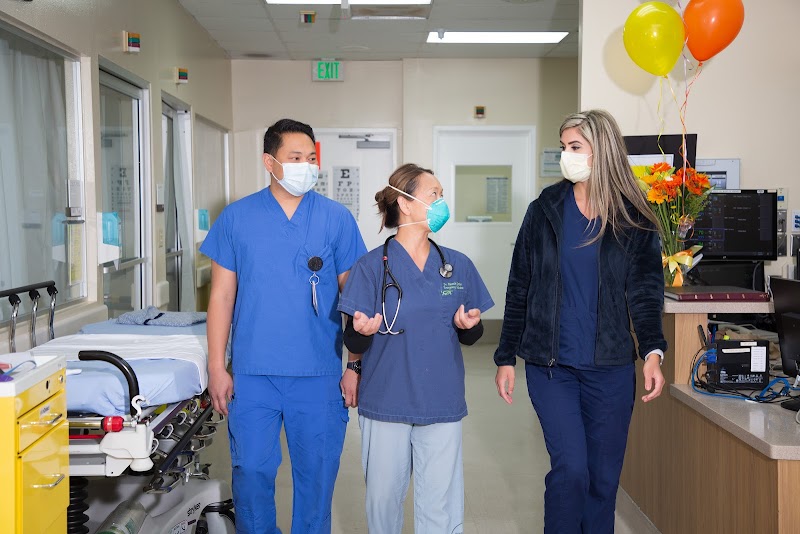
How is Foothill Regional Medical Center D/P Snf Staffed?

CMS rates FOOTHILL REGIONAL MEDICAL CENTER D/P SNF's staffing level at 5 out of 5 stars, which is much above average compared to other nursing homes. Staff turnover is 21%, compared to the California average of 46%. This relatively stable workforce can support continuity of care.

What Have Inspectors Found at Foothill Regional Medical Center D/P Snf?

State health inspectors documented 62 deficiencies at FOOTHILL REGIONAL MEDICAL CENTER D/P SNF during 2022 to 2025. These included: 1 that caused actual resident harm, 50 with potential for harm, and 11 minor or isolated issues. Deficiencies causing actual harm indicate documented cases where residents experienced negative health consequences.
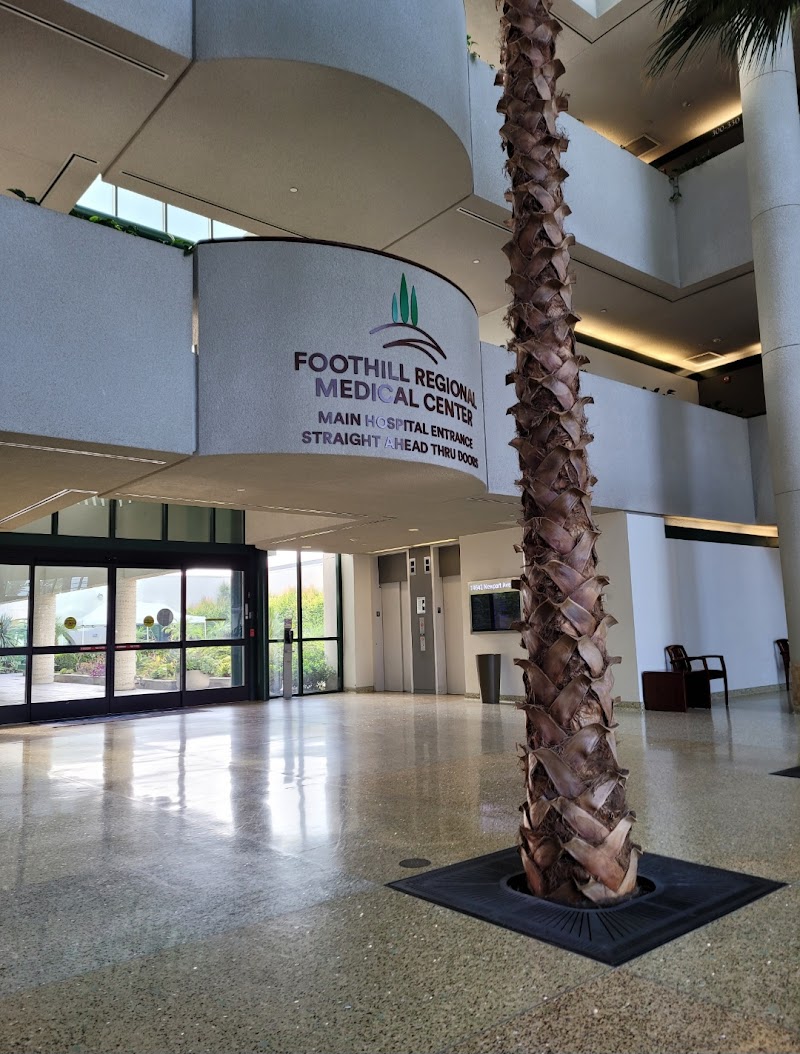
Who Owns and Operates Foothill Regional Medical Center D/P Snf?

FOOTHILL REGIONAL MEDICAL CENTER D/P SNF is owned by a for-profit company. For-profit facilities operate as businesses with obligations to shareholders or private owners. The facility operates independently rather than as part of a larger chain. With 42 certified beds and approximately 17 residents (about 40% occupancy), it is a smaller facility located in TUSTIN, California.
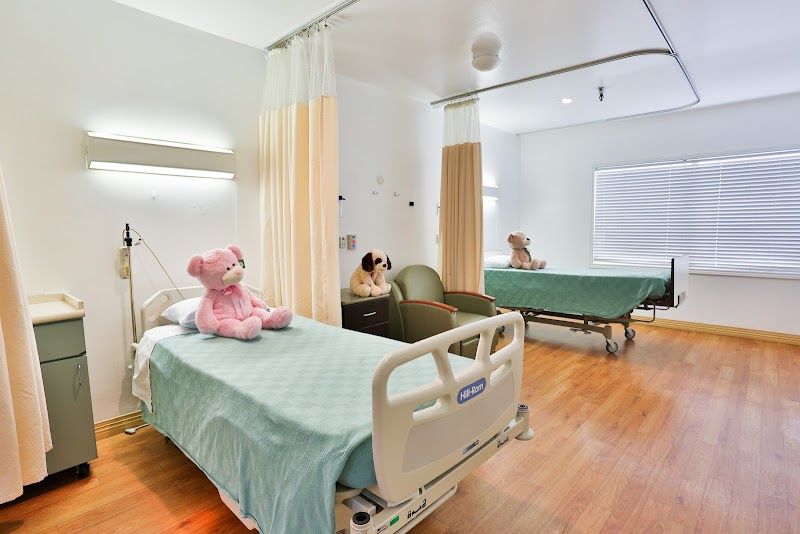
How Does Foothill Regional Medical Center D/P Snf Compare to Other California Nursing Homes?

Compared to the 100 nursing homes in California, FOOTHILL REGIONAL MEDICAL CENTER D/P SNF's overall rating (5 stars) is above the state average of 3.2, staff turnover (21%) is significantly lower than the state average of 46%, and health inspection rating (3 stars) is at the national benchmark.

What Should Families Ask When Visiting Foothill Regional Medical Center D/P Snf?

Based on this facility's data, families visiting should ask: "Can I visit during a mealtime to observe dining assistance and food quality?" "How do you handle medical emergencies, and what is your hospital transfer rate?" "Can I speak with family members of current residents about their experience?"

Is Foothill Regional Medical Center D/P Snf Safe?

Based on CMS inspection data, FOOTHILL REGIONAL MEDICAL CENTER D/P SNF has a clean safety record: no substantiated abuse findings (meaning no confirmed cases of resident harm), no Immediate Jeopardy citations (the most serious violation level indicating risk of serious injury or death), and is not on the Special Focus Facility watch list (a federal program monitoring the lowest-performing 1% of nursing homes). The facility has a 5-star overall rating and ranks #1 of 100 nursing homes in California. While no facility is perfect, families should still ask about staff-to-resident ratios and recent inspection results during their visit.

Do Nurses at Foothill Regional Medical Center D/P Snf Stick Around?

Staff at FOOTHILL REGIONAL MEDICAL CENTER D/P SNF tend to stick around. With a turnover rate of 21%, the facility is 24 percentage points below the California average of 46%. Low turnover is a positive sign. It means caregivers have time to learn each resident's needs, medications, and personal preferences. Consistent staff also notice subtle changes in a resident's condition more quickly. Registered Nurse turnover is also low at 27%, meaning experienced RNs are available to handle complex medical needs.

Was Foothill Regional Medical Center D/P Snf Ever Fined?

FOOTHILL REGIONAL MEDICAL CENTER D/P SNF has been fined $9,750 across 1 penalty action. This is below the California average of $33,176. While any fine indicates a compliance issue, fines under $50,000 are relatively common and typically reflect isolated problems that were subsequently corrected. Families should ask what specific issues led to these fines and confirm they've been resolved.

Is Foothill Regional Medical Center D/P Snf on Any Federal Watch List?

FOOTHILL REGIONAL MEDICAL CENTER D/P SNF is not on any federal watch list. The most significant is the Special Focus Facility (SFF) program, which identifies the bottom 1% of nursing homes nationally based on persistent, serious quality problems. Not being on this list means the facility has avoided the pattern of deficiencies that triggers enhanced federal oversight. This is a positive indicator, though families should still review the facility's inspection history directly.