LA CASA VIA TRANSITIONAL CARE CENTER
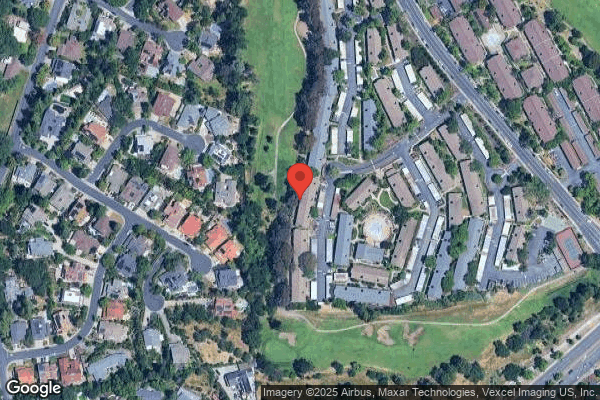
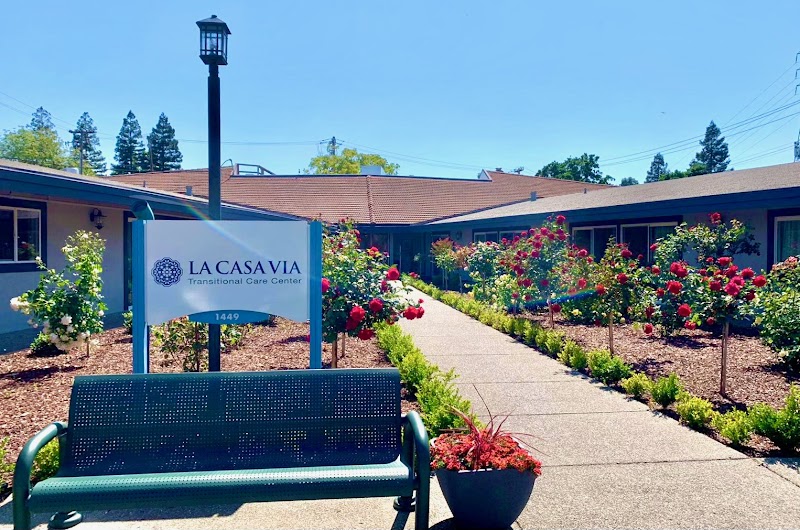
1449 YGNACIO VALLEY ROAD, WALNUT CREEK, CA 94598 (925) 939-5820
For profit - Limited Liability company 99 Beds ASPEN SKILLED HEALTHCARE Data: November 2025
Trust Grade
80/100
#109 of 1155 in CA
Last Inspection: June 2025

Inspected within the last 6 months. Data reflects current conditions.

Overview

La Casa Via Transitional Care Center in Walnut Creek, California, has a Trust Grade of B+, indicating it is above average and recommended for families considering care options. It ranks #109 out of 1,155 facilities in California, placing it in the top half, and #4 out of 30 in Contra Costa County, suggesting only three local facilities perform better. However, the facility's trend is worsening, with the number of issues increasing from 2 in 2024 to 9 in 2025, which raises some concerns. Staffing is relatively strong with a rating of 4 out of 5 stars, although the turnover rate of 41% is average compared to the state average. Notably, there have been no fines, indicating a good compliance record; however, recent inspections revealed issues such as an ice machine that was not cleaned regularly, which can lead to health risks, and concerns regarding the management of oxygen equipment for residents needing respiratory support. Overall, while there are strengths in staffing and compliance, the increasing number of concerns and specific incidents should be carefully considered by families.

Trust Score
B+
80/100
In California
#109/1155
Top 9%
Safety Record
Low Risk
No red flags
Inspections
Getting Worse
2 → 9 violations
Staff Stability
○ Average
41% turnover. Near California's 48% average. Typical for the industry.
Penalties
✓ Good
No fines on record. Clean compliance history, better than most California facilities.
Skilled Nurses
✓ Good
Each resident gets 48 minutes of Registered Nurse (RN) attention daily — more than average for California. RNs are trained to catch health problems early.
Violations
⚠ Watch
28 deficiencies on record. Higher than average. Multiple issues found across inspections.
★★★★★
5.0
Overall Rating
★★★★☆
4.0
Staff Levels
★★★★★
5.0
Care Quality
★★★★☆
4.0
Inspection Score
Stable
2024: 2 issues
2025: 9 issues

The Good

  • 4-Star Staffing Rating · Above-average nurse staffing levels
  • 5-Star Quality Measures · Strong clinical quality outcomes
  • Full Sprinkler Coverage · Fire safety systems throughout facility
  • No fines on record
  • Staff turnover below average (41%)

    7 points below California average of 48%

Facility shows strength in staffing levels, quality measures, fire safety.

The Bad

Staff Turnover: 41%

Near California avg (46%)

Typical for the industry

Chain: ASPEN SKILLED HEALTHCARE

Part of a multi-facility chain

Ask about local staffing decisions and management

The Ugly 28 deficiencies on record

Jun 2025 9 deficiencies
CONCERN (D)

Potential for Harm - no one hurt, but risky conditions existed

Resident Rights (Tag F0550)

Could have caused harm · This affected 1 resident

Based on observations and interviews, the facility failed to ensure one of two sample selected residents (Resident 52) was treated with dignity, when Resident 52's urine bag was not covered by a priva...

Read full inspector narrative →
Based on observations and interviews, the facility failed to ensure one of two sample selected residents (Resident 52) was treated with dignity, when Resident 52's urine bag was not covered by a privacy bag. This deficient practice had the potential to result in Resident 52 feeling embarrassed, humiliated, or disrespected, which can negatively impact Resident 52's mental and emotional well-being. Findings: A review of Resident 52's admission Record indicated Resident 52 was admitted to the facility with multiple diagnosis including major depression and cognitive decline. During a concurrent observation and interview on 6/2/25 at 12:00 p.m. with Licensed Vocational Nurse (LVN) 3, in Resident 52's room, it was noticed Resident 52's urine bag was hanging from the bedside, facing the main door of the room, making it visible to visitors. LVN 3 stated the urine bags need to be covered by a privacy bag and should not visible because of resident privacy and dignity. During an interview on 06/03/25 at 10:19 a.m., with the Director of Nursing (DON), DON stated the facility does not have any policy and procedure for covering the urine bag with the privacy bag. A review of the facility's policy and procedures Quality of Life-Dignity, revised August 2009, indicated . Resident shall be treated with dignity and respect at all times . Staff shall promote, maintain and protect resident privacy .
CONCERN (D)

Potential for Harm - no one hurt, but risky conditions existed

Comprehensive Care Plan (Tag F0656)

Could have caused harm · This affected 1 resident

Based on interviews and record reviews, the facility did not revise the care plan for two of two sample selected residents (Resident 19 and 52) with new diagnoses, when Residents 19, and 52 were diagn...

Read full inspector narrative →
Based on interviews and record reviews, the facility did not revise the care plan for two of two sample selected residents (Resident 19 and 52) with new diagnoses, when Residents 19, and 52 were diagnosed with depression and staff did not develop a care plan for depression. This failure in practice had the potential to result in inadequate care and support, potentially worsening their mental health condition, experiencing emotional distress, social withdrawal, and other negative health outcomes, and compromise to their overall well-being and quality of life. Findings: A review of Resident 52's admission Record indicated Resident 52 had a diagnosis of major depression and cognitive decline. A review of Resident 19's admission Record indicated Resident 19 had a diagnosis of depression. During a concurrent interview and record review on 6/4/25 at 1:36 p.m. with Director of Nursing (DON), DON reviewed Resident 52 and 19's diagnoses, MDS, and care plans. DON confirmed Residents 52 and 19 were diagnosed with depression and did not find care plans for their depression. DON stated the nurses should have care planned for the depression because care planning is important for each diagnosis, and staff need to know what care they need to provide for each specific diagnosis to improve the resident's health status. During a concurrent record review and interview on 6/4/25 at 1:40 p.m. with DON, DON reviewed the facility's policy and procedure (P&P) Care Planning-Comprehensive Care Plan, undated, the P&P indicated . Care planning/interdisciplinary team is responsible for the development of an individualized comprehensive care plan for each resident . DON stated that is the only policy and procedure that they have for care planning.
CONCERN (D)

Potential for Harm - no one hurt, but risky conditions existed

ADL Care (Tag F0677)

Could have caused harm · This affected 1 resident

Based on observation, interview, and record review, the facility failed to provide necessary services to maintain good grooming to one of three sampled residents (Resident 50) when she did not receive...

Read full inspector narrative →
Based on observation, interview, and record review, the facility failed to provide necessary services to maintain good grooming to one of three sampled residents (Resident 50) when she did not receive nail care. This failure had the potential for development of skin injuries and infection for Resident 50. During a review of Resident 50's admission Record, undated, the admission Record indicated Resident 50 was admitted to the facility in March 2025 with diagnoses that included diabetes, dementia, and heart failure. During a review of Resident 50's Minimum Data Set (MDS, , a resident assessment instrument used to identify resident care problems to be addressed in an individualized care plan), dated 4/27/25, the MDS indicated Resident 50's Brief Interview for Mental Status (BIMS, a scoring system used to determine the resident's cognitive status in regard to attention, orientation, and ability to register and recall information) was 7, indicating Severe cognitive impairment. The MDS also indicated Resident 50 was dependent on staff for activities of daily living (ADLs, are those activities needed for self-care and mobility and include activities such as bathing, dressing, grooming, oral care, ambulation, toileting, eating, transferring, and communicating). During a concurrent observation and interview on 6/3/25 at 8:45 a.m. in Resident 50's room, Resident 50 was lying in bed. Resident 50 had long big toenails. Resident 50 stated her toenails are long and needed to be cut. During an interview on 6/3/25 at 11:12 a.m. with Certified Nursing Assistant (CNA) 6, CNA 6 acknowledged that she saw that Resident 50's big toenails were long. CNA 6 stated Resident 50's big toenails are crooked looking and on the longer side. She stated the podiatrist comes monthly. She stated she reported it to the nurse yesterday. During an interview on 6/4/25 at 2:35 p.m. with the Social Services Director (SSD), SSD stated nursing should inform him if any resident is required to see the podiatrist who comes in quarterly, and he sends the podiatrist an email and the list. When asked if Resident 50 was on the list, SSD searched for Resident 50's name from the list hanging on the wall and could not find her name. SSD stated Resident 50 was not on the list and no one had told him Resident 50 needed to be added to the list. During an interview on 6/4/25 at 4:15 p.m. with Director of Nursing (DON), DON stated toenails needed to be routinely trimmed and could be done by the CNA. He stated it is important for hygiene. During a follow-up interview on 6/5/25 at 10:40 a.m., DON stated Resident 50 required to be seen by a podiatrist. He stated for residents who do not have complications, the trained staff like the CNA can do that for the residents. During a review of Resident 50's ADL care plan, dated 11/6/23, the care plan indicated, provide assistance with care and ADL. During a review of the facility's policy and procedure (P&P) titled, Foot Care, revised March 2018, the P&P indicated, Residents will receive appropriate care and treatment in order to maintain .foot health .Residents will be assisted to see the specialists (podiatrist .etc.) as needed .
CONCERN (D) 📢 Someone Reported This

A family member, employee, or ombudsman was alarmed enough to file a formal complaint

Potential for Harm - no one hurt, but risky conditions existed

Quality of Care (Tag F0684)

Could have caused harm · This affected 1 resident

Based on observation, interview, and record review, the facility failed to ensure one of five sampled residents (Resident 181) was monitored for side effects of divalproex sodium (Depakote -a mood sta...

Read full inspector narrative →
Based on observation, interview, and record review, the facility failed to ensure one of five sampled residents (Resident 181) was monitored for side effects of divalproex sodium (Depakote -a mood stabilizing medication) which was given to Resident 181 in error. This failure exposed Resident 181 to potentially serious adverse effects. Findings: During a review of Resident 181's admission Record, printed on 6/3/25, the admission Record indicated Resident 181 was admitted to the facility in March 2025. During a review of Resident 181's Minimum Data Set (MDS, a resident assessment instrument used to identify resident care problems to be addressed in an individualized care plan), dated 3/28/25, indicated Resident 181 had a Brief Interview of Mental Status (BIMS, a scoring system used to determine the resident's cognitive status in regard to attention, orientation, and ability to register and recall information) score of 12 out of 15 indicating moderate cognitive impairment. The MDS also indicated, Resident 181 had multiple diagnoses that included, hip fracture and depression. The MDS revealed Resident 181 did not have symptoms of mood disturbances and/or physical and verbal symptoms directed to self or others. During an interview on 6/2/25 at 12:25 p.m. with Facility Medical Practitioner (FMP), FMP stated, divalproex sodium was indicated for residents with behavioral disturbances. FMP also stated, Residents receiving divalproex sodium should be monitored for sedation/hyperactivity as well as monitored for effectiveness and for side effects especially in the elderly. FMP added Resident 181 received divalproex sodium in error but should have been monitored regardless. During an interview on 6/3/25 at 2:43 p.m., with the Director Of Nursing (DON), DON acknowledged Resident 181 was administered divalproex sodium in error. DON added, it was important to have behavioral and side effects monitoring on Residents receiving psychotropic medication to ensure effectiveness and monitor for side effects. DON confirmed, there was no monitoring for Resident 181's divalproex sodium use. During a telephone interview on 6/4/25, at 2:05 p.m., with the Facility Pharmacy Consultant (FPC), FPC stated, she wrote a report to the prescribing physician with recommendation to clarify Resident 181's diagnosis. FPC added, the physician's order for divalproex sodium did not include behavioral and side effects monitoring. During a review of Resident 181's Order Summary Report, dated 6/4/25, the Order Summary Report indicated a physician order for Divalproex Sodium Oral Tablet Delayed Release 125 MG (Divalproex Sodium) Give 1 tablet by mouth two times a day for mood instability with start date 4/8/25. During a review of Resident 181's Medication Administration Record (MAR) for April 2025, the MAR revealed, Resident 181 was administered divalproex sodium 125mg from 4/8/25 until 4/23/25. There was no documented evidence the facility had monitored for the side effects of divalproex sodium on the MAR. During a review of a document titled, Consultant Pharmacist's Medication Regiment Review (MRR), dated 4/25/25, the MRR indicated for Resident 181, Please consider adding monitoring related to side effects and targeted behavior of Depakote . During a review of the facility's policy and procedures (P&P) titled, Adverse Consequences and Medication Errors, undated, the P&P indicated .8. Facility staff monitor the resident for possible medication-related adverse consequences, including mental status and level of consciousness, when the following conditions occur: f. medication error . During a review of the facility's P&P titled, Psychotherapeutic Drug Management, dated 3/2010, the P&P indicated, This facility shall monitor all psychotherapeutic medications for effectiveness and side effects according to OBRA (Omnibus Budget Reconciliation Act - established federal standards for nursing home care in the United States) guidelines.
CONCERN (D) 📢 Someone Reported This

A family member, employee, or ombudsman was alarmed enough to file a formal complaint

Potential for Harm - no one hurt, but risky conditions existed

Deficiency F0757 (Tag F0757)

Could have caused harm · This affected 1 resident

Based on interview and record review, the facility failed to ensure that one of five sampled residents (Resident 181) was not given unnecessary psychoactive (controls mood and behavior) medication whe...

Read full inspector narrative →
Based on interview and record review, the facility failed to ensure that one of five sampled residents (Resident 181) was not given unnecessary psychoactive (controls mood and behavior) medication when Resident 181 was given divalproex sodium (Depakote, a mood stabilizer) without appropriate indications for use. This failure resulted in Resident 181 receiving psychoactive medication without actual psychiatric diagnoses and unnecessarily exposed her to serious adverse side effects. Findings: During a review of Resident 181's admission Record, printed on 6/3/25, the admission Record indicated Resident 181 was admitted to the facility in March 2025. During a review of Resident 181's Minimum Data Set (MDS, a resident assessment instrument used to identify resident care problems to be addressed in an individualized care plan), dated 3/28/25, indicated Resident 181 had a Brief Interview of Mental Status (BIMS, a scoring system used to determine the resident's cognitive status in regard to attention, orientation, and ability to register and recall information) score of 12 out of 15 indicating moderate cognitive impairment. The MDS also indicated Resident 181 had multiple diagnoses that included, hip fracture and depression. The MDS revealed Resident 181 did not have symptoms of mood disturbances and/or physical and verbal symptoms directed to self or others. During an interview on 6/3/25, at 1:41 p.m., with Registered Nurse (RN) 1, RN 1 stated she made a mistake and transcribed verbal medication order of divalproex sodium in Resident 181's medical record that was intended for Resident 52. RN 1 also stated, she did not read the order back to the ordering physician to ensure the divalproex sodium was for the right resident. During a concurrent interview and review on 6/3/25 at 2:23 p.m., the facility's policy and procedures (P&P) titled Verbal Orders, dated 2/14, was reviewed with the Director of Nursing (DON). The P&P indicated under policy interpretation and implementation .4. The individual receiving the verbal order will: a. read the order back to the practitioner to ensure that the information is clearly understood and correctly transcribed. DON stated RN 1 did not read the order back to the doctor to ensure the medication order was for Resident 181. During an interview on 6/3/25 at 2:43 p.m. with DON, DON acknowledged Resident 181 was administered divalproex sodium unnecessarily for two weeks while admitted to the facility. DON also added RN 1 made a mistake and transcribed the divalproex sodium order in Resident 181's medical record instead of Resident 52. DON also stated, Resident 181 or Responsible Party (RP) did not sign a consent for psychotropic medication. During a telephone interview on 6/4/25, at 2:05 p.m., with the Facility Pharmacy Consultant (FPC), FPC stated she wrote a report to the prescribing physician with recommendations to clarify Resident 181's diagnosis. FPC added the physician's order for divalproex sodium indicated it was for mood instability. FPC further added mood instability was not a diagnosis and was not appropriate indication for use of psychotropic medication. During a review of Resident 181's Order Summary Report, dated 6/4/25, the Order Summary Report indicated a physician order for Depakote Oral Tablet Delayed Release 125 MG (Divalproex Sodium) Give 1 tablet by mouth two times a day for mood instability with start date 4/8/25. During a review of Resident 181's Medication Administration Record (MAR) for April 2025, the MAR revealed Resident 181 was administered divalproex sodium 125mg from 4/8/25 until 4/23/25. During a review of document titled Note To Attending Physician/Prescriber, dated 4/8/25, the note revealed a recommendation from FPC which indicated please clarify diagnosis more specific than 'mood instability' for divalproex sodium order. During a review of Resident 181's Physician Note, dated 4/23/25, the Physician Note indicated under description: Due to a communication error between, a verbal order for divalproex sodium intended for another resident was mistakenly entered under this resident's chart. During a review of the facility's P&P titled, Psychotherapeutic Drug Management, dated 3/2010, the P&P indicated under Procedure A.2. Informed consent shall be obtained from the resident and/or responsible party prior to the administration of psychotherapeutic medication and for each increase in dosage. 3. The psychotherapeutic medication order shall include the following information: Diagnosis for the medication. Behavior manifestations of the disorder treated i.e. auditory hallucinations, hitting others, refusing to eat etc. During a review of the facility's P&P titled, Adverse Consequences and Medication Errors, undated, the P&P indicated under policy interpretation and implementation .4. The staff and practitioner shall strive to minimize adverse consequences by: a. Following relevant clinical guidelines and manufacturer's specifications for use, dose, administration, duration, and monitoring of the medication; b. Defining appropriate indications for use; .5. A medication error is defined as the preparation or administration of drugs or biological which is not in accordance with physician's orders, manufacturer specifications, or accepted professional standards and principles for the professional(s) providing services. 6. Examples of medication errors include: .b. Unauthorized drug - a drug that is administered without a physician's order. According to the National Library of Medicine, last updated on September 4, 2023, the nurses have a unique role and responsibility in medication administration. Furthermore, it is standard during nursing education to receive instruction on a guide to clinical medication administration and upholding patient safety known as the 'five rights' or 'five R's' of medication administration which included, 'Right patient' - ascertaining that a patient being treated is, in fact, the correct recipient for whom medication was prescribed. https://www.ncbi.nlm.nih.gov/
CONCERN (D) 📢 Someone Reported This

A family member, employee, or ombudsman was alarmed enough to file a formal complaint

Potential for Harm - no one hurt, but risky conditions existed

Deficiency F0760 (Tag F0760)

Could have caused harm · This affected 1 resident

Based on interview and record review, the facility failed to ensure one of five sampled residents (Resident 181) was free from significant medication error when Resident 181 was administered divalproe...

Read full inspector narrative →
Based on interview and record review, the facility failed to ensure one of five sampled residents (Resident 181) was free from significant medication error when Resident 181 was administered divalproex sodium (Depakote, a psychoactive medication that controls mood and behavior) in error 30 times. This failure resulted in Resident 181 to receive psychoactive medication in error. This failure also exposed Resident 181 to serious health complications and/or jeopardized her safety. Findings: During a review of Resident 181's admission Record, printed on 6/3/25, the admission Record indicated Resident 181 was admitted to the facility in March 2025. During a review of Resident 181's Minimum Data Set (MDS, a resident assessment instrument used to identify resident care problems to be addressed in an individualized care plan), dated 3/28/25, indicated Resident 181 had a Brief Interview of Mental Status (BIMS, a scoring system used to determine the resident's cognitive status in regard to attention, orientation, and ability to register and recall information) score of 12 out of 15 indicating moderate cognitive impairment. The MDS also indicated Resident 181 had multiple diagnoses that included, hip fracture and depression. The MDS revealed Resident 181 did not have symptoms of mood disturbances and/or physical and verbal symptoms directed to self or others. During an interview on 6/3/25, at 1:41 p.m., with Registered Nurse (RN) 1, RN 1 stated she made a mistake and transcribed a verbal medication order of divalproex sodium (medication used as a mood stabilizer) in Resident 181's medical record that was intended for Resident 52. RN 1 added this resulted in Resident 181 to receive divalproex sodium in error. During an interview on 6/3/25 at 2:43 p.m., with the Director Of Nursing (DON), DON acknowledged Resident 181 was administered divalproex sodium unnecessarily for two weeks while admitted to the facility. DON also added RN 1 transcribed the medication order in error which resulted in administration of divalproex sodium to Resident 181. During a review of Resident 181's Order Summary Report, dated 6/4/25, the Order Summary Report indicated a physician order for Divalproex Sodium Oral Tablet Delayed Release 125 MG (Divalproex Sodium) Give 1 tablet by mouth two times a day for mood instability with start date 4/8/25. During a review of Resident 181's Medication Administration Record (MAR) for April 2025, the MAR revealed Resident 181 was administered divalproex sodium 125mg once on 4/8/25, twice a day from 4/9/25 thru 4/22/25, and then once on 4/23/25. During a review of Resident 181's Physician Note, dated 4/23/25, the Physician Note indicated under description: Due to a communication error between, a verbal order for Depakote intended for another resident was mistakenly entered under this resident's chart. During a review of the facility's P&P titled, Adverse Consequences and Medication Errors, undated, the P&P indicated under policy interpretation and implementation .4. The staff and practitioner shall strive to minimize adverse consequences by: a. Following relevant clinical guidelines and manufacturer's specifications for use, dose, administration, duration, and monitoring of the medication; b. Defining appropriate indications for use; .5. A medication error is defined as the preparation or administration of drugs or biological which is not in accordance with physician's orders, manufacturer specifications, or accepted professional standards and principles for the professional(s) providing services. 6. Examples of medication errors include: .b. Unauthorized drug - a drug that is administered without a physician's order. According to the National Library of Medicine, last updated on September 4, 2023, the nurses have unique role and responsibility in medication administration. Furthermore, it is standard during nursing education to receive instruction on a guide to clinical medication administration and upholding patient safety known as the 'five rights' or 'five R's' of medication administration which included, 'Right patient' - ascertaining that a patient being treated is, in fact, the correct recipient for whom medication was prescribed. https://www.ncbi.nlm.nih.gov/
CONCERN (D)

Potential for Harm - no one hurt, but risky conditions existed

Deficiency F0761 (Tag F0761)

Could have caused harm · This affected 1 resident

**NOTE- TERMS IN BRACKETS HAVE BEEN EDITED TO PROTECT CONFIDENTIALITY** Based on observation, interview and record review, the facility failed to ensure proper labeling and storage of medication when ...

Read full inspector narrative →
**NOTE- TERMS IN BRACKETS HAVE BEEN EDITED TO PROTECT CONFIDENTIALITY** Based on observation, interview and record review, the facility failed to ensure proper labeling and storage of medication when the following was noted: 1. Two multi-dose insulin pens for Residents 228 and 40 had no open and beyond use date (BUD-the date after which a medication should not be used) label. 2. Thirteen expired nasal swabs were kept with ready to use medications in medication storage area. This failure had the potential to result in the Residents 228 and 40 receiving ineffective medication doses and Residents receiving abnormal nasal swab test results which could lead to more health issues. Findings: 1. During a concurrent observation and interview on [DATE] at 11:54 a.m., outside Resident 228 room on medication cart, with Registered Nurse (RN) 2, a Novolog FlexPen Subcutaneous Solution Pen Injector 100 unit/milliliter (ml) (Insulin Aspart-fast-acting insulin used to treat high blood sugar/diabetes) had a label with Resident 228's name but no open or BUD label on the pen. Resident 228 had a blood sugar reading of 148. RN 2 stated that per the sliding scale insulin (amount of insulin you take based on your current blood sugar readings), Resident 228 is going to get 1 unit. RN 2 also stated, I could see the problem not knowing when it was opened because don't know how long it's been there. During a review of Resident 228's admission Record, dated [DATE], the admission Record indicated Resident 228 was admitted in [DATE] with a diagnosis of Type 2 Diabetes Mellitus (chronic condition where the body either doesn't produce enough insulin or can't effectively use the insulin it does produce, leading to high blood sugar levels) with Diabetic Neuropathy. During a review of Resident 228's Active Orders, dated [DATE], the Active Orders indicated that Novolog FlexPen Subcutaneous Solution Pen Injector 100 unit/ml (Insulin Aspart); Inject per sliding scale was ordered on [DATE] by the provider. During a concurrent observation and interview on [DATE] at 12:07 p.m., outside Resident 40 room, on medication cart, with Registered Nurse (RN) 2, an Insulin Lispro Injection Solution 100 unit/ml (Insulin Lispro-fast-acting insulin used to treat high blood sugar/diabetes) had a label with Resident 40's name but no open or BUD label on the pen. Resident 40 had a blood sugar reading of 187. RN 2 stated per the sliding scale insulin (amount of insulin you take based on your current blood sugar readings), Resident 40 is going to get 1 unit. RN 2 also stated, again I could see what you are talking about not knowing when it was opened because don't know how long it's been there, and it can get confusing. During a review of Resident 40's admission Record, dated [DATE], the admission Record indicated Resident 40 was admitted [DATE] with a diagnosis of Type 2 Diabetes Mellitus with Diabetic Chronic Kidney Disease. During a review of Resident 40's Active Orders, dated [DATE], the Active Orders indicated that Insulin Lispro Injection Solution 100 unit/ml; Inject per sliding scale was ordered on [DATE] by the provider. During an interview on [DATE] at 12:53 p.m. with Director of Nursing (DON), DON stated that DON stated we just got those Resident's meds delivered, but I understand the need to write opened date so can know and not get confused. During a review of the facility's policy and procedure (P&P) titled, Storage of Medications, undated, the P&P indicated, .3. Drug containers that have missing, incomplete, improper or incorrect labels shall be returned to the pharmacy for proper labeling before storing. During a review of the following website https://www.novo-pi.com/novolog.pdf titled, Novolog Insulin Aspart Injection 100 units/ml: Highlights of Prescribing Information, undated, the prescribing information indicated, .16.2 Recommended Storage: 3 mL single-patient-use FlexPen® in use (opened): 28 days discard During a review of the following website https://prescriberpoint.com/therapies/humalog-c8ecbd7#drug_label titled, Humalog (insulin lispro): Instructions for Use, [DATE], the storage information indicated, .In-use Pen Throw away the HUMALOG Pen you are using after 28 days, even if it still has insulin left in it. During a review of the following website https://www.jointcommission.org/standards/standard-faqs/home-care/medication-management-mm/000001529/ titled, Multi-dose Vials - Managing Multi-dose Vials of Injectable Medication, [DATE], the article indicated If a multi-dose has been opened or accessed (e.g., needle-punctured) the vial should be dated with the last date that the product should be used (expiration date) and discarded within 28 days unless the manufacturer specifies a different (shorter or longer) date for that opened vial .Labeling the vial with the 'date opened' does not meet the intent of this requirement. 2. During a concurrent observation and interview on [DATE] in medication storage room with DON the following was found with ready to use supplies: -3 nasal swabs with expiration dates [DATE] -6 nasal swabs with expiration dates [DATE] -3 nasal swabs with expiration dates [DATE] -1 viral swab with expiration date 6/2021 DON stated, we don't use these anymore, I don't know why they are here, we will throw them out, I will order more if we need it. During a review of the facility's P&P titled, Storage of Medications, undated, the P&P indicated, 4. The facility shall not use discontinued or deteriorated drugs. All such drug shall be destroyed .
CONCERN (D)

Potential for Harm - no one hurt, but risky conditions existed

Safe Environment (Tag F0921)

Could have caused harm · This affected 1 resident

Based on observation, interview, and record review, facility did not ensure sanitary and comfortable rooms for two of two sample selected residents (Resident 61 and 52), when Resident 61 and 52's room...

Read full inspector narrative →
Based on observation, interview, and record review, facility did not ensure sanitary and comfortable rooms for two of two sample selected residents (Resident 61 and 52), when Resident 61 and 52's rooms (Room numbers 36 and 38) were not clean with brown spots on various surfaces, and the floors were sticky and had food particles scattered around. This failure in practice could have potentially resulted an environment conducive to the growth of bacteria, mold, and other harmful microorganisms resulting in infections and other health issues for residents, and emotional distress and discomfort, leading to a decline in mental health and overall satisfaction with the facility. Findings: A review of Resident 52's admission Record indicated Resident 52 was diagnosed with major depression and heart failure. A review of Resident 61's admission Record indicated Resident 61 was diagnosed with multiple sclerosis (chronic auto immune disease that affects the central nervous system, disrupting communication between the brain and the body, and leading to symptoms such as muscle weakness, coordination issues, and cognitive problems). During an interview on 6/2/25 at 11:00 a.m. with Resident 61, Resident 61 stated his room's floor is always dirty and sticky and he did not feel comfortable in his room. He stated he was very much concerned about infection control and cleanliness in his room. During a concurrent observation and interview on 06/02/25 at 11:14 a.m., in Room numbers 36 and 38 with the Maintenance Supervisor (MS) and Administrator (ADM), there were noticeable brown spots on various surfaces. The floors were sticky and had food particles scattered around. both MS and ADM confirmed, and ADM stated the resident's rooms must stay clean. During a review of the facility's policy and procedure Cleaning and Disinfecting Resident's Rooms, undated, indicated . Housekeeping surfaces (e.g., floors, tabletops) will be cleaned on a regular basis, when spills occur, and when these surfaces are visibly soiled . During a review of the facility's policy and procedure Resident Rights, undated, indicated . Have a clean, safe, comfortable, home-like environment .
CONCERN (F)

Potential for Harm - no one hurt, but risky conditions existed

Food Safety (Tag F0812)

Could have caused harm · This affected most or all residents

Based on observation, interview, and record review the facility failed to ensure one of one ice machines was clean. This failure practice could be result in illnesses and infections. Findings: During ...

Read full inspector narrative →
Based on observation, interview, and record review the facility failed to ensure one of one ice machines was clean. This failure practice could be result in illnesses and infections. Findings: During a concurrent observation and interview on 6/2/25 at 12:10 p.m., with the Maintenance Supervisor (MS) and Dietary Supervisor (DS), who were present in the ice machine room, inside the ice machine tray was wiped with a clean, white wipe. There was black residue on the wipe after wiping the inside of the ice machine. The black residue was confirmed by MS and DS. DS stated he checks and cleans the machine every month for maintenance, and cleans the machine as needed, DS stated he is not cleaning the machine every day or every week routinely. The DS was able to show the monthly maintenance log only and stated that is the only log that he had. During an interview on 6/2/25 at 3:00 p.m. with DS, DS stated the ice machine needed to be checked and cleaned every day for the safety of the residents and staff. Review of the facility's policy and procedure Ice Machines and Ice Storage Chests, dated 2001, indicated . f. Clean and sanitize the tray and ice scoop daily .
Apr 2024 2 deficiencies
CONCERN (D) 📢 Someone Reported This

A family member, employee, or ombudsman was alarmed enough to file a formal complaint

Potential for Harm - no one hurt, but risky conditions existed

Deficiency F0624 (Tag F0624)

Could have caused harm · This affected 1 resident

Based on interview and record review, the facility failed to ensure one of three sample selected residents (Resident 1) had a safe and orderly discharge from the facility, when the facility discharged...

Read full inspector narrative →
Based on interview and record review, the facility failed to ensure one of three sample selected residents (Resident 1) had a safe and orderly discharge from the facility, when the facility discharged Resident 1 to home without preparation and orientation to the discharge and did not provide complete discharge medication for Resident 1. This failure resulted in Resident 1 suffering from pain and did not have pain medication as ordered by the physician (MD). Findings: A review of Resident 1's admission Record indicated Resident 1 was admitted to the facility with multiple diagnoses including joint replacement surgery on left knee and chronic pain. During an interview on 4/5/24 at 11:17 a.m. with Resident 1, Resident 1 stated she was at the facility for one day and the facility discharged her home without giving her pain medication for home use as ordered by MD. Resident 1 stated she suffered from too much pain and the next day staff from the facility picked up Resident 1's pain medication from the pharmacy and dropped it off at her house. Furthermore, Resident 1 stated the discharge was not initiated by her, and it was the facility's decision. A review of Progress Notes, dated 10/3/23, indicated Patient (Resident 1) discharged home at 19:45 via private transport accompanied by daughter. Patient signed discharge paperwork. Medications given to discharge home with patient . A review of the MD order, dated 10/3/24, indicated Hydromorphone HCL (narcotic analgesics, pain medication) oral tablet 4 mg (milligram) give 1 tablet by mouth every 4 hours as needed for moderate pain. During an interview on 4/9/24 at 1:11 p.m., with Clinical Liaison (CL), CL stated when Resident 1 was discharged home, the facility did not have the pain medication (hydromorphone) ordered by MD and they had to send the order to the pharmacy. The next day, CL picked up the pain medication from the pharmacy and dropped it off at Resident 1's house. A review of non-visit MD order on 10/3/24 at 19:10 p.m., indicated MD discharged Resident 1 from the facility. During an interview on 4/9/24 at 1:00 p.m., with MD, MD stated he discharged Resident 1 home without visiting him, however MD did not remember why Resident 1 was discharged home. During a concurrent record review and interview on 4/9/24 at 12:35 p.m. with the Clinical Manager (CM), CM reviewed Resident 1's documents and was unable to find the discharge papers signed by Resident 1 and reviewed the progress notes and stated there were no notes that indicated why and how Resident 1 was discharged home. CM was not able to find the list of the medications or any other documents that the facility gave to Resident 1. CM also did not find any discharge care plan for Resident 1. CM stated Resident 1's discharge was not planned correctly. A review of Resident 1's care plan indicated the facility did not create a care plan for Resident 1's discharge. A review of the facility's policy and procedure titled Discharge Medication, undated, indicated . Medication shall be sent with the resident upon discharge . The nurse shall review medication instruction with the resident, family member or representative before the resident leaves the facility . A review of the facility's policy and procedure titled Discharging the resident, undated, indicated .The resident should be consulted about the discharge .
CONCERN (D) 📢 Someone Reported This

A family member, employee, or ombudsman was alarmed enough to file a formal complaint

Potential for Harm - no one hurt, but risky conditions existed

Deficiency F0676 (Tag F0676)

Could have caused harm · This affected 1 resident

**NOTE- TERMS IN BRACKETS HAVE BEEN EDITED TO PROTECT CONFIDENTIALITY** Based on interview and record review, the facility failed to provide care and services for hygiene and bathing for one of three ...

Read full inspector narrative →
**NOTE- TERMS IN BRACKETS HAVE BEEN EDITED TO PROTECT CONFIDENTIALITY** Based on interview and record review, the facility failed to provide care and services for hygiene and bathing for one of three sample selected residents (Resident 1) when Resident 1 did not receive a shower as scheduled by the facility. This failure resulted in Resident 1 being uncomfortable and complained about not receiving the services that she was supposed to receive from the facility. Findings: A review of Resident 1's admission Record indicated Resident 1 was admitted to the facility, located at room [ROOM NUMBER] A with multiple diagnoses including joint replacement surgery on left knee and chronic pain. During an interview on 4/5/24 at 11:17 a.m., with Resident 1, Resident 1 stated the facility's staff did not give her a shower while she resided at the facility. She felt uncomfortable and needed to take a shower. During a concurrent interview and record review on 4/9/24 at 2:00 p.m. with the Clinical Manager (CM), CM reviewed the Activities of Daily Living (ADL)'s documents and confirmed that Resident 1 was supposed to receive shower services on 10/3/23 in the morning and did not receive that. CM stated Resident 1 should have received a shower service as scheduled. A review of the facility's policy and procedure titled Discharging the resident, undated, indicated . Discharging the resident to home .2. Give the resident a bath. Follow established bath care procedure . A review of the facility's policy and procedure titled Shower/Tub Bath, undated, indicated . The purposes of this procedure are to promote cleanliness, provide comfort to the resident, and to observe the condition of the resident's skin .
Nov 2023 8 deficiencies
CONCERN (D)

Potential for Harm - no one hurt, but risky conditions existed

Medication Errors (Tag F0758)

Could have caused harm · This affected 1 resident

Based on observation, interview and record review, the facility failed to ensure one of four sampled resident (Resident 70) on an antipsychotic (medication that treats several kinds of mental health c...

Read full inspector narrative →
Based on observation, interview and record review, the facility failed to ensure one of four sampled resident (Resident 70) on an antipsychotic (medication that treats several kinds of mental health conditions) was free from unnecessary drugs when the interdisciplinary team did not evaluate Resident 20's use of a PRN (as needed) for Seroquel's (antipsychotic) appropriateness, adequate clinical rational and indication for continued usage. This failure had the potential for Resident 70 to receive unnecessary drugs and suffer adverse medication side effects. Findings: During an observation and interview on 11/27/23 at 11:00 a.m., Resident 70 was sitting up in bed and stated being anxious and gets frustrated because she was helpless. To call for help, Resident 70 stated she screams out for help. Resident 1 stated she wanted someone to get her cell phone to be able to call and speak to her family. Review of the quarterly Minimum Data Set (MDS - an assessment screening tool used to guide care) dated 10/25/23 indicated Resident 70's Basic Interview of mental status (BIMS) score was 3 (meaning severe cognitive impairment). Resident 70 had diagnoses to include stroke (when the blood supply to part of the brain is interrupted or reduced) and brief psychotic disorder manifested by striking out and uncontrollable screaming. Further review indicated Resident 70 was able to make herself understood and required extensive assistance from staff. During an interview and concurrent record review on 11/29/23 at 10:37 a.m., LVN 1 (Licensed Vocational Nurse) stated Resident 70 was on seroquel to relax, keep calm and to manage her outbursts as Resident 70 becomes delirious. LVN 1 further stated Resident 70 had a stroke that affects her left side and had massive striking out. LVN 1 stated non-therapeutic interventions did not help Resident 1. LVN 1 stated resident 70 got angry when she sat in the dining room as she watched others eat while she was NPO (nothing by mouth). Also,when Resident 70 sat in the nursing station, the resident becomes restless and had outbursts. During a review of the physician order, it indicated Resident 70 had a PRN (as needed) order, dated 10/11/23, for Seroquel (antipsychotic) 25 mg every 24 hours for mood stabilization: striking out, uncontrollable screaming. Additionally, Resident 70 had routine seroquel orders: Give 25 mg (milligrams) one time a day for mood stabilization: striking out, uncontrollable screaming and to Give 50 mg two times a day for mood stabilization: striking out, uncontrollable screaming. Review of the Consultant Pharmacist recommendation, dated 10/2023, it indicated that antipsychotic PRN use is not recommended because it takes 3-7 days before the antipsychotic effect begins. Use of PRN antipsychotics could be viewed as a 'chemical restraint'. It indicated PRN orders are limited to 14 days, unless the prescriber believes it is appropriate to extend the order beyond 14 days and documents this in the clinical record. Furthermore, if the prescriber believes the resident requires an antipsychotic drug on a PRN basis for longer than 14 days, he/she will be required to write a new PRN script every 14 days after the resident has been evaluated. During an interview on 11/29/23 at 10:44 a.m., the DON (Director of Nursing) stated Seroquel, for Resident 70 was re-evaluated monthly, quarterly, as needed and during IDT (Interdisciplinary Team) meetings. DON verified the last time the Seroquel PRN was evaluated for Resident 70 was in October 2023. The DON could not provide information that Resident 70 was evaluated after 14 days and that a new script was written by the doctor for seroquel.
CONCERN (E)

Potential for Harm - no one hurt, but risky conditions existed

Respiratory Care (Tag F0695)

Could have caused harm · This affected multiple residents

**NOTE- TERMS IN BRACKETS HAVE BEEN EDITED TO PROTECT CONFIDENTIALITY** 2. A review of Resident 10's admission record indicated Resident 10 was admitted in 2022 with diagnoses including chronic obstru...

Read full inspector narrative →
**NOTE- TERMS IN BRACKETS HAVE BEEN EDITED TO PROTECT CONFIDENTIALITY** 2. A review of Resident 10's admission record indicated Resident 10 was admitted in 2022 with diagnoses including chronic obstructive pulmonary disease (lung disease which reduces lung capacity to exchange oxygen), anemia (low red blood cell count), and hemiplegia affecting her left side (left sided paralysis). A record review of Resident 10's physician orders, dated 11/30/23, indicated Resident 10 had an order for 2L O2 via nasal cannula. A review of Resident 10's MDS, dated [DATE], indicated Resident 10 had severely impaired decision making ability, was unable to communicate and was completely dependent on staff for medical care. During an observation on 11/27/23, at 9:45 a.m., Resident 10 was laying in bed under her covers in her room. Resident 10 was receiving oxygen through a nasal cannula affixed to her nose. The nasal cannula was labeled with a sticker indicating the nasal cannula was used on 11/9/23, at 5:00 a.m. The nasal cannula was attached to a disposable humidifier bottle (a bottle of water used to provide humidity to the oxygen) which was empty. The humidifier bottle was marked with a start date of 11/15/23. During an interview on 11/28/23, at 9:59 a.m., with Registered Nurse 3 (RN-3), RN-3 stated oxygen tubing and humidifier was checked every shift and replaced if it was found empty. During an interview on 11/30/23, at 9:45 a.m., with the Director of Nursing (DON), the DON stated the overnight shift was expected to change the oxygen tubing on their shift if a change was due. The DON stated nasal cannula oxygen tubing was expected to be changed weekly. The DON stated nurses on any shift can replace humidifier bottles if found empty. The DON stated humidifier bottles were needed to prevent nose dryness and increase comfort during oxygen treatment. A review of the facility's P&P, titled, Oxygen Equipment, dated 06/2021, indicated, oxygen equipment shall be used according to Center for Disease Control (CDC) guidelines. The P&P indicated nasal cannula oxygen tubing shall be changed weekly. The P&P further indicated humidifier bottles are replaced when empty. Based on observation, interview, and record review, the facility failed to provide respiratory care consistent with professional standards of practice for two of 31 sample selected residents (Residents 10 and 11), when: 1. Resident 11 did not receive the oxygen rate based on physician order. 2. Resident 10's oxygen tube was not replaced weekly and the oxygen's humidifier was not replaced when it was empty. These deficient practices had the potential to result in oxygen toxicity for Resident 11 and for Resident 10 to potentially develop respiratory complications. Findings: 1. A review of Resident 11's admission Record indicated, Resident 11 was admitted to the facility with a diagnosis of interstitial pulmonary disease (broad term for a collection of over 150 disorders that inflame or scar the lungs). A review of Resident 11's Minimum Data Set (MDS-an assessment tool used to guide care) section I, indicated Resident 11 was admitted to the facility with a diagnosis of respiratory disease. A review of Resident 11's physician's orders, dated 5/28/23, indicated, O2 2 L/Min (Liter per Minute) via nasal cannula as needed for SOB (Shortness of Breathing) or chest pain . During a concurrent observation, record review, and interview on 11/27/23, at 1:30 p.m., with Registered Nurse (RN) 2, RN 2 checked and confirmed Resident 11 received 3.5 liters per minute O2 via nasal cannula. RN 2 reviewed the physician order and stated that the oxygen was running high for Resident 11 and could have caused hyper-oxygenation and organ damage. A review of the facility's policy and procedure (P&P) titled, Oxygen Administration, revised October 2010, indicated, . review the physician's order or facility protocol for oxygen administration .
CONCERN (E)

Potential for Harm - no one hurt, but risky conditions existed

Menu Adequacy (Tag F0803)

Could have caused harm · This affected multiple residents

**NOTE- TERMS IN BRACKETS HAVE BEEN EDITED TO PROTECT CONFIDENTIALITY** 2a. A review of Resident 47's admission record indicated Resident 47 was admitted to the facility in 2020, for quadriplegia (los...

Read full inspector narrative →
**NOTE- TERMS IN BRACKETS HAVE BEEN EDITED TO PROTECT CONFIDENTIALITY** 2a. A review of Resident 47's admission record indicated Resident 47 was admitted to the facility in 2020, for quadriplegia (loss of muscle function in both arms and legs). A review of Resident 47's minimum data set (MDS-a tool to guide care), dated 10/26/23, indicated Resident 47 had a BIMS score of seven (brief interview for mental status, a tool to determine a resident's cognitive ability to remember and recall information, a score of 13-15 indicates intact cognition, a score of 8-12 indicates moderately impaired cognition and scores 0-7 indicate severely impaired cognition). The MDS assessment indicated Resident 47 usually understood others and others usually understood him. A review of Resident 47's physicians orders, dated 8/31/23, indicated Resident 47 was on a carbohydrate controlled, double protein, mechanical soft diet (one in which the texture of a diet is altered to be soft for easier swallowing). During an interview on 11/27/23, at 09:45 a.m., with Resident 47, Resident 47 stated the facility did not follow the daily menus. Based on observation, interview, and record review, the facility failed to follow posted menu when: 1. On 11/28/23, during lunch meal: - Pot stickers were not served as a garnish according to the menu. - Salad plates were provided which was not on the menu. 2. Resident 47 and Resident 140 stated menu was not routinely followed as listed. These failures had the potential for served meals to not meet the nutritional needs of the residents who received food from the kitchen. Findings: 1. During a concurrent interview and record review on 11/28/23, at 9:45 a.m., with the Food Services Director (FSD), facility's undated dietary document Fall Menu Week 3, was reviewed. The menu followed for 11/28/23, Tuesday, lunch meal showed teriyaki chicken, sauteed tofu (instead of vegetable chicken teriyaki), fried rice, garlic broccoli, pot sticker, and mandarin gelatin. During a concurrent observation and interview on 11/28/23, at 12:45 p.m. (after completion of tray line), with [NAME] 2 and FSD, residents were not served pot stickers on their lunch trays. [NAME] 2 stated the tray of cooked pot stickers were left stored inside the oven. [NAME] 2 and FSD stated they failed to include the pot sticker as a garnish on the dinner plates of all the residents not on pureed, renal, or vegetarian diet. During a concurrent follow-up observation, interview, and record review on 11/28/23, at 12:50 p.m., with FSD, the day's lunch menu was reviewed. Residents were served salad greens that was not included in the menu. FSD stated alert residents frequently asked for the green salads. FDS stated if the menu changed, the change was indicated on the menu posted outside the dining room. FSD stated she did not indicate that salad greens were added on the posted menu. During an interview on 11/29/23, at 11:32 a.m., with the Registered Dietitian (RD) 2, RD 2 stated posted menus should be followed and food item alternates should be posted in advance to meet the nutritional needs of the residents. RD 2 further stated menu changes are subject to RD's approval. A review of the facility's dietary guideline titled, The Meal Manager, dated 8/26/2023, indicated, Pot Stickers .Serve one pot sticker as a garnish according to the menu . A review of the facility's policy and procedure (P&P) titled, Food Preparation, dated 2018, indicated, Food shall be prepared by methods that conserve nutritive value, flavor, and appearance. The facility will use approved recipes, standardized to meet the resident census . A review of the facility's P&P titled, Menus, undated, indicated, Menus shall a) meet the nutritional needs of residents; b) be prepared in advance; and c) be followed .3. Menus for regular and therapeutic diets are written at least two (2) weeks in advance .4. The Dietitian will review and approve all menus . 2b. A review of the Resident 140's admission record indicated Resident 140 was admitted on [DATE] and included a diagnosis of aftercare following surgical amputation of four left fingers. A review of Resident 140's MDS indicated a BIMS of 14 (cognitively intact) and Resident 140 was able to express wants. A review of Resident 140's diet order, dated 11/16/23, indicated Resident 140 was on a regular diet, double portion protein at breakfast, and a high protein snack two times a day at 0900 and 1900. During an interview on 11/27/23, at 11:38 a.m., Resident 140 indicated the facility did not serve what was indicated on the menu. Resident 140 stated he required a high protein diet. Resident 140 said he received his protein in the mornings, however during lunch and dinner, he received salad and no protein. Resident 140 stated the facility offered him snacks and described it as junk.
CONCERN (E)

Potential for Harm - no one hurt, but risky conditions existed

Deficiency F0805 (Tag F0805)

Could have caused harm · This affected multiple residents

Based on observation, interview, and record review, the facility failed to prepare pureed (cooked food that has been ground, pressed, and blended to a consistency of creamy paste) food designed to mee...

Read full inspector narrative →
Based on observation, interview, and record review, the facility failed to prepare pureed (cooked food that has been ground, pressed, and blended to a consistency of creamy paste) food designed to meet the needs of residents with a specialized diet. This failure had the potential to result in aspiration and choking (inhaling of food and drinks) of medically compromised residents who received pureed food from the kitchen. Findings: During a concurrent observation and interview on 11/28/23, at 12:15 p.m., pureed foods prepared by [NAME] 2 were on the kitchen steam table. [NAME] 2 stated he pureed the chicken teriyaki, broccoli, and rice separately by mixing water and thickener to the foods. During a concurrent observation and interviews on 11/28/23, at 12:45 p.m., with [NAME] 2 and Food Services Director (FSD), in front of the kitchen steam table, pureed chicken teriyaki, pureed broccoli, and pureed rice were scooped to the dinner plate and were observed runny in consistency. FSD checked the pureed food consistency by sticking a spoon upright in the center of each tray with pureed food. All three spoons fell to the side of each tray. FSD stated the pureed foods were not of the correct consistency. During an interview on 11/29/23, at 11:32 a.m., with Registered Dietician (RD) 2 (filling in for RD 1 who was unavailable for interview), RD 2 stated pureed food is comparable to applesauce consistency. A review of the facility's dietary guidelines titled, Glossary of Cooking Terms Related to Texture Modified Diets, dated 10/17, indicated, Anytime food is reduced in size and/or texture dryness may develop. A source of moisture is frequently needed. Broth or light gravy for most meats .are recommended liquids .Puree - to food process or blend food until smooth. Unless ordered differently, pureed food should have form and stand up on a dinner plate like mashed potatoes or pudding-like consistency . Further review of the facility's dietary guidelines titled, The Meal Manager, dated 2023, indicated, Chicken Teriyaki .Pureed .add 1-1/2 tablespoon (tbsp) broth, gravy, or sauce for each portion .add additional liquid 1 tablespoon at a time as needed. Continue blending until pudding-like consistency is reached .Broccoli, Garlic (Frozen) .Pureed and (&) Minced & Moist .gradually add 1 teaspoon (tsp) thickener for each portion .Continue blending until pudding-like consistency is reached .Note: Proportion of liquid to thickener may vary according to manufacturer or type. Follow mixing instructions for brand purchased .Rice, Fried .Pureed, Minced & Moist .Add 2 tbsp broth, gravy or sauce for each portion .Continue blending until pudding-like consistency is reached .Adjust liquid as needed to obtain desired consistency .
CONCERN (E)

Potential for Harm - no one hurt, but risky conditions existed

Food Safety (Tag F0812)

Could have caused harm · This affected multiple residents

Based on observation, interview, and record review, the facility failed to store, prepare, and serve food under sanitary conditions when: 1. In the kitchen pantry, multiple opened gallon containers of...

Read full inspector narrative →
Based on observation, interview, and record review, the facility failed to store, prepare, and serve food under sanitary conditions when: 1. In the kitchen pantry, multiple opened gallon containers of liquid condiments did not have opened dates. 2. Freezer 1 contained three sealed boxes of meat stored without labels. 3. A dietary staff entered the kitchen without a hairnet. 4. Ice machine interior was unclean. 5. Ice Machine Room door was left open and accessible to unauthorized persons. 6. Resident Food Refrigerator inside Station 1 Medication Room was not cleaned routinely and freezer compartment at Station 1, had ice build-up. These failures had the potential to result in food contamination and resident foodborne illnesses. Findings: 1. During a concurrent observation and interview on 11/27/23, at 9:30 a.m., with the Food Services Director (FSD): Inside the Dry Storage Room, an opened gallon container of light unsulfured molasses had no open date. In the kitchen prep area, there were opened gallon containers of liquid condiments that were used and unlabeled with opened dates: - Two opened containers of Worcestershire sauce - no open dates. - An opened gallon of canola oil & extra virgin olive blend - no open date. - An opened 1.32 gallon of balsamic vinegar - no open date. - An opened gallon of red wine vinegar - no open date. FSD stated the liquid items should have been labeled with opened date. 2. During a concurrent observation and interviews on 11/27/23, at 9:40 a.m., with the FSD and [NAME] 1, Freezer 1 (Meat Freezer) contained three sealed boxes of meat stored without labels. - A box 4/10-pound ground beef, with one sealed pack left inside the box - no label of received date, open date, or used by date. - Two sealed boxes with 48/4 ounces chicken breast - no label of received date, open date, or used by date. Cook 1 stated he and another dietary staff received the delivered food items on Friday, 11/24/23, but the dietary staff (unavailable for interview) failed to label the three boxes. FSD stated all delivered and received food items should be dated and labeled when stored. A review of the facility's policy and procedure (P&P) titled, Food Receiving and Storage, undated, indicated, Foods shall be received and stored in a manner that complies with safe food handling practices .All foods stored in the refrigerator or freezer will be covered, labeled, and dated (use by date) .Other opened containers must be dated and sealed or covered during storage . 3. During an observation on 11/28/23, at 11:15 a.m., from the kitchen entrance door, Dietary Aide (DA) 1 entered the kitchen from the back door, walked and passed Refrigerator 1 and Refrigerator 2, then quickly exited from the back door with her hair tied back without a hairnet. During a concurrent observation and interview on 11/28/23, at 11:18 a.m., FSD stated DA 1 entered the kitchen from the back door to check DA 1's work schedule. During the interview with FSD, DA 1 entered the kitchen again, this time with a hairnet on. DA 1 stated she must wear a hairnet when entering the kitchen to prevent food contamination. A review of the facility's P&P titled, Food Preparation and Service, undated, indicated, Food Service Employees shall prepare and serve food in a manner that complies with safe food handling practices .Dietary staff shall wear hair restraints (hair net, hat, beard restraint, etc.) so that hair does not contact food . 4. During an initial tour observation on 11/27/23, at 10:25 a.m., in the hallway between Nursing Station 1 and Nursing Station 2, door to the dedicated Ice Machine Room was left open, visible, and accessible to staff and visitors. The Ice Machine did not have an exterior lock to secure accessibility in getting ice directly from the ice bin. During a second observation and concurrent interview on 11/28/23, at 9:23 a.m., with the Maintenance Supervisor (MS), at the hallway, the Ice Machine Room was once again observed open. The outer side of the door had posted signage that indicated, Staff Only and had a security keypad for the door code. On the inner side of the door were two more posted signages. The first one indicated, Employees Only Ask for Assistance, and the second signage indicated, Leave Fan On! Turn Off Light When Done! Leave Door Cracked/Ajar! MS stated door should be always closed and only kitchen personnel and other staff members should have access to the Ice Machine Room/ice bin to prevent cross contamination. During a concurrent observation and interview on 11/30/23, at 8:56 a.m., with the Clinical Manager (CM), CM stated door to Ice Machine Room should be always shut and was accessible to staff only. When left open, any resident can walk in and get ice and contaminate the ice bin. 5. During a concurrent follow-up observation and interview on 11/28/23, at 9:35 a.m., with MS, inside the Ice Machine Room, the ice machine interior was checked. The edge of the water curtain (where water flows and freezes to make ice) had brownish-orange and pink residue. MS stated the vendor serviced the machine every six months and MS cleaned the machine (no set schedule) in between the vendor's maintenance procedure. MS stated he did not maintain an Ice Machine Cleaning Log other than the vendor visits. MS stated the vendor referred to the residue as permanent stains. When writer wiped the residue with a clean paper towel, the residue was easily removed. A review of the facility's vendor invoice titled, Description of Work, dated 10/10/23, indicated the vendor conducted ice machine cleaning completed on 10/11/23. Further review of facility's document titled, Logbook Documentation, dated 10/13/23, indicated, .Sanitize interior of ice machine per manufacturer's instructions . A review of the Manufacturer's Manual titled, Vendor Ice Machines, sub-titled, 'Installation, Operation and Maintenance Manual, indicated, Preventative Maintenance Cleaning Procedure - This procedure cleans all components in the water flow path and is used to clean the ice machine between the bi-yearly cleaning/sanitizing procedure without removing the ice from the bin/dispenser .Ice machine cleaner is used to remove lime scale and mineral deposits. Ice machine sanitizer disinfects and removes algae and slime . 6. During a concurrent observation and interview on 11/30/23, at 9 a.m., with the CM, inside Station 1 Medication Room, the Resident Food Refrigerator was checked. The inside of the refrigerator was unclean with sticky, brown-colored stains. The freezer compartment had thick ice build-up of at least 1 inch all around the freezer section. CM stated she was responsible in making sure refrigerator was cleaned weekly and the freezer defrosted as needed. CM stated she was unsure of when the refrigerator was last cleaned. When asked, CM was unable to provide a Refrigerator Cleaning Log. CM stated uncleaned refrigerator could be a source of infection. A review of the facility's P&P titled, Refrigerators and Freezers, undated, indicated, This facility will ensure safe refrigerator and freezer maintenance, temperatures, and sanitation, and will observe food expiration guidelines .Refrigerators and freezers will be kept clean, free of debris, and mopped with sanitizing solution as necessary.
CONCERN (E)

Potential for Harm - no one hurt, but risky conditions existed

Infection Control (Tag F0880)

Could have caused harm · This affected multiple residents

Based on observation, interview, and record review, the facility failed to maintain an infection prevention and control program designed to provide a safe, sanitary and comfortable environment and to ...

Read full inspector narrative →
Based on observation, interview, and record review, the facility failed to maintain an infection prevention and control program designed to provide a safe, sanitary and comfortable environment and to help prevent the development and transmission of communicable diseases and infections for one (Resident 234) of 31 sample selected residents when Registered Nurse (RN) 1 did not follow infection control standards during wound care for Resident 234. This failure had the potential to result in wound complications and infection for Resident 234. Findings: A review of Resident 234's admission Record indicated Resident 234 was admitted to the facility with a diagnosis of cellulitis (a bacterial infection) of the left lower limb. A review of Resident 234's physician orders for wound care, dated 11/23/23, indicated . R (right) elbow stage III (3) cleanse with NS (Normal Saline), pat dry, apply skin prep . During a concurrent observation and interview on 11/28/23, at 9:15 a.m., RN 1 was observed during the wound treatment for Resident 234 and these following issues were found: 1. RN 1 removed the opened, unsealed package of DermaCol Collagen sheet (DermaCol is an advanced wound care dressing made of collagen, sodium alginate, carboxyl methylcellulose and ethylenediamine-tetraacetic acid and maintains a moist wound environment and creates ideal conditions for healing. May be trimmed and layered for management of deep wounds) from the treatment cart, then removed a piece of the DermaCol sheet from the opened package, and put that piece inside the cup to use on Resident 234's wound. RN 1 confirmed that the package was opened and used for other residents prior to Resident 234, and RN 1 stated that she usually put the DermaCol inside the plastic bag to use for multiple residents. RN 1 stated, using the same dressing package for multiple residents can transfer infection and it is not practical. 2. RN 1 placed the new wound treatment supplies (Gauze, saline, foam dressing, barrier wipe, collagen sheet) on Resident 234's bed side chair without a barrier and while wearing gloves, removed the old dressing, opened a new dressing pad and collagen sheet with the same gloves and applied them on the wound. RN 1 stated she should have used a barrier sheet on which to put her supplies and changed her gloves between the old and new wound dressings for infection control. A review of the facility's policy and procedure (P&P), titled, Wound Care, revised October 2010, indicated, . Use disposable cloth [paper towel is adequate] to establish clean field on resident's overbed table. Place all items to be used during procedure on the clean field . put on exam gloves. Loosen tape and remove dressing. Pull gloves over dressing and discard into appropriate receptacle. Wash and dry hands thoroughly. Put on gloves During an interview on 11/28/23, at 12:15 p.m., with the Director of Nursing (DON), DON stated the facility did not have any policy and procedure for using the dressing package for multiple residents.
MINOR (B)

Minor Issue - procedural, no safety impact

Deficiency F0638 (Tag F0638)

Minor procedural issue · This affected multiple residents

Based on interview and record review, the facility failed to ensure for one (Resident 14) of eight sampled residents, the quarterly minimum data set (MDS, a resident assessment instrument used to iden...

Read full inspector narrative →
Based on interview and record review, the facility failed to ensure for one (Resident 14) of eight sampled residents, the quarterly minimum data set (MDS, a resident assessment instrument used to identify resident care problems to be addressed in an individualized care plan.) assessment was completed within the deadline determined by the assessment reference date (ARD, an endpoint for observation periods for MDS assessment data entry). This failure had the potential to delay Resident 14's individualized care. Findings: Resident 14 was admitted to the facility in 2023 with diagnoses of right sided hemiplegia (loss of muscle function on one side of the body) and hemiparesis (a relatively mild loss of strength in the arm, leg, and sometimes face on one side of the body) following a cerebral hemorrhage (bleed in the brain). During a concurrent interview and record review on 11/30/23, at 9:16 a.m., with the Director of Nursing (DON), Resident 14's quarterly MDS assessment, with an ARD of 11/10/23, was reviewed. The MDS assessment indicated it was not completed at the time of interview. The DON stated Resident 14's MDS assessment was not complete because of an incomplete section on speech and swallow assessment. The DON stated the quarterly MDS assessment was not completed on time and should have been completed within 14 days of 11/10/23. A review of Resident 14's quarterly MDS assessment, dated 11/30/23, indicated the quarterly assessment was completed on 11/30/23. A review of the Centers for Medicare and Medicaid Services (CMS) Long-Term Care Facility Resident Assessment Instrument 3.0 User's Manual (RAI, a manual for completion of MDS assessments), dated 10/1/23, indicated quarterly MDS assessments were required to be completed within 14 days of the ARD. The RAI manual also indicated completed assessments were required to be submitted 14 calendar days after the date of completion.
MINOR (B)

Minor Issue - procedural, no safety impact

MDS Data Transmission (Tag F0640)

Minor procedural issue · This affected multiple residents

**NOTE- TERMS IN BRACKETS HAVE BEEN EDITED TO PROTECT CONFIDENTIALITY** Based on interview and record review, the facility failed to ensure for three (Residents 14, 67, 36) of eight sampled residents,...

Read full inspector narrative →
**NOTE- TERMS IN BRACKETS HAVE BEEN EDITED TO PROTECT CONFIDENTIALITY** Based on interview and record review, the facility failed to ensure for three (Residents 14, 67, 36) of eight sampled residents, the minimum data set (MDS, a resident assessment instrument used to identify resident care problems to be addressed in an individualized care plan.) assessments were submitted to the Centers for Medicare and Medicaid Services (CMS) within the deadlines determined by the assessment reference date (ARD, an endpoint for observation periods for MDS assessment data entry) when, 1. Resident 14's quarterly MDS assessment was not completed and transmitted, 2. Resident 67's discharge assessment was not completed and transmitted, and 3. Resident 36's discharge assessment was completed 26 calendar days past the ARD and not transmitted. These failures had the potential to delay Resident 14's individualized care and resulted in Resident 67 and 36's incomplete medical record. Findings: Resident 14 was admitted to the facility in 2023 with diagnoses of right sided hemiplegia (loss of muscle function on one side of the body) and hemiparesis (a relatively mild loss of strength in the arm, leg, and sometimes face on one side of the body) following a cerebral hemorrhage (bleed in the brain). During a concurrent interview and record review on 11/30/23, at 9:16 a.m., with the Director of Nursing (DON), Resident 14's quarterly MDS assessment, with an ARD of 11/10/23, was reviewed. The DON stated Resident 14's MDS assessment was not complete because of an incomplete section on speech and swallow assessment. The DON stated the MDS was not completed on time and should have been completed within 14 days of 11/10/23. A review of Resident 67's admission record indicated Resident 67 was admitted to the facility on [DATE] and discharged on 6/16/23. During a concurrent interview and record review on 11/30/23, at 8:57 a.m., with the DON, Resident 67's MDS assessment record was reviewed. The ARD for the discharge assessment was 6/16/23. The DON stated the record indicated Resident 67 did not have a discharge assessment completed and submitted. The DON stated the discharge assessment was expected to be completed within 14 days of 6/16/23. A review of Resident 36's admission record indicated Resident 36 was admitted to the facility on [DATE] and discharged on 7/12/23. During a concurrent interview and record review on 11/30/23, at 9:06 a.m., with the DON, Resident 36's discharge MDS assessment record was reviewed. The ARD for the discharge assessment was 7/12/23. The DON stated the discharge MDS assessment was completed on 8/7/23 and was not submitted to CMS. The DON stated the discharge MDS assessment was not completed on time and was not submitted to CMS within the deadline set by the Long-Term Care Facility Resident Assessment Instrument 3.0 User's Manual (RAI, a manual for completion of MDS assessments). The DON stated he was unsure of the submission deadline for discharge MDS assessments. The DON stated the facility practice was to submit discharge MDS assessments in batches at least once a month. A review of CMS's RAI manual, dated 10/1/23, indicated discharge assessments were required to be completed 14 calendar days after the date of discharge. The RAI manual indicated quarterly MDS assessments were required to be completed within 14 days of the ARD. The RAI manual also indicated completed assessments were required to be submitted 14 calendar days after the date of completion.
Mar 2023 2 deficiencies
CONCERN (D) 📢 Someone Reported This

A family member, employee, or ombudsman was alarmed enough to file a formal complaint

Potential for Harm - no one hurt, but risky conditions existed

Tube Feeding (Tag F0693)

Could have caused harm · This affected 1 resident

Based on observation, interview, and record review, the facility failed to ensure one of three sampled residents (Resident 1) received the physician-ordered amount of enteral tube feeding (delivery of...

Read full inspector narrative →
Based on observation, interview, and record review, the facility failed to ensure one of three sampled residents (Resident 1) received the physician-ordered amount of enteral tube feeding (delivery of nutrients through a feeding tube directly into the stomach) when the incorrect flow rate (number of drops per unit of time) was delivered. This failure resulted in inadequate nutritional intake for Resident 1 and the potential for delayed healing of Resident 1 ' s pressure ulcers. Findings: A review of Resident 1 ' s face sheet, undated, indicated Resident 1 was admitted to the facility in August 2022 with diagnoses of Type 2 diabetes (elevated blood sugar), dysphagia (swallowing difficulty) and protein-calorie malnutrition. A review of Resident 1 ' s Order Recap Report, start date 8/20/22, indicated an order for Enteral feed every shift GT (gastrostomy tube - tube inserted through abdominal wall directly into the stomach) feeding of (glucerna 1.2) at 80milliliters/hour (ml/hour – amount of feeding per hour) for 19 hours via enteral pump from 2 p.m. to 9 a.m. or until dose limit is met. A review of Resident 1 ' s Order Recap Report, start date 8/25/22, indicated an order for Enteral feed every shift GT (glucerna 1.2) at 85ml/hour for 18 hours via enteral pump from 2 p.m. to 8 a.m. or until dose limit is met. During a concurrent interview and record review on 2/15/23, at 12:15 p.m., with Registered Dietician (RD), Resident 1 ' s Physician Order Details were reviewed. The Physician Order Details indicated, on 8/19/22, the physician ordered an initial flow rate of 80ml/hour, and on 8/25/22, the physician ordered a new flow rate of 85ml/hour. During a concurrent interview and record review on 2/16/23, at 10:20 a.m., with Registered Nurse 3 (RN 3), Resident 1 ' s Progress Notes were reviewed. The Progress Notes indicated, on 8/20/22, at 1:26 p.m., RN 3 noted flow rate at 65ml/hour, on 8/26/22, at 3:23 p.m., RN 3 noted flow rate at 80ml/hour, and on 8/27/22, at 11:26 a.m., RN 3 noted flow rate at 80ml/hour. RN 3 stated that an incorrect flow rate resulted in Resident 1 ' s nutrition goals not being achieved and the potential for Resident 1 ' s hydration to be affected. RN 3 stated the flow rate should have been confirmed with the physician ' s order and compared with the pump. During an interview on 2/16/23, at 11:40 a.m., with the Director of Nursing (DON), the DON stated the incorrect flow rate placed Resident 1 at risk for weight loss and had the potential to affect the wound healing process related to protein intake. During an interview on 2/16/23, at 12:15 p.m., with the RD, the RD stated the correct flow rate was not delivered as ordered by the physician. The RD stated an incorrect flow rate resulted in estimated nutritional needs not being met and had the potential to affect wound healing, lab results, and weight. During a concurrent interview and record review on 2/24/23, at 6:30 a.m., with RN 4, Resident 1 ' s Progress Notes were reviewed. The Progress Notes indicated, on 8/21/22, at 3:22 a.m., RN 4 noted flow rate at 65ml/hour. RN 4 stated the physician ' s order should be verified, and the Medication Administration Record (MAR) and pump checked. RN 4 stated the incorrect flow rate caused a decrease in protein intake, which resulted in Resident 1 not getting adequate nutrients and for a potential decline in health.
CONCERN (D) 📢 Someone Reported This

A family member, employee, or ombudsman was alarmed enough to file a formal complaint

Potential for Harm - no one hurt, but risky conditions existed

Medical Records (Tag F0842)

Could have caused harm · This affected 1 resident

Based on observation, interview, and record review, the facility failed to ensure one of three sampled residents (Resident 1), had records that accurately documented wound care for nine affected areas...

Read full inspector narrative →
Based on observation, interview, and record review, the facility failed to ensure one of three sampled residents (Resident 1), had records that accurately documented wound care for nine affected areas ([coccyx] tailbone, left upper back, right and left heels, buttocks/groin/scrotum, right second toe, right and left arm, right lower abdominal quadrant) as ordered by physician. This lack of documentation resulted in Resident 1's information being unavailable to facilitate communication among the care team, and had the potential to result in inadequate care for Resident 1. Findings: A review of Resident 1 ' s face sheet, undated, indicated Resident 1 was admitted to the facility in August 2022 with diagnoses of Type 2 diabetes (elevated blood sugar), protein-calorie malnutrition, and severe obesity (excessive weight). A review of Resident 1 ' s Physician Order for daily treatment with a start date of 8/20/22, indicated for coccyx and left upper back, cleanse with NS (normal saline – wound cleansing solution), pat dry, apply santyl (ointment for wound healing), cut calcium alginate (type of wound dressing) to exact size of wound and apply, cover with foam dressing. For SDTI (suspected deep tissue injury) right and left heels, cleanse with NS, pat dry, apply skin prep and foam dressing. A review of Resident 1 ' s Physician Order for daily treatment with a start date of 8/21/22, indicated for MASD (moisture-associated skin damage) on buttocks/groin/scrotum, cleanse with NS, pat dry and apply zinc oxide (treats and prevents irritation of skin) ointment and leave open to air. For right second toe, cleanse with NS, apply Medi honey (gel which heals wounds faster by reducing inflammation), cover with foam dressing. For right and left arm multiple abrasions, cleanse with NS, pat dry, apply triad (protective skin barrier), leave open to air. For right lower abdominal quadrant, cleanse with NS, pat dry, apply Santyl, cut calcium alginate to exact size of wound and apply, cover with foam dressing. A review of Resident 1 ' s Physician Order for daily treatment with a start date of 8/23/22, indicated, Santyl External Ointment 250unit/gram, apply to affected areas topically for wound care. During a concurrent interview and record review on 2/15/23, at 12:55 p.m., with Registered Nurse 1 (RN 1), the Treatment Administration Record (TAR) was reviewed. RN 1 stated there was no wound care treatment documented on 8/24/22. During a concurrent interview and record review on 2/24/23, at 7:15 a.m., with Registered Nurse 2 (RN 2), the TAR was reviewed. RN 2 stated there was no wound care treatment documented on 8/28/22. During a review of the facility ' s policy and procedure (P&P) titled, Wound Care, undated, the P&P indicated, The following information should be recorded in the resident ' s medical record: 2. The date and time the wound care was given; 4. The name and title of the individual performing the wound care; 9. If the resident refused the treatment and the reason(s) why; 10. The signature and title of the person recording the data.
Feb 2023 1 deficiency
CONCERN (D) 📢 Someone Reported This

A family member, employee, or ombudsman was alarmed enough to file a formal complaint

Potential for Harm - no one hurt, but risky conditions existed

Report Alleged Abuse (Tag F0609)

Could have caused harm · This affected 1 resident

**NOTE- TERMS IN BRACKETS HAVE BEEN EDITED TO PROTECT CONFIDENTIALITY** Based on interview and record review, for one of three sampled residents (Resident 1), the facility failed to ensure an allegati...

Read full inspector narrative →
**NOTE- TERMS IN BRACKETS HAVE BEEN EDITED TO PROTECT CONFIDENTIALITY** Based on interview and record review, for one of three sampled residents (Resident 1), the facility failed to ensure an allegation of abuse and neglect, including injuries of unknown origin, was reported to appropriate authorities within the required regulatory timeframe when: Resident 1, on 1/26/22, at 10:32 p.m., was found to have discoloration to right arm and chest, and it was not reported to appropriate agencies. This failure had the potential to negatively impact the protection of residents from abuse. Findings: A review of Resident 1's admission Record, dated 9/10/22, indicated Resident 1 was admitted to the facility on [DATE] with diagnoses of spinal stenosis (narrowing of spaces in the spine that may cause pain or numbness in the legs), psychosis (a mental condition characterized by disconnection from reality), and history of repeated falls. A review of Resident 1's Minimum Data Set (MDS, an assessment tool used to guide care) dated 12/22/21, indicated, Resident 1 was able to understand others and was understood. The MDS also indicated Resident 1 required extensive assistance with activities of daily living (ADLs) with one-person physical assist and two-person assist during transfers. A review of Resident 1's Skin Check Sheet, dated 1/25/22, indicated, Certified Nursing Assistant 1 (CNA 1) observed Resident 1 had no skin issue. A review of Resident 1's Skin Check Sheet, dated 1/26/22, indicated, CNA 2 observed Resident 1 had a skin discoloration to right arm and chest. A review of Resident 1's Progress Notes, dated 1/26/22, signed by Licensed Vocational Nurse 1 (LVN 1) indicated, .Next day, 1/26/22, resident was noted with discoloration of right arm and right side and swelling of right upper chest. Medical Doctor (MD) notified and gave order for Chest X-RAY. Resident responsible party (RP) was present this day 1/26/22 and was aware of resident condition. [RP] was okay with MD order for Chest X-ray. While waiting on radiologist tech to arrive to complete chest X-ray, with staff unaware, [RP] called emergency transportation to send resident out to hospital. Nurse on duty called Director of Nursing (DON) and reported the situation, DON advise to go ahead and prepare transfers paperwork, and resident was transferred to hospital. During a telephone interview on 1/4/23, at 2:23 p.m., with the DON, DON stated there was no documentation of Resident 1's change of condition because the RP had decided to call 911 on 1/26/22 and send Resident 1 out immediately to the hospital for evaluation. DON stated since Resident 1 did not return to the facility, no investigation nor reporting to appropriate authorities had taken place. During an interview on 2/28/23, at 11:45 a.m., with the Director of Staff Development (DSD), DSD stated all staff were mandated reporters and should follow the facility protocol on Abuse Reporting. DSD also stated the Administrator (ADM) was the main person responsible for Abuse Reporting in the facility. During an interview on 2/28/23, at 12:45 p.m., with the ADM, the ADM stated the facility did not conduct an investigation because the facility did not think it was a reportable incident. During a review of the facility's policy and procedure (P&P) titled, Reporting Abuse, undated, the P&P indicated, It is the responsibility of our employees, facility consultants, Attending Physicians, family members, visitors, etc., to promptly report any incident or suspected incident of neglect or resident abuse, including injuries of unknown source .Injury of unknown source is defined as an injury that meets both of the following conditions: (1) The source of the injury was not observed by any person or the source of the injury could not be explained by the resident: and (2) The injury is suspicious because of: (a) the extent of the injury; or .(c) the number of injuries observed at one particular point in time . During a review of the facility's P&P titled, Abuse and Neglect - Clinical Protocol, undated, the P&P indicated, .The management and staff, with the support of the physicians, will address situations of suspected and identified abuse and report them in a timely manner to appropriate agencies, consistent with applicable laws and regulations .
Nov 2021 6 deficiencies
CONCERN (D)

Potential for Harm - no one hurt, but risky conditions existed

Safe Environment (Tag F0584)

Could have caused harm · This affected 1 resident

Based on observation, interview, and record review, the facility failed to provide maintenance services to maintain a clean, orderly, and comfortable environment for two of 28 sampled residents (Resid...

Read full inspector narrative →
Based on observation, interview, and record review, the facility failed to provide maintenance services to maintain a clean, orderly, and comfortable environment for two of 28 sampled residents (Resident 50 and Resident 19) when: 1. Resident 50's dresser had no top drawer. 2. Resident 19's floor had multiple scattered black scratches and dimples on the surface of the floor and next to the resident's bed were sticky, brown-colored spots on the floor. This failure had the potential to decrease the comfort and well-being of Resident 50 and Resident 19. Findings: 1. During an observation on 11/1/21, at 11:09 a.m., Resident 50's dresser had an empty area where the top drawer of the dresser should have been located. The contents of the second dresser drawer were visible through the empty area. During a concurrent observation and interview (LVN 1) on 11/2/21, at 8:40 a.m., with Licensed Vocational Nurse 1, in Resident 50's room, LVN 1 stated the top drawer had been missing for quite a while. LVN 1 stated she did not know if anyone had reported that the top drawer was missing. LVN 1 stated staff members usually just made verbal reports to the Maintenance/Housekeeping Supervisor (M/HS). During a concurrent interview and record review on 11/2/21, at 9:50 a.m., with M/HS, the Maintenance Log Binder was reviewed. M/HS stated he did not know exactly when the drawer was reported missing or broken. M/HS stated he had ordered the drawer for Resident 50's dresser a couple months ago. M/HS was unable to provide any written documentation to indicate an order date for the replacement drawer. M/HS stated Stations 1 and 2 each had a Maintenance Log Binder, but staff usually just made verbal reports to him directly regarding maintenance/repair requests. 2. During an observation on 11/1/21, at 11:07 a.m., in Resident 19's room, there were multiple scattered black scratches and dimples on the surface of the floor and sticky, brown-colored spots on the floor next to Resident 19's bed. During a concurrent observation and interview on 11/2/21, at 8:45 a.m., in Resident 19's room, with Certified Nursing Assistant 3 (CNA 3), CNA 3 stated the floor had been sticky with stains and dirt when she first came into the room that morning. During a concurrent observation and interview on 11/3/21, at 8:50 a.m., in Resident 19's room, with Housekeeping 1 (HSKP 1), HSKP 1 stated she had tried to clean the floor in Resident 19's room on 10/29/21, and she had not been able to remove the floor's sticky, brown-colored spots. HSKP1 1 stated the scratches/dimples on the surface of the floor were from the repeated movements of the beds. During an observation and interview on 11/3/21, at 10:49 a.m., with HSKP 1 in Resident 19's room, the floor still had scattered black scratches and dimples, but did not have any sticky, brown spots. HSKP 1 stated she had been able to remove the sticky, brown-colored spots from the floor with a cleaning product.
CONCERN (D)

Potential for Harm - no one hurt, but risky conditions existed

Drug Regimen Review (Tag F0756)

Could have caused harm · This affected 1 resident

Based on interview and record review, the facility failed to act upon an irregularity identified by the Consultant Pharmacist (CP) during the monthly medication regimen review (MRR) for one of 28 samp...

Read full inspector narrative →
Based on interview and record review, the facility failed to act upon an irregularity identified by the Consultant Pharmacist (CP) during the monthly medication regimen review (MRR) for one of 28 sampled residents (Residents 50) when the facility delayed scheduling Resident 50's Abnormal Involuntary Movement Scale test (AIMS, a 12-item clinician rated scale of involuntary movements of various areas of the patient's body) for one month. This failure had the potential to result in Resident 50 having undiagnosed and untreated adverse side effects from prescribed medication use. Findings: A review of Resident 50's admission Record, undated, indicated Resident 50 was admitted to the facility in December 2020, with a diagnosis of dementia (a chronic progressive disease marked by memory loss, personality changes and impaired reasoning) with behavioral disturbance, and a mental condition causing disorientation to reality. A review of Resident 50's Order Summary Report, dated 11/3/21, the Order Summary Report indicated a physician order dated 8/23/21, for quetiapine (An antipsychotic medication used to treat mental processes and behaviors associated with mental conditions causing disorientation to reality), twice a day for, dementia with psychotic features angry outburst. A review of Resident 50's Consultant Pharmacist's Medication Regimen Review (MRR), dated 9/25/21, by Consultant Pharmacist (CP), indicated, Please update the AIMS test for [brand name for quetiapine] use. A review of Resident 50's Consultant Pharmacist's Medication Regimen Review (MRR), dated 10/26/21, by CP, indicated, Please update the AIMS test for [brand name for quetiapine] use. During a concurrent interview and record review on 11/4/21, at 12:41 p.m., with the Director of Nursing (DON), Resident 50's MRR and AIMS evaluations were reviewed. The DON stated CP's recommendations on the MRR dated 9/25/21, had been missed. The DON stated Resident 50 had an AIMS test completed 10/27/21. The DON stated regular completion of the AIMs test was important for the recognition of potential adverse side effects of quetiapine administration.
CONCERN (D)

Potential for Harm - no one hurt, but risky conditions existed

Deficiency F0883 (Tag F0883)

Could have caused harm · This affected 1 resident

**NOTE- TERMS IN BRACKETS HAVE BEEN EDITED TO PROTECT CONFIDENTIALITY** Based on observation, interview, and record review, the facility failed to offer and/or provide pneumococcal vaccine (a vaccinat...

Read full inspector narrative →
**NOTE- TERMS IN BRACKETS HAVE BEEN EDITED TO PROTECT CONFIDENTIALITY** Based on observation, interview, and record review, the facility failed to offer and/or provide pneumococcal vaccine (a vaccination to prevent pneumonia, a lung infection which can cause difficulty breathing and death) to one (Resident 3) of five sampled residents. This failure had the potential for Resident 3 to develop and spread pneumonia. Findings: A review of Resident 3's admission Record, undated, indicated Resident 3 was admitted in 2014. During a concurrent interview and record review on 11/3/2021 at 8:35 a.m. with the Infection Preventionist (IP), Resident 3's Immunization record was reviewed. The IP stated Resident 3 last received a pneumococcal vaccine, Pneumovax (generic name of PPSV23) on 9/19/2014. The IP stated Resident 3 had not received another pneumococcal vaccination. The IP stated Resident 3 should have been given the pneumococcal vaccine 5 years after the last dose, unless Resident 3 wanted to refuse the vaccination. The IP stated she had not asked Resident 3 if she wanted a second pneumococcal vaccination. During an interview 11/4/21 at 11:47 a.m. with the IP, the IP stated Resident 3 had not been eligible for the pneumococcal vaccine at the time of admission, as Resident 3 had not yet been [AGE] years old. IP stated Resident 3 was eligible now. A review of the facility policy and procedure titled, Pneumococcal Vaccine, undated, indicated, All residents will be offered pneumococcal vaccines to aid in preventing pneumonia/pneumococcal infections Administration of the pneumococcal vaccines or revaccinations will be made in accordance with current Centers for Disease Control and Prevention (CDC) recommendations at the time of the vaccination. A review of the CDC article titled, Pneumococcal Vaccine Recommendations, dated 8/7/2020, indicated, Anyone who received any doses of PPSV23 before age [AGE] should receive 1 final dose of the vaccine at age [AGE] or older. Administer this last dose at least 5 years after the prior PPSV23 dose.
CONCERN (E)

Potential for Harm - no one hurt, but risky conditions existed

Resident Rights (Tag F0550)

Could have caused harm · This affected multiple residents

Based on observation, interview, and record review, the facility failed to protect the right of privacy of confidential information for three of 28 sampled residents (Residents 73B, 50, 19) when perso...

Read full inspector narrative →
Based on observation, interview, and record review, the facility failed to protect the right of privacy of confidential information for three of 28 sampled residents (Residents 73B, 50, 19) when personal care instructions were posted on the walls of the residents' shared rooms. These failures had the potential to result in emotional distress for Residents 19, 50, and 73B from public disclosure of personal information. Findings: During an observation on 11/3/21, at 9:02 a.m., in Resident 73B's room, an uncovered sign was posted on the wall across from Resident 73B's bed. The sign indicated Resident 73B required Swallowing Precautions. The sign listed specific information which included: supervision/assistance during meals, small sips, swallow before next bite. During an observation on 11/3/21, at 9:06 a.m., in the room shared by Resident 50 and Resident 19, there were uncovered signs with clinical and personal care instructions posted on the wall. The sign on the wall by Resident 50 indicated Resident 50 needed a soft diet and thin liquids, and Please make sure pt [patient] is: 1) upright in bed for all intake 2) check for residue or pocketing after meals. The wall by Resident 19 had three signs: one sign indicated the name of the resident, and to, Keep the walker closer to the bed, encourage resident to get up and use the walker all the time; the second sign indicated, Sit patient upright in chair for all meals; the third sign indicated, Please perform oral care twice daily. Thank you. During an interview on 11/3/21, at 10:39 a.m., with the Director of Nursing (DON), the DON stated the facility had initiated the posted signs inside the resident rooms to assist caregivers to provide safe care. The DON stated she thought it was acceptable to openly post clinical instructions on the walls in the residents' rooms.
CONCERN (E)

Potential for Harm - no one hurt, but risky conditions existed

Food Safety (Tag F0812)

Could have caused harm · This affected multiple residents

Based on observation, interview, and record review, the facility failed to ensure that food was stored, prepared, and served under sanitary conditions when: 1. Refrigerator 1 had multiple undated food...

Read full inspector narrative →
Based on observation, interview, and record review, the facility failed to ensure that food was stored, prepared, and served under sanitary conditions when: 1. Refrigerator 1 had multiple undated food items and repackaged food in plastic bags labeled with use-by dates more than three days in the future. 2. Refrigerator 2 had a cracked pasteurized egg left inside the refrigerator and an open carton of liquid whole eggs without an opened-on date. 3. Refrigerator 3 had a sealed bag of mixed green lettuce that had no label or use-by date. 4. Undated and unlabeled food items were stored in a large clear container. 5. The holder for the can opener in the kitchen work area was covered with brownish-yellow-colored sticky material around the can opener rest. These failures had the potential for residents to develop food-borne illness. Findings: During the initial kitchen tour observation on 11/1/21, at 10:10 a.m., with the Registered Dietitian (RD) and [NAME] 1: 1. Refrigerator 1 had the following items: a. A box of thawed, undated, turkey breakfast sausage links (15 pieces). b. Repackaged food items in a resealable plastic bag labeled 41B lunch, used-by 11/5/21. c. Repackaged in a resealable plastic bag were diced mixed onions and bell peppers labeled used-by 11/6/21. d. Repackaged in a resealable plastic bag were two pieces of thin sliced tomatoes with liquid labeled used-by 11/6/21. e. An opened gallon container of coleslaw dressing, less than a quarter full, with a delivery date of 9/10/21, had no label with date for opened on. During a concurrent interview [NAME] 1 stated he did not know when the thawed sausage links had been placed in the refrigerator to thaw and stated they were very soft now. He stated the turkey sausage was used as an everyday food substitute for residents with no meat preference. [NAME] 1 stated food repackaged in resealable plastic bags should be labeled with use-by dates no more than 3 days in the future. 2. Refrigerator 2 had the following items: a. An egg carton with one cracked pasteurized egg inside the carton b. A opened 32-ounce container of liquid whole eggs, with a received date of 10/26/21, had no label with date for opened on. 3. Refrigerator 3 had mixed green lettuce repackaged in an unlabeled resealable plastic bag. 4. The kitchen had an unlabeled, undated, clear plastic container with croutons; directly on top of the croutons was an open plastic bag with seven cookies. 5. The kitchen work area had a holder for the can opener which was covered with brownish-yellow, sticky matter where the can opener rested on the holder. During an interview on 11/4/21, at 12:15 p.m., with the RD, the RD stated cracked eggs posed a risk of contamination and should be discarded immediately. A review of the facility's undated policy titled, Food Receiving and Storage, indicated, Foods shall be received and stored in a manner that complies with safe food handling practices .All foods stored in the refrigerator or freezer will be covered, labeled, and dated (used-by-date) .Other opened containers must be dated and sealed or covered during storage, with a used-by-date . A review of the facility's undated policy titled, Use By Dates - Refrigerator Items, indicated, .Leftovers (prepared foods), used-by-date is three days once opened .
CONCERN (E)

Potential for Harm - no one hurt, but risky conditions existed

Infection Control (Tag F0880)

Could have caused harm · This affected multiple residents

Based on observation, interview, and record review, the facility failed to: 1. Clean the area around the enteral feeding pump (a pump used to deliver liquid nutrition directly into the stomach or inte...

Read full inspector narrative →
Based on observation, interview, and record review, the facility failed to: 1. Clean the area around the enteral feeding pump (a pump used to deliver liquid nutrition directly into the stomach or intestines through a tube inserted into the nose, mouth, or a surgical opening directly into the gastrointestinal tract) for one (Resident 62) of 18 sampled residents. 2. Clean a resident walker stored in a common hallway. 3. Clean a bedside commode stored in a common hallway. These failures had the potential to result in infection and/or the spread of infection for Resident 62, and other residents and visitors in the facility. Findings: 1. A review of Resident 62's admission Record, undated, indicated Resident 62 was admitted in 2019 with a diagnosis of traumatic brain injury and a gastrostomy tube (a tube placed in a surgical opening created through the abdominal wall into the stomach to allow for direct infusion of nutrients and liquids). During an observation on 11/1/21 at 10:38 a.m., in Resident 62's room, an enteral feeding pump was attached to an IV pole (a pole on casters used for hanging solutions for infusion) next to Resident 62's bedside. The tubing for the enteral feeding was disconnected from Resident 62's gastrostomy tube and hung freely from the feeding pump in a downward position with end of the tubing covered. The floor below the feeding pump and tubing had scattered circular, dark brown, sticky substances on the supporting legs of the IV pole and the floor. Adjacent to the IV pole was a bedside commode and a tower-style fan; scattered across the commode and fan was a residue of dust and dark brown, sticky material. Resident 62 lay in the bed, eyes shut. During an interview on 11/1/21 at 10:41 a.m., with Housekeeping 2 (HSKP 2), HSKP 2 stated Resident 19's IV pole, floor, commode, and fan needed to be cleaned. During a concurrent interview and observation on 11/1/21 at 11:48 a.m., with Licensed Vocational Nurse 1 (LVN 1), LVN 1 stated she was the charge nurse for Resident 62. LVN 1 stated that the room was not clean and should be cleaned on a daily basis. LVN 1 stated it was very important to have the IV pump and floor area clean as bacteria and mold could grow there. During an interview with the Infection Preventionist (IP) on 11/1/21 at 11:55 a.m., the IP stated the residents' room should be cleaned on daily basis because food residue especially can result in bacteria growth, which can cause the spread of infection. 2. During an observation on 11/1/21 at 11:04 a.m., in the common hallway of Wing A, parked against the wall near Resident 19's room, was a walker (an assistive device for walking) with a seat and footrests. The walker had scattered brown and yellow substances on the right handrail and right footrest of the of the walker. During an observation on 11/1/21 at 11:06 a.m., Certified Nursing Assistant 4 (CNA 4) walked down the Wing A hallway, touched the walker's right handrail, pushed the walker to one side, and entered a resident room. During an interview with CNA 1 on 11/1/21 at 11:07 a.m., Certified Nursing Assistant 1 (CNA 1) stated the walker in the hallway belonged to Resident 19 and the walker had been placed in the hallway to increase space inside Resident 19's room. CNA 1 also stated the if the walker was not cleaned before being stored in the hallway, the walker could spread bacteria from other residents or staff touching it. 3. During an observation on 11/1/21 at 11:04 a.m., an unlabeled bedside commode, with a brown substance on the commode seat, was against the wall, near the end of the Wing A common hallway (by the emergency exit). During an observation and concurrent interview on 11/1/21 at 11:07 a.m., with Certified Nursing Assistant 1 (CNA 1), CNA 1 examined the commode in the Wing A hallway and stated the brown substance on the seat indicated the commode seat had not been cleaned. CNA 1 was unable to state who the commode belonged to, as there was no label or signage. During an interview and record review on 11/1/21 at 2:47 p.m., with Maintenance/Housekeeping Supervisor (Maint/HSKPS), the Environmental Checklist for Daily Cleaning Monitoring, for Wing A, dated 10/27/2021 and 10/31/2021, was reviewed. The environmental checklist forms had no signed initials under the sections high-touch (surfaces frequently touched) room surfaces: IV pump control, oxygen concentrator, and enteral feeding pump. Maint/HSKPS stated the missing initials on the environmental checklist indicated the housekeepers had either not cleaned those areas or had forgotten to sign the forms to indicate the tasks had been completed. Maint/HSKPS stated the housekeepers were supposed to clean the IV pumps and all high-touch surface areas every day. A review of facility policy and procedure (P & P) titled, Infection Prevention and Control Program, dated 6/2021, indicated, An infection prevention and control (IPCP) is established and maintained to provide a safe, sanitary, and comfortable environment and to help prevent the development and transmission of communicable disease and infection. The infection prevention and control program is a facility-wide effort involving all disciplines and individuals and is an integral part of the quality assurance and performance improvement program. A review of facility P & P titled, Cleaning and Disinfection of Surfaces and Equipment, undated, indicated, the following categories are used to distinguish the levels of sterilization/disinfection necessary for items in resident care and those in the resident's environment. Semi-critical items consist of items that may come in contact with mucous membranes or non-intact skin (e.g., respiratory therapy equipment). Such devices should be free from all microorganisms. Non-critical environmental surfaces include bed rails, some food utensils, bedside tables, furniture, and floors. Most non-critical items can be decontaminated where they are used (as opposed to being transported to a central processing location). Housekeeping surfaces (e.g., floors, tabletops) will be cleaned on a regular basis, when spills occur, and when these surfaces are visibly soiled. During a review of facility P & P, titled Equipment and Supplies, undated, the P & P indicated all such equipment and supplies shall be stored and maintained in accordance with appropriate isolation precautions, consistent with the manufacturer's recommendations. Nursing Services will notify environment services staff regarding equipment that needs sanitizing after use in the care of an individual with isolation precautions. Environmental services staff shall be responsible for cleaning and sanitizing such equipment before it is returned to Central Supply or to designated storage areas.
Understanding Severity Codes (click to expand)
Life-Threatening (Immediate Jeopardy)
J - Isolated K - Pattern L - Widespread
Actual Harm
G - Isolated H - Pattern I - Widespread
Potential for Harm
D - Isolated E - Pattern F - Widespread
No Harm (Minor)
A - Isolated B - Pattern C - Widespread

Questions to Ask on Your Visit

  • "Can I speak with families of current residents?"
  • "What's your RN coverage like on weekends and overnight?"

Our Honest Assessment

Strengths
  • • Grade B+ (80/100). Above average facility, better than most options in California.
  • • No major safety red flags. No abuse findings, life-threatening violations, or SFF status.
  • • No fines on record. Clean compliance history, better than most California facilities.
  • • 41% turnover. Below California's 48% average. Good staff retention means consistent care.
Concerns
  • • 28 deficiencies on record. Higher than average. Multiple issues found across inspections.
Bottom line: Generally positive indicators. Standard due diligence and a personal visit recommended.

About This Facility

What is La Casa Via Transitional's CMS Rating?

CMS assigns LA CASA VIA TRANSITIONAL CARE CENTER an overall rating of 5 out of 5 stars, which is considered much above average nationally. Within California, this rating places the facility higher than 99% of the state's 100 nursing homes. This rating reflects solid performance across the metrics CMS uses to evaluate nursing home quality.
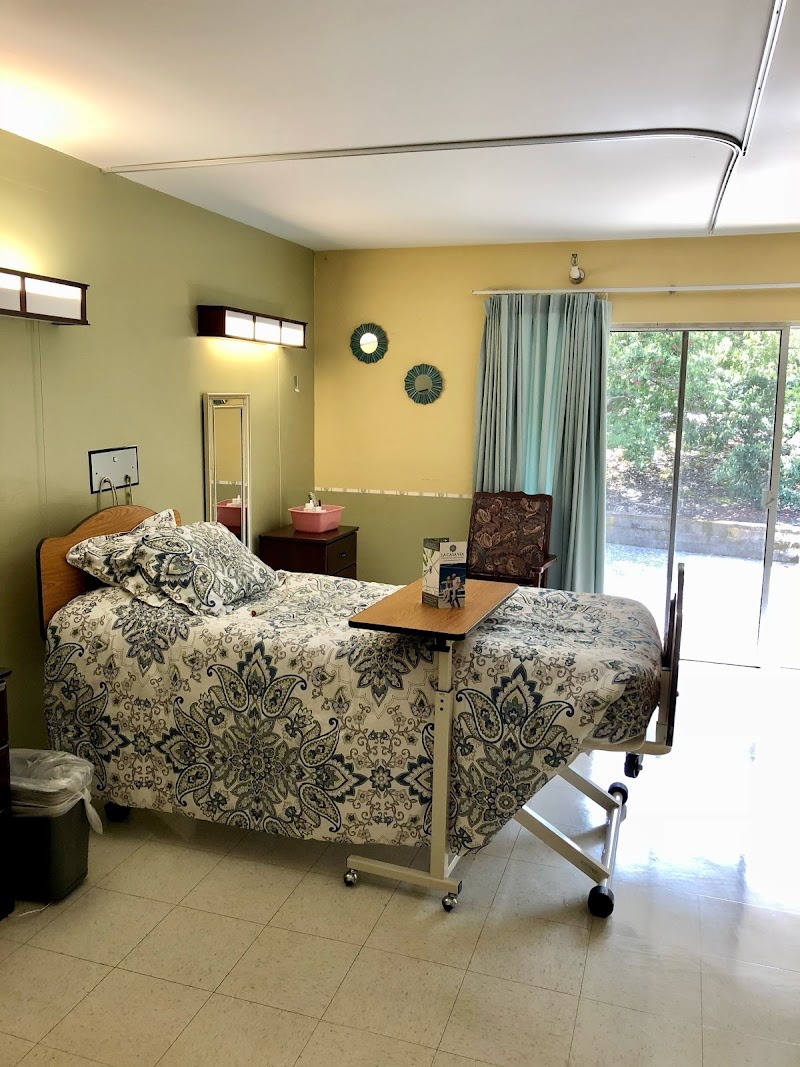
How is La Casa Via Transitional Staffed?

CMS rates LA CASA VIA TRANSITIONAL CARE CENTER's staffing level at 4 out of 5 stars, which is above average compared to other nursing homes. Staff turnover is 41%, compared to the California average of 46%. This relatively stable workforce can support continuity of care.

What Have Inspectors Found at La Casa Via Transitional?

State health inspectors documented 28 deficiencies at LA CASA VIA TRANSITIONAL CARE CENTER during 2021 to 2025. These included: 26 with potential for harm and 2 minor or isolated issues.
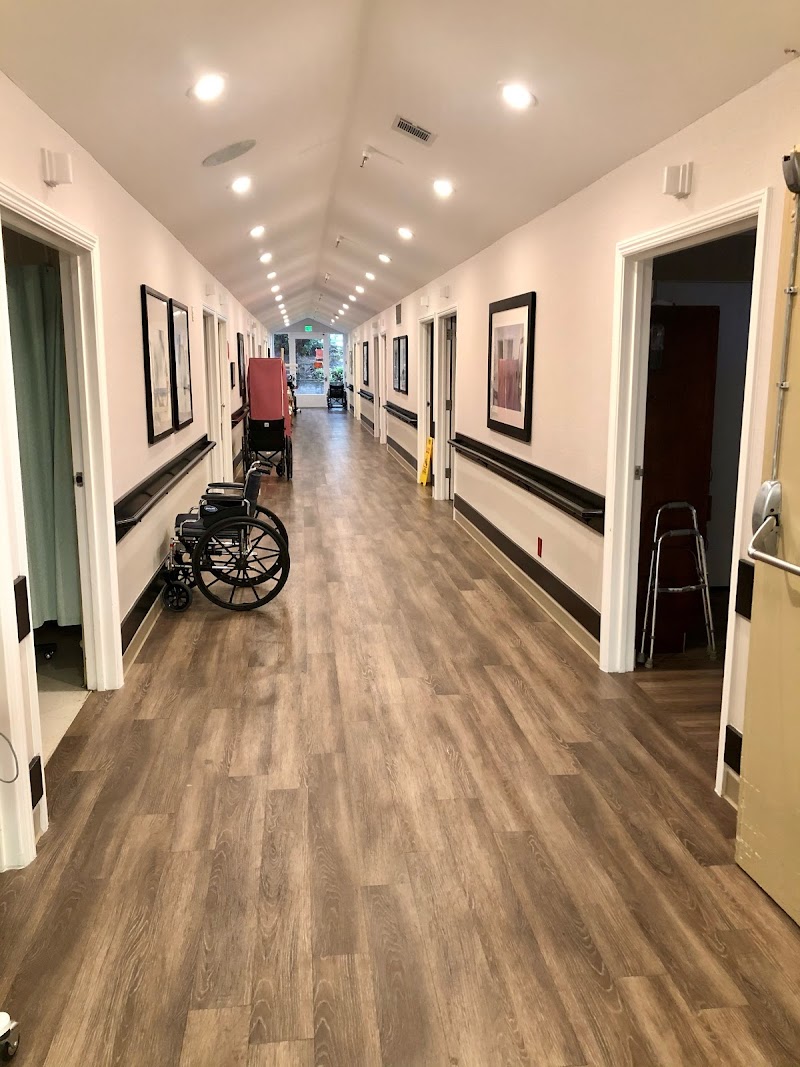
Who Owns and Operates La Casa Via Transitional?

LA CASA VIA TRANSITIONAL CARE CENTER is owned by a for-profit company. For-profit facilities operate as businesses with obligations to shareholders or private owners. The facility is operated by ASPEN SKILLED HEALTHCARE, a chain that manages multiple nursing homes. With 99 certified beds and approximately 78 residents (about 79% occupancy), it is a smaller facility located in WALNUT CREEK, California.
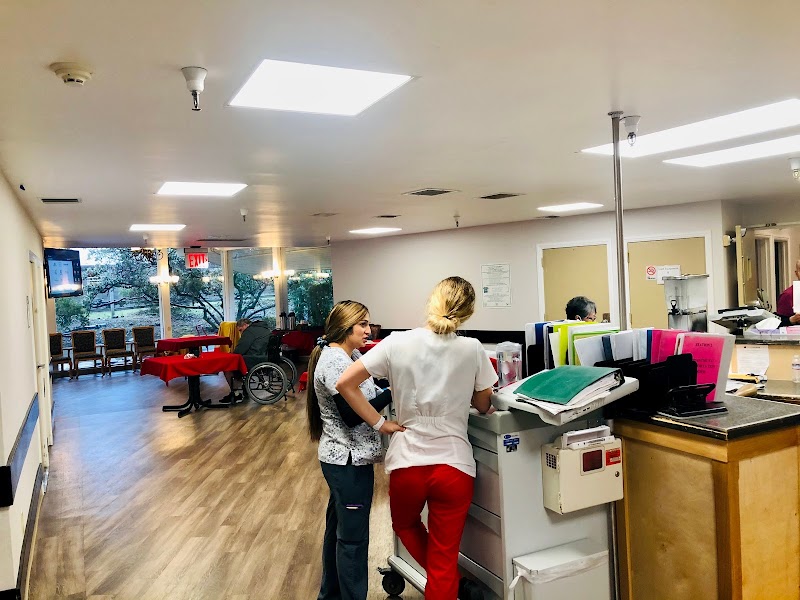
How Does La Casa Via Transitional Compare to Other California Nursing Homes?

Compared to the 100 nursing homes in California, LA CASA VIA TRANSITIONAL CARE CENTER's overall rating (5 stars) is above the state average of 3.2, staff turnover (41%) is near the state average of 46%, and health inspection rating (4 stars) is above the national benchmark.

What Should Families Ask When Visiting La Casa Via Transitional?

Based on this facility's data, families visiting should ask: "Can I visit during a mealtime to observe dining assistance and food quality?" "How do you handle medical emergencies, and what is your hospital transfer rate?" "Can I speak with family members of current residents about their experience?"

Is La Casa Via Transitional Safe?

Based on CMS inspection data, LA CASA VIA TRANSITIONAL CARE CENTER has a clean safety record: no substantiated abuse findings (meaning no confirmed cases of resident harm), no Immediate Jeopardy citations (the most serious violation level indicating risk of serious injury or death), and is not on the Special Focus Facility watch list (a federal program monitoring the lowest-performing 1% of nursing homes). The facility has a 5-star overall rating and ranks #1 of 100 nursing homes in California. While no facility is perfect, families should still ask about staff-to-resident ratios and recent inspection results during their visit.

Do Nurses at La Casa Via Transitional Stick Around?

LA CASA VIA TRANSITIONAL CARE CENTER has a staff turnover rate of 41%, which is about average for California nursing homes (state average: 46%). Moderate turnover is common in nursing homes, but families should still ask about staff tenure and how the facility maintains care continuity when employees leave.

Was La Casa Via Transitional Ever Fined?

LA CASA VIA TRANSITIONAL CARE CENTER has no federal fines on record. CMS issues fines when nursing homes fail to meet care standards or don't correct problems found during inspections. The absence of fines suggests the facility has either maintained compliance or corrected any issues before penalties were assessed. This is a positive indicator, though families should still review recent inspection reports for the full picture.

Is La Casa Via Transitional on Any Federal Watch List?

LA CASA VIA TRANSITIONAL CARE CENTER is not on any federal watch list. The most significant is the Special Focus Facility (SFF) program, which identifies the bottom 1% of nursing homes nationally based on persistent, serious quality problems. Not being on this list means the facility has avoided the pattern of deficiencies that triggers enhanced federal oversight. This is a positive indicator, though families should still review the facility's inspection history directly.