
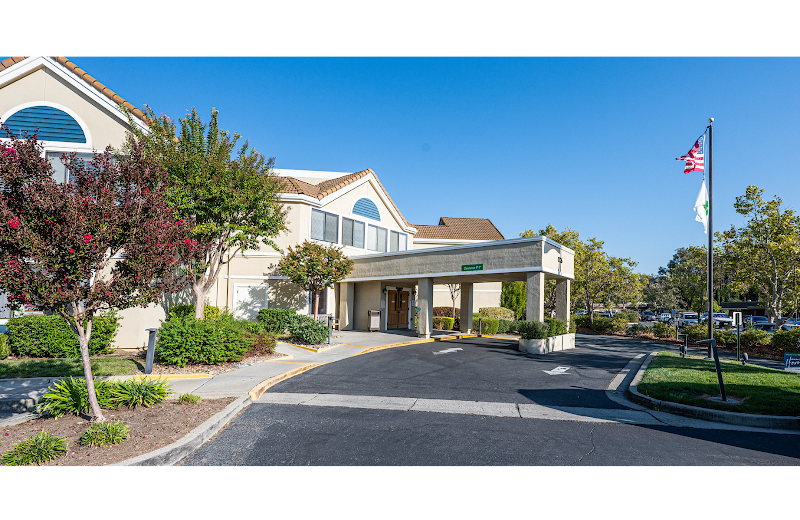
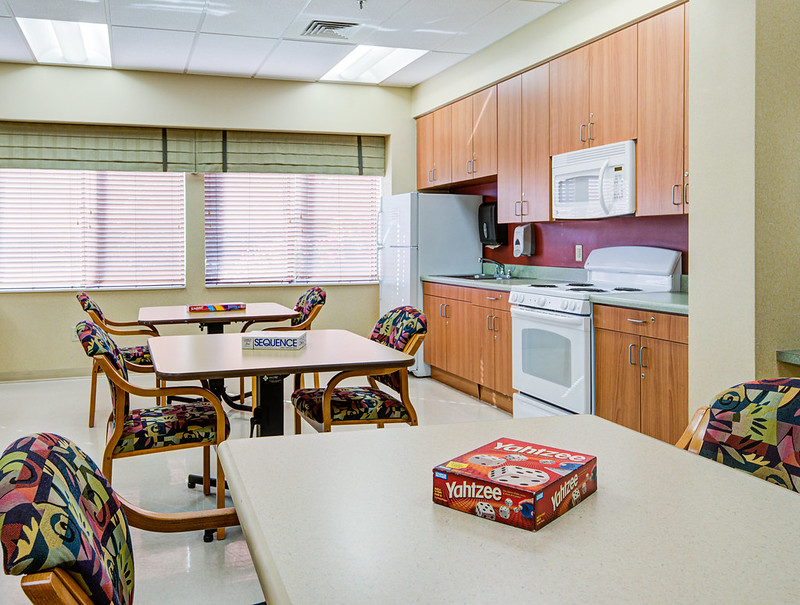
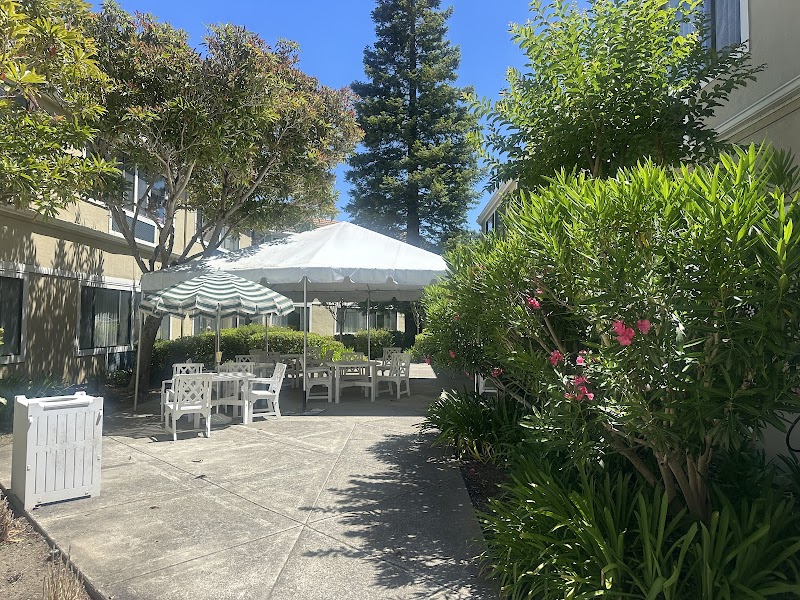
ROSSMOOR POST ACUTE

1226 ROSSMOOR PARKWAY, WALNUT CREEK, CA 94595 (925) 975-5000
For profit - Limited Liability company 155 Beds PACS GROUP Data: November 2025
Trust Grade
80/100
#183 of 1155 in CA
Last Inspection: February 2025

Within standard 12-15 month inspection cycle. Federal law requires annual inspections.

Overview

Rossmoor Post Acute in Walnut Creek, California, has received a Trust Grade of B+, indicating it is above average and recommended for potential residents. It ranks #183 out of 1,155 facilities in California, placing it in the top half, and #8 out of 30 in Contra Costa County, meaning there are only seven local options that are better. The facility is improving, as it reduced issues from six in 2024 to four in 2025. Staffing is rated average with a 3/5 star rating and a turnover rate of 40%, which is on par with the state average. There have been no fines, a positive sign, and while RN coverage is also average, it is beneficial for catching potential issues. However, there are notable concerns. Recent inspections revealed that staff failed to provide privacy during wound care and left a resident's catheter bag exposed, which could affect their dignity. Additionally, one resident reported not receiving a shower for over two weeks despite needing assistance, highlighting potential deficiencies in timely care. While the facility has strengths, families should be aware of these weaknesses when considering Rossmoor Post Acute.

Trust Score
B+
80/100
In California
#183/1155
Top 15%
Safety Record
Low Risk
No red flags
Inspections
Getting Better
6 → 4 violations
Staff Stability
○ Average
40% turnover. Near California's 48% average. Typical for the industry.
Penalties
✓ Good
No fines on record. Clean compliance history, better than most California facilities.
Skilled Nurses
○ Average
Each resident gets 34 minutes of Registered Nurse (RN) attention daily — about average for California. RNs are the most trained staff who monitor for health changes.
Violations
⚠ Watch
31 deficiencies on record. Higher than average. Multiple issues found across inspections.
★★★★★
5.0
Overall Rating
★★★☆☆
3.0
Staff Levels
★★★★★
5.0
Care Quality
★★★★☆
4.0
Inspection Score
Stable
2024: 6 issues
2025: 4 issues

The Good

  • 5-Star Quality Measures · Strong clinical quality outcomes
  • Full Sprinkler Coverage · Fire safety systems throughout facility
  • No fines on record
  • Staff turnover below average (40%)

    8 points below California average of 48%

Facility shows strength in quality measures, fire safety.

The Bad

Staff Turnover: 40%

Near California avg (46%)

Typical for the industry

Chain: PACS GROUP

Part of a multi-facility chain

Ask about local staffing decisions and management

The Ugly 31 deficiencies on record

Feb 2025 2 deficiencies
CONCERN (D)

Potential for Harm - no one hurt, but risky conditions existed

Deficiency F0645 (Tag F0645)

Could have caused harm · This affected 1 resident

Based on record review, interview, and facility policy review, the facility failed to ensure a preadmission screening and resident review (PASARR) was accurately completed for 1 (Resident #105) of 3 s...

Read full inspector narrative →
Based on record review, interview, and facility policy review, the facility failed to ensure a preadmission screening and resident review (PASARR) was accurately completed for 1 (Resident #105) of 3 sampled residents reviewed for PASARR requirements. Findings included: A facility policy titled, admission Criteria, revised March 2023, indicated, 9. All new admissions and readmissions are screened for mental disorders (MD), intellectual disabilities (ID) or related disorders (RD) per the Medicaid Pre-admission and Resident Review (PASARR) process. a. The acute hospital performs a Level I PASARR screen for all potential admissions, regardless of payor source, to determine if the individual meets the criteria for a MD, ID or RD. b. If the level I screen indicates that the individual may meet the criteria for a MD, ID, or RD, he or she is referred to the state PASARR representative for the Level II (evaluation and determination) screening process. (1) The admitting nurse notifies the social services department when a resident is identified as having a possible (or evident) MD, ID or RD. (2) The social worker is responsible for making referrals to the appropriate state-designated authority. An admission Record indicated the facility admitted Resident #105 on 12/11/2024. According to the admission Record, the resident had a medical history that included diagnoses of bipolar disorder and generalized anxiety disorder. Resident #105's admission Minimum Data Set (MDS) with an Assessment Reference Date (ARD) of 12/18/2024 revealed the resident had a Brief Interview for Mental Status (BIMS) score of 15, which indicated the resident had intact cognition. The MDS revealed the resident had active diagnoses of anxiety disorder and bipolar disorder. Resident #105's Care Plan, revealed a focus area, initiated 12/12/2024, that indicated the resident was at risk for changes in behavior due to diagnoses of depression, anxiety, and bipolar disorder. Additionally, Resident #105's Care Plan revealed a focus area, initiated 12/12/2024, that indicated Resident #105 had the potential for side effects, complications, or adverse reactions related to ordered use of Seroquel (an antipsychotic medication) related to bipolar disorder. Resident #105's Level I PASARR, dated 12/12/2024, revealed Section III - Serious Mental Illness reflected that the resident did not have a serious diagnosed mental disorder such as depressive disorder, anxiety disorder, panic disorder, schizophrenia/schizoaffective disorder, or symptoms of psychosis, delusions, and/or mood disturbance, was not suspected to have a mental illness, and had not been prescribed psychotropic medications for a serious mental illness. Resident #105's Level I PASARR screening results letter from the state agency, dated 12/12/2024, revealed the resident's Level I screening was negative for a serious mental illness, and a Level II screening was not required. During an interview on 02/12/2025 at 2:47 PM, the Director of Nursing (DON) stated Resident #105's Level I PASARR did not reflect the resident's mental illness diagnoses or psychotropic medication use. The DON stated that because the resident's Level I PASARR was inaccurate, the results were negative, and a Level II determination was not required. The DON stated she expected all PASARRs to be reviewed for accuracy upon admission.
CONCERN (D)

Potential for Harm - no one hurt, but risky conditions existed

Infection Control (Tag F0880)

Could have caused harm · This affected 1 resident

Based on observation, interview, and record review, the facility failed to ensure infection control was maintained to prevent the development and/or transmission of communicable diseases and infection...

Read full inspector narrative →
Based on observation, interview, and record review, the facility failed to ensure infection control was maintained to prevent the development and/or transmission of communicable diseases and infections for 1 (Resident #313) of 8 residents reviewed for infection control. Specifically, the facility failed to dispose of an intravenous (IV) catheter used to administer IV fluids to Resident #313. Findings included: During an interview on 02/13/2025 at 8:21 AM, the Director of Nursing (DON) stated IV catheter should be discarded immediately in a sharps container (a puncture resistant container with leak-resistant sides and bottom and a tight-fitting lid with an opening not large enough for a hand to enter). An admission Record indicated the facility admitted Resident #313 on 02/04/2025. According to the admission Record, the resident had a medical history that included diagnoses of encephalopathy and altered mental status. Resident #313's Care Plan revealed a focus area initiated on 02/09/2025 that indicated the resident was at risk for dehydration. Interventions directed to staff to administer IV fluids per physician orders (initiated 02/09/2025). Resident #313's Progress Note, dated 02/07/2025 at 2:31 PM, revealed a registered nurse (RN) on duty started IV hydration for the resident at 2:30 PM via a peripherally inserted central catheter (PICC) line in the right upper arm. Resident #313's Progress Note, dated 02/09/2025 at 10:10 PM, revealed Licensed Vocational Nurse (LVN) #5 documented that at 6:00 PM, she found the resident's peripheral IV line out. An observation on 02/10/2025 at 12:38 PM of Resident #313 revealed an exposed IV catheter and bandage was attached to a bag of IV solution that was hanging from an IV pole. During an interview on 02/10/2025 at 12:44 PM, LVN #4 revealed Resident #313 was supposed to be receiving IV fluids for severe dehydration but pulled out their IV line the night before. LVN #4 stated she was waiting for an RN to place a new IV line. She stated she did not know why the IV line was still hanging on the IV pole or why the IV catheter was still attached. During an interview on 02/13/2025 at 7:56 AM, LVN #5 revealed she was the nurse on duty on 02/09/2025 when Resident #313's IV catheter came out. She stated she could not recall whether she placed the IV catheter on the IV pole while waiting on an RN to assess the resident. During an interview on 02/13/2025 at 8:01 AM, RN #6 revealed he was working on another unit during the night shift of 02/09/2025, when he was notified that Resident #313's IV catheter came out while repositioning the resident. RN #6 stated he assessed Resident #313's IV site and looked to see if he could insert another IV catheter. He stated he did not notice the IV setup on the pole and thought the LVN had already discarded the items. He stated all used IV supplies should be discarded immediately in a white bin with a blue top in the medical room behind the nurse's station. During an interview on 02/13/2025 at 8:09 PM, RN #7 revealed he was on duty during the night shift on 02/09/2025 into the morning of 02/10/2025; however, he only recalled checking Resident #313's blood sugar. RN #7 stated all used IV catheters and supplies should be discarded immediately if an IV catheter became dislodged. During an interview on 02/10/2025 at 12:53 PM, the Assistant Director of Nursing (ADON) revealed she was made aware Resident #313 had pulled out their IV catheter the night before and was awaiting a new IV catheter placement. The ADON stated the used IV catheter should not have been left in the room because it posed a concern for bloodborne infections to others who may come into contact with the used IV catheter. During an interview on 02/12/2025 at 10:45 AM, the Director of Staff Development/Licensed Vocational Nurse, who was also the Infection Preventionist, stated the IV catheter and dressing should have immediately been discarded in a sharps container. She stated leaving the IV catheter attached to IV tubing posed a risk for bloodborne infection transmission to residents or staff who may come in contact with the items. During an interview on 02/13/2025 at 8:21 AM, the Director of Nursing (DON) revealed she was notified on 02/10/2025 that Resident #313's IV catheter had come out and was not discarded. The DON stated she expected the IV catheter to be discarded immediately in a sharps container. During an interview on 02/13/2025 at 8:32 AM, the Administrator stated she was made aware Resident #313's IV catheter was left in the resident's room when it was dislodged. The Administrator stated she expected IV tubing and catheters to be placed in a sharps container immediately because it posed a risk for infection and safety issues for residents and staff because of bloodborne pathogens.
Jan 2025 1 deficiency
CONCERN (D) 📢 Someone Reported This

A family member, employee, or ombudsman was alarmed enough to file a formal complaint

Potential for Harm - no one hurt, but risky conditions existed

Medical Records (Tag F0842)

Could have caused harm · This affected 1 resident

Based on observation, interview, and record review, the facility failed to ensure a medication bubble pack labeled with resident information was kept secured and confidential when it was found on top ...

Read full inspector narrative →
Based on observation, interview, and record review, the facility failed to ensure a medication bubble pack labeled with resident information was kept secured and confidential when it was found on top of a treatment cart, in a hallway, for public view and access. This failure resulted in a resident's confidential medical information compromised and could potentially impact 154 residents. Findings: During a concurrent observation and interview on 1/8/25, at 10:50 a.m., with Licensed Vocational Nurse (LVN) 1, LVN 1 stated recycle bins and boxes on top of them were moved from the hallway to the Office Manager's room. On inspection, inside the room were two gray bins. One bin had a brown box on top of it. The box was overflowing with paper documents, empty medication bubble packs labeled with resident information, and a cannula tubing dated 1/5/25. During a concurrent observation and interview on 1/8/25, at 11:00 a.m., with LVN 1, two treatment carts were in the hallway outside the Soiled Utility room. On top of one treatment cart were two white plastic bags with empty medication bubble packs with resident information labels. The top end of one plastic bag was open and resident labels were visible. These plastic bags with bubble packs were accessible to anyone who uses the hallway including staff, residents, and visitors. A paper document inside the bag could be read from the outside. This paper document had resident names and vital signs information. On top of the second treatment cart was a gray plastic wash basin which had an empty medication bubble pack with resident information label visible. The bubble pack label had resident first and last names, name of medication, dosage, and route of administration. During an interview on 1/8/25, at12:10 p.m., with Director of Staff Development (DSD), DSD stated medication bubble packs were not supposed to go in the boxes for shredding. DSD added there should not be any tubing in boxes. Per DSD, boxes should be in a private location and should be behind locked doors. DSD stated it was everyone's responsibility to protect patient information. During an interview on 1/8/25, at 12:30 p.m., with Medical Records (MR) staff, MR stated she did not go through each box as they were someone else's trash. During an interview at 1:00 p.m., MR stated boxes were supposed to have lids for patient privacy. During an interview on 1/8/25, at 1:35 p.m., with Administrator (ADM), ADM stated the boxes should not be open due to patient confidentiality. Per ADM, MR is responsible for documents being properly handled. On medication bubble packs, patient information label should be ripped away. Tubing should not be in boxes. Plastic bags had to be in a box in Medical Records and bubble packs needed to be removed. During an interview on 1/17/25, at 8:16 a.m., with Director of Nursing (DON), the DON stated the concern is HIPAA (Health Insurance Portability and Accountability Act - federal law that protects medical records and personal health information) and protecting patient records and information is the responsibility of all staff. A review of the facility's policy and procedure (P&P) titled, Shred Policy Effective November 2024 , undated, the P&P indicated, The boxes will be kept in a secure location. All documents that have any patient information or any other confidential information will be placed in the box. A review of the facility's policy and procedure (P&P) titled, Confidentiality of Information and Personal Privacy, dated 2001, the P&P indicated, The facility will safeguard the personal privacy and confidentiality of all resident personal and medical records.
Jan 2025 1 deficiency
CONCERN (D) 📢 Someone Reported This

A family member, employee, or ombudsman was alarmed enough to file a formal complaint

Potential for Harm - no one hurt, but risky conditions existed

Accident Prevention (Tag F0689)

Could have caused harm · This affected 1 resident

Based on observation, interview, and record review, the facility failed to provide appropriate safety measures and adequate supervision to prevent one of three residents (Resident 1) from rolling out ...

Read full inspector narrative →
Based on observation, interview, and record review, the facility failed to provide appropriate safety measures and adequate supervision to prevent one of three residents (Resident 1) from rolling out of bed and falling on the floor during after-shower care. The failure to provide sufficient staff or adequate measures to prevent a dependent resident from rolling off the bed during Activities of Daily Living (ADL, the basic self-care tasks an individual does on a day-to-day basis) care/after-shower care, resulted in Resident 1 being transported to the emergency department for evaluation after the fall, caused a seven centimeter (cm) laceration to the right forehead, a brief loss of consciousness, and a contusion (a bruise or skin discoloration due to injury to soft tissue) of right ankle. Findings: A review of Resident 1's admission Record, printed 12/19/24, indicated Resident 1 was admitted to the facility in 2019 with diagnoses of morbid obesity (having too much body fat), cerebrovascular accident (CVA, a stroke or loss of blood flow to the brain), and Schizophrenia (a serious mental condition that affects how people think, feel, and behave). A review of Resident 1's Minimum Data Set (MDS, resident assessment tool used to provide care), dated 9/24/24, indicated Resident 1 had clear speech, was understood, and was able to understand others. The MDS indicated Resident 1 was dependent (helper does all the effort. Resident does none of the effort to complete the activity. Or the assistance of two or more helpers is required for the resident to complete the activity) on most ADLs including toileting hygiene, shower/bathe self and lower body dressing. The MDS also indicated resident required substantial/maximal assistance (the helper does more than half the effort of lifting or holding trunk or limbs) when rolling from lying on back to left and right side and return to lying on back on the bed. The MDS further indicated Resident 1 was incontinent (no voluntary control of urine or feces) on both bladder (urination) and bowel (defecation). A review of Resident 1's Care Plan titled, ADL Self-care Deficit related to (r/t) CVA and Physical Limitations, revision date 7/6/20, indicated a goal, Will receive assistance necessary to meet ADL needs, and interventions/tasks that included, ADL Assist: Transfer with mechanical lift with double extra-large (XXL) size sling .Encourage and or assist to reposition frequently . A review of Resident 1's clinical record titled, Situation, Background, Appearance, Review and Notify (SBAR) Communication Form, dated 11/12/24, indicated resident had a fall, obtained a laceration with bleeding to the forehead, with increased confusion or disorientation, and a Physician Order (PO) to send resident to the emergency room (ER) for evaluation and testing. During an interview on 12/19/24, at 1:02 p.m., with Resident 1, inside her room, Resident 1 stated three staff members, a male Restorative Nursing Assistant 1 (RNA 1), a male Certified Nursing Assistant 2 (CNA 2) and a female CNA 1 (CNA 1) were present in the room and assisted the resident with after-shower care. Resident 1 stated during the resident's final turn to complete the incontinent brief application, while RNA 1 and CNA 2 were standing next to resident's left side and CNA 1 to resident's right side (to secure the tape to resident's brief), as resident was turned by the two male staff from her left to the right side, Resident 1 claimed CNA 1 pushed her real hard toward the right side of the bed, which made resident slip from the bed and fall, hit her right forehead on something, and landed face down onto the floor. Resident 1 stated there was blood all over the floor and people came running when resident somewhat lost her consciousness. Resident 1 stated she was taken to the hospital where they took X-rays (X-radiation, a quick, painless test to create images of the inside of the body) to several parts of her whole body. At this time during the interview, Resident 1 started crying as she continued with her recollection of the incident. Resident 1 stated she feared she was going to go to surgery. During an interview on 12/19/24, at 1:10 p.m., with RNA 1, RNA 1 stated Resident 1 was a three to four (3-4) person assist with transfers using the Hoyer Lift (an electric lift designed to transfer patients between two surfaces), turning, and repositioning. RNA 1 stated during Resident 1's after-shower care that day, only three staff members, RNA 1 (male), CNA 2 (male), and CNA 3 (female) were available to assist the resident. During an interview on 12/19/24, at 2:16 p.m., with the Director of Staff Development (DSD), DSD stated CNA 1 was from registry (an agency that provided certified nursing assistant services to facilities as needed) and the CNA's first time being assigned to take care of Resident 1 on the day the fall incident happened. DSD stated the facility's licensed nurses and seasoned CNAs provided quick orientation to registry staff during the times registry services were called to report for work at the facility. During a telephone interview on 12/23/24, at 12:45 p.m., with CNA 1, CNA 1 stated during Resident 1's final turn to complete the after-shower care/incontinent brief application, CNA 1 stood next to resident's right lower side of the bed to secure and stick the tape to the incontinent brief. CNA 1 stated as RNA 1 and CNA 2 turned and pushed resident to the right side towards CNA 1, the locked bed jerked and moved a bit due to resident's dead, heavy weight, and Resident 1 fell onto the floor and hit her head on something, towards the wall where there was a bedside table in the corner, about two feet away from the bed, and started bleeding from the forehead. During a telephone interview on 12/23/24, at 12:45 p.m., with CNA 2, CNA 2 stated both RNA 1 and CNA 2 knew Resident 1 so well that staff had to follow resident's preferences/directions regarding provisions of the resident care. CNA 2 stated Resident 1 required 3-4 person assist, with usually four people to help when a fourth person was available. CNA 2 stated on the day of the incident, RNA 1 and CNA 2 assisted CNA 1 with Resident 1's after-shower care. CNA 2 further stated CNA 1 stood at the right side of the resident, next to the mid-lower part of the bed and it was unfortunate that CNA 1 was unable to control the force of gravity and weight of the resident during the turn, enough to cause Resident 1 to fall off the bed, upper body first, onto the floor. CNA 2 stated Resident 1 had severe bleeding to the forehead and was sent to the emergency room for evaluation. A review of Resident 1's clinical record titled, Emergency Department (ED) Provider Notes, dated 11/12/24, indicated resident obtained ED procedures and critical care that included plastic surgery consultation, large right forehead laceration (seven cm long) repair, minor head injury, and trauma (tenderness and swelling likely component of sprain and contusion) to the right ankle on the resident's old site of chronic deformity. A review of the facility's policy and procedure (P&P) titled, Falls and Fall Risk, Managing, revision date March 2018, indicated, .The staff will identify interventions related to the resident's specific risks and causes to try to prevent the resident from falling and to try to minimize complications from falling .A fall is defined as: Unintentionally coming to rest on the ground, floor, or other lower level, but not as a result of an overwhelming external force .An episode where a resident lost his or her balance and would have fallen, if not for another person or if he or she had not caught him/herself, is considered, a fall. A fall without injury is still a fall. Unless there is evidence suggesting otherwise, when a resident is found on the floor, a fall is considered to have occurred .
Nov 2024 2 deficiencies
CONCERN (D) 📢 Someone Reported This

A family member, employee, or ombudsman was alarmed enough to file a formal complaint

Potential for Harm - no one hurt, but risky conditions existed

Assessment Accuracy (Tag F0641)

Could have caused harm · This affected 1 resident

**NOTE- TERMS IN BRACKETS HAVE BEEN EDITED TO PROTECT CONFIDENTIALITY** Based on interview and record review, the facility failed to accurately assess one of two sampled residents (Resident 1) on the ...

Read full inspector narrative →
**NOTE- TERMS IN BRACKETS HAVE BEEN EDITED TO PROTECT CONFIDENTIALITY** Based on interview and record review, the facility failed to accurately assess one of two sampled residents (Resident 1) on the Minimum Data Set (MDS, an assessment tool used to direct care). This failure resulted in an inaccurate reflection of Resident 1's current health condition which had the potential for Resident 1 to not receive the person-centered care that Resident 1 deserved. Findings: A review of Resident 1's admission Record, printed 11/12/24, indicated Resident 1 was admitted to the facility on [DATE], with multiple diagnoses that included acute respiratory failure with hypoxia (when the lungs are unable to provide oxygen in the body's tissues) and obesity (excessive weight). A review of Resident 1's Care Plan, revised date 4/15/22, indicated Resident 1 was at risk for respiratory impairment related to sleep apnea. A review of Resident 1's Order Summary Report, active orders as of 11/12/24, indicated: 1. 8/6/2023 - BIPAP Ventilator Respironics V60 (a breathing machine that helps people breathe when they are having trouble): BIPAP Mode: spontaneous/timed, every evening and night shift for acute respiratory failure. 2. 8/17/24 - Oxygen (O2) at 2 liters per minute (LPM) connected to BIPAP mask at night and as needed (PRN) at bedtime. A review of Resident 1's Quarterly Minimum Data Set (MDS, a resident assessment instrument used to identify resident care problems to be addressed in an individualized care plan) Assessment, dated 10/23/24, showed no indication that resident had a diagnosis of sleep apnea nor used a non-invasive mechanical ventilator (a breathing machine that helps people breathe when they are having trouble), either from a bilevel positive airway pressure (BIPAP) or a continuous positive airway pressure (CPAP) machine, during sleep. During a concurrent interview and record review on 11/20/24, at 10:07 a.m. with MDS Coordinator (MDSC), MDSC stated Resident 1's MDS Assessment for use of non-invasive mechanical ventilator was blocked out. MDSC further stated she was unsure whether Resident 1 used a BIPAP or CPAP machine but knew that resident had used the machine for sleep apnea since admission to the facility. During a concurrent interview and record review on 11/20/24 at 1:40 p.m. with Director of Nursing (DON), DON stated Resident 1's Quarterly MDS Assessment did not indicate that Resident 1 used a non-invasive mechanical ventilator for resident's sleep apnea. DON stated MDSC had coded the special treatment on MDS in error and did not reflect Resident 1's current health status. A review of the facility records titled, Center of Medicare and Medicaid Services (CMS) Resident Assessment Instrument (RAI) Version 3.0 Manual, dated October 2024, indicated, Code any type of CPAP or BIPAP respiratory support devices that prevent airways from closing by delivering slightly pressurized air through a mask or other device continuously or via electronic cycling throughout the breathing cycle. The BIPAP/CPAP mask/device enables the individual to support their own spontaneous respiration by providing enough pressure when the individual inhales to keep their airways open .This item may be coded if the resident places or removes their own BIPAP/CPAP mask/device .
CONCERN (D) 📢 Someone Reported This

A family member, employee, or ombudsman was alarmed enough to file a formal complaint

Potential for Harm - no one hurt, but risky conditions existed

Respiratory Care (Tag F0695)

Could have caused harm · This affected 1 resident

**NOTE- TERMS IN BRACKETS HAVE BEEN EDITED TO PROTECT CONFIDENTIALITY** Based on observation, interview, and record review, the facility failed to ensure resident received the necessary respiratory ca...

Read full inspector narrative →
**NOTE- TERMS IN BRACKETS HAVE BEEN EDITED TO PROTECT CONFIDENTIALITY** Based on observation, interview, and record review, the facility failed to ensure resident received the necessary respiratory care in accordance with professional standards of practice when facility failed to provide in a timely manner, the missing connector for the appropriate-sized BIPAP (bilevel positive airway pressure, a machine used to treat sleep apnea [a sleep-related breathing disorder]) mask used by one of two sampled residents (Resident 1). This failure resulted in Resident 1's inconvenience, discomfort, several nights of interrupted sleep, skin breakdown to nose bridge (related to use of unfit, temporary BIPAP mask), anxiety, and mood swings. This failure also had the potential to result in serious harm and potential death to the resident. Findings: A review of Resident 1's admission Record, printed 11/12/24, indicated Resident 1 was admitted to the facility on [DATE], with multiple diagnoses that included acute respiratory failure with hypoxia (when the lungs are unable to provide oxygen in the body's tissues) and obesity (excessive weight). A review of Resident 1's Minimum Data Set (MDS, a resident assessment instrument used to identify resident care problems to be addressed in an individualized care plan), dated 10/23/24, indicated Resident 1 had clear speech, was understood, and was able to understand others. The MDS also indicated Resident 1 required substantial/maximal assistance (Helper does more than half the effort) to supervision or touching assistance (Helper provides verbal cues and/or touching/steadying and/or contact guard assistance as resident completes activity) during her activities of daily living (ADLs, the basic self-care tasks an individual does on a day-to-day basis). A review of Resident 1's Care Plan, revised date 4/15/22, indicated Resident 1 was at risk for respiratory impairment related to sleep apnea. A review of Resident 1's Order Summary Report, active orders as of 11/12/24, indicated: 1. 8/6/2023 - BIPAP Ventilator Respironics V60 (a breathing machine that helps people breathe when they are having trouble): BIPAP Mode: spontaneous/timed, every evening and night shift for acute respiratory failure. 2. 8/17/24 - Oxygen (O2) at 2 liters per minute (LPM) connected to BIPAP mask at night and as needed (PRN, pro re nata, as the need arises)) at bedtime. A review of Resident 1's Medication Administration Record (MAR), dated 11/1/24 – 11/30/24, indicated to apply thin hydrocolloid to nose bridge as barrier/cushion from the BIPAP, dated 10/31/24. A review of Resident 1's Progress Notes, dated 10/30/24, by Registered Nurse 2 (RN 2), indicated, Patient is complaining of (c/o) redness that extends to the side of her both cheeks that she claims caused by the BIPAP mask. Medical Doctor (MD) notified. Applied hydrocolloid to nose bridge as a barrier/cushion from the BIPAP mask. New BIPAP mask is ordered . A review of the facility records titled, Order Information, dated 10/26/24, at 6:57 p.m., indicated Central Supply Manager's (CSM's) online purchase order of item Airfit F20 and Airfit F30 Replacement QuietAir Elbow, was placed to Vendor 1. The Order Detail indicated Vendor 1 received the request on Sunday, 10/27/24 and the estimated delivery date was Thursday, October 31, 2024. On Monday, 11/1/24 at 7:45 a.m., Vendor 1 sent a related email to CSM which indicated, Shipment Delay. Review of the email showed, We're encountering a delay in shipping your order .New estimated delivery date: Sunday, November 3, 2024 .View or cancel order . On Monday 11/4/24, at 7:55 a.m., Vendor 1 sent a second related email to CSM which indicated, Shipment Delay. Review of the email showed, There is a delay in shipping your order because of a supply chain issue .New estimated delivery date: Saturday, November 9, 2024 - Tuesday November 12, 2024, and the CSM replied with, I still want this item . On Saturday 11/9/24, at 7:59 a.m., Vendor 1 sent a third related email to CMS which indicated, We wanted to let you know that we have shipped your items .Expected delivery: Sunday, November 10 . A review of the facility records titled, Order Information, dated 11/5/24, at 11:34 a.m., indicated, Director of Staff Development's (DSD's) placed an online purchase order of item, Airfit F20 and Airfit F30 Replacement QuietAir Elbow, to Vendor 2. The Order Detail indicated Vendor 2 received the request on Tuesday, 11/5/24, and the estimated delivery date was Wednesday, November 6, 2024. On Wednesday, 11/6/24, at 12:57 p.m., Vendor 2 sent a related email to DSD which indicated, Your parcel has been delivered to reception. During a concurrent observation, interview, and record review on 11/12/24, at 11:45 a.m., with Resident 1, in the resident's room, Resident 1 stated, It took 10 days and a mental breakdown to get the missing piece replaced by the facility. Resident 1 stated, on 10/25/24, when the BIPAP machine/tubing was replaced by the facility, a connecting piece of the BIPAP mask went missing resorting to use of an older mask. Resident 1 stated she was unable to sleep well at night that made her mentally and physically exhausted due to use of a mask that did not fit well, which constantly rubbed on her cheeks and nose area, and caused skin breakdown, during the 10 nights of waiting period. Resident 1 further stated during subsequent follow-ups, resident could not even get an update from CSM. Resident 1 stated waiting for the replacement piece had caused her so much anxiety and inconvenience to the point of ordering the missing piece herself, via online on 11/4/24. Resident 1 also mentioned the facility did not address the skin breakdown to her nose bridge until 10/31/24. During a concurrent interview and record review on 11/12/24, at 1:04 p.m., with CSM, CSM stated LVN 1 made him aware of Resident 1's BIPAP missing piece on 10/26/24 so CSM ordered the piece online that evening from Vendor 1, with an estimated delivery date of 10/31-11/1/24. CSM stated on 11/31/24, CSM received an email from Vendor 1 which indicated, Shipment Delay., and a new estimated delivery date of 11/3/24 was given. CSM continued that on Monday, 11/4/24, at 7:55 a.m., Vendor 1 sent a second related email which indicated another shipment delay with a new estimated delivery date of Saturday, November 9, 2024 - Tuesday November 12, 2024, of which CSM replied to the email with, I still want this item. CSM confirmed he did try to order from another vendor after Vendor 1's second notice of delayed delivery, nor tell Resident 1 in person, about the delivery delays because he preferred the nurses to inform the resident directly. During an interview on 11/12/24, at 12:40 p.m., with the Director of Staff Development (DSD), DSD stated Resident 1 raised the concern to DSD regarding resident's BIPAP mask missing piece which was initially ordered by CSM but kept receiving a pushed back delivery date. DSD stated when she worked with CSM on 11/5/24, to reorder the missing piece online, Vendor 2 delivered the item overnight, on 11/6/24, as indicated. During a telephone interview on 11/19/24, at 11:33 a.m., with Licensed Vocational Nurse 1 (LVN 1), LVN 1 stated on 10/26/24, Resident 1 had mentioned that on 10/25/24, a staff (unable to recall who staff was) had misplaced one of the BIPAP mask pieces while replacing the tubing for the resident. LVN 1 stated Resident 1 complained that she slept very uncomfortably that night as the spare mask used felt a little too tight. LVN 1 stated she informed Central Supply Manager (CSM) about the missing piece and confirmed it will be ordered immediately for the Resident 1. LVN 1 denied seeing Resident 1's facial redness or skin breakdown to the nose bridge. During an interview on 11/20/24, at 11:30 a.m., with LVN 2, LVN 2 stated Resident 1 used a temporary blue BIPAP mask which created adverse reactions to the resident's cheeks and nose bridge, so LVN 2 followed up a treatment order from the doctor, which was received and started on 10/31/24. A review of the facility's policy and procedure (P&P) titled, CPAP (Continuous Positive Airway Pressure)/BIPAP Support, dated 2001, indicated, Purpose – To provide the spontaneously breathing resident with continuous positive airway pressure with or without supplemental oxygen .BIPAP delivers CPAP but allows separate pressure settings for expiration (EPAP, nasal expiratory positive airway pressure) and inspiration (IPAP, inspiratory positive airway pressure) .The mask should fit firmly but does not need to be airtight . A review of the facility's P&P titled, Oxygen Administration, dated 2001, indicated, .The oxygen mask is a devise that fts over the resident's nose and mouth. It is held in place by an elastic band placed around the resident's head .Check the mask .to be sure they are in good working order and are securely fastened . Based on observation, interview, and record review, the facility failed to ensure resident received the necessary respiratory care in accordance with professional standards of practice when facility failed to provide in a timely manner, the missing connector for the appropriate-sized BIPAP (bilevel positive airway pressure, a machine used to treat sleep apnea [a sleep-related breathing disorder]) mask used by one of two sampled residents (Resident 1). This failure resulted in Resident 1's inconvenience, discomfort, several nights of interrupted sleep, skin breakdown to nose bridge (related to use of unfit, temporary BIPAP mask), anxiety, and mood swings. This failure also had the potential to result in serious harm and potential death to the resident. Findings: A review of Resident 1's admission Record, printed 11/12/24, indicated Resident 1 was admitted to the facility on [DATE], with multiple diagnoses that included acute respiratory failure with hypoxia (when the lungs are unable to provide oxygen in the body's tissues) and obesity (excessive weight). A review of Resident 1's Minimum Data Set (MDS, a resident assessment tool used to provide care), dated 10/23/24, indicated Resident 1 had clear speech, was understood, and was able to understand others. The MDS also indicated Resident 1 required substantial/maximal assistance (Helper does more than half the effort) to supervision or touching assistance (Helper provides verbal cues and/or touching/steadying and/or contact guard assistance as resident completes activity) during her activities of daily living (ADLs, the basic self-care tasks an individual does on a day-to-day basis). A review of Resident 1's Care Plan, revised date 4/15/22, indicated Resident 1 was at risk for respiratory impairment related to sleep apnea. A review of Resident 1's Order Summary Report, active orders as of 11/12/24, indicated: - 8/6/2023 - BIPAP Ventilator Respironics V60 (a breathing machine that helps people breathe when they are having trouble): BIPAP Mode: spontaneous/timed, every evening and night shift for acute respiratory failure. - 8/17/24 - Oxygen (O2) at 2 liters per minute (LPM) connected to BIPAP mask at night and as needed (PRN, pro re nata, as the need arises)) at bedtime. A review of Resident 1's Medication Administration Record (MAR), dated 11/1/24 – 11/30/24, indicated: - 10/31/24 - Apply thin hydrocolloid to nose bridge as barrier/cushion from the BIPAP. A review of Resident 1's Progress Notes, dated 10/30/24, by Registered Nurse 2 (RN 2), indicated, Patient is complaining of (c/o) redness that extends to the side of her both cheeks that she claims caused by the BIPAP mask. Medical Doctor (MD) notified. Applied hydrocolloid to nose bridge as a barrier/cushion from the BIPAP mask. New BIPAP mask is ordered . A review of the facility records titled, Order Information, dated 10/26/24, at 6:57 p.m., indicated Central Supply Manager's (CSM's) online purchase order of item Airfit F20 and Airfit F30 Replacement QuietAir Elbow, was placed to Vendor 1. The Order Detail indicated Vendor 1 received the request on Sunday, 10/27/24 and the estimated delivery date was Thursday, October 31, 2024. On Monday, 11/1/24, at 7:45 a.m., Vendor 1 sent a related email to CSM which indicated, Shipment Delay. Review of the email showed, We're encountering a delay in shipping your order .New estimated delivery date: Sunday, November 3, 2024 .View or cancel order . On Monday 11/4/24, at 7:55 a.m., Vendor 1 sent a second related email to CSM which indicated, Shipment Delay. Review of the email showed, There is a delay in shipping your order because of a supply chain issue .New estimated delivery date: Saturday, November 9, 2024 - Tuesday November 12, 2024, and the CSM replied with, I still want this item . On Saturday 11/9/24, at 7:59 a.m., Vendor 1 sent a third related email to CMS which indicated, We wanted to let you know that we have shipped your items .Expected delivery: Sunday, November 10 . A review of the facility records titled, Order Information, dated 11/5/24, at 11:34 a.m., indicated, Director of Staff Development's (DSD's) placed an online purchase order of item, Airfit F20 and Airfit F30 Replacement QuietAir Elbow, to Vendor 2. The Order Detail indicated Vendor 2 received the request on Tuesday, 11/5/24, and the estimated delivery date was Wednesday, November 6, 2024. On Wednesday, 11/6/24, at 12:57 p.m., Vendor 2 sent a related email to DSD which indicated, Your parcel has been delivered to reception. During a concurrent observation, interview, and record review on 11/12/24, at 11:45 a.m., with Resident 1, in the resident's room, Resident 1 stated, It took 10 days and a mental breakdown to get the missing piece replaced by the facility. Resident 1 stated, on 10/25/24, when the BIPAP machine/tubing was replaced by the facility, a connecting piece of the BIPAP mask went missing resorting to use of an older mask. Resident 1 stated she was unable to sleep well at night that made her mentally and physically exhausted due to use of a mask that did not fit well, which constantly rubbed on her cheeks and nose area, and caused skin breakdown, during the 10 nights of waiting period. Resident 1 further stated during subsequent follow-ups, resident could not even get an update from CSM. Resident 1 stated waiting for the replacement piece had caused her so much anxiety and inconvenience to the point of ordering the missing piece herself, via online on 11/4/24. Resident 1 also mentioned the facility did not address the skin breakdown to her nose bridge until 10/31/24. During a concurrent interview and record review on 11/12/24, at 1:04 p.m., with CSM, CSM stated LVN 1 made him aware of Resident 1's BIPAP missing piece on 10/26/24 so CSM ordered the piece online that evening from Vendor 1, with an estimated delivery date of 10/31-11/1/24. CSM stated on 11/31/24, CSM received an email from Vendor 1 which indicated, Shipment Delay., and a new estimated delivery date of 11/3/24 was given. CSM continued that on Monday, 11/4/24, at 7:55 a.m., Vendor 1 sent a second related email which indicated another shipment delay with a new estimated delivery date of Saturday, November 9, 2024 - Tuesday November 12, 2024, of which CSM replied to the email with, I still want this item. CSM confirmed he did try to order from another vendor after Vendor 1's second notice of delayed delivery, nor tell Resident 1 in person, about the delivery delays because he preferred the nurses to inform the resident directly. During an interview on 11/12/24, at 12:40 p.m., with the Director of Staff Development (DSD), DSD stated Resident 1 raised the concern to DSD regarding resident's BIPAP mask missing piece which was initially ordered by CSM but kept receiving a pushed back delivery date. DSD stated when she worked with CSM on 11/5/24, to reorder the missing piece online, Vendor 2 delivered the item overnight, on 11/6/24, as indicated. During a telephone interview on 11/19/24, at 11:33 a.m., with Licensed Vocational Nurse 1 (LVN 1), LVN 1 stated on 10/26/24, Resident 1 had mentioned that on 10/25/24, a staff (unable to recall who staff was) had misplaced one of the BIPAP mask pieces while replacing the tubing for the resident. LVN 1 stated Resident 1 complained that she slept very uncomfortably that night as the spare mask used felt a little too tight. LVN 1 stated she informed Central Supply Manager (CSM) about the missing piece and confirmed it will be ordered immediately for the Resident 1. LVN 1 denied seeing Resident 1's facial redness or skin breakdown to the nose bridge. During an interview on 11/20/24, at 11:30 a.m., with LVN 2, LVN 2 stated Resident 1 used a temporary blue BIPAP mask which created adverse reactions to the resident's cheeks and nose bridge so LVN 2 followed up a treatment order from the doctor, which was received and started on 10/31/24. A review of the facility's policy and procedure (P&P) titled, CPAP (Continuous Positive Airway Pressure)/BIPAP Support, dated 2001, indicated, Purpose – To provide the spontaneously breathing resident with continuous positive airway pressure with or without supplemental oxygen .BIPAP delivers CPAP but allows separate pressure settings for expiration (EPAP, nasal expiratory positive airway pressure) and inspiration (IPAP, inspiratory positive airway pressure) .The mask should fit firmly but does not need to be airtight . A review of the facility's P&P titled, Oxygen Administration, dated 2001, indicated, .The oxygen mask is a devise that fts over the resident's nose and mouth. It is held in place by an elastic band placed around the resident's head .Check the mask .to be sure they are in good working order and are securely fastened .
Aug 2024 1 deficiency
CONCERN (D) 📢 Someone Reported This

A family member, employee, or ombudsman was alarmed enough to file a formal complaint

Potential for Harm - no one hurt, but risky conditions existed

Respiratory Care (Tag F0695)

Could have caused harm · This affected 1 resident

Based on observation, interview, and record review, the facility failed to have oxygen safety signage posted on Resident 1 ' s room as Resident 1 used an oxygen concentrator (a portable medical device...

Read full inspector narrative →
Based on observation, interview, and record review, the facility failed to have oxygen safety signage posted on Resident 1 ' s room as Resident 1 used an oxygen concentrator (a portable medical device used to deliver oxygen to those who have a condition that causes or results in low levels of oxygen in their blood). This failure had the potential of not having safety precautions in place necessary to care for Resident 1 who required oxygen use. Findings: During a record review of Resident 1 ' s face sheet, undated, Resident 1 had a diagnosis of acute respiratory failure with hypoxia (a medical condition that occurs when the lungs have difficulty exchanging oxygen and carbon dioxide with the blood). During an interview on 7/31/24, at 8:55 a.m., with Nurse Supervisor (NS), NS stated a resident who uses oxygen should have a magnetic oxygen signage posted on the door. During an observation on 7/31/24, at 12:10 p.m., Resident 1 had an oxygen concentrator located at the bedside. During a concurrent observation and interview on 7/31/24, at 12:26 p.m., NS stated Resident 1 did not have an oxygen signage on the door. Per NS, she was responsible to ensure the oxygen signage was posted on the door. During an interview on 8/30/24, at 8:11 a.m., with Registered Nurse (RN)1, RN 1 stated oxygen signage is important as oxygen is flammable. Per RN 1, during a power outage, residents using oxygen need to have a portable oxygen tank to use. RN 1 added that when there is a fire, oxygen is combustible. During an interview on 8/30/24, at 8:55 a.m., with Assistant Director of Nursing (ADON), ADON stated oxygen signage should be placed on resident ' s door. During a review of the facility ' s policy and procedure (P&P) titled, Oxygen Administration, dated 2021, the P&P indicated, 2. Place an ' Oxygen in Use ' sign on the outside of the room entrance door. Close the door. 3. Place an ' Oxygen in Use ' sign in a designated place on or over the resident ' s bed.
Apr 2024 1 deficiency
CONCERN (D) 📢 Someone Reported This

A family member, employee, or ombudsman was alarmed enough to file a formal complaint

Potential for Harm - no one hurt, but risky conditions existed

Report Alleged Abuse (Tag F0609)

Could have caused harm · This affected 1 resident

Based on interview and record review, for one of three sampled residents (Resident 1), the facility failed to ensure a suspicion of sexual abuse, including injuries of unknown origin, was reported to ...

Read full inspector narrative →
Based on interview and record review, for one of three sampled residents (Resident 1), the facility failed to ensure a suspicion of sexual abuse, including injuries of unknown origin, was reported to appropriate authorities within the required regulatory timeframe when the Ombudsman received a telephone call from the facility ' s Master of Social Work (MSW) on 2/20/24, at 3 pm., regarding a concern that had been brought up by Certified Nursing Assistant 1 (CNA 1) during Resident 1 ' s Care Conference. This failure resulted in the facility's ability to ensure a complete investigation was initiated timely and ensure interventions were initiated to protect Resident 1 as well as all other residents of the facility, from protection from abuse. Findings: A review of Resident 1's admission Record, printed date 3/14/24, indicated Resident 1 was admitted to the facility in 2019 with diagnoses of Alzheimer ' s Disease (a decline in memory, thinking, learning, and organizing skills over time) and failure-to-thrive (state of decline in health and ability). A review of Resident 1's Minimum Data Set (MDS, an assessment tool used to guide care) dated 12/19/23, indicated Resident 1 was usually able to understand others and was usually understood with severely impaired cognition. The MDS also indicated Resident 1 was dependent (helper does all the effort. Resident does none of the effort to complete the activity. Or the assistance of two or more helpers is required for the resident to complete the activity) on toileting hygiene (the ability to maintain perineal hygiene, adjust clothes before and after voiding or having a bowel movement). During a telephone interview on 3/13/24, at 12:05 p.m., with Ombudsman 1, Ombudsman 1 stated she learned from facility MSW that during Resident 1 ' s Care Conference on 2/20/24, CNA 1 shared to Hospice Registered Nurse (HRN) a suspicion of abuse incident by Resident 1 ' s spouse to Resident 1. Ombudsman 1 stated MSW seeked guidance thru a telephone call to Ombudsman 1 on what to do. On 2/20/24, the Ombudsman ' s office sent MSW an email attachment of the SOC 341 form (Report of Suspected Dependent Adult/Elder Abuse, statement acknowledging requirement to report Suspected Abuse of Dependent Adult and Elders) to be filled out as soon as possible. On 2/23/24, Ombudsman 1 sent another email to MSW to follow up on the SOC 341 form document and still did not get a response from MSW. A couple days later, Ombudsman 1 received an email from MSW, and stated facility had done their part and found it unnecessary to report and fill out the SOC 341. During a concurrent interview and record review on 3/14/24, at 10:20 a.m., with MSW, Resident 1 ' s clinical records were reviewed. A review of Resident 1 ' s Care Conference Meeting Notes by MSW, dated 2/20/24, at 2:49 p.m., indicated MSW placed a call and left a telephone message to Ombudsman 1. Review of an email from Ombudsman 2 to MSW, dated 2/20/24, at 3:18 p.m., indicated Ombudsman 2 sent an email to MSW, with an attachment of the SOC 341 form. Review of Ombudsman 1 ' s email to MSW, dated 2/23/24, at 4:05 p.m., indicated Ombudsman 1 followed up re the SOC 341 form Ombudsman 2 had sent which have not been emailed back to Ombudsman ' s office re a suspected abuse incident report. A review of MSW ' s email to Ombudsman 1, dated 2/26/24, at 8:42 p.m., indicated MSW replied to Ombudsman 1 and stated facility had done their part and found it unnecessary to report, hence, did not fill out and/or submit the SOC 341 form. MSW stated she spoke with the Administrator (ADM) and stated the facility did their part with the investigation in which facility was not able to prove there was a suspected or actual abuse that took place between Resident 1 and Resident 1 ' s spouse, so there was no need to report an abuse or suspicion of abuse to the appropriate authorities. During an interview on 3/14/24, at 11:48 a.m., with CNA 1, CNA 1 stated all staff are mandated reporters and should follow the facility protocol on Abuse Reporting. CNA 1 also stated the ADM was the main person responsible for Abuse Reporting in the facility. CNA 1 stated when she attended the care conference for Resident 1, on 2/20/24, at 3 p.m., CNA 1 shared Resident 1 was recently found to have bloody discharge on resident ' s brief. CNA 1 stated that day after the spouse had visited the resident, Resident 1 ' s blanket was partially pulled down, with resident ' s abdomen exposed, and brief suspiciously undone. CNA 1 stated she remembered seeing Resident 1 ' s hands were on her abdomen and appeared to have experienced some discomfort. CNA 1 stated she immediately reported this to Licensed Vocational Nurse 1 (LVN 1). CNA 1 stated she was unsure if LVN 1 had reported the incident to the ADM or Director of Nursing (DON). During a telephone interview on 3/28/24, at 3:31 p.m., with Hospice Registered Nurse (HRN), HRN, unable to recall the exact date, stated LVN 1 had mentioned to HRN about Resident 1 ' s spouse suspicious act of closing Resident 1 ' s room door and privacy curtain when spouse visited Resident 1. HRN stated HRN visited Resident 1 weekly on Thursdays. HRN stated LVN1 reported Resident 1 had a two-day incident of bloody discharge on resident ' s brief. HRN stated when she assessed Resident 1, Resident 1 denied pain and had no other signs of urinary tract infection. During a telephone interview on 3/29/24, at 10 a.m., with LVN 1, LVN 1 strongly denied having witnessed or received a report from CNA 1 regarding a suspicion of abuse by Resident 1 ' s spouse towards Resident 1. LVN 1 also denied having received directions from either the ADM, DON, or the MSW to ensure Resident 1 ' s room door was left opened and privacy curtain not pulled when Resident 1 ' s spouse came to visit the resident in her room. LVN 1 stated abuse or any suspicion of abuse should be reported immediately to the ADM or DON. During an interview on 3/14/24, at 1:21 p.m., with the ADM, ADM stated the facility did not do an abuse investigation because the facility did not think there was a reportable incident that happened to Resident 1. ADM stated he knew the process for Abuse Reporting regarding suspected or actual abuse but believed there was no indication of actual or suspected abuse that took place. A review of the facility ' s P&P titled, Abuse, Neglect, Exploitation or Misappropriation – Reporting and Investigating, revised September 2022, indicated, All reports of resident abuse (including injuries of unknown origin), neglect, exploitation, or theft/misappropriation of resident property are reported to local, state, and federal agencies (as required by current regulations) and thoroughly investigated by facility management. Findings of all investigations are documented and reported. 1. If resident abuse, neglect, exploitation, misappropriation of resident property or injury of unknown source is suspected, the suspicion must be reported immediately to the administrator and to other officials according to state law. 2. The administrator or the individual making the allegation immediately reports his or her suspicion to the following persons or agencies: a. The state licensing/certification agency responsible for surveying/licensing the facility; b. The local/state ombudsman; c. The resident ' s representative: d. Adult protective services (where state law provides jurisdiction in long-term care); e. Law enforcement officials; f. The resident ' s attending physician; and g. The facility medical director. 3. Immediately is defined as: a. within two hours of an allegation involving abuse or result in serious bodily injury; or b. within 24 hours of an allegation that does not involve abuse or result in serious bodily injury .
Mar 2024 1 deficiency
CONCERN (D) 📢 Someone Reported This

A family member, employee, or ombudsman was alarmed enough to file a formal complaint

Potential for Harm - no one hurt, but risky conditions existed

Deficiency F0688 (Tag F0688)

Could have caused harm · This affected 1 resident

**NOTE- TERMS IN BRACKETS HAVE BEEN EDITED TO PROTECT CONFIDENTIALITY** Based on observation, interview and record review, the facility failed to ensure one of three sampled residents (Resident 1) had...

Read full inspector narrative →
**NOTE- TERMS IN BRACKETS HAVE BEEN EDITED TO PROTECT CONFIDENTIALITY** Based on observation, interview and record review, the facility failed to ensure one of three sampled residents (Resident 1) had adequate services to improve or maintain mobility when Resident 1 was discharged from physical therapy services after seven days out of a 60 day physical therapy plan and did not have recommendations at physical therapy service discharge to the physician or nursing staff to maintain or improve mobility. This failure placed Resident 1 at risk of impaired mobility and falls. Findings: A review of Resident 1's admission record indicated Resident 1 was admitted to the facility on [DATE] for rehabilitation therapy after a right hip hemiarthroplasty (surgical replacement of the hip with an artificial hip). Resident 1 had a diagnosis of right femur fracture, artificial right hip joint and muscle wasting. During a record review of Resident 1's Hospitalist Discharge Summary, dated 1/4/24, Resident 1's hospitalization prior to admission to the facility was reviewed. The summary indicated Resident 1 was found at home with a right hip fracture and had surgery to treat the hip fracture. The summary indicated Resident 1 was able to ambulate with a walker at discharge. During a record review of Resident 1's Minimum Data Set (MDS, a resident assessment instrument used to identify resident care problems to be addressed in an individualized care plan.), dated 1/10/24, the MDS indicated Resident 1 had a Brief Interview for Mental Status score of 8 (BIMS, is a scoring system used to determine the resident's cognitive status regarding attention, orientation, and ability to register and recall information. A BIMS score of eight to twelve is an indication of moderately impaired cognitive status). The MDS indicated Resident 1 was able to use a walker and did not have range of motion limitations for upper and lower extremities. The MDS indicated Resident 1 required substantial assistance from staff to sit up from a lying position. During a record review of Resident 1's physicians orders titled Order Summary Report, dated 3/11/24, the report indicated Resident 1 had an order for Eval and treat -PT [physical therapy], dated 1/4/24. During a record review of Resident 1's physical therapy plan titled, PT Evaluation and Plan of Treatment, dated 1/5/24, indicated physical therapy planned to work with Resident 1 three to five times a week for 60 days. The plan indicated Resident 1 was independent with walking and ambulation prior to hospitalization. The plan indicated Resident 1 was agreeable to work to get stronger and be able to walk. The plan further indicated Resident 1 demonstrated good rehab potential as evidenced by ability to follow 1-step directions and recent onset. The plan indicated: without therapeutic intervention .Resident 1 was at risk for .decrease in level of mobility and falls. During an observation on 2/21/24, at 11:00 a.m., in Resident 1's room, Resident 1 was in bed asleep. During an observation on 2/21/24, at 3:50 p.m., inside of Resident 1's room, Resident 1 was in bed with the covers on. Resident 1 was awake but did not answer questions. During an interview on 2/21/24, at 1:51 p.m., with Certified Nursing Assistant 1 (CNA-1), CNA-1 stated Resident 1 did not get out of bed often. CNA-1 did not know what rehabilitative plan was in place for Resident 1. During an interview on 2/21/24, at 4:00 p.m., with Certified Nursing Assistant 2 (CNA-2), CNA-2 stated Resident 1 was mostly in bed. During a concurrent interview and record review on 2/21/24, at 2:00 p.m., with Licensed Nurse 1 (LN-1), Resident 1's physicians orders and care plans were reviewed. LN-1 stated Resident 1 did not get out of bed except into a wheelchair for shower days. LN-1 stated Resident 1 did not have orders or a nursing care plan to maintain or improve mobility. LN-1 stated residents would have orders to be out of bed or for ambulation to maintain or improve mobility. During a concurrent interview and record review on 2/21/24, at 3:10 p.m., with physical therapist (PT), Resident 1's physical therapy notes titled Physical Therapy Treatment Encounter Notes and PT Discharge Summary from 1/5/24 to 1/12/24 were reviewed. PT stated Resident 1 had five physical therapy sessions from 1/5/24 to 1/11/24. PT stated the encounter notes indicated Resident 1 was able to stand with assistance for a session on 1/10/24. PT recalled Resident 1 would participate for one or two minutes in therapy and other times Resident 1 would refuse because Resident 1 had a fear of falling. PT stated Resident 1 was discharged from the physical therapy service on 1/12/24 but did not know why Resident 1 was discharged . PT stated the discharge summary indicated Resident 1 had not met planned therapy goals and did not have recommendations to nursing staff for follow up care. PT stated residents would be discharged from physical therapy if they had met goals, had plateaued after progressing or was unable to participate in care. During a concurrent interview and record review on 2/21/24, at 3:45 p.m., with Director of Rehabilitative Services (DRS), Resident 1's rehabilitative therapy records were reviewed. DRS could not find records on why Resident 1 was discharged from the physical therapy service. DRS could not find records about physical therapy service recommendations or plans for continuity of care. DRS stated upon discharge from rehabilitative services, recommendations were expected to be made to the physician or nursing staff to continue rehabilitative efforts. During a concurrent interview and record review on 2/21/24, at 4:08 p.m., with LVN-1, Resident 1's POC Response History, dated 2/21/24, was reviewed. LVN-1 stated the POC Response History was a record of certified nursing assistants (CNA) documentation on Resident 1's response to attempts of ambulation or rolling in bed. LVN-1 stated the responses were documented once a shift with three shifts in a day. LVN-1 stated Resident 1's documented response to Walk in Room for 1/23/24-1/31/24 indicated CNAs did not attempt to get Resident 1 to walk in the room for 23 out of 26 potential attempts. The record indicated Resident 1 had refused for three out of 26 attempts made. During a record review of Resident 1's POC Response History, dated 3/11/24, Resident 1's response to Walk 50 feet with two turns from 2/15/24 to 3/11/24 was reviewed. The document indicated on 2/29/24, at 2:09 p.m., Resident 1 was able to walk at least 50 feet with moderate assistance. During a concurrent interview and record review on 2/21/24, at 4:40 p.m., with Assistant Director of Nursing (ADON), the ADON stated Resident 1 did not have a care plan or physicians order to maintain or improve mobility. ADON stated the nursing staff were expected to attempt to get residents up out of bed as part of general nursing care. During a concurrent observation and interview on 3/11/24, at 10:14 a.m., with Resident 1, Resident 1 was in the bed with the covers on. Resident 1 could not recall staff assisting with getting out of bed to stand or walk. Resident 1 recalled using a wheelchair but couldn't stay in it long because of broken bones . Resident 1 wanted to get up to walk, but the walker didn't give enough support. During an interview on 3/11/24, at 11:13 a.m., with Resident 1's primary physician (MD 1), MD 1 stated Resident 1 was admitted for rehabilitative therapy and was medically cleared to participate with rehabilitative therapy. MD 1 did not know why Resident 1 was discharged from the rehabilitative therapy services and did not receive rehabilitative recommendations for follow up care. MD 1 stated he had not focused on Resident 1's mobility and did not have knowledge of Resident 1's mobility progress. During a review of facility policy and procedure (P&P) titled, Functional Impairment - Clinical Protocol, dated 03/2018, the P&P indicated the staff and physician will collaborate to identify a rehabilitative or restorative care plan to help improve function and quality of life and meet a resident's goal and needs and attain other desired outcomes the physician will pay attention to the relevance and effectiveness of such interventions and will not just sign off therapy order perfunctorily staff and physician will identify individuals with potential for significant improvement in function or significant decline in function including the ability to perform activities of daily living.
Jan 2024 1 deficiency
CONCERN (D) 📢 Someone Reported This

A family member, employee, or ombudsman was alarmed enough to file a formal complaint

Potential for Harm - no one hurt, but risky conditions existed

Pressure Ulcer Prevention (Tag F0686)

Could have caused harm · This affected 1 resident

Based on interview and record review, the facility failed to ensure ongoing nursing assessments for one of three residents (Resident 1) involving: 1. admission Evaluation did not include skin conditio...

Read full inspector narrative →
Based on interview and record review, the facility failed to ensure ongoing nursing assessments for one of three residents (Resident 1) involving: 1. admission Evaluation did not include skin condition of buttock area that had Mepilex (absorbent foam dressing) for protection. 2. When pressure injury was evaluated, Pressure Ulcer Report was not completed until four days after admission and Skin and Wound Evaluation Report was completed after an additional three days. 3. Care plans for rashes and pain were not personalized for Resident 1. 4. Treatment Administration Record (TAR) did not have entries for nine tasks related to skin monitoring and wound care. This failure resulted in Resident 1 not receiving ongoing assessments and the delay in having updated status of pressure injury (a localized damage to the skin and underlying tissue usually over a bony prominence or related to a medical or other device) may potentially affect Resident 1's care and well-being. Findings: A review of Resident 1's face sheet, undated, indicated Resident 1 was admitted to the facility in July 2023 with diagnoses of muscle weakness and atrophy (decrease in size). A review of Resident 1's facility document Braden Scale For Predicting Pressure Risk, dated 7/14/23, indicated Resident 1's Braden score is 11 (score of 10–12 = High Risk). A review of Resident 1's facility document Minimum Data Set (MDS, an assessment tool used to guide care), dated 7/20/23, indicated Resident 1 required extensive assistance with bed mobility, toilet use, and personal hygiene including total dependence with bathing. MDS also indicated Resident 1 required substantial/maximal assistance to roll from lying on back to left and right side. MDS indicated Resident 1 had one Stage 2 (can be an intact blister or shallow open sore) pressure ulcer present upon admission. 1. During an interview on 10/3/23 at 8:15 a.m. with Assistant Director of Nursing (ADON), ADON stated Licensed Vocational Nurse (LVN) 1 received a discharge report from acute hospital that Resident 1 had a Mepilex dressing for buttock protection. Per ADON, Registered Nurse (RN) 1 did not have the buttock area skin condition on Resident 1's admission form. At 11:20 a.m., ADON stated having no documentation on wounds was concerning. During a concurrent interview and record review on 1/22/24 at 9:45 a.m. with Director of Nursing (DON), the facility document admission Evaluation was reviewed. DON stated there was no assessment and documentation of the buttock area that had Mepilex protection. 2. A review of Resident 1's facility document Progress Notes dated 7/17/23 by Wound Care Registered Nurse (WCRN) 2, Progress Notes indicated Resident 1 had a Stage 2 pressure injury with multiple blister areas on the sacrum (lower back). A review of Resident 1's facility document Wound Evaluation dated 7/17/23 by WCRN 2, Wound Evaluation indicated Resident 1 had Stage 2 pressure ulcer on sacrum. During an interview on 10/3/23 at 8:40 a.m. with DON, DON stated skin notes need to be documented PRN (as needed) for any changes in skin condition. DON stated the Pressure Ulcer report was completed on 7/21/23 and the Skin and Wound Evaluation report was completed on 7/24/23. At 11:05 a.m., DON stated not having charting of skin conditions was concerning; staff needed to document what they saw. During an interview on 1/22/24 at 9:45 a.m. with DON, DON stated skin documentation needed to be completed when there are changes in skin status. 3. During a concurrent interview and record review on 1/22/24 at 9:45 a.m. with DON, the facility document Care Plans was reviewed. The care plan for rashes did not indicate affected areas. The care plan for pain did not indicate goal and interventions. DON stated care plans need to be personalized according to Resident 1's health status. 4. During a concurrent interview and record review on 1/22/24 at 9:45 a.m. with DON, the facility document Treatment Administration Record was reviewed. For Daily Body Audit, there were no entries for July 17 and 19, 2023. For Buttock Protection Mepilex dressing wound care, there were no entries for July 17, 19, and 23, 2023. For Sacrum Pressure Injury wound care, there were no entries for July 17 (evening), 19 (evening), 21 (night), and 23 (evening), 2023. DON stated staff should check for missing entries and complete tasks before they leave. DON further stated patient care is affected as treatment can be missed. A review of the facility's policy and procedure (P&P) titled, Documentation, long-term care, dated May 20, 2023, the P&P indicated, Document information as soon as possible to ensure information accuracy and reflect ongoing care. Delayed documentation increases the potential for omissions, error, and inaccuracy due to memory lapse.
Nov 2023 1 deficiency
CONCERN (D) 📢 Someone Reported This

A family member, employee, or ombudsman was alarmed enough to file a formal complaint

Potential for Harm - no one hurt, but risky conditions existed

Infection Control (Tag F0880)

Could have caused harm · This affected 1 resident

Based on observation, interview, and record review, the facility failed to ensure all staff wore the proper personal protective equipment (PPE, protective clothing, gloves, face masks, goggles and oth...

Read full inspector narrative →
Based on observation, interview, and record review, the facility failed to ensure all staff wore the proper personal protective equipment (PPE, protective clothing, gloves, face masks, goggles and other garments used to protect the wearer's body from injury or infection) required during the facility's COVID-19 (coronavirus disease 2019, a sickness caused by a virus called severe acute respiratory syndrome coronavirus 2) outbreak when the Receptionist wore a surgical mask (a loose-fitting disposable device that creates a physical barrier between mouth and nose of wearer) instead of the required N95 mask (Non-0il with 95% efficiency, a respiratory protective device designed to achieve a very close facial fit and very efficient filtration of airborne particles). This deficiency had the potential to place residents, visitors, and other staff at risk for serious respiratory illnesses. Findings: During an observation on 11/8/23, at 1:30 p.m., upon entrance to the building, a sign was posted at the entrance door that indicated there was currently a respiratory outbreak which required staff and visitors to wear the appropriate PPE while in the facility. Also posted on the wall was a STOP Sign, indicating, .ALL STAFF N95 MASK REQUIRED FACILITY-WIDE. During a concurrent observation and interview on 11/8/23, at 1:31 p.m., in the lobby, Receptionist was wearing a surgical mask. Receptionist stated she felt uncomfortable wearing the N95 and only used the required mask when she left the front desk to go to the resident area. During an interview on 11/8/23, at 3:10 p.m., with the Infection Preventionist (IP), IP stated Receptionist was not exempted from wearing the N95 mask even if the Receptionist was not in the resident area. IP stated visitors were encouraged to use the N95 mask but all staff were required to use N95's to prevent risk of serious respiratory illnesses upon entering the facility.
Sept 2023 1 deficiency
CONCERN (D) 📢 Someone Reported This

A family member, employee, or ombudsman was alarmed enough to file a formal complaint

Potential for Harm - no one hurt, but risky conditions existed

Deficiency F0678 (Tag F0678)

Could have caused harm · This affected 1 resident

**NOTE- TERMS IN BRACKETS HAVE BEEN EDITED TO PROTECT CONFIDENTIALITY** Based on interview and record review, the facility failed to establish criteria for registered nursing staff to follow for asses...

Read full inspector narrative →
**NOTE- TERMS IN BRACKETS HAVE BEEN EDITED TO PROTECT CONFIDENTIALITY** Based on interview and record review, the facility failed to establish criteria for registered nursing staff to follow for assessment and determination of irreversible death for one of two sampled residents (Resident 1). This failure resulted in Registered Nurse 1 (RN 1) using her personal judgement to assess Resident 1 as dead, instead of immediately calling 9-1-1 for emergency medical services or starting cardiopulmonary resuscitation (CPR, any medical intervention used to restore blood circulation or breathing functions that have ceased) as per Resident 1's physician order to provide full emergency medical treatment in the event Resident 1 stopped breathing, or Resident 1's heart stopped beating. This failure had the potential to result in residents being denied life-saving measures in the event death was reversible. Findings: During a review of Resident 1's admission Record Report, undated, the admission Record Report indicated Resident 1 was admitted to the facility in [DATE] with diagnoses of hemiplegia (the loss of muscle function on one side of the body), urinary tract infection, dysphagia (difficulty swallowing), and cerebral infarction (death of an area of brain tissue when a blocked blood vessel prevents delivery of an adequate blood and oxygen supply to the brain). During a review of Resident 1's hospital Transfer Report printed [DATE], the Transfer Report indicated Resident 1's Code Status (the level of medical interventions a person wishes to have started if their heart or breathing stops) as Full Code (all resuscitation procedures will be provided to attempt to preserve life). During a review of Resident 1's Physician Orders for Life Sustaining Treatment form (POLST, a form designed to improve patient care by creating a portable medical order form that records patients' treatment wishes so that emergency personnel know what treatments the patient wants in the event of a medical emergency, taking the patient's current medical condition into consideration.) dated [DATE], the POLST indicated the following: Section A titled, Cardiopulmonary Resuscitation (CPR): If patient is found with no pulse and is not breathing. Section A had a checkmark in the box to select the choice of, Attempt Resuscitation/CPR (Selecting CPR in Section A requires selecting Full Treatment in Section B.) Section B, titled, Medical Interventions: If patient is found with a pulse or is breathing. Section B had a checkmark in the box to select the choice of Full Treatment—primary goal to prolong life by all medically effective means. During a concurrent interview and record review on [DATE] at 1:06 p.m. with Registered Nurse Supervisor (RNS), Resident 1's Order Summary Report with a date range [DATE] to [DATE] was reviewed. The Order Summary Report indicated Resident 1's code status, start date [DATE], was Full Code. RNS stated the clinical record did not indicate any change in Resident 1's code status. During a review of Resident 1's progress notes dated [DATE] at 3:08 p.m., by RN 1, the progress notes indicated the following: 11:30 a.m.: Resident 1 was found unresponsive and without pulse, heartbeat, or respirations. RN 1 and CNA 1 performed postmortem care (care given after death to prepare the body for viewing by the family). 11:40 a.m.: RN 1 called Resident 1's family to notify them of Resident 1's passing. RN 1 was about to call Resident 1's attending physician, but RNS asked if RN 1 had called 9-1-1 per protocol for a Full Code resident. CPR was started. 11:50 a.m.: paramedics arrived at the facility. 12 p.m.: paramedics pronounced Resident 1 dead. During a review of Resident 1's progress notes dated [DATE] at 12:34 p.m., by RNS, the progress notes indicated RN 1 had called RNS around 11:50 a.m. and reported Resident 1 had no pulse or blood pressure. The progress notes indicated RNS told the charge nurse to call 9-1-1, and to start CPR, as Resident 1 was a Full Code. The progress notes indicated RNS immediately went to Resident 1's room with emergency equipment and began CPR until emergency medical services paramedics arrived around 11:55 a.m., and pronounced Resident 1 as expired at 12 p.m. During a review of police report 2023-25949, dated [DATE], the police report indicated the police officer had arrived at the facility at 12:12 p.m. The police report indicated the police officer received the following information during an onsite interview with RN 1: RN 1 had last seen Resident 1 alive at 10:15 a.m. RN 1 had returned to Resident 1's room at 11:15 a.m. after CNA 1 told RN 1 that Resident 1 appeared to be deceased . At that time, RN 1 said Resident 1 was discolored, not breathing, and had no pulse, so RN 1 pronounced Resident 1 to be dead. RN 1 provided postmortem care, with the assistance of CNA 1, with the intention of preparing Resident 1 to be displayed in a more respectful condition for the family. At approximately 11:25 a.m., RN 1 contacted the family to tell them of Resident 1's death. At approximately 11:50 a.m., RNS told RN 1 that Resident 1's POLST had indicated life-saving measures should be initiated, so RN 1 called 9-1-1 and began to perform CPR until the arrival of the Fire Department medics. RN 1 said she had been aware of Resident 1's POLST requests, but because Resident 1 displayed no signs of life, RN 1 had thought no life-saving measures were needed. RN 1 said when she found Resident 1 at 11:15 a.m., Resident 1 was not stiff, but was cold to the touch, except on a small part of her back. Resident 1 had been pronounced dead at 12 p.m. by the Fire Department medic. During a telephone interview on [DATE] at 11:37 a.m. with CNA 1, CNA 1 stated she had gone to Resident 1's room in the morning to collect the breakfast tray and noticed Resident 1 had not eaten her breakfast. CNA 1 stated she called the Licensed Vocational Nurse (LVN), and the assigned Registered Nurse 1 (RN 1) when she was unable to awaken Resident 1. CNA 1 stated LVN checked Resident 1 and said there was no pulse or breathing. CNA 1 stated RN 1 arrived at Resident 1's bedside, and said Resident 1 was gone, and should be cleaned. CNA 1 stated she had never done postmortem care and so had asked RN 1 to help her. CNA 1 stated she had not seen LVN or RN 1 perform CPR on Resident 1. During a telephone interview on [DATE] at 1:39 p.m. with RN 1, RN 1 stated CNA 1 had told her something was wrong with Resident 1 and that CNA 1 needed help. RN 1 stated she went to Resident 1's room and assessed Resident 1. RN 1 stated Resident 1 did not have respirations (breathing) or heartbeat, the front side of the body was cold and had a yellowish tone, but Resident 1's back was still warm. RN 1 stated she did the postmortem care with CNA 1, and then called Resident 1's family to tell them of the death. RN 1 stated she called RNS, whose job was to notify the attending physician of any resident changes, that Resident 1 had died. RN 1 stated RNS asked if CPR had been done to which RN 1 answered Resident 1 was already deceased . RN 1 stated RNS said CPR needed to be done because Resident 1 was Full Code. RN 1 stated 9-1-1 was then called and CPR was initiated. RN 1 stated she had never experienced a situation where a patient was deceased and was a Full Code; she thought Resident 1 was deceased , so did not think CPR was needed. During an interview on [DATE] at 12:39 p.m. with RNS, RNS stated she had been upstairs on [DATE] when RN 1 contacted her to have the attending physician notified about Resident 1's death. RNS stated she told RN 1 she needed to do CPR, as Resident 1 was a Full Code status. RNS stated RN 1 said Resident 1 was already deceased . RNS stated she ran to Resident 1's room and began CPR. During an interview on [DATE] at 2:53 p.m. with Director of Staff Development (DSD), DSD stated the facility did not have a specific policy that gives directions to a CPR-certified staff on when to do CPR. DSD stated licensed nurses, who are CPR-certified should start CPR and call 911 on a resident who is Full Code when that resident is found unresponsive, without a pulse and without respiration. During review of the facility's policy and procedure (P&P) titled Emergency Management with copyright date 2023, the P&P indicated, under Emergency Response Guidelines, First person to identify the emergency calls for assistance .Notify Nurse immediately, if first staff to arrive is not a nurse . First licensed nurse or CPR certified staff to arrive: Evaluated patient/resident's level of consciousness, circulation, airway and breathing; Directs additional staff to review health record for living will, DNR documentation, if applicable start CPR During a review of the American Heart Association (AHA) article, What is CPR? copyright 2023, the AHA article indicated, Cardiopulmonary Resuscitation is an emergency lifesaving procedure performed when the heart stops beating. Immediate CPR can double or triple chances of survival after cardiac arrest. During a review of the American Heart Association journal, Circulation, article titled, Ethics: 2010 American Heart Association Guidelines for Cardiopulmonary Resuscitation and Emergency Cardiovascular Care, published [DATE], the article indicated, While the general rule is to provide emergency treatment to a victim of cardiac arrest, there are a few exceptions where withholding CPR might be appropriate, as follows: Situations where attempts to perform CPR would place the rescuer at risk of serious injury or mortal peril; obvious clinical signs of irreversible death (e.g., rigor mortis [stiffening of the muscles after death], dependent lividity [purplish blue discoloration from pooled blood in lower body parts], decapitation [head separated from the body], transection [body cut in half], or decomposition [body tissue disintegration]); a valid, signed, and dated advance directive indicating that resuscitation is not desired, or a valid, signed, and dated Do Not Attempt Resuscitation order.
Mar 2023 1 deficiency
CONCERN (D) 📢 Someone Reported This

A family member, employee, or ombudsman was alarmed enough to file a formal complaint

Potential for Harm - no one hurt, but risky conditions existed

Medical Records (Tag F0842)

Could have caused harm · This affected 1 resident

Based on record review and interview, the facility failed to maintain medical records that were complete and accurately documented for one of three sampled residents when: 1. Resident 1's Electronic M...

Read full inspector narrative →
Based on record review and interview, the facility failed to maintain medical records that were complete and accurately documented for one of three sampled residents when: 1. Resident 1's Electronic Medication Administration Record (EMAR-electronic patient record systems that are used to document information about medications) had missing initials for the administration of Dextrose Sodium Chloride Intravenous (IV-way of giving drug or other substance through a needle or tube inserted into a vein) Solution (used to supply water, calories, and electrolytes to the body). 2. Resident 1's meal intake, bedtime snack, nutritional supplement and hydration/fluid intake flow sheets were not completed. 3. Resident's 1 IV intake (amount of IV fluid received) was not accurately documented. This failure had the potential for Resident 1 to not receive appropriate care or intervention. Findings: 1. During a phone interview on 9/14/22, at 10:03 a.m., with Licensed Vocational Nurse (LVN) 1, LVN 1 stated, LVNs can't handle IV bags and since she is an LVN it would be the Registered Nurse (RN) on shift that would be signing for the IV in the EMAR. During an interview with RN 1 on 1/30/23 at 9:45 a.m., RN 1 stated she was not sure if Resident 1 was able to complete the entire order for IV. During an interview with Director of Staff Development (DSD) on 1/30/23 at 8:47 a.m., DSD stated that documentation should be done every shift. If there are blanks, it is not complete. During a phone interview with RN 2 on 2/9/23 at 10:00 a.m., RN 2 stated LVNs are not able to sign for IV on any resident but the LVN should have it in a progress note of who the RN on shift was and what the RN did for the IV. During a review of the facility's policy and procedure (P&P) titled, Documentation, long-term care, dated May 20, 2022, the P&P indicated, Accurate, detailed documentation shows the extent and quality of the care that nurses provide, the outcomes of their care, and the treatment and education that the resident still needs. It also lessens the risk of miscommunication and errors and promotes continuity of care. The P&P also indicated, Federal regulations require that long-term care facilities maintain clinical records for each resident. These records must also be complete, accurate, readily accessible, and systemically organized and must provide documentation of the resident's assessments and the care plan and services provided. 2. During a review of Resident 1's Documentation Survey Report (DSR) v2, dated May-22, the DSR v2 indicated, no documentation for amount of meal taken for 5/31/22 at 1330. During a review of Resident 1's DSR v2 dated Jun-22, the DSR v2 indicated no documentation for bedtime (HS) snack on the following dates: 6/3/22, 6/8/22 to 6/15/22. DSR v2 also indicated, no documentation for hydration/fluids offered on the following dates: 6/3/22 for evenings, 6/4/22 for days; 6/6/22 for days and nights; 6/8/22 for evenings; 6/9/22 for evenings; 6/10/22 for days and evenings; 6/11/22 for days and evenings; 6/12/22 for evenings; 6/13/22 for days, evenings and nights; 6/14/22 for evenings and nights; 6/15/22 for evenings. During a review of Resident 1's DSR v2, dated Jun-22, the DSR v2 indicated, there is no documentation for amount of meal taken on the following dates: 6/3/22 at 1830; 6/6/22 at 0900 and 1330; 6/10/22 at 0900, 1330, and 1830; 6/11/22 at 0900, 1330, and 1830; 6/12/22 at 1830; 6/13/22 at 0900, 1330, and 1830. DSR v2 also indicated, there is no documentation for nutritional supplement on the following dates: 6/3/22 at 1700; 6/6/22 at 0900; 6/10/22 at 0900 and 1700; 6/11/22 at 0900 and 1700; 6/12/22 at 1700; 6/13/22 at 0900 and 1700. 3. During an interview with Director of Nursing (DON) on 7/13/22 at 11:33 a.m., DON stated the EMAR does not reflect how many bags were hung or given to Resident 1. During an interview with DON on 1/30/23 at 9:29 a.m., DON stated intake and output monitoring does not have a form. The IV order is in the EMAR and intake is in the EMAR. During a phone interview with RN 2 on 2/6/23, RN 2 stated that intake monitoring would be on the EMAR. During a record review of Resident 1's EMAR, dated 5/1/2022-5/31/2022, the EMAR indicated, on 5/29/22 for the night shift and on 5/30/22 for the evening and night shifts, there were no licensed staff nurse initials in the box for Resident 1's Dextrose-Sodium Chloride IV hydration, and there were no progress notes linked to those administration times. During a review of the facility's P&P titled, Intake and output measurement long-term care, dated February 18, 2022, the P&P indicated, many long-term care residents require fluid intake and output monitoring, including residents receiving IV therapy or parenteral or enteral feedings, those who have fluid and electrolyte imbalances or at risk for them. P&P also indicated, When you hang an enteral tube feeding or IV fluid, record the type of solution, route of administration, and amount administered on the appropriate line of the intake section of the intake and output record. P&P also indicated Record the total intake and output for each category of fluid for your shift. Then total these categories and provide a shift total for intake and output.
Dec 2022 9 deficiencies
CONCERN (D)

Potential for Harm - no one hurt, but risky conditions existed

Respiratory Care (Tag F0695)

Could have caused harm · This affected 1 resident

**NOTE- TERMS IN BRACKETS HAVE BEEN EDITED TO PROTECT CONFIDENTIALITY** Based on observation, interview and record review, the facility failed to ensure one of one sampled resident (Resident 86), had ...

Read full inspector narrative →
**NOTE- TERMS IN BRACKETS HAVE BEEN EDITED TO PROTECT CONFIDENTIALITY** Based on observation, interview and record review, the facility failed to ensure one of one sampled resident (Resident 86), had physician's orders for Oxygen (O2) for more than six-months, when O2 was being administered around the clock. This failure resulted in Resident 86 receiving O2 without a physician order. Findings: During a record review of Resident 86's admission Record Report printed on 12/2/22, the record indicated Resident 86 was admitted to the facility on [DATE]. During a record review of Resident 86's Minimum Data Set (MDS- an assessment used to guide care) dated 10/24/22, the assessment indicated Resident 86 had a Brief Interview of Mental Status (BIMS, an assessment of mental status) score of 15 out of 15 and indicated intact mental status. During an observation on 11/28/22, at 11:05 a.m., with Licensed Vocational Nurse (LVN) 9, LVN 9 stated Resident 86 was receiving O2 via nasal cannula (thin plastic tube inserted in nostrils to provide oxygen) at 2 Liters/minute (L/min). During an additional observation on 11/29/22, at 2:09 p.m., Resident 86 was receiving O2 at 2 L/min via Nasal Cannula. During a concurrent interview and record review on 12/02/22, at 09:41 a.m., with Director of Nursing (DON), Resident 86's Physician orders were reviewed. The DON stated she was unable to find physician order for Oxygen for Resident 86. The DON stated she was unaware of how long Resident 86 had been receiving oxygen. The DON also stated facility needed to put a better system in place to avoid missing physician orders. DON stated a physician order for Oxygen should include the amount, rate, frequency of administration, whether it is around the clock or as needed, frequency of O2 tubing change, and the order to monitor O2 saturation. The DON stated Resident 86's clinical record did not have above information. During an interview on 12/02/22, at 09:53 a.m., LVN 9 stated [Resident 86] has been receiving oxygen since I have been rehired, which was in June. He has always had Oxygen.
CONCERN (D)

Potential for Harm - no one hurt, but risky conditions existed

Deficiency F0726 (Tag F0726)

Could have caused harm · This affected 1 resident

Based on observation, interview, and record review, nursing services did not communicate a doctor's therapy order in a timely manner for Resident 112. This failure resulted in a delay of services need...

Read full inspector narrative →
Based on observation, interview, and record review, nursing services did not communicate a doctor's therapy order in a timely manner for Resident 112. This failure resulted in a delay of services needed to maintain Resident 112's physical well-being. Findings: During a concurrent observation and interview on 11/28/22 at 11:00 a.m., Resident 112 laid in bed. Resident 112 stated she did not get physical therapy as her doctor ordered. Resident 112 stated therapy no longer worked with her and the facility was trying to discharge me home without my equipment, I need a bed, walker, and wheelchair. Resident 112 stated her legs were starting to stiffen and complained her legs and feet hurt because no one comes to help get her out of bed into her wheelchair or to walk or move around, I just lay here, and they do not check on her needs. Resident 112 stated she knows of the COVID-19 (a serious respiratory disease) restrictions and not leaving her room, but wanted to walk back and forth from her bed to the door. Review of Resident 112's physician order dated 11/21/22, indicated, 1. Continue full weight bearing to both lower extremities. 2. Continue gait training with front wheel walker. 3. Work on wheelchair transfers to and from bed. 4. Discharge home when safe with transfers. 5. Follow up with doctor in one month. Review of Resident 112's General Progress Note, dated 11/21/22 at 5:27 p.m., indicated returned from ortho appointment new orders noted and carried out. During an interview on 11/29/22 at 1:15 p.m., the Director of Rehabilitation Services (DRS) stated Resident 112 was discharged from therapy 11/11/22 because she met her goal to walk 250 feet and was referred for home health level therapy. DRS state the plan was for Resident 112 to go home. DRS stated Resident 112 decided not to go home until her hospital bed was delivered to her residence. DRS stated if the resident would have gone home, she would have received therapy. On 11/21/22, Resident 112 had an orthopaedic appointment and returned to the facility with a doctor's order and DRS was unaware of the therapy order. DRS stated nursing normally gives therapy a phone call to let them know and/or communicated during the daily eagle room meetings. DRS stated Resident 112 needed an evaluation instead of the doctor continuing the order. During a follow-up interview, the DRS stated Resident 112 was evaluated by therapy on 11/30/22, nine days after it was ordered by the doctor and when the nurse indicated it was carried out. DRS stated Resident 112 was not recommended for therapy and that nursing department can assist with her needs. Review of Resident 112's care plan titled, ADL (Activities of Daily Living) Self Care Deficit, dated 9/2/22, indicated for Resident 112 to maintain existing ADL self performance, to not develop any complications related to decreased mobility, and will receive assistance necessary to meet ADL needs. Review of Resident 112's MDS (Minimum Data Set-directs level of care), Section G, dated 11/29/22, indicated, Resident 112 required one-person assistance for transfers from seated to standing position, toileting, and locomotion on and off the unit. Review of the facility's policy and procedure titled, Medication and Treatment Administration Guidelines, Long-Term Care, dated 2022, indicated licensed nurse noting an order is responsible for accurate transcription and initiation of the orders.
CONCERN (E)

Potential for Harm - no one hurt, but risky conditions existed

Resident Rights (Tag F0550)

Could have caused harm · This affected multiple residents

Based on observation, interview and record review, the facility failed to ensure three of three sampled residents (Resident 47, 1 and 21) were provided privacy when staff did not draw the curtain duri...

Read full inspector narrative →
Based on observation, interview and record review, the facility failed to ensure three of three sampled residents (Resident 47, 1 and 21) were provided privacy when staff did not draw the curtain during wound care for Residents 47 and 1, and Resident 21's Foley catheter bag (a urine drainage bag that collects urine. The bag is attached to a catheter (tube) is inside the bladder) was not covered and was visible. This failed practice had the potential to jeopardize Residents 47, 1 and 21's dignity. Findings: A review of Resident 1's admission Record Report and order details indicated, Resident 1 was admitted to the facility with diagnose of uterus (the womb) cancer and Resident 1 was treated for pressure injury (breakdown of skin integrity due to pressure) on her sacrococcygeal (tailbone). A review of Resident 47's admission Record Report and order details indicated, Resident 47 was admitted to the facility with diagnose of Alzheimer's disease (progressive mental deterioration) and was treated for pressure injury on sacral (tailbone). During an observation on 11/30/22 at 10:00 a.m., with Registered Nurse (RN)s 3 and 4, RN 3 and 4 exposed Resident 47 and changed Resident 47's sacral wound dressing without closing Resident 47's curtain. During an observation on 11/30/22 at 10:38 a.m., with RNs 3 and 4, RN 3 and 4 exposed Resident 1 and changed Resident 1's sacrococcygeal wound dressing without closing Resident 1's curtain. During an interview on 11/30/22 at 10:45 a.m., with RN 3 and 4, RN 3 and 4 confirmed they did not close the curtains for Resident 3 and 4. RN 4 stated they should close the curtains to ensure residents' privacy during wound care. A review of Resident 21's admission Record Report and Order Summary Report indicated, Resident 21 was admitted to the facility with diagnose of Atrial Fibrillation (An irregular heartbeat) and Resident 21 has a physician's order for Foley catheter. During an observation and interview on 11/28 /22 at 10:35 a.m., at Resident 21's bedside with Licensed Vocational Nurse (LVN) 2, Resident 21 was sleeping on the bed and his urine bag was hung on the right side of the bed, exposed and visible. LVN 2 confirmed and stated the foley bag should be covered and not visible to protect the resident's privacy and dignity. A review of the facility's undated policy and procedure titled, Dressing change indicated, .8. Provide privacy (close curtains around bed, close windows curtains, and door to room if possible) . A review of the facility's undated policy and procedure titled, Indwelling urinary catheter (Foley) care and management indicated, .Catheter bags should be covered with a dignity bag to preserve the dignity of the patient/resident .
CONCERN (E)

Potential for Harm - no one hurt, but risky conditions existed

ADL Care (Tag F0677)

Could have caused harm · This affected multiple residents

**NOTE- TERMS IN BRACKETS HAVE BEEN EDITED TO PROTECT CONFIDENTIALITY** During a review of Resident 633's admission Record Report printed on 11/28/22, the record indicated Resident 633 was admitted to...

Read full inspector narrative →
**NOTE- TERMS IN BRACKETS HAVE BEEN EDITED TO PROTECT CONFIDENTIALITY** During a review of Resident 633's admission Record Report printed on 11/28/22, the record indicated Resident 633 was admitted to the facility on [DATE]. During a record review of Minimum Data Set, dated 11/16/22, it indicated Resident 633 had a BIMS score of 14 out of 15 and indicated intact mental status. The MDS also indicated Resident 633 needed one staff's physical assistance for transfers during showers. During an observation and interview on 11/28/22, at 10:43 a.m., Resident 633 was sitting at the edge of the bed, stated she was waiting for staff to come and help her to get dressed. Resident 633 stated she did not receive a shower for over two weeks. Resident 633 stated staff came in on 11/27/22 morning and told her she would receive a shower at 2:00 p.m.; and she sat in the chair until 4:00 pm, for two hours, but no one came. Resident 633 stated then she was told the staff was gone for the day and she begged them for a shower. Resident 633 stated a male CNA told her that she was not on the shower schedule on 11/27/22 and she had to wait until Wednesday (11/30/22) for a shower. During an interview on 11/29/22, at 12:00 p.m., with Resident 633, Resident 633 stated I have still not received a shower, I feel dirty and need to get cleaned up, it makes me sad and angry that no one is helping me here with a shower. During an observation and interview on 11/29/22, at 01:14 p.m. with CNA 4 , the shower schedule posted on a white bulletin board at nursing station was reviewed. CNA 4 stated Resident 633's shower days were Wednesdays and Saturdays. CNA 4 stated they do not give showers on non-shower days because staff were too busy. CNA 4 stated Resident 633 needed supervision with showers. During a record review and interview on 11/29/22, at 01:30 p.m. with LVN 3, Resident 633's ADL flow sheets, nursing progress notes and care plans from 11/12/22 through 11/29/22 were reviewed. ADL flow sheets indicated Resident 633 refused showers on 11/16/22, 11/19/22 and 11/26/22. LVN 3 stated Shower refusals should be documented in the chart, and she was unable to find any care plans, nursing progress notes that referenced showers for Resident 633. LVN 3 stated she was unable to find any intervention or education provided to Resident 633 for refusal of shower on 11/16/22, 11/19/22 and 11/26/22. During a follow up interview on 11/29/22, at 2:00 p.m., with Resident 633, Resident 633 stated I have never refused a shower, I would never do that, I would like to shower everyday. During an interview on 11/30/22, at 10:59 a.m. with Minimum Data Set Coordinator (MDSC, a Registered Nurse responsible for conducting the resident assessments) , MDSC stated that all staff are educated that if a Resident who refuses showers are offered a bed bath. MDSC stated showers were important for the residents because it gave the staff to assess the residents, and check skin breakdown. MDSC stated it was very important to get cleaned twice a week and showers were necessary. Based on observation, interview and record review, the facility failed to ensure four of nine sampled residents (Residents 488, 39, 633, and 8 received showers, bed baths and nailcare when Residents 488, 633, and 39 did not receive timely showers and Residents 8 and 39 did not receive nail care. This failure placed residents at risk for getting infections from lack of proper hygiene, injuring themselves with long fingernails, and compromising residents' physical and psychosocial wellbeing. Findings: During a review of Resident 488's admission Record printed on 12/01/22, the admission Record indicated Resident 488 was originally admitted to the facility on [DATE] and had medical diagnoses including traumatic subarachnoid hemorrhage (bleeding in the brain). During a record review of Resident 488's, Social Services Evaluation- V2, dated 11/22/22, indicated, Resident 488 was alert and oriented to time, place and person and had a BIMS score of 12 out of 15 and indicated moderate mental impairment. During an interview on 11/28/22, at 10:29 a.m., with Resident 488, Resident 488 stated that she did not receive any showers since she was admitted to facility on 11/22/22. During an observation on 11/30/22, at 9:15 am, Resident representative 1 was noted to be upset and shouting at staff for not providing showers for Resident 488. During a concurrent interview and record review on 11/30/ 22, at 9:30 a.m., with RN 2, Resident 488's electronic shower documentation was reviewed. Resident 488's shower record indicated her showers were scheduled on Mondays and Thursdays during PM shift. RN 2 stated Resident 488's shower records indicated resident refused showers on 11/24/22 and 11/28/22. Resident 488's nursing progress notes did not indicate shower refusal on 11/24/22 and 11/28/22. RN 2 stated if resident refuses shower the Licensed Nurse should be notified. RN 2 stated showers are important for resident cleanliness and hygiene. During an interview on 12/2/22, at 9:30 a.m., Resident 488 stated she was never offered shower on 12/1/22 and she would never refuse showers. Resident 488 stated even a bed bath would have been good if the staff is too busy. Resident 488 cried and stated she felt awful and dirty when she was not showered. During a review of Resident 39's admission Record printed on 11/30/22, the admission Record indicated Resident 39 was originally admitted to the facility on [DATE] and had medical diagnoses including unspecified dementia (A group of symptoms that affects memory, thinking and interferes with daily life). During a record review of Resident 39's Minimum Data Set, dated [DATE], the MDS Section G indicated, Resident 39 was totally dependent on staff for showers and needed extensive assistance to maintain personal hygiene and grooming. The MDS indicated Resident 39's BIMS score was 12 out of 15 and indicated moderate mental impairment. During a concurrent observation and interview on 11/28/22, at 10:32 a.m., with LVN 8, Resident 39 had long fingernails and black matter underneath on both hands. LVN 8 stated Resident 39 can scratch the skin and have open area and food can get collected between nails and cause infection. LVN 8 stated CNA or Licensed Nurse can clip nails. During a concurrent interview, Resident 39 stated he does not like long nails and like them clean and trimmed. During a concurrent interview and record review on 11/30/22 at 9:19 a.m., with RN 2, Resident 39's electronic shower documentation for November 2022 was reviewed. Resident 39 is scheduled to receive showers on Mondays and Thursdays. RN 2 stated resident 39 had received only 2 bed baths on 11/25/22 and 11/29/22 for November. RN 2 stated Resident 39 is not diabetic so CNA and Nurses can trim his nails. During a concurrent interview and record review on 11/30/22 at 11:36 a.m., with DON, Resident 39's shower sheets for a period of 11/1/22 - 12/1/22 were reviewed. DON stated she could not find any shower sheets for Resident 39 except 1 bed bath. DON stated she expects staff to provide showers and notify licensed nurse of refusals and encourage residents for showers. DON also stated long, and dirty nails can harbor germs and residents can become sick and infected. During a concurrent interview and record review on 12/01/22 at 11:57 a.m., with Director of Staff Development (DSD), Resident 39's Documentation Survey Report V2, [DATE] was reviewed. The documentation survey report task- showers indicated, on his scheduled shower days 11/1/22, 11/4/22, 11/8/22, 11/ 18/22 and 11/22/22 the showers were documented as NA, meaning not applicable. DSD stated it is incorrect documentation and it should be documented as Shower[S], Bed bath [BB] or Refused[R]. Concurrent review of progress notes indicated the Resident 39 was available in the facility on the scheduled shower days. During a review of Resident 39's Care Plan-ADL [Activities of daily living] self -care deficit revised on 04/28/22, the care plan indicated to assist Resident 39 with daily hygiene, grooming, dressing, bath shower as needed. During a review of the facility's undated P&P titled, Nail care, the P&P indicated, Purpose- To provide for personal hygiene and prevent infection. During a review of the facility's undated P&P titled, AM Care, the P&P indicated, Procedure: 13. Clean area under fingernails and maintain nails at a smooth/safe length. During an observation on 11/28/22 at 10:25 a.m., Resident 8 was lying in bed awake and mumbled in response when spoken to. Resident wore a right-hand splint. Resident 8's skin was dry and flaky and fingernails were long and dirty. Resident 8 wore foot splints. Resident 8's lower legs and the toes were dry and flaky. Resident 8's toenails were long and curved. Review of Resident 8's medical record indicated Resident 8 diagnoses included cerebral infarction (stroke-disrupted blood flow to the brain) and was a hospice resident (life expectancy is six months or less. Care is focused to keep individual comfortable and make their remaining time as meaningful as possible). During an interview on 11/30/22 at 9:12 a.m., with CNA 1, CNA 1 stated she was assigned to Resident 8 today. CNA 1 stated she did not clean Resident 8's fingernails today. When asked how to clean Resident 8's fingernails, CNA 1 stated she did not know how to trim Resident 8's long fingernails. CNA 1 stated she could use a wooden stick to clean under his dirty fingernails. CNA 1 stated she will ask nursing staff where she can get it [wooden stick] because she did not know where it was kept. CNA 1 stated she does not trim or cut toenails and I do not touch the feet. CNA 1 stated Resident 8 is showered on Tuesdays and Fridays on the PM (3-11 p.m.) shifts. During a review of Resident 8's Skin Assessment form, dated 11/29/22, it indicated Resident 8 had a bedbath. During an interview and concurrent record review on 11/30/22 at 9:35 a.m.,. CNA 2 stated Resident 8 was assigned to her on the PM shift yesterday. CNA 2 stated she never cut, file or trim fingernails or toenails or was directed to. CNA 2 stated the licensed nurse most likely know the condition of Resident 8's nails because the licensed nurse assesses for that. CNA 2 further stated the licensed nurse probably don't look at the resident's nails. During an interview and concurrent observation on 11/30/22 at 9:45 a.m., with LVN 7, LVN 7 stated resident fingernails and toenails should be cleaned and trimmed by the CNAs unless they are diabetic or have bleeding issues. LVN 7 examined Resident 8's hands and feet. LVN 7 stated it (fingernails and toenails) should not be like this, were too long, they need to be cut and CNAs should have reported this to a nurse. LVN 7 stated Resident 8 need his feet soaked in soap and water to soften his toenails for her to cut and to remove the dry and flaky skin. LVN 7 stated she was not sure if Resident 8 was a diabetic or had bleeding issues, would look at his diagnoses in his chart and refer the resident to podiatry. LVN 7 stated shower days are a time CNAs could assess the resident's body, a skin assessment form is filled out, signed off by a nurse, placed in the accordion file and reviewed by the DON. During an interview on 11/30/22 at 10:00 a.m., the DON stated the CNAs are to report things out of the normal.
CONCERN (E)

Potential for Harm - no one hurt, but risky conditions existed

Quality of Care (Tag F0684)

Could have caused harm · This affected multiple residents

**NOTE- TERMS IN BRACKETS HAVE BEEN EDITED TO PROTECT CONFIDENTIALITY** 2. During a review of Resident 633's admission Record Report printed on 11/28/22, the record indicated Resident 633 was admitted...

Read full inspector narrative →
**NOTE- TERMS IN BRACKETS HAVE BEEN EDITED TO PROTECT CONFIDENTIALITY** 2. During a review of Resident 633's admission Record Report printed on 11/28/22, the record indicated Resident 633 was admitted to the facility on [DATE]. During a record review of Resident 633's Minimum Data Set, dated 11/16/22, the assessment indicated Resident 633 had a BIMS score of 14 out of 15 and indicated intact mental status. During a concurrent observation and interview on 11/28/22, at 10:43 a.m., Resident 633 was sitting at the edge of the bed and stated, Both my legs are swollen, and they burn and [NAME], for two weeks; no one has come in to help me. During a concurrent observation and interview on 11/28/22, at 12:13 p.m., Minimum Data Set Coordinator (MDSC, a Registered Nurse responsible for conducting the resident assessments) assessed Resident 633's legs and stated Resident 633 had 2+ pitting edema. During an interview and record review on 11/28/22, at 12:20 p.m., with the MDSC, Resident 633's admission assessment and nursing progress notes from 11/12/22 through 11/28/22 were reviewed. The MDSC stated, There is nothing about edema or swelling in the admission Assessment or progress notes. The MDSC stated 2+ edema cannot be developed overnight, and for pitting edema, it's important to elevate the legs, educate the patient, and get a ted hose order from the doctor. The risk of having an edema for a long time may cause cardiac issues. During a review of Resident 633's Nursing Progress Notes, dated 11/28/22, indicated [Resident 633] c/o [complained of] pain to BLE [Bilateral Lower Extremities], BLE edema . Per [Physician] due to [Resident 633's] pitting edema x2, okay to start Lasix [a diuretic medication that helps to get rid of excess water and sodium through urine from the body] 10 milligrams (mg) PO [by mouth] QAM [every morning] QD [every day] prn [as needed] for edema . During a review of Resident 633's Physician's order sheet, dated 11/28/22, at 2:15 p.m., indicated an active order of Lasix 10 mg PO QAM PRN for CHF [Congestive Heart Failure]/Edema During a review of Resident 633's Doctor's Progress Notes, dated 11/28/22, indicated . [Resident 633] reports pins and needles in legs and has noted some edema, per [daughter], she has edema on and off and has Lasix at home to take as needed .Ext- 1+ edema .Will add low dose Lasix as needed and try B6 and b12 for neuropathy. During another observation on 11/29/22, at 1:14 p.m., Resident 633 was observed sitting in the chair with legs dangled and without support. Resident 633 stated her legs were still heavy. During a concurrent observation and interview on 11/30/22 at 2:01 p.m., with LVN 10 and RN 5, Resident 633's legs were observed. LVN 10 stated Resident 633 continued to have 2+ pitting edema in her legs. Resident 633 stated, I still have burning and tingling sensation in my legs. RN 5 stated she did not administer Lasix to Resident 633 only until around noon. During a concurrent interview and record review on 11/30/22, at 2:20 p.m., with LVN 10, Resident 633's nursing progress notes were reviewed. LVN 10 stated she was unable to find any documentation regarding an edema assessment and administration of Lasix for edema. LVN 10 also stated licensed nurses were expected to complete a head-to-toe assessment every shift daily. LVN 10 stated each licensed nurse should have given Resident 633 the Lasix if edema was noted. LVN 10 stated it was not okay Resident 633 did not receive Lasix medication for edema for 48 hours even after the physician had prescribed specific orders for it. Based on observation, interview and record review, the facility failed to ensure two of two sampled residents (Resident 48 and Resident 633) received safe effective care when: 1. Call lights were not answered for over 30 minutes for Resident 48. 2. Licensed nurse did not assess and intervene for 2+ pitting edema (when a swollen part of your body has a dimple (or pit) after you press it for a few seconds) for over 48 hours for Resident 633. These failures had the potential risk of affecting residents physical and psychosocial well-being. Findings: 1. During a review of Resident 48's admission Record Report printed on 12/1/22, the admission record indicated Resident 48 was originally admitted to the facility on [DATE]. During a record review of Resident 48's Minimum Data Set (MDS, a resident assessment tool used to guide care) dated 9/15/2022, the MDS Section G indicated, Resident 48 needed 1-person extensive assistance for transfers, toilet use, and totally dependent on staff for showers and needed extensive assistance to maintain personal hygiene and grooming. The MDS indicated Resident 48's Brief Interview of Mental Status (BIMS, an assessment for mental status) score was 15 out of 15 and indicated intact mental status. During an observation on 11/30/22 at 10:04 a.m., the call light for room [ROOM NUMBER] was turned on. During an observation on 11/30/22 at 10:15 a.m., the call light panel at the nurses station was blinking with an alarm and indicated resident call light was on for room [ROOM NUMBER]. Registered Nurse (RN) 2 and other staff present at the nurses station did not respond to the call light. During a concurrent observation and interview on 11/30/22 at 10:36 a.m., Certified Nursing Assistant (CNA) 2 entered room [ROOM NUMBER] and turned off the call light and responded to Resident 48. CNA 2 stated anyone can answer call lights if the assigned CNA is busy. CNA 2 stated Resident 48 wanted snacks, but she was not able to get it from kitchen because she was busy with showers. During an interview on 11/30/22 at 10:49 a.m., Resident 48 stated she wanted some snacking chips. Resident 48 stated the staff take a long time to answer call lights all the time and she felt bad and terrible. Resident 48 stated she does not want to wait so long for someone to come and help her. During an interview on 11/30/22 at 10:53 a.m., Resident 72 stated it always took a while for staff to answer call lights. During an interview on 11/30/22 at 10:19 a.m., with CNA 6, CNA 6 stated due to their heavy workload, they are not able to reach residents on time and it makes residents frustrated. During a concurrent observation and interview on 11/30/22 at 10:58 a.m., with RN 2, the call light panel at the nurses station was observed to be blinking. RN 2 stated the call light panel helps CNA and nurses to visually identify which room the call light is on, and anyone can respond to the call light. RN 2 stated she was busy at the stations and was not able to respond to call light. During a review of the facility's undated Policy and Procedure (P&P) titled, Call Light, the P&P indicated, Purpose- To use a call light and/or sound system to alert staff to patient needs . Procedure: .1. Answer call lights in a prompt, calm, courteous manner. Staff, regardless of assignment, answer call lights.
CONCERN (E)

Potential for Harm - no one hurt, but risky conditions existed

Pharmacy Services (Tag F0755)

Could have caused harm · This affected multiple residents

**NOTE- TERMS IN BRACKETS HAVE BEEN EDITED TO PROTECT CONFIDENTIALITY** Based on observation, interview, and record review, the facility failed to ensure: 1. Medications were administered according to...

Read full inspector narrative →
**NOTE- TERMS IN BRACKETS HAVE BEEN EDITED TO PROTECT CONFIDENTIALITY** Based on observation, interview, and record review, the facility failed to ensure: 1. Medications were administered according to physician's orders for 1 of 30 sampled residents (Resident 639); 2. Controlled medications awaiting final destruction were securely stored; 3. Random controlled medication use audits for four of five residents (Residents 3, 11, 57, and 442) were not reconciled. The medications were signed out of the Controlled Drug Record (CDR, an inventory sheet that keeps record of the usage of controlled medications) but not documented on the Medication Administration Record (MAR) to indicate they were given to the residents, or documented in the MAR and not signed out of the CDR; and 4. Physician was notified of missed doses of anti-seizure medication for 1 of 30 sampled residents (Resident 102) placing the resident at risk for seizures. These failures had the potential for Residents 639 and 102 to not receive their therapeutic dose of medications and medication diversion. Findings: 1. During a medication pass observation on [DATE], at 8:23 a.m., with Licensed Vocational Nurse (LVN) 1, LVN 1 was observed preparing nine medications, including Humulin R (a short-acting insulin to treat diabetes) for Resident 639. A review of Resident 639's medical record indicated a physician's order, dated [DATE], for Humulin R injection solution, inject 5 units subcutaneously before meals for DM (diabetes mellitus, also known as diabetes, a disease in which the body's ability to produce or respond to the hormone insulin is impaired, resulting in abnormal metabolism of carbohydrates and elevated levels of glucose in the blood and urine) three times daily. During an observation on [DATE], at 8:33 a.m., alongside LVN 1, Resident 639 was observed sitting upright in a wheelchair with a bedside table in front of her and an empty breakfast plate on top. Resident 639 stated she had eaten the entire breakfast, and all that was left to eat was the banana. LVN 1 wiped the back of Resident 639's upper-left arm with an alcohol prep pad and injected the Humulin R. During an interview on [DATE], at 11:40 a.m., with LVN 1, LVN 1 stated the order for Resident 639's Humulin R indicated it to be administered before meals, however, she administered it after breakfast was eaten. LVN 1 stated she was behind schedule and was not able to administer the insulin prior to the resident's meal. When asked if it was appropriate to administer the premeal insulin after the meal, LVN 1 stated that was what she had been instructed to do by her preceptor if she was behind schedule. LVN 1 stated she had not notified the physician yet but planned to do so. During an interview on [DATE], at 1:36 p.m., with Director of Nursing (DON), DON stated the Humulin R should have been administered prior to the meal. DON stated anytime a medication could not be administered as ordered by the physician, the physician should be contacted to determine what to do next. During an interview on [DATE], 10:54 a.m., with Consultant Pharmacist (Pharm) 1, Pharm 1 agreed it was important to administer medications as ordered by the physician and stated the insulin should have been given before the resident's meal. During a review of the facility's policy and procedure (P&P) titled, Medication and Treatment Administration Guidelines, Long-term Care, undated, indicated, Medications are administered in accordance with the following 'rights' of medication administration or per state specific standards . right time . Medications not administered according to medical practitioner's orders are reported to the attending medical practitioner . 2. During an observation on [DATE], at approximately 1:30 p.m., the DON's office door was observed open and inside was a tall, rectangular plastic container with a lid laying sideways on top. During a concurrent observation and interview on [DATE], at 2:10 p.m., with DON, in the DON's office, the plastic container was inspected. Inside the plastic container were various whole, loose capsules and tablets the DON stated were noncontrolled medications she was preparing to destruct with Pharm 1. DON stated the same container was used to discard expired and discontinued controlled medication. DON stated once all the controlled medications were removed from their packaging and placed in the plastic container, the lid was then closed, and the container was stored in her office until the drug destruction company picked up for final destruction. When asked who had access to her office, DON stated, Myself, maintenance, the IP [infection preventionist], and [the Administrator]. DON agreed storing the container in the office, unlocked, did not prevent resident and staff access to it. During an interview on [DATE], at 10:43 a.m., with Pharm 1, Pharm 1 stated the container used to dispose of the controlled medications was usually stored in a medication storage room and not the DON's office. Pharm 1 stated that was not the typical practice and once the container was sealed, it should be securely stored to prevent resident access. During a review of the facility's P&P titled, Medication and Treatment Administration Guidelines, Long-Term Care, undated, indicated, Medication and biologicals are securely stored in a locked cabinet, cart, or medication room, accessible to only licensed nursing staff, pharmacist, authorized pharmacy staff . and maintained under lock system when not actively utilized and attended to by nursing staff for medication administration, receipting, or disposal. Controlled substances are securely stored using a double-lock system. 3a. Resident 3 had a physician's order for Norco (a pain medication) 5/325 mg 1 tablet every 6 hours as needed for moderate pain, dated [DATE]. During a record review on [DATE], Resident 3's CDR for Norco and 6/2022 to 11/2022 MAR indicated the nursing staff removed the following from the medication cart: - Norco 5/325: 1 tablet on [DATE] at 9 p.m., 1 tablet on [DATE] at 7:30 a.m., 1 tablet on [DATE] at 8 a.m., 1 tablet on [DATE] at 2 p.m., 1 tablet on [DATE] at 9 a.m., [DATE] at 9 a.m., [DATE] at 5 p.m., and 1 tablet on [DATE] at 3 p.m. The above doses were documented by the nurse on the CDR without documenting the respective administration on the MAR. Resident 3's MAR indicated 1 tablet was administered on [DATE] at 2:04 p.m. but was not documented in the CDR. 3b. Resident 11 had a physician's order for Norco 5/325 mg 1 tablet every 6 hours as needed for pain management, dated [DATE]. During a record review on [DATE], Resident 11's CDR for Norco and 10/2022 to 11/2022 MAR indicated the nursing staff removed 1 tablet on [DATE] at 4:15 p.m. and 1 tablet on [DATE] at 7 p.m. without documenting the respective administration on the MAR. Resident 11's MAR indicated 1 tablet was administered on [DATE] at 9:16 a.m. and 1 tablet on [DATE] at 6:15 p.m. but was documented in the CDR. 3c. Resident 57 had a physician's order for oxycodone/acetaminophen (a pain medication) 5/325 mg 1 tablet every 4 hours as needed for pain management, dated [DATE]. During a record review on [DATE], Resident 57's CDR for oxycodone/acetaminophen and 11/2022 MAR indicated the nursing staff removed the following from the medication cart: 1 tablet on [DATE] at 5 p.m., 1 tablet at 9:38 p.m., 1 tablet on [DATE] at 12 p.m., 1 tablet on 11/15 at 5 p.m., and 1 tablet on [DATE] at 9:45 a.m. The above doses were documented by the nurse on the CDR without documenting the respective administration on the MAR. Resident 57's MAR indicated 1 tablet was administered on [DATE] at 9:41 a.m. but was not documented in the CDR. 3d. Resident 442 had a physician's order for oxycodone (a pain medication) 5 mg 0.5 tablet every 6 hours as needed for moderate pain and take 1 tablet every 4 hours as needed for severe pain, dated, [DATE]. During a record review on [DATE], Resident 442's CDR for oxycodone and 11/2022 MAR indicated the nursing staff removed the following from the medication cart: 1 tablet on [DATE] at 10:30 a.m., 1 tablet on [DATE] at 9 a.m., 1 tablet on [DATE] at 9:30 a.m., and 1 tablet on [DATE] at 4 p.m. The above doses were documented by the nurse on the CDR without documenting the respective administration on the MAR. During an interview on [DATE], at 1:18 p.m., with LVN 5, LVN 5 stated doses of controlled drugs administered to residents had to be documented in both the CDR and MAR. LVN 5 stated it was important to have documentation in both places to ensure accurate count of narcotic medications. During an interview on [DATE], at 1:58 p.m., with DON, DON stated the expectation was anytime a nurse needed to administer a controlled medication, they were expected to sign it out of the CDR and document on the MAR. DON stated the dose was to be documented in both records to ensure accurate accountability and prevent misuse of controlled medications. During an interview on [DATE], at 11:10 a.m., with Pharm 1, Pharm 1 stated documentation of administered controlled drugs needed to be in both the CDR and the MAR. During a review of the facility's P&P titled, Inventory Control of Controlled Substances, dated [DATE], indicated, Facility should maintain separate individual controlled substance records on all Schedule II medications and any medication with a potential for abuse or diversion in the form of a declining inventory using the 'Controlled Substances Declining Inventory Record' . These records should include: Resident name; Prescription number; Medication name, strength, dosage form, dosage; Total quantity received by facility; Date and time of administration; and, Signature of person administering the medication. During a review of the facility's P&P titled, Medication and Treatment Administration Guidelines, Long-Term Care, undated, indicated, Medications and treatments administered are documented immediately following administration . The licensed nurse is responsible for validating documentation is completed for any medication administered during the shift. 4. During a review of Resident 102's admission Record revised on 9/2018, the record indicated Resident 102 was admitted to the facility on [DATE]. During a record review of Resident 102's Minimum Data Set (MDS- An assessment tool used to guide care) dated [DATE], Resident 102's Brief Interview for Mental Status (BIMS) was 13 out of 15, indicating intact mental status. Review of Section I (Active Diagnoses) showed Resident 102 had a diagnoses of seizure disorder or epilepsy (a sudden, uncontrolled electrical disturbance in the brain). During a concurrent observation and interview on [DATE], at 10:20 a.m., Resident 102 was lying in bed. Resident 102 stated there were two occasions over the past three months where she did not receive her seizure medication because the facility ran out of supply, causing her to feel nervous and frustrated. During a record review of Resident 102's orders, Resident 102 had a physician's order dated [DATE] for valproic acid 250 milligrams (mg), 2 capsules by mouth three times daily for seizure disorder. During a concurrent interview and record review on [DATE], at 1:09 p.m., with LVN 8, Resident 102's pharmacy proof of delivery receipts for the months of 9/2022, 10/2022, and 11/2022 were reviewed. Resident 102 was on valproic acid 250 mg three times daily and deliveries were received on 9/17, 9/30, 10/17, 11/5, and 11/28. During a concurrent interview and record review on [DATE], at 10:17 a.m., with LVN 8, Resident 102's Medication Administration Record (MAR) and progress notes were reviewed for the months of 9/2022, 10/2022, and 11/2022. MAR was coded with a 9 for valproic acid administration on [DATE], [DATE], and [DATE]. LVN 8 stated code 9 meant the medication ran out and was ordered from the pharmacy. LVN 8 stated Valproic acid was not available in the emergency medication supply kit. LVN 8 stated medication was usually ordered when supply was half empty, but she was unable to find the documentation if that happened in these instances. LVN 8 stated Nursing progress notes dated [DATE], [DATE], and [DATE] indicated the documentation that medication was ordered but physician was not notified about the lapse in medication administration. LVN 8 stated that the physician should be notified anytime medication doses were missed. During an interview on [DATE], at 9:31 a.m., the DON stated the nurses were expected to notify the physician immediately if doses of medication were missed. DON stated the risk of Resident 102 not receiving seizure medication as ordered placed her at risk of having a seizure. During a record review of facility policy and procedure titled Medication and Treatment Administration Guidelines, Long-Term Care, dated 2022, showed medications not administered according to medical practitioner's orders are reported to the attending medical practitioner and documented in the clinical record including the name and dose of the medication and reason the medication was not administered .
CONCERN (E)

Potential for Harm - no one hurt, but risky conditions existed

Deficiency F0761 (Tag F0761)

Could have caused harm · This affected multiple residents

**NOTE- TERMS IN BRACKETS HAVE BEEN EDITED TO PROTECT CONFIDENTIALITY** Based on observation, interview and record review, the facility failed to ensure pharmacy storage and labeling procedures were f...

Read full inspector narrative →
**NOTE- TERMS IN BRACKETS HAVE BEEN EDITED TO PROTECT CONFIDENTIALITY** Based on observation, interview and record review, the facility failed to ensure pharmacy storage and labeling procedures were followed when: 1. Medication refrigerator (#) temperature was not monitored and recorded twice daily; 2. Expired medications in the medication refrigerator were not discarded; 3. Expired medications in the medication carts were not discarded; 4. Resident 90's medication was not labeled; 5. Treatment material was left unattended at Resident 29's bedside. These failures had the potential for impaired medication integrity or to administer expired medication to residents. Findings: 1. During a review of the refrigerator temperature monitoring log on 11/28/22, at 9:29 a.m., the log dated November 2022, indicated temperature monitoring was not completed twice daily on nine days. The facility was unable to provide additional temperature monitoring logs upon request on 11/28/22 and 11/29/22, for August 2022 through September 2022. Licensed Vocational Nurse (LVN) 3 stated vaccines were to be returned to the Medication Refrigerator 1 or discarded. LVN 3 stated if vaccines were kept in the Medication Refrigerator 2, temperature monitoring should have been completed twice daily. During an interview with the Director of Nursing (DON) on 11/29/2022, at 1:36 p.m., DON stated the designated refrigerator for vaccines was the Medication Refrigerator 1. DON stated the expectation was, however, that any refrigerator that held vaccine was to have temperature checks completed twice daily. During an interview with the Consultant Pharmacist (Pharm 1) on 11/30/22, at 11:02 a.m., Pharm 1 stated any refrigerator that held vaccine had to have twice daily temperature monitoring. Pharm 1 stated it was part of the ongoing education provided to staff. A review of the facility's Policy and Procedure (P&P) titled, 5.3 Storage and Expiration Dating of Medications, Biologicals, dated 7/21/22, indicated, Once any medication or biological package is opened, Facility should follow manufacturer/supplier guidelines with respect to expiration dates for opened medications. Facility staff should record the date opened on the primary medication container (vial, bottle, inhaler) when the medication has a shortened expiration date once opened or opened . Facility should monitor cold storage containing vaccines two times a day per CDC guidelines. 2. During an inspection of the Medication Refrigerator 2 on 11/28/22, at 9:29 a.m. with LVN 3, five flu vaccine, one COVID-19 (a serious respiratory disease) vaccine, two vials Shingrix (vaccine for the prevention of shingles), one vial Humalog (a medication to regulate blood sugar), and one vial Aplisol (an injectable which aids in the identification of tuberculosis) were identified. LVN 3 stated the Humalog and Aplisol were open and unlabeled with an open date. LVN 3 stated nursing staff were expected to write an open date on the Humalog and Aplisol once opened because they have shortened expiration dates after first use. Record review of the manufacturer's labeling for Humalog with LVN3 indicated, In-use Humalog vials . must be used within 28 days or be discarded . Record review of the manufacturer's labeling for Aplisol with LVN 3 indicated, Vials in use for more than 30 days should be discarded. During an inspection on 11/28/22, at 10:24 a.m., alongside Registered Nurse (RN) 2, of Medication Refrigerator 1, eight Zosyn (medication used to treat infection) 3.375 gram (gm, a measurement) 50 milliliter (ml, a measurement) intravenous (IV, administered in the vein) bags, dated 11/28/22, three 50 ml IV bags Zosyn dated 11/24/22, and one 50 ml IV bag Zosyn dated 11/21/22 were identified. RN 2 stated they were expired and should have been removed from active facility stock. 3. During an inspection on 11/28/22, at 10:28 a.m., alongside RN 2, of Medication Cart 1, one bottle aspirin (a medication used to reduce pain, inflammation, and help prevent stroke) 325 mg tablets dated 6/2022 and cranberry 450 mg tablets dated 5/2022 were identified. RN 2 stated medication carts were to be checked by the nurse twice a week for expired medications. RN 2 stated each nurse administering medications was to check the expiration date on the medication prior to administration. During an inspection at 11/28/22, at 11:17 a.m., alongside RN 2, of Medication Cart 3, the following were identified: Open and unlabeled with open date: - One Spiriva Respimat (a medication used to treat asthma) 2.5 micrograms (mcg, a measurement)/puff inhaler - One Wixela Inhub (a medication used to treat asthma) 500 mcg/50 mcg inhaler - One Breo Ellipta (a medication used to treat asthma) 100 mcg/25 mcg inhaler - One bottle latanoprost (a medication used to treat high pressure in the eye) 0.005% eye drop - One Glucagon emergency kit (medication used to critically low levels of blood sugar), expired 10/2022 During an interview with RN 2 on 11/28/22, at 11:31 a.m., RN 2 stated the facility protocol was to label all medications with an open date after first use. RN 2 stated the inhalers and eye drops should have been labeled with an open date but were not, and the Glucagon emergency kit should have been removed from the medication cart. Record review of the manufacturer's labeling for Spiriva Respimat on 11/28/22, at 11:31 a.m., indicated, Three months after insertion of cartridge, throw away the Spiriva Respimat even if it has not been used . Record review of the manufacturer's labeling for Wixela Inhub on 11/28/22, at 11:35 a.m., indicated, Device should be discarded 1 month after removal from foil pouch. Record review of the manufacturer's labeling for Breo Ellipta on 11/28/22, at 11:38 a.m., indicated, Discard Breo Ellipta 6 weeks after opening the foil tray. Record review of the manufacturer's labeling for latanoprost eye drops on 11/28/22, at 11:38 a.m., indicated, Once a bottle is opened for use, it may be stored at room temperature . for 6 weeks. During an inspection on 11/28/22, at 12:18 a.m., alongside RN 2, Medication Cart 2, the following were identified: Open and unlabeled with open date: - One vial Humulin R (short-acting insulin) - One bottle latanoprost 0.005% eye drops Expired medications: - One bottle Docu-Liquid (a medication to treat constipation) 50 mg/5 ml, expired 7/2022 - One bottle Vitamin E (vitamin supplement) 180 mg, expired 9/2022 - One bottle Glucosamine Chondroitin Advanced Plus (arthritis supplement) 1500 mg MSM, expired 9/2022 During interview with LVN 4 on 11/28/22, at 12:21 p.m., LVN 4 stated the identified expired medications should have been removed from medication cart. He stated, Usually every three months we [nursing staff] remove expired meds from cart. LVN 4 confirmed the latanoprost eye drops and Humulin R were unlabeled with an open date but should have been. Record review of the manufacturer's labeling for Humulin R on 11/28/22, at 12:21 p.m. indicated, When stored at room temperature, Humulin R can only be used for a total of 31 days including both not in-use (unopened) and in-use (opened) storage time. During an inspection of Williamsburg [NAME] Medication Cart on 11/28/22, at 12:32 p.m., alongside LVN 5, the following was identified and confirmed: Open and unlabeled with open date: - One Calcitonin Salmon nasal spray (medication used to treat osteoporosis, a disease that causes bones to weaken and break more easily) - One Humulin N KwikPen (an intermediate-acting insulin) - Three bottles latanoprost 0.005% eye drops - One bottle Lumega-Z Omega Boost (a supplement for eye health), no open date or expiration date Expired medications: - One bottle Glucosamine Chondroitin Advanced Plus 1500 mg MSM, expired 7/2022 - One bottle aspirin 325 mg, expired 6/2022 During an interview on 11/28/22, at 12:18 p.m., with LVN 5, LVN 5 stated the identified expired medications should have been discarded. LVN 5 stated the medication carts were to be checked every three months for expired medications. A review of the manufacturer's labeling for Calcitonin Salmon nasal spray indicated, Store open bottles of Calcitonin Salmon Nasal Spray at room temperature . for 30 days . A review of the manufacturer's labeling for in-use Humulin N KwikPen indicated, Store at room temperature . and the pen must be discarded after 14 days, even if the pen still contains Humulin N. During an interview with the DON on 11/29/2022, at 1:36 p.m., DON stated medications should be checked prior to administration to verify right patient, right dose, right medication, and that the medication was not expired. DON stated expiration dates of medications were to be checked every day in the carts and storage rooms. DON stated discontinued medications were to be removed from medication carts immediately and destroyed. DON stated nursing staff were aware of shortened expiration dates on various medications, and the expectation was to label medications with an open date after first use to avoid using expired medication. During an interview with Pharm 1 on 11/30/22, at 11:00 a.m., Pharm 1 stated nursing staff were to indicate the date opened on medications with shortened expiration dates after first use. Pharm 1 stated nursing had been provided education on the dating of those medications. During a review of the facility's P&P titled, 5.3 Storage and Expiration Dating of Medications, Biologicals, revised 7/21/22, indicated, Facility should ensure that medications and biologicals that (1) have an expired date on the label; (2) have been retained longer than recommended by manufacturer or supplier guidelines .are stored separate from other medications until destroyed or returned to the pharmacy or supplier. 4. During a medication pass observation on 11/29/22, at 9:25 a.m., with RN 1, RN 1 was observed preparing nine medications, including escitalopram (a medication to treat depression) 5 milligram/5 milliliter (mg/ml, a unit of measure) for Resident 90. The pharmacy label on the bottle indicated to administer 15 ml, however, RN 1 explained there was a recent dosage change and the new dose according to the electronic record was to administer 10 ml. A review of Resident 90's medical record indicated the following physician's orders: - Escitalopram 5 mg/ 5 ml: Give 10 ml by mouth one time a day for depression manifested by sad facial expressions, start date 11/24/22 - Escitalopram 5 mg/ 5 ml: Give 15 ml by mouth one time a day for depression manifested by sad facial expressions, start 4/28/22, end 11/23/22 During an interview on 11/29/22, at approximately 9:30 a.m., with RN 1, RN 1 stated the bottle should have had a change of dose sticker affixed to the pharmacy label to alert nursing staff of the new dosage. During an interview on 11/29/22, at 1:39 p.m., with DON, DON stated if there was a change in directions for a resident's medication, the pharmacy should send a new label to the facility. During an interview on 11/30/22, at 10:40 a.m., with Pharm 1, Pharm 1 stated a change of direction sticker on the pharmacy label would have been helpful to alert staff of the dosage change for Resident 90's medication. During a review of the facility's policy and procedure titled, Reordering, Changing, and Discontinuing Orders, dated 12/1/07, indicated, If pharmacy receives a new order that changes the strength or dose of a medication previously ordered, and there is adequate supply on hand: . Facility should notify Pharmacy not to send the medication and attach a 'Change in Directions' sticker to the existing quantity of medications. 5. Review of Resident 29's admission record report indicated Resident 29 was admitted to the facility on [DATE] with diagnoses which included unspecified macular (eye) degeneration and unspecified disorder of muscle. During an observation on 11/29/22 at 10:15 a.m., at Resident 29's bedside, a 30 ml (milliliter) medication cup filled with a white pasty matter and a tongue depressor in it, was observed on top of the nightstand of Resident 29. During an interview with RN 1 on 11/29/22 at 11:00 a.m., RN 1 stated she did not know what the white matter was, other than that it might be a treatment cream. RN 1 also stated the cream should not have been placed in a medication cup because the resident might think it was food but should have been applied directly to Resident 29's skin and not left unattended by the bedside. A review of Resident 29's order summary report (list of physician's orders) indicated, Coccyx excoriation (skin breakdown due to moisture): cleanse with normal saline, gently pat dry, apply Z-Guard every shift and as needed.
CONCERN (E)

Potential for Harm - no one hurt, but risky conditions existed

Food Safety (Tag F0812)

Could have caused harm · This affected multiple residents

Based on observation, interview, and review of facility documents, the facility failed to ensure food service safety when multiple food items with no open date were found in the refrigerators. This fa...

Read full inspector narrative →
Based on observation, interview, and review of facility documents, the facility failed to ensure food service safety when multiple food items with no open date were found in the refrigerators. This failure placed the residents at risk for food borne illnesses. Findings: During a concurrent observation and interview on 11/28/22, at 9:15 a.m., with Director of Food Services (DFS), in the kitchen during the initial tour, it was observed in Refrigerator (Ref) 1, an opened package of butter, and a bag of cheese omelet with five pieces remaining with no date open indicated on the packaging. In Ref 2, there was an open bag of lettuce and an open bag of ham with no date open indicated on the packaging. DFS stated an open date should be placed on each packaging to know when it needed to be discarded. During a review of the facility's policy and procedure (P&P) titled, Labeling Food and Date Marking, dated 11/2020, the P&P indicated, Foods are labeled following deliver, preparation or opening to identify the item and to provide date, time and, or temperature information. The P&P also indicated, foods from processing plants are marked at the time the original container is opened and if the food is held for more than 24 hours, the date or day by which the food is to be consumed or discarded is indicated.
CONCERN (E)

Potential for Harm - no one hurt, but risky conditions existed

Infection Control (Tag F0880)

Could have caused harm · This affected multiple residents

**NOTE- TERMS IN BRACKETS HAVE BEEN EDITED TO PROTECT CONFIDENTIALITY** During a review of Resident 633's admission Record Report printed on 11/28/22, the record indicated Resident 633 was admitted to...

Read full inspector narrative →
**NOTE- TERMS IN BRACKETS HAVE BEEN EDITED TO PROTECT CONFIDENTIALITY** During a review of Resident 633's admission Record Report printed on 11/28/22, the record indicated Resident 633 was admitted to the facility on [DATE]. During a record review of the Minimum Data Set (MDS- an assessment used to guide care) dated 11/16/22, the assessment indicated Resident 633 had a Brief Interview of Mental Status (BIMS, mental status assessment) score of 14 out of 15 and indicated intact mental status. During a concurrent observation and interview on 11/28/22, at 10:43 a.m., Resident 633 was receiving Oxygen (O2) at 4 liters/minute (L/min), and the O2 tubing was observed to be undated, and lying on the floor. Resident 633 stated I have had the same tubing, since I have been here. During an observation on 11/28/22, at 11:00 a.m., at Resident 633's bedside, Certified Nursing Assistant (CNA 3) was observed stepping on Resident 633's oxygen tubing while conversing with Resident 633. During another observation on 11/30/22 at 12:10 p.m., RN 5 was observed in Resident 633's room, standing on Resident 633's oxygen tubing. During an interview on 11/28/22 at 12:13 p.m., Minimum Data Set Coordinator (MDSC) stated the O2 tubing being on the floor was an infection control issue, there should be a tag with date, and it should be changed once a week. MDSC then picked up Resident 633's O2 tubing from the floor and placed it on her bed. During a record review of Resident 86's admission Record Report printed on 12/2/22, the record showed Resident 86 was admitted to the facility on [DATE]. During a record review of the Minimum Data Set (MDS- an assessment used to guide care) dated 10/24/22, the assessment showed Resident 86 had a Brief Interview of Mental Status (BIMS) score of 15 out of 15, indicating intact mental status. During an observation and interview on 11/28/22, at 10:54 a.m., with Resident 86, Resident 86 was receiving O2 via nasal cannula at 2 L/min, and the O2 tubing was undated, and lying strewn on the floor. Resident 86 stated I have never seen them change the oxygen tubing since I have been here. I have been here for a year and half. During another observation on 11/29/22 at 2:09 p.m., Resident 86's oxygen tubing was on the floor. During a concurrent observation and interview on 11/28/2022, at 11:05 a.m., with LVN 9, LVN 9 stated Oxygen tubing is to be changed weekly. LVN 9 was unable to verify the date on the current tubing for Resident 86 and stated, I don't see a label, it should have a pink label with the date, and it should not be on the floor, it's an infection control issue. During a concurrent observation and interview on 11/28/22, at 11:35 a.m., with Licensed Vocational Nurse (LVN) 3, in Resident 449's room, it was observed that Resident 449's oxygen tubing and humidifier did not have the date on them. LVN 3 stated that there should be a date on them to indicate when it was changed. During an interview on 12/1/22, at 11:45 a.m., with Infection Preventionist (IP), IP stated, the oxygen tubing and humidifier should have a date on them for infection control procedures. During a review of Resident 449's Order Summary Report, dated 12/1/22, the Order Summary Report indicated, Resident 449 has an order for oxygen at 3 Liters per minute via nasal cannula (NC-device used to deliver supplemental oxygen or increased airflow to a patient or person in need of respiratory help) continuously. Based on observation, interview, and record review, the facility failed to ensure infection control practices were implemented when: 1. Resident 29's drainage tube (tube used to drain urine from the collection bag) of the indwelling catheter was not clipped and was touching the floor; 2. An employee's water bottle was on the clean linen folding table in the laundry department; and 3. Resident 57, 43, 76, 449, 633, and 86's oxygen concentrator tubes and nebulizer (a machine which turns liquid medications into fine mists) mask (a face mask used to deliver aerosol medication for breathing treatment) were undated and Resident 43's nebulizer mask was not stored in a plastic bag while not in use. These failures placed residents at risk for healthcare-associated infections. Findings: 1. During the initial tour on 11/28/22 at 11:05 a.m., Resident 43's indwelling urinary catheter (a thin tube that drains urine from the bladder into a bag outside the body) tubing and drainage bag were on the floor. The short tube used to empty the drainage bag was not clipped and was on the floor. The floor under Resident 43's bed smelled strongly of urine. During an interview on 11/28/22 at 11:15 a.m. with Registered Nurse (RN) 1, RN 1 stated the drainage bag and tubing of the indwelling catheter had to be positioned above the floor. The drainage tube must always be clipped, and must not touch the floor, as this could be a portal of entry for microorganisms that could cause an infection. 2. During a concurrent observation and interview on 11/30/22 at 9:15 a.m., in the laundry department, with the Infection Preventionist (IP), an employee's water bottle was on the table where clean linens from the dryers were folded. The IP stated employees' personal belongings were not allowed in the laundry department. Employees were provided with lockers where they could store their personal items. 3. During the initial tour on 11/28/22 at 9:20 a.m., Resident 43 was using a nebulizer and an oxygen concentrator (an electronically operated device that separates oxygen from room air and provides high concentration of oxygen directly through a nasal cannula, a lightweight tube with one end split into two prongs which are placed in the nostrils and from which a mixture of air and oxygen flows. Resident 43's oxygen tubing and nebulizer were not dated. Resident 43's nebulizer mask was not dated and stored in a clean plastic bag while not in use. On 11/28/22 at 10:10 a.m., Resident 57 was using a concentrator and had a nebulizer on the nightstand by her bedside. Resident 57's oxygen concentrator tubing was not dated. During an interview with Licensed Vocational Nurse (LVN) 2 on 11/29/22 at 10:05 a.m., LVN 2 stated the oxygen tubing, and nebulizer masks were supposed to be changed and dated by the night shift licensed nurse every Sunday at 4:00 a.m. A review of Resident 76's admission Record Report and order summary report indicated Resident 76 was admitted to the facility with diagnose of Acute respiratory failure and was receiving 2 liter oxygen via nasal cannula every shift. During an observation on 11/28/22 at 10:44 a.m., Resident 76 was in bed and was receiving oxygen via nasal cannula. The nasal cannula and sterile water chamber (humidifier) connected to the oxygen tank was not dated or labeled. Resident 76's treatment mask connected to the nebulizer was dated 9/19/22. During an interview on 11/28/22 at 10:48 a.m., with LVN 6, LVN 6 confirmed the oxygen tube and humidifier were not properly dated, LVN 6 stated did not know when nurses changed them and confirmed the date on treatment mask was 9/19/22. LVN 6 stated Resident 76 used the treatment mask for breathing treatment. LVN 6 further stated oxygen tubes, mask and humidifier should be change weekly due to infection control.
Nov 2022 1 deficiency
CONCERN (E) 📢 Someone Reported This

A family member, employee, or ombudsman was alarmed enough to file a formal complaint

Potential for Harm - no one hurt, but risky conditions existed

ADL Care (Tag F0677)

Could have caused harm · This affected multiple residents

Based on observation, interview and record review, the facility failed to ensure one out of three sampled residents (Resident 1) was offered to get out of bed on a daily basis. This failure resulted i...

Read full inspector narrative →
Based on observation, interview and record review, the facility failed to ensure one out of three sampled residents (Resident 1) was offered to get out of bed on a daily basis. This failure resulted in Resident 1 staying in bed for long periods of time and feeling bad. Findings: During a facility tour on 11/4/22, at 10:07 a.m., multiple residents were observed lying in bed. During a review of Resident 1's admission Record revised on 9/2018, the record indicated Resident 1 was admitted to the facility in 2019. During a record review of Resident 1 ' s Minimum Data Set (MDS- An assessment tool used to guide care) dated 9/27/22, Resident 1 ' s BIMS (Brief Interview for Mental Status) was found to be 15, indicated intact mental status. Review of section G (Functional Status) indicated Resident 1 was totally dependent on staff to get in and out of bed and or wheelchair. During an observation and interview on 11/4/22, at 10:16 a.m., Resident 1 was sitting upright in her bed. Resident 1 stated she recalled getting out of bed and being in wheelchair only once in a long period of time and this made her feel bad. During an interview on 11/4/22, at 10:50 a.m., Certified Nursing Assistant (CNA 1) stated she was the assigned nursing assistant for Resident 1 that day. CNA 1 stated she offered to get Resident 1 out of bed that day, but she refused. CNA 1 stated she did not tell the licensed nurse yet about the refusal. During a concurrent interview and record review on 11/4/22, at 11:00 a.m., with Licensed Vocational Nurse (LVN 1), Resident 1 ' s care plan in the electronic health record (EHR) was reviewed and did not reveal any care plan for refusal of transfers. LVN 1 stated she was not informed about Resident 1 ' s refusal to get out of bed that day. LVN 1 stated if a resident refused care the licensed nurse should be aware of it so she could speak to the resident about the reason for refusal, offer again, and document the refusal. LVN 1 stated all residents should be offered to transfer out of bed every morning unless there was a medical reason they could not get out of bed. During a concurrent interview and record review on 11/4/22, at 11:54 a.m., with Supervisor 1, Resident 1 ' s activities of daily living (ADL) flowsheets and progress notes regarding transfers from 10/2022 through 11/2022 were reviewed. The ADL flowsheets indicated documentation of NA (not applicable per the legend) for transfers during AM shift on 10/8, 10/9, 10/11, 10/14, 10/15, 10/16, 10/18, 10/21, 10/22, 10/23, 10/26, 10/28, 10/29, 11/3. Supervisor 1 stated the legend NA meant staff did not offer Resident 1 to get out of bed. Supervisor 1 stated if Resident 1 refused getting out of bed to wheelchair and vice versa, nursing progress notes did not indicate any documentation regarding refusal of getting in and out of bed or staff intervention for the entire month of 10/2022 and 11/2022. During an interview on 11/4/22, at 12:30 p.m., with the Director of Nursing (DON), DON stated it was direct care staff ' s responsibility to find out the reason of resident ' s refusal of care, inform the licensed nurse, and licensed nurse should encourage the resident. The DON stated if the resident continues to refuse care, it should be documented in progress notes and the DON should be informed. The DON stated getting residents out of bed promotes better lung expansion, makes residents feel better, and overall leads to better resident outcomes.
Nov 2022 1 deficiency
CONCERN (D) 📢 Someone Reported This

A family member, employee, or ombudsman was alarmed enough to file a formal complaint

Potential for Harm - no one hurt, but risky conditions existed

ADL Care (Tag F0677)

Could have caused harm · This affected 1 resident

**NOTE- TERMS IN BRACKETS HAVE BEEN EDITED TO PROTECT CONFIDENTIALITY** Based on record review and interview, the facility failed to provide adequate bathing for two (Resident 1 and Resident 2) of thr...

Read full inspector narrative →
**NOTE- TERMS IN BRACKETS HAVE BEEN EDITED TO PROTECT CONFIDENTIALITY** Based on record review and interview, the facility failed to provide adequate bathing for two (Resident 1 and Resident 2) of three sampled residents when Resident 1 and Resident 2 did not receive their regularly scheduled baths. This deficient practice resulted in Resident 1 and Resident 2 to feel dirty. Findings: A review of Resident 1's admission Record Report dated 10/31/22 indicated Resident 1 was admitted to the facility on [DATE] with a diagnosis of paraplegia (paralysis of the legs and lower body). A review of Resident 1's Minimum Data Set (MDS- a resident assessment and care screening tool) dated 5/17/22 indicated Resident 1 is cognitively intact, does not reject care and requires physical help from one staff member to bathe. During an interview on 10/5/22 at 9:15 a.m. with Resident 1, Resident 1 stated the facility forgets to give him his twice a week scheduled showers. Resident 1 further stated when he does not receives his showers, it makes him feel dirty, unclean and not himself. During a record review of Resident 1's Documentation Survey Report for July through September 2022, Resident 2 is scheduled to receive a shower or a bath every Tuesday day time and Friday evenings. During a concurrent record review and interview on 10/5/22 at 10:30 a.m. with Registered Nurse (RN) 1, of Resident 1's record of shower or baths from July through September 2022, Resident 1 did not receive 19 of 27 scheduled showers or baths. RN 1 acknowledged Resident 1 did not receive his scheduled baths twice a week. RN 1 stated if Resident 1 was given a bath or shower, the staff member who gave the bath or shower will document it in Resident 1's chart. RN 1 stated Resident 1's shower record indicated Resident 1 did not receive his shower or baths multiple times. A review of Resident 2's admission Record Report dated 10/13/22 indicated Resident 2 was admitted to the facility on [DATE] with a diagnosis of diabetes mellitus (a group of diseases that result in too much sugar in the blood and reduced mobility). A review of Resident 2's MDS, dated [DATE] indicated Resident 2 is cognitively intact, does not reject care and requires physical help from one staff member to bathe. During an interview on 10/5/22 at 9:55 a.m. with Resident 2, Resident 2 stated she is not receiving her scheduled twice a week showers and it makes her feel gross and dirty. During a record review of Resident 2's Documentation Survey Report for July through September 2022, Resident 2 is scheduled to receive a shower or a bath every Wednesday and Saturday evenings. During a concurrent record review and interview on 10/5/22 at 10:30 a.m. with Registered Nurse (RN) 1, of Resident 2's record of shower or baths from July through September 2022, Resident 2 did not receive 14 of 30 scheduled showers or baths. RN 1 acknowledged Resident 2 did not receive his scheduled baths twice a week. RN 1 stated if Resident 2 was given a bath or shower, the staff member who gave the bath or shower will document it in Resident 2's chart. RN 1 stated Resident 1's shower record indicated Resident 1 did not receive his shower or baths multiple times.
Apr 2019 7 deficiencies
CONCERN (D)

Potential for Harm - no one hurt, but risky conditions existed

Incontinence Care (Tag F0690)

Could have caused harm · This affected 1 resident

**NOTE- TERMS IN BRACKETS HAVE BEEN EDITED TO PROTECT CONFIDENTIALITY** Based on observation, interview, and record review, the facility failed to assist one (Resident 184) of three sampled residents ...

Read full inspector narrative →
**NOTE- TERMS IN BRACKETS HAVE BEEN EDITED TO PROTECT CONFIDENTIALITY** Based on observation, interview, and record review, the facility failed to assist one (Resident 184) of three sampled residents to the bathroom which resulted in Resident 184 defecating on himself. This failure resulted in Resident 184 feeling embarrassed and ignored. Findings: Review of the medical record showed Resident 184 was admitted to the facility on [DATE] with a fractured left femur (thighbone) and an injury to his right leg. Further review of Resident 184's last comprehensive Minimum Data Set (MDS - an assessment tool used to direct health care needs) dated 2/21/19 showed Resident 184 had a Brief Interview for Mental Status score (BIMS - a screening tool used to assess cognition) of 15 (cognitively intact). The MDS further showed Resident 184 was continent of urine and bowel, however required one person to assist him when transferring from one surface/area to another. During an interview on 4/22/19 at 11:37 a.m., Resident 184 stated, Day shift took about one and a half hours to respond to my call light and I ended up defecating on myself. I wanted to take a shower after that, but Certified Nursing Assistant (CNA 2) told me I can only take a shower twice a week and that was not my shower day. I felt embarrassed, mad, ignored. I felt like nothing. During an interview on 4/23/19 at 9:48 a.m., CNA 1 stated she does not respond to call lights that are not her assigned resident rooms. CNA 1 further stated, Resident 184 was continent. He uses the urinal or walks with a walker to the bathroom with one person assisting him. If he defecated on himself, he probably waited a very long time for someone to help him. During an interview on 4/23/19 at 9:52 a.m., CNA 2 stated that the facility is short staffed and all CNAs are too busy to help one another out. During an observation on 4/23/19 at 9:55 a.m., the call light for room [ROOM NUMBER] was on. At the nurses station, the call light was audible, and the room number was blinking on the call light box. Medical Records (MR), Licensed Vocational Nurse (LVN 1), LVN 2, and LVN 3 were at the nurses station, and did not respond to the call light, or ask another staff member to respond to it. During an observation on 4/23/19 at 9:56 a.m., LVN 3 was observed at the nurses station stating I think that call light is for room [ROOM NUMBER]. During an observation on 4/23/19 at 9:58 a.m., CNA 2 passed by room [ROOM NUMBER], while the call light was on, and audible. During an observation on 4/23/19 at 11:33 a.m., the acting Director of Nursing (ADON) stated all staff, not just CNAs or nurses, are required to respond to call lights. Review of Resident 184's care plan, dated 2/15/19, titled Activities of Daily Living (ADLs): Self care deficits due to unstable standing balance, impaired mobility due to pain and ADL decline related to status post (s/p) left femur fractures s/p surgery and right knee surgery related to motor vehicle accidents (MVA). Further review of the interventions showed Assist with daily hygiene, grooming, dressing, oral care and eating as needed. Review of Resident 184's CNA flowsheets showed Resident 184 was incontinent of the bowel on 2/24/19 at 6:04 p.m., and 3/3/19 at 11:31 a.m. Review of the facility's policy and procedure, dated December 2009, titled Call Light, showed Answer all call lights in a prompt, calm, courteous manner. All staff, regardless of assignment, answer call lights. Respond to request or, if unable to do so, refer request to appropriate staff member immediately.
CONCERN (D)

Potential for Harm - no one hurt, but risky conditions existed

Deficiency F0919 (Tag F0919)

Could have caused harm · This affected 1 resident

Based on observation, interview, and record review, the facility failed to ensure a call light was functioning for one (Resident 95)of three sampled residents. For Resident 95, his call light went non...

Read full inspector narrative →
Based on observation, interview, and record review, the facility failed to ensure a call light was functioning for one (Resident 95)of three sampled residents. For Resident 95, his call light went non-functioning for three days before the facility addressed this need. This failure resulted in Resident 95 feeling frustrated he could not directly contact the staff for his care needs. Findings: A review of Resident 95's admission Minimum Data Set (MDS- an assessment tool used to help direct health care needs) dated on 4/4/19 showed Resident 95's Brief Interview for Mental Status (BIMS- a screening tool that aims to determine a person's attention, level of orientation, and ability to recall information) scored Resident 95 at 15, which meant Resident 95 was able to understand and be understood by others. Further review of the MDS showed Resident 95 required extensive assistance with one-person to physically assist Resident 95 when moving to or from his bed, a chair, his wheelchair, to a standing position, and for toilet use. During an observation and concurrent interview on 4/22/19 at 3:29 p.m., Resident 95 sat in his wheelchair in his room. Resident 95 stated his call light had not worked since 4/19/19 and that he told maintenance about the issue. Resident 95 pointed to a piece of paper on top of his dresser and stated that a nurse instructed him to call the nursing station if he needed help. Resident 95 continued by stating he felt frustrated because the call light should have been fixed or replaced instead of him calling the nursing station. During an observation and concurrent interview on 4/22/19 at 3:31 p.m. Certified Nursing Assistant (CNA 5) was checking Resident 95's call light and found that the call light did not work. CNA 5 stated he did not know the call light was non-functioning. During an interview on 4/23/19 at 11:33 a.m. the Senior Maintenance Director (SMD) stated he was provided instructions to conduct a test of the facility's Nurse Call Systems, but could not provide documentation showing Resident 95's call light was inspected and tested for if it were functioning properly.
CONCERN (E)

Potential for Harm - no one hurt, but risky conditions existed

Resident Rights (Tag F0550)

Could have caused harm · This affected multiple residents

**NOTE- TERMS IN BRACKETS HAVE BEEN EDITED TO PROTECT CONFIDENTIALITY** 4. On 4/23/19 at 10:41 a.m., Registered Nurse (RN 2) and Certified Nursing Assistant (CNA 3) were observed removing the covers f...

Read full inspector narrative →
**NOTE- TERMS IN BRACKETS HAVE BEEN EDITED TO PROTECT CONFIDENTIALITY** 4. On 4/23/19 at 10:41 a.m., Registered Nurse (RN 2) and Certified Nursing Assistant (CNA 3) were observed removing the covers from Resident 117's feet without asking her permission. In an attempted interview on 4/23/19 at 10:41 a.m., Resident 117 was unable to respond appropriately to questions. In an interview on 4/23/19 at 10:41 a.m., RN 2 did not respond when asked about not asking Resident 117's permission before removing her covers. During an interview on 4/23/19 at 10:55 a.m., CNA 3 stated Resident 117's condition has changed, however they should have gotten Resident 117's permission before removing the covers. 3. Review of the face sheet on 4/24/19 showed Resident 112 was admitted to the facility in 2019. During an observation on 4/23/19 at 9:05 a.m. Registered Nurse 3 (RN 3) checked and fixed the Gastronomy Tube (GT) for Resident 112. Resident 112's abdominal area was exposed to another resident who was sitting in a wheelchair inside of Resident 112's room. RN 3 did not close Resident 112's privacy curtain while she performed this task. During an interview on 4/23/19 at 9:05 a.m., RN 3 stated she should have closed the privacy curtain before checking Resident 112's GT tube in order to provide privacy for Resident 112. 2. A review of Resident 98's initial Minimum Data Set (MDS- an assessment tool used to direct health care needs) dated 4/5/19, showed Resident 98 scored 3 for her Brief Interview for Mental Status (BIMS- a screening tool used to determine a person's level of attention, orientation, and ability to recall information) meaning Resident 98 was severely impaired in her ability to think and understand. Further review of the MDS showed Resident 98 also required the extensive assistance of one-person while dressing. By observation on 4/22/19 at 2:36 p.m., Resident 98 was seen from her room's doorway, lying in bed wearing a T-shirt and a disposable brief. An attempt to interview Resident 98 on 4/22/19 at 2:36 p.m. was unsuccessful as Resident 98 could not answer questions appropriately. By observation and concurrent interview on 4/22/19 at 2:40 p.m., Certified Nursing Assistant (CNA 4) was assisting Resident 98 with putting on a pair of pants. CNA 4 stated Resident 98 should have been wearing pants or covered by a blanket and should not have been left exposed. A review of the facility's information document provided to residents upon admission titled, Your Resident Rights, dated 10/15/16, indicated, A facility must treat each resident with respect and dignity. Based on observation, interview, and record review the facility failed to protect and promote the rights of four (Residents 184, 98, 112 and 117) of seven sampled residents when the following occurred: 1. Resident 184 was not given a shower when requested. 2. Resident 98 could be seen from the hallway exposed in her brief. 3. Resident 112 was not provided privacy and exposed when her Gastronomy Tube (GT - a tube surgically inserted into the stomach to provide nutrition, medication and water) was assessed. 4. Resident 117 was not asked for permission before staff removed her linen/covers. These failures resulted in unnecessary exposure for Residents 184, 98, 112, and 117 and had the potential for them to feel humiliated, disrespected, and disregarded. Findings: 1. Review of the medical record showed Resident 184 was admitted to the facility on [DATE] with a fractured left femur (thighbone) and an injury to his right leg. Further review of Resident 184's last comprehensive Minimum Data Set (MDS - an assessment tool used to direct health care needs) dated 2/21/19 indicated Resident 184 had a Brief Interview for Mental Status score (BIMS - a screening tool used to assess cognition) of 15 meaning Resident 184 could understand and make decisions for himself. The MDS further showed Resident 184 did require physical assistance with being able to shower or bathing. During an interview on 4/22/19 at 11:37 a.m., Resident 184 stated, Day shift took about one and a half hours to respond to my call light. I was given a laxative and I defecated on myself. I wanted to take a shower after that, but Certified Nursing Assistant (CNA 2) told me I can only take a shower twice a week and that was not my shower day. I felt embarrassed, mad, and ignored. I felt like nothing. During an interview on 4/22/19 at 1:08 p.m., CNA 2 stated she only gives showers twice a week when residents are scheduled to receive them and she informs all the residents that she does not give or offer showers on any other days. Review of Resident 184's CNA flowsheets showed Resident 184 was incontinent of bowel on 2/24/19 at 6:04 p.m., and on 3/3/19 at 11:31 a.m. The records further showed no showers or baths were given to Resident 184 on those days. During an interview on 4/24/19 at 9:42 a.m., the Acting Director of Nursing (ADON) stated, Showers are prn (as needed). If a resident requests one, it should be given. During an interview on 4/24/19 at 1:30 p.m., CNA 1 stated, CNAs are supposed to give showers whenever the resident requests one. CNA 1 further stated, Sometimes we can not give showers because we are so busy. Review of the interventions indicated for Resident 184's 2/15/19 care plan titled, Activities of Daily Living (ADLs), showed Resident 184 had, Self care deficits due to unstable standing balance, and that staff would, Assist to bathe/shower as needed.
CONCERN (E)

Potential for Harm - no one hurt, but risky conditions existed

Food Safety (Tag F0812)

Could have caused harm · This affected multiple residents

Based on observation, interview, and record review, the facility failed to properly store food in the refrigerators. This deficient practice had a potential for residents to consume food with food-bo...

Read full inspector narrative →
Based on observation, interview, and record review, the facility failed to properly store food in the refrigerators. This deficient practice had a potential for residents to consume food with food-borne pathogens. Findings: During an observation on 4/22/19 at 2:10 p.m. while in the presence of the Registered Dietician (RD 2), refrigerator #2 had an opened paper container of Wholesome Farms Scrambled Egg Mix-Liquid Egg Product without an opened date or used by date labeled. During an interview on 4/22/19 at 2:13 p.m., RD 2 stated everything in the refrigerators should have an opened date marked on it. During an observation on 4/22/19 at 2:17 p.m., the walk-in refrigerator had three clear pitchers without the name, open date, or use by date labeled. Further observation showed the first pitcher had an amber colored liquid, the second pitcher had a dark brown liquid, and the third liquid had an orange liquid. During an interview on 4/22/19 at 2:18 p.m., RD 2 stated, I do not know what kind of juices they are. Maybe they are apple, watermelon, and orange juice. They should be labeled with what they are at least. Review of the facility's policy and procedure titled, Labeling Food and Date Marking, dated September 2014, showed, The following are labeling guidelines for refrigerated, ready-to-eat, TCS food - time/temperature control for safety (formerly PHF - Potentially Hazardous Foods). While the 2013 Food Code states the foods held for more than 24 hours are marked, it is recommended that all items placed in refrigerator units be labeled with the name of the item, the date the item is placed in refrigerator, and/or the date it is to be used. Foods and beverages that are pre-portioned or poured into individual containers of glasses that are to be consumed within 24 hours, may be labeled individually with the date of portioning or labeled by tray or handling container. An example would be a tray of poured orange juices to be served at breakfast could be placed on a tray and labeled with the date poured and placed on the tray. If the item is not going to be served within 24 hours, a used by date is added. Foods that are not potentially hazardous such as ketchup and mustard in gallons or smaller bulk quantities are marked with the opening date. The quality of the product may be used to determine when to discard the product.
MINOR (B)

Minor Issue - procedural, no safety impact

Assessment Accuracy (Tag F0641)

Minor procedural issue · This affected multiple residents

Based on observation, interviews and record reviews, the facility failed to ensure one of 33 sampled residents (Resident 112) had an accurate admission assessment. Resident 112 is hard of hearing on h...

Read full inspector narrative →
Based on observation, interviews and record reviews, the facility failed to ensure one of 33 sampled residents (Resident 112) had an accurate admission assessment. Resident 112 is hard of hearing on her right ear. This failure had the potential for Resident 112 to not receive the proper care and treatment for her hearing impairment. Findings: Review of the face sheet on 4/24/19 showed Resident 112 was admitted to the facility in 2019. During an observation on 4/23/19 at 9:05 a.m., Resident 112's visitor and Registered Nurse (RN 3) were speaking closely into Resident 112's left ear. During an interview on 4/23/19 at 10:26 a.m., Resident 112 stated she could not hear in her right ear (pointed to her right ear). Resident 112 also stated she used to have a hearing aid before she came to the facility, but she did not have one at the moment. Review of admission Minimum Data Set (MDS - an assessment tool used to direct health care needs) dated 4/11/19; Section B0200 indicated 0 which meant that Resident 112 had adequate hearing. During an interview on 4/24/19 at 11:25 a.m., the MDS Coordinator stated she went to see Resident 112 on 4/24/19 and confirmed hearing impairment for Resident 112 in her right ear. The MDS coordinator stated based on her assessment the admission MDS was inaccurate.
MINOR (B)

Minor Issue - procedural, no safety impact

Medical Records (Tag F0842)

Minor procedural issue · This affected multiple residents

Based on interview and record review, the facility failed to maintain complete medical record for one (Resident 332)of five sampled residents. For Resident 332, the Physician Orders for Life Sustainin...

Read full inspector narrative →
Based on interview and record review, the facility failed to maintain complete medical record for one (Resident 332)of five sampled residents. For Resident 332, the Physician Orders for Life Sustaining Treatment (POLST - a form documenting a person's wishes for end of life treatment) form was incomplete. This failure resulted end of life treatment documentation being unclear which had the potential for Resident 332's end of life wishes to not be carried out as she would like. Findings: Review of Resident 332's admission Record Report on 4/24/19 showed Resident 332 was admitted to the facility in 2018. According to the admission Minimum Data Set (MDS - an assessment tool used to help direct health care needs) dated on 4/25/19 showed Resident 332's Basic Interview for Mental Status (BIMS) Score was 15; which indicated that Resident 332 was able to understand and be understood by others. Review of Resident 332's medical record further showed the POLST form was not signed by Resident 332. During an interview on 4/23/19 at 12:33 p.m., Registered Nurse (RN 2) stated the charge nurse upon admission should have ensured that Resident 332 signed the POLST form. RN 2 stated there was no documentation indicating Resident 332 refused to sign the POLST form. During an interview on 4/23/19 at 1:00 p.m., Resident 332 stated she did not recall signing the POLST form. During an interview on 4/25/25 at 9:00 a.m., the Acting Director of Nursing (ADON) stated the POLST form should have been signed as soon as possible and she did not know why Resident 332 had not signed it. During an interview with Medical Records (MR) on 4/25/19 at 10:14 a.m., Medical Records (MR) stated the POLST form should have been signed by Resident 332. MR further stated she did not know why POLST form was not signed by Resident 332.
MINOR (B)

Minor Issue - procedural, no safety impact

Deficiency F0883 (Tag F0883)

Minor procedural issue · This affected multiple residents

Based on interview and record review, the facility failed to ensure documentation of influenza vaccination status in the medical record of one of five sampled residents (Resident 98). Resident 98's me...

Read full inspector narrative →
Based on interview and record review, the facility failed to ensure documentation of influenza vaccination status in the medical record of one of five sampled residents (Resident 98). Resident 98's medical record did not contain documentation of receipt or refusal of the influenza vaccine. This deficient practice had the potential for miscommunication to occur about Resident 98's influenza vaccination status. Findings: A review of Resident 98's medical record indicated she was admitted to the facility in 2019. There was no documentation of Resident 98 receiving or refusing the influenza vaccine. During an interview with the Director of Staff Development (DSD) on 4/24/19 at 9:05 a.m., the DSD stated that each admitted resident is screened for influenza and pneumococcal vaccinations. During an interview with the DSD on 4/24/19 at 10:39 a.m., the DSD stated the unit managers track the influenza and pneumococcal vaccinations, and the Acting Director of Nursing (ADON) verifies the information. The DSD stated the expectation was that the facility screens residents every year for influenza vaccination status. During an interview with the ADON on 4/24/19 at 1:10 p.m., the ADON stated the expectation was that the facility screen residents every year for influenza vaccination status. The ADON was unable to find documentation of Resident 98's influenza vaccine status in the medical record. During an interview with the Administrator on 4/24/19 at 2:33 p.m., the Administrator stated Resident 98 had previously had the influenza vaccine at her assisted living facility. The Administrator stated the facility was trying to get a copy of the report from the assisted living facility. When asked how the facility staff knew if Resident 98 had the influenza vaccine or not without documentation in the medical record, the Administrator stated I don't know. During an interview with the ADON on 4/24/19 at 2:38 p.m., the ADON stated Resident 98's influenza vaccination status should have been in the medical record. When asked how the facility staff knew if Resident 98 had the influenza vaccine or not without documentation in the medical record, the ADON stated I don't know. When asked what could have happened if Resident 98's influenza vaccination status was unknown, the ADON stated Resident 98 could have gotten influenza. During an interview with the Administrator on 4/25/19 at 9:05 a.m., the Administrator stated the facility uses the flow charts for influenza and pneumococcal vaccinations as its Policy and Procedure. According to the facility Influenza Immunization Plan, issued in 6/2016 and reviewed on 2/28/19, Vaccination status of patients within the center is monitored and tracked in PCC (PointClickCare, an electronic medical record) under the Immunization tab. The immunization tracking tab provides at a glance tracking for a variety of immunizations for the individual patient. The date of the immunization administration, consent status, refusal or not eligible status is identified on the tracking information. The Patient Influenza Immunization Flow Chart shows arrows pointing to Document in immunization tab in PCC for both residents who receive and who decline the influenza vaccine.
Understanding Severity Codes (click to expand)
Life-Threatening (Immediate Jeopardy)
J - Isolated K - Pattern L - Widespread
Actual Harm
G - Isolated H - Pattern I - Widespread
Potential for Harm
D - Isolated E - Pattern F - Widespread
No Harm (Minor)
A - Isolated B - Pattern C - Widespread

Questions to Ask on Your Visit

  • "Can I speak with families of current residents?"
  • "What's your RN coverage like on weekends and overnight?"

Our Honest Assessment

Strengths
  • • Grade B+ (80/100). Above average facility, better than most options in California.
  • • No major safety red flags. No abuse findings, life-threatening violations, or SFF status.
  • • No fines on record. Clean compliance history, better than most California facilities.
  • • 40% turnover. Below California's 48% average. Good staff retention means consistent care.
Concerns
  • • 31 deficiencies on record. Higher than average. Multiple issues found across inspections.
Bottom line: Generally positive indicators. Standard due diligence and a personal visit recommended.

About This Facility

What is Rossmoor Post Acute's CMS Rating?

CMS assigns ROSSMOOR POST ACUTE an overall rating of 5 out of 5 stars, which is considered much above average nationally. Within California, this rating places the facility higher than 99% of the state's 100 nursing homes. This rating reflects solid performance across the metrics CMS uses to evaluate nursing home quality.

How is Rossmoor Post Acute Staffed?

CMS rates ROSSMOOR POST ACUTE's staffing level at 3 out of 5 stars, which is average compared to other nursing homes. Staff turnover is 40%, compared to the California average of 46%. This relatively stable workforce can support continuity of care.

What Have Inspectors Found at Rossmoor Post Acute?

State health inspectors documented 31 deficiencies at ROSSMOOR POST ACUTE during 2019 to 2025. These included: 28 with potential for harm and 3 minor or isolated issues.

Who Owns and Operates Rossmoor Post Acute?

ROSSMOOR POST ACUTE is owned by a for-profit company. For-profit facilities operate as businesses with obligations to shareholders or private owners. The facility is operated by PACS GROUP, a chain that manages multiple nursing homes. With 155 certified beds and approximately 147 residents (about 95% occupancy), it is a mid-sized facility located in WALNUT CREEK, California.

How Does Rossmoor Post Acute Compare to Other California Nursing Homes?

Compared to the 100 nursing homes in California, ROSSMOOR POST ACUTE's overall rating (5 stars) is above the state average of 3.2, staff turnover (40%) is near the state average of 46%, and health inspection rating (4 stars) is above the national benchmark.

What Should Families Ask When Visiting Rossmoor Post Acute?

Based on this facility's data, families visiting should ask: "Can I visit during a mealtime to observe dining assistance and food quality?" "How do you handle medical emergencies, and what is your hospital transfer rate?" "Can I speak with family members of current residents about their experience?"

Is Rossmoor Post Acute Safe?

Based on CMS inspection data, ROSSMOOR POST ACUTE has a clean safety record: no substantiated abuse findings (meaning no confirmed cases of resident harm), no Immediate Jeopardy citations (the most serious violation level indicating risk of serious injury or death), and is not on the Special Focus Facility watch list (a federal program monitoring the lowest-performing 1% of nursing homes). The facility has a 5-star overall rating and ranks #1 of 100 nursing homes in California. While no facility is perfect, families should still ask about staff-to-resident ratios and recent inspection results during their visit.

Do Nurses at Rossmoor Post Acute Stick Around?

ROSSMOOR POST ACUTE has a staff turnover rate of 40%, which is about average for California nursing homes (state average: 46%). Moderate turnover is common in nursing homes, but families should still ask about staff tenure and how the facility maintains care continuity when employees leave.

Was Rossmoor Post Acute Ever Fined?

ROSSMOOR POST ACUTE has no federal fines on record. CMS issues fines when nursing homes fail to meet care standards or don't correct problems found during inspections. The absence of fines suggests the facility has either maintained compliance or corrected any issues before penalties were assessed. This is a positive indicator, though families should still review recent inspection reports for the full picture.

Is Rossmoor Post Acute on Any Federal Watch List?

ROSSMOOR POST ACUTE is not on any federal watch list. The most significant is the Special Focus Facility (SFF) program, which identifies the bottom 1% of nursing homes nationally based on persistent, serious quality problems. Not being on this list means the facility has avoided the pattern of deficiencies that triggers enhanced federal oversight. This is a positive indicator, though families should still review the facility's inspection history directly.