TICE VALLEY POST ACUTE

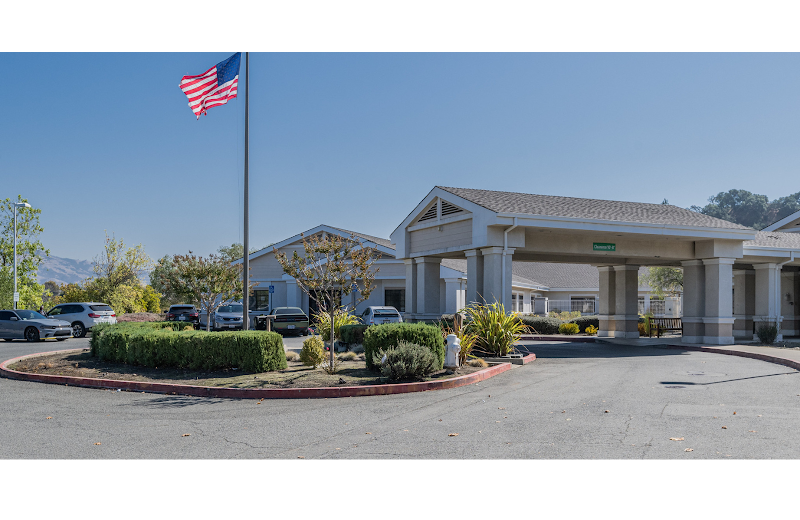
1975 TICE VALLEY BLVD., WALNUT CREEK, CA 94595 (925) 906-0200
For profit - Limited Liability company 120 Beds PACS GROUP Data: November 2025
Trust Grade
68/100
#482 of 1155 in CA
Last Inspection: June 2024

Within standard 12-15 month inspection cycle. Federal law requires annual inspections.

Overview

Tice Valley Post Acute in Walnut Creek, California, has a Trust Grade of C+, indicating it's slightly above average but not without concerns. It ranks #482 out of 1,155 facilities in California, placing it in the top half, and #20 out of 30 in Contra Costa County, meaning only a few local options are better. The facility is improving, reducing issues from 6 in 2024 to just 1 in 2025, though it still has a staffing turnover rate of 46%, which is average for the state. While it benefits from good RN coverage, surpassing 77% of California facilities, there are some troubling findings, including expired medical supplies and concerns about food safety practices that could risk residents' health. Overall, Tice Valley has strengths in staffing and improvement trends, but families should be mindful of the recent compliance issues highlighted in inspections.

Trust Score
C+
68/100
In California
#482/1155
Top 41%
Safety Record
Low Risk
No red flags
Inspections
Getting Better
6 → 1 violations
Staff Stability
⚠ Watch
46% turnover. Above average. Higher turnover means staff may not know residents' routines.
Penalties
⚠ Watch
$9,750 in fines. Higher than 85% of California facilities, suggesting repeated compliance issues.
Skilled Nurses
✓ Good
Each resident gets 44 minutes of Registered Nurse (RN) attention daily — more than average for California. RNs are trained to catch health problems early.
Violations
⚠ Watch
37 deficiencies on record. Higher than average. Multiple issues found across inspections.
★★★★☆
4.0
Overall Rating
★★★★☆
4.0
Staff Levels
★★★★☆
4.0
Care Quality
★★★★☆
4.0
Inspection Score
Stable
2024: 6 issues
2025: 1 issues

The Good

  • 4-Star Staffing Rating · Above-average nurse staffing levels
  • 4-Star Quality Measures · Strong clinical quality outcomes
  • Full Sprinkler Coverage · Fire safety systems throughout facility
  • No fines on record

Facility shows strength in staffing levels, quality measures, fire safety.

The Bad

Staff Turnover: 46%

Near California avg (46%)

Higher turnover may affect care consistency

Federal Fines: $9,750

Below median ($33,413)

Minor penalties assessed

Chain: PACS GROUP

Part of a multi-facility chain

Ask about local staffing decisions and management

The Ugly 37 deficiencies on record

Jan 2025 1 deficiency
CONCERN (D) 📢 Someone Reported This

A family member, employee, or ombudsman was alarmed enough to file a formal complaint

Potential for Harm - no one hurt, but risky conditions existed

Accident Prevention (Tag F0689)

Could have caused harm · This affected 1 resident

Based on observation, interview, and record review, the facility failed to provide appropriate safety measures and adequate supervision to prevent one of three residents (Resident 1) from slipping out...

Read full inspector narrative →
Based on observation, interview, and record review, the facility failed to provide appropriate safety measures and adequate supervision to prevent one of three residents (Resident 1) from slipping out of bed and falling on the floor during incontinence care. The failure to provide adequate measures to prevent a dependent resident from slipping off the bed and falling onto the floor during incontinence care, resulted in Resident 1 being transported to the emergency department for further evaluation, requiring 15 stitches to maintain closure of the laceration (cut) on the right lower leg, and fracturing (partial or complete break in the bone) their right shoulder. Findings: A review of Resident 1's admission Record, printed 12/12/24, indicated Resident 1 was admitted to the facility in 2016 with diagnoses of dementia (memory loss), diabetes (high blood sugar), essential tremor (a nervous system disorder that cause rhythmic shaking), and morbid obesity (having too much body fat). A review of Resident 1's Minimum Data Set (MDS, resident assessment tool used to provide care), dated 10/21/24, indicated Resident 1 had clear speech, was understood, and was able to understand others. The MDS indicated Resident 1 was dependent (helper does all the effort. Resident does none of the effort to complete the activity. Or the assistance of two or more helpers is required for the resident to complete the activity) on most Activities of Daily Living (ADLs, the basic self-care tasks an individual does on a day-to-day basis) including toileting hygiene, shower/bathe self, and lower body dressing. The MDS also indicated resident required substantial/maximal assistance (the helper does more than half the effort of lifting or holding trunk or limbs) when rolling from lying on back to left and right side and return to lying on back on the bed. The MDS further indicated Resident 1 had a urinary ostomy (a surgical opening in the belly to re-direct urine away from the damaged bladder) and was always incontinent (no voluntary control of feces) of bowel (defecation). A review of Resident 1's Care Plan titled, Falls: Resident is at risk for falls with or without injury related to .dementia, bipolar disorder, essential tremor ., date initiated 7/8/24, indicated a goal of, Will minimize complications related to falls to extent possible The care plan interventions/tasks indicated, Anticipate and meet needs . A review of Resident 1's clinical record titled, Situation, Background, Appearance, Review and Notify (SBAR) Communication Form, dated 11/4/24, at 5:36 a.m., indicated resident had a fall, with a pain intensity of 10 (rate on scale of 1-10, with 10 being the worst). The SBAR indicated, Resident laying on her back on the floor, screaming, stating, I am in so much pain all over. A review of Resident 1's Nursing Progress Notes, dated 11/4/24, at 8:21 a.m., by Licensed Vocational Nurse 1 (LVN 1), LVN 1 indicated Resident 1 had a witnessed fall on 11/4/24, at around 5:15 am; LVN 1 found resident in prone position (lying on her stomach) in between the bed and wooden furniture, so LVN 1 and CNA 1 assisted the resident down to the floor on her back. The Progress Notes also indicated resident complained of right arm pain, requested to be sent out to the Emergency Department (ED), and was sent out to the hospital via 911 (an emergency call/code) for evaluation. During a telephone interview on 1/13/25, at 3 p.m., with Certified Nursing Assistant 1 (CNA 1), CNA 1 stated she was with the resident when Resident 1 slowly slipped out of the bed during incontinent care. CNA 1 stated she was positioned on the left side of the bed, while resident was turned to the opposite side facing the window. As the resident grabbed on to the headboard frame, CNA 1 stated her one hand was on the resident's waist while CNA's other hand applied the brief under the resident. CNA 1 stated she tried to pull the resident back toward her, but resident rolled out of the bed in a prone position, in between the bed and wooden furniture. CNA 1 stated she yelled for help and together with LVN 1, they assisted the resident down to the floor on her back. During a telephone interview on 1/14/25, at 12 p.m., with LVN 1, LVN 1 stated during night shift while he was in the hallway doing rounds, LVN 1 heard someone from a resident room yelling for help. LVN 1 stated he went to Resident 1's room and saw CNA 1 held on to Resident 1 in prone position in between the bed and wooden furniture, so LVN 1 and CNA 1, with the help of the other staff members who came and rushed to the room assisted the resident down to the floor on her back. LVN 1 stated Resident 1 complained of pain, was bleeding, and wanted to be sent out to the hospital for further evaluation, and 911 was called. During an interview on 1/15/25, at 12:15 p.m., with Resident 1, in her room, Resident 1 stated during that early morning, as she was being changed by CNA 1, CNA 1 pushed her too hard that resident slipped from the bed. Resident stated her right arm fell first and resident used this to support herself up, but her arm gave up and resident fell onto the floor in a prone position. Resident 1 stated she was taken to the hospital where they took an X-ray (X-radiation, a quick, painless test to create images of the inside of the body) of her right arm and fixed the laceration to her right lower leg. At this time during the interview, Resident 1 started crying as she continued with her recollection of the incident. Resident stated she felt bad that this had happened to her and continued to feel upset whenever the incident was discussed. A review of Resident 1's hospital record titled, After Visit Summary, dated 11/4/24, indicated special instructions upon resident's return to facility, 1. The unna boot (a semi-rigid compression bandage that treats leg ulcers, sprains, strains, and other conditions) was applied to the leg laceration. Stiches were placed for the leg wound. WOUND CARE CLINIC NEED TO EVALUATE THE WOUND FOR FURTHER CARE. 2. PLEASE START TAKING ANTIBIOTICS TO PREVENT INFECTION OF THE AREA. 3. If you develop fevers, new or worsening symptoms then please return to the emergency room (ER). 4. The right greater tuberosity (a bony bump at the top of the humerus bone in the shoulder) is fractured and the orthopedic clinic will follow up, a referral is ordered. Keep the sling in place until told otherwise and evaluated by orthopedic surgery. Further review of the resident 1's hospital record indicated an antibiotic (a drug that treats bacterial growth) order of Cephalexin (Keflex) 500 milligram (mg) capsule, take one capsule by mouth two times a day for seven days. A review of the facility's policy and procedure (P&P) titled, Falls and Fall Risk, Managing, revision date 2001, indicated, .The staff will identify interventions related to the resident's specific risks and causes to try to prevent the resident from falling and to try to minimize complications from falling .A fall is defined as: Unintentionally coming to rest on the ground, floor, or other lower level, but not as a result of an overwhelming external force .An episode where a resident lost his or her balance and would have fallen, if not for another person or if he or she had not caught him/herself, is considered, a fall. A fall without injury is still a fall. Unless there is evidence suggesting otherwise, when a resident is found on the floor, a fall is considered to have occurred .
Jun 2024 5 deficiencies
CONCERN (D)

Potential for Harm - no one hurt, but risky conditions existed

Deficiency F0676 (Tag F0676)

Could have caused harm · This affected 1 resident

Based on observation, interview, and record review, the facility failed to provide hygiene care in a reasonable time for one of nine sampled residents (Resident 43) when Resident 43 had to wait in sto...

Read full inspector narrative →
Based on observation, interview, and record review, the facility failed to provide hygiene care in a reasonable time for one of nine sampled residents (Resident 43) when Resident 43 had to wait in stool and urine for 45 minutes before staff could change the resident. This failure caused Resident 43 to feel dejected because she had to wait 45 minutes for assistance and had the potential for Resident 43 to be at risk of skin breakdown due to exposure to urine and stool. Findings: A review of Resident 43's admission record, the record indicated Resident 43 was admitted for enterocolitis (inflammation of the digestive tract) due to clotridium difficile (a bacteria that causes diarrhea and inflammation of the colon which can be life-threatening), difficulty in walking, and muscle weakness. During a record review of Resident 43's minimum data set (MDS, an assessment tool to guide resident care), dated 5/26/24, the MDS indicated Resident 43 had a Brief Interview for Mental Status score of 14 (BIMS, was a scoring system used to determine the resident's cognitive status in regard to attention, orientation, and ability to register and recall information. A BIMS score of thirteen to fifteen is an indication of intact cognitive status). The MDS indicated Resident 43 required moderate assistance in toileting hygiene. During an interview on 6/17/24, at 12:09 p.m., Resident 43 was in her private room in bed. Resident 43 stated she needed one staff member to assist in cleaning her up after bowel movements. Resident 43 stated 25% of the time it took the staff an hour to answer the call light. During an observation on 6/19/24, at 11:15 a.m., Resident 43's room had the call light on and visible in the hallway. At the nurse's station, the call light monitoring panel indicated Resident 43's call light was on. During an observation on 6/19/24, at 11:27 a.m., Registered Nurse 1 (RN 1) observed the call light for Resident 43 was on and asked CNA 2 to answer the call light. During an observation on 6/19/24, at 11:29 a.m., Certified Nursing Assistant 2 (CNA 2) entered Resident 43's room to answer the call light. From outside the room, Resident 43 could be heard stating she was soiled and asked to be changed. CNA 2 responded to Resident 43 that Certified Nursing Assistant 3 (CNA 3) would change the resident after CNA 3 came back from break. CNA 2 exited the room and assisted another resident in a wheelchair out of the unit. During an observation on 6/19/24, at 11:32 a.m., CNA 3 came back to the unit from break. During an observation on 6/19/24, at 11:41 a.m., CNA 2 informed CNA 3 that Resident 43 needed to be changed. CNA 3 then went into another resident's room to assist them. During an observation on 6/19/24, at 11:54 a.m., CNA 3 exited the resident's room and began to don personal protective equipment (PPE, equipment, such as gowns and gloves, to protect against spread of infection) to enter Resident 43's room. During an observation on 6/19/24, at 12:13 p.m., CNA 3 was in the middle of cleaning up Resident 43. Linens, hygienic wipes and chucks (disposable barriers to protect linen) soiled with feces was visible. During a concurrent observation and interview on 6/19/24, at 2:50 p.m., with Resident 43, Resident 43 was in bed with the covers on. Resident 43 stated she waited 45 minutes before CNA 3 came in to help. Resident 43 stated she often had to wait this long to get changed and was disappointed and tired of being upset about the long waits. During an interview on 6/19/24, at 3:01 p.m., with RN 1, RN 1 stated certified nursing assistants (CNA) were expected to help each other answer call lights and to immediately help a resident according to their scope of practice. RN 1 stated if a CNA was unable to help the resident immediately, the CNA was expected to ask another CNA or licensed nurse to help. RN 1 stated licensed nurses could also help change a resident. During an interview on 6/19/24, at 3:17 p.m., with the Director of Staff Development (DSD), the DSD stated CNAs were expected to answer call bells and assist the resident with their request immediately and if they could not they should ask other CNAs or staff to help. The DSD stated any staff can answer a call bell and should assist within the scope of their practice. The DSD stated it was unacceptable for a soiled resident to wait 45 minutes before getting cleaned up. During an interview on 6/20/24, at 12:50 p.m., with the Director of Nursing (DON), the DON stated the number one rule was nursing staff were expected to answer call lights when they see them and to assist residents immediately which included getting water or cleaning up a resident. The DON stated it was unacceptable for a soiled resident to wait 45 minutes before getting cleaned up. During a review of facility policy and procedure (P&P) titled, Call light answering, dated 7/2012, the P&P indicated staff answer the light/bell within a reasonable time .respond to the request .leave the resident comfortable .if you are unable to assist, explain to the resident and notify the charge nurse for further instruction.
CONCERN (E)

Potential for Harm - no one hurt, but risky conditions existed

Pharmacy Services (Tag F0755)

Could have caused harm · This affected multiple residents

**NOTE- TERMS IN BRACKETS HAVE BEEN EDITED TO PROTECT CONFIDENTIALITY** Based on observation, interview, and record review, the facility failed to ensure supplies stored in the Lexington medication st...

Read full inspector narrative →
**NOTE- TERMS IN BRACKETS HAVE BEEN EDITED TO PROTECT CONFIDENTIALITY** Based on observation, interview, and record review, the facility failed to ensure supplies stored in the Lexington medication storage room were appropriate for use when: 1. Ten Female Luer Lock Caps (a device used to seal syringes [pumps used for drawing up and expelling liquids or suspensions into the body]) were expired. 2. Two Statlock Catheter Stabilization Devices (designed to stabilize peripherally-inserted central catheters or PICCs [a long, thin tube inserted through an arm and passed through to the larger veins near the heart]) were expired. 3. One IV Catheter was expired. 4. One Kangaroo Feeding Bag Set (a spike, tubing, and bag for liquid nutrition delivery directly into the digestive tract) was expired. These failures had the potential for residents to receive expired, ineffective, and contaminated medications and treatments. Findings: During a concurrent observation and interview on [DATE], at 10:50 a.m., with Licensed Vocational Nurse 1 (LVN 1), in the Lexington medication storage area: 1. Ten Female Luer Lock Caps had an expiration date of [DATE]. 2. Two Statlock Catheter Stabilization Devices had an expiration date of [DATE]. 3. One IV Catheter had an expiration date of [DATE]. 4. One Kangaroo Feeding Bag Set had an expiration date of [DATE]. LVN 1 stated expired items should be removed from resident use. During an interview on [DATE], at 10:45 a.m., with the Director of Nursing (DON), the DON stated the facility used intravenous medical supplies and feeding bags regularly, and these expired supplies should have been discarded or returned to central supply. During a review of the facility's policy and procedure (P&P) titled, Requisitioning Daily Supplies, dated 2001, the P&P indicated, Supervisors are responsible to remove all expired supplies and to ensure that supplies are replenished immediately.
CONCERN (E)

Potential for Harm - no one hurt, but risky conditions existed

Deficiency F0761 (Tag F0761)

Could have caused harm · This affected multiple residents

Based on observation, interview, and record review, the facility failed to ensure a stock medication bottle of Senna (a laxative for short-term treatment of constipation) had a legible expiration date...

Read full inspector narrative →
Based on observation, interview, and record review, the facility failed to ensure a stock medication bottle of Senna (a laxative for short-term treatment of constipation) had a legible expiration date and was removed from resident use. These failures had the potential for the residents to receive expired and ineffective medication treatment. Findings: During a concurrent observation and interview on 6/19/24, at 3:00 p.m., with Licensed Vocational Nurse 2 (LVN 2), at the Lexington Medication Cart #4, a stock medication bottle of Senna was observed with the expiration date completely faded and not readable. LVN 2 stated, I probably should not be using this, I cannot read the expiration date, and removed it from the cart for disposal. LVN 2 stated that many residents in the facility receive Senna. During an interview on 6/20/24, at 8:19 a.m., with Licensed Vocational Nurse 1 (LVN 1), LVN 1 stated medications with expired or illegible expiration dates should be removed from resident use and discarded immediately, as they may lose effectiveness. During a review of the facility's policy and procedure (P & P) titled, Administering Oral Medications, dated 2001, indicated, Steps in the Procedure .7. Check expiration date on the medication. Return any expired medications to the pharmacy. During a review of the facility's P & P titled, Storage or Medications, dated 2001, indicated, 4. Drug containers that have missing, incomplete, improper, or incorrect labels are returned to the pharmacy for proper labeling before storing.
CONCERN (E)

Potential for Harm - no one hurt, but risky conditions existed

Food Safety (Tag F0812)

Could have caused harm · This affected multiple residents

Based on observation, interview and record review, the facility failed to follow kitchen practices that prevent cross-contamination and food borne illness when: 1. Chopping boards were in poor conditi...

Read full inspector narrative →
Based on observation, interview and record review, the facility failed to follow kitchen practices that prevent cross-contamination and food borne illness when: 1. Chopping boards were in poor condition and stained; 2. Freezer temperature log did not have temperatures recorded for 6/15/24 and 6/16/24. These failures had the potential to cause food borne illness to a highly susceptible population of 117 residents who received food from the kitchen. Findings: 1. During a concurrent observation and interview on 6/17/24, at 9:15 a.m., during the initial tour of the kitchen, there were four cutting boards (white, gray, green and red) that had black marks and smudges, faded colors, scratches, and deep cuts on the surfaces. Dietary Manager (DM) stated the boards needed to be changed due to food contamination. During an interview on 6/18/24, at 10:20 a.m., with Registered Dietician (RD), RD stated deep scratches on the chopping boards carried the risk of contamination. During an interview on 6/18/24, at 10:40 a.m., DM stated kitchen inspection walk was done with RD early this month and chopping board inspection was missed. During an interview on 6/20/24, at 7:32 a.m., with [NAME] (CK), CK stated cuts on chopping boards were dangerous, moldy, poisonous, patients get sick. According to the 2017 Federal Food Code, food contact surfaces are to be smooth, free from inclusions, pits, and similar imperfections and are to be smooth and clean to sight and touch. Also, according to the Food Code Annex, cutting surfaces such as cutting boards and blocks that become scratched and scored may be difficult to clean and sanitize. As a result, pathogenic microorganisms transmissible through food may build up or accumulate. These microorganisms may be transferred to foods that are prepared on such surfaces. 2. During a concurrent observation and interview on 6/17/24, at 9:15 a.m., during the initial tour of the kitchen, the freezer temperature log did not have temperatures recorded for PM shift on 6/15/24 and 6/16/24. DM stated the freezer log did not get completed by PM shift cook. During a record review, the Freezer Temperature log for June 2024 did not have entries for the PM columns on 6/15/24 and 6/16/24 for Inside Thermometer Temperature, Outside Thermometer Temperature and (Staff) Initials. During an interview on 6/18/24, at 10:20 a.m., with RD, RD stated the freezer temperature log ensured food item temperatures were checked and were not in a temperature danger zone. During an interview on 6/18/24, at 2:55 p.m., with Dietary Aide (DA), DA stated he forgot and did not document PM freezer temperatures on the log. DA could not identify the potential harmful consequences of not having the required freezer temperatures. During an interview on 6/20/24, at 7:32 a.m., with CK, CK stated the cook is responsible to fill out the freezer temperature log. During a review of the facility's policy and procedure (P&P) titled, Refrigerators and Freezers, dated November 2022, the P&P indicated, Food service supervisors or designated employees check and record refrigerator and freezer temperatures daily with first opening and at closing in the evening.
CONCERN (E)

Potential for Harm - no one hurt, but risky conditions existed

Infection Control (Tag F0880)

Could have caused harm · This affected multiple residents

**NOTE- TERMS IN BRACKETS HAVE BEEN EDITED TO PROTECT CONFIDENTIALITY** Based on observation, interview and record review, the facility failed to ensure staff followed infection control procedures for...

Read full inspector narrative →
**NOTE- TERMS IN BRACKETS HAVE BEEN EDITED TO PROTECT CONFIDENTIALITY** Based on observation, interview and record review, the facility failed to ensure staff followed infection control procedures for four of nine sampled residents (Residents 43, 326, 331, and 328) when facility did not ensure staff: 1. washed hands with soap and water after caring for resident rooms who had clostridioides difficile (c. diff, bacteria that causes diarrhea and inflammation of the colon which can be life-threatening), 2. used appropriate germicidal wipes to disinfect equipment after use on a resident with c. diff and, 3. were trained on infection control and hand hygiene techniques. This failure had the potential for the spread of c. diff through the facility. Findings: 1. A record review of Resident 43's admission record indicated Resident 43 was admitted for enterocolitis (inflammation of the digestive tract) due to c. diff., difficulty in walking, and muscle weakness. During a record review of Resident 43's minimum data set (MDS, an assessment tool to guide resident care), dated 5/26/24, the MDS indicated Resident 43 had a Brief Interview for Mental Status score of 14 (BIMS, was a scoring system used to determine the resident's cognitive status in regard to attention, orientation, and ability to register and recall information. A BIMS score of thirteen to fifteen is an indication of intact cognitive status). During a record review of Resident 43's physician order set titled, Order Summary Report, dated 6/20/24, indicated Resident 43 was on contact precautions (infection control measure which includes wearing gloves and gown when entering the room and washing hands with soap and water after exiting the room) for c. diff and received vancomycin (antibiotic to treat c. diff infection) oral suspension daily for c. diff until 7/3/24. A review of Resident 326's admission record indicated Resident 326 was admitted for sepsis, a personal history of other diseases of the digestive system, muscle weakness and difficulty walking. A review of Resident 326's MDS, dated [DATE], indicated Resident 326 had a BIMS of 15, was frequently urine and bowel incontinent, and was on physical therapy. A record review of Resident 326's physician order set titled, Order Summary Report, dated 6/20/24, indicated Resident 326 had physician orders to be on contact precautions and vancomycin oral solution twice a day for hx of clostridium difficile infection for 14 days. During a record review of Resident 326's care plan titled, Isolation Precautions: Resident requires contact single room isolation precautions due to C. Diff., undated, the care plan indicated staff maintain isolation using contact single room precautions due to c. diff .perform hand washing after completing care and leaving the room .use PPE as recommended for type of infection. A review of Resident 328's admission record indicated Resident 328 was admitted for acute respiratory failure, difficulty walking and muscle weakness. A review of Resident 331's admission record indicated Resident 331 was admitted for Parkinson's disease (a disease which causes gradual loss of muscle control) and muscle weakness. During an observation on 6/19/24, at 12:13 p.m., Certified Nursing Assistant 3 (CNA 3) was in the middle of cleaning up Resident 43. Linens and chucks (disposable barriers to protect linen) soiled with stool were visible. After cleaning up Resident 43, CNA 3 removed her PPE and performed hand hygiene using hand sanitizer. After exiting the room, CNA 3 entered and exited the soiled utility room and used hand sanitizer to perform hand hygiene. CNA 3 went to a linen cart outside of Resident 43's room and removed a pillowcase. CNA 3 donned PPE and entered Resident 43's room to finish making Resident 43's bed. CNA 3 removed her PPE, used hand sanitizer for hand hygiene, and exited the room to document her care on a computer in the hallway. During a continuous observation on 6/19/24, at 12:51 p.m., CNA 3 donned PPE and entered Resident 326's room with Resident 326's meal tray. CNA 3 assisted Resident 326 by setting up the meal tray on the bedside table. CNA 3 repositioned various objects on the bedside table and repositioned the bedside table in front of Resident 326. CNA 3 doffed her PPE and exited the room without performing any hand hygiene. CNA 3 walked to the meal cart, opened the door to the meal tray and took out Resident 43's meal tray. CNA 3 donned PPE, entered Resident 43's room, gave Resident 43's meal tray, doffed PPE and exited the room using only hand sanitizer. CNA 3 entered Resident 331's room and began to set up Resident 331's table with ungloved hands. CNA 3 used the silverware from the meal tray to cut up Resident 331's food. CNA 3 exited the room using hand sanitizer for hand hygiene. CNA 3 then entered Resident 328's room, put on gloves and began to feed Resident 328. During a record review of Resident 328's progress notes, dated 6/20/24, a progress note entered on 6/19/24, at 3:56 p.m., indicated Resident 328 was resting in bed and had her breakfast and lunch 25%. Due to cognitive impairment staff assisted accordingly. During a concurrent observation and interview on 6/19/24, at 2:50 p.m., with Resident 43, Resident 43 was in bed with the covers on. Resident 43 recalled CNA 3 came in at around 12:00 p.m. to clean her up. During an interview and record review on 6/19/24, at 3:17 p.m., with Infection Preventionist (IP), CNA 3's unit orientation documents were reviewed. IP recalled CNA 3 was very specifically informed Resident 43 and Resident 326 were on contact precautions for c. diff and that washing hands with soap and water was required after removing PPE. IP stated both residents were on contact precautions for c. diff. IP stated for c. diff infected residents, only washing with soap and water would be effective in preventing the spread of c. diff. IP stated hand sanitizer was not effective in preventing spread of c. diff. IP stated the expectation was for all staff to wash their hands with soap and water at the resident's bathroom or at the sink at the nurse's station after caring for residents with c. diff infection. IP stated staff were expected to not touch anything after exiting the room if they decided to wash their hands at the nurse's station. During a review of facility policy and procedure (P&P) titled, Handwashing/Hand Hygiene, dated 10/2023, the P&P indicated staff wash hands with soap and water .after contact with a resident with infectious diarrhea including . C. difficile .the use of gloves does not replace handwashing/ hand hygiene. During a review of CDC fact sheet titled Clostridioides Difficile (formerly known as Clostridium difficile), undated, the fact sheet indicated healthcare professional can prevent c. diff spread by washing hands with soap and water, wearing gloves and gown when treating patients with c. diff. The fact sheet indicated hand sanitizer doesn't kill c. diff. 2. During an observation on 6/20/24, at 10:21 a.m., physical therapy aide (PTA), wearing PPE, was in Resident 326's room for a physical therapy session. PTA placed a heart rate device (device to measure heart rate) on Resident 326's finger to measure Resident 326's heart rate during physical therapy exercises. After using the device, PTA slipped their hands under their gown and placed the heart rate device into their pocket. PTA used a gait belt and assisted Resident 326 to a standing position. After PTA had finished Resident 326's physical therapy session, PTA doffed their PPE and then exited the room. PTA used a germicidal wipe, on the PPE cart outside of Resident 326's room, to clean the heart rate device and gait belt. During a concurrent observation and interview on 6/20/24, at 1:08 p.m., with the Director of Nursing (DON), the germicidal wipe on the PPE cart outside of Resident 326's room was inspected. The DON inspected the informational sticker on the germicidal wipe container and stated there was no indication the germicidal wipes were an effective disinfectant for c. diff contaminated equipment. The DON stated bleach products were effective disinfectants for c. diff and the germicidal wipe did not contain bleach. The same germicidal wipe was also found on the PPE cart outside of Resident 43's room. During a record review of the germicidal wipe brochure titled, (Germicidal wipe name) Clinical Wipes, undated, the brochure indicated clinical evidence of c. diff reductions but did not indicate it was approved in preventing the spread of c. diff infections. During a review of CDC fact sheet titled Clostridioides Difficile (formerly known as Clostridium difficile), undated, the fact sheet indicated healthcare professional can prevent c. diff spread by cleaning surfaces .with EPA-approved spore killing disinfectant. A record review of Environmental Protection Agency (EPA) document titled, EPA's registered Antimicrobial Products Effective Against Clostridioides difficile spores, dated 6/26/24, was reviewed. The EPA document did not list the (germicidal wipe brand) as effective against spread of c. diff contaminated surfaces. 3. During a concurrent observation and interview on 6/17/24, at 12:20 p.m., with Certified Nursing Assistant 1 (CNA 1), CNA 1 stated staff did not need to wash their hands with soap and water after exiting a contact precaution room for a resident with c. diff. CNA 1 stated she had learned from working at other facilities that alcohol based hand sanitizer was effective in eliminating c. diff. CNA 1 stated she was not oriented to the unit by facility staff. CNA 1 stated she was assigned to Resident 43 and stated the contact precaution sign was affixed to Resident 43 because of a c. diff infection. During a record review on 6/17/24, at 12:55 p.m., the Facility Daily Staffing sheet, dated 6/17/24, was reviewed. The Facility Daily Staffing sheet indicated CNA 1 was assigned to Resident 43. During a concurrent observation and interview on 6/17/24, at 12:24 p.m., with case manager (CM), CM stated Resident 326 had a c. diff infection and based on the contact precaution sign at the Resident 326's door, staff only need to use hand sanitizer for hand hygiene after exiting the room. CM stated he was unsure what type of hand hygiene was required for residents on contact precautions with c. diff. During a concurrent interview and record review on 6/17/24, at 12:57 p.m., with Director of Staff Development (DSD), CNA 1 and CM's orientation to facility hand hygiene standards were reviewed. The DSD stated CNA 1 was contracted from an outside staffing agency and could not verify CNA 1 had completed hand hygiene training from the staffing agency. The DSD stated CNA 1 was expected to have an onsite orientation by facility staff before working in the facility. The DSD stated she did not orient CNA 1 and could not find records of CNA 1's orientation to the facility. The DSD stated CM was hired on 3/2024 and was expected to have completed infection control and hand hygiene orientation. After checking the last three months of infection control and hand hygiene in-service records, DSD stated the records did not indicate CNA 1 or CM had attended any of those in-services. The DSD stated all staff were trained and expected to follow facility P&P which was based on Centers for Disease Control (CDC) guidance for c. diff prevention. During an interview on 6/17/24, at 2:03 p.m., with the DON, the DON stated the facility did not have records of CM having hand hygiene in-services or orientation. During a review of CDC fact sheet titled Clostridioides Difficile (formerly known as Clostridium difficile), undated, the fact sheet indicated healthcare professional can prevent c. diff spread by washing hands with soap and water. The fact sheet indicated hand sanitizer doesn't kill c. diff. During a review of facility P&P titled, P&P Infection Prevention and Control, dated 12/2023, the P&P indicated infection prevention and control P&P apply to all personnel, consultants, contractors .all personnel are trained on infection prevention control policies and procedures upon hire and periodically after. During a review of facility policy and procedure (P&P) titled, Handwashing/Hand Hygiene, dated 10/2023, the P&P indicated staff wash hands with soap and water .after contact with a resident with infectious diarrhea including . C. difficile .the use of gloves does not replace handwashing/ hand hygiene.
May 2024 1 deficiency
CONCERN (D) 📢 Someone Reported This

A family member, employee, or ombudsman was alarmed enough to file a formal complaint

Potential for Harm - no one hurt, but risky conditions existed

Accident Prevention (Tag F0689)

Could have caused harm · This affected 1 resident

**NOTE- TERMS IN BRACKETS HAVE BEEN EDITED TO PROTECT CONFIDENTIALITY** Based on interview and record review, the facility failed to provide appropriate safety measures and adequate supervision to pre...

Read full inspector narrative →
**NOTE- TERMS IN BRACKETS HAVE BEEN EDITED TO PROTECT CONFIDENTIALITY** Based on interview and record review, the facility failed to provide appropriate safety measures and adequate supervision to prevent one of two residents (Resident 1) from rolling out of bed and falling on the floor during a bed linen change. The failure to provide sufficient staff or adequate measures to prevent a dependent resident from rolling off the bed during a bed linen change, which resulted in Resident 1 being transported to the emergency department for evaluation after the fall caused a brief loss of consciousness and a headache which lasted over a week. Findings: A review of Resident 1 ' s admission Record, printed 4/10/24, indicated Resident 1 was admitted to the facility in 2017 with diagnoses of multiple sclerosis (MS, a chronic condition that affects the brain and spinal cord) and paraplegia (paralysis of the legs and lower body caused by spinal injury or a disease). A review of Resident 1's Minimum Data Set (MDS, resident assessment tool used to provide care), dated 2/2/24, indicated Resident 1 had clear speech, was able to be understood, and was able to understand others, and had impairment to both sides of the upper and lower extremities. The MDS indicated Resident 1 required substantial/maximal assistance (The helper does more than half the effort of lifting or holding trunk or limbs.) for all activities of daily living (eating, dressing, hygiene, bathing) including transfers between surfaces and moving/changing position in bed. A review of Resident 1's Nursing Progress Notes, dated 2/27/24, at 10:02 p.m., Registered Nurse 1 (RN 1), the progress notes indicated on 2/27/24, at 9:07 p.m., Resident rolled out of bed (between bed and window) during incontinent care. Resident .complained of headache . During a telephone interview on 4/11/24, at 11:36 a.m., with RN 1, RN 1 stated while working in another resident ' s room, Certified Nursing Assistant 1 (CNA 1) called RN 1 to join CNA 1 in Resident 1 ' s room. RN 1 stated upon entering Resident 1 ' s room, RN 1 saw Resident 1 lying on the floor next to the left side of the bed. RN 1 stated CNA 1 said Resident 1 rolled off the bed while CNA 1 was changing the bed linen. During a telephone interview on 4/16/24, at 8:30 a.m., with CNA 1, CNA 1 stated CNA 1 had turned Resident 1 to a left side-lying position on the left side of the bed, with Resident 1 ' s right leg crossed over the left leg while CNA 1 completed a bed linen change. CNA 1 stated Resident 1 rolled off the bed when CNA 1 was on the right upper side of the bed securing the top right corner of the fitted sheet. During a concurrent observation and interview on 4/29/24, at 10:45 a.m., with Resident 1, Resident 1 lay awake in a bed positioned with about a one foot gap between the bed and a free-standing shelving unit which abutted the bedroom wall. Resident 1 stated CNA 1 had been changing the linen on the bed and had turned Resident 1 to the left side with CNA 1 ' s hand against Resident 1 ' s back. Resident 1 stated CNA 1 had pushed against Resident 1 ' s back with enough force to cause Resident 1 to fall off the bed onto the floor between the bed and the shelving unit. Resident 1 stated during the fall the back of Resident 1 ' s head hit something which caused a brief loss of consciousness at the time of the fall and a headache that lasted about two weeks. Resident 1 stated the headache at the time of the fall was so severe Resident 1 had gone to the emergency room for evaluation. A review of Resident 1 ' s Hospital Discharge summary, dated [DATE], indicated, Primary Diagnosis: Traumatic injury of head . fall from bed, three (3) feet (ft) high, and complained of left sided pain with a headache. Patient loss consciousness and was sent to the hospital for further evaluation. All scans were negative for fracture (broken bone) or bleeding. Patient sent back to Skilled Nursing Facility (SNF) for continued medical care. Will follow up with labs and monitor .Assessment and Plan: Fall Precautions in place . A review of the facility ' s policy and procedure (P&P) titled, Falls and Fall Risk, Managing, undated, indicated, .Staff may identify interventions related to the resident ' s specific risks and causes in the attempt to reduce falls and minimize complications from falling .a fall is defined as: Unintentionally coming to rest in the ground, floor, or other lower level, but not as a result of an overwhelming external force .An episode where a resident lost his or her balance and would have fallen, if not for another person or if he or she had not caught him/herself, is considered, a fall. A fall without injury is still a fall .
Sept 2023 1 deficiency
CONCERN (D) 📢 Someone Reported This

A family member, employee, or ombudsman was alarmed enough to file a formal complaint

Potential for Harm - no one hurt, but risky conditions existed

Medical Records (Tag F0842)

Could have caused harm · This affected 1 resident

**NOTE- TERMS IN BRACKETS HAVE BEEN EDITED TO PROTECT CONFIDENTIALITY** Based on interview and record review, for one of two sampled residents (Resident 1), the facility failed to ensure Resident 1's ...

Read full inspector narrative →
**NOTE- TERMS IN BRACKETS HAVE BEEN EDITED TO PROTECT CONFIDENTIALITY** Based on interview and record review, for one of two sampled residents (Resident 1), the facility failed to ensure Resident 1's clinical record was accurately documented when Resident 1's right heel ulcer was documented in the Treatment Administration Record (TAR) as a right lower leg ulcer. This failure had the potential to result in uncoordinated care. Findings: During a review of Resident 1's admission Record, the admission Record indicated Resident 1 was admitted on [DATE] with diagnoses that included pressure ulcer (localized damage to one or more layers of the skin and/or underlying soft tissue usually over a bony prominence) of the right heel. During a review of Podiatry (branch of medicine devoted to the study, diagnosis and treatment of foot and ankle) Progress Notes dated 8/8/23, the Podiatry Progress Notes indicated Resident 1 presented to the podiatry clinic for follow-up visit for right medial (towards the middle/center) heel wound. The Progress Notes indicated current wound care as wet to dry, posterior splint, and heel wedge. During a concurrent interview and review with Treatment Nurse (TN) 1 on 9/12/23 at 12:10 p.m., Resident 1's TAR for July 2023 was reviewed , the TAR indicated Resident 1's right heel wound treatment as: cleanse right heel wound with normal saline (NS, a solution used to cleanse wounds during wound dressing changes), gently pat dry, pack wound with black foam, cover with drape, change every Monday, Wednesday and Friday and as needed if soiled or dressing is displaced. TN 1 stated Resident 1's right heel received Negative Pressure Wound Therapy (NPWT, a therapeutic technique using suction pump, tubing, and dressing to remove excess drainage and promote healing in acute or chronic wounds). During a review of Resident 1's TAR for August 2023, the TAR indicated the same treatment with NPWT was provided on the right heel until 8/4/23. The TAR for August 2023 also indicated the NPWT was discontinued on 8/5/23. Resident 1's TAR did not indicate a wound treatment for the right heel, after NPWT was discontinued, from 8/6/23 to 8/9/23. During a concurrent interview and review with Director of Nursing (DON) on 9/12/23 at 1 p.m., Resident 1's Order Summary Report and TAR for August 2023 were reviewed. DON stated the wound that was indicated in Resident 1's August 2023 TAR as right lower leg (everything between the knee and the ankle) was incorrect. DON stated the wound care was meant for Resident 1's right heel because Resident 1 did not have any wound on the right lower leg. Resident 1's August 2023 indicated body audit was done daily in the morning for skin observation. DON stated the licensed staff who did the body audit had to make the correction if needed rather that to just sign anything that was not accurate. DON stated this mistake was a good learning opportunity for licensed staff to maintain accurate documentation. During a review of the facility's policy and procedure (P&P) titled Skin Management Guidelines dated February 2022, the P&P indicated, documentation of wound evaluation should include wound location.
Aug 2023 2 deficiencies
CONCERN (D) 📢 Someone Reported This

A family member, employee, or ombudsman was alarmed enough to file a formal complaint

Potential for Harm - no one hurt, but risky conditions existed

Free from Abuse/Neglect (Tag F0600)

Could have caused harm · This affected 1 resident

Based on observation, interview, and record review, the facility failed to provide necessary treatment and services for one of three residents (Resident 1), when nursing staff failed to: 1. Notify the...

Read full inspector narrative →
Based on observation, interview, and record review, the facility failed to provide necessary treatment and services for one of three residents (Resident 1), when nursing staff failed to: 1. Notify the physician or respond to Resident 1 ' s request for transfer to the acute care hospital when Resident 1 had a change of condition and asked for assistance. 2. Monitor blood oxygen as ordered for shortness of breath and provide oxygen as needed. (Oxygen saturation is a measurement of oxygen in the blood, expressed as a percentage, with 100 percent the maximum value of oxygen saturation.) 3. Administer pain medications per physician order and care plan, as needed. These failures resulted in untreated pain, emotional distress, and delayed recognition and treatment of Resident 1 ' s emergency medical condition of a pulmonary embolism. (A condition where a blood clot develops in a blood vessel in the body, becomes dislodged, travels to the lungs and blocks blood flow through a blood vessel, causing damage, potentially fatal damage, in the lungs and to the body.) Findings: During a review of Resident 1 ' s Minimum Data Set (MDS, a resident assessment tool used to guide care), dated 3/29/23, the MDS indicated Resident 1 had a score of 15 on the Brief Interview for Mental Status exam (BIMS, The Brief Interview for Mental Status is a scoring system used to determine the resident ' s cognitive status in regard to attention, orientation, and ability to register and recall information. A BIMS score of thirteen to fifteen is an indication of intact cognitive status.) The MDS indicated Resident 1 required extensive assistance from two people for bed mobility and had not left his bed during the seven-day look-back period. The MDS indicated Resident 1 had diagnoses of peripheral venous insufficiency (impaired blood circulation in the extremities) and lymphedema (excessive fluid outside the blood vessels in body tissues causes swelling of the effected parts). During a review of Resident 1 ' s physician Order Summary Report, dated active April 2023, the Summary Report indicated the following orders: Start date 4/19/23: start oxygen at 2 Liters per minute for shortness of breath (SOB), chest pain, or oxygen saturation less than 90%, and notify physician; Start date 4/19/23: monitor vital signs, and oxygen saturation every 4 hours to monitor for COVID-19; Start date 4/7/23: hydrocodone-acetaminophen 10-325 milligrams (mg), (A combination medication of 325 mg of acetaminophen and 10 mg of hydrocodone. Hydrocodone is a narcotic pain medication. Narcotics are medications subject to regulations enforced by the U.S. Drug Enforcement Agency due to a potential for abuse and dependence.), give one tablet by mouth every 6 hours for pain; Start date 4/7/23: hydrocodone-acetaminophen 10-325 mg, give two tablets, by mouth every 6 hours as needed for moderate pain; Start date 3/25/23: hydromorphone hydrochloride (a narcotic pain medication) 2 mg, one tablet by mouth every 4 hours as needed for pain. During a review of Resident 1 ' s care plan for Pain, dated 3/16/23, the care plan indicated Resident 1 had pain due to a recent surgery, chronic low back pain, and peripheral neuropathy (nerves located outside of the brain and spinal cord are damaged and cause weakness, numbness and pain, usually in the hands and feet). Care plan interventions included: report nonverbal expressions of pain such as moaning, striking out, grimacing, crying, thrashing, change in breathing; administer pain medication per physician orders; notify physician if pain frequency/intensity was worsening or if current pain regimen was ineffective. During a concurrent observation and interview on 6/1/23 at 10:45 a.m., Resident 1 sat upright while he lay in bed. Resident 1 stated he had been in and out of the hospital in the past four months and was so weak he was unable to stand, walk, or even hold items in his hands. Resident 1 stated on one occasion he had gone to the hospital after he woke during the night around 3:30 a.m. with horrendous chest pain. Resident 1 stated he yelled for assistance and Certified Nursing Assistant 1 (CNA 1) came to his room. Resident 1 stated he told CNA 1 he could not breathe, and CNA 1 said, You ' re breathing, and shut his door. Resident 1 stated he was helpless, weak, desperate, in pain, and could not breathe. Resident 1 stated he yelled multiple times he wanted to go to the hospital and he was worried because staff were not helping him. Resident 1 stated his cell phone was out of reach, but he used voice activation to call Emergency Medical Service (EMS) and be transported to the hospital. Resident 1 stated the hospital diagnosed him as having a serious blood clot and saved his life, all because he had called EMS himself, not the facility. During an interview and concurrent record review on 6/2/23 at 2:09 p.m., with LVN 1, Resident 1 ' s nursing notes were reviewed. LVN 1 stated the first time she had cared for Resident 1 he had called 9-1-1 and gone to the hospital. LVN stated other staff had told her Resident 1 had a frequent behavior of yelling. LVN 1 stated she had done a visual check and administered Resident 1 ' s ordered as needed pain medications, but Resident 1 continued to complain of pain. LVN 1 was unable to provide documentation the physician had been notified when Resident 1 ' s pain continued even after administration of pain medications. LVN 1 stated she had not called 9-1-1 for Resident 1. During a review of Resident 1 ' s progress notes dated 4/25/23 at 07:06 a.m., by Licensed Vocational Nurse 1 (LVN 1), the progress notes indicated LVN 1 had noted a Change of Condition, (COC). The COC notes indicated Resident 1 had started to complain of chest pain at 5:45 a.m. and kept yelling and cursing, and complaining he couldn ' t breathe. The notes indicated Resident 1 called 9-1-1, and was taken to the hospital by Emergency Medical Transport at 7:10 a.m. During a review of Resident 1 ' s Medication Administration Record (MAR), dated April 2023, the MAR indicated Resident 1 ' s pain levels on 4/25/23 were two at 12 a.m. and one at 6 a.m. During a review of Resident 1 ' s Controlled Drug Records, the Controlled Drug Records indicated Resident 1 last received one hydromorphone tablet on 4/24/23 at noon, and two Hydrocodone-Acetaminophen 10-325 tablets on 4/25/23 at 1 a.m. During an interview and concurrent record review on 6/30/23 at 4:10 p.m., with the Director of Nursing (DON), Resident 1 ' s progress notes, Medication Administration Record (MAR), and Weights and Vital Signs Summary (records of heart rate, respiratory rate, blood pressure, temperature, and blood oxygen saturation) were reviewed. The DON stated when Resident 1 complained of pain and shortness of breath, the policy and procedure would have been to assess Resident 1 ' s vital signs, pain level, and oxygen saturation, give oxygen if the saturation was low, and call the physician. The DON was unable to provide documentation that Resident 1 ' s oxygen saturation was monitored on 4/25/23, or that oxygen was provided to Resident 1. The vital signs recorded on 4/25/23 at 6:29 a.m. indicated a blood pressure: 129/60, pulse: 68, respiration:18 and temperature: 97.8 degrees Fahrenheit. The DON stated Resident 1 should not have needed to call 9-1-1 himself. During a review of Resident 1 ' s emergency medical services [Ambulance company] report, Patient Care Report, dated 4/25/23, the Report indicated the request for transport was received on 4/25/23 at 6:53 a.m. and the ambulance arrived at Resident 1 ' s bedside at 7 a.m. The Report indicated Resident 1 ' s vital signs at 7 a.m. as heart rate of 113, respirations of 28, blood pressure of 164/64, and oxygen saturation of 87%. The Report indicated Resident 1 complained of difficulty breathing, and sharp, right-sided chest pain, with increased pain with deep breaths. The Report indicated the ambulance crew administered supplemental oxygen with improvement in Resident 1 ' s oxygen saturation but Resident 1 remained in distress during transport to the acute care hospital. During a review of Resident 1 ' s ED notes, dated 4/25/23 at 07:27 a.m., the ED notes indicated Resident 1 was anxious and complained of sharp, tight, continuous pain in his right chest, at a level of ten (on a scale of zero to ten, with ten the worst possible pain). The ED notes indicated a computed tomography (CT, a type of X-ray study) scan indicated Resident 1 had a pulmonary embolism. During a review of Resident 1 ' s emergency department (ED) History and Physical (H&P), dated 4/25/23, the H&P indicated Resident 1 ' s chief complaint was right-sided chest pain upon awakening. During a review of the facility ' s policy and procedure (P&P), titled, Pain Management Guidelines, dated 11/2021, the P&P indicated, Pain is evaluated and documented .whenever there is a change in condition, using an appropriate pain scale, determined by nursing .using a numeric rating scale used for patients whose cognitive functioning ranges from intact to mildly or moderately impaired .patients are asked to choose a number from 0 (indicating no pain) to 10 (indicating worst pain imaginable) .alternative scale for patients who are alert and oriented and unable to utilize the Numeric Rating Scale are to use descriptors: no pain, mild pain, moderate pain, severe pain, very severe horrible pain .
CONCERN (D) 📢 Someone Reported This

A family member, employee, or ombudsman was alarmed enough to file a formal complaint

Potential for Harm - no one hurt, but risky conditions existed

Pharmacy Services (Tag F0755)

Could have caused harm · This affected 1 resident

Based on observation, interview, and record review, the facility failed to ensure Resident 1 ' s narcotics were recorded on both the controlled substances sheet and Medication Administration Record (M...

Read full inspector narrative →
Based on observation, interview, and record review, the facility failed to ensure Resident 1 ' s narcotics were recorded on both the controlled substances sheet and Medication Administration Record (MAR). This failure to follow facility policy resulted in prevention of accurate reconciliation of controlled substances. Findings: During a review of Resident 1 ' s Minimum Data Set (MDS, a resident assessment tool used to guide care), dated 3/29/23, the MDS indicated Resident 1 had a score of 15 on the Brief Interview for Mental Status exam (BIMS, The Brief Interview for Mental Status is a scoring system used to determine the resident ' s cognitive status in regard to attention, orientation, and ability to register and recall information. A BIMS score of thirteen to fifteen is an indication of intact cognitive status.) The MDS indicated Resident 1 required extensive assistance from two people for bed mobility and had not left his bed during the seven-day look-back period. The MDS indicated Resident 1 had diagnoses of peripheral venous insufficiency (impaired blood circulation in the extremities) and lymphedema (excessive fluid outside the blood vessels in body tissues causes swelling of the effected parts). During a review of Resident 1 ' s care plan for Pain, dated 3/16/23, the care plan indicated Resident 1 had pain due to a recent surgery, chronic low back pain, and peripheral neuropathy (nerves located outside of the brain and spinal cord are damaged and cause weakness, numbness and pain, usually in the hands and feet). Care plan interventions included: report nonverbal expressions of pain such as moaning, striking out, grimacing, crying, thrashing, change in breathing; administer pain medication per physician orders; notify physician if pain frequency/intensity was worsening or if current pain regimen was ineffective. During a review of Resident 1 ' s physician Order Summary Report, dated active April 2023, the Summary Report indicated the following orders: Start date 4/7/23: hydrocodone-acetaminophen 10-325 milligrams (mg), (A combination medication of 325 mg of acetaminophen and 10 mg of hydrocodone. Hydrocodone is a narcotic pain medication. Narcotics are medications subject to regulations enforced by the U.S. Drug Enforcement Agency due to a potential for abuse and dependence.), give one tablet by mouth every 6 hours for pain; Start date 4/7/23: hydrocodone-acetaminophen 10-325 mg, give two tablets, by mouth every 6 hours as needed for moderate pain; Start date 3/25/23: hydromorphone hydrochloride (a narcotic pain medication) 2 mg, one tablet by mouth every 4 hours as needed for pain. During an interview and concurrent record review on 6/2/23, at 2:09 p.m., with LVN 1, Resident 1 ' s nursing notes were reviewed. LVN 1 stated the first time she had cared for Resident 1 he had called 9-1-1 and gone to the hospital. LVN 1 stated she had done a visual check and administered Resident 1 ' s ordered as needed pain medications, but Resident 1 continued to complain of pain. During a review of Resident 1 ' s MAR, dated April 2023, the MAR indicated no hydrocodone-acetaminophen or hydromorphone hydrochloride was administered to Resident 1 on 4/25/23. During a review of Resident 1 ' s Controlled Drug Records, the Controlled Drug Records indicated Resident 1 last received one hydromorphone tablet on 4/24/23 at noon, and two Hydrocodone-Acetaminophen 10-325 tablets on 4/25/23 at 1 a.m. During a review of the facility ' s policy and procedure (P&P), titled, Medication Administration: Medication Pass,, dated 6/2021, the P&P indicated for controlled/narcotic medication to circle initials on MAR and document refusal on back side of MAR and to circle initials on Controlled Substance Charting Record and document refusal and to notify physician. The policy titled, Omnicare, a CVS Heat company, dated 4/2022, indicated the facility routinely reconcile the number of doses remaining in the package to the number of doses recorded on the Controlled Substance Verification Shift Count Sheet, to the medication administration record. Cross reference. See also F600.
Apr 2023 1 deficiency
CONCERN (D) 📢 Someone Reported This

A family member, employee, or ombudsman was alarmed enough to file a formal complaint

Potential for Harm - no one hurt, but risky conditions existed

Pharmacy Services (Tag F0755)

Could have caused harm · This affected 1 resident

Based on observation, interview and record review, the facility failed to ensure one of 3 sampled residents, Resident 1, was checked for a blood glucose level and administered insulin medication befor...

Read full inspector narrative →
Based on observation, interview and record review, the facility failed to ensure one of 3 sampled residents, Resident 1, was checked for a blood glucose level and administered insulin medication before eating breakfast as ordered by the physician. This failure had the potential for Resident 1 to further elevate her blood glucose level and cause undesirable symptoms or a life-threatening complication such as coma (unconscious state). Findings: During an interview on 3/30/23, at 11:50 a.m., Resident 1 stated her blood glucose remained high and was not checked by a nurse all morning. Resident 1 stated her blood glucose was high before eating breakfast and was not administered insulin (hormone that helps your body use sugar for energy). Resident 1 stated she wears a device that registers her glucose results to her cellphone. Resident 1 stated her current blood glucose result is 229 and was concerned she was not going to receive insulin before lunchtime. Review of the most recent Quarterly Assessment, Minimum Data Set (MDS-a standardized assessment tool that measures health status), dated 1/28/23, indicated Section B: Speech - B0600=Speech Clarity=0. Clear speech, B0700=Makes Self Understood=0. Understood, and Section C: Cognitive Patterns – C0500 BIMS (Brief Interview for Mental Status) Score: 15 = cognitively intact. Review of the physician order dated 12/10/22, it indicated Humalog injection solution 100 unit/ml (Insulin Lispro). Inject as per sliding scale: if 70 - 120 = 0 units; 121 - 150 = 2 units; 151 - 200 = 4 units; 201 - 250 = 6 units; 251 - 300 = 8 units; 301- 350 = 10 units; 351 - 400 = 12 units and notify MD, subcutaneously before meals and at bedtime for Diabetes Mellitus (DM, a condition when blood sugar is elevated). During an interview on 3/30/23 at 1:10 P.M., RN 1 stated she administered insulin 8 units for breakfast and 6 units for lunch. Review of the document, titled Location of Administration Report , dated 3/1/2023 thru 3/31/2023, it indicated Scheduled Time: 03/30/23 07:00 A.M., Administration Time: 03/30/23 11:00 A.M., Administered by: RN 1, Route: subcutaneously (injection), Location of Admin: Arm – right. Another record, titled Weights and Vitals Summary , it indicated the date: 3/30/23 , time: 11:00 and blood glucose: 266 . During an interview on 3/30/23 at 2:35 p.m., RN 1 stated she was called to work today and arrived late, after 9:00 a.m. RN 1 stated the previous nurse did not update her of Resident 1's immediate needs. RN 1 stated she noticed the insulin order was not signed off on the MAR for 7:00 A.M., this meant insulin was not given to Resident 1. RN 1 stated the nurse who was there at 7:00 A.M. should have verified the blood glucose and administered the insulin prior to breakfast meal. RN 1 stated Resident 1 informed her of a blood glucose level: 266 and verified the result registered on Resident 1's cellphone. RN 1 stated she administered 8 units of insulin because Resident 1 still wanted it. When asked What happens when insulin is not given prior to meal? RN 1 stated the resident will become hyperglycemic and experience dizziness. During an interview on 3/30/23 at 2:41 P.M., certified nurse assistant (CNA)1 stated, Resident 1 checks her own blood glucose. CNA 1 stated Resident 1 usually tells her about needing insulin before breakfast then CNA 1 informs the nurse. CNA 1 stated Resident 1 ate when the breakfast tray was served this morning, Resident 1 did not say anything about wanting insulin. CNA 1 stated Resident 1 would experience shaking, sweat and possibly throwing up if blood glucose is very high. During an interview on 3/30/23 at 2:55 P.M., the Director of Nursing (DON) stated RN 2 was the covering nurse who is supposed to verify Resident 1's blood glucose and administer insulin. DON stated insulin administration should not be delayed. During an interview on 4/12/23 at 10:18 A.M., RN 2 stated Resident 1 usually asks for her insulin to be administered because she eats at different times. RN 2 stated if she administered insulin to Resident 1, she recorded it in the chart immediately. RN 2 stated she does not remember the details for 3/30/23 and confirms that Resident 1 is a reliable source, though forgetful at times. RN 2 stated she makes notations in the progress notes to explain administering outside the prescribed time. Review of the policy and procedure, Medication Administration: Medication Pass , dated 06/2021, indicated to administer medication in accordance with frequency prescribed by physician -within 60 minutes before or after prescribed dosing time and according to specific procedure, such as oral, topical, injection, etc.
Dec 2022 1 deficiency
CONCERN (D) 📢 Someone Reported This

A family member, employee, or ombudsman was alarmed enough to file a formal complaint

Potential for Harm - no one hurt, but risky conditions existed

Infection Control (Tag F0880)

Could have caused harm · This affected 1 resident

**NOTE- TERMS IN BRACKETS HAVE BEEN EDITED TO PROTECT CONFIDENTIALITY** Based on observation, interview and record review, the facility failed to follow infection control policies and procedures for t...

Read full inspector narrative →
**NOTE- TERMS IN BRACKETS HAVE BEEN EDITED TO PROTECT CONFIDENTIALITY** Based on observation, interview and record review, the facility failed to follow infection control policies and procedures for two (Resident 1 and Resident 2) of two sampled residents when Resident 1 and 2's oxygen tubing were not labeled or dated and Resident 1 ' s nebulizer (process of transforming liquid medications into a fine spray (aerosol) or mist, which can then be carried into the respiratory system through inhalation) tubing and mask were left exposed to air when not in use. This deficient practice had the potential to transmit infectious microorganisms and increase the risk of infection for Residents 1 and 2. Findings: During a review of Resident 1's admission record, printed on 11/2/22, the admission record indicated Resident 1 was originally admitted to the facility on [DATE]. During a concurrent observation and interview on 11/2/22 at 12:25 p.m., with Registered Nurse (RN) 1, Resident 1 ' s oxygen tubing and nebulizer tubing ' s were not labeled or dated. RN 1 stated the nebulizer tubing's were exposed to air and it should be covered in a bag when not in use to prevent infections. RN 1 further stated it is important to label and date them to identify when the tubing's were last changed. During a review of Resident 1 ' s, Order summary report, the doctor ' s orders indicated Resident 1 had a medical diagnosis of Chronic obstructive pulmonary disease (COPD- is a chronic inflammatory lung disease that causes obstructed airflow from the lungs and causes breathlessness). The order indicated Resident 1 had an order for continuous oxygen of 2 Liters per minute via nasal cannula (oxygen tubing that provides air through the nose) continuously. Resident 1 also had orders for nebulization [ipratropium- albuterol inhalation solution 0.5-2.5 mg/3ml (breathing medication)] every 4 hours for shortness of breath. During a review of Resident 2 ' s admission record, printed on 11/2/22, the admission record indicated Resident 2 was originally admitted to the facility on [DATE]. During a concurrent observation and interview on 11/2/22 at 12:37 p.m., with RN 1, Residents 2 ' s oxygen tubing's were observed. RN 1 stated Resident 2 ' s oxygen tubing did not have any label or date on them. During a review of Resident 2 ' s, Order Summary, the order summary indicated Resident 2 had an order for oxygen administration at 2 liters per minute via nasal cannula for shortness of breath, chest pain and oxygen saturation less than 90 %. During an interview on 11/2/22 at 12:55 p.m., with Unit manager (UM) 1, UM 1 stated oxygen tubings and nebulizer tubings are changed every week and should be labeled with resident ' s name and dated. UM 1 stated this process is in place so tubings are not used for other residents and to identify when it was last changed to prevent infection. During an interview on 11/2/22 at 3:45 p.m., with Director of Nursing (DON), DON stated for a resident using oxygen or nebulizer, the tubings should be labeled and dated as it gives cues when it should be changed and control infections. DON stated it is important to hold oxygen or nebulizer tubings in a clean bag when not in use to prevent infection. During a review of the facility ' s Policy and Procedure (P&P) titled, Oxygen administration, dated 06/2021, the P&P indicated, Completion of procedure; . 2. When oxygen not in use, store oxygen tubing and nasal cannula or mask in separate, labeled plastic bag.
Mar 2022 10 deficiencies
CONCERN (D)

Potential for Harm - no one hurt, but risky conditions existed

Safe Environment (Tag F0584)

Could have caused harm · This affected 1 resident

**NOTE- TERMS IN BRACKETS HAVE BEEN EDITED TO PROTECT CONFIDENTIALITY** Based on observation, interview, and record review, the facility failed to ensure a resident room doorknob was properly working ...

Read full inspector narrative →
**NOTE- TERMS IN BRACKETS HAVE BEEN EDITED TO PROTECT CONFIDENTIALITY** Based on observation, interview, and record review, the facility failed to ensure a resident room doorknob was properly working and tightly fastened to the door for one of 29 sampled residents (Resident 19) when Resident 19's room doorknob was loose. This failure had the potential for Resident 19 to experience a fall and avoidable injuries. Findings: During a record review of Resident 19's Minimum Data Set (MDS, a resident assessment tool used to guide care), dated 12/7/21, the MDS indicated Resident 19 was recently admitted to the facility on [DATE]. The MDS also indicated Resident 19 was not steady and required staff assistance for balance during movement from a seated to standing position and during walking. During an observation on 2/28/22, at 11:10 a.m., the doorknob of Resident 19's room was loose. During a concurrent observation and interview on 2/28/22, at 11:41 a.m., Registered Nurse 8 (RN 8) stated the doorknob to Resident 19's room needed to be fixed. RN 8 stated she was not aware about the loose doorknob. RN 8 stated Resident 19 was not very stable but liked to walk around the facility. RN 8 stated Resident 19 sometimes held onto surfaces to balance himself and could fall if he grabbed the loose doorknob. RN 8 further stated the Maintenance Director (MDIR) was responsible for repairs at the facility. During a concurrent interview and record review with the MDIR, on 2/28/22, at 11:55 a.m., the undated Maintenance Log was reviewed. The Maintenance Log indicated, no maintenance requests were entered from 11/2021 through 2/28/22. The MDIR stated, staff must not be communicating with me very well. The MDIR further stated the doorknob for Resident 19's room seemed to be loose for at least five to ten days.
CONCERN (D)

Potential for Harm - no one hurt, but risky conditions existed

Drug Regimen Review (Tag F0756)

Could have caused harm · This affected 1 resident

**NOTE- TERMS IN BRACKETS HAVE BEEN EDITED TO PROTECT CONFIDENTIALITY** Based on interview and record review the facility failed to act upon consultant pharmacist's recommendations for Gradual Dose Re...

Read full inspector narrative →
**NOTE- TERMS IN BRACKETS HAVE BEEN EDITED TO PROTECT CONFIDENTIALITY** Based on interview and record review the facility failed to act upon consultant pharmacist's recommendations for Gradual Dose Reduction (GDR, stepwise tapering of a dose to determine if symptoms, conditions or risks can be managed by a lower dose or if the dose or the medication can be discontinued) for multiple psychotropic (medications that affect brain activity) medications and a diagnosis clarification for one of 29 sampled residents (Resident 33) when Resident 33's psychotropic medications' dosages remained unchanged for two consecutive months. This failure placed Resident 33 at risk to receive psychotropic medications at a higher dose. Findings: During a review of Resident 33's admission Record Report dated 3/4/22, the admission Record Report indicated Resident 27 was admitted to the facility on [DATE] and has a medical diagnosis of dementia. During a record review of Resident 33's Minimum Data Set (MDS, a resident assessment tool used to guide care) dated 12/25/21, the MDS indicated Resident 33 had diagnosis of Anxiety, Depression (feelings of sadness), Psychotic disorder (a disorder with disconnection from reality) and Dementia (memory loss). During a record review of Resident 33's Pharmacy Consultation Report, dated 1/6/22, the Consultation Report indicated, Resident 33 has received Olanzapine (Zyprexa, a medication used to treat symptoms of psychosis) 7.5 milligrams (mg) every day for psychotic depression (a form of major depressive disorder), Clonazepam (medication for anxiety) 0.25 mg twice a day and Wellbutrin (medication for depression) 150 mg. The Consultation Report indicated, Is Post traumatic stress disorder an appropriate additional diagnosis to psychotic depression .Please consider if a gradual dose reduction [GDR] of Zyprexa from 7.5 mg to 5 mg QD [every day] is appropriate at this time, or if a gradual dose adjustment in the medication regimen (escitalopram, Wellbutrin, Clonazepam). If it is in your judgment that a dose reduction is not feasible and medication regimen is to remain as noted, please provide an assessment of risk versus benefit, indicating that antipsychotic therapy continues to be a valid therapeutic intervention for this individual. During a record review of Resident 33's Pharmacy Consultation Report, dated 2/23/22, the report indicated, The pharmacy recommendation(s) for [Resident 33] from IDT [interdisciplinary team, a group of healthcare providers who work together to provide the best care for a patient] Meeting on January 6th has not been acted upon by the intended recipient of the recommendation in accordance with regulation or facility policy .Please follow up with MD to ensure compliance. Specifically, the recommendations in question are: GDR request. During a concurrent interview and record review with the DON and Registered Nurse (RN 1), on 3/4/22, at 10:53 a.m., Resident 33's progress notes, physician orders and diagnosis were reviewed. The physician orders indicated Resident 33 was still receiving all psychotropic medications including Zyprexa, Clonazepam and Wellbutrin at the original dose. RN 1 and the DON stated they were unable to find any documentation if facility acted upon pharmacy recommendations for Resident 33. RN 1 stated the facility was required to carry out the pharmacy recommendation within 30 days from the report date. The DON stated the risk of not acting upon GDR request placed Resident 33 at risk of receiving higher dose of psychotropic medication which could interfere with her brain activity and behaviors. During a review of the facility's policy and procedure (P&P) titled, Medication Regimen Review, dated 8/2018, the P&P indicated, the DON, or designee reviews the MRR [Medication Regimen Review] and contacts the attending physician to review and obtain orders as warranted. The DON, or designee documents on the MRR and in the patient's clinical record, the physician orders and forwards the completed MRR to the DON within 30 days of the consultant Pharmacist's review . The attending physician documents the review and any resulting actions or orders on the MRR .
CONCERN (D)

Potential for Harm - no one hurt, but risky conditions existed

Medication Errors (Tag F0758)

Could have caused harm · This affected 1 resident

Based on observation, interview, and document review, the facility failed to identify the indications for use of a psychotropic (any drug that affects brain activities associated with mental processes...

Read full inspector narrative →
Based on observation, interview, and document review, the facility failed to identify the indications for use of a psychotropic (any drug that affects brain activities associated with mental processes and behavior) medication for one of one sampled resident (Resident 87) when specific behavior was not identified and clinical rationale was not documented for administering Quetiapine (an antipsychotic medication that affects brain activity associated with mental process and behavior). This failure did not ensure Quetiapine medication was an appropriate medication to treat Resident 87's medical diagnosis of Parkinson (a movement disorder that affects the ability to perform common daily activities). Findings: During a review of Resident 87's current Physician's Order, it showed an order dated 2/15/22 for Quetiapine fumurate 25 milligram tablet, give 1 tablet orally two times a day for Parkinson. During a concurrent interview and record review on 03/03/22, at 9:04 a.m., with RN 3, Resident 87's Medication Administration Record (MAR) was reviewed. RN 3 stated Resident 87 was admitted from the acute care hospital to continue quetiapine. RN 3 stated according to the hospital case manager, Resident 87 has taken quetiapine for a long time for Parkinson. RN 3 was not able to locate specific behaviors to monitor in Resident 87's medical record, nor was it indicated in the physician's order or in the MAR. During a review of the pharmacy consultation report, dated 03/01/22, it indicated Resident 87 receives Quetiapine for Parkinson's and more complete diagnosis is Parkinson's disease Psychosis. During a review of the pharmacy consultation report, dated 02/09/22, it indicated Resident 87 has Parkinson's disease and receives quetiapine fumarate which may cause involuntary movements including tardive dyskinesia (abnormal, recurrent, involuntary movements that may be irreversible). The pharmacist indicated to monitor for involuntary movements now and at least every six months or per facility protocol. The subsequent pharmacy consultation report, dated 3/1/22, indicated Resident 87 receives Quetiapine for Parkinson's and documentation of specific target behaviors or symptoms were not found in the medical record. During an interview on 3/03/22, at 11:43 a.m., with the Director of Nursing (DON), the DON stated they did not monitor Resident 87 for specific behaviors, nor was there rationale for why the Resident 87 was taking quetiapine for Parkinson's. The DON stated the purpose for monitoring for specific target symptoms or behaviors was to have a basis to manage the treatment and determine if it was improving or not and ensures appropriate use of the antipsychotic medication.
CONCERN (E)

Potential for Harm - no one hurt, but risky conditions existed

ADL Care (Tag F0677)

Could have caused harm · This affected multiple residents

**NOTE- TERMS IN BRACKETS HAVE BEEN EDITED TO PROTECT CONFIDENTIALITY** Based on observation, interview, and record review, the facility failed to ensure two of 20 sampled residents (Resident 10 and R...

Read full inspector narrative →
**NOTE- TERMS IN BRACKETS HAVE BEEN EDITED TO PROTECT CONFIDENTIALITY** Based on observation, interview, and record review, the facility failed to ensure two of 20 sampled residents (Resident 10 and Resident 48) received showers, bed baths and personal hygiene when: 1. Resident 10 did not receive showers or bed baths and had greasy hair and long fingernails with black matter underneath; and 2. Resident 48 had long nails with black matter underneath. These failures had the potential for Resident 10 and 48 to develop an infection from lack of proper hygiene and to injure themselves with long fingernails. Findings: 1. During a review of Resident 10's admission Record Report, dated 3/4/22, the admission Record Report indicated Resident 10 was admitted to the facility on [DATE] and had medical diagnoses including type 2 diabetes mellitus (body cannot regulate own blood sugar) and Alzheimer's disease (a brain disorder that slowly destroys memory and thinking skills). During a record review of Resident 10's Minimum Data Set (MDS, a resident assessment tool used to guide care) dated 11/29/21, the MDS indicated, Resident 10 was totally dependent on staff for showers and needed extensive assistance to maintain personal hygiene and be groomed. The MDS indicated Resident 10's Brief Interview of Mental Status (BIMS, an assessment for cognition status) score was three out of 15, indicating severe mental impairment. During a review of Resident 10's Care Plan Detail, revised 2/22/22, the care plan indicated, assist with bathe/shower as needed .assist with daily hygiene, grooming During a concurrent observation and interview on 2/28/22, at 10:05 a.m., with Responsible Representative 1 (RR 1), at Resident 10's bedside, Resident 10 had greasy hair and long fingernails with black matter underneath. RR 1 stated, [Resident 10] likes short fingernails like mine while pointing at her own short nails. RR 1 then pointed at the signage at Resident 10's bedside which indicated Resident 10's shower days were on Tuesdays and Fridays. RR 1 further stated she was concerned if Resident 10 received showers as scheduled. During a follow-up interview on 3/3/22, at 2:42 p.m., with RR 1, RR 1 pointed at the shower schedule signage located at Resident 10's bedside, and RR 1 stated she does not think staff washed Resident 10's hair on 3/1/22. RR 1 was observed rubbing her hands on Resident 10's head and RR 1 stated Resident 10's hair was still greasy. RR 1 stated Resident 10 was a clean lady. RR 1 further stated she had informed the charge nurse about her concerns. During a concurrent observation and interview on 3/1/22, at 2:53 p.m., with Certified Nursing Assistant 1 (CNA 1), Resident 10 was observed with long nails and black matter underneath it. CNA 1 stated it was important for staff to clean and trim Resident 10's nails because of the risk of bacterial growth and hygiene issues. During a concurrent interview and record review on 3/1/22, at 2:19 p.m., with CNA 1, the Skin Worksheet dated 2/4/22 was reviewed. CNA 1 stated residents received showers and hair washes twice a week and staff documented it on the shower sheets. CNA 1 stated staff provide nail care as needed. CNA 1 stated Resident 10's shower sheets indicated Resident 10's last shower was on 2/4/22. During a concurrent interview and record review with Registered Nurse (RN 1), on 03/01/22, at 2:51 p.m., Resident 10's electronic medical record (EMR) for shower schedule, shower or bath, and room changes were reviewed. RN 1 stated Resident 10's shower record indicated Resident 10 did not receive any showers from 2/2/22 through 3/1/22. During a concurrent interview and record review with RN 1, on 03/01/22, at 2:51 p.m., RN 1 stated the activities staff were responsible for resident's nail care and hygiene. During an interview on 3/3/22, at 9:13 a.m., with Activity Personnel (AP 1), AP 1 stated the activity personnel providing nail care to the residents was on vacation. AP 1 stated she did not do Resident 10's nails yet and did not know when Resident 10 received her last nail care. During an interview with the Director of Nursing (DON), on 3/3/22, at 10:55 a.m., the DON stated his expectation from the staff was to provide showers to residents at least twice a week and as needed. The DON stated staff were expected to provide bed baths to residents every day on non-shower days. 2. During a review of Resident 48's admission Record Report, printed 3/3/22, the admission Record Report indicated Resident 48 was originally admitted on [DATE]. During a record review of Resident 48's Minimum Data Set (MDS, a resident assessment tool used to guide care) dated 1/13/22, the MDS assessment indicated Resident 48 needed one staff's extensive assistance for personal hygiene and grooming. The MDS assessment also indicated Resident 48's Brief Interview of Mental Status (BIMS, an assessment for cognition status) score was 13 out of 15 which indicated intact mental status. During a concurrent observation and interview with Resident 48, on 2/28/22, at 11:00 a.m., at Resident 48's bedside, Resident 48 had long nails with black matter underneath. Resident 48 stated she requested staff to trim her nails, but no one helped her.
CONCERN (E)

Potential for Harm - no one hurt, but risky conditions existed

Deficiency F0692 (Tag F0692)

Could have caused harm · This affected multiple residents

**NOTE- TERMS IN BRACKETS HAVE BEEN EDITED TO PROTECT CONFIDENTIALITY** Based on observation, interview, and record review, the facility failed to ensure two of 29 sampled residents' (Resident 63 and ...

Read full inspector narrative →
**NOTE- TERMS IN BRACKETS HAVE BEEN EDITED TO PROTECT CONFIDENTIALITY** Based on observation, interview, and record review, the facility failed to ensure two of 29 sampled residents' (Resident 63 and 67) body weights were monitored according to physician's orders when Resident 63 and 67's body weight records were missing. This failure put Resident 63 and 67 at risk for not receiving appropriate evaluations, interventions and or modifications to manage the causes for nutritional risks. Findings: 1. During a review of Resident 63's admission Record Report, dated 3/4/22, the admission Record Report indicated Resident 63 was initially admitted to the facility on [DATE] with medical diagnoses including pressure ulcer (damage to the skin or underlying tissue that usually occur over a bony prominence as a result of usually long-term pressure, or pressure in combination with shear or friction) of right ankle, type 2 diabetes mellitus (body cannot regulate own blood sugar), and dementia (memory loss). During a concurrent interview and record review on 3/1/22, at 3:24 p.m., with Registered Nurse 1 (RN 1), Resident 63's nursing Progress Notes dated 12/24/21 were reviewed. Resident 63's Progress Notes indicated Resident 63 was readmitted to the facility on [DATE] with a primary diagnosis of Metabolic Encephalopathy (a chemical imbalance in brain that affects brain and causes personality changes). During an interview and record review on 3/4/22, at 10:10 a.m., with Registered Dietitian 1 (RD 1), Resident 63's Quarterly Minimum Data Set (MDS, an assessment used to guide care) dated 1/29/22 was reviewed. The MDS indicated Resident 63 lost significant amount of weight and was not on a physician-prescribed weight loss regimen. RD 1 stated Resident 63 lost 13.78 percent (%) of her body weight over a period of six months. RD 1 stated it was important to weigh residents frequently because there was a risk of not knowing if residents gained or lost weight. RD 1 further stated will be unable to assess body weight changes if residents were not weighed timely. During a review of Resident 63's Physician Orders, dated 12/24/21, the Physician Orders indicated, Resident 63 had and order to Weigh every three days. During a review of Resident 63's undated care plan, Potential for altered hydration status, the care plan indicated, obtain weight as ordered and observe changes. Report to physician as needed. During a record review of Resident 63's acute care hospital Discharge summary, dated [DATE], the discharge summary indicated, Resident 63's was to receive one tablet of Mirtazapine, (medication for depression but is also used to promote sleep and appetite) 15 milligrams (mg) daily at bedtime for Cachexia (wasting syndrome is an unwanted loss of more than 10% of body weight, especially muscle mass ). During a concurrent interview and record review on 3/3/22, at 3:00 p.m., with RN 1, Resident 63's Weights/Vitals record was reviewed. RN 1 stated Resident 63 was weighed once in December 2021 when Resident 63 weighed 122.6 pounds (lbs.) and once in January 2022 when Resident 63 weighed 117.0 lbs. RN 1 stated Resident 63 was not weighed at all during the month of February 2021. RN 1 stated facility did not follow the physician orders to weigh Resident 63 every three days since 12/24/21. RN 1 stated Case Manger (CM 1) was involved in Resident 63's care. During an interview on 3/3/22, at 3:29 p.m., with CM 1 and Resident 63's attending physician (MD 1), CM 1 stated she did not think Resident 63 needed to be weighed every three days. CM 1 then phoned MD 1. MD 1 stated she had ordered to weigh Resident 63 every 3 day to rule out any weight discrepancy and to ensure if Mirtazapine worked as an appetite stimulant. 2. During a review of Resident 67's admission Record Report, dated 3/3/22, the admission Record Report indicated Resident 67 was admitted to the facility on [DATE] with medical diagnoses including end stage renal disease (a person's kidneys cease functioning on a permanent basis leading to the need for a regular course of long-term dialysis), type 2 Diabetes (body cannot regulate own blood sugar), and hypertension (high blood pressure). During a review of Resident 67's care plan regarding altered nutritional status, dated 11/10/2021, the care plan indicated Review weights and notify physician and responsible party of significant weight change. During a review of Resident 67's EHR Nutrition/Weight Progress Notes, dated 12/25/21 and 2/7/22, indicated that Resident 67's weight was noted as 152.2 lbs on 12/25/22, and 138.2 lbs on 2/7/22 (14 lbs loss). Resident 67's progress notes did not indicate a weight loss intervention, physician update or responsible party update. During a review of Resident 67's quarterly Minimum Data Set (MDS, care assessment used to guide care) dated 01/31/2022, the MDS indicated in Section K, Swallowing/Nutritional Status, under sub heading K0300 Weight Loss, under Loss of 5% or more in the last month or loss of 10% or more in last 6 months indicated Yes, not on physician-prescribed weight loss program. During a concurrent interview and record review on 3/1/22, at 9:52 a.m., with LVN 1, Resident 67's physician's orders, dated 10/27/2021 were reviewed. LVN 1 confirmed the Resident 67's physician's orders indicated an order for weekly weights for Resident 67. During a concurrent interview and record review on 3/1/22, at 9:50 a.m., with Licensed Vocational Nurse (LVN) 1, Resident 67's dialysis (treatment to filter waste and water from the blood) communication binder was reviewed. LVN 1 stated could not find any facility entered weights. During a concurrent interview and record review on 3/1/22, at 9:55 a.m., with LVN 1, Resident 67's body weights records were reviewed. LVN 1 stated Resident 67 had six recorded weights from 10/27/2021 through 1/1/22. During a concurrent interview and record review on 3/1/22, at 10:07 a.m., with Registered Nurse 1 (RN 1), Resident 67's physician orders and weekly weights were reviewed. RN 1 confirmed Resident 67 had a physician order for weekly weights and Resident 67 had six recorded body weights. RN 1 stated Resident 67's nurse should know Resident 67's plan of care which included weekly weights. RN 1 confirmed there was no notation from the Registered Dietician or nurse in Resident 67's electronic health record (EHR) regarding Resident 67's weights. RN 1 also confirmed there was no physician notification regarding Resident 67's weight loss. During a concurrent interview and record review on 3/3/22, at 11:30 a.m., with Registered Dietician (RD) 2, RD 2 stated uses the resident's EHR for planning resident care and potential interventions. RD 2 stated she did not know if facility used a protocol or algorithm to follow and respond to resident weight changes. RD 2 confirmed there were no weight charted for Resident 67 for February 2022.
CONCERN (E)

Potential for Harm - no one hurt, but risky conditions existed

Respiratory Care (Tag F0695)

Could have caused harm · This affected multiple residents

**NOTE- TERMS IN BRACKETS HAVE BEEN EDITED TO PROTECT CONFIDENTIALITY** Based on observation, interview, and record review, the facility failed to ensure Oxygen (O2) and CPAP (a machine that helps mai...

Read full inspector narrative →
**NOTE- TERMS IN BRACKETS HAVE BEEN EDITED TO PROTECT CONFIDENTIALITY** Based on observation, interview, and record review, the facility failed to ensure Oxygen (O2) and CPAP (a machine that helps maintain the airway remain open by providing a steady flow of air at constant pressure) physician orders were established and followed for one of 29 sampled residents (Resident 27) when resident 27 used O2 and CPAP as needed without physician orders. This failure had the potential for Resident 27 to receive the wrong dose of O2 and to use the CPAP at a wrong setting. Findings: During a review of Resident 27's admission Record Report dated 3/4/22, the admission Record Report indicated Resident 27 was originally admitted to the facility on [DATE]. During a review of Resident 27's Physician Progress Notes, dated 12/7/21, the progress notes indicated Resident 27 has a diagnosis of O2 dependent chronic obstructive pulmonary disease (COPD, constriction of airways and difficulty breathing), obstructive sleep apnea (OSA, a disorder in which a person frequently stops breathing during sleep) and was on CPAP. During a review of Resident 27's care plan for at risk for altered respiratory status/difficulty breathing, revised on 9/22/21, it indicated, provide O2 as ordered for Resident 27. During an observation on 2/28/22, at 11:40 a.m., at Resident 27 bedside, Resident 27 was observed receiving O2 at two liters per minute (2 L/min) through a nasal cannula (a small and flexible tube to deliver a steady stream of medical-grade oxygen to your nose) and a CPAP machine was on Resident 27's bedside table. During a record review of Resident 27's Minimum Data Set (MDS, a resident assessment tool used to guide care) dated 11/25/21, the MDS indicated Resident 27's Brief Interview of Mental Status (BIMS, an assessment tool for cognition status) score was 15 out of 15 which indicated intact mental status. During an interview on 3/3/22, at 9:34 a.m., Resident 27 stated she used O2 as needed and used the CPAP machine as needed at nighttime. During a concurrent interview and record review on 3/3/22, at 9:40 a.m., with Licensed Vocational Nurse 3 (LVN 3), LVN 3 stated Resident 27 received O2 at 2 L/min. LVN 3 stated Resident 27 used the CPAP at night. LVN 3 also stated she was unable to find Resident 27's physician orders for O2 administration and CPAP use in Resident 27's electronic medical records (EMR). During a concurrent interview and record review on 3/3/22, at 9:53 a.m., with Registered Nurse 1 (RN 1), Resident 27's physician orders were reviewed. RN 1 stated Resident 27 received O2 and CPAP without physician orders since 12/12/21. RN 1 stated it was very important to have physician orders to administer O2 and CPAP to ensure accurate administration. During a review of Resident 27's Progress Notes from 12/12/21 through 3/4/22, Resident 27 received O2 via nasal cannula 34 times and used the CPAP machine 22 times without physician orders. During a review of the facility's policy and procedure (P&P) titled, BiPAP/CPAP, revised on 07/2017, the P&P indicated, to provide non-invasive ventilator support for patients who are diagnosed with obstructive sleep apnea, COPD, CHF, neuromuscular disease, and other diseases per medical practitioner order .Verify medical practitioner's order for pressure, oxygen, and parameters for pulse oximetry [a small device that can be attached to your fingernails and precisely measures oxygen levels in blood]. During a review of the facility's P&P titled, Oxygen Administration, revised on 07/2017, the P&P indicated under Procedure, the first step was to Verify Physician's order.
CONCERN (E)

Potential for Harm - no one hurt, but risky conditions existed

Unnecessary Medications (Tag F0759)

Could have caused harm · This affected multiple residents

**NOTE- TERMS IN BRACKETS HAVE BEEN EDITED TO PROTECT CONFIDENTIALITY** Based on observation, interview, and record review, the facility failed to ensure its medication error rate did not exceed five ...

Read full inspector narrative →
**NOTE- TERMS IN BRACKETS HAVE BEEN EDITED TO PROTECT CONFIDENTIALITY** Based on observation, interview, and record review, the facility failed to ensure its medication error rate did not exceed five percent for one of four sampled residents (Resident 18). There were two medication errors out of 25 opportunities resulting in an eight percent (%) medication error rate when Resident 18 did not receive Amlodipine Besylate (medication for high blood pressure) and the wrong dose of Folic Acid (a vitamin supplement to help make red blood cells) was administered. This failure resulted in Resident 18 not receiving medications per physician orders and it had the potential for Resident 18 to experience uncontrolled high blood pressure. Findings: During a record review of Resident 18's admission Record Report, dated 3/4/22, the admission Record Report indicated Resident 18 was admitted to the facility on [DATE] with diagnoses that included chronic atrial fibrillation (irregular heart rhythm), type 2 diabetes mellitus (body cannot regulate own blood sugar), hypertension (high blood pressure), atherosclerotic heart disease (build-up of fats, cholesterol, and other substances in and on the artery walls), and hyperlipidemia (high cholesterol). During a record review of Resident 18's Physician orders, the Physician orders indicated to administer one tablet of Amlodipine Besylate Tablet 10 mg (milligram) by mouth for Hypertension (high blood pressure) at 9 a.m. every day. Further review of Physician orders indicated to administer one tablet of Folic Acid 1 mg by mouth as a supplement at 9 a.m. every day. During an observation and interview on 3/2/22, at 8:44 a.m., with Registered Nurse 6 (RN 6) and RN 1 (RN 1), RN 6 was observed preparing morning medications for Resident 18. RN 6 stated Amlodipine Besylate tablet was not available in the medication cart. RN 6 then checked the medication Emergency Kit (E-Kit) for back up medication and stated the E-Kit had also run out of Amlodipine Besylate. RN 6 stated she would follow-up with the pharmacy. RN 6 was observed placing one tablet of Folic Acid 400 mg along with other morning medications in a medication cup and administered it to Resident 18 During a follow up interview on 3/2/22, at 10:25 p.m., with RN 6, RN 6 stated Amlodipine Besylate 10 mg was still not available or administered to Resident 18. During a concurrent interview and record review on 3/3/22, at 10:29 a.m., with RN 1, Resident 18's Medication Administration Record (MAR), dated 3/2022 was reviewed. RN 1 stated the MAR indicated, RN 6 administered one tablet of Amlodipine Besylate 10 mg to Resident 18 on 3/2/22, at 9 a.m. During a telephone interview on 3/4/22, at 9:21 a.m., with RN 6, RN 6 stated she did not administer Amlodipine Besylate to Resident 18 on 3/2/22, but marked Amlodipine Besylate as administered in error. RN 6 stated if Resident 18's blood pressure was high, RN 6 would have called Resident 18's physician. RN 6 stated she did not notify Resident 18's physician or Resident 18 about the missed Amlodipine Besylate. RN 6 further stated it was important to notify the physician and Resident 18 about the missed dose of heart medication. During a review of the facility's policy and procedure (P&P) titled, Medication and Treatment Administration Guidelines, updated 3/2018, the P&P indicated, Medications are administered in accordance with the following rights of medication administration .right patient, right medication, right dose, right route, right time, right documentation . The P&P also indicated, Medication not administered according to medical practitioner's orders are reported to the attending medical practitioner and documented in the clinical record including the name and dose of the medication and the reason the medication was not administered. During a review of the facility's P&P titled, Medication Shortages/Unavailable Medications, revised 1/1/22, the P&P indicated, If the medication is not available in the Emergency Medication Supply, Facility staff should notify Pharmacy and arrange for an emergency delivery .
CONCERN (E)

Potential for Harm - no one hurt, but risky conditions existed

Deficiency F0761 (Tag F0761)

Could have caused harm · This affected multiple residents

**NOTE- TERMS IN BRACKETS HAVE BEEN EDITED TO PROTECT CONFIDENTIALITY** Based on observation, interview, and record review, the facility failed to monitor room temperature for one of two medication st...

Read full inspector narrative →
**NOTE- TERMS IN BRACKETS HAVE BEEN EDITED TO PROTECT CONFIDENTIALITY** Based on observation, interview, and record review, the facility failed to monitor room temperature for one of two medication storage rooms (Med room [ROOM NUMBER]) from 12/2021 through 1/2022. This failure had the potential to affect the potency and effectiveness of medications stored in Med room [ROOM NUMBER]. Findings: During a concurrent interview and record review on 3/2/22, at 10:31 a.m., with Registered Nurse 1 (RN 1), in Med room [ROOM NUMBER], the Medication/Vaccine Refrigerator Temperature Log - California, dated 12/2021 and 1/2022 for Med room [ROOM NUMBER] were reviewed. The Medication/Vaccine Refrigerator Temperature Log - California for 12/2021 indicated, If storing vaccines in refrigerator, take temperature two times each day in a.m. and p.m. If storing only medications and no vaccines, one time a day is acceptable. The temperature log also indicated the facility did not monitor Med room [ROOM NUMBER]'s refrigerator, freezer, and room temperature for nine days from 12/23/21 through 12/31/21 and from 1/28/22 through 1/31/22. RN 1 stated there were no entries in the temperature logs from 12/23/21 through 12/31/21 and 1/28/22 through 1/31/22. During an interview on 3/3/22, at 10:31 a.m., with the Director of Nursing (DON), the DON stated licensed nursing staff were responsible to monitor and document medication room temperatures. The DON further stated he expected the pharmacist to check the medication room temperature logs during their monthly consultation visit. During an interview and record review on 3/4/22, at 11:10 a.m., with the DON, the PC 1's report titled Quality Improvement: Consultant Pharmacist Summary (QICPS), dated 1/28/22 was reviewed. The QICPS indicated under Drug Storage, Labeling, Security . it indicated, No irregularities observed . Temperature logs are maintained for medications including vaccines and are in appropriate temperature range. The DON stated there was a discrepancy between the QICPS and the medication room temperature logs. During a review of the facility's policy and procedure (P&P) titled, Storage and Expiration Dating of Drugs, Biologicals, Syringes and Needles, revised 5/1/13, the P&P indicated, .The Nursing Center should ensure that drugs and biologicals are stored at their appropriate temperatures .Room Temperature: 59° - 77° F [degrees Fahrenheit] .Nursing Center personnel should inspect nursing station storage areas for proper storage compliance on a regularly scheduled basis .The Nursing Center may request that Pharmacy perform a routine nursing unit inspection for . proper storage, labeling, security and accountability of drugs and biologicals.
CONCERN (E)

Potential for Harm - no one hurt, but risky conditions existed

Deficiency F0804 (Tag F0804)

Could have caused harm · This affected multiple residents

Based on observation, interview, and record review, the facility failed to ensure food served was attractive and palatable for one of five sampled residents (Resident 36) when over cooked, brown peas ...

Read full inspector narrative →
Based on observation, interview, and record review, the facility failed to ensure food served was attractive and palatable for one of five sampled residents (Resident 36) when over cooked, brown peas were served for lunch. This deficient practice had the potential to impact Resident 36's nutritional status. Findings: During an interview on 2/28/22, at 11:15 a.m., with Resident 36, Resident 36 stated the food at the facility was either over cooked or not well cooked. Resident 36 further stated the facility at times served overcooked vegetables. During a concurrent observation and interview with the Food Service Director (FSD), on 3/1/22, at 1:29 p.m., green peas mixed with brown peas were observed on the lunch test tray. FSD stated the brown peas were over cooked because of the heat from the steam table. FDS stated food should be palatable, the right temperature and presentable. FSD stated the brown peas did not look presentable. FSD stated the pan with the peas should have been changed out every 20 minutes during tray line. FSD stated she was unsure if the pan of peas was changed during tray line. During an interview on 3/4/22, at 8:32 a.m., with Resident 36, Resident 36 stated vegetables did not taste good on 3/1/22. Resident 36 also stated he could not eat the vegetables 40 percent of the time.
CONCERN (E)

Potential for Harm - no one hurt, but risky conditions existed

Infection Control (Tag F0880)

Could have caused harm · This affected multiple residents

**NOTE- TERMS IN BRACKETS HAVE BEEN EDITED TO PROTECT CONFIDENTIALITY** Based on observation, interview, and document review, the facility failed to follow COVID-19 (a respiratory disease caused by th...

Read full inspector narrative →
**NOTE- TERMS IN BRACKETS HAVE BEEN EDITED TO PROTECT CONFIDENTIALITY** Based on observation, interview, and document review, the facility failed to follow COVID-19 (a respiratory disease caused by the SARS-CoV-2 virus) infection procedures for one of one sampled resident (Resident 101) when Resident 101 was not tested for COVID 19 after admission from the acute care hospital and proper signage and Personal Protective Equipment (PPE, equipment worn to minimize exposure to hazards) was not provided. This practice had the potential for the spread of COVID-19 infections to residents and staff. Findings: During a record review of Resident 101's admission Record Report, dated 3/4/22, the admission Record Report indicated Resident 101 was admitted on [DATE]. During a record review of Resident 101's Admission/re-admission Evaluation, dated 3/1/22, the Admission/re-admission Evaluation indicated Resident 101 did not receive an additional dose above the manufacturer recommended primary series of the COVID-19 vaccine. During a concurrent observation and interview on 3/2/22, at 8:10 a.m., with Registered Nurse 3 (RN 3), at the entrance of the Unit 1, no PPE or signage was observed at any door in Unit 1. RN 3 stated Unit 1 was a yellow zone area for residents waiting to be cleared for COVID-19 infection and for newly admitted residents. RN 3 stated new admits from 3/1/22 were placed in room [ROOM NUMBER]. room [ROOM NUMBER]'s door was observed open with no signage or PPE immediately available outside room [ROOM NUMBER]. RN 3 stated the Resident 101 was quarantines as observations but not really yellow [zone]. During an interview on 3/2/22, at 8:20 a.m., with the Director of Nursing (DON), the DON stated the unit was called the yellow zone, but all the residents tested negative. The DON stated Resident 101 received the COVID-19 vaccine but did not receive the COVID-19 booster vaccine but was eligible to receive it. The DON further stated, Resident 101 was not fully vaccinated for COVID-19 without receving the booster vaccine. During a concurrent interview and record review on 3/04/22, at 10:30 a.m., with the Infection Preventionists 1 and 2 (IP 1 and IP 2), IP 1 and IP 2 confirmed Unit 1 was for newly admitted residents to quarantine. IP 1 stated quarantine was for 10 days. IP 1 stated Unit 1 was a yellow zone area that warranted staff to wear a face shield and an N95 mask to care for the resident unless it was otherwise specified on a signage outside their rooms. IP 1 stated there was a failure of cascading events when Resident 101 was admitted and the normal process was not followed. IP 1 stated nursing staff did not verify Resident 101 had a polymerase chain reaction (PCR, a test to detect genetic material from a specific organism, such as a virus for COVID-19) test conducted 72 hours prior to admission. IP 1 stated a rapid test would have been acceptable but it was not performed when Resident 101 arrived at the facility. IP 1 further stated Resident 101's room was not prepared with a signage for contact precaution, to alert staff and visitors to wear gown, gloves, face shield and facemask upon entry of Resident 101's room. IP 1 stated the facility followed local county, state, and federal guidelines. During a review of the facility's policy and procedure (P&P), titled, Covid-19 Long-Term Care Facility Guidance, dated 1/24/22, the P&P indicated movement of patients between hospital and long-term care facilities accept new admits who are unvaccinated, partially vaccinated, fully-vaccinated and eligible for their COVID-19 booster. The P&P further indicated if the hospital does not test the patient within 72 hours prior to transfer, the facility should test patients upon admission if unvaccinated or partially vaccinated. These patients need to remain in quarantine for 14 days in an area reserved for quarantine of new admissions. It further indicated full PPE (personal protective equipment) should be utilized with these patients in quarantine. During a review of the facility's P&P, titled, COVID-19 admission Criteria), dated 2/14/22, the P&P indicated if the patient's vaccination status was not up to date, and if the patient has not recovered from SARS-CoV-2 infection in prior 90 days, then the patient will Quarantine x 10 days. Requires private room in transmission based precautions. Test upon admission and if negative, again 5-7 days after admission. Offer vaccination.
Apr 2019 15 deficiencies
CONCERN (D)

Potential for Harm - no one hurt, but risky conditions existed

Assessment Accuracy (Tag F0641)

Could have caused harm · This affected 1 resident

**NOTE- TERMS IN BRACKETS HAVE BEEN EDITED TO PROTECT CONFIDENTIALITY** Based on interview and record review, the facility failed to ensure Minimal Data Set (MDS- An assessment tool to guide care) was...

Read full inspector narrative →
**NOTE- TERMS IN BRACKETS HAVE BEEN EDITED TO PROTECT CONFIDENTIALITY** Based on interview and record review, the facility failed to ensure Minimal Data Set (MDS- An assessment tool to guide care) was coded accurately for one (Resident 40) of 26 sampled residents. Resident 40's MDS did not reflect the Dialysis status when Resident 40 was receiving dialysis during the look back period. This failure had the potential for Resident 40 to not receive person centered care. Findings: Review of admission Record Report dated 4/5/19 showed Resident 40 was recently admitted to the facility on [DATE]. Review of Resident 40's MDS assessment dated [DATE] showed active diagnosis of End stage Renal Disease (Kidney function failure). During a concurrent interview and record review on 4/5/19 at 8:13 a.m., Registered Nurse (RN 4) confirmed nursing Progress Notes dated 2/22/19 and 2/20/19 showed Resident 40 went out for dialysis on those days. RN 4 further confirmed MDS dated [DATE] was coded inaccurately as it did not reflect Dialysis Status in section O. Review of Centers of Medicare and Medicaid Services' (CMS) Resident Assessment Instrument (RAI) Version 3.0 Manual dated 10/2017 showed, Code peritoneal or renal dialysis which occurs at the nursing home or at another facility in section O0100J.
CONCERN (D)

Potential for Harm - no one hurt, but risky conditions existed

Deficiency F0645 (Tag F0645)

Could have caused harm · This affected 1 resident

**NOTE- TERMS IN BRACKETS HAVE BEEN EDITED TO PROTECT CONFIDENTIALITY** Based on interview and record review, the facility failed to accurately complete the Preadmission Screening and Resident Review ...

Read full inspector narrative →
**NOTE- TERMS IN BRACKETS HAVE BEEN EDITED TO PROTECT CONFIDENTIALITY** Based on interview and record review, the facility failed to accurately complete the Preadmission Screening and Resident Review (PASARR- A screening tool for mental illness and intellectual disability. Federal law prohibits the payment for nursing facility services until the PASARR screening has been completed) Level I form for one (Resident 1) of 26 sampled residents. Resident 1's PASARR did not indicate the accurate diagnosis of mental illness. This failure resulted in Resident 1 to not receive PASARR Level II screening for a six months period. Findings: Review of admission Record Report dated 4/3/19 showed Resident 1 was most recently admitted to the facility on [DATE] with diagnosis of Major Depressive Disorder with the same onset date. During a concurrent interview and record review on 4/4/19 at 9:02 a.m., Registered Nurse (RN 1) confirmed Resident 1's PASARR Level I screening was completed on 12/30/18. During a concurrent interview and record review on 4/4/19 at 11:27 a.m., Social Worker (SW 1) confirmed Resident 1's PASARR Level I's Section V- 26 screening for Diagnosed Mental Illness was not filled correctly. SW 1 also stated Resident 1 had diagnosis of Bipolar disorder and Major depressive disorder since she was admitted to the facility. SW 1 further stated incorrect completion of PASARR Level I screening did not trigger Level II screening, where Department of Health and Human Services Agency (DHCS) would have visited the facility to make sure if the facility was appropriate for Resident 1 or not. Review of facility's document titled 2016 HCR Healthcare, LLC Documentation for Pre-admission Screening and Resident Review (PASARR) showed, The intent of the PASARR process is to ensure that individuals with mental illness, intellectual disability or developmental disability receive the care and services they need in the most appropriate setting.
CONCERN (D)

Potential for Harm - no one hurt, but risky conditions existed

Deficiency F0655 (Tag F0655)

Could have caused harm · This affected 1 resident

**NOTE- TERMS IN BRACKETS HAVE BEEN EDITED TO PROTECT CONFIDENTIALITY** Based on interview and record review, the facility failed to ensure two (Resident 25 and 49) of 26 sampled residents received a ...

Read full inspector narrative →
**NOTE- TERMS IN BRACKETS HAVE BEEN EDITED TO PROTECT CONFIDENTIALITY** Based on interview and record review, the facility failed to ensure two (Resident 25 and 49) of 26 sampled residents received a summary of the baseline care plan which was developed within 48 hours of the residents' admission. This failure had the potential for Resident 25 and Resident 49 to stay unaware of their updated plan of care. Findings: 1. Review of admission Record Report dated 4/4/19 showed Resident 25 was admitted to the facility on [DATE]. Review of Resident 25's admission Minimal Data Set (MDS- An assessment tool that guides care) dated 2/6/19 showed Resident 25 was admitted to the facility under Hospice program (A program for terminally ill persons where an array of services are provided for the palliation and management of terminal illness and related conditions). During a concurrent interview and record review on 4/4/19 at 1:22 p.m., Registered Nurse (RN 5) confirmed there was no documentation in Resident 25's clinical record if summary of baseline care plan was provided to Resident 25 or the family representative. 2. Review of nursing Progress notes dated 2/5/19 showed Resident 49 was readmitted to the facility on the same date. During a concurrent interview and record review on 4/5/19 at 8:27 a.m., RN 4 confirmed Resident 49 was readmitted to the facility after removal of Gastrostomy tube (feeding tube inserted in stomach). RN 4 further confirmed that Resident 49's baseline care plan was neither updated, nor discussed and provided a copy to the resident as required. RN 4 also stated we do not do baseline care plans for readmit residents. Review of facility's policy and procedure titled Interdisciplinary care planning, updated 3/2018, showed, The facility must develop and implement a baseline person-centered care plan for each patient that includes the instructions needed to provide effective and person-centered care that meets professional standards of quality care. A baseline care plan must be developed within 48 hours of patient's admission. The facility must provide the patient and their representative with a summary of the baseline care plan. The medical record must contain evidence that summary was provided.
CONCERN (D)

Potential for Harm - no one hurt, but risky conditions existed

Deficiency F0657 (Tag F0657)

Could have caused harm · This affected 1 resident

**NOTE- TERMS IN BRACKETS HAVE BEEN EDITED TO PROTECT CONFIDENTIALITY** Based on observation, interview, and record review, the facility failed to ensure one (Resident 25) of 26 sampled residents' Fam...

Read full inspector narrative →
**NOTE- TERMS IN BRACKETS HAVE BEEN EDITED TO PROTECT CONFIDENTIALITY** Based on observation, interview, and record review, the facility failed to ensure one (Resident 25) of 26 sampled residents' Family Representative (FR) participated in developing the plan of care. Resident 25's preference for not having Male staff and to change wet briefs frequently were not addressed. This failure had the potential to affect Resident 25's psychosocial well-being and to suffer from incontinence related complications such as skin breakdown. Findings: Review of admission Record Report dated 4/4/19 showed Resident 25 was admitted to the hospital on [DATE] with diagnosis of Alzheimer's disease (loss of memory). Review of Resident 25's admission Minimal Data Set (MDS- An assessment tool) dated 2/6/19 showed Resident 25's cognition was severely impaired (unable to make simple decisions). Further review showed Resident 25 was frequently incontinent and required two staff's extensive assistance with toileting. During an observation on 4/2/19 at 9:43 a.m., Resident 25 was lying in bed, FR 1 was at bedside. There was a sign at Resident 25's bedside stating to change the wet briefs three times during night shift. FR 1 stated the sign was posted by the family because night shift staff was not changing the wet briefs on time, and Resident 25 was soaking wet every morning. FR 1 also stated family has requested Female staff to provide incontinent care to Resident 25, however facility still assigned Male staff at times. During a concurrent interview and record review on 4/4/19 at 9:10 a.m., Registered Nurse (RN 1) confirmed she was aware about family's request to check and change Resident 25's incontinent briefs frequently (more than once) at night time and to have only female staff to provide care. RN 1 also stated there were some instances when male staff was assigned to Resident 25 during weekends. RN 1 confirmed Resident 25's care plan did not address the need to change the briefs on frequent basis, and preference for female staff to take care of her. RN 1 stated the care plans must be individualized. Review of Resident 25's Toileting Report on Documentation Survey Report V2 for the month of March 2019 showed Resident 25 received Toileting care only once during the night shift for most of the days except 4 days. During an interview on 4/5/19 at 9:30 a.m., CNA 2 stated We document every time we take the residents to bathroom or we change the briefs. Review of facility's policy and procedure titled Interdisciplinary Care Planning updated 3/2018 showed, The facility must develop and implement a comprehensive person-centered care plan for each patient . in consultation with the patient and the patient's representative.
CONCERN (D)

Potential for Harm - no one hurt, but risky conditions existed

ADL Care (Tag F0677)

Could have caused harm · This affected 1 resident

Based on an observation, interview and record review, the facility failed to provide assistance with activities of daily living (ADLS) to maintain good hygiene for one (Resident 42) of 26 sampled resi...

Read full inspector narrative →
Based on an observation, interview and record review, the facility failed to provide assistance with activities of daily living (ADLS) to maintain good hygiene for one (Resident 42) of 26 sampled residents when Resident 42 was not provided showers as scheduled. This failure resulted in discomfort for Resident 42. Findings: Review of the admission Record indicated Resident 42 was admitted to the facility with multiple diagnoses, which included a hip fracture and urinary tract infection. During an observation and concurrent interview with Resident 42 on 4/4/19 at 9:40 a.m., Resident 42 stated, My shower schedule is two times a week. I did not have a shower last Sunday or the previous Sundays because they are short staffed. Resident 42 further stated, I had been feeling uncomfortable and itchy. Review of the Minimum Data Set (MDS - an assessment tool to guide care) indicated Resident 42 required extensive assistance and one person physical assist to the shower chair. During an interview with Certified Nursing Assistant 1 (CNA 1) on 4/5/19 at 11:20 a.m., CNA 1 stated, We were not able to give showers last Sunday because we were short staffed. Review of the shower schedule for the facility indicated Resident 42 was scheduled to have his showers during day shift on Sundays and Thursdays. Review of the CNA's ADL Flow Sheet indicated Resident 42 was not provided with his scheduled showers on 3/10/19, 3/17/19, and 3/31/19.
CONCERN (D)

Potential for Harm - no one hurt, but risky conditions existed

Deficiency F0692 (Tag F0692)

Could have caused harm · This affected 1 resident

**NOTE- TERMS IN BRACKETS HAVE BEEN EDITED TO PROTECT CONFIDENTIALITY** Based on interview and record review, the facility failed to ensure one (Resident 1) of 26 sampled residents was assessed for a ...

Read full inspector narrative →
**NOTE- TERMS IN BRACKETS HAVE BEEN EDITED TO PROTECT CONFIDENTIALITY** Based on interview and record review, the facility failed to ensure one (Resident 1) of 26 sampled residents was assessed for a significant weight gain of 53.4 pounds (lbs.) over a five week period. This failure resulted in Resident 1 to not receive nursing interventions for a significant weight gain. Findings: Review of admission Record Report dated 4/4/19 showed Resident 1 was admitted to the facility on [DATE]. Review of Resident 1's Minimal Data Set (MDS- An assessment tool to guide care) dated 3/27/19 showed Resident 1's weight was 318 lbs. Further review showed Resident 1 had a significant weight gain, but not on physician prescribed weight-gain regimen. During a concurrent interview and record review on 4/3/19 at 10:14 a.m., Registered Nurse (RN) 4 confirmed Resident 1's Weights and Vitals Summary showed on 2/4/19 weight was 264.2 lbs. and on 3/13/19 weight was 317.6 lbs. RN 4 also confirmed Resident 1's clinical record did not have documentation of interventions provided for this significant weight gain. RN 4 also stated I do not think this weight is accurate. During a concurrent interview and record review on 4/3/19 at 10:50 a.m., RN 1 stated for every significant weight change, residents were re-weighed at three different times to confirm the weight. RN 1 further confirmed Resident 1's clinical record did not have documentation of re-weighs. RN 1 also confirmed the Interdisciplinary Team (IDT) including the Attending Physician was unaware of Resident 1's significant weight gain. During a concurrent interview and record review on 4/3/19 at 11:48 a.m., RN 6 confirmed Resident 1's clinical record did not have documentation from Registered Dietitian to address the significant weight gain. During an interview on 4/5/19 at 12:57 p.m., Licensed Vocational Nurse 8 stated she did not review Resident 1's weight when it was entered in the electronic health record. Review of facility's policy and procedure titled Weight Measurement dated 3/2018 showed, Compare weight to previous weight. Validation of weights should be done as soon as discrepancy is noted or by end of shift. Validated weights are entered into the electronic health record by end of the shift. Significant weight changes are identified on the Daily Interdisciplinary Report. Weight changes are notified to physician, consider scheduling for weekly weights until resolved. Registered Dietitian evaluates and documents in the nutrition progress notes.
CONCERN (D)

Potential for Harm - no one hurt, but risky conditions existed

Deficiency F0729 (Tag F0729)

Could have caused harm · This affected 1 resident

Based on interview and record review, the facility failed to ensure one (CNA 3) of three sampled Certified Nursing Assistants' (CNA) performance was reviewed and evaluated on an annual basis for three...

Read full inspector narrative →
Based on interview and record review, the facility failed to ensure one (CNA 3) of three sampled Certified Nursing Assistants' (CNA) performance was reviewed and evaluated on an annual basis for three consecutive years (since 2016). This failure can lead to residents' unmet needs as a result of staff performance issues. Findings: During a concurrent interview and record review on 4/5/19 at 11:10 a.m., Licensed Vocational Nurse (LVN) 7 confirmed CNA 3 was hired on 3/7/16. LVN 7 further confirmed CNA 3 received a Skills and Techniques Evaluation on 3/8/16 upon hiring. During an interview with Administration Staff (Adm Staff) 1 on 4/5/19 at 11:17 a.m., Adm Staff 1 stated CNA 3 worked for two days every week during weekends. During a follow up interview on 4/5/9 at 11:34 a.m., LVN 7 had an undated Skills and Techniques Evaluation form for CNA 3 and stated I cannot find the annual skills check and performance evaluation for CNA 3 done after 2016. Review of facility's policy and procedure titled 1200.06 Performance Appraisals dated 4/1/16 showed A Skills and Techniques Evaluation for Nursing Assistants is to be completed annually for all nursing assistants at the time of annual performance appraisal.
CONCERN (D)

Potential for Harm - no one hurt, but risky conditions existed

Deficiency F0730 (Tag F0730)

Could have caused harm · This affected 1 resident

Based on interview and record review, the facility failed to ensure one (CNA 3) of three sampled Certified Nursing Assistants' (CNA) completed 12 hours of in-service education and Annual Dementia trai...

Read full inspector narrative →
Based on interview and record review, the facility failed to ensure one (CNA 3) of three sampled Certified Nursing Assistants' (CNA) completed 12 hours of in-service education and Annual Dementia training (training for taking care of residents with memory loss) to keep the skills up to date. This failure had the potential for CNA 3 to not possess the updated skills to perform required job functions. Findings: During a concurrent interview and record review on 4/5/19 at 11:10 a.m., Licensed Vocational Nurse (LVN) 7 confirmed CNA 3 was hired on 3/7/16. During an interview with Administration Staff (Adm Staff) 1 on 4/5/19 at 11:17 a.m., Adm Staff 1 stated CNA 3 worked for two days every week during weekends. During a concurrent interview and record review on 4/5/19 at 11:28 a.m., LVN 7 confirmed CNA 3 completed only eight (8) out of 12 required hours of training for the year of 2018. LVN 7 also stated that CNA 3 did not receive Dementia training after 7/31/17. During a follow up interview on 4/5/19 at 11:34 a.m., LVN 7 brought Staff Development Program Plan for Dementia Care: Preventing Catastrophic reaction form dated 7/2013 and stated that nursing assistants should receive this training every year.
CONCERN (D)

Potential for Harm - no one hurt, but risky conditions existed

Pharmacy Services (Tag F0755)

Could have caused harm · This affected 1 resident

Based on observation, interview and record review, the facility failed to ensure the pharmaceutical services procedures were being followed when the pharmacy was not notified of the disposition of dis...

Read full inspector narrative →
Based on observation, interview and record review, the facility failed to ensure the pharmaceutical services procedures were being followed when the pharmacy was not notified of the disposition of discharge medications in the Lexington unit, and controlled substances were not reconciled every shift for one of seven medication carts (Cart 1-Lexington). These deficient practices had the potential for medications and controlled substances to be diverted. Findings: In a review of the pharmacy record titled, Record of Product Destruction, and concurrent interview on 4/4/19 at 10:04 a.m. in the Lexington medication room, there was no record of disposition of discharge medications between 12/5/18 and 3/28/19. The Registered Nurse (RN 1) stated the licensed nurses should scan the discharge medications before destruction of the medications to notify pharmacy which medications were disposed of and destroyed. She stated the pharmacy record titled, Record of Product Destruction was generated with the medications which were destroyed and was sent to pharmacy. RN 1 stated this was not done between 12/5/18 and 3/28/19. The facility policy and procedure titled, Medication Disposal/Destruction, dated August 2018, indicated, The Nursing Center records the following information when medications are being destroyed: resident's name, name and strength of medication, prescription number, amount of medication (dosage units) destroyed, date of destruction, signatures of witnesses, and method of disposition. Discontinued medications or medications left in a Nursing Center after discharge will be disposed of by the Nursing Center within 30 days of the date the medication was discontinued by the prescriber. In a review of the pharmacy record titled, Narcotic and Controlled Substance Shift-to-Shift Count Sheet, revised 2/01, and concurrent interview on 4/4/19 at 10:45 a.m. with Licensed Vocational Nurse (LVN 1), there were no signatures documented for the night controlled substance count for Cart 1-Lexington on 4/3/19 for the incoming nurse, and for the day controlled substance count on 4/4/19 for the outgoing and incoming nurses. The pharmacy record indicated, Instructions: The nurse going off-duty and nurse coming on-duty are to count all controlled drugs together at each change of shift. This register is verification that such action was taken. LVN 1 stated she forgot to sign the record for the day shift controlled substance count as the incoming nurse. She stated both the outgoing and incoming nurses are supposed to count the controlled drugs together and co-sign the pharmacy record for the controlled substance count each shift. She signed the record in front of this surveyor on 4/4/19 at 10:45 a.m The facility policy and procedure titled, Inventory of Controlled Substances, dated August 2018, indicated, The Nursing Center should ensure that the incoming and outgoing nurses count all controlled substances at the change of each shift and whenever there is an exchange of medication cart keys, and document on a 'Narcotic and Controlled Substance Shift-to-Shift Count Sheet.' The Nursing Center should reconcile the total number of controlled medications on hand .
CONCERN (D)

Potential for Harm - no one hurt, but risky conditions existed

Deficiency F0761 (Tag F0761)

Could have caused harm · This affected 1 resident

Deficiency Text Not Available

Read full inspector narrative →
Deficiency Text Not Available
CONCERN (D)

Potential for Harm - no one hurt, but risky conditions existed

Safe Environment (Tag F0921)

Could have caused harm · This affected 1 resident

**NOTE- TERMS IN BRACKETS HAVE BEEN EDITED TO PROTECT CONFIDENTIALITY** Based on an observation and interview, the facility failed to provide maintenance services for a sanitary and comfortable enviro...

Read full inspector narrative →
**NOTE- TERMS IN BRACKETS HAVE BEEN EDITED TO PROTECT CONFIDENTIALITY** Based on an observation and interview, the facility failed to provide maintenance services for a sanitary and comfortable environment for residents as well as staff when the floors of multiple rooms were dirty and sticky. These failures resulted in an environment that was unclean. Findings: During an observation in room [ROOM NUMBER] A on 4/4/19 at 9:40 a.m., the floor was sticky and had a wet patch of brown water and small pieces of white paper on the ground. During an interview with Resident 42 on 4/4/19 at 9:45 a.m., Resident 42 stated he reported to the housekeeping staff about the sticky and dirty floor yesterday, but they just ignore him. Resident 42 added staff are aware of it, but they just don't care. During an observation and concurrent interview with Resident 30 on 4/4/19 at 9: 55 a.m., in room [ROOM NUMBER] B, the floor was dusty with small pieces of paper underneath the bed. Resident 30 stated the staff are running around all the time and they don't do a good job cleaning the floor. During an interview with Housekeeper 2 (HSKP 2) on 4/4/19 at 10: 02 a.m., HSKP 2 stated that she will clean up the floor right away.
CONCERN (E)

Potential for Harm - no one hurt, but risky conditions existed

Safe Environment (Tag F0584)

Could have caused harm · This affected multiple residents

**NOTE- TERMS IN BRACKETS HAVE BEEN EDITED TO PROTECT CONFIDENTIALITY** Based on observation and interview, the facility failed to provide adequate housekeeping when there were dirty commode buckets, ...

Read full inspector narrative →
**NOTE- TERMS IN BRACKETS HAVE BEEN EDITED TO PROTECT CONFIDENTIALITY** Based on observation and interview, the facility failed to provide adequate housekeeping when there were dirty commode buckets, used toilet plungers and soiled under clothing left in bathrooms [ROOM NUMBER]. This failure created an unsanitary environment for residents who used bathrooms 110,113, and 115 and had the potential in putting residents at risk for contacting disease-causing organisms. Findings: During initial tour observation on 4/2/19 between 8:08 a.m. and 9:20 a.m., Licensed Vocational Nurse 4 (LVN 4) confirmed that there was a dirty commode bucket and a toilet plunger with brown stains at the bottom underneath the sink in bathroom [ROOM NUMBER], as well as a commode bucket with brown stains at the bottom and a toilet plunger with brown stains at the bottom next to the toilet in bathroom [ROOM NUMBER], and a toilet plunger with brown stains at the bottom and soiled under clothing in bathroom [ROOM NUMBER]. During an interview with Housekeeper (HK) 1 on 4/3/19 at 7:02 a.m., HK 1 stated they should be cleaning the bathroom daily and put the toilet plunger in a plastic bag and store it in the janitor's closet. During an interview with Housekeeping Supervisor (HKS) on 4/3/19 at 7:10 a.m., the HKS stated, The practice is for the housekeeping staff to rinse the toilet plunger with soap and water and put it in a plastic bag. Never to be left in the resident's bathroom.
CONCERN (E)

Potential for Harm - no one hurt, but risky conditions existed

Accident Prevention (Tag F0689)

Could have caused harm · This affected multiple residents

Based on observation, interview and record review, the facility failed to ensure that the living and working environment for both residents and staff was free of accident hazards when sharps container...

Read full inspector narrative →
Based on observation, interview and record review, the facility failed to ensure that the living and working environment for both residents and staff was free of accident hazards when sharps containers in medication cart 1 and cart 2 were overfilled. This failure had the potential of causing physical injuries such as needle sticks and exposure to medical waste for residents and staff. Findings: During an observation and concurrent interview with Licensed Vocational Nurse 3 (LVN 3) on 4/3/18 at 8:00 a.m., the sharps container on the Medication Cart 2 in Lexington Station was over the 3/4 full line on the container. LVN 3 was unable to answer on who was responsible to replaced the sharp container when it was full. During an observation on 4/3/19 at 8:15 a.m., the sharps container on the Medication Cart 1 in Lexington Station was over the 3/4 full line on the container. During an interview with LVN 4 on 4/3/19 at 8: 30 a.m., LVN 4 stated, The Central Supply Staff is responsible in replacing the sharps containers. During an interview with the Administration Staff (Adm Staff) 1 on 4/5/19 at 11:45 a.m., Adm Staff 1 stated the nursing staff should have replaced sharps containers on routine and as needed basis. Review of facility's policy and procedure titled Facility Sharps Waste Removal dated 11/20/17 indicated Facility sharps removal frequency: as needed; Nursing staff will collect sharps containers and replace with new sharps containers.
CONCERN (E)

Potential for Harm - no one hurt, but risky conditions existed

Food Safety (Tag F0812)

Could have caused harm · This affected multiple residents

Based on observations and interviews, the facility failed to ensure utensils, plate warmer, knife holder, knives, spice containers, were stored under sanitary conditions. This deficient practice plac...

Read full inspector narrative →
Based on observations and interviews, the facility failed to ensure utensils, plate warmer, knife holder, knives, spice containers, were stored under sanitary conditions. This deficient practice placed residents at risk for developing food-borne illness. Findings: During the tour of kitchen with Dietary Manger (DM) on 4/2/19 at 8:15 a.m. the following were observed: 1. Plastic handles of 11 serving spoons were out of shape and worn out; 2. Filter and vent of Ice machine was covered with gray greasy matter; 3. Sink by the dish washer was backed up with water and leftover food; 4. Knife holder, knife sharpener's handle and 2 knives were covered with brownish matter; 5. Utensil drawer for serving spoons was covered with gray matter and wet; 6. Spice containers lids were all open and were covered with gray greasy matter; 7. Kitchen floor under the sink was crusty; 8. Shelves were covered with gray matter, plate warmer was covered with gray matter, lid of pureed pasta container was covered with gray/whitish matter and sticky. During a concurrent interview with DM on 4/2/19 at 12:30 p.m. DM stated, there are staff assigned to do the cleaning everyday. I will follow up.
CONCERN (E)

Potential for Harm - no one hurt, but risky conditions existed

Infection Control (Tag F0880)

Could have caused harm · This affected multiple residents

**NOTE- TERMS IN BRACKETS HAVE BEEN EDITED TO PROTECT CONFIDENTIALITY** Based on observation, interview, and record review, the facility failed to follow infection control procedures for ten (Resident...

Read full inspector narrative →
**NOTE- TERMS IN BRACKETS HAVE BEEN EDITED TO PROTECT CONFIDENTIALITY** Based on observation, interview, and record review, the facility failed to follow infection control procedures for ten (Resident 15, 17, 128, 139, 129, 140, 138, 66, 311, 16) of 26 sampled residents when following was observed: 1. a. Housekeeper (HSKP 2) did not remove Personal Protective Equipment (PPE-Gloves) before coming out of Resident 15's room who had Clostridium Difficle (A highly communicable intestinal disease, also known as C Diff), walked in the Hallway with the same gloves. b. HSKP 1 did not sanitize the mop handles, broom and dust pan before taking them out of the C Diff isolation room. 2. Resident 17, 128, 139, 129, 140, 138 and 66's Oxygen (O2) tubing and Nebulizer face mask were not labeled and were exposed to air at their bedside. 3. Licensed nursing staff did not perform hand hygiene and did not change gloves in between soiled and clean areas during wound treatment for Resident 17. 4. Licensed nursing staff did not clean Blood Pressure cuff after using it for Resident 311, and Pulse Oximeter after using it for Resident 16. These failure had the potential to transmit infections between residents residing at the facility. Findings: 1. Review of admission Record Report dated 4/15/19, showed Resident 15 was admitted to the facility on [DATE]. Review of Resident 15's Physician orders dated 2/22/19 showed Resident 15 was on C Diff precautions. During an observation on 4/2/19 at 11:58 a.m., HSKP 2 was observed coming out of Resident 15's room after cleaning the room. HSKP 2 took off the PPE-Gown. HSKP 2, then without removing the Gloves, picked up the fabric mop and stated, should I come out and leave the mop in my cart. HSKP 2 then walked out of the room to the housekeeping cart parked at end of the hallway. HSKP 2 came back in the room, picked up the leftover garbage with dustpan and the broom. Without cleaning/disinfecting the dustpan, mop handle and the broom, HSKP 2 walked out of the room towards the housekeeping cart and then removed the gloves. During a concurrent interview and record review on 4/2/19 at 1:07 p.m., Licensed Vocational Nurse (LVN 7) confirmed HSKP 2 was required to remove Gloves, then, Gown, then Mask before leaving Isolation Precautions room. LVN 7 further stated HSKP 2 was trained on Infection Control on 3/15/19. During another interview on 4/3/19 at 12:09 p.m., Environmental Services Supervisor (EVS Sup) stated HSKP 2 was expected to sanitize the mop handle, dust pan and frame of broom with the Bleach. EVS Sup also stated HSKP 2 could either use bleach wipes or spray the bleach and use the fabric mop to sanitize. 4. During an observation and concurrent interview on 4/3/19 at 8:39 a.m., LVN 6 was observed taking a blood pressure on Resident 311 with a multi-use blood pressure cuff. After taking the blood pressure, LVN 6 removed the blood pressure cuff and placed it in the receptacle on the blood pressure machine with other multi-use blood pressure cuffs without cleaning the blood pressure cuff. LVN 6 stated she should have cleaned the blood pressure cuff with a micro-kill wipe (a wipe containing bleach) after using the blood pressure cuff on Resident 311. During an observation and concurrent interview on 4/3/19 at 9:35 a.m., LVN 3 was observed taking a pulse oximeter (a device which measures blood oxygen saturation) out of her pocket and placing it on Resident 16's finger. After getting a reading on the device, LVN 3 took it off Resident 16's finger and placed it back in her pocket without cleaning it. She stated she should have cleaned the pulse oximeter with a bleach wipe after using the device on Resident 16. A review of the facility's Cleaner and Disinfectant Product Guide, dated March 2018, indicated,Micro-Kill Bleach Germicidal Wipes .Indications for use on .reusable non-dedicated patient care equipment in between patients (e.g. Blood Pressure cuffs, Pulse oximeter .) . 30 second-one minute wet/contact/dwell time. 2. During initial tour observation and concurrent interview with Licensed Vocational Nurse 3 (LVN3) on 4/2/19 between 8:10 am and 8:45 a.m., the following were observed: Resident 17's oxygen tubing was on top of the bedside stand with no barrier to keep it clean and the tubing was dated 3/26/19. Review of Physician's Orders dated 4/23/18 indicated that Resident 17 was to be given oxygen per nasal cannula for shortness of breath and chest pain. Resident 128's oxygen tubing was on the floor next to her bed and the tubing was not dated. Review of Physician's Orders dated 11/26/18 indicated that Resident 128 was to be given oxygen at 2 liters as needed per nasal cannula for shortness of breath and chest pain. Resident 139's nebulizer face mask was on the floor and was not dated. Review of Physician's Orders dated 4/25/19 indicated that Resident 139 was to be given Albuterol Sulfate via nebulizer (a machine that is used for breathing treatment) every four hours as needed for wheezing/shortness of breath. Resident 129's oxygen tubing was not dated. Review of Physician's Orders dated 3/26/19 indicated that Resident 129 was to be given oxygen at 2 liters per nasal cannula for respiratory distress or air hunger. Resident 140's oxygen tubing and nebulizer face mask were on top of the bedside stand with no barrier to keep it clean and the tubing was not dated. Review of Physician's Orders dated 3/27/19 indicated that Resident 140 was to be given oxygen at 2 liters per nasal cannula for shortness of breath and chest pain, and Ipratropium-Albuterol orally via nebulizer for Chronic obstructive pulmonary disease (COPD- a lung disease characterized by chronic obstruction of lung air flow that interferes with normal breathing). During an observation and concurrent interview with LVN 5 on 4/2/19 at 9:00 a.m., Resident 138's oxygen tubing and nebulizer face mask were on top of the bedside table with no barrier to keep it clean and the tubing was dated 2/10/19. Review of Physician's Orders dated 3/26/19 indicated that Resident 138 was to be given oxygen at 2 liters per nasal cannula continuously for shortness of breath. LVN 5 stated oxygen and nebulizer tubing should be replaced every weekend by the night shift nurse, should be labeled with date and room number and stored in a plastic bag. During an observation on 4/2/19 at 9:06 a.m., a face mask and oxygen (O2) tubing connected to Nebulizer machine were noted at Resident 66's bedside table. Both face mask and O2 tubing were uncovered and unlabeled. Resident 66 stated I use the nebulizer only when I need it. During a follow up observation and interview on 4/2/19 at 1:07 p.m., Registered Nurse (RN 3) stated Resident 66's nebulizer facemask and O2 tubing were not labeled. RN 3 also stated they should be in a bag. RN 3 went ahead and looked into Resident 66's nightstand drawers to see if there was a zip lock bag, and stated I do not see one. During a concurrent interview and record review on 4/4/19 at 9:05 a.m., RN 1 confirmed Resident 66 used the Nebulizer for breathing treatment on 3/12/19, which indicated Nebulizer facemask and O2 tubing were sitting uncovered and unlabeled for three weeks. During an interview with LVN 7 on 4/3/19 at 7:55 a.m., LVN 7 stated oxygen and nebulizer tubing should be changed on Sunday nights, should be dated and labeled with resident's room number and kept in a plastic bag for infection control purposes. Review of policy and procedure titled Respiratory Nebulizer Mist Therapy dated 9/2014 indicated Store nebulizer mask in a labeled plastic bag. 3. Review of the admission Record indicated Resident 17 was admitted to the facility with multiple diagnoses, which included diabetes mellitus (a disorder of elevated blood sugar) and depression. Review of physicians orders dated 3/4/19 indicated an order of left ischium, cleanse with normal saline, pat dry, apply skin prep and nystatin anti-fungal powder to surrounding skin wound maceration, apply aquacel silver (a type of dressing impregnated with silver) then cover with mepilex border tape three times a week. During an observation of a wound dressing change with LVN 3 on 4/3/19 at 12:30 p.m. LVN 3 performed wound care for Resident 17. LVN 3 put on gloves and cleaned Resident 17's left buttock pressure sore with normal saline and a gauze pad. LVN 3 took a clean gauge pad from the packet using same gloves, to dry the left buttock. LVN 3 took a clean gauze pad from the packet to dry again the left buttock using same gloves. LVN 3 placed a new dressing over Resident 17's left buttock using same gloves she used to remove the old dressing and clean the wound. During an interview with LVN 3 on 4/4/19 at 10:33 a.m., LVN 4 stated she should be washing her hands and changing her gloves during treatment. During an interview with LVN 7 on 4/4/19 at 3:30 p.m., LVN 7 stated during wound dressing treatments, nurses are supposed to take off gloves, wash their hands after taking off the dressing and do hand hygiene in between glove changes during wound care. Review of the Policy and Procedure, titled, Dressing Change Non Sterile dated 04/2016 indicated, Perform hand hygiene and apply latex free non sterile gloves. Cleanse wound per physician's orders. Remove soiled gloves, discard. Perform hand hygiene and apply latex free non sterile gloves. Apply dressing per physician's orders. Apply tape with initials and date of dressing to secure dressing. Remove soiled gloves, discard. Perform hand hygiene.
Understanding Severity Codes (click to expand)
Life-Threatening (Immediate Jeopardy)
J - Isolated K - Pattern L - Widespread
Actual Harm
G - Isolated H - Pattern I - Widespread
Potential for Harm
D - Isolated E - Pattern F - Widespread
No Harm (Minor)
A - Isolated B - Pattern C - Widespread

Questions to Ask on Your Visit

  • "Can I speak with families of current residents?"
  • "What's your RN coverage like on weekends and overnight?"

Our Honest Assessment

Strengths
  • • No major safety red flags. No abuse findings, life-threatening violations, or SFF status.
Concerns
  • • 37 deficiencies on record. Higher than average. Multiple issues found across inspections.
Bottom line: Mixed indicators with Trust Score of 68/100. Visit in person and ask pointed questions.

About This Facility

What is Tice Valley Post Acute's CMS Rating?

CMS assigns TICE VALLEY POST ACUTE an overall rating of 4 out of 5 stars, which is considered above average nationally. Within California, this rating places the facility higher than 99% of the state's 100 nursing homes. This rating reflects solid performance across the metrics CMS uses to evaluate nursing home quality.

How is Tice Valley Post Acute Staffed?

CMS rates TICE VALLEY POST ACUTE's staffing level at 4 out of 5 stars, which is above average compared to other nursing homes. Staff turnover is 46%, compared to the California average of 46%.

What Have Inspectors Found at Tice Valley Post Acute?

State health inspectors documented 37 deficiencies at TICE VALLEY POST ACUTE during 2019 to 2025. These included: 37 with potential for harm.
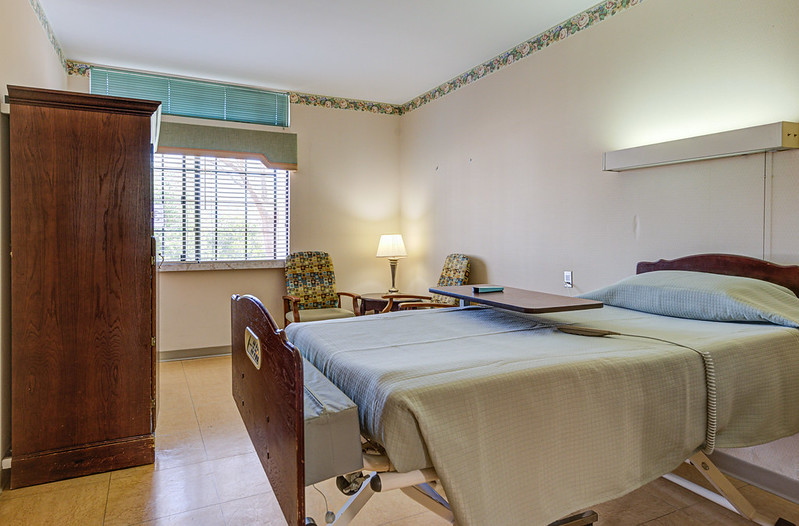
Who Owns and Operates Tice Valley Post Acute?

TICE VALLEY POST ACUTE is owned by a for-profit company. For-profit facilities operate as businesses with obligations to shareholders or private owners. The facility is operated by PACS GROUP, a chain that manages multiple nursing homes. With 120 certified beds and approximately 115 residents (about 96% occupancy), it is a mid-sized facility located in WALNUT CREEK, California.
How Does Tice Valley Post Acute Compare to Other California Nursing Homes?

Compared to the 100 nursing homes in California, TICE VALLEY POST ACUTE's overall rating (4 stars) is above the state average of 3.2, staff turnover (46%) is near the state average of 46%, and health inspection rating (4 stars) is above the national benchmark.

What Should Families Ask When Visiting Tice Valley Post Acute?

Based on this facility's data, families visiting should ask: "Can I visit during a mealtime to observe dining assistance and food quality?" "How do you handle medical emergencies, and what is your hospital transfer rate?" "Can I speak with family members of current residents about their experience?"

Is Tice Valley Post Acute Safe?

Based on CMS inspection data, TICE VALLEY POST ACUTE has a clean safety record: no substantiated abuse findings (meaning no confirmed cases of resident harm), no Immediate Jeopardy citations (the most serious violation level indicating risk of serious injury or death), and is not on the Special Focus Facility watch list (a federal program monitoring the lowest-performing 1% of nursing homes). The facility has a 4-star overall rating and ranks #1 of 100 nursing homes in California. While no facility is perfect, families should still ask about staff-to-resident ratios and recent inspection results during their visit.

Do Nurses at Tice Valley Post Acute Stick Around?

TICE VALLEY POST ACUTE has a staff turnover rate of 46%, which is about average for California nursing homes (state average: 46%). Moderate turnover is common in nursing homes, but families should still ask about staff tenure and how the facility maintains care continuity when employees leave.

Was Tice Valley Post Acute Ever Fined?

TICE VALLEY POST ACUTE has been fined $9,750 across 1 penalty action. This is below the California average of $33,176. While any fine indicates a compliance issue, fines under $50,000 are relatively common and typically reflect isolated problems that were subsequently corrected. Families should ask what specific issues led to these fines and confirm they've been resolved.

Is Tice Valley Post Acute on Any Federal Watch List?

TICE VALLEY POST ACUTE is not on any federal watch list. The most significant is the Special Focus Facility (SFF) program, which identifies the bottom 1% of nursing homes nationally based on persistent, serious quality problems. Not being on this list means the facility has avoided the pattern of deficiencies that triggers enhanced federal oversight. This is a positive indicator, though families should still review the facility's inspection history directly.