WALNUT CREEK SKILLED NURSING & REHABILITATION CENT

1224 ROSSMOOR PARKWAY, WALNUT CREEK, CA 94595 (925) 937-7450
For profit - Limited Liability company 180 Beds GENERATIONS HEALTHCARE Data: November 2025
Trust Grade
60/100
#717 of 1155 in CA
Last Inspection: June 2025

Inspected within the last 6 months. Data reflects current conditions.

Overview

Walnut Creek Skilled Nursing & Rehabilitation Center has a Trust Grade of C+, indicating a decent level of care that is slightly above average. It ranks #717 out of 1155 facilities in California, placing it in the bottom half, and #26 out of 30 in Contra Costa County, showing limited options for local alternatives. The facility is on an improving trend, with issues decreasing from 28 in 2024 to 12 in 2025, and it has no fines on record, which is a positive sign. However, there are concerns, including a failure to maintain a clean environment for residents and issues with medication administration that could affect health and safety. On the positive side, staffing turnover is lower than the state average, and while RN coverage is average, the overall quality measures received a good rating.

Trust Score
C+
60/100
In California
#717/1155
Bottom 38%
Safety Record
Low Risk
No red flags
Inspections
Getting Better
28 → 12 violations
Staff Stability
○ Average
36% turnover. Near California's 48% average. Typical for the industry.
Penalties
✓ Good
No fines on record. Clean compliance history, better than most California facilities.
Skilled Nurses
✓ Good
Each resident gets 45 minutes of Registered Nurse (RN) attention daily — more than average for California. RNs are trained to catch health problems early.
Violations
⚠ Watch
54 deficiencies on record. Higher than average. Multiple issues found across inspections.
★★★☆☆
3.0
Overall Rating
★★★☆☆
3.0
Staff Levels
★★★★☆
4.0
Care Quality
★★★☆☆
3.0
Inspection Score
Stable
2024: 28 issues
2025: 12 issues

The Good

  • 4-Star Quality Measures · Strong clinical quality outcomes
  • Full Sprinkler Coverage · Fire safety systems throughout facility
  • No fines on record
  • Staff turnover below average (36%)

    12 points below California average of 48%

Facility shows strength in quality measures, fire safety.

The Bad

3-Star Overall Rating

Near California average (3.1)

Meets federal standards, typical of most facilities

Staff Turnover: 36%

Near California avg (46%)

Typical for the industry

Chain: GENERATIONS HEALTHCARE

Part of a multi-facility chain

Ask about local staffing decisions and management

The Ugly 54 deficiencies on record

Jun 2025 9 deficiencies
CONCERN (D) 📢 Someone Reported This

A family member, employee, or ombudsman was alarmed enough to file a formal complaint

Potential for Harm - no one hurt, but risky conditions existed

Deficiency F0557 (Tag F0557)

Could have caused harm · This affected 1 resident

Based on observation, interview and record review the facility did not respect the right to maintain personal belongings securely for one of 18 sampled residents (Resident 53) when Resident 53's trans...

Read full inspector narrative →
Based on observation, interview and record review the facility did not respect the right to maintain personal belongings securely for one of 18 sampled residents (Resident 53) when Resident 53's transfer sling, wheel chair and shoes had been missing. This created unnecessary distress for Resident 53's family. Findings: Record review of the document admission Record showed the facility admitted Resident 53 on 4/14/2017. Diagnoses included Intracranial Injury (brain injury). During an interview on 6/11/2025 at 2:25 p.m. Family Member 1 stated she had concerns regarding her son's missing items. She stated she had purchased a personal transfer sling for her son which was missing. In the past, he was missing a shoe which she also replaced for him. Family Member 1 stated she had not been reimbursed by the facility for these items. She stated the money wasn't important but she found it frustrating that staff could not keep her son's belongings in his room. During an interview on 6/12 at 9:20 a.m. Resident 53 was observed in bed nodding to questions, making audible sounds but not interviewable. Record review of the document Progress Notes *NEW* dated 4/21/2025, showed Family Member 1 had met with social services and had grievances which included (1) She personally bought a transfer sling for him - its labeled but has been missing for over 2 months. She has notified nursing. (2) The resident's wheelchair, that has his name labeled on it, had gone missing, nursing eventually found it in subacute. She is upset of the mishandling as it's usually and supposed to be outside of his room against the wall. (3) Resident has a pair of black shoes to prevent his feet from curling and one shoe went missing for about 3 months - she eventually bought a new pair for him. She states she brought the receipt and dropped it off at Social Services for potential reimbursement. Overall, the resident's mother is not concerned about the costs of the items, but more so that she feels there is a lack of care for the resident and his belongings. She got emotional and left before she could cry. Record review of the document Progress Notes *NEW* dated 5/5/2025, showed the ombudsman had visited social services to discuss the missing items. Review of the progress note showed Sling is still missing and black shoes have not been reimbursed. During an interview on 6/10/2025 at 9:30 a.m., Social Services Assistant (SSA) stated she believed Resident 53's family had been reimbursed for the missing items but confirmed there was no documentation in the record which showed it had been done. During an interview on 6/10/2025 at 9:45 a.m., Certified Nursing Assistant 4 (CNA 4) stated Resident 53's transfer sling had been Missing. In a concurrent observation, the facility's transfer sling was hanging in the closet but not Resident 53's personal sling. Two black orthopedic support shoes were observed at the bedside. Record review of the facility document Personal Property, dated August 2022, showed Resident belongings are treated with respect by facility staff, regardless of perceived value. Based on interview and record review, for one of seven sampled residents (Resident 127) who needed help with activities of daily living, the facility failed to ensure Resident 127 was treated with respect and dignity when rolled towels were placed inside Resident 127's briefs. This failure had resulted in Resident 127's emotional distress. Findings: During a review of Resident 127's admission Record (AR), the AR indicated Resident 127 was admitted to the facility in December 2023, with diagnoses that included chronic kidney disease, heart failure and need for assistance with personal care. During a review of Resident 127's Minimum Data Set Assessment (MDS, an assessment tool used to direct resident care) dated 3/13/25, the MDS indicated a Brief Interview for Mental Status (BIMS, is a scoring system used to determine the resident's cognitive status in regard to attention, orientation, and ability to register and recall information) score of 15. A BIMS score of thirteen to fifteen is an indication of intact cognitive status. The MDS also indicated Resident 127 was incontinent of bowel and bladder and was dependent on staff for toileting and personal hygiene. During a joint interview on 6/9/25 at 11:40 a.m., Resident 127 and Resident Representative (RR) 1 both stated Certified Nursing Assistant (CNA) 2 left two rolled towels in Resident 127's briefs. Both stated Resident 127 was very upset about the incident. During an interview on 6/12/25 at 11:09 a.m. with CNA 3, CNA 3 stated, it was sometime last month, when CNA 3 walked into Resident 127's room at the start of the day shift. Resident 127 was very upset about the previous shift and wanted CNA 3 to check Resident 127's disposable brief. CNA 3 stated Resident 127 complained about feeling uncomfortable like something was stuck there. CNA 3 stated she opened Resident 127's brief to find two rolled towels that were wet with urine. During an interview on 6/13/25 at 10:36 a.m. with Unit Manager (UM), UM stated it was inappropriate to place rolled towels in Resident 127's brief. UM stated short cuts such as this was not allowed because it placed Resident 127 at risk for skin breakdown from moisture. During a telephone interview on 6/13/25 at 2:47 p.m. with CNA 2, CNA 2 stated Resident 127 was always wet. CNA 2 stated Resident 127 had always wanted to be dry at all times and CNA 2 placed wash towels, and sometimes paper towel to keep Resident 127 dry. During a review of Resident 127's bladder incontinence care plan (CP), undated, the CP indicated Resident 127 was at risk for incontinence-associated dermatitis. Staff was to provide perineal care (washing the genitals and the anal area) after each incontinent episode, and to offer toileting/change on rising, before and after meals and as needed.
CONCERN (D) 📢 Someone Reported This

A family member, employee, or ombudsman was alarmed enough to file a formal complaint

Potential for Harm - no one hurt, but risky conditions existed

Notification of Changes (Tag F0580)

Could have caused harm · This affected 1 resident

Based on interview and record review, for one of four sampled residents (Resident 23) who were transferred to the hospital for acute care, the facility failed to notify Resident Representative (RR) 2 ...

Read full inspector narrative →
Based on interview and record review, for one of four sampled residents (Resident 23) who were transferred to the hospital for acute care, the facility failed to notify Resident Representative (RR) 2 when Resident 23 vomited on 4/5/25. Resident 23's condition worsened and was transferred to the hospital the same day for fever and weakness. This failure had the potential to result in delayed interventions. Findings: During a review of Resident 23's admission Record (AR), the AR indicated Resident 23 was admitted to the facility in August 2022 with diagnoses that included senile degeneration of the brain (age-related cognitive decline, often used interchangeably with dementia) and major depressive disorder (persistent sadness, loss of interest, and difficulty functioning in daily life). The AR indicated Resident Representative (RR) 2 as Resident 23's emergency contact and guarantor. During a telephone interview on 6/9/25 at 9:55 a.m. with RR 2, RR 2 stated Resident 23 became very sick in the evening of 4/5/25. RR 2 stated receiving a call from facility staff when Resident 23 developed a high fever and was very weak that RR 2 strongly requested the facility to transfer Resident 23 to the hospital for further management. RR 2 stated she did not know Resident 23 had vomited early in the morning before getting very sick. RR 2 stated, had the facility called about Resident 23's vomiting, RR 2 would have taken Resident 23 to the hospital sooner. During an onsite interview on 6/10/25 at 2:52 p.m. with RR 2, RR 2 stated Resident 23 had severe infection and would have been gone if RR 2 had not made the decision to take Resident 23 to the hospital in time. During a concurrent interview and record review on 6/12/25 at 8:41 a.m. with Assistant Director of Nursing (ADON), ADON confirmed Resident 23's face sheet indicated RR 2 was Resident 23's Representative. ADON stated, because the change in condition happened early morning, there was chance the facility staff notified RR 2 later in the morning. ADON stated the clinical record did not indicate that RR 2 was notified of Resident 23's vomiting until Resident 23 developed fever of 100.2 degrees Fahrenheit (deg. F) later in the evening. During a review of Resident 23's clinical record, eInteract SBAR Summary for Providers (SBAR) dated 4/5/25 at 06:13 a.m. indicated Resident 23 had a Change in Condition for nausea/vomiting. The SBAR indicated the physician was notified but there was no documentation that RR 2 was notified. Change in Condition (CIC) notes that followed the SBAR dated 4/5/25 with timestamp 06:38 a.m., 16:46 p.m., and 19:07 p.m. did not indicate RR 2 was notified. During an interview on 6/13/25 at 10:13 a.m. with Unit Manager (UM), UM stated the SBAR indicated the AR indicated RR 2 was Resident 23's guarantor and the first emergency contact, so RR 2 should have been notified of the Change in Condition. UM stated it was important to let the representative know should there be a change in resident's condition for them to provide support to the resident.
CONCERN (D)

Potential for Harm - no one hurt, but risky conditions existed

ADL Care (Tag F0677)

Could have caused harm · This affected 1 resident

Based on observation, interview, and record review, the facility failed to ensure two of three sampled residents (Residents 60 and Resident 142) received necessary care to maintain good grooming and p...

Read full inspector narrative →
Based on observation, interview, and record review, the facility failed to ensure two of three sampled residents (Residents 60 and Resident 142) received necessary care to maintain good grooming and personal hygiene when Resident 60 and Resident 142 had long fingernails. This failure resulted in Residents 60 and Resident 142 at risk for skin irritation and infection. Findings: During a review of Resident 60's admission Record (AR), printed on 6/12/25, the AR indicated, Resident 60 was admitted to the facility in July 2024 with diagnosis that included hemiplegia (a condition caused by brain damage or spinal cord injury that leads to paralysis on one side of the body) and hemiparesis (a condition characterized by weakness on one side of the body, making it hard to perform everyday activities like eating or dressing) following cerebral infarction (occurs when blood flow to a part of the brain is blocked, depriving brain cells of oxygen and nutrients, leading to tissue damage or death) affecting right dominant side. During a record review of During a review of Resident 60's Activities of Daily Living (ADLs, are those needed for self-care and mobility and include activities such as bathing, dressing, grooming, oral care, ambulation, toileting, eating, transferring, and communicating) care plan initiated 8/16/24 and revised on 2/21/25, the care plan indicated Resident 60 had ADL self-care performance and dependent to staff. Resident 60's care plan had an intervention to check the nail length and trim on bath day as necessary. During an observation between 6/9/25 at 10:30 a.m., Resident 60 was sleeping in bed while hooked up to a ventilator (a device used medically to support or replace the breathing of a person) and feeding tube (a medical device used to provide nutrition to people who cannot obtain nutrition by mouth, are unable to swallow safely, or need nutritional supplementation). Resident 60 had long fingernails. During a follow-up observation and interview on 6/12/25 at 9:30 a.m. with Restorative Nurse Assistant (RNA) 1, who was also working on the floor as Certified Nurse Assistant (CNA), RNA 1 stated Resident 60's fingernails were long and needed to be trimmed. RNA 1 stated she noticed Resident 60's fingernails were long the other day. RNA 1 stated she was going to trim Resident 60's nails but could not find a clipper in the room. During a review of Resident 142's admission Record (AR), printed on 6/12/25, the AR indicated, Resident 142 was admitted to the facility in May 2025 with diagnoses that included malignant neoplasm (cancer) of tongue, systemic lupus erythematosus (chronic systemic rheumatic disease that can involve joints, kidneys, skin, mucous membranes, and blood vessel walls), and need for assistance with personal care. During a record review of Resident 142's Brief Interview for Mental Status (BIMS, is a scoring system used to determine the resident's cognitive status regarding attention, orientation, and ability to register and recall information. A BIMS score 8 to 12 is an indication of moderate cognitive impairment.), dated 5/22/25, the record indicated Resident 142's BIMS score was 12. During a record review of During a review of Resident 142's Activities of Daily Living care plan initiated 5/16/25 and revised on 5/20/25, the care plan indicated Resident 142 had ADL self-care performance and required one to two persons assist to start and complete most ADL task including hygiene and grooming. During an observation and interview on 6/10/25 at 12:24 p.m. with Resident 142, Resident 142 had long fingernails. Resident 142 who had a tracheostomy (a surgical procedure that creates an opening in the neck to access the trachea and insert a tube, called a tracheostomy tube to help with breathing) mouthed words and stated she preferred hair nails shorter and nobody from the staff had offered to trim her nails. During a concurrent observation and interview on 6/12/25 at 9: 28 a.m. with RNA 1, RNA 1 stated she was also assigned as a CNA to Resident 142. RNA 1 stated Resident 142's fingernails were long. RNA 1 stated she was going to speak with Resident 142 in Spanish to understand Resident 142 clearly. RNA 1 confirmed Resident 142 preferred her fingernails shorter. During a follow up interview on 6/12/25 at 9:32 a.m. with RNA 1, RNA 1 stated keeping Resident 60 and Resident 142's fingernails short was important and necessary to prevent them from becoming dirty and to avoid bacterial growth. During an interview on 6/13/25 at 11:43 a.m. with Director of Staff Development (DSD), DSD stated CNAs, and licensed nurses were responsible in maintaining residents' fingernails. DSD stated CNAs should have reported to licensed nurses if a diabetic resident needed a nail trim. DSD stated having clean and trimmed fingernails could give residents self-esteem and prevent skin issues. During an interview on 6/13/25 at 1:51 p.m. with the Director of Nursing (DON), the DON stated nail care should have been provided to Resident 60 and Resident 142 to maintain good hygiene, promote dignity and self-respect, and to prevent risk for infections. During a review of the facility's undated policy and procedure (P&P), titled, Fingernails/Toenails, Care of, the P&P indicated, The purpose of this procedure are to clean the nail bed, to keep nails trimmed, and to prevent infections .1. Nail care includes cleaning and trimming regularly .2. Proper nail care aid in the prevention of skin problems around the nail bed . During a review of the facility's P&P titled, ADL Care Provided for Dependent Residents, revised in January 2025, the P&P indicated, The facility provides assistance for residents unable to carry out ADLs .To ensure facility staff provide a necessary care and services that are based on the resident's comprehensive assessment, to ensure that a resident who is unable to carry out activities of daily living receive necessary services to maintain good nutrition, grooming, personal and oral hygiene . During a review of the facility's P&P titled, ADL Care Provided for Dependent Residents, revised in February 2021, the P&P indicated, Each resident shall be cared for manner that promotes and enhances his or her sense of well-being, level of satisfaction with life, and feelings of self-worth and self-esteem .When assisting with care, residents are supported in exercising their rights. For example, residents are .groomed as they wish to be groomed (hair styles, nails, facial hair, etc.) .
CONCERN (D)

Potential for Harm - no one hurt, but risky conditions existed

Deficiency F0688 (Tag F0688)

Could have caused harm · This affected 1 resident

Based on observation, interview and record review, the facility failed to provide appropriate treatment and services to prevent further decrease in range of motion when Restorative Nursing Assistant (...

Read full inspector narrative →
Based on observation, interview and record review, the facility failed to provide appropriate treatment and services to prevent further decrease in range of motion when Restorative Nursing Assistant (RNA) services ( RNA program, focuses on nursing interventions that help residents in long-term care maintain or regain their ability to perform activities of daily living (ADLs) and improve their overall well-being) to three of four sampled residents (Residents 60, 120 and 126) who were reviewed for range of motion/mobility needs, as indicated in the physician orders and comprehensive care plan. This failure had the potential to result in further decline in range of motion. Findings: 1. During a review of Resident 60's admission Record (AR), printed on 6/12/25, the AR indicated, Resident 60 was admitted to the facility in July 2024 with diagnosis of hemiplegia (a condition caused by brain damage or spinal cord injury that leads to paralysis on one side of the body) and hemiparesis (a condition characterized by weakness on one side of the body, making it hard to perform everyday activities like eating or dressing) following cerebral infarction (occurs when blood flow to a part of the brain is blocked, depriving brain cells of oxygen and nutrients, leading to tissue damage or death) affecting right dominant side. During a review of Resident 60's Order Summary Report, dated 6/12/25, the Order Summary Report had an active physician order to provide RNA program three times a week for both upper and lower extremities. During a review of Resident 60's Minimum Data Set (MDS, an assessment tool used to direct resident care) dated 5/8/25, the MDS indicated Resident 60 had functional limitation in range of motion on both sides of the upper and lower extremity. During an observation 6/9/25 at 10:30 a.m., Resident 60 was sleeping in bed while hooked up to a ventilator (a device used medically to support or replace the breathing of a person) and feeding tube (a medical device used to provide nutrition to people who cannot obtain nutrition by mouth, are unable to swallow safely, or need nutritional supplementation). 2. During a review of Resident 120's admission Record (AR), printed on 6/12/25, the AR indicated, Resident 120 was admitted to the facility in December 2024 with diagnoses that included cerebral infarction and persistent vegetative state (a condition where a person is alive but has no awareness of themselves or their environment). During a review of Resident 120's range of motion care plan initiated 2/8/25, the care plan indicated Resident 120 had limited range of motion related to contracture (a condition where muscles, tendons, or skin shorten and tighten, causing reduced range of motion and stiffness in a joint or body part) and Resident 120 was at risk for further decline of range of motion, stiffness, deformity, and joint pain. The care plan also indicated an intervention for Resident 120 to participate in RNA program three times weekly for bilateral upper and lower extremities passive range of motion (PROM, the movement of a joint through its range of motion by an external force, like a therapist or a machine, without any effort from the individual, who remains relaxed). During an observation on 6/9/25 at 10:51 a.m., Resident 120 was awake in bed. Resident 120 was also connected to a ventilator and feeding tube. Resident 120 had stiffness on bilateral upper extremities. During a concurrent record review and interview on 6/12/25 at 9:16 a.m., with RNA 1, the facility's document titled, Restorative Nursing Program Master List/Schedule dated from 5/26/25 to 6/8/25 was reviewed. RNA 1 stated Resident 120 and Resident 60 only received two sessions of PROM on the week of 5/26/25 to 6/1/25 and one session on the week of 6/2/25 to 6/8/25 instead of three times a week. RNA 1 stated she was unable to consistently provide RNA program to Resident 60 and Resident 120 because there were times that she had been re-assigned as a Certified Nurse Assistant (CNA) to work on the floor when the facility was short of staff. RNA 1 stated it was very important for Resident 60 and Resident 120 to receive PROM for muscle strengthening. RNA 1 stated not providing PROM had the risk for Resident 60 and Resident 120 in becoming weaker. During a record review of the facility's policy and procedure (P&P), titled, Range of Motion Exercises, dated October 2010, the P&P indicated, The purpose of this procedure is to exercise the resident's joints and muscles .Verify that there is a physician's order .Review the resident's care plan .
CONCERN (D)

Potential for Harm - no one hurt, but risky conditions existed

Deficiency F0740 (Tag F0740)

Could have caused harm · This affected 1 resident

Based on observation, interview, and record reviews, the facility did not provide immediate necessary care and investigate potential self-harm for two of 18 sampled residents (Residents 101 and 210). ...

Read full inspector narrative →
Based on observation, interview, and record reviews, the facility did not provide immediate necessary care and investigate potential self-harm for two of 18 sampled residents (Residents 101 and 210). Staff did not implement safety measures when Residents 101 and 210 expressed feeling suicidal. Staff did not investigate the cause of Resident 210's wrist wound. These failures have the potential to not ensure the residents' safety and/or promote and maintain the residents' highest practicable physical, mental, and psychosocial well-being. Findings: Record review of the document admission Record showed the facility admitted Resident 101 on 11/29/2024. Resident 101's diagnoses included depression. Record review of the document MDS 3.0 Nursing Home Quarterly (NQ) Version 1.19.1 (resident assessment) dated 5/29/2025, showed Resident 101 was alert and oriented to the day, month, and year. Record review of the document Progress Notes dated 6/13/2025, showed Resident 101 required some assist with ADLs (activities of daily living), was able to move all extremities and could feed herself. Record review of the document Progress Notes *NEW* dated 5/27/2025 showed Resident 101 had a weight loss of 28 pounds over the past 6 months. Record review of the document Progress Notes dated 6/11/2025 showed Resident 101 reported to Licensed Vocational Nurse 1 (LVN 1) she was feeling suicidal. On 6/12/2025 at 1:10 p.m. Resident 101 was observed asleep in bed with a gait belt hanging on the wall across from her bed. (gait belt: long narrow belt used by physical therapy which is placed around the resident's waist and used to support the resident during transfer/ambulation). During an interview on 6/12/2025 at 1:15 p.m., Resident 101's nurse, Licensed Vocational Nurse 2 (LVN 2) stated she had no concerns regarding Resident 101's behaviors or mental state. LVN 2 stated at times Resident 101 required encouragement to take her medication. She stated Resident 101 was depressed and needed to be Encouraged but had no concerns regarding her mental health status. During an interview on 6/12/2025 at 3:05 p.m. LVN 1 stated the physical therapist had reported to her Resident 101 was depressed. On 6/11/2025 LVN 1 then met with Resident 101 who reported she wanted To kill herself. LVN 1 reported this information to the Unit Manager and took no further action. LVN 1 confirmed there was no 1:1 monitoring form in the clinical record which would have shown staff remained with her in the room. During an interview on 6/12/2025 at 4:20 p.m., the Unit Manager (UM) stated the speech therapist had reported to him Resident 101 was depressed and Refusing to work with rehab or get out of bed. The UM stated he then sent an email/request for a psychological referral. Record review of the document Clinical Documentation MH/BH dated 6/9/2025, showed Resident 101 had been seen by mental health and Acknowledged feelings of depression . There was no documentation regarding suicidal thoughts. The mental health assessment on 6/9/2025 took place two days prior to Resident 101 stating she was feeling suicidal. During an interview on 6/12/2025 at 4:18 p.m. Resident 101 stated she thinks about suicide Daily. Record review of the document Care Plan Report dated 2/25/2025 showed the plan of care for Resident 101 was to be free from discomfort related to antidepressant therapy. There was no plan for suicidal ideation. During an interview on 6/13/2025 at 11:15 am, the UM stated, when a resident reports to staff they are suicidal staff should Immediately provide one-on-one monitoring, remove all sharp objects from the room, call the doctor and family. The UM stated a Social Service evaluation would need to be completed and the resident should be sent out to the hospital. The UM stated these steps were necessary to prevent the resident from Harming themselves. Record review of the document admission Record showed the facility admitted Resident 210 on10/4/2023. Resident 210's diagnoses included depression. Record review of the document Progress Notes *NEW* (Physician/NP/PA note) dated 9/18/2024 showed Patient does have the capacity to make medical decisions. Record review of the document Progress Notes *NEW* (doctor's progress note) dated 5/18/2025 showed Resident 210 had Normal Range of Motion and was alert and oriented to person, place and time. Record review of the document Care Plan Report dated 9/16/2024 showed Resident 210 had Body weakness and a goal was to Provide supportive care, assistance with mobility (transfer/ambulation/bed mobility). Further review of the care plan dated 8/28/2024 showed Resident 210 was At risk for self-harm due to resident being observed with placement of scissors on wrist and stated to licensed nurse I want to die. Record review of the document Progress Notes *NEW* dated 8/28/2024 showed licensed staff had gone into Resident 210's room to administer medication. Resident 210 was Crying holding scissors on his left wrist. Staff removed the scissors, notified the doctor and sent Resident 210 to the hospital. Record review of the document SBAR Communication Form dated 5/8/2025 showed Licensed Vocational Nurse 3 (LVN 3) documented he had observed a skin tear on Resident 210's right wrist area. The doctor had been notified, and treatment orders were provided. There was no documentation which showed staff investigated how the tear happened. During an interview on 6/10/2025 at 9:52 a.m. Resident 210 was observed moving from lying to sitting position at the bedside independently. Resident 210 stated he could Use more mental health support as he had Screaming episodes which the staff knew about because they happened A lot. During an interview on 6/10/2025 at 11:30 a.m., LVN 1 stated Resident 210 had Behaviors, anxiety, depression and he will Yell out and cry. LVN 1 stated the behaviors would occur Every other day and her typical response was to go into his room and provide reassurance. Record review of the document Social Service Note dated 6/10/2025 showed the SSA had met with Resident 210, and he was Very depressed and said that he thought he was running out of energy and can't do this anymore. He stated a few months ago he was Using a butter knife to mark his arm. When asked if he intended to harm himself, Resident 210 stated If I were to ever say something like that, this is the closest I've ever been. During an interview on 6/10/2025 at 2:15 p.m., the Social Services Assistant (SSA) stated she had spoken with Resident 210 earlier in the day and was concerned because he mentioned Something about hurting himself. The SSA stated she emailed the staff, so everyone was aware of the situation. The SSA stated she was not aware of Resident 210's yelling and crying behaviors. In a concurrent interview the Social Services Director (SSD) stated clinical nursing staff initiate psych consults (referrals for mental health services) and not social work. However, the SSD stated it would have been good for nursing to have notified social services regarding the behaviors as they could have been able to provide More frequent visits with him. During an interview on 6/10/2025 at 2:30 p.m. Resident 210 stated he was Emotionally unstable and needed to Talk to someone. Resident 210 stated he was having trouble Dealing with life and was trying to Get control of himself as sometimes Bad thoughts sneak in. During an interview on 6/10/2025 at 2:45 p.m. the Director of Nursing (DON) stated if a resident expresses a desire to hurt themselves, staff are expected to look for things in the room that could be used for harming oneself, review the medications, increase monitoring of the resident and make a referral for psychological support. The DON stated he had not been made aware of Resident 210's behaviors. On 6/10/2025 at 3:15 p.m. Resident 210 was observed in his room without staff present with a floor fan chord on the floor, TV chords on the walls and a plastic bag draped over the entrance door's handle. During an interview on 6/10/2025 at 4 p.m., LVN 3 stated he was not sure how the cut happened, and he didn't know If he was trying to kill himself or not. During an interview on 6/12/2025 at 1:55 p.m., the Assistant Director of Nursing (ADON) stated, if a resident reports they are suicidal, even if they say they can't go through with it, staff must Act. The ADON stated the resident would require One to one monitoring and staff notify the doctor, administrator, social services, family or responsible party. Record review of the document Suicide Threats dated 12/2007 showed Resident suicide threats shall be taken seriously and addressed appropriately. A staff member shall remain with the resident until the nurse supervisor/charge nurse arrives to evaluate the resident. After assessing the resident in more detail, the nurse supervisor/charge nurse shall notify the resident's attending physician and responsible party and shall seek further direction from the physician. All nursing personnel and other staff involved in caring for the resident shall be informed of the suicide threat and instructed to report changes in the resident's behavior immediately.
CONCERN (D)

Potential for Harm - no one hurt, but risky conditions existed

Infection Control (Tag F0880)

Could have caused harm · This affected 1 resident

Based on observation, interview and record review, the facility failed to implement their infection prevention and control program for two of three sampled residents (Residents 125 and Resident 46) wh...

Read full inspector narrative →
Based on observation, interview and record review, the facility failed to implement their infection prevention and control program for two of three sampled residents (Residents 125 and Resident 46) when two staff members did not wear appropriate Personal Protective Equipment (PPE, protective items or garments worn to protect the body or clothing from hazards that can cause injury and to prevent the transmission of infectious agents from one person to another, also known as cross-contamination) while providing care to Resident 125 and Resident 46, who were placed on enhanced barrier precaution (EBP, an infection control intervention designed to reduce transmission of multidrug-resistant organisms that employs targeted gown and glove use during high contact resident care activities). This failure had the potential to result in spread of infection. Findings: During a record review of Resident 125's admission Record (AR), printed on 6/13/25, the AR indicated Resident 125 was admitted to the facility in November 2024 with diagnoses of quadriplegia (a loss of motor function can present as either weakness or paralysis leading to partial or total loss of function in the arms, legs, trunk, and pelvis) and dependence to ventilator (a type of breathing apparatus, a class of medical technology that provides mechanical ventilation by moving breathable air into and out of the lungs, to deliver breaths to a patient who is physically unable to breathe, or breathing insufficiently) status. During a review of the facility's undated signage titled, Enhanced Barrier Precaution (EBP), the EBP indicated, Anyone participating in any of these six moments must also: [NAME] gown and gloves .Device care or use . During an observation and interview on 6/9/25 at 11:42 a.m., inside Resident 125's room located in the subacute unit, where an Enhanced Barrier Precaution sign was posted on the door, Respiratory Therapist (RT) 1 was not wearing a gown while performing oral suctioning to Resident 125 who had a tracheostomy (an opening surgically created through the neck into the trachea to allow air to fill the lungs) connected to a ventilator. Inside, Resident RT 1 asked Resident 125 if she needed another round of suctioning to which Resident 125 refused. RT 1 stated he did not really need to wear PPE when providing care for Resident 125. When RT 1 was asked about the EBP sign on the door, RT 1 then stated he should have performed proper PPE as protection to prevent contamination and transmission of secretions and bodily fluid. During a concurrent observation and interview on 6/10/25 at 10:33 a.m., inside Resident 46's room where an Enhaced Barrier Precaution sign was posted on the door, Certified Nursing Assistant (CNA) 5 and Resident 46's family member were at the bedside providing care. CNA 5 did not wear PPE while the family member did. CNA 5 stated, it was an Enhanced-Barrier Precaution room and one should wear PPE when providing care to the resident. During an interview on 6/13/25 at 11:20 a.m. with the Infection Preventionist (IP), IP stated the EBP signs were posted on the door for staff's compliance. IP stated all residents in the subacute unit were placed under EBP. IP stated not wearing PPE inside EBP rooms had the risk of spreading the infection. IP stated PPE was used as a protection from transmitting diseases to the residents and the community. During an interview on 6/13/25 at 1:47 p.m. with the Director of Nursing (DON), the DON stated the staff who were assigned to subacute unit should have known better that wearing PPE was a must when providing care to protect the residents and the staff. The DON stated not wearing PPE was a break in their infection control protocol. During a record review of the facility's policies and procedures, titled, Enhance Barrier Precautions, revised in December 2024, the P&P indicated, EBPs refer to infection prevention and control interventions designed to reduce the transmission of multi-drug-resistant organisms (MDROs) during high contact resident care activities .7. EBPs employ targeted gown and glove use in addition to standard precaution () during a high contact resident care activities when contact precautions do not otherwise apply .a. Gloves and gown are applied prior to performing the high contact resident care activity (as opposed to before entering the room) .8. Example of high-contact resident care activities requiring the use of gown and gloves for EBPs include .e. transferring .f. providing bed mobility .i. device care or use (central line, urinary catheter, feeding tube, tracheostomy/ventilator, etc.) Based on observation, interview and record review, the facility failed to implement their infection prevention and control program to two of three sampled residents (Residents 125 and Resident 46) when two staff members did not wear appropriate Personal Protective Equipment (PPE, protective items or garments worn to protect the body or clothing from hazards that can cause injury and to prevent the transmission of infectious agents from one person to another, also known as cross-contamination) while providing care to Resident 125 and Resident 46 who were placed on enhanced barrier precaution (EBP, an infection control intervention designed to reduce transmission of multidrug-resistant organisms that employs targeted gown and glove use during high contact resident care activities). This failure had the potential to result in spread of infection. Findings: During a record review of Resident 125's admission Record (AR), printed on 6/13/25, the AR indicated Resident 125 was admitted to the facility in November 2024 with diagnoses of quadriplegia (a loss of motor function can present as either weakness or paralysis leading to partial or total loss of function in the arms, legs, trunk, and pelvis) and dependence to ventilator (a type of breathing apparatus, a class of medical technology that provides mechanical ventilation by moving breathable air into and out of the lungs, to deliver breaths to a patient who is physically unable to breathe, or breathing insufficiently) status. During a review of the facility's undated signage titled, Enhanced Barrier Precaution (EBP), the EBP indicated, Anyone participating in any of these six moments must also: [NAME] gown and gloves .Device care or use . During an observation and interview on 6/9/25 at 11:42 a.m., inside Resident 125's room located in the subacute unit, where an Enhanced Barrier Precaution sign was posted on the door, Respiratory Therapist (RT) 1 was not wearing a gown while performing oral suctioning to Resident 125 who had a tracheostomy (an opening surgically created through the neck into the trachea to allow air to fill the lungs) connected to a ventilator. Inside Resident RT 1 asked Resident 125 if she needed another round of suctioning to which Resident 125 refused. RT 1 stated he did not really need to wear PPE when providing care for Resident 125. When RT 1 was asked about the EBP sign on the door, RT 1 then stated he should have performed proper PPE as protection to prevent contamination and transmission of secretions and bodily fluid. During an interview on 6/13/25 at 11:20 a.m. with the Infection Preventionist (IP), IP stated the EBP signs were posted on the door for staff's compliance. IP stated all residents in the subacute unit were placed under EBP. IP stated not wearing PPE inside EBP rooms had the risk of spreading the infection. IP stated PPE was used as a protection from transmitting diseases to the residents and the community. During an interview on 6/13/25 at 1:47 p.m. with the Director of Nursing (DON), the DON stated the staff who were assigned to subacute unit should have known better that wearing PPE was a must when providing care to protect the residents and the staff. The DON stated not wearing PPE was a break in their infection control protocol. During a record review of the facility's policies and procedures, titled, Enhance Barrier Precautions, revised in December 2024, the P&P indicated, EBPs refer to infection prevention and control interventions designed to reduce the transmission of multi-drug-resistant organisms (MDROs) during high contact resident care activities .7. EBPs employ targeted gown and glove use in addition to standard precaution () during a high contact resident care activities when contact precautions do not otherwise apply .a. Gloves and gown are applied prior to performing the high contact resident care activity (as opposed to before entering the room) .8. Example of high-contact resident care activities requiring the use of gown and gloves for EBPs include .e. transferring .f. providing bed mobility .i. device care or use (central line, urinary catheter, feeding tube, tracheostomy/ventilator, etc.)
CONCERN (E)

Potential for Harm - no one hurt, but risky conditions existed

Safe Environment (Tag F0584)

Could have caused harm · This affected multiple residents

Based on observation, interview, and record review, the facility failed to ensure five of five sampled residents (Residents 148, 68, 109, 133, and 140) were provided a clean, sanitary and homelike env...

Read full inspector narrative →
Based on observation, interview, and record review, the facility failed to ensure five of five sampled residents (Residents 148, 68, 109, 133, and 140) were provided a clean, sanitary and homelike environment when whitish grime, stains and dried matter were sticking on the surroundings of Residents 148, 68, 109, 133, and 140's mattresses. These failures had the potential to cause discomfort, emotional distress, and spread of disease-causing organisms to Residents 148, 68, 109, 133, and 140. Findings: During a review of Resident 148's admission Record (AR) printed on 6/12/25, the AR indicated, Resident 148 was admitted to the facility in June 2024 with diagnoses that included intracerebral hemorrhage (bleeding into the brain tissue), Alzheimer's Disease (progressive disease that destroys memory and other important mental functions), and unspecified stage pressure ulcer (o localized damage to the skin and/or underlying soft tissue usually over a bony prominence or related to a medical or other device) of sacral region. During an observation on 6/9/25 at 11:34 a.m., Resident 148 was awake in bed and had tracheostomy and TF. Resident 148's blue mattress had a whitish grime on the bottom left portion the mattress. During a review of Resident 68's AR, printed on 6/12/25, the AR indicated, Resident 68 was admitted to the facility in February 2025 with diagnoses that included diagnosis of hemiplegia (a condition caused by brain damage or spinal cord injury that leads to paralysis on one side of the body) and hemiparesis (a condition characterized by weakness on one side of the body, making it hard to perform everyday activities like eating or dressing) following cerebral infarction (occurs when blood flow to a part of the brain is blocked, depriving brain cells of oxygen and nutrients, leading to tissue damage or death) affecting left non-dominant side and persistent vegetative state (a condition where a person is alive but has no awareness of themselves or their environment). During an observation on 6/10/25 at 11:21 a.m. in Resident 68 was not in the room. Resident 68's dark blue mattress had whitish stains and dust like powder on the top, middle, and bottom portion of the mattress. During a review of Resident 133's AR printed on 6/13/25, the AR indicated, Resident 133 was admitted to the facility in June 2024 with diagnoses that included traumatic brain injury (brain dysfunction caused by an outside force, usually a violent blow to the head) and persistent vegetative state. During an observation and interview on 6/10/25 at 12:36 p.m. with Certified Nurse Assistant (CNA) 1, Resident 133's was sleeping in his bed. Resident 133 had tracheostomy (medical procedure that helps a person breathe better) that was hooked up in a ventilator (a type of breathing apparatus, a class of medical technology that provides mechanical ventilation by moving breathable air into and out of the lungs, to deliver breaths to a patient who is physically unable to breathe or breathing insufficiently). Resident 133 also had a tube feeding (TF, medical device used to provide nutrition to people who cannot obtain nutrition by mouth, are unable to swallow safely, or need nutritional supplementation) connected to a feeding pump (a medical device used to deliver nutrition to patients who cannot obtain nutrition by mouth, usually through a feeding tube). Resident 133's dark blue mattress had whitish stain on the right side and bottom portion of the mattress. CNA 1 stated the whitish stain on Resident 133's mattress looked like it was from an old ointment or lotion. CNA 1 stated when CNAs were supposed to wipe down and clean the mattress after performing care to the residents. CNA 1 also stated housekeeping (HK) department was also responsible in daily and deep cleaning residents' rooms per schedule. CNA 1 stated it was important to make sure the mattresses were cleaned and sanitized to prevent unwanted odor from body fluids like urine and bowel movement. During a review of Resident 109's AR printed on 6/12/25, the AR indicated, Resident 109 was admitted to the facility in October 2024 with diagnoses that included anoxic brain damage (An anoxic brain injury occurs when the brain receives no oxygen at all) and persistent vegetative state. During an observation on 6/10/25 at 12:39 p.m., Resident 109 was sleeping in the bed with tracheostomy connected to a ventilator and TF. Resident 109's dark blue mattress had a yellowish dried matter on the upper left side portion of the mattress. During an observation and interview on 6/10/25 at 12:54 p.m. with HK Supervisor in Resident 68 and Resident 109's room. HK Supervisor stated Resident 109's dark blue mattress looked like a dried stain from Resident 109's formula feeding (a liquid food, often called formula, which are given through a special tube to make sure you get the nutrition and water you need). HK Supervisor stated licensed nurses who were responsible for giving the formula to the residents on TF should have called the HK department for spills or if there was a need to clean an area. HK Supervisor further stated HK were also not comfortable wiping down areas like the ventilator and the feeding pump because they were scared, they might pull a plug or tube that could cause distress to the residents. HK Supervisor stated licensed nurses or CNAs should have tried to wipe down a spill or dirt on the mattress immediately to prevent from staining. HK Supervisor stated cleaning and sanitizing the mattresses were very important in preventing infection that could have affected the residents. During a review of Resident 140's AR printed on 6/12/25, the AR indicated, Resident 140 was admitted to the facility in December 2024 with diagnoses that included chronic respiratory failure with hypercapnia (a condition in which the lungs have a hard time loading blood with oxygen or removing carbon dioxide) and history of cardiac arrest (when the heart stops beating suddenly). During a record review of Resident 140's Brief Interview for Mental Status (BIMS, is a scoring system used to determine the resident's cognitive status regarding attention, orientation, and ability to register and recall information. A BIMS score 13 to 15 is an indication of an intact cognitive response.), dated 3/18/25, the record indicated Resident 140's BIMS score was 15. During an observation and interview on 6/11/25 at 1:20 p.m. with Resident 140, Resident 140 was connected to a ventilator and TF. Resident 140's dark blue mattress had whitish spot stains, brownish drip like stains and powder like grime on the top left top portion of the mattress. Resident 140 stated the mattress was dirty when Resident 140 looked over to her left side. Resident 140 stated no one from the facility had come to clean her mattress. Resident 140 stated she preferred her mattress clean. During an interview on 6/13/25 at 11:35 a.m. with Infection Preventionist (IP), IP stated it was important to make sure residents' mattresses were maintained clean and disinfected per schedule to eliminate microorganisms such as bacterial infection. During an interview on 6/13/25 at 1:40 p.m. with the Director of Nursing (DON), the DON state the staff should have cleaned and disinfected the mattress after they have provided personal care to a resident. The DON stated this will prevent increase in the infection rate. The DON stated the residents also have the rights to have a clean and homelike environment including clean mattresses. During a record review of the facility's document, titled, Daily Patient Room Cleaning, revised on 9/5/17, the document indicated, Every room to be cleaned is that resident's home - treat it as such .The gold of cleaning is Infection Control . During a record review of the facility's policy and procedure (P&P), titled, Homelike Environment, dated February 2021, the P&P indicated, Residents are provided with a safe, clean, comfortable and homelike environment .The facility staff and management maximizes, to extent possible, the characteristics of the facility that reflect a personalized, homelike setting. These characteristics include .a. clean, sanitary and orderly environment .
CONCERN (E)

Potential for Harm - no one hurt, but risky conditions existed

Deficiency F0757 (Tag F0757)

Could have caused harm · This affected multiple residents

**NOTE- TERMS IN BRACKETS HAVE BEEN EDITED TO PROTECT CONFIDENTIALITY** Based on observation, interview, and record review, the facility failed to ensure for two out of 31 (Residents 138 and 49), were...

Read full inspector narrative →
**NOTE- TERMS IN BRACKETS HAVE BEEN EDITED TO PROTECT CONFIDENTIALITY** Based on observation, interview, and record review, the facility failed to ensure for two out of 31 (Residents 138 and 49), were routinely given pain medications without clarification of physician's order and adequate indications. For Resident 138, he was regularly given Norco oral tablet (medication used to treat moderate to severe pain) 5-325 milligram (mg) tablet to be administered one tablet three times a day, and Tylenol Extra Strength oral tablet (medication used to treat minor pain and fever reducer) 500 mg tablet to be administered one tablet two times a day. For Resident 49, was regularly given Acetaminophen 325 mg tablet to be administered two tablets via gastric tube (g-tube - surgically tube placed through the abdominal wall used to administer fluid, nutrition, and medication) two times a day. These failures had a potential to affect Resident 138 and 49's health and safety due to regular use of pain and fever reducing medications without pain manifestations or could masks symptoms of illnesses. Findings: 1. During a review of Resident 138's admission Record (AR), indicated Resident 1 was admitted on [DATE] with diagnoses that included end stage renal disease (chronic and advance stage of kidney disease). Resident 138's Minimum Data Set (MDS - resident assessment tool) dated 05/19/25, indicated a Brief Interview for Mental Status (BIMS, a scoring system used to determine the resident's cognitive status regarding attention, orientation, and ability to register and recall information) score of 13, (BIMS score of 13 - 15, cognitively intact). During a review of Resident 138's physician's Order Summary Report for the month of 06/2025 indicated the following medications: 1. Norco Oral Tablet 5-325 MG (Hydrocodone-Acetaminophen) Give 1 tablet by mouth three times a day for pain, with an order date of 02/13/25. 2. Norco Oral Tablet 5-325 MG (Hydrocodone-Acetaminophen) Give 1 tablet by mouth every 6 hours as needed for Moderate to severe pain. Hold for sedation or RR [respiratory rate] less than 12. NTE [not to exceed] 3 gm per day, with an order date of 02/13/25 3. Tylenol Extra Strength Oral Tablet 500 MG (Acetaminophen) Give 1 tablet by mouth two times a day for pain NTE 3 grams in 24 hours, with an order date of 09/9/24. 4. Tylenol Acetaminophen Oral Tablet 500 MG (Acetaminophen) Give 1 tablet by mouth every 4 hours as needed for mild pain. NTE [not to exceed] 3 grams per day, with an order date of 08/22/24. 5. Pain - Monitor For Presence of Pain - Verbal/Non-verbal Every Shift Using Pain Scale 0 - 10. 0 = No Pain. 1 - 2 = Least Pain. 3 - 4 = Mild Pain. 5 - 6 Moderate Pain . During a concurrent observation and interview on 06/11/25 06:46 a.m., with Licensed Vocational Nurse (LVN) 6, LVN 6 stated she would prepare Resident 138's medications. Resident 138's medications included Norco oral tablet 5/325 mg tablet. LVN 6 asked Resident 138, if he have any pain, and Resident 138 did not respond. LVN 6 administered Resident 138's medications including Norco oral tablet 5/325 mg tablet. During a review of Resident 138's medication administration record (MAR) for the months of 02/2025 through 06/2025, the MAR indicated: Norco oral tablet 5-325 mg tablet, give 1 tablet by mouth three times a day for pain, was scheduled for administration at 6:00 a.m., 2:00 p.m., and 11:00 p.m. Resident 138 was given Norco oral tablet 5-325 mg tablet three times a day as scheduled, and the pain level was written as 0 most of the time. Resident 138's Tylenol Extra Strength oral tablet 500 mg, give 1 tablet by mouth two times a day for pain, was scheduled at 9:00 a.m. and 5:00 p.m. Resident 138 was given Tylenol Extra Strength oral tablet given two times a day as scheduled, and the pain level was written at 0 most of the time. The ordered Pain - Monitor For Presence of Pain - Verbal/Non-Verbal Ever Shift Using Pain Scale indicated 0 or no pain most of the time. During a concurrent interview and record review on 06/11/25 at 03:12 p.m., with LVN 4, LVN 4 stated Resident 138 could report to the staff if he was having pain. LVN 4 reviewed Resident 138's physician's order summary report for the month of 06/25, LVN 4 stated Resident 138's Norco oral tablet 5-325 mg tablet and Tylenol Extra Strength oral tablet 500 mg tablet were ordered to be administered routinely so it would be administered as ordered. LVN 4 stated that Norco oral tablet 5-325 mg tablet and Tylenol Extra Strength 500 mg tablet would be administered routinely even if Resident 138 did not report having any pain. LVN 4 stated the Norco and Tylenol were given to Resident 138 to control pain, LVN 4 reviewed Resident 138's diagnoses, and LVN 4 stated Resident 138 did not have a chronic pain diagnosis. During a concurrent interview and record review on 06/13/25 at 12:19 p.m., with Director of Nursing (DON), DON reviewed Resident 138's physician's order summary report and MAR, DON stated the nurse needs to assess Resident 138 if he was having pain. DON stated just because Norco oral tablet 5-325 mg tablet and Tylenol Extra Strength 500 mg tablet were ordered routinely, the nurses should not administer the pain medications if Resident 138 was not having pain. DON stated the nurses should have clarified the pain medication orders with the physician for Resident 138. 2. During a review of Resident 49's AR, the AR indicated Resident 49 was admitted on [DATE] with diagnoses that included persistent vegetative state (chronic state of brain dysfunction in which a person shows no signs of awareness). During a review of Resident 49's Order Summary Report for the month of 6/2025 indicated: 1. Acetaminophen Tablet 325 MG give 2 tablets via G-Tube two times a day for pain management. APAP [Acetaminophen] NTE [not to exceed] 3 grams/day from all sources with an order date of 5/10/24. 2. Acetaminophen Tablet 325 MG Give 2 tablets via G-Tube every 4 hours as needed for Moderate breakthrough pain, scale 4 - 6 APAP [Acetaminophen] NTE [not to exceed] 3 grams/day from all sources with an order date of 5/10/24. 3. Pain - Monitor For Presence of Pain - Verbal/Non-verbal Every Shift Using Pain Scale 0 - 10. 0 = No Pain. 1 - 2 = Least Pain. 3 - 4 = Mild Pain. 5 - 6 Moderate Pain . During a concurrent observation and interview on 06/11/25 at 08:26 a.m., with LVN 7, LVN 7 stated she would prepare Resident 49's medications that included Acetaminophen 325 mg tablet, give two tablets administered via g-tube. LVN 7 administered Resident 49's medications including two tablets of Acetaminophen 325 mg tablet. During a review of Resident 49's MAR for the months of 3/2025 and 6/2025, the MAR indicated Acetaminophen Tablet 325 MG Give 2 tablet[s] via G-Tube two times a day for pain management was scheduled at 9:00 a.m. and 9:00 p.m. Resident 49 was given two tablets of Acetaminophen Tablet 325 mg tablet as scheduled, and with pain level written 0 most of the time. During a concurrent interview on 06/13/25 at 12:19 p.m., with Director of Nursing (DON), DON stated the nurses should have clarified the pain medication orders with the physician for Resident 49. During an interview on 06/12/25 at 12:44 p.m., with LVN 5, LVN 5 stated Resident 38 was non-verbal, LVN 5 stated Acetaminophen 325 mg tablet was given routinely for pain. LVN 5 stated the pain level monitoring was recorded in Resident 38's MAR.
CONCERN (E)

Potential for Harm - no one hurt, but risky conditions existed

Food Safety (Tag F0812)

Could have caused harm · This affected multiple residents

Based on observation, interview and record review, the facility failed to prepare food in accordance with professional standards of food service safety when Facility [NAME] (FC) touched ready-to-eat f...

Read full inspector narrative →
Based on observation, interview and record review, the facility failed to prepare food in accordance with professional standards of food service safety when Facility [NAME] (FC) touched ready-to-eat food on multiple plates with the same gloved hand that was used to hold oven handles. This failure had the potential to result in cross-contamination and food-borne illness. Findings: During trayline observation and concurrent interview on 6/12/25 from 11:32 a.m. through 1:10 p.m. with Facility [NAME] (FC) and Kitchen Manager (KM), FC began to scoop food from the trays on the steam table, placed the food items on individual plates by pushing them off the ladle while wearing disposable gloves, at times gently pushing the food item towards the center of the plate. FC opened and closed handles of steamer and oven multiple times in-between plating food from the steam table with the same gloved hand. KM stated I can see what you are trying to say and told FC to stop touching the food on the plates. FC acknowledged, apologized for the mistake, continued with food service, and occasionally touched the food with the same gloved hand before placing the plates on individual trays. During a review of the facility's policy and procedure (P&P) titled General Food Preapartion and Handling last copyrighted 2023, the P&P indicated Bare hands should never touch ready to eat food directly. Disposable gloves are a single use item and should be discarded after each use . Food should be prepared and served with clean tongs, scoops, spatulas or other suitable implements to avoid manual contact of prepared foods.
Apr 2025 1 deficiency
CONCERN (D) 📢 Someone Reported This

A family member, employee, or ombudsman was alarmed enough to file a formal complaint

Potential for Harm - no one hurt, but risky conditions existed

Deficiency F0583 (Tag F0583)

Could have caused harm · This affected 1 resident

Based on observation, interview and record review, the facility failed to ensure Resident 1 had privacy during care when staff transferred Resident 1, who was not wearing clothes and uncontrollably ye...

Read full inspector narrative →
Based on observation, interview and record review, the facility failed to ensure Resident 1 had privacy during care when staff transferred Resident 1, who was not wearing clothes and uncontrollably yelling fuck repeatedly, from a shower chair into his room without adequately covering his genitals. This failure had the potential for psychosocial harm when Resident 1 ' s genitals were exposed and viewable to anyone in the hallway when Resident 1 was being transferred from the shower chair into the room and was yelling uncontrollably. Findings: A review of Resident 1 ' s admission record indicated Resident 1 was admitted with diagnoses for vascular dementia (loss of mental function due to loss of brain tissue from reduced blood supply), Tourette syndrome (disorder involving repetitive movements or unwanted sounds which a person has little or no control over), seizures (changes in brain electrical activity), intracranial injury (injury in the head) and need for assistance with personal care. During a record review of Resident 1 ' s minimum data set (MDS, an assessment tool to guide resident care), dated 3/31/25, the MDS indicated Resident 1 was unable to communicate with others and was dependent on staff for all aspects of care including eating, toileting, personal hygiene and transfers in and out of bed. During an observation on 3/21/25, at 10:00 a.m., Certified Nursing Assistant (CNA) 1, CNA 1 and Resident 1 were in the hallway outside Resident 1 ' s room. Resident 1 was sitting on a shower chair covered with linens but did not have clothes underneath. While CNA 1 and another CNA were lifting Resident 1 out of the chair with a mechanical lift, staff tried to cover Resident 1 with linens, but Resident 1 ' s scrotum remained visible. A privacy curtain was not utilized during the transfer. Resident 1 ' s genitals remained exposed and viewable from the hallway while they moved Resident 1 into his room. Though the entire transfer, Resident 1 repeatedly said fuck loudly and in an agitated tone which drew attention from staff and other individuals in the hallway. During a concurrent observation and interview on 3/21/25, at 10:15 a.m., with CNA 1, Resident 1 was in his bed with clothing on and covered with a blanket. CNA 1 stated Resident 1 could not be transferred from chair to bed inside his room because there was not enough room to transfer safely. CNA 1 stated the width of Resident 1 ' s bed prevented placement of the shower chair next to the bed. CNA 1 stated Resident 1 had to be taken out to the hallway on a mechanical lift for all transfers for as long as CNA 1 could remember. CNA 1 stated Resident 1 usually yelled out fuck during transfers in and out of bed. During an interview on 4/24/25, at 1:00 p.m., with the Director of Nursing (DON), the DON stated residents have an expectation of privacy when receiving care and was not acceptable to have their genitals visible in the hallway. During a record review of Resident 1 ' s care plan titled, Care Plan Report, dated 4/24/25, the care plan indicated Resident 1 needed use of mechanical lift for transfer with 2 persons assist. During a review of facility policy and procedure (P&P) titled Resident Rights, dated 10/2017, the P&P indicated residents in long term care facilities have rights guaranteed to them .including those specified in this section. Employees shall treat residents with kindness, dignity and respect .the facility promotes the rights of each resident, including .privacy and confidentiality .the facility promotes the rights of all residents including any who face barriers (such as communication problems).
Apr 2025 2 deficiencies
CONCERN (D) 📢 Someone Reported This

A family member, employee, or ombudsman was alarmed enough to file a formal complaint

Potential for Harm - no one hurt, but risky conditions existed

Deficiency F0726 (Tag F0726)

Could have caused harm · This affected 1 resident

**NOTE- TERMS IN BRACKETS HAVE BEEN EDITED TO PROTECT CONFIDENTIALITY** Based on interviews and record reviews, the facility failed to ensure medications were administered as ordered by the physician,...

Read full inspector narrative →
**NOTE- TERMS IN BRACKETS HAVE BEEN EDITED TO PROTECT CONFIDENTIALITY** Based on interviews and record reviews, the facility failed to ensure medications were administered as ordered by the physician, for one of three sampled residents (Resident 1) when Resident 1's Midodrine HCL (medication used to treat low blood pressure, helps prevent symptoms of dizziness when a Residents or person move from a sitting to a standing position) was held and not administered on multiple occasions, on 2/16/2025, 2/20/2025, and 2/21/2025. This failure resulted in Resident 1 not getting medication to treat his low blood pressure (BP) and potential return of symptoms to manage low blood pressure such as dizziness, lightheadedness, fainting spells, including decrease or limitation in Resident 1's activities of daily function, participation in his physical therapy treatment care, increased fall risk, injury and possible hospitalization. Findings: During a review of the facility's policy and procedure (P&P), titled, Administrating Medications dated 2001, the P&P indicated, Medication shall be administered in a safe and timely manner and as prescribed . 3. Medication must be administered in accordance with the orders, including any required time frame. During a review of Resident's 1 Facesheet (FS), the FC indicated Resident 1 is [AGE] years old and was admitted to the facility in 2025. The FS also indicated Resident 1 had diagnosis of Injury at CS level of Cervical Spinal Cord (spinal cord in the neck region is damaged), Quadriplegia (partial or total loss of functions in all four limbs) , Hypotension (low blood pressure which can cause fainting or dizziness), Disorder of the Autonomic Nervous System (dysfunction of the nerves that regulate nonvoluntary body functions such as heart rate, BP), Muscle Weakness Generalized , and Depression. During a review of Resident 1's Medication Administration Record (MAR), Midodrine was not administered or held on 2/16/2025, 2/20/2025, and 2/21/2025. Resident 1's MAR indicated, Schedule for [DATE], Midodrine HCL Oral 10 MG (milligram) . Give 2 tablet via G-Tube every 8 hours for hypotension . Hold for SBP (systolic blood pressure) > (greater) 140 . start date 2/4/2025 . Sun (Feb) 16 .2100 . BP (blood pressure) 140/80 . 2 (code) . Midodrine HCL Oral 10 MG . Give 1.5 tablet via G-Tube three times a day for hypotension . Hold for SBP > 140 . start date 2/18/2025 .Thu (Feb) 20 . 0800 . BP 140/62 . 2 (code) . Fri (Feb) 21 . 2000 . BP 140/90 . 2 (code) . Resident 1's MAR also indicated, Chart Codes / Follow Up Codes . 2 = No Med Required - Outside of Parameter . During a record review and an interview on 3/21/25 at 12:09 p.m., with Unit Supervisor (US), US stated the physician's order on the MAR indicated hold Midodrine medication for Systolic Blood Pressure (SBP) greater than 140, meaning if Resident 1's SBP was at 141, then the nurse or staff passing the medication will hold the medication, but when it was at 140, the staff should have given the medication. When asked for the reason Midodrine medication was held and not given, when Resident's 1 SBP was at 140, US stated it was the facility's expectation for Licensed Vocational Nurse (LVN) 2 to have notified the Physician. US also stated LVN 2 should have documented in Resident 1's progress notes that Midodrine HCL was not given and was held because BP did not meet physician order parameters. US stated for Resident 1's Midodrine medication, facility nursing staff were trying to prevent from lowering Resident 1's BP, so if the medication was not given there is a possibility Resident 1's BP would have dropped. During an interview on 3/21/25 at 12:35 p.m., with the Administrator (ADM), ADM stated LVN 2 should have followed the physician's orders, which states on the MAR to hold for SBP greater than 140, because it's the physician's orders. During an interview on 3/21/2025 at 12:42 p.m., with LVN 2, LVN 2 stated if she had held Resident 1's medication, the process is to have notified the physician the Midodrine was held and not given, in case there is any drug interaction with the upcoming medications due to be given to Resident 1.
CONCERN (D) 📢 Someone Reported This

A family member, employee, or ombudsman was alarmed enough to file a formal complaint

Potential for Harm - no one hurt, but risky conditions existed

Deficiency F0760 (Tag F0760)

Could have caused harm · This affected 1 resident

**NOTE- TERMS IN BRACKETS HAVE BEEN EDITED TO PROTECT CONFIDENTIALITY** Based on interviews and record reviews, the facility failed to ensure one of three sampled residents (Resident 1) received medic...

Read full inspector narrative →
**NOTE- TERMS IN BRACKETS HAVE BEEN EDITED TO PROTECT CONFIDENTIALITY** Based on interviews and record reviews, the facility failed to ensure one of three sampled residents (Resident 1) received medications as ordered by the physician and was free of significant medication error (one which cause the resident discomfort or jeopardizes his or her health and safety), when Resident 1's Midodrine HCL (medication used to treat low blood pressure, helps prevent symptoms of dizziness when a Residents or person move from a sitting to a standing position) was held and not administered on multiple occasions, on 2/16/2025, 2/20/2025, and 2/21/2025. This failure resulted in Resident 1 not getting medication to treat his low blood pressure (BP) and potential return of symptoms to manage low blood pressure such as dizziness, lightheadedness, fainting spells, including decrease or limitation in Resident 1's activities of daily function, participation in his physical therapy treatment care, increased fall risk, injury and possible hospitalization. Findings: During a review of Resident's 1 Facesheet (FC), the FC indicated Resident 1 is [AGE] years old and was admitted to the facility in 2025. The FC indicated Resident 1's spouse is listed as emergency contact #1 and Resident as number 2. The FC also indicated Resident 1 had diagnosis of Injury at CS level of Cervical Spinal Cord (spinal cord in the neck region is damaged), Quadriplegia (partial or total loss of functions in all four limbs) , Hypotension (low blood pressure which can cause fainting or dizziness), Disorder of the Autonomic Nervous System (dysfunction of the nerves that regulate nonvoluntary body functions such as heart rate, BP), Muscle Weakness Generalized , and Depression. During a review of Resident 1's Minimum Data Set Record (MDS, a resident assessment tool use to guide care), dated 2/20/2025, the MDS indicated Resident 1 had a score of 15 on the Brief Interview for Mental Status exam. (BIMS, a scoring system used to determine the resident's cognitive status regarding attention, orientation, and ability to register and recall information. A BIMS score of thirteen to fifteen is an indication of intact cognitive status). During a review of Resident 1's Medication Administration Record (MAR), Midodrine was not administered or held on 2/16/2025, 2/20/2025, and 2/21/2025. Resident 1's MAR indicated, Schedule for [DATE], Midodrine HCL Oral 10 MG (milligram) . Give 2 tablet via G-Tube every 8 hours for hypotension . Hold for SBP (systolic blood pressure) > (greater) 140 . start date 2/4/2025 . Sun (Feb) 16 .2100 . BP (blood pressure) 140/80 . 2 (code) . Midodrine HCL Oral 10 MG . Give 1.5 tablet via G-Tube three times a day for hypotension . Hold for SBP > 140 . start date 2/18/2025 .Thu (Feb) 20 . 0800 . BP 140/62 . 2 (code) . Fri (Feb) 21 . 2000 . BP 140/90 . 2 (code) . Resident 1's MAR also indicated, Chart Codes / Follow Up Codes . 2 = No Med Required - Outside of Parameter . During a record review and an interview on 3/21/25 at 12:09 p.m., with Unit Supervisor (US), US stated the physician's order on the MAR indicated hold Midodrine medication for Systolic Blood Pressure (SBP) greater than 140, meaning if Resident 1's SBP was at 141, then the nurse or staff passing the medication will hold the medication, but when it was at 140, the staff should have given the medication. When asked for the reason Midodrine medication was held and not given, when Resident's 1 SBP was at 140, US stated it was the facility's expectation for Licensed Vocational Nurse (LVN) 2 to have notified the Physician. US also stated LVN 2 should have documented in Resident 1's progress notes that Midodrine HCL was not given and was held because BP did not meet physician order parameters. US stated for Resident 1's Midodrine medication, facility nursing staff were trying to prevent from lowering Resident 1's BP, so if the medication was not given there is a possibility Resident 1's BP would have dropped. During an interview on 3/21/25 at 12:35 p.m., with the Administrator (ADM), ADM stated LVN 2 should have followed the physician's orders, which states on the MAR to hold for SBP greater than 140, because it's the physician's orders. During an interview on 4/22/25 at 6:36 p.m. with Resident 1, Resident 1 stated his Midodrine medication was never given the morning of 2/20/25. Resident 1 stated his primary charge nurse, LVN 1 did not come to his room in the morning of 2/20/2025 and that LVN 1 sent another nurse to help pass his medications. During an interview on 4/22/25 at 11:36 a.m. with listed Responsible Party (RP) on Resident 1's FC, RP stated Resident 1 is a paraplegic and unable to move both legs. RP stated Resident 1 wants to move and needed his medications in other to get physical therapy (PT). The RP stated she was at the facility and was in the room with Resident 1 all morning until the afternoon on 2/20/2025 when LVN 2 held and did not give Midodrine dose scheduled at 8:00 a.m. RP further stated Resident 1's primary nurse did not come into Resident 1's room and instead it was another nurse (LVN 2) who came to Resident 1's room. During an interview on 4/17/25 at 3:45 p.m., with LVN 1, LVN 1 stated she was very busy taking care of other residents on the morning of 2/20/25, and the desk nurse, LVN 2 had stepped in to help her. During an interview on 3/21/2025 at 12:42 p.m., with LVN 2, LVN 2 stated if she had held Resident 1's medication, the process is to have notified the physician the Midodrine was held and not given, in case there is any drug interaction with the upcoming medications due to be given to Resident 1. During a review of the facility's policy and procedure (P&P), titled, Administrating Medications dated 2001, the P&P indicated, Medication shall be administered in a safe and timely manner and as prescribed . 3. Medication must be administered in accordance with the orders, including any required time frame.
Sept 2024 1 deficiency
CONCERN (D) 📢 Someone Reported This

A family member, employee, or ombudsman was alarmed enough to file a formal complaint

Potential for Harm - no one hurt, but risky conditions existed

Deficiency F0561 (Tag F0561)

Could have caused harm · This affected 1 resident

Based on interviews and record review, the facility failed to ensure Resident's right to choose health care and providers of health care services was honored for one of three sampled residents (Reside...

Read full inspector narrative →
Based on interviews and record review, the facility failed to ensure Resident's right to choose health care and providers of health care services was honored for one of three sampled residents (Resident 3), when Registered Nurse (RN) 1 proceeded to administer medications to Resident 3, after Resident 3 had already refused to receive care from RN 1. This failure resulted in emotional distress for Resident 3. Findings: During a review of Resident 3's admission Record, the admission Record indicated Resident 3 was initially admitted to facility during 11/23, and had multiple diagnoses that included, dependence on ventilator (breathing machine), chronic respiratory failure with hypoxia (a long-term condition that makes it difficult for the body to exchange oxygen and carbon dioxide), amyotrophic lateral sclerosis (nervous system disease that weakens muscles and impacts physical function, causes nerve cells in the brain and spinal cord to die, eventually causes the brain to lose ability to control voluntary movements and breathing), anxiety disorder (persistent and excessive worry that interferes with daily activities), and major depressive disorder (persistent feeling of sadness and loss of interest and can interfere with your daily life). During a review of Resident 3's Minimum Data Set (MDS, an assessment tool used to direct resident care) dated 8/16/24, the MDS indicated a Brief Interview for Mental Status (BIMS, a scoring system used to determine the resident's cognitive status regarding attention, orientation, and ability to register and recall information.) score of 15. A BIMS score of 13-15 indicated intact cognitive status. During an interview on 9/5/24 at 10:59 a.m., with Sub-Acute Manager (SAM), SAM stated, Resident 3 had a history of refusing new staff to provide care. SAM also stated Resident 3, having multiple medical issues that included ALS and anxiety, felt new staff were not familiar with Resident 3's daily routine. During an interview on 9/5/24 at 11:12 a.m., with RN1, RN1 stated being assigned to Resident 3 on three separate occasions. RN1 stated, the first time, Resident 3 refused RN1, so RN1 switched assignment with another nurse. RN 1 stated, 8/21/24 was the third time RN1 was assigned to Resident 3. RN1 stated, RN1 entered the room and told Resident 3 she was the assigned nurse for the morning shift. RN 1 stated telling Resident 3 she will be preparing Resident 3's scheduled morning medications and will be right back. RN1 stated Resident 3 said, I don't like you; I want another nurse. RN1 stated she told Resident 3 that she will be back to administer Resident 3's medications. During an interview on 9/5/24 at 11:48 a.m., with Resident 3 through an ALS screen pad, Resident 3 stated RN1 was rude and unprofessional the last time RN1 was assigned to Resident 3's care. Resident 3 stated telling RN1 to call SAM to switch the assignment because Resident 3 did not like RN1. Resident 3 stated RN1 did not call SAM to the room and said, the assignment could not be switched because the other nurses were busy. Resident 3 stated, RN1 went ahead and administered Resident 3's medications despite Resident 3's refusal of RN1 and RN1's care. Resident 3 stated not being able to stay asleep at night because of the incident. During a follow-up interview on 9/5/24 at 12:18 p.m., with RN1, RN1 stated, Resident 3 had asked for a different nurse but told Resident 3 the other nurses were busy. RN1 stated she did not tell SAM because RN 1 did not want to be labeled by other nurses as picky with the assignment. RN1 also stated, the second time she was assigned to Resident 3 on 8/18/24, the Sunday before the 8/21/24 incident, RN1 told the scheduler about the first time Resident 3 had already refused her. RN 1 stated the scheduler said Resident 3 was always like that with new hires and that RN1 should be fine. RN1 stated, looking back, she should have called SAM to switch the assignment, but she did not. During a telephone interview on 9/5/24 at 1:16 p.m., with Certified Nursing Assistant (CNA)1, CNA1 stated being inside Resident 3's room while RN1 administered Resident 3's medication via g-tube (gastrostomy tube, a tube inserted through the abdominal wall, into the stomach. It is used to give drugs and liquid food to the patient).CNA 1 stated, after RN1 had finished giving medications, Resident 3 became teary-eyed. CNA 1 stated Resident 3 wanted to call 911 because RN1 had attacked Resident 3. During an interview on 9/5/24 at 12:35 p.m. with Administrator (ADM), ADM stated RN1 should have respected Resident 3's choice. ADM stated there were enough nurses in the unit for RN1 to switch assignment with. ADM also stated the facility did not have a specific policy and procedure about a resident's right to refuse a staff, it was because it is a basic, standard principle in health care that every resident has the right to refuse staff.
Jun 2024 1 deficiency
CONCERN (D) 📢 Someone Reported This

A family member, employee, or ombudsman was alarmed enough to file a formal complaint

Potential for Harm - no one hurt, but risky conditions existed

Deficiency F0679 (Tag F0679)

Could have caused harm · This affected 1 resident

Based on interview and record review, the facility failed to ensure to meet the interests of and support the physical, mental, and psychosocial well-being of one of three sample selected residents (Re...

Read full inspector narrative →
Based on interview and record review, the facility failed to ensure to meet the interests of and support the physical, mental, and psychosocial well-being of one of three sample selected residents (Resident 1), when Resident 1 was not able to be out of her bed due to Mechanical Lifting Device (MLD) sling (a flexible strap or belt used in the form of a loop to support or raise a weight) not being available at the facility. This failure resulted in Resident 1 staying in her bed for two days and possibility of developing pressure ulcer and mental health issues. Findings: A review of Resident 1's admission Record indicated Resident 1 was admitted to the facility with multiple diagnoses including multiple mclerosis (an autoimmune disease that has a potentially disabling disease of the brain and spinal cord [central nervous system]). A review of Resident 1's Minimum Data Set (MDS, a resident assessment instrument used to identify resident care problems to be addressed in an individualized care plan) section GG, indicated Resident 1 has impairment on upper and lower extremity on both sides. A review of Resident 1's Care Plan for Activity of Daily Living (ADL, Activities needed for self-care and mobility and include activities such as bathing, dressing, grooming, oral care, ambulation, toileting, eating, transferring, and communicating.) indicated, Resident 1 needed an MLD for transfer with two assists. During an interview on 6/20/24 at 10:50 a.m. with Resident 1, Resident 1 stated the facility did not have a sling for the MLD and she was not able to be transfer from the bed to the chair for two days. She was unhappy about the situation and wanted to be out of her room. During an interview on 6/20/24 at 10:40 a.m. with the Certified Nurse Assistant (CNA) 1, CNA 1 stated the facility did not have enough slings and Resident 1 had to stay in the bed for two days. During an interview on 6/20/24 at 10:45 a.m. with CNA 2, CNA 2 stated because of a lack of slings in the facility, some residents had to stay in the bed for a long time. During an interview on 6/20/24 at 11:30 with the Administrator (ADM), ADM stated that she was aware of the lack of slings in the facility. ADM stated all residents who need slings should be able to have access to one as needed. A review of the facility's policy and procedure titled Safe Lifting and Movement of Resident, revised July 2017, indicated .this facility uses appropriate techniques and devises to lift and move residents . Resident safety, dignity, comfort and medical condition will be incorporated into goals and decisions regarding the safe lifting and moving of residents .
Jun 2024 1 deficiency
CONCERN (D) 📢 Someone Reported This

A family member, employee, or ombudsman was alarmed enough to file a formal complaint

Potential for Harm - no one hurt, but risky conditions existed

Deficiency F0697 (Tag F0697)

Could have caused harm · This affected 1 resident

**NOTE- TERMS IN BRACKETS HAVE BEEN EDITED TO PROTECT CONFIDENTIALITY** Based on interview and record review, the facility failed to manage pain for one out of four sampled residents (Resident 1), whe...

Read full inspector narrative →
**NOTE- TERMS IN BRACKETS HAVE BEEN EDITED TO PROTECT CONFIDENTIALITY** Based on interview and record review, the facility failed to manage pain for one out of four sampled residents (Resident 1), when Resident 1 did not received pain medication as desired for 13 hours. This failure resulted in Resident 1 suffering from severe pain and a feeling of neglect. Findings: During a review of Resident 1's admission Record, dated May 2024, the admission Record indicated Resident 1 was admitted to the facility on [DATE] with active diagnosis that included thoracic fusion (an operation in the middle region of the spine) and chronic pain. During a review of Resident 1's Minimum Data Set (MDS, a resident assessment instrument used to identify resident care problems to be addressed in an individualized care plan), dated April 2024, the MDS indicated Resident 1's Brief Interview for Mental Status (BIMS, a scoring system used to determine the resident's cognitive status in regard to attention, orientation, and ability to register and recall information) was 15 out of 15, indicating cognitively intact. During a review of Resident 1's Nursing admission Data Collection and Baseline Care Plan Tool, the Nursing admission Data Collection and Baseline Care Plan Tool indicated Resident 1's date and time of admission was 3/22/24 at 7:00 p.m. Further review of the tool indicated, Resident 1's pain interventions were to monitor for presence of pain every shift and to administer pain medication. During a review of Resident 1's Physician Order (PO) Summary, dated March 2024, the PO indicated the following orders of: Oxycodone 5 mg by mouth every 6 hours as needed for moderate to severe pain and Monitor for Presence of Pain every shift using pain scale 0-10. 0=No pain, 1-2=least pain, 3-4=mild pain, 5-6=Moderate pain, 7-8=severe pain and 9-10=very severe pain. During a review of Resident 1's Progress Notes (PN), dated 3/22/24 through 3/23/24, the PN indicated Resident 1 had pain on a number scale of four on 3/22/24 at 9:31 p.m. Further review of PN did not indicate a pain management was provided and that pain was assessed again that night. During a review of Resident 1's Medication Administration Record (MAR), dated March 2024, the MAR indicated that oxycodone 5 mg was first administered on 3/23/24 at 8:25 a.m. for very severe pain of a nine. Further review of the MAR indicated Resident 1 received the same doses of medication on that same day at 2:00 p.m. and 7:14 p.m. for pain scales of 8 and 7 respectively. There was no indication on the MAR Resident 1 received pain medication on the night of 3/22/24. During a telephone interview on 5/30/24 at 2:57 p.m. with Resident 1, Resident 1 stated on the night of her admission, she did not receive pain medication because it was not available which had caused Resident 1 to suffered from severe pain for 13 hours and felt neglected. During a telephone interview on 6/11/24 at 8:30 a.m. with Licensed Vocational Nurse (LVN) 1, LVN 1 stated she admitted Resident 1. LVN 1 stated Resident 1 had moderate pain and needed pain medication that night. LVN 1 stated the oxycodone medication was not available at that time due to medication prescription issues, however, Resident 1 was given a Tylenol and an ice pack to manage the pain while LVN 1 worked on Resident 1's prescription. LVN 1 stated that she did not have proof of these measures because it was not documented. LVN 1 stated the Tylenol and ice packs were administered by the Charge Nurse, when asked who the Charge Nurse was, LVN 1 was unable to recall. During an interview on 6/11/24 at 10:00 a.m. with LVN 2, LVN 2 stated he was the charge nurse for Resident 1 when she was admitted . LVN 2 stated Resident 1 was on a pain scale of seven and LVN 2 was unable to recall giving pain medication. LVN 2 further stated that nothing was done because there was no documentation. LVN 2 stated that it should have been the admitting nurse's responsibility to address Resident 1's pain. During an interview on 6/11/24 at 10:20 a.m. with Director of Nursing (DON), DON stated that LVN 1 should have addressed Resident 1's pain after it was identified. DON stated she did not find any documentation on the electronic medical record that Resident 1's pain was managed the night Resident 1 was admitted . DON stated Resident 1's pain should have been address and not left unmanaged because it would cause further pain and frustration to the resident. During a review of the facility's policy and procedure (P&P) titled, Pain Assessment and Management, dated October 2022, the P&P indicated The purpose of this procedure are to help the staff identify pain in the resident, and to develop interventions that are consistent with the resident's needs and that address the underlying causes of pain . Pain management is defined as the process of alleviating the resident's pain based on his or her clinical condition .Pain management is a multidisciplinary care process that includes the following: Recognizing the presence of pain .Identifying and using specific strategies for different levels and sources of pain.
May 2024 1 deficiency
CONCERN (D) 📢 Someone Reported This

A family member, employee, or ombudsman was alarmed enough to file a formal complaint

Potential for Harm - no one hurt, but risky conditions existed

Deficiency F0678 (Tag F0678)

Could have caused harm · This affected 1 resident

**NOTE- TERMS IN BRACKETS HAVE BEEN EDITED TO PROTECT CONFIDENTIALITY** Based on interview and record review, for one of three sampled residents (Resident 1), the facility failed to provide emergency ...

Read full inspector narrative →
**NOTE- TERMS IN BRACKETS HAVE BEEN EDITED TO PROTECT CONFIDENTIALITY** Based on interview and record review, for one of three sampled residents (Resident 1), the facility failed to provide emergency basic life support, including Cardiopulmonary Resuscitation (CPR, any medical intervention used to restore blood circulation or breathing functions that have ceased) to Resident 1 who was found with no pulse and no spontaneous respiration. This failure resulted in the delayed provision of emergency basic life support for Resident 1. Resident 1 was pronounced deceased by emergency personnel at 5:52 a.m., 42 minutes after Resident 1 was found with no pulse. Findings: During a review of Resident 1's admission Record, the admission Record indicated Resident 1 was admitted to the facility in [DATE] with diagnoses that included anoxic brain damage (brain injuries that are caused by a complete lack of oxygen to the brain), dependence on respirator status and chronic respiratory failure (a condition that occurs when the lungs cannot get enough oxygen into the blood or eliminate enough carbon dioxide from the body). During a review of Resident 1's Physician Orders for Life Sustaining Treatment form (POLST, a medical order that tells emergency health care professionals what to do during a medical crisis where the patient cannot speak for him/herself), dated [DATE], Section A indicated to Attempt Resuscitation/CPR. During a review of Resident 1's Order Summary Report, dated [DATE], the Order Summary Report indicated Resident 1's code status was FULL CODE (If a person's heart stopped beating and/or they stopped breathing, all resuscitation procedures will be provided to keep them alive). During a telephone interview on [DATE] at 12:26 p.m. with Licensed Vocational Nurse (LVN) 1, LVN 1 stated on [DATE], early morning around 5 a.m., she was in another hallway, away from Resident 1's room when a Certified Nursing Assistant (CNA) called to say Respiratory Therapist (RT) 1 needed help in a Resident 1's room. LVN 1 stated she went to Resident 1's room to find RT 1 alone at Resident 1's bedside, bagging (use of a medical tool, a bag valve mask [BVM] or otherwise known as ambubag, which forces air into the lungs of patients who have either ceased breathing completely or who are struggling to breathe properly and need additional assistance in breathing). LVN 1 stated Resident 1's skin had already turned blue. LVN 1 stated RT 1 asked when LVN 1 had last checked on Resident 1 because RT 1 had been bagging Resident 1 for 15 minutes. LVN 1 stated she asked RT 1 if RT 1 had already called a code (a term used when a patient is in cardiopulmonary arrest [loss of effective heart function, breathing and consciousness] requiring a team of providers, sometimes called a code team, to rush to the specific location and begin immediate resuscitative efforts) but RT 1 did not answer. LVN 1 stated she left the room, called a code, and instructed another staff to call 911 while grabbing the crash cart. LVN 1 stated RT 2, who was the RT assigned to Resident 1, entered Resident 1's room, and stood by RT 1 at the bedside. LVN 1 stated both RT 1 and RT 2 did not start chest compressions on Resident 1. LVN 1 stated after a few seconds, RT 3 and another licensed nurse both entered the room and started chest compressions on Resident 1 while LVN 1 documented the time and sequence of the Code procedure. During a telephone interview on [DATE] at 9:04 p.m. with RT 1, RT 1 stated not knowing who called the code or who called 911. RT 1 stated Resident 1 was breathing fine and was not in respiratory distress, but the ventilator alarms continued to beep so RT 1 called for RT 2 right away. RT 1 could not recall checking if Resident 1 had a pulse. During a telephone interview on [DATE] at 1:11 p.m. with RT 2, RT 2 stated after returning to the unit from break around 5 a.m., RT 1 and LVN 1 were both in Resident 1's room. RT 2 stated being told by RT 1 that Resident 1 had desaturated (oxygen level in the blood is dropped) and had to be given 100% oxygen via BVM. RT 2 stated RT 1 was bagging Resident 1, who did not have a pulse and whose skin color was not good and looked pale. RT 2 stated a Code was called and RT 3 reentered the room and delivered chest compressions with the help of another staff. During a review of Resident 1's Health Status Note, dated [DATE], the Health Status Note indicated the following documentation in the order of the time they were written: 1. Incident Note, dated [DATE] at 6:50 a.m. entered by RT 2, the Incident Note indicated at 5:10 a.m., RT 2 was called into Resident 1's room by RT 1, Resident 1 was pale in color and did not have a pulse. Compressions initiated with AED and code blue announced. Nurse called 911 .Nurse and RT continued compressions with AED. Paramedics arrived at about 5:20 a.m. and took over. Resident 1 was pronounced expired at 5:52 a.m. See nurses [notes] for further information. 2. Health Status Note, dated [DATE] at 7:35 a.m. entered by RT 1, the Health Status Note indicated RT 1 entered Resident 1's room due to ventilator alarms beeping. RT called at 05:10, RT arrived and found with no pulse, Nurse called 911 and compressions /AED initiated with [oxygen] delivery at 100% via bag valve mask .Paramedics arrived around 5:20 and relieved RT and nurses. See nurse notes for more information. 3. Health Status Note, dated [DATE] at 8:25 a.m. entered by LVN 1, the Health Status Note indicated RT 1 called into Resident 1's room by RT 2, Resident 1 Was assessed to have no pulse and pale in color, compressions initiated with AED and code blue announced. Nurse called 911. Nurse and RT continued compressions with AED and oxygen delivery at 100% via bag valve mask. Resident suctioned by RT 2. Began compressions until paramedics arrived at about 05:20, RT's and nurses relieved by paramedics and continued code blue. Family notified. At 5:52 resident pronounced expired by paramedics. During a follow-up telephone interview on [DATE] at 4:07 p.m. with LVN 1, LVN 1 stated the Health Status Note that she entered into Resident 1's clinical record did not include all the important details about the incident on [DATE]. LVN 1 stated RT 1 and RT 2 both told her that her documentation should match RT 1 and RT 2's notes that were already in the clinical record. LVN 1 stated, although LVN 1 wrote down the times and the sequence of the team's efforts when Resident 1 coded, LVN 1 stated not knowing how to document them in the clinical record. LVN 1 stated being told to document only the basics of what happened and the approximate times. During a review of the facility's policy and procedure (P&P) titled Cardiopulmonary Resuscitation (CPR) and Basic Life Support (BLS), last revised [DATE], the P&P indicated the following steps: 1. Check the patient for pulse and respirations, if they are absent, attempt to arouse the patient by shaking them or by sternal rub (application of painful stimulus with the knuckles of closed fist to the center chest of a patient who is not alert and responsive). If the patient is unresponsive, follow steps 2 through 6. 2. Activate the emergency response team and initiate CPR, call a code and designate a staff person to call 911. 3. Open the airway. 4. Check breathing. 5. Administer rescue breaths. 6. Check for pulse. 7. Give chest compressions. Document the following in the resident's medical record; the condition in which the resident was found, the sequence of resuscitation efforts including approximate times, the resident's response to resuscitation efforts, approximate time EMS team took over, time of death or time the resident was transported.
Mar 2024 2 deficiencies
CONCERN (D) 📢 Someone Reported This

A family member, employee, or ombudsman was alarmed enough to file a formal complaint

Potential for Harm - no one hurt, but risky conditions existed

Resident Rights (Tag F0550)

Could have caused harm · This affected 1 resident

Based on interviews and record review the facility failed to ensure one (1) of four (4) sampled residents (Resident 1) was treated with dignity and respect when Resident 1, who is dependent on staff f...

Read full inspector narrative →
Based on interviews and record review the facility failed to ensure one (1) of four (4) sampled residents (Resident 1) was treated with dignity and respect when Resident 1, who is dependent on staff for eating, was not aided with eating during the candlelight dinner. This deficient practice negatively impacted Resident 1's sense of self-worth and self-esteem and made her feel neglected and left out. Findings: During a review of Resident 1's, admission Record, printed on 3/12/24, the admission Record indicated Resident 1 was originally admitted to the facility in June 2012 and readmitted in March 2021 with a diagnoses of multiple sclerosis (a disease wherein the body's immune system attacks the insulation and support around nerve fibers resulting in impaired nerve function. This damages the nerves that are involved in sensory, movement, cognition, and involuntary processes such as heart rate, breathing, digestion) and paraplegia (a specific pattern of paralysis [which is when you can't deliberately control or move your muscles] due to a problem affecting the nervous system that affects some body system or processes). During a record review of Resident 1's Minimum Data Set (MDS, a resident assessment instrument used to identify resident care problems to be addressed in an individualized care plan), dated 1/20/24, the MDS section GG indicated Resident 1 was dependent on staff's assistance for eating. The MDS section C indicated Resident 1's Brief Interview of Mental Status (BIMS, is a scoring system used to determine the resident's cognitive status in regard to attention, orientation, and ability to register and recall information) score was 15 out of 15 which indicated intact mental status. During an interview on 3/11/24 at 12:30 p.m. with Resident 1, Resident 1 stated on 2/22/24 she was taken for the candlelight dinner event and dinner was served but no staff helped feed her dinner. Resident 1 stated she cannot eat by herself, and she asked activity staff to feed her, but they said they cannot feed her, and they did not go get her Certified Nursing Assistant (CNA) for her. Resident 1 stated it was unfair to her and made her feel neglected, when all other residents were able to eat the dinner. During an interview on 3/11/24 at 12:38 p.m. with CNA 1, CNA 1 stated on 2/22/24, Resident 1 went for candlelight dinner, but no communication was provided, and CNA 1 wasn't aware that she had to go feed Resident 1 in the dining room during the candlelight dinner. CNA 1 stated she would have fed resident if she was aware. CNA 1 stated Resident 1 is very alert and 100 percent dependent on staff and cannot eat by herself. CNA 1 stated she later fed dinner to Resident 1 around 8:00 p.m. Stated Resident 1 was very unhappy and felt left out. During an interview on 3/11/24 at 1:10 p.m. with Activity Assistant (AA) 1, AA1 stated on 2/22/24, for candlelight dinner, no CNA or LN came to feed Resident 1. AA 1 stated activity staff is not allowed to feed residents as there is risk of choking and they informed Resident 1. Stated they provided verbal communication about the candlelight dinner and posted it in the activity calendar which all staff have access to. Stated only Resident 1 needed help with feeding and all other residents who attended the candlelight dinner were independent in eating. AA 1 stated Resident 1 may have felt left out. During an interview on 3/22/24 at 1:30 p.m. with Director of Nursing (DON), DON stated CNA 1 should assisted Resident 1 with her meal. DON stated if CNA 1 did not feed Resident 1, she would have felt bad. During a review of the facility's Policy and Procedure (P&P) titled, Resident Rights, revised on 2/2021, the P&P indicated, Policy statement and interpretation .1. Federal and state laws guarantee certain basic rights to all residents of this facility. These rights include the resident's right to; a. a dignified existence; .b. be treated with respect, kindness, and dignity. During a review of the facility's Policy and Procedure (P&P) titled, Assistance with meals, revised on 3/2022, the P&P indicated, Policy statement – Residents shall receive assistance with meals in a manner that meets the individual needs of each resident.
CONCERN (D) 📢 Someone Reported This

A family member, employee, or ombudsman was alarmed enough to file a formal complaint

Potential for Harm - no one hurt, but risky conditions existed

ADL Care (Tag F0677)

Could have caused harm · This affected 1 resident

Based on observation, interview, and record review, the facility failed to ensure one (1) of four (4) sampled residents (Resident 1) received assistance with Activities of Daily Living (ADLs, Activiti...

Read full inspector narrative →
Based on observation, interview, and record review, the facility failed to ensure one (1) of four (4) sampled residents (Resident 1) received assistance with Activities of Daily Living (ADLs, Activities of daily living are those needed for self-care and mobility and include activities such as bathing, dressing, grooming, oral care, ambulation, toileting, eating, transferring, and communicating) when the assigned Certified Nursing Assistant (CNA) did not help Resident 1 in a timely manner. This failure resulted in Resident 1 waiting for a long time for ADL care and her urinary catheter bag (container or collector for the urine as it leaves the body and passes through the catheter tube) overflowing and soaking her wet in the wheelchair compromising Resident 1's dignity and comfort. Findings: During a review of Resident 1's, admission Record, printed on 3/12/24, the admission Record indicated Resident 1 was originally admitted to the facility in June 2012 and readmitted in March 2021 with diagnoses to include multiple sclerosis (a disease wherein the body's immune system attacks the insulation and support around nerve fibers resulting in impaired nerve function. This damages the nerves that are involved in sensory, movement, cognition, and autonomic functioning) and neuromuscular dysfunction of bladder (a person lacks bladder control due to brain, spinal cord, or nerve problems.) During a record review of Resident 1's Minimum Data Set (MDS, a resident assessment instrument used to identify resident care problems to be addressed in an individualized care plan), dated 1/20/24, the MDS Section GG indicated Resident 1 was dependent on staff's assistance for toileting, transfer, dressing etc. The MDS Section C indicated Resident 1's Brief Interview of Mental Status (BIMS, is a scoring system used to determine the resident's cognitive status in regard to attention, orientation, and ability to register and recall information) score was 15 out of 15 which indicated intact mental status. During an interview on 3/11/2 at 1:58 p.m. with Resident 1, Resident 1 stated on 2/16/24, during p.m. shift, the CNA, who was originally assigned to her, refused to empty her catheter bag and no other CNA came to help her. Resident 1 had to wait a long time and her catheter bag got full and overflowed and made her soaking wet including her wheelchair seat. During a follow up interview on 3/20/24, at 1:23 p.m. with Resident 1, Resident 1 stated CNA 2 who was not assigned to her came and apologized and helped her get in bed and get cleaned around 9:30 p.m. on 2/26/24. Resident 1 stated she felt neglected, it was very unfair, and made her very upset. During an interview on 3/20/24 at 12:30 p.m., with CNA 2, CNA 2 stated on 2/16/24, CNA 2 saw Resident 1 sitting in wheelchair around 9:30 p.m. waiting to be helped and put to bed. CNA 1 stated he felt it was not fair to Resident 1 that no one was able to help her till this time, and it was late, so he apologized and helped Resident 1. Stated Resident 1 was soaking wet from urine in her wheelchair. CNA 2 stated Resident 1 was very sad and crying and was mistreated. During an interview on 3/20/24 at 2:30 p.m., with CNA 3, CNA 3 stated the CNA originally assigned to Resident 1 refused the Resident and the assignment was rearranged and around 5 p.m. on 2/16/24 she knew that Resident 1 was assigned to her. CNA 3 stated she and CNA 2 had a heavy assignment and were help up by other residents in the unit who require lot of time with ADL. CNA 3 stated she did not get a chance to notify Resident 1 about the change in assignment and did not provide any care to Resident 1 on 2/16/24. CNA 3 stated around 9:30 p.m., CNA 2 informed her that he had changed and helped Resident 1. During an interview on 3/20/24, at 2:46 p.m., with Licensed Vocational Nurse (LVN) 1, LVN 1 stated on 2/16/24, he looked for other CNAs to help Resident 1 and the assignment was changed. LVN 1 stated he helped Resident 1 at 4 pm by emptying the catheter bag. LVN 1 stated assigned CNA should do frequent rounds and check on needs of residents and assisted with ADLs as needed. LVN 1 also stated when residents are not helped with ADL care, they will feel like they are not being cared for. During an interview on 3/20/24, at 1:40 p.m., with Director of Nursing (DON), DON stated when there is a change in assignments the Staff should communicate and notify the Resident and check on them to address any needs. DON stated the goal is to provide ADL care in a timely manner for comfort and to keep residents clean. During a review of the facility's Policy and Procedure (P&P) titled, Activities of Daily Living (ADLs), Supporting, revised on 3/2018, the P&P indicated, Policy statement .Residents who are unable to carry out activities of daily living independently will receive the services necessary to maintain good nutrition, grooming and personal and oral hygiene . Policy interpretation and Implementation- 2. Appropriate care and services will be provided for residents who are unable to carry out ADLs independently, with the consent of the resident and in accordance with the plan of care, including appropriate support and assistance with: a. Hygiene; b. mobility; c Elimination;
Jan 2024 19 deficiencies
CONCERN (D)

Potential for Harm - no one hurt, but risky conditions existed

Resident Rights (Tag F0550)

Could have caused harm · This affected 1 resident

Based on observation, interview, and record review the facility failed to ensure resident's appearance was in a manner to maintain dignity and self-esteem for one of one sampled resident (Resident 24)...

Read full inspector narrative →
Based on observation, interview, and record review the facility failed to ensure resident's appearance was in a manner to maintain dignity and self-esteem for one of one sampled resident (Resident 24) when Resident 24 was observed with long facial hair. This failure had the potential to result in Resident 24 not feeling good about herself and low self-esteem. Findings: During a review of Resident 24's undated Face Sheet, the Face Sheet indicated Resident 24 was admitted in the facility in January 2011 and the diagnoses included dementia (a loss of brain function that occurs with certain diseases, affecting one or more brain functions such as memory, thinking, language, judgment, or behavior). During a review of Resident 24's Minimum Data Set (MDS, a resident assessment instrument used to identify resident care problems to be addressed in an individualized care plan.), dated 1/5/24, the assessment indicated Resident 24 required substantial/maximal assistance (helper does more than half the effort) with personal hygiene. During a concurrent observation and interview on 1/22/24 at 12:48 p.m. with Certified Nursing Assistant (CNA) 5, Resident 24 was sitting in bed and eating lunch. Resident 24 had approximately one-inch-long facial hair on her chin. CNA 5 stated Resident 24 refused to be touched for a shave and he had told the charge nurse for the day. During an interview on 1/22/24 at 12:54 p.m. with Registered Nurse (RN) 2, RN 2 stated she was not informed that Resident 24 refused to be shaved that day. RN 2 stated Resident 24's long facial hair could make Resident 24 to not feel good about herself. During a concurrent interview and record review on 1/25/24 at 1:20 p.m. with the Director of Nursing (DON), Resident 24's Electronic Health Record (EHR) was reviewed. DON stated she was unable to find a care plan to indicate Resident 24's refusals of shaving facial hair. The DON also stated she was unable to find documentation if staff attempted to provide a shave of her facial hair and/or if Resident 24 refused ADL care in the last 30 days. A review of the facility's document titled, Resident [NAME] of Rights, dated 2/2005, the document indicated Patient shall have the right: (11) To be treated with consideration, respect and full recognition of dignity and individuality .
CONCERN (D)

Potential for Harm - no one hurt, but risky conditions existed

Notification of Changes (Tag F0580)

Could have caused harm · This affected 1 resident

Based on interview and record review, the facility failed to ensure the family representative (FR) was informed of a significant change in condition for one of one sampled resident (Resident 138) when...

Read full inspector narrative →
Based on interview and record review, the facility failed to ensure the family representative (FR) was informed of a significant change in condition for one of one sampled resident (Resident 138) when Resident 138 had a significant weight loss of 13.68% in six months from 7/2023 until 1/2024. This failure resulted in FR to be unaware of Resident 138's condition and not being able to participate in her plan of care. Findings: During a review of Resident 138's undated Face Sheet, the Face Sheet indicated Resident 138 was admitted to the facility on 7/2023. Resident 138's diagnoses included chronic kidney disease (a condition in which the kidneys are damaged and cannot filter blood as well as they should), vitamin B12 deficiency and iron deficiency anemia. The record also indicated FR 1 was listed as a responsible party for Resident 138. During a review of Resident 138's Minimum Data Set (MDS- an assessment used to guide plan of care), dated 1/5/24, the assessment indicated Resident 138's Brief Interview for Mental Status (BIMS- brief screener that aids in detecting cognitive impairment) score was 9 out of 15 indicating moderately impaired cognition. Resident 138 was totally dependent on staff for eating, had a weight loss of 13.68% in the last 6 months, and was not on a physician-prescribed weight loss regimen. During a concurrent interview and record review on 1/24/24 at 10:28 a.m. with Registered Dietitian (RD) 1, Weights and Vitals Summary in EHR was reviewed. RD 1 stated the record indicated Resident 138's weight was 117 lbs. on 07/07/2023 and 101 lbs. on 01/02/2024, indicating a weight loss of 13.68% in six months. The record further indicated Resident 138's weight on 8/07/23 was 114 lbs.; on 9/27/23 was 110.6 lbs.; 10/10/23 was 109 lbs.; 11/06/23 was 105 lbs.; and 12/24/23 was 104 lbs. During a concurrent interview and record review on 1/25/24 at 12:18 p.m. with the Director of Nursing (DON), Resident 138's EHR was reviewed. The DON stated licensed nurses were expected to complete a change of condition assessment and notify the FR and the physician every time residents had a change in their health condition. The DON stated she was unable to find any documentation where nursing staff completed an assessment and or notified Resident FR or the physician when Resident 138 lost weight on 8/7/23, 9/27/23, 10/10/23, 11/6/23, 12/24/23 and 1/2/24. During a phone interview on 1/26/24 at 9:40 a.m. with FR 1, FR 1 stated the facility staff did not notify her of Resident 138's significant weight loss on 1/2/24 or on prior months where there was a weight change. FR 1 stated she wanted to be notified of changes in Resident 138's condition and be involved in her care. During a review of the facility's Policy and Procedures (P&P) titled Change in Resident's Condition or Status, dated 2007, the P&P indicated, Our facility shall promptly notify resident, his or her attending physician, and representative (sponsor) of changes in the resident's medical/mental condition and/or status.
CONCERN (D) 📢 Someone Reported This

A family member, employee, or ombudsman was alarmed enough to file a formal complaint

Potential for Harm - no one hurt, but risky conditions existed

Abuse Prevention Policies (Tag F0607)

Could have caused harm · This affected 1 resident

Based on interview and record review, for one of one sampled resident (Resident 8), the facility failed to develop and implement written polices and procedures that included re-training and re-educati...

Read full inspector narrative →
Based on interview and record review, for one of one sampled resident (Resident 8), the facility failed to develop and implement written polices and procedures that included re-training and re-education of staff who was accused of abuse before returning to work with residents. This failure had the potential to result in exposing vulnerable residents to abuse. Findings: During a review of Resident 8's admission Record, the admission Record indicated Resident 8 was admitted to the facility on 11/2023 with diagnoses that included Alzheimer's disease (a form of dementia, loss of brain function that occurs with certain diseases, affecting one or more brain functions such as memory, thinking, language, judgment, or behavior), depressive disorder (persistent feeling of sadness and loss of interest and can interfere with your daily life), type 2 diabetes mellitus (abnormal blood sugar levels), hemiplegia (paralysis of one side of the body), and hemiparesis (weakness of one side of the body) following cerebral infarction (also called stroke, result of disrupted blood flow to the brain due to problems with the blood vessels that supply it) affecting right dominant side. During an interview on 1/24/24 at 4:14 p.m. with Director of Nursing (DON), DON stated Resident 8 had refused to use briefs, would go to the bathroom unassisted, but would sometimes miss the toilet. DON stated on 1/5/24 Certified Nursing Assistant (CNA) 7 entered Resident 8's room to see a trail of feces on the floor, from the side of the bed going to the bathroom. DON stated from interview with CNA 7, CNA 7 got surprised and might have said something to the effect Oh my God, why is feces all over? Resident 8 got upset and might have assumed CNA 7 was mad for having to do the clean-up. During an interview on 1/25/24 at 12:54 p.m. with Administrator (Admin), Admin stated at the end of the shift on 1/5/24, CNA 7 was given an in-service training and a suspension letter, but CNA 7 refused to sign. Admin stated CNA 7 appeared very distraught and expressed wanting to go home and not wanting to work for the facility anymore. Admin also stated CNA 7 refused to sign acknowledgement of abuse training upon returning to work on 1/13/24. During an interview on 1/25/24 at 12:30 p.m. with CNA 7, CNA 7 stated being upset that the entire facility management had to talk to her at the same time on 1/5/24. CNA 7 stated feeling under so much stress that she felt like her blood pressure was very high. CNA 7 stated not wanting to do anything but go home that day. CNA 7 stated feeling very sad getting suspended despite doing everything to help Resident 8. When asked if she was given abuse training following the incident, and before returning to work, CNA 7 stated No! During a joint interview on 1/25/24 at 1:14 p.m. with Licensed Vocational Nurse (LVN) 8 and Director of Staff Development (DSD), DSD stated CNA 7 should have been given a one-on-one abuse training before returning to work but did not. LVN 8 stated receiving a message that CNA 7 would be in the DSD office before returning to work but did not show up, only to return to work on a Saturday, 1/13/24, when none of the managers were in the facility. DSD stated because CNA 7 was not given abuse training, CNA 7 should not have been permitted to be on the schedule. During a review of the facility's policy and procedure (P&P) titled In-Service Training, Resident Rights, last revised December 2006, the P&P indicated, all employees receive periodic in-service training relative to resident rights and abuse prevention program. They are also required to attend resident rights and abuse prevention program in-service training sessions prior to having any resident contact. During an interview on 1/25/24 at 2:48 p.m. with DON, DON stated staff should be re-trained before returning to work so they would be reminded and made to understand the facility's abuse policy and resident rights. During a follow-up interview on 1/26/24 at 10:50 a.m. with DON, DON stated the facility's policy on abuse did not indicate re-training of staff before returning to work after an alleged abuse incident.
CONCERN (D) 📢 Someone Reported This

A family member, employee, or ombudsman was alarmed enough to file a formal complaint

Potential for Harm - no one hurt, but risky conditions existed

Investigate Abuse (Tag F0610)

Could have caused harm · This affected 1 resident

Based on interview and record review, for one of one sampled resident (Resident 8), the facility failed to ensure Resident 8 was protected from further potential abuse when Certified Nursing Assistant...

Read full inspector narrative →
Based on interview and record review, for one of one sampled resident (Resident 8), the facility failed to ensure Resident 8 was protected from further potential abuse when Certified Nursing Assistant (CNA) 7, who was the alleged abuser, continued to work in resident care areas, with access to Resident 8 and other residents after an abuse allegation was reported. This failure had the potential to result in retaliation and further occurrences of abuse. Findings: During a review of Resident 8's admission Record, the admission Record indicated Resident 8 was admitted to the facility on 11/2023 with diagnoses that included Alzheimer's disease (a form of dementia, loss of brain function that occurs with certain diseases, affecting one or more brain functions such as memory, thinking, language, judgment, or behavior), depressive disorder (persistent feeling of sadness and loss of interest and can interfere with your daily life), type 2 diabetes mellitus (abnormal blood sugar levels), and hemiplegia (paralysis of one side of the body) and hemiparesis (weakness of one side of the body) following cerebral infarction (also called stroke, result of disrupted blood flow to the brain due to problems with the blood vessels that supply it) affecting right dominant side. During an interview on 1/25/24 at 9:25 a.m. with Licensed Vocational Nurse (LVN) 4, LVN 4 stated Resident 8 was very upset that CNA was yelling and was not very nice. LVN 4 stated Resident 8 asked for another CNA to provide care for the rest of the shift. During an interview on 1/25/24 at 11:09 a.m. with CNA 7, CNA 7 stated she walked into Resident 8's room to find feces all over the bed, the chair where Resident 8 was sitting, and the floor going to the bathroom. CNA 7 stated she said, Why is feces all over the floor? and stated she told Resident 8 to press the call light sooner so CNA 7 could get to the room to help. During an interview and concurrent review on 1/25/24 at 11:40 a.m. with Employee Services Director, CNA 7's timecard dated 1/5/24 was reviewed. ESD stated CNA 7 clocked in at 7:06 a.m. and clocked out for the day at 3:52 p.m. During an interview and concurrent record review on 1/25/24 at 11:58 p.m. with LVN 3, Nursing Staffing Assignment And Sign-In Sheet, dated 1/5/24, for shift starting at 7:00 a.m. and ending at 3:30 p.m., was reviewed. LVN 3 stated as soon as learning about the incident and Resident 8's complaint, CNA 7 was removed from Resident 8's care but continued to work the same assignment. During a follow-up interview on 1/25/24 at 12:30 p.m. with CNA 7, CNA 7 stated she took care of nine other residents in her assignment, answered their call lights, helped them use the bathroom until the end of the morning shift. CNA 7 stated she left the facility at almost 4 p.m. CNA 7 stated she was not sent home before the shift ended because the facility managers wanted to talk to her. During a review of the facility's policy and procedure (P&P) titled Protection of Residents During Abuse Investigation, last revised December 2006, the P&P indicated during abuse investigations, the residents will be protected from harm by having the staff accused of participating in the alleged abuse be immediately reassigned to duties that do not involve resident contact.
CONCERN (D)

Potential for Harm - no one hurt, but risky conditions existed

PASARR Coordination (Tag F0644)

Could have caused harm · This affected 1 resident

Based on interview and record review, the facility failed to accurately complete the Preadmission Screening and Resident Review (PASARR) assessment for one of four sampled residents (Resident 121) to ...

Read full inspector narrative →
Based on interview and record review, the facility failed to accurately complete the Preadmission Screening and Resident Review (PASARR) assessment for one of four sampled residents (Resident 121) to reflect the accurate medical diagnosis. This failure placed Resident 121 at risk to not receive care and services appropriate to his needs. Findings: During a review of Resident 121's admission Record, printed on 1/24/24, the admission Record indicated Resident 121 was originally admitted to the facility in June 2022. During a concurrent interview and record review on 1/24/24 at 10:53 a.m. with Director of Nursing (DON), Resident 121's PASARR Level 1 Screening Document, submitted on 2/13/23, was reviewed. Resident 121's PASSAR indicated the facility answered No to Question 10: Does the individual have serious diagnosed mental disorder such as Depressive Disorder, Anxiety Disorder, panic Disorder, Schizoaffective Disorder, or symptoms of psychosis, and/or mood Disturbance? During a concurrent interview and record review on 1/24/24 at 10:53 a.m. with Director of Nursing (DON), Resident 121's Minimum Data Set (MDS, a resident assessment tool used to guide care), section I (Active Diagnosis), dated 2/13/23, was reviewed. DON stated the MDS assessment section I indicated Resident 121 has medical diagnoses of anxiety disorder (A group of mental illnesses that cause constant fear and worry. Characterized by sudden feeling of worry, fear, and restlessness.) and depression (mental condition where the affected feels negative emotions more strongly than ever). DON stated the facility was expected to code Yes to Question 10 on the PASARR Level I assessment submitted on 2/13/23. DON stated the documentation in PASARR level 1 assessment coding was incorrect. During an interview on 1/24/24 at 10:59 a.m. with DON, DON stated completing the PASARR Level I assessment accurately was important to identify if residents with mental disorder required Level II evaluation or not. The DON stated if coded correctly, a Level II evaluation would be completed including resident assessment and the state department would provide recommendations for monitoring, counselling, education, and plan of care accommodations for Resident 121.
CONCERN (D)

Potential for Harm - no one hurt, but risky conditions existed

Quality of Care (Tag F0684)

Could have caused harm · This affected 1 resident

**NOTE- TERMS IN BRACKETS HAVE BEEN EDITED TO PROTECT CONFIDENTIALITY** Based on observation, interview, and record review, the facility failed to ensure one of 31 sampled residents (Resident 156) had...

Read full inspector narrative →
**NOTE- TERMS IN BRACKETS HAVE BEEN EDITED TO PROTECT CONFIDENTIALITY** Based on observation, interview, and record review, the facility failed to ensure one of 31 sampled residents (Resident 156) had skin assessments completed for the bilateral arm skin discolorations. This failure had the potential to result in ineffective monitoring and ineffective plan of care and treatment of the skin conditions. Findings: A review of Resident 156's Face Sheet, undated, indicated Resident 156 was admitted on [DATE] with diagnoses that included diabetes, dependence on respirator (breathing machine) status, PEG tube (tube placed through the abdominal wall directly into the stomach to deliver nutrition and medication), and acute kidney failure. During a concurrent observation and interview on 1/22/24 at 9:15 a.m. with Resident 156 in his room, Resident 156 was lying in bed and able to talk softly. Resident 156 stated he had concerns about his bruises and lab blood draws, especially the blood draws of about a week ago. Resident 156 had purplish red discolorations, appeared like bruises on bilateral arms, multiple on the left forearm. The discolorations were scattered on the left arm with one of them approximately 2.5 x 2 cm (centimeters). The discoloration on the right arm was not distinct. There were black discolorations on Resident 156's fingers and toes. During an interview on 1/23/24, at 1:44 p.m. with Certified Nurse Assistant (CNA) 2, CNA 2 stated he knows Resident's arms have discolored patches but unable to know how long they had been like that. He stated the nurses are responsible to treat them. During a concurrent interview and record review on 1/23/24 at 2:05 p.m. with Registered Nurse (RN) 1, RN 1 stated Resident 156 is on coumadin (a blood thinner) currently and they are monitoring Resident 156 for side effects such as bruising. RN 1 stated the bruises were from the tourniquet used by the lab when they draw blood. RN 1 stated there should be documentation for monitoring the bruises. RN 1 looked but could not find documentation for monitoring the bruises. RN 1 stated the electronic medical administration record (EMAR) is not showing that they are monitoring the bruises. During a review of the Order Summary Report Active Orders as of: 1/24/24, the Order Summary indicated Resident 156 had an order for warfarin sodium (coumadin - blood thinner) oral tablet 4mg Give 1 tablet via G-Tube (Peg tube) in the evening for mitral valve stenosis. Hold for active bleeding or PT/INR >3.0 Next PT/INR 1/29/24. During a concurrent interview and record review on 1/24/24 at 12:13 p.m. with unit manager (UM) 1, UM 1 stated the nurses are unable to chart the side effects monitoring in the EMAR due to how the electronic health record system was designed. A review of EMAR, dated 1/1/24 to 1/22/24, showed 0 side effects on the EMAR. UM 1 stated the documentation should be in the progress notes. UM 1 looked for documentation in the progress notes but was unable to find it. UM 1 stated there was no charting specific for monitoring bruising. UM 1 looked at the weekly skin assessments and the skilled charting but did not find any assessments for Resident 156's bruises. UM 1 stated staff were supposed to assess the ecchymosis (bruises) on Resident 156's arms to identify if it is improving or worsening and document it. During an interview on 1/25/24 at 8:20 am, with UM 1, UM 1 stated there was no care plan specific for Resident 156's bruising and had just updated the care plan yesterday 1/24/24 focused specifically for ecchymosis. During a review of Resident 156's Weekly Skin Check dated 1/4/24, 1/11/24, 1/18/24 indicated no skin check or documentation for Resident 1's bruises. The facility did not provide a policy and procedure (P & P) for non-pressure related skin assessments. During a review of the Nursing Weekly Skin Check version 1.0, dated April 2011, indicated A: Instructions 1. Indicate skin injuries/ulcers such as pressure ulcers .bruises, abrasions, ., and abnormal skin discoloration .B. Skin Check .B1. Are there any skin conditions or changes .
CONCERN (D)

Potential for Harm - no one hurt, but risky conditions existed

Deficiency F0692 (Tag F0692)

Could have caused harm · This affected 1 resident

Based on observation, interview, and record review, the facility failed to provide a therapeutic diet to one of one sampled resident (Resident 138) when they did not follow the physician's order. Thi...

Read full inspector narrative →
Based on observation, interview, and record review, the facility failed to provide a therapeutic diet to one of one sampled resident (Resident 138) when they did not follow the physician's order. This failure had the potential to contribute to continued, unplanned weight loss for Resident 138. Findings: A review of the undated Face Sheet indicated that Resident 138 was admitted to the facility in 7/2023. Resident 138's diagnoses included chronic kidney disease (a condition in which the kidneys are damaged and cannot filter blood as well as they should), vitamin B12 deficiency, and iron deficiency anemia. A review of the Minimum Data Set (MDS, a resident assessment instrument used to identify resident care problems to be addressed in an individualized care plan.), dated 1/5/24, indicated Resident 138's Brief Interview for Mental Status (BIMS, is a scoring system used to determine the resident's cognitive status in regard to attention, orientation, and ability to register and recall information. A BIMS score of eight to twelve is an indication of intact cognitive status.) was 9. Resident 138 was totally dependent on staff for eating, had a weight loss of 10% or more in the last 6 months and was not on a physician-prescribed weight loss regimen. During a review of Resident 138's Nutrition Comprehensive Assessment, dated 7/10/23, the assessment indicated the nutritional goal for Resident 138 was to maintain weight within plus or minus five lbs. of 117 lbs., not to have signs and symptoms of malnutrition, and to be compliant with the diet and treatment plan. During an observation on 1/23/24 at 12:44 p.m., Resident 138 was sitting upright in bed while the Director of Staff Development (DSD) assisted her with lunch. Resident 138's meal tray had a meal ticket which read as heart healthy diet, thin liquids, 2 x 8 fluid (fl) ounces (oz) cranberry juice, 8 fl oz ensure plus (a nutritional supplement). Observed on the lunch tray was a plate with three scoops of pureed (foods that have a soft and pudding-like consistency) food and two 8 oz cranberry juice. During a concurrent interview and record review on 1/24/24 at 10:28 a.m. with Registered Dietitian (RD) 1, Resident 138's Physician's Orders and Weight Binder were reviewed. The Physician's Orders, revised on 9/21/23, indicated Resident 138's diet order was heart healthy (low fat, low cholesterol, 2-3 grams (gm) of salt), fortified foods, and double protein portions during meals. RD 1 stated, however on 1/4/24, she had recommended to liberalize Resident 138's diet to Regular diet instead of Heart Healthy diet so that she could consume extra calories and not continue to lose weight. RD 1 stated she had submitted the recommendation to Resident 138's physician on 1/4/24. RD 1 stated under Weights and Vitals Summary, the record indicated Resident 138's weight was 117 lbs. on 07/07/2023 and 101 lbs. on 01/02/2024, indicating a weight loss of 13.68% in six months. The record further indicated Resident 138's weight on 8/07/23 was 114 lbs.; on 9/27/23 was 110.6 lbs.; 10/10/23 was 109 lbs.; 11/06/23 was 105 lbs.; 12/05/23 was 106 lbs. and 12/24/23 was 104 lbs. During a review of Resident 138's Nutrition Care Plan, dated 12/28/23, the care plan indicated Resident 138 was at risk for unplanned weight loss related to acute illness, poor food intake, and dementia. The care plan indicated the goal for Resident 138 was to consume 50% of three meals per day and to administer double protein and fortified foods three times a day. During an interview on 1/24/24 at 10:17 a.m., Registered Nurse (RN) 2, stated Resident 138 eats well when she likes her food, but she is a slow eater and needs more time to react. RN 2 stated Resident 138 looked skinny, and but she was not aware if Resident 138 had lost any weight recently. During the lunch tray line observation on 1/24/24 at 11:30 a.m. to 1:00 p.m. in the kitchen, Resident 138's lunch meal tray ticket indicated to serve fortified mashed potatoes. [NAME] plated one scoop of regular mashed potatoes, one scoop of pureed carrots, and one scoop of pureed meat loaf topped with gravy. During an observation on 1/24/24 at 12:23 p.m., with Certified Nursing Assistant (CNA) 4, Resident 138 was served a meal tray with no fortified foods and no double protein portion. Observed on the lunch tray was a plate with one scoop of brown pureed food (meat) with gravy and one scoop of light-yellow pureed food (potatoes). During a concurrent observation and interview on 1/24/24 at 12:23 p.m., CNA 4 was observed setting up Resident 138 in bed for lunch. CNA 4 stated she notifies the charge nurse when Resident 138 refuses to get up but does not document the refusal in the record. CNA 4 stated she tried to get Resident 138 up that day for lunch, but she looked tired. During an interview and record review with [NAME] and Dietary Manager (DM) on 1/24/24 at 1:07 p.m., the facility's recipe for fortified potatoes was reviewed. [NAME] stated she did not prepare or serve fortified mashed potatoes on that day. DM stated all fortified foods like mashed potatoes have a different recipe and should have been prepared separately and served to residents. [NAME] and DM stated the recipe for fortified mashed potatoes indicated to combine boil water, powdered milk, whole milk, and margarine with instant mashed potatoes. During a concurrent interview and record review on 1/24/24 03:30 p.m. with RD 1, RD 1 stated an unfortified diet placed Resident 138 at risk for further weight loss, impaired skin integrity, increase stress in the body and, overall decline in health. During an interview on 1/25/24 at 10:05 a.m., RD 2 stated there should have been two different serving trays of regular mashed potato and fortified mashed potato prepared and served to residents during lunch on 1/24/24. RD 2 stated fortified foods were recommended for residents who were eating less and were losing weight. RD 2 further stated, residents not receiving the recommended fortified food could result to continued weight loss disagreeing with the goal of gaining weight. During an interview on 1/25/24 at 12:16 p.m. with Director of Nursing (DON), DON stated charge nurses were responsible for checking residents' meal trays for accuracy of diet. During an interview on 1/25/24 at 3:48 p.m. with Licensed Vocational Nurse (LVN) 6, LVN 6 stated he was not sure of what to look for in a fortified diet during meal tray checks. During an interview on 1/25/24 at 3:53 p.m. with LVN 7, LVN 7 stated she had been taking care of Resident 138 since her admission to the facility and assisted her with meals often. LVN 7 stated she did not recall Resident 138 being on fortified diet or double protein portions. LVN 7 stated if she were to distinguish a meal tray for fortified diet, she would ensure if the meals included iron rich foods such as beans. LVN 7 also stated she had not seen Resident 138 up in the chair for the past few weeks. During a review of the facility's policy and procedure (P&P) titled Intervention for Unintended Weight Loss, dated 2017, the P&P indicated Individuals with unintended weight loss or insidious weight loss will be identified and monitored so that appropriate intervention can be implemented. 1. Individuals will be weighed . Individuals may also be weighed weekly due to a significant change in condition . During a review of the facility's P&P titled Potential Interventions for Unintended Weigh Loss: Calorie Boosters/Fortified Foods, dated 2017, the P&P indicated The following suggestions are intended for people who need to increase their calories in order to maintain or gain weight . Add margarine or butter to casseroles, . potatoes, .
CONCERN (D)

Potential for Harm - no one hurt, but risky conditions existed

Deficiency F0697 (Tag F0697)

Could have caused harm · This affected 1 resident

Based on observation, interview, and record review the facility failed to ensure the scheduled pain medication was provided for one of one sampled resident (Resident 93) in a timely manner. Resident 9...

Read full inspector narrative →
Based on observation, interview, and record review the facility failed to ensure the scheduled pain medication was provided for one of one sampled resident (Resident 93) in a timely manner. Resident 93 did not receive one tablet of Percocet (a controlled medication to treat moderate to moderately severe pain) 5/325 milligrams (mg) until four hours later from the scheduled time. This failure resulted in Resident 93 to experience nine (severe pain) out of 10 pain in his lower back. Findings: During a review of Resident 93's undated Face Sheet, the Face Sheet indicated Resident 93 was admitted to the facility n 2/2020. Resident 93's diagnoses included traumatic brain injury (TBI), left elbow contracture, and right hip replacement. During a review of Resident 93's Minimum Data Set (MDS- an assessment used to guide plan of care), dated 11/2/23, the assessment indicated Resident 93's Brief Interview for Mental Status (BIMS- brief screener that aids in detecting cognitive impairment) score was 15 out of 15 (a score of 13-15 represents intact cognition). During a record review of Resident 93's Pain Care Plan, dated 11/28/20, the care plan indicated Resident 93 had pain related to contracture, depression, fractures, and TBI. The care plan indicated the goal for Resident 93 was to verbalize adequate relief of pain or ability to cope with incompletely relieved pain. The care plan indicated to provide the following intervention: administer analgesic (medications that relieve different types of pain) as per order. During an observation and interview on 1/22/24 at 10:13 a.m. in Resident 93's room, Resident 93 was sitting in the wheelchair. Resident 93 stated he had concerns regarding pain medication for his back pain. Resident 93 stated he did not receive his pain medication on time especially when a new nurse was working a couple days ago. During a concurrent interview and record review on 1/24/24 at 8:31 a.m. with Director of Nursing (DON), Resident 93's Physician's Order, dated 6/13/23, was reviewed. The order indicated Resident 93 had an order for one tablet of Percocet 5-325mg three times a day and every 6 hours as needed for severe pain. During an interview on 1/25/24 at 10:54 a.m. with Resident 93, Resident 93 stated he recalled receiving his scheduled morning Percocet late over the weekend and experienced nine out of 10 pain (severe pain). During a concurrent interview and record review on 1/25/24 at 4:29 p.m., with Licensed Vocational Nurse (LVN) 10, Resident 93's Medication Administration Record (MAR) for the month of 1/2024 and Controlled Drug Record (CDR- an inventory sheet to keep record of usage of controlled medications) were reviewed. LVN 10 stated she was not the assigned charge nurse for Resident 93 on 1/20/24, as she came to the facility as a clinical instructor with an affiliated nursing school and had brought her students for training that day. LVN 10 stated the facility had a shortage of nurses and the prior director of nursing asked her to administer medications to the residents. LVN 10 stated the records indicated Resident 93 did not receive his tablet of Percocet scheduled for 8:00 a.m. until four hours later at 12:02 p.m. on 1/20/24. During an interview on 1/25/24 at 1:12 p.m., the DON stated receiving pain medication late could potentially affect resident's vital signs, pain management, and behavior. A review of the facility's policy and procedure titled, Medication Administration, dated 2007, the policy indicated 1. Medications are administered in accordance with written orders of the prescriber, and 14. Medications are administered within 60 minutes of scheduled time .
CONCERN (D)

Potential for Harm - no one hurt, but risky conditions existed

Deficiency F0757 (Tag F0757)

Could have caused harm · This affected 1 resident

Based on interview and record review, for one of one sampled resident (Resident 51), the facility failed to ensure Resident 51 was free from unnecessary drugs when amoxicillin (antibiotic, treats infe...

Read full inspector narrative →
Based on interview and record review, for one of one sampled resident (Resident 51), the facility failed to ensure Resident 51 was free from unnecessary drugs when amoxicillin (antibiotic, treats infection) was administered without adequate monitoring for side effects. This failure had the potential to result in delayed management of adverse effects from the medication. Findings: During a review of Resident 51's admission Record, undated, the admission Record indicated Resident 51 was admitted to the facility in 9/2021 with diagnoses that included chronic kidney disease (condition in which the kidneys are damaged and cannot filter blood as well as they should), aphasia (loss of ability to understand or express speech, caused by brain damage), and ventricular intracranial shunt (helps drain excess cerebrospinal fluid, clear liquid that surrounds the brain and spinal cord). During a review of Resident 51's Order Summary Report, dated 1/24/24, the Order Summary Report indicated Resident 51 was to receive amoxicillin 500 milligrams (mg) two capsules twice daily for VP (ventricular peritoneal) shunt prophylaxis. The Order Summary report did not indicate a stop date (fixed duration of an antibiotic). During a review of Resident 51's antibiotic Care Plan, initiated on 4/6/22 and last revised 4/13/23, the Care Plan indicated for staff to Monitor/document/report [as needed] adverse reactions to antibiotic therapy like diarrhea, nausea, vomiting, anorexia (an eating disorder that causes a severe and strong fear of gaining weight), and hypersensitivity/allergic reactions (rashes, hives, swelling face/throat. During an interview on 1/24/24 at 10:20 a.m. with Licensed Vocational Nurse (LVN) 4, LVN 4 stated monitoring for side effects of amoxicillin included low blood pressure, tachycardia (abnormal, fast heartbeat), nausea, vomiting, and constipation. During a review of Resident 51's Medication Administration Record (MAR) for January 2024, the MAR indicated there was no monitoring for amoxicillin side effects.
CONCERN (D)

Potential for Harm - no one hurt, but risky conditions existed

Medication Errors (Tag F0758)

Could have caused harm · This affected 1 resident

Based on observation, interview, and record review, for one of five sampled residents (Resident 219) reviewed for unnecessary medications, the facility failed to ensure psychotropic (any drug that aff...

Read full inspector narrative →
Based on observation, interview, and record review, for one of five sampled residents (Resident 219) reviewed for unnecessary medications, the facility failed to ensure psychotropic (any drug that affects brain activities associated with mental processes and behavior) medications were administered for specific condition as diagnosed and documented in the clinical record. Resident 219 was administered ziprasidone (treats schizophrenia and bipolar disorder, types of mental illnesses) without a specific indication and was administered fluoxetine, mirtazapine, and trazodone (all anti-depressants) for the same indication. This failure had the potential to result in unnecessary medications and had the potential to result in multiple adverse reactions from duplicate therapy (Duplicate therapy refers to multiple medications of the same pharmacological class/category or any medication therapy that substantially duplicates a particular effect of another medication that the individual is taking.) Findings: During a review of Resident 219's admission Record, undated, the admission Record indicated Resident 219 was admitted to the facility in 1/2024 with diagnoses that included anxiety disorder (mental health disorder characterized by feelings of worry, anxiety, or fear that are strong enough to interfere with one's daily activities), panic disorder (sudden wave of fear or discomfort or a sense of losing control even when there is no clear danger or trigger), major depressive disorder (mood disorder that causes a persistent feeling of sadness and loss of interest and can interfere with your daily life), congestive heart disease (heart doesn't pump blood as well as it should), and hypertensive heart disease (heart problems that occur because of high blood pressure that is present over a long time). During a review of Resident 219's Order Summary Report, dated 1/25/24, the Order Summary Report indicated Resident 219 was administered the following psychotropic medications: 1. Ziprasidone hydrochloride (atypical antipsychotic drug used to treat schizophrenia, a mental illness, bipolar mania, and acute agitation in schizophrenic patients) oral capsule 40 milligram (mg) one capsule by mouth in the morning and two capsules by mouth at bedtime for bipolar disorder. 2. Fluoxetine hydrochloride oral capsule 40 mg two capsules by mouth in the morning for depression. 3. Mirtazapine oral tablet 15 mg tablet, half tablet by mouth at bedtime for depression. The Order Summary Report also indicated behavior monitoring for antidepressants fluoxetine, mirtazapine, and trazodone and to document number of episodes of target behaviors: 1. feeling sad 2. poor appetite 3. lack of sleep. During a review of Resident 219's Antipsychotic Medication Care Plan, initiated on 1/10/24, the care plan indicated for staff to monitor side effects and effectiveness every shift. The care plan also indicated for staff to monitor, document, and report any adverse reactions of antipsychotic medication therapy as needed. During an observation and concurrent interview on 1/25/24 at 10:50 a.m. with Resident 219, Resident 219 stated being given panic medications and anti-depressants. Resident 219 stated the staff did not ask if Resident 219 had any behaviors related to psychosis (mental disorder characterized by a disconnection from reality) or bipolar disorder (associated with episodes of mood swings ranging from depressive lows to manic highs). Resident 219 was in the room, up in a wheelchair, answered questions in a calm manner, and did not show any negative behavior. During an interview and concurrent record review on 1/25/24 at 3:13 p.m. with Director of Nursing (DON), Resident 219's clinical records were reviewed. DON stated there was no side effects monitoring for ziprasidone use. DON also stated there was no identified target behavior for ziprasidone so one would not know if the medication is working or not. DON also stated the multiple antidepressant medications Resident 219 was given should each have separate monitoring for target behaviors so one would know which medication is working. During a telephone interview on 1/26/24 at 12:18 p.m. with Consultant Pharmacist (CP) 1, CP 1 stated, when reviewing medication regimen for each resident, irregularities that CP 1 would identify would be if psychotropic medication orders are complete. CP 1 stated orders are complete if there is a documented medical diagnosis supporting the use of medication if there is monitoring of target behaviors and side effects.
CONCERN (D)

Potential for Harm - no one hurt, but risky conditions existed

Deficiency F0813 (Tag F0813)

Could have caused harm · This affected 1 resident

**NOTE- TERMS IN BRACKETS HAVE BEEN EDITED TO PROTECT CONFIDENTIALITY** Based on observation, interview, and record review, the facility failed to implement their policy and procedure related to food ...

Read full inspector narrative →
**NOTE- TERMS IN BRACKETS HAVE BEEN EDITED TO PROTECT CONFIDENTIALITY** Based on observation, interview, and record review, the facility failed to implement their policy and procedure related to food brought from the outside to one of five sampled residents. Residents' food refrigerator had expired food that was not discarded. This failure had the potential to expose the facility's residents to unsafe food storage practices which could lead to foodborne illness (food poisoning). Findings: During a concurrent observation and interview on 1/26/24 at 9:15 a.m. of the residents' refrigerator inside the storage room in nursing station three with Licensed Vocational Nurse (LVN) 9, an open flavored blend juice bottle [BRAND] was observed. The bottle had a ¼ juice left, labeled with a handwritten date, room number, and name of Resident 4. On the bottle there was a label that read enjoy by [DATE]. LVN 9 stated, the handwritten date was the opening date. LVN 9 also stated, the flavored blend juice was already expired as indicated on the bottle, it could have been an oversight of the expired item and should have been discarded. During an interview on 1/26/24 at 9:30 a.m. in nursing station 3 with Registered Dietician (RD) 2, RD 2 confirmed that flavored blend juice was expired and should've been discarded. RD 2 stated expired food items could lead to bacterial contamination or growth and if consumed by Resident 4 could result in gastrointestinal (digestive system) discomfort, infection, and entire body issues. During a review of facility's policy and procedure (P&P) titled Foods brought by Family/Visitors, dated 2008, the P&P indicated, The nursing staff and/or food service staff must discard any foods prepared for the resident that show obvious signs of potential foodborne danger (for example, past due package expiration dates).
CONCERN (E)

Potential for Harm - no one hurt, but risky conditions existed

Comprehensive Assessments (Tag F0636)

Could have caused harm · This affected multiple residents

Based on interview and record review, the facility failed to complete and submit the quarterly and annual comprehensive Minimum Data Set (MDS, an assessment tool) assessments for 13 of 13 sampled resi...

Read full inspector narrative →
Based on interview and record review, the facility failed to complete and submit the quarterly and annual comprehensive Minimum Data Set (MDS, an assessment tool) assessments for 13 of 13 sampled residents. This failure placed residents at risk for not being assessed in a timely manner resulting in potential for inappropriate care planning and interventions. Findings: During a concurrent interview and record review on 1/25/24 at 9:41 a.m. with MDS coordinator (MDSC), Resident 97's quarterly MDS, with an assessment reference date (ARD, the last day of the observation or lookback period facilities use when filling out the MDS) of 11/21/23, was reviewed. The MDSC stated Resident 97's assessment was completed on 1/17/24 and transmitted on 1/22/24. Calculation of days between the ARD and MDS completion indicated 57 days elapsed. During a concurrent interview and record review on 1/25/24 at 9:42 a.m. with MDSC, Resident 71's annual MDS, with an ARD of 11/23/23, was reviewed. The MDSC stated Resident 71's assessment was completed on 1/18/24 and transmitted on 1/22/24. Calculation of days between the ARD and MDS completion indicated 56 days elapsed. During a concurrent interview and record review on 1/25/24 at 9:44 a.m. with MDSC, Resident 115's annual MDS, with an ARD of 12/3/23, was reviewed. The MDSC stated Resident 115's assessment was completed on 1/22/24 and transmitted on 1/23/24. Calculation of days between the ARD and MDS completion indicated 51 days elapsed. During a concurrent interview and record review on 1/25/24 at 9:45 a.m. with MDSC, Resident 27's quarterly MDS, with an ARD of 12/1/23, was reviewed. The MDSC stated Resident 27's assessment was completed on 1/23/24 and transmitted on 1/24/24. Calculation of days between the ARD and MDS completion indicated 54 days elapsed. During a concurrent interview and record review on 1/25/24 at 9:47 a.m. with MDSC, Resident 97's quarterly MDS, with an ARD of 11/23/23, was reviewed. The MDSC stated Resident 97's assessment was completed on 1/22/24 and transmitted on 1/22/24. Calculation of days between the ARD and MDS completion indicated 60 days elapsed. During a concurrent interview and record review on 1/25/24 at 9:49 a.m. with MDSC, Resident 107's quarterly MDS, with an ARD of 12/4/23, was reviewed. The MDSC stated Resident 109's assessment was completed on 1/18/24 and transmitted on 1/22/24. Calculation of days between the ARD and MDS completion indicated 45 days elapsed. During a concurrent interview and record review on 1/25/24 at 9:52 a.m. with MDSC, Resident 105's quarterly MDS, with an ARD of 11/29/23, was reviewed. The MDSC stated Resident 105's assessment was completed on 1/16/24 and transmitted on 1/22/24. Calculation of days between the ARD and MDS completion indicated 48 days elapsed. During a concurrent interview and record review on 1/25/24 at 9:54 a.m. with MDSC, Resident 118's quarterly MDS, with an ARD of 11/26/23, was reviewed. The MDSC stated Resident 109's assessment was completed on 1/17/24 and transmitted on 1/22/24. Calculation of days between the ARD and MDS completion indicated 52 days elapsed. During a concurrent interview and record review on 1/25/24 at 9:56 a.m. with MDSC, Resident 128's quarterly MDS, with an ARD of 11/25/23, was reviewed. The MDSC stated Resident 109's assessment was completed on 1/22/24 and transmitted on 1/23/24. Calculation of days between the ARD and MDS completion indicated 58 days elapsed. During a concurrent interview and record review on 1/25/24 at 9:58 a.m. with MDSC, Resident 66's annual MDS, with an ARD of 11/26/23, was reviewed. The MDSC stated Resident 66's assessment was completed on 1/22/24 and transmitted on 1/23/24. Calculation of days between the ARD and MDS completion indicated 57 days elapsed. During a concurrent interview and record review on 1/25/24 at 10:00 a.m. with MDSC, Resident 85's annual MDS, with an ARD of 11/21/23, was reviewed. The MDSC stated Resident 128's assessment was completed on 1/17/24 and transmitted on 1/22/24. Calculation of days between the ARD and MDS completion indicated 57 days elapsed. During a concurrent interview and record review on 1/25/24 at 10:02 a.m. with MDSC, Resident 23's quarterly MDS, with an ARD of 11/20/23, was reviewed. The MDSC stated Resident 23's assessment was completed on 1/15/24 and transmitted on 1/22/24. Calculation of days between the ARD and MDS completion indicated 56 days elapsed. During a concurrent interview and record review on 1/25/24 at 10:04 a.m. with MDSC, Resident 126's quarterly MDS, with an ARD of 11/21/23, was reviewed. The MDSC stated Resident 126's assessment was completed on 1/19/24 and transmitted on 1/22/24. Calculation of days between the ARD and MDS completion indicated 59 days elapsed. During a concurrent interview and record review on 1/25/24, at 10:06 a.m., with MDSC, the RAI-OBRA (Resident Assessment Instrument-Omnibus Budget Reconciliation Act) Required Assessment Summary, was reviewed. MDSC stated the document contained the requirements for the timeframes to complete the MDS assessment. The MDSC stated the document indicated the facility had 14 calendar days to complete the Annual and Quarterly MDS assessments from the assessment reference dates. The MDSC stated the MDS assessments for Residents 79, 71, 115, 27, 97, 107, 105, 118, 128, 66, 85, 23, and 126 were all completed more than 14 days after the assessment reference dates. MDSC also stated assessment should be completed on time to identify decline in ADL function, nutritional issues, and skin integrity issues and update plan of care accordingly.
CONCERN (E)

Potential for Harm - no one hurt, but risky conditions existed

Comprehensive Care Plan (Tag F0656)

Could have caused harm · This affected multiple residents

Based on observation, interview, and record review, the facility failed to develop and implement comprehensive-centered care plans for four of 31 sampled residents (Resident 120, Resident 12, Resident...

Read full inspector narrative →
Based on observation, interview, and record review, the facility failed to develop and implement comprehensive-centered care plans for four of 31 sampled residents (Resident 120, Resident 12, Resident 69, Resident 219) when: 1. The facility did not develop an individualized care plan that includes current treatment, preventive measures, and services to manage Resident 120's deep tissue injury. 2. The facility did not monitor Resident 12's urine output according to the care plan. 3. The facility did not implement a care plan for Resident 69's diabetes. 4. The facility did not implement a care plan for Resident 219's antipsychotic medication. This failure had the potential for each resident to not have their specific needs met and result in inappropriate and inaccurate provision of care that could negatively impact the quality of care and services. Findings: 1. A review of the clinical record indicated Resident 120 was admitted in February 2023 with diagnoses that included diabetes (too much sugar in the blood), high blood pressure, and stroke with severe right sided weakness, seizure disorder, PEG tube (tube placed through the abdominal wall directly into the stomach to deliver nutrition and medication) and chronic respiratory failure with a tracheostomy (an opening created at the front of the neck so a tube can be inserted into the windpipe to help a patient breathe). During an interview on 1/23/24 at 1:30 p.m. with Certified Nursing Assistant (CNA) 2, CNA 2 stated he has been turning Resident 120 every two hours, but he was not aware that Resident 120 had a wound. During a concurrent observation and interview on 1/23/24 at 10 a.m. with Registered Nurse (RN) 4, Resident 120 was lying in bed on his back, with booties on both feet and pillow support. RN 4 stated dressing change was being done by the night nurse daily. Resident 120's left heel had a foam dressing. The dressing was removed and the wound appeared to be healing with a scab in the middle of the irregular open blister. RN 4 stated Resident 120 developed the left heel deep tissue injury at the facility. RN 4 stated it started as an intact blister before it broke open. During a review of Resident 120's Minimum Data Set (MDS, a resident assessment instrument used to identify resident care problems to be addressed in an individualized care plan.), dated 12/24/23, MDS indicated Resident 120 had severe cognitive impairment and required total care. Resident 120 was dependent on staff for bed mobility. Resident 120 was determined to have impairment to both upper and lower extremities. The MDS assessment indicated Resident 120 was at high risk for developing pressure ulcer (PU) and had one or more unhealed pressure ulcers at stage 1 or higher; one unstageable pressure ulcer with suspected deep tissue injury (DTI) in evolution; and other problems including moisture associated skin damage (MASD). During an interview on 1/24/24 at 8:25 a.m. with RN/Unit manager (UM) 1, UM 1 stated there was an old DTI on Resident 120's right heel that reoccurred. UM 1 confirmed that the DTI developed at the facility. During a review of Resident 120's Interdisciplinary (IDT) Skin/Wound Note, dated 1/5/24, the Skin/Wound Note indicated Resident 120's right heel DTI was initially noted on 12/21/23, measuring 0.5 x 1.5 centimeters (cm) and the current weekly measurement DTI size noted to increase to 0.5 x 2.0 cm. The surrounding skin is intact. Skin/Wound Note indicated Resident 120 has a new DTI on the left heel measuring 3.0 x 2.25cm. The new DTI started as fluid filled blister. The IDT note also indicated treatment was ordered by the wound medical doctor (MD) to cleanse left heel with vashe (a wound cleansing solution), pat dry, apply Medihoney (helps wounds heal), and cover with a foam dressing. During a review of the Physician Progress Notes, dated 1/24/24, the note indicated the left and right foot were evaluated. Left foot DTI 2.5 x 2.5 cm; Right foot DTI 1 x 2.5 cm. Treatment: applied betadine on both feet, covered with dressing. During a review of Resident120's Nutrition Services Note, dated 1/5/24, the Nutrition Services Note indicated skin update new pressure injury, enteral nutrition (EN). 1/3/24 L heel's DTI increase EN to assist increased nutrient needs are met . on DM (diabetes) specific formula and wound healing nutrients have been added to assist healing. Continue to monitor . During a review of the Order Summary Active Orders, as of 1/25/24, the Order Summary indicated ordered 1/15/24 DTI left heel: cleanse with vashe, pat dry then apply betadine paint one time a day for wound care. During a review of Resident 120's care plans, the care plan for the right heel, dated 12/21/23, indicated problem: SDTI (suspected deep tissue injury) in the right heel with interventions: keep heel floated, monitor for any change in size and color; Notify MD/family for any change. Review of Resident 120's clinical record did not indicate a care plan was initiated when left heel DTI was first detected. During a concurrent interview and record review on 1/26/24 at 8:55 a.m. with the Minimum Data Set Coordinator (MDSC), MDSC stated there was a physician order for the left heel created on 1/5/24 and assessments upon detection of the left heel DTI dated 1/3/24 and on 1/17/24. MDSC looked for the care plan but could not find the care plan for Resident 120's left heel after initial assessment and on 1/17/24. MDSC stated she could only see the revised care plan, dated 1/24/24 which has both right and left heels together on the same care plan. MDSC stated their process for new skin issue is, the charge nurse does the assessment, notifies the medical doctor (MD), receive orders, and then the team develops a care plan. MDSC confirmed there was no care plan for Resident 120's left heel DTI and there should be a separate care plan for each heel. 2. During a review of Resident 12's admission Record, undated, the admission Record indicated Resident 12 was admitted to the facility in January 2022 with diagnoses that included tubulo-interstitial nephritis (inflammation that affects the kidneys and the tissues that surround them), displacement of nephrostomy catheter (a small tube that helps drain urine from the kidneys), and malignant neoplasm (an abnormal growth of tissue, especially a characteristic of cancer) of the bladder. During a review of Resident 12's Order Summary Report, dated 1/25/24, the Order Summary Report indicated for staff to measure and record output from left nephrostomy tube every shift and to send Resident 12 to the hospital if nephrostomy tube is dislodged or if there was no urine output. During a review of Resident 12's Nephrostomy Care Plan, initiated 1/7/24, the care plan indicated for staff to monitor intake and output (measurement of fluids that enter the body and the fluids that leave the body) as ordered. During an interview and concurrent review on 1/25/24 at 2:50 p.m. with Director of Nursing (DON), Resident 12's Treatment Administration Record (TAR) for January 2024 was reviewed. DON stated the TAR did not indicate consistent documentation of Resident 12's urine output from the nephrostomy tube. DON stated measuring the output was significant to be able to check if Resident 12 was retaining fluids. Resident 12's TAR indicated from 1/6/24 to 1/24/24, there were six times that Resident 12's urine output from the nephrostomy tube was not measured or documented. During a review of Resident 12's Progress Notes, dated 1/25/24, the Progress Notes indicated Resident 12 was sent to the hospital for dislodgement of nephrostomy tube. During an interview on 1/26/24 at 10:30 a.m. with Licensed Vocational Nurse (LVN) 11, LVN 11 stated, if there was no output, it could mean that the tube was dislodged, or the tube was not working. 3. During a review of Resident 69's admission Record, the admission Record indicated Resident 69 was admitted to the facility in June 2023 with diagnoses that included type 2 diabetes mellitus (abnormal levels of blood glucose) and chronic kidney disease (condition in which the kidneys are damaged and cannot filter blood as well as they should). During review of Resident 69's Order Summary Report, dated 1/24/24, the Order Summary Report indicated an order for Resident 69 to receive humalog solution 100 units/milliliter (ml) per sliding scale and to call the physician if blood sugar level is greater than 401 or below 70 mg/dl. During a review of Resident 69's Diabetes Care Plan, dated 6/15/23, the care plan indicated for staff to monitor fasting blood sugar level as ordered by the physician. During an interview and concurrent record review on 1/24/24 at 3:24 p.m. with DON, Resident 69's Medication Administration Record (MAR) was reviewed. The MAR indicated the following blood sugar level readings: a. On 1/1/24 at 5 p.m., blood sugar was 60. b. On 1/15/24, blood sugar level was 13. c. On 1/16/24, blood sugar level was 402. d. On 1/21/24, blood sugar level was 438. DON stated Resident 69's clinical record did not indicate that the physician was notified about the blood sugar levels that were outside the parameter. DON stated the last physician progress note in the clinical record was dated 9/13/23. During a review of Resident 69's Lab Results Report, last reviewed by the physician on 11/20/23, indicated HgbA1C (measures your average blood sugar levels over the past three months) of 9.7 (reference range: 4.0-6.0). 4. During a review of Resident 219's admission Record, undated, the admission Record indicated Resident 219 was admitted to the facility in January 2024 with diagnoses that included anxiety disorder (mental health disorder characterized by feelings of worry, anxiety, or fear that are strong enough to interfere with one's daily activities), panic disorder (sudden wave of fear or discomfort or a sense of losing control even when there is no clear danger or trigger), major depressive disorder (mood disorder that causes a persistent feeling of sadness and loss of interest and can interfere with your daily life), congestive heart disease (heart doesn't pump blood as well as it should), and hypertensive heart disease (heart problems that occur because of high blood pressure that is present over a long time). During a review of Resident 219's Order Summary Report, dated 1/25/24, the Order Summary Report indicated Resident 219 was administered ziprasidone hydrochloride (atypical antipsychotic drug used to treat schizophrenia, a mental illness, bipolar mania, and acute agitation in schizophrenic patients) oral capsule 40 milligram (mg) one capsule by mouth in the morning and two capsules by mouth at bedtime for bipolar disorder. During a review of Resident 219's Antipsychotic Medication Care Plan, initiated on 1/10/24, the care plan indicated for staff to monitor side effects and effectiveness every shift. The care plan also indicated for staff to monitor, document, and report any adverse reactions of antipsychotic medication therapy as needed. During an observation and concurrent interview on 1/25/24 at 10:50 a.m. with Resident 219, Resident 219 stated he has been given panic medications and anti-depressants. Resident 219 stated the staff did not ask if Resident 219 had any behaviors related to psychosis (mental disorder characterized by a disconnection from reality) or bipolar disorder (associated with episodes of mood swings ranging from depressive lows to manic highs). Resident 219 was in the room, up in a wheelchair, answered questions in a calm manner, and did not show any negative behavior. During an interview and concurrent record review on 1/25/24 at 3:13 p.m. with DON, Resident 219's clinical records were reviewed. DON stated there was no side effects monitoring for ziprasidone use. DON also stated there was no identified target behavior for ziprasidone use so one would not know if the medication is working or not. During a review of the facility's policy and procedure (P&P) titled Care Plans - Comprehensive, dated 10/2009, the P&P indicated, An individualized comprehensive care plan that includes measurable objectives and timetables to meet the resident's medical, nursing, mental and psychological needs is developed for each resident .Assessment of residents are ongoing and care plans are revised as information about the resident and the resident's condition change.
CONCERN (E)

Potential for Harm - no one hurt, but risky conditions existed

ADL Care (Tag F0677)

Could have caused harm · This affected multiple residents

**NOTE- TERMS IN BRACKETS HAVE BEEN EDITED TO PROTECT CONFIDENTIALITY** 3. During a review of Resident 24's undated Face Sheet, the Face Sheet indicated Resident 24 was admitted in the facility on 1/2...

Read full inspector narrative →
**NOTE- TERMS IN BRACKETS HAVE BEEN EDITED TO PROTECT CONFIDENTIALITY** 3. During a review of Resident 24's undated Face Sheet, the Face Sheet indicated Resident 24 was admitted in the facility on 1/2011 with diagnoses that included dementia (memory loss which can interfere with activities of daily living). During a review of Resident 24's MDS, dated [DATE], the assessment indicated Resident 24 required substantial/maximal assistance (helper does more than half the effort) with personal hygiene. During a record review of Resident 24's ADL Care Plan, dated 4/28/23, the care plan indicated Resident 24 had a self-care performance deficit related to dementia. The care plan indicated for staff to check nail length and trim and clean on bath day and as necessary and report any changes to the nurse. During a concurrent observation and interview on 1/22/24 at 12:48 p.m. with CNA 5, Resident 24 was sitting in bed and eating lunch. Resident 24's fingernails for both hands were long and had dark brown matter underneath. CNA 5 stated the risk for Resident 24 with long dirty fingernails was getting an infection or scratching herself. CNA 5 stated Resident 24 refused to be touched for nail care and he told the charge nurse for the day. During an interview on 1/22/24 at 12:54 p.m. with RN 2, RN 2 stated she was not informed that Resident 24 refused nail care. RN 2 stated Resident 24's long dirty fingernails placed Resident 24 at risk for infection, scratching herself and not feeling good about herself. During a concurrent interview and record review on 1/25/24 at 1:20 p.m. with DON, Resident 24's Electronic Health Record (EHR) was reviewed. DON stated she was unable to find a care plan to indicate Resident 24's refusals of nail care/hygiene. The DON also stated she was unable to find documentation if staff attempted to provide nail care/hygiene and/or if Resident 24 refused ADL care in last 30 days. A review of the facility's policy and procedure (P&P) titled, Supporting Activities of Daily Living (ADLs), dated March 2018, indicated Residents who are unable to carry out activities of daily living independently will receive the services necessary to maintain good nutrition, grooming and personal and oral hygiene. A review of the facility's (P&P) titled, Care of Fingernails, dated February 2018, indicated under General Guidelines 1. Nail care includes daily cleaning and regular trimming; 2. Proper nail care can aid in the prevention of skin problems around the nail bed; 4. Trimmed and smooth nails prevent the resident from accidentally scratching and injuring his or her skin.; under Documentation The following information should be recorded in the resident's medical record: 1. The date and time the nail care was given., 2. The name and title of the individual(s) who administered the nail care, 6. If the resident refused the treatment, the reason(s) why and the intervention taken. And under Reporting 1. Notify the supervisor if the resident refuses the care. Based on observation, interview, and record review, the facility failed to ensure four of six sampled residents (Resident 84, Resident 12, Resident 24, and Resident 95) received proper grooming including nailcare when: 1. Resident 84 with contractures had long sharp dirty nails digging into palms. 2. Resident 12 had very long, curled toenails with jagged tips. 3. Resident 24 had dirty long nails with black matter underneath and facial hair. 4. Resident 95 had long and broken toenails. This failure placed residents at risk for getting infections from lack of proper hygiene and injuring themselves with long fingernails and compromise physical and psychosocial wellbeing. Findings: 1. During a review of Resident 84's admission Record, printed on 1/24/24, the admission Record showed Resident 84 was originally admitted to the facility on 6/2022. During a record review of Resident 84's Minimum Data Set (MDS- An assessment tool used to guide care), dated 1/23/24, Resident 84's Brief Interview for Mental Status (BIMS) was 12 out of 15, indicating moderately impaired mental status. Review of section GG (Functional Abilities and Goal) indicated Resident 84 was totally dependent on staff for personal hygiene and bathing. During an observation on 1/22/24 at 9:56 a.m., Resident 84 had contracted fingers (shortening of muscle, tendons and soft tissues and loss of joint motion resulting in stiffness and loss of normal movement of fingers) with long fingernails and black matter underneath digging into palms. During a concurrent observation and interview on 1/22/24, at 10:25 a.m., with Licensed Vocational Nurse (LVN) 5, Resident 84's fingernails were observed. LVN 5 stated Resident 84's nails are too long. LVN 5 stated it is a shared responsibility between Certified Nursing Assistants and Licensed Nurses to ensure Resident 84 is provided nailcare. LVN 5 also stated due to the contracted fingers resident 84 can hurt himself with the long nails and there is a risk for infection. During an interview on 1/26/24, at 9:28 a.m., with Director of Nursing (DON), DON stated she expects resident's nails to be trimmed and be cleaned as part of activities of daily living. DON stated long nails digging into palms can cause infection control issues and skin impairment. During a review of Resident 84's Care Plan-ADL (Activities of daily living) self-care needs, revised on 10/13/23, the care plan indicated to assist resident 84 with personal hygiene, dressing, and bathing. During a review of the facility's Policy and Procedure (P&P) titled, Fingernails/Toenails, Care of, revised on 2/2018, the P&P indicated: Purpose- The purpose of this procedure are to clean the nail bed, to keep nails trimmed and to prevent infections. During a review of the facility's Policy and Procedure (P&P) titled, Activities of Daily Living (ADLs), Supporting, revised on 3/2018, the P&P indicated: Policy statement .Residents who are unable to carry out activities of daily living independently will receive the services necessary to maintain good nutrition, grooming and personal and oral hygiene. 4. A review of Resident 95's admission Record indicated, Resident 95 was admitted to the facility in 10/2023 with multiple diagnoses including difficulty walking and need for assistance with personal care. A review of Resident 95's ADL care plan, dated 10/5/2023, indicated . improve current level of function in bed mobility, transfers, eating dressing, grooming, . During a concurrent interview and observation on 1/23/24 at 1:30 p.m., an observation was made of Resident 95's toenails. Resident 95 had long and broken toenails. Resident 95 stated he is concerned about his long toenails and since he was admitted to the facility, he never had nail care by the staff or podiatrist. During a concurrent interview and record review on 1/23/24 at 1: 35, with CNA 1, CNA 1 confirmed Resident 95 had a very long and broken toenails and stated if the residents are not diabetics, the CNAs should do the nail care, based on the license nurses care plan. During an interview on 1/23/24 at 1:38 p.m., with LVN 3, LVN 3 reviewed Resident 95's care plan and stated there was no care plan for cutting his toenails and furthermore stated the license nurses usually write an ADL (Activities of Daily Living)'s care plan and CNA can cut the nails if resident is not diabetic or not having special condition. 2. During a review of Resident 12's admission Record, undated, the admission Record indicated Resident 12 was admitted to the facility in 1/2022 with diagnoses that included tubulo-interstitial nephritis (inflammation that affects the kidneys and the tissues that surround them), displacement of nephrostomy catheter (a small tube that helps drain urine from the kidneys), and malignant neoplasm (an abnormal growth of tissue, especially a characteristic of cancer) of the bladder. During a review of Resident 12's MDS, dated [DATE], the MDS indicated Resident 12 required substantial assistance from staff for personal hygiene. During a review of Resident 12's ADL care plan, dated 1/7/24, the care plan indicated for staff to check nail length and trim and clean on bath day as necessary. During an observation and concurrent interview on 1/22/14 at 11:35 a.m. with Resident 12, Resident 12's toenails were long, thick, and had jagged tips. Resident 12 stated he had not been seen by a podiatrist (foot doctor) since being admitted to the facility. Resident 12 also stated he had pain in the toes sometimes. During interviews on 1/23/24 at 1:45 p.m. with LVN 4 and Resident 12, LVN 4 stated because Resident 12 was not diabetic, the CNAs (Certified Nursing Assistant) could cut Resident 12's toenails. During an interview on 1/23/24 at 1:49 p.m. with CNA 1, CNA 1 stated she did not have the chance to check Resident 12's toenails. CNA 1 stated, during shower days, which was twice every week, resident's toenails would be cut by the assigned CNA after the shower, that way toenails got softer and easier to cut. CNA 1 also stated Resident 12 should have had a shower yesterday. During review of Resident 12's CNA Shower Sheet, dated 1/22/24, the Shower Sheet indicated Resident 12 had a bed bath and toenails were clean. The Shower Sheet did not indicate Resident 12's toenails were cut. During an interview on 1/26/24 at 10:35 a.m. with DON, DON stated a podiatry referral was written yesterday (1/25/24) for Resident 12's toenails to be seen by a podiatrist because they were too long and too thick. During review of the facility's policy and procedure (P&P) titled Fingernails/Toenails, Care of last revised February 2018, the P&P indicated nail care includes daily cleaning and regular trimming, proper nail care aids in prevention of skin problems around the nail bed.
CONCERN (E)

Potential for Harm - no one hurt, but risky conditions existed

Incontinence Care (Tag F0690)

Could have caused harm · This affected multiple residents

2. During a review of Resident 130's Face Sheet, undated, the Face Sheet indicated Resident 130 was admitted to the facility on 12/2023 with diagnoses that included neuromuscular dysfunction of the bl...

Read full inspector narrative →
2. During a review of Resident 130's Face Sheet, undated, the Face Sheet indicated Resident 130 was admitted to the facility on 12/2023 with diagnoses that included neuromuscular dysfunction of the bladder (problems with bladder storage and emptying). Resident 130's Brief Interview for Mental Status (BIMS- a mental status exam), dated 12/19/23, was 15 out of 15, indicating an intact mental status. During a review of Resident 130's Urinary Catheter Care Plan (a tube inserted in the bladder to drain urine), dated 12/15/23, the care plan indicated resident was at risk for chronic urinary tract infection. During a review of Resident 130's Doctor's Progress Notes, dated 1/19/24, the progress note indicated that Resident 130 complained of urinary urgency and the physician followed up with laboratory orders which included urinalysis (a test to check for infection in the urine). During a concurrent observation and interview on 1/23/24 at 1:25 p.m. with Resident 130 and Family Member (FM) 2, Resident 130 was lying in bed, connected to an indwelling catheter with urine bag hanging on the right side of the bed placed inside a blue urine bag holder. Resident 130 stated, she did not feel good due to bladder pain, and she had informed four nurses since 3:30 a.m. but there was no response. FM 2 stated she came in at 8:30 a.m. this morning and had consistently pushed and talked to different nurses about a urine sample that was supposed to be collected on Friday. FM 2 further stated, Resident 130 experienced urinary urgency and it had been four days, but no one came to collect the urine sample. FM 2 stated the doctor visited Resident 130 on Friday and told them of placing an order to check the urine and bladder scan. During an interview on 1/24/24 at 10:55 a.m. with Licensed Vocational Nurse (LVN) 3, LVN 3 stated she worked at the facility for three years as a charge nurse and became a desk nurse last year. LVN 3 stated when doctors would visit residents, case managers or charge nurses would follow in case doctors would have recommendations or new orders. LVN 3 stated, case manager or charge nurse would then inform her of the order, and she would carry it out. LVN 3 also stated, she worked on Friday (1/19/24), but didn't receive an order for a urine sample. During a concurrent interview and record review on 1/24/24 at 3:00 p.m. with LVN 3, LVN 3 stated she had found the order from 1/19/24 for the urinalysis. LVN 3 showed Resident 130's order dated 1/19/24 and time duration of 11:03 a.m. till 11:59 p.m., the order indicated to collect a urine sample on that day. LVN 3 also stated after the order was placed, it would appear on the electronic Medication Administration Record (eMAR-electronic record used to track and document the administration of medication) and charge nurses should have collected the urine sample. During a continued concurrent interview and record review on 1/24/24 at 3:10 p.m. with LVN 3, Resident 130's eMAR for January 2024 was reviewed. The eMAR indicated an order dated 1/19/24 to collect urine sample scheduled on that same day was not signed off. LVN 3 stated, the order to collect urine sample was not done because the box was not initialed. During an interview on 1/26/24 at 11:30 a.m. with Registered Nurse (RN) 3, RN 3 stated, he worked morning shift on 1/19/2024. RN 3 also stated that Resident 130's order to collect urine appeared on eMAR at 2:00 p.m. RN 3 stated, he did not collect the urine sample on his shift because Resident 130 had a family visit. RN 3 further stated he informed the incoming nurse; however, he did not know the name of the nurse and did not document on Resident 130's Progress Note. During an interview on 1/26/24 at 11:40 a.m. with DON, DON stated the collection of urine sample should have been done on 1/19/24. DON stated this resulted in delayed treatment which could lead to unresolved UTI. During a review of the facility's Policy and Procedure (P&P) titled Physician Orders, the P&P indicated Written orders: 2. Place information on the resident nursing notes .6. Note the order as being completed with name, date, and time. During a review of facility's Policy and Procedure (P&P) titled Catheter Care-Urinary, dated 2020, the P&P indicated, Report other information in accordance with facility policy and professional standards of practice. Based on observation, interview, and record review, for two of three sampled residents reviewed for catheter care, the facility failed to; provide appropriate care and services to prevent urinary tract infections (UTI) when: 1. Resident 12's urinary output from nephrostomy tube (a small tube that helps drain urine from the kidneys) was not consistently monitored and documented per physician's order. This failure had the potential to result in urinary tract infections. 2. Resident 160's urine sample was not collected per physician's order. This failure resulted in delayed intervention that could potentially lead to worsening urinary tract infection symptoms. Findings: 1. During a review of Resident 12's admission Record, undated, the admission Record indicated Resident 12 was admitted to the facility on 1/2022 with diagnoses that included tubulo-interstitial nephritis (inflammation that affects the kidneys and the tissues that surround them), displacement of nephrostomy catheter and malignant neoplasm (an abnormal growth of tissue, especially a characteristic of cancer) of the bladder. During a review of Resident 12's nephrostomy care plan initiated 1/7/24, the care plan indicated for staff to monitor intake and output (measurement of fluids that enter the body and the fluids that leave the body) as ordered. During a review of Resident 12's Order Summary Report, dated 1/25/24, the Order Summary Report indicated for staff to measure and record output from left nephrostomy tube every shift and if nephrostomy tube is dislodged or no urine output, to send Resident 12 to the hospital. During an interview and concurrent record review on 1/25/24 at 2:50 p.m. with Director of Nursing (DON), Resident 12's Treatment Administration Record (TAR) for January 2024 was reviewed. DON stated the TAR did not indicate consistent documentation of Resident 12's urine output from the nephrostomy tube. Resident 12's TAR for January 2024 indicated urine output from nephrostomy tube was not measured and not documented six out of 48 times. DON stated measuring the output was significant to be able to check if Resident 12 was retaining fluids. DON stated Resident 12 was sent to the hospital when the nephrostomy tube got dislodged on 1/3/24 and returned to the facility on 1/6/24. During a review of Resident 12's Hospitalist Discharge Summary, dated 1/6/24, the Hospitalist Discharge Summary indicated Resident 12 was on antibiotics to treat sepsis (a serious condition in which the body responds improperly to an infection) due to UTI. During a review of Resident 12's clinical record, the clinical record indicated the following: a. SBAR, dated 9/18/23, Resident 12 was transferred to the hospital due to dislodged nephrostomy tube. b. Radiology Result, dated 9/18/23, Resident 12 was transferred to the hospital due to nephrostomy dislodgement and pain on 9/9/23. Resident 12 returned to the facility on 9/12/23 with new order for cephalexin (antibiotic to treat infection) 500 mg four times daily for seven days for UTI. c. admission Summary, dated 10/11/23, Resident 12 returned to the facility with new orders for sulfamethoxazole-trimethoprim (medication to treat infection) oral tablet 800-160 milligrams (mg) for UTI. d. SBAR, dated 10/18/23, Resident 12 was tired, weak, confused, and drowsy, nephrostomy tube had whitish colored urine with strong odor and diminished output. resident 12 was transferred to the hospital. e. Change in Condition, dated 1/25/24, Resident 12 was transferred to the hospital due to dislodged nephrostomy tube. During a review of the facility's policy and procedure (P&P) titled Nephrostomy Tube, Care of, last revised October 2010, the P&P indicated general guidelines that included for staff to empty the drainage bag once per shift and as needed, and to measure output every eight hours.
CONCERN (E)

Potential for Harm - no one hurt, but risky conditions existed

Deficiency F0726 (Tag F0726)

Could have caused harm · This affected multiple residents

Based on observation, interview, and record review, the facility failed to ensure there was sufficient licensed nursing staff, leading to late administration of high-risk medications for four of four ...

Read full inspector narrative →
Based on observation, interview, and record review, the facility failed to ensure there was sufficient licensed nursing staff, leading to late administration of high-risk medications for four of four sampled residents (Resident 93, 2, 72, 77). The late administration of medications included medications to manage high blood pressure, seizures, and pain. This failure resulted in Resident 93 to experience severe pain; and placed Resident 2 at risk for seizures; and Resident 72 and 77 at risk for high blood pressure. Findings: During an observation and interview on 1/22/24 at 10:13 a.m. in Resident 93's room, Resident 93 was sitting in the wheelchair. Resident 93 stated he was concerned about his medication for back pain because he did not receive it on time especially when a new nurse was working few days ago. Resident 93 did not specify the day or time when this incident occurred. During an interview on 1/25/24 at 10:54 a.m., Resident 93 stated he recalled receiving his scheduled morning Percocet late over the weekend, and his pain was nine out of 10 on the pain scale (indicating severe pain). During a concurrent interview and record review on 1/24/24 at 8:31 a.m. with Director of Nursing (DON), Resident 93's Physician's Order, dated 6/13/23, was reviewed. The order indicated Resident 93 had an order for one tablet of Percocet 5/325 milligrams (mg) three times a day and every six hours as needed for severe pain. During a concurrent interview and record review on 1/24/24 at 9:15 a.m. with Licensed Vocational Nurse (LVN) 9, Resident 93's Medication Administration Record (MAR) for 1/2024 and Controlled Drug Record (CDR-an inventory sheet that keeps record of the usage of controlled medications) was reviewed. LVN 9 stated both records indicated Resident 93 did not receive one tablet of Percocet 5/325mg scheduled for 8:00 am until 12:02 p.m. on 1/20/24. LVN 9 stated it was important to administer pain medication timely to manage the pain better. During an interview and record review on 1/25/24 at 3:38 p.m. with LVN 8, nursing staffing assignment, dated 1/20/24, was reviewed. The assignment sheet indicated the name of the licensed nurse assigned to work with residents assigned to Medication Cart 1 was crossed off. LVN 8 stated the assigned licensed nurse had called off for duty for the morning shift (between 7:00 am- 3:30 pm) and facility did not find a replacement for her. During a concurrent interview and record review on 1/25/24 at 4:29 p.m. with LVN 10, LVN 10 stated she came to the facility as a Clinical Instructor for the contracted nursing school along with her nursing students on the morning of 1/20/24. LVN 10 stated the facility was short nursing staff and she was asked to administer medications to facility residents for Medication cart 1. LVN 10 stated she was late in administering medications to some residents. During a concurrent interview and record review on 1/26/24 at 10:17 a.m. with LVN 9, Medication Administration Details, dated 1/20/24, for Resident 2, Resident 72, and Resident 77 were reviewed. The record indicated Resident 2's one tablet of Keppra (medication used to treat seizures) 250mg scheduled for 9:00 am was not given until at 10:57 a.m.; Resident 72's one tablet of Atenolol (medication to treat high blood pressure) 50mg scheduled for 9 a.m. was not given until at 1:10 p.m.; and Resident 77's one tablet of Amlodipine (medication to treat high blood pressure) 5mg scheduled for 9 a.m. was not given until at 12:30 p.m. LVN 9 stated Resident 2, 72 and 77 received their high-risk medications late on 1/20/24. LVN 9 stated residents should receive scheduled medications within 60 minutes of the scheduled time. During an interview on 1/26/24 at 10:30 a.m.with LVN 8, LVN 8 stated the facility had a designated cell phone at Nursing Station 1 for call offs and to find the replacement for call offs. LVN 8 showed the nurse assigned to work the morning shift of 1/20/24 called off on 1/19/24 at 11:36 p.m. via a text message on the staffing cellphone. Staffing cellphone record indicated that facility attempted to contact two staffing agencies to request for a replacement nurse. LVN 8 stated facility did not have any documentation to indicate what other attempts were made to find a replacement nurse for the morning of 1/20/24. During an interview on 1/26/24 at 11:14 a.m. with Administrator (Adm), Adm stated the facility always has a manager on duty over the weekends and a nurse supervisor can help if there was a staffing shortage for charge nurses. Adm stated she was not aware of the staffing issues on 1/20/24. A review of the facility's policy and procedure titled, Sufficient and Competent Nursing Staffing, dated August 2022, the policy indicated Our facility provides sufficient numbers of nursing staff with the appropriate skills and competency necessary to provide nursing and related care and services for all residents in accordance with resident care plans and the facility assessments, and staff must demonstrate the skills and techniques necessary to care for resident needs including (but not limited to) the following areas: j. medication management, k. pain management.
CONCERN (E)

Potential for Harm - no one hurt, but risky conditions existed

Drug Regimen Review (Tag F0756)

Could have caused harm · This affected multiple residents

3. During a review of Resident 93's undated Face Sheet, the Face Sheet indicated Resident 93 was admitted to the facility on 2/2020. Resident 93's diagnoses included traumatic brain injury (TBI) and s...

Read full inspector narrative →
3. During a review of Resident 93's undated Face Sheet, the Face Sheet indicated Resident 93 was admitted to the facility on 2/2020. Resident 93's diagnoses included traumatic brain injury (TBI) and schizoaffective disorder (a mental illness that can affect thoughts, mood, and behavior). During a review of Resident 93's Physician's Orders, dated 2/23/21, the order indicated to administer one tablet of Olanzapine (medication used to treat certain mental/mood disorders) 5 milligrams (mg) every twelve hours for schizoaffective disorder manifested by suicidal ideation. During a record review of Resident 93's Care Plan for use of Psychotropic medication (drug that affects brain activities associated with mental processes and behavior), dated 3/1/2020, the Care Plan indicated the goal for Resident 93 was to receive the least dosage of the prescribed psychotropic drug(s) to ensure maximum functional ability, both mentally and physically. During a concurrent interview and record review on 1/26/24 at 11:07 a.m. with DON, Medication Regimen Review (MRR) report for the month of 11/2023 was reviewed. DON stated CP 1 reviewed residents' medications and sent her recommendations to the facility on a monthly basis. The DON stated she was unable to find MRR report for the month of 12/2023 at that time. The DON stated CP 1 recommended to attempt to decrease the Olanzapine dose from 5 mg every 12 hours (twice a day) to once a day due to Resident 93's stable condition. The DON stated however facility did not follow up or act upon CP's recommendations for almost two months. During a phone interview on 1/26/24 at 12:21 p.m., CP 1 stated she sends monthly MRR reports and recommendations to the interdisciplinary team (IDT), nursing, and physician via an email. CP 1 stated the facility should act upon her recommendations within at least 30 days. CP 1 further stated a gradual dose reduction was recommended as supported by stable behavior, to provide the lowest and most effective dose with least side effects to promote quality of life for the residents. During a review of facility's policy and procedure (P&P) titled, Medication Regimen Review and Reporting, dated 2007, the P&P indicated 2. The consultant pharmacist reviews the medication regimen and medical chart of each resident at least monthly to appropriately monitor the medication regimen and ensure that the medications each resident receives are clinically indicated . 6. Resident specific MRR recommendations and findings are documented and acted upon by the nursing care center and/or physician . 8. The nursing care center follows up on the recommendations to verify that appropriate action has been taken. Recommendations shall be acted upon within thirty calendar days. Based on interview and record review, for three of six sampled residents (Resident 51, Resident 69, and Resident 93), the facility: 1. Failed to ensure monthly drug regimen for Resident 51, Resident 69 and Resident 93 were reviewed monthly. 2. Failed to ensure Consultant Pharmacist recommendation was acted upon for Resident 93. These failures had the potential to result in unnecessary medications. Findings: 1. During a review of Resident 51's admission Record, undated, the admission Record indicated Resident 51 was admitted to the facility on 9/2021 with diagnoses that included chronic kidney disease (condition in which the kidneys are damaged and cannot filter blood as well as they should), aphasia (loss of ability to understand or express speech, caused by brain damage), and ventricular intracranial shunt (helps drain excess cerebrospinal fluid, liquid that surrounds the brain and spinal cord). During a review of Resident 51's Order Summary Report, dated 1/24/24, the Order Summary Report indicated Resident 51 was to receive amoxicillin (antibiotic to treat infection) 500 milligrams (mg) two capsules twice daily for VP (ventricular peritoneal shunt) shunt prophylaxis. The Order Summary Report did not indicate a stop date (fixed duration of an antibiotic). During a review of Interim Medication Regimen Review, dated 11/22/23, the Interim Medication Regimen Review indicated a recommendation stop date needed. During an interview and concurrent record review on 1/24/24 at 10:25 a.m. with Director of Nursing (DON), the clinical record was reviewed. DON stated there was no Medication Regimen Review done for Resident 51 for the month of December 2023. 2. During a review of Resident 69's admission Record, undated, the admission Record indicated Resident 69 was admitted to the facility in 6/2023 with diagnoses that included type 2 diabetes mellitus (abnormal levels of blood glucose) and chronic kidney disease. During a review of Resident 69's Order Summary Report, dated 1/24/24, the Order Summary Report indicated an order dated for Resident 69 to receive humalog (a fast acting insulin, to lower blood sugar) solution 100 units/milliliter (ml) per sliding scale and to call the physician if blood sugar level is greater than 401 or below 70 mg/dl. During an interview and concurrent record review on 1/24/24 at 3:24 p.m. with DON, Resident 69's Medication Administration Record (MAR) was reviewed. The MAR indicated the following blood sugar level readings: a. On 1/1/24 at 5 p.m., blood sugar was 60. b. On 1/15/24, blood sugar level was 13. c. On 1/16/24, blood sugar level was 402. d. On 1/21/24, blood sugar level was 438. DON stated Resident 69's clinical record did not indicate that the physician was notified about the blood sugar levels that were outside the parameter. DON stated the last physician progress note in the clinical record was dated 9/13/23. During a review of Resident 69's Lab Results Report, last reviewed by the physician on 11/20/23, the lab results indicated the HgbA1C (measures your average blood sugar levels over the past three months) of 9.7 (reference range: 4.0-6.0). During an interview and concurrent record review on 1/24/24 at 2:02 p.m. with DON, Resident 69's untitled pharmacy consultant recommendation, dated 6/14/23, was reviewed. The recommendation indicated for Resident 69 to be monitored for signs and symptoms of hypoglycemia (abnormally low blood sugar level) and hyperglycemia (abnormally high blood sugar level). DON stated the clinical record indicated there were no medication regimen reviews done for Resident 69 after 6/14/23. During a telephone interview on 1/26/24 at 12:18 p.m. with Consultant Pharmacist (CP) 1, CP 1 stated medication regimen reviews, where the entire clinical record is reviewed, should be done monthly. CP also stated during medication regimen review, a list of recommendations is sent to the facility, and these recommendations should be acted upon within 30 days. During review of the facility's policy and procedure (P&P) titled Medication Regimen Review And Reporting, with copyright date 2007, the P&P indicated The consultant pharmacist reviews the medication regimen and medical chart of each resident at least monthly to appropriately monitor the medication regimen and ensure that the medications each resident receives are clinically indicated. The P&P also indicated the facility will follow up on the recommendations to verify that appropriate action has been taken, recommendations shall be acted upon within 30 calendar days.
CONCERN (E)

Potential for Harm - no one hurt, but risky conditions existed

Deficiency F0761 (Tag F0761)

Could have caused harm · This affected multiple residents

**NOTE- TERMS IN BRACKETS HAVE BEEN EDITED TO PROTECT CONFIDENTIALITY** Based on observation, interview, and record review, the facility failed to ensure medications were labeled in accordance with cu...

Read full inspector narrative →
**NOTE- TERMS IN BRACKETS HAVE BEEN EDITED TO PROTECT CONFIDENTIALITY** Based on observation, interview, and record review, the facility failed to ensure medications were labeled in accordance with currently accepted professional principles and include the appropriate accessory and cautionary instructions and the expiration date, when multiple expired medications and multiple medications for discharged residents were found together with non-expired, active medications for other residents on the same shelf. This failure had the potential to result in using expired medications for the residents and medications for discharged residents would be taken by the staff for personal advantage. Findings: During a concurrent observation and interview on 01/22/24 at 12:20 p.m. with Director of Nursing (DON) and Licensed Vocational Nurse (LVN) 1 in the medication storage room, at nursing station number one, the following medications belonging to a discharged resident were found on the shelf with other active medications for active residents: Nystatin (anti-fungal infection), Metformin (for diabetes), Sulfamethoxazole-TMP (antibiotic), Trazodone 50mg (sleeping medication), Amlodipine (for high blood pressure), and Metoprolol (for high blood pressure). The following expired medications were found on the shelf with non-expired medications: Ertapenem Intra [NAME] (IV) infusion (antibiotic) expired on 1/18/24, three 5% Dextrose IV fluid expired in Dec/2023. LVN 1 confirmed and stated all medications for discharged residents should be in the discharged medication bin and not kept on the shelf with other medications because it's not safe and can cause confusion for the nurses. LVN 1 stated the expired medications should not be on the shelf with other non-expired medications and the staff should keep them in the designated cabinet for expired medications because the nurses can use them for the other residents and cause harm for the residents or take them for their own use. A review of the facility's policy and procedure Medication Labeling and Storage, revised Feb/2023, indicated . If the facility has discontinued, outdated, or deteriorated medications or biologicals, the dispensing pharmacy is contacted for instructions regarding or destroying these items. Compartments (including, but not limited to drawers, cabinets, rooms, refrigerators, carts, and boxes) containing medications and biologicals are locked when not in use . A review of the facility's policy and procedure Disposal of Medications, Syringes and Needles, dated 2007, indicated . non controlled medications shall be destroyed by the nursing care center in the presence of a pharmacist or nurse and one other witness .
CONCERN (E)

Potential for Harm - no one hurt, but risky conditions existed

Food Safety (Tag F0812)

Could have caused harm · This affected multiple residents

Based on observation, interview, and record review, the facility failed to ensure safe and sanitary food preparation and storage practices were followed in the kitchen when: 1. Conveyor Toaster was no...

Read full inspector narrative →
Based on observation, interview, and record review, the facility failed to ensure safe and sanitary food preparation and storage practices were followed in the kitchen when: 1. Conveyor Toaster was not clean. 2. Floor underneath the wire shelf and staff's personal locker in dry storage room contained food debris, and dust. 3. Expired test strip was used to test sanitizer concentration for the dish machine. These failures had the potential to result in harmful bacteria growth and cross contamination that could lead to foodborne illness (illness caused by food contaminated with bacteria, viruses, parasites, or toxins) for 147 of 153 medically compromised residents who received food from the kitchen. Findings: 1. During an initial tour accompanied by Dietary Manager (DM) on 1/22/24 at 9:10 a.m. in the kitchen, a countertop conveyor toaster positioned towards one end of the island was noted. The conveyor toaster consisted of visible parts from top to bottom as follows: feed ramp, crumb tray, control panel (adjusting toasting process), mesh filter, and discharge chute (part of the toaster that directs toasted items on the collection tray). The conveyor toaster's mesh filter contained thick, gray, cotton-like substance. DM confirmed and stated It's dusty. During an interview on 1/25/24 at 9:10 a.m. with Cook, [NAME] stated she was told to clean the conveyor toaster and there was no in-service provided. [NAME] further stated, her daily cleaning process on the equipment was to remove the feed ramp, crumb tray and discharge chute for washing, then wipe the exterior part of the equipment. [NAME] didn't mention her process on cleaning the mesh filter. According to U.S. Food and Drug Administration Federal Food Code 2022, Equipment Non-Food Contact Surfaces shall be kept free of an accumulation of dust and other debris. 2. During a concurrent observation and interview on 1/22/24 at 9:20 a.m. in the kitchen's dry storage room with DM, there were grains of white rice; gray, fuzzy material; 16 ounce water bottle; and a round transparent plastic lid two inches indiameter on the floor under the wired shelf and locker. DM stated dry storage was cleaned daily and should be clean. During a review of facility's policy and procedure (P&P) titled Sanitation and Infection Control, dated 2010, the P&P indicated, Storeroom .floor should be free of dust, dirt, and debris. According to U.S. Food and Drug Administration Federal Food Code 2022, Food shall be protected from contamination by storing the food in a clean location and not expose to dust. 3. During a concurrent observation and interview on 1/23/24 at 1:10 p.m. with DM, an observation was made of one strip bottle containing test strips for the purpose of testing dish-machine chlorine sanitizer solution. The container of test strips had a label showing the expiration date of May 1, 2023. An observation was made of Dietary Aide (DA) using the expired acid-based test strips to demonstrate how he tested the strength of the chlorine on the dishwasher. DM confirmed the chlorine test strips were expired and should not be used. DM also stated expired test strip could result in an inaccurate test result of the sanitizing solution. According to U.S. Food and Drug Administration Federal Food Code 2022, the person in charge is to ensure employees are properly sanitizing cleaned multiuse equipment and utensils before they are reused, through routine monitoring of solution chemical concentration. In addition, the Food Code annex shows, manufacturers are to provide methods such as test strips to verify the equipment consistently generates a solution on-site at the necessary concentration to achieve sanitation.
Jan 2024 1 deficiency
CONCERN (E) 📢 Someone Reported This

A family member, employee, or ombudsman was alarmed enough to file a formal complaint

Potential for Harm - no one hurt, but risky conditions existed

Respiratory Care (Tag F0695)

Could have caused harm · This affected multiple residents

**NOTE- TERMS IN BRACKETS HAVE BEEN EDITED TO PROTECT CONFIDENTIALITY** Based on observation, interview, and record review, the facility failed to provide necessary respiratory care and services consi...

Read full inspector narrative →
**NOTE- TERMS IN BRACKETS HAVE BEEN EDITED TO PROTECT CONFIDENTIALITY** Based on observation, interview, and record review, the facility failed to provide necessary respiratory care and services consistent with professional standards for four of four sampled residents (Resident 1, Resident 2, Resident 3, and Resident 4), when: 1. Respiratory Therapy Consultant (RTC) changed Resident 1's tracheostomy tube with an incorrect tube type and size. (Tracheostomy, also used interchangeably with trach or Tracheotomy is a surgical opening created through the neck into the trachea [windpipe] to allow direct access to the breathing tube and is commonly done in an operating room under general anesthesia. A tube is placed through this opening to provide an airway and to remove secretions from the lungs. A patient breathes through this tube rather than through the nose and mouth). This failure potentially contributed to Resident 1 going into respiratory distress. Resident 1 expired on [DATE] at 12:29 p.m., 20 minutes after a routine tracheostomy tube change. 2. Resident 1, Resident 2, Resident 3, and Resident 4 received trach tube changes without a physician's order. This failure had the potential to result in medical errors that could result in harm and even death. Findings: 1. During a review of Resident 1's admission Record, the admission Record indicated Resident 1 was admitted to the facility in [DATE] with diagnoses that included locked-in state (condition where someone is conscious but unable to move or speak, some people communicate through blinking or eye movements, typically results from a stroke), chronic respiratory failure (condition that occurs when the lungs cannot get enough oxygen into the blood or eliminate enough carbon dioxide from the body) with hypoxia (decreased perfusion of oxygen to the tissues) or hypercapnia (high levels of carbon dioxide), dependence on respirator (ventilator, a machine that helps you breathe or breathes for you) status, and tracheostomy status. During a telephone interview on [DATE] at 10:09 a.m. with Respiratory Therapist (RT) 1, RT 1 stated, on [DATE], RTC, together with Respiratory Therapy Manager (RTM), RT 1, and two other respiratory therapists in training, were all at Resident 1's bedside for a routine trach tube change. RT 1 stated RTC changed Resident 1's trach tube. RT 1 stated right after the trach tube was changed, and after RTC had already left Resident 1's room, RT 1 stated he/she noticed Resident 1's breathing was different and concerning. RT 1 stated upon closer observation, RT 1 noticed the trach tube that was put in was the incorrect type and incorrect size. RT 1 stated he/she notified RTC about the mistake, and RTC instructed RT 1 to change the trach tube with the correct type and size. RT 1 stated the trach tube was then changed and Resident 1 tolerated the procedure with oxygen saturation (a measure of how much hemoglobin is currently bound to oxygen compared to the total hemoglobin in the blood, normal oxygen saturation is between 95-100 %) 99 percent (%). RT 1 stated, after five minutes, Resident 1 became diaphoretic (sweating heavily), was pale and then turned cyanotic (bluish or purplish discoloration of the skin due to deficient oxygenation of the blood). RT 1 stated he/she called a Code Blue (code blue means that someone has gone into cardiac or respiratory arrest), paramedics arrived, cardiopulmonary resuscitation (lifesaving technique that's useful in many emergencies in which someone's breathing or heartbeat has stopped) continued, but after seven rounds of epinephrine (medication to treat life-threatening conditions), Resident 1 was declared deceased . During an interview and concurrent record review on [DATE] at 2:15 p.m. with RTM, Resident 1's tracheostomy care plan, revised on [DATE], was reviewed. RTM indicated Resident 1's care plan was not revised to indicate Resident 1's current trach tube type. RTM could not show any documentation in Resident 1's clinical record that would indicate Resident 1's trach tube type and size. During a review of Resident 1's Progress Note, dated [DATE], the Progress Note indicated: - 11:33 a.m.-11:40 a.m., Writer spoke to RT manager (consultant) about the trach tube size + type just inserted (Shiley 8 XLT) and referred to trach change list. The correct trach tube size + type to be changed as indicated [on] trach change list is Portex 8 Cuffed with Suction Aid .Writer [changed] trach tube to Portex 8 Cuffed with Suction Aid . -11:45a.m.-11:50 a.m., Resident 1's oxygen saturation was 99 percent (%), Pulse rate 80, two liters of oxygen per minute, titrated to one liter. Writer and Licensed Nurse in the room .[Resident 1] felt discomfort around the neck. Vent (ventilator) alarming, high RR (respiration rate), oxygen saturation 94 %, pulse 80-90, two liters per minute oxygen . -11:55 a.m.-12:20 p.m., Vent alarming .writer auscultate (examine a patient by listening to sounds from (the heart, lungs, or other organs), typically using a stethoscope) breath sounds bilaterally, no aeration. Writer called for RT consultant + manager for help .Writer observed [Resident 1] sweating on the face + pale, turning to cyanosis. Writer shouted code blue, initiated CPR, and requested for AED and to call for 911 . -12:20 p.m., first responders arrived and took over. -12:59 p.m., Resident 1 expired. During a review of Resident 1's Weights and Vitals Summary, effective [DATE]-[DATE], the Weights and Vitals Summary indicated Resident 1's had the following on [DATE]: pulse rate at 8:05 a.m., 89 beats per minute (bpm); at 8:15 a.m., 87 bpm; at 11:50 a.m., 111 bpm (normal range is 60-100 bpm). It also indicated the following respiration summary: [DATE] at 8:05 a.m., 18 breaths per minute; at 8:15 a.m., 18 breaths per minute and at 11:50 a.m., 30 breaths per minute (normal range is 12-16 breaths per minute). During an observation and concurrent interview on [DATE] at 2:05 p.m. with RTC, two different trach tubes, Portex and Shiley 8 XLT were observed side by side and compared. RTC stated the staff had the list of residents that needed to get their trach tube changed. RTC stated the list had Resident 1's name and the trach type and size that indicated P8-SXC (Portex 8 with Suction Aid). RTC stated RTC picked up the incorrect trach tube (Shiley 8 XLT) and inserted into Resident 1's trach stoma. RTC stated he should have used Portex 8 instead. RTC stated Shiley 8 was a larger tube in terms of outside diameter and significantly longer than a Portex tube. During observation of the two types of tracheostomy for comparison, Shiley 8XLT had 13.3 millimeter (mm) outside diameter while Portex SXC had 11.9 outside diameter. Portex was 75.5 mm long while Shiley 8 was 105 mm long, 29.5 mm longer than Portex. During an interview and concurrent record review of Resident 1's Physician Orders on [DATE] at 11:14 a.m. with RTM, RTM stated there was no physician order for changing trach tubes in the subacute unit. RTM stated a Tracheostomy Tube Change list was prepared the day trach tubes were changed, that indicated resident names, trach tube type and size. RTM stated the trach tubes were then changed according to the information on the list. After the procedure, a physician order would be written for each resident to be monitored for 72 hours for any change of condition. RTM stated the physician order for post trach change monitoring would be signed by Pulmonary Medicine Doctor (PMD) when in the facility. During an interview and concurrent record review on 12/22 at 11:14 a.m. with RTM, the Tracheostomy Tube Change List dated [DATE] was reviewed. RTM stated the trach list was for [DATE] because the computer won't allow a date change. The list indicated, for Resident 1, trach tube was P-SXC (Portex), and indicated Resident 1's oxygen saturation, heart rate and respiration rate before and after the procedure, and that Resident 1 had moderate bleeding after the procedure. During a telephone interview on [DATE] at 11:35 a.m. with PMD, PMD stated a physician's order was not needed for a routine trach tube change. PMD stated it had been the facility's practice for RTs to complete the trach list instead of a physician's order and change trach tubes based on the information indicated in that list. During a review of the facility's policy and procedure (P&P), titled Tracheostomy Tube Change, undated, the P&P indicated trach tube changes will be performed as needed per physician's order. The P&P also indicated equipment/supplies needed for trach tube changes that included sterile trach tube of the same make, model and size the resident is using (or as ordered by the physician) and a sterile trach tube one size smaller than the resident is using. 2. During an interview on [DATE] at 2:45 p.m. with RTM, RTM stated there was no written physician's order indicating the correct tube type and size for the trach tube change, which RTM stated has been a practice from when RTM started work at the facility. During an interview and concurrent review of Resident 1's clinical records on [DATE] at 3:01 p.m. with Medical Records Director (MRD), MRD stated there was no physician's order for trach tube change in Resident 1's clinical records. During a review of Resident 2's admission Record, the admission Record indicated Resident 2 was admitted to the facility in [DATE] with diagnoses that included acute respiratory failure with hypoxia, dependence on respirator/ventilator status and encounter for attention to tracheostomy. During a review of Resident 2's Order Summary Report as of [DATE], the Order Summary Report did not indicate a physician's order for trach tube change. During a review of Resident 3's admission Record, the admission Record indicated Resident 3 was admitted to the facility in [DATE] with diagnoses that included chronic respiratory failure with hypoxia, dependence on respirator/ventilator status, and encounter for attention to tracheostomy. During a review of Resident 3's Order Summary Report as of [DATE], the Order Summary Report did not indicate a physician's order for trach tube change. During a review of Resident 3 ' s Tracheostomy Tube Changes, dated [DATE], the Tracheostomy Tube Change list indicated Resident 3's tracheostomy tube was changed. During a review of Resident 4's Order Summary Report, the Order Summary Report indicated Resident 4 was admitted to the facility in [DATE] with diagnoses that included chronic respiratory failure, dependence on respirator/ventilator status, and encounter for attention to tracheostomy. The Order Summary Report also did not indicate and physician's order for trach tube change. During an interview and concurrent review of the Physician's Orders on [DATE] at 12:30 p.m. with Interim Director of Nursing (IDON), IDON stated any procedure done on any resident should have a written physician's order. Based on observation, interview, and record review, the facility failed to provide necessary respiratory care and services consistent with professional standards for four of four sampled residents (Resident 1, Resident 2, Resident 3, and Resident 4), when: 1. Respiratory Therapy Consultant (RTC) changed Resident 1's tracheostomy tube with an incorrect tube type and size. (Tracheostomy, also used interchangeably with trach or Tracheotomy is a surgical opening created through the neck into the trachea [windpipe] to allow direct access to the breathing tube and is commonly done in an operating room under general anesthesia. A tube is placed through this opening to provide an airway and to remove secretions from the lungs. A patient breathes through this tube rather than through the nose and mouth). This failure potentially contributed to Resident 1 going into respiratory distress. Resident 1 expired on [DATE] at 12:29 p.m., 20 minutes after a routine tracheostomy tube change. 2. Resident 1, Resident 2, Resident 3, and Resident 4 received trach tube changes without a physician's order. This failure had the potential to result in medical errors that could result in harm and even death. Findings: 1. During a review of Resident 1's admission Record, the admission Record indicated Resident 1 was admitted to the facility in [DATE] with diagnoses that included locked-in state (condition where someone is conscious but unable to move or speak, some people communicate through blinking or eye movements, typically results from a stroke), chronic respiratory failure (condition that occurs when the lungs cannot get enough oxygen into the blood or eliminate enough carbon dioxide from the body) with hypoxia (decreased perfusion of oxygen to the tissues) or hypercapnia (high levels of carbon dioxide), dependence on respirator (ventilator, a machine that helps you breathe or breathes for you) status, and tracheostomy status. During a telephone interview on [DATE] at 10:09 a.m. with Respiratory Therapist (RT) 1, RT 1 stated, on [DATE], RTC, together with Respiratory Therapy Manager (RTM), RT 1, and two other respiratory therapists in training, were all at Resident 1's bedside for a routine trach tube change. RT 1 stated RTC changed Resident 1's trach tube. RT 1 stated right after the trach tube was changed, and after RTC had already left Resident 1's room, RT 1 stated he/she noticed Resident 1's breathing was different and concerning. RT 1 stated upon closer observation, RT 1 noticed the trach tube that was put in was the incorrect type and incorrect size. RT 1 stated he/she notified RTC about the mistake, and RTC instructed RT 1 to change the trach tube with the correct type and size. RT 1 stated the trach tube was then changed and Resident 1 tolerated the procedure with oxygen saturation (a measure of how much hemoglobin is currently bound to oxygen compared to the total hemoglobin in the blood, normal oxygen saturation is between 95-100 %) 99 percent (%). RT 1 stated, after five minutes, Resident 1 became diaphoretic (sweating heavily), was pale and then turned cyanotic (bluish or purplish discoloration of the skin due to deficient oxygenation of the blood). RT 1 stated he/she called a Code Blue (code blue means that someone has gone into cardiac or respiratory arrest), paramedics arrived, cardiopulmonary resuscitation (lifesaving technique that's useful in many emergencies in which someone's breathing or heartbeat has stopped) continued, but after seven rounds of epinephrine (medication to treat life-threatening conditions), Resident 1 was declared deceased . During an interview and concurrent record review on [DATE] at 2:15 p.m. with RTM, Resident 1's tracheostomy care plan, revised on [DATE], was reviewed. RTM indicated Resident 1's care plan was not revised to indicate Resident 1's current trach tube type. RTM could not show any documentation in Resident 1's clinical record that would indicate Resident 1's trach tube type and size. During a review of Resident 1's Progress Note, dated [DATE], the Progress Note indicated: - 11:33 a.m.-11:40 a.m., Writer spoke to RT manager (consultant) about the trach tube size + type just inserted (Shiley 8 XLT) and referred to trach change list. The correct trach tube size + type to be changed as indicated [on] trach change list is Portex 8 Cuffed with Suction Aid .Writer [changed] trach tube to Portex 8 Cuffed with Suction Aid . -11:45a.m.-11:50 a.m., Resident 1's oxygen saturation was 99 percent (%), Pulse rate 80, two liters of oxygen per minute, titrated to one liter. Writer and Licensed Nurse in the room .[Resident 1] felt discomfort around the neck. Vent (ventilator) alarming, high RR (respiration rate), oxygen saturation 94 %, pulse 80-90, two liters per minute oxygen . -11:55 a.m.-12:20 p.m., Vent alarming .writer auscultate (examine a patient by listening to sounds from (the heart, lungs, or other organs), typically using a stethoscope) breath sounds bilaterally, no aeration. Writer called for RT consultant + manager for help .Writer observed [Resident 1] sweating on the face + pale, turning to cyanosis. Writer shouted code blue, initiated CPR, and requested for AED and to call for 911 . -12:20 p.m., first responders arrived and took over. -12:59 p.m., Resident 1 expired. During a review of Resident 1's Weights and Vitals Summary , effective [DATE]-[DATE], the Weights and Vitals Summary indicated Resident 1's had the following on [DATE]: pulse rate at 8:05 a.m., 89 beats per minute (bpm); at 8:15 a.m., 87 bpm; at 11:50 a.m., 111 bpm (normal range is 60-100 bpm). It also indicated the following respiration summary: [DATE] at 8:05 a.m., 18 breaths per minute; at 8:15 a.m., 18 breaths per minute and at 11:50 a.m., 30 breaths per minute (normal range is 12-16 breaths per minute). During an observation and concurrent interview on [DATE] at 2:05 p.m. with RTC, two different trach tubes, Portex and Shiley 8 XLT were observed side by side and compared. RTC stated the staff had the list of residents that needed to get their trach tube changed. RTC stated the list had Resident 1's name and the trach type and size that indicated P8-SXC (Portex 8 with Suction Aid). RTC stated RTC picked up the incorrect trach tube (Shiley 8 XLT) and inserted into Resident 1's trach stoma. RTC stated he should have used Portex 8 instead. RTC stated Shiley 8 was a larger tube in terms of outside diameter and significantly longer than a Portex tube. During observation of the two types of tracheostomy for comparison, Shiley 8XLT had 13.3 millimeter (mm) outside diameter while Portex SXC had 11.9 outside diameter. Portex was 75.5 mm long while Shiley 8 was 105 mm long, 29.5 mm longer than Portex. During an interview and concurrent record review of Resident 1's Physician Orders on [DATE] at 11:14 a.m. with RTM, RTM stated there was no physician order for changing trach tubes in the subacute unit. RTM stated a Tracheostomy Tube Change list was prepared the day trach tubes were changed, that indicated resident names, trach tube type and size. RTM stated the trach tubes were then changed according to the information on the list. After the procedure, a physician order would be written for each resident to be monitored for 72 hours for any change of condition. RTM stated the physician order for post trach change monitoring would be signed by Pulmonary Medicine Doctor (PMD) when in the facility. During an interview and concurrent record review on 12/22 at 11:14 a.m. with RTM, the Tracheostomy Tube Change List dated [DATE] was reviewed. RTM stated the trach list was for [DATE] because the computer won't allow a date change. The list indicated, for Resident 1, trach tube was P-SXC (Portex), and indicated Resident 1's oxygen saturation, heart rate and respiration rate before and after the procedure, and that Resident 1 had moderate bleeding after the procedure. During a telephone interview on [DATE] at 11:35 a.m. with PMD, PMD stated a physician's order was not needed for a routine trach tube change. PMD stated it had been the facility's practice for RTs to complete the trach list instead of a physician's order and change trach tubes based on the information indicated in that list. During a review of the facility's policy and procedure (P&P), titled Tracheostomy Tube Change, undated, the P&P indicated trach tube changes will be performed as needed per physician's order. The P&P also indicated equipment/supplies needed for trach tube changes that included sterile trach tube of the same make, model and size the resident is using (or as ordered by the physician) and a sterile trach tube one size smaller than the resident is using. 2. During an interview on [DATE] at 2:45 p.m. with RTM, RTM stated there was no written physician's order indicating the correct tube type and size for the trach tube change, which RTM stated has been a practice from when RTM started work at the facility. During an interview and concurrent review of Resident 1's clinical records on [DATE] at 3:01 p.m. with Medical Records Director (MRD), MRD stated there was no physician's order for trach tube change in Resident 1's clinical records. During a review of Resident 2's admission Record, the admission Record indicated Resident 2 was admitted to the facility in [DATE] with diagnoses that included acute respiratory failure with hypoxia, dependence on respirator/ventilator status and encounter for attention to tracheostomy. During a review of Resident 2's Order Summary Report as of [DATE], the Order Summary Report did not indicate a physician's order for trach tube change. During a review of Resident 3's admission Record, the admission Record indicated Resident 3 was admitted to the facility in [DATE] with diagnoses that included chronic respiratory failure with hypoxia, dependence on respirator/ventilator status, and encounter for attention to tracheostomy. During a review of Resident 3's Order Summary Report as of [DATE], the Order Summary Report did not indicate a physician's order for trach tube change. During a review of Resident 3's Tracheostomy Tube Changes, dated [DATE], the Tracheostomy Tube Change list indicated Resident 3's tracheostomy tube was changed. During a review of Resident 4's Order Summary Report, the Order Summary Report indicated Resident 4 was admitted to the facility in [DATE] with diagnoses that included chronic respiratory failure, dependence on respirator/ventilator status, and encounter for attention to tracheostomy. The Order Summary Report also did not indicate and physician's order for trach tube change. During an interview and concurrent review of the Physician's Orders on [DATE] at 12:30 p.m. with Interim Director of Nursing (IDON), IDON stated any procedure done on any resident should have a written physician's order.
Jan 2024 2 deficiencies
CONCERN (D) 📢 Someone Reported This

A family member, employee, or ombudsman was alarmed enough to file a formal complaint

Potential for Harm - no one hurt, but risky conditions existed

ADL Care (Tag F0677)

Could have caused harm · This affected 1 resident

**NOTE- TERMS IN BRACKETS HAVE BEEN EDITED TO PROTECT CONFIDENTIALITY** Based on interview and record review, the facility failed to ensure showers were provided to maintain grooming and personal hygi...

Read full inspector narrative →
**NOTE- TERMS IN BRACKETS HAVE BEEN EDITED TO PROTECT CONFIDENTIALITY** Based on interview and record review, the facility failed to ensure showers were provided to maintain grooming and personal hygiene for one of two sampled residents (Resident 2), who was totally dependent on staff for Activities of Daily Living (ADLs, such as transfers from bed to chair, bathing/showers, eating, personal hygiene). This failure had the potential to result in poor grooming and personal hygiene and potentially result in skin irritation. Findings: During a review of Resident 2's admission Record, the admission Record indicated Resident 2 was admitted to the facility on [DATE] with diagnoses that included convulsions (rapid, involuntary muscle contractions that cause uncontrollable shaking and limb movement), tremors (unintentional trembling or shaking movements in one or more parts of the body), need for assistance in personal care, cognitive communication deficit, autistic disorder (a developmental disability caused by differences in the brain), and anxiety (feelings of worry or fear that are strong enough to interfere with one's daily activities) disorder. During a review of Resident 2's Minimum Data Set (an assessment tool used to direct resident care), dated 11/15/23, the MDS indicated, under Section GG- Functional Abilities and Goals Self-Care, Resident 2 was totally dependent (staff does all the effort and resident does none of the effort to complete the activity) on staff for all tasks of self-care that included shower/bathing and personal hygiene. During a review of Resident 2's ADL care plan initiated 11/11/23, the care plan indicated staff will provide appropriate self-performance and support needed during ADL care. During an interview and concurrent record review on 1/3/24 at 12:22 p.m. with Licensed Vocational Nurse (LVN) 1, Resident 2's bed bath/shower record from 11/1/23 to 12/31/23 was reviewed. LVN 1 stated Resident 2's shower schedule was every Wednesday and Saturday. LVN 1 stated, Resident 2 missed three scheduled showers from 11/22/23 to 12/2/23 (10 days). LVN 1 stated if showers or bed baths are missed, the CNA should inform the licensed nurse, who would then notify the resident's family and document in the clinical record. Based on interview and record review, the facility failed to ensure showers were provided to maintain grooming and personal hygiene for one of two sampled residents (Resident 2), who was totally dependent on staff for Activities of Daily Living (ADLs, such as transfers from bed to chair, bathing/showers, eating, personal hygiene). This failure had the potential to result in poor grooming and personal hygiene and potentially result in skin irritation. Findings: During a review of Resident 2's admission Record, the admission Record indicated Resident 2 was admitted to the facility on [DATE] with diagnoses that included convulsions (rapid, involuntary muscle contractions that cause uncontrollable shaking and limb movement), tremors (unintentional trembling or shaking movements in one or more parts of the body), need for assistance in personal care, cognitive communication deficit, autistic disorder (a developmental disability caused by differences in the brain), and anxiety (feelings of worry or fear that are strong enough to interfere with one's daily activities) disorder. During a review of Resident 2's Minimum Data Set (an assessment tool used to direct resident care), dated 11/15/23, the MDS indicated, under Section GG- Functional Abilities and Goals Self-Care, Resident 2 was totally dependent (staff does all the effort and resident does none of the effort to complete the activity) on staff for all tasks of self-care that included shower/bathing and personal hygiene. During a review of Resident 2's ADL care plan initiated 11/11/23, the care plan indicated staff will provide appropriate self-performance and support needed during ADL care. During an interview and concurrent record review on 1/3/24 at 12:22 p.m. with Licensed Vocational Nurse (LVN) 1, Resident 2's bed bath/shower record from 11/1/23 to 12/31/23 was reviewed. LVN 1 stated Resident 2's shower schedule was every Wednesday and Saturday. LVN 1 stated, Resident 2 missed three scheduled showers from 11/22/23 to 12/2/23 (10 days). LVN 1 stated if showers or bed baths are missed, the CNA should inform the licensed nurse, who would then notify the resident's family and document in the clinical record.
CONCERN (D) 📢 Someone Reported This

A family member, employee, or ombudsman was alarmed enough to file a formal complaint

Potential for Harm - no one hurt, but risky conditions existed

Deficiency F0745 (Tag F0745)

Could have caused harm · This affected 1 resident

Based on observation, interview, and record review, the facility failed to provide medically related social services for one of two sampled residents (Resident 1) when transportation going to and from...

Read full inspector narrative →
Based on observation, interview, and record review, the facility failed to provide medically related social services for one of two sampled residents (Resident 1) when transportation going to and from dialysis treatments was not provided. Resident 1 went to the dialysis center with a staff member pushing Resident 1 in a wheelchair. This failure had the potential to result in an avoidable accident. Findings: During a review of Resident 1's admission Record, the admission Record indicated Resident 1 was admitted to the facility in February 2023 with diagnoses that included hypertensive heart and chronic kidney disease (means gradual loss of kidney function over time) with heart failure and Stage 1 through Stage 4 chronic kidney disease, morbid obesity, chronic pulmonary edema (fluid collects in the air sacs of the lungs, making it difficult to breathe), anemia, and unspecified asthma, and dependence on renal dialysis (a treatment for people whose kidneys are failing). During a review of Resident 1's Minimum Data Set (MDS, an assessment tool used to direct resident care), dated 8/28/23, the MDS indicated a Brief Interview for Mental Status (BIMS, a scoring system used to determine the resident's cognitive status regarding attention, orientation, and ability to register and recall information) score of 15 out of 15 (A BIMS score of 15 is an indication of intact cognitive status). During an interview and concurrent record review on 12/21/23 at 10:39 a.m. with Infection Preventionist Registered Nurse (IPRN), the facility's COVID infection control program was reviewed. IPRN stated Resident 1 tested positive for COVID on 10/13/23 and was moved to another room for isolation. During an interview on 12/21/23 at 11:15 a.m. with Resident 1, Resident 1 stated after testing positive for COVID, Resident 1 had to go to the dialysis center via wheelchair. Resident 1 stated the facility did not provide transportation going to and from the dialysis center. Resident 1 also stated there was a time when Resident 1 had to return to the facility by himself after dialysis treatment because staff did not show up at the dialysis center. During an interview on 12/21/23 at 12:07 p.m. with Assistant Director of Nursing (ADON), ADON stated Resident 1's dialysis location and schedule had to change after testing positive for COVID and Resident 1 received dialysis treatments at a center across the street from the facility. ADON stated Resident 1's dialysis schedule was changed from after lunch to around 5 a.m. ADON stated she did not know if Resident 1 went to the dialysis center via transportation or if a staff wheeled him there. During an interview on 12/21/23 at 1:15 p.m. with Administrator (Adm), Adm stated a staff had to wheel Resident 1 to the dialysis center located across the street. Adm stated Registered Nurse Supervisor (RNS) coordinated with the staff to determine who was dropping Resident 1 off and who was picking up after treatments. During a telephone interview on 12/27/23 at 10:19 a.m. with RNS, RNS stated being instructed by facility management to escort Resident 1 to dialysis center across the street. RNS stated not feeling safe about taking Resident 1 via wheelchair at 5:30 a.m. when it was still dark outside. RNS added the first day Resident 1 had to go to the center, RNS had to go with the staff who escorted Resident 1 to find out if going there in a wheelchair was safe for both Resident 1 and the staff. RNS stated it was treacherous and unsafe because it was dark outside and the street, although paved, had potholes. RNS stated the wheels got stuck in the potholes and the sidewalk was not wide enough to fit the wheelchair because Resident 1 was a bit heavy-set. RNS stated he did not know which staff was sent to pick up Resident 1 after treatments. During an interview on 1/3/24 at 12:50 p.m. with Licensed Vocational Nurse (LVN) 1, LVN 1 stated Resident 1 was picked up from the dialysis center by whoever was the assigned Certified Nursing Assistant (CNA). LVN 1 stated, if the assigned CNA was busy at the time Resident 1 was ready for pick up, Resident 1 would have to wait. During an observation on 1/3/24 at 11 a.m., the route from the facility to dialysis center located across the street was paved but had a lot of potholes and cracks, the sidewalk on the left side had ramps (driveway to an adjacent parking lot). The sidewalk continued to a perpendicular street where one would make a left going downhill to reach the crosswalk leading to the other side of the street where the dialysis center was. During an interview on 1/3/24 at 11:10 a.m. with Director of Nursing (DON), DON stated Resident 1 went to dialysis via transportation provided by the county, but after testing positive for COVID, DON stated she did not know why transportation was not arranged. During an interview on 1/3/24 at 12:03 p.m. with Social Services Director (SSD), SSD stated a private transportation company was contacted but refused to transport Resident 1 either because of COVID diagnosis or because it was too early in the morning. SSD stated she did not do documentation in the clinical record of any communication with the transportation company. During a telephone interview on 1/4/23 at 12:17 p.m. with Transportation Company Staff (TCS), TCS stated not receiving any calls from the facility to schedule transportation for Resident 1. TCS stated they provide transportation for COVID positive residents, in the early morning hours, and holidays. TCS stated they provided transportation to Resident 1 on 11/23/23 at 5:15 a.m. Based on observation, interview, and record review, the facility failed to provide medically related social services for one of two sampled residents (Resident 1) when transportation going to and from dialysis treatments was not provided. Resident 1 went to the dialysis center with a staff member pushing Resident 1 in a wheelchair. This failure had the potential to result in an avoidable accident. Findings: During a review of Resident 1's admission Record, the admission Record indicated Resident 1 was admitted to the facility in February 2023 with diagnoses that included hypertensive heart and chronic kidney disease (means gradual loss of kidney function over time) with heart failure and Stage 1 through Stage 4 chronic kidney disease, morbid obesity, chronic pulmonary edema (fluid collects in the air sacs of the lungs, making it difficult to breathe), anemia, and unspecified asthma, and dependence on renal dialysis (a treatment for people whose kidneys are failing). During a review of Resident 1's Minimum Data Set (MDS, an assessment tool used to direct resident care), dated 8/28/23, the MDS indicated a Brief Interview for Mental Status (BIMS, a scoring system used to determine the resident's cognitive status regarding attention, orientation, and ability to register and recall information) score of 15 out of 15 (A BIMS score of 15 is an indication of intact cognitive status). During an interview and concurrent record review on 12/21/23 at 10:39 a.m. with Infection Preventionist Registered Nurse (IPRN), the facility's COVID infection control program was reviewed. IPRN stated Resident 1 tested positive for COVID on 10/13/23 and was moved to another room for isolation. During an interview on 12/21/23 at 11:15 a.m. with Resident 1, Resident 1 stated after testing positive for COVID, Resident 1 had to go to the dialysis center via wheelchair. Resident 1 stated the facility did not provide transportation going to and from the dialysis center. Resident 1 also stated there was a time when Resident 1 had to return to the facility by himself after dialysis treatment because staff did not show up at the dialysis center. During an interview on 12/21/23 at 12:07 p.m. with Assistant Director of Nursing (ADON), ADON stated Resident 1's dialysis location and schedule had to change after testing positive for COVID and Resident 1 received dialysis treatments at a center across the street from the facility. ADON stated Resident 1's dialysis schedule was changed from after lunch to around 5 a.m. ADON stated she did not know if Resident 1 went to the dialysis center via transportation or if a staff wheeled him there. During an interview on 12/21/23 at 1:15 p.m. with Administrator (Adm), Adm stated a staff had to wheel Resident 1 to the dialysis center located across the street. Adm stated Registered Nurse Supervisor (RNS) coordinated with the staff to determine who was dropping Resident 1 off and who was picking up after treatments. During a telephone interview on 12/27/23 at 10:19 a.m. with RNS, RNS stated being instructed by facility management to escort Resident 1 to dialysis center across the street. RNS stated not feeling safe about taking Resident 1 via wheelchair at 5:30 a.m. when it was still dark outside. RNS added the first day Resident 1 had to go to the center, RNS had to go with the staff who escorted Resident 1 to find out if going there in a wheelchair was safe for both Resident 1 and the staff. RNS stated it was treacherous and unsafe because it was dark outside and the street, although paved, had potholes. RNS stated the wheels got stuck in the potholes and the sidewalk was not wide enough to fit the wheelchair because Resident 1 was a bit heavy-set. RNS stated he did not know which staff was sent to pick up Resident 1 after treatments. During an interview on 1/3/24 at 12:50 p.m. with Licensed Vocational Nurse (LVN) 1, LVN 1 stated Resident 1 was picked up from the dialysis center by whoever was the assigned Certified Nursing Assistant (CNA). LVN 1 stated, if the assigned CNA was busy at the time Resident 1 was ready for pick up, Resident 1 would have to wait. During an observation on 1/3/24 at 11 a.m., the route from the facility to dialysis center located across the street was paved but had a lot of potholes and cracks, the sidewalk on the left side had ramps (driveway to an adjacent parking lot). The sidewalk continued to a perpendicular street where one would make a left going downhill to reach the crosswalk leading to the other side of the street where the dialysis center was. During an interview on 1/3/24 at 11:10 a.m. with Director of Nursing (DON), DON stated Resident 1 went to dialysis via transportation provided by the county, but after testing positive for COVID, DON stated she did not know why transportation was not arranged. During an interview on 1/3/24 at 12:03 p.m. with Social Services Director (SSD), SSD stated a private transportation company was contacted but refused to transport Resident 1 either because of COVID diagnosis or because it was too early in the morning. SSD stated she did not do documentation in the clinical record of any communication with the transportation company. During a telephone interview on 1/4/23 at 12:17 p.m. with Transportation Company Staff (TCS), TCS stated not receiving any calls from the facility to schedule transportation for Resident 1. TCS stated they provide transportation for COVID positive residents, in the early morning hours, and holidays. TCS stated they provided transportation to Resident 1 on 11/23/23 at 5:15 a.m.
Dec 2023 3 deficiencies
CONCERN (D) 📢 Someone Reported This

A family member, employee, or ombudsman was alarmed enough to file a formal complaint

Potential for Harm - no one hurt, but risky conditions existed

Deficiency F0657 (Tag F0657)

Could have caused harm · This affected 1 resident

Based on interview and record review, the facility failed to ensure one of three sampled residents (Resident 1) care plans were reviewed and revised by the interdisciplinary team after each assessment...

Read full inspector narrative →
Based on interview and record review, the facility failed to ensure one of three sampled residents (Resident 1) care plans were reviewed and revised by the interdisciplinary team after each assessment when Resident 1 had multiple new wounds at the facility and the facility did not start a new care plan nor update the existing care plan for skin damage prevention for Resident 1. This failure resulted in repeated skin damage and new wounds for Resident 1 at the facility. Findings: A review of Resident 1's admission Record indicated Resident 1 was admitted to the facility with multiple diagnosis including hemiplegia (one-sided muscle paralysis or weakness). During a concurrent interview and record review on 12/21/23 at 11:30 a.m. with the Director of Nursing Assistant (ADON), ADON reviewed Weekly Skin Check, Progress Note*New*, and Care Plan. ADON confirmed Resident 1 was found with new skin damages on the following dates: 6/4/23, 6/17/23, 5/10/23, 5/27/23, and 6/23/23. ADON confirmed that the wound care plan initiated for coccyx's wound on 4/21/23 and revised once on 5/11/23 with no new intervention. ADON stated making a care plan is very important for the new incidents and skin damages to prevent of further incidents and damages and help everyone to provide a better care for the residents. A review of Resident 1's Weekly Skin Check indicated: 1. On 6/4/23 Resident 1 had a .new skin tear on bottom right plantar (is the thick tissue on the bottom of the foot) foot 1.6X1.8 cm (Centimeter) . 2. On 6/17/23 Resident 1 found with .redness to left foot dorsal region 9cmX4cm . 3. On 5/10/23 Resident found with .Skin tear on right hand (back) . 4. On 5/27/23 Resident 1 found with skin tear on right plantar foot . 5. On 5/10/23 Resident 1 found with . abrasion on 2nd toe and 3rd toe . 6. On 6/23/23 Resident 1 found with abrasion on left hand (back). A review of the facility's policy and procedure Comprehensive Care Plan, revised 7/1/23, indicated . Assessments of residents are ongoing and care plans are revised as information about the residents and the resident's conditions change .
CONCERN (D) 📢 Someone Reported This

A family member, employee, or ombudsman was alarmed enough to file a formal complaint

Potential for Harm - no one hurt, but risky conditions existed

Accident Prevention (Tag F0689)

Could have caused harm · This affected 1 resident

Based on interview and record review, the facility failed to ensure one of three sampled residents (Resident 1) was free from accidents while residing at the facility, when Resident 1 had a skin tear ...

Read full inspector narrative →
Based on interview and record review, the facility failed to ensure one of three sampled residents (Resident 1) was free from accidents while residing at the facility, when Resident 1 had a skin tear to his right hand while being transferred to the shower. This failure resulted in Resident 1 had a skin damage, bleeding, and pain. Findings: During a concurrent interview and record review on 12/21/23 at 11:30 a.m. with the Director of Nursing Assistant (ADON), ADON reviewed and confirmed, Resident 1 ' s Progress Notes *NEW*, dated 6/28/23 indicated . Floor nurse was notified by CNA (Certified Nurse Assistant) after shower given around 0800 that patient got skin tears on the back of his R (Right) hand during taking him to the shower room. CNA stated, patient moved his hand and hit the wall while carrying him to shower room, assessed then measured the site (4cmX2.5cmX2cmX0.5cm), the site was bleeding .patient c/o (complained) pain . Furthermore, ADON reviewed the care plan and stated there was no care plan for the injury on 6/28/23 and stated making care plan is very important for the new incidents and skin damages to prevent of further incidents and damages and help everyone to provide a better care for the residents. A review of Weekly Skin Alteration Report, dated 6/28/23, indicated Resident 1 had a new .skin tear on right hand back . During an interview on 10/27/23 at 11:15 a.m. with Administrator, Administrator stated the facility does not have any policy and procedure for residents being free from accident. A review of the facility's policy and procedure Resident [NAME] of Rights did not have anything related to the residents stay free from accident.
CONCERN (D) 📢 Someone Reported This

A family member, employee, or ombudsman was alarmed enough to file a formal complaint

Potential for Harm - no one hurt, but risky conditions existed

Deficiency F0761 (Tag F0761)

Could have caused harm · This affected 1 resident

Based on interview and record review, the facility failed to ensure, all drugs and biologicals were stored in locked compartments for one of three sampled residents (Resident 1), when medication was f...

Read full inspector narrative →
Based on interview and record review, the facility failed to ensure, all drugs and biologicals were stored in locked compartments for one of three sampled residents (Resident 1), when medication was found at Resident 1 ' s bedside unattended. This failure had a potential in Resident 1 not receiving the medication in the right dose and right time. Findings: A review of Resident 1 ' s admission Records indicated Resident 1 was admitted to the facility with multiple diagnosis including diabetes. During an interview on 12/29/23 at 3:35 p.m. with the complainant, Complainant stated she found the medication in the cup at Resident 1 ' s bedside unattended, and she notified the Director of Nursing (DON). DON removed the medication from Resident 1 ' s bedside. During an interview on 12/22/23 at 10:30 a.m. with the DON, DON stated she was informed by Resident 1 ' s representative that the staff left medication at Resident 1 ' s bedside. DON stated she went to Resident 1 ' s room, found a cup of medication on the bedside, and removed it. DON stated the nurse confirmed she had left it there and had no explanation for her act. DON did not remember the date and stated the nurse is out of the country and unavailable for interview. Furthermore, the DON stated it ' s important to give the medications completely to the residents because they need to receive the full dose of medications. A review of the facility ' s policy and procedure Administering Medication, revised April 2007, indicated . Medications must be administered in accordance with the orders, including any required time frame .
Dec 2023 2 deficiencies
CONCERN (D) 📢 Someone Reported This

A family member, employee, or ombudsman was alarmed enough to file a formal complaint

Potential for Harm - no one hurt, but risky conditions existed

Deficiency F0625 (Tag F0625)

Could have caused harm · This affected 1 resident

**NOTE- TERMS IN BRACKETS HAVE BEEN EDITED TO PROTECT CONFIDENTIALITY** Based on interview and record review, for one of one sampled residents (Resident 1), the facility failed to provide a bed hold (...

Read full inspector narrative →
**NOTE- TERMS IN BRACKETS HAVE BEEN EDITED TO PROTECT CONFIDENTIALITY** Based on interview and record review, for one of one sampled residents (Resident 1), the facility failed to provide a bed hold (holding or reserving a resident's bed while the resident is absent from the facility for therapeutic leave or hospitalization) notice to Resident 1 or Resident 1's Representative (RR) during transfer to the hospital. This failure had resulted in violation of Resident 1's right to return to his previously assigned bed. Findings: During a review of Resident 1's admission Record, the admission Record indicated Resident 1 was admitted to the facility in August 2023 with diagnoses that included anxiety disorder (feelings of worry, anxiety, or fear that are strong enough to interfere with one's daily activities), history of falling, need for assistance with personal care, unspecified sequelae of nontraumatic intracerebral hemorrhage (bleeding inside the skull or brain), and tracheostomy (surgically created hole [stoma] in your windpipe [trachea] that provides an alternative airway for breathing) status. During a review of Resident 1's Progress Notes, dated 11/12/23, the Progress Notes indicated Resident 1 was transferred to the hospital after complaining of chest pain. During a telephone interview on 12/12/23 at 9:02 a.m. with RR, RR stated Resident 1 had been cleared by the hospital to return to the facility on [DATE], but the facility refused to take Resident 1 back. During an interview on 12/20/23 at 12:02 p.m. with Business Office Manager (BOM), BOM stated Resident 1 had a bed hold from 11/12/23 to 11/18/23. BOM stated, during transfer to the hospital or within 24 hours of the transfer, Resident 1 or RR should have been issued a bed hold notice, in person or by telephone call, and documented in the clinical records. BOM stated the Nursing Department was to issue the bed hold notice during Resident 1's transfer to the hospital. During review of Resident 1's Progress Notes and clinical records, there was no documentation that a bed hold notice was issued to Resident 1 or RR. During a telephone interview on 1/2/24 at 4:25 p.m. with RR, RR stated she had not received a bed hold notice in person or by phone from a facility staff. During a review of the facility's policy and procedure (P&P) titled Bed-holds and Returns, last revised 9/18/23, the P&P indicated prior to a transfer, written information will be given to the resident and/or resident representative that explains the rights and limitations of the resident regarding bed holds, the rate required to hold a bed beyond the stated bed-hold period, and the details of the transfer. The P&P also indicated the resident or representative shall have 24 hours from receipt of notice to request a bed-hold.
CONCERN (D) 📢 Someone Reported This

A family member, employee, or ombudsman was alarmed enough to file a formal complaint

Potential for Harm - no one hurt, but risky conditions existed

Safe Transfer (Tag F0626)

Could have caused harm · This affected 1 resident

**NOTE- TERMS IN BRACKETS HAVE BEEN EDITED TO PROTECT CONFIDENTIALITY** Based on interview and record review, the facility failed to allow one of one sampled resident (Resident 1), to return to the fa...

Read full inspector narrative →
**NOTE- TERMS IN BRACKETS HAVE BEEN EDITED TO PROTECT CONFIDENTIALITY** Based on interview and record review, the facility failed to allow one of one sampled resident (Resident 1), to return to the facility when Resident 1 was discharged from the hospital on [DATE]. This failure resulted in an unnecessary hospital stay. As of 12/22/23 (37 days), Resident 1 continued to stay at the hospital pending the facility's approval to return. Findings: During a review of Resident 1's admission Record, the admission Record indicated Resident 1 was admitted to the facility in August 2023 with diagnoses that included anxiety disorder (feelings of worry or fear that are strong enough to interfere with one's daily activities), history of falling, need for assistance with personal care, unspecified sequelae of nontraumatic intracerebral hemorrhage (bleeding inside the skull or brain), and tracheostomy (surgically created hole [stoma] in your windpipe [trachea] that provides an alternative airway for breathing) status. During a review of Resident 1's Progress Notes, dated 11/12/23, the Progress Notes indicated Resident 1 was transferred to the hospital after complaining of chest pain. During a telephone interview on 12/12/23 at 9:02 a.m. with Resident 1's Representative (RR), RR stated Resident 1 had been cleared by the hospital to return to the facility on [DATE] but the facility refused to take Resident 1 back because there was not enough staff to provide care. During a review of the Progress Notes from the hospital printed 12/12/23, the Progress Notes indicated Resident 1 Has been medically stable for discharge, pending appeal to SNF (Skilled Nursing Facility) for sitter. During a review of the hospital's Discharge Form, printed 12/12/23, the Discharge Form indicated on 11/16/23, Resident 1's return to the facility was under review. The Discharge Form also indicated on 12/9/23, Resident 1 had a sitter outside of his room, was confused but easily re-oriented and re-directed, generally calm, and occasionally compulsive. During an interview on 12/12/23 at 11:05 a.m. with Administrator (Adm), Adm stated the facility was willing to accept Resident 1 back as long as RR agreed the facility did not need to provide a 24/7 sitter for Resident 1. Adm also stated the facility could not afford to provide Resident 1 with a sitter. During review of Resident 1's Progress Notes dated 10/25/23 to 11/10/23 indicated the following: 1. On 10/25/23, Resident 1 had a 1:1 sitter every 30 [minutes], well attended for fall prevention. 2. On 10/28/23, Nurses staff are routinely switching to be a sitter. 3. On 10/29/23, Resident 1 had A sitter all day and was not left unattended .is currently in bed resting with a sitter. 4. On 11/3/23, Resident 1 Continue to have 1:1 observation for safety. 5. On 11/4/23, Resident 1 was trying to Get out of bed with sitter at his bedside. 6. On 11/5/23, Resident 1 had a 1:1 sitter at bedside. 7. On 11/10/23, Resident 1's Sitter at bedside. During an interview and concurrent record review on 12/12/23 at 1:35 p.m. with ADON, the facility's staffing schedule was reviewed. ADON stated Resident 1 had verbal and physical aggression and that staff took turns watching Resident 1 during the morning and afternoon shift until 11 p.m. ADON stated, after Resident 1's fall incident during the night shift, the facility provided staff supervision during the night shift too. Review of the facility's staffing indicated the following: 1. On 11/7/23, for the morning shift, staff took turns every one hour to watch Resident 1 from 7:00 a.m. to 3:00 p.m., and every 30 minutes during the afternoon shift from 3:00 p.m. to 11:00 p.m. 2. On 11/8/23, staff took turns to watch Resident 1 every hour from 7:00 a.m. to 11:00 p.m. 3. On 11/9/23, staff took turns to watch Resident 1 from 7:00 a.m. to 11:00 p.m. 4. On 11/10/23, during all three shifts, staff took turns to watch Resident 1 from 7:00 a.m. to 7:00 a.m. the following day. ADON stated following the facility's refusal to accept Resident 1 back, the facility has not issued a Discharge Notice. During a joint interview on 12/12/23 at 12:37 p.m. with Adm and ADON, Adm and ADON both stated the facility did not have a problem providing care to Resident 1 but there were issues with RR being difficult with staff and interfering with Resident 1's care. During a joint interview on 12/22/23 at 10 a.m. with Adm and ADON, Adm and ADON both stated an assessment of Resident 1's current status was not done to determine if Resident 1's needs have changed since transfer to the hospital. Adm and ADON also stated Resident 1 had aggressive behavior even before being transferred to the hospital, and staff took turns in providing supervision. During a review of the facility's policy and procedure (P&P) titled Bed Holds and Returns, last revised 9/18/23, the P&P indicated Residents may return to and resume residence in the facility after hospitalization or therapeutic leave as outlined in this policy .If a Medicaid (state program that pays for health care services) resident exceeds the state bed-hold period, he or she will be permitted to return to the facility, to his or her room (if available) or immediately upon the first availability of a bed in a semi-private room provided that the resident: a. requires the services of the facility; and b. Is eligible for Medicare skilled nursing services or Medicaid nursing services.
Oct 2023 1 deficiency
CONCERN (D) 📢 Someone Reported This

A family member, employee, or ombudsman was alarmed enough to file a formal complaint

Potential for Harm - no one hurt, but risky conditions existed

Deficiency F0561 (Tag F0561)

Could have caused harm · This affected 1 resident

Based on observation, interview, and record review, the facility failed to provide three showers per week as ordered by physician for one of two residents (Resident 1). This failure resulted in Reside...

Read full inspector narrative →
Based on observation, interview, and record review, the facility failed to provide three showers per week as ordered by physician for one of two residents (Resident 1). This failure resulted in Resident 1's inability to exercise his rights in how he receives care causing emotional distress. Findings: During a review of Resident 1's face sheet, undated, the face sheet indicated Resident 1 was admitted to the facility in March 2023, with diagnoses of cerebral infarction (a stroke where blood circulation in the brain is suddenly disrupted), Guillain-Barre syndrome (a condition in which the immune system attacks nerves) and need for assistance with personal care. During a review of Resident 1's Order Information Report, dated 9/1/23, indicated an order, dated 7/25/23, for Resident 1 to have a shower three times a week; Monday, Wednesday, and Saturday a.m. shift. During a concurrent interview and record review on 10/26/23 at 9:00 a.m. with Assistant Director of Nursing (ADON), the Order Information Report was reviewed. ADON stated Resident 1 received showers two times a week. ADON was not aware of showers ordered three times a week. Per ADON, staff provided showers and documented in shower sheets. If documentation was not done, CNA would be interviewed. ADON stated consequences of not having showers affected a resident's mental status, risk of increased skin impairment, dignity, and increased odor. During an interview on 10/26/23 at 11:00 a.m. with Certified Nursing Assistant 1 (CNA 1), CNA 1 stated Resident 1 shower schedule was Tuesday and Friday a.m. shift and had always been twice a week. During a concurrent interview and record review on 10/31/23 at 7:45 a.m. with Unit Manager (UM), the Order Information Report was reviewed. UM stated Resident 1's shower days of Tuesdays and Fridays per week were not in line with the physician's order. UM stated the unit was not following physician's order. UM stated nurses executed physician's orders. If showers were not provided, it would affect patient care as it may lack something if ordered. During a concurrent interview and record review on 10/31/23 at 9:06 a.m. with Licensed Vocational Nurse 1 (LVN 1), the Order Information Report was reviewed. LVN 1 stated Resident 1's shower days were Tuesdays and Fridays a.m. LVN 1 stated the physician order was incorrect as showers were only scheduled twice a week. Shower sheets were completed and signed by CNAs and LVNs. During an interview on 10/31/23 at 9:30 a.m. with Director of Nursing (DON), DON stated there were no additional shower sheets found in the long term care unit. DON confirmed Resident 1 was to have showers three times a week and the facility was looking into it. During an interview on 10/31/23 at 10:25 a.m. with ADON, ADON confirmed Resident 1 was approved for showers three times a week per physician's order but was only getting showers two times a week. During a review of Progress Notes, dated 9/22/23, the Progress Note written by Licensed Vocational Nurse (LVN) 2, LVN 2 indicated Resident 1 insisted on having his old shower schedule and it was three times a week. During a review of Progress Notes, dated 9/24/23, the Progress Note written by LVN 2, LVN 2 indicated Resident 1 complained about his shower schedule, insisting that he has a three time per week shower schedule. LVN 2 explained to Resident 1 that he had only two shower days schedule in a week. During a review of Progress Notes, dated 9/26/23, the Progress Note written by Social Services Assistant (SSA), SSA indicated Resident 1 requested showering three times a week and was only receiving two, and it was not on his correct shower days. Resident said he went one week without a shower before. During a review of Progress Notes, dated 10/3/23, the Progress Note written by SSA, SSA indicated Resident 1 said he is not receiving his appropriate shower schedule. During a review of Station 3 Shower Schedule, undated, the Station 3 Shower Schedule indicated Resident was scheduled Tuesday and Friday a.m. shift showers. During a review of CNA Shower Sheet, for September 2023, there was only one CNA Shower Sheet available dated 9/4/23.
Apr 2023 2 deficiencies
CONCERN (D) 📢 Someone Reported This

A family member, employee, or ombudsman was alarmed enough to file a formal complaint

Potential for Harm - no one hurt, but risky conditions existed

Pharmacy Services (Tag F0755)

Could have caused harm · This affected 1 resident

**NOTE- TERMS IN BRACKETS HAVE BEEN EDITED TO PROTECT CONFIDENTIALITY** Based on observation, interview, and record review, the Facility nurses failed to ensure the clarification of Resident 1 ' s (on...

Read full inspector narrative →
**NOTE- TERMS IN BRACKETS HAVE BEEN EDITED TO PROTECT CONFIDENTIALITY** Based on observation, interview, and record review, the Facility nurses failed to ensure the clarification of Resident 1 ' s (one of four sampled residents) azathioprine (immunosuppressant, lower the body ' s immunity) order. The nurses failed to accurately account the resident ' s medications before and at admission to the Facility. This failure resulted in Resident 1 receiving six times the therapeutic dose previously administered in the hospital and resulted in exposure to the toxic (poisonous) effects of azathioprine. The toxic effects included bone marrow depression (suppression of blood forming cells) including thrombocytopenia (low platelet count which may lead to hemorrhage, bleeding) and hepatotoxicity (liver toxicity, including increased bilirubin). Findings: During a concurrent interview and record review, on 10/3/22, at 1:30 pm, Director of Nursing (DON 1) identified Resident 1 ' s electronic medical record (EMR, computer medical record). DON 1 reviewed the EMR and stated Resident 1 was admitted on [DATE] from Hospital 1. Further review showed her primary diagnosis was GI bleed (gastrointestinal, stomach and intestine) and sepsis (infection). During a concurrent interview and record review, on 10/3/22, at 1:57 pm, Director 1 identified the admission documents received from Hospital 1. Director 1 reviewed the referral documents and identified that Resident 1 received azathioprine 100 mg (milligram) daily on 8/30/22 at 1919. Director 1 identified the Facility ' s physician order, dated 9/2/22, for azathioprine 100 mg 2 tabs (tablets) every 8 hours, start 9/3/22. The order was created by Licensed Vocational Nurse 1 and signed by Physician 1. During a concurrent interview and record review, on 10/6/22, at 11 am, DON 1 identified Resident 1 ' s Facility EMR. Review of the EMR showed laboratory results on 9/9/22. Review of the lab results showed a total bilirubin (measure of liver function) of 19.4 (high, normal range 0.1 to 1.2 mg/dL[deciliter]). Review of the admission referral documents showed on 8/30/22 a total bilirubin 3.2 mg/dL, PLT 73 (low, normal range 150 to 450 x(10)3/uL[microliter]). Continued review of the EMR showed azathioprine 100 mg 2 tabs every 8 hours, 9/3-19/22, was documented as administered by nurses. The nurses included Licensed Vocational Nurse (LVN 2), Registered Nurse (RN 1), and Registered Nurse (RN 2). Inspection of Station 1 showed the drug reference Nursing 2021, Drug Handbook. Inspection of page 183 did not show information to support a dose of azathioprine 100 mg 2 tabs every 8 hours. DON 1 acknowledged the drug reference did not support a dose of azathioprine 100 mg 2 tabs every 8 hours. During a concurrent interview and record review, on 11/1/22, 10:26 am, at Hospital 1, Nurse Practitioner (NP 1) identified Resident 1 ' s EMR. NP 1 reviewed the EMR and stated that Hospital 1 administered azathioprine 100 mg once a day. During a concurrent interview and record review, on 2/14/23, at 11 am, Director of Nursing (DON 2) identified Resident 1 ' s EMR. DON 2 reviewed the EMR and acknowledged it contained a physician ' s order written by Physician 1, for azaTHIOprine Tablet 100 mg, give 2 tablet by mouth every 8 hours for immunosuppressant (decrease the body ' s immune response), start date 9/3/22. DON 2 was requested to identify, in the referral documents, that Resident 1 received azathioprine 200 mg by mouth every 8 hours while at Hospital 1. DON 2 was unable to identify the requested azathioprine information in the Hospital 1 referral documents. An administrative record review, of the EMR showed Urgent-Response Required, Clarification Needed, dated 9/2/22, Medication: azathioprine 100mg tab .Clarification Needed: Please verify dose and frequency with provider as dose seems higher than normal .Prescriber Response: yes. Further review of the document did not show the number of azathioprine 100 mg tabs ordered and how often they were to be administered. During a concurrent interview and record review, on 2/14/23, at 2:20 pm, Director of Nursing (DON 2) reviewed the Facility Policy and Procedure for Reconciliation (clarification) of Medications on admission (undated). DON 2 acknowledged that Resident 1 ' s EMR did not contain documentation the Facility adhered to the Policy and Procedure requirement If there is a discrepancy or conflict in medications, dose, route or frequency, determine the most appropriate action to resolve the discrepancy. During a telephone interview, on 2/21/23, at 10 am, RN 2 was asked to describe the medication administration process for Resident 1 ' s azathioprine 100 mg tablet, 2 tablets by mouth, every 8 hours. RN 2 ' s description did not include identifying Resident 1 received 100 mg once a day at Hospital 1. During a telephone interview, on 2/22/23, at 10 am, LVN 2 was asked to describe the medication administration process for Resident 1 ' s azathioprine 100 mg tablet, 2 tablets by mouth, every 8 hours. LVN 2 ' s description did not include identifying Resident 1 received 100 mg once a day at Hospital 1. During a telephone interview, on 3/1/23, at 11 am, RN 1 was asked to describe the medication administration process for Resident 1 ' s azathioprine 100 mg tablet, 2 tablets by mouth, every 8 hours. RN 1 ' s description did not include identifying Resident 1 received 100 mg once a day at Hospital 1. During a concurrent interview and record review, on 11/8/22, at 11 am, at Hospital 2, Coordinator 1 reviewed Resident 1 ' s EMR. Coordinator 1 stated that Resident 1 was admitted on [DATE]. The reason for admission was a GI bleed. Coordinator 1 stated that Resident 1 was transferred to Hospital 3 on 9/23/22 for liver transplant evaluation. An administrative record review, of Resident 1 ' s Hospital 2 EMR showed a Hospitalist H&P (history and physical) Note dated 9/20/22, at 1:40 am, written by Physician 2. Continued review showed, Laboratory Studies, Platelets 13 (low, normal 150-400 x(10)3/uL, Bilirubin-Total 19.8 (high, normal 0.2-1.0 mg/dL). Further review showed, Assessment and Plan, .was admitted with decompensated liver cirrhosis (scarred and damaged liver), GI bleed, pancytopenia (low blood cells and platelets). During a concurrent interview and record review, on 11/29/22, at 10:15 am, at Hospital 3, Health Risk Officer (Officer 1) identified Resident 1 ' s EMR. Officer 1 stated that Resident 1 was admitted on [DATE]. Review of the EMR showed three notes that documented potential azathioprine toxicity and decompensation (deterioration in body function). Further review showed that Resident 1 passed away on 10/5/22 at 1943. An administrative record review, of Resident 1 ' s Hospital 3 EMR showed a Critical Care Consult dated 9/25/22 at 1547, written by Physician 3. Continued review showed, History of Present Illness:, .Pt was discharged to SNF (Skilled Nursing Facility), then admitted to Hospital 2 9/19/22 with jaundice (yellow skin and whites of the eyes, due to high level of bilirubin), worsening edema (swelling caused by fluid), underwent evaluation including EGD (upper GI endoscopy, procedure to diagnose and treat problems in the upper GI tract) which showed non-bleeding esophageal varices (enlarged veins in the tube that connects the throat and stomach) and duodenal ulcer (sore in the intestine), decompensated cirrhosis, transferred to Hospital 3 9/24/22 for further care. Pt was transferred to ICU (intensive care unit) today for worsening renal failure, initiation of CRRT (continuous renal replacement therapy, dialysis). Prior records from SNF indicate pt was getting higher than standard doses of azathioprine. Hospital 1 discharge summary indicates azathioprine 100mg qd (once a day). SNF medication list indicates azathioprine 200mg q8h (every 8 hours). Continued review showed, Assessment:, .Per SNF records, pt was getting azathioprine 200mg po q8h which may have lead to toxicity and decompensation. An administrative record review, of Resident 1 ' s Hospital 3 EMR showed a Critical Care Progress Note dated 9/26/22 at 0815, written by Physician 4. Continued review showed, Impression: .Per SNF records, pt was getting azathioprine 200mg po q8h which may have lead to toxicity and decompensation. An administrative record review, of Resident 1 ' s Hospital 3 EMR showed an Ethics Consultation dated 9/28/22, at 1400, written by Clinical Bioethicist 1. Continued review showed, Discussions with Medical Team, .There is concern that pancytopenia and hepatotoxicity may be due to medication mismanagement at SNF given SNF MAR (record of medication administration) indicating the patient was receiving 6x her prescribed dose of Imuran (azathioprine) .The patient ' s overall progress is judged to be quite poor as it is unlikely that she will demonstrate improvement to the point of being able to live without ICU level support. An administrative record review, of Resident 1 ' s Hospital 3 EMR showed a NP (Nurse Practitioner) Discharge summary dated [DATE], at 2214, written by Nurse Practitioner 2. Continued review showed, HPI (history of preset illness) / Hospital Course, .The patient was transitioned to comfort care and she passed at 1943. An administrative record review, of Resident 1 ' s Hospital 1 referral information showed at Hospital 1 Hospitals Medication Administration Report printed 8/31/22, at 4:01 pm. Continued review showed azaTHIOprine Tab 100 mg (Imuran), Dose: 100 mg, Freq: Daily, Start 8/29/22. Further review showed 100 mg of azathioprine was administered on 8/30/22 at 1919 and on 8/31/22 at 1830. Continued review did not show an azathioprine order for 200 mg to be given every 8 hours. An administrative record review, of Resident 1 ' s Facility EMR azathioprine tablet 100 mg give two by mouth, Medication Administration Record showed, LVN 2 administered a dose on 9/3 0600, 9/4 0600, 9/10 0600, 9/16 0600, and 9/17 0600. Further review showed RN 1 administered a dose on 9/6 2200, and 9/7 0600. Further review showed RN 2 administered a dose on 9/7 1400, 9/11 1400, 9/12 1400, 9/13 1400,9/17 1400, and 9/19 1400. An administrative record review, of the Facilities Policy and Procedure for Reconciliation of Medications on admission (undated) showed, Purpose The purpose of this procedure is to ensure medication safety by accurately accounting of the resident ' s medications, routes and dosages upon admission or readmission to the facility. Continued review showed, Steps in the Procedure, 3. Using an approved medication reconciliation form or other record, list all medications from the medication history, the discharge summary, the previous MAR (if applicable), and the admitting orders (sources) .4. List the dose, route and frequency for all medications .5. Review the list carefully to determine if there are discrepancies/conflicts .6. If there is a discrepancy or conflict in medications, dose, route or frequency, determine the most appropriate action to resolve the discrepancy .7. Document findings and actions . An administrative record review, of the Facility Policy and Procedure for Administering Medications (undated) showed, Policy Interpretation and Implementation, 4. If a dosage is believed to be inappropriate or excessive for a resident, or a medication has been identified as having potential adverse consequences for the resident or is suspected of being associated with adverse consequences, the person preparing or administering the medication shall contact he resident ' s Attending Physician or the facility ' s Medical Director to discuss the concerns. An administrative record review, of Lexicomp (online.[NAME].com) (online drug information) AHFS DI did not show a dose of 200 mg orally every eight hours for the treatment of cirrhosis. Continued review showed, Hematologic (blood) Effects, The principal toxic effect of azathioprine is bone marrow depression manifested by .pancytopenia, and thrombocytopenia, which may result in prolongation of clotting time (indicator of ability to stop bleeding) and eventual hemorrhage. Hematologic effects are dose related .Delayed hematologic suppression may occur. Hematologic status must be carefully monitored. Further review showed, Hepatic (liver) Effects, Hepatotoxicity manifested by increased .bilirubin .may occur in patients receiving azathioprine . Continued review showed, Precautions and Contraindications, Azathioprine is a toxic drug and must be used only under close medical supervision. Clinicians using azathioprine should be thoroughly familiar .hematologic toxicities . In patients with preexisting liver dysfunction, azathioprine should be administered with caution.
CONCERN (D) 📢 Someone Reported This

A family member, employee, or ombudsman was alarmed enough to file a formal complaint

Potential for Harm - no one hurt, but risky conditions existed

Deficiency F0757 (Tag F0757)

Could have caused harm · This affected 1 resident

**NOTE- TERMS IN BRACKETS HAVE BEEN EDITED TO PROTECT CONFIDENTIALITY** Based on observation, interview, and record review, the Facility ' s nurses failed to ensure Resident 1 ' s (one of four sampled...

Read full inspector narrative →
**NOTE- TERMS IN BRACKETS HAVE BEEN EDITED TO PROTECT CONFIDENTIALITY** Based on observation, interview, and record review, the Facility ' s nurses failed to ensure Resident 1 ' s (one of four sampled residents) azathioprine (immunosuppressant, lower the body ' s immunity) was not administered in an excessive dose. The nurses failed to identify the dose was excessive and to contact the resident ' s Attending Physician, or the facility ' s Medical Director, to discuss the concerns. This failure resulted in Resident 1 receiving six times the therapeutic dose previously administered in the hospital and resulted in exposure to the toxic (poisonous) effects of azathioprine. The toxic effects included bone marrow depression (suppression of blood forming cells) including thrombocytopenia (low platelet count which may lead to hemorrhage, bleeding) and hepatotoxicity (liver toxicity, including increased bilirubin). Findings: During a concurrent interview and record review, on 10/3/22, at 1:30 pm, Director of Nursing (DON 1) identified Resident 1 ' s electronic medical record (EMR, computer medical record). DON 1 reviewed the EMR and stated Resident 1 was admitted on [DATE] from Hospital 1. Further review showed her primary diagnosis was GI (gastrointestinal, stomach and intestine) bleed and sepsis (infection). During a concurrent interview and record review, on 10/3/22, at 1:57 pm, Director 1 identified the admission documents received from Hospital 1. Director 1 reviewed the referral documents and identified that Resident 1 received azathioprine 100 mg (milligram) daily on 8/30/22 at 1919. Director 1 identified the Facility ' s physician order, dated 9/2/22, for azathioprine 100 mg 2 tabs (tablets) every 8 hours, start 9/3/22. The order was created by Licensed Vocational Nurse 1 and signed by Physician 1. During a concurrent interview and record review, on 10/6/22, at 11:00 am, DON 1 identified Resident 1 ' s Facility EMR. Review of the EMR showed laboratory results on 9/9/22. Review of the laboratory results showed a total bilirubin (measure of liver function) of 19.4 (high, normal range 0.1 to 1.2 mg/dL[deciliter]). Review of the admission referral documents showed on 8/30/22 a total bilirubin 3.2 mg/dL, PLT 73 (low, normal range 150 to 450 x(10)3/uL[microliter]). Continued review showed azathioprine 100 mg 2 tabs every 8 hours, 9/3-19/22, was documented as administered by nurses. The nurses included Licensed Vocational Nurse (LVN 2), Registered Nurse (RN 1), and Registered Nurse (RN 2). Inspection of Station 1 showed the drug reference Nursing 2021, Drug Handbook. Inspection of page 183 did not show information to support a dose of azathioprine 100 mg 2 tabs every 8 hours. DON 1 acknowledged the drug reference did not support a dose of azathioprine 100 mg 2 tabs every 8 hours. During a concurrent interview and record review, on 11/1/22, 10:26 am, at Hospital 1, Nurse Practitioner (NP 1) identified Resident 1 ' s EMR. NP 1 reviewed the EMR and stated that Hospital 1 administered azathioprine 100 mg once a day. During a concurrent interview and record review, on 2/14/23, at 11 am, Director of Nursing (DON 2) identified Resident 1 ' s EMR. DON 2 reviewed the EMR and acknowledged it contained a physician ' s order written by Physician 1, for azaTHIOprine Tablet 100 mg, give 2 tablet by mouth every 8 hours for immunosuppressant (decrease the body ' s immune response), start date 9/3/22. DON 2 was requested to identify, in the referral documents, that Resident 1 received azathioprine 200 mg by mouth every 8 hours at Hospital 1. DON 2 was unable to identify the requested azathioprine information in the Hospital 1 referral documents. An administrative record review, of the EMR showed Urgent-Response Required, Clarification Needed, dated 9/2/22, Medication: azathioprine 100mg tab .Clarification Needed: Please verify dose and frequency with provider as dose seems higher than normal .Prescriber Response: yes. Further review of the document did not show the number of azathioprine 100 mg tabs ordered and how often they were to be administered. During a telephone interview, on 2/21/23, at 10:00 am, RN 2 was asked to describe the medication administration process for Resident 1 ' s azathioprine 100 mg tablet, 2 tablets by mouth, every 8 hours. RN 2 ' s description did not include identifying Resident 1 received 100 mg once a day at Hospital 1. During a telephone interview, on 2/22/23, at 10:00 am, LVN 2 was asked to describe the medication administration process for Resident 1 ' s azathioprine 100 mg tablet, 2 tablets by mouth, every 8 hours. LVN 1 ' s description did not include identifying Resident 1 received 100 mg once a day at Hospital 1. During a telephone interview, on 3/1/23, at 11:00 am, RN 1 was asked to describe the medication administration process for Resident 1 ' s azathioprine 100 mg tablet, 2 tablets by mouth, every 8 hours. RN 1 ' s description did not include identifying Resident 1 received 100 mg once a day at Hospital 1. During a concurrent interview and record review, on 11/8/22, at 11:00 am, at Hospital 2, Coordinator 1reviewed Resident 1 ' s EMR. Coordinator 1 stated that Resident 1 was admitted on [DATE]. The reason for admission was a GI bleed. Coordinator 1 stated that Resident 1 was transferred to Hospital 3 on 9/23/22 for liver transplant evaluation. An administrative record review, of Patient 1 ' s Hospital 2 EMR showed a Hospitalist H&P (history and physical) Note dated 9/20/22, at 1:40 am, written by Physician 2. Continued review showed, Laboratory Studies, Platelets 13 (low, normal 150-400 x(10)3/uL, Bilirubin-Total 19.8 (high, normal 0.2-1.0 mg/dL). Further review showed, Assessment and Plan, .was admitted with decompensated liver cirrhosis (scarred and damaged liver), GI bleed, pancytopenia (low blood cells and platelets). During a concurrent interview and record review, on 11/29/22, at 10:15 am, at Hospital 3, Health Risk Officer (Officer 1) identified Resident 1 ' s EMR. Officer 1 stated that Resident 1 was admitted on [DATE]. Review of the EMR showed three notes that documented potential azathioprine toxicity and decompensation (deterioration in body function). Further review showed that Resident 1 passed away on 10/5/22 at 1943. An administrative record review, of Patient 1 ' s Hospital 3 EMR showed a Critical Care Consult dated 9/25/22 at 1547, written by Physician 3. Continued review showed, History of Present Illness:, .Pt was discharged to SNF (Skilled Nursing Facility), then admitted to Hospital 2 9/19/22 with jaundice (yellow skin and whites of the eyes, due to high level of bilirubin), worsening edema (swelling caused by fluid), underwent evaluation including EGD (upper GI endoscopy, procedure to diagnose and treat problems in the upper GI tract) which showed non-bleeding esophageal varices (enlarged veins in the tube that connects the throat and stomach) and duodenal ulcer (sore in the intestine), decompensated cirrhosis, transferred to Hospital 3 9/24/22 for further care. Pt was transferred to ICU (intensive care unit) today for worsening renal failure, initiation of CRRT (continuous renal replacement therapy, dialysis). Prior records from SNF indicate pt was getting higher than standard doses of azathioprine. Hospital 1 discharge summary indicates azathioprine 100mg qd (once a day). SNF medication list indicates azathioprine 200mg q8h (every 8 hours). Continued review showed, Assessment:, .Per SNF records, pt was getting azathioprine 200mg po q8h which may have lead to toxicity and decompensation. An administrative record review, of Patient 1 Hospital 3 EMR showed a Critical Care Progress Note dated 9/26/22, at 0815, written by Physician 4. Continued review showed, Impression: .Per SNF records, pt was getting azathioprine 200mg po q8h which may have lead to toxicity and decompensation. An administrative record review, of Resident 1 ' s Hospital 3 EMR showed an Ethics Consultation dated 9/28/22 at 1400, written by Clinical Bioethicist 1. Continued review showed, Discussions with Medical Team, .There is concern that pancytopenia and hepatotoxicity may be due to medication mismanagement at SNF given SNF MAR (record of medication administration) indicating the patient was receiving 6x her prescribed dose of Imuran (azathioprine) .The patient ' s overall progress is judged to be quite poor as it is unlikely that she will demonstrate improvement to the point of being able to live without ICU level support. An administrative record review, of Resident 1 ' s Hospital 3 EMR showed a NP (Nurse Practitioner) Discharge summary dated [DATE] at 2214, written by Nurse Practitioner 2. Continued review showed, HPI (history of preset illness) / Hospital Course, .The patient was transitioned to comfort care and she passed at 1943. An administrative record review, of Resident 1 ' s Hospital 1 referral information showed at Hospital 1 Hospitals Medication Administration Report printed 8/31/22 at 4:01 pm. Continued review showed azaTHIOprine Tab 100 mg (Imuran), Dose: 100 mg, Freq: Daily, Start 8/29/22. Further review showed 100 mg of azathioprine was administered on 8/30/22 at 1919 and on 8/31/22 at 1830. Continued review did not show an azathioprine order for 200 mg to be given every 8 hours. An administrative record review, of Resident 1 ' s Facility EMR azathioprine tablet 100 mg give two by mouth, Medication Administration Record showed, LVN 2 administered a dose on 9/3 0600, 9/4 0600, 9/10 0600, 9/16 0600, and 9/17 0600. Further review showed RN 1 administered a dose on 9/6 2200, and 9/7 0600. Further review showed RN 2 administered a dose on 9/7 1400, 9/11 1400, 9/12 1400, 9/13 1400,9/17 1400, and 9/19 1400. An administrative record review, of the Facility Policy and Procedure for Administering Medications (undated) showed, Policy Interpretation and Implementation, 4. If a dosage is believed to be inappropriate or excessive for a resident, or a medication has been identified as having potential adverse consequences for the resident or is suspected of being associated with adverse consequences, the person preparing or administering the medication shall contact the resident ' s Attending Physician or the facility ' s Medical Director to discuss the concerns. An administrative record review, of Lexicomp (online.[NAME].com) (online drug information) AHFS DI did not show a dose of 200 mg orally every eight hours for the treatment of cirrhosis. Continued review showed, Hematologic (blood) Effects, The principal toxic effect of azathioprine is bone marrow depression manifested by .pancytopenia, and thrombocytopenia, which may result in prolongation of clotting time (indicator of ability to stop bleeding) and eventual hemorrhage. Hematologic effects are dose related .Delayed hematologic suppression may occur. Hematologic status must be carefully monitored. Further review showed, Hepatic (liver) Effects, Hepatotoxicity manifested by increased .bilirubin .may occur in patients receiving azathioprine . Continued review showed, Precautions and Contraindications, Azathioprine is a toxic drug and must be used only under close medical supervision. Clinicians using azathioprine should be thoroughly familiar .hematologic toxicities . In patients with preexisting liver dysfunction, azathioprine should be administered with caution.
Dec 2021 6 deficiencies
CONCERN (D)

Potential for Harm - no one hurt, but risky conditions existed

Deficiency F0552 (Tag F0552)

Could have caused harm · This affected 1 resident

Based on observation, interview, and record review, the facility failed to notify the responsible party for three days of a change in the skin condition of one (Resident 56) of 27 sampled residents. ...

Read full inspector narrative →
Based on observation, interview, and record review, the facility failed to notify the responsible party for three days of a change in the skin condition of one (Resident 56) of 27 sampled residents. The failure to notify Resident 56's responsible party of the development of a bluish discoloration on Resident 56's right wrist prevented RP from being informed about Resident 56's total health condition, and any possible treatment or care options. Findings: A review of Resident 56's admission Record, undated, indicated she was admitted to the facility in 2018 with a diagnosis of high blood pressure. The admission Record indicated Resident 56 had a family member for a Responsible Party (RP) with Power of Attorney for health care decisions. During an observation on 12/07/21, at 11:30 a.m., Resident 56 had a round, bluish discoloration the size of a quarter on her right wrist. During a concurrent observation and interview on 12/9/21, at 12:13 p.m., of Resident 56's right wrist, with Certified Nursing Assistant 1 (CNA 1), CNA 1 confirmed Resident 56 had a round, bluish discoloration the size of a quarter on her right wrist. CNA 1 stated she had first noticed the discoloration on 12/8/21, and she had notified Registered Nurse 2 (RN 2) about Resident 56's discoloration. During a concurrent observation and interview on 12/9/21, at 11:11 a.m., of Resident 56's right wrist, with RN 2, RN 2 confirmed the presence of a discolored area on Resident 56's wrist. RN 2 stated she had not known about the discoloration before now. During a concurrent interview and record review on 12/10/21, at 8:37 a.m., with Assistant Director of Nursing (ADON), Resident 56's nursing Progress Notes from 12/7/21 to the present, Resident 56's Weekly Skin check dated 12/7/21, and Resident 56's CNA Weekly Body Check dated 12/8/21, were reviewed. ADON was unable to find documentation of Resident 56's right wrist discoloration in the reviewed documents. During an interview on 12/10/21, at 8:47 a.m. with CNA 1, CNA 1 stated she had not documented the bluish discoloration on Resident 56's wrist, she had only verbally notified RN 2. A review of Resident 56's nursing progress note, Situation, Background, Assessment, Request, dated 12/10/21 at 1:32 a.m., by RN 2, indicated, Discovered new skin alteration on right forearm. Round shaped, brownish discoloration/bruise. Measures 2.0 x 1.5 x 0 CM [2 centimeters wide by 1.5 centimeters high with no depth] patient stated 'I think it's from people holding my arm when helping me get out of bed Notified MD and family.
CONCERN (D)

Potential for Harm - no one hurt, but risky conditions existed

Pharmacy Services (Tag F0755)

Could have caused harm · This affected 1 resident

Based on observation, record review, and interview, the facility failed to meet the needs of one (Resident 119) of nine residents when Resident 119 received half of the prescribed dosage for furosemid...

Read full inspector narrative →
Based on observation, record review, and interview, the facility failed to meet the needs of one (Resident 119) of nine residents when Resident 119 received half of the prescribed dosage for furosemide (medication used to increase urination and decrease body fluids to decrease the workload on the heart), and metformin (medication used to decrease blood sugar levels). This failure had the potential to result in inadequate treatment of Resident 119's medical conditions, and lead to complications of heart failure (the heart does not pump enough blood to meet the body's needs), and diabetes (a condition of unstable blood sugar levels). Findings: A review of Resident 119's admission Record indicated Resident 119 was admitted to the facility in 2021, with a diagnosis of diabetes and heart failure. A review of Resident 119's, Order Summary Report, Active Orders as of 12/10/21, indicated a physician order for 40 mg furosemide in the evening for heart failure, start date 11/2/21; and an order for 1,000 mg metformin ER tablet once a day for diabetes, start date 10/20/21. A review of Resident 119's, Medication Administration Record, dated December 2021, indicated 40 mg of furosemide, and 1,000 mg of metformin ER was scheduled for administration daily at 5 p.m. During an observation on 12/8/21 at 4:47 p.m. with Licensed Vocational Nurse 1 (LVN 1), LVN 1 administered two medications to Resident 119: one tablet of 20 milligrams (mg) of furosemide; and one tablet of 500 mg of metformin ER. LVN 1 stated she had administered 20 mg of furosemide and 500 mg of metformin to Resident 119. A review of the facility's policy titled, Administering Medications, dated 7/1/20, indicated, Medications must be administered in accordance with the orders.
CONCERN (D)

Potential for Harm - no one hurt, but risky conditions existed

Infection Control (Tag F0880)

Could have caused harm · This affected 1 resident

Based on observation, interview, and record review, the facility failed to provide a sanitary environment when staff did not perform hand hygiene between glove changes when administering medication to...

Read full inspector narrative →
Based on observation, interview, and record review, the facility failed to provide a sanitary environment when staff did not perform hand hygiene between glove changes when administering medication to Resident 52. This failure had the potential for infection of Resident 52. Findings: During a concurrent observation and interview on 12/8/21 at 12:20 p.m., in Resident 52's room, Registered Nurse 1 (RN 1) administered medication into Resident 52's gastrostomy tube (G-tube, a plastic or rubber tube that is surgically inserted through the abdomen and into the stomach to provide fluids, medications, and nutrition for people unable to chew or swallow safely). After administration, RN 1 removed her used gloves, and without performing hand hygiene, placed new gloves on her hands. RN 1 then performed a blood glucose fingerstick (a small lancet is used to prick a fingertip to get a drop of blood to measure the blood sugar level) on Resident 52. During an interview on 12/10/21 at 9:48 a.m., with Infection Preventionist (IP), IP stated staff are expected to perform hand hygiene by washing hands or using a hand sanitizer after removing gloves and before donning new gloves to prevent the spread of infection. A review of the facility's policy titled, Hand Hygiene- CDC Guidelines, undated, indicated, All staff shall use the hand-hygiene techniques, as set forth in the following procedure . After working on a contaminated body site and then moving to a clean body site on the same resident . After contact with medical equipment/supplies in resident areas . Always after removing gloves or facemasks.
CONCERN (E)

Potential for Harm - no one hurt, but risky conditions existed

Comprehensive Assessments (Tag F0636)

Could have caused harm · This affected multiple residents

Based on interview and record review the facility failed to ensure the Minimum Data Set (MDS, an assessment tool used to guide care in skilled nursing facilities) was completed within 14 calendar days...

Read full inspector narrative →
Based on interview and record review the facility failed to ensure the Minimum Data Set (MDS, an assessment tool used to guide care in skilled nursing facilities) was completed within 14 calendar days for five of five sampled residents (Residents 110, 105, 108, 109, and 107). This failure resulted in delayed completion and submission of Residents 110, 105, 108, 109 and 107's MDS assessments, and had the potential to result in delay of care plan development and implementation. Findings: During an interview and record review on 12/8/21, at 12:28 p.m., with the MDS Coordinator (MDSC), Resident 110's Annual MDS with an assessment reference date (ARD, a date set to establish a uniform look-back period for all responses to MDS coding items) of 10/29/21, was reviewed. The MDSC stated Resident 110's the assessment was completed on 11/27/21. Calculation of days between the ARD and MDS completion indicated 29 days elapsed. During an interview and record review on 12/8/21, at 12:30 p.m., Resident 105's Quarterly MDS with an ARD of 10/19/21, was reviewed. The MDSC stated Resident 105's assessment was completed on 11/19/21. Calculation of days between the ARD and MDS completion indicated 31 days elapsed. During an interview and record review on 12/8/21, at 12:32 p.m., Resident 108's Quarterly MDS with an ARD of 10/25/21, was reviewed. The MDSC stated Resident 108's assessment was completed on 11/19/21. Calculation of days between the ARD and MDS completion indicated 25 days elapsed. During an interview and record review on 12/8/21, at 12:34 p.m., Resident 109's Quarterly MDS with an ARD of 10/27/21, was reviewed. The MDSC stated Resident 109's assessment was not completed until 11/19/21. Calculation of days between the ARD and MDS completion indicated 23 days elapsed. During an interview and record review on 12/8/21, at 12:36 p.m., Resident 107's Quarterly MDS with an ARD of 10/21/21, was reviewed. The MDSC stated Resident 107's assessment was completed on 11/19/21. Calculation of days between the ARD and MDS completion indicated 29 days elapsed. During an interview and record review on 12/8/21, at 12:38 p.m., with MDSC, the RAI-OBRA (Resident Assessment Instrument-Omnibus Budget Reconciliation Act) Required Assessment Summary, dated 10/2019 was reviewed. MDSC stated the document contained the requirements for the timeframes to complete the MDS assessment. The MDSC stated the document indicated the facility had 14 calendar days to complete the Annual and Quarterly MDS assessments from the assessment reference dates. The MDSC stated the MDS assessments for Residents 110, 105, 108, 109 and 107's were all completed more than 14 days after the assessment reference dates.
CONCERN (E)

Potential for Harm - no one hurt, but risky conditions existed

Deficiency F0685 (Tag F0685)

Could have caused harm · This affected multiple residents

Based on observation, record review, and interview, the facility failed to assist one (Resident 14) of one sampled resident with insertion of hearing aids. This failure resulted in Resident 14 not bei...

Read full inspector narrative →
Based on observation, record review, and interview, the facility failed to assist one (Resident 14) of one sampled resident with insertion of hearing aids. This failure resulted in Resident 14 not being able to use her hearing aids and feeling anxious and upset from difficulty hearing. Findings: A review of Resident 14's admission Record indicated Resident 14 was admitted to the facility in 2019 with a diagnosis of anxiety and bilateral (both sides) hearing loss. A review of Resident 14's Minimum Data Set (MDS, a resident assessment tool used to guide care) dated 8/13/21, indicated Resident 14 had moderate difficulty hearing and used hearing aids. During a concurrent observation and interview on 12/6/21 at 10:05 a.m., with Resident 14, Resident 14's lay in bed; her hands were shaky. Resident 14 stated she was having difficulty hearing because she did not have her hearing aids on; she depended on staff to assist her in putting them on and she did not know where they were stored when she was not wearing them. During an interview on 12/7/21 at 9:25 a.m., with Certified Nursing Assistant 1 (CNA 1), CNA 1 stated she had provided care to Resident 14 for a year. CNA 1 stated she had not known Resident 1 used hearing aids. During an observation and concurrent interview on 12/7/21 at 1:03 p.m., Resident 14 sat in her wheelchair in the hallway, Resident 14 asked CNA 1 where her hearing aids were; CNA 1 was unable to tell Resident 14 where her hearing aids were located. Resident 14 stated staff had not offered to bring her hearing aids to her and she felt anxious and upset when she did not have her hearing aids on. During an interview on 12/8/21 at 2:07 p.m., with Licensed Vocational Nurse 2 (LVN 2), LVN 2 stated he had been the assigned nurse for Resident 14. LVN 2 stated he had not offered Resident 14 her hearing aids because he had not known she needed them. During an observation and concurrent interview on 12/8/21 at 9:58 a.m., with Resident 14, in the activity room, Resident 14 repeatedly asked for repetition of the conversation as she did not have her hearing aids and could not hear the words. Resident 14 stated it was frustrating to be unable to hear conversations. During an interview on 12/8/21 at 1:43 p.m. with Licensed Vocational Nurse 3 (LVN 3), LVN 3 stated Resident 14's hearing aids had been found stored in the medication room.
CONCERN (E)

Potential for Harm - no one hurt, but risky conditions existed

Food Safety (Tag F0812)

Could have caused harm · This affected multiple residents

Based on observation, interview, and record review, the facility failed to ensure that food was stored, prepared, and served under sanitary conditions when: 1. The Dry Storage Room had two full cases ...

Read full inspector narrative →
Based on observation, interview, and record review, the facility failed to ensure that food was stored, prepared, and served under sanitary conditions when: 1. The Dry Storage Room had two full cases of apple juice on the shelf 45 days past the used-by-date. 2. The Reach-in refrigerator had five glasses of individually served drinks and two food items in small individually served containers one day past the used-by-dates. 3. The kitchen work area had seven boxes of juice. The boxes had been opened and had dispensing nozzles with attached tubing; the tubing was full of liquid; the boxes were not labeled with date of opening or used-by date. These failures had the potential to result in food-borne illness for residents consuming the products. Findings: During an observation on 12/6/21, at 9:45 a.m., with the Dietary Supervisor (DS) and Registered Dietitian (RD) in the kitchen: 1. The Dry Storage Room had two unopened full cases of apple juice on the shelf, labeled with a received date of 10/23/20 and a used-by-date of 10/23/21 2. The Reach-in Refrigerator had the following items with used-by-dates of 12/5/21: a glass of strawberry Glucerna; two glasses of Nepro soymilk; two glasses of nectar-thick water; an individual serving of apple sauce; an individual serving of cottage cheese. 3. The kitchen work area had seven boxes of juice. The boxes had been opened and had dispensing nozzles with attached tubing; the tubing was full of liquid; the boxes were not labeled with date of opening or used-by date. During a concurrent interview, RD stated the food and drink items past their used-by-dates should be discarded. RD stated the opened, unlabeled boxes of juice had a potential risk of contamination from bacterial growth over time. A review of the facility's policy titled, Use By Dates - Pantry Items, undated, indicated, .Juice - Bases, used-by-date - 4 months, Juices - Ready to Drink, used-by-date - 7 months . A review of the facility's policy titled, Use By Dates - Refrigerator Items, undated, indicated, All food items out of their original container need to be labeled with name of item and Use By Date .Items in their original container that has been opened need a Use By Date .cottage cheese, used by date -1 week, juice - reconstituted, use by date - 7 days, juice - aseptic ready to drink, used by date - 7 days, thickened liquids, use by date - 7 days if refrigerated . A review of the facility's policy titled, Food Storage, dated 2017, indicated, .Foods will be stored, at appropriate temperatures and by methods designed to prevent contamination or cross contamination .Date marking to indicate the date or day by which a ready-to-eat, time/temperature control for safety food should be consumed, sold, or discarded will be visible on all high-risk foods .Refrigerated food storage: All foods should be covered, labeled and dated. All foods will be checked to assure that foods (including leftovers) will be consumed by their safe use by dates, or frozen (where applicable), or discarded .
Understanding Severity Codes (click to expand)
Life-Threatening (Immediate Jeopardy)
J - Isolated K - Pattern L - Widespread
Actual Harm
G - Isolated H - Pattern I - Widespread
Potential for Harm
D - Isolated E - Pattern F - Widespread
No Harm (Minor)
A - Isolated B - Pattern C - Widespread

Questions to Ask on Your Visit

  • "Can I speak with families of current residents?"
  • "What's your RN coverage like on weekends and overnight?"

Our Honest Assessment

Strengths
  • • No major safety red flags. No abuse findings, life-threatening violations, or SFF status.
  • • No fines on record. Clean compliance history, better than most California facilities.
  • • 36% turnover. Below California's 48% average. Good staff retention means consistent care.
Concerns
  • • 54 deficiencies on record. Higher than average. Multiple issues found across inspections.
Bottom line: Mixed indicators with Trust Score of 60/100. Visit in person and ask pointed questions.

About This Facility

What is Walnut Creek Skilled Nursing & Rehabilitation Cent's CMS Rating?

CMS assigns WALNUT CREEK SKILLED NURSING & REHABILITATION CENT an overall rating of 3 out of 5 stars, which is considered average nationally. Within California, this rating places the facility higher than 0% of the state's 100 nursing homes. This mid-range rating indicates the facility meets federal standards but may have areas for improvement.

How is Walnut Creek Skilled Nursing & Rehabilitation Cent Staffed?

CMS rates WALNUT CREEK SKILLED NURSING & REHABILITATION CENT's staffing level at 3 out of 5 stars, which is average compared to other nursing homes. Staff turnover is 36%, compared to the California average of 46%. This relatively stable workforce can support continuity of care.

What Have Inspectors Found at Walnut Creek Skilled Nursing & Rehabilitation Cent?

State health inspectors documented 54 deficiencies at WALNUT CREEK SKILLED NURSING & REHABILITATION CENT during 2021 to 2025. These included: 54 with potential for harm. While no single deficiency reached the most serious levels, the total volume warrants attention from prospective families.
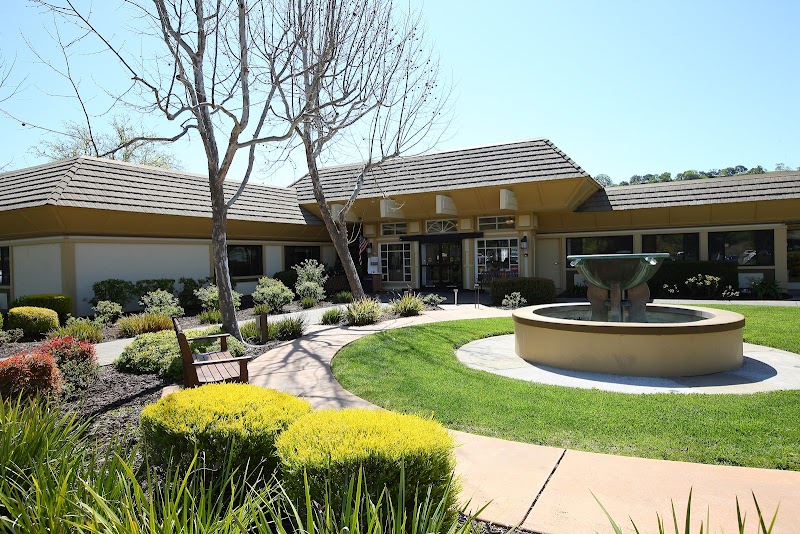
Who Owns and Operates Walnut Creek Skilled Nursing & Rehabilitation Cent?

WALNUT CREEK SKILLED NURSING & REHABILITATION CENT is owned by a for-profit company. For-profit facilities operate as businesses with obligations to shareholders or private owners. The facility is operated by GENERATIONS HEALTHCARE, a chain that manages multiple nursing homes. With 180 certified beds and approximately 143 residents (about 79% occupancy), it is a mid-sized facility located in WALNUT CREEK, California.
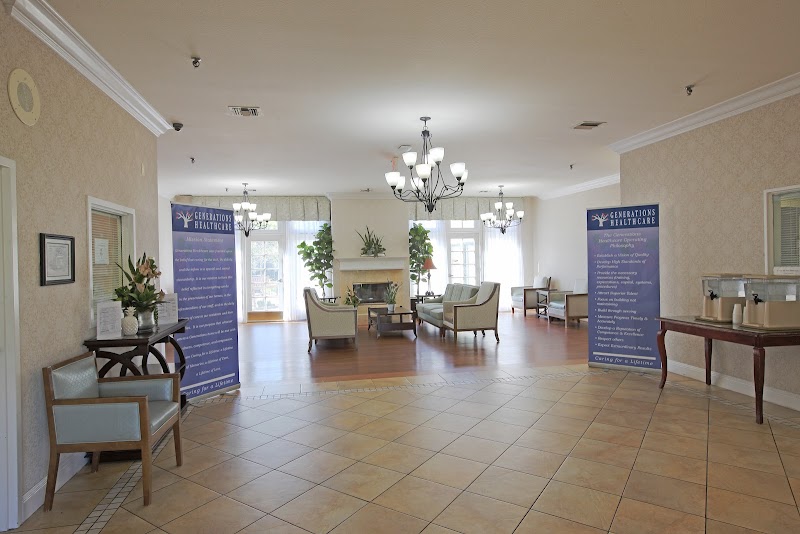
How Does Walnut Creek Skilled Nursing & Rehabilitation Cent Compare to Other California Nursing Homes?

Compared to the 100 nursing homes in California, WALNUT CREEK SKILLED NURSING & REHABILITATION CENT's overall rating (3 stars) is below the state average of 3.1, staff turnover (36%) is near the state average of 46%, and health inspection rating (3 stars) is at the national benchmark.

What Should Families Ask When Visiting Walnut Creek Skilled Nursing & Rehabilitation Cent?

Based on this facility's data, families visiting should ask: "Can I visit during a mealtime to observe dining assistance and food quality?" "How do you handle medical emergencies, and what is your hospital transfer rate?" "Can I speak with family members of current residents about their experience?"

Is Walnut Creek Skilled Nursing & Rehabilitation Cent Safe?

Based on CMS inspection data, WALNUT CREEK SKILLED NURSING & REHABILITATION CENT has a clean safety record: no substantiated abuse findings (meaning no confirmed cases of resident harm), no Immediate Jeopardy citations (the most serious violation level indicating risk of serious injury or death), and is not on the Special Focus Facility watch list (a federal program monitoring the lowest-performing 1% of nursing homes). The facility has a 3-star overall rating and ranks #100 of 100 nursing homes in California. While no facility is perfect, families should still ask about staff-to-resident ratios and recent inspection results during their visit.

Do Nurses at Walnut Creek Skilled Nursing & Rehabilitation Cent Stick Around?

WALNUT CREEK SKILLED NURSING & REHABILITATION CENT has a staff turnover rate of 36%, which is about average for California nursing homes (state average: 46%). Moderate turnover is common in nursing homes, but families should still ask about staff tenure and how the facility maintains care continuity when employees leave.

Was Walnut Creek Skilled Nursing & Rehabilitation Cent Ever Fined?

WALNUT CREEK SKILLED NURSING & REHABILITATION CENT has no federal fines on record. CMS issues fines when nursing homes fail to meet care standards or don't correct problems found during inspections. The absence of fines suggests the facility has either maintained compliance or corrected any issues before penalties were assessed. This is a positive indicator, though families should still review recent inspection reports for the full picture.

Is Walnut Creek Skilled Nursing & Rehabilitation Cent on Any Federal Watch List?

WALNUT CREEK SKILLED NURSING & REHABILITATION CENT is not on any federal watch list. The most significant is the Special Focus Facility (SFF) program, which identifies the bottom 1% of nursing homes nationally based on persistent, serious quality problems. Not being on this list means the facility has avoided the pattern of deficiencies that triggers enhanced federal oversight. This is a positive indicator, though families should still review the facility's inspection history directly.