MISSION PALMS HEALTHCARE CENTER
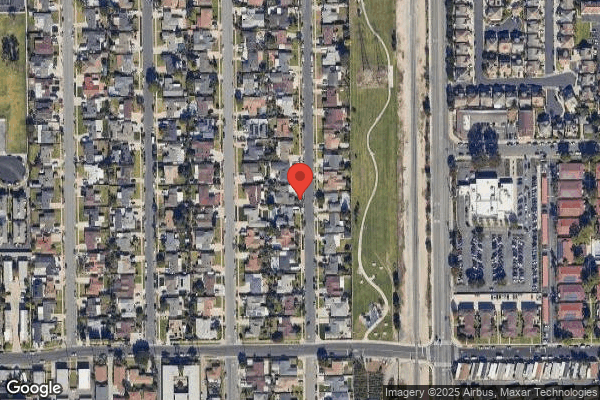
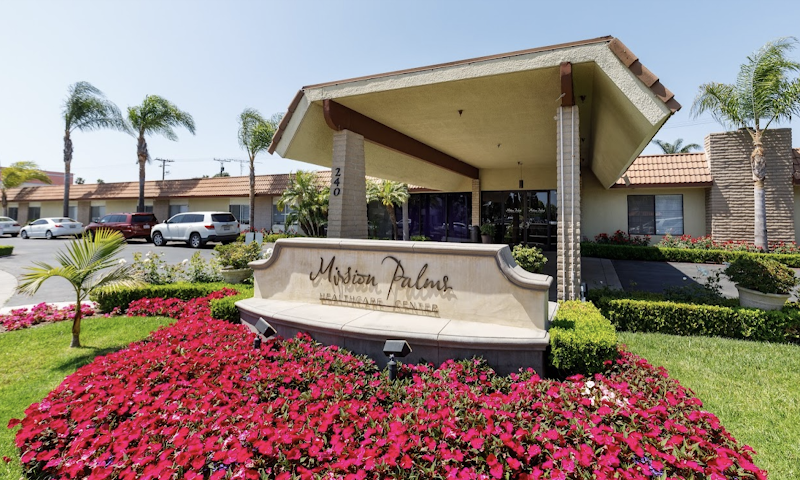
240 HOSPITAL CIRCLE, WESTMINSTER, CA 92683 (714) 892-6686
For profit - Limited Liability company 99 Beds ASPEN SKILLED HEALTHCARE Data: November 2025
Trust Grade
68/100
#406 of 1155 in CA
Last Inspection: February 2025

Within standard 12-15 month inspection cycle. Federal law requires annual inspections.

Overview

Mission Palms Healthcare Center has a Trust Grade of C+, indicating it is slightly above average but still has room for improvement. It ranks #406 out of 1155 facilities in California, placing it in the top half overall, and #29 out of 72 in Orange County, meaning only a few local options are better. Unfortunately, the facility is trending downward, with issues increasing from 3 in 2024 to 14 in 2025. Staffing receives an average rating of 3 out of 5 stars, but with a turnover rate of 24%, it is better than the California average of 38%, indicating staff stability. However, the facility has faced $13,923 in fines, which is concerning as it suggests ongoing compliance issues. Additionally, the nursing home has more registered nurse coverage than many facilities, which is a positive sign for resident care. However, there have been serious incidents, including a case where a resident was slapped by a staff member, violating their rights and affecting their well-being. There were also concerns about medication management, with medications left unattended and expired supplies not disposed of properly. Overall, while there are strengths in staffing and RN coverage, the troubling incidents and increasing issues warrant careful consideration for families researching this facility.

Trust Score
C+
68/100
In California
#406/1155
Top 35%
Safety Record
Moderate
Needs review
Inspections
Getting Worse
3 → 14 violations
Staff Stability
✓ Good
24% annual turnover. Excellent stability, 24 points below California's 48% average. Staff who stay learn residents' needs.
Penalties
✓ Good
$13,923 in fines. Lower than most California facilities. Relatively clean record.
Skilled Nurses
⚠ Watch
Each resident gets only 20 minutes of Registered Nurse (RN) attention daily — below average for California. Fewer RN minutes means fewer trained eyes watching for problems.
Violations
⚠ Watch
39 deficiencies on record. Higher than average. Multiple issues found across inspections.
★★★★☆
4.0
Overall Rating
★★★☆☆
3.0
Staff Levels
★★★★★
5.0
Care Quality
★★★☆☆
3.0
Inspection Score
Stable
2024: 3 issues
2025: 14 issues

The Good

  • 5-Star Quality Measures · Strong clinical quality outcomes
  • Low Staff Turnover (24%) · Staff stability means consistent care
  • Full Sprinkler Coverage · Fire safety systems throughout facility
  • No fines on record
  • Staff turnover is low (24%)

    24 points below California average of 48%

Facility shows strength in quality measures, staff retention, fire safety.

The Bad

Federal Fines: $13,923

Below median ($33,413)

Minor penalties assessed

Chain: ASPEN SKILLED HEALTHCARE

Part of a multi-facility chain

Ask about local staffing decisions and management

The Ugly 39 deficiencies on record

1 actual harm
Mar 2025 1 deficiency
CONCERN (D) 📢 Someone Reported This

A family member, employee, or ombudsman was alarmed enough to file a formal complaint

Potential for Harm - no one hurt, but risky conditions existed

Accident Prevention (Tag F0689)

Could have caused harm · This affected 1 resident

**NOTE- TERMS IN BRACKETS HAVE BEEN EDITED TO PROTECT CONFIDENTIALITY** Based on interview and medical record review, the facility failed to ensure one of two sampled residents (Resident 1) remain fre...

Read full inspector narrative →
**NOTE- TERMS IN BRACKETS HAVE BEEN EDITED TO PROTECT CONFIDENTIALITY** Based on interview and medical record review, the facility failed to ensure one of two sampled residents (Resident 1) remain free from the accident hazards. * The facility failed to ensure Resident 1 was provided with two-person assistance for transfers. This failure had the potential to place the resident at risk for serious injuries. Findings: Medical record review for Resident 1 was initiated on 3/18/25. Resident 1 was admitted to the facility on [DATE]. Review of Resident 1's Fall Risk Screen dated 3/7/25, showed Resident 1 was at high risk for falls and had a history of falls. Review of Resident 1's plan of care showed a care plan problem dated 3/8/25, addressing the resident's altered skin integrity. The interventions included to provide two-person assistance with transfers and positioning. Review of Resident 1's Nurse Weekly Progress Note dated 3/12/25, showed Resident 1 was dependent on the facility's staff for ADL care and required extensive assistance for transfers. On 3/17/25 at 0919 hours, CDPH, L&C Program received a complaint from Family Member 2. Family member 2 alleged CNA 2 forced Resident 1 to walk without using a wheelchair or walking aids on 3/13 and 3/14/25. On 3/18/25 at 1509 hours, an interview was conducted with CNA 2. CNA 2 was asked how she assisted Resident 1 to the bathroom on 3/13/25. CNA 2 stated she held Resident 1's arm while she ambulated to the bathroom. CNA 2 stated Family Member 1 was present and assisted her with taking the resident to the bathroom. On 3/19/25 at 1128 hours, an interview was conducted with Family Member 1. Family Member 1 stated on 3/13/25 at around 1700 hours, Resident 1 wanted to use the bathroom. CNA 2 came and assisted Resident 1 to use the bathroom. Family Member 1 stated CNA 2 held Resident 1's left arm as the resident ambulated to the bathroom. Family Member 1stated Resident 1 was unstable while ambulating with CNA 2 and almost fell. Family Member 1 stated she called the PT the next day and was told Resident 1 was not cleared to ambulate. On 3/19/25 at 1505 hours, an interview and concurrent medical record review was conducted with DON for Resident 1. The DON was informed and acknowledged the above findings.
Feb 2025 13 deficiencies
CONCERN (D)

Potential for Harm - no one hurt, but risky conditions existed

Deficiency F0554 (Tag F0554)

Could have caused harm · This affected 1 resident

**NOTE- TERMS IN BRACKETS HAVE BEEN EDITED TO PROTECT CONFIDENTIALITY** Based on observation, interview, medical record review, and facility P&P review, the facility failed to ensure one of 20 final s...

Read full inspector narrative →
**NOTE- TERMS IN BRACKETS HAVE BEEN EDITED TO PROTECT CONFIDENTIALITY** Based on observation, interview, medical record review, and facility P&P review, the facility failed to ensure one of 20 final sampled residents (Resident 389) was safe to self-administer the medications found at the bedside. * The facility failed to ensure the bottles of ibuprofen (NSAIDs), and Advil (NSAIDs), several tablets of alpha-chymotrypsin (a digestive enzyme supplement), a tube of arthritis relief pain ointment (NSAIDs), and a bottle of dry relief eye drops (used to relieve irritation and discomfort caused by dry eyes) were not at Resident 389's bedside table. Resident 389 stated she administered the medications herself, however, Resident 389 was not assessed for safe self-administration of medications per her admission assessment. This failure had the potential for Resident 389 to administer the medications inaccurately, the risk of adverse reactions from the medications, and negatively affect Resident 389's well-being. Findings: Review of the facility's P&P titled Medication - Self-Administration revised 12/2016 showed the following: - For self-administering residents, the nursing staff member will determine who will be responsible (the resident or the nursing staff member for documenting that medications were taken; - Self-administered medications must be stored in a safe and secured place, which is not accessible by other residents. If safe storage is not possible in the resident's room, the medications of residents permitted to self-administer will be stored on a central medication cart or in the medication room. Nursing will transfer the unopened medication to the resident when the resident requests them; and - Staff member shall identify and give to the charge nurse any medication found at the bedside that are not authorized for self-administration, for return to the resident's family or responsible party. On 2/4/25 at 1355 hours, during the initial tour of the facility, Resident 389 was observed lying in bed. A bottle with foreign language characters and a handwritten note on the bottle showed ibuprofen 400 mg, a bottle of Advil 200 mg, a bottle of dry eye relief eyedrop, blister packs of alpha-chymotrypsin, and a tube of arthritis relief pain ointment were observed on the bedside table. Resident 389 stated she administered the ibuprofen and Advil medications for headache, the alpha-chymotrypsin medication for her stomach, the ointment for her right knee and the eyedrops for her eyes. On 2/4/25 at 1400 hours, an observation for Resident 389 and concurrent interview was conducted with LVN 2. Resident 389 observed lying in bed. A bottle with foreign language characters and a handwritten note on the bottle showed ibuprofen 400 mg, a bottle of Advil 200 mg, a bottle of dry eye relief eyedrop, blister packs of alpha-chymotrypsin, and a tube of arthritis relief pain ointment were observed on the bedside table. LVN 2 verified the above findings. LVN 2 stated the residents were not allowed to have medications at the bedside, and Resident 389 could not take medications by herself. Medical record review for Resident 389 was initiated on 2/4/25. Resident 389 was admitted to the facility on [DATE]. Review of Resident 389's MDS dated [DATE], showed Resident 389 had a moderate cognitive impairment, and impairment on both upper extremities. Review of Resident 389's Admission/ readmission Screen and Baseline Plan 4.1 dated 1/18/25, showed Resident 389 did not request to self-administer her medications. Review of Resident 389's Order Summary Report dated 2/5/25, did not show the physician's orders to administer the ibuprofen, Advil, eyedrops, alpha-chymotrypsin, and arthritis relief pain ointment medications. On 2/5/25 at 1535 hours, an interview and concurrent medical record review for Resident 389 was conducted with RN 3. RN 3 verified the above findings. RN 3 stated the residents were assessed upon admission whether they wanted to and could self-administer any medications. RN 3 stated if a resident wanted to self-administer a medication, then a full assessment would be conducted to determine whether the resident could self-administer the medications safely. RN 3 verified Resident 389 did not have the physician's orders to administer the ibuprofen, Advil, eyedrops, alpha-chymotrypsin, and arthritis relief pain ointment medications, and to self-administer any medications. RN 3 verified Resident 389 was not assessed if she was safe to self-administer the medications.
CONCERN (D)

Potential for Harm - no one hurt, but risky conditions existed

Quality of Care (Tag F0684)

Could have caused harm · This affected 1 resident

**NOTE- TERMS IN BRACKETS HAVE BEEN EDITED TO PROTECT CONFIDENTIALITY** Based on interview, medical record review, and facility P&P review, the facility failed to provide the necessary care and servic...

Read full inspector narrative →
**NOTE- TERMS IN BRACKETS HAVE BEEN EDITED TO PROTECT CONFIDENTIALITY** Based on interview, medical record review, and facility P&P review, the facility failed to provide the necessary care and services to attain or maintain the highest practicable well-being for two of three final sampled residents (Residents 7 and 685) reviewed for falls. * The facility failed to ensure Resident 685's post fall neurological assessment was accurately completed after the resident had an unwitnessed fall on 2/4/25. * The facility failed to ensure Resident 7's post fall neurological assessment was accurately completed after the resident had a fall on 1/23/25. These failures had the potential for a delay in providing care to these residents. Findings: 1. Review of the facility's P&P titled Neurological Assessment revised October 2010 showed under Documentation Information, the assessment data obtained during the procedure, should be recorded in the resident's medical record. Review of the facility's P&P titled Charting and Documentation revised July 2017 showed: - The medical record should facilitate communication between the interdisciplinary team regarding the resident's condition and response to care. - To ensure consistency in charting and documentation of the resident's clinical record, only facility approved abbreviations and symbols may be used when recording entries in the resident's clinical record. Review of the facility's P&P titled Falls Management Program revised January 2019 showed a neurocheck will be initiated by the Licensed Nurser on unwitnessed fall and when there is identified head injury. Medical record review for Resident 685 was initiated on 2/7/25. Resident 685 was admitted to the facility on [DATE]. Review of Resident 685's progress note dated 2/4/25 at 1445 hours, showed Resident 685 had an alleged fall earlier during the day. Resident 685 was observed to have a bump with skin discoloration to the left side of his forehead. Review of Resident 685's Neurological Assessment initiated on 2/4/25 at 1430 hours, showed the following key code: - numbers 1 through 6 (with different sizes of dots and circles correlating next to the number) for the pupil size; and - S for sluggish, B for brisk and N for nonreactive for the reaction. Under the R (right) Pupil Size/ Reaction section showed S/S on the following dates/times: - 2/4/25 at 1430 hours; - 2/4/25 at 1445 hours; - 2/4/25 at 1500 hours; - 2/4/25 at 1515 hours; - 2/4/25 at 1545 hours; and - 2/4/25 at 1615 hours. However, review of Resident 685's medical record showed there were no interventions implemented to address the sluggish right pupil reaction documented on the dates/times listed above. In addition, the entry for the Upper Extremity and Lower Extremity section on the assessment for 2/5/25 at 0515 hours, was blank. On 2/7/25 at 1007 hours, an interview and concurrent medical record review of Resident 685's post fall Neurological Assessment initiated on 2/4/25, was conducted with RN 2. RN2 acknowledged and verified the above findings. On 2/7/25 at 1619 hours, an interview was conducted with the Administrator and DON. The Administrator and DON acknowledged and verified the above findings. 2. Review of facility's P&P titled Falls Management Program revised on 1/2019 showed the following: - The Licensed Nurse will initiate a plan of care within 24 hours from admission or readmission on residents identified as high risk for fall; - A neuro-check will be initiated by the Licensed Nurse on unwitnessed fall and when there is identified head injury; and - 72 hours observation of the resident post fall will be initiated by the Licensed Nurse. Medical record review for Resident 7 was initiated on 2/5/25. Resident 7 was admitted to the facility on [DATE]. Review of Resident 7's H&P examination dated 10/31/24, showed Resident 7 could make her needs known but could not make medical decisions. Resident 7's surrogate decision maker was her daughter. Review of Resident 7's MDS dated [DATE], showed Resident 7's BIMS score was 14, indicating intact cognition. a. Review of Resident 7's Neurological assessment dated [DATE], showed the key code for Pupil size was from 1-6 and Pupil reaction was Sfor Sluggish, B' for Brisk and N for Nonreactive. Resident 7's Neurological Assessment results showed the following: - on 1/23/25, from 1445-1500 hours, the Right Pupil Size was documented with the letter B (instead of a number from 1 through 6) and the Right Pupil Reaction documented with the letter S; - on 1/23/25, from 1600-2030 hours, the Right Pupil Size was documented with the letter B (instead of a number from 1 through 6); and - on 1/23/25, from 1445-2030 hours, the Left Pupil Size was documented with with letter B (instead of a number from 1 through 6). Review of Resident 7's medical record failed to show documented interventions implemented to address the resident's sluggish right pupil reaction documented on 1/23/25. On 2/5/25 at 1140 hours, an interview and concurrent medical record review was conducted with LVN 2. Resident 7's Neurological Assessment was reviewed with LVN 2. LVN 2 stated she was the licensed nurse assigned to Resident 7 when the resident fell on 1/23/25. LVN 2 verified she completed Resident 7's Neurological Assessment on 1/23/25. LVN 2 verified the above findings. On 2/5/25 at 1144 hours, an interview and concurrent medical record review was conducted with RN 3. RN 3 reviewed Resident 7's Neurological Assessment and verified the above findings. RN 3 stated the Neurological assessment results and documentation must be accurate and correspond to the key code on the assessment. On 2/7/25 at 1353 hours, an interview and concurrent medical record review was conducted with the DON. The DON stated he checked all the post fall assessments and documentation for accuracy and completion. The DON verified the inaccurate documentation on Resident 7's Neurological assessment dated [DATE]. The DON was informed and acknowledged the above findings.
CONCERN (D)

Potential for Harm - no one hurt, but risky conditions existed

Accident Prevention (Tag F0689)

Could have caused harm · This affected 1 resident

**NOTE- TERMS IN BRACKETS HAVE BEEN EDITED TO PROTECT CONFIDENTIALITY** Based on observation, interview, and facility P&P review, the facility failed to ensure the necessary care and services were pro...

Read full inspector narrative →
**NOTE- TERMS IN BRACKETS HAVE BEEN EDITED TO PROTECT CONFIDENTIALITY** Based on observation, interview, and facility P&P review, the facility failed to ensure the necessary care and services were provided to prevent further falls and/or injuries for one two of three final sampled residents (Resident 7) reviewed for falls. * The facility failed to implement Resident 7's care plan interventions to address the resident's risk for falls, including the resident fall risk monitoring, star sticker to the resident's room, and colored arm band. This failure post the risk for the resident to sustain further falls and/or injuries. Findings: Review of facility's P&P titled Managing Falls and Fall Risk revised on 3/2018 showed the staff member will monitor and document each of the resident's response to interventions intended to reduce falling or the risks of falling. Medical record review for Resident 7 was initiated on 2/5/25. Resident 7 was admitted to the facility on [DATE]. Review of Resident 7's H&P examination dated 10/31/24, showed Resident 7 could make her needs known but could not make medical decisions. Resident 7's surrogate decision maker was her daughter. Review of Resident 7's MDS dated [DATE], showed Resident 7's BIMS score was 14, indicating intact cognition. a. Review of Resident 7's plan of care showed a care plan problem dated 1/23/25, addressing the resident's high risk for falls and injury related to her status post fall. The interventions showed to condcuct the facility rounds every two hours by the designated staff. Reviewed Resident 7's Fall Risk Monitoring Table for monitoring the resident showed multiple missing documentation from the licensed nurses and CNAs on the following dates and times: - dated 1/24/25, from 1400-0000 hours; - dated 1/26/25, from 1400-0000 hours; - dated 1/27/25, from 1400-0000 hours; - dated 1/28/25, from 1600-0000 hours; - dated 1/29/25, from 1600-0000 hours; - No fall monitoring table form for 1/30/25; - No fall monitoring table form for 1/31/25; - dated 2/1/25, from 1600-0000 hours; - dated 2/2/25, from 1600-0000 hours; - dated 2/3/25, from 0000-0000 hours; - No fall monitoring table form for 2/4/25; and - No fall monitoring table form for 2/5/25. On 2/5/25 at 1150 hours, an interview and concurrent medical record review was conducted with LVN 2. LVN 2 verified the above findings. LVN 2 stated the post fall monitoring for the residents must be completed and documented every two hours for three months. LVN 2 stated the Fall Risk Monitoring Table forms were kept only in the binder and placed in the nurse's station. When LVN 2 was asked who was responsible for monitoring the resident's post fall and documenting in the Fall Risk Monitoring Table, LVN 2 stated the assigned CNAs and licensed nurses were responsible for doing the rounds and completing the form. LVN 2 stated she was supposed to check before her shift ended if the Fall Monitoring Table was completed. LVN 2 further stated if the Fall Risk Monitoring Table was not signed, then the form was incomplete. b. Review of Resident 7's progress notes did not show the post fall monitoring on the following dates and shifts: - on 1/24, 1/25, and 1/26/25, for the 7-3 shift (0700-1500 hours). On 2/5/25 1206 hours, a follow up interview and concurrent medical record review was conducted with LVN 2. LVN 2 verified the above findings. LVN 2 stated the post fall monitoring and documentation from the licensed nurses must be documented on the resident's progress notes every shift for 72 hours. c. On 2/5/25 at 1100 hours, an interview as conducted with Resident 7. Resident 7 stated she had a fall on 1/23/25, inside the restroom, when she tried to stand up by herself from the wheelchair and hit her face. Resident 7 stated the wheelchair's brakes were not locked. Review of Resident 7's plan of care showed a care plan problem dated 1/23/25, addressing the resident's high risk for fall and injury related to her status post fall. The interventions included the following: - Star sticker will be placed at the resident's name under the room identifier to alert staff of the high risk for fall; and - Colored arm band will be applied by the nursing staff to the resident identified as high risk for fall. On 2/5/25 at 1222 hours, an observation, interview, and concurrent medical record review was conducted with LVN 2 for Resident 7. There was no star shaped sticker observed next to Resident 7's name on the door and the resident did not have a colored arm band on. LVN 2 verified the findings. When LVN 2 reviewed Resident 7's care plan addressing the resident's fall on 1/23/25, LVN 2 verified the care plan interventions included to place a colored arm band on the resident and a star sticker on the resident's name by the door. On 2/7/25 at 1353 hours, an interview and concurrent medical record review was conducted with the DON. The DON stated he checked all the post fall assessments and documentations for accuracy and completion. The DON further stated the facility's fall prevention program was to start the monitoring the resident every two hours for three months, the next day after the fall and the nursing staff would document on the form after every two hours. The DON verified Resident 7's Fall Risk Monitoring Table had multiple missing documentations. The DON was informed and acknowledged the above findings.
CONCERN (D)

Potential for Harm - no one hurt, but risky conditions existed

Deficiency F0692 (Tag F0692)

Could have caused harm · This affected 1 resident

**NOTE- TERMS IN BRACKETS HAVE BEEN EDITED TO PROTECT CONFIDENTIALITY** Based on interview, medical record review, and the facility P&P review, the facility failed to maintain the acceptable parameter...

Read full inspector narrative →
**NOTE- TERMS IN BRACKETS HAVE BEEN EDITED TO PROTECT CONFIDENTIALITY** Based on interview, medical record review, and the facility P&P review, the facility failed to maintain the acceptable parameters for fluid intake for one of one final sampled resident (Resident 9) reviewed for hydration status. * The facility failed to ensure Resident 9 was monitored when her fluid intake was above the parameter as documented by the CNAs. In addition, the facility failed to ensure the I&O Record documentation was accurate. This failure had the potential for Resident 9 to have fluid overload and negatively impact the resident's well-being. Findings: Review of the facility's P&P titled Intake and Output revised date 10/12/20, under the Procedures for Measuring Intake section, showed the following: - The CNA shall measure and record oral fluids taken by the resident during meals and during care; - The CNA shall inquire from the resident, family members, and/or visitors if the resident has consumed additional fluids and record the volume; - The licensed nurse shall measure oral fluids taken by the resident during medication pass; and - The licensed nurse shall total the oral fluids recorded by the CNA, consumed during medication pass, and IV fluids received during the shift and record total volume on intake and output record. In addition, under the Weekly Review section, showed the intake and output record shall be reviewed by a designated licensed nurse on a weekly basis to determine adequate and fluid balance, and deficiencies in fluid intake or fluid balance shall be reported to the physician by the licensed nurse. Medical record for Resident 9 was initiated on 2/5/25. Resident 9 was admitted to the facility on [DATE]. Review of Resident 9's H&P examination dated 10/15/24, showed Resident 9 had the capacity to understand and make decision. Review of Resident 9's Order Summary Report showed a physician's order dated 1/16/25, for a fluid restriction of 1000 ml/ day. The nursing department was to provide a total of 280 ml with a breakdown of 120 ml in the day shift, 120 ml in the evening shift, and 40 ml in the NOC shift. The dietary department was to provide a total of 720 ml with a breakdown of 120 ml for breakfast, 300 ml for lunch, and 300 ml for dinner. a. Review of Resident 9's Documentation Survey Report v2 form for January and February 2025 showed Resident 9's fluid intake was more than the allowed 720 ml for the dietary department as shown in the following daily totals for Resident 9's fluid intake: - On 1/28/25, Resident 9's fluid intake from her meals was 950 ml; - On 1/29/25, Resident 9's fluid intake from her meals was 1160 ml; - On 2/1/25, Resident 9's fluid intake from her meals was 910 ml; - On 2/2/25, Resident 9's fluid intake from her meals was 950 ml; - On 2/4/25, Resident 9's fluid intake from her meals was 1260 ml; and - On 2/5/25, Resident 9's fluid intake from her meals was 960 ml. b. Review of Resident 9's MAR for January and February 2025 showed the documentation of Resident 9's fluid intake was marked by checks and initials. The MAR did not show Resident 9's actual fluid intake from the nursing department. c. Review of Resident 9's Intake and Output Records for January and February 2025 did not show Resident 9's total daily fluid intakes from the fluids consumed during the meals as recorded by the CNAs and the fluids consumed during the medication administration. The total daily fluid intakes from the dietary and nursing departments were not accurate as shown in the following: - On 1/28/25, the total daily fluid intake recorded was 960 ml; - On 1/29/25, the total daily fluid intake recorded was 960 ml; - On 2/1/25, the total daily fluid intake recorded was 910 ml; and - On 2/2/25, the total daily fluid intake recorded was 960 ml. On 2/6/25 at 0837 hours, an interview for Resident 9 was conducted with CNA 9. When asked about Resident 9's fluid restriction, CNA 9 stated Resident 9's fluid limit from her meals was 1500 ml per day but she was not sure how much the resident was allowed per meal. CNA 9 stated they documented Resident 9's fluid intake from her meals in the electronic health record. On 2/6/25 at 0844 hours, an interview and medical record review for Resident 9 was conducted with LVN 2. When asked about the documentation of Resident 9's fluid intake, LVN 2 stated the nursing department documented Resident 9's fluid intake in the Intake and Output Record. When asked if the documentation in Resident 9's Intake and Output Record was only for the nursing department, LVN 2 stated it was for both the fluid intake from the medication administration, as documented by the LVNs, and from the meal intake, as documented by the CNAs. LVN 2 stated the nursing department had a list that they followed, to which she showed a print-out of Resident 9's fluid restriction breakdown, showing 300 ml for the nursing department and 700 ml for the dietary department. LVN 2 verified the fluid restriction breakdown printed on Resident 9's Intake and Output Record did not match the fluid restriction breakdown as per the physician's order. On 2/6/25 at 0858 hours, an interview and medical record review for Resident 9 was conducted with RN 4. RN 4 verified the above findings. RN 4 verified the CNAs documentation for Resident 9's fluid intake was more than the dietary fluid limit for the resident. RN 4 also verified Resident 9's fluid intake was more than the daily limit of 1000 ml/day on 1/29 and 2/4/25, as documented by the CNAs. RN 4 was not able to show documented evidence the physician was notified nor Resident 9 was monitored for non-compliance and for fluid overload.
CONCERN (D)

Potential for Harm - no one hurt, but risky conditions existed

Deficiency F0757 (Tag F0757)

Could have caused harm · This affected 1 resident

**NOTE- TERMS IN BRACKETS HAVE BEEN EDITED TO PROTECT CONFIDENTIALITY** Based on interview, medical record review, and facility P&P review, the facility failed to provide adequate monitoring for the s...

Read full inspector narrative →
**NOTE- TERMS IN BRACKETS HAVE BEEN EDITED TO PROTECT CONFIDENTIALITY** Based on interview, medical record review, and facility P&P review, the facility failed to provide adequate monitoring for the signs and symptoms of bleeding to ensure two of four final sampled residents (Residents 39 and 84) reviewed for anticoagulant (prevents blood clots) medication use were free from unnecessary drugs. * Residents 39 and 44 were administered with apixaban (Eliquis, blood thinner medication) without monitoring for the signs and symptoms of bleeding. These failures had the potential for the residents to develop significant side effects of bleeding and negatively affect the residents' health condition and well-being. Findings: According to DailyMed, the most common clinically adverse effect of the Eliquis medication was the risk of serious and potentially fatal bleeding. Review of the facility's P&P titled Anticoagulation - Clinical Protocol revised November 2018 showed the facility staff member should assess for any signs or symptoms related to adverse drug reactions due to the medications alone or in combination with other medication. The facility staff member should assess for the evidence of effects related to the subtherapeutic or greater than therapeutic drug level related to the particular drug, for example, a resident with an above therapeutic level of an anticoagulation medication should be assessed for bleeding. 1. Medical record review for Resident 39 was initiated on 2/4/25. Resident 39 was readmitted to the facility on [DATE]. Review of Resident 39's H&P examination dated 1/30/25, showed Resident 39 could make needs known but could not make medical decisions. Review of Resident 39's Order Summary Report showed a physician's order dated 1/26/25, to administer apixaban five mg one tablet by mouth two times a day for AFib (atrial fibrillation, a heart condition causing irregular heartbeat), to start on 1/27/25. Review of Resident 39's MAR for January and February 2025 showed Resident 39 received the apixaban medication on the following dates/times: - on 1/27 to 1/31/25 at 0900 and 1700 hours; - on 2/1 to 2/3/25 at 0900 and 1700 hours; and - on 2/4/25 at 0900 hours. Review of Resident 39's Care Plan initiated on 1/26/25, showed a care plan focus problem addressing Resident 39's high risk for signs and symptoms of bleeding related anticoagulation therapy due to atrial fibrillation. The interventions included the following: - Observe and report for signs and symptoms of bruising, bleeding of the gums, coffee ground emesis, tarry stool, and hematuria (blood in the urine); and - Report new area of bruising to the physician and responsible party/surrogate decision maker. Further review of Resident 39's medical record did not show documented evidence Resident 39 was being monitored for the signs and symptoms of bleeding. On 2/5/24 at 1450 hours, an interview and concurrent medical record review was conducted with RN 3. RN 3 stated the apixaban medication was a blood thinner and could cause bleeding. RN 3 stated the signs and symptoms of bleeding included hematuria, nosebleed, bruising, bloody stool, and gum bleeding. RN 3 stated it was very important for the licensed nurses to assess the residents who were receiving blood thinner for these signs and symptoms because it could cause fatal injury to the residents. RN 3 further stated once the resident received an order for an anticoagulant medication, the monitoring for signs and symptoms of bleeding was automatically ordered as well and it would show in the MAR, which would remind the licensed nurses to assess the residents for the signs and symptoms of bleeding. RN 3 verified there was no monitoring documented to show Resident 39 was assessed for signs and symptoms of bleeding related to the apixaban medication use. On 2/7/25 at 1610 hours, the DON was informed and acknowledged the above findings for Resident 39. 2. Medical record review for Resident 84 was initiated on 2/5/25. Resident 84 was admitted to the facility on [DATE]. Review of Resident 84's Diagnosis Information, showed Resident 84 had acute embolism (blockage of a blood vessel) and thrombosis (blood clot) to the left femoral vein. Review of Resident 84's MDS dated [DATE], showed Resident 84 had a BIMS score of seven, indicating severe cognitive impairment. Review of Resident 84's Order Summary Report dated 2/7/25 showed the following orders: - dated 1/12/25, to administer Eliquis (blood thinner) 5 mg oral tablet two times a day for DVT (deep vein thrombosis) to the left leg for three months and to start 1/20/25. - dated 2/6/25, to check for sign of bleeding secondary to anticoagulant intake and call MD if signs of bleeding are present - gum bleeding, coffee ground emesis, hematuria, bruising, epistaxis, every shift. Review of Resident 84's MAR for February 2025 showed: - Resident 84 was administered Eliquis 5 mg twice a day from 2/1 to 2/6/25. - Resident 84 was being monitored for signs of bleeding every shift starting on 2/6/25. Review of Resident 84's plan of care showed a care plan dated 1/12/25, addressing Resident 84's high risk for signs and symptoms of bruising and bleeding related to the anticoagulation therapy for the left leg DVT. The interventions included, to observe for signs and symptoms of bruising, bleeding of the gums, coffee ground emesis, tarry stools and hematuria, and to report new area of bruising to the MD and responsible party. On 2/6/25 at 1035 hours, an interview was conducted with LVN 4. When LVN 4 was asked on what was monitored if a resident was on anticoagulant medication, LVN 4 stated he would monitor for bleeding and bruising. LVN 4 further stated there should be a physician's order to monitor for bleeding and bruising related to the anticoagulant medication. LVN4 acknowedged and verified Resident 84 had no physician's order for monitoring the signs and symptoms of bleeding from 1/12 to 2/5/25. On 2/7/25 on 1619 hours, an interview was conducted with the DSD. When the DSD was asked if there were inservices provided to the licensed nurses regarding the monitoring of the residents on anticoagulant medication, the DSD stated no. On 2/7/25 at 1619 hours, an interview was conducted with the Administrator and DON . The Administrator and DON were informed and acknowledged the above findings.
CONCERN (D)

Potential for Harm - no one hurt, but risky conditions existed

Medication Errors (Tag F0758)

Could have caused harm · This affected 1 resident

**NOTE- TERMS IN BRACKETS HAVE BEEN EDITED TO PROTECT CONFIDENTIALITY** Based on interview and medical record review, the facility failed to ensure one of five final sampled residents (Resident 9) rev...

Read full inspector narrative →
**NOTE- TERMS IN BRACKETS HAVE BEEN EDITED TO PROTECT CONFIDENTIALITY** Based on interview and medical record review, the facility failed to ensure one of five final sampled residents (Resident 9) reviewed for unnecessary medications was free from the unnecessary psychotropic medication. * The facility failed to ensure the monitoring of Resident 9's meal intake related to the use of mirtazapine (antidepressant medication) medication was accurate. In addition, the facility failed to ensure the monthly behavior summary related to the use of mirtazapine medication was completed. These failures had to potential to result in unnecessary use and ineffective monitoring for the use of psychotropic medication that could negatively affect Resident 9's well-being. Findings: Medical record review for Resident 28 was initiated on 2/4/25. Resident 9 was admitted to the facility on [DATE]. Review of Resident 9's H&P examination dated 10/15/24, showed Resident 9 had the capacity to understand and make decisions. Review of Resident 9's Order Summary Report showed the following physician's orders: - dated 10/15/24, to administer mirtazapine 7.5 mg one tablet by mouth at bedtime for depression manifested by poor oral intake/ eats less than 76% of meals; and - dated 10/16/24, to monitor and record meal intake percentage for breakfast, lunch, and dinner. Review of Resident 28's MAR for January and February 2025 showed Resident 28 was administered the mirtazapine medication on 1/1 to 2/5/25 at 2100 hours. Further review of the MAR for January 2025 showed Resident 28's meal intake were less than 76% as follows: - Resident 28 consumed 15% for dinner on 1/25/25; - Resident 28 consumed 40% for dinner on 1/24/25; - Resident 28 consumed 50% for breakfast and lunch on 1/1, 1/6 and 1/7/25, and for dinner on 1/5, 1/8, 1/14, 1/23, 1/26 and 1/31/25; - Resident 28 consumed 60% for breakfast and lunch on 1/25/25; - Resident 28 consumed 70% for breakfast on 1/4 and 1/18/25, for lunch on 1/4, 1/17, 1/18, 1/22, and 1/29/25, and for dinner on 1/3, 1/6, 1/9, 1/12, 1/15, 1/16, 1/17, 1/27, 1/28, and 1/29/25; and - Resident 28 consumed 75% for breakfast on 1/2, 1/3, 1/8,1/9, 1/10, 1/11, 1/12, 1/17, 1/20, 1/21, 1/24, 1/26, 1/27, 1/28, 1/29, 1/30, and 1/31/25, for lunch on 1/3, 1/8, 1/10, 1/11, 1/14, 1/26, 1/28, 1/30, and 1/31/25, and for dinner on 1/10, 1/11, and 1/30/25. Review of Resident 28's Documentation Survey Report v2 for January 2025 showed the following: - Resident 28 consumed 26-50% for lunch on 1/8, 1/11, 1/12, 1/15, 1/18, 1/22, and 1/26/25, and for dinner on 1/5, 1/8, 1/14, 1/15, 1/17, 1/23, 1/24, 1/25, 1/26, and 1/30/25; and - Resident 28 consumed 51-75% for breakfast on 1/3, 1/5, 1/7, 1/8, 1/9, 1/16, 1/22, 1/26, and 1/31/25, for lunch on 1/4, 1/6, 1/7, 1/9, 1/13, 1/16, 1/20, 1/24, 1/30, and 1/31/25, and for dinner on 1/2, 1/3, 1/6, 1/9, 1/10, 1/12, 1/16, 1/18, 1/21, 1/27, 1/28, 1/29, and 1/31/25. a. Resident 28's meal intake documentation by the licensed nurses as shown in the MAR for January 2025 did not match the documentation by the CNAs as shown in the Documentation Survey Report v2 for January 2025 . b. Review of Resident 28's Psychotropic Summary Sheet for January 2025 showed the monthly behavior summary related to the use of the mirtazapine medication was not completed . On 2/6/25 at 0858 hours, an interview and concurrent medical record review for Resident 28 was conducted with RN 4. RN 4 verified the above findings.
CONCERN (D)

Potential for Harm - no one hurt, but risky conditions existed

Deficiency F0761 (Tag F0761)

Could have caused harm · This affected 1 resident

**NOTE- TERMS IN BRACKETS HAVE BEEN EDITED TO PROTECT CONFIDENTIALITY** Based on observation, interview, and facility P&P review, the facility failed to ensure for the safe storage of the medications ...

Read full inspector narrative →
**NOTE- TERMS IN BRACKETS HAVE BEEN EDITED TO PROTECT CONFIDENTIALITY** Based on observation, interview, and facility P&P review, the facility failed to ensure for the safe storage of the medications and supplies. * The facility failed to ensure Medication Cart F was not left unlocked and unattended. In addition, the facility failed to ensure the containers of the bleach wipes were not stored with a box of tuberculin syringe. * The facility failed to ensure the vitamin A&D ointment (barrier cream/ointment) was not kept at Resident 9's bedside. * The facility failed to ensure the eye and rectal medications were not stored together. These failures had the potential to result in the unsafe administration of medications, and cross-contamination of the medications. Findings: 1. Review of the facility's P&P titled Storage of Medications revised 4/2007 showed the following: - Antiseptics, disinfectants, and germicides used in any aspect of resident care must have legible, distinctive labels that identify the contents and the directions for use, and shall be stored separately from regular medications; and - Compartments (including, but not limited to, drawers, cabinets, rooms, refrigerators, carts, and boxes) containing drugs and biologicals shall be locked when not in use, and trays or carts used to transport such items shall not be left unattended if open or otherwise potentially available to others. On 2/5/25 at 1140, 1145, and 1147 hours, Medication Cart F parked in the hallway was observed unlocked and unattended. The facility staff member, residents, and visitors were observed passing by. On 2/5/25 at 1148 hours, an inspection of Medication Cart F and concurrent interview was conducted with the IP. Medication Cart F parked in the hallway was observed unlocked and unattended. The IP stated Medication Cart F was used as the infection control cart. The IP stated she took out isolation signages from the medication cart and she forgot to lock it. Upon further inspection, Medication Cart F was observed with a box of syringes with needles, a box of sterile bordered gauze, alcohol prep pads, and specimen vials. In addition, two containers of bleach wipes were observed stored with a box of tuberculin syringes. The IP verified the above findings. 2. On 2/4/25 at 1438 hours, during the initial tour of the facility, Resident 9 was observed awake and lying in bed. A packet of vitamin A&D ointment was observed on Resident 9's bedside table. Resident 9 stated she did not know about the ointment. Medical record review for Resident 9 was initiated on 2/4/25. Resident 9 was admitted to the facility on [DATE]. Further review of Resident 9's medical record did not show a physician's order to apply vitamin A&D ointment. On 2/4/25 at 1500 hours, an observation and concurrent interview for Resident 9 was conducted with LVN 2. A packet of vitamin A&D ointment was observed on Resident 9's bedside table. LVN 2 verified the above findings. LVN 2 stated the vitamin A&D ointment was a cream used for the resident's dry skin and it was applied by the CNAs. 3. Review of the facility's P&P titled Storage of Medications revised 4/2007 showed the drugs should be stored in an orderly manner in cabinets, drawers, carts, or automatic dispensing systems. On 2/5/25 at 1301 hours, an observation of the Medication Cart A was conducted with LVN 5. The last bottom drawer of Medication Cart A was observed with cyclosporine ophthalmic emulsion (eye medication) stored together with bisacodyl suppository (medication to help bowel movement inserted in the rectum). LVN 5 stated the two medications should not be stored together. On 2/5/25 at 1606 hours, an interview was conducted with the DON. The DON acknowledged the eye medication, and the rectal medication should not be stored together in one drawer.
CONCERN (D)

Potential for Harm - no one hurt, but risky conditions existed

Menu Adequacy (Tag F0803)

Could have caused harm · This affected 1 resident

Based on observation, interview, facility document review, and facility P&P review, the facility failed to ensure the menus were followed. * The pureed mixed vegetable was not the same as the regular ...

Read full inspector narrative →
Based on observation, interview, facility document review, and facility P&P review, the facility failed to ensure the menus were followed. * The pureed mixed vegetable was not the same as the regular mixed vegetable with tofu. * The pureed beef was not served with a ladle of sauce per the recipe. These failures had the potential for residents on pureed diet not receiving adequate nutrition, and negatively affect their well-being. Findings: 1. Review of the facility's Order Listing Report dated 2/4/25, showed 17 of 89 residents receiving foods prepared in the kitchen were on pureed diet. Review of the facility's P&P titled Menus revised 10/2017 showed deviations from posted menus are recorded (including the reason for the substitution and/or deviation) and archived. On 2/6/25 at 1018 hours, a pureed food preparation was observed with [NAME] 1, with the DSS present. [NAME] 1 was observed preparing the pureed mixed vegetables from a pan containing cooked broccoli, zucchini and carrots. There were cauliflowers nor tofu observed in the pan of cooked mixed vegetables. On 2/6/25 at 1145 hours, during a trayline observation, a pan of regular textured mixed vegetables was observed on the trayline assembly table. The pan of regular textured mixed vegetables included cauliflower, and slices of fried tofu, and without zucchini. The DSS verified the pureed mixed vegetables were not the same as the regular mixed vegetables. 2. Review of the recipe for the Stir Fried Beef with [NAME] Peppers, Pureed dated 5/29/19, showed to serve using #6 scoop and top with one ounce of ladle of sauce. On 2/6/25 at 1145 hours, during a trayline observation, the pureed beef was not served with a ladle of sauce per the recipe. The DSS verified the above findings.
CONCERN (D)

Potential for Harm - no one hurt, but risky conditions existed

Deficiency F0813 (Tag F0813)

Could have caused harm · This affected 1 resident

Based on observation, interview, facility document review, and facility P&P review, the facility failed to ensure the facility staff assisted the residents regarding the use and storage of food brough...

Read full inspector narrative →
Based on observation, interview, facility document review, and facility P&P review, the facility failed to ensure the facility staff assisted the residents regarding the use and storage of food brought in by the family member or visitors for the residents. * The facility failed to ensure the safe handling and storage of food from outside sources to be included in the facility's P&P. This failure had the potential to cause foodborne illnesses to the medically vulnerable resident population who consume food brought from outside sources. Findings: Review of the CMS S&C-09-39 Food Procurement, and Self-Determination and Participation dated 5/29/09, showed the following: - The residents have the right to choose to accept food from visitors, family, friends, or other guests according to their rights to make choices; and - The facility has the responsibility under the food safety regulation to help visitors to understand safe food handling practices such as not holding or transporting foods containing perishable ingredients at temperatures above 41 degrees Fahrenheit. Review of the facility's P&P titled Foods Brought by Resident, Family member and Visitor dated 3/2010 showed the following: -Non-perishable foods permitted to be retained in the resident's room must be stored in plastic containers with tight-fitting lids, except fresh fruit; and -Resident is requested to eat perishable food brought by the resident, family members/ visitors right away, and left over will be disposed as indicated. On 2/5/25 at 0855 hours, an interview was conducted with RN 3. When asked about the foods brought by the residents, resident's family members, and visitors from outside sources, RN 3 stated the facility did not have a separate refrigerator used for the food items from outside sources. RN 3 stated the residents, family members, and visitors could ask the kitchen to store any food items from outside sources. On 2/5/25 at 0858 hours, an interview was conducted with the DSS. When asked about the foods brought by the residents, resident's family members, and visitors from outside sources, the DSS stated the residents, resident's family members, and visitors could bring food from home, and the kitchen staff member could store the food from home in the reach-in refrigerator in the kitchen. The DSS stated there was a separate rack in the reach-in refrigerator to be used to store the food from home, however, it needed to be served right away, and the facility did not do overnight storage of foods brought by residents, resident's family members, and visitors from outside sources. On 2/6/25 at 1500 hours, an interview and concurrent facility P&P review was conducted with the DSS and RD 1. The DSS and RD 1 verified the facility's P&P on Foods Brought From Home did not show the safe food handling and safe storage in the reach-in refrigerator.
CONCERN (E)

Potential for Harm - no one hurt, but risky conditions existed

Respiratory Care (Tag F0695)

Could have caused harm · This affected multiple residents

**NOTE- TERMS IN BRACKETS HAVE BEEN EDITED TO PROTECT CONFIDENTIALITY** 6. Review of the facility's P&P titled Respiratory Therapy - Prevention of Infection dated 11/15/23, under the Infection Control...

Read full inspector narrative →
**NOTE- TERMS IN BRACKETS HAVE BEEN EDITED TO PROTECT CONFIDENTIALITY** 6. Review of the facility's P&P titled Respiratory Therapy - Prevention of Infection dated 11/15/23, under the Infection Control Considerations Related to Medication Nebulizers/ Continuous Aerosol section, showed to discard the administration set-up every seven days. On 2/4/25 at 1430 hours, during the initial tour of the facility, Resident 28 was observed in bed and asleep. A nebulizer mask and tubing were observed inside a set-up dated 1/27/25. On 2/4/25 at 1504 hours, an observation and concurrent interview was conducted with LVN 2 for Resident 28. Resident 28's nebulizer mask and tubing were observed inside a set-up bag dated 1/27/25. LVN 2 verified the above findings. LVN 2 stated the nebulizer set-up bag should be changed every Monday by the central supply staff. Medical record review for Resident 28 was initiated on 2/4/25. Resident 28 was admitted to the facility on [DATE]. Review of Resident 28's Order Summary Report showed the following physician's orders: - dated 1/6/25, to administer Duoneb (bronchodilator) 0.5-2.5 mg/3 ml inhale orally via nebulizer every four hours as needed for shortness of breath or wheezing; and - dated 1/25/25, to administer ipratropium-albuterol (Duoneb, bronchodilator) 0.5-2.5 mg/3 ml inhale orally every six hours for shortness of breath/ wheezing for 14 days. On 2/5/25 at 1540 hours, an interview and concurrent medical record review for Resident 28 was conducted with RN 3. RN 3 verified the above findings. RN 3 stated the respiratory equipment, such as the oxygen tubing, nebulizer mask and tubing, were usually changed by the NOC shift charge nurse weekly. 2. On 2/4/25 at 1426 hours, during the initial tour of the facility, Resident 32 was observed lying in bed and receiving oxygen at three liters per minute via nasal cannula. Medical record review for Resident 32 was initiated on 2/4/25. Resident 32 was readmitted to the facility 6/11/24. Review of Resident 32's H&P examination dated 6/12/24, showed Resident 32 had no capacity to understand and make decisions. Review of Resident 32's Order Summary Report showed a physician's order dated 6/11/24, to administer oxygen at two liters per minute via nasal cannula as needed for shortness of breath or oxygen saturation less than 92% on room air. On 2/4/25 at 1633 hours, an observation, interview, and concurrent medical record review was conducted with RN 1 for Resident 32. Resident 32 was observed receiving oxygen at three liters per minute via nasal cannula. RN 1 verified Resident 32 had a physician's order for oxygen at two liters per minute. 3. On 2/4/25 at 1428 hours, during the initial tour of the facility, Resident 37 was observed awake and lying in bed. Resident 37 was observed receiving oxygen at three liters per minute via nasal cannula. Medical record review for Resident 37 was initiated on 2/4/25. Resident 37 was readmitted to the facility 11/18/24. Review of Resident 37's H&P examination dated 11/18/24, showed Resident 37 had no capacity to understand and make decisions. Review of Resident 37's Order Summary Report showed a physician's order dated 2/4/25, to administer continuous oxygen at two liters per minute via nasal cannula to maintain oxygen saturation above 92%. On 2/4/25 at 1638 hours, an observation, interview, and concurrent medical record review was conducted with RN 1 for Resident 37. Resident 37 was observed receiving oxygen at three liters per minute via nasal cannula. RN 1 verified Resident 37 should be receiving oxygen at two liters per minute as per the physician's order. RN 1 was observed adjusting Resident 37's oxygen rate to two liters per minute. Based on observation, interview, medical record review, and facility P&P review, the facility failed to ensure six of six final sampled residents (Residents 11, 28, 32, 37, 44, and 685) reviewed for respiratory care were provided with the appropriate respiratory care and services when: * The facility failed to ensure Residents 11, 32, 37, 44, and 685 were receiving the correct rate of oxygen as per the physician's order. * The facility failed to ensure Resident 28's nebulizer set-up was changed weekly as per the facility's P&P. These failures had the potential to affect the respiratory health and well-being of the residents in the facility. Findings: Review of the facility's P&P titled Oxygen Administration revised October 2010 showed the staff member should verify that there is a physician's order for the oxygen administration and to review the physician's orders or facility protocol for oxygen administration. 1. On 2/4/25 at 1425 hours, during the initial tour of the facility, Resident 44 was observed awake and sitting on the bed. Resident 44's oxygen concentrator was observed on at 2.5 liters per minute. Resident 44 stated she used the oxygen on and off if she felt short of breath. Resident 44 stated she just used the oxygen. When asked, Resident 44 further stated she did not know how to change the rate of the oxygen on the oxygen concentrator and it was turned on all the time. Medical record review for Resident 44 was initiated on 2/4/25. Resident 44 was admitted to the facility 12/13/24. Review of Resident 44's H&P examination dated 12/13/24, showed Resident 44 could make needs known but could not make medical decisions. Review of Resident 44's Order Summary Report showed a physician's order dated 1/17/25, to administer oxygen at two liters per minute via nasal cannula as needed for shortness of breath. On 2/4/25 at 1500 hours, an observation, interview, and concurrent medical record review was conducted with LVN 5 for Resident 44. Resident 44 was awake and sitting on the wheelchair. Resident 44's oxygen machine was observed on at 2.5 liters per minute. LVN 5 stated Resident 44 had a physician's order for oxygen at two liters per minute continuously. When LVN 5 asked Resident 44 if she used the oxygen, Resident 44 stated she just did. LVN 5 verified the oxygen machine was on at 2.5 liters per minute. LVN 5 further stated Resident 44 was not receiving the correct rate of oxygen per the physician's order, and would instruct the resident to inform the facilty staff member when she was feeling short of breath. On 2/7/25 at 1610 hours, the DON was informed and acknowledged the above findings for Resident 44. 4.a. On 2/4/25 at 1350 hours, during the initial tour of the facility, Resident 685 was observed lying in bed and receiving oxygen at less than one liter per minute via nasal cannula. Medical record review for Resident 685 was initiated on 2/4/25. Resident 685 was admitted to the facility 1/28/25. Review of Resident 685's Order Summary Report dated 2/6/25, showed a physician's order dated 1/28/25, to administer oxygen at two liters per minute via nasal cannula continuously every shift for SOB (shortness of breath), to maintain oxygen saturation greater than 92%. Review of Resident 685's MAR for January 2025 showed LVN 3 administered oxygen at two liters per minute via nasal cannula continuously to Resident 685 on 2/4/25. On 02/4/25 at 1528 hours, an observation and concurrent interview was conducted with LVN3 for Resident 685. LVN 3 stated Resident 685's oxygen order was for two liters per minute. LVN 3 verified Resident 685's current oxygen setting was at less than one liter per minute. When asked, LVN 3 stated Resident 685's oxygen setting was not correct and should be at two liters per minute. b. Review of Resident 685's Order Summary Report for January and February 2025 showed there was no physician's order for the oxygen saturation monitoring. Review of Resident 685's MAR for January and February 2025 showed no entries were documented for the oxygen saturation monitoring results. On 2/7/25 at 1029 hours, an interview and concurrent medical record review was conducted with RN 2 for Resident 685. RN2 stated I checked the order, but there is no order for this resident, the oxygen saturation is documented in the progress notes. Review of Resident 685's progress notes from 1/28 to 2/6/25, showed Resident 685's oxygen saturation results were documented only on 1/30 and 2/4/25. On 2/7/25 at 1619 hours, an interview was conducted with the Administrator and DON. The Administrator and DON acknowledged and verified the above findings. 5. On 2/4/25 at 1405 hours, Resident 11 was observed lying in bed and receiving three liters per minute of oxygen via nasal cannula. On 2/5/25 at 0910 hours, Resident 11 was observed lying in bed and receiving four liters per minute of oxygen via nasal cannula. Medical record review for Resident 11 was initiated on 2/4/25. Resident 11 was admitted to the facility on [DATE]. Review of Resident 11's Order Summary Report showed a physician's order dated 12/9/24, to administer oxygen inhalation continuously at two liters per minute via nasal cannula every shift for respiratory failure (condition where the lungs cannot adequately exchange oxygen and carbon dioxide)/hypoxia (low oxygen level). On 2/5/25 at 0915 hours, an observation for Resident 11 and concurrent interview was conducted with LVN 2 and the DSD. Resident 11 was observed lying in bed and receiving four liters per minute of oxygen via nasal cannula. LVN 2 and the DSD verified Resident 11 was receiving four liters per minute of oxygen via nasal cannula. LVN 2 stated Resident 11 was receiving the incorrect rate of oxygen and the oxygen order for Resident 11 was for two liters per minute of continuous oxygen via nasal cannula. The DSD stated she verified the oxygen rate for Resident 11 earlier in the morning and it was correctly set at two liters per minute. LVN 2 and the DSD both stated they did not know who was adjusting Resident 11's oxygen rate. LVN 2 was then observed adjusting Resident 11's oxygen rate to two liters per minute on the oxygen concentrator.
CONCERN (E)

Potential for Harm - no one hurt, but risky conditions existed

Food Safety (Tag F0812)

Could have caused harm · This affected multiple residents

**NOTE- TERMS IN BRACKETS HAVE BEEN EDITED TO PROTECT CONFIDENTIALITY** Based on observation, interview, facility document review, and facility P&P review, the facility failed to ensure the sanitary r...

Read full inspector narrative →
**NOTE- TERMS IN BRACKETS HAVE BEEN EDITED TO PROTECT CONFIDENTIALITY** Based on observation, interview, facility document review, and facility P&P review, the facility failed to ensure the sanitary requirements were met in the kitchen. * The facility failed to ensure Dietary Aide 1 performed handwashing in between glove changes and performed proper hand hygiene and glove changes between dirty and clean areas during dishwashing. * The facility failed to ensure the rusty cooling steel racks were not stored with clean kitchen utensils. * The facility failed to ensure a spatula stored in a drawer had a smooth, easily cleanable surface. * The facility failed to ensure the plate lowerator and microwave were clean. * The facility failed to ensure kitchen employee belongings were not stored on a shelf used to store paper cups. * The facility failed to ensure the kitchen thermometers were calibrated properly. * The facility failed to ensure the sanitizing solutions in the sanitizer buckets were checked and documented. * The facility failed to ensure the food preparation area was clean and free from the used gloves and used paper towels. * The facility failed to ensure the DSS and Dietary Aide 1 did not use paper towels to dry the newly washed kitchen utensils. These failures had the potential to cause foodborne illnesses in a medically vulnerable resident population who consumes food prepared from the kitchen. Findings: Review of the facility's document titled Order Listing Report dated 2/4/25, showed 89 of 95 residents in the facility received food prepared in the kitchen. Review of the facility's P&P titled Sanitation revised 10/2008 showed the following: - All kitchens, kitchen areas and dining areas shall be kept clean, free from litter and rubbish and protected from rodents, roaches, and flies, and other insects; - All the utensils, counters, shelves, and equipment shall be kept clean, maintained in good repair and shall be free from breaks, corrosions, open seams, cracks and chipped areas that may affect their use or proper cleaning. Seals, hinges and fasteners will be kept in good repair; - Between uses, the cloths, and towels used to wipe kitchen surfaces will be soaked in containers filled with approved sanitizing solution. Sanitizing solution will be changed at least once per shift or if solution becomes cloudy or visibly dirty; -Plasticware, China and glassware that cannot be sanitized or are hazardous because of chips, cracks or loss of glaze shall be discarded; and - The Food Service Manager will be responsible for scheduling staff for regular cleaning of kitchen and dining areas. Food service staff will be trained to maintain cleanliness throughout their work areas during all tasks, and to clean after each task before proceeding to the next assignment. 1. According to the USDA Food Code 2022, Section 2-301.14, When to Wash, food employees shall clean their hands before donning gloves to initiate a task that involves working with food; and after engaging in other activities that contaminate the hands. Review of the facility's P&P titled Glove Use Policy dated 2018 showed gloved hands are a considered a food contact surface and should be discarded after each use, and especially before handling clean food items. Wash hands when changing to a fresh pair. Gloves must never be used in place of handwashing. On 2/6/25 at 1034 hours, Dietary Aide 1 was observed washing the dishes in the dishwashing dirty area with gloves on. Dietary Aide 1 was observed removing the glove on her right hand, went to the clean area, and used her bare right hand to open the door of the dishwasher and retrieved the plastic dish rack with the Robot Coupe. Then Dietary Aide 1 was observed removing the glove on the left hand, washing her hands, and donning clean gloves. On 2/6/25 at 1040 hours, the dishwashing area was observed to be in an L-shaped design, with the dishwasher positioned centrally at the intersection, and Dietary Aide 1 with both gloves on, was observed standing in front of the dishwasher. Dietary Aide 1's gloved left hand was on the dirty area, and Dietary Aide 1 used her gloved right hand to retrieve the plastic rack with cups from the dishwasher. Then Dietary Aide 1 was observed removing both gloves, washing her hands, and donning clean gloves. On 2/6/25 at 1430 hours, an interview was conducted with Dietary Aides 1 and 2. Dietary Aide 1 verified the above findings. 2. According to the USDA Food Code 2022, 4-601.11 Equipment, Food - Contact Surfaces, Nonfood Contact Surface, and Utensils, the equipment food-contact surfaces and utensils shall be clean to sight and touch, the food-contact surfaces of cooking equipment and pans shall be kept free of encrusted grease deposits and other soil accumulations; and the nonfood- contact surface of equipment shall be kept free of an accumulation of dust, dirt, food residue, and other debris. a. On 2/5/25 at 0922 hours, two rusty steel racks were observed stored with ladles and tongs inside a drawer; and one rusty steel rack was observed stored with a rolling pin and ladles inside another drawer. The DSS verified the above findings. b. On 2/5/25 at 0930 hours, the microwave used to warm the residents' food items was observed with cracked and rusty inside panel. The DSS verified the above findings. c. On 2/6/25 at 1134 hours, the plate warmer equipment was observed covered by two lids. However, the hinges securing the lids showed visible dirt accumulation and rust. The DSS verified the above findings. d. On 2/6/25 at 1050 hours, during the pureed food preparation observation with [NAME] 1, with the DSS and RD 2 present. The food preparation area was observed with used gloves and used paper towel. The DSS and RD 2 verified the above findings. 3. According to the USDA Food Code 2022, Section 4-101.11, Multiuse, Characteristics, for materials that are used in the construction of utensils and food contact surfaces of equipment may not allow the migration of deleterious substances or impart colors, odors, or tastes to food and under normal use conditions shall be safe, durable, corrosion-resistant, nonabsorbent, finished to have a smooth, easily cleanable surface, and resistant to pitting, chipping, crazing, scratching, scoring, distortion, and decomposition. On 2/5/25 at 0922, a spatula with chipped edges was observed stored with other kitchen utensils inside a drawer. The DSS verified the above findings. 4. According to the USDA Food Code 2022, Section 6-305.11 Designation, showed street clothing and personal belongings can contaminate food, food equipment, and food-contact surfaces. Proper storage facilities are required for articles such as purses, coats, shoes, and personal medications. Review of the facility's P&P titled Employee Personal items dated 2018 showed the employees bringing in personal items from outside such as jackets, cell phones, keys, purses, etc. will not be kept in the kitchen area. On 2/4/25 at 1318 hours, a purse was observed stored on the shelf used for paper cups. The DSS verified the above findings. The DSS stated the facility had a cabinet used for the kitchen staff member to store their personal property. 5. According to the USDA Food Code 2022, Section, 4-502.11 Good Repair and Calibration, showed the food temperature measuring devices shall be calibrated in accordance with manufacturer's specifications as necessary to ensure their accuracy. Review of the product manual for [NAME] 3621n Pocket Thermometer, under Recalibration section, showed to attach the thermometer sleeve over the stem aligning the hex nut with the wrench, immerse the thermometer stem at least two inches into the slurry at 32 degrees F, and let the temperature stabilize and use the wrench to rotate the hex nut until the thermometer reads 32 degrees F. Review of the product manual for [NAME] 9848FDA Waterproof Digital Thermometer, under Calibration section, showed to suspend probe at least one inch into a slush of crushed ice and water at 32 degrees F for at least 30 seconds, and to keep the probe from touching the container bottom. Review of the facility's P&P titled Thermometer Use and Calibration dated 2018 under Checking the Accuracy and Calibrating section, showed the following: - The food thermometers are to be calibrated each week, after one is dropped or when a thermometer is new. It is recommended to put thermometer calibration on a cook's duties/ sanitation list that must be initialed upon completed; - Fill a large glass with crushed ice and add clean tap water until a slush is formed. Stir the mixture well; and - Put the thermometer's stem into the ice water so that the sensing area is completely submerged. Do not let the stem touch the bottom or the sides of the glass. The thermometer stem or probe must remain in the ice water one minute and during the calibration process. On 2/6/25 at 1139 hours, a thermometer calibration procedure was observed with [NAME] 1. [NAME] 1 showed two [NAME] 3621n pocket thermometers, and one [NAME] 9848FDA digital thermometer inside a brown cup with ice and water. [NAME] 1 did not use the thermometer sleeves of the pocket thermometers. The stems of the thermometers were observed submerged and touching sides of the cup. The two pocket thermometers read at 32 degrees F, and the digital thermometer read at 39 degrees F. [NAME] 1 and the DSS verified the above findings. 6. According to the USDA Food Code 2022, Section 4-701.10, Food Contact Surfaces and Utensils, showed effective sanitization procedures destroy organisms of public health importance that may be present on wiping cloths, food equipment, or utensils after cleaning, or which have been introduced into the rinse solution. On 2/525 at 0901 hours, an observation and concurrent interview was conducted with Dietary Aide 1, with the DSS present. Dietary Aide 1 was asked to demonstrate how to check the sanitizing solution in the red sanitizing bucket. Dietary Aide 1 obtained the chlorine testing strips and dipped into the red sanitizing bucket. Dietary Aide 1 stated the kitchen staff member checked the ppm whenever the sanitizing solution in the red bucket was changed and documented on the log. Review of the Dish Machine Temperature and Sanitizer Check Log for January and February 2025 only showed a column for red bucket sanitizer change and the column was marked with checkmarks. There was no documentation to show the test results of sanitizer solution of the red sanitizing bucket. The DSS verified the above findings. 7. According to the USDA Food Code 2022, Section 4-901. 11, Equipment and Utensils, Air-Drying Required, showed after cleaning and sanitizing, equipment and utensils shall be air-dried or used after adequate draining before contact with food. a. On 2/5/25 at 0901 hours, the DSS with both gloves on was observed retrieving a clean rack with cups and using paper towels to dry the newly washed cups in the dishwashing area. Then the DSS was observed taking the clean rack with cups and placing them on a shelf. Then the DSS was observed retrieving a clean rack with bowls and using the same paper towels to dry the newly washed bowls in the dishwashing area. On 2/5/25 at 0918 hours, an interview was conducted with the DSS. The DSS verified the above findings. The DSS stated he used the paper towel to dry the little drops of water to help dry the dishes. b. On 2/6/25 at 1034 hours, during the pureed food preparation observation with [NAME] 1, Dietary Aide 1 was observed washing the measuring spoon, taking the measuring spoon from the dishwasher, and drying it off with a paper towel. Dietary Aide 1 gave the measuring spoon to [NAME] 1 and [NAME] 1 used it to measure the thickener in the pureed beef. Dietary Aide 1 verified the above findings.
CONCERN (E)

Potential for Harm - no one hurt, but risky conditions existed

Infection Control (Tag F0880)

Could have caused harm · This affected multiple residents

**NOTE- TERMS IN BRACKETS HAVE BEEN EDITED TO PROTECT CONFIDENTIALITY** Based on observation, interview, medical record review, and facility document review, the facility failed to maintain the infect...

Read full inspector narrative →
**NOTE- TERMS IN BRACKETS HAVE BEEN EDITED TO PROTECT CONFIDENTIALITY** Based on observation, interview, medical record review, and facility document review, the facility failed to maintain the infection control program and practices as evidenced by: * Room A did not have a receptacle to dispose of used or soiled gowns. * The infection surveillance logs failed to accurately document the infections in the facility. * Mapping for infections did not accurately reflect all the HAIs. * The facility failed to ensure Resident 44's nasal cannula was stored in a sanitary manner. * The facility failed to ensure the medication carts were kept clean. * The facility failed to ensure the facility staff followed the EBP for Resident 688 as per the physician's order. These failures posed the risk for transmission and development of disease-causing microorganisms. Findings: 1. On 02/4/25 at 1400 hours, during the initial tour of the facility, Room A was observed to be an Enhanced Barrier Precautions isolation room. Room A was observed without a receptacle to dispose of used gowns. On 02/4/25 at 1510 hours, LVN 1 was observed at Room A door, handing his used gown to CNA 1. When asked about a receptacle to dispose of used gowns for Room A, LVN 1 verified there was no receptacle to dispose of used gowns for Room A. 2. On 2/6/25 at 1104 hours, an interview about the facility's infection control program was conducted with the IP. When asked how she was made aware of the infections in the facility, the IP stated she checked the daily change of conditions report for each of the nurse stations. When asked about identifying and keeping track of the infections in the facility, the IP stated she categorized the infections into three categories: CAI, HAI, and those that did not meet the McGeer's criteria. Review of the facility's December 2024 Infection Surveillance Log showed 10 of the 12 HAI infections were not identified as being HAIs. Further review of the log showed a total of 10 cases of pneumonia infections, with the onset dated after the resident was admitted . For example, Resident 32 was admitted [DATE] and the onset of pneumonia with antibiotic use was on 12/26/24. The log did not show this infection was identified as an HAI. Review of the January 2025 Infection Surveillance Log showed 19 of the 23 HAI infections were not identified as being HAIs. Further review of the log showed a total of 11 cases of pneumonia infections and a total of five ESBL infections; with the onset dates after the residents' admission. When asked about identifying infections as HAIs, the IP was not able to correctly identify when an infection was an HAI. 3. Review of the December 2024 and January 2025 mapping of infections showed a ledger to identify the C for CAI, H for HAI, D for did not met the McGeer's criteria, and with different color code for the site of infection (UTI/Foley, UTI/no Foley, respiratory, wound and skin, GI, eyes and ears, blood, and others). However, further review of the mapping for the facility's infections failed to identify all the HAI infections from the Infection Control Surveillance Log. The IP stated if the resident did not met the McGeer, the facility did not identify in the mapping if the resident's infection was an HAI. In addition, review of the December 2024 and January 2025 Infection Surveillance Log under the section sign and symptoms, showed the residents assessed with increased confusion were asymptomatic. On 2/6/25 at 1104 hours, an interview and concurrent facility's infection control program was conducted with the IP. When asked about the documentation asymptomatic for the residents with confusion, the IP was unable to explain the reason why the residents assessed with confusion was identified as asymptomatic on the log. The IP was informed and verified the above findings. 4. On 2/4/25 at 1425 hours, during the initial tour of the facility, Resident 44 was observed awake and sitting on the bed. Resident 44's oxygen concentrator was observed turned on and the nasal cannula was observed on the floor without any storage bag or plastic. Resident 44 stated she used the oxygen on and off if she felt short of breath. Resident 44 stated she just used the oxygen. Medical record review for Resident 44 was initiated on 2/4/25. Resident 44 was admitted to the facility 12/13/24. Review of Resident 44's H&P examination dated 12/13/24, showed Resident 44 could make needs known but could not make medical decisions. Review of Resident 44's Order Summary Report showed a physician's order dated 1/17/25, to administer oxygen at two liters per minute via nasal cannula as needed for shortness of breath. On 2/4/25 at 1500 hours, an observation and concurrent interview was conducted with LVN 5 for Resident 44. Resident 44 was awake and sitting in the wheelchair. Resident 44's oxygen concentrator was observed turned on and the nasal cannula was on the floor without any storage bag or plastic. LVN 5 stated Resident 44 had an order for continuous oxygen. LVN 5 was observed picking up the nasal cannula from the floor and was about to put it back in Resident 44's nose. LVN 5 was stopped and reminded the nasal cannula was on the floor without any storage bag or plastic. LVN 5 stated she would throw the nasal cannula away and provide the resident with a new one. On 2/5/25 at 1223 hours, an interview was conducted with the IP. The IP stated the oxygen nasal cannula should not be reused when found on the floor or touching any other environment surfaces because it could be a source of infection. The IP was informed and acknowledged the above findings for Resident 44. 5. On 2/5/25 at 0800 hours, an observation of Medication Cart A was initiated with LVN 5. Medication Cart A's top surface where the nurses prepare the medications was observed with hardened and dried light yellow cream color medication residue. LVN 5 was unable to remove the residue. LVN 5 stated it should have been cleaned right away when spillage happened to prevent the hardening of the medication residue. LVN 5 further stated the importance of cleaning the top surface for any medication residue for the infection prevention and control. On 2/5/25 at 0831 hours, an observation of Medication Cart B was initiated with LVNs 1 and 3. Medication Cart B's top surface where the nurses prepare the medications was observed with hardened and dried light yellow cream color medication residue. LVN 1 was unable to remove the residue. LVN 3 stated the medication residue should have been cleaned immediately to prevent from sticking to the top surface of the medication cart. LVN 3 further stated the importance of cleaning the medication residue to prevent infection. On 2/5/25 at 0853 hours, an observation of Medication Cart C was initiated with LVNs 2 and 3. Medication Cart C's top surface where the nurses prepare the medications was observed with hardened and dried light yellow cream color medication residue. LVN 3 stated the medication residue should have been cleaned immediately as well for infection prevention and control. On 2/5/25 at 1421 hours, the DON was notified and acknowledged the above findings. 6. Medical record review for Resident 688 was initiated 2/6/25. Resident was admitted to the facility on [DATE]. Review of Resident 688's Diagnosis Information showed Resident 688 had urinary tract infection as the admitting diagnosis and ESBL Resistance (when bacteria produce enzymes that make them resistant to certain medications used to treat infections). Review of Resident 688's Order Summary Report dated 2/6/25, showed a physician's order dated 1/31/25, for Enhanced Barrier Precaution for ESBL in the urine. On 2/6/25 at 0854 hours, an observation of Resident 688's room showed no indication the resident was on EBP. There was no EBP signage by the resident's door. On 2/6/25 at 0900 hours, an interview was conducted with CNA 5. When asked on how she identified a resident on EBP, CNA 5 stated there would be a sign by the resident's door. CNA 5 stated Resident 688 was not on EBP because he had no catheter (a thin, flexible tube inserted into the bladder to drain urine). CNA 5 verified there was no sign by the resident's door indicating the EBP. On 2/6/25 at 1046 hours, an interview, observation, and concurrent medical record review was conducted with the IP. The IP was asked about Resident 688's current physician's order for EBP. The IP stated the facility did not follow the EBP for ESBL in the urine unless the resident had a urinary indwelling catheter. The IP verified there was no EBP signage by Resident 688's door. The IP further stated, it was a mistake in the order. On 2/6/25 at 1447 hours, an interview was conducted with RN 3 regarding Resident 688's EBP order. RN 3 stated with or without a catheter, the resident should be on EBP. RN 3 further stated Resident 688 had active ESBL infection. RN 3 verified that there was no EBP signage on Resident 688's door. On 2/7/25 at 1619 hours, an interview was conducted with the Administrator and DON. The Administrator and DON acknowledged and verified the above findings.
CONCERN (E)

Potential for Harm - no one hurt, but risky conditions existed

Antibiotic Stewardship (Tag F0881)

Could have caused harm · This affected multiple residents

Based on interview and medical record review, the facility failed to ensure the McGeer's Criteria for Infection Surveillance Checklist were completed for one of 20 final sampled residents (Resident 68...

Read full inspector narrative →
Based on interview and medical record review, the facility failed to ensure the McGeer's Criteria for Infection Surveillance Checklist were completed for one of 20 final sampled residents (Resident 685) reviewed for antibiotic medication use. This failure posed the risk of the continued use of unnecessary antibiotics, potentially resulting in adverse reactions associated with antibiotics and the development of antibiotic resistant bacteria. Findings: 1. On 2/7/25 at 1132 hours, an interview and concurrent medical record review for Resident 685 was conducted with the IP. The IP verified Resident 685 was administered two different antibiotics (azithromycin and cefepime) on 1/28/25 and one of the antibiotic (cefepime) dose was increased on 1/29/25. The IP verified she failed to complete the McGeer Criteria for Infection Surveillance Checklist to follow up on the use of the antibiotics. 2. On 2/6/25 at 1104 hours, an interview about the facility's infection control program was conducted with the IP. When asked how she was made aware of the infections in the facility, the IP stated she checked the daily change of conditions report for each of the nurse stations. When asked about identifying and keeping track of the infections in the facility, the IP stated she categorized the infections into three categories: CAI (Community Acquired Infection), HAI, and those that did not meet the McGeer's criteria. Review of the facility's December 2024 Infection Surveillance Log showed 10 of the 12 HAI infections were not identified as being HAIs by the IP. Review of the January 2025 Infection Surveillance Log showed 19 of the 23 HAI infections were not identified as being HAIs by the IP. When asked about identifying the infections as HAIs, the IP stated if the residents' infection did not met the McGeer criteria then the facility did not track anymore if the infection was an HAI. 3. Review of the December 2024 and January 2025 Infection Surveillance Log under the section sign and symptoms, showed the residents assessed with increased confusion were asymptomatic. On 2/6/25 at 1104 hours, an interview and concurrent facility's infection control program was conducted with the IP. When asked about documenting asymptomatic for the residents with confusion, the IP was unable to explain the reason why the residents assessed with confusion was identified as asymptomatic on the log. The IP verified the residents with increased confusion were documented as asymptomatic. The IP was informed and verified the above findings. Cross reference to F880, examples #2 and #3.
Aug 2024 1 deficiency 1 Harm
SERIOUS (G) 📢 Someone Reported This

A family member, employee, or ombudsman was alarmed enough to file a formal complaint

Actual Harm - a resident was hurt due to facility failures

Free from Abuse/Neglect (Tag F0600)

A resident was harmed · This affected 1 resident

**NOTE- TERMS IN BRACKETS HAVE BEEN EDITED TO PROTECT CONFIDENTIALITY** Based on interview, medical record review, facility document review, and facility P&P review, the facility failed to protect the...

Read full inspector narrative →
**NOTE- TERMS IN BRACKETS HAVE BEEN EDITED TO PROTECT CONFIDENTIALITY** Based on interview, medical record review, facility document review, and facility P&P review, the facility failed to protect the resident's rights to be free from the physical abuse by the facility staff for one of three sampled residents (Resident 1). * Resident 1 was slapped on the face by CNA 1 and sustained a redness to the right cheek. This failure had violated the resident's rights to be free from the abuse and negatively affected the resident's psychological well-being. Findings: Review of the facility's P&P titled Abuse Prevention Program revised on 12/1/22, showed the facility should promote an environment free from any form of resident abuse, neglect, misappropriation of resident property, exploitation and/or mistreatment. Abuse is defined as willful infliction of injury, unreasonable confinement, intimidation, or punishment with resulting physical harm, pain, or mental anguish. Abuse also includes the deprivation by an individual, including caretaker, of goods and services that are necessary to attain or maintain physical, mental, and psychosocial well-being. Physical Abuse includes but not limited to hitting, slapping, pinching, and/or kicking. It also includes controlling behavior through corporal punishment. Review of the facility's P&P titled Resident Rights revised 8/2022 showed the resident has the rights to be informed of his or her rights and of all rules and regulations governing resident conduct and responsibilities during his or her stay in the facility. Facility staff shall treat all residents with kindness, respect, and dignity. The section for Policy Interpretation and Implementation showed the Federal and state laws guarantee certain basic rights to all residents of this facility. These rights include the resident's rights to a dignified existence; be treated with respect, kindness, and dignity; be free from abuse, neglect, misappropriation of property and exploitation; be free from corporal punishment or involuntary seclusion , and physical or chemical restraints not required to treat the resident's symptoms; self-determination; communicate with and access to people and services, both inside and outside the facility; exercise his or her right as resident of the facility and as a resident or citizen of the United States; be supported by the facility in exercising his or her rights; be informed about his or her rights and responsibilities. Review of the facility's SOC-341 dated 8/21/24, showed Resident 1 reported to the charge nurse that her CNA had slapped her on the right cheek. Further review of the form showed an assessment of Resident 1 was done and Resident 1's right cheek appeared to be slightly red. The incident happened on 8/21/24. Medical record review for Resident 1 was initiated on 8/23/24. Resident 1 was admitted to the facility on [DATE]. Review of the facility's CNA Assignment on 8/21/24 for 0700-1300 hours shift, showed CNA 1 was assigned to Resident 1. Review of Resident 1's SBAR Communication Form dated 8/21/24, showed around 0900 hours, the charge nurse called the supervisor to check on Resident 1. Upon Resident 1's interview, Resident 1 claimed she was slapped on her right cheek when CNA 1 had to transfer her to the wheelchair. The form further showed a body assessment was done by the treatment nurse and a slight redness was noted on Resident 1's right cheek. Review of Resident 1's Nurses Notes dated 8/21/24 at 0930 hours, showed a head to toe assessment done with the RN supervisor. Resident 1's right cheek had a slight redness. On 8/23/24 at 0858 hours, an interview was conducted with RN 1. RN 1 stated on 8/21/24 around 0840 to 0900 hours, the charge nurse called her to check Resident 1. Upon interview with Resident 1 translating by a Vietnamese speaking OT student, RN 1 stated Resident 1 kept telling her she was slapped by the CNA who was assigned to her. RN Supervisor 1 observed Resident 1's cheek was slightly red. On 8/23/24 at 1300 hours, an interview was conducted with Resident 1 translating by a Vietnamese translator via CDPH Language Line. Resident 1 stated a male staff had slapped her in the facility, but she was unable to recall his name. Resident 1 stated and questioned why he hit her twice on the head. Resident 1 further stated she planned to transfer because she did not feel safe and felt afraid in the facility. On 8/23/24 at 1412 hours, an interview was conducted with the SSD. The SSD stated on 8/21/24, she conducted an interviewed with Resident 1. Resident 1 informed the SSD that the CNA was trying to get her up; however, Resident 1 was so tired and so sleepy that she could not wake up, so she kicked the CNA, then the CNA slapped her two times on the face and head. The SSD stated Resident 1 was unable to recall the CNA's name but identified him as a male CNA. The SSD stated she observed Resident 1's right cheek was a little [NAME] than the left cheek. The SSD further stated Resident 1 felt scared and did not want him to be her CNA. Resident 1 wanted to go home because she felt afraid the CNA would come back to hit her. On 8/23/24 at 1434 hours, an interview was conducted with the DSD. The DSD stated on 8/22/24, she conducted a telephone interview with CNA 1. The DSD added CNA 1 informed her that while he was trying to put Resident 1 back to bed, Resident 1 was kicking, then Resident 1 hit him three times. The DSD added CNA 1 stated it was a reflex and hit Resident 1's face but did not mean to do it, and he did not know why he did it. The DSD verified CNA 1 admitted he physically hit Resident 1 on her face and CNA 1's behavior was physical abuse and was not right and not acceptable. On 8/26/24 at 1435 hours, an interview was conducted with the Administrator. The Administrator stated she conducted a telephone interview with CNA 1 with the DSD as her witness on 8/22/24. The Administrator stated her understanding about the phone call was that CNA 1 slapped Resident 1 reflexively or gently. The Administrator further stated when she clarified with CNA 1 if he had hit Resident 1, CNA 1 responded with yes. The Administrator verified it was not an appropriate behavior and the DSD was the witness during the telephone conversation with CNA 1. Review of the facility's Summary of Investigation letter dated 8/24/24, showed the facility conducted a telephone interview with CNA 1. The facility letter showed CNA 1 had explained himself stating Resident 1 was hitting and kicking him and CNA 1 reflexively slapped Resident 1 back. The facility letter further showed the Administrator and DSD verified and CNA 1 had admitted to hitting Resident 1 saying I gently slap her because she was kicking and slapping me. Review of CNA 1's employee file was conducted on 8/26/24 at 1056 hours, and showed CNA 1 received counseling/disciplinary action notice on 3/15/23, for using vulgar or profane language and on 7/19/24, for not following the charge nurse's instructions for resident care, answering in a loud voice, and being argumentative; and also a resident complained of CNA 1 not listening to the resident, answering in a loud voice which made the resident upset. Further review of CNA 1's personnel file showed CNA 1 was terminated with the last working date on 8/21/24. On 8/27/24 at 1315 hours, a follow-up interview and concurrent document review was conducted with the DSD. The DSD verified CNA 1 was involuntary terminated and not rehireable.
Jan 2024 2 deficiencies
CONCERN (D) 📢 Someone Reported This

A family member, employee, or ombudsman was alarmed enough to file a formal complaint

Potential for Harm - no one hurt, but risky conditions existed

Quality of Care (Tag F0684)

Could have caused harm · This affected 1 resident

**NOTE- TERMS IN BRACKETS HAVE BEEN EDITED TO PROTECT CONFIDENTIALITY** Based on observations, interview, medical record review, facility document review, and facility P&P review, the facility failed ...

Read full inspector narrative →
**NOTE- TERMS IN BRACKETS HAVE BEEN EDITED TO PROTECT CONFIDENTIALITY** Based on observations, interview, medical record review, facility document review, and facility P&P review, the facility failed to ensure one of two sampled residents (Resident 1) was promptly assessed and notified to the physician and responsible party after a COC was identified as per the facility's P&P. This failure had the potential for the resident to not receive adequate care and risk for adverse complications. Findings: Review of the facility's P&P titled Change in a Resident's Condition or Status revised on 5/2017 showed the facility shall promptly notify the resident, his or her Attending Physician, and representative (sponsor) of changes in the resident's medical/mental condition and/or status. The P&P also showed prior to notifying the Physician or healthcare provider, the nurse will make detailed observations and gather relevant and pertinent information for the provider. The P&P further showed the nurse will notify the resident's Attending Physician or physician on call when there has been a(an): (a) accident or incident involving the resident; (b) discovery of injuries of an unknown source; and/or (d) significant change in the resident's physical/emotional/mental condition. Closed medical record review for Resident 1 was initiated on 1/23/24. Resident 1 was admitted to the facility on [DATE], and transferred to the acute care hospital on 1/13/24. Review of Resident 1's H&P examination dated 1/8/24, showed the resident did not have the capacity to understand and make decisions. Review of Resident 1's Order Summary Report dated 1/13/24, showed a physician's order for Resident 1 to be transferred to the acute care hospital via 911 for the resident's bruising and swelling to the right cheek, receiving the blood thinner medication, and lethargy with low BP. On 1/24/24 at 1057 hours, an interview and concurrent closed medical record review with LVN 1 was conducted. LVN 1 stated CNA 3 notified her of Resident 1's swelling and discoloration to the right cheek on 1/13/24 at approximately 0830 hours. LVN 1 verified she did not assess, check the vital signs, or notify the physician and family member promptly as per the facility's P&P. LVN 1 also stated she did not notify the RN supervisor (RN 2) of Resident 1's COC. LVN 1 stated, He [Resident 1] looked fine to me, so I continued with med pass because he was having breakfast and then he got a shower. LVN 1 further stated she notified RN 2 of Resident 1's COC after Family Member 1 arrived at the facility on 1/13/24 at approximately 1000 hours, and requested information on Resident 1's swelling and discoloration to the right cheek and lethargic appearance. LVN 1 acknowledged she did not follow the facility's COC P&P, but should have to ensure the resident was kept safe and health was managed properly. On 1/24/24 at 1140 hours, an interview was conducted with RN 2. RN 2 stated the facility's COC protocol included assessing the resident and notifying the physician and responsible party. RN 2 stated Resident 1's lethargy, low BP, and discoloration and swelling to the right cheek were considered a COC and the facility was to follow the COC P&P. RN 2 further verified Resident 1's BP was assessed once Family Member 1 arrived at the facility. RN 2 stated Resident 1 was transferred to the acute care hospital via 911 due to lethargy, low BP, and swelling and discoloration to the right cheek. On 1/24/24 at 1335 hours, an interview was conducted with the Administrator and DON. The Administrator and the DON verified the above findings.
MINOR (B) 📢 Someone Reported This

A family member, employee, or ombudsman was alarmed enough to file a formal complaint

Minor Issue - procedural, no safety impact

Deficiency F0558 (Tag F0558)

Minor procedural issue · This affected multiple residents

**NOTE- TERMS IN BRACKETS HAVE BEEN EDITED TO PROTECT CONFIDENTIALITY** Based on observations, interview, medical record review, facility document review, and facility P&P review, the facility failed ...

Read full inspector narrative →
**NOTE- TERMS IN BRACKETS HAVE BEEN EDITED TO PROTECT CONFIDENTIALITY** Based on observations, interview, medical record review, facility document review, and facility P&P review, the facility failed to ensure the call light was within reach for one of two sampled residents (Resident 2). This failure had the potential for Resident 2 to not receive care and assistance when needed. Findings: Review of the facility's P&P titled Call Light Answering revised 12/2023 showed the facility is to provide the resident a means of communication with nursing staff. One procedure includes to place the call device within resident's reach before leaving room. Medical record review for Resident 2 was initiated on 1/23/24. Resident 2 was admitted to the facility on [DATE]. Review of Resident 2's H&P examination dated 3/22/23, showed the resident did not have the capacity to understand and make decisions. Review of Resident 2's care plan titled Communication Deficit R/T English being not her primary language and advance age dated 12/3/21, showed the interventions included to keep the call light within reach. On 1/23/24 at 0905 hours, an observation and concurrent interview with LVN 2 was conducted in Resident 2's room. Resident 2 was observed in wheelchair by the foot of the bed with the call light on the floor near the head of the bed. LVN 2 verified Resident 2's call light was on the floor and not within reach. LVN 2 stated the call light was kept off the floor to maintain the infection control. LVN 2 further stated the call light was to ensure the resident's safety and allow the resident to communicate to staff. On 1/24/24 at 0911 hours, an observation and concurrent interview with RN 1 was conducted in Resident 2's room. Resident 2 was observed seated in the wheelchair by the foot of the bed with the call light on the bed, not within the resident's reach. RN 1 verified the call light was not within reach for Resident 2. RN 1 stated the call lights needed to be within reach for the residents to call staff when needed assistance. On 1/24/24 at 1335 hours, an interview with the Administrator and DON was conducted. The Administrator and DON verified above findings.
Mar 2023 10 deficiencies
CONCERN (D)

Potential for Harm - no one hurt, but risky conditions existed

Deficiency F0552 (Tag F0552)

Could have caused harm · This affected 1 resident

**NOTE- TERMS IN BRACKETS HAVE BEEN EDITED TO PROTECT CONFIDENTIALITY** Based on interview, medical record review, and facility P&P review, the facility failed to ensure one of 20 final sampled reside...

Read full inspector narrative →
**NOTE- TERMS IN BRACKETS HAVE BEEN EDITED TO PROTECT CONFIDENTIALITY** Based on interview, medical record review, and facility P&P review, the facility failed to ensure one of 20 final sampled residents (Resident 5) was informed and provided education on mirtazapine (an antidepressant that affects a person's mental state) and quetiapine (an antipsychotic that affects a person's mental state) use prior to signing the informed consent. This failure had the potential to violate the resident's rights to be fully inform of the psychotropic medications use for Resident 5. Findings: Review of the facility's P&P titled Informed Consent (undated) showed the facility must provide the information and obtain the consent for the use of psychotropic drugs (drugs that affect a person's mental state). Medical record review for Resident 5 was initiated on 3/20/23. Resident 5 was admitted to the facility on [DATE] with the diagnosis of chronic kidney disease and dementia. Review of Resident 5's Order Summary Report for the month of March 2023 showed the following: - An order dated 2/13/23, for mirtazapine tablet 7.5 mg at bedtime for depression manifested by poor food intake - An order dated 2/13/23 for quetiapine tablet 25 mg at bedtime for psychosis manifested by auditory hallucinations as evidenced by frequent talking to self. Review of the Verification of Informed Consent for Psychotropic Medications form for the use of mirtazapine and quetiapine dated 2/12/23, showed Resident 5's family member had signed the consent for mirtazapine and quetiapine. On 3/22/23 at 1027 hours, an interview and concurrent medical record review was conducted with the Director of Social Services. When asked about Resident 5's legal decision maker, the Director of Social Services stated Resident 5's family member was the legal decisionmaker. On 3/22/23 at 1046 hours, an interview was conducted with Resident 5's family member. When asked if the facility explained the risk and benefits of mirtazapine to her when Resident 5 was admitted , she stated no. When asked if the facility explained the risk and benefits of quetiapine to her when Resident 5 was admitted , she stated no. Resident 5's family member further stated she did not receive any paperwork with information from the facility regarding mirtazapine or quetiapine use. On 03/22/23 at 1154 hours, an interview was conducted with LVN 2. When asked about the policy about informed consent, LVN 2 stated the informed consent was needed for the psychotropic medications. LVN 2 further explained the informed consent included the risk and benefits of the treatment to the resident or responsible party. On 03/23/23 at 1600 hours, the DON was informed and acknowledged the above findings.
CONCERN (D)

Potential for Harm - no one hurt, but risky conditions existed

Deficiency F0558 (Tag F0558)

Could have caused harm · This affected 1 resident

**NOTE- TERMS IN BRACKETS HAVE BEEN EDITED TO PROTECT CONFIDENTIALITY** 2. During a concurrent observation of Resident 36's room and interview with LVN 2 on 3/20/23 at 0908 hours, Resident 36's call l...

Read full inspector narrative →
**NOTE- TERMS IN BRACKETS HAVE BEEN EDITED TO PROTECT CONFIDENTIALITY** 2. During a concurrent observation of Resident 36's room and interview with LVN 2 on 3/20/23 at 0908 hours, Resident 36's call light was observed not within resident's reach. Resident 36 was observed sitting up in the wheelchair by the foot of the bed while the call light was located at the head of the bed. LVN 2 verified the call light was not within the resident's reach and stated the resident should have been sitting closer to the call light. LVN 2 acknowledged the importance of keeping the call light within reach was for safety purposes and to help the residents with their needs. During a subsequent observation on 3/21/23 at 1343 hours, Resident 36 was observed sitting up in wheelchair at the foot part of the bed with the call light attached at the head of the bed. During a concurrent interview with RN 2, she verified the call light was not within reach. RN 2 stated the facility protocol was to keep the call lights within reach as it was a form of communication to the staff for when they needed assistance. Review of Resident 36's medical record was initiated on 3/22/23. Review of Resident 36's nurse's notes dated 2/2/23 at 2330 hours, and 2/3/23 at 1842 hours, showed the call light was at reach all time. Further review of Resident 36's plan of care showed the care plan problems addressing the resident's incontinence of bladder and high risk for falls and injury which included the intervention for call light to be within the resident's reach. On 3/23/23 at 1630 hours, the DON was informed of the findings. Based on observation, interview, medical record review, and facility P&P review, the facility failed to accommodate the individual needs and preferences for two of 20 final sampled residents (Residents 36 and 72) when the call lights button were placed out of the residents' reach. This failure could delay in providing the residents assistance to meet their needs. Findings: Review of the facility's P&P titled Call Light Answering dated 3/2010 showed to place the call device within the resident's reach before leaving the room and if the call light/bell is defective, immediately report this information to the unit supervisor. 1. Resident 72 was admitted to the facility on [DATE], with diagnoses including S/P right leg below knee amputation, DM, PVD, and general weakness. Review of Resident 72's MDS dated [DATE], showed Resident 72 had a BIMS Score of 14 (cognitively intact), needed extensive assistance from staff for bed mobility and transfers, and had ROM impairment on one side of lower extremity. On 03/20/23 at 1545 hours, an observation and concurrent interview was conducted. The call light and TV control were under Resident 72's pillow on the left side of the bed. Resident 72 was asked to reach for the call light and stated, I don't see where my call light. CNA 6 acknowledged the resident could not reach the call light that was placed under the resident's pillow and stated, I will move it closer to the resident. CNA 6 verified the call light should always be within the resident's reach. On 03/20/23 at 1548 hours, during an observation and concurrent interview with LVN 3, Resident 72's call light and TV control were under the resident's pillow on the left side of bed. LVN 3 stated, resident is s/p fall, has right below knee amputation and risk for fall. LVN 3 acknowledged the resident's call light and TV control were under the resident 's pillow out of resident's reach. LVN 3 verified the call light should always be within resident's reach.
CONCERN (D)

Potential for Harm - no one hurt, but risky conditions existed

Comprehensive Care Plan (Tag F0656)

Could have caused harm · This affected 1 resident

**NOTE- TERMS IN BRACKETS HAVE BEEN EDITED TO PROTECT CONFIDENTIALITY** Based on interview, medical record review, and facility P&P review, the facility failed to ensure one of 20 final sampled reside...

Read full inspector narrative →
**NOTE- TERMS IN BRACKETS HAVE BEEN EDITED TO PROTECT CONFIDENTIALITY** Based on interview, medical record review, and facility P&P review, the facility failed to ensure one of 20 final sampled residents (Resident 5)'s care plan was developed to be comprehensive and person-centered to address Resident 5's psychotropic medication use. This failure had the potential to cause unnecessary use of mirtazapine and quetiapine for Resident 5. Findings: Review of the facility's P&P titled Care Plans, Comprehensive Person-Center revised December 2016 showed a comprehensive, person-centered care plan should be developed and implemented for each resident. Medical record review for Resident 5 was initiated on 3/20/23. Resident 5 was admitted to the facility on [DATE], with diagnosis of dementia. Review of Resident 5's Order Summary Report for the month of March 2023 showed the following: - an order started on 2/13/23, for mirtazapine tablet 7.5 mg at bedtime for depression manifested by poor food intake. - an order started on 2/13/23 for quetiapine tablet 25 mg at bedtime for psychosis manifested by auditory hallucinations as evidenced by frequent talking to self. Review of Resident 5's Care Plan with the initiation date of 2/13/13, showed the non-drug interventions prior to the use of mirtazapine and quetipine were as follows: - The non drug intervention prior to the use of psychotropic (a drug that affects a person's mental state) medication (mirtazapine) included to check for presence of pain, change position for comfort, offer snacks, turn on TV to show program of choice, listen to music of choice, and provide reading material and magazine. - The non drug intervention prior to the use of psychotropic medication (quetiapine) included to check for presence of pain 2, change position for comfort. offer snacks, turn on TV to show program of choice, listen to music of choice, and provide reading material and magazine. On 3/22/23 at 1154 hours, an interview was conducted with LVN 2. When asked what the use of resident care plans was, LVN 2 stated the nurses looked at the care plans for guidance on the resident's care. LVN 2 explained the care plan should be specific to the resident's issue. On 3/22/23 at 1427 hours, an interview and concurrent medical review was conducted with RN 1. When asked what the facility's policy was on the care plans, RN 1 stated the care plans should be specific to the resident's condition. Upon review of Resident 5's care plans for non-drug interventions prior to the use of mirtazapine and quetiapine, RN 1 verified the interventions listed on Resident 5's care plan were not personalized for the order indications of mirtazapine and quetiapine. On 03/23/23 at 1600 hours, the DON was informed and acknowledged the above findings.
CONCERN (D)

Potential for Harm - no one hurt, but risky conditions existed

Pharmacy Services (Tag F0755)

Could have caused harm · This affected 1 resident

**NOTE- TERMS IN BRACKETS HAVE BEEN EDITED TO PROTECT CONFIDENTIALITY** Based on observation, interview, medical record review, and facility P&P review, the facility failed to ensure one of six nonsam...

Read full inspector narrative →
**NOTE- TERMS IN BRACKETS HAVE BEEN EDITED TO PROTECT CONFIDENTIALITY** Based on observation, interview, medical record review, and facility P&P review, the facility failed to ensure one of six nonsampled residents (Resident 4) was provided accurate doses of prescribed vitamin C (supplement). This failure had the potential to cause harm to Resident 4. Findings: Review of the facility's P&P titled Administering Medications revised December 2012 showed the dosage of a medication must be recorded in the resident's medical record. Medical record review for Resident 4 was initiated on 3/20/22. Resident 4 was admitted to the facility on [DATE], and readmitted on [DATE], with a diagnosis including pressure induced deep tissue damage to the left and right heels. On 3/21/23 at 0753 hours, during the medication observation, LVN 2 prepared one tablet of vitamin C 500 mg tablet to Resident 4. Review of Resident 4's Order Summary Report for the month of March 2023 showed an order started on 3/10/23, for vitamin C oral tablet (Ascorbic Acid) one tablet by mouth two times a day for supplement. Review of Resident 4's MAR for the month of March 2023 showed Resident 4 had received vitamin C everyday since 3/10/23. On 3/21/23 at 1358 hours, an interview and concurrent medical review was conducted with LVN 2. When asked to describe the process of administering the medications, LVN 2 stated he checked for the right patient, right time, right medication, right dosage, and right route of administration. When asked what he would do if he came across a medication order that did not state the medication dose, LVN 2 stated the process would be to notify the ordering provider to ask for the medication dose. Review of Resident 4's medical record, LVN 2 verified the ordered vitamin C did not state the medication dose. LVN 2 further stated Resident 4's vitamin C should have a dose; otherwise, the nurses would not know how much vitamin C to administer. LVN 2 stated the facility had vitamin C 500 mg/tablet and a 250 mg/tablet in stock. On 3/23/23 at 1600 hours, the DON was informed and acknowledged the above findings.
CONCERN (D)

Potential for Harm - no one hurt, but risky conditions existed

Medication Errors (Tag F0758)

Could have caused harm · This affected 1 resident

**NOTE- TERMS IN BRACKETS HAVE BEEN EDITED TO PROTECT CONFIDENTIALITY** Based on interview, medical record review, and facility P&P review, the facility failed to ensure one of 20 final sampled reside...

Read full inspector narrative →
**NOTE- TERMS IN BRACKETS HAVE BEEN EDITED TO PROTECT CONFIDENTIALITY** Based on interview, medical record review, and facility P&P review, the facility failed to ensure one of 20 final sampled residents (Resident 5) was provided the comprehensive assessment and management for the use of psychotropic medications. * The facility failed to ensure the physician's assessment and diagnose of Resident 5 were completed and documented for the use of mirtazapine and quetiapine. * The facility failed to document the non-pharmacological interventions attempted prior to the administration of mirtazapine and quetiapine for Resident 5. These failures had the potential to cause harm to Resident 5. Findings: Review of the facility's P&P titled Psychotropic Medication Use dated October 2017 showed the facility should ensure that a physician/prescriber has conducted a comprehensive assessment of the resident and has documented in the clinical record that the psychopharmacological medication is necessary. Medical record review for Resident 5 was initiated on 3/20/23. Resident 5 was admitted to the facility on [DATE], with diagnosis of chronic kidney disease and dementia. Review of Resident 5's Order Summary Report for the month of March 2023 showed the following: - an order dated on 2/13/23 for mirtazapine Tablet 7.5 mg at bedtime for depression manifested by poor food intake. - an order dated on 2/13/23, for quetiapine Tablet 25 mg at bedtime for psychosis manifested by auditory hallucinations as evidenced by frequent talking to self. 1. Review of Resident 5's History and Physical Examination dated 2/14/23, did not show documentation Resident 5 had depression manifested by poor food intake, or psychosis manifested by auditory hallucinations as evidenced by frequent talking to self. Review of Resident 5's admission MDS dated [DATE], showed the following: - Section D: Resident 5 had no symptom of poor appetite or overeating. - Section E: Resident 5 had no potential indicators of psychosis, such as hallucinations or delusions. On 03/22/23 at 0903 hours, an interview and concurrent medical review was conducted with RN 1. When asked to provide documentation of the physician's assessment for the use of psychotropic medications, mirtazapine and quetiapine, RN 1 verified the physician's assessment and diagnosis were not documented. On 03/23/23 at 1406 hours, an interview with the facility's Medical Director was conducted. When asked about the process of psychotropic medication use, the Medical Directed stated the physician's assessment should be completed prior to ordering psychotropic medications. 2. Review of Resident 5's Order Summary Report for the month of March 2023 showed the non drug intervention orders for mirtazapine and quetiapine were the same as follows: - Check for presence of pain - Change position for comfort - Offer snacks - Turn on TV to show program of choice - Listening to music of choice - Provide reading material and magazine Review of the Medication Administration Record (MAR) for the month of February and March 2023 showed that Resident 5 had received mirtazapine and quetiapine everyday since admission. There were no documented evidence of the attempted non drug interventions prior to administer the mirtazapine and quetiapine medications. On 3/22/23 at 1154 hours, an interview was conducted with LVN 2. When asked about the process of administering psychotropic medications, LVN 2 stated the nurses should attempt non-pharmacological interventions prior to administering a psychotropic medication. On 3/22/23 at 1427 hours, a concurrent interview and medical record review was conducted with RN 1. When ask about the policy on psychotropic medications, RN 1 stated the non-pharmacological interventions should be completed prior to administering psychotropic medications. RN 1 further stated the non-pharmacological interventions should be charted whenever it was performed. Upon review of Resident 5's MAR, RN 1 verified the non-pharmacological interventions for mirtazapine and quetiapine were not documented. On 3/23/23 at 1600 hours, the DON was informed and acknowledged the above findings.
CONCERN (D)

Potential for Harm - no one hurt, but risky conditions existed

Infection Control (Tag F0880)

Could have caused harm · This affected 1 resident

Based on observation, interview, and facility P&P review, the facility failed to ensure the hand hygiene practices were performed before patient contact and after glove use. This failure posed the ris...

Read full inspector narrative →
Based on observation, interview, and facility P&P review, the facility failed to ensure the hand hygiene practices were performed before patient contact and after glove use. This failure posed the risk of spreading infectious organism to residents in the facility. Findings: Review of the facility's P&P titled Infection Control Guidelines for All Nursing Procedures revised August 2012 showed the conditions for performing hand hygiene include before and after patient contact, before preparing and handling medications, and after removing gloves. - On 3/20/23 at 1135 hours, during the medication administration observation for Resident 29, LVN 1 was observed wearing gloves while cleaning a glucometer (a machine to measure blood sugar) and medication tray. After cleaning the glucometer and medication tray, LVN 1 removed the old gloves and immediately put on new gloves. Hand hygiene was not observed before and after removing the contaminated gloves. LVN 1 proceeded to obtain Resident 29's blood sugar finger prick. - On 3/20/23 at 1155 hours, during the medication administration observation for Resident 6, LVN 1 was observed wearing gloves while cleaning a glucometer and medication tray. After cleaning the glucometer and medication tray, LVN 1 removed the old gloves and immediately put on new gloves. Hand hygiene was not observed before and after removing the contaminated gloves. LVN 1 proceeded to obtain Resident 6's blood sugar finger prick. On 3/20/23 at 1443 hours, an interview was conducted with LVN 1. When asked about the policy on hand hygiene, LVN 1 stated the nurses should wash hands before and after using the gloves. When asked if she performed hand hygiene after cleaning the glucometer and medication tray, LVN 1 stated she did not use the hand gel after cleaning the glucometer and medication tray. LVN 1 stated the correct process would be to perform hand hygiene in between every activity. On 3/23/23 at 1600 hours, the DON was informed and acknowledged the above findings.
CONCERN (E)

Potential for Harm - no one hurt, but risky conditions existed

Menu Adequacy (Tag F0803)

Could have caused harm · This affected multiple residents

Based on observation, interview, facility P&P review, and facility document review, the facility failed to ensure the puree recipes were followed during the puree food preparation for 18 of 96 residen...

Read full inspector narrative →
Based on observation, interview, facility P&P review, and facility document review, the facility failed to ensure the puree recipes were followed during the puree food preparation for 18 of 96 residents who received puree diets. This failure posed the risk for the inconsistent puree product which could alter the quality and nutrient content of the puree food for the residents receiving puree diets. Findings: Review of the facility's P&P titled Food Preparation dated 2018 showed the facility should prepared food by methods that conserve nutritive values, flavor and appearance. The facility will use approved recipes, standardized to meet the residents needs. The recipes are specific as to portion yield, method of preparation, amounts of ingredients, and time and temperature guide. 1. Review of the Stir Fry Vegetables, Puree dated 5/29/19, showed the ingredients for puree vegetables were as follows: five slices of wheat bread and four tablespoons of Margarine for ten portions. Instructions for puree vegetables included to add the margarine and bread while processing and process until smooth. On 3/22/23 at 1023 hours, during the pureed food preparations, a concurrent observation and interview was conducted with [NAME] 1. [NAME] 1 stated he was preparing 18 servings portions of cooked vegetables for lunch meal. [NAME] 1 placed nine serving portions of cooked vegetables in the food processor, added chicken broth and two slices of bread, and checked the pureed vegetables for consistency. [NAME] 1 placed another nine serving of cooked vegetables in the food processor, added chicken broth and two slices of bread, and checked the pureed vegetables for consistency. [NAME] 1 added a total of four slices of bread for the 18 servings of pureed vegetables. [NAME] 1 placed the pureed vegetables in a saucepan and covered with a thin foil. [NAME] 1 was observed not adding margarine to the pureed vegetable. 2. Review of the Steam Rice, Puree dated 5/29/19, showed the ingredients for puree rice were as follows: half quart of chicken broth and two tablespoons of Margarine for ten portions. Instructions for puree included to gradually add hot broth and melted margarine while processing. On 3/22/23 at 1030 hours, during the pureed food preparation, a concurrent observation and interview with [NAME] 1 was conducted. [NAME] 1 stated he was preparing 18 serving portions of pureed rice for lunch meal. [NAME] 1 placed nine serving portion of cooked rice to food processor, added water, and checked for consistency. [NAME] 1 placed the pureed rice in a saucepan and covered with a thin foil. [NAME] 1 placed another nine servings of cooked rice in the food processor, added water, and checked for consistency. [NAME] 1 added water instead of chicken broth to the pureed rice and did not add margarine as per the recipe. On 3/22/23 at 1402 hours, a concurrent interview and facility document review was conducted with [NAME] 1. [NAME] 1 was informed of the above findings. [NAME] 1 stated he could adjust the ingredients based on the consistency of the pureed foods. [NAME] 1 was asked if the adjusting of ingredients for the pureed food was part of the instructions on pureeing foods. [NAME] 1 reviewed the puree recipe and was not able to show the instructions. [NAME] 1 verified he did not add margarine to the pureed food and added water instead of chicken broth to the pureed steam rice. On 3/23/23 at 1430 hours, a concurrent interview and facility document review was conducted with the DSS and RD. The DSS and RD were informed of the above findings. The DSS and RD stated the approved pureed recipes should have been followed to meet the nutritional requirements for each serving portions for the residents.
CONCERN (E)

Potential for Harm - no one hurt, but risky conditions existed

Food Safety (Tag F0812)

Could have caused harm · This affected multiple residents

Based on observation, interview, facility's P&P review, and facility document review, the facility failed to ensure the food preparation, storage, and sanitary requirements were met in the kitchen. * ...

Read full inspector narrative →
Based on observation, interview, facility's P&P review, and facility document review, the facility failed to ensure the food preparation, storage, and sanitary requirements were met in the kitchen. * The facility failed to ensure the cutting boards were in the sanitary conditions. * The facility failed to ensure the meat slicer was in the sanitary conditions. * The facility failed to ensure that cooked items were properly stored, labeled, and dated. * The facility failed to ensure the temperature of beverages were checked prior distributing to the residents. * The facility failed to ensure the dietary staff maintained proper handling of dirty to clean plates and utensils. * The facility failed to ensure the dietary staff maintained proper hand hygiene. These failures had the potential to cause foodborne illness to a medically vulnerable resident population who consumed food prepared in the kitchen Findings: Review of the CMS 672 Resident Census and Conditions of Residents completed by the facility dated 3/20/23, showed 85 of 96 residents in the facility received food prepared in the kitchen. 1. Review of the facility's P&P titled Sanitation dated 2018 showed all utensils, counters, shelves, and equipment shall be kept clean, maintained in good repair and shall be free from breaks, corrosions, open seam, cracks, and chipped areas. According to the USDA Food Code 2022 4-501.12, Cutting Surfaces, cutting surfaces such as cutting boards and blocks that become scratched and scored may be difficult to clean and sanitize. As a result, pathogenic microorganisms transmissible through food may build up or accumulate. These microorganisms may be transferred to foods that are prepared on such surfaces. During an observation and concurrent interview with the DSS on 3/21/23 at 0855 hours, a white and green cutting board was observed heavily marred with dark discolorations knife marks. The DSS verified the finding and stated he would replace the set of the cutting boards. 2. According to the USDA Food Code 2022 4-202.11, Food-Contact Surfaces, the purpose of the requirements for multiuse food-contact surfaces is to ensure that such surfaces are capable of being easily cleaned and accessible for cleaning. Food-contact surfaces that do not meet these requirements provide a potential harbor for foodborne pathogenic organisms. On 3/21/23 at 0855 hours, an observation of the kitchen was conducted. The metal part of meat slicer was observed with rust. The DSS verified the metal part of the meat slicer was rusty and stated it was difficult to clean. An interview with the DSS on 3/22/23 at 1420 hours was conducted. The DSS stated he would remove the meat slicer and buy the sliced meats. On 3/22/23 at 1403 hours, review of the facility document was conducted. Review of the document titled Dietary Cleaning Schedule for Week 3/20/23 - 3/26/23 showed the cook was assigned to check the meat slicer for cleanliness on Tuesday. 3. Review of the facility's P&P titled Food Receiving and Storage dated 2018 showed other opened containers must be dated and sealed or covered during storage. According to the USDA Food Code 2022, Risk-based Inspection Methodology, foods that should be date marked and is not should be discarded. On 3/20/23 at 0807 hours, a concurrent observation and interview was conducted with the DSS. The DSS verified two sunny side up eggs and bacon were observed in the oven uncovered, unlabeled, and not dated. The DSS stated the eggs and bacon should not be kept in the oven and the staff should not store food in the oven. During an interview with the DSS on 3/22/23 at 1420 hours, the DSS stated the cooked eggs and bacon found in the oven on 3/20/23, was for the staff. 4. Review of the facility's P&P titled Sanitation dated 2018 showed thermometers will also be used to check the food at mealtimes. According to the USDA Food Code 2022, one of the epidemiological outbreak risk factors related to employee behaviors and preparation practices in retail and food service establishments as contributing to food borne illness include the improper holding temperatures. On 3/22/23 at 1210 hours, a concurrent observation and interview was conducted with Dietary Aide 1 during the tray line observation. During the observation, the temperature was not checked for beverages, including milk and juices placed on food trays stored in Food Cart One. Dietary Aide 1 verified the temperatures of beverages were not checked. 5. Review of the facility's P&P titled Sanitation dated 2018 showed a minimum of two employees will be used when dishes are machine washed. One will handle the soiled area and one will handle the clean side. If an employee does need to go from soiled end to clean end, a strict hand washing routine must be followed. The P&P also showed all food and nutrition service staff shall know the proper hand washing technique. According to the USDA Food Code 2022 4-702.11, Before Use After Cleaning, sanitization is accomplished after the warewashing steps of cleaning and rinsing so that utensils and food-contact surfaces are sanitized before coming in contact with food and before use. 6. According to the USDA Food Code 2022 3-301.11, Preventing Contamination from Hands, food employees may not contact exposed, ready-to-eat food with their bare hands and shall use suitable utensils such as deli tissue, spatulas, tongs, single-use gloves, or dispensing equipment. According to the USDA Food Code 2022 2-301.14, When to Wash, showed food employees shall clean their hands and exposed portions of their arms after engaging in other activities that contaminate the hands. In addition, according to the USDA Food Code 2022 2-301.11, Clean Condition, the hands are particularly important in transmitting foodborne pathogens. Food employees with dirty hands and/or fingernails may contaminate the food being prepared. Therefore, any activity which may contaminate the hands must be followed by thorough handwashing in accordance with the procedures outlined in the Code. On 3/21/23 at 0840 hours, a concurrent observation and interview was conducted with Dietary Aide 2. Dietary Aide 2 was observed not performing hand hygiene and changing gloves between handling of the dirty to clean plates and utensils. Dietary Aide 2 verified she did not perform hand hygiene and change out gloves when handling the dirty dishes to cleaned dishes. Dietary Aide 2 stated she was the only one assigned to dishwashing and she sometimes forgot to perform hand hygiene and change out gloves. On 3/22/23 at 1130 hours during tray line observation, the [NAME] adjusted his eyeglasses with bare hands. In a subsequent observation on 3/22/23 at 1134 hours, the [NAME] was observed adjusting his eyeglasses with gloved hands. No handwashing was observed during this observation. On 3/22/23 at 1134 hours during the tray line observation, the [NAME] checked the temperatures of the cooked vegetables, including the regular vegetables, finely chopped vegetables, and stir fry vegetables with bare hands.
CONCERN (F)

Potential for Harm - no one hurt, but risky conditions existed

Deficiency F0761 (Tag F0761)

Could have caused harm · This affected most or all residents

Based on observation, interview, and facility P&P review, the facility failed to ensure the proper administration, storage, and disposal of the medications in a safe manner as evidenced by the followi...

Read full inspector narrative →
Based on observation, interview, and facility P&P review, the facility failed to ensure the proper administration, storage, and disposal of the medications in a safe manner as evidenced by the following: * The facility failed to ensure the medications were not left unattended. * The facility failed to ensure the discontinued medications were properly stored and disposed. * The facility failed to ensure the expired lemon glycerin swab sticks and used sterile wound dressing supplies were disposed from the treatment cart. These failures had the potential to cause unsafe handling and storage of the residents' medications. Findings: 1. Review of the facility's P&P titled Storage of Medications revised April 2007 showed the nursing staff shall be responsible for maintaining medication storage and preparation areas in a clean, safe, and sanitary manner. During an observation of Resident 58's room on 3/20/23 at 0845 hours, one medication cup containing seven medications observed unattended at Resident 58's bedside. During a concurrent interview with Resident 58, the resident was unable to state what the medications were in the medication cup. On 3/20/23 at 0850 hours, LVN 2 returned to Resident 58's room. During an interview with LVN 2 in Resident 58's room, LVN 2 verified seven medications were left unattended at Resident 58's bedside and included the following: - Two vitamin D tablets (supplement), - One colace softgel (stool softener), - One multivitamin with mineral tablet (supplement), - One Zyertc tablet (allergy medication), and - Two Tylenol tablets (pain medication) LVN 2 stated he did not mean to leave the medications unattended at the bedside but did when he went to check on the resident next door. LVN 2 also stated he informed the residents what medications they were taking. LVN 2 acknowledged the facility's protocol was to stay with the resident when taking their medications from beginning to end and further stated it was important to not leave the medications unattended for safety reasons, to ensure someone else did not take them and the residents took all the prescribed medications as ordered. During an interview with RN 2 on 3/21/23 at 1348 hours, RN 2 stated the facility's protocol was to make sure the residents took the prescribed medications and not to leave medications unattended at bedside. RN 2 further stated somebody else could take the medication when it was not prescribed to them. 2. Review of the facility's P&P titled Storage of Medications revised April 2007 showed compartments (including, but not limited to, drawers, cabinets, rooms, refrigerators, carts, and boxes) containing drugs and biologicals shall be locked when not in use, and trays or carts used to transport such items shall not be left unattended if open or otherwise potentially available to others. On 3/20/23 at 1057 hours, during a concurrent observation and interview with RN 2 of the medication storage, under the table of Nurse's Station One, there was an unlocked isolation cart labeled Medical Records with medications. RN 2 verified the following medications were included: - One opened bottle of ferrous gluconate (iron supplement) with the expiration date of 3/24, - One opened bottle of zinc (supplement) with the expiration date of 4/23, - One opened bottle of oyster shell calcium plus vitamin D (supplement) with the expiration date of 4/24, - One opened bottle of aspirin (nonsteroidal anti-inflammatory) with the expiration date of 5/24, - Two 10 ml syringes of normal saline for IV flushes with the expiration dates of 4/25 and 10/25, - Another two 10 ml syringes of normal saline for IV flushes were also found behind the computer at Nurse's Station One with the expiration dates of 10/25 and 11/25, - One opened box of enema (stool management) with the expiration date of 6/23, - One box contained both oral medication and rectal suppository, including one opened bottle of vitamin C (supplement) with the expiration date of 11/24 and rectal bisacodyl (suppository stool softener) with the expiration date of 6/24, and - Two bubble packets with no name, unlabeled with no pharmacy paperwork to identify the medications. One bubble packet included 30 yellow capsules and another bubble packet with seven yellow capsules. Both bubble packets had Gabapentin handwritten on the packets. RN 2 verified she was unsure if the capsules in the bubble packet were Gabapentin since there was no pharmacy label on the bubble packets. RN 2 also verified the medications found at Nurse's Station One did not include the date when they were opened on any of the opened bottles and were not securely locked. On 3/20/23 at 1135 hours, an interview with RN 2 was conducted. RN 2 stated the over-the-counter medications and other medications were locked in the medication room and not to be kept at the nurse's station. RN 2 verified the process of medication disposal was to dispose as needed and included two nurses to dispose and sign off. RN 2 further emphasized the medications must be securely locked in the medication room. On 3/20/23 at 1146 hours, during a concurrent observation of medication found under the table at Nurse's Station Two and interview with RN 1, unsecured and opened medication was observed. RN 1 verified one opened bottle of normal saline with the expiration date of 6/2024 was found in the drawer at Nurse's Station Two. RN 1 stated the medication should not be at the nurse's station and removed the medication. On 3/20/23 at 1150 hours, during a concurrent observation of the Charting Station across from Nurse's Station Two and interview with RN 1, unsecured medication was found in an unlocked isolation cart under the table. RN 1 verified the medication found was DermaFungal Antifungal Cream with 2% miconazole with the expiration date of 1/24. RN 1 acknowledged the medications must be placed for medication disposal, and removed medication from the isolation cart. On 3/23/23 at 1417 hours, an interview with the Pharmacy Consultant was conducted. The Pharmacy Consultant stated the expectation for medication disposal was to keep the discontinued medications quarantined in a location in the medication room or locked cabinet drawer in the medication room. The Pharmacy Consultant stated there was a time frame to destroy or get rid of the medications and medication disposal should be in a safe, designated, and located in a place that is controlled by the licensed nurse. 4. On 3/20/23 at 1503 hours, during the medication storage observation with RN 2, the treatment cart was found with the following supplies: - three Lemon Glycerin Swab Sticks with the expiration date of 10/15/21 - one Calcium Alginate Wound Dressing was opened and used. The packaging showed it was a sterile product. - one Transparent Film Wound Dressing with label and grid was opened and used. The packaging showed it was a sterile product. On 3/20/23 at 1551 hours, and interview was conducted with RN 2. Upon review of the above items, RN 2 stated the expired Lemon Glycerin Swab Sticks, the opened and used Calcium Alginate Wound Dressing, and the opened and used Transparent Film Wound Dressing should not be in the treatment cart. On 3/23/23 at 1600 hours, the DON was informed and acknowledged the above findings. 3. On 3/20/23 at 1100 hour, during an obervation with RN 1, the following medications were found unattended and unlocked in the right bottom drawer of the Nurse's Station: - Two opened bottle of Tenofovir disoproxil fumarate (antiviral) tablets 300 mg with the expiration dates of 3/24 and 8/24, respectively. - Two opened bottle of artificial tears, Gericare eye drops 15 ml - Four unopened pouch of Ipratropium Bromide (bronchodilator) 0.5 mg and albuterol sulfate (bronchodilator) 3 mg inhalation solution 2.5 mg with the expiration date of 9/24 - Seven vials of Formoterol fumarate inhalation solution (use to reduce wheezing, coughing, and shortness of breath) 20 mcg/2 ml with the expiration date of 11/24 - One opened bottle of promethazine-DM (for cough) 6.25 -15 mg/5 ml 2 teaspoonful/10 ml by mouth 3 times daily for cough, to discontinue on 2/23/23, for 14 days only, with 50 ml remaining - Two unopened Budesonide inhalation suspension (corticosteroid, works by decreasing inflammation of the airways) 0.25 mg/2 ml unit dose with the expiration date of 7/24 - One opened bottle of Megestrol acetate (a progestin medication which is used mainly as an appetite stimulant) 40 mg per ml with the opend date of 11/15/22, and expiration date of 7/25 - Six skin protectant vitamin A and D periguard ointment Dermarite petroleum - One unopened Ipratropium bromide and albuterol sulfate inhalation solution 0.5 mg/3 mg per 3 ml for 30 vials - One opened, unlabeled liquid medicine bottle, 200 ml - One opened bottle of Calcitonin salmon nasal spray (osteoporosis) 20 ml for osteoporosis with the expiration date of 11/24 - One opened of Albuterol sulfate Hfa inhalation with 172 dose remaining - One opened bottle of Gaviscon Liquid Antacid Extra Strength with the expiration date of 9/24 - Four unopened Lovenox (anticoagulant) 40 mg/0.4 ml syringe with the expiration date of 10/24 - Four unopened Lovenox 40 mg/0.4 ml syringe with the expiration date of 9/24 - One unopened and unlabled tube of Diclofenac Sodium Topical Gel (relieve joint pain) 1% with the expiration date of 11/24 - One unopened bottle of Sevelamer (used to control high blood levels of phosphorus in people with chronic kidney disease) 800 mg tablet with the expiration date of 7/25 - One opened bottle of Megestrol 40 mg/ml with the opened date of 2/8/23, and expiration date of 10/25 - One opened bottle of Megestrol 40 mg/ml with the opened date of 1/26/23, and expiration date of 10/25 - One unopened bottle of Megestrol 40 mg/ml with the expiration date of 11/25. - One opened Advair HFA (bronchodilator) 230 mcg/21 mcg (no resident's name) with the opened date of 11/25/22 - Four rectal suppository Bisacodyl (laxative) 10 mg with the expiration date of 5/24 - One unopened box of Gericare Artificial Tears with the expiration date of 10/24 The above medications were stored with the nursing drug book, stethoscope, dry vermicelli, instant coffee, tea bag, four pieces of chocolate, the lettuce in the bottom left corner, two syringe, used goggle, knife and drug sticker label. RN 2 was asked to lift the medications and the bottom of drawer surface was observed to be sticky and dirty from debris and food particle. RN 2 verified the findings. On 3/20/23 at 1135 hours, an interview and concurrent record review was conducted with RN 2. RN 2 was asked about all the above medications that were stored in the nursing station drawer in Station 1. RN 2 stated she did not know why all those medications were there. RN 2 stated those medications had been discontinued or belonged to the discharged residents. She would put the medications for disposal in the medication room. Normally, the over counter mediciations were locked in the medication room. Two nurses would need to dispose medication, signed off, filled out form with name of the medication, date, how many medications were remaining, name of the resident, and direction of the medication. Medications must be stored in the medication room and medication cart. RN 2 was asked about Tenofovir disoproxil fumarate, RN 2 stated it was for hepatitis medicine and the resident had been discharged . RN 2 was asked about the syringes; RN 2 stated it was for Dilantin use. RN 2 verified the above findings.
MINOR (B)

Minor Issue - procedural, no safety impact

Assessment Accuracy (Tag F0641)

Minor procedural issue · This affected multiple residents

**NOTE- TERMS IN BRACKETS HAVE BEEN EDITED TO PROTECT CONFIDENTIALITY** 2. Medical record review for Resident 5 was initiated on 03/20/23. Resident 5 was admitted to the facility on [DATE], with the d...

Read full inspector narrative →
**NOTE- TERMS IN BRACKETS HAVE BEEN EDITED TO PROTECT CONFIDENTIALITY** 2. Medical record review for Resident 5 was initiated on 03/20/23. Resident 5 was admitted to the facility on [DATE], with the diagnosis of chronic kidney disease and dementia. Review of Resident 5's admission MDS dated [DATE], showed the following: - Section Q - Resident 5 had no guardian or legally authorized representative - Section S - the Physician Orders for Life-Sustaining Treatment (POLST) was signed by the resident or legally recognized decision maker Review of the POLST signed on 2/12/23, showed a signature of Resident 5's legally recognized decisionmaker who was Resident 5's family member. Review of the form Appointment of Representative signed 2/16/23, showed the appointed representative for Resident 5 was Resident 5's family member. On 03/22/23 at 0835 hours, an interview and concurrent medical record review was conducted with the MDS Director. When asked about Resident 5's legal decision maker, the MDS Director stated Resident 5's daughter was the appointed legal decision maker. Upon review of the MDS Sections Q and S, the MDS Director verified the information documented in Section Q regarding Resident 5 had no legal decision maker was incorrect. She further stated Section Q was completed by the social services department. On 03/22/23 at 1027 hours, an interview and concurrent medical record review was conducted with the Director of Social Services. When asked about Resident 5's legal decision maker, the Director of Social Services stated Resident 5's family member was the legal decision maker. When asked if she completed Section Q of the MDS, she stated yes. Upon review of the MDS Sections Q and S, the Director of Social Services verified there was a discrepancy regarding Resident 5's legal decision maker. On 03/23/23 at 1600 hours, the DON was informed and acknowledged the above findings. Based on interview and medical record review, the facility failed to ensure the MDS assessments were accurately completed for two of 20 final sampled residents (Residents 5 and 91). This posed the risk of the residents not receiving an individualized plan of care based on the residents' specific needs. Findings: Review of the facility's P&P Resident Assessment Instrument revised 4/2021 showed the MDS Coordinator will ensure information is accurately entered into a resident's database. 1. Medical record review for Resident 91 was initiated on 3/20/23. Resident 91 was originally admitted to the facility on [DATE]. Resident 91 was transferred to the acute care hospital on [DATE], and readmitted on [DATE]. The medical record also showed Resident 1 was discharged to home on 1/7/23. On 3/22/23 at 1118 hours, an interview and concurrent medical record review was conducted with the MDS Coordinator. The MDS Coordinator was asked when Resident 91 was discharged from the facility. The MDS Coordinator stated Resident 91 was discharged to home on 1/7/23. Reviewed of the MDS dated [DATE], Section A for Discharge Status showed Resident 91 was coded for discharged to an acute care hospital instead of discharged to home. The MDS Coordinator stated Resident 91's MDS was coded in error. The MDS Coordinator stated LVN 5 was the one who completed Resident 91's MDS Section A (Discharge Status). The MDS Coordinator verified Resident 91's MDS dated [DATE], was coded inaccurately for the resident's discharge status. On 3/22/23 at 1123 hours, an interview and concurrent medical record review was conducted with LVN 5. LVN 5 was asked when Resident 91 was discharged from the facility. LVN 5 stated Resident 91 was discharged to home on 1/7/23. LVN 5 verified Resident 91's MDS was coded inaccurately under Section A. On 03/22/23 at 1135 hours, an interview and concurrent medical record review conducted with DON. The DON acknowledged the findings.
Dec 2019 12 deficiencies
CONCERN (D)

Potential for Harm - no one hurt, but risky conditions existed

Deficiency F0578 (Tag F0578)

Could have caused harm · This affected 1 resident

**NOTE- TERMS IN BRACKETS HAVE BEEN EDITED TO PROTECT CONFIDENTIALITY** 3. Medical record review for Resident 533 was initiated on [DATE]. Resident 533 was admitted to the facility on [DATE], and read...

Read full inspector narrative →
**NOTE- TERMS IN BRACKETS HAVE BEEN EDITED TO PROTECT CONFIDENTIALITY** 3. Medical record review for Resident 533 was initiated on [DATE]. Resident 533 was admitted to the facility on [DATE], and readmitted to the facility on [DATE]. Review of the POLST dated [DATE], Section A (CPR) showed Resident 533's family member had selected Do Not Attempt Resuscitation. Section D (Information and Signatures) showed Resident 533 had an Advanced Directive dated [DATE]. Review of Resident 533's Order Summary Report dated [DATE], showed a physician's order dated [DATE], to not attempt resuscitation. On [DATE] at 1547 hours, a medical record review was conducted for Resident 533. Resident 533's medical record failed to show a copy of the Advance Directive was obtained and maintained in the medical record. On [DATE] at 1452 hours, an interview and concurrent medical record review was conducted with the SSD. The SSD verified the above findings. On [DATE] at 1542 hours, an interview was conducted with the Medical Records Director. The Medical Records Director verified the Advanced Directive was missing from Resident 533's original medical record. On [DATE] at 1624 hours, an interview was conducted with the DON. The DON stated the social services staff was responsible for making sure the Advanced Directive was obtained. 2. Medical record review for Resident 37 was initiated on [DATE]. Resident 37 was admitted to the facility on [DATE], and readmitted on [DATE]. Review of the POLST dated [DATE], showed Resident 37 had an advance directive. Review of Resident 37's medical record failed to show a copy of the advance directive was maintained in Resident 37's medical record. On [DATE] at 1412 hours, an interview and concurrent medical record review was conducted with the SSD. The SSD verified a copy of Resident 37's advance directive was not maintained in Resident 37's medical record nor the electronic health record. The SSD stated a copy of Resident 37's advance directive should have been maintained in his current medical record.Based on interview and medical record review, the facility failed to maintain a copy of the residents' advance directives in the medical records for two of 18 final sampled residents (Residents 82 and 37) and one nonsampled resident (Resident 533). This had the potential for the residents' decisions regarding their healthcare and treatment options not being honored. Findings: 1. Medical record review for Resident 82 was initiated on [DATE]. Resident 82 was readmitted to the facility on [DATE]. Review of the POLST dated [DATE], showed Resident 82 had an advance directive. Review of Resident 82's medical record failed to show a copy of the advance directive was maintained in Resident 82's medical record. On [DATE] at 1412 hours, an interview and concurrent medical record review was conducted with the SSD. The SSD verified a copy of Resident 82's advance directive was not maintained in Resident 82's medical record nor was it uploaded to Resident 82's electronic health record. The SSD stated Resident 82 was recently readmitted to the facility and his advance directive was probably misfiled in the overflow medical records. The SSD verified a copy of Resident 82's advance directive was supposed to be maintained in his current medical record.
CONCERN (D)

Potential for Harm - no one hurt, but risky conditions existed

Quality of Care (Tag F0684)

Could have caused harm · This affected 1 resident

**NOTE- TERMS IN BRACKETS HAVE BEEN EDITED TO PROTECT CONFIDENTIALITY** Based on observation, interview, and medical record review, the facility failed to provide the necessary care and services to en...

Read full inspector narrative →
**NOTE- TERMS IN BRACKETS HAVE BEEN EDITED TO PROTECT CONFIDENTIALITY** Based on observation, interview, and medical record review, the facility failed to provide the necessary care and services to ensure one of 18 final sampled residents (Resident 75) attained and maintained their highest practicable physical well-being. Resident 75 had a recent left total knee arthroplasty (knee replacement). The facility failed to follow the physician's order to apply the left knee immobilizer (device to temporarily immobilize, stabilize, and protect an injured or post-surgical knee) to Resident 75 while in bed. This posed the risk of Resident 75 not being able to maintain knee extension following the surgery. Findings: On 12/3/19 at 1300 hours, during the initial tour of the facility, Resident 75 was observed seated in bed. A CPM (continuous passive motion, a machine used to move a joint without the resident having to exert any effort) and an ice machine were observed at Resident 75's bedside, but were not applied to Resident 75. Resident 75 stated she recently had surgery on her left knee. Medical record review for Resident 75 was initiated on 12/3/19. Resident 75 was admitted to the facility on [DATE]. Review of the Order Summary Report showed a physician's order dated 11/15/19, to apply the knee immobilizer to Resident 75's left knee while she was in bed (except when the CPM was on) to facilitate knee extension. Review of Resident 75's plan of care showed a care plan problem dated 11/15/19, to address Resident 75's self-care deficit related to recently having a left total knee arthroplasty. The interventions included to apply the knee immobilizer to Resident 75's left knee while she was in bed to facilitate knee extension. Review of the MDS dated [DATE], showed Resident 75 was cognitively intact. Review of the Physical Therapy Treatment Encounter Note(s) dated 12/3/19, showed under precautions, Resident 75 had a surgical site to the left knee and was status post total knee replacement. The precautions included to apply the left knee immobilizer while Resident 75 was in bed. On 12/3/19 at 1450 hours, and on 12/4/19 at 0708 and 0825 hours, Resident 75 was observed in bed with no knee immobilizer in place. The CPM was at Resident 75's bedside, but was not applied to Resident 75. On 12/4/19 at 0833 hours, an observation of Resident 75 was conducted with the Infection Preventionist. The Infection Preventionist verified Resident 75 had no knee immobilizer in place. After checking Resident 75's closet, the Infection Preventionist stated the knee immobilizer was in the closet. Resident 75 stated the staff only applied the knee immobilizer to her left knee the first week she was admitted to the facility and had not been offering to apply the knee immobilizer since. On 12/4/19 at 0840 hours, an interview and concurrent medical record review was conducted with the Infection Preventionist. The Infection Preventionist verified Resident 75 was supposed to have the left knee immobilizer in place when the CPM was not on.
CONCERN (D)

Potential for Harm - no one hurt, but risky conditions existed

Pressure Ulcer Prevention (Tag F0686)

Could have caused harm · This affected 1 resident

**NOTE- TERMS IN BRACKETS HAVE BEEN EDITED TO PROTECT CONFIDENTIALITY** Based on observation, interview, and medical record review, the facility failed to ensure the necessary care and services were p...

Read full inspector narrative →
**NOTE- TERMS IN BRACKETS HAVE BEEN EDITED TO PROTECT CONFIDENTIALITY** Based on observation, interview, and medical record review, the facility failed to ensure the necessary care and services were provided to prevent the development or worsening of pressure ulcers for one of 18 final sampled residents (Resident 433). Resident 433 was admitted to the facility with multiple pressure ulcers to the feet, including the bilateral heels, the right first metatarsal head, and the left fifth metatarsal head. The facility failed to ensure Resident 433's heel protectors were applied as ordered by the physician. This had the potential of Resident 47 not receiving the appropriate care and services to promote healing of the pressure ulcers. Findings: Medical record review for Resident 433 was initiated on 12/3/19. Resident 433 was admitted to the facility on [DATE]. Review of the Baseline Admission/readmission Screening dated 11/20/19, showed Resident 433 was admitted to the facility with deep tissue pressure injuries (DTI) to the right first metatarsal head and the left and right heels and a Stage 2 pressure injury to the left fifth metatarsal head. Review of the Order Summary Report showed two physician's orders dated 11/20/19, to apply the left and right heel protectors to Resident 433 and have them in place at all times. Review of Resident 433's plan of care showed care plan problems dated 11/21/19, to address the multiple pressure ulcer sites to Resident 433's feet. The interventions included to apply the heel protectors as ordered. On 12/3/19 at 1400, 1442, and 1628 hours, and on 12/4/19 at 0709, 0938, 1051, and 1132 hours, Resident 433 was observed in bed with no heel protectors in place. On 12/4/19 at 1133 hours, an observation of Resident 433 was conducted with LVN 2. LVN 2 verified Resident 433 did not have heel protectors in place. LVN 2 stated the wound care nurse was supposed to apply the heel protectors. On 12/4/19 at 1138 hours, an interview and concurrent medical record review was conducted with LVN 5. LVN 5 verified the physician's orders showed Resident 433 was supposed to have heel protectors in place. LVN 5 stated the CNAs were responsible for applying the heel protectors. LVN 5 stated Resident 433 sometimes refused or kicked off the heel protectors after they were applied. After reviewing Resident 433's medical record, LVN 5 verified there was no documentation to show Resident 433 refused the heel protectors and the physician was notified Resident 433 refused the heel protectors.
CONCERN (D)

Potential for Harm - no one hurt, but risky conditions existed

Accident Prevention (Tag F0689)

Could have caused harm · This affected 1 resident

**NOTE- TERMS IN BRACKETS HAVE BEEN EDITED TO PROTECT CONFIDENTIALITY** Based on observation, interview, and medical record review, the facility failed to ensure one of 18 final sampled residents (Res...

Read full inspector narrative →
**NOTE- TERMS IN BRACKETS HAVE BEEN EDITED TO PROTECT CONFIDENTIALITY** Based on observation, interview, and medical record review, the facility failed to ensure one of 18 final sampled residents (Resident 37) remained free from accident hazards. * The facility failed to implement the physician's order and care plan interventions to prevent falls and reduce fall injuries after Resident 37 sustained a fall while at the facility. The facility failed to implement a sensor pad alarm (a sensor pad placed in the wheelchair seat or in the bed which will emit an alarm if the resident moves off the pad) while in the wheelchair as ordered by the physician after Resident 37 sustained a fall. This failure posed the risk for additional falls and injuries to the resident. Findings: On 12/4/19 at 0958, 1137, and 1406 hours and on 12/5/19 at 0710 hours, Resident 37 was observed in the wheelchair with a Tab alarm (a box-shaped alarm unit. An adapter which fits into the alarm box has a string with a clip which attaches on to the person's clothing on their shoulder. When the resident begins to move, the string with the adapter pulls loose from the alarm box and causes the alarm to sound). The Tab alarm was attached to the top portion of the wheelchair's backrest and the adapter with the string was clipped to Resident 37's clothing at the left upper shoulder area. Review of the medical record for Resident 37 was initiated on 12/3/19. Resident 37 was admitted to the facility on [DATE], and readmitted on [DATE]. Review of the IDT Notes dated 10/2/19, showed Resident 37 had a fall incident and had a right humerus (the bone in the upper arm) fracture. Resident 37 was transferred to the hospital due to the fracture. One of the recommendations after the fall incident was to place a bed and wheelchair alarms. Review of Resident 37's Order Summary Report showed an order dated 10/9/19, to apply the sensor pad alarm while in the wheelchair to alert staff when the resident attempted to get up unassisted, and monitor placement and function. Review of Resident 37's plan of care showed a care plan problem to address an actual fall related to an episode of getting up from the wheelchair without asking for assistance. The interventions included use of a sensor pad alarm while up in the wheelchair to alert staff when Resident 37 attempted to get up unassisted. On 12/5/19 at 0952 hours, an observation, interview, and concurrent medical record review was conducted with RN 2. Resident 37 was observed in the physical therapy department. Resident 37's wheelchair had a Tab alarm attached to the top portion of the wheelchair's backrest. RN 2 was asked if the physician's order was for the use of a Tab alarm. RN 2 stated yes. After review of the physician's order for Resident 37, RN 2 verified the physician's order showed to apply a sensor pad alarm while in the wheelchair. When RN 2 was asked the purpose for the use of the alarm, RN 2 stated the alarm was to alert staff when Resident 37 tried to get up from his wheelchair; to prevent falls. RN 2 was asked the difference between the Tab alarm and the sensor pad alarm. RN 2 stated the Tab alarm sounded when the string attached to the adapter for the Tab alarm was pulled when the resident attempted to get up. RN 2 was asked how far the resident had to be up off the wheelchair in order for the alarm sound. RN 2 stated it depended on the length of the string from the alarm. RN 2 stated the sensor alarm would sound as soon as the pressure was off the pad. RN 2 stated the facility should have applied the sensor pad alarm as ordered by the physician instead of the Tab alarm. On 12/5/19 at 1006 hours, observation and interview was conducted with the PT and RN 2. Resident 37 was observed receiving physical therapy. When Resident 37 sat in his wheelchair, RN 2 clipped the string of the Tab alarm to Resident 37's clothing at the upper shoulder area. Resident 37 was getting up with assistance by the PT. The Tab alarm started to sound after Resident 37 completely stood up, causing the adapter to be pulled from the alarm box. On 12/5/19 at 1030 hours, an interview and concurrent medical record review was conducted with the DON. The DON verified Resident 37 had been using a Tab alarm while in his wheelchair instead of the sensor pad alarm the physician ordered.
CONCERN (D)

Potential for Harm - no one hurt, but risky conditions existed

Tube Feeding (Tag F0693)

Could have caused harm · This affected 1 resident

**NOTE- TERMS IN BRACKETS HAVE BEEN EDITED TO PROTECT CONFIDENTIALITY** Based on observation, interview, and medical record review, the facility failed to ensure one of 18 final sampled residents (Res...

Read full inspector narrative →
**NOTE- TERMS IN BRACKETS HAVE BEEN EDITED TO PROTECT CONFIDENTIALITY** Based on observation, interview, and medical record review, the facility failed to ensure one of 18 final sampled residents (Resident 48) received the accurate amount of enteral feeding (nutrition delivered directly to the stomach using a tube). This posed the risk of the resident's nutritional needs not being met. Findings: On 12/4/19 at 0813 and 1306 hours, Resident 48 was observed lying in bed. A tube feeding pump on a pole was observed next to the bed. No tube feeding was being administered. Medical record review for Resident 48 was initiated on 12/4/19. Resident 48 was admitted to the facility on [DATE]. Review of the Order Summary Report showed a physician's order dated 7/26/19, for Glucerna 1.2 (enteral feeding) at 50 ml per hour times 18 hours to provide 900 ml/1080 calories or until dose limit is met. Review of the Medication Administration Record for December 2019 showed the enteral feeding was scheduled to be given at 50 ml per hour daily, starting at 1500 hours and off at 0900 hours. On 12/4/19 at 1425 hours, an interview and concurrent observation was conducted with LVN 1. LVN 1 verified the enteral feeding was turned off earlier than the scheduled time because Resident 48 had to be provided her shower. LVN 1 checked the pump and verified Resident 48 only received 563 ml of enteral feeding the past 25 hours. LVN 1 stated this was due to the GT had to be replaced yesterday. When asked if the physician was informed Resident 48 did not receive the total volume of enteral feeding, LVN 1 stated no. On 12/5/19 at 0903 hours, a telephone interview was conducted with Physician 1. Physician 1 stated the licensed nurses should notify the physician whenever an enteral feeding was not provided as ordered. In this case, the licensed nurses should have extended the feeding until the dose limit was met.
CONCERN (D)

Potential for Harm - no one hurt, but risky conditions existed

Pharmacy Services (Tag F0755)

Could have caused harm · This affected 1 resident

**NOTE- TERMS IN BRACKETS HAVE BEEN EDITED TO PROTECT CONFIDENTIALITY** Based on observation, interview, medical record review, and facility P&P review, the facility failed to provide the appropriate ...

Read full inspector narrative →
**NOTE- TERMS IN BRACKETS HAVE BEEN EDITED TO PROTECT CONFIDENTIALITY** Based on observation, interview, medical record review, and facility P&P review, the facility failed to provide the appropriate pharmacy services for one of 18 final sampled residents (Resident 35). The licensed nurse failed to properly administer an inhaler medication to Resident 35. This had the potential of Resident 35 not receiving the therapeutic level of medication. Findings: Review of the facility's P&P titled Oral Inhalation and Administration dated 4/2008 showed, if the residents receive an inhaler containing a steroid, the licensed nurses should instruct the residents to rinse their mouths with water and spit out after final dose. According to the Lexicomp (a drug resource for healthcare professionals) regarding how to administer budenoside-formoterol aerosol, the nurse should instruct the resident to place the mouthpiece gently between the teeth, closing lips around the inhaler, inhale deeply, press the top counter, and hold their breath for up to 10 seconds or as long as they comfortably can, remove the mouthpiece from the mouth prior to exhalation. A resident should not breathe out through the mouthpiece. Wait more than 30 seconds prior to the second inhalation dose. Then the resident should rinse their mouth with water (spit out without swallowing) after each use. Medical record review for Resident 35 was initiated on 12/4/19. Resident 35 was admitted to the facility on [DATE], with diagnoses including COPD (chronic obstructive pulmonary disease). Review of the Order Summary Report dated 12/6/19, showed a physician's order dated 12/5/19, to administer budenoside-formoterol aerosol 160-4.5 mcg/ACT (an inhaler containing a steroid), two puffs via inhaler orally two times a day; rinse mouth with water after use. The licensed nurse was to hand the inhaler to Resident 35, and Resident 35 may self-administer with nurse's instructions and supervision. On 12/5/19 at 0820 hours, LVN 1 was observed administering budenoside-formoterol aerosol inhaler to Resident 35. LVN 1 handed the canister to Resident 35. Resident 35 was observed administering two puffs of the inhaler consecutively without waiting 30 seconds between puffs. LVN 1 was observed providing a cup of water to Resident 35 and asked Resident 35 rinse her mouth. Resident 35 was observed rinsing her mouth two times and swallowing water after each rinse. On 12/5/19 at 0830 hours, an interview was conducted with LVN 1. LVN 1 was informed of the observation of Resident 35 not waiting 30 seconds between the two puffs and swallowing the water after each rinse. LVN 1 verified she did not supervise Resident 35 administering the inhaler medication properly.
CONCERN (D)

Potential for Harm - no one hurt, but risky conditions existed

Medication Errors (Tag F0758)

Could have caused harm · This affected 1 resident

**NOTE- TERMS IN BRACKETS HAVE BEEN EDITED TO PROTECT CONFIDENTIALITY** 4. Medical record review for Resident 19 was initiated on 12/4/19. Resident 19 was admitted to the facility on [DATE]. Review of...

Read full inspector narrative →
**NOTE- TERMS IN BRACKETS HAVE BEEN EDITED TO PROTECT CONFIDENTIALITY** 4. Medical record review for Resident 19 was initiated on 12/4/19. Resident 19 was admitted to the facility on [DATE]. Review of Resident 19's Order Summary Report dated 12/4/19, showed a physician's order dated 10/17/19, to administer Risperdal 1 mg, give one tablet at bedtime for psychosis manifested by auditory hallucinations. Another physician's orders dated 9/29/19, showed to monitor Resident 19's orthostatic blood pressure in the laying, sitting, and standing positions during the day shift, every Sunday. According to the Highlights of Prescribing Information for Risperdal from the Food and Drug Administration, Section 5.7 Warnings and Precautions showed to monitor for orthostatic vital signs. The drug could cause a decrease in blood pressure when rising too quickly from a sitting or lying position. Review of the Weights and Vitals Summary from October 6 through November 24 2019, an orthostatic blood pressure was measured on 10/13/19 at 0743 hours, but it was only for lying and sitting, not standing. On 11/3/19 at 0931 hours, two blood pressures were taken, but both were in the sitting position, and on 11/24/19 at 0833 and 0834 hours, blood pressures were taken, but both were taken in the sitting position. There was no further documentation to demonstrate orthostatic blood pressures were attempted. On 12/4/19 at 1408 hours, an interview and concurrent medical record review was conducted with LVN 3. LVN 3 verified Resident 19 had a physicians' order for orthostatic blood pressure monitoring to be taken every Sunday. LVN 3 stated Resident 19 was capable of standing up with assistance. LVN 3 verified no orthostatic blood pressures had been taken for Resident 19 and should have been. 3. Medical record review for Resident 37 was initiated on 12/4/19. Resident 37 was admitted to the facility on [DATE], and was readmitted on [DATE]. Review of Resident 37's Order Summary Report showed an order dated 10/9/19, to administer Remeron 15 mg by mouth at bed time for depression manifested by poor meal intake of less than 76%. Review of Resident 37's Medication Administration Record for the months of August and September 2019 showed Resident 37 was on Remeron 15 mg by mouth at bedtime for depression manifested by poor meal intake of less than 76%. Review of the POC Legend Report documented by the CNAs and the Medication Administration Records documented by the licensed nurses to show monitoring of poor intake of less than 76% for the months of August and September 2019 showed multiple inconsistencies. For example, the CNAs' documentation showed Resident 37 had 28 episodes of meal intake of less than 76% for the month of August 2019 and 41 episodes for the month of September 2019; however, the nurses' documentation showed zero episodes of meal intake of less than 76% for the months of August and September 2019. Review of the psychiatrist's Behavior Management Follow Up dated 10/17/19, showed Resident 37 had zero episodes of poor meal intake less than 76% for the months of August and September 2019. On 12/5/19 at 0914 hours, an interview was conducted with CNA 4. CNA 4 was asked if she removed the residents' meal trays. CNA 4 stated she removed the residents' meal trays and documented meal intake in the computer. If residents did not eat well or refused meals, then she notified the nurses. On 12/5/19 at 1228 hours, an interview was conducted with LVN 1. LVN 1 was asked if the nurses checked Resident 37's meal intake. LVN 1 stated only sometimes, but the CNAs checked the residents' meal intake all the time. LVN 1 was asked how she knew Resident 37's meal take and how she documented the meal intake. LVN 1 stated the CNAs verbally reported to the nurses when residents refused meals or meal intake was less than 25%. LVN 1 stated she documented the residents' meal intake based on the CNAs' meal intake documentation and their verbal reports. On 12/5/19 at 1220 hours, an interview and concurrent medical record review was conducted with the DON. The DON verified the CNAs' meal intake documentation and the nurses' meal intake documentation did not match. The DON stated the psychiatrist was relying on the nurses' meal intake documentation on the Medication Administration Record, which was inaccurate. The DON acknowledged and verified the above findings. 2. Medical record review for Resident 11 was initiated on 12/4/19. Resident 11 was admitted to the facility on [DATE]. Review of the Order Summary Report for the month of December, 2019 showed a physician's order dated 10/27/19, to give one capsule of Depakote 125 mg via GT at bedtime for mood lability, manifested by moaning for no reason. Another order dated 10/17/19, showed to monitor episodes of moaning for no apparent reason and document number of episodes every shift. Review of the Psychotropic Summary Sheet for October 2019 showed Resident 11 had no episodes of moaning for no apparent reason. Review of Resident 11's Medication Administration Record for October 2019 showed the resident had 9 episodes of moaning for no apparent reason between 10/28/to 10/31/19. On 12/6/19 at 0951 hours, an interview and concurrent medical record review was conducted with RN 1. RN 1 stated Resident 11 had nine episodes of moaning without apparent reason from 10/28 to 10/31/19, documented on the Medication Administration Record for the month of October, 2019. RN 1 verified the nurse inaccurately summarized zero episodes of moaning without apparent reason on the Psychotropic Summary Sheet. RN 1 verified the findings. Based on observation, interview, and medical record review, the facility failed to ensure four of 18 final sampled residents (Residents 19, 37, 11, and 42) were free from unnecessary psychotropic medications. * Resident 42 was receiving Seroquel (antipsychotic medication) even though he had not manifested a single behavior episode for two years. The facility failed to ensure Resident 42's orthostatic blood pressure (measure the blood pressure while laying down or sitting and again upon standing up) was monitored as ordered by the physician related to the use of Seroquel. These failures had the potential for the resident to experience adverse consequences from the antipsychotic medication. * Resident 37 was receiving Remeron (antidepressant medication) for depression manifested by poor meal intake of less than 76%. The facility failed to accurately monitor the number of episodes in which Resident 37's meal intake was less than 76%. This posed the risk of Resident 37's physician not having the necessary information to determine the effectiveness of the Remeron. * Resident 11 was receiving Depakote (anticonvulsant also used as adjunct therapy for behavior problems) for mood lability manifested by moaning for no reason. The facility failed to accurately monitor the number of episodes in which Resident 11's moaning behavior was exhibited. This posed the risk of Resident 11's physician not having the necessary information to determine the effectiveness of Depakote. * The facility failed to ensure Resident 19's orthostatic blood pressure was monitored as ordered by the physician related to the use of Risperdal (antipsychotic medication). This failure had the potential for the resident to experience adverse consequences from the antipsychotic medication. Findings: 1. On 12/3/19 at 1402 hours, and 12/4/19 at 0805 hours, Resident 42 was observed lying in bed, asleep, and was not responsive. Medical record review for Resident 48 was initiated on 12/4/19. Resident 42 was admitted to the facility on [DATE]. Review of the Quarterly MDS dated [DATE], showed Resident 42 had severe cognitive impairment. Review of the Order Summary Report showed a physician's order dated 12/1/19, for Seroquel 25 mg, give one tablet via GT at bedtime for psychosis manifested by unprovoked striking out towards staff; and an order dated 11/16/17, to monitor for orthostatic hypotension every Friday by checking the blood pressure in three positions (lying, sitting, and standing). Resident 42 had been administered the Seroquel tablet for behavior manifestation of striking out to staff since 11/4/17. a. Review of the Psychotropic Summary Sheet showed a monthly summary of Resident 42's behavior of striking out related to the use of Seroquel. The summary showed Resident 42 did not have any behavior of striking out since 12/4/17. Review of the Behavior Management Follow Up dated 3/21, 6/14, 8/15, and 10/17/19, showed repeated recommendations from the psychiatrist and the IDT for a dose reduction of Seroquel due to stable behavior. However, Resident 42's primary care physician declined the repeated recommendations. On 12/4/19 at 0956 hours, an interview was conducted with CNA 3. CNA 3 stated he had not seen Resident 42 with behavior of striking out at staff. On 12/5/19 at 0722 hours, an interview was conducted with LVN 1. LVN 1 stated Resident 42 had not manifested any behaviors recently. When asked what behaviors Resident 42 had, LVN 1 stated Resident 42 pulled his GT. LVN 1 stated she had not seen Resident 42 with a behavior of striking out at staff. On 12/5/19 at 0833 hours, a telephone interview was conducted with Physician 1. Physician 1 stated Resident 42 had been on Seroquel for years. Physician 1 was asked if he was aware Resident 42 did not have any behavior manifestation of striking out at staff for two years. Physician 1 stated Resident 42 continued to strike out, but, the nursing staff did not document it because it was so minor. Physician 1 stated he declined the repeated recommendations of the psychiatrist to reduce the dose of Seroquel because Resident 42 was still manifesting behaviors. Physician 1 stated he was not aware of the licensed nurses monitoring of Resident 42's behavior. Physician 1 stated he knew if he discontinued the medication, Resident 42 would have behaviors. When asked if he tried discontinuing the medication before, Physician 1 stated no. When asked what behaviors Resident 42 had, Physician 1 stated he pulled his GT. When asked if he was aware Resident 42 was observed to be sleeping a lot, Physician 1 stated yes, because he was on Seroquel. b. Review of the Medication Administration Records for October, November, and December 2019 showed the orthostatic blood pressure (lying, sitting, and standing) was scheduled to be monitored every Friday during the 0700 to 1500 hours shift. However, the orthostatic blood pressure was not consistently monitored as ordered by the physician. For example, on 10/4, 10/11, 10/25, 11/1, 11/8, and 11/15/19, the blood pressure reading obtained for one position was documented for lying, sitting, and standing. On 12/4/19 at 1500 hours, an interview and concurrent medical record review was conducted with RN 1. RN 1 stated Resident 42's orthostatic blood pressure was being monitored related to the use of Seroquel. RN 1 reviewed the medical record and verified the orthostatic blood pressure was not monitored as ordered by the physician.
CONCERN (D)

Potential for Harm - no one hurt, but risky conditions existed

Deficiency F0849 (Tag F0849)

Could have caused harm · This affected 1 resident

**NOTE- TERMS IN BRACKETS HAVE BEEN EDITED TO PROTECT CONFIDENTIALITY** 2. Medical record review for Resident 63 was initiated on 12/3/19. Resident 63 was admitted to the facility on [DATE]. Review o...

Read full inspector narrative →
**NOTE- TERMS IN BRACKETS HAVE BEEN EDITED TO PROTECT CONFIDENTIALITY** 2. Medical record review for Resident 63 was initiated on 12/3/19. Resident 63 was admitted to the facility on [DATE]. Review of Resident 63's Order Summary Report showed an order dated 11/22/19, to admit Resident 63 to Hospice A under routine level of care. Review of the Skilled Nursing Facility Service Agreement (the agreement between the facility and Resident 63's hospice agency) failed to show the designated person in the facility responsible to coordinate hospice care for Resident 63 with the hospice agency. On 12/4/19 at 1620 hours, an interview was conducted with LVN 4. LVN 4 was asked if she knew who the designated facility staff person was to coordinate hospice care for Resident 63. LVN 4 stated she was not sure. LVN 4 was asked who she discussed concerns with regarding hospice care. LVN 4 stated, if there was any concern regarding hospice care, she notified the RN supervisor who was on duty. On 12/4/19 at 1649 hours, an interview and concurrent facility document review was conducted with the Administrator. The Administrator verified Hospice A's contract did not identify the designated IDT coordinator responsible for coordinating services between the hospice agency and the facility. Based on interview and facility document review, the facility failed to ensure a designated IDT member coordinated care between the facility and the hospice agency for two final sampled residents (Residents 18 and 63). This failure had the potential to put the residents on hospice services at risk of uncoordinated care between the facility and the hospice agency. Findings: 1. Review of the hospice contract dated 5/21/13, between the hospice agency caring for Resident 18 and the facility failed to show who the designated facility IDT member was to coordinate the services with the hospice agency. Medical record review for Resident 18 was initiated on 12/3/19. Resident 18 was admitted to the facility on [DATE]. Resident 18 was admitted to Hospice A on 12/20/18. Review of Resident 18's medical record failed to show the facility's designated staff who was to coordinate care with the Hospice A representative. On 12/4/19 at 1008 hours, an interview was conducted with CNA 2. CNA 2 stated the hospice CNAs came on shower days, Tuesday and Thursday, and the facility's IDT member designated to coordinate care with the hospice agency was the charge nurse. On 12/4/19 at 1058 hours, an interview and concurrent medical record review was conducted with the SSD. The SSD was asked who was the facility's designated IDT member to coordinate services with the hospice agency. The SSD stated she was assigned as the facility's coordinator for a few months recently. When asked to show this information in the contract with the hospice agency, the SSD was unable to show documentation she was the designated person to coordinate care with the hospice representative. The SSD stated it should be in the contract between the facility and the hospice agency. On 12/4/19 at 1125 hours, an interview and concurrent the facility document review was conducted with the DON. The DON verified the hospice agreement did not identify an IDT member responsible for coordinating care with the hospice agency.
CONCERN (D)

Potential for Harm - no one hurt, but risky conditions existed

Antibiotic Stewardship (Tag F0881)

Could have caused harm · This affected 1 resident

Based on interview and facility record review, the facility failed to implement an Antibiotic Stewardship Program to reduce the risk of unnecessary or inappropriate antibiotic use. The facility failed...

Read full inspector narrative →
Based on interview and facility record review, the facility failed to implement an Antibiotic Stewardship Program to reduce the risk of unnecessary or inappropriate antibiotic use. The facility failed to ensure the use of antibiotics for residents whose symptoms did not meet McGeer's Criteria were addressed in the Infection Control Committee meetings. As a result, there were no action plans developed to address the inappropriate use of antibiotics in the facility. Findings: According to the CDC (Centers for Disease Control and Prevention), unnecessary antibiotic use promotes development of antibiotic-resistant bacteria. Every time a person takes antibiotics, sensitive bacteria are killed, but resistant germs may be left to grow and multiply. Repeated and improper use of antibiotics is the primary cause of the increase in drug-resistant bacteria. Review of the facility's P&P titled Antibiotic Stewardship Program (ASP) dated 9/2016 showed this policy is aimed at limiting antibiotic resistance in the post acute care setting, improving treatment efficacy and resident safety, and reducing treatment-related costs. The IP will collect and analyze infection surveillance data and monitor the adherence to the program as well as a separate report for the number of residents on antibiotics not meeting the criteria for active infection and suggest appropriate overall changes to make it a successful, well rounded program. On 12/5/19 at 1034 hours, an interview and concurrent review of the facility's infection control program was conducted with the IP and the DSD. The IP stated she was responsible for the facility's Infection Control and Antibiotic Stewardship Programs. The IP stated the facility utilized the McGeer's Criteria to define infection surveillance activities. The IP stated infection control related concerns were discussed during the Quality Assurance (QA) meeting and there was no separate ASP meetings conducted to discuss appropriate antibiotic use. Review of the Infection Control Report presented monthly to the QA meetings from January 2019 to October 2019 showed high incidents of antibiotic use in residents whose symptoms did not meet the McGeer's Criteria. The report failed to show an action plan was developed to address the inappropriate use of antibiotics in the facility. For example, the number of incidents of antibiotic use for residents whose symptoms did not meet the McGeer's Criteria increased from four in March 2019 to 12 in April 2019; and from five in August 2019 to 15 in September 2019 (300% increase from the previous month). The IP and the DSD verified the above findings.
CONCERN (E)

Potential for Harm - no one hurt, but risky conditions existed

Menu Adequacy (Tag F0803)

Could have caused harm · This affected multiple residents

**NOTE- TERMS IN BRACKETS HAVE BEEN EDITED TO PROTECT CONFIDENTIALITY** Based on observation, interview, and facility document review, the facility failed to ensure one of 18 final sampled residents (...

Read full inspector narrative →
**NOTE- TERMS IN BRACKETS HAVE BEEN EDITED TO PROTECT CONFIDENTIALITY** Based on observation, interview, and facility document review, the facility failed to ensure one of 18 final sampled residents (Resident 65) and 15 nonsampled residents (Residents 16, 24, 28, 31, 32, 52, 53, 56, 59, 61, 64, 66, 68, 69, and 74) physicians' orders for diets were followed. The facility failed to prepare the portion sizes in advance on the menu for four residents. * Facility failed to follow the menu items for Residents 16, 24, 28, 31, 32, 52, 53, 56, 59, 61, 64, 65, 66, 68, 69, and 74 who had physicians' orders for NCS (no concentrated sweets) diets. * Facility failed to prepare the portion sizes in advance on the menu for three residents who had physicians' orders for large portion meals and one resident who had a physician's order for small portion meals. These posed the risk of the residents' nutritional needs not being met. Findings: 1a. On 12/4/19 at 0820 hours, Resident 74 was observed for breakfast in her room. Review of Resident 74's meal ticket showed Resident 74 was on a NCS diet. Resident 74 was observed with a slice of orange on her tray. On 12/4/19 at 0823 hours, an interview was conducted with the DSS. The DSS verified the above findings and stated Resident 74 should not have been served the orange. b. Medical record review for Resident 44 was initiated on 12/4/19. Resident 44 was admitted to the facility on [DATE]. Review of Resident 44's Order Summary Report dated 12/4/19, showed a physician's order dated 11/18/19, for a NAS (no added salt), NCS diet. On 12/4/19 at 0824 hours, Resident 44 was observed for breakfast in his room. Review of Resident 44's meal ticket showed Resident 44 was on a NCS diet. Resident 44 was observed with a slice of orange on his tray. During a concurrent interview, the DSS verified the above findings and stated Resident 44 should not have been served the orange. c. On 12/5/19 at 1147 hours, an observation of the kitchen tray line was conducted. The menu extension spreadsheet failed to include portion serving sizes for residents with small and large portion sizes ordered. One scoop was observed to be in each container on the tray line. [NAME] 1 stated everyone got the same amount of food. [NAME] 1 stated no residents were to receive small portion sizes. A concurrent interview was conducted with the DSS. The DSS stated the facility had no residents who were to receive small or large portion sizes. On 12/5/19 at 1254 hours, an interview and document review was conducted with the RD and DSS. The RD verified the serving sizes for small and large portions were not found on the menu extension spreadsheet. The facility document titled Roster by Name dated 12/5/19, showed two residents were to receive large portion sizes, one resident was to receive a double size diet, and one resident was to receive a small portion size diet. The DSS verified the above findings and stated the double portion size was an error and should have showed a large portion size. The DSS verified The RD was asked how the kitchen staff would know what serving scoop size to use when platting food for residents who were to receive small or large portion sizes. The RD stated the facility used to have a paper on the wall which showed the staff what serving scoop to use for small and large portion sizes, but it was no longer posted. The RD verified she was unable to locate the paper. 3. On 12/4/19 at 0805 hours, breakfast observation was conducted in the residents' rooms. Review of the meal tickets Residents 24, 56, 66, and 68 showed they were supposed to receive an NCS diet. Review of the facility's breakfast menu for Week 3, Wednesday, for the NCS diet showed the residents were not supposed to get any fruit. However, During the breakfast meal observation, Residents 24, and 66 received fresh mixed fruit, Resident 68 received fruit cocktail in syrup; and Resident 56 received pureed fruit cocktail. On 12/4/19 at 0815 hours, the DSS acknowledged the residents on NCS diets were not supposed to receive any fruit according to the menu. The DSS verified the findings. 2. On 12/4/19 at 0727 hours, breakfast observation was conducted in the facility's only dining room. Review of Residents 16, 28, 31, 32, 52, 53, 59, 61, 64, 65, 69, and 74's meal tickets showed they were supposed to receive an NCS diet. Review of the facility's breakfast menu for Week 3, Wednesday, for NCS diet the residents were not supposed to get any fruits. However, observation of the meal trays for Residents 16, 28, 31, 32, 52, 61, 64, 65, and 74 showed they received fruit cocktail in syrup. Residents 53, 59, and 69 received pureed fruit cocktails. On 12/4/19 at 0751 hours, the DSS was called and verified the residents on NCS diets were not supposed to receive any fruit according to the menu. The DSS stated the cook made a mistake and included fruit on the breakfast trays for NCS diets.
CONCERN (E)

Potential for Harm - no one hurt, but risky conditions existed

Food Safety (Tag F0812)

Could have caused harm · This affected multiple residents

**NOTE- TERMS IN BRACKETS HAVE BEEN EDITED TO PROTECT CONFIDENTIALITY** Based on observation, interview, and facility P&P review, the facility failed to store food in accordance with professional stan...

Read full inspector narrative →
**NOTE- TERMS IN BRACKETS HAVE BEEN EDITED TO PROTECT CONFIDENTIALITY** Based on observation, interview, and facility P&P review, the facility failed to store food in accordance with professional standards for food service safety. * The facility failed to ensure the proper storage of employees' food in the kitchen. This posed the potential for the residents to be exposed to harmful pathogens. * The facility failed to ensure the kitchen equipment and utensils were clean and maintained in good repair. This posed the potential of exposing the residents to harmful pathogens. * The facility failed to ensure the chemical products and supplies were clearly marked as such and stored separately from food items. This posed the potential for cleaning the products to inadvertently contaminate the food items and cause illnesses. Findings: Review of the CMS 672 Resident Census and Conditions of Residents form completed by the DON on 12/3/19, showed 67 of the 84 residents in the facility received food prepared in the dietary department. 1. On 12/3/19 at 1242 hours, a concurrent interview and observation was conducted with the DSS. Observation of the walk-in refrigerator with DSS and showed five drink items were unlabeled: Frappuccino, Muscle milk, and three cans of Rock Star. The DSS stated they were his personal drinks. Two bottles of Perrier water and an [NAME] were not labeled. The DSS stated he did not know who they belonged to. Condiments, such as barbecue sauce (unlabeled) and a can of coke were observed in the freezer. 2. Review of the facility's P&P titled Sanitization revised October 2008 showed all utensils shall be kept clean, maintained in good repair and shall be free from breaks, corrosions and chipped areas which may affect their use or proper cleaning. On 12/3/19 at 1315 hours, a concurrent observation and interview with the DSS in the dry storage showed the rusty cutlery in a plastic bag. There was rust on the knives and rust in the bag itself. The DSS stated he did not know why they were there. 3. Review of the facility's P&P titled Food Receiving and Storage revised October 2017 showed the toxic substances should not be stored in the kitchen area. The policy also showed cleaning compounds will be stored separately from food storage and labeled clearly. On 12/6/19 at 0940 hours, a red bucket filled with sanitizing fluid and a washcloth was observed on the same tray next to tea bags, masking tape, and styrofoam cups. The DSS verified the red bucket contained cleaning solution and should not have been placed next to food.
MINOR (B)

Minor Issue - procedural, no safety impact

Deficiency F0804 (Tag F0804)

Minor procedural issue · This affected multiple residents

Based on observation, interview, and facility document review, the facility failed to ensure the nutritive value of the pureed Beef Soup W/PA & Tomato was conserved when the pureed Beef Soup W/PA & To...

Read full inspector narrative →
Based on observation, interview, and facility document review, the facility failed to ensure the nutritive value of the pureed Beef Soup W/PA & Tomato was conserved when the pureed Beef Soup W/PA & Tomato was prepared more than two hours prior to meal service and held in the oven. This failure placed 21 residents receiving a pureed diet at risk for compromised nutritional status. Findings: On 12/5/19 at 1015 hours, a request was made to [NAME] 2 to observe the preparation of the pureed Beef Soup W/PA & Tomato. [NAME] 2 stated the puree had already been made and was ready to go. [NAME] 2 stated she started making the soup around 0800 hours, it was done about 0900 hours, and then pureed. On 12/5/19 at 1059 hours, an interview was conducted with the RD. The RD was asked if it was okay to hold pureed food items for two hours prior to meal service in a heated oven. The RD stated she expected the pureed foods should be cooked no longer than about an hour before being served to maintain taste, color, and nutrient density. Review of the Resident Diet Count sheet showed there were 21 residents receiving pureed diets. According to nutrition.gov (a dietary online resource), the nutritional value of food, in particular, vegetables which are heated multiple times compromises both the palatability and nutritional value of the food.
Understanding Severity Codes (click to expand)
Life-Threatening (Immediate Jeopardy)
J - Isolated K - Pattern L - Widespread
Actual Harm
G - Isolated H - Pattern I - Widespread
Potential for Harm
D - Isolated E - Pattern F - Widespread
No Harm (Minor)
A - Isolated B - Pattern C - Widespread

Questions to Ask on Your Visit

  • "Can I speak with families of current residents?"
  • "What's your RN coverage like on weekends and overnight?"

Our Honest Assessment

Strengths
  • • 24% annual turnover. Excellent stability, 24 points below California's 48% average. Staff who stay learn residents' needs.
Concerns
  • • 39 deficiencies on record, including 1 serious (caused harm) violation. Ask about corrective actions taken.
  • • $13,923 in fines. Above average for California. Some compliance problems on record.
Bottom line: Mixed indicators with Trust Score of 68/100. Visit in person and ask pointed questions.

About This Facility

What is Mission Palms Healthcare Center's CMS Rating?

CMS assigns MISSION PALMS HEALTHCARE CENTER an overall rating of 4 out of 5 stars, which is considered above average nationally. Within California, this rating places the facility higher than 99% of the state's 100 nursing homes. This rating reflects solid performance across the metrics CMS uses to evaluate nursing home quality.
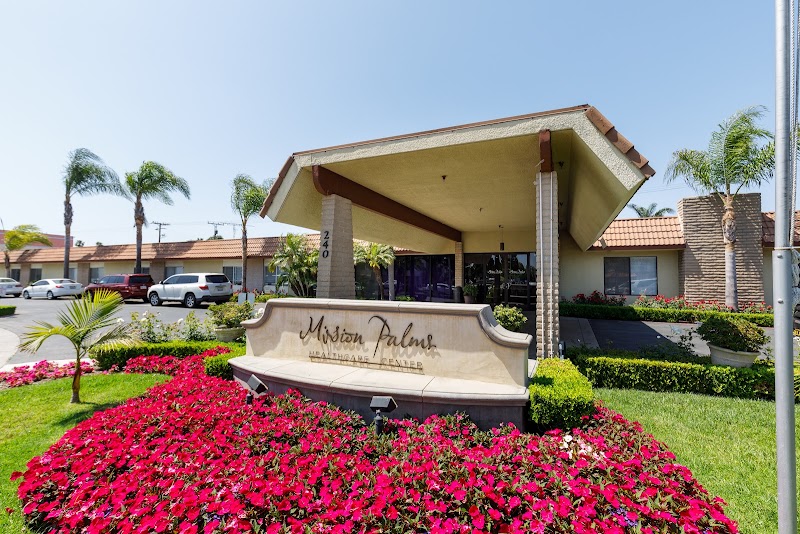
How is Mission Palms Healthcare Center Staffed?

CMS rates MISSION PALMS HEALTHCARE CENTER's staffing level at 3 out of 5 stars, which is average compared to other nursing homes. Staff turnover is 24%, compared to the California average of 46%. This relatively stable workforce can support continuity of care.

What Have Inspectors Found at Mission Palms Healthcare Center?

State health inspectors documented 39 deficiencies at MISSION PALMS HEALTHCARE CENTER during 2019 to 2025. These included: 1 that caused actual resident harm, 35 with potential for harm, and 3 minor or isolated issues. Deficiencies causing actual harm indicate documented cases where residents experienced negative health consequences.
Who Owns and Operates Mission Palms Healthcare Center?

MISSION PALMS HEALTHCARE CENTER is owned by a for-profit company. For-profit facilities operate as businesses with obligations to shareholders or private owners. The facility is operated by ASPEN SKILLED HEALTHCARE, a chain that manages multiple nursing homes. With 99 certified beds and approximately 93 residents (about 94% occupancy), it is a smaller facility located in WESTMINSTER, California.
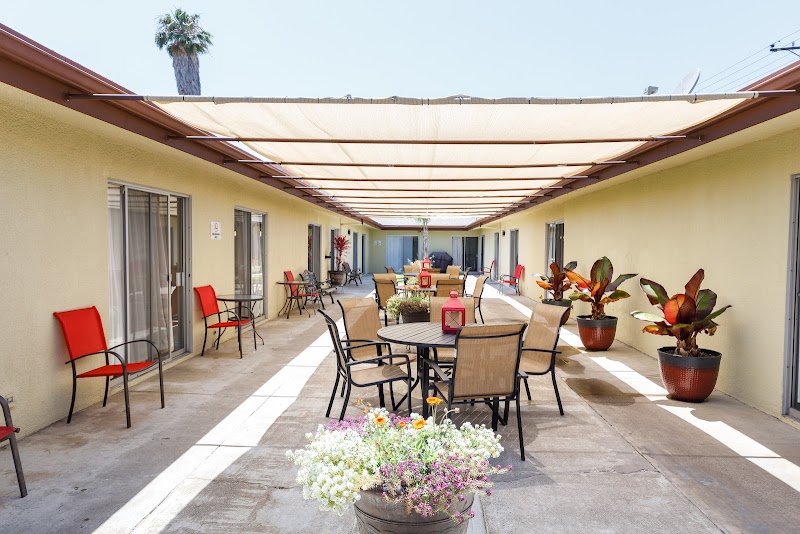
How Does Mission Palms Healthcare Center Compare to Other California Nursing Homes?

Compared to the 100 nursing homes in California, MISSION PALMS HEALTHCARE CENTER's overall rating (4 stars) is above the state average of 3.2, staff turnover (24%) is significantly lower than the state average of 46%, and health inspection rating (3 stars) is at the national benchmark.

What Should Families Ask When Visiting Mission Palms Healthcare Center?

Based on this facility's data, families visiting should ask: "Can I visit during a mealtime to observe dining assistance and food quality?" "How do you handle medical emergencies, and what is your hospital transfer rate?" "Can I speak with family members of current residents about their experience?"

Is Mission Palms Healthcare Center Safe?

Based on CMS inspection data, MISSION PALMS HEALTHCARE CENTER has a clean safety record: no substantiated abuse findings (meaning no confirmed cases of resident harm), no Immediate Jeopardy citations (the most serious violation level indicating risk of serious injury or death), and is not on the Special Focus Facility watch list (a federal program monitoring the lowest-performing 1% of nursing homes). The facility has a 4-star overall rating and ranks #1 of 100 nursing homes in California. While no facility is perfect, families should still ask about staff-to-resident ratios and recent inspection results during their visit.

Do Nurses at Mission Palms Healthcare Center Stick Around?

Staff at MISSION PALMS HEALTHCARE CENTER tend to stick around. With a turnover rate of 24%, the facility is 21 percentage points below the California average of 46%. Low turnover is a positive sign. It means caregivers have time to learn each resident's needs, medications, and personal preferences. Consistent staff also notice subtle changes in a resident's condition more quickly.

Was Mission Palms Healthcare Center Ever Fined?

MISSION PALMS HEALTHCARE CENTER has been fined $13,923 across 1 penalty action. This is below the California average of $33,218. While any fine indicates a compliance issue, fines under $50,000 are relatively common and typically reflect isolated problems that were subsequently corrected. Families should ask what specific issues led to these fines and confirm they've been resolved.

Is Mission Palms Healthcare Center on Any Federal Watch List?

MISSION PALMS HEALTHCARE CENTER is not on any federal watch list. The most significant is the Special Focus Facility (SFF) program, which identifies the bottom 1% of nursing homes nationally based on persistent, serious quality problems. Not being on this list means the facility has avoided the pattern of deficiencies that triggers enhanced federal oversight. This is a positive indicator, though families should still review the facility's inspection history directly.