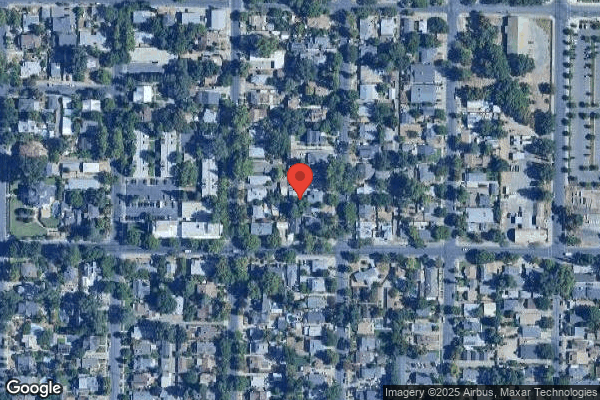

WOODLAND POST-ACUTE

678 3RD STREET, WOODLAND, CA 95695 (530) 662-9643
For profit - Limited Liability company 91 Beds ASPEN SKILLED HEALTHCARE Data: November 2025
Trust Grade
48/100
#960 of 1155 in CA
Last Inspection: January 2025

Within standard 12-15 month inspection cycle. Federal law requires annual inspections.

Overview

Woodland Post-Acute has received a Trust Grade of D, indicating below average quality and some serious concerns. It ranks #960 out of 1155 facilities in California, placing it in the bottom half overall and #6 out of 6 in Yolo County, meaning there are no better local options. Unfortunately, the facility's trend is worsening, with issues increasing from 3 in 2024 to 17 in 2025. Staffing is a relative strength with a 4-star rating, though the turnover rate is high at 54%, significantly above the state's average. In terms of specific incidents, the facility failed to protect resident privacy by improperly disposing of tray tickets containing personal information, which could lead to unauthorized access. Additionally, there was neglect in providing wound care for a resident with a gangrene diagnosis, potentially risking infection. Lastly, pharmacy services were not properly managed, as an emergency medication kit was found unsealed, raising concerns about medication safety. Overall, while there are some staffing strengths, the facility has significant weaknesses that families should consider.

Trust Score
D
48/100
In California
#960/1155
Bottom 17%
Safety Record
Low Risk
No red flags
Inspections
Getting Worse
3 → 17 violations
Staff Stability
⚠ Watch
54% turnover. Above average. Higher turnover means staff may not know residents' routines.
Penalties
✓ Good
$22,410 in fines. Lower than most California facilities. Relatively clean record.
Skilled Nurses
○ Average
Each resident gets 38 minutes of Registered Nurse (RN) attention daily — about average for California. RNs are the most trained staff who monitor for health changes.
Violations
⚠ Watch
59 deficiencies on record. Higher than average. Multiple issues found across inspections.
★★☆☆☆
2.0
Overall Rating
★★★★☆
4.0
Staff Levels
★★★☆☆
3.0
Care Quality
★★☆☆☆
2.0
Inspection Score
Stable
2024: 3 issues
2025: 17 issues

The Good

  • 4-Star Staffing Rating · Above-average nurse staffing levels
  • Full Sprinkler Coverage · Fire safety systems throughout facility
  • No fines on record

Facility shows strength in staffing levels, fire safety.

The Bad

2-Star Overall Rating

Below California average (3.1)

Below average - review inspection findings carefully

Staff Turnover: 54%

Near California avg (46%)

Higher turnover may affect care consistency

Federal Fines: $22,410

Below median ($33,413)

Minor penalties assessed

Chain: ASPEN SKILLED HEALTHCARE

Part of a multi-facility chain

Ask about local staffing decisions and management

The Ugly 59 deficiencies on record

Aug 2025 1 deficiency
CONCERN (D) 📢 Someone Reported This

A family member, employee, or ombudsman was alarmed enough to file a formal complaint

Potential for Harm - no one hurt, but risky conditions existed

Deficiency F0569 (Tag F0569)

Could have caused harm · This affected 1 resident

**NOTE- TERMS IN BRACKETS HAVE BEEN EDITED TO PROTECT CONFIDENTIALITY** Based on interview and record review, the facility failed to follow their Policy and Procedures to process a refund for one of f...

Read full inspector narrative →
**NOTE- TERMS IN BRACKETS HAVE BEEN EDITED TO PROTECT CONFIDENTIALITY** Based on interview and record review, the facility failed to follow their Policy and Procedures to process a refund for one of four sampled residents (Resident 1) when the resident's share of cost (the amount of money an individual is responsible to pay towards their medical related services, supplies, or equipment before Medi-Cal will begin to pay) was not returned to the family within 60 days upon Resident 1's death.This failure had the potential to result in fiduciary abuse and a violation of Resident 1's rights. Findings:A review of Resident 1's admission Record indicated; Resident 1 was admitted to the facility in 2020 with a diagnoses that included Encephalopathy (a disease in which the functioning of the brain is affected by some agent or condition). The admission Record further indicated Resident 1 was their own responsible party. A review of Resident 1's Minimum Data Set (MDS - an assessment tool used to guide care) Cognitive (having full understanding) Patterns, dated [DATE], indicated Resident 1 had a Brief Interview for Mental Status (a tool to assess a person's full understanding) score of 14 which indicated Resident 1 had full understanding. During an interview with the Business Office Manager (BOM) on [DATE] at 10:57 a.m., the BOM stated the Business Office records indicated $187.97 was owed to Resident 1's family. The BOM further stated, I didn't know why the money has not been returned. During a concurrent interview and record review with the BOM on [DATE] at 12:17 p.m., the BOM stated, Our policy indicated the money should have been returned to the family within 60 days of Resident 1's death. During an interview with the Administrator (ADM) on [DATE] at12:32 p.m., the ADM stated, The expectation is that we follow our policy and if the policy says we should have returned the money within 60 days, then we are at fault. During a concurrent interview and record with the ADM and BOM on [DATE] at 12:37 p.m., the ADM and BOM verified Resident 1 expired on [DATE] and as of [DATE], Resident 1's money has not been returned within the 60 days as per there policy. A review of the Business Office records indicated Resident 1 had a Share of Cost overpayment owed back to them of $187.97 for the month of [DATE]. A review of the Outstanding Account report indicated, the BOM had first corresponded with the complainant on [DATE] at 2:42 p.m. The BOM noted complainant, Asked about refund for Share of Cost. A review of the facility policy titled, A/R Refunds Policy and procedure dated 6/2023 indicated, Overpayments shall be refunded no later than 60 days from when the overpayment was identified, according to CMS 6037-F Final Rule .
Jul 2025 1 deficiency
CONCERN (D) 📢 Someone Reported This

A family member, employee, or ombudsman was alarmed enough to file a formal complaint

Potential for Harm - no one hurt, but risky conditions existed

Comprehensive Care Plan (Tag F0656)

Could have caused harm · This affected 1 resident

Based on observation, interview, and record review, the facility failed to develop and implement a comprehensive person-centered care plan for one of six sampled Residents (Resident 1) despite Residen...

Read full inspector narrative →
Based on observation, interview, and record review, the facility failed to develop and implement a comprehensive person-centered care plan for one of six sampled Residents (Resident 1) despite Resident 1's admitting diagnosis of stimulant (drugs that increase the activity of the central nervous system) use and a positive illicit drug test results from the urine drug screening during the recent hospitalization. This failure placed Resident 1 at risk for undetected drug use or relapse, undetected overdose that could result in medical emergency and had the potential for delayed delivery of care and mental health decline. Findings: Resident 1 was admitted to the facility mid-2025 with a diagnoses of deep skin infection caused by bacteria and other stimulant abuse. A review of Resident1's Brief Interview for Mental Status (BIMS), dated 5/15/25, the BIMS indicated Resident 1 had a score of 15 out of 15 which indicated Resident 1 was cognitively intact. A review of Resident 1's Order Summary Report (OSR), dated 5/14/25, the OSR indicated, .Resident has mental capacity to make decisions. A review of Resident1's Nurses Notes (NN), dated 6/30/25 at 5:15 a.m., the NN indicated, .Resident has been outside mostof [sic] day with significant other. Resident brought back inside .this writer did ask if Resident had taken anything while outside d/t [due to] hx [history] of meth [methamphetamine, highly addictive central nervous system stimulant, high potential for abuse] abuse and significant other at the facility . A review of Resident1's NN, dated 6/30/25 at 9:28 a.m., the NN indicated, Upon receiving shift report from the night nurse it was noted that pt [patient] from Room (number) had spent most of the previous evening outside with her significant other .Due to the elevated temperature and per pt request, pt was sent outto [sic] hospital @ [at] 0923 for further evaluation report was given to (name of hospital). A review of Resident 1's hospital History and Physical (H&P), dated 6/30/25, the H&P indicated, Patient appears intoxicated [under the influence of a substance] and not able to add any history voluntarily .positive for meth and fentanyl [potent synthetic opioid that has high risk of overdose]. A review of Resident 1's hospital Discharge Summary (DS), dated 7/2/25, the DS indicated, Discharge Diagnosis: Diagnosis this visi .Toxic encephalopathy (neurologic disorder) and Polysubstance abuse (using more than one drug or substance) .U-Tox [Urine Drug Screening] positive for meth and fentanyl . A review of Resident 1's NN, dated 7/2/25 at 1:50 p.m., the NN indicated, Resident returned from [name of hospital] at 1:45 pm via gurney . However, there was no indication of Resident 1's positive drug screening for methamphetamine and fentanyl. A review of Resident1's NN, dated 7/5/25 at 10:59 a.m., the NN indicated, Resident is always hanging outside the smoking area after hours . A review of Resident1's NN, dated 7/6/25, at 5:49 a.m., the NN indicated, After reviewing the DC (Discharge) Summary, it is noted that Resident's tox screen was positive for Meth and Fentanyl. Spoke with the Resident and Resident stated that she has been actively using . A review of Resident1's Medical Record (MR) included there was no documented evidence that care plan had been developed for Resident 1's stimulant use during initial admission and after Resident'1 recent urine drug screening tested positive for meth. During an interview with the License Nurse (LN) 1 on 7/8/25 at 12:49 p.m., LN 1 stated that if a Resident drug screening came back positive, the MD [Medical Director], DON [Director of Nursing] and ADM [Administrator] needed to be notified at once. LN 1 added the facility needed to have a care plan for the Residents and to provide education about the complications of drug use. During an interview with the Physical Therapist (PT) at 7/8/25 at 2:16 p.m., the PT stated, Partner comes here regularly to visit her, and they are smoking together all the time. The PT added staff do not accompany Resident 1 and the spouse when they were outside. The PT also stated, I have seen him before to visit her and stayed for a long time. The pt added, there was no care plan implemented regarding the situation and stated, nurses have not relayed any plans to me. During an interview with the Activities Director (AD) on 7/8/25 at 2:47 p.m., The AD stated the spouse was at the facility every day. The AD added Resident 1 and the spouse were mostly staying outside smoking in the patio and they were unsupervised by staff. The AD stated, (Resident 1's Name) can go out anytime and it won't be supervised. Independent smokers can go out and smoke anytime. It is a home-like environment. During a concurrent interview and records review with the Social Service Director (SSD) on 7/8/25 at 2:54 p.m., The SSD confirmed that she was aware of Resident 1 stimulant use during admission and stated, She said she used to do that with the husband in the car. the SSD also confirmed that there was no care plan in effect for Resident 1's substance use. When asked if Resident 1 could have used a stimulant in the facility, the SSD stated, It was a possibility based on Resident 1's recent drug screening. During an interview with Resident 1 on 7/8/25 at 3:15 p.m., when asked about her recent urine drug screening, Resident 1 stated, I used two weeks ago. Resident 1 confirmed that she used meth in the premises of the facility and stated, I used it outside around the corner [facility], there's no staff there. Resident 1 added that her spouse regularly visited her. During an interview with the DON on 7/8/25 at 3:26 p.m., the DON confirmed that Resident 1 was allowed to go outside unsupervised around the premises of the facility. When asked if the facility had initiated a plan for Resident 1's substance use, the DON stated, 'I am not sure if a plan was started. The DON stated, The facility should have started a risk management and IDT (Interdisciplinary Team) meeting, and that monitoring should have been implemented because of Resident 1's substance abuse history. The DON also added that a care plan should have been started and stated, It was important for nurses to know what's going on with her [Resident 1] and to have a plan of care, so they know what they need to do with the situation and that everybody was aware of the situation. The DON also stated that she expected the nurses to review the Resident's discharge papers from the hospital, which included the history and physical. The DON later confirmed that the facility did not follow up with the Resident and did not have a care plan in effect to Resident 1's substance use. During a review of the facility's policy and procedure (P&P) titled, Care of Resident with Substance Use Disorder, dated 11/30/22, the P&P indicated, PROCEDURE .2. An individualized care plan with person-centered intervention will be developed .addressing the risk of overdosing .and drug - seeking behavior, including leaving the facility without notifying staff . 3. A resident identified with known history of substance abuse will be monitored for signs and symptoms of possible use, such us frequent leaves of absence with or without facility knowledge . 4. The facility shall make efforts to prevent substance use while in the facility . 5. Interdisciplinary Team (IDT) members will conduct a meeting with the resident and/or the residents legal representative .
Jan 2025 2 deficiencies
CONCERN (D) 📢 Someone Reported This

A family member, employee, or ombudsman was alarmed enough to file a formal complaint

Potential for Harm - no one hurt, but risky conditions existed

Report Alleged Abuse (Tag F0609)

Could have caused harm · This affected 1 resident

Based on interview and record review, the facility failed to ensure an allegation of abuse was reported within the required timeframe for one of three sampled residents (Resident 1) when an allegation...

Read full inspector narrative →
Based on interview and record review, the facility failed to ensure an allegation of abuse was reported within the required timeframe for one of three sampled residents (Resident 1) when an allegation of abuse was not reported per facility policy. This failure of timely reporting had the potential to cause a delayed response by enforcement agencies to ensure resident safety. Findings: A review of a facility document, dated 1/15/25 and received by the Department on 1/15/25, indicated an allegation of suspected dependent adult/elder abuse had been made related to an employee to resident verbal and physical abuse between Registry Staff 1 (RS 1) and Resident 1. During an interview, on 1/17/25 at 12:49 p.m., Licensed Nurse 1 (LN 1) confirmed that the allegation was reported to her on 1/9/25 and she did not report it to the Administrator who is the Abuse Prevention Coordinator (APC). During an interview, on 1/17/25 at 1:33 p.m., Certified Nursing Assistant 1 (CNA 1) confirmed she heard the allegation of abuse on 1/9/25 at the nurse ' s station and acknowledged that it was not reported to the APC. During an interview on 1/17/25 at 2:18 p.m., CNA 2 confirmed that she heard the allegation of abuse on 1/9/25 and confirmed that it was not reported to the APC. During an interview, on 1/17/25 at 4:23 p.m., Director of Nursing (DON) stated it was the facility ' s policy to report an allegation of abuse to the Department within 2 hours. The DON confirmed the 1/9/25 allegation had not been reported to the Department until 1/15/25. During a review of the facility ' s policy and procedure titled, Abuse Reporting and Investigation, dated 1/10/24, the policy indicated To promptly report ALL allegations of abuse as required by law and regulations to the appropriate agencies .All allegations of abuse, neglect, mistreatment .shall be reported to the APC .All violations involving abuse .shall be reported .to local CDPH .within 2 hours after the allegation is made or reported .
CONCERN (D) 📢 Someone Reported This

A family member, employee, or ombudsman was alarmed enough to file a formal complaint

Potential for Harm - no one hurt, but risky conditions existed

Deficiency F0658 (Tag F0658)

Could have caused harm · This affected 1 resident

Based on interview and record review, the facility failed to ensure one of three sampled residents (Resident 1) received care which met professional standards when he was involved in an employee to re...

Read full inspector narrative →
Based on interview and record review, the facility failed to ensure one of three sampled residents (Resident 1) received care which met professional standards when he was involved in an employee to resident abuse allegation, and it was not documented by nursing and social services department. This failure resulted in inaccurate assessment documentation and had the potential to result in unmet nursing and psychosocial needs for Resident 1. Findings: A review of Resident 1 ' s admission record indicated he was last admitted in late 2024 with diagnoses including encephalopathy (brain dysfunction) and dementia (a progressive state of decline in mental abilities). A review of Resident 1 ' s clinical record included the following documents: A Minimum Data Set (MDS- a federally mandated resident assessment tool), dated 12/23/24, indicated Resident 1 had severe memory impairment. A Skilled Services Documentation, dated 1/8/25 and 1/15/25, indicated no documented evidence of abuse allegation. Further review of document indicated no body check was done on Resident 1, no documented evidence of physician notification, and no documented evidence of nursing progress note on psychosocial well-being. Progress notes, dated 1/8/25 to 1/15/25, indicated no documented evidence of social services follow up for Resident 1. A care plan, dated 1/15/25, indicated that Resident 1 had a psychosocial wellbeing problem .recent verbal abuse from agency staff .Interventions .Assist Resident to process feelings .outcome . During an interview, on 1/17/25 at 12:49 p.m., with Licensed Nurse 1 (LN 1), LN 1 stated that a report was made to her on 1/9/25 of allegation of verbal and physical abuse between Registry Staff 1 (RS 1) and Resident 1. LN 1 confirmed there were no nursing assessment or nursing documentation done. During an interview, on 1/17/25 at 4:03 p.m., with Social Services Director (SSD), SSD confirmed that there were no follow up interviews, psychosocial support and interventions done with Resident 1 after facility was made aware of abuse allegation. During a concurrent record review and interview, on 1/17/25 at 4:23 p.m., the Director of Nursing (DON) stated she considered an employee-to-resident abuse allegation as a change of condition for the resident. DON's expectation was the LN needed to do an assessment with a body/skin check and 72 hour monitoring post incident. The DON further stated the MD needed to be notified. DON confirmed that there was no nursing assessment, no notification to MD and no follow up social services documentation regarding the abuse allegation involving Resident 1. During a review of Social Services Director ' s job description, the document indicated .job position is to .assure that the .emotional and social needs of the resident are met .interview residents/families .involve the resident/families in social services . During a review of the facility ' s policy and procedure (P&P) titled, Abuse Prevention Program, revised 12/1/22, the policy indicated, The facility shall examine the alleged victim for any physical signs of injury, including, but not limited to, psychological and psychosocial effect. During a review of the facility ' s P&P titled, Abuse Reporting and Investigation, dated 1/10/24, the policy indicated All allegations of abuse .will be reported to .the resident ' s Attending Physician. During a review of the facility ' s P&P titled, Change of Condition, revised March 2018, the policy indicated .the nurse shall assess and document .staff will monitor and document the resident/patient ' s progress .and the physician will adjust .accordingly.
Jan 2025 13 deficiencies
CONCERN (D)

Potential for Harm - no one hurt, but risky conditions existed

Deficiency F0658 (Tag F0658)

Could have caused harm · This affected 1 resident

Based on interview and record review, the facility failed to follow physician orders for one of 24 sampled residents (Resident 41) when Resident 41's medication to treat high blood sugars was not give...

Read full inspector narrative →
Based on interview and record review, the facility failed to follow physician orders for one of 24 sampled residents (Resident 41) when Resident 41's medication to treat high blood sugars was not given as ordered by the physician. This failure had the potential for Resident 41 to have unmanaged blood sugars. Findings: Resident 41 re-admitted to the facility late 2023 with diagnoses which included trouble controlling his blood sugars. During a review of Resident 41's Order Summary Report [OSR], order start date of 12/4/23, the OSR indicated, HumaLOG [fast acting insulin that is used to lower blood sugar] Inject as per sliding scale: if 70-150=NONE; 151-200=NONE; 201-250=1; 251-300=2 NOTIFY MD [medical doctor] if BS [blood sugar] is < [less than] 70 or > [greater than] 301, intramuscularly at bedtime . During a review of Resident 41's Medication Administration Record [MAR], dated 11/1/24-12/31/24, the MAR indicated Resident 41 had a BS of 340 on 11/3/24, a BS of 320 on 11/6/24 and a BS of 304 on 12/2/24. The MAR indicated Humalog was not administered on any of these dates with a corresponding code of No Insulin Required. During a review of Resident 41's progress notes, there were no documented physician notification for BS greater than 301 for 11/3/24, 11/6/24, or 12/2/24. During an interview on 1/8/25 at 9:44 a.m. with Licensed Nurse (LN 2), LN2 stated she would follow the physician orders for insulin administration. During a concurrent interview and record review on 1/8/25 at 3:02 p.m. with the Assistant Director of Nursing (ADON) of Resident 41's MAR, the ADON confirmed Humalog was not administered and the physician was not notified on three separate dates when Resident 41's BS was greater than 300. The ADON stated, You would expect to see a note . During a review of the facility's policy and procedure (P&P) titled, Administering Medications, dated 2/12, the P&P indicated, Medications shall be administered in a safe and timely manner, and as prescribed . During a review of the facility's P&P titled, Insulin Administration, dated 9/14, the P&P indicated, To provide guidelines for the safe administration of insulin to residents with diabetes .The nurse shall notify the Director of Nursing Services and Attending Physician of any discrepancies before giving the insulin .
CONCERN (D)

Potential for Harm - no one hurt, but risky conditions existed

Pressure Ulcer Prevention (Tag F0686)

Could have caused harm · This affected 1 resident

Based on observation, interview, and record review, the facility failed to implement wound prevention measures for one of 24 sampled residents (Resident 65) when Resident 65's heel foam protectors wer...

Read full inspector narrative →
Based on observation, interview, and record review, the facility failed to implement wound prevention measures for one of 24 sampled residents (Resident 65) when Resident 65's heel foam protectors were not put on per physician order. This failure had the potential to worsen or complicate Resident 65's wound. Findings: Resident 65 was admitted to the facility in October of 2024 with diagnoses that included diabetes (disorder causing blood sugar to be high) and non-pressure open wound to heels. A review of Resident 65's, Wound Physician Consultation Note [WPCN], dated 12/30/24, indicated Resident 65 had a stage three pressure ulcer (damage to the skin from prolonged pressure ranging from stage one to stage four with four being the most severe) to his left heel and a stage two pressure ulcer to his right heel. The WPCN indicated there was no change in the wound status since the last visit. A review of Resident 65's Order Details (OD), dated 1/2/25, indicated, TX [treatment]- Apply foam booties [foam placed on heels to prevent wound or wound progression] as tolerated when in bed. Three times a day. A review of Resident 65's Care Plan (CP), dated 8/13/24, indicated, Risk for skin breakdown/pressure ulcer formation will be minimized with interventions through the next review date .Float heels when in bed. During an observation on 1/7/2025 at 8:08 a.m., in Resident 65's room, Resident 65 was lying in bed supine. Resident 65 did not have his foam heel protectors on. During a concurrent observation and interview on 1/7/25 at 9:56 a.m. with Licensed Nurse (LN) 3 who was the wound nurse in the Resident 65's room, LN 3 confirmed Resident 65 did not have his foam heel protectors on and were placed in the corner of the room. Resident 65 stated, I haven't worn those in a while. Resident 65 also indicated staff don't offer to put the foam heel protectors on for him. LN 3 indicated facility staff should be putting on the foam heel protectors and floating his heels. LN 3 indicated not doing so could cause Resident 65's wounds to worsen and prevent healing. During an observation on 1/8/25 at 3:06 p.m., outside Resident 65's room, Resident 65 was lying in bed without his heel protectors on and his heels were in contact with the bed surface. Between 3:06 p.m. and 3:55 p.m., CNA 4 entered Resident 65's room and did not encourage or offer to put on the heel protectors for Resident 65.
CONCERN (D)

Potential for Harm - no one hurt, but risky conditions existed

Deficiency F0692 (Tag F0692)

Could have caused harm · This affected 1 resident

**NOTE- TERMS IN BRACKETS HAVE BEEN EDITED TO PROTECT CONFIDENTIALITY** Based on observation, interview, and record review the facility failed to maintain Resident 14's weight when resident 14 lost 14...

Read full inspector narrative →
**NOTE- TERMS IN BRACKETS HAVE BEEN EDITED TO PROTECT CONFIDENTIALITY** Based on observation, interview, and record review the facility failed to maintain Resident 14's weight when resident 14 lost 14.5% of his body weight in a 6-month period. This failure had the potential of leading to malnutrition and increased mortality. Findings: During the initial dining observation on 1/7/25 at 12:04 p.m., in the dining room, resident 14 was observed eating his meal. Resident 14 was noted to eat independently but was easily distracted and needed to be redirected to eat twice. Resident 14 left the dining room with approximately 50% of his meal consumed. During an observation on 1/8/25 at 12:03 p.m. in the dining room, Resident 14 had finished eating his lunch meal having eaten most of the hamburger but no other tray items. During an observation on 01/09/25 at 11:48, in the dining room, Resident 14 ate 1 (4 ounce) ice cream container, drank 100% of an 8 ounce milk carton, and few bites of the pasta entree. During a review of resident 14's electronic record on 1/7/25 at 3:04 p.m., Resident 14 was noted to be [AGE] year-old male admitted to the facility in the early winter of 2012. Diagnosis for resident 14 included reflux, depression, dysphagia (difficulty swallowing), failure to thrive, anxiety disorder, and dementia (condition of impaired brain function). Orders for resident 14 included a regular diet, vitamins with minerals, a high calorie nutrition supplement (240 milliliters [8 ounces], offered three times per day). Weight history as follows: 1/2/24=144# (pounds) 2/1/24=143# 3/1/24=145# 4/29/24=136# 5/14/24=135# 6/4/24=133# 7/3/24=129# 8/2/24=127# 9/1/24=124# 10/1/24=126# 11/4/24=127# 12/4/24=127# 1/2/25=128# Resident had lost of 9#/6.2% of his body weight from 3/1/24 to 4/29/24 which is considered significant. Review of weight from 8/2/24 showed a decrease of 16#/11.2% of body weight from the previous 6 months. Review of weight from 9/1/24 showed a decrease of 21#/14.5% of body weight from the previous 6 months. Both 6-month losses were considered severe (being greater than 10% over 6 months). Review of Interdisciplinary Team (IDT) note from 4/4/24, after a 5# weight loss over a month, indicated that resident had a dislike of facility foods. Under the nutritional diagnosis it indicated that the resident had unintentional weight loss r/t (related to) unknown etiology . Review of IDT notes from on 6/14/24, 7/5/24, 8/23/24, 9/6/24, and 10/16/24 indicated that resident had Unintentional weight loss r/t inadequate energy intake . Review of Registered Dietitian note from 4/4/24 indicated an average intake of 66% for the previous 2 weeks. Review of nutrition assessment done on 12/4/24 indicated that Resident 14 had an average meal intake of 66%. Review of Dietary Profile notes from 10/22/24 indicated that Resident 14 had a poor appetite and meal intake was between 25-50% of meals. Review of Dietary Profile notes from 12/4/24 indicated that resident was eating an average of 66% of meals. Estimated caloric intake was between 1000-1499 calories per day, while estimated need was between 1730-1900 calories per day. Review of care plan from 9/16/24 included goals for Resident 14: 1) weight being between 145#-155#, and 2) consumption of 70% of meals. Interventions listed providing a fortified, mechanical soft diet, providing snacks, and addressing GERD (acid reflux) discomfort. During an interview on 1/8/25 at 9:18 a.m. with the Speech Therapist (ST), the ST stated that Resident 14 was on caseload in late October of 2024. This was to determine if Resident 14 could advance his diet as he had expressed unhappiness with soft foods. The ST further stated that the interdisciplinary team (of which she is a part of) had discussed Resident 14's weight loss in the past. The ST did not remember an identified reason for resident 14's weight loss. During an interview on 1/8/25 at 11:07 a.m., with the Registered Dietitian (RD, who had worked at the facility for 1 week), the RD discussed the process used to prevent weight loss in prior facilities of employment. The RD discussed working with the interdisciplinary team (often composed of representatives from nursing, dietary, therapy and social services, who then share concerns with the health care provider) to conduct a root cause analysis to identify the cause of the weight loss. The RD stated in most cases interventions may start with a food first approach such as updating the food preferences and adding snacks. The RD stated if that was not successful, she would consider adding supplemental nutrition, an appetite stimulant, and/or consider artificial nutrition. If these interventions didn't show progress the team would discuss end of life care. During a review of resident 14's electronic medical record with the RD, the RD concurred that Resident 14's weight decreased from 144# to 128# over the past year. The RD stated that Resident 14's intake had been variable, and the average was approximately 60%. The RD concurred that a cause for the weight loss had not been identified. During a phone interview with Resident 14's Medical Doctor (MD) on 1/9/25 at 1:50 p.m., stated I do not have a medical reason that is associated with his trend in weight loss. Review of facility provided policy titled Weight Monitoring and Management (company not listed, revised 2019) indicated that one of the purposes of the policy was To be able to provide appropriate interventions in a timely manner to residents with unplanned and significant weight variance. The policy further indicated under the procedures in bullet 8. indicated that Any resident weight that varies from the previous reporting period by 5% in 30 day, 7.5% in 90 days and 10% in 180 days will be evaluated by the Interdisciplinary Team to determine the cause of weight loss. Assessment of risk factors for weight change and intervention required.
CONCERN (D)

Potential for Harm - no one hurt, but risky conditions existed

Medical Records (Tag F0842)

Could have caused harm · This affected 1 resident

Based on interview and record review, the facility failed to maintain accurate and consistent medical records for two of 24 sampled residents (Resident 1 and Resident 41) when: 1. Resident 1's progres...

Read full inspector narrative →
Based on interview and record review, the facility failed to maintain accurate and consistent medical records for two of 24 sampled residents (Resident 1 and Resident 41) when: 1. Resident 1's progress notes (PN) did not include any reason medications were not administered; and 2. Resident 41's insulin (a medication to treat high blood sugars) administration documentation was inconsistent. These failures created inaccurate health records which increased the potential for incorrect assessment of the residents and for creating miscommunication among healthcare professionals regarding the residents health status. Findings: Resident 1 was re-admitted to the facility in late 2024 with diagnoses which included a condition in which the heart does not pump adequately, progressive damage and loss of kidney function, high blood pressure, and irregular rapid heart rate that causes poor blood flow. During a review of Resident 1's Order Summary Report [OSR], dated 1/7/24, the OSR indicated, Metoprolol Tartrate [medication to treat high blood pressure and heart failure] .two times a day for htn [hypertension, high blood pressure] .Isosorbide Dinitrate [medication used to treat heart failure] .one time a day for heart failure .Furosemide [medication to treat fluid retention caused by heart failure, kidney failure, and high blood pressure] .one time a day for chf [congestive heart failure] . During a review of Resident 1's Medication Administration Record [MAR], dated 12/1/24-12/31/24, the MAR indicated, Metoprolol was not administered eight times. The Isosorbide was not administered five times, and the Furosemide was not administered four times. The MAR box for administration had and X and an administration code of, Held/ Other Reason/See Progress Notes. During an interview on 1/8/24 at 9:44 a.m. with Licensed Nurse (LN 2), LN 2 stated an X in the MAR means a medication was not given. If [medications] not given .go to the progress nots to write a note. Every time a medication is not given it [MAR] pulls you to the progress notes. During a concurrent interview and record review on 1/8/24 at 3:31 p.m. with the Assistant Director of Nursing (ADON) of Resident 1's MAR. The ADON confirmed Resident 1's MAR indicated multiple medications charted as not administered without any corresponding progress note to explain why. The ADON stated she would expect to see a note why the medications were not given, I would expect blood pressure entered, would expect a progress note to determine if given .It's important .meds to keep the blood pressure low so the heart is not working too hard. During a review of the facility's P&P titled, Documentation of Medication Administration, dated 4/07, the P&P indicated, The facility shall maintain a medication administration record to document all medications administered .Documentation must include, as a minimum .Reason(s) why a medication was withheld, not administered, or refused . Resident 41 re-admitted to the facility late 2023 with diagnoses which included trouble controlling his blood sugars. During a review of Resident 41's OSR, order start date of 12/4/23, the OSR indicated, HumaLOG [fast acting insulin that is used to lower blood sugar] Inject as per sliding scale: if 70-150=NONE; 151-200=NONE; 201-250=1; 251-300=2 NOTIFY MD [medical doctor] if BS [blood sugar] is < [less than] 70 or > [greater than] 301, intramuscularly at bedtime . During a review of Resident 41's MAR, dated 11/1/24-12/31/24, the MAR indicated Resident 41 had a BS of 150 on 11/4/24, a BS of 120 on 11/14/24, and a BS of 186 on 12/12/24. The MAR Indicated NONE in addition to a check mark on the dates with a corresponding code of Administered. During a review of Resident 41's Location of Administration Report, dated 11/1/24-12/31/24, the report indicated Humalog was administered on 11/4/24, 11/14/24 and 12/12/24. All entries included the route and location of administration. During a concurrent interview and record review on 1/8/24 at 3:02 p.m. with the ADON of Resident 41's MAR, the ADON confirmed the Humalog was documented as administered on three separate dates when Resident 41's BS was less than 200. The ADON stated, You would expect to see a note. It would be best practice to write a progress note .It's not consistent documentation .the expectation is that is it accurately documented .keeps the patients safe . During a review of the facility's policy and procedure (P&P) titled, Documentation of Medication Administration, dated 7/07, the P&P indicated, The facility shall maintain a medication administration record to document all medications administered .Documentation must include .method of administration .reason(s) why a medication was withheld, or not administered .
CONCERN (E)

Potential for Harm - no one hurt, but risky conditions existed

Deficiency F0583 (Tag F0583)

Could have caused harm · This affected multiple residents

Based on observation, interview, and record review, the facility failed to protect resident privacy when tray tickets were thrown into the trash for a census of 87 who were eating facility prepared me...

Read full inspector narrative →
Based on observation, interview, and record review, the facility failed to protect resident privacy when tray tickets were thrown into the trash for a census of 87 who were eating facility prepared meals This failure had the potential for 87 residents' personal and health information unprotected form unintended access. Findings: During the initial kitchen tour on 1/6/25 at 9:49 a.m., the Dietary Supervisor (DS) showed the path taken of kitchen trash to the outside dumpsters in the parking lot. The parking lot was not gated or secured from the public. During a return visit on 1/7/25 at 8:46 a.m., Diet Aide 1 (DA 1) was washing the breakfast dishes. She removed the trays from the cart, dumped leftover food and paper products (including at least 12 tray tickets) into the garbage can, before separating like items for wash. When questioned, DA 1 stated this was her usual process. During a subsequent interview on 1/7/25 at 8:58 a.m., with the DS, the DS stated the tray tickets should be placed in a bin (found in the dry storage) that collected paper for shredding. The DS further stated that this step was necessary as otherwise this would be a violation of HIPPA (Health Insurance Portability and Accountability Act, a federal law that sets a national standard to protect medical records and other personal health information). Review of tray tickets for 1/7/25 included the following information: name, ID number, dining location, unit/room/bed, diet order, food and beverage texture requirements, notes such as need for assistive devices and portion sizes, allergies, standing orders and dislikes. Review of facility provided policy titled Protected Health Information (PHI), Management and Protection of (Med-Pass Inc., Revised April 2014) indicated that Protected Health Information (PHI) shall not be used or disclosed except as permitted by current federal and state laws. In bullet 1 it further indicated that It is the responsibility of all personnel who have access to resident and facility information to ensure that such information is managed and protected to prevent unauthorized release or disclosure.
CONCERN (E)

Potential for Harm - no one hurt, but risky conditions existed

Quality of Care (Tag F0684)

Could have caused harm · This affected multiple residents

Based on observation, interview, and record review, the facility failed to identify and provide care for one of 24 sampled residents (Resident 1) when no wound care orders, monitoring, or care plans w...

Read full inspector narrative →
Based on observation, interview, and record review, the facility failed to identify and provide care for one of 24 sampled residents (Resident 1) when no wound care orders, monitoring, or care plans were created for Resident 1's left great toe wound. This failure placed Resident 1 at increased risk for wound deterioration and infection. Findings: Resident 1 was re-admitted to the facility 12/13/24 with diagnoses which included hardening of left leg arteries, diabetes (a condition in which the body has trouble controlling blood sugar), vascular disease that occurs when diabetes damages blood vessels, reducing blood flow to organs, and gangrene (dead tissue caused by an infection or lack of blood flow). During a review of Resident 1's SKILLED NURSING FACILITY admission ORDERS dated 12/13/24, the orders indicated, Diagnosis .GANGRENE OF LEFT TOE .wound .Anterior Left Toe. During a review of Resident 1's admission NURSING ASSESSMENT, undated (uploaded into electronic record 12/17/24), the assessment indicated, Left Great Toe Meta [illegible] Joint Black Toe Nail (sic). During a review of Resident 1's Order Summary Report [OSR], dated 12/1/24-12/31/24, the OSR does not include any treatment orders or monitoring of Resident 1's left or right toes. During a review of Resident 1's skin integrity care plans (CP) dated 12/18/24, the CP's do not include any right or left foot toe wounds. During a review of Resident 1's Wound Physician Consultation Notes dated 12/17/24 and 12/30/24, the notes do not indicate any wound assessments or measurements to Resident 1's right or left foot. During an observation on 1/9/25 at 8:46 a.m. with Licensed Nurse (LN 5) of Resident 1's wound care, LN5 removed the blankets from Resident 1's legs which revealed his bare feet. The upper half of Resident 1's left foot great toe was dry, shriveled, and brown/black in color with a hard dry black protrusion exiting from the tip of toe. On the side of his toe was a dry black circle area surrounded by thick flakes of skin. The entire toe had orange discoloration over dry flakes of skin. During an interview on 1/9/25 at 9:02 a.m. with LN5, LN5 was asked what treatment was performed on Resident 1's left great toe. LN 5 reviewed the electronic health record and stated were no treatment orders for Resident 1's toe. During an interview on 1/9/25 at 9:08 a.m. with LN 6, LN 6 stated, I would expect to see treatment orders for his toes. I don't see any monitoring orders for his toes or treatments .I do not see any care plans for his feet . LN 6 stated it was important to have treatment orders for observe for signs and symptoms of infection or worsening of the wound. During an interview on 1/9/25 at 9:50 a.m. with the Nurse Consultant (NC), the NC stated, I would expect all wounds to be monitored and have a care plan .it is important to prevent patient decline and promote healing. During a review of the facility's policy and procedure (P&P) titled, Pressure Ulcers/Skin Breakdown- Clinical Protocol, dated 4/18, the P&P indicated, .The staff and practitioner will examine the skin of newly admitted residents for evidence of existing pressure ulcers or other skin conditions .The physician will order pertinent wound treatments .The physician will evaluate and document the progress of wound healing .The physician will guide the care plan as appropriate . During a review of the facility's P&P titled, Wound Care, dated 10/10, the P&P indicated, The purpose of this procedure is to provide guidelines for the car of wounds to promote healing .Verify that there is a physician's order for this procedure .Review the resident's care plan .The following information should be recorded in the residents medical record .All assessment data .obtained when inspecting the wound weekly .
CONCERN (E)

Potential for Harm - no one hurt, but risky conditions existed

Pharmacy Services (Tag F0755)

Could have caused harm · This affected multiple residents

Based on observation, interview, and record review, the facility failed to ensure pharmacy services were maintained for a census of 87 residents when: 1. An unsealed e-kit (emergency supply kit) was f...

Read full inspector narrative →
Based on observation, interview, and record review, the facility failed to ensure pharmacy services were maintained for a census of 87 residents when: 1. An unsealed e-kit (emergency supply kit) was found in the medication storage room, which resulted in prescription medications being at risk for diversion and use without a prescription. 2. An e-kit was previously accessed multiple times without medications being replaced by the pharmacy which had a potential to cause harm by not having enough emergency medication for the residents. These failures had the potential for drug diversion, medication errors, and not having medications readily available in emergency situations. Findings: 1. During the medication storage room observation on 1/6/25 at 12:05 p.m. in the first-floor medication storage room with Licensed Nurse (LN) 8, an IV (Intravenous, medications given through the veins) e-kit #368 was observed unlocked. Inside e-kit, there was a bag of yellow zip-ties in a bag sitting on top of multiple prescription medications and medical supplies. During an interview on 1/6/25 at 12:05 p.m. with LN 8 in the first-floor medication storage room, LN 8 stated that having an unlocked e-kit could result in medications being given to the wrong person or getting into the wrong hands. During an interview on 1/7/25 at 1:14 p.m. with CP (Consultant Pharmacist) in the conference room, CP, CP stated that all e-kits came sealed with red zip ties and should have been re-sealed after opening with yellow zip ties. During an interview on 1/8/25 at 10:48 a.m. with the Interim Director of Nursing (DON 1), DON 1 stated that the e-kits could not be accessed without pharmacy's approval and the e-kits should have been sealed after use. During a review of the facility policy titled Medication Ordering and Receiving from Pharmacy: IC5: Emergency Pharmacy Service and Emergency Kits, dated 8/14, the policy indicated, .An Emergency supply of medications including emergency drugs, antibiotics, controlled substances, and products for infusion is supplied by the provider pharmacy in limited quantities in portable, sealed containers .h. When an emergency or stat dose of a medication is needed, the nurse unlocks the container and removes the required medication. After removing the medication .reseal the emergency supply .n. If exchanging kits, the used sealed kits are replaced with the new sealed kits within 72 hours of opening . 2. During a medication storage room observation on 1/6/25 at 12:05 p.m. in the first-floor medication room with LN 8, e-kit 1120 was observed to be previously accessed four times without medications being replaced by the pharmacy as follows: 12/24/24: azithromycin (an antibiotic used to treat infections) 250 mg (milligram, a unit of measure), two tablets removed, 12/29/24: azithromycin 250 mg, one tablets removed, 1/2/25: ciprofloxcin (an antibiotic used to treat infections) 250 mg, two tablets removed, 1/4/25: metoprolol tartrate (a medication used to lower high blood pressure) 50 mg, 1 tablet removed. During an interview on 1/6/25 at 12:05 p.m. with LN 8 in the first-floor medication storage room, LN 8 stated that nurses did not fax for an e-kit refill and that they got a code from pharmacy to access e-kits, so pharmacy knew the e-kit was accessed when pharmacy gave out the code and knew to come and replaced the e-kits. During an interview on 1/7/25 at 1:14 p.m. with CP in the conference room, CP, CP stated that e-kits should have been replaced within 3 days and whoever opened the e-kit first should have contacted the pharmacy to replace by faxing in the e-kit refill sticker or calling pharmacy directly. CP confirmed that when pharmacy gave an access code, the access code did not alert pharmacy to replace the e-kit and that staff had to alert pharmacy separately from receiving an access code. During an interview on 1/8/25 at 10:48 a.m. with DON 1, DON 1 stated that it was the nurse's responsibility to fax the form indicating the e-kit was accessed and should have requested the e-kit to be filled within 72 hours of opening the e-kit. During a review of the facility policy titled Medication Ordering and Receiving from Pharmacy: IC5: Emergency Pharmacy Service and Emergency Kits, dated 08/14, the policy indicated, Emergency pharmacy service is available on a 24-hour basis. Emergency needs for medication are met by using the facility's approved emergency medication supply or by special order from the provider pharmacy .a. Telephone/fax numbers for emergency pharmacy service are posted at nursing stations .i. As soon as possible, the nurse records the medication use on the medication order form and notifies the pharmacy for replacement of the emergency drug supply .n. If exchanging kits, the used sealed kits are replaced with new sealed kits within 72 hours of opening.
CONCERN (E)

Potential for Harm - no one hurt, but risky conditions existed

Medication Errors (Tag F0758)

Could have caused harm · This affected multiple residents

3. Resident 25 admitted to the facility mid 2017 with diagnoses which included memory problems and anxiety disorder. During a review of Resident 25's Minimum Data Set (MDS, an assessment tool) dated 1...

Read full inspector narrative →
3. Resident 25 admitted to the facility mid 2017 with diagnoses which included memory problems and anxiety disorder. During a review of Resident 25's Minimum Data Set (MDS, an assessment tool) dated 12/10/24, the MDS indicated a Brief Interview for Mental Status (BIMS, a standardized test that screens for cognitive impairment) score of 1/15, which indicated severe cognitive impairment. During a review of the facility's policy and procedure (P&P) titled, Antipsychotic Medication Use, dated 12/16, the P&P indicated, .The need to continue PRN [as needed] orders for psychotropic medications beyond the 14 days requires that the practitioner document the rationale for the extended order. The duration of the PRN order will be indicated in the order . The staff will observe, document, and report to the Attending Physician information regarding the effectiveness of any interventions . During a review Resident 25's Order Summary Report [OSR], dated 1/8/24, the OSR indicated, LORazepam (sic) [a medication to treat anxiety] .Give 1 tablet by mouth every 4 hours as needed For (sic) repetitive pacing related to ANXIETY DISORDER .order date 12/10/24 . The OSR did not indicate any stop date, or date reviewed by physician. During a review of Resident 25's MEDICATION ADMINISTRATION RECORD [MAR], dated 12/1/24-12/31/24, the MAR indicated the resident had received the as needed Lorazepam eight times after the 14th day. During an interview on 1/8/24 at 3:38 p.m. with the Assistant Director of Nursing (ADON), the ADON stated, There should be a 14 day stop date for anti-anxiety medications . The ADON confirmed Resident 25's Lorazepam was started on 12/10/24, with no stop dated, It's indefinite .it should have a 14 day stop date .it's [stop date] important so we can revisit to determine if behaviors are still there or increased . Based on observation, interview, and record review, the facility failed to ensure three of 87 sampled Residents (Resident 10, Resident 30 and Resident 25) were free from unnecessary antipsychotic medications (drugs that alter a person's thoughts, feelings, moods, awareness, and behaviors used to treat mental health conditions) when: 1. An Antipsychotic was prescribed for treatment of schizoaffective disorder (a condition that affects a person's ability to think, feel, and behave clearly with mood symptoms) in a dosage indicative for treatment of sleep disturbance without an FDA approved diagnosis for Resident 10. 2. An Antipsychotic was prescribed for Resident 30 with no previous documented serious mental health diagnosis prior to admission. 3. Resident 25 received an as needed antianxiety medication without a 14 day stop date. These failures placed Resident 10 and Resident 30 at an increased risk for adverse drug effects and Resident 25 for receiving psychotropic medication without proper evaluation. Findings: 1. Resident 10 was admitted to the facility in 01/2017 with diagnoses that included schizoaffective disorder and major depressive disorder (a mental health condition characterized by persistent sad mood or loss in interest in activities that causes significant impairment in daily life). Review of the MDS (Minimum Data Set, an assessment tool), dated 8/24, indicated the resident had severe cognitive impairment with a score of 7/15 in the Brief Interview for Mental Status Assessment (BIMS) (a tool used by facilities to screen and identify memory, orientation, and judgement status of the resident). Review of Resident 10's clinical records indicated that there were physician orders for the following medications to treat schizoaffective disorder: 4/2/24: divalproex sodium delayed release (a medication used to treat seizures or mental disorders) 250 mg (milligram, a unit of measure), 2 tablets by mouth two times a day for AEB (as evidenced by) Aggressive behaviors towards staff related to schizoaffective disorder. 11/12/24: quetiapine (antipsychotic medication) 25 mg, 1 tablet by mouth at bedtime for AEB Auditory hallucination related to schizoaffective disorder. 12/4/24: risperidone (antipsychotic medication) 2 mg, 1 tablet by mouth two times per day for AEB Auditory hallucinations related to schizoaffective disorder. According to the online Food and Drug Administration (FDA) website, quetiapine is an antipsychotic that is not FDA approved to help with sleep. The initial dosage for treating schizophrenia or bipolar is 25-50 mg twice daily with recommended total dosage between 150mg-750 mg per day. According to the online medical reference site, FDA, divalproex sodium is not indicated for use for schizophrenia or schizoaffective disorder. According to the online medical reference site, FDA, risperidone is an antipsychotic approved to treat schizophrenia with target dose of 4-8mg daily. In a telephone interview on 1/9/24 at 11:00 a.m. with CP (Consultant Pharmacist), CP stated that 25mg of quetiapine was not FDA approved for treating shizoaffective disorder. CP also stated that divalproex Sodium 250 mg twice daily was being used off-label for schizoaffective disorder and confirmed divalproex sodium was not FDA approved for schizoaffective disorder. CP also indicated that if CP tells doctor a medication is used inappropriately, If I don't get a response, I cannot change it. CP also confirmed that there was no FDA indication for risperidone use with schizoaffective disorder and that it was being used for Resident 10 off-label. When requested from CP, supporting literature was not provided to support off-label use of divalproex sodium, risperidone, or using less than FDA approved dosing of 25mg of quetiapine for schizoaffective disorder. In an interview on 1/9/25 at 11:55 a.m. with Director of Nursing 1 (DON 1)in the DON office, DON 1 stated that quetiapine 25 mg is for sleep rather than treating a psychiatric disorder and divalproex sodium is not FDA approved for schizoaffective disorder. DON 1 stated that antipsychotics are not appropriate to use if no FDA approval or if no previous studies to indicate use and if prescribing for sleep, the order should say for sleep and not to treat schizoaffective disorder. In an observation in the third-floor elevator lobby area on 1/9/25 at 1:01 p.m., Resident 10 confirmed her identity and was in wheelchair, smiling, asking Department for their names and to shake hands. Resident 10 stated, Stay with me so I can get to know you better. No aggressive behaviors were observed. In an interview on 1/9/25 with LN 9, LN 9 stated that Resident 10 is not a threat to caregivers .Not violent or aggressive and that she can tell Resident 10 hallucinates from Resident 10's verbal language. LN 9 stated that RES 10's Peers are safe as well and that Resident 10 has conversations alone asking questions . but talks normal to other patients. In a telephone interview on 1/9/25 at 1:37 p.m. with MD 2, MD 2 stated that divalproex sodium was not for schizophrenia but was for bipolar and that quetiapine was not a great medication for schizophrenia. MD 2 stated that divalproex sodium was for the affective component of schizoaffective disorder which was the bipolar (a disorder associated with episodes with mood swings ranging from depressive lows to manic highs) and that quetiapine 25 mg dosage is indicated for sleep. In a telephone interview on 1/9/25 at 3:01 p.m. with a family member of Resident 10 (a family member), the family member indicated that quetiapine was started to help Resident 10 sleep and was not sure if quetiapine is helping. During a review of facility's policy titled, Antipsychotic Medication Use. Dated 12/16, the policy indicated that, .1. Residents will only receive antipsychotic medications when necessary to treat specific conditions for which they are indicated and effective . 2. Resident 30 was admitted in October of 2024 with cognitive communication deficit, and failure to thrive. Upon readmission, on 11/13/24, schizophrenia and alcohol abuse were added to the diagnoses. Review of the admission MDS indicated the resident had moderate cognitive impairment with a score of 8/15 in the BIM assessment. Review of the Resident 30's clinical record indicated the resident had the Physician Orders for the following antipsychotics to treat paranoid schizophrenia: 11/29/24: olanzapine (a drug used to treat mental health disorders) 5 mg, 1 tablet by mouth at bedtime for AEB anger outburst. 11/29/24: olanzapine 2.5 mg, 1 tablet by mouth one time a day for AEB anger outburst 12/2/24: divalproex delayed release 250mg, 1 tablet by mouth three times per day for M/B (manifested by) yells out. Review of Resident 30's clinical records indicated that Resident 30 had no documented history of schizophrenia in previous hospitalization records and that the diagnosis was newly added while at the facility. Olanzapine was started during most recent hospital admission dated 11/13/14 and continued at the facility upon admission. No psychiatric evaluations were found in medical records indicating new diagnosis of schizophrenia. During a review of Resident 30's California Department of Healthcare Services-Notice of attempted evaluation, (DHS Notice) dated 11/13/24, the DHS Notice indicated that a level II evaluation for serious mental illness (SMI) was unable to be completed due to The individual has no serious mental illness. No functional limitations in last six months. During a review of Resident 30's Note to Attending Physician/Prescriber, dated 11/25/24, the Note to Attending/Physician Prescriber indicated, .The attending physician in collaboration with the consultant pharmacist must reevaluate the use of the psychotropic medication and consider whether or not the medication can be reduced or discontinued upon admission or soon after admission. No signature or response noted in the physician response section. During a review of Resident 30's Consultant Pharmacist's Medication Regimen Review (MRR), dated 12/19/2024, the MRR indicated that the CP sent recommendations to MD 1 regarding Resident 30 who was receiving divalproex for schizophrenia and that while divalproex is widely used to manage behavior and that the Resident did not have an FDA approved medical diagnosis for use. CP requested to Please either clarify the diagnosis or have MD (Medical Doctor) document risk vs (versus) benefits for using divalproex for any other off-label diagnosis. Review of records indicated no action was taken from recommendations to clarify diagnosis or document risk versus benefits. In a telephone interview on 1/9/25 at 11:00 a.m. with CP, CP stated, that Resident 30 should have been taken off olanzapine and divalproex sodium and that indication for use needs to be more specific than just that the Resident was yelling out. In an interview on 1/9/25 at 11:55 a.m. with DON 1 in the DON office, DON 1 stated, .I cannot find anything with schizophrenia prior to admit . and the expectation is to refer to psychiatrist to manage psychiatric medications. DON 1 further stated that there was no referral to psych in chart . In an interview on 1/9/25 at 12:54 p.m. at the first-floor nurse's station with LN 10, LN 10 stated that Resident 30 Does not attack me. Not danger to self or roommates. Cannot walk . Not physically combative. Yells when sleeping . In an observation on 1/9/25 at 12:58 p.m. at the first-floor nurse's station, RES 30's identity was confirmed, and Resident 30 was sitting in a wheelchair in the hallway with calm demeanor with no screaming or yelling noted. In a telephone interview on 1/9/25 at 2:14 p.m. with MD 1, MD 1 stated, .Can't confirm schizophrenia prior to admit .[RES 30] has some sort of mental disorder because he had alcoholism. Maybe depression or something. According to the online medical reference site, National Institute of Mental Health (NIMH), retrieved on 1/15/25, indicated, .Schizophrenia is .diagnosed in the late teen years to early thirties, and tends to merge earlier in males . During a review of the facility's policy titled Antipsychotic Medication Use, dated 12/16, the policy indicated, 1. Residents will only receive antipsychotic medications when necessary to treat specific conditions for which they are indicated and effective .2. The Attending Physician and other staff with gather and document information to clarify a resident's .medical condition .and risk to the resident and others 5. Residents who are .transferred from a hospital and who are already receiving antipsychotic medications will be evaluated for the appropriateness and indications for use .18. The physician shall respond appropriately by changing or stopping problematic doses or medications, or clearly documenting (based on assessing the situation) why the benefits of the medication outweigh the risks or suspected or confirmed adverse consequences.
CONCERN (E)

Potential for Harm - no one hurt, but risky conditions existed

Unnecessary Medications (Tag F0759)

Could have caused harm · This affected multiple residents

Based on observation, interview, and record review, the facility failed to ensure the medication rate did not exceed 5% for three of four sampled residents (Resident 16, 486, and 55) for a census of 8...

Read full inspector narrative →
Based on observation, interview, and record review, the facility failed to ensure the medication rate did not exceed 5% for three of four sampled residents (Resident 16, 486, and 55) for a census of 87 when five medication errors occurred out of 29 opportunities that resulted in 17.2% medication error rates. 1. For Resident 16, a Licensed Nurse 2 (LN 2) administered Resident's calcium and vitamin D (a supplement used to raise calcium and vitamin D levels), not in accordance with Physician Orders when one tablet of calcium 600mg (milligram, unit of measurement) + 400 units (unit, a measurement) vitamin D was administered when the physician ordered calcium-vitamin D tablet 600-200mg/unit, give 2 tablets by mouth one time a day. 2. For Resident 486, a Licensed Nurse 7 (LN 7) did not administer hydroxyzine (a medication used to treat anxiety and tension caused by nervous and emotional conditions) when hydroxyzine was not stocked on the medication cart nor available for administration. 3. For Resident 55, LN 2: a. did not administer buspirone (a medication that treats anxiety) when it was unavailable to administer, b. administered sucralfate after breakfast and not on an empty stomach per pharmacy and manufacturer's recommendations, and c. did not give famotidine (a medication given to treat heartburn by reducing stomach acid), but marked famotadine as given in the e-MAR (electronic health record). These failures resulted in Resident 16 not getting the appropriate dose of medication which could delay stabilizing low calcium levels, Resident 486 having potential unescessary negative mood changes, and Resident 55 having potential for alteration in behavior and mood as well as increase in stomach discomfort due to not receiving morning medications as prescribed. Findings: 1. During an observation of medication administration on 1/7/25 at 8:16 a.m. on the second floor with Licensed Nurse 2 (LN 2), LN 2 was observed preparing to administer Resident 16's morning medications, removed 1 pill from the calcium-vitamin 600mg-400mg-units container and administered medication to Resident 16. During an interview on 1/7/25 at 8:35 a.m., LN 2 confirmed that all medications needed to perform medication pass for Resident 16 were available and given and that Resident 16 was done with medication pass. During a medication reconciliation record review of Resident 16's Orders, dated 12/14/24, the Orders indicated that 2 tablets of calcium-vitamin d 600-200mg-units are to be given once per day for a total dose of 1200-400mg-units per day. During a record review of Resident 16's Labs, dated 12/12/24, the Labs indicated that Resident 16 had a low calcium level of 5.6mg/dl (milligrams pe deciliter, a measurement) with the normal range being 8.4-10.6mg/dl. During an interview on 1/7/25 at 1:49 p.m. with LN 2 at the nurse's station, LN 2 stated that Resident 16 got 1 tab of calcium-vitamin D instead of 2 and stated that the doctor will be notified, and another pill will be given. LN 2 stated Resident 16 had low calcium and that is why 2 pills was needed and then confirmed that the dose available on the medication cart did not match the doctor's order and that she had to contact the physician for clarification. During an interview on 1/8/25 at 10:48 a.m. with Director of Nursing 1 (DON 1), DON1 stated that the calcium and vitamin d .should be given as ordered. During a review of the facility's policy titled Administering Medications, dated 12/12, the policy indicated, Medications shall be administered in a safe and timely manner, and as prescribed .3. Medications must be administered in accordance to orders .5. If a dosage is believed to be inappropriate or excessive for a resident .the person preparing or administering the medication shall contact the resident's Attending Physician or the facility's Medical Director to discuss the concerns .7. The individual administering the medication must check the label three (3) times to verify the right resident, right medication, right dosage .of administration before giving the medication . 2. During an observation of medication administration on 1/7/25 at 8:43 a.m. on the first floor with (LN 7), LN 7 was observed preparing to administer Resident 486's morning medications by taking a blood pressure of Resident 486 and gave four out of five medications ordered. LN 7 was observed asking an unknown CNA (Certified Nursing Assistant) if Resident 486 was agitated and the CNA stated that Resident 486 was agitated. LN 7 then opened the drawer of the medication cart to give hydroxyzine solution 25 mg/ml as needed for anxiety but was unable to give due to not being available on the medication cart to administer to the resident. During a record review of Resident 486's Orders, dated 12/26/24, the Orders indicated that hydroxazine solution 25 mg/ml, give 25 mg by mouth every 8 hours as needed for anxiety for two weeks. During a medication reconciliation of Resident 486's e-MAR (Electronic Medication Administration Record), dated 01/2025, the MAR indicated that the hydroxyzine was given after the morning medication pass. During an interview on 1/7/25 at 1:42 p.m., LN 7 confirmed that hydroxyzine was not given during the morning medication pass and stated that it was in the system as house stock, but there was no house stock, so LN 7 found a bottle in another medication cart, took 1 pill from the bottle, and gave it later after the morning medication pass was observed. During an interview on 1/8/25 at 10:498 a.m. with DON 1 in the first floor waiting room, DON 1 stated that that medications should have been readily available to administer, reordered ahead of time if running low, the doctor called for an alternative, or accessed the e-kit if no medication left. DON 1 further stated that borrowing from another cart is not allowed for prescription medications. During a review of the facility's policy titled Administering Medications, dated 12/12, the policy indicated, Medications shall be administered in a safe and timely manner, and as prescribed .23 . Medications ordered for a particular resident may not be administered to another resident, unless permitted by State law and facility policy, and approved by the Director of Nursing Services. 3. a. During a medication administration observation on 1/8/25 at 8:32 a.m. with LN 2 on the second floor, LN 2 did not administer buspirone as ordered because no pills were available on the medication cart to be administered. During an interview on 1/8/25 at 10:37 a.m. with LN 2, LN 2 confirmed that buspirone was not given, but would be delivered around 10 or 11 a.m. During a record review of Orders, dated 1/7/25, the Orders indicated that buspirone 5 mg tablet, give 1 tablet by mouth every 12 hours for anxiety as evidence by pacing in hallway. During an interview on 1/8/25 at 10:48 a.m. with (DON 1), DON1 stated that medications should be readily available to give, reordered ahead of time if running low, should be given when ordered to be given. During a review of the facility's policy titled Administering Medications, dated 12/12, the policy indicated, Medications shall be administered in a safe and timely manner, and as prescribed .3. Medications must be administered in accordance to orders, including any required timeframe. 3. Medications must be administered within one (1) hour of their prescribed timeframe, unless otherwise specified (for example, before and after meal orders) . b. During a medication administration observation on 1/8/25 at 8:32 a.m. on the second floor with LN 2. LN 2 was observed administering sucralfate to Resident 55 after breakfast was served. During an interview on 1/8/25 at 8:47 a.m., LN 2 at the second-floor medication cart , LN 2 stated that sucralfate is ordered to be given after food since it was scheduled with the morning medication pass at 9 a.m. and that it was given for acid reflux. During a record review of Orders, dated 10/24/24, the Orders indicated that sucralfate oral solution 10 ml to be given by mouth two times a day for GI (gastrointestinal) distress. During an observation on 1/8/25 at 8:45 a.m. of the sucralfate medication bottle, the bottle contained a pharmacy label indicating to take medication on an empty stomach 1 hour prior or 2-3 hours after a meal. During an observation on 1/8/25 at 8:46 a.m. of the sucralfate manufacturer's label attached to the bottle, the manufacturer's label indicated that sucralfate should be given on an empty stomach. During an interview on 1/8/25 at 10:48 a.m. with (DON 1), DON1 stated that nurses should follow manufacturer's recommendations because medication for acid reflux would be more effective if taken as prescribed before meals. During a review of the facility's policy titled Administering Medications, dated 12/12, the policy indicated, Medications shall be administered .as prescribed .3. Medications must be administered in accordance to orders, including any required timeframe. 3. Medications must be administered within one (1) hour of their prescribed timeframe, unless otherwise specified (for example, before and after meal orders) . c. During a medication administration observation on 1/8/25 at 8:32 a.m. on the second floor with LN 2. LN 2 was observed administering morning medications for Resident 55, but did not administer famotidine as ordered. During an interview on 1/8/25 at 10:37 a.m. with LN 2 at the second-floor nurse's station, LN 2 stated famotidine was marked as given in the e-MAR, but was not given, I guess and that she will give it right away and let the doctor know. During a record review of Orders, dated 9/15/24, the Orders indicated that famotidine 20 mg tablet, 1 tablet to be given by mouth two times per day. During an interview on 1/8/25 at 10:48 a.m. with (DON 1), DON 1 stated that medications should be given when ordered to be given. During a review of the facility's policy titled Administering Medications, dated 12/12, the policy indicated, Medications shall be administered in a safe and timely manner, and as prescribed .3. Medications must be administered in accordance to orders, including any required timeframe. 3. Medications must be administered within one (1) hour of their prescribed timeframe, unless otherwise specified (for example, before and after meal orders) .
CONCERN (E)

Potential for Harm - no one hurt, but risky conditions existed

Deficiency F0761 (Tag F0761)

Could have caused harm · This affected multiple residents

Based on observation, interview, and record review, the facility failed to ensure medications were stored and labeled correctly, when: 1. Unopened insulin pens were not kept refrigerated, 2. Opened mu...

Read full inspector narrative →
Based on observation, interview, and record review, the facility failed to ensure medications were stored and labeled correctly, when: 1. Unopened insulin pens were not kept refrigerated, 2. Opened multidose inhalers did not have open dates to determine expiration dates, 3. Personal items and non-pharmaceutical items were stored in a medication cart and a medication room, 4. Expired insulin pens were not discarded and still available for use, 5. Loose pills were found in a medication carts and a medication room, 6. Prescription pharmaceutical products did not have patient specific labels, and 7. A prescription blister pack and a prescription eye drop were dropped in the back of a medication cart and not accessible to be used for Resident's needs. These failures had the potential for accidental use of expired medications, drug diversion, infection control risk, and safety risk for a census of 87. Findings: 1. a. During a medication cart check of medication cart #1 on 1/6/25 starting at 11:17 a.m. at the first-floor nurse's station with LN 4, a Basaglar Kwikpen (an insulin pen used to lower blood sugar level) 100 u/ml (unit per mililiter, unit of measurement) was found unopened and undated inside medication cart 1, stored at room temperature with a label indicating to refrigerate. b. During a medication cart check of medication cart #1 on 1/6/25 starting at 11:17 a.m. at the first-floor nurse's station with LN 4, a Humalog Kwikpen (an insulin pen used to lower blood sugar level) 100 unit/ml was observed unopened, undated, and stored at room temperature with a label indicating to refrigerate. c. During a medication cart check of medication cart #1 on 1/6/25 starting at 11:17 a.m. at the first-floor nurse's station with LN 4, a Basaglar Kwikpen 100 unit/ml was found unopened and undated inside medication cart 1, and stored at room temperature with a label indicating, Refrigerate until used**Once in use, store at room temperature*. In an interview on 1/6/25 at 11:46 a.m. at the first floor nurse's station, LN 1 stated, that she was unsure of the open dates was unsure if the insulin pens could be used or not, and that and that the insulin pens may have been ineffective. In an interview on 1/7/25 at 1:15 p.m. with Facility Pharmacist (FP) in the conference room, FP indicated that an open date was needed for insulin pens when removed from the refrigerator or when opened. In an interview on 1/8/25 at 10:48 a.m. in the 1st floor waiting room with the Interim Director of Nursing (IDON), the IDON indicated that insulin pens should be kept in refrigerator until ready for use, and that storing at room temperature without an open date or removed from refrigeration date can cause alteration in efficacy. During a review of the facility's policy titled, Storage of Medications, dated 04/07, the policy indicated, .4. The facility shall not use .deteriorated drugs or biologicals. All such drugs shall be returned to the dispensing pharmacy or destroyed .9. Medications requiring refrigeration must be stored in a refrigerator located in the drug room at the nurses' station or other secured location . 2. a. During a medication cart check of medication cart 1 on 1/6/25 starting at 11:17 a.m. at the first-floor nurse's station with LN 4, an opened umeclidinium inhalation powder (combination of two medications used for breathing issues) multi-dose Inhaler was used and had no open date. The manufacturer expiration date was 06/2026 and the manufacturer's label stated, Discard the inhaler six weeks after opening the moisture-protective foil tray or when the counter reads 0 (after all blisters have been used), whichever comes first. b.During a medication cart check of medication cart 1 on 1/6/25 starting at 11:17 a.m. at the first-floor nurse's station with LN 4, an opened Levalbuterol Inhalation Solution multi-dose inhaler was observed with no open date. The manufacturer expiration date indicated 12/25 and that, .Once the foil pouch is opened, the vials should be used within two weeks . In an interview on 1/6/25 at 11:46 a.m. with LN 4, LN 4 stated that the umeclidinium inhaler instructions say to Discard six weeks after opening and stated, .I'm unsure of expiration date because I do not know the open date. In an interview on 1/7/25 at 1:15 p.m. with CP in the conference room, CP confirmed that opened inhalers should have open dates on them. In an interview on 1/ 8/25 at 10:48 a.m. in the first floor waiting room with DON 1, DON 1 confirmed that not dating opened inhalers could change the efficacy of med[ication]s if not properly stored, [and] expired med[ication]s could be given. During a review of the facility's policy titled, Labeling of Medication Containers, the policy indicated, All medications maintained in the facility shall be properly labeled in accordance with current state and federal regulations .2. Any medication packaging or containers that are inadequately or improperly labeled shall be returned to the issuing pharmacy . 3. Labels for individual drug containers shall include all necessary information such as .h. The expiration date when applicable . During a review of the facility's policy titled, Storage of Medications, the policy indicated, The facility shall store all drugs and biologicals in a safe .manner .4. The facility shall not use .outdated or deteriorated drugs or biologicals. All such drugs shall be returned to the dispensing pharmacy or destroyed . 3. a. During a first-floor medication cart check of medication cart #1 on 1/6/25 starting at 11:10 a.m. with LN 4, non-pharmaceutical items such as two CDs, a clear bag with money in it, and a lighter were stored in the controlled drug lock box. b. During a second-floor medication room check on 1/7/25 starting at 9:31 a.m. with LN 2, a paring knife with a 3-4-inch blade, measuring about 8 inches total length was found in a drawer on top of medical supplies with an exposed blade. During an interview on 1/6/25 at 11:48 a.m. with LN 4, LN 4 stated that, Non-pharmacological items stored in the medication cart could cause infection control issues. During an interview on 1/7/25 at 9:33 a.m. in the second-floor medication room with LN 2, LN 2 stated, [The] knife is about a foot long. That patient has been discharged for a long time, not here anymore. In an interview on 1/7/25 at 1:15 a.m. in the conference room with the CP, the CP agreed that non-pharmaceutical items such as cash, lighters, and CDs, and knives should not be stored in medication carts or medication storage rooms. In an interview on 1/8/25 at 10:48 a.m. in the first floor waiting room with DON 1, DON 1 indicated that non-pharmacological items stored in the medication cart lock box posed an infection control and contamination risk, personal items and utensils should not have been stored in medication storage areas, and that the knife could be used as a weapon. During a review of facility policy titled, Storage of Medications, dated 07/27, the policy indicated, The facility shall store all drugs and biologicals in a safe, secure . manner. 4. a. During a medication cart check of medication cart 2 on the second floor with LN 2 on 1/7/25 starting at 9:07 a.m., a Lispro pen (medication pen used to reduce blood sugar levels) 100 unit/ml was found with an opened date of 11/28/24 and an expiration date of 12/26/24. b. During a medication cart check of medication cart 1 on the second floor with Licensed Nurse (LN) MS on 1/7/25 starting at 9:07 a.m., a Humalog pen (Medication pen used to reduce blood sugar levels) 100 unit/ml was found with opened date of 12/3/24 and expiration date of 12/31/24. In an interview on 1/7/25 at 9:09 a.m. at the second-floor medication cart in front of the nurse's station with LN 2, LN 2 agreed that insulin was expired and could be ineffective. In an interview on 1/8/25 at 10:48 a.m. in the first floor waiting room with DON 1, DON 1 indicated that, Nurses are responsible for checking expiration date[s]. During a review of the facility's policy titled, Storage of Medications, dated 04/07, the policy indicated, .The facility shall not use discontinued, outdated, or deteriorated drugs or biologicals. All such drugs shall be returned to the dispensing pharmacy or destroyed . 5. a. During a medication cart check on 1/6/25 starting at 9:07 a.m. with LN 4, two loose pills were found in the top drawer of medication cart 1 of the first floor's medication cart. b. During a first-floor medication room check on 1/6/25 starting at 12:05 p.m. with LN8, three loose pills were found on the medication storage room counter top, and c. During a medication cart check of the second-floor medication cart on 1/7/25 with LN 2, two loose pills were visualized in the bottom rear side of the medication cart. During an interview on 1/6/25 at 11:47 a.m. with LN 4, LN 4 stated that that the two loose pills meant that patient didn't get their medications and that there is risk of diversion. In an interview on 1/6/25 at 12:05 p.m. with LN 8 in the first-floor medication room, LN 8 confirmed that there were three loose pills in the medication storage room and stated that loose pills was a potential consumption hazard and could get into the wrong hands. In an interview on 1/7/25 at 9:19 a.m. with LN 2, LN 2 confirmed two loose pills and stated that loose pills posed risk of diversion and that the resident may not have gotten their medication due to it not being available. In an interview on 1/8/25 at 10:48 a.m. in the first floor waiting room with DON 1, DON 1 stated it is the nurses' responsibility to check medication carts and maintaining the medication room in a nice, clean, and organized manner. During a review of the facility's policy titled, Storage of Medications, dated 04/07, the policy indicated, The facility shall store all drugs an biologicals in a safe, secure .manner .1. Drugs and biologicals shall be stored in the packaging, containers, or other dispensing systems in which they are received .8. Drugs shall be stored in an orderly manner in cabinets, drawers, carts, or automatic dispensing systems. Each resident's medications shall be assigned to an individual cubicle, drawer, or other holding area to prevent the possibility of mixing medications of several residents. 6. a. In an observation of the first-floor medication storage room on 1/6/25 at 12:05 p.m. with LN 8, nine 5% Lidocaine patches marked as Rx (prescription) only did not have patient-specific labels on them and two Glucagon pens were found without patient-specific labels on them. In an interview on 1/6/25 at 12:05 p.m. in the first-floor medication room with LN 8, LN 8 confirmed there were no patient labels on the Lidocaine patches or glucagon pens and stated that the Lidocaine patches and glucagon pens were house supply, but after LN 8 read the label showing Rx only, agreed that the medications should have been prescribed to a resident. In an interview on 1/7/25 at 1:14 p.m. in the conference room with CP, CP agreed that any medication with the Rx only label needs to be labeled and if no label, staff should have called pharmacist to replace. In an interview on 1/8/25 at 10:48 a.m. in the first-floor hallway with DON 1, DON 1 stated, that maybe the nurses weren't able to differentiate between 4% and 5% lidocaine patches and that It is not safe to use without an appropriate label. During a review of the facility's policy titled, Storage of Medications, dated 04/07, the policy indicated, .3. Drug containers that have missing, incomplete, improper, or incorrect labels shall be returned to the pharmacy for proper labeling before storing .
CONCERN (E)

Potential for Harm - no one hurt, but risky conditions existed

Food Safety (Tag F0812)

Could have caused harm · This affected multiple residents

Based on observation, interview, and record review the facility failed to provide food storage and preparation in accordance with professional standards for food service safety when: 1. Kitchen contai...

Read full inspector narrative →
Based on observation, interview, and record review the facility failed to provide food storage and preparation in accordance with professional standards for food service safety when: 1. Kitchen containers and steam table pans were found stored wet, 2. Several food items in freezer and refrigerator were not securely closed, 3. A stored steam table pans found to have food residue in the pan, 4. Red cutting board for meat found with deep grooves, 5. Shelf under cook's food preparation table was found with rust and white discoloring, and 6. Floor drain near cook's station had green-colored build up around drain along with chipped and worn flooring. Theses failures had the potential of leading to food borne illness for 87 residents out of a census of 87 who are eating facility prepared foods. Findings: 1. During the initial kitchen tour on 1/6/25 at 9 a.m., 2 kitchen containers and container lids, 2 carafes, and 4 steam table pans were observed stored wet. During a concurrent interview on 1/6/25 with Dietary Supervisor (DS), DS stated, The kitchen equipment should be clean and dry before storing as it can lead to bacterial growth and make residents sick. During a review of the facility's policy and procedure (P&P) titled, Dish Washing, (RDs for Healthcare, Inc. 2018), indicated, Dishes are to be air dried in racks before stacking and storing. A review of the US Food and Drug Administration's (FDA) 2022 Food Code, section 4-901.11, titled, Equipment, Utensils, Air-Drying Required, indicated, After cleaning and SANITIZING, EQUIPMENT and UTENSILS: (A) Shall be air-dried or used after adequate draining . and (B) May not be cloth dried except that UTENSILS that have been air-dried may be polished with cloths that are maintained clean and dry. 2. During the initial kitchen tour on 1/6/25 at 9:18 a.m., freezer # 1 was observed with a box of frozen bacon with the plastic packaging opened and unsealed. The freezer also contained a box of garden nuggets in a plastic bag that was not closed. Freezer #2 was observed with a box of sausage patties that the plastic packaging had not been closed, as well as a box of frozen hamburger patties not tightly sealed and was exposed to air. Refrigerator #2 had a package of sliced turkey not closed. During a concurrent interview on 1/6/2025 with DS, DS stated she expected staff to ensure frozen food items were tightly sealed and stored in freezer to prevent freezer burn of food items and that food items not tightly sealed could result in cross contamination of food items. During a review of the facility's P&P) titled, Procedure for Freezer Storage, (RDs for Healthcare, Inc. 2018), indicated, Store frozen foods in an airtight moisture-resistant wrapper such as a plastic bag or freezer paper to prevent freezer burn. 3. During initial kitchen tour on 1/6/25 at 11:17 a.m., one medium sized steam table pan was observed to have food residue on the pan's cooking surface while stored in the ready to use pan area of the cook's area. During concurrent interview with DS on 1/6/25, DS stated she expected her staff to thoroughly clean dirty containers. During a review of the facility's P&P titled, Dish Washing, (RDs for Healthcare, Inc. 2018), indicated, Gross food particles shall be removed by carefully scraping and pre-rinsing in running water, and Appropriate chemicals will be used to wash, de-stain and rinse dishes. A review of the US FDA 2022 Food Code, section 4-602.11 titled, Equipment Food-Contact Surfaces and Utensils, indicated, (A) Equipment food-contact surfaces and utensils shall be cleaned . (4) Before using or storing . 4. During initial kitchen tour on 1/6/25 at 11:17 a.m., 1 red cutting board (out of 3, which was used for red meat) was observed with multiple deep cut marks on both sides of the cutting board. During concurrent interview with DS on 1/6/25, DS stated the cutting board should be replaced as the deep grooves in the cutting board were a concern for bacterial growth. A review of the US FDA 2022 Food Code, section 4-501.12 titled, Cutting Surfaces, indicated, Surfaces such as cutting blocks and boards that are subject to scratching and scoring shall be resurfaced if they can no longer be effectively cleaned and SANITIZED, or discarded if they are not capable of being resurfaced. 5. During the initial kitchen tour on 1/6/25at 11:17 a.m., storage shelf under cook's food preparation table was observed to have rust and white discoloring on surface of shelf. During concurrent interview with DS on 1/6/25, DS stated she expected the storage shelf to be smooth and without rust and not have white discoloring on the surface of the shelf as that area on the shelf can breed bacterial growth and lead to cross contamination. A review of the US FDA 2022 Food Code, section 3-304.12 titled, In-Use Utensils, Between-Use Storage, indicated, During pauses in FOOD preparation or dispensing, FOOD preparation and dispensing UTENSILS shall be stored: .(C) On a clean portion of the food preparation table or cooking equipment only if the in-use utensil and the food-contact surface of the food preparation table or cooking equipment are cleaned and sanitized at a frequency . A review of the US FDA 2022 Food Code, section 4-202.11 titled, Food-Contact Surfaces, indicated, (A) Multiuse FOOD-CONTACT SURFACES shall be: (1) Smooth; (2) Free of breaks, open seams, cracks, chips, inclusions, pits, and similar imperfections . 6. During the initial kitchen tour on 1/6/25 at 11:17 a.m., the floor drain near cook's station had turned a green color around the drain and the flooring around the drain was observed to be chipped and worn areas. During concurrent interview with DS and Maintenance Supervisor (MS) on 1/6/2025, DS stated the metal had reacted with the bleach used during cleaning. MS assessed the drain area and confirmed it was discolored and worn. A review of the US FDA 2022 Food Code, section 4-202.16 titled, Nonfood-Contact Surfaces, indicated, Nonfood-CONTACT SURFACES shall be free of unnecessary ledges, projections, and crevices, and designed and constructed to allow easy cleaning and to facilitate maintenance.
CONCERN (E)

Potential for Harm - no one hurt, but risky conditions existed

Deficiency F0813 (Tag F0813)

Could have caused harm · This affected multiple residents

Based on observation, interview, and record review, the facility failed to provide a resident refrigerator and microwave for staff to store and heat residents' food. This failure had the potential of...

Read full inspector narrative →
Based on observation, interview, and record review, the facility failed to provide a resident refrigerator and microwave for staff to store and heat residents' food. This failure had the potential of leading to poor food intake, weight loss, and food borne illness for the 87 residents eating meals. Findings: During the initial kitchen tour on 1/6/25 at 9:09 a.m., the Dietary Supervisor (DS) stated that resident food was not kept in the kitchen and that residents did not have a place to store food in the facility. During an interview on 1/8/25 at 9:12 a.m. on the first floor with Licensed Nurse 4 (LN 4), the handling of food from outside sources was discussed. LN 4 stated residents were allowed food from outside, and staff would check the food against the diet order to see if the food was appropriate before giving to the resident. When the resident had finished eating, the food would not be kept as the facility had no refrigerator or microwave for resident food. During an interview on 1/8/25 at 9:28 a.m., on the second floor with Certified Nursing Assistant 5 (CNA 5), CNA 5 explained that residents could have outside food brought in. Once the resident was finished with the meal, CNA 5 would chart the amount eaten. When asked about food storage, CNA 5 stated he would have it stored in the kitchen. During an interview on 1/8/25 at 9:33 a.m., on the third floor, LN 1 stated outside food would be checked against the diet order before it would be given to the resident. When the resident was finished eating, staff would discard the leftover food. LN 1 further stated that residents did not have refrigerator or microwave available to them as they were removed a few years ago. During an interview on 1/8/25 at 9:43 a.m., with the Director of Staff Development (DSD), the DSD stated that her expectation was that perishable foods be date checked to ensure it was safe for the resident to eat. Perishable food could be left out for 1 hour but after that it needed to be discarded. If storage of perishable food was desired, it could be kept in the activity refrigerator. During an interview on 1/8/25 at 9:51 a.m., with the Activity Assistant (AA), the AA stated they only store items for activities such as sodas in the refrigerator in the social dining/activities room. During an interview on 1/8/25 at 12:23 p.m. with the Assistant Director of Nursing (ADON), the ADON stated that leftover food could be taken home by the family, otherwise it would be disposed of. Review of facility provided policy titled Foods Brought by Family/Visitors (Med-Pass, Inc., Revised March 2022) indicated that Food brought to the facility by visitors and family is permitted. Facility staff will stive to balance resident choice .with the nutritional and safety needs of residents. It further indicated in bullet 5 that Food brought by family/visitors that is left with the resident to consume later is .b. stored in re-sealable containers with tightly fitting lids in a refrigerator.
CONCERN (E)

Potential for Harm - no one hurt, but risky conditions existed

Infection Control (Tag F0880)

Could have caused harm · This affected multiple residents

**NOTE- TERMS IN BRACKETS HAVE BEEN EDITED TO PROTECT CONFIDENTIALITY** Based on observation, interview and record review, the facility failed to maintain an infection prevention and control program t...

Read full inspector narrative →
**NOTE- TERMS IN BRACKETS HAVE BEEN EDITED TO PROTECT CONFIDENTIALITY** Based on observation, interview and record review, the facility failed to maintain an infection prevention and control program to prevent the development and transmission of communicable diseases and infections for 4 residents (Residents 32, 53, 61 and 57) in a census of 87 when: 1. Resident 32's nebulizer (machine that turns liquid medication into a mist so that it can be breathed directly into the lungs through a face mask or mouthpiece) and Resident 53 and Resident 61's oxygen tubings were not covered or labeled, and when 2. Resident 57's urinary catheter (a thin tube used to drain urine from the bladder to an outside collection bag) was found touching the floor multiple times during the survey period. These failures increased the potential for infection for the residents . Findings: 1. Resident 32 was admitted to the facility in the fall of 2024 with diagnoses which included irregular heartbeat and not having enough healthy red blood cells. During a review of Resident 32's Minimum Data Set (MDS, an assessment tool), dated 10/24/24, the MDS indicated Resident 32 was alert and oriented and able to make her needs known. During a review of Resident 32's Order Summary Report (physician orders, PO), dated 12/22/24, the PO indicated, Ipratropium-Albuterol Solution [a medication to help breathing] .inhale orally via nebulizer every 8 hours as needed for SOB [shortness of breath] or Wheezing . During a concurrent observation and interview on 1/6/25 at 8:51 a.m. with Resident 32, Resident 32's nebulizer was uncovered and unlabeled. Resident 32 indicated she used the nebulizer, Day before yesterday. I don't use it all the time . During a concurrent observation and interview on 1/06/25 at 8:55 a.m. with Certified Nurses Assistant (CNA) 3, CNA 3 verified the observation and said, I'm not sure if the respiratory device is supposed to be covered. During an concurrent observation and interview on 1/6/25 at 8:56 a.m. with Licensed Nurse (LN) 1, LN 1 was asked about covering and labeling the oxygen equipment and said, It should be covered, clean and not plugged in, if not in use. She [Resident 32] used it a couple days ago. It's the [licensed] nurse's responsibility to make sure it's covered. They never told us to date it . Resident 53 was admitted to the facility in the fall of 2023 with diagnoses which included heart problem, insufficient red blood cells and severe memory loss. During a review of Resident 53's MDS, dated [DATE], the MDS indicated Resident 53 had severe memory loss. During a review of Resident 53's PO, dated 12/13/24, the PO indicated OXYGEN @ [at] 1-5 L/MIN [liters, a volume of measurement, per minute] VIA NASAL CANNULA [thin tube leading from oxygen source to the nasal passages to deliver oxygen] AS NEEDED FOR SOB [shortness of breath] . During a concurrent observation and interview with Resident 53 on 1/6/25 at 9:33 a.m., Resident 53 did not answer questions except with a nod of the head or a one word answer. His oxygen cannula was uncovered and draped over the oxygen condenser (a medical device that takes in regular air, removes the nitrogen from it, and delivers a stream of air that is significantly higher in oxygen concentration). During a concurrent observation and interview on 1/6/25 at 9:35 a.m. with CNA 3, CNA 3 verified the observation of Resident 53's unlabeled, uncovered oxygen tubing. During a concurrent observation and interview on 1/6/25 at 9:36 a.m. with LN 1, LN 1verified Resident 53's nasal cannula was uncovered and said, It should be covered. It's only PRN [as needed]. He's done with it. During an interview on 1/8/25 at 1:02 p.m. with the Interim Director of Nurses (DON 1), the DON 1 was asked his expectations for the covering and labeling of oxygen and respiratory equipment and said, They [oxygen equipment] should be placed in a bag. The bag or tubing should be dated . Resident 61 was admitted to the facility in the fall of 2024 with diagnoses which included lung problem. During a review of Resident 61's MDS, dated [DATE], the MDS indicated Resident 61 was alert and oriented and able to make her needs known. During a review of Resident 61's CP titled Impaired Gas Exchange .Hypoxia [low oxygen level], dated 12/4/24, the CP indicated Administered (sic) prescribed oxygen .Provide respiratory treatment as ordered . During a review of Resident 61's PO, dated 12/5/24, the PO indicated Oxygen @ 2-3L/min via nasal cannula routinely . During an observation on 1/7/25 at 7:06 a.m., Resident 61's nasal cannula was draped over the oxygen tank without a date or cover. During a concurrent observation and interview on 1/7/25 at 7:12 a.m. with CNA 3, CNA 3 verified Resident 61's nasal cannula and oxygen tubing were draped over the oxygen cannister without a cover or date. The facility P&P for covering and dating of resident oxygen equipment was requested but not provided. 2. Resident 57 was admitted to the facility in the spring of 2024 with diagnoses which included a urinary problem. During a review of Resident 57's PO, dated 10/16/24, the PO indicated [Name of] Catheter connected to drainage bag. Catheter in place d/t [due to] urinary retention . During a review of Resident 57's MDS, dated [DATE], the MDS indicated Resident 57 had moderate memory impairment. During an observation on 01/06/25 at 9:30 a.m. of Resident 57, there was an Enhanced Barrier Precaution (a set of infection control measures that use gowns and gloves to reduce the spread of multidrug-resistant organisms) sign on his door, his bed was in the lowest position and his catheter bag was touching the floor. During a concurrent observation and interview on 1/6/25 at 9:36 a.m. with LN 1, LN 1 verified his catheter bag was on the floor and said, It should not be on the ground. He's high risk for a fall so we put the bed down . It should not be touching the floor . During a second observation on 1/7/25 at 6:52 a.m., Resident 57's catheter was touching the floor. During a concurrent observation and interview on 1/7/25 at 6:54 a.m. with CNA 3, CNA 3 verified the observation and said, He [Resident 57] has control of the bed and keeps putting it down. We tell him not to. Sometimes he yells at us if we tell him he's supposed to keep the catheter bag off the floor. During a review of the facility P&P titled Catheter Care, Urinary, revised 9/24, the P&P indicated The purpose of this procedure is to prevent catheter-associated urinary tract infections .Be sure the catheter tubing and drainage bag are kept off the floor . During an interview on 1/8/25 at 1:02 p.m. with the DON 1, the DON 1 was asked his expectations for catheter bags touching the floor and said, The bag should not be touching the floor.
Sept 2024 1 deficiency
CONCERN (D) 📢 Someone Reported This

A family member, employee, or ombudsman was alarmed enough to file a formal complaint

Potential for Harm - no one hurt, but risky conditions existed

Report Alleged Abuse (Tag F0609)

Could have caused harm · This affected 1 resident

**NOTE- TERMS IN BRACKETS HAVE BEEN EDITED TO PROTECT CONFIDENTIALITY** Based on interview and record review, the facility failed to ensure an allegation of sexual abuse was reported within the requir...

Read full inspector narrative →
**NOTE- TERMS IN BRACKETS HAVE BEEN EDITED TO PROTECT CONFIDENTIALITY** Based on interview and record review, the facility failed to ensure an allegation of sexual abuse was reported within the required timeframe for two of seven sampled residents (Resident 4 and Resident 6), when the Department did not recieve a report of the alleged sexual abuse incident within two hours of occurence. This failure to report timely had the potential to compromise vulnerable residents' health and safety. Findings: A review of an admission record indicated Resident 4 was admitted to the facility on [DATE], with diagnoses including paranoid schizophrenia (brain condition in which the mind does not agree with reality), difficulty walking; spinal stenosis in lumbar region (nerve damage to lower back); and cognitive communication deficit (mental processing communication problem). A review of an admission record indicated, Resident 6 was admitted to the facility on [DATE], with diagnoses including unspecified dementia without behavioral disturbance (progressive decrease in brain function with no disturbing actions to self or others). During an interview on 9/10/24 at 1:35 p.m. with Licensed Nurse 2 (LN 2), LN 2 stated on 9/2/24 around 9 a.m. heard Certified Nursing Assistant 2 (CNA 2) scream from Resident 4's and Resident 6's room. LN 2 saw Resident 6 with no clothes on, no pants on, laying lateral and on top of Resident 4, in Resident 4's bed. LN 2 stated CNA 2 helped with getting Resident 6 out of the bed. Resident 6 was aggressive and cursing, initially refusing to move out of bed. LN 2 reported the incident to the Director of Nursing (DON) and made no other reports. During an interview on 9/10/24 at 5 p.m., with Administrator (ADM) and DON, ADM and DON stated the alleged abuse incident was not reported. ADM and DON acknowledged that it was the facility's policy to report an allegation of abuse within two hours to Department and local law enforcement. ADM and DON stated that failures to report abuse could potentially lead to greater harm to residents. A review of the facility's policy and procedure titled, Policy/Procedure Abuse Prevention Program, revised 12/1/2022, indicated The Facility shall report any and all allegation of abuse to the [Department] .Local Ombudsman and/or Local Law enforcement, either by phone, email or facsimile, within 2-hour timeframe.
Jun 2024 2 deficiencies
CONCERN (D) 📢 Someone Reported This

A family member, employee, or ombudsman was alarmed enough to file a formal complaint

Potential for Harm - no one hurt, but risky conditions existed

Free from Abuse/Neglect (Tag F0600)

Could have caused harm · This affected 1 resident

**NOTE- TERMS IN BRACKETS HAVE BEEN EDITED TO PROTECT CONFIDENTIALITY** Based on interview and record review, the facility failed to ensure one of four sampled residents (Resident 1) was free from abu...

Read full inspector narrative →
**NOTE- TERMS IN BRACKETS HAVE BEEN EDITED TO PROTECT CONFIDENTIALITY** Based on interview and record review, the facility failed to ensure one of four sampled residents (Resident 1) was free from abuse when he was struck in the head and chest several times by Resident 2. This failure had the potential to result in serious physical harm. Findings: According to Resident 1's admission record, he was admitted on [DATE] with diagnoses that included Degeneration of Nervous System Due to Alcohol (trouble with balance and body coordination due to chronic alcohol use) and anxiety. A Minimum Data Set (MDS, an assessment tool), dated 4/24/24, indicated Resident 1 had no memory impairment. A nursing note, dated 6/9/24, indicated Resident 1 had been involved in a resident to resident altercation on 6/8/24. The note indicated Resident 1 had been hit in the chest and head area 4-5 times by Resident 2. According to Resident 2's admission record, he was last admitted on [DATE] with diagnoses that included Antiphospholipid Syndrome (a disorder of the immune system that can cause blood clots) and stroke. A MDS, dated [DATE], indicated Resident 1 had no memory impairment. A nursing note, dated 6/9/24, indicated Resident 2 had been involved in a resident to resident altercation on 6/8/24. The note indicated Resident 2 was seen by staff having an altercation with Resident 1. In an interview, on 6/24/24 at 10:43 a.m., Resident 1 stated he was in the smoking area and Resident 2 was trying to bum cigarettes and a lighter from other residents. Resident 1 stated he told Resident 2 to, Knock it off, and Resident 2 began to swing and struck him in the head. Resident 1 denied hitting Resident 2. In an interview, on 6/24/24 at 10:48 a.m., Resident 2 confirmed he had hit Resident 1 but, stated Resident 1 had hit him first. In an interview, on 6/24/24 at 10:57 a.m., Licensed Nurse 1 (LN 1) stated Resident 1 and Resident 2 had been in an altercation on 6/8/24 around 10 p.m., on the smoking patio. LN 1 stated Resident 2 had a history of aggressive behavior toward other residents, and she had heard cursing between the two and saw Resident 2 punch Resident 1 in the face twice. In an interview, on 6/24/24 at 12:11 p.m., the Social Services Director (SSD) confirmed that there was an altercation between Resident 1 and Resident 2. The SSD agreed that the altercation was abuse regardless of who started the altercation. In an interview, on 6/24/24 at 12:22 p.m., the Director of Nursing (DON) confirmed there had been a resident to resident altercation between Resident 1 and Resident 2 on 6/8/24. The DON agreed that it was abuse when Resident 2 punched Resident 1. A review of the facility's policy titled, Elder/Dependent Adult Abuse, revised 7/17, stipulated, This facility will protect the rights, safety and wellbeing of each resident (regardless of physical or mental condition), for whom we provide care and treatment against any and all forms of physical, verbal, sexual, mental abuse .
CONCERN (D) 📢 Someone Reported This

A family member, employee, or ombudsman was alarmed enough to file a formal complaint

Potential for Harm - no one hurt, but risky conditions existed

Report Alleged Abuse (Tag F0609)

Could have caused harm · This affected 1 resident

Based on interview and record review, the facility failed to ensure an allegation of abuse was reported within the required timeframe for two of four sampled residents (Resident 1 and Resident 2) when...

Read full inspector narrative →
Based on interview and record review, the facility failed to ensure an allegation of abuse was reported within the required timeframe for two of four sampled residents (Resident 1 and Resident 2) when an allegation of abuse was not reported to the Department until the following day. This failure to report timely had the potential to compromise resident health and safety. Findings: A review of a facility document, Report Of Suspected Dependent Adult/Elder Abuse , dated 6/8/24 and received by the Department on 6/9/24, indicated an allegation of suspected abuse had been made related to a resident to resident altercation between Resident 1 and Resident 2. In an interview, on 6/24/24 at 12:22 p.m., the Director of Nursing (DON) stated it was the facility's policy to report an allegation of abuse to the Department within 2 hours. The DON 1 confirmed the 6/8/24 allegation had not been reported to the Department until 6/9/24. A review of the facility's policy titled, Elder/Dependent Adult Abuse, revised 7/17, indicated reports of physical abuse would be made within two hours to the Department.
Dec 2023 16 deficiencies
CONCERN (D) 📢 Someone Reported This

A family member, employee, or ombudsman was alarmed enough to file a formal complaint

Potential for Harm - no one hurt, but risky conditions existed

Report Alleged Abuse (Tag F0609)

Could have caused harm · This affected 1 resident

Based on interview and record review, the facility failed to report an allegation of abuse involving one of 28 sampled residents (Resident 41), when the Department received the report of allegation of...

Read full inspector narrative →
Based on interview and record review, the facility failed to report an allegation of abuse involving one of 28 sampled residents (Resident 41), when the Department received the report of allegation of abuse greater than two hours after the facility was made aware of the allegation. This failure decreased the facility's potential to protect vulnerable residents and provide a safe environment. Findings: During a review of Resident 41's Minimum Data Set (MDS: an assessment tool), dated 11/29/23, the MDS indicated Resident 41 was admitted to the facility in the summer of 2019, with intact memory and cognition and diagnoses that include a history of stroke and weakness on one side of the body. During an interview on 12/11/23 at 11:45 a.m. with Resident 41, Resident 41 alleged, Licensed Nurse 6 (LN 6) raised his hand at me and added LN 6 made a balled up fist raised it over his head as if he would hit Resident 41. Resident 41 expressed, during this alleged incident, LN 6 had been intimidating. During an interview on 12/13/23 at 3:21 p.m. with the Social Services Director (SSD), the SSD stated during a care conference on 12/7/23 Resident 41 had reported the allegation of aggression by LN 6. SSD acknowledged she had not reported the allegation of abuse, nor did she believe any of the other staff present at the care conference including the Administrator in Training (AIT), had reported the allegation to the California Department of Public Health (CDPH) either. During an interview on 12/14/23 at 10:22 a.m. with the Director of Staff Development (DSD), the DSD stated all staff are mandated reporters and are expected to report to CDPH all allegations or suspicions of abuse within two hours. During an interview on 12/13/23 at 4:57 p.m. with the Administrator (ADM), the ADM confirmed Resident 41 had made an allegation of abuse regarding LN 6 on 12/7/23 which was reported to the CDPH on 12/11/23. The ADM acknowledged all allegations of abuse need to be reported to CDPH immediately, but no later than two hours after the allegation was made, and this allegation of abuse had not been reported within the required two hour timeframe. During a review of the facility's policy and procedure (P&P) titled, Abuse Prevention, revised January 2013, the P&P indicated, .each facility staff is considered as a mandatory reporter who shall promptly report any incident of abuse to the appropriate agency which includes but not limited to the Department of Public Health and to the Ombudsman's Office . report the incident immediately and no later than two hours to the Local Law Enforcement Agency, Licensing and Certification Program and Ombudsman's office .abuse is defined as the willful infliction of . intimidation .
CONCERN (D)

Potential for Harm - no one hurt, but risky conditions existed

Assessment Accuracy (Tag F0641)

Could have caused harm · This affected 1 resident

**NOTE- TERMS IN BRACKETS HAVE BEEN EDITED TO PROTECT CONFIDENTIALITY** Based on interview and record review, the facility failed to ensure the Minimum Data Set (MDS, an assessment tool) accurately re...

Read full inspector narrative →
**NOTE- TERMS IN BRACKETS HAVE BEEN EDITED TO PROTECT CONFIDENTIALITY** Based on interview and record review, the facility failed to ensure the Minimum Data Set (MDS, an assessment tool) accurately reflected the resident's current condition for one of 28 sampled residents (Resident 83), when the discharge MDS indicated the resident was discharged to an acute hospital. This failure resulted in Resident 83's MDS inaccurate assessment data submitted to CMS (Centers for Medicare-Medicaid Services). Findings: Resident 83 was admitted to the facility in the middle of 2023 with multiple diagnoses which included unsteadiness on feet and a history of falling. During a review of Resident 83's Notice of Transfer/Discharge (NT/D) dated 10/2/23, the NT/D indicated, [Resident 83] will be transferred/discharged to home on [DATE] for the following reason(s) .The resident's health has improved sufficiently . During a review of Resident 83's Order Summary Reports (OSR) dated 10/2/23, the OSR indicated, Resident [83] may discharge to home on [DATE] with home health nurse. During a review of Resident 83's discharge MDS dated [DATE], the MDS indicated Resident 83 return to the facility was not anticipated and was discharged to acute hospital. During a review of Resident 83's Nursing Progress Notes (NPN) dated 10/4/23, the NPN indicated, MD [physician] cleared pt. [patient] for discharged home today. During a concurrent record review and interview on 12/14/23 at 9:54 a.m. with the MDS Coordinator (MDSC) in the facility conference room, the MDSC verified Resident 83's MDS on 10/24/23 indicated the resident was discharged to the acute hospital and the NPN indicated the resident was discharged home, and stated, I believe [Resident 83] went home. It was my mistake. I think that is not accurate. During an interview on 12/14/23 at10:17 a.m. with the Director of Nursing (DON) in the facility conference room, the DON stated, What I would expect from the MDS nurse is, she does her job in a timely manner, and accurately. During a review of the undated Resident Assessment Instrument (RAI), the RAI indicated, MDS assessment is completed initially and periodically and is comprehensive, accurate, and standardized.
CONCERN (D)

Potential for Harm - no one hurt, but risky conditions existed

Deficiency F0657 (Tag F0657)

Could have caused harm · This affected 1 resident

Based on observation, interview and record review, the facility failed to revise the care plan after a fall for one of 28 sampled residents (Resident 25). This failure increased the risk Resident 25 w...

Read full inspector narrative →
Based on observation, interview and record review, the facility failed to revise the care plan after a fall for one of 28 sampled residents (Resident 25). This failure increased the risk Resident 25 would not reach the highest practicable well being and have his needs met. Findings: Resident 25 was admitted to the facility in the fall of 2023 with diagnoses which included muscle weakness, abnormal posture, cerebral infarction (stroke), and low back pain. During a review of Resident 25's Minimum Data Set (MDS, an assessment tool), dated 11/7/23, the MDS indicated Resident 25 was alert and oriented. During a review of Resident 25's document titled, Fall Risk Screen (FRS), effective 11/7/23, the FRS indicated, Has the resident ever fallen .Yes. During a review of Resident 25's Nursing Care Plan (NCP) titled, High risk for falls and injury related to [limb description] amputation, Poor balance, Unsteady gait, dated 11/8/23, the NCP indicated, Goal .Resident will be able to adjust to a change in the usual environment and routine to prevent falls and injury through the next review . During a review of Resident 25's document titled SBAR [Situation, Background, Assessment, Recommendation], dated 12/11/23, the SBAR indicated, The change in condition, symptoms, or signs observed and evaluated is .Falls .12/11/23. During a review of Resident 25's document titled, FRS, effective 12/11/23, the FRS indicated, Has the resident ever fallen .Yes A copy of the revised NCP after the 12/11/23 fall was requested but not received. During a concurrent observation and interview on 12/11/23 at 12:42 p.m. with Resident 25, the resident was laying in bed with a transfer pole to the left of his bed. Resident 25 said, I fell today. I just slid down the [transfer] pole. I slid, grabbed the pole after they wiped it down with something [that hadn't dried yet]. My foot slipped out from underneath me and I slowly slid to the floor . During an interview on 12/14/23 at 8:35 a.m. with Licensed Nurse (LN) 1, LN 1 was asked when the care plan should be completed, and stated, The care plan should be revised at the same time as the SBAR. During a concurrent interview and record review on 12/14/23 at 8:38 a.m. with the Director of Nursing (DON), the DON verified the fall care plan was not revised after the 12/11/23 fall, and said, We review the fall the next day and the CP should be done by then. During a review of the facility policy and procedure (P&P) titled Care Plans, Comprehensive Person-Centered, revised 12/16, indicated A comprehensive, person centered care plan that includes measurable objectives and timetables to meet the resident's physical, psychosocial and functional needs is developed and implemented for each resident .Assessments of residents are ongoing and care plans are revised as information about the residents and the resident's conditions change.
CONCERN (D)

Potential for Harm - no one hurt, but risky conditions existed

Deficiency F0658 (Tag F0658)

Could have caused harm · This affected 1 resident

Based on observation, interview, and record review, the facility failed to ensure one of five sampled residents' physician was notified when two blood pressure medications were not given to Resident 3...

Read full inspector narrative →
Based on observation, interview, and record review, the facility failed to ensure one of five sampled residents' physician was notified when two blood pressure medications were not given to Resident 39. This failure had the potential for Resident 39's blood pressure to be elevated and compromised hemodynamic (basic measures of heart function) stability. Findings: During an observation of medication administration on 12/11/23 at 8:15 a.m., Licensed Nurse (LN) 3 was observed to prepare and administer Resident 39's morning medications which did not include two blood pressure medications. During a review of Resident 39's Order Summary Report, dated 12/13/23, the Order Summary Report indicated, Resident 39 had an order for amlodipine [a medication to lower blood pressure] 5 mg [milligram, unit of measure] give 1 tablet by mouth one time a day for HTN [Hypertension, high blood pressure] and an order for lisinopril [a medication to lower blood pressure] 20 mg give 2 tablets by mouth in the morning for BP [blood pressure]. During an interview on 12/11/23 at 8:30 a.m. with LN 3, LN 3 stated, The two blood pressure medications, amlodipine 5 mg and lisinopril 20 mg, were not given due to resident's dialysis schedule, but I [LN 3] am not able to see or show the orders to hold these blood pressure medications prior to dialysis. During a review of Resident 39's Medication Administration Record (MAR), dated 12/13/23, the MAR indicated, both amlodipine and lisinopril were not given to Resident 39 on 12/1/23, 12/4/23, 12/6/23, 12/8/23, and 12/11/23 and marked as Hold or Refused. During an interview on 12/12/23 at 10:35 a.m. with the Director of Nursing (DON), the DON stated, There is no order nor doctor notification to hold the blood pressure medications. There should be an order in place for both lisinopril and amlodipine. If the medications are being held or refused, the doctor needs to be notified. During a review of the facility's policy and procedure (P&P) titled, Medication Administration-General Guidelines, dated 10/17, the P&P indicated, Medications are administered as prescribed .prior to administration , the medication and dosage schedule on the resident's medication administration record (MAR) is compared with the medication label .medications are administered in accordance with written orders of the attending physician .if a dose seems excessive considering the resident's age and condition, or a medication order seems to be unrelated to the resident's current diagnosis or conditions, the nurse calls the provider pharmacy for clarification prior to administration of the medication or if necessary contacts the prescriber for clarification. The interaction with the pharmacy and/or prescriber and the resulting order clarification is documented in the nursing notes and elsewhere in the medical record as appropriate.
CONCERN (D)

Potential for Harm - no one hurt, but risky conditions existed

Deficiency F0698 (Tag F0698)

Could have caused harm · This affected 1 resident

Based on interview and record review the facility failed to ensure care and services were met according to professional standards of practice for one of 28 sampled residents (Resident 44) receiving di...

Read full inspector narrative →
Based on interview and record review the facility failed to ensure care and services were met according to professional standards of practice for one of 28 sampled residents (Resident 44) receiving dialysis (procedure to remove waste products and excess fluids from the blood when the kidneys are not able to), when transportation to and from dialysis was not provided timely. This failure resulted in Resident 44's emotional stress, and had the potential to result in undetected complications such as increased fluid retention and toxic substances in the blood. Findings: Resident 44 was admitted to the facility in late 2023 with diagnoses which included end stage renal disease (ESRD, the kidneys can no longer support the body's needs), dependence on renal (kidney, organ that filters waste material out of the blood) dialysis. During a review of Resident 44's Clinical Laboratory Results (CLR), dated 10/18/23, the recent CLR indicated highly elevated creatinine at 7.7 (normal = 0.6 to 1.4) which indicated high amounts of waste products in the blood not filtered by the kidney. During a review of Resident 44's Minimum Data Set (MDS, an assessment tool), dated 11/10/23, the MDS indicated Resident 44 had no memory impairment and was on dialysis. During a review of Resident 44's Order Summary Report (OSR), dated 11/10/23, the OSR indicated, DIALYSIS (DAYS: MONDAY, WEDNESDAY, FRIDAY) . During an observation on 12/12/23 at 12:51 p.m. in Resident 44's room, Resident 44 sat in a wheelchair, awake and alert and responsive. Resident 44 was unable to speak and understand English. During an interview on 12/12/23 at 12:55 p.m. with Resident 44, interpreted by Licensed Nurse 1 (LN 1), LN 1 stated, [Resident 44] said he is still on dialysis. The problem is with dialysis transport. They [facility] would have to cancel him for a lot of appointments because of the lack of transportation. It is affecting his heath and he is stressed out. He doesn't know if transport is coming or being late or being canceled. During an interview on 12/13/23 at 9:37 a.m. with LN 2 at the nurse's station, LN 2 stated, [Resident 44] does have a problem with dialysis transport. [The transport van] did not pick him up today and I am not sure what happened. The Social Services Director (SSD) and the assistant are responsible for transport arrangement. During an interview on 12/13/23 at 9:39 a.m. with Resident 44, interpreted by Certified Nursing Assistant 3 (CNA 3), in Resident 44's room, CNA 3 stated, [Resident 44's] transportation did not come today, and he is stressed about the situation and he is not happy. [Staff] told him the transport did not come. During an interview on 12/13/23 at 9:49 a.m. with the SSD in her office, the SSD stated, For resident transportation to dialysis, so we do the arrangement. [Resident 44] did not have a transport to dialysis today. The transport van did not come to pick him up. During an interview on 12/14/23 at 10:17 a.m. with the Director of Nursing (DON) in the conference room, the DON stated, In terms of transports, that's handled through social services .they set up the transportation for all of them [residents] and most of the dialysis residents. There is one person and it probably is the same person that you identified [Resident 44] that has a problem with their transportation. I don't know what the problem is .My understanding is that it has been a long standing problem. During a review of the facility's policy and procedure (P&P) titled, End-Stage Renal Disease, Care of a Resident with, dated 9/10, the P&P indicated, Residents with end-stage renal disease (ESRD) will be cared for according to currently recognized standards of care .Agreements between this facility and the dialysis clinic include all aspects of how the resident will be managed. During a review of the facility's P&P titled, Transportation, revised 12/08, the P&P indicated, Our facility shall help arrange transportation for residents as needed .Social Services will help the resident as needed to obtain transportation.
CONCERN (D)

Potential for Harm - no one hurt, but risky conditions existed

Drug Regimen Review (Tag F0756)

Could have caused harm · This affected 1 resident

Based on observation, interview and record review, the facility failed to ensure irregularities reported by the pharmacist to the attending physician were acted upon for one out of 28 sampled resident...

Read full inspector narrative →
Based on observation, interview and record review, the facility failed to ensure irregularities reported by the pharmacist to the attending physician were acted upon for one out of 28 sampled residents (Resident 70) in a census of 85. This failure increased the potential for a PRN (as needed) antipsychotic being given without adequate indication. Findings: Resident 70 was admitted to the facility in the fall of 2023 with diagnoses which included Alzheimer's (memory loss), anxiety, heart failure, and schizophrenia (a serious mental illness that affects how a person thinks, feels, and behaves). During a review of Resident 70's Minimum Data Set (MDS, an assessment tool), dated 9/29/23, the MDS indicated Resident 70 had severe memory impairment. During a review of Resident 70's document titled, Consultant Pharmacist Medication Regimen Review [MRR] dated 10/1/23 through 10/31/23, indicated IDT [Interdisciplinary Team] recommends to provide a 14 day term of therapy. Per [federal regulatory body] Megarules effective November 28, 2017; If the prescriber believes the resident requires an antipsychotic drug on a PRN basis for longer than 14 days, he/she will be required to write a new PRN script every 14 days after the resident has been evaluated. During a review of Resident 70's care plan (CP) titled, Alteration in behavior pattern R/T [related to]: Schizophrenia, Schizoaffective M/B [manifested by] angry outburst . dated 10/16/23, the CP indicated, Administer prescribed anti-psychotic medication .Monitor response to medication and assess resident for referral to the Attending Physician for the need for dose adjustment or dose reduction . During an observation of Resident 70 on 12/11/23 at 9:45 a.m., Resident 70 was laying at an angle in the bed and, when spoken to, used an agitated tone of voice. During a review of Resident 70's document titled, Order Summary Report (physician orders, PO), dated 12/13/23, the PO indicated,Haloperidol [an antipsychotic medication given for hallucinations, seeing or hearing things that are not real] .Give .25 ml [milliliter, a measurement of volume] by mouth every 4 hours as needed for MILD N/V [nausea/vomiting] HALLUCINATIONS. The Start Date was indicated as 10/5/23. During a review of Resident 70's PO dated 12/13/23, the PO indicated, Haloperidol .Give 1 ml by mouth every 4 hours as needed for SEVERE N/V HALLUCINATIONS. The Start Date was indicated as 10/5/23. During an interview with Pharmacy Consultant (PC) 2 on 12/14/23 at 1:38 p.m., PC 2 was asked about expectations for doctors to review medication orders and stated, We expect review of medication orders for clarification (if important) to be reviewed that day. The facility is responsible for the 14-day policy on PRNs. During an interview on 12/14/23 at 2:50 p.m. with Licensed Nurse (LN) 6, LN 6 was asked why the reason Resident 70's order was not discontinued [dc'd] after 14 days. LN 6 said, It is the responsibility of the main nurse taking care of the patient to be honest. That nurse should have followed up on that med [medication]. During an interview on 12/14/23 at 2:51 p.m. with LN 7, LN 7 stated, Usually the MDS [person] should have reviewed and caught the medications not being utilized. I would say that nurses giving the medication should have the responsibility to call the doctor as well. During an interview on 12/14/23 at 3:10 p.m. with the Director of Nurses (DON), regarding 14-day PRN policy, the DON stated, .really the medication should be d/c'd after 14 days and there should be an alert that this has an end date .Hospice writes the Haldol as a standing order and should be reviewed by the doctor after 14 days . During an interview on 12/14/23 at 3:15 p.m. with Medical Doctor (MD) 1, MD 1 said, The order for Haldol for Resident 70 came from Hospice. They (Hospice) really should not write standing orders for Haldol. [Hospice] should really consult with the doctors if the Haldol is needed. Haldol should have had an end date after the 14th day, like have a auto-stop date. The facility nurse should have called us and alerted us that this need to be d/c'd at the 14th day. During a review of the facility policy and procedure (P&P) titled, Antipsychotic medication Use, revised 12/16, the P&P indicated The need to continue PRN orders for psychotropic medications beyond 14 days requires that the practitioner document the rational for the extended order. The duration of the PRN order will be indicated in the order .PRN orders for antipsychotic medications will not be renewed beyond 14 days unless the healthcare practitioner has evaluated the resident for appropriateness of that medication .
CONCERN (D)

Potential for Harm - no one hurt, but risky conditions existed

Deficiency F0806 (Tag F0806)

Could have caused harm · This affected 1 resident

Based on observation, interview and record review, the facility failed to honor food preferences for one of 28 sampled residents (Resident 435), when the resident did not receive hard boiled eggs at l...

Read full inspector narrative →
Based on observation, interview and record review, the facility failed to honor food preferences for one of 28 sampled residents (Resident 435), when the resident did not receive hard boiled eggs at lunch. This failure increased the potential for the resident not to reach his highest practicable well being. Findings: Resident 435 was admitted to the facility in the fall of 2023 with diagnoses which included diabetes mellitus (a serious condition where your blood glucose level is too high) and depression. During a review of Resident 435's Minimum Data Set (MDS, an assessment tool), dated 12/7/23, the MDS indicated Resident 435 was alert and oriented, able to make his needs known. During a review of Resident 435's Order Summary Report (OSR), dated 12/7/23, the OSR indicated, CCHO [Consistent or Controlled Carbohydrate] diet Regular texture . During a review of Resident 435's document titled Dietary Profile [DP] /Malnutrition Risk Tool ., dated 12/8/23, the DP indicated, Food preferences .Likes: hard boiled egg for lunch . During a review of Resident 435's Nursing Care Plan (NCP) titled, Impaired nutritional and hydration status related to [diabetes Mellitus] .depression ., dated 12/12/23, the NCP indicated Determine food likes and dislikes .Diet as ordered . During a concurrent observation and interview on 12/11/23 at 12:23 p.m. with Resident 435, there were no hard boiled eggs included on his lunch food tray. Resident 435 said, I'm supposed to get two hard boiled eggs for lunch. They're not here. During a review of Resident 435's meal tray card, undated, found on his lunch tray served on 12/11/23 at 12:23 p.m., the tray card indicated, Diet Order .> 2 X HARD BOILED EGG . During an interview on 12/12/23 at 8:58 a.m. with the Registered Dietician (RD), the RD was asked her expectations for providing residents with their food preferences and said, The Dietary Aid should call out the preferences during tray line. The licensed nurse should check the diet order . During a record review and interview on 12/14/23 at 7:05 a.m. with the Dietary Manager (DM), the DM verified Resident 435's preference on the tray card included two hard boiled eggs for lunch. During a review of the facility policy and procedure (P&P) titled, Resident Food Preferences, revised 7/17, the P&P indicated ,Individual food preferences will be assessed upon admission and communicated to the .team .
CONCERN (D)

Potential for Harm - no one hurt, but risky conditions existed

Infection Control (Tag F0880)

Could have caused harm · This affected 1 resident

**NOTE- TERMS IN BRACKETS HAVE BEEN EDITED TO PROTECT CONFIDENTIALITY** 4. Resident 18 was admitted to the facility in the fall of 2021 with diagnoses which included heart failure, atrial fibrillation...

Read full inspector narrative →
**NOTE- TERMS IN BRACKETS HAVE BEEN EDITED TO PROTECT CONFIDENTIALITY** 4. Resident 18 was admitted to the facility in the fall of 2021 with diagnoses which included heart failure, atrial fibrillation (rapid heart rate) and asthma (a condition in which a person's airway becomes inflamed and narrow). During a review of Resident 18's MDS, dated [DATE], the MDS indicated Resident 18 had an intact memory. During an observation on 12/11/23 at 9:56 a.m. in Resident 18's room, Resident 18 was lying in bed with her oxygen tubing in her hand with the tubing half on the floor and wrapped around the machine, with a date of 12/3/23. During a concurrent observation and interview on 12/11/23 at 1:05 p.m. with the Infection Preventionist (IP), the IP stated, We change them [oxygen tubing] on Sunday nights and date them. The NOC [night] shift is expected to do it and put the current dates. Yes, it's past the 7 days .This other tubing should be kept up [off the floor], so it does not create infections for the residents . During an interview on 12/14/23 at 12:20 p.m. with the DON, the DON stated, I would expect all tubing to be changed in a timely manner and kept in bags to prevent infection. During a review of the facility's policy and procedure (P&P) titled, Oxygen Equipment, dated 6/2023, the P&P indicated, To prevent respiratory infection from oxygen equipment. Oxygen cannulas/masks shall be changed weekly or when soiled. Prevent cannula/mask from falling to the floor when not in use. 5. During a concurrent observation and interview on 12/13/23 at 9:25 a.m. with Student Nurse (SN), the SN was observed talking in the hallway with multiple residents. SN was wearing an N95 mask over his facial hair [beard] with a visible broken seal. The SN stated, I was fitted tested, they told me my beard was ok. I must keep my beard for religious reasons. During an interview on 12/11/23 at 8:10 a.m. with the Business Office Manager (BOM), the BOM stated, We are wearing N95s because we have been in an outbreak [Covid]. All employees are to wear the N95. During an interview on 12/13/23 at 10:30 a.m. with Infection Preventionist (IP), the IP stated, It's highly recommended that students, visitors, and staff wear N95s while working with the residents. That is what our policy and procedures (P&P) say. I'm really not sure about the Cal OSHA recommendations. I'll have to check. During a concurrent record review and interview on 12/14/23 at 10:30 a.m., with the IP of a document titled Respirator Fit- Testing/Train a record for SN, dated 11/22/23, the IP confirmed that there is no signature showing tester or trainer acknowledging the completion of the SN's fit testing requirements. During interview on 12/14/23 at 11:30 a.m. with the Department of Public Health representative (DPHR) for the facility, the DPHR stated, I recommend that all staff and visitor wearing a N95 while in the facility to prevent the spread of the infection [Covid]. During a concurrent observation and interview on 12/14/23 at 12 p.m. with Certified Nursing Assistance (CNA) 6, CNA 6, confirmed that his N95 was not properly sealed over his facial hair, and stated, I was fit tested at my last job, they never said I can't have a beard while wearing my N95 mask. During a concurrent record review and interview on 12/14/23 at 12:30 p.m. with the IP, regarding CNA 6's employee file, the IP confirmed CNA 6 had no fitting test before hire. During an interview on 12/14/23 at 1:10 p.m. with the DON, the DON stated, Our P&P has recommendation to wear a N95. I know what OSHA and DPHR says. During a review of the CAL OSHSAs www.osha.gov/laws-regs/standardinterpretations/2016-05-09#:~:text=Response%3A%20The%20Respiratory%20Protection%20standard,that%20interferes%20with%20valve%20function on 12/14/23 at 2:33 p.m. the Cal OSHSA guidance indicated, Under 1910.134, fit testing must be performed initially (before the employee is required to wear the respirator in the workplace) and must be repeated at least annually. Fit testing must also be conducted whenever respirator design or facial changes occur that could affect the proper fit of the respirator. During a review of the CAL OSHSAs www.osha.gov/laws-regs/standardinterpretations/2016-05-09#:~:text=Response%3A%20The%20Respiratory%20Protection%20standard,that%20interferes%20with%20valve%20function on 12/14/23 at 2:33 p.m. the Cal OSHSA guidance indicated, Respirators shall not be worn when facial hair comes between the sealing surface of the facepiece and the face or that interferes with valve function. During a review of the facility's policy and procedure (P&P) titled, Personal Protective Equipment (PPE) dated 10/2018, the P&P indicated, Not all tasks involve the same risk of exposure, or the same kind or extent of protection. The type of PPE required for a task is based on the type of transmission-based precaution . During a review of the facility's policy and procedure (P&P) titled, COVID-19 Isolation/Quarantine, PPE Requirements dated 8/2023, the P&P indicated, Although CDPH no longer required masks for source control in healthcare settings. It is recommended to wear a mask around others if you have any respiratory symptoms, had an exposure . During a review of the facility's policy and procedure (P&P) titled Policies and Practices - Infection Control, dated 10/18, the P&P indicated, This facility's infection control policies and practices are intended to facilitate maintaining a safe, sanitary and comfortable environment and to help prevent and manage transmission of diseases and infections . 2. Resident 77 was admitted in the middle of 2023 with diagnoses which included stroke and depression. During a review of Resident 77's MDS, dated [DATE], the MDS indicated Resident 77 had moderate memory impairment. During an observation on 12/11/23 at 9:50 a.m. in Resident 77's room, Resident 77 was lying in bed, awake, alert but slow to respond. When asked how he was doing, the resident nodded his head and gestured with his thumbs up. During an observation on 12/11/23 at 9:52 a.m. in Resident 77's room, a free standing fan was observed at the bedside with white particles and dust-like debris at the front and back parts of the cover and the blades. During a concurrent observation and interview on 12/11/23 at 9:53 a.m. with Certified Nursing Assistant 1 (CNA 1) in Resident 77's room, CNA 1 verified the fan was not clean, and stated, The fan is dirty. Maintenance cleans the fans at least once a week. We have to put it in the maintenance log for cleaning. The fan is not cleaned. It is not good for the residents especially if they have breathing problems. During an interview on 12/11/23 at 9:56 a.m. with the Social Services Assistant (SSA) in Resident 77's room, the SSA verified the free standing fan, and stated, The fan is not clean. During an interview on 12/14/23 at 10:17 a.m. with the Director of Nursing (DON) in the facility conference room, the DON stated, On dirty [free] standing fan, housekeepers need to clean the fans .When they see the fans are not clean, the CNAs are supposed to put them in the maintenance log. During an interview on 12/14/23 at 11:07 a.m. with the Maintenance Supervisor (MS) in the facility conference room, the MS stated, I threw the maintenance log [away] because it was already full and I already finished working on them. 3. Resident 40 was admitted to the facility in late 2023 with multiple diagnoses which included alcohol use and anxiety. During a review of Resident 40's MDS, dated [DATE], the MDS indicated Resident 40 had mild memory impairment. During a concurrent observation and interview 12/11/23 at 10:05 a.m. in Resident 40's room, Resident 40 sat in bed having snacks, awake, alert and verbally responsive. Observed on top of the bedside table was an unlabeled urinal close to the yogurt the resident was eating. The resident stated, That's [urinal] mine. I don't know if my roommate uses one. I don't know. I don't go over there. They're supposed to label that [urinal]. During a concurrent observation and interview on 12/11/23 at 10:07 a.m. with CNA 2 in Resident 40's room, CNA 2 verified the unlabeled urinal on top of the bedside, and stated, The urinal should not be there. There should be a receptacle and it should be labeled for infection control. During an interview on 12/14/23 at 10:17 a.m. with the Director of Nursing (DON) in the facility conference room, the DON stated, Urinals should be within reach but they shouldn't be on the over bed table, and they are labeled and dated for infection control. During a review of the facility's P&P titled, ADL Personal Supplies: Urinals , Bedpans, Basins, and Emesis Basins, dated 4/20, the P&P indicated, Facility will provide urinals and/or bedpans, basins, and emesis basins for each resident, depending on the resident's individual needs . The urinal and/or bedpan, basin, and emesis basins will only be used by the resident assigned to it .After each use, the urinal will be rinsed out with water and stored at the bedside. After each use, the bedpan, basin, and emesis basin will be rinsed out with water and stored in the nightstand at the bedside.Based on observation, interview and record review, the facility failed maintain an infection prevention and control program designed to provide a safe, sanitary and comfortable environment and to help prevent the development and transmission of communicable diseases and infections for two out of 28 sampled residents (Resident 40 and Resident 77, and Resident 65) when: 1. Oxygen equipment was uncovered and unlabeled for Resident 65. 2. Stand fan was not cleaned for Resident 77; and 3. Urinal was unlabeled on top of the bedside table for Resident 40, and when 4. Resident 18's oxygen tubing was not changed in a timely matter. 5. Staff were not wearing N95 mask properly. These failures had the potential to result in the transmission of infection in a vulnerable population. Findings: 1. Resident 65 was admitted to the facility in the spring of 2023 with diagnoses which included cardiomyopathy (disease of the heart muscle) and atrial fibrillation (irregular heart beat). During a review of the Order Summary Report [OSR], dated 8/30/23, the OSR indicated OXYGEN @_2__L/MIN [liters per minute, a volume of flow] VIA NASAL CANNULA [tube leading from the oxygen source to the nose of the resident to administer oxygen] AS NEEDED FOR 02 SATURATION [oxygen level] LESS THAN 92% as needed for Prophylaxis [prevention]; Shortness of Breath related to CARDIOMYOPATHY . During a review of Resident 65's Minimum Data Set (MDS, an assessment tool), dated 11/1/23, the MDS indicated Resident 65 was alert and oriented, able to make his needs known. During a review of Resident 65's Nursing Care Plan (NCP) titled, Need Special Care r/t [related to] Oxygen Use 2l/m [liters per minute] via nasal cannula, updated 12/11/23, the NCP indicated, Administer oxygen as ordered. During an observation on 12/12/23 at 10:10 a.m., Resident 65's oxygen tubing was not in a bag or covered. Resident 65 was asked if he used the oxygen, and said, I wear it 80% of the day and all night. There was a bag. I don't know what happened to it. During a concurrent observation and interview with Licened Nurse 6 (LN 6) on 12/12/23 at 10:26 a.m., LN 6 verified the oxygen nasal cannula was not covered and said, There should be a .bag to store it in when not in use.
CONCERN (D)

Potential for Harm - no one hurt, but risky conditions existed

Deficiency F0919 (Tag F0919)

Could have caused harm · This affected 1 resident

Based on observation, interview, and record review, the facility failed to ensure a call light (a device to alert nursing staff when a resident is in need) was functioning for one resident (Resident 7...

Read full inspector narrative →
Based on observation, interview, and record review, the facility failed to ensure a call light (a device to alert nursing staff when a resident is in need) was functioning for one resident (Resident 74) out of 28 sampled residents. This failure prevented Resident 74 from communicating his care needs and had the potential to delay care and treatments. Findings: During a review of Resident 74's Minimum Data Set (MDS: an assessment tool), dated 10/26/23, the MDS indicated Resident 74 was admitted to the facility in the fall of 2023, with diagnoses that included asthma (a disease in which the airways clog and narrow, making it hard to breathe). During a concurrent observation and interview on 12/11/23 at 10:32 a.m. in Resident 74's room, Resident 74 stated earlier that morning he had pressed his call light device in attempts to get his nurse to help with his asthma symptoms and added it had been a very long time. Resident 74 indicated he had been waiting and no one had responded to his call light. Resident 74 then pressed the call light button, but the device did not alert for help. During a concurrent observation and interview on 12/11/23 at 10:37 a.m. with Certified Nursing Assistant 5 (CNA 5), CNA 5 stated when a resident presses their call light, their room and bed information would show up on the electronic call light board in the hallway notifying staff they needed help. CNA 5 confirmed that Resident 74 had no call light alert on the screen. CNA 5 went to Resident 74's call light device, pressed the alert button, and went back out to the hallway where there was still no alert from Resident 74. CNA 5 stated, Yeah, [the call light] is not working. During a concurrent observation and interview on 12/11/23 at 10:50 a.m. with Licensed Nurse 2 (LN 2), LN 2 was standing at Resident 74's doorway and was preparing a medication. LN 2 stated she was going to give Resident 74 a breathing treatment for asthma symptoms. During an interview on 12/11/23 at 11:10 a.m. with the Maintenance Supervisor (MS), the MS stated he was working on figuring out why the call light system was not working for Resident 74. During an interview on 12/11/23 at 12:06 p.m. with the MS, the MS stated the call light device hadn't been working because it had run out of batteries. During an interview on 12/14/23 at 9:44 a.m. with LN 3, LN 3 stated if a resident's call light device was not working it could cause a delay in getting needed care. LN 3 stated a resident who had asthma could be having difficulty breathing and delaying care could have serious health consequences if not attended to timely. During a review of the facility's policy and procedure (P&P) titled, Call Light Answering, revised July 2012, indicated, It is the policy of this facility to provide the resident a means of communication with nursing staff .Answer the call light/bell within a reasonable time .If the call light/bell is defective, immediately report this information to the unit supervision .
CONCERN (E)

Potential for Harm - no one hurt, but risky conditions existed

Deficiency F0558 (Tag F0558)

Could have caused harm · This affected multiple residents

**NOTE- TERMS IN BRACKETS HAVE BEEN EDITED TO PROTECT CONFIDENTIALITY** 5. Resident 10 was admitted to the facility in the fall of 2023 with diagnoses which included unsteady on feet (impaired balance...

Read full inspector narrative →
**NOTE- TERMS IN BRACKETS HAVE BEEN EDITED TO PROTECT CONFIDENTIALITY** 5. Resident 10 was admitted to the facility in the fall of 2023 with diagnoses which included unsteady on feet (impaired balance), chronic pain, traumatic brain injury (physical functions and thinking abilities) and depression (mood disorder). During a review of Resident 10's MDS, dated [DATE], the MDS indicated Resident 10 had moderate memory impairment. During an observation on 12/11/23 at 9:35 a.m. in Resident 10's room, Resident 10 was lying in bed with the call light device behind the bed on the floor. During a concurrent observation and interview on 12/11/23 at 11 a.m. with Certified Nurse Assistant (CNA) 5, CNA 5 confirmed that the call light for Residents 10, was not within reach, and stated, Yes, they can't reach them . 6. Resident 27 was admitted to the facility in the fall of 2017 with diagnoses which included COPD (a lung disease), dementia (memory loss) and chronic pain. During a review of Resident 27's MDS, dated [DATE], the MDS indicated Resident 27 had severe memory impairment. During an observation on 12/11/23 at 9:40 a.m. in Resident 27's room, Resident 27 was lying in bed with the call light device on the floor next to bed. During a concurrent observation and interview on 12/11/23 at 11 a.m. with CNA 5, CNA 5 confirmed that the call light for Residents 27 was not within reach, and stated, Yes, they can't reach them. During an interview on 12/14/23 at 12:20 p.m., with the DON, the DON stated, I expect the call lights be within reach all the time for resident safety. 7. Resident 64 was admitted to the facility in early of 2022 with diagnoses which included unsteady on feet (impaired balance), history of falls and muscle weakness. During a review of Resident 64's MDS, dated [DATE], the MDS indicated Resident 64 had severe memory impairment. During a concurrent observation and interview on 12/11/23 at 10:25 a.m. with Resident 64, Resident 64's call light was found hanging on the wall behind his bed. When asked if he could test his call light, Resident 64 stated, I cannot reach it's too far away from me. During a concurrent observation and interview on 12/11/23 at 11 a.m. with CNA 5, the CNA 5 confirmed that the call light for Residents 64 was not within reach of the residents, and stated, Yes, they can't reach them. During an interview on 12/14/23 at 12:20 p.m., with the DON, the DON stated, I expect the call lights be within reach all the time for resident safety. During a review of the facility policy and procedure (P&P) titled, CALL LIGHT ANSWERING, revised 7/12, the P&P indicated, Leave the resident comfortable. Place the call device within the resident's reach before leaving room . During a review of the facility's policy and procedure (P&P) titled, Quality of Life - Accommodation of Needs, revised 8/09, the P&P indicated, Our facility's environment and staff behaviors are directed toward assisting the resident in maintaining and/or achieving safe independent functioning, dignity and well-being .The resident's individual needs and preferences shall be accommodated to the extent possible and in accordance to the resident's wishes, for example .arranging toiletries and personal items so that they are in easy reach of the resident; and maintaining .adaptive devices for residents. 2. Resident 43 was admitted to the facility in early 2021 with diagnoses which included memory impairment, difficulty walking, and a history of falls. During a review of Resident 43's NCP, dated 8/5/22, the NCP indicated, At risk for injury related to fall due to .history of falling .Intervention: Call light .within reach. During a review of Resident 43's MDS, dated [DATE], indicated Resident 43 had moderate memory impairment and needed moderate to maximal assistance with activities of daily living (ADLs). During an observation on 12/11/23 at 9:16 a.m. in Resident 43's room, Resident 43 was lying in bed, and the call light device was found under the bed and unreachable by the resident. During a concurrent observation and interview on 12/11/23 at 9:18 a.m. with Licensed Nurse 1 (LN 1) in Resident 43's room, LN 1 verified the call light device was under the bed, and stated, That is not right. The call light is on the floor. He would not be able to call for help, and that would be not safe. During an interview on 12/13/23 at 9:34 a.m. with LN 2, LN 2 stated, If the call light button is not reachable and the resident wants to turn it on to get help, the resident won't be able to call, and that would not be safe. During an interview on 12/14/23 at 10:17 a.m., with the DON, the DON stated, The call light device should be within reach all the time for resident safety. 3. Resident 6 was admitted to the facility in late 2020 with diagnoses which included stroke, weakness and paralysis on one side of the body, and a history of falling. During a review of Resident 6's NCP, dated 11/28/21, the NCP indicated, At risk for injury related to fall due to .Gait/balance problem .Intervention: Call light .within reach. During a review of Resident 6's MDS, dated [DATE], the MDS indicated Resident 6 had mild memory impairment and needed moderate to maximal assistance with ADLs. During a concurrent observation and interview on 12/11/23 at 9:30 a.m. in Resident 6's room, Resident 6 was in bed, awake and alert and verbally responsive in Spanish, and with the call light device hanging on the side of the bed not reachable by the resident. When asked how the resident was doing, the resident speech was not clear and spoke in Spanish. When asked if he understood English, the resident stated, Un poquito (a little bit). During a concurrent observation and interview on 12/11/23 at 9:31 a.m. with the Activities Director (AD) in Resident 6's room, the AD verified the call light device was away from the resident and not reachable, and stated, He does speak Spanish and understands a little bit of English. He is able to use the call light, and he would be able to use it if he can reach it. During an interview on 12/13/23 at 9:34 a.m. with LN 2, LN 2 stated, If the call light button is not reachable and the resident wants to turn it on to get help, the resident won't be able to call, and that would not be safe. During an interview on 12/14/23 at 10:17 a.m., with the DON, the DON stated, The call light device should be within reach all the time for resident safety. 4. Resident 26 was admitted to the facility in late 2016 with diagnoses which included memory impairment, depression, and anxiety. During a review of Resident 26's MDS, dated [DATE], the MDS indicated Resident 26 had severe memory impairment and needed supervision and moderate assistance with ADLs. During a review of Resident 26's NCP, dated 12/8/23, the NCP indicated, At risk for injury related to fall due to .Gait/balance problem .Intervention: Call light .within reach. During an observation on 12/11/23 at 9:32 a.m. in Resident 26's room, Resident 26 was lying in bed with the call light device wrapped around the back of the television monitor. During a concurrent observation and interview on 12/11/23 at 9:36 a.m. with LN 2 in Resident 26's room, LN 2 verified the call light device was on the wall wrapped around the television monitor, and stated, It should not have been there because the resident won't be able to find it .I understand, but the call light should be available to the resident for safety. The resident is able to use the call light and sometimes she gets confused. During an interview on 12/13/23 at 9:34 a.m. with LN 2, LN 2 stated, If the call light button is not reachable and the resident wants to turn it on to get help, the resident won't be able to call, and that would not be safe. During an interview on 12/14/23 at 10:17 a.m., with the DON, the DON stated, The call light device should be within reach all the time for resident safety.Based on observation, interview and record review, the facility failed to ensure call lights were accessible for seven of 28 sampled residents (Resident 70, Resident 43, Resident 6, Resident 26, Resident 10, Resident 27, and Resident 64), when the call light buttons were not reachable. This failure increased the potential staff would not be alerted to resident needs or emergencies, and the residents not attaining their highest practicable physical and psychosocial well-being. Findings: 1. Resident 70 was admitted to the facility in the fall of 2023 with diagnoses which included chronic obstructive pulmonary disease (COPD, a lung disease), anxiety and heart failure. During a review of Resident 70's Minimum Data Set (MDS, an assessment tool), dated 9/29/23, the MDS indicated Resident 70 had severe memory impairment. During a review of Resident 70's undated Nursing Care Plan (NCP) titled, Communication Deficit R/T [related to]Dementia, the NCP indicated, Keep call light within reach .All Staff . During and observation and interview on 12/11/23 at 9:54 a.m. with Resident 70, Resident 70's call light was found behind the bed, on the floor. When asked if he used his call light, Resident 70 said, in an agitated tone of voice, I don't have a call light . During a concurrent observation and interview on 12/11/23 10:14 a.m. with the Infection Preventionist (IP), the IP verified Resident 70's call light was on the floor behind the head of Resident 70's bed and said, It should be clipped close to him where he can reach. It's not in reach. During an interview on 12/12/23 at 8:36 a.m. with the Director of Nurses (DON), the DON was asked her expectations for the location of the call light and said, The call light should be accessible to the resident. On the floor is not accessible.
CONCERN (E)

Potential for Harm - no one hurt, but risky conditions existed

Comprehensive Care Plan (Tag F0656)

Could have caused harm · This affected multiple residents

**NOTE- TERMS IN BRACKETS HAVE BEEN EDITED TO PROTECT CONFIDENTIALITY** 2. Resident 3 was admitted in the middle of 2019 with diagnoses which included spinal cord injury and quadriplegia (paralysis of...

Read full inspector narrative →
**NOTE- TERMS IN BRACKETS HAVE BEEN EDITED TO PROTECT CONFIDENTIALITY** 2. Resident 3 was admitted in the middle of 2019 with diagnoses which included spinal cord injury and quadriplegia (paralysis of the four extremities). During a review of Resident 3's MDS, dated [DATE], the MDS indicated Resident 3 had mild memory impairment and needed maximal assistance with ADLs. During a review of Resident 3's Order Summary Report,(OSR), dated 11/28/23, the OSR indicated, TX [treatment] - LEFT GLUTEAL FOLD: CLEANSE WITH NS [normal saline], PAT DRY, APPLY SANTYL [barrier cream, medication to remove and heal damaged skin tissue] TO WOUND BED, COVER WITH DRESSING DAILY UNTIL RESOLVE[D]. During a review of Resident 3's OSR, dated 12/3/23, the OSR indicated, TX [treatment] - LEFT GLUTEAL CLEFT: CLEANSE WITH NS, PAT DRY, APPLY BARRIER CREAM DAILY UNTIL RESOLVE[D]. During a concurrent observation and interview on 12/11/23 at 9:13 a.m. in Resident 3's room, Resident 3 was lying in a specialty bed, awake, alert and verbally responsive, and stated, I've been here for 22 years. I have bed sores .I also have rashes in my butt. They do treatment every day. During a concurrent observation and interview on 12/11/23 at 9:18 a.m. in the hallway with Licensed Nurse 1 (LN 1), observed was the treatment cart in front of Resident 3's room. LN 1 stated, We are getting ready to do the treatment on [Resident 3] and the wound doctor is with me. During a concurrent record review and interview on 12/13/23 on 9:33 a.m. with LN 2 at the nurse's station, LN 2 stated, [Resident 3] has like a pressure ulcer on the gluteal fold at the buttocks. The treatment is daily. LN 2 verified there was no wound treatment care plan included in the Resident 3's record, and stated, I don't see any care plan for wound. The treatment nurse does the treatment. We definitely should have a care plan for the wound. During an interview on 12/13/23 at 9:46 a.m. with Certified Nursing Assistant 1 (CNA 1) in Resident 3's room, CNA 1 stated, I just provided care to the resident. She is incontinent and when we clean the resident, we check the dressing and the perimeter of the wound. We do peri-care but we don't do the wound care. If the dressing is loose and we notice any changes we just report to the charge nurse. During an interview on 12/14/23 at 10:17 a.m. with the DON in the facility's conference room, when asked what the expectation from the nurses with wound care treatment, the DON stated, What we do is we ask the nurses to care plan immediately .when there's a new skin tear, the nurse has to put a care plan. When there's a treatment going on, for example it's already two months, I would expect that the care plan should have been there two months ago, especially with pressure ulcer or wound care. During a review of the facility policy and procedure (P&P) titled Care Plans, Comprehensive Person-Centered, revised 12/16, indicated A comprehensive, person centered care plan that includes measurable objectives and timetables to meet the resident's physical, psychosocial and functional needs is developed and implemented for each resident .The care planning process will .Include the resident's stated goals upon admission .The comprehensive, person centered care plan is developed within seven (7) days of the completion of the required comprehensive assessment (MDS) . Based on observation, interview and record review, the facility failed to develop and implement care plans for two of 28 sampled residents (Resident 50 and Resident 3), when: 1. No care plan was developed or implemented on smoking for Resident 50; and 2. No care plan was developed or implemented on wound care for Resident 3. These failures had the potential to result in residents not attaining their highest practicable physical, mental and psychosocial well-being. Findings: 1. Resident 50 was admitted to the facility in the fall of 2023 with diagnoses which included chronic obstructive pulmonary disease (a lung disease). During a review of Resident 50's Minimum Data Set (MDS, an assessment tool), dated 10/26/23, the MDS indicated Resident 50 was alert and oriented. During a review of Resident 50's document titled, Smoking Safety Evaluation [SSE], dated 11/1/23, the SSE indicated Resident 50 smoked 2-5 times a day. During a review of Resident 50's Nursing Care Plan (NCP) titled, Resident wishes to smoke and is designated as: Safe smoker (safe to smoke independently), dated 12/11/23, the NCP indicated, Observe resident for unsafe smoking behaviors/practices .Store smoking and incendiary-related material per Facility policy .Supervise resident per Smoking Assessment . During a concurrent observation and interview on 12/11/23 at 2:45 p.m. with Resident 50, the resident indicated he smoked twice a day, and stated, Nobody goes out [to the smoking area] with me. I got a lighter in my pocket but I ran out of cigarettes. I gave another resident $15 for him to buy me a pack of cigarettes a week ago . Resident 50 was asked to see the lighter and said, It's probably going empty. Resident 50 pulled the lighter out of his right pocket and, when he flicked the wheel, a bright flame appeared. During a concurrent interview and record review on 12/13/23 at 12:32 p.m. with the Director of Nursing (DON), the DON was asked about a smoking NCP for Resident 50, and said, [Resident 50] goes off site .because he refuses to wear a smoking apron . The DON verified Resident 50's NCP was dated 12/11/23, almost two months after admission.
CONCERN (E)

Potential for Harm - no one hurt, but risky conditions existed

Pharmacy Services (Tag F0755)

Could have caused harm · This affected multiple residents

**NOTE- TERMS IN BRACKETS HAVE BEEN EDITED TO PROTECT CONFIDENTIALITY** Based on observation, interview, and record review, the facility failed to implement its pharmaceutical policies and procedures ...

Read full inspector narrative →
**NOTE- TERMS IN BRACKETS HAVE BEEN EDITED TO PROTECT CONFIDENTIALITY** Based on observation, interview, and record review, the facility failed to implement its pharmaceutical policies and procedures for a census of 85 when an expired E-Kit (Emergency-Kit, storage box containing emergency supplies of medication) was not removed and replaced with the potential for not having all the emergency medications available to the residents and increased risk of drug diversion. Findings: During an inspection of medication room on [DATE] at 9:40 a.m. on the second floor, E-kit #1043 was found to be previously opened by the staff on [DATE] at 1600 [4 p.m.] and then again on [DATE] at 0800 [8 a.m.] and 2100 [9 p.m.], but it was not replaced by the pharmacy. During an interview on [DATE] at 9:41 a.m. with Licensed Nurse 2 (LN 2), LN 2 stated, the E-kit was originally opened on [DATE] and twice again on [DATE]. I [LN 2] called the pharmacy today [[DATE]] to replace it. It needs to be replaced to have all the medications available for the residents. If not replaced right away other staff can gain access and take out pharmaceutical products without pharmacy's permission. During an interview on [DATE] at 10:30 a.m. with the Director of Nursing (DON), the DON stated, The E-kit should have been replaced. The E-kit was expected to be replaced on [DATE]rd and again on [DATE]th when they were accessed by the staff. During a review of the facility's policy and procedure (P&P) titled, Emergency Pharmacy Service and Emergency Kits, dated 8/14, the P&P indicated, Emergency pharmacy service is available on a 24-hour basis. Emergency needs for medication are met by using the facility's approved emergency medication supply .as soon as possible, the nurse records the medication use on the medication order form and notifies the pharmacy for replacement of the emergency drug supply .when the replacement kit arrives, the receiving nurse gives the used kit to the courier for return to the pharmacy .the used sealed kits are replaced with the new sealed kits within 72 hours of opening.
CONCERN (E)

Potential for Harm - no one hurt, but risky conditions existed

Deficiency F0761 (Tag F0761)

Could have caused harm · This affected multiple residents

**NOTE- TERMS IN BRACKETS HAVE BEEN EDITED TO PROTECT CONFIDENTIALITY** Based on observation, interview, and record review, the facility failed to ensure medications were stored properly according to ...

Read full inspector narrative →
**NOTE- TERMS IN BRACKETS HAVE BEEN EDITED TO PROTECT CONFIDENTIALITY** Based on observation, interview, and record review, the facility failed to ensure medications were stored properly according to the facility's policies and procedures for a census of 85, when: 1. An expired medication was available for Resident 17 to use in the medication cart which put residents 17 at risk of receiving an expired medication; 2. A tube of prescription medication was found in a treatment cart without a resident specific pharmacy label; 3. The temperature of a medication refrigerator on the second floor was out of range, which put medication requiring a specific temperature at risk of degradation; and, 4. An opened and used multidose vial of a testing solution, with a shorter expiration date when opened, did not have an open date which put residents at risk of having inaccurate test results. Findings: 1. During an inspection of medication cart 1 on [DATE] at 12:41 p.m. on the third floor, an expired insulin glargine pen (medication to treat high blood sugar levels) for Resident 17 was found in the medication cart. During an interview on [DATE] at 12:42 p.m. with Licensed Nurse (LN) 4, LN 4 stated, The insulin pen had an open date of [DATE] and expired on [DATE], 28 days after opening it, but it was still kept in the active medication area putting the resident at risk to receive an ineffective medication. During an interview on [DATE] at 10:10 a.m. with the Director of Nursing (DON), the DON stated, the expired insulin pen should have been removed and discarded by the staff. During a review of the facility's policy and procedure (P&P) titled, Storage of Medications, dated 4/08, the P&P indicated, Medication and biologicals are stored safely, securely, and properly, following manufacturer's recommendations .Outdated, contaminated, or deteriorated medications .are immediately removed from stock, disposed of according to procedures for medication disposal, and reordered from the pharmacy if a current order exists. 2. During an inspection of treatment cart 2 on [DATE] at 9:20 a.m. on the second floor, a 30 g (gram, unit of measure) tube of prescription collagenase santyl ointment (medication to remove and heal damaged skin tissue) 250 u/g (unit per gram, unit of measure) was found in the treatment cart without a resident specific pharmacy label. During an interview on [DATE] at 9:21 a.m. with LN 1, LN 1 stated, [I'm] not sure what has happened to the label. It must have fallen or lost somewhere. Without the label, we would not know the expiration date, or the medication could be used on someone else. During an interview on [DATE] at 10:20 a.m. with the DON, the DON stated, the prescription pharmaceutical products need to have resident specific labels. During a review of the facility's policy and procedure (P&P) titled, Labeling of Medication Containers, dated 4/07, the P&P indicated, Medication labels must be legible at all times. Any medication packaging or containers that are inadequately or improperly labeled shall be returned to the issuing pharmacy .Only the dispensing pharmacy can label or alter the label on a medication container or package. During a review of the facility's policy and procedure (P&P) titled, Medication Administration-General Guidelines, dated 10/17, the P&P indicated, Medications supplied for one resident are never administered to another resident. 3. During an observation on [DATE] at 9:30 a.m., the temperature of the medication refrigerator in the medication room on the second floor was 50°F (degree Fahrenheit: unit of measure). There were multiple medications in the refrigerator including insulin vials (to treat high blood sugar levels), prefilled syringes of influenza vaccine (to prevent seasonal flu), and one E-kit (Emergency-Kit, storage box containing emergency supplies of medication, emergency medication box). The temperature log attached on the top of the refrigerator was blank and did not have any documented temperatures in the month of December. During an interview on [DATE] at 9:31 a.m. with LN 2, LN 2 stated, The medications in the refrigerator are stored at 50°F which is warmer than the required temperature range of 36-46°F. If the temperature is warmer than the required temperature, the medications will be destroyed and go bad. There are two opportunities per day to check and document the refrigerator temperature. There is a blank refrigerator temperature log, but it was never used or filled out in the month of December with 23 out of 23 missed opportunities from the beginning of the month. During an interview on [DATE] at 10:30 a.m. with the DON, the DON stated, The medications in the refrigerator should be kept in the required temperature range of 36-46°F. The temperature logs not being used by the staff was a known issue even though I have provided the new temperature logs to the staff. During a review of the facility's policy and procedure (P&P) titled, Storage of Medications, dated 4/08, the P&P indicated, Medication and biologicals are stored safely, securely, and properly, following manufacturer's recommendations .Medications requiring refrigeration or temperatures between 2°C (36°F) and 8°C (46°F) are kept in a refrigerator with a thermometer to allow temperature monitoring .Medication storage conditions are monitored on a routine basis and corrective action taken if problems are identified. 4. During an inspection of medication refrigerator on [DATE] at 9:45 a.m. on the second floor, an opened and used multi-dose vial of tuberculin purified protein derivative (an injectable testing solution to determine whether a person is infected with a certain lung infection), was found without an open date. During an interview on [DATE] at 9:46 a.m. with LN 2, LN 2 stated, The vial of tuberculin was previously opened with no open date, with a pharmacy fill date of [DATE]. According to the manufacture, the product must be used within 28 days after opening to be effective. During an interview on [DATE] at 10:25 a.m. with the DON, the DON stated, The open date for tuberculin vial should have been recorded on the label when it was opened in order to know its expiration date. During a review of the facility's policy and procedure (P&P) titled, Storage of Medications, dated 4/08, the P&P indicated, Medication and biologicals are stored safely, securely, and properly, following manufacturer's recommendations. During a review of the facility's policy and procedure (P&P) titled, Labeling of Medication Containers, dated 4/07, the P&P indicated, All medications maintained in the facility shall be properly labeled in accordance with current state and federal regulations .any medication packaging or containers that are inadequately or improperly labeled shall be returned to the issuing pharmacy.
CONCERN (E)

Potential for Harm - no one hurt, but risky conditions existed

Food Safety (Tag F0812)

Could have caused harm · This affected multiple residents

Based on observation, interview and facility document review, the facility failed to prepare, distribute and serve food in accordance with professional standards for food service safety, when: 1. Diet...

Read full inspector narrative →
Based on observation, interview and facility document review, the facility failed to prepare, distribute and serve food in accordance with professional standards for food service safety, when: 1. Dietary staff and vendors did not wear face masks during a Covid outbreak in the facility; 2. Trays were stored upright to dry; 3. Foods were not labeled with received, opened and/or use by date; and 4. Dietary Aid touched face with gloved hands and then touched the rim of tumblers meant for resident drinks. These failures increased the potential for food-borne illnesses and communicable diseases. Findings: 1. During a concurrent observation and interview on 12/11/23 at 8:10 a.m., the [NAME] opened the kitchen door and was noted not wearing a facial mask. The [NAME] was asked if kitchen staff were required to wear a mask with Covid in the facility and said, We don't go to patient area. I'll get a mask. During a concurrent observation and interview on 12/11/23 at 8:18 a.m., the Fire Safety Contractor (FSC) was noted to be up on a ladder in the kitchen and not wearing a facial mask. When asked what the facility expectation was, FSC exclaimed, No one said I should wear a mask! A policy and procedure for masks in the kitchen was requested but not provided. 2. During an observation and interview on 12/11/23 at 8:20 a.m., three rectangular plastic trays were stored upright on a lower kitchen shelf. The [NAME] verified they should be stored face down. A policy and procedure was requested but not provided. 3. During an observation on 12/11/23 at 8:21 a.m., ten bowls of dry cereal were covered with a lid but not labeled found on the kitchen counter. The [NAME] verified the observation and said, They poured the cereal this morning. I'll label them now. During a concurrent observation and interview on 12/11/23 at 8:49 a.m. with the Dietary Manager (DM), a large (18 quart) bucket of rice was unlabeled and undated. The DM was asked what her expectations were, verified the observation, and said, When opened, we put the open date on it. The DM verified there was no received date, open date or use-by date, and said, It should be dated with an open date and a use by date. During an interview on 12/12/23 at 8:58 a.m. with the Registered Dietician (RD), the RD was asked what her expectations were for staff wearing mask when Covid was in the facility, and stated, If there's Covid in the facility, they should wear masks. That includes vendors.There are signs throughout the facility across from the kitchen .Everything should be labeled and dated. There should be a received, opened and use by date .They [trays]should be stored face down .All lids need to be sealed/closed. During a review of the facility policy and procedure (P&P) titled, STORAGE OF FOOD AND SUPPLIES, dated 2017, the P&P indicated, Dry bulk foods .should be stored in seamless metal or plastic containers with tight covers .Bins/containers are to be labeled, covered, and dated .Labels should be visible .All food will be dated - month, day, year .Dry food items which have been opened, such as .dry cereal .will be .labeled and dated . 4. During a tray line observation on 12/12/23 at 11:25 a.m., the Dietary Aid (DA) had a facial mask under his nose, touched his face with gloved hands then picked up a tower of plastic tumblers with same gloves on and touched the edge of tumblers used for drinking for the residents. During an interview on 12/12/23 at 11:26 a.m. with the DM, the DM was asked her expectations, and said, He should have washed his hands and changed his gloves immediately. The mask should be over his nose. During a review of the facility policy and procedure (P&P) titled, HAND WASHING PROCEDURE, dated 3/13, the P&P indicated, Hand washing is important to prevent the spread of infection .WHEN HANDS NEED TO BE WASHED .After .touching your hair or face .
CONCERN (E)

Potential for Harm - no one hurt, but risky conditions existed

Deficiency F0868 (Tag F0868)

Could have caused harm · This affected multiple residents

Based on observation, interview, and record review, the facility failed to ensure the Quality Assessment and Assurance (QAA) committee, a component of the facility's Quality Assurance Performance Impr...

Read full inspector narrative →
Based on observation, interview, and record review, the facility failed to ensure the Quality Assessment and Assurance (QAA) committee, a component of the facility's Quality Assurance Performance Improvement (QAPI) for a census of 85, when: 1. The QAA did not meet at least quarterly in 2023; and 2. The QAA committee meeting did not have the required members in attendance. This failure had the potential for quality care improvement activities to not be evaluated and revised as needed and the potential to negatively impact the quality of resident care. Findings: During a concurrent observation and interview on 12/14/23 at 1:32 p.m. with the Director of Nursing (DON), the DON reviewed the 2023 QAPI program binder looking for the quarterly QAA/QAPI committee meeting sign-in sheets. The DON acknowledged the facility could only produce a completed sign in sheet for the QAA/QAPI committee meeting that occurred on 10/27/23 and did not provide the other three quarters for the year. During an interview on 12/14/23 at 2:24 p.m. with the Administrator (ADM), the ADM stated his goal was for QAPI meetings to be held monthly but acknowleged the meetings were expected to be held at least quarterly and must be attended by the DON and the Infection Preventionist (IP). The ADM acknowledged the QAPI/QAA committee did not meet at least quarterly for 2023 and the QAA/QAPI meeting on 10/27/23 had neither the DON nor the IP in attendance. During a review of the undated facility document titled, SNF [Skilled Nursing Facility] Quality Assurance Performance Improvement QAPI Plan, the document indicated, QAPI Leadership .The QAPI Committee provides the backbone and structure for QAPI. This group includes . DNS [Director of Nursing Services] . Infection Control Preventionist .The QAPI committee meets once a month .
CONCERN (E)

Potential for Harm - no one hurt, but risky conditions existed

Smoking Policies (Tag F0926)

Could have caused harm · This affected multiple residents

**NOTE- TERMS IN BRACKETS HAVE BEEN EDITED TO PROTECT CONFIDENTIALITY** 3. Resident 68 was admitted to the facility in the fall of 2022 with diagnoses which included a history of stroke and weakness o...

Read full inspector narrative →
**NOTE- TERMS IN BRACKETS HAVE BEEN EDITED TO PROTECT CONFIDENTIALITY** 3. Resident 68 was admitted to the facility in the fall of 2022 with diagnoses which included a history of stroke and weakness on one side of the body. During a review of Resident 68's MDS, dated [DATE], the MDS indicated Resident 68 had mild memory impairment and needed supervision and set up with ADLs. During a review of Resident 68's NCP titled, Resident wishes to smoke & is designated as: can smoke independently . dated 6/22/23, the NCP indicated, .Observe resident for unsafe smoking behaviors/practices .Store smoking and incendiary-related material per Facility policy . During a concurrent observation and interview on 12/12/23 at 8:33 a.m., with Resident 68, Resident 68 exited his room and stated he was going to go to the smoking area. Resident 68 showed he had a box of cigarettes and lighter in his front shirt pocket. Resident 68 stated he went to the smoking area by himself and disclosed that staff did not supervise him while he smoked. Resident 68 propelled himself in his wheelchair through the door to the outside smoking area, where there were no staff present, and lit a cigarette with the lighter from his front pocket. Resident pointed to his right pant leg where there were 5 small areas of discoloration and one hole and stated they were all cigarette ash burns. During a concurrent observation and interview on 12/12/23 at 8:42 a.m., with the Activities Director (AD), the AD had entered the smoking area about one minute after Resident 68 had lit his cigarette. The AD acknowledged some of the residents keep their own lighters with them. The AD looked at Resident 68's pants and confirmed the presence of an ash burn hole on Residentn 68's pants. During an interview on 12/12/23 at 8:52 a.m. with Licensed Nurse 2 (LN 2), LN 2 stated Resident 68 kept his own lighter with him. During a concurrent observation and interview on 12/12/23 at 8:56 a.m. with Resident 68, at the doorway of Resident 68's room, there was a sign that indicated oxygen in use no smoking. Resident 68 showed he still had his lighter in his shirt pocket and stated he kept his lighter with him. During an interview on 12/12/23 at 8:56 a.m. with Certified Nursing Assistant 9 (CNA 9), CNA 9 verified the sign on Resident 68's door indicated oxygen in use no smoking. During an interview on 12/14/23 at 10:27 a.m., with LN 5, LN 5 stated having a lighter around oxygen in use .could cause a fire; it is a danger for residents and staff; without monitoring it could blow up the facility. During an interview on 12/14/23 at 10:43 a.m. with CNA 4, CNA 4 stated, The machine[oxygen concentrators] could blow up if they are around fire .It's unsafe all around During an interview on 12/12/23 at 8:36 a.m. with the DON, the DON was asked what her expectations were for smoking, and said, I believe some of them [residents] keep cigarettes and lighters on them. I can't tell you what the policy says. During a review of the facility's policy and procedure (P&P) titled, Smoking Policy - Residents, revised 7/17, the P&P indicated, The facility shall establish and maintain safe resident smoking practices .Any resident with restricted smoking privileges requiring monitoring shall have the direct supervision of a staff member, family member, visitor or volunteer worker at all times while smoking .Smoking paraphernalia is kept in the possession of the licensed nurses .Residents are not permitted to give smoking articles to other residents .Residents without independent smoking privileges may not have or keep any smoking articles, including cigarettes, tobacco, etc., except when they are under direct supervision. 2. Resident 4 was admitted to the facility in early 2023 with diagnoses which included COPD and tobacco use. During a review of Resident 4's Nursing Care Plan (NCP), dated 4/10/23, the NCP indicated, At risk for altered respiratory status/difficulty breathing. During a review of Resident 4's NCP, dated 8/29/23, the NCP indicated, Resident wishes to smoke and is designated as: Safe smoker (safe to smoke independently) .Resident is at risk for smoking related injury .Assist resident to and from designated smoking area, as required. During a review of Resident 4's MDS, dated [DATE], the MDS indicated Resident 4 had moderate memory impairment, needed set-up to maximal assistance with ADLs, and did not indicate tobacco use. During a review of Resident 4's document titled, Smoking Safety Evaluation [SSE], dated 8/29/23, the SSE indicated Resident 4 smoked 1-2 times a day. During a concurrent observation and interview on 12/11/23 at 10:08 a.m. in Resident 4's room, Resident 4 was not available in her room. CNA 2 stated, [Resident 4] is downstairs. I think she went to smoke. She usually goes down to smoke. During a concurrent observation and interview on 12/11/23 at 12:36 p.m. in Resident 4's room, Resident 4 sat in bed, awake, alert and verbally responsive. When asked how she was, Resident 4 stated, I don't know .I'm 81 and it's the same old same. During a concurrent observation and interview on 12/11/23 at 12:46 p.m. in Resident 4's room, Resident 11 entered the room and asked Resident 4 if she was going down to smoke. Resident 4 answered, No. Did you want some cigarette? Resident 4 took a pack of cigarette from her packet and attempted to give a stick of cigarette to Resident 11. During an interview on 12/11/23 at 12:47 p.m. with LN 2 at the nurse's station, LN 2 indicated Resident 11 kept his cigarettes and his own lighter, and stated, I don't know if [Resident 4] keeps her cigarettes or lighter. Most of the residents have their own cigarettes and lighters. I don't do monitoring of residents smoking. They could be smoking and I don't know that. I don't think it is safe and that's the reality. Management is aware of it and there is no system going on. So when they go out and smoke, we are not monitoring or documenting that. During an interview on 12/11/23 at 12:52 p.m. with CNA 1 at the nurse's station, CNA 1 stated, We do have a cover when they go and smoke to protect them but I am not sure where the covers right now. Usually, the charge nurse keeps the lighter and cigarettes but I am not sure who keeps them. Some of the residents, like [Resident 16] .he keeps his cigarettes and lighter. [Resident 4] does not have a lighter. There has been no cases so far for residents burning their hands or anything. In my old job, there has been an incident where the oxygen tank blew up because somebody turned on a lighter. It is not safe for residents especially if they are confused to be keeping their own lighters. During a concurrent observation and interview on 12/12/23 at 9:45 a.m. at the facility elevator, Resident 4 propelled herself in a wheelchair, alert and verbal, and stated, I'm going outside to have a cigarette. I go to smoke outside . When asked if the facility provided apron for covers to prevent burns, Resident 4 stated, Do you even smoke? What kind of asinine question is that? Did you mean burn from the sun or burn from the cigarette. Where in the world when you go smoke and they provide you with covers? When asked where she kept her cigarettes and lighters, Resident 4 stated, I have my own cigarettes and lighters, I keep them for myself. Sometimes I give some to the other residents in here when we go and smoke. During an interview on 12/13/23 at 9:43 a.m. with LN 2 at the nurse's station, LN 2 stated, As of yesterday, the patients cigarettes and lighters are being kept in the nurse's station. We are keeping them now. [Resident 4] is alert and oriented and she is not happy with what's happening with the smoking process and the changes made. During an interview on 12/14/23 at 10:17 a.m. with the DON in the facility conference room, the DON stated, Know that were doing something about [smoking] .I've been saying since day one we have to revamp this because it's too loosey [NAME]. There's no system whatsoever, and so we had plans, and that's a matter of fact .I haven't been in a building that had unsupervised smoking. I think a part of that is just a new team coming together and not really knowing and feeling out what's going on. During an interview on 12/14/23 at 2:24 p.m. with the Administrator (ADM), the ADM stated, We actually had plan for including the smoking topic for our next QAA [Quality Assessment and Assurance]. We did not expect that survey was coming. Based on observation, interview, and record review, the facility failed to ensure smoking policies were established, managed and implemented for safety on both smoking and non-smoking residents in accordance with applicable laws and regulations for three out of 28 sampled residents (Resident 4, Resident 50, and Resident 68) in a census of 85, when: 1. Resident 50 possessed and used a cigarette lighter in his room; 2. Resident 4 kept her own smoking paraphernalia in her room and provided cigarettes to other residents; and 3. Resident 68 kept his cigarettes and lighter and went to smoke outside the facility with no staff supervision. These failures had the potential to result in an increased risk of accidents, burns and injuries. Findings: During a review of the facility document titled, SMOKING LIST, dated 11/27/23, the document indicated 11 residents on the list who smoke independently, which included Resident 4, Resident 50 and Resident 68. 1. Resident 50 was admitted to the facility in the fall of 2023 with diagnoses which included chronic obstructive pulmonary disease (COPD, a lung disease). During a review of Resident 50's Minimum Data Set (MDS, an assessment tool), dated 10/28/23, the MDS indicated Resident 50 had mild memory impairment and needed supervision and set-up with activities of daily living (ADLs). During a review of Resident 50's document titled, Smoking Safety Evaluation [SSE], dated 11/1/23, the SSE indicated Resident 50 smoked 2-5 times a day. During a review of Resident 50's Nursing Care Plan (NCP) titled, Resident wishes to smoke and is designated as: Safe smoker (safe to smoke independently), dated 12/11/23, the NCP indicated, No smoking is allowed inside facility at any time .Observe resident for unsafe smoking behaviors/practices .Store smoking and incendiary-related material per Facility policy . During a concurrent observation and interview on 12/11/23 at 2:45 p.m. with Resident 50, the resident indicated he smoked twice a day. Nobody goes out [to the smoking area] with me. I got a lighter in my pocket but I ran out of cigarettes. I gave another resident $15 for him to buy me a pack of cigarettes a week ago . Resident 50 was asked to see lighter and said, It's probably going empty. Resident 50 pulled it out of his right pocket and, when he flicked the lighter wheel, a bright flame appeared. During an interview on 12/12/23 at 8:36 a.m. with the Director of Nurses (DON), the DON was asked what her expectations were for smoking and said, I believe some of them [residents] keep cigarettes and lighters on them. I can't tell you what the policy says.
Oct 2023 2 deficiencies
CONCERN (D) 📢 Someone Reported This

A family member, employee, or ombudsman was alarmed enough to file a formal complaint

Potential for Harm - no one hurt, but risky conditions existed

Quality of Care (Tag F0684)

Could have caused harm · This affected 1 resident

Based on observation, interview and record review, the facility failed to ensure orders were followed for three of three sampled residents (Resident 1, Resident 2, and Resident 3) when Peripherally In...

Read full inspector narrative →
Based on observation, interview and record review, the facility failed to ensure orders were followed for three of three sampled residents (Resident 1, Resident 2, and Resident 3) when Peripherally Inserted Central Catheter (PICC, a long thin flexible tube that is placed into a vein in your arm and goes into larger veins near your heart) care was not performed per professional standards, and medication was not given as ordered to Resident 3. These failures increased the risk for infection, and delayed healing. Findings: Resident (Res 1)1 admitted to the facility fall of 2023 with diagnoses which included sepsis (life threatening complication of an infection). During a concurrent observation and interview on 10/3/23 at 3:17 p.m., with Res 1, in his bedroom. Observed Res 1's PICC dressing (a clear film with an adhesive boarder covering the insertion site of the PICC) to his right upper, inner arm. There were no date or initials on the dressing. Res 1 was asked if staff had changed his PICC dressing. Res 1 stated, They have not changed it since they put it in . During a concurrent interview and record review on 10/3/23 at 3:22 p.m., with the Infection Preventionist (IP, nurse who manages infection control practices), the IP was asked if PICC dressing are supposed to be dated. The IP stated, Yes, there should be an indication on the bandage that it was changed. The IP was shown a picture of Res 1's PICC dressing, and confirmed there was not a date or initals. The IP checked the Medication Administration Record (MAR) and confirmed the PICC dressing was due to be changed 10/1/23 but was not marked as completed. When asked implications of not changing the PICC dressing, the IP stated, It can cause a skin infection. During an interview on 10/4/23 at 10:59 a.m., with the Director of Staff Development (DSD, nurse responsible for employee training), the DSD was asked to clarify the symbols and documentation in the MAR. The DSD stated if there is an X in the box that indicated the resident was either not in the facility or the order was not due. An initial in the box indicated the task was completed and signed off by staff. A blank box indicated the nurse did not sign off on the task. The DSD stated, The box should have an initial. During a review of Res 1's Care Plans (CP, summary of a resident's care needs and treatments) initiated 9/19/23, the CP indicated, At risk for side effects of IV [intravenous-medication that goes into your veins] medications .Intervention . Flushes and site care per facility protocol . During a review of Res 1's MAR, dated 9/1-9/30/23, the MAR indicated, Flush PICC Line Lumens [port opening medication is injected into] with 10 ml. [milliliter, a measure of liquid] .every shift. There were six blank, uninitialed boxes for this order from 9/25-9/29/23. During a review of Res 1's MAR, dated 10/1-10/31/23, the MAR indicated, Flush PICC Line Lumens with 10 ml .every shift. There were two blank, uninitialed boxes for this order from 10/1-10/3/23. During a review of Res 1's MAR, dated 10/1-10/31/23, the MAR indicated, Dressing change of PICC Line .every Monday. There was a blank, uninitialed box for 10/2/23 which was the date the dressing was due to be changed. Resident (Res 2) 2 was admitted to the facility fall of 2023 with diagnoses which included cellulitis (serious skin infection). During a review of Res 2's CP initiated 9/16/23, the CP indicated, At risk for side effects of IV medications .Intervention .Flushes and site care per facility protocol . During a review of Res 2's MAR dated 9/1-9/30/23, the MAR indicated, CHANGE PICC LINE DRESSING Q [every] 7 DAYS. There was a blank, uninitialed box for 9/28/23, which was the date the dressing change was due to be changed. During a review of Res 2's MAR, dated 10/1-10/31/23, the MAR indicated, Flush PICC Line Lumens with 10 ml .every shift. There were 11 blank, uninitialed boxes for this order from 10/18-10/29/23. During a review of Res 2's MAR, dated 10/1-10/31/23, the MAR indicated, Flush PICC Line Lumens .before and after IV medication administration . There were two blank, uninitialed boxes for this order on 9/28/23 and 9/29/23. During a review of Res 2's MAR, dated 10/1-10/31/23, the MAR indicated, PICC IV: Administration Set/IV Tubing Changes .every 24 hours. There were two blank, uninitialed boxes for this orders on 9/28/23 and 9/29/23. Resident (Res 3) 3 was admitted to the facility mid 2023 with diagnoses which included infection following a surgical procedure. During a review of Res 3's CP initiated 7/17/23, the CP indicated, At risk for side effects of IV medications .Intervention .Flushes and site care per facility protocol . During a review of Res 3's MAR, dated 8/1-8/31/23, the MAR indicated, [name of antibiotic] injection solution .intravenously three times a day . There was a blank, uninitialed box for this order on 8/8/23 at 1 p.m. During a review of Res 3's MAR dated 8/1-8/31/23, the MAR indicated, PICC IV: Administration Set/IV Tubing Changes .every 24 hours. There were two blank, uninitialed boxes for this order on 8/8/23 and 8/16/23. During a review of Res 3's MAR, dated 8/1-8/31/23, the MAR indicated, Check PICC Line site Q shift .FOR S/SX [signs and symptoms] OF COMPLICATIONS SUCH AS INFECTION . There were seven blank, uninitialed boxes between 8/1/- 8/17/23 for this order. During a review of Res 3's MAR, dated 8/1-8/31/23, the MAR indicated, Flush PICC Line .every shift. There were three blank, uninitialed boxes for this order between 8/15-8/17/23. During a review of the facility's policy and procedure (P&P) titled, Peripheral Catheter Flushing, dated April 2016, the P&P indicated, The purpose of this procedure is to ensure that the peripheral IV .will be flushed prior to each infusion to assess catheter patency and function, and after each infusion to clear the catheter lumen of medication .document procedure in treatment administration record .
CONCERN (D) 📢 Someone Reported This

A family member, employee, or ombudsman was alarmed enough to file a formal complaint

Potential for Harm - no one hurt, but risky conditions existed

Deficiency F0761 (Tag F0761)

Could have caused harm · This affected 1 resident

**NOTE- TERMS IN BRACKETS HAVE BEEN EDITED TO PROTECT CONFIDENTIALITY** Based on observation, interview, and record review, the facility failed to ensure safe medication storage for a census of 82 whe...

Read full inspector narrative →
**NOTE- TERMS IN BRACKETS HAVE BEEN EDITED TO PROTECT CONFIDENTIALITY** Based on observation, interview, and record review, the facility failed to ensure safe medication storage for a census of 82 when an externally used topical cream was commingled with oral medications, an opened insulin bottle was not dated, scattered loose pills were found in two medication carts, and an opened bottle acetic acid (liquid used in wound care) did not have an open date. These failures had the potential for residents to receive ineffective medications and placed residents at risk for cross contamination. During a concurrent interview and inspection of medication cart 1-station 1 on [DATE] at 1:44 p.m., with Licensed Nurse (LN 1) 1: One compartment in the top drawer of the medication cart contained a tube of Triamcinolone Acetonide Cream (medication used to treat skin conditions), a clear plastic bag containing eye drops, an opened bottle of eye drops, and multiple foil packages of pills. LN 1 verified the findings and stated the different medications should not be stored together in the same compartment. An opened bottle of insulin (medication that is injected into the body to control blood sugars) with a white sticker which partially covered the label on the bottle was found. There was a handwritten resident name on the label. The open date and discard date were both blank. LN 1 confirmed there were no open or discard dates on the opened insulin bottle. Multiple loose pills were found under the medication cards in the bottom of the drawer. LN 1 confirmed the loose pills and stated, There should not be loose pills. Anything that is open and out of the package should be destroyed. During a concurrent interview and inspection of the treatment cart- station 1 on [DATE] at 1:58 p.m. with LN 1, an opened undated bottle of acetic acid solution was found. LN 1 confirmed the finding and stated, Any bottle that we open should have an opened on date. During a concurrent interview and inspection of the medication cart- station 3 on [DATE] at 2:11 p.m. with LN 3, multiple loose pills were found under the medication cards in the bottom of the drawer. LN 3 confirmed the loose pills and stated the pills should not be loose in the cart. During an interview on [DATE] at 2:25 p.m., with LN 1, LN 1 was asked implications of insulin not being dated. LN 1 stated, It could be expired, it expires 28 days after opening .if it doesn't have a cap on top that means its open. During a review of the facility's policy and procedure (P&P) titled, Storage of Medications, dated [DATE], the P&P indicated, The facility shall store all drugs and biologicals in a safe, secure, and orderly manner .Drug containers that have missing, incomplete .labels shall be returned to the pharmacy for proper labeling .Drugs for external use .shall be stored separately from regular medications .Drugs shall be stored in an orderly manner .
Jun 2023 2 deficiencies
CONCERN (D) 📢 Someone Reported This

A family member, employee, or ombudsman was alarmed enough to file a formal complaint

Potential for Harm - no one hurt, but risky conditions existed

Deficiency F0553 (Tag F0553)

Could have caused harm · This affected 1 resident

Based on observation, interview and record review, the facility failed to ensure 2 of 2 sampled residents' (Resident 1 and Resident 2) responsible party (RPs) participated in their person-centered car...

Read full inspector narrative →
Based on observation, interview and record review, the facility failed to ensure 2 of 2 sampled residents' (Resident 1 and Resident 2) responsible party (RPs) participated in their person-centered care planning and decision process prior to and during enrollment in hospice care program. This failure resulted in the residents and their RPs denial of the right to participate in their care planning process and to make informed choices related to hospice care including the use of medications. Findings: An intake received by the Department on 5/22/23 indicated that the facility's physician [Medical Director, MD 1] had referred 20 patients to a hospice. According to Resident 1's 'admission Record,' the facility admitted her in 2017 with multiple diagnoses which included lung disease and unspecified dementia without behaviors. The resident had a conservator listed as the RP. Resident 1's physician's 'Order Summary Report' reflected an order dated 5/17/23 which directed, 'Hospice Referral for Alzheimer's Disease.' A separate order sheet from the hospice included a 'Comfort Kit [a list of medications to treat symptoms that may occur in a patient with a terminal illness].' Among the medications listed included haloperidol (a drug used for mental illness and to manage behaviors, such as severe agitation at the end of life) and lorazepam (used for anxiety). The orders were signed by the MD. During an observation on 5/23/23, at 11:35 a.m., Resident 1 was observed in bed fully awake. Resident 1 was not interviewable and when prompted mumbled some words that were not clear. Resident 2's 'admission Record' review indicated the facility admitted her last year with diagnoses of heart disease and dementia. Resident 2's RP was listed. Resident 2's physician's 'Order Summary Report' reflected an order dated 5/17/23 which directed, 'Hospice Referral for Alzheimer's Disease.' A separate order sheet from the hospice included a 'Comfort Kit.' Among the medications listed included haloperidol, lorazepam, and morphine (a controlled drug used for severe pain). The orders were signed by the MD. During an observation and interview with Resident 2 on 5/23/23, at 11:45 a.m., she was sitting in her wheelchair eating her lunch meal. Resident 2 was very cheerful and stated she liked the food. Resident 2 did not seem to be aware she was on hospice care and started talking about her son. A few minutes later, Resident 2 was observed wheeling herself in the hallway near the nursing station and conversing with peers. During an interview and concurrent record review with a hospice Licensed Nurse (LN 1) at the nurse's station on 5/23/23, at 11:54 a.m., LN 1 stated she was assigned to the 2 hospice residents in this facility and the visits were scheduled once per week. LN 1 stated both residents (Resident 1 and Resident 2) had comfort kits ordered medications and were kept by the medication nurse. LN 1 stated the residents' start of care was 5/18/23 and the referrals were made by the facilities MD. LN 1 stated the hospice binders for the 2 residents contained no plan of care, had a generic care plan with no date or name, a hospice aide care plan with no name and no date. The LN confirmed the binders had no documented notes to indicate the resident's RPs were involved in the plan of care. LN 1 stated they have not had any hospice patients in this facility in the past. LN 1 stated the hospice binders should have been updated on 5/18/23 on admission to hospice. During an interview and concurrent record review with LN 2 on 5/23/23, at 12:15 p.m., LN 2 stated she was assigned to Resident 1 and Resident 2. LN 2 stated she had seen the hospice staff come in to see the two residents and had the resident's hospice medications in the medication cart which was verified with the nurse. LN 2 stated Resident 1 was dependent on staff assistance with all activities of daily living (ADL), had dementia and did not eat well although her condition had not changed in the last six months. LN 2 stated Resident 2 was pleasant, had a diagnosis of dementia and wheeled herself about the hallways. LN 2 stated she is not sure why Resident 2 was started on hospice. A review of the Resident 1's and Resident 2's clinical record concurrently with LN 2, there were no hospice care plans, no hospice plan of care, no informed consents for use of the psychotropic medications ordered by the hospice MD and no documentation that the RPs were notified of the referral to hospice on 5/17/23. An interview conducted with 3 Certified Nursing Assistants (CNA 1, CNA 2, and CNA 3) on 5/23/23, between 12:35 p.m. to 12:45 p.m., the CNAs reported Resident 1 and Resident 2 had no change in their activities of daily living. CNA 3 stated she had worked for the facility for many years, and she did not understand why Resident 1 and Resident 2 were placed on hospice. CNA 3 stated Resident 2 was mostly independent with ADLs including toileting and wheelchair mobility. CNA 3 stated Resident 1 was dependent with ADLs for many years. The 3 CNAs reported they had not witnessed negative behavior manifestation from the 2 residents. During an interview and concurrent record review with the Social Services Director (SSD) and the Director of Nursing (DON) on 5/23/23, at 1:25 p.m., the DON stated she was not involved in the referral to hospice for Resident 1 and Resident 2 and there was no interdisciplinary (IDT, team of professionals) meeting or care conference with their RPs regarding hospice. The DON stated the clinical records for both residents had no hospice care plans, no hospice plan of care and no documentation that the facility had notified their RPs regarding the hospice referral. The DON stated there were no informed consents for use of the psychotropic medications the hospice had ordered for Resident 1 and Resident 2. The SSD reported that the facility's MD had sent her text messages on her personal phone regarding the referral to hospice for Resident 1 and Resident 2 on 5/17/23. The SSD stated the text messages included an order for hospice and a list for 20 residents the MD had indicated were possible candidates for referral to hospice. The SSD stated the MD told her he had spoken to the RPs for the two residents about hospice via text message. The SSD stated she showed the hospice order on her personal phone to a nurse and asked her to write the orders in Resident 1 and Resident 2's clinical record. The SSD stated she did not call the RPs for Resident 1 and Resident 2 to notify them of the hospice referral orders. The SSD indicated she should not have used her personal phone to share the residents' information with the MD. On 5/24/23, at 10 a.m., the RP (RP 1, a conservator) for Resident 1 was interviewed and he stated the resident had been at the facility for many years. RP 1 stated the facility doctor had called him last week and told him the resident had lost weight and was declining. RP 1 stated the doctor suggested the resident be placed under [name of hospice] care. RP 1 stated the facility had not called him about the hospice referral or the need to sign an informed consent for any medications. RP 1 stated he had received some paperwork from the hospice earlier today and had signed it. An interview conducted with Resident 2's RP on 5/24/23, at 10:44 a.m., RP 2 stated she had received a call from the facility where her grandmother lived late last night (5/23/23) requesting her to give consent for medications and she was very upset they had put her on more medications. RP 2 stated she told the nurse who called her last night she wanted her grandmother discharged from the hospice with immediate effect. RP 2 stated she had received a telephone call from her grandmother's doctor explaining to her that she had declined in mental status and hospice would be a good option so she can get extra staff help. RP 2 stated the doctor had indicated the facility did not have adequate staff and the hospice would send more staff to visit the resident. RP 2 stated the doctor did not tell her he would order more medications for the resident. RP 2 stated she was not aware her grandmother had declined at all. RP 2 stated the facility had not notified her of the decline, the hospice referral and it had not been discussed prior to the doctor's call last week. RP 2 stated she was upset because the hospice nurse called her earlier today and told her to sign the hospice paperwork as a condition for her grandmother to be discharged from the hospice. An interview and concurrent record review conducted with the facility's Minimum Data Set (MDS, an assessment tool) coordinator on 5/30/23, at 1:20 p.m., the MDS nurse stated Resident 1 and Resident 2 had diagnoses of dementia. The MDS nurse stated she had not completed a significant change of status (SCOS) assessment for the 2 residents because they had not declined. The MDS nurse stated Resident 1 had lost 7 pounds in weight in a month from 106 to 99 which was not alarming because she was at one time below 90 pounds. The MDS nurse reported she was not aware Resident 2 had a mental status decline and her ADLs had remained the same since admission. The MDS nurse stated the SSD had received orders on her personal cell phone from the physician for hospice referral for Resident 1 and Resident 2. The MDS nurse indicated the SSD asked her to write the orders in the resident's clinical record. The MDS nurse stated she did not call the RPs for the two residents to notify them of the hospice referral. The MDS nurse stated there was no documented care conference or meeting related to hospice with either of the resident's family or RPs prior to the hospice referral. An interview conducted on 6/2/23, at 3:11 p.m., with the facility's MD. MD stated he referred two residents to hospice (Resident 1 and Resident 2) after assessing their condition and making a determination they met the hospice admission criteria. The MD stated he sent the hospice referral orders to the social services staff (SSD). MD stated he called the responsible parties (RP's) of the residents, and they were agreeable to be placed on hospice care. The MD stated he was not aware the facility had IDT or care conference prior to the hospice referral with the resident's family. The MD stated the facility was responsible for obtaining informed consents for medications requiring them. The MD stated the facility staff were responsible for notifying the RPs about the orders. A review of the facility's policy and procedure titled, Charting and Documentation, dated 7/2017 directed, All services provided to the resident, progress toward the care plan goals, or any changes in the resident's medical, physical, functional, or psychosocial condition, shall be documented in the resident's medical record. The medical record should facilitate communication between the interdisciplinary team regarding the resident's condition and response to care.
CONCERN (D) 📢 Someone Reported This

A family member, employee, or ombudsman was alarmed enough to file a formal complaint

Potential for Harm - no one hurt, but risky conditions existed

Deficiency F0583 (Tag F0583)

Could have caused harm · This affected 1 resident

Based on interview and record review, the facility failed to ensure privacy and confidentiality of resident's information was maintained for 20 residents for a census of 78 when the Social Services Di...

Read full inspector narrative →
Based on interview and record review, the facility failed to ensure privacy and confidentiality of resident's information was maintained for 20 residents for a census of 78 when the Social Services Director (SSD) received a list of 20 resident's information and, hospice referral orders from the physician via her personal cell phone. This failure had the potential risk for breaching the residents' personal and medical information. Findings: An intake received by the Department on 5/22/23 indicated that the facility's physician [Medical Director, MD] had referred 20 patients to a hospice. During an interview and concurrent record review with the Social Services Director (SSD) and the Director of Nursing (DON) on 5/23/23, at 1:25 p.m., the SSD reported that the facility's MD had sent her text messages on her personal cell phone regarding referral to hospice for 2 residents on 5/17/23. The SSD stated the text messages included an order for hospice and a list that contained 20 residents that the MD had indicated were possible candidates for referral to hospice. The SSD stated she showed the hospice orders to a nurse and asked her to write it in the clinical records for the 2 residents. A review of the list with the SSD reflected the last name and first initial for the 20 residents, code status (the type of emergency treatment a person would or would not receive if their heart or breathing were to stop), weights etc. The hospice order for 2 residents on the list included information about the family the MD had spoken to and the resident's hospice diagnosis. The SSD indicated she should not have used her personal phone to share the residents' private information with the MD. A review of the facility's undated policy and procedure titled, 'Confidentiality of Information and Personal Privacy' indicated, The facility will safeguard the personal privacy and confidentiality of all resident personal and medical records.
Jun 2023 1 deficiency
CONCERN (D) 📢 Someone Reported This

A family member, employee, or ombudsman was alarmed enough to file a formal complaint

Potential for Harm - no one hurt, but risky conditions existed

Transfer Notice (Tag F0623)

Could have caused harm · This affected 1 resident

**NOTE- TERMS IN BRACKETS HAVE BEEN EDITED TO PROTECT CONFIDENTIALITY** Based on interviews, observations and record review, the facility failed to notify 1 of 3 residents (Resident 1) and Resident 1'...

Read full inspector narrative →
**NOTE- TERMS IN BRACKETS HAVE BEEN EDITED TO PROTECT CONFIDENTIALITY** Based on interviews, observations and record review, the facility failed to notify 1 of 3 residents (Resident 1) and Resident 1's representative of his immediate discharge in writing and give at least 30 days' notice of the discharge when: 1. Resident 1 returned from an approved Leave of Absence (LOA) and was told that he could not return and had to sign AMA (Against Medical Advice) paperwork; and 2. The Ombudsman was not notified of the discharge. This failure resulted in Resident 1 being discharged to the streets and the potential of Resident 1 being injured and harmed. Findings: During a review of Resident 1 Facesheet, Resident 1 was admitted on [DATE], with diagnoses including, nose fracture (broken), loss of consciousness, muscle weakness (reduced ability to move), unsteadiness on feet and alcohol abuse. An MDS (Minimum Data Set, an assessment tool), dated 1/13/23, described Resident 1 as cognitively intact (able to follow instructions). Review of Resident 1's Nursing Progress Notes, dated 4/2/23 at 14:50 (2:50 p.m.), indicated Resident out for LOA (Leave of Absence) by sister. Expected return 1800 (6:00 p.m.) . Review of Resident 1's Nursing Progress Notes, dated 4/2/23 at 21:27 (9:27 p.m.), indicated Contacted all numbers listed on profile to obtain information on the whereabouts of resident.(sister) returned phone call and stated that resident is with her. Phone transferred to resident. Resident stated that he was unable to get a ride back to the (facility). Did not contact facility to notify of issue. Doctor notified at 2050 (8:50 p.m.) of situation. DON/ADON (Director of Nursing/Assistant Director of Nursing) kept up to date of situation. Resident was 3 hours past LOA allotted time. Review of Resident 1's Nursing Progress Notes, dated 4/2/23 at 21:46 (9:46 p.m.), indicated Resident arrived to facility at 2130 (9:30 p.m.). Notified of discharge. Resident upset and agitated. Refused to sign AMA. Belongings left in storage room. Resident requested to pick up belongings tomorrow. Took his personal money of the amount of $20. Explained discharge and order to resident and sister .Unable to conduct skin assessment and VS (Vital Signs) due to refusal by resident. Notified MD/DON/ADON. Resident departs at 2145. Review of Resident 1's Nursing Progress Notes, dated 4/2/23 at 21:59 (9:59 p.m.), indicated .asked resident if he consumed any alcoholic beverages. Resident did not answer question. Abnormal gait observed .DC (discharge) order entered into [medical record]. DC or orders to follow. There was no documentation from physician and no discharge orders in the medical record. During a concurrent interview and record review with the Assistant Director of Nursing (ADON) on 4/11/23 at 11:20 a.m., at the nursing station, the ADON stated the discharge process includes an Interdisciplinary Team (IDT) review that involves the Physical Therapist, Nursing Management and Social Services. The ADON stated, currently, there is no Social Services Director, and, the role is shared by various individuals. The ADON stated there was no IDT review of Resident 1 since he left AMA. During an interview with the Facility Administrator (FA) on 4/11/23 at 12:15 p.m., the FA stated that Resident 1 had an approved Leave of Absence (LOA) and had not returned on the agreed time. At the time of LOA several cell phone calls and messages had been left for Resident 1. The FA stated that the messages were that if Resident 1 didn't return, he would not be readmitted to the facility. During the same interview on 4/11/23 at 12:15 p.m., the FA stated that Resident 1's cell phone had no message capability, but he had left messages on Resident 1's other facility listed family phone numbers. During the same interview on 4/11/23 at 12:15 p.m., the FA indicated that Resident 1 returned drunk later that night on 4/2/23. The FA stated he told the staff not to readmit Resident 1 and to have him signed the AMA paperwork. During the same interview, the FA stated that the Ombudsman was not notified of the discharge. The FA stated he did not know the whereabouts of Resident 1. During a telephone interview with the Ombudsman on 4/12/23 at 12:50 p.m., the Ombudsman stated he was not notified of Resident 1's discharge as required. The Ombudsman also stated that the facility had no Social Services Director. Review of the facility's policy titled Discharging the Resident, revised 12/16, indicated The resident should be consulted about the discharge. Review of the facility's admission document titled California Standard admission Agreement for Skilled Nursing Facilities and Intermediate Care Facilities, dated 5/11 indicated VI. Transfers and Discharges .Our written notice of transfer to another facility or discharge against your wishes will be provided 30 days in advance .The written notice will include the effective date, the location to which you will be transferred or discharged , and the reason the action is necessary.
Apr 2023 3 deficiencies
CONCERN (D) 📢 Someone Reported This

A family member, employee, or ombudsman was alarmed enough to file a formal complaint

Potential for Harm - no one hurt, but risky conditions existed

Comprehensive Care Plan (Tag F0656)

Could have caused harm · This affected 1 resident

Based on interview and record review, the facility failed to develop and implement a resident specific Care Plan (provides direction on the type of nursing care the resident may need based on their he...

Read full inspector narrative →
Based on interview and record review, the facility failed to develop and implement a resident specific Care Plan (provides direction on the type of nursing care the resident may need based on their health, medication, mental, and or psychosocial needs) for two of seven sampled residents (Resident 1 and Resident 2) when both residents were engaging in sexual behaviors. This failure placed Resident 1 and Resident 2 at risk to not have appropriate, consistent, and individualized care to meet their needs and provide for their safety. Findings: Review of the clinical records indicated Resident 1 was admitted to the facility in early 2017 with diagnoses which included muscle weakness and cognitive communication deficit (difficulty with thinking and how someone uses language). During an interview on 3/24/23, at 9:21 a.m., Resident 1 stated she liked to flirt with guys. When asked if Resident 1 was sexually active, Resident 1 stated not really, but I like to be. Review of the clinical records indicated Resident 2 was admitted to the facility early 2023 with diagnoses which included dementia (impairment of brain function including loss of memory and judgment) and cognitive communication deficit. During an interview on 3/24/23, at 9:54 a.m. Resident 2 stated he was sexually active. Review of Resident 1 ' s Nurses Notes, dated 3/14/23, indicated, pt [patient] was found in a males pt [patient] room with her hand on his genitals. Pt [patient] was separated from male and was let known it would not be allowed. Pt [patient] was reacclimated to her room and was put into bed with call light in reach. will continue to monitor. During a telephone interview on 3/24/23, at 5:18 p.m., Licensed Nurse (LN) 7 confirmed writing the nurses notes for Resident 1 dated 3/14/23. LN 7 stated the male was Resident 2. LN 7 further stated after incident, LN 7 notified the Director of Nursing (DON) and was not instructed to do anything. LN 7 also mentioned no care plan was initiated for both residents. LN 7 stated the purpose of a care plan was to give guidance for the staff to be able to take care of the residents. LN 7 also stated if no care plan was put in place, they would not be able to meet the needs and safety for the residents. Review of Resident 1 ' s current medical record titled Care Plan indicated there was no care plan for sexual behaviors, intimacy, or addressing the incident that occurred on 3/14/23. During a review of Resident 2 ' s current medical record titled Care Plan indicated there was no care plan for sexual behaviors, intimacy, or addressing the incident that occurred on 3/14/23. During a review of Resident 2 ' s Nurses Notes, dated 3/20/23, indicated, Resident has been moved to second floor. New room is [Resident 2 ' s room]. RP [responsible party, a person the facility contacts to notify and consult regarding plan of care] notified and agreed with move. DON/ADON [Director of Nursing/Assistant Director of Nursing] aware. Resident notified of move and moved without issue. Personal belongings moved. Report given to 2nd floor charge nurse. During a concurrent interview and record review on 3/24/23, at 4:04 p.m. LN 5 stated LN 5 witnessed Resident 1 inside Resident 2 ' s room. LN 5 further mentioned the door was opened, the curtain was pulled back, LN 5 found Resident 2 ' s face on Resident 1 ' s chest, and both Residents was caressing one another. LN 5 also stated LN 5 separated both Residents and escorted Resident 1 back to Resident 1 ' s room. LN 5 mentioned after the incident, LN 5 did not document the incident on the medical records nor initiate a care plan for both residents. LN 5 also mentioned LN 5 contacted the DON and was instructed to change Resident 2 ' s room. LN 5 also stated no other instruction was provided after the room change. LN 5 confirmed Resident 2 ' s nurses notes about room changed dated on 3/20/23. LN 5 reviewed both Resident 1 and Resident 2 ' s current care plans and acknowledge both Residents had no care plan for sexual behaviors, intimacy, or about the incident and room changed on 3/20/23. LN 5 also stated there should have been a care plan for both residents. LN 5 mentioned the purpose of the care plan was to meet the needs of the residents and if no care plan in place residents ' needs would not be met. During a concurrent interview and record review on 3/24/23, at 7:27 p.m. the DON confirmed Resident 1 and Resident 2 had no care plan for sexual behavior and should have a care plan in place. The DON further mentioned the purpose of the care plan was to set goals for Residents to achieve, enhance their safety and to meet the needs of the residents. The DON also stated the risk of no care plan in place are they would not be able to holistically treat the Resident and not meet the needs of the Residents. Review of the facility ' s policy titled, Sexuality revised 7/6/18, indicated .Prepare a person-centered care plan that is applicable to the needs of the resident including counseling, direction and guidance in the practice of safe sex .
CONCERN (E) 📢 Someone Reported This

A family member, employee, or ombudsman was alarmed enough to file a formal complaint

Potential for Harm - no one hurt, but risky conditions existed

Free from Abuse/Neglect (Tag F0600)

Could have caused harm · This affected multiple residents

**NOTE- TERMS IN BRACKETS HAVE BEEN EDITED TO PROTECT CONFIDENTIALITY** Based on interview, and record review, the facility failed to have a system in place to prevent sexual abuse for three of seven ...

Read full inspector narrative →
**NOTE- TERMS IN BRACKETS HAVE BEEN EDITED TO PROTECT CONFIDENTIALITY** Based on interview, and record review, the facility failed to have a system in place to prevent sexual abuse for three of seven sampled residents (Resident 1, Resident 2, and Resident 3) when: 1. Facility did not investigate two incidents of sexual interactions between Resident 1 and Resident 2, and one incident between Resident 2 and Resident 3. 2. No ability to consent was determined for sexuality for Residents 1, Residents 2, and Resident 3. 3. Staff were not trained how to handle resident to resident sexuality behaviors. These failures had the potential for sexual abuse to occur. Findings: 1a. Review of the clinical records indicated Resident 1 was admitted to the facility in early 2017 with diagnosis which included muscle weakness and cognitive communication deficit (difficulty with thinking and how someone uses language). According to the Minimum Data Set (MDS, an assessment tool) dated 2/22/23, Resident 1 scored 13 out of 15 in a Brief Interview for Mental Status (BIMS, assessment of cognitive status) which indicated Resident 1 had intact cognition (normal memory). Further review of Resident 1 ' s physician orders indicated .RESIDENT DOES NOT HAVE MENTAL CAPACITY TO MAKE HER OWN MEDICAL DECISION .order date 2/17/2023. Resident 1 had a responsible party (RP-a person the facility contacts to notify and consult regarding plan of care) on file. Review of Resident 1 ' s Nurses Notes, dated 3/14/23, indicated, pt [patient] was found in a males pt room with her hand on his genitals. Pt was separated from male and was let known it would not be allowed. Pt was reacclimated to her room and was put into bed with call light in reach. will continue to monitor. During a telephone interview on 3/24/23, at 5:18 p.m., Licensed Nurse (LN) 7 confirmed writing the nursing progress note for Resident 1 dated 3/14/23. LN 7 stated the male was Resident 2. LN 7 further stated after the incident, LN 7 notified the Director of Nursing (DON) and was not instructed to do anything. Review of the clinical records indicated Resident 2 was admitted to the facility early 2023 with diagnosis which included dementia (impairment of brain function including loss of memory and judgment) and cognitive communication deficit. According to the MDS dated [DATE], Resident 2 scored 5 out of 15 in a BIMS which indicated Resident 2 had severely impaired cognition (a person has a hard time remembering things, making decisions, concentrating, or learning). Further review of Resident 2 ' s physician orders indicated . RESIDENT DOES NOT HAVE MENTAL CAPACITY TO MAKE HIS OWN MEDICAL DECISIONS .order date 2/17/2023. Resident 2 had a RP on file. During a review of Resident 2 ' s Nurses Note, dated 3/20/23, indicated, Resident has been moved to second floor. New room is [Resident 2 ' s room]. RP notified and agreed with move. DON/ADON [Director of Nursing/Assistant Director of Nursing] aware. Resident notified of move and moved without issue. Personal belongings moved. Report given to 2nd floor charge nurse. 1b. During a concurrent interview and record review on 3/24/23, at 4:04 p.m. LN 5 stated LN 5 witnessed Resident 1 inside Resident 2 ' s room. LN 5 further mentioned the door was opened, the curtain was pulled back, LN 5 found Resident 2 ' s face on Resident 1 ' s chest, and both Residents were caressing one another. LN 5 also stated LN 5 separated both Residents and escorted Resident 1 back to Resident 1 ' s room. LN 5 mentioned after the incident, LN 5 did not document the incident on the medical records. LN 5 also mentioned LN 5 contacted the DON and was instructed to change Resident 2 ' s room. LN 5 also stated no other instructions were provided after the room change. LN 5 confirmed Resident 2 ' s nursing progress note about room changed dated on 3/20/23. During an interview on 3/24/23, at 7:27 p.m. the DON acknowledge two separate incidents occurred between Resident 1 and Resident 2. The DON stated they were unable to provide any investigation documentation, investigation was not done after the incident, and they should have investigated. 1c. Review of the clinical records indicated Resident 3 was admitted to the facility early 2022 with diagnosis which included dementia, cognitive communication deficit, unsteadiness on feet, and muscle weakness. According to the MDS dated [DATE], Resident 3 scored 3 out of 15 in a BIMS which indicated Resident 3 had severely impaired cognition. Resident 3 had a RP on file. During an interview on 3/24/23, at 2:18 p.m. Certified Nurse Assistant (CNA) 2 stated CNA 2 witnessed Resident 2 go into Resident 3 ' s room. CNA 2 also stated this happened when Resident 2 was still on the same floor as Resident 3. CNA 2 saw Resident 2 had his hands on Resident 3 ' s thighs, and CNA 2 redirected Resident 2 to go back to his room. CNA 2 also stated CNA 2 reported the incident to the licensed nurse and was not given further instructions. 2. During a telephone interview on 4/5/23, at 5:02 p.m. Family Member (FM) 1 stated FM 1 was the RP for Resident 1. FM 1 further stated the facility did not discuss Resident 1 ' s sexual relationship with FM 1, and FM 1 was unaware if any incident occurred involving Resident 1. During a telephone interview on 4/6/23, at 4:38 p.m. FM 2 stated FM 2 was the RP for Resident 2 and was also the power of attorney (a legal authorization for a designated person to make decisions on another ' s behalf). FM 2 further mentioned FM 2 made all the decisions for Resident 2. FM 2 also stated Resident 2 was forgetful, confused, disoriented, and not self-directed nor independent. FM 2 also mentioned the facility did not attempt to determine Resident 2 ' s ability to consent to sexual activity. During an interview on 3/24/23, at 7:27 p.m. the DON stated she had no documentation to show the facility tried to determine the Residents' ability to consent. When asked if the Residents were able to consent, the DON stated she did not know. 3. During an interview on 3/24/23, at 2:18 p.m. CNA 2 stated .If we see two residents sexually active in bed, the facility didn ' t tell us what to do, or train us how to handle this. During an interview on 3/24/23, at 2:54 p.m. LN 4 was asked if LN 4 received any in-service or training about sexual relationship, residents with sexual behaviors, or residents having sex. LN 4 stated .Inservice training by someone hasn ' t been done .they say if you see something like two of them in bed together .is to close the curtain and walk away . During an interview on 3/24/23, at 4:04 p.m. LN 5 stated after the incident occurred when Resident 2 ' s face was on Resident 1 ' s chest, LN 5 did not receive any training about the situation and did not know what to do. LN 5 further mentioned, LN 5 called the DON right away to ask for guidance and instructions. LN 5 also stated LN 5 was only instructed to move Resident 2 to a new room on 3/20/23, no other instructions were provided. During a telephone interview on 3/24/23, at 5:18 p.m., LN 7 stated after the incident occurred when Resident 1 had her hands on Resident 2 ' s genitals on 3/14/23, LN 7 did not know what to do. LN 7 further mentioned LN 7 did not receive any training or in-service about residents with sexuality behaviors. LN 7 stated LN 7 contacted DON for guidance and no interventions were done. During a concurrent interview and record review of in-service trainings between January 2023-March 2023 with the Assistant Director of Nursing (ADON) on 3/23/23, at 6:30 p.m., the ADON stated they had no training or in-service for sexuality behaviors. The ADON acknowledged there were residents in the facility who exhibited sexual behaviors and they should provide training. The ADON also stated the purpose of in-service training is to educate the staff. The ADON further mentioned if no training was provided they would not be able to meet the needs and safety of the residents. During an interview on 3/24/23, at 7:27 p.m. the DON stated the incidents should had been investigated. The DON also mentioned there was no system in place and their staff did not know how to deal with this type of situation as they had no training or in-service. Review of the facility ' s policy titled, Elder/Dependent Adult Abuse revised 7/14/17, indicated .Facility will conduct an immediate investigation of any allegation of any form of abuse . Review of the facility ' s policy titled, Sexuality revised 7/6/18, indicated .The facility will make every effort to prohibit nonconsensual sexual activity or sexual activity that is harmful to any resident .Any staff member who observes inappropriate sexual behavior will either immediately interrupt the behavior and/or report the behavior to a licensed nurse. The licensed nurse will .Document the behavior in the resident ' s record; .Complete an incident report for each individual involved .Sexual contact is nonconsensual if the resident either .Appears to want the contact to occur, but lacks the cognitive ability to consent .Any investigation of an allegation of resident sexual abuse must start with a determination of whether the sexual activity was consensual on the part of the resident .Facility must ensure the resident is evaluated for capacity to consent. Residents without the capacity to consent to sexual activity may not engage in sexual activity .Facility will conduct an investigation and protect a resident from non-consensual sexual relations anytime the facility has reason to suspect that the resident does not wish to engage in sexual activity or may not have the capacity to consent .Orientation and in-service education programs for staff will include .Topics related to sexually transmitted diseases, safe sex practices, methods of birth control (without emphasis on preferences), abuse .Taking appropriate action to protect residents, including supervision without invading personal rights .Communicating to supervisors the sexual activity of residents .Documentation and implementation of person-centered care plan alerts for residents who may need extra supervision for protection of themselves and others .
CONCERN (E) 📢 Someone Reported This

A family member, employee, or ombudsman was alarmed enough to file a formal complaint

Potential for Harm - no one hurt, but risky conditions existed

Report Alleged Abuse (Tag F0609)

Could have caused harm · This affected multiple residents

**NOTE- TERMS IN BRACKETS HAVE BEEN EDITED TO PROTECT CONFIDENTIALITY** Based on interview and record review the facility failed to report suspected allegations of sexual abuse in a timely manner for ...

Read full inspector narrative →
**NOTE- TERMS IN BRACKETS HAVE BEEN EDITED TO PROTECT CONFIDENTIALITY** Based on interview and record review the facility failed to report suspected allegations of sexual abuse in a timely manner for three of seven sampled residents (Resident 1, Resident 2, and Resident 3) when: 1. Facility did not investigate two incidents of sexual interactions between Resident 1 and Resident 2, and one incident between Resident 2 and Resident 3. 2. No ability of consent was determined for Resident 1, Resident 2, and Resident 3. These failures had the potential for underreporting of sexual abuse, delayed in investigations, and to rule out sexual abuse. Findings: 1a. Review of the clinical records indicated Resident 1 was admitted to the facility in early 2017 with diagnosis which included muscle weakness and cognitive communication deficit (difficulty with thinking and how someone uses language). According to the Minimum Data Set (MDS, an assessment tool) dated 2/22/23, Resident 1 scored 13 out of 15 in a Brief Interview for Mental Status (BIMS, assessment of cognitive status) which indicated Resident 1 had intact cognition (normal memory). Further review of Resident 1 ' s physician orders indicated .RESIDENT DOES NOT HAVE MENTAL CAPACITY TO MAKE HER OWN MEDICAL DECISION .order date 2/17/2023. Resident 1 had a responsible party (RP-a person the facility contacts to notify and consult regarding plan of care) on file. Review of Resident 1 ' s Nurses Notes, dated 3/14/23, indicated, pt [patient] was found in a males pt [patient] room with her hand on his genitals. Pt [patient] was separated from male and was let known it would not be allowed. Pt [patient] was reacclimated to her room and was put into bed with call light in reach. will continue to monitor. During a telephone interview on 3/24/23, at 5:18 p.m., Licensed Nurse (LN) 7 confirmed writing the nurses notes for Resident 1 dated 3/14/23. LN 7 stated the male was Resident 2. LN 7 further stated after incident, LN 7 notified the Director of Nursing (DON) for guidance and was not instructed to do anything. Review of the clinical records indicated Resident 2 was admitted to the facility early 2023 with diagnosis which included dementia (impairment of brain function including loss of memory and judgment) and cognitive communication deficit. According to the MDS dated [DATE], Resident 2 scored 5 out of 15 in a BIMS which indicated Resident 2 had severe impaired cognition (a person has a hard time remembering things, making decisions, concentrating, or learning). Further review of Resident 2 ' s physician orders indicated . RESIDENT DOES NOT HAVE MENTAL CAPACITY TO MAKE HIS OWN MEDICAL DECISIONS .order date 2/17/2023. Resident 2 had a RP on file. During a review of Resident 2 ' s Nurses Notes, dated 3/20/23, indicated, Resident has been moved to second floor. New room is [Resident 2 ' s room]. RP [responsible party, a person the facility contacts to notify and consult regarding plan of care] notified and agreed with move. DON/ADON [Director of Nursing/Assistant Director of Nursing] aware. Resident notified of move and moved without issue. Personal belongings moved. Report given to 2nd floor charge nurse. 1b. During a concurrent interview and record review on 3/24/23, at 4:04 p.m. LN 5 stated LN 5 witnessed Resident 1 inside Resident 2's room. LN 5 further mentioned the door was opened, the curtain was pulled back, LN 5 found Resident 2 ' s face on Resident 1 ' s chest, and both Residents was caressing one another. LN 5 also stated LN 5 separated both Residents and escorted Resident 1 back to Resident 1 ' s room. LN 5 mentioned after incident, LN 5 did not document the incident on the medical records. LN 5 also mentioned LN 5 contacted the DON for guidance and instructions and was instructed to change Resident 2 ' s room. LN 5 also stated no other instructions was provided after the room change. LN 5 confirmed Resident 2 ' s nurses notes about room changed dated on 3/20/23. During an interview on 3/24/23, at 7:27 p.m. the DON acknowledge two separate incidents occurred between Resident 1 and Resident 2. The DON stated unable to provide any investigation documentation, investigation was not done after incident, and they should have investigated. 1c. Review of the clinical records indicated Resident 3 was admitted to the facility early 2022 with diagnosis which included dementia, cognitive communication deficit, unsteadiness on feet, and muscle weakness. According to the MDS dated [DATE], Resident 3 scored 3 out of 15 in a BIMS which indicated Resident 3 had severe impairment cognition. Resident 3 had a RP on file. During an interview on 3/24/23, at 2:18 p.m. Certified Nurse Assistant (CNA) 2 stated CNA 2 witnessed Resident 2 go into Resident 3 ' s room. CNA 2 also stated this happened when Resident 2 was still on the same floor as Resident 3. CNA 2 saw Resident 2 had his hands on Resident 3 ' s thighs, and CNA 2 redirected Resident 2 to go back to his room. CNA 2 also stated CNA 2 reported the incident to the licensed nurse and was not given further instructions. 2. During a telephone interview on 4/5/23, at 5:02 p.m. Family Member (FM) 1 stated FM 1 was the RP for Resident 1. FM 1 further stated the facility did not discuss FM 1 about Resident 1 ' s sexual relationship or was unaware if any incident occurred involving Resident 1. During a telephone interview on 4/6/23, at 4:38 p.m. FM 2 stated FM 2 was the RP for Resident 2 and was also the power of attorney (a legal authorization for a designated person to make decisions on another ' s behalf). FM 2 further mentioned FM 2 made all the decisions for Resident 2. FM 2 also stated Resident 2 was forgetful, confused, disoriented, and not self-directed nor independent. FM 2 also mentioned the facility did not attempt to determine Resident 2 ' s ability to consent to sexual activity. During an interview on 3/24/23, at 7:27 p.m. the DON stated she had no documentation to show the facility tried to determine the Residents ability to consent. When asked if the Residents were able to consent, the DON stated she did not know. When asked if this was reported, the DON mentioned it was not reported and should had been reported. The DON further stated the purpose of reporting any kind of abuse is to keep residents safe. The DON also stated the risk of not reporting can negatively impact the residents and can cause potential harm to the residents. Review of the facility ' s policy titled, Elder/Dependent Adult Abuse revised 7/14/17, indicated .Facility will conduct an immediate investigation of any allegation of any form of abuse .If the alleged or suspected incident .DOES NOT result in serious bodily injury, THEN the mandated reporter shall .Phone within 24 hours to the local law enforcement agency of observing, obtaining knowledge of, or suspecting .abuse .Fax within 24 hours written report (SOC 341) [State of California, a state form facility use to report abuse] to the local ombudsman, CDPH [California Department of Public Health] and local law enforcement .
Mar 2023 1 deficiency
CONCERN (D) 📢 Someone Reported This

A family member, employee, or ombudsman was alarmed enough to file a formal complaint

Potential for Harm - no one hurt, but risky conditions existed

Quality of Care (Tag F0684)

Could have caused harm · This affected 1 resident

**NOTE- TERMS IN BRACKETS HAVE BEEN EDITED TO PROTECT CONFIDENTIALITY** Based on interview and record review, the facility failed to ensure one of three sampled residents (Resident 1) in census of 75 ...

Read full inspector narrative →
**NOTE- TERMS IN BRACKETS HAVE BEEN EDITED TO PROTECT CONFIDENTIALITY** Based on interview and record review, the facility failed to ensure one of three sampled residents (Resident 1) in census of 75 received treatment and care in accordance with professional standards of practice, and the comprehensive person-centered care plan, when Resident 1 fell twice within 10 to 15 minutes and was not assessed by a licensed nurse (LN). This failure increased the risk for a negative outcome for Resident 1 Findings: Resident 1 was admitted to the facility in the winter of 2023 with multiple diagnoses which included cognitive communication deficit (difficulty communicating), muscle weakness and repeated falls. During a review of Resident 1's Minimum Data Set (MDS, an assessment tool), dated 2/12/23, the MDS indicated Resident 1 had severe impairment of her memory and required one person assistance with most of her activities of daily living (ADLS). During a review of Resident 1's care plan (CP) titled, The resident uses psychotropic medications .r/t [related to] anxiety/confusion ., dated 2/10/23, the CP indicated, Monitor/document .PRN [as needed] any adverse reactions .frequent falls . During a review of Resident 1's CP titled, The resident has a communication problem r/t Language barrier, Spanish speaking only ., dated 2/10/23, the CP indicated, Monitor/document for physical/ nonverbal indicators of discomfort or distress . During a review of Resident 1's CP titled, The resident uses antidepressant medication ., dated 2/10/23, the CP indicated, Monitor/document/report PRN adverse reactions to ANTIDEPRESSANT therapy .balance probs [problems], movement problems .falls, dizziness/vertigo . During a review of Resident 1's CP titled, Alteration in comfort due to pain related to .Cancer ., dated 2/10/23, the CP indicated Observe/assess pain, location, duration, frequency, strength . During a review of Resident 1's CP titled, High risk for signs and symptoms of bruising and bleeding ., dated 2/13/23, the CP indicated Observe and report for signs and symptoms of bruising . During a review of Resident 1's physician progress notes (PPN), dated 2/13/23, the PPN indicated, patient has been physically and cognitively declining with multiple falls at home .high fall risk. During a review of Resident 1's SBAR (Situation Background Appearance Review), dated 2/23/23, the SBAR indicated the assessment was not completed or the physician notified until 7:30 a.m., approximately five to six hours after the two falls occurred. During an interview on 3/1/23, at 8:20 a.m., with Resident 2 [roommate of Resident 1], Resident 2 said, She did not have black eyes [when she was moved into the room]. The next morning she had black eyes .She was making noise in the night . During an interview on 3/2/23, at 9:10 a.m., with Certified Nurses Assistant (CNA) 1, CNA 1 said, They moved her the day before around 2-3 p.m I came at 6 a.m. and got report. The Registry CNA did not say she had fallen. She had bruising above and below on one eye and below on the other eye. She could not communicate with you and didn't remember anything. The night shift CNA was already gone. The registry licensed nurse [LN 2] from might shift was here. I called her to the room to show her [LN 2] her [Res 1's] eyes. [LN 2] said 'no one said anything to me about it.' I showed her [Resident 1's] black eyes. The resident was transferred to the hospital in the morning . During an interview on 3/1/23, at 9:26 a.m., with LN 1, LN 1 said, I was working that morning. We got report and nobody mentioned anything. I was here around 6:30 [a.m.]. [CNA 1] called me to look at [Resident 1]. I saw bruises on both eyes. It was above one eye and under the other eye .[CNA 1] told me she was having abdominal pain .The patient had dementia but she couldn't tell me anything. She spoke Spanish and [CNA 1] interpreted. I couldn't get anything out of her so I gave her a couple Tylenol .She didn't fall on our shift The resident was confused .When I was pressing, she said 'Ouch' the 1st time. She had a grimace once . [The DON then] got the order from the doctor to send the resident to the ER .She left about 2 p.m She's still there. We don't know what they found. During an interview on 3/1/23, at 9:56 a.m., with the Assistant Director of Nurses (ADON), the ADON said, It sounds like [Resident 1] had two falls on the night shift .When she was in bed, she was agitated and fidgety . I saw her try to get up from the wheelchair . During an interview on 3/1/23, at 10:10 a.m.,, with the Director of Nurses (DON), the DON said, Between 1 [a.m.] and 2 a.m., [CNA 3] found [Resident 1] on the floor twice [CNA 3] said the resident was wanting to get out of bed multiple times and wanted to take her clothes off. That was her behaviors . During an interview on 3/1/23, at 10:40 a.m., with the Administrator (ADM), the ADM said, [CNA 3] said she got [LN 2] to [help] get her off the floor. The licensed nurse [LN 2] wouldn't call us back . During an interview on 3/3/23, at 8:32 a.m., with LN 3, LN 3 said, [CNA 4] asked me to come look at [Resident 1's] eyes. I saw purplish-greenish discoloration under both eyes, not on the top of the eyes. The resident doesn't talk. She didn't reply when I asked her questions and I didn't notice grimacing. I saw her the day before and there was no discoloration. The family was there translating English to Spanish. They didn't say anything either on 2/22. I asked who the nurse was on nights. The noc shift had already left .[CNA 3] and [LN 2] did not report about it before leaving. All that morning, staff didn't know what happened .Sometimes residents are in car accidents or a fall. If they hit their head, they'll have black eyes. I thought it was a fall . During an interview on 3/3/23, at 11 a.m., with CNA 3, CNA 3 said, I was [Resident 1's] CNA. She was very active that night. Essentially, she was trying to get out of bed .It was around 10 [p.m.] to 10:30 p.m I want to say there was a full [1st] floor and only 2 of us with about 15 to 16 patients each .The patients on the first floor are more active and need more attention .I saw her again about 1 a.m .I had to keep going back and forth between [2 different rooms] every 15 minutes or so .When I went to check her, she was on the floor at approximately 1 [a.m.] to 2 a.m. The second fall was almost immediately afterwards. Ten to 15 minutes later she was on the floor on the other side. I got my [LN 2] .She came and helped me put [Resident 1] back to bed .after the second fall .I went to [LN 2] to get fall mats and recommend that she be put on 1:1. I think she said she was putting in an order for the mats. I told the day shift [CNA 1] or [CNA 4] that she had fallen and to keep an eye on her. I was just checking on her at 1 am and found her on the floor. I left the room to check on [another resident] and I knew she [Resident 1] was [still] awake. I sat outside her room initially for at least an hour. That's when [another resident] was getting out of bed. I have no idea how she fell. After the first fall, she was was laying on the ground on her back looking to her left under the bed .The second time, she was almost in a fetal position, on her side, [acting like she was] trying to get somewhere. I didn't see any type of injury . During an interview on 3/15/23, at 8:10 a.m., with the ADON, the ADON was asked what her expectations for assessment were when a resident fell and said, The resident should be assessed at the time of the fall. During a review of the facility policy and procedure (P&P), titled, FALLS MANAGEMENT PROGRAM, revised 1/2019, the P&P indicated, After a fall incident the Licensed Nurse will check the resident for a change in the level of consciousness, change in the range of motion, functional mobility and ADL function and for the presence of visible injury .A neuro-check will be initiated by the Licensed Nurse on unwitnessed fall and when there is identified head injury The California Nursing Practice Act enacted on 1/1/13, indicated .The practice of nursing within the meaning of this chapter means those functions, including basic health care, that help people cope with difficulties in daily living that are associated with their actual or potential health or illness problems or the treatment thereof, and that require a substantial amount of scientific knowledge or technical skill, including all of the following: .Observation of signs and symptoms of illness, reactions to treatment, general behavior, or general physical condition, and (A) determination of whether the signs, symptoms, reactions, behavior, or general appearance exhibit abnormal characteristics, and (B) implementation, based on observed abnormalities, of appropriate reporting, or referral, or standardized procedures, or changes in treatment regimen in accordance with standardized procedures, or the initiation of emergency procedures.
Nov 2022 1 deficiency
CONCERN (D) 📢 Someone Reported This

A family member, employee, or ombudsman was alarmed enough to file a formal complaint

Potential for Harm - no one hurt, but risky conditions existed

Report Alleged Abuse (Tag F0609)

Could have caused harm · This affected 1 resident

**NOTE- TERMS IN BRACKETS HAVE BEEN EDITED TO PROTECT CONFIDENTIALITY** Based on observation, interview and record review, the facility failed to: 1) report an allegation of abuse within the mandated ...

Read full inspector narrative →
**NOTE- TERMS IN BRACKETS HAVE BEEN EDITED TO PROTECT CONFIDENTIALITY** Based on observation, interview and record review, the facility failed to: 1) report an allegation of abuse within the mandated two-hour timeframe, and 2) report the results of all investigations of alleged violation within 5 working days of the incident for two out of 5 sampled residents (Resident 1 and Resident 2). This failure potentially decreased the facility's ability to protect and provide residents with a safe environment. Findings: During a concurrent interview and record review, on 10/13/22, at 12:40 p.m., with the Director of Nursing (DON), in her office, the Resident Abuse Investigation Report Form for Resident 1 was reviewed. The form indicated the date the incident occurred was 10/1/22, at 5:30 p.m., and the date reported was 10/3/22, at 1:50 p.m. The DON stated that she was aware that the report was sent in late. During a concurrent interview and record review, on 10/01/22, at 1:20 p.m., with the Administrator (ADM) in his office, the ADM stated the timelines for abuse reporting are 24 hours for the initial report and 5 days for the follow up investigation. After review of the Resident Abuse Investigation Report Form for Resident 1, the ADM stated that the incident occurred on 10/1/22, at 5:30 p.m., the initial report was dated 10/3/22 at 1:50 p.m., and the results of finding and corrective action taken was dated 10/10/22 at 3:45 p.m. The ADM confirmed the dates and times. During a review of the facility's policy and procedure (P&P) titled, Abuse Investigation and Reporting, dated July 2017, the P&P indicated, An allegation of abuse will be reported immediately, but not later than: Two (2) hours if the alleged violation involves abuse OR has resulted in serious bodily injury. The DON confirmed the reporting time frames. The Departmental facsimile indicated receipt of the reporting document on 10/03/22, at 3:18 p.m. During a review of the facility's policy and procedure (P&P) titled, Abuse Investigation and Reporting, dated July 2017, the P&P indicated, the Administrator or designee .will provide the appropriate agencies .with a written report of the findings of the investigation within five (5) working days of the occurrence of the incident. A copy of the investigative report was received during the visit to the facility on [DATE].
Nov 2022 2 deficiencies
CONCERN (D) 📢 Someone Reported This

A family member, employee, or ombudsman was alarmed enough to file a formal complaint

Potential for Harm - no one hurt, but risky conditions existed

Deficiency F0583 (Tag F0583)

Could have caused harm · This affected 1 resident

Based on interview and record review, the facility failed to protect personal right to privacy for one of 3 sampled residents (Resident 1), when the curtain was not closed around Resident 1 during nur...

Read full inspector narrative →
Based on interview and record review, the facility failed to protect personal right to privacy for one of 3 sampled residents (Resident 1), when the curtain was not closed around Resident 1 during nursing care. This failure resulted in Resident 1 ' s individual rights not being honored. Findings: Resident 1 was admitted to the facility in early 2020 with diagnoses which included Encounter for Orthopedic Aftercare following Surgical Amputation (loss of limb), Acquired Absence of Right Leg Below Knee, and Cognitive Communication Deficit (decreased ability to interact act through verbal [speaking] communication). During an outdoor observation on 9/29/22, at 1:30 p.m., Licensed Nurse (LN) 1 was observed giving care to Resident 1, while exposing Resident 1 ' s backside to the outside environment. During an interview on 9/29/22, at 1:35 p.m., with LN 1, the LN 1 stated, The resident wanted [the curtain] it open to look out .We just finished, and her husband was ok with it. I was not changing her depends [brief]. I ' m the treatment nurse. I was done with Resident 1 and did not feel insecure with the curtain open. During an interview on 9/29/22, at 4:15 p.m., with Assistant Director of Nursing (ADON), the ADON stated her, expectations are that the staff should provide privacy by closing the curtain during care. The facility was not able to provide the requested policy and procedure for resident ' s right to privacy.
CONCERN (D) 📢 Someone Reported This

A family member, employee, or ombudsman was alarmed enough to file a formal complaint

Potential for Harm - no one hurt, but risky conditions existed

Pharmacy Services (Tag F0755)

Could have caused harm · This affected 1 resident

Based on interview and record review, the facility failed to provide one of 3 sampled residents (Resident 5) with necessary, physician-ordered medication, when four doses of Finasteride (medication us...

Read full inspector narrative →
Based on interview and record review, the facility failed to provide one of 3 sampled residents (Resident 5) with necessary, physician-ordered medication, when four doses of Finasteride (medication used to treat enlarged prostate) were not administered. This failure resulted in Resident 5's medication not being given timely in a timely manner, increasing the potential for Resident 5 to experience decreased effectiveness of the medication. Findings: Resident 1 was admitted to the facility in late 2020 with diagnoses which included Neurogenic Bladder (lack of bladder control), Renal Insufficiency-Renal failure (poor function of the kidneys). During an observation on 9/29/22, at 3:15 p.m., of the nurse ' s medication cart, Resident 5's Finasteride 1 mg (milligram, a unit of measurement) could not be located. During a record review of Resident 5's Medication Administration Record (MAR), dated 9/29/22, the MAR indicated Resident 5 had not received his Finasteride 1 mg on 9/24, 9/25, 9/26, and 9/27. During a concurrent record review and interview on 9/29/22, at 4:15 p.m., with the Assistant Director of Nursing (ADON), of Resident 5 ' s MAR, dated 9/29/22, the MAR indicated on 9/24, 9/25, 9/26, and 9/27, for the 8 p.m. administration time, the medication was not given. The ADON confirmed, Resident 5's Finasteride was not available in the nursing cart for Resident 5 and the MAR is correct. Resident 5 did not receive his 8 p.m. doses. During a concurrent interview and record review on 9/29/22, at 4:17 p.m., with the ADON, of Resident 5 ' s non-covered authorization form (NCAF), dated 9/29/22, the NCAF ' was not completed. The ADON indicated, I feel they didn ' t know it needs authorization, this should have been given to the right person. The facility was not able to provide the requested policy and procedure for medication ordering.
Feb 2022 11 deficiencies
CONCERN (D)

Potential for Harm - no one hurt, but risky conditions existed

Deficiency F0558 (Tag F0558)

Could have caused harm · This affected 1 resident

**NOTE- TERMS IN BRACKETS HAVE BEEN EDITED TO PROTECT CONFIDENTIALITY** Based on observation, interview and record review, the facility failed to ensure resident needs were accommodated for two of 22 ...

Read full inspector narrative →
**NOTE- TERMS IN BRACKETS HAVE BEEN EDITED TO PROTECT CONFIDENTIALITY** Based on observation, interview and record review, the facility failed to ensure resident needs were accommodated for two of 22 sampled residents (Resident 18 and Resident 21), when call lights were not in reach and call bells were not provided. This failure had the potential to result in residents' decreased independence, risks for falls, and risks for unmet needs. Findings: 1. Resident 18 was admitted to the facility in early 2021 with diagnoses which included end stage kidney disease, bilateral (both) BKA (below the knee amputation), and Clostridium difficile (contagious bacteria affecting the intestines) infection. During a review of Resident 18's Nursing Care Plan (NCP) dated 12/9/21, the NCP indicated, Self care deficit: bed mobility and transfers r/t [related to] Bilateral BKA and weakness .Interventions: Call light within reach. During a review of Resident 18's NCP dated 12/9/21, the NCP indicated, Fall: At risk for injury related to fall .Interventions: call light within reach, bed in low position, encourage to use call bell for assistance. During a review of Resident 18's Minimum Data Set (MDS, and assessment tool), dated 12/14/21, the MDS indicated Resident 18 had mild memory impairment and needed assistance with activities of daily living (ADLs). During a concurrent observation and interview on 2/14/22 at 8:52 a.m., Resident 18 was in bed, awake and alert, verbally responsive, and the call light button hung on the wall unreachable by the resident. When asked what he would do when he needed to call for help, Resident 18 stated, I don't know. I don't have a call bell. During an interview on 2/14/22 at 8:57 a.m., with Certified Nursing Assistant (CNA) 1, CNA 1 stated, I have worked here since October of 2021, and the call lights have not been super well. We provide all of them a call bell. [Resident 18] should have a call bell. He does not have a call bell. 2. Resident 21 was admitted to the facility in late 2021 with diagnoses which included quadriplegia (paralysis of upper and lower extremities), infection, depression, and seizure. During a review of Resident 21's NCP dated 12/21/21, the NCP indicated, At risk for injury related to fall due to medical condition (quadriplegia). During a review of Resident 21's MDS, dated [DATE], the MDS indicated Resident 21 had mild memory impairment and needed extensive assistance with ADL's. During a concurrent observation and interview on 2/14/22 at 7:40 a.m., Resident 21 was in bed, awake, alert and verbally responsive, and the call light button was found at the bottom of her bed, unreachable by the resident. Resident 21 stated, I cannot reach my call light. I can't call when I needed help. During an interview on 2/14/22 at 7:45 a.m., with Licensed Nurse (LN) 1, LN 1 confirmed the call light button at the bottom of Resident 21's bed, and stated, Call lights should be reachable by the residents and should not be on the floor. During a concurrent observation and interview on 2/14/22 at 12:13 p.m., Resident 21 had no call bell or call light button at the bedside. When asked if she had a call bell, Resident 21 stated, What is that? They just gave me a call light button (call light pad), and I cannot even reach it. During an interview on 2/14/22 at 12:14 p.m., LN 1 confirmed Resident 21 had no call bell and put the call light pad close to the resident, and stated, We will get a call bell for her, in case the call light does not work. During an interview on 2/16/22 at 9:12 a.m., with the Director of Nursing (DON), the DON stated, On the call light system, it's not working. Sometimes it works, sometimes not. We provide all the residents with call bells to replace the non-working call light buttons .All residents should have call bells. During a review of the undated facility policy and procedure (P&P) titled, Answering the Call Light, the P&P indicated, Be sure the call light is plugged in. When the resident is in bed or confined to a chair, be sure the call light is within easy reach of the resident. During a review of the undated P&P titled, Accommodation of Needs, the P&P indicated, Our facility's environment and staff behaviors are directed toward assisting the resident in maintaining and/or achieving independent functioning, dignity and well being .The resident's individual needs and preferences, including the need for adaptive devices and modifications to the physical environment, shall be evaluated upon admission and reviewed on an ongoing basis.
CONCERN (D)

Potential for Harm - no one hurt, but risky conditions existed

Deficiency F0583 (Tag F0583)

Could have caused harm · This affected 1 resident

Based on observation, interview and record review, the facility failed to ensure the privacy of two unsampled residents (Resident 6 and Resident 63) in a census of 72 when a bathroom curtain did not c...

Read full inspector narrative →
Based on observation, interview and record review, the facility failed to ensure the privacy of two unsampled residents (Resident 6 and Resident 63) in a census of 72 when a bathroom curtain did not cover the doorway completely. This failure had the potential to result in the residents' loss of dignity and self-esteem. Findings: Resident 6 was admitted to the facility in late 2021 with multiple diagnoses which included muscle weakness, diabetes (abnormal blood sugar levels), and acute kidney failure. Resident 63 was admitted to the facility in late 2021 with multiple diagnoses which included anxiety and mood disorder. During a concurrent observation and interview on 2/15/22 at 11:53 a.m., the bathroom doorway in Resident 6's room had an opaque plastic curtain instead of a door. The sides of the curtain did not fully cover the bathroom doorway. Resident 63 was partly visible while standing at the bathroom sink. When asked if the curtain provided enough privacy while in the bathroom, Resident 6 stated, No. When asked how long the curtain had been hanging in the bathroom doorway, Resident 6 stated, Since I got here. It bothers me. When asked for a further explanation, Resident 6 stated, It bothers me, while gesturing with a finger toward the plastic curtain hanging in the bathroom doorway. During an interview on 2/15/22 at 12:05 p.m., when asked about the shared bathroom, Resident 63 made a facial grimace, and stated, When I go in the other side [the curtain] is a little bit open. Sometimes when I close [the curtain], it doesn't [close]. During a concurrent observation and interview on 2/15/22 at 12:09 p.m., with the Maintenance Director (MTD), the bathroom curtain in Resident 6's room was viewed. The curtain did not fully cover the bathroom doorway and parts of inside the bathroom were visible on either side of the curtain. The MTD stated, Maybe we can find another way to provide privacy .Maybe we can find another way to close [the curtain] all the way. During a concurrent observation and interview on 2/17/22, at 9:35 a.m., with Certified Nursing Assistant 4 (CNA 4), the bathroom curtain in Resident 6's room was viewed. CNA 4 confirmed that when the curtain was pulled across the doorframe, gaps in the curtain were present which allowed the inside of the bathroom to be viewed from outside of the bathroom. When asked if the curtain provided privacy, CNA 4 stated, I don't think so [curtain does not provide enough privacy]. During a concurrent observation and interview on 2/17/22 at 9:41 a.m., with Licensed Nurse 4 (LN 4), the bathroom curtain in Resident 6's room was viewed. LN 4 stated, The purpose of a curtain is for patient's privacy. During an interview on 2/17/22 at 11:04 a.m., with the Director of Nursing (DON), when asked what the expectation for residents' privacy was, the DON stated, Make sure they have [the] curtain pulled and that no one can see them when they have personal care or hygiene .The expectation is the resident will feel comfortable so no one can see them. During a review of the undated facility's policy and procedure (P&P) titled, Quality of Life-Dignity, the P&P indicated, Staff shall promote, maintain and protect resident privacy, including bodily privacy .
CONCERN (D)

Potential for Harm - no one hurt, but risky conditions existed

Comprehensive Care Plan (Tag F0656)

Could have caused harm · This affected 1 resident

Based on observation, interview and record review, the facility failed to ensure a comprehensive care plan was developed for one of 22 sampled residents (Resident 36) when the facility did not develop...

Read full inspector narrative →
Based on observation, interview and record review, the facility failed to ensure a comprehensive care plan was developed for one of 22 sampled residents (Resident 36) when the facility did not develop a care plan that addressed nutritional status. This failure had the potential to result in Resident 36 not receiving services to maintain an adequate nutritional status. Findings: Resident 36 was admitted to the facility in the summer of 2021 with diagnoses which included muscle weakness, diabetes (abnormal blood sugar levels), and heart failure. During a review of Resident 36's progress notes (PN), dated 2/4/22, the PN indicated Resident 36 had recently gone to the hospital due to a respiratory condition. Resident 36 was readmitted to the facility in the winter of 2022 with diagnoses which included adult failure to thrive (syndrome of decreased appetite and weight loss), malnutrition, and difficulty swallowing. During a review of Resident 36's measured weights, the weights indicated: 170 lbs (pounds, a unit of weight) on 12/1/21; 160 lbs on 12/27/21; 159 lbs on 1/2/22; 142 lbs on 2/16/22. During a review of Resident 36's nursing care plan (NCP), dated 2/9/22, the NCP indicated there was no care plan (a document containing individualized goals of care) for nutrition. During an observation on 2/15/22, at 12:36 p.m., Resident 36 was sitting in her room with a mostly uneaten lunch tray nearby. During a concurrent interview and record review on 2/16/22 at 11:32 a.m., with the Registered Dietician (RD), the care plans for Resident 36 were reviewed. The RD stated, I do put in the care plans, nutritional [in the chart]. The RD was unable to locate a nutritional care plan. During an interview on 2/16/22 at 2 p.m., with the Minimum Data Set (MDS, an assessment tool) Coordinator (MDSC), the MDSC stated, Nursing is responsible for initiating care plans. During a concurrent interview and record review on 2/16/22 at 1:27 p.m., with the Director of Nursing (DON), the medical record for Resident 36 was reviewed. The DON indicated Resident 36 recently had decreased oral intake and weight loss. The DON was unable to locate a nutritional care plan for Resident 36. During a review of the undated facility's policy and procedure (P&P) titled, Care Plans, Comprehensive Person-Centered, the P&P indicated, A comprehensive, person-centered care plan that includes measurable objectives and timetables to meet the resident's physical, psychosocial and functional needs is developed and implemented for each resident.
CONCERN (D)

Potential for Harm - no one hurt, but risky conditions existed

Pharmacy Services (Tag F0755)

Could have caused harm · This affected 1 resident

Based on observation, interview, and record review, the facility failed to safely handle and store medications for a census of 72, when an expired medication eKit (emergency Kit) was found in the medi...

Read full inspector narrative →
Based on observation, interview, and record review, the facility failed to safely handle and store medications for a census of 72, when an expired medication eKit (emergency Kit) was found in the medication room. This failure had the potential to result in expired medication being administered to residents. Findings: During an observation of the first floor medication storage room on 2/14/22 at 10:45 a.m., with Licensed Nurse (LN), an opened expired eKit containing auto-injector epinephrine (an emergency medication) 0.3 mg (milligram, a unit of weight) dose was found. The expiration date of the eKit was 12/31/21. During an interview on 2/14/22 at 10:46 a.m., with LN 1, LN 1 verified and confirmed the eKit was past the expiration date, and stated, We will reorder. During an interview on 2/16/22, at 8:50 a.m., with the Director of Nursing (DON), when asked what the process for an expired eKit was, the DON stated, The nurse should call the pharmacy and log it in the eKit binder, and the eKit should be replaced in 24 hours. During an interview on 2/17/22 at 1:08 p.m., with the Pharmacy Consultant (PC), the PC stated, I do monthly checks and go to the medication rooms .On expired eKits, nursing should call the pharmacy within 24 hours and have it replaced. The expired medications need to be discarded and get rid of them. During a review of the facility's policy and procedure (P&P) titled, MEDICATION STORAGE IN THE FACILITY, dated 8/19, the P&P indicated, Medications and biologicals are stored safely, securely, and properly, following manufacturer's recommendations or those of the supplier. The medication supply is accessible only to licensed nursing personnel, or staff members lawfully authorized to administer medications. During a review of the facility's policy and procedure (P&P) titled, MEDICATION STORAGE IN THE FACILITY, dated 8/19, the P&P indicated, Medication storage conditions are monitored on a monthly basis by the consultant pharmacist and corrective action taken if problems are identified.
CONCERN (D)

Potential for Harm - no one hurt, but risky conditions existed

Deficiency F0806 (Tag F0806)

Could have caused harm · This affected 1 resident

**NOTE- TERMS IN BRACKETS HAVE BEEN EDITED TO PROTECT CONFIDENTIALITY** 2. Resident 52 was admitted in early 2021 with diagnoses which included history of alcoholic cirrhosis (scarring and failure) of...

Read full inspector narrative →
**NOTE- TERMS IN BRACKETS HAVE BEEN EDITED TO PROTECT CONFIDENTIALITY** 2. Resident 52 was admitted in early 2021 with diagnoses which included history of alcoholic cirrhosis (scarring and failure) of the liver with ascites (stomach fluid accumulation caused by the liver failure), and depression. During a review of Resident 52's MDS, dated [DATE], the MDS indicated Resident 52 had no memory impairment. During a concurrent observation and interview on 2/14/22 at 12:47 p.m., with Resident 52, Resident 52's meal ticket did not have his likes and dislikes. Resident 52 stated he disliked ranch salad dressing. During a review of Resident 52's Dietary Quarterly Assessment, dated 1/24/22, the assessment indicated Resident 52's food preferences as dislikes ranch dressing. During a concurrent interview and record review on 2/16/22 at. 2:32 p.m., with the RD, the RD confirmed Resident 52's quarterly assessment indicated his preference as dislikes ranch dressing. The RD stated, I do the nutrition assessment and update the ticket for the next meal. During a review of the undated facility's policy and procedure (P&P) titled, FOOD PREFERENCES, the P&P indicated, Resident's food preferences will be adhered to within reason. Substitutes for all foods disliked will be given from the appropriate food group .Updating of food preferences will be done as residents' needs change and/or during the quarterly review. Based on observation, interview, and record review, the facility failed to ensure resident preferences were accommodated for two of 22 sampled residents (Resident 49 and Resident 52), when the residents' food preferences were not included in the meal tray and the meal ticket. This failure resulted in emotional distress for Resident 49 and Resident 52, and had the potential to result in Resident 49 and Resident 52 not meeting their highest emotional, mental and psychosocial practicable well-being. Findings: 1. Resident 49 was admitted in early 2021 with diagnoses which included stroke, chronic kidney disease, diabetes (abnormality of blood sugar levels), anxiety and depression. During a review of Resident 49's Minimum Data Set (MDS, an assessment tool) dated 1/19/22, the MDS indicated Resident 49 had mild memory impairment and had nutritional problems. During a review of Resident 49's Nutrition Screening (NS) dated 8/19/19, the NS indicated, Regular .with no potato, orange, banana, prune and no milk products. During a concurrent observation and interview on 2/15/22 at 11:47 a.m., Resident 49 was found in bed, awake, alert and verbally responsive. When asked if he had any issues or concerns, Resident 49 stated, Food is bad here .I don't get any vegetables or pickles or any salad. I've told them so many times, but I guess they don't listen. During a concurrent observation and interview on 2/15/22 at 12:12 p.m., Resident 49 was upset, and stated, As I have told you, I don't like what they are serving. I needed some vegetables, cucumbers, pickles, green onions. They never give me any vegetables. I told them that so many times. I do not like potatoes. Resident 49's meal tray contained mashed potatoes with meat and had no vegetables. Resident 49 indicated he only had a glass of juice for his lunch, and stated, That's all I had, the glass of juice. Resident 49's meal ticket indicated no food preferences, likes or dislikes. During a concurrent observation and interview on 2/15/22 at 12:15 p.m., with the Director of Staff Development (DSD), the DSD spoke to Resident 49, and stated, I will ask the kitchen to replace your tray and will provide you with some salad .Do you want anything in particular? Resident 49 stated, As long as there are vegetables, salad or cucumbers, I am fine with it. During an interview on 2/16/22 at 10:11 a.m., with the Registered Dietitian (RD), the RD stated, The resident has listed food preferences, likes and dislikes documented in the nutritional assessment, which includes veggie omelette and pickles. During an interview on 2/16/22 at 10:57 a.m., with the Dietary Manager (DM), when asked how residents' food preferences and dislikes were managed during meal time, the DM stated, [Food preferences] should show on the meal ticket when the meal trays are served.
CONCERN (E)

Potential for Harm - no one hurt, but risky conditions existed

Resident Rights (Tag F0550)

Could have caused harm · This affected multiple residents

Based on observation, interview, and record review, the facility failed to ensure dignity was promoted for one of 22 sampled residents (Resident 18), when the urinary catheter bag was exposed. This fa...

Read full inspector narrative →
Based on observation, interview, and record review, the facility failed to ensure dignity was promoted for one of 22 sampled residents (Resident 18), when the urinary catheter bag was exposed. This failure had the potential to result in negatively impacting Resident 18's mental and psychosocial well-being. Findings: Resident 18 was admitted to the facility in early 2021 with diagnoses which included end-stage kidney disease and obstructive uropathy (flow of urine is blocked). During a review of Resident 18's Minimum Data Set (MDS, an assessment tool), dated 12/14/21, the MDS indicated Resident 18 needed an indwelling urinary catheter. During an observation on 2/14/22 at 8:52 a.m., Resident 18's urinary catheter bag was on the floor and not covered by a privacy bag. During an interview on 2/14/22 at 8:57 a.m., with Certified Nursing Assistant (CNA) 1, CNA 1 stated, [Urinary] catheter often times has a privacy bag. There is no privacy bag. During an interview on 2/14/22 at 9:02 a.m., with Licensed Nurse (LN) 1, LN 1 stated, [Residents] need to have a privacy bag to cover the [urinary] catheter bag to promote dignity. During an interview on 2/16/22 at 9:48 a.m., with the Director of Nursing (DON), the DON stated, The [urinary catheter] bag should not be on the floor and has to be covered with a privacy bag. During a review of the undated facility policy and procedure (P&P) titled, Resident Rights, the P&P indicated, Employees shall treat all residents with kindness, respect, and dignity .Our facility will make every effort to assist each resident in exercising his/her rights to assure that the resident is always treated with respect, kindness, and dignity. During a review of the facility's undated P&P titled Quality of Life - Dignity, the P&P indicated, Residents shall be treated with dignity and respect at all times .Treated with dignity means the resident will be assisted in maintaining and enhancing his or her self-esteem and self-worth .Demeaning practices and standards of care that compromise dignity are prohibited. Staff shall promote dignity and assist residents as needed by .Helping the resident to keep urinary catheter bags covered.
CONCERN (E)

Potential for Harm - no one hurt, but risky conditions existed

Tube Feeding (Tag F0693)

Could have caused harm · This affected multiple residents

Based on observation, interview and record review, the facility failed to provide appropriate treatment and services to prevent complications of enteral (passing through the intestine) feeding for one...

Read full inspector narrative →
Based on observation, interview and record review, the facility failed to provide appropriate treatment and services to prevent complications of enteral (passing through the intestine) feeding for one of 22 sampled residents (Resident 1), when tube feeding formula and water flush bags were not changed in a timely manner. This failure had the potential to result in Resident 1's developing stomach and intestinal infections. Findings: Resident 1 was admitted in the middle of 2020 with diagnoses which included stroke, dysphagia (difficulty swallowing), diabetes (abnormal blood sugar levels) and a gastrostomy (surgical opening in the stomach for the introduction of food). During a review of Resident 1's Minimum Data Set (MDS, an assessment tool), dated 11/12/21, the MDS indicated Resident 1 had a feeding tube. During a review of Resident 1's physician's orders (PO), dated 11/10/21, the PO indicated, Enteral Feed Order every shift GIVE [formula name] CONTINUOUSLY X 20HRS [hours] @ 55ML [milliliter, a measure of volume]/HRS FOR NUTRITIONAL SUPPLEMENTATION, and Enteral Feed Order every shift FLUSH G [gastrostomy]-TUBE 30 ML OF WATER BEFORE MEDICATION ADMINISTRATION, 5 ML WATER BETWEEN EACH MEDICATION, AND 30 ML AFTER MEDICATION ADMINISTRATION. During a review of Resident 1's nursing care plan (NCP), dated 11/22/21, the NCP indicated, At risk for dehydration .malnutrition .[Resident 1] requires tube feeding r/t [related to] dysphagia. Administer feeding through tube as MD/NP [physician/nurse practitioner] ordered. During an observation on 2/14/22 at 8:22 a.m., Resident 1 was in bed and connected to a continuous feeding tube. The tube feeding formula bag was almost empty and was dated 2/12/22 at 1 a.m., and the water flush bag was dated 2/10/22 at 6 a.m. During an interview on 2/14/22 at 8:24 a.m., with Licensed Nurse (LN) 1, when asked what the procedure for tube feeding was, LN 1 stated, The bag should be changed on a daily basis .It is supposed to be changed every day. I see that it was not changed. When asked what the policy for tube feeding was, LN 1 stated, It needs to be changed every 24 hours in order to prevent infection. During an interview on 2/15/22 at 9:12 a.m., with the Director of Nursing (DON), when asked what the process for changing tube feeding formula was, the DON stated, The tube feeding bags are changed every 24 hours, and that includes the water flushes and the tube feeding connectors, tubings and syringes to avoid infection. During a review of the undated facility's policy and procedure (P&P), titled Enteral Nutrition, the P&P indicated, Adequate nutritional support through enteral feeding will be provided to residents as ordered .Staff caring for residents with feeding tubes will be trained on how to recognize and report complications relating to the administration of enteral nutrition products.
CONCERN (E)

Potential for Harm - no one hurt, but risky conditions existed

Unnecessary Medications (Tag F0759)

Could have caused harm · This affected multiple residents

Based on observation, interview, and record review, the facility failed to ensure the medication error rate did not exceed 5% in a census of 72, when: 1. A Licensed Nurse (LN) administered acidophilus...

Read full inspector narrative →
Based on observation, interview, and record review, the facility failed to ensure the medication error rate did not exceed 5% in a census of 72, when: 1. A Licensed Nurse (LN) administered acidophilus (probiotic, a good bacteria that are similar to the bacteria in the body) medication twice to Resident 178; and 2. A Licensed Nurse administered insulin (medication to manage blood sugar) without priming the insulin pen (injection device with a needle that delivers insulin) injection needle to Resident 28. These failures resulted in the facility's medication error rate of 8% out of 25 opportunities, and had the potential to negatively impact the residents' physical health. Findings: 1. During an observation of medication administration pass on 2/15/22 at 9:15 a.m., with LN 2, LN 2 administered a medication, acidophilus 1 capsule, to Resident 178. During a reconciliation of the medication administered to Resident 178 on 2/15/22, the Medication Administration Record (MAR) indicated two medications of acidophilus were administered and documented, one capsule at 8 a.m. and one capsule at 9 a.m. During a review of Resident 178's physician's orders (PO) on 2/15/22, the PO indicated two orders with starting dates of 2/11/21, [1] Acidophilus Capsule (Lactobacillus), Give 1 capsule by mouth two times a day .and, [2] Acidophilus/Pectin Capsule (Lactobacillus Acid-Pectin) Give 1 capsule by mouth two times a day. During an interview on 2/16/22 at 8:30 a.m., with LN 2, LN 2 stated, There was a technical error on the documentation. I gave the medication, acidophilus, at 9 a.m. and at 11:30 am, and honestly, I don't know why there are two orders. During an interview on 2/16/22 at 11:42 a.m., with LN 2, LN 2 stated, I checked with the physician and it was a duplicate order. I gave it [acidophilus] twice yesterday . During an interview on 2/17/22 at 9:45 a.m., with the Director of Nursing (DON), the DON stated, The acidophilus medication order was a duplicate order and it was an error .We do not even have the other medication (acidophilus/pectin) in our medication supply. During an interview on 2/17/22 at 1:08 p.m., with the Pharmacy Consultant (PC), the PC stated, When I do my monthly review, I look for duplicate orders. I'll make sure it is clear that the medication orders are clear. My expectation from the nurse would address it right away and call the physician to verify. 2. During a concurrent observation and interview of medication pass administration on 2/15/22 at 11:33 a.m., with LN 2, LN 2 prepared 2 units of insulin aspart (short acting insulin) via insulin pen for Resident 28. When asked what the process on insulin pen administration was, LN 2 stated, Dial it [insulin pen] to 2 units and it [insulin] is ready to be injected to the resident. LN 2 did not prime the insulin pen needle. During an observation on 2/15/22 at 11:35 a.m., LN 2 injected 2 units of insulin to Resident 28. LN 2 did not prime the insulin pen before injection. During an interview on 2/16/22 at 9 a.m., with the DON, when asked what the process for insulin pen injection was, the DON stated, Before injection, the nurse primes the the needle and set the amount of insulin units to be injected in the pen and then injects to the resident. During an interview on 2/16/22 at 9:20 a.m., with LN 4, when asked how insulin pen was administered, LN 4 stated, Before injecting the insulin, prime the needle first and set the amount of insulin, swab the site and administer the insulin to the resident. During a review of the Lexicomp Consumer Information Guide on Patient Education, Disease and Procedure, titled, How to Use an Insulin Pen, dated 1/13/22, the information guide indicated, [1] Get the air out of the needle: Point the needle straight up in the air. Dial 1 or 2 units of insulin and press the plunger with your thumb. You should see a drop of insulin at the tip of your needle. Repeat this step if you don't see a drop of insulin. [2] Dial in your dose of insulin .The pen must be primed before each injection.
CONCERN (E)

Potential for Harm - no one hurt, but risky conditions existed

Deficiency F0761 (Tag F0761)

Could have caused harm · This affected multiple residents

Based on observation, interview, and record review, the facility failed to ensure safe and secure labeling and storage of medications and biologicals (vaccines or drugs) for a census of 72, when expir...

Read full inspector narrative →
Based on observation, interview, and record review, the facility failed to ensure safe and secure labeling and storage of medications and biologicals (vaccines or drugs) for a census of 72, when expired supplements and expired medication eKit (emergency kit) were found in the medication storage room. This failure had the potential to result in expired medications and supplements being administered to residents causing a negative effect on their health and well-being. Findings: 1. During an observation of the first floor medication storage room on 2/14/22 at 10:45 a.m., with Licensed Nurse (LN) 1, an opened expired eKit containing auto-injector epinephrine 0.3 mg [milligram, a unit of weight] dose was found. The expiration date of the eKit was 12/31/21. During an interview on 2/14/22 at 10:46 a.m., with LN 1, LN 1 verified and confirmed the eKit was past the expiration date, and stated, We will reorder. 2. During an observation of the first floor medication storage room on 2/16/22 at 8:45 a.m., with the Director of Nursing (DON), a large box of individually packed nutritional protein supplements, with expiration dates of 12/30/21 was found. During an interview on 2/16/22 at 8:50 a.m., with the DON, the DON verified and confirmed the box of supplements was expired, and stated, They should not be here. I don't know who placed them here. During an interview on 2/17/22 at 1:08 p.m., with the Pharmacy Consultant (PC), the PC stated, On expired supplements in the medication room, I'm not sure what the facility process is .The expired medications need to be discarded and get rid of them. During a review of the facility's policy and procedure (P&P) titled, MEDICATION STORAGE IN THE FACILITY, dated 8/19, the P&P indicated, Outdated, contaminated, or deteriorated medications and those in containers that are cracked, soiled or without secure closures are immediately removed from stock, disposed of according to procedures for medications .
CONCERN (E)

Potential for Harm - no one hurt, but risky conditions existed

Food Safety (Tag F0812)

Could have caused harm · This affected multiple residents

Based on observation, interview and record review, the facility failed to store, prepare, distribute and serve food in accordance with professional standards for food service safety for 69 residents i...

Read full inspector narrative →
Based on observation, interview and record review, the facility failed to store, prepare, distribute and serve food in accordance with professional standards for food service safety for 69 residents in a census of 72 when: 1. The sanitization solution was out of range; and 2. Five 6.5 pound cans of beets had no received date. These failures had to potential to result in increased risk for food-borne illnesses. Findings: 1. During a concurrent initial tour observation of the kitchen and interview with [NAME] 1 on 2/14/22 at 8:40 a.m., [NAME] 1 was asked to test the solution in a red bucket used and available for sanitizing surfaces. The Quaternary (Quat, a disinfectant) strip was dipped for a few seconds, turned yellow and then a very pale green. It was checked against the label and showed it was less than 100 ppm (parts per million). [NAME] 1 verified the observation and said, It should be 200 ppm. It's less than 100. During an interview on 2/16/22 at 8:17 a.m., with the Dietary Manager (DM), the DM was asked what her expectations were for monitoring and changing the sanitizing solution, and said, If the solution looks mucky, we change the solution. The standard is to change solution every 4 hours .The Quat strips should show 100 ppm for proper sanitation. During a review of the facility's policy and procedure (P&P) titled QUATERNARY AMMONIUM LOG POLICY, dated 2018, the P&P indicated, The food & nutrition worker will place the solution in the appropriate bucket labeled for it's contents and will test .the concentration of the sanitation solution .The solution will be replaced when the reading is below 200 ppm. 2. During a concurrent observation of the dry storage area and interview on 2/16/22 at 8:17 AM, with the DM, five 6.5 pound cans of shoestring beets were found with no received date indicated. The DM verified the observation, and said, Our usual practice is to place a received date on cans when delivered. During a review of the facility policy and procedure (P&P) titled GENERAL RECEIVING OF DELIVERY OF FOOD AND SUPPLIES, dated 2018, the P&P indicated, Label all items with the delivery date or a use by date.
CONCERN (E)

Potential for Harm - no one hurt, but risky conditions existed

Infection Control (Tag F0880)

Could have caused harm · This affected multiple residents

5. During an observation on 2/15/22 at 1 p.m., a resident room was noted to have isolation (risk for exposure to contagious disease) room signage on the doorway. Inside the room, the garbage can did n...

Read full inspector narrative →
5. During an observation on 2/15/22 at 1 p.m., a resident room was noted to have isolation (risk for exposure to contagious disease) room signage on the doorway. Inside the room, the garbage can did not have a lid and was overflowing with soiled non-disposable gowns worn by staff when providing care to residents in isolation rooms. One gown was on the floor next to the garbage can. CNA 4 came into the room and picked up the gown from the floor. CNA 4 placed the gown into the garbage can and emptied the garbage into the garbage barrel outside of the room. During an interview on 2/15/22 at 1:21 p.m., CNA 4 confirmed the gown on the floor was a soiled gown. CNA 4 stated, Someone [staff] was probably in a hurry and threw it on the ground. Used gowns should be put in the garbage can. During an interview on 2/16/22 at 9:44 a.m., with the Infection Preventionist (IP), the IP stated, There are two barrels [garbage cans] in the room. We don't usually have a lid. When done, they have to collect it and take to laundry. They have to put it [gown] in the barrel. It might have been dropped by accident, but it [the gown] shouldn't have been on floor. During an interview on 2/16/22 at 1:24 p.m., with the DON, the DON indicated resident rooms have garbage cans inside each room, and stated, They [gowns] should be inside the [garbage] can. During a review of the undated facility's P&P titled, SOILED LAUNDRY, the P&P indicated, Soiled laundry shall be handled in a manner that prevents gross microbial contamination of the air and persons handling the linen .Place contaminated laundry in bags or containers in accordance with established policies governing the handling and disposal of contaminated items. During a review of the undated facility's P&P titled, Personal Protective Equipment for COVID-19, the P&P indicated, Placed [sic] used gown in the designated place inside the room. 6. During a concurrent observation and interview on 2/17/22, at 9:33 a.m., in the maintenance hallway, Dietary Aid 1 (DA 1) was observed pushing two uncovered trash bins from the kitchen to the loading dock. The DA 1 confirmed both trash bins did not have lids, and stated, Yes, I'm transporting them outside. This is the hallway, sometimes we put lids on them. During a concurrent observation and interview on 2/17/22, at 9:34 a.m., with Infection Preventionist (IP), while in the maintenance hallway, the IP confirmed, two trash bins being transported to the loading dock had no lids on them. The IP stated, Yes, they should have a lid on so nothing flies out to stop the spread of infection. Review of a facility's undated P&P titled SOILED LAUNDRY, the P&P indicated, Place and transport contaminated laundry in bags or containers in accordance with established policies governing the handling and disposal of contaminated items. 7. During an observation on 2/17/22, at 9:42 a.m. on the loading dock, a laundry barrel with re-useable yellow gowns had no lid. During a concurrent observation and interview on 2/17/22 at 9:43 a.m., with the IP, the IP stated, There is no lid on the laundry barrel with used isolation gowns. They are usually either in a tied bag or a [laundry] barrel with a lid to prevent the spread of infections. Based on observation, interview and record review, the facility failed to ensure infection prevention and control program guidelines were maintained for a census of 72, when: 1. The tube feeding formula and water flush bags were not changed in a timely manner for Resident 1; 2. A urinal was found not labeled nor dated for Resident 30; 3. Isolation precautions for dining practices were not followed for Resident 18; 4. A Licensed Nurse (LN) did not sanitize blood pressure (BP) cuff before use, and did not sanitize hands during medication administration for Resident 34; 5. The garbage can did not have a lid and was overflowing with soiled non-disposable gowns worn by staff when providing care to residents in isolation rooms; 6. A staff member transported two trash bins without a sealed cover from the kitchen to the loading dock; and 7. A laundry barrel with used yellow isolation gowns was not covered in the loading dock. These failures had the potential to result in transmission of infections to a vulnerable population. Findings: 1. Resident 1 was admitted in the middle of 2020 with diagnoses which included stroke, dysphagia (difficulty swallowing) and gastrostomy (surgical opening in the stomach for the introduction of food). During a review of Resident 1's Physician's Orders (PO), dated 11/10/21, the PO indicated, Enteral [passing through the intestine] Feed Order every shift GIVE [formula name]CONTINUOUSLY X 20HRS [hours] @ 55ML/HRS FOR NUTRITIONAL SUPPLEMENTATION, and Enteral Feed Order every shift FLUSH G [gastrostomy]-TUBE 30 ML OF WATER BEFORE MEDICATION ADMINISTRATION, 5 ML WATER BETWEEN EACH MEDICATION, AND 30 ML AFTER MEDICATION ADMINISTRATION. During a review of Resident 1's Nursing Care Plan (NCP), dated 11/22/21, the NCP indicated, At risk for dehydration .malnutrition .[Resident 1] requires tube feeding r/t [related to] dysphagia. Administer feeding through tube as MD/NP [physician/nurse practitioner] ordered. During an observation on 2/14/22 at 8:22 a.m., Resident 1 was in bed asleep and connected to a continuous feeding tube. The tube feeding formula bag, almost empty, was dated 2/12/22 at 1 a.m., and the water flush bag was dated 2/10/22 at 6 a.m. During an interview on 2/14/22 at 8:24 a.m., with Licensed Nurse 1 (LN 1), when asked what the procedure for tube feeding was, LN 1 stated, The bag should be changed on a daily basis .It is supposed to be changed every day. I see that it was not changed. When asked what the policy for tube feeding was, LN 1 stated, It needs to be changed every 24 hours in order to prevent infection. During an interview on 2/15/22 at 9:12 a.m., with the Director of Nursing (DON), when asked what the process for changing tube feeding formula was, the DON stated, The tube feeding bags are changed every 24 hours, and that includes the water flushes and the tube feeding connectors, tubings and syringes to avoid infection. 2. Resident 30 was admitted in late 2021 with diagnoses which included memory impairment, major infection, wandering and depression. During an observation on 2/14/22 at 9:15 a.m., Resident 30 was lying in bed asleep, with an opened, undated and unlabeled urinal, with a small amount of dark amber urine, hung at the rim of a garbage can near the head of the bed. During an interview on 2/14/22 at 9:17 a.m., with Certified Nursing Assistant 1 (CNA 1), CNA 1 confirmed and verified the urinal of Resident 30 had no label, no date and no name, and stated, I'm not sure who left it hanging in the garbage. During an interview on 2/14/22 at 9:18 a.m., with LN 1, LN 1 stated, Urinals should be labeled and dated for infection control. 3. Resident 18 was admitted to the facility in early 2021 with diagnoses which included end-stage kidney disease, bilateral (both) BKA (below the knee amputation), and Clostridium difficile (a contagious bacteria affecting the intestines) infection. During a dining room observation on 2/14/22 at 12:34 p.m., CNA 2 entered Resident 18's contact precautions isolation room, and stated, Can you hand me the meal tray for [Resident 18]? [Resident 18] is going to dialysis at 1 p.m. and he needs to eat. CNA 1 handed the meal tray to CNA 2 and brought the meal tray inside the isolation room. During an observation on 2/14/22 at 12:40 p.m., CNA 2 carried the meal tray of Resident 18 to the isolation room door, requested CNA 1 to take the plate and go to the kitchen and ask for another tray for the resident, and stated, [Resident 18] did not like the rice and the fish . CNA 2 handed the meal tray to CNA 1. CNA 1 then put the meal tray back inside the meal cart. During an interview on 2/14/22 at 12:41 p.m., with CNA 1, when asked what the practice in handling meal trays for isolation precautions room was, CNA 1 stated, It is incorrect. It should have been a disposable meal tray. Sometimes it is confusing because we only have one isolation room here. We should have disposable meal trays. During an interview on 2/14/22 at 12:42 p.m., with CNA 2, CNA 2 stated, [Resident 18] was not comfortable with the cold fish .The [meal] tray should have been disposable, but it was not happening. During an interview on 2/14/22 at 12:43 p.m., with LN 1, LN 1 stated, On meal trays, they should be disposable on isolation rooms. The [meal tray] should have been disposed and thrown away inside the room and not bringing them out of the [isolation] room. During an interview on 2/14/22 at 12:45 p.m., with the Quality Improvement Auditor (QIA), when asked what the dining practices for isolation rooms were, the QIA stated, I don't know. I have to check and get back to you. During an interview on 2/15/22 at 11:58 a.m., with the Dietary Manager (DM), when asked what the dining practices for isolation rooms were, the DM stated, I believe the nurse puts the utensils in plastic bags and put them on top of the meal cart in a plastic bag, brought to the kitchen and will be treated and cleaned separately to avoid cross contamination. During an interview on 2/16/22 at 9 a.m., with the Director of Nursing (DON), the DON stated, On isolation precaution rooms, the residents gets regular meal tray utensils. After use, the staff would bag them in a plastic bag and sent to the kitchen for disinfection. During a review of the undated facility's policy and procedure (P&P) titled Isolation - Initiating Transmission-Based Precautions, the P&P indicated, The facility shall make every effort to use the least restrictive approach to managing individuals with potentially communicable infections .Place necessary equipment and supplies in the room that will be needed during the period of Transmission-Based Precautions .Implement other measures as necessary to prevent and control infections within the facility. 4. Resident 34 was admitted in early 2022 with diagnoses which included pneumonia (lung infection) and brain injury. During a medication pass observation on 2/15/22 at 8:05 a.m., with LN 2, LN 2 prepared medications for Resident 34. In the middle of preparing medications, LN 3 handed medication room keys to LN 2. LN 2 took the keys with her bare hands and put them in her pocket. LN 2 did not sanitize her hands and continued preparing medications. During a concurrent observation and interview on 2/15/22 at 8:15 a.m., with LN 2, LN 2 indicated she had to obtain parameters before administering the BP medication, and stated, The CNA borrowed the BP cuff .I usually have it in my cart. LN 2 requested LN 3 to get the BP cuff from the CNA. LN 3 handed the BP cuff to LN 2. LN 2 proceeded to the room and obtained Resident 34's vital signs, but did not sanitize the BP cuff before use. LN 2 returned to the medication cart, placed the BP cuff on top of medication cart, and did not sanitize the BP cuff. During an interview on 2/15/22 at 8:28 a.m., with LN 2, when asked what could have been done better during medication pass, LN 2 stated, I would have taken BP and pulse first before preparing the medications. I would have sanitized my hands when interrupted during the medication preparation. I would have sanitized the BP cuff before and after use. During a review of the undated facility's P&P titled Handwashing/Hand Hygiene, the P&P indicated, The facility considers hand hygiene the primary means to prevent the spread of infection .Use an alcohol-based hand rub, or soap and water for the following situations: before and after direct contact with residents, before preparing or handling medications, after contact with objects (e.g. [example] medical equipment). During a review of the undated facility's P&P titled Infection Control Guidelines for All Nursing Procedures, the P&P indicated, Employees must wash their hands for 20 seconds using antimicrobial or non-antimicrobial soap and water under the following conditions: before and after direct contact with residents .after removing gloves .after handling items potentially contaminated .before preparing or handling medications .after handling used dressings, contaminated equipment .after contact with objects (e.g. medical equipment) in the immediate vicinity of the resident.
Understanding Severity Codes (click to expand)
Life-Threatening (Immediate Jeopardy)
J - Isolated K - Pattern L - Widespread
Actual Harm
G - Isolated H - Pattern I - Widespread
Potential for Harm
D - Isolated E - Pattern F - Widespread
No Harm (Minor)
A - Isolated B - Pattern C - Widespread

Questions to Ask on Your Visit

  • "Can I speak with families of current residents?"
  • "What's your RN coverage like on weekends and overnight?"

Our Honest Assessment

Strengths
  • • No major safety red flags. No abuse findings, life-threatening violations, or SFF status.
Concerns
  • • 59 deficiencies on record. Higher than average. Multiple issues found across inspections.
  • • $22,410 in fines. Higher than 94% of California facilities, suggesting repeated compliance issues.
  • • Grade D (48/100). Below average facility with significant concerns.
Bottom line: Trust Score of 48/100 indicates significant concerns. Thoroughly evaluate alternatives.

About This Facility

What is Woodland Post-Acute's CMS Rating?

CMS assigns WOODLAND POST-ACUTE an overall rating of 2 out of 5 stars, which is considered below average nationally. Within California, this rating places the facility higher than 0% of the state's 100 nursing homes. A rating at this level reflects concerns identified through health inspections, staffing assessments, or quality measures that families should carefully consider.

How is Woodland Post-Acute Staffed?

CMS rates WOODLAND POST-ACUTE's staffing level at 4 out of 5 stars, which is above average compared to other nursing homes. Staff turnover is 54%, compared to the California average of 46%.

What Have Inspectors Found at Woodland Post-Acute?

State health inspectors documented 59 deficiencies at WOODLAND POST-ACUTE during 2022 to 2025. These included: 59 with potential for harm. While no single deficiency reached the most serious levels, the total volume warrants attention from prospective families.

Who Owns and Operates Woodland Post-Acute?

WOODLAND POST-ACUTE is owned by a for-profit company. For-profit facilities operate as businesses with obligations to shareholders or private owners. The facility is operated by ASPEN SKILLED HEALTHCARE, a chain that manages multiple nursing homes. With 91 certified beds and approximately 84 residents (about 92% occupancy), it is a smaller facility located in WOODLAND, California.

How Does Woodland Post-Acute Compare to Other California Nursing Homes?

Compared to the 100 nursing homes in California, WOODLAND POST-ACUTE's overall rating (2 stars) is below the state average of 3.1, staff turnover (54%) is near the state average of 46%, and health inspection rating (2 stars) is below the national benchmark.

What Should Families Ask When Visiting Woodland Post-Acute?

Based on this facility's data, families visiting should ask: "Can I visit during a mealtime to observe dining assistance and food quality?" "How do you handle medical emergencies, and what is your hospital transfer rate?" "Can I speak with family members of current residents about their experience?"

Is Woodland Post-Acute Safe?

Based on CMS inspection data, WOODLAND POST-ACUTE has a clean safety record: no substantiated abuse findings (meaning no confirmed cases of resident harm), no Immediate Jeopardy citations (the most serious violation level indicating risk of serious injury or death), and is not on the Special Focus Facility watch list (a federal program monitoring the lowest-performing 1% of nursing homes). The facility has a 2-star overall rating and ranks #100 of 100 nursing homes in California. While no facility is perfect, families should still ask about staff-to-resident ratios and recent inspection results during their visit.

Do Nurses at Woodland Post-Acute Stick Around?

WOODLAND POST-ACUTE has a staff turnover rate of 54%, which is 8 percentage points above the California average of 46%. Moderate turnover is common in nursing homes, but families should still ask about staff tenure and how the facility maintains care continuity when employees leave.

Was Woodland Post-Acute Ever Fined?

WOODLAND POST-ACUTE has been fined $22,410 across 3 penalty actions. This is below the California average of $33,303. While any fine indicates a compliance issue, fines under $50,000 are relatively common and typically reflect isolated problems that were subsequently corrected. Families should ask what specific issues led to these fines and confirm they've been resolved.

Is Woodland Post-Acute on Any Federal Watch List?

WOODLAND POST-ACUTE is not on any federal watch list. The most significant is the Special Focus Facility (SFF) program, which identifies the bottom 1% of nursing homes nationally based on persistent, serious quality problems. Not being on this list means the facility has avoided the pattern of deficiencies that triggers enhanced federal oversight. This is a positive indicator, though families should still review the facility's inspection history directly.