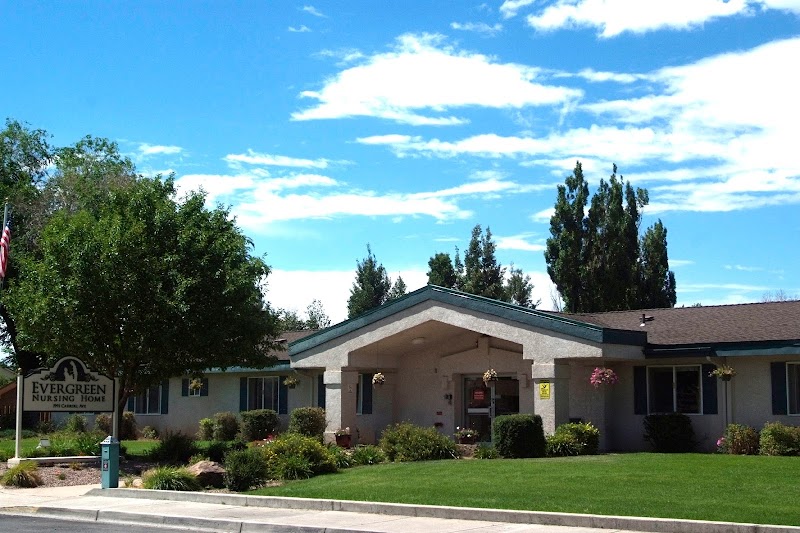
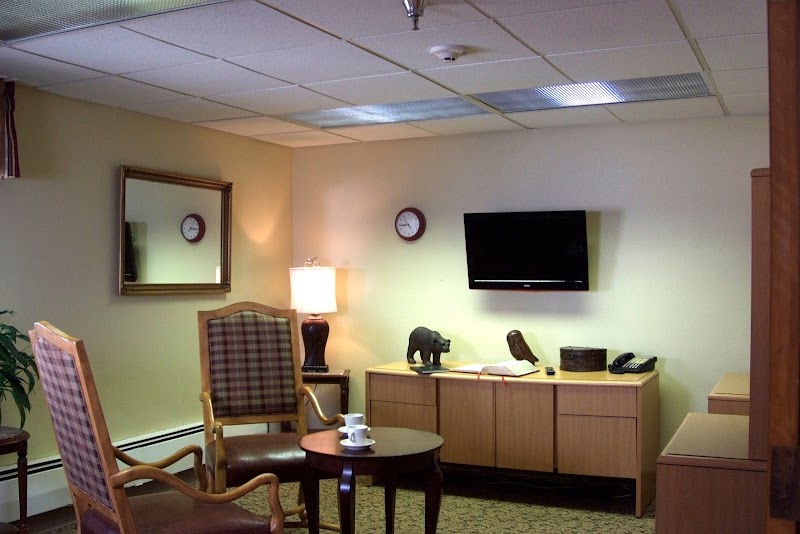
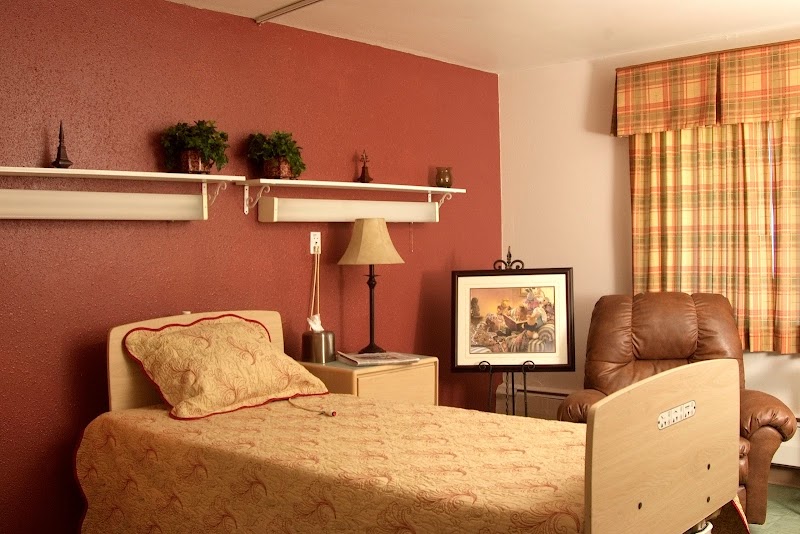
EVERGREEN NURSING HOME

1991 CARROLL ST, ALAMOSA, CO 81101 (719) 589-4951
For profit - Limited Liability company 60 Beds LIFE CARE CENTERS OF AMERICA Data: November 2025
Trust Grade
90/100
#21 of 208 in CO
Last Inspection: August 2024

Within standard 12-15 month inspection cycle. Federal law requires annual inspections.

Overview

Evergreen Nursing Home in Alamosa, Colorado, has received a Trust Grade of A, indicating it is excellent and highly recommended for potential residents. It ranks #21 out of 208 facilities in Colorado, placing it in the top half, and is the top-rated option in Alamosa County. However, the facility's trend is concerning as it has worsened, increasing from 4 issues in 2023 to 6 in 2024. Staffing is a strong point, with a 5 out of 5 rating and a turnover rate of only 32%, which is significantly lower than the state average of 49%. On the downside, there have been several concerns, including instances where staff did not demonstrate necessary competencies for resident care, and issues with food safety practices, such as improper hand hygiene and unclean kitchen equipment.

Trust Score
A
90/100
In Colorado
#21/208
Top 10%
Safety Record
Low Risk
No red flags
Inspections
Getting Worse
4 → 6 violations
Staff Stability
○ Average
32% turnover. Near Colorado's 48% average. Typical for the industry.
Penalties
✓ Good
No fines on record. Clean compliance history, better than most Colorado facilities.
Skilled Nurses
✓ Good
Each resident gets 49 minutes of Registered Nurse (RN) attention daily — more than average for Colorado. RNs are trained to catch health problems early.
Violations
⚠ Watch
11 deficiencies on record. Higher than average. Multiple issues found across inspections.
★★★★★
5.0
Overall Rating
★★★★★
5.0
Staff Levels
★★★★★
5.0
Care Quality
★★★★☆
4.0
Inspection Score
Stable
2023: 4 issues
2024: 6 issues

The Good

  • 5-Star Staffing Rating · Excellent nurse staffing levels
  • 5-Star Quality Measures · Strong clinical quality outcomes
  • Full Sprinkler Coverage · Fire safety systems throughout facility
  • No fines on record
  • Staff turnover below average (32%)

    16 points below Colorado average of 48%

Facility shows strength in staffing levels, quality measures, fire safety.

The Bad

Staff Turnover: 32%

14pts below Colorado avg (46%)

Typical for the industry

Chain: LIFE CARE CENTERS OF AMERICA

Part of a multi-facility chain

Ask about local staffing decisions and management

The Ugly 11 deficiencies on record

Aug 2024 6 deficiencies
CONCERN (D) 📢 Someone Reported This

A family member, employee, or ombudsman was alarmed enough to file a formal complaint

Potential for Harm - no one hurt, but risky conditions existed

Safe Environment (Tag F0584)

Could have caused harm · This affected 1 resident

**NOTE- TERMS IN BRACKETS HAVE BEEN EDITED TO PROTECT CONFIDENTIALITY** Based on observations and interviews, the facility failed to provide a functional, comfortable and homelike environment for resi...

Read full inspector narrative →
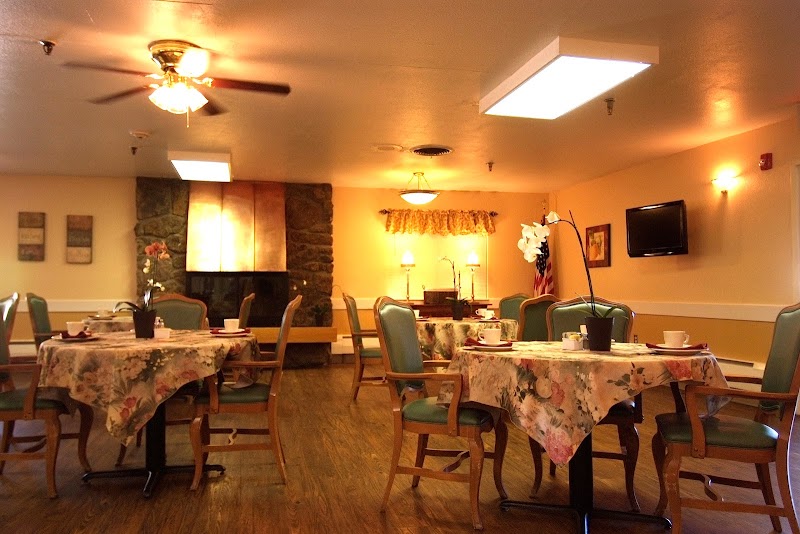
**NOTE- TERMS IN BRACKETS HAVE BEEN EDITED TO PROTECT CONFIDENTIALITY** Based on observations and interviews, the facility failed to provide a functional, comfortable and homelike environment for residents on two of two units. Specifically, the facility failed to: -Ensure the residents residing in room [ROOM NUMBER], room [ROOM NUMBER] and room [ROOM NUMBER] were provided with appropriate hot water in the bathroom sinks; and, -Ensure high back dining room chairs in the secure unit dining room and the main dining room were free from cracks and tears. Findings include: I. Facility policy and procedure The Resident Rights policy and procedure, revised 9/25/23, was provided by the director of nursing (DON) on 8/29/24 at 9:32 a.m. It read in pertinent part, At the time of admission and periodically throughout their stay, the facility will inform each resident, orally and in writing of their rights. A facility must treat each resident with respect and dignity and care for each resident in a manner and in an environment that promotes maintenance or enhancement of his or her quality of life, recognizing each resident's individuality. The resident has a right to a dignified existence, self-determination, and communication with and access to persons and services inside and outside the facility. The resident has a right to a safe, clean, comfortable and homelike environment, including but not limited to, receiving treatment and support for daily living safely. II. Observations and interviews On 8/26/24 at 12:43 p.m. the hot water in the bathroom sink of room [ROOM NUMBER] was observed to be cool to the touch. The resident who resided in room [ROOM NUMBER] said the hot water had always been cold and not hot. On 8/26/24 at 2:40 p.m. the hot water in the bathroom sink of room [ROOM NUMBER] was observed to be cool to the touch. The resident who resided in room [ROOM NUMBER] said the water had never been hot and was always cool. On 8/28/24 at 12:58 p.m. the hot water temperature in the bathroom sink of room [ROOM NUMBER] was taken with a traceable thermometer held under the running water for three minutes and 58 seconds. The temperature of the water was 102.1 degrees Fahrenheit (F). On 8/28/24 at 1:30 p.m. the hot water temperature in the bathroom sink of room [ROOM NUMBER] was taken with a thermometer held under the running water for three minutes. The temperature of the water was 94.8 degrees F. On 8/28/24 at 2:03 p.m. the hot water temperature in the bathroom sink of room [ROOM NUMBER] was taken with a thermometer held under the running water for one minute. The temperature of the water was 109.7 degrees F. On 8/29/24 at 9:16 a.m. four high back dining room chairs in the secure unit dining room were observed to have several cracks and tears on the seats of the chairs. On 8/29/24 at 10:37 a.m. three high back dining room chairs in the main dining room were observed to have several cracks and tears on the seats of the chairs. An environmental tour was conducted on 8/29/24 at 12:19 p.m. with the maintenance director (MTD) and the above concerns were observed. The MTD said he needed to replace the circulation pump on the water heater. He said the facility had had the circulation pump for a year and he had not replaced it. He said he would be working on getting it replaced. The MTD was shown the dining room chairs in the main dining room and the secure unit dining room. He said he did an audit a year ago (2023) on all the chairs that needed to be replaced. He said he had been trying to get them replaced. He said he had not heard back from corporate management about getting them replaced. The MTD said he did a walk through of the facility every morning. He said he looked at the exit light signs, lights and fire extinguishers. He said there was a maintenance request book at each of the nurse's stations. He said when staff saw something that needed to be repaired or fixed they wrote it down in the maintenance request book. He said he looked at the maintenance request book every day. He said the facility's system that was supposed to communicate staff requests for facility repairs into maintenance repair tickets was not up and running and he was the only one who had been trained on the system. He said if the facility had the system up and running it would make things easier for him to see what repairs needed to be done. The MTD said if he had any issues with the repairs he would notify the NHA. He said the NHA did not do rounds with him. He said she did her own rounds. He said if the NHA had any questions for him regarding items needing repair she would notify him. He said if he had to get a part from the local hardware store, the NHA had to approve it. He said anything that cost above $500.00 to repair had to be approved by the NHA. He said if he had a question about a room or bigger projects that needed fixed or repaired, he would bring the NHA to see the concern. He said he communicated with the NHA all the time regarding repairs around the facility. III. Additional staff interviews The housekeeping and laundry manager (HLM) was interviewed on 8/29/24 at 9:20 a.m. The HLM said the dining room chairs on the secure unit and main dining room were cleaned as needed and weekly. She said the facility was working on getting the torn chairs replaced. The nursing home administrator (NHA) was interviewed on 8/29/24 at 9:25 a.m. The NHA said she was not aware that the dining room chairs in the main dining room and secure unit had cracks and tears on the seats of the chairs. -However, according to the MTD, he communicated with the NHA all the time about items in the facility that needed repair (see MTD interview above).
CONCERN (D) 📢 Someone Reported This

A family member, employee, or ombudsman was alarmed enough to file a formal complaint

Potential for Harm - no one hurt, but risky conditions existed

ADL Care (Tag F0677)

Could have caused harm · This affected 1 resident

**NOTE- TERMS IN BRACKETS HAVE BEEN EDITED TO PROTECT CONFIDENTIALITY** Based on record review and interviews, the facility failed to ensure one (#18) of three residents out of 26 sample residents rev...

Read full inspector narrative →
**NOTE- TERMS IN BRACKETS HAVE BEEN EDITED TO PROTECT CONFIDENTIALITY** Based on record review and interviews, the facility failed to ensure one (#18) of three residents out of 26 sample residents reviewed for assistance with activities of daily living (ADL) received appropriate treatment and services to maintain or improve his or her abilities. Specifically, for Resident #18, the facility failed to: -Ensure a wheelchair positioning device was care planned; and, -Ensure the wheelchair positioning device was positioned appropriately and consistently to keep the resident from leaning in her wheelchair. Findings include: I. Resident #18 A. Resident status Resident #18, age greater than 65, was admitted on [DATE]. According to the August 2024 computerized physician orders (CPO), diagnoses included Alzheimer's disease (abnormal memory), kyphosis (outward curve in the spine), dysphagia (difficulty swallowing) and hypertension (high blood pressure). The 6/26/24 minimum data set (MDS) assessment revealed the resident had short and long term memory issues. She was dependent on staff for toileting, personal hygiene, transfers, dressing and required supervision with eating. She was dependent on staff for mobility with a manual wheelchair. B. Observations On 8/26/24 at 1:41 p.m. Resident #18 was observed sitting in her wheelchair with a specialized positioning device on the left side of the wheelchair. Resident #18 was leaning to her left with her arm tucked in to her side. The resident's arm was not positioned on top of the positioning device. On 8/27/24 at 2:34 pm Resident #18 was sitting in her wheelchair participating in an activity in the dining room. Resident #18 was leaning to the left but there was no positioning device on the left side of the wheelchair. On 8/28/24 at 11:36 a.m. Resident #18 was in the dining room for lunch and was seated in her wheelchair with the positioning device positioned on the left side of the wheelchair. Resident #18 was leaning to her left side with her arm tucked into her side and not on top of the positioning device. The director of nursing (DON) entered the dining room and observed that Resident #18 did not have her left arm positioned on top of the positioning device. The DON proceeded to place Resident #18's left arm on top of the wheelchair positioning device. The DON said the resident's left arm should be resting on top of the positioning device to aid in positioning her appropriately because the resident leaned to her left. C. Record review The August 2024 CPO revealed a physician's order for an arm wedge under the resident's left arm while in the wheelchair to assist with positioning, ordered 8/28/24 (during the survey). The 5/9/22 comprehensive care plan failed to document Resident #18's use of the wheelchair positioning device. Review of occupational therapy (OT) notes for Resident #18 revealed the following: Resident #18 was working with OT services beginning 6/11/24 and the OT recommended further wheelchair positioning due to staff reporting the resident was leaning in her wheelchair at times. Resident #18 was to receive wheelchair management training two times a week for 12 weeks starting 8/7/24. On 8/7/24 staff reported an increase in Resident #18's left sided leaning in her wheelchair at times and wheelchair positioning devices were recommended by the OT. On 8/20/24 OT notes revealed Resident #18 had a significant forward flexion (forward bend) when sitting in the wheelchair but positioned midline (more upright in the middle) with a new left side support. -However Resident #18 was observed leaning to the left due to the positioning device not being positioned appropriately in the wheelchair (see observations above and DON interview below). -There was no documentation to indicate staff were educated on the appropriate way to position Resident #18's positioning device to ensure she did not lean to her left while she was in her wheelchair. III. Staff interviews The DON was interviewed on 8/28/24 at 11:36 a.m. The DON said Resident #18 had a wheelchair cushion on the left side of her wheelchair to aid in positioning the resident since she had a tendency to lean to the left. The DON said because the device was used for positioning, the resident's arm should be placed on top of the positioning device (see record review above). The DON said the wheelchair positioning device should be careplanned for use to ensure all staff were aware of Resident #18's need for the positioning device. The restorative nurse aide (RNA) #1 was interviewed on 8/28/24 at 12:45 p.m. RNA #1 said Resident #18 had been using the wheelchair positioning device for a while. RNA #1 said the device was used to assist Resident #18 to sit up straight in her wheelchair due to her tendency to lean to the left. RNA#1 said Resident #18 should have her left arm at her side because she did not have great range of motion in her shoulder. RNA #1 said he did to know if it made a difference in the resident's positioning whether the resident kept her arm next to her or on top of the cushion. -However, according to the DON's interview (see above) the resident's arm should be positioned on top of the positioning device to ensure proper positioning in the wheelchair. Licensed practical nurse (LPN) #1 was interviewed on 8/28/24 at 12:49 p.m. LPN #1 said Resident #18 had had the wheelchair positioning cushion for a while. LPN #1 said Resident #18 leaned towards her left side but she was not sure why she leaned to that side. LPN #1 said she did not know if the resident had to have her arm on the cushion or if at her side was acceptable positioning. Certified nurse aide (CNA) #2 was interviewed on 8/29/24 at 12:33 p.m. CNA #2 said Resident #18's wheelchair positioning device was to be used when she was sitting in her wheelchair because she leaned to her left in the wheelchair. -Staff were aware Resident #18 used a positioning device on the left side of her wheelchair, however, staff were unable to verbalize how the resident's arm should be positioned on the positioning device to ensure the resident was sitting upright in her wheelchair.
CONCERN (D)

Potential for Harm - no one hurt, but risky conditions existed

Deficiency F0697 (Tag F0697)

Could have caused harm · This affected 1 resident

**NOTE- TERMS IN BRACKETS HAVE BEEN EDITED TO PROTECT CONFIDENTIALITY** Based on observations, record review and interviews, the facility failed to ensure one (#4) of two residents reviewed for pain o...

Read full inspector narrative →
**NOTE- TERMS IN BRACKETS HAVE BEEN EDITED TO PROTECT CONFIDENTIALITY** Based on observations, record review and interviews, the facility failed to ensure one (#4) of two residents reviewed for pain out of 26 sample residents had an effective pain management regimen in a manner consistent with professional standards of practice, resident-centered care plans and resident preferences. Specifically, the facility failed to ensure Resident #4 was offered effective pain management to include non-pharmacological interventions and as needed (PRN) pain medications for breakthrough pain. Findings include: I. Facility policy The Pain Assessment and Management policy, revised 9/12/23, was received from the director of nursing (DON) on 8/28/24 at 12:31 p.m. It read in pertinent part, Pain management procedure: Based on the assessment, the facility, in collaboration with the attending physician/prescriber, other health care professionals, and the resident and/or his/her representative, develops, implements, monitors and revises as necessary interventions to prevent or manage each individual resident's pain, beginning at admission. These interventions may be integrated into components of the comprehensive care plan, addressing conditions or situations that may be associated with pain, or may be included as a specific pain management need or goal. The facility will address/treat the underlying causes of the pain, to the extent possible. Developing and implementing both non-pharmacological and pharmacological interventions/approaches to pain management, depending on factors such as whether the pain is episodic, continuous, or both. Identifying and using specific strategies for preventing or minimizing different levels or sources of pain or pain-related symptoms based on the resident-specific assessment, preferences and choices, a pertinent clinical rationale, and the resident's goals. Identifying target signs and symptoms (including verbal reports and non-verbal indicators from the resident) and using standardized assessment tools can help the interdisciplinary team evaluate the resident's pain and responses to interventions and determine whether the care plan should be revised. Monitoring appropriately for effectiveness and/or adverse consequences (constipation, sedation) including defining how and when to monitor the resident's symptoms and degree of pain relief. Modifying the approaches, as necessary. II. Resident #4 A. Resident status Resident #4, age greater than 65, was admitted on [DATE] and readmitted [DATE]. According to the August 2024 computerized physician orders (CPO), diagnoses included type 2 diabetes, primary osteoarthritis, muscle wasting and atrophy, anemia, polyosteoarthritis (involves five or more joints at one time), difficulty in walking and muscle spasms. The 7/25/24 minimum data set (MDS) assessment revealed, the resident was cognitively intact with a brief interview for mental status (BIMS) of 15 out of 15. The resident had verbal behavior directed towards others and other behavioral symptoms not directed at others on one to three days of the seven day look back period. She required moderate assistance with bathing and supervision with transfers. The MDS assessment indicated the resident received scheduled pain medications. The resident did not receive as needed pain medications or non-pharmacological interventions for pain. She had frequent pain, which occasionally interfered with day to day activities. The resident reported a pain level of 8 on a pain scale of 1-10. B. Resident interviews and observations Resident #4 was interviewed on 8/26/24 at 11:45 a.m. Resident #4 was sitting in her wheelchair at her bedside table. The resident said she had chronic pain and the scheduled medications helped her a little bit but did not relieve her pain. She said her pain was an 8 out of 10 at the time of the interview. Resident #4 was interviewed a second time on 8/27/24 at 9:46 a.m. sitting in her wheelchair at her bedside. She said she was in alot of pain. She said currently her pain was an 8 out of 10. She said the pain was in her back, knees, legs and hands. She said she loved to play bingo when her hands were not hurting too bad. Resident #4 was interviewed a third time on 8/27/24 at 9:53 a.m. She said when she told the nurse she was in pain, the nurse would respond that she already had her scheduled pain medication and it was not time for another pain pill. She said she had never been offered any non-pharmacological interventions but thought they may help. She said after the nurse assessed her pain, she did not feel the facility provided adequate interventions to address her pain level. She said she felt like the staff did not take her pain seriously. C. Record review A review of the resident's August 2024 medication administration record (MAR) revealed Resident #4 reported her pain as a 10 out of 10 one time, a 9 out of 10 one time, an 8 out of 10 10 times, a 7 out of 10 four times, a 6 out of 10 two times and a 5 out of 10 eight times. It revealed her acceptable pain level was a 3 out of ten. A review of the resident's electronic medical record (EMR) revealed Resident #4 did not receive non-pharmacological pain interventions. A physician's order, dated 1/24/24, revealed the resident was to receive tramadol 50 milligrams (mg) two times a day for generalized pain. A physician's order, dated 7/8/24, revealed the resident was to receive acetaminophen 325 mg two times a day for pain. -The August 2024 CPO did not reveal any physician's orders for PRN pain medications. The pain management care plan, revised 4/24/23, revealed the resident was on pain medication therapy. The goal was to be free of any discomfort or adverse side effects from the pain medication. The interventions included administering analgesic medication as ordered by the physician and observing for side effects and effectiveness. The arthritis care plan, revised 4/23/23, revealed the resident expressed pain all over related to arthritis. The goal was for the resident to express pain relief through the review date. The resident's pain was aggravated by increased activity. The resident's pain was alleviated/relieved by rest, repositioning and medication. The interventions included anticipating the resident's need for pain relief and respond immediately to any complaint of pain, evaluating the effectiveness of pain interventions, notifying the physician if interventions were unsuccessful, observing and reporting changes in usual routine, sleep patterns, decrease in functional abilities, decreased range of motion, withdrawl or resistance to care, observing and reporting to the nurse any signs and symptoms of non-verbal pain, such as yelling out, silence, more irritable, restless and aggressive behavior, observing and reporting to the nurse any resident complaints of pain or request for pain treatment and reporting to the nurse any change in usual activity attendance patterns or refusal to attend activities. A health status note dated 7/12/24 at 12:53 a.m. revealed the resident was frustrated when she asked for her pain medication but was told she had to wait for the scheduled administration time. She asked twice through the night before the pain medications were allowed to be administered. It was not helpful for her behaviors or pain. -The progress note failed to identify if any non-pharmacological interventions were attempted with the resident. -The progress noted failed to identify if the physician was notified about the resident's increased pain and the potential need for PRN pain medications for breakthrough pain. A behavior note dated 7/13/24 at 5:50 p.m. revealed Resident #4 had an increase in behaviors that shift. The resident repeatedly asked for her pain medications after they were already administered. She was on her call light the entire shift. When staff tried to redirect her she would tell the staff to go to hell. The resident repeatedly asked for the same thing over and over all shift. -The progress note failed to identify if any non-pharmacological interventions were attempted with the resident. -The progress noted failed to identify if the physician was notified about the resident's increased pain and the potential need for PRN pain medications for breakthrough pain. A health status note dated 7/17/24 at 4:17 a.m. revealed the resident was up early and loudly yelling about how much she hurt and her pain was severe. At one point she yelled out to the Virgin [NAME] to help her with her pain. Tylenol was given but the resident continued to sit in the hallway yelling at the pain to go away. A behavior note dated 7/24/24 at 1:58 a.m. revealed the resident got herself out of bed and came into the hallway. She was sitting in her wheelchair moaning, talking to herself loudly, making disruptive sounds and crying about how she was hurting. Tylenol was given, but the resident continued to moan loudly. -The progress note failed to identify if any non-pharmacological interventions were attempted with the resident. -The progress noted failed to identify if the physician was notified about the resident's increased pain and the potential need for PRN pain medications for breakthrough pain. A behavior note dated 7/25/24 at 9:24 a.m. revealed a huddle was held due to Resident #4 reporting pain, asking for tylenol and making sounds. The resident reported that she was in pain however, the nurse documented the resident had a behavioral health disorder, and diagnosis of anemia. The possible precipitating factors included her medical condition, reported pain, and behavioral health disorder. The interventions were to administer tylenol and assess the resident's needs. -The facility failed to identify that the resident's behavior could have been the result of her pain being out of control and failed to implement non-pharmacological interventions. -The progress noted failed to identify if the physician was notified about the resident's increased pain. III. Staff interviews Certified nurse aide (CNA) #1 was interviewed on 8/28/24 at 9:40 a.m. CNA #1 said if a resident complained of pain, the CNA would report it to the nurse and the nurse would look in the MAR to see what pain medication was available. She said Resident #4 complained of pain daily. CNA #2 was interviewed on 8/28/24 at 9:45 a.m. CNA #2 said Resident #4 complained of pain daily but she was not sure if it was really pain or just her behavior. CNA #2 said she could tell by the way Resident #4 moaned whether she was in true pain. She said she did not know if the resident's pain was causing her behaviors. Licensed practical nurse (LPN) #3 was interviewed on 8/27/24 at 9:50 a.m. LPN #3 said Resident #4 had physician's orders for scheduled Tylenol twice a day and Tramadol twice a day. She said the resident did not have any physician's orders for PRN pain medications for breakthrough pain. She said she was not aware of a pain clinic in their town. She said if the physician ordered pain medication was not effective, she would call the physician and see if a stronger medication or topical medication could be prescribed. LPN #3 reviewed Resident #4's August 2024 MAR and said no non-pharmacological interventions had been tried to help alleviate the resident's pain. She said it was important to control a resident's pain because the resident had the right to be comfortable. She said pain was not normal and could cause behavioral issues. The DON was interviewed on 8/28/24 at 11:09 a.m. The DON said if a resident's pain regimen was not effective, the facility would review the medications and call the physician. She said it was the facility's goal to always keep residents comfortable and free of pain. She said the facility could do a better job at re-educating the nurses to look at the physician order and to always offer non-pharmacological interventions when the pain medication was not effective. She said the nurse needed to focus on making the resident comfortable and meet their needs. She said the nurse should be addressing Resident #4's behavior to see if pain was the cause of her behaviors. The DON said it was important to manage a resident's pain so they were comfortable in their own home. She said when a resident was in pain it could lead to a decline in the quality of their life. She said the facility did not want to deprive the residents from living their best life.
CONCERN (D)

Potential for Harm - no one hurt, but risky conditions existed

Deficiency F0761 (Tag F0761)

Could have caused harm · This affected 1 resident

Based on observations and interviews, the facility failed to ensure medications and biologicals were stored and labeled properly according to professional standards in one of one medication storage ro...

Read full inspector narrative →
Based on observations and interviews, the facility failed to ensure medications and biologicals were stored and labeled properly according to professional standards in one of one medication storage rooms. Specifically the facility failed to: -Ensure expired medications were removed from the medication refrigerator; and, -Ensure medications were labeled with open dates. Findings include: I. Professional Reference According to the Aplisol (Tuberculin Purified Protein Derivative used to test for tuberculosis) package insert, was retrieved on 9/3/24 from https://www.fda.gov/files/vaccines%2C%20blood%20%26%20biologics/published/Package-Insert---Aplisol.pdf, Aplisol vials should be inspected visually for both particulate matter and discoloration prior to administration and discarded if either is seen. Vials in use for more than 30 days should be discarded. II. Facility policy and procedure The Storage and Expiration Dating of Medications, Biologicals policy, revised 8/7/23, was received from the director of nursing (DON) on 8/28/24 at 12:21 p.m. It revealed in pertinent part, Once any medications or biological package is open, the facility should follow manufacturer/supplier guidelines with respect to expiration dates for opened medications. Facility staff should record the date opened on the primary medication container (vial, bottle or inhaler) when the medication has a shortened expiration date once opened. Medications with a manufacturer's expiration date expressed in month and year will expire on the last day of the month. If a multi-dose vial of an injectable medication has been opened or accessed (needle-punctured), the vial should be dated and discarded within 28 days unless the manufacturer specifies a different date for that opened vial. III. Observations and staff interview On 8/27/24 at 11:42 a.m. the [NAME] medication room was observed with the infection preventionist (IP). The following was observed in the medication refrigerator: -There was one vial of Aplisol that was opened and did not have an opened date on the vial or box; and, -There was one pre-filled syringe of FluZone High Dose Quadrivalent flu season 2023-2024 vaccine with an expiration date of June 2024. The IP said the vial of Aplisol should have had a date on it to indicate when it was opened because the medication was only good for 28 days after it was opened. The IP said the vial needed to be removed for destruction so no one could accidently administer it. The IP said the medication would not be as effective if it was used after the recommended use by date. The IP said the vaccine should have been removed from the refrigerator once it had expired to ensure it did not get used after the expiration date. The IP said if the vaccine was administered after it had expired it would not be as effective in preventing someone from getting influenza. IV. Additional staff interview The DON was interviewed on 8/28/24 at 11:15 a.m. The DON said it was the responsibility of the management team to perform weekly audits of the medication carts and monthly audits in the medication room to look for expired medications and medications that were not dated when opened. The DON said it was the responsibility of the nurses to label medications when they opened them. The DON said medications or vaccines may not be as effective if administered past the expiration date.
CONCERN (D)

Potential for Harm - no one hurt, but risky conditions existed

Infection Control (Tag F0880)

Could have caused harm · This affected 1 resident

**NOTE- TERMS IN BRACKETS HAVE BEEN EDITED TO PROTECT CONFIDENTIALITY** Based on observations, record review and interviews, the facility failed to establish a sanitary environment to help prevent the...

Read full inspector narrative →
**NOTE- TERMS IN BRACKETS HAVE BEEN EDITED TO PROTECT CONFIDENTIALITY** Based on observations, record review and interviews, the facility failed to establish a sanitary environment to help prevent the transmission of communicable diseases and infections. Specifically, the facility failed to ensure Resident #33's catheter drainage bag was not touching the floor. Findings include: I. Facility policy and procedure The Indwelling Urinary Catheter (Foley) Management policy, revised June 2023, was provided by the director of nursing (DON) on 8/28/24 at 12:31 p.m. It read in pertinent part, Based on comprehensive assessment of a resident, the facility must ensure that residents receive treatment and care in accordance with professional standards of practice, the comprehensive person-centered care plan and the resident's choices. The facility must ensure those who were incontinent of bladder received appropriate treatment and services to prevent urinary tract infections. Keep the collecting bag below the level of the bladder at all times. Do not rest the bag on the floor. II. Resident status Resident #33, age greater than 65, was admitted on [DATE]. According to the August 2024 computerized physician orders (CPO), diagnoses included inflammatory disorders of the scrotum, muscle weakness, bladder neck obstruction, difficulty in walking, obstructive and reflux uropathy (urine flow was obstructed) and down syndrome. The 8/7/24 minimum data set (MDS) assessment revealed, the resident was unable to complete a brief interview for mental status score (BIMS). He had short and long term memory problems. His cognitive skills for daily living were severely impaired. He was dependent on staff for all of his activities of daily living (ADL). He had an indwelling catheter and was always incontinent of bowel. III. Observations On 8/26/24 at 10:52 a.m., the resident was lying in bed. The bed was in a low position and his catheter drainage bag was hanging from the bed frame and touching the floor. On 8/27/24, the following observations were made: At 11:05 a.m. the resident was lying in bed. The bed was in a low position and his catheter drainage bag was hanging from the bed frame and touching the floor. At 2:34 p.m. the resident was lying in bed. The bed was in a low position and his catheter drainage bag was hanging from the bed frame and touching the floor. On 8/28/24 at 10:36 a.m. the resident was observed lying in bed.The catheter had been placed in a privacy cover attached to the bed frame and was no longer touching the floor. IV. Record review The nursing admission form, dated 11/21/22, revealed Resident #33 was admitted with a urinary catheter related to obstructive uropathy. The indwelling suprapubic catheter care plan, revised 5/23/24, revealed the resident had an indwelling catheter related to obstructive uropathy. The interventions included catheter care every shift, positioning the catheter drainage bag and tubing below the level of the bladder and documenting urine output every shift. -The care plan failed to document that the resident's catheter drainage bag should be positioned off the floor. V. Staff interviews Certified nurse aide (CNA) #3 was interviewed on 8/28/24 at 10:31 a.m. CNA #3 said a catheter drainage bag should not be touching the floor and should be in a privacy bag for dignity and for infection control. CNA #3 said she realized Resident #33's catheter drainage bag was touching the floor and placed the catheter drainage bag into a privacy bag (on 8/28/24). Licensed practical nurse (LPN) #1 was interviewed on 8/28/24 at 10:35 a.m. LPN #1 said a resident's catheter drainage bag should be hanging on the bed frame but not touching the floor to avoid bacteria from entering the bladder and causing an infection. The infection preventionist (IP) was interviewed on 8/28/24 at 10:49 a.m. The IP said a catheter drainage bag should not be touching the floor because the floor could be dirty and the staff needed to keep the catheter system as clean as possible to avoid contamination which could cause a urinary tract infection. The DON was interviewed on 8/28/24 at 11:07 a.m. The DON said a catheter drainage bag should not be touching the ground because it could lead to an infection. She said the catheter drainage bag should be in a privacy bag for dignity and infection control. The DON said the catheter drainage bag should be hung on the bed frame, lower than the bladder, but not touching the ground or anything that could introduce bacteria into the urinary system and cause an infection.
CONCERN (D)

Potential for Harm - no one hurt, but risky conditions existed

Deficiency F0883 (Tag F0883)

Could have caused harm · This affected 1 resident

**NOTE- TERMS IN BRACKETS HAVE BEEN EDITED TO PROTECT CONFIDENTIALITY** Based on record review and interviews, the facility failed to implement policies and procedures related to pneumococcal immuniza...

Read full inspector narrative →
**NOTE- TERMS IN BRACKETS HAVE BEEN EDITED TO PROTECT CONFIDENTIALITY** Based on record review and interviews, the facility failed to implement policies and procedures related to pneumococcal immunizations for two (#33 and #346) of five residents reviewed for immunizations out of 26 sample residents. Specifically, the facility failed to offer Resident #33 and Resident #346 additional recommended doses of the pneumococcal vaccination. Findings include: I. Professional reference According to the Centers for Disease Control and Prevention (CDC) Recommended Immunization Schedule for Adults Aged 19 Years or Older, United States (2023), retrieved on 9/4/24 from https://www.cdc.gov/vaccines/hcp/imz-schedules/downloads/adult/adult-combined-schedule.pdf, Routine vaccination-pneumococcal: routine vaccination for those age [AGE] years or older who have previously received only the PPSV23 (pneumococcal polysaccharide vaccine): one dose of PCV15 (pneumococcal conjugate vaccine) or one dose of PCV20. Administer either PCV15 or PCV20 at least 1 year after the last PPSV23 dose. II. Facility policy and procedure The Vaccination of Older Adults policy and procedure, revised 7/2/24, was received from the director of nursing (DON) on 8/29/24 at 12:21 p.m. It revealed in pertinent part, The facility, in conjunction with the public health authorities and CDC guidelines, will provide immunization to older adults that are recommended and ordered by a physician once determined to be eligible and without contraindications. Pneumococcal conjugate vaccine (PCV 15, PCV20, which protects against serious pneumococcal disease and pneumonia (recommended for all adults with a condition that weakens the immune system, cerebrospinal fluid leak or cochlear implant). Residents will be offered the vaccines, unless immunization is medically contraindicated, or the resident has already been immunized. If based on the nurse's assessment, contraindications are not noted, the vaccine may be administered per the physician's orders. Education, assessment findings, administration. Refusal or did not receive due to medical contraindications, and monitoring are documented in the resident's medical record. Update immunization record in the electronic health record. III. Resident #33 A. Resident status Resident #33, age greater than 65, was admitted on [DATE]. According to the August 2024 computerized physician orders (CPO), diagnoses included inflammatory disorders of the scrotum, muscle weakness, bladder neck obstruction, difficulty in walking, obstructive and reflux uropathy (urine flow was obstructed) and down syndrome. The 8/7/24 minimum data set (MDS) assessment revealed, the resident was unable to complete a brief interview for mental status score (BIMS). He had short and long term memory problems. His cognitive skills for daily living were severely impaired. He was dependent on staff for all of his activities of daily living (ADL). He had an indwelling catheter and was always incontinent of bowel. The assessment revealed the resident was not up to date on his pneumococcal vaccinations. -It failed to document if the vaccine was offered, declined or if the resident was not eligible. B. Record review According to the electronic medical record (EMR) Resident #33 received the following vaccines: Pneumovax dose one on 12/21/22. -The record failed to identify which specific pneumococcal vaccine Resident #33 received. Resident #33 received the pneumococcal conjugate vaccine (PCV20) on 8/28/24 (during the survey). C. Staff interview The infection preventionist (IP) was interviewed on 8/28/24 at 11:00 a.m. The IP said Resident #33 had received PPSV 23 on 12/21/22. The IP said Resident #33 should have received a second dose of pneumococcal vaccine a year later, either the PCV15 or the PCV20, to ensure he was up-to-date on his pneumococcal vaccinations.The IP was not aware if the second pneumococcal vaccination had been offered to the resident. IV. Resident # 346 A. Resident status Resient #346, age younger than 65, was admitted on [DATE] According to the August 2024 CPO, diagnoses included Parkinson's disease (a brain disorder affecting the nervous system), hemiplegia (unable to move one side of the body) and hypertension (high blood pressure). The 8/12/24 MDS assessment revealed the resident was cognitively intact with a BIMS score of 14 out of 15. The assessment revealed the resident was not up to date on pneumococcal vaccines. It documented the resident was offered and declined. -However, the resident had consented to the pneumococcal vaccine upon his admission to the facility three days earlier (see record review below). B. Record review According to the EMR, Resident #346 signed a consent for the pneumococcal vaccine on 2/2/23, during a previous admission to the facility. -The EMR failed to document if Resident #346 received a pneumococcal vaccination in February 2023. According to the EMR, Resident #346 signed a second consent on 8/9/24, upon his admission to the facility, to receive the pneumococcal vaccine. The EMR immunization record revealed Pneumovax dose one consent was required. -However, Resident #346 had already signed consents (on 2/2/23 and 8/9/24) to receive the pneumococcal vaccine and the consents were located in the EMR. The EMR immunization record revealed Resident #346 received te pneumococcal conjugate vaccine (PCV20) on 8/28/24 (during the survey). C. Staff interview The IP was interviewed on 8/28/24 at 11:00 a.m. The IP said, according to the the immunization record for Resident #346, he was administered PPSV 23 on 2/7/23 and the resident was eligible to receive a dose of the updated pneumococcal vaccine, either PCV15 or PCV20. V. Additional staff interviews The IP was interviewed again on 8/29/24 at 9:49 a.m. The IP said Resident #33 was due to receive his pneumococcal vaccine in February of 2023. The IP did not know why he had not received his second vaccine. The IP said Resident #33's responsible party was contacted (during the survey) for consent to receive the vaccine. The IP said resident #346 had given consent in February 2023 to receive a pneumococcal vaccine and it was not administered to the resident at that time. The IP said because the resident did not previously receive the vaccine, the facility obtained a verbal consent from the resident on 8/28/24, to go along with the consent Resident #346 signed upon his admission on [DATE]. The IP said Resident #346 received the pneumococcal vaccination on 8/28/24 (during the survey). The IP was unable to say why Resident #346 had not received the pneumococcal vaccine prior to the survey. The IP said it was important to ensure all residents were vaccinated if they choose to be. The IP said vaccinations decreased the risk of residents becoming sick. The DON was interviewed on 8/29/24 at 10:07 a.m. The DON said vaccines were offered to residents upon admission to the facility. She was not aware there were issues with vaccinations not being administered until the survey. The DON said because the concern had been brought to her attention, the facility was completing an in-house audit to see who else may not have received their updated pneumococcal vaccinations and the facility had identified three other residents. The DON said the IP was new to the facility and would be receiving more training to ensure residents were vaccinated per the vaccination guidelines. The DON said residents who were not properly vaccinated were at an increased risk for developing infections, especially if they had underlying medical conditions that weakened their immune systems.

Feb 2023 4 deficiencies
CONCERN (D)

Potential for Harm - no one hurt, but risky conditions existed

Free from Abuse/Neglect (Tag F0600)

Could have caused harm · This affected 1 resident

**NOTE- TERMS IN BRACKETS HAVE BEEN EDITED TO PROTECT CONFIDENTIALITY** Based on record review and interviews, the facility failed to ensure two (#40 and #10) of four residents reviewed for abuse out ...

Read full inspector narrative →
**NOTE- TERMS IN BRACKETS HAVE BEEN EDITED TO PROTECT CONFIDENTIALITY** Based on record review and interviews, the facility failed to ensure two (#40 and #10) of four residents reviewed for abuse out of 18 sample residents. Specially, the facility failed to prevent a resident to resident altercation between Resident #10 and Resident #40. Findings include: I. Facility policy and procedure The Abuse policy, dated 10/4/22, was received from the nursing home administrator (NHA) on 1/31/23. It read in pertinent part: The facility will ensure all residents are protected from physical and psychosocial harm during and after an investigation. Monitor the alleged victim and other residents at risk, such as conducting unannounced management visits at different times and shifts. II. Resident to resident physical altercation between Resident #10 and #40 A. Facility investigation Incident 1/24/23 The incident occurred in Resident #10's room on the secure unit, where both residents resided. The staff saw both residents in Resident #10's room and then heard arguing and slapping at approximately 8:00 p.m. When staff arrived, the residents were slapping each other than Resident #10 put her hands around Resident #40's neck. Resident #40 sustained two small abrasions to her neck. One-on-one (staff supervision) was put in place for both residents for three to five days. Resident #10 was moved off of the secure dementia unit on 1/25/23 and placed in the long term care side of the facility. The facility unsubstantiated the abuse investigation based on both residents' cognition. -However, the abuse should have been substantiated due to both residents slapping each other and Resident #10 putting her hands around Resident #40's neck. B. Resident #40 (victim) 1. Resident status Resident #40, age [AGE], was admitted on [DATE]. According to the January 2023 computerized physician orders (CPO), diagnoses included Alzheimer's, unspecified dementia, and anxiety. According to the 1/5/23 minimum data set (MDS) assessment, the resident had severe cognitive impairments and a brief interview for mental status (BIMS) interview was unable to be conducted. The resident was only oriented to self. The resident had behaviors of disorientation and disorganized thinking. She required supervision for transfers, walking and eating. She required extensive assistance with personal hygiene, toileting, and dressing. 2. Record review The care plan, initiated 12/28/22, identified the resident had behavioral problems consisting of agitation, physical/verbal aggression, wandering and exit seeking related to dementia. Interventions included to observe for behavior episodes, determine underlying causes, divert attention, and remove from situation. Certified nurse assistant (CNA) tasks for behavior monitoring were reviewed on 2/2/23 for the dates 1/20/23 through 1/25/23. It revealed the resident wandered into others rooms and personal space daily. The resident also pushed and grabbed others on 1/20/23, 1/21/23, 1/22/23, and 1/23/23. Progress notes dated 1/2/23 through 1/31/23 revealed, -Behavior note dated 1/3/23 revealed the interdisciplinary team (IDT) had a behavior huddle to discuss the resident's behaviors of verbal/physical aggression, agitation, wandering and exit seeking. Recommendations were to take the resident on walks outside and administer medication as ordered. -Behavior note dated 1/9/23 revealed that the resident was outside in the secure patio area. She had been trying to open the gate and use a chair to climb the fence. -Behavior note dated 1/10/23 revealed IDT had a behavior huddle to discuss the behavior in the patio area. Recommendations were to provide one-on-one supervision when the resident was in the patio area, remove the chairs and ensure the gate was locked. -Behavior note dated 1/16/23 revealed a CNA had reported to nursing that the resident was combative in the evening with behaviors of kicking, hitting, and biting. -Physician encounter note dated 1/17/23 revealed the staff had reported to the physician that the resident had increased agitation, exit seeking, and uncooperative behaviors in the evening. The physician prescribed Lorazepam (Ativan) 0.5MG (milligrams) twice a day as needed for anxiety. -Behavior note dated 1/17/23 revealed IDT had a behavior huddle to discuss behaviors of verbal/physical aggression and more combative behaviors than usual. Recommendations were to redirect, assess needs, ensure safety, and notify physician. -Nurse health status note dated 1/18/23 revealed the resident had been agitated due to noises other residents were making. Staff intervention was to redirect resident. -Behavior note dated 1/21/23 revealed the resident had been having behaviors of agitation. She had been pulling pictures off the walls and pushing and grabbing others. Staff intervention was to take turns following the resident around the unit. -Behavior note dated 1/23/23 revealed IDT had a behavior huddle to discuss behaviors of physical/verbal aggression and agitation. Recommendations were to continue with current interventions. -Behavior note dated 1/24/23 revealed an incident of physical aggression between Resident #10 and Resident #40 (see incident above). C. Resident #10 (assailant) 1. Resident status Resident #10, age [AGE], was admitted on [DATE]. According to the January 2023 CPO, diagnosis included Alzheimer's, dementia with behavioral disturbances, and anxiety. According to the 12/5/22 minimum data set (MDS) assessment, the resident had severe cognitive impairment with a brief interview for mental status (BIMS) score of two out of 15. The resident had no behaviors indicated except for wandering. She required extensive assistance for eating, dressing, personal hygiene, transfers, and toilet use. 2. Record review The care plan, initiated 12/8/22, identified the resident had behavioral problems consisting of physical aggression when provoked, wandering and exit seeking related to dementia. Interventions included to observe for behavior episodes, determine underlying causes, divert attention, and remove from situation. Certified nursing assistant (CNA) task behavior monitoring reviewed on 2/2/23 for the dates 12/8/22 through 1/25/23, failed to show any behavior monitoring had been initiated. Progress notes dated 12/8/22 through 2/2/23 revealed, -Behavior note dated 1/24/23 revealed an incident of physical aggression between Resident #10 and Resident #40 (see incident above). -Nursing health note dated 1/28/23 revealed the resident was being monitored for the move off of the secure unit. Resident gets confused and needs to be redirected at times. -Behavior note dated 2/1/23 revealed the resident had been wandering in and out of other resident's rooms, displaying verbal aggression and using profanity at other residents. III. Staff interview CNA #10 on the secure unit was interviewed on 1/31/23 at 9:27 a.m. She said Resident #40 had behaviors of wandering into other resident's rooms and attempting to get into their beds during the evening. This behavior was disruptive to the other residents and the staff had to redirect her constantly. If they took her outside for a walk on the secure patio, it would reduce her agitation but staff were not always available to do that. She stated that Resident #10 had behaviors of being territorial of her room and her space and could be verbally aggressive towards other residents. Licensed practical nurse (LPN) #3 on the secure unit was interviewed on 1/31/23 at 9:48 a.m. She stated that Resident #40 was very active and kept the staff busy with her behaviors of wandering in other resident's rooms, and out of rooms and her attempts to climb the fence in the patio. She can become agitated and difficult to redirect due to her cognition. LPN #3 stated that Resident #10 could become easily agitated and staff had to redirect her when she became agitated at other residents. The NHA was interviewed on 2/1/23 at 10:26 a.m. She said that Resident #40 had wandered into Resident #10's room and this resulted in a physical altercation. Staff separated the residents, reported to her and the director of nursing. Resident #40 was put on one-on-one supervision for three days afterwards and Resident #10 was trialed off of the secure unit. Resident #10 had been on one-on-one supervision for five days after the 1/24/23 altercation and behaviors were documented on a one-on-one sheet kept by the CNA. It was unclear who initiated the altercation, but since Resident #40 was the one who sustained injuries, it was determined that she was the victim. The NHA said he would provide the one-to-one sheet kept by the CNAs. NHA stated the facility had come to a conclusion unsubstantiated regarding the physical abuse because they did not believe Resident #10 had intent to harm the other resident. She did not believe that Resident #10 had the foresight to make the decision to hurt the other resident due to her dementia. NHA was unaware of the regulations language regarding willful and intent. -The NHA did not provide the one-to-one supervision sheet by the time of exit on 2/2/23. CNA #12 was observed on 2/2/23 at 9:27 a.m. sitting in a chair outside of Resident #40's room. She stated she had been with Resident #10 but was told by the nurse to come over to the secure unit and provide one-on-one supervision for Resident #40 instead. She said she was not told why. She also did not know why she had been providing one-on-one supervision to Resident #10. The social services director (SSD) was interviewed on 2/2/23 at 11:20 a.m. She stated Resident #40 was nonverbal and difficult to redirect. The resident had behaviors of sundowning, where she became more agitated in the later afternoon and evening. She would go into other resident's rooms, urinate in hallways, and climb furniture. Resident #10 had behaviors of walking around confused and disorientated without a purpose at times. She became aggressive if she felt she had been provoked, like if someone were to yell at her. The facility started behavior tracking for residents on psychotropic medications, residents who exhibited disruptive behaviors, or residents transitioning off of the secure unit. Disruptive behaviors could consist of verbal/physical aggression or exit seeking. According to SSD, after the incident, the facility started one-on-one staff supervision for both residents for three days. The SSD said there had been no behavior monitoring for Resident #10 before or after the incident. She stated that Resident #10 moved off of the secure unit after the incident on a trial basis. She had not had any exit seeking behaviors or behaviors that were disruptive to other residents since moving off the secure unit. Regarding the behavior note from 2/1/23, the SSD stated another resident became disoriented and wandered into Resident #10's room. The IDT had not had a behavior huddle yet to discuss recommendations. IV. Facility follow-up Abuse and neglect staff training was conducted on 1/24/23 at 6:00 p.m. and documentation was provided by the NHA on 1/31/23, with 17 staff members attending. Abuse training was conducted on 11/16/22 and documentation was provided by the NHA on 1/31/23. Of the 61 staff members listed to attend, 46 attended.
CONCERN (D)

Potential for Harm - no one hurt, but risky conditions existed

Deficiency F0744 (Tag F0744)

Could have caused harm · This affected 1 resident

**NOTE- TERMS IN BRACKETS HAVE BEEN EDITED TO PROTECT CONFIDENTIALITY** Based on record review and interviews, the facility failed to ensure a resident who displayed or was diagnosed with dementia, re...

Read full inspector narrative →
**NOTE- TERMS IN BRACKETS HAVE BEEN EDITED TO PROTECT CONFIDENTIALITY** Based on record review and interviews, the facility failed to ensure a resident who displayed or was diagnosed with dementia, received the appropriate treatment and services to attain or maintain his or her highest practicable physical, mental, and psychosocial well-being for one (#10) of 10 residents reviewed for dementia care out of 18 sample residents. Specifically, the facility failed to -Develop and implement effective dementia management focused interventions to prevent Resident #10 form unsafe wandering and engaging in physically abusive resident to resident altercations; -Consistently document and assess Resident #10's wandering and physically aggressive behavior in order to determine the cause of behavior and ensure intervention effectiveness; and, -Reassess the effectiveness of care-plan intervention and adjust intervention approaches based on behavior tracking, for Resident #10. Cross-reference F600 for resident to resident physical abuse. Findings include: I. Facility policy and procedure The Behavior Management policy and procedure, revised 11/23/22, was provided by the nursing home administrator (NHA) on 1/31/23. It revealed in pertinent part, Monitoring the residents closely for expressions or indicators of distress. -Accurately document changes, including frequency of occurrence and potential triggers in the resident's records. -Ensuring that the necessary care and services are person centered. -Ensuring that pharmacological (medication) interventions are only used when non-pharmacological interventions are ineffective. The Dementia Care policy was requested from the NHA on 2/2/23 at 12:00 p.m. At the time of the survey exit on 2/2/23, the facility had not provided the dementia care policy. II. Resident #10 A. Resident status Resident #10, age [AGE], was admitted on [DATE]. According to the January 2023 computerized physician order (CPO), diagnosis included Alzheimer's, dementia with behavioral disturbances, and anxiety. According to the 12/5/22 minimum data set (MDS) assessment, the resident had severe cognitive impairments with a brief interview for mental status (BIMS) score of two out of 15. The resident had no behaviors indicated except for wandering. She required extensive assistance for eating, dressing, personal hygiene, transfers, and toilet use. B. Resident observations The resident was observed on 1/31/23 at 9:30 a.m. and on 2/2/23 at 9:30 a.m. During both times, the resident was observed walking around the hallway. The resident was not engaged during the time and there was nothing seen to keep the resident from wandering into other resident rooms. C. Record review The care plan, initiated 12/8/22, identified the resident had behavioral problems consisting of physical aggression when provoked, wandering and exit seeking related to dementia. Interventions include; observe for behavior episodes and attempt to determine underlying causes, divert attention, remove the resident from the situation, and document behaviors and attempted interventions. -There were no revisions to the resident's care plan to address the 1/26/23 incident or to identify person centered interventions to prevent a recurrence. Progress notes dated 12/8/22 through 2/2/23 revealed: -Behavior note dated 1/25/23 revealed a physical altercation between Resident #10 and another resident. Resident #10 had been found slapping the other resident and putting her hands around the other resident's neck. Staff found Resident #10 in the other resident's room and Resident #10 had to be redirected back to her room. Cross-reference F600. -Nursing health note dated 1/28/23 revealed the resident was being monitored for her move off of the secure unit. Behaviors identified were that the resident gets confused and needs to be redirected at times. -Behavior note dated 2/1/23 revealed the resident had been wandering in and out of other resident's rooms, displaying verbal aggression and using profanity at other residents. III. Staff interviews Licensed practical nurse (LPN) #1 was interviewed on 2/2/23 at 9:42 a.m. She said Resident #10 had recently moved over to the unit on the long term care side. She stated the resident frequently wandered into other residents' rooms, got lost, and had anxiety. Certified nurse aide (CNA) #3 was interviewed on 2/2/23 at 9:45 a.m. CNA #3 said Resident #10 recently moved over to the unit on the long term care side. She was not aware of the resident having any behaviors. The social services director (SSD) was interviewed on 2/2/23 at 11:20 a.m. She stated the facility would start behavior tracking for residents on psychotropic medications, residents exhibiting disruptive behaviors, or residents transitioning off of the secure unit. Disruptive behaviors could consist of verbal/physical aggression or exit seeking. The SSD ran a report, called the behavior monitoring and intervention report, in the computer to determine what behaviors had been documented and provided the report to the interdisciplinary team (IDT). The behavior monitoring and intervention report pulled documentation from the system. The nurses make behavior progress notes and the IDT reviewed each entry in morning management meetings. The IDT consisting of the director of nursing (DON), SSD and a floor nurse. The IDT members identified target behaviors and desired interventions but the results were not communicated directly to the floor nurse or CNAs. The SSD expected the CNAs and nurses to look in the resident's care plan to learn of the resident identified behaviors and interventions. -However, the resident's care plan was not personalized with interventions since she had an altercation with another resident after she wandered into their room. The SSD said when a resident moved off of the secure unit to transition to the long term side of the building, the nursing staff were to conduct behavior monitoring for three to five days. If there were no behaviors, the move became permanent and the family or responsible party were notified the move was considered permanent. The SSD ran the behavior monitoring and intervention report for Resident #10 for the date range of 1/1/23 through 2/2/23 at 11:25 a.m. There were no results on the report despite there was a documented resident to resident altercation involving Resident #10 on 1/25/23 and a recent behavior of aggression documented on 2/1/23. According to the SSD, when the staff failed to document behaviors, the negative outcome was that the IDT would not be able to determine how a resident was doing with medication changes or adjustments to environmental changes. The facility would not be effectively able to determine if a dose reduction or discontinuation of medication were successful. The nursing home administrator (NHA) was interviewed with the director of nursing (DON) on 2/2/23 at 12:00 p.m. According to the NHA, the facility provided dementia training to staff during an annual in person all staff training and through quarterly online courses. Resident #10 had been on one-on-one supervision for five days after the 1/25/23 altercation and behaviors were documented on a one-on-one sheet kept by the CNA. The NHA stated she provide one-on-one supervision sheet for Resident #10, the facility's dementia care policy, and staff online training for dementia. The DON confirmed that IDT reviewed the behavior monitoring and intervention report during the morning management meeting. The report pulled the information from the point of care charting. If there are no behavior monitoring tasks established for a resident then nothing would appear on that report. -However, the resident had behaviors documented in the progress notes (see above). IV. Facility follow-up On 1/31/23, the NHA provided documentation showing the facility conducted in person dementia care training on 3/14/22 Of the 63 staff members assigned to attend, only 29 attended. The facility did not have a makeup training schedule for the remaining 34 staff members not in attendance. At the time of the survey exit, 2/2/23, the facility had not provided the one-on-one supervision sheet for Resident #10, or staff online training for dementia documentation that was requested.
CONCERN (F)

Potential for Harm - no one hurt, but risky conditions existed

Deficiency F0726 (Tag F0726)

Could have caused harm · This affected most or all residents

Based on record review and interviews, the facility failed to ensure licensed nurses and certified nurse aides (CNA) were able to demonstrate competencies in skills and techniques necessary to care fo...

Read full inspector narrative →
Based on record review and interviews, the facility failed to ensure licensed nurses and certified nurse aides (CNA) were able to demonstrate competencies in skills and techniques necessary to care for residents' needs, as identified through resident assessments, and described in the plan of care. Specifically, the facility failed to ensure nursing staff had completed competencies in the past 12 months prior to providing skilled services as described in the plan of care for three out of three registered nurses (RN), two out of two licensed practical nurses (LPN) and five out of five CNAs reviewed for competencies. Findings include: I. Resident census and condtitions According to the Resident Census and Conditions, the facility had: -41 residents dependent with bathing. -Eight residents dependent with dressing. -Five residents dependent with transferring, -Five residents dependent with toilet use. -Two residents with a catheter. -One resident with a tube feeding. II. Competency records Review of the past 12 months, facility did not evidence of skill competencies for five CNAs (#1, #2, #3, #4 and #5), two LPNs (#1 and #2), and three RNs (#1, #2 and #3). III. Interviews The director of nursing (DON) was interviewed on 1/31/23 at 1:41 p.m. She said there had been several different administrative changes recently, and the facility had not completed competencies for staff. She said competencies were important to ensure staff provided cares safely and correctly. The nursing home administrator (NHA) was interviewed on 1/31/23 at 3:30 p.m. She said she could not locate any current skill competencies for the identified staff. She said it was important to ensure staff had the correct competencies to provide the best care to the residents. The staff development coordinator (SDC) was interviewed on 2/2/23 at 11:45 a.m. She said the facility had started tube feeding competencies the previous night, however had not completed all the staff. She said the facility and another facility within the corporation were going to develop a skills fair to ensure the staff both licensed nurses and CNAs, had safe skills to provide care as outlined in the plan of care.
CONCERN (F)

Potential for Harm - no one hurt, but risky conditions existed

Food Safety (Tag F0812)

Could have caused harm · This affected most or all residents

Based on observations, record review and staff interviews, the facility failed to ensure food was stored, prepared, and served under sanitary conditions in one kitchen. Specifically, the facility fail...

Read full inspector narrative →
Based on observations, record review and staff interviews, the facility failed to ensure food was stored, prepared, and served under sanitary conditions in one kitchen. Specifically, the facility failed to ensure: -Appropriate hand hygiene by food service staff; -Cutting boards were free from deep scratches and stains; -Beard restraints were worn in kitchen areas while serving food; and, -To ensure the food was stored and labeled properly. Findings include: I. Improper hand hygiene A. Professional references According to the Colorado Retail Food Establishment Rules and Regulations (effective 1/1/19) pg.46-47, Food employees shall clean their hands and exposed portions of their arms immediately before engaging in food preparation including working with exposed food, clean equipment and utensils, and unwrapped single-service items and: -Before handling or putting on single use gloves for working with food, and between removing soiled gloves and putting on clean gloves. Food employees shall clean their hands and exposed portions of their arms including surrogate prosthetic devices for hands or arms with soap and water for at least 20 seconds and shall use the following cleaning procedure: 1. Vigorous friction on the surfaces of the lathered fingers, fingertips, areas between the fingers, hands and arms for at least 15 seconds, followed by; 2. Thorough rinsing under clean, running warm water; and 3. Immediately follow the cleaning procedure with thorough drying of cleaned hands and arms with disposable or single use towels or a mechanical hand-drying device. B. Observations Observation of meal service was conducted on 2/1/23 at 10:30 a.m. Cook (CK) #1 was preparing pureed noodles for the lunch meal. The CK #1 poured broth into the pureed noodles to get the right consistency. He again poured the broth into the food processor and placed the plastic container on the counter. He wiped his right hand on his pants. He proceeded to stir the pureed noodles until the right consistency was reached. He took the lid off of the food processor and poured the pureed noodles into a small metal container. CK #1 placed the pureed noodles onto the food cart while placing his thumb on the inside of the metal container. CK #1 then took the food processor to the dishwashing area and sent it through a washing cycle. CK #1 returned to the food preparation area. CK #1 then proceeded to grab a food thermometer with his right hand. He placed the end of the thermometer into the mechanical altered food and took the temperature. He placed the thermometer on the counter and placed a metal lid on the pureed noodles and opened the steam oven door with his right hand. He placed the container into the steam oven and closed the door with his right hand. CK #1 then proceeded to go into the dish room and retrieved the food processor and placed it on the food processor base. CK #1 completed the same process for pureed broccoli, beef tips and mushrooms. CK #1 did not perform hand hygiene during this process. Cook in training (CKT) #1 was being trained on the meal process. CKT #1 had his arms crossed while listening to CK #1 explain the meal ticket process. CKT #1 would clasp his hands together, place his hands on his hips and would touch his face. CKT #1 grabbed a plate with his hand and proceeded to plate the food. He continued to clasp his hands together while reviewing the meal ticket and then he would scoop the food onto the plate. CKT #1 did not perform hand hygiene during this process. Dietary aide (DA) #1 was observed preparing the trays for the secured unit. DA #1 placed several meal trays in the food preparation area. DA #1 walked out of the kitchen into the dining room. He opened the door with his right hand and exited the kitchen preparation area. DA #1 returned from the dining room with a pitcher of water. DA #1 proceeded to grab a stack of small plastic cups. The DA #1 grabbed a gallon of milk and juice from the refrigerator and proceeded to fill the glasses with water, milk, and juice. He placed all three cups onto the trays and waited for the meals to be served. During this time, DA #1 entered the walk-in refrigerator several times and walked into the freezer grabbing the door handles with his bare hand. DA #1 exited the kitchen area and returned with the metal room cart and placed it at the doorway. DA #1 started to receive meal plates from CKT #1. DA #1 would place the plastic lid covers for the meals for transportation. DA #1 placed several trays into the meal cart. He did not perform hand hygiene during this process. C. Staff Interview The dietary manager (DM) was interviewed on 2/2/23 at 10:30 a.m. She said all kitchen staff needed to wash their hands when their hands become contaminated. She said all staff must wash their hands before handling or serving food. Staff should also wash their hands when they leave the kitchen and dining area. The DM said it was her expectation all dietary staff would have been washing their hands between tasks to avoid cross contamination. II. Cutting Boards A. Professional reference According to the State Board of Health Colorado Retail Food Establishment Rules and Regulations (updated 1/1/19), page 132, and Cutting surfaces that are scratched and scored must be resurfaced so as to be easily cleaned, or be discarded when these surfaces can no longer be effectively cleaned and sanitized. B. Observation The initial kitchen tour conducted on 1/30/22 at 7:15 a.m. revealed four large cutting boards. There were blue, red, white and yellow cutting boards; all cutting boards were heavily scored and stained. On 1/31/23 at 8:22 a.m., DA #1 was cutting toast on the blue cutting board. On 2/3/23 at 10:40 a.m. during kitchen observations CK #1 was observed cutting chicken on the red cutting board. C. Staff Interview The DM was interviewed on 2/2/23 at 10:30 a.m. The DM was told of the observations of the cutting boards in the kitchen. She confirmed the cutting boards were visibly stained and showed wear. She said she thought she had some new cutting boards but stated they were from another facility within the corporation, as she works at both facilities. She said she would replace them immediately. She said the deep scratches could be a potential for bacteria to grow. III. [NAME] Restraints A. Professional reference According to the Colorado Retail Food Establishment Rules and Regulations (updated 1/1/19) pg. 51, food employees shall wear hair restraints such as hats, hair coverings or nets, beard restraints, and clothing that covers body hair, that are designed and worn to effectively keep their hair from contacting exposed food; clean equipment, utensils, and linens; and unwrapped single service and single-use articles. B. Observations and interviews On 1/31/23 at 8:22 a.m., CKT #1 was observed in the kitchen area without wearing a beard restraint. CKT #1 beard was approximately an half inch long. CKT #1 was observed hand washing cooking pans in the three compartment sink. On 2/1/23 at 11:45 a.m., CKT #1 was observed in the kitchen area not wearing a beard restraint. CKT #1 was observed preparing and serving lunch meals. The DM was interviewed on 2/3/23 at 10:30 a.m. She stated all kitchen staff are required to wear hair restraint and should have all hair covered. The DM said staff who have facial hair should be wearing a mask or a beard guard while preparing or serving meals. She said all male staff who had facial hair should be wearing proper beard restraints while in food preparation areas to ensure hair from falling into any food. IV. Labeling food A. Professional reference According to the State Board of Health Colorado Retail Food Establishment Rules and Regulations (effective 1/1/19) 3-701, 4 a-d. pg. 104, 4 a-d. It read in part, A date marking system that meets the criteria using a method approved by the Department for refrigerated, ready-to-eat, potentially hazardous food (time/temperature control for safety food) that is frequently re-wrapped, such as lunch meat or a roast. Marking the date or day of preparation with a procedure to discard the food on or before the last date or day by which the food must be consumed on the premises. Marking the date or day the original container is opened in a food establishment with a procedure to discard the food on or before the last date or day by which the food must be consumed on the premises. Using calendar dates, days of the week, color coded marks or other effective marking methods. B. Observations and interviews On 1/30/23 at 7:15 a.m. during the initial tour of the kitchen items stored in the walk-in freezer that were not labeled included: half bag of French fries, half bag of sweet potatoes fries, half bag of potato cakes, half bag of tamales, half bag of taquitos, half bag of waffles, half bag of pancakes, half bag of pizza crust, and a half bag of frozen fish, which clearly had ice buildup in the bag. On 1/31/23 at 8:22 a.m. during the morning kitchen tour the bag of French fries, sweet potato fries, frozen fish, and potato cakes had been labeled with date 1/31/23. The items which were not labeled or dated were the bag of tamales, taquitos, half bag of pizza crusts, half bag of waffles and half bag of pancakes. On 2/2/23 at 10:25 a.m., during the morning kitchen tour the unlabeled bags listed above had not been dated or labeled when they were opened. The dietary manager was shown the items mentioned. C. Staff interview The dietary manager (DM) was interviewed on 2/2/23 at 10:30 a.m. She said all food should have been labeled to include the item and date. She said by doing so, it identified the product, so staff knew what they were grabbing and it was the correct product. She said it was important to date the items so the staff knew when to discard them. She said the potential risk of not labeling was serving an incorrect food item and serving food which had freezer burn due to it being left open. She said a negative outcome would be serving residents food which had lost its flavor or nutrient value due to not having a date of when it was opened.
Oct 2021 1 deficiency
CONCERN (D)

Potential for Harm - no one hurt, but risky conditions existed

Deficiency F0698 (Tag F0698)

Could have caused harm · This affected 1 resident

**NOTE- TERMS IN BRACKETS HAVE BEEN EDITED TO PROTECT CONFIDENTIALITY** Based on record review and interviews the facility failed to ensure for one (#38) of one resident who required dialysis received...

Read full inspector narrative →
**NOTE- TERMS IN BRACKETS HAVE BEEN EDITED TO PROTECT CONFIDENTIALITY** Based on record review and interviews the facility failed to ensure for one (#38) of one resident who required dialysis received such services, consistent with professional standards of practice out of 19 sample residents. Specifically, the facility failed to for Resident #38: -Obtain a physician's order for hemodialysis (HD); -Obtain a physician's order to monitor the HD port; -Obtain a physician's order for dressing changes on the port; -Update the dialysis care plan with the HD port; and, -Identify the resident was receiving dialysis services on the minimum data set (MDS). Findings include: I. Facility policy and procedure The Dialysis policy, revised November 2016, was provided by the nursing home administrator (NHA) 10/18/21 at 9:16 a.m. and read in pertinent part: Procedure -The dialysis patient shall receive consistent care pre and post-dialysis. -The shunt site shall be checked daily on a daily basis with physician notification for any known or suspected problem. Pre-dialysis -The facility shall ensure the patient receives his dialysis treatment by assuring the necessary transportation. -Physicians shall have established an order and the amount of time required for the patient to be on dialysis. Post-dialysis -Internal vascular access (port) dressing should be reinforced with tape as needed to assure that the catheter is kept clean and dry. If the dressing becomes wet/soiled or if the patient removes it, please use the sterile technique to replace it. General guidelines -Monitor for any complaints or observations at vascular access site. -Notify physician of any change in mental or physical status. -Document in the clinical nursing record: dialysis treatment completed, order changes, condition of access site, complaints from patient, and whether physician was notified. II. Resident #38 Resident #38, age [AGE], was admitted on [DATE] and readmitted on [DATE]. According to the October 2021 computerized physician orders (CPO), the diagnoses included fracture of the left femur, type 2 diabetes mellitus, cerebral infarction (stroke), hypertension, end stage renal disease, and dependence on renal dialysis. The 9/29/21 MDS assessment revealed, the resident had moderate cognitive impairment with a brief interview for mental status score (BIMS) of 10 out of 15. She required extensive assistance with most activities of daily living (ADLs). -The MDS failed to identify that Resident #38 utilized dialysis services. III. Record review The 8/17/21 hospital discharge summary included Resident #38 was receiving dialysis on Monday, Wednesday, and Friday. The dialysis care plan, initiated 8/17/21 and revised 8/27/21, identified the resident received dialysis services related to end stage renal disease. Interventions included: -Dialysis treatments as ordered. -Do not take blood pressure on arm with shunt. -Dry weights obtained from the dialysis center. -Observe for bleeding at dialysis site, -Observe/report PRN (as needed) any S/S (signs and symptoms) of infection to access site: Redness, swelling or warmth. -The care plan was not updated to show the resident had a HD port. -The resident's electronic medical records (EMR) were reviewed on 10/18/21 at 11:44 a.m. There were no physician orders for the resident to receive dialysis services. There were no physician orders to monitor the HD access site for signs and symptoms of infection. There were no physician orders for dressing changes to the HD access site. -The August 2021 medication administration record (MAR) revealed there was no order for the resident to receive dialysis services, to monitor the HD port for signs and symptoms of infection, nor an order for dressing changes. -The September 2021 medication administration record (MAR) revealed there was no order for the resident to receive dialysis services, to monitor the HD port for signs and symptoms of infection, nor an order for dressing changes. -The October 2021 medication administration record (MAR) revealed there was no order for the resident to receive dialysis services, to monitor the HD port for signs and symptoms of infection, nor an order for dressing changes. IV. Staff interviews Registered nurse (RN) #1 was interviewed on 10/20/21 at 9:47 a.m. She verified that Resident #38 was receiving dialysis services. She said all residents receiving dialysis should have a physician's order. She clarified that the resident did not have a shunt, but had a perma cath in her chest. She said there were no physician orders for dialysis services, for monitoring the access site or for dressing changes to the site. She said the dialysis center changed the dressing when she received dialysis. She said the dialysis center used paper tape which did not always stay on. She said she did not have specific orders to change the dressing, but would just try and replicate what the dialysis center had in place. She said in order to monitor the access site, she would have to remove the dressing. The director of nursing (DON) was interviewed on 10/20/21 at 11:38 a.m. He said all residents receiving dialysis services should have a physician order for dialysis and to monitor the access site. He said if the dressing was not staying in place, the nurse should have called the physician to get an order for dressing changes. The regional director of clinical services (RDCS) was interviewed on 10/20/21 at 11:40 a.m. She said the resident should have an order for her dialysis services. She said it was very important to monitor the access site and have dressing orders in place to protect the resident from infection. She clarified that there were no physician orders in place.
Understanding Severity Codes (click to expand)
Life-Threatening (Immediate Jeopardy)
J - Isolated K - Pattern L - Widespread
Actual Harm
G - Isolated H - Pattern I - Widespread
Potential for Harm
D - Isolated E - Pattern F - Widespread
No Harm (Minor)
A - Isolated B - Pattern C - Widespread

Questions to Ask on Your Visit

  • "Can I speak with families of current residents?"
  • "What's your RN coverage like on weekends and overnight?"

Our Honest Assessment

Strengths
  • • Grade A (90/100). Above average facility, better than most options in Colorado.
  • • No major safety red flags. No abuse findings, life-threatening violations, or SFF status.
  • • No fines on record. Clean compliance history, better than most Colorado facilities.
  • • 32% turnover. Below Colorado's 48% average. Good staff retention means consistent care.
Concerns
  • • 11 deficiencies on record. Higher than average. Multiple issues found across inspections.
Bottom line: Generally positive indicators. Standard due diligence and a personal visit recommended.

About This Facility

What is Evergreen's CMS Rating?

CMS assigns EVERGREEN NURSING HOME an overall rating of 5 out of 5 stars, which is considered much above average nationally. Within Colorado, this rating places the facility higher than 99% of the state's 100 nursing homes. This rating reflects solid performance across the metrics CMS uses to evaluate nursing home quality.

How is Evergreen Staffed?

CMS rates EVERGREEN NURSING HOME's staffing level at 5 out of 5 stars, which is much above average compared to other nursing homes. Staff turnover is 32%, compared to the Colorado average of 46%. This relatively stable workforce can support continuity of care.

What Have Inspectors Found at Evergreen?

State health inspectors documented 11 deficiencies at EVERGREEN NURSING HOME during 2021 to 2024. These included: 11 with potential for harm.

Who Owns and Operates Evergreen?

EVERGREEN NURSING HOME is owned by a for-profit company. For-profit facilities operate as businesses with obligations to shareholders or private owners. The facility is operated by LIFE CARE CENTERS OF AMERICA, a chain that manages multiple nursing homes. With 60 certified beds and approximately 41 residents (about 68% occupancy), it is a smaller facility located in ALAMOSA, Colorado.

How Does Evergreen Compare to Other Colorado Nursing Homes?

Compared to the 100 nursing homes in Colorado, EVERGREEN NURSING HOME's overall rating (5 stars) is above the state average of 3.2, staff turnover (32%) is significantly lower than the state average of 46%, and health inspection rating (4 stars) is above the national benchmark.

What Should Families Ask When Visiting Evergreen?

Based on this facility's data, families visiting should ask: "Can I visit during a mealtime to observe dining assistance and food quality?" "How do you handle medical emergencies, and what is your hospital transfer rate?" "Can I speak with family members of current residents about their experience?"

Is Evergreen Safe?

Based on CMS inspection data, EVERGREEN NURSING HOME has a clean safety record: no substantiated abuse findings (meaning no confirmed cases of resident harm), no Immediate Jeopardy citations (the most serious violation level indicating risk of serious injury or death), and is not on the Special Focus Facility watch list (a federal program monitoring the lowest-performing 1% of nursing homes). The facility has a 5-star overall rating and ranks #1 of 100 nursing homes in Colorado. While no facility is perfect, families should still ask about staff-to-resident ratios and recent inspection results during their visit.

Do Nurses at Evergreen Stick Around?

EVERGREEN NURSING HOME has a staff turnover rate of 32%, which is about average for Colorado nursing homes (state average: 46%). Moderate turnover is common in nursing homes, but families should still ask about staff tenure and how the facility maintains care continuity when employees leave.

Was Evergreen Ever Fined?

EVERGREEN NURSING HOME has no federal fines on record. CMS issues fines when nursing homes fail to meet care standards or don't correct problems found during inspections. The absence of fines suggests the facility has either maintained compliance or corrected any issues before penalties were assessed. This is a positive indicator, though families should still review recent inspection reports for the full picture.

Is Evergreen on Any Federal Watch List?

EVERGREEN NURSING HOME is not on any federal watch list. The most significant is the Special Focus Facility (SFF) program, which identifies the bottom 1% of nursing homes nationally based on persistent, serious quality problems. Not being on this list means the facility has avoided the pattern of deficiencies that triggers enhanced federal oversight. This is a positive indicator, though families should still review the facility's inspection history directly.