CONCERN
(D)
Potential for Harm - no one hurt, but risky conditions existed
Resident Rights
(Tag F0550)
Could have caused harm · This affected 1 resident
**NOTE- TERMS IN BRACKETS HAVE BEEN EDITED TO PROTECT CONFIDENTIALITY** III. Resident #274
A. Resident status
Resident #274, age [AGE] was admitted to the facility 9/2/22. According to the 9/2/22 plan...
Read full inspector narrative →
**NOTE- TERMS IN BRACKETS HAVE BEEN EDITED TO PROTECT CONFIDENTIALITY** III. Resident #274
A. Resident status
Resident #274, age [AGE] was admitted to the facility 9/2/22. According to the 9/2/22 plan of care, diagnoses included, weight loss, chronic kidney disease, gastro-esophogeal reflux disease (GERD), anxiety, nausea, shortness of breath, malignant rectal cancer, malignant bladder cancer, and insomnia.
The minimum data set (MDS) was not completed for this resident.
The 9/7/22 social services assessment revealed the resident was cognitively intact with a brief interview for mental status (BIMS) score of 14 out of 15. According to the computerized physician's orders (CPOs), Resident #274 had a potential for activities of daily living (ADL) self-care performance deficit related to a terminal illness.
B. Resident interview and observations
Resident #274 was interviewed on 9/12/22 at 3:00 p.m. The resident was aware that he was receiving hospice services. He said his stay was not going well and it was stressful as he was used to doing things his way. The resident's large flat screen television (TV) was observed sitting on the floor next to the window. The resident said he was unhappy his television was still on the floor and he was unable to watch it. He said no staff talked to him about when his TV could be mounted.
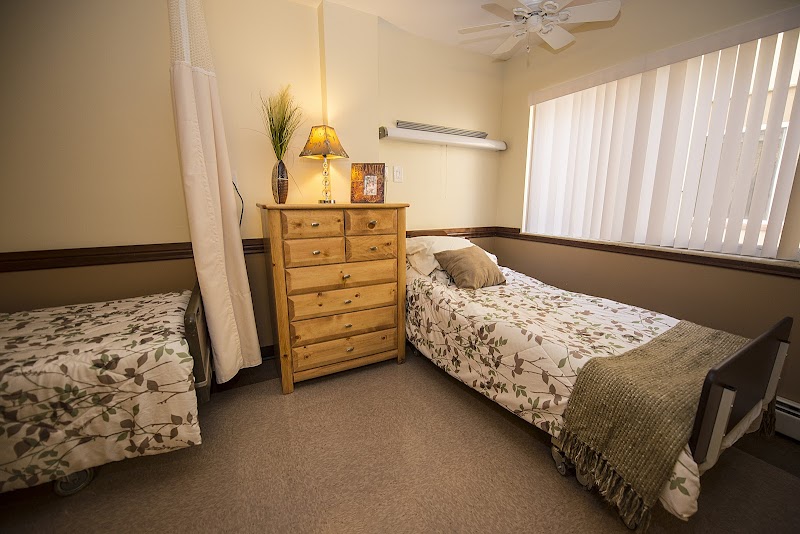
The resident was sitting on his bed on top of the bare mattress. He said nurses would not allow him to have any linens or blanket on the mattress because it was an air mattress. He said he slept in his clothes since he did not have linens. He said he was unhappy sleeping on a bare mattress and was not offered any linens for his bed.
Resident #274 was interviewed on 9/12/22 at 3:00 p.m. This resident's television was on the side of his bed on the floor. This resident's mattress was bare and had no sheets or bedding.
The same observations were noted on 9/13, 9/14, and 9/15/22.
C. Record review
The computerized physician orders CPO) revealed Resident #274 was admitted to hospice care on 9/3/22.
The care plan initiated 9/5/22 identified that Resident #274 had potential for activities of daily living (ADL) self-care performance deficit related to a terminal illness. Interventions included assisting the resident with set up for all ADLs and encouraging him to participate to the fullest extent possible for each one.
The care plan initiated 9/5/22 identified that Resident #274 will be staying long term in the facility due to terminal illness. The care plan recorded goal was for Resident #274 to be comfortable in his environment. The care plan interventions for Resident #274 included hanging and arranging personal items the way the resident and family wished in order to create a home like environment.
The 9/8/22 grievance form submitted by the resident read that resident's TV was not set up within reasonable time and he did not receive any help arranging his belongings.
The follow up on 9/12/22 (survey time) read that the resident was offered a TV stand but he was too tired to maintain the conversation.
The progress notes dated 9/9/22 revealed Resident #274 expressed frustration that staff had not unpacked his belongings so that he could easily find them. He furthermore became tearful, stating he was being ignored.
On 9/14/22 the note read Resident responded in favor of ordering a TV stand.
D. Staff interviews
Certified nurse aide (CNA) #3 was interviewed on 9/14/22 at 9:08 a.m. She said all residents on admission were helped with arranging belongings in their room. She said the resident's TV was on the floor because it was too big for any stands that were in the room. She said the resident was not allowed to have any linens on his bed because he had an air mattress. She said that was the instruction from the nurse.
Licensed practical nurse (LPN) #1 was interviewed on 9/14/22 at 2:09 p.m. She said she was not aware the resident wanted his TV to be set up. She did not know why the TV was on the floor next to the window.
Regarding the linens, she said the resident could not have any linens because he was using an air mattress. She said the recommendation was coming from the director of nursing.
The director of nursing (DON) was interviewed on 9/15/22 at 1:20 p.m. She said she was aware of the grievance that the resident submitted on 9/8/22. She said the facility was in the progress of ordering a mount for the TV. She provided a note indicating that the TV mount was ordered 9/15/22 (during the survey process).
Regarding the linen, she said the resident was on the air mattress and therefore could not use any linens.
-However, a flat sheet that was not fitted could be utilized on an air mattress.
Based on observations and interviews, the facility failed to ensure care for residents was provided in a manner and in an environment that maintained or enhanced the residents' dignity and respect in full recognition of their individuality for two (#3 and #274) residents of five residents reviewed for dignity out of 36 sample residents.
Specifically, the facility failed to:
-Ensure Resident #3 had the right to a dignified existence and the ability to exercise self-determination by neglecting to support and honor the resident's status as a transgender female; and,
-Assist Resident #274 with the organization of his personal items. Two weeks after admission, the resident's television (TV) was not properly mounted and he was not able to use it. In addition, he was not offered any linens for his mattress, and slept on top of the uncovered mattress.
Findings include:
I. Facility policy and procedure
The Dignity policy, revised February 2021, was provided by the regional clinical resource (RCR) on 9/15/22. It read in pertinent part,
The facility culture supports dignity and respect for residents by honoring resident goals, choices, preference, values, and beliefs. This begins with the initial admission and continues throughout the resident's facility stay.
II. Resident #3
A. Resident status
Resident #3, aged 62, was admitted on [DATE]. According to the September 2022 computerized physician orders (CPO), diagnoses included hemiplegia (paralysis) and hemiparesis (partial paralysis) following nontraumatic subarachnoid hemorrhage (brain bleed) affecting the right side and expressive aphasia (loss of understanding or expressing speech).
The 6/14/22 minimum data set (MDS) assessment documented that the resident had not been interviewed for the brief interview for mental status. The assessment documented the resident had intact short term and long term memory. The resident had also been identified as alert and oriented to location, time, event, and person and independent in her decision making. Her communication was documented as unclear speech but able to respond adequately to simple, direct communication and understood what was being said to her without impairment.
The patient health questionnaire (PHQ-9) score was zero indicating no depression evident.
B. Resident interview and observations
Resident #3 was interviewed on 9/12/22 at 8:42 a.m. She said that she had been identifying as a transgender woman for the last 16 years but had been living as a man. She started hormone treatments at the facility within the last year and had come out as transgender. She shared that she no longer used her birth name but a new name and that her pronouns were she/her. She expressed she was not comfortable having a male roommate and would had preferred to live alone at the facility.
Reident #3 hair was shoulder length and her nails were painted. She wore makeup, jewelry, and a dress.
Resident #3 was interviewed a second time on 9/12/22 at 12:27 p.m. She said the facility did not ask her how she had felt about living with a man. She also said the facility did not offer support for transgender individuals.
Throughout the survey, when out of her room, the resident was always observed in a dress, with makeup and jewelry on.
C. Record review
The psychiatric physician (PSY) visit note dated 6/14/22 documented the resident was a male assigned at birth but identifying as a woman undergoing transition with plans to surgically transition in the future. Preferred pronouns were she/her. Her active problems indicated were inadequate social support, psychosocial stressors, inadequate community resources, and transgender.
The September 2022 CPO revealed the resident started medication for testosterone suppression on 10/26/21 and started feminizing hormone therapy medication on 10/27/21.
The comprehensive care plan initiated on 1/5/21, referred to the resident by birth name and by pronouns he/him.
-There was no care plan focus for the resident's transgender status or needs.
The room and/or roommate change authorization form in the medical record dated 2/16/22 documented that the resident was advised she was receiving a new roommate. The roommate was male and there was no note on form Resident #3 was transgender. There was no documentation on the form that the care team coordinator (CTC) had a conversation with the resident about identifying as a woman and if she felt comfortable with a male roommate.
The social services progress note dated 2/16/22 documented that Resident #3 was educated on receiving a new roommate. Stated that the resident was not happy but was receptive to education.
-There was no documentation as to why Resident #3 was unhappy with new roommate or that a discussion was held with Resident #3 about her preference to have or not have a male roommate.
The first mention of resident's gender status was not until 3/21/22 in the care team progress note where it stated the resident would like to talk to hormone doctor about potential referrals to surgery for gender affirming. The resident was referred to as he/him in the progress note.
The first physician/medical provider visit note to identify resident as transgender was not until 5/12/22.
The resident's preferred pronouns of her/she were not used in documentation in the progress notes until 7/19/22.
The only social service progress note to document the resident expressing her preferred pronouns was on 8/29/22.
-No other social service notes regarding the resident's psychosocial wellbeing or preferences.
All care team progress notes in the resident's chart by the social services department referred to the resident as he/him.
The patient health questionnaire (PHQ-9) dated 9/8/22, documented a score of five out of 27 indicating mild depression.
The attending physician progress note dated 9/16/22 referred to the resident as a male with gender dysphoria on hormone therapies.
D. Staff interviews
Licensed practical nurse (LPN) #4 was interviewed on 9/14/22 at 10:26 a.m. LPN #4 said that she was the resident's regular nurse. The resident had been able to express themselves verbally to the LPN. The resident was alert and oriented and could answer yes or no questions and write things down.
-LPN #4 referred to the resident as he/him the entire interview.
The CTC was interviewed on 9/14/22 at 3:03 p.m. She said Resident #3 as being on her caseload for social services. She said that the resident was cognitively intact and able to effectively communicate their needs. She said for psychosocial support, the facility took the resident to the mall or to the store to buy makeup. She said on one occasion, the prior care team coordinator had taken the resident to a transgender support group. She was not aware if it was care planned that resident was transgender. She said that the resident had expressed that they preferred to have a male roommate and that was documented on the room change form in the medical record.
-During the entire interview, the CTC referred to the resident as he/him.
E. Facility follow-up
The RCR provided follow up documentation on 9/15/22 at 9:37 a.m.
A care plan focus for transitioning dated 9/14/22 (time of the survey). It stated the resident was transitioning from male to female and her preferred pronouns were under naming focus.
A care plan focus for roommate dated 9/14/22 (time of the survey). It stated that the resident was happy with the current roommate and the resident's preference was for a male roommate. Roommate focus referred to Resident #3 as him.
A care plan focus for naming dated 9/14/22 (time of the survey). It stated the resident preferred to use a new name and not her full name. It also stated the resident's pronouns were she/her.
A scanned copy of a flyer for an in-person transgender women support group dated for 8/25/22.
-There was no sign in or attendance included with the flyer to show the resident had attended.
CONCERN
(D)
Potential for Harm - no one hurt, but risky conditions existed
Deficiency F0676
(Tag F0676)
Could have caused harm · This affected 1 resident
**NOTE- TERMS IN BRACKETS HAVE BEEN EDITED TO PROTECT CONFIDENTIALITY** III. Resident #275
A. Resident status
Resident #275, age [AGE], was admitted on [DATE]. According to the January 2022 computeriz...
Read full inspector narrative →
**NOTE- TERMS IN BRACKETS HAVE BEEN EDITED TO PROTECT CONFIDENTIALITY** III. Resident #275
A. Resident status
Resident #275, age [AGE], was admitted on [DATE]. According to the January 2022 computerized physician orders (CPO), the diagnoses included stroke, epilepsy, heart disease, and left sided weakness.
The 7/15/22 minimum data set (MDS) revealed the resident was cognitively intact with a brief interview for mental status (BIMS) score of 15 out of 15. He required supervision for walking within his room, and required a one person assist for all other activities of daily living (ADLs). His MDS revealed he had unclear speech.
Resident interview and observation
An interview was attempted with Resident #275. The resident did not follow the questions and was slow to respond. His fingernails were observed to be grown way past the tips of his fingers.
B. Record review
The care plan for ADLs and self-care performance deficit related to stroke and left side weakness was initiated 1/14/22. Interventions included extensive assistance with bathing and showering; check nail length, and trim and clean nails on bath day and as necessary; report any changes to the nurse.
The care plan for potential impairment to skin integrity related to fragile skin was initiated 1/14/22. Interventions included to avoid scratching, and keep hands and body parts from excessive moisture; keep fingernails short.
The resident task sheet reviewed 9/13/22 nail care task was assigned to the certified nursing assistant (CNA) as needed.
The daily nail care task response tracking was not completed for 30 days prior to 9/13/22.
The nursing progress notes were reviewed for Resident #275 from 3/17/22 to 9/15/22:
The 6/18/22 entry revealed the resident declined to have his nails trimmed.
The 4/22/22 entry revealed the resident requested his left thumb and first fingernails not be cut.
-Additional interventions and approaches were not documented in the progress notes or care plan.
C. Staff interview
Registered nurse (RN) #1 was interviewed on 9/13/22 3:30 p.m. She stated she was not regular staff at the facility. She said normally the CNA was responsible for nail care and the nurse oversaw the CNA. She stated the resident nails ideally should be trimmed once a week.
Certified nurse aide (CNA) #1 was interviewed on 9/13/22 at 3:32 p.m. She stated a restorative aide did the nail trimming. CNA #1 said she trimmed nails when she could, but she was sometimes afraid to trim their nails too short. She said the staff should be looking at residents' nail length in the shower, and if the staff are unable to trim nails, they report it to the director of nursing (DON) or a nurse.
The director of nursing (DON) was interviewed on 9/14/22 at 1:55 p.m. She stated the CNA provided the nail care during shower time and nurses during the weekly skin evaluation. The DON stated that Resident #275 pulled away when staff tried to provide nail care and she was unaware if this was documented.
Based on observations, record review, and interviews, the facility failed to provide necessary care and services for residents who were unable to carry out activities of daily living for two (#41 and #275) of six residents reviewed for activities of daily living of 36 sample residents.
Specifically, the facility failed to:
-Establish an effective communication system for Resident #41 in order to provide him with services; and,
-Provide nail care to Resident #275.
Findings include:
I. Facility policy and procedure
The Activities of Daily Living (ADLs), Supporting policy, revised in 2018, was provided by the regional clinical resource (RCR) on 9/15/22. It read in pertinent part, residents will be provided with care, treatment and services as appropriate to maintain or improve their ability to carry out activities of daily living (ADLs). Residents who are unable to carry out activities of daily living independently will receive the services necessary to maintain good nutrition, grooming and personal and oral hygiene. Appropriate care and services will be provided for residents who are unable to carry out ADLs independently, with the consent of the resident and in accordance with the plan of care, including appropriate support and assistance with: hygiene (bathing, dressing, grooming, and oral care). If residents with cognitive impairment or dementia resist care, staff will attempt to identify the underlying cause of the problem and not just assume the resident is refusing or declining care. Approaching the resident in a different way or at a different time, or having another staff member speak with the resident may be appropriate.
II. Resident #41
A. Resident status
Resident #41, age [AGE], was admitted on [DATE]. According to the September 2022 computerized physician orders (CPO), the diagnoses included type two diabetes mellitus, history of stroke, weakness on the right side, dysphagia (swallowing difficulty) and dementia with behavioral disturbance.
The 8/4/22 minimum data set (MDS) assessment revealed the resident was cognitively impaired, he was rarely understood, and a brief interview for mental status score was not conducted. He required extensive assistance for most activities of daily living (ADLs). The resident did not have aggressive behaviors and did not reject the care.
B. Resident interview and observation
Resident #41 was interviewed on 9/13/22 at 12:30 p.m. The resident was asked open ended questions in English. He nodded his head up and down and said yes to all questions including open ended.
The resident's appearance was disheveled. He was unshaved and had at least a week old beard. His nails were long and unclean.
The resident was observed on 9/14 and 9/15/22. His appearance did not change from the initial observation.
C. Record review
The care plan for activities, revised on 4/27/21 revealed the resident spoke Polish language, and he understood and spoke some English. Resident had an interpreter listed on his care plan who was contacted over the phone and occasionally visited him.
The care plan for communication, revised on 9/20/21 revealed the resident had cognitive deficits due to dementia. He had difficulty processing information, understanding, following directions and making decisions. Interventions included to provide the other means of communication when interpreter was not available.
-The care plan did not specify what the alternative means of communication were.
The care plan for mood/behavior, revised on 3/2/21, revealed the resident was impatient and had verbal outbursts. When a resident felt that his needs were not met, he would yell and push staff away with his hands. Interventions included to administer psychotropic medication for behaviors associated with his diagnosis of dementia. Additional interventions included to monitor behaviors, and quarterly review of psychotropic medications.
The ADLs care plan, revised on 10/22/19, revealed the resident was resistive to care at times, and he liked to be independent. The resident would become frustrated if he doesn't know what is being communicated to him. The resident had an order for antidepressant medication. Interventions included to administer medication as ordered.
-The resident did not have a care plan for preferences describing his individual preferences regarding daily care.
-The care plan did not include documentation for the resident's nail care and shaving preference and assistance.
-The resident's progress notes were reviewed from August 2022 to 9/13/22 and revealed no notes regarding resident's refusals, re-approaches or any alternatives that were offered to the resident.
D. Staff interviews
Certified nurse aide (CNA) #3 was interviewed on 9/14/22 at 9:08 a.m. She said the resident did not speak English and she never understood what he was saying. She said she would use gestures and objects to communicate with the resident. She said he liked his coffee and pretty much wanted to be left alone for the day. She said he did not have any aggressive behaviors but would get upset and would yell when staff did not understand what he wanted. She said watching TV and drinking coffee were his daily activities.
Licensed practical nurse (LPN) #1 was interviewed on 9/14/22 at 2:09 p.m. She said Resident #41 did not communicate in English and mostly demanded things by yelling incoherent words. She said he would get upset when staff would not understand what he needs. She said the resident had an interpreter and staff called her when the resident was upset. She said he did not refuse the care but gave preference to certain staff members because they had different approaches. She said the resident preferred to watch TV in his room and was mostly pleasant and cooperative.
The interpreter was contacted on 9/15/22 at 11:20 a.m. She said Resident #41 had a stroke and had difficulty communicating since then. She said he spoke Polish and was able to answer questions when prompted, he did not speak English. She said the resident did not have any relatives and she assisted him with communication and occasionally brought food items that he liked. She said due to aphasia (loss of ability to understand or express speech) and dementia it was difficult to understand the resident. She said she has known the resident for more than 10 years. She said Resident #41 was not a morning person, he liked to sleep late and was more active in the afternoon. She said he liked his coffee and TV and mostly would stay in his room or sit on the patio outside. She said he did not like to be assisted in the bathroom and did not like when staff woke him up early in the morning. She said his verbal outburst were driven by misunderstanding between him and staff members. He was not able to express himself due to aphasia and staff could not understand him.
The director of nursing (DON) was interviewed on 9/15/22 at 1:20 p.m. She said nurses and CNAs were responsible for providing nail care and shaving to the resident. She said the care should have been offered during showers and as needed.
She did not answer any questions regarding alternative means of communication with the resident.
CONCERN
(D)
Potential for Harm - no one hurt, but risky conditions existed
Incontinence Care
(Tag F0690)
Could have caused harm · This affected 1 resident
**NOTE- TERMS IN BRACKETS HAVE BEEN EDITED TO PROTECT CONFIDENTIALITY** Based on record review and interviews, the facility failed to ensure one (#274) out of 36 sample residents reviewed for fecal in...
Read full inspector narrative →
**NOTE- TERMS IN BRACKETS HAVE BEEN EDITED TO PROTECT CONFIDENTIALITY** Based on record review and interviews, the facility failed to ensure one (#274) out of 36 sample residents reviewed for fecal incontinence and constipation received appropriate treatment and services to maintain normal bowel function as much as possible.
Specifically, the facility failed to follow bowel protocol for Resident #274 who was at risk for constipation.
Findings include:
I. Facility policy and procedure
The facility policy and procedure for Bowel and Bladder management were requested at the time of the survey. It was not provided prior to the exit on 9/15/22.
II. Resident status
Resident #274, age [AGE], was admitted to the facility on [DATE]. According to the 9/3/22 computerized physician orders (CPO), diagnoses included human immunodeficiency virus (HIV), weight loss, chronic kidney disease, gastro-esophogeal reflux disease (GERD), anxiety, nausea, shortness of breath, malignant rectal cancer, malignant bladder cancer, and insomnia.
The MDS assessment was not completed for this resident.
The 9/7/22 social services assessment revealed the resident was cognitively intact with a brief interview for mental status (BIMS) score of 14 out of 15.
III. Resident interview
Resident #274 was interviewed on 9/12/22 at 3:00 p.m. He said his stay was not going well and it was stressful as he was used to doing things his way. He said since he was admitted to the facility all his medications were managed by nurses and he was not in agreement how they were administered. Specifically, his bowel medication was not given to him as often as he needed.
IV. Record review
According to the clinical physician orders (CPO), Resident #274 was admitted to hospice care on 9/3/22.
According to the care plan dated 9/5/22, Resident #274 had potential for activities of daily living (ADL) self-care performance deficit related to a terminal illness. Interventions included assisting the resident with set up for all ADLs and encouraging him to participate to the fullest extent possible for each one.
The care plan initiated 9/5/22 recorded Resident #274 as having GERD related to hyperacidity. Interventions included giving medications as ordered, and monitor for effectiveness and side effects such as headache, diarrhea, constipation, abdominal pain, flatulence, vomiting, and diarrhea.
-The resident did not have a care plan for bowel management related to his terminal diagnosis.
The 9/3/22 CPO for Resident #274 revealed the resident was receiving following medications:
Senna 8.6 milligram (mg), two tablets every 12 hours, for constipation, initiated on 9/2/22;
Methadone 10 mg, one tablet twice a day, for pain, initiated 9/3/22;
Trazodone 100 mg, 2 tablets by mouth at bedtime, for pain, initiated 9/3/22.
Two additional pain medications were ordered :
Fentanyl patch, 72 hours 100 micrograms per hour, for pain, initiated 9/4/22; and,
Dilaudid 4 mg, one tablet by mouth every six hours as needed for pain scale one to five (out of 10, with 10 being the worst on the scale) initiated 9/8/22 two tablets by mouth every six hours as needed for pain scale six to ten, initiated 9/9/22; and,
Dilaudid 4 mg, two tablets by mouth every six hours as needed for pain scale six to ten, initiated 9/9/22.
-There were no changes in resident's medications for constipation after his pain medications increased.
The CPO for Resident #274 did not include a standing order for bowel management such as milk of magnesia, suppository or enema.
Resident #274's recorded history for bowel elimination between 9/2/22 and 9/14/22 revealed the resident had no bowel movement for three days, from admission date 9/2/22 to 9/5/22. The resident's first recorded bowel movement was 9/6/22 at 4:17 p.m. (four days after admission).
Nurses progress notes were reviewed from 9/2/22 to 9/15/22. There were no documented notes regarding the resident's bowel assessment and interventions.
The progress notes 9/9/22 from the physician recorded Resident #274 is at very high risk for constipation due to this patient's pathology and current narcotic regimen.
-There were no documented interventions on the resident's care plan or the nurses progress notes to address the resident's high risk of constipation.
V. Staff Interviews
Licensed practical nurse (LPN) #1 was interviewed on 9/14/22 at 11:37 a.m. She stated the certified nursing assistant (CNA) records for resident bowel movements was in point click care (the electronic charting system). She said facility protocol was to offer milk of magnesia (MOM) if a resident has not had a bowel movement within three days, and if MOM ineffective they could offer a suppository or enema as long as they had physician's orders for them.
Certified nurse aide (CNA) #2 was interviewed on 9/14/22 at 11:50 a.m. She stated she recorded resident bowel movements in point click care and confirmed resident bowel movement by observation. She said if a resident was constipated she informs the nurse and it was recorded.
The director of nursing (DON) was interviewed on 9/14/22 at 1:55 p.m. The DON stated if a resident has not had a bowel movement in three days they will issue MOM or whatever was ordered and monitor for effectiveness. She said if MOM is not effective the nurse will offer a suppository and monitor for results. She said if the suppository was not effective the nurse would offer an enema and if the enema was not effective the facility would notify the physician. She said there should be standing orders for MOM, suppositories and enemas in the clinical physician's orders.
LPN #1 was interviewed second time on 9/15/22 at 1:30 p.m. She was not able to locate the Resident #274's bowel records in the electronic medical records. She reviewed the resident's orders and stated she did not know why the resident did not have a standing order for laxatives upon admission. She said the facility had a standing order for bowel management that should be initiated on admission by admitting nurses. She was not able to locate a copy of bowel management standing orders at the nurses station.
The DON was interviewed a second time on 9/15/22 at 1:50 p.m. She said the facility did not have standing bowel management orders. She said the facility identified this during the survey and provided education to nurses on duty to assess resident's bowel status on admission and daily. She said when the resident was admitted , the physician should be contacted regarding bowel management orders for specific residents based on their needs. She provided a copy of education.
CONCERN
(D)
Potential for Harm - no one hurt, but risky conditions existed
Deficiency F0849
(Tag F0849)
Could have caused harm · This affected 1 resident
**NOTE- TERMS IN BRACKETS HAVE BEEN EDITED TO PROTECT CONFIDENTIALITY** Based on observation, record review and interviews, the facility failed to establish a communication process with the hospice pr...
Read full inspector narrative →
**NOTE- TERMS IN BRACKETS HAVE BEEN EDITED TO PROTECT CONFIDENTIALITY** Based on observation, record review and interviews, the facility failed to establish a communication process with the hospice provider, including how the communication would be documented between the facility and the hospice provider for one (#274) resident reviewed for hospice care and services out of 36 sample residents.
Specifically, the facility failed to collaborate with hospice for the development, implementation and revision of the coordinated plan of care for Resident #274.
Findings include:
I. Resident status
Resident #274, age [AGE], was admitted to the facility on [DATE]. According to the 9/3/22 computerized physician orders (CPO), diagnoses included human immunodeficiency virus (HIV), weight loss, chronic kidney disease, gastro-esophogeal reflux disease (GERD), anxiety, nausea, shortness of breath, malignant rectal cancer, malignant bladder cancer, and insomnia.
The MDS assessment was not completed for this resident.
The 9/7/22 social services assessment revealed the resident was cognitively intact with a brief interview for mental status (BIMS) score of 14 out of 15.
II. Resident interview
Resident #274 was interviewed on 9/12/22 at 3:00 p.m. The resident was aware that he was receiving hospice services. He said that he never met the hospice physician and was unhappy with the way his care was managed.
III. Record review
According to the clinical physician orders (CPO), Resident #274 was admitted to hospice care on 9/3/22.
According to the care plan dated 9/5/22, Resident #274 had potential for activities of daily living (ADL) self-care performance deficit related to a terminal illness. Interventions included assisting the resident with set up for all ADLs and encouraging him to participate to the fullest extent possible for each one.
The resident's comprehensive care plan was reviewed and the care plan for hospice was initiated on 9/5/22. The care plan interventions included to notify hospice nurse of changes in condition timely for input and evaluation; hospice nurse to visit 1-2 times per week; hospice certified nursing assistant (CNA) to visit twice weekly to assist with showers/bathing, grooming, hygiene; hospice Chaplain and social worker to visit monthly and as needed for support; facility interdisciplinary team (IDT) to invite hospice staff to participate in care plan meetings quarterly; refer to hospice care plan and collaborate with hospice staff regarding patient care; work cooperatively with hospice team to ensure the resident's spiritual, emotional, intellectual, physical and social needs are met.
-The care plan did not include resident specific information. The care plan lacked names and contact information for hospice personnel involved in hospice care of the resident. It did not include instructions on how to access the hospice's 24-hour on-call system.
A hospice plan of care for the resident was requested during the survey. The plan of care was not provided.
The interdisciplinary notes were reviewed from 9/2/22 to 9/15/22. There was no evidence of communication with the hospice care team.
IV. Staff interviews
Licensed practical nurse (LPN) #1 was interviewed on 9/14/22 at 11:37 a.m. She stated the hospice provider was supposed to leave a binder at the facility, but she did not see one. She did not know who was a contact person at the hospice. She said she has not seen nurses or certified nurses aides (CNAs) from hospice during her shift.
The director of nursing (DON) was interviewed on 9/14/22 at 11:46 a.m. She said the hospice provider was supposed to leave a binder with a plan of care specific for the resident and contact information. She said she was not able to locate the binder. She said she would reach out to hospice for clarification.
-The DON did not follow up with the survey team regarding the hospice binder before survey exit on 9/15/22.
CONCERN
(E)
Potential for Harm - no one hurt, but risky conditions existed
Deficiency F0578
(Tag F0578)
Could have caused harm · This affected multiple residents
**NOTE- TERMS IN BRACKETS HAVE BEEN EDITED TO PROTECT CONFIDENTIALITY** V. Resident #273
A. Resident status
Resident #273, age [AGE], was admitted on [DATE]. According to the 8/30/22 computerized phy...
Read full inspector narrative →
**NOTE- TERMS IN BRACKETS HAVE BEEN EDITED TO PROTECT CONFIDENTIALITY** V. Resident #273
A. Resident status
Resident #273, age [AGE], was admitted on [DATE]. According to the 8/30/22 computerized physician orders (CPO), the diagnoses included urinary tract infection and asthma.
The 9/6/22 minimum data set (MDS) revealed the resident was cognitively intact with a brief interview for mental status (BIMS) score of 15 out of 15. She required set-up and one person assistance for all activities of daily living (ADLs).
B. Resident interview
An interview with Resident #273 was attempted on 9/12/22 at 11:10 a.m. The resident did want to be interviewed.
C. Record review
Resident #273's MOST form was not in the binder at the nurses containing resident MOST forms. The form was not signed by the resident and/or the medical power of attorney.
The 9/1/22 clinical physician orders (CPO) listed Resident #273's status as cardiopulmonary resuscitation (CPR), full code.
D. Staff interview
LPN #3 was interviewed on 9/13/22 at 2:09 p.m. She confirmed Resident #273's MOST form was not signed and Resident #273's family was going to sign the form in person. She said Resident #273's family member was not here to sign the MOST form, and acknowledged the MOST form should be signed within 24 hours of admission. She said Resident #273 wanted a do not resuscitate (DNR) status but when the MOST form was not signed, the resident's status is ordered as a full code. She confirmed Resident #273's preferred status of DNR was not documented.
IV. Residents #43
A. Resident status
Resident #43, age [AGE], was admitted on [DATE]. According to the September 2022 CPO, the diagnoses included vascular dementia without behavioral disturbances, major depressive disorder, altered mental status, and disorientation.
The 8/9/22 MDS assessment revealed the resident scored a seven out of 15 on his BIMS. The resident did exhibit behaviors of inattention and disorganized thinking during the assessment period.
B. Record review
The September 2022 CPO revealed the following physician orders:
Order dated 7/26/22 for Full code. This matches dashboard of resident's chart.
When reviewing MOST form, it showed the resident indicated do not resuscitate status. The document signed by resident representative and physician.
C. Interviews
LPN #8 was interviewed on 9/13/22 at 1:19 p.m. LPN #8 stated that the resident advanced directive MOST forms were not scanned into their electronic medical record but kept in a binder at the nurses station. LPN #8 stated that if there was an emergency with a resident, the nurse would check the dashboard of their electronic chart for their code status to determine if they need to perform CPR or not.Based on record review and interviews, the facility failed to ensure the resident had the right to request, refuse, and/or discontinue treatment, to participate in or refuse to participate in experimental research, and to formulate an advance directive for five (#67, #34, #43, #41, and #273) of nine out of 36 sample residents.
Specifically, the facility failed to:
-Have accurate physician orders regarding code status for Resident #67, #43 and #41;
-Indicate code status, and have physician orders, in the electronic medical record (EMR) for Resident #34; and,
-Obtain Resident #273's advance directive wishes regarding his resuscitation status.
Findings include:
I. Facility policy and procedure
The Advanced Directive policy, reviewed 5/12/22, was provided by the nursing home administrator (NHA) on 9/13/22 at 4:16 p.m. It read in pertinent part, If the resident has executed any advance directive documents, or if he/she executes any such documents while living in the community, a copy will be requested and placed in the resident's record. If the resident has such documents, and has provided a copy to the community, the community will place a copy of the document in the resident's record so the community can readily access such documents. The advance directive and CPR decisions will be reviewed at least annually, but also when a change of condition occurs or when requested by the Resident. All MOST (medical orders for scope of treatment) forms shall be kept in a binder at the nurses station.
II. Resident #67
A. Resident status
Resident #67, age [AGE], was admitted on [DATE], with readmission 1/2/22. According to the September 2022 computerized physician orders (CPO), diagnoses included depressive disorder, dementia with behavioral disturbance, and human immunodeficiency virus (HIV) disease.
The 8/23/22 minimum data set (MDS) assessment revealed the resident had moderate cognitive impairment with a brief interview for mental status (BIMS) score of 11 out of 15. He required limited assistance with one person for dressing and supervision with set up help only for bed mobility, toilet use, and locomotion off the unit. He was independent with set up help only for transfers, walking in room, locomotion on unit, and eating.
B. Record review and interview
Review of the clinical resident profile page in the resident's EMR, viewed on 9/12/22 at 11:31 a.m., revealed COR Status: DNR, full treatment, use antibiotics, long-term artificial nutrition by tube to be discussed with power of attorney (POA) at time of need.
The MOST form was filled out as Yes CPR, Full treatment but not signed or dated by physician or resident. On the back of the MOST form it was dated at the top 5/4/2020 as the date prepared, at the bottom there were review dates of 5/4/2020, 11/12/2020, 2/27/21, 4/28/21, and 10/18/21. All were marked as no change except for the 5/4/2020 form was marked as a new form completed. The MOST form was found in the MOST binder at the nurses station on the second floor.
C. Staff interviews
LPN #11 was interviewed on 9/12/22 at 2:55 p.m. She said to review a resident's code status in the computer for the fastest access during an emergency. LPN #11 said a copy of the resident's MOST forms were not uploaded to the EMR She said there was a MOST book at the nurses station.
The director of nursing (DON) was interviewed on 9/13/22 at 2:21 p.m. She viewed Resident #67's MOST form and said there was no medical doctor (MD) signature on the form. The DON said in an emergency she would start cardiopulmonary resuscitation (CPR) however the staff were not using the MOST form at all because it was not signed.
-However, according to the resident's physician orders documented the resident was DNR.
The DON said the staff tried to get MD signatures immediately when processing a MOST form. The DON said she would notify the MD to come in and sign the MOST form to correct the situation. The DON said she would also call the POA and conduct an audit of the resident's MOST forms and code status to ensure their accuracy.
D. Facility follow-up
The DON provided an updated MOST form for Resident #67 on 9/14/22 at 9:46 a.m. It was dated 9/14/22 and signed by the POA for Yes CPR, Full treatment.
-However, it was not signed by the MD yet.
The CPO was updated for Resident #67 on 9/13/22 and revealed orders for COR Status: CPR, Full Code.
III. Resident #34
A. Resident status
Resident #34, age [AGE], was admitted on [DATE], readmitted on [DATE]. According to the September 2022 computerized physician orders (CPO), diagnoses included myocardial infarction (heart attack), schizophrenia (a disorder that affects a person's ability to think, feel, and behave clearly), and parkinson's disease (a disorder that affects movement, often including tremors).
The 8/1/22 minimum data set (MDS) assessment revealed the resident was cognitively with a brief interview for mental status (BIMS) score of 14 out of 15. He required limited assistance with one person for personal hygiene, and bathing. He was independent with no set up or physical help from staff for bed mobility, transfers, walking in room/corridor, locomotion on/off the unit, dressing, toilet use and eating.
B. Record review
Review of the clinical resident profile page in the resident's EMR, viewed on 9/12/22 at 2:33 p.m. revealed, Code status: none it was blank.
Review of the CPO revealed there were no MD orders related to Resident #34's desired code status.
The current MOST form was filled out as Yes CPR, Full treatment and signed 5/2/22 by Resident #34 and signed by MD on 5/4/22. The MOST form was found in the MOST binder at the nurses station on the second floor.
C. Staff interview
The DON and the regional clinical resource (RCR) were interviewed on 9/13/22 at 2:09 p.m. The DON said the advanced directive process began at the resident's admission. The DON said the MOST forms were the type of advanced directives used at the facility. The DON said in an emergency the staff would look for the resident's MOST form in the MOST form book because the MOST forms were not uploaded to the resident's EMR chart. The DON said in point click care (PCC, the electronic charting system) there was no section for code status or indication of the resident's code wishes. The DON acknowledged the clinical resident profile page in the EMR after viewing the code status was blank. The DON said the primary source was to use the MOST book, however she would want to get MD orders to match the MOST form and have this indicated in the code status section in the EMR.
D. Facility follow-up
The CPO was updated for Resident #34 on 9/13/22 and revealed orders for COR Status: CPR, Full Code.
III. Resident #41
A. Resident status
Resident #41, age [AGE], was admitted on [DATE]. According to the September2022 computerized physician orders (CPO), the diagnoses included type two diabetes mellitus, history of stroke, weakness on the right side, dysphagia (swallowing difficulty) and dementia with behavioral disturbance.
The 8/4/22 minimum data set (MDS) assessment revealed the resident was cognitively impaired, he was rarely understood, and a brief interview for mental status score was not conducted. He required extensive assistance for most activities of daily living (ADLs).
B. Record review
The code status for Resident #41 was not listed on the front page of the electronic medical record.
The binder at the nurses station contained a paper copy of the MOST form for Resident #41. The form read no CPR for the resident and only selective treatments. The form was not signed by the resident. It was signed by a proxy physician on 3/10/21.
The resident did not have a copy of advanced directives in his chart, and did not have listed medical power of attorney or proxy physician who signed his MOST form. The resident was listed as a self responsible party.
The resident's care plan revised on 4/27/21 revealed the resident spoke Polish language, and he understood and spoke some English. The resident had an interpreter listed on his care plan who was contacted over the phone and occasionally visited him.
The care plan for communication, revised on 9/20/21 revealed the resident had cognitive deficits due to dementia. He had difficulty processing information, understanding, following directions and making decisions. Interventions included to provide the other means of communication when interpreter is not available.
C. Staff interview
CNA #3 was interviewed on 9/14/22 at 9:08 a.m. She said the resident did not speak English and she never understood what he was saying. She said she would use gestures and objects to communicate with the resident. She said he liked his coffee and pretty much wanted to be left alone for the day.
LPN #1 was interviewed on 9/14/22 at 2:09 p.m. She said the resident did not communicate in English and mostly demanded things by yelling. She said he would get upset when staff would not understand what he needs. She said the resident had an interpreter that staff conducted when the resident was upset.
She said all MOST forms were kept at the nurses station and updated in the computer from the binder. She said the resident did not have any family members and the only contact he had was his interpreter.
The interpreter was contacted on 9/15/22 at 11:20 a.m. She said Resident #41 had a stroke and had difficulty communicating since then. She said he spoke Polish and was able to answer questions when prompted, he did not speak English. She said the resident did not have any relatives and she was not his power of attorney. She assisted him with communication and occasionally brought food items that he liked. She said due to aphasia (loss of ability or express speech) and dementia it was difficult to understand the resident.
The director of nursing (DON) was interviewed on 9/15/22 at 1:20 p.m. She said the physical MOST form should match the CPO. She said she did not know a cognitive status for Resident #41 and did not know who signed his MOST form. She said she will look into it and provide more information later.
She did not come back with more information.
Family nurse practitioner (FNP ) #1 was interviewed on 9/15/22 at 2:34 p.m. She said she did not know the cognitive status of the resident and she did not know the physician who signed the resident's MOST form on his behalf.
The RCR was interviewed on 9/15/22 at 3:10 p.m. She said they would contact the interpreter to see if they can obtain the resident's wishes regarding his advanced directives, meanwhile the resident's status will be full code.
CONCERN
(E)
Potential for Harm - no one hurt, but risky conditions existed
Medication Errors
(Tag F0758)
Could have caused harm · This affected multiple residents
**NOTE- TERMS IN BRACKETS HAVE BEEN EDITED TO PROTECT CONFIDENTIALITY** Based on record review and interviews, the facility failed to ensure six (#47, #27, #30, #41, #43, and #50) of eleven residents ...
Read full inspector narrative →
**NOTE- TERMS IN BRACKETS HAVE BEEN EDITED TO PROTECT CONFIDENTIALITY** Based on record review and interviews, the facility failed to ensure six (#47, #27, #30, #41, #43, and #50) of eleven residents were free from unnecessary psychotropic medications out of 36 sample residents.
Specifically, the facility failed to:
-Identify and monitor targeted behaviors for psychotropic medications for Resident #47, #27, #30, #41, #43, and #50; and,
-Ensure consents were obtained and contained black box warnings for the usage of psychotropic medications for Resident #47, #27, #30, #41 and #43.
Findings include:
I. Facility policy and procedure
The Psychopharmacological Medications policy and procedure,revised 1/10/19, was provided by the regional clinical resource (RCR) on 9/15/22 at 3:25 p.m. It revealed in pertinent part,
A licensed nurse will review admission medication orders and ensure appropriate diagnosis for use of each medication from the primary care physician.
If the information was not obtained prior to admission, the licensed nurse and/or social services director will make every effort to determine if there are any possible behavior symptoms that may require special monitoring and/or care planning.
The licensed nurse or designee will document any known target behaviors and potential interventions on the Kardex. This will help to assure certified nursing assistants receive communication related to the initial plan of care as appropriate.
The licensed nurse or social services director will initiate behavior monitoring within the first twenty-four hours of admission. Behavior monitoring is mandatory for all residents who take psychotropic medications.
The primary physician, psychiatrist, and/or consultant pharmacist will monitor residents who are prescribed psychopharmacological drugs at least quarterly to assure these drugs are utilized according to State and Federal regulations and for the appropriate treatment of the resident diagnosis.
Licensed nurses and additional staff will monitor and document any target behaviors that occur. These behaviors will be documented on one or more of the following: the Medication Administration Record, the Treatment Administration Record, Behavior Monitoring Chart form, or on a Behavior Incident Report.
Psychopharmacological drugs have appropriate corresponding diagnosis and rationale for continued use (Risk vs Benefit statement).
II. Resident #47
A. Resident status
Resident #47, age [AGE], was admitted on [DATE]. According to the September 2022 computerized physician orders (CPO), the diagnoses included unspecified dementia with behavioral disturbances, traumatic brain injury, encephalopathy (disease where the brain is affected), and epilepsy.
The 8/12/22 minimum data set (MDS) assessment revealed the resident was not assessed for cognition and a brief interview for mental status (BIMS) was not done.
The patient health questionnaire (PHQ-9) documented the resident was not assessed for depression and a staff interview was not conducted to identify depression.
B. Record review
The comprehensive care plan, initiated on 1/15/15, revealed the resident exhibited impaired decision making abilities with impaired understanding of the consequences of his actions. The resident was taking anti-depressant medications related to obsessive compulsive behaviors and antipsychotic medications for symptoms/behaviors related to diagnosis of behavior management. The interventions included administering medications per physician orders, educating the resident/family/caregiver about risks, benefits, and side effects, PHQ-9 assessment quarterly, annually, and with change of condition and to offer positive reinforcements and encouragement to divert behaviors.
The September 2022 CPO revealed the following physician orders for psychotropic medications:
-Zoloft 100 MG (milligrams)-give one tablet by mouth one time a day for anxiety related to traumatic brain injury-ordered on 7/4/22;
-Olanzapine (Zyprexa) 5 MG-give one tablet by mouth one time a day for encephalopathy-ordered on 7/4/22; and,
-Abilify 10 MG-give one tablet by mouth on time a day for traumatic brain injury-ordered on 7/4/22.
The resident's medical record was reviewed on 9/13/22 at 1:19 p.m. There was no evidence the facility had identified behaviors for the Zoloft, Olanzapine, or Abilify medications to track targeted behaviors for use of the medications ordered.
On 9/13/22 at 2:00 p.m. (during survey) an order to document behaviors observed and interventions in the progress notes was entered. No specific medications, behaviors, interventions, or outcomes were indicated.
The consent for the Abilify, Zyprexa, and Zoloft was documented in the medical record under progress notes dated 7/21/22 with no signature by the resident or the resident's representative. The progress note stated that the resident had consented to continue the medications.
-It did not document that the resident and/or resident's representative had been informed of the black box warnings for those medications.
C. Facility follow-up
Documentation of behavior tracking was requested from the RCR on 9/13/22 at 4:00 p.m. The RCR provided a behavior tracking print out from the facility's Foresight system on 9/14/22 at 11:53 a.m.
Resident #47 had one incident of behaviors documented for the timeframe of 6/13/22-9/14/22. Behaviors displayed on 6/25/22 were disorganized thinking, elopements, and wandering. Interventions of notifying the nurse, verbal redirection, and one on one validation were effective. There were no associated progress notes or behavior notes in the medical record from the social services director (SSD) or nurse.
Documentation of attempted gradual dose reductions (GDR) of the resident's Abilify, Olanzapine, and Zoloft for the months of September, August, July, and June 2022 were requested from the RCR 9/13/22 at 12:38 p.m. On 9/14/22 at 9:58 a.m. the RCR provided an IDT risk benefit statement dated 1/12/22 electronically signed by family nurse practitioner (FNP) #2 for Abilify, Zyprexa (Olanzapine), and Zoloft with no dosages. No proof that GDR's were attempted was received.
III. Resident #27
A. Resident status
Resident #27, age [AGE], was admitted on [DATE]. According to the September 2022 CPO, the diagnoses included unspecified dementia with behavioral disturbances, cerebral palsy, encephalopathy and epilepsy.
The 7/22/22 MDS assessment revealed the resident was not assessed for cognition and a BIMS was not done. Last MDS to reflect his cognition was 6/21/2022. He was marked as rarely to never understood with short and long term memory problems. His decision making was severely impaired with behaviors of inattention fluctuating during the assessment period.
The PHQ-9 documented the resident was unable to participate as he was rarely to never understood. Staff completed the assessment and indicated the resident displayed no signs or symptoms of depression.
B. Record review
The comprehensive care plan, initiated on 1/1/2020 revealed the resident exhibited impaired cognitive status. The resident was taking anti-depressant medications related to anxiety and anti-anxiety medications related to anxiety disorder. The resident was also taking antipsychotic medications for symptoms and behaviors associated with the diagnosis of physical and verbal aggression and behavior management. The interventions included administering medications per physician orders, educating the resident about risks, benefits, and side effects, PHQ-9 assessment quarterly, annually, and with change of condition and removing the resident from over-stimulated environments.
The September 2022 CPO revealed the following physician orders for psychotropic medications:
-Risperidone 1 MG-give one tablet by mouth two times a day related to unspecified dementia with behavioral disturbances-ordered on 11/3/21;
-Olanzapine (Zyprexa) 20 MG-give one tablet by mouth one time a day related to unspecified dementia with behavioral disturbances-ordered on 5/11/22;
-Lorazepam 0.5 MG-give one tablet by mouth at bedtime for anxiety-ordered 3/4/22; and,
-Trazodone 150 MG- give one tablet by mouth in the evening for behavior (no specific behavior indicated on order or appropriate diagnosis)-dated 11/3/21.
The resident's medical record was reviewed on 9/13/22 at 1:15 p.m. There was no evidence the facility had identified behaviors for the Risperidone, Olanzapine, Lorazepam, or Trazodone medications to track targeted behaviors for use of the medications ordered.
On 9/13/22 at 2:00 p.m. (during survey) an order to document behaviors observed and interventions in the progress notes was entered. No specific medications, behaviors, interventions, or outcomes were indicated.
There was no consent located in the medical record for Risperidone, Olanzapine, Lorazepam, or Trazodone. In the resident's medical record was a court document dated 7/31/22 that the resident had a court ordered guardian. No documentation found in the medical record that consent for the psychotropic drugs were obtained from the guardian.
-The medical record did not document that the resident and/or resident's representative had been informed of the black box warnings for those medications.
C. Facility follow-up
Documentation of behavior tracking was requested from the RCR on 9/15/22 at 12:38 p.m. Documentation was never provided.
Psychotropic drug consent for resident #27 was requested from RCR on 9/14/22 at 3:37 p.m. The RCR emailed document identified as Resident #27's consent form on 9/15/22 at 9:37 a.m. The form was an IDT care conference summary dated 6/13/19. There was no psychotropic consent included in the summary.
Documentation of GDR's of the resident's Lorazepam, Olanzapine, Risperidone, and Trazodone for the months of September, August, July, and June 2022 were requested from the RCR 9/13/22 at 12:38 p.m. On 9/14/22 at 9:58 a.m. the RCR provided an IDT risk benefit statement dated 3/9/22 electronically signed by FNP#2 for Zyprexa (Olanzapine) and Risperdal (Risperidone) only with no dosages. No proof that GDR's were attempted was received.
IIII. Resident #30
A. Resident status
Resident #30, age [AGE], was admitted on [DATE]. According to the September 2022 CPO, the diagnoses included unspecified dementia with behavioral disturbances, depressive episodes, and epilepsy.
The 7/26/22 MDS assessment revealed the resident was able to participate and scored a three out of 15 on his BIMS indicating severe cognitive impairment. The resident did not exhibit any behavioral symptoms during the assessment period.
The PHQ-9 documented the resident was not assessed for depression due to being rarely to never understood. A staff interview was conducted and scored the resident's depression as a five out of 27 indicating mild depression.
B. Record review
The comprehensive care plan, initiated on 6/21/17 revealed the resident exhibited cognitive deficits with impaired understanding of the consequences of his actions. The resident had difficulty processing information, following directions and making decisions with short and long term memory loss. The resident was taking anti-depressant medications related to depression and an anti-anxiety medication related to anxiety. The interventions included administering medications per physician orders, educating on the risks, benefits, and side effects, and conducting a PHQ-9 assessment quarterly, annually, and with change of condition.
The September 2022 CPO revealed the following physician orders for psychotropic medications:
-Lorazepam 0.5 MG-give one tablet by mouth two times a day for anxiety-ordered on 6/30/22;
-Trazodone 50 MG-give one tablet by mouth at bedtime for depression-ordered on 6/29/22; and,
-Risperidone 1 MG-give two tablets by mouth at bedtime related to unspecified dementia with behavioral disturbances-ordered on 12/8/21.
The resident's medical record was reviewed on 9/13/22 at 1:10 p.m. There was no evidence the facility had identified behaviors for the Lorazepam, Trazodone, or Risperidone medications to track targeted behaviors for use of the medications ordered.
On 9/13/22 at 2:00 p.m. (during survey) an order to document behaviors observed and interventions in the progress notes was entered. No specific medications, behaviors, interventions, or outcomes were indicated.
The consent for the Lorazepam, Trazodone, and Risperidone was documented in the medical record in the progress notes dated 7/21/22 with no signature by the resident or the resident's representative. The progress note stated that the resident had consented to continue the medications.
-It did not document that the resident and/or resident's representative had been informed of the black box warnings for those medications.
C. Facility follow-up
Documentation of behavior tracking was requested from RCR 9/13/22 at 4:00 p.m. The RCR provided a behavior tracking print out from the facility's tracking system on 9/14/22 at 11:53 a.m.
Resident #30 had two incidents of behaviors documented for the timeframe of 6/13/22-9/14/22. Behaviors displayed on 6/17/22 were verbal aggression and physical aggression. The resident was upset that the smoking times had ended for the day. Interventions of redirection, snacks, water, and toileting were effective. Behaviors displayed on 6/30/22 were repetitive statements. The resident was repeating he needed the restroom and wanted a coffee. Intervention of one-on-one was effective. There were no associated progress notes or behavior notes in the medical record from SSD or nurse for 6/17/22.
Documentation of GDR's of the resident's Lorazepam, Trazodone and Risperidone for the months of September, August, July, and June 2022 were requested from the RCR 9/13/22 at 12:38 p.m. This documentation was not provided.
IV. Residents #43
A. Residents #43
Resident #43, age [AGE], was admitted on [DATE]. According to the September 2022 CPO, the diagnoses included vascular dementia without behavioral disturbances, major depressive disorder, altered mental status, and disorientation.
The 8/9/22 MDS assessment revealed the resident scored a seven out of 15 on his BIMS which indicated severe cognitive impairment. The resident did exhibit behaviors of inattention and disorganized thinking during the assessment period.
The PHQ-9 documented the resident scored a two out of 27 indicating mild depression.
B. Record review
The comprehensive care plan, initiated on 10/19/21 revealed the resident had a diagnosis of dementia which affected his cognition. He was also at risk for behavioral problems related to increased confusion, decreased safety awareness and a history of aggressive behaviors. The resident was taking antipsychotic medications for symptoms/behaviors associated with the diagnosis of major depressive disorder, vascular dementia, and behavior management. The interventions included administering medications per physician orders, educating the resident/family/caregiver about risks, benefits, and side effects, and reporting side effects.
The September 2022 CPO revealed the following physician orders for psychotropic medications:
-Quetiapine (Seroquel) 50 MG- take one tablet by mouth at bedtime for behaviors (order does not specify behaviors or appropriate diagnosis)-ordered 9/30/21.
The interdisciplinary team (IDT)-psych pharm management meeting recommendations for 7/11/22 showed the resident's Seroquel was to be changed from 50 MG one time a day to 25 MG in the a.m. and 25 MG in the p.m.
The attendance for the meeting showed the nursing home administrator (NHA), director of nursing (DON), resident services director (RSD) and pharmacist (PHR).
In the resident's medical record there was a preadmission screening and resident review (PASRR) progress note made by the RSD dated 8/14/22 documented it was recommended that the resident's Seroquel was to be changed from 50 MG one time a day to 25 MG in the a.m. and 25 MG in the p.m.
-However, there were no changes to the resident's orders by his physician.
The resident's medical record was reviewed on 9/13/22 at 1:00 p.m. There was no evidence the facility had identified behaviors for the Seroquel medication to track targeted behaviors for use of the medications ordered.
On 9/13/22 at 2:00 p.m. (during survey) an order to document behaviors observed and interventions in the progress notes was entered. No specific medications, behaviors, interventions, or outcomes were indicated.
The consent for the Seroquel was documented in the medical record in the progress notes dated 8/14/22 with no signature by the resident or the resident's representative. The progress note stated that the resident had consented to continue the medications.
-It did not document that the resident and/or resident's representative had been informed of the black box warnings for those medications
C. Facility follow-up
Documentation of behavior tracking was requested from the RCR 9/13/22 at 4:00 p.m. The RCR provided a behavior tracking print out from the facility's tracking system on 9/14/22 at 11:53 a.m.
Resident #43 had one incident of behaviors documented for the timeframe 7/14/22-9/14/22. Behaviors displayed on 9/4/22 were mood issues and verbal aggression. The resident was upset that the snack store was out of a specific item. Intervention of verbal redirection and limit setting was effective. There were no associated progress notes or behavior notes in the medical record from SSD or nurse.
Documentation of GDR's of the resident's Seroquel for the months of September, August, July, and June 2022 were requested from the RCR 9/13/22 at 12:38 p.m. On 9/14/22 at 9:58 a.m. the RCR provided an IDT risk benefit statement dated 4/13/22 electronically signed by FNP#2 for Seroquel with no dosage. No proof that GDR's were attempted was received.
V. Staff interviews
The RSD was interviewed on 9/13/22 at 3:30 p.m. He identified himself as the department head for the social services department and had been in the department for 18 months. He explained the interdisciplinary team (IDT) met every month with the pharmacist, medical director, and psychologist and/or psychiatrist to review psychotropic medications and behavior changes. During this meeting, behavior tracking was used to determine if a medication warranted a GDR, needed to increase, or needed to remain the same. The process in which staff report behavior changes with residents was to contact the social services department directly. The IDT reviewed resident behaviors during their morning meeting which includes the NHA and DON. During the morning meeting, the social services department advised the DON what interventions they want the nursing staff to use for a specific resident displaying behaviors.
To document the resident's behaviors, the facility used an electronic program. This was a separate computerized program from the resident's electronic medical record. The RSD would input the target behaviors, interventions and desired outcomes into the program. He stated that the nursing staff had access to the system on their computers at the nurses stations. Nurses were to document behaviors, interventions, and outcomes every shift as indicated for the residents.
Certified nursing assistant (CNA) #6 was interviewed on 9/13/22 at 3:40 p.m. She said that if a resident displayed behaviors, the CNAs reported them directly to the nurse responsible for that resident to document. The CNA did not know how social services communicated target behaviors, desired interventions or outcomes to nursing.
Registered nurse (RN) #1 was interviewed on 9/13/22 at 3:45 p.m. RN #1 said a resident's behavior tracking will show up on their medication administration record (MAR) and provided the nurses an option to make an additional progress note after marking if a behavior occurred. RN #1 did not know how social services communicated target behaviors, desired interventions or outcomes to nursing.
Licensed practical nurse (LPN) #9 was interviewed on 9/13/22 at 3:49 p.m. She said that the nursing staff will send the social services department a message regarding a resident's behaviors through the dashboard in the electronic medical record and then make a nursing progress note. LPN #9 did not know how social services communicated target behaviors, desired interventions or outcomes to nursing.
LPN #3 was interviewed on 9/13/22 at 4:26 p.m. LPN #3 said that the DON had recently implemented an electronic 24 hour reporting system in the last two days and this was to be used to document behaviors to notify the IDT. She said the prior system was to write on a large white board in the nurses stations the resident and their behaviors to communicate to IDT and other nurses. She said that the nurses were not using the MAR to track behaviors. LPN #3 did not know how social services communicated target behaviors, desired interventions or outcomes to nursing.
The SSD was interviewed on 9/13/22 at 4:31 p.m. The SSD explained the use of the behavior tracking system and that nursing staff have access to the program to document behaviors on their computers at nurses stations. She said training on behavior tracking, interventions and outcomes for nursing staff was done by the DON not the SSD. She was not sure who entered the resident profile (behaviors, interventions, outcomes) into the behavior tracking system.
The DON was interviewed on 9/13/22 at 4:38 p.m. She said to document behaviors, nurses select the custom note type behavior note in the resident's electronic medical record under progress notes. She said the nurses enter the behaviors in a behavior note and add a notification on the dashboard in the resident's electronic medication record. She said the social services department followed up with a social services progress note. She said the IDT had recently added behavior tracking to the MAR. She said this decision was made between nursing and the social services department to add an additional method to capture behaviors.
The RCR was interviewed on 9/14/22 at 1:56 p.m. The RCR explained that it is the facility's practice to obtain consents for psychotropic medications verbally and make a progress note in the resident's chart. There was no paper or electronic document with the consent or the risk/benefit for the resident or responsible party to sign.
The medical director (MD) was interviewed on 9/15/22 at 10:20 a.m. He explained that the monthly meeting to review psychotropic drug use in the facility is referred to as psych pharm. The corporate medical director (CMD) reviews the medications and makes decisions on changes, the MD makes recommendations sometimes. If a resident was taking psychotropic medications and nonverbal, the MD would collect information from the resident's nurse to determine the resident's psychological and behavioral status. He explained that monitoring resident's behaviors in the medical record was very important. The MD said he did not know what the facility was disclosing when they went over the risks, benefits, and side effects for the psychotropic drug consents with residents or their representatives, he stated he could only assume what was being disclosed.
The family nurse practitioner (FNP) #1 was interviewed 9/15/22 at 12:56 p.m. She said that she followed Residents #47, #30, #43, and #27.
FNP#1 said that Resident #47 was alert and oriented to self and staff. He had limited understanding of the treatments he received or the medications he was taking. To understand the risk, benefits, and side effects for him would be challenging. Stated she had not discussed his care or medications with his family or representative.
FNP #1 said that Resident #30 had impaired cognition and could not fully comprehend his medications or their risk, benefits, and side effects. She stated she had not discussed his care or medications with his family or representative.
FNP #1 said that Resident #43 had cognition challenges and he did not understand the risk, benefits, or side effects of his psychotropic medication. She said she was not aware that there was an order recommendation made in his medical record to split the dosage of his Seroquel and she could not explain why it was recommended initially in July 2022 but not followed to date.
FNP #1 said that Resident #27 had very poor cognition and was not able to comprehend his medications or their risk, benefits, and side effects. She stated she had not discussed his care or medications with his family or guardian.
VI. Facility training follow-up
Training materials and behavior monitoring documentation were requested from DON on 9/14/22 at 9:38 a.m.
Staff training on behavior health for older adults was provided by the RCR on 9/15/22 at 9:37 a.m. The training reviewed behavior health symptoms but did not include interventions or behavior monitoring.
The NHA provided staff training for the behavior tracking system on 9/15/22 at 9:32 a.m. The training was all staff in-service conducted 9/13/22, which was during the survey process. VIII. Resident #50
A. Resident status
Resident #50, age [AGE], was admitted on [DATE], and readmitted [DATE]. According to the September 2022 computerized physician orders (CPO), diagnoses included dementia without behavioral disturbance, hemiplegia (muscle weakness) affecting the right dominant side, and personal history of traumatic brain injury.
The 8/6/22 minimum data set (MDS) assessment revealed the resident was unable to complete the brief interview for mental status (BIMS). The staff assessment for mental status revealed short-term and long-term memory problems, he was able to recall staff names and faces. Daily decision making regarding tasks of daily life were severely impaired.
The staff assessment of resident mood (patient health questionnaire-PHQ-9) revealed a score of 30, indicating severe depression.
No behavioral symptoms present, no rejection of care or wandering present.
The resident received antipsychotic and antidepressant medications during the last seven days of the review period. The antipsychotics were received on a routine basis only. No gradual dose reduction (GDR) had been attempted.
No physician documented GDR as clinically contraindicated.
He required limited assistance with one person for bed mobility, transfers, locomotion off unit, and dressing. He required extensive assistance with one person for personal hygiene, toilet use, and total dependence for bathing.
B. Record review
Review of the September 2022 CPO related to antipsychotic medications revealed orders for Abilify tablet 5 mg (aripiprazole). Give one tablet by mouth one time a day related to vascular dementia without behavioral disturbance. Start date 9/22/21.
-The CPO failed to have orders to ensure the targeted behaviors were tracked and documented.
Review of the comprehensive care plan related to use of antipsychotic medication, revised 9/22/21, revealed to use for the symptoms/behaviors associated with the diagnosis of major depressive disorder/behavior management. Goal: residents risk for psychotropic drug related complications, including movement disorder, discomfort, hypotension, gait disturbance, constipation/impaction or cognitive/behavioral impairment would be minimized through the next review date. Interventions included administering psychotropic medication as ordered by physician and monitor for side effects and effectiveness every shift. AIMS assessment quarterly or as needed. Behavioral monitoring for antipsychotic medication, date initiated 9/22/21. Consult with a pharmacy, medical doctor (MD) to consider dosage reduction when clinically appropriate at least quarterly. Discuss with MD, power of attorney (POA)/family regarding ongoing need for use of medication. Review behaviors/intentions and alternate therapies attempted and their effectiveness as per facility policy. Educate and inform the resident of the current medication regimen and change recommendations. Medication reducations and/or risk benefit assessments as indicated. Monitor/document/report as needed (PRN) any adverse reactions of psychotropic medications: unsteady gait, tardive dyskinesia, EPS (shuffling gait, rigid muscles, shaking), frequent falls, refusal to eat, sedation, difficulty swallowing, dry mouth, depression, extrapyramidal reaction, weight gain, edema, suicidal ideations, social isolation, blurred vision, diarrhea, fatigue, insomnia, loss of appetie, weight loss, constipation, muscle cramps, nausea, vomiting, behavior symptoms not usual to the person. Utilize non-pharmacological: cold, range of motion, massage, relaxation and breathing techniques, imagery and distraction techniques, reposition, aromatherapy, therapeutic touch and massage. Date interventions initiated 9/22/21.
-There was no documentation in the record of offering or implementing non-pharmacological approaches.
-There was no documentation in the record of behavior monitoring in a measurable and objective manner related to the targeted behaviors with goals and parameters for monitoring the resident's condition related to use of antipsychotic medication.
Behavior monitoring records were requested from the facility at the time of the survey but not provided by exit of the survey on 9/15/22.
C. Interview
The psychiatric (PSY) physician was interviewed on 9/15/22 at 9:49 a.m. He said he no longer follow Resident #50 (as of 6/13/22) but that the attending physician would. The PSY said the facility social worker would be who keeps track and records the target behaviors and the social worker would communicate that with their case workers.
The family nurse practitioner (FNP) #1 was interviewed on 9/15/22 at 1:18 p.m. She said she was familiar with Resident #50. FNP #1 said the caregivers had some recent challenges with the resident agreeing to accept dental care. FNP #1 said it would be helpful to have behavior tracking at the facility and it would be great during a review to see if behaviors were increasing or decreasing. FNP #1 said the facility had just put it in place today she had noticed. FNP#1 said that other facilities she works at have the behaviors show up on the dashboard in the resident's electronic medical record where the nurses documented their behaviors. FNP #1 said that today she had approved orders for the nurses to note/document resident behaviors. The FNP #1 said it was more of a notification that nurses would document behaviors as they occur.
D. Facility follow-up
After being brought to the facility's attention, new CPOs were added on 9/13/22 to document behaviors observed and interventions in the progress notes every shift related to the resident's diagnosis.
VII. Resident #41
A. Resident status
Resident #41, age [AGE], was admitted on [DATE]. According to the September 2022 computerized physician orders (CPO), the diagnoses included type two diabetes mellitus, history of stroke, weakness on the right side, dysphagia (swallowing difficulty) and dementia with behavioral disturbance.
The 8/4/22 minimum data set (MDS) assessment revealed the resident was cognitively impaired, he was rarely understood, and a brief interview for mental status score was not conducted. He required extensive assistance for most activities of daily living (ADLs). The resident did not have aggressive behaviors and did not reject the care.
The patient health questionnaire (PHQ-9) for depression was not conducted as the resident was rarely understood.
B. Record review
The care plan for activities, revised on 4/27/21 revealed the resident spoke Polish language, and he understood and spoke some English. Resident had an interpreter listed on his care plan who was contacted over the phone and occasionally visited him.
The care plan for communication, revised on 9/20/21 revealed the resident had cognitive deficits due to dementia. He had difficulty processing inf[TRUNCATED]
CONCERN
(E)
Potential for Harm - no one hurt, but risky conditions existed
Food Safety
(Tag F0812)
Could have caused harm · This affected multiple residents
Based on observations, interviews, and record review the facility failed to store, prepare, distribute, and serve food in a sanitary manner in the main kitchen.
Specifically, the facility failed to:
...
Read full inspector narrative →
Based on observations, interviews, and record review the facility failed to store, prepare, distribute, and serve food in a sanitary manner in the main kitchen.
Specifically, the facility failed to:
-Ensure food was labeled and dated; and,
-Ensure holding temperatures of food were within the safe range.
Findings include:
I. Failure to ensure food was labeled and dated correctly
A. Professional reference
The Colorado Department of Public Health and Environment (2019) The Colorado Retail Food Establishment Rules and Regulations, https://drive.google.com/file/d/18-uo0wlxj9xvOoT6Ai4x6ZMYIiuu2v1G/view.
It revealed in pertinent part, A date marking system that meets the criteria stated in (1) and (2) of this section may include: Using a method approved by the Department for refrigerated, ready-to eat potentially hazardous food (time/temperature control for safety food) that is frequently rewrapped, such as lunch meat or a roast, or for which date marking is impractical, such as soft serve mix or milk in a dispensing machine; Marking the date or day of preparation, with a procedure to discard the food on or before the last date or day by which the food must be consumed on the premises, sold, or discarded as specified in (a) of this section; Marking the date or day the original container is opened in a food establishment, with a procedure to discard the food on or before the last date or day by which the food must be consumed on the premises, sold, or discarded as specified in (b) of this section; or Using calendar dates, days of the week, color-coded marks, or other effective marking methods, provided that the marking system is disclosed to the Department upon request. (Retrieved 9/15/22).
B. Observations
On 9/12/22 at 7:30 a.m. the initial kitchen tour was conducted and the following was observed:
-In the dry-storage in the main kitchen, there was a box of red potatoes that had sprouted and were no longer firm. There was also a small box of onions and several appeared to have black spots present.
-In the main walk-in cooler, there were four pitchers of what appeared to be juice with no labels or dates.
-In a reach-in freezer refrigerator in the main kitchen, there were four Ziploc freezer bags without labels or dates containing what appeared to be raw pork chops. There were also two Ziploc freezer bags without labels or dates containing what appeared to be raw chicken thigh. There was also a tray containing several small dessert bowls with an unidentified substance that appeared to be pudding unwrapped, without a label or date.
On 9/15/22 at 1:30 p.m an additional kitchen tour was conducted and the following was observed:
-In the dry-storage in the main kitchen, there was a box of red potatoes that had sprouted and were no longer firm. There was also a small box of onions and several appeared to have black spots present.
-In the main walk-in cooler several items were found: a container of blueberry filling dated 9/12/22, a container of carnitas meat dated 9/11/22, a container of ham dated 9/9/22, and a container of salsa dated 9/9/22. Shredded iceberg lettuce sitting immersed in a container of water dated 9/14/22, and a container of hardened bacon grease dated 9/13/22. There was a tray of lasagna without a date.
II. Failure to ensure holding temperatures of food were within the correct range
A. Professional reference
The Colorado Department of Public Health and Environment (2019) The Colorado Retail Food Establishment Rules and Regulations, https://www.colorado.gov/pacific/sites/default/files/DEHS_RetailFd_6CCR10102_RFFC_EffJan2019.pdf.
It read in pertinent part; The food shall have an initial temperature of 41ºF (fahrenheit) or less when removed from cold holding temperature control or 135°F or greater when removed from hot holding temperature control. (Retrieved 9/15/22)
B. Facility policy and procedure
The Food Wholesomeness policy, revised December 2021, was provided by the registered dietitian nutritionist (RDN) on 9/15/22 at 2:59 p.m. It revealed in pertinent part,
-Cold foods are kept between 34-41 degrees prior to serving and frozen foods are kept at 0 degrees or below.
-Hot food are cooked to above 165 degrees or per USDA Food Code and held at least 140 degrees until service.
-Foods not in original containers are labeled and dated with opening and suggested to have been used by date.
-Service temperatures are acceptable, below 50 degrees for cold, and above 125 degrees for hot food.
US Food/Blue Print Menu Production Recipe for salad garden was provided by the registered dietary nutritionist (RDN) on 9/15/22 at 2:59 p.m. It revealed in pertinent part,
-Hold temperature 40 degrees or below.
US Food/Blue Print Menu Production recipe for brussel sprouts was provided by the registered dietary nutritionist (RDN) on 9/15/22 at 2:59 p.m. It revealed in pertinent part,
-Minimum internal temperature 140 degrees.
-Hot or serve hot food at or above 140 degrees.
C. Observations
During a continuous observation on 9/14//22 beginning at 4:47 p.m. and ended at 6:24 p.m. the following was observed:
-A tray of prepared garden salad was sitting on the serving line next to the hot entree (chili con carne) and hot sides (brussel sprouts and corn bread). It did not appear to be on ice.
-At 4:47 p.m. the dietary supervisor (DS) took the temperature of the garden salad and it read 60F. The puree cornbread was 105F. The brussel sprouts were 130F
-The DS did not take the temperature of the alternative dinner option, stuffed bell peppers, prior to serving.
-The salad was served on the plate with the hot entree and hot sides.
-The serving plates and bowls for dinner were colder than room temperature.
-At 5:40 p.m. the DS got additional clean bowls for serving that had come from the dishwasher that were too hot to touch.
-At 6:24 p.m. the DS took temperatures after serving dinner. The entree temperature was 132F, the hot side was 118F, the salad remained 60F, the puree chili was 118F, and the puree cornbread was 92F.
During observation on 9/15/22 at 2:16 p.m. yogurts were found in an insulated container on a nurses cart. The temperature was 66F.
III. Staff interviews
The DS was interviewed on 9/15/22 at 1:32 p.m. She stated that her expectation of the temperature for the brussel sprouts was above 140F. She said she was aware that she should have put them back into the oven after discovering the temperature was below 140F. She stated it was her normal practice to put cold items, like salads, in separate bowls from the hot foods served instead of on the same plate.
CONCERN
(E)
Potential for Harm - no one hurt, but risky conditions existed
Infection Control
(Tag F0880)
Could have caused harm · This affected multiple residents
**NOTE- TERMS IN BRACKETS HAVE BEEN EDITED TO PROTECT CONFIDENTIALITY** Based on observations, record review and interviews, the facility failed to develop and maintain an infection prevention and con...
Read full inspector narrative →
**NOTE- TERMS IN BRACKETS HAVE BEEN EDITED TO PROTECT CONFIDENTIALITY** Based on observations, record review and interviews, the facility failed to develop and maintain an infection prevention and control program designed to provide a safe, sanitary and comfortable environment to help prevent the development and transmission of disease and infection for three out of four units.
Specifically, the facility failed to:
-Ensure proper hand hygiene was offered to residents prior to meals; and,
-Ensure proper wearing of masks for staff.
Findings include:
I. Hand hygiene
A. Professional reference
The Centers for Disease Control (CDC) Hand Hygiene Guidance, reviewed 1/30/2020, retrieved on 9/20/22 from: https://www.cdc.gov/handhygiene/providers/guideline.html, read in pertinent part, The core infection prevention and control practices for safe care delivery in all healthcare settings recommendations of the Healthcare Infection Control Practices Advisory Committee (HICPAC) include the following strong recommendations for hand hygiene in healthcare settings.
Healthcare personnel should use an alcohol-based hand rub or wash with soap and water for the following clinical indications:
Immediately before touching a patient
Before performing an aseptic task (e.g., placing an indwelling device) or handling invasive medical devices
Before moving from work on a soiled body site to a clean body site on the same patient
After touching a patient or the patient's immediate environment
After contact with blood, body fluids, or contaminated surfaces
Immediately after glove removal
Healthcare facilities should:
Require healthcare personnel to perform hand hygiene in accordance with Centers for Disease Control and Prevention (CDC) recommendations.
Ensure that healthcare personnel perform hand hygiene with soap and water when hands are visibly soiled.
Ensure that supplies necessary for adherence to hand hygiene are readily accessible in all areas where patient care is being delivered.
Unless hands are visibly soiled, an alcohol-based hand rub is preferred over soap and water in most clinical situations due to evidence of better compliance compared to soap and water. Hand rubs are generally less irritating to hands and, in the absence of a sink, are an effective method of cleaning hands.
The Centers for Disease Control and Prevention (CDC) Interim Infection Prevention and Control Recommendations to Prevent SARS-CoV-2 Spread in Nursing Homes (updated 2/2/22), retrieved on 9/20/22 from https://www.cdc.gov/coronavirus/2019-ncov/hcp/long-term-care.html, read in pertinent part, Educate residents and families through educational sessions and written materials on topics, including information about SARS-CoV-2, actions the facility is taking to protect them and their loved ones from SARS-CoV-2, and actions they should take to protect themselves and others in the facility, emphasizing when they should wear source control, physically distance, and perform hand hygiene.Facilities should provide instruction, before visitors enter the patient ' s room, on hand hygiene, limiting surfaces touched, and use of PPE according to current facility policy.
B. Facility policy
The COVID-19 Prevention, Response and Testing policy, revised 8/22/22, was provided by the nursing home administrator (NHA) on 9/15/22 at 12:55 p.m. It read in pertinent part, Interventions to prevent the spread of respiratory germs within the facility: Keep residents and employees informed by answering questions and explaining what they can do to protect themselves and their fellow residents (i.e., social distancing, respiratory hygiene/cough etiquette, handwashing). Support hand hygiene and respiratory/cough etiquette by residents and employees by making sure tissues, soap, paper towels and alcohol-based hand rubs are available.
C. Observations
On 9/12/22 lunch service was observed from 11:35 a.m. to 12:45 p.m. in the supervised dining room. Seven residents ate lunch in the supervised dining room. Six of seven residents in the supervised dining room were not offered hand hygiene before the meal. Five staff members present. Spray bottles of alcohol based hand rub were available in the supervised dining room.
On 9/13/22 at 12:40 p.m., meal delivery to room [ROOM NUMBER] was observed. The residents in room [ROOM NUMBER] were not offered hand hygiene before the meal was set up in their room.
On 9/14/22 at 6:08 p.m. the resident room trays arrived on the 100 floor. Certified nurse aide (CNA) #3 entered room [ROOM NUMBER] and she did not offer hand hygiene prior to the meal being served.
-At 6:12 p.m., CNA #3 then entered room [ROOM NUMBER] and delivered the meal tray. She failed to offer hand hygiene prior to the meal being served.
-At 6:16 p.m., an unidentified CNA delivered the room tray to resident in room [ROOM NUMBER]. No hand hygiene was offered to the resident.
-At 6:18 p.m., an unidentified staff member delivered the room tray room [ROOM NUMBER] and failed to offer hand hygiene to the resident.
On 9/15/22 at 12:27 p.m. meal delivery was observed on the west second floor hallway. CNA #9 pushed the room tray cart to the elevator, and then stated she forgot something, and walked to the dining room, brought a spray bottle of alcohol based hand rub and placed it on the room tray cart. The bottles of alcohol based hand rub were in a tub on a three tier cart in the dining room.
At 12:58 p.m., meal delivery was observed in the west first floor hallway, and the east first floor hallway.
Four out of five residents were not offered hand washing before the meal in the west first floor hallway. There was no alcohol based hand rub on the meal delivery cart. The staff member delivering meal trays did not wash their hands in between each meal delivery to the residents rooms.
The resident in room [ROOM NUMBER] was not offered hand hygiene before the meal.
The resident in room [ROOM NUMBER] was not offered hand hygiene before the meal.
The resident in room [ROOM NUMBER] was not offered hand hygiene before the meal.
The resident in room [ROOM NUMBER] was not offered hand hygiene before the meal.
D. Record review
The Infection Control Observations Checklist was provided by the nursing home administrator (NHA) on 9/14/22 at 5:13 p.m. The infection control observation checklist documented in pertinent part, to complete random observations throughout the community of general infection control practices. Infection control observations were completed on 9/5/22, 9/9/22, 9/10/22, 9/11/22 and 9/14/22, and included hand hygiene completed with residents before meals and alcohol based hand rub in staff pockets.
E. Staff interview
CNA #9 was interviewed on 9/15/22 at 12:31 p.m. She stated she passed meal trays on the same hallway that she works her shift. She said it was typical that staff deliver meals to resident rooms in the hall they worked. She said when a resident refused the alcohol based hand rub that she offered, one particular resident had their own hand sanitizer they preferred. She said all the residents accepted the alcohol based hand rub she offered.
II. Personal protective equipment (PPE)
A. Professional reference
The Centers for Disease Control and Prevention (CDC), (updated 2/2/22) Interim Infection Prevention and Control Recommendations for Healthcare Personnel (HCP) During the Coronavirus Disease 2019 (COVID-19) Pandemic, retrieved on 9/20/22 from https://www.cdc.gov/coronavirus/2019-ncov/hcp/infection-control-recommendations.html , read in pertinent part, Implement universal use of personal protective equipment for HCP (healthcare personnel). If SARS-CoV-2 infection is not suspected in a patient presenting for care (based on symptom and exposure history), HCP should follow Standard Precautions (and Transmission-Based Precautions if required based on the suspected diagnosis). Additionally, HCP working in facilities located in counties with substantial or high transmission should also use PPE as described below:
-To simplify implementation, facilities in counties with substantial or high transmission may consider implementing universal use of NIOSH-approved N95 or equivalent or higher-level respirators for HCP during all patient care encounters or in specific units or areas of the facility at higher risk for SARS-CoV-2 transmission.
-Eye protection (i.e., goggles or a face shield that covers the front and sides of the face) should be worn during all patient care encounters.
The healthcare community transmission levels for the facility's county of residence, obtained from https://covid19.colorado.gov/healthcare-providers/long-term-care-facilities/healthcare-community-transmission-levels, were reviewed for the time of survey 9/12/22-9/15/22 and found to be in Substantial levels of transmission.
B. Facility policy and procedure
The COVID-19 Prevention, Response and Testing policy, revised 8/22/22, was provided by the nursing home administrator (NHA) on 9/15/22 at 12:55 p.m. It read in pertinent part, educate staff on proper use of personal protective equipment and application of standard, contact, droplet, and airborne precautions, including eye protection.
C. Observation
On 9/14/22 at 12:30 p.m. CNA#10 was observed in the dining room with his mask down to his chin. When he realized he was observed, he pulled the mask back over his face in the proper position.
-At 1:00 p.m. CNA#10 was in the hallway with his mask down to his chin. When he realized he was observed, he pulled the mask back over his face in the proper position.
-At 6:04 p.m., licensed practical nurse (LPN) #7 was at the medication cart in the hallway. Residents were all around in the hallway, along with other staff. LPN #7 was not wearing her mask. The mask was hanging off one of her ears. She was not wearing eye protection as required.
-At 6:06 p.m., the MDS coordinator was alerted and observed LPN #7 without her mask, she then told her to put the mask on as she was in a resident area.
On 9/15/22 at 2:16 p.m. CNA#10 was standing next to the nurses station near residents with his mask down to his chin. When he realized he was observed, he pulled the mask back over his face in the proper position.
D. Facility follow-up
The facility provided in-service training documentation dated 9/14/22 it revealed that employee (LPN #7) had been identified as without her N95 mask and goggles while in a patient care area.
III. Staff interview
The director of nursing (DON), the NHA and regional clinical resource (RCR) were interviewed on 9/15/22 at 11:20 a.m. The NHA reported that the current facility COVID-19 outbreak began 7/7/22 with two staff members and then two residents became positive on 8/2/22 and then 14 residents became positive on 8/5/22. The last positive was a staff member on 8/5/22. The DON and NHA said the facility did have enough PPE.
The RCR said the staff did not have hand sanitizer in or outside of every room based on population assessment and there were concerns that the facility had residents with alcohol abuse issues and the facility did not want them drinking it.
The RCR said the staff need to wear eye protection based on the transmission rate in the community.
The RCR said after the facility was informed that staff were not wearing masks, or wearing under chin, in resident care areas, the facility provided instructions on how to wear a mask correctly.
The DON said they had not been trending to see the root cause even though the DON acknowledged over 14 residents became COVID-19 positive and it showed something was wrong with the facility's implementation of transmission based precautions.
The DON said when she saw a staff member not wearing a mask, she provided verbal education to the staff member.
The DON said she provided training on PPE and identified/educated when staff were not wearing masks properly.
The DON said the staff should use hand hygiene before entering/exiting a room, and in between passing meal trays.
The DON said hand hygiene should be offered to residents before every meal with towelettes or hand gel.
CONCERN
(E)
Potential for Harm - no one hurt, but risky conditions existed
Deficiency F0888
(Tag F0888)
Could have caused harm · This affected multiple residents
Based on observations, record review and interviews, the facility failed to develop and implement a COVID-19 staff vaccination process to address all facility staff, including agency staff who provide...
Read full inspector narrative →
Based on observations, record review and interviews, the facility failed to develop and implement a COVID-19 staff vaccination process to address all facility staff, including agency staff who provided care, treatment and other services to facility and/or residents.
Specifically, the facility failed to obtain the vaccination status of other outside providers. The facility did not have the vaccination status for all of the outside providers.
The facility was unable to provide a listing of the vaccination status of all contracted providers/staff who enter the facility on a regular basis and provide direct care to residents.
Cross-reference F886 (COVID-19 testing), and F880 (Infection control).
Findings include:
I. Record review
Staff vaccination matrixes were provided by the facility. The vaccination matrix failed to ensure all staff and providers who provided resident care were listed on the vaccine matrix.
-Review of the matrix provided by the facility failed to include medical providers, which included psychiatric physician (PSY) and two staff, one who scribed (SC) and a case manager (CM), and failed to include contract agencies certified nurse aide (CNAs), licensed practical nurse (LPNs), and registered nurse (RNs).
II. Staff interviews
The NHA and DON were interviewed on 9/15/22 at 11:20 a.m. The NHA said she was responsible for entering all staff into the COVID-19 immunization matrix. The NHA said they catch new employees and add as hired. The NHA said they add agency staff as they come in and give their immunization cards. The NHA checked on the matrix and and verified that many staff members had not been added to the matrix and many were contract agency staff.
The NHA acknowledged that the following sample staff members were not added to the matrix: LPN #5, CNA #8, CNA #7, CNA #6, LPN #6, psychiatric physician and two of his workers (SC and CM), LPN #10, CNA #3, and CNA #4.
The regional clinical resource (RCR) was interviewed on 9/15/22 at 2:32 p.m. The RCR said she reviewed records and was able to locate the vaccination cards on some of the missing staff. The RCR did confirm that the staff names which were provided in an earlier meeting were not on the matrix.
LPN #7, the nurse who did not wear the mask the day before on the unit (cross-reference F880), had COVID-19 in June 2022 so was in the 90 day period and did not have to test.
-However, she was not listed on the matrix.
The RCR also verified she did not have the vaccination status for the psychiatric physician and his two workers (SC and CM) who were in the building on 9/14/22.
III. Facility follow up
The facility provided the vaccine cards for those sample staff members not listed on the vaccine matrix.
-CNA #6 primary vaccinations.
-LPN #5 primary vaccinations plus one booster dose.
-CNA #7 primary vaccinations plus one booster dose.
-LPN #6 primary vaccinations.
-LPN #7 primary vaccinations.
-CNA #3 primary vaccinations plus one booster dose.
IV. Facility COVID-19 status
The facility had been in COVID-19 outbreak status since 7/7/22. The facility had no current confirmed positive cases of COVID-19 in residents and had one positive agency staff member who tested positive 9/6/22.
The facility was located in Denver county, and was in substantial community transmission levels for healthcare communities.
CONCERN
(F)
Potential for Harm - no one hurt, but risky conditions existed
Deficiency F0886
(Tag F0886)
Could have caused harm · This affected most or all residents
**NOTE- TERMS IN BRACKETS HAVE BEEN EDITED TO PROTECT CONFIDENTIALITY** Based on interview and record review, the facility failed to test residents, facility staff, and individuals providing services ...
Read full inspector narrative →
**NOTE- TERMS IN BRACKETS HAVE BEEN EDITED TO PROTECT CONFIDENTIALITY** Based on interview and record review, the facility failed to test residents, facility staff, and individuals providing services under arrangement and volunteers, for COVID-19. This had the potential to affect all 77 residents residing in the facility at the time of the survey.
Specifically, the facility failed to ensure:
-Rapid point-of-care (POC) tests for COVID-19 were consistently conducted and documented on staff prior to the start of their shift, based on the facility's county positivity rate and outbreak status; and
-Polymerase chain reaction (PCR) testing was conducted on all staff based on the county positivity rate and outbreak status.
Cross reference F888 (COVID-19 staff vaccination matrix) and F880 (Infection control).
Findings include:
I. Professional references
The healthcare community transmission levels for the facility's county of residence, obtained from https://covid19.colorado.gov/healthcare-providers/long-term-care-facilities/healthcare-community-transmission-levels, were reviewed for the time of survey (9/12/22-9/15/22) and found to be in Substantial levels of transmission.
The Centers for Disease Control and Prevention (CDC), (updated 2/2/22) Interim Infection Prevention and Control Recommendations to Prevent SARS-Co-V-2 Spread in Nursing Homes, retrieved on 9/20/22 from
https://www.cdc.gov/coronavirus/2019-ncov/hcp/long-term-care.html#anchor_1631031062858 ,
documented the following, Expanded screening testing of asymptomatic HCP (healthcare personnel) should be as follows: Fully vaccinated HCP may be exempt from expanded screening testing. In nursing homes, unvaccinated HCP should continue expanded screening testing based on the level of community transmission as follows: In nursing homes located in counties with substantial to high community transmission, unvaccinated HCP should have a viral test twice a week. If unvaccinated HCP work infrequently at these facilities, they should ideally be tested within the 3 days before their shift (including the day of the shift). Per recommendations above, these facilities should prioritize resources to test vaccinated and unvaccinated symptomatic people and all close contacts, as well as be prepared to initiate outbreak response immediately if a nursing home-onset infection is identified among residents or HCP.
II. Facility policy
The COVID-19 Prevention, Response and Testing Policy, revised 8/22/22, was provided by the nursing home administrator (NHA) on 9/15/22 at 12:55 p.m. It read in pertinent part,
Surveillance testing: The facility will conduct testing in a manner that is consistent with current standards of practice and CDC guidance for conducting COVID-19 testing including use of droplet precaution personal protective equipment (PPE). For each instance of testing: Document that testing was completed and the results of each staff test. The facility will follow Center for Medicare and Medicaid Services (CMS) guidance for surveillance testing based on community transmission rates. Outbreak testing: Upon identification of a single new case of COVID-19 infection in any staff or residents, all staff and residents should be tested. Staff will continue to be tested per guidelines from the CDC and local and state health departments.
III. POC and PCR COVID-19 testing
Review of the staffing schedule on 9/14/22 revealed the facility had staff who were working that were not up to date on their vaccination status and failed to complete the POC tests prior to shift.
Certified nurse aide (CNA) #5 was not up to date on vaccination. CNA #5 worked on 9/13/22.
-Records failed to show CNA #5 had POC testing prior to their shift and no PCR test on 9/12/22 or 9/13/22.
Licensed practical nurse (LPN) #8 was not up to date on vaccination. LPN #8 worked on 9/12/22, 9/13/22, 9/14/22, and 9/15/22.
-Records failed to show LPN #8 had POC testing prior to their shifts.
The SSD was not up to date on vaccination. The SSD worked the week of 9/12/22.
-Records failed to show the SSD had POC testing prior to shifts for the month of September 2022 and also no PCR testing documentation for the month of September 2022.
Dietary aide (DA) #1 was not up to date on vaccination. DA #1 had worked the week of 9/12/22.
-Records failed to show DA #1 had POC testing prior to their shift for the entire month of September 2022 and she also had no PCR testing documentation for her for the month of September 2022.
The dietary supervisor (DS) was not up to date on vaccination. The DS worked the week of 9/12/22.
-Records failed to show the DS had POC testing prior to shifts for the month of September 2022.
The DA #2 was not up to date on vaccination. The DA #2 worked the week of 9/12/22.
-Records failed to show the DA #2 had POC testing prior to shifts for the month of September 2022.
IV. Staff interviews
The NHA and director of nursing (DON) were interviewed on 9/15/22 at 11:20 a.m. She said they had an agency staff person test positive for COVID-19 on 9/6/22. The NHA said the current outbreak began 7/7/22 and began with a staff member., verified by PCR test. The NHA said they test staff on Monday/Tuesdays and on Thursday/Fridays and they get results in two days. The NHA said during the outbreak two residents became positive 8/2/22 and on 8/5/22 the facility had 14 positive residents. The NHA said when staff were not up to date on vaccination the staff were doing rapid (POC) tests before their shift. The NHA said the staff did daily rapid tests and twice a week PCR. The NHA said she was responsible for entering everyone into the matrix.
The NHA said that CNA #5 completed a rapid test on 9/14/22 and was PCR tested 9/8/22 but had no further PCR testing. The NHA said if CNA #5 was working then CNA #5 should have had a PCR test on 9/12 or 9/13/22.
-According to the daily staffing schedule CNA #5 worked the evening shift on 9/13/22.
The NHA said she had no rapid test records for LPN #8.
The NHA said she had no rapid test records for the DS but had PCR testing for the DS on 9/12/22, and 9/8/22, but none for 9/5/22 or 9/6/22. The NHA said that perhaps DS had been on vacation.
The NHA said she had no rapid test records in the month of September 2022 for the SSD and she also had no PCR testing documentation for the month of September 2022 for the SSD.
The NHA said she had no rapid test records for the month of September 2022 for DA #1 and she also had no PCR testing documentation for her for the month of September 2022.
The NHA said she had no rapid test records for the month of September 2022 for DA #2 but she had a record of PCR testing on 9/12, 9/8, 9/5 and 9/1/22.
The NHA said it was part of the facility policy that staff get tested twice a week with PCR testing and get daily rapid testing if they were not up to date on vaccine boosters. The NHA said she would not want the staff to come in if they had not tested. The NHA said the DON) and registered nurse (RN) supervisor were responsible for tracking and verifying that staff testing was completed.
The NHA and DON said they reviewed together to verify if testing had been done.
The DON said the system was broken in the lack of follow through.
The regional clinical resource (RCR) was interviewed on 9/15/22 at 2:32 p.m. The RCR said she reviewed records and was able to locate the vaccination cards on some of the missing staff. The RCR did confirm that the staff names which were provided in an earlier meeting were not on the vaccine matrix (cross-reference F888).
The RCR said the DS was fully vaccinated and she did not have to do a rapid test.
She said that the facility did recognize that there was a problem with point of care (rapid) testing, as not everyone was testing as indicated.
The RCR provided a written statement from CNA #3, CNA #5 and CNA #4 which attested that they have completed the PCR testing as ordered. However, their names were not on the printed list.
-However, when the specimen was picked up by the lab, the specimen was disposed of because they did not have printed labels which was required by the lab. So therefore, the individuals were not tested, as their specimen was never processed.
The RCR said that the facility was currently providing inserving to all staff in regards to COVID-19 testing. She said everyone will be educated before the next shift. The RCR said they were waiting for staff outside to provide them training.
V. Facility follow-up
The facility provided staff attestation that PCR testing was completed since the facility had no record of it being conducted.
-CNA #3, To whom it may concern, I (CNA #3) had been testing on the days I am scheduled here unless working multiple shifts. If I have three plus shift, I fall in line with the regular staff testing schedule and test two times a week on Monday and Thursday I have tested on the following days, 8/12/22, 8/18/22, 8/16/22, and 9/12/22. If you have any questions or concerns I can be reached at this phone number.
-CNA #4, To whom it may concern, I (CNA #4) tested on the sixth and the 12th of September due to the fifth being a holiday, signed and dated 9/15/22.
-CNA #5, I have been testing but forgot to put label on testing kit I have been writing my name on the label for two weeks, signed and dated 9/15/22.
-However the facility had no documentation or lab record of CNA #3, #4, and #5's testing, as the test was discarded at the lab as it was not prepared correctly.
Staff education documentation on proper COVID-19 testing requirements for staff was provided by RCR on 9/15/22 at 2:30 p.m. It read in part, the staff were to complete testing twice a week and daily rapid test if not up to date. If over [AGE] years old a rapid test daily until the booster had been received. Test when you come into work. Inservice dated 9/15/22 and signed by 20 staff members. The second in-service document read in part, COVID-19 testing was to be sent to the lab twice a week. Test when you come into work. Inservice dated 9/15/22 and signed by 20 staff members.
The RCR provided COVID-19 PCR positive testing results for the SSD, test collected 6/7/22.
The RCR provided an action plan for POC testing of not up-to-date staff and residents during outbreak, date identified 9/15/22. Identified concern: It was identified that the point of care testing was not occurring per Colorado department of public health and environment (CDPHE) regulation, daily prior to the beginning of the shift and for not up-to-date residents during the outbreak.