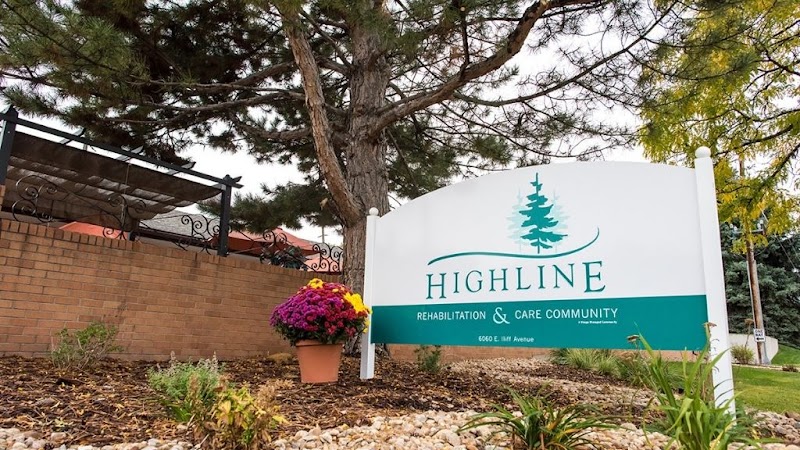
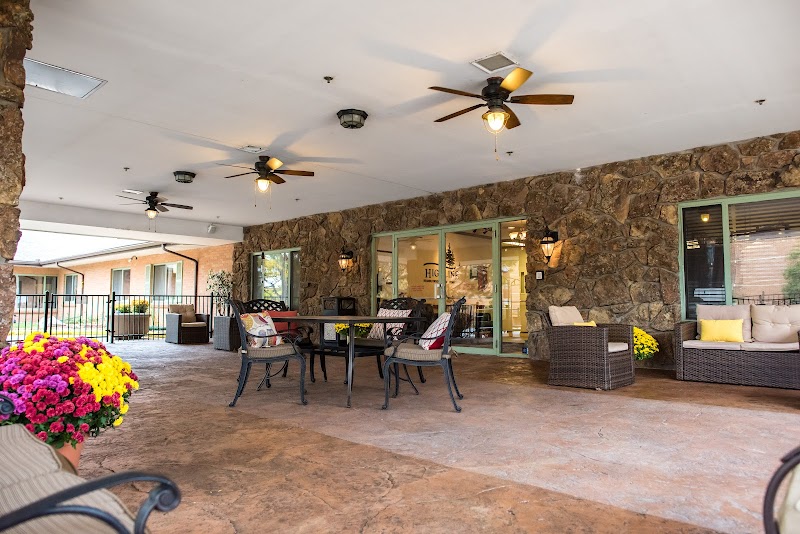
HIGHLINE POST ACUTE

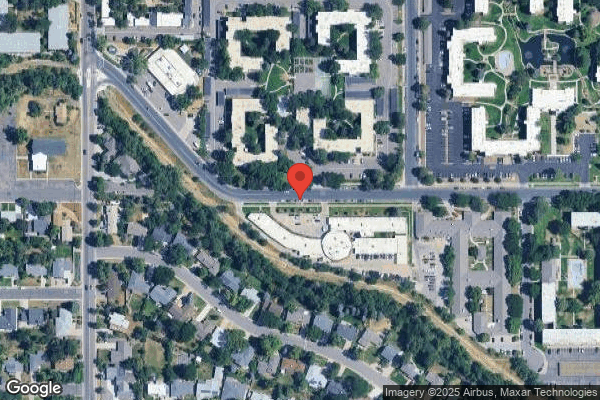
6060 E ILIFF AVE, DENVER, CO 80222 (303) 759-4221
For profit - Limited Liability company 125 Beds PACS GROUP Data: November 2025 1 Immediate Jeopardy citation
Trust Grade
11/100
#186 of 208 in CO
Last Inspection: August 2024

Within standard 12-15 month inspection cycle. Federal law requires annual inspections.

Overview

Highline Post Acute has received a Trust Grade of F, indicating significant concerns with the quality of care provided. It ranks #186 out of 208 facilities in Colorado, placing it in the bottom half overall and #21 out of 21 in Denver County, meaning there are no local options that rank lower. While the facility has shown an improving trend, reducing issues from 20 in 2024 to 6 in 2025, it still has serious deficiencies, including one critical incident where a resident with a history of elopement left the facility unnoticed for hours. Staffing is rated poorly with a 1 out of 5 stars, and although turnover is at 46%, which is slightly better than the state average, there is concerningly less RN coverage than 94% of facilities in Colorado. Specific incidents include a resident suffering a second-degree burn from a hot egg roll due to inadequate temperature checks and a physical assault by a staff member, highlighting both safety and oversight issues that families should consider.

Trust Score
F
11/100
In Colorado
#186/208
Bottom 11%
Safety Record
High Risk
Review needed
Inspections
Getting Better
20 → 6 violations
Staff Stability
⚠ Watch
46% turnover. Above average. Higher turnover means staff may not know residents' routines.
Penalties
✓ Good
$22,547 in fines. Lower than most Colorado facilities. Relatively clean record.
Skilled Nurses
⚠ Watch
Each resident gets only 26 minutes of Registered Nurse (RN) attention daily — below average for Colorado. Fewer RN minutes means fewer trained eyes watching for problems.
Violations
⚠ Watch
35 deficiencies on record. Higher than average. Multiple issues found across inspections.
★☆☆☆☆
1.0
Overall Rating
★☆☆☆☆
1.0
Staff Levels
★★★★☆
4.0
Care Quality
★☆☆☆☆
1.0
Inspection Score
Stable
2024: 20 issues
2025: 6 issues

The Good

  • 4-Star Quality Measures · Strong clinical quality outcomes
  • Full Sprinkler Coverage · Fire safety systems throughout facility
  • No fines on record

Facility shows strength in quality measures, fire safety.

The Bad

1-Star Overall Rating

Below Colorado average (3.1)

Significant quality concerns identified by CMS

Staff Turnover: 46%

Near Colorado avg (46%)

Higher turnover may affect care consistency

Federal Fines: $22,547

Below median ($33,413)

Minor penalties assessed

Chain: PACS GROUP

Part of a multi-facility chain

Ask about local staffing decisions and management

The Ugly 35 deficiencies on record

1 life-threatening 3 actual harm
Jul 2025 1 deficiency 1 Harm
SERIOUS (G) 📢 Someone Reported This

A family member, employee, or ombudsman was alarmed enough to file a formal complaint

Actual Harm - a resident was hurt due to facility failures

Accident Prevention (Tag F0689)

A resident was harmed · This affected 1 resident

**NOTE- TERMS IN BRACKETS HAVE BEEN EDITED TO PROTECT CONFIDENTIALITY** Based on observations, record review and interviews the facility failed to ensure an environment free of accident hazards for tw...

Read full inspector narrative →
**NOTE- TERMS IN BRACKETS HAVE BEEN EDITED TO PROTECT CONFIDENTIALITY** Based on observations, record review and interviews the facility failed to ensure an environment free of accident hazards for two (#1 and #19) of nine residents reviewed for accident hazards out of 21 sample residents.On 5/18/25 Resident #1 requested certified nurse aide (CNA) #1 to heat up an egg roll from his personal refrigerator in a microwave that was at the nurses' station. After heating up the egg roll, CNA #1 gave the egg roll to Resident #1, without using a thermometer to check the temperature of the egg roll, and told the resident not to touch the egg roll because it was very hot. However, Resident #1 immediately picked up the egg roll after CNA #1 gave it to him. Hot liquid came out of the egg roll and dropped on the resident's leg causing a second degree burn to Resident #1's left thigh On 5/19/25 the facility implemented a plan of correction in response to the incident which caused Resident #1's left thigh burn. The corrective actions included placing thermometers and temperature logs at each nurses' station for staff to take the temperatures of heated up food for residents and logging the temperatures prior to giving the food to the residents. However, on 6/30/25, during the survey, observations revealed the corrective actions implemented by the facility on 5/19/25 were not in place and none of the facility's three microwaves at the nurses' stations had a thermometer or a temperature log for staff to utilize.Additionally, on 6/19/25 Resident #19 was in the facility van, in his wheelchair, for an activity outing. Resident #19 was supposed to be secured in the van with a shoulder harness seatbelt placed across his chest, which also included a seatbelt extender attached to the seatbelt. The seatbelt extender was to be secured into a hook on the van floor. However, the seat belt was not secured properly on Resident #19. During the outing, another driver in front of the van made an abrupt turn which caused the transportation driver to quickly utilize the brakes. When the transportation driver suddenly stepped on the brakes, Resident #19 fell forward out of his wheelchair, onto his knees, and scraped his forearm which caused bleeding. Resident #19 sustained a 4 centimeter (cm) by 7 cm by 0.1 cm skin tear to his right forearm.The facility investigated the incident and determined the transportation driver did not fully secure Resident #19's seatbelt, which resulted in the fall. The facility implemented a plan of correction in response to the incident on 6/19/25, immediately after Resident #19 sustained the fall in the facility van and no other incidents in the van occurred following implementation of the plan of correction. -While the facility identified and corrected the deficient practice regarding the incident with Resident #19, it was identified during the survey that the facility continued to have current deficient practice related to accident hazards due to corrective actions not being in place for the incident with Resident #1 (see above). Specifically, the facility failed to:-Ensure staff checked microwaved food for safe temperature prior to serving the food to residents, which resulted in Resident #1 sustaining a second degree burn to his left thigh; and,-Ensure Resident #19 was secured properly in the facility's van, which resulted in the resident sustaining an abrasion to his right forearm after he fell out of his wheelchair when the van abruptly stopped. Findings include: I. Burn incident with Resident #1 on 5/18/25A. Facility policy and procedureThe Hot Liquid Safety policy, dated 2025, was provided by the nursing home administrator (NHA) on 7/1/25 at 1:37 p.m. via email. It revealed in pertinent part, Hot liquids are to be served at proper (safe and appetizing) temperatures using appropriate safety precautions. Proper (safe and appetizing) temperature means both appetizing to the resident and minimizing the risk for scalding and burns. Scalding is a burn caused by spills, immersion, splashes, or contact with hot water, food and hot beverages, or steam. Hot liquids can cause scalding and burns. The degree of injury depends on the temperature, the amount of skin exposed, and the duration of exposure. The temperatures of hot liquids will be checked in the dietary department or at the nurses' station if the microwave is in place before distribution to the nursing units. If the temperature is greater than 140 degrees Fahrenheit (F), hold the liquid in the dietary department until it reaches an appropriate temperature.II. Resident #1 A. Resident statusResident #1, age less than 65, was admitted on [DATE] and readmitted on [DATE] According to the June 2025 computerized physician orders (CPO), diagnoses include type 2 diabetes mellitus, dependence on renal dialysis, morbid obesity, peripheral vascular disease, history of falling, acquired absence of the right leg above the knee and acquired absence of the left leg below the knee.The 4/4/25 minimum data set (MDS) assessment revealed the resident was cognitively intact with a brief interview for mental status (BIMS) score of 15 out of 15. He required set up or clean up assistance with eating. He required partial moderate assistance with toileting.B. ObservationsOn 6/30/25, beginning at 2:00 p.m., three microwaves were observed in the facility, one at each of the two nurses' stations and one in the activity room. None of the three microwaves had thermometers or a food temperature log for staff to utilize. On 6/30/25 facility staff said all three of the microwaves were used to heat residents' foods, but none of the staff members could provide thermometers to check the temperatures of the microwaved food items (see staff interviews below).C. Resident interviewResident #1 was interviewed on 6/30/25 at 3:20 p.m. Resident #1 said the egg roll item was from his own personal refrigerator. He said he asked CNA #1 to heat the egg roll (on 5/18/25) in the nurses' station microwave. Resident #1 said after CNA #1 gave the food to him, he picked up the egg roll and dropped it immediately because it was too hot to hold, and it fell on his leg. Resident #1 said he thought it was the liquid inside the egg roll that burned his leg. Resident #1 said the burn hurt and he had a lot of pain. He said the physician saw him and told him the burn would heal and he was given some cream that stopped the pain. Resident #1 said he still had a small scar on his leg from the incident. D. Facility investigation of Resident #1's burn incident and corrective actionsThe facility's investigation and corrective actions implemented in response to the incident were provided on 6/30/25 at 11:00 a.m. by the corporate consultant (CC) and the NHA. The facility's investigation documented that on 5/18/25 Resident #1 had food (from his personal room refrigerator) heated up in the microwave (at the nurses' station) by CNA #1. According to the resident, the food rolled onto his leg causing a burn. The temperature of the food was not checked prior to giving the heated food (from the microwave) to Resident #1.The facility implemented the following action plan in response to the incident. However, on 6/30/25, during the survey, observations revealed the corrective actions implemented by the facility on 5/19/25 were not in place and none of the facility's three microwaves at the nurses' stations had a thermometer or a temperature log for staff to utilize.Corrective Action: The staff immediately assessed the resident. Nursing management started educating staff on 5/19/25 on the policy and safe handling of food with microwaves. This education was provided by the assistant director of nursing (ADON). The education included what temperature the food needed to be, how to properly assess the temperature of food and log (how to document the food temperatures). The nursing administration put out thermometers and a food temperature log at each nurses' station on 5/19/25. On 5/19/25 a one-to-one education was provided to CNA #1 regarding proper safe handling procedures for food and drinks. Identification of others: All residents had the potential to be affected. The regional director of clinical services (RDCS) reviewed risk management from the last three months for any residents with burns and none were noted.Systematic changes: The ADON started education with staff on 5/19/25 on the policy for heating food/beverages per regulation. Monitoring: The director of nursing (DON)/designee would conduct twice weekly audits of designated microwaves (and) ensure that a temperature log was being used to document residents' food/beverages (or items residents requested to be heated in a microwave, not meal service). The DON/designee would audit twice weekly that a thermometer and a temperature log was at the designated area where microwaves were located. The DON/designee would present all findings of audits to the quality assurance and performance improvement (QAPI) committee for a minimum of 12 weeks and would continue until substantial compliance was met.E. Record reviewThe 5/18/25 nursing progress note documented Resident #1 sustained a burn injury to the left thigh from an egg roll that was heated in the microwave (at the nurses' station). A 2 cm by 4 cm superficial burn was noted on Resident #1's leg. Resident #1 reported that while attempting to open his egg roll, it slipped and fell onto his thigh and caused a burn. The incident was reported to the on-call physician and a physician's order was received for silver sulfadiazine cream (an antibiotic cream used to treat second and third degree burns).The 5/20/25 wound care physician note documented Resident #1 received a second degree burn on 5/18/25. The note documented the burn was on the resident's left anterior thigh and it received a status of not healed. The initial wound encounter measurements were 2 cm length by 6.5 cm width by 0.1 cm depth. Resident #1 reported a pain level of zero out of 10. The wound bed had 100 percent (%) epithelialization (a new layer of tissue formed over the damaged area). The periwound skin exhibited edema. The 5/27/25 wound care physician note documented Resident #1's wound was improving and not healed. The left anterior thigh had a burn and encounter measurements were 1.5 cm length by 2.3 cm width by 0.1 cm depth. The resident reported a wound pain of level zero out of 10. The wound bed had 100% epithelialization. The wound was improving. The periwound skin exhibited scarring.The 6/10/25 wound care physician note documented Resident #1's burn on his left anterior thigh was resolved. F. Staff interviewsThe DON was interviewed on 6/30/25 at 5:05 p.m. The DON said after the incident on 5/18/25 with Resident #1, she and the ADON educated all the staff and put thermometers at every nurses' station where there was a microwave. The DON said as of today (6/30/25), she did not know where the thermometers went that were placed at the nurses' station on 5/19/25. The DON said Resident #1 did not go to the hospital for his burn. The corporate nurse (CN) was interviewed on 6/30/25 at 5:20 p.m. The CN said any microwaves at nurses'stations and the activity room would be removed immediately per the management's decision because all three of the microwaves were used to heat and reheat residents' food. CNA #1 was interviewed on 7/1/25 at 11:20 a.m. via the telephone. CNA #1 said she was the one who served Resident #1 the egg roll (on 5/18/25). CNA #1 said almost every night Resident #1 asked for items to be heated in the microwave. CNA #1 said Resident #1 liked his food items very hot. CNA #1 said she should have only heated up the egg roll for about two minutes, but instead heated the egg roll for five or six minutes. CNA #1 said she did not use a thermometer to check the temperature of the egg roll. CNA #1 said she did not remember if there were any thermometers by the microwave on the nurses'station. CNA #1 said the egg roll was taken out of the microwave and immediately placed on Resident #1's bed side table. CNA #1 said she told Resident #1 to wait a few minutes for the egg roll to cool down because it was very hot. CNA #1 said she did not see Resident #1 drop the food item on his leg. CNA #1 said she was educated by the ADON after the incident about how to correctly heat foods in a microwave and how to use a thermometer. CNA #1 said she thought microwaved foods should only be heated to 140 degrees Fahrenheit. Licensed practical nurse (LPN) #5 was interviewed on 7/1/25 at 1:15 p.m. LPN #5 said the microwaves at the nurses' stations were used sporadically by the residents and Resident #1 asked for microwaved items only at night. LPN #5 said there were thermometers placed by the microwaves after Resident #1 was burned and the staff was educated on how to heat foods properly.G. Facility follow-upOn 6/30/25, the NHA and the maintenance director (MTD) took the microwaves out of the nurses' stations and the activity room. On 6/30/25 at 5:20 p.m. the NHA said since no thermometers were near the microwaves at the nurses' stations and activity room, he decided to remove the three microwaves. The NHA said the microwaves would be removed while the facility continued to review and revise the policy on safe food handling with heating up food and/or beverages. The NHA said new education would be provided to staff, which included that only the kitchen would have a microwave to reheat residents' food items.On 6/30/25 the ADON began re-educating all staff on microwaves and food service temperatures. The re-education also included where the thermometers and temperature log were to be kept. The re-education included how to perform a temperature check and what degrees foods needed to be served to the residents. Effective on 6/30/25, only one microwave in the main kitchen would be designated for all facility units staff to heat residents' food.A full house audit was completed by the CN on 6/30/25 at 6:15 p.m. on any burns in the last 90 days. No other residents were affected. II. Van incident with Resident #19 on 6/19/25A. Facility policy and procedureThe Transporting A Resident (Facility Van) policy, dated March 2025, was provided by the CN on 7/14/25 at 12:31 p.m. via email. It revealed in pertinent part, It is the policy of this facility to provide residents with safe, non-emergency transportation to doctor's appointments, activity outings, and any other trips the facility deems necessary. The van will be well-maintained and equipped with safety features. Each resident will be secured in a seat with a seatbelt or in their wheelchair secured with wheelchair tie-downs. Staff authorized to drive the van will have the necessary training and licensure to operate the vehicle as well as knowledge of van safety features. Copies of any necessary documentation will be kept in each employee's personnel file.B. Resident statusResident #19, age [AGE], was admitted on [DATE]. According to the July 2025 CPO, diagnoses included Parkinson's disease, vascular dementia, unsteadiness on his feet, chronic obstructive pulmonary disorder (COPD), cognitive communication disorder, need for assistance with personal care, amputation of (a) great toe, obesity and hypertension (high blood pressure). The 5/23/25 MDS assessment revealed the resident had moderate cognitive impairment with a BIMS score of 12 out of 15. He required supervision/ touch assistance with oral hygiene, toileting and upper body dressing. C. Facility investigation of Resident #19's van incident and corrective actionsThe facility's investigation and corrective actions implemented in response to the incident were provided on 7/1/25 at 10:00 a.m by the CC.The investigation documented on 6/19/25, while out on an activity outing, Resident #19 did not have a seat belt (secured) across his lap in the facility van. Resident #19 said he fell out of his wheelchair because the truck in front of the van slammed on their brakes, and the facility van had to come to a sudden stop to avoid an accident. The facility implemented the following action plan in response to the incident:Resident #1 was returned to the facility after the fall and was assessed by the registered nurse (RN). Treatment was provided by a facility nurse. The staff present in the facility van at the time of the incident were immediately educated on 6/19/25 by the DON. The education included ensuring all residents were always secured appropriately with a seat belt while in the facility van.All residents had the potential to be affected.The DON conducted an audit of risk management over the last 60 days and no other residents were identified.The interdisciplinary team (IDT) completed a root cause analysis which was completed on 6/19/25.On 6/19/2025 the regional director of plant operations performed a safety check on the van.On 6/19/25 a training was provided by the regional director of plant operations to the DON and ADON (about van safety).On 6/19/2025 a training was provided by the regional director of plant operations to the facility's director of maintenance (MTD) regarding safety checks (of the facility van).The transportation driver was trained on 6/19/25 to ensure all residents were always secured appropriately with a seat belt while in the facility van. Additionally, any new employees that would provide transport would be educated prior to the start of their first transport.On 6/23/2025 additional coaching (van safety) was provided to the transportation driver by the NHA.The DON/designee would audit all transports prior to leaving the facility to see that the residents were secured appropriately with their seat belts. The audit would continue for 12 weeks minimum.The DON/designee would present audits to the QAPI committee monthly for a minimum of 12 weeks or until substantial compliance was achieved.The MTD would audit the van twice per week to ensure the safety of the van, and the audit would be recorded on a paper audit tool for 12 weeks minimum. The administration would present audits to the QAPI committee monthly for a minimum of 12 weeks and until substantial compliance will be achieved.-While the facility identified and corrected the deficient practice regarding the incident with Resident #19, it was identified during the survey that the facility continued to have current deficient practice related to accident hazards due to corrective actions not being in place for the incident with Resident #1 (see above).D. Record review The fall risk assessment, dated 3/22/25, documented Resident #19 was a moderate fall risk.The comprehensive care plan 8/22/24 revealed Resident #1 was at risk of falls related to Parkinson disease, amputation of the great toe, and muscle weakness. The interventions documented the resident needed a safe environment with even floors free from spills and/or clutter, adequate glare-free light, a working and reachable call light, and personal items within reach.The nursing progress note, dated 6/19/25 (after the fall) and written by the ADON, documented Resident #19 was going on outings in the facility bus when he fell out of his wheelchair to his knees, then fell back and hit his head on his wheelchair. Resident #19 was observed to have two skin tears measuring 2.5 cm by 1.5 cm and 4 cm by 0.5 cm to his right arm, an abrasion to his right knee and a bruise to his nose. Resident #19 said he fell out of his wheelchair to his knees and hit the back of his head on the wheelchair. The resident was assessed by a RN and assisted back to his wheelchair. Neurological check(s) were initiated and wound treatment was placed. The 6/19/25 physician's progress note documented a verbal physician's order was given for wound care instructions to clean Resident #19's right arm wounds with cleanser, pat dry, skin prep the periwound (protect the skin surrounding the wound), apply a gauze dressing to the wound bed, and cover with bordered gauze as needed and QOD (every other day).The 7/1/25 wound care physician's note documented Resident #19 had a skin tear to the right forearm with dimensions of 4 cm by 5 cm by 0.1 cm. The drainage was scant and the periwound was pink in color. The 7/8/25 wound care physician's note documented the skin tear for Resident #19 was resolved.E. Staff interviewsThe transportation driver was interviewed on 7/10/25 at 11:43 a.m. The transportation driver said she put Resident #19 in the facility van. The transportation driver said she thought she had correctly secured Resident #19 with wheelchair tie downs to the wheels of the wheelchair and a seatbelt, which had an extender that was to be locked, to the van floor. The transportation driver said a driver in front of the van made a quick move that caused her to slam on the brakes. The transportation driver said when the brakes were abruptly stepped on, the activity assistant (AA) said Resident #19 had fallen. The transportation driver said she drove the van over to the side of the road, parked the van and put on the emergency lights. The transportation driver said she gave Resident #19 basic first aid placed Resident #19 back into his wheelchair, and because of blood, she bandaged the skin tear on his arm. The transportation driver said she called the DON and returned to the facility, which was about five to eight minutes away from where the incident occurred. The transportation driver said she only saw blood on Resident #19's arm. The transportation driver said the DON and a facility nurse took Resident #19 off of the van and took over the care of Resident #19. The transportation driver said no other residents were hurt that were in the van on 6/19/25. The transportation driver said the van worked correctly but she did not strap in Resident #19's seatbelt correctly. The transportation driver went into the van during the interview and demonstrated how the incident happened. The transportation driver said Resident #19's wheelchair wheels were properly secured on the van floorboard. The transportation driver said she then put a shoulder harness seatbelt across his chest, and added a seatbelt extender that was approximately two to three feet long. The extender was to buckle into the seat belt at one end, and at the other end of the extender was a hook that latched onto a metal loop on the floorboard to secure Resident #19 in place. The transportation driver said she did not know which part of the seatbelt was not secured. The transportation driver said it was either the extender end was not secured onto the seat belt, or it was the extender hook which was not latched onto the floor board of the van. The transportation driver said when she helped Resident #19 back into his wheelchair the entire seatbelt and extender were off which was why Resident #19 was able to fall forward out of his wheelchair. The transportation driver said she was educated the day of the incident by the DON. The transportation driver said the following day, the DON had her do a return demonstration in the van to show how to correctly secure residents.The DON was interviewed on 7/10/25 at 12:30 p.m. The DON said the transportation driver was educated prior to being allowed to drive residents in the van. The DON said it was a one time mistake and there had been no falls in the facility van since the incident on 6/19/25. The DON said Resident #19 did not need to go to the hospital after the fall. The DON said the facility's wound nurse and the facility's wound physician cared for the skin tear. The DON said only Resident #19's arm had a skin tear, and he had no other bruises or wounds after he was assessed. The DON said on 7/8/25 the wound physician documented that the skin tear was resolved. The DON said for several weeks, she or a designee would check the residents who attended field trips to ensure all of the residents on the van were secured correctly.
Apr 2025 1 deficiency
CONCERN (D) 📢 Someone Reported This

A family member, employee, or ombudsman was alarmed enough to file a formal complaint

Potential for Harm - no one hurt, but risky conditions existed

Accident Prevention (Tag F0689)

Could have caused harm · This affected 1 resident

**NOTE- TERMS IN BRACKETS HAVE BEEN EDITED TO PROTECT CONFIDENTIALITY** Based on observations, record review and interviews, the facility failed to ensure one (#10) of three residents reviewed for fal...

Read full inspector narrative →
**NOTE- TERMS IN BRACKETS HAVE BEEN EDITED TO PROTECT CONFIDENTIALITY** Based on observations, record review and interviews, the facility failed to ensure one (#10) of three residents reviewed for falls out of 10 sample residents received adequate supervision and services to prevent an accident. Specifically, the facility failed to: -Ensure a root cause was identified for Resident #10's fall on 3/16/25; and, -Ensure Resident #10's care plan was reviewed for appropriate fall interventions after a fall. Findings include: I. Facility policy and procedure The Safety and Supervision of Residents policy and procedure, reviewed 4/4/25, was provided by the nursing home administrator (NHA) on 4/8/25 at 12:02 p.m. It read in pertinent part, Our facility strives to make the environment as free from accident hazards as possible. Resident safety and supervision and assistance to prevent accidents are facility-wide priorities. Our individualized, resident-centered approach to safety addresses safety and accident hazards for individual residents. The interdisciplinary care team (IDT) shall analyze information obtained from assessments and observations to identify any specific accident hazards or risks for individual residents.The care team shall target interventions to reduce individual risks related to hazards in the environment, including adequate supervision and assistive devices. Implementing interventions to reduce accident risks and hazards shall include the following: communicating specific interventions to all relevant staff, assigning responsibility for carrying out interventions, providing training, as necessary, ensuring that interventions are implemented and documenting interventions. Monitoring the effectiveness of interventions shall include the following: ensuring that interventions are implemented correctly and consistently, evaluating the effectiveness of interventions, modifying or replacing interventions as needed and evaluating the effectiveness of new or revised interventions. II. Resident #10 A. Resident status Resident #10, age greater than 65, was admitted on [DATE]. According to the April 2025 computerized physician orders (CPO), diagnoses included type 2 diabetes mellitus (DM), dementia, chronic obstructive pulmonary disease (COPD), unsteadiness on feet and chronic kidney disease. The 3/10/25 minimum data set (MDS) assessment revealed the resident had severe cognitive impairment with a brief interview for mental status (BIMS) score of six out of 15. He required substantial/maximal assistance with showers/bathing. He required partial/moderate assistance with toileting hygiene, upper and lower body dressing, personal hygiene, putting on/off footwear, and walking 50 feet with two turns. He required supervision/touching assistance with bed mobility, toileting and sit to stand transfers, shower transfers and walking 10 feet. The resident used a manual wheelchair. The assessment revealed he exhibited no behavioral symptoms or rejection of care. B. Record review Review of Resident #10's fall care plan, revised 6/6/18, revealed the resident was at risk for falls related to COPD, dementia, DM type 2, chronic kidney disease, hyperlipidemia, nicotine dependence, GERD (gastroesophageal reflux disease), neuropathy, HTN (hypertension), depression, BPH (benign prostatic hyperplasia) and history of falls. Interventions included encouraging the resident to wear shorts/pants with appropriate length, ensuring the resident's call light was within reach and encouraging the resident to use it for assistance as needed, providing a prompt response to all requests for assistance, educating and encouraging the resident to call for assistance with picking up items from the floor, educating the resident/family/caregivers about safety reminders and what to do if a fall occurred, encouraging the resident to participate in activities that promote exercise, physical activity for strengthening and improved mobility, ensuring the resident was wearing non-skid shoes, rearranging the resident's room as needed and ensuring the bedside phone was within reach, therapy screening for restorative nursing program and therapy to evaluate and treat as indicated. -Review of the fall interventions revealed there had been no revisions to the care plan since 6/1/23. Review of Resident #10's secondary fall care plan, revised 7/25/24, revealed the resident had an unwitnessed fall and was at risk for recurring falls and unsteady gait related to cognitive impairment. Interventions, initiated 7/25/24, included medication regimen review as indicated, monitoring for complications related to the fall (change in neurological status, evidence of injury, loss of range of motion, pain) and notifying the physician promptly if observed, occupational therapy (OT) to screen for wheelchair management and smoking safety, keeping personal/frequently used items within reach, anticipating and meeting the resident's needs, educating/reminding the resident to call for assistance, encouraging activity as tolerated with rest periods between activities as needed, evaluation of medications for side effects that may increase fall risk, explaining all procedures and providing reassurance during mobility tasks to alleviate the fear of falling, keeping bed in low position with brakes locked, keeping the resident's call light within reach and initiating a restorative nursing program (initiated 9/19/23). -Review of the interventions revealed there had been no updates to the fall care plan since 7/25/24. -There was no documentation to indicate Resident #10's care plan was reviewed for the effectiveness of his fall interventions after his fall on 3/16/25. The 3/16/25 at 4:40 p.m. nurse's note revealed the certified nurse aide (CNA) called the nurse and said Resident #10 was on the ground in the main courtyard. The nurse went to the area and found the resident sitting down next to his wheelchair. Upon assessment, no apparent injuries were noted. The resident denied hitting his head, his pupils were equal, round, reactive to light and accommodation and his range of motion and vital signs were within normal limits. The resident was transferred to his wheelchair, with a maximum of two people safely. Neurological checks were initiated by the floor nurse. -The progress note did not identify a root cause for the resident's fall. The 3/17/25 at 11:32 a.m. physician's note revealed the reason for the physician's visit was follow up to a fall. Resident #10 was seen in his room, lying in bed comfortably and in no acute distress. The resident had a recent fall with no injuries. The physical examination did not show any trauma or bumps. Vital signs were stable. Resident #10 had a fall on 3/16/25 where he was found sitting next to his wheelchair in the courtyard. The note indicated staff were to continue follow-up with fall and neuroprotocol per facility. The 3/17/25 at 1:50 a.m. weekly nurse summary note revealed there had been no resident fall incident that week. -However there had been a fall the day before, on 3/16/25. -Review of the resident's progress notes revealed there was no further documentation of Resident #10's fall incident. -Review of Resident #10's EMR revealed there was no documentation to indicate a root cause for the resident's fall had been identified by the nurse on duty at the time of the fall or by the IDT. -Additionally, there was no documentation to indicate Resident #10's fall interventions had been reviewed for effectiveness or to determine if new fall interventions were needed. III. Staff interviews The director of nursing (DON) and the regional clinical resource (RCR) were interviewed together on 4/7/25 at 12:46 p.m. The DON said the facility's process after a fall depended upon if it was witnessed or not, but the nurse would be called and a RN would do an assessment before the resident would get up. The DON said if a resident hit their head or if it was unwitnessed, the nurses would do neurological assessments and notify physicians and residents' representatives. The DON said the facility would do an IDT meeting after the fall on the following business day to prevent a recurrence. The DON said IDT included herself, the director of rehabilitation (DOR), social services and the NHA. The DON said IDT would meet to discuss and determine the root cause of the fall. The DON and the RCR said they were not aware that Resident #10 had a fall on 3/16/25. They said they did not see an IDT note/assessment and said the fall had not been documented into their risk management system. The DON said the nurse on duty at the time of Resident #10's fall did not enter the fall into risk management and therefore the facility did not have an IDT meeting to determine the root cause because they were not aware of the fall. The DON said that Resident #10 had not been assessed for the root cause of his fall and the resident's care plan had not been reviewed to determine if new fall interventions were needed. The DON said the risk management entry was important so that it could trigger the next steps for fall review. The DON said it looked like it was an agency nurse that did not enter the information and she said she would call and educate the agency nurses and re-educate the staff nurses regarding the appropriate fall process. The DON said since Resident #10 had not had an IDT review of his 3/16/25 fall, she would talk with the resident, the physician and the nurse and find out the root cause of the fall and update the resident's care plan appropriately.
Feb 2025 4 deficiencies 1 IJ
CRITICAL (J) 📢 Someone Reported This

A family member, employee, or ombudsman was alarmed enough to file a formal complaint

Immediate Jeopardy (IJ) - the most serious Medicare violation

Accident Prevention (Tag F0689)

Someone could have died · This affected 1 resident

**NOTE- TERMS IN BRACKETS HAVE BEEN EDITED TO PROTECT CONFIDENTIALITY** Based on interviews and record review, the facility failed to ensure that one (#1) of eight residents out of 16 sample residents...

Read full inspector narrative →
**NOTE- TERMS IN BRACKETS HAVE BEEN EDITED TO PROTECT CONFIDENTIALITY** Based on interviews and record review, the facility failed to ensure that one (#1) of eight residents out of 16 sample residents remained as free from accidents as possible. Resident #1, severely cognitively impaired and with a history of elopement on 6/8/24 and frequent exit-seeking behaviors in January 2025 and February 2025, left the facility without staff knowledge on 2/5/25 between 9:30 p.m. and 10:30 p.m. He was not located until approximately 8:00 a.m. the next day. The facility's failures in responding to his elopements created a reasonable expectation, absent immediate correction, that an adverse outcome resulting in serious harm, impairment, or death would occur. Record review revealed that on 6/8/24, Resident #1 eloped from the facility and was found across the street later that day. On 6/11/24, the resident was evaluated as being at risk for future elopement. His care plan was updated the same day with interventions that read, in part, to allow the resident to wander in safe areas, to encourage attendance and participation in activities, to attempt to refocus when exhibiting behavior, and for staff to complete the elopement risk evaluation (assessment) per facility policy. -The update did not note that the resident had eloped 6/8/24, did not identify specific concerns/behaviors that might precipitate an elopement or provide individualized interventions to minimize his risk factors (independence with ambulation, his verbalized desire to go home, and his attempts to open doors), identified on the elopement assessment 6/11/24. Further, there was no plan to increase his level of supervision. Record review revealed that on 2/5/25, Resident #1 eloped from the facility a second time. He was last seen at approximately 9:30 p.m. in the building and was noted as missing by a certified nurse aide (CNA) at approximately 10:30 p.m. The time of elopement was uncertain. On 2/6/25 at approximately 8:00 a.m., facility staff located Resident #1 approximately one mile from the facility, outside an establishment with his wheelchair, wearing a coat, pants, and shoes. His vital signs were stable, but he was very cold and shivering. -Record review revealed a quarterly elopement assessment completed 12/26/24 per care plan directive (see above), failed to take into account all the resident's risks from medication, diagnoses, and his prior elopement. -Record review revealed no further care plan updates or an increase in the resident's supervision level after 6/11/24, even though the resident's medication and treatment administration record from January 2025 documented that Resident #1 had exit-seeking behaviors where he was difficult to redirect 22 out of a possible 31 days. And, the medication and treatment record from February 2025 documented that Resident #1 had exit-seeking behaviors on four out of the five days leading up to his elopement on 2/5/25. -Record review revealed the facility's investigation of Resident #1's elopement on 2/5/25 failed to identify root causes to prevent a recurrence or consider lapses in the facility's response. Interviews revealed delays in implementing the facility's policy/protocol once it was determined that Resident #1 was missing. Further interviews revealed that despite documentation and knowledge of Resident #1's behavior on 2/5/25, staff had a conflicting understanding of Resident #1's elopement risk and the resident's exit-seeking behaviors. On 2/25/25 at 12:45 p.m., an Immediate Jeopardy was identified based on the facility failures above that created a situation of potential serious harm for Resident #1, requiring immediate corrective action. Findings include: IMMEDIATE JEOPARDY I. Immediate Jeopardy A. Findings of Immediate Jeopardy Resident #1, with a brief interview for mental status (BIMS) assessment of three out of 15 (severe cognitive impairment), was admitted on [DATE]. An elopement assessment dated [DATE] revealed that Resident #1 was not at risk for elopement. However, less than three months later, on 6/8/24, Resident #1 eloped from the facility. He was assessed on 6/11/24 as being at risk for future elopement following the incident. His care plan was updated the same day with interventions that read, in part, to allow the resident to wander in safe areas, to encourage attendance and participation in activities, to attempt to refocus when exhibiting behavior, and for staff to complete the elopement risk assessment per facility policy. -However, the update did not note that the resident had eloped 6/8/24, did not identify specific concerns/behaviors that might precipitate an elopement or provide individualized interventions to minimize his risk factors (independence with ambulation, his verbalized desire to go home, and his attempts to open doors), identified on the elopement assessment 6/11/24. Further, there was no plan to increase his level of supervision. Record review revealed an inaccurate assessment of the resident's elopement risk on 12/26/24, and no care plan updates or an increase in the resident's supervision level after 6/11/24, even though staff documented in January 2025, Resident #1 had exit-seeking behaviors where he was difficult to redirect 22 out of a possible 31 days and in February 2025, had exit-seeking behaviors on four out of the five days leading up to an elopement on 2/5/25. On 2/5/25, Resident #1 eloped from the building a second time. He was last seen at approximately 9:30 p.m. and was noted as missing by a CNA at approximately 10:30 p.m. The time of elopement was uncertain. Facility staff began looking for the resident in the building, at the neighboring nursing facility, and in the neighborhood. The director of nursing (DON), nursing home administrator (NHA), and police were not notified until 3:00 a.m. on 2/6/25, after facility staff were unable to locate the resident. On 2/6/25 at approximately 8:00 a.m., facility staff located Resident #1 approximately one mile from the facility with his wheelchair, wearing a coat, pants, and shoes. His vital signs were stable, but he was very cold and shivering. Resident #1 was taken back to the facility and was placed on one-to-one staff supervision for the initial 72 hours and then on 15-minute checks. Resident #1 was also monitored for exit-seeking behaviors every shift, although the behaviors remained unspecified on his care plan. On 2/24/25 (during the survey), the facility completed a COC (change of condition) assessment for Resident #1. The revised COC assessment revealed the resident's score for elopement was 32, indicating a high risk for elopement. As of 2/25/25, the facility had not identified specific behaviors/concerns or identified new interventions to address Resident #1's high risk for elopement. Interviews with staff on 2/24/25 and 2/25/25 revealed that the director of nursing (DON) was not aware of Resident #1's ongoing exit-seeking behaviors, although staff reported the resident wandered, especially in the evening and at night, pushed on doors, and talked about going outside often. The facility failures above created a situation of Immediate Jeopardy for serious harm for Resident #1 that required immediate corrective action. On 2/25/25 at 12:45 p.m., the DON, the nursing home administrator (NHA), and the nurse consultant (NC) were notified of the Immediate Jeopardy situation. B. Facility plan to remove the Immediate Jeopardy On 2/25/25 at 6:51 p.m., the NHA provided a plan to remove the Immediate Jeopardy situation. The removal plan read: The facility will reassess all residents for elopement risk and identify triggers or predictive behaviors. The IDT (interdisciplinary) team will review and update care plans for residents at risk of elopement with individual resident centered approaches/strategies. The DON or designee will educate all staff on strategies and interventions for preventing elopement. The DON or designee will educate all staff on supervision, monitoring and reporting residents who are exit seeking. The DON or designee will educate nursing staff on notifying the NHA/DON of residents who are exit seeking, behaviors/triggers to monitor and strategies/interventions. The NHA or designee will educate all staff on the missing person policy, including timely required notifications at shift change. The education was to be completed prior to the first shift for new hires and agency staff. The DON or designee will review the behavior tracking five times per week for exit seeking behavior Residents and family will be educated regarding not assisting other residents to leave the facility and the process for signing in and out when leaving the facility by the NHA or designee. All staff on all shifts received education on the process for the front doors, wandering, elopement policy to include predictive behaviours and elopement prevention strategies, elopement binder missing persons policy and residents safety by the DON or designee. Any staff on leave received education on their next scheduled work day. An elopement risk assessment will be completed on admission and quarterly by the IDT team. Residents determined at risk by the IDT team will have a care plan in place to prevent elopement. The DON or designee will audit new admissions for elopement risk, determine if the facility can meet the resident's needs and ensure a care plan with appropriate interventions is in place if appropriate. New hires will receive education on wandering, elopement policy and elopement binder, and resident safety by the DON, director of social services or designee(s). A Quality Assurance Performance Improvement (QAPI) Performance Improvement Project (PIP) was implemented to review and interpret all audit findings. All findings will be discussed at the monthly QAPI meeting for a minimum of three months or until the pattern of compliance is maintained. C. Removal of Immediate Jeopardy The NHA and the NC were notified on 2/26/25 at 12:17 p.m. after the implementation of the plan (see above) was verified by the surveyors onsite (see below) that the removal plan was accepted, and the Immediate Jeopardy was removed. After the removal of Immediate Jeopardy, the deficient practice remained at a scope/severity level D, isolated with no actual harm. The facility provided the following on 2/26/25: -Shift report training and expectations with a roster showing which nursing staff completed the training as of 2/26/25. -Spreadsheet showing the audit conducted on 2/26/25, the reassessment of risk, and the new interventions implemented for the residents whose assessment had changed. -Elopement binder and the facility policy on elopement was updated on all nurses stations by 2/26/25. -Documentation of Resident #1's care plan with updated behaviors updated by 2/26/25. -A spreadsheet of residents with completed and updated wandering assessments with an updated IDT note and updated care plan interventions if needed dated 2/25/25. -Communication of education and updated door locking policy provided to facility residents, family members, and staff on 2/25/25 and 2/26/25. -The elopement policy with education, including when to notify the IDT team if a resident was suspected missing, including education sign in sheets to show which staff had received training on 2/25/25 and 2/26/25. -Education sign in sheets were provided to show which staff had received the training on 2/25/25 and 2/26/25. On 2/26/25 between 9:30 a.m. and 12:00 p.m. the following staff were interviewed and confirmed they had received elopement training and how to use the elopement binder: dietary manager, housekeeping, ADON (assistant director of nursing), receptionist, CNA #4, licensed practical nurse (LPN) #5, human resources, maintenance, receptionist, and activity aide. II. Facility policy The Elopements and Wandering Residents policy, 2023, was provided by the NHA on 2/24/25 at 12:33 p.m. The policy read in pertinent part, The facility ensures that residents who exhibit wandering behavior and/or are at risk for elopement receive adequate supervision to prevent accidents and receive care in accordance with their person centered plan of care addressing the unique factors contributing to wandering or elopement risk. The facility is equipped with door locks/alarms to help avoid elopements. Alarms are not a replacement for necessary supervision. Staff are to be vigilant in responding to alarms in a timely manner. The facility shall establish and utilize a systemic approach to monitoring and managing residents at risk for elopement or unsafe wandering, including identification and assessment of risk, evaluation and analysis of hazards and risks, implementing interventions to reduce hazards and risks, and monitoring for effectiveness and modifying interventions when necessary. Residents will be assessed for risk of elopement and unsafe wandering upon admission and throughout their stay by the interdisciplinary team. The IDT team will evaluate the unique factors contributing to risk in order to develop a person centered care plan. Interventions to increase staff awareness of the resident's risk, modify the resident's behavior, or to minimize the risks associated with hazards will be added to the resident's care plan and communicated to the appropriate staff. Adequate supervision will be provided to help prevent accidents or elopements. The effectiveness of interventions will be evaluated, and changes will be made as needed. Any changes or new interventions will be communicated to relevant staff. Any staff member becoming aware of a missing resident will alert personnel using facility approved protocol. The designated facility staff will look for the resident. If the resident is not located in the building or on the grounds, the NHA or designee will notify the policy department and serve as the designated liaison between the facility and the police department. Post-elopement, staff may be educated on the reasons for elopement and possible strategies for avoiding such behavior. III. Resident #1 A. Resident status Resident #1, age less than 80, was admitted to the facility on [DATE]. According to the February 2025 computerized physician orders (CPO), diagnoses included dementia, depression, and type 2 diabetes. The 12/27/24 minimum data set (MDS) assessment revealed the resident was severely cognitively impaired with a brief interview for mental status (BIMS) score of three out of 15. The resident required partial assistance with showering and toileting. He required supervision for transfers and walking. He was independent with his wheelchair. An elopement assessment, dated 3/22/24, revealed that Resident #1 was not at risk for elopement. Resident #1 was interviewed on 2/24/25 at 10:00 a.m. He said he went outside every day. He said he loved going outside. B. First elopement - Facility failures in response 1. Elopement 6/8/24 On 6/8/24 at 2:26 p.m., a nursing note documented that around 8:00 a.m. on 6/8/24, a CNA told the nurse that Resident #1 was not in his room. The nurse checked the smoking area and other empty rooms in the building. They started searching outside the building. Resident #1 was found 30 minutes later near a daycare across the street from the facility. The NHA and the DON were notified. An elopement evaluation (assessment), completed on 6/11/24, indicated that Resident #1 was at risk for elopement based on his diagnosis of dementia, independent ambulation with a wheelchair, had wandering behaviors as part of his past, was cognitively impaired, had verbalized desire to go home or attempting to open doors, and he had a change in status or routine. A care plan for elopement risk, initiated on 6/11/24, revealed Resident #1 was at risk for elopement/exit-seeking/wandering related to dementia and intermittent delusions and that he was redirectable without agitation. Interventions included allow wandering in safe areas, approach in calm manner, assess for pain and medicate as needed, attempt to refocus, document and notify physician if behavior interferes with daily functioning, educate on facility protocol for check in/out logs, educate on potential risks and the facility protocol for leaving the facility, elopement risk assessment, encourage participation in activities of choice and encourage expression of feelings. 2. Failures in facility response The resident's care plan update did not note that he had eloped on 6/8/24, did not identify specific concerns/behaviors that might precipitate an elopement or provide individualized interventions to minimize his risk factors (independence with ambulation, his verbalized desire to go home, and his attempts to open doors), identified on the elopement assessment 6/11/24. Further, there was no plan to increase his level of supervision. C. Continuing failures after 6/8/24 1. A quarterly elopement assessment, completed on 12/26/24, indicated that Resident #1 was independent in his wheelchair, wandered without a sense of purpose, had a diagnosis that may have impacted cognition, took one medication that could increase restlessness of agitation, had not expressed desire to leave the facility, exhibited unsafe wandering or elopement attempts but was easily redirectable. It documented that Resident #1 did not wander out of the facility but wandered into different rooms. Based on the assessment completed, resident #1 scored a 12. (The facility did not provide a scoring tool, however, lower scores indicated lower risk.) Consistent with the quarterly assessment above, Resident #1's 12/27/24 MDS assessment documented that the resident did not have wandering behaviors. -However, the 12/26/24 elopement assessment was inaccurate. Resident #1 took two medications that could increase restlessness or agitation, had two medical diagnoses that may have impacted his cognition, and had one elopement in the prior year. See also interviews below; staff reported the resident wandered, especially in the evenings and at night, and pushed on doors. 2. A review of Resident #1's medication and treatment administration record from January 2025 documented that Resident #1 had exit-seeking behaviors where he was difficult to redirect 22 out of a possible 31 days. The medication and treatment record from February 2025 documented that Resident #1 had exit-seeking behaviors on four out of the five days leading up to his elopement on 2/5/25. Record review revealed no care plan updates describing Resident #1's exit-seeking behavior and how staff might respond or a plan to increase the resident's supervision level, despite the documentation on the medication and treatment administration records for January 2025 and February 2025, and staff documentation the resident was now difficult to redirect. D. Second elopement - Failures in facility response 1. Elopement 2/5/25 On 2/6/25 at 7:27 a.m., a nursing note by LPN #3 documented that Resident #1 was missing. The note read that during the dinner time medication pass (2/5/25), Resident #1 was in his room eating and carrying his guitar. After dinner, the nurse requested the two CNAs working on his side of the hall to collect meal trays from all the rooms. At that time, the nurse did not see Resident #1 in his room and asked the CNA in charge of his daily care to look for him. -The CNA came back to the nurse later and stated that Resident #1 was on the Capital side of the building. At night, after the nurse's lunch, he started passing medication and did not see Resident #1 in his room. He asked the CNA to look for Resident #1. At the same time, the nurse went to check on another resident who was not feeling well. The CNA returned and stated that Resident #1 was still wandering in the Capital side of the building. -At 10:45 p.m., the CNAs working the graveyard shift (10:00 p.m. to 6:00 a.m.) had come in, and the new CNA in charge of Resident #1's care stated that Resident #1 was not in his room. She reported that the resident was not seen during shift change. The nurse instructed the CNA to look for the resident. -After a few hours of looking for him, Resident #1 was not found in the building or neighborhood. The DON was notified, and a report was given about the situation. On 2/6/25 at 7:35 a.m., a late entry nursing note by LPN #3 documented that on 2/5/25, Resident #1 went missing from the property around 10:45 p.m. All staff on shift started looking for him in each room within the facility and around the neighborhood. The DON and police were notified. Resident #1 was found on 2/6/25 between 8:00 a.m. and 9:00 a.m. All vital signs were stable, labs were done, skin was intact and cold on touch, no frostbite noted, and no signs of pain or discomfort noted. Resident #1 was placed on one one-on-one monitoring with a one-to-one sitter and 72-hour charting. On 2/6/25 at 8:40 a.m., a nursing note documented that after a long search, Resident #1 was found a few blocks away from the facility. Resident #1 appeared very cold and was shivering. He was brought back to the facility, where warm blankets awaited him. His vital signs were stable. A head-to-toe assessment revealed no sign of injury. One-on-one care was provided to Resident #1 immediately. The provider ordered lab work, a urine test, and an electrocardiogram (EKG). A review of the facility investigation of Resident #1's elopement 2/5/25 to 2/6/25 revealed the investigation was initiated on 2/6/25. It read that Resident #1 was noted missing by staff around 11:40 p.m. on 2/5/25. He was last seen by staff around 9:30 p.m. on 2/5/25. He was found by the DON and the NHA around 8:00 a.m. on 2/6/25, a few minutes away from the facility, in front of a business. He was brought back to the facility and assessed. CNA #1 was interviewed by the DON (no date or time). CNA #1 was in charge of Resident #1's care and reported she did her rounds when she came in and noted the resident was not in his room between 10:30 p.m. and 10:45 p.m. CNA #1 reported she let the nurse know at the time, and they began searching for the resident. This concluded all interviews provided in the facility's investigation. Resident #1's care plan was updated on 2/6/25 to add a one-to-one sitter, and nursing notes indicated he had the sitter from 2/6/25 until 2/9/25 at 11:30 p.m., with the nurse and staff monitoring him the rest of the night. On 2/9/25, the care plan read 15-minute checks were added and sometime later, removed from the care plan. 2. Failures in facility response a. Record review See the facility investigation above. The facility failed to conduct a comprehensive investigation to identify root causes to prevent a recurrence or consider lapses in the facility's response. See care plan additions above. As of 2/25/25 (during survey) Resident #1's care plan still lacked specific concerns/behaviors that might precipitate an elopement or provide individualized interventions to minimize his risk factors (independence with ambulation, his verbalized desire to go home, and his attempts to open doors), in addition to failing to document either of his elopements. Further, there was no evidence an elopement assessment was conducted after 2/6/25 until 2/24/25, during the survey. E. Interviews 1. Staff interview Staff interviews revealed that Resident #1 was known to wander, especially in the evening and at night, pushed on doors, and talked about going outside often. a. CNA #3 was interviewed on 2/24/25 at 1:10 p.m. CNA #3 said the staff did not do shift reports at this facility. She said facility staff would leave without giving a report. She said she walked around to lay eyes on all her residents at the beginning of her shift. She said she worked with Resident #1. She said she had noticed a decline in his cognition. She said he used to be able to go outside to smoke and find his way back to his room by himself. She said that now, he wandered more aimlessly, so she made the effort to take him out to smoke when he wanted to. She said if nobody was with him or reminded him, he would wander everywhere. b. CNA #2 was interviewed on 2/24/25 at 2:55 p.m. CNA #2 said Resident #1 was very fast in his wheelchair. She said he refused care and staff had to approach him in another way, and he would usually let her do his care. She said he was very forgetful and did not call for help. She said he could walk but was not supposed to. She said he wandered around the building a lot, especially in the evenings and at night. She said he talked about going outside often. CNA #2 said she worked with Resident #1 the night he eloped. She said she was working from 2:00 p.m. to 10:00 p.m. She said he ate dinner in the dining room around 5:00 p.m. on 2/5/25. She said she brought him to the nursing station at the Cherry Creek hallway (where he lived) after dinner for a snack. She said she last saw him around 9:00 p.m. at the nursing station. She said she left at 10:00 p.m. She said that the CNA taking over for Resident #1's portion of the hall was not there yet, so she gave a report to the other CNA who was taking over the other part of the hall. She said she got a call from the DON in the middle of the night asking when was the last time she had seen Resident #1. c. LPN #1 was interviewed on 2/25/25 at 9:30 a.m. LPN #1 said Resident #1 was an elopement risk. She said he was independent with pedaling in his wheelchair and was very fast. She said his cognition had declined in the last few months, and he seemed more forgetful. She said that on every shift, she documented his exit-seeking behavior. She said his exit-seeking behavior was pedaling around the facility in his wheelchair and pushing at doors. She said that sometimes he was redirectable with a snack or activity, and other times, he would get agitated when a staff member tried to redirect him. She said the nurses used a report sheet to indicate he was on elopement precautions. She said this included documenting exit-seeking behaviors and extra monitoring. She said he was on frequent checks, meaning every 15 minutes, and she parked the cart outside his room to keep an eye on him throughout her shift. d. LPN #3 was contacted by phone. A message was left to return the call on 2/25/25 at 4:25 p.m. However, LPN #3 did not return the call. 2. Management interview Management (NHA, DON, and nurse consultant/NC) interviews revealed the DON was not aware of Resident #1's exit-seeking behaviors before his elopement on 2/5/25 to 2/6/25. The interviews further revealed staff conducted a search on foot and by car in the surrounding neighborhood once the resident was discovered missing. Finally, interview revealed there had been a delay, contrary to facility expectations, in contacting management about Resident #1's elopement. a. The NHA, the DON, and the NC were interviewed together on 2/24/25 at 5:00 p.m. Contrary to the treatment and medication records for January 2025 and February 2025 (see above), the DON said Resident #1 wandered in circles but was not exit-seeking. She said he did not wander into other residents' rooms. She said there was nothing about him that seemed unsafe. She said the residents became unsafe if they were heading towards the door, and he did not do that. Also, contrary to the treatment and medication records for January 2025 and February 2025 (see above), the DON said staff redirected him with snacks or activities. She said she was unable to have any meaningful conversations with Resident #1 due to his low BIMS score and cognition. The NHA said facility exit doors opened and were then alarmed if the egress bar was pushed for 15 seconds. The NHA said he went to the facility on 2/6/25 at 4:00 a.m. The NHA said the staff that worked the overnight shift on the evening of Resident #1's elopement looked for the resident in the surrounding neighborhood on foot and in their cars. The NHA said the facility was unable to determine if Resident #1 left after a family member walked out the front door or what exactly happened. The NHA said the staff members working that evening (2:00 p.m. to 10:00 p.m.) said they did not see anyone leave behind them. The NHA said staff parking was in the back of the building and staff came in the side door or through the front door, and family members parked in the street in front of the facility. The NHA said one of the facility doors had since been made inactive to enter after Resident #1's elopement. The DON said the facility cameras were not working the night Resident #1 eloped. The DON said staff checked all the side doors after his elopement and confirmed all the doors worked correctly. The DON said Resident #1 was found outside near a local business, wearing a coat, a hat, and shoes the facility thought belonged to the resident. The DON said a CNA reported that the last time she saw Resident #1, he was wearing house slippers and provided the description of Resident #1 to the police. The DON said the facility identified one CNA scheduled to relieve the day shift staff at 10:00 p.m. had arrived late to the floor (on 2/5/25), but she was not aware how late the CNA had arrived. The DON said that the facility investigation had not included checking to see if all staff came in at 10:00 p.m. as scheduled. The DON said the staff reported to her that they did their walking rounds as they came into the facility at 10:00 p.m. The DON said she came to the facility immediately upon being notified around 3:00 a.m. on 2/6/25 that Resident #1 was missing, and the NHA called 911 while he was en route to the facility and told a nurse to call the hospital. The DON then arrived at the facility, where the police met her and started their own surveillance. The DON said she got in a car with the assistant director of nursing (ADON) and tried to find the resident. The DON said if a CNA thought a resident was missing, the CNA should notify the nurse they could not find a resident. The nurse should broaden the search and look in every room, every shower room, and ask all the other staff to help search. The DON said that after searching for 20 minutes maximum, the staff should call the DON, and the DON should call the NHA. The DON said she should have been notified by midnight, at the very latest, that Resident #1 was missing. The DON said that after finding Resident #1, the resident did not articulate where he went and willingly got in the car. He said only that he left to get coffee and did not answer any other questions. The DON said she updated the medical director about the resident's elopement. She said a family member might have exited the facility unaware that Resident #1 was behind them. The DON said some of the staff would have been pulled off the floor to look for Resident #1 when they identified he was missing. The DON said the front double doors to the facility door locked at 6:00 p.m., preventing people from both leaving and entering. The DON said it was an automatic lock and was not locked manually. The DON said a person had to push on the front door for 15 seconds as it had an egress handle or enter a code on the keypad. The DON said the staff reported the door was locked at the time they exited to look for Resident #1. The DON said the staff could enter the facility by entering a code into the keypad. The DON said the facility updated Resident #1's care plan with interventions following the elopement that occurred in June 2024, and the expectation was to have a complete resident record to provide the best care for the resident. The DON said this was to ensure the facility staff could do the best work they could and provide the best care for the resident even with staff turnover. b. The NHA, the DON, and the NC were interviewed together again on 2/27/25 at 11:31 a.m. The NC said Resident #1 used his wheelchair and walked behind his wheelchair, using it like a walker. The NC said the medication administration times and care task completion records for Resident #1 were reviewed post-investigation to determine a timeline of Re[TRUNCATED]
CONCERN (E) 📢 Someone Reported This

A family member, employee, or ombudsman was alarmed enough to file a formal complaint

Potential for Harm - no one hurt, but risky conditions existed

Deficiency F0679 (Tag F0679)

Could have caused harm · This affected multiple residents

**NOTE- TERMS IN BRACKETS HAVE BEEN EDITED TO PROTECT CONFIDENTIALITY** Based on interviews and record review, the facility failed to ensure they had activities to meet the needs and preferences of th...

Read full inspector narrative →
**NOTE- TERMS IN BRACKETS HAVE BEEN EDITED TO PROTECT CONFIDENTIALITY** Based on interviews and record review, the facility failed to ensure they had activities to meet the needs and preferences of the residents for three (#6, #4 and #2) of five residents reviewed for activities out of 16 sample residents. Specifically, the facility failed to meet the socialization and activity needs for Residents #6, #4 and #2. Findings include: I. Facility policy and procedure The Activity Assessment policy, revised October 2009, was received from the nursing home administrator (NHA) on 2/28/25. It documented in pertinent part, In order to promote the physical, mental and psychosocial well-being of residents, an activity assessment is conducted and maintained for each resident. The activities assessment is used to develop an individual care plan that will allow the resident to participate in his/her choice and interest. The completed activity assessment is part of the resident's medical record and should be updated as necessary, but at least annually. II. Activity calendars The January 2025 activity calendar included the same activities each week. The only activity on Sundays were activities open for shopping. The only activities on Saturdays included news with coffee plus movie time. There were no animal related activities or outings on the calendar. The February 2025 activities calendar included the same activities each week. The only activities offered on Sundays were activities open for shopping. The only activities on Saturdays included news with coffee and movie time. Bingo was offered on 11 out of 28 possible days as an activity. III. Resident #6 A. Resident status Resident #6, age [AGE], was admitted on [DATE]. According to the February 2025 computerized physician orders (CPO), diagnoses included atherosclerotic heart disease (plaque buildup in arteries), chronic obstructive pulmonary disease (group of lung diseases that block airflow) and bipolar disorder. The 12/14/24 minimum data set (MDS) assessment revealed the resident was cognitively intact with a brief interview for mental status (BIMS) score of 14 out of 15. She required supervision with toileting, bathing and walking. The assessment documented the resident's activity preferences included reading books and newspapers, listening to music, being around animals, keeping up with the news, doing activities with groups of other people and going outside when the weather was good. B. Resident interview Resident #6 was interviewed on 2/26/26 at 4:00 p.m. Resident #6 said she had lived at the facility for over five years. She said in the past year or year and a half, there had not been nearly as many activities compared to prior. She said the facility did bingo quite a bit but they did not do activities that they used to do that she enjoyed. She said some of the activities she used to enjoy that were no longer offered included jewelry making, art and music. She said in the past year or two years there had not been any outings outside of the facility. She said the residents used to go on outings to do shopping, and go see museums and shows. She said she really enjoyed the outings. She said she spent more time in her room now that there were not as many activities. She said she colored a lot by herself in her room and the facility provided supplies for that. She said staff handed out an activity calendar for each month but did not personally invite her to participate in activities. C. Record review The activity assessment for Resident #6, completed on 12/17/23, documented that Resident #6 enjoyed 1960's folk music, reading, being around animals, keeping up with the news, going out for fresh air and gardening. -The assessment had not been updated in one year and two months. The activities care plan, initiated on 7/18/2020 and revised on 1/11/25, documented that Resident #6 enjoyed folk music from the 1960's, being around animals, keeping up with the news, going out for fresh air and gardening. Interventions included encouraging Resident #6 to participate in activities of choice, offering materials and supplies so she could maintain independent activities, staff was to personally invite and escort her to activities, providing a monthly activity calendar and providing a daily sheet with activities. -However, Resident #6 said staff did not invite her to activities. -There was no documentation of the resident enjoying independent activities in her activity assessment. IV. Resident #4 A. Resident status Resident #4, age greater than 65, was admitted on [DATE]. According to the February 2025 CPO, diagnoses included chronic obstructive pulmonary disease (COPD), acute respiratory failure, chronic kidney disease and type 2 diabetes mellitus. The 11/16/24 MDS assessment revealed the resident was cognitively intact with a brief interview for mental status (BIMS) score of 15 out of 15. He required supervision or set up help with his activities of daily living (ADL) and utilized a walker for mobility in the facility. B. Resident interview Resident #4 was interviewed 2/24/25 at 3:41 p.m. Resident #4 said the facility had a bus to take residents on outings but he did not know why there had not been outings for the residents to attend. Resident #4 said activities used to be scheduled on the weekends. He said the facility used to have games, including card games and a poker game, which he led. Resident #4 said he felt the facility's residents were not participating in activities like they used to and he enjoyed activities with more physical activity that kept him stimulated. Resident #4 said movies were shown in the dining room only at certain times because noise from the kitchen was too loud in the dining room. He said movies were usually in the smaller activity room. C. Record review Resident #4's quarterly activities assessment, dated 8/12/24, documented it was very important for him to do his favorite activities. The assessment documented the location of his activities preferences as anywhere. Resident #4's activity care plan, initiated 4/11/24, documented he was currently interested in watching television (TV), watching sports channels, attending spiritual activities on Sunday, weekly catholic visits, socializing with peers and attending the weekly book club. Pertinent interventions, initiated 4/11/24, included that activities staff would provide Resident #4 with a monthly activities calendar and daily activity sheets and activities staff would socialize with Resident #4 when inviting him to group activities. -Resident #4's activity assessment and care plan did not include his preferences for card games or facility outings. V. Resident #2 A. Resident status Resident #2, age greater than 65, was admitted on [DATE]. According to the February 2025 CPO, diagnoses included type 2 diabetes mellitus, dementia, spinal stenosis (narrowing of the spinal cord canal) and dependence on a wheelchair. The 11/30/24 MDS assessment revealed the resident had moderate cognitive impairments with a BIMS score of 12 out of 15. She required maximum assistance with bathing and moderate assistance with dressing, set up assistance with eating, and was independent with her motorized scooter. The assessment documented it was very important for her to do her favorite activities. B. Resident interview Resident #2 was interviewed on 2/26/25 at 4:00 p.m. Resident #2 said she would like more activities on the weekends. C. Record review Resident #2's most recent activity assessment was completed on 11/28/23, upon a re-admission to the facility. The assessment documented it was important to the resident to do her favorite activities and do things with groups of people. The assessment documented she enjoyed independent and group activities, enjoyed bingo, socials and happy hours, crafts and more. She previously enjoyed gardening, cooking and going to the mall. Resident #2's care plan, revised 5/19/22, documented she enjoyed both independent and group activities. She enjoyed bingo, socials and happy hours, crafts and more. Pertinent interventions, revised 2/28/23, included that Resident #2 declined group activities because she preferred to engage in independent leisure activities or was uninterested in the group activities being offered. VI. Staff interviews The NHA and the activities consultant (AC) were interviewed together on 2/27/25 at 9:00 a.m. The NHA said activities assessments could be done on change of condition. The AC said there was an initial activities assessment done upon admission and annually and he would expect a quarterly participation activities assessment for the residents. The AC said the purpose of the quarterly assessment was to gauge the participation and make any changes or accommodations needed moving forward. The NHA said he was not aware that the movies scheduled on the weekends were not enough for the residents. He said the activities and outings were open to all residents. The NHA said activities staff typically went door to door to encourage residents to attend the activities. The AC said some residents were able to follow the monthly calendar but some residents needed a reminder about an activity. The AC said it was best practice to follow an all hands on deck approach to activities in the facility. He recommended always putting verbiage in a resident's care plan if a resident needed notification of activities specifically. The NHA was interviewed again on 2/27/25 at 10:00 a.m. The NHA said the outings activity calendar was not given out to all the residents. The NHA said activities staff could drive the facility bus and therapy staff joined the outing. The NHA said the calendar for outings was posted by the therapy department (located at the back of the facility) and it had previously been posted by the activities department (located at the front of the facility),but he said the outings calendar had not been posted this week (during the survey). The NHA said the monthly activities calendar and outings calendar were two separate calendars, but he said in December 2024 there was an outing scheduled on the monthly calendar to go see Christmas lights. The NHA said the therapy staff had also invited residents to attend an activity they hosted or outing but the facility was limited to how many people could join the outings or cooking classes. The NHA said the facility had not had many complaints about activities until the February 2025 resident council meeting. The activities assistant (AA) was interviewed on 2/27/25 at 10:00 a.m. The AA said in addition to the monthly calendar, the activities department passed out a daily sheet that included the activities scheduled for the current day. She said the daily sheet also included trivia. The AA said the activities staff knocked on resident's doors to remind them an activity was taking place. The AA said there were two activities staff members scheduled each day.
CONCERN (F) 📢 Someone Reported This

A family member, employee, or ombudsman was alarmed enough to file a formal complaint

Potential for Harm - no one hurt, but risky conditions existed

Deficiency F0843 (Tag F0843)

Could have caused harm · This affected most or all residents

Based on record review and interviews, the facility failed to have a written transfer agreement with one or more hospitals approved for participation under Medicare and Medicaid programs to reasonably...

Read full inspector narrative →
Based on record review and interviews, the facility failed to have a written transfer agreement with one or more hospitals approved for participation under Medicare and Medicaid programs to reasonably ensure residents would be transferred from the facility to a hospital, and assured of timely admission to the hospital when transfer was medically appropriate. Specifically, the facility failed to ensure a written agreement was in effect with one local area hospital. Findings include: I. Record review A request was made to the director of nursing (DON), the nursing home administrator (NHA) and the nurse consultant (NC) on 2/25/25 at 4:00 p.m. for the facility's hospital transfer agreement. -The facility provided a statement documenting a request made to two hospitals for transfer agreements on 2/25/25. The facility was unable to provide a written agreement for the one area hospital. II. Staff interviews The NHA, the DON and the NC were interviewed together on 2/26/25 at 3:30 p.m. The NHA said they were not able to locate the transfer agreement with the local hospitals that they had in place. The NHA said when they noticed this on 2/25/25, they initiated a new hospital transfer agreement.
CONCERN (F) 📢 Someone Reported This

A family member, employee, or ombudsman was alarmed enough to file a formal complaint

Potential for Harm - no one hurt, but risky conditions existed

QAPI Program (Tag F0867)

Could have caused harm · This affected most or all residents

Based on record review and interviews, the facility failed to ensure an effective quality assurance program to identify and address facility compliance concerns was implemented in order to facilitate ...

Read full inspector narrative →
Based on record review and interviews, the facility failed to ensure an effective quality assurance program to identify and address facility compliance concerns was implemented in order to facilitate improvement in the lives of nursing home residents through continuous attention to quality of care, quality of life, and resident safety. Specifically, the quality assurance and performance improvement (QAPI) program committee failed to identify and address concerns related to accidents and safety of residents, which rose to the level of immediate jeopardy and created a situation that a serious adverse outcome was likely. Findings include: I. Facility policy and procedure The Quality Assurance and Performance Improvement (QAPI) Plan policy, revised April 2014, was provided by the nurse consultant (NC) on 2/27/25 at 5:00 p.m. The policy read in pertinent part, The facility shall develop, implement and maintain an ongoing, facility-wide QAPI plan designed to monitor and evaluate the quality and safety of resident care, pursue methods to improve care quality and resolve identified problems. The objectives of the QAPI plan are to provide a means to identify and resolve present and potential negative outcomes related to resident care and services, provide structure and process to correct identified quality and/or safety deficiencies, establish and implement plans to correct deficiencies and to monitor the effects of these action plans on the resident outcome and help departments, consultants and ancillary services that provide direct or indirect care to residents to communicate effectively, and to delineate lines of authority, responsibility, and accountability. This committee shall meet monthly to review reports, evaluate the significance of data, and monitor quality-related activities of all departments, services or committees. II. Cross-reference citation Cross-reference F689: The facility failed to prevent an elopement of the resident. On 2/5/25, Resident #1 eloped from the building a second time. The time of the resident's elopement was uncertain and a delay in shift change reporting may have contributed to not knowing the resident's location prior to 10:30 p.m. Facility staff began looking for the resident in the building, at the neighboring nursing facility and in the neighborhood. The director of nursing (DON) and the police were notified on 2/6/25 at 3:00 a.m. after facility staff were unable to locate the resident. On 2/6/25 at approximately 8:00 a.m., facility staff located Resident #1 approximately one mile from the facility outside a local establishment. The medication and treatment administration record from January 2025 documented that Resident #1 had exit seeking behaviors where he was difficult to redirect on 22 out of a possible 31 days. The medication and treatment record from February 2025 documented that Resident #1 had exit seeking behaviors on four out of the five days leading up to the elopement on 2/5/25. As of 2/25/25, the facility had not identified specific behaviors/concerns or identified new interventions to address Resident #1's high risk for elopement. The facility's failure to identify specific exit-seeking behaviors/concerns and interventions to address residents' elopement risks put residents in a situation where a serious outcome was likely to occur and created an immediate jeopardy situation. III. Staff interviews The DON, the nursing home administrator (NHA) and the NC were interviewed together on 2/27/25 at 11:31 a.m. The NHA said the facility's interdisciplinary (IDT) team met with the medical director (MD) every month to discuss issues the facility had identified. The NHA said if needed, the facility also created an ad hoc (as needed) QAPI for specific situations that might arise. The DON said the facility had daily huddles or small meetings at each nurses station to talk to the facility staff, and those changes in Resident #1's behaviors were never brought up in the huddles. The DON said Resident #1's electronic medical record (EMR) should have documented he was exit seeking and if so, then the question staff should answer was, could he be redirected. The DON said she thought Resident #1's EMR behavior documentation order was written in a way that was not clear to the facility staff. The NC said Resident #1's EMR was updated (during the survey) to clarify the language of his behavior monitoring and documentation.
Sept 2024 1 deficiency 1 Harm
SERIOUS (G) 📢 Someone Reported This

A family member, employee, or ombudsman was alarmed enough to file a formal complaint

Actual Harm - a resident was hurt due to facility failures

Free from Abuse/Neglect (Tag F0600)

A resident was harmed · This affected 1 resident

**NOTE- TERMS IN BRACKETS HAVE BEEN EDITED TO PROTECT CONFIDENTIALITY** Based on interviews and record review, the facility failed to protect and keep residents safe from physical abuse by a facility ...

Read full inspector narrative →
**NOTE- TERMS IN BRACKETS HAVE BEEN EDITED TO PROTECT CONFIDENTIALITY** Based on interviews and record review, the facility failed to protect and keep residents safe from physical abuse by a facility employee for one (#1) of three residents reviewed for alleged physical abuse by a facility employee of eight sample residents. On 8/18/24 Resident #1 was physically assaulted by a nonclinical employee of the facility. The facility failed to protect Resident #1 from being physically abused by a facility employee. The incident occurred in an outside smoking patio and was caught on the facility's video surveillance. The assault began following the initiation of an argument where the staff was asking the resident to pay him back and the resident and staff began to argue. As the argument continued the facility employee punched the resident in the head and face with so much force that the resident fell out of his manual wheelchair. Because the video surveillance had no audio capability; and Resident #1, the assailant and resident witnesses were reluctant to speak freely about the incident, it was unknown exactly what words were exchanged between the facility employee and Resident #1. The assault on Resident #1 by the facility employee caused Resident #1 significant bodily injury including two types of brain bleed, a subdural hematoma and a subarachnoid hemorrhage; fractures of the resident's nasal bones and facial contusions swelling and bruising of the head. The resident's injuries were so severe that he was admitted to the hospital's trauma intensive care unit (ICU) for treatment. Findings include: Record review and interviews confirmed the facility corrected the deficient practice prior to the onsite investigation on 9/3/24, resulting in the deficiency being cited as past noncompliance with a correction date of 8/20/24. I. Facility policy and procedure The Abuse, Neglect, Exploitation and Misappropriation Prevention Program policy, revised April 2021, was provided by the nursing home administrator (NHA) on 9/3/24 at 3:15 p.m. It read in part, Residents have the right to be free from abuse, neglect, misappropriation of resident property and exploitation. This includes but is not limited to freedom from corporal punishment, involuntary seclusion, verbal, mental, sexual or physical abuse, and physical or chemical restraint not required to treat the resident's symptoms. The resident abuse, neglect and exploitation prevention program consists of a facility-wide commitment and resource allocation to support the following objectives: -Protect residents from abuse, neglect, exploitation or misappropriation of property by anyone including, but not necessarily limited to: facility staff. Ensure adequate staffing and oversight/support to prevent burnout, stressful working situations and high turnover rates. II. Incident of physical abuse A. Physical abuse investigation The facility investigation revealed Resident #1 was a victim of physical abuse by an employee of the facility. The investigation of the abuse began on 8/18/24 immediately following the abuse incident occurring on 8/18/24 at 8:21 a.m. The report documented the events of the incident (see below). The allegation was substantiated by video surveillance (no audio) and a resident witnessing the incident. Resident #1 was outside in the smoking area where he and housekeeper (HSK) #1 were observed on the facility's video surveillance having a conversation/arguing. Three other residents were in the smoking area. The investigation said the other residents were reluctant to say what happened. Only Resident #7 was able and willing to give a statement of what he observed. Resident #7 said he heard Resident #1 and HSK #1 arguing about money. HSK #1 was asking the resident when he was going to pay HSK #1 back; Resident #1 called HSK #1 a racial name and after that HSK #1 started punching Resident #1 over and over and did not stop. Resident #1 fell out of his wheelchair and HSK #1 then picked him up and put him back in his wheelchair. -The NHA and the director of nursing (DON) were interviewed on 9/3/24 at 11:10 a.m. The NHA said the video surveillance (visually) confirmed Resident #7's version of events. -The video surveillance had been turned over to the local police department for their investigation and was not available for review during the survey (9/3/24). Resident #1 did not report the abuse to staff initially; he called his family at approximately 9:00 a.m. to report the abuse to his representative and the resident's representative called the facility at 9:10 a.m. and reported the physical abuse incident to the nurse, licensed practical nurse (LPN) #1. After receiving verbal notification of the allegation, LPN #1 went to Resident #1's room to assess him for injuries and find out what happened. At first, the resident did not want to talk but told LPN #1 that HSK #1 hit him but he was not sure why. Resident #1 said HSK #1 had been a good guy and had never done anything like this before that morning. Upon initial assessment, by LPN #1, Resident #1 was found to have bruising on his right eye, upper lip, right temple, a swollen nose, and a bump on his right eyebrow and right shoulder. LPN #1 encouraged Resident #1 to go to the hospital for an exam but he declined. LPN #1 notified the resident's physician and in-facility x-rays were ordered. The resident was given Tylenol and ice packs for the swelling. HSK #1 was interviewed on 8/18/24 just after the incident, by the on-duty nurse while on speakerphone with the DON. When asked, HSK #1 admitted to hitting Resident #1. LPN #1 asked HSK #1 to leave the premises immediately and was placed on suspension. HSK #1 handed over his keys and left without further incident at approximately 9:15 a.m. Resident #1's representative arrived at the facility and talked Resident #1 into going to the hospital for evaluation and treatment. Resident #1 was transferred to the hospital emergency room on 8/18/24 at 12:00 p.m. B. Record review The hospital transcript report dated 8/18/24 documented that the patient presented after he was assaulted by a staff member at his facility. The patient states that he was struck in the face. Denies other injuries. He reports left-sided facial pain and swelling, and abdominal pain. He has right-sided chest wall pain to palpation (touch) only. The hospital radiology report dated 8/18/24, revealed the resident had the following injuries: -Anterior parafalcine subdural hematomas (trapped blood that develops between the inner layers and the tough outer covering of the brain) measuring up to four millimeters (mm) at maximal diameter; -Small volume subarachnoid hemorrhage (brain bleed) along the paramedian right frontal sulci (frontal lobe of the brain); -Right nasal bone fractures, new from prior exam; and, -Left periorbital contusion (bruising/trauma around the eye). The resident was admitted to the trauma ICU for treatment of his injuries. III. Resident witness interview Resident #7 was interviewed on 9/3/24 at 4:15 p.m. Resident #7 said that he saw Resident #1 and HSK #1 arguing. He believed Resident #1 was punishing the HSK's buttons. HSK #1 then punched Resident #1. IV. Facility corrective actions A. Immediate action The NHA provided a follow-up action plan, dated 8/18/24, and evidence of the corrective actions, the plan documented: Issue identified: The facility was notified of an allegation of abuse of a resident by staff on 8/18/24. Immediate action items: The resident's condition was assessment and provided treatment. -Immediate suspension/ removal from facility property of the staff assailant during the investigation. -The resident's family and physician were notified.The police, adult protective and the State oversight office were notified and an investigation was initiated. B. Interventions put into place Root cause analysis: The possible root cause was ineffective management of the resident's behaviors. Action items: -Staff education on resources for the employee assistance program; stress management and management of resident behavior; completed on 8/20/24. Other staff were to receive training by their next working shift or by 8/26/24 whichever was first. -Resident witnesses were interviewed, completed on 8/19/24. -A mental health provider was contracted to provide counseling services to the three resident witnesses of the incident, completed on 8/20/24. Identification of others: -Complete audit of all staff for a completed background check. Missing background checks were requested. Completed by 8/20/24. -All residents and resident representatives of residents who were not interviewable were interviewed to determine if any had a similar experience of being abused (emotionally or physically) by a staff; completed on 8/20/24. -Skin evaluations were completed on residents who were not interviewable to assess for any potential injuries of unknown origin, completed on 8/20/24. System Changes: -Abuse identification, prevention and reporting; how to recognize resident triggers; and how to address resident in the moment of distress training was provided to all staff; initiated on 8/19/24 and completed with all active staff by 8/20/24. Other staff to receive training by their next working shift or by 8/26/24 whichever was first. -The NHA/designee will ensure that all newly hired staff receive training on abuse and neglect identification, prevention and reporting prior to having resident interaction. This will be ongoing. Monitoring: -Ongoing interviews with 10 randomly selected residents on staff treatment, for 12 weeks through 11/4/24. -Ongoing interviews with 10 randomly selected staff on staff treatment and other related concerns, for 12 weeks through 11/4/24. -The Quality improvement plan was submitted to the quality assurance quality improvement (QAPI) committee for review and monitoring for at least the next three months (through November 2024). V. Resident #1 A. Resident status Resident #1, age less than 65, was admitted on [DATE] and discharged to the hospital on 8/18/24. According to the August 2024 computerized physician's orders (CPO), diagnoses included cerebral infarction (stroke), Parkinson's disease (a disease that causes unintentional movements) and mobility abnormalities. The 5/15/24 minimum data set (MDS) assessment documented the resident was cognitively intact with a brief interview for mental status (BIMS) score of 15 out of 15. The resident used a manual wheelchair for mobility and needed substantial to maximal assistance with transfers, and lower body dressing; partial assistance with upper body dressing; and was dependent on staff for toileting hygiene and bathing. The assessment documented the resident did not reject care assistance and was not physically aggressive toward others. VI. Staff interviews The NHA and DON were interviewed together on 9/3/24 at 11:00 a.m. The NHA said the facility had no prior warning that HSK #1 would assault a resident. HSK #1 had been a long-time employee of the facility and had never had any disciplinary issues. HSK #1 was well-liked by the residents and they were upset that he was no longer working in the facility. The NHA said HSK #1's behavior was unacceptable; he was suspended immediately upon discovery of the incident and terminated the following day. The NHA said the police were notified of the assault. The NHA said the police took possession of the video evidence and were investigating the incident. The DON said they immediately provided all staff education on stress management, abuse prevention, identification and reporting and behavior management. LPN #1 was interviewed on 9/3/24 at 3:20 p.m. LPN #1 said she was preparing Resident #1's medications when he passed by; she was heading to his room when the resident's representative called. LPN #1 said the resident's representative said she just received a call from Resident #1 saying that HSK #1 punched him in the face. LPN #1 said she went immediately to assess Resident #1. LPN #1 said Resident #1 had dried blood under his eye, a cut to his lip and facial swelling. She said at first Resident #1 would not say what happened but after additional questioning, he told LPN #1 that HSK #1 hit him. LPN #1 said she immediately called the DON to report the incident and asked the staff to find and bring HSK #1 to the office for a phone call. She said while on the phone with the DON, HSK #1 admitted that he hit Resident #1. LPN #1 said that HSK #1 was escorted off the premises following the phone call with the DON. LPN #1 said Resident #1 was on continual assessment and monitoring since he initially declined to go to the hospital for assessment. She administered ice for the resident's facial injuries and swelling and conducted routine neurological assessments (checking for signs and symptoms of brain trauma). The resident's representative arrived and was able to talk the resident into going to the hospital.
Aug 2024 12 deficiencies
CONCERN (D)

Potential for Harm - no one hurt, but risky conditions existed

Deficiency F0658 (Tag F0658)

Could have caused harm · This affected 1 resident

**NOTE- TERMS IN BRACKETS HAVE BEEN EDITED TO PROTECT CONFIDENTIALITY** Based on record review and interviews, the facility failed to ensure one (#2) of three residents out of 46 sample residents rece...

Read full inspector narrative →
**NOTE- TERMS IN BRACKETS HAVE BEEN EDITED TO PROTECT CONFIDENTIALITY** Based on record review and interviews, the facility failed to ensure one (#2) of three residents out of 46 sample residents received treatment and care in accordance with professional standards of practice. Specifically, the facility failed to ensure Resident #2's insulin (medication used for blood glucose) was consistently administered in a timely manner per the physician's orders. Findings include: I. Professional reference According to [NAME], P.A., [NAME], A.G., et.al., Fundamentals of Nursing, 10 ed. (2022), E.[NAME], St. Louis Missouri, pp. 606-607. Take appropriate actions to ensure the patient receives medication as prescribed and within the times prescribed and in the appropriate environment. Professional Standards such as nursing scope and standards of practice apply to the activity of medication administration. To prevent medication errors, follow the seven rights of medication administration consistently every time you administer medications. Many medication errors can be linked in some way to an inconsistency in adhering to these seven rights: 1. The right medication 2. The right dose 3. The right patient 4. The right route 5. The right time 6. The right documentation 7. The right indication. II. Facility policy The Administering Medications policy and procedure, revised December 2012, was received from the regional director of clinical services (RDCS) on 8/15/24 at 1:36 p.m. It revealed in pertinent part, Medications shall be administered in a safe and timely manner and as prescribed. If a drug is withheld, refused, or given at a time other than the scheduled time, the individual administering the medication shall initial and circle the medication administration record (MAR) space provided for that drug and dose. As required or indicated for a medication, the individual administering the medication will record in the resident's medical record: the date and time the medication was administered. III. Resident #2 A. Resident status Resident #2, age less than 65, was admitted on [DATE]. According to the August 2024 computerized physician orders (CPO), diagnoses included acute respiratory failure (disrupted oxygen exchange), [NAME]-chiari syndrome (structural abnormality in the skull that causes part of the brain to move into the spinal canal), spina bifida ( abnormality affecting the spine), hydrocephalus (cerebral fluid build up in the spine) and type 2 diabetes (abnormal glucose). The 7/11/24 minimum data set (MDS) assessment revealed the resident was moderately cognitively impaired with a brief interview for mental status (BIMS) score of 12 out of 15. The assessment revealed the resident had received seven insulin injections during the assessment period. B. Resident interview Resient #2 was interviewed on 8/12/24 at 11:03 a.m. Resident #2 said he received an insulin injection every evening. Resident #2 said he was not sure what the administration time of his insulin was because he received his injections at different times. Resident #2 said not all nurses followed his administration times and he was lucky he had not had any issues with his blood sugars yet. C. Record review The August 2024 CPO documented the following physician's order for insulin: Lantus (insulin glargine) inject 25 units subcutaneously in the evening for type two diabetes. Give half dose (12) units if the resident is not eating by mouth/not eating and notify the provider, ordered 5/1/24. Review of the August 2024 medication administration record (MAR) revealed the following: The Lantus insulin 6:00 p.m. dose was not administered timely on the following days: -On 8/2/24, the medication was administered at 8:30 p.m., one hour and 30 min after the allowed administration time; -8/6/24, the medication was administered at 7:30 p.m., 30 minutes after the allowed administration time; -8/10/24, the medication was administered at 9:40 p.m.,two hours and 40 minutes after the allowed administration time; -8/11/24, the medication was administered at 11:53 p.m., four hours and 53 minutes after the allowed administration time; and, -8/13/24, the medication was administered at 7:38 p.m., 38 minutes after the allowed administration time. IV. Staff interviews Licensed practical nurse (LPN) #1 was interviewed on 8/15/24 at 10:13 a.m. She said medications could be administered one hour before or one hour after the scheduled administration times. LPN #1 said anything outside the allowed administration time window was not considered safe. LPN #1 said the physician should be notified about the late administration to see if it was still safe to be administered. LPN #1 said the nurse should write a progress note to document the physician was called and how the resident responded to having received the medication late. LPN #1 said insulin medications were important to administer on time because it could impact the resident negatively by not controlling the blood glucose levels effectively. The director of nursing (DON) was interviewed on 8/15/24 at 12:18 p.m. The DON said medications could be safely administered 30 minutes before or 30 minutes after the scheduled administration time window. -However, the 30 minutes before and 30 minutes after the scheduled administration time was different from the one hour before and one hour administration time window that LPN #1 said was acceptable. The DON said the physician should be notified of any medications administered outside the safe to administer window and nurses were to document in a progress note that the physician was contacted. The DON said administering an insulin medication late could lead to blood glucose levels being too high. The DON reviewed the administration times for Resident #2's Lantus insulin(see record review above) and said she believed the insulin was given on time but the nurses had documented the administration late. The DON said she believed it was just a late documentation error because the evening nurses, who administered the insulin, should have already passed the medication cart and keys off to the night shift nurses by the time the insulin was documented as given. The DON said the nurse should have documented the administration time at the time it was given as the record documents the medication being given late to the resident.
CONCERN (D) 📢 Someone Reported This

A family member, employee, or ombudsman was alarmed enough to file a formal complaint

Potential for Harm - no one hurt, but risky conditions existed

ADL Care (Tag F0677)

Could have caused harm · This affected 1 resident

**NOTE- TERMS IN BRACKETS HAVE BEEN EDITED TO PROTECT CONFIDENTIALITY** III. Resident #46 A. Resident status Resident #46, age [AGE], was admitted on [DATE]. According to the August 2024 CPO, diagnose...

Read full inspector narrative →
**NOTE- TERMS IN BRACKETS HAVE BEEN EDITED TO PROTECT CONFIDENTIALITY** III. Resident #46 A. Resident status Resident #46, age [AGE], was admitted on [DATE]. According to the August 2024 CPO, diagnoses included unsteadiness on feet, abnormalities of gait and mobility and need for assistance with personal care. The 6/28/24 MDS assessment revealed the resident had moderate cognitive impairments with a BIMS score of 11 out of 15. The resident required partial to moderate assistance with all activities of daily living (ADL). The resident was frequently incontinent of both bowel and bladder. B. Resident interview Resident #46 was interviewed on 8/12/24 at 10:29 a.m. Resident #46 said the facility staff did not want to assist her with incontinence care sometimes. C. Observations On 8/13/24 Resident #46's room was observed during a continuous observation, beginning at 9:56 a.m. and ending at 1:10 p.m. The following was observed: At 10:11 a.m. an unidentified nurse checked in on Resident #46 and asked if she was dry. Resident #46 said she was just changed. At 11:11 a.m. an unidentified activities aide came into Resident #46's room to offer her popcorn. At 11:38 a.m. an unidentified CNA checked in with Resident #46 and asked if she needed any ice water. Resident #46 declined. At 12:01 p.m. an unidentified activities staff member walked into Resident #46's room to speak with her roommate. The staff member said hello to Resident #46 briefly before leaving the room. At 12:28 p.m. an unidentified CNA delivered a lunch tray to Resident #46's roommate. Resident #46 was observed to be asleep in her chair. At 12:30 p.m. an unidentified CNA delivered a lunch tray to Resident #46. At 12:32 p.m. Resident #46 initiated her call light. At 12:35 p.m. the DON answered the call light. Resident #46 requested silverware, which the DON retrieved for the resident. At 1:06 p.m. an unidentified CNA retrieved Resident #46's lunch tray. At 1:08 p.m. Resident #46 initiated her call light At 1:10 p.m. CNA #4 went into Resident #46's room and shut the door (see interview below). D. Record review The incontinence care plan, revised 10/6/23, revealed Resident #46 had mixed bladder incontinence due to a history of urinary tract infections and impaired mobility. Pertinent interventions included establishing voiding patterns and monitoring/documenting intake and output per facility policy. The communication care plan, revised 10/6/23, revealed Resident #46 had communication problems resulting from hearing deficits. Pertinent interventions included anticipating and meeting Resident #46's needs, asking yes or no questions when appropriate and using simple, brief and consistent words and cues when communicating. The cognitive impairment care plan, revised 7/12/24, care plan revealed Resident #46 had cognitive loss related to altered cognitive performance. Pertinent interventions included anticipating needs and meeting them promptly. The 4/29/24 bowel and bladder assessment revealed Resident #46 had a neurogenic bladder and was on the check and change program. The assessment revealed Resident #46 required one-person assistance for mobility and she was usually bed-bound. The 7/19/24 nursing summary revealed Resident #46 was on the check and change program. The 7/30/24 nursing summary revealed Resident #46 was on the check and change program. The summary revealed Resident #46 was incontinent and she sometimes called the nursing staff in to change her. Resident #46 was very hard of hearing and nursing staff had to raise their voice and get close so the resident could lip read when communicating. E. Staff interviews CNA #4 was interviewed on 8/13/24 at 1:17 p.m. CNA #4 said Resident #46 used her call light to be changed. CNA #4 said Resident #46 used her call light whenever she needed to be changed. CNA #4 said Resident #46 had been incontinent of both bowel and bladder during the care provided just before the interview. CNA #4 was interviewed a second time on 8/15/24 at 10:19 a.m. CNA #4 said the check and change program meant the residents were checked and changed every two hours. CNA #4 said this frequency did not vary by resident and was consistent across the board, meaning every resident had to be checked at least every two hours. CNA #4 said she was not sure where these checks were recorded in the resident's electronic medical record (EMR). -However, a continuous observation revealed Resident #46 was not checked or changed for over three hours (see observations above). Licensed practical nurse (LPN) #1 was interviewed on 8/15/24 at 11:47 a.m. LPN #1 said the check and change program was used for residents who were incontinent. LPN #1 said the CNAs did not have an established time-frame for the check and change program, but they knew they needed to check the residents and have their schedule established for the day. Based on observations, record review and interviews, the facility failed to ensure residents who were unable to carry out activities of daily living (ADL) received the necessary services for two (#23 and #46) of four residents reviewed for ADLs out of 46 sample residents. Specifically, the facility failed to: -Ensure Resident #23 and Resident #46 received timely repositioning and toileting/incontinence care; and, -Ensure Resident #23 received proper assistance with meals, snacks and hydration. Findings include: I. Facility policy and procedure The Urinary Continence and Incontinence - Assessment and Management policy, revised August 2022, was provided by the nursing home administrator (NHA) on 8/15/24 at 1:30 pm. It read in pertinent part, The staff and practitioner will appropriately screen for, and manage, individuals with urinary incontinence. The physician and staff will provide appropriate services and treatment to help residents restore or improve bladder function and prevent urinary tract infections to the extent possible. The physician and staff will address treatable causes or contributing factors related to urinary incontinence, Including: implementing a fluid and/or bowel management program to meet assessed needs. II. Resident #23 A. Resident status Resident #23, over the age of 65, was admitted on [DATE]. According to the August 2024 computerized physician orders (CPO), diagnoses included dementia, major depressive disorder, anxiety, protein-calorie malnutrition, contracture of the right hand and severe bilateral glaucoma (high eye pressure). The 7/11/24 minimum data set (MDS) assessment revealed the resident had severe cognitive impairments with a brief interview for mental status (BIMS) score of zero out of 15. She was totally dependent on staff for care for oral hygiene, toileting hygiene, bathing, transfers and dressing below the waist, including footwear. She needed substantial/maximum assistance with eating, dressing above the waist, eating, personal hygiene and moving from a lying to sitting position in bed. The assessment indicated Resident #23 used a wheelchair for mobility. B. Observations During a continuous observation of the lunch meal service in the secure unit on 8/13/24, beginning at 10:16 a.m. and ending at 1:00 p.m., the following was observed: At 10:45 a.m. Resident #23 was seated in her wheelchair at a dining room table and yelled out. Two unidentified staff members were seated in the dining room but did not speak to or offer redirection to Resident #23. At 10:50 a.m. Resident #23 was sitting with her eyes closed and appeared to be sleeping. At 11:10 a.m. an unidentified staff member offered a snack to a resident seated next to Resident #23, however Resident #23 was not offered a drink or snack. At 11:55 a.m. the lunch meal cart arrived at the secure unit. At 12:01 p.m. the facility staff began serving residents their meal trays. At 12:05 p.m. a meal tray was placed on the dining room table in front of Resident #23. At 12:16 p.m. Resident #23 remained seated at the front dining room table while the facility staff assisted other residents with their lunch meals. At 12:24 p.m. an unidentified staff member placed a divided plate of puree food in front of Resident #23. At 12:28 p.m. CNA #3 was seated on Resident #23's left side. A white towel was draped over Resident #23's shoulders and chest. The white towel had fallen off her right shoulder and only partially covered her left shoulder. CNA #3 assisted Resident #23 during meal time and offered her a bite of food. CNA #3 turned away from Resident #23 to talk to CNA #1 seated next to him. While CNA #3 spoke to CNA #1, Resident #23's head leaned forward to her left and her food spilled from her mouth onto her shirt and the towel draped over her. At 12:29 p.m. CNA #3 offered Resident #23 a drink of lemonade. While Resident #23 took a drink of lemonade, the beverage spilled from her mouth down the front of her sweatshirt. CNA #3 continued to assist Resident #23 with her meal and speak to CNA #1 after offering Resident #23 bites of food. At 12:36 p.m. CNA #3 offered Resident #23 bites of her oral nutritional supplement. At 12:44 p.m. CNA #3 continued to assist Resident #23 and was offering her bites of her supplement. The white towel that was covering the resident's shirt fell down into her lap and pieces of food were on her shirt and the towel in her lap. At 1:50 p.m. Resident #23 was sitting in her wheelchair at the front dining room table, with the same towel in her lap and food on her shirt that had fallen on her on her an hour prior. During a continuous observation in the secure unit on 8/14/24, beginning at 9:15 a.m. and ending 1:03 p.m. the following was observed: At 9:15 a.m. Resident #23 was seated in her wheelchair at a dining room table. At 9:22 a.m. Resident #23 was assisted from the table in her wheelchair so the floor under the table could be swept and mopped. Resident #23 remained in the dining room seated in her wheelchair. At 9:31 a.m. Resident #23 was assisted back to the front table in her wheelchair. At 10:18 a.m. activities assistant (AA) #1 began offering coffee to residents in the dining room. -Resident #23 was not offered a drink during this time. At 10:57 a.m. a resident seated at the same table as Resident #23 was offered water and a snack. -However, Resident #23 was not offered a drink or snack. At 11:06 a.m. Resident #23 was seated in her wheelchair leaning forward with her eyes closed. At 11:11 CNA #3 offered snacks to residents in the dining room. -However, Resident #23 was not offered a snack. At 11:20 a.m. Resident #23 lifted the left side of her shirt to her mouth and began to chew on her shirt. At 11:38 a.m. Resident #23 continued to sit at the front table with her head down. At 11:55 a.m. Resident #23 continued to sit in her wheelchair and lifted the left side of her shirt to her mouth and began to chew on her shirt again. Resident #23 continued to chew on her shirt periodically until 12:01 p.m. leaving a wet spot on the front of her shirt approximately five inches long. At 12:04 p.m. the lunch meal cart arrived at the secure unit. At 12:09 p.m. Resident #23 was still seated in her wheelchair, she lifted the left side of her shirt to her mouth and began to chew on her shirt. Resident #23 continued to chew on her shirt until 12:11 p.m. At 12:24 p.m. CNA #3 placed a towel over Resident #23's shoulders and chest and then assisted Resident #23 to her room in her wheelchair. -Resident #23 sat in her wheelchair in the dining room for over three hours, was not repositioned or redirected and was not offered a snack or drink when other residents in the dining room were offered a snack or drink. The resident was not offered checked during the timeframe for incontinence. At 12:41 p.m. CNA #3 assisted Resident #23 back to the dining room; Resident #23 was wearing a different set of clothes, including a dry shirt. C. Record review Resident #23's ADL care plan, revised 6/25/2020, documented she had an ADL self-care performance deficit related to her diagnoses of dementia, confusion, imbalance and blindness Pertinent interventions included for staff to assist with ADLs as needed, revised 2/18/23. Resident #23's discharge care plan, revised 10/17/23, documented she would stay long term in the facility due to her vision problems and dementia and did not wish to be discharged . Pertinent interventions included to offer and frequently reposition the resident while in the wheelchair as tolerated, revised 9/12/23. Resident #23's skin care plan, revised 10/6/21, documented she had a potential for skin/pressure injury development due to decreased mobility, a history of fractures, incontinence and dementia. Pertinent interventions included to instruct and assist the resident to shift weight in her wheelchair often, revised 2/18/23 Resident #23's bowel and bladder incontinence care plan, revised 7/13/22, documented she was incontinent of bowel and bladder. Pertinent interventions included encouraging the resident to drink fluids during the day to promote voiding responses (11/15/19) and to routinely check and change the resident and assist the resident upon rising, before and after the meal, before bedtime and as needed (6/28/21). Resident #23's malnutrition care plan, revised 2/29/24, documented she was at risk due to her diagnoses of dementia, severe stage bilateral open angle glaucoma, high blood pressure, chronic kidney disease, bilateral cataracts, anxiety and depressed mood and protein calorie malnutrition. Pertinent interventions included assisting the resident with meals and fluids as needed, catering to the resident's food preferences, encouraging adequate nutrition and hydration and the resident was unable to retain nutrition education due to dementia, all revised 10/13/23. Resident #23's certified nurse aide (CNA) task schedule for August 2024 (8/1/24 to 8/15/24) documented staff were to offer and reposition Resident #23 while she was in her wheelchair every two hours as tolerated. -The task was marked completed three times on 8/13/24 and three times on 8/14/24, however the task was not marked completed between the hours of 6:30 a.m. to 1:30 p.m. on either day. D. Staff interviews CNA #2 was interviewed on 8/15/24 at 10:46 a.m. CNA #2 said a resident who was on the check and change program should be checked for incontinence episodes at least every two hours. CNA #2 said Resident #23 was a dependent resident who always needed assistance with toileting, repositioning and changing her clothes. CNA #2 said Resident #23 should be offered puree snacks that included applesauce, pudding and ice cream. CNA #2 said she had been trained to assist residents at meal time and the staff should always face the resident and observe the resident during meal time. CNA #2 said Resident #23 needed assistance at meals and usually needed to be fed during meal time. CNA #2 said Resident #23 was provided a towel to place over her torso to keep her clean during meals and discourage Resident #23 from chewing on her shirts and leaving a wet mark. The director of nursing (DON) was interviewed on 8/15/24 at 1:30 p.m. The DON said the CNAs received training that covered how to assist residents at meal time. The DON said the CNA should sit down next to the resident and assist the resident as needed, the staff should face the resident and, immediately after meal time, the resident should be helped with hygiene and the removal or changing of clothing protectors. The DON said residents who were on the check and change program did not have to be checked every two hours, and instead could be checked every four hours or longer if the resident did not prefer to be woken up during the night. The DON said if a resident was on a repositioning program and/or a check and change program it should be included in the resident's care plan. She said the care plan task went on the [NAME] (CNA task list).
CONCERN (D)

Potential for Harm - no one hurt, but risky conditions existed

Deficiency F0688 (Tag F0688)

Could have caused harm · This affected 1 resident

**NOTE- TERMS IN BRACKETS HAVE BEEN EDITED TO PROTECT CONFIDENTIALITY** Based on observation, record review and interviews, the facility failed to ensure one (#24) of two residents with limited mobili...

Read full inspector narrative →
**NOTE- TERMS IN BRACKETS HAVE BEEN EDITED TO PROTECT CONFIDENTIALITY** Based on observation, record review and interviews, the facility failed to ensure one (#24) of two residents with limited mobility reviewed for range of motion (ROM) out of 46 sample residents received appropriate treatment and services to increase range of motion and.or to prevent further decrease in range of motion. Specifically, the facility failed to ensure Resident #24 was provided with a restorative nursing program as was recommended by the director of rehabilitation (DOR). Findings include: I. Facility policy and procedure The Restorative Nursing Services policy, revised July 2017, was provided by the nursing home administrator (NHA) on 8/15/24 at 1:31 p.m. It read in pertinent part, Residents will receive restorative nursing care as needed to help promote optimal safety and independence. Restorative nursing care consists of nursing interventions that may or may not be accompanied by formalized rehabilitative services (example physical, occupation, or speech therapies). Residents may be started on a restorative nursing program upon admission, during the course of stay or when discharged from rehabilitative care. Restorative goals and objectives are individualized and resident-centered, and are outlined in the resident's plan of care. The resident or representative will be included in determining goals and the plan of care. Restorative goals may include, but are not limited to, supporting and assisting the resident in: adjusting or adapting to changing abilities, developing, maintaining or strengthening his/her physiological and psychological resources, maintaining his/her dignity, independence and self-esteem and participating in the development and implementation of his/her plan of care. II. Resident #24 A. Resident status Resident #24, age greater than 65, was admitted on [DATE]. According to the August 2024 computerized physician's orders (CPO), diagnoses included chronic obstructive pulmonary disorder (COPD), type 2 diabetes mellitus, acute and chronic respiratory failure with hypoxia (deficiency for oxygen reaching the brain), dizziness, unsteadiness on feet, depression and shortness of breath. The 5/9/24 minimum data set (MDS) assessment revealed the resident had moderate cognitive impairment with a brief interview for mentals status (BIMS) score of 12 out of 15. He was dependent on staff for toileting and personal hygiene. He required moderate assistance with mobility. B. Resident interview Resident #24 was interviewed on 8/14/23 at 9:46 a.m. Resident #24 said he hoped to get stronger to return to independent living. Resident #24 said he had eight sessions of physical therapy upon admission. He said the therapy sessions had stopped on 6/7/24 after he was hospitalized and he was not told why. He said he would like to continue with therapy and walk independently. The resident said he was not receiving a restorative nursing program The resident said he used a wheelchair for mobility. C. Record review Physical therapy documentation was requested from the DOR on 8/15/24 at 9:50 a.m. The facility did not provide the physical therapy documentation The activities of daily living (ADL) care plan, revised 5/9/24, revealed the resident had a self care performance deficit. The interventions included for physical and occupational therapy to evaluate and provide treatment per the physician's order. The resident had a physician's order for a physical therapy evaluation and treatment, ordered on 6/13/24. A restorative nursing program referral was completed by the DOR on 6/13/24.The referral documented the restorative nursing program would include a range of motion (ROM) and a transfer program. The program and the program frequency included ROM and strengthening of the lower extremity, straight leg raises, hip abduction in the spine, shoulder flexion and two sets of ten repetitions of upper body rows using a three pound weight. -A review of the resident's electronic medical record (EMR) did not reveal documentation indicating a restorative nursing program was in place. D. Staff interviews The DOR was interviewed on 8/14/24 at 10:11 a.m. The DOR said he made a referral for a restorative nursing program for Resident #24 to be initiated with an effective date of 6/14/24. The DOR said he did not see any documentation in the resident's EMR that the program had been implemented. The DOR said he did not know the reason there was no documentation or why the program had not been implemented. The DOR was interviewed again on 8/15/24 at 9:45 a.m. The DOR said the restorative nurse aides (RNA) should have implemented the program. The DOR said he would speak with the director of nursing (DON) to review and monitor all restorative nursing programs. RNA #1 was interviewed on 8/14/24 at 11:41 a.m. RNA #1 said she had not been working with Resident #24. She said she had seen the referral for the program but had not been told by anyone to initiate the program. RNA #1 said she had been trained and felt comfortable completing ROM exercises and transfers with the resident. The director of nursing (DON) was interviewed on 8/15/24 at 2:15 p.m. The DON said she was in charge of the restorative nursing program. She said there were two trained RNAs that were currently working at the facility. She said Resident #24 should have received restorative nursing care and the resident's plan of care should have been updated to include this service. The DON said she would immediately educate RNAs and monitor all restorative programs.
CONCERN (D) 📢 Someone Reported This

A family member, employee, or ombudsman was alarmed enough to file a formal complaint

Potential for Harm - no one hurt, but risky conditions existed

Respiratory Care (Tag F0695)

Could have caused harm · This affected 1 resident

**NOTE- TERMS IN BRACKETS HAVE BEEN EDITED TO PROTECT CONFIDENTIALITY** Based on observations, record review and interviews, the facility failed to provide necessary respiratory care and services cons...

Read full inspector narrative →
**NOTE- TERMS IN BRACKETS HAVE BEEN EDITED TO PROTECT CONFIDENTIALITY** Based on observations, record review and interviews, the facility failed to provide necessary respiratory care and services consistent with professional standards of practice and the comprehensive person-centered care plan for two (#19 and #24) of three residents reviewed for respiratory care out of 46 sample residents. Specifically, the facility failed to ensure Resident #19 and #24 received oxygen therapy in accordance with their physician's orders. Findings include: I. Facility policy and procedure The Oxygen Administration policy, revised October 2010, was provided by the director of nursing (DON) on 8/15/24 at 1:31 p.m. It revealed in pertinent part, The purpose of this procedure is to provide guidelines for safe oxygen administration. Verify that there is a physician's order for this procedure. Review the physician's orders or facility protocol for oxygen administration. Review residents' care plans to assess for any special needs of residents. II. Resident #19 A. Resident status Resident #19, age greater than 65, was admitted on [DATE]. According to the August 2024 computerized physician orders (CPO), diagnoses included chronic obstructive pulmonary disease (COPD), hypertension, need for assistance with personal care, chronic pain, major depressive disorder, and fibromyalgia. The 6/7/24 minimum data set (MDS) assessment revealed the resident had moderate cognitive impairment with a brief interview for mental status (BIMS) score of nine out of 15. She required supervision with touch assistance and verbal cues for transfers, dressing, toileting, personal hygiene and set-up assistance with eating and dressing. The assessment documented the resident was receiving oxygen. B. Observations On 8/12/24 at 9:48 a.m. Resident #19's nasal cannula (tubing device that supplies oxygen through the nose) was in her nose connected to a room oxygen concentrator with a setting of 3 liters per minute (LPM). On 8/13/24 at 11:50 a.m. the resident was lying in bed. The oxygen concentrator was on and was set at 3 LPM of oxygen via nasal cannula. The nasal cannula was in the resident's nose. On 8/14/24 at 2:35 p.m., licensed practical nurse (LPN) #5 assisted Resident #19 to perform a routine breathing exercise. LPN #5 placed a pulse oximetry reader (device used to measure the level of oxygen in a person's blood) on the resident's right index finger to check her oxygen and heart rate levels. The device registered a measurement of 94 percent (%) oxygen saturation. Resident #19's oxygen saturation levels dropped below 90%, to 83%, during the respiratory treatment. LPN #5 stayed in the resident's room to ensure the resident's oxygen levels returned to above 90%. On 8/15/24 at 10:15 a.m. the resident was receiving oxygen at 3 LPM via nasal cannula. C. Resident interview Resident #19 was interviewed on 8/13/24 at 11:04 a.m. The resident said she did not know the number of liters of oxygen she was receiving. She said the facility staff controlled the oxygen concentrator settings. She said the oxygen helped her to breathe better. D. Record review The respiratory care plan, revised 12/13/23, documented Resident #19 had altered respiratory status and difficulty breathing related to COPD and shortness of breath while laying flat. Care plan interventions included the resident's participation in a respiratory program to enhance functionality. Further interventions included applying oxygen via nasal cannula at 4 LPM continuously and administering medications as ordered by the physician. The August 2024 CPO documented a physician's order for oxygen at 4 LPM via nasal cannula continuously to keep the resident's oxygen saturation level at or above 90%, ordered on 8/2/24. A review of the August 2024 electronic medical record (EMR) from 8/2/24 to 8/15/24 revealed the licensed nursing staff documented the resident was receiving 4 LPM of oxygen via nasal cannula. -However, observations on 8/12/24, 8/13/24, 8/14/24 and 8/15/24 revealed Resident #19 was receiving 3 LPM, not 4 LPM as was ordered by the physician. III. Resident #24 A. Resident status Resident #24, age greater than 65, was admitted on [DATE]. According to the August 2024 CPO, diagnoses included COPD, type 2 diabetes mellitus, acute and chronic respiratory failure with hypoxia (deficiency for oxygen reaching the brain), dizziness, unsteadiness on feet, depression and shortness of breath. The 5/9/24 MDS assessment revealed the resident had moderate cognitive impairment with a BIMS score of 12 out of 15. He was dependent with toileting and personal hygiene and required moderate assistance with mobility. The assessment did not indicate the resident was receiving oxygen therapy. B. Observations On 8/12/24 at 11:16 a.m. Resident #24 was lying in bed watching television with an oxygen cannula on the right side of his bed. The resident's oxygen concentrator was set to 3 LPM. -However, the resident had a physician's order for 2 LPM of oxygen continuously (see record review below). On 8/13/24 at 1:31 p.m. Resident #24 remained in bed with his oxygen concentrator set at 3 LPM. The nasal cannula was connected to the oxygen concentrator and was in the resident's nose. On 8/14/24 at 12:34 p.m. Resident #24 was observed sitting upright in bed in his room preparing to eat lunch. Resident # 24's nasal cannula was in his nose and was connected to the oxygen concentrator. The oxygen concentrator was set at 3 LPM. While eating lunch, the resident started to experience difficulty breathing. Resident #24 used the remote control of the bed to recline his bed down, catching deep breaths several times, for approximately two minutes before he was able to continue eating. C. Resident interview Resident #24 was interviewed on 8/14/24 at 1:00 p.m. The resident said several times during meal times he had experienced difficulty swallowing and that it had affected his breathing. He said he was supposed to be receiving continuous oxygen at 2 LPM via nasal cannula. The resident said he was unable to tell how much oxygen per liter flow he was receiving because the oxygen concentrator was placed above the head of his bed. Resident #24 said the nursing staff were the ones that set the liter flow of his oxygen concentrator. D. Record review The care plan, revised 8/2/24, revealed Resident #24 was on oxygen therapy related to ineffective gas exchange and respiratory illness. Care plan interventions included oxygen settings at 2 LPM continuously via nasal cannula. The August 2024 CPO included a physician's order for oxygen continuously at 2 LPM, ordered 8/2/24 for oxygen at 2 LPM continuously. A review of the August 2024 MAR from 8/2/24 to 8/15/24 revealed the licensed nursing staff documented the resident was receiving 2 LPM of oxygen via nasal cannula. -However, observations on 8/12/24, 8/13/24 and 8/14/24 revealed Resident #24 was receiving 3 LPM, not 2 LPM as was ordered by the physician. IV. Staff interviews Certified nurse aide (CNA) #8 was interviewed on 8/14/24 at 1:20 p.m. CNA #8 said the nurses communicated the oxygen flow rates for each resident to the CNAs. She said the CNAs did not adjust the oxygen settings. She said the licensed nurses set the liter flow on the residents' oxygen concentrators. CNA #8 said Resident #19's concentrator was set at 3 LPM of oxygen per nasal cannula and Resident #24's oxygen concentrator was set at 3 LPM. CNA #8 said it was important to follow the physician's orders as communicated to her by the licensed nurse. LPN #1 was interviewed on 8/14/24 at 1:31 p.m. LPN #1 said she was familiar with Resident #19 and Resident #24. She said nurses and CNAs were responsible for monitoring the level of oxygen each resident was receiving and ensuring it was accurate according to the physician's order. LPN #1 said both residents were on the incorrect liter flow of oxygen. LPN #1 adjusted Resident #19's oxygen concentrator to 4 LPM and Resident #24's oxygen concentrator to 2 LPM to match their physician's orders. LPN #4 was interviewed on 8/14/24 at 1:36 p.m. LPN #4 said Resident #24 had a physician's order for 2 LPM of oxygen continuously. LPN #4 said she was unsure why Resident #24 was on the incorrect liter flow of oxygen. She said she should have checked the liter flow at the beginning of her shift when she was administering the resident's morning medications. The director of nursing (DON) was interviewed on 8/14/24 at 1:45 p.m. The DON said a physician's order was required for any medication or treatment. She said, in an emergent situation, oxygen could be administered but a physician's order should be obtained within 24 hours of the change. The DON said it was the responsibility of all nursing staff to ensure residents were on the correct liter flow of oxygen at the beginning of their shift and intermittently throughout their shift. The DON said not following a physician's order for oxygen therapy could result in medical complications such as shortness of breath and cell damage to the brain. The DON said she initiated audits (during the survey) of all the residents receiving oxygen therapy to ensure they were on the correct liter flow of oxygen. The DON said she would provide education to all nursing staff regarding oxygen liter flow to prevent future incidents of residents receiving the incorrect liter flow of oxygen.
CONCERN (D) 📢 Someone Reported This

A family member, employee, or ombudsman was alarmed enough to file a formal complaint

Potential for Harm - no one hurt, but risky conditions existed

Deficiency F0761 (Tag F0761)

Could have caused harm · This affected 1 resident

Based on observations and interviews, the facility failed to ensure medications and biologicals were stored and labeled properly according to professional standards in two of three medication carts an...

Read full inspector narrative →
Based on observations and interviews, the facility failed to ensure medications and biologicals were stored and labeled properly according to professional standards in two of three medication carts and one of two medication storage rooms. Specifically the facility failed to: -Ensure medications were properly labeled with resident names; -Ensure medications were stored according to route of administration; -Ensure food was not stored with medications; and, -Ensure medications were not stored in a dormitory style. Findings include: I. Professional reference According to the Trulicity package insert, retrieved on 8/19/24 from https://uspl.lilly.com/trulicity/trulicity.html#mg, Store Trulicity in the refrigerator , do not freeze Trulicity. Do not use trulicity if it has been frozen. II. Facility policy and procedure The Storage of Medications policy and procedure, dated November 2020, was received from the regional director of clinical services (RDCS) on 8/15/24 at 1:36 p.m. It revealed in pertinent part, The facility stores all drugs and biologicals in a safe, secure and orderly manner. Nursing staff are responsible for maintaining medications storage and preparation areas in a clean, safe, and sanitary manner. Medications requiring refrigeration are stored in refrigerators located in the drug room at the nurse's station or other secured locations. Medications are stored separately from food and are labeled accordingly. III. Observations and staff interviews On 8/14/24 at 11:01 a.m. the Cherry Creek long hall medication cart was observed with licensed practical nurse (LPN) #1. The following was observed: One vial of glargine insulin (used for blood glucose management) with an open date of 8/6/24. -The vial was not labeled with a resident's name. The vial had house stock written on the bottle. LPN #1 was interviewed on 8/14/24 at 11:04 a.m. LPN #1 said the glargine insulin vial was the facility's house stock for emergencies, for example when there was a new physician's order and the medication had not been delivered from the pharmacy. LPN #1 said the vial should have had the resident's name on it to identify it belonged to a certain resident as each resident should have their own vial or pen for insulin. On 8/14/24 at 12:13 p.m. the Capitol Hill medication cart was observed with registered nurse (RN) #1. The following was observed: -One vial of Lantus insulin was stored next to Latanoprost 0.005% eye drops in the medication cart. RN #1 was interviewed on 8/14/24 at 12:25 she said medications should be stored according to the route they were to be administered to prevent infections. On 8/14/24 at 12:18 p.m. the Capitol Hill medication storage room was observed with RN #1. The following was observed: -The medication storage refrigerator was unlocked and there were four 237 milliliters (ml) cartons of Boost (supplement drink) on the shelf with Lorazepam (antianxiety controlled medication), liquid cephalexin (antibiotic) and two boxes of Trulicity injectable pens (used for glucose control). -The medication refrigerator was a dormitory style refrigerator where the freezer compartment was in the main compartment of the refrigerator. The freezer compartment had built up ice around and in the freezer. RN #1 was interviewed on 8/14/24 at 12:25 p.m. RN #1 said there should not be food or oral nutritional supplements in the refrigerator with medications. RN #1 said the ice build up in the freezer compartment could potentially cause temperature fluctuations and medications needed to be kept within a certain temperature range. IV. Additional staff interviews The director of nursing (DON) was interviewed on 8/14/24 at 11:18 a.m. The DON said insulin vials or pens should have the resident's name on them to verify who the medication belonged to. The DON said she would pull the vial of glargine insulin from the medication cart. The DON was interviewed a second time on 8/15/24 at 12:14 p.m. The DON said the facility had obtained a new vial of glargine insulin to replace the glargine insulin vial that had no name on it from the Cherry Creek long hall medication cart. The DON said food and nutritional supplements should not be stored with medications in the medication refrigerator in order to prevent contamination. The DON said medications should be stored according to the route they were to be administered in the medication carts to prevent contamination/infection. The DON said dormitory style refrigerators should not be used for medication storage as their temperatures could fluctuate and compromise medications. The DON said she was not aware the facility had any dormitory style refrigerators.
CONCERN (D) 📢 Someone Reported This

A family member, employee, or ombudsman was alarmed enough to file a formal complaint

Potential for Harm - no one hurt, but risky conditions existed

Deficiency F0805 (Tag F0805)

Could have caused harm · This affected 1 resident

Based on observations, record review and interviews, the facility failed to ensure residents received food and fluids prepared in a form designed to meet his or her needs. Specifically, the facility f...

Read full inspector narrative →
Based on observations, record review and interviews, the facility failed to ensure residents received food and fluids prepared in a form designed to meet his or her needs. Specifically, the facility failed to ensure residents who were prescribed mechanically altered diets had food prepared according to their diet orders of puree, level five minced and moist and level six soft and bite sized as indicated on their meal tray cards. Findings include: I. Professional reference The International Dysphagia (difficulty swallowing) Diet Standardization Initiative (IDDSI) (a tool to standardize mechanically altered diets and liquids) (January 2019), retrieved on 8/20/24 from https://iddsi.org/Resources/Patient-Handouts read in pertinent part, Level four pureed foods have a smooth texture with no lumps. The level five minced and moist texture: Meat should be served finely minced or chopped to a four millimeter (mm) (slightly larger than one eighth of an inch) lump size served in a thick, smooth, non-pouring sauce or gravy; vegetables should be cooked, finely mashed or blended to finely chop them into four mm lump size pieces. [NAME] requires a sauce to moisten it and hold it together. [NAME] should not be sticky or gluey and should not separate into individual grains when cooked and served. The rice may require a thick, smooth, non-pouring sauce to moisten and hold the rice together. The level six soft and bite-sized texture: Meat should be cooked tender and chopped so pieces are no bigger than one and a half centimeter (cm) by one and a half cm lump size. If the meat cannot be served soft and tender, modify and serve as a level five mince and moist product. Vegetables should be steamed or boiled with final cooked size no bigger than one and a half cm by one and a half cm (approximately one half of an inch). (Stir fried vegetables are too firm and are not suitable). [NAME] requires a sauce to moisten it and hold it together. [NAME] should not be sticky or gluey and should not separate into individual grains when cooked and served. The rice may require a thick, smooth, non-pouring sauce to moisten and hold the rice together. Bread: no regular dry bread, sandwiches or toast of any kind should be served for puree, level five or level six diets. Use IDDSI level five minced and moist sandwich recipe to prepare bread, use pre-gelled 'soaked' breads that are very moist and gelled through the entire thickness. II. Facility policy and procedure The Therapeutic Diets policy and procedure, revised October 2017, was provided by the nursing home administrator (NHA) on 8/15/24 at 1:30 p.m. The policy read in pertinent part, Diet order should match the terminology used by the food and nutrition department. If a mechanically altered diet is ordered, the provider will specify the texture modification. The dietitian, nursing staff and attending physician will regularly review the need for, and resident acceptance of, prescribed therapeutic diets. Snacks will be compatible with the therapeutic diet. If the resident or resident's representative declines the recommended therapeutic diet, the interdisciplinary team will collaborate with the resident or representative to identify possible alternatives. III. Record review The menu extensions and modifications for modified texture diets were provided by the consulting registered dietitian (CRD) on 8/15/24 at 3:00 p.m. The menu extensions documented the following modifications for the mechanically altered food items served during lunch meal service on 8/13/24 and breakfast and lunch meal service on 8/14/24: The modified texture diet menu extensions for the lunch meal on 8/13/24 were documented as follows: -Puree texture included: Puree roast beef, puree cilantro brown rice, puree carrots and puree banana cake; -Level five minced and moist texture included: Minced and moist roast beef, cilantro brown rice and minced and moist carrot and minced and moist banana cake; and, -Level six soft and bite sized texture included: Soft and bite sized roast beef, cilantro brown rice, soft and bite sized carrots and soft and bite sized banana cake. The modified texture diet menu extensions for the breakfast meal served on 8/14/24 were documented as follows: -Level six soft and bite sized texture: serve the biscuit and gravy as puree biscuit and gravy. The modified texture diet menu extensions for the lunch meal on 8/14/24 were documented as follows: -Puree texture included: Puree hamburger, puree potatoes, puree white roll and vanilla pudding; -Level five minced and moist: Minced and moist hamburger, minced and moist dice potatoes, white roll and vanilla pudding; and, -Level six soft and bite sized: Soft and bite sized hamburger, diced potatoes, white roll and vanilla pudding. III. Meal service observation During a continuous observation of the lunch meal service in the secure unit on 8/13/24, beginning at 10:16 a.m. and ending at 1:00 p.m., the following was observed: The posted menu in the dining room documented the lunch meal consisted of pot roast, glazed carrots, cilantro brown rice and banana cake. At 11:55 a.m. the meal tray cart arrived in the secure unit. At 12:14 p.m. a meal tray was delivered to Resident #86 by an unidentified staff member. Resident #86's meal tray card documented she was prescribed a level six soft and bite sized diet. Resident' #86 was served a meal that included roast beef, rice, and carrots sliced in one to one and a half inch pieces. -The facility failed to add gravy to Resident #86's rice and failed to cut Resident #86's carrots into pieces no bigger than one and a half by one and a half centimeters according to the IDDSI recommendations for a level six soft and bite sized diet (see professional reference above). At 12:16 p.m. a meal tray was delivered to Resident #23. Resident #23 received puree food items on a divided plate. The puree rice on Resident #23's plate appeared to have visible pieces of rice that were not blended and smooth. While assisting Resident #23 at meal time, an unidentified staff member asked Resident #23 if she liked the food and Resident #23 replied, No. At 12:29 p.m. Resident #81's meal tray card documented he was prescribed a level five minced and moist diet. Resident #81 was served a meal that included carrots sliced into one to one and a half inch pieces. -The facility failed to cut or chop Resident #81's carrots into four mm lump size pieces according to the IDDSI recommendations for a level five minced and moist diet (see professional reference above). At 12:24 p.m. the nutritional services director (NSD) was interviewed. The NSD was notified the carrots were cut into one inch to one and a half inch pieces. The NSD said she did not yet have full access to her menu program for menu extensions. The NSD said the carrots might be too big based on the IDDSI description and the staff usually cut the vegetables into bite sized pieces. At 12:29 p.m. Resident #28's meal tray card documented she was prescribed a level six soft and bite sized diet. Resident #28 was served a meal that included roast beef, rice, and carrots sliced in one to one and a half inch pieces. -The facility failed to add gravy to Resident #86's rice and failed to cut Resident #86's carrots into pieces no bigger than one and a half by one and a half centimeters according to the IDDSI recommendations for a level six soft and bite size diet (see professional reference above). At approximately 1:00 p.m. at the conclusion of the lunch meal, the puree food items provided to Resident #23 were observed to have small visible lumps in the puree entree, puree carrots and puree rice. -The facility failed to puree the food items in Resident #23's meal until the food was smooth with no lumps according to the IDDSI recommendations (see professional reference above). During a continuous observation in the secure unit on 8/14/24, beginning at 9:15 a.m. and ending 1:03 p.m. the following was observed: The posted menu in the dining room documented the breakfast meal consisted of biscuits and sausage gravy, and the lunch meal consisted of a beef gyro with cottage fries and a dinner roll. At 9:49 a.m. certified nurse aide (CNA) #3 delivered a meal tray to Resident #86 that included scrambled eggs and biscuits and gravy. Resident #86's meal tray card documented she was prescribed a level six soft and bite sized diet. The biscuit was served whole, lightly browned on the edges and dry on the bottom with sausage gravy over the top of the biscuit. CNA #3 cut Resident #86's biscuit into one inch pieces. -The facility failed to serve Resident #86 the biscuit and gravy as puree biscuit and gravy per Resident #86's level six soft and bite sized diet (see professional reference above). At 12:15 p.m. activities assistant (AA) #1 delivered a meal tray tray to Resident #81. Resident #81's meal tray card documented he was prescribed a level five minced and moist diet. Resident #81 received a sandwich on a bun with meat in strips approximately one inch long, a dinner roll and cottage fries (french fried potatoes with skin on). -The facility failed to serve Resident #81's meat finely minced or chopped to a four millimeter size, serve Resident #81's vegetables without skin and finely mashed or blended to finely chop them into four mm lump size pieces and modify his dinner roll so it was not served dry according to the IDDSI recommendations (see professional reference above). IV. Staff interviews CNA #2 was interviewed on 8/15/24 at 10:46 a.m. CNA #2 said she had received training on mechanically altered diet textures and how to recognize them. She said if a resident received an item prepared incorrectly according to their prescribed diet, she would inform the kitchen. CNA #2 said she did not see that Resident #81 was served potatoes that were not modified correctly during the 8/14/24 lunch meal. Dietary aide (DA) #2 was interviewed on 8/15/24 at 1:56 p.m. DA #2 said residents prescribed level five and level six mechanically altered diets should not have toast but were able to have bread with crusts removed. DA #2 said if the menu extension called for diced potatoes, those on puree and level five and level six mechanically altered diets could have mashed potatoes unless the kitchen already had diced potatoes prepared. Cook (CK) #1 was interviewed on 8/15/24 at 2:13 p.m. CK #1 said he worked as an agency employee but would soon be an employee of the facility. CK #1 said he had not had prior education on mechanically altered textures. DA #1 was interviewed on 8/15/24 at 2:14 p.m. DA #1 said the previous dietary manager said residents on soft and bite-sized texture diets could be served grilled or toasted buns. -However, according to the IDDSI guidelines, no regular dry bread, sandwiches or toast of any kind should be served for puree, level five or level six diets. IDDSI level five minced and moist sandwich recipes should be used to prepare bread or the use of pre-gelled 'soaked' breads that were very moist and gelled through the entire thickness were appropriate. The NSD and the CRD were interviewed together on 8/15/24 at 2:36 p.m. The NSD said she had not had any recent training regarding mechanically altered diets but was working on refreshing her knowledge. The NSD said the kitchen staff were not too knowledgeable on what the different diet textures were and what residents on mechanically altered diets could not have. The CRD said the facility made an error serving potato skins on the french fries on 8/14/24. The CRD said the issue was that the facility had ordered french fries with potato skin on them. The CRD said toasting buns for residents prescribed the soft and bite-sized diet texture's hamburger buns was a mistake.
CONCERN (D) 📢 Someone Reported This

A family member, employee, or ombudsman was alarmed enough to file a formal complaint

Potential for Harm - no one hurt, but risky conditions existed

Infection Control (Tag F0880)

Could have caused harm · This affected 1 resident

**NOTE- TERMS IN BRACKETS HAVE BEEN EDITED TO PROTECT CONFIDENTIALITY** Based on observations, record review and interviews, the facility failed to maintain an infection control program designed to pr...

Read full inspector narrative →
**NOTE- TERMS IN BRACKETS HAVE BEEN EDITED TO PROTECT CONFIDENTIALITY** Based on observations, record review and interviews, the facility failed to maintain an infection control program designed to provide a safe, sanitary and comfortable environment to help prevent the possible development and transmission of infectious diseases. Specifically, the facility failed to ensure staff followed proper infection control procedures for a resident on enhanced barrier precautions (EBP). Findings include: I. Professional reference The Centers for Disease Control and Prevention (CDC) Implementation of Personal Protective Equipment (PPE) Use in Nursing Homes to Prevent Spread of Multidrug-resistant Organisms (MDROs) (4/2/24), was retrieved on 8/21/24 from https://www.cdc.gov/long-term-care-facilities/hcp/prevent-mdro/PPE.html. It read in pertinent part, Enhanced Barrier Precautions (EBP) are an infection control intervention designed to reduce transmission of resistant organisms that employs targeted gown and glove use during high contact resident care activities. EBP may be indicated (when contact precautions do not otherwise apply) for residents with wounds or indwelling medical devices, regardless of MDRO colonization status. II. Facility policy and procedure The Enhanced Barrier Precautions policy, undated, was received from the nursing home administrator (NHA) on 8/15/24 at 6:14 p.m. It read in pertinent part, It is the policy of this facility to implement enhanced barrier precautions (EBP) for the prevention of transmission of multidrug-resistant organisms. The facility will have the discretion on how to communicate to staff which residents require the use of EBP, as long as staff are aware of which residents require the use of EBP prior to providing high-contact care activities. High-contact resident care activities include device care or use for feeding tubes. III. Resident #55 A. Resident status Resident #55, age less than 65, was admitted on [DATE]. According to the August 2024 computerized physicians orders (CPO), diagnoses included dysphagia (a swallowing disorder) and severe protein-calorie malnutrition. The 7/24/24 minimum data set (MDS) assessment documented the resident was using a feeding tube. B. Observations On 8/12/24 at 10:45 a.m. there was no sign indicating Resident #55 needed EBP was observed on his door. -However, according to the resident's care plan and August 2024 CPO, Resident #55 was supposed to have a sign outside his room to indicate he was on EBP (see record review below). On 8/15/24 at 10:39 a.m. there was no sign outside Resident #55's room to identify the resident was on EBP. Licensed practical nurse (LPN) #4 entered Resident #55's room, washed her hands, and donned a new pair of gloves. LPN #4 proceeded to remove the dressing over Resident #55's feeding tube and switched the line providing enteral nutrition. LPN #4 left Resident #55's room to gather more supplies, then came back and washed her hands. LPN #4 donned a new pair of gloves, applied a wound cleansing solution to the feeding tube site and wiped it with gauze. LPN #4 applied a new dressing over Resident #55's feeding tube site, removed her gloves and used alcohol based hand sanitizer to sanitize her hands as she exited the room. -LPN #4 failed to wear a gown while providing care for Resident #55's feeding tube. -At 12:07 p.m. an EBP sign was observed on Resident #55's door and drawers containing PPE had been placed outside the resident's room. C. Record review The 6/18/24 care plan, revised 6/29/24, revealed Resident #55 required EBP during high-contact resident care activities due to the presence of an indwelling device. Pertinent interventions included utilizing gowns and gloves during high-contact resident care activities (including device and wound care) and placing EBP notification/signage near the resident's room to alert staff and visitors of the precautions. A review of the August 2024 CPO revealed the following physician's order for EBP: EBP: full PPE with high contact care or activities due to device/wound. Ensure signage is in place, ordered 6/18/24. D. Staff interviews LPN #4 was interviewed on 8/15/24 at 10:49 p.m. LPN #4 said residents with any type of wound or indwelling/invasive line needed EBP. LPN #4 said EBP meant the staff needed to don a gown and gloves before providing care. LPN #4 said nursing staff did not have to follow EBP for feeding tubes, as they were considered a non-sterile exchange. The infection preventionist (IP) was interviewed on 8/15/24 at 11:15 a.m. The IP said EBP was for residents with indwelling lines and wounds, including feeding tubes. The IP said the need for EBP was identified on admission and the facility also did monthly audits. The IP said a gown and gloves were required when switching lines and changing dressings for residents who were on EBP. The IP said Resident #55 should be on EBP. The director of nursing (DON) was interviewed on 8/15/24 at 12:25 p.m. The DON said nursing staff should wear a gown, gloves and mask when providing care for residents with indwelling lines, feeding tubes, drains and wounds. The DON said a resident with a feeding tube needed EBP.
CONCERN (E) 📢 Someone Reported This

A family member, employee, or ombudsman was alarmed enough to file a formal complaint

Potential for Harm - no one hurt, but risky conditions existed

Deficiency F0576 (Tag F0576)

Could have caused harm · This affected multiple residents

Based on observations, record review and interviews, the facility failed to ensure a phone was consistently available and functional for resident use on two of two units. Specifically, the facility fa...

Read full inspector narrative →
Based on observations, record review and interviews, the facility failed to ensure a phone was consistently available and functional for resident use on two of two units. Specifically, the facility failed to consistently provide operational phones for residents to use from their rooms or other private areas and relay messages left for residents. Findings include: I. Facility policy and procedure The Communications Within and External to the Facility policy, dated 2024, was received from the nursing home administrator (NHA) on 8/15/24 at 6:14 p.m. It read in pertinent part, The facility will protect and facilitate the resident's right to communicate with individuals and entities within and external to the facility. The facility will provide reasonable access to a telephone. Reasonable access means that telephones, computers and other communication devices are easily accessible to residents and are adapted to accommodate resident's needs and abilities, such as hearing or vision loss. II. Resident interviews Resident #47 was interviewed on 8/12/24 at 10:30 a.m. Resident #47 said she never received the messages that were left for her on the voicemail on the phone at the nurse's station. Resident #47 said she used to have a phone in her room but the facility disconnected the lines. Resident #47 said the phones at the nurse's stations were often missing and it was hard to find a phone to call her family. Resident #47 said she felt cut off from her family and friends. Resident #47 was interviewed a second time on 8/14/24 at 2:36 p.m. Resident #47 said the phone in her room was disconnected two months prior. Resident #47 said the facility did not give the residents notice prior to the phones being taken out, but the facility staff told them how to use the facility phones if they asked. III. Resident council interview Residents who frequently attended monthly resident council meetings and the resident council president (#79, #47, #84 and #68) were interviewed on 8/13/24 at 2:30 p.m. The residents were identified as alert and oriented through facility and assessment. Resident #68 and Resident #47 said the residents that used the facility phones did not have privacy and had to stand at the desk and speak in front of everyone at the nurse's station. Resident #68 said the residents who were bedridden could not get to the nurse's station to make a phone call. Resident #68 said many residents wanted to make phone calls but could not do so. Resident #68 said there was a landline phone in the facility library but the library was too busy to take private phone calls. Resident #68 said the facility administration team used the library for their meetings and the residents at the facility did not have access to the room they needed or preferred. Resident #47 said since the phones were removed from resident rooms she had been cut off from her family and she had not talked to her cousin in two months. Resident #47 said her family could not get ahold of her and could not directly call her. Resident #47 said she never received messages whenever her family called her. IV. Observations On 8/15/24 at 10:33 a.m. a sign was observed near the reception desk at the facility. The sign read in pertinent part, New resident phones at each nurse's station. They are for residents and family only, this is for families to call their loved ones and for residents that need to use the phone to call out. Feel free to give family members a call. Please answer them when they ring, it is for a resident. The sign listed four phone numbers for each unit's phone line. At 12:23 p.m. the cordless phone at the Union nurse's station was not observed on the phone charger or at the nurse's station desk. -The assistant director of nursing (ADON), who was at the nurse's station did not know where the phone was and did not think a resident had it. V. Record review A grievance form, dated 4/8/24, revealed a resident's representative had concerns that the nurses at the Union nurse's station were not answering the phone or returning messages. On 4/11/24 a maintenance request ticket was put in with the maintenance department to check the phone systems as the phones were intermittently not working. The grievance was resolved on 4/15/24 with a note that said the phones were working and the resident's representative was able to get through to the nurse's station. A grievance form, dated 6/6/24, revealed a resident wanted a new phone system. The resident said the phones at the nurse's stations were not charged, the buttons were too small and there was not enough privacy. The grievance was resolved on 6/6/24, with the resolution being that the resident could use the phone in the library. -However, residents felt the library was not private enough for resident phone conversations and was not always accessible to the residents (see group interview above). VI. Staff interviews Certified nurses aide (CNA) #4 was interviewed on 8/15/24 at 10:19 a.m. CNA #4 said there were phones available for the residents at each nurse's station. CNA #4 said the residents' families called the reception desk at the facility and it was then transferred to the appropriate unit. CNA #4 said the nurse at the station answered the calls and diverted the call to residents from there. Licensed practical nurse (LPN) #4 was interviewed on 8/15/24 at 10:49 a.m. LPN #4 said there were cordless phones at each nurse's station. LPN #4 said the residents came to the nurse's station to get the phone or the nurse brought it to the resident if they could not get out of bed. LPN #4 said once the receptionist transferred the call to the unit, the facility receptionist went to the unit and stood there until the nurse answered the phone. LPN #4 said the facility receptionists took messages and gave them to the unit nurse to pass onto the respective resident. Receptionist #1 was interviewed on 8/15/24 at 12:08 p.m. Receptionist #1 said residents had a phone at each unit. Receptionist #1 said the facility receptionists took messages and gave them to the nurse on the unit or the resident themselves. The social services director (SSD) was interviewed on 8/15/24 at 12:14 p.m. The SSD said resident phone calls came through the reception desk and were diverted to whichever unit the resident resided on. The SSD said the unit nurse either took a message or gave the phone to the resident to take the call. The SSD said the unit phones were put in place around six months prior, and before that, there were phone lines in each residents' room. The SSD said she did not know why the phone lines were taken out of the residents' rooms. The SSD said she had received some grievances regarding family members leaving messages that were not followed through or not being able to get their call through to the cordless phone. -However, residents continued to feel as though they did not have adequate access or privacy to make phone calls (see resident interviews above).
CONCERN (E) 📢 Someone Reported This

A family member, employee, or ombudsman was alarmed enough to file a formal complaint

Potential for Harm - no one hurt, but risky conditions existed

Deficiency F0730 (Tag F0730)

Could have caused harm · This affected multiple residents

Based on record review and interviews, the facility failed to complete a performance review of every nurse aide at least once every 12 months and provide regular in-service education based on the outc...

Read full inspector narrative →
Based on record review and interviews, the facility failed to complete a performance review of every nurse aide at least once every 12 months and provide regular in-service education based on the outcome of these reviews for five of five certified nurse aides (CNA). Specifically, the facility failed to complete annual performance reviews for CNA #1, CNA #2, CNA #5, CNA #6 and CNA #7 in order to determine potential training needs. Findings include: I. Facility policy and procedure The Performance Evaluations policy and procedure, revised September 2020, was provided by the regional director of clinical services (RDCS) on 8/19/24 at 1:18 p.m. It read in pertinent part, The job performance of each employee shall be reviewed and evaluated at least annually. A performance evaluation will be conducted on each employee at the conclusion of his/her 90 day probationary period, and at least annually thereafter. Performance evaluations may be used in determining employee's promotion, shift/position transfer, demotions, terminations, wage increases and to improve the quality of the employee's work performance. The written performance evaluations will contain the director's and/or supervisor's remarks and suggestions, any action that should be taken (further training), and goals. II. Record review Annual performance reviews were requested on 8/14/24 at 1:20 p.m for CNA #1 (hired on 3/31/21), CNA #2 (hired on 8/23/22), CNA #5 (hired on 12/22/22), CNA #6 (hired on 5/20/2020) and CNA #7 (hired on 5/1/14 ). -The facility was unable to provide annual performance evaluations for 2023-2024 for all five CNAs. -The director of nursing (DON) said the five CNAs did not have annual performance reviews and had not completed annual in-service education based on the outcome of their reviews. Cross-reference F947 for failure to ensure CNAs received annual training as required. III. Staff interviews The DON was interviewed on 8/15/24 at 11:50 a.m. The DON said she had just recently become the DON at the facility. She said annual performance reviews had not been completed. The RDCS was interviewed on 8/15/24 at 11:26 a.m. The RDCS said the annual performance evaluations had not been completed as required. She said, during the survey, the facility had put a plan in place to ensure annual performance reviews were completed timely.
CONCERN (E) 📢 Someone Reported This

A family member, employee, or ombudsman was alarmed enough to file a formal complaint

Potential for Harm - no one hurt, but risky conditions existed

Deficiency F0806 (Tag F0806)

Could have caused harm · This affected multiple residents

**NOTE- TERMS IN BRACKETS HAVE BEEN EDITED TO PROTECT CONFIDENTIALITY** Based on observations and interviews, the facility failed to provide food and drinks that accommodate resident allergies, intole...

Read full inspector narrative →
**NOTE- TERMS IN BRACKETS HAVE BEEN EDITED TO PROTECT CONFIDENTIALITY** Based on observations and interviews, the facility failed to provide food and drinks that accommodate resident allergies, intolerances and preferences for residents in one of two dining rooms and for one (#63) of four residents reviewed for preferences out of 46 sample residents. Specifically, the facility failed to: -Ensure residents in the secured unit were offered drinks of choice at meal time; and, -Ensure Resident #63 received the meal items that he ordered. Findings include: I. Facility policy and procedure The Resident Food Preferences policy, revised July 2017, was provided by the nursing home administrator (NHA) on 8/15/24 at 1:30 p.m. It read in pertinent part, Upon a resident's admission (or within 24 hours after his/her admission) the dietitian or nursing staff will identify a resident's food preferences. When possible, the staff will interview the resident directly to determine current food preferences based on history and life patterns related to food and mealtimes. Nursing staff will document the resident's food and eating preferences in the care plan. The Food Services Department will offer a variety of foods at each scheduled meal, as well as access to nourishing snacks throughout the day and night. The facility's Quality Assessment and Performance Improvement (QAPI) Committee will periodically review issues related to food preferences and meals to identify more widespread concerns about meal offerings, food preparation. II. Failure to ensure residents in the secured unit were offered drinks of choice at meal time A. Observations During a continuous observation of the lunch meal service in the secured unit on 8/12/24, beginning at 11:12 a.m. and ending at 1:00 p.m., the following was observed: At 11:28 a.m. the lunch meal cart arrived at the secure unit. At 11:35 a.m. the facility staff served four residents their meal trays. Each of the four residents had a glass of cranberry juice on their meal tray. At 11:36 a.m. the facility staff served two residents their meal trays. Each of the two meal trays had a glass of cranberry juice on the tray. At 11:41 a.m. the facility staff served six more residents their meal trays. All six meal trays had a glass of cranberry juice on the tray. -All twelve of the residents eating in the secured unit dining room had a pre-poured glass of cranberry juice sent on the meal tray cart on each resident's meal tray. -No other drinks were on the resident meal tray carts or offered to residents. During a continuous observation of the lunch meal service in the secured unit on 8/13/24, beginning at 10:16 a.m. and ending at 1:00 p.m., the following was observed: At 11:55 a.m. the lunch meal cart arrived at the secure unit. At 12:01 p.m. facility staff began serving residents their meal trays. At 12:03 p.m. the facility staff served four residents their meal trays. Each of the four residents had a glass of cranberry juice on their meal tray. At 12:16 p.m. the facility staff served seven more residents their meal trays. Each resident had a glass of cranberry juice on their meal tray. -A total of eleven residents eating in the secured unit dining room had a pre-poured glass of cranberry juice sent on the meal tray cart on each resident's meal tray. -No other drinks were on the resident meal tray carts or offered to the residents. During a continuous observation of the lunch meal service in the secure unit on 8/14/24, beginning at 11:15 a.m. and ending at 2:00 p.m., the following was observed: At 12:04 p.m. the lunch meal cart arrived at the secure unit. Between 12:04 p.m. and 12:22 p.m. the facility staff served nine residents seated in the dining room their meal trays and each of the nine residents had a glass of cranberry juice on their meal tray. -A total of nine residents eating in the dining room had a glass of pre-poured cranberry juice sent on the meal tray cart on each resident's meal tray. -No other drinks were on the resident meal tray carts or offered to the residents. B. Staff interviews Certified nurse aide (CNA) #2 was interviewed on 8/15/24 at 10:46 a.m. CNA #2 said the staff asked the residents for their preferences. She said the residents' dislikes and allergies were listed on their care plans and the meal tickets. CNA #2 said the staff asked residents what their drink preferences were. She said if a resident was unable to choose, the facility sent the resident cranberry juice because it was good for the resident's bladders. CNA #2 said the dietary staff used to send pitchers of different juices and milk to the secure unit for meal time but no longer did so. CNA #2 said the drinks for residents living on the secure unit were poured in the kitchen and sent in the meal tray cart at meal time. -However, staff were not observed asking residents the drink preferences during multiple meal service observations. The director of nursing (DON) was interviewed on 8/15/24 at 1:30 p.m. The DON said the staff should offer a choice of drinks to residents and if a resident was unable to state their preferences, the staff could ask the resident's family for preferences. The DON said facility staff should be taking orders for the residents' drinks. The DON said the staff should show the residents a choice between two different beverages if that helped the resident choose. The DON said she was unsure if the residents in the secure unit all choose cranberry juice as their preferred drink.III. Failure to ensure Resident #63 received the correct meal items A. Resident #63 1. Resident status Resident #63, age less than 65, was admitted on [DATE]. According to the August 2024 computerized physician orders (CPO), diagnoses included acute respiratory failure (disrupted oxygen exchange), chronic kidney disease (decrease kidney function), type 2 diabetes (abnormal glucose) and hypertension (high blood pressure). The 6/3/24 minimum data set (MDS) assessment revealed the resident had moderate cognitive impairments with a brief interview for mental status (BIMS) score of nine out of 15. The MDS assessment indicated the resident was on a therapeutic diet. 2. Resident interview Resident #63 was interviewed on 8/12/24 at 10:18 a.m. Resident #63 said he preferred to eat his meals in his room. He said he often received food items on his meal trays that he did not order and he was frequently missing items he did order. Resident #63 said he would order sugar-free options like jello and he would receive regular jello versus sugar-free jello. Resident #63 was interviewed again on 8/13/24 at 1:34 p.m. Resident #63 said he did not get his mashed potatoes and received rice instead for his lunch on 8/13/24. Resident #63 said nobody wanted to eat rice with pot roast. Resident #63 said he did not want to eat his food because it was not what he had ordered. Resident #63 said nobody informed him that the rice was being served for lunch instead of mashed potatoes. 3. Observations and staff interviews On 8/13/24 at 1:34 p.m. Resident #63's lunch tray was delivered. Resident #63's lunch meal ticket indicated Resident #63 had ordered mashed potatoes with gravy, pot roast, milk and a Glucerna (supplement drink). Resident #63's lunch tray had pot roast, rice, milk and a Glucerna. -Resident #63 received rice on his lunch tray instead of the mashed potatoes he had ordered. CNA #1 was interviewed on 8/13/24 at 1:41 p.m. CNA #1 said Resident #63 did not receive mashed potatoes on his plate. She said the resident received rice, pot roast, milk and Glucerna. CNA #1 reviewed Resident #63's meal ticket and said the resident had ordered mashed potatoes. -CNA #1 did not offer to get resident mashed potatoes or another alternative despite the resident's order being delivered incorrectly. IV. Resident group interview Four residents (#47, #68, #79 and #84) who were identified as interviewable by the facility and assessment, were interviewed on 8/13/24 at 2:30 p.m. The residents said they could circle menu items they wanted on their meal ticket but they did not always receive what they ordered. The residents said the kitchen served all of the residents the same food items. The group said the kitchen staff gave the residents what the kitchen wanted to serve and did not explain why the residents did not get what they ordered. V. Additional staff interviews The DON and the regional director of clinical services (RDCS) was interviewed on 8/15/24 at 1:30 p.m. The DON said the CNAs needed to notify the nurse or unit manager if a resident refused their meal. The RDCS said the facility had given education to CNAs about offering alternative menu items to residents and making sure the care plan reflected it. The DON and the RDCS said they were not aware residents were not receiving the alternative menu items they had requested. The DON and the RDCS said they were not aware that residents were not receiving the menu items they had requested. Dietary aide (DA) #2 was interviewed on 8/15/24 at 1:56 p.m. DA #2 said the CNAs took the residents' orders and were responsible for helping the residents fill out their meal tickets. DA #2 said all of the residents received the same meals despite what was written on their meal tickets.
CONCERN (E) 📢 Someone Reported This

A family member, employee, or ombudsman was alarmed enough to file a formal complaint

Potential for Harm - no one hurt, but risky conditions existed

Food Safety (Tag F0812)

Could have caused harm · This affected multiple residents

Based on observations, record review and interviews, the facility failed to ensure food was prepared, distributed and served under sanitary conditions in the kitchen. Specifically, the facility failed...

Read full inspector narrative →
Based on observations, record review and interviews, the facility failed to ensure food was prepared, distributed and served under sanitary conditions in the kitchen. Specifically, the facility failed to: -Ensure ready-to-eat foods were handled in a sanitary manner to prevent cross contamination; -Ensure safe and appropriate storage of food items in the refrigerators and pantry; and, -Ensure safe holding temperatures for food items were maintained. Findings include: I. Failed to ensure ready-to-eat foods were handled in a sanitary manner A. Professional reference The Colorado Retail Food Establishment Regulations, (3/16/24), were retrieved on 8/20/24 from https://cdphe.colorado.gov/environment/food-regulations. It revealed in pertinent part, Food employees may not contact exposed, ready-to-eat food with their bare hands and shall use suitable utensils such as deli tissue, spatulas, tongs, single-use gloves, or dispensing equipment. If used, single-use gloves shall be used for only one task such as working with ready-to-eat food or with raw animal food, used for no other purpose, and discarded when damaged or soiled, or when interruptions occur in the operation. B. Observations During a continuous observation of the lunch meal service on 8/13/24, beginning at 10:20 a.m. and ending at 1:40 p.m. the following was observed: At 10:28 a.m. dietary aide (DA) #1 began preparing sandwiches. DA #1 donned (put on) a pair of gloves and grabbed several slices of bread out of a plastic bag. DA #1 grabbed and opened a jar of mayonnaise. Using the same gloves, DA #1 held the slices of bread and applied mayonnaise. DA #1 set down the bread and opened the cold table tray lid by grabbing the handle with his gloved hand. With the same gloved hands, DA #1 picked up slices of lettuce and deli meat and set them on the sandwich. At 10:41 a.m. DA #2 donned a pair of gloves and opened the cold table tray lid by grabbing the handle. Using the same gloves, DA #2 picked up a plastic bread bag, undid the twist tie and pulled out two slices of bread. With the same gloved hands, DA #2 set the pieces of bread on the cutting board, grabbed deli meat and set it on the bread. DA #2 left the station, still wearing the same gloves, and went to retrieve a block of cheese slices out of the main walk-in refrigerator. DA #2 peeled off the plastic wrapper around the block of cheese slices. With the same gloved hands, DA #2 removed the deli slices that were on the bread, placed a cheese slice onto the bread, then replaced the deli meat on top of the cheese slice. DA #2 wiped his nose with his wrist and the back of his gloved hand, then placed the top slice of bread on the sandwich and wrapped it in plastic wrap. At 11:30 a.m. the lunch tray line began. Throughout the lunch service, the nutritional services director (NSD) moved the pita bread using gloved hands to make room for other items on the plate. -Between each tray the NSD was handling meal tickets, serving handles and tongs with the same gloved hands. At 12:12 p.m. cook (CK) #1 opened the steam oven using gloved hands and grabbed a plastic bag of pita bread. Using the same gloved hands, CK #1 took several pieces of pita bread out of the bag and set them on individual plates to be served. At 12:16 p.m. CK #1 grabbed another plastic bag of pita bread. Using the same gloved hands, CK #1 took the pita bread out of the bag and put it into the steam table bin to be served. -CK #1 had handled plate warmers and serving tongs using the same gloved hands prior to grabbing the pita bread bag. At 12:18 p.m. DA #1 was handling meal tickets using gloved hands. With the same gloved hands, DA #1 took a hotdog bun out of the plastic packaging and set it on the griddle. Using the same gloved hands, DA #1 held the hot dog bun to steady it as she put the hot dog inside. DA #1 used the same gloved hands to handle meal tickets, a serving handle, then the microwave handle. Using the same gloved hands, DA #1 again picked up the hotdog and hotdog bun and set it onto a plate. At 12:22 p.m. the NSD set a meal ticket on top of a lunch plate. The meal ticket was touching the hotdog bun. At 12:26 p.m. the NSD took the temperature of a batch of gyro meat that was cooking in the steam oven. The NSD said the temperature was eight degrees below what it needed to be and grabbed a set of tongs from the container that had cooked gyro meat in it. The NSD used the same tongs to lay the steam oven batch of gyro meat onto the griddle, then put the tongs back into the bin of cooked gyro meat on the steam table. At 12:59 p.m. DA #2 opened the cold table tray lid with gloved hands. Using the same gloved hands, DA #2 sifted through several pieces of lettuce before selecting a few pieces and putting them on a plate. Using the same gloved hands, DA #2 lifted another cold table tray lid and pulled out two tomato slices before putting them on the same plate. On 8/15/24 at 1:56 p.m. DA #2 began preparing a sandwich. DA #2 donned gloves and opened the cold table tray lid, the lid for a jar of mayonnaise and the kitchen tool drawer. Using the same gloved hands, DA #2 grabbed a slice of cheese and several slices of deli meat before setting them onto a slice of bread. C. Staff interview The NSD was interviewed on 8/14/24 at 2:50 p.m. The NSD said ready-to-eat foods should be handled with clean gloves. The NSD said gloves should be changed and hand hygiene should be performed after touching items such as tongs, meal tickets and handles to equipment. II. Failed to store food items correctly in the refrigerators and the dry storage A. Professional reference The Colorado Retail Food Establishment Regulations, (3/16/24), were retrieved on 8/20/24 from https://cdphe.colorado.gov/environment/food-regulations. It revealed in pertinent part, Except for containers holding food that can be readily and unmistakably recognized such as dry pasta, working containers holding food or food ingredients that are removed from their original packages for use in the food establishment, such as cooking oils, flour, herbs, potato flakes, salt, spices and sugar shall be identified with the common name of the food. In a mechanically refrigerated or hot food storage unit, the sensor of a temperature measuring device shall be located to measure the air temperature or a simulated product temperature in the warmest part of a mechanically refrigerated unit and in the coolest part of a hot food storage unit. Ready-to-eat, time/temperature control for safety food prepared and held in a food establishment for more than 24 hours shall be clearly marked to indicate the date or day by which the food shall be consumed on the premises, sold, or discarded when held at a temperature of 5 degrees celsius (41 degrees fahrenheit (f)) or less for a maximum of seven days. The day of preparation shall be counted as day one. B. Observations On 8/12/24 at 9:15 a.m. an initial walkthrough of the kitchen was conducted. The following was observed in the dry food storage area: -There was an unlabeled undated bin of what appeared to be flour; and, -There was an unlabeled and undated container that held an open bag of rice. The rice was still in the open bag and the container did not have a lid on it. On 8/13/24 at 10:25 a.m. the following was observed in the Seasons unit refrigerator: -A used surgical mask was sitting on a container of popsicles in the freezer; -An opened and undated bag of lettuce; -An opened and undated bag of shredded cheese; -An opened and undated bag of tortillas; -A four ounce container of applesauce that was opened and undated; -Three unlabeled and undated sandwiches; -A container of store-bought pre-cut cantaloupe was on the refrigerator shelf with a use by date of 8/11/24; -An insulated lunch bag with no name or label was on the bottom shelf of the refrigerator; and, -A black backpack was on the top shelf of the refrigerator. -There was not a thermometer in the freezer at the time of observation. On 8/14/24 at 10:08 a.m. the following was observed in the main kitchen: -The walk-in refrigerator contained three bottles of heaving whipping cream with an expiration date of 8/13/24 and -In a different refrigerator, there was a carton of herbal tea with a use by date of 4/26/24. -In the main kitchen dry goods storage area, the same container that held an open bag of rice (initially observed on 8/12/24 - see above) was still present. The rice was still in the open bag and the container did not have a lid on it. The rice was not labeled or dated. On 8/14/24 at 3:05 p.m. the following was observed in the activities department refrigerator: -An open and undated jar of jelly; -An open and undated jar of mayonnaise; and, -An opened and undated jar of salsa. -The daily temperature log was missing entries for 8/10/24 through 8/12/24. On 8/14/24 at 3:10 p.m. the following was observed in the Seasons unit refrigerator: -Two opened and undated boxes of donuts; -An opened and undated bag of lettuce; -An opened and undated bag of shredded cheese; -An opened and undated bag of tortillas; -A container of store-brand pre-cut cantaloupe with a use by date of 8/11/24; -An opened and undated container of whipped cream; -An opened and undated bottle of chocolate sauce; and, two undated sandwiches. -The used surgical mask (see observation from 8/13/24 above) was still sitting on top of the bag of popsicles in the freezer. -The NSD was unable to find a thermometer in the freezer. On 8/14/24 at 3:18 p.m. the following was observed in the library refrigerator: -An open and undated bag of frozen juice and an open and undated pint of ice cream were labeled with residents names, opened, unlabeled, and undated bag of granola was at the bottom of the fridge, an unlabeled and undated squeeze bottle of an unidentified green liquid was found on the shelf of the refrigerator. -The NSD was unable to find a thermometer in the freezer. C. Staff interview The NSD was interviewed on 8/12/24 at 9:30 a.m. The NSD said she had ordered thermometers for all of the refrigerators and freezers at the facility the week prior. The NSD was interviewed a second time on 8/14/24 at 2:50 p.m. The NSD said she was not sure how often the facility refrigerators were cleaned out or checked but it was going to be part of her cleaning list and her daily walkthroughs. The NSD said she also wanted to train the facility staff on food labeling and storage. III. Maintain safe holding temperatures for food items A. Professional reference The Colorado Retail Food Establishment Regulations, (3/16/24), were retrieved on 8/20/24 from https://cdphe.colorado.gov/environment/food-regulations. It revealed in pertinent part, Time/temperature control for safe food cold holding shall be maintained at 5 degrees Celsius (C) (41 degrees Fahrenheit) or less. Time/temperature control for safety food that is cooked to a temperature and for a time specified under §§ 3-401.11 - 3-401.13 and received hot shall be at a temperature of 57 degrees Celsius (135 degrees Fahrenheit) or above. B. Observations On 8/14/24 at 11:21 p.m. DA #2 took the temperatures of the food items. A bin of sliced tomatoes was 45 degrees F, a bin of sliced cucumbers was 50 degrees F and a bin of tzatziki sauce (yogurt based condiment) was 52 degrees F. -The temperatures of these items were above the safe temperature parameters for cold foods of 41 degrees F or less. At 11:26 a.m. the NSD educated DA #2 on the safe holding temperatures for cold food items and had DA #2 put the containers of tomatoes, cucumbers and tzatziki sauce into larger ice baths. -The temperatures of the tomatoes, cucumbers, and tzatziki sauce were not re-assessed to ensure they had reached appropriate cold-holding temperatures prior to the start of lunch service. At 1:22 p.m. final temperatures were taken of the foods served during lunch service. The sliced gyro meat measured 116 degrees F. -The temperature of this item was below the safe holding temperature parameters for hot foods of 135 degrees F or greater. -At 1:26 p.m. the NSD served a resident a plate of the sliced gyro meat for a resident without reheating it. C. Staff interviews DA #2 was interviewed on 8/14/24 at 11:21 p.m. DA #2 said a holding temperature of 45 degrees F for a cold food item was okay because it was over the 41 degree F measurement on their reference sheet. The NSD was interviewed on 8/14/24 at 2:50 p.m. The NSD said the procedure for time and temperature control for food was heating hot food again to make sure it was a safe temperature prior to serving. She said cold food items should be stored in an ice bath for service to ensure the food maintained the correct temperature. The NSD said the ideal holding temperatures for hot foods was above 135 degrees F and for cold foods was below 36 degrees F. The NSD said she did not think the steam table was holding temperatures well and she would look into ordering new equipment.
CONCERN (E) 📢 Someone Reported This

A family member, employee, or ombudsman was alarmed enough to file a formal complaint

Potential for Harm - no one hurt, but risky conditions existed

Deficiency F0947 (Tag F0947)

Could have caused harm · This affected multiple residents

Based on record review and interviews, the facility failed to ensure five (#1, #2, #5, #6 and #7) of five certified nurse aides (CNA) received the required 12 hours of annual in-service training for c...

Read full inspector narrative →
Based on record review and interviews, the facility failed to ensure five (#1, #2, #5, #6 and #7) of five certified nurse aides (CNA) received the required 12 hours of annual in-service training for continued competence. Specifically, the facility failed to ensure five CNAs (#1, #2, #5, #6 and #7) received 12 hours of annual training. Findings include: I. Facility policy and procedure The In-Service Nurse Aide Training Program policy and procedure, revised December 2016, was provided by the regional director of clinical services (RDCS) on 8/19/24 at 2:08 p.m. It read in pertinent part, All nurse aide personnel shall participate in regularly scheduled in-service training classes. Annual in-services must: -Be no less than 12 hours per employment year; -Address areas of weakness as determined by nurse aide performance reviews; -Address the special needs of the residents as determined by facility staff; -Include training that addresses the care of residents with cognitive impairment; and, -Include training in dementia management and abuse prevention. II. Training review Documentation of annual trainings was requested on 8/14/24 at 1:20 p.m for CNAs #1, #2, #5, #6 and #7. -The facility was unable to provide documentation of the 12 hours of required annual training. III. Staff Interviews The nursing home administrator (NHA) was interviewed on 8/15/24 at 11:45 a.m. The NHA said the facility did not have a staff development coordinator (SDC) for a while and recently promoted a floor nurse to be the SDC full time. He said the SDC was responsible for tracking the CNAs annual training. He said the facility used a computer-based program for training for all the facility staff. The RDCS was interviewed on 8/15/24 at 11:26 a.m. The RDCS said when the computer-based training program was reviewed, it revealed not all CNAs had not been completing their scheduled training. She said the facility did not have a tracking system in place to track staff training. She said going forward, the facility would review the computer-based training in the middle of every month to ensure all required training was being completed. She said newly hired CNAs training would be reviewed before the CNAs began working with the residents.
Jun 2024 1 deficiency
CONCERN (E) 📢 Someone Reported This

A family member, employee, or ombudsman was alarmed enough to file a formal complaint

Potential for Harm - no one hurt, but risky conditions existed

Room Equipment (Tag F0908)

Could have caused harm · This affected multiple residents

**NOTE- TERMS IN BRACKETS HAVE BEEN EDITED TO PROTECT CONFIDENTIALITY** Based on observations, record review and interviews, the facility failed to maintain the emergency response carts and equipment ...

Read full inspector narrative →
**NOTE- TERMS IN BRACKETS HAVE BEEN EDITED TO PROTECT CONFIDENTIALITY** Based on observations, record review and interviews, the facility failed to maintain the emergency response carts and equipment in safe operating condition for five of five emergency response (crash) carts. Specifically, the facility failed to: -Ensure equipment was checked on a regular basis to ensure it was in proper working condition; -Ensure crash carts contained backboards and they were properly maintained and ready for use; and, -Ensure each crash cart contained a blood pressure cuff and stethoscope that was properly maintained and ready for use. Findings include: I. Facility policy The Emergency Crash Cart and Automated External Defibrillators (AED) policy, undated, received from the nursing home administrator (NHA) on [DATE], documented in pertinent part, It is the policy of this facility to ensure that the facility will maintain at least one emergency cart per nursing care floor with additional carts added as deemed necessary in the case of the need for basic life support. In addition, the facility will ensure that at least one AED, if available, is for use in the case of cardiac emergencies. Equipment/supplies from the emergency crash cart are used only when emergency care is provided. Equipment/supplies used from the emergency crash cart are noted and replaced promptly. The emergency crash cart is checked every 24 hours and after every use. Missing or expired items are replaced, when applicable. AED use is authorized for personnel certified in CPR and use of the AED. The AED will be checked and the battery replaced according to manufacturer's recommendations. Follow manufacturer's instructions for correct usage of the AED. Clinical staff will be educated on the location and use of the emergency crash cart and AED. Nursing staff should be familiar with the contents located on and within the emergency crash cart. II. Observations and record review The crash cart on the Union hall was observed with the unit manager (UM) on [DATE] at 9:10 a.m. The following was observed: -The safety check log was only partially filled out and was missing several checks from the month of [DATE]. There were 17 of a possible total of 23 dates missing safety checks. The crash cart on the Capital Hill hall was observed with the UM on [DATE] at 9:13 a.m. The following was observed: -There was no backboard present. -The safety check log was incomplete and there were no dates from [DATE] checked. The crash cart in the dining room was observed with the UM on [DATE] at 9:15 a.m. The following was observed: -The safety check log was incomplete and there were no dates from [DATE] checked. The crash cart on the Seasons hall was observed with the UM on [DATE] at 9:20 a.m.The following was observed: -There was no backboard present. -The safety check log was incomplete and there were no dates from [DATE] checked. The crash cart on the Cherry Creek hall was observed with the UM on [DATE] at 9:23 a.m. The following was observed: -There was no backboard present. -There was no blood pressure cuff or stethoscope on the cart. -There was no safety check log present. III. Staff interviews The UM was interviewed on [DATE] at 9:00 a.m. The UM said the facility did not have a defibrillator (machine used for someone in cardiac arrest). She said it was the night shift nurses responsibility to complete the safety check logs on each crash cart. She said the safety check logs prompted the nurses to check for expired, missing, or malfunctioning equipment. She said monitoring of the crash cart should be completed once every 24 hours. She said nursing management audited the safety logs periodically. The director of nursing (DON) was interviewed on [DATE] at 10:30 a.m. The DON said it was the responsibility of the night shift nursing staff to check the crash carts and complete the logs. He said crash carts were expected to be checked each night and the logs were to be filled out with each check. He said this had not been happening because of the inconsistency of the night shift nurses. He said there were many agency staff nurses who did not know the process or expectation of completing a crash cart safety check. He said nursing management currently did not audit the safety logs. He said there should be a backboard for each crash cart.
Jan 2024 6 deficiencies 1 Harm
SERIOUS (G) 📢 Someone Reported This

A family member, employee, or ombudsman was alarmed enough to file a formal complaint

Actual Harm - a resident was hurt due to facility failures

Quality of Care (Tag F0684)

A resident was harmed · This affected 1 resident

**NOTE- TERMS IN BRACKETS HAVE BEEN EDITED TO PROTECT CONFIDENTIALITY** Based on observation, record review and interviews, the facility failed to provide services in accordance with currently accepte...

Read full inspector narrative →
**NOTE- TERMS IN BRACKETS HAVE BEEN EDITED TO PROTECT CONFIDENTIALITY** Based on observation, record review and interviews, the facility failed to provide services in accordance with currently accepted professional principles for two (#11 and #3) of five residents reviewed for wound care management out of 13 sample residents. Resident #11 was admitted to the facility on [DATE] for long term care. She did not have any skin injuries prior to December 2023. Between 12/20/23 and 12/27/23, Resident #11 developed several traumatic injuries, including a blister on her left calf. The origin of the blister was not communicated to the management team and not investigated. Resident #11 was being followed by a wound care physician with routine treatments for wounds on her hands. On 12/29/23 the deterioration of the left calf wound (blister) was mentioned in the progress notes without any evidence of communication to the wound care physician. The left calf blister deteriorated and the resident developed cellulitis (skin infection) which was treated unsuccessfully at the facility. On 1/4/24 Resident #11 was hospitalized and diagnosed with severe cellulitis and potential sepsis (a serious condition in which the body responds improperly to an infection) due to the wounds on her legs. In addition, the facility failed to: -Accurately document all ongoing skin concerns for Resident #3; and, -Complete weekly skin assessments for Resident #11 and #3 thoroughly and accurately. Findings include: I. Facility policy and procedures The Skin Tears, Abrasions and Minor Breaks policy, revised September 2013, was provided by the nursing home administrator (NHA) on 1/11/24. It read in pertinent part: The purpose of this procedure is to guide the prevention and treatment of abrasions, skin tears, and minor breaks in skin. Documentation Record the following information in the resident's medical record: 1. Complete in-house investigation of causation. 2. Generate 'Non-Pressure' form. 3. Document physician and family notification, and resident education (if completed) in medical record. 4. How the resident tolerated the procedure. 5. Any problems or resident complaints related to the procedure. 6. Any complications related to the abrasion (pain, redness, drainage, swelling, bleeding, decreased movement). 7. If the resident refused the treatment, the reason for refusal and the resident's response to the explanation of the risks of refusing the procedure, the benefits of accepting and available alternatives. 8. Interventions implemented or modified to prevent additional abrasions (clothes that cover arms and legs). 9. When an abrasion/skin tear/bruise is discovered, complete a Report of Incident/ Accident. Reporting 1. Notify the responsible family member. Physician notification may be routine (that is, non-immediate) if the abrasion is uncomplicated or not associated with significant trauma. 2. Notify the physician of any abnormalities (excessive bleeding, localized swelling, redness, drainage, tenderness, pain). 3. Report other information in accordance with facility policy/guideline and professional standards of practice. II. Resident #11 A. Resident status Resident #11, age [AGE], was admitted on [DATE]. According to the January 2024 computerized physician orders (CPO), diagnoses included chronic heart failure, high blood pressure, arthritis and kidney disease. The 11/10/23 minimum data set (MDS) assessment revealed the resident was cognitively intact with a brief interview for mental status (BIMS) score of 15 out of 15. She required moderate assistance with activities of daily living (ADLs) and used a manual wheelchair for ambulation. The assessment documented the resident's skin was intact and she did not have any pressure, venous or diabetic skin injuries. She did not have cellulitis or other infections on her legs. B. Record review Resident #11's care plan for skin, initiated on 10/18/19 and revised on 11/7/23, revealed the resident was at risk for skin injury. The resident had a history of rash under her breast and abdominal folds, history of scratches and trauma to the right shin. Interventions included to check skin weekly, monitor the healing of the wounds and refer the resident to a wound care physician when necessary. -Resident #11's care plan did not mention any current or ongoing skin problems that the resident had prior to her hospitalization on 1/4/24. The medical administration record (MAR) for January 2024 revealed the resident was receiving the following treatments: Doxycycline oral tablet 100 milligrams (mg), one tablet twice a day for cellulitis of left lower extremity. The treatment was initiated on 12/28/23, with a stop date on 1/7/24. Right shin was cleaned with skin prep and kept open to air daily. The order was initiated on 12/29/23. Left elbow skin tear was cleaned with wound cleanser, covered with xeroform and border gauze three times a week and as needed. The order was initiated on 12/31/23. Left posterior calf was cleaned with wound cleanser and dressed with xeroform, covered with pad that was wrapped in kerlix every other day. The order was started on 12/31/23. Right shoulder wound was cleaned with a wound cleanser and dressed with honey gel to wound bed and bordered gauze. The dressing was changed every other day. The order was initiated on 12/31/23. Right thumb was cleaned with a wound cleanser, dressed with honey gel to wound bed and covered with bordered gauze. The dressing was changed every two days. The order started on 1/1/24. Right third finger-was cleaned with wound cleanser, dressed with honey gel to the wound bed and covered with gauze and changed every second day. The order was started on 12/31/23. Resident #11's weekly skin assessments were reviewed between 12/1/23 and 1/4/24. -The skin assessments were inconsistently completed and did not include all areas of concern that were documented on the MAR/treatment administration record (TAR) or in the wound care notes by a wound care provider. The progress notes on 12/29/23 and 12/30/23 revealed that the resident's left calf wound had yellow drainage and clear discharge weeping from the blisters. -It was unclear if the condition of the wound was communicated to the wound care physician. -There were no additional notes. The note on 1/2/24 mentioned that a provider (not specified wound care or primary care) was contacted to evaluate the wound and request pain medications as the resident was in a moderate amount of pain during the wound care. -There were no additional notes documenting what the provider's response to the request was. A progress note on 12/21/23 by a wound care physician documented that Resident #11 had the following skin problems: -Wound #1 on right shin had a vascular etiology (origin) and was improving; -Wound #2 and wound #3 were related to fungal infection under the breast; -Wound #4 on the left thumb had trauma etiology and was resolved at the time of the assessment; -Wound #7 on the right thumb had a trauma etiology; and, -Wound #8 on the left elbow had a trauma etiology documented as a skin tear. -The progress note did not document what or where wounds #5 and #6 were or if they were resolved. The 1/4/24 wound care physician note documented some of the wounds under different numbers from the previous assessment. The 1/4/24 note summarized that wounds to the right thumb and left elbow were initially noted on 12/20/23 and the wounds to the left posterior calf, right shoulder and third right finger were noted on 12/27/23. The wound on the left calf was documented as a blister measuring 25 centimeters (cm) by 42 cm. The 1/4/24 note documented in pertinent part, There was a moderate amount of sero-sanguinous drainage with a mild odor. The wound was deteriorating. The patient has been on doxycycline since 12/28/23 left lower extremity worsening cellulitis, edema, and ulcerations. Patient in significant pain. Please send (patient) to the emergency department (ED) as soon as possible for treatment, vascular evaluation and urgent surgical consultation. Cellulitis with necrotizing fasciitis (a serious bacterial infection that destroys tissue under the skin). On 1/4/24 Resident #11 was sent to the ED for evaluation of the left lower extremity wound. C. Hospital records The ED admission note on 1/4/24 documented Resident #11's primary diagnosis as multiple open wounds of lower leg of unknown etiology. Severe unaddressed cellulitis, scattered full thickness skin loss. Significant slough and nonviable (non living) tissue. Resident #11 was admitted to the hospital for wound care and potential sepsis. The resident was started on a broad spectrum antibiotic. D. Staff interviews The medical director, who was also Resident #11's primary care provider (PCP), was interviewed on 1/8/24 at 2:30 p.m. He said he was aware that the resident was in the hospital for treatment of cellulitis. He said the resident developed cellulitis in the facility and was treated with antibiotics. He said the resident was followed by a wound care physician who documented the progression of the wound and initiated hospitalization. The PCP said the wounds on Resident #11's hands (thumbs/fingers) were the result of wheelchair use when the resident was self propelling. He said Resident #11 was offered to wear gloves when she was propelling herself in her wheelchair. He said he did not know how the wounds on the resident's legs started or what the cause of the wounds were. The PCP said the resident's skin conditions were treated appropriately and timely and he did not believe there was a delay in care for Resident #11. The NHA was interviewed on 1/8/24 at 2:40 p.m. He said he was not aware that some of Resident #11's wounds were traumatic in origin. He said he was aware of the wounds on the resident's hands from propelling herself in her wheelchair but he did not know how the wounds on the resident's legs started. He said he started an investigation for Resident #11 and initiated an audit of the wounds in the building to make sure all trauma injuries were investigated. The director of nursing (DON) was interviewed on 1/8/24 at 3:45 p.m. He said he was new to the position and he was not familiar with the details of Resident #11's hospitalization. He said all wounds should be documented on the weekly skin assessment form. Any changes that were observed in wound development must be documented in daily progress notes and communicated to the physician on the same day if any worsening of the wounds were noted. He said he initiated education to all nursing staff in the building and was auditing all residents with current skin conditions to make sure all trauma injuries were investigated and all wounds were accurately documented on skin assessments. The NHA was interviewed a second time on 1/9/24 at 4:30 p.m. He said facility-wide education to nursing staff was implemented on 1/8/24 and all residents with skin conditions were evaluated again. The NHA provided a record of staff interviews that he completed on 1/8/24 to establish the origin of the trauma wounds for Resident #11. The NHA said that he had a discussion on 1/8/24 with the wound care provider and came to an agreement that all wounds that were identified as trauma injuries would be directly communicated to the NHA for a timely investigation. E. Facility follow-up On 1/12/24 the facility submitted additional documentation related to the wound care for Resident #11. The additional information included completed education to all nursing staff on wound care assessment and documentation, logs of attendance and a letter of termination for the nurse who failed to communicate timely changes in the deteriorating wound on the left calf for Resident #11. III. Resident #3 A. Resident status Resident #3, age less than 65, was admitted on [DATE]. According to the January 2024 CPO, diagnoses included paraplegia, heart failure, anxiety disorder and history of cellulitis. The 11/19/23 MDS assessment revealed the resident was cognitively intact with a BIMS score of 15 out of 15. She required assistance from two people for transfers and personal hygiene and moderate assistance with other ADLs. She had impairment on both legs and was using an electric wheelchair for ambulation. The assessment documented the resident's skin was intact and she did not have any pressure, venous or diabetic skin injuries. She did not have cellulitis or other infections on her legs. B. Observations Resident #3's skin was observed on 1/9/24 at 11:30 a.m. in the presence of licensed practical nurse (LPN) #1. LPN #1 cleaned and dressed both wounds as ordered in the TAR (see below). In addition, the resident had an observable scratch on the right lateral shin and an open area on her left elbow. Resident #3 said the right lateral shin was itching and she scratched it. The open area on the right elbow was from rubbing on the armrest on her chair when she was repositioning herself. She said she did not mention the wound to the nursing staff before today. C. Record review Resident #3's care plan for skin, initiated on 8/4/23 and revised on 11/3/23, revealed the resident was at risk for skin injury due to paraplegia (paralysis of legs). Interventions included to check skin weekly and keep skin clean and dry. The January 2024 TAR revealed the resident was receiving the following treatments: Left lateral shin wound was cleaned with wound cleanser, dressed with xeroform and covered with bordered gauze three times a week. The order was initiated on 12/30/23. Right scapula (shoulder blade) wound was treated with betadine and open to air daily. The order was initiated on 12/29/23. Resident #3's weekly skin assessments were reviewed between 12/1/23 and 1/4/24. -The skin assessments were inconsistently completed and did not include all areas of concern that were documented on the MAR/TAR or in wound care notes by a wound care provider. -The assessments did not include wound measurements or the date when the wounds were initially noted. A 12/21/23 wound care note by a wound care physician documented the resident had two wounds. The wound on the scapula (shoulder blade) was documented as cellulitis and the wound on left lateral shin had a trauma etiology. -There were no additional wound care physician notes documented after the 12/21/23 note. D. Staff interviews LPN #1 was interviewed on 1/9/24 at 11:45 a.m. He said he did not know how Resident #3 acquired her wounds. He said he did not know the resident had scratches on her right shin and an open area on her left elbow. He said he would contact her physician and obtain an order for the wound care. The director of therapy services (DTS) was interviewed on 1/11/24 at approximately 12:15 p.m. He said Resident #3 was evaluated on 1/9/24 for proper positioning in her electric wheelchair and a physician's order was placed for better back support. He said the back support would provide better positioning for the resident and minimize the friction between her elbow and the armrest. The DTS said both armrests on the electric wheelchair were reinforced with extra cushioning. The DON and the NHA were interviewed on 1/11/24 at 12:30 p.m. The DON said the resident's wound care physician was contacted and notified of the newly identified open areas. A physician's order was obtained for a temporary wound dressing until the wound physician could complete a full assessment of the wounds. The DON said the resident was included in the audits for skin assessments that were initiated on 1/8/24. He said he would make sure the resident's medical record was updated with accurate skin conditions and skin treatments were consistent. The NHA said the trauma injury on the resident's left shin was investigated on 1/9/24 and it was discovered to be caused by a sharp corner near the resident's sink. He provided a written investigation regarding the resident's wound. The NHA said the sink area was assessed by the maintenance personnel and all sharp edges were covered.
CONCERN (D) 📢 Someone Reported This

A family member, employee, or ombudsman was alarmed enough to file a formal complaint

Potential for Harm - no one hurt, but risky conditions existed

Deficiency F0561 (Tag F0561)

Could have caused harm · This affected 1 resident

**NOTE- TERMS IN BRACKETS HAVE BEEN EDITED TO PROTECT CONFIDENTIALITY** Based on record review and interviews, the facility failed to allow residents the right to make choices about aspects of his or ...

Read full inspector narrative →
**NOTE- TERMS IN BRACKETS HAVE BEEN EDITED TO PROTECT CONFIDENTIALITY** Based on record review and interviews, the facility failed to allow residents the right to make choices about aspects of his or her life in the facility that were significant to the resident for three (#1, #10 and #4) of five residents reviewed for preferences out of 13 sample residents. Specifically, the facility failed to: -Accommodate shower preferences for Residents #4 and #10; -Consistently provide oral care according to her preference to Resident #10; and, -Assist Resident #1 to the recliner daily and trim his nails according to his preferences. Findings include: I. Resident #4 A. Resident status Resident #4, age under 65, was admitted on [DATE]. According to the January 2024 computerized physician orders (CPO), diagnoses included weakness of the left non dominant side due to the stroke, Alzheimer's disease and diabetes type II. The 12/28/23 minimum data set (MDS) assessment revealed the resident was cognitively intact with a brief interview for mental status (BIMS) score of 11 out of 15. She required moderate assistance from two people with activities of daily living (ADLs). B. Resident interview Resident #4 was interviewed on 1/8/24 at 11:30 a.m. She said her preference for showers was daily but the facility was only able to accommodate showers one to two times a week. She said her showers were frequently skipped by staff and not provided even twice a week. She said staff told her they would be back but would never come back and provide showers. She said that sometimes staff would provide a bed bath instead of the shower because it was faster and did not require two staff members since she stayed in bed and was not transferred. Regarding oral care, she said she was not able to brush her own teeth due to the stroke and staff frequently did not provide her with oral care. She said she was relying on her family members who visited daily and were able to help her with oral care. She said staff frequently appeared rushing through the tasks and telling her to participate and help with care. She said due to her physical limitations she was not able to actively participate and staff who provided the care frequently were not aware of her physical limitations. C. Record review The care plan for ADLs, initiated on 2/16/16 and revised on 7/5/17, revealed the resident required assistance with ADLs. Interventions included to encourage the resident to use the call light for assistance and praise all efforts at self care. -The care plan did not include the resident's preferences for showers and did not mention specifics of the resident's care. -The resident's shower preferences were requested during the survey period 1/8/24 -1/11/24 and not received. Review of shower logs for the last 30 days demonstrated the resident received a bed bath on three occasions and shower on four occasions. On 12/20/23 one refusal was documented on the shower log. -Review of the progress notes did not provide any additional notes on details of refusal and if other options were offered to the resident. II. Resident #10 A. Resident status Resident #10, age under 65, was admitted on [DATE]. According to the January 2024 CPO, diagnoses included enlargement/inflammation of the kidneys, obstructive uropathy and history of stroke affecting the right dominant site. The 10/10/23 MDS assessment revealed the resident was cognitively intact with a BIMS score of 15 out of 15. He required moderate assistance from two people with activities of daily living (ADLs), such as personal hygiene, dressing and transfers. B. Resident interview Resident #10 was interviewed on 1/9/24 at 12:30 p.m. He said he preferred to take showers two to three times a week, however he was only given bed baths. He said staff told him they could only do bed baths and would refuse to give him a shower. He said staff always appeared rushed and a bed bath was faster as it did not require a second staff in the room since the resident was not transferred from bed to shower chair. He said no staff asked him about his preferences, he said he was told he would have a bed bath on certain days. C. Record review The care plan for ADLs, initiated on 4/1/22 and revised on 5/16/22, revealed the resident required assistance with ADLs. Interventions pertinent to bathing noted that the resident required extensive assistance of one staff member for bathing and to check the nail length during bath days. The resident's shower preferences was requested during the survey period 1/8/24-1/11/24 and not received. -The care plan did not include the resident's preferences for showers and did not mention specifics of the resident's care. Review of shower logs for the last 30 days demonstrated the resident received a bed bath on seven occasions and shower on one occasion. On 12/17/23, 12/24/23, and 12/27/23 refusals were documented on the shower log. -Review of the progress notes did not provide any additional notes on details of refusal and if other options were offered to the resident. III. Resident #1 A. Resident status Resident #1, age under 65, was admitted on [DATE]. According to the January 2024 CPO, diagnoses included traumatic brain injury, seizures and difficulty swallowing. The 12/6/23 MDS assessment revealed the resident was cognitively impaired with a BIMS score of three out of 15. He required moderate assistance from two people with activities of daily living (ADLs), such as personal hygiene, dressing and transfers. B. Observations Resident #1 was observed on 1/8/24, 1/9/24 and 1/11/24 between 10:30 a.m. and 4:30 p.m. Resident #1 waspositioned in his bed with the head of the bed elevated up to 30-40 degrees. The head of the bed was not reclined back after the meals were completed (or 30 minutes to an hour after the meal was completed). Resident #1 was not up in the chair. Resident #1 room did not have a recliner chair. The resident's nails were trimmed except for one long nail (approximately half inch long) was left on the right index finger. C. Record review The care plan for ADLs, initiated on 3/3/23 and revised 6/12/23, revealed the resident should be out of bed in the chair as tolerated. The bathing section of the care plan documented to check the nail length and trim and clean on bath days as necessary. IV. Staff interviews Licensed practical nurse (LPN) #4 was interviewed on 1/8/24 at 11:44 p.m. He said he recently started working at the facility and was not sure how show preferences were assessed and where documented. He said in general when a resident refused a show, the nurse would document the reason for refusal in the progress notes and what was done to accommodate the preference. He said he did not know the residents well enough to comment on their preferences and refusals. CNA #8 was interviewed on 1/9/24 at 1:03 p.m. She said Resident #10 usually was given a bed bath and she believed it was his preference. She was not sure who assessed the resident preferences. She said she did not hear any complaints from Resident #10 about bed baths. Certified nurse aide (CNA) #6 was interviewed on 1/9/24 at 2:15 p.m. She said she was not sure about Resident #4's preference for bathing as her bathing did not fall on her shift. She said the bathing schedule was posted somewhere at the nurses station but she was not sure where it was posted today. Regarding Resident #1, she said the resident spent all day in bed and that was his preference. She did not know why the nail on the right index finger was left to be long when other nails were trimmed. The director of nursing (DON) was interviewed on 1/11/24 at 3:45 p.m. He said residents were assessed for preferences upon admission and any time later when they voiced the preference. He said preferences should be documented on the tasks records and the resident's care plan. He said he was aware of the concerns regarding showers and was working on resolving the matters since he started his position. He said the plan was to reassess the residents for their preferences and update it on the bathing schedule and individual care plans. He said Resident #1's nails should have been trimmed short as he had a tendency to scratch his skin and the resident should have been up in the chair if this was his preference and he was deemed safe to do so. Regarding Resident #4, he said staff should offer assistance with meals and oral care to the resident regardless if family was present in the room. When a resident declined staff's help and chose family help instead, the interaction should be documented in the progress notes and added to the care plan as the resident's preference (if the family/caretaker was deemed safe to provide meal and oral care assistance).
CONCERN (D) 📢 Someone Reported This

A family member, employee, or ombudsman was alarmed enough to file a formal complaint

Potential for Harm - no one hurt, but risky conditions existed

Deficiency F0774 (Tag F0774)

Could have caused harm · This affected 1 resident

**NOTE- TERMS IN BRACKETS HAVE BEEN EDITED TO PROTECT CONFIDENTIALITY** Based on record review and interviews, the facility failed to assist residents in making transportation arrangements to and from...

Read full inspector narrative →
**NOTE- TERMS IN BRACKETS HAVE BEEN EDITED TO PROTECT CONFIDENTIALITY** Based on record review and interviews, the facility failed to assist residents in making transportation arrangements to and from the source of service for one (#10) of five residents reviewed for transportation out of 13 sample residents. Specifically, the facility failed to assist Resident #10 with scheduling transportation for a urology follow up appointment Findings include: I. Facility policy and procedure The Transportation policy, revised December 2008, was provided by the nursing home administrator (NHA) on 1/11/24. It read in pertinent part, Our facility will assist residents in arranging transportation to/from diagnostic appointments when necessary. Policy Interpretation and Implementation 1. Should it become necessary to transport a resident to a diagnostic service outside the facility, the Social Service Designee or Charge Nurse shall notify the resident's representative (sponsor) and inform them of the appointment. 2. The resident's representative (sponsor) will be responsible for transporting the resident to his or her lab appointment. 3. Should it become necessary for the facility to provide transportation, the Social Service Designee will be responsible for arranging the transportation through the business office. 4. A member of the Nursing Staff, or Social Services, will accompany the resident to the diagnostic center when the resident's family is not available. 5. Requests for transportation should be made as far in advance as possible. 6. The use of volunteers to transport residents to appointments must be approved by the Administrator. II. Resident #10 A. Resident status Resident #10, age less than 65, was admitted on [DATE]. According to the January 2024 computerized physician orders (CPO), diagnoses included enlargement/inflammation of the kidneys, obstructive uropathy and history of stroke affecting the right dominant site. The 10/10/23 minimum data set (MDS) assessment revealed the resident was cognitively intact with a brief interview for mental status (BIMS) score of 15 out of 15. He required moderate assistance from two people with activities of daily living (ADLs), such as personal hygiene, dressing and transfers. B. Resident interview Resident #10 was interviewed on 1/9/24 at 12:30 p.m. He said he missed several appointments to urology because the facility did not schedule the transportation. He said the communication between staff was very poor. The resident said he did not remember when his last appointment for urology was. C. Record review Review of the most recent available urology report, dated 5/17/23, revealed Resident #10 required a follow up appointment in six weeks, around 6/28/23. A 9/18/23 progress note written note by the primary care provider (PCP) on 9/18/23 documented Resident #10's urology appointment was re-scheduled from 8/7/23 to 8/21/23 and the resident was seen by the urologist on 8/21/23. -Resident #10 was not seen by the urologist until almost two months after the recommended six week follow up. -Review of the resident's progress notes did not provide any additional notes on details of missed appointments prior to the appointment on 8/7/23 which was rescheduled to 8/21/23. IV. Staff interviews Licensed practical nurse (LPN) #6 was interviewed on 1/11/23 at 1:23 p.m. She said she was not aware of any missed appointments for the resident. She said all scheduled appointments were communicated to the scheduler who made an arrangement for the transportation. The scheduler was interviewed on 1/11/23 at 2:30 p.m. in the presence of the NHA. She said she was responsible for making sure transportation was arranged for resident appointments that were scheduled by the nursing staff. She said she did recall that Resident #10 had missed his urology appointment. She said she was on vacation at that time and did not know who was covering for her. Since the new administration started, she said the NHA was the person who would cover transportation needs when she was not in the building. The director of nursing (DON) was interviewed on 1/11/24 at 4:30 p.m. He said he was not aware of Resident #10's missed appointments. He said he would review the records and make sure all follow up appointments were scheduled and communicated to the resident.
CONCERN (D) 📢 Someone Reported This

A family member, employee, or ombudsman was alarmed enough to file a formal complaint

Potential for Harm - no one hurt, but risky conditions existed

Infection Control (Tag F0880)

Could have caused harm · This affected 1 resident

**NOTE- TERMS IN BRACKETS HAVE BEEN EDITED TO PROTECT CONFIDENTIALITY** Based on observations and interviews, the facility failed to maintain an infection control program designed to provide a safe, s...

Read full inspector narrative →
**NOTE- TERMS IN BRACKETS HAVE BEEN EDITED TO PROTECT CONFIDENTIALITY** Based on observations and interviews, the facility failed to maintain an infection control program designed to provide a safe, sanitary and comfortable environment to help prevent the development and transmission of diseases and infection for one (#3) of three residents out of 13 sample residents. Specifically, the facility failed to ensure: -Licensed practical nurse (LPN) #1 followed enhanced barrier precautions during wound care for Resident #3; and, -Certified nurse aide (CNA) #5 donned appropriate personal protective equipment (PPE) when providing direct care to Resident #3. Findings include: A. Resident status Resident #3, age less than 65, was admitted on [DATE]. According to the January 2024 computerized physician orders (CPO), diagnoses included paraplegia, heart failure, anxiety disorder, history of cellulitis and neuromuscular dysfunction of the bladder. The 11/19/23 minimum data set (MDS) assessment revealed the resident was cognitively intact with a brief interview for mental status (BIMS) score of 15 out of 15. She required assistance from two people for transfers and moderate assistance with other activities of daily living (ADLs). The assessment documented the resident had an indwelling urinary catheter due to dysfunction of the bladder. B. Incontinence care observation Resident #3 was on enhanced barrier precautions for the use of an indwelling urinary catheter and an isolation cart with protective personal equipment (PPE) was observed next to her room. On 1/9/24 at 11:36 a.m., CNA #5 entered the resident's room wearing gloves but no gown. She repositioned Resident #3 in her chair, arranged her personal items on the table and bed and prepared the resident for the transfer with a Hoyer lift. CNA #5 asked for help from CNA #4 who came into the room wearing a gown and gloves. CNA #5 exited the room and put on a gown before returning to the room. C. Wound care observation On 1/9/24 at 11:53 a.m., LPN #1 was observed completing a wound dressing change for Resident #3. LPN #1 entered the room without donning a gown. He provided wound care to the resident and exited the room. D. Staff interviews CNA #5 was interviewed on 1/9/24 at 12:20 p.m. She said she did not know the resident was on isolation precautions. She said she did not notice the sign on the door and did not notice the isolation cart next to the resident's room. CNA #4 was interviewed on 1/9/24 at 12:29 p.m. She said the resident was on contact precautions because she had a urinary catheter. She said all staff who provided care to the resident should wear a gown and gloves. LPN #1 was interviewed on 1/9/24 at 12:39 p.m. He said he did not know why the resident had an isolation cart next to her door and he did not know what the enhanced barrier precautions were for. The director of nursing (DON) was interviewed on 1/9/24 at 3:57 p.m. He said nurses and CNAs were to follow proper isolation precautions. Resident #3 was on enhanced barrier precautions for the use of an indwelling urinary catheter. He said all staff who provided direct care to the resident were expected to don a gown and gloves before providing care. He said the purpose for enhanced barrier precautions was to minimize the risk of infection for resident's with indwelling catheters. The DON said he would initiate education to the nurses and CNAs regarding enhanced barrier precautions and the proper use of PPE.
CONCERN (D) 📢 Someone Reported This

A family member, employee, or ombudsman was alarmed enough to file a formal complaint

Potential for Harm - no one hurt, but risky conditions existed

Safe Environment (Tag F0921)

Could have caused harm · This affected 1 resident

Based on observations and interviews, the facility failed to provide a safe, functional and comfortable environment for residents, staff and the public on one of four units. Specifically, the facilit...

Read full inspector narrative →
Based on observations and interviews, the facility failed to provide a safe, functional and comfortable environment for residents, staff and the public on one of four units. Specifically, the facility failed to ensure mechanical transfer lifts were not stored in the hallways. Findings include: I. Observations An observation of the resident living environment conducted on 1/8/24 at 10:55 a.m. revealed multiple transfer lifts were stored in hallways on the Cherry Creek unit. Specifically, seven different lifts were observed to be stored in the hallway at the same time, blocking the handrails. Residents were observed maneuvering around lifts and trying to reach to the hand rails on the sides of the walls. On 1/9/24 at 4:15 p.m. and 1/11/24 at 10:30 a.m, multiple transfer lifts were stored in hallways on the Cherry Creek unit. Specifically, seven different lifts were observed to be stored in the hallway at the same time, blocking the handrails. II. Interview with Resident #6 Resident #6 was interviewed on 1/8/24 at 11:45 a.m. She said it was difficult for her to navigate her wheelchair around the mechanical lifts that were stored in the hallways. She said she was using the handrail on the wall to pull herself along in her wheelchair and it was challenging when all the handrails were blocked. She said it was especially difficult during meal times when meal carts and hydration carts were in the hallways along with the mechanical lifts. III. Staff Interview The director of nursing (DON) was interviewed on 1/11/24 at 4:30 p.m. He said lifts should be stored in a designated area. He said transfer lifts should not be stored in the hallways. He said the handrails should not be blocked by any carts or lifts to ensure residents could safely ambulate in the hallways. He said he would make sure all lifts would be removed from the hallway and stored in a designated area.
CONCERN (E) 📢 Someone Reported This

A family member, employee, or ombudsman was alarmed enough to file a formal complaint

Potential for Harm - no one hurt, but risky conditions existed

Deficiency F0809 (Tag F0809)

Could have caused harm · This affected multiple residents

Based on observations and interviews, the facility failed to ensure snacks were offered and were easily available for residents on two of four units in the facility. Specifically, snacks were not avai...

Read full inspector narrative →
Based on observations and interviews, the facility failed to ensure snacks were offered and were easily available for residents on two of four units in the facility. Specifically, snacks were not available on the Cherry Creek and Union units. I. Resident interviews Resident #4 was interviewed on 1/8/24 at 11:30 a.m. She said snacks were never offered by staff and she relied on her family and friends to bring snacks. Resident #6 was interviewed on 1/8/24 at 12:01 p.m. She said staff did not offer the snacks and she did not see snacks available at the nurses station. Resident #7 was interviewed on 1/8/24 at 12:15 p.m. She said staff did not offer snacks and she relied on her own snacks that she kept in her room. Resident #3 was interviewed on 1/9/23 at 1:34 p.m. She said snacks were not always available. Sometimes staff would bring snacks/food from the kitchen when asked during the day, but in the evening when the kitchen was closed, snacks were not available. Resident #10 was interviewed on 1/9/24 at 3:55 p.m. He said snacks were not offered by staff and he kept his own snacks in the room. II. Staff interviews Licensed practical nurse (LPN) #1 was interviewed on 1/9/24 at 1:20 p.m. He said he was not sure where the basket with snacks was located. He said at times it was locked in the medication room and at other times it was not there. -The basket of snacks was not visualized during observations of the medication room on 1/8/24 at 1:15 p.m and on 1/9/24 at 1:40 p.m. LPN #3 was interviewed on 1/9/24 at 1:40 p.m. She said snacks for residents were located in the basket in the medication room. -Despite LPN #3's interview, which indicated the snacks were located in a basket in the medication room, the basket was not visualized during observations of the medication room on 1/8/24 at 1:15 p.m and on 1/9/24 at 1:40 p.m. Certified nurse aide (CNA) #1 was interviewed on 1/9/24 at 1:50 p.m. He said snacks were often unavailable because snack baskets were not refilled on time or they were locked in the medication rooms that were not accessible for CNAs or residents. He said the kitchen was closed by 8:00 p.m. and after 8:00 p.m. there was no one to bring snacks to the unit. The dietary manager (DM) was interviewed on 1/11/24 at 1:50 p.m. He said snacks were available for residents when they requested them during the day. He said all snacks were kept in the kitchen and staff could come and ask for snacks. He said he had no system in place for delivering snacks to the units or to make sure enough snacks were available after 8:00 p.m. when the kitchen was closed. The DM said he was working on establishing a better way of managing snacks for residents.
Mar 2023 3 deficiencies
CONCERN (D)

Potential for Harm - no one hurt, but risky conditions existed

ADL Care (Tag F0677)

Could have caused harm · This affected 1 resident

**NOTE- TERMS IN BRACKETS HAVE BEEN EDITED TO PROTECT CONFIDENTIALITY** Based on observations, interviews, and record review, the facility failed to ensure activities of daily living (ADL) care was pr...

Read full inspector narrative →
**NOTE- TERMS IN BRACKETS HAVE BEEN EDITED TO PROTECT CONFIDENTIALITY** Based on observations, interviews, and record review, the facility failed to ensure activities of daily living (ADL) care was provided to maintain good grooming for 1 (Resident #94) of 4 residents who were reviewed for ADL care. Findings included: A review of a facility procedure titled, Shaving the Resident, revised February 2018, indicated, Purpose: The purpose of this procedure is to promote cleanliness and to provide skin care. Documentation: The following information should be recorded in the resident's medical record: 1. The date and time that the procedure was performed. Reporting: 1. Notify the supervisor if the resident refuses the procedure. A review of the facility procedure titled, Fingernails/Toenails, Care of, revised February 2018, indicated, Purpose: The purposes of this procedure are to clean the nail bed, to keep nails trimmed, and to prevent infections. General Guidelines: 1. Nail care includes daily cleaning and regular trimming. The procedure further indicated, The following information should be recorded in the resident's medical record: 1. The date and time that nail care was given. A review of an admission Record indicated the facility admitted Resident #94 with diagnoses that included anxiety disorder, cognitive communication deficit, and visual loss of the right eye. The quarterly Minimum Data Set (MDS), dated [DATE], revealed Resident #94 had a Brief Interview for Mental Status (BIMS) score of 11, which indicated the resident had moderate cognitive impairment. The MDS indicated the resident required supervision with set up only for personal hygiene. No behaviors or rejection of care were indicated on the MDS. The care plan, last revised on 01/16/2023, indicated Resident #94 had the potential for an ADL self-care performance deficit related to stage three lung cancer, history of cerebral vascular accident (CVA) with residual deficit, and chronic heart failure. Interventions included staff checking nail length and trimming and cleaning the nails on bath days and as necessary. The care plan did not indicate that Resident #94 refused care or information about shaving. On 03/07/2023 at 11:02 AM, an observation was made of Resident #94 lying on the bed. The resident's fingernails had a brown substance underneath and needed trimmed and filed. Also, the resident had facial hair that was approximately one-quarter inch long that appeared unkempt. During an interview at this time, the resident indicated the staff had never cleaned or trimmed the resident's nails and said staff had never offered to shave the resident. The resident said they had been at the facility since June and would like to have their nails and beard trimmed. On 03/08/2023 at 2:38 PM, an observation was made of Resident #94 up in the doorway of their bedroom. The resident's fingernails still had a brown substance underneath them and had not been trimmed or filed, and the resident's facial hair was still approximately one-quarter inch long and appeared unkempt. During an interview at this time, the resident indicated staff had not offered to take care of the resident's nails or facial hair. A review of the ADL-Personal Hygiene task sheet revealed the sheet was to be used to show how the resident maintained personal hygiene that included shaving. The task sheet was for the dates of 02/22/2023 through 03/09/2023 and indicated Resident #94 required limited assistance with personal hygiene on two of the 16 days reviewed and required supervision (oversight, encouragement or cueing) on three of the 16 days reviewed. The task sheet indicated the resident was independent the rest of the days, but the sheet did not specify which areas of personal hygiene were completed. During an interview on 03/09/2023 at 9:15 AM, Certified Nursing Assistant (CNA) #4 indicated she had taken care of Resident #94. She said the resident was independent with bathing, nail care, and shaving after set up was provided. She observed Resident #94's fingernails and facial hair at this time and indicated the resident's nails needed cleaned and filed, and the resident was also in need of a shave. During an interview on 03/09/2023 at 9:25 AM, Licensed Practical Nurse (LPN) #5 said the CNAs should be providing Resident #94 nail care and shaving the resident two days a week. She indicated they may have not been doing so because Resident #94 attempted to be independent. During an interview on 03/09/2023 at 9:29 AM, the Director of Nursing (DON) said Resident #94 was dependent on staff for nail care and shaving and the care should have been provided on their bath days two days a week. The DON indicated the resident had been refusing shaving lately. After observing the resident's nails and facial hair at this time, the DON indicated staff should have been checking the resident's nails on bath days and cleaning and filing them at that time. During an interview on 03/09/2023 at 2:08 PM, Administrator in Training (AIT) #1 said residents have a large input in receiving personal care. He also indicated he expected nurses and CNAs to provide and encourage residents with both nail care and shaving.
CONCERN (D)

Potential for Harm - no one hurt, but risky conditions existed

Quality of Care (Tag F0684)

Could have caused harm · This affected 1 resident

**NOTE- TERMS IN BRACKETS HAVE BEEN EDITED TO PROTECT CONFIDENTIALITY** Based on observations, interviews, record review, and review of facility procedure, the facility failed to provide care and trea...

Read full inspector narrative →
**NOTE- TERMS IN BRACKETS HAVE BEEN EDITED TO PROTECT CONFIDENTIALITY** Based on observations, interviews, record review, and review of facility procedure, the facility failed to provide care and treatment to prevent skin integrity problems for 1 (Resident #53) of 3 residents reviewed for incontinence care. Observations revealed staff failed to adequately clean Resident #53 after the resident was incontinent of bowel. Findings included: A review of a facility procedure titled, Diarrhea and Fecal Incontinence, revised September 2010, indicated, Purpose: The purpose of this procedure is to provide guidelines that will aid in preventing the resident's exposure to feces. General Guidelines: 2. Residents must be cleaned after each episode of incontinence. A review of an admission Record indicated the facility readmitted Resident #53 with diagnoses that included Escherichia coli infection and urinary tract infection. The significant change in condition Minimum Data Set (MDS), dated [DATE], revealed Resident #53 had a Brief Interview for Mental Status (BIMS) score of 99, which indicated the resident was unable to complete the interview. The MDS also revealed the resident was always incontinent of bowel and had an indwelling urinary catheter. The MDS further indicated the resident did not have any pressure ulcers but was at risk for developing pressure ulcers. A review of Resident #53's Care Plan, revised on 11/16/2022, revealed the resident was at risk for impaired skin integrity and pressure ulcer development related to hypertension and pressure ulcer development. The interventions included a pressure relieving air mattress and weekly skin checks by the licensed nurse. During an observation on 03/08/2023 at 3:31 PM, Resident #53 was lying in bed and incontinence care was being provided by Certified Nursing Assistant (CNA) #6 and Licensed Practical Nurse (LPN) #7 was observing. Resident #53 was incontinent of bowel. CNA #6 provided incontinence care and after indicating he was through with care, he was asked to take a clean disposable wipe and wipe the resident's anus from front to back and a smear of bowel movement was noted on the wipe. CNA #6 said he thought he had cleaned all the bowel movement from the resident but had not. At that time, LPN #7 asked CNA #6 to take another disposable wipe and again wipe to make certain all feces was removed. At that time, CNA #6 took another wipe and wiped an additional three times until all feces was removed. During an interview on 03/08/2023 at 4:15 PM, LPN #7 indicated the negative outcome of not removing all of the feces from Resident #53 was possible skin breakdown. During an interview on 03/09/2023 at 8:36 AM, the Director of Nursing (DON) said she had been serving as the DON for three years. She indicated that she expected staff to remove all feces from residents who were incontinent of bowel. She also indicated that not removing all feces could result in skin breakdown and the spread of infection. During an interview on 03/09/2023 at 2:10 PM, Administrator in Training (AIT) #1 said he expected staff to be properly trained and provide appropriate care and services, in particular removing all feces during incontinent care.
CONCERN (F)

Potential for Harm - no one hurt, but risky conditions existed

Garbage Disposal (Tag F0814)

Could have caused harm · This affected most or all residents

Based on observation and interview, the facility failed to dispose of garbage and refuse properly for 4 of 4 dumpsters. Observations of the dumpsters revealed the lids were not secured leaving them un...

Read full inspector narrative →
Based on observation and interview, the facility failed to dispose of garbage and refuse properly for 4 of 4 dumpsters. Observations of the dumpsters revealed the lids were not secured leaving them uncovered. Findings included: A policy addressing that the dumpsters were to remain closed was requested from the facility, but the facility did not provide a policy. Observation on 03/07/2023 at 10:00 AM revealed four uncovered dumpsters in the facility's parking lot and one of the dumpsters had no lid. Observation on 03/08/2023 at 10:15 AM revealed four uncovered dumpsters in the facility's parking lot and one of the dumpsters had no lid. Also, one of the dumpsters was overflowing with trash and boxes. Observation on 03/09/2023 at 9:00 AM revealed two of the four dumpsters were uncovered, and one of the uncovered dumpsters had no lid. During an interview on 03/09/2023 at 9:07 AM, the Maintenance Director confirmed the dumpsters had been uncovered, and he planned to call the waste management company to get a new lid for the one dumpster that was missing a lid. The Maintenance Director further stated the maintenance team was responsible for ensuring the dumpster lids remained closed and they had not met their responsibility with this task. During an interview on 03/09/2023 at 9:10 AM, the Maintenance Aide stated he was not sure who was responsible for ensuring the dumpsters were kept shut. The Maintenance Aide confirmed that one dumpster was missing a lid and it needed to be replaced. During an interview on 03/09/2023 at 11:15 AM, the Dietary Director stated he was not aware one of the four dumpsters was missing a lid. The Dietary Director further stated the dumpsters should always be closed, but it was hard with other departments using the dumpsters to ensure they always remained closed. He further stated he planned to do an in-service with nursing and the kitchen staff on ensuring the dumpsters always remained closed. During an interview on 03/09/2023 at 11:20 AM, the Registered Dietitian (RD) stated the dumpsters should always remain closed. The RD stated it was important to keep them closed because having the dumpsters left open was a sanitation concern and other things could get in there that should not be in the facility's dumpsters. During an interview on 03/09/2023 at 11:30 AM, the Director of Nursing (DON) stated the dumpsters were emptied daily, and they should always be closed. The DON stated it was important to keep the dumpsters shut for infection control purposes because that was where the facility disposed of their trash. During an interview on 03/09/2023 at 12:02 PM, Administrator in Training (AIT) #1 stated the dumpsters were emptied daily, and he expected the area to be kept clean and the lids to remain closed. AIT #1 stated it was important to keep the dumpsters closed for health and safety reasons, pest control, and for overall aesthetic appearances of the facility. The Administrator was not available for interview.
Nov 2019 6 deficiencies
CONCERN (E)

Potential for Harm - no one hurt, but risky conditions existed

Deficiency F0659 (Tag F0659)

Could have caused harm · This affected multiple residents

**NOTE- TERMS IN BRACKETS HAVE BEEN EDITED TO PROTECT CONFIDENTIALITY** Based on observations, interviews and record review, the facility failed to ensure that services were provided by individuals wh...

Read full inspector narrative →
**NOTE- TERMS IN BRACKETS HAVE BEEN EDITED TO PROTECT CONFIDENTIALITY** Based on observations, interviews and record review, the facility failed to ensure that services were provided by individuals who had the skills, experience, and knowledge to do a particular task or activity for one (#78) of one of the 37 total sampled residents. Specifically, the facility failed to have a qualified staff provide colostomy care for Resident #78 Findings include: I. Professional reference Colorado revised statute (CRS) 12-255-131 read in pertinent parts .Delegated tasks shall be within the area of responsibility of the delegating nurse and shall not require any delegatee to exercise the judgment required of a nurse . Colorado Revised Statute (2018), Article 255: Nurses, retrieved from: https://leg.colorado.gov/sites/default/files/images/title12-20181022-article-255-nurses-draft.pdf [NAME], P., [NAME], A., Stockert, P., & Hall, A. (2013) Fundamentals of Nursing (9th ed.), p. 1167. Outline ostomy care for nurses. It read in pertinent parts, .Empty the pouch when it is ? to ½ full. Change the pouching system approximately every 3 to 7 days, depending on the patient ' s individual needs. Assess the stoma color. It should be pink or red. You observe the skin at each pouch change for signs of irritation and breakdown. Skin protection is important because the effluent has digestive enzymes that cause irritant dermatitis if there is leakage on the peristomal skin. Other peristomal skin problems are fungal rashes, folliculitis, and ulcerations . II. Facility policy The Colostomy/Ileostomy Care policy dated 8/15/14 was provided by the director of nursing (DON) on 11/21/19 at 2:22 p.m. The policy did not indicate that a licensed nurse needed to perform colostomy care for residents. III. Resident #78 A. Resident #78, age [AGE], was admitted on [DATE] and readmitted [DATE]. According to the November 2019 computerized physician orders (CPO), diagnosis included a colostomy. The 10/8/19 minimum data set (MDS) assessment, revealed the resident was cognitively intact with a brief interview for mental status (BIMS) score of 15 out of 15. She required extensive one person assistance with personal hygiene and total assistance with colostomy care. B. Resident interview Resident #78 was interviewed on 11/19/19 at 12:10 p.m. The resident said some staff does not know how to change her colostomy bag. She said she has to walk staff through changing and cleaning her colostomy. She said most times CNAs were the staff assisting her. C. Observation On 11/21/19 at 1:28 p.m. certified nurse aide (CNA) #1 was observed to enter the room, to provide colostomy care to Resident #78. CNA #1 washed his hands, donned gloves and pulled the privacy curtain. The resident requested privacy while the CNA gave her perineal and colostomy care. When the care was completed CNA #1 emerged from behind the curtain with the soiled colostomy bag in a plastic bag with the other soiled disposable wipes. D. Record review The revised care plan dated 7/23/19 documented the resident had a colostomy. The resident ' s goal was documented as minimized complications related to the colostomy. Documented interventions included maintain intact peri-stomal skin, use the appropriate pouch, clean and prepare the skin, apply skin barrier as ordered, apply pouch correctly, and keep pouch emptied Routinely, monitor skin daily, and observe for complications. The care plan did not specify who was responsible to provide colostomy care. E. Staff interviews The CNA #1 was interviewed on 11/21/19 at 1:45 p.m. CNA #1 said he regularly changed and cared for the resident ' s colostomy bag. He said he received training at a previous facility he worked for. He said he reported all observations to the nurse when he completed care. He said he had not received training at this facility. The DON was interviewed on 11/21/19 at 2:22 p.m. The DON said he was not aware that CNA #1 was performing the colostomy care or changes. He said they had an in house assessment for their CNAs to complete before providing colostomy care. He said CNA #1 did not go through this assessment and training. He said he expected the CNAs to be fully trained prior to providing colostomy care. Registered nurse (RN) #1 was interviewed on 11/21/19 at 2:38 p.m. RN #1 said that as long as she had been at the facility the CNAs had changed the colostomy bags and provided the care. She said she did not know where to find which CNAs had completed the facility colostomy training. She said the CNAs tell the nurses right after it was done. She said the CNAs get the nurses when there was something that did not look right during care.
CONCERN (E)

Potential for Harm - no one hurt, but risky conditions existed

Deficiency F0676 (Tag F0676)

Could have caused harm · This affected multiple residents

**NOTE- TERMS IN BRACKETS HAVE BEEN EDITED TO PROTECT CONFIDENTIALITY** Based on observation, record review and interviews the facility failed to ensure that three ( #27, and #36 ) out of three reside...

Read full inspector narrative →
**NOTE- TERMS IN BRACKETS HAVE BEEN EDITED TO PROTECT CONFIDENTIALITY** Based on observation, record review and interviews the facility failed to ensure that three ( #27, and #36 ) out of three residents reviewed for assistance with activities of daily living (ADL) received appropriate treatment and service to maintain or improve his or her abilities. Specifically: --The facility failed to ensure cueing and encouragement during meals. Findings include: I. Facility policy The policy Activities of Daily Living (ADLs), Supporting revised March 2018 was provided by the director of nursing (DON) on 11/21/19. It read in pertinent parts Residents will provided with care, treatment, and services as appropriate to maintain or improve their ability to carry out activities of daily living (ADLs). Residents who are unable to carry out activities of daily living independently will receive the services necessary to maintain good nutrition, grooming, and personal oral hygiene . II. Resident #27 A. Resident status Resident #27, age [AGE], was admitted [DATE]. According to the November 2019 computerized physician orders (CPO), diagnoses included Alzheimer ' s dementia and heart disease. The 8/22/19 minimum data set (MDS) assessment revealed the resident had severe cognitive impairment with a brief interview for mental status score of three of 15. The resident required supervision, cueing and set up assistance for eating. B. Observations 11/18/19 noon meal --At 11:55 a.m., Resident # 27 was served his meal. He attempted to eat his broccoli with a fork, the broccoli continued to fall off the fork. He leaned over his plate and attempted to eat the broccoli directly from his plate with his mouth. He was unable to reach the broccoli this way so he picked up the piece with his fingers and ate it. Resident #27 also used his fingers to eat the baked potato. --At 11:57 a.m. a certified nurse aide (CNA) walked by asked him if they could cut up his food for him, he replied yes. He attempted to eat the cut up food with the fork but the food continued to fall off the fork. He put the fork down and used his fingers to pick up the food and eat it. --At 12:23 p.m. he put his napkin on top of his plate, pushed it away and got up to leave the table. He had eaten approximately two or three bites (each) of his broccoli, baked potato, and steak. The nurse brought him his walker. She did not encourage him to remain at the table and eat or offer him an alternate meal. 11/19/19 evening meal --At 5:05 p.m., the resident was in the dining room awaiting his mea. --At 5:07 p.m., the resident was served his meal. --At 5:10 p.m., the resident drank approximately 30 cc of chocolate milk, however, he was not eating. --At 5:14 p.m., the resident continued to not eat his meal. The LPN was sitting at the same table assisting another resident, however, she was not providing any cueing or encouragement for him to eat. --At approximately 5:30 p.m., the resident had eaten less than 25% of his meal. The resident did not receive any cueing or encouragement to eat. C. Record review The updated care plan dated 8/29/19 documented the resident ' s activities of daily living (ADL) performance and nutritional deficits related to the resident ' s diagnoses of dementia. The resident ' s goal was the risk for ADL decline and malnutrition would be minimized through the review date. The interventions outlined in the care plan included staff assistance with ADL ' s, encouraged participation in ADL ' s and activities, encourage decaffeinated drinks and water intake, serve diet as ordered, monitor weight monthly and provide supplements as ordered. The care plan did not include the registered dietitian ' s (RD) recommendation for cued support while eating. The RD ' s assessment dated [DATE] revealed the resident was at nutritional risk related to dementia. The RD ' s interventions included assistance and cueing to be offered during meals, tracking of meal intake and fluids, monitored labs and continued meal supplementation. D. Interview The licensed practical nurse (LPN) #1 was interviewed on 11/21/19 at 3:15 p.m. The LPN said the resident required encouragement to eat. She said that he had a history of weight loss, however, his weight had stabilized. She said the resident was no longer on the health shakes. She said sometimes he was in pain and then he would not eat. She said he should also be assessed for pain. III. Resident #36 A. Resident status Resident #36, age [AGE], was admitted 8//27/11. According to the November 2019 CPO diagnoses included, vitamin D deficiency, unspecified essential (primary) hypertension, and unspecified dementia with behavioral disturbance. According to the quarterly Minimum Data Set (MDS) dated [DATE] the resident requires limited assistance (resident highly involved in activity; staff provided guided maneuvering of limbs or other non-non-weight-bearing assistance) of one person for eating. The resident ' s primary language was Spanish. B. Observations 11/18/19 noon meal Resident #36 was sitting on the couch in the dining room (DR), her eyes were closed with a bedside table in front of her. The CNA served her meal at approximately 12:00 p.m. The CNA assisted with cutting up her food and setup. The CNA cued her to wake up and eat. The CNA walked away before she opened her eyes or started to eat. After meal service was finished the CNA walked by and said to her you didn't eat and continued walking. She opened her eyes briefly and closed them again. She did not eat her meal. The resident did not receive any meal assistance or encouragement. 11/20/19 noon meal --At 12:03 p.m., the resident received her meal. She was sitting on the couch with the bedside table in front of her. --At 12:23 p.m., the resident was drinking the chocolate meal. --At 12:31 p.m., the resident pushed the table away from her. She had not eaten any of her meal. The resident did not receive any cueing or encouragement to eat. --12:38 p.m., the activity assistant asked her if she wanted more chocolate milk or white milk, the resident said no. The resident continued to sit on the couch with her arms folded without eating. She was not offered any alternatives or provided encouragement to eat. --At 12:40 p.m., the resident picked up the chocolate cake and ate a bite. --At 12:47 p.m., the tray was cleared away by a CNA who did not speak Spanish. She did not encourage him to remain at the table and eat or offer him an alternate meal. The resident ate only the one bite of cake and drank the 240 of chocolate milk. C. Record review The 9/5/19 care plan for ADLs revealed that the resident occasionally ate her meals on the couch. Eating interventions included set up assistance by staff to eat and may require limited assistance and cueing at times. D. Interview The licensed practical nurse (LPN) #1 was interviewed on 11/21/19 at 3:15 p.m. The LPN said the resident required encouragement to eat. She said the resident often did not want to eat. She said she had a history of weight loss and that alternatives should be offered, if she did not want to eat her meal. She said the resident liked the health shakes. She said the resident's primary language was Spanish. The LPN said during meal times, the secured unit would benefit from having more staff to assist residents with eating.
CONCERN (E)

Potential for Harm - no one hurt, but risky conditions existed

Accident Prevention (Tag F0689)

Could have caused harm · This affected multiple residents

**NOTE- TERMS IN BRACKETS HAVE BEEN EDITED TO PROTECT CONFIDENTIALITY** Based on observation and interviews, the facility failed to provide a safe environment and as free from accident hazards as poss...

Read full inspector narrative →
**NOTE- TERMS IN BRACKETS HAVE BEEN EDITED TO PROTECT CONFIDENTIALITY** Based on observation and interviews, the facility failed to provide a safe environment and as free from accident hazards as possible for 18 out of 79 occupied residents rooms. Specifically, the facility failed to ensure medical devices were not plugged into non-medical grade power strips. Findings include: I. Power cord strips A. Observations were made of medical equipment was plugged into non-medical grade power strips. Observations were as follows: 11/20/19 begining at 11:00 a.m. -room [ROOM NUMBER], the bed, oxygen concentrator, air ventilator compressor, tube feeding regulator, and suction device were plugged into a non-medical grade power strip; -room [ROOM NUMBER], the bed, oxygen concentrator, air ventilator compressor, tube feeding regulator, and suction device were plugged into a non-medical grade power strip; -room [ROOM NUMBER], the bed, oxygen concentrator, air ventilator compressor, tube feeding regulator, and suction device were plugged into a non-medical grade power strip; -room [ROOM NUMBER], the bed and battery power wheelchair charger were plugged into a non-medical grade power strip; -room [ROOM NUMBER], the bed was plugged into an extension cord; room [ROOM NUMBER], two oxygen concentrators were plugged into a non-medical grade power strip; -room [ROOM NUMBER], the heart monitor was plugged into a non-medical grade power strip; -room [ROOM NUMBER], the bed, oxygen concentrator, and battery power wheelchair charger were plugged into a non-medical grade power strip; -room [ROOM NUMBER], the bed, oxygen concentrator, and continuous positive airway pressure (CPAP) machine were plugged into a non-medical grade power strip; -room [ROOM NUMBER], the oxygen concentrator and nebulizer machine were plugged into a non-medical grade power strip located in the residents dresser drawer; -room [ROOM NUMBER], the bed was plugged into a non-medical grade power strip; -room [ROOM NUMBER], the oxygen concentrator was plugged into a non-medical grade power strip; -room [ROOM NUMBER], the oxygen concentrator was plugged into a non-medical grade power strip; -room [ROOM NUMBER], the bed and battery power wheelchair charger were plugged into a non-medical grade power strip; -room [ROOM NUMBER], the oxygen concentrator was plugged into a non-medical grade power strip; -room [ROOM NUMBER], the bed and oxygen concentrator were plugged into a non-medical grade power strip; -room [ROOM NUMBER], the heart rate monitor was plugged into a non-medical grade power strip; and -room [ROOM NUMBER], the bed and oxygen concentrator were plugged into a non-medical grade power strip. II. Environmental tour and staff interview The environmental tour was conducted with the maintenance director (MTD) and the nursing home administrator (NHA) on 11/20/19 at 12:50 p.m. -At 12:50 p.m. , the MTD said was he was new to the facility and the position. He said he started in the middle of October 2019. He said he was unaware that a power cord strip could not be used for medical equipment. The MTD said he had handed out power strips to residents who requested them, because he knew the facility could not use extension cords. -At 12:55 p.m., the NHA joined the MTD for the tour. She said medical equipment could not be plugged into non-medical grade power strips. She said she unaware wheelchair chargers could not be plugged in to the power strips. III. Interviews The NHA was interviewed on 11/20/19 at 1:20 p.m. The NHA said all of the rooms were fixed and the power strips were removed from the room with the exception of rooms #12, #25, and #83. The NHA said the three rooms left needed an additional electrical outlet in the rooms to plug in the equipment. She said an electrician was going to be at the facility the following day. The NHA was interviewed a second time on 11/21/19 at 9:00 a.m. RThe NHA said an electrician was in the facility and working on adding electrical outlets in the remaining rooms. On 11/21/19 at 11:30 a.m. the NHA said all of the rooms with non-medical grade power strips were corrected and the power strips were removed from the resident rooms.
CONCERN (E)

Potential for Harm - no one hurt, but risky conditions existed

Menu Adequacy (Tag F0803)

Could have caused harm · This affected multiple residents

Based on observations, record review and interviews, the facility failed to ensure menus met the needs of residents and were followed during meal service. Specifically, the facility failed to ensure ...

Read full inspector narrative →
Based on observations, record review and interviews, the facility failed to ensure menus met the needs of residents and were followed during meal service. Specifically, the facility failed to ensure menus were followed, menu items were not omitted without substitutions being made. Findings include: I. Observations revealed concerns with the menu not being followed and menu items being omitted without substitutions being made. Evening meal on 11/20/19 beginning at 4:15 p.m. Puree diet The menu called for a one-quarter cup of chopped lettuce and tomatoes. However, observations revealed anyone who received a puree diet did not receive lettuce or tomatoes. Mechanical soft The menu called for a one-quarter cup of chopped lettuce and tomatoes. However, observations revealed all residents in the seasons hall that were on a mechanical soft diet did not receive tomatoes or lettuce. Small portions The menu called for a #12 scoop (one-third cup) of refried beans. However, the scoop used for the regular portion was also used for the small portions trays. II. Staff interview The dietary manager (DM) and the regional registered dietitian (RD) were interviewed on 11/21/19 at 12:02 p.m. The DM said during dinner on 11/20/19, residents who were on the mechanical soft diet should have gotten chopped lettuce instead of the shredded lettuce the regular diet residents were getting. He said residents who were on the mechanical soft diet should have gotten salsa instead of tomatoes. The RD said residents who were on the mechanical soft diet should have received the salsa and the tomatoes. The DM said the menu needed to be followed and alternatives should be offered and provided for a complete meal. The DM said residents eating dinner on 11/20/19 should have received vegetables other than lettuce and tomatoes. III. Dining room observations The menu called for eight ounces of milk to be served. -On 11/20/19 at 5:00 p.m. all residents in dining room had one drink in front of them. Staff were observed to ask residents what they wanted to drink. The staff failed to offer milk or an alternative to milk. -On 11/20/19 at 5:53 p.m. two residents throughout the dining room asked for a milk product. No milk was offered to any of the residents. -On 11/21/19 at 12:10 p.m., one resident had asked for milk. No residents were offered milk. Staff interview The DM and the RD were interviewed on 11/21/19 at 12:02 p.m. The DM said residents should have been offered milk because it was on the menu and was part of the calorie count. The RD said residents should have been offered milk and it was the residents choice if they wanted it or not, otherwise
CONCERN (F)

Potential for Harm - no one hurt, but risky conditions existed

Deficiency F0802 (Tag F0802)

Could have caused harm · This affected most or all residents

Based on observations and staff interview, the facility failed to employ sufficient dietary support to carry out the functions of the food and nutrition services department in one of one facility prod...

Read full inspector narrative →
Based on observations and staff interview, the facility failed to employ sufficient dietary support to carry out the functions of the food and nutrition services department in one of one facility production kitchen. Specifically, insufficient numbers of adequately trained food and nutrition staff contributed to prolonged wait times for meals and overall decreased resident satisfaction with dining services. Findings include: I. Food production and services The facility had one production kitchen. Posted dining room meal times were: -Breakfast: 8:00 a.m.; -Lunch: 12:00 p.m.; and -Dinner: 5:00 p.m. Room tray meal times as stated by the dietary manager started at: -Breakfast: 7:00 a.m.; -Lunch: 11:00 a.m.; and -Dinner: 4:00 a.m. Three resident hallways were served room trays prior to the posted dining room meal times and one hallway was served following dining room service. There were no scheduled or posted times for the delivery of room trays. Dietary staff prepared residents plates and trays for delivery to dining rooms and residents rooms. II. Observation A continuous observation of the dinner was conducted on 11/20/19 beginning at 4:15 p.m. through 7:00 p.m. The following was observed: -The dinner of chicken fajitas, beans, pureed chicken fajitas, and pureed beans were prepared and on the warming table; -At 4:23 p.m. the temperature of the chicken fajitas was 135.5 degrees. The food and nutrition supervisor (FNS) #2 was observed to remove the chicken fajitas from the steam table and put the pan directly into the steamer to raise the temperature. -At 4:40 p.m. the temperature of the chicken fajitas was 146 degrees. The FNS #2 took the pan out of the steam table and placed it on the stove top, as he said he wanted the temperature to hit a higher temperature. -At 4:45 p.m., the chicken fajitas were placed on the steam table. FNS #2 and the certified nurses aide (CNA) #4 were preparing dinner plates on the distribution counter on the steam table and started filling the Seasons secured unit cabinet which was on wheels for transportation. --At 5:10 p.m., the Seasons unit cart was filled and delivered to the unit. -At 5:15 p.m., the first Cherry Creek hall cabinet was in place and ready to be filled. -At 5:30 p.m. the cabinet for one-half of the Cherry Creek hall went out to residents; -At 5:40 p.m. the Union hall cabinet was beginning to be filled by the FNS #2. At that time the dietary manager (DM) started serving the main dining room from the other side of the steam table. At 6:00 p.m., the Union hall cabinet was delivered to the hall. -At 6:05 p.m., the kitchen ran out of refried beans. The serving of the meals stopped, as there was no longer any refried beans to be served. --At 6:10 p.m., the FNS #2 left the line to retrieve the frozen pinto beans. He then proceeded to cook the beans on the stove top. -At the same time an unidentified dietary aide had prepared two grilled cheese sandwiches for a special request order. The unidentified dietary aide was observed to balance both of the sandwiches on one spatula and as a result the two sandwiches were dropped on the floor and he had to remake them which in turn led the resident's meal ticket to not be fulfilled. -At 6:12 p.m., the DM had a resident request for a baked potato. At that time he realized there was no baked potato on the steam table. He then left the tray line and preparred one to be cooked in the microwave. -At 6:30 p.m. one of the staff members placed an already cooked but turned cold cheese burgers back on the frying pan bun and all. Once the bottom of the bun came off she placed the meat on the pan along with the bottom side of the bun; -At 6:37 p.m., another grilled cheese was requested, after the grilled cheese was made, again, it was dropped to the floor. The sandwich had to be remade, which resulted in the meal not being served to the resident timely. -At 6:39 p.m. an already cooked hamburger cooled to room temperature and was put in the microwave to warm up and was one of many items in line to be rewarmed up ; -At 6:40 p.m., two more residents in the dining room still had not been served their dinner. -At 6:41 p.m., the CNA # 5 was observed to prepare a special request of a burrito. The meal tickets throughout the serving were in different piles along the tray line. However, at the same time the DM had already prepared the burrito and it was being warmed in the microwave . -At 6:55 p.m. the last dinner tray went out to residents. Over two hours after the tray line had started service. -At 6:57 p.m., the second Cherry Creek room tray cabinet went out Staff interviews The dietary manager (DM) was interviewed on 11/20/19 at 5:15 p.m. The DM said he had three full time kitchen staff and was using two CNAs from the facility. He said he had two CNAs working in the kitchen as they were on light duty. He said they all had the proper training on food handling and handwashing . The DM said the kitchen cooked according to the census and cooked for 115 people as the census was 110. He said the residents picked what they wanted to eat the day prior. The tickets documented the meal then the resident circled or wrote what their request was. The food and nutrition supervisor (FNS) #2 was interviewed on 11/20/19 at 6:57 p.m. He said the kitchen was never late. He said there was a new guy and he made it difficult getting things done. The DM and regional registered dietitian (RD) were interviewed on 11/21/19 at 12:02 p.m. The DM said the staff he had working during breakfast and lunch was five staff members and he had four during diner not including himself. He said during diner staff included a supervisor, cook, and two kitchen aids. He said there were times when the supervisor was the cook. He said on 11/20/19 during diner FNS #2 was cooking because the chicken fajitas was more difficult. The DM said he was not comfortable with the chicken fajitas temperature for maintaining until the end of the tray line service and therefore FNS #2 put the pan in the warmer, then the stove top. The DM confirmed the meal service was late during the dinner meal service on 11/20/19. He said the Seasons unit cabinet would usually go out at 4:30 p.m for the dinner hour. The DM said on 11/20/19 he was placing a food order to the distributor and doing paperwork from terminating an employee from employment. He said because of this he was not able to oversee the kitchen as he usually does. He said on a normal day he would make sure everything on the menu got prepared. He said all the food requested by residents should of been on the steam table at the begining of the tray line service. As a result, the meal was served late, as not all food was prepared and also not enough food was prepared. He said the cook was responsible to ensure the special requests were available. The DM said because of the power outage the pilot lights in the oven and the steam oven went out. He said the chicken fajitas did not warm up in the steam oven because it was cooling not heating up. The RD and the DM both confirmed the meal service was disorganized. III. Resident observations On 11/20/19 at 5:51 p.m., an unidentifed resident was observed as she went to the kitchen door during meal service, as she was upset that the dinner meal was late.The resident expressed her frustration that the meal was late by yelling at the staff through the door. At 5:58 p.m., an unidentified resident, expressed to staff that he was upset that he did not receive his meal. He requested that staff bring his food to his room and he left the dining room.
CONCERN (F)

Potential for Harm - no one hurt, but risky conditions existed

Food Safety (Tag F0812)

Could have caused harm · This affected most or all residents

Based on observation and staff interview, and record review, the facility failed to ensure a safe, clean, and sanitary kitchen. Specifically, the facility failed to ensure sanitary conditions were mai...

Read full inspector narrative →
Based on observation and staff interview, and record review, the facility failed to ensure a safe, clean, and sanitary kitchen. Specifically, the facility failed to ensure sanitary conditions were maintained in the kitchen. Findings include: I. Initial observations of the main kitchen The initial kitchen walk through was conducted on 11/18/19 at 9:05 a.m. It revealed: -No paper towels were stocked in the paper towel dispenser at the main hand washing sink with the dispenser left open. The dietary manager (MD) was notified and he replaced the paper towel in the dispenser; -Freezer containing ice cream did not have a temperature gage and was not clean; -The meat slicer was stored uncovered. The blade was not clean. -Counter top can opener blade had dried food debris and the base was not clean; -The fan covers in the walk-in cooler had dust covering the fans. -The overhead light in the dry storage area did not have a outside cover over bulbs. -Ready to serve canned foods were stored without dents on the edge of the cans. The dents were in one can of mexican style chili beans and strawberry preserve. -The dining room had a kitchenette with an island on the west side of the room with dirty cabinets and the doors on one of the upper cabinets and one of the lower cabinets loose. -The east side of the dining room had a pantry cabinet and lower cabinets with a counter top supporting the coffee maker, soda machine, and the juice machine. Under the soda machine was a blanket wrapped around the soda and syrup tubes. Under the juice machine the cabinet was dirty. On 11/20/19 at 5:15 p.m. it was observed the drying rack for room tray plate lids was dirty. II. Hand washing: A. Professional reference The Colorado Department of Public Health and Environment (2019) The Colorado Retail Food Establishment Rules and Regulations, https://www.colorado.gov/pacific/sites/default/files/DEHS_RetailFd_6CCR10102_RFFC_EffJan2019.pdf. It read in pertinent part;, Food employees shall clean their hands and exposed portions of their arms for at least 20 seconds and shall use the following cleaning procedure: Vigorous friction on the surfaces of the lathered fingers, finger tips, area between the fingers, hands and arms for at least 15 seconds, followed by; thorough rinsing under clean, running, warm water; and immediately follow the cleaning procedure with thorough drying of cleaned hands and arms .Food employees shall clean their hands and exposed portions of their arms immediately before engaging in food preparation including working with exposed food, clean equipment and utensils, and unwrapped single-service and single-use articles .after handling soiled equipment or utensils . B. Observations During the tray line service on 11/20/19 beginning at 4:45 p.m., showed the following: -At 4:45 p.m. certified nurses assistant (CNA) #4 was assisting the food and nutrition supervisor (FNS)#2 by handing him ready to eat tortillas. She had gloved hands, however, she was observed to touch the cart which she used as a table, and then touched the tortillas with the same gloved hands. This process continued throughout the meal service. -At 4:55 p.m. CNA #4 was observed to use the red plate suction device to pick up the hot plates to use. took off her gloves, then without washing her hands, she put on new gloves and continued to assist the cook. -At approximately 5:15 p.m., additional plates were removed from the oven for warming. The DM was observed to use a white heat glove to remove the plates from the oven, as he removed the plates, his hand touched the eating surface of the plate. This occurred two other times during the meal service. C. Interview The DM and the regional registered dietitian (RD) were interviewed on 11/21/19 at 12:02 p.m. The DM said handwashing should be completed after every task, upon entering the kitchen and before glove changes. The DM said ready to eat foods should not be touched with bare hands or contaminated gloves. The DM agreed the white heat glove should not touch the eating surface of the plate. III. Dish machine A. Policy The Colorado Department of Public Health and Environment (2019) The Colorado Retail Food Establishment Rules and Regulations, https://www.colorado.gov/pacific/sites/default/files/DEHS_RetailFd_6CCR10102_RFFC_EffJan2019.pdf. It read in pertinent part; .Cleaning and sanitizing may be done by spray-type, immersion warewashing, or by any other type of machine or device if it is demonstrated that it thoroughly cleans and sanitizes equipment and utensils .Chemical sanitizing warewashing machines (single-tank, stationary-tank, door-type machines, and spray-type glass washers) may be used provided That: 1) The temperature of the wash water shall not be less than 120°F (49°C); 2) The wash water shall be kept clean; and 3) Chemicals added for sanitization purposes shall be automatically dispensed; and 4) Utensils and equipment shall be exposed to the final chemical . B. Observations On 11/21/19 at 1:30 p.m. the dish machine was ran to ensure proper chemical and temperature test. When looking for the water temperature on the machine, the thermostat was not found. The DM placed a dish thermostat on to the dish rack along with other dishes and ran the dishwasher a second time. After further observation a spring loaded needle was found attached to the water chemical reservoir, however, no gauge was on the machine. C. Interview The DM and the RD were interviewed on 11/21/19 at 1:30 p.m. The DM said that the gauge to the dishwashing machine had been missing for as long as he had been in his position. The DM said he bought a flat thermostat that gets put in the dish rack between the plates about six months ago to record the machine temperatures. He said he had bought it because he could not find where the thermostat was located on the machine. The RD said she was going to have the dishwashing machine maintenance company come and install a thermostat on the machine. D. Staff interview The dietary manager (DM) was interviewed on 11/18/19 at 9:07 a.m. The DM said the kitchen staff were s responsible for replacing the paper towels in the dispenser. He said whoever used the last paper towel in the dispenser should be the one who replaced it. He said the dispenser had recently run out and someone should have been getting a new roll to replace the empty one. The final kitchen walk through was conducted with the DM and the registered dietitian (RD) on 11/21/19 at 1:25 p.m. It revealed: -The fans covers in the walk in cooler remained dirty. The RD said the fan covers needed to be cleaned. The DM said the kitchen staff was in charge of wiping down the outside of the coolers and the maintenance staff were in charge of shutting down the cooler to take off the fan covers and cleaning them along with the inside of the fan box. The DM said the said maintenance department was responsible to clean the fans one time a month. The dry storage area continued to not have a cover over the bulbs. The DM said the light cover broke the week prior and he had a work order placed in the maintenance work order tracking system. -The meat slicer was facing blade away from the wall, not covered and the blade was dirty. The DM said the meat slicer needed to be stored with the blade stored facing the wall. He said it is usually stored with a trash bag over it, but he didn ' t know where the bag went. He said the staff member who used the meat slicer last was the one who was in charge of cleaning the blade. -The counter top can opener blade, guide, and base continued to have food debris. The DM said the can opener should be cleaned once a day in the dishwasher. -The DM said the blanket under the soda machine on the east side wall was for a leak from the machine. He said he contacted the company responsible for the machine and was waiting for them to come and fix it. Follow up The RD supplied the appliance service summary report on 11/21/19 at 4:30 p.m. It was dated 11/21/19 at 4:00 p.m. and read in pertinent part, . order temperature gage for dishwasher
Understanding Severity Codes (click to expand)
Life-Threatening (Immediate Jeopardy)
J - Isolated K - Pattern L - Widespread
Actual Harm
G - Isolated H - Pattern I - Widespread
Potential for Harm
D - Isolated E - Pattern F - Widespread
No Harm (Minor)
A - Isolated B - Pattern C - Widespread

Questions to Ask on Your Visit

  • "What changes have you made since the serious inspection findings?"
  • "Can I speak with families of current residents?"
  • "What's your RN coverage like on weekends and overnight?"

Our Honest Assessment

Strengths
  • • Licensed and certified facility. Meets minimum state requirements.
Concerns
  • • Multiple safety concerns identified: 1 life-threatening violation(s), 3 harm violation(s), Payment denial on record. Review inspection reports carefully.
  • • 35 deficiencies on record, including 1 critical (life-threatening) violation. These warrant careful review before choosing this facility.
  • • $22,547 in fines. Higher than 94% of Colorado facilities, suggesting repeated compliance issues.
  • • Grade F (11/100). Below average facility with significant concerns.
Bottom line: Trust Score of 11/100 indicates significant concerns. Thoroughly evaluate alternatives.

About This Facility

What is Highline Post Acute's CMS Rating?

CMS assigns HIGHLINE POST ACUTE an overall rating of 1 out of 5 stars, which is considered much below average nationally. Within Colorado, this rating places the facility higher than 0% of the state's 100 nursing homes. A rating at this level reflects concerns identified through health inspections, staffing assessments, or quality measures that families should carefully consider.

How is Highline Post Acute Staffed?

CMS rates HIGHLINE POST ACUTE's staffing level at 1 out of 5 stars, which is much below average compared to other nursing homes. Staff turnover is 46%, compared to the Colorado average of 46%. RN turnover specifically is 62%, which is notably high. RNs provide skilled clinical oversight, so turnover in this role can affect medical care quality.

What Have Inspectors Found at Highline Post Acute?

State health inspectors documented 35 deficiencies at HIGHLINE POST ACUTE during 2019 to 2025. These included: 1 Immediate Jeopardy (the most serious level, indicating potential for serious harm or death), 3 that caused actual resident harm, and 31 with potential for harm. Immediate Jeopardy findings are rare and represent the most serious regulatory concerns. They require immediate corrective action.

Who Owns and Operates Highline Post Acute?

HIGHLINE POST ACUTE is owned by a for-profit company. For-profit facilities operate as businesses with obligations to shareholders or private owners. The facility is operated by PACS GROUP, a chain that manages multiple nursing homes. With 125 certified beds and approximately 119 residents (about 95% occupancy), it is a mid-sized facility located in DENVER, Colorado.

How Does Highline Post Acute Compare to Other Colorado Nursing Homes?

Compared to the 100 nursing homes in Colorado, HIGHLINE POST ACUTE's overall rating (1 stars) is below the state average of 3.1, staff turnover (46%) is near the state average of 46%, and health inspection rating (1 stars) is much below the national benchmark.

What Should Families Ask When Visiting Highline Post Acute?

Based on this facility's data, families visiting should ask: "What changes have been made since the serious inspection findings, and how are you preventing similar issues?" "Can you walk me through typical staffing levels on day, evening, and night shifts?" "Can I visit during a mealtime to observe dining assistance and food quality?" "How do you handle medical emergencies, and what is your hospital transfer rate?" These questions are particularly relevant given the facility's Immediate Jeopardy citations and the below-average staffing rating.

Is Highline Post Acute Safe?

Based on CMS inspection data, HIGHLINE POST ACUTE has documented safety concerns. Inspectors have issued 1 Immediate Jeopardy citation (the most serious violation level indicating risk of serious injury or death). The facility has a 1-star overall rating and ranks #100 of 100 nursing homes in Colorado. Families considering this facility should ask detailed questions about what corrective actions have been taken since these incidents.

Do Nurses at Highline Post Acute Stick Around?

HIGHLINE POST ACUTE has a staff turnover rate of 46%, which is about average for Colorado nursing homes (state average: 46%). Moderate turnover is common in nursing homes, but families should still ask about staff tenure and how the facility maintains care continuity when employees leave.

Was Highline Post Acute Ever Fined?

HIGHLINE POST ACUTE has been fined $22,547 across 2 penalty actions. This is below the Colorado average of $33,304. While any fine indicates a compliance issue, fines under $50,000 are relatively common and typically reflect isolated problems that were subsequently corrected. Families should ask what specific issues led to these fines and confirm they've been resolved.

Is Highline Post Acute on Any Federal Watch List?

HIGHLINE POST ACUTE is not on any federal watch list. The most significant is the Special Focus Facility (SFF) program, which identifies the bottom 1% of nursing homes nationally based on persistent, serious quality problems. Not being on this list means the facility has avoided the pattern of deficiencies that triggers enhanced federal oversight. This is a positive indicator, though families should still review the facility's inspection history directly.