CRITICAL
(K)
📢 Someone Reported This
A family member, employee, or ombudsman was alarmed enough to file a formal complaint
Immediate Jeopardy (IJ) - the most serious Medicare violation
Deficiency F0675
(Tag F0675)
Someone could have died · This affected multiple residents
**NOTE- TERMS IN BRACKETS HAVE BEEN EDITED TO PROTECT CONFIDENTIALITY** Based on observations, record review, and interviews, the facility failed to provide residents residing on the second and third ...
Read full inspector narrative →
**NOTE- TERMS IN BRACKETS HAVE BEEN EDITED TO PROTECT CONFIDENTIALITY** Based on observations, record review, and interviews, the facility failed to provide residents residing on the second and third floors of the facility, including Residents #1, #182, #74, #73, #75, #92, #103, #67, #87, #95, #102, #14, #76, #115, #68, #7, #77, #112, #57, and #8, with an environment that supported and enhanced each resident's dignity, self-worth, sense of satisfaction, and control over their lives.
Observations and interviews with residents and staff revealed facility practices that showed a disregard for residents' quality of life and were inconsistent with the facility Resident Rights policy to provide residents with a holistic program that provided respect, dignity, and compassion. Resident interviews and observations revealed restrictions on residents' day-to-day lives that were not supported by evidence the facility had considered their impact on residents' quality of life or that the restrictions were necessary to maintain a safe and healthy environment.
Facility practices limited and/or precluded residents' ability to meet without staff at Resident Council; their ability to obtain money from their personal needs funds; their ability to access other areas of the facility; their ability to choose where to eat, the tableware to use, and the beverage to drink; their ability to have visitors 24-hours a day; their ability to participate in social activities; and their ability to participate and receive private communications by phone and mail. These restrictions contributed to residents feeling jailed, trapped, incompetent, bad, and angry.
Observations confirmed such restrictions and also revealed staff was not responsive to call lights, contributing to residents feeling like no one cared. Observations further revealed residents lacked ready access to information on outside assistance from the state and survey results.
The facility's failure to provide residents residing on the second and third floors of the facility with an environment that supported and enhanced each resident's dignity, self-worth, sense of satisfaction, and control over their lives created an immediate jeopardy situation with the likelihood of serious harm if not immediately corrected.
Cross-reference F550, F585, F600, F603, F610, F689, and F699.
Findings include:
I. Immediate Jeopardy
A. Findings of Immediate Jeopardy
Based on observations, record review, and interviews, the facility failed to provide residents residing on the second and third floors of the facility with an environment that supported and enhanced each resident's dignity, self-worth, sense of satisfaction, and control over their lives.
Observations and interviews with residents and staff revealed facility practices that showed a disregard for residents' quality of life and were inconsistent with the facility Resident Rights policy to provide residents with a holistic program that provided respect, dignity, and compassion. Resident interviews and observations revealed restrictions on residents' day-to-day lives that were not supported by evidence the facility had considered their impact on residents' quality of life or that the restrictions were necessary to maintain a safe and healthy environment.
Facility practices limited and/or precluded residents' ability to meet without staff at Resident Council; their ability to obtain money from their personal needs funds; their ability to access other areas of the facility; their ability to choose where to eat, the tableware to use, and the beverage to drink; their ability to have visitors 24-hours a day; their ability to participate in social activities; and their ability to participate and receive private communications by phone and mail. These restrictions contributed to residents feeling jailed, trapped, incompetent, bad, and angry.
Observations confirmed such restrictions and also revealed staff was not responsive to call lights, contributing to residents feeling like no one cared. Observations further revealed residents lacked ready access to information on outside assistance from the state and survey results.
The facility's failure to provide residents residing on the second and third floors of the facility with an environment that supported and enhanced each resident's dignity, self-worth, sense of satisfaction, and control over their lives created an immediate jeopardy situation with the likelihood of serious harm if not immediately corrected.
B. Facility plan to remove the immediate jeopardy situation
On 5/20/24 at 3:15 p.m., the nursing home administrator (NHA) provided a plan to remove the immediate jeopardy. The removal plan read:
Resident Council
-Residents will be asked before each Resident Council whether they would like staff to attend the meeting or not. Residents are able to meet without staff present.
-This question will be asked at the beginning of each Resident Council Meeting. A new Resident Council Form was implemented, to include this question and the resident's response. The resident's response will be documented in the minutes of each Resident Council Meeting.
-Resident Council Meeting Minutes will be reviewed monthly during QAPI to ensure the above.
Required Postings
-Postings were updated with the correct contact information.
-Postings are located in each neighborhood and are at the level that residents in wheelchairs can see them.
-Postings will be monitored daily by the Leadership Team to ensure that they are in place, and at the proper level.
Right to Survey Results
-Survey Results Binder is located in the Front Lobby on the first floor, and the binder contains three years of surveys.
-Residents have access to the Survey Results Independently.
-NHA or designee will update the binder with all annual and complaint surveys moving forward and will ensure that the binder is in place Monday through Friday.
Resident Rights and Quality of Life Services
-Per the care plan and guardian input, (Resident #8) did participate in the birthday party on the second floor.
-Resident #8's guardian was contacted on 5/16/24, to clarify resident's ability to move throughout the community.
-Resident #8's care plan was updated to include guardian input and court-ordered
placement stipulations regarding movement throughout the community.
-A Resident Preferences Interview was conducted with resident #8 on 5/18/24, and her care plan was updated to reflect her preferences.
-Resident #8's preferences will be updated as needed, and the community will maintain
contact with resident's guardians for further care plan revisions quarterly and as needed.
Meals on Second Floor
-All residents are encouraged to eat in the dining areas.
-If a resident chooses to eat in their rooms, a room tray will be provided.
-The kitchen is open from 7:00 a.m. to 7:00 p.m. If a resident misses a meal, they can
request food or a tray during these times.
-Snacks are available in the neighborhoods 24/7. (Snacks include, but are not limited to
sandwiches, chips, protein bars or other items that are substantial in nature).
-The above was reviewed with all residents on 5/16/24, 5/17124, 5/18/24, 5/19/24, 5/21 /24, and 5/22/24. In addition, staff were educated on 5/17 /24, 5/18/24, and 5/19/24 by Nursing Home Administrator (NHA), Director of Wellness, (DOW), and Health Information Manager (HIM), on the above.
-Dining Services will be reviewed with the Food Committee on a Monthly basis.
Soda/Soda Cans
-Residents can purchase and/or request soda any time that they wish.
-Residents on the second floor will have soda served to them in a disposable cup for safety of all residents. This is due to residents potentially consuming the tabs and/or injuring
themselves or others with the cans.
-The above was reviewed with all residents on 5/16/24, 5/17 /24, 5/18/24, 5/19/24, 5/21 /24, and 5/22/24. In addition, staff were educated on 5/17 /24, 5/18/24, and 5/19/24 by Nursing Home Administrator (NHA), Director of Wellness, (DOW), and Health Information Manager (HIM), on the above.
-The use of disposable cups for soda will be discussed monthly during the second floor
Resident Council meetings. If any concerns are verbalized by residents, these will be
addressed on an individual basis. If no incidents occur, the community may consider
returning to the use of soda cans at some point in the future.
Private Phones
-There is a cordless phone at the Nurses' Station in each neighborhood, that is available to all residents, so that resident can hold a phone conversation in the area of their choice. Phones are accessible and available to residents at all times.
-There are also stationary resident phones located throughout the community, and there is a private phone in the Town Hall Room on the first floor. All of these phones are available to the residents.
-The above was reviewed with all residents on 5/16/24, 5/17 /24, 5/18/24, 5/19/24, 5/21 /24, and 5/22/24. In addition, staff were educated on 5/17/24, 5/18/24, and 5/19/24 by Nursing Home Administrator (NHA), Director of Wellness, (DOW), and Health Information Manager (HIM), on the above.
-The use of cordless phones will be discussed monthly during the Resident Council Meetings for each neighborhood on a monthly basis.
Disposable Silverware
-Residents on the second floor will utilize plastic cutlery for the safety of all residents in the neighborhood. This is due to residents potentially harming themselves or others with regular metal cutlery.
-This information is located in the Resident Handbook for all admissions to the second floor.
-The above was reviewed with all residents on 5/16/24, 5/17 /24, 5/18/24, 5/19/24, 5/21 /24, and 5/22/24. In addition, staff were educated on 5/17 /24, 5/18/24, and 5/19/24 by Nursing Home Administrator (NHA), Director of Wellness, (DOW), and Health Information Manager (HIM), on the above.
-The use of plastic cutlery will be discussed monthly during the Resident Council Meetings for second floor, on a monthly basis. Any concerns voiced by residents will be addressed on an individual basis. If no incidents occur, the community may consider having regular cutlery provided to residents.
Visiting Hours
-Visiting hours are twenty-four hours per day, seven days per week.
-If there are concerns related to a visitor bringing in contraband items they will be requested to leave their items in a locker during their visit to prevent further concerns. This information is in the Resident Handbook.
-The above was reviewed with all residents on 5/16/24, 5/17 /24, 5/18/24, 5/19/24, 5/21 /24, and 5/22/24. In addition, staff were educated on 5/17/24, 5/18/24, and 5/19/24 by Nursing Home Administrator (NHA}, Director of Wellness, (DOW), and Health Information Manager (HIM), on the above.
-All responsible parties were notified of the above, by the NHA, on 5/17/24 and 5/21 /24.
-Visiting hours will be discussed during the Resident Council Meetings, on each neighborhood, on a monthly basis.
Elevator
-The elevator operates 24 hours per day, 365 days per year, and residents have access to it at all times. Staff do not have the ability to manipulate the operation of the elevator in any way.
-The above was reviewed with all residents on 5/16/24, 5/17 /24, 5/18/24, 5/19/24, 5/21 /24, and 5/22/24. In addition, staff were educated on 5/17/24, 5/18/24, and 5/19/24 by Nursing Home Administrator (NHA), Director of Wellness, (DOW), and Health Information Manager (HIM}, on the above.
-Elevator availability will be discussed during the Resident Council Meetings, in each neighborhood, on a monthly basis.
Smoking
-(The facility will) continue to follow the CDPHE (Colorado Department of Public Health and Environment) directed plan regarding safe smoking from 2015.
-The community reviews the Smoking Guidelines on an annual basis, and this information is in both the Resident Handbook and the Resident Agreement.
-The Smoking Guidelines are reviewed with residents on an annual basis.
-The above was reviewed with all residents on 5/16/24, 5/17 /24, 5/18/24, 5/19/24, 5/21 /24, and 5/22/24. In addition, staff were educated on 5/17/24, 5/18/24, and 5/19/24 by Nursing Home Administrator (NHA), Director of Wellness, (DOW), and Health Information Manager (HIM), on the above. A concern identified by residents was that they do not have funds to smoke more than 3 smoking times per day, and they do not want to run out of cigarettes. The residents voiced that they desire to smoke after each meal.
-Resident's smoking abilities are assessed quarterly, and care plans are updated accordingly, based upon each resident's ability.
-Resident smoking will be discussed during Resident Council Meetings, on each floor, on a monthly basis.
-The community will hold a smoker's meeting on a quarterly basis.
Mail Delivery on Saturdays
-Mail is delivered Monday through Saturday, if/when the mail is received from the United States Postal Services and will be delivered by the Leader on Duty.
-The above was reviewed with all residents on 5/16/24, 5/17 /24, 5/18/24, 5/19/24, 5/21 /24, and 5/22/24. In addition, staff were educated on 5/17/24, 5/18/24, and 5/19/24 by Nursing Home Administrator (NHA), Director of Wellness, (DOW), and Health Information Manager (HIM), on the above.
-Mail delivery will be discussed during Resident Council Meetings, on each floor, on a monthly basis.
Personal Needs Accounts
-The community follows the following regulation regarding resident's personal needs accounts:
-(The facility) will follow to regulation below.
-All business office staff have been educated by the Administrator & dining service manager (DSM) on 5/17/2024
-Resident and staff have been notified by Administrator, DSM, on 5/17/2024, 5/18/2024.
-Resident council was conducted on 5/18/2024- residents were also notified that (the facility) can issue a check for larger amounts of money upon resident request.
-(The facility) will follow the amount allowed as of July 13, 2023, per our surety bond.
-The law and regulations are intended to assure that residents have access to $100.00
($50.00 for Medicaid residents) in cash within a reasonable period, when requested. Requests for less than $100.00 ($50.00 for Medicaid residents) should be honored within the same day. Requests for $100.00 ($50.00 for Medicaid residents) or more should be honored within three banking days. Although the facility need not maintain $100.00 ($50.00 for Medicaid residents) per resident on its premises, it is expected to maintain amounts of petty cash on hand that may be required by residents.
-The above was reviewed with all residents on 5/16/24, 5/17 /24, 5/18/24, 5/19/24, 5/21 /24, and 5/22/24. In addition, staff were educated on 5/17/24, 5/18/24, and 5/19/24 by Nursing Home Administrator (NHA), Director of Wellness, (DOW), and Health Information Manager (HIM), on the above.
-Personal Needs Accounts will be discussed during the Resident Council Meetings, on each floor, on a monthly basis.
Care Plans
-Assessments and behavior care plans are developed and created on a resident specific and individualized basis. Resident needs and preferences are included in each individual care plan.
-Due to the nature of the population that is served at (the facility), the care plans must be specific, and in some cases, must include court orders, and/or specific resident-centered behavioral interventions.
-The community does provide a culture that supports each individual resident's preferences, choices and values.
A Resident Preferences Questionnaire has been completed, and residents have been interviewed, on 5/16/24, 5/17/24, 5/18/24, 5/19/24 and 5/22/24 regarding all of the above topics.
All above items will be reviewed monthly in QAPI (quality assurance and performance improvement) and Safety Committee for three months and quarterly thereafter.
C. Removal of immediate jeopardy
The immediate jeopardy was removed on 5/22/24 at 5:39 p.m. based on the facility's removal plan (see above) that addressed restrictions that impacted the day-to-day lives of residents residing on the second and third floors of the facility. However, the deficient practice remained at an H level, actual harm at a pattern.
II. Facility Policy
The Resident Rights policy was provided by the NHA on 5/20/24 at 3:11 p.m. It read in pertinent part:
The goal of (the facility) is to provide Residents with a holistic program that provides respect, dignity, and compassion. All Residents who live here are entitled to certain rights:
-The right to be treated with respect and dignity.
-The right to privacy.
-The right not to be isolated or kept apart from other residents.
-The right not to be sexually, verbally, physically or psychologically abused, humiliated, intimidated or punished.
-The right to be free from neglect.
-The right to live free from involuntary confinement, or financial exploitation and to be free from physical or chemical restraints.
-The right to full use (of) the facility common areas, in compliance with the documented house rules.
-The right to voice grievances and recommended changes in policies and services. The facility shall establish a written grievance procedure which shall be posted. It shall be posted in a Resident's record that he/she has read or had such policy for handling grievances explained upon admission.
-The right to communicate privately including but not limited to communicating by mail or telephone with anyone.
-The right to reasonable use of the telephone, including access to operator assistance for placing collect telephone calls. At least one telephone should have hearing amplification.
-The right to have visitors, in accordance with house rules, including the right to privacy during these visits.
-The right to make visits outside the facility in which case the administrator and the resident shall share responsibility for communicating with respect to scheduling.
-The right to make decisions and choices in the management of personal affairs, funds, or property in accordance with their abilities.
-The right to expect the cooperation of the provider in achieving the maximum degree of benefit from those services which are made available by the facility.
-The right to exercise choice in attending and participating in religious activities.
-The right to be reimbursed at an appropriate rate for work performed on the premises in accordance with the Resident's board and care plan; i.e. volunteer work program.
-The right to 30 days written notice of changes in services provided by the facility, including but not limited to changes in charges foresident access to any floor other than the floor they resided on was by elevator?r any or all services. Exceptions to this notice are:
-Changes in the resident's medical acuity that result in a documented decline in condition and that constitute an increase in care necessary to protect the health and safety of the resident.
-Requests by the resident or family for additional services to be added to the care plan.
-The right to have advocates, including members of community organizations, whose purposes include rendering assistance to the residents.
-The right to wear clothing of choice unless otherwise indicated in the Resident's board and care plan in accordance with house rules.
-The right to choose to participate in social activities, in accordance with resident's board and care plan.
-The right to receive services in accordance with the resident agreement and the care plan.
III. Residents' concerns with facility practices that impacted their dignity, self-worth, and sense of satisfaction and control over their lives.
Forty-six residents resided in the secured unit on the facility's second floor and 84 residents resided on the third floor which was divided into two units, Pinon and Juniper. No residents resided on the first floor. Each floor had a dining room and the first and third floors had a soda machine. Resident access to any floor other than the floor they resided on was by elevator.
A. A group interview was conducted with seven alert and oriented residents from the second and third floors of the facility. The group included the resident council presidents for the second and third floors.
B. The group interview was conducted on 5/15/24 at 11:00 a.m. The residents (#76, #75, #115, #68, #7, #77, and #112) frequently attended the resident council. According to the residents, their concerns were brought up in previous resident council meetings, however, the concerns were not addressed.
C. The group reported the following concerns:
-Resident #115, who said she was the resident council president for the second floor, said the resident council was not permitted to meet without facility staff present and council members were fearful of punishment if they pushed the issue. Other residents agreed.
-Residents said second floor residents were restricted to having only one soda per day and it was offered at 10:00 a.m. They were not told the reason. They were not allowed to buy soda from the soda machines on the third and first floors. Resident #115 said it made her mad that her sister buys her a 12-pack of soda and she was not allowed to drink it whenever she wanted.
-Residents said they were only allowed to take out up to $5.00 a day from their personal needs accounts (PNAs); otherwise, they needed to get permission from the social worker.
-Residents said mail is not delivered on Saturdays and, at times, not delivered during the week.
-Residents said they were not able to eat in their rooms; they had to eat in the dining room. Two residents said that made them feel bad.
-Residents said there was no privacy when they used the phone. The residents said there were no cordless phones and they had to use the phone at the nurses' station.
-Residents confirmed the visiting hours were from 9:00 a.m. to 4:00 p.m., but they did not know why. They wanted the visiting hours to be longer.
-Residents said they did not know how to file a grievance, know where to find survey results, or where to find information to contact outside support.
-Residents said they were all supervised smokers and they were only allowed three smoke breaks and only got to have one cigarette, so only three cigarettes a day. Residents said they wanted the opportunity to have more than three smoke breaks.
-Residents said call lights were not answered timely. The residents said the call lights blink all night long and it made them feel like no one cared.
-One resident said he would have his chocolate milk taken away if he misbehaved. Another resident said they would have cigarette breaks taken away for misbehaving. The other residents agreed they had seen this happen.
IV. Observations confirmed residents' reported concerns about limitations of their rights and the facility's failure to provide residents with an environment that supported and enhanced each resident's quality of life.
A. Observations 5/14/24 regarding social activity, tableware, beverages, call lights
On 5/14/24 at 10:15 a.m., residents sat at all of the tables in the second floor dining room. An unidentified activity assistant (AA) was observed to have cans of soda and coffee on a cart. The AA opened a can of soda and poured approximately four ounces of soda into a paper cup. There were approximately 20 residents in the dining room. None of the residents received the full can of soda.
On 5/14/24 at 11:54 a.m., two call lights on the second floor were observed blinking. The two lights continued to blink until 12:18 p.m. when staff came up from the first floor to check on the first light. At the time, there were two certified nurse aides (CNA) in the dining area, a nurse at the medication cart near the nurses' station, and a nurse sitting at the nurses' station. There was not an audible tone or call light panel alerting staff of the blinking call lights.
On 5/14/24 at noon, the second floor dining room was observed. The residents were served their meals with a plastic fork and spoon. The meal was baked chicken. An unidentified resident was observed to use his spoon to hold the chicken while he worked to scrape a piece of the meat off with the fork.
On 5/14/24 at 5:32 p.m. the contact information sign for the state was observed on the first floor near the elevator. It did not include the phone number to reach the state office and was posted at the very top of the display case above the line of sight for residents in wheelchairs. On 5/14/24 at 5:34 p.m., the survey results binder was observed on the first floor. It held only the survey results from 2023.
B. Observations 5/15/24 regarding call lights, privacy (phone calls), visitation
On 5/15/24 at 9:37 a.m. the call light for room [ROOM NUMBER] was observed blinking. At 9:49 a.m., assistant director of nursing (ADON) #2 walked past room [ROOM NUMBER], entered her office, and did not check on the resident. At 9:56 a.m., ADON #2 left her office, walked past room [ROOM NUMBER] again, and did not check on the resident. At 10:03 a.m., ADON #2 passed room [ROOM NUMBER] to return to her office and did not check on the resident. At 10:15 a.m., a CNA entered room [ROOM NUMBER] and turned off the call light. There was no audible tone alerting staff that a call light had been activated.
On 5/15/24 at 9:53 a.m. a corded telephone was observed on the desk at the third floor nurses' station. The phone was not in a private or quiet location; the nursing station was centrally located to a medication cart, staff offices, resident rooms, and the common area which also served as the main dining area. As such, conversations had on the phone would be audible to those in the common area and the nurses at the nursing station.
On 5/15/24 at 11:56 a.m., the posting of visiting hours at the elevator on the first floor read, Visiting hours. As a courtesy to our resident who resides here at the (name of the facility) please visit your loved ones/friends during these hours: Monday- Sunday 9:00 a.m. -4:00 p.m. Thank you for your cooperation.
On 5/15/24 at 2:31 p.m., Resident #118 was observed having an emotional, tearful conversation on the corded phone at the nurses' station on the second floor. The phone was not in a private or quiet location; the nursing station was centrally located to a medication cart, staff offices, resident rooms, and the common area which also served as the main dining area.
D. Observations 5/16/24 regarding social activities and privacy (phone calls)
On 5/16/24 at 2:25 p.m., Resident #8, who resided on the second floor, was observed crying. Per ADON #2, she was crying because she was not allowed to attend the resident activity on the first floor, celebrating birthdays for May. Observations revealed other residents from the second floor were allowed to attend the activity.
On 5/16/24 at 3:20 p.m., four residents were observed crowded around the second floor nurses' station. One resident was speaking on the telephone and three residents were crowded next to him. The unit was noisy with residents singing and socializing. The resident on the phone was heard repeating his conversation and shouting into the telephone.
E. Observations on 5/19/24 regarding call lights
On 5/19/24 at 5:13 p.m., call lights were activated for rooms 200, 201 and 206. At the time, three employees were observed sitting behind the desk. One nurse was using her personal cell phone. At 5:29 p.m., the lights remained activated.
V. Resident interviews
Resident interviews confirmed residents' concerns about the limitations of their rights and the facility's failure to provide residents with an environment that supported and enhanced each resident's quality of life.
A. Resident #1 was interviewed on 5/15/24 at 2:06 p.m. Resident #1 resided on the second floor. Resident #1 said she was not able to make private phone calls, and she could only make calls at the nurses' station. Resident #1 said this made her feel like she was trapped.
B. Resident #182 was interviewed on 5/16/24 at 9:10 a.m. Resident #182 resided on the third floor and said he was new; he had resided in the facility for one to two weeks. He said he was told by staff not to go downstairs via the elevator after 6:00 p.m. each evening. Regarding visitation, he said visitors needed to call the facility to make an appointment.
C. Resident #115 was interviewed on 5/16/24 at 9:48 a.m. Resident #115 resided on the second floor and said she did not want to live at the facility and felt trapped. She said she could not leave the second floor without an escort and did not know why. She reported her roommate had broken her cell phone charging cord the previous night and now her cell phone battery was dead so she was unable to call her kids or her sister. Resident #115 said she told staff and they told her she had not been at the facility long enough to be taken off facility property to get a new charger.
D. Resident #74 was interviewed on 5/16/23 at 9:54 a.m. Resident #74 resided on the third floor. He said they closed down the elevator on the third floor at 6:00 p.m. because they closed the downstairs (first floor) down. Resident #74 said he had lived at the facility for six and a half years and he was okay with it because he was used to it.
E. Resident #73 was interviewed on 05/16/24 at 1:31 p.m. Resident #73 resided on the third floor. He said he never went downstairs at night because the facility didn't let him.
F. Resident #92 was interviewed on 05/16/24 at 1:35 p.m. Resident #92 resided on the third floor. Resident #92 said she only received $5 of her personal funds per day and wished it was more. Resident #92 said she only got to smoke three times per day because of facility rules. Resident #92 said she wanted more smoke breaks, and that it was a bummer.
G. Resident #103 was interviewed on 5/16/24 at 1:36 p.m. Resident #103 resided on the third floor. Resident #103 said she was not allowed to go to a different floor to use the soda machines after 5:30 p.m. because staff would not let her. Resident #103 said she would rather go to the soda machines on the first floor during cold, rainy, or snowy weather because the soda machines on her floor were located outside on a patio.
H. Resident #67 was interviewed on 5/16/24 at 01:43 p.m. Resident #67 resided on the third floor. Resident #67 said he only got $5 per day. Resident #67 said he didn't think that was right, and that he should be able to take out however much money he wanted. Resident #67 said the facility stopped him from going downstairs at night. Resident #67 said he felt like he was in jail because he could not go downstairs when he wanted to get a soda.
I. Resident #87 was interviewed on 5/16/24 at 2:14 p.m. Resident #87 resided on the third floor. Resident #87 said he did not go downstairs, because the facility wanted him to stay upstairs.
J. The representative for Resident #57 was interviewed on 5/16/24 at 2:14 p.m. Resident #57 resided on the third floor. The representative said she had to call the facility two days ahead whenever she wanted to take Resident #57 out of the facility. The representative said she was required by the facility to allow the facility to search her bag and keep it in a locker downstairs while she visited.
K. Resident # 95 was interviewed on 5/16/24 at 4:50 p.m. Resident #95 resided on the third floor. She said she only used the facility telephone for incoming calls from her guardian. She said the facility telephone in the hallway was not adapted for her blindness. As a result, she was unable to dial telephone numbers for outgoing calls unless she requested staff assistance. She said she distrusted the facility staff and did not feel comfortable revealing the identity of the person she was calling. Resident #95 said she had concerns about staff members eavesdropping on her calls in the hallway. Resident #95 said an outside agency provided her with a smart telephone that allowed her to dial numbers through voice activation and[TRUNCATED]
CRITICAL
(L)
Immediate Jeopardy (IJ) - the most serious Medicare violation
Accident Prevention
(Tag F0689)
Someone could have died · This affected most or all residents
⚠️ Facility-wide issue
**NOTE- TERMS IN BRACKETS HAVE BEEN EDITED TO PROTECT CONFIDENTIALITY** FALL PREVENTION
Record review, observations, and interviews revealed the facility failed to ensure an environment free from the ...
Read full inspector narrative →
**NOTE- TERMS IN BRACKETS HAVE BEEN EDITED TO PROTECT CONFIDENTIALITY** FALL PREVENTION
Record review, observations, and interviews revealed the facility failed to ensure an environment free from the risk of accidents and hazardous situations for Resident #45.
On 4/30/24, Resident #45 sustained a witnessed fall when she rocked herself out of her wheelchair. Resident #45 sustained a laceration to her face, was thought to have a broken nose, and was transported to the hospital. A care plan for the resident putting herself on the floor was added on 5/1/24. The only intervention added on 5/1/24 to this care plan was that Resident #45 would make her needs and wants known to staff. A full fall investigation was not carried out by the facility, as the director of nursing (DON) deemed the incident to be a behavior and not a fall.
The facility failed to take sufficient steps to investigate Resident #45's fall with injury and failed to develop and implement appropriate and effective fall interventions given the resident's known cognitive and functional limitations and behavior. The facility failures contributed to a fall with injury.
I. Facility policy
The Fall Management policy (no date of creation or revision) was received from the NHA on 5/21/24 at 12:09 p.m. It read in pertinent part:
If a resident experiences more than one fall, a collaborative discussion between the Wellness Director, ED (executive director), Connections Director, the family, and resident's physician will be held to review the resident's needs. Discussion may include changing current pharmacology, diet, increasing activities participation, or another alternate to enhance and promote the resident's quality of life. All interventions are documented in the resident's Service Plan and Health Plan.
An incident report is completed and the incident report policy is followed. An incident/accident investigation will be completed and reviewed.
II. Resident #45
A. Resident status
Resident #45, age [AGE], was admitted to the facility on [DATE], transported to the hospital on 4/30/24 after a fall, and returned to the facility on 5/1/24. According to the May 2024 computerized physician orders (CPO), diagnoses included dementia, cognitive communication deficit, and altered mental status.
The 5/2/24 minimum data set (MDS) assessment revealed the resident was severely cognitively impaired with a brief interview for mental status (BIMS) score of two out of 15. The resident was dependent and required supervision and assistance with all activities of daily living.
The 2/21/24 care plan revealed Resident #45 was at high risk for falls due to confusion and unawareness of safety needs. Pertinent interventions included anticipating and meeting Resident #45's needs, reviewing information on past falls and attempting to determine the cause of falls, recording possible root causes, and altering or removing potential causes if possible.
B. Observations and resident interview
On 5/15/24 at 10:20 a.m., Resident #45 sat in her wheelchair in the dining room. Resident #45 was wearing anti-slip socks. She did not have any anti-tip bars or anti-rollbacks in place on her wheelchair.
On 5/16/24 at 9:46 a.m., Resident #45 said her hand and her face hurt. Resident #45 had bruising present on both her face and her hands. Resident #45's left hand was red and swollen, especially around her knuckles. Resident #45's right hand had a purple and yellow bruise approximately three inches by four inches in size. Resident #45 had crescent-shaped bruising on her cheekbones and an inch-sized round bruise on her forehead that was covered with thin medical bandages.
On 5/21/24 at 12:17 p.m. Resident #45 was in her bed. The bed was in the lowest position, and the fall mat was in place.
C. Record review
1. Fall 4/30/24
A progress note dated 4/30/24 at 11:38 a.m. revealed Resident #45 was observed rocking herself forward and falling out of her wheelchair, resulting in a laceration to her forehead.
A progress note dated 4/30/24 at 11:58 a.m. revealed Resident #45's representative was contacted by the facility staff regarding the resident's fall out of her wheelchair.
A risk management report, dated 4/30/24 at 11:40 a.m., revealed Resident #45 fell forward out of her wheelchair and landed on her face on the floor. The note revealed Resident #45's fall resulted in a forehead laceration, bruising over her face, right hand, and left forearm, and a possible broken nose. The note revealed Resident #45 was frequently confused and not able to follow simple commands or make her needs known.
Hospital notes, dated 4/30/24 at 12:03 p.m., revealed Resident #45 was transported to the hospital for evaluation after a fall. Diagnoses included a closed head injury and a laceration of the forehead.
2. Facility response to Resident 45's fall with injury
Record review revealed the facility failed to comprehensively investigate the resident's fall to develop and implement resident-specific interventions based on her known cognitive, and functional impairments and known behaviors.
The 4/30/24 24-hour report form revealed Resident #45 rocked herself out of her wheelchair, which was a behavior resulting from intentionally acting out. The report form revealed instructions to monitor Resident #45 for behaviors of rocking or propelling herself forward out of her wheelchair or bed when the resident returned from the hospital.
A care plan dated 5/1/24 revealed Resident #45 putting herself on the floor by rocking forward in her wheelchair and vaulting herself to the floor. The intervention included was to have Resident #45 make her needs and wants known to facility staff members. But see above; the 4/30/24 risk management report read the resident was not able to make her needs known.
A review of the May 2024 CPO revealed an order indicating Resident #45 was a high fall risk. Interventions in place from this order included purposeful rounding, proper non-skid footwear, and having her bed in the lowest position.
The 5/1/24 24-hour report form revealed instructions to continue monitoring Resident #45 for behaviors and to intervene if the resident was seen rocking to prevent a fall.
A post-incident investigation for falls was started on 5/1/24 at 9:28 a.m. but was not completed.
A note on the risk management report from 5/1/24 revealed the risk management report was struck out by the DON because the incident was considered an intentional act and not a fall.
Multidisciplinary care conference notes dated 5/6/24 at 3:13 p.m. revealed Resident #45 rarely verbally communicated her needs and had increased behaviors over the previous quarter.
Occupational therapy (OT) notes from 5/14/24 revealed Resident #45 had a recent fall with resulting forehead laceration and facial bruising and that the resident demonstrated weakness and decline in coordination and self-feeding skills. The OT notes revealed Resident #45 had mild pain generally in her head and body over the prior five days at the time of the note. The OT notes revealed Resident #45 had impaired safety awareness, and was sometimes understood when communicating with others.
C. Staff interviews
Staff interviews confirmed the facility failed to comprehensively investigate the resident's fall to develop and implement resident-specific interventions based on her known cognitive and functional impairments and known behaviors.
Registered nurse (RN) #1 was interviewed on 5/16/24 at 3:27 p.m. RN #1 said the standard procedures after a resident fell included starting neurological checks, doing a physical assessment, and initiating a risk management indicator on the resident's electronic medical record. RN #1 said physical and occupational therapy would then evaluate the resident to see if they had any changes in mobility that caused their fall. RN #1 said Resident #45 had a history of attention-seeking behaviors, but could not remember if the resident had any fall interventions.
RN #2 was interviewed on 5/21/24 at 10:00 a.m. RN #2 said Resident #45 sometimes got agitated and called out, but could usually make her needs known. RN #2 said Resident #45 could call out for a nurse or CNA and ask for what she wanted. RN #2 said Resident #45 fell approximately three weeks ago. RN #2 said Resident #45 had leaned forward in her wheelchair and fell to the floor and she was sent out to the hospital. RN #2 said Resident #45's interventions included ensuring the resident did not transfer by herself, checking the resident frequently, using non-slip socks, and encouraging the resident to express what she wanted.
CNA #1 was interviewed on 5/21/24 at 10:18 a.m. CNA #1 said Resident #45 preferred male staff members over females for care. CNA #1 said Resident #45 had difficulty focusing and needed cueing for eating. The CNA said it would sometimes take a while for her to process her needs and sometimes, Resident #45 would start screaming and would not be able to say what she needed, but eventually, the nurse could get an answer out of her.
CNA #1 said Resident #45 flung herself out of her wheelchair a while ago. CNA #1 said the male CNA who usually worked with Resident #45 was out of town, so there were only female staff members working with Resident #45. The resident became overstimulated and threw herself out of her wheelchair. CNA #1 said Resident #45 had a tendency to [NAME] herself out of her bed or wheelchair, so the interventions they used for her included having a low bed and keeping a fall mat in place. CNA #1 said information regarding care areas like fall interventions was communicated verbally during orientation for new staff members during their walkthrough, but that nothing was written down in an area that was accessible for CNAs.
The DON was interviewed on 5/21/24 at 11:01 a.m. The DON said the facility staff determined Resident #45 was having a fit and asking for the one male CNA she usually worked with who was out on vacation, so the resident started rocking in her chair and threw herself on the floor.
The DON said the facility staff determined Resident #45 had a history of rocking and throwing herself out of her chair when she did not get her way. The DON said the instance in question was not a typical fall but was instead a behavior, and as such, they did not continue a fall investigation. The DON said the facility staff brought attention and awareness to Resident #45's behavior and that therapy had been in with her frequently. The DON said Resident #45 had not been assessed by physical therapy yet due to issues with insurance authorization.
The DON said many of the residents at the facility had wheelchair accommodations like anti-rollbacks and anti-tip bars, but that they may not work if the residents got around the facility by self-propelling backward.
The DON said that when care plans were updated, the interventions were placed as an order in the resident's chart and were communicated to the CNAs by the restorative or nursing staff. These communications are both verbal and written in a physical 24-hour report book. The DON said care plans should match what was ordered by the physician. The DON said if a resident was ordered for a low bed or fall mat, it should be in their care plan.
When looking at Resident #45's risk management report, the DON identified and highlighted a note that said he had determined it was not a fall because it was a behavior and confirmed that was the case.
D. Additional information
Additional information was provided by the NHA on 5/23/24 at 1:51 p.m. This information included an updated care plan for Resident #45. The care plan revealed additional interventions for the focus of Resident #45 putting herself on the ground, including having a fall mat provided, having a low bed, and educating staff on being aware of and attempting to redirect Resident #45's behaviors.
Based on observations, interviews, and record review, the facility failed to have a plan to ensure staff were trained and had the necessary equipment to emergently evacuate residents from the facility, affecting the safety of all 130 facility residents.
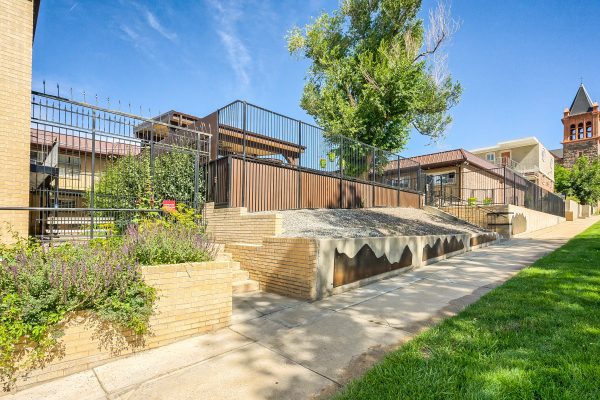
Review of the facility floor plans, observations, and interviews revealed three facility emergency exits that led to two outdoor courtyards. Each exit had an EXIT sign that pointed to the courtyard doors. Observation of the outdoor courtyards revealed one of the courtyards had three exits through gates secured with padlocks that required a key to unlock. Staff reported they did not know where to locate a key to release the padlocks on the gates. The second outdoor courtyard revealed one exit through a gate. This gate was secured with a C clamp (device to hold objects together), that required a tool to remove it. Staff reported they did not know how to remove the C clamp on the gate.
The facility's failure to have a plan to ensure staff were trained and had the necessary equipment to evacuate residents from the facility emergently created a situation of immediate jeopardy with widespread potential for serious harm.
Further review, observation, and interviews revealed the facility failed to take sufficient steps to prevent Resident #45's fall with injury and failed to develop and implement appropriate and effective fall interventions given the resident's known cognitive and functional limitations and behaviors.
Findings include:
IMMEDIATE JEOPARDY
I. Immediate Jeopardy
A. Findings of immediate jeopardy
Staff interviews revealed the facility failed to have a plan that ensured the safe evacuation of residents from the facility in an emergency.
Observations revealed the facility had three floors. Forty-six residents resided on the second floor and 84 residents resided on the third floor. Evacuation floor plans were posted on the wall on each floor. Directional arrows showed the path to follow in the event of evacuation.
Review of the facility evacuation plans, observations, and interviews revealed the second floor plan had two stairwell exits and two ramp exits with egress doors that led to a courtyard with an egress gate. The gate was equipped with a broken magnetic lock and secured with a C clamp that required a socket wrench for removal so that staff and residents could evacuate from the second floor.
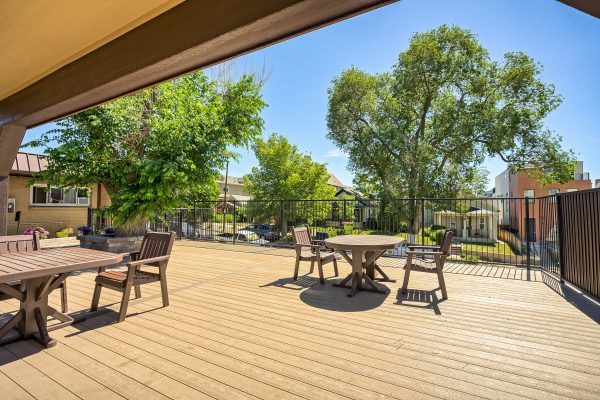
Review of the facility evacuation plans, observations, and interviews revealed the third floor plan had an emergency exit through the recreation area (patio) that opened into a gated courtyard. The main exit from the courtyard had a padlock on the gate. The secondary path to exit the courtyard had a padlock on the gate, which led to another small fenced-in area with a padlock on the gate. Another path showed direction out another door, which led to the gated patio.
The staff interviewed were unaware of any process to evacuate residents and reported they did not have access to keys to unlock the padlocks on the gates or knew how to remove the C clamp. The environmental services director (ESD) said he held the only key to all three padlocks and the C clamp required a socket wrench for removal. He said the C clamp was temporary but the padlocks on the gates were placed at the direction of the previous nursing home administrator (NHA) to keep outside people from getting in and keeping residents from leaving the community.
Staff demonstrated a lack of understanding and training with the plan for evacuation and observations revealed the presence of physical barriers (padlocks and C clamp) that prevented staff and residents from evacuating the premises. The facility's failure to have a plan that ensured the safe evacuation of residents created a hazardous environment with the potential for serious harm, affecting 130 facility residents.
B. Facility plan to remove the immediate jeopardy
On 5/15/24 at 2:18 p.m., NHA provided a plan to remove the immediate jeopardy situation. The removal plan read:
Plan of Correction:
-All padlocks have been removed on 5/14/24 at 2:00 p.m. C clamp was removed on 5/14/24 at 3:30 p.m. The consultants provided interdisciplinary team (IDT) members training and education on never placing padlocks on emergency egress gates.
-The ESD and consultants completed a walkthrough of the community on 5/15/24. Verified all locks were removed. Recommendations were made to change the layout of primary exit doors on 5/15/24. The ESD updated the emergency exit floor plan to reflect the necessary changes to the emergency exits on 5/15/24. Additionally, the ESD updated the emergency exit signage and removed emergency exit signs that will no longer be emergency exits on 5/15/24. All staff were re-educated on looking for emergency exit signs and new emergency exits on 5/15/24.
-The community is purchasing a new emergency preparedness (EP) manual. This manual will arrive 5/16/24. The consultants will provide education and training with the NHA/ESD on the content of the EP manual 5/15/24.
-All community staff (IDT members, licensed nursing, nursing assistants, dietary, housekeeping/maintenance) have been educated on the procedure to evacuate a resident in case of an emergency on 5/14/24 and 5/15/24 between 6:00 a.m. and 2:00 p.m. for first shift, second shift between 2:00 p.m. to 10:00 p.m. and between 10:00 p.m. to 6:00 a.m. for third shift. Specifically, staff received additional training and education on 5/15/24 on the following:
Evacuation Procedure -
1. Staff members have been trained to pull fire alarm in the event of an emergency that would require potential evacuation / call 911.
2. Designate staff member to complete and maintain resident tracking
3. Evacuation exit doors /community evacuation floor plan
4. Phases of evacuation including
Phase 1 ambulatory
Phase 2 wheelchair dependent
Phase 3 bed bound.
-The community ordered five evacuation sleds for emergency exits with stairs. The emergency sled will be stored in the stairwell. When the sleds arrive the ESD will provide education and training with staff on how to use the emergency sleds. In the meantime, the ESD trained community staff on the use of a mattress to transport wheelchair or bed bound residents.
-All community staff (IDT members, licensed nursing, nursing assistants, dietary, housekeeping/maintenance) have been educated on the location of the disaster preparedness binders and where to find them on 5/14/24 and 5/15/24 between 6:00 a.m. and 2:00 p.m. for first shift, second shift between 2:00 p.m. to 10:00 p.m. and between 10:00 p.m. to 6:00 a.m. for third shift. All departments have been provided the education with signatures.
-When the new emergency manual arrives the community will remove old manuals.
-The ESD /NHA confirms no other doors or exits have physical barriers. All secured /locked evacuation routes can be quickly opened to safely evacuate residents.
-Emergency doors will be checked daily by the ESD or designee for one week for functioning and accessibility. The ESD or designee will check the emergency door weekly for a month and report to the QAPI committee for review and recommendations. Recommendations made by the QAPI committee will be executed by the ESD or designee.
-Facility staff will continue to be trained on evacuation routes and procedures monthly during scheduled drills.
-The IDT team will complete visual door checks on emergency exits to ensure there are no barriers present daily. The checks will be documented on an audit sheet. These visual checks will be conducted daily for 30 days. Findings of the audits will be reported to the QAPI committee for review and recommendations. The Administrator will be
responsible to execute findings of the QAPI committee related to ongoing audits and frequency of the audits.
-Emergency Preparedness will be reviewed monthly in QAPI and Safety Committee monthly for three months and quarterly thereafter.
C. Removal of immediate jeopardy
The NHA was notified the immediate jeopardy was removed on 5/16/23 at 5:07 p.m. based on the facility's removal plan (see above). However, deficient practice remained at a G level, with a potential for more than minimal harm that is widespread.
II. Facility Policy
The facility's evacuation plan was received from the NHA on 5/14/24 at 1:30 p.m. It read in pertinent part:
-A Community specific Evacuation plan is developed and posted.
-Residents and staff are trained on evacuation routes and procedures on a monthly basis during scheduled drills.
-Routes for evacuation may change due to the location, therefore use the nearest exits, avoiding the fire, as directed by the individual in command. Evacuation is made to a fire safe area. The fire safe areas for the community are the parking lot across from the church which is located on the northeast corner of 30th and [NAME].
-The procedure for building evacuation is as follows.
a.
Residents in immediate danger shall be evacuated first.
b.
Residents closest to danger will be evacuated next (adjacent, across and above fire).
c.
Ambulatory residents shall then be assisted
d.
Residents who are unable to evacuate independently (due to cognitive, psychological, or physical reasons) shall be assisted next.
-Evacuation, if necessary, is conducted under the direction of the Executive Director prior to the arrival of the Fire Department.
III. Observations, interviews, and record review revealed the facility failed to have a plan to ensure staff were trained and had the necessary equipment to evacuate residents from the facility emergently.
A. Observations
Observations revealed the facility had three floors. Forty-six residents resided on the second floor and 84 residents resided on the third floor. Evacuation floor plans were posted on the wall on each floor. Directional arrows showed the path to follow in the event of evacuation. Three facility emergency exits led to two outdoor courtyards.
Observation of the second floor courtyard emergency exit on 5/14/24 at 1:45 p.m. revealed the gate which allowed exit from the courtyard in the event of an emergency was secured with a C clamp and two screws. There was an illuminated exit sign above the door leading to the courtyard and an emergency exit route map posted on the wall that directed people to exit through the courtyard.
Observation of the third floor courtyard emergency exit on 5/14/24 at 1:52 p.m. revealed a main gate to exit the courtyard, a side gate to exit the courtyard, and yet another gate to exit the side yard. Each gate was equipped with a padlock that prevented the gates from opening. There was an illuminated exit sign above the door leading to the courtyard and the side yard and emergency exit route maps posted on the wall which directed people to exit through the courtyard and the side yard.
B. Staff Interviews
Certified nurse aide (CNA) #7, who worked on the third floor, was interviewed on 5/14/24 at 2:03 p.m. She said she did not know the evacuation route in case of an emergency. She said usually she would get the residents who ambulate out first, probably down the stairs. She said if the stairway was blocked, she would go to the smoking patio but she did not know the protocol because that area was gated and locked.
CNA #2 and CNA #3 were interviewed together on 5/14/24 at 2:06 p.m. They said in an emergency, they would secure each resident in their room. They both denied any knowledge of how to exit the building in the event of an emergency that required evacuation. Neither CNA knew how to open the gate in the courtyard or the C clamp and would have to ask the nurse how to exit in an emergency.
RN #2, who worked on the third floor, was interviewed on 5/14/24 at 2:10 p.m. She said the evacuation process would depend on the emergency. She said if there was a fire, she would evacuate everyone out of the emergency doors, and avoid the elevator and gym. She said if there was a fire inside she would evacuate to the smoking patio; however, there were gates there that were currently locked. She said the only one who had a key was the environmental services director (ESD). RN #2 said if a resident was non-ambulatory and needed to evacuate down the stairs, she was not sure how this would occur.
The environmental service director (ESD) was interviewed on 5/14/24 at 2:15 p.m. The ESD said he held the only key to all three padlocks and the C clamp required a socket wrench for removal. He said the C clamp was temporary to prevent second floor residents from exiting the facility while he waited for the gate to be repaired, but the locks on the gates were placed at the direction of the previous nursing home administrator (NHA) to keep outside people from getting in and keeping residents from leaving the community.
The Maintenance assistant (MA) was interviewed on 5/14/24 at 2:20 p.m. He said he had worked in the facility for ten years, and in the maintenance department for four years. He said for an emergency, the alarm should be pulled and residents were to evacuate to the patio and through the gate and wait for help. The MA said when the fire alarm was pulled, the magnetic locks released, and for the padlock on the third floor gate, there was a key downstairs. The MA said he did not know the procedure for evacuating residents down the stairs.
Licensed Practical Nurse (LPN) # 3 was interviewed on 5/14/24 at 2:20 p.m. She said she had worked for the facility for about 14 years and said staff received education regarding fire safety/drills. She said she was unsure if employees were provided training on the floor about evacuations. LPN #3 said staff escorted residents to their rooms and closed the door when the fire alarm was activated. She said if an evacuation was necessary, she would wait until instructed to evacuate residents. LPN #3 said residents were evacuated using their wheelchair or a sled.
-LPN #3 demonstrated the fire escape door on the third floor opened after the alarm bar was depressed for 15 seconds. She had difficulty opening the door. She was unsure how long to depress the activation bar and it took 3 start-stop attempts to open the door. The alarm rang when she first depressed the bar and she was able to silence the alarm outside near the door frame with her key.
-LPN #3 said she had never participated in an evacuation drill. She said they would work together and staff would carry residents down the stairs. She was unaware if the facility had evacuation supplies such as carry chairs or sleds. LPN #3 said she was unaware which employee would account for residents and staff during an evacuation and thought it would be the NHA.
The NHA was interviewed on 5/14/24 at 2:30 p.m. The NHA said she was not aware of the C clamp on the second-floor courtyard gate or the padlocks on the three courtyard gates on the third floor. She was also unaware that the ESD reported he held the only key to the padlocks on the three gates in the third-floor courtyard. The NHA said in the event of an emergency that required evacuation of the building, she was confident staff would react appropriately and be able to determine how to safely evacuate residents from the building.
Housekeeper (HK) #1, who worked on the third floor, was interviewed on 5/14/24 at 2:35 p.m. She said if there was a fire, do not use the elevator but take the stairs. She said she was not sure how to help the residents down the stairway; if they could not walk; it would be a problem. HK #1 said she was not sure how to evacuate from the smoking patio on the third floor.
HK #2 was interviewed on 5/14/24 at 2:38 p.m. She said she had worked for the facility for two years. She said when the fire alarm was activated, her role was to help clear the common areas and hallways and see if residents were in a safe place. HK #2 said if an evacuation was necessary, they would use the buddy system. She said all the employees were strong and they would work as a team to carry residents down the fire exit stairs.
The director of nursing (DON) and the ESD were interviewed together on 5/14/24 at 3:40 p.m. The DON said staff received basic fire safety education through computer-based training modules. The DON provided a copy of the new employee skills competency for the nursing department and fire safety was not listed. He said the competencies were all clinical in nature.
-The ESD said that he was responsible for training staff in fire safety and held a fire drill one time a month. He said the computer tracking software system notified them where and when the monthly drill should be conducted. The ESD said after each drill he completed a fire drill evaluation form and the drill was reviewed during the next interdisciplinary meeting, usually the next day after the drill.
-The ESD provided a copy of the fire drill assessment form and the form included an evaluation of staff response up to the point an evaluation would be necessary. The documentation did not indicate evacuations were practiced or discussed.
-The DON said when a fire alarm was activated in the building, the fire panel displayed the location of the alarm in the building. He said the fire panels were located at each nursing station. He said if evacuation was necessary, the policy was to start with the room above the fire alarm as well as the room on either side. He said that if a larger evacuation was necessary, staff should assist residents behind the fire door where they would gain two to four hours of protection. The DON said the fire exit stairs were not the first choice for fire exits. The DON said the facility was constructed on a hill and each floor had a ground-level exit. The ground-level exit would accommodate those residents in wheelchairs or being moved in their beds. The DON said the door on the second floor that led to the courtyard was not a fire exit and said it was chained and locked. The DON said all the doors that have alarms attached open after depressing the activation bar. He said that staff would be available to open the door for those with lower cognition or physically unable to depress the activation bar.
CONCERN
(D)
📢 Someone Reported This
A family member, employee, or ombudsman was alarmed enough to file a formal complaint
Potential for Harm - no one hurt, but risky conditions existed
Resident Rights
(Tag F0550)
Could have caused harm · This affected 1 resident
**NOTE- TERMS IN BRACKETS HAVE BEEN EDITED TO PROTECT CONFIDENTIALITY** Based on observations and interviews the facility failed to ensure residents on one of three units had the right to a dignified ...
Read full inspector narrative →
**NOTE- TERMS IN BRACKETS HAVE BEEN EDITED TO PROTECT CONFIDENTIALITY** Based on observations and interviews the facility failed to ensure residents on one of three units had the right to a dignified existence.
Specifically, the facility failed to answer call lights in a timely manner on the second floor.
Findings include:
I. Facility policy
The Call light policy, undated, was provided by the nursing home administrator on 5/20/24 at 3:16 p.m. It read in pertinent part, Purpose: To respond promptly to resident's call for assistance. All community personnel must be aware of call lights at all times. Answer all call lights in a timely manner. In some instances, it may be necessary to leave the call light illuminated/activated in order to alert other staff or care team. Never make the resident feel you are too busy to give assistance.
II. Resident group interview
The resident group interview was conducted on 5/15/24 at 11:00 a.m. with seven residents (#76, #75, #115, #68, #7, #77 and #112) who were members of the resident council. The residents were identified as interviewable by the facility and assessments. The residents said they often had to wait over an hour for their call lights to be answered.
Resident #68 reported she recently had to wait one hour and 45 minutes for her call light to be answered. She said it made her feel like no one cared about her.
III. Additional resident interview
Resident #8 was interviewed on 5/16/24 at 10:15 a.m. Resident #8 said she did not think her call light worked. She said when she activated the light it usually took an hour or more before staff came to assist her. Resident #8 said it made her feel like no one cared when she had to wait so long for assistance.
-The resident's call light was observed to be in working order on multiple occasions during the survey.
IV. Observations
During a continuous observation on 5/14/24, beginning at 11:54 a.m. and ending at 12:18 p.m., the following was observed:
At 11:54 a.m. two call lights on the second floor were blinking.
At 12:18 p.m. an unidentified staff member came up from the first floor to check on the first light. At the time, there were two certified nurse aides (CNA) in the dining area serving beverages, a nurse at the medication cart near the nurses' station and a nurse sitting at the nurses' station. There was not an audible tone or call light panel alerting staff that a call light had been activated.
During a continuous observation on 5/15/24, beginning at 9:37 a.m. and ending at 10:15 a.m., the following was observed:
At 9:37 a.m. the call light for room [ROOM NUMBER] was blinking.
At 9:49 a.m., Assistant director of nursing (ADON) #2 walked past room [ROOM NUMBER], entered her office and did not check on the resident.
At 9:56 a.m. ADON #2 left her office, walked past room [ROOM NUMBER] again and did not check on the resident.
At 10:03 a.m. ADON #2 passed room [ROOM NUMBER] to return to her office and did not check on the resident.
At 10:15 a.m. an unidentified CNA entered room [ROOM NUMBER] and turned off the call light. There was not an audible tone or call light panel alerting staff that a call light had been activated.
During a continuous observation on 5/19/24, beginning at 5:13 p.m. and ending at 5:29 p.m., the following was observed:
At 5:13 p.m. call lights were activated for rooms #200, #201 and #206. At the time, three employees were observed sitting behind the desk at the nurses' station. One nurse was using her personal cell phone.
At 5:29 p.m. the lights remained unanswered for all three rooms.
V. Staff interviews
CNA #8 was interviewed on 5/16/24 at 9:30 a.m. on the Juniper unit. CNA #8 said the call lights beeped at the nurses'station and listed the room number and bed number on the tablet. She said there was also a light above the resident's door to indicate the resident had activated the call light.
-However, observations on the Juniper unit on 5/17/23 revealed that the sound on the tablet was so low at the nurses' station that it could not be heard.
The nursing home administrator (NHA) was interviewed on 5/22/24 at 6:53 p.m. The NHA said all staff members were expected to answer call lights. She said there was an audible tone and a tablet behind the nurses' stations that alerted staff to call light activation. The NHA said staff were expected to respond to call lights in less than seven minutes.
-The NHA was not aware the audible tone had been turned down and was not audible unless standing within one foot of the tablet on the wall.
CONCERN
(D)
📢 Someone Reported This
A family member, employee, or ombudsman was alarmed enough to file a formal complaint
Potential for Harm - no one hurt, but risky conditions existed
Grievances
(Tag F0585)
Could have caused harm · This affected 1 resident
**NOTE- TERMS IN BRACKETS HAVE BEEN EDITED TO PROTECT CONFIDENTIALITY** Based on interviews and record review, the facility failed to ensure one (#181) of three residents out of 56 sample residents we...
Read full inspector narrative →
**NOTE- TERMS IN BRACKETS HAVE BEEN EDITED TO PROTECT CONFIDENTIALITY** Based on interviews and record review, the facility failed to ensure one (#181) of three residents out of 56 sample residents were provided prompt efforts by the facility to resolve grievances.
Specifically, the facility failed to provide a satisfactory resolution to Resident #181's grievance, which the resident representative had communicated to staff on multiple occasions, regarding the resident's missing glasses.
Findings include:
I. Facility policy and procedure
The Grievance policy and procedure, undated, was provided by the nursing home administrator (NHA) on 3/14/24 at 1:35 p.m. It read in pertinent part, When a grievance exists, residents, family members, and/or resident advocates may submit the grievance to the administrator or designee. Within two business days after the submission of a grievance, a status report will be provided by the director of the department to who the grievance was directed, to the individual who filed the grievance.
The resident or person acting on behalf of the resident will be informed of the findings of the investigation within seven working days of the filing date and have the right to obtain a written decision regarding the grievance. A copy of the initial grievance and the associative action will be filed in the social services office for no less than three years.
II. Resident #181
A. Resident status
Resident #181, age [AGE], was admitted on [DATE], readmitted [DATE] and discharged [DATE]. According to the November 2023 computerized physician orders (CPO), diagnoses included dementia, Parkinson's disease (brain disorder causing involuntary movements), sepsis (infection of the blood), post-traumatic stress disorder (PTSD) and depressive episodes.
The 11/17/23 discharge minimum data set (MDS) assessment revealed the staff assessment for mental status was conducted and documented the resident had short-term memory problems and was moderately impaired for daily decision making.
He was dependent on staff assistance with shower/bathing, upper body dressing, personal hygiene, putting on/taking off footwear, rolling left/right, transfering from sitting to lying, transfering from sitting to standing and transferring from bed to chair.
The assessment documented the resident had no behavioral symptoms present and no rejection of care.
B. Resident representative interview
The resident representative was interviewed on 5/20/24 at 3:49 p.m. She said after the resident was discharged , the facility mailed Resident #181 plastic reader glasses which were not his. The resident's representative said she had already told the facility those glasses were not his. She said in the box that was shipped from the facility she had received items that went missing during Resident #181's stay at the facility. She said she continued to miss Resident #181's blue prescription glasses which the facility did not replace. She said she did not receive any other boxes from the facility. The resident representative said she filed a written grievance on 11/30/23 and received an email from the facility on 12/13/24 addressing the other missing items but not the blue prescription glasses. The resident representative said the glasses were listed on the intake inventory sheet on admissions.
C. Record review
The admissions inventory list dated 6/20/23 (date of admission 6/16/23) revealed the resident was admitted with glasses.
-The inventory sheet did not document the color of the resident's glasses.
The 11/30/23 grievance form, completed by the resident's representative, was provided by the NHA on 5/16/24 at 1:35 p.m. It revealed the following:
The description of the grievance section documented the resident and his representative needed to be reimbursed for several items including blue prescription eyeglasses. Receipts and photos were included for replacement.
The section for facility follow-up was not filled out.
The section for the resolution of the grievance section was not filled out.
There was additional information documented on the grievance form that indicated on 12/5/23 a few items were located and an email was attached to the form.
The NHA signed the grievance form indicating it was resolved.
-However, the form was not dated when the NHA approved the resolution .
-The grievance form failed to address the resident's missing blue prescription glasses.
Invoice documents for a vision and eye clinic were provided to the facility by the resident's representative upon filing the grievance.
The first document, dated 11/3/22, was for the purchase of a pair of blue eyeglasses (which the resident had upon admission to the facility on 6/16/23). The invoice amount was $424.20.
The second document, dated 11/27/23, was for the purchase of a pair of blue eyeglasses to replace the previous pair. The invoice amount was $424.20.
The 12/13/23 email, sent at 11:00 a.m., from the facility to the resident's representative documented the facility recovered several of Resident #181's missing items, which included one cream colored slipper with fur, one medium gray zip-up jacket, one hearing aid with batteries and filters in a clear box, one bag of hearing aid cleaning tools, one gray zip-up case and one clear box.
A picture of the box contents that was shipped to the resident's representative was attached to the grievance form.
-However the email did not address the missing blue prescription glasses and was not in the picture of the box shipped by the facility.
A review of the Resident #181's electronic medical record (EMR) revealed the following progress notes:
The 10/6/2023 social services note documented at 10:45 a.m. documented a telephone call was made to the resident's representative to inform her that Resident #181 had his glasses.
The 11/15 23 (late entry) physician progress note documented the resident had glasses and dentures.
The 11/20/23 wellness progress note documented the nurse spoke with the resident's representative to get an update on Resident #181 and to ensure that the resident's representative was doing okay. The resident's representative stated Resident #181's glasses needed to be found. The writer's contact information was given to the resident's representative in case the resident's representative needed anything.
-Resident #181 was discharged to the hospital on [DATE].
The 11/23/23 progress note documented the resident's representative came to the facility to pick up some of Resident #181's belongings, which included his dentures, hearing aids and glasses that were found with the residents' possessions. Upon receiving the glasses in question, the resident's representative told the concierge that the glasses were not the resident's glasses and threw them at the concierge. The resident's representative then asked if she would be able to grab some clothes and other items to take to the resident in the hospital. The resident's representative took the residents' hearing aids, dentures, cowboy hat and a pack of gloves with her upon leaving the facility.
The NHA provided an email communication between the facility and the resident's representative on 5/20/24 at 4:39 p.m.
The resident's representative emailed the facility on 1/26/24 at 10:36 a.m. The email to the NHA read the resident's representative had not heard from the facility in regards to Resident #181's missing blue prescription glasses nor had she received reimbursement for their replacement. The resident's representative said she provided receipts and photos to the facility when the Veterans administration liaison met there with her about two months ago (November 2023). The resident's representative said she would like to resolve the issue.
The facility responded to the resident's representative email on 1/26/24 at 11:54 a.m. The facility attached the personal belongings agreement signed by the resident's representative upon Resident #181's admission outlining the policy regarding lost, stolen, damaged items.
The facility informed the representative they were not able to find the glasses on any of Resident #181's inventory sheets. As a result of the facility's investigation, the facility was not approved to refund the amount for the glasses.
-However, the admissions inventory list dated 6/20/23 (date of admission 6/16/23) revealed the resident was admitted with glasses, but the color of the glasses was not specified on the inventory list.
A review of Resident #181's electronic medical record (EMR) on 5/20/24 at 4:27 p.m. revealed the resident's glasses were an auxiliary device (supplementary). The profile picture in the resident's EMR revealed the resident was wearing glasses.
III. Staff interview
The NHA was interviewed on 5/20/24 at 3:07 p.m. The NHA said the facility attempted to return the glasses to the resident's representative but she threw the glasses at the concierge. The NHA said all of the other missing items were shipped to the family including the glasses.
-However the plastic reading glasses were not the blue prescription glasses that the resident's representative was requesting.
The NHA was interviewed again on 5/20/24 at 4:36 p.m. The NHA reviewed the written grievance. The NHA said she would look for evidence that the blue prescription glasses were sent to the resident. The NHA said the facility had mailed a second box to the resident however they did not take a picture of the second box sent to the resident.
-The NHA did not provide evidence that the facility found, replaced or reimbursed the resident's representative for the missing blue prescription glasses.
The social services director (SSD) was interviewed on 5/23/24 at 10:30 a.m. The SSD said
that once a grievance was filed the turnaround time was about two days to proceed with a response/resolution. She said items listed on an inventory list that were not returned were reimbursed by the facility.
CONCERN
(D)
📢 Someone Reported This
A family member, employee, or ombudsman was alarmed enough to file a formal complaint
Potential for Harm - no one hurt, but risky conditions existed
Investigate Abuse
(Tag F0610)
Could have caused harm · This affected 1 resident
**NOTE- TERMS IN BRACKETS HAVE BEEN EDITED TO PROTECT CONFIDENTIALITY** Based on record review and interviews, the facility failed to thoroughly investigate an allegation of neglect involving one (#8)...
Read full inspector narrative →
**NOTE- TERMS IN BRACKETS HAVE BEEN EDITED TO PROTECT CONFIDENTIALITY** Based on record review and interviews, the facility failed to thoroughly investigate an allegation of neglect involving one (#8) of two residents reviewed for neglect out of 56 sample residents.
Specifically, the facility failed to conduct a thorough investigation to determine the cause of reddened skin and blisters found on Resident #8's left and right thigh.
Findings include:
I. Facility policy
The Abuse and Neglect policy, undated, was provided by the nursing home administrator (NHA) on 5/13/24 at 2:17 p.m. It documented in pertinent part,
This policy is intended to provide guidance on investigating and reporting suspected resident rights violations and abuse, neglect, and misappropriation of resident property.
This policy will be accomplished through the following:
a. Pre-Screening of all facility associates and agency supplemental personnel.
b. Training and documentation of training for all associates and agency supplemental personnel
through orientation and on-going sessions.
c. Prevention through training of all residents
d. Identification of suspected cases of abuse
e. Investigation of all incidents and allegations by qualified and trained individuals
f. Protection of residents during investigations.
g. Reporting of abuse as required by law/regulations.
To assist our community's associate members in recognizing abuse, the following definitions of
abuse are provided.
a. Abuse is defined as the willful infliction of injury, unreasonable confinement, intimidation, or
punishment with resulting physical harm or pain or mental anguish.
b. Neglect is defined as failure to provide goods and services necessary to avoid physical harm, mental anguish or mental illness.
An immediate investigation will be conducted.
a. Wellness Director or designee will complete the investigative form. The physician and Executive Director will review and sign the form.
b. The following action will be taken regarding the employee involved.
1. The associate will be suspended without pay pending a full investigation
2. The associate will have thirty days to request a hearing to present evidence, either in person,
in writing, or through witness to refute the allegation.
3. The associate may have an attorney present at the hearing.
4. In the event, it is determined that the associate did not neglect, abuse, and/or misappropriate
resident property, they will be reinstated and paid for all days lost from work.
c. A final report will be submitted to the Administrator within five working days of occurrence.
II. Resident #8
A. Resident status
Resident #8, under the age of 65, was admitted on [DATE] and readmitted on [DATE]. According to the May 2024 computerized physicians orders (CPO), diagnoses included personality disorder, paraplegia, systemic sclerosis, type 2 diabetes mellitus and anxiety disorder.
The 4/24/24 minimum data set (MDS) assessment revealed the resident was cognitively intact with a brief interview for mental status (BIMS) score of 15 out of 15. She had no behaviors and did not reject care.
The resident was dependent on staff for toileting, dressing, personal hygiene and bathing.
B. Resident interview
Resident #8 was interviewed on 5/15/24 at 2:15 p.m. Resident #8 said she was recently readmitted to the facility in the late afternoon on 12/27/23. She said she was given a shower in the morning on 12/28/23 and when she went to bed that night staff found red skin and blisters on both of her thighs. Resident #8 said she requested to go to the hospital again for treatment but the staff refused to call an ambulance so she called 911 from her personal cell phone. She said she did not have much feeling in her legs so she did not know the water in the shower was too hot for her fragile skin.
C. Record review
A nursing note dated 12/27/23 at 5:08 p.m. documented Resident #8 returned from the hospital at 4:15 p.m. accompanied by paramedics. It documented the resident was stable and cooperative and there were no new skin issues.
A skin integrity evaluation dated 12/27/23 at 4:38 p.m. revealed an existing wound on the residents right buttock and left knee that was improved. There were not any other wounds or skin integrity issues documented.
A nursing note dated 12/28/23 at 10:59 p.m. revealed that certified nurse aides (CNA) had provided care to the resident at 8:30 p.m. and discovered blisters between the resident's inner right and left thigh. It documented that the skin was open and not intact with the left wound measuring 15 centimeters (cm) long and 13 cm wide and the right wound measuring 6.5 cm long and 4 cm wide. The note documented the supervisor was informed and instructed the nurse to clean the wounds and apply abdominal pads. The note revealed the resident informed the nurse she wanted to go to the hospital. The note also documented that the resident called emergency medical services (EMS) from her cell phone without informing staff and was picked up by EMS at 11:06 p.m.
An injury/incident report was dated 12/28/24 at 8:40 p.m. and was completed by assistant director of nursing (ADON) #2. The report documented the resident had blisters on her left and right inner thighs, the resident was alert and oriented to person, place, time and situation and there were no witnesses found.
The Discharge summary, dated [DATE] from a local hospital, documented the resident had 4% total body surface area (TBSA) partial thickness burns (second degree burns) sustained when she was in the shower at the resident's facility on 12/28/23. She was transferred to a burn center for autografting (skin transfer from one part of the body to another) of the burns.
A nursing note dated 1/15/24 at 5:34 p.m. documented the resident returned to the facility from the hospital. It revealed the resident had discoloration to both of her thighs due to healing partial thickness second degree burns with autograft.
D. Failure to investigate the 2nd degree burns
The facility failed to complete a thorough investigation as to how the resident had sustained 2nd degree burns to both of her left and right thigh. The facility failed to interview the CNA who performed the shower on 12/28/23, failed to show that water temperatures in the the showers were monitored on a regular basis and failed to ensure other residents and staff were interviewed in regards to the water temperatures in the shower and the burns to Resident #8's thighs.
-The facility investigation was requested. However, the DON said they had only done a soft investigation of the allegation (see interviews below).
The DON provided a document he referred to as his soft investigation. It read in pertinent part,
Soft file Resident #8 investigation
-CNA reported to nurse blisters on legs on 12/28/23
-Resident sent out to hospital 12/28/23
-Wound nurse notified to have wound doctor assess on next rounds 12/29/23
-Documentation from hospital identified the source of blisters as minor burns.
-On 12/29/23 notified adult protective services (APS) was involved and investigating source of burns
-Facility asked to temperature check water in Spruce Spa on 12/29/23
-Shared it was 100 degrees consistent with two previous readings in December
-Suspicion of self-inflicted origin related to previous periods when wound was improving and developed infection with no changes in wound care.
-Facility notified guardian we would not take her back due to open APS case.
-Resident stated at hospital to police department it was not intentional and did not want to hold individual at fault. -Guardians and APS determined facility is the best place for Resident #8.
-Resident #8 returned on 1/15/24.
An email dated 1/4/24 at 9:23 a.m., from the social worker at the burn center, documented the guardians for Resident #8 were trying to brainstorm what could have caused the burns to the resident's thighs. It revealed the guardians had several theories but did not specify any interviews conducted or witness statements.
-The facility did not investigate further by interviewing Resident #8 once she returned to the facility.
D. Interviews
CNA #9 was interviewed on 5/15/24 at 3:40 p.m . CNA #9 said she had worked at the facility for three months and had showered residents. She said she checked the temperature with her hand and then asked the residents if the water felt okay. She said she did not use a thermometer to check the temperature of the water and thought she had learned the technique of checking the temperature with her hand before applying it to a resident in CNA school. CNA #9 said if a resident had delicate skin, she would check with the nurse before showering the resident.
The DON was interviewed on 5/20/24 at 9:25 a.m. The DON said he did an internal soft investigation and had notes on what he discovered regarding Resident #8's wounds. He said the facility did not have a formal form that was used for investigations. The DON said he thought APS took over the investigation so he did not continue investigating further and just let it go. He said the water in the shower was temperature checked and it was fine.
The environmental service director (ESD) was interviewed on 5/20/24 at 3:39 p.m. The ESD said he checked the water temperature in the facility showers weekly and expected the temperature to read a minimum of 100 degrees fahrenheit. He said he was aware of an incident where a resident reported being burned in the shower but he was not sure what the facility had done when the resident reported that or if it had been determined to be true. The ESD said,to his knowledge, no residents had ever gotten burned in the facility showers.
CONCERN
(D)
Potential for Harm - no one hurt, but risky conditions existed
Deficiency F0699
(Tag F0699)
Could have caused harm · This affected 1 resident
**NOTE- TERMS IN BRACKETS HAVE BEEN EDITED TO PROTECT CONFIDENTIALITY** II. Resident #126
A. Resident status
Resident #126, over the age of 65, was admitted on [DATE]. According to the May 2024 CPO, d...
Read full inspector narrative →
**NOTE- TERMS IN BRACKETS HAVE BEEN EDITED TO PROTECT CONFIDENTIALITY** II. Resident #126
A. Resident status
Resident #126, over the age of 65, was admitted on [DATE]. According to the May 2024 CPO, diagnoses included bipolar disorder, dementia, post-traumatic stress disorder (PTSD) and anxiety disorder.
The 4/4/24 MDS assessment revealed the resident had moderate cognitive impairment with a BIMS score of nine out of 15. He required supervision and assistance with activities of daily living (ADLs).
The assessment documented the resident had an active diagnosis of PTSD.
B. Record review
-Review of Resident #126's comprehensive care plan, initiated 4/3/24, revealed there was not a care plan focus related to Resident #126's PTSD to include person-centered individualized interventions, personalized triggers, or personalized signs and symptoms.
-A trauma screen was not found in Resident #126's electronic medical record (EMR).
The referral for secured unit placement from the Veterans Administration (VA) documented the resident had a diagnosis of PTSD.
C. Staff interviews
Licensed practical nurse (LPN) #4 was interviewed on 5/20/24 at 3:28 p.m. LPN #4 said he was the nurse for Resident #126 and it was his first day working at the facility. He was unable to locate a care plan for Resident #126 that directed care for his PTSD.
The DON was interviewed on 5/21/24 at 11:06 a.m. The DON said a Trauma-informed Care assessment should have been completed on admission because the facility and its staff needed to know how to provide care for Resident #126. The DON said the residents' care plan should include goals and interventions for each resident with PTSD to provide care staff the ability to provide the best care possible. He said the assistant director of nursing (ADON) was primarily responsible for completing the care plans with assistance from the social services director (SSD).
Based on record review and interviews, the facility failed to ensure that residents who were trauma survivors received culturally competent, trauma-informed care in accordance with professional standards of practice and accounting for residents' experiences and preferences in order to eliminate or mitigate triggers that may cause re-traumatization of the resident for two (#118 and #126) of seven residents out of 56 sample residents.
Specifically, the facility failed to ensure trauma assessments were conducted to determine the residents' history of post-traumatic stress disorder (PTSD) and/or trauma, identify triggers and develop person centered interventions within the comprehensive care plan for Resident #118 and #126.
Findings include:
I. Resident #118
A. Resident status
Resident #118, age [AGE], was admitted on [DATE]. According to the May 2024 computerized physicians orders (CPO), diagnoses included post traumatic stress disorder (PTSD), Alzheimer's disease and bipolar disorder.
According to the 3/24/24 minimum data set (MDS) assessment, the resident had severe cognitive impairment with a brief interview for mental status (BIMS) score of zero out of 15. He was independent with eating, toileting, bed mobility and transferring. He did not use any mobility devices.
The assessment documented the resident had an active diagnosis of PTSD.
B. Record review
The Level II preadmission screening and resident review (PASRR), with an evaluation date of 8/9/23, revealed Resident #118 had worsening symptoms of depression, paranoia, suicidal ideations and was experiencing anxiety related to being locked up. The PASRR Level II revealed Resident #118 declined to discuss his psychiatric conditions or medications but there was a known diagnosis of PTSD without further information on origin.
The PASRR Level II revealed Resident #118 was fearful about his safety and being placed in long term care as he was distrustful of others.
The suicidal ideation care plan, initiated on 2/19/24, revealed Resident #118 had expressed not wanting to live and accomplishing this by not eating. It indicated Resident #118 would not express suicidal ideations through the next review date. Pertinent interventions included encouraging the resident to eat and participate in meal time and monitoring the resident's weights.
The 3/15/24 progress note indicated Resident #118 had refused breakfast, lunch, medications and beverages and was behavioral and agitated.
The 4/27/24 progress note indicated Resident #118 was observed by staff, standing on the patio, talking to himself about going to church and the number six, he was not wearing a jacket, shoes or socks. The progress note revealed when nursing staff attempted to escort Resident #118 back inside, Resident #118 grabbed and held onto the nurse's forearm for a minute's time while telling the nurse to go away from him. The progress note revealed Resident #118 was calling the nurse a liar and accusing the nurse of destroying his things and Resident #118 stated he wished to be dead. The progress note revealed the nurse asked Resident #118 to release his grasp from their forearm and the resident would not. The nurse had to ultimately pry Resident #118's hand from their forearm. The progress note revealed nursing staff was able to administer a scheduled dose of Seroquel (medication used for certain mental/mood disorders), however, Resident #118 was sent to the hospital after banging on the walls and windows of the unit.
The 5/5/24 progress note indicated Resident #118 began yelling at staff and threatening to kill them and was having a conversation with a known relative that could be heard only by the resident. The progress note revealed Resident #118 worked better with male staff members when he became paranoid and angry.
-The facility was unable to provide a screening assessment specific to trauma or care plan related to Resident #118's PTSD to include personalized triggers, person-centered individualized interventions or personalized signs and symptoms of retraumatization.
C. Staff interviews
The director of nursing (DON) was interviewed on 5/21/24 at 11:30 a.m. The DON said the facility was not currently conducting PTSD assessments or initiating care plans for residents with a known diagnosis of PTSD. The DON said doing so would be an effective way to identify and communicate person centered events of PTSD and reduce retraumatization.
CONCERN
(D)
Potential for Harm - no one hurt, but risky conditions existed
Deficiency F0761
(Tag F0761)
Could have caused harm · This affected 1 resident
Based on observations and interviews, the facility failed to ensure drugs and biologicals used in the facility were stored in accordance with currently accepted professional principles for one out of ...
Read full inspector narrative →
Based on observations and interviews, the facility failed to ensure drugs and biologicals used in the facility were stored in accordance with currently accepted professional principles for one out of five medication carts in the facility.
Specifically, the facility failed to ensure medication carts were locked when unattended and not within the line of sight of the nursing staff.
Findings include:
I. Facility policy
The Medication Storage policy, undated, was received from the director of nursing (DON) on 5/21/24 at 1:08 p.m. It read in pertinent part,
Purpose: To provide guidelines for proper storage of medications within the community.
Procedure: Medications will be stored in a locked cart accessible to authorized personnel.
II. Observations and interviews
On 5/19/24 at 5:15 p.m. the medication cart on the east side of the second floor was unlocked and positioned in the dining room, next to the nurse's desk. Licensed practical nurse (LPN) #1 was seated at the nurse's desk, facing away from the medication cart. There were several residents walking around the nurse's desk and the medication cart.
LPN #1 was interviewed at 5:18 p.m. at the unlocked medication cart. LPN #1 said the facility policy was to have the medication cart locked at all times to prevent unauthorized access to items in the medication cart. LPN #1 said the medication cart was in his line of sight when he sat at the nurse's desk. LPN #1 said when he looked at his computer screen he was unable to have a full line of sight of all the items in the medication cart.
During a continuous observation on 5/21/24 beginning at 10:59 a.m. and ending at 11:03 a.m. the following was observed:
At 10:59 a.m. the medication cart on the east side of the second floor was unlocked and unattended. There were several residents in the dining room and an unidentified certified nurse aide (CNA) was sitting on the west side of the nurse's desk looking at her cell phone.
At 11:03 a.m. LPN#1 returned to the medication cart LPN #1 was interviewed immediately and said he should not have left the cart unlocked because the resident population was high risk and they could potentially open the medication cart. LPN #1 said he was away from the medication cart for just a few minutes because he was helping a resident in the shower room.
III. DON interview
The DON was interviewed on 5/20/24 at 8:20 a.m. The DON said the facility required all of the medication carts to be locked when not attended by the licensed nurse. He said there were several residents on the second floor that had behavioral health concerns and the medication cart should not be left unlocked and unattended. The DON said he would educate the nursing staff immediately to ensure they locked the medication carts when the carts were not within their line of sight.
The DON was interviewed again on 5/21/24 at 11:06 a.m. The DON said he completed education with nursing staff working on 5/20/24 and reminded them the facility policy was to lock the medication carts when they were not attended. The DON said he had provided additional education to LPN #1 on 5/21/24 to lock the medication cart when it was unattended. He said he would follow- up with additional education for all nursing staff regarding locking medication carts.
CONCERN
(E)
📢 Someone Reported This
A family member, employee, or ombudsman was alarmed enough to file a formal complaint
Potential for Harm - no one hurt, but risky conditions existed
Free from Abuse/Neglect
(Tag F0600)
Could have caused harm · This affected multiple residents
**NOTE- TERMS IN BRACKETS HAVE BEEN EDITED TO PROTECT CONFIDENTIALITY** Based on record review and interviews, the facility failed to ensure four (#118, #32, #49 and #90) of four residents reviewed fo...
Read full inspector narrative →
**NOTE- TERMS IN BRACKETS HAVE BEEN EDITED TO PROTECT CONFIDENTIALITY** Based on record review and interviews, the facility failed to ensure four (#118, #32, #49 and #90) of four residents reviewed for abuse out of 56 sample residents were kept free from abuse.
Specifically, the facility failed to:
-Implement person-centered interventions to prevent a resident to resident altercation between Resident #118 and Resident #32; and,
-Implement person-centered interventions to prevent a resident to resident altercation between Resident #90 and Resident #49.
Findings include:
I. Facility policy and procedure
The Abuse Policy, undated, was provided by the nursing home administrator (NHA) on 5/13/24 at 2:22 p.m. It read in pertinent part:
This policy is intended to provide guidance on investigating and reporting suspected resident rights violations and abuse, neglect, and misappropriation of resident property.
To assist our community's associate members in recognizing abuse, the following definitions of abuse are provided. Abuse is defined as the willful infliction of injury, unreasonable confinement, intimidation, or punishment with resulting physical harm or pain or mental anguish. Neglect is defined as failure to provide goods and services necessary to avoid physical harm, mental anguish or mental illness. The facility staff and agency supplemental personnel will be trained regarding abuse prevention, reporting and investigation upon orientation and annually. Strategies for dealing with difficult and/or aggressive behavior.
Prevention of abuse, neglect or misappropriation of property will be implemented through: ongoing associate, resident and family training monthly safety committee meetings ongoing rounds and quarterly staff meetings that focus on possible root causes.
An immediate investigation will be conducted. Wellness Director or designee will complete the investigative form. The physician and Executive Director will review and sign the form. The resident will be provided with an interview to determine how and what situations provide comfort and a feeling of well-being. The Administrator will analyze all occurrences to determine if changes are needed to policies and procedures to prevent further occurrences.
The Managing Challenging Behaviors policy and procedure, undated, was provided by the NHA on 5/13/24 at 2:22 p.m. It read in pertinent part:
Policy: Staff employee therapeutic approach with residents that will minimize the occurrence of challenging behaviors and maximize successful management of such behaviors should they occur.
Purpose: To foster the creation of a harmonious community and to minimize behavioral distress for each resident.
Procedure: Staff may assist in preventing challenging behaviors by knowing and appreciating the background, values, preferences and abilities of the resident and engaging the resident in activities based on needs.
II. Resident to resident physical abuse between Resident #118 and Resident #32 on 5/8/24.
The abuse investigation, dated 5/8/24, revealed Resident #118 entered the room of Resident #32 and laid in her bed. Resident #32 asked Resident #118 to leave her room. Resident #118 allegedly responded by pushing Resident #32 and Resident #32 responded by pushing Resident #118 back. Staff responded and assisted Resident #118 to leave the room. The abuse investigation indicated Resident #32 was interviewed and said Resident #118 was in her bed and she wanted him out of her room. Resident #118 was non interviewable due to his cognitive status. The abuse investigation indicated both residents were placed on 15 minute checks, the police were notified, along with the family/guardian and the physician. The abuse investigation indicated neither Resident #32 or Resident #118 had injuries.
The abuse investigation revealed Resident #118's and Resident #32's care plans were updated regarding the incident. Resident #32 was seen by an existing community mental health provider and Resident #118 was referred to a community mental health provider.
The abuse investigation indicated other staff and residents were interviewed and expressed no concern.
-A request for the other staff and resident interviews was made on 5/13/24, however the facility did not provide them by the survey exit on 5/23/24.
-A review of Resident #118's and Resident #32's comprehensive care plans did not reveal updated person-centered interventions to prevent future resident to resident altercations following the incident on 5/8/24.
III. Resident #118
A. Resident status
Resident #118, age [AGE], was admitted on [DATE]. According to the May 2024 computerized physicians orders (CPO), diagnoses included Alzheimer's disease, bipolar disorder (mental illness that causes unusual shifts in a person's mood, energy, activity levels, and concentration) and post traumatic stress disorder (PTSD).
According to the 3/24/24 minimum data set (MDS) assessment, the resident had severe cognitive impairment with a brief interview for mental status (BIMS) score of zero out of 15. He was independent with eating, toileting, bed mobility and transferring. He did not use any mobility devices.
B. Record review
The maladaptive behavior care plan, initiated on 12/1/23, indicated Resident #118 had maladaptive behaviors secondary to his dementia and occasionally became verbally aggressive and swatted at caregivers during care. The pertinent interventions included administering medications and monitoring for side effects, anticipating and meeting Resident #118's needs, providing an opportunity for positive interactions and attention and stopping to talk with the resident while passing by.
-A review of the resident's comprehensive care plan revealed the facility did not implement an intervention after Resident #118 was involved in a resident to resident altercation.
A review of Resident #118's electronic medical record (EMR) revealed the resident had a history of behaviors directed towards staff and residents.
The 5/9/24 progress note indicated Resident #118 wandered into the room of Resident #32's room and laid in her bed. When Resident #32 asked Resident #118 to get out of her bed, Resident #118 pushed Resident #32 in the stomach which resulted in the two residents engaging in a physical altercation that staff had to break up. (see resident to resident physical abuse above).
IV. Resident #32
A. Resident status
Resident #32, age less than 65, was admitted on [DATE]. According to the May 2024 CPO, diagnoses included schizoaffective disorder (mental health condition characterized by symptoms of schizophrenia, such as hallucinations or delusions, and symptoms of a mood disorder, such as mania and depression), personality disorder, anxiety and insomnia.
According to the 4/29/24 MDS assessment, the resident was cognitively intact with a BIMS score of 15 out of 15. She was independent with all activities of daily living (ADL).
B. Record review
The behavior care plan, initiated on 11/15/13 and revised on 11/2/22, revealed Resident #32 had a history of hitting a staff member at a previous facility, experienced auditory and visual hallucinations and had a history of yelling and crying. It indicated Resident #32 would have a reduction and stabilization of behaviors and symptoms that necessitated facility placement and maintain psychiatric stabilization. The pertinent interventions included Resident #32 being supported by her community mental health case manager.
-A review of the resident's comprehensive care plan revealed the facility did not implement an intervention after Resident #32 was involved in a resident to resident altercation.
V. Incident of resident to resident altercation between Resident #49 and Resident #90 on 12/30/23
The facility reported event, dated 12/30/23, revealed Resident #49 was walking through the communal dining area and was gesturing to Resident #90 with his middle finger. Resident #90 responded by slapping resident Resident #49 on the left cheek. The facility responded by separating the two residents from each other and both were assessed for injuries. The facility report noted Resident #49 had a reddened area on the left cheek. The report indicated both residents were put on 15 minute checks and the police were notified. The facility report indicated Resident #90 was unable to participate in an interview related to cognition and Resident #49 stated, I'm just mad when interviewed. The facility report indicated other staff and residents were interviewed and there were no other concerns expressed. Resident #49 would be referred to a community mental health provider.
The abuse investigation indicated other staff and residents were interviewed and expressed no concern.
-However, none of the interviews were provided during the survey
-Resident #90's care plan was not updated after he was involved in a resident to resident altercation on 12/30/23.
-Resident #49 was not referred for community mental health services.
On 5/15/24 the NHA provided the following facility investigation for another resident to resident altercation between Resident #90 and Resident #49 on 4/10/24:
On 4/10/24 Resident #90 was being aggressive towards Resident #49 in the dining room of their shared unit. Resident #49 attempted to physically hit Resident #90 in the face without success.
The investigation revealed the facility had reviewed surveillance video and witnessed Resident #49 did not physically hit Resident #90 as staff were able to successfully prevent a resident to resident altercation. It indicated Resident #49 would be referred to a community mental health agency and Resident #90 would be seen by an existing mental health provider.
-A review of Resident #49's EMR during the survey revealed he still had not been referred to receive services from a community mental health agency even though it had been recommended following the resident to resident altercations on 12/30/23 and again on 4/10/24
VI. Resident #49
A. Resident status
Resident #49, age less than 65, was admitted on [DATE]. According to the May 2024 CPO, diagnoses included anoxic brain damage (brain damage due to lack of oxygen), dementia, mood disorder (mental illnesses that cause a person's emotional state to be persistently disturbed) and major depressive disorder.
According to the 4/5/24 MDS assessment, the resident had severe cognitive impairment with a BIMS score of nine out of 15. He required set-up assistant for eating, toileting and personal hygiene. He was independent with mobility.
The assessment revealed Resident #49 displayed verbal behavioral symptoms directed at others, such as, threatening, screaming or cursing at others. The resident displayed other behavioral symptoms, such as, hitting or scratching self, pacing, rummaging, public sexual acts and disrobing in public.
B. Record review
The mood and behavior care plan, initiated on 5/21/14 and revised 12/14/16 revealed Resident #49 had a history of gesturing to others with his middle finger and was cognitively unaware he was doing so related to his diagnosis of an anoxic brain injury. He frequently used profanity and offensive language and had a history of provoking peers due to this behavior in which it had caused his peers to become verbally/physically aggressive with him. The pertinent interventions included encouraging Resident #49 to make a peace sign when gesturing with his middle finger.
-A review of the comprehensive care plan did not reveal the care plan had been updated after Resident #49 was involved in a resident to resident altercation on 12/30/23 or 4/10/24.
VII. Resident #90
A. Resident status
Resident #90, age less than 65, was admitted on [DATE]. According to the May 2024 CPO, diagnoses included major depressive disorder, anxiety and a traumatic brain injury (TBI).
According to the 4/22/24 MDS assessment, the resident was cognitively intact with a BIMS of 13 out of 15. He required supervision with all ADLs and was independent with mobility.
The assessment revealed Resident #90 had displayed verbal behavioral symptoms directed towards others to include threatening, screaming or cursing at others.
B. Record review
A review Resident #90's electronic medical record (EMR) revealed the resident had a history of behaviors directed towards staff and residents.
VIII. Staff interviews
On 5/13/24 at 2:22 p.m. the NHA said the facility entered facility reportable events directly into the state agency portal. The NHA said the facility was not using a separate investigation form for information gathering by the facility. The NHA said resident to resident altercations were discussed daily in morning meetings and interventions to avoid continued altercations were decided as an interdisciplinary team (IDT).
The director of nursing (DON) was interviewed on 5/21/24 at 11:30 a.m. The DON said behaviors were documented in the EMR or the 24-hour report binder. The DON said any of the IDT members could put in an order for a mental health referral if it was warranted. The DON said Resident #118 was not seen by a community mental health provider sooner because of scheduling constraints with the mental health provider.
Registered nurse (RN) #3 was interviewed on 5/21/24 at 4:40 p.m. RN #3 said staff had to get to know the residents to work with resident behaviors and anticipate needs. RN #3 said she did not work with Residents #118, #32, #49 and #90 on a regular basis. RN #3 said every resident on the second floor had behaviors. RN #3 said the staff used verbal redirection if an altercation occurred.
CNA #4 was interviewed on 5/21/24 at 4:40 p.m. CNA #4 said she did not know where to locate resident centered behaviors or interventions. CNA #4 said she used verbal redirection of asking or telling a resident to stop doing something that had the potential to cause an altercation. CNA #4 said the facility trained direct care staff on crisis prevention intervention one time annually. CNA #4 said she started as an employee after an annual training but knew of crisis prevention interventions from a different community she had worked at.
The social services director (SSD) and the social services assistance (SSA) were interviewed together on 5/21/24 at 5:30 p.m. The SSD said resident to resident incidents were discussed during the daily interdisciplinary (IDT) meeting. The SSD said resident to resident altercations and resident's displaying behaviors were considered an occurrence that were discussed. The SSD said behaviors and interventions were not necessarily care planned and were mainly communicated verbally from staff to staff. The SSD said she did not know if this was an effective method for tracking resident specific behaviors and interventions. The SSD said Resident #49 was not a good candidate for community mental health because of his brain injury and the SSD did not know why this was being recommended as an intervention.
CONCERN
(E)
📢 Someone Reported This
A family member, employee, or ombudsman was alarmed enough to file a formal complaint
Potential for Harm - no one hurt, but risky conditions existed
Deficiency F0603
(Tag F0603)
Could have caused harm · This affected multiple residents
**NOTE- TERMS IN BRACKETS HAVE BEEN EDITED TO PROTECT CONFIDENTIALITY** II. Resident #126
A. Resident status
Resident #126, over the age of 65, was admitted on [DATE]. According to the May 2024 CPO, d...
Read full inspector narrative →
**NOTE- TERMS IN BRACKETS HAVE BEEN EDITED TO PROTECT CONFIDENTIALITY** II. Resident #126
A. Resident status
Resident #126, over the age of 65, was admitted on [DATE]. According to the May 2024 CPO, diagnoses included bipolar disorder, dementia, post-traumatic stress disorder (PTSD) and anxiety disorder.
The 4/5/24 MDS assessment revealed the resident had a moderate cognitive impairment with a BIMS score of nine out of 15. He required supervision and assistance with activities of daily living (ADLs).
B. Record review
-A review of Resident #126's May 2024 CPO did not reveal a physician's order for secure unit placement.
-A review of Resident #126's elopement risk evaluation revealed it was initiated on 4/1/24 but was not complete at the time of the survey and did not contain a score.
-A review of Resident #126's comprehensive care plan, initiated 4/3/24, revealed there was not a care plan focus related to Resident #126's secure unit placement to include person-centered individualized interventions, personalized triggers, or personalized signs and symptoms.
-The semi-secure neighborhood placement evaluation for Resident #126 did not specify why the resident needed placement in a secure unit. The evaluation documented Resident #126 benefited from the structure of the semi secure unit and had a guardian for major decisions. The evaluation was signed by the nursing home administrator (NHA), a social worker, the assistant director of nursing (ADON), the director of nursing (DON) and the legally responsible party.
The referral for secured unit placement from the Veterans Administration (VA) documented the residents' need for secure unit placement or a wander guard system.
-However, the facility did not perform its own admission assessment or a 30-day post-admission assessment with input from an individual with mental health or social work training who was not a staff member.
III. Resident #121
A. Resident status
Resident #121, over the age of 65, was admitted on [DATE]. According to the May 2024 CPO, diagnoses included secondary malignant neoplasm of unspecified kidney and renal pelvis (kidney cancer), type II diabetes mellitus, hypertension (high blood pressure), and atrial flutter (abnormal heart beat).
-There were not any mental health or dementia diagnoses identified.
The 4/5/24 MDS assessment revealed the resident had a mild cognitive impairment with a BIMS score of 12 out of 15. He was independent in mobility with the use of a cane. He did not have any behaviors or refusal of care.
B. Record Review
-A review of Resident #121's May 2024 CPO did not reveal a physician's order for secure unit placement.
A review of Resident #121's elopement risk evaluation was completed on 2/2/24 and it documented a low risk of wandering with a score of two.
-A review of Resident #121's comprehensive care plan, revised on 2/13/24, revealed there was not a care plan focus related to Resident #121's secure unit placement to include person-centered individualized interventions, personalized triggers, or personalized signs and symptoms.
-The semi-secure neighborhood placement evaluation for Resident #121 did not specify why the resident needed placement in a secure unit. The evaluation documented Resident #121 benefited from the secure unit due to dementia and had a guardian for major decisions. The evaluation was signed by the NHA, a social worker, a member of the nursing department, DON and verbal consent from the legally responsible party.
-However, the facility did not perform its own admission assessment or a 30-day post-admission assessment with input from an individual with mental health or social work training who was not a staff member.
-The referral from a hospice service provider and family did not document a need for secure unit placement.
-The semi secure unit placement evaluation included in Resident #121's pre admission packet was not completed.
C. Staff interviews
Licensed practical nurse (LPN) #4 was interviewed on 5/20/24 at 2:05 p.m. LPN #4 said it was his first day working at the facility. He could not locate any information in Resident #121's EMR that justified the need for secured unit placement for Resident #121. LPN #4 said there should be orders in the CPO for secured unit placement based on his experience at other nursing facilities.
Registered nurse (RN) #3 was interviewed on 5/20/24 at 3:48 p.m. RN #3 said Resident #121 was placed in the secured unit due to his behaviors, however she could not locate any documented information in the resident's EMR. She said sometimes family members were involved in the decision to place a resident on the secured unit. RN #3 said the facility did not have wander guards and the secure unit was the least restrictive alternative available at the facility.
RN #3 said the social workers and the DON were responsible for ensuring the secure unit placement was in the care plans for each resident placed there. RN #3 said diagnoses alone did not justify placement on the secure unit, but in the case of Resident #121 no one ever knew when he was going to blow up and have behavioral issues.
IV. Resident #115
A. Resident status
Resident #115, under the age of 65, was admitted on [DATE]. According to the May 2024 CPO, diagnoses included Wernicke's encephalopathy (an acute neurological condition characterized by a clinical triad of ophthalmoparesis with nystagmus, ataxia, and confusion), type one diabetes mellitus, anxiety disorder and alcohol dependence with alcohol-induced persisting dementia.
The 4/22/24 MDS assessment revealed the resident was cognitively intact with a BIMS score of 15 out of 15. She was independent with all ADLs. She did not have any behaviors or refusals of care.
B. Resident interview
Resident #115 was interviewed on 5/16/24 at 9:48 a.m. The resident resided on the second floor and said she did not want to live at the facility and she felt trapped. She said she could not leave the second floor without an escort and did not know why.
C. Record Review
-A review of Resident #115's May 2024 CPO did not reveal a physician's order for secure unit placement.
A review of Resident #115's elopement risk evaluation was completed on 10/25/23 and documented a high risk of wandering with a score of 13.
-A review of Resident #115's comprehensive care plan, revised on 4/23/24, revealed there was not a care plan focus related to Resident #115's secure unit placement to include person-centered individualized interventions, personalized triggers, or personalized signs and symptoms.
-The semi-secure neighborhood placement evaluation for Resident #115 did not specify why the resident needed placement in a secure unit. The evaluation documented Resident #115 benefited from the structure of the secure unit due and the guardian supports placement on the semi secure unit. The evaluation was signed by the NHA, a social worker, the DON and verbal consent from the legally responsible party.
-However, the facility did not perform its own admission assessment or a 30-day post-admission assessment with input from an individual with mental health or social work training who was not a staff member.
V. Resident #72
A. Resident status
Resident #72, under the age of 65, was admitted on [DATE] and readmitted on [DATE]. According to the May 2024 CPO, diagnoses included Ahlzeimers disease with early onset, unspecified dementia, generalized anxiety disorder and a cognitive communication deficit.
The 3/15/24 MDS assessment revealed the resident was cognitively impaired with a BIMS score of zero out of 15. She did not have any behaviors or refusal of care. She required setup or clean up assistance with ADLs and partial to moderate assistance with toileting hygiene.
B. Record Review
-The semi-secure neighborhood placement evaluation for Resident #72 did not specify why the resident needed placement in a secure unit. The evaluation documented Resident #72 benefited from the structure of the secure unit due and the proxy gave verbal consent for semi secure unit placement. The evaluation was signed by the NHA, a social worker , an ADON and the DON.
-However, the facility did not perform its own admission assessment or a 30-day post-admission assessment with input from an individual with mental health or social work training who was not a staff member.
VI. Resident #20
A. Resident status
Resident #20, under the age of 65, was readmitted on [DATE]. According to the May 2024 CPO, diagnoses included unspecified intracranial injury, mood disorder with depressive features, brief psychotic disorder, and unspecified psychosis not due to a substance or known physiological condition.
The 4/16/24 MDS assessment revealed the resident was cognitively impaired with a BIMS score of zero out of 15. He had experienced hallucinations and delusions but did not refuse care. He required supervision and assistance with ADLs and was dependent on staff for bathing.
B. Record Review
-A review of Resident #20's May 2024 CPO did not reveal a physician's order for secure unit placement.
A review of Resident #20's elopement risk evaluation was completed on 4/15/24 and it documented a high risk of wandering with a score of 11.
-The semi-secure neighborhood placement evaluation for Resident #20 did not specify why the resident needed placement in a secure unit. The evaluation documented Resident #20 benefited from the structure of the secure unit and the guardian agreed to placement on the semi secure unit. The evaluation was signed by the NHA, a social worker , a nursing department representative, the DON and verbal consent from the legally responsible party.
-However, the facility did not perform its own admission assessment or a 30-day post-admission assessment with input from an individual with mental health or social work training who was not a staff member.
VII. Staff interviews
The social services director (SSD) was interviewed on 5/16/24 at 2:00 p.m. The SSD said the second floor was considered semi secured so it was not really a secure unit. The SSD said the unit had egress doors that would open when pushed on for more than 15 seconds. The SSD said residents were re-evaluated for a move from the semi secured unit to the non secured third floor on an ongoing basis and it depended on the residents' ability and motivation to leave the facility and input from the interdisciplinary team, the physician, family or guardian. The SSD said there was not an official assessment that occurred for evaluation.
ADON #2 was interviewed on 5/20/24 at 3:51 p.m. ADON #2 said when a resident was admitted to the secure unit she went through the resident's record to ensure there was justification for placement. She said the assessment was done prior to admission. ADON #2 said the team assessed each resident after admission for appropriateness of the secure unit placement. She said every resident on the secure unit had a physician's order for placement which would be located in the CPO and it would be identified in the residents' care plans.
The DON was interviewed on 5/20/24 at 3:56 p.m. The DON said a resident qualified for secure unit placement if there was an elopement risk or if the resident had behavior risks that compromised safety to themselves or others. He said resident placement on the secure unit was discussed in care conferences on a quarterly basis. The DON said social services was responsible for ensuring the care plan reflected the secure unit placement. He said if a resident or guardian requested a resident to move off of the unit, the team would reassess, but if things were going well they would just keep the resident on the secured unit.
The NHA was interviewed on 5/20/24 at 4:03 p.m. The NHA said a resident qualified for secure unit placement if there was a safety concern to the resident themself or others, if it was deemed by court order or if the resident or family/guardian preferred secure unit placement. She said the residents on the secured unit were reassessed every six months by staff and the initial assessment was in the residents' EMRs.She said all recurrent assessments were a hard copy and kept by the SSD. The NHA said it was the responsibility of social services and anyone in the nursing department to ensure an order was in the EMR for secure unit placement. She said if a resident showed evidence of exit seeking they were placed on the secured unit. The NHA said the facility did not have a wander guard system.
The medical director (MD) was interviewed on 5/21/24 at 1:04 p.m. The MD said he always recommended to the staff that they include the need for secure placement in the care plan and notes. He said the primary care provider needed to complete paperwork to attest that each resident had failed in less restrictive environments and the attending physician would sign that document. The MD said the second floor was considered a secure unit because everyone had to have a key fob to access or leave the floor.
Based on record review, observations, and interviews, the facility failed to ensure that six (#118, #126, #121, #115, #72 and #20) of nine residents out of 56 sample residents were free from involuntary seclusion and were receiving the least restrictive approach for their needs.
Specifically, the facility failed to ensure Residents #118, #126, #121, #115, #72 and #20, who resided on the secure locked unit, had the required documentation to justify such restrictions.
Findings include:
I. Resident #118
A. Resident status
Resident #118, age [AGE], was admitted on [DATE]. According to the May 2024 computerized physicians orders (CPO), diagnoses included post traumatic stress disorder (PTSD), Alzheimer's disease and bipolar disorder.
According to the 3/24/24 minimum data set (MDS) assessment, the resident had severe cognitive impairment with a brief interview for mental status (BIMS) score of zero out of 15. He was independent with eating, toileting, bed mobility and transferring. He did not use any mobility devices.
The assessment indicated Resident #118 had not exhibited wandering behavior.
B. Record review
A review of Resident #118's electronic medical record (EMR) failed to reveal a pre-admission evaluation for secure unit placement, a physician's order for secure unit placement, a care plan for secure unit placement or any ongoing evaluations for secure unit placement.
C. Staff interviews
Certified nurse aide (CNA) #4 was interviewed on 5/21/24 at 4:40 p.m. CNA #4 said Resident #118 mainly stayed in his room and did not wander. CNA #4 said Resident #118 was able to walk on his own but not more than 10 to 15 steps without getting tired and needing to sit down.
CONCERN
(E)
📢 Someone Reported This
A family member, employee, or ombudsman was alarmed enough to file a formal complaint
Potential for Harm - no one hurt, but risky conditions existed
Garbage Disposal
(Tag F0814)
Could have caused harm · This affected multiple residents
Based on observations, record review and staff interviews, the facility failed to ensure garbage and refuse was properly disposed of and the dumpster lid was closed to prevent harborage to pests and i...
Read full inspector narrative →
Based on observations, record review and staff interviews, the facility failed to ensure garbage and refuse was properly disposed of and the dumpster lid was closed to prevent harborage to pests and insects in one of one dumpster area.
Specifically, the facility failed to ensure the dumpster lids were closed and the surrounding environment was maintained in a cleanly manner.
Findings include:
I. Professional reference
The Colorado Retail Food Regulations, (3/16/24), were retrieved on 6/1/24 from https://cdphe.colorado.gov/environment/food-regulations. It read in pertinent part,
Receptacles and waste handling units for refuse, recyclables, and returnables used with materials containing food residue and used outside the food establishment shall be designed and constructed to have tight-fitting lids, doors or covers.
Cardboard or other packaging material that does not contain food residues and that is awaiting regularly scheduled delivery to a recycling or disposal site may be stored outside without being in a covered receptacle if it is stored so that it does not create a rodent harborage problem.
Storage areas, enclosures, and receptacles for refuse, recyclables and returnables shall be maintained in good repair.
Refuse, recyclables, and returnables shall be removed from the premises at a frequency that will minimize the development of objectionable odors and other conditions that attract or harbor insects and rodents.
II. Observations
On 5/15/24 at 1:00 p.m. there were bags of trash on the side of and behind the dumpster. The dumpster was located in the west facing alley that was accessible to staff by exiting a door past the main kitchen.
On 5/16/24 at 11:31 a.m. a trash disposal truck was observed emptying the dumpster in the west facing alley. The disposal truck emptied the dumpster, however there were bags of trash on the ground that the disposal truck did not remove.
On 5/16/24 at 1:28 p.m. the lid to the dumpster was not closed and the side panel was open. The trash bags that had not been picked up by the trash disposal truck continued to lay on the ground to the right of the dumpster. The recyclable dumpster lid was open.
On 5/18/24 at 7:32 p.m. the lid to the dumpster was not closed and the side panel was open. There were trash bags that continued to lay on the ground to the right of the dumpster. The recyclable dumpster lid was open.
On 5/19/24 at 5:30 p.m. the lid to the dumpster was not closed and the side panel was open. The recyclable dumpster lid was open.
III. Record review
On 5/20/24 at 11:25 a.m. the environmental services director (ESD) provided pest control invoices.
An invoice dated 1/8/24 documented there was minor cockroach activity noticed near the kitchen areas. The invoice documented 25 percent (%) to 50% of the rodent bait was eaten.
An invoice dated 1/22/24 documented there was moderate cockroach and mouse activity throughout the building. There was a higher concentration on the lower levels of the building. 75% to 100% of the rodent bait was eaten. There were dead mice observed in the facility.
An invoice dated 2/19/24 documented that near the kitchen area was treated again for cockroaches and there were three living cockroaches in a trap. Old rodent droppings were observed.
An invoice dated 3/30/24 documented 25% to 50% of the rodent bait was eaten at three separate trap stations. 50% to 75% of the rodent bait was eaten at one other trap station.
An invoice dated 4/26/24 documented dead mice were observed in the facility.
IV. Interview
The dining services manager (DSM) was interviewed on 5/21/24 at 11:20 a.m. The DSM said various departments disposed of trash in the dumpsters and recycling bin that were located in the west facing alley that was accessible to staff by exiting a door past the main kitchen. The DSM said it was the responsibility of all departments to keep the area clean. The DSM said she was not aware it was the responsibility of the kitchen staff to ensure lids remained closed and surrounding areas free of trash.
The DSM said she was unsure of when staff was last trained on the importance of closing trash lids and keeping surrounding areas free of trash. The DSM said she would educate the dietary staff on the importance of keeping the dumpster lids closed and the surrounding area clean. The DSM said keeping lids closed and keeping surrounding areas free of trash was important to deter rodents and pests from entering the building.
V. Facility followup
On 5/21/24 (during the survey), the DSM began providing education to the dietary staff. The education read in pertinent part, All dumpster doors must be closed after disposing trash into the dumpster.
CONCERN
(F)
Potential for Harm - no one hurt, but risky conditions existed
Menu Adequacy
(Tag F0803)
Could have caused harm · This affected most or all residents
Based on observations, record review, the facility failed to ensure menus were followed to meet the resident's nutritional needs.
Specifically, the facility failed to ensure food items served during m...
Read full inspector narrative →
Based on observations, record review, the facility failed to ensure menus were followed to meet the resident's nutritional needs.
Specifically, the facility failed to ensure food items served during meals were consistent with the posted daily menu.
Findings include:
I. Resident group interview
The resident group interview was conducted on 5/15/24 at 11:00 a.m. with seven residents (#76, #75, #115, #68, #7, #77 and #112) who were members of the resident council. The residents were identified as interviewable by the facility and assessments.
The residents said the posted menu rarely matched what was served to residents during meals. The residents said they did not receive mashed potatoes and gravy very often.
The residents said chicken was served a lot in the past but they complained about it, so now they were served a lot of pasta and rice dishes.
II. Meal observations
The 5/13/24 posted lunch menu revealed residents were to be served barbeque beef brisket, hot German potato salad, collard greens, vegetable soup and a dinner roll with butter. Dessert was listed as fruit gelatin with marshmallows and assorted beverages were to be served.
During a continuous lunch observation of the third floor dining room on 5/13/24, beginning at 11:30 a.m. and ending at 1:30 p.m., the following was observed:
-Butter was not provided for dinner rolls;
-Soup was not offered or served;
-The potatoes were mashed instead of a potato salad; and,
-Dessert was an orange-colored fruit gelatin, however, there were no marshmallows in the dessert.
Alternative selection for the main dish was pasta salad with protein (seafood)
The 5/14/24 posted lunch menu revealed residents were to be served grilled chicken with onions, savory summer squash, cheesy potato casserole, poultry gravy, tomato florentine soup and a cornbread with butter. Dessert was listed as cheesecake with a cherry topping.
During a continuous lunch observation of the third floor dining room on 5/14/24, beginning at 12:00 p.m. and ending at 2:00 p.m., the following was observed:
-The chicken was baked instead of grilled and served without onions or gravy;
-The potatoes were mashed instead of a cheesy potato casserole;
-Butter was not served with the cornbread;
-Soup was not offered or served; and,
-Dessert was a squared piece of cake, brown in color, without frosting instead of cheesecake with a cherry topping.
Alternative selection for the main dish was pasta salad with protein (seafood).
-This was the second day in a row the alternative main dish option was pasta salad with seafood.
The 5/15/24 lunch menu revealed residents were to be served rosemary pork loin with lemon dill sauce, rice pilaf, braised cabbage and carrots and a dinner roll with butter. Dessert was listed as coconut cream pie.
Alternative selection for the main course was spaghetti with meat sauce on the second and third floor dining rooms.
During a continuous lunch observation of the third floor dining room on 5/15/24, beginning at 12:00 p.m. and ending at 1:30 p.m., the following was observed:
-The pork was served without the lemon dill sauce;
-The rice was white rice instead of rice pilaf;
-Butter was not served with the dinner roll;
-Soup was not offered or served; and,
-Dessert was pudding, off-white in color. Instead of coconut cream pie.
III. Staff interview
The dining services manager (DSM) was interviewed on 5/21/24 at 11:00 a.m. The DSM said the facilities corporate office created the menus and the DSM was responsible for implementing resident suggestions and/or requests. The DSM said there was a registered dietitian who reviewed the menus as well. The DSM said any changes made to the menu were authorized by her first.
The DSM said the facility had a five week menu that had a main selection and alternative meal selections came from information received by the facilities food committee and resident requests. The DSM said she had not received any resident complaints regarding menu changes without prior notice. The DSM said menu changes only happened if a product was unavailable from a vendor.
CONCERN
(F)
Potential for Harm - no one hurt, but risky conditions existed
Food Safety
(Tag F0812)
Could have caused harm · This affected most or all residents
Based on observations, record review and interviews, the facility failed to ensure food was prepared, distributed and served under sanitary conditions in the kitchen.
Specifically, the facility failed...
Read full inspector narrative →
Based on observations, record review and interviews, the facility failed to ensure food was prepared, distributed and served under sanitary conditions in the kitchen.
Specifically, the facility failed to:
-Ensure temperatures were taken prior to meal service;
-Ensure food was served and held at appropriate temperatures;
-Ensure all damaged tiles were repaired to ensure all surfaces in the kitchen were cleanable;
-Ensure the can opener was clean; and,
-Ensure cups and silverware were handled appropriately.
Findings include:
I. Food temperatures
A. Professional Reference
The Colorado Retail Food Regulations, (3/16/24), were retrieved on 6/1/24 from https://cdphe.colorado.gov/environment/food-regulations. The regulations read in pertinent part,
Except during preparation, cooking, or cooling, or when time is used as the
public health control as specified time/temperature control for safety shall be maintained at 57°C (135°F) or above.
B. Observations
On 5/14/24 at approximately 12:00 p.m., the hot holding food cart was brought to the second floor dining room. Dietary aide (DA) # 1 put the food onto the steam table. DA #1 did not take food temperatures prior to serving the first resident.
At 5:13 p.m. the dining services manager (DSM) was serving dinner to the residents from the steam table in the first floor kitchen. The DSM took the temperature of the chicken and cheese enchiladas. The temperature of the enchiladas ranged from 128 to 130 degrees Fahrenheit (F). The DSM served the enchilada to a resident in the main dining room.
-The DSM did not reheat the chicken enchilada prior to serving it to the resident.
At 6:00 p.m., after the last resident was served on the second floor, cook (CK) #1 took the temperatures of the remaining food:
-The roasted chicken thighs were 98 degrees F;
-The garlic roasted potato wedges were 82 degrees F;
-The chicken and cheese enchiladas were 80 degrees F;
-The pureed chicken was 110 degrees F; and,
-The pureed potatoes were 114 degrees F.
-The roasted chicken thighs, garlic roasted potato wedges, chicken and cheese enchiladas, pureed chicken and the pureed potatoes were not maintained at the correct hot holding temperature during meal service.
C. Staff interviews
The DSM was interviewed on 5/14/24 at 5:15 p.m. The DSM said food should be at least 140 degrees F or higher when served to the residents.
CK #1 was interviewed on 5/14/24 at 6:00 p.m. CK #1 said the temperature on the tray line needed to be at 140 degrees F or above for the entire food service.
The DSM was interviewed again on 5/21/24 at 11:00 a.m. The DSM said the temperature of the food should be taken after cooking the food, before serving the food and at the end of every food service. The DSM said food should be held at 140 degrees F or higher for hot foods and 40 degrees F or lower for cold foods.
II. Ensure all damaged tiles were repaired to ensure all surfaces in the kitchen were cleanable.
A. Professional reference
The Colorado Retail Food Regulations, (3/16/24), were retrieved on 6/1/24 from https://cdphe.colorado.gov/environment/food-regulations. It read in pertinent part, Floors, floor coverings, walls, wall coverings, and ceilings shall be designed, constructed, and installed so they are smooth and easily cleanable.
B. Observations
On 5/14/24 at 5:15 p.m. the floor of the kitchen, which included the dry storage room, was observed. Approximately 10 tiles were observed to be missing near the steam table. There were other broken tiles scattered around the kitchen.
The dry storage floor was visibly dirty with a dark substance on the floor on approximately 15 tiles.
The floor to the walk-in refrigerator was blackened and visibly dirty, it was coated in a dark substance beginning at the entrance and extending to all corners. Upon entering the refrigerator and to the right, the floor was worn and deteriorating.
C. Staff interviews
The DSM was interviewed on 5/21/24 at 11:00 a.m. The DSM said the kitchen was cleaned daily and each staff member was assigned specific cleaning tasks. The DSM said the kitchen was deep cleaned by the facility housekeepers once a month. The DSM said any surfaces that were deemed uncleanable in the kitchen needed to be replaced.
IV. Can opener
A. Observations
On 5/15/24 at 11:00 a.m. the can opener had dried red food on the blade of the can opener. The can opener attachment, which was screwed to the table, had a dark substance around it.
B. Staff interviews
CK #2 was interviewed on 5/15/24 at 11:00 a.m. CK #2 said the can opener needed to be washed in the dish machine once a day. She said there was dried food on the blade of the opener.
CK #2 took the can opener to the dishwasher and washed it.
The DSM was interviewed on 5/21/24 at 11:00 a.m. The DSM said the can opener should be cleaned daily and as needed. The DSM said this was to ensure food safety and to avoid cross contamination.
V. Ensure cups and silverware were handled appropriately
A. Professional reference
The Colorado Retail Food Regulations, (3/16/24), were retrieved on 6/1/24 from https://cdphe.colorado.gov/environment/food-regulations. The regulations read in pertinent part, Single-service and single-use articles and cleaned and sanitized utensils shall be handled, displayed, and dispensed so that contamination of food- and lip-contact surfaces is prevented.
The Centers for Disease Control and Prevention (CDC) Hand Hygiene in Healthcare Settings guidance, (1/30/2020), retrieved on 6/1/24 from https://www.cdc.gov/handhygiene/providers/guideline.html., read in pertinent part,
Healthcare personnel should use an alcohol-based hand rub or wash with soap and water for the following clinical indications: Immediately before touching a patient, before performing an aseptic task (for example, placing an indwelling device) or handling invasive medical devices, before moving from work on a soiled body site to a clean body site on the same patient, after touching a patient or the patient's immediate environment, after contact with blood, body fluids, or contaminated surfaces, and immediately after glove removal.
B. Observations
During a continuous observation of the second floors lunch service on 5/14/24, beginning at 11:30 a.m. and ending at 12:30 p.m., the following was observed:
At 11:54 a.m., an unidentified certified nurse aide (CNA) was observed to touch the drinking surface of the glasses when they were served to the residents.
On 5/15/24 at 2:04 p.m., DA #1 was observed sorting the clean eating utensils by touching the eating surface of the utensils.
On 5/15/24 at 5:00 p.m., the CNAs were passing drinks to the residents. The CNAs were observed touching the drinking surface of the glasses when passing the drinks to the residents.
C. Staff interviews
The DSM was interviewed on 5/21/24 at 11:21 a.m. The DSM said cups should be handled from the bottom of the cup. The DSM said silverware should be handled by the handle. The DSM said staff should never touch their hands to the drinking or eating surfaces of any cup or eating utensil that comes into contact with someone's mouth.
CONCERN
(F)
Potential for Harm - no one hurt, but risky conditions existed
QAPI Program
(Tag F0867)
Could have caused harm · This affected most or all residents
Based on interviews and record review, the facility failed to ensure an effective quality assurance program to identify and address facility compliance concerns was implemented, in order to facilitate...
Read full inspector narrative →
Based on interviews and record review, the facility failed to ensure an effective quality assurance program to identify and address facility compliance concerns was implemented, in order to facilitate improvement in the lives of nursing home residents, through continuous attention to quality of care, quality of life and resident safety.
Specifically, the quality assurance performance improvement (QAPI) program committee failed to identify and address concerns related to:
-Quality of life in which the facility failed to provide an environment which supported and enhanced each resident's quality of life which was the result of the cumulative effect of noncompliance and rose to the level of immediate jeopardy and created a situation that a serious adverse outcome was likely; and,
-Accident/hazards in which the facility failed to have a system in place to ensure the staff followed the facility emergency plan regarding evacuation procedures and physical barriers (locks) in place that prevented staff and residents from evacuating the premises which rose to the level of immediate jeopardy and created a situation that a serious adverse outcome was likely.
Findings include:
I. Facility policy
The Quality Assurance and Performance Improvement (QAPI) Program policy and procedure, revised February 2020, was provided by the nursing home administrator (NHA) on 5/21/24 at 10:40 a.m. It read in pertinent part, The facility shall develop, implement, and maintain an ongoing, facility-wide, data-driven QAPI program that is focused on indicators of the outcomes of care and quality of life for our residents.
The objectives of the QAPI program are to:
-Provide a means to measure current and potential indicators for outcomes of care and quality of life;
-Provide a means to establish and implement performance improvement projects to correct identified negative or problematic indicators;
-Reinforce and build upon effective systems and processes related to the delivery of quality care and services; and,
-Establish systems through which to monitor and evaluate corrective actions.
Implementation: The QAPI committee oversees implementation of our QAPI plan, which is the written component describing the specifics of the QAPI program, how the facility will conduct its QAPI functions, and the activities of the QAPI committee.
The QAPI plan describes the process for identifying and correcting quality deficiencies. Key components of this process include:
-Tracking and measuring performance;
-Establishing goals and thresholds for performance measurement;
-Identifying and prioritizing quality deficiencies;
-Systematically analyzing underlying causes of systemic quality deficiencies;
-Developing and implementing corrective action or performance improvement activities; and,
-Monitoring or evaluating the effectiveness of corrective and action/performance improvement activities, and revising as needed.
The committee meets monthly to review reports, evaluate data, and monitor QAPI-related activities and make adjustments to the plan.
II. Cross-reference citations
Cross-reference F675: The facility failed to provide the necessary care and services to attain or maintain the highest practicable physical, mental, and psychosocial well-being. Quality of life was a fundamental principle which applied to all care and services provided to residents.
The facility's failure to allow residents personal control over choices, and the facility's failure to honor and support each resident's preferences, choices, and values put residents in a situation where a serious outcome was likely to occur and created an immediate jeopardy situation.
Cross-reference F689: The facility failed to ensure all staff were trained in procedures to emergently evacuate residents from the facility, affecting the safety of all facility residents.
The facility's failure to have physical barriers (locks) were in place that prevented staff and residents from evacuating the premises put residents and staff in a situation where a serious outcome was likely to occur and created an immediate jeopardy situation.
III. Staff interviews
The medical director (MD) was interviewed on 5/21/24 at 12:56 p.m. The MD said she was in the facility at least once per month, attended QAPI meetings monthly and was last at the facility on the prior Tuesday (5/14/24). The MD said some roles she provided were to participate in QAPI meetings, psychopharmacological meetings, medication management, education, medical review, and laboratory results review.
The MD said she provided education to the administrative team but so far had not been asked to provide education at the all staff meetings. The MD said the types of reports that she received and reviewed included medications, laboratory results, QAPI data, statistics, reportable occurrences, census information, performance improvement plans (PIP), rehospitalizations and she had full access to the electronic medical records for all residents' reviews.
The MD said she provided oversight and follow up and gave suggestions to the administrative team, and the team would also reach out if there was a need for a chart review. The MD said she would review policies and make changes to policies if there was a requirement during a PIP. She said she would update policies as needed.
The MD said she had been the MD at the facility for six or seven years. The MD said the facility had informed her of the immediate jeopardy situations and she had provided suggestions to the facility on next steps they needed to take to address the situations, including better education with the staff in regards to the evacuation plan.
The NHA was interviewed on 5/21/24 at 6:11 p.m. The NHA said the QAPI committee met monthly on the second Tuesday of each month. The NHA said QAPI meetings included a full review of the previous month's activities. The NHA said the committee reviewed the reported data for the entire month such as risk management, resident council and grievances. The NHA said standard items were reviewed such as admissions, discharges, dietary, weight loss, therapy, restorative programs, falls (including where/why with root cause analysis), medical appointments and transportation, census, hospitalizations, infection control, recruitment and hiring and relias training (online continuing education), the on-boarding process and the employee survey.
The NHA said the committee would review each department such as environmental services and review work orders, resident council, volunteers, outings, social services and ancillary. The NHA said the committee created at least one PIP annually. The NHA provided the QAPI sign in sheet and more than the minimum required members were included with the last QAPI meeting on 5/14/24. The NHA said the QAPI committee had not previously identified concerns related to quality of life or accidents/hazards and this would be a new addition to QAPI meetings moving forward.
MINOR
(C)
Minor Issue - procedural, no safety impact
Staffing Information
(Tag F0732)
Minor procedural issue · This affected most or all residents
Based on observations and staff interviews, the facility failed to ensure staffing information was posted in a prominent place, readily accessible to residents and visitors.
Specifically, the facilit...
Read full inspector narrative →
Based on observations and staff interviews, the facility failed to ensure staffing information was posted in a prominent place, readily accessible to residents and visitors.
Specifically, the facility failed to post the total number of actual hours worked by the licensed and unlicensed staff directly responsible for resident care per shift on a daily basis.
Findings include:
I. Failure to have staffing posted
Observations in the facility on 5/14/24 at 5:24 p.m. revealed, on the first floor, staffing was posted and dated 4/21/24 and showed a census of 122.
-The posting was not for the current day or the current census of 130.
Observations in the facility on 5/15/24 at 10:20 a.m. revealed, on the first floor, staffing was posted and dated 5/15/24 and showed a census of 122.
-The posting did not show the current census of 130.
Observations in the facility on 5/19/24 at 5:00 p.m. revealed, on the first floor, staffing was posted and dated for the previous day 5/18/24.
-The posting was not for the current day.
II. Staff interviews
The social services director (SSD) was interviewed on 5/20/24 at 3:21 p.m. The SSD said the health information specialist (HIM) was responsible for posting all of the required information. The SSD said residents in wheelchairs were not able to read the information on the postings because the postings were placed too high on the wall.
The nursing home administrator (NHA) was interviewed on 5/23/24 at 9:40 a.m. The NHA said the staffing coordinator was responsible for posting the staffing information. She said the person in that position was new and just started the previous Monday (5/13/24). The NHA said another person that helped with the nurse staffing was posting the information prior to the new staffing coordinator starting. She said, on the weekends, the concierge was responsible for the postings.
The NHA said the information should be updated and posted every day and the information for the posting was obtained from the daily staffing report which was produced by the scheduling department.