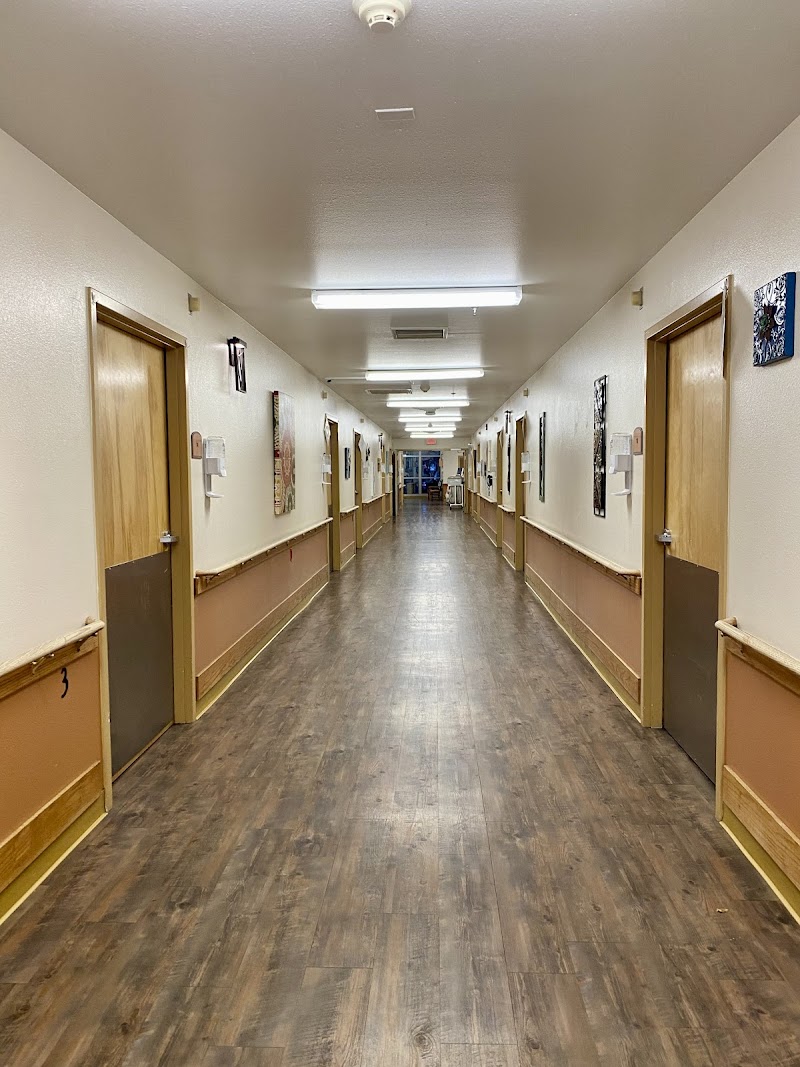
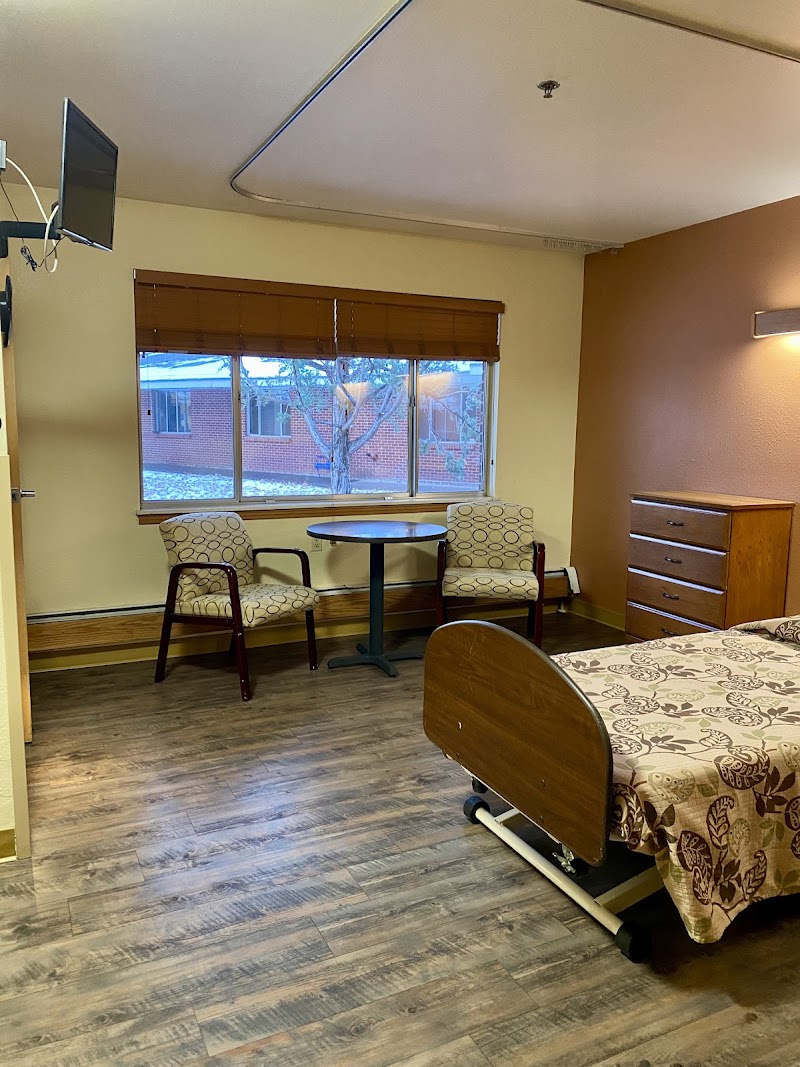
DURANGO HEALTH AND REHABILITATION

2911 JUNCTION ST, DURANGO, CO 81301 (970) 247-2215
For profit - Corporation 133 Beds THE ENSIGN GROUP Data: November 2025
Trust Grade
25/100
#145 of 208 in CO
Last Inspection: June 2024

Within standard 12-15 month inspection cycle. Federal law requires annual inspections.

Overview

Durango Health and Rehabilitation has received a Trust Grade of F, indicating significant concerns about the quality of care provided. Ranking #145 out of 208 facilities in Colorado places it in the bottom half of the state, and it is the second-best option in La Plata County, suggesting limited alternatives. The facility's trend is improving, having reduced its issues from 23 in 2024 to just 1 in 2025, which is a positive sign. Staffing is below average with a rating of 2 out of 5 stars, and while turnover is at 46%, slightly lower than the state average, it still raises concerns about continuity of care. Notably, there were serious incidents where residents did not receive adequate monitoring, resulting in falls and injuries, highlighting both the facility's weaknesses and its ongoing efforts to improve care standards.

Trust Score
F
25/100
In Colorado
#145/208
Bottom 31%
Safety Record
High Risk
Review needed
Inspections
Getting Better
23 → 1 violations
Staff Stability
⚠ Watch
46% turnover. Above average. Higher turnover means staff may not know residents' routines.
Penalties
✓ Good
No fines on record. Clean compliance history, better than most Colorado facilities.
Skilled Nurses
○ Average
Each resident gets 37 minutes of Registered Nurse (RN) attention daily — about average for Colorado. RNs are the most trained staff who monitor for health changes.
Violations
⚠ Watch
48 deficiencies on record. Higher than average. Multiple issues found across inspections.
★★☆☆☆
2.0
Overall Rating
★★☆☆☆
2.0
Staff Levels
★★★★★
5.0
Care Quality
★☆☆☆☆
1.0
Inspection Score
Stable
2024: 23 issues
2025: 1 issues

The Good

  • 5-Star Quality Measures · Strong clinical quality outcomes
  • Full Sprinkler Coverage · Fire safety systems throughout facility
  • No fines on record

Facility shows strength in quality measures, fire safety.

The Bad

2-Star Overall Rating

Below Colorado average (3.1)

Below average - review inspection findings carefully

Staff Turnover: 46%

Near Colorado avg (46%)

Higher turnover may affect care consistency

Chain: THE ENSIGN GROUP

Part of a multi-facility chain

Ask about local staffing decisions and management

The Ugly 48 deficiencies on record

2 actual harm
Feb 2025 1 deficiency
CONCERN (D) 📢 Someone Reported This

A family member, employee, or ombudsman was alarmed enough to file a formal complaint

Potential for Harm - no one hurt, but risky conditions existed

Deficiency F0552 (Tag F0552)

Could have caused harm · This affected 1 resident

**NOTE- TERMS IN BRACKETS HAVE BEEN EDITED TO PROTECT CONFIDENTIALITY** Based on record review and interviews, the facility failed to inform the resident or consult with the residents representative r...

Read full inspector narrative →
**NOTE- TERMS IN BRACKETS HAVE BEEN EDITED TO PROTECT CONFIDENTIALITY** Based on record review and interviews, the facility failed to inform the resident or consult with the residents representative regarding a change in the resident's treatment for one (#1) of three residents reviewed out of five sample residents. Specifically, the facility failed to notify Resident #1's medical durable power of attorney (MDPOA) of a medication change. Findings include: I. Facility policy and procedure The Notification of Physician or Responsible Party policy, revised October 2021, was provided by the nursing home administrator (NHA) on 2/5/25 at 10:35 a.m. It read in pertinent part, It is the policy of this facility to notify the resident, his/her attending physician and/or family/responsible party of changes in the resident's condition and/or status. Unless otherwise instructed by the resident, the nurse supervisor will notify the resident's family/responsible party when: The resident is involved in any accident or incident which results in an injury including injuries of an unknown source; There is a significant change in the resident's physical, mental or psychosocial status; There is a need to alter the resident's treatment significantly; There is a change in the resident's room assignment; A decision has been made to discharge the resident from the facility; and/or, It is necessary to transfer the resident to a hospital. Except in medical emergencies, notifications will be made within twenty-four (24) hours of a change occurring in the resident's condition or status. II. Resident #1 A. Resident status Resident #1, age greater than 65, was admitted on [DATE] and passed away on 12/31/24. According to the December 2024 computerized physician orders (CPO), diagnoses included Parkinson's disease (neurological disorder) without dyskinesia (involuntary movements) and neurocognitive disorder with Lewy Bodies (neurological disorder/type of dementia). The 11/20/24 minimum data set (MDS) assessment revealed Resident #1 had severe cognitive impairments with a brief interview for mental status (BIMS) score of zero out of 15. B. MDPOA interview Resident #1's MDPOA was interviewed on 2/5/25 at 12:19 p.m. He said Resident #1 was admitted to the facility with her primary diagnosis being Parkinson's disease followed by Lewy bodies dementia. He said the facility failed to notify him that Resident #1's Carbidopa-Levodopa (Parkinson's medication) was being discontinued. The MDPOA said the medication helped Resident #1 be able to complete some activities of daily living (ADLs) and have a little bit of independence. He said when the medication was discontinued, Resident #1 seemed to have a rapid decline and then she passed away. He said the medication was discontinued on 12/2/24 and he was not informed until he asked the nurse to show him Resident #1's medical record a couple weeks after the medication was stopped. The MDPOA said the physician told him it was discontinued because she was not sure Resident #1 had Parkinson's disease. He said this was confusing because Parkinson's was her admitting diagnosis and the family had been dealing with Parkinson's disease for about four years prior to the resident admitting to the facility. C. Record review Carbidopa-Levodopa 25-100 mg tablet twice a day, was ordered on 4/11/24 and discontinued on 12/2/24. The 11/21/24 physician's note documented the physician questioned if Resident #1 needed to continue the Carbidopa-Levodopa. The physician recommended a trial to discontinue the medication since the medication was not at a therapeutic level. The 12/29/24 physician's note documented the physician had a care conference with Resident #1's MDPOA and family. The physician documented the family was informed the Carbidopa-Levodopa was discontinued on 12/2/24 per best practice guidelines. -However, the facility failed to notify the MDPOA of medication changes for 27 days. IV. Staff interviews Nurse practitioner (NP) #1 was interviewed on 2/4/25 at 11:19 a.m. NP #1 said the Carbidopa-Levodopa was discontinued based on the recommendation from the facility's medical director. NP #1 said she was not positive Resident #1 had Parkinson's disease and wanted to do imagining to confirm. She said the resident declined and the local hospital did not offer the imaging needed. She said she spoke to the family over the phone on 12/29/24 after the medication was discontinued She said the nursing department was responsible for notifying the family or the resident of medication changes. The director of nursing (DON) was interviewed on 2/4/25 at 11:45 a.m. The DON said the nursing staff notified residents or their MDPOAs of medication changes only when the medication being changed was a psychotropic medication. The DON said she did not notify Resident #1's family because the medication was not a psychotropic medication. The DON said she was not aware that the MDPOA needed to be notified of changes in the resident's care.
Jun 2024 21 deficiencies
CONCERN (D)

Potential for Harm - no one hurt, but risky conditions existed

Deficiency F0567 (Tag F0567)

Could have caused harm · This affected 1 resident

Based on record review and interviews, the facility failed to ensure that the personal funds accounts were managed adequately for two (#2 and #30) of three residents reviewed for personal funds out of...

Read full inspector narrative →
Based on record review and interviews, the facility failed to ensure that the personal funds accounts were managed adequately for two (#2 and #30) of three residents reviewed for personal funds out of 45 sample residents. Specifically, the facility failed to notify Resident #2 and Resident #30, who were Medicaid funded, or their legal representative, when the resident's personal funds account reached $200.00 less than the eligibility resource limit for one person. Findings include: I. Record Review A. Resident #2 A review of the facility's current trust account on 6/27/24 revealed Resident #2 had $2,354.81 in her account, which was $354.81 dollars over the allotted $2000.00 eligibility limit for Medicaid funded residents. -There was no documentation to indicate the facility had notified Resident #2 or her legal representative when her personal funds account reached $200 less than the eligibility resource limit. B. Resident #30 A review of the facility's current trust account on 6/27/24 revealed Resident #30 had $3683.41in his account, which was $1,683.41 over the allotted $2000.00 eligibility limit for Medicaid funded residents. -There was no documentation to indicate the facility had notified Resident #2 or her legal representative when her personal funds account reached $200 less than the eligibility resource limit. II. Staff interviews The business office manager (BOM) was interviewed on 6/2724 at 7:04 p.m. The BOM said she provided letters notifying residents that they were within $200 of the Medicaid eligibility limit, but did not have documentation of these notifications for Resident #2 or Resident #30. The BOM said she was unable to confirm if Resident #2 and Resident #30, or their legal representatives had received the letters she sent. The BOM said the facility did not keep records of the letters that were sent to residents. The BOM said the facility was responsible for assisting residents with spending down their money. The BOM said she personally assisted residents with spending their money appropriately. The BOM said the facility had an Amazon account to assist residents with spending their money. The BOM said the facility had been assisting Resident #2 with spending her money for the last few months, but despite facility efforts, the resident was still over the $2,000 Medicaid limit. The BOM said Resident #30 was over the $2,000 Medicaid limit by a significant amount and the facility should have done more to help him spend down his money appropriately. The social services director (SSD) was interviewed on 6/27/24 at 7:14 p.m. The SSD said she, the BOM and the activities department staff worked together to assist residents with spending down their money. The SSD said the activities staff served as a second check to ensure the facility had two different departments overseeing the resident account spending. The SSD said the facility used approved magazine orders as well as a facility Amazon account to assist residents with spending their money. The SSD said Resident #2 and Resident #30 did not have enough of their personal funds spent and were both over the $2,000 Medicaid eligibility limit. The SSD said the facility could have done more to assist Resident #2 and Resident #30 with appropriately spending their money down so their accounts were not over the eligibility limit.
CONCERN (D)

Potential for Harm - no one hurt, but risky conditions existed

Free from Abuse/Neglect (Tag F0600)

Could have caused harm · This affected 1 resident

**NOTE- TERMS IN BRACKETS HAVE BEEN EDITED TO PROTECT CONFIDENTIALITY** Based on record review and interviews, the facility failed to ensure three (#42, #52 and #68) of five residents reviewed for abu...

Read full inspector narrative →
**NOTE- TERMS IN BRACKETS HAVE BEEN EDITED TO PROTECT CONFIDENTIALITY** Based on record review and interviews, the facility failed to ensure three (#42, #52 and #68) of five residents reviewed for abuse out of 45 sample residents were kept free from abuse. Specifically, the facility failed to: -Protect Resident #42 from physical abuse by Resident #25; and, -Protect Resident #52 and Resident #68 from physical abuse by Resident #24. Findings include: I. Facility policy and procedure The Abuse Policy, dated 5/3/23, was provided by the nursing home administrator (NHA) on 6/27/24 at 7:30 p.m. It read in pertinent part, Community does not condone resident abuse and shall take every precaution possible to prevent resident abuse by anyone, including other residents. Residents have the right to be free from abuse. This includes physical abuse. Providing a safe environment for the resident is one of the most basic and essential duties of our facility. Resident abuse is defined as the willful Infliction of injury of a resident resulting in physical harm or pain and mental anguish. Physical abuse is defined as abuse that results in bodily harm with intent. It includes hitting, slapping, pinching and kicking. Willful means the individual must have acted deliberately, not that he or she must have intended to inflict injury or harm. Adverse event is an untoward, undesirable, and usually unanticipated event that causes death or serious injury, or risk thereof. If a resident experiences a behavior change resulting in aggression towards other residents, the community will implement interventions for protection of alleged assailants and other residents. The residents care plan is revised to include new approaches to reduce or eliminate any further chance of abuse. Recommendations for appropriate interventions, up to and including hospitalizations, can be implemented. II. Facility investigation of physical abuse involving Resident #25 and Resident #42 on 6/6/24. The abuse investigation, dated 6/6/24, revealed Resident #25, who had a diagnosis of dementia with behavioral disturbances pushed Resident #42, who had a diagnosis of Parkinson's disease (degenerative brain condition), resulting in Resident #42 falling. Both residents resided in the memory care unit of the facility. Certified nurse aide (CNA) #5 witnessed the event and reported being in the dining room and seeing Resident #42 walking down the hallway with her walker. Resident #25 exited her room and pushed Resident #42, who fell to the floor. After pushing Resident #42, Resident #25 returned to her room and shut the door. CNA #5 informed licensed practical nurse (LPN) #2 who assessed Resident #42 for injuries. On 6/6/24 the director of nursing (DON) interviewed Resident #25, Resident #42 and staff who were working in the memory care unit. The interview with Resident #25 revealed the resident was unable to recall events, had no injuries and was free from psychosocial distress. The interview with Resident #42 revealed the resident was unable to recall events, had no injuries and was irritable at the time of interview. The interview with CNA #5 revealed the incident between Resident #25 and Resident #42 was believed to be unprovoked as both residents had been free of agitation prior to the incident. On 6/11/24 the facility concluded the investigation and physical abuse was substantiated. III. Resident #25 (assailant) A. Resident status Resident #25, age [AGE], was admitted on [DATE]. According to the June 2024 computerized physicians orders (CPO), diagnoses included dementia with behavioral disturbances and anxiety. The 4/15/24 minimum data assessment (MDS) revealed the resident had severe cognitive impairment with a brief interview for mental status (BIMS) score of zero out of 15. She required set up assistance with activities of daily living (ADL) and was independent with mobility without the use of assistive devices. The assessment revealed Resident #25 displayed behavioral symptoms directed at others daily to include hitting, kicking, pushing, scratching and grabbing and behavioral symptoms not directed at others to include physical symptoms such as hitting or scratching self, pacing, rummaging, public sexual acts, disrobing in public, throwing or smearing food or bodily wastes, or verbal/vocal symptoms like screaming and disruptive sounds. B. Record review The 5/23/24 psychotropic pharmacological management review indicated a gradual dose reduction (GDR) was occurring for Resident #25 with her Buspirone (anti-anxiety medication). The 6/6/24 psychotropic pharmacological management review indicated Buspirone was restarted for Resident #25 related to increased behaviors, including aggression towards other residents. The behavioral care plan, initiated on 4/8/22 and revised on 6/6/24, revealed Resident #25 had anxiety related to her diagnosis of dementia with behavioral disturbances as evidenced by pacing, repetitive and unrealistic concerns, tearfulness, agitation and aggressive behaviors of striking out during care. Resident #25 had a history of a fixed hallucination of a man who she believed to be her companion. The care plan indicated the resident would have fewer episodes through the review date. Pertinent interventions included administering anti-anxiety medications and monitoring for unexpected side effects of mania, hostility, rage, aggressive or impulsive behaviors and hallucinations. IV. Resident #42 (victim) A. Resident status Resident #42, age [AGE], was admitted on [DATE]. According to the June 2024 CPO, diagnoses included Parkinson's disease and psychotic disorder with hallucinations and delusions. The 5/17/24 MDS assessment revealed the resident had severe cognitive impairment with a BIMS score of zero out of 15. She required maximum assistance with ADLs and needed supervision when walking short distances and maximum assistance with mobility when using a wheelchair. The assessment revealed Resident #42 displayed behavioral symptoms not directed towards others such as hitting or scratching self, pacing, rummaging, public sexual acts, disrobing in public, throwing or smearing food or bodily wastes, or verbal/vocal symptoms like screaming or disruptive sounds. B. Record review The wander risk care plan, initiated on 2/10/24 and revised on 5/21/24, revealed Resident #42 had a history of wandering aimlessly. It indicated the resident would remain safe through the review date. Pertinent interventions included identifying if wandering was purposeful, aimless or escapist or if the resident was looking for something and wandering indicated the need for exercise and distracting the resident from wandering by offering pleasant diversions, structured activities, food, conversation, television or books. A review of Resident #42's electronic medical record (EMR) and facility investigation revealed no skin issues were identified, nor was pain or mental distress identified verbally or nonverbally, following the incident by Resident #25 on 6/6/24. V. Facility investigation of physical abuse involving Resident #24 and Resident #52 on 6/13/24. The abuse investigation, dated 6/13/24, revealed Resident #24, who had a diagnosis of dementia with behavioral disturbances was exhibiting agitation with exit seeking behaviors to include pushing her walker into Resident #52, who also had a diagnosis of dementia with behavioral disturbances, while Resident #52 was standing up in front of her wheelchair. Both residents resided in the memory care unit of the facility. CNA #4 witnessed the event and reported she separated the residents and provided information to registered nurse (RN) #2 who notified the director of nursing (DON). The DON proceeded with the investigation. On 6/13/24 the DON interviewed Resident #24, Resident #52 and staff working in the memory care unit. The interview with Resident #24 revealed the resident was agitated, stating she wanted to go home and wanted out of the facility while moving personal belongings around her room. The investigation revealed Resident #24 was placed on one to one observations. The investigation revealed Resident #52 was confused and only recalled being pushed by Resident #24. The investigation revealed Resident #52 was assessed by the DON and was free of psychosocial distress and had no new injuries as a result of the event and Resident #52 received one to one staff supervision for the duration of the investigation. The investigation revealed CNA #4 witnessed the event and provided the following information to the DON. CNA #4 reported Resident #24 was having increased agitation with staff, pacing the hallway of the memory care unit in an attempt to leave. CNA #4 reported Resident #24 was slamming doors, throwing objects and shoving her walker into staff who were attempting to redirect her. CNA #4 reported Resident #24 attempted to invite another male resident into her room. CNA #4 reported attempting to redirect Resident #24 with a supervised walk throughout the building, however, Resident #24 declined, entered another resident's room and began undressing. CNA #4 reported attempting to assist Resident #24 with dressing but Resident #24 declined and walked into the hallway where she approached Resident #52 standing in front of her wheelchair. Resident #24 pushed her walker into Resident #52 causing Resident #52 to fall back into a seated position in her wheelchair. The investigation summary indicated staff believed Resident #24 was having increased behaviors as a result of a gradual dose reduction (GDR) with her current psychotropic medications. On 6/19/24 the facility concluded the investigation and physical abuse was substantiated. A review of the Resident #52's EMR and the facility investigation revealed no skin issues were identified, nor was pain or mental distress identified verbally or nonverbally, following the incident by Resident #24 on 6/13/24. VI. Resident #24 (assailant) A. Resident status Resident #24, age [AGE], was admitted on [DATE]. According to the June 2024 CPO, diagnoses included dementia with behavioral disturbances. The 6/4/24 MDS assessment revealed the resident had severe cognitive impairment with a BIMS score of zero out of 15. She required supervision to partial assistance with ADLs and was independent with mobility with the use of a four wheeled walker. The MDS assessment revealed Resident #24 displayed physical and verbal behavioral symptoms directed towards others on one to three days during the assessment period, such as, hitting, kicking, pushing, scratching or grabbing, threatening or screaming and cursing at others. B. Record review The 5/30/24 psychotropic pharmacological management review revealed there was a GDR in progress for Resident #24 and she was being titrated off of Seroquel (an antipsychotic medication) and Risperdal (an antipsychotic medication) would be ordered in place of the Seroquel. The 6/13/24 change of condition (COC) evaluation revealed the GDR of Seroquel had failed and Resident #24 was noted to have worsening behavioral symptoms. The dementia care plan, initied on 8/22/17 and revised on 6/1/24, revealed Resident #24 was taking an antipsychotic medication for a diagnosis of dementia with behavioral disturbances. It indicated the resident would remain free of psychotropic drug related complications, including movement disorder, discomfort, hypotension, gait disturbance, constipation/impaction or cognitive/behavioral impairment through the review date. Pertinent interventions included administering antipsychotic medications as ordered and observing for side effects. The behavior care plan, initiated on 2/5/21 and revised on 5/7/24, revealed Resident #24 had behaviors which included pacing to the point of exhaustion, yelling out, cursing, hitting, throwing items, slamming fists on table, making repetitive statements towards staff, inability to focus and becoming hypervigilant resulting in restlessness. It indicated the resident's behaviors would not disturb others. Pertinent interventions included assisting the resident to contact her son as a means of distraction, engaging the resident in activities of enjoyment such as folding laundry or entertaining herself with a balloon or bouncing and trying to keep it in the air, watching movies, participating in crafts, and walking outside or sitting and talking with the resident if she presented with anger. VII. Resident #52 (victim) A. Resident status Resident #52, age greater than 65, was admitted on [DATE]. According to the June 2024 CPO, diagnoses included dementia with behavioral disturbances. The 4/25/24 MDS assessment revealed the resident had moderate cognitive impairment with a BIMS score of 11 out of 15. She was independent with ADLs and mobility with a wheelchair. The MDS assessment revealed Resident #52 displayed physical and verbal behavioral symptoms directed towards others on four to six days during the assessment period such as, hitting, kicking, pushing, scratching or grabbing, threatening or screaming and cursing at others. B. Record review The fall risk care plan, initiated on 11/1/23, revealed Resident #52 was a moderate fall risk related to confusion, balance problems and was legally blind. It indicated the resident would be free from falls through the review date. Pertinent interventions included increased monitoring to anticipate the resident's needs. VIII. Facility investigation of physical altercation involving Resident #24 and Resident #68 on 6/15/24. The physical abuse investigation dated, 6/15/24, revealed Resident #24, who had a diagnosis of dementia with behavioral disturbances and Resident #68, who had a diagnosis of dementia with behavioral disturbances, both residing in the memory care facility, were observed by staff engaging in a physical altercation. The investigation revealed Resident #24 was walking out to the courtyard of the memory care unit with a baby doll set on top of the seat of her walker and Resident #68 reached out and took the baby doll off the walker of Resident #24. The investigation revealed Resident #24 slapped the hand of Resident #68 in response to the baby doll being taken and Resident #68 slapped Resident #24 in the chest, at which point, staff intervened. The investigation indicated no injuries or distress were noted for Resident #24 or Resident #68 and Resident #24 received one to one supervision for the duration of investigation. The DON proceeded with investigation. On 6/16/24 the DON interviewed Resident #24, Resident #68 and staff working in the memory care unit. The interview with Resident #24 revealed the resident continued to be agitated and irritable without aggression following the interaction. Resident #68 was unable to recall events. CNA #6 was interviewed by the DON and reported Resident #24 began displaying unprovoked agitation during the evening and was pacing the unit, pushing her walker into doors attempting to open the doors and exit the memory care unit. CNA #6 reported attempts at redirection and de-escalation with Resident #24 were unsuccessful and the resident eventually stopped pacing the unit and joined the other residents in the courtyard for dinner for a short period of time before standing and walking back through the doorway to reenter the unit. CNA #6 reported it was when Resident #24 was walking through the doorway back into the unit with a baby doll on her walker that Resident #68 reached out and tried taking the baby doll resulting in Resident #24 slapping the hand of Resident #68 and Resident #68 slapping the chest of Resident #24. CNA #6 intervened and separated the two residents. CNA #6 reported Resident #24 was continuing to display agitation and an unidentified CNA walked for approximately 30 minutes with Resident #24 throughout the facility Upon returning to the memory care unit, Resident #24 was escorted by the unknown CNA to her room where she stayed for the remainder of the evening without issue. CNA #6 reported the unknown CNA provided one to one oversight to Resident #24 while the resident had a snack, took her medication, ate dinner and was assisted to bed. The investigation summary indicated staff believed Resident #24 was having increased behaviors as a result of a gradual dose reduction (GDR) with her current psychotropic medications. On 6/21/24 the facility concluded the investigation and physical abuse was substantiated. A review of Resident #68's EMR and the facility investigation revealed no skin issues were identified, nor was pain or mental distress identified verbally or nonverbally, following the incident by Resident #24 on 6/15/24. IX. Resident #68 (victim) A. Resident status Resident #68, age [AGE], was admitted on [DATE]. According to the June 2024 CPO, diagnoses included dementia and anxiety. The 4/19/24 MDS assessment revealed the resident had severe cognitive impairment with a BIMS score of one out of 15. She required set up for eating and substantial assistance with all other ADLs and was independent with mobility. The MDS assessment revealed Resident #68 displayed physical and verbal behavioral symptoms directed towards others on one to three days during the assessment period, such as, hitting, kicking, pushing, scratching or grabbing, threatening or screaming and cursing at others. X. Staff interviews Certified nurse aide (CNA) #7 was interviewed on 6/27/24 at 1:08 p.m. CNA #7 said she was aware of the resident to resident altercation between Resident #25 and Resident #42 on 6/6/24 but had not witnessed the event. CNA #7 said she had not noticed any changes in behaviors regarding Resident #25 or Resident #42 individually or separately. CNA #7 said she had not witnessed any provoking interaction between the two residents prior to the altercation. CNA #7 said she was made aware of the resident to resident altercation between Resident #24 and Resident #52 on 6/13/24 and the altercation between Resident #24 and Resident #68 on 6/15/24. CNA #7 said she had not personally witnessed either event. CNA #5 was interviewed on 6/27/24 at 1:10 p.m. CNA #5 said she witnessed the resident to resident altercation between Resident #25 and Resident #42 on 6/6/24. CNA #5 she had not noticed any changes in behaviors regarding Resident #25 or Resident #42 individually or separately. CNA #5 said she had not witnessed any provoking interaction between the two residents prior to the altercation. The director of nursing (DON) was interviewed on 6/27/24 at 5:00 p.m. The DON said it was determined the GDR for Resident #24's anti-anxiety medication would be considered a failed trial as the altercation between the resident and Resident #25 was unprovoked and the facility determined the GDR to be a contributing factor. The DON said Resident #24 was in the process of a GDR of her antipsychotic medication at the time of the resident to resident altercations with Resident #52 and Resident #68. The DON said Resident #24 had been stable on the medication and it was determined the GDR was a contributing factor to the altercations and the GDR was considered a failed trial. The DON said increased monitoring was implemented in the memory care unit during the GDR for Resident #24 and there was to be one staff member with eyes on the residents at all times. The DON said there was now the addition of a full time activities assistant dedicated to the memory care unit and the addition of a memory care unit manager to provide more staff to try to prevent further incidents of abuse.
CONCERN (D)

Potential for Harm - no one hurt, but risky conditions existed

Deficiency F0658 (Tag F0658)

Could have caused harm · This affected 1 resident

**NOTE- TERMS IN BRACKETS HAVE BEEN EDITED TO PROTECT CONFIDENTIALITY** Based on observation and interviews, the facility failed to ensure that professional standards of practice were followed during ...

Read full inspector narrative →
**NOTE- TERMS IN BRACKETS HAVE BEEN EDITED TO PROTECT CONFIDENTIALITY** Based on observation and interviews, the facility failed to ensure that professional standards of practice were followed during medication administration for three (#67, #26 and #29) of nine residents reviewed out of 45 sample residents. Specifically, the facility failed to: -Ensure medications and insulin supplies, including sharps, were not left at the bedside; -Ensure medications were not dispensed and stored in medication cups in a nurse's pocket; and, -Ensure medications were not contaminated by placing dispensed medication back into the original bottle. Findings include: I. Facility policy and procedure The Medication Administration policy, dated 2/29/24, was provided by the nursing home administrator (NHA) on 6/27/24 at 7:29 p.m. It read in pertinent part, Resident medications are administered in an accurate, safe, timely and sanitary manner. Do not leave medications with the resident. Follow the medication/pharmacy guidelines for storage. II. Resident #67 A. Resident status Resident #67, age less than 65, was admitted on [DATE]. According to the June 2024 computerized physician orders (CPO), diagnoses included unspecified severe protein-calorie malnutrition, type 1 diabetes mellitus with other specified complications, alcohol abuse and functional quadriplegia (complete immobility due to severe physical disability or frailty). The 5/14/24 minimum data set (MDS) assessment revealed the resident was cognitively intact with a brief interview for mental status (BIMS) score of 15 out of 15. B. Observations On 6/25/24 assistant director of nursing (ADON) #2 was preparing to administer insulin to a resident. After checking the resident's blood sugar, ADON #2 left the room to obtain an insulin syringe from the medication cart. -ADON #2 left the insulin supply box at the bedside, which contained insulin and sharps for the glucometer. III. Resident #26 A. Resident status Resident #26, age less than 65, was admitted on [DATE]. According to the June 2024 CPO, diagnoses included hemiplegia (paralysis to one side of the body) and hemiparesis (weakness to one side of the body) following unspecified cerebrovascular disease (decreased blood flow to the brain) affecting the right dominant side, unspecified psychosis not due to a substance or known physiological condition, type 2 diabetes mellitus without complications and acute respiratory failure with hypoxia (inadequate oxygen supply). The 6/11/24 MDS assessment revealed the resident had moderate cognitive impairment with a BIMS score of eight out of 15. B. Observations On 6/26/24 at 8:59 a.m., registered nurse (RN) #1 was preparing medication for Resident #26. She cut an olanzapine tablet (antipsychotic medication) in half with a pill cutter. She placed the half that was not going to be administered in a medication cup and put the cup containing the medication into her pocket. RN #2 said she would take it to the drug buster (a container used to destroy medications) for disposal later . IV. Resident # 29 A. Resident status Resident #29, age [AGE], was admitted on [DATE]. According to the June 2024 CPO, diagnoses included unspecified thoracic, thoracolumbar and lumbosacral intervertebral disc disorder (break down of discs between the vertebrae in the back, causing pain), chronic respiratory failure with hypoxia and type 2 diabetes mellitus without complications. The 4/24/24 MDS assessment revealed the resident had moderate cognitive impairment with a BIMS score of eight out of 15. B. Observations On 6/27/24 at 8:59 a.m., ADON #1 was preparing medication for Resident #29. She poured two tablets of famotidine 10 milligrams (mg) (medication to treat heartburn) into a medication cup with other medications. She then realized there were 20 mg tablets in the medication cart and that she should administer one 20 mg tablet instead of two 10 mg tablets. -ADON #1 took the two 10 milligram tablets out of the medication cup with a spoon and returned them to the original bottle. The bottle was a stock medication bottle and was utilized for more than one resident. V. Staff interviews ADON #2 was interviewed on 6/27/24 at 4:30 p.m. ADON #2 said there were not drug buster containers in every medication cart so nurses had to take medications for disposal to another area when passing medications. The director of nursing (DON) was interviewed on 6/27/24 at 5:20 p.m. The DON said insulin supplies should not be left in a resident's room unattended. She said pills should not be put back into stock containers after dispensing them into a medication cup with other medications.
CONCERN (D)

Potential for Harm - no one hurt, but risky conditions existed

Deficiency F0679 (Tag F0679)

Could have caused harm · This affected 1 resident

**NOTE- TERMS IN BRACKETS HAVE BEEN EDITED TO PROTECT CONFIDENTIALITY** Based on observations, interviews and record review, the facility failed to ensure one (#57) of six residents reviewed for activ...

Read full inspector narrative →
**NOTE- TERMS IN BRACKETS HAVE BEEN EDITED TO PROTECT CONFIDENTIALITY** Based on observations, interviews and record review, the facility failed to ensure one (#57) of six residents reviewed for activities out of 45 sample residents received an ongoing program of activities designed to meet needs and interests, and promote physical, medical and psychosocial well-being. Specifically, Resident #57 was not provided with meaningful activities or one-to-one activity staff visits per her individualized plan of care. Findings include: I. Resident #57 A. Resident status Resident #57, age less than 65, was admitted on [DATE]. According to the June 2024 computerized physician orders (CPO), diagnoses included non-ischemic myocardial injury (non-traumatic injury to the heart), acute on chronic diastolic (congestive) heart failure, hemiplegia (paralysis on one side of the body) and hemiparesis (weakness on one side of the body) following a cerebral infarction (stroke) affecting the left non-dominant side and type 2 diabetes mellitus with diabetic chronic kidney disease. The 5/27/24 minimum data set (MDS) assessment revealed the resident was unable to answer any of the questions on the brief interview for mental status (BIMS) which resulted in a BIMS score of zero out of 15. The assessment indicated her activity preferences included animals, going outside, books, magazines, music and keeping up with the news. The assessment documented she had adequate hearing and was sometimes able to make herself understood. II. Observations On 6/25/24 at 11:19 a.m. Resident #57 was lying in bed on her right side in a fetal position. She was in isolation for COVID-19. On 6/25/24 Resident #57 was observed during a continuous observation, beginning at 2:21 p.m. and ending at 4:01 p.m. At 2:21 p.m. the resident was lying in bed on her right side. There was no television on or music playing in her room. At 3:20 p.m. the resident continued lying in bed on her right side. No staff had entered her room and the resident was not engaged in any individual activities. There was no television on and there was no music playing in her room. At 3:48 p.m. a certified nurse aide (CNA) entered the room briefly and exited with a trash bag. At 4:01 p.m. Resident #57 was sitting on the side of the bed. There was no television on or music playing in the room and she was not engaged in any individual activities. On 6/26/24 at 10:39 a.m. the resident was lying in bed on her right side with her feet hanging off the side of the bed. There was no television on or music playing in the room and she was not engaged in any individual activities. The resident had been taken off of isolation for COVID-19. On 6/26/24 at 1:05 p.m. Resident #57 was lying in bed on her right side. Assistant director of nursing (ADON) #2 and the corporate consultant (CC) were providing wound care to the resident. The resident did not have the television on or music playing. ADON #2 and the CC did not offer any type of activity to the resident when they left the resident's room. On 6/26/24 at 2:41 p.m. the resident was lying in bed on her right side with her feet dangling off of the bed. There was no television on or music playing in the room and she was not engaged in any individual activities. III. Resident interview Resident #57 was interviewed on 6/25/24 at 2:19 p.m. Resident #57 was lying in bed. She said she did not have any activities to do in her room and she was always bored. She said she liked to read but hadn't been reading because she had been sick. The resident was able to answer questions and was understood during the interview. IV. Record review Resident #57's activities care plan, initiated 5/2/24, identified the resident had little or no involvement in activities due to disinterest and physical limitations. The goal was to have one to one visits one time per week from activities staff. -Review of Resident #57's progress notes for May 2024 and June 2024 did not reveal any one to one activity visit documentation. V. Staff Interview The activity director (AD) was interviewed on 6/27/24 at 4:50 p.m. The AD said she had been the activity director for four months. She said when a resident had one to one activity visits, the visits were documented in the progress notes. She said if a resident refused a one to one visit that would also be documented in the progress notes. The AD said Resident #57 had been refusing one to one visits since her decline in condition a couple of months ago. -The AD was unable to provide documentation for Resident #57 which documented weekly one to one visits or refusals. The AD said before her decline in condition, Resident #57 was still socializing with people in the hallways. She said the resident liked to talk about her husband who was in the military. The AD said she recently started auditing the activity documentation because the documentation was lacking. She said she had recently started training her staff on documentation expectations.
CONCERN (D)

Potential for Harm - no one hurt, but risky conditions existed

Quality of Care (Tag F0684)

Could have caused harm · This affected 1 resident

**NOTE- TERMS IN BRACKETS HAVE BEEN EDITED TO PROTECT CONFIDENTIALITY** III. Resident #67 A. Resident status Resident #67, age less than 65 was admitted on [DATE]. According to the June 2024 computeri...

Read full inspector narrative →
**NOTE- TERMS IN BRACKETS HAVE BEEN EDITED TO PROTECT CONFIDENTIALITY** III. Resident #67 A. Resident status Resident #67, age less than 65 was admitted on [DATE]. According to the June 2024 computerized physician orders (CPO), diagnoses included type 1 diabetes mellitus with other specified complications, unspecified severe protein-calorie malnutrition, alcohol abuse and functional quadriplegia (complete immobility due to severe disability or frailty, not due to a spinal cord injury). The 5/14/24 minimum data set (MDS) assessment revealed the resident was cognitively intact with a brief interview for mental status (BIMS) score of 15 out of 15. The assessment indicated the resident received insulin injections seven out of seven days during the assessment reference period. B. Record review The 2/22/24 physician ' s order for insulin lispro (Humalog) 100 units/milliliter (ml) pen, inject as per sliding scale. If blood sugar is: 0 - 199 = 0 units; 200 - 249 = 1 unit; 250 - 299 = 2 units; 300 - 349 = 3 units; 350 - 399 = 4 units; 400 - 449 = 5 units; 450 - 499 = 6 units; 500 - 600 = 8 units, subcutaneously every 4 (four) hours for diabetes mellitus. Notify the physician for blood sugar less than 60 milligrams/deciliter (mg/dl) after carbohydrate supplement or greater than 400. mg/dl. The order date of the medication was 2/2/24. The 1/12/24 physician ' s order indicated for hyperglycemia (high blood sugar) protocol as needed for blood sugar greater than 400 mg/dl. Step one notify the physician, step two follow physician orders and step three continue to recheck blood sugar every one hour and provide interventions as needed or specified by the provider. According to the June 2024 medication administration record (MAR) the resident had high blood sugars, over 400 mg/dl, on the below listed dates. -On 6/1/24 at 9:05 p.m. the resident ' s blood sugar was 600 mg/dl. The staff did not recheck the blood sugar until 6/2/24 at 2:29 a.m. -On 6/3/24 at 1:58 a.m. the resident ' s blood sugar was 417 mg/dl. The staff did not recheck the blood sugar until 5:13 a.m. -On 6/4/24 at 4:55 p.m. the resident ' s blood sugar was 464 mg/dl. The staff did not recheck the blood sugar until 8:02 p.m. -On 6/5/24 at 3:36 p.m. the resident ' s blood sugar was 586 mg/dl. The staff did not recheck the blood sugar until 7:51 p.m. -On 6/5/24 at 7:51 p.m. the resident ' s blood sugar was 600 mg/dl. The staff did not recheck the blood sugar until 6/6/24 at 1:33 a.m. -On 6/8/24 at 4:52 p.m. the resident ' s blood sugar was 600 mg/dl. The staff did not recheck the blood sugar until 7:40 p.m. -On 6/8/24 at 7:40 p.m. the resident ' s blood sugar was 518 mg/dl. The staff did not recheck the blood sugar until 11:54 p.m. -On 6/11/24 at 4:55 p.m. the resident ' s blood sugar was 466 mg/dl. The staff did not recheck the blood sugar until 8:19 p.m. -On 6/12/24 at 8:16 p.m. the resident ' s blood sugar was 407 mg/dl. The staff did not recheck the blood sugar until 6/13/24 at 5:03 a.m. -On 6/13/2024 at 8:56 p.m. the resident ' s blood sugar was 584 mg/dl. The staff did not recheck the blood sugar until 6/14/24 at 12:13 a.m. -On 6/14/24 at 6:00 a.m. the resident ' s blood sugar was 478 mg/dl. The staff did not recheck the blood sugar until 8:38 a.m. -On 6/15/24 at 3:53 a.m. the resident ' s blood sugar was 492 mg/dl. The staff did not recheck the blood sugar until 9:26 a.m. -On 6/16/24 at 9:15 p.m. the resident ' s blood sugar was 461 mg/dl. The staff did not recheck the blood sugar until 6/17/24 at 12:47 a.m. -On 6/22/24 at 5:10 a.m. the resident ' s blood sugar was 407 mg/dl. The staff did not recheck the blood sugar until 9:25 a.m. -On 6/22/24 at 4:16 p.m. the resident ' s blood sugar was 592 mg/dl. The staff did not recheck the blood sugar until 9:14 p.m. -On 6/22/24 at 9:14 p.m. the resident ' s blood sugar was 439 mg/dl. The staff did not recheck the blood sugar until 11:43 p.m. -On 6/23/24 at 11:33 a.m. the resident ' s blood sugar was 519 mg/dl. The staff did not recheck the blood sugar until 4:03 p.m. -On 6/24/24 at 12:18 p.m. the resident ' s blood sugar was 468 mg/dl.The staff did not recheck the blood sugar until 5:35 p.m. -On 6/24/24 at 8:12 p.m. the resident ' s blood sugar was 465 mg/dl. The staff did not recheck the blood sugar until 6/25/24 at 1:12 a.m. -On 6/25/24 at 4:47 p.m. the resident ' s blood sugar reading was greater than 600 mg/dl (high). The staff did not recheck the blood sugar until 8:34 p.m. -On 6/26/24 at 5:27 a.m. the resident ' s blood sugar was 509 mg/dl.The staff did not recheck the blood sugar until 9:03 a.m. -On 6/26/24 at 5:10 p.m. the resident ' s blood sugar was 600 mg/dl. The staff did not recheck the blood sugar until 8:44 p.m. -A review of the resident ' s electronic medical record (EMR) revealed the nursing staff failed to monitor Resident #67 ' s blood sugar every hour following a blood sugar reading above 400 mg/dl per the protocol in June 2024 (see above). -A review of the June 2024 (6/1/24 to 6/26/24) MAR revealed no documentation indicating the hyperglycemia protocol was followed. IV. Staff interviews Assistant director of nursing (ADON) #2 was interviewed on 6/27/24 at 11:08 a.m. ADON #2 said the hyperglycemia protocol specific to Resident #67 was to give insulin per the sliding scale physician ' s order, notify the physician and follow any new orders that were received. She said she was unsure if the resident ' s blood sugar needed to be rechecked within a certain time frame. The director of nursing (DON) was interviewed on 6/27/24 at 5:20 p.m. The DON said the hyperglycemia protocol needed to be followed if the blood sugar was out of the range of the sliding scale. She said the nurse should notify the provider, recheck the blood sugar within 15 minutes and as often as needed until the resident was stable. She said if the protocol was written in the physician's orders, the nurse should follow the physician ' s ordered protocol. The DON said the licensed nurses were not checking Resident #58's blood sugars hourly for four hours because the physician's order did not prompt the nurses to do so. She said she was unable to find documentation indicating the nurses had followed up on Resident #58's high blood sugars. The DON said the nurses knew they should follow up on the high blood sugar readings. The DON said the nurses should enter a progress note into the resident's EMR and obtain and document the follow-up blood sugars. She said the nurses did not check blood sugars hourly for four hours on Resident #67 as they should have when the resident ' s blood sugars were high in June 2024. She said the nurses may have checked the blood sugars hourly, however, she said because it was not documented, there was no indication that the blood sugars were taken. Based on record review and interviews, the facility failed to ensure two (#58 and #67) of two sample residents received treatment and care in accordance with professional standards of practice and the comprehensive person-centered care plan out of 45 sample residents. Specifically, the facility failed to: -Notify the physician for high blood sugar readings for Resident #58; and, -Consistently monitor blood sugars according to the physician's order for Resident #67. Findings include: I. Facility policy and procedure The Diabetic Management policy, dated 3/19/24, was provided by the nursing home administrator (NHA) on 6/27/24 at 7:29 p.m. It read in pertinent part, Diabetic management involves both preventative measures and treatment of complications. The interdisciplinary team evaluates the diabetic resident and implements a plan of care: to ensure orders are received and are accurate related to blood glucose monitoring and anti-diabetic agents. Blood glucose orders should include parameters to follow in communicating with the physician. If the resident has high blood sugar, follow physician ordered parameters. If the blood sugar is above 'high' parameter, the physician must be contacted for further instructions. For acute complications, documentation should include at least the following information: resident's signs and symptoms, results of blood testing, notification of physician and any new orders, interventions initiated, resident's response to treatment and notification of responsible party if applicable. II. Resident #58 A. Resident status Resident #58, age less than 65, was admitted on [DATE]. According to the June 2024 computerized physician orders (CPO), diagnoses included type 2 diabetes mellitus. According to the 5/7/24 minimum data set (MDS) assessment, the resident was cognitively intact with a brief interview for mental status (BIMS) score of 14 out of 15. He was independent with most activities of daily living (ADL) but needed supervision with bathing. B. Record review The June 2024 CPO revealed the following orders for diabetic management: Lantus subcutaneous solution 100 units per milliliter (insulin glargine), inject 20 units subcutaneously in the morning for type 2 diabetes mellitus without complications, ordered on 4/8/23. Insulin glargine subcutaneous solution (insulin glargine), inject 10 units subcutaneously in the evening for type 2 diabetes mellitus without complications, ordered on 7/31/23. Fingerstick blood sugar once per day for type 2 diabetes mellitus management, ordered on 11/23/23 and revised on 3/22/24. Hyperglycemia (high blood sugar) protocol, use as needed for hyperglycemia, a blood sugar over 400 milligrams/deciliter (mg/dl), notify the physician, follow the physician's orders and continue to recheck the blood sugar every hour and provide interventions as needed or specified by the provider, ordered on 12/18/2023. -The January 2024 diabetic record revealed missing documentation of physician notification for high blood sugars on 1/26/24 at 7:59 a.m. for a blood sugar of 418 mg/dl and on 1/28/24 at 7:53 a.m. for a blood sugar of 409 mg/dl. -The February 2024 diabetic record revealed missing documentation of physician notification for a high blood sugar on 2/20/24 at 7:59 a.m. for a blood sugar of 420 mg/dl. -The May 2024 diabetic record revealed missing documentation of physician notification for high blood sugars on 5/2/24 at 10:00 a.m. for a blood sugar of 486 mg/dl and on 5/11/24 at 7:04 a.m. for a blood sugar of 599 mg/dl.
CONCERN (D)

Potential for Harm - no one hurt, but risky conditions existed

Pressure Ulcer Prevention (Tag F0686)

Could have caused harm · This affected 1 resident

**NOTE- TERMS IN BRACKETS HAVE BEEN EDITED TO PROTECT CONFIDENTIALITY** Based on observations, record review and interviews, the facility failed to ensure one (#57) of five residents reviewed for pres...

Read full inspector narrative →
**NOTE- TERMS IN BRACKETS HAVE BEEN EDITED TO PROTECT CONFIDENTIALITY** Based on observations, record review and interviews, the facility failed to ensure one (#57) of five residents reviewed for pressure injuries out of 45 sample residents received care consistent with professional standards of practice to prevent pressure injuries. Specifically the facility failed to implement timely interventions to prevent Resident #57 from developing a Stage 2 pressure injury to her right lateral ankle on 5/25/24 and to prevent the potential for further pressure injuries to occur. Findings include: I. Professional reference According to the National Pressure Injury Advisory Panel, European Pressure Injury Advisory Panel and Pan Pacific Pressure Injury Alliance Prevention and Treatment of Pressure Injuries: Clinical Practice Guideline, third edition, [NAME] Haesler (Ed.), EPUAP/NPIAP/PPPIA (2019), retrieved from https://www.internationalguideline.com/guideline on 7/1/24, Pressure ulcer classification is as follows: Category/Stage 1: Nonblanchable Erythema (discoloration of the skin that does not turn white when pressed, early sign of tissue damage) Intact skin with nonblanchable redness of a localized area usually over a bony prominence. Darkly pigmented skin may not have visible blanching; its color may differ from the surrounding area. The area may be painful, firm, soft, warmer or cooler as compared to adjacent tissue. Category/Stage 1 may be difficult to detect in individuals with dark skin tones. May indicate 'at risk' individuals (a heralding sign of risk). Category/Stage 2: Partial Thickness Skin Loss Partial thickness loss of dermis presenting as a shallow open ulcer with a red pink wound bed, without slough. May also present as an intact or open/ruptured serum filled blister. Presents as a shiny or dry shallow ulcer without slough or bruising. This Category/Stage should not be used to describe skin tears, tape burns, perineal dermatitis, maceration or excoriation. Category/Stage 3: Full Thickness Skin Loss Full thickness tissue loss. Subcutaneous fat may be visible, but bone, tendon or muscle are not exposed. Slough may be present but does not obscure the depth of tissue loss. May include undermining and tunneling. The depth of a Category/ Stage 3 pressure ulcer varies by anatomical location. The bridge of the nose, ear, occiput and malleolus do not have subcutaneous tissue and Category/ Stage 3 ulcers can be shallow. In contrast, areas of significant adiposity can develop extremely deep Category/Stage 3 pressure ulcers. Bone/tendon is not visible or directly palpable. Category/Stage 4: Full Thickness Tissue Loss Full thickness tissue loss with exposed bone, tendon or muscle. Slough or eschar may be present on some parts of the wound bed. Often include undermining and tunneling. The depth of a Category/Stage 4 pressure ulcer varies by anatomical location. The bridge of the nose, ear, occiput and malleolus do not have subcutaneous tissue and these ulcers can be shallow. Category/ Stage 4 ulcers can extend into muscle and/ or supporting structures ( fascia, tendon or joint capsule) making osteomyelitis possible. Exposed bone/tendon is visible or directly palpable. Unstageable: Depth Unknown Full thickness tissue loss in which the base of the ulcer is covered by slough (yellow, tan, gray, green or brown) and/or eschar (tan, brown or black) in the wound bed. Until enough slough and/or eschar is removed to expose the base of the wound, the true depth, and therefore Category/ Stage, cannot be determined. Stable (dry, adherent, intact without erythema or fluctuance) eschar on the heels serves as 'the body's natural (biological) cover' and should not be removed. Suspected Deep Tissue Injury: Depth Unknown Purple or maroon localized area of discolored intact skin or blood-filled blister due to damage of underlying soft tissue from pressure and/or shear. The area may be preceded by tissue that is painful, firm, mushy, boggy, warmer or cooler as compared to adjacent tissue. Deep tissue injury may be difficult to detect in individuals with dark skin tones. Evolution may include a thin blister over a dark wound bed. The wound may further evolve and become covered by thin eschar. Evolution may be rapid, exposing additional layers of tissue even with optimal treatment. II. Facility policy The Pressure Injury policy, dated 2/29/24, was provided by the nursing home administrator (NHA) on 6/27/24 at 7:29 p.m. It read in pertinent part, Purpose: To assess and implement interventions as appropriate to reduce the likelihood of development of pressure injuries. Protecting against the effects of pressure, friction and shear: -Reduce pressure over bony prominences by offloading and positioning; -Develop turning and repositioning plans for residents in bed or chair; -Provide special attention to suspending heels; -Maintain good hydration; and, -Evaluate the need for a pressure-reducing mattress. Encourage optimal nutrition and fluid intake: -Conduct nutritional consultation with registered dietician; -Identify clinical signs of malnutrition (unintended weight loss); -Offer snacks and fluids between meals; -Consider administration of supplements (vitamins, mineral, calories, protein, fluids); and, -Report and document any concerns in the nutritional plan of care. III. Resident status Resident #57, age less than 65, was admitted on [DATE] and readmitted on [DATE]. According to the June 2024 computerized physician orders (CPO), diagnoses included non-ischemic myocardial injury (non-traumatic injury to the heart)), acute on chronic diastolic (congestive) heart failure, hemiplegia (paralysis on one side of the body) and hemiparesis (weakness on one side of the body) following cerebral infarction (stroke) affecting the left non-dominant side and type 2 diabetes mellitus with diabetic chronic kidney disease. According to the 5/27/24 minimum data set (MDS) assessment, the resident had severe cognitive impairment with a brief interview for mental status (BIMS) score of zero out of 15. She needed substantial to maximal assistance with bed mobility, transfers and personal hygiene, but only required set-up assistance with eating. She used a wheelchair for mobility. The assessment did not identify the resident as being at risk of developing pressure ulcers. The assessment documented the resident had one unstageable pressure injury which was not present on admission. The assessment documented the resident had a pressure reducing device for her chair, a pressure reducing device for her bed and received pressure injury care. IV. Observations On 6/25/24 Resident #57 was observed during a continuous observation, beginning at 2:21 p.m. and ending at 4:01 p.m. At 2:21 p.m., the resident was in bed lying on her right side. The resident had an alternating pressure mattress on her bed. -There were no pressure reducing boots on the resident's feet. At 3:48 p.m. Resident #57 continued lying in bed on her right side. A certified nurse aide (CNA) entered the room. -The CNA did not provide any care to the resident or attempt to place pressure reducing boots on the resident's feet. At 4:01 p.m. the resident was sitting on the side of the bed. There were no pressure reducing boots on her feet or observed in the room. On 6/26/24 at 10:39 a.m. the resident was lying in bed on her right side with her feet hanging off the side of the bed. -One pressure reducing boot was observed on the bed, however, it was not on either of the resident's feet. -On 6/26/24 at 1:05 p.m. the resident was lying in bed with no pressure reducing boots on her feet. On 6/26/24 at 1:05 p.m. the nurse corporate consultant (CC) and assistant director of nursing (ADON) #2 obtained permission from Resident #57 to perform her wound care. The CC removed the dressing on the lateral right ankle and there was minimal drainage on the dressing. The wound bed was pink with no slough and the skin was dry around the wound bed. After the wound care was completed, the CC offered the pressure reducing boot for the right foot and the resident accepted it. -The CC did not put a pressure reducing boot on the resident's left foot and there was not a second pressure reducing boot observed in the room. -However, according to the resident's June 2024 CPO, she was to have pillows or heel protectors to offload the pressure to both of her feet and ankles while she was in bed (see physician's orders below). On 6/26/24 at 2:41 p.m. Resident #57 was lying on her right side in bed and her feet were dangling off of the side of the bed. -There were no pressure reducing boots on either of the resident's feet. One boot was observed on the floor and a second boot was not observed in the room. V. Record review The pressure injury care plan, updated 6/18/24, revealed Resident #4 was at risk for pressure injuries. Pertinent interventions included providing a pressure relieving device to bed and wheelchair, keeping skin clean and dry, using lotion on dry skin, administering treatments as ordered and observing for effectiveness, providing heel protector boots or floating heels on pillows for pressure relief (often declined to wear boots), assisting the resident to reposition and or turn at frequent intervals to provide pressure relief, and encouraging good nutrition and hydration to promote healthy skin. -The care plan did not include any nutritional interventions such as supplements for pressure injury prevention or healing. The nutrition care plan, revised 5/31/24, documented Resident #57 had an unstageable pressure injury to the right ankle. -On 6/25/24, during the survey, a new intervention was added that documented the resident declined the use of nutritional supplements. A readmission assessment was completed on 5/21/24 when Resident #4 readmitted to the facility following a hospital stay. The admitting nurse documented that Resident #57's skin was warm, normal in color, there was no edema and there were no skin issues present. A pressure ulcer was not identified. A review of Resident #57's June 2024 CPO revealed the following physician's orders: Cleanse wound to the lateral right ankle with normal saline. Apply MediHoney to the wound bed only and cover with Optifoam. Change every other day and as needed for loose, soiled, or excessive drainage, monitor and report abnormalities, ordered 5/25/24. Provide house nutritional supplement between meals. Document amount consumed two times a day, ordered 5/30/24. -The nutritional supplement was not implemented until five days after the right lateral ankle pressure wound was identified on 5/25/24. Apply pressure reducing boots while lying in bed every shift, ordered 5/30/24. -The intervention was not implemented until five days after the right lateral ankle pressure wound was identified on 5/25/24. Use pillows or heel protectors to off load pressure to feet and ankles while in bed, every shift, ordered 6/8/24. -The intervention was not implemented until 14 days after the right lateral ankle pressure wound was identified on 5/25/24. Alternating pressure mattress to the bed. Set at level 30 firmness and check the mattress every shift for proper setting and function, ordered 6/17/24. -The intervention was not implemented until 23 days after the right lateral ankle pressure wound was identified on 5/25/24. A review of Resident #57's electronic medical record (EMR) revealed the following progress notes: The 5/23/24 physician note documented the resident's skin was pale/sallow (gray in color), warm and dry. -The progress note did not identify a pressure injury. The 5/24/24 skilled nursing note documented the resident's skin had multiple bruises related to multiple attempts at drawing blood. -The progress note did not identify a pressure injury. The 5/25/24 nursing wound note documented Resident #57 had a stage 2 pressure injury to the right lateral ankle measuring 4 centimeters (cm) by 1.5 cm. injury. The wound bed contained 100 percent (%) slough (soft yellow or white tissue covering the wound bed). The 5/30/24 wound note documented the right lateral ankle measurements were 3.8 cm by 0.9 cm. The wound was unstageable due to 100% slough present in the wound bed. The 6/6/24 wound note documented the superior (upper) area of the right lateral ankle wound measured 0.2 cm by 1.0 cm and the inferior (lower) area measured 1.4 cm by 0.7 cm and the wound had macerated (moist or soggy) edges. The 6/13/24 wound note documented the superior area of the right lateral ankle wound measured 1.0 cm by 0.3 cm and the inferior area measured 1.2 cm by 0.7 cm and there was no slough in the wound bed. The wound had macerated edges. The 6/13/24 registered dietitian (RD) assessment did not identify that Resident #57 had a pressure injury. The 6/20/24 wound note documented the superior area of the right lateral ankle wound measured 1.5 cm by 0.3 cm and the inferior area measured 1.5 cm by 0.8 cm. The wound bed was 75% slough and 25% granulated (new, pink) tissue with macerated edges. The 6/27/24 wound note documented the superior area of the right lateral ankle wound measured 0.1 cm by 1.0 cm and the inferior area measured 1.1 cm by 0.5 cm. The CC said there was no slough present in the wound bed. V. Staff interviews ADON #2 was interviewed on 6/27/24 at 11:10 a.m. ADON #2 said upon Resident #57's readmission to the facility on 5/21/24, the admitting nurse documented the resident had bandages on the right foot, however, the nurse did not remove them to look at her skin. ADON #2 said she discovered the right lateral ankle wound two days later (per the medical record, it was actually identified four days after admission). ADON #2 said the wound was a facility acquired pressure injury because it had not been identified upon the resident's readmission to the facility The director of nursing (DON) was interviewed on 6/27/24 4. The DON said a house supplement was attempted, however, she said Resident #57 would not drink it. The DON said she did not know if any other supplements were tried with the resident. She said she did not know what other supplement options the facility had available.
CONCERN (D)

Potential for Harm - no one hurt, but risky conditions existed

Deficiency F0688 (Tag F0688)

Could have caused harm · This affected 1 resident

**NOTE- TERMS IN BRACKETS HAVE BEEN EDITED TO PROTECT CONFIDENTIALITY** Based on record review and interviews, the facility failed to ensure one (#45) of two residents with limited range of motion rec...

Read full inspector narrative →
**NOTE- TERMS IN BRACKETS HAVE BEEN EDITED TO PROTECT CONFIDENTIALITY** Based on record review and interviews, the facility failed to ensure one (#45) of two residents with limited range of motion received appropriate treatment and services out of 45 sample residents. Specifically, the facility failed to offer restorative nursing services as recommended by physical therapy to prevent decline in physical function for Resident #45. Findings include: I. Professional Reference According to the American Association of Post-Acute Nursing (AAPACN) Guidelines for Restorative Nursing Programs, retrieved on 7/1/24 from aapacn.org/restorative-programs-guide/, The risk for functional decline in long term care residents is a serious issue that often leads to falls, pressure ulcers/injuries, weight loss, depression, and other negative outcomes. To ensure quality outcomes and to comply with federal regulation, nursing facilities must have a comprehensive and effective restorative therapy program that encourages each resident's highest level of function. II. Resident #45 A. Resident status Resident #45, age greater than 65, was admitted to the facility on [DATE]. According to the June 2024 computerized physician orders (CPO), diagnoses included dementia, Parkinson's disease and anemia. The 3/25/24 minimum data set (MDS) assessment revealed the resident had no cognitive impairments with a brief interview for mental status (BIMS) score of 15 out of 15. The resident required supervision or touching assistance with bathing and set up or clean-up assistance with personal hygiene. B. Resident interview Resident #45 was interviewed on 6/24/24 at 3:14 p.m. Resident #45 said she had not received restorative nursing services for a few weeks. Resident #45 said she felt like she was becoming more stiff and could not move as easily as she used to when getting out of bed. Resident #45 said when she was in physical therapy she could walk longer distances, but felt that it had become more difficult for her to walk since physical therapy services ended in May 2024. Resident #45 said she thought her fall earlier this month (June 2024) could have been because she had become weaker. Resident #45 said she was worried she might fall more in the future if she did not keep her strength up with restorative nursing services. C. Record review A physical therapy Discharge summary dated [DATE] documented that physical therapy services ended because Resident #45 completed all physical therapy goals. The discharge summary documented the following regarding Resident #45: -She could walk 100 feet four times per physical therapy session; -She required minimum assistance with transfers in bed and required stand-by assistance to transfer with a four wheel walker; -She had a significant increase in endurance with skilled physical therapy; and, -She had an increase in ambulation ability with skilled physical therapy. The discharge summary recommended a restorative nursing program to include restorative ambulation and a restorative range of motion. The discharge summary documented a good prognosis to maintain current level of function with consistent staff follow-through. -A review of the June 2024 CPO revealed the resident did not have an order for restorative nursing services. A restorative nursing program referral form, dated 5/10/24, was obtained from the director of rehabilitation (DOR) on 6/27/24 at 10:06 a.m. The referral form documented a physical therapy recommendation for Resident #45 to receive restorative nursing services four to five times per week. The referral form documented the restorative goal was to maintain or improve Resident #45's movement and strength in her lower limbs and to enable the resident to continue to transfer and walk. The referral form documented the resident required further services in the areas of active range of motion, transfers, and walking. The referral form documented the resident was able to walk 80 to100 feet three to four times per physical therapy session. A restorative aide progress note dated 5/28/24 documented Resident #45 was on a restorative program including active range of motion for the resident's legs, ambulation with a four wheel walker and for transfers. A restorative aide progress note dated 5/31/24 documented Resident #45 was participating well in the restorative nursing program and was able to ambulate 300 feet per session. A restorative aide progress note dated 6/9/24 documented Resident #45 was participating well in the restorative nursing program and was able to ambulate 30 feet per session. A restorative aide progress note dated 6/14/24 documented Resident #45 was participating well in the restorative nursing program and was able to ambulate 140 feet per session. A restorative aide progress note dated 6/21/24 documented Resident #45 was participating with the restorative nursing program two times per week. The progress note documented the restorative nursing program was on hold because the resident was COVID-19 positive and was not feeling well. A restorative aide progress note dated 6/23/24 documented the resident's restorative nursing program was on hold because the resident was COVID-19 positive. -The progress note failed to document if restorative nursing services were offered to the resident in her room. A review of the certified nurse aide (CNA) task response history (from 5/25/24 to 6/26/24) revealed Resident #45 received restorative nursing services on 5/30/24, 6/4/24, 6/5/24, 6/8/24, 6/11/24, and 6/13/24. -Resident #45 did not receive restorative nursing services until 5/30/24, 20 days after the resident was referred to a restorative nursing program by physical therapy. -Resident #45 received restorative nursing services six times between 5/30/24 and 6/13/24. -The facility failed to offer restorative nursing services to Resident #45 four to five times per week as recommended by physical therapy (see physical therapy referral form above). -One resident refusal was documented on 6/21/24; however, the facility failed to re-offer restorative nursing services on a different date to Resident #45. III. Staff interviews Registered nurse (RN) #1 was interviewed on 6/26/24 at 4:02 p.m. RN #1 said she worked as needed in the facility and was familiar with all the residents in the building. RN #1 said she had recently noticed Resident #45 had gotten more stiff during transfers and ambulation. RN #1 said she had heard other staff members mention Resident #45 required more assistance with her ADLs (activities of daily living) than she used to. RN #1 said she was not aware what restorative nursing services Resident #45 required because the restorative aides provided restorative services. CNA #3 was interviewed on 6/26/24 at 4:21 p.m. CNA #3 said Resident #45 required the same number of staff for ADLs as before, but needed more assistance from the staff member to assist with transfers. CNA #3 said Resident #45 could walk about 50 feet before she usually got tired and needed a rest. CNA #3 said she knew Resident #45 was receiving restorative nursing services but she was unsure if it was ongoing or discontinued. The MDS coordinator (MDSC) was interviewed on 6/27/24 at 10:19 a.m. The MDSC said she was also the director of restorative nursing services in the facility. The MDSC said restorative nursing services were important to maintain a resident's current level of function. The MDSC said restorative nursing service referrals from physical therapy should always be followed. The MDSC said residents who tested positive for COVID-19 should still have restorative nursing services offered to them in accordance with the physical therapy recommendations. The MDSC said the restorative services department had lost a restorative aide recently and the department had to make some hard decisions about how to continue restorative services for all residents. The MDSC said Resident #45's restorative services were reduced to twice per week because of the loss of the restorative aide. The MDSC said the facility's choice to reduce Resident #45's restorative nursing services to two times per week instead of the four to five times per week recommended by physical therapy could have contributed to her decline in physical function. The director of nursing (DON) was interviewed on 6/27/24 at 4:56 p.m. The DON said restorative nursing services were important to maintain a resident's current level of function. The DON said physical therapy recommendations for restorative nursing services should be followed. The DON said restorative nursing services should be offered to residents who had a COVID-19 infection and those services could be provided in the resident's room if needed. The DON said Resident #45 had not been receiving restorative nursing services as was initially recommended by physical therapy.
CONCERN (D)

Potential for Harm - no one hurt, but risky conditions existed

Respiratory Care (Tag F0695)

Could have caused harm · This affected 1 resident

**NOTE- TERMS IN BRACKETS HAVE BEEN EDITED TO PROTECT CONFIDENTIALITY** Based on observations, record review and interviews, the facility failed to provide necessary respiratory care consistent with p...

Read full inspector narrative →
**NOTE- TERMS IN BRACKETS HAVE BEEN EDITED TO PROTECT CONFIDENTIALITY** Based on observations, record review and interviews, the facility failed to provide necessary respiratory care consistent with professional standards of practice in coordination with the resident plan of care for two (#4 and #3) out of four residents reviewed for respiratory care out of 45 sample residents. Specifically, the facility failed to: -Ensure Resident #4 received supplemental oxygen therapy per the physician's orders; and, -Ensure Resident #3 could safely and appropriately perform her tracheostomy care independently. Findings include: I. Supplemental oxygen failure A. Professional reference According to [NAME], B. B. (2022, November 23). Oxygen saturation, retrieved from https://www.ncbi.nlm.nih.gov/books/NBK525974/ on 7/8/24, Cyanosis (bluish discoloration) may not develop until oxygen saturation reaches about 67%. As such, pulse oximetry is extremely useful because the signs and symptoms of hypoxemia may not be visible on physical examination. There is no set standard of oxygen saturation where hypoxemia occurs. The generally accepted standard is that a normal resting oxygen saturation of less than 95% (percent) is considered abnormal. Therefore, it remains vital to observe patients for the clinical markers of hypoxemia. The brain is the most sensitive organ, and visual, cognitive, and electroencephalographic changes develop when the oxyhemoglobin saturation is less than 80% to 85%. It is unclear whether there are long-term deficits from hypoxemia. B. Facility policy and procedure The Oxygen policy and procedure, dated 2/29/24, was provided by the nursing home administrator (NHA) on 6/27/24 at 7:29 p.m. It read in pertinent part, Oxygen is administered and stored to residents who need it, consistent with professional standards of practice, comprehensive person-centered care plans, and the resident's goals and preferences. Staff shall document the initial and ongoing assessment of the resident's condition warranting oxygen and the response to oxygen therapy. Staff shall notify the physician of any changes in the resident's condition, including changes in vital signs, oxygen concentrations, or evidence of complications associated with the use of oxygen. C. Resident #4 1. Resident status Resident #4, age less than 65, was admitted on [DATE]. According to the June 2024 computerized physician orders (CPO), diagnoses included hemiplegia (paralysis on one side of the body) and hemiparesis (weakness on one side of the body) following cerebral infarction (stroke) affecting left non-dominant side, chronic obstructive pulmonary disease (COPD), chronic respiratory failure with hypoxia and COVID-19. According to the 4/30/24minimum data set (MDS) assessment revealed the resident had severe cognitive impairment with a brief interview for mental status (BIMS) score of five out of 15. He required substantial to maximal assistance with bed mobility and transfers. He was not receiving supplemental oxygen. 2. Observations On 6/25/24 Resident #4 was observed during a continuous observation, beginning at 2:03 p.m. and ending at 2:51 p.m -At 2:03 p.m. Resident #4 was lying on his back in bed. He did not have an oxygen cannula in his nose. -At 2:10 p.m. Resident #4 was observed in bed lying on his back with no oxygen cannula in his nose. -At 2:51 p.m. Resident #4 was in bed not wearing an oxygen cannula. -No staff entered Resident #4's room to put the resident's oxygen on during the continuous observation. On 6/26/24 at 11:00 a.m. Resident #4 was observed in bed with an oxygen cannula in his nose. On 6/26/24 at 1:00 p.m. Resident #4 was observed in bed without an oxygen cannula in his nose. -A certified nurse aide (CNA) was observed in his room, however, the CNA did not offer to put Resident #4's oxygen on him. On 6/26/24 Resident #4 was observed during a continuous observation, beginning at 1:20 p.m. and ending at 3:36 p.m. At 1:49 p.m. CNA #1 was in Resident #4's room assisting his roommate. CNA #1 asked Resident #4 if he wanted a pain pill and the resident said no. -CNA #1 did not offer Resident #4 his oxygen. At 2:02 p.m. Resident #4 was observed in bed on his left side. The oxygen cannula was not in his nose. At 2:43 p.m. LPN #4 was observed entering Resident #4's room. Resident #4 was lying on his back in bed without his oxygen cannula in his nose. -LPN #4 asked the resident if he wanted her to remove his lunch tray, however, she did not offer the resident his oxygen. At 2:50 p.m. Resident #4 was observed lying in bed on his back. The oxygen cannula was not on his nose. At 3:32 p.m. CNA #1 was asked by the assistant director of nursing (ADON) #2 to check the oxygen saturation level (measure of oxygen in the blood) of Resident #4. CNA #1 reported the resident's oxygen saturation level was 69%. ADON #2 encouraged Resident #4 and he allowed the oxygen cannula to be put in his nose. At 3:36 p.m. Resident #4's oxygen saturation level was 79% with two liters per minute (lpm) of oxygen applied. On 6/26/24 at 4:40 p.m. registered nurse (RN) #2 entered Resident #4's room. RN #2 put the oxygen cannula in Resident #4's nose. The oxygen concentrator was set on 3 lpm. RN #2 checked the resident's oxygen saturation level and it was 83%. His heart rate was 122 beats per minute (BPM). RN #2 listened to Resident #4's lungs and said he had air movement but he had chronic COPD. She said since he was just in bed not moving around, that was why his oxygen saturation level was probably low. -RN #2 did not make any changes to Resident #4's oxygen liter flow. 3. Record review Review of Resident #4's comprehensive care plan, initiated 11/4/23, revealed the care plan did not include the resident's diagnoses of COPD or chronic respiratory failure with hypoxia. -A care plan focus area for COVID-19 was entered on the comprehensive care plan on 6/24/24, however, it did not include the use of oxygen as an intervention. Review of Resident #4's vital signs from 6/2/24 to 6/13/24 revealed the resident's oxygen saturation levels were below 90% on the following days: On 6/2/24 at 12:11 a.m. the resident's oxygen saturation level was 82% on room air. -There was no nurse progress note regarding the low oxygen saturation level. On 6/5/24 at 1:09 a.m. the resident's oxygen saturation level was 82% on room air. -There was no nurse progress note regarding the low oxygen saturation level. On 6/6/24 at 12:14 a.m. the resident's oxygen saturation level was 86% on room air,. -There was no nurse progress note regarding the low oxygen saturation level On 6/7/24 at 2:59 a.m. the resident's oxygen saturation level was 82% on room air. -There was no nurse progress note regarding the low oxygen saturation level. On 6/8/24 at 12:08 a.m. the resident's oxygen saturation level was 88% on room air. -There was no nurse progress note regarding the low oxygen saturation level. On 6/11/24 at 1:12 a.m. the resident's oxygen saturation level was 85% on room air. -There was no nurse progress note regarding the low oxygen saturation level. On 6/12/24 at 1:50 a.m. the resident's oxygen saturation level was 87% on room air. -There was no nurse progress note regarding the low oxygen saturation level. On 6/13/24 at 12:11 a.m. the resident's oxygen saturation level was 88% on room air. -There was no nurse progress note regarding the low oxygen saturation level. A review of Resident #4's June 2024 CPO revealed the following physician's order for oxygen: Oxygen at 2 liters per minute (lpm) via nasal cannula at night and while lying in bed napping, ordered 6/13/24. A nurse progress note dated 6/19/24 at 1:30 a.m. documented the resident's pulse oximetry (oxygen saturation level) on room air was 79% and oxygen was applied via nasal cannula at 2 lpm. The resident's oxygen saturation level came up quickly to 96%. He was to wear the oxygen continuously and continue to be monitored for improvement. A nurse progress note dated 6/20/24 at 4:25 a.m. documented the resident was in isolation for COVID-19 in a semi private room with a roommate who was also COVID-19 positive. The resident complained of fatigue and was irritable with interruptions. Resident #4 was removing his oxygen often and his oxygen saturation level dropped to the 70% range, but once the oxygen was replaced it returned to the 90% range. A nurse progress note dated 6/22/24 at 2:45 a.m. documented the resident's oxygen saturation level was at 89% on room air. Resident #4 was in cohort isolation for COVID-19. He was lethargic and showed no interest in anything. His appetite was poor and he was only taking liquids. His urine output was dark and concentrated. He removed his oxygen frequently. His pulse had been running high, in the 120 bpm range. A nurse progress note dated 6/25/24 documented the resident's oxygen saturation at 1:44 p.m. was 86% on oxygen. A change of condition report was completed and the provider was contacted at 8:22 a.m. due to low oxygen saturation levels and being lethargic. There was no provider response noted in the progress note. A nurse progress note dated 6/26/24 at 3:33 a.m. documented the resident was in cohort isolation for COVID-19. He was more alert and was having more behavioral issues. He yelled at staff and used the call light repetitively with no requests made. He continued to refuse to wear oxygen and his oxygen saturation levels were in the low 70% range. He was only taking sips of liquids and his heart rate was still high at 124 bpm. -There was no progress note indicating the physician had been contacted regarding the resident's condition since the change of condition report on 6/25/24 at 8:22 a.m. A nurse progress note dated 6/26/24 at 4:33 p.m. documented the resident's oxygen saturation level on room air (at 3:32 p.m.) was 69%. The nurse asked the resident if he would allow staff to help him put his oxygen on and the resident reluctantly allowed staff to put his oxygen on. After two minutes of having oxygen on, the resident's oxygen saturation level went up to 79% on 3 lpm. The nurse notified the provider of the resident's low oxygen saturation levels. On 6/26/24 at 4:26 p.m. a physician's order was obtained to monitor for signs and symptoms of respiratory illness/COVID-19 for suspected or confirmed COVID-19 infection or possible COVID-19 exposure and conduct respiratory exam including lung sounds every shift. Staff was to observe for signs or symptoms of respiratory illness: fever greater than100 degrees Fahrenheit (F), shortness of breath, cough, sputum production, sore throat, rhinorrhea, chills, myalgias, fatigue, headache, nausea/diarrhea/vomiting, new loss of taste or smell, and mental status changes. Staff was to document findings in progress notes and notify the provider of changes in condition. 4. Staff Interviews CNA #1 was interviewed on 6/26/24 at 3:30 p.m. CNA#1 said Resident #4 was supposed to be on 2 lpm of oxygen constantly. She said when staff entered his room they should ask him if he wanted the oxygen. She said he would accept the oxygen but then would take it off again. ADON #2 was interviewed on 6/26/24 at 3:31 p.m. ADON #2 said Resident #4 was encouraged to wear his oxygen but he was adamant about not wanting it. She said when staff were in the room, they should offer it and sometimes he would accept it. RN #2 was interviewed on 6/26/24 at 4:11 p.m. RN #2 said staff put Resident #4's oxygen cannula on and he took it back off. She said the resident ran low on his oxygen saturation levels. She said the resident was not doing well since he had gotten COVID-19. The director of nursing (DON) was interviewed on 6/26/24 4:18 p.m. The DON said she was aware of the change of condition completed on 6/25/24 for Resident #4 and the doctor decided not to order anything and just monitor the resident's respiratory status. She said when a resident had COVID-19, staff should be checking vital signs. She said staff should check respirations and temperature every shift and check other vitals once per day. II. Tracheostomy care failure A. Facility policy and procedure The Tracheostomy Care policy, undated, was obtained from the NHA on 6/26/24 at 4:55 p.m. It documented in pertinent part,Tracheostomy care should be provided as often as needed, at least once daily for old, established tracheostomies, and at least every eight hours for residents with unhealed tracheostomies. B. Resident #3 1. Resident status Resident #3, over the age of 65, was admitted on [DATE]. According to the June 2024 CPO, diagnoses included heart failure, respiratory failure with hypoxia (low levels of oxygen) and generalized muscle weakness. According to the 5/9/24 MDS assessment, the resident had moderate cognitive impairments with a BIMS score of 11 out of 15. She required touching assistance with shower transfers and was independent with all other cares. The assessment documented the resident had a tracheostomy. 2. Resident interview Resident #3 was interviewed on 6/24/24 at 11:10 a.m. Resident #3 said she always performed her own tracheostomy care independently. Resident #3 said nursing staff did not assist or observe her when she was performing tracheostomy care. Resident #3 said she did not know if the facility had assessed her to safely perform tracheostomy care. 3. Record review The care plan, dated 8/2/22 and revised 5/22/24, documented the resident was independent with her tracheostomy care. The tracheostomy care assessment documentation for Resident #3 was received from the corporate consultant (CC) on 6/26/24 at 3:12 p.m. The tracheostomy care assessment documented the CC and a respiratory therapist (RT) discussed tracheostomy care steps with Resident #3 on 6/26/24 (during the survey). -The tracheostomy care assessment documentation did not include a direct observation or return demonstration of Resident #3 performing tracheostomy care. -The facility failed to assess if Resident #3 could safely perform tracheostomy care between admission on [DATE] and 6/26/24. 4. Staff interviews RN #3 was interviewed on 6/25/24 at 3:04 p.m. RN #3 said Resident #3 did all of her own tracheostomy care independently.She said the nursing staff did not assist or observe the resident when she performed her tracheostomy care. RN #3 said she did not know if the facility had assessed Resident #3 to safely perform her own tracheostomy care. RN #3 said she had not observed Resident #3 perform tracheostomy care. RN #3 said she did not know how often Resident #3 was performing tracheostomy care independently. RN #1 was interviewed on 6/26/24 at 10:12 a.m. RN #1 said the nurses and CNAs did not assist Resident #3 with tracheostomy care. RN #1 said she did not know if the facility had assessed if Resident #3 could safely perform tracheostomy care independently. RN #1 said she had not observed Resident #3 perform tracheostomy care. The CC was interviewed on 6/26/24 at 3:12 p.m. The CC said she and the RT assessed Resident #3 regarding completing tracheostomy care independently. The CC said she and the RT discussed tracheostomy care steps with Resident #3. The CC said Resident #3 did not physically demonstrate any of the steps of tracheostomy care to her or the RT during the assessment on 6/26/24 (during the survey). However, the CC said she had confidence that Resident #3 could perform tracheostomy care appropriately and safely after the assessment. The CC said she was not concerned about the resident performing tracheostomy care appropriately and safely even though she had not watched the resident complete the task. The DON was interviewed on 6/27/24 at 4:56 p.m. The DON said Resident #3 should have been identified as needing a tracheostomy self-care assessment. The DON said the facility did not assess Resident #3's ability to safely and appropriately perform tracheostomy care before 6/26/24 (during the survey). The DON said it was important for residents with documented cognitive decline to be assessed so the nursing staff could ensure the resident's safety. The DON said the facility needed to do more to identify residents who must be self-assessed to complete their own cares.
CONCERN (D)

Potential for Harm - no one hurt, but risky conditions existed

Deficiency F0697 (Tag F0697)

Could have caused harm · This affected 1 resident

**NOTE- TERMS IN BRACKETS HAVE BEEN EDITED TO PROTECT CONFIDENTIALITY** Based on interviews and record review, the facility failed to manage pain in a manner consistent with professional standards of ...

Read full inspector narrative →
**NOTE- TERMS IN BRACKETS HAVE BEEN EDITED TO PROTECT CONFIDENTIALITY** Based on interviews and record review, the facility failed to manage pain in a manner consistent with professional standards of practice, the comprehensive person-centered care plan and the resident's goals and preferences for three (#57, #58, #11) of three residents reviewed for pain out of 45 sample residents. Specifically, the facility failed to ensure as needed (PRN) pain medications had established parameters for Resident #57, Resident #58 and Resident #11. Findings include: I. Professional reference The American Medical Directors Association (AMDA) The Society for Post-Acute and Long-Term Care Medicine Pain in the Post-Acute and Long-Term Care Setting Clinical Practice Guideline. [NAME], MD (2021) was retrieved on 7/7/24 from https://paltc.org/sites/default/files/2024-02/PainManagement2021CPGFinal.pdf. It read in pertinent part, PRN doses are offered or considered at specified intervals and given as needed, requested, or determined to be indicated. When several options for administering analgesics are ordered for a patient, nursing staff need adequately detailed guidance concerning how and when to select a PRN medication from among the several options that have been ordered. II. Resident #57 A. Resident status Resident #57 was admitted to the facility on [DATE] and readmitted on [DATE]. According to the June 2024 computerized physician orders (CPO), diagnoses included non-ischemic myocardial injury (non-traumatic), acute on chronic diastolic (congestive) heart failure, hemiplegia (paralysis on one side of the body), hemiparesis (weakness on one side of the body) following cerebral infarction (stroke) affecting the left non-dominant side, type 2 diabetes mellitus with diabetic chronic kidney disease, inflammatory spondylopathy (disorder of the vertebrae) of lumbar region and intervertebral disc disorders with radiculopathy (pinching of the nerve) of the lumbar region. According to the 5/27/24 minimum data set (MDS) assessment, the resident had severe cognitive impairment with a brief interview for mental status (BIMS) score of zero out of 15. She needed substantial to maximal assistance with bed mobility, transfers and personal hygiene. She used a wheelchair for mobility. The assessment documented the resident was unable to answer the pain interview questions and staff indicated there were no non-verbal signs of pain in the previous five days. She had not received any pain medications in the prior five days. She did receive non-pharmacological interventions. B. Record review The pain care plan, revised on 8/10/23, indicated the resident had chronic pain related to lumbar radiculopathy and lumbar spondylosis. Interventions included anticipating the resident's needs for pain relief and responding promptly, providing repositioning, cold compresses, therapy services or massage, evaluating the effectiveness of interventions, monitoring for possible side effects of opioid use and notifying the provider if interventions were unsuccessful. According to the June 2024 CPO, Resident #57 had the following physician's orders for pain management: Acetaminophen 325 milligrams (mg), two tablets by mouth every six hours as needed for pain or fever, ordered on 5/21/24. Hydrocodone-acetaminophen tablet 5-325 mg, one tablet by mouth every eight hours as needed for back pain, ordered on 5/21/24. -The physician's order did not specify when to give the acetaminophen 325 mg versus the hydrocodone-acetaminophen 5-325 mg. A review of Resident #57's June 2024 medication administration record (MAR) from 6/1/24 to 6/26/24 revealed the resident was administered acetaminophen 325 mg two tablets when the resident reported her pain level was a 3 out of 10 on a 1-10 numerical pain scale on 6/1/24. The resident was administered hydrocodone-acetaminophen 5-325 mg when she reported her pain level was a 7 out of 10 on 6/4/24. The resident was administered hydrocodone-acetaminophen 5-325 mg when she reported her pain level was a 5 out of 10 on 6/5/24. The resident was administered acetaminophen 325 mg two tablets when the resident reported her pain level was a 4 out of 10 on 6/14/24. The resident was administered acetaminophen 325 mg two tablets when the resident reported her pain level was an 8 out of 10 on 6/15/24. The resident was administered hydrocodone-acetaminophen 5-325 mg when she reported her pain level was an 8 out of 10 on 6/16/24. -There was no consistency for which pain medications were administered for varying pain levels. The physician progress note dated 5/23/24 documented the following medication changes with pain parameters: Hydrocodone-acetaminophen oral tablet 5/325 mg take 1 tablet by mouth every eight hours as needed for back pain of 8 out of 10 on a numerical scale of 1-10. Acetaminophen 650 mg by mouth every six hours as needed for pain of 6 to 7 out of 10. -However, the pain parameters were not added to the physician's orders to indicate to the licensed nursing staff when to administer the medications. C. Staff interview The consulting pharmacist (CP) was interviewed on 6/27/24 1:59 p.m. The CP said when a resident was prescribed more than one PRN pain medication he would ask the physician to determine parameters for each medication so the licensed nursing staff knew which medication to give depending on the resident's pain level. II. Resident #58 A. Resident status Resident #58, age less than 65, was admitted on [DATE]. According to the June 2024 CPO, diagnoses included chronic pain syndrome, cervical stenosis and a wedge compression fracture of the lumbar vertebrae. The 5/7/24 MDS assessment revealed the resident was cognitively intact with a BIMS)score of 14 out of 15. He was independent with all activities of daily living (ADL) but needed supervision with bathing. The assessment documented the resident received scheduled pain medications, did not receive PRN pain medications and did receive non-medical interventions for pain relief. B. Record review The June 2024 CPO revealed the following physician's orders for PRN pain medications: Bengay greaseless external cream 10-15 % (percent), apply to lower back topically every six hours as needed for sciatic back pain, ordered on 1/7/24. Dilaudid oral (hydromorphone hcl) tablet 2 milligrams (mg), give 2 mg by mouth every four hours as needed for status-post laminectomy for seven days, ordered on 6/21/2024. Tylenol oral tablet 325 mg (acetaminophen), give two tablets by mouth every six hours as needed for pain or fever, ordered on 6/20/24. -The physician's order did not specify when to give the Dilaudid oral tablet 2 mg versus the Tylenol oral tablet 325 mg versus the Bengay greaseless cream. C. Resident interview Resident #58 was interviewed on 6/24/24 at 3:22 p.m. He said his current pain level was a 7 out of 10. Resident #58 was interviewed again on 6/26/24 at 9:13 a.m. Resident #58 said he talked to his physician and requested more pain medication. He said he had to ask for all his pain medications. He said he did not think he had any pain medications that were automatically given to him. D. Staff interviews Licensed practical nurse (LPN) #3 was interviewed on 6/27/24 at 4:51 p.m. LPN #3 said when a resident had multiple PRN pain medications, the physician's order needed to specify which medication to administer based on the resident's reported pain level. He said he asked the resident what their pain level was and, depending on their answer, he would give one medication versus another. He said pain was subjective, but he did use his nursing judgment. He said exact parameters or specifications for pain medications provided more clarity. III. Resident #11 A. Resident status Resident #11, age [AGE], was admitted on [DATE]. According to the June 2024 CPO, diagnoses included a transverse fracture of the right humerus shaft (fracture of the upper arm). The 6/6/24 MDS assessment revealed the resident was cognitively intact with a BIMS score of 14 out of 15. He required partial assistance with activities of daily living (ADL). B. Record review The pain care plan, initiated and revised on 6/5/24, documented the resident had pain related to a right humerus fracture, lumbar spinal stenosis (narrowing of the spinal canal in the lower back) and osteoporosis (disease that causes bones to become weak). The interventions included administering medications as ordered, monitoring the effectiveness of the pain medications and monitoring the side effects of the pain medications. The June 2024 CPO documented the following physician orders for pain management: Acetaminophen tablet 325 mg, give two tablets by mouth every four hours as needed for general discomfort, ordered 5/31/24. Hydrocodone-Acetaminophen tablet 5-325 mg, give one tablet by mouth every eight hours as needed for pain, ordered 5/31/24. -A review of the resident's electronic medical record (EMR) on 6/26/24 at 1:07 p.m. did not reveal documentation that pain parameters had been established for PRN pain medications ordered for the resident. C. Staff interviews LPN #1 was interviewed on 6/26/24 at 3:15 p.m. LPN #1 said pain parameters should be identified when a resident had more than one PRN pain medication prescribed. He said pain parameters were important to ensure the resident received the correct pain medication. LPN #1 said Resident #11 was prescribed two PRN pain medications, acetaminophen and hydrocodone-acetaminophen. He said the PRN pain medications did not have identified pain parameters. The director of nursing (DON) was interviewed on 6/26/24 at 3:58 p.m. The DON said all PRN pain medications should have identified parameters to ensure the resident received the correct pain medication based on the pain scale. The DON said Resident #11 did not have parameters identified with the two PRN pain medications orders. She said she would have the nurse call the physician to establish the parameters.
CONCERN (D)

Potential for Harm - no one hurt, but risky conditions existed

Deficiency F0760 (Tag F0760)

Could have caused harm · This affected 1 resident

**NOTE- TERMS IN BRACKETS HAVE BEEN EDITED TO PROTECT CONFIDENTIALITY** Based on observation, record review and interviews, the facility failed to ensure one (#67) of nine residents out of 45 sample r...

Read full inspector narrative →
**NOTE- TERMS IN BRACKETS HAVE BEEN EDITED TO PROTECT CONFIDENTIALITY** Based on observation, record review and interviews, the facility failed to ensure one (#67) of nine residents out of 45 sample residents were free from significant medication errors. Specifically, the facility failed to ensure Resident #67 was administered the correct insulin. Findings include: I. Professional reference According to [NAME], P.A., [NAME], A.G., et.al., Fundamentals of Nursing, 10 ed. (2020), E.[NAME], St. Louis Missouri, pp. 606-607, retrieved on 7/9/24, Take appropriate actions to ensure the patient receives medication as prescribed and within the times prescribed and in the appropriate environment. Professional standards such as nursing scope and standards of practice apply to the activity of medication administration. To prevent medication errors, follow the seven rights of medication administration consistently every time you administer medications. Many medication errors can be linked in some way to an inconsistency in adhering to these seven rights: 1. The right medication 2. The right dose 3. The right patient 4. The right route 5. The right time 6. The right documentation 7. The right indication. The American Diabetes Association Insulin Basics,was retrieved on 7/2/24 from https://diabetes.org/health-wellness/medication/insulin-basics. It read in pertinent part, Rapid-acting insulin, begins to work about 15 minutes after injection, peaks in about one or two hours after injection, and lasts between two to four hours. Types: insulin aspart (Fiasp, NovoLog) Insulin glulisine (Apidra), and insulin lispro (Admelog, Humalog, Lyumjev). Regular or short-acting insulin usually reaches the bloodstream within 30 minutes after injection, peaks anywhere from two to three hours after injection, and is effective for approximately three to six hours. Types: Human Regular (Humulin R, Novolin R, Velosulin R). II. Facility policy and procedure The Diabetic Management policy, dated 3/19/24, was provided by the nursing home administrator (NHA) on 6/27/24 at 7:29 p.m. It read in pertinent part, Upon admission the interdisciplinary team (IDT) evaluates the diabetic resident and implements a plan of care to ensure orders are received and are accurate related to blood glucose monitoring and anti-diabetic agents, antidiabetic agents (insulin or oral) are administered per physician's order and insulin is labeled properly with a pharmacy label. III. Manufacturer's Guidelines According to the manufacturer's guidelines for insulin lispro (Humalog), retrieved on 7/9/24 from https://www.accessdata.fda.gov/drugsatfda_docs/label/2017/020563s172,205747s008lbl.pdf, Humalog is a rapid acting human insulin analog indicated to improve glycemic control in adults with diabetes mellitus. Administer Humalog by subcutaneous (under the skin) injection within 15 minutes before a meal or immediately after a meal. According to the manufacturer's guidelines for Humulin R insulin, retrieved on 7/9/24 from https://pi.lilly.com/us/humulin-r-pi.pdf, Humulin R is a short acting human insulin indicated to improve glycemic control in adults with diabetes mellitus. Inject subcutaneously 30 minutes before a meal. IV. Observation On 6/25/24 at 4:41 p.m. assistant director of nursing (ADON) #2 was observed preparing and administering medications to Resident #67. The physician's order was for insulin lispro (Humalog) 100 units/milliliter (ml) pen, inject as per sliding scale. If blood sugar is: 0 - 199 = 0 units; 200 - 249 = 1 unit; 250 - 299 = 2 units; 300 - 349 = 3 units; 350 - 399 = 4 units; 400 - 449 = 5 units; 450 - 499 = 6 units; 500 - 600 = 8 units, subcutaneously every 4 (four) hours for diabetes mellitus. Notify the physician for blood sugar less than 60 milligrams/deciliter (mg/dl) after carbohydrate supplement or greater than 400. mg/dl. The order date of the medication was 2/2/24. ADON #2 obtained a blood sugar reading of high on the glucometer. ADON #2 said that meant the resident's blood sugar was over 600 mg/dl and she would need to give eight units of insulin. ADON #2 took a vial of insulin from the resident's insulin storage box. The insulin vial read Humulin R and there was not a pharmacy label on the vial. She drew up eight units in an insulin syringe and administered it to Resident #67. -ADON #2 administered the incorrect insulin to Resident #67. C. Interviews ADON #2 was interviewed on 6/25/24 at 6:48 p.m. regarding the insulin she had administered to Resident #67. She reviewed the physician's order that was for the insulin lispro pen. ADON #2 said the resident's insurance would not cover the insulin pens so the facility had to use the Humulin R insulin from the vial. She said the physician should have been notified to change the order and she said she would take care of it. The director of nursing (DON) was interviewed on 6/27/24 at 6:45 pm. The DON said the wrong insulin was administered to Resident #67. The consulting pharmacist (CP) was interviewed on 6/27/24 at 1:59 p.m. The CP said the insulin lispro and Humulin R (humalog) were two different insulins. He said the insulin lispro was a rapid acting insulin (was effective in about 15 minutes) and Humulin R was short-acting insulin (was effective in about 30 minutes and lasted longer). He said giving Resident #67 Humulin R insulin instead of the insulin lispro was a medication error.
CONCERN (D)

Potential for Harm - no one hurt, but risky conditions existed

Deficiency F0761 (Tag F0761)

Could have caused harm · This affected 1 resident

Based on observations and interviews, the facility failed to ensure medications and biologicals were properly stored and labeled in accordance with professional standards in two of six medication cart...

Read full inspector narrative →
Based on observations and interviews, the facility failed to ensure medications and biologicals were properly stored and labeled in accordance with professional standards in two of six medication carts and one of two medication storage rooms. Specifically, the facility failed to: -Ensure medications were properly labeled with open dates; and, -Ensure expired medications were removed from the medication cart and storage rooms. Findings include: I. Professional reference The United States Food and Drug Administration (USFDA) (2/8/21) Don't Be Tempted to Use Expired Medicines, retrieved on 7/2/24 from https://www.fda.gov/drugs/special-features/dont-be-tempted-use-expired-medicines. It read in pertinent part, Expired medical products can be less effective or risky due to a change in chemical composition or a decrease in strength. Certain expired medications are at risk of bacterial growth and sub-potent antibiotics can fail to treat infections, leading to more serious illnesses and antibiotic resistance. Once the expiration date has passed there is no guarantee that the medicine will be safe and effective. If your medicine has expired, do not use it. II. Observations On 6/27/24 at 2:20 p.m. the medication cart on the Junction hallway was observed with licensed practical nurse (LPN) #1. The following items were found: -An open Tresiba FlexTouch Pen-injector was not labeled with the date opened; and, -An open bottle of isopropyl alcohol had an expiration date of May 2024. On 6/27/24 at 3:30 p.m. the medication storage room on the Sunflower hallway was observed with LPN #3. The following items were found: -One bottle of multivitamin with minerals that expired in October 2023; -One bottle of esomeprazole magnesium that expired in February 2024; -One bottle of vitamin B12 100 micrograms (mcg) that expired in October 2023; -One bottle of loperamide HCL 2 milligrams (mg) expired in January 2024; -One bottle of spironolactone 50 mg that expired on 2/21/24; -One bottle of omeprazole 20 mg that expired on 4/19/24; and, -One bottle of furosemide 20 mg that expired on 2/21/24. On 6/27/24 at 4:30 p.m. the medication cart on the Primrose hallway was observed with assistant director of nursing (ADON) #2. The following item was found: -One package of omeprazole that expired in May 2024. III. Staff interviews LPN #1 was interviewed on 6/27/24 at 2:20 p.m. LPN #1 said the insulin pens should be dated when they were opened. He said he would dispose of the expired isopropyl alcohol. Registered nurse (RN) #2 was interviewed on 6/27/24 at 3:40 p.m. RN #2 said expired medications should be disposed of. She said she would put the expired medications in the drug buster (a container utilized for destroying medications). ADON #2 was interviewed on 6/27/24 at 4:30 p.m. She said the expired package of omeprazole should have been removed from the medication cart.
CONCERN (D)

Potential for Harm - no one hurt, but risky conditions existed

Deficiency F0805 (Tag F0805)

Could have caused harm · This affected 1 resident

**NOTE- TERMS IN BRACKETS HAVE BEEN EDITED TO PROTECT CONFIDENTIALITY** Based on observations, interviews and record review, the facility failed to ensure one (#50) out of one resident reviewed for me...

Read full inspector narrative →
**NOTE- TERMS IN BRACKETS HAVE BEEN EDITED TO PROTECT CONFIDENTIALITY** Based on observations, interviews and record review, the facility failed to ensure one (#50) out of one resident reviewed for mechanically altered diets out of 45 sample residents received food prepared in a form designed to meet her needs. Specifically, the facility failed to provide Resident #50 the correct mechanically-altered diet as prescribed. Findings include: I. Facility policy and procedure The Diet and Nutrition Care Manual- Chapter two: Consistency alterations, revised in 2019, was provided by the dietary consultant (DC) on 6/27/24 at 12:02 p.m. It read in pertinent part, Dysphagia advanced diets: Vegetables included cooked, tender, chopped, shredded; protein foods included chopped or ground as tolerated. To achieve optimal intake, diets should be planned with the individual's preferences in mind. II. Resident # 50 A. Resident status Resident #50, age [AGE], was admitted on [DATE]. According to the June 2024 computerized physician orders (CPO), diagnoses included Parkinson's disease (disorder of the central nervous system that affects movement), malnutrition and gastroesophageal reflux disease (GERD). The 3/27/24 minimum data set (MDS) assessment revealed the resident was cognitively intact with a brief interview for mental status (BIMS) score of 15 out of 15. She required set up and clean up assistance for eating. The assessment indicated the resident had no weight change in the last six months. Resident #50 had no signs of a possible swallowing disorder and was prescribed a mechanically-altered diet. B. Observations On 6/24/24 at 10:59 a.m. Resident #50 was sitting in bed. There was pureed food on her breakfast plate. -However, according to the dysphagia advanced diet, she should not have received pureed foods. On 6/25/24 at 6:33 p.m. Resident #50's dinner meal was observed. It consisted of whole spaghetti noodles with small pieces of shrimp, a pureed green vegetable, a pureed dinner roll, a pureed orange dessert and tea. -The resident was served pureed food items instead of dysphagia advanced (see interviews below). On 6/27/24 at 12:54 p.m. Resident #50 finished lunch in her room. Her meal ticket indicated she was prescribed a dysphagia mechanical soft diet. -The resident's meal ticket did not indicate the correct diet of dysphagia advanced (see interviews below). C. Resident interview Resident #50 was interviewed on 6/24/24 at 3:53 p.m. Resident #50 said she had Parkinson's disease. She said the facility mashed all of her food. She said the flavor was not good and had no taste. Resident #50 was interviewed again on 6/24/24 at 5:07 p.m. Resident #50 said the facility ground and mashed all of her food. She said she had no history of choking and did know that she was on a special diet. D. Record review The June 2024 CPO revealed the following diet order: Regular diet, dysphagia advanced texture, regular/thin consistency (resident does not like dairy products), ordered on 12/6/23 and revised on 4/27/24. The 2/13/24 speech therapy discharge summary documented Resident #50's dysphagia outcome and severity score (DOSS) was six out of seven. This indicated mild dysphagia and a recommended diet of soft and bite-sized foods: soft, tender and moist, but with no thin liquid leaking or dripping from the food. The ability to bite off a piece of food was not required. The ability to chew bite-sized pieces so that they were safe to swallow was required. Bite-sized referred to pieces no bigger than 1.5 centimeter (cm) by 1.5 cm in size. Food could be mashed or broken down with pressure from a fork. A knife was not required to cut the food according to the international dysphagia diet standardization initiative (IDDSI). E. Menu extension The menu extensions were provided by the dietary manager (DM) on 6/24/24 at 9:13 a.m. They revealed the following: The menu extensions indicated residents who were prescribed a dysphagia advanced diet were to receive whole bananas foster french toast and a ground sausage patty with brown gravy for breakfast on 6/24/24. -However, Resident #50 received pureed french toast and pureed sausage for breakfast on 6/24/24 (see observation above). III. Staff interviews Certified nurse aide (CNA) #1 was interviewed on 6/26/24 at 3:42 p.m. CNA #1 said Resident #50 never had choking issues. CNA #1 said when Resident #50 admitted to the facility staff had supervised her while she ate. She said the resident was fine eating on her own and did not like assistance. The speech language pathologist (SLP) was interviewed on 6/27/24 at 9:06 a.m. The SLP said she had evaluated and treated Resident #50 for dysphagia and voice concerns in the past. She said the resident had Parkinson's disease. The SLP said sometimes residents with Parkinson's disease had or developed oral issues and swallowing difficulty. The SLP said she saw Resident #50 when she first admitted to the facility and worked with her on swallowing and chewing. The SLP said after evaluating and working with Resident #50, she recommended the resident to be on a dysphagia advanced diet. She said that was the diet level below a regular diet and consisted of naturally soft and bite-sized foods. The SLP said when she discontinued working with Resident #50 on 2/12/24, her food did not need to be pureed. The SLP said the diet that was on Resident #50's meal ticket needed to match the physician's order. She said she did not know how or why Resident #50's diet was changed. The SLP said when she was working with the resident, she was served the correct diet at meals. She said examples of food on a dysphagia advanced diet included soft vegetables usually cut-up, meat that was relatively/naturally soft and easy to chew and mashed potatoes. The SLP said the dysphagia mechanical soft diet was mushy soft foods. She said the kitchen made a lot of pureed sides and did not follow the IDDSI framework. Assistant director of nursing (ADON) #1 was interviewed on 6/27/24 at 10:04 a.m. ADON #1 said Resident #50's physician prescribed diet order was a dysphagia advanced diet. ADON #1 said if a diet change was made, nursing staff were notified first. She said the licensed nurses put in the new order, filled-out a diet sheet and gave it to the dietary department to notify them of the diet change. The director of nursing (DON) was interviewed on 6/27/24 at 10:31 a.m. The DON said Resident #50 was prescribed a dysphagia advanced diet. She said the procedure for diet changes involved the facility nurses entering the new order then giving the diet change order to the dietary manager. She said the expectation was for staff to check the meal ticket to ensure it matched the physician's order. She said if there was a discrepancy, then they talked to the kitchen to see if it was the wrong tray or the wrong physician's order. She said if the meal ticket for the resident's order was wrong, the nurses wrote a diet order change and provided it to the kitchen for clarification. The DON said usually what was in the computer was the most updated order. She said the dietary department did not get that information until the nurses did. She said she did not know how the dietary department got information that the resident was on a different type of diet. She said there should be a comparison made between the diets and physician's orders on a regular basis, where she provided a list of all the diet orders to the dietary department, and then the dietary staff ensured the meal tickets were accurate. She said the diet order for Resident #50 should have been clarified and updated on the meal ticket to ensure the resident received the correct mechanically altered diet The DC was interviewed on 6/27/24 at 12:02 p.m. The DC said the meal ticket system indicated Resident #50's diet changed on 5/5/24. The DC said the meal ticket system was not an actual physician's order. She said a requisition was needed to make dietary changes and they did not serve residents' food without a correct order. She said the dietary department rarely used mechanical soft diets and if she saw that on an order she would have questioned it. She was unaware of how Resident #50's change in diet showed up on her dietary profile without going through the proper steps.
CONCERN (D)

Potential for Harm - no one hurt, but risky conditions existed

Medical Records (Tag F0842)

Could have caused harm · This affected 1 resident

**NOTE- TERMS IN BRACKETS HAVE BEEN EDITED TO PROTECT CONFIDENTIALITY** Based on record review and interviews, the facility failed to maintain medical records on each resident that were accurately doc...

Read full inspector narrative →
**NOTE- TERMS IN BRACKETS HAVE BEEN EDITED TO PROTECT CONFIDENTIALITY** Based on record review and interviews, the facility failed to maintain medical records on each resident that were accurately documented for one (#78) of one resident out of 45 sample residents. Specifically, the facility failed to ensure Medical Orders for Scope of Treatment (MOST) forms were not destroyed when residents were discharged from the facility. Findings include: I. Facility policy and procedure The Advanced Directives policy and procedure, dated [DATE], was provided by the nursing home administrator (NHA) on [DATE] at 4:24 p.m. It revealed in pertinent part, The resident or legal responsible party will be provided with written information that explains their rights under law to give informed consent and to either refuse or accept health care and treatment. All advanced directives forms shall be kept in a binder at the nurses station. II. Resident #78 A. Resident status Resident #78, age [AGE], was admitted on [DATE] and passed away on [DATE]. According to the [DATE] computerized physician orders (CPO), diagnoses included atherosclerotic heart disease and chronic obstructive pulmonary disorder (COPD). The February 2024 minimum data set (MDS) assessment revealed the resident had mild cognitive impairment with a brief interview for mental status (BIMS) score of 12 out of 15. B. Record review The [DATE] CPO documented the following physician's order: COR status (whether or not a person wants cardiopulmonary resuscitation): CPR (cardiopulmonary resuscitation), Full Code (indicates all measures, including CPR to be taken to resuscitate a person), ordered [DATE] and discontinued on [DATE]. The [DATE] CPO documented the following physician's order: ADC (advanced directive care): Do not resuscitate (DNR), ordered on [DATE]. The [DATE] nursing progress note documented Resident #78t had been declining over the past month and he had started refusing to eat and began drinking a very little amount. The resident began having air hunger (a feeling of needing to breathe more air), coughing and vomiting mucus. The resident did not want to be sent to the hospital and decided he wanted to change his code status to a DNR. The progress note further documented Resident #78 amended his MOST form to change his full code status to a DNR. It was witnessed by two nurses. -A review of the resident's electronic medical record (EMR) on [DATE] at 2:00 p.m. did not reveal documentation of the initial MOST form documenting Resident #78's wishes to be a full code, nor the amended MOST form on [DATE] indicating the resident wished to change his status to a DNR. III. Staff interviews The NHA was interviewed on [DATE] at 2:25 p.m. The NHA said the facility considered the MOST form a portable document that was given to families upon discharge or shredded in the case of death. He said the facility destroyed all MOST forms from discharged or expired residents approximately one month ago ([DATE]). He said he did not feel the MOST form was part of the resident's medical record. The NHA said the facility did not have record of either of Resident #78's MOST forms. Registered nurse (RN) #2 and the infection preventionist (IP) were interviewed on [DATE] at 3:28 p.m. RN #2 said Resident #78 had been declining prior to his death on [DATE]. She said, on [DATE], the resident had been having difficulty breathing and was refusing to eat and drink. RN #2 said as his condition was deteriorating that day, she discussed with him the facility's responsibility to send him to the hospital because his MOST indicated that he was a full code. RN #2 said Resident #78 did not want to go to the hospital and decided to change his MOST form to reflect he wanted to be a DNR status. She said the IP joined her to witness the resident change his status. The IP said the facility had destroyed the MOST forms of all residents that had discharged or expired. She said Resident #78's MOST form was part of the destruction. The IP said she was told the MOST form was not part of the resident's medical record. The IP said the MOST form was considered a physician's order. She said all other physician's orders had been retained in the resident's EMR. The NHA was interviewed again on [DATE] at 4:08 p.m. The NHA said the facility did not have a policy on destroying the MOST form after a resident had been discharged from the facility. He said the MOST form was not kept in the resident's permanent medical record. The nurse practitioner (NP) was interviewed on [DATE] at 4:26 p.m. She said RN #2 called her and spoke with her regarding Resident #78's declining condition on [DATE]. She said she made sure, on four occasions that day, that Resident #78 had changed his mind and was happy with his decision. The NP said she gave orders to provide the resident with comfort measures. The NP said the MOST form was considered a physician's order and part of the resident's medical record. She said the facility should never have destroyed resident MOST forms. She said the facility had destroyed part of the resident's medical record. The regional clinical consultant (RCC) was interviewed on [DATE] at 5:22 p.m. The RCC said she was not aware who gave the direction to the facility to destroy MOST forms of residents that had discharged or expired from the facility. The RCC said the MOST form was considered part of the resident's permanent medical record and should not have been destroyed. She said she conducted a facility-wide training that day ([DATE]) to ensure the facility staff were aware that any part of the resident's medical record should not be destroyed. The RCC said the MOST form should have been uploaded to Resident #78's EMR when he passed away and not destroyed.
CONCERN (E)

Potential for Harm - no one hurt, but risky conditions existed

Deficiency F0552 (Tag F0552)

Could have caused harm · This affected multiple residents

**NOTE- TERMS IN BRACKETS HAVE BEEN EDITED TO PROTECT CONFIDENTIALITY** Based on record review and interviews, the facility failed to ensure the resident's right to be informed of, and participate in ...

Read full inspector narrative →
**NOTE- TERMS IN BRACKETS HAVE BEEN EDITED TO PROTECT CONFIDENTIALITY** Based on record review and interviews, the facility failed to ensure the resident's right to be informed of, and participate in his or her treatment for four (#4, #53, #70 and #41) of four residents out of 45 sample residents reviewed for the right to be informed and make treatment decisions. Specifically, the facility failed to inform Resident #4, Resident #53, Resident #70 and Resident #41 and/or their legal representative of the length of time the residents would be in isolation for COVID-19 and when they would be able to leave their rooms. Findings include: I. Facility policy and procedure The Changes In Resident Condition policy, dated 2/29/24, was provided by the nursing home administrator (NHA) on 6/27/24 at 7:29 p.m. It read in pertinent part, Purpose: the resident, attending physician and legal representative or interested family member are notified when changes in condition or certain events occur. Changes of condition are communicated from shift to shift through the 24 hour report management system. Changes in resident status that affect the problem/goal or approach on his/her plan of care are documented as revisions and communicated to the IDT team. II. Resident #4 A. Resident status Resident #4, age less than 65, was admitted on [DATE]. According to the June 2024 computerized physician orders (CPO), diagnoses included hemiplegia (paralysis on one side of the body) and hemiparesis (weakness on one side of the body) following cerebral infarction (stroke) affecting left non-dominant side, chronic obstructive pulmonary disease (COPD), chronic respiratory failure with hypoxia and COVID-19. According to the 6/27/24 minimum data set (MDS) assessment, the resident had severe cognitive impairment with a brief interview for mental status (BIMS) score of five out of 15. B. Resident interview Resident #4 was interviewed on 6/25/24 at 11:18 a.m. Resident #4 was in isolation for COVID-19. He said it would be nice to know when he would be out of isolation. C. Record review The 6/18/24 nursing progress note indicated the resident was moved to another room for cohorting (placing residents with other residents with the same symptoms) due to testing positive for COVID-19. -There was no documentation in Resident #4's electronic medical record (EMR) to indicate that the resident or the resident's legal representative was notified of the room change or gave consent for the room change. -There was no documentation in the resident's EMR to indicate the resident or the resident's legal representative was notified how long the resident would be in isolation and when the resident would be able to leave his room III. Resident #53 A. Resident status: Resident #53, age [AGE], was admitted on [DATE]. According to the June 2024 CPO, diagnoses included hemiplegia and hemiparesis following cerebral infarction affecting left non-dominant side, cerebral infarction (stroke) due to thrombosis of unspecified middle cerebral artery (a blood clot blocking blood flow to the brain) and COVID-19. The 6/12/24 MDS assessment revealed the resident had moderate cognitive impairment with a BIMS score of 12 out of 15. B. Resident interviews and observations Resident # 53 was interviewed on 6/25/24 at 11:17 a.m. Resident #53 said he did not know when he would be getting out of isolation. He said the facility told him he would be in isolation for 10 days but he did not know when the 10th day was. Resident #53 was interviewed again on 6/26/24 at 11:03 a.m. Resident #53 said he might be out of isolation in a few days but he was not sure. A sign was posted on the wall above the resident's bed which documented the date the resident would be out of isolation. The sign was behind the resident when he was sitting up and was not easily seen by him. On 6/26/24 at 1:47 p.m. Resident #53 was observed asking certified nurse aide (CNA) #3 how long he had to be in isolation. CNA #3 told the resident he had to be in isolation for at least 10 days or until he had a negative COVID-19 test. C. Record review: The comprehensive care plan documented Resident #53 had a diagnosis of COVID-19, initiated 6/17/24. Interventions included to educate/encourage him to stay in his room. A nursing progress note dated 6/18/24 at 4:00 a.m. documented the resident continued in isolation in a semi-private room with a roommate who was also positive for COVID-19. The resident was alert and calling frequently with repeated concerns about when he could get out of isolation so he could play bingo. A nursing progress note dated 6/18/24 at 10:44 p.m. documented the resident was afebrile (no fever), became very agitated during the shift and was refusing to remain in isolation. The resident demanded to go to the dining room for dinner. -There was no documentation in Resident #53's EMR to indicate the resident or his legal representative was notified of how long the resident would be in isolation. IV. Resident #70 A. Resident status: Resident #70, age [AGE], was admitted on [DATE]. According to the June 2024 CPO, diagnoses included chronic respiratory failure with hypoxia (inadequate levels of oxygen), emphysema, hypertensive heart disease without heart failure, bipolar disorder, anxiety disorder and post-traumatic stress disorder. The 4/22/24 MDS assessment revealed the resident had no cognitive impairment with a BIMS score of 15 out of 15. B. Resident interview Resident #70 was interviewed on 6/24/24 at 3:00 p.m. Resident #70 said his only concern was that he wanted to get out of isolation. He said he did not know when that would be. Resident #70 was interviewed again on 6/25/24 at 3:04 p.m. Resident #70 said he was out of isolation and was very happy about that. He said he had already left his room today (6/25/24). C. Record review A nursing progress note dated 6/15/2024 at 10:54 a.m documented Resident #70 tested positive for COVID-19 on 6/14/24. -There was no documentation in Resident #70's EMR to indicate the resident had been notified how long he would be in isolation. V. Staff interview Assistant director of nursing (ADON) #2 was interviewed on 6/25/24 at 3:10 p.m. ADON #2 said the residents were notified of the length of isolation verbally when they tested positive for COVID-19 and they were told isolation was for 10 days. She said Resident #53 had been told many times when he could come out of isolation. She said a sign was posted in his room to help the resident remember when his isolation would end. VI. Resident #41 A. Resident status Resident #41, age greater than 65, was admitted on [DATE]. According to the June 2024 CPO, diagnoses included generalized muscle weakness, chronic kidney disease, and cerebral infarction (stroke). According to the 6/3/24 MDS assessment, Resident #41 had moderate cognitive impairment with a BIMS score of 12 out of 15. The resident required moderate assistance with bathing, set-up assistance with eating, and was independent with all other cares. B. Resident observations and interviews Resident #41 was interviewed on 6/24/24 at 11:25 a.m. Resident #41 said he was supposed to stay in his room and could not leave. Resident #41 said he did not know why he had to stay in his room. Resident #41 said no one had informed him of why he was supposed to stay in his room which made him feel very upset. Resident #41 said he felt like he was in prison. -There was no posted notification regarding the reason for isolation or information detailing when the resident was allowed to leave his room observed in Resident #41's room during the interview. Resident #41 was interviewed again on 6/27/24 at 10:04 a.m. Resident #41 said the facility had not informed him why he must remain in his room. Resident #41 said the facility had not informed him when he could leave his room. Resident #41 said the facility had not provided him any documentation or had a discussion with him about the need for his isolation. -There was no posted notification regarding the reason for isolation or information detailing when the resident was allowed to leave his room observed in Resident #41's room during the interview. C. Staff interviews The activity assistant (AA) was interviewed on 6/27/24 at 11:58 a.m. The AA said that residents in isolation should have activities offered to them. The AA said he was unsure if residents in isolation had been told when they could leave their rooms. The AA said since Resident #41 could be forgetful at times it could be helpful to give him a memory aid to help him remember what was happening. The AA said he was unsure if the facility could provide that for Resident #41. Licensed practical nurse (LPN) #1 was interviewed on 6/27/24 at 4:06 p.m. LPN #1 said residents should know when they were allowed to leave their room for COVID-19 isolation. LPN #1 said the facility did not document when they educated residents about their COVID-19 infections. The director of nursing (DON) was interviewed on 6/27/24 at 4:56 p.m. The DON said residents requiring room isolation should know when they could leave their rooms. The DON said Resident #41 was forgetful and the facility could provide a memory aid to help him remember both the reason for isolation and when he could leave his room safely. The DON said the facility had not provided a memory aid to Resident #41. The DON said the facility could do more to help residents with cognitive impairment remember and understand required isolation.
CONCERN (E)

Potential for Harm - no one hurt, but risky conditions existed

Deficiency F0582 (Tag F0582)

Could have caused harm · This affected multiple residents

**NOTE- TERMS IN BRACKETS HAVE BEEN EDITED TO PROTECT CONFIDENTIALITY** Based on record review and interviews, the facility failed to inform three (#23, #81 and #82) of three residents reviewed for be...

Read full inspector narrative →
**NOTE- TERMS IN BRACKETS HAVE BEEN EDITED TO PROTECT CONFIDENTIALITY** Based on record review and interviews, the facility failed to inform three (#23, #81 and #82) of three residents reviewed for beneficiary notices out of 45 sample residents in a timely manner of changes to their services covered by Medicare. Specifically, the facility failed to: -Ensure Resident #23's Notice of Medicare Non-Coverage (NOMNC) included the last covered day and the appeal information; and, -Ensure Resident #81 and Resident #82 were provided a NOMNC letter upon changes to their Medicare coverage. Findings include: I. Resident #23 A. Resident status Resident #23, age greater than 65, was admitted on [DATE] and readmitted on [DATE]. According to the June 2024 computerized physician orders (CPO), diagnoses included hemiplegia (condition that causes partial or complete paralysis on one side of the body, usually due to brain damage) and hemiparesis (symptom of the brain or nerve condition that causes partial weakness or an inability to move one side of the body) following cerebral infarction disrupted blood flow to the brain due to problems with the blood vessels) affecting the left non-dominant side. The 4/25/24 minimum data set (MDS) assessment revealed the resident was cognitively intact with a brief interview for mental status (BIMS) score of 15 out of 15. He required substantial to maximal assistance with toileting, showering and lower body dressing and partial to moderate assistance with upper body dressing, sitting to lying, sitting to standing and transfers. B. Record review The undated Notice of Medicare Non-Coverage letter documented Resident #23's name. -The date indicating when coverage would end was left blank. -The appeal agency name and phone number was left blank. -The notice was signed by Resident #23 on 12/1/23. II. Resident #81 A. Resident status Resident #81, age [AGE], was admitted on [DATE] and discharged on 1/27/24. According to the January 2024 CPO, diagnoses included displaced intertrochanteric fracture of the left femur. The 1/28/24 MDS assessment documented the resident was cognitively intact with a BIMS score of 15 out of 15. She was independent or required supervision with all activities of daily living (ADL). B. Record review The 1/27/24 discharge summary documented the resident discharged home with home health due to meeting her goals. A review of the resident's electronic medical record (EMR) did not reveal documentation that the resident had been issued a NOMNC letter to indicate her last covered day of Medicare A services or that the resident was provided with the appeal information if she did not agree with the Medicare A services decision. III. Resident #82 A. Resident status Resident #82, age [AGE], was admitted on [DATE] and discharged on 11/22/23. According to the November 2023 CPO, diagnoses included lumbar spondylolisthesis (vertebra in the lower back slips out of place). The 11/8/23 MDS assessment documented the resident was cognitively intact with a BIMS score of 13 out of 15. She required supervision with ambulation and partial to moderate assistance with transfers. B. Record review The 11/22/23 discharge summary documented the resident was discharged from the facility home with her family. It indicated she received her medications and took all belongings. A review of the resident's EMR did not reveal documentation that the resident had been issued a NOMNC letter to indicate her last covered day of Medicare A services or that the resident was provided with the appeal information if she did not agree with the Medicare A services decision. IV. Staff interviews The social services assistant (SSA) and social services director (SSD) were interviewed on 6/27/24 at 6:33 p.m. The SSD said NOMNC letters should be provided three days prior to the last covered day of Medicare A services. She said the letter should include the last covered day of services and the appeal information. The SSD confirmed the last covered day and appeal information was not included in the NOMNC notice for Resident #23. She said the resident would not have been able to appeal if he chose to without that information. The SSD said Resident #81 discharged five days after she was admitted . She said she was unable to locate a NOMNC notice for the resident. She said she did not issue a NOMNC notice to Resident #81. The SSD said Resident #82 was admitted to the facility before she worked there. She said she was unable to locate a NOMNC notice. She said it did not appear that the resident was issued a NOMNC notice. The NHA was interviewed on 6/27/24 at 7:10 p.m. The NHA said a NOMNC notice should be provided to the resident and/or responsible party 72 hours prior to Medicare A services being discontinued. He said the prior social services department did not issue the NOMNC notices appropriately. The NHA said Resident #23's notice did not have the proper elements, including the last covered day and appeal information. He said he was unable to locate a NOMNC notice for Resident #81 and Resident #82.
CONCERN (E) 📢 Someone Reported This

A family member, employee, or ombudsman was alarmed enough to file a formal complaint

Potential for Harm - no one hurt, but risky conditions existed

Accident Prevention (Tag F0689)

Could have caused harm · This affected multiple residents

**NOTE- TERMS IN BRACKETS HAVE BEEN EDITED TO PROTECT CONFIDENTIALITY** Based on observations, record review and interviews, the facility failed to ensure an environment free from risk of accident haz...

Read full inspector narrative →
**NOTE- TERMS IN BRACKETS HAVE BEEN EDITED TO PROTECT CONFIDENTIALITY** Based on observations, record review and interviews, the facility failed to ensure an environment free from risk of accident hazards for four (#7, #27, #11 and #22) of five residents out of 45 sample residents. Specifically, the facility failed to: -Ensure neurological checks were completed appropriately for Resident #7 following an unwitnessed fall; -Ensure Resident #7's fall care plan was reviewed and new interventions were added following an unwitnessed fall; -Ensure Resident #27 was appropriately assessed for self-administration of a wart removal medication and eye drops; -Ensure a safety assessments was completed for Resident #27 to determine if she was safe to use a hot tea kettle with a heating element in her room; -Ensure a safety assessment was completed for Resident #11 to determine if he was safe to use a space heater in his room; and, -Ensure a safety assessment was completed for Resident #22 to determine if he was safe to use a coffee maker with a heating element in his room. Findings include: I. Resident #7 A. Facility policy The Fall Management policy was provided by the nursing home administrator (NHA) on 6/26/24 at 11:40 a.m. It documented in pertinent part, A fall reduction program will be established and maintained, to assess all residents to determine their risk for falls. A plan of care will be implemented based on the resident's assessed needs. Research has shown that a structured fall reduction program can substantially reduce the rate of falls and related injuries in nursing facilities. Identifying risk factors, followed by timely and appropriate interventions, is the key to a successful program. Each resident will be re-evaluated quarterly, annually and when a significant change occurs. Assess the environment and make appropriate changes, for example, bed in lowest position, placement of furniture, lighting, personal items within reach, non-slip footwear, night light, walker, wheelchair within reach if applicable. The call light and fluids should be within reach of the resident. If a resident experiences a fall with head injury, the fall is unwitnessed, or the resident self-reports a fall, neurological checks will be initiated. B. Resident status Resident #7, under the age of 65, was admitted on [DATE]. According to the June 2024 computerized physician order (CPO), diagnoses included unspecified diabetes, unspecified disorder of psychological development and muscle wasting with atrophy (gradual decline in function due to underuse or neglect). According to the 6/12/24 minimum data set (MDS) assessment, Resident #7 had no cognitive impairment with a brief interview for mental status (BIMS) score of 15 out of 15. The resident required moderate assistance with bathing, supervision assistance with dressing, set-up assistance with personal hygiene, and was independent with all other cares. C. Observations On 6/24/24 at 10:52 a.m., Resident #7's room was observed. The bathroom call light cord was tightly wrapped around a bathroom grab bar next to the call light. The black connector attaching the call light cord to the wall appeared crooked and scratched. The call light cord did not function correctly (see interview below). D. Resident interview Resident #7 was interviewed on 6/24/24 at 10:52 a.m. Resident #7 said she had fallen in her bathroom earlier this month (June 2024), and could not call for help. Resident #7 said her call light cord did not work correctly. Resident #7 said she could activate her call light by taking her shoe off and hitting the black connector where the call light cord was affixed to the wall. Resident #7 said she could not pull on her bathroom call light cord because it did not work that way. Resident #7 said her call light cord had been wrapped around the grab bar in the bathroom for more than a year. Resident #7 said after her fall she was told to call for help when she needed, but taking her shoe off to hit the call light also made her feel like she might fall in her attempt to call for help. E. Record review A progress notes dated 6/14/24 at 11:15 a.m. documented Resident #7 had an unwitnessed fall at 11:15 a.m. The progress note documented neurological assessments and vital signs were obtained beginning at 11:15 a.m. The progress note documented the resident's call light was activated when nursing staff entered the room. A progress notes dated 6/14/24 at 11:26 a.m. documented Resident #7 underestimated the distance to her chair and sat back on the floor, missing the chair while self-transferring off the toilet. The progress note documented the resident did not call for staff assistance. -However, the 11:15 a.m. progress note documented the resident's call light was activated when nursing staff entered the room (see progress note above). Resident #7's neurological record documentation, dated 6/14/24, was reviewed in the electronic medical record (EMR). The neurological record documented a full set of neurological assessments required a 72-hour period of time to complete appropriately. The neurological record documented the facility protocol was to document neurological checks every 30 minutes for four assessments, then every one hour for four assessments, then every four hours for six assessments and then every eight hours for the remainder of the 72-hour post-fall period. Resident #7's neurological record documented the resident received a neurological assessment on 6/14/24 at 11:15 a.m., 11:45 a.m., 12:15 p.m., 12:45 p.m. and 1:45 p.m. -However, the neurological assessment documented that at the time for the hourly 2:45 p.m. and 3:45 p.m. neurological assessments, the resident was out of the facility on a pass with the activities department. An activity progress notes dated 6/14/24 documented the activity staff took Resident #7 out for a shopping outing between 2:00 p.m. and 4:30 p.m. -The facility failed to complete neurological checks in accordance with facility protocol. -The facility failed to document neurological checks on 6/17/24. An interdisciplinary team (IDT) post-fall review, dated 6/19/23, was reviewed in the EMR. The post fall-review documented Resident #7 could demonstrate use of her bathroom call light. The post-fall review recommended the resident use a reacher or call for assistance to get objects from the floor, to ensure the resident was aware of safe wheelchair positioning and to provide the resident with education not to have a pillow in her wheelchair. The post-fall review documented a recommendation to revise Resident #7's care plan. -The post fall review failed to identify Resident #7's call light cord could not be appropriately used. Review of Resident #7's care plan, revised 8/22/23, identified the resident as being a high risk for falls. Interventions included ensuring the resident's call light was within reach, encouraging the resident to use a reacher to pick up objects from the floor, ensuring Resident #7 was wearing appropriate footwear, providing education on appropriate wheelchair use, checking the resident's room for wet floors frequently and reviewing information on past falls to determine the root cause of the falls. -The facility failed to update Resident #7's care plan with new interventions following the resident's unwitnessed fall on 6/14/24. II. Staff interviews Registered nurse (RN) #1 was interviewed on 6/27/24 at 4:02 p.m. RN #1 said neurological assessments were a strict protocol and should be followed in accordance with the neurological record. RN #1 said she would never allow a resident who had experienced an unwitnessed fall to leave the facility until all 72-hours of post-fall neurological assessments had been completed. RN #1 said delayed brain bleeds or other important neurological changes could be missed if residents were not assessed appropriately after an unwitnessed fall. Licensed practical nurse (LPN) #1 was interviewed on 6/27/24 at 4:06 p.m. LPN #1 said residents with an unwitnessed fall should receive neurological assessments in accordance with the facility protocol printed on the neurological record. LPN #1 said if a resident was alert and oriented it would be acceptable to allow the resident to leave the facility on pass during the 72-hour post-fall assessment period because the resident could tell him whether or not they hit their head. The director of nursing (DON) was interviewed on 6/27/24 at 4:56 p.m. The DON said bathroom call light cords should not be wrapped up in a grab bar but should instead be readily available for a resident to use. The DON said neurological assessments should be completed in accordance with the facility protocol printed on the neurological record. The DON said nursing staff should not allow a resident who was within the 72-hour time frame following an unwitnessed fall to leave the facility without receiving their neurological assessments. The DON said it was important for nursing staff to assess residents who had an unwitnessed fall because staff did not know exactly what happened during the unwitnessed fall and the facility should remain cautious to ensure residents were kept safe. The DON said if nursing staff did not complete neurological assessments they could miss important neurological changes in the resident.III. Resident #27 A. Resident status Resident #27, age [AGE], was admitted on [DATE] and readmitted on [DATE]. According to the June 2024 CPO, diagnoses included nonrheumatic aortic valve disorders (inflammation of the heart's chambers and valves). The 4/16/24 MDS assessment revealed the resident was cognitively intact with a BIMS score of 15 out of 15. She was independent with activities of daily living (ADL). B. Resident observation and interview On 6/24/24 at 9:37 a.m. Resident #27's had a jar of Freeze Wart Removal sitting on the bedside table in her room. Resident #27 said she had a wart on her finger that bothered her. Resident #27's middle finger on her left hand was observed to have a wart-like lesion on the digit close to the fingernail. Resident #27 said she had tried to peel off the wart and it bled and bled and bled, so she started putting wart remover on it. During the interview, a box of Refresh Eye Drops and a hot water tea kettle with a heat source were observed on Resident #27's night stand. C. Record review The visual function care plan, initiated on 5/3/23 and revised on 8/14/23, documented Resident #27 had impaired visual function and required glasses. The interventions included providing the resident with glasses as required, ensuring the appropriate visual aids were available to support the resident's participation in activities and reminding the resident to wear her glasses. -A review of Resident #27's electronic medical record (EMR) did not reveal a physician's order for Refresh eye drops or wart remover. -Resident #27's EMR did not document an assessment to determine if the resident was able to self-administer eye drops or wart removal. Additionally, there was no assessment to determine the resident's safety level for the hot tea kettle kept in the resident's room. IV. Resident #11 A. Resident status Resident #11, age [AGE], was admitted on [DATE]. According to the June 2024 CPO, diagnoses included a transverse fracture of the right humerus shaft (fracture of the upper arm). The 6/6/24 MDS assessment revealed the resident was cognitively intact with a BIMS score of 14 out of 15. He required partial assistance with ADLs. B. Resident observation and interview On 6/24/24 at 2:12 p.m. a space heater was observed in Resident #11's room. The space heater was turned on and operational. Resident #11 said he was often cold in his room. He said a family member brought him a space heater for his room. He said he used it almost every day. C. Record review -A review of Resident #11's EMR did not reveal documentation that an assessment had been completed to determine the resident's safety level to operate a space heater independently. V. Resident #22 A. Resident status Resident #22, age [AGE], was admitted on [DATE] and readmitted on [DATE]. According to the June 2024 CPO, the diagnoses included dementia, heart failure and hypertension (high blood pressure). The 5/3/24 minimum data set (MDS) assessment revealed the resident was cognitively intact with a BIMS score of 14 out of 15. He was independent with ADLs. B. Resident observation and interview On 6/24/24 at 9:51 a.m. a coffee maker with a heating element was observed in Resident #22's room. Resident #22 said he used it almost every day to make himself coffee. C. Record review Resident #22's behavioral care plan, initiated 2/23/23 and revised 5/20/24, documented the resident had a behavioral problem related to a decline in health and a diagnosis of dementia. It documented that the resident had morning irritation, irritation when he needed to smoke or when having a bad day, verbal outbursts, making inappropriate vulgar statements, striking out at staff or making verbal threats. The interventions included providing the resident an opportunity for positive interactions and attention, explaining all procedures to the resident before starting and allowing the resident time to adjust to the changes, explaining why the resident's behavior is inappropriate, intervening as necessary to protect the rights and safety of others and providing a program of activities of interest. -A review of Resident #22's EMR did not reveal documentation that an assessment had been completed to determine the resident's safety level to operate a coffee pot alone and without supervision. VI. Staff interviews LPN #3 was interviewed on 6/27/24 at 2:50 p.m. LPN #3 said medications should not be left at the residents' bedside unless the resident had been assessed to be competent with administering their own medications. He said any medications in the residents' room should be kept in a secure location. LPN #3 said each resident should be assessed for self-administration of any medication, even over the counter medications. He said the self-administration assessment should be kept in the resident's EMR. LPN #3 said he was not aware Resident #27 had medications at the bedside. He said Resident #27's EMR did not have a physician's order for the resident to self-administer medications or a self-administration assessment completed. LPN #3 said a safety assessment should be completed for Resident #27's use of the tea kettle in her room. He said he was unable to locate a safety assessment for Resident #27. RN #2 was interviewed on 6/27/24 at 3:05 p.m. RN #2 said a safety assessment should be completed for Resident #22's use of the coffee pot in his room. She said she did not know anything about safety assessments or where to locate them. RN #2 said the facility's management team should know where the safety assessments were and she was not part of conducting any safety assessments. LPN #1 was interviewed on 6/27/24 at 3:15 p.m. LPN #1 said he was aware Resident #11 had a space heater in his room. He said he had seen the resident use it. LPN #1 said a safety assessment should have been completed for the resident's use of the space heater. He said he would not know where to find a safety assessment or who was responsible for completing the assessment. The DON was interviewed on 6/27/24 at 3:58 p.m. The DON said medications should not be left at the residents' bedside. She said for any resident to self-administer medications, an assessment should be completed along with obtaining a physician's order for self administration of medications. The DON said a safety assessment should be completed for any resident who wished to have a device with a heating element in their room. She said the nurse was responsible for completing the assessments. The DON said a safety assessment was not completed for Resident #27, Resident #22 or Resident #11 and a self-administration assessment was not completed for Resident #27.
CONCERN (E)

Potential for Harm - no one hurt, but risky conditions existed

Unnecessary Medications (Tag F0759)

Could have caused harm · This affected multiple residents

**NOTE- TERMS IN BRACKETS HAVE BEEN EDITED TO PROTECT CONFIDENTIALITY** Based on observations, record review, and interviews, the facility failed to ensure it was free of a medication error rate of fi...

Read full inspector narrative →
**NOTE- TERMS IN BRACKETS HAVE BEEN EDITED TO PROTECT CONFIDENTIALITY** Based on observations, record review, and interviews, the facility failed to ensure it was free of a medication error rate of five percent (%) or greater. Specifically, the medication administration observation error rate was 10.34%, or three errors out of 29 opportunities for error. Finding include: I. Professional reference According to [NAME], P.A., [NAME], A.G., et.al., Fundamentals of Nursing, 10 ed. (2020), E.[NAME], St. Louis Missouri, pp. 606-607, retrieved on 7/9/24, Take appropriate actions to ensure the patient receives medication as prescribed and within the times prescribed and in the appropriate environment. Professional standards such as nursing scope and standards of practice apply to the activity of medication administration. To prevent medication errors, follow the seven rights of medication administration consistently every time you administer medications. Many medication errors can be linked in some way to an inconsistency in adhering to these seven rights: 1. The right medication 2. The right dose 3. The right patient 4. The right route 5. The right time 6. The right documentation 7. The right indication. II. Facility policy and procedure The Medication Administration policy, dated 2/29/24, was provided by the nursing home administrator (NHA) on 6/27/24 at 7:29 p.m. The policy read in pertinent part, Resident medications are administered in an accurate, safe, timely and sanitary manner. Medication is to be given in compliance with the physician orders and or manufacturer's recommendations. Verify the medication label against the medication administration record for accuracy of drug frequency, duration, strength and route. Never administer medications from an unmarked container. III. Manufacturer's Guidelines According to the manufacturer's guidelines for insulin lispro (Humalog), retrieved on 7/9/24 from https://www.accessdata.fda.gov/drugsatfda_docs/label/2017/020563s172,205747s008lbl.pdf, Humalog is a rapid acting human insulin analog indicated to improve glycemic control in adults with diabetes mellitus. Administer Humalog by subcutaneous (under the skin) injection within 15 minutes before a meal or immediately after a meal. According to the manufacturer's guidelines for Humulin R insulin, retrieved on 7/9/24 from https://pi.lilly.com/us/humulin-r-pi.pdf, Humulin R is a short acting human insulin indicated to improve glycemic control in adults with diabetes mellitus. Inject subcutaneously 30 minutes before a meal. According to the manufacturer's guidelines for Lactaid, retrieved on 7/9/24 from https://www.drugs.com/cdi/lactaid-lactase-tablets.html, Lactaid is used to help break down dairy products. Use Lactaid as ordered by your doctor. Take Lactaid with the first bite or drink of a dairy product. According to the manufacturer's guidelines for levothyroxine, retrieved on 7/9/24 from https://dailymed.nlm.nih.gov/dailymed/fda/fdaDrugXsl.cfm?setid=a8db0f7d-8863-9309-e053-2995a90a284a&type=display, Administer once daily, preferably on an empty stomach, one half to one hour before breakfast. IV. Observations On 6/25/24 at 4:41 p.m. assistant director of nursing (ADON) #2 was observed preparing and administering medications to Resident #67. The physician's order was for insulin lispro (Humalog) 100 units/milliliter (ml) pen, inject as per sliding scale. If blood sugar is: 0 - 199 = 0 units; 200 - 249 = 1 unit; 250 - 299 = 2 units; 300 - 349 = 3 units; 350 - 399 = 4 units; 400 - 449 = 5 units; 450 - 499 = 6 units; 500 - 600 = 8 units, subcutaneously every 4 (four) hours for diabetes mellitus. Notify the physician for blood sugar less than 60 milligrams/deciliter (mg/dl) after carbohydrate supplement or greater than 400. mg/dl. The order date of the medication was 2/2/24. ADON #2 obtained a blood sugar reading of high on the glucometer. ADON #2 said that meant the resident's blood sugar was over 600 mg/dl and she would need to give eight units of insulin. ADON #2 took a vial of insulin from the resident's insulin storage box. The insulin vial read Humulin R and there was not a pharmacy label on the vial. She drew up eight units in an insulin syringe and administered it to Resident #67. -ADON #2 administered the incorrect insulin to Resident #67. Cross-reference F760 for failure to ensure residents were free of significant medication errors. On 6/26/24 at 8:59 a.m. registered nurse (RN) #1 was observed preparing and administering medications to Resident #26, who was lactose intolerant (a condition that prevents the body from digesting lactose, a sugar found in dairy products). The physician's order was for Lactaid 3000 units one tablet by mouth. RN #1 was unable to find the medication in her medication cart. She proceeded to administer Resident #26's other medications mixed in yogurt, which contained dairy. RN #1 gave Resident #26 the remainder of the container of yogurt to eat with his breakfast. She said she would go look for the correct dose of Lactaid in the other medication storage areas. On 6/26/24 at 9:05 a.m. ADON #1 was observed preparing and administering medication to Resident #29. The physician's order was for levothyroxine 275 micrograms (mcg) by mouth in the morning. -The medication was scheduled to be administered at 7:30 a.m., however, ADON #1 administered the medication at 9:05 a.m., which was 90 minutes after it was scheduled and after the resident had already eaten breakfast. V. Additional interviews ADON #2 was interviewed on 6/25/24 at 6:48 p.m. regarding the insulin she had administered to Resident #67. She reviewed the physician's order that was for the insulin lispro pen. ADON #2 said the resident's insurance would not cover the insulin pens so the facility had to use the Humulin R insulin from the vial. She said the physician should have been notified to change the order and she said she would take care of it. RN #1 was interviewed on 6/26/24 at 10:34 a.m. She said she had not found the correct dose of Lactaid (the facility only had the 9000 unit dose available) but had one more place to look. She said she felt bad for giving Resident #26 the yogurt without his Lactaid. On 6/26/24 at 10:45 a.m,.RN #1 said she contacted Resident #26's physician and got his Lactaid order changed to 9000 units. She said she was able to administer the new dose of Lactaid to Resident #26. -However, Resident #26 did not receive the medication timely or per the manufacturer's guidelines (see above). The director of nursing (DON) was interviewed on 6/27/24 at 6:45 pm. The DON said the wrong insulin was administered to Resident #67. The DON said the Lactaid order should have been changed and it had not been administered to Resident #26 at the correct time . She said Resident #26 should not have been given a dairy product when his Lactaid had not been administered. The DON said Resident #29's levothyroxine was administered after breakfast was not given timely. The consulting pharmacist (CP) was interviewed on 6/27/24 at 1:59 p.m. The CP said taking levothyroxine could be affected by specific foods if taken after eating them. He said it was recommended to take the medication on an empty stomach. The CP said the insulin lispro and Humulin R (humalog) were two different insulins. He said the insulin lispro was a rapid acting insulin (was effective in about 15 minutes) and Humulin R was short-acting insulin (was effective in about 30 minutes and lasted longer). He said giving Resident #67 Humulin R insulin instead of the insulin lispro was a medication error.
CONCERN (E)

Potential for Harm - no one hurt, but risky conditions existed

Deficiency F0804 (Tag F0804)

Could have caused harm · This affected multiple residents

Based on interviews and observations, the facility failed to consistently serve food that was palatable, attractive and at a safe and appetizing temperature. Specifically, the facility failed to ensu...

Read full inspector narrative →
Based on interviews and observations, the facility failed to consistently serve food that was palatable, attractive and at a safe and appetizing temperature. Specifically, the facility failed to ensure resident food was served at palatable temperatures. Findings include: I. Facility policy and procedure The Food: Quality and Palatability policy, revised February 2023, was received by the nursing home administrator (NHA) on 6/27/24 at 7:30 p.m. It read in pertinent part, Food will be prepared by methods that can serve nutritive value, flavor and appearance. Food will be palatable, attractive and served at a safe and appetizing temperature. Proper (safe and appetizing) temperature: food should be at the appropriate temperature as determined by the type of food to ensure residents satisfaction and minimize the risk for scalding and burns. II. Resident group interview Six alert and oriented Resident's (#27, #37, #63, #32, #64 and #15), who were identified as alert and oriented per the facility and assessment, were interviewed in a group meeting on 6/26/24 at 10:00 a.m. Resident #27 and Resident #37 said the food was cold regardless of eating in either the dining room or being served a room tray. The remaining residents (#63, #32, #64 and #15) all agreed with this information. III. Observation On 4/25/24 at 7:20 p.m. a test tray for a regular diet, which was served immediately after the last resident had been served their room tray, was evaluated by the dietary manager (DM) for serving temperatures. The test tray was plated in the kitchen at 6:10 p.m. and the last tray on the unit was delivered at 7:20 p.m. The test tray meal consisted of shrimp scampi, spaghetti noodles and snow peas for dinner and peach parfait for dessert. Temperatures of the test tray were taken at the delivery cart and were as follows: -The spaghetti noodles were 123 degrees fahrenheit (F). -The snow peas were 109 degrees F. -The shrimp scampi was 112 degrees F. -The temperatures were all below the palatable temperature of 135 degrees F for hot foods. IV. Staff interview The DM was interviewed on 4/25/24 at 7:20 p.m. The DM said the food carts used for passing room trays were not heated and a plate warmer was used in the kitchen to keep food at a palatable temperature throughout meals services. The DM said a palatable food temperature was at or above 135 degrees F. The DM said the heated plates were not successful with keeping food at the desired temperature.
CONCERN (E)

Potential for Harm - no one hurt, but risky conditions existed

Infection Control (Tag F0880)

Could have caused harm · This affected multiple residents

**NOTE- TERMS IN BRACKETS HAVE BEEN EDITED TO PROTECT CONFIDENTIALITY** Based on observations, record review and interviews, the facility failed to maintain an infection control program designed to pr...

Read full inspector narrative →
**NOTE- TERMS IN BRACKETS HAVE BEEN EDITED TO PROTECT CONFIDENTIALITY** Based on observations, record review and interviews, the facility failed to maintain an infection control program designed to provide a safe, sanitary and comfortable environment to help prevent the possible development and transmission of infectious diseases. Specifically, the facility failed to: -Ensure housekeeping staff changed gloves and performed hand hygiene consistently when appropriate; -Ensure housekeeping staff properly sanitized resident rooms; -Dispose of contaminated medication pass water cups; -Offer hand hygiene to residents before meals; and, -Implement an effective water management plan. Findings include: I. Housekeeping failures A. Professional reference The Centers for Disease Control and Prevention (CDC) Environment Cleaning Procedures, (revised 3/19/24) was retrieved on 7/9/24 from https://www.cdc.gov/healthcare-associated-infections/hcp/cleaning-global/appendix-c.html. It read in pertinent part, High-Touch Surfaces: The identification of high-touch surfaces and items in each patient care area is a necessary prerequisite to the development of cleaning procedures, as these will often differ by room, ward and facility. Common high-touch surfaces include: bed rails, IV (intravenous) poles, sink handles, bedside tables, counters, edges of privacy curtains, patient monitoring equipment (keyboards, control panels), call bells and door knobs. Proceed from cleaner to dirtier areas to avoid spreading dirt and microorganisms. Examples include: during terminal cleaning, clean low-touch surfaces before high-touch surfaces, clean patient areas (patient zones) before patient toilets, within a specified patient room, terminal cleaning should start with shared equipment and common surfaces, then proceed to surfaces and items touched during patient care that are outside of the patient zone, and finally to surfaces and items directly touched by the patient inside the patient zone. In other words, high-touch surfaces outside the patient zone should be cleaned before the high-touch surfaces inside the patient zone and clean general patient areas not under transmission-based precautions before those areas under transmission-based precautions. B. Observations On 6/26/24 at 9:32 a.m. housekeeper (HSKP) #1 was observed cleaning room [ROOM NUMBER]. HSKP #1 donned (put on) a pair of gloves and began spraying disinfectant in the bathroom. HSKP #1 then emptied the trash can in the bathroom. Without changing gloves, HSKP #1 began to clean the resident room, the sink and the mirror. After cleaning the resident's room, HSKP #1 changed her cleaning cloth and began cleaning the resident's bathroom. HSKP #1 moved the resident's commode to the opposite side of the bathroom to clean the toilet. When HSKP #1 finished cleaning the resident's bathroom, she removed her gloves for the first time and performed hand hygiene. -The call light cord in the resident's room and the resident's bathroom were not cleaned by HSKP #1 during the room cleaning process. -HSKP #1 failed to sanitize the room properly by moving from clean to dirty surfaces. -HSKP #1 failed to change her gloves and perform hand hygiene after touching potentially contaminated surfaces and items including the resident's trash can. -HSKP #1 failed to sanitize the resident's commode. On 6/11/24 at 9:14 a.m. HSKP #2 was observed cleaning room [ROOM NUMBER]. -HSKP #2 was sanitizing and cleaning the bathroom before she began to clean the resident's room. -HSKP #2 failed to sanitize the room properly by moving from clean to dirty surfaces. -The call light cord in the resident's room and resident's bathroom were not cleaned by HSKP #2 during the room cleaning process. C. Facility documentation Housekeeping in-service documentation, not dated, was obtained from the corporate consultant (CC) on 6/26/24 at 10:42 a.m. It documented the five step daily patient room cleaning procedure included emptying trash, disinfecting horizontal surfaces, spot clean walls, dust mop the floor, and then damp mop the floor. It documented the seven-step washroom cleaning process included checking supplies, emptying trash, dust mop the floor, clean and sanitize the sink and tub, clean and sanitize the commode, spot clean walls and/or partitions, and damp mop the floor. -The documentation failed to identify when housekeepers should perform hand hygiene or change gloves. D. Staff interviews HSKP #1 was interviewed on 6/26/24 at 9:53 a.m. HSKP #1 said she did not need to clean the resident's commode because the resident did not use the commode. HSKP #1 said she cleaned the residents' call lights sometimes but not all the time. HSKP #1 said she needed to put gloves on to clean a room, but did not have to change her gloves between cleaning tasks. HSKP #1 said she was given two days of orientation when she began her housekeeping role. HSKP #1 said she had not received education or training in the last few months. HSKP #2 was interviewed on 6/27/24 at 9:31 a.m. HSKP #2 said housekeepers did not clean resident call lights every day, but only cleaned them on deep clean days that occurred once or twice a week. HSKP #2 said her orientation was very short upon hire. HSKP #2 said she had not received training or education in the last few months. The infection preventionist (IP) and the CC were interviewed together on 6/27/24 at 3:23 p.m. The IP said she had not provided the housekeeping staff with education. The CC said housekeeping staff were contracted outside of the facility. The CC said the facility administration needed to audit the housekeeping company to ensure proper sanitation practices were upheld. II. Failure to offer hand hygiene to residents before meals A. Facility policy and procedure The Hand Hygiene policy, undated, was obtained from the nursing home administrator (NHA) on 6/25/24 at 4:12 p.m. It documented in pertinent part, Hand hygiene will be performed before and after eating. B. Observations During a continuous observation on 6/24/24, beginning at 11:31 a.m. and ending at 12:28 p.m., the following was observed in the main dining room: -At 11:48 a.m. Resident #33 was observed self-propelling himself in a wheelchair to a table. He was not offered hand hygiene before or after his meal. -At 11:58 a.m. Resident #16 was observed self-propelling himself in a wheelchair to a table. He was not offered hand hygiene before or after his meal. -At 12:11 p.m. an unidentified resident wearing a green shirt and red sweatpants, was observed self-propelling himself in a wheelchair. The resident was not offered hand hygiene before or after his meal. The resident was observed eating a sandwich with his hands. During a continuous observation on 6/25/24, beginning at 5:22 p.m. and ending at 6:36 p.m., the following was observed in the main dining room: -At 5:46 p.m. the NHA was offering residents drinks. She did not offer the residents hand hygiene. -At 5:57 p.m. Resident #16 self-propelled himself in a wheelchair to a dining room table. He was not offered hand hygiene before or after his meal. He used his hands to eat two breaded chicken breasts. -At 6:04 p.m. Resident #33 self-propelled himself in a wheelchair to a dining table. He was not offered hand hygiene before or after his meal. He used his hands to eat a sandwich. B. Resident interview Resident #16, who was cognitively intact, was interviewed on 6/24/24 at 10:17 a.m. Resident #16 said the facility did not offer hand hygiene before or after meals in the main dining hall. C. Staff interviews The IP was interviewed on 6/27/24 at 3:23 p.m. The IP said hand hygiene was one of the key components of infection prevention. The IP said residents should be offered hand hygiene before and after every meal. III. Failure to dispose of contaminated medication pass water cups A. Observations On 6/26/24 at 3:30 p.m. registered nurse (RN) # 2 was observed by the medication cart. Several medication cups fell off of the cart onto the floor. RN #2 picked up the cups and placed them on top of the medication cart. B. Staff interviews RN #2 was interviewed on 6/26/24 at 3:45 p.m. RN #2 said she should have thrown the cups away that had been on the floor. RN #2 said she would not use the cups and would instead throw them away. -RN #2 disposed of the cups, but did not sanitize the medication cart where the contaminated cups had been placed. The DON was interviewed on 6/27/24 at 3:23 p.m. The DON said the nurses should dispose of medication cups if they fell on the floor. IV. Failure to have an effective water plan A. Professional reference According to The CDC's Legionella (Legionnaires Disease and Pontiac fever), (3/25/21), retrieved on 7/10/24 from https://www.cdc.gov/legionella/wmp/toolkit/index.html?CDC_AA_refVal=https%3A%2F%2Fwww.cdc.gov%2Flegionella%2Fmaintenance%2Fwmp-toolkit.html and https://www.cdc.gov/legionella/wmp/overview.html, Many buildings need a water management program to reduce the risk for Legionella growing and spreading within their water system and devices. Legionella bacteria are typically found naturally in [NAME] environments, but can become a health concern when they grow and spread in human-made water systems. Legionella can cause a serious type of pneumonia (lung infection) known as Legionnaires disease. Some water systems in buildings have a higher risk for Legionella growth and spread than others. Legionella water management programs are now an industry standard for many buildings in the United States. Legionella bacteria can cause a serious type of pneumonia (lung infection) called Legionnaires disease. Legionella bacteria can also cause a less serious illness called Pontiac fever. The key to preventing Legionnaires disease is to reduce the risk of Legionella growth and spread. Building owners and managers can do this by maintaining building water systems and implementing controls for Legionella. Water management programs identify hazardous conditions and take steps to minimize the growth and transmission of Legionella and other waterborne pathogens in building water systems. Developing and maintaining a water management program is a multi-step process that requires continuous review. Seven key elements of a Legionella water management program are to: -Establish a water management program team -Describe the building water systems using text and flow diagrams -Identify areas where Legionella could grow and spread -Decide where control measures should be applied and how to monitor them -Establish ways to intervene when control limits are not met -Make sure the program is running as designed (verification) and is effective (validation) -Document and communicate all the activities. Principles: In general, the principles of effective water management include: -Maintaining water temperatures outside the ideal range for Legionella growth - Preventing water stagnation -Ensuring adequate disinfection -Maintaining devices to prevent sediment, scale, corrosion, and biofilm, all of which provide a habitat and nutrients for Legionella. Once established, water management programs require regular monitoring of key areas for potentially hazardous conditions and the use of predetermined responses to respond when control measures are not met. A consultant with Legionella-specific environmental expertise may sometimes be helpful in implementing and operating water management programs. According to the CDC's Controlling Legionella in Potable Water Systems, (2/3/21), retrieved on 7/10/24 from https://www.cdc.gov/control-legionella/media/pdfs/Control-Toolkit-Potable-Water.pdf, Store hot water at temperatures above 140 degrees fahrenheit (F) and ensure hot water in circulation does not fall below 120 degrees F. Recirculate hot water continuously, if possible. Store and circulate cold water at temperatures below the favorable range for Legionella (77 degrees F to 113 degrees F). Legionella may grow at temperatures as low as 68 degrees F. B. Record review The facility's water management plan was obtained from the NHA on 6/27/24 at 3:28 p.m. It documented the water management plan was initiated on 6/27/24. The document was signed by the NHA and the DON The facility's water management plan, dated 2021, was obtained from the NHA on 6/27/24 at 3:49 p.m. It documented the facility tested for Legionella to ensure the water management plan worked effectively. However, the facility failed to test the water for Legionella as stated in the water management plan. (see interview below) -Additionally, the facility's water management plan was not updated annually. C. Staff interviews The NHA was interviewed on 6/27/24 at 3:49 p.m. The NHA said the facility initiated a new water management plan on 6/27/24 (during the survey). The NHA said the facility previously had an effective water management plan. He said the water management plan had not been updated since 2021 and he implemented a new program on 6/27/24 (during the survey). The NHA said he would need to find the testing information for legionella. -The NHA was interviewed again on 6/27/24 at 4:38 p.m. The NHA said he did not have documentation that the facility had been testing for Legionella after 2021.
CONCERN (E)

Potential for Harm - no one hurt, but risky conditions existed

Deficiency F0947 (Tag F0947)

Could have caused harm · This affected multiple residents

Based on record review and interviews, the facility failed to ensure certified nurse aides (CNA) received the required 12 hours of training per year. Specifically, the facility failed to: -Ensure a sy...

Read full inspector narrative →
Based on record review and interviews, the facility failed to ensure certified nurse aides (CNA) received the required 12 hours of training per year. Specifically, the facility failed to: -Ensure a system was in place to track CNA training to ensure they met the requirements; and, -Ensure CNA #9 and CNA #10 received the required 12 hours of training per year. Findings include: I. Record review A review of the CNA training records was completed on 6/27/24 at 2:00 p.m. -CNA #9's training records documented CNA #9 received seven hours of training in the previous calendar year. -CNA #10's training records documented CNA #10 received eight hours of training in the previous calendar year. II. Staff interviews The staff development coordinator (SDC) was interviewed on 6/27/24 at 4:04 p.m. The SDC said she did not have a system in place to monitor the CNAs yearly training. She said the CNAs were required to receive 12 hours of training per year. She said CNA #9 received seven hours of training in the calendar year and CNA #10 received eight hours of training in the calendar year, which did not meet the 12 hours of annual training requirement.
CONCERN (F)

Potential for Harm - no one hurt, but risky conditions existed

Menu Adequacy (Tag F0803)

Could have caused harm · This affected most or all residents

Based on observations, record review and interviews, the facility failed to ensure menus were followed to meet the residents' nutritional needs. Specifically, the facility failed to ensure food items ...

Read full inspector narrative →
Based on observations, record review and interviews, the facility failed to ensure menus were followed to meet the residents' nutritional needs. Specifically, the facility failed to ensure food items served were consistent with the posted daily menu. Findings include: I. Facility policy and procedure The Menus policy, revised October 2022, was provided by the nursing home administrator (NHA) on 6/27/24 at 7:30 p.m. It read in pertinent part, Menus will be planned in advance to meet the nutritional needs of the residents/patients in accordance with established national guidelines. Menus will be developed to meet the criteria through the use of an approved menu planning guide. Procedures: Menu cycles will include standardized recipes,menus will be served as written, unless a substitution is provided in a response to preference, unavailability of an item or a special meal. Menu substitution log will be maintained on file. II. Resident interviews Resident #58 and Resident #40 were interviewed together on 6/24/24 at 3:04 p.m. Resident #58 said the facility menus offered a decent selection but the food items did not always match the posted menus. Resident #58 said the menu items were not always available and if they were out of something, the kitchen would just put something else on the plate without informing the residents or asking if it was okay to substitute a listed food item. Resident #40 agreed with the information provided by Resident #58. III. Meal observations and resident interviews The 6/24/24 dinner menu revealed residents were to be served shrimp scampi, spaghetti noodles, sauteed asparagus cuts, Italian herbed dinner roll and chilled peach parfait. Alternative options were cheese pizza and sauteed green beans. During a continuous observation on 6/24/24, beginning at 5:30 p.m. and ending at 7:00 p.m., the dinner being served was plain spaghetti noodles topped with a thick white sauce with cooked shrimp on top of the sauce and snow peas. -The sauteed asparagus or sauteed green beans were not available as the menu indicated, and the shrimp scampi had the addition of the cream, which was not indicated as an ingredient on the recipe (see below). The 6/25/24 lunch menu revealed residents were to be served homestyle meatloaf with ketchup topping, duchess mashed potatoes, broccoli florets, poppy seed dinner roll and cherry cheesecake for dessert. During a continuous observation on 6/25/24, beginning at 12:00 p.m. and ending at 12:45 p.m., the lunch being served did not include broccoli florets and had green beans instead. Resident #37 was interviewed on 6/25/24 at 1:00 p.m. Resident #37 said he did not ask for green beans instead of broccoli florets for lunch. Resident #64 was interviewed on 6/25/24 at 1:10 p.m. Resident #64 said he did not ask for green beans instead of broccoli florets for lunch. Resident #27 was interviewed on 6/25/24 at 1:15 p.m. Resident #27 said she informed the staff member taking her lunch order earlier that she did not want the meatloaf or mashed potatoes but had received it anyway. Resident #27 said she told staff she would make herself a tuna fish sandwich from the personal food items. Resident #27 said she had asked for tuna fish sandwiches from the facility kitchen in the past and was told it was not currently available as a menu item. IV. Shrimp scampi recipe The facility's shrimp scampi recipe was provided by the dietary manager (DM) on 6/27/24 at 4:15 p.m. The recipe revealed the following ingredients: -Hot water; -Chicken soup base; -White wine; -Vegetable oil; -Oregano and black pepper; -Garlic (minced and chopped); -Peeled and deveined shrimp; and, -Fresh lemon. -The shrimp scampi recipe did not indicate to use heavy cream. V. Staff interviews The DM and the dietary consultant (DC) were interviewed on 6/27/24 at 4:14 p.m. The DM said she followed the recipe for shrimp scampi and added cream which was not listed on the recipe. The DM said she was instructed by the previous kitchen manager to do so. The DM said the residents and the staff were not informed there was the addition of cream to the shrimp scampi recipe. The DM said she did not consider complications for the residents who did not prefer or could not have dairy products. The DM and the DC said they were responsible for authorizing menu changes. The DM said the kitchen had started making more soups from scratch which was using more of the ingredients. The DM said the cooks needed to communicate better to ensure there were enough vegetables and other ingredients. The DC said a poll was recently conducted with the residents regarding what food items should be included on the always available menu. The DM said the poll revealed tuna fish sandwiches were included in the poll but did not get enough votes to be an always available item. The DM said she would speak with Resident #27 regarding her food preference with having tuna fish sandwiches for lunch.
Mar 2024 2 deficiencies
CONCERN (E) 📢 Someone Reported This

A family member, employee, or ombudsman was alarmed enough to file a formal complaint

Potential for Harm - no one hurt, but risky conditions existed

Deficiency F0565 (Tag F0565)

Could have caused harm · This affected multiple residents

Based on record review and resident interviews, the facility failed to promptly address and attempt to resolve resident group complaints and grievances concerning issues of resident care and life in t...

Read full inspector narrative →
Based on record review and resident interviews, the facility failed to promptly address and attempt to resolve resident group complaints and grievances concerning issues of resident care and life in the facility that were important to the residents. Specifically, the facility failed to: -Ensure food was constantly palatable or available as requested; and, -Ensure residents felt their concerns with food temperatures were timely corrected. Findings include: I. Facility policy and procedure The Resident Group Grievance policy, dated 11/15/23, was provided by the nursing home administrator (NHA) on 3/7/24 at 1:35 p.m. The policy identified the facility would respond promptly to grievances. The grievances identified in a resident group meeting would be brought back up under old business as the group approves. The Statement of Resident Rights, undated, was provided by the nursing home administrator (NHA) on 3/7/24 at 1:35 p.m. The statement read the facility must make prompt efforts to resolve grievances. II. Resident interviews Resident #7 was interviewed on 3/5/24 at 1:25 p.m. Resident #7 said half of the calories he received were food he bought himself and not from the facility because much of the food at the facility was junk. He said he had a hamburger for lunch that was completely dry and the tater tots were not crispy. Resident #7 said a lot of the food served to the residents was wasted because the meals were cold and not cooked correctly. He said he attended resident meetings and food concerns were brought up in both the resident council and the food committee. Resident #7 said very little has been done to correct the problem. Resident #13 was interviewed on 3/5/24 at 1:12 p.m. The resident said lunch today (3/5/24) was only so so (indicating fair). He said sometimes the meals were so so or sometimes lousy. Resident #21 was interviewed on 3/6/24 at 8:40 a.m. She said her eggs were not cooked right or served warm. Resident #11 was interviewed on 3/6/24 at 8:44 a.m. The resident was observed to have eaten less than 10% of her meal. The resident said she did not know what the meal was. She said she did not like the breakfast, it did not taste good and she was not going to eat anymore of it. Resident #12 was interviewed on 3/6/24 at 8:52 p.m. The resident had finished her her oatmeal but the plate of hash browns and plain biscuit were pushed aside. She said could not eat it. She said the meal was not right. The resident said she was supposed to have biscuits and gravy but there was no gravy on it. The meal ticket read no gravy and the resident could not have it due to lactose. Her husband/tablemate said Resident #12 could not have milk products so no gravy was provided or substituted for her. She said she felt she did not really get to eat anything for breakfast. She said no staff asked her if she would like something else and she said it was too late now. Resident #10 was interviewed on 3/6/24 at 9:03 a.m. He said the breakfast was not hot today but was warmer than usual. Resident #10 said the food was often cold. The plates were cold. He said if the kitchen places hot eggs on a cold plate the eggs were going to become cold quickly. He said for the last couple of months the dietary staff had been telling the residents they were going to get the plate warmer fixed. Resident #16 was interviewed on 3/6/24 at 4:32 p.m. She said the food was not good at the facility. She said most of the food was dry in taste and texture including the chicken. She said she had her meals served to her in the dining room and in her room. She said in both locations the meals were cold. Resident #15 was interviewed on 3/6/24 at 5:14 p.m. She said sometimes the meals were a little cold because staff would get busy and the meal tray would sit a bit before the meals were served. Resident #22 was interviewed on 3/6/24 at 5:20 p.m. She said 50% of the food was good and 50% of the food should be thrown in the trash. Resident #22 said sometimes she returned the whole plate of food to the kitchen because the food was not edible. She said the food was generally cold. She said the food was sometimes not presentable and looked like a mess on her plate when served. She said staff blamed the problem on not enough staff but if the kitchen staff were trained correctly, the existing staff could still do a good job. Resident #7 was interviewed on 3/6/24 at 5:39 p.m. He said he chose not to attend the resident council meeting today (3/6/24). He said in the resident meetings staff listened to food concerns of cold food and under and over cooked food but nothing with the food changes. He said he had gone to the resident council 12 different times and nothing changed so he felt he should not bother with coming to the 3/6/24 meeting. III. Record review The December 2023 resident council minutes, dated 12/6/24, resident council meeting minutes Resident #7 asked when the heated plates would return. According to the resident, cold food was the most tracked complaint by food council representatives. The dietary manager (DM) told council the plate heater was being repaired by maintenance and hoped to see it working again. The 12/13/23 food committee minutes read the overarching complaint of the 12/13/23 meeting was the ongoing issue with plate temperatures. The minutes identified the plate warmer was broken so the food was not able to maintain its heat longer. The residents expressed their frustration to the DM who explained the previous plate warmer was in the process of being fixed as quickly as possible and a new part had been ordered for it. The dietary staff had been experimenting with alternate ways to keep plates warm before service and had not found a method as good as the previous plate warmer. The dietary manager said the dietary staff would continue to work on a comparable solution until the plate warmer was fixed. Other than previous complaints, everyone seemed pretty pleased with the state of the food coming out of the kitchen and the kitchen would continue to improve as much as they could. The January 2024 resident council minutes, dated 1/3/24, read the maintenance director spoke about the kitchen plate warmer and the expectation of it being repaired. The date of the expected repair was not provided in the resident council minutes. The 1/10/24 food committee minutes read the DM received a complaint that the dining room was sometimes served later than expected. He told the residents that he would work with his team to ensure the food was ready at the posted times and staff would serve on time as they could. The minutes read DM looked into the meal service issues and some days the meals were late due to nursing staff having emergencies or being short staffed and not able to serve the meal right away. The February 2024 resident council minutes, dated 2/7/24, Resident #7 read the bistro (alternate/always available) meal still was not good and there had not been enough changes made. The DM said he still wanted to make improvements to the bistro meal. Resident #10 said meals were not served as ordered. The DM said sometimes meals were changed due to a lack of quality, or if a lot of meal alternatives were requested it may not be feasible to create all of the meal alternatives. The certified nurse aides (CNAs) may not be trained properly on the different types of meal diets and it caused issues. The DM said the kitchen tried to ensure the meals were not partial substitutes. He said if there was not enough of the meal for every resident, the kitchen would substitute with a similar food type. The DM said he would rather see everyone get the same thing of the intended meal than half the residents get the intended meal and half the residents get a substitute. The DM said he was not always in the kitchen and wanted to know how things were being handled when he was not there. The 2/14/24 food council minutes read food was coming out warm for the most part. A resident stated he was not served all the eggs he was asked for in the morning. The kitchen was running low on eggs and did not want to come out. The DM said he would pick up more eggs if the kitchen runs out of eggs. Minutes for a 3/5/24 dietary training were provided by the NHA on 3/7/24. The training was attended by the DM and five staff. The kitchen staff discussed the importance of meal palatability and ways to improve palatability. The staff were told to taste all the food, follow recipes, check temperatures and follow up with the resident to confirm palatability. Staff should get the temperature of the food as they prepared the meal, not to pull out food too early, continue get the temperature through the service to the end of service and ensure the warmer was turned on well before the meal service to allow time to heat up. A 3/7/24 vendor email per the NHA's dish/plate warmer status request read parts needed should arrive at the facility on 3/12/24 or 3/14/24. IV. Staff interviews The DM was interviewed on 3/6/23 at 5:53 p.m. He said residents have reported to him that the food sometimes served was cold. The plate warmer broke and maintenance was waiting for a part to be fixed. The part was currently on backorder. The DM said the kitchen had a second plate warmer but the metal pellet insert did not fit in the working plate warmer. He said the pellets were designed to maintain plate heat which would help keep the room trays warmer longer. The DM said he was waiting on approval for a new plate warmer. The DM said he was aware the residents had some meal palatability concerns. He said he had cook staffing turnover and now had new cooks. He felt he currently had a solid dietary crew. The DM said since he started in October 2023 he had made palatability improvements. He said he was working with his staff to make sure textures were correct, improve meal presentation and was teaching the cooks to taste the food as they make it. The NHA was interviewed on 3/7/24 at 1:02 p.m. He said the kitchen currently had one working plate warmer. The second plate warmer had a part on backorder. He said the facility was starting the process to order a brand new plate warmer because the required part on backorder had taken too long to come in. He said meal temperatures had come up as a hit and miss concern in resident council and it had been hard to pinpoint the problem. The NHA said meal temperature logs had been reviewed and nothing had been identified as systemic. He said when there were concerns regarding food a concern form was created. The NHA said on 2/19/24 a concern card was generated from a resident. The concern card read the meal portions were too small and the food was cold when it came out. He said the action taken was to make sure the kitchen staff were taking the temperatures of the food. The NHA said during yesterday's resident council (3/6/24), the council expressed food concerns. He said the residents had cold food concerns. He said the residents were told the kitchen staff held a training on 3/5/24 to improve palatability and food temperatures. The NHA said he contacted the plate warmer part vendor today and was waiting to hear back on a date to get the part (see email above). He said he would be ordering a new plate warmer and was not sure if the part or a new plate warmer would arrive first. He said the facility would soon have another plate warmer which should help improve meal temperatures.
CONCERN (E) 📢 Someone Reported This

A family member, employee, or ombudsman was alarmed enough to file a formal complaint

Potential for Harm - no one hurt, but risky conditions existed

Safe Environment (Tag F0584)

Could have caused harm · This affected multiple residents

**NOTE- TERMS IN BRACKETS HAVE BEEN EDITED TO PROTECT CONFIDENTIALITY** Based on observations, interviews and record review, the facility failed to maintain a sanitary, orderly, and comfortable homeli...

Read full inspector narrative →
**NOTE- TERMS IN BRACKETS HAVE BEEN EDITED TO PROTECT CONFIDENTIALITY** Based on observations, interviews and record review, the facility failed to maintain a sanitary, orderly, and comfortable homelike environment for residents in the dining room and an outdoor resident door. Specifically, the facility failed to: -Ensure cigarette butts were properly disposed of and not littered on the ground in a resident outdoor space; and, -Ensure residents in the facility were not subjected to a ceiling that leaked water and in poor condition. Findings include: I. Facility policy The Statement of Resident Rights, undated, was provided by the nursing home administrator (NHA) on 3/7/24 at 1:35 p.m. The statement identified residents had the right to a safe, clean, comfortable environment. The Traditional Tobacco and Electronic Smoking Device policy, dated 5/10/23, was provided by the NHA on 3/7/24 at 1:35 p.m. The policy identified all residents who smoked or desire to smoke at the facility would be assessed under a smoking risk assessment. The resident would then be educated on safe smoking practices. If the resident failed to follow the smoking policy and procedures, the facility may suspend the resident's smoking privileges. According to the smoking policy, ashtrays of noncombustible material would be placed in the designated smoking areas. II. Smoking practices A. Observation On 3/4/24 at 4:25 p.m. the resident outside patio was observed with the maintenance service director (MSD). Three residents were smoking on the patio. Numerous cigarette butts were on the patio floor, around the raised garden beds, fence line and all over the grass next to the resident patio. On 3/5/23 at approximately 10:30 a.m. the staff development coordinator (SDC) was observed educating nursing staff on a new resident smoking policy (see 3/4/24 smoking policy below). On 3/5/24 at 11:55 a.m. the patio and surrounding grass were free from the cigarette butts. B. Resident interviews Resident #13, Resident #14 and Resident #15 were interviewed outside on the resident patio on 3/4/24 at 4:32 p.m. The residents were unsupervised and identified themselves as independent smokers. Resident #14 said the resident patio was the only place residents could smoke outside. Resident #15 said independent smokers could smoke on the resident patio unsupervised anytime they wanted to smoke. Resident #13 pointed to two metal cigarette waste receptacles on the patio and said residents should put the cigarette butts in the ashtrays. The residents did not identify why there were cigarette butts on the ground and not in the ashtrays. Resident #16 was interviewed on 3/6/24 at 4:32 p.m. She said she liked to go outside on nice days. She said she had seen cigarette butts around the facility and outside on the resident back patio. Resident #16 said she did not like seeing the cigarette butts all over the patio because it looked horrible. She said if someone saw the cigarette butts, they should pick the butts up. Resident #17 was interviewed on 3/6/24 at 4:52 p.m. He said he had seen cigarette butts on the ground outside near the fence. He said he had a few family members die from cancer and did not want to see the cigarette butts on the ground. Resident #15 was interviewed on 3/6/24 at 5:14 p.m. She said everyone knows the cigarette butts go in the outside ashtrays. C. Record review The February 2024 resident council minutes were provided by the facility on 3/4/24. The council minutes read the facility would be reinforcing the current smoking policy and potentially changing the smoking policy if smoking guidelines were not followed. The 3/4/24 behavior notes for Resident #13, Resident #14 and Resident #15 identified the residents were educated on the facility's new policy requiring all residents who smoked would be supervised. According to the notes, the residents signed a smoking education. The resident signed smoking education forms, dated 3/4/24, were provided by the director of nursing (DON) on 3/7/24 at 12:40 p.m. The resident education identified the facility would not have residents smoke independently. All the residents who smoked would be supervised and would only be able to during a designed smoking break. -The smoking education did not identify the residents were re-educated on where to place their cigarette butts. A list of residents who smoked was provided by the NHA on 3/5/24 at 10:08 a.m. The list identified four residents were supervised smokers and eight residents were unsupervised/independent smokers. The 3/4/24 staff education of the new smoking policy and smoking schedule were provided by the NHA on 3/7/24 at approximately 12:00 p.m. According to the education and smoking schedule identified, all smokers were to be supervised during the nine resident smoke breaks a day, in 15 minute increments. The education read the residents should be assisted with safety devices as appropriate. The smoking/vaping risk evaluation was provided by the director of nursing (DON) on 3/7/24 at 12:40 p.m. The evaluation/assessment included the determination if the resident was a safe independent smoker or needed to be supervised. According to the evaluation, the residents were assessed if they followed the smoking rules to include placing all ashes in the ashtrays. D. Staff interviews The MSD was interviewed on 3/4/24 at 4:25 p.m. The MSD said the snow was piled by the fence of the patio. The cigarette butts were only identified in the grass by the patio and along the fence line of the patio since the snow melted. He said the cigarette butts might have ended up in the grass when the snow was blown and cleared from the patio. The NHA was interviewed on 3/5/24 at 10:08 a.m. He said the facility had been looking at resident safe smoking practices. He said on 3/4/24 the facility determined all residents who smoked needed to be supervised. He said staff educated residents and their families about the smoking policy changes. The corporate clinical consultant (CCC) was interviewed on 3/5/24 at 10:41 a.m. The CCC said in the future there would be steps put in place so some residents would be able to smoke independently again. She said as of 3/4/24 everyone was put on a smoking supervision plan until the facility could get to the bottom of smoking concerns. She said the facility would assess the smoking processes and ensure safety. The CCC said once the facility got to the root cause, staff would evaluate what measures needed to be taken so residents deemed safe could smoke independently again. She said the facility was looking at moving the smoking area. The CCC said residents were educated on the smoking policy on admission and when assessed. The CCC was not aware of resident education specific to cigarette butts left on the ground. The MSD was interviewed on 3/7/24 at 8:43 a.m. The MSD said the maintenance department was responsible for cleaning the facility grounds including the resident patio. He said cigarette butts were cleaned last month but there was snow on the ground which limited clean up efforts. He said during warm months during the year, the grass by the patio was regularly raked to clean up the cigarette butts. The MSD said the clean up of the patio and grounds around the patio was not on a scheduled maintenance plan but it was something his department routinely did. He said in February 2024 he was concerned with the amount of cigarette butts he ground on and around the resident patio and showed the DON the numerous cigarette butts not disposed of properly. He said he thought the DON spoke to the residents but was not sure what was done. Some of the non-smoking residents' concerns were shared with the MSD. The MSD said residents had limited quality of life at the facility and staff had to help make the best of it because this was the residents' home. The NHA was interviewed on 3/7/24 at 10:05 a.m. He said during the February 2024 resident council a resident asked if there was going to be a change with smoking privileges. He said during the February 2024 council there was a discussion with residents regarding cigarette butts put on the patio ground and residents were not going far enough from the door to smoke because of the snow. He said the residents were reminded of safe smoking practices, where to dispose of the cigarette butts and where the residents should smoke on the patio. The NHA said he wanted to promote residents' independence with smoking but saw smoking practice concerns. The NHA said he would check to see if facility ground clean up could be added to the scheduled maintenance program and make sure the maintenance department cleaned up the resident outside space timely and routinely. The DON was interviewed on 3/7/24 at 12:38 p.m. She said the facility conducted a resident assessment with each resident who wanted to smoke to determine if the resident could smoke safely and dispose of the cigarettes correctly. The DON said the MSD showed her the cigarette butts a few weeks ago along the fence by the resident patio. There was snow on the ground but he planned on cleaning up the cigarette butts. The DON said she verbally reminded the residents on safe smoking practices, keeping the patio clean and where to dispose of the cigarette butts. She said the residents were reminded to put the cigarette butts in the right place and not on the ground. The DON said the patio was not just designated for residents who smoked. She said non-smoking residents use the patio to sit outside and sometimes bird watch. The DON said she reminded the residents who smoked that the facility was home to many residents and the smokers needed to be kind and respectful to the other residents and the outdoor space. III. Ceiling water leaks A. Facility plant observations and interview The MSD was interviewed on 3/4/24 at 4:15 p.m. The MSD said the facility had multiple internal water leaks from the facility's roof over the last year. He said he made weekly inspections on the roof. He said he recently repaired a leak and was now monitoring if the repair would hold. The MSD said ceiling water leaks included resident rooms, the laundry room and there were two locations in the resident dining room. He said residents were not currently in resident rooms with active ceiling water leaks. He said none of the leaks were over or near electrical outlets. The MSD said when there was an active water leak, he placed a bucket under the leak and a wet floor sign by the bucket. He said the facility was approved by the corporate office today (3/4/24) for a roof replacement. He said he was hoping the new roof work would start in a couple of weeks and finish in one to two months. Facility observations were made with the MSD on 3/5/24 at 12:26 p.m. Observations were conducted during dry weather conditions. Observations identified water damage to the facility ceiling. The MSD said he had sprayed the roof with mold killer, applied sealant and made basic inside ceiling and outside roof patchwork repairs to the damaged areas caused by water in resident rooms and the laundry room. He said he made weekly inspections in the rooms. The MSD said he attempted to repair the damage but had not been able to completely repair the leaks. The MSD said it was hard to figure out where the water from the roof was directly entering the facility. The MSD said resident room [ROOM NUMBER] was beyond his ability to repair without a new roof. The MSD said resident room [ROOM NUMBER] was not currently used as a resident room and was temporarily used for equipment storage. He said room [ROOM NUMBER] was closed for resident use. The MSD said water directly dripped down from the ceiling cracks. Observations identified cracks in the ceiling of the two rooms. The MSD said in December 2023 or January 2024 room [ROOM NUMBER] had water leaking from the ceiling. Patchwork was completed in room [ROOM NUMBER] because the two residents in the room did not want to move. There had been no reports or observations of the ceiling wet or water leaking in room [ROOM NUMBER] since the repair. Observation of room [ROOM NUMBER] identified thick spackling paste approximately a foot long on the ceiling in the residents' room. Observations in the laundry room identified an approximate three feet (ft) by two ft temporary panel placed on the laundry room ceiling next to a pipe. The MSD said in the laundry room the water leaks around the seal of the ceiling pipe. He said he cut out the damaged ceiling material and replaced the section with the temporary panel. The MSD said the dining room had two water leaks from the ceiling. He said in one location in the dining room, the water leaked through the ceiling tile seam. Observations did not identify water damage to the ceiling tile or surrounding area. A second location in the dining room was observed with MSD. The ceiling above a residents' dining table was cracked around an air condition vent and a softball size hole with significantly warped edges. The hole was directly above the corner of the dining table as Resident #10 ate his meal. The MSD identified the damage to the ceiling was from water leaking from the roof. He said the ceiling still leaked at times and he would place a bucket under the leak. The MSD said he continued to slide the resident away from under the hole but the resident continued to move the table back to be in line with the television. The MSD said a new roof would stop the water leaking from the ceiling and the ceiling would be repaired. He said the facility had been waiting on the budget approval from the corporate office. He said now that the facility had been approved for a new roof, he was able to schedule a call today (3/5/24) with a roofing company to start plans for the roof. B. Resident interviews Resident #10 was interviewed on 3/6/24 at 9:05 a.m. He said he had seen water leak from the ceiling in the dining room above his table. The resident said the table was slightly moved from its usual location. Resident #10 pointed to the chair to the right of him and directly under the water damaged ceiling hole. The resident said he would not sit in that chair but another resident did. Resident #7 was interviewed on 3/6/24 at 5:39 p.m. Resident #7 said at the dining room table under the ceiling hole. He said when he went to breakfast sometimes in the dining room, there was water on the table and Resident #20's chair. He said the ceiling in the dining room had leaked for the past year. He said the water leaked everytime it was raining or there was snow melting on the roof. The resident said he had complained about the ceiling leaking over the table but nothing was done to fix it. Resident #20 was interviewed on 3/7/24 at 10:10 a.m. The resident said there was sometimes water on his dining room chair from the hole in the ceiling. He said the hole was unsightly. C. Staff interviews The MSD was interviewed on 3/7/24 at 8:43 a.m. He said work to replace the roof by a roofing vendor would start on 3/25/24 and then permanent repairs to the ceiling would be completed. He said every resident room would have a new coat of paint and basic repairs done. The MSD said the laundry roof had been leaking for about a year, some repairs were made but it was determined the facility needed a new roof. He said water leaking in the above resident rooms had been happening on and off for about a year. He said a couple of years ago there was water leaking in an office. He said concerns with the roof have been going on since 2022. Repairs have been made by himself and a roof company but a new roof was needed. The MSD said he was not sure how long the roof was leaking above the dining room before the ceiling gave out to create the hole. He said the hole had only been there for about a month. He said he made inspections to the area and there was no loose material that could fall down and the air conditioning vent was secure. Residents' concerns were shared with the MSD. He said he understood where the residents' concerns were coming from. He said he would not have a hole in his dining room either. He said his delay in fixing the hole was because he did not want to do a temporary fix that would not resolve the actual problem. He said this weekend (3/9/24 and 3/10/24) he could make a temporary repair to the ceiling with a replacement panel so there would not be a visual hole in the dining room and ensure no ceiling debris would come down from the hole. The NHA was interviewed on 3/7/24 at 10:05 a.m. The NHA said when he first arrived at the facility a month ago as the facility's administrator, he reviewed roof concerns with MSD during a facility plant tour. The MSD informed the NHA that bids were submitted to replace the roof. The NHA said the facility received approval for a new roof on 3/4/24. He said the work would start on 3/25/24 and proceed between the hours of 8:00 a.m. and 5:00 p.m. and be completed in sections in efforts to minimize resident impact. The residents and families would all be notified of the roof work. D. Record review The following records were provided by the MSD on 3/7/24 at 10:35 a.m.: -Two invoices dated 2/14/22 and 4/13/22 identified roof repairs were completed by a roofing vendor. -A 4/28/23 roofing job proposal identified proposed plans to remove and replace the facility's existing roofing material. -A 3/4/24 email from the facility's corporate office read the facility was approved on 3/4/24 to move forward with the facility's roof project.
Mar 2023 2 deficiencies
CONCERN (E) 📢 Someone Reported This

A family member, employee, or ombudsman was alarmed enough to file a formal complaint

Potential for Harm - no one hurt, but risky conditions existed

Free from Abuse/Neglect (Tag F0600)

Could have caused harm · This affected multiple residents

**NOTE- TERMS IN BRACKETS HAVE BEEN EDITED TO PROTECT CONFIDENTIALITY** Based on observations, interviews and record review, the facility failed to ensure six (#1, #2, #3, #4, #6 and #7) out of 11 sam...

Read full inspector narrative →
**NOTE- TERMS IN BRACKETS HAVE BEEN EDITED TO PROTECT CONFIDENTIALITY** Based on observations, interviews and record review, the facility failed to ensure six (#1, #2, #3, #4, #6 and #7) out of 11 sample residents were kept free from abuse. Specifically, the facility failed to ensure effective person-centered interventions were in place to prevent physical abuse on the secured unit. Resident #1 slapped Resident #6 across the face on [DATE], hit Resident #4 on the arm with her fist twice on [DATE], hit Resident #2 on the face near her eye on [DATE], hit Resident #7 in the face with her fist on [DATE], hit Resident #4 in the eye with a closed fist on [DATE], backhanded Resident #2 across the nose on [DATE] and repeatedly punched Resident #2 in the face on [DATE]. Resident #1 was the assailant in seven abuse incidents against four different residents, and Resident #2 was victimized in three incidents by two different residents from [DATE] to [DATE]. The incidents of physical abuse resulted in bruising, swelling, redness and scratches to the residents' faces and arms; -Additionally, the facility failed to ensure Resident #2 was kept free from additional physical abuse. Resident #3 grabbed Resident #2 by both forearms and scratched her skin on [DATE]. Cross-reference F744: the facility failed to meet Resident #1's dementia care needs, which contributed to her aggressive behavioral symptoms directed toward others, resulting in resident-to-resident altercations and injuries. Findings include: I. Facility policy and procedures The Abuse, Neglect and Exploitation policy and procedure, dated 2021, provided by the nursing home administrator (NHA) on [DATE]. It documented, in pertinent part, it was the facility policy to provide protections for the health, welfare and rights of each resident by developing procedures that prohibited abuse. Abuse was defined as the willful infliction of injury or intimidation and included hitting, slapping, punching, biting and kicking. Employee training topics included prohibiting all forms of abuse, and understanding behavioral symptoms of residents that may increase the risk of abuse and neglect such as: aggressive and/or catastrophic reactions of residents, wandering or elopement type behaviors, resistance to care, outbursts or yelling out, and difficulty in adjusting to new routines or staff. Prevention measures included identifying and intervening in situations in which abuse was more likely to occur with the deployment of trained and qualified staff on each shift in sufficient numbers to meet the needs of the residents, and assure that the staff assigned had knowledge of the individual residents' care needs and behavioral symptoms. II. Incidents of physical abuse involving Resident #1 A. Resident #1 status Resident #1, under age [AGE], was admitted on [DATE]. According to the [DATE] computerized physician orders (CPO), the diagnosis included dementia with behavioral disturbance, personal history of traumatic brain injury, anxiety disorder, and major depressive disorder. According to the [DATE] minimum data set (MDS) assessment, Resident #1 had severe cognitive impairment with a brief interview for mental status (BIMS) score of zero out of 15. She had delirium indicators of inattention and disorganized thinking; and behavioral symptoms of verbal behaviors directed toward others, rejection of care and wandering. She required supervision with ambulation, dressing, toileting and personal hygiene. B. Record review Resident #1 ' s care plan, initiated [DATE], identified the resident had behavioral issues related to dementia and a mental health diagnosis and trauma as evidenced by hitting, kicking, biting, spitting, cursing and aggression. The interventions included administering medications as ordered, anticipating the resident ' s needs, avoid placing the resident with a roommate ([DATE]), encouraging more appropriate methods of coping, encouraging the resident to express feelings appropriately, one to one assistance to help meet the resident ' s needs within social situations and group settings for the resident ' s safety and others ([DATE]), helping the resident to navigate within the community to prevent altercations ([DATE]), observing the resident for evidence of agitation that begin to become behavioral ([DATE]), monitoring for signs of agitation and observing triggers or indications of a trend ([DATE]), notifying the physician, social services and interdisciplinary team to determine additional safety measures when the resident exhibited unsafe behavior and providing room changes after first ensuring the resident ' s safety as well as other residents ([DATE]). 1. Incident of physical abuse by Resident #1 toward Resident #6 on [DATE] at 2:40 p.m. According to the abuse investigation, Resident #1, was walking down the hallway and without reason or cause slapped Resident #6 across the face. Resident #6 was also walking down the hallway. It indicated there was no interaction or incident which triggered Resident #1 ' s physical aggression. Upon being interview by a facility staff member, Resident #1 said she's a thief. The investigation documented both residents were separated immediately and removed from the area with redirection, provided every15 minute safety checks, close monitoring and the physician, police and powers of attorney were notified. The investigation indicated that Resident #1 ' s medical record and interviews showed this was unusual behavior for Resident #1 and no other incidents of aggression had been observed or recorded. -However, according to Resident #1 ' s comprehensive care plan, the resident had a history of physically aggressive behavior since [DATE], when the care plan was developed. The investigation indicated Resident #6 did not sustain any injuries. Licensed practical nurse (LPN) #1 was interviewed and said she had not seen Resident #1 be physically aggressive before this incident, however when Resident #6 would repeatedly get too close and in Resident #1's face, Resident #1 would stomp her foot, make a fist and would tell Resident #6 to get the (expletive) away from me. -A review of Resident #1 ' s medical record did not reveal documentation of this incident and did not include documented interventions on the resident ' s comprehensive care plan of how to recognize the trigger and intervene before the resident became physically aggressive. The [DATE] nursing progress notes documented at 3:11 p.m., the certified nurse aide (CNA) and an activity staff member, who were assigned to the secured unit, described aggressive behavior from Resident #1 toward other residents, accusing them of stealing. It indicated that the nurse spoke to Resident #1 about some pants she was missing, and helped her look in her closet for them. The nurse said she did not hear Resident #1 accusing anyone of stealing. 2. Incident of physical abuse by Resident #1 toward Resident #4 on [DATE] at 1:15 p.m. According to the facility abuse investigation, Resident #4 was in her room sitting on her bed. Her roommate, Resident #1, entered the room and started yelling for Resident #4 to leave her room. The CNA was nearby, and heard Resident #1 yelling. The CNA arrived to the room just as Resident #1 hit Resident #4 on the arm with her fist, two times. The CNA stepped in between them and escorted Resident #1 out of the room. The residents were separated and supervised closely to prevent any more incidents of physical altercations between the two residents and moved the residents to separate bedrooms. The investigation indicated Resident #4 did not have any signs of bruising or injury. Registered nurse (RN) #2 was interviewed said she had never seen Resident #1 become physically aggressive with another resident. RN #2 said Resident #4 would get somewhat aggressive every day, would talk loudly and get close to one's face because she had difficulty processing what is being said to her. RN #2 said Resident #4 stayed up all night yelling at her deceased husband. The [DATE] interdisciplinary team (IDT) progress note documented the following interventions: staff should monitor Resident #1 for increased agitation, especially following visits from her husband when the resident ' s agitation was noted to escalate, encouraging other residents to avoid each other's areas and providing a room change for Resident #4. It indicated to keep all other current interventions in place at this time. The [DATE], 11:00 a.m. and 3:40 p.m., social services progress note (indicated as a late entry) documented the Residents (#1 and #4) did not remember the incident and were observed walking down the hallway, chatting. It indicated after speaking with the secured unit staff, Resident #1 and Resident #4 had growing tension due to their confusion and being in each other's space or into each other's belongings. Staff reported that prior to the incident, Resident #1 had been very frustrated with her roommate after finding her going through her belongings. Both residents were easily redirected at that time and calm with the issue being resolved by reminding and educating the residents about staying in their own space, that the curtain divided the space and to stay on their side. There had been no other issue that day prior to the incident of physical abuse. -Similar notes were documented in Resident #4's nursing notes. However, there was no care plan update regarding the incident and the roommate change in Resident #4's care plan. -Resident #1's comprehensive care plan was updated to intervene as necessary to protect the rights and safety of others. It did not include specifics of the incident with Resident #4 or the physical aggression trigger of someone looking through her belongings. -Without adequate interventions, supervision and monitoring, Resident #1 was moved in with Resident #2, and physically abused Resident #2 within less than two weeks (see the incident of physical abuse on [DATE]). 3. Incident of physical abuse by Resident #1 toward Resident #2 on [DATE] at 5:30 p.m. According to the [DATE] abuse investigation, Resident #1 either threw a cup or hit Resident #2 with her hand causing a reddened area on Resident #2 ' s face by her eye. Resident #1 was immediately removed from the room and relocated to another room on the secured unit. Resident #2 was immediately assessed for physical injuries and psychosocial injuries, started on neurological checks and monitored for any additional issues. Both residents responsible parties, NHA and director of nursing (DON) were notified. CNA #1 said she was coming out of a resident's room and saw a cup flying from the kitchen. She said Resident #1 and Resident #2 were yelling at each other and Resident #1 hit Resident #2. CNA #1 said she broke it up, but struggled to get Resident #1 to walk away and go to her room. The interventions included moving Resident #1 immediately to another room, checking the resident ' s wander guard placement and function and one-to-one (1:1) monitoring put in place. It indicated the staff on the secured unit were educated about dementia and redirection as well as combative residents. Resident #1's care plan was updated on [DATE] as follows: As possible avoid placing me with a roommate and when not avoidable, check in with me and my roommate often observing for issues, behaviors of agitation, aggravations, non-compatibilities, or other concerns putting my roommate or myself in a high risk situation or risk of altercation or escalation. 4. Incident of physical abuse by Resident #1 toward Resident #7 on [DATE] at 11:45 a.m. According to the [DATE] facility abuse investigation, Resident #1 approached Resident #7 who was doing an activity at the communal table. Resident #1 hit Resident #7 with a closed fist, which left a red mark on Resident #7 ' s cheek. Resident #1 was moved back to her room and provided one to one supervision. Resident #7 continued coloring and appeared unaffected. It indicated the incident was not provoked. Resident #1 ' s physician increased her medications and was placed on monitoring. CNA #2 said Resident #7 was sitting at the table coloring. She said she was in the office to chart when she heard Resident #7 yelling, 'Whoa! Whoa! Whoa!' She said she ran down the hallway and saw Resident #1 standing over Resident #7 by her table. She pulled Resident #1 away from Resident #7. Resident #1 said Resident #7 took her Skoal (chewing tobacco) from her. Resident #7 said she wasn't doing anything and Resident #1 just hit her with a closed fist. CNA #2 assisted Resident #1 back to her room and Resident #7 remained at the table coloring with redness to the left side of her face. -A review of Resident #1 ' s medical record did not reveal documentation that an evaluation of current interventions had been conducted to determine effective interventions to prevent additional physical altercations by Resident #1 with other residents in the secured unit. 5. Incident of physical abuse by Resident #1 toward Resident #4 on [DATE] at 4:30 p.m. According to the [DATE] facility abuse investigation, Resident #1 approached Resident #4, engaging in conversation, and then hit Resident #4 in the eye with a closed fist. The residents were immediately separated, assisted from the area and placed on 15 minute safety checks. The investigation indicated Resident #4 reported Resident #1 stood up from her seat, walked over to her and hit her in the eye. Resident #1 said she hit the other resident because she believed they were talking about her. The documented interventions included separating the residents, increased monitoring, 15 minute safety checks, visual observation and supervision while Resident #1 was in the common areas. It indicated that the unit staff should ensure the residents were not in the same area without supervision. According to the assessment, Resident #4 sustained a bruise to her face and her eye was noted to be slightly red with possible bruising to follow. It indicated Resident #4 denied pain or discomfort, did not express fear and did not recall the incident. 6. Incident of physical abuse by Resident #1 toward Resident #2 on [DATE] at 5:02 p.m. The [DATE] abuse investigation documented Resident #1 was upset about not receiving her paycheck and struck Resident #2 across the nose. Both residents were immediately separated, Resident #2 was assessed and then redirected to activity. Resident #2 sustained bruising to her nose. Resident #1 said she was upset about her paycheck and threw her arms up. She said Resident #2 was next to her when she threw her arms up in the air. RN #2, who witnessed the incident, said the residents were all sitting together when Resident #1 backhanded Resident #2. -The facility was unable to provide documentation of follow up, such as 15-minute checks, one to one or line of sight supervision. 7. Incident of physical abuse by Resident #1 toward Resident #2 on [DATE] at 1:37 p.m. According to the [DATE] abuse investigation, Resident #1 approached Resident #2 during lunch time and repeatedly punched Resident #2 in the face. Resident #1 was taken to her room and put on immediate one to one monitoring. The police were notified and entered the facility, however were unable to place Resident #1 on an involuntary hold or take the resident into custody due to Resident #1 ' s diagnosis of dementia. Resident #2 was assessed by the RN and taken to the local emergency department (ED). Resident #2 said I don't know why people do that but was unable to recall the incident. According to the facility staff, Resident #2 appeared more confused and expressed fear and distress. Resident #1 was interviewed and confirmed she had hit another resident and said I was taught as a child by my brothers that if anyone looks at you funny you take care of it. That will teach [Resident #2] not to look at me funny again. The NHA went with Resident #2 to the ED where she was evaluated and discharged with no major injuries and slight bruising to her right eye. The NHA documented Resident #1 was aware that she had hit Resident #2 multiple times in the face. It indicated Resident #1 had been placed on one to one supervision until the facility was able to find an alternate placement, a medication review was completed, staff education was completed for one to one supervision and staffing within the unit and an updated activity care plan also has been implemented for Resident #1. Additionally, Resident #1 ' s care plan was updated on [DATE] as follows: At this time I will have a 1:1 to help meet my needs, help me navigate my emotions, behaviors within social situations, and in group settings until a time is established when I am committed to the safety of myself and others. -However, the care plan was not updated to say the resident would remain on 1:1 until alternate placement could be found for her, or that she needed a private room (see staff interview below). The [DATE] ED report for Resident #2 documented, in pertinent part, that she was brought in by ambulance after an assault in which she was struck in the face by another resident in her facility. It indicated imaging demonstrated no evidence of acute traumatic injury of either the head or cervical spine. It indicated the resident ' s responsible party was comfortable with Resident #2 discharging back to her living facility because the facility was initiating a one-to-one watch on the individual that assaulted Resident #2. C. Resident representative interview Resident #2's responsible party was interviewed on [DATE] at 11:39 a.m. She said her mother had been abused in numerous incidents since late [DATE] by Resident #1 before being placed on one to one supervision by the facility. She said she was called when the incidents were serious, like when Resident #1 hit Resident #2 in the face, and the recent incident when Resident #2 was taken to the emergency room. She said she had not been informed of the incident on [DATE]. She felt the proper steps had not been taken to protect Resident #2. Resident#2 ' s responsible party said she was not sure of the circumstances, but the decision was made to remove Resident #2 ' s former roommate, whom she had lived with for a year and was comfortable with, and move in Resident #1. She said she was not told anything about Resident #1 but they had been told there was an issue, so she adamantly told the facility, Please don't move the problem in with my mother, but the facility moved Resident #1 in with Resident #2 anyway. She said, when you start making changes with an Alzheimer's patient it's so confusing; then on top of it because [Resident #1] had a television, they switched [Resident #2] from the window side of the room to the other side of the room. She said the change was hard on Resident #2 and felt it was not a good decision made by the facility. She said the facility did not listen to her input. She said Resident #2 was uncomfortable with Resident #1 from the beginning. She said Resident #1 would embrace her arm and say, I don't understand why she's in here. She said the problems started shortly after that (see abuse incidents above) and eventually moved Resident #2 upon her request. She said when she had visited Resident #2 on [DATE], Resident #2 had a bruise across the bridge of her nose. She said she had not been notified prior to entering the facility. She said the facility staff told her Resident #2 was in the wrong place at the wrong time. She said when she visited Resident #2 on [DATE], Resident #2 had a dime-sized bruise to the right of her right eye. She said Resident #2 was completely distraught after the hospital visit on [DATE]. She said Resident #2 was asking what was going on and if there was something she was not telling her. She said Resident #2 had pain as a result of the [DATE] injury. III. Incident of physical abuse involving Resident #3 A. Resident #3 status Resident #3, age [AGE], was admitted on [DATE] and discharged on [DATE]. According to the [DATE] CPO, diagnoses included dementia and anxiety. According to the [DATE] MDS assessment, Resident #3 had severe cognitive impairment with a BIMS score of zero out of 15. She had a delirium indicator of disorganized thinking and behavioral symptoms of care rejection and wandering. She required supervision and set-up only with most activities of daily living (ADL) and extensive assistance with dressing. B. Record review 1. Incident of physical abuse by Resident #3 toward Resident #2 on [DATE] at 6:50 p.m. The [DATE] abuse investigation documented Resident #3 grabbed Resident #2 and scratched the skin on both of her forearms. Resident #3 was frustrated that Resident #2 kept getting in her personal space. Resident #3 was interviewed and said she did not like others in her face. The follow up included that the residents were monitored and were immediately separated with daily activities with the activity assistant in the memory care unit and education provided to the memory care unit staff to monitor and keep the residents separated. IV. Interviews and observations The NHA was interviewed on [DATE] at 8:00 a.m. She said Resident #1 was placed on one to one monitoring. She said the facility was looking for alternative placement for Resident #1, which was challenging. She said the facility would continue one to one supervision until they were able to find other arrangements for Resident #1. The NHA said she accompanied Resident #2 to the emergency room after the [DATE] physical abuse incident with Resident #1. She said, immediately after the incident, she observed light bruising to Resident #2's right eye. She said Resident #2 was upset but she did not complain of pain. She said Resident #2's daughter met them at the ED and stayed with the resident until she returned to the facility, later the same day. The DON was interviewed on [DATE] at 8:29 a.m. She said she was working in the secured unit (SCU), covering for the nurse who usually worked there. She said the SCU was staffed that day with herself (nurse), a CNA and an activities assistant, who arrived at 9:30 a.m. The CNA, who was also identified as the business office manager, was providing one-to-one supervision with Resident #1. They were talking quietly at a dining room table while Resident #1 had breakfast. Resident #2 was observed in her room sleeping. The seven other residents were having breakfast, sitting quietly in the dining room, or in their rooms. The DON said Resident #1 had been receiving one-to-one monitoring since the incident with Resident #2 on [DATE]. The DON said they had identified successful redirection techniques for Resident #1 to include snacks such as hot chocolate and Doritos. She said the recent unexpected death of Resident #1's husband had been a trigger for Resident #1 ' s anxiety and aggression. She said, if Resident #1 has that one-on-one attention, she's awesome. The DON said the facility had placed Resident #1 on one to one monitoring and 15-minute safety checks after each incident for 72 hours. She said Resident #1 ' s behaviors were unpredictable and usually a month between. She said Resident #1 was usually in her room except for meals and would occasionally leave her room and walk throughout the unit. The DON said the facility had enough staff on the SCU, and dementia care training was conducted upon hire and annually. She said no specific education had been provided to the SCU staff regarding Resident #1 ' s behaviors and unpredictability. The DON and corporate clinical resource registered nurse (CRRN) were interviewed on [DATE] at 3:15 p.m. They said they determined Resident #1 needed a private room and would have one to one supervision until her discharge. -This was determined during the survey process. The DON said they started Resident #1 on direct supervision after each altercation for 72 hours, and then 15-minute safety checks. She said the facility had decided to place the resident on continuous one to one monitoring because Resident #1 did not always have a trigger for her physically aggressive behavior. She said Resident #1 ' s physical aggression would come out of nowhere. The DON said medication changes were implemented, and since there were so many altercations they had reached out to any entity who could assist with ideas for how to meet Resident #1's unmet needs, and those of the other SCU residents. The DON said the facility staff needed to stick close to Resident #1 so they could intervene to avoid further altercations. The social services director was unavailable for an interview during the survey process. V. Facility follow-up The NHA provided a performance improvement plan on [DATE] at 3:30 p.m., which included the following: Corrective action would be taken to ensure the facility was providing protection for the health, welfare and rights of all residents currently residing in the facility. Training and education would be provided for new and existing staff on activities that constitute abuse and neglect, reporting procedures, dementia management and resident abuse prevention. Establish and coordinate corrective action with the quality assurance process improvement (QAPI) committee. Planned systemic changes included immediate separation of individuals involved in physical aggression incidents. Immediate safety of residents residing in the SCU. One-to-one would be provided for Resident #1 during all awake hours. All staff education given on policy/procedures for one to one with Resident #1. Education given on one to one policy/procedures on ways to avoid future occurrences. Education given for hours 10:00 p.m. to 6:00 a.m. during sleeping hours. Complete investigation of all current interviewable residents assessed for concerns of possible abuse, neglect and/or exploitation to rule out abuse and/or psychosocial trauma. Immediate protection, assessment and support provided to the alleged victim. Immediate medication review provided of Resident #1 with medication changes implemented upon completion of medication review. Continuation of referrals for proper placement of alleged assailant and continuation of behavioral health support available for alleged assailant. Evaluations of the alleged assailant include cognitive assessments and psychiatric evaluation. Monitoring, beginning on [DATE], included daily monitoring of one to one with Resident #1 to prevent future occurrences. Referrals for proper placement of Resident #1 weekly (minimum of two per week) for three months with daily follow up on referrals sent. Daily monitoring of medication changes implemented and documentation of any changes. Daily implementation of individualized care plan to include activity department for alleged assailant to prevent and understand behavioral symptoms of Resident #1. Ongoing monitoring of current residents residing in SCU of any behavioral changes and free from abuse, harm or living in fear daily for three months. Evidence was provided of staff participation in training on resident rights, abuse prevention, forms of communication, and approaches to meet Resident #1's needs. -Training and evaluations were ongoing and the process, although underway, was not yet completed.
CONCERN (E) 📢 Someone Reported This

A family member, employee, or ombudsman was alarmed enough to file a formal complaint

Potential for Harm - no one hurt, but risky conditions existed

Deficiency F0744 (Tag F0744)

Could have caused harm · This affected multiple residents

**NOTE- TERMS IN BRACKETS HAVE BEEN EDITED TO PROTECT CONFIDENTIALITY** Based on record review and interviews, the facility failed to provide dementia care and services for five (#1, #2, #3, #4 and #6...

Read full inspector narrative →
**NOTE- TERMS IN BRACKETS HAVE BEEN EDITED TO PROTECT CONFIDENTIALITY** Based on record review and interviews, the facility failed to provide dementia care and services for five (#1, #2, #3, #4 and #6) of 11 sample residents. Specifically, the facility failed to meet Resident #1's dementia care needs, which contributed to her aggressive behavioral symptoms directed toward others, resulting in resident-to-resident altercations and injuries. The facility further failed to meet the dementia care needs of Residents #2, #3, #4 and #6, who were hit, slapped and/or punched by Resident #1, resulting in a failure to meet their highest practicable physical and psychosocial well-being and ensure their safety in their home. All the residents had dementia diagnoses and lived in the secure unit (SCU). Cross-reference F600: the facility failed to ensure effective person centered interventions were in place to ensure residents were kept free from physical abuse by Resident #1. Findings include: I. Facility policy and procedure The Dementia Care policy and procedure, dated [DATE], was provided by the nursing home administrator (NHA) on [DATE]. It documented that it was the facility ' s policy to provide the appropriate treatment and services to every resident who is diagnosed with dementia, to meet their highest practicable physical, mental and psychosocial well-being. The facility would assess, develop and implement care plans through an interdisciplinary team (IDT) approach that includes the resident, their family, and/or resident representative, to the extent possible. Care and services would be person-centered and reflect each resident's individual goals while maximizing the resident's dignity, autonomy, privacy, socialization, independence, choice and safety. The care plan goals and interventions will be monitored on an ongoing basis for effectiveness, and will be reviewed/revised as necessary. II. Resident #1 A. Resident status Resident #1, under age [AGE], was admitted on [DATE]. According to the [DATE] computerized physician orders (CPO), the diagnosis included dementia with behavioral disturbance, personal history of traumatic brain injury, anxiety disorder, and major depressive disorder. According to the [DATE] minimum data set (MDS) assessment, Resident #1 had severe cognitive impairment with a brief interview for mental status (BIMS) score of zero out of 15. She had delirium indicators of inattention and disorganized thinking; and behavioral symptoms of verbal behaviors directed toward others, rejection of care and wandering. She required supervision with ambulation, dressing, toileting and personal hygiene. B. Record review A review of facility abuse investigations and interdisciplinary team progress notes revealed Resident #1 was the assailant in seven abuse incidents against four different residents from [DATE] to [DATE]. Resident #1 slapped Resident #6 across the face on [DATE]; hit Resident #4 on the arm with her fist twice on [DATE]; hit Resident #2 on the face near her eye on [DATE]; hit Resident #7 in the face with her fist on [DATE]; hit Resident #4 in the eye with a closed fist on [DATE]; backhanded Resident #2 across the nose on [DATE]; and repeatedly punched Resident #2 in the face on [DATE]. Resident #1 did not have a specific dementia care plan. Her care plan, initiated [DATE], identified behavioral issues related to dementia, mental health diagnosis and trauma as evidenced by hitting, kicking, biting, spitting, cursing and aggression. The interventions included administering medications as ordered, anticipating the resident ' s needs, avoid placing the resident with a roommate ([DATE]), encouraging more appropriate methods of coping, encouraging the resident to express feelings appropriately, one to one assistance to help meet the resident ' s needs within social situations and group settings for the resident ' s safety and others ([DATE]), helping the resident to navigate within the community to prevent altercations ([DATE]), observing the resident for evidence of agitation that begin to become behavioral ([DATE]), monitoring for signs of agitation and observing triggers or indications of a trend ([DATE]), notifying the physician, social services and interdisciplinary team to determine additional safety measures when the resident exhibited unsafe behavior and providing room changes after first ensuring the resident ' s safety as well as other residents ([DATE]). 1. Incident of physical abuse by Resident #1 on [DATE] According to a [DATE] abuse investigation, Resident #1 slapped Resident #6 across the face when they were both walking down the hallway, which was unusual behavior (according to staff interviews) for Resident #1 as no other incidents of aggression had been observed or recorded. However, the investigation further revealed a statement from licensed practical nurse (LPN) #1, saying she had previously observed Resident #1 stomp her foot, make a fist and tell Resident #6 to get the (expletive) away from me. -No documentation of this previous verbal threat, or of Resident #1 slapping Resident #6 across the face, could be found in Resident #1's nursing progress notes. The care plan was not updated on [DATE] after the altercation. 2. Incident of physical abuse by Resident #1 on [DATE] The [DATE] abuse investigation documented Resident #4 was in her room sitting on her bed. Her roommate, Resident #1, entered and started yelling to get out of her room. The certified nurse aide (CNA) was near, and heard Resident #1 yelling. She arrived to the room just as Resident #1 hit Resident #4 on the arm with her fist two times. The CNA stepped in between them and escorted Resident #1 out of the room. The residents were separated in the unit and supervised closely to prevent any more incidents between the two residents. The residents were moved to separate bedrooms. Resident #4 had no sign of bruising or injury. The facility investigation documented registered nurse (RN) #2 said she had never seen Resident #1 become aggressive with another resident. (However, see the [DATE] incident above.) RN #2 said Resident #4 will get somewhat aggressive every day, displayed as loud talking, and getting close to one's face thinking she can't hear but has problems processing what is being said. She stays up all night yelling at her deceased husband. The [DATE] interdisciplinary team (IDT) progress notes documented Resident #1 was reviewed due to the recent resident to resident altercation. The interventions included staff to monitor Resident #1 for increased agitation especially following visits from husband when the resident ' s agitation was noted to escalate, encouraging the residents to avoid each other's areas and a room change was made for the resident's roommate to reduce risks. -The care plan, above, was not updated with details of the incident; and instead documented to monitor for signs of aggression. 3. Incident of physical abuse by Resident #1 on [DATE] According to the [DATE] abuse investigation, Resident #1 either threw a cup or hit Resident #2 with her hand causing a reddened area on Resident #2 ' s face by her eye. Resident #1 was immediately removed from the room and relocated to another room on the secured unit. Resident #2 was immediately assessed for physical injuries and psychosocial injuries, started on neurological checks and monitored for any additional issues. -Resident #1's care plan was not updated to include that she needed a private room until [DATE], after she had victimized her second roommate. 4. Incident of physical abuse by Resident #1 on [DATE] According to the [DATE] facility abuse investigation, Resident #1 approached Resident #7 who was doing an activity at the communal table. Resident #1 hit Resident #7 with a closed fist, which left a red mark on Resident #7 ' s cheek. Resident #1 was moved back to her room and provided one to one supervision. Resident #7 continued coloring and appeared unaffected. It indicated the incident was not provoked. -Resident #1's care plan was not updated with new interventions to keep other residents safe and meet her behavioral and psychosocial needs. 5. Incident of physical abuse by Resident #1 on [DATE] According to the [DATE] facility abuse investigation, Resident #1 approached Resident #4, engaging in conversation, and then hit Resident #4 in the eye with a closed fist. The residents were immediately separated, assisted from the area and placed on 15 minute safety checks. It indicated Resident #4 reported Resident #1 stood up from her seat, walked over to her and hit her in the eye. Resident #1 said she hit the other resident because she believed they were talking about her.-There were no updates to Resident #1's care plan with new interventions. 6. Incident of physical abuse by Resident #1 on [DATE] The [DATE] abuse investigation documented Resident #1 was upset about not receiving her paycheck and struck Resident #2 across the nose. Both residents were immediately separated, Resident #2 was assessed and then redirected to activity. Resident #2 sustained bruising to her nose. -There were no updates to Resident #1's care plan with new interventions. 7. Incident of physical abuse by Resident #1 on [DATE] According to the [DATE] abuse investigation, Resident #1 approached Resident #2 during lunch time and repeatedly punched Resident #2 in the face. Resident #1 was taken to her room and put on immediate one to one monitoring -Resident #1's care plan was not updated until [DATE], eight days later, with the intervention of one to one supervision to meet her needs and keep other residents safe. -The facility failed to develop and implement effective interventions to identify triggers and needs in order to meet Resident #1's dementia care needs. III. Resident #2 A. Resident status Resident #2, age [AGE], was admitted on [DATE]. According to the [DATE] CPO, diagnoses included dementia with behavioral disturbance, depressive episodes and unspecified mood disorder. According to the [DATE] MDS assessment, Resident #2 had severe cognitive impairment with a BIMS score of three out of 15. She had behavioral symptoms of verbal behavior directed toward others, care rejection and wandering. She required supervision and set-up assistance for most activities of daily living (ADLs) and limited assistance with personal hygiene. B. Record review A review of the facility abuse reports and medical records revealed Resident #2 was victimized by Resident #1 during resident-to-resident altercations three times (see above) on [DATE], [DATE] and [DATE]. Resident #2 experienced bruising, swelling, redness and a trip to the emergency room as a result. Resident #2's care plan, initiated [DATE], identified she might have symptoms of trauma resulting from an altercation related to anxiousness and being around the individual in the future. -However, the trauma care plan was not initiated until [DATE], almost four months after the first incident of physical abuse on [DATE]. Resident #2's care plan, initiated [DATE], identified dementia with behavioral disturbance and a history of instigating resident to resident altercations. The interventions included ensuring the safety of Resident #2 and others when she was agitated and praising appropriate behaviors. -The facility failed to develop and implement effective interventions to identify and provide for Resident #2's dementia care needs. IV. Resident #4 A. Resident status Resident #4, age [AGE], was admitted on [DATE]. According to the [DATE] CPOs, the diagnoses included dementia with behavioral disturbance and generalized anxiety disorder. According to the [DATE] MDS assessment, Resident #4 had moderate cognitive impairment with a BIMS score of eight out of 15. She had delirium symptoms of inattention and disorganized thinking, no behavioral symptoms, and mood symptoms of trouble concentrating and having little interest or pleasure in doing things. She required supervision to limited assistance with most ADLs. B. Record review A review of facility abuse investigations revealed Resident #4 was hit in the eye with Resident #1's closed fist on [DATE]. Resident #1's care plan, initiated [DATE], identified behavioral symptoms related to dementia with behavioral disturbance. It indicated the resident had a history of pacing to the point of exhaustion, agitation, history of altercations with roommates and other residents when escalated. The interventions included encouraging the resident to respect others' personal space; utilizing conversation, activities and videos of Raiders games as redirection; and saying for example, Let's go sit over here and wait for (your partner's name), or Tell me about (your partner's name). -Resident #4's care plan was not updated after the [DATE] abuse incident to include interventions for assisting the resident in handling the potential trauma from the recent resident to resident altercation, in which she was assaulted by Resident #1. -The facility failed to develop and implement effective interventions to identify and provide for Resident #4's dementia care and safety needs. V. Resident #6 A. Resident status Resident #6, age [AGE], was admitted on [DATE]. According to the [DATE] CPOs, the diagnoses included dementia with behavioral disturbance. According to the [DATE] MDS assessment, Resident #6 had severe cognitive impairment with a BIMS of zero out of 15. It indicated the resident had inattention and disorganized thinking, rejection of care and wandering. She needed extensive assistance with dressing and toilet use, and supervision with other ADLs. B. Record review Resident #6 was slapped across the face on [DATE] by Resident #1 when they were walking down the hall. Resident #6's care plan, initiated on [DATE], identified the resident had difficulties due to a diagnosis of dementia such as yelling, screaming, and pacing to the point of exhaustion. The interventions included providing coffee, listening to folk music, and talking about the resident ' s family and jewelry. -The resident's care plan did not mention the abuse incident on [DATE] with new approaches to deal with the potential trauma from the resident to resident altercation. Her care plan had not been updated since [DATE]. -The facility failed to develop, revise and implement effective interventions to identify and provide for Resident #6's dementia care and safety needs. VI. Staff interviews The director of nursing (DON) and corporate clinical resource registered nurse (CCRN) were interviewed on [DATE] at 3:15 p.m. They said the facility needed to develop a good dementia care program for the resident assistants (RAs). They said basic dementia care training was part of the staff orientation. They said the facility ' s new NHA was leading the dementia training program. They said the new NHA had started diving into each individual resident after altercations and implementing new interventions, including a very specific activity program for the secured unit and each individual resident. They said the facility was hiring a new activity director, who would give the activity assistants additional tools to meet the needs of the residents who lived in the secured unit. They said IDT progress notes and each individual resident ' s care plans should be reviewed and revised after each incident.
Nov 2021 7 deficiencies 2 Harm
SERIOUS (G)

Actual Harm - a resident was hurt due to facility failures

Pressure Ulcer Prevention (Tag F0686)

A resident was harmed · This affected 1 resident

**NOTE- TERMS IN BRACKETS HAVE BEEN EDITED TO PROTECT CONFIDENTIALITY** IV. Resident #51 A. Resident status Resident #51, age [AGE], was admitted on [DATE]. According to the November 2021 computerized...

Read full inspector narrative →
**NOTE- TERMS IN BRACKETS HAVE BEEN EDITED TO PROTECT CONFIDENTIALITY** IV. Resident #51 A. Resident status Resident #51, age [AGE], was admitted on [DATE]. According to the November 2021 computerized physician orders (CPO), diagnoses included difficulty walking, muscle weakness, abnormal posture, dementia, and depression. The 10/21/21 minimum data set (MDS) assessment revealed the resident had severe cognitive impairment with a brief interview for mental status (BIMS) score of zero out of 15. The resident was not able to walk and required extensive assistance for transfers and was dependent for all mobility tasks. He was dependent in all self care areas except for eating, which he was independent of. He was incontinent of urine at all times and frequently incontinent of bowels. The resident was at risk for pressure ulcers (he had none at time of admission) and required pressure reducing devices for his chair and bed. B. Record review The resident had a baseline care plan initiated 2/10/2020 and revised 11/10/21 that read in pertinent part: Resident #51 had potential for pressure ulcer development related to immobility and incontinence. He was to have a full body skin assessment weekly and frequent repositioning. On 11/9/21 the care plan was updated to include that the resident had actual impairment to his skin integrity to both buttocks along the gluteal cleft. Interventions of frequent repositioning, frequent incontinence care, and wound care were added to the care plan. A CPO dated 9/10/21 read: Apply Z guard (barrier cream) to excoriation as needed Resident #51 had a braden scale (skin risk assessment tool) performed on 10/20/21 which assessed the resident to have a score of eight out of 23, indicating that he was at a very high risk for skin breakdown. A weekly skin assessment progress note dated 11/2/21 read: Skin is intact. No new skin concerns identified. A CPO dated 11/7/21 documented that Z guard should be applied to the reddened area on buttocks three times a day. A change in condition evaluation dated 11/7/21 documented that the resident had a change in skin color or condition with blanchable redness to the right buttock. The recommendation was to apply barrier cream, place the resident in bed, and offload pressure to the affected area. -However, there was no root-cause analysis to determine the cause of the change of condition. A CPO dated 11/8/21 documented that the resident should be laid down after meals to reduce pressure on buttocks. A SBAR (situation, background, assessment, and recommendation) dated 11/8/21 read in pertinent part: New redness and blistering to right and left inner buttocks. Repositioning every one to two hours and as needed, pericare to be performed every two hours, apply Z guard, and increase water intake. Provider, on call nurse, and the resident's son were notified. -There was no investigation into the root-cause anaylsis relating to the redness and blistering to the right and left inner buttocks. A weekly skin assessment progress note dated 11/9/21 documented: Redness and blisters to right and left buttocks. Z guard applied and provider, on call nurse, and the resident's son were notified. A SBAR nursing note dated 11/10/21 documented in pertinent part: The blister to the residents buttock is now open with minimal drainage. New wound care orders received, wound care clinic to be notified, and wound team to follow Resident #51 until the wound was healed. A CPO dated 11/11/21 read in pertinent part: Cleanse open blister area to buttocks with wound cleanser and to cover with a foam bandage. C. Observations Resident #51 refused surveyor observation of pressure ulcers and/or activities of daily living (ADL) and transfers throughout the survey. On 11/10/21 at 12:17 p.m. Resident #51 was observed in his wheelchair for lunch. It was noted that he had a Hoyer lift sling placed beneath him. On 11/10/21 at 2:05 p.m. the resident was noted in his wheelchair with a Hoyer lift sling underneath his bottom. D. Staff interviews The director of nursing (DON) was interviewed on 11/10/21 at 4:00 PM. She stated that the facility did try to keep slings out from underneath residents in their wheelchairs, unless it would cause more harm to the resident to remove the sling. She said that she did not think the sling would cause additional pressure and contribute to a pressure injury for Resident #51. Licensed practical nurse (LPN) #2 was interviewed on 11/11/21 at 11:35 a.m. She said that she performed Resident #51's wound care on his buttocks and she did notice that there were blisters, however the resident did not have any open areas. She said the staff was laying the resident down in between meals to reduce pressure off of his bottom. Certified nurse aide (CNA) #1 was interviewed on 11/11/21 at 2:00 p.m. She said that Resident #51 did have wounds on his bilateral buttocks and that the blisters had popped and were now open sores. She said the resident denied pain, but grimaced and tightened up with incontinence care. She could not recall what day the wound appeared, but said it had been a couple days. She said that to prevent more pressure on his bottom staff were getting him up last for breakfast and then laying him down in between meals. She said that when staff laid him down they put him on his side, took the resident's brief off, performed peri care, and left the wound open to air. She said that the staff repositioned him and provided incontinence care every two hours and as needed. She said the resident had a pressure reducing cushion on his wheelchair, however she said he did not tolerate a pillow in the wheelchair to offshift his weight. The DON was interviewed again on 11/11/21 at 3:45 p.m. She said that if a new wound developed the nurse was responsible for documenting an incident report and notifying whoever was on call. She said if she was not on call she would be notified of the change in condition in the 24 hour report, which was done each morning. She said the wound team would start to follow Resident #51 on a weekly basis every Wednesday to evaluate the wounds and treatment. She said that the resident was to be repositioned frequently to keep pressure off of the buttock area to prevent the wound from worsening. Based on observations, record review and interviews, the facility failed to prevent pressure ulcers from developing for two (#52 and #51) of five residents reviewed for pressure ulcers out of 34 sample residents. Resident #52 was admitted to the facility with intact skin, and no pressure ulcers, and developed multiple areas of skin breakdown to her buttocks, perineal area, heels and ankles. The facility failed to consistently and accurately assess and monitor the resident's skin and provide adequate pressure-relieving interventions. As a result, Resident #52 developed multiple pressure areas, some of which had healed. Her skin breakdown as of 11/11/21 included two unstageable pressure ulcers to her heel, irritated and reddened areas to her thigh from the strap that held her catheter tubing in place, irritation to her nose and ears from her oxygen nasal cannula and tubing. Resident #52 said she experienced discomfort, soreness and burning as a result of pressure areas acquired at the facility. Resident #51 was admitted with intact skin and developed skin breakdown described as blisters and open areas to his coccyx. The facility failed to ensure Resident #51 received the standard level of care necessary to prevent development of pressure ulcers. Findings include: I. Professional references According to the National Pressure Ulcer Advisory Panel, European Pressure Ulcer Advisory Panel and Pan Pacific Pressure Injury Alliance. Prevention and Treatment of Pressure Ulcers: Quick Reference Guide, [NAME] Haesler (Ed.), Cambridge Media: [NAME] Park, Western Australia; 2014, from http://www.npuap.org (11/16/21): Pressure Injury: A pressure injury is localized damage to the skin and underlying soft tissue usually over a bony prominence or related to a medical or other device. The injury can present as intact skin or an open ulcer and may be painful. The injury occurs as a result of intense and/or prolonged pressure or pressure in combination with shear. The tolerance of soft tissue for pressure and shear may also be affected by microclimate, nutrition, perfusion, co-morbidities and condition of the soft tissue. Stage 1 Pressure Injury: Non-blanchable erythema of intact skin. Intact skin with a localized area of non-blanchable erythema, which may appear differently in darkly pigmented skin. Presence of blanchable erythema or changes in sensation, temperature, or firmness may precede visual changes. Color changes do not include purple or maroon discoloration; these may indicate deep tissue pressure injury. Stage 2 Pressure Injury: Partial-thickness skin loss with exposed dermis Partial-thickness loss of skin with exposed dermis. The wound bed is viable, pink or red, moist, and may also present as an intact or ruptured serum-filled blister. Adipose (fat) is not visible and deeper tissues are not visible. Granulation tissue, slough and eschar are not present. These injuries commonly result from adverse microclimate and shear in the skin over the pelvis and shear in the heel. This stage should not be used to describe moisture associated skin damage (MASD) including incontinence associated dermatitis (IAD), intertriginous dermatitis (ITD), medical adhesive related skin injury (MARSI), or traumatic wounds (skin tears, burns, abrasions). Stage 3 Pressure Injury: Full-thickness skin loss. Full-thickness loss of skin, in which adipose (fat) is visible in the ulcer and granulation tissue and epibole (rolled wound edges) are often present. Slough and/or eschar may be visible. The depth of tissue damage varies by anatomical location; areas of significant adiposity can develop deep wounds. Undermining and tunneling may occur. Fascia, muscle, tendon, ligament, cartilage and/or bone are not exposed. If slough or eschar obscures the extent of tissue loss, this is an Unstageable Pressure Injury. Stage 4 Pressure Injury: Full-thickness skin and tissue loss. Full-thickness skin and tissue loss with exposed or directly palpable fascia, muscle, tendon, ligament, cartilage or bone in the ulcer. Slough and/or eschar may be visible. Epibole (rolled edges), undermining and/or tunneling often occur. Depth varies by anatomical location. If slough or eschar obscures the extent of tissue loss, this is an Unstageable Pressure Injury. Unstageable Pressure Injury: Obscured full-thickness skin and tissue loss. Full-thickness skin and tissue loss in which the extent of tissue damage within the ulcer cannot be confirmed because it is obscured by slough or eschar. If slough or eschar is removed, a Stage 3 or Stage 4 pressure injury will be revealed. Stable eschar (i.e. dry, adherent, intact without erythema or fluctuance) on the heel or ischemic limb should not be softened or removed. Deep Tissue Pressure Injury: Persistent non-blanchable deep red, maroon or purple discoloration. Intact or non-intact skin with localized area of persistent non-blanchable deep red, maroon, purple discoloration or epidermal separation revealing a dark wound bed or blood filled blister. Pain and temperature change often precede skin color changes. Discoloration may appear differently in darkly pigmented skin. This injury results from intense and/or prolonged pressure and shear forces at the bone-muscle interface. The wound may evolve rapidly to reveal the actual extent of tissue injury, or may resolve without tissue loss. If necrotic tissue, subcutaneous tissue, granulation tissue, fascia, muscle or other underlying structures are visible, this indicates a full thickness pressure injury (Unstageable, Stage 3 or Stage 4). The National Pressure Ulcer Advisory Panel (NPUAP), Prevention and Treatment of Pressure Ulcers reads that steps to prevent the emergence of pressure ulcers in individuals identified as being at high risk include scheduled repositioning to avoid individuals being in a position that places pressure on a vulnerable area for a long period of time. The following steps should be taken to prevent the worsening of existing pressure ulcers and promote healing: -Positioning that places pressure on the pressure ulcer should be avoided. -The pressure ulcer should be assessed upon development and reassessed at least weekly. The results of assessments should be documented. -The ulcer should be observed with each dressing change for signs of infection, improvement, deterioration, or other complications. -Signs of deterioration in the wound should be addressed immediately. -The assessment should include: location, category/stage, size, tissue type, color, peri-wound (skin around the wound) condition, wound edges, exudate, undermining/tunneling, order. According to Key Points for Pressure Ulcer Staging and Documentation, 11/23/13, MedLeague.com (11/16/21), in pertinent part: Pressure ulcer staging and correct documentation are critical in acute care settings as well as long-term care settings. Pressure ulcers are caused by unrelieved pressure. Any bony prominence is at the highest risk. After a pressure ulcer has been assessed it is essential that the correct stage of pressure ulcer is assigned and documented. Here are a few essential do's and don ' ts of pressure ulcer staging. Pressure ulcers are assessed as Stage 1, 2, 3, 4, Unstageable and Deep Tissue Injury. Documentation must accurately reflect each stage. The higher the stage the more underlying tissue damage there is. Once a pressure ulcer is 'staged' it can progress to a higher stage but can NEVER be 'BACK-STAGED, REVERSE STAGED or DOWN STAGED.' Example: A Stage 3 pressure ulcer can worsen and become a Stage 4 but it NEVER becomes a Stage 2 as it heals. II. Facility policy The Pressure Injury Prevention and Management policy, dated 1/1/2020, provided by the corporate vice president of operations (VPO) on 11/11/21, in pertinent part: The facility is committed to the prevention of avoidable pressure injuries and the promotion of healing of existing pressure injuries. The facility shall establish and utilize a systemic approach for pressure injury prevention and management, including prompt assessment and treatment; intervening to stabilize, reduce or remove underlying risk factors; monitoring the impact of the interventions; and modifying the interventions as appropriate. Assessments of pressure injuries will be performed by a licensed nurse and documented in wound rounds or in skin/wound portal in the medical record. The staging of pressure injuries will be clearly identified to ensure correct coding on the MDS (minimum data set assessment). Training in the completion of the pressure injury risk assessment, full body skin assessment, and pressure injury assessment will be provided as needed. III. Resident #52 A. Resident status Resident #52, age [AGE], was admitted on [DATE]. According to the November 2021 computerized physician orders (CPO), pertinent diagnoses included abnormalities of gait and mobility, need for assistance with personal care, acute respiratory failure with hypoxia, type 2 diabetes mellitus with diabetic neuropathy, hemiplegia and hemiparesis following cerebral infarction (paralysis following stroke) affecting left non-dominant side, sepsis, and bladder-neck obstruction. According to the 10/21/21 minimum data set (MDS) significant change assessment, Resident #52 was cognitively intact with a brief interview for mental status (BIMS) score of 15 out of 15, with no behavioral symptoms and no rejection of care. She required extensive two-person assistance for activities of daily living (ADLs) including bed mobility, transfers, toilet use, dressing and bathing. Ambulation did not occur. She had an indwelling catheter and was always incontinent of bowel. She had occasional mild pain and weight loss without a physician-prescribed weight loss regimen. She had two stage 2 pressure ulcers, none present upon admission, and moisture associated skin damage. She was not on a turning/repositioning schedule. She had pressure-relieving devices to her bed and chair, pressure ulcer care, nutritional/hydration interventions, and applications of dressings/ointments/medications other than to her feet. According to the 5/19/21 admission MDS assessment, Resident #52 was at risk but had no pressure ulcers upon admission. B. Resident interview/observations Resident #52 was interviewed on 11/9/21 at 9:10 a.m. She was lying on her back in bed, her heels were not floated and one of her padded booties was on the floor. She said her booties did not stay on, and that nursing staff had to come in periodically and make sure her left leg was on the bed. She said her legs and feet jerked uncontrollably at times, and her booties fell off. She said the staff tried to float her heels, reposition her, and remind her to wear booties, but they had to check frequently because of her involuntary movements to her legs and feet. She said she had wounds on both feet because her feet jerked and twitched. She said physical therapy had her doing exercises while she was in bed and she did that so her feet did not get stiff and jerk and twitch. She said she did not take medications to address the jerking and twitching, just pain medications like Tylenol, but she used to have a Fentanyl patch. She said she had an open wound on her bottom but it was healed now. Resident #52 said, and observation revealed, she did not have an alternating air mattress, and said, That would be nice. She said she just had a regular hospital bed mattress now. She said the wounds on her feet hurt, especially when her legs moved back and forth and it rubbed her skin. That's why they need to have my boot on and the moisturizer to keep my feet from drying out. She was wearing her right bootie (heel protector) but not her left. She said she had skin breakdown/irritation to her nose and ears from her oxygen nasal cannula and tubing. She said they would not give her any ointment to relieve the discomfort to her nose or padding to protect the sensitive skin around her ears. Her nostrils just above her lip were red and irritated. She said she had just pulled a scab off her thigh that was caused by the Velcro strap that held her catheter tubing in place (cross-reference F690 catheter care). She said she also had skin issues related to moisture, and that nursing staff used moisture barrier and powder to treat those areas. Observations during the survey conducted 11/8 to 11/11/21 revealed the resident was always in her bed lying on her back. She was able to shift her weight and slightly reposition herself using a trapeze bar above her bed and repositioning rails on the upper bilateral sides of her bed. On 11/8/21 from 2:00 to 6:00 p.m. and 11/9/21 from 8:15 a.m. to 5:00 p.m., the resident's heels were not consistently floated with pillows, her soft padded booties were not on her feet, and her heels and/or the sides of her feet frequently rested directly on the mattress. Observations on 11/10/21 and 11/11/21 from 8:15 a.m. to 6:00 p.m. revealed the resident's heels were more consistently floated and her booties were on during frequent observations. During wound care observations on 11/10/21 at 10:33 a.m., licensed practical nurse (LPN) #2 washed her hands and donned gloves. The resident had two scabbed areas to her left heel, which LPN #2 cleaned with wound cleanser and painted with betadine. She used a new swab for each wound and replaced the resident's heel protectors afterwards. The resident's left heel had a wound on the medial posterior the size of a dime that was difficult to visualize due to the resident's discomfort when her leg was moved or lifted, but the area was partially covered with a dark red scab. The resident's second heel wound, on the lateral side of her heel, was approximately the size of a pencil eraser and was completely covered with a dark red scab. Her buttocks were intact, and her skin was clear from any excoriation. The site where her strap held her catheter tubing in place appeared excoriated with dryness and a superficial wound with a pink wound bed about the size of a nickel. The strap had been moved to a different part of the resident's leg. C. Record review The resident's pressure ulcer care plan, revised on 10/29/21, identified the potential for and actual pressure ulcer development related to immobility. I have 2 pressure ulcers to the medial and outer aspect of my left heel. The goal was, I will have intact skin, free of redness, blisters or discoloration by/through review date. Interventions included: -Assist and encourage me to reposition and or turn at frequent intervals to provide pressure relief. -Complete a full body check weekly and document -Encourage and assist me to change positions for prevention of pressure ulcers. -Encourage small frequent position changes. -Encourage and assist me to reposition in chair frequently for comfort and pressure reduction. -Interdisciplinary team (IDT) referrals as indicated to registered dietitian (RD), physical therapy (PT), occupational therapy (OT) or other. -Observe nutritional status. Serve diet as ordered, observe intake and record. -Observe/document/report as needed (PRN) any changes in skin status: appearance, color. -Provide incontinence care after each incontinence episode, or per established toileting plan. -Use pillows to reposition me off of my pressure areas. -Encourage adequate hydration and nutrition to assist in the healing process of my wounds. -Please ensure that I am wearing my heel protectors at all times while in bed. -Avoid scratching and keep hands and body parts from excessive moisture. Keep fingernails short. -Educate me/family/caregivers of causative factors and measures to prevent skin injury. -Encourage and assist me to reposition frequently. Use pillows to position me off my pressure areas. -Follow facility protocols for treatment of injury. -Identify/document potential causative factors and eliminate/resolve where possible. -Keep skin clean and dry. Use lotion on dry skin and apply moisture barrier cream as needed. -Monitor dressing to ensure it is intact and adhering. -Observe site for redness, swelling, increasing drainage, pain. -Observe/document location, size and treatment of skin injury. Report abnormalities, failure to heal, signs/symptoms of infection, maceration etc. to physician. -Use a draw sheet or lifting device to move me. -Weekly treatment documentation to include measurement of each area of skin breakdown's width, length, depth, type of tissue and exudate and any other notable changes or observations. Current pertinent physician orders included: -Use catheter securing device to reduce excessive tension on the tubing and facilitate urine flow. Rotate site of securement daily and as needed every day shift, dated 6/12/21. -Observe skin integrity every shift at pressure points from the oxygen delivery device while in use every shift, dated 6/26/21. -Cleanse both wounds to left medial and outer heel with wound cleanser. Paint with betadine ensuring not to get on healthy skin. Please reapply heel protectors at all times. Observe for abnormalities to wound bed, surrounding skin, or pain associated with wound. Document + (plus sign) for no abnormalities noted, - (minus sign) for abnormalities, must document abnormalities in nursing notes, every day and evening shift, dated 10/30/21. (On the treatment administration record from 11/1 to 11/11/21, abnormalities were documented on the evening shift on 11/1, 11/2 and 11/3/21. Day shift documented no abnormalities, and did not document on 11/4/21.) The nursing admission assessment on 5/12/21 documented the resident's skin was intact and she had no pressure ulcer risk. Physician progress notes on 5/18/21 documented the resident's skin was warm and dry. The summary of plans included skin care. The 5/19/21 Braden scale for predicting pressure sore risk, documented a score of 16, at risk, due to occasionally moist skin, chairfast, slightly limited mobility, probably inadequate nutrition and potential for friction and shear. (The scoring scale was at risk 15-18, moderate risk 13-14, high risk 10-12 and very high risk nine or below.) The 5/20/21 skin assessment documented intact skin. The resident was hospitalized from [DATE] through 6/8/21. There were no nurses' notes regarding the resident's skin condition upon her return from the hospital on 6/9/21. The 6/10/21 skin assessment documented an existing pressure ulcer described as two open wounds to sacrum, red and friable; fragile, excoriated perineum, and rash with open sores to her groin and labia. -There were no further nursing notes or evidence of physician notification. The 6/11/21 Braden scale assessed her at risk with a score of 15. The 6/16/21 weekly pressure ulcer record documented a sacrum pressure ulcer, date of onset 6/9/21, documented as a stage 1 and a stage 2 in the same assessment, 3x3 cm, described as a stage 2 to sacrum presents as intact dark purple superficial area with surrounding excoriation. Dark area peeling off on one edge presenting healthy blanchable skin surrounding the purple area. The ulcer was documented as admitted with as the resident had been in the hospital. The IDT team recommended to continue with treatment. Wound team to reassess weekly until healed. The 6/17/21 skin assessment documented excoriation with superficial open areas to buttocks, dark eschar skin to left buttocks. -There was no documentation of a wound assessment of the dark eschar which indicated an unstageable pressure ulcer. The 6/23/21 weekly pressure ulcer record documented a 2x2 cm stage 2 to the sacrum described as very superficial pressure area presenting as dark tissue with surrounding blanchable excoriation, no s/sx (signs/symptoms) of infection noted. The wound bed was described as black. The IDT recommended to continue treatment, wound team to assess weekly, and hospital wound care following as well. -There were no notes in the resident's medical record regarding hospital wound care. The 6/27/21 skin assessment documented no changes to the sacral wound. The 6/30/21 weekly pressure ulcer record documented the sacral wound as a stage 2 measuring 4.0 x 2.6 cm, black/purple tissue to wound bed with surrounding excoriation to skin. Skin sloughing off from surrounding (area), does (complain of) minor discomfort when area is cleansed. The wound had deteriorated, increased in size as well as surrounding skin with excoriation. -There were no changes to treatment, and no documentation of hospital wound care. The 6/17/21 physician progress notes documented the resident's skin was warm and dry and plans included skin care. -The resident's skin breakdown was not documented. The 7/4/21 skin assessment documented new and existing skin issues, (left) upper thigh healing skin tear (2x2 cm), (left) outer ankle blister (2 x 2 cm with 4mm depth), 3 excoriation areas on (left) buttocks, reddened peri area, (left) sacrum necrotic area, (left/right) buttocks reddened. -There was no evidence in the medical record that the physician was notified. On 7/7/21 the weekly pressure ulcer record documented: (1) The existing sacral pressure ulcer measured 4.8 x 3.0 cm, assessed as stage 2, wound improving in size, black eschar has sloughed off revealing healthy pink tissue to wound bed with surrounding excoriation to skin. A new order was received to cleanse the wound and back, apply Aquaphor to healthy tissue and leave wound open to air as it appears foam adhesive may be worsening surrounding excoriation. (2) The new left buttock pressure ulcer measured 2.1 x 1.2 cm, stage 2, new wound to left buttock to the side of previous sacral wound. Area presents with 75% slough with surrounding excoriation/sloughing of skin. The wound bed description was yellow. New orders were received to cleanse wound, apply mixture of A&D ointment and antifungal cream, leaving open to air. The onset date was 7/4/21. (3) The new unstageable pressure ulcer to the left heel measured 2.2 cm length x 2.0 cm width, was described as a new intact blister to left heel with translucent intact skin with darker hard tissue to blister edges, first observed on 7/4/21. New orders were received to paint with betadine twice daily. -There were no corresponding nurses' notes and the physician was not notified until 7/7/21, three days after the new pressure ulcers were identified as acquired. The 7/11/21 skin assessment documented existing pressure ulcers described as left upper thigh healing skin tear, left outer ankle blister and three excoriation areas on left buttocks. -The sacral pressure ulcer was not documented. The 7/14/21 weekly pressure ulcer record documented: (1) Sacrum pressure ulcer, 4.0 x 3.5 cm, stage 2, wound continues with 25% slough to wound bed with surrounding excoriation of lower back. (2) Left buttock, 1.0 x 2.3 cm, stage 2, wound continued with slough to 25% of wound with surrounding excoriation. (3) Left heel, 2x2 cm, unstageable, hard intact non fluid filled blister to left outer aspect of heel. Treatment to all wounds continued as ordered. Physician progress notes on 7/14/21 documented nothing about skin status or pressure ulcers. Summary of plans included skin care. The 7/18/21 skin assessment documented new and existing issues as follows: 3 open wounds on left buttocks with granulation tissue continues, left ankle blister; and existing-left thigh skin tear with scab, abdominal fold with excoriation. Further description of skin issues: gluteal fold reddened, peri area reddened, buttocks reddened on left side. -The sacrum pressure ulcer was not documented. The 7/20/21 Braden scale assessed the resident at high risk with a score of 12, due to very moist skin, bedfast, very limited mobility, probably inadequate intake, and friction and shear problem. The 7/21/21 weekly pressure ulcer record documented: (1) Sacrum 4.1 x 3.5 cm, stage 2, same description as previous assessment. (2) Left buttock 1.2 x 2.5 cm, stage 2, same description. (3) Left heel 2x2 cm, unstageable, hard intact non fluid filled blister to left outer aspect of heel. -The sacrum and left buttock wounds were slightly larger, but the left buttock was the only wound documented as deteriorated. No new orders or treatments were documented. The 7/25/21 skin assessment documented three open wounds on left buttocks with granulation tissue remain, left ankle open area where pustule was, redness under gluteal fold and perineal area. -The sacral wound was not documented. The 7/28/21 weekly pressure ulcer record documented: (1) Sacrum 4.0 x 1.7 cm, stage 2, wound bed with healthy granulation, improved. (2) Left buttock 1x2 cm, stage 1, wound bed beefy red. (3) Left heel 1.8 x 1.6 cm, unstageable, improved in size and appearance, intact, hard, translucent blister continues. -Although the left buttock wound was documented initially as a stage 2, it was downgraded to stage 1 in addition to improved. The 8/1/21 skin assessment documented three open wounds on left buttocks with granulation tissue, and left ankle open area where pustule was. The 8/4/21 weekly pressure ulcer record documented: (1) Sacrum 3.0 x 2.3 cm, 0.9cm depth stage 2, area with beefy red granulation tissue throughout, improved. (2) Left buttock, 1.0 x 1.3 stage 2, with 25% slough, diffuse edges, improved. (3) Left heel 1.0 x 1.3 cm, stage 1,
SERIOUS (G)

Actual Harm - a resident was hurt due to facility failures

Accident Prevention (Tag F0689)

A resident was harmed · This affected 1 resident

**NOTE- TERMS IN BRACKETS HAVE BEEN EDITED TO PROTECT CONFIDENTIALITY** Based on record review and interviews, the facility failed to ensure the facility provided adequate supervision and monitoring f...

Read full inspector narrative →
**NOTE- TERMS IN BRACKETS HAVE BEEN EDITED TO PROTECT CONFIDENTIALITY** Based on record review and interviews, the facility failed to ensure the facility provided adequate supervision and monitoring for two (#38,#72) residents of six residents reviewed for falls and accidents out of 34 sample residents. Resident #38 who had severe cognitive deficits and resided on the facility's memory care unit (MCU), resulting in four falls in four months. One of the falls, which occurred on 8/4/21, resulted in harm to the resident. Due to a deep laceration to her right outer hand, Resident #38 required transport to the local emergency room for stitches. The facility also failed to provide supervision, monitoring and education to staff to prevent Resident #38 from eloping from the MCU's secured patio via a gate on 10/4/21, which led to the resident sustaining another fall in the community while away from the facility. The facility failed to thoroughly investigate and document every fall Resident #38 sustained in IDT meetings, including adding new and effective fall interventions to the resident's care plan following every fall. Additionally the facility failed to provide adequate supervision and safe environment to prevent Resident #72, with multiple incidents of exit seeking and dangerous elopement attempts, from eloping from the facility on 9/9/21. The facility failed to develop an effective performance improvement plan (PIP) for resident falls until the recertification survey began on 11/8/21. I. Facility policy The Elopement and Wandering Resident policy, dated 2021, was provided by the nursing home administrator (NHA) on 11/11/21 at 3:45 p.m. The policy read in pertinent part: This facility ensures that residents who exhibit wandering behavior and/or are at risk for elopement receive adequate supervision to prevent accidents, and receive care in accordance with their person-centered plan of care addressing the unique factors contributing to wandering or elopement risk The facility is equipped with door locks/alarms to help avoid elopements. Alarms are not a replacement for necessary supervision. Staff are to be vigilant in responding to alarms in a timely manner. The facility shall establish and utilize a systems approach to monitor and manage residents at risk for elopement or unsafe wandering, including identification and risk assessment and evaluation and analysis of hazards and risks, implementing interventions to reduce hazards and risks and monitoring for effectiveness and modifying interventions when necessary According to the policy the interdisciplinary team (IDT) would evaluate the factors contributing to the resident ' s risk in order to develop a person-centered care plan. Interventions would be included in the care plan and communicated with staff to increase staff awareness of the resident ' s risk. The policy guided staff to provide adequate supervision to help prevent accidents or elopements and evaluate the effectiveness of the interventions, modifying as needed. The policy defined elopement when a resident leaves the premise or a safe area without authorization and/or any necessary supervision to do so. The policy defined wandering occurrence as random or repetitive locomotion that may be goal-directed or non goal-directed or aimless. The policy gave the search for an exit as an example of wandering. The Accidents and Supervision policy, revised November 2017, was provided by the NHA on 11/11/21 at 8:05 a.m. The policy read in pertinent part: The resident environment remains as free of accident hazards as is possible; and each resident receives adequate supervision and assistive devices to prevent accidents. This includes: -Identifying hazards and risks; -Evaluating and analyzing hazards and risks; -Implementing interventions to reduce hazards and risks; and, -Monitoring for effectiveness and modifying interventions when necessary. According to the policy the facility should establish and utilize a systematic approach to address resident risk and environmental hazards to minimize the likelihood of accidents. All staff should be involved in the observation and identification of potential hazards in the environment while considering the unique characteristics and abilities of each resident. The policy read the facility should make reasonable efforts to identify hazard and risk factors for each resident and provide various sources of information about the hazards and risks in the residents ' environment. The policy indicated the sources of information could include but not limited to quality assessment and insurance activities (QAPI), environmental rounds, the minimal data set assessment (MDS), a resident ' s medical history, a physical examination, and the facility assessment. II. Resident #38 A. Resident status Resident #38, age [AGE], was admitted on [DATE]. According to the November 2021 computerized physician orders (CPO), diagnoses included dementia with behaviors, abnormality of gait and mobility and muscle weakness. Resident #38 resided in the facility's secured memory care unit (MCU). The minimum data set (MDS) assessment dated [DATE] documented the resident had severe cognitive deficits with a brief interview for mental status (BIMS) score of four out of 15. It documented the resident required supervision with set up for bed mobility, transfers, ambulating with her walker and eating. She requires extensive assistance from one for dressing, toileting, personal hygiene and bathing. The MDS documented the resident had physical and verbal behavioral symptoms towards others on a daily basis, as well as behavioral symptoms not directed towards others on a daily basis. It documented the resident rejected care and also wandered on a daily basis. B. Resident observations Resident #38 was initially observed on 11/8/21 at 1:30 p.m. She was seated at a table on the MCU, putting together a large-sized puzzle. She was pleasant, smiling and displayed a calm manner. -At 6:00 p.m., she was eating her dinner at a table in the MCU dining room with another resident and they were socializing together. The resident was observed on 11/9/21 at 9:30 a.m. She was seated at a table in the MCU dining room by herself and she was independently looking at a People magazine. -At 12:01 p.m., the resident was, once again, having a meal with her friend and was eating her meal independently. -At 3:45 p.m., the resident was in her room taking a nap. Resident #38 was observed on 11/10/21 at 8:15 a.m. She was seated alone and finishing her breakfast. Her walker was not observed within reach of the resident or anywhere nearby. -At approximately 10:15 a.m., the resident was engaged in an activity with assistant activity (AA) #1 of making eagle pictures by tracing their hands. Resident #38 was observed on 11/11/21 at 10:33 a.m. She was with AA #1 participating in a Veteran's Day trivia activity. She said she could remember back to WWII and that her family was so happy when the war ended. Her walker was observed to be in another common area of the MCU at this time. -At 12:53 p.m., the resident was observed going through her dresser drawers looking for clothes because she wanted to go and see her mother for a few days. Staff redirected her back to the group of residents in the common area and she readily complied with staff. -At 3:00 p.m., Resident #38 was observed to be engaged with three other resident coloring pictures. She was coloring [NAME]. Her walker was left in another room with a glass of water on it. It was not within reach of the resident at this time. C. Record review The care plan dated 10/17/21 related to falls documented Resident #38 was at risk for falls related to gait/balance problems. Unaware of safety needs, wandering. The goal was to have decreased risk of falls with the staff helping the resident as needed. The general intervention was to anticipate and meet the resident's needs. More specific interventions related to falls included needing a safe environment with even floors free from spills and/or clutter, documenting the resident's falls had been happening the majority of the time in the evening, so the resident would need stand-by assistance when walking at that time, offering the resident a seat if she was pacing and to be outside with her when she was outside in the patio area in case she needed redirection or assistance. Another intervention in this care plan was when the resident's anxiety was increasing, staff should attempt to find the source and alleviate it and attempt to redirect the resident. If the resident was not redirectable, staff should allow her to call her son, as talking with him and being assured she was okay, would usually relieve the resident's level of anxiety. The care plan dated 10/17/21 related to elopement documented Resident #38 was an elopement risk/wanderer related to her history of packing, attempting to leave and arguing for staff to let me go. It documented the resident could be disoriented to place and situation, with impairment to safety awareness, which is why I resident on (MCU). It documented the resident would remain safe in the facility and not exit the building without supervision. It documented the staff should distract me from wandering by offering pleasant diversions, structured activities, food, conversation, television and books. It documented staff should identify the resident's pattern of wandering and intervene as appropriate. It documented if the resident was exit seeking, staff should attempt to redirect the resident by offering to walk with her and engage her in conversation during those walks. It documented staff should observe Resident #38 at regular and frequent intervals and document the wandering behavior and attempted diversional interventions. The Morse fall scale assessment dated [DATE] documented Resident #38 score was 80.0 or a high risk for falling. It documented the resident had fallen prior, used a cane or walker for ambulation, had a weak gait and over-estimated her limits. This was the only Morse fall assessment seen in Resident #38's chart. D. Elopement investigation The suspected abuse investigation form dated 10/8/21 documented Resident #38 was found to be missing from the facility on 10/4/21 at 5:10 p.m. A staff member leaving the facility found the resident at 5:15 p.m., approximately one block from home. The resident had fallen outside while she had been missing. Resident #38 resided on the Primrose Hall, the facility's MCU. The form documented the resident resided on this unit due to dementia and exit seeking behaviors. It documented Resident #38 had been agitated and exit seeking prior to the incident. It was discovered a staff member entering through the MCU's back gate failed to ensure the gate closed behind them after they came through the gate. Resident #38 then exited through this gate and walked approximately one block where she was found after she had fallen. This form documented there were no injuries, which was incorrect, as the resident sustained bruising to her right knee (See fall investigations below). Following this elopement, the facility added automatically closing gate hinges and a spring to ensure the gate will always close. Education was provided to all staff to ensure the gate to the secured courtyard of the MCU actually closed behind them. The progress note related to this elopement, dated 10/4/21 at 9:41 p.m. documented Resident #38 eloped from the facility at approximately 5:00 p.m. It documented the back gate in the MCU secured patio area had been left open by a staff member using that entrance. It documented Resident #38 had been actively exit seeking all afternoon. The resident was discovered making her way down the sidewalk outside by a passerby on the street, who then apparently let someone in the facility know where she was. The housekeeping supervisor was the first person to discover the resident alone on the sidewalk. Resident #38 had fallen on the sidewalk (See fall investigation #1 below). When the documenting nurse was alerted and reached the scene, there were several staff members already present who had helped Resident #38 stand up and retrieved a wheelchair to escort her back into the building. Resident #38 appeared a bit shaken, but was consolable. She mentioned that her right knee hurt. There were no visible signs of abrasions at this time. Emergency medical services arrived at approximately 5:45 p.m. and transported the resident to the local hospital for evaluation. She returned from the hospital at 9:45 p.m. and was returned to her room on the MCU, where she was assisted to bed. This progress note documented one hour checks, as well as neurological exams due to the unwitnessed fall the resident sustained while she had eloped from the facility's MCU. E. Fall investigations 1. Fall #1 The SBAR form dated 7/29/21 documented Resident #38 sustained an unwitnessed fall on 7/29/21 at 1:45 p.m. as the resident was found outside, lying on the grass, yelling for help. It documented the resident sustained several new abrasions and the fall was related to the resident's agitation and the uneven ground she was walking on. The progress note dated 7/30/21 documented the IDT met with Resident #38 after her fall. It documented the resident had no memory of falling, but the resident sustained abrasions to her arms. It documented a CNA observed the resident had gone outside and saw the resident trying to pick up and throw her walker. It documented the CNA tried to go out to assist the resident and redirect her, but she had already fallen. The IDT post fall review dated 9/2/21, which was completed over a month since the resident's fall occurred, documented Resident #38 sustained abrasions to her forehead, left wrist and her left 3rd and 4th knuckles. IDT recommended that physical therapy reassess the resident's type of walker being utilized for appropriateness. It documented staff would be educated to be out with this resident when she was outside to supervise her more efficiently and provide assistance to the resident in a timely manner. The facility failed to adequately supervise and monitor Resident #38 while she was ambulating outside, per the MDS assessment dated [DATE]. (See above). 2. Fall #2 The SBAR form dated 8/4/21 documented Resident #38 sustained a witnessed fall on 8/4/21 at 8:54 p.m. with the resident falling on her knees, front and face. She rolled onto her back by the time staff got to her. She sustained a small cut on the bridge of her nose and a bruise to her forehead. She also suffered a deep cut to her right outer hand by the little finger, which needed stitches. She sustained a skin tear to her right lower arm, measuring 3 cm X 3 cm. She was sent to the local hospital's emergency room for stitches for the deep cut. The progress note dated 8/5/21 documented the IDT met with Resident #38 after her fall. It documented the resident had no memory of the fall, but did sustain a few injuries. The resident complained of mild pain. Staff state Resident #38 was agitated at the time of fall as evidenced by making statements of wanting to go home, while she was pulling on the back gate outside the MCU. They said the resident fell forward. The resident's care plan was updated and staff was advised to use prn (as needed) Ativan (an anti-anxiety medication) if the resident became too agitated. The IDT post fall review dated 8/16/21 documented the fall occurred at 5:35 p.m., which was an approximate three hour difference than documented in the SBAR above. It documented the resident required first aid, including stitches. It documented Resident #38 was pulling on a patio gate handle, trying to get it open. She turned to the left and fell on her knees and face. There was a small round pipe by the wall, which probably cut her hand. The resident sustained no loss of consciousness. She was trying to go home. IDT recommended staff notify the MD of possible need for med(ication) review. Anxiety meds were increased as deemed appropriate. PT to evaluate the type of walker for appropriateness. Staff to assist the resident while outside in the courtyard. Neuro(logical checks) done in case she did hit her head. The facility failed to adequately supervise or re-direct Resident #38 while she was actively trying to elope from the facility in order to prevent her falling and sustaining an injury requiring stitches. 3. Fall #3 The SBAR form dated 9/17/21 documented Resident #38 sustained a witnessed fall in the MCU dining room on 9/16/21 at 6:41 p.m. It documented the resident fell after slipping on water, falling to her knees and brushing her forehead against the dining room wall. The progress note dated 10/5/21 documented the IDT met with Resident #38 after her fall. It documented the resident stated she did not remember what occurred, but denied pain or injury. It documented formal education was provided to staff about keeping the residents' environment clear and safe. The IDT post fall review dated 9/21/21 documented the fall occurred at 7:00 p.m. and Resident #38 sustained no injury. It documented another resident pulled a pitcher of water off the counter top and the water spilled on the floor. Resident #38 went over to help catch the pitcher and wipe up the water and ended up slipping on the floor. IDT recommended staff education to keep the MCU environment clean and clear for resident safety and to check the environment frequently. It was documented staff should frequently encourage the resident to use her walker due to her cognitive barriers with dementia. The facility failed to supervise and re-direct Resident #38 away from the spilled water in the MCU dining room, causing Resident #38 to fall. 4. Fall #4 The situation, background, assessment and recommendation (SBAR) communication form and progress note dated 10/4/21 documented Resident #38 sustained an unwitnessed fall on 10/4/21 at 10:25 p.m. It should be noted the fall was documented here as occurring approximately five hour later than was noted in the elopement documentation (See above). It documented Resident #38 had eloped outside the facility and fell on the sidewalk. It documented the resident had been exhibiting new or worsening behavioral symptoms. The assessment was Resident is an active exit seeker. It documented, per the progress note dated 10/5/21 at 9:32 a.m. (See below), the resident had no pain or injury other than bruising of her right knee. The progress note dated 10/5/21 documented the interdisciplinary team (IDT) met with Resident #38 after her fall. She said she fell on the street, but denied having any pain or injury at the time. It documented all staff education was to take place. The IDT post fall review dated 10/6/21 documented the resident hit her right knee on the sidewalk and said it was hurting. She had a history of falls and cognitive deficit. The summary of the interdisciplinary team was the secured back gate was left unlocked and the resident went through the gate. It documented education was to take place related to gate checks, when the gate was to be locked and monitoring of the residents in the area of secured patio gate in the MCU. Maintenance was to inspect the gate and apply a spring for automatic closure and ensure proper latching of the gate. The facility failed to provide adequate supervision and re-direction for Resident #38 to prevent the resident from eloping from the facility and sustaining a fall in the community after she eloped. F. Family interview A family member of Resident #38 was interviewed via telephone on 11/11/21 at 10:40 a.m. He said it had been about two months since he had seen his mother due to COVID-19 restrictions. He said he wished he could see her more often. He said he did not receive a phone call earlier in the day on 10/4/21 prior to his mother eloping from the facility. He said he wished he had received a call and maybe he could have calmed her down so she did not escape and fall, but said he was almost proud of her for trying to get to her family. G. Staff interviews The director of nursing (DON) was interviewed on 11/11/21 at 1:52 p.m. She said Resident #38 was able to escape from the facility because staff had been using the back gate in the secured MCU's patio, the gate did not latch properly and no one noticed this until after the resident eloped. She said Resident #38 had been reported as a missing person on 10/4/21. She said the spring on the gate was replaced and all staff were educated about no longer using that gate to enter and exit the facility. She said normally the doors to the MCU were left open during the summer months and the facility assumed the secured area of the MCU patio was safe for residents. She said it was not until Resident #38 eloped from the facility when they realized there was a safety issue. She acknowledged there was only one staff member working on the MCU at the time of the resident's elopement, but that was usually enough to handle the low census of six residents on the unit. She said MCU staff could ask for help from other halls if needed by means of a walky-talky. She said Resident #38 had been assessed by both physical therapy (PT) and occupational therapy (OT) and that the resident was still receiving OT services. She said staff had been aware the resident had been agitated and exit seeking most of the day on 10/4/21, but staff also felt that cornering the resident agitated her more, so they just allowed Resident #38 to come in and out of the facility, feeling the secured patio was safe for the resident. She said it was not until after Resident #38 eloped, staff realized the resident should not have been left alone outside in the secured courtyard. She said after the elopement, all staff were educated about not leaving this resident outside by herself without supervision. She also said gate checks have been initiated and staff were no longer using that gate to enter or exit the premises. She said all staff training had been completed by 10/6/21. The maintenance manager (MM) was interviewed on 11/11/21 at 2:20 p.m. He said after Resident #38 eloped from the facility, he placed a self-spring on the gate so when someone opened the gate, it would automatically shut itself. He said he made sure the new spring, latch and everything was functioning on the MCU gate, including the magnet. He said no staff should be entering or exiting through that gate and he believed education had been provided to all staff about this. Registered nurse (RN) #2 was interviewed on 11/11/21 at 2:40 p.m. She said when Resident #38 was first admitted to the facility, she was out of her mind and would sit at the front door, threatening and yelling about leaving. She said the resident stabilized with some medication changes, but had begun getting agitated and asking for either her mother or her husband recently. She said Resident #38 was very pleasant, but would also flip on a dime because she needed to leave for some family reason. She said Resident #38 was hard to redirect, especially during the afternoons and early evenings when she was sun-downing. She said when the resident got revved up, staff would try to verbally redirect her. She said, If I was the nurse on duty during the times of her elopements and falls, I would have wanted to have my eyes on her. She said Resident #38 was more of a risk for falling if she was outside by herself. She said she got nervous when any of the MCU residents were outside by themselves. She said she would, at least, stand by the door so she could see the residents outside at all times. She said there was not always enough staff on the MCU when residents were revved up because the resident upset needed one-on-one attention while someone else was monitoring the other residents residing on the unit. She said some falls and the elopement could have been prevented. She said once Resident #38 was observed trying to throw her walker over the fence and if staff had been out there with her at the time, this resident's fall could have been prevented. She also said having the resident speak to her son over the telephone was a good intervention to calm the resident before she really escalated. The nursing home administrator was interviewed on 11/11/21 at 3:50 p.m. She stated Resident #38 was reported to the state portal as a missing person on 10/4/21. She said after the elopement, the facility placed hinges and springs on the gate, causing it to self-latch after the gate had been opened. She said she did not believe staff were outside with the resident when she eloped because they had the doors between the facility and the secured patio open to let fresh air in. She said staff did not feel they needed to be outside with her because of the secured gate. She said the reason staff came through the secured gate earlier that day was because the staff was afraid to enter through the main door to the MCU through the facility because that was the door Resident #38 had been trying to exit seek through most of the day. She said right before Resident #38 eloped, she had calmed down a bit and when staff saw her go outside, they just let her be. She said, Luckily, they went out to check on her about five or six minutes later. The NHA said staff were educated the day following the elopement, on 10/5/21, about any staff using the gate, to ensure the gate was completely shut and the magnet was engaged. She said the facility thought about permanently closing off the gate, but families used that gate to come and visit their loved ones on the MCU. The NHA said, in relation to Resident #38's falls, she did not like to see any of the residents fall. She said there should not have been water on the floor when Resident #38 fell in the water on 9/16/21. She said if Resident #38 needed to use a walker, she should and it should have been within the resident's reach, but most of the time the resident chose not to use the walker. At this time, approximately 4:05 p.m., the vice president of operations (VPO) entered and joined the interview. She said the facility had opportunities for improvement with resident falls and the facility now had a performance improvement plan (PIP) for falls, which they just developed on 11/8/21, the day the recertification survey began. She said education was provided to the IDT earlier that week and the facility's next step was to roll the information in the PIP out to the nursing department. She said, with the facility's recent change in corporate management and confusion related to the reporting process, the facility did not currently have a systemic approach related to falls and they would be working on this. The VPO brought the DON into the interview when discussing why it took so long to review the 8/4/21 fall in IDT, as it was not reviewed until 8/16/21. The same issue was seen in documentation for the 7/29/21 fall being reviewed on 9/2/21. (See fall investigations above). The DON said she knew they did review these falls and did not know what happened when the assessments were locked. The DON checked to see if new interventions were in place after 8/4/21 fall and said she did not see any new interventions in place after that fall. She said she thought the problem was not officially reviewing the falls in a timely manner and closing them out. III. Resident #72 A. Resident status Resident #72, under the age of 65, was admitted on [DATE]. According to the November 2021 computerized physician orders (CPO), diagnoses included malignant neoplasm of the cervix, cirrhosis of the liver and anxiety disorder. The 9/7/21 MDS assessment identified the resident's cognition was moderately impaired with a BIMS score of eight out of 15. The resident has a wandering behavior that occurred one to three of the days during the assessment look back period. The MDS revealed Resident #72 ' s wandering placed her at significant risk of getting to a potentially dangerous place, such as stairs or outside of the facility. According to the MDS, Resident #72 required minimal assistance for all of her activities of daily living (ADLs) with supervision of ADLs with set up help only. The MDS did not identify exhibited behaviors physically or verbally or directed at others. B. Record review The 9/9/21 facility investigative report for Resident #72 was provided by the NHA on 11/10/21. The report revealed Resident #72 eloped from the facility on 9/9/21. The resident was reported missing between 3:50 p.m. and 4:20 p.m. Resident #72 was found by staff a few blocks away from the facility without injury. The report identified the resident was under one on one supervision of a certified nursing aide (CNA) prior to the elopement. According to the report, the CNA sat at the nurses station and watched the resident through a slightly ajar door. The CNA could not see the restroom door or the window from her position. The CNA believed the resident entered the restroom in her room at 3:40 p.m. She did not see the resident return from the restroom. A nurse entered the room of Resident #72 and identified the resident was not in her room and the room window was open with the screen removed. The report revealed the resident had attempted elopement several times. The facility determined the elopement attempts were related to agitation and her end-of-life decline. The investigative report for Resident #72 indicated facility policies and procedures were not followed. According to the report the SBAR (situation, background, assessment and recommendation was incomplete, the care plan did not include elopement or wanderguard, and sliding door/window locks were not in place, allowing the window to be opened more than six inches. Resident #72 was a new admission to the facility from the hospital. The hospital medication orders, signed on 9/1/21, read Resident #72 was admitted to hospice with an expected decline. The care plan for behavior initiated on 9/7/21 read Resident #72 had anxiety with agitation related to EOL (end of life). She exhibited pacing and wandering to the point of exhaustion with exit seeking behavior. Interventions included to anticipate and meet the resident ' s needs, encourage her to express her feelings appropriately and staff to provide opportunities for positive interaction and attention by stopping and talking with Resident #72 as they pass by. The care plan for elopement risk/wandering was initiated on 9/10/21. -The care plan was not initiated after the risk was identified on 9/5/21 or on 9/8/21, after continued exit seeking and elopement attempts. According to the care plan, Resident #72 was at risk for elopement and wandering due to a confusion related to malignant cancer. The care plan read the resident had a recent elopement where she jumped out of her bedroom window. The care plan identified the resident was on one-on-one supervision with interventions and needed emotional and psychological support, orientation to environment and re-orientation with validation and redirection as needed. The 9/5/2021 nursing note read Resident #72 observed walking outside in front of the facility door. Staff in the parking lot observed the resident and assisted her back inside the facility. According to the note, the resident was confused, wandering throughout the hallway and needed constant redirection to her room. The note revealed Resident #72 attempted to go out the front door twice prior to this incident. The note indicated a wanderguard was activated after she was found outside and staff would continue to monitor the resident. The note did not identify when the resident attempted to exit through the front door prior to the identified incident. The 9/5/21 phone order written at 3:19 p.m. identified orders to check the wanderguard for placement and function at every shift for wandering. The 9/8/2021 behavior note read Resident #72 was observed by a CNA on the phone behind the nurses statio[TRUNCATED]
CONCERN (D)

Potential for Harm - no one hurt, but risky conditions existed

Resident Rights (Tag F0550)

Could have caused harm · This affected 1 resident

**NOTE- TERMS IN BRACKETS HAVE BEEN EDITED TO PROTECT CONFIDENTIALITY** Based on interviews and record review, the facility failed to ensure each resident was treated with dignity and respect and care...

Read full inspector narrative →
**NOTE- TERMS IN BRACKETS HAVE BEEN EDITED TO PROTECT CONFIDENTIALITY** Based on interviews and record review, the facility failed to ensure each resident was treated with dignity and respect and cared for in a manner and in an environment that promoted maintenance or enhancement of quality of life for three (#58, #65, #17) of six residents reviewed for dignity out of 34 sample residents. Specifically, the facility failed to ensure Residents #58, #65, and #17 were treated with respect and dignity while receiving care from staff. Findings include: I. Facility policy and procedure A policy for promoting/maintaining resident dignity was provided by the staff development coordinator (SDC) on 11/11/21 at 2:54 p.m. The policy was not dated and read: It is the practice of this facility to protect and promote resident rights and treat each resident with respect and dignity as well as care for each resident in a manner and in an environment, that maintains or enhances resident's quality of life by recognizing each resident's individuality. II. Resident #58 A. Resident status Resident #58, age [AGE], was admitted on [DATE]. According to November 2021 computerized physician orders (CPO), diagnoses included muscle weakness, difficulty walking, type 2 diabetes, depression, anxiety, and chronic pain. The 10/26/21 minimum data set (MDS) assessment revealed the resident had no cognitive impairment with a brief interview for mental status (BIMS) score of 15 out of 15. Resident #58 did not have any behavioral issues. The resident required setup or cleanup assistance with showers/bathing. B. Resident interview Resident #58 was interviewed on 11/09/21 at 8:58 a.m. He said that there was an incident where the shower certified nurse aide (CNA) did not like how he was washing himself during a shower. He said she took the sponge from him and started scrubbing him down vigorously, being very rough with him in his genital area. He said this was a terrible experience for him and he had not taken a shower since that incident occurred due to not wanting to experience that treatment again. C. Record review A resident complaint form dated 10/17/21 was provided by the nursing home administrator (NHA) on 11/9/21 at 4:56 p.m. It read: Resident voiced concern over an incident with CNA #4 while showering. He felt that CNA #4 rushed, did not give him the time to do things himself, and that overall he felt that CNA #4 treated him in an undignified way. The resident was initially contacted on 10/17/21 by the NHA and her documentation was: Immediate resolution - talked with Resident #58 and let him know that CNA #4 would be given 1:1 education and that the facility would have another CNA provide shower assistance. Director of nursing (DON) to follow up on 10/18/21. The document read that the follow up with the DON occurred on 10/20/21 and documented the following: Followed up with Resident #58 on 10/18/21. The resident does not feel at this time that the incident should be considered abuse and feels that 1:1 education would suffice. Resident #58 encouraged to report any further issues. Resident #58 expresses understanding, no signs or symptoms of psychosocial trauma. The form was not signed by the resident stating that he was satisfied with the resolution. One on one education was provided to CNA #4 on 10/20/21. It read: As with all residents, staff are to treat everyone with respect and dignity at all times. Staff are to slow down and allow residents time to do everything they can for themselves to promote independence. This form was signed by CNA #4 on 10/20/21. CNA #4 had successfully completed the following training: Abuse and neglect in the elder care setting, the nursing assistant: caring for residents with dignity and respect (with video), and the nursing assistant resident rights (with video). The resident had a baseline care plan initiated 10/11/21 and revised 10/29/21 that read in pertinent part: Resident #58 had behaviors related to depression and at times would refuse his showers. It read that the staff should document shower refusal reasons, educate on benefits of proper hygiene, and offer alternative bathing times or days. A bathing/shower task form documented that the resident had not had a shower for the month of October. It documented refusals on 10/12/21, 10/19/21, and 10/26/21. On 10/21/21 it was marked that the resident did not have a shower and the reason was marked as not applicable. There was no documentation of reasons for bathing refusals, education provided, or alternatives offered for Resident #58. D. Staff interviews The DON was interviewed on 11/10/21 at 11:35 a.m. She said she had an interview with Resident #58, and asked if he was pleased with the outcome and he said no. He said he wanted CNA #4 to be fired. The DON said when he said that she opened her eyes widely and he retracted his statement and said that he did not think she needed to be fired, but did think that there should be some repercussions for her behavior. The DON told him that the CNA did receive a write-up and 1:1 training. She said Resident #58 said he was ok with the CNA staying in the facility, but did not want her to give him showers anymore. DON said she will tell the bath aide that someone else needed to be showering Resident #58. She said that the resident also had hospice services and nurses came in and bathed him once a week. The DON offered to call and ask the hospice facility if they would come twice weekly, but the resident declined and said once a week was fine. III. Resident #65 A. Resident status Resident #65, age [AGE], was admitted on [DATE]. According to the November CPO, diagnoses included displaced fracture of the right humerus and right femur, difficulty walking, fibromyalgia, osteoporosis, and acute pain. The 10/31/21 MDS assessment revealed the resident had no cognitive impairment with a brief interview for mental status (BIMS) score of 14 out of 15. She required supervision with all activities of daily living (ADL) and was independent with self care and mobility. She had no behavioral issues. B. Resident interview Resident #65 was interviewed on 11/8/21 at 3:26 p.m. She said that she did not feel like she had been treated with dignity and respect from the traveling nurses. Specifically, there was an incident in which a registered nurse (RN) #3 was performing a PCR (polymerase chain reaction) rapid COVID-19 test. Resident #65 said RN #3 was very rough with her and jammed the stick very far up into her nasal cavity. She said she complained of the demeanor of the nurse and RN #3 responded with well apparently I need to learn to do my job since I don't know how and walked out of the room. C. Record review The resident had a baseline care plan initiated 8/7/21 and revised 10/29/21 that read in pertinent part: Resident #65 sometimes exhibited behaviors related to depression and discomfort she was experiencing and frustration of circumstances. During these behaviors the staff should allow the resident time to express her feelings, vent frustrations and concerns, and redirect the resident in an understanding and calm manner. A PHQ-9 (patient health questionnaire) dated on 10/29/21 revealed that Resident #65 had a PHQ-9 score of 15 out of 27, which indicated that the resident had moderately severe depression. A CPO dated 9/7/21 read that the resident should have a daily PCR covid test. A CPO dated 8/7/21 read that the resident was capable of understanding/acting on rights. RN #3 had successfully completed the following training: Abuse and neglect in the elder care setting, caring for residents with dignity and respect (with video), and resident rights (with video). D. Staff interviews The DON was interviewed on 11/10/21 at 11:01 a.m. She said that she had not heard of the allegation of mistreatment from RN #3. She said she would follow up with Resident #65. The DON was interviewed again on 11/10/21 at 12:14 p.m. She said that she spoke with Resident #65 and the resident did not feel like it was an abuse situation and just a conflict of personalities between the resident and RN. The DON said she would provide 1:1 education to RN #3 and would try to prevent RN #3 from working with Resident #65 as much as possible. IV. Resident #17 A. Resident status Resident #17, age [AGE], was admitted on [DATE]. According to the November 2021 computerized physician orders (CPO), diagnoses included persistent atrial fibrillation, other specified depressive disorders, mild cognitive impairment, and dementia in other diseases without behavioral disturbances. The 9/6/21 minimum data set (MDS) assessment identified Resident #17's cognition was moderately impaired with a BIMS score of 12 out of 15. She did not exhibit behaviors and had a low severity score of one for the presence of mood problems. According to the MDS, Resident #17 was independent with most of her activities of daily living (ADLs). Resident #17 needed with supervision for bathing. B. Resident interview Resident #17 was interviewed on 11/9/21 at 10:00 a.m. during a group interview. The resident told the group a night nurse was loud, rude and seemed upset with her when Resident #17 asked the nurse questions. Resident #17 said she reported her concern to the receptionist. Resident #17 was interviewed again on 11/10/21 at 8:49 a.m. She said the nurse loudly entered her room in the early morning between 3:00 a.m. and 4:00 a.m. Resident #17 said she wanted to inform the nurse she was not feeling well and wondered if the nurse could suggest anything. She said the nurse remained loud and became rude and hateful in tone. She said the nurse was angry when responding to the resident's questions. The resident said the nurse acted mad when she was trying to tell her she was not feeling good. The resident said she did not want to sound confrontational so she stopped talking. Resident #17 said she could not remember the nurse's name but had worked with her in the past. She said the nurse usually had an apprupt demeanor, but the early morning of 11/8/21, she must have been having a bad night. Resident #17 said her feelings were hurt in the manner she was spoken to. She said the nurse established she was not for me and did not want to deal with me. The resident clarified she felt a lack of support from the nurse. The resident said she did not want to work with the nurse if the nurse continued to behave in the same way; however was concerned the facility would not have someone to replace her. C. Staff interview The director of nurses (DON) was interviewed on 11/11/21 at 9:48 a.m. The DON said she was aware of Resident #17's concerns and identified the nurse as licensed practical nurse (LPN) #3. The DON said she had not spoken to LPN #3 but there was a nurse note regarding the interaction between Resident #17 and LPN #3. The DON said the resident said she had blood in her stool. The LPN discussed potential hemorrhoids and requested to look at the area. The DON said the physician was notified. The receptionist was interviewed on 11/11/21 at 10:23 a.m. She said Resident #17 approached the nurses station on 11/8/21 and told the registered nurse (RN) #5 her night nurse was not nice to her. RN #5 was interviewed on 11/11/21 at 10:30 a.m. The RN said Resident #17 told her the nurse was not nice to her and she was upset that she was woken up by the nurse. RN #17 said another nurse had already reported the resident's concerns to the nursing home administrator (NHA) and the NHA spoke to the resident. The NHA was interviewed on 11/11/21 at 12:43 p.m. with the vice president of operations/nurse consultant (VPO). She said resident concerns/grievances were coordinated by her and she received the residents ' concern cards for follow up. She said she was not aware if a concern card was generated for Resident #17. She said she was aware the resident had expressed a concern with LPN #3 but could recall how she found out. The NHA said she met with Resident #17. The resident told the NHA information that suggested the potential for hemorrhoids. According to the NHA, the resident was upset with the discussion because hemorrhoids were not ladylike. The VPO said she would create a care plan directing staff to communicate to the resident in a ladylike manner. The NHA said the resident did not tell her LPN #3 was rude or loud in tone. The NHA said staff did not report to her that the resident said LPN#3 was not nice to her but should have. The NHA said Resident #17 did not have good feelings about the interaction with LPN #3 but did not tell her she felt the nurse was not nice to her. The VPO said she would meet with Resident #17 to determine if the resident was still expressing the concern. The NHA said if the resident reported she felt the nurse was angry with her, we would have immediately started an investigation. The NHA said she did not document the conversation she had with Resident #17. The VPO was interviewed on 11/11/21 at 1:25 p.m. after she spoke to Resident #17. The resident relayed her experience with LPN #3 on the overnight shift between 1/7/21 and 1/8/21 to the VPO. She told the VPO she went to the nurses station to speak to the nurse about her cold symptoms. According to the resident, the nurse told her she was eating and would be down to see her in a minute. The resident said the nurse came to her room and seemed angry when she said to the resident what do you need? Resident #17 said was bothered and the resident wondered if she should not ask the nurse questions. The VPO said the resident said the interaction with LPN #3 hurt her feelings. The resident did not state fear or feeling threatened. The VPO said residents should feel comfortable when asking questions, not feel they were inconveniencing staff, and there should be a standard level of respect. She said staff should have reported to the NHA the resident said the nurse was not nice. The VPO said the facility would interview other residents to determine if they felt they have not been treated in a dignified manner. D. Record review The 1/8/2021 LPN #3 nursing note read Resident #17 expressed the concern she has had spotting of blood for over a year and another nurse had given her a diagnosis for the spotting. According to the note, LPN #3 suggested the possibility of hemorrhoids which upset the resident. The resident could not give a name or description of the nurse. The note indicated the resident was also upset and frustrated with LPN #3 could not give another diagnosis and LPN #3 could not identify who the other nurse was. The note read the resident ordered LPN#3 out of the room. The 6/21/21 resident rights/dignity/respect training was provided by the facility on 11/11/21. The training was attended by LPN #3. According to training, the facility was the Residents home and staff needed to ensure they were providing the residents with the utmost care and respect. The 10/28/21 resident rights policy and quiz was provided by the facility on 11/11/12. According to the attendance sheet, LPN #3 received the policy and quiz. E. Facility follow-up The care plan for communication preferences and dignity was initiated on 11/11/21 by the VPO. The care plan read the resident was very ladylike. She could become offended if suggestions were made to the resident that she would deem unlady like ie passing gas, having hemorrhoids. According to the care plan, the resident preferred staff to speak to her in a calm manner and not raise their voice. The care plan interventions directed staff to address the resident calmly and respectfully, allowing her to share uninterrupted thoughts and questions. Deter from unlady conversations when possible and provide a private conversation with a gentle approach when potential unlady conversations were necessary. The VPO provided her 11/11/21 interview record with Resident #17 on 11/11/21. According to the interview record, the resident told the VPO, LPN #3 raised her voice when she asked the resident two to three times what did she need? According to the record, the resident told the VPO she would be comfortable if the nurse provided care to her. The record read the VPO reviewed standards of respect with resident as a staff expectation and offered to provide check ins with the resident. An education packet was created for LPN #3 and provided by the facility on 11/11/21. The packet included education materials on customer service, and respectful communication. According to the respectful communication education staff should pay attention to words and the intentions you have during the communication, treating each person as an individual, suspending critical judgment and be available during the conversation. Staff should understand and communicate understanding and refrain from using the benign or malignant forms of interrupting. The education read Sometimes we feel the need to tell someone a difficult truth. while at times, this can be for good communication; however there are times it can be harmful. Ask yourself these three questions when evaluating whether or not to tell someone the hard truth. Is it kind? Is it true? Is it necessary? The communication education including staff reminders to: -Not raise your voice; -Allow the resident time to respond; -Provide validation, the resident's perception is their reality; -Offer support and reassurance; -Use the residents preferred name; (and) -Pay attention to your body language. Even if the words are nice and your body language is upset or closed off, the wrong message could be sent.
CONCERN (D)

Potential for Harm - no one hurt, but risky conditions existed

Free from Abuse/Neglect (Tag F0600)

Could have caused harm · This affected 1 resident

**NOTE- TERMS IN BRACKETS HAVE BEEN EDITED TO PROTECT CONFIDENTIALITY** Based on interviews and record review, the facility failed to ensure one (#69) of two residents reviewed for abuse out of 34 sam...

Read full inspector narrative →
**NOTE- TERMS IN BRACKETS HAVE BEEN EDITED TO PROTECT CONFIDENTIALITY** Based on interviews and record review, the facility failed to ensure one (#69) of two residents reviewed for abuse out of 34 sample residents was kept free from abuse. Specifically, the facility failed to protect Resident #69 from verbal abuse by registered nurse (RN) #1. Findings include: I. Facility policy and procedure The Abuse, Neglect and Exploitation policy, revised 10/19/21, was provided by the nursing home administrator (NHA) on 11/9/21. It documented that the policy was created to provide protections for the health, welfare and rights of each resident by developing and implementing written policies and procedures that prohibit and prevent abuse, neglect, exploitation and misappropriation of resident property. It documented the facility would establish policies and procedures to investigate any such allegations and include training for new and existing staff on activities that constituted abuse, neglect, exploitation and misappropriation of resident property, including reporting procedures and resident abuse prevention. It documented that new employees would be educated on these issues during initial orientation and existing staff would receive annual education through planned in-services and as needed. It documented training would include understanding the behavioral symptoms of residents that may increase the risk of abuse and neglect such as: aggressive and/or catastrophic reactions of residents; wandering or elopement-type behaviors; and outbursts or residents yelling out. The policy documented immediate investigation is warranted when suspicion of abuse, neglect or exploitation, or reports of abuse, neglect or exploitation occur. It documented facility staff should report all alleged violations of abuse to the NHA, state agency, adult protective services and to all other required agencies immediately, but not later than two hours after the allegation is made, if the events that cause the allegation involved abuse. II. Resident #69 status Resident #69, younger than 85, was admitted on [DATE]. According to the November 2021 computerized physician orders, diagnoses included spinal stenosis, chronic obstructive pulmonary disorder (COPD), bipolar disorder, alcohol abuse and anxiety disorder. The 11/2/21 minimum data set (MDS) assessment documented the resident was cognitively intact with a brief interview for mental status score of 15 out of 15. It documented that the resident was independent with bed mobility, transfers, ambulating in his wheelchair, dressing, eating with set up, toileting and personal hygiene. He required extensive assistance with bathing. The MDS documented no symptoms of a mood disorder, psychosis or behaviors. III. Initial facility investigation The Suspected Abuse Investigation form was provided by the NHA on 11/9/21. The form was dated 11/4/21 and documented the investigation started on that date. It documented two staff members reported witnessing a nurse being verbally abusive to a resident, using foul language, calling the victim names and taking the resident's jacket away from him, throwing it across the room. The abuse occurred on 11/3/21 at approximately 6:00 p.m. It documented the facility's abuse coordinator, the NHA, was not made aware of this witnessed verbal abuse until an unspecified time on 11/4/21. This investigation form documented certified nurse aides (CNAs) #2 and #3 witnessed RN #1 verbally abuse Resident #69 by using foul language and calling the resident names. The CNAs also said they saw the RN struggling back and forth with the victim, trying to take his jacket due to the victim lighting up a cigarette in his room. The CNAs stated they witnessed the RN taking the resident's jacket and throwing it across the room. This form documented the alleged assailant, RN #1, stated she may have used curse words when dealing with Resident #69 as she was upset with the situation, but denied calling Resident #69 any names. The RN admitted she did take the resident's jacket away from him in order to ensure he did not have any further smoking material. The Interview Record dated 11/4/21, provided by the NHA on 11/9/21, documented CNA #2 checked Resident #69 back into the building on 11/3/21 at 5:20 p.m., following an outing with friends. The CNA stated the resident did not appear to be intoxicated at that time. She said another resident called out from the smoking area that Resident #69 had fallen out of his wheelchair. She said she and another staff member assisted the resident back into his wheelchair while RN #1 stood by on the phone. She said after she returned inside the facility to provide care in her hall, she went back outside to check on Resident #69. She said at this time, RN #1 was outside with the police and she heard the police telling the RN they could not take him in. CNA #2 said, I saw red in (name of RN) eyes and the RN said, '' All right, whatever. The CNA said the RN then yelled at her to stay outside with Resident #69, which she did for about 15 minutes. She said the RN came back outside with the phone at the same time CNA #3 returned outside. CNA #3 remained outside while CNA #2 went back inside to pass dinner trays. Someone yelled Resident #69 fell out of his chair again, so CNA #2 ran outside again and observed the RN arguing with Resident #69 back and forth and swearing at him (your drunk a**), while speaking on the phone the entire time. Once the resident allowed staff to help him into his wheelchair again, the RN took the resident back to his room. A short time later, CNA #2 observed RN #1 barging into Resident #69's room and the resident was smoking a lit cigarette. RN #1 snatched it out of his hands then repeatedly. RN #1 was yelling at him, No, you're not going outside because your a** is drunk. RN #1 again came back to Resident #69, stating, No, you're not going outside because I said so. The CNA said the RN was more aggressive towards the resident at this time. The RN was observed grabbing Resident #69's jacket out of his hands and throwing it to the floor in the resident's bathroom. Resident #69 picked the jacket back up off the floor and was overheard telling the RN, This jacket was given to me by my brother 20 years ago and you disrespected it. CNA #2 said around 8:00 p.m., she observed the RN and Resident #69 tugging back and forth on the divider curtain in the resident's room. CNA #2 said after thinking about the whole situation, RN #1 was very hostile towards both the resident and witnessing staff. She said she did not even want to say anything back to the RN because of the way she was acting and due to her abusive words. She said the RN was extremely aggressive. The Interview Record dated 11/4/21, provided by the NHA on 11/9/21, documented CNA #3 stated Resident #69 had returned from an outing on 11/3/21 at approximately 5:00 to 5:30 p.m. She also stated the resident did not appear to be intoxicated at that time. After she went to lunch and answered another resident's call light, she was asked to go outside to sit with Resident #69 because he had fallen out of his wheelchair. CNA #2 and RN #1 were sitting with the resident outside when she came to relieve them; they both went back inside while CNA #3 sat with Resident #69. Later in the evening, the resident was in his room, stating that he wanted to go outside to smoke. CNA #3 stated RN #1 told the resident he was not going anywhere because he was drunk. She said Resident #69 and RN #1 began arguing again, so she and CNA #2 stayed to ensure Resident #69 was safe. She stated Resident #69 went to grab his black and white Raider's jacket and RN #1 yanked it so hard, that he (Resident #69) almost got pulled from his wheelchair. She said RN #1 proceeded to fling the jacket and threw it down on the bathroom floor. She said Resident #69 yelled at RN #1 and said the jacket was a gift from his brother. She said RN #1 stated, I don't give a f**k. She said while the other CNA left the room to pick up resident's dinner trays, she stayed in Resident #69's room because of how aggressive (RN #1's name) was being towards (Resident #69's name). She said the resident pulled out a cigarette and again said he was going to smoke. CNA #3 said RN #1 made a phone call, then went into Resident #69's room to check on him. She said RN #1 came back out, then a few minutes later, she went into the room again. She heard RN #1 yelling at Resident #69 and observed RN #1 taking a half-smoking burning cigarette out of the resident's hand. She said this was when the tug of war over the privacy curtain began (see above). She said Resident #69 told RN #1 that she was invading his privacy and RN #1 responded, You don't get any privacy. CNA #3 said she called for another staff member because of how the RN was acting towards the resident. She said off and on, the RN kept arguing with Resident #69. She said the RN told the resident he had to listen to her because she was the supervisor and the resident told the RN she was the stupidvisor. She said the RN then called the resident a drunk a** and told him he was drunk off his a**. Four additional staff were interviewed related to this verbal abuse allegation and documented essentially the same recollection as above. Two residents who witnessed the situation were also interviewed. Resident #69 was interviewed by the NHA on 11/4/21. The resident stated he could not recall all of the events from the previous evening, but he was not happy that staff kept telling him he was drunk. He said the only problem he had was with the nurse (RN #1) that was verbally aggressive towards him throughout the incident. RN #1 was interviewed by the director of nursing (DON) on an unspecified date. The interview documented RN #1 did not remember becoming verbally abusive and was sure she was not physical. The RN reported that she may have cursed, but did not remember due to the chaos of the situation. The Disciplinary Action Record dated 11/5/21 documented CNA #2 failed to report an abuse situation of the administrator on 11/3/21 and reported the incident the following morning instead. It documented that the CNA had been educated numerous times regarding the chain of command for abuse reporting. It documented that education on abuse policies and procedures had also been given to the CNA numerous times, with the most recent education provided to the CNA on 10/21/21 by one on one education. It documented continued performance at that level would result in further disciplinary action up to and including termination. The One-to-One Education form dated 11/4/21 documented CNA #3 failed to report an abuse situation immediately to a supervisor or administrator. It documented that the staff was educated about the importance of over-reporting versus under-reporting. She was also re-educated on the abuse policy and procedure, types of abuse and duty to report. IV. Staff interviews The NHA was interviewed on 11/10/21 at 8:32 a.m. She said the abuse incident of Resident #69 by RN #1 was not a good situation to begin with. She said Resident #69 returned from an outing and was suspected to be under the influence of alcohol. She said the resident was yelling and cursing at all the staff, while the staff were trying to get him to calm down, be safe and escort him back into his room. She said the two CNAs witnessing the event never mentioned to the staff development coordinator (SDC) about the RN verbally abusing the resident because the police were called and the NHA could see that it was probably not their first thought when they had a resident trying to light up a cigarette when he was next to an oxygen tank in his room. She said the incident was reported as verbal abuse, as they could not substantiate physical abuse. She said, There's no denial it was verbal abuse by the RN. She said Resident #69 was Three quarters to a bottle of Fireball in and a couple of beers and who knows what he had to drink outside of here because the resident stated to his roommate that he had three beers earlier. The NHA said she did not expand the investigation to interview other residents besides the two who witnessed the event to see what other residents might have been subjected to verbal abuse by RN #1 because she knew when she heard the details of the incident, she would be terminating the nurse, who was suspended immediately pending investigation. She said the RN did not return to the building following the incident because she started vacation the day after the abuse occurred. The NHA said she would officially terminate RN #1 this date (11/10/21-during survey), as well as report her to the board of nursing (BON). The NHA was interviewed again on 11/11/21 at 9:00 a.m. She said she knew as soon as she substantiated this allegation of verbal abuse, it would cost me a tag. She said the facility could not substantiate any physical abuse, but resident safety was the facility's primary concern at the time of the verbal abuse. She said abuse training, which included reporting abuse concerns in a timely manner, had been conducted by the SDC within the past month prior to the occurrence. She said training had been done via computer programs and one-to-one training during the COVID-19 pandemic. She confirmed she was the facility's abuse coordinator. She said this abuse investigation was cut and dry that RN #1 would be immediately terminated, so she did not expand the sample of resident interviews. The NHA said the verbal abuse allegation was not reported in a timely manner and the staff involved had been re-educated of the facility's abuse policy. She said the abuse incident on 11/3/21 took approximately seven hours from start to finish, beginning at 4:00 p.m. when Resident #69 returned to the facility from an outing with friends. She said, at that point, staff could smell alcohol on Resident #69's breath. She said after the resident initially fell out of his wheelchair and became belligerent, RN #1 returned to the building to call the on-call nurse, who happened to be the SDC. The SDC called the NHA, who instructed staff to call the police if Resident #69 was intoxicated. She said one CNA stayed outside with Resident #69 to monitor him and the resident fell out of his wheelchair again because he was sitting on the edge of the cushion and flailing around. She said Resident #69 refused to return inside at that point. She said a few minutes later, the police arrived and determined Resident #69 was not appropriate to be transported to detox. She said, at some point, RN #1 got the SDC to talk the resident into returning inside the building. She said Resident #69 came inside and the facility began checking on the resident every 15 minutes. She said the resident returned to his room, laid down in bed and started to calm down. She said during one of the 15-minute checks, a CNA observed the resident falling out of bed, causing the resident to get angry again. She said staff observed the resident getting up to get his jacket, which contained cigarettes and a lighter, and the resident proceeded to light up a cigarette in his room, near his oxygen concentrator. She said the first lit cigarette was taken away from the resident, thrown on the floor and stomped out to extinguish. She said the resident got another cigarette, then the tug of war over the jacket between RN #1 and Resident #69 ensued. Witnesses testified they saw RN #1 throw the resident's jacket on the floor. The NHA said police were called again due to the huge safety risk about lit cigarettes in the building. She said the local police department failed to return the facility's second call for help. She said the local hospital refused to accept the resident. She said the resident finally passed out in bed and staff stayed with him one-on-one for the remainder of the night. She said Resident #69 became ill with pneumonia the following day and was sent to the hospital on [DATE] for medical reasons. The NHA said she had been made aware of the resident falling out of his wheelchair repeatedly and of the danger of the resident lighting cigarettes in the facility near oxygen, but was not made aware of RN #1's verbal abuse of the resident until 11/4/21 at approximately 12:00 p.m. to 2:00 p.m. She said the SDC started the investigation by interviewing the resident and staff witnesses to the abuse, which is when the facility learned of the RN's verbal abuse toward the resident. She said she then called the corporations' vice president of operations (VPO) to officially start the verbal abuse investigation. The NHA said RN #1 was suspended the following day, 11/5/21. She said RN #1 was interviewed via telephone, as she began her vacation on 11/5/21 and was out of town. She said RN #1 never returned to the facility since 11/3/21 at approximately 10:00 p.m. when her shift ended. She said RN #1 would be officially terminated as of 11/10/21 and the RN was angry about the termination. She said RN #1 should have backed away and let another staff monitor the resident and should have noticed she was not handling the situation with Resident #69 well. The NHA said RN #1 would be reported to the BON on 11/11/21. She said the situation should have been handled much differently by RN #1. V. Facility follow-up In summary, the Suspected Abuse Investigation form, provided by the NHA on 11/9/21, documented that after reviewing the statements, the facility was substantiating verbal abuse of Resident #69 by RN #1. It documented the two CNAs who witnessed the verbal abuse did not report the abuse immediately to anyone. Education on abuse reporting was provided to both CNAs. It documented RN #1 would be terminated for abuse and all staff would be re-educated on reporting abuse immediately.
CONCERN (D)

Potential for Harm - no one hurt, but risky conditions existed

Incontinence Care (Tag F0690)

Could have caused harm · This affected 1 resident

**NOTE- TERMS IN BRACKETS HAVE BEEN EDITED TO PROTECT CONFIDENTIALITY** Based on observations, record review and interviews, the facility failed to provide catheter care in a sanitary manner to preven...

Read full inspector narrative →
**NOTE- TERMS IN BRACKETS HAVE BEEN EDITED TO PROTECT CONFIDENTIALITY** Based on observations, record review and interviews, the facility failed to provide catheter care in a sanitary manner to prevent infection and promote comfort for one (#52) of one resident reviewed for catheters out of 34 sample residents. Specifically, the facility failed to ensure nursing staff used the proper technique and products in keeping with professional standards when providing indwelling Foley catheter care for Resident #52. Findings include: I. Facility policy The Catheter Care policy, undated, was provided by the director of nursing (DON) on 11/10/21 at 1:39 p.m. The policy included the following: -Catheter care will be performed every shift and as needed by nursing personnel. -Empty drainage bags when bag is half-full or every 3 to 6 hours. -Compliance guidelines for catheter care: Gently separate the labia to expose the urinary meatus. Wipe from front to back with a clean cloth moistened with water and perineal cleaner (soap). Use a new part of the cloth or different cloth for each side. With a new moistened cloth, starting at the urinary meatus moving out, wipe the catheter making sure to hold the catheter in place so as to not pull on the catheter. Dry the area with a towel. II. Resident status Resident #52, age [AGE], was admitted on [DATE]. According to the November 2021 computerized physician orders (CPO), pertinent diagnoses included abnormalities of gait and mobility, need for assistance with personal care, acute respiratory failure with hypoxia, type 2 diabetes mellitus with diabetic neuropathy, hemiplegia and hemiparesis following cerebral infarction (paralysis following stroke) affecting left non-dominant side, sepsis, and bladder-neck obstruction. According to the 10/21/21 minimum data set (MDS) significant change assessment, Resident #52 was cognitively intact with a brief interview for mental status (BIMS) score of 15 out of 15, with no behavioral symptoms and no rejection of care. She required extensive two-person assistance for activities of daily living (ADLs) including bed mobility, transfers, toilet use, dressing and bathing. Ambulation did not occur. She had an indwelling catheter and was always incontinent of bowel. III. Resident interview Resident #52 was interviewed on 11/9/21 at 9:51 a.m. She said she had a Foley catheter for incontinence and wound healing. She said she had some discomfort from the catheter, and had asked them to remove it but they said they could not. She said she had sores between her legs, and the catheter was inserted so they could heal. (Cross-reference F686 pressure ulcers.) IV. Observation and interviews On 11/10/21 at 10:16 a.m. certified nurse aides (CNAs) #4 and #5 were observed providing peri care and catheter care for Resident #52. Using Pro Care wipes, CNA #4 cleansed the resident's catheter from distal to proximal (toward the resident's skin). Both CNAs said they got training online and in person upon hire and periodically. Resident #52 was telling staff that her left leg hurt and saying, Ow, ow. The catheter had not been changed, and the bag had never been changed per Resident #52. The CNAs said they were not sure how often it should be changed but admitted they did not think it had been changed. The catheter tubing was hazy and lined with straw-like sediment. The resident's urine was cloudy straw color. On 11/10/21 at 10:33 a.m., licensed practical nurse (LPN) #2 was observed changing Resident #52's catheter bag and tubing. However, she did not cleanse the connector with alcohol. She said she would have cleaned the connector with alcohol if it was not a brand new bag. V. Record review The resident's care plan dated 6/11/21 identified, I have an indwelling catheter related to bladder outlet obstruction. The goal was, I will show no s/sx (signs/symptoms) of urinary infection through review date. Interventions included: -Anchor catheter to prevent excess tension. I often prefer not to wear my leg strap due to it rubbing against my other/opposite leg. (Cross-reference F686) -Catheter: Change 16FR indwelling urinary catheter monthly and PRN (as needed). -Check tubing for kinks with every assist with repositioning and each shift. -Hand washing before and after delivery of care -Observe for s/sx (signs/symptoms) of discomfort on urination and frequency. -Observe/document for pain/discomfort due to catheter. -Observe/record/report to MD (medical doctor) for s/sx UTI (urinary tract infection): pain, burning, blood tinged urine, cloudiness, no output, deepening of urine color, increased pulse, increased temp, urinary frequency, foul smelling urine, fever, chills, altered mental status, change in behavior, change in eating patterns. -Perineal care as indicated. Notify nurse of any redness or irritation at insertion site. Physician orders included the following: -Provide catheter cleansing and perineal hygiene daily and PRN if soiled every shift, start date 6/26/21. -Monitor for potential complications of indwelling urinary catheter use such as redness, irritation, signs/symptoms of infection, obstruction, urethral erosion, bladder spasms, hematuria, or leakage around the catheter every shift, start date 6/26/21. -There was no designation on the November 2021 treatment administration record (TAR) to document catheter, tubing and bag changes. -There were no nursing notes from admission to 11/11/21 regarding catheter care, complications, observations, or tubing/bag changes. VI. Staff interviews The staff development coordinator/infection preventionist (IP) was interviewed on 11/11/21 at 9:55 a.m. She said they did annual competency check-offs for CNAs and nurses. Most of the training was done on Relias (online education), some was in person, and staff had to demonstrate skills to be checked off. She was unable to answer whether staff were required to be checked off with return demonstrations before they were allowed to perform care. She said when they did the checkoffs they also used training videos sometimes, however was unable to provide what video was used for catheter care education. She said both nurses and CNAs could do catheter care. The IP stated they educated staff to use wipes for catheter care. She did acknowledge that the catheter should have been wiped from the meatus down the tube away from the resident. She said she would check on how often overnight (catheter) bags should be changed. She said she would also provide catheter training for the CNAs mentioned above. A customer service representative from the manufacturer of Pro Care peri wipes was interviewed by phone on 11/11/21 at 12:27 p.m. She said she did not believe Pro Care adult washcloth wipes were appropriate for catheter care and they had been recommending that they not be used near any opening. The IP was interviewed a second time on 11/11/21 at 1:00 p.m. She said for catheter and peri care, nursing staff should use Pro Care peri wipes or mild soap and warm water. She said training was done on hire and annually and competencies were annual. She said she was not sure when the last training was done for all nursing staff, but they would be doing another one soon. VII. Facility follow-up On 11/11/21 at 12:26 p.m., the IP provided evidence of one-to-one education via phone on 11/11/21 for CNAs #4 and #5. The education was in response to inappropriately performing catheter care and cleaning. The in-service included, While performing catheter care always wipe from perineal area down towards catheter bag. Ensure to provide pericare and routine hygiene protocol. Training was also provided for CNAs #4 and #5 for indwelling urinary catheter care and management standards of care, which included thoroughly cleansing the meatus and peri area, properly cleaning the catheter tubing and using mild soap and water instead of wipes which could be irritating to the skin.
CONCERN (E)

Potential for Harm - no one hurt, but risky conditions existed

Deficiency F0679 (Tag F0679)

Could have caused harm · This affected multiple residents

**NOTE- TERMS IN BRACKETS HAVE BEEN EDITED TO PROTECT CONFIDENTIALITY** VI. Resident #25 A. Resident status Resident #25, age [AGE], was admitted on [DATE]. According to the November 2021 computerized...

Read full inspector narrative →
**NOTE- TERMS IN BRACKETS HAVE BEEN EDITED TO PROTECT CONFIDENTIALITY** VI. Resident #25 A. Resident status Resident #25, age [AGE], was admitted on [DATE]. According to the November 2021 computerized physician orders (CPO), diagnoses included dementia without behavioral disturbances, personal history of transient ischemic attack (TIA), and cerebral infarction without residual deficits. The 9/23/21 minimum data set (MDS) assessment revealed the resident had severe cognitive impairment with a brief interview for mental status (BIMS) score of five out of 15. He required extensive assistance from two or more persons for bed mobility, transfers, toileting, dressing and personal hygiene. He required extensive physical assistance from one person for locomotion on and off the unit. B. Observations and resident interview Resident #25 was interviewed on 11/9/21 at 8:45 a.m. Resident #25 said he was bored to death. He said he missed having people to talk to and has not had activities offered to him inside or outside of his room for awhile. He said he also missed talking to his friends at meals. Resident #25 said he could only watch television and it was not currently working. Review of the television remote determined it was missing a battery. -At 3:53 p.m. Resident #25 was observed in his room watching television. On 11/10/21 at 8:45 a.m. Resident #25 was observed in his room. The television was turned on. The resident said there was nothing on he wanted to watch. -At 10:07 a.m. Resident #25 was observed sitting in his room. His eyes were closed but he was awake. In a somber voice, he said there was nothing going on, nothing to do and was bored to death. He said no one had offered him an activity other than to watch television. The morning observations did not identify activity intervention or visits. -At 3:28 p.m. Resident #25 was observed sleeping. On 11/11/21 at 11:44 a.m., Resident #25 was observed watching television. C. Record review The activity care plan, revised 3/31/21, read Resident #25 was a very social person and loved to talk. According to the care plan, the resident and his family expressed how social he was and identified activities of interest including football, listening to old classic country music, watching movies, tv games shows and time outside on warm days. The care plan indicated Resident #25 used to race horses and likes to watch horse races. The care plan read his preferred activities were bingo, happy hour, social events, and current news. According to the activity care plan, the resident would participate in activities of choice three to five times per week. The activity assessment, dated 7/19/21, identified Resident #25 had an interest in participating in his favorite activities. According to the assessment, the resident preferred to engage in activities in the morning. The resident activity preference sheet, undated, read Resident #25 stated he liked to be around people, social events, playing bingo, sports, fishing, listening to music and having animal visits. The preference sheet identified the resident did not like arts and crafts. The September 2021 participation record for Resident #25 identified the resident was offered activities on 19 days between 9/1/21 and 9/30/21. The September 2021 one to one activity record identified Resident #25 received conversation between 9/1/21 and 9/30/21. The October 2021 paper participation record for Resident #25 identified the resident was offered and engaged in activities on 10/1/21, 10/5/21, 10/6/21, 10/7/21, 10/12/21, 10/13/21, 10/14/21 and 10/21/21. The record did not indicate the resident refused or was unavailable to participate in other activity attempts. The October 2021 electronic participation record identified the resident was offered and engaged in activities on 10/19/21, 10/20/21, and 10/22/21. According to October 2021 electronic participation record, Resident #25 only refused one offered activity (10/26/21) during October 2021. The October 2021 paper one to one activity record identified Resident #25 received one to one activities on 10/6/21 with set up of a football schedule and on 10/12/21 with small jokes. The October 2021 electronic one to one activity record identified Resident #25 received one to one activities on 10/20/21 and 10/21/21. The activities offered and participated were conversation while he watched television. On 10/20/21, Resident #25 read a newspaper, book, or magazine. The review of the electronic and paper participation record did not indicate the resident refused or was unavailable to participate in other activity attempts during one to one visits. The November 2021 one to one visit record revealed Resident #25 had limited activities of choice offered. The one to one record for the resident identified on 11/5/21 the resident had a sensory activity. The record did not indicate what type of sensory activity was offered. On 11/5/21, the resident had a family/friend visit. On 11/2/21, 11/3/21, 11/4/21, 11/5/21, 11/6/21 and 11/10/21, revealed Resident #25 was offered a conversation while he watched television. No other activities or activity interventions were offered to the resident between 11/1/21 and 11/10/21. Review of the November 2021 activity records did not identify the resident refused or was unavailable for offered activities. Resident #25's activity participation records (group/individual) were reviewed with the activity director (AD) on 11/10/21 at 3:31 p.m. The review identified the resident had a continued decline in activity involvement. The records indicated the resident rarely refused activities but they were not regularly available to the resident. The review revealed Resident #25 did not have a November 2021 activity participation record for Resident #25 but according to the AD, all residents including Resident #25 should have had opportunities for activity participation and an activity participation record documenting the offers and engagement. D. Staff interviews The activity assistant (AA) #2 was interviewed on 11/10/21 at 10:51 a.m. The AA said the facility was currently under COVID-19 restrictions and could not have group activities. She said all current activities consisted of door to door one on one visits. She said the individual activities primarily consisted of coloring or some trivia. AA #2 said they would drop off coloring supplies to residents if they were interested. She said sometimes she would sit down with the residents to help them color or talk about a television program they were watching. AA #2 said the best way to get residents engaged in individual activities was to offer candy and sit down with them. She said there was not enough time to sit down with all the facility residents everyday. The AD was interviewed on 11/10/21 at 10:54 a.m. The AD said the activity staff's role in the facility was to engage residents so they would be happy and have a more meaningful life. The AD confirmed group activities were not currently available for the residents because of current COVID-19 restrictions related to outbreak status. She said residents were still offered activities during one to one visits. The AD said all residents were currently offered one to one visits. She said her staff tried to visit at least all the residents in one hall a day. She said she and her staff would also try to do random visits with residents. The AD said all activities offered and one to one visits were documented on a participation and visit records. The AD identified the October 2021 records were completed in both paper and electronic format while the facility was transitioning to a fully computerized system. The AD was interviewed on 11/10/21 at 3:31 p.m. The AD said it was hard on the residents when they were isolated in their rooms. She said her activity staff try to visit them as often as possible and offer them individualized activities. The AD said she and her staff would review each residents ' activity preference sheet to ensure residents were offered activities of stated interest. She said her staff were also offering an ice cream cart, door to door trivia and tried to dance and goof off with residents. She said when residents state boredom, she would review their stated interests with them and work together with the resident to determine how those interests could be met. She said Resident #25 was a fun guy and liked to be involved in activities. The AD said he liked games, sports, social events, bingo and used to be a sports coach. She said activities were important to Resident #25. The November 2021 record was reviewed with the AD. She confirmed Resident #25 has not had any activity interventions for the past four days and the only other activity offered to the resident was conversation with him while he watched television. The AD said she knew Resident #25 missed socializing. She said she would put him on a real one to one program, offering more individualized activities. The AD said she could also have him participate with other residents in hall bingo and offer individual card games. She said she would meet with him to update his activity needs and interests. E. Facility follow up The activity assessment, dated 11/11/21 was provided by the AD on 11/11/21. The AD said she met with Resident #25 on 11/11/21 and updated his activity assessment with him to review his current activity involvement interest. According to the 11/11/21 activity assessment, the resident continued to identify and express his interest in participating in activities of choice. Based on observations, interviews and record review, the facility failed to provide meaningful, engaging activities to meet the interests of five (#41, #29, #52, #61, #25) of six residents reviewed for activities out of 34 sample residents. Specifically, Residents #41, #29, #52, #61 and #25 were observed spending most of their time in their rooms in bed, unengaged in activities to prevent loneliness and boredom, and improve their quality of life. Findings include: I. Facility policy The Activities policy, dated 8/31/19, was provided by the director of nursing (DON) on 11/11/21 at 10:27 a.m. The policy included the following: Activities refer to any endeavor, other than routine activities of daily living (ADLs) in which a resident participates that is intended to enhance their sense of well-being and promote or enhance physical, cognitive, and emotional health. Activities will be designed with the intent to reflect residents' interests and age, reflect choices of the resident and promote self-esteem, dignity, pleasure, comfort, education, creativity, success and independence. Special considerations will be made for developing meaningful activities for residents with dementia and/or special needs II. Resident #41 A. Resident status Resident #41, age [AGE], was admitted on [DATE]. According to November 2021 computerized physician orders (CPO), diagnoses included Parkinson's disease, frontotemporal dementia and dementia with Lewy bodies. According to the 10/8/21 minimum data set (MDS) assessment, Resident #41 had moderate cognitive impairment with a brief interview for mental status (BIMS) score of nine out of 15. No delirium, mood or behavioral symptoms were documented. He needed extensive assistance with activities of daily living (ADLs) including bed mobility, transfers, dressing, ambulation with a wheelchair or walker, and personal hygiene. The 8/15/21 full admission MDS assessment documented music and keeping up with the news were somewhat important to him, and attending religious services was very important to him. B. Observations The resident was observed during the survey, conducted 11/8 to 11/11/21, spending most or all of his time in his room in bed. On 11/9/21 from 8:15 a.m. to 6:00 p.m., he was in bed without activities, on his phone trying to get his driver's license and social security cards renewed. On 11/10 and 11/11/21, he was not on the phone but was lying in bed with the television (TV) on, alternately watching it and napping. The resident was never observed to leave his room, have one-to-one visits from staff, have music playing in his room, or newspapers or other reading materials available. There was no DVD player in his room for movies. C. Record review No activity assessment was found in the resident's electronic medical record. Activity participation documentation in the electronic medical record revealed one-to-one activities were documented seven times between 10/27 and 11/6/21 by activities assistant (AA) #2. No other activity participation records were found. The activities care plan, initiated 8/11/21 and revised 10/1/21, identified, I work too hard and too much to have a hobby. All I do now is watch TV and listen to music here and there. Sometimes I may attend church. The goal was to maintain involvement in cognitive stimulation and social activities as desired through review date. Interventions included: -Establish and record prior level of activity involvement and interests by talking with myself, caregivers, and family on admission and as necessary. -I prefer to keep to myself and don't want to be bothered with joining any activities while here. -My preferred activities are: watching TV (all kinds), listening to music (country/western, gospel, piano music) and some religious activities (Pentecostal). -Provide with activities calendar. Notify of any changes to the calendar of activities. -Review activities needs with the family/representative. -Thank (the resident) for attendance at activity function. Interventions added 10/26/21 under behavioral issues included: -I enjoy old movies, so please offer to put one on for me, or discuss my preferred genres. -I enjoy sweet snacks so as applicable please offer me snack options as a means to distract and redirect. -I enjoy talking about sports so please talk with me about the different sports I enjoy watching and used to play. I have talked about baseball specifically. An undated activity interest assessment provided by the activity director (AD) on 11/11/21 revealed the resident enjoyed old Western music, war movies and old westerns. His favorite drink was milk. He played guitar and enjoyed building things when he was younger. His afternoon routine was movies and TV. Activities he enjoyed: movies. Activity participation records provided by the AD on 11/11/21 for September and October 2021 revealed the resident participated in reading/talking books, TV/radio/movies, talking/conversing/telephone, relaxation, sensory stimulation and intellectual activities. The activities documentation ended on 10/21/21 and nothing was documented for November 2021. One-to-one activity participation during September and October 2021 revealed the resident participated in three activities involving small talk, making sure his TV was working and might want a DVD player on 9/15/21, and needed help finding a business card on an illegible date. D. Staff interview The activities director (AD) was interviewed on 11/11/21 at 12:02 p.m. She said Resident #41 told them he preferred to be left alone in his room, and did not really want to participate in activities. She said they did one-on-ones (1:1s) with him at least twice per week, basically having a conversation and reminiscing, and he did not like to do much but talk with staff. She thought he played baseball in high school. He doesn't mind when we come in with trivia questions because then we have a sweet snack. His activities since he has been here have been basically TV. She said she did not think his activity needs were met. No, honestly I wish I could do more for him, and we encourage him. Talking and reminiscing can only go so far. III. Resident #29 A. Resident status Resident #29, age [AGE], was admitted on [DATE]. According to the November 2021 CPO, diagnoses included anxiety disorder, obsessive-compulsive personality disorder, depressive disorder, bipolar disorder, and need for assistance with personal care. According to the 10/2/21 MDS assessment, he had severe cognitive impairment with a BIMS score of four out of 15. No delirium, mood or behavioral symptoms were documented. He needed extensive assistance with most ADLs. The 6/21/21 full MDS assessment documented most activity options listed were not very important to him. B. Observations The resident was observed during the survey, conducted 11/8 to 11/11/21, spending most or all of his time in his room in bed. He was always glad to greet anyone entering his room, and enjoyed conversing and talking about the pictures on his overbed table of his family members, former occupation as an art glass blower, and hobbies involving the outdoors. No TV or music was playing in his room, and there were otherwise no independent activities or sensory items available in his room. The resident was never observed to leave his room, or to have one-to-one visits from staff. The resident's room was not homelike or decorated with pictures or personal items that reflected his interests and personality. The few photographs he kept out loose on his over-bed table had been severely damaged and were covered with scratches. C. Record review No activity assessment could be found in the resident's electronic medical record. The activity participation 1:1 record documented in the medical record had only one visit on 10/27/21, and one refusal on 11/3/21. The resident's activities care plan, initiated 4/7/21 and revised 10/1/21, identified, I had my own business. I used to blow glass and was really good at it. My favorite thing to make was swans. I also enjoyed teaching young ones about my glass blowing. I come from a long line of military. I was always a hard worker. My favorite past hobby was fishing and hunting. I was also an aircraft pilot. The goal was, I may be interested in 1:1 activities 2x (twice) weekly by the next review date. Interventions included: -Establish and record my prior level of activity involvement and interests by talking with me, caregivers, and family on admission and as necessary. -I need reminders and assistance to activities of choice such as holiday parties or social events. I may not stay the whole time. -I would rather keep to myself in my room. I'm not a very social person. -I tend to stay in my room a lot. I like to tinker around my room and look through all my photo books or lay them out on the table and bed. I sometimes write myself little notes. -Invite me to scheduled activities. -Provide with activities calendar. -Thank me for attendance at activity functions. The resident's 9/6/21 activity preference sheet, provided by the AD on 11/1/21, revealed he was not interested in group activities or outings, but he was interested in 1:1 visits. He liked music in the past and might sing some tunes on good days. He did not watch TV. Regarding arts and crafts, he used to blow glass, he worked at a very famous glass blowing business and his favorite was to do swans. He enjoyed teaching young people about his art. When asked about water activities he said, Oh yes, I fish all the time. He liked to attend volunteer performances in the home sometimes, and he enjoyed animal visits. Activity participation documents for September and October 2021 documented the resident participated in TV/radio/movies, talking/conversing/telephone, relaxation, sensory stimulation (three times), and intellectual. The resident participated in one meaningful 1:1 activity, a two-hour fall color drive to Coal Bank on 10/13/21. The other five 1:1s involved saying hi and going back to bed (twice), talked about how many players on a baseball team, up and talking and gave him a Chronicle (facility newsletter), dropped off cookies and talked about the weather. No activities were documented during November 2021. D. Staff interview The AD was interviewed on 11/11/21 at 12:15 p.m. She said it was difficult to engage the resident in activities because he preferred to stay in his room. She was not aware that his photos were damaged or what happened to them, and did not know why he had no pictures on his wall, or what types of sensory or artistic pursuits they could involve him in to improve his quality of life. Upon review of his preferences and interests, she acknowledged his activity needs were not met. IV. Resident #52 A. Resident status Resident #52, age [AGE], was admitted on [DATE]. According to the November 2021 computerized physician orders (CPO), pertinent diagnoses included abnormalities of gait and mobility, need for assistance with personal care, acute respiratory failure with hypoxia, type 2 diabetes mellitus with diabetic neuropathy, hemiplegia and hemiparesis following cerebral infarction (paralysis following stroke) affecting left non-dominant side, sepsis, and bladder-neck obstruction. According to the 10/21/21 MDS significant change assessment, Resident #52 was cognitively intact with a BIMS score of 15 out of 15, with no behavioral symptoms and no rejection of care. She required extensive two-person assistance for most ADLs. Ambulation did not occur. Regarding activity preferences, it was very important for her to have music to listen to, be around animals and pets, and keep up with the news. It was somewhat important for her to do things with groups, participate in her favorite activities, go outside for fresh air in good weather, and participate in religious services/practices. B. Resident interview and observations Resident #52 was interviewed on 11/9/21 at 9:23 a.m. She said she was often bored and there were not enough activities. She had vision problems so she was unable to read books, but said she would enjoy books on CD or the Kindle Fire that her daughter had at her home in Denver. She said she would like to go outside and be wheeled around, but they did not have enough staff to take her outside. She said she mostly watched TV and visited with her roommate. She and her roommate did not have a DVD player, CD player or radio in their room. Resident #52 was observed during the survey, conducted 11/8 to 11/11/21, spending all of her time in her room in bed watching TV. The privacy curtain was usually drawn around the resident's bed and between the resident and her roommate, who watched her own TV, and they talked with each other frequently. Resident #52 pleasantly greeted whoever knocked on their door, as her bed was closest to the door, and enjoyed visiting. She enjoyed conversations, had a good sense of humor, and was interested in current events and popular culture. C. Record review No activity notes or activity participation notes were found in the electronic medical record. The activities care plan, initiated 5/17/21 and revised 10/1/21, identified the following interests for past and current hobbies: -I used to sew, do leather stamping, and knit. I did a lot of crafty things. Now I do beadwork, oil paint, needle work. I like to play cutthroat, monopoly, and rummy. I love to be around animals especially cats, I have 8 cats. The goal was, I will maintain involvement in cognitive stimulation, social activities as desired through review date. Interventions included: -I would rather keep to myself when it comes to groups but I do like to talk with others. -Invite to scheduled activities. -Preferred activities are: watching TV, animal visits, arts and carts, and reading magazines. -Prefers the following TV channels: NCIS, CNN, Animal Planet. -Provide with activities calendar. Notify of any changes to the calendar of activities. -Review activities needs with the family/representative. The undated resident activity preference sheet, provided by the AD on 11/11/21, revealed the resident's activity preferences included card games and board games, such as Monopoly, gin rummy and solitaire. She played the piano and spoke five languages. She had birthday, cultural and holiday traditions: lots, whatever time it is. She liked older country/western, new wave, and mellow music. She wanted a radio. She enjoyed NCIS, CNN, Animal Planet, and all kinds of movies. She enjoyed basketball and football (Eagles). Her favorite food was tacos. She maybe enjoyed group activities at times, but did not enjoy big groups. She enjoyed needlework, beadwork, oil painting and knitting. She wanted to be invited to group activities to see if it was something she might be interested in. She enjoyed reading magazines but her eyes hurt at times. She enjoyed animal visits and said, Yes, I love cats, I had 8! Her past hobbies included sewing, knitting, crafts, leatherwork, and stamping. Her current interests were reading, TV and movies. Activity participation records for September and October 2021 documented the resident participated in exercise/sports one time, reading/talking books, TV/radio/movies, talking/conversing, telephone, relaxation, sensory stimulation (twice), and intellectual. One-to-one activities occurred five times, and included small talk or conversation. No activities were documented during November 2021. D. Staff interview The AD was interviewed on 11/11/21 at 12:28 p.m. She said Resident #52 hasn't had activities. We try to convince her to join in as much as we can but I do feel it could be better, of course. Everyone's (activity programming) could be better right now. V. Resident #61 A. Resident status Resident #61, age [AGE], was admitted on [DATE] and readmitted on [DATE]. According to the November 2021 CPO, diagnoses included heart, lung and kidney disease; chronic pain; depressive episodes; and unspecified mood disorder. According to the resident's 9/16/21 significant change MDS assessment, she had moderate cognitive impairment with a BIMS score of nine out of 15. She had difficulty sleeping, and was tired with little energy, but otherwise had no mood, delirium or behavioral symptoms. She needed extensive assistance with most ADLs, and used a walker or wheelchair for ambulation. Documented activity preferences showed it was very important to her to have books, newspapers and magazines to read and to keep up with the news. It was somewhat important to her to have music, visits from animals/pets, and participate in her favorite activities. B. Resident interview and observations Resident #61 was interviewed on 11/9/21 at 10:58 a.m. She said there were not enough activities and she was often bored. I like to play bingo but we never get in the loop for some reason. They don't notify me. She was an avid reader and had vision problems, so she needed recent, large print books. She said she liked author [NAME] Steele, she's number one, and she needed a stack of books, because I just devour them. She said her daughter had given her a large print book but she had already read it and she needed new things to read. Just sitting in my room and not doing anything is depressing, and then all you want to do is sleep, and that's no good. Resident #61 said she also enjoyed walking and talking with people, and staff did not get her out of her room to walk often enough. Resident #61 was observed during the survey, conducted 11/8 to 11/11/21, spending all of her time in her room in bed watching TV, talking with her roommate, and looking out the window. She was never observed out of her room, and no reading materials were observed in her room. She enjoyed conversations, and pleasantly greeted everyone who knocked on their door. On 11/11/21 at 10:30 a.m., the activity room was observed, with a large activity table covered with pictures to color and a few crayons. An activity cabinet was against the opposite wall, but it was locked with a large chain and padlock. A set of bookshelves was against the far wall with a selection of books, only two of which were large print. The activity director (AD) said the books were for resident use, and they were just asked to return them when they were finished. With the activity director's permission, the surveyor borrowed the two large print books and shared them with Resident #61. She was interested in and accepted one of the novels, and said she had read the author before. She was not interested in the [NAME] novel, and said she did not like murder mysteries. Her roommate gladly accepted that book, saying she also needed large print books. C. Record review The resident's electronic medical record revealed no activities notes or activities participation records. The resident's 7/19/21 activity assessment listed the following interests: watching TV, playing card games, reading, garden work, and being outside. The activities care plan, initiated 7/20/21 and revised 10/1/21, identified, My activity preferences, hobbies and interests: I like to keep up with the current news and events. I love to learn new things. I read all the time. I love to be out in my garden. I have two Pomeranians at home, I love dogs. The goal was, I will maintain involvement in cognitive stimulation, social activities as desired through review date. Interventions included: -Establish and record prior level of activity involvement and interests by talking with myself, caregivers, and family on admission and as necessary. -I prefer the following TV channels: news, educational, history, Nat Geo. -Invite to scheduled activities. -My preferred activities are: playing rummy, watching TV, garden work, reading, talking with others, animal visits. -Provide with activities calendar. Notify of any changes to the calendar of activities. -Thank (the resident) for attendance at activity functions. Review of activity assessments and participation records provided by the AD on the afternoon of 11/11/21 revealed the following: The activity preference sheet, dated 10/21/21, identified Resident #61 enjoyed gin rummy which she used to play with her husband; music such as [NAME] Miller; TV news, educational and game shows; socials sometimes; gardening ([NAME]!); loves dogs. -Really, I'm happy reading, watching TV, and going out with my daughter and to visit her. -I love to read, needs to be large print. The activity participation records for September and October 2021 revealed reading/talking books nine times; exercise/sports one time; sensory stimulation one time; and TV/radio/movies, talking/conversing/telephone, relaxation and intellectual frequently documented. Nothing was documented after 10/21/21. The record of 1:1 activities for September and October 2021 documented conversations and small talk on 9/2, 9/9, 9/10, 9/15, 9/16, and 9/29/21. She was out with her daughter all day on 9/22/21. On 10/6/21, conversation about everything - longs to hold conversation was documented. No 1:1s were documented after 10/6/21. D. Staff interview The AD was interviewed on 11/11/21 at 12:35 p.m. She said, regarding Resident #61, She is one we sit with and do hand massages with whatever she wants us to use, talking, socializing, she likes the Daily Chronicles (facility newsletter) in big print. She did join in on bingo in the beginning, we tried hallway bingo in the beginning (of the pandemic), but it was hard for us to do it that way. The AD said that for residents who enjoyed reading, the facility had joined Talking Books for the Blind and Disabled, and the local library used to deliver books but they suspended that service during the pandemic. She said she would talk with Resident #61 and other residents about their reading preferences, and would get them signed up to receive regular books per their preferences from Talki[TRUNCATED]
CONCERN (E)

Potential for Harm - no one hurt, but risky conditions existed

Deficiency F0804 (Tag F0804)

Could have caused harm · This affected multiple residents

Based on observations, interviews and record review, the facility failed to provide food and drinks that were palatable, attractive and served at appetizing temperatures in four of four resident hallw...

Read full inspector narrative →
Based on observations, interviews and record review, the facility failed to provide food and drinks that were palatable, attractive and served at appetizing temperatures in four of four resident hallways. Specifically, the facility failed to: -Ensure food was prepared in a palatable manner, including over-cooking certain foods, especially meat; -Ensure foods such as green beans were seasoned in a flavorful manner; and -Ensure resident's choices of beverages were being honored. Findings include: I. Facility policy and procedure The Food: Quality and Palatability policy and procedure, revised 9/2017, was provided by the nursing home administrator (NHA) on 11/11/21. It documented the policy was created to ensure food would be prepared by methods that conserve nutritive value, flavor and appearance. Food would be palatable, attractive and served at a safe and appetizing temperature. It documented the dining services director and cook (s) were responsible for food preparation. It documented that menu items would be prepared according to the menu, production guidelines and standardized recipes. It documented the cooks would prepare food in accordance with recipes and the season for the region and/or ethic preference, as appropriate. It documented that cooks should use proper cooking techniques to ensure color and flavor retention. II. Resident interviews The following residents were interviewable by the facility and assessment: Resident #12 was interviewed on 11/8/21 at 2:18 p.m. He said the quality of the food varied because the facility only had one good cook. He said the oatmeal was either too watered down or too thick. He said the toast was served hard and cold. He said that most of the temperatures of the food was just warm to cold. He said the kitchen was getting better with new help, but was still a work in progress. Resident #39 was interviewed on 11/8/21 at 2:24 p.m. He shrugged and said the food in the facility could be better, which is why he ordered out for his food often from local restaurants. He said the food served in the facility was kind of bland and all tasted the same. Resident #65 was interviewed on 11/8/21 at 3:26 p.m. She said she had received both raw food and burnt food in the facility. She said nothing they served was fresh. She said the facility would change the names of the food to sound fancier, but it was actually the same boring vegetable. She said one morning she never received breakfast at all. She said another time during lunch, she was served fish and offered no substitute entrée, even when the resident said she did not like fish. Resident #30 was interviewed on 11/8/21 at 3:38 p.m. He said all the facility food was not very good and was mediocre at best. Resident #21 was interviewed on 11/8/21 at 4:04 p.m. She complained about the facility serving plain white rice with no sauce or butter at all. She said the zucchini was soggy and the meat was tough, especially the chicken breasts. She said she had to shred the chicken herself to even be able to eat it. Resident #58 was interviewed on 11/9/21 at 8:52 a.m. He said he did not receive the food he ordered for breakfast that morning. He said he ordered eggs and pancakes and was delivered one small pancake and two pieces of bacon. Resident #32 was interviewed on 11/9/21 at 9:14 a.m. She said the food was overcooked and the meat was hard to cut. She said it showed disrespect to the residents to be served burnt food. Resident #52 was interviewed on 11/9/21 at 9:21 a.m. She said she did not like the facility's French fries or tater tots because they always tasted like fish or they were rancid tasting. She said the frozen hamburger patties tasted odd. She said the chicken noodle soup tasted like hot water with spaghetti noodles. She said everything was unappetizing. Resident #61 was interviewed on 11/9/21 at 11:09 a.m. She said, The food is awful. The food stinks. The green beans have sticks in them, so I know they're not quality. You need to season things a little bit. It's just so bland. The food needs something to pep it up a little bit, give it some flavor. She also said the coffee was terrible in the facility and she would love to have a Keurig coffee maker in her room. She said she was tired of hamburgers and would occasionally like a tender steak with mushrooms. She said the roasts and meats the facility served was hard as a rock. You can't even chew it. It stinks. She said even a cheeseburger with a little red onion would be an improvement. She said they only served bacon one day a week and would like it more often but once they served her a slice of bacon that was raw. Resident #52 was interviewed again on 11/10/21 at 1:05 p.m. about the lunch she just received. She said she would have preferred fried chicken instead of baked chicken. She said she did not get what she ordered for breakfast earlier that day; she said she requested Raisin Bran, but was served oatmeal and the French toast bake. She presented the tray card from that meal, which was as stated. Her tray card did show the resident was allergic to shellfish. Resident #39 was interviewed again on 11/10/21 at 2:49 p.m. about his impressions of the facility food that week. He said he did have the meatloaf on 11/9/21 and it was good, but the vegetables were watery and his bread was soggy. III. Resident council group interview The resident council group interview was conducted on 11/9/21 at 10:00 a.m. in the facility's activity room. The following related to food palatability was shared by the residents attending this group interview: The group said their biggest grievance currently was no longer receiving soda for beverages per their preferences, as discussed in the regularly scheduled resident council the past few months (See below). They stated after the facility decided to stop using the soda fountain, they began serving small cans of Shasta soda and they did not like the taste of that brand of soda. They said they were offered limited flavors and were told by the facility they would no longer receive sodas of their choice because it was a money issue. They shared the following issues with palatability of the food: the scrambled eggs were cold and served in small portions, the toast was served cold, overall the food needed more seasoning, the green beans were cold and were often bland and unflavorful and the orange juice has been watery tasting. They said the variety of vegetables served had been very limited and they were tired of eating broccoli, peas and carrots, and beans. IV. Facility test tray A test tray was requested from the facility for the lunch served on 11/10/21, which consisted of a maple Dijon chicken thigh, baked potato, herbed green beans, pear crisp and a dinner roll. The tray was delivered at 12:42 p.m. There was no butter or sour cream on the tray for the potato and the roll was missing. The food sampled tasted fine except for the green beans, which were not herbed at all and had an unusual, unidentifiable taste. The regular green beans tasted quite different from the pureed beans and both had an unpleasant taste. V. Record review A. Resident council meeting minutes The resident council meeting minutes, provided by the activity director (AD) on 11/11/21 at 4:00 p.m. documented the following: The September 2021 resident council meeting minutes, which was undated: Meat is always dry. The October 2021 resident council meeting minutes, which was undated: Dietary: Meals are coming to us late. Kitchen staff are not reading tickets, we are not getting what we ask for. They seem to run out of things a lot. Food is often cold. Oatmeal is either runny or hard/chewy and that is the same with toast; it is cold or burnt. Residents have requested fresh, hand-pressed hamburger patties and if the hamburgers could be grilled instead of fried. The resident council concern follow-up form dated 10/6/21 documented the facility's response to the October 2021 resident council concerns was, These are things we as a kitchen in whole are working on and will continue to work on. We are re-training staff. We are hoping to provide better meals that are hot and delivered on time. I will advise dietary to provide certain ticket items. The November 2021 resident council meeting minutes, dated 11/3/21, documented the nursing home administrator (NHA) was in attendance. The NHA discussed the facility would no longer be using the soda fountain, but the kitchen would be providing small, canned Shasta sodas. She stated if a resident desired choice or a different named brand, they could give money to a facility staff who would purchase the soda for them. B. Resident food committee minutes The resident food committee minutes, provided by the district dietary manager (DDM) on 11/11/21 at approximately 11:30 a.m., documented the following: -8/4/21: Resident concerns included the coffee being too weak, watermelon served had no flavor, desserts being crammed into bowls instead of attractive presentation on small dessert plate, wanting to use other food vendors for variety into their meals, flavorless cornbread and soups and the rind on the ham being too hard to chew. The facility said they were having trouble with their current coffee supplier, would cut the rinds off the ham and would spice up the soups for more flavor. -8/27/21: Resident concerns included the rotation of the menu and that the food served was always the same, requests for fresh (not frozen) hamburger meat, re-training nursing staff to ensure alternate entrees were offered to the resident and to ensure orders for meals were written down correctly to ensure residents receive what food items were requested. The facility said they would request meat options through their contracted food provider. C. Winter menu The four weeks of the 2021-2022 winter menus, provided by the DDM on 11/11/21 at 3:40 p.m., documented the facility offered the residents either broccoli, peas and carrots, or beans 52 times out of a possible 96 opportunities. D. Facility plans related to resident's desire for soda The facility ideas for addressing the residents' request for soda was provided by the NHA the morning of 11/11/21. It documented some ideas as follows: 1. Add sodas to activities one to two times per week. We could pass with a drink cart as a treat. 2. Purchase generic soda from the store and see if residents enjoy them more. If so, we can purchase the generic soda versus the Shasta. 3. Give each resident ten soda tickets for the month and they can use them as they choose. 4. Stock soda in the activity store and use Bingo bucks. Residents can purchase a six-pack when the store is open We can run this resident Council or do a one-on-one resident poll and have them all take votes. VI. Staff interviews The DDM, dietary manager (DM) and registered dietitian (RD) were interviewed together on 11/11/21 at 11:23 a.m. They said they attended the food committee as part of the monthly resident council meeting the first Wednesday of every month, as well as the stand-alone resident food committee conducted on the third Tuesday of the month. They said they missed the meetings in September 2021, but were able to attend the October 2021 and November 2021 meetings. The DDM said some of the above resident comments came from either residents she did not know very well or from residents who voiced continuous issues with the food. She said, for the residents with frequent complaints, those complaints need to be addressed immediately and sometimes the residents were just looking for someone to talk to. She said other residents who continually complain about the food were not eating a lot of the main entrees because of the poor quality of food being served by the kitchen in the past. She said some residents were not giving the new DM and cooks a chance. She said she would go in and begin talking up the new staff and new kitchen situation to the residents. She said she felt changing the stigma from where the kitchen was to having most of the residents try the new food and give it a chance would take a year. She said the old kitchen was failing with no direction, but with a bit more direction the facility has had in the kitchen in the past three month, things have been slowly improving. She said there was new kitchen staff and cooks who have now been taught different methods of cooking meats other than boiling it and have been instructed to follow corporate recipes. The DDM said the facility had been having difficulty with food deliveries from their contracted provider due to the nation-wide supply chain problems. Some said some products were better, like some frozen foods, but the residents were not used to these new products. She said delivery was inconsistent and they were trying to balance quality with what the provider was delivering. She said the facility had begun trying to obtain needed food locally rather than relying solely on the weekly delivery. The DDM said, in relation to the test tray on 11/10/21, neither she nor the cook tasted the green beans, either regular or pureed. She said she should have added onion powder to the recipe, but followed the recipe due to corporate instructions. She said last year's winter menu looked just like this year's winter menu and when you keep serving the same things over and over, the residents just want something different. She said the new cooks were good and knew what they were doing and just needed to be empowered to feel confident about using some spices. The RD said she and the DM would be working together on changing the ingredients in the food on the menu. She said the two of them had begun meeting weekly to discuss resident's likes and dislikes. The DM said she felt limited about what she could change and the RD said they could start looking at the menu as a whole to begin to address issues with the resident's palatability complaints. The DDM said they would be providing more hands-on training to the kitchen staff, as the kitchen staff had been steaming pork until new staff came on board three months ago. The DM said she could see things changing for the better and thought the residents could too. The NHA and vice president of operations (VPO) were interviewed together on 11/11/21 at 4:42 p.m. The VPO said she felt things would be improving in the facility's kitchen related to the resident's complaints of food palatability because they had been working with the new corporation about transparency and budgeting. She said the previous contract for food items had never been seen by the facility's local administration, even if they asked for it. She said the NHA would now have access to the food budget and would have the autonomy to order different things and try different snacks. The VPO said things would be a lot better for the NHA because she now had the power to do something about the resident's complaints and desires for soda of their choice.
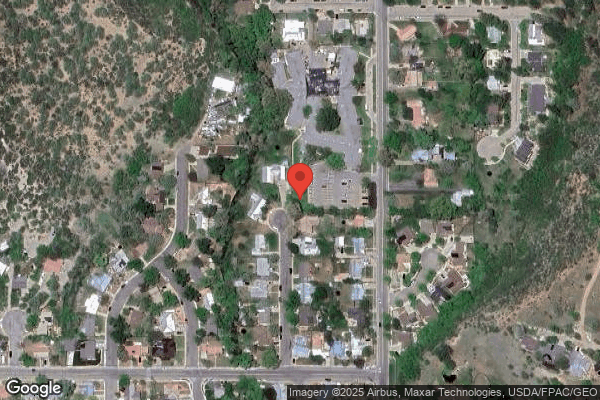
Aug 2019 15 deficiencies
CONCERN (D)

Potential for Harm - no one hurt, but risky conditions existed

Deficiency F0578 (Tag F0578)

Could have caused harm · This affected 1 resident

**NOTE- TERMS IN BRACKETS HAVE BEEN EDITED TO PROTECT CONFIDENTIALITY** Based on record review and interviews, the facility failed to clarify resuscitation choices and document them accurately in the ...

Read full inspector narrative →
**NOTE- TERMS IN BRACKETS HAVE BEEN EDITED TO PROTECT CONFIDENTIALITY** Based on record review and interviews, the facility failed to clarify resuscitation choices and document them accurately in the medical record for one (#305) of one resident reviewed for advanced directives of 46 sample residents. Specifically, the facility failed to ensure the current physician orders (CPO) for Resident #305's code status accurately reflected the resident's choices for advanced directives. Findings include: A. Facility policy and procedure The Advanced Directives policy and procedure, revised February 2017, was provided by the district director of clinical services (DDCS) on [DATE] at 1:15 p.m. It documented the facility was responsible for notification of the resident's physician of a resident's choices for resuscitation, and was responsible to obtain and enter the information in the electronic health record (EHR). B. Resident #305 status Resident #305, age [AGE], was admitted on [DATE]. According to the [DATE] CPO, diagnoses included psoas muscle abscess, pneumonia and type two diabetes. The [DATE] minimum data set (MDS) assessment revealed the resident was cognitively intact with a brief interview for mental status (BIMS) score of 15 out of 15. He was able to understand others and make himself understood and exhibited no mood or behavioral symptoms. C. Record review 1. Signed physician orders, dated [DATE] were provided by the district director of clinical services (DDCS) on [DATE] at 1:30 p.m. The orders documented Resident #305 as a cardiopulmonary resuscitation (CPR) candidate. 2. The Advance Directives form, signed by Resident #305 and dated [DATE], provided by the DDCS on [DATE] at 1:30 p.m., revealed the resident requested do not resuscitate (DNR). 3. Resident #305's care plan, initiated [DATE], identified Resident #305 as a full code, which included possible interventions of CPR, a feeding tube, intravenous fluids (IVs), and lab tests. 4. On [DATE] at approximately 12:30 p.m., the code status within the EHR identified Resident #305 as a full code. D. Staff interviews Registered nurse (RN) #6 was interviewed on [DATE] at 1:46 p.m. She said the code status of Resident #305 was determined by the most recent signed order in the resident's paper chart. She said the signed order of DNR, dated [DATE], was in conflict with the code status of full code in the EHR. She said the medical orders for scope of treatment (MOST) form was possibly in the physician's mailbox awaiting a signature. The DCCS was interviewed on [DATE] at approximately 1:50 p.m. She said Resident #305's code status was DNR as indicated on the signed order dated [DATE]. She said the process for honoring a resident's choice for end of life care should be evaluated and modified as needed. E. Follow-up documentation The DCCS provided an outline of the corrected MOST process, signed and dated by herself and the admissions coordinator on [DATE] at approximately 2:30 p.m. The revised process included the following steps: -Discontinue use of the carbon copy advanced directive form; -Create a photo-copy of the MOST form for the paper chart when the original awaited the physician's signature; -Once signed the original MOST form would be placed in the resident's paper chart; and -admission staff would communicate to clinical staff via the EHR to ensure orders were updated appropriately. The August CPO and resident care plan were updated to reflect Resident #305's wishes prior to the survey team's exit on [DATE].
CONCERN (D)

Potential for Harm - no one hurt, but risky conditions existed

Deficiency F0638 (Tag F0638)

Could have caused harm · This affected 1 resident

**NOTE- TERMS IN BRACKETS HAVE BEEN EDITED TO PROTECT CONFIDENTIALITY** Based on record review and interviews, the facility failed to ensure timeliness of minimum data set (MDS) assessments for one (#...

Read full inspector narrative →
**NOTE- TERMS IN BRACKETS HAVE BEEN EDITED TO PROTECT CONFIDENTIALITY** Based on record review and interviews, the facility failed to ensure timeliness of minimum data set (MDS) assessments for one (#2) of two residents reviewed of 46 sample residents. Specifically, more than 120 days elapsed since Resident #2's most recent quarterly MDS. Findings include: I. Facility policy and procedure The Resident Assessment Instrument (RAI) Process policy, revised February 2017, provided by the facility on 8/21/19, included: The facility must assess a resident using the quarterly review instrument . at least once every 3 months . II. Resident #2 Resident #2, age [AGE], was admitted on [DATE]. According to the 3/17/19 MDS assessment, diagnoses included anemia, hypertension and Parkinson's disease. The resident needed extensive assistance with activities of daily living. Record review on 8/21/19 revealed no evidence of a quarterly MDS assessment for Resident #2 since 3/17/19, more than five months before. III. Staff interviews The care management director and MDS coordinator were interviewed on 8/21/19 at 9:25 a.m. They reviewed their MDS assessments for Resident #2, and found that a quarterly should have been done in July. Since the last quarterly they could find was dated 4/13/19, the next quarterly was due 7/13/19, but wasn't completed. They acknowledged it was an oversight and was more than four months late, and said they would set up for assessments of the resident starting today.
CONCERN (D)

Potential for Harm - no one hurt, but risky conditions existed

Deficiency F0645 (Tag F0645)

Could have caused harm · This affected 1 resident

**NOTE- TERMS IN BRACKETS HAVE BEEN EDITED TO PROTECT CONFIDENTIALITY** Based on record review and interviews, the facility failed to ensure a preadmission screening/resident review (PASRR) Level II s...

Read full inspector narrative →
**NOTE- TERMS IN BRACKETS HAVE BEEN EDITED TO PROTECT CONFIDENTIALITY** Based on record review and interviews, the facility failed to ensure a preadmission screening/resident review (PASRR) Level II screen was completed for one (#17) of one resident reviewed for PASRR of 46 sample residents. Findings include: I. Facility policy and procedure The Pre-admission Screening and Resident Review (PASRR) policy, dated November 2017, was provided by the nursing home administrator (NHA) on 8/19/19 at 3:35 p.m. It documented pre-admission screening was coordinated for residents who were identified as having a mental disorder and recommendations from the PASRR Level II determination and the PASRR evaluation report were to be incorporated in the resident's assessment, care planning and transitions of care. The purpose of the policy was to ensure individuals with mental disorders received the care and services they needed. II. Resident #17 A. Resident status Resident #17, age [AGE], was admitted on [DATE]. According to the August 2019 computerized physician orders (CPO), diagnoses included cerebral infarction, post-traumatic stress disorder (PTSD), other specified depressive episodes and dementia with behavioral disturbance and alcohol abuse. The 8/17/19 minimum data set (MDS) assessment revealed the resident was cognitively intact with a brief interview for mental status (BIMS) score of 14 out of 15. The resident felt depressed, hopeless and had decreased energy on two to six days during the 14-day lookback period. The resident displayed no psychosis or behavioral symptoms. He displayed no wandering or rejection of cares. He received an anti-depressant medication daily during the seven day lookback period. B. Record review 1. Care plans Resident #17's care plans were reviewed and no care plan was created in relation to PASRR recommendations for the resident. 2. Physician orders The August 2019 CPO documented the resident received depakote (an anti-seizure medication being used as a mood stabilizer), celexa (an anti-depressant medication) and trazodone (an anti-depressant medication). 3. Treatment administration records (TARs) The August 2019 TAR showed the resident was prescribed depakote for PTSD, celexa for the depressive symptoms of a sad affect and self-isolation in his room, and trazodone for the depressive symptoms of a sad affect and tearfulness. 4. PASRR documentation The preadmission screen advanced group authorization dated 8/16/18 read this resident had a diagnosis of PTSD and was being prescribed two anti-depressant medications, Amitriptyline 50 mg QD (every day) and Venlafaxine 75 mg QD upon admission for depression. The authorization included his most recent BIMS score. Due to the resident's diagnoses of dementia, a short-term approval was made with further review to be completed after 45 days for further evaluation of the resident's mental status. There was no evidence that any further evaluation was requested or completed for Resident #17. III. Staff interviews The health information coordinator (HIC) was interviewed on 8/19/19 at 1:46 p.m. She said neither she nor the social services manager (SSM) could locate a PASRR Level II screen in Resident #17's chart. The SSM and the social services assistant (SSA) were interviewed together on 8/19/19 at 1:51 p.m. They both said Resident #17 did not have a PASRR Level II screen completed and neither the SSM nor the SSA were working in their current positions at the time the resident's screen should have been followed up on and completed by the local mental health center. The SSM said she had contacted the mental health center's PASRR coordinator after this omission was discovered and she was now aware of the PASRR process, which she had been vaguely aware of prior. She said she would submit the proper form to the PASRR coordinator to ensure the Level II screen was completed for this resident and that the facility would follow the recommendations on the Level II screen. She said she thought the facility had a policy related to PASRRs, but she did not have a copy of that policy herself. The district director of clinical services (DDCS) was interviewed on 8/20/19 at 1:11 p.m. She said she had spoken to the corporate social worker consultant, who shared the facility had many problems and issues with the prior SSM, who was let go in December of 2018. She said the consultant had suggested the previous SSM purge some resident charts for some reason and the previous SSM ended up shredding a lot of the resident's documentation and the facility had been working on correcting the problem. The corporate consultant said she would be working with the current SSM and SSA on PASRR regulations and attempting to get copies of any PASRR paperwork for residents in the facility that may have been inadvertently destroyed by the prior SSM.
CONCERN (D)

Potential for Harm - no one hurt, but risky conditions existed

Deficiency F0657 (Tag F0657)

Could have caused harm · This affected 1 resident

**NOTE- TERMS IN BRACKETS HAVE BEEN EDITED TO PROTECT CONFIDENTIALITY** Based on record review and interviews, the facility failed to honor the residents' right to participate in the development and i...

Read full inspector narrative →
**NOTE- TERMS IN BRACKETS HAVE BEEN EDITED TO PROTECT CONFIDENTIALITY** Based on record review and interviews, the facility failed to honor the residents' right to participate in the development and implementation of the person centered care plan process for two (#12 and #64) of two residents reviewed for participation in care planning of 46 sample residents. Specifically, the facility: -Failed to invite Resident #12 and #64 to their care planning conferences; and -Failed to hold quarterly care conferences for Resident #12. Findings include: I. Policy and procedure The Care Plan Conference policy and procedure, dated November 2017, was provided by the director of nurses (DON) on 8/21/19 at 3:51 p.m. It documented the interdisciplinary team (IDT), in conjunction with the resident and/or resident representative, would develop the plan of care based on the comprehensive assessment. The care plan conference was held to identify resident needs and establish attainable goals. Since the comprehensive care plan must be developed within seven days of completion of the comprehensive assessment, care plan conferences were held: Within seven days of completion of the initial MDS assessment; and at intervals every 90 days thereafter; with any subsequent completed assessments. The facility must encourage residents and/or their representatives to participate in care planning to include their attendance at the care planning conference. The facility must make efforts to schedule care plan meetings at the best time of day for residents and representatives. II. Resident #12 A. Resident status Resident #12, age [AGE], was admitted on [DATE] and readmitted on [DATE]. According to the August 2019 computerized physician orders (CPO), diagnoses included chronic kidney disease, diabetes, orthopedic aftercare following surgical amputation, and generalized muscle weakness. The 8/16/19 minimum data set (MDS) assessment revealed the resident had moderate cognitive impairment with a brief interview for mental status (BIMS) score of 12 out of 15. Delirium symptoms included inattention, disorganized thinking, and altered level of consciousness, and no behavioral symptoms were present. He required extensive assistance with bed mobility, transfers, dressing, toilet use, and personal hygiene, and supervision with eating. The resident participated in the assessment but family or significant other did not. The care area summary was void of documentation to indicate which care areas triggered or which were addressed in care plans. B. Resident and family interview On 8/18/19 at 5:15 p.m., Resident #12 and his wife were interviewed in his room. They said the staff did not include them in decisions about his care and had not been invited to attend quarterly care conferences. She said she had concerns about the food, his laundry, his activities participation, and choices he would like to make that she wanted to discuss with facility staff. His wife explained she received a letter from the facility one week ago which said they were going to have a meeting to discuss Resident #12's care, which was scheduled for some time in September, but prior to that, had not had routine meetings. C. Record review The care plan, initiated 10/6/18 and revised 6/26/19, identified activities of daily living (ADL) self-care performance deficits related to activity intolerance, musculoskeletal impairment, bilateral amputee, and vision deficit. The approaches included he required total assistance for transfers and toileting, and extensive assistance for bed mobility. He preferred three to four showers weekly, to choose his own clothing, and soft foods. He had been educated and encouraged to use his call bell for assistance, and due to his vision loss, staff were to ensure his bell was clipped within reach and he was aware of its placement. The Interdisciplinary Care Conference Attendance Records were reviewed from 10/8/18 through 8/21/19, and the following was included: -On 10/8/18, the initial care conference was held with the social services director (SSD), business office manager (BOM), and a therapy staff member. The resident and his wife attended the conference. A handwritten note documented the IDT met to review his plan of care and discuss discharge goals. -On 11/27/18, a care conference was held with the SSD and BOM. The resident attended the conference and his wife attended by phone. There were no notes documented as to what was discussed, and there were no nursing, dietary, activities, or therapy staff in attendance. -There was no documentation to show Resident #12 or his wife were invited to a care conference or that a meeting was held 90 days later, in February 2019. -There was no documentation to show Resident #12 or his wife were invited to a care conference or that a meeting was held 90 days later, in May 2019. -On 6/26/19, a care conference was held with the MDS coordinator, SSD, and a registered nurse (RN). The resident was not invited to his care conference and did not attend. A handwritten note documented the resident's spouse and daughter were not available, but the IDT met to review his care plan. There were no notes documented as to what was discussed, and there were no dietary, activities, or therapy staff in attendance. D. Staff interviews The SSD was interviewed on 8/21/19 at 9:48 a.m., and she said she had been in that position for a little over one year. She confirmed residents should have care conferences initially within the first 72 hours after their admission and at least quarterly after that. She said if a family or resident requested one sooner, they might call an extra one. She said she and the social services assistant were responsible for arranging care conferences and inviting the residents and their families to attend. She said they did not start documenting those invitations until June 2019, and explained she now sent out paper notices and then went back into the progress notes and document that the invitation was sent. She said the resident should always be invited, a copy of the invitation made, and a progress note documented in the electronic medical record (EMR). The SSD said she did not know when Resident #12's last care plan meeting was and stated, I think it has been way too long. I did the first one when he came in. She explained he should have had more, including a quarterly meeting in January, April, and July. She said she was dependent on the MDS coordinator to notify her when a resident was due for an assessment and a subsequent care conference. She said, I don't feel like it has been a real smooth situation, and said she would arrange a care conference for Resident #12 as soon as possible and keep them on track in the future. The MDS coordinator and care management director were interviewed on 8/21/19 at 10:08 a.m., and confirmed they were both responsible for MDSs in the facility. The MDS coordinator said she routinely printed up a schedule of residents who were due for their MDS and gave that to the SSD, who could then arrange the care conferences to coincide with that. She said the SSD was in charge of inviting the residents and their families to the care conferences. She clarified that the families as well as the residents should be invited so that they had a choice to come or not. They were unable to confirm the care conferences for Resident #12 were held quarterly. III. Resident #64 A. Resident status Resident #64, age [AGE], was admitted on [DATE]. According to the August 2019 CPO, diagnoses included adult failure to thrive, generalized muscle weakness, abnormal gait, and chronic ischemic heart disease. The 7/25/19 MDS assessment revealed the resident was cognitively intact with a BIMS score of 13 out of 15. He required supervision with bed mobility, transfers, dressing, toilet use, and personal hygiene. He had no delirium, mood symptoms or psychosis, and received an antidepressant, anticoagulant, and oxygen therapy. B. Resident interview Resident #64 was interviewed on 8/18/19 at 2:14 p.m., and he said he was not involved in decisions about his care at the facility. He stated, If they have meetings like that, I have no knowledge of them. C. Record review The Interdisciplinary Care Conference Attendance Records were reviewed from October 2018 through 8/21/19, and the following was included: -On 12/27/18, a care conference was held with the MDS coordinator, social services director, and unit manager. The resident and representative were not invited to the care conference and did not attend. There was a handwritten note that read, Customary personal care conference update,but no notes were documented as to what was discussed, and there was no dietary, activities, or therapy staff in attendance. -There was no documentation to show Resident #64 or his representative were invited to a care conference or that a meeting was held 90 days later, in March 2019. -On 5/1/19, a care conference was held with the MDS coordinator, SSD, and unit manager. The resident and representative were not invited to the care conference and did not attend. There was a handwritten note that read, IDT met to care plan. There were no notes documented as to what was discussed, and there was no dietary, activities, or therapy staff in attendance. -On 7/31/19, a care conference was held with the MDS coordinator, SSD, and unit manager. The resident was not invited to the care conference and did not attend. His adult protective services (APS) representative was invited and attended the conference. There was a handwritten note that read, IDT met to review care plan, but there were no notes documented as to what was discussed. There were no dietary, activities, or therapy staff in attendance. D. Staff interviews The SSD was interviewed on 8/21/19 at 9:48 a.m. She confirmed she had not invited Resident #64 to his care conferences and so he had not been able to attend them. She attributed the oversight to time management and said she would set up a care conference for him as soon as possible. The DON was interviewed on 8/21/19 at 2:37 p.m. She said residents and their chosen representatives should be invited to the care plan conferences, which should be done at least quarterly, annually, and within the first 72 hours of admission. She confirmed the SSD was responsible for arranging and inviting the residents and their representatives to the meetings, and those should be documented in the residents' medical record. She said families or their representatives should not attend the meetings without the resident present. She said the SSD, MDS team, unit manager, nurse, activities staff, certified nurse aides (CNA) and therapy staff should attend each meeting. The DON explained the CMD was new to her position and was currently receiving training related to MDS scheduling, and hoped the care planning process would be more consistent moving forward. She also said the SSD did not receive adequate training for her position, and they were in the process of providing her with more guidance.
CONCERN (D)

Potential for Harm - no one hurt, but risky conditions existed

Deficiency F0658 (Tag F0658)

Could have caused harm · This affected 1 resident

Based on observations, record review, and interviews, the facility failed to provide services to meet professional standards of quality, affecting two (#44 and #73) of nine residents reviewed for medi...

Read full inspector narrative →
Based on observations, record review, and interviews, the facility failed to provide services to meet professional standards of quality, affecting two (#44 and #73) of nine residents reviewed for medication administration of 46 sample residents. Specifically, the facility failed to ensure medications were handled in a sanitary manner during preparation for Residents #44 and #73. Findings include: I. Professional standard According to the 2009 American Society of Consultant Pharmacist (ASCP), Passing Medications: ASCP's Medication Administration Video Series handout, Tips for Administering Oral Medications, dated 2009, was provided by the nursing home administrator (NHA) on 8/20/19 at 11:22 a.m. It included the following recommendations: When using a standard pill crusher, place the tablet in a mediction cup, place another cup on top, then use the crusher device. This keeps the crushing device clean while preventing medication loss. Wear gloves whenever the handling of a medication is required. II. Facility policy and procedure The Medication Administration policy and procedure, dated June 2008, was provided by the NHA on 8/20/19 at 11:22 a.m. It included: when possible, request that the provider pharmacy package tablets already scored for administration. Since unscored tablets may not be accurately broken, their use is discouraged if a suitable alternative is available. Use a tablet splitter to avoid contact with the tablet if the tablet must be broken in order to administer the proper dose. III. Medications handled in an unsanitary manner A. Observations 1. Registered nurse (RN) #3 was observed preparing and administering medications to Resident #44 on 8/20/19 at 9:30 a.m. The resident's order was for buspirone HCL (antianxiety) 15 mg; give one tablet by mouth one time a day for anxiety. The order was started 8/19/19. The medication blister pack from the pharmacy labeled the tablets as 10 mg each. The RN removed two pills from the card using her bare hands, and placed one in a soufflé cup and the other in a pill splitter. She cut the pill in half by pressing down on the pill splitter, then used her bare hands to remove half of the pill, placed it with the other pill in the soufflé cup, and placed the other half into a medication destruction bottle. The RN administered the medications to the resident at 9:32 a.m., and did not clean or sanitize the pill splitter after it was used. 2. RN #3 was observed preparing and administering medications to Resident #73 on 8/20/19 at 10:00 a.m. The resident's order was for metformin HCL 500 mg by mouth in the morning. The order was started 8/13/19. The medication blister pack from the pharmacy labeled the tablets as 1,000 mg. The RN removed one pill from the card using her bare hands, and placed it inside the pill cutter. She explained she had spoken to the pharmacy earlier that morning and clarified they had not sent the facility the 500 mg tablets, but said she could cut a 1,000 mg tablet in half. She stated, We are getting it done, in other words. Using her bare hands, she made a fist with her right hand, pushed it down to close the lid on the pill splitter, and cut it. It did not cut on the bifurcation and one piece of the pill was larger than the other one. She said, I choose this one, and picked up the larger piece of pill. She said, It is a little bit over, used her bare fingers and placed the half-tablet into a soufflé cup and the other into a medication destruction bottle. She administered the medication to the resident at 10:01 a.m., and she did not clean or sanitize the pill cutter after it was used. (Cross-reference F759, Free of Medication Error Rates of 5% or Less.) B. Staff interviews RN #3 was interviewed on 8/20/19 at 10:04 a.m. She said she routinely used her bare hands to touch the medications when she used the pill cutter. She said, Yes I do. My hands are always in alcohol. If I touch a patient or something, I use gloves. I feel it is okay. We are not allowed to wear gloves in the hallway. If I can't do that then I have to take them someplace private to give them their meds. The director of nurses (DON) was interviewed on 8/21/19 at 2:37 p.m. She said all nurses received medication administration training during orientation and annually, to ensure they were competent to pass medications to residents. She said nurse managers would do observations of nurses administering medications once or twice each year. She said when nurses used the pill splitter, they should don clean gloves, pop the medication into a cup, dump it into the pill cutter, and cut it in half. She said the pill cutter should be cleaned in between each use with an EPA registered sanitizing wipe.
CONCERN (D)

Potential for Harm - no one hurt, but risky conditions existed

Accident Prevention (Tag F0689)

Could have caused harm · This affected 1 resident

**NOTE- TERMS IN BRACKETS HAVE BEEN EDITED TO PROTECT CONFIDENTIALITY** II. Failure to ensure safe smoking practices for Resident #40 A. Facility policy and procedure The Safe Smoking and Tobacco Use ...

Read full inspector narrative →
**NOTE- TERMS IN BRACKETS HAVE BEEN EDITED TO PROTECT CONFIDENTIALITY** II. Failure to ensure safe smoking practices for Resident #40 A. Facility policy and procedure The Safe Smoking and Tobacco Use policy, revised November 2017, provided by the director of nursing (DON) on 8/21/19 at 1:20 p.m. read, the degree of supervision was determined based on the safe smoking and tobacco use evaluation, the physical attributes of the smoking area, and other relevant factors. Residents who were determined to be unsafe while smoking were required to wear a protective smoking apron and were supervised at all times while smoking. B. Resident #40 1. Resident status Resident #40, age [AGE], was admitted on [DATE]. According to the August 2019 computerized physician orders (CPO) diagnoses included vascular dementia without behavioral disturbance, epilepsy, and abnormalities of gait and mobility. According to the most recent minimum data set (MDS) assessment completed 7/2/19, the resident's cognition was moderately impaired with a score of eight out of 15 on the brief interview for mental status (BIMS) assessment. 2. Resident interview Resident #40 was interviewed on 8/18/19 at 2:22 p.m. She said she had fallen outside while smoking about two or three months previous. She said she had been sent to the hospital for X-rays and did not break anything but was bruised up. 3. Record review The most recent Safe Smoking Evaluation completed on 7/12/19 provided by the facility showed the resident was determined to be an unsafe smoker requiring direct supervision. A post-fall review investigation completed by the facility on 7/16/19, provided by the facility, showed the resident stated she fell on the concrete when she was outside smoking by herself. The resident stated the fall occurred the day before yesterday at an unknown time, and that she was sent out for an X-ray of her shoulder, which was negative. There was no record of the fall or X-ray found according to the post fall review. A head to toe skin check evaluation performed on 7/16/19 showed the resident's skin was intact with no bruising. 4. Resident observations On 8/19/19 at 4:12 p.m., Resident #40 was observed outside at the smoking area with a lit cigarette, unsupervised, without staff present. 5. Staff interviews Resident assistant (RA) #2 was interviewed on 8/21/19 at 9:20 a.m. She said Resident #40 was a non-safe smoker who needed direct supervision during smoking. She said the resident should not be left alone with a lit cigarette. She said she was unaware of any incidents with Resident #40 that caused her injury while smoking. The DON was interviewed on 8/21/19 at 12:31 p.m. She said they were unsure if Resident #40 fell outside or not, but the resident was an unsafe smoker and required supervision at all times. She said staff should be directly supervising residents while smoking from start to finish and Resident #40 should never be left outside alone with a lit cigarette. The DON said if the resident was supervised at all times while smoking there should be no question of whether the resident fell or not. Based on observations, record review, and interviews, the facility failed to provide adequate supervision to ensure freedom from falls and accidents for two (#40 and #89) of five residents reviewed for accidents and hazards of 46 sample residents. Specifically, the facility failed to ensure thorough and timely interventions to prevent falls for Resident #89. The facility failed to thoroughly assess and implement all possible fall interventions for Resident #89 in a timely manner, which included using a male certified nurse aide (CNA) for Resident #89's cares, moving the resident closer to the nurses' station to assist with frequent rounding in a timely manner, and ensuring appropriate footwear was maintained consistently. As a result, Resident #89 sustained 13 falls within the previous two months, five falls within the previous week. The resident sustained skin tears, bruising, head and facial injuries, and a visit to the local emergency room, after which the resident continued to fall. The facility further failed to provide supervision to ensure safe smoking practices for Resident #40. Findings include: I. Failure to ensure thorough and timely interventions to minimize falls for Resident #89 A. Facility policies and procedures The Fall Management policy, dated July 2017, documented the facility should provide the resident adequate supervision, assistive devices and/or functional programs, as appropriate, to minimize the risk for falls. The interdisciplinary team (IDT) should evaluate each resident's fall risk. Care plans should be developed and implemented, based on the evaluation, with ongoing review. The Fall Management policy, dated November 2017, documented the nurse would discuss recommended interventions to reduce the potential for additional falls with the resident and/or resident's representative and document in the care plan and progress notes. The care plan would be reviewed and/or revised as indicated. B. Resident #89 1. Resident status Resident #89, age [AGE], was admitted on [DATE]. According to the August 2019 CPO, diagnoses included encephalopathy, epilepsy, muscle weakness, unsteadiness on feet, lack of coordination and cognitive communication deficit. The 8/2/19 minimum data set (MDS) assessment revealed the resident's brief interview for mental status (BIMS) score was not completed, but documented the resident displayed both short-term and long-term memory deficits. The resident required supervision to safely ambulate in his wheelchair. The resident required extensive assistance for bed mobility, transfers and toileting. The resident rejected cares on four to six days during the seven-day lookback period. The MDS did not document that Resident #89 wandered in the facility. 2. Observations of Resident #89 Resident #89 was first observed on 8/18/19 at 3:18 p.m. He was seated in a wheelchair in the assistance area of the main dining room. Resident #89 was observed with a large, greenish-black colored hematoma above his left eye. He was wearing no shoes, and had regular (not non-skid) white socks on his feet. On 8/18/19 at 5:00 p.m., Resident #89's roommate was observed leaving his room and telling registered nurse (RN) #2 that Resident #89 had just fallen in the bathroom. RN #2 asked that certified nurse aide (CNA) #8 be notified to assist her with Resident #89. The call light was observed being on prior to RN #2 entering the resident's room. After assessing Resident #89 and assisting him back into his wheelchair, both RN #2 and CNA #8 stated the resident did not injure himself. Resident #89 was observed on 8/19/19 at 8:37 a.m. He was in his room with his call light on, and was attempting to get out of bed on his own. He seemed confused and paranoid, as he was voicing thoughts of people trying to poison him. The resident was able to transfer from his bed to his wheelchair in a shaky manner before staff were observed to answer his call light. There was no evidence of non-skid strips located near the resident's bed or in his bathroom. The resident then propelled himself down his hallway and was observed wearing yellow non-skid socks, but the gripper portion of the socks were on top of his feet. His socks were not donned appropriately and socks were observed bunched up around his toes on both feet. Several staff members passed this resident on their way down the hall and no staff observed that his non-skid socks were donned inappropriately. 3. Record review a. Care plans The care plans dated 4/11/19 were reviewed and they documented the following: -The resident was at high risk for falls related to confusion and poor safety awareness. Interventions included anticipating and meeting the resident's needs, encouraging the resident to use his call light for assistance, the resident needed prompt response to all requests for assistance, encourage the resident to wear appropriate footwear (including non-skid socks), and the resident had anti-roll backs placed on his wheelchair. Staff were to assist the resident with routine toileting until he regained his strength and was able to toilet himself independently again. -The resident had a behavior problem and recently started to decline his medications by pocketing them in his cheek, hiding them in his room or declining to take his medications altogether. He had also been declining to wear his non-skid socks and shoes and had been educated on safety risks related to his declining appropriate footwear. Interventions included observing the resident's behavioral episodes and attempting to determine the underlying cause. The facility was to document behaviors and potential causes. b. Fall risk assessments The most recent fall risk assessment, dated 8/6/19, rated Resident #89 as a high risk for falls with a score of 18 (10 or higher was deemed high risk). Factors that affected the resident's score were disorientation, three or more falls in the past three months, the resident being wheelchair bound, poor vision, medications prescribed, recent medication changes and predisposing disease processes. The fall risk assessment dated [DATE] (seven days prior to the most recent assessment) rated Resident #89 as a high risk for falls with a score of 12. c. Interdisciplinary team (IDT) post fall reviews -The resident sustained an unwitnessed fall on 6/7/19 at 10:50 p.m. with no injury. He was found sitting on the floor of his room, facing the end of the bed with his left leg crossed. He was unable to say what he was trying to do. He said that the CNA was assisting his roommate and said the floors were slippery. He was wearing slippers at the time of the fall. The IDT recommendation was for housekeeping to assess the floor for slick areas and clean the floor. The team noted an increase in the resident's behaviors and reminded the nurses to ensure the resident was taking and swallowing his prescribed medications. -The resident had an unwitnessed fall on 6/24/19 at 11:30 p.m. and sustained a bump to the upper left side of his head. He was found sitting on the floor next to his bed after he had pushed his call light. He stated he hoped the bosses were happy, because they were the ones that moved his wheelchair and now he fell and bumped his head. The resident's wheelchair was found in the locked position and within reach of his bed at the time of the fall. The resident denied any pain and was encouraged to ring for assistance. -The resident sustained an unwitnessed fall on 6/29/19 at 9:30 p.m. He was found on the floor in the doorway to his bathroom, covered in feces. His socks were on, but the type of socks was not specified. His call light was clipped next to his pillow, but it was not documented whether or not it was on. -The resident sustained an unwitnessed fall on 7/7/19 at 9:30 p.m. with no injury. He was found on the floor of his room, on his stomach beside the bed. His wheelchair was in front of him, his pants were halfway down and he reportedly appeared to be trying to get into his wheelchair. An intervention was for staff to be educated on toileting the resident routinely until the resident regained his strength and was able to toilet independently. Routine toileting was added to the resident's care plan as of 7/8/19. -The resident sustained an unwitnessed fall on 8/4/19 at 3:00 p.m. with no injury. He was found sitting on the floor beside his bed, leaning against the bed with his pants down. He stated he was trying to transfer from his bed to his wheelchair when he lost his balance and fell to the floor. The resident sustained a mild abrasion on his mid-spine, but denied pain. He was wearing his shoes. The intervention was for Resident #89 to start with therapy services. -The resident sustained an unwitnessed fall on 8/5/19 at 8:30 p.m. with no injury. He was unable to describe what happened. He was found on the floor in between his bed and his wheelchair. The resident was observed stating, You SOB, you'll get what's coming to you. It was documented the resident was wearing socks, but did not specify what type. An intervention was to re-educate staff on ensuring that resident had non-skid socks on if resident allowed. -The resident sustained a witnessed fall with a possible head injury on 8/6/19 at 9:30 a.m. The resident had a laceration on his cheek, below his left eye and a hematoma over his left eyebrow. The resident was observed leaning over in his wheelchair to pick up a sugar packet on the floor. The resident was wearing shoes. It was documented Resident #89 was having hallucinations and paranoid behaviors. The intervention was to keep the resident in supervised areas. -The resident sustained an unwitnessed fall on 8/8/19 at 12:00 a.m. The resident was found lying on the floor in the assisted dining room. He was up on his knees, bent over, with his head on the floor. His wheelchair was approximately two feet behind him. He was unable to state what happened.The resident was wearing slippers at the time of his fall. Upon initial assessment, the resident sustained a hematoma to the top of his left eye and forehead. Resident #89 reported pain to his head. He was assisted to his wheelchair and ice was applied to the injury. He was then transferred to the local hospital via ambulance and returned to the facility a few hours later after the resident's CT scan of his head was negative. Emergency medical services were called. An intervention was for a pending hospice consult, as the resident remained confused, paranoid and non-compliant with medication administration. Another IDT intervention was to place anti-roll backs on his wheelchair due to his poor safety awareness. Physical therapy (PT) and occupational therapy (OT) referrals were made. -The resident sustained an unwitnessed fall on 8/17/19 at 12:45 a.m. with no injury. The resident said he did not fall and just slid off the bed, which was in the low position. The resident was found sitting on the floor, leaning back against the bed. He was wearing slippers. -The resident sustained an unwitnessed fall on 8/17/19 at 8:00 p.m. He suffered a hematoma on the left side of his forehead. Resident #89 was found lying on the floor, on his left side, in his bathroom doorway; he stated he was attempting to go to the bathroom when he fell and hit his head on the doorframe. The fall investigation documented the resident was wearing slippers. -The resident sustained an unwitnessed fall on 8/18/19 at 5:12 p.m. with no injury. The fall investigation documented the resident was taken to his room by another resident and after the transporting resident left his room, Resident #89 attempted to go to the bathroom without assistance, was too weak and fell to the floor. He denied any pain. It was documented the resident was wearing socks, but did not document what type. -The resident sustained an unwitnessed fall with no injury on 8/19/19 at 12:15 a.m. The resident stated he was trying to get out of bed, but was unable to verbalize where he was going. He was found lying on the floor next to his bed. Resident #89 denied any pain. It was documented the resident was wearing socks during the time of his fall, but the type was not documented. An IDT recommendation was to move the resident to a room closer to the nurses' station, as the resident had very poor safety awareness. Resident #89's room was the last room on the right down Mariposa C hall, which was the furthest away from the nurses' station. Other recommendations were to continue with therapy services as ordered and to recommend the pharmacist evaluate Resident #89's medications. -The resident sustained an unwitnessed fall on 8/19/19 at 11:00 p.m. He had a small skin tear to his left elbow, which was cleansed and left open to the air. The resident was found in his room, leaning back against his bed. He was agitated and yelling that someone mopped his floor on purpose, causing him to fall. The resident was observed in bed prior to the fall, but it was not documented how long prior to the fall the resident was observed. The resident was wearing slippers at the time of the fall. The intervention from the nurse practitioner (NP) was again for a hospice referral. The documentation revealed Resident #89 had fallen 13 times in the past two months with five falls occurring within the previous week. d. Fall at-risk meeting notes -7/8/19: Resident doing well after fall without injury. Staff educated to assist resident with routine toileting. -7/11/19: IDT met about recent fall. Resident has started on physical therapy. Continues to have paranoia and not cooperative with care at all times. -8/6/19: IDT met to review care plan due to fall. Staff to be educated on the use of non-skid socks and continue with current interventions. -8/7/19: IDT met to review care plan due to fall. Will have the NP evaluate medications and talk with resident about importance of taking medications. -8/8/19: IDT met to review recent falls. Resident continues with paranoid behaviors, refusing to eat, declining all medication, delusional fixed false beliefs, etc. Nurse practitioner for palliative care. Care plan meeting with family this date to discuss acute psychosis and possible treatment. -8/15/19: IDT met to review recent fall. Anti-roll backs were placed on wheelchair due to poor safety awareness and impulsivity. All other interventions to continue. -8/19/19: Memo from the director of nursing (DON) to the pharmacist to evaluate the resident's medications, as he had sustained four falls in the past two days. It documented the resident was hallucinating, paranoid, yelling at others and threatening. e. IDT progress notes The progress note of 8/11/19 at 1:00 p.m. documented in part after the resident left for a weekend visit to his son's home: His son reported two episodes of agitation where the resident did not recognize him, but the resident later apologized for the incident. His son reported that the resident did not eat very much, but did take all of his medications. The progress note of 8/14/19 at 8:56 p.m. documented Resident #89 went out the door by the therapy gym and was observed wheeling down the ramp to the parking lot. He was spotted by a CNA working on the Junction Creek rehabilitation hall and returned to the building. The progress note of 8/18/19 at 10:30 a.m. documented Resident #89 was very paranoid that shift. He was seeing a dog with four eyes and said he heard the dog barking and people being thrown into the corner. He kept asking everyone to call the police and the FBI. Staff were unable to redirect the resident, who was very restless. The resident was documented to take all of his medications that morning. The Situation, Background, Assessment and Recommendation (SBAR) note dated 8/19/19 at 12:28 a.m. read, RN Assessment/LPN Appearance of resident - What I think is going on with the resident is: (Resident's name) tried to crawl out of bed. He was found on the floor next to the bed stating that his roommate would not help him. (Resident's name) states that he will continue to try to get up and he will not help anyone in any way for any reason. He is very paranoid and very hostile toward staff, other residents and visitors. The progress note of 8/19/19 at 9:28 a.m. documented the resident's son was notified about the recommendation to move Resident #89 closer to the nurse's station and the son agreed with the recommendation. The pharmacist was notified about the need for a medication review and the NP was notified about the increase in the number of the resident's falls and the need for further evaluation. 4. Staff interviews RN #2 was interviewed on 8/18/19 at 5:07 p.m. immediately following a fall sustained by Resident #89. She said the resident had been falling often. She said Resident #89 did not have his shoes or slippers on during the time of the fall; he was wearing regular white socks. She said the resident needed to use the bathroom during church service and another resident took him back to his room. She said no staff member had ensured that Resident #89 had proper footwear on prior to his fall. RN #3 was interviewed on 8/19/19 at 8:37 a.m. When the RN was asked about the fall Resident #89 sustained the evening prior, she said the resident had his call light on and was trying to get out of bed at the same time. The RN said Resident #89 was very confused, paranoid and resistive to care, as he thought people were trying to poison him. She said the resident had a long history of epilepsy and epileptic medication use. The RN said the resident displayed fine tremors due to his history of medication usage. She said Resident #89 was proud and tended to refuse help or assistance from staff. She said the CNAs tried to assist the resident, but he could become somewhat combative with the staff at times. CNA #4 was interviewed on 8/21/19 at 10:10 a.m. She said she worked with Resident #89 often and said the CNAs would offer to assist the resident to the bathroom, but he would often refuse, as he wanted to stay independent. She said he would not use his call light. She said she would offer to assist the resident with donning his slippers or non-skid socks and he accepted her help unless he was very paranoid at that time. She said the resident's room was quite a distance from the nurses' desk and she felt moving the resident's room closer to the nurses' station would be effective in minimizing his falls. She said she tried to check on the resident every 15 minutes, as she was aware he was a high fall risk, but when they got busy, she was only able to check on the resident every 30-45 minutes. She felt frequent checking on the resident could also minimize his risk of falls. The social services manager (SSM) and the unit manager (UM) were interviewed together on 8/21/19 at 11:40 a.m. The SSM said she had concerns about the number of falls Resident #89 had sustained recently. She said the facility held a care conference with his son via telephone with the NP present to explain both the physical and mental deterioration of Resident #89, of which the facility was aware. She said the facility was seeking a hospice consult. The UM said current interventions to minimize falls included having the resident wear non-skid socks, which he would occasionally refuse. She said Resident #89 would not allow assistance with toileting, where most of his falls occurred, but it appeared the resident trusted males more than females for caregiving. This was not mentioned in the resident's care plan. She said the facility placed anti-roll backs on his wheelchair, but the resident became frustrated by them. She said staff needed to anticipate the resident's needs. She said Resident #89 adamantly refused to change rooms to be closer to the nurse's station. Neither the SSM nor the UM mentioned frequent rounding on this resident. The district director of clinical services (DDCS) was interviewed on 8/21/19 at 12:00 p.m. She said the facility's corporation did away with their Falling Stars/Falling Leaves program approximately a year or so ago for some reason. She said current fall interventions should be discussed with the DON, as she was always in this building. The rehab manager (RM), the NP and the DON were interviewed together on 8/21/19 at 1:51 p.m. They said Resident #89 had an unresponsive episode the evening of 8/20/19. He was sent to the local hospital and diagnosed with having a seizure. He was returned to the facility earlier that morning at approximately 10:30 a.m. The NP said Resident #89's depakote levels and general lab work had been reviewed every month since March 2019 and nothing significant had been detected. She said the resident had been referred to the local mental health center and his last appointment there had been either 8/11/19 or 8/12/19. She stated he also saw a neurologist on an outpatient basis, who stated there were limitations on what they could do to prevent Resident #89's seizures. She felt the resident could be having petit mal seizures during his falls, as the resident was found frequently just staring into space. She said the resident began on palliative care on 4/11/19. She said they saw a huge decline in Resident #89 during the month of May 2019. She stated she had reviewed the resident's medications and there were not a lot of unnecessary medications being prescribed. She said she could look at the resident's prostate medications and request modification to decrease his feelings of urgency with urination. She stated she had encouraged Resident #89 with various methods to communicate with facility staff, as the resident no longer had the capacity to use his call light. The incapacity of Resident #89 to use his call light was not included in the resident's care plan. The RM stated that he had a good rapport with Resident #89. He agreed the unresponsive episode the evening prior was a seizure activity. He agreed that Resident #89 responded better to males. Until this time, no one in the facility had mentioned trying different staff to assist Resident #89, male or female. He stated Resident #89 was currently receiving therapy and all disciplines noticed increased confusion in June 2019, with cognition dropping around mid-May. He said the resident's level of paranoia was a barrier in relation to his ability to participate in therapies. He said it would be worthwhile to attempt to hire more male CNAs to assist with this resident's care. He was asked if they had thought about placing non-skid strips near his bed and in the bathroom area, given the great majority of his falls were unwitnessed with the resident attempted to transfer without assistance. He said the resident used grab bars and that the strips were deemed to be more of an accident hazard for Resident #89, as he tends to drag his feet when ambulating and could catch his feet on the strips. The nursing home administrator (NHA) was interviewed on 8/21/19 at 4:25 p.m. She said the RM had spoken to Resident #89, who agreed to change rooms to be closer to the nurses' station.
CONCERN (D)

Potential for Harm - no one hurt, but risky conditions existed

Deficiency F0692 (Tag F0692)

Could have caused harm · This affected 1 resident

**NOTE- TERMS IN BRACKETS HAVE BEEN EDITED TO PROTECT CONFIDENTIALITY** Based on observations, record review, and interviews, the facility failed to maintain acceptable parameters of nutritional statu...

Read full inspector narrative →
**NOTE- TERMS IN BRACKETS HAVE BEEN EDITED TO PROTECT CONFIDENTIALITY** Based on observations, record review, and interviews, the facility failed to maintain acceptable parameters of nutritional status for one (#12) of five residents reviewed for nutrition out of 46 sample residents. Specifically, the facility failed to: -Adequately assess, monitor, and address the nutritional needs for Resident #12; -Obtain Resident #12's weight when he was readmitted to the facility; and -Identify and assess a weight loss of 8.76 percent (%) over a six-month period for Resident #12. Findings include: I. Facility policy and procedure The Weight Management policy, dated July 2017, was provided by the director of nurses (DON) on 8/21/19 at 3:51 p.m. It included a resident's nutritional status would be monitored on a regular basis to aid in the maintenance of acceptable parameters, such as body weight and protein levels, unless the resident's clinical condition demonstrates this is not possible. Residents are offered a therapeutic diet when there was a nutritional concern. The measurement of weight was a guide in determining nutritional status. Therefore, the evaluation of the significance of weight gain or loss is a part of the assessment process. All residents should be weighed upon admission and readmission. They should be weighed weekly for an additional three weeks, then monthly or as indicated by the physician orders and/or the medical status of the resident. As residents were weighed, staff could compare their current weight to previous weights. Residents with weight variances were re-weighed within 48 hours. Staff members would be assigned to obtain weight and re-weight data; determine residents who should be re-weighed; and review weight reports to evaluate and verify weight data. The weekly At Risk Review Meetings would be conducted on each resident with weight loss until the interdisciplinary team (IDT) determined the weight has stabilized and could discontinue them from weekly review. The food service manager and/or registered dietician (RD) would visit with the resident, the resident's representative, and care staff regarding weight status. The assigned IDT member would discuss recommended interventions related to weight status with the resident and/or their representative. The DON would notify the attending physician of significant weight changes and the attending physician would be notified of recommendations of the IDT and orders obtained, if indicated. II. Resident #12's status Resident #12, age [AGE], was admitted on [DATE] and readmitted [DATE]. According to the August 2019 computerized physician orders (CPO), diagnoses included chronic kidney disease, diabetes, long-term use of insulin, dysphagia, orthopedic aftercare following surgical amputation, and generalized muscle weakness. The 8/16/19 minimum data set (MDS) assessment revealed the resident had moderate cognitive impairment with a brief interview for mental status (BIMS) score of 12 out of 15. Delirium symptoms included inattention, disorganized thinking, and altered level of consciousness, and no behavioral symptoms were present. He required extensive assistance with bed mobility, transfers, dressing, toilet use, and personal hygiene, and supervision with eating. He did not have a poor appetite and had no signs or symptoms of a possible swallowing disorder. His height was 63 inches and weight was 125 pounds (#). He required a mechanically altered and therapeutic diet while he was a resident. He had no or unknown weight loss of 5% or more in the last month or 10% or more in the last six months. A. Resident and family interviews and observations On 8/18/19 at 5:15 p.m., Resident #12 and his wife were interviewed in his room. She said he ate his meals in his room, which was what he preferred to do rather than going to the dining room. He said he received his breakfast each morning around 9:30 a.m., and the oatmeal is always cold and the rolls were hard. She said a few days ago, he was served gravy without any meat, and that was it. No vegetables or anything. She said he did not receive three meals each day, because he chose to skip dinner, and that was his choice. She said he did not receive snacks in between meals and she did not know if he had lost weight. She said he had been transferred to the hospital within the last couple of months to treat a urinary tract infection and he stayed there for a few days. (Cross-reference F561 food and snack choices and F804 food palatability.) On 8/20/19 at 1:32 p.m., the lunch meal was delivered to Resident #12 in his room and was placed on his bedside table in front of him. The certified nurse aide (CNA) who delivered the tray removed the plate warmer but did not assist him with any set up help or ask him if he needed anything else, and left the room. At 2:00 p.m., the resident was observed participating in a religious service in the activities room. His lunch plate remained on his bedside table in his room and he had eaten approximately 75% of the meal. On the afternoon of 8/21/19, Resident #12 was sitting in his wheelchair in his room. He said he liked to eat mashed potatoes without gravy but liked them with butter. He also liked hamburgers, fruit, and coffee and milk to drink. He said he liked to eat soft foods because he did not like to wear his lower dentures. He said he liked watermelon also, but sometimes they brought him green watermelon and he was not able to chew it. He said the food was not too good, and sometimes he asked for something but did not receive what was listed on his tray ticket. He said, I complain about that and they tell me they will be back and they never come back. I'm tired of it. He said sometimes he would call his wife and ask her to bring him some food from somewhere else. He explained he was completely blind in his right eye and needed the staff to help him and show him what was on his plate when it was delivered. He said, I like them to give me my spoon and my napkin, but sometimes they give me my food and they are out the door without helping him. B. Record review The care plan, initiated 10/15/18 and revised 6/26/19, identified the resident had potential nutritional problems related to the need for a therapeutic, mechanically altered diet. The approaches included: Determine individual likes and dislikes, invite him to activities that promoted additional intake, obtain and observe lab/diagnostic work as ordered, report results to MD and follow up as indicated, provide and serve his diet as ordered, observe intake and record every meal, and the registered dietician (RD) was to evaluate and make diet change recommendations as needed. The care plan, initiated 10/6/19 and revised 6/26/19, identified the resident had an activities of daily living (ADL) self-care performance deficit related to activity intolerance, musculoskeletal impairment, was a bilateral amputee (below the knees) and had a vision deficit. The approaches included he was independent with set up for eating. The CPO for August 2019 included the following orders: -Consistent carbohydrate diet (CCD), mechanical soft texture, started 2/14/19 -Sent to (local emergency department) for hyperkalemia per non-emergent transport via ambulance per (physician name) orders, dated 5/20/19 The food preferences for Resident #12 were reviewed on the Meal Tracker, and included: (Resident #12) has no special requests. The initial nutritional assessment, dated 10/15/18, documented the resident's admission weight was 144.8# and BMI (body mass index) was 25.7. His ideal body weight was not documented and his usual body weight was documented as unsure. A current unstageable pressure ulcer was present, he wore dentures, was independent in his ability to feed himself, and there had been no change in his weight status. The assessment did not address his bilateral lower leg amputations. A quarterly nutritional assessment, dated 3/30/19, documented the resident's most recent weight was 136# and his usual body weight was 130s. The assessment documented there was no change in his weight status and he received snacks at hour of sleep and as needed, with good intakes noted. The summary/plan documented the current weight was 136# and BMI was 24.1. The resident remained on a CCD and Mechanical soft with good intakes. Staff encourages intakes and honors food preferences. Agree with current dietary interventions. Will continue to monitor for significant changes in labs, meds, weights and PO (oral) intakes. The weight history was reviewed from 2/12/19 through 8/6/19 (six months), and the following weights were recorded: -2/12/19 137# -3/7/19 136# -4/5/19 135# -5/22/19 re-admitted from acute hospital. No weight obtained in May 2019. -6/13/19 127# -7/5/19 126# -8/6/19 125# In summary, Resident #12 lost 12 pounds, or 8.76% over a six-month period. A quarterly nutritional assessment, dated 5/20/19 (date resident was transferred to local emergency department), documented the resident's most recent weight was 135# and BMI was 24. The summary/plan documented the identical statement to the one documented in the previous quarterly nutritional assessment, and did not address the lack of a current weight for May 2019 or that the resident did not eat a dinner meal most days. The nursing monthly summaries for June, July, and August 2019, identified the resident was independent with eating and required set up help only. The meal intake records for June, July, and August 2019 documented Resident #12 chose not to eat a dinner meal most days and resident refused the evening meal. For breakfast and lunch, he averaged 51-100% of each meal was consumed. The resident did not receive a snack at hour of sleep on most days. A quarterly nutritional assessment, dated 8/20/19, documented the resident's most recent weight was 124.7# and his BMI was 22.1. The assessment documented there was no change in his weight status and he received snacks at hour of sleep and as needed, with good intakes noted. The summary/plan documented the identical statement to the one documented in the previous quarterly nutritional assessment, and did not address his weight loss. C. Staff interviews CNA #7 was interviewed on 8/21/19 at 2:01 p.m.She confirmed she routinely worked with Resident #12 during the evening shift, and said he was not able to provide much care for himself. She said in the evenings, after physical therapy staff had worked with him, the family would come in to visit, and then notify her when he was ready to lie down in bed. She explained he required the use of a mechanical lift for the transfer, and then once he was in bed, he did not eat dinner. She said he usually went to bed between 3:30 p.m. to 4:30 p.m. each day. She said she tried to talk him into sitting up longer and watch TV, but he wanted to go to sleep. The CNA said Resident #12 liked to eat bananas, peanut butter and jelly sandwiches, and loved to drink milk. She said his appetite would vary daily and sometimes she could talk him into eating some pudding or vanilla wafers, but he would not eat after 6:00 p.m. The RD was interviewed on 8/21/19 at 10:38 a.m. She said the facility had different interventions in place to prevent resident weight loss that included adding nutritional supplements, providing extra snacks, speech referrals as needed, and a weekly Systems meeting where the IDT discussed weight loss, wounds, falls, etc. to find interventions that might help residents. The RD explained the resident's weight schedules were placed on the medication administration records (MAR) when they were due, then the nurse informed the CNAs when to obtain a resident's weight. She said those weights were reviewed in the weekly Systems meeting. The RD said she was more involved with Resident #12 several months ago, but not recently, and he did not trigger for a significant weight loss. She stated, I don't remember ever reviewing him. She said she was curious whether he was being weighed with the prostheses on, and then maybe with them off, which might explain a weight loss, but could not find documentation that referred to the prosthetics. She stated, If someone had bilateral prosthetic legs, that would generally be something I would include in my nutritional assessments. She said she was not aware the resident did not eat dinner and had not written a progress note that addressed it. She said she did not know why his weight in May was not checked, and said he should have had a readmission weight completed when he returned from the hospital on 5/22/19. She confirmed there were currently no interventions in place to prevent Resident #12's weight loss because he hasn't been on our radar. The unit manager (UM) was interviewed on 8/21/19 at 12:24 p.m.She said Resident #12 was always weighed with his prosthetics on and had always been weighed consistently. She confirmed he did not eat dinner and was able to make his needs known if he wanted to eat a snack. She said his appetite was pretty good overall and he ate 75-100% of breakfast and lunch, and did not receive scheduled snacks. She confirmed he had had a weight loss and stated, I'm not really sure how we didn't catch it. The DON was interviewed on 8/21/19 at 2:37 p.m.She said residents' weights should be obtained on admission, daily for the first three days, and then at least monthly after that. They might also have a weekly weight done as well if they were having issues. She said the facility prevented weight loss by encouraging snacks, encouraging families to bring in food the resident might like, or offering nutritional supplements if they started to see a weight loss trend. She said their morning facility meeting included a review of residents who had a triggered weight loss, and then they discussed the resident during their weekly Systems IDT meeting. She said she did not know Resident #12 had had a weight loss and knew he had been hospitalized a few months ago. She said she was not aware he had a greater than eight percent weight loss and there were no weight loss prevention interventions currently in place to address it. She said she did not know why he refused to eat dinner meals and said she had been told, He is just not a dinner person.
CONCERN (D)

Potential for Harm - no one hurt, but risky conditions existed

Unnecessary Medications (Tag F0759)

Could have caused harm · This affected 1 resident

Based on observations, record review, and interviews, the facility failed to ensure it was free of a medication error rate of five percent (%) or greater. Specifically, the medication administration o...

Read full inspector narrative →
Based on observations, record review, and interviews, the facility failed to ensure it was free of a medication error rate of five percent (%) or greater. Specifically, the medication administration observation error rate was 7.69%, or two errors out of 26 opportunities for error. Findings include: A. Facility policy and procedure The Medication Administration policy and procedure, dated June 2008, provided by the nursing home administrator (NHA) on 8/20/19 at 11:22 a.m., included medications were administered in accordance with written orders of the attending physician. For tablet form of medications, when possible, request that the provider pharmacy package tablets already scored for administration. Since unscored tablets may not be accurately broken, their use is discouraged if a suitable alternative is available. Use a tablet-splitter to avoid contact with the tablet if the tablet must be broken in order to administer the proper dose. If applicable and/or prescribed, take vital signs or tests prior to administration of the dose, e.g., pulse with digitalis, blood pressure with anti-hypertensive, etc. B. Medication errors 1. Registered nurse (RN) #4 was observed preparing and administering medications to Resident #67 on 8/19/19 at 5:30 p.m. The resident's order was for metoprolol tartrate (antihypertensive) 12.5 mg by mouth two times a day for heart rate. Hold for pulse (P) less than 60 and (systolic) blood pressure (BP) less than 100. The order was started 9/22/18. The RN placed the medication in a soufflé cup and administered it to the resident at 5:33 p.m. She did not check the resident's pulse or blood pressure prior to administering the medication. The dashboard on the electronic medical record showed the last time the resident's BP or P was checked was 7/26/19. 2. RN #3 was observed preparing and administering medications to Resident #73 on 8/20/19 at 10:00 a.m. The resident's order was for metformin HCL 500 mg by mouth in the morning. The order was started 8/13/19. The medication blister pack from the pharmacy labeled the tablets as 1,000 mg, and the RN removed one pill from the card using her bare hands, and placed it inside the pill cutter. She explained she had spoken to the pharmacy earlier that morning and clarified they had not sent the facility the 500 mg tablets, but said she could cut a 1,000 mg tablet in half. She stated, We are getting it done, in other words. Using her bare hands, she made a fist with her right hand, pushed it down to close the lid on the pill splitter, and cut it. It did not cut on the bifurcation and one piece of the pill was larger than the other one. She said, I choose this one, and picked up the larger piece of pill. She said, It is a little bit over, used her bare fingers and placed the half-tablet into a soufflé cup and the other into a pill destroyer bottle. She administered the medication to the resident at 10:01 a.m., and she did not clean or sanitize the pill cutter after it was used. (Cross-reference F658, Services Provided Meet Professional Standards.) C. Staff interviews Licensed practical nurse (LPN) #4 was interviewed on 8/21/19 at 11:17 a.m., and she confirmed she routinely administered medications to Resident #67. She reviewed the metoprolol order on the electronic medication administration record (MAR) and confirmed a BP and P should have been checked prior to administering the medication. RN #3 was interviewed on 8/20/19 at 10:04 a.m.She said she routinely used her bare hands to touch the medications when she used the pill cutter. She said, Yes I do. My hands are always in alcohol. If I touch a patient or something, I use gloves. I feel it is okay. We are not allowed to wear gloves in the hallway. If I can't do that then I have to take them someplace private to give them their meds. The director of nurses (DON) was interviewed on 8/21/19 at 2:37 p.m. She said all nurses received medication administration training during orientation and annually, to ensure they were competent to pass medications to residents. She said nurse managers would do observations of nurses administering medications once or twice each year. The DON confirmed if an order instructed the nurse to hold a medication based on a BP or P parameter, she should check the BP or P prior to administering the medication. She said when nurses used the pill splitter; they should don clean gloves, pop the medication into a cup, dump it into the pill cutter, and cut it in half. She said the pill cutter should be cleaned in between each use with an EPA registered sanitizing wipe.
CONCERN (E)

Potential for Harm - no one hurt, but risky conditions existed

Resident Rights (Tag F0550)

Could have caused harm · This affected multiple residents

Based on observations, interviews, and record review, the facility failed to ensure dignified care for seven of seven (#98, #45, #24, #256, #44, #52, and #83) residents reviewed for dignity of 46 samp...

Read full inspector narrative →
Based on observations, interviews, and record review, the facility failed to ensure dignified care for seven of seven (#98, #45, #24, #256, #44, #52, and #83) residents reviewed for dignity of 46 sample residents, and several residents who actively participated in resident council. Specifically, the facility failed to: -Ensure residents were spoken to in a dignified, respectful manner; -Provide resident cares with dignity; and -Pass medications in a dignified manner. Residents used words such as rude, condescending, undignified and hateful to describe how some staff treated them. Residents said as a result they felt, as stated in their words, bad, angry, invisible, weird, and like I'm nobody. Findings include: I. Facility policy and procedure The facility's Resident Dignity & Personal Privacy policy, revised June 2007, provided by the district director of clinical services (DDCS) on 8/21/19 at 1:20 p.m. read, the facility provided care for residents in a manner that respects and enhances each resident's dignity, individuality, and right to personal privacy. Each resident's right to personal privacy includes the confidentiality of his or her personal and clinical affairs. Dignity means that when interacting with residents, staff carried out activities that assisted the resident in maintaining and enhancing his or her self-esteem and self-worth. II. Individual resident interviews Interviews with residents who were cognitively intact per minimum data set (MDS) assessments revealed the following comments about how they were treated by staff: Resident #83 was interviewed on 8/18/19 at 2:59 p.m. She said during resident care, including transfers and toileting assistance, facility certified nurse aides (CNAs) were rude and condescending. CNAs would bark directions at her like roll over! and get out of bed!, and they could be rough with handling her during those cares. She said the CNAs' behavior during cares was very undignified. Resident #45 was interviewed on 8/18/19 at 12:44 p.m. He said, within the last year, the facility had hired some new certified nurse aides (CNAs) and he sometimes had problems with them maintaining his dignity. He said, It's their way or the highway. He said complaining to the administration about the way CNAs treated him was a waste of his time. He said resident council was also a waste of time, as residents would argue back and forth with each other for an hour over just one subject. He said the facility was fully staffed, but there was a lot of CNA turnover and he wondered if the CNAs had adequate training on how to interact with residents before they are turned loose to work on the floor by themselves. Resident #45 was not willing to mention any specific names of the CNAs to whom he was referring. Resident #98, who was cognitively intact with a BIMS score of 15 out of 15, was interviewed on 8/18/19 at 2:03 p.m. She said a night nurse was hateful to her, shone a flashlight in her face at night when she asked for medications, and told her she didn't like to give heavy duty medications. The resident said, I came in here under a lot of stress; I started feeling worse when they (nursing staff) came in. Mostly in the night. Maybe they fixed it and didn't tell me. Resident #24 was interviewed on 8/18/19 at 2:45 p.m. He said, Ninety percent of the time the CNAs treat me like I am invisible. They don't come and ask me if I want to eat. Sometimes I have to pull teeth to get something to eat. They just don't come. All of them are too busy. He said in the last three or four days, the nurses were told to sign a document saying they could no longer joke with the residents. He said, They didn't ask us about it at all. It makes me feel angry. It makes me feel like my opinion doesn't matter. Resident #256 was interviewed in her room on 8/19/19 at 9:57 a.m. She was alert and oriented, and able to answer questions appropriately. She said she had not had a shower since she was moved into her current room here on this side of the building. She said she preferred to receive two showers per week but had not been getting them. She said, They treat me like I'm nobody. Like I'm not even here. I didn't get a shower for two weeks when I first came here. (Cross-reference F561, Self Determination) Resident #256 said the day before, on 8/18/19, a certified nurse aide (CNA) was looking for some lotion and went over to her bedside table and opened the top drawer to look for it without asking permission to do so. She said the CNA told her she thought she might have her roommate's lotion in the drawer, and Resident #256 said she pushed the door closed and asked the CNA if she was calling her a thief. She said she did not take anyone's lotion and did not feel like she was treated with respect and dignity. During the interview, an unidentified staff member entered the room without knocking or asking permission to enter, and then left immediately. III. Facility staff observation Registered nurse (RN) #3 was observed on 8/19/19 at 9:56 a.m. The RN was observed telling an unidentified housekeeping staff, who shared with her a resident wanted a drink of water, the resident would just have to wait until she got done passing the breakfast trays down Mariposa hall. On 8/20/19 at 9:30 a.m., registered nurse (RN) #3 was observed preparing the medications for Resident #44. She said, The resident has PTSD (post-traumatic stress disorder), but she is a pill-seeker, but whatever. That's just my opinion. On 8/20/19 at 9:46 a.m., RN #3 was observed preparing and administering medications for Resident #52. She attempted to deliver the medications to the resident in her room, but she was not there. The RN stated, This is the tough part of the job; their little idiosyncrasies. I try to accommodate them. She was complaining that the residents had individualized needs and wants, and she had to try to provide them with what they requested, when they requested it. She walked to the activities room and found Resident #52 sitting next to the facilitator of the group, participating in the current events activity. She leaned down and offered the medications to the resident, but the resident did not accept them. She told the nurse she did not want to be interrupted and would take the medications later. The RN left the room and explained the resident did not refuse the medicines, but said she would take them after the activity was over. She said, I was rude to the senior, in other words. IV. Resident group interview A group interview was conducted on 8/20/19 at 10:30 a.m. with 14 residents identified by the facility and assessments as interviewable. While discussing staff treatment, dignity and respect, several of the residents voiced dissatisfaction with staff treatment and made the following comments: -They (staff) complain and sigh deeply like they're (angry) when you make a request. -They have no respect for us. The CNAs (treat us) just awful. -One nurse's aide told me I was whining when I asked for help. -If you complain about CNAs and they know it, they get even. They won't clean your room or will give you something you don't like or not get you anything at all. Or they'll just treat you rudely. -One (CNA) shook me to wake me up for a shower. I told her not to shake me. She said she'd do what she wanted. -It makes you feel weird because I don't like to be shaken awake. -You use your call light, they come to your room, you ask for something, they say 'yeah sure,' you never see them again. -I was supposed to get my shower one time and pushed the buzzer and the nurse's aide said 'don't you push that buzzer.' -They turn off the light to be efficient, then go help someone else and forget to come back to you, and you feel funny for pushing that buzzer again. -Ninety percent of the CNAs are disrespectful. Yesterday . I went to my room, asked to be changed and the CNA told me I should've been there on time. Sometimes I feel like a robot and not a person . That made me feel very bad. -CNAs don't treat us with respect and dignity. -The aides don't care . It takes them forever to answer an alarm and there's two or three that aren't doing anything but playing with their phones and gossiping. They're forever on their cell phones. V. Staff interviews Certified medication aide (CMA) #1 was interviewed on 8/21/19 at 11:12 a.m. She said she was also a CNA at the facility and had worked in the facility for seven years. She said during resident cares she would always ask a resident how they liked their cares done, and all CNA's in the facility shoulding be assessing residents on how they like their cares done before performing any care. CNA #5 was interviewed on 8/21/19 at 11:30 a.m. She said she had worked at the facility for six years. She said for resident care it was very important for staff to communicate during change of shift report to let other staff know how residents liked their cares done especially if they had not worked with certain residents before. She said communicating with residents during care was very important, and all CNAs should be patient with residents during care while treating them respectfully and equally. The director of nursing (DON) was interviewed on 8/21/19 at 12:30 p.m. She said all residents should be treated with respect and dignity in a calm nice manner from staff. She said staff should listen closely to residents and what they have to say and fulfill any requests if possible. She said staff should explain to residents what they can do for them in a professional manner and always in a kind and respectful manner. She said the facility did a yearly inservice on communication with residents as part of the skills checklist for staff, and that it included to always introduce yourself and explain what they are doing for the resident in a calm professional manner during cares.
CONCERN (E)

Potential for Harm - no one hurt, but risky conditions existed

Deficiency F0561 (Tag F0561)

Could have caused harm · This affected multiple residents

**NOTE- TERMS IN BRACKETS HAVE BEEN EDITED TO PROTECT CONFIDENTIALITY** Based on observations, record review, and interviews, the facility failed to honor bathing, food and snack preferences for one (...

Read full inspector narrative →
**NOTE- TERMS IN BRACKETS HAVE BEEN EDITED TO PROTECT CONFIDENTIALITY** Based on observations, record review, and interviews, the facility failed to honor bathing, food and snack preferences for one (#256) of two residents reviewed for choices, and for residents who resided on the secured unit and main living area of the facility, out of 46 sample residents. Specifically, the facility: -Failed to offer and provide bathing opportunities for Resident #256; and -Failed to offer and provide food and snack preferences for the residents who resided on the secured unit and main living area of the facility. Findings include: I. Bathing choices A. Facility policy and procedure The Resident Rights policy and procedure, dated February 2017, was provided by the director of nurses (DON) on 8/21/19 at 3:51 p.m. It documented the facility protected and promoted the rights of each resident and ensured residents enjoyed freedom of choice regarding their daily existence and healthcare, to the maximum extent possible. B. Resident #256 status Resident #256, age [AGE], was admitted on [DATE]. According to the August 2019 computerized physician orders (CPO), diagnoses included lumbago with sciatica, anxiety disorder, and overactive bladder. The initial comprehensive minimum data set (MDS) assessment had not yet been completed as of 8/27/19. C. Resident interview Resident #256 was interviewed in her room on 8/19/19 at 9:57 a.m. She was alert and oriented, and able to answer questions appropriately. She said she had not had a shower since she was moved into her current room here on this side of the building. She said she preferred to receive two showers per week but had not been getting them. She said, They treat me like I'm nobody. Like I am not even here. I didn't get a shower for two weeks when I first came here. (Cross-reference F550, Resident Rights/Exercise of Rights) D. Record review The care plan, initiated 8/7/19 and revised 8/16/19, identified an activities of daily living (ADL) self-care performance deficit related to activity intolerance. Interventions included that she preferred to receive two-to-three showers weekly as well as choose her own clothing to wear. The CPO for August 2019 included the order: Resident is capable of understanding/acting on rights. It was dated 8/6/19. The Resident Preference Interviews form, dated 8/1/19, documented she preferred to take a shower two to three times each week, and did not have a preference as to the days of the week bathing occurred. The bathing schedule, updated 8/15/19, revealed she was scheduled to receive showers in the evenings on Mondays and Thursdays each week. The bathing records were reviewed from 7/31/19 through 8/20/19 and documented she had received a shower twice since she was admitted , on 8/16/19 and 8/19/19. She was offered her first shower eight days after she was admitted to the facility, on 8/8/19. A progress note dated 8/8/19 documented the resident was offered a shower that day and chose not to accept it. There was no documentation a shower was offered at a later time, or the following day. E. Staff interviews Certified nurse aide (CNA) #7 was interviewed on 8/21/19 at 2:01 p.m., and confirmed she routinely worked with Resident #256. She said the resident was able to take her own showers and the only assistance she required was help lifting her right arm because she was not able to raise it above her shoulder. She said Resident #256 had a hard time accepting help, and explained, We just need to show patience with her because her pain affects her mood. The DON was interviewed on 8/21/19 at 2:37 p.m. She said the residents' bathing preferences were asked on admission, and if there was a certain day, time of day, or bath or shower they wanted, that was documented by the unit managers and written on the bath schedule. She said the facility did not have bath aides, and the CNAs gave the baths based on what was posted on the bathing schedule. She said, We make out a bath list so they know who needs one. She was surprised to learn Resident #256 had not received two to three baths per week and said her preferences should be honored. II. Failure to ensure food, drink and snack choices were available and accessible for the residents, in keeping with their preferences and needs A. Facility policies and procedures The following policies and procedures were provided by the district director of clinical services (DDCS) during the late afternoon of 8/21/19: The Dining and Food Preferences policy, revised September 2017, included: Individual dining, food and beverage preferences are identified for all residents. -(Identify) individual preferences for dining location, meal times, including times outside of the routine schedule, food, and beverage preferences. -Any resident with expressed or observed refusal of food and/or beverage will be offered an alternate selection of comparable nutritional value . (which) will be provided in a timely manner. The Snacks policy, revised September 2017, included: Bedtime snacks will be provided for all residents. Additional snacks and beverages will be available upon request for all residents who want to eat at non-traditional times. -The dining services department will collaborate with the residents, nursing and management team to identify necessary beverage and snack items to be provided to each resident. -Nursing services is responsible for delivering the individual snacks to the identified residents and for offering evening snacks to all other residents. The undated Snacks list included sandwiches (peanut butter and jelly, ham and cheese, tuna salad, egg salad); pudding; cottage cheese; Grandma's chocolate chip cookies; Fig Newtons; graham crackers; bananas; apples; oranges and Med Pass (nutritional supplement). B. Resident group interview (Cross-reference F804, failure to provide palatable foods) A group interview was conducted on 8/20/19 at 10:30 a.m. with 14 residents identified by facility staff and assessment as interviewable. Several residents said they were dissatisfied with the lack of food and snack choices provided by the facility, and made the following comments: -They locked up snacks in the med room and forget to remind us what they have. They are so busy doing other resident care they forget to tell you they have snacks available and what they are. -But we don't get snacks in the evening. -You go into the fridge to get a snack and there's nothing left. I think they replenish them once a millennium. -Sandwiches are awful. They'll put a little thin slice of ham and a thin slice of cheese and a slap of dry bread. -We've asked for popsicles and ice cream bars. They just turn their backs on us. -We'd like to get fresh peaches instead of canned. -The kitchen closes earlier than the posted 9:00 p.m. and you can't get anything. If you go back to get something after your 7:30 p.m. room tray, the kitchen's locked up and closed. -One resident said he had one complaint, which was a maintenance issue: All (the) water containers are empty. (See observations below.) -Residents said the facility did not serve real cheese and they would prefer choices such as cheddar cheese instead of American. C. Observations and staff interviews 1. Primrose neighborhood – secure unit Observations on the Primrose secure unit revealed throughout the survey -- conducted 8/18, 8/19, 8/20 and 8/21/19 – revealed the refrigerator in the dining/common area was locked. Two large padlocks were observed, one on the freezer and one on the refrigerator. The locks were never observed unlocked unless staff was removing items from the refrigerator. Eleven residents lived in the Primrose neighborhood. -On 8/19/19 at 4:14 p.m. revealed residents were requesting drinks. The nurse was overheard telling the residents all she had to offer was ice water and milk. One resident asked for a banana, but the nurse responded that she was out of snacks and it was only an hour before dinner. -On 8/20/19 at 10:05 a.m., a pitcher of ice water was out on the counter top. No other drinks, snacks or fruit were sitting out and available to the residents. Drinks and snacks were never observed being set out and accessible to the residents unless staff was serving them. This was observed throughout the survey (see dates above). On 8/21/19 at 10:14 a.m., the contents of the refrigerator were observed with the Primrose neighborhood activity assistant. She said the refrigerator was locked because some residents would go in and gather multiple snacks and take them back to their room where they would go bad. She said the refrigerator was unlocked when staff were in the area. If residents were hungry for a snack she said she would open the fridge and let them choose. Inside the freezer were two popsicles. Inside the refrigerator was a gallon of milk, a pitcher of clear blue PowerAde and a tray of packaged Fig Newtons and graham crackers. A pitcher of ice water was sitting out on the counter. The activity assistant said they served different types of drinks and all they had to do was go to the kitchen and request what the residents wanted. She said they usually kept bananas, but she wasn't able to find any. She demonstrated how she locked up fruit in the wooden kitchen cabinets above the counter top, which when unlocked contained no fruit. She said they did not serve as much fresh fruit as she would like, and no fresh peaches or other seasonal fruit. She said she hadn't stocked up but tried to keep popsicles in stock, which she had to purchase from the activity budget because the kitchen doesn't supply them. She said she had purchased watermelon at the grocery store for the residents herself. She acknowledged it would be good to have plenty of popsicles and fluid choices on hand in the hot weather, and because residents enjoyed them. A certified nurse aide (CNA), who worked on the Primrose neighborhood and throughout the facility, was interviewed on 8/21/19 at 11:12 a.m. She said the residents complained often about the food, coffee mainly, not hot enough or not on time . I guess the kitchen gets behind a little bit. When that happens I run down, get a quick cup of coffee or get a quick snack for them . We have bananas, apples and oranges for a quick snack before meals. They usually say what they want . Sometimes residents complain when we run out of bananas, maybe the shipment isn't in. A nurse who worked on the Primrose neighborhood was interviewed on 8/21/19 at 1:00 p.m. She said residents were not provided fresh local fruit. They were provided bananas. The kitchen did not provide popsicles, it wasn't on their snack list. They provided fruit juice, water, milk, PowerAde and cranberry juice but no lemonade or iced tea. She said she would love to have a refrigerator full of fresh fruit, ice cream bars, popsicles and drink choices but the kitchen did not provide them. Activities had to purchase them out of their budget. She said she always tried to encourage water but acknowledged a greater variety of drink choices to meet resident needs would be great to have. 2. Open unit refrigerator On 8/21/19 at 1:23 p.m., the refrigerator between the front entrance and the Sunflower nurses' station was observed with the director of nursing (DON). She opened the freezer and it was empty. The refrigerator contained packaged pudding and apple sauce, a few brown bananas, a few apples, a few oranges and a pitcher of blue PowerAde. The DON acknowledged it would be nice to have a better selection of fresh seasonal and local fruits, especially where we live (near orchards), as well as plenty of ice cream bars, popsicles, and more varieties of drinks. Dietary just doesn't provide that stuff. They have small Cokes available and if we want them we have to go back and ask for them. As staff we can go back (to the kitchen), she said. The DON said the snacks kept in the med rooms were the same types of snacks that were observed stored in the refrigerators. 3. Water coolers Observations throughout the day on 8/18, 8/19 and 8/20/19 revealed the water coolers throughout the facility were empty. There was no option for residents to fill water bottles, cups or glasses with cold water. On the afternoon of 8/19/19, a dietary staff person said water refills were available inside the kitchen, and residents who needed assistance could ask nursing staff for ice water. 4. Dietary manager interview The dietary manager (DM) was interviewed on 8/21/19 at 12:28 p.m. She said there were only two choices of cheese she could order from her food supplier: Swiss and American cheese. Now they have apples, pears, strawberries, grapes and oranges. I brought in some more snack choices as well. She mentioned chocolate chip Grandma's cookies, Fig Newtons, oatmeal cookies and Goldfish although the warehouse was out this last time. She said she had to call the supplier, make requests to her representative, and things have to be approved on my order guide. I don't have any vendors for fresh local fruit. She said she thought popsicles and drink choices should be available to residents at all times. She said she would provide a copy of the snack list (see above).
CONCERN (E)

Potential for Harm - no one hurt, but risky conditions existed

Deficiency F0761 (Tag F0761)

Could have caused harm · This affected multiple residents

Based on observations, interviews, and record review, the facility failed to ensure safe narcotic and vaccine storage for four of six medication carts and two of two medication storage refrigerators. ...

Read full inspector narrative →
Based on observations, interviews, and record review, the facility failed to ensure safe narcotic and vaccine storage for four of six medication carts and two of two medication storage refrigerators. Specifically, the facility failed to: -Ensure double locking of schedule II narcotics; and -Store vaccines in a non-dormitory style refrigerator. Findings include: I. Facility policy and procedure The facility Storage and Expiration Dating of Medications, Biological, Sringes, and Needles policy, revised October 2016, provided by the director of nursing (DON) on 8/21/19 at 1:20 p.m. read to store all drugs and biologicals in locked compartments, including the storage of schedule II-V medications in separately locked, permanently affixed compartments, permitting only authorized personnel to have access. The facility should ensure that medications and biologicals for each resident are stored at their appropriate temperature according to the united states pharmacopeia guidelines for temperature ranges. Facility staff should monitor the temperature of vaccines twice a day for refrigeration temperatures between 36-46 degrees fahrenheit. II. Professional reference According to the Centers for Disease and Control and Prevention (CDC) Vaccine Storage and Handling (2019), retrieved from https://www.cdc.gov/vaccines/hcp/admin/storage/toolkit/storage-handling-toolkit.pdf, do not store any vaccine in a dormitory style or bar-style combined refrigerator/ freezer unit under any circumstances. These units have a single exterior door and an evaporator plate/cooling coil, usually located in an ice maker/freezer compartment. These units have been shown to pose a significant risk of freezing vaccines, even when used for temporary storage. All staff members who receive deliveries and/or handle or administer vaccines should be familiar with storage and handling policies and procedures at your facility. Failure to store and handle vaccines properly can reduce vaccine potency, resulting in inadequate immune responses in patients and poor protection against disease. III. Observations A. Narcotic boxes On 8/19/19 at 3:20 p.m. the A Hall resident hallway medication cart was inspected with registered nurse (RN) #5. The narcotic storage box was unlocked with liquid morphine and Oxycontin tablets (both schedule II narcotics) inside. RN #5 said the narcotic box was supposed to be double locked according to facility guidelines. On 8/19/19 at 3:31 p.m. the Junction-Creek resident hallway medication cart was inspected with licensed practical nurse (LPN) #3. The narcotic box was observed to not be double locked with hydrocodone, alprazolam, diazepam, and tramadol inside. LPN #3 said the narcotic box was supposed to be double locked but that it stuck sometimes. On 8/19/19 at 3:41 p.m. the B Hall resident hallway medication cart was inspected with RN #4. The narcotic storage box was observed to not be double locked. RN #4 said the narcotic box was supposed to be double locked. On 8/19/19 at 3:44 p.m. the C Hall resident hallway medication cart was inspected with LPN #1. The narcotic storage box was observed to not be double locked. LPN #1 said the narcotic box was supposed to be double locked. B. Vaccine storage On 8/20/19 at 10:47 a.m. the C Hall medication storage refrigerator was inspected with RN #2. The refrigerator was observed to be a dormitory style refrigerator with an internal freezer unit with Prevnar 13 pneumococcal vaccine, Engerix-B hepatitis b vaccine, and Aplisol tuberculin purified protein stored inside the refrigerator. On 8/20/19 at 10:57 a.m. the Junction-Creek resident hallway medication storage refrigerator was inspected with LPN #3. The internal temperature read from an independent thermometer showed 32 degrees fahrenheit, which was confirmed with LPN #3. A vial of Aplisol tuberculin solution was observed to be stored inside the refrigerator. IV. Record review The manufacturer's instructions for Aplisol provided by the facility read the product should be stored between 36 and 46 degrees fahrenheit and do not freeze. V. DON interview The DON was interviewed on 8/21/19 at 10:08 a.m. She said all narcotics, especially schedule II, should be double locked. The nurses on the resident hallways should have their medication carts locked and the narcotic boxes inside locked as well. She said the narcotic boxes should not stick, because all the nurses have to do is push it down to lock it. She said all vaccines should be stored in a medication style refrigerator without a freezer unit according to the CDC storage guidelines and that 32 degrees was too cold to store vaccines.
CONCERN (E)

Potential for Harm - no one hurt, but risky conditions existed

Deficiency F0802 (Tag F0802)

Could have caused harm · This affected multiple residents

Based on observations, staff interviews and record review, the facility failed to employ sufficient dietary support staff to carry out the functions of the food and nutrition services department in on...

Read full inspector narrative →
Based on observations, staff interviews and record review, the facility failed to employ sufficient dietary support staff to carry out the functions of the food and nutrition services department in one of one facility kitchen. Specifically, insufficient numbers of adequately trained food and nutrition staff contributed to prolonged wait times for meals and overall decreased resident satisfaction with dining. Cross reference F804, food palatability. Findings include: I. Food production and service The facility had one production kitchen. Posted dining room meal times were: Breakfast: 8:00 a.m. Lunch: 12:00 p.m. Supper: 6:00 p.m. Two resident hallways were served room trays prior to the posted dining room meal times and two hallways were served following dining room service. There were no scheduled or posted times for the delivery of room trays. Dietary staff prepared resident plates and trays for delivery to dining rooms or resident rooms by nursing staff. II. Facility policies and procedures A. The Food and Nutrition Services policy and procedure, revised February 2017, was provided by the nursing home administrator (NHA) on 8/20/19 at 11:20 a.m. The policy stated the facility took steps to ensure: -Each resident received three meals per day at regular times; -Foods were palatable, attractive and at the proper temperature; and -Resident preferences were considered for meal planning. B. The Meal Service policy and procedure, revised March 2012, was provided by the NHA on 8/20/19 at 11:20 a.m. The policy stated realistic meal times were determined for residents, nursing and dietary. III. Observations The kitchen tray service was observed intermittently on 8/18/19 from 12:50 p.m. through 1:55 p.m. There were three dietary staff working. [NAME] #1 prepared and plated resident meals. Dietary aide (DA) #2 assisted with tray line and delivered tray carts to resident hallways. DA #3 worked in the dishroom and was not involved in food preparation or service. [NAME] #1 had to leave the service line on multiple occasions to gather needed items or prepare sandwiches and salads at the sandwich prep table. The tray cart for the Mariposa hallway was delivered at 1:55 p.m. A continuous observation of the lunch meal service was conducted on 8/21/19 from 11:27 a.m. through 1:48 p.m. The following observations were noted: -11:27 a.m., first tray loaded in the uninsulated Primrose hallway cart; -11:53 a.m., the Primrose hallway cart was pushed out of the kitchen with 11 trays; -Cook #3 moved from tray service to food preparation almost constantly throughout tray line; -DA #1 rolled silverware in cloth napkins while [NAME] #3 left the service line to prep foods; -The dietary manager (DM) assisted with tray line and food prep throughout the meal; -DA #4 assisted with tray delivery and worked in the dishroom; and -DA #3 worked exclusively in the dishroom. In total there were five dietary staff and meal service within the kitchen ran for two hours and 21 minutes. IV. Staff interviews Cook #1 was interviewed on 8/18/19 at approximately 1:50 p.m. She said there were normally three dietary staff scheduled during a meal. She said cooks and dietary aides served food and there was a dishwasher. She said the tray line always took over two hours. She said sometimes the DM helped but she was not there every meal. She said more staff and better preparation were needed. Cook #3 was interviewed on 8/20/19 at approximately 2:16 p.m. He said two people preparing and serving meals was not enough. He said he had to leave the serving line all of the time to make special orders or grab something for a resident. He said the tray line was usually over by 1:45 p.m. but sometimes it was closer to 2:00 p.m. DA #1 was interviewed on 8/21/19 at 2:22 p.m. She said she had to roll silverware during tray line because they ran out every meal. She said she felt bad when nurses stood in line to wait for resident trays. She said the kitchen needed at least one more person to help serve meals. Cook #2 was interviewed on 8/21/19 at approximately 2:28 p.m. She said the kitchen needed more help every day and the meal service took way too long. She said there should be at least an additional person to help prep foods and be a runner. The DM was interviewed on 8/21/19 at 11:30 a.m. She said there was usually a cook, a dietary aide and a dishwasher scheduled at each meal. She said she helped when she could but was not always available. She said the meal service time was too long and the observations on 8/20/19 were the worst of the worst. She said she hoped to have a new hire starting soon and the corporate district manager (CDM) agreed more staff was needed. The CDM was interviewed on 8/21/19 at approximately 3:30 p.m. He said there would be improvements in staffing levels and competency in the kitchen. He said the corporate office had approved an additional full time equivalent (FTE) for the dietary staff. He said he would attempt to have the corporate chef onsite to help evaluate needed system improvements.
CONCERN (E)

Potential for Harm - no one hurt, but risky conditions existed

Deficiency F0804 (Tag F0804)

Could have caused harm · This affected multiple residents

**NOTE- TERMS IN BRACKETS HAVE BEEN EDITED TO PROTECT CONFIDENTIALITY** Based on interviews, observations and record review, the facility failed to consistently provide palatable foods for 10 (#45, #4...

Read full inspector narrative →
**NOTE- TERMS IN BRACKETS HAVE BEEN EDITED TO PROTECT CONFIDENTIALITY** Based on interviews, observations and record review, the facility failed to consistently provide palatable foods for 10 (#45, #49, #73, #64, #24, #12, #37, #98, #91, #90) of 46 sample residents, residents who participated in resident council, and potentially all facility residents. Cross reference F802, sufficient dietary support staff. Findings include: I. Facility policies and procedures A. The Meal Service policy and procedure, revised March 2012, was provided by the nursing home administrator (NHA) on 8/20/19 at 11:20 a.m. The policy stated: Whether the resident meal is served in the dining room or in the resident's room, measures are taken to ensure a positive dining experience. B. The Food and Nutrition Services policy and procedure, revised February 2017, was provided by the nursing home administrator (NHA) on 8/20/19 at 11:20 a.m. The policy stated the facility took steps to ensure: -Each resident received received three meals per day at regular times; -Foods were palatable, attractive and at the proper temperature; and -Resident preferences were considered for meal planning. II. Resident Interviews A. Resident #45 was interviewed on 8/18/19 at 12:44 p.m. He said he received a room tray for his meals. He said breakfast was so awful and every day the menu was scrambled eggs and oatmeal. He said he got so tired of the same menu that he started ordering fried eggs so he could make himself a fried egg sandwich. He said he liked his fried eggs well done, but the facility always made them too runny to make a sandwich of them. He said the bacon was so crispy it was almost burnt. He said the pre-cooked hard-boiled eggs the facility purchased were too rubbery to eat. He said when he ordered a hamburger, the bun was soggy by the time he received his room tray. He said chicken breasts were served too often and he had received his chicken significantly under-cooked at times. He said he once received a chicken cutlet that was still frozen in the middle. He said tater tots were always over-cooked. He said, It's a challenge every day to get what we want to eat. He said the kitchen would often change their posted menu to something drastically different and not inform the residents. He said that could be very disappointing when you were all set to eat something like spaghetti with meatballs and received fish instead. He said he stopped asking for a substitute because that never works out. B. Resident #49 was interviewed on 8/18/19 at 3:00 p.m. She said she usually ate in the second, smaller dining room located behind the main dining room. She said sometimes her food was served at the proper temperature, but often she received her meal on the cool side. She said once she was served an ice-cold hot dog. C. Resident #73 was interviewed on 8/18/19 at 4:0 p.m. She said her biggest complaint about living in the facility was not being able to get a veggie burger or just a cheese quesadilla with green chili. She said she was not a vegetarian, but did not like to eat much meat. She said she had shared her concerns with the dietary manager, but it did not do her any good to ask for anything different off the main menu. D. Resident #64 was interviewed on 8/18/19 at 2:04 p.m. He said, The food here is not fit to eat. By the time I get my food in my room, it is cold. It is usually one to one-and-a half hours after the mealtime. My scrambled eggs for breakfast are ice cold all the time. He said he got ignored in the cafeteria, so he did not go to the dining room to eat his meals anymore. E. Resident #24 was interviewed on 8/18/19 at 2:58 p.m. He said the food was bland and it had no taste. He stated, It is cold and tastes bad. The bacon, sausage, and meatloaf is greasy. The temperatures are rarely a hot meal. Yesterday we had fried chicken, corn, and mashed potatoes. The mashed potatoes were smashed with the skin on them and they were sticky and gooey and the corn was cold. F. Resident #12 and his wife were interviewed in his room on 8/18/19 at 5:15 p.m. She said he ate his meals in his room, which was what he preferred to do rather than going to the dining room. She said he received his breakfast each morning around 9:30 a.m., and the oatmeal is always cold and the rolls were hard. She said a few days ago, he was served gravy without any meat, and that was it. No vegetables or anything. Resident #12 was interviewed again on the afternoon of 8/21/19, and he said he liked to eat mashed potatoes without gravy but liked them with butter. He also liked hamburgers, fruit, coffee and milk to drink. He said he liked to eat soft foods because he did not like to wear his lower dentures. He said he liked watermelon also, but sometimes they brought him green watermelon and he was not able to chew it. He said the food was not too good, and sometimes he asked for something but did not receive what was listed on his tray ticket. He said, I complain about that and they tell me they will be back and they never come back. I'm tired of it. He said sometimes he would call his wife and ask her to bring him some food from somewhere else. (Cross-reference F692 Nutrition/Hydration Status Maintenance) G. Resident #37 was interviewed on 8/18/19 at 1:42 p.m. He said he ate in his room and his food was always cold. About once a week the food is good; most of the time it's quite bland. He said pancakes and French toast were served cold, hard and stiff. He said the kitchen made all the food at one time, then put the food in a cabinet. The purpose is to inspire people to go to the dining room. That's the plan behind it. I've been told by people in the dining room that the food there is also very cold. Cold coffee is disgusting. The resident's room tray arrived at 1:52 p.m. He touched it with the back of his hand and said it was barely warm. Resident #37 was interviewed a second time on 8/20/19 at 9:56 a.m. while he was eating his breakfast in his room. He said his hash browns were cold, and his hot cereal was warm not hot as it should be. H. Resident #98 was interviewed on 8/18/19 at 2:03 p.m. She said the food isn't edible, and did not elaborate further. I. Resident #91 was interviewed on 8/18/19 at 2:20 p.m. Regarding the food quality, she said, The vegetables are washed out, meat is hard as a rock. I have no teeth on the bottom and I can't eat it. The rice is ridiculous: cold, hard and tasteless. J. Resident #90 was interviewed on 8/18/19 at 2:45 p.m. He said, The food is frequently cold when served. We got a new chef and we thought it would be better, but it hasn't been. III. Resident group interview The resident group interview was conducted on 8/20/19 at 10:30 a.m. with 14 residents who were identified by the facility as interviewable. Several residents in the group interview voiced dissatisfaction with the food quality and palatability, and made the following comments: -Tastes horrible. I've never been to prison but this is what I'd imagine prison food to be. -Sometimes the carrots are cooked so much you can't taste them. They don't taste like carrots. -I get very little money to spend on my own but what I end up spending it on is sauces to put on the food because it's like sawdust, disgustingly bad. They've said they'd improve the food but they haven't. -Sandwiches are awful. They'll put a little thin slice of ham and a thin slice of cheese and a slap of dry bread. -Food is cold. By the time you get your meal it's cooled off and not palatable. -The only meat is ground meat. They call it a steak something or other but it's just leftover ground beef. -Philly cheese steak is a joke: hamburger meat in a hot dog bun with a slab of butter that's been so melted it's soaked into the bread and it falls apart. The cheese sauce is semi-warm to your tongue and has no taste. Disgusting. -We get canned peaches, some fruit, but they cut it up, mix it together and it tastes horrible. We'd like to get fresh peaches instead of canned. -We've been talking till we're blue in the face. (The dietary manager's) reaction is 'we have a cookbook and we have to follow that.' -Chicken parmesan is a hard little chicken patty with some sauce slapped on top - no cheese. (The dietary manager) says that's what her recipe says. -There are times you ask for something and they say 'we're out.' -I end up eating hamburgers all the time but now they're out of that all the time. At least with a hamburger I can add stuff to it. -The sausage is greasy. You have to blot it on paper towels before you can eat it. Who wants to eat greasy sausage? Nobody. -We've asked for popsicles and ice cream bars. They just turn their backs on us. -Orange sheets (grievances) have been filled out; I never get a response back and I put that I want a response back. I've never had them come back and talk to me about a concern form that I turned in. They almost fight you about it - 'did you write this? Why did you write this?' -They won't open open individual (condiment) containers for you. Bigger containers would be easier. They should get rid of those little packets. We had to get rid of the bottles because a former resident would open it and try to drink it, so they had to change, but I wish they'd put out individual ketchup and mustard things that people could easily open and would still be sanitary. Full size dispensers disappear and now we don't have them anymore. Half the time to get salt & pepper is a chore. -They're also constantly out of basics: eggs, milk, butter, cream for coffee, coffee. Sometimes they don't make it right. The coffee is weak . I've written up several grievances about the coffee. Some of the machines don't percolate properly. They need to do a simple coffee test from the different coffee makers and they won't do it. -The cheese is tasteless, and they use very little. I prefer cheddar. -They serve fake eggs that you pour out of a carton. The previous resident council I asked if she could get malt o'meal and she said the supplier didn't provide it. Going to the grocery store is . too expensive. -The room tray schedule is breakfast 9:30 a.m., lunch 1:30 p.m., dinner 7:30 p.m. It's been late and it's been cold. It takes so long for them to get the food to your room that those plates are cold. The trays sit in tray carts until the food gets cold. They bring room trays last but they sit in the hallway sometimes for half an hour while the nurses laugh and giggle or one girl serves the whole huge hallway so by the time you get yours it's stone cold and soggy. -They used to have dietary staff a long time ago. The dietary person used to help deliver the room trays. -They'll serve a meal with no utensils or napkins and then you have to wait longer, and by then it's stark cold, not just cold. -If you forget to order your drink and they don't bring it with your meal, why don't they read the ticket with your dislikes and likes? They have an idea what you like to drink anyway but if you forget to ask for a drink, why don't they know? -You order a hot dog and they don't bring you a bun. They don't know how to dress a hot dog. They're in a hurry, they don't want to be there, they don't want to serve us. -Very institutional. V. Observations A. Kitchen observations A continuous observation of the lunch meal service, conducted on 8/21/19 from 11:27 a.m. through 1:48 p.m., revealed: -Peas were scooped haphazardly all over the plate as the first item. Chicken and pasta were stacked on top of the peas; -Sliced bread was kept on the steam table, put on top of the food and covered with an insulated lid; -Cook #3 placed a grilled cheese sandwich on a plate and poured potato chips from a nearly empty bag over the top. The sandwich and plate were covered with broken chips and small potato chip crumbs; -Peas and pasta that were left on the steam table for two hours and 21 minutes became dried, crusty and browned along the edges. B. Room tray delivery observations The breakfast trays were not observed being passed by registered nurse (RN) #3 on Mariposa (D hall) until 8/19/19 at 9:55 a.m., or one hour and 55 minutes since breakfast service began in the main dining room. - The lunch trays were not observed being passed by RN #3 on Mariposa (C and D halls) until 2:11 p.m., or two hours and 11 minutes since lunch service began in the main dining room. The breakfast trays were observed being delivered to the Mariposa (C and D halls) by kitchen staff on 8/20/19 at 9:35 a.m. At this time, RN #3 was observed to begin passing out the Mariposa hall room trays. On 8/20/19, eight room trays were observed being transported from kitchen staff to Junction Creek hall at 11:59 a.m., or 44 minutes after the trays should have been delivered, per the cook's guideline. room [ROOM NUMBER]'s tray was delivered with no beverages on the tray. Licensed practical nurse (LPN) #3 and an unidentified CNA were observed passing out the room trays and all eight trays were passed as of 12:07 p.m. The Mariposa Hall room trays arrived for delivery to the residents on 8/20/19 at 1:48 p.m., or eighteen minutes past the posted delivery time, per the cook's guidelines. The resident care specialist scheduler (SCD), who normally did not pass resident trays, CNA #2 and CNA #3 were observed passing out the trays. The SCD was observed waiting by the tray cart for a few minutes before the other two CNAs came to assist. Six trays were scheduled for delivery on C hall and 10 trays for D hall. -At 1:55 p.m., Resident #93, who had a brief interview for mental status (BIMS) cognition score of 15 out of 15, was overheard telling the staff who delivered her meal that she was beginning to wonder if she would ever get her lunch. Also at this time, an unidentified CNA asked CNA #3 to help with a transfer, leaving the SCD to serve the meals by herself. A few minutes later, CNA #2 arrived to assist with the trays on the Mariposa D hall. -At 2:00 p.m., Resident #37, who had a BIMS score of 15 out of 15, approached and said he had major concerns about room tray pass. Resident assistant (RA) #1 immediately asked Resident #37 how long he wanted his lunch to be placed in the microwave to get it warm. -All Mariposa trays were passed by 2:02 p.m. On 8/21/19 at 9:36 a.m., the breakfast trays were observed coming out to the Mariposa hall to be passed to residents. This observation was six minutes past the time in which all of the residents residing on Mariposa hall should have already received their meals. C. Test tray A test tray of a regular diet was requested on 8/20/19 at approximately 1:50 p.m. The main chicken entree was unavailable. The green peas were spread across the plate and appeared dried and cracked. Many of the peas had browned from the excessive heat and time on the steam table. The spiral pasta noodles were dried and had crispy edges. The slice of wheat bread was dry and hard. The food was not visually appealing and was not tasted. IV. Record review A. Food committee minutes Review of food committee minutes for the past six months revealed the following resident complaints: -3/7/19: Room trays were not being served on time. -4/4/19: The facility needed to get trays out faster. -5/9/19: Room trays for the residents who resided on Mariposa (C Hall) needed to be delivered earlier and served on time. -6/5/19: There were continued problems with getting the room trays in a timely manner. -7/3/19: Residents felt nurses were not ready for meal tray service and tended to ignore Aspen dining room, which was the second, smaller dining room behind the main dining area. -8/8/19: Meals, including room trays, were not served on time. B. Resident council meeting minutes -3/6/19: Minutes documented meal tickets for room trays were being taken late and food was taking too long to come out. V. Staff interviews The nursing home administrator was interviewed on 8/20/19 at approximately 2:15 p.m. She observed the test tray, and said she would not want to eat it either. She said concerns related to food palatability, prolonged meal service times and kitchen sanitation were top priority. She said the food quality was often unacceptable. She said residents deserved foods of their liking in a reasonable time frame. She said the issues identified during the survey were not entirely new and change was absolutely necessary immediately. The DM was interviewed on 8/21/19 at approximately 11:30 a.m. She said the meal service times were too long. She said unless a resident requested otherwise, every resident should be served by 1:00 p.m. at the latest. She said the resident's food should look and taste good. She said food lost taste and declined overall when on the steam table. She said hot food should be prepared in batches to ensure quality for the first and last meal.
CONCERN (F)

Potential for Harm - no one hurt, but risky conditions existed

Food Safety (Tag F0812)

Could have caused harm · This affected most or all residents

Based on observations, record review and staff interviews, the facility failed to minimize the risk for foodborne illness in a highly susceptible population in one of one facility kitchen. Specifical...

Read full inspector narrative →
Based on observations, record review and staff interviews, the facility failed to minimize the risk for foodborne illness in a highly susceptible population in one of one facility kitchen. Specifically, the facility failed to follow industry standards for: -Proper hand hygiene and glove use; -Properly date marking and discarding expired foods; and -Ensuring stored utensils and dishware were dry and clean. Cross reference F802, sufficient and competent dietary support personnel. Findings include: I. Hand hygiene and glove use A. Professional references According to the Food and Drug Administration (FDA) Food Code (2017), pp. 48-50, foodservice staff shall use the following handwashing procedures: -Rinse under clean, running warm water; -Apply an amount of cleaning compound recommended by the cleaning compound manufacturer; -Rub together vigorously for at least 10 to 15 seconds while paying particular attention to removing soil from underneath the fingernails and creating friction on the surfaces of the hands and arms fingertips, and areas between the fingers; -Thoroughly rinse under clean, running warm water; and, -Immediately follow the cleaning procedure with thorough drying using individual disposable towels, a continuous towel system that supplies the user with a clean towel, or a heated-air hand drying device. The FDA Food Code (2017) pp. 49-50, detailed the following instances when foodservice staff should wash their hands: -Immediately before engaging in food preparation including working with exposed food, clean equipment and utensils, and unwrapped single-service articles; -After touching bare human body parts other than clean hands and clean, exposed portions of arms; -After handling soiled equipment or utensils; -During food preparation, as often as necessary to remove soil and contamination and to prevent cross contamination when changing tasks; -When switching between working with raw food and working with ready-to-eat food; -Before donning gloves to initiate a task that involves working with food; and, -After engaging in other activities that contaminate the hands According to the Food and Drug Administration (FDA) Food Code (2017), p. 24, a utensil was defined as a food contact implement or container used in the storage, preparation, transportation, dispensing, sale, or service of food, such as kitchenware or single-use gloves.used in contact with food. B. Facility policies and procedures The meal distribution policy, revised September 2017, provided by the nursing home administrator on 8/20/19, revealed proper food handling techniques to prevent contamination should be followed for meal service. The policy, or others received in response to a written request for kitchen sanitation policies, did not specify policies and procedures for hand washing or glove use. The meal distribution policy referenced the following: FDA Food Code. C. Observations On 8/18/19 at approximately 1:00 p.m. cook #1 was observed as she served the lunch meal. She left the service window and prepared a turkey and cheese sandwich at the sandwich counter. She removed two slices of bread from a bread bag and a slice of cheese using her bare hands. She placed the sandwich on a plate and placed it in the serving window. She did not wash her hands or use an appropriate utensil before touching ready-to-eat food. On 8/19/19 at approximately 1:05 p.m., dietary aide (DA) #3 was observed working both the soiled side and clean side of the dish machine simultaneously. He trayed and inserted soiled plates and utensils into the dishmachine on the soiled side of the dishmachine, and then walked to the clean side and removed and stored clean kitchenware. He did not wash his hands prior to handling clean kitchenware. On 8/20/19, during continuous observations from 11:27 a.m. through 1:42 p.m., the following observations were made: -Cook #3 left the service line and donned single-service gloves. He opened the reach-in refrigerator and removed a tub of premixed salad. He used his gloved hands to plate the salad. He removed the gloves and returned to the serving window. He did not wash his hands prior to donning gloves, used soiled gloves to plate a ready-to-eat food, and did not wash his hands after he removed the soiled gloves. -The dietary manager (DM) left the production area of the kitchen ice machine located on the dining room side of the serving window. She wore gloves and used the ice scoop mounted to the ice machine to fill a large bowl with ice. She returned to the kitchen and removed a bag of leaf lettuce from the walk-in cooler. She placed the lettuce in a large colander in the sink. She did not wash her hands between tasks and used soiled gloves to handle a ready-to-eat food. -Cook #3 left the serving area and rinsed his hands under running water for approximately five seconds. He donned gloves and attempted to remove a bag of bread from the shelf above the preparation table. He dropped the bag of bread on the floor. He picked the bread bag and two pieces of bread up off the floor and disposed the two loose bread slices. He prepared a sandwich of ham, lettuce and cheese at the sandwich preparation counter with his gloved hands. He did not wash his hands properly before donning gloves and he used soiled utensils to handle ready-to-eat foods. D. Staff interviews Cook #3 was interviewed on 8/20/19 at approximately 1:55 p.m. He said he should wash his hands anytime he touched food. He said food should not be touched with bare hands and gloves should be worn. He said he should wash his hands before putting on gloves and when he removed them. The DM was interviewed on 8/21/19 at approximately 11:30 a.m. She said dietary staff had been trained on proper hand washing procedure. She said after the meal service on 8/20/19 and observations shared with her by the corporate district manager (CDM), she intended to inservice the dietary staff on proper glove use and hand hygiene. II. Expired foods A. Professional reference According the FDA Food Code (2017), p. 96., refrigerated ready-to-eat time/temperature control for safety (TCS) food prepared and packaged by a food processing plant shall be clearly marked, at the time the original container was opened in a food establishment and if the food is held for more than 24 hours, indicate the date or day by which the food shall be consumed or discarded. The day or date marked by the food establishment may not exceed a manufacturer's use-by date. TCS food prepared and held in a food establishment for more than 24 hours shall be clearly marked to indicate the date or day by which the food shall be consumed or discarded when held at a temperature of 41 degrees Fahrenheit (F) or less, for a maximum of seven days. B. Observations On 8/18/19 at approximately 1:15 p.m. there was a five gallon bucket of shelled boiled eggs in the reach-in refrigerator. The side of the bucket was marked 6/25 with black permanent marker. The lid was date marked 8/15. The manufacturer's use by date stamped on the side of the bucket was 7/26/19. The dietary manager said the eggs should have been discarded on 7/26/19, and disposed of the remaining eggs. On 8/18/19 at approximately 1:00 p.m., there were four five-pound containers of sour cream with a manufacturer's use by date of 6/19/19. The DM said the dairy product delivery person should have rotated these out of stock. She said she would take them out of stock to receive credit from the vendor. On 8/18/19 1:05 p.m., there was a clear plastic bin with approximately 15 large-sized carrots stored inside. The carrots had black spots of mold and had sprouted one to two inch length roots along the entire length of the carrots. The bin was covered with plastic wrap which was dated 5/15. The DM said the carrots should have been discarded months ago and she threw them out. III. Utensil storage A. Professional reference According to the FDA Food Code (2017) pp. 152-153, cleaned equipment and utensils shall be stored: -In a clean, dry location; -Where they are not exposed to splash, dust, or other contamination; -In a self-draining position that allows air drying; and -Covered or inverted. B. Observations On 8/18/19 at approximately 1;30 p.m., the following observations were made in the clean side of the dishwashing room: -On the wire shelves on the right wall there were four black trays with approximately 12 clear plastic beverage cups per tray. The cups were stored wet directly on the fiberglass trays. The cups had water trapped inside the inverted cups and surrounding each cup on the tray. The cups could not dry stored in this manner. -On the wire shelves on the left wall there was a stack of approximately 20 multi-colored bowls. The bowls were stacked wet in a right-side up manner. -On the wire shelves on the right wall on the second shelf from the bottom there was a bin of assorted lids for pitchers and sippy cups. The lids were not inverted or covered and they were stored wet. On 8/20/19 at approximately 12:00 p.m. DA #1 was observed rolling silverware in cloth napkins for resident tray service. She used a red cloth stored on the countertop to hand dry knives and forks prior to rolling them in the napkins. She used the same cloth to hand dry resident trays before she placed silverware and plates on the trays for resident service. C. Staff interviews DA #3 was interviewed on 8/18/19 at approximately 2:00 p.m. He said there was not time for everything to dry before he stored utensils on the dish room shelves. He said he had not been trained to store items inverted. DA #1 was interviewed on 8/20/19 at approximately 1:25 p.m. She said they ran out of silverware at almost every meal. She said she had not received training related to allowing clean and sanitized utensils to air dry. The DM was interviewed on 8/21/19 at approximately 11:30 a.m. She said she and the CDM were discussing adequate inventories and different storage solutions to allow all clean and sanitized utensils to air dry and not be contaminated with a soiled drying cloth.
CONCERN (F)

Potential for Harm - no one hurt, but risky conditions existed

QAPI Program (Tag F0867)

Could have caused harm · This affected most or all residents

Based on observations, record review, and interviews, the facility failed to develop and implement appropriate quality assurance and performance improvement (QA/QAPI) plans of action to correct identi...

Read full inspector narrative →
Based on observations, record review, and interviews, the facility failed to develop and implement appropriate quality assurance and performance improvement (QA/QAPI) plans of action to correct identified quality deficiencies, potentially affecting all the residents in the facility. Findings include: I. Failure to prevent repeat citations Cross-reference F550, (resident rights/exercise of rights), F689 (accident hazards), F761 (label/store drugs and biologicals), F804 (nutritive value/appearance, palatable foods), and F812, (food procurement, store/prepare/serve-sanitary). These deficiencies were cited previously during a recertification survey ending 10/4/18. Although the facility corrected the deficiencies, based on the findings below, the facility had not maintained compliance with these regulatory requirements with the additional failures of self-determination, advanced directives, personal privacy and confidentiality, minimum data set (MDS) quarterly assessments, pre-admission screening and resident review (PASARR), care plan timing and revision, services provided met professional standards, medication error rate of five percent or more, sufficient dietary support personnel, nutrition/hydration status maintenance, and QAPI. II. Failure to identify quality deficiencies and initiate effective action plans to correct Cross-reference F550, F561, F578, F583, F638, F645, F657, F658, F689, F692, F759, F761, F802, F804, F812, and F867. The following deficiencies were cited on the recertification survey completed 8/21/19: -F550, resident rights/exercise of rights -F561, self-determination -F578, request/refuse/discontinue treatment; formulate advanced directives -F583, personal privacy/confidentiality of records -F638, quarterly assessment at least every three months -F645, PASRR screening -F657, care plan timing and revision -F658, services provided meet professional standards -F689, accident hazards -F692, nutrition/hydration status, maintenance -F759, free of medication errors of five percent or more -F761, label/store drugs and biologicals -F802, sufficient dietary support personnel -F804, nutritive value/appearance, palatable/prefer temperatures -F812, food procurement, store/prepare/serve-sanitary -F867, QAPI data improvement activities III. Review of QA action plan/staff interview The nursing home administrator (NHA) was interviewed regarding QA action plans on 8/21/19 at 3:15 p.m. She said the QA committee met monthly, and included the department heads, medical director, and pharmacy consultant. Regarding nutrition related to weight loss, the NHA said a QA program had not been identified as a needed area to focus on. Regarding advance directives, the NHA said a QA program had not been identified. Regarding kitchen meal service, the NHA said they had identified a needed area to focus on in May 2019 and did have a performance improvement plan (PIP) in place. She explained the kitchen staff were contracted with an outside agency and were approached to improve their processes. She said their plan was reviewed by the facility's QAPI committee, was approved, and the kitchen staff were implementing it. She said the facility staff went into the kitchen weekly and did a sanitation audit. Regarding food palatability, the NHA said they were aware of the problem but there was not currently a PIP in place to address the issues. Regarding dignity related to resident treatment during care, the NHA said a QA program had not been identified. Regarding care plan conferences, the NHA said they were aware of the problem but there was not currently a PIP in place to address the issues. Regarding confidentiality, the NHA said a QA program had not been identified. Regarding medication administration and medication storage, the NHA said a QA program had not been identified. Regarding accident hazards, the NHA said a QA program had not been identified. Regarding choices for bathing and food preferences, the NHA said the facility obtained the residents' preferences upon admission. She said they had identified two or three residents whose preferences had changed, and they updated them as needed, but it never turned into a PIP or QAPI plan. Regarding the quarterly assessments that were over 120 days late, the NHA explained the facility had a new resident care management director who started in April or May, and was trying to learn the MDS system. A QA program had not been identified. Regarding the PASRR, the NHA said the facility had identified it as a problem and a consultant recently visited the facility to evaluate the issues. However, the facility did not currently have a QA program in place to address it. Review of the facility's QAPI program, deficiencies cited during the recertification survey, and NHA interview, revealed the facility had identified and effectively addressed other quality deficiencies throughout the previous months. However, the committee had not effectively identified and developed action plans to address the quality deficiencies, including the repeat deficiencies, identified above.
Understanding Severity Codes (click to expand)
Life-Threatening (Immediate Jeopardy)
J - Isolated K - Pattern L - Widespread
Actual Harm
G - Isolated H - Pattern I - Widespread
Potential for Harm
D - Isolated E - Pattern F - Widespread
No Harm (Minor)
A - Isolated B - Pattern C - Widespread

Questions to Ask on Your Visit

  • "What safeguards are in place to prevent abuse and neglect?"
  • "Can I speak with families of current residents?"
  • "What's your RN coverage like on weekends and overnight?"

Our Honest Assessment

Strengths
  • • No fines on record. Clean compliance history, better than most Colorado facilities.
Concerns
  • • Multiple safety concerns identified: Federal abuse finding, 2 harm violation(s). Review inspection reports carefully.
  • • 48 deficiencies on record, including 2 serious (caused harm) violations. Ask about corrective actions taken.
  • • Grade F (25/100). Below average facility with significant concerns.
Bottom line: This facility has a substantiated abuse finding. Extreme caution advised. Explore alternatives.

About This Facility

What is Durango's CMS Rating?

CMS assigns DURANGO HEALTH AND REHABILITATION an overall rating of 2 out of 5 stars, which is considered below average nationally. Within Colorado, this rating places the facility higher than 0% of the state's 100 nursing homes. A rating at this level reflects concerns identified through health inspections, staffing assessments, or quality measures that families should carefully consider.

How is Durango Staffed?

CMS rates DURANGO HEALTH AND REHABILITATION's staffing level at 2 out of 5 stars, which is below average compared to other nursing homes. Staff turnover is 46%, compared to the Colorado average of 46%.

What Have Inspectors Found at Durango?

State health inspectors documented 48 deficiencies at DURANGO HEALTH AND REHABILITATION during 2019 to 2025. These included: 2 that caused actual resident harm and 46 with potential for harm. Deficiencies causing actual harm indicate documented cases where residents experienced negative health consequences.

Who Owns and Operates Durango?

DURANGO HEALTH AND REHABILITATION is owned by a for-profit company. For-profit facilities operate as businesses with obligations to shareholders or private owners. The facility is operated by THE ENSIGN GROUP, a chain that manages multiple nursing homes. With 133 certified beds and approximately 84 residents (about 63% occupancy), it is a mid-sized facility located in DURANGO, Colorado.

How Does Durango Compare to Other Colorado Nursing Homes?

Compared to the 100 nursing homes in Colorado, DURANGO HEALTH AND REHABILITATION's overall rating (2 stars) is below the state average of 3.1, staff turnover (46%) is near the state average of 46%, and health inspection rating (1 stars) is much below the national benchmark.

What Should Families Ask When Visiting Durango?

Based on this facility's data, families visiting should ask: "What safeguards and monitoring systems are in place to protect residents from abuse or neglect?" "Can you walk me through typical staffing levels on day, evening, and night shifts?" "Can I visit during a mealtime to observe dining assistance and food quality?" "How do you handle medical emergencies, and what is your hospital transfer rate?" These questions are particularly relevant given the substantiated abuse finding on record and the below-average staffing rating.

Is Durango Safe?

Based on CMS inspection data, DURANGO HEALTH AND REHABILITATION has documented safety concerns. The facility has 1 substantiated abuse finding (meaning confirmed case of resident harm by staff or other residents). The facility has a 2-star overall rating and ranks #100 of 100 nursing homes in Colorado. Families considering this facility should ask detailed questions about what corrective actions have been taken since these incidents.

Do Nurses at Durango Stick Around?

DURANGO HEALTH AND REHABILITATION has a staff turnover rate of 46%, which is about average for Colorado nursing homes (state average: 46%). Moderate turnover is common in nursing homes, but families should still ask about staff tenure and how the facility maintains care continuity when employees leave.

Was Durango Ever Fined?

DURANGO HEALTH AND REHABILITATION has no federal fines on record. CMS issues fines when nursing homes fail to meet care standards or don't correct problems found during inspections. The absence of fines suggests the facility has either maintained compliance or corrected any issues before penalties were assessed. This is a positive indicator, though families should still review recent inspection reports for the full picture.

Is Durango on Any Federal Watch List?

DURANGO HEALTH AND REHABILITATION is not on any federal watch list. The most significant is the Special Focus Facility (SFF) program, which identifies the bottom 1% of nursing homes nationally based on persistent, serious quality problems. Not being on this list means the facility has avoided the pattern of deficiencies that triggers enhanced federal oversight. This is a positive indicator, though families should still review the facility's inspection history directly.