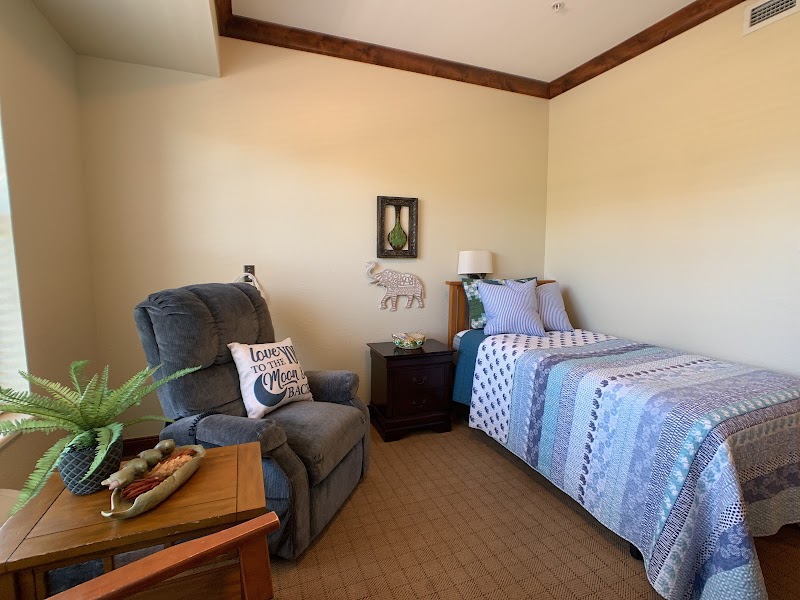
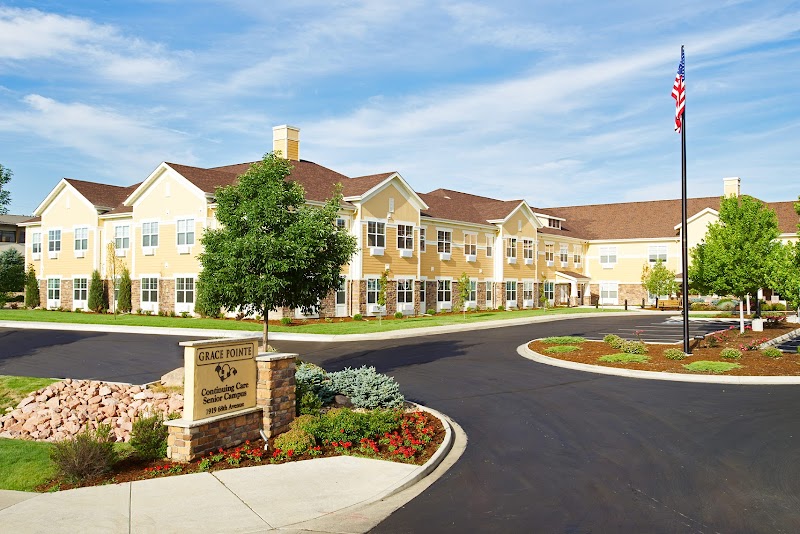
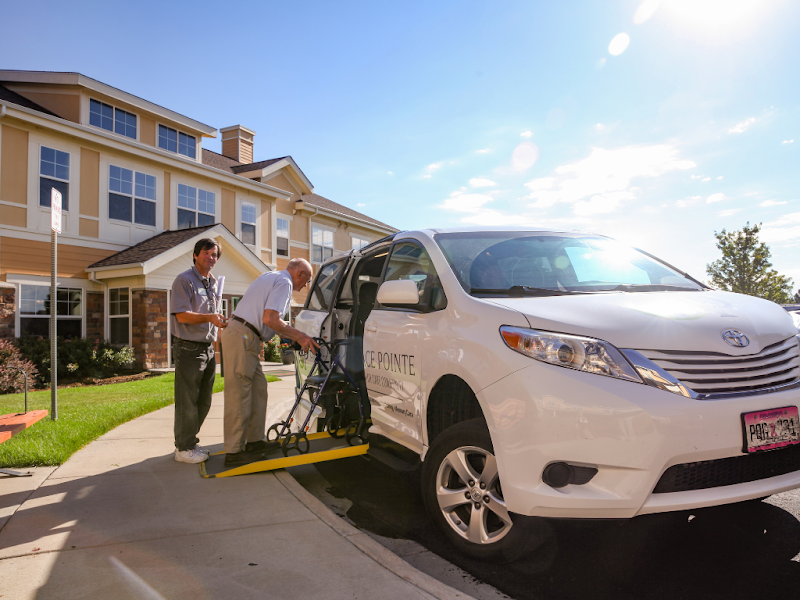
GRACE POINTE CONT CARE SR CAMPUS, SKILLED NURSING

1919 68TH AVE, GREELEY, CO 80634 (970) 304-1919
For profit - Individual 53 Beds Independent Data: November 2025
Trust Grade
85/100
#27 of 208 in CO
Last Inspection: November 2023

Within standard 12-15 month inspection cycle. Federal law requires annual inspections.

Overview

Grace Pointe Continuing Care Senior Campus in Greeley, Colorado, has a Trust Grade of B+, indicating it is above average and recommended for families considering care options. It ranks #27 out of 208 facilities in Colorado, placing it in the top half, and #4 out of 8 in Weld County, suggesting only three local options are better. The facility is improving, having reduced its compliance issues from six in 2022 to just two in 2023. Staffing is a strong point, with a perfect 5/5 star rating and turnover at 43%, which is better than the state average of 49%. Notably, there have been no fines, which reflects well on the facility’s operational standards. However, recent inspections revealed some areas of concern. For instance, there were multiple issues related to food safety, including improper temperature storage and inadequate use of gloves when handling ready-to-eat foods. Additionally, it was noted that the facility did not consistently allow residents to make personal choices regarding their lives, which could impact their overall satisfaction and autonomy. Overall, while there are commendable aspects of care, families should be aware of these weaknesses when considering Grace Pointe for their loved ones.

Trust Score
B+
85/100
In Colorado
#27/208
Top 12%
Safety Record
Low Risk
No red flags
Inspections
Getting Better
6 → 2 violations
Staff Stability
○ Average
43% turnover. Near Colorado's 48% average. Typical for the industry.
Penalties
✓ Good
No fines on record. Clean compliance history, better than most Colorado facilities.
Skilled Nurses
✓ Good
Each resident gets 77 minutes of Registered Nurse (RN) attention daily — more than 97% of Colorado nursing homes. RNs are the most trained staff who catch health problems before they become serious.
Violations
⚠ Watch
16 deficiencies on record. Higher than average. Multiple issues found across inspections.
★★★★★
5.0
Overall Rating
★★★★★
5.0
Staff Levels
★★★★★
5.0
Care Quality
★★★★★
5.0
Inspection Score
Stable
2022: 6 issues
2023: 2 issues

The Good

  • 5-Star Staffing Rating · Excellent nurse staffing levels
  • 5-Star Quality Measures · Strong clinical quality outcomes
  • Full Sprinkler Coverage · Fire safety systems throughout facility
  • No fines on record
  • Staff turnover below average (43%)

    5 points below Colorado average of 48%

Facility shows strength in staffing levels, quality measures, fire safety.

The Bad

Staff Turnover: 43%

Near Colorado avg (46%)

Typical for the industry

The Ugly 16 deficiencies on record

Nov 2023 2 deficiencies
CONCERN (D)

Potential for Harm - no one hurt, but risky conditions existed

Deficiency F0561 (Tag F0561)

Could have caused harm · This affected 1 resident

**NOTE- TERMS IN BRACKETS HAVE BEEN EDITED TO PROTECT CONFIDENTIALITY** Based on record review and interviews, the facility failed to allow residents the right to make choices about aspects of his or ...

Read full inspector narrative →
**NOTE- TERMS IN BRACKETS HAVE BEEN EDITED TO PROTECT CONFIDENTIALITY** Based on record review and interviews, the facility failed to allow residents the right to make choices about aspects of his or her life in the facility that were significant to the resident for two (#12 and #6) of two residents reviewed out of 29 sample residents. Specifically, the facility failed to assess, document and care plan Resident #12 and Resident #6's relationship preferences. Findings include: I. Resident #6 A. Resident status Resident #6, age [AGE], was admitted on [DATE]. According to the November 2023 computerized physician orders (CPO) the diagnoses included Parkinson's disease (deterioration of the nervous system), vascular dementia with mood disturbance, depression and insomnia (difficulty sleeping). The 10/15/23 minimum data set (MDS) assessment revealed the resident had moderate cognitive impairment with a brief interview for mental status (BIMS) with a score of 11 out of 15. She was dependent for self care, indoor mobility and functional cognition. She required substantial/maximal assistance for eating. She was dependent for oral hygiene, toileting, showering, upper body dressing, lower body dressing, putting on and taking off footwear and personal hygiene. The MDS assessment indicated the resident did not have any physical or verbal behaviors directed towards others. B. Record review The behavior care plan, initiated on 11/9/23, revealed Resident #6 had a behavior problem related to hitting and yelling during care due to her diagnosis of dementia with behaviors. Resident #6 had been inappropriate with other male residents and staff. Resident #6 sought attention by kissing, holding hands, asking if male residents were married and wanting to sit in male certified nurse aides (CNA) laps. The interventions included: administering medications as ordered, monitoring and documenting the side effects and effectiveness of medications, anticipating and meeting the residents needs, providing the opportunity for positive interaction, discussing the residents behaviors if reasonable, intervention as necessary to protect the rights and safety of others, monitoring behavior episodes and attempting to determine the underlying cause and monitoring for behaviors. The dementia plan of care, initiated on 10/16/23, revealed Resident #6 had vascular dementia. The interventions included to administer medications as ordered, monitoring behaviors and side effects of the medications, altering the residents environment to maximize safety and orientation, assessing physical factors that may increase behaviors, assisting with activities of daily living (ADLs) and mobility as needed, encouraging the resident to use existing capabilities and recognizing efforts to be independents, giving simple directions, monitoring nutritional intake, providing an opportunity for the resident to engage in activities involving movement, providing orientation aides, providing therapy as needed and looking at the medication administration record (MAR) and treatment administration record (TAR) for additional interventions. The 11/13/23 behavior note documented Resident #6 was sexually inappropriate with a male resident (Resident #12) this shift. She was standing and kissing the resident. Resident #6 was holding the male residents hand and wheelchair. The progress note documented Resident #6 was asking other male residents if they were married. Resident #6 was shouting libido at male CNAs. Resident #6 asked the male CNA if she could sit in his lap. II. Resident #12 A. Resident status Resident #12, age [AGE], was admitted on [DATE]. According to the November 2023 CPO, the diagnoses included Alzheimer's disease and depression. The 10/13/23 MDS assessment revealed Resident #12 had severe cognitive impairment with a BIMS with a score of five out of 15. B. Record review A review of Resident #12's electronic medical record on 11/16/23 revealed Resident #12's care plan did not address his relationship preferences. III. Staff interviews The director of nursing (DON) and the social services director (SSD) were interviewed on 11/15/23 at 2:16 p.m. The SSD said Resident #6's psychotropic medications had recently been changed. The SSD said Resident #6 fell in memory care and was recently admitted to the skilled nursing facility. The DON said Resident #6 had moderate cognitive impairment and Resident #12 had more advanced cognitive impairment. The SSD said Resident #12 was not in distress after Resident #12 kissed him. The SSD said Resident #6 and Resident #12 did not appear to be in distress after the incident. The SSD said she spoke with Resident #12 and he was smiling when she was talking about the incident. The SSD and the DON said they had not completed an assessment for Resident #12 and Resident #6's ability to consent. Registered nurse (RN) #1 and CNA #1 and CNA #2 were interviewed on 11/16/23 at 10:37 a.m. CNA #1 and CNA #2 said Resident #6 enjoyed folding clothes and reading throughout the day. RN #1, CNA #1 and CNA #2 said they had never seen Resident #6 be sexually inappropriate with other residents before. RN #1, CNA #1 and CNA #2 said Resident #12 had cognitive impairment. RN #1 said Resident #12's wife was admitted to the same facility. The nursing home administrator (NHA) was interviewed on 11/16/23 at 11:06 a.m. The NHA said Resident #6 and Resident #12 had dementia. The NHA said Resident #6 kissed Resident #12. The NHA said Resident #12's wife lived at the same facility. The NHA said Resident #12 and Resident #6's kissing and holding hands was consensual. The NHA said they had not completed an assessment to determine if Resident #12 and Resident #6 were able to consent.
CONCERN (D)

Potential for Harm - no one hurt, but risky conditions existed

Deficiency F0761 (Tag F0761)

Could have caused harm · This affected 1 resident

Based on observations and interviews, the facility failed to ensure all drugs and biologicals were properly stored and labeled in one of two medication rooms. Specifically, the facility failed to ensu...

Read full inspector narrative →
Based on observations and interviews, the facility failed to ensure all drugs and biologicals were properly stored and labeled in one of two medication rooms. Specifically, the facility failed to ensure multiple use vials were labeled appropriately. Findings include: I. Manufacturer's recommendations According to the Aplisol package insert, retrieved on 11/20/23 from: https://www.fda.gov/media/74862/download Vials in use for more than 30 days should be discarded. II. Facility policy and procedures The Medication Storage policy and procedure, undated, received from the nursing home administrator (NHA) on 11/15/23 at 12:59 p.m. read in pertinent part Medications will be stored in a secure manner that will provide a safe environment for residents. No discontinued, outdated, or deteriorated drugs or biologics may be retained for use. III. Observations On 11/14/23 at 2:32 p.m. The second floor medication room was reviewed with certified nurse aide with medication authority (CNA/MA) #1. One multidose vial of Aplisol Tuberculin purified derivative diluted (injectable medication to test for tuberculosis) was observed, opened and dated with 10/9/23 indicating the date it was first accessed. -The vial was dated more than 30 days ago. A second open vial of Aplisol tuberculin purified derivative diluted was in the same refridgerator with no date on vial or box to indicate what day the vial was initially accessed. IV. Staff interviews CNA/MA #1 was interviewed on 11/14/23 at 2:40 p.m. She said open dates were important so staff did not use a medication past the recommended date the manufacturer recommended. CNA #1 did not know how many days the tuberculin was good for once the vial was opened. The infection preventionist (IP) was interviewed on 11/14/23 at 3:00 p.m. She reviewed the two vials of Aplisol and said that both vials had been accessed; one was dated with 10/9/23 and the second failed to have an open date. The IP said the vials should have been removed from the refrigerator for destruction as one was past the 30 days and the other had no date to identify when it was open. The IP said use of the medication past the open date could cause the medication to not be as effective. The director of nursing (DON) was interviewed on 11/15/23 at 10:26 a.m. She said tuberculin vials were good for 28 days once they were first accessed. The DON said the medication could not be as effective if used past the open date recommendations.
Aug 2022 6 deficiencies
CONCERN (D)

Potential for Harm - no one hurt, but risky conditions existed

Deficiency F0658 (Tag F0658)

Could have caused harm · This affected 1 resident

**NOTE- TERMS IN BRACKETS HAVE BEEN EDITED TO PROTECT CONFIDENTIALITY** Based on observations, interviews and record review, the facility failed to ensure that professional standards of practice were ...

Read full inspector narrative →
**NOTE- TERMS IN BRACKETS HAVE BEEN EDITED TO PROTECT CONFIDENTIALITY** Based on observations, interviews and record review, the facility failed to ensure that professional standards of practice were followed for one (#24) of five out of 27 sample residents. Specifically the facility failed to ensure medications were administered as ordered and timely for Resident #24. Findings include: I. Facility policy The Medication Administration Nursing Procedure policy and procedure, dated March 2019, provided by the nursing home administrator (NHA) on 8/11/22 at 2:20 p.m., read in pertinent part, The licensed nurse or qualified person will administer medications according to the physician's orders and facility time schedule. Administration will be timely to achieve the optimum benefit. Medications are administered within 60 minutes of scheduled time, except before or after meal orders, which are administered precisely as ordered. For example, if the medication is ordered for 8:00 a.m., it must be given between 7:00 a.m. and 9:00 a.m. in order to be considered timely. II. Resident #24 A. Resident status Resident #24, age [AGE], was admitted on [DATE], with readmission on [DATE]. According to the August 2022 computerized physician orders (CPO), diagnoses included heart failure, permanent atrial fibrillation (irregular heart rate), and acute pulmonary edema (excess fluid in the lungs). The 6/22/22 minimum data set (MDS) assessment revealed the resident was cognitively intact with a brief interview for mental status (BIMS) score of 15 out of 15. He required limited assistance with one person for bed mobility, transfers, walking in room, toilet use, personal hygiene and dressing. He was totally dependent on bathing with one person. No behaviors present. He received anticoagulant medication, and diuretic medication. B. Resident interview Resident #24 was interviewed on 8/8/22 at 12:05 p.m. Resident #24 complained that his medications were slow to be given to him and were often late. Resident #24 was interviewed on 8/10/22 at 1:46 p.m. Resident #24 confirmed that his morning medications were late. C. Record review The 7/20/22 comprehensive care plan revealed to administer medications as ordered. The time stamp for medication administered this morning was received from the director of nursing (DON) on 8/10/22 at 1:34 p.m. It revealed: Magnesium oxide tablet 400 milligrams (mg) administered 8/10/22 at 10:21 a.m. Furosemide tablet 20 mg administered 8/10/22 at 10:21 a.m. Multivitamin-minerals tablet administered 8/10/22 at 10:21 a.m. Pantoprazole sodium tablet delayed release 40 mg administered 8/10/22 at 10:21 a.m. Axiban Tablet 2.5 mg administered 8/10/22 at 10:21 a.m. -Medications were administered late according to the August 2022 medication administration record (MAR) revealed the medication listed above were to be given at 8:00 a.m. However they were not administered until 10:21 a.m. D. Staff observation and interviews Registered nurse (RN) #1 was interviewed on 8/10/22 at 9:40 a.m. On the electronic medication administration record (eMAR) there were resident medications that were red which indicated they were late. RN #1 said he still had over 10 more residents to pass medications to. He said he would try to get done with medication pass by 10:30 a.m. he said there were days that he did not get done with medication pass until 11:00 a.m. because there was just too much to get done for one nurse as he was only nurse on the unit who had to complete medication pass including an intravenous (IV) and treatments. The DON was interviewed on 8/10/22 at 9:45 a.m. The DON said the assistant director of nursing (ADON) had been working closely with RN #1 to ensure he could get his medication pass completed timely. She said RN #1 needed to prioritize because he often would complete treatments during his medication pass which took up a lot of his time. She said all other nurses including herself were able to get the medication pass completed on time. She said she planned to change the medication times to open medication times to: upon rising, AM (morning), MD (midday) EE (early evening) and HS (bedtime). She said she planned to update their policy and review it in the next resident council meeting. She said most of the red on RN #1's eMAR was not medications rather, daily weights and tuberculin injections which could be completed anytime during the day so there were not 10 residents who received late medications. The DON was interviewed on 8/11/22 at 3:34 p.m. The DON said medications should be administered, if ordered at 8:00 a.m., between 7:00 a.m. and 9:00 a.m. in order to be considered timely. The DON said it was important to administer medications on time because medications were therapeutic.
CONCERN (D)

Potential for Harm - no one hurt, but risky conditions existed

ADL Care (Tag F0677)

Could have caused harm · This affected 1 resident

**NOTE- TERMS IN BRACKETS HAVE BEEN EDITED TO PROTECT CONFIDENTIALITY** Based on observation, interviews, and record review the facility failed to provide one (#26) of three out of 27 sample residents...

Read full inspector narrative →
**NOTE- TERMS IN BRACKETS HAVE BEEN EDITED TO PROTECT CONFIDENTIALITY** Based on observation, interviews, and record review the facility failed to provide one (#26) of three out of 27 sample residents who were unable to carry out activities of daily living received the necessary services to maintain good nutrition, grooming, personal hygiene, toileting, and repositioning. Specifically, the facility failed to reposition Resident #26 for an extended period of time (4.5 hours), who was at high risk of pressure ulcers and required two person assistance with transfers and bed mobility. Findings include: I. Professional reference National Pressure Injury Advisory Panel (2016), Pressure Injury Prevention Points, retrieved from https://npiap.com/page/PreventionPoints (retrieved on 8/23/22) It read in pertinent part, the process for turning and repositioning residents included the following steps: -Turn and reposition all individuals at risk for pressure injury, unless contraindicated due to medical condition or medical treatments. -Choose a frequency for turning based on the support surface in use, the tolerance of skin for pressure and the individual's preferences. -Consider lengthening the turning schedule during the night to allow for uninterrupted sleep. -Turn the individual into a 30-degree side lying position and use your hand to determine if the sacrum is off the bed. -Avoid positioning the individual on body areas with pressure injury. -Ensure that the heels are free from the bed. -Consider the level of immobility, exposure to shear, skin moisture, perfusion, body size and weight of the individual when choosing a support surface. -Continue to reposition an individual when placed on any support surface. -Use a breathable incontinence pad when using microclimate management surfaces. -Use a pressure redistributing chair cushion for individuals sitting in chairs or wheelchairs. -Reposition weak or immobile individuals in chairs hourly. II. Facility policy and procedure The Activities of Daily Living policy and procedure, reviewed on 1/29/22, was provided by the nursing home administrator (NHA) by email on 8/12/22 at 2:56 p.m. The policy read in pertinent part, Based on a comprehensive assessment of a resident and consistent with the residence's need and choices the facility will provide the necessary care and services to ensure that a residence's ability and activity of daily living do not diminish unless circumstances of individual clinical conditions demonstrate that says diminution was unavoidable. The facility will provide care and services for the following activities of daily living. Positioning- residence incontinent of bowel and bladder will be checked every two hours for repositioning and incontinence care. III. Resident status Resident #26, age [AGE], was admitted on [DATE]. According to the computerized physician orders (CPO), diagnoses included: Alzheimer's disease, coronary artery disease, hypertension, renal insufficiency, renal failure, obstructive uropathy, depression, chronic kidney disease, and currently had a catheter. The 6/18/22 minimum data set (MDS) assessment, documented that the resident was unable to complete the brief interview for mental status (BIMS) with severely impaired cognition. He had short and long-term memory deficits. He required extensive assistance of two persons with transfers, bed mobility, dressing, personal hygiene, toileting, and bathing. The resident was frequently incontinent of bowel. The resident was at risk of developing pressure ulcers. IV. Failure to reposition A. Obsevation and interview A continuous observation of Resident #26 was conducted on 8/11/22 from 9:06 a.m. to 1:38 p.m. revealed the following: -At 9:06 a.m., the resident was sitting in the T.V. (television) room; -At 9:52 a.m., the resident was assisted to a common area at the end of the hallway where they held resident council; -At 11:08 a.m., the resident was assisted into the dining room for lunch; -At 12:01 p.m., the resident was finished eating, but was left in the dining room; -At 12:26 p.m., staff assisted the resident to the T.V. room; -At 1:11 p.m., the resident remained in the T.V. room; -At 1:29 p.m., certified nurse aide (CNA) #2 assisted the resident to his room; and, -At 1:38 p.m., CNA#2 and CNA#3 assisted the resident from his wheelchair to his recliner, the CNAs utilized a gait belt to complete the two-person transfer to his recliner. CNA #2 was interviewed on 8/11/22 at 1:30 p.m. She said Resident #26 needed full assistance and could not offload himself, and needed to be repositioned and checked every two hours to prevent skin breakdown. She said the night shift kept track of repositioning but was not sure if the day shift did. She said she should have repositioned him sooner than what they did (see observation above). B. Record review According to the care plan, 3/19/21, unrevised, Resident #26 needed to be checked frequently for needs such as positioning and toileting. -Although the care plan did not specify what frequently meant, staff interviews indicated the resident should have been repositioned and checked/changed every two hours (see interviews above and below). According to the Braden scale for predicting pressure sore risk dated 6/18/22 Resident #26 scored an 11 (low risk 19-23, at risk 15-18, moderate risk 13-14, high risk 10-12, and very high risk 9 or less) this meant he was at high risk for developing pressure ulcers. IV. Administrative Interview The director of nursing (DON) was interviewed on 8/11/22 at 4:15 p.m. She said individuals that needed full care should be repositioned and checked for incontinence every two hours. She said CNA #2 should have repositioned Resident #26 since he was at risk for pressure ulcers.
CONCERN (D)

Potential for Harm - no one hurt, but risky conditions existed

Deficiency F0692 (Tag F0692)

Could have caused harm · This affected 1 resident

**NOTE- TERMS IN BRACKETS HAVE BEEN EDITED TO PROTECT CONFIDENTIALITY** Based on observations, record review and interviews the facility failed to ensure one (#204) of two out of 27 sample residents r...

Read full inspector narrative →
**NOTE- TERMS IN BRACKETS HAVE BEEN EDITED TO PROTECT CONFIDENTIALITY** Based on observations, record review and interviews the facility failed to ensure one (#204) of two out of 27 sample residents received the care and services necessary to meet their nutrition needs to maintain their highest level of physical well-being. Specifically, the facility failed to ensure Resident #204 was assessed and provided the correct diet to meet her nutrition needs and preferences. Findings include: I. Resident #204 Resident #204, age [AGE], was admitted on [DATE] and readmitted on [DATE]. According to the August 2022 computerized physician orders (CPO), the diagnoses included fracture of first, second, and third vertebra, unsteadiness on feet, history of falling and fusion of the spine. The 8/5/22 minimum data set (MDS) assessment revealed the resident was cognitively intact with a brief interview for mental status score of 15 out of 15. She required limited assistance of one person for bed mobility, transfers, dressing, toileting and set-up assistance for eating. The MDS did not indicate any signs or symptoms of a swallowing disorder or dental concerns. II. Resident interview and observations Resident #204 was interviewed on 8/8/22 at 4:30 p.m. She said she broke her neck during a fall at home. She said she had to have surgery on her neck and was admitted to the facility for rehabilitation services. She said she had to wear a neck collar at all times for 12 weeks. Resident #204 said the neck collar was very restrictive and uncomfortable. She said because of how the collar sat, she was unable to wear her lower dentures. Resident #204 said it was very difficult for her to eat with the neck collar on and she had requested for all of her food to be cut into very small pieces. She said she attempted to notify everyone that came into her room that she was having a difficult time eating. Resident #204 was interviewed again on 8/10/22 at 1:35 p.m. She said she became very fatigued while eating her lunch and was only able to eat a minimal amount. Observations revealed the resident ate 25% of her meal and the turkey was roughly cut into one and a half inch pieces. Resident #204 said she had been requesting her food to be cut-up very small since she was admitted to the facility over a week ago. She said if the food was a ground texture it would be a lot easier for her to consume. Resident #204 said the metal spoons the facility used were too big for her to fit into her mouth with the restriction of her neck brace. She said she requested a plastic spoon at lunch today, but did not get it. Resident #204 said it was easier for her to consume food through straws. She said the facility had not offered her any nutrition that could be consumed via a straw besides Ensure (nutritional supplement). She said she would prefer to eat food over supplements, but also understood she needed to consume calories to heal from her recent surgery. III. Record review A. Nutrition care plan The nutrition at risk care plan, initiated on 8/8/22, documented the resident had a nutritional problem or potential for nutritional problem related to a recent fall resulting in a neck fracture. The interventions included: providing diet as ordered and per resident preference, offering preferred foods, providing meal assistance as needed, offering snacks as requested, providing medications as ordered, providing supplements as ordered if ordered, monitoring intakes of each meal, monitoring weights as ordered, encouraging meal and fluid intakes, monitoring labs as ordered and speech therapy treatment as ordered or needed. B. Nutrition assessments and progress notes The 7/26/22 mini nutritional assessment documented by a licensed nurse, indicated the resident was at risk for malnutrition. The 7/27/22 dietary profile assessment documented by the registered dietitian (RD), Resident #204 was on a regular texture diet and was tolerating it well. The resident received regular portions and had a good appetite.The section of the assessment that obtained the residents food preferences was not completed. The assessment documented the resident had upper and lower dentures and did not have any chewing or swallowing difficulties. Resident #204 needed partial assistance at meals. The 7/27/22 nutrition progress note documented the resident was recently admitted to the facility with a neck fracture. The progress note documented the resident was on a regular texture diet and had no concerns. The 8/3/22 mini nutritional assessment documented by a licensed nurse, indicated the resident was malnourished. The 8/8/22 dietary profile assessment documented by the RD, Resident #203 was on a regular texture diet and was tolerating it well. The resident received regular portions and had a good appetite. The assessment documented the resident had a chewing problem and used regular utensils. Resident #204 required partial assistance with meals. The assessment summary documented the resident was doing well, but reported chewing difficulties as she was unable to wear her lower dentures. The resident reported she needed soft foods or cut up into small bites. The resident said she would prefer to have her soup and oatmeal in a cup with a straw. -The section of the assessment that obtained the residents' food preferences was not completed. The 8/8/22 nutrition progress note documented the resident was readmitted to the facility. Resident #204 sustained a 7.6% weight loss while in the hospital. The note documented the resident was having a difficult time chewing hard or tough food, as she was unable to wear her lower dentures. The interventions included: providing preferred snacks and meals, encouraging fluids with and between meals, providing soft or cut up foods, providing soups and oatmeal in a cup with a straw. The 8/9/22 physician ' s note documented the resident reported difficulties eating related to the neck brace. The physician documented the resident complained of the size of the utensils the facility provided. The 8/10/22 case management progress note documented the case manager (CM) had reached out to the family via phone. The CM updated the family with the resident ' s progress in therapy and documented the resident was having difficulty chewing food related to the resident ' s neck brace. The progress note documented the resident was drinking soup and supplements. The August 2022 CPO revealed the following orders: -Regular diet, regular texture, thin liquids, cut-up meats please. Soups and oatmeal in a cup with straw-ordered 8/3/22; and, -Boost, two times a day for supplement-ordered 8/8/22. -However, the facility failed to communicate the updated order with the kitchen staff (see interview below). IV. Staff interviews Cook #1 was interviewed on 8/10/22 at 12:39 p.m. She said someone hand written cut-up on Resident #204 ' s meal tickets. She said she was educated to only follow directions on the meal ticket that were printed and not handwritten. Cook #1 said she checked with the licensed nurse on the unit and she said Resident #204 was able to have her food cut-up. The RD was interviewed on 8/11/22 at 10:38 a.m. She said she worked at the facility on Mondays and Wednesdays. She said she met with Resident #204 when she first admitted to the facility, but she was then sent to the emergency room for neck surgery. The RD said upon readmission she completed a nutrition assessment for Resident #204. She said Resident #204 had voiced chewing difficulties related to the neck brace. She said Resident #204 requested to have soft foods that were cut-up small. The RD said she updated the residents diet order to include: cut-up foods, soft foods and oatmeal/soup to be served in a cup with a straw. The RD said the kitchen staff was responsible for updating the meal tickets to include resident preferences, such as cut-up foods. The RD said she did not tell the kitchen staff about Resident #204 ' s preferences. The RD said she would speak with Resident #204 the next day she was at the facility to ensure her preferences and nutritional needs were being met. The physical therapist (PT) and occupational therapist (OT) were interviewed on 8/11/22 at 11:06 a.m. The PT said when residents were admitted to the facility the physical and occupational therapists attempted to evaluate the resident the same day. The OT said she evaluated the resident for activities of daily living including: toileting, dressing and eating. The OT said when she completed Resident #204 ' s evaluation the resident was drinking an Ensure (nutritional supplement) out of a cup with a straw. She said Resident #204 was not having any difficulties consuming the drink; therefore, she did not further evaluate Resident #204 ' s eating. The PT said since Resident #204 had not reported swallowing difficulties; the resident was not referred to speech therapy. The CM was interviewed on 8/11/22 at 12:28 p.m. She said she called Resident #204 ' s family on 8/10/22 and gave them an update on the resident ' s progress in therapy. She said the interdisciplinary team (IDT) discussed in morning meeting on 8/10/22 that Resident #204 was having difficulties chewing. The culinary director (CD) was interviewed on 8/1//22 at 12:35 p.m. He said when a resident ' s diet order was changed he was usually notified by the speech therapist. He said nursing staff also put changes to the residents diet on the electronic medical record communication board to notify the dining department of any diet changes. The CD said he was not notified of Resident #204 ' s request to have soft foods and cut-up foods. The nursing home administrator (NHA) was interviewed on 8/11/22 at 1:31 p.m. She said the facility delayed getting Resident #204 a mechanically altered diet to help meet her nutrition needs. She said she was going to meet with the RD and the CD the next day the RD was in the building and create a communication plan.
CONCERN (D)

Potential for Harm - no one hurt, but risky conditions existed

Deficiency F0697 (Tag F0697)

Could have caused harm · This affected 1 resident

**NOTE- TERMS IN BRACKETS HAVE BEEN EDITED TO PROTECT CONFIDENTIALITY** Based on interviews and record review, the facility failed to manage the pain of one (#6) of two residents reviewed out of 27 sa...

Read full inspector narrative →
**NOTE- TERMS IN BRACKETS HAVE BEEN EDITED TO PROTECT CONFIDENTIALITY** Based on interviews and record review, the facility failed to manage the pain of one (#6) of two residents reviewed out of 27 sample residents in a manner consistent with professional standards of practice, the comprehensive person-centered care plan, and the resident's goals and preferences. Resident #6 admitted to the facility on [DATE] with a history of falls, dislocated hip and cervical fracture. The facility failed to reassess the resident's pain after she had a fall on 8/2/22. The facility failed to timely follow-up on the radiologist recommendations for further evaluations after the resident's x-rays were obtained 8/3/22 if the resident continued to have symptoms (see radiology report below). The resident experienced intermittent pain, at times severe, along with a decline in functional ability for over seven days following an unwitnessed fall on 8/2/22, until she was transferred to the hospital on 8/10/22. The resident was evaluated and diagnosed with a sacral fracture. Additionally, the facility failed to document a description of the pain characteristics, interventions, and outcome of interventions for any pain level above zero out of 10 (with 10 being the worst pain on the scale); show non-pharmacological interventions were attempted as part of the pain management regimen; and revise Resident #6's acute pain care plan to reflect changes in pain control. Findings include: I. Facility policy The Assessing Pain Symptoms & Pain Site policy, undated, was provided by the nursing home administrator on 8/11/22 at 2:20 p.m. It documented, in pertinent part, The facility staff will observe all residents for pain, report such to the physician and administer pain relief medications as ordered by the physician. Pain refers to any type of physical pain or discomfort in any part of the body. Pain may be localized to one area, or may be more generalized. It may be acute or chronic, continuous or intermittent (comes and goes), or pain is whatever the resident says it is. The assessment includes the frequency and intensity of signs and symptoms of pain and can be used to identify indicators of pain as well as to monitor a resident's response to pain management interventions. It also attempts to target the site of pain. A full assessment includes location, severity, current treatment, and response to treatment. If a resident states they have pain, take their word for it. Pain is a subjective experience. For non-verbal, cognitively impaired resident, observe for non-verbal indication. Observe resident and document findings for verbal and non-verbal indicators of pain. Administer pain management as ordered and/or non-pharmacological interventions as indicated. Assess and document effectiveness of pain interventions. Notify physician of pain not managed with current interventions. In residents who have dementia and can not verbalize that they are feeling pain, symptoms of pain can be manifested by particular behaviors, such as: -Calling out for help, -Pained facial expressions, -Refusing to eat, or -Striking out at anyone who tries to move them or touch a body part. Ask the resident and observe to determine the frequency of pain. Use the following pain rating scale if the resident is able to rate pain: -No pain = 0 (zero) -Mild pain = 1-3 -Moderate pain = 4-6 -Severe pain = 7-10. II. Resident status Resident #6, age [AGE], was admitted on [DATE]. According to the August 2022 computerized physician orders (CPO), diagnoses included fracture of the first cervical vertebra (neck fracture), displaced fracture of greater trochanter (hip), dementia, spinal stenosis, fibromyalgia and anxiety disorder. The 5/11/22 minimum data set (MDS) assessment, revealed Resident #6 was moderately impaired with a brief interview for mental status (BIMS) score of eight out of 15. She rejected care one to three days out of seven and had verbal and physical symptoms directed toward others one to three days out of seven. She required extensive two-person assistance with bed mobility, transfers and toileting; however, improved after therapy treatment (see record review below). The resident was on a pain medication regimen. She received as needed (PRN) medications or was offered and declined. She received non-medication intervention for pain. It was documented that a pain assessment should be conducted; however the resident was unable to answer if she had pain in the past five days and the rest of the assessment was not completed. III. Resident interview Resident #6 was interviewed on 8/8/22 at 12:28 p.m. She said her leg was killing her and she could not stand on it. She said it had been hurting since she had a fall about a week ago. She said the facility completed an x-ray and staff told her nothing was broken, but she did not care what they said. She felt like it was broken because she could not walk anymore and her leg really hurt. She said the nurse gave her something for pain, but she did not know if the medication was scheduled or only as needed (PRN). IV. Record review The acute pain care plan, initiated 5/9/22, unrevised revealed Resident #6 had pain from fibromyalgia and spinal stenosis and multiple falls. Interventions included the following: -Administer medications as ordered; -Anticipate needs and evaluate the effectiveness of the medication; -Monitor/document for probable cause of each pain episode (Resident #6 is impulsive and declined to accept assistance from the staff with ADLs (activities of daily living), which caused an increase in pain intensity); -Identify and record previous pain history and management of that pain and impact on function. Identify previous response to analgesia including pain relief, side effects and impact on function (Resident #6 states she is in pain at all times. It was difficult to validate the pain rating related to aggressive behaviors and cognitive impairments); -Observe and report changes in usual routine, sleep patterns, decrease in functional abilities, decrease range in motion (ROM), withdrawal or resistance to care; -Provide the resident with reassurance that pain is time limited. Encourage to try different pain relieving methods i.e. positioning, relaxation therapy, progressive relaxation, bathing, heat and cold application (Resident #6 stated she did not like cold or hot); -The resident is not always consistent or not always able to call for assistance when in pain, reposition self, ask for medications, or tell you how much pain she experienced; and, -The resident preferred to have pain controlled with Tylenol. Review of Resident #6's care plans initiated 5/12/22 and revised on 8/5/22 revealed she was at risk for falls related to poor safety awareness, dementia and psychoactive medication use. Interventions included to frequently check the resident for signs and symptoms of pain, ensure the resident was comfortable, offer assistance with toileting, and ensure items most commonly used were within reach. Resident #6 had the potential to be physically and verbally aggressive with the staff and would slap, hit, yell, grab, throw objects and curse related to anger, depression, poor impulse control and pain. Interventions included administering medications as ordered, assess and address contributing sensory deficits, analyze times of day, places, circumstances, triggers, and what de-escalates behavior and document. Resident #6 had a mood problem related to admission, pain, dementia, depression and anxiety. She often would refuse care. Interventions included to reassure her, leave and return in 5-10 minutes and try again, allow the resident to make decisions about treatment regime to provide a sense of control, provide a clear explanation of all care activities prior to and during each contact. -However, there was no pain goal or specific interventions to include any non-pharmacological interventions to treat Resident #6's acute or chronic pain. The physical therapy Discharge summary dated [DATE] to 6/3/22 documented Resident #6 was able to perform functional mobility with minimal assistance, she would benefit from long term care staff ensuring the resident perform task as much as possible in a safe manner. -On 6/3/22 it was documented that Resident #6 ambulated 35 feet and another 50 feet utilizing a front wheeled walker (FWW) with minimal assistance. She required minimal assistance to stand, after walking she needed the restroom and required minimal assistance with transfer during toileting and moderate assistance with clothing management. The 7/7/22 at 11:00 p.m. behavior note documented Resident #6 had increased behaviors staff were monitoring for safety as she was stuck hanging halfway off her wheelchair between the corner of her bed and the corner of her wheelchair. Resident #6 refused help and stood up from the wheelchair and ambulated around the room holding onto furniture, refusing to utilize her walker. The 7/13/22 at 10:26 p.m. behavior note documented Resident #6 was standing up utilizing her walker. The certified nurse aide offered to assist the resident, she declined and staff stayed to ensure safety. The 7/15/22 at 10:34 p.m. behavior note documented Resident #6 was in her room with the door closed, staff knocked and entered. All the lights were turned off in the room. The resident was observed standing without her walker. Staff offered assistance, the resident yelled at staff to get out of her room and she refused care. The 8/2/22 at 8:15 a.m. incident note revealed Resident #6 was found on the floor in her bathroom by certified nurse aides (CNAs). On assessment, vitals and neurological checks were normal. The resident was able to move all extremities and no injuries were identified. Resident #6 complained of increased pain in knees, PRN Oxycodone 10 mg was given. The nurse practitioner and family were notified. Resident #6's family requested muscle relaxers be used for pain instead of oxycodone. The resident was assisted to the wheelchair then her recliner for comfort. The 8/3/22 at 9:03 a.m. interdisciplinary (IDT) committee met to review Resident #6's unwitnessed fall. It was documented the root cause analysis was a possible urinary tract infection as per Resident #6's daughter who reported the resident having increased urine frequency and confusion. The nurse practitioner ordered a urinalysis and x-rays. The nurse will continue to monitor for pain and provide treatment as ordered. The resident's care plan was reviewed and updated. -However, the acute pain care plan had not been updated (see above). The 8/3/22 at 12:00 a.m. encounter note documented Resident #6 was assessed by the nurse practitioner (NP) for her recent fall. Resident #6 was observed sitting in her wheelchair and appeared to be uncomfortable. Resident #6 reported that the previous night she was in her bathroom and her right leg spasmed and she fell to the ground. Resident #6 reported she had been unable to stand because of it. The NP discussed completing an x-ray of the joint which the resident was agreeable to and the resident's most recent urinalysis was reviewed, which was negative. The resident had no fever chills or genitourinary distress. The 8/3/22 at 2:05 p.m. x-ray reports of the right lower extremity (right hip, right tibia/fibula, and right ankle/foot) were completed and revealed no acute fracture or dislocation. -However, the radiologist recommended close interval follow-up if symptoms continue to persist or progress to exclude a subtle or occult fracture which may be more apparent on follow-up evaluation. The 8/4/22 at 11:17 p.m. behavior note documented the resident complained of pain; however, continued to refuse pain medication. The following incident notes documented the resident continued to have complaints of pain and/or refused pain medication; however, the physician was not notified and there was no further follow-up on the following days: -8/3/22 at 4:11 p.m., -8/4/22 at 12:31 a.m., -8/4/22 at 10:50 a.m., -8/4/22 at 11:17 p.m., -8/6/22 at 2:28 a.m., (Resident struggling with transferring, refused pain medication, allowed staff to assist her because she was having a lot of pain in her right leg). Review of the 2022 CPO revealed Resident #6's PRN oxycodone was increased from 10 mg by mouth every 12 hours PRN to every eight hours PRN for pain greater than 7 out 10 on 8/3/22, an order to start Cyclobenzaprine (muscle relaxer) 5 mg by mouth every eight hours PRN on 8/9/22 and obtain x-ray of Resident #6's right knee on 8/9/22. Resident #6 also received routine Tylenol 650 mg by mouth three times a day for chronic pain ordered on 7/6/22 and Celebrex 200 mg by mouth daily for fibromyalgia ordered on 7/23/22. Review of the 2022 medication administration record (MAR) revealed staff documented Resident #6 was having moderate to severe pain on the following days: -On 8/2/22 pain level 10 out of 10 on day shift, and two out of 10 on evening shift and two out of 10 on night shift; -On 8/3/22 pain level nine out of 10 on day shift, 10 out of 10 on evening shift and eight out of 10 on night shift; -On 8/4/22 pain level zero on day and evening shift and two out of 10 on night shift; -On 8/5/22 pain level three out of 10 on day shift, zero on evening shift and two out of 10 on night shift; -On 8/6/22 pain level documented as NA (not applicable on day shift), five out of 10 on evening shift and one out of 10 on night shift; -On 8/7/22 pain level nine out of 10 on day shift, five out 10 on evening shift, and three out of 10 on night shift; -On 8/8/22 pain level four out of 10 on day shift, zero on evening shift and two out of 10 on night shift; -On 8/9/22 pain level six out of 10 on day shift, zero on evening shift, and seven out of 10 on night shift; and, -On 8/10/22 pain level eight out of 10 the resident was sent to the ER for evaluation. -Although Resident #6 had been offered Oxycodone for pain level of seven or above; Resident #6 continued to have intermittent moderate to severe pain and there was no documentation of any further interventions being provided as resident refused pain medication at times until 8/9/22 (see above) to help alleviate Resident #6's pain. -Review of progress notes revealed there was no assessment documented of Resident #6's acceptable pain level, any description of pain characteristics or non-pharmacological interventions provided. On 8/10/22 Resident #6 was sent to the emergency room (ER) for an evaluation due to increased pain and returned to the facility with a diagnosis of sacral fracture. V. Interviews Certified nurse aide (CNA) #4 was interviewed on 8/11/22 at 9:49 a.m. She said she worked for an agency and picked up a couple shifts (two to three) shifts per week for the last month. She said she worked on the second floor and cared for Resident #6 routinely and worked with her the past Saturday, Sunday and Monday. She said the resident did not like to be bothered in the early morning and dietary staff brought her meal room trays, because she did not go to the dining room. She said after breakfast Resident #6 may or may not use the call light for assistance. She said staff would frequently check on Resident #6 and she may allow staff to help her get dressed and other times she would refuse care. She said she was not working the day the resident fell, but she noticed after her fall at times Resident #6 would say her knees hurt and would give out on her. She said recently she had complained about pain and could not stand or walk, she said she notified the nurse every time she complained of pain. She said staff have had to help her transfer from the bed to the wheelchair, before she could stand with her walker. She said the resident was most comfortable and relaxed in her recliner. The director of nursing (DON) was interviewed on 8/11/22 at 3:48 p.m. She said staff monitored the resident's pain upon admission and every shift. She said staff struggled with Resident #6 since admission, because she was very resistant to care. She said she had several conversations with Resident #6 about her care. She said Resident #6 did not like to take pain medications. She said the resident would say she did not want to take anything stronger. She said the resident did not have the ability to give an adequate pain level rating. She said the physician ordered muscle relaxers per Resident #6's daughter's request, but they were ineffective so staff sent the resident to the emergency room. She said the physician was resistant to scheduling multiple pain medications because of the resident's dementia and recent falls. She said the resident had been on oxycodone scheduled but recently was switched to PRN (as needed) and the physician increased the PRN. She said Resident #6 had verbal and physical behaviors since admission and would refuse care. She said Resident #6 had thrown items and cursed at staff. She said the staff provided multiple interventions as the resident would allow, and she often refused care. She said the staff followed up promptly after the fall. Staff completed the x-ray the next day; it was negative. She said she thought the nurse practitioner (NP) came in to assess the resident for pain twice after the fall; but acknowledged there was only one note on 8/3/22 (see above). She said she felt the resident did not have an increase in behaviors due to pain, or a decrease in mobility. She felt that the staff anticipated her needs and redirected her when she had behaviors. She acknowledged staff should have re-evaluated Resident #6's pain regimen sooner, since she refused pain medication and continued to complain of pain. Registered nurse (RN) #1 was interviewed on 8/11/22 at 4:40 p.m. He said he cared for Resident #6 the day of her fall and the day after. He said Resident #6 would refuse care, he offered the resident PRN pain medication, but she declined. He said he did not remember if he contacted the physician to notify them of the resident's increase in pain, but if it was not in his note, he likely did not.
CONCERN (D)

Potential for Harm - no one hurt, but risky conditions existed

Menu Adequacy (Tag F0803)

Could have caused harm · This affected 1 resident

Based on observations, record review and interview, the facility failed to ensure menus were followed to meet the resident's nutritional needs. Specifically, the facility failed to follow recipe modi...

Read full inspector narrative →
Based on observations, record review and interview, the facility failed to ensure menus were followed to meet the resident's nutritional needs. Specifically, the facility failed to follow recipe modifications for mechanically altered diets. Findings include: I. Professional reference According to The Nutrition Care Manual website, Transitioning Texture-Modified Diet Terminology and Definitions to IDDSI (International Dysphagia Standardization Initiative) Framework, retrieved from https://www.nutritioncaremanual.org/auth.cfm on 6/9/22, Dysphagia Level 3: Advanced or mechanical soft diet: no hard sticky, or crunchy foods, foods should be moist, mixed-consistency foods are allowed if tolerated and should be assessed by clinician (Speech language pathologist), food particles are served in bite-sized pieces (less than 1 inch), meats are cut up, chopped or ground (moist), crusty dry breads not allowed, most other moist breads are bread products allowed, salad, raw vegetables, and most fresh fruit are not allowed, adequate dentition and chewing ability expected. II. Facility policy and procedure The Nutrition Manual Modifications in Consistency policy and procedure, dated August 2009, was provided by the nursing home administrator (NHA) on 8/11/22 at 2:25 p.m. it revealed in pertinent part, According tot he resident's ability to masticate (chew) and swallow, the regular mechanical soft (ground) diet should be individualized. All entrees should be ground. Gravy should regularly be served with ground meat. Vegetables should be soft-cooked and tender in texture. Fruit should be canned and easily masticated. Fresh vegetables and fruit must be chopped very fine. III. Observation and record review During the lunch meal on 8/10/22 beginning at 11:40 a.m. and ended at 12:45 p.m. the following was observed: -Cook #1 was preparing an open-face turkey sandwich for two residents on a mechanically altered diet on the rehabilitation unit. [NAME] #1 took a half slice of toast and chopped it up into half inch by half inch pieces. She then took three slices of turkey and roughly chopped them into one inch pieces. Some pieces were bigger and some were smaller. -Cook #1 then handed the plate to cook #2 and he placed a ladle of gravy on top of the bread and gravy. -Cook #1 and cook #2 repeated these steps two times. The recipe for the open-face turkey sandwich with gravy served for the lunch meal on 8/10/22 did not specify how to alter the sandwich for mechanically altered diets (see interview below). IV. Staff interviews Cook #1 was interviewed on 8/10/22 at 12:42 p.m. She said she cut the turkey by hand for the mechanical soft diets. Cook #1 said she typically cut the meat by hand on the rehabilitation unit versus using a blender for the mechanical soft diets for the long term care unit. She said the residents on the rehabilitation unit were often admitting and discharging quickly. [NAME] #1 said this made it difficult to know how many residents were on a mechanically altered diet, so she typically altered the meal by hand. The culinary director (CD) was interviewed on 8/10/22 at 2:30 p.m. He said the turkey on the open faced turkey sandwich that was served for lunch on 8/10/22 should have been ground for the residents on a mechanically altered diet. The CD said cook #1 should have not chopped the turkey by hand. He said the turkey should have been altered in the kitchen using a blender to ensure the correct consistency was achieved. He said the residents could have choked, since they were not served the correct consistency of food. The CD said the recipes they used did not always have the instructions on how to alter the menu items. He said the facility used the International Dysphagia Diet Standardisation Initiative (IDSSI-guidelines to standardize mechanically altered diets) guidelines. He said the facilities menu program system did not indicate how to alter menu items using the IDSSI guidelines. He said the meal tickets for the residents on mechanical soft diets read the turkey should have been ground. The registered dietitian (RD) was interviewed on 8/11/22 at 10:38 a.m. She said residents who were on a mechanically altered diet should receive soft, moist foods. She said the meat should ground. The RD said the mechanically altered diet should require limited chewing.
CONCERN (F)

Potential for Harm - no one hurt, but risky conditions existed

Food Safety (Tag F0812)

Could have caused harm · This affected most or all residents

Based on observations, interviews and record review the facility failed to store, prepare, distribute and serve food in a sanitary manner in the main kitchen. Specifically, the facility failed to: -E...

Read full inspector narrative →
Based on observations, interviews and record review the facility failed to store, prepare, distribute and serve food in a sanitary manner in the main kitchen. Specifically, the facility failed to: -Ensure appropriate use of gloves when handling ready-to-eat foods; -Ensure the freezer was functioning properly; -Prevent potential cross-contamination with the ice machine; -Ensure cold food items were held at the proper temperature to reduce the potential risk of foodborne illness; and, -Ensure staff wore masks in the kitchen during a pandemic. I. Ensure appropriate use of gloves when handling ready-to-eat foods A. Professional reference The Colorado Retail Food Establishment Rules and Regulations (CRFERR) retrieved 8/16/22, revised January 2019, read in pertinent part, Employees prevent bare hand contact with ready-to-eat food by properly using suitable utensils such as deli tissue, spatulas, tongs, single-use gloves, or dispensing equipment. If used, single-use gloves shall be used for only one task, such as working with ready-to-eat food. Single-use gloves shall be used for no other purpose, and discarded when damaged, when interruptions occur in the operation, or when the task is completed. Food employees shall clean their hands and exposed portions of their arms immediately before engaging in food preparation including working with exposed food, clean equipment and utensils, and unwrapped single-service and single-use articles and before handling or putting on single-use gloves for working with food, and between removing soiled gloves and putting on clean gloves. The Food and Drug Administration (FDA) Food Code (2019) pp. 47-48 retrieved 8/16/22, detailed the following instances when foodservice staff should wash their hands: -Immediately before engaging in food preparation including working with exposed food, clean equipment and utensils, and unwrapped single-service articles and single-use articles; -After touching bare human body parts other than clean hands and clean, exposed portions of arms; -After handling soiled equipment or utensils; -During food preparation, as often as necessary to remove soil and contamination and to prevent cross contamination when changing tasks; -When switching between working with raw food and working with ready-to-eat food; -Before donning gloves to initiate a task that involves working with food; and -After engaging in other activities that contaminate the hands. B. Observations During a continuous observation during the lunch meal on 8/9/22 beginning at 11:29 a.m. and ended at 12:35 p.m. the following was observed: -Cook #1 washed and dried her hands. She then put on gloves. -She put shrimp cocktail on a plate, touched her mask and then handed a dietary aide a bowl of fruit. -Cook #1 then took her gloves off, washed her hands and put new gloves on. -Cook #1 touched her mask. She then picked up a hamburger bun and put it into the toaster. -Cook #1 then opened the microwave and put a hamburger patty into the microwave. She then touched her mask. -Cook #1 prepared another plate of shrimp cocktail. -Cook #1 then went to the microwave and grabbed the hamburger patty plate. She used the same gloved hands to grab the hamburger bun out of the toaster and put it onto the plate. She used tongs to put the hamburger patty onto the bun and put the top of the bun on the patty. -Cook #1 then prepared three more plates of shrimp cocktail. During a continuous observation during the lunch meal on 8/10/22 beginning at 11:40 a.m. and ended at 12:42 p.m. the following was observed: -Cook #1 had gloves on and touched her mask. She then grabbed a slice of toast with the same gloved hands and began cutting up the bread. She then used her gloved hands to pick up the bread and put it onto the plate. -Cook #1 then used tongs to put three slices of turkey onto the cutting board and cut it into pieces. She then used the same gloved hands and put the turkey on top of the cut bread. C. Staff interviews The culinary director (CD) was interviewed on 8/10/22 at 2:30 p.m. He said staff should remove gloves and wash their hands before changing tasks. He said staff should also wash their hands after touching their hair, face or mask. II. Ensure the freezer was functioning properly A. Professional reference The Colorado Department of Public Health and Environment (2019) The Colorado Retail Food Establishment Rules and Regulations, https://www.colorado.gov/pacific/sites/default/files/DEHS_RetailFd_6CCR10102_RFFC_EffJan2019.pdf retrieved on 8/16/22. It read in pertinent part; -Except when packaged food using a reduced oxygen packaging method, Time/Temperature control for safety of food prepared and held in a food establishment for more than 24 hours shall be clearly marked to indicate the date or day by which the food shall be consumed on the premises, sold, or discarded when held at a temperature of 41ºF (farenheit) or less for a maximum of seven days. The day of preparation shall be counted as day one. The day or date marked by the food establishment may not exceed a manufacturer's use-by date if the manufacturer determined the use-by date based on food safety. -Food shall be protected from contamination by storing the food: In a clean, dry location, where it is not exposed to splash, dust, or other contamination and at least 6 inches above the floor. B. Observations During the initial kitchen tour on 8/8//22 at 10:50 a.m., the following was observed: -The walk-in freezer had approximately one inch of ice build-up on the frozen soups in the freezer. The frozen soups were in plastic containers and were towards the front of the freezer. -The cooling machine in the back of the freezer appeared to drop water on the boxes on the shelf below (see interview below). The boxes had thick frozen drips of water from the top of the shelf to the bottom. On 8/11/22 at 10:52 a.m. the thermometer on the outside of the freezer read 41 degrees fahrenheit (°F). C. Staff interviews The CD was interviewed on 8/10/22 at 2:30 p.m. He said the walk-in freezer was struggling as the outside temperature had been very hot for the past few weeks. He said the director of maintenance had looked at the cooling machine and determined it was working correctly. The CD said the freezer went through multiple thawing phases a day, which caused water to drop on the boxes and freeze. The CD said the kitchen was cooled using a swamp cooler. He said the swamp cooler put moisture into the air, which caused the ice build-up in the freezer. The CD said there were two thermometers in the freezer. He said the thermometer on the outside of the freezer was not accurate. He said he was aware there was over a 30 degree difference between the outside thermometer and the thermometer in the back of the freezer. The nursing home administrator (NHA) was interviewed on 8/11/22 at 11:53 a.m. She said the director of maintenance had looked at the freezer within the last few weeks. She said the facility was aware the freezer was struggling as the outside temperature was very high the past few weeks. The NHA said an outside company serviced the machine in June 2022. She said the facility had not contracted an outside company to look at the freezer to ensure it was functioning properly, since they noticed the increased ice build-up the last few weeks. The NHA said the director of maintenance, the CD and herself met on 8/9/22 (during the survey process) to discuss the ice build-up. She said she had directed the CD to dispose of any foods that appeared to have thawed and refrozen. III. Prevent potential cross-contamination with the ice machine A. Professional reference The Colorado Department of Public Health and Environment (2019) The Colorado Retail Food Establishment Rules and Regulations, https://www.colorado.gov/pacific/sites/default/files/DEHS_RetailFd_6CCR10102_RFFC_EffJan2019.pdf retrieved on 8/16/22. It read in pertinent part; Food preparation and dispensing utensils shall be stored: in a clean, protected location if the utensils, such as ice scoops, are used only with a food. B. Observations During a continuous observation on the rehabilitation unit during the lunch meal on 8/9/22 beginning at 11:29 a.m. and ended at 12:35 p.m. the following was observed: -Dietary aide (DA) #1 used a water pitcher to scoop ice out of the ice machine. She then set the water pitcher into the sink that was visibly dirty with thickened liquids and filled the pitcher with water. -DA #1 then filled the residents water glasses with the water pitcher. -DA #1 then dumped the remainder of the water into the sink and placed the pitcher next to the sink. -DA #1 then scooped ice out of the ice machine with the same water pitcher, without sanitizing it. She placed the water pitcher into the sink and filled it with water. DA #1 then filled glasses of water for room trays. She emptied the pitcher and placed it next to the sink. During a continuous observation on the rehabilitation unit during the lunch meal on 8/10/22 beginning at 11:40 a.m. and ended at 12:42 p.m. the following was observed: -Cook #1 asked DA #1 if she had seen the ice scoop. DA #1 responded that the ice scoop had been missing for several days. -DA #1 told cook #1 to use the water pitcher that was sitting next to the sink. -Cook #1 used the water pitcher to scoop ice out of the ice machine. -The water pitcher was not sanitized prior to scooping ice out of the ice machine. C. Staff interviews The CD was interviewed on 8/10/22 at 2:30 p.m. He said ice scoops should always be used to scoop ice out of the ice machine and stored in an ice scoop container on the wall. The CD said the staff should have not utilized the water pitcher to scoop ice out of the ice machine. He said since the water pitcher was not sanitized during use, it could have caused cross-contamination leading to food-borne illnesses. The CD said he had additional ice scoops in storage. He said he was not notified the ice scoop on the rehabilitation unit was missing and would replace it immediately. IV. Ensure cold food items were held at the proper temperature to reduce the potential risk of foodborne illness A. Professional reference The Colorado Department of Public Health and Environment (2019) The Colorado Retail Food Establishment Rules and Regulations, https://www.colorado.gov/pacific/sites/default/files/DEHS_RetailFd_6CCR10102_RFFC_EffJan2019.pdf, retrieved on 8/16/22. It read in pertinent part; The food shall have an initial temperature of 41ºF or less when removed from cold holding temperature control or 135°F or greater when removed from hot holding temperature control. B. Facility policy and procedure The Food Temperature Record policy and procedure, dated August 2009 was provided by the NHA on 8/11/22 at 2:25 p.m. it revealed, in pertinent part, If temperatures are greater than or equal to 41°F for colds foods, chill to an internal temperature of less than or equal to 41°F. C. Observations During a continuous observation during the lunch meal on 8/9/22 beginning at 11:29 a.m. and ended at 12:35 p.m. the following was observed: -Cook #1 obtained temperatures of the food before the lunch meal service started. At 12:11 p.m. the temperatures of the food not within correct holding temperature were as follows: -Potato salad 44°F; and, -Shrimp cocktail 51°F. -Cook #2 obtained temperatures of the food after the lunch service had ended. At 12:30 p.m. the temperatures of the food not within correct holding temperatures were as follows: -Potato salad 53°F. -The potato salad and shrimp cocktail were not cooled in any manner during the meal service. -The potato salad rose nine degrees during the meal service. -The facility ran out of shrimp cocktail; therefore, the finishing temperature was not obtained. During a continuous observation during the lunch meal on 8/10/22 beginning at 11:40 a.m. and ended at 12:42 p.m. the following was observed: -Cook #2 obtained temperatures of the food before the lunch meal service started. At 12:11 p.m. the temperatures of the food not within correct holding temperature were as follows: -Deli turkey 44.8°F; and, -Watermelon 44°F. D. Staff interviews Cook #1 was interviewed on 8/10/22 at 12:35 p.m. She said she was responsible for taking the temperature of the food prior to meal service. She said if cold foods were above 35°F she was responsible for notifying her supervisor. She said she did not notify her supervisor of the incorrect temperatures until after the meal service. Cook #1 said she should have kept the cold foods during meal service on ice to prevent them from warming. She said if foods were not served at the correct temperature it could lead to foodborne illness. The CD was interviewed on 8/10/22 at 2:30 p.m. He said cold foods should be below 41°F at time of service. He said the shrimp should have been cooled prior to serving. He said the shrimp cocktail and the potato salad should have been kept on ice during the meal service to ensure the correct temperature. The CD said if foods were not within the correct temperature it could lead to foodborne illness. He said the residents at the facility were at high risk for foodborne illness. V. Ensure staff wore masks in the kitchen A. Professional reference The Centers for Disease Control and Prevention (CDC). The Interim Infection Prevention and Control Recommendations for Healthcare Personnel During the Coronavirus Disease 2019 (COVID-19) Pandemic, updated 2/22/22. Retrieved from https://www.cdc.gov/coronavirus/2019-ncov/hcp/infection-control-recommendations.html on 8/16/22. It revealed in pertinent part, CDC's COVID-19 community levels recommendations do not apply in healthcare settings, such as hospitals and nursing homes. INstead, healthcare settings should continue to use community transmission rates and continues to follow CDC's infection prevention and control recommendations for healthcare settings Source control and physical distancing (when physical distancing is feasible and will not interfere with provision of care) are recommended for everyone in a healthcare setting. This is particularly important for individuals, regardless of their vaccination status, who live or work in counties with substantial to high community transmission. Source control refers to use of respirators or well-fitting facemasks or cloth masks to cover a person's mouth and nose to prevent spread of respiratory secretions when they are breathing, talking, sneezing, or coughing. The facility was located in Weld County, Colorado, which was at a high transmission rate of COVID-19 as of 8/11/22. B. Observations During the initial kitchen tour on 8/8/22 at 10:50 a.m. the CD and two unidentified dining staff members were observed in the kitchen without masks on. On 8/10/22 at 2:30 p.m. the CD and three unidentified dining staff members were observed in the kitchen without masks on. -At 12:48 p.m. cook #1 and an unidentified dining staff member were observed in the kitchen without masks on. C. Staff interviews The NHA was interviewed on 8/11/22 at 3:50 p.m. She said the dining staff members did not wear masks while in the kitchen. She said the facility was located in a county that was at high transmission rate of COVID-19.
May 2021 8 deficiencies
CONCERN (D)

Potential for Harm - no one hurt, but risky conditions existed

Investigate Abuse (Tag F0610)

Could have caused harm · This affected 1 resident

Based on observations, record review and staff interviews, the facility failed to thoroughly investigate injuries causing harm for one (#11) of two residents reviewed out of 31 sample residents. Speci...

Read full inspector narrative →
Based on observations, record review and staff interviews, the facility failed to thoroughly investigate injuries causing harm for one (#11) of two residents reviewed out of 31 sample residents. Specifically, the facility failed to investigate how a skin tear occurred on Resident #11's right arm. Findings include: I. Facility policy and procedure The Investigation of Possible Abuse policy and procedure, last revised May 2018, provided by the nursing home administrator (NHA) on 5/23/21, revealed in pertinent part, A complaint/concern report should be initiated by anyone who receives a complaint from any source. The form starts the investigation tracking. A Report of Alleged Resident Abuse Incident report is initiated as follow up to the complaint/concern report. With this form, an incident report is taken one step further in the resident interview. Employees may also be interviewed who may have information of the occurrence when the information is current and employees are present. The information is recorded on the Witness statement and signed by the witness. Additional information is gathered and a summary of the interview information gathered and a summary of the investigation is noted. II. Resident observation and interview On 5/25/21 at 9:18 a.m., Resident #11 was lying in bed and registered nurse (RN) #1 was administering the resident her medications. The resident had a thin 4 x 4 duoderm (a moisture retentive) dressing on the top of her right forearm. Registered nurse (RN) #1 asked the resident what happened and she said the certified nurse aides (CNAs) that were transferring her a couple of days ago were in a hurry and pushed her arm under the table, pinching it and causing a skin tear. She said she did not have her protective sleeve on at the time. Cross-reference F684 for quality of care. III. Record review A 5/23/21 skin/wound note revealed the resident had a skin tear to her right forearm that occurred during a transfer from the bed into the wheelchair and her arm got caught between the pads of the arm rest creating a tear approximately 4 cm long. It indicated the area was cleaned and steri-stripped then covered with a foam pad for protection and covered with a tegaderm (a clear film dressing). -The note did not indicate if the resident had her protective sleeve on. -The investigation for the cause of the skin tear was requested from the facility on 5/25/21 and was not received by the end of the survey. IV. Staff interviews Registered nurse (RN) #2 was interviewed on 5/26/21 at 11:11 a.m. She said she completed an incident report for any new skin issue of unknown origin. She said if she knew how the bruise or skin tear occurred then she would just make a progress note. The director of nursing (DON) was interviewed on 5/26/21 at 12:08 p.m. She said she received a phone call from the nurse when the skin tear to Resident #11's right arm occurred and she said she could see it in her head how it happened just by the description given by the nurse. She said the resident was being transferred with the Hoyer (full body) lift and her arm got stuck between the sling and the arm of the chair. She said she did not interview the resident but did interview other staff about the transfer but she did not document it anywhere. V. Facility follow-up On 5/27/21 (after being identified on survey), the facility provided a summary indicating an investigation of the resident's skin tear was being performed and the residents and the CNAs during the incident were being interviewed.
CONCERN (D)

Potential for Harm - no one hurt, but risky conditions existed

Deficiency F0658 (Tag F0658)

Could have caused harm · This affected 1 resident

**NOTE- TERMS IN BRACKETS HAVE BEEN EDITED TO PROTECT CONFIDENTIALITY** III. Resident #7 A. Resident status Resident #7, aged 89, was admitted to the facility on [DATE]. The [DATE] computerized physic...

Read full inspector narrative →
**NOTE- TERMS IN BRACKETS HAVE BEEN EDITED TO PROTECT CONFIDENTIALITY** III. Resident #7 A. Resident status Resident #7, aged 89, was admitted to the facility on [DATE]. The [DATE] computerized physician orders revealed a diagnosis of paralyzed on her right side, psychotic disorder with delusions due to a known psychological condition, anxiety, hallucinations, and major depressive disorder. The [DATE] minimum data set (MDS) revealed the resident had severe cognitive impairment and presented with short and long-term memory problems. The resident engaged in verbal behavioral symptoms directed toward others one to three days during the assessment period that significantly interfered with the resident's ability to participate in activities or social interactions. The resident required extensive two-person physical assistance with bed mobility, transfers, locomotion on and off the unit, dressing, and toileting; required supervision and one-person physical assistance with eating; and was totally dependent on one-person assistance with bathing. B. Record review The order summary, dated [DATE], documented an order for Ativan gel every eight hours as needed for agitation related to psychotic disorder with delusions due to known physiological condition. OK to give an additional 0.25 milligrams (mg) of the gel if the scheduled dose was not effective. -No dose amount was included in the order for the Ativan gel. The order summary, dated [DATE], documented an order for as-needed (PRN) Ativan gel medication to be applied to the back of the neck topically every four hours as needed for agitation for 14 days. Order expired on [DATE]. -No dose amount was included in the order. The [DATE] revised care plan documented the resident was to be monitored every day for anti-anxiety medication side effects including, sedation, drowsiness, ataxia, slurred speech, dizziness, nausea/vomiting, headache, confusion, or skin rash. Staff to document any side-effects in the progress notes. The care plan documented behavior monitoring every day for shortness of breath, extreme fear, shivering/shaking, feeling faint, nausea, trembling, heart palpitations, sweating, feeling overwhelmed, panic, distress, dread, apprehensiveness, trouble concentrating and worry. Staff to document any side-effects in the progress notes. C. Staff interviews Registered nurse (RN) #1 was interviewed on [DATE] at 11:00 a.m. and again at 3:27 p.m. He said Ativan gel came in premeasured syringes from the pharmacy. He said the entire syringe was one dose and he used the whole syringe when administering the medication. He said there was no specific dose or amount to use indicated on the physician order in the medical record, except the 0.25 mg additional dose if the initial application was not effective. He said the resident had a PRN order as well as a scheduled order for the Ativan gel. He said the controlled medication log forms came from the pharmacy when they delivered the medications and indicated the dose and physician order for use. The controlled medication log form was reviewed on [DATE] at 3:27 p.m. The medication log form documented the Ativan gel use as: apply 1ml (milliliter) (.5mg) topically every 6 hours as needed. He said the order was changed last Thursday ([DATE]). He said the Ativan gel was delivered in one (1) milliliter (ml) syringes for use. The DON was interviewed on [DATE] at 2:30 p.m. She said the Ativan gel was compounded (mixed into a different usable form) at the pharmacy. She said it was delivered in 0.5 milligrams (mg) syringes. She said there was no scale on the syringes for dosing and there was no dose amount on the current order for Ativan gel. She said one syringe was an entire dose. She said the dose amount was supposed to accompany the order. The pharmacy front-end manager (PFEM) was interviewed on [DATE] at 4:15 p.m. She said the administration orders were transcribed from the physician's orders and were included on the controlled medication log sheet sent with the medications. She said the pharmacy prepackaged the medication in 1ml individual syringes for the nurses and for easy administration. She said the pharmacy ran out of 1ml syringes and had to send the 0.5 mg dose in a 3ml syringe. She said the syringes were clearly marked with capacity as well as metered tick marks. She said if the 0.5 mg dose needed to be 0.25 mg (as indicated to give additionally, if original dose was not effective, see order above) the tick mark halfway from the pre measured dose, approximately the second to last tick mark on the syringe. D. Facility follow-up A [DATE] (after being identified on survey) order summary documented the Ativan gel to be applied to the back of the neck two times a day related to psychotic disorder with delusions due to known physiological condition. Apply 0.5 mg. The order summary also documented a 0.5mg Ativan gel for 14 days to be applied to clean skin topically every four hours as needed for agitation related to psychotic disorder with delusions due to known physiological condition. Based on observations, record review and interviews, the facility failed to provide services to meet professional standards of quality, affecting two (#20 and #11) of eight residents reviewed for medication administration and one (#7) of five residents out of 31 sample residents. Specifically, the facility failed to: -Ensure medications were prepared and administered according to professional standards for Resident #20; -Ensure the proper dose of medication to be administered was on the physician orders for Resident #11; and, -Include the physician ordered dose amount of the resident's Ativan (antianxiety) medication in the orders for Resident #7. Findings include: I. Facility policy and procedure The Medication Administration policy, updated [DATE], was provided by the director of nursing (DON) on [DATE] at 4:47 p.m. It read in pertinent part, Dosage schedule- Prior to administration, the medication and dosage schedule on the resident medication administration record is compared with the medication label. If the label and medication administration record is different and the container is not flagged indicating a change in directions or if there is any other reason to question the dosage or directions, the physician's orders are checked for correct dosage schedule. II. Resident #20 A. Resident status Resident #20, age [AGE], was admitted on [DATE] and readmitted [DATE]. According to the [DATE] computerized physician orders (CPO), diagnoses included benign prostatic hyperplasia (BPH) with lower urinary tract symptoms. The [DATE] minimum data set (MDS) assessment revealed the resident had modified independence with daily decision making. The resident required limited assistance of one to two people for all his ADLs. B. Observation On [DATE] at 10:02 a.m., registered nurse (RN) #1 was observed preparing and administering Resident #20's medications. RN #1 crushed all the tablets and put them in a cup with apple sauce then opened up the capsule (Tamsulosin) and sprinkled the contents into the cup with the other medications. RN #1 administered all the medications via a spoon orally to Resident #20 at 10:13 a.m. C. Record review According to the [DATE] CPO, orders included: -Tamsulosin hydrochloride (HCL, medication used to treat BPH) capsule 0.4 mg (milligrams), give one capsule by mouth one time a day, ordered [DATE]; and, -May crush medications, ordered [DATE]. According to the [DATE] medication administration record (MAR), the Tamsulosin was administered and was signed off as being administered on [DATE] by RN #1. According to [NAME] Nursing Drug Handbook 2020, Elsevier, 2020, p. 1109, Administration and handling of Tamsulosin: do not break, open, or crush capsule. E. Staff interview RN #1 was interviewed on [DATE] at 10:15 a.m. He said he used the internet to look up information on any medications that he was not familiar with but could not give a specific site he used. He said he always crushed Resident #20's medications, except for the capsules, he said he would open them and add the contents to the crushed pills. He said he did not know Tamsulosin should not be opened. RN #2 was interviewed on [DATE] at 11:11 a.m. She said she was able to give Resident #20 his Tamsulosin whole in applesauce since it could not be crushed or opened. She said the facility kept a list of medications that could be crushed and it said that capsules could be opened but she knew from previous experience that Tamsulosin could not be opened. III. Resident #11 A. Resident status Resident #11, age [AGE], was admitted [DATE]. According to the [DATE] CPO, diagnoses included cerebral infarction (stroke) with unspecified pain. The [DATE] MDS assessment revealed the resident had no cognitive impairment with a brief interview for mental status (BIMS) score of 15 out of 15. The resident required extensive assistance of two people for all her ADLs. B. Observation On [DATE] at 9:20 a.m., RN #1 was observed applying an unknown amount of Voltaren gel to the resident's right shoulder and right foot, rather than to the resident's hands as ordered (see physician order below). C. Record review The [DATE] CPO revealed the resident had an order for diclofenac (Voltaren) sodium gel 1% to be applied to hands topically two times a day related to unspecified pain. -The order did not include an amount to be applied. According to www.drugs.com/dosage/voltaren-gel.html, [DATE], Voltaren Gel Dosage, Use the lowest effective dosage for the shortest duration consistent with individual patient treatment goals. The dosing card can be found attached to the inside of the carton. The proper amount of Voltaren gel should be measured using the dosing card supplied in the drug carton. The dosing card is made of clear plastic and should be used for each application of the drug product. D. Staff interviews RN #1 was interviewed on [DATE] at 10:15 a.m. He said Resident #11 usually did not want the Voltaren on her hands but requested it to be on other parts of her body that were hurting at the time. He said he did not know how to administer an exact dose of the gel, he just applied a small amount to whatever area she requested. RN #3 was interviewed on [DATE] at 10:49 a.m. She said Voltaren gel came with a card to measure out specific doses. She said it should only be applied to the areas it was ordered and if the resident wanted it in different areas, the physician should be contacted for a clarification of the order. She said applying to much of the medication could cause adverse effects for the resident. The director of nursing (DON) was interviewed on [DATE] at 12:08 p.m. She said Voltaren gel came with a measuring device and should only be applied to the specific area it was ordered for. She said if the order did not have an amount or if the resident wanted it in a different area, the physician should be contacted for clarification.
CONCERN (D)

Potential for Harm - no one hurt, but risky conditions existed

Deficiency F0679 (Tag F0679)

Could have caused harm · This affected 1 resident

**NOTE- TERMS IN BRACKETS HAVE BEEN EDITED TO PROTECT CONFIDENTIALITY** Based on observations, interviews and record review, the facility failed to ensure two (#20 and #17) of the two residents review...

Read full inspector narrative →
**NOTE- TERMS IN BRACKETS HAVE BEEN EDITED TO PROTECT CONFIDENTIALITY** Based on observations, interviews and record review, the facility failed to ensure two (#20 and #17) of the two residents reviewed for activities of 31 sample residents received an ongoing program of activities designed to meet the needs and interests of the residents and promote physical, medical and psychosocial well-being. Specifically, the facility failed to provide meaningful activities based on the resident's preferences for Resident #20 and #17. Findings include: I. Facility policy and procedure The Activities Manual Program Overview policy and procedure, last revised November 2016, provided by the nursing home administrator (NHA) on 5/26/21 at 1:17 p.m., revealed in pertinent part, Activity programs are designed to encourage restoration to self-care and maintenance of normal activity, which is geared to the individual resident's needs. Activity Programs also provide sensory stimulation to those residents who need it. Residents who are unable to participate in the group programs will be provided individual activities geared to their functional level. There must be evidence that activities are provided for residents who cannot or choose not to leave their rooms. The participation record should show this as well as the care plan, quarterly review and progress notes. The Activities Manual Individual Activities/One to One Visits policy and procedure, last revised November 2016, provided by the NHA on 5/26/21 at 1:17 p.m., revealed in pertinent part, The definition of One to One interactions is a specific goal oriented one-to-one interventions with an identified need, a measurable goal and approaches to help the resident meet that goal. The One to One is a regular part of the activity program and performed on a routine basis. It should be scheduled and activity saff provide them as scheduled. The definition of friendly visit interactions is an interaction that is positive but does not have a specific measurable goal. A friendly visit is not necessarily preplanned and is usually a spontaneous interaction that is done for any and all residents in addition to any specific activity program on their care plans. II. Facility activity schedule for May 2021 The May 2021 facility activity calendar, provided by the NHA on 5/26/21, revealed the following activities scheduled for 5/24/21: -News and Views at 9:30 a.m. -Exercise at 10:00 a.m. -Making Father's Day decorations at 10:15 a.m. -Rest and relaxation at 1:00 p.m. -Room visits and snacks at 2:30 p.m. -Patio time at 3:30 p.m. The following activities were scheduled for 5/25/21: -News and Views at 9:30 a.m. -Exercise at 10:00 a.m. -Nail care at 10:15 a.m. -Rest and relaxation at 1:00 p.m. -Snacks and reminiscing on the patio at 2:30 p.m. -Aroma therapy at 6:00 p.m. III. Resident #20 A. Resident status Resident #20, age [AGE], was admitted on [DATE] and readmitted [DATE]. According to the May 2021 computerized physician orders (CPO), diagnoses included dementia without behavioral disturbance and anxiety. The 4/21/21 minimum data set (MDS) assessment revealed the resident had modified independence with daily decision making. The resident required limited assistance of one to two people for all his activities of daily living (ADLs). The interview for activity preferences revealed it was very important to the resident to do things with groups of people and somewhat important to the resident to listen to music he liked, do his favorite activities and to go outside to get fresh air when the weather was good. Other areas were not very important to the resident. B. Observations On 5/24/21, Resident #20, was in his room all morning from before 8:30 a.m. until after 12:25 p.m. with the door closed. Staff would occasionally approach the room, open the door and ask the resident what he needed help with and he would respond that he did not know. The resident was provided meals in his room. The television was on a contemporary music station. On 5/25/21, continuous observations were made from 8:20 a.m. until 12:15 p.m. Resident #20, was in his room, with the door closed all morning. Observations included: -At 8:20 a.m. the resident was lying in bed with his blinds closed and the television was off. -At 9:34 a.m. activity staff were providing news and views in the sitting area to a couple of the residents. No staff had entered Resident #20's room to invite him to the activity. -At 10:06 a.m. activity staff were doing exercises with residents in the sitting area. No staff had entered Resident #20's room to invite him to the activity. -At 10:11 a.m. two certified nurse aides (CNAs) went into the room and got him dressed and put him in his recliner. When they left the room, the television was on a contemporary music station, the blinds were open and they closed the door. -At 10:13 a.m., registered nurse (RN) #1 entered the room and gave the resident his medications. -At 10:25 a.m. the maintenance staff entered the room to fix the resident's bed. -At 12:15 p.m., staff entered the resident's room to deliver his lunch tray. C. Record review The care plan, initiated 5/24/21, revealed the resident was at risk for loneliness, anxiety and sadness related to isolation precautions implemented due to COVID-19 and has impaired cognitive function or impaired thought processes related to dementia. Interventions included: -Will receive assistance with phone calls, emails, social media or other cyber contact with loved ones; -Staff to provide one to one emotional support; and, -Engage in simple, structured activities that avoid overly demanding tasks. -The resident did not have a specific care plan for activities or his activity preferences. The 4/21/21 activities initial review revealed the resident wished to participate in activities while at the facility including group activities. It indicated the following: -He was a retired firefighter and used to b play golf; -He liked baseball and the Colorado Rockies: -He liked watching sports and westerns on the television; -He liked to listen to country music; and, -He liked to be around other people. A 4/23/21 activity participation progress note revealed the resident barriers to leisure included cognition and communication related to dementia, being very hard of hearing, significant vision loss, and mobility related to weakness and unsteady gait. It indicated the resident needed: -Ideas presented one at a time; -Allowed time for response; -Redirection and engagement in activity or conversation; -Verbal direction and support during activity; and -Use of glasses and hearing aids. The 5/21/21 activities quarterly/annual participation review revealed the resident joined all groups with no participation and his activity-related focuses remained appropriate/current as per current care plan. According to the May 2021 one to one visit log, no activities were provided prior to 5/19/21. From 5/20-5/24/21 activities provided included: -Television/radio daily with minimal participation; -Music/entertainment four out of five days with minimal participation; -Friendly visits daily, family visits two out of five days, and one to one visits two out of five days; -Snack and chat two out of five days with full participation and was unable to attend the other three days; -Socialization at meals two out of five days, one with full participation and the other with minimal participation; and, -Outing on the patio two out of five days with full participation. Review of the resident's record on 5/26/21 revealed no other documentation of activity participation and the facility did not provide any further documentation of activity participation when requested. IV. Resident #17 A. Resident status Resident #17, age [AGE], was admitted on [DATE]. According to the May 2021 CPO, diagnoses included metabolic encephalopathy (a global brain dysfunction from impaired brain metabolism) and dementia without behaviors. The 4/14/21 MDS assessment revealed the resident had modified independence with daily decision making, although the previous assessment on 1/11/21 revealed the resident had severe cognitive impairment with a brief interview for mental status (BIMS) score of four out of 15. The resident required extensive to total assistance of one to two people for all her ADLs. According to the 1/11/21 MDS assessment, the interview for activity preferences revealed it was very important to the resident to have books, newspapers and magazines to read, do her favorite activities and to go outside to get fresh air when the weather was good. It indicated it was somewhat important to the resident to listen to music she liked, keep up with the news and participate in religious services or practices. Other areas were not important at all to the resident, including being around animals and doing things with groups of people. B. Observations On 5/24/21 at 8:26 a.m. Resident #17 was lying on her left side in her bed. She did not have any reading materials in her room and the television was turned off. A CNA entered the room and sat the resident up on the side of the bed and assisted her with her breakfast. The CNA exited the room at 8:42 a.m. after lying the resident back down in bed. Another CNA entered the resident room at 9:13 a.m. to obtain her vital signs. The resident remained in bed all morning until 12:18 p.m. when two CNAs entered the resident's room and got her up using a mechanical lift, dressed and transferred into her wheelchair. She was then brought to the dining area for lunch. On 5/25/21, continuous observations were made from 8:20 a.m. until 12:15 p.m. Resident #17, was in her room all morning. Observations included: -At 8:22 a.m. the resident was lying on her left side in her bed. -At 9:34 a.m. activity staff were providing news and views in the sitting area to a couple of the residents. No staff had entered Resident #17's room to invite her to the activity. -At 10:06 a.m. activity staff were doing exercises with residents in the sitting area. No staff had entered Resident #17's room to invite her to the activity. -At 10:41 a.m. CNA #2 peeked her head in the resident's door but did not enter or speak to the resident. -At 10:47 a.m. CNA #2 entered the resident's room and asked if she wanted to get up. -At 10:59 a.m. CNA #2 and another CNA took the total body lift into the room and got the resident up. -At 12:21 p.m. the resident was taken to the dining area for lunch. C. Record review The activity care plan, initiated 1/16/21 revealed the resident enjoyed reading, being outdoors when the weather was nice, listening to a variety of music and watching television. Interventions included: -Staff will provide new reading material as needed. Will assist with glasses; -Will encourage the resident to attend religious programs and devotionals. Will assist with wheelchair/walker; and, -Will encourage the resident to sit outside when the weather permits. Will assist with wheelchair/walker. The 1/16/21 activities initial review revealed the resident wished to participate in activities while at the facility and liked independent activities. It indicated the resident enjoyed reading, being outdoors when the weather was nice, listening to a variety of music and watching television. It indicated the resident liked the television on the Hallmark channel or music channel during the day. The 1/16/21 activity participation note revealed the resident preferred to remain in her room in bed or her recliner resting during the day with the television on with either music playing or the Hallmark channel. It indicated the resident stated she did not want staff in her room visiting for long periods of time and staff would provide friendly visits and a variety of activities she could do on her own. The 4/15/21 activities quarterly/annual participation review revealed the resident would join small activity groups with partial participation and enjoyed being read to for short periods of time. It indicated she liked watching arts and crafts projects but not participating and like being independent in her room watching television and resting. The May 2021 activity participation log was reviewed on 5/26/21 and revealed the following activities were provided in the last 26 days: -Exercise/therapy two days with minimal participation; -Television/radio daily with independent or minimal participation; -Reading books to her for five days with minimal participation and partial participation for two days. The resident was offered and refused once; -Current events with minimal participation on four days and partial participation on two days; -Friendly visits occurred daily; -Reminiscence with minimal participation on four days; -Resident council once with minimal participation; -Education two days with minimal participation and one day with partial participation; -Music/entertainment three days with minimal participation; -Socialization at meals six days with minimal participation, one day with partial participation, seven days documented as the resident was unable to attend and two days the resident was invited but refused; -Movies five days with minimal participation and five days she was independent in the activity; and, -Independent activity in the room almost daily. -There were no activities documented during the survey on 5/25/21 and 5/26/21. V. Staff interviews Certified nurse aide (CNA) #3 was interviewed on 5/26/21 at 10:17 a.m. She said the activities staff would go into Resident #20's room for one-to-one interaction and would read to him or play music. She said he would rather sing to his music than talk. She said she tried to always play some kind of music while in his room. She said she did not know what specific kind of music he liked. She said Resident #20 yelled a lot when he was out in the common area so he was brought to his room to decrease his stimulation. She said the director of nursing (DON) had asked her to keep the resident in his room that day to decrease his stimulation. She said when the resident's family visited, they would help assist him with eating and do activities with him. She said he acted differently when his family was around. CNA #3 said Resident #17 was upset that day so she was resting in her room. She said she usually tried to talk to the resident and get her to laugh but she was upset for some reason today and did not want to interact with anyone. CNA #1 was interviewed on 5/26/21 at 10:47 a.m. She said the activity staff provided each resident with activities to do in their rooms and would go around and invite residents to an activity that was occurring. She said the only involvement the CNAs had with activities was to assist the resident to and from the activity. The activity assistant (AA) was interviewed on 5/26/21 at 11:50 a.m. She said each resident had an activity calendar posted in their rooms and they are also posted throughout the units for the residents to refer to. She said the activity staff went to each resident and invited them to the activity that was about to occur. She said the facility had a room with activity supplies and each resident was asked on a daily basis what they would like for the day. She said if a specific item was not available, the activity staff would go shopping and pick it up, unless it was an expensive item, such as a television or computer tablet, then the family was contacted to obtain the item. The AA said Resident #20 participated in activities in his room and the activity assistants went to his room to initiate activities for him to do. She said she tried to go into his room at least five days a week and sit with him. The AA said Resident #17 used to love to read magazines and newspapers and was very religious and the staff offered to bring her to church services and those were the activities she participated in mostly. She said the activity staff went into her room five days a week and sat with her and provided activities such as music that she liked or they read to her. She said the visits with activities staff were limited due to her preferences. She said the resident would come out and join group activities when she wanted but had limited participation.
CONCERN (D)

Potential for Harm - no one hurt, but risky conditions existed

Quality of Care (Tag F0684)

Could have caused harm · This affected 1 resident

**NOTE- TERMS IN BRACKETS HAVE BEEN EDITED TO PROTECT CONFIDENTIALITY** Based on observations, record review and interviews, the facility failed to provide treatment and care in accordance with profes...

Read full inspector narrative →
**NOTE- TERMS IN BRACKETS HAVE BEEN EDITED TO PROTECT CONFIDENTIALITY** Based on observations, record review and interviews, the facility failed to provide treatment and care in accordance with professional standards of practice of three (#17, #11 and #20) of three residents reviewed out of 31 sample residents. Specifically, the facility failed to: -Consistently monitor and document the wounds to Resident #17's feet; -Follow physician treatment orders for Resident #17; -Have treatment orders in place for the skin tear to Resident #11's right forearm; and, -Identify, document and monitor bruising to Resident #20's left upper extremity. Findings include: I. Facility policy and procedure The Nursing Procedures Pressure Ulcers policy and procedure, last revised June 2014, provided by the nursing home administrator (NHA) on 5/26/21, revealed in pertinent part, The staff will promote healthy intact skin for residents and educate residents and/or significant others about pressure ulcer prevention. Evaluation will include monitoring skin surfaces daily and documenting the findings on the appropriate facility form. II. Resident #17 A.Resident status Resident #17, age [AGE], was admitted on [DATE]. According to the May 2021 computerized physician orders (CPO), diagnoses included metabolic encephalopathy (a global brain dysfunction from impaired brain metabolism), peripheral vascular disease (PVD), neuropathy (nerve pain) and dementia without behaviors, The 4/14/21 MDS assessment revealed the resident had modified independence with daily decision making, although the previous assessment on 1/11/21 revealed the resident had severe cognitive impairment with a brief interview for mental status (BIMS) score of four out of 15. No behaviors were documented, including rejection of care. The resident required extensive to total assistance of one to two people for all her ADLs. The resident had one stage 2 pressure ulcer that was not present upon admission, two unstageable pressure ulcers with suspected deep tissue injury (SDTI) in evolution that were present upon admission and four total venous and arterial ulcers. The resident had a pressure reducing device for the chair and bed, was on a turning/repositioning program, received pressure ulcer care and application of dressings to her feet. B. Observations On 5/26/21 at 8:27 a.m. Resident #17's wounds were observed with the facility's wound nurse (WN) and director of nursing (DON). The resident was lying in bed on her left side. Her bilateral lower extremities were wrapped in ACE (elastic compression bandages) wraps and she had foot booties on both feet. The ACE wraps and foot booties were removed. The resident's left outer ankle had an area of dark, non blanchable redness, approximately 2 cm by 1 cm. The WN said Betadine was being applied to this area. She said its appearance changed frequently. The outer right foot, at the base of the pinky toe, had an unstageable area, approximately 2 cm by 1 cm covered with a thin layer of eschar and another area on the outer right foot approximately 1 cm by 1 cm covered with a thin layer of eschar. The periwound of these wounds was pink. The inside of the resident's right foot at the base of the big toe, was an unstageable wound due to slough, approximately 2 cm by 2 cm. The peri-wound was pink. The resident's inner right ankle had a large unstageable open area, approximately 3 cm by 2 cm. with an immeasurable depth due to slough. The wound bed was approximately 80-85% slough and 15-20% granulation tissue. The peri-wound was red. C. Record review The areas identified in the above observation, the left outer ankle, the two areas on the right outer foot, the right inner foot and the right inner ankle, had not been documented since 5/14/21 in a wound/skin progress note, and then only minimal information was provided (see below). The resident's left outer ankle had not been documented on. According to the May 2021 CPO, wound care orders included: -Wound care to the right inner ankle - clean with wound cleanser of choice, place silver alginate foam of choice and cover with kerlix. Change three times a week on Tuesday, Thursday and Sunday, ordered 5/23/21; -Put Betadine on medial and lateral foot wounds and leave open to air, ordered 5/21/21. -According to the above observations, the wounds were not being left open to air, but were being covered with Kerlix gauze and ACE wraps. The care plan, last revised 3/1/21, revealed the resident was admitted to the facility with multiple non-healing pressure ulcers, venous and arterial ulcers to her heels and feet related to severe PVD and poor perfusion. The goal was not to heal the wound but keep them from getting infected related to the long standing history of non-healing wounds and non-compliance with recommendations. Medical power of attorney (MPOA) declined wound care consultation. Interventions included: -Monitor/document the location, size and treatment of the skin injury. Report abnormalities, failure to heal, signs and symptoms of infection, maceration, etc. to the physician; -Wound treatments as ordered; -Reposition frequently; -Assess the neurovascular status of legs and report any deterioration in circulation; -Air mattress to relieve pressure and promote wound healing; -Boots on at all times, educate on the importance of keeping the boots on at all times. The resident will decline to be turned, take the boots off and throw them on the floor and scream at the staff to leave her alone; and, -Monitor the wound progress and notify the physician and medical power of attorney (MPOA) of significant change. According to a 5/6/21 skin/wound note the goal for the resident's wounds were to keep them clean and free from infection and healing was not expected due to all the resident's comorbidities. It indicated there were several vascular and arterial wounds on the right foot that were inconsistent, being worse some days and with profuse bleeding other days. Wounds included: -Right medial foot measuring 2 cm by 2 cm; -Right lateral little toe measuring 1 cm by 1 cm; -Right lateral foot measuring 1 cm by 1 cm; and, -Right inner ankle measuring 3 cm by 2 cm. It indicated all wounds were moist and unstageable, covered with loose black eschar. The note indicated the wound nurse was coming to the facility and assessing the wound once a month (however, interviews below reveal the wounds were looked at weekly) and making recommendations. A 5/12/21 skin/wound note revealed the wounds were showing a little improvement with more wound bed visible and less slough. It indicated areas to the right medial foot, right lateral little toe, right lateral foot and right inner ankle all remained the same. (Measurements were the same as 5/6/21) and the current treatment plan was to be continued until the wound nurse was at the facility on 5/14/21 to reevaluate the wound. It indicated the goal was to keep all wounds clean and free from infection related to severe circulatory concerns and comorbidities. A 5/14/21 skin/wound note revealed the wound nurse came in and evaluated the wounds and wanted to continue the current treatment until the new treatment materials came in. It indicated all areas had black eschar now even though a few days earlier, some parts of the wounds were clean and free from eschar. It indicated the wound nurse stated the wounds were not going to heal related to the severe PVD and long standing history of non-healing wounds. -Review of the record on 5/26/21 revealed no further measurements or description of the wounds to the resident's right foot since 5/14/21, almost two weeks later and no description was documented for the area observed on the resident's left outer ankle, even though the wound nurse said the area had already been identified and treatment was being done to the area (see observation above). III. Resident #11 A. Resident status Resident #11, age [AGE], was admitted on [DATE]. According to the May 2021 CPO, diagnoses included cerebral infarction (stroke) with right sided hemiplegia. The 3/31/21 MDS assessment revealed the resident had no cognitive impairment with a brief interview for mental status (BIMS) score of 15 out of 15. The resident had no behaviors. The resident required extensive assistance of two people for her ADLs. The resident did not have any skin issues. B. Observation and resident interview On 5/25/21 at 9:18 a.m., Resident #11 was lying in bed and registered nurse (RN) #1 was administering the resident her medications. The resident had a thin 4 x 4 duoderm (a moisture retentive) dressing on the top of her right forearm. RN #1 asked the resident what happened and she said the certified nurse aides (CNAs) that were transferring her a couple of days ago were in a hurry and pushed her arm under the table, pinching it and causing a skin tear. She said she did not have her protective sleeve on at the time. Resident #11 said because she has increased swelling in her right arm, the bandages kept getting soaked with increased fluid and had to be changed frequently. C. Record review The care plan, initiated 4/16/21, revealed the resident was at risk for skin impairments related to limited mobility from her cardiovascular accident (CVA). Interventions included: -Encourage resident to wear a right arm sleeve protector; -Inspect skin and intervene per facility protocols. Notify the facility wound care team and physician if any breakdown is noted; and, -See MAR (medication administration record)/TAR (treatment administration record) for additional interventions. A 5/23/21 skin/wound note revealed the resident had a skin tear to her right forearm that occurred during a transfer from the bed into the wheelchair and her arm got caught between the pads of the arm rest creating a tear approximately 4 cm long. It indicated the area was cleaned and steri-stripped then covered with a foam pad for protection and covered with a tegaderm (a clear film dressing). The May 2021 CPO revealed the resident did have an order for a sleeve protector to the right arm every day and night shift, ordered 4/26/21. -However, the resident had no orders for wound treatment for the resident's right arm. -The investigation for the cause of the skin tear was requested from the facility on 5/25/21 and was not received by the end of the survey (cross reference F610 for thorough investigation). IV. Resident #20 A.Resident status Resident #20, age [AGE], was admitted on [DATE], discharged to a memory care unit on 5/17/21 and readmitted to the facility on [DATE]. According to the May 2021 CPO, diagnoses included congestive heart failure (CHF), dementia without behaviors, anxiety, general muscle weakness, and abnormalities of gait and mobility with unspecified lack of coordination. According to the 4/21/21 MDS assessment, the resident had modified independence with daily decision making. The required limited assistance of one to two people for all of his ADLs. The resident did not have any skin issues. An MDS assessment for the re-admission had not been completed yet. B. Observation On 5/26/21 at 10:20 a.m. the resident was sitting in the recliner in his room. The resident had bruising to the top of his left hand, wrist and forearm, deep purple in color that wrapped around the entire forearm. The resident did not know how the bruise happened and denied pain to the area. C. Record review The skin section of the 5/19/21 admission screening/history revealed the resident had no skin integrity issues. The care plan, initiated 5/24/21, revealed the resident was at risk for skin impairments related to decreased mobility. Interventions included: -Educate and encourage the resident who can self reposition the importance of repositioning often hil in chair and bed; -Inspect skin and intervene per facility protocols. Notify the wound care team and physician if any breakdown is noted; -Observe skin for any red or open areas during bathing, dressing and peri care. Roprot any noted areas to the nurse immediately; and, -See MAR/TAR for additional information. -Review of the resident's record on 5/26/21 revealed no documentation of the bruising to the resident's left hand and forearm since his readmission to the facility. -The investigation for the cause of the bruising to Resident #20's left hand and forearm were requested from the facility on 5/25/21 at 2:45 p.m. No investigation was provided by the facility. The facility was able to provide documentation of the bruising prior to his discharge on [DATE] to indicate the origin of the bruising, however the facility had not documented it since his readmission 5/19/21. V. Staff interviews The wound nurse (WN) was interviewed on 5/26/21 at 8:40 a.m. She said she was retired but had come back to work at the facility once a week as their wound nurse, usually on Mondays. She said she had been wound certified. She said sometimes the DON was with her and other times she was not. She said no other members of the staff besides the CNAs did wound rounds with her. She said she gave the information to the DON and the DON documented it. The WN said Resident #17's had multiple wounds on her feet that were very difficult to treat. She said sometimes they looked like they were healing and had good blood flow and other times they looked bad and covered with slough or eschar. She said the wounds would probably never heal because of the resident's severe PVD. CNA #1 was interviewed on 5/26/21 at 10:47 a.m. She said anytime a new skin issue was identified, she reported it to the nurse. She said the CNAs did not document it anywhere. RN #3 was interviewed on 5/26/21 at 10:49 a.m. She said skin assessments were done weekly and they monitored any type of skin issue, including skin tears, open areas, redness and bruises. She said when a new skin integrity issue was identified, she would contact the physician to get treatment orders, if needed. She said incident reports were done for skin tears and other open areas but not for bruises. RN #3 said wounds were monitored with dressing changes and the dressing were monitored every shift to ensure the dressing was clean, dry and intact. If it was not, then she would replace the dressing according to the as needed (PRN) order. She said the facility did not have a wound nurse that she was aware of and they did not measure or do any official monitoring on any specific day. She said it was the responsibility of all the nurses to document what the wound looked like. She said she thought the facility had a wound consultant they could call or sometimes they would send the residents out to an outpatient wound clinic. She said it depended on the wound whether the primary provider would look at the wounds or not but she did not think it occurred routinely. RN #2 was interviewed on 5/26/21 at 11:11 a.m. She said skin assessments should be done weekly on shower days. She said she would document if the skin was intact or if there were any changes to the resident's skin such as bruising, skin tears, and redness. She said she completed an incident report for any new skin issue of unknown origin. She said if she knew how the bruise or skin tear occurred then she would just make a progress note. She said she notified the provider of any new skin issues and obtained treatment orders if needed. She said wounds were monitored every shift, or at least the dressing. She said a weekly wound tool was completed for all wounds by the wound nurse (WN) RN #2 said Resident #17 had multiple non-healing wounds to her bilateral heels, right inner ankle, a couple along the inner and outer parts of her right foot. She said she was not aware of the redness to the resident's left outer foot. She said it should be monitored to make sure it did not develop into something worse. The DON was interviewed on 5/26/21 at 12:08 p.m. She said the nurses should be doing a weekly skin assessment and they were usually scheduled on the resident's shower day. On the skin assessments, she said if the wound was a major wound that the facility was monitoring, it was okay for the nurses to document See wound sheet, otherwise they nurses should be documenting any bruises or other types of skin issues on the weekly skin assessment. The DON said all wounds were reviewed with the interdisciplinary team (IDT) weekly to determine if changes to the resident plan of care needed to be made. She said wound measurements were done weekly on Mondays by the wound nurse and/or herself. She said she had not been present for the wound rounds this past Monday and had not seen the wounds since the week before. The DON said the weekly wound observation tool was three pages long and Resident #17 had so many wounds that were constantly changing that she just did one for each of the resident's heels and the right ankle and documented the other wounds in progress notes. The DON said Resident #20 had received the bruising to his right arm during his previous admission and agreed that the nurse re-admitting the resident to the facility should have documented it on her assessment. She said the bruising should be monitored until it healed. The DON said Resident #11 obtained the skin tear to her right arm during a transfer with the Hoyer (full body) lift. She said the nurse should have notified the physician and obtained treatment orders for the skin tear and the area should be monitored until it healed.
CONCERN (D)

Potential for Harm - no one hurt, but risky conditions existed

Incontinence Care (Tag F0690)

Could have caused harm · This affected 1 resident

**NOTE- TERMS IN BRACKETS HAVE BEEN EDITED TO PROTECT CONFIDENTIALITY** Based on record review and interviews, the facility failed to consistently provide catheter care, treatment and services to mini...

Read full inspector narrative →
**NOTE- TERMS IN BRACKETS HAVE BEEN EDITED TO PROTECT CONFIDENTIALITY** Based on record review and interviews, the facility failed to consistently provide catheter care, treatment and services to minimize the risk of urinary tract infections for one (#11) of five residents reviewed for catheters of 31 sample residents. Specifically, the facility failed to have orders for catheter care and documentation to indicate catheter care was being provided for Resident #11. Findings include: I. Facility policy and procedure The Indwelling Urinary Catheter Management policy and procedure, last revised 5/6/21, provided by the nursing home administrator (NHA) on 5/25/21, revealed in pertinent part, Catheter care documentation will be completed daily. Catheter care will include washing the catheter entry site (periurethral area) a minimum of daily with soap and water/peri-wipes, while securing the catheter tube. II. Resident #11 A. Resident status Resident #11, age [AGE], was admitted [DATE]. According to the May 2021 computerized physician orders (CPO), diagnoses included cerebral infarction (stroke), neuromuscular dysfunction of the bladder and urinary retention. The 3/31/21 minimum data set (MDS) assessment revealed the resident had no cognitive impairment with a brief interview for mental status (BIMS) score of 15 out of 15. The resident required extensive assistance of two people for all her activities of daily living (ADL). The resident had an indwelling urinary catheter. B. Record review The 5/17/21 Indwelling Catheter Justification revealed the resident had a neurogenic bladder that prevented the resident from voiding. The care plan, initiated 4/16/21, revealed the resident used an indwelling catheter. Interventions included: -Assist with perineal care as needed/ordered; -Ensure catheter bag is maintained below the level of the bladder. Do not allow tubing to drag on the floor; -Maintain a closed drainage system. Use aseptic technique when emptying bag; -Monitor and record amount, color and clarity of urine; -Change catheter as ordered. Refer to medication administration record (MAR)/treatment administration record (TAR). Used silver tipped catheter if appropriate; and, -See MAR/TAR for additional interventions. The May 2021 CPO included the following: -admitted with Foley catheter 16 French , 10 cubic-centimeter (cc) balloon for urinary retention due to neurogenic bladder status post cerebrovascular accident (CVA), ordered 4/11/21; and, -Foley catheter changed on 5/8/21, keep Foley in place, ordered 5/9/21. -Review of the resident's physician orders revealed there were no orders for catheter care. -On 5/26/21, the May 2021 MAR and TAR were reviewed and revealed no catheter care orders. -The Task List for certified nurse aides (CNA) to provide care to the resident also revealed no catheter care tasks. III. Staff interviews Registered nurse (RN) #3 was interviewed on 5/26/21 at 10:49 a.m. She said any resident with a urinary catheter should have orders that included the need for the catheter, the size of the catheter and catheter care every shift. She said depending on the resident, sometimes there would also be orders to change it routinely. She said the nurse should document catheter care every shift on the TAR. RN #2 was interviewed on 5/26/21 at 11:11 a.m. She said catheter care should be provided twice a day, on each shift. She said orders for catheters should include the reason why they have the catheter, the size of the catheter including the bulb size, and catheter care and cleaning every shift. The director of nursing (DON) was interviewed on 5/26/21 at 12:08 p.m. She said catheter care was a standard of care practice for all nurses and should be done every shift, however, orders should include catheter care every shift and should be documented on the TAR and care planned.
CONCERN (D)

Potential for Harm - no one hurt, but risky conditions existed

Unnecessary Medications (Tag F0759)

Could have caused harm · This affected 1 resident

Based on observations, record review and interviews, the facility failed to ensure it was free of a medication error rate of five percent or greater for four (#15, #11, #44 and #33) of eight residents...

Read full inspector narrative →
Based on observations, record review and interviews, the facility failed to ensure it was free of a medication error rate of five percent or greater for four (#15, #11, #44 and #33) of eight residents observed during medication administration. Specifically, there was an error rate of 18.52% percent with five errors out of 27 opportunities for error. Findings include: I. Facility policy and procedure The Medication Administration policy and procedure, last revised March 2019, provided by the nursing home administrator (NHA) on 5/25/21, revealed in pertinent part, The licensed nurse will administer medications according to the physician's orders and facility time schedule, with observation for effectiveness or adverse side effects. Administration will be timely to achieve the optimum benefit. Medications are administered within 60 minutes of scheduled time, except before or after meal orders, which are administered precisely as ordered. The person administering the medication reviews the medication record to ascertain that all necessary doses were administered and all administered doses were documented. II. Observed medication errors A. Resident #15 Registered nurse (RN) #1 was observed preparing and administering medication to Resident #15 on 5/25/21 at 9:02 a.m. The resident's orders included Belbuca Film (an opioid medication) 150 micrograms (mcg) place and dissolve one film buccally (between the cheek and gums) every 12 hours, ordered 3/1/2020. At 9:10 a.m., the RN administered all of Resident #15's medications that were scheduled to be given at 8:00 a.m. except the Belbuca Film. Review of the May 2021 medication administration record (MAR) revealed the Belbuca was scheduled to be administered at 8:00 a.m. and was not administered until 10:30 a.m. This was two and a half hours after it was scheduled to be given. B. Resident #11 RN #1 was observed preparing and administering medication to Resident #11 on 5/25/21 at 9:14 a.m. The resident's orders included gabapentin ( nerve pain medication) 100 mg capsule give 300 mg by mouth three times a day for pain, ordered 5/13/21, and diclofenac sodium (Voltaren) gel 1% apply to hands topically twice a day, ordered 4/11/21. The order did not include the amount of gel to be applied. Cross reference F658 for professional standards. At 9:20 a.m., the RN administered the gabapentin to the resident orally and applied the Voltaren gel to the resident's right shoulder and right foot, rather than to the resident's hands as ordered. Review of the May 2021 MAR revealed both medications were scheduled to be administered at 8:00 a.m. and the next dose of gabapentin was scheduled to be given at 12:00 p.m. According to the MAR, the next dose of gabapentin was given at 11:42 a.m., only two hours and 22 minutes after the first dose was given. C. Resident #44 RN #3 was observed preparing and administering medication to Resident #44 on 5/25/21 at 4:07 p.m. The resident's orders included Senna (laxative medication) 8.6 mg give one tablet by mouth twice a day, ordered 5/18/21. RN #3 was observed to dispense and administer one tablet of Senna Plus, which included docusate sodium 50 mg-a stool softener and 8.6 mg senna. -The docusate sodium was not ordered by the physician. D. Resident #33 Licensed practical nurse (LPN) #1 was observed preparing and administering medication to Resident #33 on 5/25/21 at 4:23 p.m. The resident's orders included Natural Balance Tears instill two drops in both eyes three times a day. LPN #1 did not administer Resident #33's eye drops when other medications due at the same time were administered. -The MAR was reviewed for 5/25/21 and LPN #1 signed off the eye drops were administered at 4:11 p.m. However, based on observation above of LPN #1, the eye drops were not administered during the medication observation of Resident #33's medications. III. Staff interviews RN #1 was interviewed on 5/25/21 at 10:15 a.m. He said medications had to be administered an hour before to an hour after the medication was scheduled. He said Resident #15's Belbuca was scheduled to be administered at 8:00 a.m. but he did not administer Resident #15's Belbuca until she requested it and that morning she had not requested it yet. RN #1 said Resident #11 usually did not want the Voltaren on her hands but requested it to be on other parts of her body that were hurting at the time. He said he did not know how to administer an exact dose of the gel, he just applied a small amount to whatever area she requested. RN #1 agreed that Resident #15 and Resident #11's medications were given greater than an hour after they were scheduled to be administered. He said he had a lot going on that morning. RN #3 was interviewed on 5/26/21 at 10:49 a.m. She said medication had to be given an hour before to an hour after they were scheduled otherwise they would be considered late. She said she would give the medications regardless if they were going to be late or not and notify the physician if another dose of the medication was scheduled to be given shortly after to find out how the physician would want to proceed. RN #3 said Voltaren gel came with a card to measure out specific doses. She said it should only be applied to the areas it was ordered and if the resident wanted it in different areas, the physician should be contacted for a clarification of the order. She said applying too much of the medication could cause adverse effects for the resident. RN #2 was interviewed on 5/26/21 at 11:11 a.m. She said medication could be given an hour before to an hour after it was scheduled. She said she tried not to give medications late but if she had to then she would give the next scheduled dose a little later to spread out the time in between doses. The director of nursing (DON) was interviewed on 5/26/21 at 12:08 p.m. She said if a medication was given one hour after it was scheduled it was considered late and a medication error form should be completed. She said depending on the medication, the next dose may need to be delayed in being given also but the physician should be notified to make this decision. She said Voltaren gel came with a measuring device and should only be applied to the specific area it was ordered for. She said if the order did not have an amount or if the resident wanted it in a different area, the physician should be contacted for clarification.
CONCERN (D)

Potential for Harm - no one hurt, but risky conditions existed

Antibiotic Stewardship (Tag F0881)

Could have caused harm · This affected 1 resident

**NOTE- TERMS IN BRACKETS HAVE BEEN EDITED TO PROTECT CONFIDENTIALITY** II. Resident #7 Resident #7, aged 89, was admitted to the facility on [DATE]. The May 2021 computerized physician orders reveale...

Read full inspector narrative →
**NOTE- TERMS IN BRACKETS HAVE BEEN EDITED TO PROTECT CONFIDENTIALITY** II. Resident #7 Resident #7, aged 89, was admitted to the facility on [DATE]. The May 2021 computerized physician orders revealed a diagnosis of paralyzed on her right side and chronic urinary tract infections (UTI). The 3/8/21 minimum data set (MDS) revealed the resident had severe cognitive impairment and presented with short and long-term memory problems. The resident engaged in verbal behavioral symptoms directed toward others one to three days during the assessment period that significantly interfered with the resident's ability to participate in activities or social interactions. The resident required extensive two-person physical assistance with bed mobility, transfers, locomotion on and off the unit, dressing, and toileting; required supervision and one-person physical assistance with eating; and was totally dependent on one-person assistance with bathing. The order summary, dated 5/24/21, documented an order for 400 milligrams (mg) of Bactrim (antibiotic) once a day as a prophylactic for UTI. Order in place since 8/10/19. -There was no care plan relating to the resident's prophylactic use of antibiotics due to chronic UTIs. A 5/25/21 physician's note documented the resident had been on antibiotics long-term and had no trial removal period in some time. The note documented the physician would discontinue the medication and monitor for symptoms. -Resident #7's Bactrim medication was discontinued after being identified during survey. Based on record review and interviews, the facility failed to ensure the antibiotic stewardship program includes antibiotic use protocols addressing antibiotic prescribing practices including documentation of the indication, dose, and duration of the antibiotic; review of laboratory reports to determine if the antibiotic is indicated or needs to be adjusted; and a system to monitor antibiotic use for prophylactic antibiotics for two (#22 and #7) of two residents of 31 sample residents. Specifically, the facility failed to evaluate and monitor the use of current prophylactic antibiotic usage for Resident #22 and Resident #7. Findings include: I. Facility policy and procedure Review of the Antibiotic Stewardship policy provided by the nursing home administration (NHA) on 5/25/21 at 3:26 p.m., undated, revealed in part Antibiotic stewardship is the act of using antibiotics appropriately- that is, using them only when truly needed and using the right antibiotic for each infection .The goal of the antibiotic stewardship is to prevent unnecessary side effects and adverse symptoms or illness as a result of antibiotic use, and to limit their use to only true infections as determined by the McGreer criteria. II. Resident #22 Resident #22, age [AGE], was admitted on [DATE]. According to the May 2021 computerized physician orders (CPO), diagnoses included neuromuscular dysfunction of bladder and muscle weakness. The 4/26/21 minimum data set (MDS) assessment revealed the resident had intact cognition with a brief interview for mental status (BIMS) score of 14 out of 15. The resident was documented as receiving antibiotics for the seven day lookback period. Diagnosis included: neurogenic bladder. Review of the care plan, initiated 8/9/19, revealed in part (Resident) is at risk for complications related to indwelling Foley catheter in place due to neurogenic bladder. Intervention added on 5/25/21: Administer Trimethoprim (antibiotics) daily per medical doctor (MD) order for UTI prophylaxis. Review of the May 2021 CPO revealed the resident was ordered to receive Trimethoprim tablet 100 milligrams (mg): give one tablet by mouth one time a day for urinary tract infection (UTI) prophylactic. Ordered: 4/17/2020. The infection control registered nurse (ICRN) and the director of nurses (DON) were interviewed on 5/25/21 at 8:51 a.m. They said they had a couple of residents on prophylactic antibiotics. They said the residents had seen the urologist and they had frequent UTIs. -At 12:51 p.m., the ICRN said she had just started the current position in infection control and the prophylactic antibiotics had been started before that time. The ICRN and the DON said this resident was admitted on Cipro (antibiotic medication) but was changed to Trimethoprim in April 2020. They said when they pulled the antibiotic report from the electronic record, this resident was not on that list for current antibiotic use. They said the plan moving forward was to discuss the prophylactic use with the physician, urologist and and pharmacist. They said since the resident was not on the antibiotic list, they were not tracking current use. They said this residents' antibiotic use was last evaluated by the pharmacist on 4/17/2020. The ICRN said she just added the antibiotic to the resident's care plan. The ICRN and the DON said they were unable to find any other documentation related to the evaluation of antibiotic use. Review of the pharmacist consultation report, dated 4/17/2020, revealed in part (Resident) had received an antibiotic. Ciprofloxacin 125 mg every day (QD) for the prevention of UTI since 10/19/19. Recommendations: Please re-evaluate use and if appropriate, discontinue Ciprofloxacin while monitoring for signs and symptoms of recurrent UTI. If needed, consider starting Trimethoprim 100 mg QD for UTI prophylaxis .Physicians response .change to Bactrim (Trimethoprim) 100 mg orally (PO) QD. The ICRN and the DON were interviewed again on 5/26/21 at 9:42 a.m. They said the pharmacist was able to pull an accurate antibiotic report but the facility's electronic system was not. They confirmed they had not been tracking the prophylaxis antibiotic usage.
CONCERN (E)

Potential for Harm - no one hurt, but risky conditions existed

Food Safety (Tag F0812)

Could have caused harm · This affected multiple residents

Based on observations, record review and interviews, the facility failed to store food in accordance with professional standards in one of three kitchens. Specifically, the facility failed to ensure ...

Read full inspector narrative →
Based on observations, record review and interviews, the facility failed to store food in accordance with professional standards in one of three kitchens. Specifically, the facility failed to ensure foods were stored at the proper refrigerator temperatures. Findings include: I. Professional reference Review of the Colorado Retail Food Establishment Rules and Regulations, page 91, effective 1/1/19, revealed in part Except during preparation, cooking, or cooling .time/temperature control for safety food shall be maintained .at 41 degrees Fahrenheit (F) or less. II. Facility policy and procedure Review of the Storing Refrigerated Foods policy, undated, provided by the nursing home administrator (NHA) on 5/25/21 at 3:26 p.m. revealed in part Refrigerators are used to maintain foods at internal temperatures of 41 degrees F or lower. In order to maintain an internal product temperature of 41 degrees F, the unit must consistently register between 35 degrees F and 41 degrees F. III. Refrigerator temperatures The rehabilitation kitchen refrigeration was observed on 5/25/21 at 9:55 a.m. with a temperature of 55 degrees F. -At 10:13 a.m. the refrigerator was observed again alongside the dietary manager (DM). The temperature was 50 degrees F. The DM pulled out a carton of chocolate milk to test and the temperature was 48 degrees F. He was interviewed and said he was going to dispose of the hazardous food in the refrigerator. He said he was unable to determine how long the food had been in the current refrigerator with high temperature. -At 10:16 a.m., the DM adjusted the refrigerator. He said he was responsible for checking temperatures, along with the unit cook. -However, according to the refrigerator temperature logs below the temperature was out of range prior to the observation (see above). The refrigerator temperature documentation for April 2021 revealed the temperatures were 42 degrees F on 4/13/21 and 4/27/21. -There was no documentation to indicate that action was when the refrigerator was not in range. The refrigerator temperature documentation for May 2021 revealed the temperatures were 42 degrees F on 5/13/21, 5/24/21 and 5/25/21. -There was no documentation to indicate that action was when the refrigerator was not in range. The NHA was interviewed on 5/26/21 at 1:17 p.m. She said they changed out the refrigerator because a part needed to be fixed. She said the food was disposed of.
Understanding Severity Codes (click to expand)
Life-Threatening (Immediate Jeopardy)
J - Isolated K - Pattern L - Widespread
Actual Harm
G - Isolated H - Pattern I - Widespread
Potential for Harm
D - Isolated E - Pattern F - Widespread
No Harm (Minor)
A - Isolated B - Pattern C - Widespread

Questions to Ask on Your Visit

  • "Can I speak with families of current residents?"
  • "What's your RN coverage like on weekends and overnight?"

Our Honest Assessment

Strengths
  • • Grade B+ (85/100). Above average facility, better than most options in Colorado.
  • • No major safety red flags. No abuse findings, life-threatening violations, or SFF status.
  • • No fines on record. Clean compliance history, better than most Colorado facilities.
  • • 43% turnover. Below Colorado's 48% average. Good staff retention means consistent care.
Concerns
  • • 16 deficiencies on record. Higher than average. Multiple issues found across inspections.
Bottom line: Generally positive indicators. Standard due diligence and a personal visit recommended.

About This Facility

What is Grace Pointe Cont Care Sr Campus, Skilled Nursing's CMS Rating?

CMS assigns GRACE POINTE CONT CARE SR CAMPUS, SKILLED NURSING an overall rating of 5 out of 5 stars, which is considered much above average nationally. Within Colorado, this rating places the facility higher than 99% of the state's 100 nursing homes. This rating reflects solid performance across the metrics CMS uses to evaluate nursing home quality.

How is Grace Pointe Cont Care Sr Campus, Skilled Nursing Staffed?

CMS rates GRACE POINTE CONT CARE SR CAMPUS, SKILLED NURSING's staffing level at 5 out of 5 stars, which is much above average compared to other nursing homes. Staff turnover is 43%, compared to the Colorado average of 46%. This relatively stable workforce can support continuity of care.

What Have Inspectors Found at Grace Pointe Cont Care Sr Campus, Skilled Nursing?

State health inspectors documented 16 deficiencies at GRACE POINTE CONT CARE SR CAMPUS, SKILLED NURSING during 2021 to 2023. These included: 16 with potential for harm.

Who Owns and Operates Grace Pointe Cont Care Sr Campus, Skilled Nursing?

GRACE POINTE CONT CARE SR CAMPUS, SKILLED NURSING is owned by a for-profit company. For-profit facilities operate as businesses with obligations to shareholders or private owners. The facility operates independently rather than as part of a larger chain. With 53 certified beds and approximately 47 residents (about 89% occupancy), it is a smaller facility located in GREELEY, Colorado.

How Does Grace Pointe Cont Care Sr Campus, Skilled Nursing Compare to Other Colorado Nursing Homes?

Compared to the 100 nursing homes in Colorado, GRACE POINTE CONT CARE SR CAMPUS, SKILLED NURSING's overall rating (5 stars) is above the state average of 3.2, staff turnover (43%) is near the state average of 46%, and health inspection rating (5 stars) is much above the national benchmark.

What Should Families Ask When Visiting Grace Pointe Cont Care Sr Campus, Skilled Nursing?

Based on this facility's data, families visiting should ask: "Can I visit during a mealtime to observe dining assistance and food quality?" "How do you handle medical emergencies, and what is your hospital transfer rate?" "Can I speak with family members of current residents about their experience?"

Is Grace Pointe Cont Care Sr Campus, Skilled Nursing Safe?

Based on CMS inspection data, GRACE POINTE CONT CARE SR CAMPUS, SKILLED NURSING has a clean safety record: no substantiated abuse findings (meaning no confirmed cases of resident harm), no Immediate Jeopardy citations (the most serious violation level indicating risk of serious injury or death), and is not on the Special Focus Facility watch list (a federal program monitoring the lowest-performing 1% of nursing homes). The facility has a 5-star overall rating and ranks #1 of 100 nursing homes in Colorado. While no facility is perfect, families should still ask about staff-to-resident ratios and recent inspection results during their visit.

Do Nurses at Grace Pointe Cont Care Sr Campus, Skilled Nursing Stick Around?

GRACE POINTE CONT CARE SR CAMPUS, SKILLED NURSING has a staff turnover rate of 43%, which is about average for Colorado nursing homes (state average: 46%). Moderate turnover is common in nursing homes, but families should still ask about staff tenure and how the facility maintains care continuity when employees leave.

Was Grace Pointe Cont Care Sr Campus, Skilled Nursing Ever Fined?

GRACE POINTE CONT CARE SR CAMPUS, SKILLED NURSING has no federal fines on record. CMS issues fines when nursing homes fail to meet care standards or don't correct problems found during inspections. The absence of fines suggests the facility has either maintained compliance or corrected any issues before penalties were assessed. This is a positive indicator, though families should still review recent inspection reports for the full picture.

Is Grace Pointe Cont Care Sr Campus, Skilled Nursing on Any Federal Watch List?

GRACE POINTE CONT CARE SR CAMPUS, SKILLED NURSING is not on any federal watch list. The most significant is the Special Focus Facility (SFF) program, which identifies the bottom 1% of nursing homes nationally based on persistent, serious quality problems. Not being on this list means the facility has avoided the pattern of deficiencies that triggers enhanced federal oversight. This is a positive indicator, though families should still review the facility's inspection history directly.