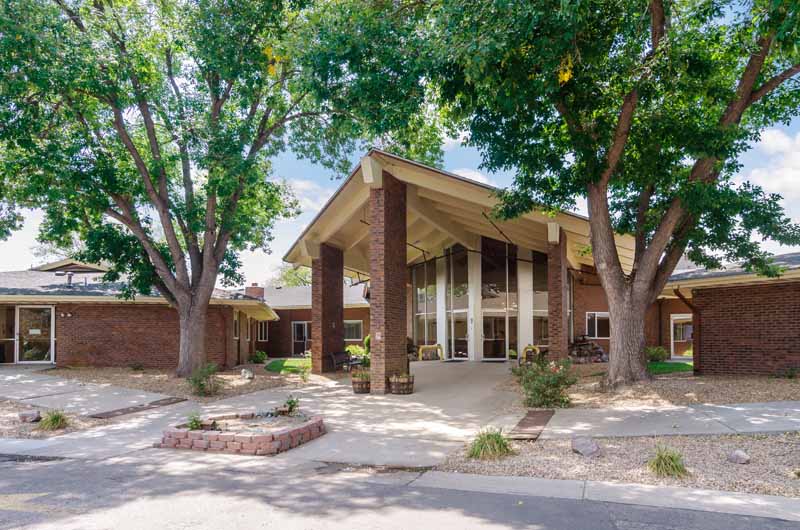
WESTLAKE HEALTH AND REHABILITATION CENTER

1637 29TH AVE PL, GREELEY, CO 80634 (970) 356-8181
For profit - Corporation 107 Beds THE ENSIGN GROUP Data: November 2025 1 Immediate Jeopardy citation
Trust Grade
36/100
#177 of 208 in CO
Last Inspection: April 2024

Within standard 12-15 month inspection cycle. Federal law requires annual inspections.

Overview

Westlake Health and Rehabilitation Center has a Trust Grade of F, indicating significant concerns and a poor overall reputation. It ranks #177 out of 208 facilities in Colorado, placing it in the bottom half and #7 out of 8 in Weld County, meaning only one local option is better. The facility is showing improvement, with the number of issues decreasing from seven in 2024 to two in 2025. However, staffing is a major weakness, receiving a rating of 1 out of 5 stars with a concerning turnover rate of 76%, much higher than the state average. Notably, a critical issue involved a resident not receiving necessary medication, which could pose serious health risks, and there were failures to maintain a clean and safe environment, including inadequate infection control practices. Overall, while there are some positive trends, significant weaknesses remain, particularly in staffing and patient safety.

Trust Score
F
36/100
In Colorado
#177/208
Bottom 15%
Safety Record
High Risk
Review needed
Inspections
Getting Better
7 → 2 violations
Staff Stability
⚠ Watch
76% turnover. Very high, 28 points above average. Constant new faces learning your loved one's needs.
Penalties
✓ Good
$21,645 in fines. Lower than most Colorado facilities. Relatively clean record.
Skilled Nurses
○ Average
Each resident gets 40 minutes of Registered Nurse (RN) attention daily — about average for Colorado. RNs are the most trained staff who monitor for health changes.
Violations
⚠ Watch
12 deficiencies on record. Higher than average. Multiple issues found across inspections.
★★☆☆☆
2.0
Overall Rating
★☆☆☆☆
1.0
Staff Levels
★★★★☆
4.0
Care Quality
★★★☆☆
3.0
Inspection Score
Stable
2024: 7 issues
2025: 2 issues

The Good

  • 4-Star Quality Measures · Strong clinical quality outcomes
  • Full Sprinkler Coverage · Fire safety systems throughout facility
  • No fines on record

Facility shows strength in quality measures, fire safety.

The Bad

2-Star Overall Rating

Below Colorado average (3.1)

Below average - review inspection findings carefully

Staff Turnover: 76%

30pts above Colorado avg (46%)

Frequent staff changes - ask about care continuity

Federal Fines: $21,645

Below median ($33,413)

Minor penalties assessed

Chain: THE ENSIGN GROUP

Part of a multi-facility chain

Ask about local staffing decisions and management

Staff turnover is very high (76%)

28 points above Colorado average of 48%

The Ugly 12 deficiencies on record

1 life-threatening
Jun 2025 1 deficiency
CONCERN (D) 📢 Someone Reported This

A family member, employee, or ombudsman was alarmed enough to file a formal complaint

Potential for Harm - no one hurt, but risky conditions existed

Deficiency F0760 (Tag F0760)

Could have caused harm · This affected 1 resident

**NOTE- TERMS IN BRACKETS HAVE BEEN EDITED TO PROTECT CONFIDENTIALITY** Based on observations, record review and interviews, the facility failed to ensure one (#4) of four residents were free from sig...

Read full inspector narrative →
**NOTE- TERMS IN BRACKETS HAVE BEEN EDITED TO PROTECT CONFIDENTIALITY** Based on observations, record review and interviews, the facility failed to ensure one (#4) of four residents were free from significant medication errors out of five sample residents. Specifically, the facility failed to ensure Resident #4 did not receive another resident's medications. Findings include: I. Professional reference According to Clinical Nursing Skills & Techniques by [NAME], [NAME] & [NAME], 8th Edition (2021), page 480-489, Safe medication administration: To prevent medication errors follow the six rights of medication administration consistently every time you administer medications. Many medication errors are linked in some way to an inconsistency in adhering to the six rights: -The right medication; -The right dose; --The right patient; -The right route; -The right time; and, -The right documentation. Read the label on the medication container and compare it with the MAR (medication administration record) at least three times before removing the container from the supply drawer, when placing the medication in an administration cup/syringe, and just before administering the medication to the patient. Medication errors often harm patients because of inappropriate medication use. Errors include inaccurate prescribing; administering the wrong medication, by the wrong route, and in the wrong time interval; and administering extra doses or failing to administer a medication. II. Resident #4 A. Resident Status Resident #4, age greater than 65, was admitted on [DATE]. According to the June 2025 computerized physician orders (CPO), diagnoses included type 2 diabetes mellitus with hyperglycemia, unspecified atrial fibrillation, acute diastolic (congestive) heart failure, chronic kidney disease, stage 3, essential (primary) hypertension, gout, dysthymic disorder, insomnia and muscle weakness. According to the 3/13/25 minimum data set (MDS) assessment, the resident had moderately impaired cognition with a brief interview for mental status (BIMS) score of 12 out of 15. She was dependent on a wheelchair for mobility. She needed supervision with activities of daily living (ADLs). The MDS assessment indicated the resident was receiving hypoglycemic (lowering blood sugar) medication and an anti-hypertensive (lowering high blood pressure) medication. B. Resident interview Resident #4 was interviewed on 6/25/25 at 3:00 p.m. Resident #4 said she remembered receiving another resident's medications. She said the facility told her that she was given the wrong medications accidentally. She said she felt dizzy and she had a stomachache all night. She said she was not able to eat for 24 hours. C. Record review The 5/15/25 progress note, documented at 12:59 p.m., revealed that licensed practical nurse (LPN) #1, who was an agency staff nurse, administered the incorrect medications to Resident #4. The note indicated LPN #1 notified the physician, the director of nursing (DON) and the resident's representative. The note revealed that Resident #4's vital signs were taken and found to be within normal range for the resident. The progress note revealed that Resident #4 was free of discomfort and adverse reaction. Review of the facility investigation for the medication error revealed Resident #4 was administered Lisinopril 40 milligrams (mg), duloxetine 60 mg and bupropion 300 mg ER (extended release). -Review of Resident #4`s May 2025 CPO revealed she did not have physician's orders for Lisinopril (treats high blood pressure), duloxetine (antidepressant medication) or bupropion (antidepressant medication). III. Staff interviews The DON was interviewed on 6/25/25 at 12:17 p.m. The DON said Resident #4 was administered another resident's medications on 5/15/25. The DON said the medications the resident accidentally received included Lisinopril 40 milligrams (mg), Duloxetine 60 mg and Wellbutrin 300 mg ER (extended release). She said the LPN who administered the wrong medications to the resident was an agency nurse. The DON said her first day of work in the facility was 5/14/25. She said the medication error with Resident #4 occurred the next day, on 5/15/25, and she was not yet familiar with the staff or the residents. She said the corporate clinical resource nurse provided medication administration education to all nurses in the facility after the medication error. She said the agency LPN (LPN #1) did not return to the facility.
Apr 2025 1 deficiency 1 IJ
CRITICAL (J) 📢 Someone Reported This

A family member, employee, or ombudsman was alarmed enough to file a formal complaint

Immediate Jeopardy (IJ) - the most serious Medicare violation

Deficiency F0760 (Tag F0760)

Someone could have died · This affected 1 resident

**NOTE- TERMS IN BRACKETS HAVE BEEN EDITED TO PROTECT CONFIDENTIALITY** Based on observation, record review and interviews, the facility failed to ensure one (#12) out of four sample residents were fr...

Read full inspector narrative →
**NOTE- TERMS IN BRACKETS HAVE BEEN EDITED TO PROTECT CONFIDENTIALITY** Based on observation, record review and interviews, the facility failed to ensure one (#12) out of four sample residents were free from significant medication errors. Resident #12, who was admitted to the facility on [DATE], had a mechanical heart valve and was at a high risk for deep vein thrombosis (DVT). The resident had a physician's order to receive warfarin (a bloodthinning medication) to assist with preventing blood clots. Additionally, the resident had a physician's order to periodically monitor the resident's PT/INR (prothrombin time test/international normalized ratio - a blood test that measures how long it takes the blood to clot). The resident's physician adjusted the resident's warfarin dose based upon the results of the PT/INR blood test. According to the pharmacist ([NAME]), Resident #12's therapeutic level of warfarin (PT/INR goal range) was 2.5 seconds to 3.5 seconds (see [NAME] interview below). On 2/17/25 a physician's order was obtained to hold Resident #12's warfarin medication on 2/18/25 and 2/19/25 due to a PT/INR level of 4.84 seconds, which meant the resident's blood clotting time was too high. The facility was to recheck the PT/INR and give a one-time dose of warfarin 4 milligrams (mg) on 2/20/25. The resident's PT/INR was rechecked on 2/20/25 and was 3.12 seconds. The facility's nurse received a verbal physician's order to restart Resident #12's warfarin at 3.5 mg and recheck the PT/INR the following Wednesday (2/26/25). However, the facility failed to ensure the 2/21/25 physician's order for warfarin was transcribed into the electronic medication record (EMR) and onto Resident #12's February 2025 medication administration record (MAR), which resulted in a failure to provide anticoagulant medication for seven days and led to a significant reduction in Resident #12's PT/INR level to 0.97 seconds (indicating the resident's blood clotting time was too low, potentially increasing the risk for the resident to develop blood clots). The facility's failure to administer Resident #12's anticoagulant therapy for seven days led to a non-therapeutic PT/INR level and placed Resident #12 at greater risk for a blood clot. Resident #12 developed a blood clot in his right leg and later required an above the knee (AKA) amputation. The facility's failure to ensure staff accurately transcribed Resident #12's physician's order for warfarin resulted in a situation of serious harm. Findings include: Record review and interviews confirmed the facility corrected the deficient practice prior to the onsite investigation on 4/2/25 to 4/7/25, resulting in the deficiency being cited as past noncompliance with a correction date of 3/21/25. I. Situation of serious harm The facility failed to ensure Resident #12's 2/21/25 physician's order for warfarin was transcribed into the resident's EMR and onto the resident's February 2025 MAR, which resulted in a failure to provide anticoagulant medication for seven days and led to a significant reduction in Resident #12's PT/INR level. The facility's failure to administer Resident #12's anticoagulant therapy for seven days led to a non-therapeutic PT/INR level and placed Resident #12 at greater risk for a blood clot. Resident #12 developed a blood clot in his right leg and later required an above the knee (AKA) amputation. The failure to ensure staff accurately transcribed Resident #12's physician's order for warfarin resulted in a situation of serious harm. II. Facility's plan of correction The corrective action plan implemented by the facility in response to Resident #12's serious medication error on 2/21/25 was provided by nursing home administrator (NHA) #1 on 4/4/25 at 10:33 a.m. The stated purpose of the plan was to address the significant medication error and prevent any additional residents from suffering an adverse outcome. The plan revealed the following: Identification of others - the facility took the following actions to prevent an adverse outcome from reoccurring. All applicable facility policies and procedures were reviewed/revised by the director of nursing (DON) or designee (completion date 3/21/25). Systemic changes - the DON or designee re-educated licensed nurses on facility policies regarding medication transcription as well as transcribing physician's orders and notifying the physician. All nurses were educated prior to working their next shift. The DON completed corrective action and one-to-one education with a licensed nurse who was identified as being deficient in their practice resulting in this citation. A complete medication review will be completed on all residents who are prescribed warfarin. Monitoring - the DON or designee will complete weekly chart audits on all residents receiving warfarin medication to ensure the orders were transcribed properly, the medication was given as ordered/parameters followed, the physician was notified when there was a medication transcription error and the physician contact is properly documented. The audits will continue until compliance can be maintained three days (audits) per week for three consecutive months. The administrator implemented a QAPI/PIP (quality assurance and performance improvement/performance improvement project) as a means to gather and process information from the audits. Findings will be reported at the monthly quality assurance meeting for a minimum of three months. Date of compliance: 3/21/25. III. Facility policy and procedure The Anticoagulant Therapy policy, revised October 2024, was provided by NHA #1 on 4/7/25 at 4:42 p.m. It read in pertinent part, The anticoagulant medication administration record (MAR) is completed for residents receiving oral warfarin (brand name replaced) therapy. Complete the MAR, including the usual resident identifying information and the order date, warfarin dosage and dates for INR laboratory (lab) testing due in the boxes as indicated. As medications ordered are changed or laboratory results become available, the MAR is updated to include the new information. For any anticoagulant use, the facility will monitor for signs and symptoms of bleeding as needed. The warfarin log is completed for each resident receiving warfarin therapy. The log is completed with the usual resident identifying information, as well as the resident's initial INR range or goal according to the physician. Subsequently, resident INR laboratory results, medication dosage orders and dosage changes are recorded by the nurse in charge. Log follow up is assigned to one nurse for periodic auditing to ensure appropriate completion of the log. Prior to administering warfarin, please reference the warfarin tracking form. IV. Facility investigation of transcription omission and education provided in response to Resident #12's serious medication error on 2/21/25 NHA #1 provided a timeline of the investigation, the facility's findings and the education plan on 4/4/25 at 10:33 a.m. The information provided revealed the following: The investigation revealed a transcription error was noted on 2/21/25 and was the reason Resident #12 missed his warfarin from 2/21/25 to 2/27/25. The nurse received an order on 2/21/25 for 3.5 mg warfarin daily and to recheck INR on 2/26/25. She completed the warfarin log with the information about the new warfarin dosage, but did not transcribe the order into Resident #12's EMR. On 2/27/25 another nurse noted there was no current order for warfarin for Resident #12. The nurse who discovered the error obtained a physician's order for an INR. When the results came back, a different nurse (the night shift nurse) contacted the on-call provider and obtained a one-time physician's order for warfarin 4 mg with orders to follow up with the resident's usual physician for additional doses. No further misses for warfarin were found. A performance improvement plan was initiated by the facility on 3/13/25 and staff education was provided. The staff education document, which contained 16 licensed nursing staff signatures, revealed the following in pertinent part, A detailed progress note should be placed in the residents' charts summarizing the lab results, physician notified, and any new orders given or orders to continue the same dose and next INR draw. Nurses are responsible for updating the order in the EMR and verifying its accuracy. In the warfarin (log) book, the date, current warfarin orders and INR results and next INR draw should be recorded, as well as what the medication dosage was changed to or if the same dose is to be continued. Please note any misstep in this process could result in life threatening harm to the resident. V. Resident #12 A. Resident status Resident #12 Resident #12, age [AGE], was admitted on [DATE]. According to the April 2025 computerized physician orders (CPO), diagnoses included right leg above the knee amputation, respiratory failure, aortic (heart) valve disorder, cerebral infarction (stroke), thoracic aneurysm (weakened area in body's main artery in the chest) and epilepsy. The 3/12/25 minimum data sets (MDS) assessment revealed the resident had moderate cognitive impairments with a brief interview of mental status (BIMS) score of 11 out of 15. He required set up assistance with eating, and was dependent on staff for toileting, showering, dressing, repositioning and transferring. B. Resident observation and resident representative interview Resident #12's representative was interviewed on 4/7/25 at 12:55 p.m. The representative said as Resident #12 was being transferred to the hospital on 3/12/25, she overheard a facility nurse tell another nurse that the resident was accidentally taken off Coumadin (warfarin) for a period of time. The representative said she wanted to learn more about this when Resident #12 was readmitted to the facility, however, the facility refused to discuss what had happened during the care conference meeting after the resident's readmission. The representative said the facility representative at the care conference told her they would schedule another time to discuss the resident's missed warfarin doses, yet this had not happened. The representative said Resident #12's INR level was supposed to be maintained between 2.5 seconds to 3.5 seconds and the facility had not done a good job maintaining the resident's INR at the desired level. The representative said the hospital physician told her it was difficult to determine if the missed warfarin doses could have contributed to Resident #12's leg being required to be amputated, as his leg had circulatory issues for years. During the resident representative's interview, Resident #12 was observed to repeatedly say they cut off my leg several times. C. Record review Resident #12's anticoagulant therapy care plan, revised 3/28/25, documented the resident received an anticoagulant due to atrial fibrillation (an irregular heart beat that causes poor blood flow). The interventions included obtaining labs as ordered, monitoring and reporting signs/symptoms of thromboembolism (when a blood clot breaks off and travels through the bloodstream), monitoring, documenting and reporting to the physician as needed signs of anticoagulant therapy complications, resident teaching, reviewing medication list for interactions and ultrasounds as ordered per physician. An additional anticoagulant therapy care plan was initiated on 3/11/25, documented Resident #12 was at risk for deep vein thrombosis (DVT, a blood clot in a deep vein) related to the resident's history of DVTs, a mechanical heart valve, immobility and chronic anticoagulant therapy. The interventions included administering medications as ordered, monitoring and documenting side effects and effectiveness, inspecting legs and feet for skin color/temperature, monitoring laboratory values to monitor and document effects of anticoagulant therapy, reporting lab values outside desired range, monitoring, reporting, and documenting to the physician as needed any signs and symptoms of complications and repositioning and ambulating the resident as frequently as possible, at a minimum of every two hours. The anticoagulant therapy flowsheet for Resident #12 was provided by NHA #1 on 4/4/25 at 10:33 a.m. It documented the diagnoses requiring Resident #12's anticoagulant therapy included atrial fibrillation, mechanical heart valve and recurrent DVT. The documented goal for the INR level was 2.5 to 3.5. The flowsheet had labeled columns to enter the date, the INR level, the current warfarin dose and any new physician's orders. Resident #12's flowsheet documented the following: On 2/18/25, the INR result was 4.84, the current dose documented was 4 mg warfarin, and there was additional written documentation to hold the warfarin for two days and recheck 2/20/25, per physician assistant (PA). On 2/20/25, the INR result was 3.12, the current dose was documented that warfarin was on hold. -However, the February 2025 MAR revealed warfarin 4 mg was administered to Resident #12 on 2/20/25. On 2/21/25, the INR result was again documented as 3.12, the current dose documented warfarin 3.5 mg daily and there was additional documentation to recheck the resident's INR on 2/26/25. -However, the EMR revealed no daily physician's order for warfarin 3.5 mg to begin on 2/21/25 and review of Resident #12's February 2025 MAR revealed there were no documented doses of warfarin administered to the resident between 2/21/25 and 2/27/25 (a period of seven days). On 2/27/25, the INR result was 0.97, and there was no documentation for a current warfarin dose, however, there was additional documentation for a stat (immediate) INR. -However, review of the lab results revealed Resident #12's INR was 0.97 on 2/26/25 and the INR was actually 0.92 on 2/27/25. The INR flow sheet did not have an INR entry documented on 2/26/25. The INR flowsheet further revealed there was no documentation for a current dose of warfarin from 2/27/25 until 3/4/25. -However, review of the EMR revealed a physician's orders for warfarin beginning on 2/28/25. Review of Resident #12's February 2025 and March 2025 MAR revealed the resident received all doses of warfarin from 2/28/25 to 3/4/25. A physician progress note, dated 3/7/25, documented there was difficulty maintaining Resident #12's INRs over 2.5. Resident #12 had been on 3 mg of warfarin daily for several weeks, but the resident's INR had dropped from 1.9 to 1.2. The resident's dose was increased to 4 mg daily. -The physician's progress note did not reveal whether the physician was aware of Resident #12's missed doses of warfarin from 2/21/25 to 2/27/25. A nurse progress note, dated 3/12/25 at 4:50 p.m., documented Resident #12's pedal (foot) pulse had diminished to the right lower extremity with spreading reddened petechiae (tiny round brown-purple spots due to bleeding under the skin) and possible hematoma (a collection of blood outside of a vessel) to the anterior ankle that had worsened per spouse and report received from the DON. The hospital was notified and informed of pending results of an arterial doppler ultrasound (a non-invasive imaging test that uses sound waves to evaluate the blood flow in the arteries of your arms and legs) performed on 3/12/25 and the nurse practitioner (NP) gave an order for Resident #12 to be transferred to the hospital to rule out a possible arterial occlusion. A nurse progress note, dated 3/12/25 at 8:25 p.m., documented the facility was alerted to critical imaging results of the arterial doppler which was performed on 3/12/25 at the facility, prior to Resident #12's hospitalization. The hospital was contacted and alerted to the critical results and the information was faxed to the emergency department. Resident #12's hospitalization record was provided by NHA #1 on 4/4/25 at 10:33 a.m. The hospital records revealed the documented admission diagnosis for Resident #12 on 3/13/25 was atherosclerosis (build up caused narrowing and reduced blood flow) of the native artery of the right lower extremity with rest pain (pain when resting). Resident #12 underwent a right above the knee amputation during his hospitalization on 3/18/25. A physician's progress note, dated 4/3/25 at 12:37 p.m., documented Resident #12 was extensively discussed at QAPI on 3/18/25. The resident's diagnosis was ASVD (atherosclerotic vascular disease) of the right leg arteries with rest pain (pain when resting) which suggested chronic ischemia/arterial insufficiency. -However, the physician's progress note was not written until 4/3/25, during the survey (over two weeks after the 3/18/25 QAPI meeting). A review of anticoagulant medication administration for Resident #12 from 3/21/25 to 4/3/25 revealed the resident had received all of his warfarin doses as ordered and the facility was monitoring for other residents receiving warfarin, per the facility's corrective action plan. VI. Staff interviews The medical director (MD) was interviewed on 4/3/25 at 4:35 p.m. The MD said Resident #12's ultrasound result, prior to his hospitalization on 3/12/25, revealed an occlusion (blockage) of the right popliteal artery (blood vessel located behind the knee). The MD said he was aware of Resident #12's missed warfarin doses. He said the occlusion was probably chronic (longstanding) and he wrote a statement on 4/3/25 (during the survey) regarding this opinion. He said the only way to know with certainty the cause of the occlusion would be to review the information in the pathology report of Resident #12's above the knee amputated (AKA) leg, which would have shown if the condition were chronic or not. The MD said he was unable to obtain Resident #12's pathology report at the time of interview. The physician (PHY) was interviewed on 4/3/25 at 4:50 p.m. The PHY said though his name was entered by the nursing staff on the physician orders, the physician's orders placed on 2/27/25 were likely provided by an on-call provider. The PHY said the facility had a history of serious issues with warfarin management. The PHY said he did not think physician's orders were being entered properly by nursing staff all of the time. The PHY said there was a situation for another resident in which an INR was reported and the physician communicated the orders, however the orders were not implemented for a few days. The PHY said he had conveyed the importance of the process for warfarin orders with the facility. The PHY said the facility had provided education to staff since Resident #12's incident and he was also taking an active role to ensure the process was being followed. The clinical resource person (CRP) was interviewed on 4/3/25 at 4:58 p.m. The CRP said Resident #12 had missed warfarin administration doses for five consecutive days. The CRP then reviewed documentation in Resident #12's EMR (during the interview) and said she did not find any warfarin doses given from 2/21/25 to 2/27/25, for seven days. Registered nurse (RN) #1 was interviewed on 4/3/25 at 6:38 p.m. RN #1 said she reported Resident #12's INR result from 2/20/25. RN #1 said she received verbal orders from the physician. She said Resident #12 received a one-time dose of warfarin 4 mg on 2/20/25 and then was supposed to receive daily warfarin 3.5 mg to begin on 2/21/25 with a recheck of his INR level on 2/26/25. RN #1 said she entered the information on Resident #12's INR flow sheet and thought she had entered the physician's order for daily warfarin into the EMR, however, she said when the DON later asked her about Resident #12's missed warfarin doses, she was not able to find any physician's order in the EMR for the daily warfarin doses which were to begin on 2/21/25. RN #1 said it was important to monitor INR levels for residents on anticoagulants to maintain a therapeutic level of the medication. RN #1 said she was reeducated about transcription of medication orders, including the importance of documenting physician's orders into the EMR. RN #2 was interviewed on 4/3/25 at 9:40 p.m. RN #2 said if he received physician's orders for warfarin, he would place the order in the resident's EMR immediately and would expect the dose of the medication to be adjusted as needed, based upon the resident's INR levels. RN #3 was interviewed on 4/3/25 at 9:44 p.m. RN #3 said if she received physician's orders for medications, she would enter the orders in the resident's EMR at the time the order was received. Licensed practical nurse (LPN) #3 was interviewed on 4/7/25 at 9:35 a.m. LPN #3 said the facility provided nursing staff education a few weeks ago to ensure no missed doses of warfarin for the residents. LPN #3 said the education included the correct process for taking and entering physician's orders. LPN #3 said residents who missed doses of anticoagulant medications could develop blood clots and this could be life threatening. RN #1 was interviewed again on 4/7/25 at 9:50 a.m. RN #1 said if residents did not receive their anticoagulant medication as ordered, they could develop a blood clot, pulmonary embolism (a blot clot in the lungs) or a stroke. LPN #2 was interviewed on 4/7/25 at 10:10 a.m. LPN #2 said the physicians wanted Resident #12's INR level to be between 2.5 to 3.5. LPN #2 said she reviewed Resident #12's EMR for lab results and orders on 2/27/25 and she noticed his INR was very low (0.97). LPN #2 said Resident #12's EMR also had no physician's orders for warfarin since 2/20/25. LPN #2 said Resident #12's anticoagulant therapy flow sheet revealed he was supposed to receive warfarin 3.5 mg daily beginning on 2/21/25. LPN #2 said the process for anticoagulant therapy included receipt of INR result, reporting of the result to the physician, information entered on the anticoagulant flow sheet with the INR result and new physician's orders, physician's orders entered in the EMR and a progress note entered about the process that was followed. LPN #2 said she contacted the DON and the physician when she realized Resident #12 had not received the warfarin as ordered. LPN #2 said Resident #12 was at risk of getting blood clots. She said residents could get blood clots if warfarin was not given as ordered. LPN #2 said the facility provided education to nursing staff after this incident, which included reporting of INR results, receipt of physician's orders, using the INR flow sheet and the importance of entering physician's orders for warfarin in the EMR. LPN #1 was interviewed on 4/7/25 at 10:34 a.m. LPN #1, who was also a unit manager, said she assisted the staff development coordinator with education the education that was provided to staff after Resident #12 was transferred to the hospital on 3/12/25. She said staff education included the importance of calling physicians with lab results, obtaining physician's orders, entering pertinent information on the INR flow sheet and entering the new physician's orders in the EMR. LPN #1 said she knew Resident #12 had missed doses of warfarin, but she did not know details or the extent of the missed doses until 3/10/25 when LPN #2 asked her to look at Resident #12's right lower leg, which had new redness. She said there were petechiae of Resident #12's right ankle measuring approximately three centimeters (cm) by six cm. LPN #1 said there was another area on top of the right foot with a hematoma which had the same measurement. LPN #1 said she received physician's orders for an ultrasound of Resident #12's right leg and she placed the orders in the EMR. DON #1 was interviewed on 4/7/25 at 10:59 a.m. DON #1 said LPN #2 reported Resident #12's missed doses of warfarin to her early in the morning of 2/27/25. She said they identified this as a medication error, notified the physician and received an order for an INR. She said the provider did not want to place an order at the time, as the facility expected providers to visit Resident #12 that day. She said a physician did not see Resident #12 that day and there was a delayed receipt of warfarin orders for Resident #12. -Resident #12 did not receive a new physician's order for warfarin until 2/27/25 at 10:25 p.m. and the warfarin dose was not administered until 2/28/25 at 12:10 a.m. DON #1 said she reported Resident #12's missed doses of warfarin to NHA #1 and suspended RN #1 on 2/27/25. DON #1 was interviewed again on 4/7/25 at 12:15 p.m. DON #1 said she did not know why there was not a physician's order for resumption of Resident #12's warfarin or why the medication was not given until 16 hours after LPN #2 discovered the missed doses. DON #1 said staff should have recognized prior to 2/27/25 that Resident #12 had not received warfarin doses. DON #1 said nurse staff education did not begin until 3/13/25, the day after Resident #12 was sent to the hospital with a blood clot. She said staff education (in addition to education for RN #1) should have begun when the medication error was initially discovered on 2/27/25, as staff did not recognize the missed warfarin doses for seven days. The pharmacist ([NAME]) was interviewed on 4/7/25 at 2:10 p.m. The [NAME] said Resident #12's INR should be between 2.5 to 3.5 for his condition. The [NAME] said the missed warfarin doses contributed to his decreased INR, which increased the chance of clotting, and any clots could increase the risk for amputation. The [NAME] said the anticoagulant policy would show the strategy to increase the INR to a therapeutic level. The [NAME] said if doses were missed, he would give a warfarin dose immediately and possibly a bolus dose (a one-time larger dose). The [NAME] said after missed doses of warfarin, the goal was to return the resident to a therapeutic INR range as quickly as possible. The [NAME] said in Resident #12's case, he would have suggested a bolus dose, possibly 10 mg. The [NAME] said this type of bolus dose was not used for Resident #12. The [NAME] said Resident #12's INR was currently back within a therapeutic range.
Oct 2024 1 deficiency
CONCERN (F) 📢 Someone Reported This

A family member, employee, or ombudsman was alarmed enough to file a formal complaint

Potential for Harm - no one hurt, but risky conditions existed

Safe Environment (Tag F0921)

Could have caused harm · This affected most or all residents

**NOTE- TERMS IN BRACKETS HAVE BEEN EDITED TO PROTECT CONFIDENTIALITY** Based on observations, record review and interviews, the facility failed to provide a safe, functional, sanitary and comfortable...

Read full inspector narrative →
**NOTE- TERMS IN BRACKETS HAVE BEEN EDITED TO PROTECT CONFIDENTIALITY** Based on observations, record review and interviews, the facility failed to provide a safe, functional, sanitary and comfortable environment for residents, staff and the public. Specifically, the facility failed to ensure two ceiling swamp cooler vents, two shower rooms and eight mechanical rooms were thoroughly cleaned, free from debris and did not contain any black discoloration on any surfaces. Findings include: I. Facility policy and procedure The Safe and Homelike Environment policy, revised September 2024, was provided by the assistant director of nursing (ADON) on 10/16/24 at 12:12 p.m. The policy revealed that in accordance with residents' rights, the facility would provide a safe, clean, comfortable and homelike environment, allowing the resident to use his or her personal belongings to the extent possible. This included ensuring that the resident could receive care/services safely and the physical layout of the facility maximized resident independence and did not pose a safety risk. The environment referred to any environment in the facility that was frequented by residents, including (but not limited to) the residents' rooms, bathrooms, hallways, dining areas, lobby, outdoor patios, therapy areas and activity areas. The term orderly was defined as an uncluttered physical environment that was neat and well kept. The term sanitary included, but was not limited to, preventing the spread of disease-causing organisms by keeping resident care equipment clean and properly stored. Resident care equipment included but was not limited to, equipment used in the completion of the activities of daily living. Housekeeping and maintenance services would be provided as necessary to maintain a sanitary, orderly and comfortable environment. II. Observations An environmental tour of the facility was conducted on 10/16/24 at 10:00 a.m. The following observations were made: The hallway ceiling air vent (Swamp Cooler) by resident room [ROOM NUMBER] had two missing vent louvers. There was dark debris on the vent louvers and on the ceiling surrounding the vent. The hallway ceiling air vent (Swamp Cooler) by resident room [ROOM NUMBER] had dark debris on the vent/louvers and on the ceiling surrounding the vent. The ceiling adjacent to the vent had sheetrock damage and sagged (bulged) downward. The shower room on hall 300 had water-dripping from the showerhead. The ceiling exhaust vent in the shower room had no cover and contained debris. There was debris in the corners of the shower. The floor tile in the shower had a brown discoloration. There was black discoloration where the walls met the floor. There was black discoloration where the shower room walls joined in a corner. The shower room on hall 200 had water-dripping from the showerhead. The ceiling exhaust fan was non-functional. There was black discoloration where the walls met the floor. There was black discoloration where the shower room walls met in a corner. The shower floor contained a large area of black discoloration. The mechanical room on the South One hall by resident room [ROOM NUMBER] had sheet rock damage on one wall, black discolored areas on two walls and black discoloration on the floor. The air from this furnace (an appliance fired by gas, oil, or wood in which air or water was heated to be circulated throughout a building in a heating system) supplied air to resident rooms. The mechanical room on the South Two hall by resident room [ROOM NUMBER] had sheet rock damage on one wall, one water stained wall and an unkempt floor. The air from this furnace supplied air to resident rooms. The mechanical room on the South Three hall by resident room [ROOM NUMBER] had sheet rock damage on one wall and two holes in the wall by the entrance door frame. The air from this furnace supplied air to resident rooms. The mechanical room on the South Four hall by resident room [ROOM NUMBER] had numerous dead gnats on the floor and on the furnace unit. There was cracked paint on the ceiling and on three walls. The floor vent was rusty and there was sheetrock damage on one wall. There were two holes in the wall by the entrance door frame. The air from this furnace supplied air to resident rooms. The mechanical room on the North One hall by resident room [ROOM NUMBER] had sheet rock damage on three walls, an unkempt floor, an unkempt floor vent and a small water line that was leaking water into a trash can. The air from this furnace supplied air to resident rooms. The mechanical room on the North Two hall by resident room [ROOM NUMBER] had an unkempt floor and an unkempt floor vent that was bent in the middle. The air from this furnace supplied air to resident rooms. The mechanical room on the North Three hall by resident room [ROOM NUMBER] had sheet rock damage on two walls, a rusty/unkempt floor vent and black discoloration on the entire back wall. The air from this furnace supplied air to resident rooms. The mechanical room on the North Four hall by resident room [ROOM NUMBER] had sheet rock damage on two walls, one loose floor tile and an unkempt floor. The air from this furnace supplied air to resident rooms. III. Staff interviews A second environmental tour of the facility was conducted on 10/16/24 at 12:06 p.m., with the maintenance supervisor (MS), unit manager (UM) #1 and the accounts manager (AM). They agreed with the above observations. The MS, UM #1 and the AM were interviewed on 10/16/24 at 2:29 p.m. They said no residents or family members had discussed with them any issues with air quality or black discolorations in the bathrooms. They said there were no work orders for the above observations. The MS said there were work order notebooks at the two nurse's stations. The MS said the staff could fill out work orders, text him, call him or verbally tell him of any issues that needed repairs. UM #2 was interviewed on 10/16/24 at 4:57 p.m. UM #2 said a service contractor was coming to the facility tomorrow (10/17/24), to evaluate the requirements for the repairs on the North Three hall mechanical room. She said nine residents would be moved from the North Three hall for a short period so the repairs could be made to the mechanical room. UM #2 said the residents and their family members would be informed/asked about room changes and the residents would be able to move back to their rooms after the repairs had been completed. The nursing home administrator (NHA) was interviewed via a conference call on 10/16/24 at 5:25 p.m. The NHA said the facility came under new management on 10/1/24. He said approximately two weeks after that date, he was made aware that there was black discoloration in one of the mechanical rooms and he was unsure which mechanical room it was.
Apr 2024 6 deficiencies
CONCERN (D)

Potential for Harm - no one hurt, but risky conditions existed

Deficiency F0645 (Tag F0645)

Could have caused harm · This affected 1 resident

**NOTE- TERMS IN BRACKETS HAVE BEEN EDITED TO PROTECT CONFIDENTIALITY** Based on record review and interviews, the facility failed to ensure level II preadmission screening and resident review (PASRR)...

Read full inspector narrative →
**NOTE- TERMS IN BRACKETS HAVE BEEN EDITED TO PROTECT CONFIDENTIALITY** Based on record review and interviews, the facility failed to ensure level II preadmission screening and resident review (PASRR) were completed for one (#33) of two residents out of 32 sample residents reviewed for PASRR to gain and maintain their highest practical medical, emotional and psychosocial well-being. Specifically, the facility failed to follow PASRR level II recommendations for Resident #33. Findings include: I. Facility policy and procedure The PASRR completion policy, revised 2/23/24, was provided by the quality mentor (QM) on 4/11/24 at 11:40 p.m. It read in pertinent part, If the resident has a PASRR Level II, the community is responsible for ensuring that any recommendations from the PASRR Level II are implemented and care planned for the resident. II. Resident status Resident #33, age above 65, was admitted on [DATE]. According to the April 2024 computerized physician orders (CPO), diagnoses included history of falling, weakness, generalized anxiety disorder, major depressive disorder, recurrent, mild, unspecified symptoms and signs involving cognitive functions and awareness. The 1/13/24 minimum data set (MDS) assessment did not document the resident's level II PASRR level II for a serious mental illness. It revealed that the resident had severe cognitive impairments with a brief interview of mental status (BIMS) score of five out of 15. III. Record review Review of the resident's PASRR level II dated 10/21/22 documented the resident had cognitive deficits that were very present during the meeting with the evaluator. The evaluator concluded that cognitive decline appeared to be the primary issue from the observations and assessment. Resident #6 did not have a history of mental health services or behavioral health support services. The evaluator noted a primary diagnosis of unspecified neurocognitive disorder and recommended formal neuropsychological testing to understand the cause or other processes that were causing cognitive declines -Review of the comprehensive care plan dated 2/22/24 did not document the resident's PASRR level II screening and specialized services recommendations for mental illness. The social services progress notes reviewed from 10/21/22 through 4/11/24 did not document that the facility had reached out to a mental health provider to establish services for neuropsychological testing. Review of the April 2024 CPO failed to show an order for the resident to be seen for neuropsychological testing. IV. Staff interviews The social services director (SSD) was interviewed on 4/11/24 at 10:54 a.m. The SSD said the PASRR recommendations were not followed up on according to her review of the medical record. She said neuropsychological testing was not completed because there had been issues with the behavioral health provider that the facility had worked with, however, the behavioral health facility that the facility worked with did not conduct neuropsychological testing. She said she did not know why there was not a physician's order for neuropsychological testing. She said she would audit all resident PASRRs and ensure all recommendations were followed and maintain a spreadsheet to track PASRRs due and follow up on all recommendations. The director of nursing (DON) was interviewed on 4/11/24 at 11:45 a.m. The DON said the facility should follow up on all PASRR recommendations to ensure residents maintained their quality of life. The nursing home administrator (NHA) was interviewed on 4/11/24 at 11:45 a.m. She said education, training and audits would be put in place to ensure the facility maintained tracking of PASRR evaluation completion and follow up on recommendations.
CONCERN (D)

Potential for Harm - no one hurt, but risky conditions existed

ADL Care (Tag F0677)

Could have caused harm · This affected 1 resident

**NOTE- TERMS IN BRACKETS HAVE BEEN EDITED TO PROTECT CONFIDENTIALITY** Based on observations, record review and interviews, the facility failed to ensure that activities of daily living (ADL) for dep...

Read full inspector narrative →
**NOTE- TERMS IN BRACKETS HAVE BEEN EDITED TO PROTECT CONFIDENTIALITY** Based on observations, record review and interviews, the facility failed to ensure that activities of daily living (ADL) for dependent residents were provided for one (#31) of two residents out of 32 sample residents. Specifically, the facility failed to provide eating assistance for a resident who required supervision and cueing and who was at high risk for weight loss. Finding include: I. Facility policy and procedure The Weight Management policy and procedure, reviewed 2/29/24, was provided by the quality mentor (QM) on 4/11/24 at 11:39 a.m. It read in pertinent part, Residents are monitored for weight change on a regular basis. Results are reviewed and analyzed by the facility for interventions as appropriate. Residents identified at risk for weight change will have interventions implemented to minimize the risk for additional weight change included in their plan of care. This may include supplements, registered dietician (RD) evaluation and assisted dining. II. Resident #31 A. Resident status Resident #31, age [AGE], was admitted on [DATE]. According to the April 2024 computerized physician orders (CPO), diagnoses included Alzheimer's disease and severe protein malnutrition. The 1/2/24 minimum data set (MDS) assessment revealed the resident had severe cognitive impairment with deficits in short and long term memory according to the staff interview for mental status. She was dependent on staff for toileting and personal hygiene. She required substantial/maximal assistance with bed mobility, transfers and required supervision with touch assistance and cueing for eating. B. Observations During a continuous observation on 4/8/24, beginning at 11:40 a.m. and ending at 12:30 p.m., Resident #31 was sitting in the dining room in a wheelchair at a table alone. At 12:00 p.m. Resident #31 was served her meal which included pureed meat, vegetables and mashed potatoes. She was also served ice cream and a whole banana. The staff uncovered the resident's plate, opened the ice cream up and peeled the banana. The staff then went to assist other residents. At 12:05 p.m. Resident #31 picked up her fork and used the fork to pick at what was on the plate. She ate one to two small mouthfuls of meat and vegetables. She then began to eat the ice cream and finished the ice cream. -Staff were not observed assisting or cueing the resident with eating. At 12:30 Resident #31 remained in the dining room. She had consumed all of the ice cream. She had not eaten her meal or the banana. Staff assisted Resident #31 back to her room. -Staff did not ask Resident #31 if she was still hungry or attempt to offer the resident a bite of food prior to taking the resident back to her room. -Staff did not offer an alternative to the resident when she did not eat the food on the plate in front of her. During a continuous observation on 4/10/24, beginning at 12:00 p.m. and ending at 12:40 p.m., Resident #31 was again sitting in the dining room in a wheelchair. At 12:18 p.m. Resident #31 was served a plate that contained pureed meat, vegetable and mashed potatoes. She was also served a cup of ice cream and a peeled banana.The staff uncovered the resident's plate and opened the ice cream. The staff then went to assist other residents. At 12:20 Resident #31 picked up a spoon and started eating the ice cream. Resident #31 did not eat any of the pureed meat, pureed vegetables, mashed potatoes or banana. -The staff did not assist or cue the resident with her meal. At 12:40 p.m. Resident #31 finished the ice cream. Resident #31 did not take any bites of the pureed meat, pureed vegetables, mashed potatoes or banana. -The staff did not attempt to assist or cue the resident with her meal. -The staff did not offer the resident any food alternatives or additional food items when the resident did not eat the food on the plate in front of her. C. Record review The nutrition care plan, initiated 3/13/23 revised 9/12/23, indicated Resident #31 was at an increased nutritional risk related to Alzheimer's disease and severe protein calorie malnutrition. The interventions included monitoring and reporting signs of dysphagia (inability to swallow), monitoring signs of malnutrition (muscle wasting, significant weight loss), offering preferred foods, offering snacks, encouraging the resident to request large portions of foods she enjoyed and encouraging juice and milk with meals for added calories. The functional abilities/self care care plan, initiated 3/16/23 and revised 3/28/24, indicated Resident #31 had a decline in self care function related to Alzheimer's disease and rheumatoid arthritis. The interventions included providing set-up assistance and clean-up assistance for meals. -A review of the comprehensive care plan did not reveal the care plan had been updated to include the resident's increased need for feeding assistance. A comprehensive review of meal assistance documentation for Resident #31 revealed inconsistent eating assistance. The meal assistance documentation record from 3/8/24 to 4/8/24 revealed she required set up assistance 24 times, required supervision/touch assistance/cueing four times, required partial/moderate assistance two times, was dependent two times and not applicable eight times. -There was nothing documented on the record for meal assistance 47 times from 3/8/24 to 4/8/24. III. Staff interviews The registered dietitian (RD) was interviewed on 4/11/24 at 10:11 a.m. The RD said she had noticed Resident #31 recently needed more supervision, encouragement and cueing for her oral intake during meals. She said Resident #31 was at high risk for weight loss and had recently lost weight, even though overall weight was trending up. She said the staff should have encouraged oral intake during meals. Certified nurse aide (CNA) #1 was interviewed on 4/11/24 at 10:56 a.m. CNA #1 said staff assisted with just the set up of Resident #31's meal tray. She said staff did not provide assistance or cueing for Resident #31 at meals. She said Resident #31 was able to feed herself. CNA #1 said Resident #31 would only eat, at most, 25% of her meal. She said any feeding assistance required should be documented in the electronic medical record point of care system. She said residents who were at risk for weight loss should be cued and assisted with their meals and it should be documented every meal. The director of nursing (DON) was interviewed on 4/11/24 at 12:00 p.m. The DON said a resident that required supervision and cueing, especially resident's at risk for weight loss should have received assistance in the resident dining room. She said Resident #31 should have received staff cueing and supervision during her meals.
CONCERN (D)

Potential for Harm - no one hurt, but risky conditions existed

Quality of Care (Tag F0684)

Could have caused harm · This affected 1 resident

**NOTE- TERMS IN BRACKETS HAVE BEEN EDITED TO PROTECT CONFIDENTIALITY** IV. Resident #51 A. Facility policy and procedure The Resident Mobility and Range of Motion policy and procedure, revised May 20...

Read full inspector narrative →
**NOTE- TERMS IN BRACKETS HAVE BEEN EDITED TO PROTECT CONFIDENTIALITY** IV. Resident #51 A. Facility policy and procedure The Resident Mobility and Range of Motion policy and procedure, revised May 2013, was provided by the QM on 4/11/24 at 11:39 a.m. It read in pertinent part, Residents with limited mobility will receive appropriate services, equipment and assistance to maintain or improve mobility unless reduction in mobility is unavoidable. As part of the comprehensive assessment, the nurse will also identify conditions that place the resident at risk for complications related to range of motion (ROM) and mobility, including: pain, skin integrity issues, muscle wasting and atrophy, gait and balance issues, contractures or other complications that could cause or contribute to immobility, impaired ROM or injury from falls. During the resident's assessment, the nurse will identify the underlying factor that contribute to his or her ROM or mobility problems, including: immobilization (bedfast, chair or wheelchair usage), neurological conditions, conditions in which movement may lead to pain or conditions that limit or immobilize movement of limbs or digits. V. Resident #51 Resident #51, age less than 65, was admitted on [DATE]. According to the April 2024 CPO, diagnoses included anoxic brain damage, heroin overdose and contractures bilateral upper extremities. The 3/15/24 MDS assessment revealed the resident was cognitively intact with a BIMS score of 15 out of 15. She was dependent with eating, toileting, personal hygiene, bed mobility and transfers. C. Observations On 4/8/24 at 12:00 p.m. Resident #51 was sitting in the dining room in a wheelchair leaning over her wheelchair to the left side. Staff was feeding the resident while the resident was slouched over the left side of her wheelchair. Staff did not offer or attempt to reposition the resident upright prior to assisting the resident with her meals. On 4/9/24 at 12:30 p.m. Resident #51 was sitting in the dining room in a wheelchair leaning over her wheelchair on the left side. Staff did not offer or attempt to reposition the resident upright prior to assisting the resident with her meal. D. Resident interview Resident #51 was interviewed on 4/9/24 at 9:00 a.m. Resident #51 said she was leaning to the side in her wheelchair. She said staff picked her up by her pants to help reposition her in her wheelchair. She said they had not assessed her positioning in the wheelchair she had since she had received it more than a year ago. E. Record review The functional abilities/self care/mobility care plan, initiated on 5/3/22 and revised on 3/14/24, indicated Resident #51 had a self care/mobility deficit and required total care related to her history of an overdose and a motor vehicle accident. Interventions included she was wheelchair dependent and required a mechanical lift for transfers and physical and occupational evaluation and treatment per physician orders. The fall care plan, initiated 2/10/22 revised 7/14/22, indicated Resident #51 was at risk for falls related to her total dependence on care and contractures. Interventions included physical therapy to evaluate and provide treatment as ordered or as necessary and the resident was awaiting a new personal adaptive wheelchair on 10/24/22. -A review of the resident's medical record did not reveal an assessment of the resident's wheelchair positioning had not been completed in the past year. F. Staff interviews The director of rehabilitation (DOR) was interviewed on 4/10/24 at 9:30 a.m. The DOR said Resident #51 received a new personal adaptive wheelchair more than a year ago. He said he was not aware of any issues and had not received any concerns from staff regarding her positioning in the wheelchair. He said her new wheelchair had not been evaluated for positioning since she had received it. He said since he observed her current positioning leaning to the left in the wheelchair, he would get an order to evaluate her wheelchair. He said this should be done to help keep the resident in the correct alignment. Registered nurse (RN) #2 was interviewed on 4/11/24 at 10:45 a.m. RN #2 said she knew Resident #51 well and she had noticed that she had been leaning to one side in her wheelchair. She said Resident #51 had her current wheelchair for over a year. She said she did not think it had been evaluated for positioning. She said the issue had been informally discussed but it had not been brought to the attention of therapy for the wheelchair to be evaluated. She said this should be done to help minimize potential issues with incorrect positioning in the wheelchair, such as skin or feeding issues. The director of nursing (DON) was interviewed on 4/11/24 at 2:00 p.m. She said dependent residents that were wheelchair bound and had positioning issues should be evaluated by therapy for positioning. She said if staff noticed positioning issues with Resident #51 in her wheelchair, the concerns should have been addressed with therapy. Based on record review and interviews, the facility failed to ensure two (#35 and #51) out of two residents out of 32 sample residents received treatment and care in accordance with professional standards of practice. Specifically, the facility failed to: -Follow hospital physician orders to remove Resident #35's cervical neck brace after six weeks; -Monitor the skin under Resident #35's cervical neck brace; -Ensure Resident #35 was transported to and attended her neuro-orthopedic doctor' s appointment; and, -Support and position Resident #51 in her wheelchair properly. Findings include: I. Professional reference The Hull University Hospital Guide to Wearing Your Cervical Hard Collar, dated 3/19/21, was retrieved from https://www.hey.nhs.uk/patient-leaflet/guide-wearing-cervical-hard-collar/ on 4/16/24. It read in pertinent part, A hard collar is a device designed to limit movement of your neck. It is most commonly used to manage spinal fractures. It is important the collar is removed daily to be able to wash, dry and check your skin. However, when you no longer require your collar you will be advised to gradually remove it and you will be provided with an exercise program to strengthen your muscles again. II. Resident #35 A. Resident status Resident #35, over the age of 65, was admitted on [DATE] and readmitted [DATE]. According to the April 2024 computerized physician orders (CPO), diagnoses included fracture of second and fourth cervical vertebra (neck fracture), rhabdomyolysis (damaged muscles), congestive heart failure, and history of falling. The 2/16/24 minimum data set (MDS) assessment revealed the resident had moderate cognitive impairment with a brief interview for mental status (BIMS) score of eight out of 15. She required substantial/maximal assistance with lower body dressing and partial/moderate assistance for toileting, bathing, upper body dressing, and bed mobility. Transfers required supervision or touch assistance and walking 10 feet once standing. B. Resident interview and observation Resident #35 was interviewed on 4/8/24 at 1:50 p.m. Resident #35 said he said she had fallen at home in January 2024 and fractured her neck. She was observed wearing a rigid cervical neck brace. Resident #35 was observed on 4/10/24 at 7:28 a.m. She was seated in her wheelchair in the dining room with her rigid cervical neck brace on. Resident #35 was interviewed again on 4/11/24 at 10:34 a.m. She said her rigid cervical neck brace was uncomfortable but was told not to take it off at all. Resident #35 said she did not know the date of when she could remove it. Resident #35 said the neck brace did not feel very good and it was difficult to sleep with the neck brace due to it being hard. Resident #35 said she had no pain at rest but if she moved she had moderate pain. The neck brace padding around her chin and neck was stained with brown and yellow marks. -Resident #35 began wearing the rigid cervical neck brace on 1/21/24. She had been wearing the brace for 12 weeks. C. Record review The hospital discharge documents (admitted to hospital 1/14/24 and discharged [DATE]) revealed instructions from the doctor in pertienent part, You will need to wear a cervical collar at all times for six weeks. You will have another collar for showers only. -However, these orders were never entered into the facility orders upon the resident' s admission. Facility nurse practitioner (NP) #1' s new admission note, dated 1/22/24, revealed the reason for the appointment was the resident was status post acute hospitalization for a fall resulting in cervical fractures. The assessment and plan documented the resident was neurologically intact, the fractures were stable and there were no ligamentous injuries. The neurosurgeon recommended conservative management with a rigid collar. Aspen cervical collar was to be worn at all times for six weeks. Follow-up with neurosurgery as instructed. -However no physician orders were entered into the facility orders to confirm the cervical collar was to be worn for six weeks. The physical therapy (PT) evaluation dated 1/22/24 revealed the resident was recently hospitalized following a fall and hitting the back of her head. The resident was diagnosed with C2 and C4 (second and fourth cervical vertebra) fractures which were treated conservatively with a cervical collar for six weeks. The cervical collar was to be worn at all times. -The PT was aware Resident #35 was to wear the cervical collar for six weeks but did not take steps to ensure the facility had physician orders in place to notify the staff when the cervical could be removed after the six week time frame. The occupational therapy (OT) evaluation, dated 1/22/24, revealed the resident was recently hospitalized following a fall and hitting the back of her head. She was diagnosed with C2 and C4 fractures and was treated conservatively with a cervical collar for six weeks at all times. -The OT was aware Resident #35 was to wear the cervical for six weeks but did not take steps to ensure the facility had physician orders in place to notify the staff when the cervical collar could be removed after the six week time frame. The musculoskeletal care plan, initiated 1/28/24, revealed the resident had alteration in status related to fractures of the second and fourth cervical vertebra. The resident wore a rigid cervical collar at all times. Interventions included: assisting the resident with the use of supportive devices (rigid c-collar) as recommended, analgesics (pain medications) as ordered by the physician, monitor and documenting for side effects and effectiveness of pain medications, monitoring and documenting for risk of falls, educating the resident/family/caregivers on safety measures that need to be taken in order to reduce a risk of falls. -However, the care plan failed to identify how long the resident was supposed to wear the brace, how to clean the brace and showering precautions. The April 2024 CPO revealed the following physician orders: Bathing every day shift every Monday and Thursday, order date 1/23/24. -However, the physician's order did not include the use of a special shower collar during showers. Skin monitoring: remove the cervical collar at bedtime to assess skin for any breakdown, then reapply cervical collar, ordered on 2/23/24. -However, the resident was admitted on [DATE] and there was no documentation indicating skin monitoring had been completed under her cervical collar for 33 days. Cervical collar in place at all times. Monitor placement every shift. Cervical collar to be re-evaluated by neurosurgeon at appointment on 3/28/24, order date 3/25/24. -However, the order was added two months after the resident was admitted and the facility failed to take the resident to her scheduled neurosurgeon appointment. Cervical (neck) X-ray, order date 4/11/24 (during the survey process). -Resident #35 had not been taken to any neuro-orthopedic appointment check-ups since admission. -The facility continued to require Resident #35 to wear her rigid cervical neck brace due to lack of follow-up. III. Staff interviews The quality mentor (QM) was interviewed on 4/10/24 at 4:10 p.m. The QM said the facility called the orthopedic office today (4/10/24) for Resident #35 but the physician' s office did not know when the hard neck brace could be removed. The QM said no one at the orthopedic office knew when Resident #35 could remove the neck brace. She said the facility did not know either. The QM said the orthopedic office confirmed that Resident #35 had had an appointment set up with them on 3/8/24 but Resident #35 did not show up for the appointment. The QM said the facility transportation department had set up the original 3/8/24 appointment but she did not know why the appointment was missed or why no one at the facility realized that she had missed the appointment. The QM said she scheduled a new appointment for 5/30/24 after it was brought to her attention that Resident #35 did not have a follow up appointment with the neurosurgeon. The QM said she called Resident #35' s orthopedic doctor but he did not answer and she had not heard back from him. The QM said Resident #35 had not seen her orthopedic doctor since she had been admitted to the facility. The QM said the orthopedic office was not able to answer any questions about Resident #35' s cervical neck brace removal date because they had never seen her as a patient. The director of nursing (DON) was interviewed on 4/11/24 at 11:05 a.m. She said the process for keeping track of casts, boots, slings and braces was to start by looking at the admission orders and to look for follow-up physician appointments. The DON said she would also look at the care plan to see if the device had a date it could be discontinued or be a permanent type of brace. The DON said she would want all the information and details on the care plan so the staff were aware of the care and treatment for the brace. The DON said a physician' s order would need to be obtained for the device to have a start and end date. She said physician orders needed to be included for medical appointments that included the date and time. The DON reviewed the hospital discharge orders for Resident #35 and said the hospital physician documented the cervical collar needed to be worn at all times for six weeks. She said the hospital discharge information also documented the resident would have another collar to wear during showers. The DON said the duration of the cervical collar and the guidance for the shower collar should have been documented as a physician order and in the resident' s plan of care. The DON said if the physician order was in the resident' s medical record it would have triggered the nurses to call the physician for confirmation when the six weeks was completed. The DON said the hospital discharge orders were not entered into the resident' s medical records correctly regarding the cervical collar and removal after six weeks. She did not know the resident had a collar to wear during the showers but would find out more information. The DON said the admission nurse did not confirm the orders. The DON said the admission nurse did not make the follow-up appointment. The DON said she would complete an audit of all residents that had a cast, boot, sling or brace. The QM was interviewed again on 4/11/24 at 11:43 a.m. She said the facility NP had ordered a cervical x-ray and planned to send the results to the orthopedic physician in hopes he would be able to make a decision about when the rigid cervical collar should be removed for Resident #35. The QM said she had called the resident' s physician yesterday (4/10/24) regarding the cervical neck collar but he never called her back. The QM said Resident #35 had never been a patient of this physician before. The QM said she was not sure which physician had written the discharge orders from the hospital for wearing the cervical collar for six weeks. The QM said she was unsure why the facility did not follow up with the transportation company when they did not take Resident #35 to her appointment on 3/8/24. She said the facility should have followed up after the resident missed her appointment and scheduled a new appointment for the resident. The admissions specialist (AS) was interviewed on 4/11/24 at 1:29 p.m. The AS said the transportation driver (TD) had been out sick. The AS said he helped with transportation at times. The AS said the TD did all of the scheduling for medical appointments and drove the residents to their appointments. The AS said the TD had arranged for an outside transportation company to transport the resident to her appointment on 3/8/24. The AS said he was not sure why the transportation company did not take her. The AS said the facility should have documented what happened but there was no documentation or follow-up. III. Facility follow-up The QM provided the transportation education information on 4/11/24 at 3:27 p.m. It revealed, residents often require medical appointments at outside clinics and specialists. It was the responsibility of the facility to ensure these appointments were kept and transportation was arranged to safely deliver residents to and from appointments as indicated. If a resident was deemed unsafe to attend an appointment unsupervised, the facility must arrange for an escort.Transportation schedules would be posted on the communication tab of the electronic medical system for nursing staff to access. Please communicate all transportation needs with management in a timely manner to avoid delay. Any documentation form a resident appointment should be provided to medical records to have uploaded into the resident record. If the resident misses an appointment for any reason, transportation should be notified to reschedule the appointment and the resident/resident representative should be notified. The education was signed by 22 staff members on 4/10/24.
CONCERN (D)

Potential for Harm - no one hurt, but risky conditions existed

Accident Prevention (Tag F0689)

Could have caused harm · This affected 1 resident

**NOTE- TERMS IN BRACKETS HAVE BEEN EDITED TO PROTECT CONFIDENTIALITY** Based on observations, record review and interviews, the facility failed to ensure two (#33 and #35) of two residents reviewed f...

Read full inspector narrative →
**NOTE- TERMS IN BRACKETS HAVE BEEN EDITED TO PROTECT CONFIDENTIALITY** Based on observations, record review and interviews, the facility failed to ensure two (#33 and #35) of two residents reviewed for accidents out of 32 sample residents received adequate supervision to prevent accidents. Specifically, the facility failed to: -Complete a root cause analysis and implement person centered fall interventions for Resident #33 and Resident #35; and, -Ensure a registered nurse (RN) completed an assessment after Resident #33 sustained a fall. Findings include: I. Facility policy and procedure The Fall management policy and procedure, revised 2/29/24, was provided by the quality mentor (QM) on 4/11/24 at 11:39 a.m. it read in pertinent part, A fall reduction program will be established and maintained, to assess all residents to determine their risk for falls. A plan of care will be implemented based on the resident's assessed needs. Individualized care plan interventions will be implemented for those residents found to be at high risk for falls. Please note interventions are to be re-evaluated when a resident falls for efficacy. Assess the environment and make appropriate changes, bed in lowest position, placement of furniture, lighting, personal items within reach, non-slip footwear, night light, walker, wheelchair within reach if applicable. The call light and fluids should be within reach of the resident. Positioning devices (low bed, fall mat, defined perimeter mattress). Complete a thorough analysis of fall - time of day, location of fall, causative factors. Identify whether the interventions were in place at the time of the fall. Interview staff and resident(s) if able to identify potential causative factors. II. Resident #33 A. Resident status Resident #33, over the age [AGE], was admitted on [DATE]. According to the April 2024 computerized physician orders (CPO), diagnoses included history of falling, weakness, generalized anxiety disorder, major depressive disorder, recurrent, mild, unspecified symptoms and signs involving cognitive functions and awareness. According to the 1/13/24 minimum data set (MDS) assessment, the resident had severe cognitive impairment with a brief interview for mental status (BIMS) score of five of 15. The resident suffered two falls, both with injury since the previous quarterly assessment. The resident was independent with most activities of daily living (ADL). She required supervision from one person for locomotion on and off the unit. The resident required a walker for mobility. B. Observations On 4/10/24 at 8:48 a.m. Resident #33 was lying on her bed with her eyes closed. Her call light was behind the bed on the floor and not within reach of the resident.The resident did not have non-skid socks on her feet. The resident's socks were on the floor near the end of the bed. C. Record review The fall care plan, initiated on 10/20/22 and revised 4/8/24, revealed the resident was at risk for falls related to gait and balance problems and vision and hearing problems. The interventions included: ensuring the resident wore appropriate footwear when ambulating or mobilizing in a wheelchair (10/20/22), ensuring the call light was within reach (11/10/22), encouraging the resident to use the call light when she needed assistance (11/10/22), ensuring the resident had a safe environment with floors free from spills and/or clutter; adequate, glare-free light; a working and reachable call light, ensuring the bed is in a low position at night; ensuring there were handrails on the walls (11/10/22), ensuring personal items within reach (11/10/22), encouraging the resident to wear non-skid socks (3/6/24) and providing frequent rounding. conducting a room air study to reduce risk of falling with oxygen tubing (12/12/23). The care plan revealed the resident chose not to use call light (12/4/23). The 12/26/23 provider progress note documented to expect unavoidable falls due to the residents' underlying comorbidities. -However, the facility failed to determine a root cause analysis of the resident's falls to implement person centered fall interventions to prevent further falls. The 4/12/23 fall risk assessment revealed the resident was at high risk for falls. 1. Fall incident on 3/16/24 - unwitnessed The 3/16/24 nursing progress note documented by a licensed practical nurse (LPN) at 5:01 p.m. revealed the resident was assessed with no noted injuries. A neurological exam was completed and was within normal limits. The residents' vital signs were within normal limits. The resident's primary care physician, power of attorney, and the director of nursing (DON) were notified of the fall. Neurological checks were initiated per facility protocol. The 3/16/24 nursing progress note documented by a LPN revealed the resident was found on her back on the floor in her bedroom. The resident said she was trying to self transfer and fell to the floor. -The facility failed to conduct a root cause analysis of the resident's fall to determine a person centered fall interventions. -A review of the resident's comprehensive care plan did not reveal the care plan was updated with person-centered fall interventions after she sustained a fall on 3/16/24. -A review of the resident's medical record did not reveal the resident was assessed by a RN after sustaining an unwitnessed fall on 3/16/24. 2. Fall incident on 4/5/24 - unwitnessed The 4/5/24 nursing progress note documented by a LPN at 9:32 p.m. revealed the resident had an unwitnessed fall. Resident 33's roommate alerted the staff that the resident had fallen. Resident #33 was found lying on her right side. The nurse assessed and there was no apparent injury. The resident was confused and unsure how she fell. The resident was assisted back to bed. The on-call provider, the resident's nephew and the nurse management was notified of the fall. -The facility failed to conduct a root cause analysis of the resident's fall to determine a person centered fall interventions. -A review of the resident's comprehensive care plan did not reveal the care plan was updated with person-centered fall interventions after she sustained a fall on 4/5/24. -A review of the resident's medical record did not reveal the resident was assessed by a RN after sustaining an unwitnessed fall on 4/5/24. 3. Fall incident on 4/11/24 - unwitnessed The 4/11/24 nursing progress note documented by an LPN at 11:59 p.m. revealed the resident had an unwitnessed fall. Resident 33's roommate alerted the staff that the resident was on the floor. Resident #33 was found sitting on the side of her bed. The nurse assessed and there was no apparent injury. The resident was confused and unsure how she fell. The neurological checks were continued. The resident was assisted back to bed. The on-call provider, the resident's nephew and the nurse management was notified of the fall. -The facility failed to conduct a root cause analysis of the resident's fall to determine a person centered fall interventions. -A review of the resident's comprehensive care plan did not reveal the care plan was updated with person-centered fall interventions after she sustained a fall on 4/11/24. -A review of the resident's medical record did not reveal the resident was assessed by a RN after sustaining an unwitnessed fall on 4/11/24. D. Staff interviews LPN #1 was interviewed on 4/11/24 at 9:51 a.m. LPN #1 said Resident #33 was at high risk for falls. She said the resident had several recent unwitnessed falls in her room near her bed. LPN #1 said the resident required frequent monitoring. LPN #1 said the resident needed supervision when ambulating as she forgot she could not walk without her walker and she would attempt to walk without assistive devices which put her at risk for falling. She said the resident needed to wear non-slip socks. LPN #1 said the resident had frequent falls in her room at night. She said the facility needed to explore other interventions to prevent the resident from falling. The director of nursing (DON) was interviewed on 4/11/24 at 4:25 p.m. The DON said Resident #33 often got up without assistance. She said Resident #33 sometimes forgot to use her walker. The DON said staff should offer to help the resident to lie down and place the bed in the lowest position whenever the resident went to bed. The DON said staff needed to ensure the resident's call light and personal belongings were within reach of the resident The DON said the facility needed to follow the person centered fall interventions to help prevent the resident from further falls. The DON said the nursing fall assessments were not able to be found aside from progress notes after each fall which said an LPN assessed the resident. The DON said no new interventions were implemented after each fall from 3/16/24 through 4/11/24 and the interdisciplinary team (IDT) was pending review to be completed after survey exit. The DON said she would provide education, training and audits for falls to ensure immediate interventions were put in place after a fall by nursing care staff on duty. She said she would ensure care plans were updated with person centered interventions after each fall. She said she would implement a monitoring system to ensure interventions were being followed by staff, a RN completed the post fall assessment, and ensure the IDT was completed by the next working day. The nursing home administrator (NHA) was interviewed on 4/11/24 at 4:45 p.m. The NHA said the facility would implement a fall action plan to ensure nursing care staff was provided with education and training for falls. She said the facility would implement audits to ensure immediate interventions were put in place after a fall by nursing care staff on duty. She said she would ensure care plans were updated with person centered interventions after each fall and ensure the interventions were being followed by staff. She said the facility would ensure a RN completed the post fall assessment and ensure the IDT completed a root cause analysis of the fall that included a person centered fall interventions. III. Resident #35 A. Resident status Resident #35, age greater than 65, was admitted on [DATE] and readmitted [DATE]. According to the April 2024 CPO, diagnoses included fracture of second and fourth cervical vertebra (neck fracture), rhabdomyolysis (damaged muscles), congestive heart failure (CHF) and history of falling. The 2/16/24 MDS assessment revealed the resident had moderate cognitive impairment with a BIMS score of eight out of 15. She required substantial/maximal assistance with lower body dressing and partial/moderate assistance for toileting, bathing, upper body dressing, and bed mobility. She required supervision or touch assistance for transfers and walking 10 feet once standing. B. Resident interview and observation Resident #35 was interviewed on 4/8/24 at 1:50 p.m. Resident #35 said she had fallen backwards at home in January 2024 and fractured her neck. She was observed wearing a rigid cervical neck brace. She did not recall her fall at the facility in February 2024. Resident #35 was interviewed again on 4/11/24 at 10:34 a.m. Resident #35 said she did not recall her fall out of bed. She said she had just had a shower the morning of the fall. There was a sign on the wall that said Call light: press the red button when: pain, hunger, help, bathroom. Resident #35 was seated in a reclining chair in the middle of her room. -Her call light was not within reach. The call light was hooked onto her pillow that was on her bed. C. Record review Resident #35's fall care plan, initiated on 1/21/24 and revised on 2/16/24, revealed the resident was at risk for falls related to cervical fractures, CHF and chronic fatigue. Interventions included: -Be sure the resident's call light was within reach and encourage her to use it for assistance as needed. The resident needed prompt response to all requests for assistance, initiated 1/21/24, revised 1/27/24. -The resident needed a safe environment with a high-low bed in low position while she was in bed, initiated 1/21/24, revised 1/27/24. -Ensure resident was wearing appropriate footwear when ambulation or mobilizing in wheelchair, initiated 1/21/24, revised 1/27/24. -PT(physical therapy) evaluation and treatment as ordered or PRN (as needed), initiated 1/21/24. -Review information on past falls and attempt to determine the cause of falls. Record possible root causes. After review remove any potential cause if possible. Educate resident/family/caregiver as to causes, initiated 1/21/24, revised 1/27/24. -The care plan failed to document any new or revised interventions following the residents' fall on 2/11/24 to help prevent future falls. The 2/11/24 alert note revealed a CNA (certified nurse aide) alerted the nurse at 7:01 a.m. that the resident was on the floor. Resident #35 was found on the floor next to her bed. The bed was in the highest position. The resident complained of back and right hip pain. The resident was unable to verbalize what happened or how she ended up on the floor. The note documented that due to her recent fall at home and a cervical spine fracture, the nurse did not attempt to move the resident and was unable to get vital signs due to signs of trauma. EMS (emergency medical services) arrived at the facility and straightboard lifted the resident onto the gurney and took her to the hospital for evaluation. The PCP (primary care provider), resident's son and DON (director of nursing) were notified. Report was called into the hospital ED (emergency department) charge nurse. The resident's medication list, facesheet, and MOST (medical orders for scope of treatment) form were sent with the resident. The 2/12/24 nursing progress note revealed the resident was readmitted to the facility at 4:15 p.m. The resident was in a facility wheelchair with foot pedals in place and accompanied by a transportation coordinator. Resident #35 was alert and oriented to person. The current vital signs were the following: 109/64 blood pressure, 93 heart rate, 98.0 temperature, 94% oxygen saturation on 2 liters per minute of oxygen. A skin assessment was completed. The RN (registered nurse) asked the resident if it was okay to assist the resident to sit in front of the nurses station to which she nodded yes. The resident was currently in front of the nurses station wearing a neck brace and no complaint of pain or discomfort at the time. The medical doctor was notified about the resident's arrival back to the facility. The resident's medications were reviewed. Review of the hospital records revealed the following documentation: The 2/11/24 emergency room report revealed in pertinent part, the resident had an unwitnessed four foot fall out of bed. The nursing facility staff reported the resident was found on the ground and had complaints of right hip and neck pain. The resident denied hitting her head or losing consciousness. The resident did not recall the events leading up to the fall. EMS reported the resident was alert and oriented and reported to be at baseline by nursing staff. The resident was reportedly on 2 liters per minute of oxygen via nasal cannula continuously. The resident was found after the fall without her oxygen and hypoxic (deprived of adequate oxygen). The cervical collar was in place from previously known cervical vertebral fractures. The 2/11/24 hospital CT (computer tomography) scans and X-rays were negative for new fractures or dislocations. D. Facility's investigation of Resident #35's fall on 4/10/24 The fall investigation was provided by the nursing home administrator (NHA) on 4/10/24 at 12:51 p.m. It revealed the resident was found on the floor next to her bed on 2/11/24. The root cause was determined to be the resident was attempting to self-transfer. The resident had the cervical collar intact. The floor nurse notified the physician and EMR for possible trauma. The interventions included leaving the cervical collar in place, calling EMS to evaluate and send to ED for further assessment and educating the resident and floor staff to keep the resident's bed in low position with the call light within reach. The investigation documented the resident would continue with PT, occupational therapy (OT) and speech therapy (ST) as ordered. The physician and resident's son were notified of the fall. -However there were no staff interviews conducted during the investigation or new interventions added following the residents' fall to help prevent future falls. The resident's bed was not in a low position at the time of the fall. E. Staff interviews The DON was interviewed on 4/11/24 at 11:26 a.m. The DON said Resident #35's fall care plan interventions included keeping the resident's bed in the lowest position. The DON said the staff should have checked on the resident's bed frequently to ensure it was in the lowest position. The DON said the staff needed to ensure to return the bed to the lowest position after completing care. The DON said a completed fall investigation should include staff interviews, including the nurse, to help determine the root cause of the fall and appropriate new fall interventions. The DON said after a fall, immediate new interventions should be put in place to help prevent future falls and increase resident safety. The DON reviewed Resident #35's care plan and said a new intervention was not added following her fall on 2/11/24 and being sent to the hospital for evaluation. The DON said a person centered fall intervention for Resident #35 should have been updated on her care plan after she sustained a fall. The DON said it was important to implement new interventions in the care plan after a fall to prevent more falls from occurring again.The DON said she was going to complete fall education with the staff regarding the post fall process and procedure.
CONCERN (D)

Potential for Harm - no one hurt, but risky conditions existed

Deficiency F0760 (Tag F0760)

Could have caused harm · This affected 1 resident

**NOTE- TERMS IN BRACKETS HAVE BEEN EDITED TO PROTECT CONFIDENTIALITY** I. Resident #70 status Resident #70, under the age of 65, was admitted on [DATE]. According to the April 2024 computerized physi...

Read full inspector narrative →
**NOTE- TERMS IN BRACKETS HAVE BEEN EDITED TO PROTECT CONFIDENTIALITY** I. Resident #70 status Resident #70, under the age of 65, was admitted on [DATE]. According to the April 2024 computerized physician orders (CPO), diagnoses included bilateral osteoarthritis resulting from hip dysplasia, depression, anxiety disorder and other chronic pain. According to the minimum data set (MDS) dated [DATE] the resident had intact cognition with a brief interview for mental status (BIMS) score of 14 out of 15. The resident did not have any rejection of care behaviors and was independent with bed mobility, transfers, locomotion, dressing, toilet use and hygiene. II. Record review The April 2024 CPO documented a physician 's order for the following pain medication: Oxycodone hydrochloride (HCl) tablet 5 mg (milligrams). Give one tablet by mouth every six hours for pain, ordered 12/12/23. The medication administration report revealed the oxycodone was to be given at 1:00 a.m., 7:00 a.m., 1:00 p.m. and 7:00 p.m. The medication administration audit report provided by the director of nursing (DON) on 4/11/24 at 9:26 a.m. for the month of March 2024 through April 2024 revealed oxycodone hydrochloride (HCl) Oral Tablet 5 MG give one tablet by mouth every six hours for pain was administered late or early (see below) on a daily basis and not according to the physician 's order. The medication administration history report documented the following for the resident 's oxycodone administrations between 3/30/24 and 4/1/24: 3/30/24: 7:00 a.m. dose The MAR entry read the medication was administered at 12:10 p.m. (four hours and 10 minutes late from the scheduled time and 10 hours and 42 minutes from the previous administered dose.) 1:00 p.m. dose The MAR entry read the medication was administered at 2:32 p.m. (32 minutes late from the scheduled time and two hours and 32 minutes from the previous administered dose, which was too early.) 7:00 p.m. dose The MAR entry read the medication was administered at 8:51 p.m. (51 minutes late from scheduled time and six hours and 19 minutes from the previous administered dose.) 3/31/24: 1:00 a.m. dose The MAR entry read the medication was administered at 12:55 a.m. (four hours and four minutes from the previous administered dose, which was too early) 7:00 a.m. dose The MAR entry read the medication was administered at 12:07 p.m. (four hours and seven minutes late from the scheduled time and 10 hours and 12 minutes from the previous administered dose.) 1:00 p.m. dose The MAR entry read the medication was administered at 5:45 p.m. (three hours and 45 minutes late from the scheduled time and six hours and 22 minutes from the previous administered dose.) 7:00 p.m. dose The MAR entry read the medication was administered at 6:57 p.m. (one hour and eight minutes from the previous administered dose, which was too early.) 4/1/24: 1:00 a.m. dose The MAR entry read the medication was administered at 2:08 a.m. (eight minutes late from the scheduled time and seven hours and 45 minutes from the previous administered dose, which was too early.) 7:00 a.m. dose The MAR entry read the medication was administered at 8:00 a.m. (five hours and 52 minutes from the previous administered dose, which was too early.) 1:00 p.m. dose The MAR entry read the medication was administered at 1:14 p.m. (six hours and 46 minutes from the previous administered dose.) 7:00 p.m. dose The MAR entry read the medication was administered at 8:05 p.m. (5 minutes late from the scheduled time and six hours and 48 minutes from the previous administered dose.) -The medication administration history report for the month of March 2024 followed the same inconsistent medication administration pattern of incorrect time administration for the resident 's oxycodone as seen above. -The facility was unable to provide incident reports for the medication errors for the time period between March 2024 through April 2024. -The facility was unable to provide progress notes to demonstrate the physician was notified of the early or late medication administrations. III. Interviews Licensed practical nurse (LPN) #1 was interviewed on 4/11/24 at 9:51 a.m. The LPN said medications that were scheduled should be administered timely which could be an hour before the scheduled time or an hour after. She said if a medication administration was administered earlier than the 1 hour before or after the scheduled time that would be a wrong time medication error. She said the electronic medical record alerted nurses only when administering medications too late but not too early and any nursing care staff that received the alert should notify the physician prior to administration. Nursing care staff should not clear the alert message and administer the medication since that would create a medication error. LPN #1 said nursing care staff should view the previous administration time prior to providing the medication to ensure six hours elapsed from the last dose in order to prevent any side effects, such as respiratory depression, if the medication was given too early. LPN #1 said she had previously administered the resident 's medications without reviewing the prior administration but she should have checked. She said she had cleared alert for administering medications too late but she did not file an incident report or notify the physician. She said moving forward she would ensure she reviewed the previous medication administration time and notified the physician if the medication was too early or if it was too late, in order to see if the physician had further orders. The director of nursing (DON) was interviewed on 4/11/24 at 4:25 p.m. The DON said a nurse should always administer medications according to the physician 's order to prevent medication errors. She said it was important to prevent errors due to the potential negative impact that pain medications might have if they were administered too late, such as the resident may exhibit pain which would negatively impact the resident 's quality of life. She said if the medications were given too early then it could lead to potential respiratory depression and even death. The DON said a nurse should review the previous administration time of a medication if scheduled to determine if the medication would be given too early and/or if the medication was going to be late. She said if the medication was outside of the physician's orders parameters, a nurse should call the physician and await new orders. She said if a nurse were to receive an alert for the medication being administered late, the nurse should stop and call the physician and await new orders and document the conversation in a nursing progress note. She said if a nurse were to ignore the message in the electronic medical record and administer the medications, the nurse should file an incident report due to administering the medication at the wrong time. The DON said she had only been at the facility for a couple of weeks and was not aware of the issue with Resident #70 's medications being administered too late or too early. She said she was not sure why the medications were being administered late or early. The DON said she needed to provide training and education to all nurses related to medication administration and incident reporting procedures for the facility to prevent wrong administration time medication errors. The nursing home administrator (NHA) was interviewed on 4/11/24 at 4:45 p.m. The NHA said a nurse should always follow the physician 's orders for medication administration and, if a nurse made an error when administering a medication, the nurse should file an incident report. The NHA said a nurse should not override the alert and administer the medications without calling the physician first. The NHA said the facility would need to provide education and training to nursing staff related to medication administration to prevent errors and to ensure if errors were identified that an incident report was filed. Based on record review and interviews, the facility failed to ensure residents were free from significant medication errors for two (#51 and #70) of five residents reviewed for significant medication errors out of 32 sample residents. Specifically, the facility failed to: -Ensure Resident #51 received the correct medications by ensuring the correct resident was identified before administering another resident's (Resident #20) medications; -Ensure Resident #51 had documentation, monitoring and follow up for possible adverse outcomes after receiving multiple wrong medications; and, -Ensure Resident #70 was given a scheduled opioid medication according to physician orders. Findings include: I. Professional reference [NAME], A., [NAME], L. M. (September 5, 2022). Nursing Right of Medication Administration. Stat Pearls. National Library of Medicine was retrieved on 4/16/24 from https://www.ncbi.nlm.nih.gov/books/NBK560654/. It read in pertinent part, Nurses have a unique role and responsibility in medication administration, in that they are frequently the final person to check to see that the medication is correctly prescribed and dispensed before administration. It is a standard during nursing education to receive instruction as a guide to clinical medication administration and upholding patient safety known as the five rights of medication administration. Right patient - ascertaining that a patient being treated is, in fact, the correct recipient for whom medication was prescribed. This is best practiced by nurses directly asking a patient to provide his or her full name aloud, checking medical wristbands if appropriate. Depending on the unit that a patient may be in, some patients may not wear wrist bands or may have altered mentation to the point where they are unable to identify themselves correctly. In these instances, nurses are advised to confirm a patient's identity through alternative means with appropriate due diligence. Right time - administering medications at a time that was intended by the prescriber. A guiding principle of this right is that medications should be prescribed as closely to the time as possible, and nurses should not deviate from this time by more than half an hour to avoid consequences such as altering bioavailability or other chemical mechanisms. II. Facility policy and procedure The Medication Administration policy and procedure, reviewed 2/29/24, was provided by the director of nursing (DON) on 4/10/24 at 9:51 a.m. It read in pertinent part, Be sure you have the right resident before administering the medication by means of a photograph identification (ID), bracelet ID on resident or bracelet ID on walker/wheelchair, verification with another staff member familiar with the resident. If the resident is alert and oriented you can verify with the resident by having the resident state their full name. The Adverse Consequences and Medication Errors policy and procedure, reviewed February 2023, was received from the DON on 4/10/24 at 4/10/24 at 9:51 a.m. It read in pertinent part, In the event of a significant medication-related error or adverse consequence, take action, as necessary, to protect the resident's safety and welfare. Promptly notify the provider of any significant error or adverse consequence. Implement the provider orders and monitor the resident for 24 to72 hours or as directed, communicate the event to the oncoming shift as needed to alert staff of the need for continued monitoring. Document the following information in an incident report and in the resident's clinical record: resident's name and age, medication route, dose, date and time of administration, factual description of the error or adverse consequence, name of provider and time notified, provider's order, treatment therapy or interventions, resident's condition for 24 to72 hours or as directed. III. Resident #51 A. Resident status Resident #51, age less than 65, was admitted on [DATE]. According to the April 2024 computerized physician orders (CPO), diagnoses included anoxic brain damage, heroin overdose and major depressive disorder. The 3/15/24 minimum data set (MDS) assessment revealed the resident was cognitively intact with a brief interview for mental status (BIMS) score of 15 out of 15. She was dependent with eating, toileting, personal hygiene, bed mobility and transfers. B. Resident interview Resident #51 was interviewed on 4/9/24 at 9:21 a.m. Resident #51 said registered nurse (RN) #1 gave her the wrong medications a couple of weeks prior. She said RN #1 told her she had received the wrong medications from another resident and started monitoring her vital signs after it happened. She said after receiving the wrong medications she had a bad headache and urinated all day. She said she later told the assistant director of nursing (ADON) about it and the ADON wrote the information down. C. Record review Review of the other resident's (Resident #20) March 2024 medication administration record (MAR) revealed the following medications were signed off as administered (but wrongly administered to Resident #51) on 3/17/24 at 8:00 a.m. by RN #1: -Allopurinol (uric acid reducer) 100 milligrams (mg); -Amlodipine 5 mg two tablets (for hypertension); -Aspirin 81 mg (for prevention of stroke); -Atorvastatin (blood lipid reducer) 10 mg; -Ferrous Sulfate 325 mg (for anemia); -Finasteride 5 mg (for enlarged prostate); -Lasix 20 mg (diuretic); -Vitamin C 500 mg; -Carvedilol 12.5 mg (for hypertension); and, -Sodium Bicarbonate 650 mg. The 3/17/24 medication and treatment administration record (MAR/TAR) revealed documentation to assess the resident's pulse rate and notify the provider if a heart rate was less than 65 beats per minute (bpm) every two hours until 3/17/24 at 4:00 p.m. The physician's order was initiated on 3/17/24 at 9:50 a.m. It was documented as checked on 3/17/24 at 10:00 a.m., 12:00 p.m. and 2:00 p.m. -The 3/17/24 MAR/TAR failed to reveal documentation of what the pulse rate was at those times and if the provider was notified. -It failed to reveal documentation if any other vital signs, including blood pressure, were monitored. The 3/18/24 MAR/TAR revealed documentation to assess heart rate and to notify provider if a heart rate was less than 65 bpm every four hours until 3/18/24 at 8:10 p.m. It was documented as checked on 3/18/24 at 12:00 a.m., 4:00 a.m., 8:00 a.m.,12:00 p.m., 4:00 p.m. and 8:00 p.m. -The 3/18/24 MAR/TAR failed to reveal documentation of what the pulse rate was at those times and if the provider was notified. -It failed to reveal documentation if other vital signs, including blood pressure, were monitored. The 3/18/24 nurse practitioner (NP) progress notes revealed the resident had received multiple medications that were prescribed for another resident. The resident reported no adverse effects and denied cardiopulmonary, gastrointestinal or genitourinary distress. -A comprehensive review of nursing progress notes failed to reveal documentation of a medication error, notification of a provider, rationale for the additional vital sign monitoring or documentation of any additional monitoring conducted. -A comprehensive review of the March 2024 CPO failed to reveal a physician's order in the CPO on vital sign monitoring and parameters and any other monitoring required after the administration of multiple wrong medications. A 3/28/24 grievance investigation revealed Resident #51's representative had been informed by Resident #51 that she had received the wrong medications. The investigation revealed the ADON followed up with RN #1 and RN #1 denied any issues. -A review of the electronic medical record (EMAR) failed to provide evidence of a medication error. A one-to-one education was provided to RN #1 regarding policy and procedure. The 3/28/24 grievance investigation revealed documentation of an employee one-to-one education provided to RN #1 on 4/9/24 on medication administration and adverse consequences with medication error policy and procedure. The education was signed by RN #1 and the ADON on 4/9/24. -The grievance investigation failed to: -Identify the frequent vital sign monitoring on 3/17/24 and 3/18/24; -Identify the lack of documentation for the frequent vital sign monitoring; -Identify the provider documentation of a multiple medications error on 3/18/24; and, -Follow up with one-to-one education provided to RN #1 until 4/9/24, twelve days after the initial grievance was initiated and 23 days after the multiple medication errors occurred. -A comprehensive review of the April 2024 CPO failed to reveal interdisciplinary team notes (IDT) notes regarding the multiple medications error or a root cause analysis. -It failed to reveal a medication error change of condition documentation. D. Staff interviews The ADON was interviewed on 4/10/24 at 12:55 p.m. The ADON said she became aware of a potential medication error during a care conference on 3/28/24 with Resident #51, the resident's representative and the social service assistant (SSA). She said Resident #51's representative said Resident #51 had told her that she had received the wrong medications from another resident. The ADON said she assessed Resident #51 and she was at baseline. She said a grievance report was initiated and she was assigned to do the follow up. The ADON said she reviewed Resident #51's EMR and could not find evidence of a medication error. She said she interviewed RN #1 and she had no recollection of a medication error occurring. She said she was not aware of the frequent pulse check documentation in the MAR/TAR on 3/17/24 and 3/18/24. The ADON said she did a formal one-to-one education on medication administration and adverse consequences after a medication error with RN #1 on 4/9/24. She said the investigation conducted for the grievance was an informal internal investigation. She said there was a potential that a mediation error could have happened. She said if a medication error or errors occurred, a formal investigation should be done and reported to the State Agency. She said there was no review of the medication errors by the IDT risk management and no root cause analysis conducted. The DON was interviewed on 4/10/24 at 12:55 p.m. The DON said she was new to the facility and the former DON had resigned on 3/29/24. She said all nursing staff, including agency staff, should follow the five rights of medication administration. She said nurses should prepare each medication by following the orders from the EMR and matching the order to the resident's medication card. The DON said before administering any medications, nursing staff should verbally confirm with the resident, confirm with the door name tag and confirm with the picture on the MAR in the EMR. She said, if a medication error did occur, there was a policy resource in a book at the nurses station. She said the process after a medication error was to assess the individual, contact the DON, the provider and the resident's representative. She said the physician's orders for monitoring and follow up provided by the provider should be followed. The DON said a change in condition and the risk management tool located in the EMR had a step by step process on the process that needed to be followed for a medication error. She said when a multiple medication error was identified there should be a root cause analysis done to ensure further medication errors were prevented. She said, upon review of the documentation of the frequent vital sign monitoring on the TAR for 3/17/24 and 3/18/24, something had occurred and required further follow up with the nurse involved. RN #1 was interviewed on 4/10/24 at 2:17 p.m. RN #1 said she did not recall the incident and did not recall a medication error. She said if she had made a medication error she said she would have notified the provider and done additional monitoring of the resident. She said she needed to check her notes from 3/17/24. RN #1 was interviewed again on 4/10/24 at 3:15 p.m. RN #1 said she was an agency nurse who had not worked at the facility very long. She said the facility was very busy on 3/17/24. She said she could not remember how it happened, but she said she did give Resident #51 multiple wrong medications belonging to Resident #20 during the morning medication pass of 3/17/24. She said before giving a resident a medication, the resident's identity needed to be verified verbally or if the resident was not verbal, to verify with the resident's picture in the EMR. RN #1 said after she identified the multiple wrong medications she notified the nurse practitioner at the primary care provider's office. She said she reviewed the wrong medications given with the provider. She said she had been given an order to monitor blood pressure and pulse every four hours. She said she did notify the former DON. She said she did not notify Resident #51's representative but she said she had failed to put in a progress note and put in an incident report because she did not know the facility's process. The DON was interviewed again on 4/10/24 at 4:00 p.m. The DON said the follow up for the multiple medications errors included reviewing with all agency nursing staff the policies on medication administration policy and on adverse consequences and medication errors. She said she would review this with current agency staff and any new incoming staff.
CONCERN (E)

Potential for Harm - no one hurt, but risky conditions existed

Infection Control (Tag F0880)

Could have caused harm · This affected multiple residents

**NOTE- TERMS IN BRACKETS HAVE BEEN EDITED TO PROTECT CONFIDENTIALITY** Based on observations, interviews and record review, the facility failed to maintain an infection control program designed to pr...

Read full inspector narrative →
**NOTE- TERMS IN BRACKETS HAVE BEEN EDITED TO PROTECT CONFIDENTIALITY** Based on observations, interviews and record review, the facility failed to maintain an infection control program designed to provide a safe, sanitary and comfortable environment to help prevent the development and transmission of disease and infection in one out of two units. Specifically, the facility failed to: -Ensure resident rooms were cleaned in a sanitary manner; -Ensure manufacturer recommended surface contact times were followed for effective disinfection; -Ensure nebulizers (an apparatus that allows medications to be inhaled) were stored and cleaned according to professional standards of practice. Findings include: I. Housekeeping A. Professional reference The Centers for Disease Control (CDC) Environment Cleaning Procedures, (5/4/23), retrieved on 4/17/24 from https://www.cdc.gov/hai/prevent/resource-limited/cleaning-procedures.html#anchor/1505929362118 included the following recommendations, documented in pertinent part, Proceed from cleaner to dirtier areas to avoid spreading dirt and microorganisms. Proceed from high to low to prevent dirt and microorganisms from dripping or falling and contaminating already cleaned areas. The identification of high touch surfaces and items in each patient care is a necessary prerequisite to the development of cleaning procedures. Common high touch surfaces include: bed rails, IV poles, sink handles, bedside tables, counters where medications and supplies are prepared, edges of privacy curtains, patient monitoring equipment, transport equipment, call bells, doorknobs and light switches. The CDC Best Practices for Environmental Cleaning in Healthcare Facilities, last reviewed in 2023, retrieved on 4/17/24 from https://www.cdc.gov/hai/pdfs/resource-limited/environmental-cleaning-RLS-H.pdf included the following recommendations, If manufacturer's instructions are not available, use this general process to manually reprocess reusable supplies, equipment and personal protective equipment (PPE): 1. Immerse in detergent solution and use mechanical action (scrubbing) to remove soil, 2. Disinfect by fully immersing items in boiling water or fully immersing the items in disinfectant solution for the required contact time and rinsing with clean water to remove residue. B. Manufacturer's recommendations According to the Ecolab Peroxide Multi Surface Cleaner and Disinfectant manufacturer guidelines, last updated in 2023, retrieved on 4/17/24 from https://www.ecolab.com/offerings/all-purpose-cleaning/rapid-multi-surface-disinfectant-cleaner included the following recommendations, This EPA (Environmental Protection Agency) registered product disinfects in three to five minutes with hospital disinfection claims. C. Observations 1. Housekeeper (HSK) #1 cleaned room [ROOM NUMBER] on 4/11/24 at 11:40 a.m. HSK #1 performed hand hygiene and put on gloves. She obtained a wet washcloth out of disinfectant solution and wiped the top of the bedside table. The surface did not remain wet for three minutes. She then disposed of the washcloth into the used linen receptacle on the housekeeper cart. -HSK #1 failed to ensure the surface of the bedside table remained wet for the three minute surface disinfectant time. HSK #1 performed hand hygiene and put on new gloves. She obtained a wet washcloth out of the disinfectant solution and wiped off the top of the sink and the vanity counter. She disposed of the washcloth into the linen receptacle on the housekeeper cart. -The surface of the sink and vanity was not visibly wet for the three minute surface disinfectant time. HSK #1 performed hand hygiene and put on new gloves. She obtained the toilet brush that was in a toilet brush holder from the housekeeping cart and cleaned the inside of the toilet bowl before returning the toilet brush to the toilet brush holder and placing it into a separate compartment in the housekeeping cart. -The toilet brush was not sanitized after it was used and HSK #1 did not use a chemical to sanitize the toilet. -HSK #1 failed to spray disinfectant cleaner into the toilet bowl prior to cleaning inside the toilet bowl. HSK #1 performed hand hygiene and put on new gloves. She got a new washcloth out of the disinfectant solution. She wiped down the top of the toilet seat and then wiped underneath the toilet seat. She then wiped the top of the toilet bowl and continued with the same washcloth back up to the toilet seat. -The surface of the toilet did not remain visibly wet for the three minute surface disinfectant time. -HSK #1 failed to change gloves, perform hand hygiene and dispose of washcloth after wiping a dirty area and before wiping a clean area. HSK #1 performed hand hygiene and put on new gloves before wiping the vanity mirror. HSK #1 said she was finished cleaning the room and moved to the next room to clean. -HSK #1 failed to wipe the high touch surface areas in the room, including the call light, bed controls and door handles. D. Staff interviews HSK #1 was interviewed on 4/11/24 at 12:00 p.m. HSK #1 said the facility used Ecolab Multi Surface Disinfectant Cleaner to clean the surfaces in the rooms, including the bathroom. She said the chemical required a three minute disinfection time. She said once she wiped surfaces with the towel that was soaked in the chemical, the surface area could not be wiped off for three minutes. She said she did not know the surface had to be visibly wet for at least three minutes. HSK #1 said areas of the resident's room and bathroom needed to be cleaned from a high area to a low area. She said high touch surfaces should also be cleaned. She said she did not disinfect the toilet brush after use but returned it to its designated receptacle in the housekeeping cart. The housekeeping supervisor (HSKS) was interviewed on 4/11/24 at 12:00 p.m. The HSKS said surfaces should be cleaned from high reach to low reach areas and surfaces that had already been cleaned should not be wiped with a rag that had cleaned a dirty surface. She said high touch areas, such as door knobs and call lights, should be cleaned during the room cleaning process. The HSKS said surfaces needed to remain wet with the Ecolab Multi Surface Disinfectant Cleaner for the full three minutes to properly disinfect the surface. She said the toilet brush was not routinely cleaned after every resident room.II. Failure to ensure proper infection control practices were followed for resident-care items and equipment A. Facility policy and procedure The Cleaning and Disinfection of Resident-Care Items and Equipment policy, revised September 2022, was provided by the quality mentor (QM) on 4/9/24 at 8:15 p.m. It read in pertinent part, Resident-care equipment, including reusable items and durable medical equipment will be cleaned and disinfected according to current CDC (center of disease control) recommendations for disinfection and the OSHA (occupational safety and health administration) pathogens standard. B. Observations Resident #7 was observed in her room on 4/8/24 at 12:46 p.m. The resident's nebulizer unit, including mouthpiece, T-piece, and tubing was on the bed. The mouthpiece and T-piece were a carmel color. -The nebulizer mouthpiece was touching the bed surface and was not stored in a sanitary manner. Resident #7 was observed in her room on 4/9/24 at 12:08 p.m. The resident's nebulizer unit including mouthpiece, T-piece, and tubing was on the floor, by the oxygen unit, and partially under the bed. -The unit and mouthpiece were dusty and carmel colored. -The nebulizer was on the ground with the mouthpiece on top of it. The nebulizer and mouthpiece were not stored in a sanitary manner. C. Record Review Review of the April 2024 computerized physician orders (CPO) revealed Resident #7 had an active order for nebulizer treatments and utilized the nebulizer two times per day. D. Staff interviews Licensed practical nurse (LPN) #2 was interviewed on 4/9/24 at 12:10 p.m. LPN #2 said she knew nebulizer treatments were used to inhale medication into the lungs. LPN #2 said when a nebulizer unit was not in use it was stored in the nurses cart. LPN #2 said sometimes the nebulizers are stored in the residents room on a bedside stand so that it's more easily accessible. LPN #2 viewed Resident #7's nebulizer unit on the floor and said it would not be okay to store the nebulizer on the floor because it was used to aerosol directly into the lungs and could cause dust to contaminate the resident's lungs. The director of nursing (DON) and infection preventionist (IP) were interviewed on 4/9/24 at 12:20 p.m. The DON said the unit should be stored on a table, in a bag. The DON and IP viewed Resident #7's nebulizer unit stored on the floor including the mouthpiece, T-piece, and tubing and said it should not be on the floor. The IP and DON said it was an infection control problem. The DON said she would start nursing education regarding proper storage of nebulizer equipment immediately.
Dec 2022 3 deficiencies
CONCERN (D)

Potential for Harm - no one hurt, but risky conditions existed

Deficiency F0658 (Tag F0658)

Could have caused harm · This affected 1 resident

**NOTE- TERMS IN BRACKETS HAVE BEEN EDITED TO PROTECT CONFIDENTIALITY** Based on observations and interviews, the facility failed to ensure the services provided or arranged by the facility met profes...

Read full inspector narrative →
**NOTE- TERMS IN BRACKETS HAVE BEEN EDITED TO PROTECT CONFIDENTIALITY** Based on observations and interviews, the facility failed to ensure the services provided or arranged by the facility met professional standards of quality for one (#120) of six residents out of 25 sample residents. Specifically, the facility failed to ensure a licensed practical nurse (LPN) administered medications for Resident #120 without touching the medications with her bare hands. Findings include: I. Facility policy and procedure The Medication Administration policy, last revised on 11/1/22, was provided by the assistant director of nursing (ADON) on 12/14/22 at 11:41 a.m. It read in pertinent part, Medications are administered by licensed nurses, or other staff who are legally authorized to do so in this state, as ordered by the physician, and in accordance with professional standards of practice, in a manner to prevent contamination or infection. Wash hands prior to administering medication per facility protocol. Remove medication from source, taking care not to touch medication with bare hands. II. Resident status Resident #120, age [AGE], was admitted on [DATE]. According to the December 2022 computerized physician orders (CPO), diagnoses included sepsis, osteomyelitis of vertebra, pneumonia, heart failure, essential hypertension, and disorder of kidney and ureter. III. Observation of medication administration On 12/14/22 at 9:34 a.m., LPN #4, an agency nurse, was observed preparing medications to administer to Resident #120. LPN #4 sanitized her hands with alcohol-based hand rub (ABHR) before beginning to prepare the medications. She then proceeded to knock on the resident's door with her bare hand. LPN #4 did not sanitize her hands again after knocking on the resident's door. She did not sanitize her hands prior to touching the medication with her bare fingers. LPN #4 removed a bottle of multivitamins from a drawer on the medication cart. She opened the bottle and poured one tablet directly from the bottle onto the top of the medication cart. LPN #4 picked up the multivitamin with her bare fingers and placed the medication into a plastic medication cup before replacing the lid on the bottle and returning the bottle to the drawer. LPN #4 proceeded to remove a bottle of ferrous sulfate (iron) tablets from a drawer on the medication cart. She opened the bottle and poured three tablets directly from the bottle onto the top of the medication cart. LPN #4 picked up one tablet with her bare fingers and placed the medication into the medication cup. She then picked up the remaining two tablets from the top of the medication cart and put them back into the medication bottle before replacing the lid on the bottle and returning the bottle to the drawer. LPN #4 did not sanitize her hands prior to touching the medication with her bare fingers. LPN #4 proceeded to remove all of the prepackaged bubble pack medication cards containing Resident #120's morning medications from another drawer on the medication cart. The nine medications included, Allopurinol 100 milligrams (mg), pantoprazole sodium (Protonix) 40 mg, Tamsulosin HCL (Flomax) 0.4 mg, Torsemide 20 mg, Xarelto 20 mg, Gabapentin 300 mg, Potassium Chloride extended release 10 milliequivalents (MEQ), Methocarbamol 500 mg, and Bentyl 20 mg. LPN #4 picked up the Allopurinol medication card and proceeded to pop one tablet out of the bubble pack card directly into the palm of her left hand. Using the fingers of her right hand, LPN #4 picked up the medication from the palm of her left hand and placed the medication into the medication cup. She did not sanitize her hands prior to touching the medication with her bare fingers. LPN #4 proceeded to dispense the eight remaining prepackaged medications in the same manner that she dispensed the Allopurinol. For each medication, LPN #4 popped the medication out of the bubble pack directly into the palm of her left hand before picking up each medication with the bare fingers of her right hand and placing the medications into the medication cup. She did not sanitize her hands prior to touching any of the medications with her bare fingers. IV. Interviews LPN #4 was interviewed on 12/14/22 at 9:41 a.m., prior to administering the medications to Resident #120. LPN #4 said she was an agency nurse and was working at the facility for the first time. She said she sanitized her hands with ABHR prior to preparing the medications for Resident #120. She said after she sanitized her hands, she knocked on the resident's door to see if he was ready for his medications. LPN #4 said she should have sanitized her hands again before preparing the medications. LPN #4 said she should not have poured medications directly onto the medication cart or touched the medications with her bare fingers. She said touching medications with bare fingers would be considered an infection control issue as the medications could be contaminated due to improper hygiene practices. LPN #4 said she would need to dispose of the contaminated medications and prepare the medications again before administering the medications to Resident #120. The ADON was interviewed on 12/14/22 at 9:55 a.m. The ADON said LPN #4 should have sanitized her hands again after she knocked on Resident #120's door, prior to preparing medications for the resident. She said medications should never be placed directly on the medication cart or handled with bare hands. The ADON said handling the medications with bare hands contaminated the medications and was an infection control concern. She said she would discuss the concern with LPN #4. V. Facility follow up On 12/14/22 at 10:16 a.m., the ADON provided a copy of an education she had conducted with LPN #4 regarding following infection control processes during medication administration. The education sheet had been signed by the ADON and LPN #4.
CONCERN (D)

Potential for Harm - no one hurt, but risky conditions existed

Unnecessary Medications (Tag F0759)

Could have caused harm · This affected 1 resident

**NOTE- TERMS IN BRACKETS HAVE BEEN EDITED TO PROTECT CONFIDENTIALITY** Based on observations, record review and interviews, the facility failed to ensure medication error rates were not 5% or greater...

Read full inspector narrative →
**NOTE- TERMS IN BRACKETS HAVE BEEN EDITED TO PROTECT CONFIDENTIALITY** Based on observations, record review and interviews, the facility failed to ensure medication error rates were not 5% or greater. Out of 25 opportunities for medication errors, 10 errors were observed, resulting in an error rate of 40%. These errors affected one (#120) of six residents out of 25 sample residents. Specifically, the facility failed to ensure medications for Resident #120 were not administered late. Findings include: I. Professional reference According to [NAME], [NAME] and [NAME], (copyright 2017), Fundamentals of Nursing (ninth edition), page 614, Safe drug administration involves adherence to prescribed doses and dosage schedules. Follow the medication administration policies of your agency about the timing of medications to ensure that you administer medications at the right time. II. Facility policy and procedure The Medication Administration policy, last revised on 11/1/22, was provided by the assistant director of nursing (ADON) on 12/14/22 at 11:41 a.m. It read in pertinent part, Medications are administered by licensed nurses, or other staff who are legally authorized to do so in this state, as ordered by the physician, and in accordance with professional standards of practice. Compare medication source (bubble pack, vial, etc.) with medication administration record (MAR) to verify resident name, medication name, form, dose, route, and time. Administer within 60 minutes prior to or after scheduled time unless otherwise ordered by physician. III. Resident status Resident #120, age [AGE], was admitted on [DATE]. According to the December 2022 computerized physician orders (CPO), diagnoses included sepsis, osteomyelitis of vertebra, pneumonia, heart failure, essential hypertension, and disorder of kidney and ureter. IV. Observation and record review On 12/14/22 at 9:34 a.m., licensed practical nurse (LPN) #4 was observed during a medication pass as she was prepping medications to administer to Resident #120. LPN #4's laptop screen showed the administration boxes for each medication were red. At 9:34 a.m., LPN #4 began preparing Resident #120's medications, which included the following medications: -Allopurinol 100 milligrams (mg) by mouth one time a day; -Ferrous Sulfate 325 mg by mouth one time a day; -Pantoprazole Sodium (Protonix) delayed release tablet 40 mg by mouth one time a day; -Tamsulosin HCL (Flomax) 0.4 mg by mouth one time a day; -Torsemide 20 mg by mouth one time a day; -Xarelto 20 mg by mouth one time a day; -Gabapentin 300 mg by mouth two times a day; -Potassium Chloride Extended Release 10 milliequivalents (MEQ). Give two tablets by mouth two times a day; -Methocarbamol 500 mg by mouth three times a day; and, -Bentyl 20 mg. Give two capsules by mouth four times a day. At 9:50 a.m., LPN #4 finished preparing the medications and administered the medications to Resident #120. Review of Resident #120's December 2022 computerized physician orders (CPO) revealed all of the above medications were scheduled to be given at 8:00 a.m. V. Interviews LPN #4 was interviewed on 12/14/22 at 9:41 a.m. LPN #4 said when the medication tiles were red, it meant the medications were late. She said she was an agency nurse and unfamiliar with the residents which had slowed her down and she was behind on her medication pass. LPN #4 said Resident #120's medications were scheduled to be administered at 8:00 a.m. She said she had a one hour window of administration time on either side of a scheduled medication administration time. LPN #4 said Resident #120's medications could be given between 7:00 a.m. and 9:00 a.m. She said the resident's medications should have been administered no later than 9:00 a.m. The ADON was interviewed on 12/14/22 at 9:55 a.m. The ADON said medications that were scheduled to be administered at 8:00 a.m. had an administration window of 7:00 a.m. to 9:00 a.m. She said the medications that were given at 9:50 a.m. to Resident #120 were considered late for administration. The ADON said medications that were administered late were considered medication errors. The director of nursing (DON) was interviewed on 12/14/22 at 11:26 a.m. The DON said medications administered outside the administration window were considered medication errors because they were given late. She said the best practice for the administration of Protonix was to give the medication on an empty stomach at least half an hour before breakfast. She said the best practice for the administration of Flomax and Xarelto was to give the medications at the same time every day. The DON said she had no best practice concerns regarding the other medications as long as Resident #120 received them, however, she said the medications were still considered late administrations.
CONCERN (E)

Potential for Harm - no one hurt, but risky conditions existed

Medication Errors (Tag F0758)

Could have caused harm · This affected multiple residents

**NOTE- TERMS IN BRACKETS HAVE BEEN EDITED TO PROTECT CONFIDENTIALITY** Based on record review and interviews, the facility failed to ensure that residents were free of unnecessary psychotropic medica...

Read full inspector narrative →
**NOTE- TERMS IN BRACKETS HAVE BEEN EDITED TO PROTECT CONFIDENTIALITY** Based on record review and interviews, the facility failed to ensure that residents were free of unnecessary psychotropic medications for three (#6, #62 and #17) of six residents reviewed for psychotropic medications out of 25 sample residents. Specifically, the facility failed to: -Obtain appropriate risk versus benefits statements for Resident #6; -Attempt gradual dose reductions (GDR) for psychotropic medications for Resident #6; -Track and monitor behaviors accurately to justify continuation of psychotropic medications for Resident #6; -Have the residents physician document the rationale for extending the use and indicate the duration of a PRN (as needed) psychotropic medications for Resident #62 and Resident #17; -Attempt non-pharmacological interventions prior to administering PRN antipsychotics for Resident #62 and Resident #17; -Develop a resident specific care plan for psychotropic medications to include non-pharmacological interventions for Resident #62; and, -Failed to document, implement and revise Resident #17's care plan approaches to include non-pharmacological interventions. Findings include: I. Facility policy and procedure The Psychotropic Medications policy, revised 11/1/22, was provided by the director of nursing (DON) on 12/15/22 at 12:25 p.m. It read in pertinent part, Residents are not given psychotropic drugs unless the medication is necessary to treat a specific condition, as diagnosed and documented in the clinical record, and the medication is beneficial to the resident, as demonstrated by monitoring and documentation of the resident's response to the medication. A psychotropic drug is any drug that affects brain activities associated with mental processes and behavior. Psychotropic drugs include antipsychotics, antidepressants, anti-anxiety, and hypnotics. Psychotropic medications shall be initiated only after medical, physical, functional, psychosocial, and environmental causes have been identified and addressed. Non-pharmacological interventions that have been attempted, and the target symptoms for monitoring shall be included in the documentation. Residents and/or representatives shall be educated on the risks and benefits of psychotropic drug use, as well as alternative treatments/non-pharmacological interventions. Residents who use psychotropic drugs shall receive gradual dose reductions, unless clinically contraindicated, in an effort to discontinue these drugs. Residents who use psychotropic drugs shall also receive non-pharmacological interventions to facilitate reduction or discontinuation of the psychotropic drugs. PRN (as needed) orders for all psychotropic drugs shall be used only when the medication is necessary to treat a diagnosed specific condition that is documented in the clinical record, and for a limited duration of 14 days. If the attending physician or prescribing practitioner believes that it is appropriate for the PRN order to be extended beyond 14 days, he or she shall document their rationale in the resident's medical record for the PRN order. II. Resident #6 A. Resident status Resident #6, age [AGE], was admitted on [DATE] and readmitted on [DATE]. According to the December 2022 computerized physician orders (CPO), diagnoses included unspecified dementia without behavioral disturbance, cerebral palsy, adjustment disorder with mixed anxiety and depressed mood, psychotic disturbance, mood disturbance, and anxiety. The 9/28/22 minimum data set (MDS) assessment revealed that the resident was unable to complete the brief interview for mental status (BIMS). According to the staff assessment for mental status, the resident had short-term and long-term memory problems, and her cognitive skills for daily decision making were severely impaired. She required two-person extensive assistance for bed mobility, transfers, dressing, toilet use, and personal hygiene. The staff assessment of resident mood revealed the resident had a score of five out of 30 which indicated mild depression. The resident did not display any potential indicators of psychosis such as hallucinations or delusions. The resident had physical and/or verbal behavior symptoms directed toward others on one to three days during the seven day look back period of the assessment. None of the behaviors put the resident or other residents at risk for injury and the behaviors did not disrupt care or the living environment. The resident had received an antipsychotic medication, an antianxiety medication, and an antidepressant medication on seven days during the seven day look back period of the assessment. B. Record review 1. Venlafaxine (Effexor) Review of Resident #6's December 2022 CPO revealed a physician's order for Venlafaxine HCL Extended Release capsule 75 milligrams (mg). Give one capsule by mouth one time a day related to adjustment disorder with mixed anxiety and depressed mood. The order date of the medication was 12/20/2020. Review of Resident #6's depression care plan, initiated 7/20/17 and revised on 8/8/21, revealed the resident had depression and became withdrawn and tearful when she was depressed. The resident received an antidepressant medication (Venlafaxine). Pertinent interventions included administering medications as ordered, observing/documenting for side effects and effectiveness of medication, encouraging individual confidence and comfort with staff by attempting to establish continuity of care as much as possible, observing/documenting/reporting as needed any signs of depression, and providing positive feedback utilizing a calm, soothing voice and gentle touch. -Review of Resident #6's [NAME] (a tool utilized by CNA staff to provide appropriate care for a resident) did not include any target behaviors or non-pharmacological interventions to attempt to decrease the resident's behaviors. Behavior tracking for Venlafaxine on Resident #6's medication administration record (MAR) was reviewed from July 2022 through 12/13/22. The behavior tracking revealed the following: -July 2022: There was no behavior documentation completed on dayshift on 7/5/22, 7/9/22, and 7/29/22. One behavior was documented on dayshift on 7/20/22, but no specific behavior was documented on the MAR or in the progress notes. There were no other behaviors documented for the month. -August 2022: There was no behavior documentation completed on dayshift on 8/24/22. One behavior was documented on evening shift on 8/21/22, and dayshift on 8/26/22, but no specific target behaviors were documented in the MAR or in the progress notes. There were no other behaviors documented for the month; -September 2022: There was no behavior documentation completed on dayshift on 9/7/22, 9/9/22, 9/12/22, and 9/24/22, or on evening shift on 9/3/22. There were no behaviors documented for the entire month; -October 2022: There was no behavior documentation completed on dayshift on 10/14/22 or evening shift on 10/25/22. There were no behaviors documented for the entire month; -November 2022: There were no behaviors documented for the entire month; and, -December 2022: There was no behavior documentation completed on 12/4/22 and 12/5/22. There were no behaviors documented for 12/1/22 through 12/13/22. Review of Resident #6's electronic medical record (EMR) revealed the following physician progress notes documented in pertinent part: 8/11/22: Worsening behaviors reported by nursing. Continue Venlafaxine and BuSpar (anti-anxiety medication). Increase Zyprexa (antipsychotic medication) from every other day to every day. -The progress note did not document what the worsening behaviors were and there were no nursing progress notes in the EMR which documented the resident was having worsening behaviors. 8/30/22: Resident seen sitting comfortably in wheelchair in her room. Her expressive aphasia (loss of ability to understand or express speech) is at baseline and she does not provide any meaningful history. She is slightly agitated, though less than at last visit. Behavior has been slightly improved per staff. 9/12/22: Resident seen sitting comfortably in wheelchair. Her expressive aphasia is essentially unchanged and she does not provide any meaningful history. She is agitated as usual, no significant behavioral problems per staff. Improved on Zyprexa daily; Consider increased dose if behaviors worsen. 9/29/22: Resident seen sitting comfortably in wheelchair in her room. Her expressive aphasia is at baseline, though her emotional tender today is overwhelmingly positive and laughing, as opposed to her often combative and angry nonsensical speech. She does not appear to be in any physical pain or discomfort. No new behaviors reported by nursing. Continue Venlafaxine, and BuSpar. Slightly improved on Zyprexa daily. 10/6/22: Resident seen lying comfortably in bed in no apparent distress. She is somewhat sleepy. Does not appear to be in any distress, respiratory function seems normal. No concerns per nursing staff. No new behaviors reported by nursing. 11/10/22: Resident was seen today sitting up in her wheelchair laughing at the TV. She is alert, interactive and pleasant. Patient orientation is difficult to assess due to her cognitive status. She shows no signs of chest pain or dyspnea. She exhibits no fevers, chills or sweats. She has no cough or congestion. She shows no signs of pain or tenderness to palpation of her abdomen. Resident is able to mobilize in the hallways with a wheelchair and is well-appearing on exam. Resident has no aggressive behaviors reported by staff. Resident is pleasant today and will continue to monitor. -There were no nursing progress notes regarding behaviors documented in Resident #6's EMR, despite the physician progress notes documenting that nursing staff reported the resident's behaviors were worsening in August 2022. A risk versus benefit statement for Venlafaxine dated 8/26/21 and signed by the physician on 8/26/21 documented the current medication regimen allowed the resident to function at their highest practicable well being. -The risk versus benefit statement did not list any specific risks, specific benefits, or target behaviors for the medication, and did not include any other comments on the form. -There was no documentation to indicate that the risks versus benefits statement to justify continuing the medication was given to the resident's representative. -A Psychoactive Medication Evaluation assessment for Venlafaxine dated 9/15/22 documented Resident #6 had one to seven behavior episodes per week, despite the lack of behavior documentation in the resident's progress notes or MAR. 2. Buspirone Review of Resident #6's December 2022 CPO revealed a physician's order for Buspirone HCL 5 mg by mouth three times a day for anxiety related to anxiety disorder. The order date of the medication was 1/21/22. Review of Resident #6's anxiety care plan, initiated 4/14/2020 and revised 9/29/21, revealed the resident had an anxiety disorder and could become easily agitated when she was anxious. The resident received psychoactive medications (Buspirone and Zyprexa) for her anxiety. Pertinent interventions included administering medications as ordered, observing/documenting for side effects and effectiveness of medication, encouraging individual confidence and comfort with staff by attempting to establish continuity of care as much as possible, observing/documenting/reporting as needed any signs and symptoms of anxiety, not asking the resident lots of questions, and providing the resident with a program of activities that was meaningful and of interest. -The care plan did not document what activities helped decrease the resident's anxiety. -Review of Resident #6's [NAME] did not include any target behaviors or non-pharmacological interventions to attempt to decrease the resident's behaviors. Behavior tracking for Buspirone on Resident #6's MAR was reviewed from July 2022 through 12/13/22. The behavior tracking revealed the following: -July 2022: There was no behavior documentation completed on dayshift on 7/5/22, 7/9/22, and 7/29/22. There were no behaviors documented for the entire month; -August 2022: There was no behavior documentation completed on dayshift on 8/24/22. One behavior was documented on evening shift on 8/28/22, but no specific target behaviors were documented in the MAR or in the progress notes. There were no other behaviors documented for the month; -September 2022: There was no behavior documentation completed on dayshift on 9/7/22, 9/9/22, 9/12/22, and 9/24/22, or on evening shift on 9/3/22. There were no behaviors documented for the entire month; -October 2022: There was no behavior documentation completed on dayshift on 10/14/22 or evening shift on 10/25/22. There were no behaviors documented for the entire month; -November 2022: There were no behaviors documented for the entire month; and, -December 2022: There was no behavior documentation completed on 12/4/22 and 12/5/22. There were no behaviors documented for 12/1/22 through 12/13/22. -There were no nursing progress notes regarding behaviors documented in Resident #6's EMR, despite the physician progress notes documenting that nursing staff reported the resident's behaviors were worsening in August 2022 (see physician progress notes above under Venlafaxine). -There was no risk versus benefit statement for Buspirone found in Resident #6's EMR. -There was no documentation to indicate that a risks versus benefits statement to justify continuing the medication was given to the resident's representative. -A Psychoactive Medication Evaluation assessment for Buspirone dated 9/15/22 documented Resident #6 had one to seven behavior episodes per week, despite the lack of behavior documentation in the resident's progress notes or MAR 3. Zyprexa Review of Resident #6's December 2022 CPO revealed a physician's order for Zyprexa 2.5 mg by mouth one time a day related to anxiety disorder. The order date of the medication was 8/13/22. Review of Resident #6's order history for Zyprexa revealed the resident had previously been on Zyprexa 2.5 mg one time a day every other day from 3/30/22 to 8/13/22. Review of Resident #6's behavior care plan, initiated 7/20/17 and revised 8/8/21, revealed the resident could be resistant to care and sometimes refuse to take her medication. When she was confused, the resident could be physically/verbally aggressive by hitting, pinching, biting, kicking, yelling, calling people names, and threatening to hurt someone. The resident would break or tear some of her own belongings. Pertinent interventions included administering medications as ordered, observing/documenting for side effects and effectiveness of medication, analyzing times of day, places, circumstances, triggers, and what de-escalated the resident's behaviors, giving the resident as many choices as possible about care and activities, intervening before the resident's agitation escalated, and staff to re-approach if the resident's response was aggressive. -See resident's care plan for anxiety above under Buspirone. -Review of Resident #6's [NAME] did not include any target behaviors or non-pharmacological interventions to attempt to decrease the resident's behaviors. Behavior tracking for Zyprexa on Resident #6's MAR was reviewed from July 2022 through 12/13/22. The behavior tracking revealed the following: -July 2022: There was no behavior documentation completed on dayshift on 7/5/22, 7/9/22, and 7/29/22. There were no behaviors documented for the entire month; -August 2022: There was no behavior documentation completed on dayshift on 8/24/22. There were no behaviors documented for the entire month; -September 2022: There was no behavior documentation completed on dayshift on 9/7/22, 9/9/22, 9/12/22, and 9/24/22, or on evening shift on 9/3/22. One behavior was documented on dayshift on 9/1/22, but no specific target behaviors were documented in the MAR or in the progress notes. There were no other behaviors documented for the month; -October 2022: There was no behavior documentation completed on dayshift on 10/14/22 or evening shift on 10/25/22. There were no behaviors documented for the entire month; -November 2022: There were no behaviors documented for the entire month; and, -December 2022: There was no behavior documentation completed on 12/4/22 and 12/5/22. There were no behaviors documented for 12/1/22 through 12/13/22. -There were no nursing progress notes regarding behaviors documented in Resident #6's EMR, despite the physician progress notes documenting that nursing staff reported the resident's behaviors were worsening in August 2022 (see physician progress notes above under Venlafaxine). A risk versus benefit statement for Zyprexa dated 4/1/22 and signed by the physician on 4/4/22 documented the medication was an off-label use (the practice of prescribing a drug for a different purpose than what the federal drug administration approved) of the drug for refractory anxiety. -The risk versus benefit statement documented the summary of benefits was decreased anxiety and the only risk was weight gain. There were no specific target behaviors documented on the form. -There was no documentation to indicate that the risks versus benefits statement to justify continuing the medication was given to the resident's representative. -A Psychoactive Medication Evaluation assessment for Zyprexa dated 9/15/22 documented Resident #6 had one to seven behavior episodes per week, despite the lack of behavior documentation in the resident's progress notes or MAR. C. Interviews Certified nurse aide (CNA) #4 was interviewed on 12/14/22 at 12:06 p.m. CNA #4 said Resident #6 sometimes had behaviors, especially in the morning. He said the resident would yell at staff and sometimes try to hit them when staff was providing care to her. CNA #4 said if she had behaviors, staff would re-approach her after a few minutes and she would usually allow them to provide care then. Licensed practical nurse (LPN) #3 was interviewed on 12/14/22 at 1:01 p.m. LPN #3 said Resident #6 would call out, especially at night, and was occasionally resistant to care. She said the resident was sometimes agitated and had some verbal aggression. LPN #3 said Resident #6 had anxiety and was on three psychotropic medications. She said nurses were supposed to document behaviors on the MAR. She said if residents had behaviors, the nurse would document yes on the MAR and then a progress note should be documented to identify the type of behavior that occurred. LPN #3 said if no behaviors were observed, the nurse would document no on the MAR. CNA #5 was interviewed on 12/14/22 at 1:12 p.m. CNA #5 said Resident #6 would try to hit staff if she did not want to get out of bed. She said staff would leave the resident alone for a while and then the resident usually let them get her up when they tried again. The assistant director of nursing (ADON) was interviewed on 12/15/22 at 9:29 a.m. The ADON said Resident #6's MARs had some occasional missing documentation for behavior tracking each month. However, she said the majority of the resident's behavior tracking demonstrated that Resident #6 was not having behaviors which meant the resident was stable on her medications. The social services director (SSD) and the nursing home administrator (NHA) were interviewed together on 12/15/22 at 11:40 a.m. The SSD said she had only worked at the facility since the end of October 2022 and was still learning her role. The NHA said when he began working at the facility in August 2022 he identified that GDRs of psychotropic medications were not being conducted. He said the facility started a performance improvement project (PIP) to address the problem, however, he said they had not gotten very far with it because the facility did not have a SSD until the end of October 2022. He said part of the role of the SSD was to guide the GDR process, and the facility would be working toward that goal. The NHA said the facility had a monthly interdisciplinary team (IDT) meeting with the pharmacist and the medical director to discuss psychotropic medications. He said the IDT reviewed behavior tracking documentation from the MAR and progress notes for each psychotropic medication and decided as a team whether or not a GDR of the medication should be attempted. He said the recommendation for the GDR was given to the physician to approve or disapprove the GDR. The NHA said if the physician decided the medication should not be decreased, the physician would complete a risk versus benefit statement which detailed why the medication should continue at the same dose. He said the physician should have a conversation with the resident's representative about the risks versus benefits of the medications and document the conversation. The NHA said a risk versus benefit statement should include specific target behaviors being addressed for each medication. He said the physician should provide a detailed explanation about the benefits of the medication and a detailed explanation about the risks associated with prolonged use of the medication. The NHA confirmed the 8/26/21 risk versus benefit statement for Resident #6's Venlafaxine medication was not appropriately completed by the physician and did not include target behaviors or a detailed explanation of the risks versus the benefits of the medication. He confirmed the 4/1/22 risk versus benefit statement for the resident's Zyprexa medication was also not appropriately filled out by the physician, and that a diagnosis of anxiety was an inappropriate diagnosis for the antipsychotic medication. He said there was no documentation for either of the risk versus benefit statements which indicated the physician had discussed the risks versus the benefits of the medications with the resident's representative. The NHA confirmed there was not a risk versus benefit statement for the Buspirone medication in Resident #6's EMR. The NHA said the MAR and the progress notes should reflect if a resident was having behaviors. He said the MAR should have a section for nurses to document a numbered code to indicate what type of target behavior was displayed by the resident. He said the MAR should also have a section for nurses to document a numbered code to indicate what non-pharmacological interventions were attempted to decrease the behavior. He said nurses should also document a detailed progress note about the behavior and interventions in the electronic medical record (EMR). The NHA confirmed Resident #6's MAR did not provide sections for the nurses to document the type of behavior the resident displayed or the non-pharmacological interventions staff attempted to decrease the behaviors. He said there was no way to know what behavior the resident had or if interventions were attempted to decrease the behavior when it occurred because there was not a place for the nurses to document that information on the MAR if the nurse marked yes for a behavior. The NHA said specific target behaviors and non-pharmacological interventions for each medication should be documented on the resident's care plan. He said the behaviors and interventions should also be included on the CNA [NAME] so that CNAs knew the best way to work with a resident's behaviors. The NHA confirmed that specific target behaviors and non-pharmacological interventions for each of Resident #6's psychotropic medications were not documented on the care plan or the CNA [NAME]. The NHA said Resident #6's behavior tracking monitoring indicated the resident was not displaying very many behaviors. He said based on the documentation that the resident was not having behaviors, there was nothing to justify the continuation of Resident #6's psychotropic medications at the doses she was currently receiving. The NHA said that all three of the resident's psychotropic medications should have had GDRs attempted. D. Facility follow up On 12/15/22 at 1:12 p.m., the NHA provided a copy of the PIP the facility initiated to address the problem of the facility's failure to conduct GDRs for psychotropic medications. The PIP was initiated on 10/1/22. The plan identified that psychotropic meetings were not occurring consistently, GDRs were not being tracked or documented appropriately, and behavior tracking was not accurate compared to known behaviors. The plan listed two action items: to recruit for a SSD and to set up a meeting with the new director of nursing and the medical director to discuss the expectation for staff and providers regarding GDRs and behavior tracking. The meeting occurred on 10/6/22. -The plan did not have any further action items listed to address GDRs and behavior tracking. -Nothing further had been done on the PIP since 10/6/22. III. Resident #62 A. Resident status Resident #62, age above 65, was admitted on [DATE]. According to the December 2022 computerized physician orders (CPO), the diagnoses included hydrocephalus (fluid build up in the brain), Alzheimer's disease, Parkinson's disease, and cerebrovascular disease (stroke). The 10/3/22 minimum data set (MDS) assessment revealed, the resident had severe cognitive impairment with a brief interview for mental status score (BIMS) of seven out of 15. He had no behaviors and did not reject care. He required extensive assistance with ADLs (activities of daily living). B. Record review The December 2022 CPO documented Resident #62 was ordered, in pertinent part: -Haloperidol Lactate Concentrate 2 mg (milligrams)/ml (milliliters). Give 0.5 ml by mouth every four hours PRN for agitation/hallucinations. This was ordered on 8/29/22 with no end date. -Lorazepam give 0.5 mg by mouth every four hours PRN for restlessness/agitation/anxiety. This was ordered 8/7/22 with no stop date. The PRN Lorazepam was administered on 11/24/22. The November 2022 CPO did not list or document any non-pharmacological interventions prior to the administration of the PRN anti-anxiety medication. Progress notes There were not any non-pharmacological interventions documented in the resident's progress notes or any behavior documentation to indicate why the PRN Lorazepam was administered. Care Plan The resident's comprehensive care plan was reviewed on 12/13/22. -There were no care plans initiated for the use of psychotropic medications, mood, behaviors, or non-pharmacological interventions. A care plan for Haloperidol and Lorazepam was initiated on 12/14/22, during the survey. -However, the care plans did not include non-pharmacological interventions. IV. Resident #17 A. Resident status Resident #17, age above 65, was admitted on [DATE]. According to the December 2022 CPO, the diagnoses included anxiety disorder, shortness of breath , insomnia, altered mental status, chronic obstructive pulmonary disease (COPD), and metabolic encephalopathy (problem in the brain). The 11/6/22 MDS assessment revealed, the resident had moderate cognitive impairment with a BIMS of 12 out of 15. He had no behaviors and did not reject care. He required extensive assistance with transfers and toilet use. He had shortness of breath or trouble breathing when lying flat. B. Record review The December 2022 CPO documented Resident #17 was ordered, in pertinent part: -Lorazepam Intensol Concentrate 2 mg/ml. Give 0.5ml by mouth every four hours PRN for SOB (shortness of breath) or pain. This was ordered on 11/21/22 with no stop date. The PRN Lorazepam had never been administered. The anti-anxiety care plan, initiated 11/21/22. It documented the resident used the anti-anxiety medication for SOB or pain. It did not include non-pharmacological interventions. V. Staff interviews Licensed practical nurse (LPN) #2 was interviewed on 12/15/22 at 9:17 a.m. She said non-pharmacological interventions should be attempted before giving a PRN medication and it should be documented in the progress notes. She said all PRN psychotropic medications should be reassessed every 14 days. Registered nurse (RN) #1 was interviewed on 12/15/22 at 9:34 a.m. She said non-pharmacological interventions should be tried before giving a PRN medication and it should be documented in the progress notes. She said all PRN psychotropic medications should be reassessed every 14 days. She said psychotropic medications should have a care plan and non-pharmacological interventions should be included in the care plan. The director of nursing (DON) was interviewed on 12/15/22 at 10:12 a.m. She said all PRN psychotropic medications should have a care plan in place that targets behavior, interventions, monitoring, and non-medication interventions. She said going forward she would place an order for non-medication interventions and make sure care plans were in place. She said all PRN psychotropic medications should be reassessed every 14 days for continued use. The nursing home administrator (NHA) was interviewed on 12/15/22 at 11:38 a.m. He said PRN psychotropic medications should be reassessed every 14 days, even if ordered by hospice. He said care plans should be in place for the psychotropic medications including non-pharmacological interventions. He said non-pharmacological interventions should be attempted before giving a PRN medication. He said there should be documentation on behaviors and non-pharmacological attempts on the medication administration record (MAR).
Understanding Severity Codes (click to expand)
Life-Threatening (Immediate Jeopardy)
J - Isolated K - Pattern L - Widespread
Actual Harm
G - Isolated H - Pattern I - Widespread
Potential for Harm
D - Isolated E - Pattern F - Widespread
No Harm (Minor)
A - Isolated B - Pattern C - Widespread

Questions to Ask on Your Visit

  • "What changes have you made since the serious inspection findings?"
  • "Why is there high staff turnover? How do you retain staff?"
  • "Can I speak with families of current residents?"
  • "What's your RN coverage like on weekends and overnight?"

Our Honest Assessment

Strengths
  • • Licensed and certified facility. Meets minimum state requirements.
Concerns
  • • Multiple safety concerns identified: 1 life-threatening violation(s). Review inspection reports carefully.
  • • 12 deficiencies on record, including 1 critical (life-threatening) violation. These warrant careful review before choosing this facility.
  • • $21,645 in fines. Higher than 94% of Colorado facilities, suggesting repeated compliance issues.
  • • Grade F (36/100). Below average facility with significant concerns.
Bottom line: Trust Score of 36/100 indicates significant concerns. Thoroughly evaluate alternatives.

About This Facility

What is Westlake Center's CMS Rating?

CMS assigns WESTLAKE HEALTH AND REHABILITATION CENTER an overall rating of 2 out of 5 stars, which is considered below average nationally. Within Colorado, this rating places the facility higher than 0% of the state's 100 nursing homes. A rating at this level reflects concerns identified through health inspections, staffing assessments, or quality measures that families should carefully consider.

How is Westlake Center Staffed?

CMS rates WESTLAKE HEALTH AND REHABILITATION CENTER's staffing level at 1 out of 5 stars, which is much below average compared to other nursing homes. Staff turnover is 76%, which is 30 percentage points above the Colorado average of 46%. High turnover can affect care consistency as new staff learn residents' individual needs. RN turnover specifically is 79%, which is notably high. RNs provide skilled clinical oversight, so turnover in this role can affect medical care quality.

What Have Inspectors Found at Westlake Center?

State health inspectors documented 12 deficiencies at WESTLAKE HEALTH AND REHABILITATION CENTER during 2022 to 2025. These included: 1 Immediate Jeopardy (the most serious level, indicating potential for serious harm or death) and 11 with potential for harm. Immediate Jeopardy findings are rare and represent the most serious regulatory concerns. They require immediate corrective action.

Who Owns and Operates Westlake Center?

WESTLAKE HEALTH AND REHABILITATION CENTER is owned by a for-profit company. For-profit facilities operate as businesses with obligations to shareholders or private owners. The facility is operated by THE ENSIGN GROUP, a chain that manages multiple nursing homes. With 107 certified beds and approximately 84 residents (about 79% occupancy), it is a mid-sized facility located in GREELEY, Colorado.

How Does Westlake Center Compare to Other Colorado Nursing Homes?

Compared to the 100 nursing homes in Colorado, WESTLAKE HEALTH AND REHABILITATION CENTER's overall rating (2 stars) is below the state average of 3.1, staff turnover (76%) is significantly higher than the state average of 46%, and health inspection rating (3 stars) is at the national benchmark.

What Should Families Ask When Visiting Westlake Center?

Based on this facility's data, families visiting should ask: "What changes have been made since the serious inspection findings, and how are you preventing similar issues?" "How do you ensure continuity of care given staff turnover, and what is your staff retention strategy?" "Can you walk me through typical staffing levels on day, evening, and night shifts?" "Can I visit during a mealtime to observe dining assistance and food quality?" These questions are particularly relevant given the facility's Immediate Jeopardy citations, the facility's high staff turnover rate, and the below-average staffing rating.

Is Westlake Center Safe?

Based on CMS inspection data, WESTLAKE HEALTH AND REHABILITATION CENTER has documented safety concerns. Inspectors have issued 1 Immediate Jeopardy citation (the most serious violation level indicating risk of serious injury or death). The facility has a 2-star overall rating and ranks #100 of 100 nursing homes in Colorado. Families considering this facility should ask detailed questions about what corrective actions have been taken since these incidents.

Do Nurses at Westlake Center Stick Around?

Staff turnover at WESTLAKE HEALTH AND REHABILITATION CENTER is high. At 76%, the facility is 30 percentage points above the Colorado average of 46%. Registered Nurse turnover is particularly concerning at 79%. RNs handle complex medical decisions and coordinate care — frequent RN changes can directly impact care quality. High turnover means new staff may not know residents' individual needs, medications, or preferences. It can also be disorienting for residents, especially those with dementia who rely on familiar faces. Families should ask: What is causing the turnover? What retention programs are in place? How do you ensure care continuity during staff transitions?

Was Westlake Center Ever Fined?

WESTLAKE HEALTH AND REHABILITATION CENTER has been fined $21,645 across 1 penalty action. This is below the Colorado average of $33,295. While any fine indicates a compliance issue, fines under $50,000 are relatively common and typically reflect isolated problems that were subsequently corrected. Families should ask what specific issues led to these fines and confirm they've been resolved.

Is Westlake Center on Any Federal Watch List?

WESTLAKE HEALTH AND REHABILITATION CENTER is not on any federal watch list. The most significant is the Special Focus Facility (SFF) program, which identifies the bottom 1% of nursing homes nationally based on persistent, serious quality problems. Not being on this list means the facility has avoided the pattern of deficiencies that triggers enhanced federal oversight. This is a positive indicator, though families should still review the facility's inspection history directly.