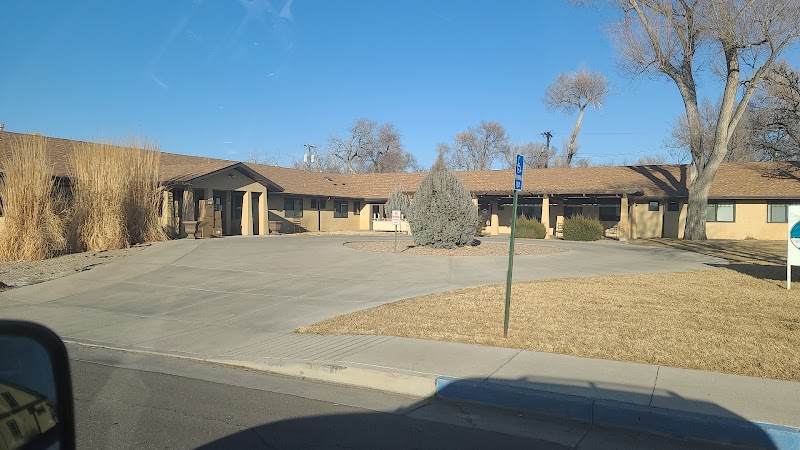
LAMAR ESTATES, LLC

205 S 10TH ST, LAMAR, CO 81052 (719) 336-3434
For profit - Limited Liability company 60 Beds DAKAVIA Data: November 2025
Trust Grade
85/100
#32 of 208 in CO
Last Inspection: September 2023

Over 2 years since last inspection. Current conditions may differ from available data.

Overview

Lamar Estates, LLC has a Trust Grade of B+, which means it is above average and recommended for families considering this nursing home. It ranks #32 out of 208 facilities in Colorado, placing it in the top half, but it is #2 out of 2 in Prowers County, indicating there is only one other local option. The facility is improving, with issues decreasing from seven in 2022 to just two in 2023. While staffing is solid with a 4/5 rating and a turnover rate of 42%, which is below the state average, RN coverage is only average. Notably, there were incidents where staff failed to clarify physician's orders for medications and ensure that certified nurse aides demonstrated necessary competencies, which raises concerns about the quality of care. However, the absence of fines is a positive sign, indicating no compliance issues have been recorded.

Trust Score
B+
85/100
In Colorado
#32/208
Top 15%
Safety Record
Low Risk
No red flags
Inspections
Getting Better
7 → 2 violations
Staff Stability
○ Average
42% turnover. Near Colorado's 48% average. Typical for the industry.
Penalties
✓ Good
No fines on record. Clean compliance history, better than most Colorado facilities.
Skilled Nurses
✓ Good
Each resident gets 58 minutes of Registered Nurse (RN) attention daily — more than average for Colorado. RNs are trained to catch health problems early.
Violations
⚠ Watch
15 deficiencies on record. Higher than average. Multiple issues found across inspections.
★★★★★
5.0
Overall Rating
★★★★☆
4.0
Staff Levels
★★☆☆☆
2.0
Care Quality
★★★★★
5.0
Inspection Score
Stable
2022: 7 issues
2023: 2 issues

The Good

  • 4-Star Staffing Rating · Above-average nurse staffing levels
  • Full Sprinkler Coverage · Fire safety systems throughout facility
  • No fines on record
  • Staff turnover below average (42%)

    6 points below Colorado average of 48%

Facility shows strength in staffing levels, fire safety.

The Bad

Staff Turnover: 42%

Near Colorado avg (46%)

Typical for the industry

Chain: DAKAVIA

Part of a multi-facility chain

Ask about local staffing decisions and management

The Ugly 15 deficiencies on record

Sept 2023 2 deficiencies
CONCERN (D)

Potential for Harm - no one hurt, but risky conditions existed

Comprehensive Care Plan (Tag F0656)

Could have caused harm · This affected 1 resident

**NOTE- TERMS IN BRACKETS HAVE BEEN EDITED TO PROTECT CONFIDENTIALITY** Based on observations, record review and interviews, the facility failed to ensure comprehensive person-centered care plans were...

Read full inspector narrative →
**NOTE- TERMS IN BRACKETS HAVE BEEN EDITED TO PROTECT CONFIDENTIALITY** Based on observations, record review and interviews, the facility failed to ensure comprehensive person-centered care plans were developed in accordance with professional standards of practice for three (#13, #15 and #19) of twelve reviewed out of 24 sample residents. Specifically, the facility failed to ensure a comprehensive care plan was initiated for: -Resident #15 for depression; -Resident #19 for urinary catheter care; and, -Resident #13 for hospice care and services. Findings include: I. Facility policy The Care Plan, Comprehensive Person-Centered policy, March 2022, was received from the nursing home administrator (NHA) on 3/ 27/23 at 4:59 p.m. The policy documented in pertinent part: A comprehensive, person-centered care plan that includes measurable objectives and timelines ato meet the resident's physical, psychological and functional needs is developed and implemented for each resident; The interdisciplinary team (IDT), in conjunction with the resident develops and implements a comprehensive, person-centered care plan for each resident; The comprehensive, person-centered care plan is developed within seven days; The care plan interventions are derived from a thorough analysis of the information gathered as part of the comprehensive assessment; The comprehensive care plan describes the services that are to be furnished to attain or maintain the resident's highest practicable physical, mental and psychological well-being and reflects the standards of practice for problem areas and conditions. II. Resident #15 A.Resident status Resident #15, over the age of 65, was admitted on [DATE]. According to the September 2023 computerized physicians orders (CPO), diagnoses included major depressive disorder and a history of falling. The 7/14/23 minimum data set (MDS) assessment document the resident had no cognitive impairment as evidenced by a brief interview for mental status (BIMS) with a score of 15 out of 15. She required extensive, two-person assistance for bed mobility, transfers, toileting and locomotion on and off the unit. The resident was administered antidepressant medication when admitted to the facility. B. Record review The record review revealed the resident was prescribed and administered the antidepressant medication, fluoxetine, 20 milligrams (mg) one time a day on 4/21/23. The comprehensive care plan, initiated on 4/24/23 was reviewed and the care plan failed to identify individual needs that included a focus, goal and interventions for the care of the resident's depression. III. Resident #19 A. Resident status Resident #19, over the age of 65, was admitted on [DATE]. According to the September 2023 CPO, diagnoses included multiple sclerosis, diabetes, bone cancer, above the knee amputation, colostomy, urostomy (urinary catheter) and low back pain. The 6/16/23 minimum data set (MDS) assessment documented the resident had no cognitive impairment as evidenced by a brief interview for mental status (BIMS) with a score of 15 out of 15. She required supervision from staff for bed mobility, transfers, locomotion on and off the unit, dressing, eating, toileting and personal hygiene. The resident had a urinary catheter at the time of her admission. B. Record review The comprehensive care plan, initiated on 3/26/23 was reviewed and the care plan failed to identify individual needs that included a focus, goal and interventions for the care of the Resident's urinary catheter including her supra pubic urinary catheter. IV Staff interviews Certified nurse aide (CNA) #1 was interviewed on 9/27/23 at 2:55 p.m She said she was aware Resident #19 had an urinary catheter.and the resident cared for her catheter. The CNA said she did not know about care she should provide such as monitoring for resident's urine amount or signs or symptoms of a urinary tract infection. She said she would notify the nurse if the resident had concerns about her urinary catheter. The CNA was interviewed regarding Resident #15. She said she was unaware the resident had depression and was unaware if the resident had individual needs regarding depression. The CNA said if she noticed changes in the resident's mood she would notify the nurse. Registered nurse (RN) #1 was interviewed on 3/27/23 at 3:49 p.m. She said and she said she was unaware of specific monitoring or care staff provided for Resident #19's urinary catheter. Resident #19 should be monitored for any signs or symptoms of infection, urinary tract infection, dehydration and whether the catheter was draining urine as expected. RN #1 was interviewed regarding Resident #15. She said she was aware the resident received antidepressant medication. The RN said she was unaware if the resident had specific needs for her depression and what triggered the depression for the resident. The director of nursing (DON) was interviewed on 9/27/23 at 4:10 p.m. She said resident care plans reflected individual care required by each resident. The DON said resident status was monitored by staff and care plans should be prepared and updated when required. The DON said the care plan was important because it was used by facility staff to ensure care was provided correctly to meet the needs of each resident. The DON said for a urinary catheter the staff should monitor skin integrity, hydration status, patency and positioning of the urinary catheter, catheter comfort and ability to provide self-care. The DON said when a resident has depression the care plan should include information specific to the resident that identified causes of depression, triggers to avoid or manage and mood management. V. Resident #13 A. Resident status Resident #13, age above 65, was admitted on [DATE]. According to the September 2023 computerized physician orders (CPO), the diagnoses included rhabdomyolysis (breakdown of muscle tissue), dementia, anxiety disorder, Parkinson's disease and essential tremors (shaking). The 6/28/23 minimum data set (MDS) assessment revealed the resident had severe cognitive impairment with a brief interview for mental status score (BIMS) of four out of 15. He had disorganized thinking. He required extensive assistance with bed mobility, transfers, walking in room and corridor, locomotion on and off the unit, dressing, toilet use and personal hygiene. He required supervision with eating. He received a mechanically altered diet as well as a therapeutic diet. He had broken or loose fitting dentures. He had mouth or facial pain, discomfort or difficulty with chewing. B. Record review A physician's order dated 7/20/23 at 3:45 p.m., revealed the resident was admitted to hospice. The resident's plan of care was reviewed on 9/25/23 at 9:59 a.m. it did not reveal a care plan that addressed his hospice needs. C. Staff interviews Certified nurse aide (CNA) #1 was interviewed on 9/27/23 at 3:13 p.m. She said the facility staff did all the activities of daily living (ADL) for the hospice resident. She said the hospice staff gave the shower and did pain management. She said there was not a care plan to follow. However, she communicated with the hospice staff verbally. She said hospice staff had a sign in sheet that they signed when visiting a resident. Registered nurse (RN) #1 was interviewed on 9/27/23 at 3:15 p.m. She said she communicated directly with the hospice staff during their visits. She said he did not have a hospice care plan in place. She said she was not sure if a care plan was required. The director of nursing (DON) was interviewed on 9/27/23 at 3:47 p.m. She said there was a hospice communication binder at the nurses station. She said the staff communicated with hospice in person and/or via the phone. She said all residents on hospice must have a care plan. She said it was important to have a hospice care plan in place to identify care needed, the residents goals and measure the outcome of the interventions. She said she would immediately audit residents on hospice services and assure they had a care plan in place.
CONCERN (E)

Potential for Harm - no one hurt, but risky conditions existed

Deficiency F0658 (Tag F0658)

Could have caused harm · This affected multiple residents

Based on record review and staff interviews the facility failed to provide services for six (#2, #3, #6, #12, #15 and #17) out of nine sample residents according to professional standards of practice....

Read full inspector narrative →
Based on record review and staff interviews the facility failed to provide services for six (#2, #3, #6, #12, #15 and #17) out of nine sample residents according to professional standards of practice. Specifically, the facility failed to clarify physician's orders with dose information for the administration of topical skin medications for Residents #2, #3, #6, #12, #15 and #17. Findings include: I. Professional reference A. The Diclofenac gel drug information was accessed on 9/26/23 on the Physicians Drug Reference website at https://www.pdr.net/drug-summary/Voltaren-XR-diclofenac-sodium-2033. Diclofenac is a nonsteroidal anti-inflammatory (NSAID) medication that could be prescribed in intravenous, oral, topical, and ophthalmic formulations. The use of analgesic and antipyretic properties increases the risk of serious gastrio-intestinal events and may increase serious cardiovascular events; use the lowest dose of the shortest time. The topical dosage of diclofenac gel is prescribed as four grams (four and one half inches) topically four times a daily, with a maximum of 16 grams a day per lower extremity joint) and/or two grams (two and one fourth inches) topically four times daily per upper extremity joint. Do not exceed a total dose of 32 grams over all affected joints. B. The Icy Hot drug information was accessed on 9/26/23 on the Federal Drug Administration (FDA) website at https://fda.report/DailyMed/40c8c02f-fa5f-4e80-81a0-48271fa6f94b. Icy hot is used for temporary relief of aches and pain and is used only on the skin. Icy hot should be used as directed on the label or as prescribed by the physician. The active ingredient in icy hot is menthol and if over used, could lead to burning pain, swelling, and blistering of the skin where it was applied. The topical medication should not be applied more than four times daily. C.The Salonpas Lidocaine Plus cream drug information was accessed on 9/26/23 on the FDA website at https://fda.report/DailyMed/364924d3-fac3-4f4e-9b40-decd4ec48245. The cream contains lidocaine four percent and was used on the skin for temporary pain relief. Lidocaine cream should be used as directed on the label. If too much lidocaine was absorbed, symptoms of dizziness and agitation may occur and toxicity may lead to cardiovascular or respiratory failure. II. Facility policy The Medication Administration policy, dated April 2007, was received by the nursing home administrator on 9/27/23. The policy stated in pertinent part: Documentation must include, as a minimum: a. Name and strength of the drug; b. Dosage; c. Method of administration; d. Date and time of administration; e. Reason why medication was withheld or refused; f. Signature and title of the person administering the medication; g. Resident response to the medication. III. Record review Resident #15 had a physician order for muscle rub cream 10-15%. The order directed the medication to be applied every six hours and failed to include a dose. Resident #6 had a physician order for Voltaren gel one percent. The order directed the medication to be applied every six hours and failed to include a dose. Resident #3 had a physician order for muscle rub cream 10-15%. The order directed the medication to be applied every six hours and failed to include a dose. Resident #17 had a physician order for Icy Hot cream. The order directed the medication to be applied every six hours and failed to include a dose. Resident #12 had a physician order for muscle rub cream. The order directed the medication to be applied every six hours and failed to include a dose. Resident #2 had a physician order for Salonpas Lidocaine Plus cream four-10%. The order directed the medication to be applied every six hours and failed to include a dose. IV. Interviews Registered nurse (RN) #1 was interviewed on 9/27/23 at 3:49 p.m. She said that she was unaware diclofenac gel required a measured dose. She said she used a dime-sized amount of muscle rub and Lidocaine cream. She said if an order for medication was missing the dosage, the nurse should contact the physician for the correct dosage. The director of nursing (DON) was interviewed on 9/27/23 at 4:10 p.m. She said she was unaware the physician orders for Voltaren, Lidocaine and muscle rub did not include the dosage information. The DON said medication orders should contain dosage information and the nurse should contact the physician if the dosage information was not available.
Jun 2022 7 deficiencies
CONCERN (D)

Potential for Harm - no one hurt, but risky conditions existed

Free from Abuse/Neglect (Tag F0600)

Could have caused harm · This affected 1 resident

**NOTE- TERMS IN BRACKETS HAVE BEEN EDITED TO PROTECT CONFIDENTIALITY** Based on observation, record review and interviews, the facility failed to ensure that all residents were free from abuse, negle...

Read full inspector narrative →
**NOTE- TERMS IN BRACKETS HAVE BEEN EDITED TO PROTECT CONFIDENTIALITY** Based on observation, record review and interviews, the facility failed to ensure that all residents were free from abuse, neglect, and exploitation, for two (#6 and #2) of two residents reviewed out of 15 sample residents. Specifically, the facility failed to provide adequate supervision and effective interventions to prevent a resident-to-resident physical altercation between Resident #2 and #6. Cross-reference F744 for failure to provide adequate dementia management care. Findings include: I. Facility policy The Abuse Prevention policy, dated December 2016, was provided by the nursing home administrator (NHA) on 6/29/22 at 11:09 a.m. It read in pertinent part: Policy statement: Our residents have the right to be free from abuse, neglect, misappropriation of resident property and exploitation. This includes but is not limited to freedom from corporal punishment, involuntary seclusion, verbal, mental, sexual or physical abuse, and physical or chemical restraint not required to treat the resident's symptoms. Policy Interpretation and Implementation As part of the resident abuse prevention, the administration will: -Protect our residents from abuse by anyone including, but not necessarily limited to: facility staff, other residents, consultants, volunteers, staff from other agencies, family members, legal representatives, friends, visitors, or any other individuals. -Identify and assess all possible incidents of abuse. II. Residents involved with the altercation A. Resident #2 1. Resident status Resident #2, age [AGE], was admitted on [DATE]. According to the June 2022 computerized physician's orders (CPO), diagnoses included dementia with behavioral disturbance, heart failure, chronic obstructive pulmonary disease (COPD) and diabetes mellitus. The 5/28/22 minimum data set (MDS) assessment revealed the resident had severely impaired cognition and was unable to participate in the brief interview for the mental status (BIMS) exam. Staff assessment of the resident's cognition revealed the resident had short and long-term memory deficits. The resident was unable to recall the current season, location of her room or the names and names and faces of staff. The resident presented with fluctuating signs of delirium; disorganized thinking; altered levels of consciousness; hallucinations and delusions. The resident presented (almost daily) with physical behavioral symptoms directed towards others (e.g., hitting, kicking, pushing, scratching, grabbing); and, verbal behavioral symptoms directed towards others (e.g., threatening others, screaming at others, cursing at others). The resident did not walk but used a manual wheelchair to get around the unit with limited assistance; and needed extensive assistance from staff to complete activities of daily living and rejected care assistance at times. According to the MDS assessment the resident was not on any antipsychotic medication at the time of the assessment despite the CPO documenting an order for daily Trazodone (antidepressant to treat depression and anxiety); order date 10/5/21. 2. Record review Review of progress note revealed the resident had additional altercations with other residents in the facility on 6/18/22 at 3:25 p.m., Resident #2 became agitated during dining services, and started swinging around a cloth-clothing protector and hit another resident with the cloth. Staff separated the two residents and placed Resident #2 on one-to-one supervision during the shift. Neither resident was injured in the incident. Review of Resident #2 behavior tracking recorded by CNA staff revealed the resident displayed aggressive and other negative behaviors on almost a daily basis. Over the past 30 days from 5/29/22 to 6/28/22, Resident #2 was observed with the following behavioral symptoms: crying, yelling/screaming, kicking, pushing, grabbing, pinching/ scratching/ spitting, biting, wandering, using abusive language, threatening, and rejecting care. Resident #2's comprehensive care plan was very detailed with care focus and interventions for resident behaviors, medical needs and social preferences. The care plan documented a care focus to address a resident-to-resident physical altercation. The care focus was initiated 3/17/22. The care focus revealed the resident physically assaulted another female resident by slapping the other resident in the face after a negative verbal exchange. The care focus was not updated or revised with a repeat physical resident-to-resident altercation that occurred most recently with a different female peer within the facility on 5/22/22. The care focus read in pertinent part: Resident #2 will not have another altercation. Interventions: Redirect residents as needed when showing signs of behaviors including - agitation. Resident on 15 minute checks. 3. Resident interview and observation Resident #2 was interviewed on 6/26/22 at 2:45 p.m. Resident #2 was not able to answer questions, but instead she scolded and said I don't care if you get yours done! At the time of the interview Resident #2 was not supervised by staff and was wandering the hall in her manual wheelchair and holding onto her stuffed cat. Resident #2 seemed irritated by something but it was not aparant what was bothering her. On 6/26/22 at 3:03 p.m. while interviewing another resident near the common area entrance of the facility Resident #2 could be heard yelling at another resident in the hall. Activities staff responded to the common area and there was no physical exchange between the two residents (cross-reference to F744). -Cloth Velcro stop signs were placed on the doors of other residents in the facility to prevent Residents who wandered from entering the rooms of others. This would discourage Resident #2 from entering another resident room when wandering and upset or agitated and prevent any potential resident-to-resident altercations. B. Resident #6 1. Resident status Resident #6, age [AGE] years old, was admitted on [DATE] and readmitted [DATE]. According to the June 2022 computerized physician's orders (CPO) diagnosis included hemiplegia (a severe or complete loss of strength or paralysis on one side of the body) and hemiparesis (a mild or partial weakness or loss of strength on one side of the body), following a stroke; chronic kidney disease- stage three; and chronic obstructive pulmonary disease (COPD). The 5/28/22 minimum data set (MDS) assessment revealed the resident had intact cognition as evidenced by a score of 15 out of 15 on the brief interview for mental status (BIMS). The resident was usually understood but had difficulty communicating some words or furnishing thoughts and was able, if prompted or given time and usually understood conversation but missed some part of the intended message. Resident #6 needed limited to extensive assistance to complete activities of daily living including with mobility throughout the facility. The resident did not walk and used a manual wheelchair to get around. The resident did not present with negative behavioral expressions. 2. Record review Resident #6's comprehensive care plan revised 6/27/22, did not have a care focus for protecting her against resident-to-resident abuse. There were no interventions for protecting the resident from being a repeat victim of resident to resident abuse by Resident #2; despite Resident #6 having a Velcro stop sign attached to the outside of her door to prevent resident #2 from entering her room. 3. Resident interview Resident #6 declined an interview. III. Facility reported incident (FRI) Description of the incident-allegation of physical abuse between Resident #2 and Resident #6 The investigation report dated 5/22/22, documented that Resident #2 had just received a finger stick to test blood glucose (BG) level and then received an insulin injection. Resident #2 was agitated after this and self-propped herself down the hall away from the nurse. Resident stopped outside of Resident #6's room, where Resident #6 was sitting in the doorway in a manual wheelchair. Registered nurse (RN) #2 documented observing Resident #2 at approximately 4:40 p.m., just after assessing the resident's BG levels and giving the prescribed insulin injection. Resident #2 was upset about getting her finger poked for a fasting blood glucose exam, and began wheeling down the long hall, past the medication cart, in a manual wheelchair. At approximately 4:45 p.m., RN #2 heard Resident #6 yelling get her away from me, she's hitting me. RN #2 responded to the location of Resident #6 (just outside of Resident #6's room) and observed Resident #2 holding onto Resident #6's wheelchair. RN #2 and a certified nurse aide (CNA) separated the two residents. Each resident was assessed for physical injury and there were no visual signs or symptoms of physical injury to either resident. RN #2 interviewed each resident immediately following the incident. Resident #6 told staff she was waiting outside of her room for staff to return when Resident #2 approached, grabbed her (Resident #6's) wheelchair refusing to let go. Then Resident #2 started yelling at her and socked (hit) her (Resident #6) in the back of the head. Resident #6 said the impact of the hit on the head hurt at the time of the hit but did not hurt when assessed by the nurse. Resident #6 did not have any redness or bruising to the back of her head where she indicated that Resident #2 hit her. Resident #2 was unable to explain her actions and remained combative towards staff (attempting to hit and spit at staff). Staff interviews revealed none of the staff on duty had direct line of sign of Resident #2 as she wandered down the hall in an angry state. Staff failed to follow the care plan (see Resident #2's record review above) to redirect Resident #2 when she was showing signs of behavior. Following the incident Resident #2 was placed on 15-minute checks for 72 hours and the interdisciplinary team decided it would be appropriate to seek a secured placement for Resident #2. No other changes were made to Resident #2's treatment or care plan. IV. Staff interview The NHA was interviewed on 6/29/22 at 1:45 p.m. The NHA said Resident #2 had displayed disruptive behaviors in the past and after this last incident on 5/22/22. The facility was trying to find a more appropriate placement for the resident but had not had much luck with securing a memory care placement for the resident due to her aggressive behavior towards others. The IDT discussed Resident #2 behavior and reviewed interventions. The NHA said that Resident #2 responded well to three facility staff but they were not always available when Resident #2 needed extra attention, so the IDT developed training for staff on how to respond to the resident when she was agitated and otherwise acting out with aggressive behaviors. The NHA said staff were instructed to provide one-to-one supervision of Resident #2 when she was presenting with agitation and aggressive combative behaviors directed towards others. Staff were educated on how to use various tools and techniques to use with Resident #2, several had been successful in aiding Resident #2 to calm in the past. With the help of Resident #2's family, the facility had obtained several items to help calm Resident #2. The resident had a life like cat that purred and responded to the resident, life like dolls and a couple of other stuffed animals. The resident responded well to these items; holding the items usually had a calming effect on her. In addition, staff could offer music listening, coloring with staff and going outside to look for live cats who frequented the neighborhood as diversionary activities to calm Resident #2 when she was upset.
CONCERN (D)

Potential for Harm - no one hurt, but risky conditions existed

Respiratory Care (Tag F0695)

Could have caused harm · This affected 1 resident

**NOTE- TERMS IN BRACKETS HAVE BEEN EDITED TO PROTECT CONFIDENTIALITY** Based on observations, record review and interviews, the facility failed to ensure residents who needed respiratory care were pr...

Read full inspector narrative →
**NOTE- TERMS IN BRACKETS HAVE BEEN EDITED TO PROTECT CONFIDENTIALITY** Based on observations, record review and interviews, the facility failed to ensure residents who needed respiratory care were provided such care, consistent with professional standards of practice for one (#7) of three residents reviewed for oxygen therapy out of 15 sample residents. Specifically, the facility failed to ensure oxygen was administered according to physician orders for Residents #7. Findings include: I. Professional reference According to [NAME]/[NAME], Fundamentals of Nursing, ninth edition, Elsevier, Canada, 2017, p 900, Oxygen is a therapeutic gas and must be prescribed and adjusted only with a health care provider's order. II. Facility policy The Oxygen Administration policy, revised in October 2012, was provided by the nursing home administrator (NHA) on 6/29/22 at 12:49 p.m. via email. The policy included: Preparation: Verify that there is a physician's order for this procedure. Review the physician's orders or facility protocol for oxygen administration. General guidelines: The nasal cannula is a tube that is placed approximately one-half inch into the resident's nose. It is held in place by an elastic band placed around the resident's head. Documentation: After completing the oxygen setup or adjustment, the following information should be recorded in the resident's medical record: 1. The date and time that the procedure was performed. 2. The name and title of the individual who performed the procedure. 3. The rate of oxygen flow, route, and rationale. 4. The frequency and duration of the treatment. 5. The reason for p.r.n. administration. 6. All assessment data obtained before, during, and after the procedure. 7. How the resident tolerated the procedure. 8. If the resident refused the procedure, the reason(s) why and the intervention taken. 9. The signature and title of the person recording the data. Reporting: 1. Notify the supervisor if the resident refuses the procedure. 2. Report other information in accordance with facility policy and professional standards of practice. III. Resident #7 A. Resident status Resident #7, age [AGE], was admitted on [DATE]. According to the June 2022 computerized physicians orders (CPO), diagnoses included myasthenia gravis (chronic autoimmune, neurological disease), depressive episodes, and cerebral infarction (stroke). The 6/8/22 minimum data set (MDS) assessment revealed the resident's cognitive status was moderately impaired with a brief interview for mental status (BIMS) score of 11 out of 15. He had no identified behaviors or rejections of care during the assessment period. He was identified using oxygen. B. Record review The care plan, initiated 2/25/22, identified the use of oxygen therapy related to aspiration pneumonia. Interventions included: -Give medications as ordered by physician. -Oxygen settings: Resident #7 has oxygen (O2) via nasal cannula at three liters a minute (3L/min). The June 2022 CPO included: -Supplemental oxygen continuous 3L/min via nasal cannula. Ordered on 2/23/22. The June 2022 electronic medication administration record (eMAR) documented the resident had oxygen continuously at 3L/min on every shift. C. Observations and interview Resident #7 was in his room on 6/26/22 at 2:35 p.m. with his nasal cannula hanging off the bedside table. Resident #7 said he did not have to wear oxygen all the time. At 4:09 p.m. he said the oxygen was on for when he needed it, and would use it when he felt out of breath. Resident #7 was in his room on 6/27/22 at 8:57 a.m. He was not wearing his oxygen. He said he did not need it. Registered nurse (RN) #1 was interviewed on 6/28/22 at 9:47 a.m. She said Resident #7 had an order for oxygen to be worn continuously at 3L/min. She went to his room and found him not wearing his oxygen. She said he did have a history of taking off his oxygen. She said oxygen was considered a medication and it should have been worn continuously as ordered by the physician. -However, the resident having a history of taking off his oxygen was not identified on his care plan (see above). D, Interviews Certified nurse aide (CNA) #1 was interviewed on 6/28/22 at 9:26 a.m. She said Resident #7 wore oxygen via nasal cannula at 2L/min. She said he never wore it and had it on in case he did. CNA #2 was interviewed on 6/28/22 at 9:28 a.m. She said his oxygen was at 3L/min, and he wore it only when he wanted to. The director of nursing (DON) was interviewed on 6/28/22 at 11:40 a.m. She said she considered oxygen to be a medication due to needing an order for it. She said Resident #7 had an order for continuous oxygen at 3L/min. She said she was not aware he did not wear his oxygen at all times. She said she would talk to the resident and the providers about Resident #7 refusing to wear the oxygen continuously.
CONCERN (D)

Potential for Harm - no one hurt, but risky conditions existed

Deficiency F0742 (Tag F0742)

Could have caused harm · This affected 1 resident

**NOTE- TERMS IN BRACKETS HAVE BEEN EDITED TO PROTECT CONFIDENTIALITY** Based on observations, record review and interviews, the facility failed to ensure that a resident who displays or was diagnosed...

Read full inspector narrative →
**NOTE- TERMS IN BRACKETS HAVE BEEN EDITED TO PROTECT CONFIDENTIALITY** Based on observations, record review and interviews, the facility failed to ensure that a resident who displays or was diagnosed with mental disorder receives appropriate treatment and services to correct the assessed problem or to attain the highest practicable mental and psychosocial well-being for one (#7) of 15 sample residents. Specifically, the facility failed to identify behaviors and develop a person-centered individualized care plan to include interventions to address identified inappropriate and/or disruptive behaviors for Resident #7. I. Facility policy The Behavioral Assessment, Intervention, and Monitoring policy, revised in March 2019, was provided by the nursing home administrator (NHA) on 6/29/22 at 12:17 p.m. via email. The policy stated: Behavioral symptoms will be identified using facility-approved behavioral screening tools and the comprehensive assessment. Cause Identification: The interdisciplinary team will thoroughly evaluate new or changing behavioral symptoms in order to identify underlying causes and address any modifiable factors that may have contributed to the resident ' s change in condition, including: -Physical or medical changes (for example): infection, dehydration, pain or discomfort, constipation, change related to medications, and/or worsening of or complications related to other conditions. -Emotional, psychiatric and/or psychological stressors (for example): depression, boredom, loneliness, anxiety, and/or fear. -Functional, social or environmental factors (for example): alteration in routine, change in caregivers, sleep disturbances, decline in ability to perform self-care or tasks that he or she could previously complete without help, poor or excessive lighting, noise, and/or uncomfortable temperatures. Management 1. The interdisciplinary team will evaluate behavioral symptoms in residents to determine the degree of severity, distress and potential safety risk to the resident, and develop a plan of care accordingly. Safety strategies will be implemented immediately if necessary to protect the resident and others from harm. a. Atypical behavior will be differentiated from behavior that is dangerous or problematic for the resident(s) or staff, or behavior that signals underlying distress. Interventions will be individualized and part of an overall care environment that supports physical, functional and psychosocial needs, and strives to understand, prevent or relieve the resident ' s distress or loss of abilities. Interventions and approaches will be based on a detailed assessment of physical, psychological and behavioral symptoms and their underlying causes, as well as the potential situational and environmental reasons for the behavior. The care plan will include, as a minimum: A description of the behavioral symptoms, including: frequency, intensity, duration, outcomes, location, environment; and precipitating factors or situations. -Targeted and individualized interventions for the behavioral and/or psychosocial symptoms; -The rationale for the interventions and approaches; -Specific and measurable goals for targeted behaviors; and -How the staff will monitor for effectiveness of the interventions. II. Resident #7 A. Resident status Resident #7, age [AGE], was admitted on [DATE]. According to the June 2022 computerized physicians orders (CPO), diagnoses included myasthenia gravis (chronic autoimmune, neurological disease), depressive episodes, and cerebral infarction (stroke). The 6/8/22 minimum data set (MDS) assessment revealed the resident's cognitive status was moderately impaired with a brief interview for mental status (BIMS) score of 11 out of 15. He had no identified behaviors or rejections of care during the assessment period. B. Record review The care plan, initiated 3/25/22, identified the use of Celexa (antidepressant medication) for the behaviors of self isolation, refusing care, refusing therapies, and statements of feeling depressed. Interventions included: -Document and report increased or worsening behaviors to SSD (social services director) and to PCP (primary care provider). -Monitor targeted behaviors of self isolation; refusing care; refusing therapies; statement of feeling depressed. -The care plan did not have person-centered individualized interventions for inappropriate and/or disruptive behaviors. The June 2022 behavior monitoring tracking in the medication administration record (MAR) identified the number of behaviors occurred between 6/1/22 to 6/26/22: During the 6:00 a.m. to 2:00 p.m. shift, Resident #7 displayed behaviors on three occasions, During the 2:00 p.m. to 10:00 p.m. shift, Resident #7 displayed behaviors on two occasions. During the 10:00 p.m. to 6:00 a.m. shift, Resident #7 displayed behaviors once. The progress notes for the month of June 2022 (between 6/1/22 to 6/26/22) documented 14 inappropriate and/or disruptive behaviors. -Review of the resident's record did not reveal the resident was working with a mental health provider and was not initiated until identified during the survey (see NHA interview below). C. Interviews Certified nursing aide (CNA) #1 was interviewed on 6/28/22 at 9:26 a.m. She said Resident #7 did have behaviors. She said he had recently kicked a staff member during cares. She said he would make inappropriate comments to her that included I love you and sexual comments. She said when he was inappropriate, she would tell him to stop talking like that to her and she would report the behavior to the nurse. She said she had not had any training specifically for the identified behaviors. CNA #2 was interviewed on 6/28/22 at 9:28 a.m. She said Resident #7 had several behaviors that included yelling out, cussing out, and saying inappropriate sexual comments to include I love you to staff. She said when he displayed the behavior, she would remind him the behavior was inappropriate. If he continued the behaviors, she would complete the identified needs and leave without saying anything to him. She said she would notify the nurse who would make a note. She said Resident #7 had behaviors all the time. Registered nurse (RN) #1 was interviewed on 6/28/22 at 9:47 a.m. She said she did not know exactly what behaviors Resident #7 displayed. She said she had heard from the aides that he had made inappropriate sexual comments. She said when he made sexual remarks she would talk to him, remind him saying those things was inappropriate. She said she would report the comments to the social services director (SSD), the NHA, the director of nursing (DON), the family, and the provider. She said when staff report the behavior she would write a progress note. She said she was not familiar with the frequency of the behaviors. The SSD was interviewed on 6/28/22 at 11:15 a.m. She said recently there was an incident when he kicked a member and it caused him to have a significant change in behavior. She said after the incident, he started commenting on being in love with staff members, expressing a need to be loved, and inappropriate comments to staff of a sexual nature. She said she had provided training to staff to provide the cares he needed, but not to respond to the behavior, to ignore the comments and to leave and report to the nurse on duty what was said. She said the expectation was for the nurse who the behavior was reported to to write a progress note. She said she was to read all the notes, but had not yet summarized the information. She said she had not had a chance to update the care plan to include person-centered individualized interventions to address the new behaviors. She said she had talked several times to the resident but had not had the time to write a note after each visit. She said she would update the care plan to ensure all staff utilized consistent interventions for the identified behaviors. The DON and NHA were interviewed on 6/28/22 T 11:40 a.m. The DON said Resident #7 had made inappropriate sexual comments on several occasions. The DON said staff had been educated to redirect the behavior and let the nurse know. The DON said she wanted the nurse to make a progress note. The NHA said staff had been provided one-on-one education to redirect Resident #7, provide care, be kind, and report any behaviors to the nurse. They said they want all staff to utilize the interventions, and that the care plan should have been updated with person-centered individualized interventions. The NHA said he would be receiving mental health services going forward.
CONCERN (D)

Potential for Harm - no one hurt, but risky conditions existed

Deficiency F0744 (Tag F0744)

Could have caused harm · This affected 1 resident

**NOTE- TERMS IN BRACKETS HAVE BEEN EDITED TO PROTECT CONFIDENTIALITY** Based on record review and interview, the facility failed to ensure a resident who displays or was diagnosed with dementia, rece...

Read full inspector narrative →
**NOTE- TERMS IN BRACKETS HAVE BEEN EDITED TO PROTECT CONFIDENTIALITY** Based on record review and interview, the facility failed to ensure a resident who displays or was diagnosed with dementia, receives the appropriate treatment and services to attain or maintain his or her highest practicable physical, mental, and psychosocial well-being; most pertinent to one (#2) of two residents reviewed for dementia care out of 15 sample residents. Specifically the facility's failure to: -Provide Resident #2 with sufficient supervision/monitoring and interventions as care planned, to prevent the resident from getting into physical resident-to-resident altercations, where a non-aggressive dependent resident was hit in the head (Cross-reference F600 for abuse); and, -Identify and address Resident #2's escalating behavior following a blood glucose finger stick and insulin injection (Cross-reference F600); and, -Ensure staff had the knowledge of the resident's care plan to act effectively when responding to Resident #2's escalating behavioral expressions. Findings include: I. Facility policy and procedures The Dementia Clinical Protocol, revised November 2018, was provided by the nursing home administrator (NHA) on 6/29/22 at 11:30 a.m. The protocol read in part: The IDT (interdisciplinary team) will evaluate individuals with new or progressive cognitive impairment and help identify symptoms and findings that differentiate dementia from other causes. -Individuals with dementia can also have a personality disorder, mental illness, psychosis, delirium, depression, adverse drug reactions (ADRs), or other conditions causing or contributing to impaired cognition and problematic behavior. -For the individual with confirmed dementia, the IDT will identify a resident-centered care plan to maximize remaining function and quality of life. -The physician will order appropriate interventions to address significant behavioral and psychiatric symptoms, based on pertinent clinical guidelines and consistent with regulatory requirements. -The IDT will adjust interventions and the overall plan depending on the individual's responses to those interventions, progression of dementia, development of new acute medical conditions or complications, changes in resident or family wishes, and other relevant factors. The Behavioral Assessment, Intervention and Monitoring policy, revised March 2019, was provided by the NHA on 6/29/22 at 11:30 a.m. The policy read in pertinent part: The facility will provide and residents will receive behavioral health services as needed to attain or maintain the highest practicable physical, mental and psychosocial well-being in accordance with the comprehensive assessment and plan of care. - The interdisciplinary team will evaluate behavioral symptoms in residents to determine the degree of severity, distress and potential safety risk to the resident, and develop a plan of care accordingly. Safety strategies will be implemented immediately if necessary to protect the resident and others from harm. II. Resident #2 A. Resident status Resident #2, age [AGE], was admitted on [DATE]. According to the June 2022 computerized physician's orders (CPO), diagnoses included dementia with behavioral disturbance, heart failure, chronic obstructive pulmonary disease (COPD), diabetes mellitus and depression. The 5/28/22 minimum data set (MDS) assessment revealed the resident had severely impaired cognition and was unable to participate in the brief interview for mental status (BIMS) exam. Staff assessment of the resident's cognition revealed the resident had short and long-term memory deficits. The resident was unable to recall the current season, location of her room or the names and names and faces of staff. The resident presented with fluctuating signs of delirium; disorganized thinking; altered levels of consciousness; hallucinations and delusions. The resident presented (almost daily) with physical behavioral symptoms directed towards others (e.g., hitting, kicking, pushing, scratching, grabbing); and, verbal behavioral symptoms directed towards others (e.g., threatening others, screaming at others, cursing at others). The resident did not walk but used a manual wheelchair to get around the unit with limited assistance; and needed extensive assistance from staff to complete activities of daily living and rejected care assistance at times. According to the MDS assessment the resident was not on any antipsychotic medication at the time of the assessment despite the CPO documenting an order for daily Trazodone (antidepressant to treat depression and anxiety); order date 10/5/21. B. Resident interview and observation Resident #2 was interviewed on 6/26/22 at 2:45 p.m. Resident #2 was not able to answer questions, but instead she scolded and said I don ' t care if you get yours done! and then she continued self-propelling herself down the hall At the time of the interview, Resident #2 was not supervised by staff and was wandering the hall in her manual wheelchair and holding onto her stuffed cat. Resident #2 seemed irritated by something but it was not apparent what was bothering her. At 3:03 p.m. Resident #2 was heard yelling at another resident in the hall. No staff were in the direct vanity of where Resident #2 was yelling at the other resident. After a few minutes, a certified nurse aide (CNA) responded to the common area and there was no physical exchange between the two residents. Resident #2 was not responsive to staff redirection and started yelling at the staff to leave her alone. Resident #2 was separated from the area and left to wander the hall. At 3:45 p.m. Resident #2 was observed heading to a back hallway were she was out of sight of staff a CNA followed and tried to get Resident #2 to go to the sunroom. The more staff tried to remove Resident #2 form the back hall the more Resident #2 yelled at the CNA to leave her alone. The CNA gave in and left the resident in the back hall. Resident #2 self-propelled out of the back hall after approximately five additional minutes (the back hall had a bathroom and a locked door to the basement). On 6/28/22 at 11:30 a.m., Resident #2 was observed in the dining room and a male CNA was assisting her to eat lunch. Resident #2 had a big smile and was talking and laughing with the male CNA. After lunch, at approximately 12:15 p.m. the male CNA assisted Resident with her toileting needs then brought her to the sunroom and told Resident #2 he had to leave but would be back later in the day. Soon after the male CNA left the facility, Resident #2 started to wander in the hall. From 2:16 p.m. to 3:00 p.m., Resident #2 was observed in the common area sunroom. Resident #2 became increasingly more agitated staff tried several diversionary tactics without success until a staff finally approached and took Resident #2 outside into the courtyard. -At 2:30 p.m., Resident #2 was in the common area sunroom clutching a baby doll and the cat. Yelling out daddy. -At 2:33 p.m., a CNA took Resident #2 for a stroll up and down the halls, Resident #2 continued to call out for daddy the whole time. -At 2:34 p.m., Resident #2 stopped the CNA and yelled out loudly I want my daddy! and No -At 2:36 p.m., the CNA was trying to talk to Resident #2 while touching the resident's doll and Resident #2 yelled out very loudly my baby! No and Go away. -Several staff rapidly attempted to interact with Resident #2 to address her needs but there is no consistent approach while responding to Resident #2. -At 2:37 p.m., Resident #2 was yelling out loudly Help! My baby Help! Staff were talking amongst themselves asking each other if Resident #2 was looking for something. Then Resident #2 yelled out leave her alone! -At 2:40 p.m., Resident #2 was yelling out Help and propelling herself out of the hallway towards the sunroom door, while still gripping the baby doll and cat looking out for daddy and trying to open the door. Staff reassured Resident #2 he would return (referring to the male CNA who was working with her earlier in the shift). The resident yelling out for daddy continued for several minutes. -At 2:50 p.m., another CNA approached and asked Resident #2 if she wanted to go outside. Resident #2 said yes, and the CNA took Resident #2 outside into the courtyard, where Resident #2 calmed down. C. Staff interviews CNA #5 was interviewed on 6/29/22 at 9:55 a.m. CNA #5 said Resident #2 had fluctuating moods and staff had to keep an eye on her for agitation and aggressive behaviors. When resident became agitated staff could sometime calm Resident #2 by spending time with her, offering her a snack or coloring with her. Sometimes just activating the cat so it would purr and meow would be calming. That worked yesterday. Sometimes nothing would calm Resident #2 and staff need to keep an eye on her from a distance. CNA #5 said when Resident #2 was upset she could become combative towards others and would also yell at others as she passed them in the hall or common areas. CNA #5 said the facility had provided recent staff training on dementia management, addressing resident behaviors and redirection/diversionary techniques in response to resident behaviors when providing care. CNA #5 felt confident with what she had learned during the training. CNA #3 was interviewed on 6/29/22 at 9:59 a.m. CNA #3 said Resident #2 had behavior almost daily and responded well to a few staff when she was upset. Resident #2 was frequently combative when upset and had to be monitored around other residents as a precaution, that was why the facility had placed Velcro stop signs on the outside of some residents doors so Resident #2 did not enter the room of another resident when unsupervised. CNA #2 said the Velcro stop signs were very effective to prevent Resident #2 for entering rooms of other residents. Activities/social services director (ASD) and activity assistant (AA) #1 were interviewed on 6/29/22 at 10:15 p.m. AA #1 said staff take turns spending time with Resident #2 especially when she was upset or wandering without purpose. Resident #2 preferred the company of one particular male CNA and thought he was her husband. She would get upset when his shift was over or he had to leave her to do something else. The ASD said Resident #2 enjoyed socializing with staff and would want staff individualized attention. Afternoons were difficult for the resident, but the resident could present with negative behaviors any time of day. The ASD and other staff would let Resident #2 spend time in their office when Resident #2 was having a particularly hard time calming down. The resident's family was also instrumental in helping the facility manage Resident #2's behaviors. Family would talk to the resident on the phone/facetime and stop in for visits. The resident's family provided two life like cats for the resident; Resident #2 had cats when she lived in her own home and found the company of cats calming. When diversionary activities and snacks did not work, giving the resident space and monitoring her from a far could be helpful in making sure she was not combative towards her peers. The ASD said during times when Resident #2 was calling out for mama and daddy, she was most difficult to calm. Taking the resident outside to look for neighborhood cats seemed to give her purpose and have a calming effect. There were a few neighborhood cats who would come up to Resident #2 looking for affection. C. Record review 1. Behavioral tracking Review of Resident #2 behavior tracking recorded by CNA staff revealed the resident displayed aggressive and other negative behaviors on almost a daily basis. Over the past 30 days from 5/29/22 to 6/28/22, Resident #2 was observed with the following behavioral symptoms: crying, yelling/screaming, kicking, pushing, grabbing, pinching/ scratching/ spitting, biting, wandering, using abusive language, threatening, and rejecting care. -However, the behavioral tracking documentation failed to provide data on the duration of Resident #2's behavioral symptoms or any interventions attempted to de-escalate Resident #2 symptoms to document if effective or not effective. Review of behavior tracking recorded by the nurses on the resident June 2022 medication administration record (MAR) revealed an order that read: Behavior charting every shift. Behaviors: Delusions, biting, spitting, kicking, using profanities, yelling out, crying, looking for deceased family. Record number of episodes; side effects (injuries); and interventions (one on one, redirection, and distraction). -Documentation in the MAR revealed the resident had behaviors only one to two times a week in contract to the almost daily behaviors tracked by the CNAs on the behavior tracking (see above). -Progress notes revealed details of a few resident behaviors records (see above); however, the behavior tracking did not document the effectiveness of intervention used. 5/12/22 at 6:40 p.m., Behavior charting note read in part: Describe behavior mood: (Resident #2 was) yelling in the country kitchen, pushing chairs over, stating she wanted to be left alone, attempting to pull the cable box from the wall. What was the resident doing prior to or at the time of behavior/mood: Relaxing in a wheelchair in the hallway. Interventions attempted: Staff attempted to provide one on one, provided sandwich and drink, offered blanket, offered resident baby dolls and stuffed cat, offered periods of rest, music played, re-approached by different staff members. Offered to call her (family). Resident assisted back to her room where she allowed the nurse to assess blood glucose. Blood glucose was 182. Effectiveness of the interventions: Initially, residents agitated, continued with behaviors. Resident agreed to speak with (family), but there was no answer. Resident continued with agitation and yelling. Approximately 20 minutes after insulin administration, the resident was weepy, grabbing onto staff members hands, but was able to calm down and eat lunch, resting afterwards. -5/22/22 at 7:25 p.m. Wellness note read in part: At approximately 4:40 p.m., this nurse saw Resident #2 wheeling herself past the medication cart and down the long hall. Resident was upset about her FSBG (finger stick for blood glucose assessment) that had just been checked. At 4:45 p.m., this nurse heard Resident #6 yelling out get her away from me she's hitting me nurse ran to resident and saw Resident #2 holding on to Resident #6s wheelchair . Resident #6 was sitting in the doorway of her room waiting for assistance from staff. No hitting seen by the nurse. CNA heading down the long hallway at the same time. Nurse and CNA were able to separate residents. This nurse in to talk to and assess Resident #6, resident states that another resident grabbed her wheelchair and ' wouldn't let go ' and then ' socked me in the back of the head. ' Resident denies any pain at this time but states that it did hurt when (Resident #2) hit her. No redness, swelling or bruising noted, ROM (range of motion) in neck and arms intact. Nurse then to Resident #2 to assess resident, remains combative with nurse attempting to spit and strike staff. No redness or swelling noted to hands or arms. -6/16/22 at 11:11 a.m., Social services note read in part: Resident has been having outbursts about her mamma and daddy this morning. She has been screaming throughout the facility. SSD (social services director) invited resident into her office to give her some time away from the other staff and residents. Resident #2 shared her stories and concerns with her family. Resident continues to cry and scream out. SSD asked the resident if she was hungry and she said yes. SSD asked the kitchen to bring her a snack and drink. The most recent progress note on 6/18/22 at 3:25 p.m. revealed that Resident #2's peers continued to be at risk of being a victim of resident-to-resident altercations from a physical confrontation initiated by Resident #2, which documented Resident #2 became agitated during dining services, and started swinging around a cloth-clothing protector and hit another resident with the cloth. Staff separated the two residents and placed Resident #2 on one to one supervision during the shift. Neither resident was injured in the incident. 2. Care plan Resident #2's comprehensive care plan, revealed the following needs: Care focus for impaired activity participation, revised 5/5/22: I enjoy playing Bingo, spelling, folding towels, playing with the baby doll, listening to country music, having my nails done, crafts, watching animal videos on a tablet and socializing with people. I like to facetime my (family) on the ipad. I like to watch shows on occasion on the television. My favorite snacks are goldfish crackers and PBJ (peanut butter and jelly) sandwiches. I raised farm animals such as sheep, goats and chickens. I love cats and get excited when I see one. I love to play dominoes and go outside when the weather is good. Since I am in a wheelchair, staff will assist me to activities outside of my room. When I am having some behavior issues, taking me outside sometimes helps with my mood. I am at risk for unsafe wandering and at risk of falling. -Interventions included: Go outside when weather permits if resident is having behaviors. -Staff will encourage resident to listen to music. -Staff will offer an ipad tablet to watch funny animal videos for her enjoyment. Care focus for wandering/elopement, revised 12/13/21. At risk for elopement due to dementia with behavioral issues. Interventions included: -Assess and anticipate resident's needs: food, thirst, toileting needs, comfort level, body positioning, pain, etc. -Assess resident's understanding of the situation. Allow time for the resident to express self and feelings towards the situation. -Complete 15 minute checks for active Wandering/Elopement -Give clear explanation of all care activities prior to and as they occur during each contact. -Interventions when noticing resident eloping or showing signs and symptoms include: redirecting by calling family, provide with reading materials, one on one visits, reminiscing about family, watching television, listening to calming music in a low-stimulus environment, and holding a baby doll. -Monitor and analyze key times, places, circumstances, triggers, and what deescalates behavior and document. -Provide structured activities such as word search puzzles, jigsaw puzzles, reading material, video calls with family, one on one visits, holding a doll, and reminiscing. Care focus for dementia management revised 10/21/21. (Resident name) has moderately impaired decision making ability with short and long term memory recall. Resident requires cues and supervision. At risk for behavioral behaviors such as agitation, anxiety as evidenced by biting; yelling; using profanity; spitting and kicking; trying to get out of wheelchair; not wanting to be alone; tearful; hallucinations and delusions (looking for family and seeing things that are not present during daily routine.) Goal: Resident will function at the highest practical level without any preventable decline in orientation, memory, and judgment. Interventions: -Do not rush resident or show impatience while performing care. -Explain the purpose of the visit throughout the visit. -Gently reorient resident as needed. -Introduce yourself to resident and call the resident by name each time addressed. -Keep resident informed of activities taking place. -Monitor Behaviors of Agitation and anxiety: Biting; yelling; using profanities; spitting; kicking; not wanting to be alone; tearful; delusions. -Offer resident her baby doll as it aids in calming her down. -Praise resident when decisions are made. -Provide reassurance to assure resident feels safe and secure. -Show resident items of familiarity and pictures of family to help resident stay oriented. Care focus for depression, revised 12/13/21: (Resident name) had a diagnosis of depression. Goal: Resident will continue to function at current level with no signs or symptoms of depression. Interventions: Encourage (resident name) to express feelings of anger, frustration, sadness, etc. Provide support and reassurance. -Monitor for signs and symptoms of depression, i.e. crying, tearfulness, searching for family, yelling out, changes in sleep pattern or appetite & negative statements. -Offer outside time, Calming music in a low-stimulus environment, family zoom calls, snacks and activities to redirect resident during behaviors. -Offer resident her baby doll as it aids in calming her down. Care focus for behavioral issues, revised 12/13/21: Goal: Will have no verbal or physical outburst towards others. Interventions: -One to one (1:1) therapeutic conversation. -Distraction or redirect resident by talking about family, holding baby a doll, or offering activities of choice such as coloring. -Encourage family visits. -Encourage socialization with residents of similar interests following social distancing guidelines. -Invite/encourage to attend activities of choice. -Monitor every shift for episodes describing behavior and record on medicalization administration record (MAR). -Notify social services, nurse manager and NHA of all behaviors. -Offer emotional support -Staff will encourage regular family visits. Assist with calls, video calls and window visits. -Staff will encourage resident to express feelings. VI. Administrative interview The NHA was interviewed on 6/29/22 at 1:45 p.m. The NHA said the interdisciplinary team (IDT) had several discussions about Resident #2 behaviors and the IDT determined Resident #2 would be better served in a dedicated memory care unit that specializes in dementia managed care but the referral fell through when the facility decline to accept Resident #2 due to behavioral history. The IDT reassessed Resident #2 needs and provided an all staff dementia management training with specific referenced to how to monitor and provide redirection care and support to Resident #2. Although Resident #2 responded best to three or four particular staff, each staff had to have the knowledge and skills to prove care plan intervention to Resident #2 for the most effective behavioral management. In addition to staff training, the IDT recognized the resident's family was instrumental in assisting with behavioral redirection. Family visits and support plays a key role in offering the resident calming and security. Resident #2's family brought in the life like cats that meow and purr and engage in video calls when they cannot be present. Staff have been directed to provide Resident #2 with one-to-one supervision and support when she was wandering and upset at the same time. It is important to meet Resident #2 in her world, and acknowledge her present state of mind, without trying to orient her to reality. Staff should encouraging Resident #2 to vent her feelings and offer simple choices with daily activities.
CONCERN (D)

Potential for Harm - no one hurt, but risky conditions existed

Deficiency F0761 (Tag F0761)

Could have caused harm · This affected 1 resident

Based on observations, interviews and record review, the facility failed to ensure drugs and biologicals were labeled and stored in accordance with accepted professional standards, in one of one medic...

Read full inspector narrative →
Based on observations, interviews and record review, the facility failed to ensure drugs and biologicals were labeled and stored in accordance with accepted professional standards, in one of one medication storage rooms. Specifically, the facility failed to ensure the medication storage room was secure with wandering residents nearby. I. Facility policy The Storage of Medication policy, revised in November 2020, was provided by the nursing home administrator (NHA) on 6/29/22 at 12:49 p.m. via email. The policy included: Compartments (including, but not limited to, drawers, cabinets, rooms, refrigerators, carts, and boxes) containing drugs and biologicals are locked when not in use. II. Observation and interview The medication storage room was propped open on 6/26/22 at 2:15 p.m. There were two residents wandering in the hallway at the same time. Registered nurse (RN) #1 said she did not realize the medication room had been propped open. She said her and the director of nursing (DON) had been in and out of the medication storage room all day. III. Interview The DON was interviewed on 6/29/22 at 1:04 p.m. She said the medication storage room should not have been propped open. She said when it was brought to her attention education was provided on the importance of keeping the medication storage room secure at all times especially when there are wandering residents for their safety also.
CONCERN (D)

Potential for Harm - no one hurt, but risky conditions existed

Deficiency F0883 (Tag F0883)

Could have caused harm · This affected 1 resident

**NOTE- TERMS IN BRACKETS HAVE BEEN EDITED TO PROTECT CONFIDENTIALITY** Based on record review and staff interviews, the facility failed to implement policies and procedures related to pneumococcal im...

Read full inspector narrative →
**NOTE- TERMS IN BRACKETS HAVE BEEN EDITED TO PROTECT CONFIDENTIALITY** Based on record review and staff interviews, the facility failed to implement policies and procedures related to pneumococcal immunizations for two (#6 and #12) of five residents reviewed for immunizations out of 15 sample residents. Specifically, the facility failed to offer and provide the pneumococcal conjugate vaccine (PCV13) and or pneumococcal polysaccharide vaccine (PPSV23) to Resident #6 and #12. Findings include: I. Professional standard According to the Centers for Disease Control and Prevention (CDC) Recommended Immunization Schedule for Adults Aged 19 Years or Older, United States, 2022, retrieved on 7/5/22, from: https://www. cdc.gov/vaccines/schedules/downloads/adult/adult-combined-schedule.pdf, The document read in pertinent part: Routine vaccination - pneumococcal -For those ages 19 to 64 with an additional risk factor or another indication was: One (1) dose PCV15 (pneumococcal 15-valent conjugate vaccine PCV15 Vaxneuvance) followed by PPSV23 (pneumococcal 23-valent polysaccharide vaccine PPSV23 Pneumovax 23)or one (1) dose PCV20 (pneumococcal 20-valent conjugate vaccine PCV20 Prevnar 20). (see notes) -For those over the age of 65 who meet age requirement and lack documentation of vaccination, or lack evidence of past infection was: One (1) dose PCV15 followed by PPSV23 or one (1) dose PCV20. Special situations: age [AGE]-64 years with certain underlying medical conditions or other risk factors who have not previously received a pneumococcal conjugate vaccine or whose previous vaccination history is unknown: One (1) dose PCV15 or one (1) dose PCV20. If PCV15 is used, this should be followed by a dose of PPSV23 given at least 1 year after the PCV15 dose. A minimum interval of 8 weeks between PCV15 and PPSV23 can be considered for adults with an immunocompromising condition, cochlear implant, or cerebrospinal fluid leak to minimize the risk of invasive pneumococcal disease caused by serotypes unique to PPSV23 in these vulnerable groups. -Note: Immunocompromising conditions include chronic renal failure, nephrotic syndrome, immunodeficiency, iatrogenic immunosuppression, generalized malignancy, human immunodeficiency virus (HIV), Hodgkin disease, leukemia, lymphoma, multiple myeloma, solid organ transplants, congenital or acquired asplenia, sickle cell disease, or other hemoglobinopathies. -Note: Underlying medical conditions or other risk factors include alcoholism, chronic heart/liver/lung disease, chronic renal failure, cigarette smoking, cochlear implant, congenital or acquired asplenia, CSF (cerebral spinal fluid) leak, diabetes mellitus, generalized malignancy, HIV, Hodgkin disease, immunodeficiency, iatrogenic immunosuppression, leukemia, lymphoma, multiple myeloma, nephrotic syndrome, solid organ transplants, or sickle cell disease or other hemoglobinopathies. For guidance for patients who have already received a previous dose of PCV13 and/or PPSV23, see www.cdc.gov/mmwr/volumes/71/wr/mm7104a1.htm. II. Facility policy The Pneumococcal Vaccine policy, revised August 2016, was provided by the nursing home administrator (NHA) on 6/29/22 at 9:44 a.m. The policy read in pertinent part: All residents will be offered the Pneumovax (pneumococcal vaccine) to aid in preventing pneumococcal infections (e.g., pneumonia). For residents who receive the vaccine, the date of vaccination, lot number, expiration date, person administering, and the site of vaccination will be documented in the resident's medical record. Administration of the pneumococcal vaccination or revaccinations will be made in accordance with current Centers for Disease Control and Prevention (CDC) recommendations at the time of the vaccination. -The facility policy was not up to date with the 2022 changes in pneumococcal vaccines (see professional reference listed above). III. Resident #6 A. Resident status Resident #6, age [AGE] years old, was admitted on [DATE] and readmitted [DATE]. According to the June 2022 computerized physician's orders (CPO) diagnosis included hemiplegia (a severe or complete loss of strength or paralysis on one side of the body) and hemiparesis (a mild or partial weakness or loss of strength on one side of the body), following a stroke; chronic kidney disease- stage 3; and chronic obstructive pulmonary disease (COPD). The 5/28/22 minimum data set (MDS) assessment revealed the resident had intact cognition as evidenced by a score of 15 out of 15 on the brief interview for mental status (BIMS). The resident was usually understood but had difficulty communicating some words or furnishing thoughts and was able if prompted or given time and usually understood conversation but missed some part of the intended message. The resident was receiving oxygen therapy. According to the MDS assessment, the resident's pneumonia vaccine was up to date. -However, the resident's electronic medical record (EMR) documented the resident was not offered, did not refuse and did not receive the PPSV23 vaccine. B. Resident interview Resident #6 declined an interview. C. Record review The resident electronic medical record (EMR) contained one signed informed consent form, for the PCV13 signed by the resident on 3/14/19. There was no informed consent form to either accept or refuse the PPSV23. The informed consent for the PCV13 vaccine indicated the resident refused the vaccine documenting already received the vaccine on 11/1/2018. -The resident's EMR failed to document a conversation with the resident or physician with regard to the status and recommendation for the resident to receive the PPSV23 vaccine. IV. Resident #12 A. Resident status Resident #12, age [AGE] years old, was admitted on [DATE]. According to the June 2022 CPO diagnosis included diabetes mellitus, chronic kidney disease- stage 3 and dementia. The 5/13/22 MDS assessment revealed the resident had severely impaired cognition as evidenced by a score of seven out of 15 on the BIMS. The resident usually understood conversations but had difficulty communicating some words or furnishing thoughts and was able if prompted or given time and usually understood conversation but missed some part of the intended message. According to the MDS assessment, the resident's pneumonia vaccine was up to date. -However, the resident's EMR documented the resident was not offered, did not refuse and did not receive the second pneumococcal vaccine (see record review below). B. Resident interview Resident #12 was interviewed on 6/28/22 at 3:22 p.m. Resident #12 was unable to comment on her vaccination status. C. Record review The resident's EMR failed to document any signed informed consent or discussion with the resident's legal representative and/or physician with regard to the status and recommendation for the resident to receive either the PCV13 or the PPSV23 vaccines. The resident's EMR vaccination record revealed the resident received the Pneumovax Dose 1 on 10/24/06 but there was no documentation of receipt or the second recommended pneumococcal vaccination. V. Staff interview The NHA was interviewed on 6/29/22 at 1:28 p.m. The NHA said the facility provided vaccines based on guidance from the pharmacy. Nursing staff reviewed the resident record for vaccination status upon admission, educated the resident about the benefits of vaccines and obtained informed consent prior to giving a vaccine. The facility had a form the resident or resident's legal representative signed for consent or refusal for any vaccine offered by the facility. If the resident consented to receive the first dose of one of the pneumococcal series vaccines the second dose would be entered into the resident's medication administration record, so the nurse would be prompted to administer the second dose vaccine when the resident was due for the second dose vaccine as recommended by the pharmacy. The NHA said she would review Resident #6 and #12 medical records for additional consent forms and to see why there was no commendation for each resident second dose of pneumococcal vaccine being administered, scheduled or refused. VI. Follow up No additional documentation was provided at the conclusion of the survey on 6/29/22 based on the NHA interview (see above).
CONCERN (E)

Potential for Harm - no one hurt, but risky conditions existed

Deficiency F0726 (Tag F0726)

Could have caused harm · This affected multiple residents

Based on record review and interviews, the facility failed to ensure certified nurse aides (CNA) were able to demonstrate competencies in skills and techniques necessary to care for residents' needs, ...

Read full inspector narrative →
Based on record review and interviews, the facility failed to ensure certified nurse aides (CNA) were able to demonstrate competencies in skills and techniques necessary to care for residents' needs, as identified through resident assessments, and described in the plan of care. Specifically, the facility failed to ensure CNA staff had completed competencies prior to providing cares for four out of four CNAs reviewed for competencies. Findings include: I. Record review The nursing home administrator (NHA) provided requested employee records on 6/29/22 at 8:05 a.m. Review of the employee files revealed the four certified nurse aides (#1, #2, #3 and #4) did not have any competencies completed. CNA #1, #2, #3 and #4 were identified as working on the current schedule provided by the facility. II. Interview CNA #1 was interviewed on 6/28/22 at 9:26 a.m. She said she was not sure when she had her competencies reviewed. CNA #2 was interviewed on 6/28/22 at 9:28 a.m. She said she did not remember having her skills checked off by anyone recently. The NHA was interviewed on 6/29/22 at 11:40 a.m. She said she was not aware the CNA competencies had not been done. She said they were important to ensure the staff had the correct competencies to provide cares identified through resident assessments, and described in the plan of care.
Apr 2021 6 deficiencies
CONCERN (D)

Potential for Harm - no one hurt, but risky conditions existed

Respiratory Care (Tag F0695)

Could have caused harm · This affected 1 resident

**NOTE- TERMS IN BRACKETS HAVE BEEN EDITED TO PROTECT CONFIDENTIALITY** Based on observations, record review and interviews, the facility failed to ensure residents who needed respiratory care were pr...

Read full inspector narrative →
**NOTE- TERMS IN BRACKETS HAVE BEEN EDITED TO PROTECT CONFIDENTIALITY** Based on observations, record review and interviews, the facility failed to ensure residents who needed respiratory care were provided such care, consistent with professional standards of practice, the comprehensive person-centered care plan and the resident's goals and preferences for one (#1) of three residents reviewed for oxygen therapy out of 14 sample residents. Specifically, the facility failed to ensure oxygen was administered according to physician orders for Resident #1. Findings include: I. Resident status Resident #1, [AGE] years old, was admitted to the facility on [DATE] and readmitted on [DATE]. According to the April 2021 computerized physician orders (CPO), diagnoses included heart failure, rheumatoid arthritis, and chronic obstructive pulmonary disease (COPD). The 4/10/21 minimum data set (MDS) assessment revealed the resident was severely cognitively impaired with a brief interview for mental status (BIMS) of six out of 15. The MDS identified the resident utilized oxygen. II. Observation and interview On 4/19/21 at 2:12 p.m. Resident #1 was sitting in his recliner with his oxygen on set to 3LPM. Registered nurse (RN) #2 said he should not have the oxygen on, it was ordered only at bedtime. She measured his oxygen saturation. The oxygen level was 99%, she said it was too high. She removed the oxygen and Resident #1 lowered to 97% . She said that was a good oxygen level. On 4/19/21 at 4:32 p.m. Resident #1 was in his bed, the head of the bed was up, and his oxygen was on, the concentrator was set to 3LPM. RN #2 said Resident #1 had refused dinner and was placed in bed for the evening. She said because he was in bed after refusing dinner it was considered night shift and HS so the oxygen was ok. III. Record review The care plan, initiated 11/15/2020, identified the resident required oxygen related to hypoxemia and COPD. Interventions included: -Administer medications as ordered. -Provide oxygen as ordered. Oxygen 3LPM (liters per minute) via nasal cannula at hour of sleep (HS). The care plan, initiated 11/15/2020 and revised on 4/16/21, identified the diagnosis of hypertension and heart failure. Interventions included: -Administer oxygen as ordered via nasal cannula by primary care provider (PCP). The April 2021 CPO included: Oxygen continuous 2LPM via nasal cannula at HS. At bedtime and every night shift. Ordered on 3/9/21. -However, HS was not defined as to what time in the orders. Oxygen 3 liter as needed (PRN) to keep saturation above 90%. As needed for shortness of breath. Ordered on 4/19/21 at 5:00 p.m. -This order was added after the observations of the resident on 3LPM (see above). Review of the daily vital signs for April 2021, Resident #1 oxygen levels never dropped below 92%. IV. Interviews Certified nurse aide (CNA) #2 was interviewed on 4/20/21 at 9:00 a.m. She said she did nothing with Resident #1's oxygen. She said the nurse was the only staff who could put it on. CNA #3 was interviewed on 4/20/21 at 9:09 a.m. She said Resident #1 only wore oxygen when he was in bed at night. She said he did not wear oxygen during the day. She said the nurse was the staff who put the oxygen on, not the CNAs. Registered nurse (RN) #3 was interviewed on 4/20/21 at 10:18 a.m. She said the resident received a new order for oxygen the previous evening (4/19/21) for as needed (PRN) oxygen. She said only the nurses put oxygen on Resident #1 and it was usually when he went to bed. She said his oxygen saturation was generally above 90% and could not recall his oxygen level dropping below 90%. Nursing home administrator (NHA) #3 was interviewed on 4/20/21 at 10:26 a.m. She said she had talked to the CNA who put the oxygen on Resident #1 on 4/19/21 and he told her he was nervous and thought he should wear the oxygen when he transferred Resident #1 from his wheelchair to his recliner. She said she educated the CNA and informed the staff that nurses were the only staff to apply oxygen to the residents as it is a medication. She said the physician's orders needed to be followed for the use of oxygen for Resident #1 and all the residents receiving oxygen.
CONCERN (D)

Potential for Harm - no one hurt, but risky conditions existed

Deficiency F0744 (Tag F0744)

Could have caused harm · This affected 1 resident

**NOTE- TERMS IN BRACKETS HAVE BEEN EDITED TO PROTECT CONFIDENTIALITY** Based on observations, record review, and interviews, the facility failed to ensure a resident diagnosed with dementia, received...

Read full inspector narrative →
**NOTE- TERMS IN BRACKETS HAVE BEEN EDITED TO PROTECT CONFIDENTIALITY** Based on observations, record review, and interviews, the facility failed to ensure a resident diagnosed with dementia, received the appropriate treatment and services to attain or maintain his or her highest practicable physical, mental, and psychosocial well-being for one (#18) out of five residents reviewed for mood and behavior out of 14 sample residents. Specifically, the facility failed to: -Comprehensively assess and effectively identify person-centered approaches for dementia for Resident #18, who was a known wanderer and spitter; and, -Evaluate for effectiveness and revise individualized interventions for dementia related behaviors when Resident #18 had an increase in agitation and resistance to care. Findings include: I. Professional reference The Alzheimer's Association (last updated 3/30/2020) Tips for Dementia Caregivers in Long-Term or Community-Based Settings, retrieved on 4/27/21 from: https://www.alz.org/professionals/professional-providers/coronavirus-covid-19-tips-for-dementia-caregivers?_ga=2.60771437.1764019204.1600198071-1912608917.1600198071&_gac=1.254029244.1600198071.eaiaiqobchmiqfd6qvlr6wivqdbach2thgoceaayasaaegl_8pd_bwe. It read in pertinent part, Nonverbal dementia-related behaviors may be an option or response for a person living with dementia to communicate a feeling, unmet need or intention. These behaviors are triggered by the interaction between the individual and his or her social and physical environment. A response may include striking out, screaming, or becoming very agitated or emotional. The dementia care provider's role is to observe and attempt to understand what the person living with dementia is trying to communicate. Root causes of dementia-related behaviors may include: -Pain; -Hunger; -Fear, depression, frustration; -Loneliness, helplessness, boredom; -Hallucinations and/or overstimulation; -Changes in environment or routine; -Difficulty understanding or misinterpreting the environment; -Difficulty expressing thoughts or feelings; and, -Unfamiliarity with personal protective equipment or clothing, such as gowns or masks. Strategies to observe and respond to dementia-related behaviors include: -Rule out pain, thirst, hunger or the need to use the bathroom as a source of agitation; -Speak in a calm low-pitched voice; -Try to reduce excess stimulation; Ask others what works for them; -Validate the individual's emotions. Focus on the feelings, not necessarily the content of what the person is saying. Sometimes the emotions are more important than what is said; -Understand that the individual may be expressing thoughts and feelings from their own reality, which may differ from generally acknowledged reality. Offer reassurance and understanding, without challenging their words, can be effective; -Through behavioral observation and attempted interventions, try to determine what helps meet the person's needs and include the information in the individualized plan of care; Be aware of past traumas (veterans, abuse survivors, survivors of large-scale disasters); and, Never physically force the person to do something. Proactive strategies for addressing dementia-related behaviors It can be difficult to anticipate and respond to dementia-related behaviors in a changing environment-especially in emergency situations. However, applying some of the following strategies may help: -Provide a consistent routine; -Use person-centered care approaches for all individuals living with dementia during activities of daily living-every interaction or task is an opportunity for engagement; -Promote sharing of person-centered information across the care team; -Encourage all staff to treat individuals living with dementia with dignity and respect; and, -Put the person before the task. II. Resident status Resident #18, age [AGE], was admitted on [DATE], and last admitted on [DATE]. According to the April 2021 computerized physician orders (CPO), pertinent diagnoses included Alzheimer's disease, unspecified dementia with behavioral disturbance, acute stress reaction, anxiety disorder, and restlessness and agitation. The 4/1/21 minimum data set (MDS) assessment revealed the resident's cognitive skills for daily decision making were severely impaired. She was short-tempered and easily annoyed for half or more of her days. She had hallucinations and delusions. She displayed physical and verbal behavioral symptoms directed towards others for one to three days of the assessment period. She rejected care and wandered daily. She required supervision with setup help for walking in her room and the corridor and locomotion on and off the unit. She was steady at all times, with no limitation in range of motion. She required no mobility devices. III. Resident observation A continuous observation on 4/19/21 from 3:30 p.m. to 4:30 p.m. revealed Resident #18 was walked with assistance with certified nurse aide (CNA) #6 from 3:30 p.m. to 3:55 p.m. throughout the facility hallways. The CNA stepped away from the resident at 3:55 p.m. to assist another resident in their room. Resident #18 was observed continuing to walk down the facility hallway towards the intersection of the two main hallways. She picked up a plastic mug of water, with a straw, and continued to walk the facility floors unaided. She let the water mug hang down, seeping water onto the facility floor as she walked. Every four or five feet, she began spitting onto the floor. This behavior continued unsupervised and un-redirected, as a facility nurse worked at a medication cart about 10 feet away, unaware. The behavior continued as the resident proceeded down the hallway, to the short hallway, back again to the intersection, and down the long hallway. She continued to spill water on the floor, and spit every few feet. At 4:08 p.m. a staff member observed the behavior, and began cleaning up the floor. Other staff tried to have the resident hand over the water mug, but the resident refused, and continued to spill her water and spit as she continued down the hallway. Numerous staff members, and the housekeeper, were observed following the resident up and down the facility hallways cleaning up the floor behind her. No staff member attempted to redirect or engage the resident. At 4:22 p.m. the activity assistant (AA) walked down the hallway to enter another resident's room, and stopped in front of Resident #18. Another CNA walked up to the resident and attempted to redirect her without success. The AA walked away and entered another resident room to provide an activity. Resident #18 followed the AA and entered the resident's room. The CNA followed Resident #18 into the other resident's room, and redirected her out of the room, while she continued to spit on the other resident's floor. The resident continued to walk up and down the facility hallway spilling water and spitting. At 4:30 p.m. a staff member offered the resident a cookie, which deescalated the resident's wandering and spitting. IV. Record review A. Care plan A care plan, revised 3/25/21, identified the resident was an elopement risk related to her dementia. Interventions included to be in her world and not argue with her as this caused more agitation, check her location every 15 minutes (per her 3/25/21 care plan intervention), and successful interventions included redirecting, one on one's with playing games, and listening to music. A care plan, revised 4/1/21, identified the resident enjoyed walking up and down the halls. She would play games such as catch with a therapy ball or bowling. She would socialize with people. She enjoyed listening to church music. She would choose what activities to participate inside and outside her room. She was a wander risk. Due to COVID restrictions, one- on- one activities would be provided in her room. She would receive assistance to activities by staff that were outside her room. Interventions included to encourage her to participate in activities, play her lively music, check on her to make sure she was not too exhausted from walking all day, redirect her if she wandered into another resident's room, encourage her to play catch with a ball or bowl, and staff would walk alongside her. B. Behavior tracking A physician order on 11/11/2020 documented: Risperdal (antipsychotic) every shift related to Dementia with behavioral disturbance. Behaviors: aggressive behaviors as evidenced by refusing care. Number of episodes. Side effects: drowsiness. Interventions: redirecting, one-on-one, reapproaching in given time. -Review of the March 2021 medication administration record (MAR), the resident was charted with behaviors noted above on six shifts, out of 93 opportunities. -Review of the April 2021 MAR, the resident was charted with behaviors noted above on nine shifts out of 57 shift opportunities. Effectiveness was not documented. A physician order on 1/28/21 documented: Behavior charting Duloxetine (antidepressant) HCI every shift related to Other Specified Depressive Episodes, Restlessness and Agitation. 1. Behaviors: agitation, irritable, sad, disrupted sleep cycles. Number of episodes: Side effects: insomnia. Interventions: redirect, one-on-one, listen to music. -Review of the March 2021 MAR, the resident was charted with behaviors noted above on six shifts out of 93 opportunities. Effectiveness was not documented. -Review of the April 2021 MAR, the resident was charted with behaviors noted above on eight shifts out of 57 shift opportunities. Effectiveness was not documented. A physician order on 2/11/21 documented: Behavior charting: Trazodone (antidepressant, sedative) every shift related to Other specified depressive episodes, restlessness and agitation. Behaviors: 1.agitation; 2. Irritability; 3. Spitting. Number of episodes. Side effects: headache. Interventions: redirection, one-on-one, music in room. -Review of the March 2021 MAR, the resident was charted with behaviors noted above on 13 shifts out of 93 opportunities. Effectiveness was not documented. -Review of the April 2021 MAR, the resident was charted with behaviors noted above on 14 shifts out of 57 shift opportunities. Effectiveness was not documented. C. Progress notes Activity progress note on 3/2/21 at 3:29 p.m. documented the resident was dependent with daily decision making. She enjoyed walking up and down the hall, socializing with people. Sometimes played catch with the ball, listened to music, and ate snacks. Resident was to continue current plan of care. Progress note on 3/5/21 at 2:47 p.m. documented a nurse and CNA showered the resident, when she became combative and was swinging and scratching, and trying to bite and curse at the staff. No identified intervention was documented. Progress note on 3/6/21 at 2:05 p.m. documented the resident refused dressing change, and was resistive with care and combative. She was hitting staff, spitting on the floor, and roaming throughout the halls during the day. No identified interventions were documented. Progress note on 3/7/21 at 12:41 p.m. documented the resident was combative and resistive with care. She was spitting in the halls. No interventions noted. Progress note on 3/8/21 at 11:17 a.m. documented the resident was walking up and down the halls spitting on the floor. No interventions noted. A social service note on 3/12/21 documented for significant change: Resident continues with behaviors affecting her care and others daily. She consistently refuses care from caregivers, declines to eat meals or snacks and refuses redirection occasionally. She paces throughout the facility when she is not sleeping in her room. Staff have placed ' stop ' signs on some resident doors to stop the resident from going into other's rooms and it has been an effective intervention. Currently the resident is displaying the behavior of walking throughout the hallways spitting on the ground every few minutes. Progress note on 3/18/21 at 2:47 p.m. documented the resident was wandering the halls and the country kitchen area, and was yelling at a chair as if it was a person, and spitting on the floor. Resident was redirected away from the chair. Resident was angry about the attempt to redirect her, but did walk away from the chair. The resident continued to spit and said she could not help it. No other interventions were documented. Progress note on 3/19/21 at 10:20 a.m. documented the resident wandered and spit, and refused care. Resident was hitting, biting, kicking, and the resident wandered up and down the hallway spitting continuously. The resident stopped and talked to the wall. There was no documented interventions. Progress note on 3/19/21 at 7:23 p.m. documented the resident wandered into several other residents ' rooms. She continued to spit on the floor and wiped with her hands. Resident was talking to inanimate objects throughout the shift, such as a table and chair. Resident was redirected and distracted several times throughout the shift. Resident continued behaviors, and the doctor was notified. No new orders were made. Stop signs were put up at residents ' doorways. No additional documentation of engaging or redirecting the resident with an identified intervention was noted. Progress note on 3/20/21 at 1:00 p.m. documented the resident ambulated throughout the facility, spitting and talking to objects on the wall. She refused care, while cussing at staff. No interventions were documented. Progress note on 3/20/21 at 9:01 p.m. documented the resident continued wandering behaviors, and spitting. No interventions were noted. Progress note on 3/20/21 at 9:24 p.m. documented the doctor was notified of the resident's wandering and spitting behavior. No new orders were made. Progress note on 3/23/21 at 9:30 a.m. documented the resident continued to have behaviors ambulating throughout the facility, going into other residents ' rooms, spitting on the floor, and refusing care. No interventions were documented. Progress note on 3/23/21 at 10:00 a.m. documented the resident's behaviors were reported to the doctor and power of attorney, and the refusal to allow vitals. No new orders were made. The note stated to continue to try and monitor the resident. Progress note on 3/24/21 at 12:02 p.m. documented the resident wandered into other residents ' rooms and walked out with no incidents. Resident continued to spit constantly. She was on 15 minute checks (per her 3/25/21 care plan intervention). Her wander guard functioned properly and was in place. They continued to monitor. No interventions noted to redirect the resident's behavior. Progress note on 3/24/21 at 3:49 p.m. documented the resident continued to ambulate up and down the hallways, talking to objects on the wall, going into other residents ' rooms, and spitting. The resident was redirected several times. The power of attorney (POA) and doctor were notified of the behavior. There was no documentation of follow-up regarding the behavior or how to successfully redirect or engage the resident. Progress note on 3/24/21 at 2:54 p.m. documented the resident walked throughout the facility most of the shift spitting on the floor while she walked. No interventions for spitting were documented. Progress note on 3/24/21 at 10:41 p.m. documented the resident continued to wander into other residents ' rooms and spit. Resident was redirected throughout the shift. The resident tolerated redirection well, but continued to return to the behavior. Progress note on 3/29/21 at 5:55 p.m. documented the resident ambulated, spit, and talked to objects. The spit was going between her legs, and the chair was wet. They tried to redirect her, but could not get the resident to come out of the sunroom. Progress note on 4/1/21 at 9:58 p.m.documented that the resident continued with wandering, spitting, and entering other residents ' room. The doctor was notified. No interventions were documented. Progress note on 4/4/21 at 2:53 p.m. documented the resident tended to drop food on the floor and spit frequently. No interventions identified. Progress note on 4/7/21 at 11:57 a.m. documented the resident was on 15 minute checks (per her 3/25/21 care plan intervention), and continued to ambulate in the hallway, talking to herself and spitting. No interventions identified. Progress note on 4/8/21 at 2:55 p.m. documented the resident continued to resist care and spit in the halls. No intervention identified. Progress note on 4/8/21 at 10:05 p.m. documented the resident continued to wander the halls and spit. No interventions identified. Care conference note on 4/9/21 at 11:05 a.m. documented the POA denied any further needs or concerns. Resident refused to attend and denied further needs or concerns. No identification or discussion with redirection or assessment by facility staff that attended the conference. Progress note on 4/10/21 at 3:34 p.m. documented the resident had continued behaviors, spitting, resistive with care, and roaming halls. The resident was frequently redirected. Staff walks away from combative situations and allowed the resident to take breathers. Progress note on 4/14/21 at 9:57 p.m. documented the resident wandered the halls and continued to spit. The doctor was aware. No interventions documented. Progress note on 4/17/21 at 11:43 a.m. documented the resident was roaming the halls and spitting. The resident was frequently redirected to sit and eat, took snacks on the go while roaming, and frequently spit on the floor. The snacks and redirection were the only documented interventions. Progress note on 4/18/21 at 6:38 p.m. documented the resident continued spitting and wandering. No interventions identified. -There was no progress note or documentation of the 4/19/21 observation noted above. V. Staff interviews Nurse aide (NA) #1 was interviewed on 4/19/21 at 4:33 p.m. She said she had been following behind Resident #18 earlier, when she was spilling water and spitting. She said she had been taught to just stay out of the resident's way because she could be hard to redirect. She said the resident liked to walk a lot, and also spit on the ground. She said the staff were only taught to stay with the resident and try to redirect her when there were observed behaviors. She was not aware of any other ways to engage with the resident. NA #2 was interviewed on 4/19/21 at 4:40 p.m. She said it was common for Resident #18 to behave the way that had just been observed (see resident observation above). She said the resident wandered and was hard to redirect. She said redirecting really doesn ' t work for the resident. She said they could try to offer her a snack, or they could try to remove from her hands whatever she might be holding at the time, like the mug of water earlier. She said that was all she was aware that the staff knew to try. Certified nurse aide (CNA) #2 was interviewed on 4/20/21 at 9:48 a.m. She said that Resident #18 had always wandered, spit on the floor, and went into other resident rooms. She said she had been educated to try to redirect her or walk with her. She said that these methods did not work for the resident. She said that sometimes the staff could walk with her for a while, but it did not necessarily curb the behavior. She said if they tried to redirect her, she could sometimes hit the staff. The CNA said the resident had been like this for quite a while. She said that the activity staff often left the other staff to redirect her. CNA #6 was interviewed on 4/20/21 at 12:55 p.m. She said that she had walked with Resident #18 for a long time on 4/19/21, just prior to the observed behavior. She said staff would try to walk with her. As long as the resident was with someone, she would not go into other resident's rooms. She said she was told the resident spit because of her medication. She said staff would try to redirect her, but it was only somewhat successful. She said the resident would not let staff keep her room door open. She said she would sometimes play music in the resident's room for her, and the resident liked to look outside. Registered nurse (RN) #1 was interviewed on 4/20/21 at 1:05 p.m. She said that she charted resident behaviors in the progress notes, anytime she was aware of one. She said Resident #18 spit, wandered, and was aggressive. She said the resident could be difficult to redirect. She said the resident would listen to music in her room, but was not easily redirected. The activity director (AD) was interviewed on 4/20/21 at 1:28 p.m. She stated the resident care plans for activities was currently up to date and correct. She said that she would often walk with Resident #18. She said there was no way to chart in the resident ' s record that she had walked with someone. She said the charting always showed strolling. She said Resident #18 would get involved in games, and would like to do homelike activities like working with towels. She said the resident would also listen to music, and sometimes play with the ball. She said she was not sure how much the CNAs were allowed to engage in activities with the residents. She said she was considering putting up a piece of paper in the residents ' rooms to let staff know what residents liked to do.
CONCERN (D)

Potential for Harm - no one hurt, but risky conditions existed

Deficiency F0761 (Tag F0761)

Could have caused harm · This affected 1 resident

**NOTE- TERMS IN BRACKETS HAVE BEEN EDITED TO PROTECT CONFIDENTIALITY** Based on observations, interviews and record review, the facility failed to ensure drugs and biologicals were labeled and stored...

Read full inspector narrative →
**NOTE- TERMS IN BRACKETS HAVE BEEN EDITED TO PROTECT CONFIDENTIALITY** Based on observations, interviews and record review, the facility failed to ensure drugs and biologicals were labeled and stored in accordance with accepted professional standards in two of two medication carts. Specifically, the facility failed to: -Correctly date two Basaglar Tempo insulin pens when opened; and, -Identify a Levemir FlexTouch insulin pen and date when opened. Findings include: I. Professional references According to the Levemir FlexTouch insert, reviewed on [DATE] from https://www.novo-pi.com/levemir.pdf , A 3 ml single-patient-use Levemir FlexTouch can be stored up to 42 days at room temperature after opening. Prescribing information for the Basaglar Tempo pen ([DATE]), https://uspl.lilly.com/basaglar/basaglar.html#ppi Storing your BASAGLAR Tempo Pen: In-use Pen -Store the Pen you are currently using at room temperature [up to 86°F (30°C)] and away from heat and light. -Throw away the Pen you are using after 28 days, even if it still has insulin left in it. II. Observation and interview On [DATE] at 11:41 a.m. the Team One medication cart was observed with registered nurse (RN) #1.The cart had two Basaglar Tempo pens for the same resident in use with the date of 3/2021 written on them. RN #1 said the Basaglar pens were good for 28 days after opening. When asked what the specific day the pens were opened, she said she did not know. She said she would discard the pens. She said the date should have included the date to ensure the medication was still effective and not expired. The Team Two cart was observed with RN #1 at 11:53 a.m. The cart had a Levemir Flextouch insulin pen with no name or date of opening. She said she did not give the medication and was not sure who it belonged to. She discarded the medication. She said all insulins needed to be dated when opened for the safety of the residents. III. Administrative interview Nursing home administrator (NHA) #3 was interviewed on [DATE] at 10:38 a.m. She said when she was made aware of the insulin pens she provided information to the nursing staff on the correct process for dating insulin when opened. She said the Basaglar pens did not arrive at the facility until [DATE], but did agree the pens were clearly dated 3/2021. She said the nurse was asked why she had dated it incorrectly and the nurse told NHA #3 it had been an accident. She said she did not know who the Levemir insulin pen belonged to. She said all insulin should be dated correctly to ensure the insulin was safe and effective for the resident.
CONCERN (D)

Potential for Harm - no one hurt, but risky conditions existed

Deficiency F0810 (Tag F0810)

Could have caused harm · This affected 1 resident

**NOTE- TERMS IN BRACKETS HAVE BEEN EDITED TO PROTECT CONFIDENTIALITY** Based on record review and interviews, the facility failed to provide special eating equipment and utensils for residents who ne...

Read full inspector narrative →
**NOTE- TERMS IN BRACKETS HAVE BEEN EDITED TO PROTECT CONFIDENTIALITY** Based on record review and interviews, the facility failed to provide special eating equipment and utensils for residents who need them for one (#1) of three residents reviewed for adaptive equipment out of 14 sample residents. Specifically, the facility failed to ensure the physician ordered plate guard was on the plate during three meals for Resident #1. Findings include: I. Resident status Resident #1, [AGE] years old, was admitted to the facility on [DATE] and readmitted on [DATE]. According to the April 2021 computerized physician orders (CPO), diagnoses included heart failure, rheumatoid arthritis, and chronic obstructive pulmonary disease (COPD). The 4/10/21 minimum data set (MDS) assessment revealed the resident was severely cognitively impaired with a brief interview for mental status (BIMS) of six out of 15. The MDS identified the resident needed set up assistance only with eating. II. Record review The care plan, created on 11/17/2020 and revised on 12/7/2020, identified the resident received a regular diet with thin liquids. Interventions included: -Plate guard to be set to two and seven open to the right side. -Provide plate guard at all meals for self feeding. The April 2021 CPO included: -Plate guard to be set to two and seven open right side ordered on 12/7/2020. III. Observations On 4/14/21 at 11:53 a.m. Resident #1 was in his room eating his lunch without a plate guard on his plate. On 4/15/21 at 12:05 p.m. Resident #1 was observed in his room eating without a plate guard on his plate. On 4/20/21 at 9:00 a.m. Resident #1 was observed in his room eating without a plate guard. He had food on his shirt and on his lap. IV. Interviews Certified nurse aide (CNA) #2 was interviewed on 4/20/21 at 9:00 a.m. She said Resident #1 did not use a plate guard. CNA #3 was interviewed on 4/20/21 at 9:09 a.m. She said the resident used a plate guard. She said she did not realize he did not have one for breakfast meal (see observation above) and he should have one. She said he needed the plate guard because without it he had trouble getting his food on his utensils. Registered nurse (RN) #1 was interviewed on 4/20/21 at 10:18 a.m. She said ensuring the plate guard was on the plate for Resident #1 was the responsibility of the dietary staff. She said he did have a physician's order for the plate guard. The dietary manager (DM) was interviewed on 4/20/21 at 9:05 a.m. He said the dietary staff put the plate guard on the side of the tray. He said the cover the facility used to transport the tray to his room did not allow for the plate guard to be on the plate. He said dietary staff were to put it on the tray and the CNA helping him eat was supposed to put the plate guard on the plate before he ate. He said he would provide training for the dietary staff. At 10:17 a.m. the DM said he would order a new tray cover that was tall enough to cover the plate with the plate guard on. He said he provided on the spot training to the dietary staff on the plate guard for Resident #1. Nursing home administrator (NHA) #3 was interviewed on 4/20/21 at 10:26 a.m. She said the resident used a plate guard to be set to two and seven open to the right side on the plate. She said he used it as a guide to help him scoop food more effectively. She said he should have had it at each meal to help him be more independent with his eating.
CONCERN (E)

Potential for Harm - no one hurt, but risky conditions existed

Deficiency F0679 (Tag F0679)

Could have caused harm · This affected multiple residents

**NOTE- TERMS IN BRACKETS HAVE BEEN EDITED TO PROTECT CONFIDENTIALITY** Based on observations, record review and interviews, the facility failed to provide a meaningful program of activities for three...

Read full inspector narrative →
**NOTE- TERMS IN BRACKETS HAVE BEEN EDITED TO PROTECT CONFIDENTIALITY** Based on observations, record review and interviews, the facility failed to provide a meaningful program of activities for three (#1, #8, and #18) of five residents reviewed for activities of 14 sample residents. Specifically, the facility failed to: -Ensure the monthly activity calendar was followed as displayed with evening activities; -Invite and encourage group and individual activities for Residents #1, #8, and #18 promoting socialization, and decreasing boredom; and, -Ensure the activity program was designed to meet the individual activity needs, interests, and abilities for Residents #1, #8, and #18. Finding include: I.Facility policy The Activities policy, last revised June 2018, was provided by the nursing home administrator (NHA) on 4/18/21. In pertinent part: Activity programs are designed to meet the interests of and support the physical, mental and psychosocial wellbeing of each resident. Activities offered are based on the comprehensive resident-centered assessment and the preferences of each resident. Activities are not necessarily limited to formal activities being provided only by activities staff. Other facility staff, volunteers, visitors, residents and family members may also provide the activities. All activities are documented in the resident's medical record. II. Activity calendar compliance The April 2021 activity calendar was provided on 4/15/21. Events scheduled for the days of the investigation: -4/14/21 at 9:00 a.m. News connection; 10:00 a.m. Trivia; 1:00 p.m. Pretty nails (not observed taking place). -4/15/21 at : 9:00 a.m. Keep me posted; 10:00 a.m. Aroma therapy (not observed taking place); 12:30 p.m. Let's keep moving. -4/16/21 at 9:00 a.m. Print it; 10:00 a.m. Bingo; 12:30 p.m. Bingo. -4/17/21 at 9:00 a.m. Keep me posted; 10:00-12:00 p.m. Indoor visits; 1:00 p.m. to 4:00 p.m. Indoor visits; Snack attack when available. -4/18/21 at 10:00 a.m.-12:00 p.m. left blank; 1:00 p.m. to 4:00 p.m. Indoor/Outdoor visits. -4/19/21 at 11:00 am. Bingo (not observed taking place); 1:00 to 4 p.m. indoor/outdoor visits; 2:00 p.m. bingo (observed offered and occurring for only three residents); 6:00 p.m. movie and popcorn. -4/20/21 at 9:00 a.m. Print it; 10:00 a.m. Let's lift weights (not observed occurring); 1:00 p.m. Around the house; 3:00 p.m. Puzzle [NAME]. -There were no evening activities scheduled besides a movie/popcorn 4/19/21. -Residents were not observed outside enjoying fresh air during the investigation. The weather was fair and sunny during the investigation on 4/14/21, 4/15/21, 4/19/21 and 4/20/21. III. Resident #1 A. Resident status Resident #1, age [AGE], was admitted on [DATE] and readmitted on [DATE]. According to the April 2021 computerized physician orders (CPO), pertinent diagnoses included heart failure, shortness of breath, chronic obstructive pulmonary disease, pulmonary embolism without acute cor pulmonale, atrial fibrillation, and rheumatoid arthritis. The 4/7/21 minimum data set (MDS) assessment revealed the resident's cognitive skills for daily decision making were severely impaired, with a brief interview for mental status (BIMS) score of six out of 15. He was documented with no signs or symptoms of delirium, inattention, disorganized thinking, or altered level of consciousness. He was documented to have little interest or pleasure in doing things for two to six days during the assessment period. He was documented to find it very important to be around animals, to keep up with the news, to go outside to get fresh air when the weather is good, and to participate in religious services. B. Record review The 11/24/2020 activity assessment identified that it was somewhat important for the resident to enjoy newspapers and books, listen to music, keep up with the news, and be with groups of people. It was very important for him to get fresh air when the weather was good. An activity care plan, revised 4/4/21, identified the resident enjoyed watching television, reading the newspaper, going outside with staff assistance when the weather was good, visiting with family, playing bingo, and socializing with staff. Due to COVID restrictions, one on one activities would be performed inside his room. He would need assistance getting to activities outside of his room. The activity director (AD) was requested to provide documentation of activity participation during survey. No documentation was found in the resident record. The AD provided monthly One to One Participation Documentation for the resident. No additional documentation was available. The February 2021 participation documentation charted the resident participated daily in newspaper, television, and conversation. The document indicated the resident actively participated. The time these activities occurred was not documented, the number of visits per week was left blank, and the desired response was blank. The March 2021 participation documentation charted the resident participated daily in newspaper, television, and hallway bingo. The document indicated the resident actively participated. The time these activities occurred was not documented, the number of visits per week was left blank, and the desired response was blank. The April 2021 participation documentation charted the resident participated daily in newspaper, television, conversation, and hallway bingo. The document indicated the resident actively participated. The time these activities occurred was not documented, the number of visits per week was left blank, and the desired response was blank. Reading, television, newspaper, and visits were all documented as occurring during the resident observation time period. C. Resident observations On 4/14/21 at 1:10 p.m., Resident #1 was not seen in an activity, and no activities were observed occurring. On 4/19/21 the activity director (AD) was observed walking past the resident's room, carrying papers and puzzles in her hands. She entered Resident #1's room at 12:25 p.m. and exited at 12:26 p.m. -At 2:08 p.m., the AD was observed walking past the resident's room, when bingo was scheduled for 2:00 p.m. On 4/20/21 at 9:00 a.m. the television was observed facing towards the window, away from the resident so he could not view it. -At 9:09 a.m., CNA #3 turned the resident's television in his room since it was facing away from the resident. CNA #3 then turned the television on. This was the first time the television was observed turned on and faced toward the resident from 4/14/21, 4/15/21, 4/19/21 and 4/20/21. The resident was not observed outside during the investigation on 4/14/21, 4/15/21, 4/19/21, and 4/20/21. The weather was fair and sunny on the corresponding dates. D. Staff interviews Certified nurse aide (CNA) #2 was interviewed on 4/20/21 at 9:00 a.m. She said Resident #1 did not like to do anything, did not like activities. He liked one-on-one activities, and liked television. The CNA said the resident was able to change the television channels on his own. CNA #3 was interviewed on 4/20/21 at 9:09 a.m. She said the resident did not like to do much. He enjoyed his view, and liked television. She said he liked bingo. She said she was not aware that the television was facing away from the resident. The television was turned towards the resident, and turned it on. This was the first time the television was observed turned on. Registered nurse (RN #1) was interviewed on 4/20/21 at 10:18 a.m. She said that Resident #1 liked to watch television, liked to go outside, and liked to get out of his room and go to the day room. The RN said he liked one-on-one activities. IV. Resident #8 A. Resident status Resident #8, age [AGE], was admitted on [DATE] and readmitted on [DATE]. The resident was discharged to the hospital on 4/18/21. According to the April 2021 computerized physician orders (CPO), pertinent diagnoses included heart failure, chronic obstructive pulmonary disease, acute kidney failure, diabetes, hypertension, dementia, and restlessness and agitation. The 2/10/21 MDS assessment revealed the resident's cognitive skills for daily decision making were severely impaired. She was documented with no signs or symptoms of delirium, inattention, disorganized thinking, or altered level of consciousness. She was documented feeling down, depressed, or hopeless for up to one day during the assessment period. She was documented with delusions. She was documented to find it important to read books, newspapers, or magazines, to listen to music, to be around animals, keep up with the news, do things with groups of people, and participate in favorite activities. B. Record review The 12/20/2020 activity assessment identified that the resident found it very important to participate in news, music, animals, religious activities, go outside, and be around other people. The 2/10/21 significant change activity assessment documented that the resident would participate in group activities once restrictions were lifted. She participated in one on one activities that were offered to her. She enjoyed watching television in her room, playing with a baby doll, working on word searches with staff assistance, playing hallway bingo, coloring, and listening to music. She recently had not been playing with her baby doll very much, and was needing more assistance to participate activities. The goal to participating in activities was changed to three times per week. A care plan, revised 2/18/21, identified the resident had impaired activity participation. She enjoyed watching television, playing with her doll, socializing with staff and other residents, playing bingo with staff assistance, working on word searches, coloring, listening to music, strolling, playing games, going outside when the weather was good, and having her nails done. Interventions included for staff to assist the resident to and from daily activities outside of her room. The activity director (AD) was requested to provide documentation of activity participation. No documentation was found in the resident record. The AD provided monthly One to One Participation Documentation for the resident. No additional documentation was available. The February 2021 participation documentation charted the resident participated daily in reading, snacks, conversation, television, refreshments, and newspaper. The document indicated the resident actively participated. The time these activities occurred was not documented, the number of visits per week was left blank, and the desired response was blank. The March 2021 participation documentation charted the resident participated daily in strolling, conversation, visits, and coloring. The document indicated the resident actively participated. The time these activities occurred was not documented, the number of visits per week was left blank, and the desired response was blank. The April 2021 participation documentation charted the resident participated daily in conversation, visits, strolling, and movies. The document indicated the resident actively participated. The time these activities occurred was not documented, the number of visits per week was left blank, and the desired response was blank. The activity progress notes from 2/1/21 to 4/20/21 indicated the resident received visitations from family consistently, a few times each month. C. Resident observations On 4/14/21 at 9:40 a.m. the April 2021 activity calendar was observed. The schedule for the day indicated that there was trivia at 10:00 a.m. Observations throughout the facility from 9:50 to 10:11 a.m. revealed no one was invited to this activity, and the activity was not observed occurring or being prepared. Resident #8 was observed sitting in her wheelchair in her room, unattended, and not engaged or offered to participate in the activity On 4/14/21 at 1:03 p.m. Resident #8 was not observed in an activity, or invited to one, and no activities were observed occurring. The resident was not observed listening to music, playing hallway bingo, or going outside during nice weather during the investigation, or being offered the opportunity. On 4/15/21 at 9:30 a.m. the resident was observed to be in her room with the door shut. The activity director (AD) was observed to be in the room with the resident, throughout this day shift, with numerous extended observations. The resident was not observed outside her room, or engaging in any scheduled or group activities. D. Staff interviews The activity assistant (AA) was interviewed on 4/15/21 at 11:50 a.m. She said the activity director (AD) was at the facility, but the scheduled activities were not occuring. She said this was due to the AD was in Resident #8's room, with the resident. She said that the resident was having a bad day and would do better without being around other residents. The AA said that the AD would be with the resident until she was feeling better. The AA said that this was how they handled bad days for the resident. The AA said that she would provide some one-on-one activities for residents and not conduct the scheduled activities when the AD was unavailable for the day. V.Resident #18 (cross-reference F744 for dementia care treatment and services) A. Resident status Resident #18, age [AGE], was admitted on [DATE] and readmitted on [DATE]. According to the April 2021 computerized physician orders (CPO), pertinent diagnoses included Alzheimer's disease, unspecified dementia with behavioral disturbance, acute stress reaction, anxiety disorder, and restlessness and agitation. The 4/1/21 minimum data set (MDS) assessment revealed the resident's cognitive skills for daily decision making were severely impaired. She was short-tempered and easily annoyed for half or more of her days. She had hallucinations and delusions. She displayed physical and verbal behavioral symptoms directed towards others for one to three days of the assessment period. She rejected care and wandered daily. She was documented with no signs or symptoms of delirium, inattention, disorganized thinking, or altered level of consciousness. She was documented having trouble concentrating on things, such as reading the newspaper or watching television for half or more days of the assessment period. The resident's behavior was documented to significantly interfere with the resident's participation in activities or social interactions. She was documented to find it important to have snacks between meals and to listen to music. B. Record review A care plan, revised 4/1/21, identified the resident enjoyed walking up and down the halls. She would play games such as catch with a therapy ball or bowling. She would socialize with people. She enjoyed listening to church music. She would choose what activities to participate inside and outside her room. She was a wander risk. Due to COVID restrictions, one on one activities would be provided in her room. She would receive assistance to activities by staff that were outside her room. Interventions included to encourage her to participate in activities, play her lively music, check on her to make sure she was not too exhausted from walking all day, redirect her if she wandered into another resident's room, encourage her to play catch with a ball or bowl, and staff would walk alongside her. The activity director (AD) was requested to provide documentation of activity participation. No documentation was found in the resident record. The AD provided monthly One to One Participation Documentation for the resident. No additional documentation was available. The February 2021 participation documentation charted the resident participated daily in snacks, chats, strolling, refreshments. The document indicated the resident actively participated. The time these activities occurred was not documented, the number of visits per week was left blank, and the desired response was blank. The March 2021 participation documentation charted the resident participated daily in conversation, strolling, music, and snacks. The document indicated the resident actively participated. The time these activities occurred was not documented, the number of visits per week was left blank, and the desired response was blank. The April 2021 participation documentation charted the resident participated daily in strolling, conversation, and crafts. The document indicated the resident actively participated. The time these activities occurred was not documented, the number of visits per week was left blank, and the desired response was blank. C. Resident observations On 4/15/21 at 10:00 a.m. the resident was observed sitting in the front lobby near a window. She was not engaged in an activity, but was humming to herself. Aroma therapy was scheduled on the activity calendar, but no staff came by to offer her an activity. -At 10:13 a.m., a nurse aide (NA) offered to walk with the resident for awhile. The resident agreed. No scheduled activity was provided or offered to the resident for the day. The resident was not offered music or house-style activities (such as towel folding) during the investigation. She was not offered to participate in any scheduled calendar activities. A continuous observation on 4/19/21 from 11:05 a.m. to 12:05 p.m. revealed the resident was in her room laying in her bed awake, but her door was kept closed. No staff engaged or offered activity for the resident. A continuous observation on 4/19/21 from 1:55 p.m. until 2:53 p.m. revealed the resident continued to be in her room with the door closed, not engaged with facility staff. Calendar activities were not offered for the resident. -At 2:35 p.m., a staff member knocked on the resident's door and asked her if she wanted to go for a walk, or wanted a snack. The nurse aide (NA) gave her ice water, left the room, and shut the door closed. -At 2:46 p.m., a NA knocked on her door, opened it, and then shut it again in quick succession. -At 2:53 p.m., the NA knocked and entered the resident room. D. Staff interview The activity director (AD) was interviewed on 4/20/21 at 10:48 a.m. The AD was observed in the television day room, completing the monthly activity participation documentation for Resident #18. She said she charted both in the facility computer system for resident charting and on the paper she had in front of her. She said she usually charted in the computer first. She said that due to the activity office having floor work done, she was not able to chart participations at the computer. Instead she was filling out the month participation on the papers for now. She said that she knew the paper charting and the computer charting would match up because she knew the residents. She said she had started last April 2020, and had a consultant that she talked with each week. She said the current activities provided monthly were picked due to them having been used in the past. She said that the residents had not offered any suggestions. She said since her start at the facility, during COVID-19, she had not used the dining room to have a large space, and had no plans to use it until she received permission. She said for now, she was mostly doing one-on-one activities because of social distancing. She said she could only fit three or four residents in a big area for an activity, so it had to be the one-on-one activities, lots of reading, and hallway bingo. Certified nurse aide (CNA) #6 was interviewed on 4/20/21 at 12:55 p.m. She said that sometimes she would play music for Resident #18 in her room and she liked to look outside of her window. She said she had not seen any activities take place in a larger group, maybe three or four residents, in the dining room together for a long time. She said all activities had been occurring in the hallway or a total of two residents at a time in the common area. The AD was interviewed on 4/20/21 at 1:28 p.m. She said she looked at old activity calendars to make the new ones to determine what activities to provide the residents. She said that even though lunch was served each day at 11:15 a.m., she believed keeping activities scheduled at 11:00 a.m. was alright. She said that sometimes she did some activities that did not require a lot of time at 11:00 a.m. because some activities were faster than others. She said that some of the activity functions she provided could be done quickly. She said she had a meeting at 9:30 a.m. each day, so she could do something quick from 9:00 a.m. until 9:30 a.m. She could conduct activities from 10:00 a.m. for the day. She said that her activity assistant was now coming in for some evening hours. She said that was a recent decision that they were establishing. She said the activity calendar that was posted did not necessarily match up with what they were doing. She said she charted her activity participation around 4:00 p.m. when things were calmer. She said she did not keep track of how long she spent with each resident specifically. She said she had kept a log for more specific time charting in the past, but it was taking a lot of time, so it was stopped. She said she now wrote stuff down on a piece of paper of what she had done for the day. She did not chart how long she spent with different residents. She said the consultant helped her with ongoing education, and had helped ensure the care plans were currently up to date and correct with resident's interests. She said she walked with Resident #18 a lot, but she could only chart that as strolling. She said the resident would get involved with games, and participate in some around the house activities such as working with towels. She also enjoyed music, and playing with a ball. The AD said she was not sure how much the facility staff was allowed to engage in activities with the residents. She did not know if other staff were permitted to engage in activities with the residents. She said she would like to consider writing down the things the residents enjoy doing and place it in the resident room so other staff could see. She said it might be helpful.
CONCERN (F)

Potential for Harm - no one hurt, but risky conditions existed

Deficiency F0727 (Tag F0727)

Could have caused harm · This affected most or all residents

Based on record review and interviews, the facility failed to designate a registered nurse (RN) to serve as the director of nursing (DON) on a full time basis. Specifically, the facility utilized the ...

Read full inspector narrative →
Based on record review and interviews, the facility failed to designate a registered nurse (RN) to serve as the director of nursing (DON) on a full time basis. Specifically, the facility utilized the nurse home administrator (NHA) to also serve as the DON and she was unable to work full time hours as the DON. Findings include: I. Administration job descriptions A. DON job description The Director of Nursing Services job description was provided by NHA #3 on 4/20/21 at 11:29 a.m. The job summary read, The Director of Nursing Services coordinates all of the nursing care and provides on-going education and training to the employees under this directorship. The description included the position reported to the administrator. B. NHA job description The NHA job description was provided by NHA #3 on 4/20/21 at 11:29 a.m The job summary read, The Nursing Home Administrator oversees all operations and ensures compliance and financial responsibility. The description included that the position reported to the owner of the facility. II. Staff interviews The social services director (SSD) was interviewed on 4/14/21 at 8:14 a.m. She said the NHA was not currently at the facility. When asked if the DON was at the facility; she said the facility did not currently have a DON. She said the current NHA had formerly worked as the DON, however, a new DON had not been hired. She said that the administrative staff typically would arrive to work around 9:00 a.m. She could not identify who the manager on duty was. NHA #3 was interviewed on 4/14/21 at 8:40 a.m. She said that she had received her temporary administrator licence in February 2021 and transitioned to serving as the facility NHA from her former position as the DON. She said the facility did not currently have someone to act full time as the DON. She said the facility's corporate management team would regularly send consultants that would help support her in her new position serving as the NHA. She said the consultants were not acting as the NHA or DON when they were in the facility. She said she was still providing nursing oversight while acting as the NHA. She said that the facility's corporate management was utilizing a recruiter to try to fill the DON vacancy. She said she had tried promoting the RNs currently working at the facility and local recruitment, however, had not yet been able to fill the position. NHA #3 was reinterviewed on 4/20/21 at 8:23 a.m. She said that she worked about half of her time at the facility as the NHA and the other half of her time continuing to assist with nursing oversight. She said that she did not work the floor, however, assisted with wound care and served as the facility's infection preventionist. She said that other staff assisted her with some of her responsibilities but specific tasks from the DON position had not been officially assigned to facility RNs to share the position. She said she worked hard to try to maintain quality assurance in the facility while trying to cover the responsibilities of two administrative positions. She said the facility did not have a waiver in place. III.Record review Review of the administrative staff schedule for the week of 4/11/21 to 4/17/21 revealed that the NHA was scheduled as the Admin/DON. She was scheduled to work the following hours: -On 4/12/21 she was scheduled from 8:00 a.m. to 5:00 p.m. -On 4/13/21 she was scheduled from 8:00 a.m. to 4:00 p.m. -On 4/14/21 she was scheduled from 8:00 a.m. to 6:00 p.m. The NHA was not at the facility at 8:00 a.m. as indicated on the schedule, see SSD interview (see above). -On 4/15/21 she was scheduled from 8:00 a.m. to 6:00 p.m. -On 4/16/21 she was scheduled from 8:00 a.m. to 5:00 p.m.
Understanding Severity Codes (click to expand)
Life-Threatening (Immediate Jeopardy)
J - Isolated K - Pattern L - Widespread
Actual Harm
G - Isolated H - Pattern I - Widespread
Potential for Harm
D - Isolated E - Pattern F - Widespread
No Harm (Minor)
A - Isolated B - Pattern C - Widespread

Questions to Ask on Your Visit

  • "Can I speak with families of current residents?"
  • "What's your RN coverage like on weekends and overnight?"

Our Honest Assessment

Strengths
  • • Grade B+ (85/100). Above average facility, better than most options in Colorado.
  • • No major safety red flags. No abuse findings, life-threatening violations, or SFF status.
  • • No fines on record. Clean compliance history, better than most Colorado facilities.
  • • 42% turnover. Below Colorado's 48% average. Good staff retention means consistent care.
Concerns
  • • 15 deficiencies on record. Higher than average. Multiple issues found across inspections.
Bottom line: Generally positive indicators. Standard due diligence and a personal visit recommended.

About This Facility

What is Lamar Estates, Llc's CMS Rating?

CMS assigns LAMAR ESTATES, LLC an overall rating of 5 out of 5 stars, which is considered much above average nationally. Within Colorado, this rating places the facility higher than 99% of the state's 100 nursing homes. This rating reflects solid performance across the metrics CMS uses to evaluate nursing home quality.

How is Lamar Estates, Llc Staffed?

CMS rates LAMAR ESTATES, LLC's staffing level at 4 out of 5 stars, which is above average compared to other nursing homes. Staff turnover is 42%, compared to the Colorado average of 46%. This relatively stable workforce can support continuity of care.

What Have Inspectors Found at Lamar Estates, Llc?

State health inspectors documented 15 deficiencies at LAMAR ESTATES, LLC during 2021 to 2023. These included: 15 with potential for harm.

Who Owns and Operates Lamar Estates, Llc?

LAMAR ESTATES, LLC is owned by a for-profit company. For-profit facilities operate as businesses with obligations to shareholders or private owners. The facility is operated by DAKAVIA, a chain that manages multiple nursing homes. With 60 certified beds and approximately 24 residents (about 40% occupancy), it is a smaller facility located in LAMAR, Colorado.

How Does Lamar Estates, Llc Compare to Other Colorado Nursing Homes?

Compared to the 100 nursing homes in Colorado, LAMAR ESTATES, LLC's overall rating (5 stars) is above the state average of 3.2, staff turnover (42%) is near the state average of 46%, and health inspection rating (5 stars) is much above the national benchmark.

What Should Families Ask When Visiting Lamar Estates, Llc?

Based on this facility's data, families visiting should ask: "Can I visit during a mealtime to observe dining assistance and food quality?" "How do you handle medical emergencies, and what is your hospital transfer rate?" "Can I speak with family members of current residents about their experience?"

Is Lamar Estates, Llc Safe?

Based on CMS inspection data, LAMAR ESTATES, LLC has a clean safety record: no substantiated abuse findings (meaning no confirmed cases of resident harm), no Immediate Jeopardy citations (the most serious violation level indicating risk of serious injury or death), and is not on the Special Focus Facility watch list (a federal program monitoring the lowest-performing 1% of nursing homes). The facility has a 5-star overall rating and ranks #1 of 100 nursing homes in Colorado. While no facility is perfect, families should still ask about staff-to-resident ratios and recent inspection results during their visit.

Do Nurses at Lamar Estates, Llc Stick Around?

LAMAR ESTATES, LLC has a staff turnover rate of 42%, which is about average for Colorado nursing homes (state average: 46%). Moderate turnover is common in nursing homes, but families should still ask about staff tenure and how the facility maintains care continuity when employees leave.

Was Lamar Estates, Llc Ever Fined?

LAMAR ESTATES, LLC has no federal fines on record. CMS issues fines when nursing homes fail to meet care standards or don't correct problems found during inspections. The absence of fines suggests the facility has either maintained compliance or corrected any issues before penalties were assessed. This is a positive indicator, though families should still review recent inspection reports for the full picture.

Is Lamar Estates, Llc on Any Federal Watch List?

LAMAR ESTATES, LLC is not on any federal watch list. The most significant is the Special Focus Facility (SFF) program, which identifies the bottom 1% of nursing homes nationally based on persistent, serious quality problems. Not being on this list means the facility has avoided the pattern of deficiencies that triggers enhanced federal oversight. This is a positive indicator, though families should still review the facility's inspection history directly.