WHISPERING PINES REHABILITATION AND NURSING CENTER
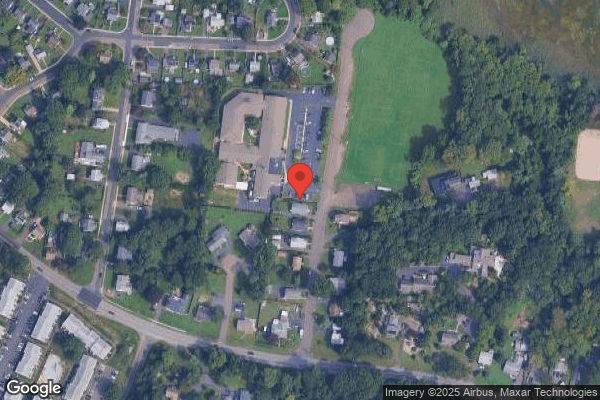

38 TALMADGE AVENUE, EAST HAVEN, CT 06512 (203) 469-2316
For profit - Limited Liability company 90 Beds Independent Data: November 2025
Trust Grade
60/100
#108 of 192 in CT
Last Inspection: May 2024

Within standard 12-15 month inspection cycle. Federal law requires annual inspections.

Overview

Whispering Pines Rehabilitation and Nursing Center has a Trust Grade of C+, indicating it is slightly above average but not exceptional. It ranks #108 out of 192 facilities in Connecticut, placing it in the bottom half of the state, and #11 out of 23 in its county, meaning there are only a few local options that are better. The facility is improving, with a significant drop in issues reported, decreasing from 15 in 2024 to just 2 in 2025. Staffing is rated average with a turnover of 39%, which is on par with the state average, but it has concerning RN coverage that is lower than 90% of facilities in Connecticut. While there have been no fines reported, there are specific incidents of concern, such as failures to provide necessary podiatry services for residents with diabetes and medication administration errors that could pose risks to residents' health. Overall, while there are strengths in staffing stability and no fines, families should be mindful of the areas needing improvement.

Trust Score
C+
60/100
In Connecticut
#108/192
Bottom 44%
Safety Record
Low Risk
No red flags
Inspections
Getting Better
15 → 2 violations
Staff Stability
○ Average
39% turnover. Near Connecticut's 48% average. Typical for the industry.
Penalties
✓ Good
No fines on record. Clean compliance history, better than most Connecticut facilities.
Skilled Nurses
⚠ Watch
Each resident gets only 26 minutes of Registered Nurse (RN) attention daily — below average for Connecticut. Fewer RN minutes means fewer trained eyes watching for problems.
Violations
⚠ Watch
28 deficiencies on record. Higher than average. Multiple issues found across inspections.
★★★☆☆
3.0
Overall Rating
★★★☆☆
3.0
Staff Levels
★★★☆☆
3.0
Care Quality
★★★☆☆
3.0
Inspection Score
Stable
2024: 15 issues
2025: 2 issues

The Good

  • Full Sprinkler Coverage · Fire safety systems throughout facility
  • No fines on record
  • Staff turnover below average (39%)

    9 points below Connecticut average of 48%

Facility shows strength in fire safety.

The Bad

3-Star Overall Rating

Near Connecticut average (3.0)

Meets federal standards, typical of most facilities

Staff Turnover: 39%

Near Connecticut avg (46%)

Typical for the industry

The Ugly 28 deficiencies on record

Feb 2025 1 deficiency
CONCERN (D) 📢 Someone Reported This

A family member, employee, or ombudsman was alarmed enough to file a formal complaint

Potential for Harm - no one hurt, but risky conditions existed

Quality of Care (Tag F0684)

Could have caused harm · This affected 1 resident

**NOTE- TERMS IN BRACKETS HAVE BEEN EDITED TO PROTECT CONFIDENTIALITY** Based on clinical record review, facility documentation review, facility policy review, and interviews for one of three resident...

Read full inspector narrative →
**NOTE- TERMS IN BRACKETS HAVE BEEN EDITED TO PROTECT CONFIDENTIALITY** Based on clinical record review, facility documentation review, facility policy review, and interviews for one of three residents (Resident #2) reviewed for medication administration, the facility failed to ensure medication orders were transcribed accurately and failed to ensure the resident was free from medication errors. The findings include: Resident #2's diagnoses included conversion disorder with seizures or convulsions. The admission Minimum Data Set (MDS) assessment dated [DATE] identified Resident #2 had a Brief Interview for Mental Status (BIMS) score of 15 out of 15, indicative of no cognitive impairment, and had a seizure disorder. The Resident Care Plan (RCP) dated 1/15/2025 identified a potential for seizure activity related to seizure disorder. Interventions directed to medicate as ordered and monitor for effectiveness. Physician order dated 1/10/2025 directed Lamictal XR (Lamotrigine, used to control seizures) oral tablet Extended Release 24-hour 100 milligram (mg) one (1) time a day. Additional physician order dated 1/10/2025 directed Lamotrigine ER oral tablet Extended Release 24-hour 25 mg (Lamotrigine) Give one (1) tablet by mouth one time a day for ANTICONVULSANTS for 1 week Week 5: (take with 100 mg for a total of 125 mg daily) AND Give 2 tablet by mouth one time a day for ANTICONVULSANTS Week 6: take with 100 mg for a total 150 mg daily and continue this dose. A physician order dated 1/24/2025 directed Lamotrigine ER Oral Tablet Extended Release 24 hour (Lamotrigine) Give 125 mg by mouth one (1) time a day. The manufacturing information review identified Lamictal was the brand name, and the generic medication name was Lamotrigine (same medication/drug). Review of January Medication Administration Record (MAR) directed start date 1/10/2025 Lamictal XR oral tablet extended release 24-hour 100 mg (Lamotrigine) give 1 tablet by mouth one time a day for anticonvulsant, was signed to identify it was administered daily from 1/11 through 1/26/2025. Additional review of January MAR indicated Lamotrigine ER oral tablet extended release 24 hour (Lamotrigine) 125 mg was signed to identify it was administered daily on 1/25 and 1/26/2025. Incident report dated 1/27/2024 identified Resident #1 received Lamotrigine 100 mg and 125 mg on 1/25 and 1/26/2025. The report indicated the 100 mg dose was supposed to be discontinued on 1/24/2025. The APRN was notified, and new orders were obtained to monitor vital signs every shift for three (3) days. Review of nurses note dated 1/27/2025 at 10:46 AM identified a medication error. A new Lamotrigine orders were received and transcribed without full discontinuation of the previous order resulting in administration of both orders on 1/25 and 1/26/2025. The APRN was notified with new orders to monitor vital signs every shift for 3 days, neurology and family notified. Interview, clinical record review, and facility documentation review on 2/26/2025 at 9:30 AM with the ADNS identified Resident #2 had an order for Lamictal XR 100 mg daily and on 1/25 and 1/26/2025 Resident #2 received an additional 125 mg in error. The ADNS stated the 100 mg should have been discontinued and Resident #2 should have been receiving only the 125 mg dose. The ADNS stated although she entered the order on 1/24/2025 that directed to administer 125 mg, she did not discontinue the order for 100 mg, and she should have. Interview, clinical record and facility documentation review with DNS on 2/26/2025 at 1:58 PM identified Resident #2 received an additional 100 mg of Lamictal (Lamotrigine) on 1/25 and 1/26/2025 in error. The DNS stated it was a transcription error, and the ADNS was provided education to ensures she reviewed all of Resident 2's medications when she entered the new order. Resident #2's neurologist and the medical director were notified, labs were ordered to check levels. Interview with the DNS identified the facility did not have a medication order transcription policy. Review of facility Medication Orders Policy directed in part; each medication order should be documented the Medication Administration Record (MAR). When a new order changes the dosage of previously prescribed medication, discontinue previous entry by writing DC'd and the date, or discontinue the order as per the electronic software instructions and re-type the new order.
Jan 2025 1 deficiency
CONCERN (D) 📢 Someone Reported This

A family member, employee, or ombudsman was alarmed enough to file a formal complaint

Potential for Harm - no one hurt, but risky conditions existed

Safe Transfer (Tag F0626)

Could have caused harm · This affected 1 resident

**NOTE- TERMS IN BRACKETS HAVE BEEN EDITED TO PROTECT CONFIDENTIALITY** Based on clinical record reviews, facility documentation, facility policy and interviews for one (1) of three (3) sampled reside...

Read full inspector narrative →
**NOTE- TERMS IN BRACKETS HAVE BEEN EDITED TO PROTECT CONFIDENTIALITY** Based on clinical record reviews, facility documentation, facility policy and interviews for one (1) of three (3) sampled residents (Resident #1) who had exhibited an inappropriate behavioral symptom and was transferred to the hospital for an evaluation, the facility failed to re-admit the resident after the hospital psychiatric physicians identified Resident #1 was not a risk of harm to self or others. The findings include: Resident #1's diagnoses included alcohol abuse with alcohol-induced Korsakoff's psychosis, depression, and dementia. The quarterly Minimum Data Set assessment dated [DATE] identified Resident #1 made poor decisions regarding tasks of daily life and did not exhibit behavioral symptoms during the seven (7) day look back period. The Resident Care Plan dated 7/19/24 identified Resident #1 had a history of inappropriately touching staff back on 5/14/24. Interventions directed to anticipate and meet the resident's needs, provide opportunities for positive interactions, and encourage positive coping skills. The nurse's note dated 7/24/24 at 10:19 PM identified Resident #1 touched a staff member inappropriately. The resident apologized for the behavior and the psychiatric Advanced Practice Registered Nurse was notified. The psychiatric progress note dated 7/25/24 identified Resident #1 was started on Prozac 10 milligrams (mg) daily for depression following the7/24/24 incident. The psychiatric progress note dated 7/29/24 identified Resident #1 refused to take the Prozac after the first dose due to it making him/her too tired the Prozac was discontinued, and Paxil 20 mg daily was ordered. The nurse's note dated 7/30/24 at 8:17 PM identified at approximately 6:30 PM Resident #1 touched a 3-11PM nurse aide, Nurse Aide (NA) #1, in her private area and then Resident #1 slid his/her hand upward to NA #1's breast. The note identified Resident #1 was placed on one (1) to one (1) observation, notifications were made to all appropriate parties, and Resident #1 was transferred to the Emergency Department (ED) for a psychiatric evaluation. The note written by the Administrator dated 7/31/24 at 3:38 PM identified she spoke with Resident #1's Conservator and advised the Conservator the facility was unable to allow Resident #1 to return and the hospital was notified. The hospital record dated 7/30/24 identified Resident #1 had a decline in mental status since April/May. The record identified the facility reported Resident #1 allegedly touched a staff member inappropriately, was referred to the ED and required psych clearance to return. The note dated 7/31/24 indicated the facility was clear that Resident #1 was not allowed to return to the facility therefore Resident #1 was admitted to the medical team waiting for placement at a new Long Term Care (LTC) facility. The note dated 8/26/24 identified Resident #1 was discharged from the hospital to a new LTC facility on 8/24/24. Interview with the hospital Social Worker, Person #2, on 1/8/25 at 12:15 PM identified Resident #1 was admitted to the medical department from the ED. Person #2 indicated she was not aware the ED had attempted to send Resident #1 back to the facility on 7/31/24. Person #2 contacted the facility on 8/14/24 to inquire if they would re-admit the resident and they refused therefore, a referral was made to an alternate facility. Interview with Resident #1's Conservator, Person #1, on 1/8/25 at 12:25 PM identified a meeting was held with the Inter-Disciplinary Team (IDT) on 7/25/24 and there was no discussion at that time regarding discharging Resident #1. Interview with the Administrator on 1/8/25 at 2:45 PM identified the facility decided they were not going to take Resident #1 back following the 7/30/24 transfer to the ED because it was the third offense towards a staff member and the facility did not want to take the chance that it would occur again or that Resident #1 would do something to a resident. The Administrator identified the facility did not initiate a consultative process with the hospital. Review of the Resident's [NAME] of Rights policy identified, in part, the resident has the right to be allowed to stay in the facility and federal and state law permit an involuntary transfer or discharge when the health and safety of individuals in the facility is endangered. Although requested, the Administrator identified the facility did not have a specific policy for emergency discharges.
Nov 2024 2 deficiencies
CONCERN (D) 📢 Someone Reported This

A family member, employee, or ombudsman was alarmed enough to file a formal complaint

Potential for Harm - no one hurt, but risky conditions existed

Notification of Changes (Tag F0580)

Could have caused harm · This affected 1 resident

**NOTE- TERMS IN BRACKETS HAVE BEEN EDITED TO PROTECT CONFIDENTIALITY** Based on clinical record review, interviews and facility documentation for one (1) of three (3) residents (Resident #1) reviewed...

Read full inspector narrative →
**NOTE- TERMS IN BRACKETS HAVE BEEN EDITED TO PROTECT CONFIDENTIALITY** Based on clinical record review, interviews and facility documentation for one (1) of three (3) residents (Resident #1) reviewed for a change in condition, the facility failed to report a change of condition to the physician timely. The findings included: Resident #1 had diagnoses of Alzheimer's Disease, anxiety disorder, and age-related osteoporosis. Review of the Resident Care Plan dated 10/8/24 identified Resident #1 had osteoporosis with interventions directed to monitor, document, report to the physician, as needed, signs and symptoms of complications related to osteoporosis such as acute fracture, compression fractures, loss of height, kyphosis, and pain. Review of the quarterly Minimum Data Set (MDS) assessment dated [DATE] identified Resident #1 had a Brief Mental Interview for Mental Status (BIMS) of two (2) indicative of severe cognitive impairment, and required maximal assistance with toileting, dressing, and personal hygiene. Review of the Department of Public Health Facility Licensing and Investigations Section Reportable Event Form dated 11/3/24 at 7:15 AM identified Resident #1 had an injury to his/her right pinky finger (bruise) and the right hand. A nurses note dated 11/3/24 at 11:34 AM identified that at 7:15 AM the Nurse Aide (NA) identified a bruise on the right fifth digit, the Advanced Practice Registered Nurse (APRN) was notified and an X-ray was ordered. An X-ray report dated 11/3/24 identified a a displaced transverse fracture at the base of the fifth digit. Interview with RN #1 (11:00 PM to 7:00 AM, Nursing Supervisor) on 11/21/24 at 11:00 AM identified he/she was informed by NA #1 on 11/3/24 at approximately 1:00 AM that something was wrong with Resident #1's right pinky finger. RN #1 indicated he/she checked Resident #1's right hand and saw that the pinky finger had a blue discoloration on it, however, did not appear as a new injury, and that Resident #1's right ring finger, middle finger, and hand were red but not swollen. RN #1 further identified he/she performed passive range of motion to Resident #1's right pinky finger without Resident #1 responding in pain or grimacing. RN #1 indicated he/she wanted to check nursing notes to ensure it was a new condition prior to contacting the physician, however, became distracted with a re-admission to the facility at 2:00 AM that morning and his/her other routine duties. RN #1 identified he/she didn't realize he/she had forgotten about Resident #1's injury until he/she overheard NA #2 reporting it to RN #2 during morning report. RN #1 indicated he/she then updated RN #2 with his/her previous assessment. Interview with NA #2 on 11/21/24 at 12:02 PM identified he/she was informed of the bruise on Resident #1's right hand by NA #1 during morning report on 11/3/24. Upon checking the residents hand around 7:00 AM that morning she identified Resident #1's right hand was swollen and that the right pinky was in an unusual position. NA #2 indicated he/she immediately notified RN #2 of the situation. Interview with RN #2 on 11/18/24 at 12:30 PM identified he/she assessed Resident #1's right hand following notification of the injury on 11/3/24 from NA#2 and that the pinky finger appeared to be dislocated. RN #2 further identified contacting the Advanced Practice Registered Nurse (APRN), was directed to order an x-ray which was positive for a fracture and the resident was sent to the emergency department. Interview with the Director of Nursing Services on 11/18/24 at 2:45 PM identified that the facility conducted an investigation and determined that the resident had osteoporosis and on 11/2/24 it was noted that the resident had h/her glasses in/her hand after having difficulty removing them from h/her face and questioned if this could have been the cause of the injury. The DNS identified that staff was to initiate an investigation of the injury and to notify the physician of the injury/change of condition. The DNS further indicated RN #1 should have ensured that the change in condition was reported upon assessment to the provider ( the injury was identified on 11/3/24 at 1:00 AM and was not reported to the provider until 7:00 AM). Interview with the Medical Director on 11/25/24 at 4:26 PM indicated, at minimum, staff should contact the APRN when a resident's change in condition has been identified. Review of the facility's Change of Condition policy directed the Charge Nurse/Supervisor was responsible for notifying the attending physician/ APRN and the resident's responsible family members or legal representatives when a change occurs in the resident's condition, which included significant changes in physical, mental, or psychosocial status as well as any accident that results in injury and/or hospitalization.
CONCERN (D) 📢 Someone Reported This

A family member, employee, or ombudsman was alarmed enough to file a formal complaint

Potential for Harm - no one hurt, but risky conditions existed

Accident Prevention (Tag F0689)

Could have caused harm · This affected 1 resident

**NOTE- TERMS IN BRACKETS HAVE BEEN EDITED TO PROTECT CONFIDENTIALITY** Based on clinical record review, facility documentation, and interviews for one (1) of three (3) residents reviewed for an injur...

Read full inspector narrative →
**NOTE- TERMS IN BRACKETS HAVE BEEN EDITED TO PROTECT CONFIDENTIALITY** Based on clinical record review, facility documentation, and interviews for one (1) of three (3) residents reviewed for an injury of unknown origin (Resident #5), the facility failed to ensure that the resident remained free from injury during a Hoyer lift transfer. The findings included: Resident #5 had a diagnoses of Alzheimer's disease. A care plan dated 6/12/24 identified that the resident had a self care deficit related to impaired mobility and cognition with interventions that included to assist the resident out of bed with a Hoyer lift. A Quarterly Minimum Data Set (MDS) assessment dated [DATE] identified that a Brief Interview for Mental Status (BIMS) of three (3) indicative of severe cognitive impairment and was dependent on staff for Activities of Daily Living (ADLs) including transfers. A nurse's note dated 11/15/24 at 12:03 PM identified that the resident had a bruise to the left chest measuring 6.5 in length 10.5 centimeters (cm) in width. An assessment was completed, no facial grimacing was noted and an X-ray of the left ribs was ordered. An X-ray report dated 11/15/24 of the left ribs were negative. Review of a reportable event dated 11/15/24 identified that a bruise of unknown origin was observed to the left upper chest during am care. The summary identified that the facility concluded that the bruise was caused by the Hoyer bar, (holds the Hoyer pad) that had aligned with the bruise. Interviews with staff who cared for the resident 24 hours prior to the identification of the bruise on 11/15/24 on 11/21/24 at various times failed to identify any incidents or issues with care that could have caused the bruising. Interview with the Director of Nurses (DNS) on 11/21/24 at 3:00 PM identified that the facility had performed a Hoyer transfer with the resident to identify potential causes of the bruise. It was identified that the Hoyer bar that attaches the Hoyer pad had aligned with the bruise, the facility believed that while the Hoyer was being pulled away from the resident, the bar was noted to swing and could have possibly hit the resident in the chest causing the bruise. The DNS identified that Resident #5 is now a nurse supervised Hoyer lift transfer. Subsequent to the incident the facility conducted competencies and education on Hoyer lift transfers with Nurse Aides. Review of the safe resident handling and transfers policy identified that residents are handled and transferred safely to prevent or minimize risk for injury.
May 2024 10 deficiencies
CONCERN (D)

Potential for Harm - no one hurt, but risky conditions existed

Notification of Changes (Tag F0580)

Could have caused harm · This affected 1 resident

**NOTE- TERMS IN BRACKETS HAVE BEEN EDITED TO PROTECT CONFIDENTIALITY** Based on review of the clinical record, facility policy, and interviews for 1 of 6 residents (Resident #62) reviewed for nutriti...

Read full inspector narrative →
**NOTE- TERMS IN BRACKETS HAVE BEEN EDITED TO PROTECT CONFIDENTIALITY** Based on review of the clinical record, facility policy, and interviews for 1 of 6 residents (Resident #62) reviewed for nutrition, the facility failed to notify the provider when weights were not obtained per the physician's order. The findings include: Resident #62's diagnoses included heart failure, hypertension, and Chronic Obstructive Pulmonary Disease (COPD). The Nursing admission assessment dated [DATE] identified Resident #62 was oriented to time, place, and person, was independent with eating, required one staff assist with ambulation, and the assist of two staff with bathing and grooming. The Resident Care Plan dated 8/23/23 identified Resident #62 was at risk for nutritional deficit. Interventions included monitoring weights, laboratory values, and offering a therapeutic diet with high calorie supplements as directed by the physician. A physician's order dated 8/23/23 directed to weigh Resident #62 every night shift and notify the physician of an increase of 2-3 pounds per day, or 5 pounds per week. Review of Resident #62 clinical record from 8/23/23 to 5/14/24 identified that he/she had not been weighed for 4 days, February 4, 5, 6, and 7, 2024, due to a broken scale. The clinical record failed to indicate that the physician was notified. An interview and record review with RN #6 on 15/5/24 at 10:35 AM failed to identify that the physician was notified when Resident #62 was not weighed for 4 consecutive days. Additionally, RN #6 indicated that Resident #62 could have been brought to a different scale in the facility to be weighed. Interview with Advanced Practice Registered Nurse #1 on 5/16/2024 at 11:00 AM identified that she had not been notified Resident #62 had not been weighed for 4 consecutive days but should have been as the weights were ordered to be taken daily. Review of facility policy identified, in part, that each resident will be weighed upon admission, monthly and when indicated, to provide a baseline and ongoing record of the resident's body weight as an indicator of the nutritional status and medical condition of the resident.
CONCERN (D)

Potential for Harm - no one hurt, but risky conditions existed

Comprehensive Care Plan (Tag F0656)

Could have caused harm · This affected 1 resident

**NOTE- TERMS IN BRACKETS HAVE BEEN EDITED TO PROTECT CONFIDENTIALITY** Based on review of the clinical record, facility policy, and interviews for the only sampled resident (Resident #67) reviewed fo...

Read full inspector narrative →
**NOTE- TERMS IN BRACKETS HAVE BEEN EDITED TO PROTECT CONFIDENTIALITY** Based on review of the clinical record, facility policy, and interviews for the only sampled resident (Resident #67) reviewed for an allegation of mistreatment, the facility failed to develop a comprehensive care plan indicating refusal of care, inappropriate behaviors, and accusations towards staff. The findings include: Resident #67's diagnoses included major depressive disorder and alcohol dependence. A nurse's note dated 1/3/24 at 12:50 PM identified Resident #67 was increasingly agitated and cursing at staff and his/her roommate. The quarterly Minimum Data Set (MDS) assessment dated [DATE] identified Resident #67 was cognitively intact and required moderate assistance with personal hygiene, substantial assistance with bed mobility, and was dependent with transfers. Review of the Resident Care Plan (RCP) failed to include a care plan for behaviors. A nurse's note dated 2/21/24 at 11:26 AM indicated that Resident #67 was sexually inappropriate with staff and he/she was subsequently made an assist of 2 staff at all times. A nurse's note dated 4/25/24 at 11:25 PM identified that Resident # 67 was refusing care from certain staff members and the nursing supervisor was aware. A nurse's note dated 5/10/24 at 3:56 PM identified that Resident #67 made an allegation of staff mistreatment. Interview with Resident #67 on 5/15/24 at 9:48 AM identified that he/she has been refusing to shower for several months due to the facilities water temperature and his/her vertigo condition. Review of wound physician notes dated 5/15/24 identified that Resident #67 refused showers due to vertigo and hasn't washed his/her hair in at least a month. Interview with LPN #3 on 5/15/24 at 1:27 PM identified that a noncompliance and behavior care plan was not initiated because although she had heard staff discussing the behaviors of Resident #67, there was no documentation of the refusals and behaviors towards staff in the clinical record. In an interview and clinical record review with the DNS on 5/16/24 at 11:48 AM, it was identified that the clinical record failed to reflect an RCP regarding Resident #67's refusal of care, inappropriate behavior, and/or accusations towards staff. She indicated that she was aware of Resident #67's behaviors and that the interdisciplinary team talked about them often in morning report. Additionally, the DNS reported that the MDS nurse was responsible for the noncompliance care plan and she was unaware that a RCP for Resident #67's behaviors did not exist. Review of the Comprehensive Care Plan policy directed, in part, that the resident has the right to refuse to participate in the development of his/her care plan and medical nursing treatments. When such refusals were made, appropriate documentation would be entered into the resident's clinical records in accordance with established policies.
CONCERN (D)

Potential for Harm - no one hurt, but risky conditions existed

Incontinence Care (Tag F0690)

Could have caused harm · This affected 1 resident

**NOTE- TERMS IN BRACKETS HAVE BEEN EDITED TO PROTECT CONFIDENTIALITY** Based on review of the clinical record, facility documentation, facility policy, and interviews for 2 of 2 residents (Resident #...

Read full inspector narrative →
**NOTE- TERMS IN BRACKETS HAVE BEEN EDITED TO PROTECT CONFIDENTIALITY** Based on review of the clinical record, facility documentation, facility policy, and interviews for 2 of 2 residents (Resident #53 and Resident #67) reviewed for bowel and bladder, for Resident #53, the facility failed to assess bowel and bladder continence status and failed to implement a plan to restore continence and for Resident #67 the facility failed to ensure the resident maintained bowel and bladder function. The findings include: 1. Resident #53 was admitted to the facility with diagnoses that included fall, aspiration pneumonia, and acute kidney injury. The Nursing admission assessment dated [DATE] identified Resident #53 was cognitively intact and required a rolling walker with the assistance of 2 staff members to ambulate. The Nursing admission Assessment failed to address bowel and bladder continence. The Resident Care Plan dated 4/13/24 identified Resident #53 was at risk for a decline in his/her ability to perform activities of daily living (ADLs) and interventions included assisting Resident #53 with toileting, dressing, and ambulating. A physician's order dated 4/14/24 directed to administer 2mg of bumetanide (a diuretic) every other day. Review of the bladder and bowel documentation from 4/13/24 until 4/30/24 indicated Resident #53 was incontinent of bladder 45 out of 49 opportunities and was incontinent of bowel 25 out of 29 opportunities. Interview with Resident #53 on 5/10/24 at 11:25 AM identified he/she used the toilet regularly at home. Resident #53 indicated that he/she would prefer to use a toilet but had only been offered a bedpan, not using the bathroom, since he/she was admitted to the facility. Resident #53 reported experiencing incontinence on several occasions due to extended wait times after requesting a bedpan. Further, Resident #53 noted that he/she suggested to the NA that they bring him/her the bedpan at scheduled intervals on the days the diuretic was administered, but this has not happened. An interview and clinical record review with the DNS on 5/15/24 at 12:25 PM, the clinical record contained a bowel and bladder assessment from Resident #53's previous admission to the facility dated 9/27/23. The evaluation identified Resident #53 as a candidate for a toileting schedule. The clinical record failed to reflect a bowel and bladder evaluation for Resident #53's current admission to the facility. The DNS indicated it was the admitting nurse's responsibility to complete the bowel and bladder assessment on admission, but she was unable to identify why an assessment had not been completed for Resident #53. Additionally, the DNS identified the lack of an assessment should have been identified during the facility's weekly Standards of Care meeting but was unable to explain how this was overlooked. Review of the Bowel and Bladder Assessment policy dated 3/2000 directed, in part, to complete a bowel and bladder assessment within 14 days of admission to assist in determining the most effective and appropriate treatment and management of bowel and bladder function. 2. Resident #67's diagnoses included calculus of ureter and bile duct (formation of stones), presence of urogenital implants, and a history of urinary tract infections. The quarterly Minimum Data Set (MDS) assessment dated [DATE] identified Resident #67 was cognitively intact and required moderate assistance with personal hygiene, substantial assistance with bed mobility, and was dependent with transfers. The Resident Care Plan dated 3/22/24 identified that Resident #67 was incontinent of both bowel and bladder due to impaired mobility. Interventions included following incontinence protocol, monitor for signs and symptoms of a urinary tract infection, and monitor input and output per facility policy. Review of the MDS data completed since Resident #67's admission indicated: The admission MDS assessment dated [DATE] identified that Resident #67 was frequently incontinent of urine and frequently incontinent of bowel, with no toileting programs in place. The 5-day MDS dated [DATE] identified that Resident #67 was occasionally incontinent of urine and always incontinent of bowel, with no toileting programs in place. The quarterly MDS dated [DATE] identified that Resident #67 was frequently incontinent of urine and frequently incontinent of bowel, with no toileting programs in place. The quarterly MDS dated [DATE] identified that Resident #67 was always incontinent of urine and always incontinent of bowel, with no toileting programs in place. Review of the Bowel and Bladder Evaluations for Resident #67 identified that on 8/8/23, the assessment determined that the resident was a good candidate for individualized retraining. On 1/3/24, the assessment determined that the resident was a candidate for a toileting schedule (timed voiding). On 5/12/24, the assessment determined that the resident was a candidate for a toileting schedule (timed voiding). Review of the clinical record failed to identify that any individualized retraining or any toileting schedules had been completed. Interview with Resident #67 on 5/13/24 at 10:14 AM identified that although he/she was capable of using a urinal, he/she indicated that due to difficulty with bed mobility and not being able to sit on the edge of the bed without staff assistance, the urine would spill out of the urinal consistently into the bed. Additionally, Resident #67 identified that when he/she felt the need to go to the bathroom, he/she would ring the call bell, but would not get the assistance he/she required in time which subsequently led to soiling the bed. Further, Resident #67 reports he/she is no longer aware of the urge to go to the bathroom. Interview with LPN #3 (MDS Coordinator) on 5/14/24 at 11:49 AM identified that she gets the data for section H (bladder and bowel) of the MDS from the Nursing admission Assessment, documented nurse's notes, NA documentation, and completed Bowel and Bladder Evaluations. She indicated that MDS staff is responsible for completing the Bowel and Bladder Evaluations, but reported she answers no to both the urinary and bowel toileting program questions of the MDS (H0200 and H0500), even if the assessments state the resident is a candidate for individualized retraining or toilet scheduling because it was her understanding that the facility does not have these programs. LPN #3 stated nursing would then be responsible for initiating a 3-day diary of the resident's current bladder and bowel functioning, but reported there was no current process on how to communicate that to the floor nurses. Additionally, she indicated that they have a weekly meeting on Wednesdays to discuss the at risk residents, but she was unsure if Resident #67 had been discussed for his/her declining bowel and bladder functioning. Interview with RN #1 on 5/14/24 at 2:12 PM identified that she was not aware of any resident's past or present on toileting programs and she was also not aware of how to initiate a 3 day toileting diary. Interview with RN #2 (Nursing Supervisor/MDS) on 5/15/24 at 12:01 PM identified that after he completes a bladder and bowel assessment that indicates that a resident is a good candidate for any type of retraining or toileting schedule, he verbally tells the staff on the unit to observe that resident's tendencies. RN #2 reported that he has not seen any bowel and bladder diaries completed on any residents, indicating he would think that the staff would start them on a retraining program if the resident was able to participate, but reported he was not aware of a policy or process. RN #2 identified that he is not able to follow up with the staff on the residents toileting tendencies, as he works weekends only, and reported that in the future he would start requesting the information needed in writing, not verbally. Interview with the DNS on 05/15/24 at 12:25 PM identified that Resident #67 gradually lost bladder and bowel functioning over time from admission to his current status. She indicated the facility did an initial 3-day diary at the beginning of his admission, but she was unable to identify who initiated the diary, was unable to locate the paper copy or any follow up, and was unaware if the physician was notified of the change in functioning. The DNS identified that Resident #67 had a few cancelled urology appointments, but indicated the facility should have followed up and developed a bladder and bowel schedule and added it to the NA's assignment. Further, the DNS identified that MDS staff is responsible for gathering information on the resident's bowel and bladder functioning and should have initiated a 3-day diary and then the interdisciplinary team would have discussed the results in morning report and at their weekly at-risk meeting. Review of the Bowel and Bladder Retraining policy dated 3/2001 directed, in part, that bowel and bladder retraining is the responsibility of all nursing personnel and directs to toilet the resident at the same time daily, every 2 to 3 hours, encourage adequate intake of fruits, vegetables, and roughage, and encourage exercises as tolerated. All outcomes should be documented in the clinical record and inform the physician as needed.
CONCERN (D)

Potential for Harm - no one hurt, but risky conditions existed

Deficiency F0692 (Tag F0692)

Could have caused harm · This affected 1 resident

**NOTE- TERMS IN BRACKETS HAVE BEEN EDITED TO PROTECT CONFIDENTIALITY** Based on review of the clinical record, interviews, and review of facility policy for two of six residents (Resident #14 and Res...

Read full inspector narrative →
**NOTE- TERMS IN BRACKETS HAVE BEEN EDITED TO PROTECT CONFIDENTIALITY** Based on review of the clinical record, interviews, and review of facility policy for two of six residents (Resident #14 and Resident #62) reviewed for nutrition, for Resident #14, the facility failed to ensure a significant weight change was identified in a timely manner, and for Resident #62, the facility failed to obtain weights per the physician's orders. The findings include: 1. Resident #14 was admitted to the facility on [DATE] with diagnoses that included dementia, congestive heart failure, and diabetes. The Quarterly Minimum Data Set assessment dated [DATE] identified Resident #14 was severely cognitively impaired, required set up assist for eating, moderate assistance with personal hygiene, transferring, and bathing. The Physician orders dated 11/24/23 through 3/12/24 directed for Resident #14 to be weighed daily. Review of Resident #14's weight record identified a weight of 222.2 pounds (lbs.) on 12/20/23 and a weight of 199.0 lbs. on 2/17/24 for a total significant weight loss of 23.2 pounds (10.44 percent) over 2 months. No further weights were identified in the clinical record from 12/21/23 through 2/16/24. Interview and review of the clinical record on 5/16/24 at 10:31AM with the Dietician identified Resident #14's significant weight change of 23.2 lbs. between 12/20/23 and 2/17/24 (approximately 2 months). The Dietician indicated that she was responsible to identify changes in resident weights but had been unavailable for part of the time between 2/17/24 and 3/12/24 and that no staff had been covering in her absence. Additionally, the Dietician was noted to have worked in the building on 2/21/24 and 3/7/24 but had not been notified by facility staff and had not recognized that Resident #14 had a weight loss until her third visit to the facility on 3/12/24 (24 days after Resident #14's weight loss). Subsequent to determining the resident had sustained a significant weight loss, she recommended Resident #14 be given double portions and requested liquid protein 30 milliliters twice a day. The Dietician was unable to indicate why Resident #14's weight loss was not addressed sooner. 2. Resident #62's diagnoses included heart failure, hypertension, and Chronic Obstructive Pulmonary Disease (COPD). The Quarterly MDS assessment dated [DATE] identified that Resident #62 was moderately cognitively impaired, was independent for transfers, supervised for ambulation, and he/she had a significant weight loss. The Resident Care Plan in effect from February 1, 2024 through February 29, 2024 identified Resident #62 was at risk for nutritional deficit with interventions that included monitoring weights, labs and offering a therapeutic diet with high calorie supplements as directed by the physician. The physician's order in effect from February 1, 2024 through February 29, 2024 directed to weigh Resident #62 every night shift and notify the physician of any increase in weight of 2-3 pounds per day or 5 pounds per week. Review of Resident #62 clinical record from 8/24/23 to 5/14/24 identified that he/she was not weighed for 4 days, on February 4, 5, 6, and 7, 2024. An interview and record review with RN # 6 on 5/15/24 at 10:35 AM identified that Resident #62 had not been weighed on February 4, 5, 6, and 7, 2024 due to a broken scale according to the nursing progress notes. RN #6 was unable to explain why the Resident #62 had not been weighed, but indicated that the resident could have been brought to another unit to obtain his/her weights. Review of the facilty weight policy identified that any weight gain or loss of 5 pounds or more will trigger a re-weight to be obtained with 24 hours to verify the results. Significant weight loss parameters (Per OBRA) are as follows: 5% in 30 days and 10 % in 6 months. Weights will be documented in the electronic medical record. Each resident will be weighed upon admission, monthly, and when indicated, to provide a baseline and ongoing record of the resident's body weight as an indicator of the nutritional status and medical condition of the resident.
CONCERN (D)

Potential for Harm - no one hurt, but risky conditions existed

Respiratory Care (Tag F0695)

Could have caused harm · This affected 1 resident

**NOTE- TERMS IN BRACKETS HAVE BEEN EDITED TO PROTECT CONFIDENTIALITY** Based on observations, review of the clinical record, facility policy, and interview for 1 of 2 residents (Resident #13) reviewe...

Read full inspector narrative →
**NOTE- TERMS IN BRACKETS HAVE BEEN EDITED TO PROTECT CONFIDENTIALITY** Based on observations, review of the clinical record, facility policy, and interview for 1 of 2 residents (Resident #13) reviewed for oxygen, the facility failed to follow the physician's oxygen order. The findings include: Resident #13's diagnoses included pneumonia, chronic obstructive pulmonary disease (COPD), anxiety disorder, and dementia. The significant change in status Minimum Data Set (MDS) assessment dated [DATE] identified Resident #13 was severely cognitively impaired and was dependent on staff for bed mobility, transfers, and personal hygiene and required substantial assistance with eating. Observation on 5/10/24 at 12:20 PM, identified Resident #13 in bed with the nasal cannula on, with the oxygen concentrator set to 3.0 LPM. Review of the Resident Care Plan dated 5/13/24 identified that Resident #13 had emphysema and COPD. Interventions included monitoring for difficulty breathing, monitoring for signs and symptoms of acute respiratory insufficiency and signs of respiratory infection, and to administer oxygen via nasal cannula to keep oxygen greater than 90%. Review of the physician's orders in effect from 5/1/24 through 5/13/24 directed to administer oxygen at 2.0 liters per minute (LPM) via nasal cannula continuously and as needed for shortness of breath. Observation on 5/13/24 at 10:30 AM, identified Resident #13 in bed with the nasal cannula on, with the oxygen concentrator set to 3.0 LPM. Review of the clinical record, observation, and interview with LPN #2 on 5/13/24 at 10:32 AM identified that although Resident #13 had a physician's order to administer 2.0 LPM of oxygen via a nasal cannula, he/she was noted to be receiving oxygen via the concentrator set to 3.0 LPM. LPN #2 indicated that she doesn't normally work on Resident #13's unit, she was unsure why the oxygen concentrator settings didn't match the physician's order, and that normally she would check the oxygen setting on entering Resident #13's room, but she had not seen the resident yet, during her shift. Review of the Oxygen Therapy policy directed, in part, that oxygen administration requires a physician's order, and flow meter is to be turned to the prescribed rate and the rate of flow is to be checked by the licensed staff.
CONCERN (D)

Potential for Harm - no one hurt, but risky conditions existed

Medication Errors (Tag F0758)

Could have caused harm · This affected 1 resident

**NOTE- TERMS IN BRACKETS HAVE BEEN EDITED TO PROTECT CONFIDENTIALITY** Based on review of the clinical record, facility policy and interviews for the only sampled resident (Resident #67) reviewed for...

Read full inspector narrative →
**NOTE- TERMS IN BRACKETS HAVE BEEN EDITED TO PROTECT CONFIDENTIALITY** Based on review of the clinical record, facility policy and interviews for the only sampled resident (Resident #67) reviewed for mistreatment, the facility failed to monitor and document targeted behaviors per the physician's order. The findings include: Resident #67's diagnoses included major depressive disorder and alcohol dependence. The quarterly Minimum Data Set (MDS) assessment dated [DATE] identified Resident #67 was cognitively intact and required moderate assistance with personal hygiene, substantial assistance with bed mobility, and was dependent with transfers. Additionally, the MDS indicated that the resident had not exhibited any behaviors. The Resident Care Plan dated in effect from November 2023 through May 2023 identified that Resident #67 received antidepressant medication related to depression. Interventions included to monitor, document, and report to the physician ongoing signs and symptoms of depression including sadness, irritability, anger, never being satisfied, crying, shame, worthlessness, guilt, suicidal ideation, negative mood and/or comments, slowed movement, fatigue, lethargy, agitation, attention seeking, and anxiety. A physician's order dated 11/28/23 directed to monitor for any increased anxiety, yelling, agitation or any unusual behaviors, document, and report to the psychiatric Advance Practice Registered Nurse (APRN). Review of the Medication Administration Record (MAR) and Treatment Administration Record (TAR) from December 2023 through May 2024 identified Resident #67 was receiving psychotropic medications but failed to identify targeted behavior monitoring for psychotropic medication use. Review of the psychiatric APRN notes dated 2/15/24 and 3/19/24 identified diagnoses including adjustment disorder, anxiety disorder, major depressive disorder, and alcohol abuse. Additionally, the notes indicated that Resident #67 had been seen for behaviors including agitation and yelling at staff on 1/5/24 and directed to continue monitoring the resident for changes in mood and behavior. Interview and clinical record review with RN #1 on 5/14/24 at 2:12 PM identified that she was unable to locate behavior monitoring in Resident #67's clinical record. She reported that if a resident had a physician's order for behavior monitoring, it should be documented on in the MAR, and nurses would be responsible to document either a Y for yes behaviors were observed, or N for no behaviors were observed every shift and document any identified behaviors in the nursing progress notes. Review of nursing notes dated 1/3/24 through 5/10/24 indicated 5 nursing progress notes documenting Resident #67's mood/behaviors but no further behavior monitoring documentation was identified. Interview and clinical record review with the ADNS on 5/14/24 at 2:23 PM identified that there were physician's orders directing behavior monitoring that had been incorrectly entered by the previous APRN. The ADNS indicated that due to the incorrect entry, behavior monitoring had not been conducted as directed from November 2023 through May 2024, and that subsequent to surveyor inquiry, she would correct the order to ensure behavior monitoring would occur as directed. Although requested, a policy on physician's orders was not provided. Review of the Psychotropic Medications policy directed, in part, that behavioral monitoring will be completed by nursing to record specified target behaviors, such as biting, kicking, continuous crying, pacing, hitting, scratching, screaming, yelling, etc.
CONCERN (D)

Potential for Harm - no one hurt, but risky conditions existed

Deficiency F0761 (Tag F0761)

Could have caused harm · This affected 1 resident

Based on observation, review of facility documentation, facility policy, and interviews for 1 of 2 medication rooms reviewed for medication storage and labeling, the facility failed to ensure drugs an...

Read full inspector narrative →
Based on observation, review of facility documentation, facility policy, and interviews for 1 of 2 medication rooms reviewed for medication storage and labeling, the facility failed to ensure drugs and biologicals were kept under proper temperature controls. The findings include: Observation and interview with RN #3 (the Infection Preventionist) on 5/16/24 at 12:40 PM identified recorded out-of-range temperatures documented on the Windsor Court medication refrigerator's temperature log. In May 2024 temperatures were noted to be outside of the acceptable range (35°F to 46°F) on 13 out of 16 documented days and ranged between 49°F and 60°F. In April 2024 3 out of 30 readings fell outside the acceptable range and were documented between 47°F and 54°F. Currently observed in the medication refrigerator were the following medications: 1. carboxymethyl cellulose sodium 0.5% 0.5oz 2. 1 full vial of lispro 3. 1 full vial of Levemir 4. 1 Trulicity single dosing pen 5. Aranesp 0.42ml syringes x 2 6. lorazepam oral concentrate full vial 30ml RN #3 indicated that staff should have re-checked the refrigerator temperature, and if it read outside the acceptable range, then update the log accordingly. RN #3 was unable to explain why the refrigerator temperatures weren't rechecked on the days documented with out-of-range readings and was unable to identify how long the refrigerated medications had been exposed to the unacceptable temperatures adding that the refrigerator temperatures fluctuated. Interview with LPN #4 on 5/16/24 12:48 PM identified that the 11:00 PM to 7:00 AM nurse was responsible to check the refrigerator temperature and that if the temperature was out of range, then the issue should be brought to the attention of maintenance. Review of the Medication Storage policy identified all refrigerated medications should be kept between 35°F to 46°F, as stated by the United States Pharmacopeia and by the Centers for Disease Control.
CONCERN (E)

Potential for Harm - no one hurt, but risky conditions existed

Deficiency F0687 (Tag F0687)

Could have caused harm · This affected multiple residents

**NOTE- TERMS IN BRACKETS HAVE BEEN EDITED TO PROTECT CONFIDENTIALITY** Based on observations, review of the clinical record, facility policy, and interviews for 1 of 2 residents (Resident #67) review...

Read full inspector narrative →
**NOTE- TERMS IN BRACKETS HAVE BEEN EDITED TO PROTECT CONFIDENTIALITY** Based on observations, review of the clinical record, facility policy, and interviews for 1 of 2 residents (Resident #67) reviewed for Activities of Daily Living (ADL's), the facility failed to provide podiatry services to a long-term resident. The findings include: Resident #67's was admitted to the facility in August of 2023 with diagnoses that included type II diabetes mellitus, muscle weakness, difficulty in walking, and repeated falls. An admission physician's order dated 8/29/23 directed that Resident #67 may have podiatry services as needed. The quarterly Minimum Data Set (MDS) assessment dated [DATE] identified Resident #67 was cognitively intact and required moderate staff assistance with personal hygiene, substantial staff assistance with bed mobility, and was staff dependent with transfers. The Resident Care Plan dated 2/15/24 identified Resident #67 had diabetes mellitus. Interventions included completing a body check for breaks in the skin and treat promptly as ordered by the physician. Observation on 5/10/24 at 12:12 PM, identified Resident #67 with excessively long toenails. Interview and observation with Resident #67 on 5/13/24 at 10:14 AM identified he/she had excessively long toenails. He/she indicated that they were uncomfortable and jagged, getting caught on the sheets, and reported his/her toenails had not been cut since prior to residing at the facility, almost 9 months ago. Resident #67 identified that he/she had complained to the NA's numerous times during care, but the nails still had not been cut. Interview and clinical record review with RN #1 on 5/14/24 at 2:12 PM identified that foot and nail care was completed with daily care and on shower days by the NA's; irregularities were to be reported to the licensed nursing staff. Further, RN #1 indicated that licensed nursing staff was responsible for weekly body checks and excessively long nails should have been identified during the body check. The facility policy for toenail care directed that if a resident was diabetic (as was Resident #67) or had thick nails, the resident would be required to be seen by a podiatrist. During a review of the clinical record, RN #1 indicated that she was unable to find podiatry consent for Resident #67 or that Resident #67 had previously seen a podiatrist. RN #1 stated she was unaware of Resident #67's excessively long toenails. Review of the Treatment Administration Record (TAR) and nursing notes for April and May 2024 identified that LPN #1 signed off the weekly body audit on 4/17/24, 5/1/24, and 5/7/24 but failed to note Resident #67's toenail length. Interview and observation with LPN #1 on 5/14/24 at 2:30 PM identified that on observation, Resident #67's toenails were abnormally long and needed to be cut, he/she required a podiatrist, the resident had recently transferred her unit, and the NA's had not notified her of the resident's toenail length. Although LPN #1 signed off the weekly body audit on 4/17/24, 5/1/24, and 5/7/24, she identified she had not observed the length of Resident #67's toenails prior to surveyor inquiry. Interview with Social Worker #1 on 5/14/24 at 2:47 PM identified that she was the podiatry liaison, she was unsure if podiatry services were offered to Resident #67, and she had not been notified that Resident #67 needed to be seen. Subsequent to surveyor inquiry, a signed podiatry consent was obtained on 5/15/24. Review of the Foot Care policy dated 2023 directed, in part, that the facility would provide foot care and treatment in accordance with professional standards of practice and if necessary, would assist the resident in making appointments with a qualified person.
MINOR (B)

Minor Issue - procedural, no safety impact

PASARR Coordination (Tag F0644)

Minor procedural issue · This affected multiple residents

**NOTE- TERMS IN BRACKETS HAVE BEEN EDITED TO PROTECT CONFIDENTIALITY** Based on review of the clinical record and interview for 1 of 5 sampled residents, (Resident #11) reviewed for PASRR, the facili...

Read full inspector narrative →
**NOTE- TERMS IN BRACKETS HAVE BEEN EDITED TO PROTECT CONFIDENTIALITY** Based on review of the clinical record and interview for 1 of 5 sampled residents, (Resident #11) reviewed for PASRR, the facility failed to refer the resident to the appropriate state-designated authority for a level II evaluation following a new psychiatric diagnosis. The findings include: Resident #11 was admitted in June 2020 with diagnoses that included chronic obstructive pulmonary disease, anxiety, and lung neoplasm. Review of the clinical record identified a negative PASRR level 1 dated 6/22/20 with no diagnosis of Alzheimer's dementia, or mental illness. The 5 day Minimum Data Set assessment dated [DATE] identified Resident #11 was cognitively intact and required assistance with activities of daily living. An Advanced Practice Registered Nurse progress note dated 9/29/22 identified Resident #11 with an active diagnosis of schizoaffective disorder. Further review of the clinical record failed to identify a PASRR level II was conducted following the new psychiatric diagnosis. The Resident Care Plan dated 6/23/23 identified Resident #11 was receiving psychotropic medications, had mood and behavior disorders. Interventions directed to assist Resident #11 by allowing him/her to express their feelings and to assist to de-escalate. In an interview and review of the clinical record with Social Worker #1 on 5/16/24 at 12:30 PM she identified that following Resident #11's new psychiatric diagnosis of schizoaffective disorder the state agency should have been notified to conduct a level II PASRR assessment.
MINOR (C)

Minor Issue - procedural, no safety impact

Infection Control (Tag F0880)

Minor procedural issue · This affected most or all residents

Based on interviews, observation of the laundry area, and facility policy, the facility failed to ensure a clean environment in the drying and folding areas. The findings include: Observation in the l...

Read full inspector narrative →
Based on interviews, observation of the laundry area, and facility policy, the facility failed to ensure a clean environment in the drying and folding areas. The findings include: Observation in the laundry room with the Infection Preventionist on 5/14/24 at 2:40 PM identified a moderate coating of white/gray debris (that the Infection Preventionist and Maintenance worker identified as lint) on the protective covering over the blades of two wall-mounted fans blowing directly onto clean, uncovered laundry located on the clean linen cart. Additionally, a moderate amount of white/gray debris was observed on the dryer tops. Interview with Maintenance and the Laundry Attendant on 5/14/24 at 2:45 PM identified that the dryer tops and fans needed to be cleaned and that laundry staff were responsible for cleaning as needed. Additionally, no cleaning schedule had been implemented for the fans. Interview with the Director of Environmental Services on 5/14/24 at 2:55 PM identified that the laundry staff were responsible for cleaning the laundry area, he was unable to locate a cleaning schedule, and there was no check list for fan or dryer top cleaning. Review of the Laundry Service policy dated 8/19/22 directed, in part, that the cleaning schedule must be posted and up to date.
Apr 2024 1 deficiency
CONCERN (D) 📢 Someone Reported This

A family member, employee, or ombudsman was alarmed enough to file a formal complaint

Potential for Harm - no one hurt, but risky conditions existed

Incontinence Care (Tag F0690)

Could have caused harm · This affected 1 resident

**NOTE- TERMS IN BRACKETS HAVE BEEN EDITED TO PROTECT CONFIDENTIALITY** Based on clinical record reviews, facility documentation, and interviews for one of three sampled residents (Resident #1) who de...

Read full inspector narrative →
**NOTE- TERMS IN BRACKETS HAVE BEEN EDITED TO PROTECT CONFIDENTIALITY** Based on clinical record reviews, facility documentation, and interviews for one of three sampled residents (Resident #1) who developed a urinary tract infection, the facility failed to ensure urinary lab testing per the MD orders. The findings include: Resident #1's diagnoses included surgical aftercare following surgery on the digestive system, congestive heart failure, and generalized weakness. The admission Minimum Data Set assessment dated [DATE] identified Resident #1 made poor decisions regarding tasks of daily life, was dependent on staff for getting in and out of the bed and chair and toileting hygiene, had a colostomy, and was always incontinent of urine. The Resident Care Plan dated 2/21/24 identified Resident #1 was on diuretic therapy, had urinary incontinence and developed a urinary tract infection. Interventions included to administer meds as ordered, monitor labs as ordered, encourage fluids during the day to promote prompted voiding responses, establish voiding patterns, check for incontinence every two (2) hours, wash, rinse and dry soiled areas, monitor for and report signs of urinary tract infection, antibiotics as ordered and monitor their effectiveness, and monitor intake and output. A physician's order order dated 2/13/24 directed Lasix 40 milligrams (mg) one by mouth daily for congestive heart failure. The nurse's note dated 2/16/24 at 1:05 PM identified Resident #1 was seen by the Physician Assistant (PA) for a low potassium level and complaints of pain with urination. The note directed to administer additional doses of Potassium 20 meq for four (4) days, repeat blood work the next day, and obtain a urine specimen for a urinalysis and culture and sensitivity, and Pyridium 20 mg twice daily for three (3) days. A physician's order dated 2/16/24 directed to obtain a urine specimen for a urinalysis with culture and sensitivity and to administer Oxycodone 10 mg every twelve (12) hours as needed for severe pain. The nurse's note dated 2/18/24 at 11:27 AM identified the lab called stating the urine sample needed to be recollected because the wrong test was ordered, a urine copper was ordered instead of urinalysis and culture and sensitivity, and a new order was placed. The nurse's note dated 2/19/24 at 3:01 AM identified the urine sample was finally collected at 3:00 AM and the lab was notified for pick up. The physician assistant's note dated 2/20/24 at 10:27 PM identified Resident #1 was seen due to abnormal urinalysis result and continued complaints of painful urination and suprapubic discomfort that was relieved with the Oxycodone. The note indicated the urine lab result was positive for blood and nitrites with organisms less than 30,000 and the physician's assistant directed Keflex 500 mg twice daily for seven (7) days. An interview was conducted on 4/3/24 at 1:40 PM with the Director of Nursing (DON). The DON stated the 3-11PM charge nurse, Licensed Practical Nurse (LPN) #2, ordered a urine copper test in error on 2/16/24 instead of a urinalysis, culture, and sensitivity per the physician's assistant orders. The DON identified urine output was tracked for Resident #1 by incidents of incontinence and provided documentation that demonstrated the facility ran a live daily report for all residents that had input and output tracked which alerted the facility to abnormal values.
Mar 2024 2 deficiencies
CONCERN (D) 📢 Someone Reported This

A family member, employee, or ombudsman was alarmed enough to file a formal complaint

Potential for Harm - no one hurt, but risky conditions existed

Notification of Changes (Tag F0580)

Could have caused harm · This affected 1 resident

**NOTE- TERMS IN BRACKETS HAVE BEEN EDITED TO PROTECT CONFIDENTIALITY** Based on review of the clinical record, facility documentation, facility policy, and interviews for one (1) of three (3) residen...

Read full inspector narrative →
**NOTE- TERMS IN BRACKETS HAVE BEEN EDITED TO PROTECT CONFIDENTIALITY** Based on review of the clinical record, facility documentation, facility policy, and interviews for one (1) of three (3) residents, (Resident #1), reviewed for a change in condition, the facility failed to ensure the physician was notified when a resident was not provided with laboratory services and failed to ensure the physician and responsible party were notified when a resident refused to have blood drawn from the laboratory. The findings include: Resident # 1 had diagnoses that included hyperkalemia (increased potassium levels), iron deficiency anemia, and dementia. The quarterly MDS dated [DATE] identified Resident #1 had severely impaired cognition, was always incontinent of bowel and bladder, and required extensive assistance with Activities of Daily Living. A physician's order dated 1/25/2024 directed to obtain a STAT (as soon as possible) basic metabolic panel (checks levels of different substances in the blood) from Resident #1. Review of Resident #1's laboratory results report dated 1/26/2024 identified Resident #1's potassium level was low at 2.8 millimoles per liter (mmol/L) (normal reference range 3.3-5.1 mmol/L). A physician's order dated 1/26/2024 directed to administer Resident #1 potassium chloride 10 milliequivalents three (3) times per day for two (2) days and obtain a STAT Basic Metabolic Panel (BMP) on 1/29/2024. Review of the clinical record failed to identify that this STAT BMP was completed on 1/29/24. A physician's order dated 2/1/2024 directed to obtain a BMP for a diagnosis hypokalemia (low potassium level). A nurse's note dated 2/8/2024 at 11:25 A.M. LPN #1 identified Resident #1 refused labs. Interview with Person #3 (Resident #1's responsible party) on 3/14/2024 at 9:05 A.M. identified h/she was not notified when Resident #1 refused labs on 2/8/24. Interview with LPN #1 on 3/14/2024 at 10:20 A.M. she identified when a resident refuses to allow the laboratory to obtain blood work she is expected to document in the clinical record that the physician and responsible party were notified of the resident's refusal. LPN #1 indicated on 2/8/2024 when Resident #1 refused to have his/her blood work drawn by the laboratory she must have forgotten to write a progress note to identify that she notified Resident #1's responsible party and the Physician Assistant of the refusal. LPN #1 indicated she did call Resident #1's responsible party, however, never spoke to Person #3. LPN #1 indicated that she reported on 2/8/2024 she notified the Physician Assistant while she was in the facility that Resident #1 refused to have his/her blood work drawn by the laboratory. Interview with the Physician Assistant (PA) on 3/14/2024 at 12:50 P.M. she identified on 1/26/2024 she was notified that Resident #1's blood work results came back and Resident #1's potassium level was low with a result of 2.8 mmol/L. The PA identified she provided a new order on 1/26/2024 for potassium supplementation and a repeat BMP on 1/29/24, however, while at the facility on 2/1/2024 she looked for Resident #1's basic metabolic panel results for 1/29/24 to evaluate Resident #1's hypokalemia but there were no results available because Resident #1 did not have laboratory blood work done per her order. The PA identified she put in another order on 2/1/2024 that directed Resident #1 to have a basic metabolic profile drawn by the laboratory on the next laboratory visit. The PA identified when Resident #1 refused to have his/her blood drawn by the laboratory on 2/8/2024 she was not notified. The PA identified she would expect to be notified when Resident #1 did not have blood work drawn on 1/29/2024 and when Resident #1 refused to have blood work drawn by the laboratory on 2/8/2024. Interview and clinical record review with the DNS on 3/14/2024 at 11:00 A.M. on 2/8/2024 when Resident #1 refused to have his/her blood work drawn by the laboratory she would have expected LPN #1 to notify the physician and Resident #1's responsible party that Resident #1 refused to have blood work drawn. The DNS identified LPN #1 should have documented in Resident #1's clinical record that she notified the physician and Resident #1's responsible party that Resident #1 refused to have blood work drawn and if there were any new orders obtained from the physician. Review of facility laboratory monitoring according to physician orders identified laboratory monitoring will be completed according to the physician/APRN orders. Resident refusals of lab work or the inability to obtain lab work will be reported to the MD/APRN.
CONCERN (D) 📢 Someone Reported This

A family member, employee, or ombudsman was alarmed enough to file a formal complaint

Potential for Harm - no one hurt, but risky conditions existed

Laboratory Services (Tag F0770)

Could have caused harm · This affected 1 resident

**NOTE- TERMS IN BRACKETS HAVE BEEN EDITED TO PROTECT CONFIDENTIALITY** Based on review of the clinical record, facility documentation, facility policy, and interviews for one (1) of three (3) residen...

Read full inspector narrative →
**NOTE- TERMS IN BRACKETS HAVE BEEN EDITED TO PROTECT CONFIDENTIALITY** Based on review of the clinical record, facility documentation, facility policy, and interviews for one (1) of three (3) residents (Resident #1) reviewed for laboratory services, the facility failed to ensure resident had blood work completed in accordance with physician orders. The findings include: Resident # 1 had diagnoses that included hyperkalemia (increased potassium levels), iron deficiency anemia, and dementia. The quarterly MDS dated [DATE] identified Resident #1 had severely impaired cognition, was always incontinent of bowel and bladder and required extensive assistance with Activities of Daily Living. A physician's order dated 1/25/2024 directed to obtain a STAT (as soon as possible) basic metabolic panel (checks levels of different substances in the blood) from Resident #1. Review of Resident #1's lab result report dated 1/26/2024 identified Resident #1's potassium level was 2.8 low level (reference range 3.3-5.1). A physician's order dated 1/26/2024 directed to administer Resident #1 potassium chloride 10 milliequivalent three (3) times per day for two (2) days and obtain a STAT basic metabolic panel on 1/29/2024. Review of Resident #1's clinical record from 1/29/2024 to 2/7/24 could not provide documentation that Resident #1 had blood drawn per the physician's order dated 1/26/2024 for a laboratory blood draw for a basic metabolic panel. Interview and clinical record review with the DNS on 3/14/2024 at 11:00 A.M. identified when the physician or APRN puts in an order for a resident to have blood draws the night shift nurses are responsible for entering the order into the laboratory portal and then signing off on the resident's medication administration record. The DNS identified once the order has been entered into the laboratory portal the blood work is obtained on the next in house visit from the laboratory provider. The DNS identified Resident #1 should have had blood work drawn by the laboratory per the physician's orders on 1/29/24. The DNS was unable to explain why the blood work was not obtained and she was unable to provide documentation to reflect that Resident #1's basic metabolic panels were obtained by the laboratory on 1/29/2024 Review of facility laboratory monitoring according to physician orders identified laboratory monitoring will be completed according to the physician/APRN orders. STAT blood work ordered on an emergency basis by the physician may be ordered at any time there is a phlebotomist on call 24 hours a day.
Nov 2023 3 deficiencies
CONCERN (D) 📢 Someone Reported This

A family member, employee, or ombudsman was alarmed enough to file a formal complaint

Potential for Harm - no one hurt, but risky conditions existed

Report Alleged Abuse (Tag F0609)

Could have caused harm · This affected 1 resident

**NOTE- TERMS IN BRACKETS HAVE BEEN EDITED TO PROTECT CONFIDENTIALITY** Based on clinical record reviews, facility documentation, facility policy and interviews for one (1) of three (3) residents, (Re...

Read full inspector narrative →
**NOTE- TERMS IN BRACKETS HAVE BEEN EDITED TO PROTECT CONFIDENTIALITY** Based on clinical record reviews, facility documentation, facility policy and interviews for one (1) of three (3) residents, (Resident #1), who were reviewed accidents, the facility failed to ensure an injury of unknown origin was reported to the overseeing state agency within required time frames for a resident later identified to have sustained an injury. The findings include: Resident #1 had diagnoses that included dementia, osteoarthritis, and age-related osteoporosis. The quarterly Minimum data set (MDS) assessment dated [DATE] identified Resident #1 had severe cognitive impairment, required one-person extensive assist with bed mobility, transfers, locomotion in the room using a walker or wheelchair and no history of fall since admission. The Resident Care Plan dated 8/1/23 identified Resident #1 was at risk for falls characterized by a history of falls related to impaired balance with interventions that directed to offer toileting after breakfast/as able and transfer/change positions slowly. A Nurse's note dated 10/9/23 at 6:40 AM identified two (2) new bruises on the posterior (back) aspect of the right arm with complaints of pain. The areas measured 4.6 x 3.5 cm with red purplish discoloration and 4.2 cm x 2.25 cm more posterior with purplish discoloration. The Advanced Practice Registered Nurse (APRN) was called, and a message was left. A facility Reportable Event dated 10/9/23 at 6:33 PM identified Resident #1 was noted to have bruising, swelling, and complaints of pain to right upper arm. The Advanced Practice Registered Nurse, APRN was made aware, STAT (as soon as possible) x-ray ordered, which identified an acute displaced (bones not aligned) right humeral (upper arm) surgical neck fracture with mild subluxation/dislocation of the right humeral joint cannot be completely excluded. Review of the state agency Reportable Events submission line identified that the injury was reported at 6:33 PM on 10/9/23 (approximately 12 hours after injury was discovered) and the Reportable Event Summary was not submitted to the state agency until 10/25/23 (16 days after the incident). An interview with the Director of Nursing, DNS on 11/1/23 at 5:00 PM identified that although any injury of unknown origin should be reported within two hours, however, the presentation of the injury worsened during the day and x-rays were obtained before the injury was reported. A review of the facility policy for Abuse directs any suspected abuse including injury of unknown origin to be reported to the Department of Public Health within (2) hours with a follow up report with (72) hours.
CONCERN (D) 📢 Someone Reported This

A family member, employee, or ombudsman was alarmed enough to file a formal complaint

Potential for Harm - no one hurt, but risky conditions existed

Quality of Care (Tag F0684)

Could have caused harm · This affected 1 resident

**NOTE- TERMS IN BRACKETS HAVE BEEN EDITED TO PROTECT CONFIDENTIALITY** Based on clinical record reviews, facility documentation, facility policy and interviews for one (1) of three (3) residents, (Re...

Read full inspector narrative →
**NOTE- TERMS IN BRACKETS HAVE BEEN EDITED TO PROTECT CONFIDENTIALITY** Based on clinical record reviews, facility documentation, facility policy and interviews for one (1) of three (3) residents, (Resident #1), who was reviewed for accidents, the facility failed to ensure the nurse was notified following a compliant of pain for a resident who was later diagnosed with an injury. The findings include: Resident #1 had diagnoses that included dementia, osteoarthritis, and age-related osteoporosis. The quarterly Minimum data set (MDS) assessment dated [DATE] identified Resident #1 had severe cognitive impairment, required one-person extensive assist with bed mobility, transfers, locomotion in the room using a walker or wheelchair and no history of falls since admission. The Resident Care Plan dated 8/1/23 identified Resident #1 was at risk for falls characterized by a history of falls related to impaired balance with interventions that directed to offer toileting after breakfast/as able and transfer/change positions slowly. A Nurse's note dated 10/9/23 at 6:40 AM identified (2) new bruises on the posterior (back) aspect of the right arm with complaints of pain. The areas measured 4.6 cm x 3.5 cm with red purplish discoloration and 4.2 cm x 2.25 cm most posterior with purplish discoloration. The Advanced Practice Registered Nurse (APRN) was called. A Nurse's note dated 10/9/23 at 2:09 PM identified Resident #2 had purple discoloration and swelling to the right shoulder. The APRN, unit manager and responsible party were notified. Resident #1 received Tylenol mid shift for pain with good effect. The responsible party expressed concerns regarding swelling to the right shoulder. Resident #1 was seen by APRN #1. New orders included STAT (as soon as possible) x-ray of the right shoulder and humerus (upper arm), stat basic metabolic profile and complete blood count (evaluates the properties and chemistry of blood), vital signs every shift for five (5) days and start Tramadol 50 mg (opioid pain medication) every (8) hours as needed for pain if not responsive to Tylenol. An APRN progress note dated 10/9/23 at 3:09 PM identified she was asked to see Resident #1 for bruising and swelling to the right arm and shoulder and was initially notified at 6:45 AM from the Nursing Supervisor, Registered Nurse, RN #2, it was unclear how the resident sustained the ecchymosis (bruising) and swelling as there was no report of a fall, trauma, or other injury. The arm was painful, and could not be moved. Resident #1 was found to have a displaced right humeral surgical neck fracture. A plan was in place to transfer Resident #1 to the hospital for an orthopedic consult. The responsible party was at updated at bedside. The hospital Orthopaedics and Rehabilitation Consult note dated 10/9/23 confirmed an acute proximal (near the center of the body) humerus fracture at the surgical neck with anterior (toward the front) displacement (bone break is not aligned). Recommendations included cuff and collar to the right arm, no weight bearing to the right arm pain and pain control. An interview with NA #6 on 10/31/23 at 2:48 PM identified she had worked 3:00 PM to 11:00 PM on 10/8/23. NA #6 stated that although Resident #1 was not assigned to her, she offered to assist NA #4 with incontinent care. It during that time when Resident #1 complained h/her right arm hurt. NA #6 did not report the complaints of pain to LPN #1. NA #6 indicated she was aware that she should have reported the change to the nurse and was unsure why she did not. An interview with LPN #1 on 10/31/23 at 2:35PM identified she had worked 1st and 2nd shift 7:00 AM to 11:00 PM on 10/8/23. LPN #1 stated she had provided a body skin assessment on 1st shift and did not identify any new skin discolorations for Resident #1. LPN #1 stated there were no reported changes of condition from NA #6 between 1st and second shift. If reported LPN #1 would have made observations and reported the change to the nursing supervisor. An interview with the Director of Nursing, DNS on 11/1/23 at 5:00 PM identified it would be her expectation that any change of condition be reported to the nurse. Although a policy for Nurse Aide reporting a change of condition to the nurse was requested, none was provided.
CONCERN (D) 📢 Someone Reported This

A family member, employee, or ombudsman was alarmed enough to file a formal complaint

Potential for Harm - no one hurt, but risky conditions existed

Accident Prevention (Tag F0689)

Could have caused harm · This affected 1 resident

**NOTE- TERMS IN BRACKETS HAVE BEEN EDITED TO PROTECT CONFIDENTIALITY** Based on clinical record reviews, facility documentation, facility policy and interviews for one (1) of three (3) residents, (Re...

Read full inspector narrative →
**NOTE- TERMS IN BRACKETS HAVE BEEN EDITED TO PROTECT CONFIDENTIALITY** Based on clinical record reviews, facility documentation, facility policy and interviews for one (1) of three (3) residents, (Resident #2), who was reviewed for accidents, the facility failed to ensure a resident requiring assistance with locomotion using a wheelchair was provided leg rests. The findings include: Resident # 2's diagnoses included chronic kidney disease and osteoarthritis. Physical Therapy Treatment Encounter note dated 4/21/23 identified Resident #2 had increased pedal edema secondary to increased time in the wheelchair, elevating leg rests were obtained for Resident #2 for use while in the wheelchair. The admission Minimum Data Set assessment dated [DATE] identified Resident #2 had severe cognitive impairment and required extensive two person assist with bed mobility, transfers, and one-person extensive assist with locomotion using a wheelchair or walker. The Resident Care Plan dated 4/25/23 identified Resident #2 was at risk for falls and had renal insufficiency related to chronic kidney disease with interventions that directed, reinforce the need to call for assistance and elevate feet when sitting up in a chair to help with dependent edema. A nurse's note dated 5/7/23 at 2:36 PM identified at approximately 1:45 PM Person #1 reported Resident #2 was on the floor. Resident #2 had previously been observed being wheeled around in the hallway by Person #1, a small laceration was noted on the forehead. The Nursing Supervisor, Registered Nurse, RN #1 were notified, and an assessment was completed. The family was at Resident #2's bedside and requested s/he be transferred to an outside hospital for further evaluation due to recent mental status changes. A facility Reportable Event dated 5/7/23 identified Resident #2 had fallen out of h/her wheelchair and was transported to the hospital. The plan of care was revised to include educating Person #1 to ensure footrests were used (on the wheelchair) during locomotion. An interview with Nurse Aide, NA #1 on 11/1/23 at 11:39 AM identified she was working on 5/7/23 during the 7:00 AM- 3:00 PM shift when the incident occurred. NA #1 stated she observed Person #1 being pushed around the hallway in a wheelchair by Person #1, and observed Resident #2 put h/her feet down on the floor while Person #1 was pushing h/her and subsequently fell over onto the floor. NA #1 immediately notified the nurse and went to Resident #2 to provide assistance. An interview on with NA #2 on 11/1/23 at 12:05 PM identified she was the assigned nurse aide for Resident #2 on 5/7/23 during the 7:00 AM to 3:00 PM shift. NA #2 initially stated she could not recall placing the foot supports on Resident #2's chair prior to getting h/her out of bed and transferring into the wheelchair. NA #2 later stated she did place leg supports on Resident #2's wheelchair, however, she was unable to explain why there were no leg supports on Resident #2's chair at the time of the fall. An interview with the Director of Rehabilitation on 11/1/23 at 2:16 PM identified Resident #2 was provided elevated leg supports shortly after admission. The Director of Rehabilitation indicated when not self-propelling, leg supports should be used for a resident being pushed in a wheelchair. An interview on 11/1/23 at 9:57 AM with the Director of Nursing (DNS) identified that according to her investigation, Person #1 was observed pushing Resident #2 around in the wheelchair. The DNS indicated it was identified that the leg supports were not on the wheelchair at the time of the incident and should have been. Education was going to be provided to Person #1 to make sure leg supports were on the wheelchair when pushing Resident #2 around.
Jan 2023 1 deficiency
CONCERN (D) 📢 Someone Reported This

A family member, employee, or ombudsman was alarmed enough to file a formal complaint

Potential for Harm - no one hurt, but risky conditions existed

Incontinence Care (Tag F0690)

Could have caused harm · This affected 1 resident

**NOTE- TERMS IN BRACKETS HAVE BEEN EDITED TO PROTECT CONFIDENTIALITY** Based on clinical record review, review of facility documentation, facility policy review, and interviews for one sampled reside...

Read full inspector narrative →
**NOTE- TERMS IN BRACKETS HAVE BEEN EDITED TO PROTECT CONFIDENTIALITY** Based on clinical record review, review of facility documentation, facility policy review, and interviews for one sampled resident (Resident #1) who required staff assistance with ambulating, the facility failed to ensure care and services were provided at the time the resident requested assistance for toileting needs as outlined in the plan of care. The findings include: Resident #1's diagnoses included wedge compression fracture of T11-T12 vertebra, muscle weakness and urinary tract infection. The admission Minimum Data Set assessment dated [DATE] identified Resident #1 made reasonable and consistent decisions regarding tasks of daily living, required extensive one (1) person assistance with toilet use, turning and repositioning while in bed, transfers in and out of the bed and chair, ambulating, and was occasionally incontinent of bowel and bladder. A physician's order dated 12/27/22 directed every two (2) hour toileting schedule every shift. The Resident Care Plan dated 12/28/22 identified Resident #1 required assistance with dressing, personal hygiene, walking, transfers, toileting, changing positions in bed and eating. Interventions directed to provide more assistance in the evenings and nights as needed as resident becomes fatigued, allow for periods of rest if resident becomes fatigued and physical and occupational therapy screens as needed. The Occupational Therapy note dated 1/4/23 identified Resident #1 had completed the toileting task on this day and Resident #1 was a minimum assistance to transfer to toilet using a rolling walker. The Physical Therapy note dated 1/4/23 identified Resident #1 was educated on using a rolling walker for ambulation to the bathroom and calling for assistance. The social service note dated 1/5/23 at 10:45AM identified the Director of Social Service met with Resident #1 to see how his/her night was. The note indicated Resident #1 informed the Director of Social Service the night was so-so, Resident #1 reported not being able to get comfortable and Resident #1 shared that he/she had to use the bathroom at 4:45 AM. The note identified Resident #1 should have been taken to the bathroom as his/her schedule is every two (2) hours unless he/she was sleeping. An email submission to the Administrator, Director of Social Service, and Director of Nursing dated 1/5/23 at 4:15 PM identified a family member, Person #1, received a text message from Resident #1 at 4:49 AM that stated, they won't let me go to the bathroom. Person #1 indicated that at some point in the 4:00 AM hour this morning, Resident #1 started to get out of bed when he/she saw a staff member nearby and asked for assistance to go to the bathroom, the staff member came in and said no to Resident #1 and pushed Resident #1 back down onto the bed. Resident #1 attempted to get up again and repeated him/herself that he/she needed to go to the bathroom and the staff member repeatedly stated no, no, no and pushed Resident #1 back down. Resident #1 asked what he/she was supposed to do, just pee him/herself? and the staff member threw the covers back on Resident #1, turned around and walked out. The Facility Reported Incident form dated 1/5/23 identified per the email from Person #1, Resident #1 stated that a night shift staff member denied him/her access to the bathroom and pushed him/her back in the bed when attempting to get up. The investigation identified the incident was unsubstantiated, based on an interview with the nurse aide, Nurse Aide (NA) #1, who stated that at approximately 5:00 AM, Resident #1 attempted to self-ambulate and Resident #1 began to stubble backward into the bed, so she ran over, placed her hands under Resident #1's arm and assisted Resident #1 back to a safe position in the bed. NA #1 stated resident was checked again after last rounds and was dry and Resident #1 denied having to use the bathroom. Interview with NA #1 on 1/23/23 at 11:10 AM identified Resident #1 was an assist of one with a rolling walker to the bathroom for toileting needs and was on an every two (2) hour toileting schedule. NA #1 indicated the incident on 1/4/233 into 1/5/23, Resident #1 was restless most of the night playing with his/her cellphone in bed. NA #1 identified at approximately 5:00 AM, she was rounding on the unit when she saw Resident #1 standing up and falling backwards a bit so she immediately went into the room and stated no, no, no and assisted Resident #1 to sit at the edge of the bed. NA #1 indicated the charge nurse, Licensed Practical Nurse (LPN) #1, was in the room and assisted. NA #1 identified although Resident #1 verbalized the need to go to the bathroom, she continued to assist Resident #1 back into bed. NA #1 indicated she asked Resident #1 if he/she needed to go to the bathroom, but Resident #1 did not respond. NA #1 confirmed she did not bring Resident #1 to the bathroom during this time, despite the original request by Resident #1 when she had entered the room. NA #1 identified once Resident #1 was in bed safely, she left the room as LPN #1 remained in the room to further assist with medication pass or other needs. Interview with LPN #1 on 1/23/23 at 12:15 PM identified Resident #1 was rounded on multiple times throughout the shift and denied being present during the incident involving NA #1. LPN #1 confirmed she saw NA #1 enter Resident #1's room to assist Resident #1 as Resident #1 was attempting to stand up and walk, but identified that since Resident #1 was an assist of one (1), she knew NA #1 was capable to provide the care needed and LPN #1 continued on with her medication administration. LPN #1 identified she rounded again with Resident #1 at approximately 6:30 AM and Resident #1 did not identify any issues or concerns to her at that time. Interview with the Director of Nursing (DON) on 1/23/23 at 1:15 PM identified it's her expectation for the nursing staff (nurse aides and nurses) to provide bathroom assistance per the resident's plan of care. Review of the Incontinent Care Policy identified incontinent care is performed by nursing staff on all residents following an episode of incontinence and as needed. Every two hours rounds will be made on all residents for toileting needs. A half hour allowance will be allowed before and after each time interval.
Jan 2022 7 deficiencies
CONCERN (D)

Potential for Harm - no one hurt, but risky conditions existed

Resident Rights (Tag F0550)

Could have caused harm · This affected 1 resident

**NOTE- TERMS IN BRACKETS HAVE BEEN EDITED TO PROTECT CONFIDENTIALITY** Based on observation, review of facility policy, and interviews for 1 resident (Resident #11) reviewed for an indwelling cathete...

Read full inspector narrative →
**NOTE- TERMS IN BRACKETS HAVE BEEN EDITED TO PROTECT CONFIDENTIALITY** Based on observation, review of facility policy, and interviews for 1 resident (Resident #11) reviewed for an indwelling catheter the facility failed to ensure the resident's urine drainage bag was covered/not visible. The findings include: Resident #11 was admitted to the facility in July 2020 with diagnoses that included a urinary tract infection, an inflammatory reaction due to an indwelling catheter, acute cystitis with hematuria, urethral false passage, sepsis, and dementia. The quarterly MDS assessment dated [DATE] identified Resident #11 had severely impaired cognition, had a urinary catheter and was totally dependent for transfers, eating, and personal hygiene. The Resident Care Plan dated 11/5/21 identified the presence of an indwelling urinary catheter. Interventions included to position the catheter bag and tubing below the level of the bladder and away from the entrance door. A physician's order dated 1/14/22 directed to monitor the suprapubic tube every shift for drainage and patency. Observation on 1/24/22 at 9:15 AM and at 11:00 AM identified Resident #11 was lying in the bed that was by the doorway entrance. Additionally, Resident #11's urinary catheter bag was visual from the hallway without the benefit of being covered (the Foley bag did not benefit from the use of a privacy bag). The urinary bag could be seen with approximately 200 ml of yellow urine in the bag and some urine in the tubing visual to the hallway. During this time the Maintenance person was in the room with a wet vacuum cleaning the floors in the room. Interview with LPN #2 on 1/24/22 at 11:22 AM indicated she did notice the urinary catheter drainage bag was not covered earlier when she was doing her medication pass and did not know the reason the urinary drainage bag was not covered with a privacy bag. LPN #2 indicated she was able to see the urine drainage bag (that contained urine) from the doorway and the bag was attached to the bed frame. LPN #2 noted that staff had been educated to keep the drainage bags covered with a privacy bag at all times, so she did not know the reason it was not covered. Subsequent to surveyor inquiry, LPN #2 had placed a privacy bag covering the urinary drainage bag for Resident #11. Interview with the DNS on 1/25/22 at 1:00 PM indicated the urinary bag had to be covered with a privacy bag at all times. Review of facility Resident Rights identified residents have the right to be treated with consideration, respect, and full recognition of your dignity and individuality. Although requested, a facility policy for urinary catheter privacy bags was not provided.
CONCERN (D)

Potential for Harm - no one hurt, but risky conditions existed

Deficiency F0578 (Tag F0578)

Could have caused harm · This affected 1 resident

**NOTE- TERMS IN BRACKETS HAVE BEEN EDITED TO PROTECT CONFIDENTIALITY** Based on review of the clinical record, facility documentation, facility policy, and interviews for 3 of 7 residents (Resident #...

Read full inspector narrative →
**NOTE- TERMS IN BRACKETS HAVE BEEN EDITED TO PROTECT CONFIDENTIALITY** Based on review of the clinical record, facility documentation, facility policy, and interviews for 3 of 7 residents (Resident #11, Resident #79 and Resident #179) reviewed for Advanced Directives, the facility failed to ensure a physician order was present that reflected the wishes of the resident or resident representative. The findings include: 1. Resident #11 was admitted to the facility with diagnoses that included a urinary tract infection and dementia. A Code Status Form dated [DATE] and signed by Resident #11's previous physician and Responsible Person identified Resident #11's code status was Do Not Resuscitate (DNR). The quarterly MDS assessment dated [DATE] identified Resident #11 had severely impaired cognition, had a urinary catheter and was totally dependent for transfers, eating, and personal hygiene. The Resident Care Plan (RCP) dated [DATE] identified an Advanced Directive Status of DNR, Do Not Intubate (DNI), and Registered Nurse May Pronounce (RNP). Interventions included to enter all documents into the clinical record and review Advanced Directives with the resident or health care decision maker quarterly per protocol. The [DATE] and [DATE] physician's monthly orders dated [DATE] and signed by Resident #11's current physician (MD #1) on [DATE] indicated the monthly orders were approved for Resident #11 by MD #1 but failed to reflect a code status or RNP (as per the RCP) was listed on the orders signed by MD #1. Review of the APRN's and physician's progress notes from [DATE] through [DATE] indicated there were 3 APRN visits with no mention of code status, RNP, or terminal illness (there were no physician progress notes present). Interview and clinical record review with LPN #2 on [DATE] at 12:00 PM indicated her expectation was the code status would be in the physicians printed and signed paper monthly orders in the chart and in the electronic medical record as part of the physician's orders. LPN #2, after review of the printed and signed monthly orders for [DATE] and [DATE] noted the code status and RNP were not present in the physician orders. Interview with MD #1 on [DATE] at 11:10 AM indicated the Advanced Directive Form/Code Status Form must be in the front of the chart available in case of emergency at all times and the code status has to be on the monthly physician orders so they renew it on a monthly basis. MD #1 indicated the code status should be within the physician progress notes. Interview and clinical record review with the DNS on [DATE] at 11:20 AM indicated there should be a physician order for Resident #11 for a DNR and RNP but noted there wasn't on the [DATE] or the [DATE] or any interim orders in the medical record. The facility failed to provide documentation that there was a valid physician order for the code status per the responsible person's wishes. 2. Resident #79 was admitted to the facility on [DATE] with diagnoses that included status post fall, acute respiratory failure, acute kidney injury, and Covid-19. A hospital Discharge summary dated [DATE] indicated Resident #79's code status was Do Not Resuscitate (DNR). The face sheet in the clinical record identified Resident #79's responsible person was a Power of Attorney (POA). A Resident Care Plan dated [DATE] failed to address Resident #79's code status. Physician orders from [DATE] through [DATE] failed to reflect Resident #79's code status. A physician's progress note dated [DATE], an APRN progress note dated [DATE] and [DATE] failed to direct a code status for Resident #79, or evidence that code status was discussed with Resident #79 or the POA. Although an admission agreement was signed by Resident #79's POA on [DATE], there was not a signed Advanced Directive obtained at the time of Resident #79's facility admission on [DATE] or with in the medical record to determine Resident #79's code status (except for the hospital discharge summary from [DATE] indicating Resident #79 was a DNR). Nurse's notes dated [DATE] (5 days after admission) at 7:24 AM written by RN #2 indicated the Charge Nurse reported to him that Resident #79 was unresponsive. After an assessment he determined that Resident #79 had expired. Time of death was called at 6:40 AM, Resident #79's family was notified at 7:30 AM, would be visiting in the morning and the APRN was notified. Interview with the DNS on [DATE] at 11:10 AM indicated she did not know the reason Resident #79's code status was not reviewed with the POA or physician upon admission to the facility on [DATE]. The DNS indicated the code status was to be completed on admission and if Resident #79 had a responsible party, emergency contact, or attorney the code status would be verified within 48 hours. Additionally, the DNS indicated if unable to verify the code status within 48 hours, there would be a nurse's note indicating that nursing attempted to reach the family/responsible person for a code status decision and nursing would use the code status from the hospital until they could verify the code status with the responsible party. The DNS indicated if the nurse speaks to a responsible party, they can get a verbal code status and have it verified by 2 nurses on the phone and both nurse's sign the form. The DNS indicated she was not able to locate the Advanced Directive Form for Resident #79, because she had the closed record but was not able to locate the rest of the chart. Interview with the DNS on [DATE] at 11:30 AM, 1:00 PM, 1:30 PM, 2:00 PM and 2:30 PM indicated she was not able locate Resident #79's other documents that were not in the closed record. The DNS indicated it may be in another area and was not in the closed record provided to this surveyor on [DATE]. The DNS on [DATE] at 3:00 PM indicated she was unable to locate the Advanced Directive Form signed by the POA for Resident #79. Interview with the Director of Admissions on [DATE] at 9:15 AM indicated she does not keep any resident's documentation in her office, all documents are scanned into the electronic medical record and the hard copy goes in the medical record. Interview with the Social Worker (SW) #1 on [DATE] at 9:20 AM indicated there were no resident files or documents in her office and a signed Advanced Directive determination would be in the resident's clinical record. Interview with MD #1 on [DATE] at 11:10 AM noted a resident is transferred to the facility with an Advanced Directive from the acute care hospital. The facility APRN will talk to the family and will document if she does. MD #1 noted he will complete an initial evaluation of code status from the hospital, speak with the family/POA and the nurse will obtain the Advance Directive Form filled out signing the paper form and placing it in the resident's chart. Once the Advanced Directive Form is in the clinical record, he will sign the form within 24 to 48 hours of the admission. MD #1 noted the Advanced Directive Form/Code Status Form must be in the front of the paper chart and available in case of an emergency, so nursing knows the wishes of the resident/family member. MD #1 noted the code status must be on the physician orders but noted it was not in the clinical record or on the physician orders for Resident #79. MD #1 after review of the MD and APRN progress notes indicated the code status was not addressed with the family and MD #1 indicated he did not discuss code status with Resident #79's family. MD #1 indicated since there was not a physician order for a DNR, RN #2 should implement the code status of DNR from the hospital documentation even though it was after 48 hours. Interview with the DNS on [DATE] at 10:48 AM indicated the Nursing Supervisor was responsible for transcribing all orders including code status. The DNS noted the Charge Nurse or Nursing Supervisor was responsible on admission to contact family and obtain the code status or verify the code status. The DNS noted the nurse should document in the medical record if unable to reach the resident's family. The DNS noted the code status could be taken verbally on the phone with 2 nurses to hear it and sign off the wishes of the family member. The DNS indicated the Advanced Directive Form, after signed, had to be filed in the paper chart. The DNS indicated after clinical record review there was not a physician's order for a DNR. Interview with RN #2 on [DATE] at 11:09 AM indicated he reviewed the electronic profile page and Resident #79's code status was listed as DNR. RN #2 indicated he did not review the physician orders or the Advanced Directive Form in the paper chart because he assumed Resident #79 was a DNR. Interview and clinical record review with DNS on [DATE] at 12:00 PM failed to provide documentation that Resident #79 or POA had the opportunity to make a decision regarding Resident #79's code status and failed to obtain a physician's order for the preference of the code status. 3. Resident #179 was admitted to the facility on [DATE] with diagnoses that included muscle disorder, atherosclerotic heart disease of the native coronary artery, dementia without behavioral disturbance, congestive heart failure and Covid-19. An admission MDS assessment dated [DATE] identified Resident #179 was cognitively intact, without behaviors and required extensive assistance from staff for most activities of daily living. A review of Resident #179 Code Status/Therapeutic Treatment Plan form identified Resident #179 as a full code. Upon further review of the clinical record, it was noted that documentation was lacking to reflect a physician order directing cardiopulmonary resuscitation or full code as the resident's code status. On [DATE] at 10:18 AM an interview and review of the clinical record with the ADNS regarding Resident #179's code status indicated that the admitting nurse would be responsible for getting the Code Status form signed with a physician's order and until it's completed, the resident would be considered a full code. Facility Advanced Directive and DNR (Do Not Resuscitate) Policy identified at the time of admission the residents Advanced Directives will be reviewed and discussed and implemented. The attending physician or APRN will review the resident's preferences and will document and initiate appropriate orders. The Advanced Directive form will be completed and signed by the resident or responsible party and the physician/APRN. Do not resuscitate orders will be signed by the attending physician on the physician order sheet and maintained in the resident's medical record.
CONCERN (D)

Potential for Harm - no one hurt, but risky conditions existed

Report Alleged Abuse (Tag F0609)

Could have caused harm · This affected 1 resident

**NOTE- TERMS IN BRACKETS HAVE BEEN EDITED TO PROTECT CONFIDENTIALITY** Based on review of the clinical record, facility documentation, facility policy, and interviews for 1 resident (Resident #30) re...

Read full inspector narrative →
**NOTE- TERMS IN BRACKETS HAVE BEEN EDITED TO PROTECT CONFIDENTIALITY** Based on review of the clinical record, facility documentation, facility policy, and interviews for 1 resident (Resident #30) reviewed for mistreatment, the facility failed to ensure an allegation of physical mistreatment was reported to the State Agency prior to making the determination whether the allegation was credible. The findings include: Resident #30 was admitted to the facility on [DATE] with diagnoses that included a degenerative nerve disease, muscle weakness, and essential hypertension. The quarterly Minimum Data Set (MDS) assessment dated [DATE] identified Resident #30 was without cognitive impairment and required physical assist with bed mobility and personal care. The Resident Care Plan (RCP) dated 12/6/21 identified Resident #30 had an activities of daily living deficit with interventions that included maximum assistance of 1 to 2 staff with bed mobility at least 4 times a shift. An interview on 1/24/22 at 11:08 AM and 1/26/22 at 10:27 AM with Resident #30 identified there was a Nurse Aide (NA) who was rough with care. According to Resident #30, the NA yanked him/her around in the bed and felt she was rough. Resident #30 did not know the name of the NA and never worked with the NA again following the incident. The incident occurred approximately two weeks prior, on a Saturday, on the overnight shift. Resident #30 indicated she reported to the office first thing the following Monday morning and Resident #30 also indicated he/she reported the incident to a NA the following overnight shift but that no one ever came to speak to him/her following reporting the incident. An interview on 1/26/22 at 9:46 AM with the Medical Secretary/Receptionist #1 indicated she worked during the day covering the front desk. Residents may call the front desk at time to talk or inquire about funds but generally no complaints. Medical Secretary/ Receptionist #1 indicated she did not receive a call from Resident #30 reporting any concerns. An interview on 1/26/22 at 9:48 AM with Social Worker #1 identified she was new to the facility as of 1/24/21 and was unaware of any concerns related to Resident #30. On 1/26/22 at 9:48 AM, SW #1 was notified by the surveyor of the allegation of physical mistreatment and advised to follow facility policies for a resident who alleged physical mistreatment and update the survey team on the progress of the investigation. An interview on 1/27/22 at 10:24 AM with NA #1 indicated she worked the overnight shift on 1/15/22 to 1/16/22 and during the early morning hours on 1/16/22 while providing care, Resident #30 reported someone was rough with care. Resident #30 did not specifically say when the incident had occurred but reported to NA #1 that he/she asked the NA that was rough her name and was told Missy. NA #1 told Resident #30 there was no one at the facility by that name. NA #1 indicated she immediately reported the incident to the nurse (LPN #3). An interview on 1/27/22 at 12:01 PM with LPN #3 identified she worked the overnight on 1/15/22 to 1/16/22 but could not recall an allegation of rough care being reported by NA #1 early morning on 1/16/22. An interview on 1/27/22 at 12:08 PM with NA #2 identified she had worked with Resident #30 on 1/14/22 on the overnight shift. Resident #30 was well known to NA #2 who was aware to move Resident #30 slowly while providing care. NA #2 indicated there were no complaints or concerns expressed by Resident #30 during the overnight shift. An interview on 1/27/22 at 12:50 PM with SW #1 and initial interview with the Administrator identified the allegation was not reported to the State Agency subsequent to the surveyor reporting Resident #30's allegation of mistreatment because they both had spoken with Resident #30 who did not report rough care, only that there was an incident that had occurred between him/her and a NA. Although the details of the incident were not included as part of the interview with Resident #30, the Administrator and SW #1 concluded the allegation of rough care did not occur as the resident did not report rough care to them. The Administrator also indicated she spoke with the night nurse (LPN #3) who also indicated there were no reported allegations of physical mistreatment made by Resident #30. The policy for physical abuse directs for an alleged report of a resident abusive action, the Connecticut Department of Public Health was to be reported to within 2 hours. Subsequent to surveyor inquiry, a Reportable Event was filed on 1/27/22 at 1:30 PM. Although a copy of the investigation regarding the allegation was requested, none was provided. The facility failed to report an allegation of physical mistreatment to the overseeing State Agency prior to making the determination whether the allegation was credible.
CONCERN (D)

Potential for Harm - no one hurt, but risky conditions existed

Deficiency F0655 (Tag F0655)

Could have caused harm · This affected 1 resident

**NOTE- TERMS IN BRACKETS HAVE BEEN EDITED TO PROTECT CONFIDENTIALITY** Based on observation, review of the clinical record, facility documentation, facility policy, and interviews for 1 of 1 resident...

Read full inspector narrative →
**NOTE- TERMS IN BRACKETS HAVE BEEN EDITED TO PROTECT CONFIDENTIALITY** Based on observation, review of the clinical record, facility documentation, facility policy, and interviews for 1 of 1 residents newly admitted to the facility (Resident #79), the facility failed to ensure the Interim Care Plan was completed within 48 hours of admission. The findings include: Resident #79 was admitted to the facility on [DATE] with diagnoses that included fall, acute respiratory failure, acute kidney injury, and Covid-19. Although an Interim Care Plan dated 1/10/22 was located in the electronic medical record, it only identified yes for the services of Physical Therapy (PT)/Occupational Therapy (OT) and Speech and failed to identify individualized care plan needs and interventions for Resident #79. Interview and clinical record review with MDS Coordinator (LPN #4) on 1/26/22 at 10:54 AM indicated the Nursing Supervisor was responsible to initiate the Interim Care Plan when Resident #79 was admitted to the facility and had to be completed with 48 hours. The MDS Coordinator reviewed the Interim Care Plan dated 1/10/22, noted it was blank except for the Therapy section that only indicated yes to receiving therapy. The MDS Coordinator indicated she was aware of the problem with having Interim Care Plans completed upon admission and had discussed this at the QAPI meeting a couple of weeks earlier. Interview with the DNS on 1/26/22 at 11:10 AM indicated the Interim Care Plan would be initiated at the time of admission by the Charge Nurse or the Nursing Supervisor and then completed within 24 to 48 hours. The DNS, after clinical record review did not know the reason Resident #79's Interim Care Plan was not completed. Facility Care Planning Policy indicated the care plan will guide caregivers to assist residents to achieve or maintain their highest level of well-being. Upon admission, an Interim Care Plan shall be established to guide caregivers until a full care plan is developed.
CONCERN (D)

Potential for Harm - no one hurt, but risky conditions existed

Incontinence Care (Tag F0690)

Could have caused harm · This affected 1 resident

**NOTE- TERMS IN BRACKETS HAVE BEEN EDITED TO PROTECT CONFIDENTIALITY** Based on observation, review of the clinical record, facility documentation, facility policy, and interviews for 1 resident (Res...

Read full inspector narrative →
**NOTE- TERMS IN BRACKETS HAVE BEEN EDITED TO PROTECT CONFIDENTIALITY** Based on observation, review of the clinical record, facility documentation, facility policy, and interviews for 1 resident (Resident #11) reviewed for catheters, the facility failed to ensure the urinary tubing and drainage bag was below the level of the bladder for drainage. The findings include: Resident #11 was admitted to the facility in July 2020 with diagnoses that included urinary tract infection, inflammatory reaction due to an indwelling catheter, acute cystitis with hematuria, urethral false passage, sepsis, and dementia. The quarterly MDS assessment dated [DATE] identified Resident #11 had severely impaired cognition, had a urinary catheter and was totally dependent for transfers, eating, and personal hygiene. The Resident Care Plan dated 11/5/21 identified Resident #11 utilized an indwelling Foley catheter. Interventions included to position the catheter bag and tubing below the level of the bladder and away from the entrance door. A physician's order dated 1/14/22 directed to monitor suprapubic tube every shift for drainage and patency. Observation on 1/25/22 at 12:12 PM noted Resident #11 was lying in bed with the urinary catheter bag, uncovered, and attached at the head of the bed frame. Resident #11's head of the bed was elevated to 45 degree angle and the catheter drainage bag was at the same level to just above the bladder level that contained yellow liquid with sediment in the tubing. Interview and observation with LPN #2 on 1/25/22 at 12:14 PM indicated that the urinary catheter bag belongs below the bladder and attached at the foot portion of the bed. LPN #2 indicated the NA #3 had Resident #11 that morning and may have attached the drainage bag to the head of the bed's frame when providing morning care. LPN #2 re-located the catheter bag from the head of the bed and placed it near the foot of the bed. Interview with NA #3 on 1/25/22 at 12:16 PM indicated she provided care this morning to Resident #11 and thought the Foley bag was at the foot of the bed but did not recall for sure where it was. NA #3 indicated she did not move the urinary catheter bag to provide care this morning because she did not move it to turn Resident #11 with care. Interview with the DNS on 1/25/22 at 1:00 PM indicated the urinary drainage bag must be covered with a privacy bag at all times and must be near the foot of the bed and below the residents' bladder. Review of facility Suprapubic tube care identified suprapubic tubes are cared for by all licensed nursing personnel. The catheter and the tubing must remain patent with the drainage bag kept below the level of the bladder, to maintain unobstructed urine flow and prevent pooling and backflow of urine into the bladder.
CONCERN (E)

Potential for Harm - no one hurt, but risky conditions existed

Deficiency F0687 (Tag F0687)

Could have caused harm · This affected multiple residents

**NOTE- TERMS IN BRACKETS HAVE BEEN EDITED TO PROTECT CONFIDENTIALITY** Based on observation, review of the clinical record, facility documentation, facility policy, and interviews for 1 resident (Res...

Read full inspector narrative →
**NOTE- TERMS IN BRACKETS HAVE BEEN EDITED TO PROTECT CONFIDENTIALITY** Based on observation, review of the clinical record, facility documentation, facility policy, and interviews for 1 resident (Resident #30) reviewed for foot care, the facility failed to provide podiatry services. Resident #30 was admitted to the facility on [DATE] with diagnoses that included a progressive nerve disease, muscle weakness, and essential hypertension. The quarterly Minimum Data Set (MDS) assessment dated [DATE] identified Resident #30 was without cognitive impairment and required physical assistance with bed mobility and personal care. The Resident Care Plan (RCP) dated 12/6/21 identified Resident #30 was a long-term resident and had an activity of daily living deficit. Interventions included to provide maximal assistance with bed mobility at least 4 times a shift. An interview on 1/24/22 at 10:58 AM and 1/26/22 at 1:38 PM with Resident #30 identified his/her toenails had not been trimmed since admission to the facility (for 80 days). Resident #30 had requested podiatry services and was told she was on the list for services but had yet to see a Podiatrist or have his/her toe nails trimmed. An observation and interview on 1/26/22 at 11:15 AM with RN #4 identified Resident #30 was not yet signed up to receive podiatry services which would have included foot care. This usually occurred once a resident transitioned to long term care. RN #4 was unsure if Resident #30 was a long-term care resident. An interview on 1/26/22 at 11:26 AM with LPN #4 identified Resident #30 transitioned to long-term care on approximately 11/22/21 following a meeting with his/her family. Specialized services were offered once a resident became long term care. Subsequent to surveyor inquiry, an interview on 1/26/22 at 11:38 AM with the Administrator identified the Social Worker (SW) was responsible for signing a resident up for services. There had been gaps in SW services for some time and the Administrator was beginning the process of signing Resident #30 up for services. An observation and interview on 1/26/22 at 1:37 PM with LPN #1 identified Resident #30's toe nails were long and required attention. LPN #1 indicated a Podiatrist came in once or twice monthly to cut nails. Although a policy for specialized services/nail care was requested, none was provided. The facility failed to offer specialized services to a resident requesting foot care in a timely manner
MINOR (B)

Minor Issue - procedural, no safety impact

Deficiency F0645 (Tag F0645)

Minor procedural issue · This affected multiple residents

**NOTE- TERMS IN BRACKETS HAVE BEEN EDITED TO PROTECT CONFIDENTIALITY** Based on observation, review of the clinical record, facility documentation, facility policy, and interviews for 1 resident (Res...

Read full inspector narrative →
**NOTE- TERMS IN BRACKETS HAVE BEEN EDITED TO PROTECT CONFIDENTIALITY** Based on observation, review of the clinical record, facility documentation, facility policy, and interviews for 1 resident (Resident #52) reviewed for Preadmission Screening and Resident Review (PASRR), the facility failed to ensure recommendations for a re-evaluation was requested in a timely manner. The findings include: Resident #52 was admitted to the facility with diagnoses that included bipolar disorder. A Level I evaluation dated 6/8/21 noted Resident #52 had a history consistent with bipolar symptoms of bipolar but more information was needed to determine eligibility. Recommendations were made for a Level II evaluation following a 180 days short term stay to be completed by December 6, 2021. The admission Minimum Data Set (MDS) assessment dated [DATE] identified Resident #52 did not have a Level II diagnoses for serious mental illness (despite documentation in the clinical record of a diagnosis of bipolar disorder). The Resident Care Plan (RCP) dated 6/29/21 identified Resident #52 was identified with a positive PASRR status related to severe mental illness. Interventions included mental health counseling, supportive counseling from Social Service staff and ongoing evaluation and effectiveness of psychotropic medications. An interview on 1/26/22 at 9:48 AM with Social Worker (SW) #1 identified she was new to the facility as of 1/24/22 and though she may have been involved with the PASRR process to some extent, would need to speak to the Administrator. An interview on 1/26/22 at 10:06 AM with the Administrator identified Social Service was responsible for following up with PASRR screening and recommendations. The Administrator indicated she and the DNS have been overseeing Social Service responsibilities when the facility had been without a SW. Although a policy for following PASRR recommendations was requested, none was provided. The facility failed to ensure recommendations from a Level 1 evaluation regarding a re-evaluation was requested in a timely manner.
Understanding Severity Codes (click to expand)
Life-Threatening (Immediate Jeopardy)
J - Isolated K - Pattern L - Widespread
Actual Harm
G - Isolated H - Pattern I - Widespread
Potential for Harm
D - Isolated E - Pattern F - Widespread
No Harm (Minor)
A - Isolated B - Pattern C - Widespread

Questions to Ask on Your Visit

  • "Can I speak with families of current residents?"
  • "What's your RN coverage like on weekends and overnight?"

Our Honest Assessment

Strengths
  • • No major safety red flags. No abuse findings, life-threatening violations, or SFF status.
  • • No fines on record. Clean compliance history, better than most Connecticut facilities.
  • • 39% turnover. Below Connecticut's 48% average. Good staff retention means consistent care.
Concerns
  • • 28 deficiencies on record. Higher than average. Multiple issues found across inspections.
Bottom line: Mixed indicators with Trust Score of 60/100. Visit in person and ask pointed questions.

About This Facility

What is Whispering Pines Rehabilitation And Nursing Center's CMS Rating?

CMS assigns WHISPERING PINES REHABILITATION AND NURSING CENTER an overall rating of 3 out of 5 stars, which is considered average nationally. Within Connecticut, this rating places the facility higher than 0% of the state's 100 nursing homes. This mid-range rating indicates the facility meets federal standards but may have areas for improvement.

How is Whispering Pines Rehabilitation And Nursing Center Staffed?

CMS rates WHISPERING PINES REHABILITATION AND NURSING CENTER's staffing level at 3 out of 5 stars, which is average compared to other nursing homes. Staff turnover is 39%, compared to the Connecticut average of 46%. This relatively stable workforce can support continuity of care.

What Have Inspectors Found at Whispering Pines Rehabilitation And Nursing Center?

State health inspectors documented 28 deficiencies at WHISPERING PINES REHABILITATION AND NURSING CENTER during 2022 to 2025. These included: 25 with potential for harm and 3 minor or isolated issues.

Who Owns and Operates Whispering Pines Rehabilitation And Nursing Center?

WHISPERING PINES REHABILITATION AND NURSING CENTER is owned by a for-profit company. For-profit facilities operate as businesses with obligations to shareholders or private owners. The facility operates independently rather than as part of a larger chain. With 90 certified beds and approximately 77 residents (about 86% occupancy), it is a smaller facility located in EAST HAVEN, Connecticut.

How Does Whispering Pines Rehabilitation And Nursing Center Compare to Other Connecticut Nursing Homes?

Compared to the 100 nursing homes in Connecticut, WHISPERING PINES REHABILITATION AND NURSING CENTER's overall rating (3 stars) is below the state average of 3.0, staff turnover (39%) is near the state average of 46%, and health inspection rating (3 stars) is at the national benchmark.

What Should Families Ask When Visiting Whispering Pines Rehabilitation And Nursing Center?

Based on this facility's data, families visiting should ask: "Can I visit during a mealtime to observe dining assistance and food quality?" "How do you handle medical emergencies, and what is your hospital transfer rate?" "Can I speak with family members of current residents about their experience?"

Is Whispering Pines Rehabilitation And Nursing Center Safe?

Based on CMS inspection data, WHISPERING PINES REHABILITATION AND NURSING CENTER has a clean safety record: no substantiated abuse findings (meaning no confirmed cases of resident harm), no Immediate Jeopardy citations (the most serious violation level indicating risk of serious injury or death), and is not on the Special Focus Facility watch list (a federal program monitoring the lowest-performing 1% of nursing homes). The facility has a 3-star overall rating and ranks #100 of 100 nursing homes in Connecticut. While no facility is perfect, families should still ask about staff-to-resident ratios and recent inspection results during their visit.

Do Nurses at Whispering Pines Rehabilitation And Nursing Center Stick Around?

WHISPERING PINES REHABILITATION AND NURSING CENTER has a staff turnover rate of 39%, which is about average for Connecticut nursing homes (state average: 46%). Moderate turnover is common in nursing homes, but families should still ask about staff tenure and how the facility maintains care continuity when employees leave.

Was Whispering Pines Rehabilitation And Nursing Center Ever Fined?

WHISPERING PINES REHABILITATION AND NURSING CENTER has no federal fines on record. CMS issues fines when nursing homes fail to meet care standards or don't correct problems found during inspections. The absence of fines suggests the facility has either maintained compliance or corrected any issues before penalties were assessed. This is a positive indicator, though families should still review recent inspection reports for the full picture.

Is Whispering Pines Rehabilitation And Nursing Center on Any Federal Watch List?

WHISPERING PINES REHABILITATION AND NURSING CENTER is not on any federal watch list. The most significant is the Special Focus Facility (SFF) program, which identifies the bottom 1% of nursing homes nationally based on persistent, serious quality problems. Not being on this list means the facility has avoided the pattern of deficiencies that triggers enhanced federal oversight. This is a positive indicator, though families should still review the facility's inspection history directly.