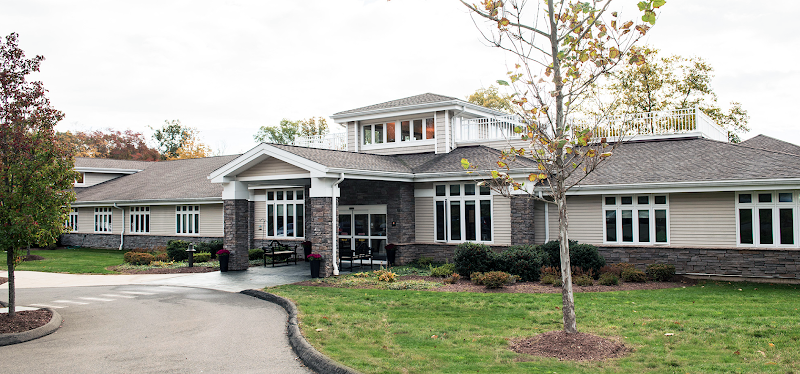
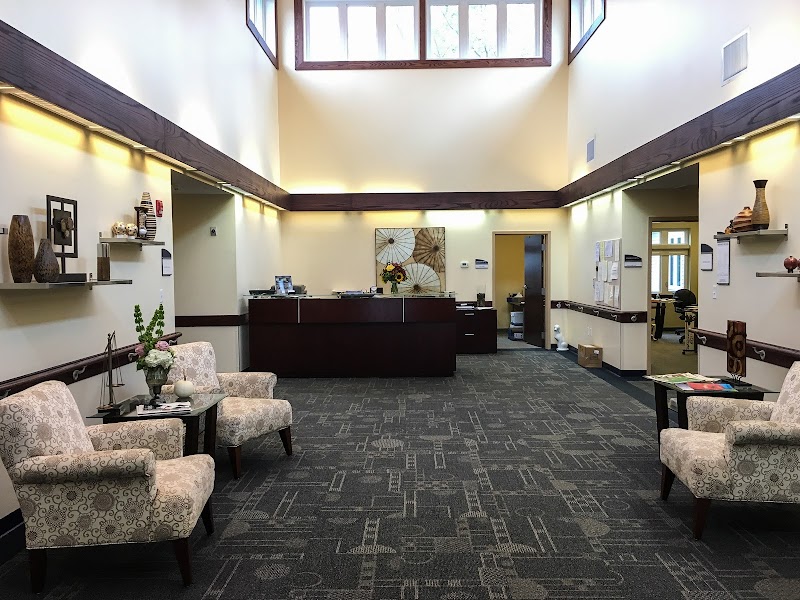

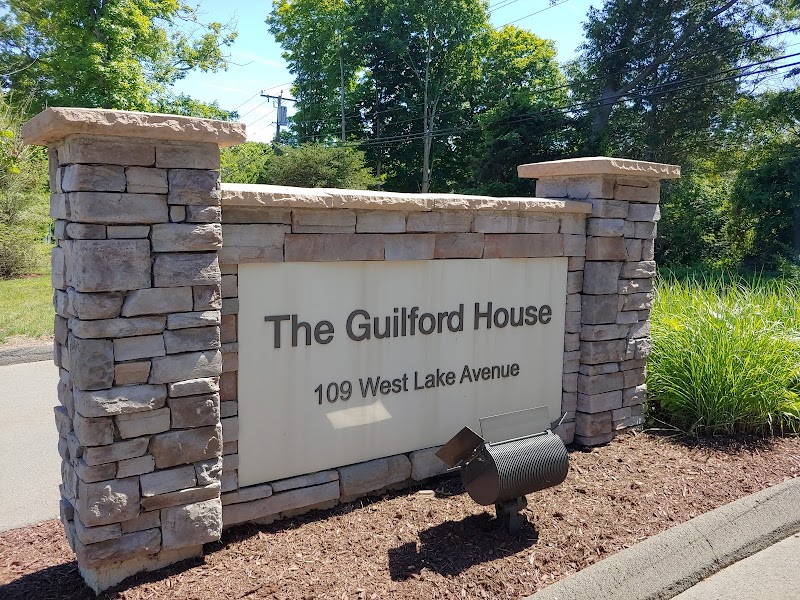
GUILFORD HOUSE, THE

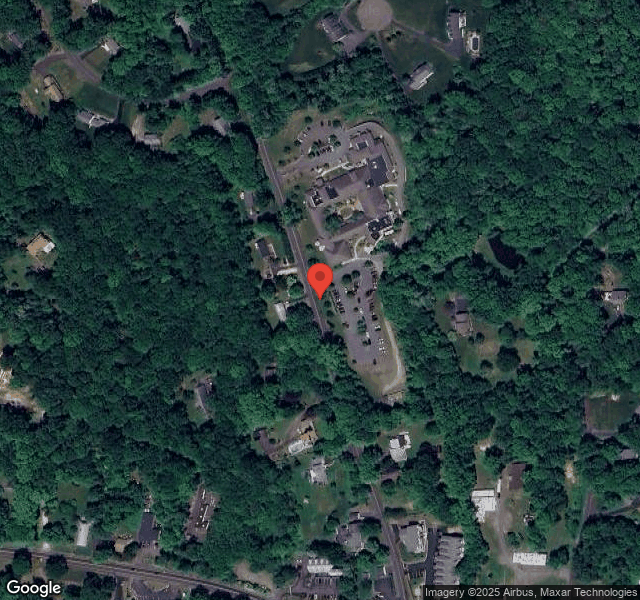
109 WEST LAKE AVENUE, GUILFORD, CT 06437 (203) 488-9142
For profit - Limited Liability company 75 Beds Independent Data: November 2025
Trust Grade
63/100
#63 of 192 in CT
Last Inspection: October 2023

Over 2 years since last inspection. Current conditions may differ from available data.

Overview

Guilford House has a Trust Grade of C+, which indicates that the facility is slightly above average in terms of quality and care. It ranks #63 out of 192 nursing homes in Connecticut, placing it in the top half of facilities in the state, and #7 out of 23 in its county, meaning only six local options are better. The facility is improving, with issues decreasing from 12 in 2023 to just 1 in 2024. Staffing is a strong point, with a 5/5 star rating and a turnover rate of 47%, which is around the state average. However, the facility has faced fines totaling $8,824, which is average compared to other facilities. While Guilford House has good RN coverage, there have been some concerning incidents. For example, one resident at risk for falls did not receive adequate supervision, leading to a significant injury after multiple falls. Additionally, there were issues with food safety, including expired items not being discarded properly and food being stored on the floor. These concerns highlight that while there are strengths in staffing and overall care, there are also important areas that need improvement.

Trust Score
C+
63/100
In Connecticut
#63/192
Top 32%
Safety Record
Moderate
Needs review
Inspections
Getting Better
12 → 1 violations
Staff Stability
⚠ Watch
47% turnover. Above average. Higher turnover means staff may not know residents' routines.
Penalties
✓ Good
$8,824 in fines. Lower than most Connecticut facilities. Relatively clean record.
Skilled Nurses
✓ Good
Each resident gets 47 minutes of Registered Nurse (RN) attention daily — more than average for Connecticut. RNs are trained to catch health problems early.
Violations
⚠ Watch
30 deficiencies on record. Higher than average. Multiple issues found across inspections.
★★★★☆
4.0
Overall Rating
★★★★★
5.0
Staff Levels
★★★☆☆
3.0
Care Quality
★★★☆☆
3.0
Inspection Score
Stable
2023: 12 issues
2024: 1 issues

The Good

  • 5-Star Staffing Rating · Excellent nurse staffing levels
  • Full Sprinkler Coverage · Fire safety systems throughout facility
  • No fines on record

Facility shows strength in staffing levels, fire safety.

The Bad

Staff Turnover: 47%

Near Connecticut avg (46%)

Higher turnover may affect care consistency

Federal Fines: $8,824

Below median ($33,413)

Minor penalties assessed

The Ugly 30 deficiencies on record

1 actual harm
Oct 2024 1 deficiency 1 Harm
SERIOUS (G) 📢 Someone Reported This

A family member, employee, or ombudsman was alarmed enough to file a formal complaint

Actual Harm - a resident was hurt due to facility failures

Accident Prevention (Tag F0689)

A resident was harmed · This affected 1 resident

**NOTE- TERMS IN BRACKETS HAVE BEEN EDITED TO PROTECT CONFIDENTIALITY** Based on a review of clinical records, facility documentation and interviews for one (1) of three (3) residents (Resident #1) at...

Read full inspector narrative →
**NOTE- TERMS IN BRACKETS HAVE BEEN EDITED TO PROTECT CONFIDENTIALITY** Based on a review of clinical records, facility documentation and interviews for one (1) of three (3) residents (Resident #1) at risk for falls, the facility failed to provide adequate supervision to the resident with a history of not requesting assistance with transfers and ambulation resulting in falls with a significant injury. The findings include: Resident #1's diagnoses included progressive supranuclear ophthalmoplegia (neurodegenerative disease, causing gradual deterioration and death of specific volumes of the brain), subdural hemorrhage, repeated falls and anxiety disorder. A physician's order dated [DATE] directed Resident #1 was a contact guard assist of one with a rolling walker for ambulation (caregiver places hands on the resident to help with balance or stability). The Resident Care Plan (RCP) dated [DATE] identified that Resident #1 was at risk for falls, had 4 falls within the past 6 months with interventions that included to encourage the resident to utilize the call bell for assistance, a sensor alarm to the bed and chair, a low bed, video monitoring at the hour of sleep, provide toileting every two hours, provide close supervision when needed, and to ensure staff respond promptly to alarms. Review of the Fall Evaluation dated [DATE] identified that Resident #1 was a high risk for falls. The 5-day Minimum Data Set (MDS) assessment dated [DATE] identified Resident #1 had a Brief Interview for Mental Status (BIMS) of six (6) indicative of severely impaired cognition, had limited range of motion to the lower extremities, required assistance of another person for ambulation with a walker, and had multiple falls with injury in the past six (6) months. a. Review of the reportable event report dated [DATE] identified Resident #1 self transferred to the bathroom, fell and hit head against the shower wall. The nurse's note dated [DATE] at 7:15 PM identified that the resident had a fall in the bathroom witnessed by administrative staff. The resident was noted with slight redness and swelling to the right temple measuring 1 centimeter (cm) in length and 2 cm in width, and a skin tear to the right knee. Initial neurological checks were within normal limits and the resident denied pain. The resident was brought to the nurse's station for observation and within fifteen (15) minutes the resident was noted to have reduced motor control and an altered mental status and was transferred to the hospital for evaluation. Review of the hospital record dated [DATE] identified that a CT scan of the head was obtained, and Resident #1 had sustained an acute/chronic left holohemispheric subdural hematoma, with a midline shift (when the brain tissue moves across the brain's center line). The subdural hematoma was operable, however, the family expressed that surgery was not within Resident #1's goals of care and they wished to transition him/her to comfort measures only. A nurse's note dated [DATE] at 6:20 PM identified that the resident was re-admitted at 6:20 PM and was placed on one-to-one observation to prevent any further falls. An Advanced Practice Registered Nurse (APRN) progress note dated [DATE] identified that the resident was re-admitted on [DATE] from the hospital after a fall and diagnosis of subdural hematoma. The resident was admitted under comfort measures only and was receiving morphine (a narcotic pain medication) for comfort. Nurse's notes during the period of 9/20- [DATE] identified that the resident was on hospice services related to a subdural hematoma with a mid-line shift and was receiving morphine and ativan around the clock for comfort. A nurse's note dated [DATE] at 8:30 PM identified that the resident had no respirations or heart rate and was pronounced deceased . Interview with Receptionist #1 on [DATE] at 12:24 PM identified on [DATE] at around 7:00 PM she was sitting at the front desk, heard a bed alarm going off, and found Resident #1 sitting on the edge of the bed trying to get his/her wheelchair. She encouraged the resident to stay seated because she knew Resident #1 required assistance with ambulation, she yelled for help with no response from staff. The resident then stood up and began to push the wheelchair with his/her left hand and hug the wall near the bathroom with his/her right side. She identified that she yelled for help again, and then went out into the hallway again and saw no staff, so she went back into the room, where the resident was now inside the bathroom shower when she witnessed Resident #1 fall, hitting his/her head on the shelf in the shower. She yelled out that Resident #1 had fallen, and LPN #1 and NA #4 responded to assist. She identified that she should have stayed with the resident, however, no-one was responding when she yelled so she didn't know what to do besides getting assistance. Interview with NA #2 on [DATE] at 12:45 PM identified that Resident #1 was on her assignment on [DATE]. NA #2 stated that she heard bed alarm sounding, however, she was toileting a resident that could not be left alone in the bathroom for safety reasons. Interview with NA #4 on [DATE] at 12:53 PM identified that she was working on Resident #1's unit on [DATE] and did not hear a bed alarm sounding or Receptionist #1 yelling for help prior to the fall. Receptionist #1 came up to her and reported that Resident #1 was on the floor, she then responded immediately to Resident #1's room to assist. Interview with NA #3 on [DATE] at 1:07 PM identified that on [DATE], she had been sitting at the table by the nursing station when she heard Receptionist #1 yell that Resident #1 had fallen. She identified that prior to that she had just come out of a resident's room and did not hear a bed alarm going off and did not hear Receptionist #1 yelling for assistance. Interview with LPN #1 on [DATE] at 3:16 PM identified that she was on her dinner break in the dining room across from the nursing station on [DATE] when she heard someone yell, he fell. She reported that she ran down the hall and saw Receptionist #1 and NA #4 in Resident #1's bathroom, alongside Resident #1 who was laying on the floor of the shower LPN #1 identified that she did not hear the bed alarm or Receptionist #1 yelling for assistance prior to that. Interview with LPN #4 on [DATE] at 3:31 PM identified that he was down the other end of the hall doing treatments in a resident's room at the time of Resident #1's fall on [DATE]. He identified that he did not hear Receptionist #1 yelling, nor did he hear a bed alarm and did not know the resident had a fall until other staff notified him when the resident was in the dining room. Interview with RN #1 (Nursing Supervisor) on [DATE] at 1:19 PM identified she assessed Resident #1, who was alert and verbal, with neurological checks within normal limits and was not complaining of pain at that time. Staff got the resident off the floor into the wheelchair and placed the resident in a common area that was visible to all of the staff. RN #1 reported that shortly after, the resident started to have a change in neurological status, and he/she was sent to the ED for evaluation. Interview with the DNS on [DATE] at 1:38 PM identified that the bed alarm is loud and can be heard at the nursing station and through closed resident doors. She identified that although Receptionist #1 reported she yelled for assistance twice prior to yelling that Resident #1 sustained a fall on [DATE], she was unsure why NA #1, 2, 3, 4 and LPN #1 or #4 did not hear either the bed alarm or Receptionist #1's request for assistance. She reported that Receptionist #1 was not licensed to touch the residents but identified that Receptionist #1 should have stayed with Resident #1 once Resident #1 got out of bed unassisted and should not left have the room and continue to encourage the resident to wait for assistance or offer him/her a chair for safety. b. A facility incident report dated [DATE] at 9:45 AM identified that Resident #5 (roommate) reported that Resident #1 was getting up to go to the bathroom and fell. The report identified that the alarm was going off and Resident #1 had already gotten himself/herself back up and into the wheelchair. Upon assessment, the resident was noted with a small bump to the back of his/her head. Resident #1 was sent to the Emergency Department (ED) and returned to the facility the same day with no new orders. Upon return a new intervention was added to the fall care plan ensure that the sensor alarm is answered promptly. Review of the hospital record dated [DATE] identified that Resident #1 had a Computer Tomography (CT) scan (a diagnostic test that can identify abnormalities) of the head completed which revealed no overt fracture or new hemorrhage. Interview with Nurse Aide (NA) #4 on [DATE] at 12:53 PM identified that she worked the 7:00 AM to 3:00 PM shift on [DATE] and recalled that NA #5 was assigned to Resident #1 that shift but had disappeared off the floor and could not be located prior to Resident #1 falling. She identified that NA #5 never notified her that she was leaving the floor, NA #4 identified that if she had known that NA #5 was leaving the unit, she would have kept an eye on Resident #1, as he/she had a history of falls and not calling for assistance prior to getting up. Interview with NA #6 on [DATE] at 9:30 AM identified that she worked the 7:00 AM to 3:00 PM shift on [DATE] and recalled finding Resident #1 standing independently in his/her room. She toileted the resident and then put the resident back to bed. Resident #1 was on NA #5's assignment and was unable to find her to notify her. Interview with Licensed Practical Nurse (LPN) #2 on [DATE] at 2:53 PM identified that he was the charge nurse assigned to Resident #1 on the 7:00 AM to 3:00 PM shift on [DATE]. He identified that when working with NA #5, he always had to search for her and reported the acuity of the unit was high at that time, and there were several residents that were fall risks. He identified he expects all NA's to report to him when they are leaving the unit so that the remaining staff can work together to ensure safety and care of the residents and identified that NA #5 did not report to him on [DATE] that she was leaving the unit. Interview with Registered Nurse (RN) #3 (Nursing Supervisor) on [DATE] at 2:06 PM identified that at around 9:38 AM on [DATE], he observed NA #5 socializing on another unit and urged her to return to her assigned unit. RN #3 stated at 9:45 AM, he received a call that Resident #1 sustained a fall, noted that the resident was on NA #5's assignment and when NA #5 left the unit, her assignment was not accounted for because she didn't tell anyone. Interview with NA #5 on [DATE] at 1:02 PM identified that she worked the 7:00 AM to 3:00 PM shift on [DATE] and was assigned to Resident #1. NA #5 stated the resident's roommate (Resident #5) informed her that Resident #1 had fallen in the room. NA #5 denied leaving her assigned unit and if she left the unit, would inform her coworkers. Interview with the Director of Nursing Services (DNS) on [DATE] at 1:38 PM identified she was unaware that NA #5 was unable to be found on the unit prior to Resident #1's fall on [DATE]. She reported she expects all staff to report to the charge nurse and their direct co-workers prior to leaving the unit so that all remaining staff can watch over that assignment. She identified that NA #5 should have been on the unit prior to the fall with Resident #1 and reported that NA #5 was no longer employed at the facility due to other concerns.
Oct 2023 12 deficiencies
CONCERN (D)

Potential for Harm - no one hurt, but risky conditions existed

Deficiency F0692 (Tag F0692)

Could have caused harm · This affected 1 resident

**NOTE- TERMS IN BRACKETS HAVE BEEN EDITED TO PROTECT CONFIDENTIALITY** Based on record review, interviews, and review of facility policy for 1 of 3 residents, (Resident #5), reviewed for nutrition, t...

Read full inspector narrative →
**NOTE- TERMS IN BRACKETS HAVE BEEN EDITED TO PROTECT CONFIDENTIALITY** Based on record review, interviews, and review of facility policy for 1 of 3 residents, (Resident #5), reviewed for nutrition, the facility failed to ensure timely identification and evaluation of a significant weight loss to address a 5 percent (%) loss in one month. The findings include: Resident #5's diagnosis included atrial fibrillation (irregular heartbeat), high blood pressure, and adjustment disorder (mood, behavior, or functioning condition). The quarterly Minimum Data Set (MDS) assessment dated [DATE] identified that Resident #5 was cognitively intact and required extensive assistance with bed mobility, transfers, and personal hygiene. Additionally, Resident #5 was independent with eating after set-up assistance and had no prior weight loss or swallowing disorder identified. The Resident Care Plan dated 8/28/23 indicated that Resident #5 had a potential for changes in nutritional status. Interventions included providing preferences and alternatives as needed, monitoring intakes, weights, and bloodwork, and updating the provider with problems or concerns. A review of documented weights identified that on 8/29/2023 Resident #5 weighed 219.8 pounds, and on 9/19/2023, the resident weighed 208.8 pounds, indicating an 11 pound weight loss (5% weight loss in one month). An APRN progress note dated 9/20/23 indicated that Resident #5 was evaluated for a fever and decreased oxygen. The progress note failed to reflect weight loss or nutritional concerns. An APRN provider progress note dated 10/17/23 indicated that Resident #5 was evaluated for a weight loss of 5% in 30 days. The provider progress note identified that the resident remained above ideal body weight, was recently treated with antibiotics for pneumonia, and that a dietary evaluation would be ordered. A Dietician note dated 10/17/23 indicated that no weight loss intervention was required as the Resident #5's weight was above his/her ideal body weight and had good food intake. An interview with the Dietician on 10/19/23 at 10:50 AM indicated that she was usually notified of a resident's weight loss through the electronic record's communication board and that on 9/19/23 she had not received a notification regarding Resident #5's weight loss. The Dietician indicated she would expect that when a significant weight loss is suspected, staff would reweigh the resident to ensure the weight loss was accurate and then put the information in the communication board for review. An interview with the Unit Manager (LPN #2) on 10/19/23 at 1:00 PM indicated that nurse aids obtain weights, and the charge nurse inputs the value into the electronic health record. LPN #2 further stated that nurses get a notification in the electronic health record when inputting a weight qualifying as a significant weight loss. LPN #2 identified that a nurse could report a significant weight loss by sending a message in the communication board of the electronic health record or handwriting the concern in the APRN book (a book used to notify providers of concerns with residents) so that the provider could evaluate the resident. An interview with LPN #1 on 10/19/23 at 1:35 PM indicated that she was unsure if an alert was shown in the electronic health record when a significant weight loss was inputted. LPN #1 indicated that if weight loss was suspected, she would write it in the APRN book but does not remember if she placed a notification for Resident #5 in the book on 9/19/23. An interview with APRN #1 on 10/23/23 at 9:30 AM indicated that she was never notified of Resident #5's significant weight loss on 9/19/23. APRN #1 identified that she was first notified of Resident #5's weight loss on 10/17/23 through an entry in the the APRN communication book. APRN #1 indicated that if she had been notified of the weight loss on 9/19/23, she would have evaluated the resident and assessed the need for labs, supplements, and necessary consultations. If the weight loss did not require immediate interventions, she would still have referred Resident #5 to dietary and written a note. A review of the facility's Weight loss- Unintended policy indicated that residents were weighed weekly and that staff needed to report an unintended weight loss of 3% or more from the previous week to the house MD or APRN.
CONCERN (D)

Potential for Harm - no one hurt, but risky conditions existed

Respiratory Care (Tag F0695)

Could have caused harm · This affected 1 resident

**NOTE- TERMS IN BRACKETS HAVE BEEN EDITED TO PROTECT CONFIDENTIALITY** Based on observations, facility policy, and interviews for 4 of 5 sampled residents, (Resident #8, #35, #45, and #50), reviewed ...

Read full inspector narrative →
**NOTE- TERMS IN BRACKETS HAVE BEEN EDITED TO PROTECT CONFIDENTIALITY** Based on observations, facility policy, and interviews for 4 of 5 sampled residents, (Resident #8, #35, #45, and #50), reviewed for oxygen use/respiratory conditions, the facility failed to properly store, label, and date required respiratory equipment. The findings include: 1. Resident #8's diagnoses included Chronic Obstructive Pulmonary Disease (COPD) and altered mental status. The quarterly Minimum Data Set assessment dated [DATE] identified Resident #8 was moderately cognitively impaired and required extensive assistance with transfers, bed mobility, and dressing. The Resident Care Plan dated 6/2/23, identified Resident #8 had COPD. Interventions included monitoring for difficulty breathing, rapid, shallow breathing, and cough. A physician's order dated 9/23/23 directed Formoterol Fumarate Inhalation Nebulization Solution (a breathing treatment) 20 Micrograms/2 Milliliters, 2 times a day. Observation on 10/16/23 at 11:15 AM, identified that Resident #8 had a nebulizer machine on his/her bedside table with the nebulizer mask sitting on top of the machine. Additionally, the tubing was not labeled or dated. Interview with LPN #2 on at 10/17/23 at 9:00 AM identified that nebulizer masks must be cleaned after each use, placed in a plastic bag that is dated/labeled, and placed in the resident's drawer of the bedside table when not in use. Subsequent to surveyor inquiry, LPN #2 placed the nebulizer mask in a plastic bag and dated/labeled the bag. 2. Resident #35 had a diagnosis that included heart failure and prostate cancer. The annual Minimum Data Set assessment dated [DATE] identified that Resident #35 had moderately impaired cognition and required extensive assistance with bed mobility and dressing. A Resident Care Plan dated 9/18/23 indicated Resident #35 had a positive chest x-ray and was ordered antibiotics for pneumonia. Interventions included monitoring respiratory status and administering respiratory medications as ordered. A Review of the Medication Administration Record for September and October indicated that the resident was ordered an Albuterol Sulfate Nebulizer (medication for shortness of breath) and that the last dose had been given on 9/22/23. Observation and Interview with Resident #35 on 10/16/23 at 1:50 PM identified a nebulizer mask and tubing undated and stored on the bedside stand without the benefit of being covered. Additionally, winter gloves had been placed on top of the mask. Interview with the Resident #35 identified that s/he did not remember when the last nebulizer treatment had been administered, but mentioned it was when s/he had pneumonia (in September). Observation and interview with LPN #3 on 10/17/23 at 8:58 AM identified a nebulizer mask and tubing undated was stored on the bedside dresser without the benefit of being covered. LPN #3 indicated that a nebulizer mask and oxygen tubing should be dated, the shift indicated, and the nurse's signature as well as covered. LPN #3 indicated that there is usually an order in the medication administration record that prompts the nurse to change the oxygen tubing and that the nurse must then sign off on that task. LPN #3 was unable to find the order for Resident #35's oxygen tubing change and was unable to identify the last time the nebulizer mask had been changed. 3. Resident #45's diagnosis included leukemia, pneumonia, coronary artery disease, and pulmonary embolism. The admission Minimum Data Set assessment dated [DATE] identified Resident #45 was cognitively intact, required extensive assistance of 2 staff with transfers, and toileting, and extensive assistance of 1 staff for bed mobility, dressing, and personal hygiene. The Resident Care Plan dated 7/16/23 indicated that Resident #45 was new to oxygen use. Interventions directed to change the oxygen tubing weekly as scheduled in the Treatment Administration Record (TAR). A readmission physician order dated 7/16/23 directed to provide oxygen at 2 Liters Per Minute (LPM) via nasal canula. Review of the physician progress note dated 7/16/23 identified Resident #45 was on oxygen via nasal canula at 2 LPM. Review of Resident #45's Treatment Administration Record from 7/1/23 to 10/17/23 failed to reflect a physician order to provide supplemental oxygen and failed to direct that the oxygen tubing be changed weekly. Interview and observation with the Registered Nurse Supervisor, (RN #3) On 10/17/23 at 11:10 AM identified that Resident #45's oxygen tubing had been dated as last changed on 10/5/23 (12 days prior). RN #3 checked the oxygen order and stated that the order was written incorrectly and should have identified that tubing is to be changed every week. Subsequent to surveyor inquiry, RN#3 updated Resident #45's oxygen order to include changing oxygen tubing weekly. 4. Resident #50's diagnosis included heart failure, atrial fibrillation (irregular heartbeat), and diabetes. The annual Minimum Data Set assessment dated [DATE] identified that Resident #50 had moderately impaired cognition and required extensive assistance with bed mobility, dressing, and personal hygiene. The Resident Care Plan dated 8/29/23 identified Resident #50 as being at risk for an ineffective breathing pattern related to shortness of breath. Interventions included monitoring respiratory status, administering respiratory medications, and titrating oxygen. Review of the Medication Administration Record for September and October 2023, indicated the resident had an order for an ipratropium-albuterol nebulizer (a medication to treat shortness of breath). Observation on 10/16/23 at 3:10 PM identified a nebulizer mask on top of the Resident #50's bedside stand without the benefit of being covered. A second observation on 10/17/23 at 8:55 AM identified the nebulizer mask remained on top of the resident's bedside stand without the benefit of being covered. An interview with LPN #3 on 10/17/23 at 8:58 AM indicated that nebulizer masks are stored in the resident's bedside drawer or on the nightstand. An interview with Unit Manager (RN#3) on 10/17/23 at 10:50 AM identified that the facility policy directed oxygen tubing and nebulizer masks be changed every week, dated, and stored in a bag. RN #3 also indicated that a physician's order to replace oxygen tubing weekly was usually written at the same time nebulizer orders were placed. A review of the facility's Oxygen and Nebulizer equipment - Infection control procedures policy indicated that nasal and mask tubing were to be changed every week, labeled with the date, and nurse initials, and stored in a sealed container.
CONCERN (D)

Potential for Harm - no one hurt, but risky conditions existed

Deficiency F0698 (Tag F0698)

Could have caused harm · This affected 1 resident

**NOTE- TERMS IN BRACKETS HAVE BEEN EDITED TO PROTECT CONFIDENTIALITY** Based on observation, clinical record review, review of facility policy, and staff interview for the only sampled resident (Resi...

Read full inspector narrative →
**NOTE- TERMS IN BRACKETS HAVE BEEN EDITED TO PROTECT CONFIDENTIALITY** Based on observation, clinical record review, review of facility policy, and staff interview for the only sampled resident (Resident #13), reviewed for dialysis, the facility failed to ensure emergency medical equipment was stored at the bedside. The findings include: Resident #13's diagnosis included dependence on renal dialysis, anemia in chronic kidney disease, and End Stage Renal Disease (ESRD). A physician order dated 6/8/23 directed that emergency medical equipment related to Resident #13's access device for dialysis remain at the bedside. A quarterly Minimum Data Set (MDS) dated [DATE] identified Resident #13 was moderately cognitively impaired and required extensive assistance of 1 staff for bed mobility, transfers, dressing, toileting, and personal hygiene. The Resident Care Plan (RCP) dated 9/20/23 identified Resident #13 was at risk for potential complications related to dialysis and ESRD. Interventions included to monitor Resident #13's dressing condition for the external access device and report to the MD/APRN signs and symptoms of worsening condition and/or complications, and monitor for signs and symptoms of infection/shock/fluid excess. Interview and observation with LPN #2 and Resident #13 on 10/19/23 at 2:00 PM, failed to identify that dialysis access emergency medical equipment was located anywhere in Resident #13's room. LPN #2 indicated that the emergency medical equipment for Resident # 13 should have been hanging on the bulletin board at Resident #13's bedside. Resident #13 indicated that s/he was unaware of any emergency equipment for his/her dialysis access device. Subsequent to surveyor inquiry, the emergency medical equipment was placed on the bulletin board in Resident #13's room. Review of the facility policy for Care of Residents with End-Stage Renal Disease directed monitoring of the dialysis access site for residents on dialysis and that residents with an AV graft/fistula access device have an emergency fistula/graft dressing kit at the bedside.
CONCERN (D)

Potential for Harm - no one hurt, but risky conditions existed

Deficiency F0761 (Tag F0761)

Could have caused harm · This affected 1 resident

Based on observation, staff interviews, and facility policy, the facility failed to ensure 1 of 2 medication storage rooms was free from expired medications. The findings include: 1. Resident #24's d...

Read full inspector narrative →
Based on observation, staff interviews, and facility policy, the facility failed to ensure 1 of 2 medication storage rooms was free from expired medications. The findings include: 1. Resident #24's diagnosis included pulmonary fibrosis, hypoxemia, and hypertension. Active physician orders as of 9/1/23 directed 3 milliliters (ml) of albuterol sulfate nebulization solution 0.63 milligrams (mg)/3 ml, (prescribed for breathing problems) to be inhaled orally via nebulizer every 4 hours as needed for wheezing and shortness of breath. 2. Resident #49's diagnosis included atrial fibrillation, hypertension, and sick sinus syndrome. Observation of the 100 Unit medication storage room with LPN #2 on 10/23/23 at 1:12 PM identified house stock of two unopened bottles of aspirin, 325 mg, 100 tablets, with an expiration date of 09/2023, two boxes of albuterol sulfate 0.63 mg/3ml, 25 units per box, prescribed to Resident #24, both with expiration dates of 6/2023 and, in the medication refrigerator, although Resident #49's order had been discontinued, a bag of promethazine suppositories prescribed to Resident #49 with an expiration date of 9/2023 was noted. Interview with LPN #2 on 10/23/23 at 1:20 PM failed to identify that she was aware that the medications had expired. Further, LPN #2 indicated that the facility policy was to discard expired medications immediately. Subsequent to surveyor inquiry, LPN # 2 disposed of the expired medications identified in the medication storage room on Unit 100. Interview with the Director of Nursing on 10/23/23 at 2:50 PM identified that it is the responsibility of the Unit Manager to review the medication storage room on the unit and discard expired medications. The DNS further indicated that this process should be completed monthly and was unable to indicate why the expired medications remained in the medication room. Review of the facility Medication Storage policy identified expired medications should not be used and that expired medications should be discarded.
CONCERN (D)

Potential for Harm - no one hurt, but risky conditions existed

Menu Adequacy (Tag F0803)

Could have caused harm · This affected 1 resident

**NOTE- TERMS IN BRACKETS HAVE BEEN EDITED TO PROTECT CONFIDENTIALITY** Based on observation, review of the clinical record, facility policy, and interviews for 1 of 3 sampled residents (Resident #32)...

Read full inspector narrative →
**NOTE- TERMS IN BRACKETS HAVE BEEN EDITED TO PROTECT CONFIDENTIALITY** Based on observation, review of the clinical record, facility policy, and interviews for 1 of 3 sampled residents (Resident #32) reviewed for food, the facility failed to honor food preferences. The findings include: Resident #32's diagnoses included diabetes mellitus, malnutrition, and chronic kidney disease. The admission Resident Care Plan dated 9/8/23 identified potential for changes in nutritional status/risk for malnutrition. Interventions included providing preferences and offer alternatives as needed, resident requested liberalization of diet, consumption of 75-100% of meals, and encourage snacks. The admission Minimum Data Set assessment dated [DATE] identified Resident #32 as cognitively intact, required setup help for eating, and 2 staff physical assistance for bed mobility, transfers, and personal hygiene. An APRN note dated 9/12/23 identified that Resident #32 was at risk for malnutrition secondary to diagnosis, and had a history of decreased oral intake and wounds. Observation and interview with Resident #32 on 10/17/23 at 10:32 AM, identified Resident #32 had a breakfast tray on his/her over bed table with less than 25% consumed. Resident #32 indicated that s/he had not been receiving the meal choices that had been requested on his/her weekly menu choice form, and although s/he completed the form and left it on the meal tray that was taken away by staff, his/her preference were frequently not honored. Interview with the Dietary Manager on 10/19/23 at 1:20 PM, identified that the practice for facility menu choices was to hand out menus on Mondays for submission back to the Dietary Department by Wednesday, but currently, there was no process in place to collect the weekly menus. The Dietary Manager indicated that some residents had been leaving their menu choices on their returned meal trays and although he thought that the Nurse Aids had collected menus, they only received about 40 menus back for the current week (Census of 78). Further, the Dietary Manager indicated that there were no dietary or nursing staff assigned to go room to room to fill out any missing menus and there was no centralized location for residents or staff to return menu preferences. The Dietary Manager was unable to locate a meal preference menu for Resident #32 stating that the Dietary Department must not have received Resident #32's menu preferences for the week. Review of the facility Resident Centered Care Policy identified that they focus on the resident experience, and to the best of their ability, will strive to maintain a resident's individuality including choosing an option for meals. Review of the facility Nutrition-Dining Services policy identified that menus and individualized dietary plans will continuously be monitored for quality and to ensure maximum nutrient intake.
CONCERN (D)

Potential for Harm - no one hurt, but risky conditions existed

Medical Records (Tag F0842)

Could have caused harm · This affected 1 resident

**NOTE- TERMS IN BRACKETS HAVE BEEN EDITED TO PROTECT CONFIDENTIALITY** Based on review of the clinical record, facility documentation, facility policy and interviews for 1 of 2 residents, Resident #1...

Read full inspector narrative →
**NOTE- TERMS IN BRACKETS HAVE BEEN EDITED TO PROTECT CONFIDENTIALITY** Based on review of the clinical record, facility documentation, facility policy and interviews for 1 of 2 residents, Resident #17, reviewed for accidents, the facility failed to update the Resident Care Plan following falls. The findings include: Resident #17's diagnosis included dementia with psychotic disturbance, anxiety, and left femur fracture. The significant change Minimum Data Set assessment dated [DATE] identified Resident #17 was severely cognitively impaired and required the assistance of 1 staff with transfers and dressing. Review of facility Reportable Event and Quality Improvement Investigation form dated 4/19/23 identified that the post fall intervention directed to bring Resident #17 to the nursing desk for the remainder of the shift. Review of the facility Reportable Event and Quality Improvement Investigation form dated 4/21/23 fall intervention directed to place Resident #17 in a room with a roommate and have a NA sit outside the room on the 11-7 shift for a quicker response time. Review of Resident #17's Resident Care Plan dated 7/26/23 failed to indicate the new care plan interventions following the falls that occurred on 4/19/23 and 4/21/23. Interview and review of Resident #17's care plan with the DNS on 10/23/23 at 11:09 AM failed to identify that the new interventions listed on the investigation form had been added to the care plan. The DNS indicated that facility staff would be unable to identify and implement the new interventions as the Resident Care Plan did not include the updated information. Subsequent to surveyor inquiry, the DNS updated Resident #17's care plan. Review of the facility Care Plan policy identified the facility will provide each resident with an individualized and interdisciplinary plan of care, to provide effective communication among nursing staff and other disciplines regarding resident care.
CONCERN (D)

Potential for Harm - no one hurt, but risky conditions existed

Infection Control (Tag F0880)

Could have caused harm · This affected 1 resident

**NOTE- TERMS IN BRACKETS HAVE BEEN EDITED TO PROTECT CONFIDENTIALITY** Combined F880 Based on observation, review of the clinical record, facility policy, and interviews for 2 of 9 sampled residents ...

Read full inspector narrative →
**NOTE- TERMS IN BRACKETS HAVE BEEN EDITED TO PROTECT CONFIDENTIALITY** Combined F880 Based on observation, review of the clinical record, facility policy, and interviews for 2 of 9 sampled residents (Resident #6 and Resident #15) reviewed for infection control practices on the 100 Unit, the facility failed to utilize appropriate Protective Personal Equipment (PPE) while providing care to COVID-19 positive residents, for 1 of 3 sampled residents (Resident #10) on the 200 Unit, failed to ensure handwashing following PPE removal, and for the Infection Control program review, failed to ensure quarterly environmental surveillance rounds had been conducted. The findings include: 1. A. Resident #6's diagnoses included Dementia, Atrial Fibrillation (irregular heartbeat), and personal history of tuberculosis. The quarterly Minimum Data Set assessment dated [DATE] identified Resident #6 was cognitively intact and required limited assistance of 1 staff with dressing, toileting, and personal hygiene. The Resident Care Plan dated 9/23/23 identified potential signs and symptoms and/or complications related to COVID-19. Interventions included using droplet precautions, encouraging frequent hand washing with soap and water, and ensuring proper PPE use each time staff entered the resident's room. A nurse's note dated 10/13/23 at 12:46 PM identified a COVID swab was performed due to complaints of body aches. A physician's order dated 10/13/23 directed that Resident #6 was to be maintained on contact/ droplet precautions due to a diagnosis of COVID-19 and any person entering the room should wear PPE including a mask, gown, and gloves and to remove the items prior to leaving the room. All services would remain in the room, every shift, for 10 days. B. Resident #15's diagnoses included Chronic Obstructive Pulmonary Disease (COPD), Type 2 Diabetes, and hypertension. The quarterly Minimum Data Set assessment dated [DATE] identified Resident #15 was severely cognitively impaired and required limited assistance of 1 staff with transfers, dressing, toileting, and personal hygiene. The Resident Care Plan dated 9/26/23 identified potential signs and symptoms/ complications related to COVID-19. Interventions included using droplet precautions, encouraging frequent hand washing with soap and water, and ensuring proper PPE use each time staff entered the resident's room. A nurse's note dated 10/13/23 at 4:46 PM identified resident was swabbed for COVID due to exposure. A physician's order dated 10/13/23 directed that Resident #15 be maintained on contact/droplet precautions due to a diagnosis of COVID-19, any person entering the room should wear PPE including mask, gown, and gloves, and remove the items prior to leaving the room. Observation on 10/19/23 at 7:15 AM identified signage on Resident #6 and #15's shared room door indicating the requirement for use of PPE, as well as a PPE storage bin below the signs. RN #1 was observed walking around in and coming out of Resident #6 and #15's COVID-19 positive room without the benefit of wearing appropriate PPE (gown, gloves, and N95 mask). RN #1 was noted to be wearing a blue surgical mask that was observed to be worn improperly, below her nose, and failed to sanitize or wash her hands after existing the isolation room. Observation and interview with RN#1 identified that COVID-19 was a respiratory virus, therefore, full PPE (gown, gloves, and N95 mask) was optional. The Unit Manager, LPN #2, intervened indicating that RN#1 was incorrect, and full PPE was required when caring for both Resident #6 and Resident #15. RN #1 further stated that she was an agency nurse and was unaware of the facility policy, but when redirected to read the isolation signs outside of Resident #6 and #15's door, RN #1 then stated, my bad, indicating that she had not used appropriate PPE. Interview with the Director of Nursing Services (DNS) on 10/23/23 at 9:50 AM indicated that the facility provided agency nurses with a generalized education about the facility, including infection prevention measures. Review of the Guildford House Orientation for Agency Staff indicated Infection control training was provided to agency staff and included that staff would be required to utilize full PPE, (mask, shield, gown, and gloves) for designated isolation rooms. Additionally, gown and gloves will be changed between any interaction from 1 resident to another with proper hand hygiene before and after. 2. Resident #10's diagnosis included chronic kidney disease, atrioventricular block, and enterocolitis due to clostridium difficile. The admission Minimum Data Set assessment dated [DATE] identified Resident #10 as cognitively intact and required extensive assistance of 1 staff for bed mobility, dressing, and toileting. The Resident Care Plan dated 10/17/23 indicated Resident #10 was isolated due to having a positive COVID-19 diagnosis. Interventions included education for Resident #10, staff, and visitors on COVID-19 signs and symptoms, and necessary precautions. A physician order dated 10/17/23 directed Resident #10 to remain in his/her room in isolation for 10 days due to a positive COVID-19 diagnosis. Review of the nursing progress note dated 10/19/23 at 1:02 AM indicated Resident #10 remained COVID-19 positive and on isolation. Observations on 10/19/23 at 6:20 AM indicated a sign posted outside Resident #10's room that read, Did you wash your hands? Sanitize when coming out and that entrance to the room required PPE. A bin of PPE was also located outside of Resident #10's door. NA #2 was observed coming out of Resident #10's room and proceeded to remove and dispose of her PPE. NA #2 failed to wash or sanitize her hands following the PPE removal. Continued observation of NA #2 identified her to proceed down the hall to the soiled linen room, obtain a plastic bag, go to the nursing station, pick up a clean pair of disposable gloves and place the gloves on her hands. NA #2 was not observed to have washed or sanitized her hands at any time prior to clean glove placement. Interview with NA #2 at 6:23 AM on 10/19/23 identified that she had not washed or sanitized her hands upon exiting Resident #10's room or prior to placing clean disposable gloves. NA #2 indicated that she had just cared for Resident #10, and it was her intention to go back to pick up Resident #10's dirty linen from his/her room. NA #2 stated that she was going back to pick up Resident #10's dirty linen as the reason she had not washed or sanitized her hands after removing her PPE. NA# 2 indicated that the facility policy was to wash or sanitize hands her hands after taking off PPE, before touching clean items, and prior to placing on clean disposable gloves. 3. Interview and review of facility documentation with the Director of Nursing Services (DNS) on 10/23/23 at 11:38 AM of the infection prevention program identified that the last time environmental rounds were completed was in June of 2023. The DNS indicated that environmental rounds should be conducted on a quarterly basis by the Infection Control Nurse, but the role had been vacant since 6/23. The DNS identified that she was currently acting as the Infection Preventionist and, therefore, responsible for the environmental rounds but had not kept up with the completion. The DNS stated that the environmental rounds should have been completed in September of 2023, but she had overlooked the date due. Review of the facility Environmental Rounds policy directed, in part, that the Infection Preventionist, or designee would perform quarterly environmental rounds to ensure that supplies are adequate, and to monitor that appropriate cleaning and disinfecting procedures are being used.
CONCERN (D)

Potential for Harm - no one hurt, but risky conditions existed

Safe Environment (Tag F0921)

Could have caused harm · This affected 1 resident

Based on a tour of facility grounds, staff interview, and facility policy the facility failed to ensure that cigarette butts were properly disposed of and failed to ensure the smoking policy was enfor...

Read full inspector narrative →
Based on a tour of facility grounds, staff interview, and facility policy the facility failed to ensure that cigarette butts were properly disposed of and failed to ensure the smoking policy was enforced. The findings include: During a tour of the facility grounds on 10/16/2023 at 11:30 AM with the Dining Services Director, a large number of cigarette butts were identified in the mulch near the employee entrance. A goose neck ashtray was noted approximately 50 feet away, across from the mulch area, and contained cigarette butts. The Administrator was notified on 10/16/23 at 2:33 PM of the presence of cigarette butts in the mulch. Observation on 10/17/23 at 10:45 identified cigarette butts remained present in the mulch. Interview and review of the facility smoking policy with Administrator on 10/23/23 at 2:30 PM identified that he was unsure why the smoking policy was not being enforced and that the smoking policy should be in the employee handbook. Additionally, the Administrator indicated that the Maintenance Department was responsible for cleaning up the cigarette butts off the grounds. Review of the facility Smoking/Non-Smoking Policy indicated, in part, that smoking is strictly prohibited in all areas within the facility and on the facility property. Further, the policy directed that residents, families, and staff shall receive and be informed on the smoking policy.
CONCERN (F)

Potential for Harm - no one hurt, but risky conditions existed

Food Safety (Tag F0812)

Could have caused harm · This affected most or all residents

**NOTE- TERMS IN BRACKETS HAVE BEEN EDITED TO PROTECT CONFIDENTIALITY** Based on a tour of the Dietary Department and staff interview, the facility failed to ensure stored food was dated when opened, ...

Read full inspector narrative →
**NOTE- TERMS IN BRACKETS HAVE BEEN EDITED TO PROTECT CONFIDENTIALITY** Based on a tour of the Dietary Department and staff interview, the facility failed to ensure stored food was dated when opened, expired food was discarded, and that food was stored in a clean manner and not stored on the floor. The findings included: Tour of Dietary Department on 10/16/23 at 10:40 AM with the Director of Dining Services identified the following: 1. In the walk-in refrigerator: a. 3-32-ounce containers of Greek plain yogurt expired 9/13/23. b. 2 trays full of chicken in boxes on a tray on the floor. c. 10 boxes which contained 24 loaves of wheat bread and 24 loaves flat bread was noted on the floor. 2. In the alcove by the dry storage area: a. box of 36 China brand cups stored on the floor. b. 1 box of 30 thermal coffee mugs stored on the floor. 3. In the dry storage room: a. A 2.6-ounce pack of Jello expired 8/6/23. b. A 24-ounce pack of lemon Jello dated 9/1/23, no expiration date identified. c. A 3.5-ounce vanilla pudding, 12 packs per case, 2 cases expired 8/23/23. d. A 5 pound muffin mix, 6 bags (2 chocolate, 8 vanilla), no expiration date. e. 11-1 pound bags of marshmallows dated 8/12/23. (The Director of Dining Services was unsure what that date meant.) f. A 10 quart container of penne pasta 3/4 full opened, undated. g. A 10 quart container Tri color pasta, 1/2 full opened, undated. h. A 6 quart container of elbow macaroni labeled 3/30. (The Director of Dining Services was unsure what that date meant.) i. Spaghetti box that was opened but undated. j. A 2.5 quart container of [NAME] pasta with no expiration date. k. A 2 pound bag of couscous expired 8/20/23. l. A container of cocoa powder 3/4 full expired 5/20/22. m. A 1 pound bag of lentils dated 12/16/15. n. 2-24-ounce packages of gluten free pancake mix best by date 11/25/22. o. A 4 pound container of mint jelly best by 6/3/23. p. 2-10 pound bags of tri colored pasta opened, one 1/4 filled, the second is 1/2 full, undated. q. A 10 pound bag of penne pasta opened, 3/4 full undated. r. A 6-quart container of elbow macaroni dated 3/30/23. s. A bag of pasta wrapped in plastic, undated. Additionally, there was a 1.35-gallon white plastic container that had a heavy accumulation of dirt, debris, and crumbs on the lid. Interview with Director of Dining Services on 10/19/23 at 12:20 PM identified that he instructs his staff to use a piece of tape and a sharpie marker to write the date the product was opened as well as the expiration date on the label according to a chart located on refrigerator. The Director of Dining Services stated that it was the facility policy to date any product that was opened. Although requested, a written policy for food storage and labeling was not provided.
MINOR (B)

Minor Issue - procedural, no safety impact

Transfer Notice (Tag F0623)

Minor procedural issue · This affected multiple residents

**NOTE- TERMS IN BRACKETS HAVE BEEN EDITED TO PROTECT CONFIDENTIALITY** Based of review of the clinical record, facility policy, and interviews for one sampled resident (Resident #45) reviewed for hos...

Read full inspector narrative →
**NOTE- TERMS IN BRACKETS HAVE BEEN EDITED TO PROTECT CONFIDENTIALITY** Based of review of the clinical record, facility policy, and interviews for one sampled resident (Resident #45) reviewed for hospitalization, the facility failed to provide the required notification of transfer/discharge to the state Ombudsman's office, and failed to provide the Notice of Transfer to the resident/responsible party. The finding include: Resident #45's diagnosis included leukemia, pneumonia, and hypertension. The admission Minimum Data Set (MDS) assessment dated [DATE] identified Resident #45 was cognitively intact, required extensive assistance of 2 staff with transfers, and toileting, and extensive assistance of 1 staff for bed mobility and dressing. Review of the nurses noted dated 7/11/23 at 10:37 PM identified Resident #45 was having pain, shortness of breath, and had an increased blood pressure. The physician directed to send Resident #45 to the hospital, and the resident representative was notified. Review of the nurses note dated 7/11/23 at 11:21 PM indicated that Resident #45 had been admitted to the hospital. Interview and review of the clinical record with Social Worker #1 on 10/18/23 at 2:05 PM identified that she had not notified the Ombudsman's office of any resident transfers or discharges. Social Worker #1 was unaware of the requirement for notification to the state Ombudsman's office for resident transfers/discharges, or that there was a portal for notification. Re-interview with Social Worker #1 on 10/18/23 at 2:30 PM failed to identify that a Notice of Emergency Transfer could be located in Resident #45's clinical record. Interview and review of the clinical record on 10/18/23 at 2:40 PM with RN #2 identified that a Notice of Emergency Transfer form should be sent with any resident when they are transferred to the hospital, a copy was to be left in the clinical record, and a written notification sent to the resident representative as the responsible party. RN #2 indicated that she was unable to locate the Notice of Emergency Transfer in Resident #45's clinical record, therefore the notice must not have been provided. Review of the facility Notice of Emergency Transfer to the hospital policy identified that the family was to sign the form as written notification of transfer and that the Ombudsman's office was to be sent a copy of this form once filled out.
MINOR (B)

Minor Issue - procedural, no safety impact

Deficiency F0625 (Tag F0625)

Minor procedural issue · This affected multiple residents

**NOTE- TERMS IN BRACKETS HAVE BEEN EDITED TO PROTECT CONFIDENTIALITY** Based on review of the clinical record, facility policy, and interviews for one sampled resident (Resident#45) reviewed for hosp...

Read full inspector narrative →
**NOTE- TERMS IN BRACKETS HAVE BEEN EDITED TO PROTECT CONFIDENTIALITY** Based on review of the clinical record, facility policy, and interviews for one sampled resident (Resident#45) reviewed for hospitalization, the facility failed to provide the required notification of a bed hold to the resident and the resident representative. The finding include: Resident #45's diagnosis included leukemia, pneumonia, coronary artery disease, and hypertension. The admission Minimum Data Set (MDS) assessment dated [DATE] identified Resident #45 was cognitively intact, required extensive assistance of 2 staff with transfers, and toileting, and extensive assistance of 1 staff for bed mobility and dressing. Review of the nurses note dated 7/11/23 at 10:37 PM identified Resident #45 was having pain, shortness of breath, and had an increased blood pressure. The physician directed Resident #45 be sent to the hospital and the resident representative was notified. Interview and review of facility documentation on 10/19/23 at 10:00 AM with Admissions Person #1 identified that the facility policy was to provide the bed hold policy to every resident upon admission to the facility. admission Person #1 indicated she was unaware that every time a resident was discharged to an acute care hospital the resident and resident representative was to be given the Bed Hold form. Review of the Bed hold policy identified that the bed hold form was to be sent with the resident when they were discharged to the hospital and to send an additional copy of the bed hold paperwork to the resident's representative.
MINOR (C)

Minor Issue - procedural, no safety impact

Deficiency F0730 (Tag F0730)

Minor procedural issue · This affected most or all residents

Based on interviews and employee record review, the facility failed to complete annual performance evaluations for 3 of 3 sampled nurse aides (NA #4, 5, and 6). The findings include: 1. NA #4's date o...

Read full inspector narrative →
Based on interviews and employee record review, the facility failed to complete annual performance evaluations for 3 of 3 sampled nurse aides (NA #4, 5, and 6). The findings include: 1. NA #4's date of hire was 4/6/11. Two performance evaluations were identified in the employee's personnel file dated 12/7/11 and 5/3/17. Although requested, the facility could not provide additional annual evaluations for NA #4. 2. NA #5's date of hire was 1/30/20. No performance evaluation was identified in the employee's personnel file. Although requested, the facility could not provide annual evaluations for NA #5. 3. NA #6's date of hire was 9/9/21. No performance evaluation was identified in the employee's personnel file. Although requested, the facility could not provide annual evaluations for NA #6. An interview with the Director of Nursing on 10/23/23 at 1:23 PM indicated that performance evaluations would be located in each employee's personnel file and that it would most likely be her or the Unit Managers who would complete performance evaluations. The DNS indicated she did not remember when the last time a performance evaluation was completed. An interview with the Administrator on 10/23/23 at 1:35 PM indicated that the facility does not complete yearly performance evaluations. The Administrator indicated that the facility uses real-time education and the disciplinary process to address employee concerns. The Administrator identified that there is no written facility policy for performance evaluations. Although the Administrator identified no facility policy for yearly performance evaluations, he indicated that the personnel handbook stated that employees would receive a performance evaluation once a year near the employee's anniversary date. It was requested that the Administrator review the regulatory requirement for yearly NA performance evaluations.
Sept 2021 7 deficiencies
CONCERN (D)

Potential for Harm - no one hurt, but risky conditions existed

Deficiency F0565 (Tag F0565)

Could have caused harm · This affected 1 resident

Based on review of the facility documentation, facility policy, and interviews for 7 residents (Resident #19, 20, 35, 43, 47, 51, and 61), the facility failed to ensure Resident Council meetings were ...

Read full inspector narrative →
Based on review of the facility documentation, facility policy, and interviews for 7 residents (Resident #19, 20, 35, 43, 47, 51, and 61), the facility failed to ensure Resident Council meetings were provided on a regular basis, failed to ensure staff helped with arrangements for council meetings, and failed to consider the views of the residents and family group were acted upon promptly. The findings include: Interview on 9/21/21 at 11:31 AM with the DOR (Director of Recreation) indicated there wasn't a president of resident council since before COVID started in March of 2020, so he decided to do a Town Hall meeting on the 4th Wednesday of each month, and he started those meeting April 2021. The DOR indicated he had asked one resident, Resident #19 if he/she wanted to be the president of resident council and the resident said no a while ago, so he had decided to do it on the 4th Wednesdays of the month with the trivia activity and daily news. The DOR indicated every Wednesday he does trivia and discussions of the news from the daily newsletter with the residents and on the 4th Wednesday. At the end of the activity, he would ask the residents if they had any issues or concerns with any of the departments within the facility as a discussion and that was what was called the Town Hall meeting. The DOR indicated if any resident had a concern during the Town Hall meeting, he would take care of the concerns himself. The DOR indicated the residents trusted him and knew if they bring their concerns to him, he would fix them. The DOR indicated he does not have resident council because he was not aware of anyone wanting to be the president of resident council. Interview with Resident #19, 20, 35, 43, 47, 51, and 61 on 9/22/21 at 11:01 AM indicated the facility does not have resident council meetings on a regular basis. The residents indicated they had not met as a group until April of this year for activities. Residents indicated they were not aware they could have a resident council with meetings with or without staff and how often, but they would like to have Resident Council and asked how to start a resident council. The residents noted they don't have resident council or town hall meetings so they don't have a president and stated they would have to vote on that. The residents indicated the facility staff do not bring or arrange for a resident council meeting. The residents did indicate they could meet in the dining room for privacy for meetings but would need assistance from staff to get to and from the meetings for some residents that would want to participate. When residents were asked if they were able to discuss and offer suggestions about facility policies and procedures affecting residents' care, treatment, and quality of life, to plan resident and family activities, or participate in educational activities the and the residents reply was no this does not occur, but they would like to have a meeting like this on a monthly basis. Resident #51 indicated he/she recalls in April of this year at the trivia activity, the Director of Recreation did ask how the services for the departments like dietary, nursing, and housekeeper were, but it was not like what a resident council meeting would be. Resident #51 indicated that only occurred for April 2021. Interview with the DOR on 9/22/21 at 12:41 PM indicted he provides a group discussion every Wednesday and on the 4th Wednesday we have a group discussion about the facility. The DOR indicated he didn't know why the residents say they don't have resident council because the 4th Wednesday he would ask how each department is doing after the daily news. The DOR noted he works in the kitchen as a cook, so any concerns they have he would address quickly regarding food. The DOR noted he had been here for about 10 years. The DOR thinks he may have offered for the residents to have resident meetings without a staff member present in back in April but he was not sure and the residents where not sure why they needed to have that type of meeting because the residents stated they discuss their concerns with him. The DOR indicated he does discuss any concerns with the different department's supervisors or department heads and let the staff know any concerns verbally but does not document anything. The DOR indicated he had the ability to go to the nursing assistants directly and tell them what the residents concern were and to fix it himself. The DOR indicated if the staff did not listen to him about a residents' specific concern with that staff member, then he would go to the supervisor or department head. Interview on 9/23/21 at 11:00 AM with the DOR indicated on the Wednesday meetings they discuss trivia and have a group discussion around the newsletter and current events, local news, and will have discussions about topics. The DOR indicated he had not discussed with the residents about where the ombudsman's name and number were because no one had asked. The DOR indicated he had not informed residents of where the state inspection reports were because he did not feel any of the residents would understand the state inspection report. The DOR indicted there used to be a book in all resident room with the resident rights in it, but he did an audit after surveyor inquiry from resident council and he checked a few resident rooms some rooms had the book and other rooms did not, so he will audit all the rooms to make sure the residents have at least a copy of the resident rights in their room to refer to if they need it. An interview with the Administrator on 9/27/21 at 12:30 PM indicated recreation does not do Resident Council. The Administrator indicated the DOR told him due to the lack of residents not wanting to be appointed the different positions, the DOR decided to do a Town Hall meeting. The Administrator indicated the DOR informed the administrator it would be more effective to have a town hall meeting. The Administrator was not sure how often they had a Town Hall meeting, but it would be on the residents monthly activity calendar. The Administrator noted the DOR takes the minutes for the meeting. The Town Hall Meeting Policy indicated there would be monthly meetings that afford residents to ask questions, make suggestions, and offer opinions. The meeting will be offered by the Recreation Director, meeting minutes and attendance will be recorded. All comments and opinions will be kept anonymous. Any outstanding concerns or recommendations will be forwarded to appropriate staff members for follow through. Meeting schedules are posted on the monthly calendar as well as the daily activity sheet. The Daily Newsletter dated 9/21/21 or 9/22/21 did not mention the Town Hall meeting or a Resident Council for Residents. Review of the Activities Monthly Calendars January - September 2021 did not have a scheduled Town Hall meeting, or a Resident Council meeting noted on the calendars for residents to know when and where it would be if they would like to attend.
CONCERN (D)

Potential for Harm - no one hurt, but risky conditions existed

Deficiency F0572 (Tag F0572)

Could have caused harm · This affected 1 resident

Based on review of facility documentation, facility policy, and interviews for 7 residents, (Resident #19, 20, #5, 43, 47, 51, and 61) the facility failed to provide ongoing education to residents on ...

Read full inspector narrative →
Based on review of facility documentation, facility policy, and interviews for 7 residents, (Resident #19, 20, #5, 43, 47, 51, and 61) the facility failed to provide ongoing education to residents on their rights. The findings include: Interview on 9/21/21 at 11:31 AM with the DOR indicated on admission the residents receive a 3-ring binder with the names of the department heads and phone numbers, about television channels, recreation activities, and resident rights in the back of the binder. Interview with Resident #19, 20, 35, 43, 47, 51, and 61 on 9/22/21 at 11:01 AM indicated that staff had not gone over resident rights in years. The residents indicated they do not have a 3-ring binder or booklet in their room that has the resident rights in it, except for Resident #51. The residents were not sure of their rights as residents at the facility. An interview with DOR on 9/22/21 at 12:41 PM indicted he would audit the rooms and see if the binder was in the resident rooms. The DOR indicated he thinks only about 10 residents in the facility would understand the resident rights in the back of the book. The DOR noted the residents know if they have a problem to come to him and he will fix it. The DOR indicated he had not discussed resident right or showed the residents the video on abuse or fear of retaliation since 4/6/2019. Interview on 9/23/21 at 11:00 AM with the DOR indicated there used to be a book in all resident rooms with the resident rights in it, but he did an audit and the residents indicated they did not have the books in their rooms, and only a few rooms he checked had the resident rights in the room, so he will continue the audit of all rooms to make sure the residents have at least a copy of the resident rights in their room to refer to if they need it. Additionally, the DOR noted he will schedule a group meeting for the residents to go over resident rights and the video on abuse. An interview with the Director of Social Services on 9/27/21 at 12:09 PM indicated the residents receive a copy of the resident's rights on admission. The Director of Social Services indicated that she had not done any education for at least the last 2 years on resident rights with the residents. Interview with the Administrator on 9/27/21 at 12:30 PM indicated his expectation was that residents were educated on admission about resident rights and then the education would be part of the agenda for the town hall meeting at least once a year. The Administrator was not aware the last meeting minutes that the DOR could provide was dated 4/16/19 that had resident rights discussed with the resident. The welcome packet for STR residents - with information about the facility, television channels, staff directory and positions, had a few pages regarding resident rights but was not the full resident rights. The LTC 3 ring binder for residents did not have the full resident rights. The Residents Rights, Privacy, Dignity, and Respect Policy and Procedure indicated the purpose was to ensure that all residents rights were including privacy in care and being treated with dignity and respect are adhered to. Resident Rights discusses exercising your rights, dignity and self-determination, privacy, communicating with others, visits, group activities, grievances, care and treatment, personal and clinical records, transfers and discharges, payment for services, and personal funds. Furthermore, has a list of Connecticut Regulatory and Informational Agencies and their address and phone numbers.
CONCERN (D)

Potential for Harm - no one hurt, but risky conditions existed

Deficiency F0574 (Tag F0574)

Could have caused harm · This affected 1 resident

Based on observation, facility documentation, facility policy, and interviews for 7 residents (Resident #19, 20, 35, 43, 47, 51, and 61) the facility failed to ensure the residents were informed where...

Read full inspector narrative →
Based on observation, facility documentation, facility policy, and interviews for 7 residents (Resident #19, 20, 35, 43, 47, 51, and 61) the facility failed to ensure the residents were informed where the ombudsman information was located and easily accessible and informed residents how to formally make a complaint to the State Agencies about care and services. The findings include: Interview and meeting on 9/22/21 at 11:01 AM with Resident #19, 20, 35, 43, 47, 51, and 61 indicated they were not aware of who the ombudsman was or where to find the name and phone number for the ombudsman. Resident #19 and 61 inquired what was the role of the ombudsman. An interview with the DOR on 9/22/21 at 12:41 PM indicted he had not discussed with the residents about the ombudsman program or where the ombudsman's name and number were because none of the residents had asked. The DOR indicated the ombudsman's name and number was by the front desk, so he doesn't bring it up. The DOR noted if a family member asks, he will tell them it was posted at the front desk. The DOR indicated the residents just come to me with their problems and he will fix the problem. Observation on 9/23/21 and 9/27/21 at 12:00 PM noted there was not a sign posted with the ombudsman's name and number on the residents' units. Furthermore, it was located at the front reception desk area where the residents would have to go through the closed double doors to get to. An interview with the Director of Social Services on 9/27/21 at 12:09 PM indicated she had not meet with the residents or done any education with the residents on the ombudsman program, who the ombudsman is, or the role of an ombudsman, or how to contact the ombudsman since she started at the facility in the beginning of 2020. The Director of Social Services noted, she did not inform the residents where the contact's name and number were located. The Director of Social Services indicated the sign was posted only at the front receptionist desk on the wall in the front of the building and was not posted on the resident's units. Interview with the Administrator on 9/27/21 at 12:30 PM indicated after admission the DOR was responsible to go over the ombudsman information with the residents and his expectation was to update residents on the ombudsman at least yearly. The Residents Rights, Privacy, Dignity, and Respect Policy and Procedure not dated indicated residents have the right to be fully informed about your right by advocacy programs funded by the federal or state agency. Additionally, the resident had the right to receive information from agencies that act as resident advocates and to have the opportunity to contact such agencies. Furthermore, the resident has the right to have access to representatives of the Connecticut Department of Public Health or the Connecticut Office of the Long-Term Care ombudsman and to file a complaint regarding abuse, neglect, exploitation or misappropriation of residents property.
CONCERN (D)

Potential for Harm - no one hurt, but risky conditions existed

Deficiency F0577 (Tag F0577)

Could have caused harm · This affected 1 resident

Based on observation, review of facility documentation, facility policy, and interviews for 7 residents (Resident #19, 20, 35, 43, 47, 51, and 61) the facility failed to ensure the survey reports were...

Read full inspector narrative →
Based on observation, review of facility documentation, facility policy, and interviews for 7 residents (Resident #19, 20, 35, 43, 47, 51, and 61) the facility failed to ensure the survey reports were readily accessible to residents and that the residents were aware of where the reports were located. The findings include: Interview with Resident #19, 20, 35, 43, 47, 51, and 61on 9/22/21 at 11:01 AM indicated they did not know where the survey reports were or that they were allowed to see the reports. The residents indicated the survey report information has not been reviewed with them. Interview with the DOR on 9/23/21 at 11:00 AM indicated he had not informed residents of where the survey reports were since he was the Recreation Director, because he did not feel any of the residents would understand the reports. Observation on 9/23/21 at 2:00 PM noted the survey reports were located in the front reception area through closed double doors, tacked up in a folder on the wall (about 5 - 6 feet high). Interview with the Administrator on 9/27/21 at 12:30 PM indicated the survey reports were posted in the front lobby on the wall near the front receptionist. The Administrator noted he thought it just had to be available for residents if they asked. The Residents Rights, Privacy, Dignity, and Respect Policy and Procedure indicated residents have the right to be fully informed about your right by advocacy programs funded by the federal or state agency.
CONCERN (D)

Potential for Harm - no one hurt, but risky conditions existed

Grievances (Tag F0585)

Could have caused harm · This affected 1 resident

Based on interviews, review of facility documentation, and facility policy, for 7 residents (Resident #19, 20, 35, 43, 47, 51, and 61) the facility failed to ensure residents were educated on how to f...

Read full inspector narrative →
Based on interviews, review of facility documentation, and facility policy, for 7 residents (Resident #19, 20, 35, 43, 47, 51, and 61) the facility failed to ensure residents were educated on how to file a grievance, the grievance process, and the response process. The findings included: Interview with Resident #19, 20, 35, 43, 47, 51, and 61 on 9/22/21 at 11:01 AM indicated they do not know about the grievance policy, how to fill out a grievance form, or where the forms are located. The residents indicted they were not aware that they could fill out the form themselves, have a staff member fill it out, or a family member. The residents indicated no one at the facility had informed or educated them on how to file a complaint, concern, or a grievance. The residents indicated they were not aware how to file a grievance so they did not know that someone was supposed to come back to them to let them know the resolution to the grievance or why it couldn't get resolved. Interview with the DOR on 9/22/21 at 12:41 PM indicted he has not discussed how to file a grievance with the residents during his Town Hall meetings. The DOR noted he has been an employee at the facility for about 10 years and has never filled out a grievance form because he takes care of all the complaints/concerns himself. The DOR indicated that once when a resident had an issue with a nursing assistant, he asked for the nursing assistant to be moved off of that assignment, another time the resident did not like a therapist, so he had therapy change the therapist, but he did not file any grievances on the residents behalf. The DOR noted the residents just come to him with their problems and he would fix them, so he did not need to fill out any grievances. Interview with the Administrator on 9/27/21 at 12:30 PM indicated the Director of Social Services was responsible for the grievance book and his expectation was the Director of Social Services would educate residents upon admission and at least yearly on the policy and process of how to file a grievance. Interview with the Director of Social Services on 9/27/21 at 1:10 PM indicated she was responsible to receive the grievances and make sure they were followed up. The Director of Social Services indicted she had not done any education with the residents or staff about the grievance policy in the last couple of years. The Grievance Log for 2021 indicated there were 3 grievances filed. The Residents Rights, Privacy, Dignity, and Respect Policy and Procedure indicated residents have the right to voice a grievance and recommend changes in policies procedures and services to a manager or staff of the facility. The Grievance Log policy indicated the purpose was to investigate all concerns in an effort to provide for follow up concerns expressed by residents, family members, and/or visitors, which may affect the quality of care we deliver.
CONCERN (E)

Potential for Harm - no one hurt, but risky conditions existed

Deficiency F0694 (Tag F0694)

Could have caused harm · This affected multiple residents

Based on review of the clinical record and interview, the facility failed to maintain the IV log. The findings include: Interview with Pharmacy Consultant #1 on 9/27/21 indicated 79 orders of IV antib...

Read full inspector narrative →
Based on review of the clinical record and interview, the facility failed to maintain the IV log. The findings include: Interview with Pharmacy Consultant #1 on 9/27/21 indicated 79 orders of IV antibiotics were dispensed to the facility between 3/2021 to current. A review of the IV therapy log indicated between 3/2021 to current, identified 3 entries on 8/31/21, 9/4/21 and 9/17/21. The log failed to reflect the symptoms, medication prescribed, and the outcome of the antibiotic therapy. Interview with the DNS on 9/23/21 identified there were no additional IV logs.
CONCERN (E)

Potential for Harm - no one hurt, but risky conditions existed

Food Safety (Tag F0812)

Could have caused harm · This affected multiple residents

**NOTE- TERMS IN BRACKETS HAVE BEEN EDITED TO PROTECT CONFIDENTIALITY** Based on observation, facility documentation, facility policy, and interviews were reviewed for Dietary, the facility failed to ...

Read full inspector narrative →
**NOTE- TERMS IN BRACKETS HAVE BEEN EDITED TO PROTECT CONFIDENTIALITY** Based on observation, facility documentation, facility policy, and interviews were reviewed for Dietary, the facility failed to ensure a clean and sanitary condition and staff followed covid 19 mask use. The findings include: 1. A tour of the kitchen with the Dietary Supervisor on 9/20/21 at 10:20 AM indicated there were 2 spray bottles available in the kitchen for cleaning [NAME] sanitizing the surfaces in the kitchen area, cook area, prep area and the dish washing area. Observation of the prep cook using one bottle on the prep table and the dishwasher was using one bottle in the dish area. The Dietary Supervisor indicated the kitchen refills the spray bottles at least every 3 days with the chemical QUAT disinfectant and dates the bottles when filled. The Dietary supervisor indicated the QUAT was used in the 3 bay sink to wash the pots and pans. The Dietary Supervisor indicated both bottles were dated 9/16/21 and it was 4 days since the bottles were cleaned and refilled instead of 3 days. The Dietary supervisor tested the sanitizer in the 2 bottles and both spray bottles read 0 ppm and he indicated it was supposed to be approximately 200 ppm. The Dietary Supervisor went to the 3 bay sink and indicated the QUAT comes out pre measured from a hose and that was how the dietary staff refill the bottles. The Dietary Supervisor tested the water in a bucket directly from the hose and it tested at 0 ppm's. The Dietary supervisor indicated he did not have the MSDS for the chemical QUAT for review. Observation and interview with [NAME] #1 on 9/22/21 at 2:00 PM tested the Quat spray bottle and the results were 200 ppm. An interview with the Dietary supervisor on 9/23/21 at 11:30 AM indicated proline came out and repair the quat sanitizing system on 9/20/21 in the afternoon and indicated it was the temperature of the water and wasn ' t reading properly. The Syn QUAT 10 is a disinfectant, sanitizer, deodorizer, and virucide for use on hard, non-porous, inanimate environmental surfaces: floors, walls, metal and plastic surfaces, and kitchen surfaces including utensils. Effective against staphylococcus aureus, salmonella enterica, methicillin resistant staph aureus, vancomycin intermediate resistant staph aureus, SARS associated coronavirus and Pandemic 2009 H1N1 Influenza A virus. When used as directed this product is an effective sanitizer at the active quaternary concentration of 200 ppm. 2. Observation and interview with [NAME] #1 on 9/22/21 at 2:00 PM he was stirring a large pot of marinara sauce and he had his surgical mask covering his chin without the benefit of covering his nose and mouth. [NAME] #1 indicated he was educated he had to wear a mask covering his nose and mouth while in the facility and kitchen, but he had only put it down for a minute. An interview with the Dietary supervisor on 9/23/21 at 11:30 AM indicated [NAME] #1 was supposed have his mask covering his nose and mouth while in the kitchen. The Dietary Supervisor indicated all staff in the kitchen must wear a mask covering their nose and mouth and were educated during covid. Interview with Assistant Administrator on 9/27/21 at 1:40 PM indicated all staff including dietary were expected to wear at least a surgical mask once they enter the facility and while in the facility working. Interview with the Administrator on 9/27/21 at 1:45 PM indicated all staff are required to wear masks while in the facility. The Covid 19 Policy and Procedure indicated all staff must wear a surgical mask at all times upon entry to the facility.
May 2019 10 deficiencies
CONCERN (D)

Potential for Harm - no one hurt, but risky conditions existed

Resident Rights (Tag F0550)

Could have caused harm · This affected 1 resident

**NOTE- TERMS IN BRACKETS HAVE BEEN EDITED TO PROTECT CONFIDENTIALITY** Based on review of the clinical record, facility policy and/or procedures, facility documentation and interviews for one of two ...

Read full inspector narrative →
**NOTE- TERMS IN BRACKETS HAVE BEEN EDITED TO PROTECT CONFIDENTIALITY** Based on review of the clinical record, facility policy and/or procedures, facility documentation and interviews for one of two resident's reviewed for dignity (Resident #106), the facility failed to provide care and/or services in a dignified manner.The findings include: Resident #106's was admitted to the facility on [DATE] with diagnoses that included, pneumothorax, left-sided multiple rib fractures, Urinary Tract Infection ( UTI), anxiety disorder and right-sided hemiplegia and hemiparesis secondary to Cerebrovascular Accident ( CVA). The baseline Resident Care Plan (RCP) dated 9/28/18 identified a focus for ADL. Interventions included assisting with ADL. An admission Minimum Data Set (MDS) assessment dated [DATE] identified the resident as moderately impaired for decision-making skills, requiring extensive assistance for most Activities of Daily Living (ADL). Review of a Reportable Event (RE) dated 10/8/18 at 6:00 P.M. identified Resident #106 requested that the charge nurse (Licensed Practical Nurse (LPN#3) have Nurse Aide (NA#1) removed from his/her care assignment due NA#1 not addressing the resident's needs adequately. Additional information provided by Resident # 106 regarding the incident identified she/he had been left in the bathroom unclothed sitting on the toilet for approximately 15-20 minutes which made him/her feel humiliated. Additionally resulting in the expression of anger and weepiness. NA#1 was sent home by the facility secondary to the incident. On 5/16/19 at 1:20 P.M. an interview with the Director of Nursing Services (DNS) identified although the facility did not substantiate abuse regarding the resident's allegation of mistreatment by NA#1 at the time of the investigation. NA#1 was terminated from his/her position for his/her lack of cognizance and/or for his/her failure to provide Resident #106 with dignity during care. On 05/16/19 at 1:20 P.M. interview and review of the clinical record and RE with the Social Worker (SW) indicated the DNS accompanied him/her the (SW) to see Resident #106 on 10/9/18 after Occupational Therapist (OT#1) reported to the SW Resident # 106's experience with NA#1 on the evening shift (3:00 P.M. -11:00 P.M.) of 10/8/19. The SW further indicated Resident #106 reported he/she felt humiliated after being left in the bathroom for several minutes without any clothes on by NA#1, who left the resident to obtain a gown for the resident. The SW further indicated he/she and Resident # 106 both believed NA#1 should have obtained supplies needed to provide care prior to giving care. On 05/16/19 at 1:58 P.M. interview and review of RE dated 10/8/18 with the Occupational Therapist (OT#1) indicated he/she found the resident in his/her room on 10/9/18 upset, in tears, inability to participate in therapy secondary to a bad' experience with NA#1 on the evening before (10/8/18). Resident # 106 indicated to OT #1 he/she was left in the bathroom without any clothes for a period of time by NA#1. OT#1 further indicated he/she provided the resident support and encouragement. OT #1 then reported the incident in detailed to the SW; Resident #106 participated in therapy despite being upset. According to Resident [NAME] of Rights for Dignity and Self-determination provided by the facility, the resident has the right to be treated with consideration, respect and full recognition of the resident's dignity and/or individuality.
CONCERN (D)

Potential for Harm - no one hurt, but risky conditions existed

Notification of Changes (Tag F0580)

Could have caused harm · This affected 1 resident

**NOTE- TERMS IN BRACKETS HAVE BEEN EDITED TO PROTECT CONFIDENTIALITY** Based on review clinical records, facility policy and/or procedures and interviews for one of four residents (Residents #8) revi...

Read full inspector narrative →
**NOTE- TERMS IN BRACKETS HAVE BEEN EDITED TO PROTECT CONFIDENTIALITY** Based on review clinical records, facility policy and/or procedures and interviews for one of four residents (Residents #8) reviewed for notification of change, the facility failed to ensure the resident's responsible party was notified of a need to alter treatment and/or for one of three sampled residents (Resident #256) who was a new admission, the facility failed to inform the resident and/or the resident's responsible party that a specific bloodwork test could not be drawn as ordered by the attending physician. The findings included: 1. Resident #8's diagnoses included cataracts, glaucoma, hyperthyroidism, vascular dementia and a history for UTIs A quarterly MDS assessment dated [DATE] identified the resident as moderately impaired for decision-making skills, requiring total assistance for most ADL, always incontinent of urine and indicated the resident received an antibiotic 4 days within the last seven days of the assessment period. The RCP updated on 3/5/19 identified Infection UTI at the focus. Interventions included: to administer medication as ordered, monitor for adverse effects, update Medical Doctor (MD) and/or Advanced Practical Registered Nurse (APRN), to encourage adequate fluid intake, to monitor and/or document and/or report when needed: fever, chills, changes in mental status and signs and/or symptoms of infection. Review of Consultant Pharmacist Recommendation to the Physician Form dated 4/26/19 noted in part to assess appropriateness of prophylactic CIPRO therapy. On 5/14/19 at 3:32 P.M. an interview with Person#1 indicated he/she is (Resident # 8's) responsible party and voiced concerns during an interview that the facility and/or APRN#1 are not consistent with follow up with her/ him ( Person#1) with concerns regarding the resident medications and health. Review of physician monthly orders for May 2019 directed Ciprofloxacin 250 Milligram (MG) once daily. Additionally, the physician's orders for May 2019 noted (The resident had been receiving the medication since 9/10/18). On 5/16/18 at 10:02 A.M. an interview and review of the clinical record with the APRN#1 regarding the utilization of the antibiotic Ciprofloxacin by Resident #8 since 9/10/18 identified that because Resident # 8 has been prone to having chronic UTI, the medication (Cipro) had been prescribed prophylactic; however, due to a pharmacy recommendation received on 4/26/19, the Cipro was discontinued on 5/2/19 and the APRN directed new orders for UTI-Heal dense concentration ( cranberry juice) 30 cc (cubic centimeters) twice daily as the new prophylactic therapy. On 5/16/19 at 12:05 P.M. an interview and review of the clinical record and/or nurse's progress notes during the period of 4/29/19 12:55 P.M. through 5/12/19 5:55 P.M. and to present 5/17/19 as of 11:58 A.M., with the DNS lacked documentation to reflect that the facility and/or APRN#1 provided notification to Resident #8's responsible party regarding changes to the resident medication and/or treatment regimen for antibiotic use. The DNS further indicated the expectation would be to notified Person #1 of changes made to the resident's medication and/or treatment plan. 2. Resident #256's diagnoses included chronic diastolic heart failure, acute on chronic kidney injury, diabetes mellitus, hyperammonemia (an excess amount of ammonia in the blood), and abnormal liver function bloodwork tests. The hospital Discharge summary dated [DATE] identified on discharge Resident #256 was alert and oriented to person and time, the resident's liver function tests improved and even though the ammonia level continued to be elevated, the level slowly trended down with the Lactulose. The summary directed to administer Lactulose 30 milliliters (ml) three (3) times a daily. The nursing note dated 9/16/18 at 10:00 PM identified Resident #256 was admitted to the facility and family members were present. The note indicated the plan of care, medications and risks were reviewed with Resident #256's responsible person. The note identified the attending physician was in to admit the resident, orders directed to obtain a complete blood count (CBC), complete metabolic panel (CMP) and ammonia level would be drawn in the morning. The directive indicated the results would determine to continue the lactulose and/or restart Lipitor. A physician's order dated 9/16/18 directed to check the ammonia level, complete blood count and chemistry in the morning. The directive indicated if the ammonia level was within normal range to discontinue the lactulose and if the liver functions test is within normal range may restart the Lipitor. The nursing note dated 9/17/18 at 2:44 PM identified the laboratory was not able to draw an ammonia level. The note indicated the Advanced Practice Registered Nurse (APRN) was informed and no new orders were given. Upon further review, the clinical record failed to reflect documentation the resident's responsible party and/or attending physician had been noted that an ammonia level was not obtained on 9/17/18. Interview with the Advanced Practice Registered Nurse (APRN) #1, on 5/16/19 at 11:15 AM indicated that she does not recall that ammonia level monitoring was part of the plan of care. APRN #1 stated she did not call the responsible party and inform them that the ammonia level could not be drawn at the facility. Interview with the Director of Nurses on 5/16/19 at 11:00 AM indicated that the nurses are responsible for informing the family of any changes with the plan of care and documenting the communication in the nursing notes. Interview with LPN #1 on 5/17/19 at 11:00 AM indicated that she she did not identify the change in treatment as an issue. LPN #1 stated she does not recall informing the responsible party of the change with the treatment plan. Interview with the attending physician, MD #3, on 5/16/19 at 5:00 PM identified he was not informed that the laboratory was not able to draw the ammonia level on 9/17/18. MD #3 stated that if he was informed he would have sent the resident out for the ammonia level to be drawn.
CONCERN (D)

Potential for Harm - no one hurt, but risky conditions existed

Deficiency F0676 (Tag F0676)

Could have caused harm · This affected 1 resident

**NOTE- TERMS IN BRACKETS HAVE BEEN EDITED TO PROTECT CONFIDENTIALITY** Based on observations, review of the clinical record, facility documentation, and interviews for one sampled resident (Resident ...

Read full inspector narrative →
**NOTE- TERMS IN BRACKETS HAVE BEEN EDITED TO PROTECT CONFIDENTIALITY** Based on observations, review of the clinical record, facility documentation, and interviews for one sampled resident (Resident # 26) reviewed for restorative services , the facility failed to follow the resident's ambulation and exercise program as outlined and/or recommended by the rehabilitation department. The findings include: Resident #26 was admitted on [DATE] with diagnoses that included diabetes, atherosclerotic heart disease, ~`hypertension, generalized muscle weakness, and sciatica. Resident #26 had a fall at the facility on 3/22/19 that resulted in a right hip fracture and had joint replacement surgery. Resident #26 returned to the facility on 3/26/19 following hip replacement surgery. A physician's order dated 3/26/19 directed to encourage weight bearing activities as tolerated, to monitor pain every shift, and administer Tramadol 50 MG every six hours as needed for pain. The care plan dated 4/1/19 identified a need for transfer and walking program. Interventions directed to ambulate two times a day for 15 feet with rolling walker and with a wheelchair to follow. The 30 Day MDS assessment dated [DATE] identified Resident #26 was with mild cognitive impairment and required extensive assistance with mobility and ADL; walking in corridor and in room did not occur. A weekly rehabilitation note dated 4/22/19 identified Resident #26 reached a mobility plateau and the plan is now to discharge from physical therapy. Additionally, the rehabilitation note identified after discharge the plan was to place Resident # 26 on the ambulation list and directed that the resident be ambulated twice a day for 15 feet with a rolling walker, followed with a wheelchair. Review of the April 23, 2019 and May 14, 2019 ADL flow sheets identified lines were drawn through the boxes utilized to document ambulation and the number of feet ambulated which indicated 44 occasions where the resident was not ambulated in accordance to the plan of care. Observation and interview with Resident #26 on 5/14/19 at 10:59 A.M. identified that Resident#26 had not ambulated since he/she was discharged from physical therapy on 4/22/19. A rolling walker was observed in the resident's room. Resident #26 indicated he/she was informed that he/she would walk everyday with the walker with assistance and not to attempt to get up and ambulate without the assistance of two staff members. Resident #26 identified he/she may have told facility staff that she/he had pain and did not want to walk a few times, but did not want to stop walking all together. Resident #26 identified he/she has pain medication and identified he/she will ask for pain medication before he/she walks. Interview and review of clinical record with RN#3 on 5/15/19 at 1:09 P.M. identified Resident #26 had a history of refusing to walk but could not identify documentation and/ or a care plan relating to the resident's refusal to walk. RN#3 identified Resident #26 had drainage from his/her hip incision and was taking antibiotics and ambulation interventions are often put on hold when this occurs; record of putting daily ambulation on hold could not be identified. RN #3 further identified she/he would contact the rehabilitation department to initiate a screening. RN #3 indicated that the Nurse Aide care-card directed that Resident #26 be ambulated twice a day with a rolling walker and to staff to follow with the wheelchair. Further observation of the care flow-sheet identified lines were drawn through the ambulation and distance boxes. RN #3 identified the lines identify that ambulation was not performed. Interview and review of clinical record with NA#3 on 5/15/19 at 1:13 P.M. indicated she/he thought the ambulation with a rolling walker order was put on hold because Resident #26 had pain. NA#3 also indicated that NAs draw a line through the ambulation and distance boxes to indicate ambulation was not done. Interview with Physical Therapy ( PT#1) on 5/15/19 at 2:00 P.M. identified Resident #26 has back pain and hip pain and occasionally refuses to ambulate, but she/he responds to encouragement. PT#1 cannot remember the pain management medication Resident #26 utilized, but indicated she/he encourages the use of medications utilized for pain prior to ambulation. PT #1 further identified ambulation plans and not put on hold for Residents who are taking antibiotics for an infected hip incision line unless it is of an extreme nature. PT #1 identified the active physical therapy orders are: ambulate 15 feet with assistance of two with a wheelchair to follow. PT #1 identified she/he will re-educate Resident #26 and the nursing staff on the plan of care and screen Resident #26 on 5/16/19.
CONCERN (D)

Potential for Harm - no one hurt, but risky conditions existed

Deficiency F0757 (Tag F0757)

Could have caused harm · This affected 1 resident

**NOTE- TERMS IN BRACKETS HAVE BEEN EDITED TO PROTECT CONFIDENTIALITY** Based on clinical record reviews, review of facility documentation and interviews for one of three sampled residents (Resident #...

Read full inspector narrative →
**NOTE- TERMS IN BRACKETS HAVE BEEN EDITED TO PROTECT CONFIDENTIALITY** Based on clinical record reviews, review of facility documentation and interviews for one of three sampled residents (Resident #256) review for unnecessary medications, the facility failed to ensure that a medication was being monitored and/or identified as necessary for administration. The findings include: Resident #256's diagnoses included chronic diastolic heart failure, acute on chronic kidney injury, diabetes mellitus, hyperammonemia (an excess amount of ammonia in the blood), and abnormal liver function bloodwork tests. The hospital Discharge summary dated [DATE] identified on discharge Resident #256 was alert and oriented to person and time, the resident's liver function tests improved and even though the ammonia level continued to be elevated, the level slowly trended down with the Lactulose. The summary directed to continue Lactulose 30 milliliters (ml) three (3) times a daily. The nursing note dated 9/16/18 at 10:00 PM identified Resident #256 was admitted to the facility and family members were present. The note indicated the plan of care, medications and risks were reviewed with Resident #256's responsible person. The note identified the attending physician was in to admit the resident, orders directed to obtain a complete blood count (CBC), complete metabolic panel (CMP) and ammonia level would be drawn in the morning. The directive indicated the results would determine to continue the lactulose and/or restart Lipitor. A physician's order dated 9/16/18 directed to check the ammonia level, complete blood count and chemistry in the morning. The directive indicated if the ammonia level was within normal range to discontinue the lactulose and if the liver functions test is within normal range may restart the Lipitor. The resident care plan dated 9/17/18 identified that Resident #256 had impaired kidney function. Interventions included to monitor signs and/or symptoms of kidney function disturbance, and to monitor blood work and update the physician. The care plan identified a potential for adverse effects from medications. Interventions included to monitor for adverse side effects of medication and update the physician and/or Advanced Practice Registered Nurse (APRN). The nursing note dated 9/17/18 at 2:44 PM identified the laboratory was not able to draw an ammonia level. The note indicated the Advanced Practice Registered Nurse (APRN) was informed and no new orders were given. Upon further review, the clinical record failed to reflect documentation the resident's attending physician had been updated that an ammonia level was not obtained on 9/17/18. The APRN progress note dated 9/18/18 identified Resident #256 was seen for restlessness during the night, confusion was baseline per hospital records, the resident had an elevated ammonia level at the hospital was on Lactulose three (3) times a day and having daily bowel movements. The assessment and plan indicated the agitation and restlessness with high ammonia levels, will increase the Lactulose to four (4) times a day, the staff were educated the resident needed to have at least three (3) bowel movements per day, Lactulose as needed and psychiatry consult. A physician's order dated 9/18/18 directed to increase the Lactulose 30ml three (3) times daily to Lactulose 30ml four (4) times a day at 9AM-1PM-5PM-9PM. Review of the clinical record from 9/17/18 through 9/22/18 failed to reflect documentation an ammonia level was obtained in accordance with the attending physician's order. The nursing note dated 9/22/18 at 11:00 AM identified Resident #256 was lethargic with a glucose level of 33mg/dL, the vital signs were stable (97.3, 84, 134/66 and 94% on 2 liters of oxygen), Glucagon was administered and the repeat glucose level was 36 mg/dL and the resident was transferred at 9:25 AM to a medical center. The hospital Discharge summary dated [DATE] identified that Resident #256 had significant cardiomegaly and congestive heart failure and the admission ammonia level on 9/22/18 was identified was 31, the normal range is 11-35. Interview with APRN #1 on 5/16/19 at 11:10 AM indicated that the increased frequency of Resident #256's bowel movements identified that the Lactulose was effective with decreasing the ammonia levels. However APRN #1 could not determine when and/or if the Lactulose administration should have been decreased and/or discontinued. Interview with the attending physician, MD #3, on 5/15/19 at 5:00 PM indicated that he was not informed that the laboratory was not able to draw ammonia levels. MD #3 stated had he been informed he would have sent the resident out for the ammonia level to be drawn.
CONCERN (D)

Potential for Harm - no one hurt, but risky conditions existed

Deficiency F0773 (Tag F0773)

Could have caused harm · This affected 1 resident

**NOTE- TERMS IN BRACKETS HAVE BEEN EDITED TO PROTECT CONFIDENTIALITY** Based on review of the clinical record review, facility documentation, facility policy, and interviews for one sampled resident ...

Read full inspector narrative →
**NOTE- TERMS IN BRACKETS HAVE BEEN EDITED TO PROTECT CONFIDENTIALITY** Based on review of the clinical record review, facility documentation, facility policy, and interviews for one sampled resident (Resident #306) reviewed for infections, the facility failed to ensure staff followed with the physician when the resident refused blood work ordered by the physician. The findings include: Resident #306's diagnoses included bipolar disorder, malignant neoplasm of breast stage 4, fractured right hip with arthroplasty and anxiety. Review of the hospital discharge summary identified on 5/6/19 identified the resident had a temperature of 99.8 degrees Fahrenheit at 12:44 A.M. and at 7:38 A.M. the temperature was 98.7 degrees Fahrenheit. The laboratory blood work dated 5/6/19 identified a WBC of 3.1 (low) and a differential within normal limits. The after visit summary dated 5/6/19 advised to contact his/her physician for a temperature exceeding 101 degrees Fahrenheit (F). The Resident Care Plan (RCP) dated 5/7/19 identified a surgical wound with a risk of infection and a potential for altered hematology status. Interventions directed to keep the incision clean and dry, monitor for swelling and increased warmth, to obtain and monitor laboratory/diagnostic work as ordered and to report the results to the physician and/or to the APRN. The nursing note dated 5/7/19 identified the resident was alert and oriented. A physician's order dated 5/7/19 directed to obtain a CBC and BMP on 5/9/19. Review of Resident #306's temperatures identified temperatures of 99.9 degrees Fahrenheit on admission on [DATE]. Additionally temperatures were taken daily and were noted to be normal on 5/8/19. On 5/9/19 at 3:09 P.M .a temperature of 99.2 degrees was recorded, 5/10/19 at 12:31 PM a temperature of 99.2 degrees was recorded, 5/11/19 at 6:56 A.M. a temperature of 99.6 degrees and at 2:33 P.M. a temperature of 99.2 degrees was recorded. Subsequent temperatures on 5/12/19, 5/13/19 and 5/14/19 were within normal limits. Interview with Resident #306 on 5/14/19 at 11:16 A.M. identified he/she had a temperature of 99 degrees Fahrenheit upon leaving the hospital and that his/her baseline temperature is 97.4 degrees Fahrenheit. When he/she arrived at the facility blood work was ordered but when the laboratory staff came in to draw the blood work, the staff was unable and the facility staff (who the resident could not remember) had stated that they would send someone back to re-attempt to draw the blood. Additionally, Resident # 306 indicated the facility staff verbalized to him/her the blood work was to be drawn today (5/14/19). The nurse's note dated 5/7/19 through 5/15/19 failed to identify the physician and/or APRN was notified that Resident # 306's laboratory blood work ordered on 5/7/19 to be drawn on 5/9/19 was refused by the resident and/or that the blood work was not drawn by the laboratory staff. An interview, review of the laboratory book with LPN # 2 on 5/15/19 at 10:42 A.M. identified that Resident #306 refused the bloodwork ordered for 5/9/19. LPN # 2 was unable to provide documentation and /or evidence that the physician and/or APRN was notified the resident refused the blood work on 5/9/19 and /or the blood work was re-ordered. Interview with MD #1 on 5/15/19 at 1:45 P.M. identified he/she had not been made aware that the resident refused the blood work on 5/9/19 and indicated the APRN may have been notified. Interview with APRN #1 on 5/15/19 at 2:23 P.M. identified that if Resident # 306's blood work refusal on the Laboratory Collection Log was left in his/her pile of papers for review then he/she was notified. APRN # 1 further indicated that after she/he had been notified of the refusal, she/he would have spoken with Resident # 306 to obtain the resident's consent for blood work. APRN # 1 also indicated she/he would have reordered the blood work to be drawn. Interview with the DNS on 5/17/19 at 12:00 P.M. failed to explain how the facility would have recognized that Resident #306 did not have his/her blood work re-ordered when the resident refused on 5/9/19. Subsequent to surveyor inquiry, the MD was notified and re-ordered the resident's CBC and BMP.
CONCERN (D)

Potential for Harm - no one hurt, but risky conditions existed

Deficiency F0808 (Tag F0808)

Could have caused harm · This affected 1 resident

**NOTE- TERMS IN BRACKETS HAVE BEEN EDITED TO PROTECT CONFIDENTIALITY** Based on observations, review of the clinical record review, facility documentation, facility policy, and interviews for one of ...

Read full inspector narrative →
**NOTE- TERMS IN BRACKETS HAVE BEEN EDITED TO PROTECT CONFIDENTIALITY** Based on observations, review of the clinical record review, facility documentation, facility policy, and interviews for one of six sampled residents (Resident #33) reviewed for dining, the facility failed to ensure the resident food preferences were honored and/or failed to provide a therapeutic diet. The findings include: Resident #33's diagnosis included diabetes mellitus, dementia and Parkinson's disease. Review of the physician's orders dated 4/24/19 directed to provide a low concentrated sweet diet and administer Metformin1000 (Hypoglycemic) MG every evening with dinner. The Significant Change MDS assessment dated [DATE] identified Resident #33 was severely cognitively impaired and was independent with eating and the resident had a significant weight loss that was not prescribed by a physician. The RCP dated 4/30/19 identified a potential for alteration in nutritional status with a diabetic diet and weight decline. Interventions directed to provide diet as ordered, bedtime diabetic snack, finger stick and medication as ordered. Observation of Resident #33 on 5/16/19 at 9:05 A.M. identified a diet order slip indicating a regular, low concentrated sweet diet, dislike for oranges, and standing orders for two full slices of toast, two Splenda and ice cream. The resident was noted to have received and was eating two slices of orange, and no toast or ice cream was provided. Resident # 33 was also identified with two open and empty packages of sugar on his/her breakfast tray. The resident was observed drinking coffee that he/she identified as sweet enough and was observed eating independently. Interview and observation with LPN #1 on 5/16/19 at 9:07 A.M. identified Resident #33 should have been given Splenda, not regular sugar. Additionally, LPN #1 also indicated that Resident #33 always ate oranges he/she frequently received. During an interview with the resident on 5/16/19 at 9:05 A.M. identified he/she like oranges. Interview with NA #2 on 5/16/19 at 9:09 A.M. identified she/he did not read the resident's dietary slip this morning to ensure that Resident # 33 received all standing orders (toast, Splenda, and ice cream). NA # 2 further indicated she/he should not have given Resident #33 regular sugar but gave the regular sugar because the resident asked for sugar. Additionally, NA # 2 indicated she/he should always read the dietary slip to ensure the resident's diet is accurate. Interview with the Dietary Manager on 5/16/19 at 12:45 P.M. identified the dislikes for residents can come from many departments and the information could have come from a nurse, and/or could have been written on a dietary slip. The Dietary Manager also indicated when the dietary department is given a dislike, they simply add it to the diet slip. Interview and review of the diet slip with Dietary Aide (DA #1) on 5/16/19 at 12:48 P.M. identified he/she must have missed it referring to the toast, ice cream and oranges.
CONCERN (D)

Potential for Harm - no one hurt, but risky conditions existed

Deficiency F0883 (Tag F0883)

Could have caused harm · This affected 1 resident

Based on clinical record reviews, review of facility documentation, review of facility policy, and interviews for three of five sampled resident (Residents #17, # 30 and # 51) reviewed for immunizatio...

Read full inspector narrative →
Based on clinical record reviews, review of facility documentation, review of facility policy, and interviews for three of five sampled resident (Residents #17, # 30 and # 51) reviewed for immunizations, the facility failed to ensure the residents were offered and/or immunized for Pneumococcal Conjugate Vaccine (PCV13) in accordance to facility practice. The findings include: 1. Resident #17's diagnoses included dementia, anxiety and chronic kidney disease. A review the resident's Resident Vaccination Education Form in the clinical record on 5/15/19 failed to reflect that the facility had offered and /or educated the resident and /or responsible party regarding PCV13 vaccine. Further review of Resident # 17's Resident Vaccination Education Form identified a notation that the facility obtained on 5/16/19 a verbal consent via telephone from the resident's responsible party to administer PCV13. 2. Resident #30's diagnosis included dementia, anxiety and chronic kidney disease. A review the resident's Resident Vaccination Education Form in the clinical record on 5/15/19 failed to reflect that the facility had offered and /or educated the resident and /or responsible party regarding PCV13 vaccine. Further review of Resident # 30's Resident Vaccination Education Form identified a notation that the facility obtained on 5/16/19 a verbal consent via telephone from the resident's responsible party to administer PCV13. 3. Resident #51's diagnosis included dementia, anxiety and heart failure. A review the resident's Resident Vaccination Education Form in the clinical record on 5/15/19 failed to reflect that the facility had offered and /or educated the resident and /or responsible party regarding PCV13 vaccine. Further review of Resident # 51's Resident Vaccination Education Form identified a notation that the facility obtained on 5/16/19 a signature from the resident to administer PCV13. Interview and clinical record review with RN #2 (Infection Preventionist) on 5/15/19 at 2:00 P.M. failed to provide documentation that Residents # 17, # 30 and/or # 51 and/or the resident's representative were contacted and/or offered the PCV 13 vaccine per the facility policy/practice. A second interview with RN #2 on 5/17/19 at 11:23 A.M. identified she/he had on two previous occasions, a long time ago, identified the affected residents were unvaccinated. RN # 2 further indicated she/he had passed the information along to the unit managers but had not followed up to ensure the residents were offered the vaccine. Subsequent to surveyor inquiry, the appropriate resident contact was informed of the availability of the PVC 13, all three residents, #17, 30 and 51 consented to and received the vaccine.
CONCERN (E)

Potential for Harm - no one hurt, but risky conditions existed

Deficiency F0804 (Tag F0804)

Could have caused harm · This affected multiple residents

Based on observations and interviews reviewed for food preparation, the facility failed to consistently monitor food item temperatures to ensure food was palatable and at safe and appetizing temperatu...

Read full inspector narrative →
Based on observations and interviews reviewed for food preparation, the facility failed to consistently monitor food item temperatures to ensure food was palatable and at safe and appetizing temperatures. The finding include: Observations on 5/14/19 at 9:40 A.M. identified food item temperatures were not recorded on the May 2019 food temperature log for breakfast and lunch on May10 and 13, 2019. Additionally, the food temperature log on 5/14/19 noted no food temperatures for dinner for May 7, 8, and 10, 2019. April 2019 food temperature log reviewed on 5/14/19 also noted no breakfast temperatures on April 4, and 29, 2019 and no lunch temperatures record on April 29 and 30, 2019. An interview with [NAME] #1 on 5/14/19 at 9:35 A.M. identified she/he was the assigned cook for the May 10 and 13, 2019 breakfast and lunch meals and she/he was responsible for recording the temperatures. [NAME] #1 identified she/he was very busy on May 10, and 13, 2019 and she/he did not have time to obtain temperatures of food items. Interview and review of facility documentation with Dietary Director on 5/15/19 at 10:08 A.M. identified the facility expectation is that all food item temperatures are obtained and recorded for every meal and indicated dietary staff is never exempt from performing and /or recording food temperatures. The Dietary Director further identified that there is no written facility policy for staff performing and /or recording food temperatures. However, the dietary staff is educated on how to obtain and record temperatures per facility expectation and regulation standard. Interview and review of facility documentation with Administrator ( in training) on 5/15/19 at 10:10 A.M. identified the facility expects temperatures to be taken and recorded for all food items for all meals according to the standards set by federal regulation.
CONCERN (E)

Potential for Harm - no one hurt, but risky conditions existed

Deficiency F0838 (Tag F0838)

Could have caused harm · This affected multiple residents

Based on review of the Facility Assessment tool , review of facility documentation, facility policy, and interviews, the facility failed to ensure the Facility Assessment information included the leve...

Read full inspector narrative →
Based on review of the Facility Assessment tool , review of facility documentation, facility policy, and interviews, the facility failed to ensure the Facility Assessment information included the level and competency of staff needed to meet the needs of each resident and/or ensure competencies were completed according to the Facility Assessment. The findings include: 1. a. Interview and review of facility documentation with RN #2(Staff Development) on 5/15/19 at 1:02 P.M. identified she/he was not aware of the Facility Assessment document and/or aware of the Facility Assessment stated competencies within the assessment tool. Although RN #2 was able to identify that competencies were conducted for hand washing, Personal Protective Equipment (PPE), and tube feeding, RN # 2 was only able to provide documentation of observed skills for handwashing. RN #2 identified in-service information for hand hygiene, mechanical lifts, IV's and PPE for NA but lacked dates (except for the years 2018/2019). The hand hygiene facilitator audit checklist was provided but lacked whether the skill was met or unmet for the staff on the audit with no date on the in-service. RN #2 provided a competency for a slide board use but failed to identify the title of the staff trained. RN #2 identified a competency for slide board transfers but failed to identify observation and /or education of the staff. b. interview and review of the Facility Assessment documentation with RN # 2 on 5/15/19 at 1:02 P.M. also identified the facility was able to provide care for residents requiring Left Ventricular Assist Device (LVAD). However, RN #2 was unable to provide a list of identified staff who were trained in LVAD use and/or the observation of skills. RN #2 identified that she/he had a verbal in-service without any documentation. RN #2 failed to provide documentation of a spread sheet or other facility documentation identifying which staff had/had not demonstrated skills for caring for a resident with LVAD. RN # 2 also indicated she/he does have per diem staff but they are not used frequently. The facility failed to assess the facility's resident population, in determining the staff competencies that were necessary to provide the level and types of care needed for the resident population. Interview and review of the Facility Assessment document with the DNS and RN #2, on 5/17/19 at 11:30 A.M. identified that although the Facility Assessment identified a list of resident conditions, support and care needs that would be accepted for admission to the facility, the facility was unable to provide a list of all staff training and competencies by staff title. The DNS identified that she/he needed to update the Facility Assessment.
CONCERN (E)

Potential for Harm - no one hurt, but risky conditions existed

Infection Control (Tag F0880)

Could have caused harm · This affected multiple residents

Based on review of the facility infection prevention program, review of facility documentation, review of policy and interviews, the facility failed to consistently provide evidence and /or documentat...

Read full inspector narrative →
Based on review of the facility infection prevention program, review of facility documentation, review of policy and interviews, the facility failed to consistently provide evidence and /or documentation that the facility maintained an infection prevention and control program designated to provide a safe and comfortable environment to help prevent the development and transmission of infections. The finding include: A review of the facility Infection control program on 5/17/19 identified the facility failed to ensure consistent documentation for infections that required a documented system of surveillance data, including: The infection site (i.e., type of infection), pathogen (if available), signs and symptoms, and resident location, including summary and analysis of the number of residents (and staff, if applicable) who developed infections in the facility. Interview and review of the facility Infection Control Surveillance Program with the DNS and RN #2(Infection Preventionist), on 5/17/19 at 11:30 A.M. identified RN #2 maintained notes of resident infections on a yellow legal pad. The notes were line items including room numbers. RN #2 identified that all residents who entered the facility, regardless of their infection status, were placed on the legal pad. Some residents were denoted with wounds, because she/he was responsible for wounds as well, and all residents with in-house acquired infections were tracked in this manner. RN #2 further identified that she/he went through the clinical record to determine if the resident had an infection and/or met McGeer's criteria. RN #2 identified that, although she/he used McGeer's criteria, she/he did not fill out any type of surveillance sheet, using McGeer's criteria as a guide. RN #2 identified that if the resident was admitted with an infection, she/he did not use McGeer's at all, but did list the resident on the yellow legal pad. When a resident developed an infection in the facility, RN #2 would add the resident and infection to the yellow pad, circle the infection, and place a red check next to or in the circle to indicate that the resident met the McGeer's and/or indicated if McGeer's was not met. RN #2 further indicated she/he would place the symptoms, and any corroborating testing on the line of the entry for the resident. However, RN #2 failed to show consistent documentation for all residents in the facility with infections. RN#2 when questioned by the surveyor regarding her/his system for documenting infections in the facility indicated she knew the resident and what was going on with the infection. RN #2 identified that despite the facility policy which directed to calculate infection rates, she/he did not calculate infection rates but did list the infections that occurred in the facility by infection and month for quarterly review with QA Committee. Interview with the DNS on 5/17/19 at 11:47 A.M. identified that the infection surveillance and/or statistics should be completed per the facility policy. Review of the facility policy identified, in part, that Surveillance provides the foundation for the prevention and control of infections by providing systematic observation of the occurrence and distribution of facility acquired infection among the residents including : data collection, collation, analysis, dissemination of information to those who can take action by establishing a baseline to determine control measures, and identification of antibiotic resistant patterns. Additionally, the Surveillance policy notes only those infections meeting the McGeer's criteria are factored into the infection rate. A monthly evaluation of surveillance finding, data analysis (infection control log) would be conducted as well as infection control rates using a percentage.
Understanding Severity Codes (click to expand)
Life-Threatening (Immediate Jeopardy)
J - Isolated K - Pattern L - Widespread
Actual Harm
G - Isolated H - Pattern I - Widespread
Potential for Harm
D - Isolated E - Pattern F - Widespread
No Harm (Minor)
A - Isolated B - Pattern C - Widespread

Questions to Ask on Your Visit

  • "Can I speak with families of current residents?"
  • "What's your RN coverage like on weekends and overnight?"

Our Honest Assessment

Strengths
  • • Licensed and certified facility. Meets minimum state requirements.
Concerns
  • • 30 deficiencies on record, including 1 serious (caused harm) violation. Ask about corrective actions taken.
Bottom line: Mixed indicators with Trust Score of 63/100. Visit in person and ask pointed questions.

About This Facility

What is Guilford House, The's CMS Rating?

CMS assigns GUILFORD HOUSE, THE an overall rating of 4 out of 5 stars, which is considered above average nationally. Within Connecticut, this rating places the facility higher than 99% of the state's 100 nursing homes. This rating reflects solid performance across the metrics CMS uses to evaluate nursing home quality.

How is Guilford House, The Staffed?

CMS rates GUILFORD HOUSE, THE's staffing level at 5 out of 5 stars, which is much above average compared to other nursing homes. Staff turnover is 47%, compared to the Connecticut average of 46%.

What Have Inspectors Found at Guilford House, The?

State health inspectors documented 30 deficiencies at GUILFORD HOUSE, THE during 2019 to 2024. These included: 1 that caused actual resident harm, 26 with potential for harm, and 3 minor or isolated issues. Deficiencies causing actual harm indicate documented cases where residents experienced negative health consequences.

Who Owns and Operates Guilford House, The?

GUILFORD HOUSE, THE is owned by a for-profit company. For-profit facilities operate as businesses with obligations to shareholders or private owners. The facility operates independently rather than as part of a larger chain. With 75 certified beds and approximately 72 residents (about 96% occupancy), it is a smaller facility located in GUILFORD, Connecticut.

How Does Guilford House, The Compare to Other Connecticut Nursing Homes?

Compared to the 100 nursing homes in Connecticut, GUILFORD HOUSE, THE's overall rating (4 stars) is above the state average of 3.0, staff turnover (47%) is near the state average of 46%, and health inspection rating (3 stars) is at the national benchmark.

What Should Families Ask When Visiting Guilford House, The?

Based on this facility's data, families visiting should ask: "Can I visit during a mealtime to observe dining assistance and food quality?" "How do you handle medical emergencies, and what is your hospital transfer rate?" "Can I speak with family members of current residents about their experience?"

Is Guilford House, The Safe?

Based on CMS inspection data, GUILFORD HOUSE, THE has a clean safety record: no substantiated abuse findings (meaning no confirmed cases of resident harm), no Immediate Jeopardy citations (the most serious violation level indicating risk of serious injury or death), and is not on the Special Focus Facility watch list (a federal program monitoring the lowest-performing 1% of nursing homes). The facility has a 4-star overall rating and ranks #1 of 100 nursing homes in Connecticut. While no facility is perfect, families should still ask about staff-to-resident ratios and recent inspection results during their visit.

Do Nurses at Guilford House, The Stick Around?

GUILFORD HOUSE, THE has a staff turnover rate of 47%, which is about average for Connecticut nursing homes (state average: 46%). Moderate turnover is common in nursing homes, but families should still ask about staff tenure and how the facility maintains care continuity when employees leave.

Was Guilford House, The Ever Fined?

GUILFORD HOUSE, THE has been fined $8,824 across 1 penalty action. This is below the Connecticut average of $33,167. While any fine indicates a compliance issue, fines under $50,000 are relatively common and typically reflect isolated problems that were subsequently corrected. Families should ask what specific issues led to these fines and confirm they've been resolved.

Is Guilford House, The on Any Federal Watch List?

GUILFORD HOUSE, THE is not on any federal watch list. The most significant is the Special Focus Facility (SFF) program, which identifies the bottom 1% of nursing homes nationally based on persistent, serious quality problems. Not being on this list means the facility has avoided the pattern of deficiencies that triggers enhanced federal oversight. This is a positive indicator, though families should still review the facility's inspection history directly.