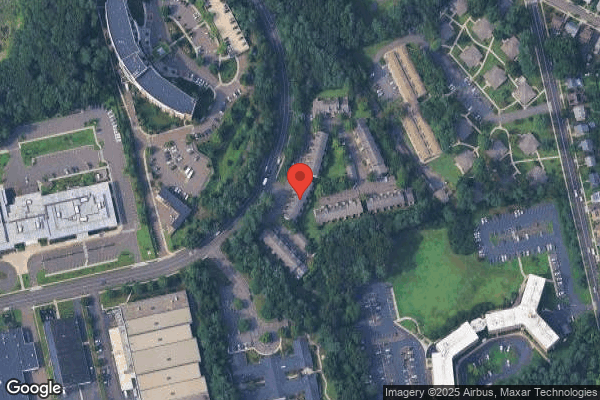
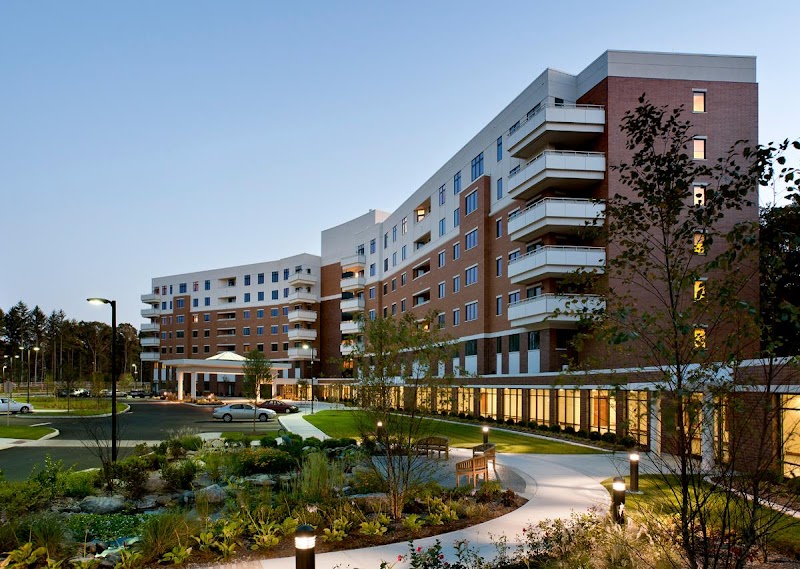



WHITNEY CENTER

200 LEEDER HILL DR, HAMDEN, CT 06517 (203) 281-6745
Non profit - Corporation 59 Beds Independent Data: November 2025
Trust Grade
73/100
#80 of 192 in CT
Last Inspection: December 2024

Within standard 12-15 month inspection cycle. Federal law requires annual inspections.

Overview

Whitney Center in Hamden, Connecticut has a Trust Grade of B, indicating it is a good choice for families, though not without some concerns. It ranks #80 out of 192 facilities in Connecticut, placing it in the top half, and #8 out of 23 in its county, meaning there are only seven local options considered better. Unfortunately, the facility's trend is worsening, with issues increasing from 7 in 2022 to 10 in 2024. Staffing is a strong point, rated 5 out of 5 stars with a turnover of just 26%, which is significantly lower than the state average, ensuring staff familiarity with residents. There have been no fines reported, which is a positive sign, and the facility offers more RN coverage than 98% of other facilities in the state. However, there are notable weaknesses. Recent inspections revealed that the facility has failed to hold resident council meetings for over a year, limiting residents' participation in decision-making. Additionally, there were issues with not properly reviewing residents' code status upon admission and not consistently documenting food temperatures, which could affect meal safety. These concerns suggest that while there are strengths, families should weigh them against the facility's shortcomings.

Trust Score
B
73/100
In Connecticut
#80/192
Top 41%
Safety Record
Low Risk
No red flags
Inspections
Getting Worse
7 → 10 violations
Staff Stability
✓ Good
26% annual turnover. Excellent stability, 22 points below Connecticut's 48% average. Staff who stay learn residents' needs.
Penalties
✓ Good
No fines on record. Clean compliance history, better than most Connecticut facilities.
Skilled Nurses
✓ Good
Each resident gets 97 minutes of Registered Nurse (RN) attention daily — more than 97% of Connecticut nursing homes. RNs are the most trained staff who catch health problems before they become serious.
Violations
⚠ Watch
30 deficiencies on record. Higher than average. Multiple issues found across inspections.
★★★★☆
4.0
Overall Rating
★★★★★
5.0
Staff Levels
★★★★☆
4.0
Care Quality
★★★☆☆
3.0
Inspection Score
Stable
2022: 7 issues
2024: 10 issues

The Good

  • 5-Star Staffing Rating · Excellent nurse staffing levels
  • 4-Star Quality Measures · Strong clinical quality outcomes
  • Low Staff Turnover (26%) · Staff stability means consistent care
  • Full Sprinkler Coverage · Fire safety systems throughout facility
  • No fines on record
  • Staff turnover is low (26%)

    22 points below Connecticut average of 48%

Facility shows strength in staffing levels, quality measures, staff retention, fire safety.

The Bad

No Significant Concerns Identified

This facility shows no red flags. Among Connecticut's 100 nursing homes, only 1% achieve this.

The Ugly 30 deficiencies on record

Dec 2024 10 deficiencies
CONCERN (D)

Potential for Harm - no one hurt, but risky conditions existed

Notification of Changes (Tag F0580)

Could have caused harm · This affected 1 resident

**NOTE- TERMS IN BRACKETS HAVE BEEN EDITED TO PROTECT CONFIDENTIALITY** Based on review of the clinical record, facility documentation, facility policy, and interviews for 1 of 5 residents (Resident #...

Read full inspector narrative →
**NOTE- TERMS IN BRACKETS HAVE BEEN EDITED TO PROTECT CONFIDENTIALITY** Based on review of the clinical record, facility documentation, facility policy, and interviews for 1 of 5 residents (Resident #8) reviewed for unnecessary medications, the facility failed to immediately notify the hospice provider and the resident representative when the resident had complaints of new severe wrist pain. The findings include: Resident #8 was admitted to the facility in December 2018 with diagnoses that included Alzheimer's dementia, hypertension, and failure to thrive. Review of the clinical record identified Resident #8 had been under hospice care since 6/9/21 due to late-stage severe Alzheimer's dementia. The annual MDS dated [DATE] identified Resident # 8 had severely impaired cognition, was always incontinent of bowel and bladder and was dependent on staff to assist with toileting, bathing, and dressing. The care plan dated 6/26/24 identified Resident #8 had impaired cognitive function and impaired thought processes related to dementia. Interventions included communicating using consistent, simple and directive sentences. The care plan also identified Resident #8 has a terminal diagnosis related to end stage dementia. Interventions included to observe closely for signs of pain, administer pain medication as ordered, and notify the physician of breakthrough pain. Review of the August 2024 physician's orders directed to assess Resident #8 for pain every shift (original date 9/13/22) and administer Acetaminophen (a pain relief medication) 325 mg - 2 tablets every 4 hours for general discomfort as needed (original date 10/7/22). The nurse's note dated 8/12/24 at 3:09 PM by LPN #2 identified that Resident #8 had a swollen right wrist with tenderness and severe pain. The note also identified that a physician's order directed to obtain an x-ray and the results were negative. Further review of the nurse's note identified it was documented as a late entry on 8/13/24 at 3:13 PM. Review of the clinical record failed to reflect the resident representative or hospice provider had been made aware of the residents swollen right wrist with tenderness and severe pain. A radiology report dated 8/13/24 at 1:33 PM identified Resident #8 had an x-ray of the right wrist that showed joint space narrowing with no fracture. Review of the clinical record failed to identify any additional monitoring, assessments, or documentation of Resident #8's right wrist injury by any facility staff after 8/13/24. Review of the clinical record and interview with LPN #2 on 12/3/24 at 11:40 AM identified that he was the nurse assigned to care for Resident #8 on 8/12/24 and 8/13/24. LPN #2 identified while he did not remember entering the note related to Resident #8's right wrist injury as a late entry, he did remember the injury itself. LPN #2 identified that on 8/12/24, Resident #8 had been complaining of wrist pain and when LPN #2 observed Resident #8's right wrist, he observed it to be visibly swollen and uneven in comparison to Resident #8's left wrist. LPN #2 identified that he reported the injury to RN #4, and she would have been the one to enter a full assessment of Resident #8's wrist injury, contact the physician, initiate an investigation, and contact Resident #8's resident representative. LPN #2 identified that during his assessment of Resident #8's right wrist, he observed that Resident #8 was crying out. Interview with RN #4 (RN Supervisor 7:00 AM - 3:00 PM) on 12/3/24 at 12:33 PM identified on 8/12/24 and 8/13/24 she was out of work and provided a review of her timesheet that identified such. RN #4 identified that during this time there were several RNs covering her leave, however, there was not a consistent nurse scheduled to cover during her absence. RN #4 identified that LPN #2 should have reported Resident #8's right wrist injury to the covering RN supervisor, who should have done an assessment and contacted the physician to report the injury as well as Resident #8's hospice physician. RN #4 also identified that the nursing staff should have notified Resident #8's resident representative, and an investigation should have been initiated and conducted to determine the cause of the right wrist injury and Resident #8's pain should have been addressed by LPN #2. Interview with the DNS on 12/4/24 at 8:15 AM identified that she was not aware of any issues related to Resident #8's right wrist prior to surveyor inquiry. The DNS identified LPN #2 should have notified the RN supervisor, who then should have completed a full assessment and contacted the physician to report the injury as well as Resident #8's hospice physician and Resident #8's resident representative. The DNS further identified an investigation should have been initiated and conducted to determine the cause of Resident #8's right wrist injury, and the injury should have been reported to the state agency as the facility was not aware of how the injury occurred. The DNS identified that Resident #8's pain should have been assessed, addressed and monitored once the pain and wrist injury were identified. The DNS identified that the clinical record should also have accurate documentation related to the right wrist injury. Although attempted, an interview with Person #1 (Resident #8's resident representative) was not obtained. The facility policy on change of condition directed that licensed nursing staff would document any change in condition in the electronic medical record (EMR). The policy further directed upon a change in condition of the resident, licensed staff would notify the physician, and direction would be given to the nurse regarding the physician orders. The nurse would document any new orders in the EMR as well as write a note of the physician notification, and the resident representative would be notified as well and documented with a corresponding note. The facility policy on Resident Rights directed that the facility must consult the resident's physician and notify the resident representative within 24 hours for any significant change in the resident's physical status.
CONCERN (D)

Potential for Harm - no one hurt, but risky conditions existed

Report Alleged Abuse (Tag F0609)

Could have caused harm · This affected 1 resident

**NOTE- TERMS IN BRACKETS HAVE BEEN EDITED TO PROTECT CONFIDENTIALITY** Based on review of the clinical record, facility documentation, facility policy, and interviews for 1 of 5 residents (Resident #...

Read full inspector narrative →
**NOTE- TERMS IN BRACKETS HAVE BEEN EDITED TO PROTECT CONFIDENTIALITY** Based on review of the clinical record, facility documentation, facility policy, and interviews for 1 of 5 residents (Resident # 8) reviewed for unnecessary medications, the facility failed to notify the state agency, according to established timeframes, when the resident complained of new severe wrist pain of unknown origin. The findings include: Resident #8 was admitted to the facility in December 2018 with diagnoses that included Alzheimer's dementia, hypertension, and failure to thrive. Review of the clinical record identified Resident #8 had been under hospice care since 6/9/21 due to late-stage severe Alzheimer's dementia. The annual MDS dated [DATE] identified Resident #8 had severely impaired cognition, was always incontinent of bowel and bladder and was dependent on staff to assist with toileting, bathing, and dressing. The care plan dated 6/26/24 identified Resident #8 had impaired cognitive function and impaired thought processes related to dementia. Interventions included communicating using consistent, simple and directive sentences. The nurse's note dated 8/12/24 at 3:09 PM by LPN #2 identified that Resident #8 had a swollen right wrist with tenderness and severe pain. The note also identified that a physician's order directed to obtain an x-ray and the results were negative. Further review of the nurse's note identified it was documented as a late entry on 8/13/24 at 3:13 PM. A radiology report dated 8/13/24 at 1:33 PM identified Resident #8 had an x-ray of the right wrist that showed joint space narrowing with no fracture. Review of reportable event forms for Resident #8 failed to identify a reportable event form had been initiated related to Resident #8's swollen right wrist tenderness and severe pain on 8/12/24. Review of the state agency reportable event portal failed to identify a reportable event form related to Resident #8's swollen right wrist tenderness and severe pain on 8/12/24 had been reported. Review of the clinical record and interview with LPN #2 on 12/3/24 at 11:40 AM identified that he was the nurse assigned to care for Resident #8 on 8/12/24 and 8/13/24. LPN #2 identified while he did not remember entering the note related to Resident #8's right wrist injury as a late entry, he did remember the injury itself. LPN #2 identified that on 8/12/24, Resident #8 had been complaining of wrist pain and when LPN #2 observed Resident #8's right wrist, he observed it to be visibly swollen and uneven in comparison to Resident #8's left wrist. LPN #2 identified that he reported the injury to RN #4, and she would have been the one to enter a full assessment of Resident #8's wrist injury and initiate an investigation. Interview with the DNS on 12/4/24 at 8:15 AM identified that she was not aware of any issues related to Resident #8's right wrist prior to surveyor inquiry. The DNS identified LPN #2 should have notified the RN supervisor, who then should have completed a full assessment. The DNS further identified that an investigation should have been initiated and conducted to determine the cause of Resident #8's right wrist injury, and the injury and investigation should have been reported to the state agency as the facility was not aware of how the injury occurred Although requested, the facility failed to provide a policy related to reporting injuries of unknown origin to the state agency. The facility policy on A&I-Injury of unknown origin directed that it was the policy of the facility to completely investigate any resident injury of unknown origin to ensure that safe care and treatment of the residents was maintained, and that all staff should report any bruise, skin tear, or injury of unknown origin to their supervisor immediately so that the appropriate investigation and documentation would take place.
CONCERN (D)

Potential for Harm - no one hurt, but risky conditions existed

Investigate Abuse (Tag F0610)

Could have caused harm · This affected 1 resident

**NOTE- TERMS IN BRACKETS HAVE BEEN EDITED TO PROTECT CONFIDENTIALITY** Based on review of the clinical record, facility documentation, facility policy, and interviews for 1 of 5 residents (Resident #...

Read full inspector narrative →
**NOTE- TERMS IN BRACKETS HAVE BEEN EDITED TO PROTECT CONFIDENTIALITY** Based on review of the clinical record, facility documentation, facility policy, and interviews for 1 of 5 residents (Resident # 8) reviewed for unnecessary medications, the facility failed to investigate an injury of unknown origin. The findings include: Resident #8 was admitted to the facility in December 2018 with diagnoses that included Alzheimer's dementia, hypertension, and failure to thrive. Review of the clinical record identified Resident #8 had been under hospice care since 6/9/21 due to late-stage severe Alzheimer's dementia. The annual MDS dated [DATE] identified Resident #8 had severely impaired cognition, was always incontinent of bowel and bladder and was dependent on staff to assist with toileting, bathing, and dressing. The care plan dated 6/26/24 identified Resident #8 had impaired cognitive function and impaired thought processes related to dementia. Interventions included communicating using consistent, simple and directive sentences. The nurse's note dated 8/12/24 at 3:09 PM by LPN #2 identified that Resident #8 had a swollen right wrist with tenderness and severe pain. The note also identified that a physician's order directed to obtain an x-ray and the results were negative. Further review of the nurse's note identified it was documented as a late entry on 8/13/24 at 3:13 PM. A radiology report dated 8/13/24 at 1:33 PM identified Resident #8 had an x-ray of the right wrist that showed joint space narrowing with no fracture. Review of reportable event forms for Resident #8 failed to identify a reportable event form had been initiated related to Resident #8's swollen right wrist tenderness and severe pain on 8/12/24. Review of the state agency reportable event portal failed to identify a reportable event form related to Resident #8's swollen right wrist tenderness and severe pain on 8/12/24 had been reported. Review of the clinical record and interview with LPN #2 on 12/3/24 at 11:40 AM identified that he was the nurse assigned to care for Resident #8 on 8/12/24 and 8/13/24. LPN #2 identified while he did not remember entering the note related to Resident #8's right wrist injury as a late entry, he did remember the injury itself. LPN #2 identified that on 8/12/24, Resident #8 had been complaining of wrist pain and when LPN #2 observed Resident #8's right wrist, he observed it to be visibly swollen and uneven in comparison to Resident #8's left wrist. LPN #2 identified that he reported the injury to RN #4, and she would have been the one to enter a full assessment of Resident #8's wrist injury and initiate an investigation. Interview with the DNS on 12/4/24 at 8:15 AM identified that she was not aware of any issues related to Resident #8's right wrist prior to surveyor inquiry. The DNS identified LPN #2 should have notified the RN supervisor, who then should have completed a full assessment. The DNS further identified that an investigation should have been initiated and conducted to determine the cause of Resident #8's right wrist injury, and the injury and investigation should have been reported to the state agency as the facility was not aware of how the injury occurred The facility policy on A&I-Injury of unknown origin directed that it was the policy of the facility to completely investigate any resident injury of unknown origin to ensure that safe care and treatment of the residents was maintained, and that all staff should report any bruise, skin tear, or injury of unknown origin to their supervisor immediately so that the appropriate investigation and documentation would take place. The policy further directed that the procedure would include all staff should report any resident injury to their supervisor/charge nurse immediately, and the supervisor/charge nurse would complete the injury of unknown origin investigation form with as much information as possible. The policy also directed any supporting documentation, employee statements, and other notes would be attached to the investigation, and that the supervisor/charge nurse on duty would be responsible for initiating an investigation determine the probable cause of the injury and this would include, but not be limited to, interviewing staff members, obtaining written statements, reviewing the medical record to determine if there were any documented behaviors that may have caused/contributed to the injury, etc, and any suspicion of resident abuse, neglect, or mistreatment would be reported to the DNS/ADNS or Administrator immediately. The policy also directed an interim care plan would be initiated, the DNS/ADNS would review the completed form to determine if additional investigation was warranted, and the A&I report and completed investigation would be reviewed with the Medical Director and Administration.
CONCERN (D)

Potential for Harm - no one hurt, but risky conditions existed

PASARR Coordination (Tag F0644)

Could have caused harm · This affected 1 resident

**NOTE- TERMS IN BRACKETS HAVE BEEN EDITED TO PROTECT CONFIDENTIALITY** Based on review of the clinical record, facility documentation, facility policy, and interview for 1 resident (Resident #10) rev...

Read full inspector narrative →
**NOTE- TERMS IN BRACKETS HAVE BEEN EDITED TO PROTECT CONFIDENTIALITY** Based on review of the clinical record, facility documentation, facility policy, and interview for 1 resident (Resident #10) reviewed for Preadmission Screening and Resident Review (PASARR), the facility failed to notify the appropriate state-designated authority that the resident had a new diagnosis of psychotic disorder with delusions. The findings include: Resident #10 was admitted to the facility in August 2020 with diagnoses that included Parkinsons Disease, depression, anxiety, and dementia. Notice of PASARR Level 1 Screen dated 8/21/20 identified Resident #10 had a diagnosis of anxiety disorder, depression (mild or situational), and dementia but did not have a diagnosis of psychotic disorder or delusional disorder. PASARR outcome dated 8/21/20 identified Level 1 was negative because there was no Level 2 condition. The quarterly MDS dated [DATE] identified Resident #10 had moderately impaired cognition and had a diagnosis of anxiety, depression, and dementia but did not have a diagnosis of psychotic disorder with delusions. The psychiatric APRN progress note dated 6/7/21 identified a diagnosis of psychotic disorder with delusions as an active disorder at that time. The annual MDS dated [DATE] identified Resident #10 had moderately impaired cognition and had a diagnosis of anxiety, depression, and dementia, but did not have a diagnosis of psychotic disorder. Review of the medical record in the medical diagnosis section identified that on 9/27/22, the prior MDS coordinator, RN #2, had added the diagnosis of psychotic disorder with delusions back dated to 6/7/21. The quarterly MDS dated [DATE] identified Resident #10 had moderately impaired cognition, and a diagnosis of anxiety and dementia and the added diagnosis of psychotic disorder. Interview with RN #2 on 12/2/24 at 1:15 PM indicated that when a resident has a new antipsychotic medication she would look back in the physician and psychiatric progress notes for a diagnosis. RN #2 indicated that when she finds the new diagnosis she places it on the current MDS and then adds it into electronic medical record on the diagnosis list. Interview with the prior social worker, SW #1 on 12/3/24 at 9:01 AM indicated that he was the prior SW here at the facility and he left the position a little over a year ago in December of 2023. SW #1 indicated that he was responsible for the PASARR's for new admissions and if a resident received a new diagnosis, he would be responsible to update the appropriate state-designated authority. SW #1 indicated if a resident had a new diagnosis, he would depend on the facility staff to notify him. SW #1 indicated that he was responsible to do the updates, as needed, from June of 2021 until December 2023 for Resident #10. SW #1 indicated that if it was reported to him that Resident #10 had a new diagnosis of psychotic disorder with delusions on 6/7/21 he would have notified the appropriate state-designated authority at that time with a Level 2 referral, but he was not aware of the new diagnosis. Interview with the DNS on 12/4/24 at 11:30 AM indicated that there was not a facility policy for PASARR.
CONCERN (D) 📢 Someone Reported This

A family member, employee, or ombudsman was alarmed enough to file a formal complaint

Potential for Harm - no one hurt, but risky conditions existed

Quality of Care (Tag F0684)

Could have caused harm · This affected 1 resident

**NOTE- TERMS IN BRACKETS HAVE BEEN EDITED TO PROTECT CONFIDENTIALITY** 5. Resident #124 was admitted to the facility in August 2021 with diagnoses that included malignant neoplasm of the left breast...

Read full inspector narrative →
**NOTE- TERMS IN BRACKETS HAVE BEEN EDITED TO PROTECT CONFIDENTIALITY** 5. Resident #124 was admitted to the facility in August 2021 with diagnoses that included malignant neoplasm of the left breast, secondary malignant neoplasm of axilla and upper limb lymph nodes, Alzheimer's disease, and difficulty in walking. The significant change in status MDS dated [DATE] identified Resident #124 had moderately impaired cognition, required supervision or touching assist with sitting to standing, chair/bed-to-chair transfers, and toilet transfers, and had sustained falls with no major injury since the prior assessment. The care plan dated 6/29/23 identified Resident #124 was at moderate risk for falls related to a history of falls, gait/balance problems, unaware of safety needs - often does not call for staff assist with transfers/mobility in his/her room. Interventions included educating Resident #124 on the importance of calling and waiting for assistance with transfers, educating the resident, family, and caregivers about safety reminders and what to do if a fall occurs, and following the facility's fall protocol. The nurse's note dated 9/21/23 at 10:11 PM identified that at 7:00 PM this RN was called into Resident #124's room to assess. Resident #124 was lying on the floor on his/her back and stated that he/she was trying to go to the bathroom and fell backwards. Resident #124 was complaining of left hip pain, and upon assessment he/she was unable to straighten the lower left extremity and during range of motion was grimacing in pain. Neurological assessments were initiated and were within normal limits. Resident #124 was assisted off the floor by 3 staff members into bed. The physician was notified, and the physician spoke directly to the family for a decision on sending Resident #124 to the emergency department or managing him/her at the facility. The family decided to have resident remain at the facility, orders for a portable x-ray of the left hip and pelvis were obtained, start Lovenox (an injectable anticoagulant for the prevention of blood clots), maintain bedrest for 24 hours or until x-ray results are back, and change PRN (as needed) Oxycodone to 10mg by mouth every 3 hours PRN for pain. Awaiting x-ray results, at this time. The nurse's note dated 9/21/23 at 11:08 PM identified Resident #124's x-ray results were negative for fracture or dislocation. The nurse's noted dated 9/23/23 at 7:03 PM identified this RN was called by staff to resident's room, Resident #124 was observed lying on the bathroom floor on his/her right side, supporting self on right elbow. The wheelchair was in the bathroom doorway with the wheels locked, when asked why he/she did not call for assist, Resident #124 replied, I can do this. Post fall RN assessment: alert and oriented to person, situation, place, and time, denies hitting head during fall. Assisted to wheelchair with an assist of 2 with safety belt. Range of motion at baseline for resident, no complaints of increased discomfort related to fall, no apparent injury observed. The nurse's note dated 9/23/23 at 7:33 PM identified this RN was notified by staff of another fall for Resident #124, first fall 30 minutes prior. Resident #124 was observed lying on the floor on his/her right side, behind the headboard of the bed, resident stated that he/she got out of bed to get a warmer robe from the closet and did not call for assistance, call light visible and accessible, on the bedrail. Post fall RN assessment: alert and oriented times 4, denies hitting head during fall. Range of motion at baseline for resident, complains of discomfort to lateral aspect of left lower leg, sustained skin tear at the site during fall, and Resident #124 stated, his/her leg caught the corner of the bed. Family notified of falls #1 and #2, and the on-call physician was notified via a message to the answering service. The clinical record failed to identify neurological assessments completed per the facility policy following Resident #124's 2 unwitnessed falls on 9/23/23. The Neurological Checks flowsheet dated 9/21/23 identified that neurological assessments were completed on 9/23/23 on the following shifts: 11:00 PM - 7:00 AM and 3:00 PM - 11:00 PM and on 9/24/23 on the 11:00 PM - 7:00 AM shift. Review of the nurse's notes dated 9/23/23 through 9/26/23 failed to identify nursing assessments were completed on the following shifts: 9/23/23 from 11:00 PM - 7:00 AM, 9/25/23 from 7:00 AM - 3:00 PM, and 9/25/23 from 3:00 PM - 11:00 PM. The nurse's note dated 9/26/23 at 3:20 PM identified that Resident #124 complained of more severe pain today status post fall. Some mild swelling noted to left hip. Physician updated and new order to obtain repeat x-ray of left hip. Resident representative visiting with resident, concerned regarding increased pain, upon assessment Resident #124 was crying and indicated the pain is the most severe it has been. Discussion with family and physician, decision was made to send resident to the emergency department for evaluation. The Emergency Medicine Resident Note dated 9/26/23 identified Resident #124 had a past medical history of dementia, congestive heart failure, hypertension, chronic obstructive pulmonary disease, arthritis on morphine pump, who was [NAME] from a subacute nursing facility due to hip and back pain for a few days. Patient first fell on 9/21/23 and had a head strike, but did not lose consciousness. He/she complains of hip pain but had negative x-ray results on 9/21/23, after the fall. However, he/she fell twice again and fell on his/her hip, this time without head strike and did not lose consciousness. He/she is baseline wheelchair bound for 3 years and is not complaining about hip pain (laterally unclear due to dementia) and low midline back pain. Course: 4:31 PM left hip x-ray shows left femoral neck fracture with marked varus angulations and foreshortening. Interview and clinical record review with the DNS on 12/3/24 at 7:33 AM failed to identify documentation to reflect that neurological assessments and nursing assessments were completed per the facility's fall policy, following Resident #124's 2 unwitnessed falls on 9/23/23. The DNS indicated that there was progress notes dated 9/24/23 and 9/25/23 that indicated neurological checks were at baseline, but she would have expected the nurse to either have written a timed nurse's note which included the neurological assessments or to have restarted a new neurological check flowsheet after the unwitnessed falls on 9/23/23. The DNS further indicated that neurological checks should have been based on the timeline outlined in the facility's policy. The DNS identified that she would also expect that a nurse's note would be written at least daily or per the facility's policy. The Fall Management System policy directs the facility to provide each resident with appropriate assessment and interventions to prevent falls and to minimize complications if a fall occurs. Any fall that involves a potential/actual head injury will include follow-up neurological checks. Neurological checks will be documented on the Neurological Assessment Flowsheet for 72 hours and follow-up assessment and documentation will be conducted for a minimum of every shift for 72 hours. 3. Resident #3 was admitted to the facility in October 2022 with diagnoses that included Alzheimer's dementia, unsteadiness on feet, and syncope and collapse. The annual MDS dated [DATE] identified Resident #3 had intact cognition, was always continent of bowel and bladder and required partial staff assistance with dressing, bathing, and was independent with toileting. The MDS also identified Resident #3 has a history of falls and required use of a walker with ambulation. The care plan dated 11/3/23 identified Resident #3 was at high risk for falls due to deconditioning with a history of falls. Interventions included ensuring the call light was within reach, encourage use of the call light, and the resident needed prompt response to all requests for assistance. A reportable event form dated 12/13/23 identified Resident #3 had an unwitnessed fall and reported striking his/her head against a recliner during the fall. A nurse's note dated 12/13/23 at 7:34 PM identified Resident #3 had a fall at 4:00 PM after losing his/her balance and struck his/her head on a recliner in his/her room. The note further identified Resident #3 complained of discomfort to the back of the head, and that no open areas or bruising were noted. Review of the clinical record failed to identify any documentation related to neurological monitoring or post fall assessments that were initiated or completed for Resident #3's fall with head strike on 12/13/23. A reportable event form dated 10/30/24 identified Resident #3 had an unwitnessed fall on that date. A nurse's note dated 10/30/24 at 2:10 PM identified Resident #3 had an unwitnessed fall and was founding lying on the bathroom floor of his/her room and neurological checks were initiated. Review of the clinical record failed to identify any documentation related to neurological monitoring or post fall assessments for Resident #3 following the unwitnessed fall on 10/30/24. A reportable event form dated 11/19/24 identified Resident #3 had an unwitnessed fall on that date. The report identified a hematoma to the right back side of his/her head after the fall. A nurse's note dated 11/19/24 at 2:48 PM by RN #4 identified Resident #3 had an unwitnessed fall and was found lying on the floor in front of the bathroom in his/her room. The note further identified that Resident #3 reported pain to the right side of the back of the head and identified he/she hit his/her head on the floor. The note identified Resident# had a small bump that could be felt and that a neurological check was within normal limits. Review of the clinical record failed to identify any documentation related to additional neurological monitoring or post fall assessments for Resident #3 following the fall with head. A request for all neurological checks and post fall assessment documentation was made to the DNS on 12/3/24 at 6:00 AM. Interview with RN #4 (RN Supervisor 7:00 AM - 3:00 PM) on 12/3/24 at 12:33 PM identified that she completed Resident #3's assessment on 11/19/24 but would need to look into the neurological checks and post fall assessment documentation. RN #4 identified that it was the policy of the facility to complete neurological checks following any fall with head strikes. Subsequent to surveyor inquiry to the DNS and RN #4 on 12/3/24, additional documentation was provided on 12/3/24 at 12:57 PM. RN #1 provided an in-service signature sheet dated 11/1/24 for a topic Fall Charting which identified that nursing staff should do neurological checks on all unwitnessed falls. Interview with RN #1 immediately following review of the in-servicing document identified that there had been issues with nursing staff completing neurological checks and assessments for residents with unwitnessed falls and the in service was to provide education that all nurses should ensure that these were done. Interview with the DNS on 12/4/24 at 8:15 AM identified she was aware there were issues with assessments and neurological checks following unwitnessed falls for residents of the facility, and that these also were to be done for any resident who had a reported or confirmed head strike. The DNS identified that the facility had changed documentation systems in the last 2 years, and this change along with a use of paper and computer charting may have been the issue, however the policy was that post fall assessments and neurological checks should be done per the facility policy for 72 hours after the event. Although requested, the facility failed to provide any policy related neurological monitoring. Although requested, the facility failed to provide a copy of the neurological assessment flowsheet. The facility policy on fall management system directed that any fall with a potential or actual head injury would include follow up neurological checks which would be documented on the neurological assessment flow sheet for 72 hours. The policy further directed for any fall, follow up assessment and documentation would be conducted at a minimum of every shift for 72 hours. 4. Resident #8 was admitted to the facility in December 2018 with diagnoses that included Alzheimer's dementia, hypertension, and failure to thrive. Review of the clinical record identified Resident #8 had been under hospice care since 6/9/21 due to late-stage severe Alzheimer's dementia. The annual MDS dated [DATE] identified Resident #8 had severely impaired cognition, was always incontinent of bowel and bladder and was dependent on staff to assist with toileting, bathing, and dressing. The care plan dated 6/26/24 identified Resident #8 had impaired cognitive function and impaired thought processes related to dementia. Interventions included communicating using consistent, simple and directive sentences. The care plan also identified Resident #8 has a terminal diagnosis related to end stage dementia. Interventions included to observe the resident for signs of pain, administer pain medication as ordered, and notify the physician of breakthrough pain. The nurse's note dated 8/12/24 at 3:09 PM by LPN #2 identified that Resident #8 had a swollen right wrist with tenderness and severe pain. The note also identified that a physician's order for an x-ray had been placed and the results were negative. Further review of the nurse's note identified it was documented as a late entry on 8/13/24 at 3:13 PM. Review of the clinical record failed to identify any additional documentation related to Resident #8's right wrist injury by LPN #2 on 8/12/24, including any interventions related to Resident #8's reports of severe pain. Further, the clinical record failed to identify any documentation related to an RN assessment of Resident #8's right wrist injury on 8/12/24. A radiology report dated 8/13/24 at 1:33 PM identified Resident #8 had an x-ray of the right wrist that showed joint space narrowing with no fracture. Review of the clinical record failed to identify any additional monitoring, assessments, or documentation of Resident #8's right wrist injury by any facility nursing staff after 8/13/24. Review of the clinical record and interview with LPN #2 on 12/3/24 at 11:40 AM identified that he was the nurse assigned to care for Resident #8 on 8/12/24 and 8/13/24. LPN #2 identified while he did not remember entering the note related to Resident #8's right wrist injury as a late entry, he did remember the injury itself. LPN #2 identified that on 8/12/24, Resident #8 had been complaining of wrist pain and when LPN #2 observed Resident #8's right wrist, he observed it to be visibly swollen and uneven in comparison to Resident #8's left wrist. LPN #2 identified that he reported the injury to RN #4, and she would have been the one to enter a full assessment of Resident #8's wrist injury, contact the physician, initiate an investigation, and contact Resident #8's resident representative. LPN #2 identified that during his assessment of Resident #8's right wrist, he observed that Resident #8 was crying out. LPN #2 identified initially he provided Resident #8 a dose of acetaminophen; however, following review of the clinical record, LPN #2 identified he was unable to recall what interventions were put into place for Resident #8 and this would have been addressed by RN #4 during her assessment. Interview with RN #4 (RN Supervisor 7:00 AM - 3:00 PM) on 12/3/24 at 12:33 PM identified on 8/12/24 and 8/13/24 she was out of work and provided a review of her timesheet that identified such. RN #4 identified that during this time there were several RNs covering her leave, however, there was not a consistent nurse scheduled to cover during her absence. RN #4 identified that LPN #2 should have reported Resident #8's right wrist injury to the covering RN supervisor, who should have done an assessment and contacted the physician to report the injury as well as Resident #8's hospice physician. RN #4 also identified that the nursing staff should have notified Resident #8's resident representative, and an investigation should have been initiated and conducted to determine the cause of the right wrist injury and Resident #8's pain should have been addressed by LPN #2. Interview with the DNS on 12/4/24 at 8:15 AM identified that she was not aware of any issues related to Resident #8's right wrist prior to surveyor inquiry. The DNS identified LPN #2 should have notified the RN supervisor, who then should have completed a full assessment and contacted the physician to report the injury as well as Resident #8's hospice physician and Resident #8's resident representative. The DNS further identified that Resident #8's pain should have been assessed, addressed and monitored once the pain and wrist injury were identified. The DNS identified that the clinical record should also have accurate documentation related to the right wrist injury. Although attempted, an interview with Person #1 (Resident #8's resident representative) was not obtained. Although requested, the facility failed to provide a policy related to RN assessments. The facility policy on change of condition directed that licensed nursing staff would document any change in condition in the electronic medical record (EMR). The policy further directed upon a change in condition of the resident, licensed staff would notify the physician, and direction would be given to the nurse regarding the physician orders. The nurse would document any new orders in the EMR as well as write a note of the physician notification, and the resident representative would be notified as well and documented with a corresponding note. The facility policy on pain management directed that nursing would maintain an adequate comfort level for all residents which included an evaluation of pain that would be completed upon admission, post fall, upon a change in condition, and as needed. 2. Resident #12 was admitted to the facility in November 2018 with diagnoses that included schizophrenia, hereditary lymphedema, and Parkinson's disease. The annual MDS dated [DATE] identified Resident #12 had intact cognition, utilized a walker or wheelchair for mobility, and had impairment on both the upper and lower extremities. The care plan dated 11/29/24 identified a focus on nutrition/unintended weight gain with interventions to provide and serve diet as ordered, and a focus on chronic bilateral edema with interventions for staff to provide assistance with putting on and removing compression stockings. A physician's order dated 12/1/24 directed to apply compression stockings to bilateral lower extremities every 12 hours, on in the morning prior to getting out of bed and off at bedtime. Thigh high compression socks 20 - 30mmHg every morning and at bedtime for bilateral lower edema. Observation on 12/2/24 at 7:35 AM identified Resident #12 was seated in his/her wheelchair with non-skid socks on feet, and without the benefit of the compression stockings. Resident #12 indicated at that time the staff rarely put the compression stockings on him/her. Observation on 12/2/24 at 2:15 PM identified Resident #12 was seated in his/her recliner without the benefit of the compression stockings. Observation on 12/3/24 at 7:45 AM identified Resident #12 without the benefit of the compression stockings. Resident #12 indicated at that time a strong desire to have the compression stockings on daily. Interview with Resident #12 on 12/3/24 at 9:05 AM during the Resident Council meeting identified concerns with the nurse's not following physician's orders as they related to the application of his/her compression stockings on daily bases. Interview with the charge nurse, LPN #2, on 12/3/24 at 2:15 PM identified although Resident #12 has an order for compression stockings, staff do not always put them on. LPN #2 further identified that the resident refuses, however, failed to identify documentation of refusals in the electronic medical record. Although observations on 12/1 and 12/2/24 identified Resident #12 did not have the compression stockings applied, review of the electronic medical record dated 12/1/24 and 12/2/24 identified documentation that the compression stockings had been applied. LPN #2 further stated that any resident refusal for care should be documented in the clinical record and the physician notified. Interview with the DNS on 12/3/24 at 2:45 identified it is her expectation that nurses follow the physician's order and if the resident refuses to document the refusal and notify the physician. Interview and review of the clinical record with MD #1 on 12/4/24 at 12:10 PM identified it is her exexpectation that she be notified if Resident #12 refuses the compression stockings. Based on review of the clinical record, facility documentation, facility policy and interview for 5 residents (Resident #20, 12, 3, 8 and 124) the facility failed to ensure the residents received treatment and care in accordance with professional standards and physicians orders. For Resident #20, reviewed for edema, the facility failed to ensure that weights, ordered to be obtained every other day were consistently obtained. For Resident #12, the facility failed to follow the physician's order to apply compression stockings daily. For 1 of 4 residents (Resident #3), reviewed for accidents, the facility failed to ensure that neurological checks and post fall assessments were completed after the resident had multiple unwitnessed falls with reported head strikes. For 1 of 5 residents (Resident #8), reviewed for unnecessary medications, the facility failed to complete an RN assessment after the resident was found to have an injury of unknown origin and pain. For 1 of 4 residents (Resident #124) reviewed for accidents, the facility failed to ensure neurological assessments and follow-up assessments were completed, per the facility policy, following 2 unwitnessed falls. The findings include: 1. The Hospital Discharge summary dated [DATE] identified Resident #20 was on Lasix (a diuretic) for chronic leg edema. Resident #20 was admitted to the facility on [DATE] with diagnoses that included femur fracture, chronic leg edema, and chronic peripheral venous insufficiency. A physician's order dated 11/16/24 directed to administer Lasix 10 mg (diuretic) once a day on Monday, Wednesday, and Friday. The admission History and Physical, done by MD #1 dated 11/18/24 identified Resident #20 had statis dermatitis of both legs. A physician's order dated 11/18/24 at 3:31 PM directed to obtain weights every other day during the 7:00 AM to 3:00 PM shift. The admission MDS dated [DATE] identified Resident #20 had moderately impaired cognition and required maximum assistance to roll side to side in bed, to go from a lying to sitting position and for transfers from bed to wheelchair. The care plan dated 11/26/24 identified Resident #20 had chronic bilateral lower extremity edema. Interventions included to monitor weights as ordered and provide the assist of 1 with a rolling walker. Review of the weight summary record identified the following. Weight on 11/18/24 was 159.4 lbs. No weights were obtained on 11/20/24 or 11/22/24. Weight on 11/25/24 was 160.2 lbs. A weight was not obtained on 11/27/24. Weight on 11/29/24 was 151.6 lbs., a 8.6 lbs. weight loss. Weight on 12/2/24 was 148.8 lbs. Review of the nurse's progress notes dated 11/18/24 to 12/3/24 did not reflect the resident had refused to have his/her weight obtained every other day as per the physician order. Interview with RN #4 (7:00 AM to 3:00 PM supervisor) on 12/4/24 at 7:59 AM indicated that she does not recall why MD #1 had given her the order for every other day weights for Resident #20 on 11/18/24 and she did not write a nurses note. RN #4 indicated that the nurse aides were responsible to get the weights at the directive of the charge nurse who was responsible to sign off and document the weight in the MAR. RN #4 indicated that Resident #20 would not have refused any weights and if the resident had refused it would have been documented on the MAR. After review of the clinical record, RN #4 indicated that she did not know why the weights were not being obtained. RN #4 indicated that if the physician order was not followed that she should have been informed so she could have notified the physician. Interview with the DNS on 12/4/24 at 8:53 AM indicated the nurse aide was responsible to get the weight every other day and the nurses were responsible to document the weight and initial that it had been obtained on the MAR. The DNS indicated that Resident #20 was on Lasix for leg edema, and she thinks maybe that's why MD #1 wanted Resident #20 on every other day weights so she could adjust the Lasix to prevent fluid overload, but she did not find any documentation for a rationale. The DNS indicated that her expectation was the nurses would follow the physicians order for the weights and if they did not follow the physicians order, the physician should have been notified. After clinical record review, the DNS noted there were missing weights and the physician order was not followed. Interview with MD #1 on 12/4/24 at 11:40 AM indicated that she had ordered the weights scheduled for every other day for Resident #20 because Resident #20 was on the medication Lasix and had the history of bilateral leg edema. MD #1 indicated that she would have expected the nurses to follow the physician order for weights and if the nurses did not get the weight she should have been informed. Further, if Resident #20 had gained or lost weight, the nurse should have updated her. MD #1 indicated that Resident #20 was sedentary and just sits all day so it was important to monitor the fluid by obtaining weights. Although requested, a facility policy for following physician orders was not provided.
CONCERN (D) 📢 Someone Reported This

A family member, employee, or ombudsman was alarmed enough to file a formal complaint

Potential for Harm - no one hurt, but risky conditions existed

Accident Prevention (Tag F0689)

Could have caused harm · This affected 1 resident

**NOTE- TERMS IN BRACKETS HAVE BEEN EDITED TO PROTECT CONFIDENTIALITY** Based on review of the clinical record, facility documentation, facility policy, and interviews for 1 of 5 residents (Resident #...

Read full inspector narrative →
**NOTE- TERMS IN BRACKETS HAVE BEEN EDITED TO PROTECT CONFIDENTIALITY** Based on review of the clinical record, facility documentation, facility policy, and interviews for 1 of 5 residents (Resident #1), reviewed for accidents, the facility failed to ensure the resident was transferred according to the physician's order (Sara lift with 2 staff) which resulted in the resident having to be lowered to the floor. The findings include: Resident #1 was admitted to the facility in June 2023 with diagnoses that included presence of left artificial knee joint, cardiac pacemaker, and atrial fibrillation. A physician's order dated 6/21/23 directed to use a Sara lift (mechanical lift used to lift and transfer) with the assistance of 2 staff for transfers to/from the wheelchair. The care plan dated 6/21/23 identified Resident #1 had limited mobility related to history of multiple surgeries to the bilateral lower extremities, was non-ambulatory and wheelchair bound at baseline. Interventions included transfers with the Sara lift and assist of 2 staff. The admission MDS dated [DATE] identified Resident #1 had intact cognition and required extensive 2-person assistance with transfers. The fall risk evaluation dated 6/29/23 identified Resident #1 was at low risk for falls. The August 2023 monthly physician's orders directed to transfer Resident #1 via a Sara lift with the assistance of 2 staff to/from the wheelchair (original date 6/21/23). The nurse's note dated 8/14/23 at 10:15 AM identified RN #4 was notified that Resident #1 was lowered to the floor during a transfer. RN #4 indicated that NA #3 transferred Resident #1 by herself after Resident #1 told NA #3 that he/she could be transferred with one staff. RN #4 indicated during the transfer Resident #1 became weak and needed to be lowered to the floor. No injuries were noted from the fall. Resident #1 was able to move all extremities at baseline. Resident #1 was assisted back to bed with assistance of 4 staff. The physician was present and updated. The reportable event form dated 8/14/23 at 10:15 AM identified Resident #1 was transferred with the assistance of 1 staff via stand pivot and was lowered to the floor during the transfer. An RN assessment was completed, there was no complaint of pain or distress, and the physician was notified. Report had been given to NA #3 prior to the start of shift regarding Resident #1's plan of care and she was provided with a printed copy. Will follow up with agency regarding NA #3 not following the plan of care. The fall risk evaluation dated 8/14/24 identified Resident #1 was at moderate risk for falls. Review of a statement written by NA #3 dated 8/14/23 identified Resident #1 told NA #3 that he/she can assist NA #3 with the transfer to the bathroom. NA #3 indicated she began transferring Resident #1 out of the bed to the wheelchair by herself, and as soon as Resident #1 stood up the resident started going down and she lowered Resident #1 to the floor and alerted the nurse. Review of a statement written by RN #4 dated 8/14/23 identified she was called to Resident #1's room and observed Resident #1 was lying on the floor. RN #4 indicated NA #3 attempted to transfer Resident #1 by herself and the resident became weak, and NA #3 lowered the resident to the floor. RN #4 indicated NA #3 was from the agency. RN #4 indicated at the start of the shift she had given NA #3 a thorough report on each resident that was on her assignment and was also provided with a written care guide. RN #4 indicated she educated NA #3 that she should have followed Resident #1's plan of care and should have gone to the nurse for any questions or clarification. The physician note dated 8/15/23 identified he was asked to see Resident #1 who had been lowered to the floor after an unsuccessful attempt to transfer with assist of one when Resident #1 usually transfers with a mechanical lift with no obvious injuries. The physician note dated 8/16/23 identified he received a call that Resident #1's left ankle was slightly swollen and painful with recommendations for an x-ray of the affected ankle. Report came in this afternoon which identified a non-displaced fracture of the distal tibia and loosening of the fibula/tibial screw. Recommendation to keep Resident #1 non-weight bearing and call orthopedic in the morning for advice. The reportable event form dated 8/16/23 at 5:30 PM identified Resident #1 sustained a fall during a transfer on 8/14/23 with no pain or injuries noted at the time of the incident. On 8/16/23 Resident #1 developed pain in the left foot and an x-ray of the area identified a nondisplaced fracture of the left distal tibial with loosening of the fibula/tibial screw. The event resulted in a serious injury or significant change in condition. The summary report dated 8/17/23 identified Resident #1 required a stand lift with assist of 2 for transfers out of bed to wheelchair. On 8/14/23 the agency nurse aide that was assigned to Resident #1 was provided with a verbal report and a copy of the resident care guide which included the residents transfer status. Resident #1 informed NA #3 that he/she could be transferred with the assist of one. NA #3 failed to follow the plan of care. On 8/16/23 Resident #1 developed left ankle pain and edema, an x-ray was ordered, and the result was a nondisplaced left distal tibial fracture with loosening of the fibula/tibial screw. New orders included to transfer the resident via Hoyer lift with assist of 2 and follow up with orthopedic for further interventions. On 8/17/23 the agency was updated that the nurse aide was no longer able to work at the facility. The nurse's note dated 8/17/23 at 11:14 AM identified the orthopedic physician indicated he was unable to give any advice/recommendation since he hasn't seen Resident #1 in several years. The nurse's note dated 8/17/23 at 11:45 AM identified the physician was notified with a new order to send Resident #1 to the hospital for evaluation. The nurse's note dated 8/17/23 at 8:34 PM identified Resident #1 returned to the facility at 7:00 PM, no surgical intervention was needed at this time per the orthopedic team. A splint was placed to left lower extremity with non-weight bearing to left lower extremity, continue with Xarelto (anticoagulant medication) for deep vein thrombosis prevention and follow up with orthopedic in 1 - 2 weeks. The nurse's note dated 8/31/23 at 1:26 PM identified Resident #1 returned from orthopedic appointment. Resident #1 is to continue non-weight bearing to left lower extremity. A short leg cast was applied to the lower left extremity. Interview and review of the clinical record with the DNS on 12/4/24 at 11:00 AM identified while conducting the investigation NA #1 stated she transferred Resident #1 by herself. The DNS indicated NA #1 should have followed Resident #1's plan of care, the physician order, and had the assistance of 2 staff with the transfer from the bed to the wheelchair. The DNS indicated NA #3 was educated by RN #4 regarding following the plan of care, and the care guide prior to providing care that day to Resident #1. The DNS indicated NA #3 stated that Resident #1 told her that the transfer could be done with one person. Interview with RN #4 on 12/4/24 at 11:30 AM identified on 8/14/23 at the beginning of the shift she had given NA #3 a verbal report on every resident that was assigned to her, and the care guide to the residents. RN #4 indicated that NA #3 should have followed Resident #1's plan of care and if she had any questions she should have asked the charge nurse on the unit. Interview with MD #1 on 12/4/24 at 11:53 AM identified she was on the unit at the time resident was observed on the floor on 8/14/23. MD #1 indicated the nurse aide should have followed the physician's order to use the Sara lift with assistance of two when transferring the resident. Interview with NA #3 on 12/4/24 at 2:08 PM identified she is from the agency. NA #3 indicated the charge nurse and RN #4 did not give her report on her assignment or provide her with an assignment sheet on Resident #1 prior to the incident. NA #3 indicated on 8/14/23 around 10:15 AM she heard Resident #1 yelling for help. NA #3 indicated she went to Resident #1's room and the resident asked to go to the bathroom. NA #3 indicated Resident #1 was alert, oriented and Resident #1 stated to her that she can transfer him/her by herself. NA #1 indicated she helped Resident #1 out of bed to a standing position by herself and that is when Resident #1 started going down and she helped the resident to the floor and notified the nurse immediately. NA #3 indicated she did not ask the staff how the resident transferred prior to moving the resident. NA #1 indicated after the incident one of the facility staff gave her an assignment sheet and explained that Resident #1 required a Sara lift with assistance of 2 staff for transfers. Review of the facility safe resident transfer policy identified upon admission and as necessary, residents will be screened by therapy to determine the best and safest means of transfer and ambulation for both the residents' and staff members' safety. Review of the facility falls management system policy identified the facility will provide each resident with appropriate assessment and interventions to prevent falls and to minimize complications if a fall occurs. Additionally, all residents fall in the facility are analyzed and trended through the Quality Improvement Interdisciplinary process to maintain a safe environment. At the time of admission, each resident is assessed using the falls risk assessment to determine his/her risk for sustaining a fall. A falls risk assessment that represents a high risk for falls and requires the development of a care plan with interventions implemented designed to prevent falls. When a resident sustains a fall, assessment will include investigation using the fall investigation worksheet to determine probable cause factors. When a resident sustains a fall, a Registered Nurse completes an assessment for injury. The attending physician and family/responsible party are notified of the fall and the resident status. Follow-up assessment and documentation will be conducted for a minimum of every shift for 72 hours.
CONCERN (D)

Potential for Harm - no one hurt, but risky conditions existed

Deficiency F0697 (Tag F0697)

Could have caused harm · This affected 1 resident

**NOTE- TERMS IN BRACKETS HAVE BEEN EDITED TO PROTECT CONFIDENTIALITY** Based on review of the clinical record, facility documentation, facility policy, and interviews for 1 of 5 residents (Resident #...

Read full inspector narrative →
**NOTE- TERMS IN BRACKETS HAVE BEEN EDITED TO PROTECT CONFIDENTIALITY** Based on review of the clinical record, facility documentation, facility policy, and interviews for 1 of 5 residents (Resident # 8) reviewed for unnecessary medications, the facility failed to assess and manage complaints of new severe wrist pain. The findings include: Resident #8 was admitted to the facility in December 2018 with diagnoses that included Alzheimer's dementia, hypertension, and failure to thrive. Review of the clinical record identified Resident #8 had been under hospice care since 6/9/21 due to late-stage severe Alzheimer's dementia. The annual MDS dated [DATE] identified Resident # 8 had severely impaired cognition, was always incontinent of bowel and bladder and was dependent on staff to assist with toileting, bathing, and dressing. The care plan dated 6/26/24 identified Resident #8 had impaired cognitive function and impaired thought processes related to dementia. Interventions included communicating using consistent, simple and directive sentences. The care plan also identified Resident #8 has a terminal diagnosis related to end stage dementia. Interventions included to observe closely for signs of pain, administer pain medication as ordered, and notify the physician of breakthrough pain. Review of the August 2024 physician's orders directed to assess Resident #8 for pain every shift (original date 9/13/22) and administer Acetaminophen (a pain relief medication) 325 mg - 2 tablets every 4 hours for general discomfort as needed (original date 10/7/22). The nurse's note dated 8/12/24 at 3:09 PM by LPN #2 identified that Resident #8 had a swollen right wrist with tenderness and severe pain. The note also identified that a physician's order directed to obtain an x-ray and the results were negative. Further review of the nurse's note identified it was documented as a late entry on 8/13/24 at 3:13 PM. Review of the August 2024 MAR identified Resident #8's pain was documented as zero (no pain) on 8/12/24 during the 7:00 AM - 3:00 PM shift by LPN #2. Additionally, the MAR also failed to identify any documentation related to administration of pain medications on 8/12/24 during the 7:00 AM - 3:00 PM shift. Review of the clinical record failed to identify any additional documentation related to Resident #8's right wrist injury by LPN #2 on 8/12/24, including any interventions that were taken related to Resident #8's reports of severe pain. Review of the clinical record failed to identify any documentation related to an RN assessment of Resident #8's right wrist injury on 8/12/24. A radiology report dated 8/13/24 at 1:33 PM identified Resident #8 had an x-ray of the right wrist that showed joint space narrowing with no fracture. Review of the clinical record failed to identify any additional monitoring, assessments, or documentation of Resident #8's right wrist injury by any facility staff after 8/13/24. Review of the clinical record and interview with LPN #2 on 12/3/24 at 11:40 AM identified that he was the nurse assigned to care for Resident #8 on 8/12/24 and 8/13/24. LPN #2 identified while he did not remember entering the note related to Resident #8's right wrist injury as a late entry, he did remember the injury itself. LPN #2 identified that on 8/12/24, Resident #8 had been complaining of wrist pain and when LPN #2 observed Resident #8's right wrist, he observed it to be visibly swollen and uneven in comparison to Resident #8's left wrist. LPN #2 identified that he reported the injury to RN #4, and she would have been the one to enter a full assessment of Resident #8's wrist injury, contact the physician, initiate an investigation, and contact Resident #8's resident representative. LPN #2 identified that during his assessment of Resident #8's right wrist, he observed that Resident #8 was crying out. LPN #2 initially identified he provided Resident #8 a dose of acetaminophen; however, the August MAR failed to reflect that Acetaminophen had been administered. Further, LPN #2 identified he was unable to recall what interventions were put into place for Resident #8 and this would have been addressed by RN #4 during her assessment. Interview with RN #4 (RN Supervisor 7:00 AM - 3:00 PM) on 12/3/24 at 12:33 PM identified on 8/12/24 and 8/13/24 she was out of work and provided a review of her timesheet that identified such. RN #4 identified that during this time there were several RNs covering her leave, however, there was not a consistent nurse scheduled to cover during her absence. RN #4 identified that LPN #2 should have reported Resident #8's right wrist injury to the covering RN supervisor, who should have done an assessment and contacted the physician to report the injury as well as Resident #8's hospice physician. RN #4 also identified that the nursing staff should have notified Resident #8's resident representative, and an investigation should have been initiated and conducted to determine the cause of the right wrist injury and Resident #8's pain should have been addressed by LPN #2. Interview with the DNS on 12/4/24 at 8:15 AM identified that she was not aware of any issues related to Resident #8's right wrist prior to surveyor inquiry. The DNS identified LPN #2 should have notified the RN supervisor, who then should have completed a full assessment and contacted the physician to report the injury as well as Resident #8's hospice physician and Resident #8's resident representative. The DNS further identified an investigation should have been initiated and conducted to determine the cause of Resident #8's right wrist injury, and the injury should have been reported to the state agency as the facility was not aware of how the injury occurred. The DNS identified that Resident #8's pain should have been assessed, addressed and monitored once the pain and wrist injury were identified. The DNS identified that the clinical record should also have accurate documentation related to the right wrist injury. Although attempted, an interview with Person #1 (Resident #8's resident representative) was not obtained. The facility policy on pain management directed that nursing would maintain an adequate comfort level for all residents which included an evaluation of pain that would be completed upon admission, post fall, upon a change in condition, and as needed, and the pain assessment would include verbal and nonverbal cues. The policy also directed that the treatment plan for managing a resident's pain would be individualized to meet their needs and preferences including an interdisciplinary approach with pharmacological and non-pharmacological interventions.
CONCERN (E)

Potential for Harm - no one hurt, but risky conditions existed

Deficiency F0565 (Tag F0565)

Could have caused harm · This affected multiple residents

Based on review of facility documentation and interviews, the facility failed to provide staff support to ensure the residents right to organize and participate in resident groups (resident council) w...

Read full inspector narrative →
Based on review of facility documentation and interviews, the facility failed to provide staff support to ensure the residents right to organize and participate in resident groups (resident council) was honored. The findings include: Review of the Resident Council Meeting binder identified that the last resident council meeting was held on 11/29/23, over a year ago. The binder failed to identify resident council meeting minutes from December 2023 through November 2024. During the Resident Council interview on 12/3/24 at 9:05 AM with Residents #3, 4, 11, 12 and 16, Resident #12 identified that he/she would previously attend a monthly resident council meeting regularly, but the group had not met for a long time. Resident #12 could not recall when he/she had last attended a resident council meeting but indicated that it was a good idea for the residents to all sit together and share ideas. Resident #12 identified that he/she would like to continue to participate in resident council meetings. Interview with the DNS on 12/3/24 at 2:33 PM identified that the resident council had not met since their social worker had left the facility, about a year ago. The DNS indicated that after the prior social worker had left, the facility had not had a social worker to run the meeting. Interview with the Administrator on 12/4/24 at 9:50 AM identified that the former social worker headed up resident council, and he had left his position mid-December of 2023, and it appeared that resident council meetings were not held since. The Administrator indicated that it was an oversight that another facility staff member was not designated to assist with organizing resident council meetings. The Administrator further indicated that due to the small size of resident unit, staff members communicated with residents daily and addressed their needs individually, and no patterns had been identified in resident's concerns. The Administrator identified that a new social worker was hired and was starting on 12/4/24, and that a resident council meeting would be scheduled for later this month. Although requested a Resident Council policy was not provided.
CONCERN (E)

Potential for Harm - no one hurt, but risky conditions existed

Deficiency F0578 (Tag F0578)

Could have caused harm · This affected multiple residents

**NOTE- TERMS IN BRACKETS HAVE BEEN EDITED TO PROTECT CONFIDENTIALITY** Based on review of the clinical record, facility documentation, facility policy, and interviews for 4 of 5 residents (Resident #...

Read full inspector narrative →
**NOTE- TERMS IN BRACKETS HAVE BEEN EDITED TO PROTECT CONFIDENTIALITY** Based on review of the clinical record, facility documentation, facility policy, and interviews for 4 of 5 residents (Resident #14, 174, 175, and 176) reviewed for code status (code status refers to the level of medical interventions a person wishes to have started if their heart or breathing stops), the facility failed to ensure that code status was reviewed with the resident or resident representative, upon admission and as needed, to ensure the residents choices were was honored. The findings include: 1. Resident #14 was admitted to the facility in [DATE] with diagnoses that included Alzheimer's dementia, chronic kidney disease, and hypertension, A physician's order dated [DATE] directed in the event of cardiopulmonary arrest, do not resuscitate (DNR) and RN to pronounce death. The quarterly MDS dated [DATE] identified Resident #14 had severely impaired cognition, was always incontinent of bowel and bladder and was dependent on staff assistance with dressing, bathing, and toileting. The care plan dated [DATE] identified Resident #14 had impaired cognitive function and impaired thought processes related to dementia. Interventions included to communicate with the resident representative regarding the resident's needs. A physician's order dated [DATE] directed Resident #14 had advance directives that included do not hospitalize (DNH), A physician's order dated [DATE] directed Resident #14 to have a hospice consult and care. Review of the clinical record failed to identify a signed advanced directive form, a care plan related to Resident #14's advance directives choices or documentation that staff had a discussion regarding advance directives with the resident representative. Interview with the DNS on [DATE] at 8:15 AM identified that she was aware there were issues with advance directive forms being completed for residents of the facility. The DNS identified that the advance directive form should have been signed and completed by the resident or resident representative within 48 hours of admission, and that for Resident #14, the form should have been reviewed again with Resident #14's resident representative with the order for hospice. The facility policy on advance directives directed that when any interdisciplinary team member had a discussion with a resident representative regarding advance directives, the conversation would be documented. The policy further directed that the appropriate advance directive paperwork would be placed in the advance directive section of the resident's medical record, and that the resident's code status would be reviewed at every resident care plan meeting to ensure all information was accurate and current. 2. Resident #174 was admitted to the facility in [DATE] with diagnoses that included lumber fracture and hypertension. The admission assessment dated [DATE] identified Resident #174 was alert and oriented to person, place, and time. The baseline care plan dated [DATE] failed to reflect the residents wishes for a code status. Review of the nurse's notes dated [DATE] to [DATE] failed to reflect that staff had discussed and ascertained Resident #174's wishes for code status and/or documented that discussion in the medical record. Review of the physician orders dated [DATE] to [DATE] failed to reflect a code status. The physician admission note dated [DATE] failed to reflect the physician had discussed and ascertained Resident #174's wishes for code status and/or documented that discussion in the medical record. Interview with the DNS [DATE] at 7:35 AM identified that the admission charge nurse or supervisor was responsible to put the code status in the physician orders using the code status from the hospital and that the code status should have been addressed with Resident #174 within 48 hours of admission and be verified with the physician. Further, the DNS indicated Resident #174 was and able to sign his/her own code status form. After surveyor inquiry, the Resuscitation Status Form dated [DATE] was signed by Resident #174 and MD #1 to reflect that Resident #174 was to receive CPR (cardiopulmonary resuscitation) and a physician's order dated [DATE] at 7:55 AM (7 days after admission) directed Resident #174 to be a full code. Interview with MD #1 on [DATE] at 10:18 AM indicated that when a resident comes from the hospital that she uses the code status from the hospital on admission. MD #1 indicated that on admission she had confirmed the admission orders for Resident #174 and had seen Resident #174 on Thanksgiving Day just to do the admission, but she did not see or discuss the code status. MD #1 indicated she signed the code status form today [DATE] because it was left in her communication book. 3. Resident #175 was admitted to the facility in [DATE] with diagnoses that included pelvic fractures and atrial fibrillation. The hospital transportation form dated [DATE] identified Resident #175 was a Do Not Resuscitate (DNR) as of [DATE] per hospital physician. The admission assessment dated [DATE] at 10:43 PM identified Resident #175 was alert and oriented to person, place, and time. Review of the nurse's notes dated [DATE] to [DATE] failed to reflect that staff had discussed and ascertained Resident #175's wishes for code status and/or documented that discussion in the medical record. The baseline care plan dated [DATE] failed to reflect a code status A physician's order dated [DATE] directed Resident #175 was a DNR. The physician admission note, written by MD #2 dated [DATE] failed to reflect a discussion regarding code status. Review of the clinical record on [DATE] at 7:30 AM identified that Resuscitation Status Form was blank and there was no signed advanced directive form in chart. Interview with the DNS on [DATE] at 10:12 AM indicated that although Resident #175 could sign the form him/herself, the Resuscitation Status Form was not completed and had not been addressed with Resident #175. The DNS indicated that the code status should have been addressed by a nurse or MD #2 within 48 hours of the admission. Interview with Resident #175 on [DATE] at 11:30 AM indicated that he/she had discussed his/her wishes regarding code status with staff at the hospital, but no staff at the facility had discussed it with him/her. Resident #175 indicated that he/she wanted to be a DNR. The Resuscitation Status Form dated [DATE] (7 days after admission) identified Resident #175 and MD #2 signed Resident #175 was a do not resuscitate (DNR). 4. Resident #176 was admitted to the facility in [DATE] with diagnoses that included Crohn's disease, hypertension, and anxiety. The hospital Discharge summary dated [DATE] identified Resident #176 was a full code. Review of the nurse's note dated [DATE] to [DATE] failed to reflect that staff had discussed and ascertained Resident #176's wishes for code status and/or documented that discussion in the medical record. Physician's admission orders dated [DATE] until [DATE] (13 days) directed Resident #176 was a full code. Review of the admission History and Physical, by MD #1 dated [DATE] failed to reflect a discussion regarding code status. The baseline care plan dated [DATE] failed to reflect a code status. Review of a progress note dated [DATE], [DATE] by MD #1 failed to reflect a discussion regarding code status. Review of the clinical record on [DATE] at 7:30 AM and 11:00 AM failed to reflect a signed Resuscitation Status Form in the clinical record by either Resident #176 or MD #2. Interview with MD #1 on [DATE] at 10:18 AM indicated that she had seen Resident #176 many times but did not discuss code status with the resident. MD #1 indicated that Resident #176 was responsible for him/herself and could sign the Resuscitation Status Form. Interview with Resident #176 on [DATE] at 2:40 PM indicated that his/her wish was to be a DNR. Resident #176 indicated that since he/she was admitted to the facility no one had asked or discussed his/her wishes for code status and if they did, he/she would have informed the staff that he/she requested DNR. Resident #177 indicated that his/her PCP in the community was aware that his/her wishes were to be a DNR prior to going to the hospital and he/she believed that the hospital was aware that he/she wanted to be a DNR. Interview with the DNS on [DATE] at 2:50 PM indicated that Resident #176 was able to sign his/her own Resuscitation Status Form and that there was not a signed Resuscitation Status Form in the clinical record. The Resuscitation Status Form dated [DATE] directed DNR signed by Resident #176. A physician order dated [DATE] at 4:04 PM directed DNR. Interview and review of the clinical records with RN #3 on [DATE] at 7:10 AM indicated that Residents #174, #175, and #176 did not have signed Resuscitation Status Forms in their clinical records. RN #4 indicated that on admission the charge nurse is responsible to get an order from the physician for an code status based on the hospital discharge paperwork until the nurse or physician can go over the code status forms with the resident or resident representative. RN #4 indicated that all residents were to have a Resuscitation Status Form signed by the resident or resident representative and the primary physician within the first couple of days from admission. RN #4 indicated that a full code was a green piece of paper and a DNR was a red piece of paper that would be easily found in the front of every resident's medical record. RN #4 indicated that it was color coded and kept on paper in the front of the medical record so in the event of emergency, it would be quick to find. RN #4 indicated that she did not know why Residents #174, #175, and #176 did not have it completed because these residents could sign form themselves. Interview with the DNS [DATE] at 7:35 AM identified the code status should have been addressed with the residents or resident representatives within 48 hours of admission and the Resuscitation Status Form would be signed by the physician and placed in the resident's medical chart and scanned into the electronic medical record. The DNS indicated that the admission nurse should have used the code status from the hospital and verified it with the covering physician at the facility until the resident had been educated, informed, and the resident or resident representative had signed either for a full code or DNR form. Review of the Advanced Directive Policy last review date [DATE] identified that all resident's will have documented advanced directives in their medical records. When any staff member has a conversation with a resident who is cognitively intact and their own decision maker regarding advanced directives such as a DNR or comfort measures, treatment, etc.- this conversation is to be documented. The attending physician will write orders for resident's code status based on the resident's wishes. The appropriate code status paperwork will be placed in the Advanced Directive Section on the medical record.
CONCERN (E)

Potential for Harm - no one hurt, but risky conditions existed

Food Safety (Tag F0812)

Could have caused harm · This affected multiple residents

Based on observation, review of facility documentation, facility policy and interview, the facility failed to ensure that hot and cold food temperatures for meals were obtained and documented appropri...

Read full inspector narrative →
Based on observation, review of facility documentation, facility policy and interview, the facility failed to ensure that hot and cold food temperatures for meals were obtained and documented appropriately. The findings include: During a tour of the facility kitchen with Dietary Director #1 on 12/2/24 at 9:30 AM identified the following. Review of the food service temperature logs for 11/2024 identified that multiple dates were missing temperatures or were completely blank. Initial review of the food temperature logs for 11/19/24 - 11/30/24 identified breakfast food temperature logs with hot food temperatures documented with no dates (month/day/year) annotated on the logs, no cold food items with any recorded temperatures from 11/19/24 - 11/29/24, and completely blank areas for the following meals: 11/19/24 - no breakfast logs available for review; no food temperatures for lunch items. 11/24/24 - no logs available for review for any meals. 11/26/24 - no breakfast logs available for review; no food temperatures for dinner items. 11/27/24 - no breakfast logs available for review; no food temperatures for lunch items. 11/28/24 - no breakfast logs available for review; no food temperatures for lunch items. 11/29/24 - no breakfast logs available for review; no food temperatures for dinner items. 11/30/24 - no breakfast logs available for review; no food temperatures for dinner items. Further review of breakfast logs identified that the meal items listed were identical (oatmeal/farina/scrambled eggs/pancakes/French toast) for all temperatures records. Further review of additional logs for 9/24 and 10/24 also identified multiple days with incomplete food temperature logs with missing temperatures for main and alternate meals. Review of the logs also failed to identify any documentation related to any cold food items. Interview with Dietary Director #1 immediately following this review identified that he was not aware that the food temperatures were not being logged with every meal and that he would expect that the staff were doing this. Dietary Director #1 identified he would educate that staff regarding the need to ensure that food was provided at the proper temperatures. An initial request was made to Dietary Director #1 for copies of the food temperature logs for all meals served to the facility residents from 9/1/24 - 12/1/24 immediately following these observations by the end of the day on 12/2/24. A follow up request was made on 12/3/24 at 2:00 PM to Dietary Stock Clerk #1, who identified that Dietary Director #1 had completed making copies of the food temperature logs but she was unable to identify where they were located and that she would notify him that the documents were still needed. Following a 3rd attempt made on 12/4/24 to obtain the food temperature logs on 12/4/24 at 7:00 AM, Dietary Stock Clerk #1 identified Dietary Director #1 was not scheduled to work on that date but had put aside the copies of the logs previously requested. Dietary Stock Clerk #1 provided multiple food temperature logs, including the logs previously reviewed by this surveyor. Review of the logs provided identified the logs had been altered, with meal temperatures added for the dates previously reviewed by this surveyor. In addition, the breakfast logs previously reviewed that were not identified by date, now included multiple dates added, including 11/19/24 - 11/30/24. Interview with Dietary Stock Clerk #1 immediately following these observations identified she was only told where the copies were located but was unable to identify why the documents were altered or who had altered them. Interview with Dietary Director #2 (Chef Manager) on 12/4/24 at 9:49 AM identified that he was aware of the issues with food temperature logs and that his associates at the facility had misunderstood the issues with the logs, and that the logs had been filled in after the initial review with Dietary Director #1. Dietary Director #2 declined to identify who filled out the logs or how the temperatures were obtained after the meals had already been served weeks to months prior to the review, or how the breakfast dates were recorded when the logs included identical meals with no dates previously. Dietary Director #2 identified the logs would be completed with all meals going forward, and that the facility had provided in servicing to the dietary staff, provided a copy of an in-service document, and identified that the facility did not have a policy related to food temperature logs. Review of an undated in-service document for Food Temperature logs identified that all food temperature logs must be filled out before the start of each meal service and at any other time if required. Subsequent to surveyor inquiry, interview and document review with Dietary Director #2 on 12/4/24 identified the facility did have a policy related to food temperatures and that he was unaware that the policy existed until the inquiry by this surveyor. The facility policy on food temperatures directed that all food production staff were responsible for recording and maintaining proper food temperatures at the tray line and/or point of service dining areas. The policy further directed that the food temperature log would be used to record temperatures for each meal, and all hot and cold food temperatures were be recorded at the start and end of each meal. The policy further directed that tempter logs would be maintained in the dietary department per the record retention policy.
Sept 2022 7 deficiencies
CONCERN (D)

Potential for Harm - no one hurt, but risky conditions existed

Comprehensive Care Plan (Tag F0656)

Could have caused harm · This affected 1 resident

**NOTE- TERMS IN BRACKETS HAVE BEEN EDITED TO PROTECT CONFIDENTIALITY** Based on review of the clinical record, facility documentation, facility policy, and interviews for 1 of 2 residents (Resident #...

Read full inspector narrative →
**NOTE- TERMS IN BRACKETS HAVE BEEN EDITED TO PROTECT CONFIDENTIALITY** Based on review of the clinical record, facility documentation, facility policy, and interviews for 1 of 2 residents (Resident #15) reviewed for accidents, the facility failed to implement the comprehensive care plan for a resident who was at risk for falls and subsequently sustained a fall while attempting to reach for his/her shoes which were identified in the care plan to be in the closet and out of sight. The findings include: Resident #15 was admitted with diagnoses that included Alzheimer's disease, atrial fibrillation, and congestive heart failure. The annual MDS dated [DATE] identified Resident #15 had moderately impaired cognition, was independent in bed mobility, transfers and locomotion with the use of a cane, and had no falls since admission to the facility. Physician ' s orders dated 8/1/22 directed independent ambulation with straight cane. A fall risk assessment dated [DATE] identified Resident #15 was at high risk for falls. A care plan dated 8/27/22 identified Resident #15 had a potential for falls related to history of falls and cognitive decline (sustained a fall on 8/27/22). Interventions included encouragement of the use of assistive devices, ensure call light was within reach and ensure shoes were put in the closet and out of sight. Resident #15 ' s ambulation status was changed to assist of one until evaluated by physical therapy. A nursing progress note dated 8/28/22 at 12:30PM identified Resident #15 was found sitting on the floor against the wall in front of the bed with Aspen collar on and cane next to him/her. A superficial skin tear was noted to the left elbow and was bleeding. The tear measured 5.0cm by 6.0cm by 0.125cm. Shoes were removed because the resident stood on the back of the shoes like loafers. Nonskid slippers applied for safety. A reportable event form dated 8/28/22 at 2:30 PM identified Resident #15 had an unwitnessed fall. Resident # 15 reported he/she tripped over the cane and slid down the wall. Resident #15 had shoes off and gripper socks on. A fall investigation dated 8/29/22 noted Resident #15 was last seen 20 minutes prior to the fall for toileting with shoes off and gripper socks on. Interview with LPN #1 on 9/6/22 at 11:27 AM identified she was the assigned nurse on the day Resident #15 had a fall. LPN #1 indicated she recalled being by Resident #15's room wanting to keep a closer eye on him/her due to a recent fall. Resident #15's shoes were in the corner of his/room by the dresser and in Resident #15's sight. LPN #1 indicated she adjusted the shoes adding she was aware Resident #15 was particular in the way his/her shoes were stored, stating he/she liked them in the corner. LPN #1 indicated she was later called to the room to observe Resident #15 sitting on the bedroom floor. Resident #15 stated to her at the time of the fall he was moving his/her shoes when he/she fell. Interview with the DNS on 9/6/22 at 11:43 AM identified even though Resident #15 was independent, his/her safety awareness was not on point. Resident #15 would often try to reach for his/her shoes. If the staff saw something that was a potential risk that would be addressed in the care plan. The DNS indicated staff should have put Resident #15's shoes away following use and should have been following the care plan that directed to do so. Review of the Fall Management System Policy directs when a person sustains a fall, appropriate interventions will be initiated at the time of fall that address probable causative factors.
CONCERN (D)

Potential for Harm - no one hurt, but risky conditions existed

Quality of Care (Tag F0684)

Could have caused harm · This affected 1 resident

**NOTE- TERMS IN BRACKETS HAVE BEEN EDITED TO PROTECT CONFIDENTIALITY** Based on observation, review of the clinical record, facility documentation, facility policy, and interviews for 1 resident (Res...

Read full inspector narrative →
**NOTE- TERMS IN BRACKETS HAVE BEEN EDITED TO PROTECT CONFIDENTIALITY** Based on observation, review of the clinical record, facility documentation, facility policy, and interviews for 1 resident (Resident #20) reviewed for pressure ulcers, the facility to communicate and coordinate care of a newly identified skin condition with the end of life care service provider. The findings include: Resident #20 was admitted with diagnoses that included epilepsy, dementia, and spastic hemiplegia. The clinical record indicated Resident #20 was receiving hospice services. A significant change MDS dated [DATE] identified Resident #20 had moderately impaired cognition, required total assistance with bed mobility, transfers, toileting and personal care, was at risk for the development of pressure ulcers and had at least one unhealed pressure ulcer. The care plan dated 2/4/22 identified Resident #20 was at risk for an alteration in skin integrity related to incontinence, decreased mobility, and had a stage 3 pressure ulcer of right middle finger. Interventions included to provide treatments as ordered and weekly wound assessments as the resident had an inability to open the right hand contracture to measure the wound. Physician ' s order dated 4/1/22 directed Optifoam dressing to the open area of the right middle finger to be changed every three days and as needed. A skin evaluation form dated 4/27/22 identified the pressure wound on the right middle finger was resolved. A skin evaluation form dated 4/27/22 noted a newly identified open area to the 4th finger of the right hand that measured 1.5 by 2.0 by 0.125cm with a moderate amount of serous brown foul-smelling drainage. Additionally, a treatment was noted to be in place for Optifoam daily. The care plan dated 5/5/22 was updated to include to include a stage II pressure ulcer to the 4th finger of the right hand with treatment orders to be completed per the physician. Review of Medical Director Rounds dated 5/1/22 through 5/14/22 identified Resident #20 had a stage II pressure ulcer to the right 4th finger. Hospice progress notes dated 4/21/22 through 5/11/22 did not include documentation related to a new skin condition. Interview on 9/6/22 at 1:00 PM with RN #6 identified she was the assigned nurse on 4/27/22 when the skin condition on the 4th finger of the right hand was first identified. Although she could not specifically recall being notified and completing an assessment for Resident #20, she would normally complete an assessment for any new skin integrity issues and document the findings. If the issue was nothing major, findings could be documented in the doctor's rounds book for follow up. RN #6 indicated Resident #20 was receiving hospice services so she would have also notified the hospice nurse for any new issues which she was also unable to recall as having occurred. Interview on 9/6/22 at 2:21 PM with LPN #3 identified once notified of a new skin integrity issue, a nurse would evaluate and coordinate care with the physician who oversees wounds. Subsequent to surveyor inquiry, LPN #3 indicated she was notified of the open area to the 4th finger of the right hand earlier that day on 9/6/22. Although a policy was requested for notification of specialty services of a change of condition, none was provided.
CONCERN (D)

Potential for Harm - no one hurt, but risky conditions existed

Pressure Ulcer Prevention (Tag F0686)

Could have caused harm · This affected 1 resident

**NOTE- TERMS IN BRACKETS HAVE BEEN EDITED TO PROTECT CONFIDENTIALITY** Based on observation, review of the clinical record, facility documentation, facility policy, and interviews for 1 resident (Res...

Read full inspector narrative →
**NOTE- TERMS IN BRACKETS HAVE BEEN EDITED TO PROTECT CONFIDENTIALITY** Based on observation, review of the clinical record, facility documentation, facility policy, and interviews for 1 resident (Resident #20) reviewed for pressure ulcers, the facility to ensure an RN assessment was completed when a new pressure ulcer was identified. The findings include: Resident #20 was admitted with diagnoses that included epilepsy, dementia, and spastic hemiplegia. The clinical record indicated Resident #20 was receiving hospice services. A significant change MDS dated [DATE] identified Resident #20 had moderately impaired cognition, required total assistance with bed mobility, transfers, toileting and personal care, was at risk for the development of pressure ulcers and had at least one unhealed pressure ulcer. The care plan dated 2/4/22 identified Resident #20 was at risk for an alteration in skin integrity related to incontinence, decreased mobility, and had a stage 3 pressure ulcer of right middle finger. Interventions included to provide treatments as ordered and weekly wound assessments as the resident had an inability to open the right hand contracture to measure the wound. Physician ' s order dated 4/1/22 directed Optifoam dressing to the open area of the right middle finger to be changed every three days and as needed. A skin evaluation form dated 4/27/22 identified the pressure wound on the right middle finger was resolved. A skin evaluation form, written by LPN #1, dated 4/27/22 noted a newly identified open area to the 4th finger of the right hand that measured 1.5 by 2.0 by 0.125cm with a moderate amount of serous brown foul-smelling drainage. Additionally, a treatment was noted to be in place for Optifoam daily. The care plan dated 5/5/22 was updated to include to include a stage II pressure ulcer to the 4th finger of the right hand with treatment orders to be completed per the physician. Review of nurse ' s notes dated 4/27/22 through 5/26/22 failed to reflect that a RN assessment had been completed for the newly identified open area to the 4th finger on the right hand. Interview on 9/6/22 at 1:00 PM with RN #6 identified she was the assigned nurse on 4/27/22 when the skin condition on the 4th finger of the right hand was first identified. Although she could not specifically recall being notified and completing an assessment for Resident #20, she would normally complete an assessment for any new skin integrity issues and document the findings. If the issue was nothing major, findings could be documented in the doctor's rounds book for follow up. RN #6 indicated Resident #20 was receiving hospice services so she would have also notified the hospice nurse for any new issues which she was also unable to recall as having occurred. Interview on 9/6/22 at 10:48 AM and 9/6/22 at 1:17 PM with the DNS identified once a skin integrity issue has been identified, the RN should notify the physician if onsite or assess the wound and then notify the physician to obtain a treatment order. All steps should be documented in the clinical record and the care plan updated. Interview on 9/6/22 at 12:44 PM and 9/8/22 at 12:35 PM with LPN #1 identified she provided care often to Resident #20 and believed she was the first to identify the newly opened area on the 4th finger. LPN #1 indicated for any new issues she would notify the RN who was responsible for obtaining any new orders. Although LPN #1 indicated she notified RN #4 of the new skin issue, RN #4 was not on the schedule for that day. Although a policy was requested for RN assessment, none was provided.
CONCERN (D)

Potential for Harm - no one hurt, but risky conditions existed

Accident Prevention (Tag F0689)

Could have caused harm · This affected 1 resident

**NOTE- TERMS IN BRACKETS HAVE BEEN EDITED TO PROTECT CONFIDENTIALITY** Based on review of the clinical record, facility documentation, facility policy, and interviews for 1 of 2 residents (Resident #...

Read full inspector narrative →
**NOTE- TERMS IN BRACKETS HAVE BEEN EDITED TO PROTECT CONFIDENTIALITY** Based on review of the clinical record, facility documentation, facility policy, and interviews for 1 of 2 residents (Resident #15) reviewed for accidents, the facility failed to implement the care plan to prevent a fall. The findings include: Resident #15 was admitted with diagnoses that included Alzheimer's disease, atrial fibrillation, and congestive heart failure. The annual MDS dated [DATE] identified Resident #15 had moderately impaired cognition, was independent in bed mobility, transfers and locomotion with the use of a cane, and had no falls since admission to the facility. Physician ' s orders dated 8/1/22 directed independent ambulation with straight cane. A fall risk assessment dated [DATE] identified Resident #15 was at high risk for falls. A care plan dated 8/27/22 identified Resident #15 had a potential for falls related to history of falls and cognitive decline (sustained a fall on 8/27/22). Interventions included encouragement of the use of assistive devices, ensure call light was within reach and ensure shoes were put in the closet and out of sight. Resident #15 ' s ambulation status was changed to assist of one until evaluated by physical therapy. A nursing progress note dated 8/28/22 at 12:30PM identified Resident #15 was found sitting on the floor against the wall in front of the bed with Aspen collar on and cane next to him/her. A superficial skin tear was noted to the left elbow and was bleeding. The tear measured 5.0cm by 6.0cm by 0.125cm. Shoes were removed because the resident stood on the back of the shoes like loafers. Nonskid slippers applied for safety. A reportable event form dated 8/28/22 at 2:30 PM identified Resident #15 had an unwitnessed fall. Resident # 15 reported he/she tripped over the cane and slid down the wall. Resident #15 had shoes off and gripper socks on. A fall investigation dated 8/29/22 noted Resident #15 was last seen 20 minutes prior to the fall for toileting with shoes off and gripper socks on. Interview with LPN #1 on 9/6/22 at 11:27 AM identified she was the assigned nurse on the day Resident #15 had a fall. LPN #1 indicated she recalled being by Resident #15's room wanting to keep a closer eye on him/her due to a recent fall. Resident #15's shoes were in the corner of his/room by the dresser and in Resident #15's sight. LPN #1 indicated she adjusted the shoes adding she was aware Resident #15 was particular in the way his/her shoes were stored, stating he/she liked them in the corner. LPN #1 indicated she was later called to the room to observe Resident #15 sitting on the bedroom floor. Resident #15 stated to her at the time of the fall he was moving his/her shoes when he/she fell. Interview with the DNS on 9/6/22 at 11:43 AM identified even though Resident #15 was independent, his/her safety awareness was not on point. Resident #15 would often try to reach for his/her shoes. If the staff saw something that was a potential risk that would be addressed in the care plan. The DNS indicated staff should have put Resident #15's shoes away following use and should have been following the care plan that directed to do so. Review of the Fall Management System Policy directs when a person sustains a fall, appropriate interventions will be initiated at the time of fall that address probable causative factors. Review of the Fall Prevention Policy directs residents to be evaluated and monitored who are identified at risk for falls. Care plans will be developed to prevent falls, include all interventions, and be updated as needed.
CONCERN (D)

Potential for Harm - no one hurt, but risky conditions existed

Food Safety (Tag F0812)

Could have caused harm · This affected 1 resident

Based on observation and interview the kitchen staff failed to perform hand hygiene after touching the trash bin and failed to ensure that ice was stored under sanitary conditions. The findings includ...

Read full inspector narrative →
Based on observation and interview the kitchen staff failed to perform hand hygiene after touching the trash bin and failed to ensure that ice was stored under sanitary conditions. The findings include: 1. Observation on 9/1/22 at 9:40 AM identified Dietary Aide #1 who was working in the ice cream freezer with gloved hands, lifted the trash receptacle lid, discarded an item and without the benefit of glove change or hand hygiene, returned to the ice cream freezer. Interview with Dietary Aide #1 at that time indicated that he/she did touch the lid of the trash bin and returned to the ice cream freezer to continue working. Dietary Aide #1 indicated that that was his/her normal practice. The Food Service Director on 9/1/22 at 9:45AM was immediately notified of the matter and that Dietary Aid #1 indicated this was his/her normal hand hygiene etiquette. The Food Service Director immediately provided education to staff that any time the trash receptacle or the lid are touched, hand hygiene must be performed prior to handling food. Approximately 6 employees gathered to hear the comments, the remaining employees were within hearing distance. Review of the facility policy for hand hygiene directed to wash hands as often as necessary given the situation and need. 2. Observations on 9/1/22 at 1:00 PM identified the ice machine located in the kitchen had an interior white lip approximately 2 inches in length, extending the width of the ice machine which was covered with a blacken substance. Interview with the Food Services Director failed to identify a cleaning schedule and indicated the vendor who cleans the ice machine quarterly is overdue. The Food Service Manager indicated the he/she was responsible for interim cleanings as facility does not have a daily schedule for the cleaning or inspection of the ice machine. The Food Service Director further indicated the reason the ice machine was not cleaned is because he/she was waiting for the quarterly vendor to come in and clean. The policy directed that all ice machines will be cleaned and sanitized on a bi-annual basis.
CONCERN (D)

Potential for Harm - no one hurt, but risky conditions existed

Infection Control (Tag F0880)

Could have caused harm · This affected 1 resident

**NOTE- TERMS IN BRACKETS HAVE BEEN EDITED TO PROTECT CONFIDENTIALITY** Based on observation, review of the clinical record, facility documentation, facility policy, and interviews for 1 resident (Res...

Read full inspector narrative →
**NOTE- TERMS IN BRACKETS HAVE BEEN EDITED TO PROTECT CONFIDENTIALITY** Based on observation, review of the clinical record, facility documentation, facility policy, and interviews for 1 resident (Resident #176) reviewed for infections, the facility failed to utilize personal protective equipment (PPE) appropriately for a resident on Transmission Based Precautions, and the facility failed to ensure that 2 staff were appropriately screened for COVID-19 symptoms prior to starting to care for residents. The findings include: 1. Resident #176 was admitted on [DATE] with diagnoses that included osteomyelitis of the left foot and ankle, cellulitis of the let toe and type II diabetes. The care plan dated 8/25/22 identified Resident #176 had a left foot infection that was positive for Methicillin-Resistant Staphylococcus Aureus (MRSA) with interventions that included isolation precautions for MRSA. The admission MDS dated [DATE] identified Resident #176 had intact cognition and required assistance with personal care. Observation on 9/2/22 at 9:50 AM identified RN #4 in Resident #176's room without the benefit of PPE except for a surgical mask. RN #4 was observed to repeatedly touch Resident #176's bed rail and then touch her surgical mask without gloves. RN #4 was then observed to exit Resident #176's room and perform hand hygiene. Interview with the DNS on 9/2/22 at 9:50 AM and 9/6/22 11:50 AM identified that while Transmission Based Precautions can be modified if an area is well covered, staff were expected to follow infections control practices including PPE usage. Interview on 9/6/22 at 11:59 AM with RN #4 identified while Resident #176 was on contact precautions, the wound was covered, and she had not intended on performing direct care. RN #4 indicated she was aware that the bed rail was a surface with a high risk of cross contamination and had not intended to touch the side rail when she went into speak with Resident #176. RN #4 indicated she performed hand hygiene after exiting the room and changed her surgical mask after overhearing the DNS indicating the expectation to do so. The facility policy for Contact Precautions identified when a resident has a known or suspected infectious agent that can be transmitted by direct or indirect contact precautions are to be implemented. Contact precautions can be modified when an infectious agent in a wound can be covered. All staff and visitors must wear gloves and gowns when entering the room. All PPE is to be discarded when leaving the room and hand hygiene performed. 2. A review of the COVID - 19 screening report with the Director of Nurses (DNS) on 9/6/22 at 8:30 AM identified that LPN #2 and NA #1 were not listed as completed for self-screening at the kiosk prior to starting the 7:00 AM to 3:00 PM shift on 9/6/22 noting that it was an expectation that all staff self-screen for COVID 19 symptoms and take their temperature prior to entering a patient care area. NA #1's employee timecard identified that NA #1 punched in at 6:45 AM on 9/6/22. LPN #2's employee timecard identified LPN #2 had punched in at 7:00 AM on 9/6/22. The Health center staffing sheet dated 9/6/22 identified that LPN #2 and NA #1 were assigned to the [NAME] Rock wing for the 7:00 AM to 3:00 PM shift. Interview with the Administrator on 9/6/22 at 11:00 AM identified that it is her expectation that staff self-screen for COVID-19 prior to entering a resident care area and that both LPN #2 and NA #1 were re-educated to that expectation. Interview with the DNS on 9/6/22 at 11:05 AM identified that it is the individual staff member's responsibility to complete the screening that includes a temperature check via the Kiosk prior to starting their shift on the unit. The DNS identified that she does spot checks on shift to assure that it is routinely done. After the COVID-19 screen is completed via the Kiosk (automated screening device), a sticker is provided to the screened individual if the individual passes the screening. Once they get the sticker they can proceed to the resident areas. Staff routinely place the sticker on the back of their badge. After surveyor notification that the staff were not listed on the screening process completion report, she asked LPN #2 and NA #1 to show her the sticker. Both NA #1 and LPN #2 acknowledged that they did not screen prior to entering the resident care area stating that the heavy rain had caused them to rush on to the resident care unit without completing the required COVID- 19 screening. Interview with LPN #2 on 9/6/22 at 11:51 AM identified that due to the heavy rain, he had gotten very wet and went to the bathroom to dry off. He then proceeded to the resident care unit and did not complete the COVID- 19 screening prior to beginning working with the residents. LPN #2 indicated he had completed morning blood sugars and had started his medication pass, stating he had contact with 4 residents. Interview with NA #1 on 9/6/22 at 12:10 PM identified that she needed to use the bathroom as she entered the facility and them went directly to the resident care unit and did not complete the COVID- 19 screening prior to beginning working with the residents. She stated that she realized that she did not screen after starting her rounds then she went back and screened. NA #1 indicated she had started her resident care rounds already and had contact with residents prior to screening. A review of the Export Staff Sign in log (COVID -19 screening report) for the date starting 9/6/22 ending on 9/7/22, identified that LPN #2 completed COVID - 19 screening on 9/6/22 at 8:46 AM and NA #1 completed the COVID - 19 screening on 9/6/22 at 8:47 AM. Review of the Screening via Kiosks policy directed that all staff, vendors and guests entering the facility must sign in on the kiosk and answer appropriate questions to be able to continue into the facility. If the answers are no to all questions and the temperature is not elevated, you may report to the scheduled work location. If they answered yes to the questions, they should wait outside in the vestibule until evaluated by a nurse.
CONCERN (E)

Potential for Harm - no one hurt, but risky conditions existed

Deficiency F0726 (Tag F0726)

Could have caused harm · This affected multiple residents

Based on review of facility documentation, and interviews the facility failed to ensure that nursing staff (license nurses and nurse aides) possessed the competencies and skill sets necessary to provi...

Read full inspector narrative →
Based on review of facility documentation, and interviews the facility failed to ensure that nursing staff (license nurses and nurse aides) possessed the competencies and skill sets necessary to provide nurse care for residents' needs. The findings include: Review of facility documentation failed to reflect the facility license nurses and nurse ' s aides had IV competencies for the year 2021 and 2022. Interview and review of facility documentation on 9/2/22 at 2:00 PM with RN #3 (Staff Development Nurse) failed to reflect that competencies for nurses and nurse aides had been completed related to IV. RN #3 indicated she has been employed by the facility for approximately 2 1/2 years and since Covid-19 the facility had not conducted any competencies for the nurses and nurse aides. Interview and review of facility documentation on 9/6/22 at 1:14 PM with the DNS failed to reflect that competencies for nurses and nurse aides had been completed. The DNS indicated she was made aware of the issue that the license nurses and nurse aides did not have the annual competencies when it was pointed out to her. The DNS indicated all nurses and nurse aides should complete skill competencies annually. Although requested, a facility policy was not provided.
Sept 2019 13 deficiencies
CONCERN (D)

Potential for Harm - no one hurt, but risky conditions existed

Deficiency F0583 (Tag F0583)

Could have caused harm · This affected 1 resident

**NOTE- TERMS IN BRACKETS HAVE BEEN EDITED TO PROTECT CONFIDENTIALITY** Based on clinical record review, review of facility documentation, interviews, and policy review for one of two sampled resident...

Read full inspector narrative →
**NOTE- TERMS IN BRACKETS HAVE BEEN EDITED TO PROTECT CONFIDENTIALITY** Based on clinical record review, review of facility documentation, interviews, and policy review for one of two sampled residents (Resident #18) who was reviewed for an allegation of mistreatment, the facility failed to ensure resident's rights to privacy and confidentiality were not violated. The findings include: Resident #18's diagnoses included history of fall. The quarterly Minimum Data Set (MDS) assessment dated [DATE] identified R#18 had moderately impaired cognition, and required total assistance of two staff members with transfer and bathing. The Resident Care Plan (RCP) dated 4/10/19 identified R#18 had impaired communication secondary to dysarthria and s/he experienced impaired hearing. Interventions directed to allow the resident extra response time, phrase questions so that the resident can answer simply, face the resident when speaking to him/her and decrease background noise. The reportable event form dated 6/18/19 at 7:30 AM identified that R#18 alleged that a picture had been taken by Nursing Assistant (NA) with a personal cellphone while R#18 was being transferred for a shower in the Hoyer lift. The social service note dated 6/18/19 at 5:09 PM identified the social worker was notified by the nursing staff that R#18 was weepy on that morning. The social worker met with R#18 and encouraged the resident to share why he/she was feeling upset. R#18's concerns were communicated with nursing and the RCP interventions were updated to include the social worker would continue to provide support and remain available to the resident as needed. In a written statement, summarizing the event, by the Director of Nursing (DON) dated 6/28/19 the DON indicated that on 6/18/19 NA #2 was told by R#18 that a NA had taken a picture of R#18 using her personal cellphone. NA #2 in her statement dated 6/18/19 identified that R#18 was tearful when talking about the picture being taken and also not wanting to use that Hoyer lift to transfer to the shower chair for a shower. A written statement by Licensed Practical Nurse (LPN) #1 dated 6/18/19 identified that LPN #1 was called to R#18's room and stated that staff who was working with him/her had taken a picture of him/her while in the Hoyer lift. LPN #1 then assisted R#18 to look through the resident guide and the resident identified the staff member who had taken the photo. The Administrator called NA #1 and NA #1 stated that R#18 had asked NA #1 to take a picture to see what he/she looked like in the Hoyer lift. NA #1 confirmed that she took the picture of R#18. After showing R#18 the picture NA#1 immediately deleted the picture. NA#1 stated that she hesitated but did take the photograph per R#18's request. NA#1 then showed R#18 the photograph and then immediately deleted the photograph. On 6/21/19 the admission/social service coordinator spoke with R#18 and the resident stated that s/he was unaware that NA #1 was taking his/her picture until it was shown to him/her. On 6/27/19 the Administrator met with NA #1 to review the findings of the facility privacy (HIPPA) policy violation and NA #1 was given a final written warning for violating the facility HIPPA policy. After further investigation it was determined that NA #1's employment would be terminated. While the NA #1 stated R #18 asked NA#1 to take the picture, R#18 never gave a written consent to have his/her picture taken, was upset by the incident, and subsequently refused to take a shower. Interview with Resident #18 on 9/16/19 at 11:10 AM identified that NA #1 took a picture of him/her when s/he was in the lift and showed the picture to him/her. R#18 identified that s/he never gave consent to have his/her picture taken. R#18 stated that s/he was upset when it happened. Interview with the Administrator on 9/16/19 at 2:10 PM identified that her focus of the investigation was on the taking of the picture and not on the transfer. The Administrator and DON reviewed the policy, provided education to NA#1 and subsequently terminated NA#1's employment on 7/1/19 based on NA#1 for violating the facility Abuse policy. The Administrator identified that any egregious violation of the Abuse policy was grounds for immediate termination upon completion of the investigation. Interview with NA #1 on 9/17/19 at 12:05 PM identified that R#18 was being transferred to the shower chair with the assistance of NA#3. NA #1 identified that NA #3 indicated during the investigation she did not help NA #1 transfer R#18. NA #1 indicated that she took R#18's picture, at R#18's request, when NA #3 stepped out of R#18's room. NA #1 stated that she hesitated to take R#18's picture that it was a weird request, however NA #1 proceeded to take R#18's picture with her personal cellphone and immediately deleted the photo after R#18 saw the photo. Review of the Resident Right's identified that taking photographs or recording of a resident and/or their private space without the resident's or designated representatives, written consent, was a violation of the resident's right to privacy and confidentiality.
CONCERN (D)

Potential for Harm - no one hurt, but risky conditions existed

Free from Abuse/Neglect (Tag F0600)

Could have caused harm · This affected 1 resident

**NOTE- TERMS IN BRACKETS HAVE BEEN EDITED TO PROTECT CONFIDENTIALITY** Based on clinical record review, review of facility documentation, interviews and policy review for one of two sampled residents...

Read full inspector narrative →
**NOTE- TERMS IN BRACKETS HAVE BEEN EDITED TO PROTECT CONFIDENTIALITY** Based on clinical record review, review of facility documentation, interviews and policy review for one of two sampled residents (Resident #18) reviewed for an allegation of mistreatment, the facility failed to ensure Resident (R) #18 was free from mental abuse. The findings include: Resident #18's diagnoses included history of fall. The quarterly Minimum Data Set (MDS) assessment dated [DATE] identified R#18 had moderately impaired cognition, and required total assistance of two staff members with transfer and bathing. The Resident Care Plan (RCP) dated 4/10/19 identified R#18 had impaired communication secondary to dysarthria and s/he experienced impaired hearing. Interventions directed to allow the resident extra response time, phrase questions so that the resident can answer simply, face the resident when speaking to him/her and decrease background noise. The reportable event form dated 6/18/19 at 7:30 AM identified that R#18 alleged that a picture had been taken by Nursing Assistant (NA) with a personal cellphone while R#18 was being transferred for a shower in the Hoyer lift. The social service note dated 6/18/19 at 5:09 PM identified the social worker was notified by the nursing staff that R#18 was weepy on that morning. The social worker met with R#18 and encouraged the resident to share why he/she was feeling upset. R#18's concerns were communicated with nursing and the RCP interventions were updated to include the social worker would continue to provide support and remain available to the resident as needed. In a written statement, summarizing the event, by the Director of Nursing (DON) dated 6/28/19 the DON indicated that on 6/18/19 NA #2 was told by R#18 that a NA had taken a picture of R#18 using her personal cellphone. NA #2 in her statement dated 6/18/19 identified that R#18 was tearful when talking about the picture being taken and also not wanting to use that Hoyer lift to transfer to the shower chair for a shower. A written statement by Licensed Practical Nurse (LPN) #1 dated 6/18/19 identified that LPN #1 was called to R#18's room due to R#18 refusing to take a shower. At this time R#18 stated that staff who was working with him/her had taken a picture of him/her while he/she was in the Hoyer lift. Then the staff showed R#18 his/her picture and R#18 stated I looked like a monster. R#18 again refused a shower. LPN #1 then assisted R#18 to look through the resident guide and the resident identified the staff member who had taken the photo. On 6/18/19 LPN #1 reported to the social worker that R#18 was crying and stated he/she did not want to take a shower if he/she had to use the Hoyer lift. The Administrator called NA #1 and asked NA #1 about the incident. NA #1 stated that R#18 had asked NA #1 to take a picture to see what he/she looked like in the Hoyer lift. NA #1 confirmed that she took the picture of R#18 and showed it to R#18. NA #1 stated she deleted the picture immediately after showing R#18 his/her picture. NA #1's statement dated 6/21/19 identified that R#18 was sitting in the Hoyer lift emotional and complaining about the steps it took for him/her to take a shower. Randomly, upon request, R#18 asked NA #1 to take a picture of him/her so R#18 could see what he/she looked like for him/herself. NA #1 stated that she hesitated but did take the photograph per R#18's request. NA#1 then showed R#18 the photograph and then immediately deleted the photograph. On 6/21/19 the admission/social service coordinator spoke with R#18 and the resident stated that s/he was unaware that NA #1 was taking Resident #18's picture until it was shown to him/her. On 6/27/19 the Administrator met with NA #1 to review the findings of the facility privacy (HIPPA) policy violation and NA #1 was given a final written warning for violating the facility HIPPA policy. After further investigation it was determined that NA #1's employment would be terminated. While the NA #1 stated R #18 asked NA#1 to take the picture, R#18 never gave a written consent to have his/her picture taken, was upset by the incident, and subsequently refused to take a shower. Interview with Resident #18 on 9/16/19 at 11:10 AM identified that NA #1 took a picture of him/her when s/he was in the lift and showed the picture to him/her. R#18 identified that s/he never gave consent to have his/her picture taken. R#18 identified that NA #1 thought the picture was funny, however R#18 did not think it was funny. R#18 stated that s/he was upset when it happened. Interview with the Administrator on 9/16/19 at 2:10 PM identified that her focus of the investigation was on the taking of the picture and not on the transfer. The Administrator and DON reviewed the policy, provided education to NA#1 and subsequently terminated NA#1's employment on 7/1/19 based on NA#1 for violating the facility Abuse policy. The Administrator identified that any egregious violation of the Abuse policy was grounds for immediate termination upon completion of the investigation. NA #1 took a photograph of R#18 without permission and the facility Abuse policy stated no photograph can be taken without the resident/representative consent. Interview with NA #1 on 9/17/19 at 12:05 PM identified that R#18 asked NA #1 to take his/her picture while s/he was in the Hoyer lift to see what s/he looked like. NA #1 indicated that she took R#18's picture when NA #3 stepped out of R#18's room. NA #1 stated that she hesitated to take R#18's picture that it was a weird request, however NA #1 proceeded to take R#18's picture with her personal cellphone. NA #1 identified after taking the picture she showed the picture to R#18 and immediately deleted the picture from her cellphone. Review of the Resident Abuse policy identified that mental abuse included, but was not limited to: humiliation, harassment, threats of punishment or deprivation. Mental abuse included, but was not limited to, abuse that was facilitated or caused by nursing home staff taking or using photographs or recordings in any manner that would demean or humiliate a resident(s).
CONCERN (D)

Potential for Harm - no one hurt, but risky conditions existed

Report Alleged Abuse (Tag F0609)

Could have caused harm · This affected 1 resident

**NOTE- TERMS IN BRACKETS HAVE BEEN EDITED TO PROTECT CONFIDENTIALITY** Based on interviews, review of the clinical record, and review of facility documentation, for one of two residents reviewed for ...

Read full inspector narrative →
**NOTE- TERMS IN BRACKETS HAVE BEEN EDITED TO PROTECT CONFIDENTIALITY** Based on interviews, review of the clinical record, and review of facility documentation, for one of two residents reviewed for abuse, (Resident #4), the facility failed to report an allegation of abuse/mistreatment to the state agency. The findings include: Resident #4 was admitted on [DATE]. Diagnoses included schizophrenia, Parkinson's disease, and difficulty walking. The quarterly Minimum Data Set (MDS) dated [DATE] identified Resident #4 had no cognitive impairment and required extensive assistance of two staff for bed mobility, transfers, toileting, and personal hygiene. The care plan dated 5/29/19 identified a potential for adjustment reaction related to lifestyle changes with interventions to identify self and role when approaching Resident #4 and to explain all procedures. Physician's orders dated 8/12/19 directed psychiatric consults and care. A nurse's note dated 8/22/19 at 10:34 PM identified Resident # 4 was accusatory to staff this evening, the Social Worker, Director of Nurses (DNS), and Administrator were updated and psychiatry is to see Resident #4, two staff members are to provide care until follow up with psychiatry. A Reportable Event Form dated 8/22/19 identified Resident # 4 reported feeling uncomfortable with care that was reported by two staff and identified Resident #4 thinks someone kissed him/her at night and called him/her lovebug. In an interview and review of the Reportable Event Form with the Administrator present, on 9/19/19 at 10:20 AM, the DNS identified that the facility did not report this allegation that Resident #4 reported being unsolicitedly kissed at night and being called the nurse's love bug because the facility quickly determined this was not a credible allegation. The DNS further identified that maybe it should have been reported, but that was why they did not report it. The facilty policy for Abuse identified that the Administrator of Health Services, DNS or designee shall notify the state agency of an allegation of abuse as appropriate.
CONCERN (D)

Potential for Harm - no one hurt, but risky conditions existed

Investigate Abuse (Tag F0610)

Could have caused harm · This affected 1 resident

**NOTE- TERMS IN BRACKETS HAVE BEEN EDITED TO PROTECT CONFIDENTIALITY** Based on interviews, review of the clinical record, and review of facility documentation, for one of two residents reviewed for ...

Read full inspector narrative →
**NOTE- TERMS IN BRACKETS HAVE BEEN EDITED TO PROTECT CONFIDENTIALITY** Based on interviews, review of the clinical record, and review of facility documentation, for one of two residents reviewed for abuse, (Resident #4), the facility lacked documentation that a thorough investigation was completed following an allegation of mistreatment. The findings include: Resident #4 was admitted on [DATE]. Diagnoses included schizophrenia, Parkinson's disease, and difficulty walking. The quarterly Minimum Data Set (MDS) dated [DATE] identified Resident #4 had no cognitive impairment and required extensive assistance of two staff for bed mobility, transfers, toileting, and personal hygiene. The care plan dated 5/29/19 identified a potential for adjustment reaction related to lifestyle changes with interventions to identify self and role when approaching Resident #4 and to explain all procedures. Physician's orders dated 8/12/19 directed psychiatric consults and care. A nurse's note dated 8/22/19 at 10:34 PM identified Resident # 4 was accusatory to staff this evening, the Social Worker, Director of Nurses (DNS), and Administrator were updated and psychiatry is to see Resident #4, two staff members are to provide care until follow up with psychiatry. A Reportable Event Form dated 8/22/19 identified Resident # 4 reported feeling uncomfortable with care that was reported by two staff and identified Resident #4 thinks someone kissed him/her at night and called him/her lovebug. In interview and review of the Reportable Event Form and investigation documentation with the Administrator and the DNS on 9/19/19 at 10:20 AM, both identified they did interview staff and felt they did a thorough investigation; however, there is no documentation of interviews/staff statements to identify who gave statements, what the statements were, and/or when the statements were completed. The Administrator identified that the facility policy identified that the facility will document the investigation. The facility policy for Abuse identified that all allegations of abuse will be thoroughly investigated.
CONCERN (D)

Potential for Harm - no one hurt, but risky conditions existed

Deficiency F0659 (Tag F0659)

Could have caused harm · This affected 1 resident

**NOTE- TERMS IN BRACKETS HAVE BEEN EDITED TO PROTECT CONFIDENTIALITY** Based on clinical record reviews, review of facility documentation and interviews for one of three sampled residents (Resident #...

Read full inspector narrative →
**NOTE- TERMS IN BRACKETS HAVE BEEN EDITED TO PROTECT CONFIDENTIALITY** Based on clinical record reviews, review of facility documentation and interviews for one of three sampled residents (Resident #18) who was dependent on two staff members for transfers in and/or out of the bed and/or chair, the facility failed to ensure the appropriate number of staff were present during a Hoyer lift transfer from bed to a shower chair. The findings include: Resident #18's diagnoses included history of fall. The quarterly Minimum Data Set (MDS) assessment dated [DATE] identified R#18 had moderately impaired cognition, and required total assistance of two staff members with transfer and bathing. Review of assessments for admission/entry, reentry, and the MDS completed prior to 4/4/19 indicated R#18 did not experience falls during that time frame. The Resident Care Plan (RCP) dated 4/10/19 identified R#18 had a history of multiple falls related to an unsteady gait and bilateral lower extremity edema. Interventions directed R#18 be transferred via Hoyer mechanical lift. The RCP further identified that R#18 required assistance with activities of daily living secondary to arthritis and disease process. Interventions directed use of a mechanical lift for transfer with assistance of two staff and, R#18 was non-ambulatory. A physician's order dated 5/28/19 directed to transfer resident using total body mechanical lift for all transfers. A reportable event form dated 6/18/19 at 7:30 AM identified that R#18 complained that a staff member took a picture of the resident with the staff member's personal cellphone. Resident #18 required assistance of 2 staff with mechanical lift with transfer. Interview with Resident #18 on 916/19 at 11:10 AM identified that NA #1 took a picture of R#18 when he/she was in the lift and showed the picture to the resident. Resident #18 indicated that NA #1 transfer him/her by herself from bed to the shower chair using a lift. Interview with the Administrator on 9/16/19 at 2:10 PM identified on 6/18/19 upon investigation no one could recall witnessing the incident. The Administrator identified that she could not identify the NA who would have assisted with the mechanical lift and/or witnessed the incident while assisting NA#1 with the Hoyer transfer. The Administrator identified that her focus at the time of the investigation was on the taking of the picture part not on the transfer. Interview with NA #1 on 9/17/19 at 12:05 PM identified that R#18 was being transferred to the shower chair with the assistance of NA#3. R#18 was suspended in the Hoyer lift sling, right above the shower chair. NA #1 identified that NA #3 indicated in her that she did not help NA #1 transfer R#18 via Hoyer lift. NA #1 indicated that she took R#18's picture when NA #3 stepped out of R#18's room to get something. Interview with NA #3 on 9/18/19 at 9:43 AM identified that she did not witnessed NA #1 taking R#18's picture while R#18 was suspended in the air over the shower chair.(add NA#3 said did not assist NA#1) Interview with DON on 9/18/19 at 12:05 PM identified that if a resident was up in the air during the Hoyer transfer there must be two person present until the resident had been secured and safe to their location, i.e. wheelchair, bed, shower chair. Review of the Use of Mechanical lifts policy directed 2 staff members should be present during the actual lift for safe handling of the resident during the lift process.
CONCERN (D)

Potential for Harm - no one hurt, but risky conditions existed

Accident Prevention (Tag F0689)

Could have caused harm · This affected 1 resident

**NOTE- TERMS IN BRACKETS HAVE BEEN EDITED TO PROTECT CONFIDENTIALITY** Based on clinical record reviews, review of facility documentation and interviews for one of two sampled residents (Resident #24...

Read full inspector narrative →
**NOTE- TERMS IN BRACKETS HAVE BEEN EDITED TO PROTECT CONFIDENTIALITY** Based on clinical record reviews, review of facility documentation and interviews for one of two sampled residents (Resident #247) who were reviewed for accidents, the facility failed to review and/or revise the plan of care after the resident sustained a fall resulting in an injury. The findings include: Resident (R) #247's diagnoses included a history of falls and, pubic rami fractures was admitted as the result of a fall at home. The admission fall risk assessment dated [DATE] identified R#247 was classified as at high risk for falls. The initial Resident Care Plan (RCP) dated 1/12/18 identified R#247 had a history of falls resulting in fracture of his/her left pelvis. Interventions directed to keep the call bell within reach, ensure that the resident wore proper foot wear, monitor for pain every shift and as needed and medicate accordingly, The RCP additionally indicated R#247 was to have physical therapy 5 times a week for gait training and safety. A physician order date 1/18/18 directed R#247 was not to ambulate, transfer was with the assistance of two staff with a rolling walker, and fall risk precautions were to be followed. The 5-day Minimum Data Set (MDS) assessment dated [DATE] identified R#247 had severely impaired cognition, required extensive assistance of two staff for transfer, toilet use, extensive assistance of one staff for ambulation in all areas, and personal hygiene In addition the MDS indicated R#247 had a history of falls on admission/entry or reentry, had a fracture related to a fall in the 6 months prior to admission/entry or reentry, had 1 fall with major injuries (bone fracture, joint dislocations, closed head injuries with altered consciousness, subdural hematoma) since admission/entry or reentry or prior assessment, and was frequently incontinent of urine. The reportable event form dated 1/19/18 at 1:45 PM identified R#247 was observed sitting on the floor scooting to the bathroom. R#247 complained of right leg and hip pain and sustained a skin tear to the right elbow measuring 0.5 centimeters (cm.) by 0.5 cm. A review of facility investigation identified that R#247 stated that he/she was ambulating to the bathroom when s/he fell. A nurse's note dated 1/19/18 at 3:03 PM identified R#247 was observed sitting on the floor scooting toward the bathroom in his/her room. R#247 was crossing his/her legs and complained of pain to right hip with range of motion. R#247 denied hitting his/her head and the neurological assessment was within normal limits. R#247 sustained a skin tear to right elbow measuring 1.0cm.by 0.5 cm. R #247 was assessed by the attending physician and a new order was obtained to send R#247 to the hospital for evaluation. A physician progress note dated 1/19/18 identified that R#247 was reaching across his/her bed and rolled out, landing on his/her right hip (status post fracture and surgical repair). R#247 was found by a nurse crawling on the floor. R#247 was alert with baseline confusion. R#247 stated he/she could not stand on his/her right leg because it hurt. R#247 was sent to the hospital for evaluation. Review of subsequent hospital documentation dated 1/22/19 (readmission) identified R#247 was admitted on [DATE] after a fall and was diagnosed at the hospital with a closed fracture of the right hip. Resident #247 underwent an open reduction and internal fixation for the right hip fracture and was discharge back to the skilled facility on 1/22/19. The RCP dated 1/22/18 identified R#247 had a history of falls resulting in fracture of his/her left pelvis. Interventions directed to keep the call bell within reach, ensure that the resident wore proper foot wear, monitor for pain every shift and as needed and medicate accordingly, The RCP additionally indicated R#247 was to have physical therapy 5 times a week for gait training and safety. Reportable event documentation dated 2/20/18 at 10:30 AM identified R#247 was observed lying on the floor. R#247 complained of tenderness to the back of his/her head. Assessment identified R#247had sustained a 1.5 cm round, red raised area on back of the head. Review of facility investigation identified that Resident #247 stated he/she was trying to get up to the bathroom. The nurse's note dated 2/20/18 at 2:03 PM identified that R#247 was observed on left side of his/her bed on the floor. R#247 stated that s/he was trying to get up to go to the bathroom. R #247 stated that s/he did strike his/her head during the fall. An assessment identified a round, red raised area measuring 1.5 cm. on the back of R#247's head. R#247's neurological assessment was within normal limits. The RCP dated 1/22/18, revised on 2/20/18 identified Resident #247 had history of falls resulting in fracture of left pelvis. Interventions directed to keep call bell within reach, ensure that the resident wore proper foot wear, monitor for pain every shift and as needed and medicate accordingly, physical therapy five times a week for gait training and safety, and reminder sign placed to use call bell for assistance prior to getting out of bed. Review of the clinical record failed to identify that R#247 plan of care was reviewed and/or revised after the fall on 1/19/18 which resulted in a fracture of right hip to include new interventions to prevent a fall. Interview and review of the clinical record with the DON on 9/18/19 at 3:55 PM identified that the same fall interventions that were initially implemented on 1/12/18 were continued on 1/22/18 and the RCP had not been revised with new interventions on 1/19/18 addressing the cause of the fall. The Falls Management System Policy directed when a resident sustains a fall, an assessment will include investigation using the Fall Investigation Worksheet to determine probable casual factors considering environmental factors, resident medical condition, resident behavior and medical or assistive devices that may be implicated in the fall. The investigation and appropriate interventions will be initiated at the time of the fall and reviewed by the DON or designee following the next morning report meeting and also at the next weekly fall continuous Quality Improvement (CQI) meeting.
CONCERN (D)

Potential for Harm - no one hurt, but risky conditions existed

Deficiency F0692 (Tag F0692)

Could have caused harm · This affected 1 resident

**NOTE- TERMS IN BRACKETS HAVE BEEN EDITED TO PROTECT CONFIDENTIALITY** Based on clinical record review, observation and interview for one of three sampled residents (Resident #45) reviewed for nutrit...

Read full inspector narrative →
**NOTE- TERMS IN BRACKETS HAVE BEEN EDITED TO PROTECT CONFIDENTIALITY** Based on clinical record review, observation and interview for one of three sampled residents (Resident #45) reviewed for nutrition, the facility failed to ensure that baseline weights were obtained and/or failed to follow their weight policy/protocol for obtaining weights. The findings include: Resident #45's diagnoses include hemiplegia, depression, hypertension, anemia and cerebrovascular accident. An admission MInimum Data Set (MDS) dated [DATE] identified that the resident was admitted to the facility on [DATE]. The assessment identified the resident had moderately impaired cognition, required limited assist of one for eating, had a weight of 115 with no noted weight changes and had a mechanically altered diet. A nutritional assessment dated [DATE] identified that the resident's meal intake averaged between 50% and 75% and noted the resident's appetite as fair. The assessment further noted no recorded weight for the resident and no weight trends for the past six months. The assessment did not note if there was weight loss or gain or if the resident's weight was stable. The dietician suggested to provide the resident with a house supplement of 4oz twice per day and super cereal on a daily basis. Her diet at that time was noted as puree with nectar thickened liquids. A care plan dated 08/11/19 identified that the resident had an altered nutritional status secondary to fluctuating appetite and stated diagnoses. The interventions included, diet as ordered, supplements as ordered, monitor weights, monitor intake, encourage fluids and incr4ease supervision and encouragement at meals by nursing A review of physician's orders identified that the resident's diet was upgraded to chopped consistency with thin liquids on 8/24/19. Review of the clinical record identified that a weight of 105.4 was recorded for the resident on 9/5/19 and 9/7/19. On 9/17/19 the resident's weight was noted as 103.3. The resident appears to have had an 11.7 pound (lb.) weight loss in a three week time period, which amounts to a 10.17% weight loss. A review of the facility's weight policy identified that weights are taken on admission, weekly for four weeks and then monthly unless there is a change in condition. The policy further identified that if a resident presents with a significant unplanned weight loss (5% in the last 30 days or 10% in the last 180 days the following will be done: a) the resident will be reweighed to validate the variance, b) the attending MD will be notified of the weight loss, c) the dietitian will be notified of the weight loss, d) the care plan will be updated with the appropriate interventions as needed, e) the resident will be weighed weekly or biweekly until his/her weight stabilizes, f) the resident will be placed on I & O if adequate fluid intake is a concern. A review of the clinical record failed to identify that an admission had been done and/or that weekly weights were done for four weeks. The clinical record also failed to identify that the physician and/or the dietician had been made aware of the resident's weight loss. An observation of the resident on 09/18/19 at 8:43 AM noted the resident feeding herself/himself breakfast. She was feeding herself her super cereal and drinking various fluids provided on her tray. An interview with the MDS Coordinator and the DNS on 9/19/19 at 12:35 PM failed to identify that the dietician and/or the physician was aware of the weight loss. They could not provide reason as to why the weight policy had not been adhered to for this resident. The MDS Coordinator further noted that while completing the resident's admission MDS assessment, he noted that there were no recorded weights in the electronic medical record for the resident. He noted that at that time he asked the nurse aides to obtain a weight for the resident, which he noted was done and that is how he completed the MDS weight section with a noted weight of 115. He further noted that a reweigh was never done from 8/16/19 so they could not be certain that, that was the resident's true weight. The MDS Coordinator went on to note that the resident's weight was now stable.
CONCERN (D)

Potential for Harm - no one hurt, but risky conditions existed

Drug Regimen Review (Tag F0756)

Could have caused harm · This affected 1 resident

**NOTE- TERMS IN BRACKETS HAVE BEEN EDITED TO PROTECT CONFIDENTIALITY** Based on review of the clinical record, review of facility documentation, and interviews for one of five residents (Resident #19...

Read full inspector narrative →
**NOTE- TERMS IN BRACKETS HAVE BEEN EDITED TO PROTECT CONFIDENTIALITY** Based on review of the clinical record, review of facility documentation, and interviews for one of five residents (Resident #198) reviewed for unnecessary medications and/or antipsychotic medication use, the pharmacy failed to report an irregularity regarding orthostatic blood pressures. The findings include: Resident #198 was admitted to the facility on [DATE] with diagnoses that included Alzheimer's disease with behavioral disturbances, anxiety, depression, hypertension, glaucoma, and coronary artery disease. Review of the resident's care plan dated 8/16/19 identified Resident #198 received psychotropic medications secondary to anxiety and depression. Interventions directed to monitor for adverse effects and report changes in resident's status to the physician and psychiatrist promptly. Review of physician's orders dated 8/16/19 directed to administer Quetiapine (Seroquel; an antipsychotic medication) 50 milligrams (mg) by mouth three times a day for anxiety and cognitive changes. Physician's orders further directed to obtain orthostatic blood pressures for antipsychotic every week. The 14-day Minimum Data Set (MDS) assessment dated [DATE] identified that Resident #198 had severe cognitive impairment and required limited extensive assistance with transfer and walking in corridor. Review of the physician's orders from 8/19/19 through 9/18/19 identified a change in the Seroquel order and directed to administer Seroquel 25 mg twice daily for anxiety and Seroquel 50 mg at hour of sleep for anxiety. Review of physician orders dated 9/3/19 directed to administrate Seroquel 25 mg as needed for anxiety at night. A review of the resident's e-MAR from 8/16/19 through 9/18/19 identified that Resident #198 received Seroquel as ordered by the physician. Further review of e-MAR identified although the orthostatic blood pressures were boxed off to be done at 9:00 AM weekly, the orthostatic blood pressures were not documented. Interview and review of the clinical record from 8/16/19 through 9/18/19 with Registered Nurse (RN) #2 on 9/18/19 at 2:30 PM failed to provide documentation to reflect that Resident #198's monthly orthostatic blood pressures had been conducted. Further interview with RN #2 identified that the charge nurse was responsible to obtain the monthly orthostatic blood pressures and document on the electronic Medication Administration Record (e-MAR) and/or in nurses notes. Interview with physician (MD) #1 on 9/19/19 at 10:40 AM identified the orthostatic blood pressures should have been obtained, as ordered by the physician, to monitor for adverse effects of Seroquel unless the resident was unable to walk and/or was combative, then the physician should have been consulted for new orders. MD #1 indicated that if orthostatic blood pressures are not required there should be a physician's order to discontinue the orthostatic blood pressures. Interview with the Director of Nurses (DNS) on 9/19/19 at 11:40 AM identified that the clinical record failed to reflect documentation that orthostatic blood pressures were conducted during the resident's admission to the facility. The DNS further identified the orthostatic blood pressures should have been obtained and documented on the e-MAR as directed by the physician. Interview with the consulting pharmacist on 9/19/19 at 10:50 AM identified that orthostatic blood pressure readings should be obtained on admission as a baseline and/or with any dose increase of antipsychotic medications once per week for a month and/or as per physician orders. The consulting pharmacist identified that he/she did not noticed that orthostatic blood pressures were not being conducted for Resident #198 who was receiving antipsychotic medications during 8/29/19 medication regiment review. The facility failed to ensure the pharmacist identified irregularities and/or reported them to the facility.
CONCERN (D)

Potential for Harm - no one hurt, but risky conditions existed

Deficiency F0761 (Tag F0761)

Could have caused harm · This affected 1 resident

Based on observation, interview, and review of facility documentation, for one of two units observed, East Rock unit, the facility failed to ensure the medication cart and treatment cart were locked w...

Read full inspector narrative →
Based on observation, interview, and review of facility documentation, for one of two units observed, East Rock unit, the facility failed to ensure the medication cart and treatment cart were locked when the staff was not in view of the carts. The findings include: Observation on 9/18/19 at 6:06 AM identified in the East Wing an unlocked treatment cart and an unlocked medication cart. The medication cart had one drawer that was visibly not pushed in fully. No staff were observed in the area. Registered Nurse (RN) #4 identified the carts were not locked, and should have been locked, but he/she must have forgotten to lock the carts as he/she was busy helping Residents. The facility policy for storage, expiration, and dating of medication, biologicals, syringes, and needles identified the facility should ensure that all medications and biologicals, including treatment items, are to be securely stored in a locked cabinet/cart or locked medication room that is inaccessible by residents and visitors.
CONCERN (D)

Potential for Harm - no one hurt, but risky conditions existed

Deficiency F0883 (Tag F0883)

Could have caused harm · This affected 1 resident

**NOTE- TERMS IN BRACKETS HAVE BEEN EDITED TO PROTECT CONFIDENTIALITY** Based on review of the clinical records, interviews, and review of facility documentation, for one of five residents reviewed fo...

Read full inspector narrative →
**NOTE- TERMS IN BRACKETS HAVE BEEN EDITED TO PROTECT CONFIDENTIALITY** Based on review of the clinical records, interviews, and review of facility documentation, for one of five residents reviewed for infection control/immunizations, (Resident #3), the facility failed to offer the resident the pneumococcal vaccination in a timely manner. The findings include: Resident #3 was admitted on [DATE]. Diagnoses included dementia, muscle weakness, unsteadiness on feet. Physician's orders reviewed on 8/1/19 directed annual flu vaccine with permission of resident or responsible party. The quarterly Minimum Data Set (MDS) dated [DATE] identified Resident #3 had severe cognitive impairment and required extensive assistance of two staff for transfers. The care plan dated 8/28/19 identified Resident #3 as having impaired judgement and decision making skills and required encouragement and support to participate in any activities. Interview and record/documentation review with Registered Nurse (RN) #1 on 9/16/19 at 1:55 PM identified Resident #3 had no pneumococcal vaccinations noted in the clinical record and Resident #3 was not included on the facility pneumococcal vaccination tracking document. RN #1 further identified that it was his/her responsibility to track vaccinations and ensure the policy was implemented, and this was an oversite by RN #1. Subsequent to surveyor inquiry, the Resident's vaccine history was obtained from prior providers and the Resident's Representative was being asked about the Pneumococcal vaccination for Resident #3. The facility policy for pneumococcal vaccines identified that the facility will determine if each resident has had the Pneumococcal Polysaccharide Vaccine (PPVS 23) and the Pneumococcal Conjugate Vaccine (PCV 13) and offer when appropriate.
CONCERN (E)

Potential for Harm - no one hurt, but risky conditions existed

Medication Errors (Tag F0758)

Could have caused harm · This affected multiple residents

**NOTE- TERMS IN BRACKETS HAVE BEEN EDITED TO PROTECT CONFIDENTIALITY** Based on clinical record review, review of facility documentation, and interviews, for two of five residents reviewed for unnece...

Read full inspector narrative →
**NOTE- TERMS IN BRACKETS HAVE BEEN EDITED TO PROTECT CONFIDENTIALITY** Based on clinical record review, review of facility documentation, and interviews, for two of five residents reviewed for unnecessary medications (Residents #3 and #198), the facility failed to ensure orthostatic blood pressure monitoring was completed with the use of an antipsychotic medication and/or per physician's orders. The findings include: a. Resident #3 was admitted on [DATE]. Diagnoses included dementia, muscle weakness, and unsteadiness on feet. Physician's orders originally dated 3/11/18 and reviewed on 8/1/19 directed orthostatic blood pressures every month on the first Wednesday on 7-3 shift and orders originally dated 3/13/19 and reviewed 8/1/19 directed Risperdal 0.5 mg by mouth once daily. The quarterly Minimum Data Set (MDS) assessment dated [DATE] identified Resident #3 had severe cognitive impairment, had no behavioral symptoms, required extensive assistance of two staff for transfers, and received antipsychotic medications. The care plan dated 8/28/19 identified a focus of psychotropic medication use, with the use of antipsychotic medications with interventions that included to monitor for adverse effects and report changes to the psychiatrist promptly. Medication administration records (MARs) reviewed from 4/1/19 to 9/16/19 identified orthostatic blood pressures were not obtained. Interview and review of records from 4/1/19 to 9/16/19 with Registered Nurse (RN) #3 on 9/19/19 at 9:50 AM failed to reflect documentation of orthostatic blood pressures. RN #3 further identified that orthostatic blood pressures were ordered and should have been done as this is a nursing expectation. b. Resident #198 was admitted to the facility on [DATE] with diagnoses that included Alzheimer's disease with behavioral disturbances, anxiety, depression, hypertension, glaucoma, and coronary artery disease. Review of the resident's care plan dated 8/16/19 identified Resident #198 received psychotropic medications secondary to anxiety and depression. Interventions directed to monitor for adverse effects and report changes in resident's status to the physician and psychiatrist promptly. Review of physician's orders dated 8/16/19 directed to administer Quetiapine (Seroquel; an antipsychotic medication) 50 milligrams (mg) by mouth three times a day for anxiety and cognitive changes. Physician's orders further directed to obtain orthostatic blood pressures for antipsychotic every week. The 14-day Minimum Data Set (MDS) assessment dated [DATE] identified that Resident #198 had severe cognitive impairment and required limited extensive assistance with transfer and walking in corridor. Review of the physician's orders from 8/19/19 through 9/18/19 identified a change in the Seroquel order and directed to administer Seroquel 25 mg twice daily for anxiety and Seroquel 50 mg at hour of sleep for anxiety. Review of physician orders dated 9/3/19 directed to administrate Seroquel 25 mg as needed for anxiety at night. A review of the resident's e-MAR from 8/16/19 through 9/18/19 identified that Resident #198 received Seroquel as ordered by the physician. Further review of e-MAR identified although the orthostatic blood pressures were boxed off to be done at 9:00 AM weekly, the orthostatic blood pressures were not documented. Interview and review of the clinical record from 8/16/19 through 9/18/19 with Registered Nurse (RN) #2 on 9/18/19 at 2:30 PM failed to provide documentation to reflect that Resident #198's monthly orthostatic blood pressures had been conducted. Further interview with RN #2 identified that the charge nurse was responsible to obtain the monthly orthostatic blood pressures and document on the electronic Medication Administration Record (e-MAR) and/or in nurses notes. Interview with physician (MD) #1 on 9/19/19 at 10:40 AM identified the orthostatic blood pressures should have been obtained, as ordered by the physician, to monitor for adverse effects of Seroquel unless the resident was unable to walk and/or was combative, then the physician should have been consulted for new orders. MD #1 indicated that if orthostatic blood pressures are not required there should be a physician's order to discontinue the orthostatic blood pressures. Interview with the Director of Nurses (DNS) on 9/19/19 at 11:40 AM identified that the clinical record failed to reflect documentation that orthostatic blood pressures were conducted during the resident's admission to the facility. The DNS further identified the orthostatic blood pressures should have been obtained and documented on the e-MAR as directed by the physician. Interview with the consulting pharmacist on 9/19/19 at 10:50 AM identified that orthostatic blood pressure readings should be obtained on admission as a baseline and/or with any dose increase of antipsychotic medications once per week for a month and/or as per physician orders. The consulting pharmacist identified that he/she did not noticed that orthostatic blood pressures were not being conducted for Resident #198 who was receiving antipsychotic medications during 8/29/19 medication regiment review. The facility failed to monitor orthostatic blood pressures per physician's orders.
CONCERN (E)

Potential for Harm - no one hurt, but risky conditions existed

Food Safety (Tag F0812)

Could have caused harm · This affected multiple residents

Based on observations, staff interview, and review of facility policy, the facility failed to ensure that outdated food items were discarded from the walk in refrigerator. The findings include: Obser...

Read full inspector narrative →
Based on observations, staff interview, and review of facility policy, the facility failed to ensure that outdated food items were discarded from the walk in refrigerator. The findings include: Observation during tour of the kitchen with the Food Service Director (FSD) on 9/16/19 at 10:10 AM identified meat wrapped with plastic wrap stored on the shelf in the walk in refrigerator. The plastic wrap had a label marked Canadian Bacon and date 6/9. The meat was visibly slimy, had sticky feeling to touch and had fuzzy white/yellow/gray/blue/green growth. Further observation identified a second piece of meat wrapped with plastic wrap. The plastic wrap had a label marked Salami and date 7/13. The meat was pale gray in color and had two fuzzy gray/black growths on the surface. In addition, a third piece of meat was wrapped with plastic wrap. The plastic wrap had a label marked Capicola and dated 7/21. The meat had a sour smell, and had slimy and gooey texture that coated the surface. Subsequent to surveyor inquiry the meats were discarded by FSD. Interview with the FSD at the time, identified that the date on the labels indicated when the meat was removed from the original wrapping, partially cut, and wrapped with plastic wrap. Food stored in the walk in refrigerator was used for the residents and it was the facility's practice for the dietary department to check the refrigerators and dispose outdated food items but the outdated meat was missed. The FSD further identified that the meat should be discarded seven days after the date on the label. Review of facility policy titled Food Handling Principles identified if onside food preparation occurs and is held greater than 24 hours, or a commercial container is opened, then food must be held at or below 41 degrees Fahrenheit and used within 7 days or less.
MINOR (B)

Minor Issue - procedural, no safety impact

MDS Data Transmission (Tag F0640)

Minor procedural issue · This affected multiple residents

**NOTE- TERMS IN BRACKETS HAVE BEEN EDITED TO PROTECT CONFIDENTIALITY** Based on review of the clinical record, review of facility documentation, and interview , for eighteen sampled Residents reviewe...

Read full inspector narrative →
**NOTE- TERMS IN BRACKETS HAVE BEEN EDITED TO PROTECT CONFIDENTIALITY** Based on review of the clinical record, review of facility documentation, and interview , for eighteen sampled Residents reviewed for Resident Assessment, (Residents #1, #11, #13, #15, #23, #30, #31, #32, #34, #39, #44, #147, #148, #149, #150, #151, #152, and #198) the facility failed to ensure the Minimum Data Set (MDS) assessment was submitted/transmitted timely. The findings include: 1. Resident #1 was admitted on [DATE]. The quarterly MDS assessment dated [DATE] identified a completion date of 7/10/19. Interview and review of the clinical record with Registered Nurse (RN) #2 on 9/17/19 at 2:11 PM identified that Resident #1's 7/3/19 MDS was not transmitted (69 days after completion). RN #2 identified that the MDS nurses are responsible to ensure the MDSs are completed and transmitted timely. 2. Resident #11 was admitted on [DATE]. The admission MDS assessment dated [DATE] identified a completion date of 6/23/19. Facility MDS report identified the MDS was submitted on 7/15/19 (22 days after completion). 3. Resident #13 was admitted on [DATE]. The significant change MDS assessment dated [DATE] identified a completion date of 6/17/19. Facility MDS report identified the MDS was submitted on 7/16/19 (19 days after completion). 4. Resident #15 was admitted on [DATE]. The admission MDS assessment dated [DATE] identified a completion date of 8/28/19. Facility MDS report identified the MDS was submitted on 9/13/19 (16 days after completion). 5. Resident #23 was admitted on [DATE]. The admission MDS assessment dated [DATE] identified a completion date of 7/15/19. Facility MDS report identified the MDS was submitted on 8/12/19 (27 days after completion). 6. Resident #30 was admitted on [DATE]. The admission MDS assessment dated [DATE] identified a completion date of 8/7/19. Facility MDS report identified the MDS was submitted on 8/26/19 (21 days after completion). 7. Resident #31 was admitted on [DATE]. The admission MDS assessment dated [DATE] identified a completion date of 8/3/19. Facility MDS report identified the MDS was submitted on 8/26/19 (23 days after completion). 8. Resident #32 was admitted on [DATE]. The admission MDS assessment dated [DATE] identified a completion date of 8/6/19. Facility MDS report identified the MDS was submitted on 8/26/19 (20 days after completion). 9. Resident #34 was admitted on [DATE]. The significant change MDS assessment dated [DATE] identified a completion date of 8/7/19. Facility MDS report identified the MDS was submitted on 8/26/19 (19 days after completion). 10. Resident #39 was admitted on [DATE]. The admission MDS assessment dated [DATE] identified a completion date of 8/13/19. An Incomplete MDS List identified the MDS was submitted on 9/3/19 (20 days after completion). 11. Resident #44 was admitted on [DATE]. The admission MDS assessment dated [DATE] identified a completion date of 8/14/19. Facility MDS report identified the MDS was submitted on 9/13/19 (30 days after completion). 12. Resident #147 was admitted on [DATE]. The 14-day MDS assessment dated [DATE] identified a completion date of 8/7/19. Facility MDS report identified the MDS was submitted on 8/26/19 (19 days after completion). 13. Resident #148 was admitted on [DATE]. The discharge, return not anticipated MDS assessment dated [DATE] identified a completion date of 8/6/19. Facility MDS report identified the MDS was submitted on 8/26/19 (20 days after completion). 14. Resident #149 was admitted on [DATE]. The discharge, return anticipated MDS assessment dated [DATE] identified a completion date of 6/24/19. An Incomplete MDS List identified the MDS was submitted on 7/15/19 (21 days after completion). 15. Resident #150 was admitted on [DATE]. The discharge return not anticipated MDS assessment dated [DATE] identified a completion date of 6/19/19. Facility MDS report identified the MDS was submitted on 7/15/19 (26 days after completion). 16. Resident #151 was admitted on [DATE]. The discharge, return anticipated MDS assessment dated [DATE] identified a completion date of 7/3/19. Facility MDS report identified the MDS was submitted on 7/22/19 (19 days after completion). 17. Resident #152 was admitted on [DATE]. The discharge, return not anticipated MDS assessment dated [DATE] identified a completion date of 7/10/19. Facility MDS report identified the MDS was submitted on 8/6/19 (27 days after completion). 18. Resident #198 was admitted on [DATE]. The admission MDS assessment dated [DATE] identified a completion date of 8/28/19. Facility MDS report identified the MDS was submitted on 9/13/19 (16 days after completion). Interview with RN #2 on 9/18/19 at 9:47 AM identified the Monthy Incomplete MDS Lists reviewed for July through September 2019 identified at least eighteen MDSs were not submitted timely, and further identified that MDS nurses are required to submit these within 14 days of the MDS completion.
Understanding Severity Codes (click to expand)
Life-Threatening (Immediate Jeopardy)
J - Isolated K - Pattern L - Widespread
Actual Harm
G - Isolated H - Pattern I - Widespread
Potential for Harm
D - Isolated E - Pattern F - Widespread
No Harm (Minor)
A - Isolated B - Pattern C - Widespread

Questions to Ask on Your Visit

  • "Can I speak with families of current residents?"
  • "What's your RN coverage like on weekends and overnight?"

Our Honest Assessment

Strengths
  • • No major safety red flags. No abuse findings, life-threatening violations, or SFF status.
  • • No fines on record. Clean compliance history, better than most Connecticut facilities.
  • • 26% annual turnover. Excellent stability, 22 points below Connecticut's 48% average. Staff who stay learn residents' needs.
Concerns
  • • 30 deficiencies on record. Higher than average. Multiple issues found across inspections.
Bottom line: Mixed indicators with Trust Score of 73/100. Visit in person and ask pointed questions.

About This Facility

What is Whitney Center's CMS Rating?

CMS assigns WHITNEY CENTER an overall rating of 4 out of 5 stars, which is considered above average nationally. Within Connecticut, this rating places the facility higher than 99% of the state's 100 nursing homes. This rating reflects solid performance across the metrics CMS uses to evaluate nursing home quality.

How is Whitney Center Staffed?

CMS rates WHITNEY CENTER's staffing level at 5 out of 5 stars, which is much above average compared to other nursing homes. Staff turnover is 26%, compared to the Connecticut average of 46%. This relatively stable workforce can support continuity of care.

What Have Inspectors Found at Whitney Center?

State health inspectors documented 30 deficiencies at WHITNEY CENTER during 2019 to 2024. These included: 29 with potential for harm and 1 minor or isolated issues.

Who Owns and Operates Whitney Center?

WHITNEY CENTER is owned by a non-profit organization. Non-profit facilities reinvest revenue into operations rather than distributing to shareholders. The facility operates independently rather than as part of a larger chain. With 59 certified beds and approximately 26 residents (about 44% occupancy), it is a smaller facility located in HAMDEN, Connecticut.

How Does Whitney Center Compare to Other Connecticut Nursing Homes?

Compared to the 100 nursing homes in Connecticut, WHITNEY CENTER's overall rating (4 stars) is above the state average of 3.0, staff turnover (26%) is significantly lower than the state average of 46%, and health inspection rating (3 stars) is at the national benchmark.

What Should Families Ask When Visiting Whitney Center?

Based on this facility's data, families visiting should ask: "Can I visit during a mealtime to observe dining assistance and food quality?" "How do you handle medical emergencies, and what is your hospital transfer rate?" "Can I speak with family members of current residents about their experience?"

Is Whitney Center Safe?

Based on CMS inspection data, WHITNEY CENTER has a clean safety record: no substantiated abuse findings (meaning no confirmed cases of resident harm), no Immediate Jeopardy citations (the most serious violation level indicating risk of serious injury or death), and is not on the Special Focus Facility watch list (a federal program monitoring the lowest-performing 1% of nursing homes). The facility has a 4-star overall rating and ranks #1 of 100 nursing homes in Connecticut. While no facility is perfect, families should still ask about staff-to-resident ratios and recent inspection results during their visit.

Do Nurses at Whitney Center Stick Around?

Staff at WHITNEY CENTER tend to stick around. With a turnover rate of 26%, the facility is 19 percentage points below the Connecticut average of 46%. Low turnover is a positive sign. It means caregivers have time to learn each resident's needs, medications, and personal preferences. Consistent staff also notice subtle changes in a resident's condition more quickly. Registered Nurse turnover is also low at 18%, meaning experienced RNs are available to handle complex medical needs.

Was Whitney Center Ever Fined?

WHITNEY CENTER has no federal fines on record. CMS issues fines when nursing homes fail to meet care standards or don't correct problems found during inspections. The absence of fines suggests the facility has either maintained compliance or corrected any issues before penalties were assessed. This is a positive indicator, though families should still review recent inspection reports for the full picture.

Is Whitney Center on Any Federal Watch List?

WHITNEY CENTER is not on any federal watch list. The most significant is the Special Focus Facility (SFF) program, which identifies the bottom 1% of nursing homes nationally based on persistent, serious quality problems. Not being on this list means the facility has avoided the pattern of deficiencies that triggers enhanced federal oversight. This is a positive indicator, though families should still review the facility's inspection history directly.