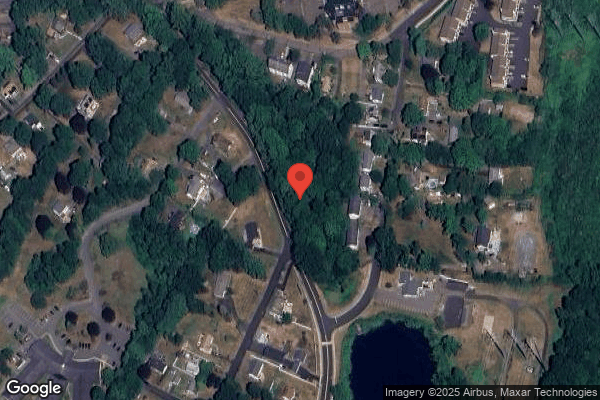
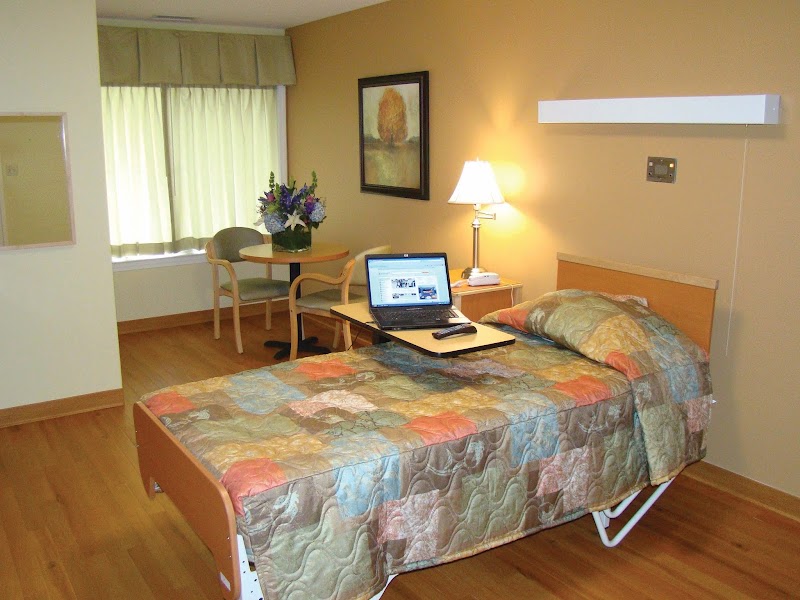
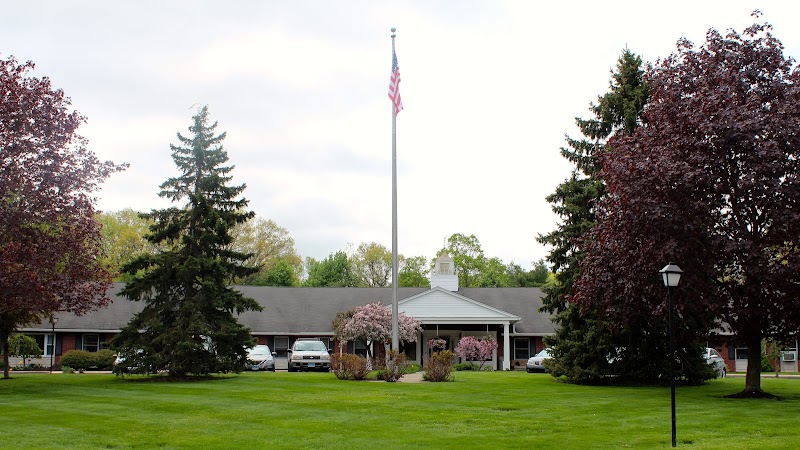
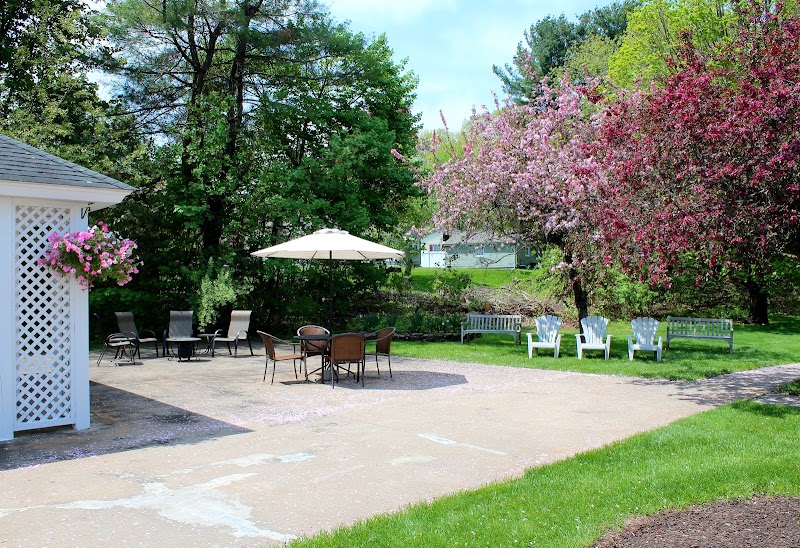
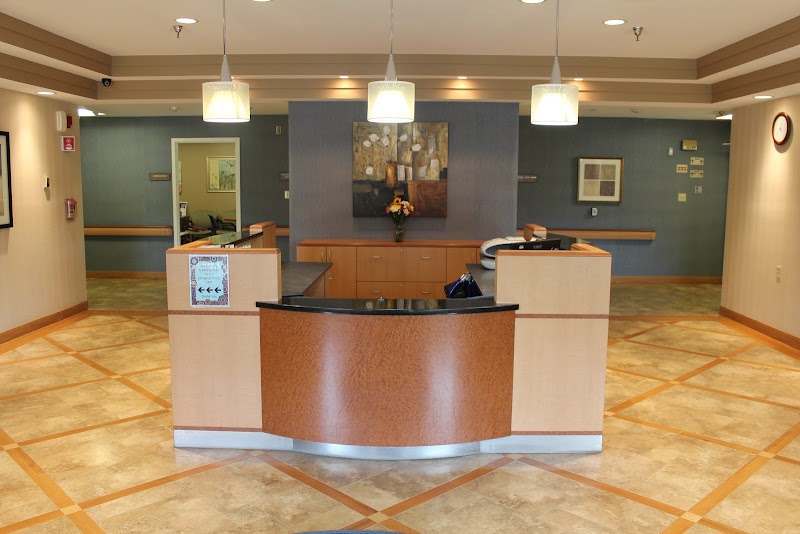
APPLE REHAB COCCOMO

33 CONE AVE, MERIDEN, CT 06450 (203) 238-1606
For profit - Corporation 100 Beds APPLE REHAB Data: November 2025 1 Immediate Jeopardy citation
Trust Grade
16/100
#159 of 192 in CT
Last Inspection: September 2023

Over 2 years since last inspection. Current conditions may differ from available data.

Overview

Apple Rehab Coccomo in Meriden, Connecticut has received a Trust Grade of F, indicating significant concerns about the facility's quality of care. It ranks #159 out of 192 nursing homes in Connecticut, placing it in the bottom half, and #14 out of 17 in its local county, meaning there are only a few options that are better. The facility's condition is stable, with 10 issues reported in both 2023 and 2025, but staffing is a notable weakness, receiving a 2 out of 5 stars and a high turnover rate of 56%, which is concerning compared to the state average of 38%. There have been serious incidents, such as a resident going missing for about six hours before being found in a pond, highlighting critical lapses in supervision and safety protocols, and a medication error where a resident received the wrong medications, posing significant health risks. While the facility has average RN coverage, the combination of these factors suggests families should carefully consider their options before making a decision.

Trust Score
F
16/100
In Connecticut
#159/192
Bottom 18%
Safety Record
High Risk
Review needed
Inspections
Holding Steady
10 → 10 violations
Staff Stability
⚠ Watch
56% turnover. Above average. Higher turnover means staff may not know residents' routines.
Penalties
○ Average
$14,069 in fines. Higher than 64% of Connecticut facilities. Some compliance issues.
Skilled Nurses
⚠ Watch
Each resident gets only 26 minutes of Registered Nurse (RN) attention daily — below average for Connecticut. Fewer RN minutes means fewer trained eyes watching for problems.
Violations
⚠ Watch
34 deficiencies on record. Higher than average. Multiple issues found across inspections.
★☆☆☆☆
1.0
Overall Rating
★★☆☆☆
2.0
Staff Levels
★★★☆☆
3.0
Care Quality
★☆☆☆☆
1.0
Inspection Score
Stable
2023: 10 issues
2025: 10 issues

The Good

  • Full Sprinkler Coverage · Fire safety systems throughout facility
  • No fines on record

Facility shows strength in fire safety.

The Bad

1-Star Overall Rating

Below Connecticut average (3.0)

Significant quality concerns identified by CMS

Staff Turnover: 56%

Near Connecticut avg (46%)

Frequent staff changes - ask about care continuity

Federal Fines: $14,069

Below median ($33,413)

Minor penalties assessed

Chain: APPLE REHAB

Part of a multi-facility chain

Ask about local staffing decisions and management

Staff turnover is elevated (56%)

8 points above Connecticut average of 48%

The Ugly 34 deficiencies on record

1 life-threatening 1 actual harm
Jun 2025 2 deficiencies
CONCERN (D) 📢 Someone Reported This

A family member, employee, or ombudsman was alarmed enough to file a formal complaint

Potential for Harm - no one hurt, but risky conditions existed

Deficiency F0657 (Tag F0657)

Could have caused harm · This affected 1 resident

**NOTE- TERMS IN BRACKETS HAVE BEEN EDITED TO PROTECT CONFIDENTIALITY** Based on clinical record review, facility documentation, facility policy, and interviews for one of three residents (Resident #7...

Read full inspector narrative →
**NOTE- TERMS IN BRACKETS HAVE BEEN EDITED TO PROTECT CONFIDENTIALITY** Based on clinical record review, facility documentation, facility policy, and interviews for one of three residents (Resident #7) reviewed for accidents, the facility failed to ensure the Resident Care Plan (RCP) was revised upon readmission to the facility, to direct the updated transfer status, after the resident sustained a facility acquired fracture due to a fall. The findings include: Resident #7's diagnoses included chronic obstructive pulmonary disease, depression and benign paroxysmal vertigo (crystals in ear that disrupt normal fluid flow causing false sense of motion and brief episodes of dizziness). The quarterly Minimum Data Set (MDS) assessment dated [DATE] identified Resident #7 had moderate cognitive impairment (Brief Interview for Mental Status (BIMS) score of ten), was dependent for shower transfers, required set up/clean up assistance with bed mobility and lower body dressing, was independent with bathing, upper body dressing, personal hygiene, transfers, ambulation of ten feet or less and was dependent with ambulation of 50 feet or greater distance. The RCP dated 4/24/2025, identified Resident #7 was at risk for falls, interventions directed to call if feeling dizzy and wait for assistance, call bell within reach when in bed or beside chair, encourage resident to wait for staff transfers and/or toileting, and transfer per MD orders. A nurses note dated 6/6/2025 at 10:40 AM by the RN supervisor, identified Resident #7 fell at approximately 10:20 AM, was assessed and complained of right knee pain and reported when he/she was attempting to sit down, he/she missed the wheelchair. The APRN was notified and ordered a onetime dose of Tramadol 100 mg (milligrams) and an x-ray of the right knee. The fall risk RCP was revised on 6/6/2025 to include interventions to in-service employees to utilize a gait belt when transferring/ambulating the resident and to have the resident feel for wheelchair arms before sitting down. A nurses note dated 6/6/2025 at 2:02 PM identified the x-ray revealed a right femur fracture, the family was notified, and Resident #7 was transferred to hospital. Review of hospital documents identified Resident #7 had a fall with right femur fracture and underwent ORIF (open reduction internal fixation) surgery on 6/7/2025. On 6/9/2025, physical therapy recommended Resident #7 return to the facility, for Resident #7 to pivot from the bed to the recliner only with assistance of two (2) staff and a rolling walker, and Resident #7 needed constant cues to maintain non-weight bearing status (NWB) on right lower extremity (RLE). A Physician's order dated 6/10/2025 directed transfer assist of two (2) total mechanical lift, non-ambulatory. A Physical therapy note dated 6/12/2025 identified Resident #7 required a slide board transfer from bed to wheelchair with rehab only and max of assist of one (1). Resident #7 participated in sit to stand transfer training from wheelchair to bar with max assist of two (2), assisted to maintain NWB to the RLE, and education was provided to the nursing staff to use a total mechanical lift for transfers. Review of the Resident Care Card (RCC) directed independent with rolling walker, mobility assist of one (1) with gait belt for ambulation and transfer. Interview on 6/16/2025 at 10:33 AM with PT #1 identified that prior to the hospital admission, Resident #7 was a standby assist for transfers, sometimes had dizzy spells, and made staff aware dizziness. PT #1 further indicated facility policy directed gait belt use at the discretion of the staff member. Interview on 6/16/2025 at 11:00 AM with NA #1 identified she was assigned to provide care for Resident #7, she had not cared for Resident #7 since the day of the fall, and she did not know Resident #7's current transfer status. She indicated the RCC did not seem accurate, and she was waiting to clarify transfer status before transferring Resident #7 out of bed. Interview on 6/16/2025 at 11:12 AM with PTA #1 identified she worked with Resident #7 and chose to use a gait belt for safety. She indicated Resident #7's transfer status prior to the fall was supervision with a rolling walker. PTA #1 identified she updated Resident #7's transfer status, after the hospital admission, to an assist of two (2) using a sliding board with therapy and an assist of two (2) using a mechanical lift with nursing. She identified transfer status is communicated to nursing staff. Interview on 6/16/2025 at 1:48 PM with the DNS identified Resident #7 was care planned as a fall risk since admission to the facility. The DNS identified that on 6/6/2025, an aide was supervising Resident #7 while he/she ambulated with a rolling walker and then fell. Resident #7 attempted to sit in his/her wheelchair and missed the seat of the wheelchair then fell and sustained a fracture. The DNS identified that the RCC should have been updated upon readmission to the facility to reflect NWB to RLE and mechanical lift transfer with assistance of two (2) staff. Subsequent to surveyor inquiry on 6/16/2025, the RCC was updated to reflect a transfer assist of two (2) with mechanical lift. Review of facility Care Planning Policy directed in part, a comprehensive and individualized plan of care will be developed for each resident. The care plan is reviewed and updated at least quarterly and as necessary to reflect changes in the resident's status, resident Care Cards will be updated as needed to reflect changes made to the resident's plan of care.
MINOR (C) 📢 Someone Reported This

A family member, employee, or ombudsman was alarmed enough to file a formal complaint

Minor Issue - procedural, no safety impact

Safe Environment (Tag F0584)

Minor procedural issue · This affected most or all residents

**NOTE- TERMS IN BRACKETS HAVE BEEN EDITED TO PROTECT CONFIDENTIALITY** Based on observations, facility documentation, facility policy, and interviews, the facility failed to ensure and maintain a cle...

Read full inspector narrative →
**NOTE- TERMS IN BRACKETS HAVE BEEN EDITED TO PROTECT CONFIDENTIALITY** Based on observations, facility documentation, facility policy, and interviews, the facility failed to ensure and maintain a clean, comfortable, and homelike environment. The findings include: Observations during tour of the facility on 6/10/25 and 6/11/25 identified on units 100, 200, and 300 the floors were soiled, paint was peeling off walls, sinks and faucets were leaking or would not turn on or off, sinks were stained orange and red, closet doors in resident rooms were off the hinges and stained, shower room floor tiles broken or pieces missing, shower rooms had a dark substance covering the edges of the floors, and bathroom lights that needed to be replaced. Observations on unit 100 identified room [ROOM NUMBER] had paint peeling off the walls, the nurses' station floors were soiled with debris, and room [ROOM NUMBER] had a faucet that continuously dripped. Observations on unit 200, rooms [ROOM NUMBERS] had a continuously dripping faucet and the faucet handles did not work. rooms [ROOM NUMBERS] had sinks that were stained orange and red, with continuous running water that would not shut off, and closet doors were off their hinges. Observations on unit 300 identified the residents' shower room had broken and missing floor tiles, the edges of the shower room floor were soiled with a dark substance, room [ROOM NUMBER] had lights out in the bathroom, and hallway floors were soiled with a sticky substance. Interview with Resident #4, who resided on unit 100, on 6/10/25 at 9:00 AM identified that the walls needed to be painted, floors needed to be cleaned, sinks and faucets were old and needed to be replaced. Resident #4 stated some projects had been started but had not been completed. Interview with Resident #5, who resided on unit 300, on 6/10/25 at 10:07 AM identified he/she was very unhappy with the appearance of the facility, that repairs were not being done, and he/she felt the administration was not interested in repairing the building. Resident #5 stated although he/she had spoken to the Administrator who assured repairs were ongoing, no actual repairs could be seen, such as walls that needed to be painted, furniture, sinks, and faucets that needed to be replaced. Interview with Resident #6, who resided on unit 200, on 6/10/25 at 10:30 AM stated he/she had been a resident there for over a year and that the building needed repair. Resident #6 stated he/she felt the facility needed to be updated, and the maintenance staff were not making any repairs to the building. Resident #6 stated he/she had spoken to the Administrator and assured repairs were being made, but shower tiles were broken, sinks leaked, and painting of some areas had been started but not completed. Interview with the Director of Maintenance on 6/10/25 at 11:00 AM stated he had taken the role of Director of Maintenance four (4) months ago and had not been trained by the former Director of Maintenance. The Director of Maintenance stated he was not aware of any projects the former director had started, and he was unable to locate any maintenance logs for repairs or invoices for equipment. The Director of Maintenance stated he was assembling a maintenance logbook for ongoing projects, new projects, and completed projects. Interview with the Director of Housekeeping/Laundry on 6/10/25 at 11:40 AM stated it is her responsibility to ensure the facility was kept clean, and she frequently works in the laundry, and sends a laundry aide to do housekeeping. The Director of Housekeeping/Laundry stated the facility was actively recruiting for housekeeping positions, but that it has been a challenge. The Director stated a cleaning schedule was provided to each housekeeper. Interview with the Interim Administrator on 6/10/25 at 12:30 PM identified it was ultimately the responsibility of the Administrator to ensure the facility maintains a clean, comfortable, homelike, and safe environment, and that the Director of Maintenance was supposed to report to the Administrator any and all repairs that were needed. The Interim Administrator stated the former Director of Maintenance had been terminated and the newly appointed Director of Maintenance and the Corporate Project Manager were in the process of assessing what needed to be repaired immediately, obtaining quotes and invoices to proceed with repairs. Interview with the Corporate Project Manager on 6/10/25 at 1:00 PM identified that the former Director of Maintenance had been terminated, and he was now working with the New Director to make the necessary repairs to the building. Observations made on 6/16/25 on unit 300 identified the floors were soiled and sticky and faucets leaking or would not turn on or off. Interview with a charge nurse on 6/16/25 at 9:00 AM identified that she was sticking to the hallway floor on unit 300, the hall and resident rooms had not been swept, floors washed and she was unable to identify the last time housekeeping cleaned unit 300. Interview and observations on 6/16/25 at 9:09 AM with the Housekeeping Supervisor and Assistant Director of Maintenance. The Housekeeping Supervisor identified the floors were cleaned on Monday, Tuesday, Wednesday evenings and every Saturday and Sunday, and were last done yesterday, Sunday, however the floor did seem sticky and looked like it had been longer than a day since the floors were last cleaned. On 6/16/25 at 9:25 AM interview, observations, and review of facility documentation with the Assistant Director of Maintenance and Project Manager identified that they were aware of repairs were needed. Although requested, a facility policy for building maintenance was not provided.
Feb 2025 2 deficiencies
CONCERN (D) 📢 Someone Reported This

A family member, employee, or ombudsman was alarmed enough to file a formal complaint

Potential for Harm - no one hurt, but risky conditions existed

Deficiency F0694 (Tag F0694)

Could have caused harm · This affected 1 resident

Based on clinical record reviews, facility documentation, facility policies and interviews for one (1) of three (3) sampled residents (Resident #1) who were reviewed for intravenous antibiotic therapy...

Read full inspector narrative →
Based on clinical record reviews, facility documentation, facility policies and interviews for one (1) of three (3) sampled residents (Resident #1) who were reviewed for intravenous antibiotic therapy, the facility failed to secure an order to flush the intravenous line to ensure the entire dose of medication was administered. The findings include: Resident #1's diagnosis included bilateral ankle osteomyelitis, an infection of the bone. A physician's order dated 1/24/25 directed to administer ceftriaxone 2 Grams intravenously one (1) time a day and to flush the lumen with 10 milliliters (ml) before medication and 10ml after medication then 3ml of Heparin. The Advanced Practice Registered Nurse acceptance note dated 1/25/25 identified Resident #1 was alert and oriented to person, place, and time and was admitted for continued intravenous antibiotic therapy. Review of the January 2025 Medication Administration Records failed to reflect an order to flush the intravenous tubing after the ceftriaxone was administered to ensure Resident #1 received the full dosage of antibiotics had been obtained until 1/27/25. A physician's order dated 1/27/25 directed to infuse 50 ml of saline with IV antibiotics every day shift. Interview with Resident #1 on 2/14/25 at 9:55 AM identified on three (3) separate occasions, 1/25/25,1/26/26, and 1/27/25, although the IV tubing had medication in it, the tubing was discarded by nursing, resulting in him/her not receiving the entire dosage. Resident #1 stated his/her responsible party had brought this to the attention of the Director of Nursing (DON). Resident #1 stated on day four (4) the nurses were in fact flushing the line to ensure the full dose was administered. Interview with the DON on 2/14/25 at 11:35 AM identified she spoke to Resident #1's responsible party over the concern that the full dose of antibiotic had not been infused on three (3) separate occasions. The DON stated she spoke to the pharmacy and that a secondary set was recommended, or increase the amount infused on the pump. The DON stated the facility does not run secondary infusions or flush the IV tubing at the end of the infusion. Interview with the Pharmacist (RPH) on 2/14/25 at 11:53 AM identified she spoke with the DON and recommended a secondary set for administration or flush the line to ensure Resident #1 received the full ordered dose, and there was no extra fluid in the medication bag. The RPH identified 12ml of medication not flushed through the tubing equaled 24% of the medication or 480mg out of 2000mg not infused, over three (3) consecutive days a total of 1440mg of medication had not been infused. Medication Administration policy identified all medications shall be administered safely and accurately in accordance with physician orders, facility protocols, and applicable state and federal regulations.
MINOR (B) 📢 Someone Reported This

A family member, employee, or ombudsman was alarmed enough to file a formal complaint

Minor Issue - procedural, no safety impact

Grievances (Tag F0585)

Minor procedural issue · This affected multiple residents

Based on observations and interviews for one (1) sampled resident (Resident #1) who had reported the television remote controls were in disrepair, the facility failed to act on the grievance and repla...

Read full inspector narrative →
Based on observations and interviews for one (1) sampled resident (Resident #1) who had reported the television remote controls were in disrepair, the facility failed to act on the grievance and replace the television remote control. The findings include: Observations during a tour of the resident units on 2/14/25 at 1:15 PM identified Residents' #1, #4, and #5 television remote controls had missing pieces to the back or had been taped together. Interview with Residents #1, # 4, and #5 identified they had reported to several staff members that their television remote control boxes were broken or had missing pieces, and they were told the controls were working and there were no other control boxes available. In an interview on 2/14/25 at 1:45 PM with the Regional Director of Maintenance identified he was unaware there were either broken television remote controls, ones with missing pieces, or why some were held together with tape and could not identify why the remote controls had not been replaced. The Regional Director of Maintenance stated he was unable to locate the maintenance logbook to identify if the remote controls had been addressed and he would conduct an audit and identify any further issues with the remotes. The Regional Director of Maintenance identified through an audit that 15 of 100 remote controls were either taped or had a piece to the back of the remote missing and he was placing an order to replace all the remotes.
Jan 2025 6 deficiencies 1 IJ
CRITICAL (J) 📢 Someone Reported This

A family member, employee, or ombudsman was alarmed enough to file a formal complaint

Immediate Jeopardy (IJ) - the most serious Medicare violation

Accident Prevention (Tag F0689)

Someone could have died · This affected 1 resident

**NOTE- TERMS IN BRACKETS HAVE BEEN EDITED TO PROTECT CONFIDENTIALITY** Based on clinical record review, facility documentation review, facility policy review, and interviews for one of eight resident...

Read full inspector narrative →
**NOTE- TERMS IN BRACKETS HAVE BEEN EDITED TO PROTECT CONFIDENTIALITY** Based on clinical record review, facility documentation review, facility policy review, and interviews for one of eight residents (Resident #1) reviewed for accidents, the facility failed to ensure staff supervision was conducted timely to identify a missing resident's whereabouts, failed to act timely when a resident was identified to be missing, and failed to follow their own policy and continue to search for a missing resident whose whereabouts were unknown for approximately six hours. The facility was later notified the resident was found waist deep in an icy pond. The failures resulted in a finding of Immediate Jeopardy. The finding includes: Resident #1's diagnoses included metabolic encephalopathy, dementia, depression, and anxiety disorder, and a history of alcohol abuse. The Resident Care Plan (RCP) dated 11/18/2024 identified Resident #1 had impaired memory, impaired recall and impaired decision-making skills related to dementia. Interventions directed to orient to room/staff, offer support and reassurance, and gentle reminders when resident is confused or forgetful. Record review identified Resident #1 was responsible for him/herself (had no Power of Attorney or court appointed Conservator). Review of the Capacity to Meet Minimal Basic Needs assessment dated [DATE] identified Resident #1 did not have the capacity to meet his/her minimal basic needs in the community. Resident #1 was identified to have a history or other known behaviors that could place him/her at risk of seeking unescorted exit from a supervised setting related to recent history of substance use/relapse risk. The quarterly Minimum Data Set (MDS) assessment dated [DATE] identified Resident #1 had a Brief Interview for Mental Status (BIMS) score of ten out of fifteen (10/15), indicative of moderately impaired cognition and was independent with ADL's (activities of daily living) and mobility. Physician orders dated 11/28/2024 directed Resident #1 was approved for LOA (leave of absence) with a responsible party. Elopement risk assessment dated [DATE] identified Resident #1 was not at risk for elopement from the facility. Facility reportable event report dated 12/28/2024 at 5:14 PM identified on 12/27/2024 at 8:15 PM the facility became aware (event first known by the facility at 8:15 PM) that Resident #1 left the facility premises under an LOA order requiring accompaniment by a responsible party. The resident accessed a vehicle on the premises and drove off unaccompanied. He/she was later involved in a motor vehicle accident. Resident #1 was evaluated at a local clinic and discharged with no injuries. Law enforcement was involved, and the resident was discharged from the clinic. Review of local weather reports identified the temperature range on 12/27/2024 between 3 and 8 PM was 30 to 38 degrees Fahrenheit (F). Emergency medical services (EMS) report dated 12/27/2024 at 7:01 PM identified per fire fighters that rescued patient, the patient did not follow their directions, got out of the car, fell through the ice, and was waist deep in the water for approximately five (5) minutes before able to be extricated. Body temperature recorded was 97.5 F. Patient had been dried off and is warm to touch. Patient stated was visiting a parent, then stated was visiting a friend, then stated came for medical care. Initially denied alcohol use, then stated had one (1) glass of wine, then stated given several glasses of coconut vodka by a nurse, and stated has been going through a rough time and drinking heavily. Adamant about not knowing the event. EMS fire department report dated 12/27/2024 at 7:03 PM identified EMS responded to a vehicle in the water, with one (1) occupant. Upon arrival, rescue crews had removed the patient from the water, removed wet clothing, applied hot packs under the patient's arms and applied warming blankets, body temperature 97.3 F. First responders reported the patient struck several mailboxes, a rock and then ended up in the pond. Resident #1 initially appeared somnolent, reluctant to follow directions or answer questions, reported some neck tenderness, was alert to name and date of birth only, and was unaware of the event. Resident #1 admitted to consuming three (3) vodka drinks. The incident summary dated 12/31/2024 identified Resident #1 was alert and oriented (BIMS of 15 out of 15). The summary indicated on 12/27/2024 Resident #1 departed the facility premises alone, despite having an LOA order requiring accompaniment by a responsible party. Resident #1 accessed a vehicle on the premises, which the facility later determined belonged to the resident. While off premises, the resident was involved in a motor vehicle accident, was found to have no injuries but had an alcohol level of 268. The clinic discharged the resident to a local shelter on the morning of 12/28/2024. The summary further indicated Resident #1 called the facility on 12/30/2024, requested return, and staff transported Resident #1 back to the facility and was re-admitted . Interview and review of facility security video footage with the Administrator and DON on 1/6/2024 at 1:05 PM identified the video time stamped 12/23/2024 at 6:34 PM showed Resident #1 driving into the parking lot and parking. Interview identified the facility had reviewed additional video footage dated 12/27/2024 at 1:53 PM that identified Resident #1 left the nursing unit, went to Receptionist #1, and then exited the facility through the main lobby doors at 2:04 PM. Resident #1 was then seen at 2:06 PM driving off the facility grounds and had no coat or personal belongings with him/her. Record review identified staff were unaware of Resident #1's whereabouts between 2:04 PM to 8:15 PM (6 hours and 11 minutes), when they received a call from the police informing them that Resident #1 was involved in a motor vehicle accident. Interview with Receptionist #1 on 1/6/2025 at 12:30 PM identified on 12/26/2024 when Resident #1 requested to obtain items from his/her car, Receptionist #1 called the DON for direction regarding allowing the resident to go outside alone to obtain items from her car. Receptionist #1 stated the DON indicated Resident #1 was allowed to go to his/her car alone. Interview identified Resident #1 made two (2) or three (3) trips to his/her car and brought multiple bags back into the facility. Receptionist #1 stated she did not know Resident #1 had a car prior to 12/26/2024, and she also notified LPN #4/charge nurse who said she did not know the resident had a car. On 12/27/2024 when Resident #1 requested to obtain items from his/her car, she allowed the resident to go to his/her car alone because the DON had directed on 12/26/2024 that the resident could go to his/her car alone. Receptionist #1 stated Resident #1 was wearing shoes, pants, and a shirt, and was not dressed to indicate he/she was leaving the facility - had no coat or purse. Resident #1 went to his/her vehicle, and Receptionist #1 stated she did not see Resident #1 return into the facility, and she did not ensure the resident returned back into the facility. Her shift ended at 3:15 PM, and she did not notify anyone that Resident #1 had gone outside to his/her car. Receptionist #1 confirmed she did not follow-up to look outside to see if Resident #1's vehicle was gone or where Resident #1 was, because she did not know the make, model, and color of the car. Interview with SW #1 on 1/7/2025 at 9:00 AM identified on 12/27/2024, at 5:30 PM (3 hours and 26 minutes after the resident went to his/her car), SW #1 went to see Resident #1 to discuss discharge planning and identified Resident #1 was not in his/her room. SW #1 began to search for Resident #1 throughout the building in all the common areas, checked the visitor log, and other resident rooms (friends) and was unable to locate Resident #1. SW #1 notified the DON (was in the facility), RN #2/supervisor, LPN #2/charge nurse, and any NAs she saw that she was looking for Resident #1. SW #1 instructed LPN #2 and the nurse aides (NAs) to help with the search but was unable to confirm if they searched; Receptionist #1 stated when she told the NAs she could not locate Resident #1, they responded that Resident #1 was probably playing cards somewhere. Afterwards, SW #1 met with the DON and Administrator with an update, and the DON directed SW #1 to call Resident #1's cell phone; Resident #1 did not answer the phone, and SW #1 continued to search the facility. SW #1 confirmed she only searched the inside of the facility, looked through multiple windows to view the outside of the facility, but did not search outside of the facility. SW #1 indicated she continued to search the facility and resumed her normal duties until leaving the facility at approximately 8:30 PM, without locating Resident #1. SW #1 identified she did not call any codes overhead in accordance with facility policy (i.e. Dr. Hunt), did not call the police, and did not search the outside premises while leaving the facility. Interview with RN #2 on 01/07/2025 at 9:10 AM identified on 12/27/2024 she was the supervisor when SW #1 notified her that she was looking for Resident #1 to discuss discharge planning. RN #2 indicated she searched inside the facility but was unable to locate the resident. RN #2 called Resident #1's cell phone, but there was no answer. RN #2 identified she did not call a code overhead for a missing resident to alert all staff (i.e. Dr. Hunt), and she did not call the local police or search the outside of the facility. RN #2 indicated that since Resident #1 was alert and oriented, was not conserved and was self-responsible, and thought the resident had independent LOA privileges, that she believed Resident #1 must have left the building and forgot to sign out in the LOA book. RN #2 identified that at approximately 8:15 PM, a Police Officer from another town (26 miles away) identified Resident #1 was intoxicated and drove his/her vehicle into an icy pond and was being taken to the local area hospital. Interview with Regional RN #2 on 1/6/2025 at 6:33 PM identified Resident #1 did not elope from the facility, and stated Resident #1 had an unauthorized absence from the facility. Regional RN #2 stated although Resident #1 was alert with a BIMS of 15 (on 12/30/2024), staff should have done rounds at the beginning and end of their shifts, and every two (2) hours to ensure all residents whereabouts, and Resident #1 should have been identified as missing prior to 5:30 PM. Interview with Regional RN #1 and Regional RN #2 with the Administrator and DON present on 1/7/2025 at 12:30 PM identified a missing resident was defined as the staff's inability to find a resident, but a resident's cognitive status affects the immediacy. The facility process for a missing resident included following the facility policy: searching the facility inside and the outside grounds, checking the LOA sign-out book, calling the resident's contacts, and to follow the facility policy regarding a missing resident. Regional RN #1 indicated an unauthorized leave was defined as a resident who is alert and oriented, capable of meeting their needs on the outside, leaving the building without signing out. The facility process when a resident has unauthorized leave was to call the resident's phone and contacts listed, review the sign-out book, interview staff and residents regarding whereabouts, call the shelters/hospital/police, and call the physician. Although Regional RN #1 defined differences with missing residents versus unauthorized leaves, Regional RN #1 identified that all missing residents should be treated the same - if it was a missing resident or unauthorized leave. Regional RN #1 identified for Resident #1's event on 12/27/2024, she was not able to confirm that staff called a code overhead (i.e. Dr. Hunt), called the police, or performed a search of the outside of the premises as per facility policy. Interview with DON on 1/7/2025 at 3:35 PM identified she was notified on 12/26/2024 that Resident #1 had the keys to his/her vehicle located on the premises, but did not question further or implement any interventions due to Resident #1 being alert and orient, no history/behaviors of elopement, and was scheduled to be discharged in the next week. The DON stated she was in the building on 12/27/2024 when SW #1 notified her that she could not locate Resident #1. The DON went to RN #2 to see if she had any additional information on the resident's whereabouts, continued to search inside the facility and instructed RN #2 and SW #1 to contact Resident #1's cell phone and listed contacts; the family was unable to be reached. DON indicated she told to SW #1 and RN #2 to notify the police if unable to find Resident #1 but was unable to verify if she gave them a specific timeframe of when to call. The DON stated her expectation was that the staff would call within one (1) to two (2) hours of not getting in touch with Resident #1 or locating him/her. The DON stated she left the building and went home at around 6 or 6:30 PM without locating Resident #1, and without paging overhead to alert all staff the resident was missing, without searching the outside grounds and without notifying the local police. The DON further stated she received a call from RN #2 at approximately 8 or 8:30 PM that Resident #1 was found by the police. Email interview with the local Police Department Records Clerk (PRC) #1 on 1/8/2025 at 9:19 AM identified the local police department had no records in their system that they were notified Resident #1 was unable to be located by facility staff on 12/27/2024. Review of the Missing Resident Policy dated 8/2023 identified the facility will provide rapid interventions when it is determined that a resident's whereabouts are unknown. The procedure identified the facility will: notify the Nursing Supervisor immediately, the supervisor will alert facility staff by overhead paging, attention all staff, Dr. Hunt is looking for (resident's name) and repeat the page. A room-to-room check will be instituted immediately on all units and all personnel in the building will join in the search for the missing resident. If the resident is not located after the internal search, assigned personnel will institute a search of the outside grounds and surrounding areas. The supervisor will notify the DON and Administrator. The police will be notified (911) and provide a full description, a photograph of the resident and any pertinent medical issues. Although requested, the facility did not provide a policy for unauthorized resident absence.
CONCERN (D) 📢 Someone Reported This

A family member, employee, or ombudsman was alarmed enough to file a formal complaint

Potential for Harm - no one hurt, but risky conditions existed

Free from Abuse/Neglect (Tag F0600)

Could have caused harm · This affected 1 resident

**NOTE- TERMS IN BRACKETS HAVE BEEN EDITED TO PROTECT CONFIDENTIALITY** Based on clinical record review, facility documentation review, facility policy review, and interviews for one of two residents ...

Read full inspector narrative →
**NOTE- TERMS IN BRACKETS HAVE BEEN EDITED TO PROTECT CONFIDENTIALITY** Based on clinical record review, facility documentation review, facility policy review, and interviews for one of two residents (Resident #3) reviewed for abuse, the facility failed ensure the resident was free from verbal mistreatment. The findings include: Resident #3 was admitted with diagnoses that included attention and concentration deficit and asthma. A quarterly MDS assessment dated [DATE] identified Resident #3 had a BIMS of 11 indicating moderately impaired cognition and required assistance with ALDs. A resident care plan dated 9/10/2024 identified Resident #3 had ineffective coping with accusatory behaviors due to cognitive impairment. Interventions included assist of two (2) staff with care, explain all procedures, speak simply and to offer support and reassurance. A facility reportable event (RE) form dated 11/11/2024 at 7:04 PM identified on 11/10/2024 at 12 PM, Person #3 reported LPN #3 had made inappropriate comments to Resident #3. An RN assessment identified no injuries, LPN #3 was suspended pending investigation and social work provided emotional support. Review of the State Agency reportable event identified Resident #3 reported LPN #3 said the resident was here because he/she did cocaine and snorted so much it caused him/her crazy. LPN #3 denied the allegation, and what was allegedly said to the resident was he/she was at the facility because he/she was a crack head and all he/she did was snort up your nose. The facility RE report summary dated 11/20/2024 identified the facility was notified on 11/10/2024 that LPN #3 was alleged to make inappropriate remarks to Resident #3. The facility investigation concluded inappropriate remarks were made. Interview and review of her facility statement with NA #3 on 1/8/2025 at 11:58 AM identified on 11/10/2024 at 11:30 AM when observed Resident #3 in her/his wheelchair at the nurse's station and Resident #3 and LPN #3 were arguing loudly. NA #3 stated she heard LPN #3 say to Resident #3 that he/she was a crack head and all Resident #3 did was snort up his/her nose and that is why Resident #3 had to be at the facility. Resident #3 responded to LPN #3 with comments, and LPN #3 then stated to Resident #3 you should be in jail where you could s*** d***. NA #3 stated NA #4 and #5 also were nearby when the incident occured. NA #3 then moved Resident #3 into the hallway as Resident #3 made a comment to LPN #3. LPN #3 then came to Resident #3, pulled Resident #3's wheelchair back to the nurse's station, and while standing in front of Resident #3 with her finger in Resident #3's face, she asked Resident #3 if he/she was still going to jail. LPN #3 further stated that her ex was a drug dealer. NA #3 walked away, stated she was unsure what to do, and she did not report the incident to her supervisor immediately. She later saw a family member visit about 2 PM and Person #3 asked NA #3 if she knew what happened, and NA #3 told Person #3 what she had witnessed. NA #3 stated after Person #3 reported the incident, RN #2 (nursing supervisor) asked her to write a statement. Interview and review of written statement with NA #4 on 1/8/2025 at 10:45 AM identified he assisted NA #5 to complete AM care for Resident #3 on 11/10/2024 around 10:00 AM; LPN #3 was also in the room and provided redirection as Resident #3 was getting agitated. Resident #3 was calling staff derogatory names and yelling at them as they provided care. NA #4 stated Resident #3 routinely yells, calls out, can be physically aggressive and make derogatory statements towards staff during care. After the care was provided, Resident #3 appeared calmer and was transferred to the wheelchair. NA #4 stated about 11:30 AM, he was at the nurse's station charting when he heard LPN #3 and Resident #3 loudly arguing and that LPN #3 told Resident #3 that she/he was at the facility because Resident #3 had gotten high on coke. NA #4 stated he then left the area to answer a call light and he did not report the incident to the supervisor/RN #3. NA #4 stated he then walked away from the area to answer a call light, and he did not report the incident when it occurred at 11:30 AM. About 3 PM, RN #2 asked him if he had witnessed an inappropriate interaction between Resident #3 and LPN #3 and asked him to write a statement, and he wrote his statement. Interview and facility documentation review with RN #2/day shift supervisor on 1/8/2025 at 12:30 PM identified on 11/10/2024 Person #3 reported a back and forth that occurred between Resident #3 and LPN #3, and she could not recall the specific details. RN #2 stated she notified the DON, but she did not ask NA #3 and #4 for statements based on Person #3's concerns, and stated she should initiate a facility grievance. Interview with the DON on 1/8/2025 at 1:00 PM identified that on 11/10/2024 at 6:30 PM, the evening supervisor, RN #4, called her and told her Resident #3's family member requested she call the police about a reported earlier inappropriate interaction with Resident #3 and LPN #3. The DON asked RN #4 for the names of the day shift staff on the Resident #3's unit and their phone numbers, directed RN #4 to notify the police, directed to make sure LPN #3 was not working on 11/11/2024, and then began to contact all the identified staff. The facility investigation identified LPN #3 had made the derogatory statements to Resident #3 and LPN #3's employment was terminated. Although attempted, interviews with NA #5 and LPN #3 were not obtained during survey. The facility Abuse, Resident dated 7/23/2023 directed in part, that abuse or mistreatment of any kind toward a resident was strictly prohibited. Abuse was defined as the willful infliction of injury, unreasonable confinement, intimidation with resulting physical pain or mental anguish. Verbal abuse was defined as the use of oral, written or gestured language that included disparaging and derogatory terms to residents regardless of their disability or ability to comprehend. The facility Resident's [NAME] of Rights Policy directed in part that residents have the righty to be treated with consideration, respect and full recognition of their dignity and individuality. Facility documentation review identified staff education was initiated on 11/15/2024 regarding the facility abuse policy, code of conduct, customer service and de-escalation techniques. A QAPI meeting was held on 11/10/2024, and audits were initiated on 11/20/2024. Based on review of facility documentation, past non-compliance was identified.
CONCERN (D) 📢 Someone Reported This

A family member, employee, or ombudsman was alarmed enough to file a formal complaint

Potential for Harm - no one hurt, but risky conditions existed

Report Alleged Abuse (Tag F0609)

Could have caused harm · This affected 1 resident

**NOTE- TERMS IN BRACKETS HAVE BEEN EDITED TO PROTECT CONFIDENTIALITY** Based on clinical record review, facility documentation review, facility policy review, and interviews for one of two residents ...

Read full inspector narrative →
**NOTE- TERMS IN BRACKETS HAVE BEEN EDITED TO PROTECT CONFIDENTIALITY** Based on clinical record review, facility documentation review, facility policy review, and interviews for one of two residents (Resident #3) reviewed for abuse, the facility failed ensure staff reported an allegation of abuse timely, and the facility failed to notify the State Agency timely when it became aware of an allegation of abuse. The findings include: Resident #3 was admitted with diagnoses that included attention and concentration deficit and asthma. A quarterly MDS assessment dated [DATE] identified Resident #3 had a BIMS of 11 indicating moderately impaired cognition and required assistance with ALDs. A resident care plan dated 9/10/2024 identified Resident #3 had ineffective coping with accusatory behaviors due to cognitive impairment. Interventions included assist of two (2) staff with care, explain all procedures, speak simply and to offer support and reassurance. A facility reportable event (RE) form dated 11/11/2024 at 7:04 PM identified on 11/10/2024 at 12 PM, Person #3 reported LPN #3 had made inappropriate comments to Resident #3. A RN assessment identified no injuries, LPN #3 was suspended pending investigation and social work provided emotional support. The report further indicated the facility first knew about the incident on 11/10/2024 at 6:30 PM (24 hours and 34 minutes prior to the report). Review of the State Agency reportable event identified Resident #3 reported LPN #3 said the resident was here because he/she did cocaine and snorted so much it caused him/her to be crazy. LPN #3 denied the allegation, and what was allegedly said to the resident was he/she was at the facility because he/she was a crack head and all he/she did was snort up your nose. Interview and review of her facility statement with NA #3 on 1/8/2025 at 11:58 AM identified on 11/10/2024 at 11:30 AM when observed Resident #3 in her/his wheelchair at the nurse's station and Resident #3 and LPN #3 were arguing loudly. NA #3 stated she heard LPN #3 say to Resident #3 that he/she was a crack head and all Resident #3 did was snort up his/her nose and that is why Resident #3 had to be at the facility. Resident #3 responded to LPN #3 with comments, and LPN #3 then stated to Resident #3 you should be in jail where you could s*** d*** and Resident #3 became quiet. NA #3 stated NA #4 and #5 also were nearby. NA #3 then moved Resident #3 into the hallway as Resident #3 made a comment to LPN #3. LPN #3 then came to Resident #3, pulled Resident #3's wheelchair back to the nurse's station, and while standing in front of Resident #3 with her finger in Resident #3's face she asked Resident #3 if he/she was still going to jail. LPN #3 further stated that her ex was a drug dealer. NA #3 walked away and stated she was unsure what to do, and she did not report the incident to her supervisor immediately. She later saw a family member visit about 2 PM (2 hours and 30 minutes after the witnessed incident) and Person #3 asked NA #3 if she knew what happened, and NA #3 told Person #3 what she had witnessed. NA #3 stated after Person #3 reported the incident, RN #2 (nursing supervisor) asked her to write a statement. Interview and review of written statement with NA #4 on 1/8/2025 at 10:45 AM identified he assisted NA #5 to complete am care for Resident #3 on 11/10/2024 at around 10:00 AM, LPN #3 was also in the room and provided redirection as Resident #3 was getting agitated. Resident #3 was calling them derogatory names and yelling at them as they provided care. NA #4 stated Resident #3 routinely yells, calls out, can be physically aggressive and make derogatory statements towards staff during care. After the care was provided, Resident #3 appeared calmer and was transferred to the wheelchair. NA #4 stated about 11:30 AM, he was at the nurse's station charting when he heard LPN #3 and Resident #3 loudly arguing and that LPN #3 told Resident #3 that she/he was at the facility because Resident #3 had gotten high on coke. NA #4 stated he then left the area to answer a call light, and he did not report the incident to the supervisor/RN #3. NA #4 stated he then walked away from the area to answer a call light, and he did not report the incident when it occurred at 11:30 AM. About 3 PM (3 hours and 30 minutes after the witnessed incident), RN #2 asked him if he had witnessed an inappropriate interaction between Resident #3 and LPN #3 and asked him to write a statement, and he wrote his statement. Interview and facility documentation review with RN #2/day shift supervisor on 1/8/2025 at 12:30 PM identified on 11/10/2024 Person #3 reported a back and forth that occurred between Resident #3 and LPN #3, and she could not recall the specific details. RN #2 stated she notified the DON, but she did not ask NA #3 and #4 for statements based on Person #3's concerns, and stated she should initiate a facility grievance. Interview and facility documentation review with RN #4/evening shift supervisor on 1/8/2025 at 1:10 PM identified on 11/10/2024 Person #3 reported a back and forth that occurred between Resident #3 and LPN #3, and she could not recall the specific details, and she asked NA #3 and NA #4 to write statements. RN #4 further stated that she notified the DON of the allegation. Interview with the DON on 1/8/2025 at 1:00 PM identified that on 11/10/2024 at 6:30 PM, the evening supervisor, RN #4, called her and told her Resident #3's family member requested she call the police about a reported earlier inappropriate interaction with Resident #3 and LPN #3. RN #4 indicated RN #3 had initiated a grievance during the day shift. The DON stated NA #3 and NA #4 should have immediately reported the incident to the supervisor when it occurred, and she was unable to explain why they did not report it immediately when it occurred at 11:30 AM. The DON further stated, RN #3 should have notified her at the time of the family's concern so she could have directed RN #3 what actions to take at that time. Review of the State Agency online reportable event submitted by the facility for this incident identified a time/date stamp of 11/11/2024 at 7:04 PM. The DON stated that although she had identified an allegation of abuse the morning of 11/11/2024 before lunch, and allegations of abuse are required to be submitted within two (2) hours, the DON stated she had to review the information with the facility's corporate services before she could submit the information to the State Agency. Although attempted, interviews with NA #5 and LPN #3 were not obtained during survey. The facility Abuse, Resident dated 7/23/2023 directed in part, abuse was defined as the willful infliction of injury, unreasonable confinement, intimidation with resulting physical pain or mental anguish. Verbal abuse is defined as the use of oral, written or gestured language that included disparaging and derogatory terms to residents regardless of their disability or ability to comprehend. Anyone witnessing and/or having knowledge of abuse or mistreatment of any kind towards a resident will report the incident immediately to the supervisor, DON and Administrator. The Administrator or DON or designee will immediately conduct an investigation upon submission of a report to the state health authority within 2 hours of notification of the alleged abuse. Facility documentation review identified staff education was initiated on 11/15/2024 regarding the facility abuse policy, code of conduct, customer service and de-escalation techniques. A QAPI meeting was held on 11/10/2024, and audits were initiated on 11/20/2024. Based on review of facility documentation, past non-compliance was identified.
CONCERN (D) 📢 Someone Reported This

A family member, employee, or ombudsman was alarmed enough to file a formal complaint

Potential for Harm - no one hurt, but risky conditions existed

Deficiency F0657 (Tag F0657)

Could have caused harm · This affected 1 resident

**NOTE- TERMS IN BRACKETS HAVE BEEN EDITED TO PROTECT CONFIDENTIALITY** Based on clinical record review, facility documentation review, facility policy review, and interviews for one of three resident...

Read full inspector narrative →
**NOTE- TERMS IN BRACKETS HAVE BEEN EDITED TO PROTECT CONFIDENTIALITY** Based on clinical record review, facility documentation review, facility policy review, and interviews for one of three residents (Resident #2) reviewed for wounds, the facility failed to ensure the resident care plan was revised timely to include resident refusals of wound care. The findings include: Resident #2's diagnoses included a non-pressure chronic left foot ulcer and diabetes mellitus. The quarterly Minimum Data Set (MDS) assessment dated [DATE] identified Resident #2 had a Brief Interview for Mental Status (BIMS) score of fifteen out of fifteen (15/15), indicative of being cognitively intact, and had two (2) unstageable diabetic ulcers, had pressure reducing devices, and received nutrition and ointments/medication for pressure ulcer/injury care. The Resident Care Plan (RCP) dated 9/19/2024 identified Resident #2 was at risk for skin breakdown due to decreased mobility, incontinence, poor nutrition, poor circulation, pronounced body prominences, and altered sensation. Interventions directed use of a pressure reducing mattress and cushion on wheelchair, consult with wound specialist as ordered/needed, apply barrier cream with incontinent care, and observe for signs of skin breakdown. Review of the physician orders identified the following: 1. Physician orders dated 8/20/2024 directed for Resident #2, to cleanse left Achilles wound with normal saline, apply skin prep to peri wound, followed by Dakins Solution ¼ strength-soaked gauze, and cover with dry sterile dressing, twice a day, and as needed. 2. Physician orders dated 9/12/2024 directed to provide Resident #2 with Juven beverage, twice a day. 3. Physician orders dated 9/12/2024 directed for Resident #2 to use foam boots to offload heels at all times when in bed and in chair. 4. Physician orders dated 10/4/2024 directed for Resident #2, to cleanse wound with warm soap and water and then pat dry, peri wound care: apply triad (zinc ointment) to peri wound, apply primary dressing, apply Santyl ointment 2mm thick layer to wound only (nickel thick) and place a secondary dressing (hydrofera) blue and apply abdominal pad cover with roll gauze, change dressing daily and as needed. Review of the Treatment Administration Record (TAR) for September, October, November, December 2024 identified the following: • Resident #2 refused wound dressing change on 9/4 and 10/7/2024. • Resident #2 refused Juven (therapeutic beverage for wound healing) on 10/17, 10/27, 10/28, 10/31, 11/10, 11/24, and 12/4/2024. Clinical record review identified the following: • Review of nursing notes for the month of October 2023 identified Resident #2 refused to wear his/her multipodus boots on 10/3/2024. Review of the RCP failed to identify a care plan for refusals of care and medications or wound care treatments. Interview with the DON on 1/2/2024 at 1:00 PM identified if a resident exhibitis behaviors of repetitive refusals, the resident should be care planned for refusing care with interventions to include addressing the refusals. The DON identified she was unaware that Resident #2 refused medications and wound dressing changes and indicated Resident #2's care plan should include refusals of care. Review of the Care Plan Policy dated 10/30/2020 directed in part, a comprehensive and individualized plan of care will be developed for each resident. The care plan will guide caregivers to assist residents to achieve or maintain their highest practical level of well-being.
CONCERN (D) 📢 Someone Reported This

A family member, employee, or ombudsman was alarmed enough to file a formal complaint

Potential for Harm - no one hurt, but risky conditions existed

Pressure Ulcer Prevention (Tag F0686)

Could have caused harm · This affected 1 resident

**NOTE- TERMS IN BRACKETS HAVE BEEN EDITED TO PROTECT CONFIDENTIALITY** Based on clinical record review, facility documentation review, facility policy review, and interviews for one of three resident...

Read full inspector narrative →
**NOTE- TERMS IN BRACKETS HAVE BEEN EDITED TO PROTECT CONFIDENTIALITY** Based on clinical record review, facility documentation review, facility policy review, and interviews for one of three residents (Resident #2) reviewed for wounds, the facility failed to act timely on a wound consultant order, and failed to ensure a low air-loss mattress was maintained in place in accordance with wound consultant orders. The findings include: Resident #2's diagnoses included a non-pressure chronic left foot ulcer and diabetes mellitus. Review of the Wound Center Physician Notes and Orders dated 9/11/2024 identified Resident #2 had a left lower extremity unstageable ulceration and a left lower extremity ankle/Achilles stage four (4) ulceration. The wound center orders directed Resident #2 required pressure relief devices to include waffle booties, pressure relief cushion on wheelchair (ROHO), and a low air-loss mattress. The quarterly Minimum Data Set (MDS) assessment dated [DATE] identified Resident #2 had a Brief Interview for Mental Status (BIMS) score of eight out of fifteen (08/15), indicative of mildly impaired cognition and had two (2) unstageable diabetic ulcers, had pressure reducing devices, and received nutrition and ointments/medications for pressure ulcer/injury care. The Resident Care Plan (RCP) dated 9/19/2024 identified Resident #2 was at risk for skin breakdown due to decreased mobility, incontinence, poor nutrition, poor circulation, pronounced body prominences, and altered sensation. Interventions directed use of a pressure reducing mattress and cushion on wheelchair, consult with wound specialist as ordered/needed, apply barrier cream with incontinent care, and observe for signs of skin breakdown. Record review identified although the wound consultant order dated 9/11/2024 directed use of a low air-loss mattress, the order was not obtained from the attending (in-house physician) for use of the specialized mattress. Interview with RN #3 and DON on 1/2/2025 at 12:15 PM identified Resident #2 was seen weekly at a wound clinic for his/her left lower extremity wounds and Resident #2 had multiple pressure relieving interventions, including a low air-loss mattress. RN #3 described a low air-loss mattress at this facility would have a mechanical device at the end of the bed that would require staff to enter settings based on the resident's weight. RN #3 stated there were no other types of the low air-loss mattresses use in the facility. Intermittent observations on 1/2/2025 during the 7:00 AM to 3:00 PM shift identified Resident #1 was on a regular bed mattress, without the benefit of being on a low air-loss mattress as per physician orders. Interview and observation of Resident #2's bed with RN #3 and DON on 1/2/2025 at 12:30 PM confirmed the mattress on Resident #2's bed was a standard mattress, and Resident #2 did not have the low air-loss mattress in place as ordered. Subsequent to surveyor inquiry, RN #3 and the DON identified a low air-loss mattress would be placed on the bed on 1/2/2025. Interview with RN #3 on 1/2/2025 at 1:30 PM identified she was responsible for ensuring wound care treatments/plans are followed for the residents. RN #3 stated she could not identify the date she performed her last wound audit, but stated Resident #2 had a low air-loss mattress in place on the date she performed the audit. RN #3 stated after observation with surveyor at 12:30 PM, she identified on an unknown dated Resident #2's low air-loss mattress device had broken and staff had exchanged the mattress with a regular mattress, due to not having another low air-loss mattress device in stock. RN #3 stated the facility had additional low air-loss mattresses in supply and the correct mattress would be applied to the bed. Review of the undated facility Wound and Skin Care Policy directed in part, the facility will provide quality resident care and outcomes by maintaining skin integrity and promoting wound healing utilizing a skin/wound care protocol. Although requested, a facility policy regarding following physician orders was not provided.
CONCERN (D) 📢 Someone Reported This

A family member, employee, or ombudsman was alarmed enough to file a formal complaint

Potential for Harm - no one hurt, but risky conditions existed

Medical Records (Tag F0842)

Could have caused harm · This affected 1 resident

**NOTE- TERMS IN BRACKETS HAVE BEEN EDITED TO PROTECT CONFIDENTIALITY** Based on clinical record review, facility documentation review, facility policy review, and interviews for one of three resident...

Read full inspector narrative →
**NOTE- TERMS IN BRACKETS HAVE BEEN EDITED TO PROTECT CONFIDENTIALITY** Based on clinical record review, facility documentation review, facility policy review, and interviews for one of three residents (Resident #1) reviewed for quality of care, the facility failed to perform an elopement risk assessment after a resident returned to the facility after an identified unauthorized absence and the facility failed to accurately complete an elopement risk assessment after an unauthorized resident absence. The findings include: Resident #1's diagnoses included metabolic encephalopathy, dementia, depression, and anxiety disorder, and a history of alcohol abuse. The Resident Care Plan (RCP) dated 11/18/2024 identified Resident #1 had impaired memory, impaired recall and impaired decision-making skills related to dementia. Interventions directed to orient to room/staff, offer support and reassurance, and gentle reminders when resident is confused or forgetful. Record review identified Resident #1 was responsible for him/herself (had no Power of Attorney or court appointed Conservator). Review of the Capacity to Meet Minimal Basic Needs assessment dated [DATE] identified Resident #1 did not have the capacity to meet his/her minimal basic needs in the community. Resident #1 was identified to have a history or other known behaviors that could place him/her at risk of seeking unescorted exit from a supervised setting related to recent history of substance use/relapse risk. The quarterly Minimum Data Set (MDS) assessment dated [DATE] identified Resident #1 had a Brief Interview for Mental Status (BIMS) score of ten out of fifteen (10/15), indicative of moderately impaired cognition and was independent with ADL's (activities of daily living) and mobility. Physician orders dated 11/28/2024 directed Resident #1 was approved for LOA (leave of absence) with a responsible party. Elopement risk assessment dated [DATE] identified Resident #1 was not at risk for elopement from the facility. Facility reportable event report dated 12/28/2024 at 5:14 PM identified on 12/27/2024 at 8:15 PM the facility became aware (event first known by the facility at 8:15 PM) that Resident #1 left the facility premises under an LOA order requiring accompaniment by a responsible party. The resident accessed a vehicle on the premises and drove off unaccompanied. He/she was later involved in a motor vehicle accident. Resident #1 was evaluated at a local clinic and discharged with no injuries. Law enforcement was involved, and the resident was discharged from the clinic. The incident summary dated 12/31/2024 identified Resident #1 was alert and oriented (BIMS of 15 out of 15). The summary indicated on 12/27/2024 Resident #1 departed the facility premises alone, despite having an LOA order requiring accompaniment by a responsible party. Resident #1 accessed a vehicle on the premises, which the facility later determined belonged to the resident. While off premises, the resident was involved in a motor vehicle accident, was found to have no injuries but had an alcohol level of 268. The clinic discharged the resident to a local shelter on the morning of 12/28/2024. The summary further indicated Resident #1 called the facility on 12/30/2024, requested return, and staff transported Resident #1 back to the facility and was re-admitted . Record review identified Resident #1 was out of the facility on 12/27/2024 from 2:04 PM without staff knowledge. Staff initiated an interior building search at 5:30 PM and did not locate the resident prior to the DON and SW leaving the facility for the day, staff did not have knowledge of Resident #1's whereabouts until they were notified by the police at 8:15 PM (6 hours and 11 minutes after the resident left the facility without staff knowledge). Review failed to identify an elopement risk assessment was completed after Resident #1 was readmitted to the facility on [DATE]. Subsequent to surveyor inquiry, the facility performed an elopement risk assessment dated [DATE] at 4:47 PM. a. Review of the elopement risk assessment dated [DATE] at 4:47 PM completed by RN #2, identified Question #2 asked does the resident have any history of elopement? RN #2 documented an answer of no. Interview with the DON on 1/7/2025 at 3:35 PM identified the facility did not perform an elopement risk assessment upon readmission to the facility on [DATE] (after the unauthorized absence on 12/27/2024) due to Resident #1's hospitalization was less than 24 hours. The DON stated the facility team reviewed the unauthorized absence incident and determined that when any resident is sent to the hospital for evaluation, but returns within 24 hours, the facility does not consider this a re-admission, but just as a continuation of care. The DON stated although Resident #1 was not in the facility from 12/27/2024 to 12/30/2024, Resident #1's hospitalization was brief (12/27 to 12/28/2024 and the hospital discharged Resident #1 to the community) and did not exceed the 24-hour hospitalization timeframe that would require new assessments to be completed. The DON further stated she believed RN #2's elopement risk assessment dated [DATE] was completed correctly and documented correctly because Resident #1 did not elope from the facility but had an unauthorized leave of absence. The DON concluded that Resident #1 had no prior history of elopements, was alert and oriented, was responsible for him/herself, and was not conserved and indicated that an elopement assessment was not required. Review of the Elopement Risk Policy without a date documented identified all residents are evaluated for risk of elopement on admission and readmission.
Sept 2023 10 deficiencies
CONCERN (D)

Potential for Harm - no one hurt, but risky conditions existed

Deficiency F0578 (Tag F0578)

Could have caused harm · This affected 1 resident

**NOTE- TERMS IN BRACKETS HAVE BEEN EDITED TO PROTECT CONFIDENTIALITY** Based on clinical record review, facility policy and staff interview for 1 of 1 sampled residents (Resident #56) reviewed for ad...

Read full inspector narrative →
**NOTE- TERMS IN BRACKETS HAVE BEEN EDITED TO PROTECT CONFIDENTIALITY** Based on clinical record review, facility policy and staff interview for 1 of 1 sampled residents (Resident #56) reviewed for advanced directives, the facility failed to ensure Resident #56 signed the Advanced Directive Consent form. The findings include: Resident #56 was admitted to the facility on [DATE] with diagnoses that included hypotension, chronic obstructive pulmonary disease, and generalized anxiety. Face Sheet documentation located in the clinical record identified Resident #56 was responsible for him/her self. A Medical Interventions Consent form dated 9/3/23 and signed by Person #1 identified Resident #56's code status was Do Not Resuscitate (DNR)/Do Not Intubate (DNI) but failed to include Resident #56's signature despite Resident #56 being responsible for him/herself. The admission Minimum Data Set (MDS) assessment dated [DATE] identified Resident #56 was cognitively intact and required limited assistance of one person with transfer, dressing, toilet use, and personal hygiene. A written physician order dated 9/7/23 directed DNR, DNI, and Registered Nurse Pronouncement. Interview and clinical record review with Licensed Practical Nurse (LPN) #3 on 9/29/23 at 12:20 PM identified the clinical record failed to reflect documentation that Resident #56 was re-approached to obtain a signature on the Medical Interventions Consent form. LPN #3 further indicated Resident #56 was alert, oriented and his/her own responsible party. Additionally, LPN #3 identified the process was for nursing to review the Medical Interventions consent form with the resident and/or responsible party at the time of admission, and then the physician would review it with the resident and/or responsible party. LPN #3 indicated that the reason Resident #56 did not sign the consent form at admission was because of being tired at the time of admission and Resident #56 requested his/her visitor (Person #1) to sign the consent form, but failed to provide documentation that Resident #56 was tired and/or re-approached to review the advanced directive that Person #1 opted for. Facility policy for Advance Directives directed that the advance directive consent form will be signed and dated by the person who reviewed the advance directive with the resident or decision maker(s), and the person who consented to the advance directives.
CONCERN (D)

Potential for Harm - no one hurt, but risky conditions existed

Safe Environment (Tag F0584)

Could have caused harm · This affected 1 resident

**NOTE- TERMS IN BRACKETS HAVE BEEN EDITED TO PROTECT CONFIDENTIALITY** FACILITY Environment Based on observations, facility policy and interviews for 5 observed residents, Resident #11, 15, 22, 29, a...

Read full inspector narrative →
**NOTE- TERMS IN BRACKETS HAVE BEEN EDITED TO PROTECT CONFIDENTIALITY** FACILITY Environment Based on observations, facility policy and interviews for 5 observed residents, Resident #11, 15, 22, 29, and 53, who were using the resident television lounge, the facility failed to maintain a homelike environment in 2 of 3 resident areas. The findings include: Observation of the 300 Unit Television Lounge on 9/26/23 at 10:40 AM identified 10 wheelchairs (5 standard and 5 adaptive/custom wheelchair), 2 mechanical lift devices, and 1 [NAME] chair. Two residents (Resident #11 and #15) were noted to be using the television room for leisure. Interview with the ADNS on 9/26/23 at 9:40 AM identified that it appears wheelchairs and lifts were being stored in the television room, but that storage did not usually occur in that area. The ADNS indicated that she had not witnessed equipment stored in this area before. The ADNS identified that medical equipment storage should not occur in resident areas. Interview with NA #2 on 9/26/23 at 9:48 AM identified that the facility has been storing wheelchairs in the TV room for 4-5 months now. After residents were assisted to bed on the 3:00 to 11:00 PM shift, staff moved the wheelchairs to the television lounge for storage because the facility did not allow chairs to be left in the resident rooms or in the hallways. Additionally, the mechanical lifts have also been stored in the television room for months. NA #2 indicated that he was not aware why there was a change in location of wheelchair and mechanical lift storage or who was responsible for the change. NA #2 further identified that if residents were watching TV, the staff moved the lifts to the side so that they could see the TV and that wheelchairs remained in place until all staff have taken the residents out of bed and if left in bed, the wheelchairs would remain in place. Subsequent to surveyor inquiry, facility staff removed the medical equipment from resident lounge areas.
CONCERN (D)

Potential for Harm - no one hurt, but risky conditions existed

Comprehensive Care Plan (Tag F0656)

Could have caused harm · This affected 1 resident

Based on review of the clinical record, facility policy, and interview for 1 of 5 sampled residents, Resident #30, reviewed for medications, the facility failed to develop a comprehensive care plan fo...

Read full inspector narrative →
Based on review of the clinical record, facility policy, and interview for 1 of 5 sampled residents, Resident #30, reviewed for medications, the facility failed to develop a comprehensive care plan for anticoagulation (blood thinners). The findings include: Resident #30's diagnoses included atrial fibrillation and atherosclerotic heart disease. A physician's order dated 9/18/23 directed to administer Apixaban (blood thinner) oral tablets 5 milligrams daily for atrial fibrillation. Review of the baseline Resident Care Plan (RCP) dated 9/18/23 failed to identify Resident #30 had a care plan to monitor his/her condition while on blood thinners. Interview and review of the RCP on 9/28/23 at 11:30 AM with RN #3 (MDS Coordinator), identified that all residents being administered blood thinners should have a comprehensive care plan related to anticoagulation. RN #3 indicated that she was responsible for the development of comprehensive care plans but was unable to identify why there was no care plan related to blood thinners. Review of the Care Planning policy dated 2019 directed, in part, that a comprehensive and individualized plan of care will be developed for each resident. The facility failed to develop an RCP to include the care of a resident while on blood thinners.
CONCERN (D)

Potential for Harm - no one hurt, but risky conditions existed

Deficiency F0657 (Tag F0657)

Could have caused harm · This affected 1 resident

**NOTE- TERMS IN BRACKETS HAVE BEEN EDITED TO PROTECT CONFIDENTIALITY** Based on review of the clinical record, facility policy, and interview for 1 of 5 residents, Resident #35, reviewed for unnecess...

Read full inspector narrative →
**NOTE- TERMS IN BRACKETS HAVE BEEN EDITED TO PROTECT CONFIDENTIALITY** Based on review of the clinical record, facility policy, and interview for 1 of 5 residents, Resident #35, reviewed for unnecessary medications, the facility failed to develop a comprehensive care plan while on anticoagulation (blood thinners). The findings include: Resident #35's diagnoses included presence of left artificial hip joint and atherosclerotic heart disease. The quarterly Minimum Data Set assessment dated [DATE] identified Resident #35 was moderately cognitively impaired and required extensive assistance of 2 staff for bed mobility and transfers. The Resident Care Plan (RCP) dated 6/29/23 identified no care plan for blood thinners. A physician's order dated 6/6/2022 directed staff to administer Apixaban tablet, 2.5 milligrams, two times a day, by mouth. Interview and review of Resident #35's clinical record with LPN#1 on 9/27/23 at 11:05 AM identified that, although she monitors Resident #35 for signs of bleeding due to being on a blood thinner, LPN #1 was unable to show nursing documentation or a care plan for the blood thinners. Interview and review of Resident #35's clinical record with RN #3 (MDS Coordinator) on 9/27/23 at 11:30 AM identified that all residents being administered blood thinners should have a comprehensive care plan related to blood thinners. RN #3 identified that, although she was responsible for the development of comprehensive care plans, she was unable to locate a care plan for Resident #35 for blood thinners. Subsequent to surveyor inquiry, RN #3 revised the care plan to include monitoring and assessment for signs and symptoms of bleeding. Review of the Care Planning policy dated 2019 directed, in part, that a comprehensive and individualized plan of care will be developed for each resident.
CONCERN (D)

Potential for Harm - no one hurt, but risky conditions existed

Accident Prevention (Tag F0689)

Could have caused harm · This affected 1 resident

**NOTE- TERMS IN BRACKETS HAVE BEEN EDITED TO PROTECT CONFIDENTIALITY** Based on clinical record review, facility documentation review, facility policy review, and interviews for two of two residents ...

Read full inspector narrative →
**NOTE- TERMS IN BRACKETS HAVE BEEN EDITED TO PROTECT CONFIDENTIALITY** Based on clinical record review, facility documentation review, facility policy review, and interviews for two of two residents (Resident #31 and Resident #59) reviewed for accidents, the facility failed to ensure fall risk assessments were completed as per facility policy (Resident #31) and failed to ensure staff provided supervision to prevent a resident from leaving the facility without staff knowledge (Resident #59). The findings include: 1. Resident #31 was admitted on [DATE] with a diagnosis of dementia, diabetes, and orthostatic hypotension (a sudden drop in blood pressure when standing from a seated or lying position). A nursing quarterly evaluation dated 5/6/22 identified Resident #31 was a fall risk due to taking medications for diabetes. A fall risk assessment dated [DATE] identified Resident #31 was not at risk for falling. A Nursing quarterly evaluation dated 8/22/22 identified Resident #31 was at risk for falls due to having an unsteady gait. The Resident Care Plan dated 8/24/22 identified Resident #31 was a low fall risk with interventions that included to encourage the resident to wear proper footwear and provide a well-lit, clutter-free environment. An annual Minimum Data Set (MDS) assessment dated [DATE] identified Resident #31 was moderately cognitively impaired and had no history of falls since admission. Facility Reportable Event (RE) documentation dated 6/2/23 at 6:30 AM identified Resident #31 was calling out for help, was observed lying on the bathroom floor by staff and Resident #31 complained of hitting his/her forehead. Before the fall, the RE identified Resident #31 was alert and confused at times. Additionally, the RE identified Resident #31's had diagnosis or conditions that may have contributed to the fall which were diabetes and low blood pressure (hypotension) and Resident #31's blood pressure while sitting after the fall was 68/47 which was considered low. A fall risk assessment completed after Resident #31's fall dated 6/2/23 indicated Resident #31 was at no risk for falling. The fall risk assessment also indicated that Resident #31 had a drop in blood pressure when going from lying to standing, takes blood pressure medications, and wears poorly fitted shoes. The facility failed to complete quarterly fall risk assessments from 7/1/22 until Resident #31 fell on 6/2/23 (missed October 2022, January 2023, and April 2023) per policy. The facility policy for falls indicated that residents shall be assessed for fall risk on admission, quarterly, annually, and after a significant change in condition. An interview with the DNS indicated that before Resident #31 fell on 6/2/23, the last time Resident #31 was assessed for a risk of falling was 8/24/22. The DNS indicated that during that ten-month span, she would have expected Resident #31 to have been assessed at least twice for risk of falling, either in the form of a fall risk evaluation or a nursing quarterly evaluation. The DNS further indicated that the quarterly evaluations had not been completed due to staff turnover and new staff not being aware of the facility process for timing of evaluations. The DNS indicated that the facility was working on a new process using the electronic health record to notify staff when a quarterly assessment was due. 2. Resident #59 was admitted with diagnoses that included dementia, major depressive disorder, and anxiety. Clinical record review identified Resident #59 had a court appointed conservator. An elopement risk assessment completed on 7/24/2023 identified Resident #59 was not at risk for elopement from the facility. A quarterly Minimum Data Set (MDS) assessment dated [DATE] identified Resident #59 was alert and oriented, ambulated with supervision and had no wandering behaviors in the prior seven (7) days. The Resident Care Plan (RCP) dated 8/15/2023 identified Resident #59 was at risk for falls due to medications and was at risk for complications due to hot weather. Interventions directed to encourage Resident #59 to transfer and change positions slowly, and to encourage fluids and monitor for dehydration. A physician's order dated 8/12/2023 directed Resident #59 may ambulate throughout the facility with walker. A nursing progress note dated 9/9/2023 at 10:38 AM identified the local fire department called the facility and informed them the fire department had Resident #59 and were transporting Resident #59 to the hospital emergency for evaluation. The DON, Conservator, APRN and MD were notified, and new orders obtained to apply a wander guard bracelet upon Resident's return. The facility incident report dated 9/9/2023 identified at approximately 9:35 AM the local fire department called the facility to notify they had Resident #59, and Resident #59 indicated he/she wanted to go see his/her physician. The FD identified they were transporting Resident #59 to the hospital. The report further indicated Resident #59 was found by a local citizen, approximately 0.7 miles from the facility, and the citizen called who notified the FD. Resident #59 returned from the hospital at approximately 9:30 PM with no injuries identified. The facility investigation identified Resident #59 was recorded by facility security video exiting the facility at 8:19 AM (1 hour and 16 minutes prior to facility notification by the fire department) with a walker, dressed in a grey top, pants, and sneakers. The investigation further identified a facility housekeeper observed Resident #59 walk out the main/front door toward a bench in front of the facility. Upon readmission to the facility, a wander guard bracelet was applied. Review of local weather on 9/9/2023 identified the weather was partly cloudy with a high temperature of 83. Interview and review of the facility video footage timeline with the Administrator on 9/25/2023 at 10:00 AM identified that at 8:17 AM, Resident #59 was recorded coming out of her/his room using a walker and heading towards the front lobby. At 8:19 AM Resident #59 is seen opening the front door and walking outside. Interview with NA #1 on 9/25/2023 at 12:15 PM identified she was aware Resident #59 ambulated independently with a walker. On 9/9/2023 she was assigned to collect breakfast trays and at approximately 8:45 AM she entered Resident #59's and noted the tray was still on the bedside table with the lid over the plate of food and the food was untouched. NA #1 indicated she did not notify the charge nurse that Resident #59 had not eaten and was not in his/her room. NA #1 was unable to explain why she did not report that she did not observe Resident #59 in his/her room or bathroom, and indicated she should have notified the nurse. Interview with LPN #2 on 9/25/2023 at 11:43 AM identified she was the charge nurse on 9/9/2023 on the day shift and she last saw Resident #59 at around 8:20 AM. LPN #2 indicated Resident #56 always ate breakfast before leaving his/her room and indicated that she should be alerted if Resident #59 did not eat. Interview with Housekeeper #1 on 9/25/2023 at 12:30 PM identified on at about 8;10 AM on 9/9/2023 she observed Resident #59 sitting on a bench outside, in front of the facility, and although she had never seen any residents in front of the building before, she did not notify any nursing staff. Although Housekeeper #1 was unable to explain why she did not notify staff, she indicated she should have told reported observing Resident #59 outside. Interview and facility documentation review with the DON on 9/25/2023 at 1:00 PM identified that she would have expected NA #1 to notify the nurse that Resident #59 had not eaten and was not in his/her room, and she expected Housekeeper #1 to notify nursing if she observed any resident outside in the front of the building. The DON further identified subsequent to Resident #59's elopement, all facility staff were provided education regarding elopements and what to do if a resident is observed outside. No facility policy was provided for surveyor review during survey regarding notification when a resident was observed outside alone. Review of the facility Missing Resident Policy directed in part, when it is determined that a resident's where abouts are unknown, the nursing supervisor is notified immediately. Review of facility documentation identified staff education was verified as completed by 9/22/2023 regarding notification of a missing resident, a resident outside alone, and wander assessment and mock missing resident drills were completed on all shifts by 9/15/2023. Further, audits of all residents identified an elopement risk were completed by 9/25/2023, and QAPI was conducted and no additional elopements occurred since the 9/9/2023 incident. Therefore, the finding was identified as past non-compliance.
CONCERN (D)

Potential for Harm - no one hurt, but risky conditions existed

Respiratory Care (Tag F0695)

Could have caused harm · This affected 1 resident

Based on observations, facility policy, and interviews for the only sampled resident, Resident #30, reviewed for a respiratory condition, the facility failed to properly store, label, and date a nebul...

Read full inspector narrative →
Based on observations, facility policy, and interviews for the only sampled resident, Resident #30, reviewed for a respiratory condition, the facility failed to properly store, label, and date a nebulizer mask. The findings include: Resident #30's diagnoses included Chronic Obstructive Pulmonary Disease (COPD) and congestive heart failure. The Resident Care Plan dated 9/18/23, identified Resident #30 had COPD. Interventions included monitoring for oral fungal infections, shortness of breath, and difficulty breathing. A Physician's order dated 9/18/23 directed to administer Ipratropium-Albuterol Solution 0.5-2.5 milligrams (mg)/3 milliliters (ml) and Budesonide Inhalation Suspension 0.5 mg/2ml (nebulizer solutions). Observation on 9/25/23 at 1:00 PM, identified that Resident #30 had a nebulizer machine on his/her bedside table with the nebulizer mask sitting on top of the machine. Additionally, the tubing was not labeled or dated. A second observation on 9/26/23 at 12:43 PM and interview with LPN #6, identified that the nebulizer mask was unlabeled and stored on top of the nebulizer machine. LPN #6 indicated that all nebulizer masks must be labeled, cleaned after each use, and then stored in a plastic bag. Subsequent to surveyor inquiry, LPN #6 placed the nebulizer mask in a dated and labeled plastic bag. A third Observation on 9/28/23 at 8:55 AM identified that the nebulizer mask was improperly stored without the benefit of a plastic bag. Review of the Oxygen and Nebulizer Tubing Changes policy dated 9/14/22 directed, in part, that oxygen tubing, mask, and nebulizer devices, would be bagged and labeled with date and initials.
CONCERN (D)

Potential for Harm - no one hurt, but risky conditions existed

Unnecessary Medications (Tag F0759)

Could have caused harm · This affected 1 resident

**NOTE- TERMS IN BRACKETS HAVE BEEN EDITED TO PROTECT CONFIDENTIALITY** Surveyor: [NAME], [NAME] Based on observation, review of the clinical record, facility policy, and interview for 2 of 7 sampled ...

Read full inspector narrative →
**NOTE- TERMS IN BRACKETS HAVE BEEN EDITED TO PROTECT CONFIDENTIALITY** Surveyor: [NAME], [NAME] Based on observation, review of the clinical record, facility policy, and interview for 2 of 7 sampled residents (Resident #23 and Resident #60) reviewed for Medication Administration, the facility failed to ensure a medication error rate of less than 5%. The findings include: 1. Resident #23 ' s diagnoses included Alzheimer's disease, depression, and anxiety. The significant change Minimum Data Set (MDS) assessment dated [DATE] identified that Resident #23 was severely cognitively impaired, required supervision for bed mobility and transfers and required setup assistance with eating. A physician's order dated 7/31/23 directed to give Norvasc 5 milligrams (mg), 2 tablets by mouth one time a day for hypertension (HTN, high blood pressure). Observation of medication preparation for Resident #23 on 9/25/23 at 10:52 AM, with LPN #1 identified that she poured 1 tablet of Norvasc 5 mg into a plastic medication cup for administration. Review of the pharmacy directions on the medication card directed to administer 2 tablets by mouth once a day for HTN. (2 tabs equalling 10 mg). After placing the remaining ordered medications in the plastic medication cup, LPN #1 proceeded through Resident #23's doorway and was stopped by the surveyor. Interview and review of the pharmacy directions on the resident labeled Norvasc medication card, and review of the Medication Administration Record with LPN #1 on 9/25/23 at 10:56 AM identified that the physician's order directed to administer Norvasc 5 mg, give 2 tablets by mouth (for a total of 10 mg) one time a day. LPN #1 indicated that she should have read the directions fully on the Medication Administration Record and verified that she had the correct number of tablets (2), prior to Resident #23's medication administration. LPN #1 indicated that she had poured the incorrect number of Norvasc tablets because she was nervous and had only been employeed at the facility for 2 weeks. 2. Resident #60 's diagnoses included. cerebral infarction, hyperlipidemia, and cognitive communication deficit. Review of the quarterly Minimum Data Set (MDS) assessment dated [DATE] identified Resident #60 was cognitively impaired and required extensive assistance of 2 staff for bed mobility, limited assistance with transfers, and was independent with eating after set up. A physician's order dated 8/23/23 directed licensed staff to administer 17 grams of polyethylene glycol Powder (for constipation) by mouth once daily. Observation on 9/28/23 at 9:36 AM identified LPN #4 prepared Resident #60's polyethylene glycol for administration. LPN #4 poured the medication filling the cap of the bottle to the halfway point. LPN #4 then proceeded to use a clean tissue to wipe out the top of the medication cap and reapplied the cap to the bottle. Review of the polyethylene glycol instructions on the bottle, directed a full cap (to the rim) be used to administer 17 grams of the medication. LPN #4 was stopped by the surveyor at Resident #60's bedside. Interview with LPN #4 on 9/28/23 at 9:51 AM indicated that she was unaware of the directions on the bottle directing to fill the bottle cap to the rim in order to administer the correct dose of polyethylene glycol (17 grams). Additionally, LPN #4 stated she was educated in nursing school to wipe out the cap after use to avoid a buildup of medication. LPN #4 reported being unsure of what the facility policy was regarding the cleaning of the cap after use pouring the medication. Subsequent to surveyor inquiry LPN #4 repoured the polyethylene glycol to the correct dosage. The total facility medication error rate was 6.67%. The facility policy for Long Term Care Pharmacy Services and Procedures directed, in part, facility staff verify that each time a medication is administered the correct medication, at the correct dose, at the correct route, at the correct rate, at the correct time, for the correct resident is followed.
CONCERN (D)

Potential for Harm - no one hurt, but risky conditions existed

Deficiency F0761 (Tag F0761)

Could have caused harm · This affected 1 resident

Based on observations and staff interviews, the facility failed to ensure medications were stored in sanitary conditions. The findings include: Observation of the 200 unit medication room refrigerator...

Read full inspector narrative →
Based on observations and staff interviews, the facility failed to ensure medications were stored in sanitary conditions. The findings include: Observation of the 200 unit medication room refrigerator on 9/29/23 at 12:55 PM with the Director of Clinical Services identified a clear plastic bag with two urine specimen tubes containing urine colored substances that were dated 9/28/23. The specimen bag was placed next to a brown bag containing medications. The Director of Clinical Services indicated that specimen tubes should not be stored in the medication refrigerator and that the expectation was that staff would place specimens in the specimen refrigerator located in the soiled utility room. Subsequent to surveyor observation, the Director of Clinical Services created a sign to alert staff regarding the appropriate placement of laboratory specimens.
CONCERN (D)

Potential for Harm - no one hurt, but risky conditions existed

Deficiency F0810 (Tag F0810)

Could have caused harm · This affected 1 resident

**NOTE- TERMS IN BRACKETS HAVE BEEN EDITED TO PROTECT CONFIDENTIALITY** Based on observations, review of the clinical record, facility policy, and interviews for the only sampled resident (Resident #2...

Read full inspector narrative →
**NOTE- TERMS IN BRACKETS HAVE BEEN EDITED TO PROTECT CONFIDENTIALITY** Based on observations, review of the clinical record, facility policy, and interviews for the only sampled resident (Resident #28) reviewed for nutrition, the facility failed to provide appropriate adaptive dining equipment. The findings include: Resident #28's diagnoses included chronic obstructive pulmonary disease, anxiety, and vascular dementia with behavioral disturbance. The Resident Care Plan dated 8/10/23 directed to provide adaptive feeding equipment to Resident #28 as ordered. Review of the quarterly Minimum Data Set (MDS) assessment dated [DATE] identified Resident #28 required set up assistance for eating. Review of the NA Resident Care Card directed staff to provide a Kennedy cup and scoop plate. A physician's order dated 8/31/23 directed to provide Resident #28 with a Kennedy cup during meals. The quarterly Nutritional assessment dated [DATE] identified that Resident #28 required adaptive feeding equipment including a Kennedy cup. Observation on 9/25/23 at 12:03 PM identified Resident #28 was noted to be utilizing a scoop dish; however, s/he did not have a Kennedy cup provided. Observation on 9/26/23 at 12:10 PM identified Resident #28 was without the benefit of a Kennedy cup during lunch. Observation and review of Resident #28's meal ticket on 9/27/23 at 11:55 AM identified that s/he should have been provided both a Kennedy cup for beverages and a scoop plate for the meal. Interview with NA #9 on 9/27/23 at 11:56 AM identified that Resident #28 did not require adaptive equipment. Observation of the beverage cart with NA #9 failed to identify that a Kennedy cup was available to provide to Resident #28. Interview with the Food Service Director on 9/27/23 at 12:15 PM identified NAs are responsible to pass out beverages on the unit and NA #9 should have reported to the kitchen that Resident #28 was missing his/her Kennedy cup. Additionally, the Food Service Director indicated that a list of residents who require adaptive equipment comes from Occupational Therapy in the Rehabilitation Department and that Resident #28 was on the list to receive a Kennedy cup. Interview and review of rehabilitation notes with Certified Occupational Therapy Aide #1, Occupational Therapist #1, and Speech Therapist #1 on 9/27/23 at 1:15 PM identified that the Rehabilitation Department evaluates and makes recommendations for adaptive equipment. The Nursing Department is notified of necessary feeding equipment and obtains a physician order and then notifies the Dietary Department to provide necessary adaptive equipment. The nursing staff are responsible for distributing the necessary equipment during meals according to the diet slip. Review of the Rehabilitation Department's list of residents who required adaptive equipment indicated that Resident #28 should have been provided with a Kennedy cup. Review of the facility Adaptive Feeding Equipment policy, adaptive feeding equipment is implemented per the recommendation of rehabilitation. Further, the policy directs adaptive equipment to be sent out by dietary.
CONCERN (E)

Potential for Harm - no one hurt, but risky conditions existed

Safe Environment (Tag F0921)

Could have caused harm · This affected multiple residents

Based on observations and interviews for 2 of 3 resident units, for Resident #'s 3, 10, 15, 20, 22, 23, 35, 42, 43, 46, 53, 57, 58, 61, 62, 63, 81, 82, and 83 who were reviewed for the environment, th...

Read full inspector narrative →
Based on observations and interviews for 2 of 3 resident units, for Resident #'s 3, 10, 15, 20, 22, 23, 35, 42, 43, 46, 53, 57, 58, 61, 62, 63, 81, 82, and 83 who were reviewed for the environment, the facility failed to maintain a functional and sanitary environment for residents. The findings include: Intermittent observations on 9/25/23 between 10:30 AM and 2:00 PM, identified toilets with continually circulating water and faucets with dripping water in multiple resident bathrooms on the 200 and 300 units. Resident #'s 3, 10, 15, 20, 22, 23, 35, 42, 43, 46, 53, 57, 58, 61, 62, 63, 81, 82, and 83's bathrooms were observed to be effected. Additionally, in Resident #35's bathroom, an active, almost constant flow of water was noted to be coming through the ceiling vent and emptying into a trash can. Several areas of the ceiling surrounding the vent were noted to be dry and peeling, with some areas wet and leaking. Interview with Resident #35 on 9/25/23 at 12:29 PM identified that the leak in and around the bathroom ceiling vent had been occuring on and off for several weeks. Resident #35 reported the leak to housekeeping but did not recall which housekeeper or which day s/he reported the leak. Resident #35 reports the leak happened only when it rains. Interview with the Maintenance Director on 9/26/23 at 9:02 AM, identified that he learned of the leak on the morning of 9/25/23 when he came into work and subsequently called the corporate maintenance staff to have the leak repaired. Although the Maintenance Director indicated that the leak started over the weekend, he was not notified, as per his expectation. Observation on 9/29/23 at 9:00 AM identified that the ceiling in Resident #35's bathroom continued to leak through the vent, 4 days after the initial observation. Interview with Administrator on 9/29/23 at 10:54 AM, identified that maintenance staff from the corporate office came to the facility to assess the source of the leak, however, they were unable to fix the leak while it was raining. Subsequent to surveyor inquiry, the Administrator called an outside company to repair the area of the roof, from which the leak has been identified.
Sept 2021 3 deficiencies
CONCERN (D)

Potential for Harm - no one hurt, but risky conditions existed

Resident Rights (Tag F0550)

Could have caused harm · This affected 1 resident

**NOTE- TERMS IN BRACKETS HAVE BEEN EDITED TO PROTECT CONFIDENTIALITY** Based on clinical record review, review of facility documentation and interviews for 2 of 3 sampled residents (Residents #16 & #...

Read full inspector narrative →
**NOTE- TERMS IN BRACKETS HAVE BEEN EDITED TO PROTECT CONFIDENTIALITY** Based on clinical record review, review of facility documentation and interviews for 2 of 3 sampled residents (Residents #16 & #22) reviewed for dignity, the facility failed to ensure the resident was treated in a dignified manner. 1. Resident #16's diagnoses included multiple sclerosis, immune thrombocytopenia purpura, anxiety disorder, chronic pain syndrome and osteoporosis. The quarterly MDS assessment dated [DATE] identified Resident #16 was cognitively intact, did not have behaviors, required extensive assistance for bed mobility and transfers, and utilized a wheelchair for mobility. The resident care plan dated 6/3/2021 identified Resident #16 had alteration in mood, with feelings of sadness, anxiety, and depression due to his/her need to be at the facility and his/her continuous slow decline. Care plan interventions included; acknowledge resident's mood in 1:1 interactions, encourage resident to converse and express feelings, express acceptance and provide repeated honest appraisals of resident's strengths and if resident is sad or weepy offer to spend a few minutes of interaction. A concern (grievance) form dated 7/14/2021 identified Resident #16 conveyed that he/she observed housekeeper #1 removing food from his/her roommate's refrigerator. Housekeeper #1 explained that the food was expired. Resident #16 identified that she/he told Housekeeper #1 to inform his/her roommate that the food was going to be removed and discarded. The documentation noted that the roommate was asleep during the time of the exchange. The documentation further noted that Housekeeper #1 left the room and returned with LPN #2. Housekeeper #1 then closed Resident #16's privacy curtain and told Resident #16 to mind his/her own business. A progress note written by Social Worker #1 dated 7/14/2021 identified Resident #16 reported an issue with Housekeeper #1. Administrative staff made aware, resident to be updated on resolution to the grievance and social worker will remain available for support as needed. Interview on 8/31/2021 at 2:00 PM with SW#1 identified that the resolution to the grievance filed by Resident #16 was to provide education to the housekeepers regarding removing residents' personal food from the refrigerators. SW#1 further identified that housekeeper #1 no longer works at the facility. Interview on 8/31/2021 at 2:30 PM with Resident #16 identified that sometime in July (couldn't recall the exact date) housekeeper #1 entered his/her room to clean out his/her roommate's refrigerator. Resident #16 noted that he/she informed housekeeper #1 that she should not clean out the roommate's refrigerator because the roommate was asleep. Resident #16 identified that Housekeeper #1 continued to clean out the refrigerator and throw away food stating that she had to clean out the food as some items in the refrigerator were expired. Resident #16 asked housekeeper #1 to get the nurse because he/she felt that housekeeper #1 needed to wait until his/her roommate was awake and aware of the food items being removed from the refrigerator. Resident #16 further identified that Housekeeper #1 stopped what she was doing and went to get LPN #2. Resident #16 further identified that he/she was trying to explain to LPN #2 what his/her concern was with housekeeper #1 and during the exchange with LPN #2, Housekeeper #1 pulled back the curtain and yelled at Resident #16 to mind his/her own business then proceeded to close the curtain and walk out of the room. In addition, Resident #16 identified that LPN #2 told Housekeeper #1 not to speak to him/her in that manner prior to Housekeeper #1 leaving the room. Resident #16 noted that since the incident he/she has had no further contact with housekeeper #1 Interview on 9/1/2021 at 11:00 AM with LPN #2 identified she was called to Resident #16's room by housekeeper #1 and observed housekeeper #1 telling Resident #16 to mind her/his own business. LPN #2 further identified that she told housekeeper #1 to leave Resident #16's room and immediately notified the Administrator and a concern form was completed. Interview on 9/7/2021 at 9:00 AM with the Housekeeping Supervisor identified she found a letter in her mailbox from housekeeper #1 that noted that she was doing her job and the resident was not minding his/her business. The Housekeeping Supervisor identified that she immediately notified the SW and Administrator of Housekeeper #1's letter. Interview with the SW on 9/7/2021 identified that she initiated the concern form as soon as she was made aware of the incident and then both she and housekeeper #2 spoke to Resident #16. Review of the Residents' [NAME] of Rights identified that residents have the right to be treated with consideration, respect and full recognition of their dignity and individuality. 2. Resident #22's diagnoses included chronic obstructive pulmonary disease, seizure disorder, heart failure and paranoid schizophrenia. The quarterly MDS assessment dated [DATE] identified Resident #22 was moderately cognitively impaired and required extensive assist with bed mobility, transfers and eating. The physician's order dated 6/22/21 directed; regular diet, dysphagia advanced level 3 texture thin liquid consistency. The care plan dated 6/29/21 identified Resident #22 had a concern with activities of daily living (ADL) with an intervention to provide assistance with all ADL's. The care plan also identified Resident #22 had a nutritional risk with interventions that included; diet as ordered and honor food preferences. The Physician's order dated 7/6/21 directed; monitor behaviors of yelling out, refusing care and hallucinations. Observations of the lunch meal on 8/30/21 and the breakfast and lunch meals on 8/31/21, and 9/1/21 identified Resident #22 was served meals on disposable dishware with plastic utensils while the other residents on the unit were served on ceramic plates and non-plastic flatware. Interview with Resident #22 on 9/2/21 at 10:30 AM identified he/she did not request to have disposable dishware, was not aware why they were provided, did not like using them and would prefer to use regular dishes and flatware. Interview with LPN# 3 on 9/2/21 at 10:43 AM identified that the resident had been placed on disposable dishware prior to arrival on current unit and believed it was because the resident had thrown his/her dishes. Interview with Social Worker #1 on 9/2/21 at 11:05 AM identified that Resident #22's use of disposable dishware was not discussed at the care plan meeting and she did not know why they were using them. Interview with the Licensed Clinical Social Worker (LCSW) on 9/2/21 at 11:10 AM identified she was unable to identify documentation of behaviors that would support the need for the use of disposable dishware. Interview with RN#2 on 9/2/21 at 11:20 AM identified that she was unable to show documentation of behaviors during dining or the need to provide paper and plasticware during mealtime. Interview with LPN#2 on 9/2/21 at 11:40 AM identified that when Resident #22 was a resident on the unit she worked, he/she would occasionally throw dishes on the floor but LPN #2 could not recall when this occurred. Interview with the DNS on 9/7/21 at 10:40 AM identified that she believed Resident #22 was switched from regular dishware to paper and plastic sometime in June, she could not find any documentation to support this; in addition, she noted that she would have expected the nursing staff to document the incidents and behaviors in the progress notes so the interdisciplinary team could discuss, assess and implement an appropriate plan. Subsequent to surveyor inquiry, the DNS identified the team decided to provide regular dishware at meals for Resident #22 and monitor him/her to see how he/she does. Review of the facility's Residents' [NAME] of Rights identified you have the right to make choices about aspects of your life that are significant to you.
CONCERN (D)

Potential for Harm - no one hurt, but risky conditions existed

Deficiency F0658 (Tag F0658)

Could have caused harm · This affected 1 resident

**NOTE- TERMS IN BRACKETS HAVE BEEN EDITED TO PROTECT CONFIDENTIALITY** Based on observation, review of the clinical record, review of facility documentation, review of facility policy and interviews ...

Read full inspector narrative →
**NOTE- TERMS IN BRACKETS HAVE BEEN EDITED TO PROTECT CONFIDENTIALITY** Based on observation, review of the clinical record, review of facility documentation, review of facility policy and interviews for 1 of 2 sampled residents (Resident #30) reviewed for skin conditions, the facility failed to ensure the resident's care plan interventions were implemented after a new skin injury was identified. The findings include: Resident #30's diagnoses included atrial fibrillation, heart failure, non-thrombocytopenic purpura, dementia, fibromyalgia and anxiety. The annual MDS assessment dated [DATE] identified Resident #30 was cognitively intact and required extensive assistance with all activities of daily living. The care plan dated 7/13/21 identified Resident #30 had a concern with bruising with an intervention to apply bilateral arm Geri sleeves at all times. Physician's order dated 8/1/21 directed to administer Eliquis (used to treat blood clots) 2.5 milligrams (mg) two times a day. A reportable event report dated 8/22/21 and timed 8:15 AM identified that a bruise was observed on Resident #30's left index finger that measured 3.5 centimeters (cm) by 1 cm. The report further identified that Resident #30 complained of discomfort and noted the APRN and responsible party were notified. In addition, the report identified the resident's side rails would be padded. The reportable event report dated 8/22/21 identified a written statement completed by LPN#3 that identified Resident #30 was restless during her shift, had fragile, thin skin, received anticoagulants, and had dementia. The documentation further identified that LPN #3 surmised that Resident #30 could have banged his/her hand against the side rail or table resulting in the bruise. An intervention for padded side rails was added to the care plan on 8/22/21 following the discovery of the bruise. Resident #30's nurse aide care card dated 8/22/21 identified the resident should have padded side rails. Observation on 8/30/21 at 2:09 PM identified Resident #30 had a bruise to the left pointer finger and hand and was lying in bed without padding on the left or right bed rail. Resident #30 was unable to identify the origin of the bruise. Observation on 9/1/21 at 10:34 AM identified Resident #30 lying in bed with one pillow on the right side of the resident placed between the resident and bed rail. No padding was observed on the left or right bed rail. Interview with NA #1 on 9/1/21 at 10:35 AM identified she was unaware Resident #30 was care planned to have padding on both bed rails. Interview with RN #1 on 9/1/21 at 10:40 AM identified she was unaware Resident #30 was care planned to have padding on both bed rails. Review of the Medication Administration Record (MAR) and Treatment Administration Record (TAR) with RN #1 failed to show documentation indicating bed rails should be padded. RN #1 further identified that updates to the MAR and TAR after a care plan change would be entered in by the nurse that updated the care plan. Interview with the DNS on 9/1/21 at 12:15 PM identified the charge nurse is responsible for entering new orders and updating the care cards following a change in the resident's care plan. She further identified the charge nurse was responsible for updating the nurse aides when there was a change in the care card. Subsequent to surveyor inquiry on 9/1/21 at 12:18 PM, the nursing staff was observed placing side rail pads on Resident #30's bed. Review of the facility's care plan policy identified that the care cards will be updated as needed to reflect changes made to the resident's plan of care.
CONCERN (D)

Potential for Harm - no one hurt, but risky conditions existed

ADL Care (Tag F0677)

Could have caused harm · This affected 1 resident

**NOTE- TERMS IN BRACKETS HAVE BEEN EDITED TO PROTECT CONFIDENTIALITY** Based on clinical record reviews, observations, review of facility documentation and interviews for 1 sampled resident (Resident...

Read full inspector narrative →
**NOTE- TERMS IN BRACKETS HAVE BEEN EDITED TO PROTECT CONFIDENTIALITY** Based on clinical record reviews, observations, review of facility documentation and interviews for 1 sampled resident (Resident #42) reviewed for Activities of Daily living (ADL's), the facility failed to ensure the resident was provided the necessary assistance with shaving. The findings include: Resident #42's diagnoses included heart failure, adjustment disorder, hypertension, and hyperlipidemia. The quarterly MDS assessment dated [DATE] identified Resident #42 had moderately impaired cognition, had no behavioral symptoms, and required limited assistance with dressing and personal hygiene. The resident care plan dated 7/27/2021 identified Resident #42 required assistant to complete ADL'S with interventions that included; assist with daily bathing/grooming/dressing/mouth care and all ADL's. Observations on 8/30/2021 at 12:00 PM noted Resident #42 had visible facial hair located on the upper lip and chin area. The hair appeared to be about a quarter to half an inch long and the resident was pulling on the hair located on the chin. Resident #42 verbalized that his/her chin was itchy and noted that his/her facial hair grows very fast. Resident #42 could not recall the last time the staff shaved his/her facial hair. Review of the individualized resident assignment sheet on 8/30/2021 at 12:30 PM identified Resident #42 was an assist with ADL's and showers were scheduled weekly on Wednesday on the 7-3 shift. Observation on 8/31/2021 at 8:15 AM noted Resident #42 with facial hairs along the chin area and upper lip area measuring approximately a quarter to half an inch long. Resident #42 was smiling, in good spirits and eating breakfast. Observation on 8/31/21 at 8:30 AM with LPN #1 identified Resident #42 with previously described facial hair. Interview at the time with LPN #1 identified that residents get shaved on shower day and if a resident has facial hair that increases before their next shower day then the expectation would be that the NA's shave the resident's facial hair when it is needed regardless of the next shower day. Interview with NA #3 on 8/31/2021 at 8:45 AM identified that she often provides to Resident #42 but has not had Resident #42 on her assignment since the previous week. NA #3 indicated that when she provides care to Resident #42, she does not wait for a shower day to shave Resident #42 but will shave Resident #42 if she observes Resident #42 with facial hair. She further noted that Resident #42 allows staff to shave his/her face. Interview on 8/31/2021 at 9:30 AM with NA #4 identified that she has provided care for Resident #42 and noted that Resident #42 can complete some of his/her ADL's but needs staff to shave his/her facial hairs. NA #4 indicated that from what she can recall Resident #42's facial hair does not grow much so maybe they shave Resident #42 once a week. She further noted that Resident #42 does not refuse to get his/her face shaved. NA #4 was assigned to Resident #42 on 8/29/2021on the 7:00 AM to 3:00 PM shift but could not recall if she saw facial hair on Resident #42. Interview with NA #2 on 8/31/2021 at 11:33AM identified that she provided ADL care for Resident #42 on 8/30/2021 on the 7-3 shift. NA #2 indicated that she provided personal care but did not notice if Resident #42 had facial hair because Resident #42 washed his/her own face. Subsequent to surveyor inquiry Resident #42 was shaved. The facility's AM Care/ADL policy identified: provide individualized assistance to residents in preparation for daily activities according to their wishes and plan of care and assist with AM care for each resident daily as needed. The resident's individual preferences and choices will be honored and included in their morning routine and shave residents if needed unless otherwise indicated (check to ensure no bleeding issues prior to shaving) using a regular razor or personal electric razor.
Apr 2019 11 deficiencies 1 Harm
SERIOUS (G)

Actual Harm - a resident was hurt due to facility failures

Deficiency F0760 (Tag F0760)

A resident was harmed · This affected 1 resident

**NOTE- TERMS IN BRACKETS HAVE BEEN EDITED TO PROTECT CONFIDENTIALITY** Based on review of the clinical record, facility documentation, facility policy and interview for 2 of 5 residents (Resident #24...

Read full inspector narrative →
**NOTE- TERMS IN BRACKETS HAVE BEEN EDITED TO PROTECT CONFIDENTIALITY** Based on review of the clinical record, facility documentation, facility policy and interview for 2 of 5 residents (Resident #24, and 67) reviewed for medication administration, the facility failed to ensure medications were administered per physician's orders to prevent a significant medication error. The findings include: 1. Resident #24 was admitted on [DATE] with diagnosis that included left lower leg fracture and hypertension. The admission MDS dated [DATE] identified Resident #24 with no cogitive impairement and required extensive assistance with ADL's. Review of the physician's order dated 1/29/19 directed to administer the following medications daily by mouth at 9:30 AM: Allopurinol 300mg, Aspirin EC 325 mg, Metoprolol 12.5mg, Spironolactone 25mg, Gemfibrozil 300mg, Furosemide 40mg, Pantoprazole 40mg, and Paroxetine 30mg. Review of the facility reportable event form dated 2/20/19 identified Resident #24 was administered Resident #23's medications including Amlodipine 10mg, Lisinopril 40mg, Metoprolol 25mg and Cymbalta 30mg. The nurse immediately reported it to the DNS and APRN. A physician's order was obtained to monitor vitals and push fluids every 30 minutes until 12 noon. Review of the facility blood pressure documentation identified the following blood pressures on 2/20/19: 10:15 AM BP 100/69, 10:45 AM BP 102/60, 11:15 AM 114/66, 12:00 PM 110/77. Resident #24 had an MD appointment at 1:30PM. Blood pressure was stable prior to leaving for appointment. Upon return at 4:30 PM, the resident's blood pressure was 66/38. Review of the nurses note dated 2/20/19 at 9:43 PM identified that the resident returned from the surgeon appointment at 4:15 PM alert, oriented, and verbal. Blood pressure at 4:25 PM 66/38. Resident #24 was placed in reverse Trendelenburg and encouraged fluids. APRN#1 was notified and directed to send resident to the hospital. Review of the hospital Discharge summary dated [DATE] identified that Resident #24 was admitted on [DATE] with hypotension and acute kidney injury, now resolved, after receiving the wrong medications. Interview with LPN #1 on 4/14/19 at 11:45 AM identified on 2/20/19 at approximately 10:00 AM he/she prepared another residents medication and put the unlabeled medication cup in the drawer of the medication cart because the resident was not ready to take the medications. LPN #1 indicated that he/she then prepared Resident #24's medications and put the unlabeled medication cup in the drawer in the medication cart because he/she was called away to assist another nurse. When LPN#1 returned he/she removed the medication cup without verifying the medications in the cup that belonged to Resident #24 and administered the medications to the resident. LPN #1 identified he/she immediately realized the error and reported it to the resident, the DNS, and the APRN. APRN #1 directed to push fluids and take vital signs every 30 min until 12 noon and then he/she would decide if the resident could go to his/her appointment at 1:30 PM. LPN #1 identified that APRN #1 called the facility after 12:00 PM and determined it was ok for the resident to go to the appointment. LPN #1 identified he/she should have discarded the medications instead of placing them in the drawer. Interview with the DNS on 4/14/19 at 2:00 PM identified once medications are prepared the medications should be discarded per the facility policy if a resident is not available to take them. He/she further identified pre-poured and/or unlabeled medications should not be in the medication cart. Interview with APRN #1 on 4/16/19 at 2:25 PM identified he/she was aware immediately that Resident #24 received the wrong medications and directed to take resident's blood pressure and heart rate every 30 minutes until 12:00 PM. APRN #1 identified he/she checked in with the facility frequently and because the resident ' s blood pressure was stable and the resident did not have any change in mentation, he/she decided the resident could go to the appointment. APRN#1 indicated that it was important for the resident to go to the surgeon appointment because the surgeon needed to evaluate the external fixator. The medication administration policy identified the facility staff should verify each time a medication is ordered that it is the correct medication, correct dose, correct route, correct time, for the correct resident. The medication related error policy identified if the resident reaches a resident in error the facility should notify physician/prescriber and obtain further orders and the facility should monitor the resident in accordance with physician/prescribers instructions. 2. Resident #67's diagnoses included atrial fibrillation, pulmonary embolism, coronary artery disease and dementia. A significant change MDS dated [DATE] identified Resident #67 had moderately impaired cognition, required extensive assistance with bed mobility, transfers and locomotion. The care plan dated 6/26/18 identified Resident #67 received Coumadin daily due to diagnoses of atrial fibrillation and was at risk for bruising and/or bleeding. Interventions included to check PT/INR levels as ordered, follow up as indicated with the physician and provide medications as per physician's orders. A physician's order dated 8/29/18 directed to administer Coumadin 5mg to alternate with Coumadin 7.5mg every other day and to check INR in 2 weeks (9/11/18). a. Review of the September 2018 MAR dated 9/10, 9/11 and 9/12/18 (3 days) identified that Coumadin was not documented as having been administered. Review of the clinical record identified that INR level, ordered on 8/29/18 to be drawn on 9/11/18 was not obtained. A physician's order dated 9/12/18 directed to administer Coumadin 7.5 mg one time order to be administer now, and obtain a PT/INR level to be drawn on 9/13/18. b. Review of the September 2018 MAR identified that Coumadin 7.5mg one time order to be administered on 9/12/18 was administered the next day on 9/13/18 at 4:30 PM. A nurse's notes dated 9/13/18 identified that Resident #67 was assessed for 2 doses of missed Coumadin, no adverse reactions from missed doses, and the APRN was updated. An INR was ordered for 9/14/18 and Coumadin was given in the evening. A reportable event form dated 9/13/18 at 4:00 PM identified Coumadin was not administered for 2 days. A medication error report dated 9/13/18 identified blood work was not completed, new dose of medication not ordered, 11:00 PM to 7:00 AM nurse did not pick up on 24 hour check and 3:00 PM to 11:00 PM nurse did not question no Coumadin order. A laboratory report dated 9/14/18 identified the PT level was 11.6 (therapeutic range 9.9-11.8 sec) and INR level was 1.13 (low), (therapeutic range 2.0-3.0). A physician's order dated 9/14/18 directed to administer Coumadin 7.5 mg on 9/14/18, then decrease to 5 mg for 2 days and check PT/INR levels on 9/17/18. A laboratory report dated 9/17/18 identified the PT level was 16.5 (high), and INR level was 1.60 (low). A physician's order dated 9/17/18 directed to increase Coumadin to 7.5 mg to alternate with Coumadin 5 mg every other day and to check PT/INR in one week. c. Review of the September 2018 MAR failed to reflect that on 9/17, 9/18 and 9/23/18 that Coumadin was administered as ordered (3 doses). A laboratory report dated 9/24/18 identified the PT level was 15.4 (high), and the INR level was 1.50(low). A physician's order dated 9/24/18 directed to administer Coumadin 7 mg daily and to check PT/INR on 9/28/18. Review of the September 2018 MAR failed to reflect that Coumadin was administered on 9/28/18 (one dose). A nurse's note dated 9/28/18 identified that the phlebotomist was unable to draw blood and lab work was rescheduled for 9/29/18. The APRN was updated. A physician order dated 9/29/18 directed to administer Coumadin 7 mg one dose and check PT/INR on 9/30/18. A laboratory report dated 9/30/18, PT level was 12.1 (high) and the INR level as 1.17 (low). A physician's order dated 9/30/19 directed to administer Coumadin 8 mg at bedtime and obtain a PT/INR level on 10/2/18. A physician's order dated 10/3/18 directed to discontinue Coumadin and start Eliquis 5 mg two times a day. d. Review of the October 2018 [DATE]/3/18 through 10/31/18 (45 doses) failed to reflect that Eliquis 5mg had been administered 9 times. In addition, 3 doses were circled as not administered. Interview and review of the clinical record with the DNS on 4/17/19 at 9:05 AM identified that blank spaces on MAR indicate that most likely the medication was not administered. The DNS further identified that she would expect the pharmacy consultant to identify when there are blank spaces on MAR but was not sure about the pharmacy consultant responsibilities. The DNS could not explain why nursing staff failed to document medication administration in accordance with professional standard of practice and physician orders. Interview and review of the clinical record with RN #3 on 4/17/19 at 9:24 AM identified that nursing staff failed to sign MAR and/or administer medications and/or obtain blood work as ordered by the physician. RN #3 indicated that although on 9/13/18 the physician was notified of the omission of blood work and two missed doses of Coumadin, the facility failed to identified additional multiple omissions of Coumadin and Eliquis administration. RN #3 identified that when there is an order for medication to be administer, the MAR should not have blank spaces. Further record review failed to identify an explanation to why there were bank spaces and/or circled initials when medications were scheduled to be administered. RN #3 identified that blank spaces left on the MAR without written explanation meant that medications were not administered as ordered. If medication is circled it means it was not given and explanation should be written on the back of MAR and/or in nurse's notes. RN #3 was unable to give a reason as to why medications had not been administered as ordered by the physician. Interview with Pharmacy Consultant #1 on 4/17/19 at 1:05 PM identified that during monthly medication regimen review the consultant checks MAR's for patterns of missed documentation. At times however, they do not have access to the current MAR's because the nurse may be using them. Interview with APRN #2 on 4/17/19 at 1:20 PM identified that she probably was notified of a few Coumadin dose omissions in the beginning, but she had no idea that additional doses were possibly missed. APRN #2 identified that she would remember multiple phone calls about Coumadin and Eliquis omissions, and indicated she was not aware. APRN #3 indicated she should had been notified of any problems, and identified physician orders should have been followed. APRN #2 indicated Resident #67 has history of pulmonary embolus and not receiving anticoagulants as ordered could cause a blood clot. Resident #67 had a diagnosis of atrial fibrillation and not receiving anticoagulants as ordered could cause a stroke. If aware that Coumadin was possibly not administered she would recheck INR and make sure that levels were therapeutic. If aware that Eliquis was omitted multiple times, she would evaluate and possibly add Lovenox. The facility failed to ensure the resident was free from a significant medication error when Coumadin was not administered according to the physician's order on 9/10, 9/11 and 9/12/18 (3 days). Additionally, the September 2018 MAR failed to reflect that Coumadin was administered as ordered on 9/17, 9/18 and 9/23/18. Further, although the physician order dated 10/3/18 directed to administer Eliquis 5mg twice daily, review of the October 2018 [DATE]/3/18 through 10/31/18 (45 doses) failed to reflect that Eliquis 5mg had been administered 9 times. In addition, 3 doses of Eliquis 5mg were circled as not administered.
CONCERN (D)

Potential for Harm - no one hurt, but risky conditions existed

Grievances (Tag F0585)

Could have caused harm · This affected 1 resident

**NOTE- TERMS IN BRACKETS HAVE BEEN EDITED TO PROTECT CONFIDENTIALITY** Based on review of the clinical record, facility documentation, facility policy, and interviews for 1 resident (Resident #47) re...

Read full inspector narrative →
**NOTE- TERMS IN BRACKETS HAVE BEEN EDITED TO PROTECT CONFIDENTIALITY** Based on review of the clinical record, facility documentation, facility policy, and interviews for 1 resident (Resident #47) reviewed for dignity, the facility failed to resolve a grievance related to untimely personal care. The findings include: Resident #47 was admitted to the facility on [DATE] with diagnoses that included diabetes mellitus. The admission MDS dated [DATE] identified Resident #47 had intact cognition, required extensive assistance of 2 staff with bed mobility, transfers, and walking in room, and required extensive assistance of 1 staff with toilet use and personal hygiene and was frequently incontinent of bladder and bowel. Additionally, the MDS indicated Resident #47 was able to stabilize with staff assistance when moving from seated to standing position, walking, turning around, moving on and off toilet, and surface to surface transfers. The care plan dated 2/25/19 identified Resident #47 was incontinent of bladder and bowel. Interventions included to encourage and offer toileting as needed and offer to assist Resident #47 to the bathroom. A concern form dated 2/27/19 identified Resident #47's family member reported that Resident #47 waited 2 hours and 30 minutes to have his/her incontinent brief changed last week, however was uncertain of the date. The concern form failed to reflect a summary/finding, recommendation/action taken and/or a response to the concerned person. Interview with the Social Worker on 4/16/19 at 3:55 PM identified that she is responsible to follow up on concerns and speak with whomever filled out a concern form, and filter it out to the appropriate administrative staff member. Additionally, the Social Worker indicated the expectation was for the appropriate administrative staff member to address the issue and follow it back with a resident and/or family. The Social Worker identified that based on the concern, the DNS would be responsible to ensure follow up. Interview and review of the clinical record with the DNS on 4/16/19 at 4:10 PM failed to identify that the concern dated 2/27/19 regarding Resident #47 waiting 2 hours and 30 minutes to have the incontinent brief changed was investigated and/or addressed. Although requested, a facility policy was not provided. The facility failed to follow up on and/or resolve a concern regarding untimely personal care.
CONCERN (D)

Potential for Harm - no one hurt, but risky conditions existed

Report Alleged Abuse (Tag F0609)

Could have caused harm · This affected 1 resident

**NOTE- TERMS IN BRACKETS HAVE BEEN EDITED TO PROTECT CONFIDENTIALITY** Based on review of the clinical record, facility documentation, facility policy, and interviews for 1 resident (Resident #47) re...

Read full inspector narrative →
**NOTE- TERMS IN BRACKETS HAVE BEEN EDITED TO PROTECT CONFIDENTIALITY** Based on review of the clinical record, facility documentation, facility policy, and interviews for 1 resident (Resident #47) reviewed for dignity, the facility failed to report an allegation of neglect. The findings include: Resident #47 was admitted to the facility on [DATE] with diagnoses that included diabetes mellitus. The admission MDS dated [DATE] identified Resident #47 had intact cognition, required extensive assistance of 2 staff with bed mobility, transfers, and walking in room, and required extensive assistance of 1 staff with toilet use and personal hygiene and was frequently incontinent of bladder and bowel. Additionally, the MDS indicated Resident #47 was able to stabilize with staff assistance when moving from seated to standing position, walking, turning around, moving on and off toilet, and surface to surface transfers. The care plan dated 2/25/19 identified Resident #47 was incontinent of bladder and bowel. Interventions included to encourage and offer toileting as needed and offer to assist Resident #47 to the bathroom. A concern form dated 2/27/19 identified Resident #47's family member reported that Resident #47 waited 2 hours and 30 minutes to have his/her incontinent brief changed last week, however was uncertain of the date. The concern form failed to reflect a summary/finding, recommendation/action taken and/or a response to the concerned person. Interview with the Social Worker on 4/16/19 at 3:55 PM identified that she is responsible to follow up on concerns and speak with whomever filled out a concern form, and filter it out to the appropriate administrative staff member. Additionally, the Social Worker indicated the expectation was for the appropriate administrative staff member to address the issue and follow it back with a resident and/or family. The Social Worker identified that based on the concern, the DNS would be responsible to ensure follow up. Interview and review of the clinical record with the DNS on 4/16/19 at 4:10 PM failed to identify that the concern dated 2/27/19 regarding Resident #47 waiting 2 hours and 30 minutes to have the incontinent brief changed was investigated and/or addressed. Although requested, a facility policy was not provided. The facility failed to report an allegation of neglect on 2/27/19 when Resident #47's family member reported that Resident #47, who is incontinent of bowel and bladder and requires extensive assistance with toilet use, waited 2 hours and 30 minutes to have his/her brief changed.
CONCERN (D)

Potential for Harm - no one hurt, but risky conditions existed

Investigate Abuse (Tag F0610)

Could have caused harm · This affected 1 resident

**NOTE- TERMS IN BRACKETS HAVE BEEN EDITED TO PROTECT CONFIDENTIALITY** Based on review of the clinical record, facility documentation, facility policy, and interviews for 1 resident (Resident #47) re...

Read full inspector narrative →
**NOTE- TERMS IN BRACKETS HAVE BEEN EDITED TO PROTECT CONFIDENTIALITY** Based on review of the clinical record, facility documentation, facility policy, and interviews for 1 resident (Resident #47) reviewed for dignity, the facility failed to investigate an allegation of neglect. The findings include: Resident #47 was admitted to the facility on [DATE] with diagnoses that included diabetes mellitus. The admission MDS dated [DATE] identified Resident #47 had intact cognition, required extensive assistance of 2 staff with bed mobility, transfers, and walking in room, and required extensive assistance of 1 staff with toilet use and personal hygiene and was frequently incontinent of bladder and bowel. Additionally, the MDS indicated Resident #47 was able to stabilize with staff assistance when moving from seated to standing position, walking, turning around, moving on and off toilet, and surface to surface transfers. The care plan dated 2/25/19 identified Resident #47 was incontinent of bladder and bowel. Interventions included to encourage and offer toileting as needed and offer to assist Resident #47 to the bathroom. A concern form dated 2/27/19 identified Resident #47's family member reported that Resident #47 waited 2 hours and 30 minutes to have his/her incontinent brief changed last week, however was uncertain of the date. The concern form failed to reflect a summary/finding, recommendation/action taken and/or a response to the concerned person. Interview with the Social Worker on 4/16/19 at 3:55 PM identified that she is responsible to follow up on concerns and speak with whomever filled out a concern form, and filter it out to the appropriate administrative staff member. Additionally, the Social Worker indicated the expectation was for the appropriate administrative staff member to address the issue and follow it back with a resident and/or family. The Social Worker identified that based on the concern, the DNS would be responsible to ensure follow up. Interview and review of the clinical record with the DNS on 4/16/19 at 4:10 PM failed to identify that the concern dated 2/27/19 regarding Resident #47 waiting 2 hours and 30 minutes to have the incontinent brief changed was investigated and/or addressed. Although requested, a facility policy was not provided. The facility failed to investigate an allegation of neglect on 2/27/19 when Resident #47's family member reported that Resident #47, who is incontinent of bowel and bladder and requires extensive assistance with toilet use, waited 2 hours and 30 minutes to have his/her brief changed.
CONCERN (D)

Potential for Harm - no one hurt, but risky conditions existed

Quality of Care (Tag F0684)

Could have caused harm · This affected 1 resident

**NOTE- TERMS IN BRACKETS HAVE BEEN EDITED TO PROTECT CONFIDENTIALITY** Based on observation, review of the clinical record, facility documentation, facility policy and interview for 1 resident (Resid...

Read full inspector narrative →
**NOTE- TERMS IN BRACKETS HAVE BEEN EDITED TO PROTECT CONFIDENTIALITY** Based on observation, review of the clinical record, facility documentation, facility policy and interview for 1 resident (Resident #19) reviewed for skin conditions, the facility failed to ensure geri sleeves were applied per physician's order, and/or for 1 resident (Resident #76) reviewed for a change in condition the facility failed to follow facility policy for care of midline catheters, and/or for 3 residents (Resident #43, 293 and 296) reviewed for medication administration the facility failed to ensure medications were administered according to physician's orders. The findings include: 1. Resident #19 was admitted to the facility on [DATE] with diagnoses that included dementia, diabetes and heart failure. The quarterly MDS dated [DATE] identified Resident #19 had severely impaired cognition, required extensive assistance with bed mobility, dressing, toilet use and personal hygiene, and was at risk for developing pressure ulcers or skin injuries. The care plan dated 3/18/19 identified a skin tear on Resident #19's right wrist. Interventions included to apply geri sleeves bilaterally to Resident #19's upper extremities. A physician's order dated 3/22/19 directed to apply geri sleeves bilaterally to Resident #19's upper extremities, and to clean the skin tear on Resident #19's left forearm with normal saline followed by skin prep to periphery and cover with ABG for 14 days, change every three days and as needed then re-evaluate. A weekly body audit dated 4/9/19 at 10:36 PM identified Resident #19 had no new alterations in skin integrity. The April 2019 MAR identified that geri sleeves were not applied to Resident #19 on 4/11/19 during the 3:00 PM to 11:00 PM shift, or on 4/13/19 during the 7:00 AM to 3:00 PM shift. Observation on 4/14/19 at 1:35 PM identified Resident #19 was dressed in a short sleeve blue shirt and sitting in a wheelchair facing the nursing station. Resident #19's fingers were red on both hands, and there was a cut to the left forearm that was bleeding. Resident #19 was observed to scratch the cut on the left forearm with his/her right middle finger. Subsequent to surveyor inquiry RN #1 washed the cut on Resident #19's left forearm, and after speaking with the Infection Control Nurse (RN #6), applied a dressing to Resident #19's left forearm. RN #2 then filed Resident #19's nails and applied the geri sleeves. A reportable event form dated 4/14/19 identified that Resident #19 had left upper extremity skin tear that measured 1.5 cm by 0.5 cm. Additionally, the report indicated staff were educated related to care card. Interview with RN #2 on 4/14/19 at 1:48 PM identified that Resident #19 had a physician order for application of geri sleeves as she had scratched skin previously, however, the geri sleeves had not been applied. RN #2 further identified that although she was responsible for transcribing the physician order for geri sleeves to be applied to Resident #19's upper extremities, this had not been transcribed to the nurse aide care card, as RN #2 was busy and forgot. Interview with NA #1 on 4/14/19 at 2:13 PM identified that NA #1 did not apply the geri sleeves to Resident # 19 as the care card did not direct this intervention. Interview with RN #6 on 4/17/19 at 9:15 AM identified that RN #6 she would expect Resident #19 to have had geri sleeves on. Review of wound prevention policy identified that staff is to apply and remove splints or similar devices as ordered and note the condition of the skin as well as encourage use of long sleeves for residents who are at high risk for skin tears. 2. Resident #47 was admitted to the facility on [DATE] with diagnoses that included diabetes mellitus. The admission MDS dated [DATE] identified Resident #47 had no cognitive impairments, and received insulin injections. The care plan dated 2/25/19 identified Resident #47 had diabetes and may experience signs and/or symptoms of hyperglycemia or hypoglycemia. Interventions included to check blood sugar (finger stick) and follow sliding scale insulin coverage as ordered. A physician's order dated 2/12/19 directed to administer Lispro insulin 100 units/ml, inject 1 to 10 units total under the skin 3 times a day with meals per sliding scale: for blood glucose reading from 200 mg/dL to 250 mg/dL, give 2 units of insulin, for blood glucose reading from 251 mg/dL to 300 mg/dL give 4 units of insulin, for blood glucose reading from 301 mg/dL to 350 mg/dL give 6 units of insulin, for blood glucose reading from 351 mg/dL to 400 mg/dL give 8 units of insulin, for blood glucose reading from 401 mg/dL to 450 mg/dL give 10 units of insulin and for blood glucose reading greater than 450 mg/dL call the APRN. A concern form dated 2/27/19 identified that Resident #47's family member reported that insulin was not given after lunch on 2/26/19 for 2 hours and 15 minutes, when family member called for it to be given. Nurse stated he forgot. A medication error report dated 2/27/19 identified that Resident #47's blood sugar was 271 mg/dL on 2/26/19 at 11:30 AM, and that the lunch time insulin was given late. Resident #47 had diabetes and was in care for diabetic ketoacidosis and insulin was administered late. Medication error was discovered due to Resident #47's family member complaint on 2/26/19. Review of the facility investigation identified that LPN #6 did not administer the lunch time insulin on 2/26/19 until 3:00 PM, (3 hours late). This was an error in delaying medication administration. The nurse's note dated 2/27/19 at 4:41 PM identified that the APRN was notified that on 2/26/19 Resident #47 received his/her 11:30 AM insulin coverage at 3:14 PM. The blood sugar at 4:30 PM was 241, no signs and/or symptoms of hypo and/or hyperglycemia was noted, no new orders were obtained. Interview with LPN #6 on 4/16/19 at 1:15 PM identified that insulin for Resident #47 was administered late, insulin was to be administered at noon and was administered at 2:30 PM. LPN #6 could not recall the reason why the insulin was administered late. LPN #6 identified that insulin should have been administered 15 minutes prior to lunch meal, because it was fast acting insulin and it was administered at 2:30 PM. Review of the medication administration policy identified that during mediation administration, facility staff should take all measures required by facility policy and applicable law, including, but not limited to the following: administer medication within timeframes specified by facility policy. The facility failed to ensure Lispro insulin was administered according to the physician's order at 11:30 AM on 2/26/19. 3. Resident #76's diagnoses included hyptertension and stroke. The quarterly MDS assessment dated [DATE] identified Resident #76 was severely cognitively impaired and required extensive assistance with ADL's. Review of the physician's order sheet dated 10/8/18 directed to insert a double lumen midline catheter for intermittent infusion, change catheter site dressing every 24 hours post midline insertion, then every week and as needed, measure external length with each dressing change and as needed, observe site every 2 hours during continuous therapy and every shift with intermittent therapy and when not in use. Resident #76 was to receive Ertapenum 1gram IV daily x 10 days, Infuse D5 ½ NS at 75ml/hr x 2 liters. Interview and review of the clinical record with the staff development nurse on 4/16/19 at 12:00 PM failed to identify the midline dressing was changed and/or the catheter and arm were measured. The staff development nurse identified it is facility policy to change the dressing, and measure the external length of the catheter every 24 hours after the midline catheter is placed to ensure catheter placement has not changed. Interview with RN #5 on 4/16/19 identified he/she did not change the dressing on 10/9/18 because he/she was not trained to change the dressing. RN #5 could not recall if the supervisor was notified. Interview with RN #2 on 4/16/19 identified he/she was not notified they dressing was not changed. RN#2 identified if he/she was aware that the midline catheter dressing was not changed and/or that RN #5 was not trained to change the dressing he/she would have changed the dressing. The facility midline catheter dressing change policy identified that 24 hours post insertion of a midline catheter, a sterile dressing change is done and the length of the external catheter is obtained. 4. Resident #293 was admitted to the facility on [DATE] with diagnoses that included osteoarthritis, dementia and diabetes mellitus. A physician's order dated 4/9/19 directed to administer Naproxen Sodium 220mg tablet, (take 440mg) twice daily with meal, morning and evening at 9:30AM and 5:30PM. Review of the April 2019 [DATE]/9/19 through 4/15/19 identified the physician order for Naproxen Sodium 220mg tablet, (take 440mg) twice daily with meal, morning and evening at 9:30AM and 5:30PM had been transcribed as Naproxen Sodium 220mg tablet, twice daily with meal, morning and evening at 9:30AM and 5:30PM. Additionally, Naproxen Sodium 220mg tablet had been administered 4/10/19 - 4/14/19 twice daily. Observation of medication administration with LPN #1 on 4/15/19 at 8:30AM identified LPN #1 administered Naproxen Sodium 220mg, 1 tablet to Resident #293. Interview with LPN #1 on 4/15/19 at 9:00 AM identified that the order for Naproxen Sodium was transcribed incorrectly, directing to administer 1 tablet (220mg) instead of 2 tablets (440mg) per the physician's orders. Further review identified that Resident #293 had received Naproxen Sodium 220mg only 1 tablet (instead of the prescribed 2 tablets) twice daily since admission, 6 days. An interview with the RN Supervisor, (RN #7) on 4/16/19 at 3:45 PM identified that she often gets distracted with interruptions when transcribing orders and was not aware she transcribed the Naproxen incorrectly. Interview with the DNS on 4/17/19 at 9:00 AM identified that she would expect physician's orders be transcribed accurately. Additionally, the 11:00 PM - 7:00 AM nurse is responsible to check all charts for new orders and do a second verification. Review of the physician's orders identified that a second nurse signature/verification was not done for Resident #293's admission orders. Review of the facility's policy on medication administration identified that facility staff should verify each time a medication is administered that it is the correct medication, at the correct dose, at the correct route, at the correct rate, at the correct time and for the correct resident. Additionally, facility staff should confirm that the MAR reflects the most recent medication order. 5. Resident #296's diagnoses included spinal stenosis, rheumatoid arthritis and dementia. Physician's order dated 3/21/18 directed Fentanyl patch 12 micrograms (mcg) per hour, apply 1 patch topically and change every 72 hours at 8:00 PM, rotate sites and check placement every shift. The quarterly MDS dated [DATE] identified Resident #296 had severely impaired cognition and required extensive assistance with all activities of daily living. The care plan dated 4/24/18 identified Resident #296 had significant problems with pain due to osteoarthritis, scoliosis and spinal surgery. Interventions included to observe for signs and symptoms associated with pain, determine level of pain using pain scale and administer fentanyl patch to help manage pain. The care plan also identified a medication error, fentanyl patch not changed timely. Interventions included to report the error to physician and family and review all orders carefully. a. A reportable event form dated 4/26/18 at 8:00 PM identified Resident #296's Fentanyl patch was not changed on the 72 hour scheduled day. The APRN and family were notified and staff education was provided. Review of the April 2018 MAR failed to reflect the Fentanyl patch was changed/reapplied on 4/25/18 at 8:00 PM per the physician's order. Physician's order dated 4/26/18 directed to apply a Fentanyl patch 12mcg now at 8:00 PM, apply one patch topically and change every 72 hours. b. Review of the April 2018 MAR failed to reflect the Fentanyl patch was applied on 4/26/18 at 8:00 PM per the physician's order. Review of the nurse's note dated 4/26/18 identified that Resident #296's Fentanyl patch 12mcg was not placed as ordered at 72 hours yesterday evening. No ill effects noted, no increased signs of pain or discomfort. New patch applied as ordered. APRN and POA notified. Interview with the DNS on 4/17/19 at 9:00AM identified that although she was not DNS at the time of this medication error it was still her expectation that all nurses administer medications per physician's orders and according to facility policy. Review of the facility's medication administration policy identified that facility staff should verify each time a medication is administered that it is the correct medication, at the correct dose, at the correct route, at the correct rate, at the correct time and for the correct resident. Additionally, facility staff should confirm that the MAR reflects the most recent medication order.
CONCERN (D)

Potential for Harm - no one hurt, but risky conditions existed

Accident Prevention (Tag F0689)

Could have caused harm · This affected 1 resident

**NOTE- TERMS IN BRACKETS HAVE BEEN EDITED TO PROTECT CONFIDENTIALITY** Based on review of the clinical record, facility documentation, facility policy, and interview for 1 of 3 residents (Resident #4...

Read full inspector narrative →
**NOTE- TERMS IN BRACKETS HAVE BEEN EDITED TO PROTECT CONFIDENTIALITY** Based on review of the clinical record, facility documentation, facility policy, and interview for 1 of 3 residents (Resident #49 and 52) reviewed for accidents, the facility failed to provide adequate supervision to prevent an elopement and/or monitor the effectiveness of interventions to prevent accidents and/or follow the plan of care resulting in a fall with minor injury. The findings include: 1. Resident #49 was admitted to the facility on [DATE] with diagnoses that included hypertension, psychotic disorder with delusions and unspecified dementia with behavioral disturbances. The admission MDS dated [DATE] identified Resident #49 had severely impaired cognition, exhibited a history of wandering daily posing a risk of getting into potentially dangerous places (ie. stairs or out of the building), required supervision with walking in and out of the room, eating, toileting and personal hygiene, and required no assistive devices for ambulation. The care plan dated 11/16/18 identified Resident #49 had a risk of elopement related to a history of wandering including an episode when the resident was observed outside the building on the sidewalk. Interventions included to apply a wander guard and check its placement each shift, check functionality of wander guard each day per facility policy, and redirect Resident #49 to a different location in the building if he/she was observed lingering near an exit door. A reportable event form dated 12/8/18 identified Resident #49 was observed outside the facility walking into the parking lot to the right of the facility. A statement by the social worker (SW #1) dated 12/19/18 identified on 12/8/18 she came to the facility to retrieve her car at approximately 11:30 AM and observed Resident #49 walking into the parking lot to the right of the facility. Resident #49's wander guard was on and when they went back into the facility, the wander guard sounded. Facility documentation dated 2/9/19 at 5:36 PM identified Resident #49 was an elopement risk. A physician's order dated 2/9/19 directed placement of a wander guard to Resident #49's ankle at all times and check Resident #49 every 15 minutes for elopement. The quarterly MDS dated [DATE] identified Resident #49 had severely impaired cognition, experienced delusions, exhibited a history of wandering daily, did not reject care, exhibited steady balance when walking, and required no assistive devices for ambulation. A reportable event form dated 2/21/19 at approximately 5:00 PM identified that Resident #49 was observed unaccompanied outside on the sidewalk near the dining room close to the kitchen area. A statement by RN #12 dated 2/22/19 identified at approximately 4:50 PM the front lobby door alarm was ringing. RN #12 saw a visitor walking toward her car and Resident #49 was walking on the sidewalk on the left of the facility. Action taken identified to continue every 15 minute checks. A nurse's note dated 3/8/19 at 8:55 PM identified that Resident #49 ambulated ad lib on and off the nursing unit frequently throughout the day and was easily re-directed. A reportable event form dated 3/18/19 identified Resident #49 had been found outside the building near the dumpster by Dietary Aide #1. A statement by Dietary Aide #1 dated 3/18/19 identified that she was in the kitchen and when she looked out the window she saw Resident #49 by the garbage cans. Dietary Aide #1 indicated Resident 49 was scared and didn't know what to do. Dietary Aide #1 went outside and escorted Resident #49 back into the building to RN #9, the head nurse. A statement by NA# 4 dated 3/18/19 identified she heard the alarm go off so she went down the hall to shut it off. NA #4 further identified that she approached the door and shut the alarm off as she didn't see anyone outside. Additionally, NA#4 identified I think anyone could have answered the door. I was close by the hallway. A nurse's note dated 3/18/19 at 7:09 PM identified that Resident #49 had been found outside by the dumpster by kitchen staff at approximately 6:35 PM. A nurse's note dated 3/18/19 at 8:11 PM written by RN #9 identified that at approximately 6:45 PM Resident #49 was brought to Wing 100 by Dietary Aide #1. Dietary Aide #1 reported having observed Resident #49 outside the building by the dumpster. Resident #49 smiled and offered no explanation when asked how he/she was able to exit the building. A social service note dated 3/19/19 at 3:43 PM identified SW #1 left a voice message for Resident #49's conservator to schedule a meeting to discuss safety concerns related to Resident #49's elopement, and to further explore a potential transfer to a facility with locked units. (SW documentation of 1/3/19 and 2/5/19, identified that Resident #49's conservator did not wish to transfer Resident #49 to another facility.) A disciplinary action form dated 3/20/19 identified NA #4 was in violation of company policy related to personal care and safety of residents. NA #4 reset wander guard system on 3/18/19 without checking if any resident was outside unattended. Interview with SW #1 on 4/16/19 at 1:29 PM identified that Resident #49 was admitted to the facility from the community and had a history of wandering, and had been found at various places including the gas station. SW #1 identified the incidents of Resident #49 getting outside the building alone was concerning. SW #1 further identified that she had been in contact with Resident #49's conservator several times to discuss the potential of transferring Resident #49 to a facility with a locked unit, however, the conservator did not want to move Resident #49. Observations and testing of wander guard system with DNS and Director of Maintenance on 4/16/19 at 3:40 PM identified that although there are wander guard alarms on the facility's front door and unit 200 back door, the speakers for the wander guard alarms are located only at the reception area in front of the divider that separates the reception desk from nursing unit 200 and near the unit 200 nursing desk. Wander guard speakers are not present on units 100 or 300. The Director of Maintenance identified that the wander guard system is designed to lock the front door if a resident with a wander guard approaches the door. Furthermore, if a resident were to exit the facility when the front door was open, the alarm would sound. The Director of Maintenance was able to successfully set the wander guard alarm off by opening the facility front door and passing a wander guard device through it. As the alarm sounded, 2 to 3 staff from offices directly abutting the reception desk arrived in the reception area. The Director of Maintenance identified he tested the alarm system daily. Additional interview and wander guard system testing with Director of Maintenance and a second surveyor on 4/16/19 at 3:44 PM identified that when the wander guard alarm by the front reception desk was set off, the alarm sound was not audible to the other surveyor on the 300 unit, nor near resident rooms located near the back door of unit 300. The Director of Maintenance identified that there is a receptionist at the front desk Monday through Friday from 9:00 AM to 5:00 PM. Additionally, he noted that the facility front door is unlocked at 7:00 AM and locked at 8:00 PM and that staff have the key code for the door and wander guard alarm. Furthermore, when asked if he recalled a resident leaving the facility on 3/18/19 with the alarm sounding, the Director of Maintenance recalled having observed video surveillance of the event. The Director of Maintenance identified that Resident #49 followed a family out of the facility and a staff member was observed on the surveillance turning off the wander guard alarm without going outside of the building to check for the resident. Interview with NA #4 on 4/16/19 at 4:13 PM noted that on 3/18/19 she was working on the 100 unit of the facility which is the rehabilitation unit. NA #4 identified that she was at the end of the unit closest to the reception area and heard the wander guard alarming sometime after the residents had been fed supper. Although NA #4 could not say how long the alarm had been sounding, she identified she felt someone else should have responded to the alarm as she observed other staff were located in closer proximity to the alarm and could hear it ringing more clearly. NA #4 identified after that she went to the facility front door and turned the alarm off. NA #4 identified that it was getting dark outside and she looked out the front door and bay windows and did not see anyone recognizable as a resident so she returned to the rehabilitation unit without going outside to look for a resident. NA #4 identified that several days later she learned that a resident had been found by the cook on 3/18/19 outside and that following the incident the staff was given a wander guard drill. Interview with Dietary Aide #1 on 4/16/19 at 4:30 PM identified that on 3/18/19 she was in the kitchen following dinner service wrapping something in plastic wrap when she looked up at the window and saw a person with white hair standing outside in the parking lot, by the garbage dumpsters. The person seemed to be alone, and Dietary Aide #1 did not see anyone else outside. Dietary Aide #1 then recognized the person outside to be Resident #49 and walked to the door leading out to the parking lot area and looked around for Resident #49's daughter, who visits him/her every day. Dietary Aide #1 saw no one else, so she went outside and went directly to Resident #49. Resident #49 had a sweater on that was wide open and no undergarments on so his/her chest was visible. Dietary Aide #1 identified that it was freezing outside and that Resident #49 kept saying it is cold. Resident #49 said he/she was looking for his/her son and would not enter the building through the door closest to the facility. Dietary Aide #1 identified that Resident #49 agreed to continue to look for his/her son near the front of the building. Dietary Aide #1 identified that she then walked with Resident #49 from the dumpster area through the parking lot on the side of the building to the front entrance. Dietary Aide #1 identified that once she and Resident #49 entered the building, the alarm began to sound. Although Dietary Aide #1 identified she knew the code to silence the ringing alarm, she elected to let the alarm ring in an effort to summon assistance from nursing staff. Dietary Aide #1 with Resident #49 waited inside the front door at the reception area for a minute or two with the alarm going off and no one responded. Dietary Aide #1 identified that she walked toward resident unit 200 looking for staff but no one came. Finally, Dietary Aide #1 identified that she went to unit 100 and was able to summon a nursing aide to help locate the nursing supervisor to assist Resident #49. Interview with the DNS on 4/16/19 at 4:30 PM identified that it is not acceptable for a Resident to be outside the facility alone with the wander guard alarming and without staff response to the alarm. Additionally, it is her expectation that everyone is responsible for responding to wander guard alarms. Interview with DNS, Administrator and RN #3 on 4/16/19 at 5:30 PM identified that although education was provided to staff following Resident #49's elopement from the building on 3/18/18, audits to identify effectiveness of education were not done. Furthermore, the DNS identified that she was not aware that the wander guard alarms speakers were not located on unit 100 nor 300 until surveyor inquiry and corporate had been contacted to update facility electrical systems and alarm volumes so the alarms could be heard on all nursing units. Additionally, administration was planning to consider inserting Plexiglas or making changes to the wall obstructing view from nursing units to of door at the front entrance. Interview with the Administrator, DNS and RN #3 on 4/17/19 at 10:27 AM identified that the facility is responsible for the safety of a conserved resident. They identified that facility social worker had been in touch with Resident #49's conservator to discuss facilitation of transferring Resident #49 to a facility with a locked dementia unit and that psychiatry had been involved with medication adjustments for Resident #49. Interview with RN #9 on 4/17/19 at 12:50 PM identified that when there is an alarm sounding, as a supervisor, it is her responsibility to check each unit to see if the residents with wander guards are accounted for. RN #9 further identified that although she did not recall the specifics of Resident #49's elopement from facility on 3/18/19, staff shutting off an alarm without thoroughly looking for a resident would not be acceptable. Although attempted, a review of the video from 3/18/19 of Resident #49 leaving the facility on was not possible as per Director of Maintenance and DNS the tape no longer existed. Review of AccuWeather for Meriden, CT, March 18, 2019: temperatures were a high of 46 degrees F and a low of 20 degrees F. Review of the facility elopement policy identified all residents are evaluated for risk of elopement on admission, readmission, quarterly, annually and with a change in condition to identify all residents at risk of elopement so as to institute interventions for those residents identified as at risk for elopement. Although requested, a facility policy on wander guards was not provided as per the DNS, no such facility policy exits. Although Resident #49 had a history of wandering prior to the facility admission on [DATE], and had exited the facility alone on 12/8/18 and again on 2/21/19, the facility failed to ensure adequate supervision and/or adequate staff response to a sounding wander guard alarm to prevent Resident #49 from exiting the building on 3/18/19 with temperatures ranging from a high of 46 degrees F and a low of 20 degrees F. 2. Resident #52 was admitted to facility on 10/30/12 with diagnosis that included heart failure and macular degeneration. The care plan dated 2/1/19 identified that Resident #52 was at risk for falls due to medications, a remote history of falls, occasional forgetfulness, preference to be as independent as possible, and non-compliance with plan of care related to falls. Interventions included to offer bathroom assistance before lunch, offer bathroom assistance after lunch, frequent checks/assistance with toileting, encourage to wear proper and non-slip footwear, educate and remind resident to call for assistance with transfer and ambulation. The annual MDS dated [DATE] identified Resident #52 had severely impaired cognition, required limited assistance with transfers, extensive assistance of 1 staff with walking in room, walking in corridor, toilet use and personal hygiene, was frequently incontinent of bladder and bowel, had falls since admission/entry or reentry or prior assessment and had one fall with no injury. A reportable event form dated 3/21/19 at 12:05 AM identified Resident #52 was observed lying on his/her back next to the bed with the walker directly on top of him/her. Resident #52 sustained a skin tear to right elbow that measured 2.0 cm by 2.0 cm, a skin tear to right lateral elbow that measured 1.5 cm by 0.5 cm, a 1 cm scrape to left elbow, and 0.2 cm scrape to back of the middle left forearm. A nurse's note dated 3/21/19 at 4:00 AM identified that approximately at 12:05 AM, Resident #52 was observed in supine position on the floor with his/her head on a pillow. Resident #52 stated he/she slipped and fell while coming from the bathroom. Resident #52 was noted with skin tears to the elbow with a moderate amount of blood and abrasion to left elbow. Review of the assignment card identified that Resident #52 is to have non-skid socks in bed at start of 3:00 pm to 11:00 pm shift. Review of the facility investigation identified that Resident #52 stated that she slipped and fell coming from the bathroom. Resident #52 did not have the slipper socks on as per the direction on the care card. Interview with LPN #2 on 4/16/19 at 12:15 PM identified that Resident #52 did not have the non-skid socks on at the time of the fall on 3/21/19. Resident #52 was to have non-skid socks on at bedtime per plan of care. Interview and review of the clinical record with the DNS on 4/16/19 at 12:30 PM identified that Resident #52 should have had the non-skid socks on at bedtime, however the resident had regular socks on at the time of the fall on 3/21/19. Review of the facility policy entitled fall: minimizing risk of injury identified the purpose was to minimize injuries when a fall occurred. The facility failed to follow Resident #52's plan of care, including to apply non-skid socks at bedtime, which led to Resident #52 slipping and sustaining a fall with minor injuries.
CONCERN (D)

Potential for Harm - no one hurt, but risky conditions existed

Deficiency F0698 (Tag F0698)

Could have caused harm · This affected 1 resident

**NOTE- TERMS IN BRACKETS HAVE BEEN EDITED TO PROTECT CONFIDENTIALITY** Based on observation, review of the clinical record, facility documentation, facility policy, and interview for 1 resident (Resi...

Read full inspector narrative →
**NOTE- TERMS IN BRACKETS HAVE BEEN EDITED TO PROTECT CONFIDENTIALITY** Based on observation, review of the clinical record, facility documentation, facility policy, and interview for 1 resident (Resident #292) reviewed for a specialized treatment, the facility failed to ensure physician's orders were in place to direct specialized treatment and/or monitoring. The findings include: Resident #292 was admitted to the facility on [DATE] with diagnoses that included end stage renal disease, status post right hip fracture with open reduction internal fixation and coronary artery disease. The baseline care plan dated 4/13/19 identified Resident #292 goes to hemodialysis (at outside provider) on Monday, Wednesday and Friday via wheelchair at 6:00AM. The documentation failed to identify information related to the resident's dialysis access site location and/or monitoring. Physician's order dated 4/15/19 identified Resident #292 had a diagnosis of end stage renal disease, required hemodialysis and directed to provide a renal diet. Review of the nurse's notes dated 4/13/19 through 4/16/19 identified inconsistent monitoring of Resident #293's right arm fistula. Review of the April 2019 MAR/TAR failed to reflect where the dialysis access site was located and/or monitored and/or any required restrictions. Interview and review of Resident #292's clinical record with the nursing supervisor, (RN #2) on 4/16/19 at 11:40 AM identified that the physician's orders failed to reflect the name of the dialysis center, day/time and frequency of treatments and/or monitoring and/or care of the dialysis access site. RN #2 identified that the dialysis treatment information should have been included in the physician's orders. Review of the facility's hemodialysis policy identified that a patient/resident receiving hemodialysis will have a physician's order for hemodialysis that includes the name of the dialysis center, the frequency of dialysis treatments and the monitoring/care of fistula if present. Additionally, fistulas are monitored for bruit and thrill every shift and documented in the MAR or TAR. Further, the policy directed no blood pressures to hemodialysis site and no venipunctures on fistula arm.
CONCERN (D)

Potential for Harm - no one hurt, but risky conditions existed

Pharmacy Services (Tag F0755)

Could have caused harm · This affected 1 resident

**NOTE- TERMS IN BRACKETS HAVE BEEN EDITED TO PROTECT CONFIDENTIALITY** Based on review of the clinical record, facility documentation, facility policy and interview for 1 of 5 residents (Resident #85...

Read full inspector narrative →
**NOTE- TERMS IN BRACKETS HAVE BEEN EDITED TO PROTECT CONFIDENTIALITY** Based on review of the clinical record, facility documentation, facility policy and interview for 1 of 5 residents (Resident #85) reviewed for medication administration, the facility failed to ensure an accurate account of a controlled medication. The findings include: Resident #85 was admitted to the facility on [DATE] with diagnoses that included dementia, atrioventricular block, and anxiety. The quarterly MDS dated [DATE] identified Resident #85 had severely impaired cognition, required assistance with dressing, personal hygiene, bed mobility, eating and toilet use. The corresponding care plan identified Resident #85 had difficulty expressing pain concerns related to a diagnosis of dementia. Interventions included to observe for signs and symptoms associated with pain, administer medications as prescribed, and to be aware of side effects of medications including somnolence and hallucinations and make adjustments. Physician's order dated 11/14/18 directed to administer Ativan 1mg daily at 6:00 AM. Review of the Lorazepam (Ativan) 0.5 mg controlled substance disposition record identified that on 12/1/18 at 6:00 AM, 19 tablets remained. The next day, 12/2/18, the Ativan 0.5 mg controlled substance disposition record identified in the (# left column), several scratched out numbers had been documented and a notation of (15 need). A nurse's note dated 12/3/18 at 8:09 AM, written by LPN #4, identified that when counting the narcotic, it was noted that 2 pills were missing, possibly the resident had them (Ativan). Resident in no apparent distress, awakens readily, and was seen by the supervisor. A post-accident/incident assessment dated [DATE] identified vital signs were performed each shift from 12/3/18 to 12/5/18 following a medication error. Review of the care plan dated 12/4/18 identified Resident #85 received the wrong dose of medication. Interventions included notification of the family and physician, monitoring Resident #85's vital signs every shift for 72 hours, and reviewing all physician orders very carefully. Interview and review of the clinical record on 4/16/19 at 1:57 PM with the night charge nurse, (LPN #4), identified that although she was identified as the night nurse on 12/2/18 who did narcotic count the morning of 12/3/18 with day shift nurse, (LPN #3), where a medication discrepancy was identified, LPN #4 could not recall the incident with the missing Ativan tablets for Resident #85 nor explain where the missing Ativan went. LPN #4 believed she would have completed a medication incident report to begin an investigation to determine what happened to the medications. Interview and review of the clinical record with LPN #3 on 4/16/19 at 2:13 PM identified that she had been the day shift charge nurse on 12/3/18 and during narcotic count with LPN #4 from the night shift, a discrepancy with the Ativan 0.5 mg count for Resident #85 was identified. LPN #3 further identified that the supervisor, RN # 8 was contacted and directed LPN #3 to be certain that LPN #4 filled out a reportable event form. LPN #3 identified that she and LPN #4 dropped the incident report in the RN supervisor's box. Although attempted, an interview with the RN Supervisor, (RN #8), who was notified of the narcotic count discrepancy identified on 12/3/18 was not obtained. Interview with the previous DNS, RN #11 on 4/17/19 at 8:28 AM identified that although she was the DNS in December of 2018, she was often out of the facility, and does not recall what happened during her time at facility in December of 2018. RN #11 indicated she did not recall a specific incident with missing Ativan nor an incident with Resident #85 receiving additional medication. RN #11 indicated she would have expected that medication discrepancies would be reconciled and would have looked back at narcotic book to see if the count was incorrect because of incorrect administration of the medication or counting error. RN #11 identified she would have provided education to staff related to medication administration and completed an accident and incident report. Interview with the DNS on 4/17/19 at 9:06 AM identified that if there is a discrepancy with the controlled substance count, it is to be reconciled and a medication error report or reportable event form would be completed. Additionally, although the DNS is unable to find a medication error report or reportable event form for a discrepancy related to the Ativan 0.5 mg count for Resident #85 nor is she able to identify what happened to the missing Ativan tablets. Review of facility policy for inventory of controlled substances identified staff should ensure reconciliation of number of doses remaining in the package to the number of remaining doses recorded in the controlled substance verification/shift count sheet. The facility should ensure that staff immediately report suspected theft or loss of controlled substances to their supervisor/manager for appropriate documentation, investigation, and timely follow-up in accordance with facility policy and applicable law. Additionally, facility supervisors/managers should conduct an investigation to determine whether a dose was in fact administered and if so, the reason the administration was not charted and whether a dose was refused. When a discrepancy of a controlled drug (Ativan) was identified on 12/2/18, staff scratched out numbers in the (# left column) on the controlled substance disposition record, failed to investigate the whereabouts of the medication and/or failed to notify the appropriate agencies.
CONCERN (D)

Potential for Harm - no one hurt, but risky conditions existed

Infection Control (Tag F0880)

Could have caused harm · This affected 1 resident

**NOTE- TERMS IN BRACKETS HAVE BEEN EDITED TO PROTECT CONFIDENTIALITY** Based on observation, review of the clinical record, facility documentation, facility policy and interviews for 1 of 3 residents...

Read full inspector narrative →
**NOTE- TERMS IN BRACKETS HAVE BEEN EDITED TO PROTECT CONFIDENTIALITY** Based on observation, review of the clinical record, facility documentation, facility policy and interviews for 1 of 3 residents (Resident #55) reviewed for medication administration, and/or 1 resident (Resident #76) reviewed for pressure ulcers and dining observation, and/or for observations during dining, the facility failed to ensure handwashing was done per facility policy. The findings include: 1. Resident #55 was admitted to the facility on [DATE] with diagnoses that included intellectual disabilities, atrial fibrillation, heart failure and postmenopausal bleeding. The quarterly MDS dated [DATE] identified Resident #55 had moderately impaired cognition, and required supervision with eating. A physician's order dated 3/17/19 directed to administer the following medications by mouth once a day: alprazolam 0.25 mg, folic acid 0.8 mg, furosemide 40 mg, medroxyprogesterone 10 mg, cranberry 450 mg, Eliquis 5 mg and to administer metoprolol tartrate 50 mg by mouth twice a day. The care plan dated 3/18/19 identified Resident #55 had a risk for aspiration. Interventions included to position Resident #55 in an upright 90 degree angle for all oral intake, and to encourage Resident #55 to remain upright for 30 minutes following oral intake, and to encourage Resident #55 to eat slowly and to take time swallowing. Observations of medication administration on 4/15/19 at 8:07 AM identified that RN #2, nursing supervisor dispensed Resident #55's medications into a medication cup and left the cup containing the tablets on the medication cart with RN #10, whom he was orienting to a supervisor role. RN #2 was observed to wipe his nose with his right hand after placing the medication cup on the cart, and explained he would be crush each medication individually. Without the benefit of handwashing, RN #2 picked up a plastic spoon and placed Resident #55's cranberry tablet from the medication cup into a plastic sleeve to crush. RN #2 placed the plastic sleeve with tablet in a pill crusher, pulled the lever of the crusher, then placed the contents of the sleeve back into the medicine cup and mixed apple sauce into the cup. RN #2 took the medication cup containing the medication and applesauce in his left hand with the plastic spoon and walked to the hand sanitizer dispenser located directly across from Resident #55's room, pumped out sanitizer with his right hand into his right hand, moved the fingers of his right hand together while holding the medication cup and spoon in his left hand. RN #2 entered Resident #55's room and administered the medication to Resident #55. RN #2 returned to the medication cart without washing his hands and picked up the metoprolol tartrate tablet out of the medication cup with a plastic spoon, placed it into a plastic sleeve and placed it in the pill crusher and pulled the lever. RN #2 added the contents of the plastic sleeve to a medication cup, added applesauce and without washing his hands and administered the medication to Resident #55. RN #2 threw the medicine cup and spoon in the garbage and then sanitized his hands in the hallway using the sanitizer dispenser located across from Resident #55's room. At the medication cart, RN #2 took the alprazolam from the cup on the cart and placed it into a plastic sleeve using a plastic spoon then crushed the medication. RN #2 mixed the medicine with applesauce in a medication cup, and administered the medication to Resident #55 and threw out the medication cup and spoon and returned to the medication cart without washing his hands. RN # 2 spooned out the Eliquis tablet from the medicine cup on the cart, placed it into a plastic sleeve, crushed it and mixed it with applesauce. RN #2 administered the Eliquis and apple sauce to Resident #55, then threw out the empty medicine cup and spoon. RN #2 returned to the medicine cart and prepared crushed folic acid, lasix, and medroxyprogesterone in applesauce individually the administered to Resident #55 without washing his hands before preparing medications and only washed his hands after administering the last medication. Interview with RN #2 on 4/15/19 at 8:34 AM identified RN #2 did not wash his hands after wiping his nose, and before preparing medications for Resident #55. Additionally, although RN #2 identified handwashing is important to prevent the spread of infection, he did not consistently wash his hands when preparing medications or after administering medications for Resident #55. Interview with the infection control nurse, (RN #6), on 4/15/19 at 1:44 PM identified that staff is to wash their hands before resident contact, before preparing or handling medications and after patient contact to prevent the spread of infection. Review of facility policy for handwashing identified that all staff will wash their hands before resident contact, before preparing or handling medications, after resident contact. 2. Resident #76 ' s diagnoses included hypertension and stroke. The annual MDS assessment dated [DATE] identified Resident #76 was moderately cognitively impaired and required extensive assistance for bed mobility and total dependence for transfers. Review of the care plan dated 4/1/19 identified the resident has a wound on his/her heel and a skin tear to the right hand with interventions directed to off load heels in bed, geri-sleeves in bed, remove bed remote during care, and skin treatments as ordered. Review of the physician's order dated 4/9/19 directed to cleanse skin tear on right top hand skin tear with normal saline, pat dry, apply xeroform, then allevyn gentle boarder dressing, change every 3 days and for left heel stage IV pressure ulcer cleanse with normal saline, pat dry, apply allevyn gentle boarder every day for 30 days. Observation of wound care with LPN #3 on 4/15/19 at 11:30 AM identified that LPN #3 washed her hands, applied gloves, removed the resident's dressing from his heel and reapplied the dressing without the benefit of changing gloves and washing his/her hands. LPN #3 then removed her gloves, washed hands, then donned clean gloves. LPN #3 removed the old dressing on the right hand, cleansed the wound, applied xeroform, and then applied a new dressing without the benefit of changing gloves and washing hands. Interview with LPN #3 on 4/15/19 at 11:38 AM identified he/she should have washed hands and changed her gloves after removing the old dressings. Interview with the DNS on 4/15/19 at 12:00 PM identified LPN #3 should have washed her hands and donned new gloves after removing the soiled dressings. The facility policy identified dressing change policy directed to remove soiled dressings, remove gloves, wash or sanitize hands, apply gloves, clean skin skin around wound, apply dressing, discard gloves, and wash hands. 3. Observations on 4/15/19 at 8:50 AM identified NA #3 sitting at rectangular table in front of the steam table writing on paper in the dining room as residents were seated at tables to her left and in front of her in dining room while waiting for breakfast. NA #3 wiped her nose with her left hand, then placed the paper and pen in her pocket. Without washing her hands, NA #3 went to a rolling cart in the center of the dining room, picked up two clear glasses, filled them with yellow liquid and delivered them to two residents seated at a table in the dining room. NA #3 then returned to the rolling cart in the center of the room and filled two more clear glasses with yellow liquid and delivered them to two other residents seated at the same table. Interview with NA#3 on 4/15/19 at 8:55 AM identified that although NA #3 identified handwashing is important to prevent infection, she did not wash her hands after wiping her nose and before serving 4 residents beverages for breakfast. Interview with RN #6 on 4/15/19 at 1:44 PM identified that staff is to wash their hands before resident contact to prevent the spread of infection. Review of facility policy for handwashing identified that all staff will wash their hands before resident contact, before preparing or touching food, after personal body function such as blowing nose.
CONCERN (E)

Potential for Harm - no one hurt, but risky conditions existed

Deficiency F0565 (Tag F0565)

Could have caused harm · This affected multiple residents

Based on review of facility documentation including the grievance file and the resident council minutes, the resident counsel interview and staff interview, the facility failed to follow up on and/or ...

Read full inspector narrative →
Based on review of facility documentation including the grievance file and the resident council minutes, the resident counsel interview and staff interview, the facility failed to follow up on and/or resolve concerns related to the timeliness of call bell response. The findings include: A review of the grievance file and resident council minutes dated 12/2018 through 4/2019 identified residents complained numerous times that staff failed to answer call bells in a timely manner. Additionally, staff education regarding call bell timeless was provided. During the resident council meeting on 4/16/19 at 2:00 PM several residents voiced complaints regarding call bells not being answered timely. A review of facility documentation and interview with the DNS on 4/16/19 at 3:50 PM identified the facility had in-services and/or educated staff regarding answering call bells in a timely manner. However, the DNS was unable to provide documentation of call bells audits conducted on all three shifts to monitor the effectiveness of the education. Although, the facility administration educated staff regarding call bells timeliness, audits and/or monitoring was not conducted to ensure education was effective and subsequently, on 4/16/19 during the resident council meeting, several residents voiced complaints regarding call bells not being answered timely.
CONCERN (E)

Potential for Harm - no one hurt, but risky conditions existed

PASARR Coordination (Tag F0644)

Could have caused harm · This affected multiple residents

**NOTE- TERMS IN BRACKETS HAVE BEEN EDITED TO PROTECT CONFIDENTIALITY** Based on review of the clinical record, facility documentation, facility policy and interview for 1 of 3 residents (Resident #66...

Read full inspector narrative →
**NOTE- TERMS IN BRACKETS HAVE BEEN EDITED TO PROTECT CONFIDENTIALITY** Based on review of the clinical record, facility documentation, facility policy and interview for 1 of 3 residents (Resident #66) reviewed for Preadmission Screening and Resident Review (PASRR), the facility failed to obtain and/or follow up on the completed PASRR level II. The findings include: Resident #66 was admitted to the facility on [DATE] with diagnoses that included diabetes mellitus, hypertension, anxiety and an unspecified intellectual disability. Physician's order dated [DATE] directed Resident #66 receive physical therapy, occupational therapy and speech therapy evaluations and treatment. The admission MDS dated [DATE] identified Resident #66 had intact cognition and required limited 1 person assistance with activities of daily living. The care plan dated [DATE] identified Resident #66 had an alteration in mood, anxiety and depression with interventions that included to administer medications as ordered, monitor for side effects and effectiveness and to be aware of changes in mood or behaviors. Review of a Level I PASSR assessment dated of [DATE] identified due to the known or suspected Level II diagnosis of an intellectual/developmental disability, an onsite Level II will be initiated. Please be advised this review is a federal compliance issue due to the untimeliness of the submission of a Level I and LOC, and the continued admission at the facility with an expired approval, and Level II diagnosis. Recommendations included a referral for a Level II assessment. Review of the clinical record failed to reflect that a Level II assessment was completed. Interview and review of the clinical record with the Social Worker on [DATE] at 1:30 PM identified that a PASSR level II assessment should have been done but she could not find it in the record. A subsequent interview with the Social Worker on [DATE] at 9:30 AM identified that she contacted the PASRR consultants who indicated that because Resident #66 had an intellectual disability, the resident was assigned a case worker from the Department of Developmental Services (DDS). The Social Worker indicated that the Level II assessment was completed by the DDS case worker on [DATE], however, was not in the record. Subsequently, the case worker faxed the Level II PASRR to the facility. Review of the PASRR Level II dated [DATE] identified recommendations that included the following: assessing and monitoring medical status, monitoring medication effectiveness and possible side effects and monitoring prescribed diet, occupational and physical therapy services and a referral to money follows the person (MFP). The PASRR identified a 180 Day approval. Interview with the Social Worker on [DATE] at 9:35 AM identified that the previous social worker should have followed up to obtain the Level II report and ensure recommendations were implemented at the time it was completed. Additionally, the Social Worker indicated the recommendations should have been added to the resident care plan. Further, the 180 day approval indicated that another PASRR assessment should have been completed in [DATE] months ago. The Social Worker identified that when she started in October of 2018, the previous social worker indicated there was nothing outstanding to be followed up on in regards to PASSR. Interview with the DNS on [DATE] at 9:30 AM identified that although the Social Worker was not working at the facility in June of 2018 when the resident was admitted , it was still her (Social Worker) responsibility to review all PASSR's and ensure recommendations were addressed and care planned. Review of the facility's PASRR policy identified that all admissions will have an approved PASSR. A level I (preliminary assessment) screen is done to determine if there is a mental illness or mental retardation. Those individuals who test positive for a Level 1 are then evaluated in depth with a Level 2 PASSR. The results of this evaluation result in a determination of need, determination of appropriate setting, and a set of recommendations for services to form the individual's plan of care.
Understanding Severity Codes (click to expand)
Life-Threatening (Immediate Jeopardy)
J - Isolated K - Pattern L - Widespread
Actual Harm
G - Isolated H - Pattern I - Widespread
Potential for Harm
D - Isolated E - Pattern F - Widespread
No Harm (Minor)
A - Isolated B - Pattern C - Widespread

Questions to Ask on Your Visit

  • "What changes have you made since the serious inspection findings?"
  • "Why is there high staff turnover? How do you retain staff?"
  • "Can I speak with families of current residents?"
  • "What's your RN coverage like on weekends and overnight?"

Our Honest Assessment

Strengths
  • • Licensed and certified facility. Meets minimum state requirements.
Concerns
  • • Multiple safety concerns identified: 1 life-threatening violation(s), 1 harm violation(s). Review inspection reports carefully.
  • • 34 deficiencies on record, including 1 critical (life-threatening) violation. These warrant careful review before choosing this facility.
  • • $14,069 in fines. Above average for Connecticut. Some compliance problems on record.
  • • Grade F (16/100). Below average facility with significant concerns.
Bottom line: Trust Score of 16/100 indicates significant concerns. Thoroughly evaluate alternatives.

About This Facility

What is Apple Rehab Coccomo's CMS Rating?

CMS assigns APPLE REHAB COCCOMO an overall rating of 1 out of 5 stars, which is considered much below average nationally. Within Connecticut, this rating places the facility higher than 0% of the state's 100 nursing homes. A rating at this level reflects concerns identified through health inspections, staffing assessments, or quality measures that families should carefully consider.

How is Apple Rehab Coccomo Staffed?

CMS rates APPLE REHAB COCCOMO's staffing level at 2 out of 5 stars, which is below average compared to other nursing homes. Staff turnover is 56%, which is 10 percentage points above the Connecticut average of 46%. High turnover can affect care consistency as new staff learn residents' individual needs.

What Have Inspectors Found at Apple Rehab Coccomo?

State health inspectors documented 34 deficiencies at APPLE REHAB COCCOMO during 2019 to 2025. These included: 1 Immediate Jeopardy (the most serious level, indicating potential for serious harm or death), 1 that caused actual resident harm, 30 with potential for harm, and 2 minor or isolated issues. Immediate Jeopardy findings are rare and represent the most serious regulatory concerns. They require immediate corrective action.

Who Owns and Operates Apple Rehab Coccomo?

APPLE REHAB COCCOMO is owned by a for-profit company. For-profit facilities operate as businesses with obligations to shareholders or private owners. The facility is operated by APPLE REHAB, a chain that manages multiple nursing homes. With 100 certified beds and approximately 90 residents (about 90% occupancy), it is a mid-sized facility located in MERIDEN, Connecticut.

How Does Apple Rehab Coccomo Compare to Other Connecticut Nursing Homes?

Compared to the 100 nursing homes in Connecticut, APPLE REHAB COCCOMO's overall rating (1 stars) is below the state average of 3.0, staff turnover (56%) is near the state average of 46%, and health inspection rating (1 stars) is much below the national benchmark.

What Should Families Ask When Visiting Apple Rehab Coccomo?

Based on this facility's data, families visiting should ask: "What changes have been made since the serious inspection findings, and how are you preventing similar issues?" "How do you ensure continuity of care given staff turnover, and what is your staff retention strategy?" "Can you walk me through typical staffing levels on day, evening, and night shifts?" "Can I visit during a mealtime to observe dining assistance and food quality?" These questions are particularly relevant given the facility's Immediate Jeopardy citations, the facility's high staff turnover rate, and the below-average staffing rating.

Is Apple Rehab Coccomo Safe?

Based on CMS inspection data, APPLE REHAB COCCOMO has documented safety concerns. Inspectors have issued 1 Immediate Jeopardy citation (the most serious violation level indicating risk of serious injury or death). The facility has a 1-star overall rating and ranks #100 of 100 nursing homes in Connecticut. Families considering this facility should ask detailed questions about what corrective actions have been taken since these incidents.

Do Nurses at Apple Rehab Coccomo Stick Around?

Staff turnover at APPLE REHAB COCCOMO is high. At 56%, the facility is 10 percentage points above the Connecticut average of 46%. High turnover means new staff may not know residents' individual needs, medications, or preferences. It can also be disorienting for residents, especially those with dementia who rely on familiar faces. Families should ask: What is causing the turnover? What retention programs are in place? How do you ensure care continuity during staff transitions?

Was Apple Rehab Coccomo Ever Fined?

APPLE REHAB COCCOMO has been fined $14,069 across 1 penalty action. This is below the Connecticut average of $33,220. While any fine indicates a compliance issue, fines under $50,000 are relatively common and typically reflect isolated problems that were subsequently corrected. Families should ask what specific issues led to these fines and confirm they've been resolved.

Is Apple Rehab Coccomo on Any Federal Watch List?

APPLE REHAB COCCOMO is not on any federal watch list. The most significant is the Special Focus Facility (SFF) program, which identifies the bottom 1% of nursing homes nationally based on persistent, serious quality problems. Not being on this list means the facility has avoided the pattern of deficiencies that triggers enhanced federal oversight. This is a positive indicator, though families should still review the facility's inspection history directly.