APPLE REHAB MIDDLETOWN
600 HIGHLAND AVE, MIDDLETOWN, CT 06457 (860) 347-3315
For profit - Corporation 70 Beds APPLE REHAB Data: November 2025
Trust Grade
45/100
#115 of 192 in CT
Last Inspection: October 2024

Within standard 12-15 month inspection cycle. Federal law requires annual inspections.

Overview

Apple Rehab Middletown has received a Trust Grade of D, indicating below average performance and raising some concerns about care quality. It ranks #115 out of 192 facilities in Connecticut, placing it in the bottom half of nursing homes in the state, and #9 out of 17 in the Lower Connecticut River Valley County, meaning only eight local options are better. The trend is worsening, with reported issues increasing dramatically from one in 2023 to 26 in 2024. While staffing is rated average with a 3/5 star rating and a turnover rate of 47%, which is typical for the state, the facility has no fines on record, suggesting some compliance with regulations. However, there are serious concerns such as a resident being injured after being improperly restrained and failures to ensure proper medication management and bathing for residents, indicating potential gaps in care that families should consider.

Trust Score
D
45/100
In Connecticut
#115/192
Bottom 41%
Safety Record
Moderate
Needs review
Inspections
Getting Worse
1 → 26 violations
Staff Stability
⚠ Watch
47% turnover. Above average. Higher turnover means staff may not know residents' routines.
Penalties
✓ Good
No fines on record. Clean compliance history, better than most Connecticut facilities.
Skilled Nurses
○ Average
Each resident gets 37 minutes of Registered Nurse (RN) attention daily — about average for Connecticut. RNs are the most trained staff who monitor for health changes.
Violations
⚠ Watch
46 deficiencies on record. Higher than average. Multiple issues found across inspections.
★★☆☆☆
2.0
Overall Rating
★★★☆☆
3.0
Staff Levels
★★★☆☆
3.0
Care Quality
★★☆☆☆
2.0
Inspection Score
Stable
2023: 1 issues
2024: 26 issues

The Good

  • Full Sprinkler Coverage · Fire safety systems throughout facility
  • No fines on record

Facility shows strength in fire safety.

The Bad

2-Star Overall Rating

Below Connecticut average (3.0)

Below average - review inspection findings carefully

Staff Turnover: 47%

Near Connecticut avg (46%)

Higher turnover may affect care consistency

Chain: APPLE REHAB

Part of a multi-facility chain

Ask about local staffing decisions and management

The Ugly 46 deficiencies on record

1 actual harm
Dec 2024 1 deficiency
CONCERN (D) 📢 Someone Reported This

A family member, employee, or ombudsman was alarmed enough to file a formal complaint

Potential for Harm - no one hurt, but risky conditions existed

Resident Rights (Tag F0550)

Could have caused harm · This affected 1 resident

**NOTE- TERMS IN BRACKETS HAVE BEEN EDITED TO PROTECT CONFIDENTIALITY** Based on clinical record reviews, facility documentation, facility policy and interviews for one (1) of three (3) sampled reside...

Read full inspector narrative →
**NOTE- TERMS IN BRACKETS HAVE BEEN EDITED TO PROTECT CONFIDENTIALITY** Based on clinical record reviews, facility documentation, facility policy and interviews for one (1) of three (3) sampled residents (Resident #1) who were reviewed for an allegation of staff to resident abuse, the facility failed to ensure Resident #1 was treated with dignity and respect. The findings include: Resident #1's diagnoses included atrial fibrillation, weakness, and arthritis. The quarterly Minimum Data Set assessment dated [DATE] identified Resident #1 had no memory deficits, was alert and oriented to person, place, and time, and was dependent on staff for personal hygiene, transferring, and repositioning. The Resident Care Plan dated 9/25/24/24 identified Resident #1 had behaviors characterized by ineffective coping. Interventions directed to offer social services support and not to invade the resident's personal space. The Facility Reported Incident form dated 11/14/24 at 12:30 PM identified Resident #1 alleged on 11/13/24 a nurse aide, Nurse Aide (NA) #1, called him/her a pain in the ass. The investigation identified the incident was witnessed by two (2) other staff members and NA #1 told Resident #1 to stop being a pain in the butt. The social service note dated 11/15/24 (a late entry) identified Resident #1 reported a nurse aide, NA #1, had used inappropriate language and made Resident #1 feel uncomfortable. The social service note dated 11/18/24 identified the social worker met with Resident #1 after NA #1 returned to work pending the conclusion of the investigation and Resident #1 indicated everything was fine between him/her and NA #1. Interview with the Social Worker (SW) #1, on 12/11/24 at 8:30 AM identified Resident #1 called her to his/her room to discuss an inappropriate remark made by NA #1. SW #1 indicated Resident #1 explained he/she became upset yelling when the arm of the wheelchair, which was removed for safe transfer, was not placed where Resident #1 wanted it placed. SW #1 identified NA #1 proceeded to tell Resident #1 he/she was a pain in the butt. SW #1 stated she reported this to the Administrator and Director of Nursing. In an interview on 12/11/24 at 9:55 AM NA #1 identified Resident #1 began yelling at another nurse aide and she told Resident #1 to stop being a pain in the butt. Interview with the Administrator on 12/11/24 at 10:12 AM identified SW #1 reported Resident #1 stated NA #1 made an inappropriate remark that caused him/her to feel bad. The Administrator indicated NA #1 was removed from the schedule and an investigation was conducted. At the conclusion of the investigation NA #1 returned to work. Interview with Resident #1 on 12/11/24 at 10:20 AM he/she identified NA #1 stated he/she had been a pain in the butt when Resident #1 asked the wheelchair arm to be removed from the top of the chair. Resident #1 identified although he/she had a bantering repour with NA #1, this incident made him/her feel disrespected. Review of the Residents Rights Policy identified the Residents Right to be treated with consideration, respect and full recognition of dignity and individuality.
Nov 2024 1 deficiency
CONCERN (D) 📢 Someone Reported This

A family member, employee, or ombudsman was alarmed enough to file a formal complaint

Potential for Harm - no one hurt, but risky conditions existed

Report Alleged Abuse (Tag F0609)

Could have caused harm · This affected 1 resident

**NOTE- TERMS IN BRACKETS HAVE BEEN EDITED TO PROTECT CONFIDENTIALITY** Based on clinical record reviews, review of facility documentation and interviews for one (1) of three (3) sampled residents (Re...

Read full inspector narrative →
**NOTE- TERMS IN BRACKETS HAVE BEEN EDITED TO PROTECT CONFIDENTIALITY** Based on clinical record reviews, review of facility documentation and interviews for one (1) of three (3) sampled residents (Resident #1) who were reviewed for an allegation of abuse, the facility failed to report the allegation to the Administrator and/or his/her designee immediately and to the state agency within two (2) hours after the allegation of verbal abuse. The findings include: Resident #1's diagnoses included anxiety, schizoaffective disorder, and asthma. The quarterly Minimum Data Set assessment dated [DATE] identified Resident #1 was alert and oriented and exhibited behavioral symptoms directed towards others, such as verbal threatening, screaming at others, and cursing at others. The Resident Care Plan dated 10/17/24 identified Resident #1 was impulsive and not always able to control behavior and at risk for changes in mood state due to anxiety. Interventions directed to avoid verbal triggers, approach resident at a later date, offer a different staff member, assist resident to another area, to be aware of changes in mood, mental state, and offer to discuss feelings and options to channel feelings. The nurse's note dated 10/20/24 at 4:01 PM identified Resident #1 was heard yelling at a nurse aide while self-propelling back to their room screaming obscenities and racial slurs at the nurse aide and Resident #1 stated did not like the way the nurse aide had spoken to him/her. The Facility Reported Incident dated 10/21/24 at 9:45 AM identified the Administrator and Director of Nursing were reviewing the seventy-two (72) hour report and found that there had been a verbal incident with a staff member and resident. The report indicated that the 10/20/24 incident was reported to the state agency on 10/21/24 at 9:45 AM. In an interview on 11/13/24 at 11:33 AM Resident #1 identified he/she had a verbal exchange with a nurse aide, Nurse Aide (NA) #1, at the nurse's station on 10/20/24. An interview on 11/13/24 at 12:00 PM with the Administrator and Director of Nursing (DON) identified on 10/21/24 during morning shift report, a nurse's note dated 10/20/24 at 4:01 PM indicated a verbal altercation had occurred at the shift change, 7AM-3PM to 3-11PM, between Resident #1 and NA #1. The Administrator stated NA #1 was removed from the schedule and suspended until an investigation was conducted. The DON stated she did not know why the Nursing Supervisor, Registered Nurse (RN) #1, did not call anyone or initiate an investigation into the allegation. In an interview on 11/13/24 at 12:37 PM RN #1 identified she heard yelling coming from the hallway, she went to the nurse's station where she identified Resident #1 was yelling at NA #1. RN #1 identified she assisted the resident back to his/her room, NA #1's shift was completed, and he was leaving the building. RN #1 indicated although she wrote a nurse's note in Resident #1's record and the change of shift report, she did not inform the DON or begin an investigation because she was not aware of a verbal interaction maybe indicative of abuse. Review of the abuse policy directed: The Administrator/DNS or designee will immediately conduct an investigation upon submission of a report to FLIS within 2 hours of notification of alleged allegation of abuse.
Oct 2024 20 deficiencies
CONCERN (D)

Potential for Harm - no one hurt, but risky conditions existed

Deficiency F0558 (Tag F0558)

Could have caused harm · This affected 1 resident

**NOTE- TERMS IN BRACKETS HAVE BEEN EDITED TO PROTECT CONFIDENTIALITY** Based on observations, review of policy and staff interviews for 3 of 22 residents (Resident #20, 41, and #59) observed for call...

Read full inspector narrative →
**NOTE- TERMS IN BRACKETS HAVE BEEN EDITED TO PROTECT CONFIDENTIALITY** Based on observations, review of policy and staff interviews for 3 of 22 residents (Resident #20, 41, and #59) observed for call bell location within reach, the facility failed to ensure call bells were within reach of each resident. The findings included: 1. Resident #20's diagnosis included Parkinson's disease, dementia and cognitive communication deficit. The quarterly Minimum Data Set (MDS) assessment dated [DATE] indicated Resident #20 as moderately cognitively Impaired. The Resident Care Plan (RCP) dated 7/23/2024 indicated Resident #20 could be impulsive Interventions included: to encourage the resident to call a staff member for assistance when needing to transfer, pick items off the floor and any other assistance. The care plan also indicated Resident #20 was at risk for falls with interventions including in part to encourage to the resident ask and wait for staff assistance for transfers and toileting. An observation and interview on 10/2/2024 at 2:50 PM identified Resident #20 sitting in a wheelchair next to the bed unable to find the call bell. Nurse Aide (NA)#7 was asked to come in and locate the call bell which she/he found wrapped around a lowered siderail near the head of the bed out of the resident's reach. NA 3 7 did not know why the call bell was not within the resident's reach. NA #7 untangled the call bell cord and moved the call bell button within reach of Resident#20's wheelchair. 2. Resident #41's diagnosis included polyarthritis, neuralgia, urge incontinence and irritable bowel syndrome. The quarterly MDS assessment dated [DATE] noted mildly cognitively impaired, dependent for transfer and toileting. The care plan dated 7/3/2024 indicated Resident #41 was at risk for falls. Interventions included in part to ensure the call bell was in reach when in bed or the bedside chair and to encourage to wait and ask for assistance for transfers and toileting. An observation and interview on 10/2/2024 at 3:05 PM identified Resident #41 unable to reach the call bell and, after informing RN #8(nursing supervisor) s/he was able to move the call bell from the side rail to where Resident #41 was could reach the bell. 3. Resident #59's diagnosis included fractures of the left humerus and left radius and ulna, and cognitive communication deficit. The quarterly MDS assessment dated [DATE] indicated Resident #59's cognitive status was severely impaired. The care plan dated 6/23/2024 indicated Resident #59 was at risk for falls. Intervention includes: to ensure call bell was in reach when in bed or the bedside chair. An observation and interview on 10/2/2024 at 3:10 PM identified Resident #59 unable to reach the call bell at which time RN #8 was informed and unwrapped the call bell cord from the side rail and repositioned the call bell to be within Resident #59's reach. The facility policy labeled Call Bells indicated, in part, call bells should be positioned so Residents can easily access them when needed.
CONCERN (D)

Potential for Harm - no one hurt, but risky conditions existed

Deficiency F0565 (Tag F0565)

Could have caused harm · This affected 1 resident

Based on review of the Resident Council Minutes and staff interview, the facility failed to ensure written responses to residents' concerns voiced about call bells within reach and or staff response t...

Read full inspector narrative →
Based on review of the Resident Council Minutes and staff interview, the facility failed to ensure written responses to residents' concerns voiced about call bells within reach and or staff response time to call bells during Resident Council meetings were addressed timely by administration. The findings include. A review of the Resident Council Minutes from January 2024 through August 2024 identified residents expressed concerns regarding call bells being within reach and /or answered. Further review of the Resident Council Minutes identified the facility did not address the resident's call bell concerns until September 2024 minutes. An interview and interview with the Recreation Director on 10/07/24 at 11:04 identifed a form exists for Resident Council Concerns that are written and passed onto the appropriate person responsible for overseeing the concern. However the Resident Council forms had not been consistently used. The Recreation Director was able to provide 2 completed forms but was unable to provide forms for the other concerns voiced at Resident Council or any written responses to the monthly concerns voiced at Resident Council from February 2024 through August 2024 regarding call bells being answer. The Recreation Director further indicated s/he talked to the specific department head about the issues who would then address the concern, but s/he could not provide anything in writing. The Recreation Director further indicated the team would review the process and use the form to have a written history of the concerns being addressed.
CONCERN (D)

Potential for Harm - no one hurt, but risky conditions existed

Deficiency F0578 (Tag F0578)

Could have caused harm · This affected 1 resident

**NOTE- TERMS IN BRACKETS HAVE BEEN EDITED TO PROTECT CONFIDENTIALITY** Based on clinical record review, review of facility policy and staff interview for the 1 resident (Resident #10) reviewed for Ad...

Read full inspector narrative →
**NOTE- TERMS IN BRACKETS HAVE BEEN EDITED TO PROTECT CONFIDENTIALITY** Based on clinical record review, review of facility policy and staff interview for the 1 resident (Resident #10) reviewed for Advanced Directives, the facility failed to ensure the resident's advanced directives were obtained timely and reviewed each care plan meeting. The findings include. Resident #10's diagnosis included severe dementia, hypertension, and hyperlipidemia. The admission Minimum Data Set, (MDS) assessment dated [DATE] indicated Resident #10 was moderately cognitively impaired. The Care plan dated [DATE] indicated Resident #10 had a progressive decline in intellectual functioning due to the dementia process. Interventions included: to gently redirect when exhibiting inappropriate action/behaviors, and to give one instruction at a time. However, further review identified no care plan was in place regarding advanced directives. An observation of the clinical record on [DATE] 8:38 AM (159 days after admission) identified a blank advanced directive forms in the clinical record with no indication of resident's code status/advanced directives identified in the electronic record. Interview and record review with Licensed Practical Nurse (LPN #6) on [DATE] at 12:00 PM identified she/he did not know why the advanced directives sheet was blank and indicated s/he would need to check with the nursing supervisor. LPN #6 further indicated if no advanced directives were in place the resident would be considered a Full Code and Cardiopulmonary Resuscitation (CPR) would be performed. An interview with LPN #6 on [DATE] at 1:50 PM identified s/he was able to have the advanced directives completed. LPN #6 further indicated s/he and the Director of Nursing Services (DNS) reviewed the chart and could not understand how the advanced directives for Resident #10 was overlooked. An interview with LPN #4 (MDS Coordinator Nurse) on [DATE] at 2:15 PM identified due to frequent absences of MDS staff advanced directives have not been routinely reviewed at care plan meetings by the team members in attendance. LPN # 4 further indicated after speaking with administrative staff, our team will start to review advanced directives at the care plan meetings moving forward. The facility policy labeled Advanced Directives given during the survey notes licensed nurse or attending physician will review the advanced directives with the capable resident or responsible party on admission to determine their wishes. In the event where a decision has not been decided the resident would remain a full code until determination was made.
CONCERN (D)

Potential for Harm - no one hurt, but risky conditions existed

Notification of Changes (Tag F0580)

Could have caused harm · This affected 1 resident

**NOTE- TERMS IN BRACKETS HAVE BEEN EDITED TO PROTECT CONFIDENTIALITY** Based on clinical record review, observation and staff interviews for 1 of 6 sampled residents (Resident #415) reviewed for medi...

Read full inspector narrative →
**NOTE- TERMS IN BRACKETS HAVE BEEN EDITED TO PROTECT CONFIDENTIALITY** Based on clinical record review, observation and staff interviews for 1 of 6 sampled residents (Resident #415) reviewed for medication administration, the facility failed to notify the physician when the medication was not available for administration. The findings include: Resident #415 was admitted with diagnoses that included sepsis, dysphagia and generalized anxiety disorder. The admission Minimum Data Set (MDS) assessment dated [DATE] identified Resident #415 without cognitive impairment, was independent for personal hygiene, bed mobility and transfers. The Resident Care Plan dated 9/17/24 identified Resident #415 needed staff assistance with activities of daily living as needed. Interventions included providing setting up for Resident #415 at bedside or in bathroom and allowing the resident to do for him/herself what he/she and assisting when the resident cannot perform task. The physician's orders dated 9/17/24 directed to apply Kerasal Nail Renewal External Liquid to all toenails topically two times a day for toenail fungus for 6 weeks. Additionally, the order directed medication to be left with Resident #415 in bedroom. The Medication Administration Record (MAR) from 9/17/24 through 10/1/24 identified staff had been signing off the MAR for the resident's medication two times a day. Observation of medication administration for Resident #415 on 10/1/24 at 8:35 AM, with RN #2 identified she dispensed scheduled medications and administered them to Resident # 415 correctly. During medication review by the surveyor identified scheduled the resident's Kerasal Nail Renewal External Liquid medication that was due at the time of medication administration was not administered in presence of the surveyor. Interview with RN #2 on 10/1/24 at 12:25PM identified Resident #415 self-administers the medication and notifies the nurse when the medication is taken by him, the nurse then signs off the medication in MAR as administered. Interview with Resident #415 on 10/2/24 at 10:10 AM identified he/she requested that the physician prescribe the anti-fungal medication for his/her thickened toenails on 9/17/27. Resident #415 reported the medication had never been started nor given to him/her to keep in his/her room. Interview with RN #4 on 10/2/24 at 10:15 AM identified she did not administer the anti-fungal medication on 10/2/24 at 9:00 AM because she ran out of the medication and was going to re-order the medication from pharmacy. Interview with the DNS on 10/2/24 at 1:30 PM identified she had inquired from the dispensing pharmacy about the medication who confirmed the medication was never dispensed. The DNS indicated pharmacy reached out to the facility to seek authorization/approval for the medication from the facility but the nurse supervisor who received the call forgot to escalate the issue to the right person since s/he could not authorize. The DNS was not able to explain why the nursing staff was signing off that the anti-fungal medication was being administered when it was never dispensed by pharmacy. After surveyor inquiry, the Advanced Practice Registered Nurse (APRN) was notified that Kerasal Nail Renewal External Liquid medication prescribed on 9/17/24 for Resident #415's toenails was never dispensed or administered to the resident. Interview with the APRN #1 on 10/2/24 at 3:20 PM identified Resident #415 requested the anti-fungal medication on admission due to thickened toenails. APRN #1 indicated that the medication was not prescribed for emergency reasons but was prescribed for comfort to the resident. APRN #1 stated she had not been notified for the past two weeks the medication was not being administered to the resident until today.
CONCERN (D)

Potential for Harm - no one hurt, but risky conditions existed

Free from Abuse/Neglect (Tag F0600)

Could have caused harm · This affected 1 resident

**NOTE- TERMS IN BRACKETS HAVE BEEN EDITED TO PROTECT CONFIDENTIALITY** Based on clinical record review, review of facility documentation, review of facility policy and staff interviews for 1 sampled ...

Read full inspector narrative →
**NOTE- TERMS IN BRACKETS HAVE BEEN EDITED TO PROTECT CONFIDENTIALITY** Based on clinical record review, review of facility documentation, review of facility policy and staff interviews for 1 sampled resident( Resident # 64) reviewed for abuse, the facility failed to ensure the resident was free from physical abuse by Resident #36. The findings include: 1. Resident # 64's diagnoses included mild dementia without behavior disturbances, anxiety, mood disturbances, hypertension, thrombophilia, legally blind and paroxysmal atrial fibrillation. The MDS assessment dated [DATE] identified the resident was moderately cognitively impaired and had a history of rejection of care. The RCP for psychiatric drug use and potential for adverse side effects of psychotropic drug dated 6/6/24. Interventions included: to have Medical Doctor ( MD) evaluate effectiveness and side effects of medications for possible decrease/elimination of psychotropic drugs and conduct vital signs per facility policy. The care card for June 2024 and August 2024 identified the resident required total care with bathing. 2. Resident # 36's diagnoses included diabetes type 2 without complication, chronic kidney disease stage 3, borderline personality disorder, benign prostatic hyperplasia with lower urinary tract symptoms, cardiac pacemaker and benign neoplasm colon. The physician's orders dated 6/11/24 directed to continue Trazodone 25 MG by mouth every 8 hours when needed for anxiety. The RCP for Mood state secondary to at risk for changes in mood due to depression, medication, sleeplessness/fatigue dated 5/24/24. Interventions included: to be aware of and report any changes in mental status, to encourage love one to keep in contact and to follow up with psychiatry as needed. Additionally, the care plan noted a notation dated 8/5/24 I squeezed my roommates face and punched both of his/her ( Resident # 64) hands. Interventions noted I was immediately separated from my roommate , put on 1;1, evaluated by psychiatry and placed on Physician's Emergency Certificate ( PEC). The nurse's notes dated 8/5/24 at 10: 31 PM identified the resident was witnessed being punch by roommate Resident # 36's bilateral hands; residents were immediately separated and 1:1 initiated. Resident #64 denies any pain on a scale ( 1-10). No sign of skin tear or bruising noted and indicated an Accident and Incident ( A&I) report was started. Safety maintained and call bell within reach. The Reportable Event dated 8/5/24 identified Resident # 64 was observed by Nurse Aide (NA) being punched in the hand by Resident # 36 ( roommate) who was alert and confused. Resident # 64 was assessed and identified with no redness or swelling and noted staff will continue to monitor. Additionally, not the resident's responsible party, MD and local police was notified of the incident. The facility investigation dated 8/5/24 of Nurse Aide # 8 statement regarding the incident identified Resident # 64 was laying in bed when Resident # 36 held Resident # 64's wrist and was punching his/her hand. NA # 8 stopped Resident # 36 at the same time Resident # 64 was yelling someone is trying to break my wrist. Interview with the DNS and the Director of Social Service on 10/7/24 at 1:45 to 2:00 PM identified according to the nurse's notes and the Reportable Event Resident # 64 was observed by staff being punch in the hand by Resident # 36. The DNS further indicated Resident # 36 thought Resident # 64 was trying trip him/her by putting a pillow on the floor. The DNS indicated Resident # 36 was placed on 1:1 until transported to an acute care facility for an evaluation. She/he also indicated Resident # 36 had a history of aggression toward staff, likes to stay away from other residents but had no history of hitting residents. A review of the abuse policy dated 7/23/23 notes abuse or mistreatment of any kind toward a resident is prohibited. Allegations of abuse , by any individual ( staff , family , visitors, resident) toward a resident must be reported immediately to a facility supervisor. All allegations will be thoroughly investigated and acted upon according to the steps of this policy.
CONCERN (D) 📢 Someone Reported This

A family member, employee, or ombudsman was alarmed enough to file a formal complaint

Potential for Harm - no one hurt, but risky conditions existed

Comprehensive Care Plan (Tag F0656)

Could have caused harm · This affected 1 resident

**NOTE- TERMS IN BRACKETS HAVE BEEN EDITED TO PROTECT CONFIDENTIALITY** Based on clinical record reviews, facility documentation, facility policy, and interviews for 1 resident (Resident #166) reviewe...

Read full inspector narrative →
**NOTE- TERMS IN BRACKETS HAVE BEEN EDITED TO PROTECT CONFIDENTIALITY** Based on clinical record reviews, facility documentation, facility policy, and interviews for 1 resident (Resident #166) reviewed for Specialized Treatment, the facility failed to ensure a care plan was in place. The findings included: 1. Resident #166 was admitted to the facility on [DATE] with diagnoses that included severe end stage renal disease with specialized treatment, diabetes mellitus, and polyneuropathy. A physician's order dated 4/11/23 directed a renal diet with a 2000 ml fluid restriction per day. The Specialized Treatment Center was on Monday, Wednesday, and Friday. The physician's orders dated 4/11/23 to 4/22/23 did not reflect where the resident's fistula was located or the monitoring of the fistula for a bruit and thrill every shift. The admission MDS assessment dated [DATE] identified Resident #166 had intact impaired cognition, was occasionally incontinent of bowel and bladder and required extensive assistance personal hygiene, dressing, and transfers. Resident #166 required set up and clean up for meals. Additionally, the MDS did not reflect Resident #166 was receiving specialized treatment. The Resident Care Card, baseline care plan nor the comprehensive care plan not dated did not identify that Resident #166 was receiving specialized treatment and had a fistula, location of the fistula, and the care and monitoring of the device. Interview with DNS on 10/1/24 at 3:25 PM identified a specialized treatment resident would have a physician order for the place and days where resident receives specialized treatment, the monitoring of the fistula for the bruit and thrill every shift, and the fluid restriction. After review of the clinical record the DNS indicated she did not see a physician's order to monitor the fistula for a bruit and thrill. The DNS indicated the nurse that did the admission was responsible for making sure the baseline care plan had the resident was a specialized treatment resident and the MDS nurse was responsible for making sure the comprehensive care plan had the specialized treatment and all the monitoring that goes with it per the policy. Review of the facility Hemodialysis Policy identified the physician order would include the name of the specialized treatment center, the frequency of the specialized treatments, and the monitoring and care needed for the fistula (dialysis site). Maintain fluid restrictions as ordered. Monitor intake and output and notify physician and specialized center if resident is non-compliant with fluid restriction. Additionally, observe specialized treatment site as ordered. Report any signs and symptoms of infection such as oozing, drainage, redness, or elevated temperature to the physician. Fistulas are monitored for bruit and thrill every shift and documented on the MAR or Treatment Administration Record (TAR). No blood pressures or blood draws to the arm with the fistula. Although requested, a facility policy for comprehensive care plan was not provided.
CONCERN (D)

Potential for Harm - no one hurt, but risky conditions existed

Deficiency F0657 (Tag F0657)

Could have caused harm · This affected 1 resident

**NOTE- TERMS IN BRACKETS HAVE BEEN EDITED TO PROTECT CONFIDENTIALITY** Based on review of the clinical record, facility policy and interviews for 1 of 6 residents (Resident #165) reviewed for care pl...

Read full inspector narrative →
**NOTE- TERMS IN BRACKETS HAVE BEEN EDITED TO PROTECT CONFIDENTIALITY** Based on review of the clinical record, facility policy and interviews for 1 of 6 residents (Resident #165) reviewed for care planning, the facility failed to revise the resident's care plan and care card related to resident's showers. The findings include: Resident #165 was admitted to the facility on [DATE] with diagnoses that included dementia, Covid-19, and weakness. A physician's order dated 10/21/22 directed to perform a body audit on admission and weekly on shower day by a nurse. The progress notes dated 10/21/22 through 11/4/22 did not reflect Resident #165 had refused a shower or that Resident #165 was provided a shower versus a bed bath weekly. The admission MDS assessment dated [DATE] identified Resident #165 had severely impaired cognition, was occasionally incontinent of bowel and bladder and required extensive assistance personal hygiene, toileting, and transfers. Additionally, Resident #165 indicated that it was very important to choose a shower, tub bath, bed bath, or sponge bath and needed moderate assistance for showers. The resident care card not dated did identify preference for a shower or bed bath but did not identify the day and shift the shower was to be performed by the nursing assistant. The baseline care plan not dated did not identify preference for a shower or bed bath or the day and shift shower was to be performed. The comprehensive care plan not dated did not identify preference for a shower or bed bath or the day and shift the shower was to be performed. The weekly shower schedule not dated identified Resident #165's bed bath was scheduled on Wednesdays 7-3 PM shift. Additionally, noted if a resident refuses their shower, please reproach and let the nurse know. This needs to be documented, Interview with DNS on 9/30/24 at 12:35 PM identified the nursing assistants know who to give a shower to each day based on the resident care card and there is a sheet at the nurse's station called the weekly shower schedule. The DNS indicated that if the resident does not receive their shower on their shower day and time the nursing assistant need to tell the charge nurse. The DNS indicated her expectation was the nurse would educate the resident on importance of taking a shower and if the shower was not given document, it in the progress notes. The DNS indicated if a resident refuses a shower but gets a bed bath it would be documented in the progress notes. Review of Resident #165's clinical record, the DNS indicated there were no progress notes identifying that Resident #165 had refused the showers and was given a bed bath. The DNS indicated that based on the nursing assistant documentation she could not identify if Resident #165 had a shower versus a bed bath. The DNS noted that the shower day and shift were not on the baseline care plan, comprehensive care plan or on the resident care card. Interview and clinical record review with DNS on 10/1/24 at 3:00 PM, failed to provide evidence that Resident #165 had received a shower while a resident at the facility. Although attempted, an interview with NA #4 was unsuccessful. Review of the facility Shower/Bathing Policy identified the purpose was to provide proper hygiene, stimulate circulation and promote skin integrity. Each resident will be offered a full bath or shower at least weekly. Review of the facility Resident Rights Policy identified the resident had the right to receive quality of care and services with reasonable accommodation of your needs and preferences. The resident have the right to make choices about aspects of life that were significant to him/her. The resident or resident representative have the right to participate in planning their care and treatment.
CONCERN (D) 📢 Someone Reported This

A family member, employee, or ombudsman was alarmed enough to file a formal complaint

Potential for Harm - no one hurt, but risky conditions existed

Deficiency F0661 (Tag F0661)

Could have caused harm · This affected 1 resident

**NOTE- TERMS IN BRACKETS HAVE BEEN EDITED TO PROTECT CONFIDENTIALITY** Based on review of the clinical records, facility policy and interviews for 2 of 2 residents (Resident #165 and #166) reviewed f...

Read full inspector narrative →
**NOTE- TERMS IN BRACKETS HAVE BEEN EDITED TO PROTECT CONFIDENTIALITY** Based on review of the clinical records, facility policy and interviews for 2 of 2 residents (Resident #165 and #166) reviewed for discharge, the facility failed to ensure the facility communicated important medical information to the resident and continuing care provider at time of anticipated discharge. The findings include: 1. Resident #165 was admitted to the facility on [DATE] with diagnoses that included dementia, Covid-19, and weakness. The care plan dated 10/22/22 identified discharge planning Interventions included to establish a discharge plan with resident and resident representative. Resident #165 was alert but confused. The Social Service Initial assessment dated [DATE] at 9:01 AM identified Resident #165 resides with the resident's representative and had home care services in the past. The discharge plan was to return home. The admission MDS assessment dated [DATE] identified Resident #165 as severely cognitively impaired, noted occasionally incontinent of bowel and bladder and the resident required extensive assistance personal hygiene, toileting, and transfers. Discharge plan was to return to community. The social worker note dated 11/1/22 at 10:59 AM indicated the social worker spoke with the resident's representative and informed the representative the last covered day would be 11/3/22 and discharge 11/4/22. The resident's representative was noted in agreement. The resident's representative indicated Resident #165 had private duty home care prior, and all equipment needed at home. Social services will continue to monitor and send home with all services in place with the home care agency. The nurse's note dated 11/4/22 at 11:08 AM identified Resident #165 was discharged home with services. The Discharge packet dated 11/4/22 identified the nursing discharge summary page 2-6 was not filled out, signed or dated. Additionally, the list of 20 medications and scheduled and prn (as needed) medications did not indicate the last date and time they were administered for the resident representative or the homecare agency. Interview with Social Worker #2 on 9/30/24 at 2:51 PM indicated that she no longer works at the facility and did not recall Resident #165. SW #2 indicated that it was her responsibility to make sure all the discharge packet was completed. SW #2 indicated if the discharge process was a day or two prior to discharge she would review the discharge packet to make sure it was complete. SW #2 indicated if nursing had not completed their section she would inform the charge nurse and the DNS. SW #2 also indicated that once she informed the department head of the paperwork that was not completed, she did not go back to the discharge paperwork to make sure all incomplete sections were completed. Interview with RN #2 on 10/1/24 at 2:30 PM indicated the night nurse was responsible for completing, signing and dating the nursing discharge summary. After clinical record review for Resident #165, RN #2 indicated she never puts in last dose of a medication with date and time on the discharge medication list. RN #2 indicated that was not the practice before with discharges. RN #2 indicated she would review the medication list with the resident at the time of discharge verbally but would not document on the discharge paperwork last date and time medications or treatments were provided for the homecare agency. RN #2 indicated on the day she does a discharge, she does not do a body audit prior to discharge and does not write skin condition on the discharge paperwork. RN #2 indicated if there were wounds the home care agency would be aware from the physician treatment orders. Interview with the DNS on 10/1/24 at 12:40 PM indicated the Administrator and the social worker were responsible for making sure all discharge paperwork is complete at time of discharge. The DNS indicated the discharge paperwork should have been completed by all departments dietary, nursing, social services, and rehabilitation. The DNS indicated that the nursing discharge summary would have been completed by the charge nurse or the supervisor on the day of discharge. The DNS indicated that it was good practice to put the last date and time a medication was given for scheduled and prn (as needed) medications on the discharge Intra-Agency Report as a reference for the resident and the homecare agency. After clinical record review, the DNS indicated the nursing discharge summary was not done and the Intra-Agency Report at time of discharge with the list of medications did not identify the date and time of the last dose given for the resident representative and homecare agency. 2. Resident #166 was admitted to the facility on [DATE] with diagnoses that included severe end stage renal disease with dialysis, diabetes mellitus, and polyneuropathy. The care plan dated 4/12/23 identified discharge planning. Interventions included to establish a discharge plan with resident and resident representative. Arrange for homecare services if needed. The admission MDS assessment dated [DATE] identified Resident #166 had intact impaired cognition required extensive assistance personal hygiene, dressing, and transfers. Resident #166 was at risk for skin breakdown and had a pressure reducing device for the bed. Resident #166 had ointments or medications with non-surgical dressings for skin areas. The nurse's note dated 4/22/23 at 11:42 AM indicated the resident was discharges to home with services. discharged paperwork faxed to primary care physician and home care. Resident #166 left facility with all medications and belongings. The Discharge Packet dated 4/22/23 identified RN #2 checked off Resident #166 had no pressure ulcer, venous or atrial ulcers, diabetic ulcers, or skin tears. The social worker filled in the diet but did not include the 2000 ml per day fluid restriction. Resident #166 was discharged with 3 controlled substances. The Intra-Agency Report had a list of scheduled and as needed (PRN) medications but does not have date and time of last dose given. Additionally, there were no physician treatment orders included in the packet and did not include wound's locations, treatments, last measurements or when last treatments were last performed for the homecare agency. Interview and clinical record review with RN #2 on 10/1/24 at 2:35 PM indicated she was the nurse that filled out the nursing discharge summary and printed out the Inta-Agency Report with the medication list. RN #2 indicated she never puts in the last dose of a medication or a treatment with the date and time on the discharge Intra-Agency Report. RN #2 indicated she would review the medication list with the resident at the time of discharge verbally but would not document on the discharge paperwork. RN #2 indicated she did not do a body audit or any measurements of wounds the day that she discharged Resident #166. Review of the discharge packet, RN #2 indicated she gave a copy of this packet to Resident #166 and faxed the information to the homecare agency. RN #2 indicated based on this discharge packet she could not identify if Resident #166 had any wounds or when the last medications and treatments were done. RN #22 indicated she checked off the box indicating Resident #166 had no wounds, but looking at the clinical record RN #2 noted Resident #166 did have wounds. RN #2 indicated the home care agency would be aware from the physician's orders under special instructions. Review of the discharge packet RN #2 noted there were no treatment orders or special instructions attached. Interview with DNS on 10/1/24 at 3:25 PM identified when a resident is discharged all medications and treatment orders are to be documented and a copy provided for the resident and a copy for the homecare agency. The DNS indicated that if a resident had wounds the discharge paperwork should have the wound locations with a description of the wound including the type of wound such as venous, arterial, or pressure and the last measurements, and if there was drainage, and treatment for each area. The DNS indicated that on the Intra-Agency medication list the nurse should write in the last dose given with the date and time. Review of the clinical record, the DNS indicated the discharge packet did not list the last time medications were given, or treatments were done, and did not identify any of the wounds or treatments. Residents #165 and #166 did not obtain a physician's order for discharge home with all medications including narcotics and services if applicable. Although attempted, an interview with Person #1 was not obtained Review of the facility Discharge policy notes in part the facility is responsible for providing the resident with a comprehensive discharge plan to ensure a smooth transition into the community. During the final week of the residents stay, each disciplinary team member will provide written summary of the resident's status and needs. Residents will be referred to the appropriate agencies. Nursing will complete Intra-Agency Report, Interdisciplinary form and medication list. Any treatments are included in discharge paperwork. A review of medication regime, medications and treatments with the resident and/or resident representative is conducted prior to discharge. Obtain a physician's order for discharge home with all medications including narcotics and services if applicable. Obtain a physician signature on the Intra-Agency Report and discharge summary. Ensure physician completes a final progress note.
CONCERN (D) 📢 Someone Reported This

A family member, employee, or ombudsman was alarmed enough to file a formal complaint

Potential for Harm - no one hurt, but risky conditions existed

Pressure Ulcer Prevention (Tag F0686)

Could have caused harm · This affected 1 resident

**NOTE- TERMS IN BRACKETS HAVE BEEN EDITED TO PROTECT CONFIDENTIALITY** Based on review of clinical records, review of facility policy and interviews for 2 of 2 residents (Resident #165 and 166) revie...

Read full inspector narrative →
**NOTE- TERMS IN BRACKETS HAVE BEEN EDITED TO PROTECT CONFIDENTIALITY** Based on review of clinical records, review of facility policy and interviews for 2 of 2 residents (Resident #165 and 166) reviewed for physician orders, the facility failed to ensure the weekly body audits and Braden scales were completed per the physician orders for a resident at risk for skin breakdown. The findings include: 1. Resident #165 was admitted to the facility on [DATE] with diagnoses that included dementia, Covid-19, and weakness. The baseline care plan dated 10/21/22 did not identify Resident #165 was at risk for pressure ulcers and identified the resident was continent of bowel and bladder. The care plan did not identify any intervention to prevent pressure ulcers. A physician's order dated 10/21/22 directed to Braden scale on admission and weekly times 4 weeks. Braden scale dated 10/21/22 identified Resident #165 was at risk for pressure ulcers due to limited ability to respond to pressure related discomfort, being occasionally moist, only walks occasionally, and probably inadequate nutrition. The admission MDS assessment dated [DATE] identified Resident #165 as severely impaired cognitive, noted the resident was occasionally incontinent of bowel and bladder and required extensive assistance personal hygiene, toileting, and transfers. Additionally, at admission weighted 135 lbs. at 5 feet 5 inches and noted a therapeutic diet. The assessment also noted in initial 7 days the resident ate less than 25% of meals and drank less than 500 ml per day. Resident #165 was at risk for developing pressure ulcers and had a pressure reducing mattress for the bed and ointments or medications. Resident #165 was extensive assist for showers/bath for the ability to bathe self, including washing, rinsing, and drying self. a. Review of the progress noted dated 10/21/22 through 11/4/22 fail to reflect why the Braden scale was not performed. The resident care card without a date identified Resident #165 was alert and oriented times 3 and was continent of bowel and bladder, and the skin was intact. b. A physician's order dated 10/21/22 directed to perform a body audit on admission and every week a licensed nurse on shower day. Document on body audit form. Body Audit dated 10/21/22 identified no alterations in skin integrity. Review of the progress noted dated 10/21/22 through 11/4/22 did not reflect Resident #165 had refused the body audit or a rational why the audit was not performed. Interview and clinical record review with the DNS on 10/1/24 at 10:30 AM indicated for Resident #165 the Braden Scale was only completed at admission on [DATE] and was not done weekly. The DNS indicated when the nurse had entered the physician's order in the computer, he/she did not place the order on the treatment [NAME] to trigger for the nurses to know which day and shift to complete the audits. The DNS indicated the resident's Body Audit was done on admission but was not completed weekly after admission per the physician's order. The DNS indicated that it was the same problem. The DNS indicated that when the nurse put in the order for the weekly body audits on shower days the nurse did not make sure to place order on the treatment [NAME] to alert the nurses. The DNS also indicated Resident #165 shower day was Wednesdays on the day shift, so it was missed on 10/26/22 and 11/2/22. The DNS indicated nursing did not reassess Resident #165's skin prior to discharge therefore s/he was not able to indicate if resident had any skin breakdown since admission. 2. Resident #166's diagnoses included severe end stage renal disease with specialized treatment, diabetes mellitus, and polyneuropathy. The resident was admitted to the facility on [DATE]. The care plan dated 4/11/23 identified at risk for pressure ulcer and had arterial/venous ulcer. Interventions included to turn and reposition and apply treatments as ordered. The admission MDS assessment dated 4/15//23 identified Resident #166 had intact impaired cognition, was occasionally incontinent of bowel and bladder and required extensive assistance personal hygiene, dressing, and transfers. Resident #166 was at risk for skin breakdown and had a pressure reducing device for the bed. Resident #166 had ointments or medications with non-surgical dressings for skin areas. a. A physician's order dated 4/11/23 directed to Braden scale on admission and weekly times 4 weeks. Braden scale dated 4/11/23 identified Resident #166 was at risk for pressure ulcers due to wheelchair bound, mobility was very limited, and potential problem for shearing. Review of the progress noted dated 4/11/23 through 4/22/23 did not reflect Resident #166 had refused or why the Braden scale was not performed. The resident care card without a date did not identify Resident #166 had any skin integrity needs. b. A physician's order dated 4/11/23 directed to perform body audit on admission and every week a licensed nurse on shower day. Document on body audit form. Body Audit dated 4/11/23 identified blanchable redness with a 1.0 cm by 3.0 cm long superficial area on buttocks, a 1.5 cm by 1.5 cm open area to the right inner ankle with edema surrounding, a right broken blister areas noted with no drainage, 0.75 cm by 1.0 cm, a 0.75 by 0.5 cm right outer leg, 1.5 cm by 0.5 cm posterior right leg area edematous, and 2 red healing scabs right and left arms with edema,. Toes dry and intact. Left leg red with no open areas. Review of the progress noted dated 4/11/23 through 4/22/23 did not reflect Resident #165 had refused the body audit or a rational why it was not performed. Interview and clinical record review with the DNS on 10/1/24 at 3:25 PM indicated for Resident #165 the Braden Scale was only completed at admission on [DATE] and was not done weekly after admission per the physician order. The DNS indicated that when the nurse had entered in the physician order in the computer, he/she did not place the order on the treatment [NAME] to trigger the nurses to know which day and shift to complete the audit. The DNS indicated she would have scheduled the Braden scales to be done based on the day of admission and the shift the resident was admitted on . The DNS also indicated a Body audit is done on admission. However, Resident # 166's body audits were not completed weekly after admission per the physician order. The DNS indicated that when the nurse put in the order for the weekly body audits on shower days the nurse did not make sure to place the audit on the treatment [NAME] to alert the nurses. The DNS indicated Resident #166 shower day was Wednesday evening shift 3:00 PM to 11:00 PM, so the audit was missed on 4/18/23. The DNS indicated nursing did not reassess Resident #166's skin prior to discharge therefore s/he was not able to describe the current wounds, given measurements, or if any new wounds had developed since admission. The DNS indicated she believed if a new area had developed it would have been placed on a body audit or in a progress note. Review of the facility Wound and Skin Care Protocols without a date identified the purpose is to prevent pressure ulcer formation by identifying residents who are at risk for pressure ulcers and to develop appropriate interventions. All residents will be assessed by the nurse for risk for skin breakdown, utilizing the Braden Scale upon admission and every week for the first 4 weeks. Additionally, the body audit will be completed weekly on bath/shower day by the licensed nurse. All skin will have weekly documentation.
CONCERN (D)

Potential for Harm - no one hurt, but risky conditions existed

Accident Prevention (Tag F0689)

Could have caused harm · This affected 1 resident

**NOTE- TERMS IN BRACKETS HAVE BEEN EDITED TO PROTECT CONFIDENTIALITY** Based on clinical record review, review of facility policy and staff interviews for 1 of 4 residents reviewed for accidents (Res...

Read full inspector narrative →
**NOTE- TERMS IN BRACKETS HAVE BEEN EDITED TO PROTECT CONFIDENTIALITY** Based on clinical record review, review of facility policy and staff interviews for 1 of 4 residents reviewed for accidents (Resident #52) the facility failed to provide the necessary supervision and to educate staff regarding interventions for 1:1 monitoring in common area to ensure a safe environment. The findings include: Resident #52's diagnoses included opioid dependence, depression, and generalized anxiety disorder. A physician's order dated 11/16/23 identified Resident #52 was on a Methadone Maintenance Program for substance abuse disorder. The admission Minimum Data Set assessment dated [DATE] identified Resident #52 was cognitively intact and required maximum assistance with eating, oral hygiene, and was dependent for personal hygiene. A nurse's note dated 1/14/24 at 12:57 PM identified Resident #52's evening medications were not administered as resident was lethargic. Resident admitted to RN supervisor that s/he snorted heroin in her/his room on Friday night and Saturday night. The resident also stated a friend was visiting on Friday night and s/he was snorting heroin in her/his room and gave resident some. A nurse's note dated 1/14/24 at 1:30 PM stated that a message was placed on Resident #52's door directing all visitors to report to the nursing station before entering. The acknowledgement form for Prohibited Items in the Environment policy was signed by the resident on 1/14/24. The Resident Care Plan dated 1/15/24 identified Resident #52 was receiving methadone and admitted to snorting heroin in the facility on 1/12/24 and 1/14/24. Interventions included that all visits would be 1:1 ongoing. In an interview with DNS on 10/2/24 at 11:00 AM identified the resident was unresponsive and lethargic with low oxygen saturation levels on 1/14/24. Once resident became alert, s/he stated that s/he admitted to taking heroin that a friend brought into the facility. The DNS updated the Resident Care Plan and the nurse's aide care card to include all visits had to be monitored 1:1 in a common area. The DNS stated that a sign was posted on the resident's door requesting all visitors report to the nursing station before entering. The DNS also stated she did not educate staff to the interventions as they are required to review the care plan and care card every shift. The DNS confirmed that she notified the resident's Power of Attorney (POA), and s/he agreed with interventions. Although requested, a copy of the visitor log for 1/12 through 1/18/ 2024 was not provided. The DNS stated she could not find the missing log but there was no evidence in the log Resident #52 had visitors from January 12, 2024, through January 18, 2024. In an interview on 10/2/24 at 12:20 PM with NA #6 identified she went in to provide morning care and found Resident #52 unresponsive and got the nurse. The head nurse sent her to the emergency room (ER). NA#6 did see a visitor in Resident # 52's room that morning and reported it to the charge nurse and the supervisor. NA # 6 was not aware that the resident was not supposed to have visitors in her/his room. In an interview on 10/2/24 at 12:45 PM with DNS to discuss the incident on 1/18/24. The DNS indicated s/he was not aware Resident # 52 had a visitor in her/his room on 1/18/24 prior to becoming unresponsive. The DNS was not sure why the NA was not aware of the visitor restrictions as the intervention was on the care plan. Furthermore, the DNS stated the sign was removed from the door requesting visitors to report to the nursing station prior to entering the room. It was removed for confidentiality reasons. In an interview with RN#2 on 10/2/24 at 2:00 PM identified s/he was aware of the visitor the morning of 1/18/24 as resident told her/him. RN #2 was not aware that all visits were to be 1:1 and in a common area. RN#2 indicated she was unaware because she doesn't usually work on that unit. RN #2 did confirm that s/he was the supervisor when s/he worked on the unit. RN#2 indicated s/he should have known about the 1:1 visitor in the common area. In an interview on 10/4/2024 at 2:16 PM with the DNS identified the nursing/aide staff were not educated regarding interventions on the care plan that instructed all visits must be 1:1 with staff. The DNS indicated the nurse aides all have access to the care plan and care cards. DNS identified the facility do not have a shift report in place at this time. DNS also identified there is no receptionist on the weekends at the front desk. Although requested, a copy of the visitor log for the period of 1/12/24 through 1/18/24 was not provided. The DNS stated they could not find it, however there were no visitors signed in for that time on the log for Resident #52.
CONCERN (D)

Potential for Harm - no one hurt, but risky conditions existed

Deficiency F0692 (Tag F0692)

Could have caused harm · This affected 1 resident

**NOTE- TERMS IN BRACKETS HAVE BEEN EDITED TO PROTECT CONFIDENTIALITY** Based on review of the clinical record, facility policy and interviews for 1 of 2 residents reviewed for nutrition (Resident # 5...

Read full inspector narrative →
**NOTE- TERMS IN BRACKETS HAVE BEEN EDITED TO PROTECT CONFIDENTIALITY** Based on review of the clinical record, facility policy and interviews for 1 of 2 residents reviewed for nutrition (Resident # 57), the facility failed to ensure monthly weights were completed in the clinical record. The findings include: Resident #57's diagnoses included Type 2 diabetes mellitus and hypertension. The Resident Care plan dated 7/24/24 indicated Resident #57 has the potential for a nutritional decline related to recent hospitalization. Intervention include weigh as ordered. The Minimum Data Set assessment dated [DATE] noted resident is cognitively intact and is independent with eating but requires set up for oral hygiene. A physician's order dated 1/15/24 directed weigh weekly for 4 weeks every evening shift for 30 days. No follow up orders noted. Review of Residents #57 Weights identified missing weights for the months of January, February, May, June and August 2024. Interview with RN #5 on 10/07/24 10:42 AM indicated weights should be done monthly after admission period (weekly for 4 weeks) and indicated weights frequency is documented based on recommendation of doctor or dietician. Documents provided on 10/07/24 at 11:35 AM by RN #5 identified the resident's weights were missing for January, February, May, June and August 2024. During interview RN#5 identified the facility's expectation is that weights are performed and documented monthly. She/he also reported NAs are responsible for obtaining weights and nursing staff are responsible for documenting weights in the clinical record. Interview with the Dietician on 10/07/24 at 11:59 AM indicated Residents #57 weights are documented in the electronic records. The Dietician also indicated given the missing weights in the electronic records not completed or performed by staff she would speak with NAs and nursing to get an understanding on the residents eating habits and any identified concerns. The Dietician further indicated the expectation is to see weekly weights for 4 weeks (on admission) then monthly unless deems at nutritional risk by self or MD. The Dietitian indicated Resident #57 was not deemed at risk, therefore, it is the expectation that resident has monthly weights conducted. The Dietician reported missing weights could affect how s/he determines weight loss or gains. Facilities Weight Monitoring Policy indicated weights should be taken monthly unless otherwise indicated by the MD order and/ or recommended by Registered Dietician. Policy further indicated, residents will be weighed during the first 7 days of the month. Weights will be taken and recorded on the weight's sheets or in the facility software.
CONCERN (D)

Potential for Harm - no one hurt, but risky conditions existed

Respiratory Care (Tag F0695)

Could have caused harm · This affected 1 resident

**NOTE- TERMS IN BRACKETS HAVE BEEN EDITED TO PROTECT CONFIDENTIALITY** Based on observations, clinical record reviews, facility policy and interviews for the 2 of 2 sampled resident (Residents # 40 a...

Read full inspector narrative →
**NOTE- TERMS IN BRACKETS HAVE BEEN EDITED TO PROTECT CONFIDENTIALITY** Based on observations, clinical record reviews, facility policy and interviews for the 2 of 2 sampled resident (Residents # 40 and # 366) reviewed for Respiratory Care and utilized oxygen, the facility failed to administer oxygen per physician's order and label the oxygen tubing per facility practice The findings included: 1. Resident #40's diagnoses included diabetes mellitus, hypertension, and muscle weakness. The quarterly Minimum Data Set (MDS) assessment dated [DATE] identified Resident #40 was severely cognitively impaired, was dependent on staff for personal hygiene and toileting and required maximum assistance for bed mobility. Additionally noted no utilization of oxygen therapy. The Resident Care Plan dated 10/1/24 identified Resident #40 was at risk of cardiac issues related to cardiovascular disease. Interventions included: checking oxygen saturation as ordered and per policy, monitoring for signs and symptoms of respiratory distress, and encouraging rest periods as needed. Observations on 10/1/24 at 10:30 AM, 10/2/24 at 9:40 AM and 10/03/24 09:14 AM, identified Resident #40 utilizing oxygen at 4.0 Liters Per Minute (lpm) via a nasal cannula. Interview, observation, and clinical record review with LPN #5 on 10/2/24 at 9:40AM identified Resident #40 was utilizing oxygen via a nasal cannula at 4.0 lpm. LPN #5 was not able to locate any active oxygen physician orders but could only locate a discontinued order to titrate for oxygen below 92% on 3/29/24. LPN #5 stated Resident #40 was dependent on oxygen at 4.0 lpm for at least a few weeks since the resident was moved from the rehabilitation unit to the current unit. LPN #5 could not explain why Resident #40 did not have an active oxygen order for the 4.0 liters per minute and indicated there should have been a physician's order for the oxygen. Interview and clinical record review with the DNS on 10/2/24 at 11:30 AM identified Resident #40's oxygen therapy was started in March 2024 of this year. The DNS was not able to locate a current active oxygen order or any discontinued oxygen order for this resident. The DNS was only able to locate a discontinued order to titrate for oxygen below 92% on 3/29/24. The DNS could not explain why Resident #40 was on oxygen therapy without a physician's order. Additionally, the DNS indicated any charge nurse can initiate a physician's order for oxygen with physician's approval. 2. Resident #366 's diagnoses included Chronic Obstructive Pulmonary Disease (COPD), dysphagia, and hypothyroidism. The RCP dated 8/26/24 indicated Resident # 366 was at risk for respiratory distress, ineffective breathing patterns. Interventions include to provide oxygen as ordered by my MD, follow facility policy regarding changing of my oxygen tubing, oxygen saturation as ordered/per policy and to provide medication(s) as per my MD orders. A physician's order dated 9/10/24 directed Continuous Oxygen at 4 Liters per Minute Via Nasal Cannula related to hypoxia every shift and Change oxygen tubing and humidifier canister weekly on Saturday Observation on 9/30/24 at 12:06 PM identified Resident#366 oxygen nasal cannula was on 3 liter, and oxygen tubing was not labeled. Observation on 10/01/24 at 10:40 AM oxygen identified the resident's oxygen at 3 liters and nasal cannula observed to be on resident's chest. Interview with LPN#2 on 10/01/24 at 10:45 AM. identified she was not sure why oxygen nasal cannula was 3 Liters instead of 4 liters per physician's order and indicated the facility practice is to have the oxygen tubing labeled, however, s/he was unsure why it was not labeled. LPN # 2 further indicated the MD and APRN are responsible for making orders. After surveyor inquiry, the physicians' orders dated 10/1/24 directed Continuous Oxygen at 3 Liters per Minute Via Nasal Cannula On 10/01/24 at 2:49 PM after surveyor inquiry, LPN #2 indicated the oxygen tubing was labeled. LPN #2 indicated staff are now monitoring Resident's Oxygen status given the changed orders to reflect 3 liters. Per facility Oxygen Administration policy indicated A physician 's order is necessary for the administration. .
CONCERN (D) 📢 Someone Reported This

A family member, employee, or ombudsman was alarmed enough to file a formal complaint

Potential for Harm - no one hurt, but risky conditions existed

Deficiency F0698 (Tag F0698)

Could have caused harm · This affected 1 resident

**NOTE- TERMS IN BRACKETS HAVE BEEN EDITED TO PROTECT CONFIDENTIALITY** Based on review of the clinical record, facility policy, and interviews for 1 of 2 resident (Resident #166) reviewed for special...

Read full inspector narrative →
**NOTE- TERMS IN BRACKETS HAVE BEEN EDITED TO PROTECT CONFIDENTIALITY** Based on review of the clinical record, facility policy, and interviews for 1 of 2 resident (Resident #166) reviewed for specialized treatment, the facility failed to ensure the resident's fluid restriction was maintained and failed to ensure monitoring of the fistula. The findings include: Resident #166 was admitted to the facility on [DATE] with diagnoses that included severe end stage renal disease with specialized treatment, diabetes mellitus, and polyneuropathy. a. The baseline care plan not dated identified Resident #166 was on renal diet with a 2000 ml fluid restriction but did not identify resident was a specialized treatment resident. A physician's order dated 4/11/23 directed a renal diet with a 2000 ml fluid restriction per day. The Specialized Treatment Center was on Monday, Wednesday, and Friday. Review of progress notes dated 4/11/23 through 4/21/24 did not reflect if resident was above or below the fluid restriction in any 24-hour period. The intake and output recording dated 4/11/23 through 4/21/23 identified there was at least one shift intake and output missing daily and the 24-hour totals were blank daily. The admission MDS dated [DATE] identified Resident #166 had intact impaired cognition, was occasionally incontinent of bowel and bladder. Resident #166 required set up and clean up for meals. Additionally, the MDS did not reflect Resident #166 was receiving specialized treatment. Interview with DNS on 10/1/24 at 3:25 PM identified all nursing staff are responsible for writing down what Resident #166 had to drink every shift and the 3-11 PM shift nurse was responsible for doing the 24-hour totals and pass it along to the 11-7 AM shift night nurse and if needed a dehydration assessment or to notify the physician if over the fluid restriction. After review of the clinical record the DNS indicated her/his expectation was that shifts would filled out the intake and that the nurse would have documented the 24-hour totals on the form. The DNS indicated that s/he does not know why the nursing staff were not monitoring and documenting Resident #166's intakes and outputs per the physician's order. Review of the hydration Policy identified all nursing was responsible for recording intake and output. The nurse is responsible for ensuring proper dating of intake and output is in place with the fluid restriction and completing the subtotal at the end of the shift. Intake and outputs will be totaled for all three shifts at the end of the 24-hour period by the nurse. Never leave a column blank. Place a zero and notify the nurse. b. The physician's orders dated 4/11/23 to 4/22/23 did not reflect where the fistula was located or the monitoring of the fistula for a bruit and thrill every shift. Review of the MAR and TAR dated 4/11/23 through 4/22/23 did not reflect monitoring of the fistula for a bruit and thrill every shift. The MDS assessment 4/15/24 did not reflect the resident received specialized treatment. The care plan dated 4/15/24 also did not reflect the resident had a fistula. Interview with DNS on 10/1/24 at 3:25 PM identified a specialized treatment resident would have a physician's order for the place and days where resident receives the specialized treatment, the monitoring of the fistula for the bruit and thrill every shift, and the fluid restriction. After review of the clinical record the DNS indicated s/he did not see a physician's order to monitor the fistula and the bruit and thrill so she believe it would not have been on the MAR or TAR. The DNS indicated the nurse that did the admission was responsible for making sure the monitoring of the fistula was in the physician's orders on admission and in the baseline care plan. Review of the facility Hemodialysis Policy identified the physician order would include the name of the specialized treatment center, the frequency of the treatments, and the monitoring and care needed for the fistula (specialized treatment site). Maintain fluid restrictions as ordered. Monitor intake and output and notify physician and specialized treatment center if resident is non-compliant with fluid restriction. Additionally, observe specialized treatment site as ordered. Report any signs and symptoms of infection such as oozing, drainage, redness, or elevated temperature to the physician. Fistulas are monitored for bruit and thrill every shift and documented on the MAR or TAR. No blood pressures or blood draws to the arm with the fistula.
CONCERN (D) 📢 Someone Reported This

A family member, employee, or ombudsman was alarmed enough to file a formal complaint

Potential for Harm - no one hurt, but risky conditions existed

Deficiency F0712 (Tag F0712)

Could have caused harm · This affected 1 resident

**NOTE- TERMS IN BRACKETS HAVE BEEN EDITED TO PROTECT CONFIDENTIALITY** Based on review of the clinical record, facility policy, and interviews for 2 of 2 residents (Resident #165 and #166) reviewed f...

Read full inspector narrative →
**NOTE- TERMS IN BRACKETS HAVE BEEN EDITED TO PROTECT CONFIDENTIALITY** Based on review of the clinical record, facility policy, and interviews for 2 of 2 residents (Resident #165 and #166) reviewed for physician's orders, the facility failed to ensure the admission, interim, and discharge order were signed by the physician. The findings include: 1. Resident #165 was admitted to the facility on [DATE] with diagnoses that included dementia, Covid-19, and weakness. The admission physician's orders dated 10/21/22 were not signed and dated by MD #1 or APRN. The care plan dated 10/22/22 identified discharge planning. Interventions included to establish a discharge plan with resident and resident representative. A physician's order dated 10/24/22 directed to give oxygen 2 liters per minute via mask as needed to maintain saturation level greater than 90% not signed by the APRN/MD. The admission MDS assessment dated [DATE] identified Resident #165 as severely impaired cognitively, occasionally incontinent of bowel and bladder and noted the resident required extensive assistance personal hygiene, toileting, and transfers. Discharge plan to return to community. A physician order dated 10/25/22 directed to give prednisone 20mg (steroid) daily for 3 days. Interim order was not signed by the APRN/MD. A physician order dated 10/28/22 directed to give prednisone 10mg (steroid) daily for 3 days. Interim order was not signed by the APRN/MD. The clinical record failed to identify the physician order for discharge home with services, medications, and with or without narcotics. The nurse's note dated 11/4/22 at 11:08 AM identified Resident #165 was discharged home with services. Interview with the DNS on 10/1/24 at 12:40 PM indicated MD #1 must sign the admission orders within 24 hours of admission and the APRN or MD can sign the interim orders the next time they come in to see resident or by the next monthly orders. The DNS indicate there must be a physician or APRN for discharge home and if it includes services and medications. Review of Resident #165's clinical record with the DNS indicated MD #1 did not sign the admission orders or interim orders electronically or on paper. The DNS noted there was not a discharge order in the clinical record. 2. Resident #166 was admitted to the facility on [DATE] with diagnoses included severe end stage renal disease with dialysis, diabetes mellitus, and polyneuropathy. The admission physician orders dated 4/11/23 were not signed and dated by MD #1 or APRN. The physician order dated 4/12/23 for a Prothrombin time( PT)/ International Normalized Ratio (INR) blood test on Monday 4/17/23 to be drawn. Interim order was not signed by the APRN/MD. The care plan dated 4/12/23 identified discharge planning. Interventions included to establish a discharge plan with resident and resident representative. A physician's order dated 4/13/23 directed to give Bumix 5 mg (diuretic) twice a day. Interim order was not signed by the APRN/MD. The admission MDS assessment dated [DATE] identified Resident #166 had intact impaired cognition required extensive assistance personal hygiene, dressing, and transfers. A physician order dated 4/17/23 directed to give Coumadin 4.0 mg (anticoagulant) at bedtime. Interim order was not signed by the APRN/MD. A physician order dated 4/17/23 directed to give Lorazepam 0.5 mg every 6 hours as needed for anxiety. Interim order was not signed by the APRN/MD. A physician order dated 4/18/23 directed to give Cinacalcet HCL 30 mg (calcium supplement) three times a day and Lorazepam 0.5mg (anxiety) every other morning. Interim order was not signed by the APRN/MD. A physician order dated 4/19/23 directed to give Coumadin 4.5 mg (anticoagulant) at bedtime. Interim order was not signed by the APRN/MD. The clinical record failed to identify the physician order for discharge home with services, medications, and with or without narcotics. The nurse's note dated 4/22/23 at 11:42 AM indicated the resident was discharges home with services. The discharged paperwork faxed to primary care physician and home care. Resident #166 left facility with all medications and belongings. Interview with the DNS on 10/1/24 at 12:50 PM indicated after reviewing the clinical record of Resident #165 s/he identified that MD #1 did not sign the admission orders or interim orders electronically or on paper. The DNS noted there was also not a discharge order in the clinical record. Interview with Regional RN #1 and Regional RN #2 on 10/1/24 at 4:05 PM indicated the physician must sign the admission orders within 48 hours of admission and the interim orders should be signed on the next visit. Regional RN #1 indicated s/he had reviewed the clinical record of Resident #165 and #166 and did see that the APRN or MD had signed any of the admission or interim orders electronically or on paper. Although attempted, an interview with MD #1 was not obtained. Review of the facility Discharge to community policy identified to provide a comprehensive discharge plan to ensure a smooth transition into the community. Nursing will obtain a physician order for discharge home with all medications including narcotics and services if applicable. Review of the facility Medication Administration notes in part to ensure safe, accurate, and effective administration of medications to residents. All medications shall be administered safely and accurately in accordance with physician orders, facility protocols, and applicable state and federal regulations. Although requested, a facility policy for physicians orders it was not provided.
CONCERN (D)

Potential for Harm - no one hurt, but risky conditions existed

Deficiency F0806 (Tag F0806)

Could have caused harm · This affected 1 resident

**NOTE- TERMS IN BRACKETS HAVE BEEN EDITED TO PROTECT CONFIDENTIALITY** Based on observations, clinical record review and staff interviews for 1 resident (Resident # 215) who had a food allergy to egg...

Read full inspector narrative →
**NOTE- TERMS IN BRACKETS HAVE BEEN EDITED TO PROTECT CONFIDENTIALITY** Based on observations, clinical record review and staff interviews for 1 resident (Resident # 215) who had a food allergy to eggs, the facility failed to ensure a food item listed as an allergy was not served to the resident. The findings include: Resident #215 was admitted on [DATE] with diagnoses which included cellulitis of the lower limb, dysphagia and anxiety. The admission Nursing assessment V6 dated 9/29/2024 at 9:59 PM indicated in part Resident #215 had an allergy to eggs. The diet slip dated 9/29/2024 completed by the admitting RN indicated Resident #215 had eggs as a pertinent food allergy. The care plan dated 9/30/2024 indicated Resident was planning for discharge after short term rehabilitation. Interventions included: to facilitate a discharge plan with the resident/family when appropriate. An interview with Resident #215 on 9/30/24 at 1:08 PM identified she/he received French toast which is made with eggs at breakfast and after telling the server s/he was not able to eat eggs plain toast was provided instead. An interview with the Dietary Manager on 10/1/2024 at 10:50 AM who was also working as the cook identified she/he could not update the diet slips until after breakfast on 9/30/2024 and Resident #215's egg allergy was written in RED and indicated whoever is serving the food goes by the slip. The Dietary Manager also indicated on 9/30/2024 there was no diet slip for Resident #215 and the staff must have just offered Resident #215 the plate. The Dietary Manager further indicated if there is a question regarding a resident's diet or if the resident is a new admission and no dietary slip was available, the staff should ask the nurse on the unit to clarify before providing to the resident. The Dietary Manager further indicated he/she would be talking to the [NAME] #1 who worked 9/30/2024 at breakfast. On 10/02/24 9:40 AM an observation of the steam table plating and serving on the unit where Resident #215 resided, identified [NAME] #1 at 9:50 AM plated scrambled eggs and indicated to the server (Dietary Aide #1), to bring to Resident #215. Once again Resident #215 indicated to the server Dietary Aide #1 the plate contained eggs, the Dietary Aide read the Resident # 215's diet slip and noted it said allergy to eggs and brought the plate out of the room and notified [NAME] #1. On 10/2/2024 at 9:53 AM an interview with [NAME] #1 regarding why scrambled eggs were plated for Resident #215 when the diet slip prominently displayed an allergy to eggs typed in RED ink, identified there was not a diet slip yesterday so s/he just plated even though the diet slip had to be handled and given to Dietary Aide #1. On 10/2/2024 at 9:58 AM an interview with the DNS after being informed of the incidents of Resident #215, with a listed egg allergy, being provided eggs on 2 occasions indicated they would be looking into the situation immediately. On 10/2/2024 at 10:00 AM an interview with the Dietary Manager identified there was a posted a read and sign Inservice on the bulletin board outside the Dietary Manager's office for staff to read regarding the use of the new diet slip program which started several weeks ago. However, [NAME] #1 had not signed. The Dietary Manager had no reason why s/he allowed [NAME] #1 to serve residents using the new diet slips after not having completed the in-service regarding the new diet slips but indicated s/he would have a discussion with [NAME] #1. After surveyor inquiry, on 10/2/2024 12:00 PM the Dietary Manager provided an in-service form dated 10/2/2024 indicating [NAME] #1 and Dietary Aide #1 were in-serviced regarding the need to read the diet slips for any allergies before serving the residents.
CONCERN (E)

Potential for Harm - no one hurt, but risky conditions existed

Deficiency F0554 (Tag F0554)

Could have caused harm · This affected multiple residents

**NOTE- TERMS IN BRACKETS HAVE BEEN EDITED TO PROTECT CONFIDENTIALITY** Based on clinical record reviews, observation, facility policy and interviews for 2 of 4 sampled residents (Resident #17 and Res...

Read full inspector narrative →
**NOTE- TERMS IN BRACKETS HAVE BEEN EDITED TO PROTECT CONFIDENTIALITY** Based on clinical record reviews, observation, facility policy and interviews for 2 of 4 sampled residents (Resident #17 and Resident #52) reviewed for self-medication administration, the facility failed to ensure a medication self-administration assessment were completed according to policy for a resident receiving medication assisted therapy. The findings include: 1. Resident #17's diagnoses included opioids use and psychoactive substance abuse. The Self Administration of Medications assessment dated [DATE] identified Resident #17 wished to self-administer medications, was alert, oriented, able to name medication, dose, side effects, was physically able to open medications as packaged and drink water independently. The admission Minimum Data Set (MDS) assessment dated [DATE] identified Resident #17 as cognitively intact and independent with activities of daily living (ADL). The Resident Care Plan (RCP) dated 9/27/24 identified Resident #17 was at risk for potential side effects related to psychiatric drug use. Interventions included evaluating the effectiveness and side effects of medication and to consider decrease/elimination of the drug. An interview with Registered Nurse, RN #1 identified the Self Administration of Medications assessment was to be completed quarterly and was out of date. The assessment was updated after to surveyor inquiry. A review of the facility policy dated 10/30/2023 directed that the Self Administration of Medications assessment is completed on admission, quarterly, annually and when there is a significant change of condition. 2. Resident #52's diagnoses included Opioid Dependence, depression, and generalized anxiety disorder. The admission Minimum Data Set assessment dated [DATE] identified Resident #52 as cognitively intact and required maximum assistance with eating, oral hygiene, and was dependent for personal hygiene. The Resident Care Plan dated 1/15/24 identified Resident #52 was receiving methadone. Interventions included resident to self-administer methadone. The Self-Administration assessment dated [DATE] identified the resident was independent with opening medications as stored/packaged. The Self-Administration of Medications Assessment was completed on 5/16/24. The assessment indicated the resident was able to open medications as packaged A physician's order dated 10/1/24 identified Resident # 52 was on Methadone maintenance therapy for substance use disorder. In an interview with the Regional Director on 10/1/24 at 11:50 AM identified the Self-Administration of Medications Assessment are completed quarterly. After surveyor inquiry, the Self-Administration of Medications Assessment was completed on 10/1/24. The assessment indicated the resident was able to open medications as packaged. Observation and interview with RN# 3 on 10/2/24 at 8:30 AM identified RN #3 opened the methadone bottle for the resident. RN #3 stated the resident has a functional limitation and is unable to open the bottle. Review of the Methadone Maintenance policy dated 10/30/23 directed, in part, all residents on methadone maintenance therapy will have a self-administration assessment completed on admission, quarterly, and annually.
CONCERN (E)

Potential for Harm - no one hurt, but risky conditions existed

Quality of Care (Tag F0684)

Could have caused harm · This affected multiple residents

**NOTE- TERMS IN BRACKETS HAVE BEEN EDITED TO PROTECT CONFIDENTIALITY** Based on observations, clinical record reviews , facility policy and staff interviews for 1 resident reviewed for hospitalizatio...

Read full inspector narrative →
**NOTE- TERMS IN BRACKETS HAVE BEEN EDITED TO PROTECT CONFIDENTIALITY** Based on observations, clinical record reviews , facility policy and staff interviews for 1 resident reviewed for hospitalization( Resident #6), the facility failed to ensure medication was available for the resident and for 3 of 3 residents reviewed for bathing( Residents #26, 27 and #52), the facility failed to ensure staff consistently provided evidence of the provision of showers, and for 1 resident ( Resident #215), reviewed for admission nursing assessment, the facility failed to ensure a body audit was completed on admission to ensure treatment orders were followed as prescribed by the physician and for 1 of 6 sampled residents (Resident #415) reviewed for medication administration, the facility failed to initiate a new treatment order per physician and for 1 of 2 residents ( Resident # 64) reviewed for intake and output, the facility failed to consistently monitor the resident's output according to the plan of care and facility policy .The findings included: 1. Resident #6's diagnosis included hypertension, heart failure, liver cirrhosis. A physician order dated 8/17/2024 directed to provide Rifaximin 550 MG one tablet by mouth twice daily related to liver cirrhosis. The admission Minimum Data Set (MDS) assessment dated [DATE] indicated Resident #6 had mild cognitive impairment. An interview and clinical record review with the DNS on 10/7/2024 at 2:12 PM identified the following: The omissions of Rifaximin 550 MG 6 times from admission from 9/17/2024 through 9/30/2024 since transferred to the facility. Further review of the administration of the medication Rifaximin 550 MG tablet to Resident #6 identified the medication was unavailable or the resident did not receive on 8/18/2024 at 8:02 PM, 8/19/2024 at 8:06 AM, 8/23/2024 at 8:13 PM, 8/26/2024 at 8:04 PM, 8/29/2024 at 8:10 PM and no evidence the resident received the medication on 8/21/2024 for the 8:00 PM dose. The DNS indicated s/he could not explain why the resident's medication was not available. An interview with Pharmacy Medical Records Person #1 on 10/7/24 at 2:40 PM identified the medication had never been sent because of the insurance. An interview with Pharmacist #1 on 10/7/24 at 2:42 PM on 8/16/2024 identified the medication order was not filled and s/he request for authorization for payment be sent to the facility (for facility to authorize to pay for the prescription). Pharmacist # 1 further indicated on 8/17/2024 the authorization form was returned to the pharmacy indicating Do Not Fill. Although the pharmacist was asked what effect would not receiving the Rifaximin as ordered be on Resident #6, s/he did not provide an answer. Attempts to reach the Medical Director on 10/7/2024 at 3:00 PM were unsuccessful. An interview and record review with the DNS on 10/7/2024 at 3:15 PM identified a medication delivery sheet with multiple medications was sent from the pharmacy on 10/17/2024 indicating 14 tablets (7 days of the medication, 2 tablets twice daily) was accepted by the facility, but the DNS could not indicate why the medication if received was not available to give to the resident or why it was not reordered after the 7 day supply exhausted leaving Resident #6 without the medication and found no indication of the physician being notified that Resident #6 was not provided 6 doses of the medication as ordered. Resident #6 was transferred to the hospital on 8/30/2024. The facility policy labeled, Medication Administration indicated in part all medications will be administered safely and accurately in accordance with physician's orders and document on the Medication Administration Record (MAR) immediately after giving the medication. 2. Resident #26's diagnosis included osteoarthritis and osteoporosis. The care plan dated 7/30/2024 indicated Resident #26 required assistance with activity of daily living. Interventions included: to assist resident with Activities of daily living after allowing Resident #26 to complete as much care independently as able. The quarterly Minimum Data Set (MDS) assessment dated [DATE] indicated Resident #26 was cognitively intact and required substantial assistance for showering. An interview and clinical record review with the DNS on 10/7/2024 at 1:30 PM indicated a shower was provided on 9/4 and 9/8 and 9/25/2024. However, no evidence of a shower was provided from 9/9/24 through 9/24/2024 (16 days) in the clinical record. 3. Resident #27's diagnosis included chronic pain and hypertension. The quarterly MDS assessment dated [DATE] indicated Resident #27 was cognitively intact and required substantial assistance with showers. The care plan dated 9/26/2024 indicated Resident #27 required assistance with activities of daily living (ADL's). Interventions included: to assist with ADL as needed due to fluctuating ability. An interview and clinical record review with the DNS on 10/3/2024 at 1:40 PM indicated showers were documented as provided on 9/7 and 9/14/2024 with no evidence of a shower provided from 9/15/2024 -9/30/2024 (16 days) in the clinical record. 4. Resident #52 diagnosis included anxiety depression and traumatic brain injury. The quarterly Minimum Data Set (MDS) assessment dated [DATE] indicated Resident #52 was cognitively intact and was dependent for shower transfer. The care plan dated 9/10/2024 indicated Resident #52 required assistance from staff for activities of daily living (ADL's)with interventions including to assist with toileting and dental care. Interview and review of the clinical record for bathing with the DNS on 10/7/2024 at 1:40 PM of review of the nurse aide documentation for September 1 through 30, 2024 identified showers given on 9/4, 9/18 and 9/27/2024 and no shower given for 12 days (9/5/24 through 9/17/2024). Additionally, the review noted no documentation for September 2024 on the day shift,9/23/24 and 9/28/24 and on the evening shift 9/2, 9/3, 9/6, 9/7, 9/12 ,9/15, 9/23, 9/25, and 9/29/2024. On 10/3/2024 from 1:30 to 1:45 PM the DNS indicated showers were scheduled weekly on a master shower schedule for each facility bed. The nurse aide paper care cards and electronic documentation are updated with any changes. The DNS did not know why the master shower list did not match the shower days on the nurse aid care cards or know the reason for missing evidence or documentation the missing showers were provided. The DNS further indicated the nurse aids have codes to document if a resident refuses care, if it is not applicable, or if care is provided. The DNS also indicated if a resident refuses care, nurse aides are to inform the charge nurse who will document the refusal in a nurses note. However, no nurse aide documentation or nurses notes to support refusal were provided. 5. Resident #215's diagnosis included a history of falls, sprain of ligaments of the cervical spine and contusions of the lower back and pelvis. Resident #215 was admitted to the facility on [DATE]. The hospital Discharge summary dated [DATE] at 11:44 AM indicated in part a foam dressing with medical grade honey was in place on the resident's left arm over a skin tear and noted the area was dry and intact. Additionally, the discharge summary noted the resident would also need follow up for a chronic wound on the ankle. A review of the clinical record identified no nursing assessment or body audit was documented on admission. a nursing note dated 9/27/2024 at 12:54 PM indicated Resident #215 was admitted to the facility with skin intact and noted bruises and scabs from a previous fall. The nurse's notes also indicated to see the nursing assessment (body audit). The care plan dated 9/27/2024 indicated in part Resident #215 was admitted for short term rehabilitation. Intervention included: to establish a discharge plan and noted the social worker to assist the resident/family with discharge planning as appropriate. An observation on 10/03/24 at 8:00 AM identified Resident #215 was noted with one wound dressing on the left elbow and three wound dressings on the right knee all dated 9/26/2024. Resident#215 indicated the wound dressings had been applied prior to admission to this facility. Also observed was a scab with surrounding redness on the left outer ankle. On 10/03/24 at 8:20 AM during observation and interview with RN # 4 (nursing supervisor) during record review identified she/he worked as the charge nurse on the unit, and s/he found the dressings dated 9/26/2024 for the left outer ankle scab with surrounding redness. The RN# 4 supervisor after assessing the outer left ankle indicated to Resident #215, he/she would return to remove the dressings and assesses and measure the wounds. RN #4 indicated s/he does not know how the dressings could have been overlooked and with review of the Resident # 215's record although a nurses note indicated a nursing assessment had been completed on admission, no admission nursing assessment could be found in the clinical record. Further clinical record review with RN #4 identified a weekly skin assessment completed on 9/30/2024 3 days after admission which indicated no new findings, and no wound treatment orders were found. RN#4 further indicated the dressings should have been removed on admission, the wounds assessed, measured, and wound orders obtained from the physician. RN # 4 further indicated the nurse who completed the skin assessment on 9/30/24 should have noticed and questioned the date of the dressing in place. An interview with the DNS on 10/03/24 at 9:40 AM indicated a complete body audit would be done, and it was out of character for the nurse (RN #8) who was assigned the admission body audit not to have documented the assessment. The DNS also indicated there was no 24-hour report between each shift for the supervisor to maintained to view' On 10/3/2024 at 10:28 AM attempts to contact RN #8 were unsuccessful. An interview with RN #2 at 10:35 AM, the nursing supervisor on 10/3/2024, indicated s/he could not recall Resident #215. On 10/03/24 at 10:58 AM an attempt to reach RN # 9 the charge nurse on 9/30/2024 who completed the body audit was unsuccessful. After surveyor inquiry, a body audit was completed on 10/3/2024 which identified multiple scabbed areas from a fall at home noted on the bilateral lower extremities and an opened reddened area where a scab fell off noted on the left elbow, blanchable redness noted to the coccyx area. Although a request was made for treatment orders obtained after the body audit and wound assessment on 10/3/2024, none were provided. The facility policy labeled Admission/readmission of A Resident indicated in part on admission the Intra-Agency discharge summary and nursing summaries are to be compared. If any discrepancies are identified, they are to be clarified and the attending physician is notified to verify medication and other orders written on the discharge paperwork. The policy further indicated the unit nurse would be responsible for completing all nursing assessments. 6. Resident #415's diagnoses included sepsis, dysphagia and generalized anxiety disorder. The admission Minimum Data Set (MDS) assessment dated [DATE] identified Resident #415 without cognitive impairment and noted the resident was independent for personal hygiene, bed mobility and transfers. The Resident Care Plan dated 9/17/24 identified Resident #415 needed staff assistance with activities of daily living as needed. Interventions included: setting up Resident #415 at bedside or in bathroom and allowing him/her to do for him/herself what he/she can and assisting with what the resident cannot do. The physician's orders dated 9/17/24 directed to apply Kerasal Nail Renewal External Liquid to all toenails topically two times a day for toenail fungus for 6 weeks. Additionally, the order directed medication to be left with Resident #415 in bedroom. The Medication Administration Record (MAR) from 9/17/24 through 10/1/24 identified staff had been signing off the medication as given two times every day. Observation of the MAR for Resident #415 on 10/1/24 at 8:35 AM, with RN #2 identified she dispensed the resident's scheduled medications and administered them to Resident # 415 correctly. During medication review identified Resident # 415's scheduled Kerasal Nail Renewal External Liquid medication that was due at the time of medication administration was not administered in presence of the surveyor. However, the medication was signed off in the Medication Administration Record as administered. Interview with RN #2 on 10/1/24 at 12:25PM identified Resident #415 self-administers the medication and notifies the nurse know when Resident # 415 self-administers the medication, and the nurse then signs off the medication in MAR as administered. Interview and record review with the DNS on 10/2/24 at 9:30 AM failed to identify that a self-administration of medication assessment was completed for Resident #415 prior to the initiation of the anti-fungal medication. The DNS identified Resident #415 was alert and oriented and was admitted for short term rehabilitation. DNS further indicated that a self-administration assessment should have been completed by the nurse prior to the initiation of the anti-fungal medication. Interview with Resident #415 on 10/2/24 at 10:10 AM identified that he/she requested the physician to prescribe the anti-fungal medication for his/her thickened toenails on 9/17/27. Resident #415 reported the medication had never been started nor given to him/her to keep in his/her room. Interview with RN #4 on 10/2/24 at 10:15 AM identified she did not administer the anti-fungal medication on 10/2/24 at 9:00 AM because she ran out of the medication, and she was going to re-order the medication from pharmacy. Follow up interview with the DNS on 10/2/24 at 1:30 PM identified that she had inquired from the dispensing pharmacy about the medication who confirmed the medication was never dispensed. The DNS indicated that pharmacy needed authorization/approval of the medication from the facility but the nurse supervising who received the phone call forgot to escalate the issue to the right person therefore s/he could not authorize for the medication to be dispensed. The DNS was not able to explain why the nursing staff was signing off that the anti-fungal medication was being administered when it was never dispensed by pharmacy. Interview with the APRN #1 on 10/2/24 at 3:20 PM identified Resident #415 requested for the anti-fungal medication on admission due to thickened toenails. APRN #1 indicated that the medication was not for emergency reasons but was for comfort to the resident. Review of the facility policy and procedures titled General Dose Preparation and Medication Administration directed, in part the facility staff should verify the medication being administered is the correct medication, the correct dose, the correct route, the correct time and the correct resident prior to and during medication administration. 7. Resident # 64's diagnoses included mild dementia without behavior disturbances, anxiety, mood disturbances, hypertension, thrombophilia, legally blind and paroxysmal atrial fibrillation. The MDS assessment dated [DATE] identified the resident was moderately cognitively impaired and had a history of rejection of care. The RCP for psychiatric drug use and potential for adverse side effects of psychotropic drug dated 6/6/24. Interventions included: to have Medical Doctor ( MD) evaluate effectiveness and side effects of medications for possible decrease/elimination of psychotropic drugs and conduct vital signs per facility policy. A review of Resident # 64's From April 29, 2024 through 6/9/2024 identified the resident's out put was not monitored all three shift according to intake and output sheet and the plan of care. Record review and interview with the DNS on 10/7/24 at 2: 30 PM and prior to exit identified she/he could not provide the missing outputs. Review of the hydration Policy identified all nursing was responsible for recording intake and output. The nurse is responsible for ensuring proper dating of intake and output is in place with the fluid restriction and completing the subtotal at the end of the shift. Intake and outputs will be totaled for all three shifts at the end of the 24-hour period by the nurse. Never leave a column blank. Place a zero and notify the nurse.
CONCERN (E)

Potential for Harm - no one hurt, but risky conditions existed

Deficiency F0925 (Tag F0925)

Could have caused harm · This affected multiple residents

Based on observations, review of facility documentation, and staff interviews, the facility failed to maintain the dry food storage to ensure the area was free from insects and failed to follow recomm...

Read full inspector narrative →
Based on observations, review of facility documentation, and staff interviews, the facility failed to maintain the dry food storage to ensure the area was free from insects and failed to follow recommendations their pest control program. The findings include: The facility pest control log identified a service report by an outside pest control company dated 6/22/24 indicating one fly light was installed in the kitchen storage area. The service report also indicated, under a sanitation/housekeeping section, that bananas needed to be covered. A Pest Control Service Report dated 7/26/2024 indicated fruit flies were noted by a food cart in the hallway and that recommendations were to remove the carts from the hallway. The service report further indicated treatment for fruit flies was applied to the kitchen and hallway. On 9/30/24 at 10:35 AM, a tour of the facility kitchen with the Director of Dietary #2 identified a large cardboard box in the corner of the dry storage room that contained many bananas with the majority of them ripe with black and brown spots and several bananas that were completely black in color. The box was uncovered, and many fruit flies were observed flying above it. Dietary Director #2 indicated s/he did not know how long the bananas were there. An interview with Dietary Manager #1 identified the bananas had been delivered on 9/24/2024 with the last vendor delivery. Additionally, Dietary Director #1 indicated there was no plan on the menu for the bananas and they would be thrown away since there would be a new delivery on 10/1/2024. Dietary Director #1 further indicated the dry storage had a fly light installed for control of fruit flies but s/he was not sure how long ago and indicated that records would be with the maintenance department. On 10/3/2024 at 11:30 AM, a follow-up interview with Dietary Director #1 indicated s/he was not aware the facility's pest control contractor had recommended that bananas be covered. Dietary Director #1 indicated s/he does not review pest control service reports and that the reports are reviewed by maintenance. In an interview on 10/3/2024 at 11:40 AM, the Director of Maintenance indicated s/he is responsible for reviewing the pest control logs and s/he was not aware of the recommendations for covering bananas made on 6/22/2024. Additionally, the Maintenance Director indicated the kitchen should have been aware of the recommendations since the kitchen had requested pest control services for 6/22/2024. Attempts to interview the pest control company were unsuccessful.
MINOR (B)

Minor Issue - procedural, no safety impact

MDS Data Transmission (Tag F0640)

Minor procedural issue · This affected multiple residents

Based on review of Resident Assessment and staff interviews for 4 of 6 sampled residents ( Residents # 7, # 8, # 11 and # 35) reviewed for assessments, the facility failed to submit the residents' ass...

Read full inspector narrative →
Based on review of Resident Assessment and staff interviews for 4 of 6 sampled residents ( Residents # 7, # 8, # 11 and # 35) reviewed for assessments, the facility failed to submit the residents' assessment timely. The findings include: A review of Residents # # 7, # 8, # 11 and # 35 Residents Assessment submitted to the state agency identified the residents assessment had not been submitted to the state agency for over 120 days. An interview with LPN # 4 ( MDS Coordinator) identified she was out on a leave from the facility in July 2023, September 2023, October 2023 through December 2024 and was out again in February 2024 . LPN #1 indicated during her abscense the corporate staff was assisting the facility with completing and submitting MDS assessment.
MINOR (B)

Minor Issue - procedural, no safety impact

Medical Records (Tag F0842)

Minor procedural issue · This affected multiple residents

**NOTE- TERMS IN BRACKETS HAVE BEEN EDITED TO PROTECT CONFIDENTIALITY** Based on clinical record review, review of facility policy, and interviews for 1 of 2 sampled residents (Resident # 365) reviewe...

Read full inspector narrative →
**NOTE- TERMS IN BRACKETS HAVE BEEN EDITED TO PROTECT CONFIDENTIALITY** Based on clinical record review, review of facility policy, and interviews for 1 of 2 sampled residents (Resident # 365) reviewed for bladder and bowel incontinence, the facility failed to ensure a complete and accurate record regarding the resident's care. The findings include: Resident #365 was admitted on [DATE] with diagnoses that included muscle weakness, hemiplegia (paralysis) affecting right side and anxiety disorder. The nursing admission assessment dated [DATE] identified Resident #365 as alert and oriented, continent and incontinent of urine and bowel and required one-person assistance with personal hygiene, bed mobility and transfers. An interview with Resident #365 on 10/1/24 at 9:00 AM identified s/he was soaked in urine and was not changed by staff on 9/29/24 from 6:00AM until 12:00PM. Resident #365 identified that the call bell was out of reach and when a female staff entered her/his room, s/he expressed her/his concerns to the female staff who encouraged him/her to use his/her call bell to seek staff attention. Resident #365 stated s/he panicked and was unable to express him/herself any further because s/he could not reach her call bell. Review of Resident's # 365's clinical record on 9/20/24 through 10/1/24 failed to reflect documentation of the resident's bladder and bowel elimination care provided on 9/29/24 on the 7:00AM to 3:00 PM shift. Further review of Resident # 365's clinical record, failed to identify documentation for bladder and bowel elimination care provided on the 7:00AM to 3:00 PM shift on 9/23/24, 9/26/24 and 9/29/24, 3:00 PM to 11:00 PM shift on 9/20/24 and 9/28/24 and 11:00PM to 7:00 AM shift on 9/20/24, 9/21/24, 9/22/24, 9/23/24, 9/24/24, 9/25/24, 9/26/24, 9/27/24, 9/29/24, and 9/30/24. An interview with Nurse Aide (NA #5) on 10/3/24 at 11:30 AM identified she worked first shift on 9/29/24 and had been assigned to take care of Resident #365. NA #5 stated she had provided incontinent care to Resident #365 but could not recall what time s/he had provided the care. NA #5 further indicated that due staff shortage, s/he was unable to complete documentation on care s/he provided to Resident #365. NA #5 identified that it is a requirement that care provided to residents are documented by the end of each shift. An interview and record review with the Regional Staff RN #2 on 10/3/24 at 11:15 PM identified bladder and bowel elimination care for Resident #365 was not consistently documented on each shift. The RN #2 identified that NAs are responsible for documenting care provided by the end of each shift and that charge nurse is responsible for ensuring NAs document care they provided to residents. RN # 2 could not explain why the resident's bladder and bowel care was not documented on each shift while Resident #365 was admitted in the facility. An interview and Record Review with RN #4 on 10/3/24 at 2:22 PM identified NAs are responsible for documenting care provided to residents in clinical record by the end of each shift. RN #4 further stated she was responsible for overseeing that care provided was documented in residents' clinical record. RN #4 however identified that she assumed NA #4 would document care s/he provided to Resident #365 on her/his shift despite staff shortage. An interview and record review with the DNS on 10/3/24 at 2:30 PM identified s/he was not aware of the incident on 9/29/24 and Resident #365 had already been discharged on 10/1/24. The DNS also could not explain why the resident's bladder and bowel care was not being documented on each shift but stated she would follow up with staff. After surveyors inquiry, the bowel and bladder care in question on 9/29/24 7:AM to 3:00 PM shift was dated back and documented for 9/29/24 2:59 PM. The facility policy for Nursing Documentation in the Medical Record directed, in part documentation should be completed as soon as possible after care is provided ideally within the same shift .If a late entry is necessary, ensure it is clearly identified in the electronic system, documenting the exact date and time of the event being recorded.
May 2024 2 deficiencies
CONCERN (D) 📢 Someone Reported This

A family member, employee, or ombudsman was alarmed enough to file a formal complaint

Potential for Harm - no one hurt, but risky conditions existed

Quality of Care (Tag F0684)

Could have caused harm · This affected 1 resident

**NOTE- TERMS IN BRACKETS HAVE BEEN EDITED TO PROTECT CONFIDENTIALITY** Based on clinical record review, facility policy review and interviews for one of three residents (Resident #1) reviewed change ...

Read full inspector narrative →
**NOTE- TERMS IN BRACKETS HAVE BEEN EDITED TO PROTECT CONFIDENTIALITY** Based on clinical record review, facility policy review and interviews for one of three residents (Resident #1) reviewed change in condition, the facility failed to ensure an order obtained timely for emergency Glucagon for a diabetic with a known history of low blood sugars. The findings include: Resident #1's diagnoses included diabetes mellitus. The five (5) day Minimum Date Set (MDS) assessment dated [DATE] identified Resident #1 had severely impaired cognition, a diagnosis of diabetes, and received insulin seven (7) out of the last seven (7) days. The Resident Care Plan (RCP) dated 12/30/2023 identified Resident #1 had diabetes and was at risk for hyper and/or hypoglycemia. Interventions directed include administering medications as ordered, monitor blood sugar, and to monitor for any acute signs/symptoms of hypoglycemia: vagueness, slow cerebration, dizziness, weakness, pallor, tachycardia, diaphoresis, seizures and coma and report to MD/APRN. Review of the nursing note dated 1/9/2024 at 8:38 AM identified RN #2 was called into Resident #1's room and LPN #1 informed her that Resident #1's blood sugar was 23 (normal 70 to 100). Resident #1 was found unresponsive, foaming at the mouth, and was cold and clammy with gurgling sounds. One dose of Glucagon injection was given and recheck of blood sugar was 30. Resident #1 remained unresponsive and foaming at the mouth. A second dose of Glucagon injection given with recheck of blood sugar was 35. Resident #1 remained unresponsive. EMS, MD, and responsible party notified. A third Glucagon injection was given as paramedics arrived with blood sugar results of 42. Resident #1 slowly started to arouse with eyes fluttering, continued with foaming at the mouth, and was transported to the hospital. Record review failed to identify a physician order that directed administration of Glucagon. Review of the Hospital admission summary dated [DATE] at 10:17 AM identified Resident #1 had a history of diabetes and was transferred to the hospital after a glucose level of 29 mg/dL and unresponsive per staff at the facility. The note further indicated Resident #1 was Comfort Measures Only (CMO) at the facility. Orders were given for hospice services and Resident #1 was transferred back to the facility. Review of the nursing notes dated 1/10/2024 at 12:49 AM identified Resident #1 returned from the emergency department at 8:00 PM. Clinical record review identified Resident #1 had the following low blood sugars: • On 1/10/2024 at 6:26 AM blood sugar was 50. • On 1/14/2024 at 6:12 AM, blood sugar was 83. • On 1/18/2024 at 6:21 AM, blood sugar blood sugar was 78. Record review identified physician orders for the month of January 2024 failed to identify an order for Glucagon until 1/31/2024 (21 days after Resident #1's hypoglycemia event and transfer to the hospital). Interview and clinical record review with the DON and RN #1 (Regional Director Nursing) on 5/22/2024 at 11:55 AM identified a physician's order was expected to be in place prior to administering medications. Interview identified although Resident #1 received insulin and had episodes of low blood sugars, the DON stated an order should have been in place for emergency use of Glucagon. The [NAME] further stated emergency medications could be administered without a physician order, and once the emergency was concluded, the facility should obtain an order afterwards. The DON stated she placed a physician order for Glucagon in Resident #1's clinical record; review of the clinical records identified the order was entered in the clinical record on 1/31/2024 (21 days after Resident #1's hypoglycemia event). Although the DON indicated an order should have been in place prior to administration of the Glucagon, the DON was unable to explain why the order was not entered until 1/31/2024. Review of the undated, Emergency Care Policy directed in part, a physician is immediately notified when any resident who receives insulin exhibits altered behavior or mental or physical state consistent with hyperglycemia or hypoglycemia. The Policy further directed if a resident is having an insulin reaction (low blood sugar with symptoms), administer a highly concentrated sugar product while awaiting physician direction if the resident is able to take something by mouth. Glucagon is available in the Emergency drug box for administration per physician order.
MINOR (B) 📢 Someone Reported This

A family member, employee, or ombudsman was alarmed enough to file a formal complaint

Minor Issue - procedural, no safety impact

Deficiency F0658 (Tag F0658)

Minor procedural issue · This affected multiple residents

**NOTE- TERMS IN BRACKETS HAVE BEEN EDITED TO PROTECT CONFIDENTIALITY** Based on clinical record review, facility policy review and interviews for one of three residents (Resident #1) reviewed change ...

Read full inspector narrative →
**NOTE- TERMS IN BRACKETS HAVE BEEN EDITED TO PROTECT CONFIDENTIALITY** Based on clinical record review, facility policy review and interviews for one of three residents (Resident #1) reviewed change in condition, the facility failed to ensure an order obtained timely for emergency Glucagon for a diabetic with a known history of low blood sugars. The findings include: Resident #1's diagnoses included diabetes mellitus. The five (5) day Minimum Date Set (MDS) assessment dated [DATE] identified Resident #1 had severely impaired cognition, a diagnosis of diabetes, and received insulin seven (7) out of the last seven (7) days. The Resident Care Plan (RCP) dated 12/30/2023 identified Resident #1 had diabetes and was at risk for hyper and/or hypoglycemia. Interventions directed include administering medications as ordered, monitor blood sugar, and to monitor for any acute signs/symptoms of hypoglycemia: vagueness, slow cerebration, dizziness, weakness, pallor, tachycardia, diaphoresis, seizures and coma and report to MD/APRN. Review of the nursing note dated 1/9/2024 at 8:38 AM identified RN #2 was called into Resident #1's room and LPN #1 informed her that Resident #1's blood sugar was 23 (normal 70 to 100). Resident #1 was found unresponsive, foaming at the mouth, and was cold and clammy with gurgling sounds. One dose of Glucagon injection was given and recheck of blood sugar was 30. Resident #1 remained unresponsive and foaming at the mouth. A second dose of Glucagon injection given with recheck of blood sugar was 35. Resident #1 remained unresponsive. EMS, MD, and responsible party notified. A third Glucagon injection was given as paramedics arrived with blood sugar results of 42. Resident #1 slowly started to arouse with eyes fluttering, continued with foaming at the mouth, and was transported to the hospital. Record review failed to identify a physician order that directed administration of Glucagon. Review of the Hospital admission summary dated [DATE] at 10:17 AM identified Resident #1 had a history of diabetes and was transferred to the hospital after a glucose level of 29 mg/dL and unresponsive per staff at the facility. The note further indicated Resident #1 was Comfort Measures Only (CMO) at the facility. Orders were given for hospice services and Resident #1 was transferred back to the facility. Review of the nursing notes dated 1/10/2024 at 12:49 AM identified Resident #1 returned from the emergency department at 8:00 PM. Clinical record review identified Resident #1 had the following low blood sugars: • On 1/10/2024 at 6:26 AM blood sugar was 50. • On 1/14/2024 at 6:12 AM, blood sugar was 83. • On 1/18/2024 at 6:21 AM, blood sugar blood sugar was 78. Record review identified physician orders for the month of January 2024 failed to identify an order for Glucagon until 1/31/2024 (21 days after Resident #1's hypoglycemia event and transfer to the hospital). Interview and clinical record review with the DON and RN #1 (Regional Director Nursing) on 5/22/2024 at 11:55 AM identified a physician's order was expected to be in place prior to administering medications. Interview identified although Resident #1 received insulin and had episodes of low blood sugars, the DON stated an order should have been in place for emergency use of Glucagon. The [NAME] further stated emergency medications could be administered without a physician order, and once the emergency was concluded, the facility should obtain an order afterwards. The DON stated she placed a physician order for Glucagon in Resident #1's clinical record; review of the clinical records identified the order was entered in the clinical record on 1/31/2024 (21 days after Resident #1's hypoglycemia event). Although the DON indicated an order should have been in place prior to administration of the Glucagon, the DON was unable to explain why the order was not entered until 1/31/2024. Review of the undated, Emergency Care Policy directed in part, a physician is immediately notified when any resident who receives insulin exhibits altered behavior or mental or physical state consistent with hyperglycemia or hypoglycemia. The Policy further directed if a resident is having an insulin reaction (low blood sugar with symptoms), administer a highly concentrated sugar product while awaiting physician direction if the resident is able to take something by mouth. Glucagon is available in the Emergency drug box for administration per physician order.
Mar 2024 2 deficiencies
CONCERN (D) 📢 Someone Reported This

A family member, employee, or ombudsman was alarmed enough to file a formal complaint

Potential for Harm - no one hurt, but risky conditions existed

Resident Rights (Tag F0550)

Could have caused harm · This affected 1 resident

**NOTE- TERMS IN BRACKETS HAVE BEEN EDITED TO PROTECT CONFIDENTIALITY** Based on facility documentation and facility policy reviewed for Resident Rights regarding respect and dignity, the facility fai...

Read full inspector narrative →
**NOTE- TERMS IN BRACKETS HAVE BEEN EDITED TO PROTECT CONFIDENTIALITY** Based on facility documentation and facility policy reviewed for Resident Rights regarding respect and dignity, the facility failed to ensure residents were not exposed to a verbal and physical altercation between three (3) staff members that involved two (2) charge nurses and one (1) nurse aide. The findings include: Review of the facility policy titled [NAME] of Rights/Residents, directs residents shall be treated according to the guidelines in the resident [NAME] of Rights at all times and employees not following the [NAME] of Rights shall be disciplined. Review of the facility policy title Workplace Violence, directed, in part, violent behavior of any kind or threats of violence either implied or direct, are prohibited at this facility, and the facility maintains a zero-tolerance standard of violence in the workplace. The policy directed, in part, violence in the workplace may include, but is not limited to the following list of prohibited behaviors directed at or by a co-worker, supervisor, vendor, or member of the public: assault in any form and loud, disruptive, or angry behavior or language that is clearly not part of the typical work environment. In a written statement Licensed Practical Nurse (LPN) #4 identified on 3/2/24 she was assigned to the Center Unit. The statement identified later in the shift, she heard LPN #5 from the South Unit yelling back and forth with a nurse aide, Nurse Aide (NA) #1. The statement identified LPN #5 then began verbally going back and forth with her, LPN #4, calling her various names, and then LPN #5 headed back to the South Unit. The statement identified after the change of shift, LPN #5 continued to have words with NA #1 and then LPN #5 aggressively slammed the report sheet and medication cart keys on the medication cart of the Center Unit and stated to LPN #4 here you go gorilla, go finish the rest of the medication pass bitch. The statement identified that she, LPN #4, did respond to LPN #5 when LPN #5 came towards her and hit her in the face. A statement written by the Nurse Aide (NA) #1 identified on 3/2/24 while on assignment on the Center Unit with LPN #4, LPN #5, from the South Unit yelled out that she, NA #1, should keep my name out of her mouth. The statement identified LPN #5 yelled names at her stating for her to go back to [NAME]. The statement identified LPN #5 headed to the Center Unit where LPN #5 was observed to attack LPN #4 who was standing at the medication cart, calling LPN #4 names such as gorilla, monkey and continued to go back and forth with LPN #4 while several residents were in the hallway. The statement identified, although the Nursing Supervisor attempted to put a stop to the altercation LPN #5 pushed LPN #4 in her face. The statement identified residents were crying observing the altercation and she, NA #1, worked to move the residents away from the situation to a safe area. A statement written by the Nursing Supervisor, Registered Nurse (RN) #1, identified at approximately 7:00 PM, LPN #5 came into the break room and reported that people out there were talking about her. The statement identified when she, RN #1, came out of the break room, LPN #5 and NA #1 were arguing with NA #1 trying to calm the situation down. The statement identified LPN #5 then went to the Center Unit and started a verbal altercation with LPN #4 who was at the medication cart. The statement identified that she and RN #5 attempted to separate the LPN #4 and LPN #5 but the two (2) continued screaming at each other and then went face to face and slapped each other. The statement identified a couple of residents who were in the area and witnessed the incident. Review of the investigation of statements made by residents on the unit identified three (3) out of five (5) residents in the area heard the altercation, but all felt safe in the facility. A text statement by LPN #5 identified on 3/2/24 she overheard a conversation between LPN #4 and NA #1 while they were talking loudly at the entrance to the South Unit calling LPN #5 derogatory names. The statement identified she, LPN #5, then went up to LPN #4 and NA #1 and asked them not to talk about her. The statement identified prior to leaving at the end of her shift at 7:00 PM, LPN #5 reported the incident to the supervisor. The statement identified while LPN #5 was walking out of the break room, NA #1 was standing by the door and a verbal disagreement commenced between LPN #5 and NA #1 and LPN #4 walked over to NA #1 and attempted to remove NA #1 from the situation. The statement identified LPN #5 and LPN #4 then had a verbal disagreement between each other with words exchanged back and forth calling each other names. The statement identified LPN #4 put a finger on LPN #5's forehead pushing LPN #5's forehead back which LPN #5 then did in return to LPN #4. Review of LPN #4 and LPN #5's personnel files identified both were terminated from employment, effective 3/4/24 due to the physical altercation between both of them on a resident unit.
CONCERN (D) 📢 Someone Reported This

A family member, employee, or ombudsman was alarmed enough to file a formal complaint

Potential for Harm - no one hurt, but risky conditions existed

Deficiency F0557 (Tag F0557)

Could have caused harm · This affected 1 resident

**NOTE- TERMS IN BRACKETS HAVE BEEN EDITED TO PROTECT CONFIDENTIALITY** Based on facility documentation and facility policy reviewed for Resident Rights regarding respect and dignity, the facility fai...

Read full inspector narrative →
**NOTE- TERMS IN BRACKETS HAVE BEEN EDITED TO PROTECT CONFIDENTIALITY** Based on facility documentation and facility policy reviewed for Resident Rights regarding respect and dignity, the facility failed to ensure residents were not exposed to a verbal and physical altercation between three (3) staff members that involved two (2) charge nurses and one (1) nurse aide. The findings include: Review of the facility policy titled [NAME] of Rights/Residents, directs residents shall be treated according to the guidelines in the resident [NAME] of Rights at all times and employees not following the [NAME] of Rights shall be disciplined. Review of the facility policy title Workplace Violence, directed, in part, violent behavior of any kind or threats of violence either implied or direct, are prohibited at this facility, and the facility maintains a zero-tolerance standard of violence in the workplace. The policy directed, in part, violence in the workplace may include, but is not limited to the following list of prohibited behaviors directed at or by a co-worker, supervisor, vendor, or member of the public: assault in any form and loud, disruptive, or angry behavior or language that is clearly not part of the typical work environment. In a written statement Licensed Practical Nurse (LPN) #4 identified on 3/2/24 she was assigned to the Center Unit. The statement identified later in the shift, she heard LPN #5 from the South Unit yelling back and forth with a nurse aide, Nurse Aide (NA) #1. The statement identified LPN #5 then began verbally going back and forth with her, LPN #4, calling her various names, and then LPN #5 headed back to the South Unit. The statement identified after the change of shift, LPN #5 continued to have words with NA #1 and then LPN #5 aggressively slammed the report sheet and medication cart keys on the medication cart of the Center Unit and stated to LPN #4 here you go gorilla, go finish the rest of the medication pass bitch. The statement identified that she, LPN #4, did respond to LPN #5 when LPN #5 came towards her and hit her in the face. A statement written by the Nurse Aide (NA) #1 identified on 3/2/24 while on assignment on the Center Unit with LPN #4, LPN #5, from the South Unit yelled out that she, NA #1, should keep my name out of her mouth. The statement identified LPN #5 yelled names at her stating for her to go back to [NAME]. The statement identified LPN #5 headed to the Center Unit where LPN #5 was observed to attack LPN #4 who was standing at the medication cart, calling LPN #4 names such as gorilla, monkey and continued to go back and forth with LPN #4 while several residents were in the hallway. The statement identified, although the Nursing Supervisor attempted to put a stop to the altercation LPN #5 pushed LPN #4 in her face. The statement identified residents were crying observing the altercation and she, NA #1, worked to move the residents away from the situation to a safe area. A statement written by the Nursing Supervisor, Registered Nurse (RN) #1, identified at approximately 7:00 PM, LPN #5 came into the break room and reported that people out there were talking about her. The statement identified when she, RN #1, came out of the break room, LPN #5 and NA #1 were arguing with NA #1 trying to calm the situation down. The statement identified LPN #5 then went to the Center Unit and started a verbal altercation with LPN #4 who was at the medication cart. The statement identified that she and RN #5 attempted to separate the LPN #4 and LPN #5 but the two (2) continued screaming at each other and then went face to face and slapped each other. The statement identified a couple of residents who were in the area and witnessed the incident. Review of the investigation of statements made by residents on the unit identified three (3) out of five (5) residents in the area heard the altercation, but all felt safe in the facility. A text statement by LPN #5 identified on 3/2/24 she overheard a conversation between LPN #4 and NA #1 while they were talking loudly at the entrance to the South Unit calling LPN #5 derogatory names. The statement identified she, LPN #5, then went up to LPN #4 and NA #1 and asked them not to talk about her. The statement identified prior to leaving at the end of her shift at 7:00 PM, LPN #5 reported the incident to the supervisor. The statement identified while LPN #5 was walking out of the break room, NA #1 was standing by the door and a verbal disagreement commenced between LPN #5 and NA #1 and LPN #4 walked over to NA #1 and attempted to remove NA #1 from the situation. The statement identified LPN #5 and LPN #4 then had a verbal disagreement between each other with words exchanged back and forth calling each other names. The statement identified LPN #4 put a finger on LPN #5's forehead pushing LPN #5's forehead back which LPN #5 then did in return to LPN #4. Review of LPN #4 and LPN #5's personnel files identified both were terminated from employment, effective 3/4/24 due to the physical altercation between both of them on a resident unit.
Nov 2023 1 deficiency
MINOR (B) 📢 Someone Reported This

A family member, employee, or ombudsman was alarmed enough to file a formal complaint

Minor Issue - procedural, no safety impact

Medical Records (Tag F0842)

Minor procedural issue · This affected multiple residents

**NOTE- TERMS IN BRACKETS HAVE BEEN EDITED TO PROTECT CONFIDENTIALITY** Based on clinical record review, interview, and review of facility documentation for one of three residents who required wound c...

Read full inspector narrative →
**NOTE- TERMS IN BRACKETS HAVE BEEN EDITED TO PROTECT CONFIDENTIALITY** Based on clinical record review, interview, and review of facility documentation for one of three residents who required wound care, (Resident #1), the facility failed to ensure that the resident's record was complete and accurate. The finding included: Resident #1's diagnoses included coronary artery disease, polynueropathy, and hypertension. Review of a quarterly MDS dated [DATE] identified that the resident had intact cognition, required extensive assistance with bed mobility, extensive assistance with transfers and was at risk for pressure ulcers. Review of the resident's care plan dated 7/18/23 identified that the patient was at risk for pressure ulcers with interventions that included, in part, to inspect skin when giving care for signs of breakdown, weekly skin checks, lotion to feet, and to off load pressure to heels with a pillow. Review of the resident's clinical record for the period of 7/18/23 to 8/26/23 identified that the resident was out of bed daily with extremities elevated and heels off loaded (using pillows) while in the wheelchair and when in bed. The record identified that weekly skin checks were performed with no skin issues reported. Review of a nurse's note dated 8/26/23 identified that during care, the resident's right heel was observed with a 10 cm x 8 cm black blister on the right heel. The physician was notified. Review of a physician's order dated 8/27/23 directed to keep the resident's right heel floated at all times and wound care consult. Review of a wound consultation report dated 8/28/23 identified that the patient was evaluated by wound specialist (MD #1) and was diagnosed with a stage II to the right heel open blister measuring 10 cm X 8.0 cm with a treatment to apply skin prep twice daily. Physician's orders dated 8/28/23 directed to apply skin prep twice daily to right heel. Review of a wound consultation dated 9/4/23 identified that the resident's right heel wound was a pressure ulcer was an absorbing blister, and was improving. The progress note identified to continue to apply skin prep twice daily and offload heels. Review of a nurse's note dated 9/5/23 at 4:30 PM identified, in part, that the resident's heel blister had some sanguineous drainage and MD#1 was consulted with recommendations to continue to offload/float heels with pillows, discontinue skin prep to Right heel and apply a dressing followed by a gauze roll to the stage two to the right heel. a. Review of a wound consultation dated 9/11/23 identified that the resident's right heel wound was an unstageable pressure injury with stable eschar, no drainage The progress note identified a plan for the Right heel to apply silvadene and apply a dry clean dressing as needed for any drainage as needed, however, review of physician's orders and the Treatment Administration Record (TAR) dated 9/11/23 failed to identify that Silvadene was ordered to the residents right heel wound in accordance the Wound specialist's ( MD#1) recommended treatment plan. b. Review of a wound consultation dated 9/18/23 identified that the resident's right heel wound was an unstageable pressure injury with stable eschar, no drainage The progress note identified a plan to treat the resident's right heel wound with Silvadene and apply a dry clean dressing however review of physician's orders and the TAR dated 9/18/23 failed to identify that Silvadene (SSD 1% ) was ordered to the residents right heel wound in accordance the Wound specialist's ( MD#1) treatment plan. Interview with the Wound Care nurse ( LPN #1) on 11/10/23 identified that she accompanied MD #1 during his/her evaluations of Resident #1's wounds and although MD#1's progress notes dated 9/11/23 and 9/18/23 identified Silvadene to the resident's right heel, MD #1 did not communicate that, verbally or via the rounding sheet (written notes for any recommended changes to each treatment). Review of facility documentation (rounding sheets) dated 9/11/23 and 9/18/23 identified that the resident's current treatment was to apply a dry dressing followed by rolled gauze to Stage II to right heel daily. MD #1's documented recommendations to continue current treatment to Resident #1's right heel . Interview with MD #1 on 11/10/23 at 3:40 PM identified that his progress notes dated 9/11/23 and 9/18/23 indicated the plan for R #1's wound treatments included treatments to the right heel and the posterior right lower extremity blisters. MD#1 acknowledged that it was his intent for Silvadene to be applied to the resident's posterior right lower extremity however when completing his progress notes, he inadvertently selected the Silvadene treatment when referring to the resident's right heel wound. MD #1 indicated that it was his intent to keep the treatment the same to the resident's right heel (a dry dressing followed by rolled gauze to Stage II to right heel daily) as documented on the rounding sheets. MD#1 was unable to identify if the nursing staff reviewed his progress notes as this was not brought to his attention until surveyor inquiry on 11/10/23. c. Review of a nurse's note dated 9/5/23 identified that Resident #1 had a new blister to the back of the right lower extremity, where the heel offloading cushion met the back of the resident's leg. The resident's plan of care was changed to continue to offload and float the heels with pillows rather than the offloading device and to monitor the blister to posterior right lower extremity. The wound was assessed and a physician's order dated 9/5/23 directed to apply allveyn dressing to the to posterior right lower extremity open area every other day. On 9/11/23 the resident was seen by MD#1 (Wound Specialist) and the Venous wound to Right lower extremity (initially in-tact blister, now opened) measured 9.0 x 1.0 x 0.1cm. MD#1's treatment plan identified to cleanse with NS, then apply SSD 1% cream, followed by a dry dressing. Review of a physician's order dated 9/12/23 directed to cleanse the resident's right posterior lower extremity venous wound with Normal Saline, then apply SSD 1% cream, followed by a dry dressing. Review of Resident #1's September 2023 TAR identified that on 9/12/23, 9/20/23, 9/22/23 and 9/25/23 the TAR failed to identify documentation that the treatment was administered. Interview with RN #2 on 10/27/23 at 1:30 PM identified that she administered all wound treatments to R #1 (on 9/12, 9/20, 9/22) and always checked to ensure that his/her legs were elevated and heels were offloaded. RN #2 stated that she usually documents all treatments in the record she may have inadvertently missed signing some of the treatments off as she should have. Interview with the wound nurse (LPN#1) on 11/10/23 at 10:00 AM identified that on 9/25/23 the treatment would have been performed during wound rounds. LPN #1 stated that the specific wound treatment should have documented in the resident's clinical record on 9/25/23. Interview with the Director of Nurses (DON) on 11/10/23 at 10:40 AM identified that she would expect all treatments to be documented when administered to verify that physician's orders were administered in accordance with standards of practice. The DON was unable to identify why treatments were not documented on the aforementioned dates.
May 2022 14 deficiencies
CONCERN (D)

Potential for Harm - no one hurt, but risky conditions existed

Deficiency F0561 (Tag F0561)

Could have caused harm · This affected 1 resident

**NOTE- TERMS IN BRACKETS HAVE BEEN EDITED TO PROTECT CONFIDENTIALITY** Based on clinical record review, observations, facility documentation review, facility policy review, and interviews for the one...

Read full inspector narrative →
**NOTE- TERMS IN BRACKETS HAVE BEEN EDITED TO PROTECT CONFIDENTIALITY** Based on clinical record review, observations, facility documentation review, facility policy review, and interviews for the one sampled resident, (Resident #27) reviewed for choices, the facility failed to ensure a recliner chair was positioned per the resident's wishes. The findings include: Resident #27's diagnosis included dementia, anxiety, glaucoma. The quarterly Minimum Data Set (MDS) assessment dated [DATE] identified Resident #27 had had moderate cognitive impairment, and required physical assistance with bathing. Interview with Person #4 (Resident #27's responsible party) on 5/4/2022 at 10:56 AM identified Resident #27 wanted his/her recliner chair placed off the wall so that he/she could see into the hallway. Person #4 indicated that he/she put signs up to remind the staff, but that the signs are removed, and the note was not observed today, 5/4/2022. Review of the Resident Care Plan (RCP) dated 3/15/2022 and Nurse Aid (NA) care card failed to identify that Resident #27 preferred recliner placement. Observation on 5/5/2022 at 10:02 AM identified Resident #27 was not in his/her room, the recliner was behind the bathroom wall, pushed up against the back wall, and no sign was observed directing recliner positioning. Observation on 5/9/2022 at 9:45 AM identified Resident #27 was sitting on his/her walker seat in the room looking out the door, and the recliner was positioned against the wall. No sign was observed directing recliner positioning. Resident #27 indicated that he/she transferred his/herself to the walker independently so he/she could see out the door. Observation on 5/9/2022 at 10:32 AM identified that Resident #27 was sitting in his/her recliner chair with the back of the chair against the wall in his/her room and was unable to see into the hallway due to the bathroom wall obstructed his/her view. Interview with the Administrator on 5/9/2022 at 12:35 PM identified Resident #27's resident representative had asked to have Resident #27's recliner positioned so that he/she could see out the door quite some time ago. The Administrator indicated that her response was to check the room when she walked by. The Administrator stated that she had not updated the RCP, had not updated the NA care card, and had not submitted a grievance. Looking back, the Administrator acknowledged that she should have done something more to accommodate the resident's preference. No facility policy was provided for surveyor review.
CONCERN (D)

Potential for Harm - no one hurt, but risky conditions existed

Notification of Changes (Tag F0580)

Could have caused harm · This affected 1 resident

**NOTE- TERMS IN BRACKETS HAVE BEEN EDITED TO PROTECT CONFIDENTIALITY** Based on observations, clinical record review, facility policy review, and interviews for one sampled Resident (Resident #25) re...

Read full inspector narrative →
**NOTE- TERMS IN BRACKETS HAVE BEEN EDITED TO PROTECT CONFIDENTIALITY** Based on observations, clinical record review, facility policy review, and interviews for one sampled Resident (Resident #25) reviewed for catheterization, the facility failed to ensure the physician was notified of a change in condition timely. The findings include: Resident #25's diagnosis included hemiplegia and hemiparesis following a cerebrovascular disease, and neurogenic bladder. The quarterly Minimum Data Set (MDS) assessment dated [DATE] identified Resident #25 had moderate cognitive impairment, required extensive assistance of one staff for toileting and had and indwelling catheter. The Resident Care Plan (RCP) dated 3/15/2022 identified Resident #25 required an indwelling catheter. Interventions directed to observe the urine for sediment, cloudy/bloody scant or foul-smelling urine and report to the physician. Observations on 5/3 at 11:10 AM, 5/4 at 9:26 AM, and 5/5/2022 at 9:23 AM identified Resident #25 had purple urine in the urinary collection tube and urinary collection bag. Review of the MD/APRN progress notes, nurses progress notes, care plan, and physician's orders failed to identify Resident #25's purple colored urine. Interview with MD #1 on 5/5/2022 at 11:34 AM identified that facility staff had never made him aware that Resident #25 had purple colored urine, that he should have been notified, and that if he had been notified, he would have written a note indicating Resident #25 had purple colored urine. Review of the Resident change in condition policy identified, in part, that all significant changes in a resident's condition would be reported to the physician and family.
CONCERN (D)

Potential for Harm - no one hurt, but risky conditions existed

Safe Environment (Tag F0584)

Could have caused harm · This affected 1 resident

Based on observations, facility documentation review, facility policy review, and interviews for environment review, the facility failed to ensure fans were maintained in a clean condition without deb...

Read full inspector narrative →
Based on observations, facility documentation review, facility policy review, and interviews for environment review, the facility failed to ensure fans were maintained in a clean condition without debris. The findings include: Observation on 5/3 at 11:10 AM, 5/4 at 9:26 AM, and 5/5/22 at 10:02 AM identified the bathroom ventilation fan grate in Resident #25's bathroom with a coating of a gray lint-like debris/substance clinging to the grate that was located above the toilet. Observation on 5/4 at 1:42 PM and 5/5/2022 at 10:10 AM identified the bathroom ventilation fan grate in Resident #27's bathroom, with a coating of a gray lint-like debris/substance clinging to the grate that was located above the toilet. Observations on 5/3 at 10:32 AM, 5/4 at 9:34 AM, and 5/5/22 at 12:26 PM, identified the bathroom ventilation fan grate in Resident #38's bathroom, with a coating of a gray lint-like debris/substance clinging to the grate that was located above the toilet. Additionally, observations on the same days for Resident #38 identified an oscillating fan that was mounted on the wall, operating in oscillation mode, and blowing onto Resident #38. The fan was noted to have a dark, gray-brown lint-like substance clinging to the fan grate. Observation on 5/3/2022 at 10:32 AM identified Resident #38 in bed with an uneaten muffin and toast in front of him/her and a wall mounted, running, oscillating fan blowing onto Resident #38. Observations on 5/4/2022 at 10:26 AM identified that Resident #38 was in bed with cookies in an open package in front of him/her and the fan running and oscillating with no change noted to the debris on the grate. Interview and observation with RN #1 on 5/5/2022 at 12:46 PM identified that the areas with debris on the fans needed to be cleaned, maintenance was the responsible department but that there had not been a Maintenance Supervisor since January of 2022 and the facility was using fill-in staff. RN #1 requested that Housekeeper #1 clean Resident #38's fan and that she would have someone clean the remaining areas. No facility policy was provided for surveyor review.
CONCERN (D)

Potential for Harm - no one hurt, but risky conditions existed

Comprehensive Care Plan (Tag F0656)

Could have caused harm · This affected 1 resident

**NOTE- TERMS IN BRACKETS HAVE BEEN EDITED TO PROTECT CONFIDENTIALITY** Based on clinical record review, observations, facility policy review, and interviews for one sampled Resident (Resident #27) re...

Read full inspector narrative →
**NOTE- TERMS IN BRACKETS HAVE BEEN EDITED TO PROTECT CONFIDENTIALITY** Based on clinical record review, observations, facility policy review, and interviews for one sampled Resident (Resident #27) reviewed for a hearing deficit, the facility failed to ensure the care plan reflected the resident's hearing deficit and failed to ensure the NA care card reflected the need for hearing aids, and for one sampled resident (Resident #42), reviewed for behaviors, the facility failed to ensure that a comprehensive care plan was developed to address the resident's history of aggressive and accusatory behaviors. The findings included: 1. Resident #27's diagnosis included dementia, anxiety, glaucoma. The quarterly Minimum Data Set (MDS) assessment dated [DATE] identified Resident #27 had had moderate cognitive impairment and required a hearing aid. The Resident Care Plan (RCP) dated 3/15/22 failed to identify that Resident #27 had a hearing deficit or required hearing aids. Interview with Person #4 (Resident #27's responsible party) on 5/4/2022 at 10:56 AM identified that Resident #27's hearing aids were rarely placed in his/her ears and that he/she always had to ask for the hearing aids. Review of the Nurse Aide (NA) care card indicated that Resident #27 did not require hearing aids. Review of the nurse's note dated 4/19/2022 identified that Resident #27's Resident Representative, Person #4, wanted Resident #27's hearing aids in every morning. Interview and review of the facility Medication Administration Record (MAR) and Treatment Administration Record (TAR) with RN #3 on 5/9/2022 at 1:28 PM identified that she had provided Resident #27 with his/her hearing aid after Resident #27 requested that his/her hearing aid be applied. RN #3 indicated that neither the MAR nor TAR had any indication that Resident #27 required an assistive device for hearing, that she had found the hearing aids in her cart after Resident #27 had inquired, and that there was no way to know that know that Resident #27 required hearing aids according to the documentation. Subsequent to surveyor inquiry, RN #3 indicated that she would obtain a physician order for hearing aid application. RN #3 indicated that hearing aid use should be found in the plan of care. Interview with NA #2 on 5/9/2022 at 2:00 PM identified that he had been taking care of Resident #27 an average of twice weekly and was unaware that Resident #27 wore hearing aids. Review of the facility Care Plan Policy directed in part, that a comprehensive and individualized plan of care would be developed for each resident. The care plan is used to guide caregivers to assist residents to achieve or maintain their highest practical level of well-being. 2. Resident # 42 was admitted to the facility on [DATE]. His diagnoses included vascular dementia, cerebral infarction, type 2 diabetes, and congestive heart failure. The admission Minimum Data Set (MDS) assessment dated [DATE] identified Resident #42 had mild cognitive impairment and required limited assistance (1 person) for transfers, toileting, and personal hygiene. The Resident Care Plan (RCP) dated 3/18/2022 directed to assist with ADls. A 4/23/22 psychiatric physician's note identified that Resident #42 was seen for history of dementia, CVA encephalopathy, and depression. The physician's note identified that Resident #42's room was in disarray, sometimes refused to put his clothing on, and further identified Resident #42's behavior was very irrational and had interactions with the staff in an intimidating and scary way. A physician's order dated 4/29/22 directed two (2) staff in Resident #42's room at all times secondary to aggressive and accusatory behaviors every shift. Review of the clinical record identified multiple instances that identified Resident #42 had aggressive towards facility staff, including a nurse's note dated 5/7/22 at 8:40 PM which identified that Resident #42 accused staff of giving him the bird. Review of the RCP failed to identify a care plan was developed related to Resident #42's identified behaviors. Interview with DNS on 5/10/2022 at 12:15 PM identified she was aware of Resident #42's history of aggressive and accusatory behaviors including the need for two (2) staff to be in his/her room when providing care. The DNS indicated the care plan should have been updated and she was unsure why the care plan had not been updated. Review of the facility policy for Care Plans dated 2019, directed in part, that a comprehensive and individualized care plan will be developed for each resident, and the care plan would guide caregivers to assist residents to achieve or maintain their highest practical level of well-being. Further, the policy directed that the care plan should be reviewed and updated at least quarterly and as necessary to reflect changes in the resident's status.
CONCERN (D)

Potential for Harm - no one hurt, but risky conditions existed

ADL Care (Tag F0677)

Could have caused harm · This affected 1 resident

**NOTE- TERMS IN BRACKETS HAVE BEEN EDITED TO PROTECT CONFIDENTIALITY** Based on clinical record review, observations, facility policy review, and interviews for three of four residents (Resident #11,...

Read full inspector narrative →
**NOTE- TERMS IN BRACKETS HAVE BEEN EDITED TO PROTECT CONFIDENTIALITY** Based on clinical record review, observations, facility policy review, and interviews for three of four residents (Resident #11, #25 and #27) reviewed for Activities of Daily Living (ADL's), the facility failed to ensure a dependent resident received appropriate assistance with grooming and hygiene timely. The findings include: 1. Resident # 11's diagnoses included anxiety, depression and dementia. The annual Minimum Data Set (MDS) assessment dated [DATE] identified Resident #11 had moderate cognitive impairment and required extensive assistance with personal hygiene. The Resident Care Plan (RCP) dated 2/24/22 identified Resident #11 required assistance with all my ADL's, with interventions that directed to provide assistance with care as needed. Observations on 5/3 at 10:51 AM, 5/4 at 9:30 AM, and 5/5/2022 at 12:45 PM identified Resident #11 was unshaven. Review of the nurse's notes from 4/26 through 5/5/2022 failed to indicated that Resident #11 had refused shaving. Observation and interview on 5/5/2022 at 12:45 PM with RN #1 identified that Resident #11 had a beard and stated that he/she wanted to be shaved. RN #1 indicated that residents who want to be shaved should be shaved as needed by staff and did not know why Resident #11 was not shaved. Review of the facility Shaving Policy directed in part, that nursing staff would provide assistance with shaving as needed to maintain an acceptable level of grooming per the Resident individualized plan of care and should be completed with AM care unless otherwise indicated. 2. Resident #25's diagnosis included hemiplegia and hemiparesis following a cerebrovascular disease, and neurogenic bladder. The quarterly Minimum Data Set (MDS) assessment dated [DATE] identified Resident #25 had moderate cognitive impairment, required extensive assistance of one staff for personal hygiene. The Resident Care Plan (RCP) dated 3/15/2022 identified Resident #25 required assistance with ADLs. Interventions directed to allow Resident #25 to do what he/she can do, and provide assistance with the rest. Observation on 5/3 at 11:10 AM, 5/4 at 9:26 AM, and 5/5/2022 at 12:52 PM identified Resident #25 with dark debris under all ten fingernails. Review of the nurse's notes dated 4/19 through 5/5/2022 identified that Resident #25 had not refused fingernail care. Observation and interview on 5/5/2022 at 12:52 PM with RN #1 identified that Resident #25 needed to have his/her fingernails trimmed and cleaned due to the presence of dark debris under all ten fingernails, and RN #1 did not know why it was not done. Resident #25 requested that RN #1 get someone to clean his/her fingernails. Subsequent to surveyor inquiry, the Nurse Aid (NA) care card was updated on 5/5/2022 to include keeping nails clean and trimmed. 3. Resident #27's diagnosis included dementia, anxiety, glaucoma. The quarterly Minimum Data Set (MDS) assessment dated [DATE] identified Resident #27 had had moderate cognitive impairment and required physical assistance with bathing. The Resident Care Plan (RCP) dated 3/15/2022 identified Resident #27 required assistance with Activities of Daily Living (ADL's). Interventions directed to set Resident #27 up at the bedside or in the bathroom and allow his/her to do what he/she can and assist me with the rest. Interview with Person #4 on 5/4/2022 at 10:56 AM identified Resident #27 did not receive a shower on 5/2/2022 because Nurse Aide (NA) #2 was not aware that Resident #27 was scheduled for a shower, had three other showers to perform due to only having two Nurse Aids (NA) on the unit, and would try later but could not guarantee he would have time to shower Resident #27. Additionally, Person #4 indicated that Resident #27 had not received a shower the previous week. Review of the nurse's note dated 4/18/22 and the April 2022 and May 2022 Medication Administration Record (MAR) identified that Resident #27's shower day was on Monday on the 7:00 AM to 3:00 PM shift. Review of the weekly showering/bathing flow sheet indicated that Resident #27 was due to receive a shower on 4/25 and 5/2/2022 but that the shower had not been administered and that Resident #27 had gone seventeen days without a full bath or shower. Interview with NA #2 on 5/9/2022 at 1:50 PM identified that he had spoken with Person #4 on 5/2/2022 and told him/her that he had already performed morning care on Resident #27 and was unaware that Resident #27 needed a shower but would try to get to Resident #27 later but there was not enough time on 5/2/22 to give the shower. Review of the facility bathing/showering policy identified, in part, that each resident would receive a full bath/shower at least weekly. Review of facility AM Care/ADL Policy directed in part, to provide individualized assistance to residents according to their wishes and plan of care including shaving and fingernail care.
CONCERN (D)

Potential for Harm - no one hurt, but risky conditions existed

Quality of Care (Tag F0684)

Could have caused harm · This affected 1 resident

**NOTE- TERMS IN BRACKETS HAVE BEEN EDITED TO PROTECT CONFIDENTIALITY** Based on clinical record review, observations, facility policy review, and interviews for two of three residents (Resident #11, ...

Read full inspector narrative →
**NOTE- TERMS IN BRACKETS HAVE BEEN EDITED TO PROTECT CONFIDENTIALITY** Based on clinical record review, observations, facility policy review, and interviews for two of three residents (Resident #11, Resident #27) reviewed for a sensory deficit, the facility failed to ensure dependent residents had access to eye glasses and hearing aids timely. The findings include: Resident # 11's diagnoses included anxiety, depression, macular degeneration and dementia. Review of the eye examination information dated 10/21/2021 and 2/23/2022 identified Resident #11 required glasses and should be encouraged to wear the glasses for full time use for distance and reading. The annual Minimum Data Set (MDS) assessment dated [DATE] identified Resident #11 had moderate cognitive impairment, required extensive assistance with personal hygiene and required corrective lenses. The Resident Care Plan (RCP) dated 2/24/2022 identified Resident #11 had impaired vision. Interventions directed to encourage the use of glasses for distance and reading, to assist with putting on glasses, and to keep glasses within my reach. Observations on 5/3 at 10:51 AM identified Resident #11's glasses on the dresser across the room from Resident #11; on 5/4 at 9:30 AM, glasses were noted on the over bed table which was over the resident's bed approximately five feet from the resident (out of Resident #11's reach); and on 5/5/2022 at 12:45 PM identified Resident #11's glasses were on the over bed table out of the resident's reach. Review of nurse's notes from 4/26 through 5/5/2022 failed to indicated that Resident #11 had refused to wear his/her glasses. Observation and interview on 5/5/2022 at 12:45 PM with RN #1 identified Resident #11 should either have his/her glasses on, or in reach, or be wearing the glasses. Resident #11 indicated that he/she would like to wear his/her glasses.
CONCERN (D)

Potential for Harm - no one hurt, but risky conditions existed

Deficiency F0692 (Tag F0692)

Could have caused harm · This affected 1 resident

**NOTE- TERMS IN BRACKETS HAVE BEEN EDITED TO PROTECT CONFIDENTIALITY** Based on clinical record review, facility documentation review, facility policy review, and interviews for two of three resident...

Read full inspector narrative →
**NOTE- TERMS IN BRACKETS HAVE BEEN EDITED TO PROTECT CONFIDENTIALITY** Based on clinical record review, facility documentation review, facility policy review, and interviews for two of three residents (Resident #41 and #44) reviewed for the nutrition, the facility failed to obtain weekly weights per the dietitian recommendations and the physician's orders. The findings include: 1. Resident #41's diagnosis included Alzheimer's dementia and chronic kidney disease. A Nutritional assessment dated [DATE] identified a weight of 119.8 taken on 1/26/2022, indicative of a decrease of 9% over thirty days and a decrease of 8% over 180 days. Recent decline in weight was related to decreased intake and appetite with noted nausea and COVID-19 positive diagnosis. The nursing staff was updated of the recommendation to monitor Resident #41's weekly weights and nutritional status at weekly nutrition risk meeting. A physician's order dated 1/26/2022 directed to obtain weekly weights every week for four weeks until 2/23/2022. A. The quarterly Minimum Data Set (MDS) assessment dated [DATE] identified Resident #41 had severe cognitive impairment and was independent with eating. Additionally, the MDS identified a weight loss of 5% or more in the last month that occurred that was not the result of a physician prescribed weight loss regimen (unintended). The updated Resident Care Plan (RCP) dated 2/1/2022 identified a potential for nutritional decline, fair intake, and appetite. Interventions directed to weigh as ordered. Review of Resident #41's weights from 1/26 through 2/23/2022 identified that Resident #41 had been weighed on 1/26 and 2/23/2022. Resident #41 had missed two of the four physician directed weekly weights. B. The annual Minimum Data Set (MDS) assessment dated [DATE] identified that Resident #41 had severe cognitive impairment and required supervision with eating. Additionally, the MDS identified a weight loss of 5% or more in the last month that occurred that was not the result of a physician prescribed weight loss regimen (unintended). A Nutritional assessment dated [DATE] identified a weight of 110.8, a reweight was obtained and was indicative of a decrease of 5% over 30 days and decrease of 15% over 180 days. Resident #41's previous weight loss was addressed on 1/26/2022 with the initiation of a supplement. A recent weight loss of 5% this month (April) was identified, the resident reported, at times, poor intake. Resident #41 was receptive to try a high calorie ice cream. The nursing staff was updated to continue to monitor Resident #41's weekly weights and nutritional status at weekly nutrition risk meeting. The updated Resident Care Plan (RCP) dated 4/6/2022 identified a weight loss for the quarter. Interventions directed to obtain weights as ordered. The physician's order dated 4/6/2022 directed to provide high calorie ice cream two times a day at lunch and dinner, however, the order failed to direct weekly weights as recommended by the Dietitian. Review of Resident #41's weights identified that Resident #41 was weighed on 4/6 and 4/21/2022 with no further weights available. Resident #41 had missed two of the four dietitian recommended weekly weights. Interview and review of facility documentation with the Dietitian on 5/9/2022 at 10:39 AM identified all resident recommendations are discussed in the weekly At-Risk meeting and discussed with Resident #41's charge nurse. The Dietitian indicated that she created and distributed a weekly weight sheet for staff to obtain and record resident's weights. The Dietitian identified that Resident #41 should have had weekly weights obtained from January through May and that she had informed the facility staff of the need for Resident #41 to have weekly weights at the weekly At-Risk Meeting. The Dietitian stated that when she was in the building twice weekly, she checked the weight sheets for the requested weights and if a weight had been obtained, she would have documented the weight for the nursing staff in Resident #41's electronic record. 2. Resident #44 was admitted to the facility on [DATE] with a diagnosis of schizophrenia, anxiety, and bi-polar disorder. Review of the Nursing admission assessment dated [DATE] identified the weight section was left blank. Review of the physician's orders dated 4/11/2022 directed to weigh Resident #44 weekly for four weeks on Thursdays. Review of the Nutritional assessment dated [DATE] identified Resident #44's admission weight was pending and that a hospital weight was 143 pounds. Recommendations were made to monitor Resident #44's weight as ordered, admission weight was pending, and nursing staff was updated. The Resident Care Plan (RCP) dated 4/15/22 identified a potential for nutritional decline, good intake, and appetite. Interventions directed to weigh as ordered. Review of the Treatment Administration Record (TAR) dated 4/7 through 5/9/2022 identified on 4/11, 4/14 and 5/5/2022, where Resident #44's weight should have been documented, to see the nursing note, and on 4/21 and 4/28/2022 the signature block for Resident #44's weight was left blank. Review of the nursing notes from admission on 4/7 through 4/11/2022 failed to identify any attempts to weight Resident #44. Review of the nurse's note dated 4/11/2022 at 8:48 PM indicated that Resident #44 refused to get out of bed to obtain his/her weight. Although the TAR dated 4/14/2022 indicated to see the nurse's note regarding Resident #44's weight, no entry related to obtaining Resident #44's weight was identified. Continued review of the nurse's notes through 5/9/2022 failed to identify that facility staff had made any further attempts to obtain Resident #44's weight. Review of Resident #44's clinical record, weight summary section, identified that as of 5/9/2022 Resident #44 had not been weighed. Subsequent to surveyor inquiry, Resident #44 was weighed on 5/9/2022 (32 days following admission) and was noted with a weight of 139.2 pounds indicating a stable weight from admission. Interview and review of facility documentation with the Dietitian on 5/9/2022 at 10:39 AM identified that she was unable to obtain Resident #44's admission weight or weekly weights thereafter, but had requested Resident #44's weight, at least, weekly. The Dietitian stated that she had seen the physician's order dated 4/14/2022 to obtain weekly weights but had never received Resident #44's weight and had to use the hospital weight that was identified on Resident #44's discharge from the hospital. The Dietitian identified that the facility policy was to obtain a newly admitted resident's weight on admission and weekly for four weeks thereafter. Interview with the DNS on 5/10/2022 at 11:08 AM identified that the facility was staffing challenged and the missed weights were an oversight. Review of the undated facility Weight Monitoring Policy directed, in part, that accurate and timely measurement of weight changes in all residents is an important tool in assessing their nutritional status and that residents will be weighed as indicated by the physician order and/or as recommended by the Registered Dietitian. Review of the facility Registered Dietitian Recommendation Policy directed, in part, that Registered Dietitian recommendations for individual residents will be addressed by the facility.
CONCERN (D)

Potential for Harm - no one hurt, but risky conditions existed

Deficiency F0730 (Tag F0730)

Could have caused harm · This affected 1 resident

Based on facility documentation review, and interviews for five of five employee file review (NA #2, 3, 4, 5 and 6) reviewed for abuse, the facility failed to ensure annual employee evaluations were c...

Read full inspector narrative →
Based on facility documentation review, and interviews for five of five employee file review (NA #2, 3, 4, 5 and 6) reviewed for abuse, the facility failed to ensure annual employee evaluations were conducted timely. The findings include: Review of NA #2, 3, 4, 5 and 6 employee files identified all NAs were employed longer than 12 months. Review of NA #2 employee file identified the most recent performance evaluation completed was dated 2/19/2020. Review of NA #3, 4, 5, and 6 employee files failed to identify an annual performance evaluation was included in the files. Interview and facility documentation review with the Administrator on 5/10/2022 at 1:40 PM identified although employee evaluations should be completed annually, she was unable to provide documentation that performance evaluations were completed timely for NA #2, 3, 4, 5 and 6. The Administrator further indicated that she did not know why they were not completed. Review of facility undated Performance and Review Policy directed in part, a performance review will be completed at the end of an employee's introductory period and at least annually thereafter.
CONCERN (D)

Potential for Harm - no one hurt, but risky conditions existed

Drug Regimen Review (Tag F0756)

Could have caused harm · This affected 1 resident

**NOTE- TERMS IN BRACKETS HAVE BEEN EDITED TO PROTECT CONFIDENTIALITY** Based on clinical record review, facility documentation review, facility policy review, and interviews for one of five residents...

Read full inspector narrative →
**NOTE- TERMS IN BRACKETS HAVE BEEN EDITED TO PROTECT CONFIDENTIALITY** Based on clinical record review, facility documentation review, facility policy review, and interviews for one of five residents, (Resident #38) reviewed for pharmacy review, the facility failed to ensure staff acted upon a Pharmacy Consultant recommendation timely. The findings include: Resident #38's diagnoses included End Stage Renal Disease (ESRD) dependent on hemodialysis, dementia. The admission Minimum Data Set (MDS) assessment dated [DATE] identified Resident #38 was alert and oriented. The Resident Care Plan (RCP) dated 11/4/2021 identified Resident #38 had chronic kidney disease, was dependent on hemodialysis with a left arm arteriovenous fistula (dialysis access). Interventions directed to observe the dialysis site as ordered. Interview with RN #2 on 5/5/22 at 10:26 AM identified that Resident #38 received Cymbalta 40 milligrams (mg) prior to leaving for dialysis three times a week. Interview on 5/5/22 at 11:14 AM with Person #1 who worked at the hemodialysis administration facility identified that medications, in general, should be administered at the facility after Resident #38 returned from dialysis unless the medication was given to be given twice daily. Interview and clinical record review with Pharmacy Consultant #1 on 5/5/22 at 1:11 PM identified that on 12/6/2021 she had made a recommendation to review Cymbalta 40 mg daily as Resident #38 received hemodialysis. Pharmacy Consultant #1 indicated that the consultative report had not been addressed since the information had been provided to the facility. Pharmacy Consultant #1 identified that Cymbalta is dialyzed out of the resident system during the dialysis process and made a recommendation related to the administration of the Cymbalta. Interview with RN #1 on 5/10/22 at 9:22 AM identified that the pharmacy recommendation made on 12/6/2021 to review Resident #38's Cymbalta had not been acted upon. Subsequent to surveyor inquiry, the pharmacy consultation report recommendation sheet was given to the consulting psychiatric provider for follow up. Review of the facility Hemodialysis Policy identified, in part, to ensure that medications are administered per physician's orders and any medications that may be affected by dialysis are administered appropriately.
CONCERN (D)

Potential for Harm - no one hurt, but risky conditions existed

Deficiency F0761 (Tag F0761)

Could have caused harm · This affected 1 resident

Based on observations, clinical record review, facility policy review, and interviews for facility Medication Storage review, the facility failed to ensure insulin vials and pens in the medication car...

Read full inspector narrative →
Based on observations, clinical record review, facility policy review, and interviews for facility Medication Storage review, the facility failed to ensure insulin vials and pens in the medication carts were labeled and dated timely. The findings include: 1. Interview and observation with LPN #2 on 5/10/2022 at 9:38 AM identified an Aspart insulin flex pen 100 units in the medication cart labeled by the pharmacy for Resident # 15, was open (had been used) and was not dated to identify when staff opened the insulin pen. LPN #2 indicated he/she could not tell how much insulin was left in the pen. LPN #2 further indicated the insulin pen should have been dated when opened and was good for 20 days from the date when opened. 2. Interview and observation with LPN #2 on 5/10/2022 at 9:40 AM identified two insulin vials inside a specimen cup with a green lid, without pharmacy labels or resident names. LPN #2 indicated the vials were for Resident #24, and the specimen cup was labeled with Resident #24's last name and the number 9. One vial, Humalog U-100 3 ml vial, was approximately ¼ full, and was not marked to identify when the vial was opened. The second vial was Lantus 10 units/milliliter (ml) and was marked as opened on 4/27/2022. LPN #2 indicated although the nurses were using these vials to administer insulin to Resident #24 because they were stored inside the specimen cup with Resident #24's name on it, she indicated staff should not use them because there was not a label from the pharmacy on the vials. LPN #2 identified that when she administers Resident #24's insulin she makes sure the type of insulin in the vial matches the physician's order. 3. Interview and observations on 5/10/2022 at 9:42 AM identified an open, labeled insulin vial in the medication cart for Resident #34 (Humalog 100 units). The vial was not dated to identify when it was opened. Further, there were two (2) insulin vials inside a specimen cup with a green lid with writing in black marker that was not legible (unable to identify a name). One vial ((Aspart insulin) was labeled and dated (4/8/2022), and the second vial (Lantus 3 ml) was dated 4/29/2022 and although it had Resident #34 ' s name written in black marker, the vial had no pharmacy label. LPN #2 indicated the insulin is good for 28 days once the vial is opened, and the vials should have a pharmacy label. 4. Interview and observation with RN #2 on 5/10/2022 at 9:50 AM identified an open (used) insulin pen for Resident #42. The pen had no date to identify when it was opened. RN #2 indicated the insulin should have been dated when the charge nurse started to use it and it was good for 30 days. Interview and clinical record review with the DNS on 5/10/2022 at 2:50 PM identified Resident #42's insulin had been discontinued and should not be in the cart. Interview with the DNS on 5/10/2022 at 10:01 AM identified when the charge nurse opens an insulin vial or starts to use an insulin pen the charge nurse was responsible to date them. The DNS indicate there was a list in the medication room and the list tells how many days each type of insulin was good for after they are opened. The DNS indicated if there was no pharmacy label on the insulin vials or pens the nurse needed to re-order those insulins. Review of facility Insulin Pen Policy identified the insulin pen should be clearly labeled with the resident's name and date the pen when opened and follow the expiration date for specific insulin type. Review of facility Insulin storage recommendations from Pharmacy identified Insulin, once opened, was good for: Humalog, Insulin Aspart, Lispro, Lantus, Novolog vials for 28 days.
CONCERN (D)

Potential for Harm - no one hurt, but risky conditions existed

Administration (Tag F0835)

Could have caused harm · This affected 1 resident

Based on clinical record review, facility documentation review, and interviews the facility failed to utilize resources effectively to ensure resident needs were met timely. The findings include: Revi...

Read full inspector narrative →
Based on clinical record review, facility documentation review, and interviews the facility failed to utilize resources effectively to ensure resident needs were met timely. The findings include: Review of pharmacy recommendations and Dietitian recommendations from 11/1/2021 through 5/9/2022 failed to consistently identify recommendations from consulting staff were addressed timely. Interview with the DNS on 5/10/2022 at 11:08 AM identified that she was new to the position as of November 2021 and that the facility has been staffing challenged. The DNS indicated that from 5/3 through 5/9/2022 she had worked as a charge nurse on Tuesday (5/3) on the 3:00 to 11:00 PM shift; Sunday (5/8), on the 7:00 AM to 7:00 PM shift; and on Tuesday (5/9/2022) she had worked from 3:00 PM to 11:50 PM (a total of 29 hours over 5 days). The DNS indicated that prior to 5/3/2022, in addition to working 40 hours as the DNS, she had been working an average of two to three shifts per week. The DNS stated that open nursing managerial staff positions included Staff Development Nurse (SD), Infection Control Nurse (ICN), and an Assistant Director of Nursing Services (ADNS) (a total of 40 hours) remained vacant. The DNS indicated although the Corporate staff had been supportive and the Administrator was aware of the number of shifts she had to fill in as a charge/supervisor nurse, she was required to function as the SD, ICN and ADNS positions which made it difficult to function as the DNS. The DNS indicated she also provided oversite of Dietitian and pharmacy recommendations and directed those recommendations to the appropriate provider for action. The provider then would respond to her and she would write the new orders in the clinical records. She further indicated she did not, currently have a system in place to ensure that all recommendations suggested were addressed by the appropriate provider and returned. Interview with the Administrator on 5/10/2022 at 1:00 PM indicated that she was unaware that the DNS needed assistance with her oversite duties but was aware the DNS expressed needed assistance filling the open charge nurse shifts during a discussion with the DNS at the end of March. The Administrator identified that when the facility was unable to fill open, unfilled, charge nurse shifts, the DNS was left to cover the shifts herself. The Administrator stated that no, she was not aware that pharmacy recommendations and weights were not being adequately addressed or lacked oversite. Although the Administrator identified that she attended the weekly At Risk meetings on Wednesdays or Fridays, she could not recall if there was any discussion regarding the lack of staff obtaining resident's weights. The Administrator indicated that the corporate staff have been in weekly to assist the DNS since she had the March discussion with her regarding open charge nurse shifts. Additionally, the Administrator identified that she was unaware that the previous contract staff's contract for Staff Development and Infection Control nurse was ending and that there was supposed to be a new contract staff arriving around the middle of May to assist the DNS. No facility policy was provided for surveyor review.
CONCERN (D)

Potential for Harm - no one hurt, but risky conditions existed

Medical Records (Tag F0842)

Could have caused harm · This affected 1 resident

**NOTE- TERMS IN BRACKETS HAVE BEEN EDITED TO PROTECT CONFIDENTIALITY** Based on clinical record review, facility documentation review, facility policy review, and interviews for three residents (Resi...

Read full inspector narrative →
**NOTE- TERMS IN BRACKETS HAVE BEEN EDITED TO PROTECT CONFIDENTIALITY** Based on clinical record review, facility documentation review, facility policy review, and interviews for three residents (Resident #6, #25, #27 and #31) reviewed for care and services, the facility failed to ensure the clinical record was complete and accurate, to include nurse's notes of an allegation of mistreatment timely, to include accurate information on the medication/treatment record, and refusals of dental care. The findings include: 1. Resident #6 was admitted during 11/2020 with diagnoses of falls, weakness, bipolar depression, anxiety, & tardive dyskinesia. A quarterly Minimum Data Set (MDS) completed 1/29/2022 identified that Resident #6 was alert and oriented, and required extensive assist with transfers and personal hygiene including brushing teeth. Clinical record review identified Resident #6 became Title 19 (Medicaid) status effective 3/1/2021. Review of the clinical record identified that Resident #6 was seen by a dentist on 2/28/2022. The dentist identified Resident #6 had very poor condition of dentation and very difficult to establish tooth count with retained roots. Treatment plan at that time included continued daily oral care, monitor teeth for symptoms and problems, and x ray to check for abscessing. The clinical record failed to identify any other dental visits for Resident #6 since admission, or that an x-ray was ever completed. The resident care plan dated 4/28/22 identified Resident #6 required assistance with ADL's. Interventions directed dentist as ordered/needed. Interview with RN #1 on 5/9/2022 at 2:52 PM identified although Resident #6 was seen by the dentist on 2/28/2022, she was unsure if there were other dental visits in Resident #6's chart. RN #1 indicated that additional dental records may be located in a different area of the facility, and she would search for the records. During an interview with RN #1 on 5/10/2022 at 9:23 AM, she identified that Resident #6 was previously under private pay and he declined dental treatment until his insurance changed to Title 19 (Medicaid). Review of the clinical record failed to identify Resident #6 refused dental visits prior to the 2/28/2022 visit. An interview with RN #1 on 5/10/2022 at 11:50 AM identified any refusals should be documented. 2. Resident #25's diagnoses included COPD. The quarterly Minimum Data Set (MDS) assessment dated [DATE] identified that Resident #25 had moderate cognitive impairment and required extensive assist of one staff for personal care and two staff for transfers. The Resident Care Plan (RCP) dated 3/16/2022 identified an alteration in ADL function. Interventions directed to assist with ADLs as needed. Review of facility incident report dated 5/3/2022 identified Resident #25 alleged staff were rough when providing care and when he/she requested to get out of bed staff informed Resident #25 that he/she would have to stay up until 10 PM, on an unidentified date. Review of the clinical record identified although the care plan was updated, and social service documented follow up visits, the review failed to identify a nurse's note was included regarding the allegation. Interview, clinical record review and facility documentation review with the DON on 5/10/2022 at 12:30 PM identified a nurse's note should be written when a resident makes an allegation of mistreatment. The DON indicated that social services wrote a note regarding the allegation, and nursing did not write a nurse's note. She indicated that she did not know why the nurse's note was not written. No facility policy was provided for surveyor review. Subsequent to surveyor inquiry, a late entry nurse's note was written. 3. Resident #27's diagnosis included dementia, anxiety, glaucoma. The quarterly Minimum Data Set (MDS) assessment dated [DATE] identified Resident #27 had had moderate cognitive impairment and required physical assistance with bathing. Review of the physician orders dated 5/10/2022 directed no male NAs per the resident and family request. The Nurse Aid (NA) care card indicated no male NAs were to provide personal care. Interview with Person #4 (Resident #27 ' s responsible party) on 5/4/2022 at 10:56 AM identified that NA #2, a male NA, had taken care of Resident #27 on 5/2/22. Review of the Medication Administration Record (MAR) from 5/1 through 5/4/2022 identified the nurses had initialed the MAR to indicate no male NA's provided care for Resident #27 on all shifts, NA #2 (a male NA) had been assigned to provide care for Resident #27 on 5/2/2022 during the 6:00 AM to 2:00 PM shift. Interview with NA #2 on 5/9/2022 at 1:50 PM identified that he had been assigned to perform care for Resident #27 on 5/2/2022. NA #2 indicated that he had previously been directed not to provide care for Resident #27 because Resident #27 did not want male NAs providing care. He further indicated that since approximately 2/2022 when the facility had an outbreak, he had been assigned to give care to Resident #27. NA #2 indicated that he had notified several RN Supervisors about the restriction, and that the last person he spoke with was the Rehabilitation Director. NA #2 stated that the Rehabilitation Director spoke with the Administrator, and the Administrator directed that he could care for Resident #27. NA #2 indicated that both Resident #27 and Person #4 did not have any issues with him providing care for the resident when they spoke on 5/2/2022. Interview with the Administrator on 5/9/2022 at 2:55 PM identified that she was not sure who had evaluated Resident #27 to remove the male NA restriction. Although the Administrator was unable to identify why the nursing staff had been signing a physician's order that no male NA provided care (in accordance with resident and family request), she was aware that Resident #27 had male NAs providing care as the facility employed four male NAs during the 7:00 AM to 3:00 PM shift. Additionally, the Administrator indicated that the directive for no male NA's should not have been placed as a physician's order and should only have appeared on the plan of care. 4. Resident #31's diagnoses included hypertension. The quarterly Minimum Data Set (MDS) assessment dated [DATE] identified Resident #31 was alert and oriented, required extensive staff assistance for transfers and personal hygiene, and was always incontinent of urine. The Resident Care Plan (RCP) dated 3/31/2022 identified an alteration in ADL function. Interventions directed to assist with ADLs as needed. Review of facility incident report dated 5/5/2022 identified Resident #31 alleged he/she did not receive care on 5/4/2022 from 3 PM to 12 midnight. Review of the clinical record identified although the care plan was updated, and social service documented follow up visits, the review failed to identify a nurse's note was included regarding the allegation. Interview, clinical record review and facility documentation review with the DON on 5/10/2022 at 12:30 PM identified a nurse's note should be written when a resident makes an allegation of mistreatment. The DON indicated that social services wrote a note regarding the allegation, and nursing did not write a nurse's note. She indicated that she was the charge nurse, and she did not have time to write a note. No facility policy was provided for surveyor review. Subsequent to surveyor inquiry, a late entry nurse's notes was written.
CONCERN (E)

Potential for Harm - no one hurt, but risky conditions existed

Deficiency F0578 (Tag F0578)

Could have caused harm · This affected multiple residents

**NOTE- TERMS IN BRACKETS HAVE BEEN EDITED TO PROTECT CONFIDENTIALITY** Based on clinical record review, facility documentation review, facility policy review, and interviews for one of two residents ...

Read full inspector narrative →
**NOTE- TERMS IN BRACKETS HAVE BEEN EDITED TO PROTECT CONFIDENTIALITY** Based on clinical record review, facility documentation review, facility policy review, and interviews for one of two residents (Resident #6) reviewed for advance directives, the facility failed to ensure that the resident's advance directive choices were reflected accurately in the resident record. The findings included: Resident #6 was admitted during 11/2020 with diagnoses that included bipolar depression and tardive dyskinesia. Clinical record review identified a Medical Intervention Consent Form dated [DATE] signed by Resident #6 that directed advanced directives were Do Not Resuscitate (DNR). A quarterly Minimum Data Set (MDS) completed [DATE] identified Resident #6 was alert and oriented, and required extensive assist with personal hygiene. Review of physician's orders dated [DATE] failed to identify advanced directives for Resident #6. Review of the Medication Administration Record (MAR) for [DATE] and [DATE] identified Resident #6 had advanced directives listed as CPR (full code). The Resident Care Plan (RCP) dated [DATE] identified a care plan for Advanced Directives as ordered with interventions that Resident #6's wishes regarding advanced directives would be honored. Review of the clinical record identified a Medical Intervention Consent Form dated [DATE] signed by Resident #6 directed Do Not Resuscitate (DNR), with further directions not to administer artificial means of nutrition, IV fluids, or hospitalization. Interview and clinical record review with RN #1 on [DATE] at 2:52 PM identified although Resident #6 had signed the consent form to direct DNR (no code), RN #1 was unable to identify why the MAR directed CPR (full code) and the physician ' s orders did not list any advanced directives. RN #1 indicated the consent form and orders should match and she would clarify the correct advance directives. Subsequent to surveyor inquiry, confirmed with Resident #6 that advanced directive status should reflect DNR, obtained a physician ' s order for DNR, and updated the clinical record. Review of the facility policy for Advanced Directives dated [DATE], directed in part, that the advanced directive form would be kept in the resident's medical record; a physician's order would be obtained regarding advanced directives, and the resident's advanced directives would be reviewed on a quarterly basis and as needed for any changes.
CONCERN (E)

Potential for Harm - no one hurt, but risky conditions existed

Deficiency F0698 (Tag F0698)

Could have caused harm · This affected multiple residents

**NOTE- TERMS IN BRACKETS HAVE BEEN EDITED TO PROTECT CONFIDENTIALITY** Based on clinical record review, observations, facility documentation review, facility policy review, and interviews for one res...

Read full inspector narrative →
**NOTE- TERMS IN BRACKETS HAVE BEEN EDITED TO PROTECT CONFIDENTIALITY** Based on clinical record review, observations, facility documentation review, facility policy review, and interviews for one resident, (Resident #38) reviewed for hemodialysis, the facility failed to ensure physician ' s order were obtained timely for hemodialysis and to direct staff to avoid blood pressures in the arm with the dialysis site, and failed to ensure staff monitored the dialysis right arm arteriovenous fistula (AVF) dialysis site for any adverse signs and symptoms and bruit and thrill per the facility policy. The findings include: Resident #38's diagnoses included End Stage Renal Disease (ESRD) dependent on hemodialysis, dementia. The admission Minimum Data Set (MDS) assessment dated [DATE] identified Resident #38 was alert and oriented. The Resident Care Plan (RCP) dated 11/4/2021 identified Resident #38 had chronic kidney disease, was dependent on hemodialysis with a left arm arteriovenous fistula (dialysis access). Interventions directed to observe the dialysis site as ordered. Observations on 5/3/22 at 10:32 AM identified Resident #38 was in bed and noted to have a right arm AVF. Review of the Nurse Aid (NA) care card failed to identify that Resident #38 received dialysis or had an AVF, and failed to direct no blood pressures on the arm with the AVF. 1. Review of the physician's orders from 1/1 through 5/5/2022 failed to identify Resident #38 was receiving hemodialysis, had orders directing the observation and monitoring of the dialysis access site (AVF), and failed to direct staff to to check the AVF site for bruit and thrill, Review of the nurse's dated 1/1 through 5/5/2022 identified that on 1/27/2022 Resident #27 had a positive bruit and thrill. No further nurse's notes were identified that would indicate Resident #38 had monitoring of his/her AVF site. Interview, clinical record review, and facility documentation review with RN #2 on 5/5/2022 at 10:26 AM identified Resident #38 did not have a current physician ' s order for hemodialysis. RB #2 indicated the last hemodialysis order that directed Resident #38 to receive hemodialysis was discontinued on 10/13/2021 when Resident #38's dialysis days were changed to Tuesday, Thursday and Saturday. RN #2 indicated that when the dialysis days were changed, the new dialysis order was never put in place. Additionally, the orders for AVF monitoring were also discontinued on 10/13/2021 and never reordered. RN #2 indicated that she was not aware that she should have been checking the resident's AVF access site as there was no physician's order directing her to do so. RN #2 was unaware of the facility policy. 2. Review of the vital signs, blood pressures from 1/1 through 5/4/22 identified that Resident #38 had blood pressure measurements obtained on both the left and right arms. Interview, clinical record review and facility documentation review with RN #2 on 5/5/22 at 10:26 AM identified that Resident #38's blood pressures had been taken in both the left and the right arms. RN #2 indicated that Resident #38's blood pressures should not be taken in Resident #38's right arm due to the presence of the AVF. RN #2 identified that there was no physician's order directing staff not to take blood pressure measurements in the right arm. Interview on 5/5/22 at 11:12 AM with Person #1, who worked at the hemodialysis administration facility, identified that that bruit and thrill should be monitored at the facility and that blood pressure monitoring should not be measured in the arm with the AVF. Interview with MD #1 on 5/5/22 at 11:37 AM identified that the facility should have requested and placed a new order in the physician's orders when Resident #38 ' s original dialysis order was discontinued on 10/13/21. MD #1 indicated that it was not appropriate for facility staff to measure Resident #38's blood pressure in the arm with the AVF and should have requested an order so that staff were aware. Additionally, MD #1 identified that facility staff should be monitoring the AVF access site for bruit and thrill and any adverse signs. Interview with RN #1 on 5/5/22 at 1:25 PM identified that blood pressures should not be taken on the AVF site, there should be a physician's order for hemodialysis and that AVF monitoring should be taking place per the facility policy. Subsequent to surveyor inquiry the NA care card and physician's orders were obtained to reflect Resident #38's hemodialysis care. Review of the facility Hemodialysis Policy directed in part, that physician's orders for hemodialysis including the name of the center, frequency of treatments, and monitoring/care of the dialysis site (fistula) should be included in the physician's orders. The Policy further directed that the dialysis site should be observed as ordered, that fistulas are monitored for bruit and thrill every shift and documented on the Medication Administration Record or the Treatment Administration Record, and that no blood pressure measurements should be taken at the hemodialysis site.
Aug 2019 5 deficiencies 1 Harm
SERIOUS (G)

Actual Harm - a resident was hurt due to facility failures

Deficiency F0604 (Tag F0604)

A resident was harmed · This affected 1 resident

**NOTE- TERMS IN BRACKETS HAVE BEEN EDITED TO PROTECT CONFIDENTIALITY** Based on a review of the clinical record, a review of facility documentation, staff interviews and a review of the facility poli...

Read full inspector narrative →
**NOTE- TERMS IN BRACKETS HAVE BEEN EDITED TO PROTECT CONFIDENTIALITY** Based on a review of the clinical record, a review of facility documentation, staff interviews and a review of the facility policy for one sampled resident (Resident #36), reviewed for restraints, the facility failed to ensure the resident was free from physical restraints which resulted in a fall with an injury. The findings include: Resident # 36 was admitted to the facility on [DATE] with diagnoses that included vascular dementia with behavioral disturbance, delusions, breast cancer and anxiety. Review of the progress notes dated 6/18/19 identified APRN #1 indicated Resident #36 had advanced dementia, was very confused with chronic psychosis, needed assistance with activities of daily living, was able to ambulate with assistance of one using a rolling walker, was dependent upon staff for toileting, hygiene and grooming. Additionally, the resident's plan of care included fall precautions interventions. The quarterly Minimum Data Set (MDS) assessment dated [DATE] identified severe cognitive impairment, frequently incontinent of bowel and bladder, extensive assistance with bed mobility, toilet use, and limited assistance with locomotion on and off the unit in a wheelchair (the resident self propelled). The care plan dated 7/5/19 identified Resident #36 was a fall risk. Interventions included to keep the call bell in reach, encourage the resident to ask and wait for staff assistance for transfers and/or toileting. Additionally, the care plan identified Resident #36 self propelled in the wheelchair but at times required assistance for long distances. The plan of care also identified Resident #36 had cognition issues and frequently attempted to self transfer and ambulate. Interventions included allowing the resident time to respond when speaking, offering support and reassurance, and to offer gentle reminders. Review of the facility documentation dated 7/22/19 identified Resident #36 had an unwitnessed fall from a wheelchair on 7/22/19 at 4:20 PM (20 minutes after incontinent care was provided). Staff described the resident as being agitated before the fall. The report indicated Resident #36 had received incontinent care at 4:00 PM, was sitting alone and unattended in his/her room prior to the fall. Further review of the facility documentation identified NA #1 indicated Resident #36 was antsy, restless, and agitated and did not sit still. NA #1 placed the resident in the wheelchair and when he/she returned to the resident's room, 20 minutes later, Resident #36 was found face down on the floor and sustained a laceration to his/her right temple. Resident #36 was transferred to the emergency department for evaluation and treatment. Review of the hospital documentation dated 7/23/19 indicated Resident #36 sustained a left temple laceration that required sutures. Fractures to the left orbit were identified as well. The injury resulted in a severely swollen left eye with bruising. The discharge instructions included to monitor the resident's vision in the left eye and to avoid anticoagulation therapy. Interview with NA #1 on 8/14/19 at 10:11 AM identified she was assigned to care for Resident #36 on 7/22/19. NA #1 indicated Resident # 36 was confused, did not follow commands, was difficult to redirect, had a history of being combative, and self propelled in the wheelchair. NA #1 identified Resident #36 was not capable of using the call bell for assistance, was not easily directed, and sometimes tried to self ambulate or self transfer. NA #1 indicated on 7/22/19 he/she provided incontinent care to Resident #36 at which time the resident was agitated and fidgety. NA #1 put a clean brief on Resident #36 and transferred him/her from the bed into a locked wheelchair, and then left the resident in the room alone. NA #1 identified when she returned to Resident #36's room, 20 minutes later, the resident was on the floor, face down with blood by his/her head. Interview and review of the clinical record with the Director of Nursing (DON) on 8/14/19 at 11:28 AM identified Resident #36 was cognitively impaired, combative, noncompliant with transfers, self propelled in a wheelchair, attempted to get out of bed independently, had a history of falls, and was at risk for falling. The DON indicated Resident #36 self propelled in his/her wheelchair therefore, the chair should have been unlocked so the resident would be free from physical restraints. Furthermore, the DON identified Resident #36 should not have been left unsupervised for twenty minutes, and should have been in common area for supervision. The DON indicated leaving an agitated, cognitively impaired resident alone in a locked wheelchair, who self propelled was not a safe practice, it prohibited movement, and was a restraint.
CONCERN (D)

Potential for Harm - no one hurt, but risky conditions existed

Pressure Ulcer Prevention (Tag F0686)

Could have caused harm · This affected 1 resident

**NOTE- TERMS IN BRACKETS HAVE BEEN EDITED TO PROTECT CONFIDENTIALITY** Based on a clinical record review, a review of facility documentation, staff interviews and a review of the facility policy for ...

Read full inspector narrative →
**NOTE- TERMS IN BRACKETS HAVE BEEN EDITED TO PROTECT CONFIDENTIALITY** Based on a clinical record review, a review of facility documentation, staff interviews and a review of the facility policy for one sampled resident (Resident #32) reviewed for pressure ulcers, the facility failed to implement measures to prevent the development of a pressure ulcer and/or failed to conduct an initial comprehensive wound assessment and/or failed to conduct weekly wound assessments. The findings include: Resident #32 was admitted to the facility on [DATE] with diagnoses that included a urinary tract infection, atrial fibrillation and weakness. The admission Minimum Data Set (MDS) assessment dated [DATE] identified moderate cognitive impairment, extensive assistance of 2 staff for bed mobility, transfers, toilet use, and ambulation in the room. Extensive assistance of 1 staff was required for dressing, grooming, ambulation in the corridor and locomotion on and off the unit. The resident was at risk for the development of pressure ulcers, the use of pressure reducing devices for the bed and chair were to be implemented, and pressure ulcers were not present on admission. The care plan dated 6/25/19 identified alteration in skin integrity related to immobility as a problem with interventions that included to the inspect skin when providing care, offload heels while in bed and to provide a pressure reducing mattress for the bed. A Braden Scale (tool used to predict pressure sore risk) dated 7/15/19 identified a score of 14, which indicated Resident #32 was a moderate risk for the development of pressure sores. a. Interview with NA#2 on 8//13/19 at 1:00 PM identified while providing morning care to Resident #32 on 7/24/19, he/she noticed spots on resident's sheets and indicated the resident was complaining of left heel discomfort. NA#2 identified Resident #32 had a large dark leaking blister on the bottom of his/her left heel and summoned the charge nurse, LPN#4. Interview with LPN#4 on 8/14/19 at 7:30 AM identified he/she was informed by NA#2 that Resident #32 had a dark blister on his/her left heel and went to see the resident. LPN #4 noted there was a moderate amount of serosanguineous drainage noted on the sheets and identified Resident #32 had a dark purple area that looked like a blood blister covering the entire bottom part of the heel. The Director of Nursing was notified and came to assess the resident's heel however, she did not measure or stage the area. The Wound Tracking documentation dated 7/25/19 completed by the Director of Nursing (DON), identified a new left heel blister was noted. The length and width of the blister was identified as immeasurable. Further review of the clinical record indicated the first measurement was conducted on 8/8/19, fifteen days after the left heel wound was identified. On 8/8/19 Resident #32 had a purple blister on the left heel that measured 7 centimeters (cm) long by 7 cm wide. Interview with the DON on 8/14/19 at 9:00 AM identified she felt the resident's shoes were responsible for the left heel wound because the shoes were ill fitting and the surface of the shoe was hard in the heel area. The DON indicated she observed Resident #32, on several occasions, sitting in wheelchair with his/her heels resting on the floor with shoes on. Subsequent to the identification of the left heel wound, the DON disposed of the shoes and directed Resident #32 wear gripper socks only. Further interview with the DON indicated although there was a care plan on admission to off load heels while in bed, the clinical record lacked documentation in the nurse's notes and/or treatment administration record (TAR) that this intervention was implemented prior to the development of the left heel wound. The DON identified physician's orders for preventive measures including an air mattress and off-loading of heels should have been obtained on admission and was not. The DON indicated because physician's orders for these measures were not obtained the TAR and the resident care card did not direct these interventions therefore, the DON could not identify when and if the interventions were implemented. Furthermore, the DON indicated Resident #32 was identified at moderate risk for the development of pressure ulcers. The DON indicated all nurses on orientation to the facility were provided education that identified a Braden scale score of 15 or less should be viewed as at risk for skin integrity concerns, and physician's orders for preventive measures including off-loading of heels and obtaining an air mattress should be obtained. Review of the physician's order dated 7/25/19, the day after Resident #32's left heel wound was identified, directed that Resident #32 would not wear shoes and would only wear gripper socks. Review of Resident #32's Individualized Resident Assignment which was utilized by the NA's to direct resident's care, lacked preventive measures to off-load heels and/or failed to indicate that shoes should not be worn. Review of the facility's policy entitled Wound Prevention/Interventions directed, in part, to use pillows to elevate heels in bed or other pressure reducing devices for the residents feet in bed or in the chair. b. Review of Resident #32's weekly body audit dated 7/24/19 completed by LPN#4 identified Resident #32 had a new left heel blister. The Wound Tracking documentation dated 7/25/19 completed by the Director of Nursing (DON), identified a new left heel blister was noted. The length and width of the blister was identified as immeasurable. The color of the wound was purple, the periphery was intact and was absent an odor. No other measurements including length, width, depth, staging, or description could be found. Further interview with LPN#4 on 8/14/19 identified the wound nurse, RN#1, was not available that day, so the DON assessed the area. LPN #4 indicated he/she did not measure or document the description of the blister in nurse's note because he/she assumed the DON would. Interview with the DON on 8/14/19 at 9:00 AM identified she did not classify Resident #32's left heel area as a pressure ulcer as she was trained a blister was not a pressure ulcer until it popped or was no longer fluid filled. The DON indicated she should have measured the left heel wound and provided a thorough description. Subsequent to surveyor inquiry, the DON identified the area should have been documented as a stage II pressure injury and a comprehensive assessment of the area including measurements, staging and a full description should have been conducted. Review of the MDS indicator for skin conditions identified, in part, that a stage II pressure ulcer may present as an intact or open/ruptured serum-filled blister. Review of the facility's policy for Wound Prevention/Interventions For All Residents directed, in part, wound measurements would include site/location, stage, size - length, width and depth measured in centimeters, appearance of the wound bed (this describes the tissue present in the wound bed including color, drainage, odor and periphery), undermining/tunneling, surrounding skin and drainage/exudate (describing the amount, color, consistency and odor). c. Review of Resident #32's weekly wound tracking documentation identified the facility failed to conduct a weekly wound assessment that was due 8/1/19. A wound assessment could not be found until 8/8/19, fifteen days after it was identified. Review of the Non-Pressure Area Flow Record identified Resident #32 had a purple blister on the left heel measuring 7 centimeters (cm) long by 7 cm wide. Interview on 8/13/19 at 2:30 PM with RN#1, who was the wound nurse, identified he/she was off for 2 weeks between the identification of the left heel pressure ulcer and when the wound was finally measured on 8/8/19. RN#1 indicated it was his/her responsibility to complete the weekly wound assessments but it wasn't completed in his/her absence and should have been. Interview with RN#2 on 8/14/19 at 9:00 AM identified even though the wound nurse (RN#1) was not available for 2 weeks, weekly wound assessments should have been completed in her absence and any nurse was able to conduct a wound assessment. Review of the facility's policy on Wound Prevention/Interventions For All Residents directed, in part, that a complete wound assessment and documentation would be conducted weekly on each area until healed utilizing the skin/wound tracking record.
CONCERN (D)

Potential for Harm - no one hurt, but risky conditions existed

Drug Regimen Review (Tag F0756)

Could have caused harm · This affected 1 resident

**NOTE- TERMS IN BRACKETS HAVE BEEN EDITED TO PROTECT CONFIDENTIALITY** Based on review of the clinical record, facility documentation, facility policy, and interviews for 1of 5 residents (Resident #1...

Read full inspector narrative →
**NOTE- TERMS IN BRACKETS HAVE BEEN EDITED TO PROTECT CONFIDENTIALITY** Based on review of the clinical record, facility documentation, facility policy, and interviews for 1of 5 residents (Resident #15) reviewed for unnecessary medications, the facility failed to follow the pharmacy recommendations for a dose reduction of a Proton-Pump Inhibitor. The findings include: Resident #15 was admitted to the facility on [DATE] with diagnoses that included major depressive disorder, dementia, reflux disease, and dyspepsia. The quarterly Minimum Data Set (MDS) dated [DATE] identified Resident #15 independence with eating, and a therapeutic diet without swallowing difficulties. The care plan dated 6/2/19 identified a nutritional risk related to diabetes, dementia, obesity with interventions that included to check laboratory values as ordered, encourage compliance with the resident's diet, monitor intake, evaluate and make diet change recommendations as needed, administer medications as ordered, set up meals and provide assistance, watch for chewing, swallowing and/or a decline in intake and report to the physician. Physician's order dated 6/5/19 directed Omeprazole 40 milligrams (mg) by mouth once daily. Review of the APRN notes dated 6/20/19 identified Resident #15 was alert, oriented in 2 spheres and had memory loss. Review of the pharmacy consultation report dated 7/16/19 identified Resident #15 was administered Omeprazole 40 mg daily. The recommendation directed in the absence of an indication for high dose therapy, to consider decreasing Omeprazole to 20 mg once daily 30-60 minutes before a meal. MD #1 signed pharmacy consultation form with acceptance of recommendations and wrote to please implement as written. Physician's orders for July or August of 2019 failed to reflect the dose reduction. Interview with the Director of Nursing (DON) on 8/14/19 at 2:30 PM identified MD #1 signed the July 2019 pharmacy consultation form but did not follow through with changing the order for a dose reduction on the physician's order sheet. The DON indicated it was the responsibility of the prescriber to write the order on the physician's order sheet. Interview with MD #1 on 8/15/19 at 10:02 AM identified he accepted the reduction of Omeprazole to 20 mg on the the pharmacy consultation report dated 7/16/19. MD #1 indicated he did not write a separate order for the reduction of Omeprazole on a physician order sheet as it was his understanding that the nursing staff transcribed the order directly from the pharmacy consultation form.
CONCERN (E)

Potential for Harm - no one hurt, but risky conditions existed

Respiratory Care (Tag F0695)

Could have caused harm · This affected multiple residents

**NOTE- TERMS IN BRACKETS HAVE BEEN EDITED TO PROTECT CONFIDENTIALITY** Based on a review of the clinical record, staff interviews, observations, and a review of the facility policy for one of three s...

Read full inspector narrative →
**NOTE- TERMS IN BRACKETS HAVE BEEN EDITED TO PROTECT CONFIDENTIALITY** Based on a review of the clinical record, staff interviews, observations, and a review of the facility policy for one of three sampled Residents (Resident #47), reviewed for respiratory care, the facility failed to obtain a physician's order for the administration of oxygen. The findings included: Review of the clinical record identified Resident #47 was admitted to the facility on [DATE] with diagnosis that included cerebral vascular disease, rhabdomyolysis, heart failure, pneumonia and non Alzheimer dementia. Review of the nurses notes dated 4/28/19 identified Resident #47 was short of breath, had audible wheezing with a pulse oximeter reading of 84% (Normal 90-100 %). A respiratory treatment was administered and oxygen was applied at 2 liters/minute via nasal cannula. The minimum data set (MDS) assessment dated [DATE] identified intact cognition, extensive assistance with bed mobility, transfers, dressing, toilet use, locomotion off the unit, shortness of breath with exertion and at rest and oxygen therapy. Observation of Resident #47 on 8/12/19, 8/13/19, and 8/14/19 identified oxygen administration via nasal cannula at 2 liters/minute. Interview and review of the clinical record with LPN #2 on 8/14/19 at 2:00 PM indicated although oxygen saturation levels were documented, the clinical record failed to have a physician's order that directed the administration of oxygen to include the mode of delivery, the amount, and duration. Interview with the Director of Nursing (DON) on 8/14/19 at 2:10 PM indicated although oxygen was delivered at 2 liters/minute daily a physician's order had not been obtained since it was initiated on 4/29/19 and should have been. Subsequent to the surveyors inquiry on 8/14/19 a physician's order for the administration of oxygen at 2 liters/minute via nasal cannula to maintain an oxygen saturation level of greater than 90 % was obtained. The order also included to obtain oxygen saturation levels via pulse oximetry every shift and as needed for signs and symptoms of respiratory distress. The facility policy entitled oxygen administration directed in part, that a physician's order was necessary for the administration of oxygen.
CONCERN (E)

Potential for Harm - no one hurt, but risky conditions existed

Food Safety (Tag F0812)

Could have caused harm · This affected multiple residents

Based on observations, staff interview and a review of the facility policy reviewed for dining, the facility failed to ensure staff served and/or distributed food in a sanitary manner . The findings i...

Read full inspector narrative →
Based on observations, staff interview and a review of the facility policy reviewed for dining, the facility failed to ensure staff served and/or distributed food in a sanitary manner . The findings include: a. Interview and observations of tray line on 8/12/19 at 12:11 PM with the Food Service Manager, identified Dietary Aid #1 pulled up his pants with both hands, then he took a plate with food from the cook without washing his hands, and served the plate that contained the food to a resident. Additionally, Dietary Aid #1 was observed rubbing his nose with his hand, took a plate of food from the cook without washing his hands, and served the plate that contained the food to a resident. Interview with the Food Service Manager on 8/12/19 at 12:15 PM identified she witnessed Dietary Aid #1 pick up his pants and the take a plate from the cook without washing his hands and serve it to a resident. She also indicated Dietary Aid #1 rubbed his nose and took a plate of food from the cook without washing his hands and then served the plate of food to the resident. The Food Service Manager identified Dietary Aid #1 should have washed his hands before touching a plate of food for a resident after pulling up his pants and also after rubbing his nose to prevent the potential spread of infection. Interview with Dietary Aid #1 on 8/12/19 at 12:44 PM identified he did not wash his hands after pulling up his pants or wiping his nose. Interview with the Registered Dietician on 8/14/19 at 9:17 AM identified dietary aids should wash hands after touching their body to prevent infection when serving food to residents. Subsequent to surveyor inquiry, the Food Service Manager spoke with Dietary Aid #1 and he washed his hands. Education was provided on 8/12/19 to the dietary staff related to the importance of handwashing to avoid cross contamination. Review of the facility policy on handwashing identified handwashing was considered the single most important procedure to reduce bacteria on the skin preventing the contamination of infection. All staff were directed to wash their hands in the following situations: After touching hair, face or body, sneezing, or touching anything that may contaminate hands. b. Interview and observations of the tray line on 8/12/19 at 12:11 PM with the Food Service Manager identified [NAME] #2's name badge that hung from his neck swung into the steam tray container, touched brown sauce, and back onto the food on the plate being prepared by the cook that was served for a resident. The Food Service Manager identified the name badge lanyard was too long and should not have touched the resident's food to prevent the potential risk of infection. Interview with [NAME] #2 on 8/12/19 at 12:40 PM identified the left lower corner of his/her name badge had a brown/ green substance on it likely due to bending forward to scoop food for the resident from the steam table. [NAME] #2 indicated the badge should not have been in the residents food. Subsequent to surveyor inquiry, he/she removed the badge from around his/her neck and clipped it to his/her pant leg. Interview with the Registered Dietician on 8/14/19 at 9:17 AM identified the cook's identification badge should not touch resident food to prevent potential cross contamination. Although requested, a policy on dress code and/or food delivery process was not obtained.
Understanding Severity Codes (click to expand)
Life-Threatening (Immediate Jeopardy)
J - Isolated K - Pattern L - Widespread
Actual Harm
G - Isolated H - Pattern I - Widespread
Potential for Harm
D - Isolated E - Pattern F - Widespread
No Harm (Minor)
A - Isolated B - Pattern C - Widespread

Questions to Ask on Your Visit

  • "Can I speak with families of current residents?"
  • "What's your RN coverage like on weekends and overnight?"

Our Honest Assessment

Strengths
  • • No fines on record. Clean compliance history, better than most Connecticut facilities.
Concerns
  • • 46 deficiencies on record, including 1 serious (caused harm) violation. Ask about corrective actions taken.
  • • Grade D (45/100). Below average facility with significant concerns.
Bottom line: Trust Score of 45/100 indicates significant concerns. Thoroughly evaluate alternatives.

About This Facility

What is Apple Rehab Middletown's CMS Rating?

CMS assigns APPLE REHAB MIDDLETOWN an overall rating of 2 out of 5 stars, which is considered below average nationally. Within Connecticut, this rating places the facility higher than 0% of the state's 100 nursing homes. A rating at this level reflects concerns identified through health inspections, staffing assessments, or quality measures that families should carefully consider.
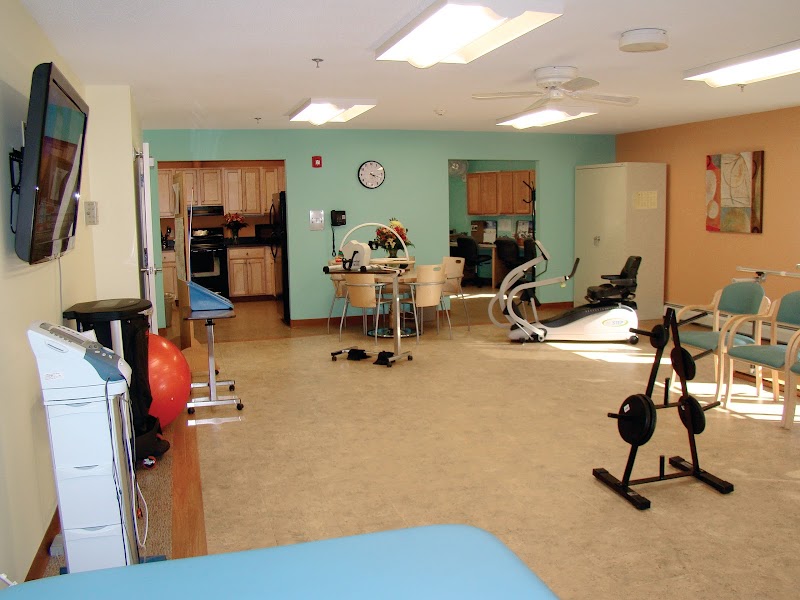
How is Apple Rehab Middletown Staffed?

CMS rates APPLE REHAB MIDDLETOWN's staffing level at 3 out of 5 stars, which is average compared to other nursing homes. Staff turnover is 47%, compared to the Connecticut average of 46%.

What Have Inspectors Found at Apple Rehab Middletown?

State health inspectors documented 46 deficiencies at APPLE REHAB MIDDLETOWN during 2019 to 2024. These included: 1 that caused actual resident harm, 41 with potential for harm, and 4 minor or isolated issues. Deficiencies causing actual harm indicate documented cases where residents experienced negative health consequences.
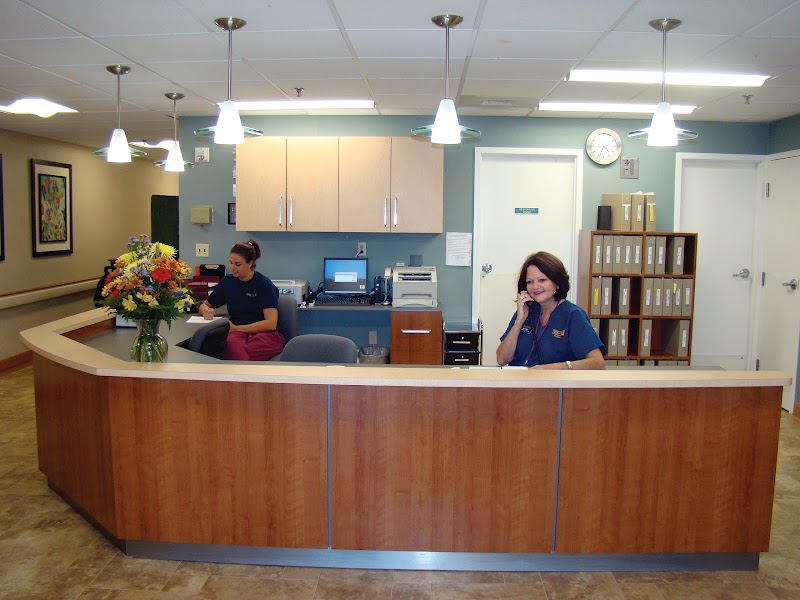
Who Owns and Operates Apple Rehab Middletown?

APPLE REHAB MIDDLETOWN is owned by a for-profit company. For-profit facilities operate as businesses with obligations to shareholders or private owners. The facility is operated by APPLE REHAB, a chain that manages multiple nursing homes. With 70 certified beds and approximately 65 residents (about 93% occupancy), it is a smaller facility located in MIDDLETOWN, Connecticut.
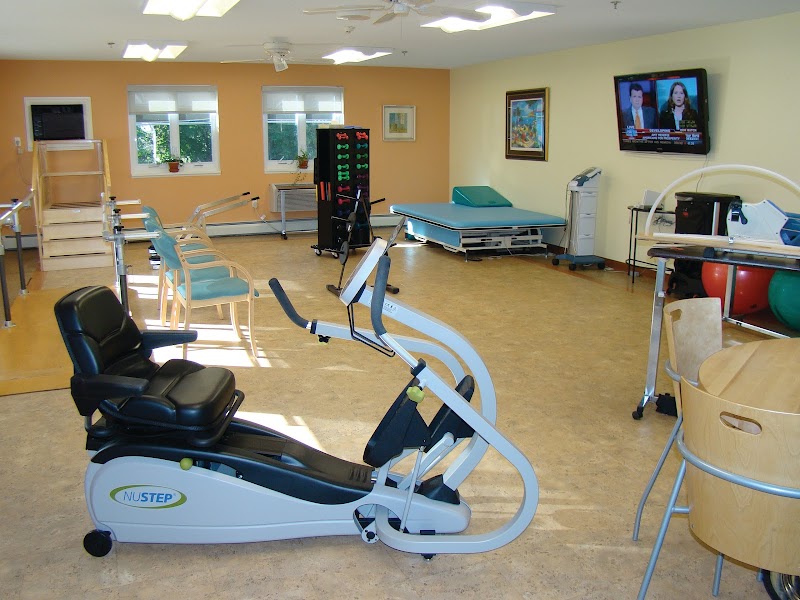
How Does Apple Rehab Middletown Compare to Other Connecticut Nursing Homes?

Compared to the 100 nursing homes in Connecticut, APPLE REHAB MIDDLETOWN's overall rating (2 stars) is below the state average of 3.0, staff turnover (47%) is near the state average of 46%, and health inspection rating (2 stars) is below the national benchmark.

What Should Families Ask When Visiting Apple Rehab Middletown?

Based on this facility's data, families visiting should ask: "Can I visit during a mealtime to observe dining assistance and food quality?" "How do you handle medical emergencies, and what is your hospital transfer rate?" "Can I speak with family members of current residents about their experience?"

Is Apple Rehab Middletown Safe?

Based on CMS inspection data, APPLE REHAB MIDDLETOWN has a clean safety record: no substantiated abuse findings (meaning no confirmed cases of resident harm), no Immediate Jeopardy citations (the most serious violation level indicating risk of serious injury or death), and is not on the Special Focus Facility watch list (a federal program monitoring the lowest-performing 1% of nursing homes). The facility has a 2-star overall rating and ranks #100 of 100 nursing homes in Connecticut. While no facility is perfect, families should still ask about staff-to-resident ratios and recent inspection results during their visit.

Do Nurses at Apple Rehab Middletown Stick Around?

APPLE REHAB MIDDLETOWN has a staff turnover rate of 47%, which is about average for Connecticut nursing homes (state average: 46%). Moderate turnover is common in nursing homes, but families should still ask about staff tenure and how the facility maintains care continuity when employees leave.

Was Apple Rehab Middletown Ever Fined?

APPLE REHAB MIDDLETOWN has no federal fines on record. CMS issues fines when nursing homes fail to meet care standards or don't correct problems found during inspections. The absence of fines suggests the facility has either maintained compliance or corrected any issues before penalties were assessed. This is a positive indicator, though families should still review recent inspection reports for the full picture.

Is Apple Rehab Middletown on Any Federal Watch List?

APPLE REHAB MIDDLETOWN is not on any federal watch list. The most significant is the Special Focus Facility (SFF) program, which identifies the bottom 1% of nursing homes nationally based on persistent, serious quality problems. Not being on this list means the facility has avoided the pattern of deficiencies that triggers enhanced federal oversight. This is a positive indicator, though families should still review the facility's inspection history directly.