GLADEVIEW HEALTH CARE CENTER
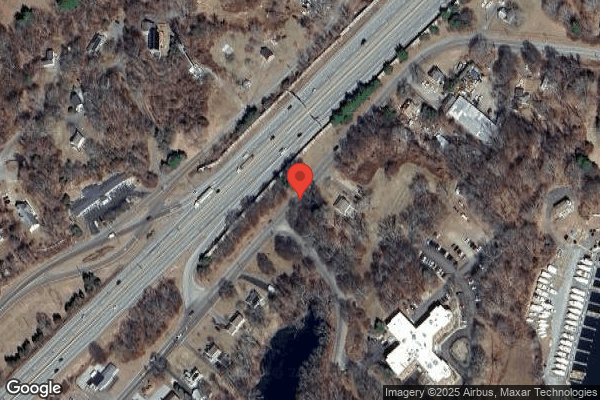
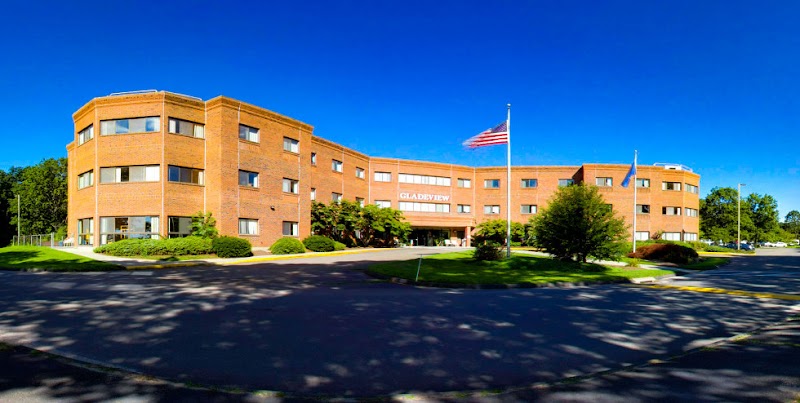
60 BOSTON POST RD, OLD SAYBROOK, CT 06475 (860) 388-6696
For profit - Individual 132 Beds Independent Data: November 2025
Trust Grade
53/100
#95 of 192 in CT
Last Inspection: November 2024

Within standard 12-15 month inspection cycle. Federal law requires annual inspections.

Overview

Gladeview Health Care Center has a Trust Grade of C, which means it is average and falls in the middle of the pack in terms of quality. It ranks #95 out of 192 facilities in Connecticut, placing it in the top half, and #7 out of 17 in the local county, indicating that only a few options are better nearby. The facility is improving, with a significant drop in issues from 18 in 2024 to just 1 in 2025. Staffing is a strength, rated 4 out of 5 stars, with a turnover rate of 41%, which is about average for Connecticut. However, the facility has concerning RN coverage, being below 85% of state facilities, and it has incurred $23,989 in fines, which is a sign of repeated compliance problems. Specific incidents noted by inspectors include a failure to ensure proper monitoring for a resident at risk of skin breakdown, resulting in an exposed tendon, and issues with medication storage, where medication carts were found unlocked and unattended. Additionally, there were concerns around food safety, with expired and improperly stored food items observed in the kitchen. Overall, while Gladeview Health Care Center has strengths in staffing and is showing improvement, families should be aware of the significant concerns regarding safety practices and compliance.

Trust Score
C
53/100
In Connecticut
#95/192
Top 49%
Safety Record
Moderate
Needs review
Inspections
Getting Better
18 → 1 violations
Staff Stability
○ Average
41% turnover. Near Connecticut's 48% average. Typical for the industry.
Penalties
✓ Good
$23,989 in fines. Lower than most Connecticut facilities. Relatively clean record.
Skilled Nurses
⚠ Watch
Each resident gets only 27 minutes of Registered Nurse (RN) attention daily — below average for Connecticut. Fewer RN minutes means fewer trained eyes watching for problems.
Violations
⚠ Watch
39 deficiencies on record. Higher than average. Multiple issues found across inspections.
★★★☆☆
3.0
Overall Rating
★★★★☆
4.0
Staff Levels
★★★★☆
4.0
Care Quality
★★★☆☆
3.0
Inspection Score
Stable
2024: 18 issues
2025: 1 issues

The Good

  • 4-Star Staffing Rating · Above-average nurse staffing levels
  • 4-Star Quality Measures · Strong clinical quality outcomes
  • Full Sprinkler Coverage · Fire safety systems throughout facility
  • No fines on record
  • Staff turnover below average (41%)

    7 points below Connecticut average of 48%

Facility shows strength in staffing levels, quality measures, fire safety.

The Bad

3-Star Overall Rating

Near Connecticut average (3.0)

Meets federal standards, typical of most facilities

Staff Turnover: 41%

Near Connecticut avg (46%)

Typical for the industry

Federal Fines: $23,989

Below median ($33,413)

Minor penalties assessed

The Ugly 39 deficiencies on record

1 actual harm
Feb 2025 1 deficiency
CONCERN (D) 📢 Someone Reported This

A family member, employee, or ombudsman was alarmed enough to file a formal complaint

Potential for Harm - no one hurt, but risky conditions existed

Quality of Care (Tag F0684)

Could have caused harm · This affected 1 resident

**NOTE- TERMS IN BRACKETS HAVE BEEN EDITED TO PROTECT CONFIDENTIALITY** Based on review of the clinical record, facility documentation, facility policy and interviews for one (1) of three (3) resident...

Read full inspector narrative →
**NOTE- TERMS IN BRACKETS HAVE BEEN EDITED TO PROTECT CONFIDENTIALITY** Based on review of the clinical record, facility documentation, facility policy and interviews for one (1) of three (3) residents (Resident #3) reviewed for transfers, the facility failed to transfer the resident with equipment appropriate for the resident's standing ability. The findings include: Resident # 3's diagnoses included absence of right leg above the knee, history of falling, primary osteoarthritis of the right hand and anxiety disorder. The Resident Care Plan (RCP) dated 9/30/24 identified that Resident #3 had an alteration in physical mobility and independence with daily activities with interventions that included Physical Therapy (PT) and Occupational Therapy (OT) treatment per order and to transfer the resident with assist per orders. The quarterly Minimum Data Set (MDS) assessment dated [DATE] identified Resident #3 had a Brief Mental Interview for Mental Status (BIMS) of fourteen (14) indicative of intact cognition and required moderate assistance with bed mobility and transfers. A physician's order dated 10/1/24 directed staff assistance of two (2) for bed to wheelchair and wheelchair to bed transfers and identified that Resident #3 was non-ambulatory. Although a facility incident report was unavailable statements regarding a concern about a transfer from NA #3, NA #5 and RN #1 were provided regarding an incident while trying to transfer with Resident #3 on 10/10/25. Statement from NA #3 dated 10/10/24 at 6:41 PM identified that on 10/10/24 at 5:50 PM, she was in the dining room and was asked to help transfer Resident #3. The statement reported that when she went into Resident #3's room with the other staff member, and because the resident had fallen earlier in the shift she requested that the other NA (NA #5) go get another staff to assist them, but NA #5 instead returned with sit-to-stand lift (Sara lift). She reported that while standing the resident up in the lift, the resident's foot moved away from the lift and his/her knee moved, stating they then sat the resident back into the chair and the Nursing Supervisor (RN #1) was called. She identified that when RN #1 arrived, Resident #3's family was yelling that the NA's were killing the resident and another NA (NA #7) was sent in to assist and the resident was then placed in bed. Statement from NA #5 dated 10/10/24 identified that Resident #3's family requested that she transfer him/her from the wheelchair to the bed. She reported that she asked another staff member (NA #3) to assist her in lifting the resident from the wheelchair to the bed, stating they were unsuccessful, so she left to get another NA to assist them. She identified that she was unable to find assistance so she brought in the Sara lift, thinking it would be helpful, and they hooked the resident up to the lift and asked him/her to stand as it was lifting, to which the resident agreed. NA #5 reported that as they were lifting the resident, his/her foot slipped to the side and the resident stated that he/she was losing strength, and he/she started sliding down. She identified that they then lowered the lift into the wheelchair, but that he/she wasn't completely sitting in the wheelchair. Interview with NA #7 on 2/26/25 at 12:42 PM identified that on 10/10/24 the Nursing Supervisor (RN #1) had approached him and requested that he assist the other staff with a transfer of Resident #3. He reported that when he entered the room, Resident #3's family member was in distress about the transfer, and although he could not remember all the details, he remembered Resident #3 sitting partly in the wheelchair, still attached to the Sara lift (sit-to-stand mechanical lift) with his/her upper body slouching forwards between the handlebars of the lift. Interview with PT #1 (Director of Rehab) and OT #1 on 2/26/25 at 12:59 PM identified that Resident #3's functional abilities fluctuated day to day, as well as his/her motor planning and cognition. They identified that if the resident had already been exhibiting signs of weakness and was unable to stand with an assist of two (2) staff, the staff should not have used the Sara lift because the resident requiresfour limbs (resident is a right leg amputee) and the ability to stand to safely be transferred with the Sara lift. Interview with RN #1 on 2/26/25 at 4:03 PM and review of statement dated 10/15/24 identified that she was in the dining room assisting another resident when Person #1 ran in and started yelling about a resident falling, stating she followed him/her into Resident #3's room and Person #1 yelled, They're killing him/her. RN #1 reported that when she entered the room, two (2) NA's were standing beside Resident #3, who was attached to the Sara lift and it appeared as if his/her left leg gave out, stating he/she was in a sitting position but was on the edge of the wheelchair. She identified that the resident did not fall but the staff was unable to get him/her further onto or off the wheelchair and the NA's were unable to explain what had happened, so she reported she left the room to get another NA (NA #7) to assist them, stating all three (3) NA's (NA #3, NA #5 and NA #7) were then able to place the Hoyer sling onto the wheelchair and transfer Resident #3 safely back to bed. RN #1 identified that she then left a message for the therapy department requesting an evaluation on Resident #3's transfer status, as it appeared the resident was too weak to use the sit-to-stand (Sara lift), notified the APRN and obtained a new order for laboratory testing, notified the family and printed safety reminder signs for the resident's bathroom and bedroom. Interview with the DNS on 2/26/25 at 1:28 PM identified that agency NA's are expected to be educated and have the skills to use mechanical lifts prior to working in the facility, stating that she expects for them to follow the plan of care and be able to transfer the residents with the mechanical lifts (Hoyer and Sara lift) and should ask the facility staff if they have any questions or need assistance with the equipment. She was unsure if the staff should have used the Sara lift with Resident #3, but identified that staff can always downgrade the resident's transfer status if needed, but cannot upgrade their status. A physician's order dated 10/11/24 directed that Resident #3 was a Hoyer lift and staff assistance of two (2) for bed to wheelchair and wheelchair to bed transfers and identified that Resident #3 was non-ambulatory. Although attempted, interviews with NA #3 and NA #5 were not obtained. Although requested, a facility policy for the Sara lift was not provided.
Nov 2024 14 deficiencies
CONCERN (D)

Potential for Harm - no one hurt, but risky conditions existed

Resident Rights (Tag F0550)

Could have caused harm · This affected 1 resident

**NOTE- TERMS IN BRACKETS HAVE BEEN EDITED TO PROTECT CONFIDENTIALITY** Based on observations, clinical record review, review of facility policy,and interviews for 2 of 4 residents, (Resident #8 and ...

Read full inspector narrative →
**NOTE- TERMS IN BRACKETS HAVE BEEN EDITED TO PROTECT CONFIDENTIALITY** Based on observations, clinical record review, review of facility policy,and interviews for 2 of 4 residents, (Resident #8 and Resident #20) reviewed for dignity, and for 1 of 3 residents, (Resident #105), reviewed for abuse, the facility failed to ensure Residents #8 and #105 were treated in a dignified manner when spoken to and for Resident #20, failed to provide a dignified experience for a resident who could not eat. The findings include. 1. Resident #8's diagnoses include multiple sclerosis, coronary artery disease and hypertension. The annual Minimum Data Set assessment dated [DATE] identified Resident #8 had no cognitive impairment and was totally dependent on staff for transfers, bathing, and dressing. Additionally, Resident #8 had functional limitation to range of motion on both sides to the upper and lower extremities. Interview with Resident #8 on 11/19/24 at 12:15 PM indicated that LPN #11 was not nice and had poor communication skills. Resident #8 stated he/she had seen LPN #11 treat other residents in an undignified manner, including hearing this LPN say to another unidentified resident, what do you want abruptly. Additionally, Resident #8 indicated that LPN #11 had come into the room, when his/her roommate was not present, and turned up the television volume to a loud tone intentionally to annoy him/her. Resident #8 further indicated that when he/she requested the volume be lowered, LPN #11 responded abruptly and using a strong tone, that his/her roommate had the right to watch television too. Resident #8 indicated this was reported to a staff member but was unable to recall their name, and that LPN #11's actions feel retaliatory. Resident #8 thought that he/she had shared reporting these incidents to the DNS in the past. 2. Resident #20's diagnoses include Cerebral Palsy, vascular dementia, and a developmental disorder of speech and language. The physician's order dated 9/6/24 directed for Resident #20 to be NPO (nothing by mouth), totally dependent, and assist of one with enteral/tube feeding related to dysphagia due to cerebral palsy. The Resident Care Plan dated 9/10/24 identified Resident #20's only source of nutrition and hydration was via feeding tube, and she/he does not take anything by mouth. Interventions included for the feeding tube to be flushed and free water given as ordered, and to report any signs of aspiration or difficulty with feeding tolerance to the doctor. The quarterly Minimum Data Set (MDS) assessment dated [DATE] identified Resident #20 was severely cognitively impaired and was dependent for eating, toileting and transfers. The MDS further identified Resident #20 had a feeding tube while a resident at the facility. Observation on 11/18/24 at 12:15 PM identified Resident #20 sitting in her/his wheelchair in the hallway across from the dining room during lunch time, with a clear view of residents eating lunch. No other residents were noted to be in the hallway at the time. Observation on 11/19/24 at 12:14 PM identified Resident #20 sitting in her/his wheelchair in the hallway outside of the dining room, next to the steam table, while facility staff was placing lunch orders and plating the meals. Resident #20 was noted to have her/his right index finger in her mouth, and no other residents were in the hallway at the time. Observation on 11/20/24 at 12:18 PM identified Resident #20 sitting in her/his wheelchair in the hallway across from the dining room during lunch time, with a clear view of residents eating lunch. No other residents were noted to be in the hallway at the time. An interview with Licensed Practical Nurse (LPN) #4 on 11/20/24 at 12:18 PM identified Resident #20 always sits outside of the dining room during lunch time for socialization, otherwise she/he was in her/his room listening to music, additionally putting her/his fingers in her/his mouth was a behavior and not an indication of hunger. Additionally, LPN #4 stated she felt it was alright for Resident #20, who cannot eat by mouth, to be watching others eat because Resident #20 does not recognize what she/he can and cannot do. Subsequent to surveyor interview, LPN #4 stated she was moving Resident #20 into the resident's room to administer medication and have her/him listen to music. An interview with the DNS on 11/20/24 at 1:25 PM identified it was appropriate for Resident #20 to be sitting outside of the dining room watching others eat, even though Resident #20 cannot eat because it was something Resident #20 had always done, otherwise she/he was in her/his room listening to music. When questioned about the reasonable person concept relating to the dignity of placing an individual in view of others eating when she/he cannot eat, the DNS responded that this was what Resident #20 had always done. Although requested, a facility policy for a Dining Experience was not provided. 3. Resident #105's diagnoses include congestive heart failure, cirrhosis of liver, adjustment disorder with anxiety, and type 2 diabetes. The quarterly Minimum Data Set assessment dated [DATE] identified Resident #105 had no cognitive impairment, required assist of 2 to transfer, and was fully dependent on staff assistance to mobilize his/her wheelchair. Interview with Resident #105 on 11/18/24 at 12:20 PM identified that a couple of months ago LPN #11 had been standing at the end of his/her bed and stated, I don't like you to him/her, to which Resident #105 replied I don't like you very much. Resident #105 indicated that this was reported to the RN Supervisor and his/her family member. Additionally, Resident #105 reported an incident which occurred the evening of 11/17/24 at unknown time with LPN #11 when he/she wanted to know who his/her NA was as he/she was ready for bed. LPN #11 responded what do you want, in a harsh, stern tone and added that everyone was busy and didn't have time for him/her. Resident #105 indicated that this incident had not been reported to facility staff. The DNS was immediately notified by the surveyors, of Resident #105's statements. The APRN psychiatric evaluation and consultation note dated 11/18/24 documented that Resident #105 reported a nurse came in, was terse in her speech and does not talk with him/her like other nurses. Interview with LPN #11 and the DNS on 11/18/24 at 3:45 PM identified that she did have an interaction with Resident #105 the evening prior when Resident #105 asked who his/her NA was because he/she wanted to go to bed. LPN #11 indicated her response was the NA's were passing trays, when they were done, they would come in to put him/her to bed. Further, LPN #11 stated that a few months ago as she was walking out of the resident's room, he/she heard Resident #8 state I don't like her, but there was no one else in the room, LPN #11 did not respond and did not report the incident to any supervisory or managerial staff. Review of a social work note dated 11/18/24 indicated she was asked to see Resident #105 secondary to a complaint made against a nurse. Resident #105 stated that last night he/she was ringing his/her call bell to find out who the NA was for the night. Resident #105 indicated that LPN #11 came in and yelled at him/her stating you better not give my aides a hard time, that he/she wanted LPN #11 to stay away from him/her, and that all the other staff were wonderful. Interview with NA #4 on 11/22/24 at 8:30 AM identified that Resident #105 had discussed feeling threatened and disrespected by LPN #11. NA #4 indicated that she had reported this to the nurse on the shift weeks ago but could not recall their name due to the frequency of changes to nurses working on that unit. The facility Abuse policy indicated that should a resident make a complaint of abuse, an investigation will take place, staff in question would be suspended pending the outcome of the investigation.
CONCERN (D)

Potential for Harm - no one hurt, but risky conditions existed

Notification of Changes (Tag F0580)

Could have caused harm · This affected 1 resident

**NOTE- TERMS IN BRACKETS HAVE BEEN EDITED TO PROTECT CONFIDENTIALITY** Based on review of the clinical record, facility documentation, facility policy and interviews for 2 of 2 residents (Resident #3...

Read full inspector narrative →
**NOTE- TERMS IN BRACKETS HAVE BEEN EDITED TO PROTECT CONFIDENTIALITY** Based on review of the clinical record, facility documentation, facility policy and interviews for 2 of 2 residents (Resident #38 and Resident #95) reviewed for nutrition, the facility failed to notify the provider in a timely manner when there was a change in condition and a significant weight loss. The findings included: 1. Resident #38's diagnoses included interstitial pulmonary disease, dysphagia with gastrostomy status and traumatic brain injury (TBI). The annual Minimum Data Set (MDS) assessment dated [DATE] identified Resident #38 was cognitively intact but without speech, was dependent with toileting and transfers and required moderate assistance with bed mobility. The MDS assessment indicated Resident #38 had a feeding tube and received tube feedings for 51% or more of calories. The Resident Care Plan dated 10/7/24 identified dysphagia with gastrostomy tube (G-tube) and a history of respiratory arrest and aspiration pneumonia. Interventions included to report any signs and symptoms of aspiration, increased shortness of breath or dyspnea (difficulty breathing) to the medical doctor (M.D). A nurse's note dated 11/15/24 at 10:33 PM identified Resident #38 had a congested cough, complaints of shortness of breath (SOB) and was requesting to go to the hospital. The nurse's note indicated that Resident #38 had diminished lung sounds (LS) throughout and shallow respirations. Additionally, the nurse's note identified that the supervisor (RN #2) was made aware. A nurse's note dated 11/16/24 at 1:08 AM identified Resident #38 was alert and non-verbal, had an occasional cough with no complaints of respiratory distress and a slightly distended abdomen. A nurse's note dated 11/17/24 at 2:06 AM identified Resident #38 was alert and non-verbal with no respiratory distress and a slightly distended abdomen. An observation on 11/18/24 at 11:30 AM, identified Resident #38 was in bed with a cough and audible congestion. LPN #4 was made aware, entered the room, and utilized a communication board to further evaluate the resident. A nurse's note written by LPN #4 on 11/18/24 at 2:55 PM identified Resident #38 had a deep congested cough, was suctioned for a minimum amount of phlegm, and had an expiratory wheeze with a nebulizer treatment given with some effect. LPN #4's nurses note indicated the supervisor (RN #1) was made aware. An Advanced Practice Registered Nurse (APRN #1) progress note dated 11/19/24 at 8:40 AM identified Resident #38 had a cough and shortness of breath, was ill appearing with an irregular heart rhythm, tachypnea (increased respiratory rate) and respiratory distress. APRN #1's progress note indicated Resident #38 appeared uncomfortable and had decreased breath sounds in the right and left lower lung fields. APRN #1's assessment further reflected Resident #38 was not communicating with his/her board, had an altered mental status, his/her skin was flushed and warm to the touch with pneumonia suspected. The APRN's progress note identified Resident #38 was transferred to the ED (emergency department) with respiratory distress. A physician's order dated 11/19/24 directed to transfer to ED with respiratory distress, resident to be evaluated in ER (emergency room). An interview and clinical record review with the 7:00 AM to 3:00 PM Registered Nurse supervisor (RN #1) on 11/21/24 at 1:30 PM, identified that Resident #38 had respiratory distress and was evaluated by the APRN on the morning of 11/19/24. Subsequently, Resident #38 was transferred to the hospital and was admitted to the hospital with pneumonia. RN #1 indicated that Resident #38 had a history of respiratory distress and aspiration and had recently returned from a hospitalization for aspiration. RN #1 further identified that Resident #38 was a fragile individual whose status could change on the drop of a dime. Review of the clinical record with RN #1 identified that, although the nursing supervisor (RN #2) had been notified of Resident #38's change in condition on 11/15/24, RN #2 failed to notify the provider. RN #1 indicated that although she was notified of Resident #38's change in condition on 11/18/24, she had failed to notify the provider. RN #1 indicated that when notified of a resident's change in condition, the nursing supervisor should inform the provider of the change in condition. RN #1 was unable to identify a reason RN #2 did not notify the provider of Resident #38's change in condition on 11/15/24. Additionally, RN #1 was unable to identify the reason she failed to notify the provider of Resident #38's change in condition on 11/18/24. Interview and record review with the 3:00 PM to 11:00 PM Registered Nurse Supervisor (RN #2) on 11/21/24 at 3:10 PM identified although Resident #38 had complaints of shortness of breath and asked to go to the hospital on [DATE], she did not notify the provider because Resident #38 was not in distress when she saw him/her and there was no reason to transfer the resident out. Interview and record review with the DNS on 11/22/24 at 9:41 AM identified that when the Registered Nurse supervisors (RN #1 and RN #2) were notified of Resident #38's change in condition, on 11/15/24 and 11/18/24 respectively, they should have notified the APRN. Review of the clinical record with the DNS at that time indicated that, although Resident #38 should have been evaluated by a provider after his/her change in condition on 11/15/24, the resident was not evaluated by the APRN until the morning of 11/19/24, when Resident #38 was found in respiratory distress and subsequently transferred to the hospital. Interview and record review with APRN #1 on 11/22/24 at 10:00 AM identified that she was not notified of Resident #38's change in condition on 11/15/24 or 11/18/24. APRN #1 indicated that if she had been notified on 11/15/24 and 11/18/24, she would have asked for further RN assessment and, based on the assessments, she would have given additional orders and/or sent Resident #38 to the hospital. APRN #1 identified that the Registered Nurse supervisors (RN #1 and RN #2) should have notified her of the residents change in condition on 11/15/24 and 11/18/24. APRN #1 indicated that Resident #38 should have had close monitoring and lung assessments in the days after his/her change in condition on 11/15/24 and that, she evaluated Resident #38 on the morning of 11/19/24, he/she was found in respiratory distress and required transfer to the hospital. Review of the facility's, Observation & Recording Change of Resident's Condition policy, undated, directed to ensure that when a resident has a change in condition that timely notification of physician, APRN and responsible party occur. 2. Resident #95 was admitted to the facility in April 2022 with diagnoses that included vascular dementia with psychotic disturbances, Down syndrome, depression, and hypothyroidism. A Resident Care Plan dated 2/19/24 identified a problem with Resident #95 having a significant weight loss in 6 months (weight of 195.4 pounds/lbs). Interventions included to start on nutritional supplements, encourage food/fluids, and obtain weights as ordered. Physician orders dated 3/14/24 directed weekly weights to be obtained every Friday. The annual Minimum Data Set assessment (MDS) dated [DATE] identified Resident # 95 was severely cognitively impaired and required total dependence from staff for eating. A review of Resident #95's weight identified a weight of 190.1 pounds (lbs) on 6/23/24 and a weight of 177.6 lbs on 7/20/24 (a 12.6 lb/6.5 % loss in less than a month). APRN #1's progress notes dated 7/30/24 identified a weight of 177 lbs. but did not identify Resident #95 had a significant weight loss. Physician's orders dated 8/15/24 directed to administer house supplements 3 times a day (26 days after Resident #95 had a significant weight loss). Observations of Resident #95 on 11/18/24 at 12:25 PM and 11/20/24 at 8:15 AM and 12:30 PM, identified he/she received a regular diet and needed to be fed by nursing staff. Interview with APRN #1 on 11/21/24 at 11:30 AM noted she could not recall if she was made aware of Resident #95's weight loss from 7/20/24 by staff as she was new to the facility and had just started in July of 2024. A review of the APRN communication book from 7/20/24 through 11/21/24 indicated that there were no entries to update the APRN regarding Resident #95's significant weight loss. An APRN #1 progress note dated 9/10/24 identified Resident #95 was seen for weight loss with no new orders and to continue with supplement orders from 8/15/24 as Resident # 95 was starting to trend up in weights with a weight of 179 lbs (APRN #1 did not address weight loss in the progress notes until 53 days after the initial weight loss was documented on 7/20/24). A review of the facility's Weight Policy dated 12/20/23 directed in part, MD or APRN will be notified of any significant weight loss or gain of 5% in one month or 10% in 6 months unless expected. Consult with Dietitian if loses or gains more than normal range. The Dietitian is available in building 2-3 times weekly. A review of the facility's Change of Condition Policy revised 6/2017 directed in part, to clearly document date and time the physician/APRN was notified of change and notifications are done in a timely manner after a change in condition.
CONCERN (D)

Potential for Harm - no one hurt, but risky conditions existed

Comprehensive Care Plan (Tag F0656)

Could have caused harm · This affected 1 resident

**NOTE- TERMS IN BRACKETS HAVE BEEN EDITED TO PROTECT CONFIDENTIALITY** Based on observation, staff interview, review of the clinical record, and facility policy for 1 of 3 residents (Resident #91) re...

Read full inspector narrative →
**NOTE- TERMS IN BRACKETS HAVE BEEN EDITED TO PROTECT CONFIDENTIALITY** Based on observation, staff interview, review of the clinical record, and facility policy for 1 of 3 residents (Resident #91) reviewed for accidents, the facility failed to ensure the Resident Care Plan (RCP) was comprehensive to include a known behavioral issue. The findings include: Resident #91's diagnoses included cerebral palsy, neuromuscular dysfunction of the bladder, and anxiety. The annual Minimum Data Set assessment dated [DATE] identified Resident #91 was cognitively intact, was dependent on chair/bed to chair transfers, and used a motorized wheelchair. The RCP dated 10/9/24 identified Resident #91 had a history of crying with a goal of initiating a conversation with staff when tearful, and a history of impaired physical mobility with an intervention of transferring him/her to and from the wheelchair using a mechanical lift. An observation and interview with Resident #91 on 11/18/24 at 11:14 AM identified he/she was wheelchair bound and his/her legs were positioned in a tucked-up position, not outward facing from the body. Resident #91 stated that a prior injury to his/her left foot and knee occurred from a mechanical transfer that occurred approximately 2 to 3 months ago, x-rays were performed that showed no broken bones, and now he/she received daily pain patches for the injury which was not needed before the mechanical lift accident. Resident #91 could not identify the exact date or time of the alleged accident nor who was transferring him/her in the mechanical lift. A nursing note dated 8/9/24 at 11:05 AM identified that Resident #91 approached an LPN and reported he/she had been experiencing left leg pain over a period of several days. The note further indicated the Advanced Practice Registered Nurse evaluated him/her on 8/9/24 and ordered an x-ray of Resident #91's left leg. A review of APRN and MD progress notes failed to identify documentation of an evaluation by a provider on 8/9/24 for Resident #91. Radiology results on 8/10/24 at 12:51 PM, of an X-ray of the left leg and left knee for complaint of severe pain to Resident #91's left lower leg, identified no new fractures. An interview with the Director of Nursing Service (DNS) on 11/21/24 at 2:55 PM identified that she did not fill out an accident and incident form for Resident #91's complaint of being injured from a mechanical lift transfer because she was not made aware of an incident. The DNS further identified that Resident #91 had a history of confabulating complaints for attention and the Social Worker (SW) would be responsible to include those behaviors in the RCP. SW notes dated 12/22/23 through 11/14/24 failed to identify documentation of Resident #91's alleged history of confabulation or false reporting. An interview with SW #2 identified that she was aware of a history of manipulation of staff and confabulation by Resident #91. SW #2 failed to identify that these behavioral issues were included in the RCP and indicated they should be, stating she would incorporate them into the RCP moving forward. She was unable to identify the reason the behaviors were not previously included within the RCP. Request for the facility's policy on Care Plans identified the facility has no policy on Care Plans.
CONCERN (D)

Potential for Harm - no one hurt, but risky conditions existed

Deficiency F0658 (Tag F0658)

Could have caused harm · This affected 1 resident

**NOTE- TERMS IN BRACKETS HAVE BEEN EDITED TO PROTECT CONFIDENTIALITY** Based on interviews, review of facility documentation and facility policy for 1 of 1 sampled resident (Resident #38) reviewed fo...

Read full inspector narrative →
**NOTE- TERMS IN BRACKETS HAVE BEEN EDITED TO PROTECT CONFIDENTIALITY** Based on interviews, review of facility documentation and facility policy for 1 of 1 sampled resident (Resident #38) reviewed for a change of condition, the facility failed to ensure the Registered Nurse (RN) completed and documented an assessment and during a review of the Intravenous program, the facility failed to ensure that an RN and not a Licensed Practical Nurse (LPN) assessed and evaluated RNs as being competent to administer IV medications and fluids using IV infusion pumps. The findings included: 1. Resident #38's diagnoses included interstitial pulmonary disease, dysphagia with gastrostomy status and traumatic brain injury (TBI). The annual Minimum Data Set assessment dated [DATE] identified Resident #38 was cognitively intact but without speech, was dependent with toileting and transfers and required moderate assistance with bed mobility. The MDS assessment indicated Resident #38 had a feeding tube and received tube feedings for 51% or more of calories. The Resident Care Plan dated 10/7/24 identified dysphagia with gastrostomy tube (G-tube) and a history of respiratory arrest and aspiration pneumonia. Interventions included to report any signs and symptoms of aspiration, increased shortness of breath or dyspnea (difficulty breathing) to the medical doctor (M.D). A nurse's note dated 11/15/24 at 10:33 PM identified Resident #38 had a congested cough, complaints of shortness of breath (SOB) and was requesting to go to the hospital. The nurse's note indicated that Resident #38 had diminished lung sounds (LS) throughout and shallow respirations. Additionally, the nurse's note identified that the supervisor (RN #2) was made aware. A nurse's note dated 11/16/24 at 1:08 AM identified Resident #38 was alert and non-verbal, had an occasional cough with no complaints of respiratory distress and a slightly distended abdomen. A nurse's note dated 11/17/24 at 2:06 AM identified Resident #38 was alert and non-verbal with no respiratory distress and a slightly distended abdomen. An observation on 11/18/24 at 11:30 AM, identified Resident #38 was in bed with a cough and audible congestion. LPN #4 was made aware, entered the room, and utilized a communication board to further evaluate the resident. A nurse's note (LPN #4) on 11/18/24 at 2:55 PM identified Resident #38 had a deep congested cough, was suctioned for a minimum amount of phlegm, and had an expiratory wheeze with a nebulizer treatment given with some effect. LPN #4's nurses note indicated the supervisor (RN #1) was made aware. An Advanced Practice Registered Nurse (APRN #1) progress note dated 11/19/24 at 8:40 AM identified Resident #38 had a cough and shortness of breath, was ill appearing with an irregular heart rhythm, tachypnea (increased respiratory rate) and respiratory distress. APRN 1's progress note indicated Resident #38 appeared uncomfortable and had decreased breath sounds in the right and left lower lung fields. APRN #1's assessment further reflected Resident #38 was not communicating with his board, had an altered mental status, his/her skin was flushed and warm to the touch with pneumonia suspected. The APRN's progress note identified Resident #38 was transferred to the ED (emergency department) with respiratory distress. A physician's order dated 11/19/24 directed to transfer to ED with respiratory distress, resident to be evaluated in ER (emergency room). An interview and clinical record review with the 7:00 AM to 3:00 PM Registered Nurse supervisor (RN #1) on 11/21/24 at 1:30 PM, identified that Resident #38 had respiratory distress and was evaluated by the APRN on the morning of 11/19/24. Subsequently, Resident #38 was transferred to the hospital and was admitted to the hospital with pneumonia. RN #1 indicated that Resident #38 had a history of respiratory distress and aspiration and had recently returned from a hospitalization for aspiration. RN #1 further identified that Resident #38 was a fragile individual whose status could change on the drop of a dime. Review of the clinical record with RN #1 identified that, although the nursing supervisor (RN #2) had been notified of Resident #38's change in condition on 11/15/24, RN #2 had failed to complete and document an assessment of Resident #38. RN #1 further identified that although she was notified of Resident #38's change in condition on 11/18/24 she failed to complete and document an assessment of Resident #38. RN #1 indicated that when notified of a resident's change in condition, the nursing supervisor should complete and document an assessment of the resident. RN #1 was unable to identify a reason why RN #2 failed to complete and document an assessment of Resident #38's change in condition on 11/15/24. Additionally, RN #1 was unable to identify a reason why she failed to complete and document an assessment of Resident #38's change in condition on 11/18/24. Interview and record review with the 3:00 PM to 11:00 PM Registered Nurse supervisor (RN #2) on 11/21/24 at 3:10 PM identified that although she was notified and saw Resident #38 on 11/15/24 for a change in condition, she did not listen to the resident's lungs, take his/her vital signs or write a progress note in Resident #38's clinical record. RN #2 indicated that she should have completed and documented an assessment of Resident #38 on 11/15/24 but had made a mistake. RN #2 identified that although Resident #38 had complained of shortness of breath and asked to go to the hospital on the evening of 11/15/24, she thought there was no reason to transfer the resident out because he/she frequently asked to go to the hospital. Interview and record review with the DNS on 11/22/24 at 9:41 AM identified that when the RN supervisors (RN #1 and RN #2) were notified of Resident #38's change in condition, on 11/15/24 and 11/18/24 respectively, they should have assessed the resident and documented their assessments in the clinical record. Review of the clinical record with the DNS at that time failed to reflect documentation that lung assessments were completed on Resident #38 on 11/16/24, 11/17/24 and 11/18/24 and failed to reflect that vital signs were completed on Resident #38 on 11/15/24 and 11/18/24. Interview and record review with APRN #1 on 11/22/24 at 10:00 AM identified the RN supervisors (RN #1 and RN #2) should have completed a comprehensive assessment of Resident #38 and written a nursing note on 11/15/24 and 11/18/24. APRN #1 further indicated that Resident #38 should have had close monitoring and lung assessments in the days after his/her change in condition on 11/15/24 and that, although she evaluated Resident #38 on the morning of 11/19/24, he/she was found in respiratory distress and required transfer to the hospital. Review of the facility's, Observation & Recording Change of Resident's Condition policy, undated, directed to ensure that when a resident has a change in condition that appropriate assessments are performed and documented. The policy further directed that when a change of condition occurs the licensed nurse will perform an assessment and vital signs will be included as part of all change in condition assessments and documentation should be in the narrative nurse's notes. 2. On 11/22/24 at 11:30 AM, a review of annual IV competencies for IV infusion pump use for licensed nursing staff with LPN #5 (who is the Infection Control Preventionist and Staff Development Nurse) indicated that she completed IV competencies for the RNs and was not aware that it was beyond the LPN's scope of practice to deem an RN competed for IV skills. Interview with the DNS on 11/22/24 at 11:45 AM indicated she was unaware that LPN #5 was not able to complete competencies for RN staff and that she oversees LPN #5 in her role but was not present when LPN #5 was completing competencies for RNs. A review of the IV Long Term Care manual effective January 2022 on 11/22/24 at 12:00 PM provides a form to complete IV skills for Infusion Pump administration for IV medications and fluids for licensed nursing staff. The form has a signature and date line for the nurse evaluator and for the nurse being evaluated for his/her IV skills.
CONCERN (D)

Potential for Harm - no one hurt, but risky conditions existed

ADL Care (Tag F0677)

Could have caused harm · This affected 1 resident

**NOTE- TERMS IN BRACKETS HAVE BEEN EDITED TO PROTECT CONFIDENTIALITY** Based on observations, review of the clinical record, facility policy, and interviews for 3 of 5 residents (Resident #21, Reside...

Read full inspector narrative →
**NOTE- TERMS IN BRACKETS HAVE BEEN EDITED TO PROTECT CONFIDENTIALITY** Based on observations, review of the clinical record, facility policy, and interviews for 3 of 5 residents (Resident #21, Resident #73, and Resident #77) reviewed for Activities of Daily Living (ADL's), the facility failed to provide timely assistance with fingernail care to dependent residents. The findings include: 1. Resident #21's diagnoses included vascular dementia, metabolic encephalopathy and major depressive disorder. The quarterly Minimum Data Set assessment dated [DATE] identified Resident #21 was moderately cognitively impaired and was dependent with toileting, bed mobility and transfers. The Resident Care Plan dated 9/24/24 identified that Resident #21 was dependent with ADL's and had longstanding upper extremity contractures with interventions that included a rehabilitation screen and evaluation as needed and to allow resident choices. Review of the Nurse Aide Care Card for Resident #21 identified that shower and weights were to be completed on Wednesdays on the 3:00 PM to 11:00 PM shift. Observation and interview with Resident #21 on 11/19/24 at 11:53 AM, identified had very lengthy, untrimmed, and jagged fingernails with a dark colored substance beneath them. Resident #21 indicated that he/she preferred his/her fingernails kept short and clean but when he/she received a shower or bath staff did not clean or trim them. Resident #21 was observed with 4 fingers of his/her bilateral hands contracted when at rest with the ability to straighten them upon request. Observation and interview with Nurse Aide (NA) #4 on 11/20/24 at 1:40 PM identified that she was familiar with Resident #21 and had frequently provided him/her care. NA #4 indicated that Resident #21 had dirty and long fingernails on both hands and that they should not have appeared that way. NA #4 further identified that under Resident #21's contracted right hand 4th finger was a dark substance on the skin. NA #4 indicated that although she or another NA were responsible for fingernail cleaning and trimming for residents on bath day or when needed, she had too many tasks to complete and there was not enough time in the day to get it done. Observation and interview with LPN #4 on 11/20/24 at 1:45 PM identified Resident #21's fingernails on both hands were very filthy and long and should absolutely not look that way. LPN #4 indicated there was a dark substance under Resident #21's right 4th finger and the skin on the palm of his/her right hand was also very dirty. LPN #4 identified that although fingernails should be cleaned and trimmed on a resident's scheduled shower day or if they are long, the NA's responsible did not complete the task. LPN #4 further indicated that if Resident #21 did not get out of bed for a shower due to his/her condition, his/her fingernails should have still been cleaned and trimmed. Subsequent to surveyor inquiry, an observation on 11/20/24 at 2:30 PM identified Resident #21 was having his/her hands cleaned and his/her fingernails cleaned and trimmed by NA #4. Interview with the 7:00 AM to 3:00 PM nursing supervisor (RN #1) on 11/20/24 at 2:00 PM identified Resident #21's shower day was on Wednesday on the 3:00 PM to 11:00 PM shift and on Wednesday 11/13/24 the NA assigned to Resident #21 was NA #5. Interview with NA #5 on 11/20/24 at 3:15 PM identified that she took care of Resident #21 on Wednesday 11/13/24 from 3:00 PM to 11:00 PM, which was Resident #21's scheduled shower day. NA #5 indicated Resident #21 preferred a bed bath, which she gave him/her, but that she did not clean or trim Resident #21's fingernails last week because she was never told to do that on scheduled shower days. NA #5 further identified that she thought Resident #21's fingernails were cleaned and trimmed during the day or by recreation and that she did not usually work this shift so needed to check with the nursing supervisor. Subsequent to surveyor inquiry, on 11/21/24 at 10:15 AM, RN #1 identified that she had conducted an in-service with the NA staff on her unit regarding required fingernail cleaning and trimming on a resident's scheduled shower day. 2. Resident #73's diagnoses included Parkinson's disease, congestive heart failure, and gastro-esophageal reflux disease. The quarterly MDS assessment dated [DATE] identified Resident #73 was moderately cognitively impaired, required moderate/total assist of 1 for bathing, dressing, personal care, and was totally dependent on staff for personal hygiene. The Resident Care Plan dated 9/25/24 identified Resident #73 was dependent with bathing, dressing, hygiene, and incontinent care. Interventions included to set up for hygiene, dressing, and assist as needed for completion. Observations on 11/18/24 at 11:55 AM and 2:10 PM and 11/19/24 at 10:00 AM identified Resident #73's fingernails (3) on the left hand were noted to have a brown material under the fingernails, were long, and in need of trimming. Interview and observation with LPN #1 on 11/21/24 at 12:35 PM identified Resident #73's nails were long and noted to have brown material under his/her fingernails. LPN #1 identified that the facility policy was to provide nail care on the resident's shower day and as needed. LPN #1 identified that although Resident #73 had received a shower on 11/19/24, the resident's fingernails had not been cleaned and trimmed according to the facility policy. Interview with NA #4 on 11/21/24 at 12:41 PM identified she did not have time to provide Resident #73 with fingernail care since first the first observation on 11/18/24. NA #4 reported that although nailcare should be provided during the Resident's shower, however, she did not have enough time to provide Resident #73 with nail care. NA #4 indicated she reported this to the unit nurse but could not recall which nurse due the frequency of changes to nurses working on that unit and added she felt like a 1-man show. Additionally, NA #4 indicated there were other staff on the unit and throughout the 3 shifts who could have provided nail care. Subsequent to surveyor inquiry, Resident #73's fingernails were cleaned and trimmed. 3. Resident #77's diagnoses included multiple sclerosis, dementia and depression. The quarterly Minimum Data Set assessment dated [DATE] identified Resident #77 was cognitively intact and was dependent with toileting, bed mobility and transfers. The Resident Care Plan dated 10/2/24 identified that Resident #77 had an alteration in mobility and independence. Interventions included to assist resident with ADL's and to offer the resident a choice between a shower, bed bath or comfort bath. Review of the Nurse Aide Care Card for Resident #77 identified that showers/bathing were to be completed on Tuesdays on the 7:00 AM to 3:00 PM shift. Observation and interview on 11/18/24 at 11:40 AM identified Resident #77 had lengthy and jagged fingernails with a brown substance underneath the fingernails on his/her bilateral hands. Resident #77 indicated that he/she preferred to have his/her fingernails kept short but that he/she was unable to clean or trim them. Resident #77 identified that although he/she had asked staff to clean and trim his/her fingernails when he/she was bathed, it was not done. Observation and Interview with NA #3 on 11/20/24 at 2:10 PM identified that she frequently took care of Resident #77 and his/her fingernails on both hands appeared long, jagged, and had a brown substance underneath them. NA #3 indicated Resident #77's shower/bath day was on Tuesday on the 7:00 AM to 3:00 PM shift and that she worked with him/her every other Tuesday and would clean and trim his/her nails then. NA #3 identified that Resident #77's nails should have been cleaned and trimmed on his/her last scheduled shower/bath day on 11/19/24, but that she was not working that day. Additionally, NA #3 was unable to recall if she cleaned and trimmed Resident #77's fingernails on the resident's last scheduled shower/bath day when she was assigned. Observation and Interview with the 7:00 AM to 3:00 PM nursing supervisor (RN#1) on 11/21/24 at 11:00 AM identified Resident #77's fingernails on both hands were long and jagged and needed to be cleaned and trimmed. RN #1 indicated that Resident #77's fingernails should have been cleaned and trimmed by the assigned NA on his/her shower/bath day. Although RN #1 was unable to identify why Resident 77's fingernails were not cleaned and trimmed on his/her scheduled shower/bath day on 11/19/24, she indicated she would have a NA complete the task for Resident #77 now. Review of the facility policy, Personal Care Routine, dated 05/03, directed that a bath was to cleanse, refresh and soothe the resident and care of the fingernails was part of the bath and to be certain nails are clean.
CONCERN (D)

Potential for Harm - no one hurt, but risky conditions existed

Deficiency F0688 (Tag F0688)

Could have caused harm · This affected 1 resident

**NOTE- TERMS IN BRACKETS HAVE BEEN EDITED TO PROTECT CONFIDENTIALITY** Based on observations, interviews and record review for 2 of 2 residents (Resident #6 and Resident #81), reviewed for positionin...

Read full inspector narrative →
**NOTE- TERMS IN BRACKETS HAVE BEEN EDITED TO PROTECT CONFIDENTIALITY** Based on observations, interviews and record review for 2 of 2 residents (Resident #6 and Resident #81), reviewed for positioning, the facility failed to ensure hand rolls were in place for Resident #6 and a lap tray was applied consistently for Resident #81 in accordance with the physician's order. The findings include: 1. Resident #6 's diagnoses included a contracture of unspecified joint, peripheral vascular disease, diabetes, and dementia. The quarterly Minimum Data Set assessment dated [DATE] identified Resident #6 was severely cognitively impaired and was totally dependent on facility staff for dressing, eating and personal hygiene. The Resident Care Plan dated 9/9/24 identified that Resident #6 was at risk for skin breakdown related to impaired mobility. Interventions included to apply bilateral palm guards and check skin integrity per the physician orders. A physician's order dated 10/8/24 directed to place rolled up washcloths in the palms of Resident #6's hands every shift. An Occupational Therapist (OT) #2's note dated 10/8/24 identified that Resident #6 had bilateral hand contractures upon admission in May of 2024. Bilateral hand splints were trialed at admission with the subsequent development of a wound on 10/8/24. Resident #6 was noted to be resistant to the hand splints increasing the risk for skin breakdown and rolled washcloths were ordered by the physician. Observation on 11/19/24 at 9:57 AM, identified Resident #6 sitting in a chair without the benefit of washcloths in his/her hands. Observation on 11/20/24 at 5:58 AM identified Resident #6 in bed, his/her left hand above the covers, without the benefit of a rolled washcloth in place. A second observation on 11/20/24 at 7:45 AM identified Resident #6 lying on his/her back with both hands above the covers, without the benefit of a rolled washcloth in either hand. Observations of Resident #6 on 11/21/24 at 11:42 AM and 1:30 PM identified the resident lying in bed, both hands above the blankets, without the benefit of a washcloth in either hand. Interview with LPN #7 on 11/21/24 at 1:30 PM identified that the order for rolled washcloths was entered in Resident #6's chart and added to the Treatment Administration Record. The RN or LPN assigned to Resident #6 each day was responsible to ensure the rolled washcloth placement. Interview on 11/21/24 at 1:34 PM with LPN #13 identified that she was aware of the order and would place the rolled washcloths after she had completed her noon medication rounds. Although requested, a facility policy for hand splints or rolled washcloth splinting was not provided. 2. Resident #81's diagnoses included spastic hemiplegia (paralysis) affecting the left nondominant side, unspecified osteoarthritis, and unspecified cataracts. The quarterly Minimum Date Set (MDS) assessment dated [DATE] identified Resident #81 was severely cognitively impaired, requiring partial/moderate assistance for eating and dependent for toileting and transfers. The Resident Care Plan dated 9/4/24 identified Resident #81 as having an alteration in physical mobility and independence with daily activities relating to impaired mobility, hemiplegia and apraxia (a neurologic disorder that makes it difficult to make certain movements), in addition Resident #81 transferred with an assist of 2, does not ambulate, had left upper extremity contractures and a lap tray was to be in the wheelchair to improve left upper extremity positioning. Interventions included to don a left resting hand splint with AM care and the lap tray to be in the wheelchair as ordered, out of bed to modified custom wheelchair as tolerated/desired with ½ lap tray to be in place at all times. A physician's order dated 11/1/24 directed Resident #81 to be out of bed to a modified custom wheelchair as desired/tolerated with the lap tray in place at all times. The Resident Care card located in Resident #81's room directed for the lap tray to be in the wheelchair as ordered and ½ lap tray to be in place at all times. Observations of Resident #81 identified her/him sitting in a modified custom wheelchair in the hallway on 11/18/24 at 12:15 PM, 11/19/24 at 9:30 AM, and 11/21/24 at 9:17 AM without the benefit of the lap tray being in place. Observation of Resident #81 on 11/19/24 at 10:13 AM identified the DNS approached the resident who was in the hallway at the time without the benefit of a lap tray being in place and stated let me fix your arm while repositioning Resident #81's arm that kept slipping down the side of the chair. An interview with the DNS on 11/20/24 at 11:14 AM identified it was facility policy for the therapy department to write custom/adaptive wheelchair orders, with the therapy and nursing departments responsible for applying positioning devices such as lap trays. She could not identify the reason Resident #81 was not provided with the lap tray. An interview and record review with Occupational Therapist (OT) #1 on 11/21/24 at 10:02 AM identified the physician's order was put in place by therapy, with the nursing department responsible for ensuring the lap tray was on. The expectation of the order in place was that Resident #81 should have a lap tray on at all times for pelvic positioning and to prevent her/his left arm from sliding down and potentially getting caught or injured. Furthermore, without the benefit of the lap tray, Resident #81 would have to be repositioned throughout the day and due to her/his hemiparesis the left arm could come in contact with something that could potentially cause skin breakdown. An interview and care card review with Nurse Aid (NA) #4 on 11/21/24 at 10:18 AM identified the therapy department writes orders relating to positioning and wheelchairs, and the instructions were on the care card located in the resident's closets. The care card for Resident #81 identified the lap tray to be on at all times. NA #4 identified that although nursing was responsible for putting on the lap tray it was not on because third shift gets Resident #81 up and out of bed. Although requested, a facility policy for customized wheelchairs and positioning was not provided.
CONCERN (D)

Potential for Harm - no one hurt, but risky conditions existed

Deficiency F0692 (Tag F0692)

Could have caused harm · This affected 1 resident

**NOTE- TERMS IN BRACKETS HAVE BEEN EDITED TO PROTECT CONFIDENTIALITY** Based on review of the clinical record, facility documentation, facility policy and interviews for 1 of 2 residents (Resident #9...

Read full inspector narrative →
**NOTE- TERMS IN BRACKETS HAVE BEEN EDITED TO PROTECT CONFIDENTIALITY** Based on review of the clinical record, facility documentation, facility policy and interviews for 1 of 2 residents (Resident #95) reviewed for nutrition, the facility failed to identify when a significant weight loss occured and implement nutritional supplements in a timely manner. The findings included: Resident #95 was admitted to the facility in April 2022 with diagnoses that included vascular dementia with psychotic disturbances, Down syndrome, depression, and hypothyroidism. A Resident Care Plan dated 2/19/24 identified a problem with Resident #95 having a significant weight loss in 6 months (weight of 195.4 pounds/lbs). Interventions included to start on nutritional supplements, encourage food/fluids, and obtain weights as ordered. Physician orders dated 3/14/24 directed weekly weights to be obtained every Friday. The annual Minimum Data Set assessment (MDS) dated [DATE] identified Resident # 95 was severely cognitively impaired and required total dependance from staff for eating. Physician's orders dated 8/15/24 directed to administer house supplements 3 times a day. A review of Resident #95's weight identified a weight of 190.1pounds (lbs) on 6/23/24 and a weight of 177.6 lbs on 7/20/24 (a 12.6 lb/6.5 % loss in less than a month). APRN #1's progress notes dated 7/30/24 identified a weight of 177 lbs. but did not identify Resident #95's significant weight loss. A review and interview with the Dietitian on 11/21/24 at 10:00 AM identified a progress note dated 8/15/24 that identified Resident #95's weights continued to slowly decrease. The Dietitian obtained a new order on 8/15/24 to increase house supplements to 3 times a day (27 days after the initial significant weight loss was identified). The Dietitian stated that the intervention to increase supplements was not implemented timely and should have been in place when weight loss was initially identified. Physician's orders dated 8/15/24 directed to administer house supplements 3 times a day. An APRN #1 progress note dated 9/10/24 identified Resident #95 was seen for weight loss with no new orders and to continue with supplement orders from 8/15/24 as Resident # 95 was starting to trend up in weights with a weight of 179 lbs. A review of the facility's Supplement Nutritional Program Policy dated 6/30/06 directed in part, that nursing and the Dietitian will identify residents who would benefit from supplements to provide calorically dense oral supplements for residents at risk for weight loss. Nursing and Dietary will evaluate the effectiveness of the program at weekly standards of care meetings.
CONCERN (D)

Potential for Harm - no one hurt, but risky conditions existed

Respiratory Care (Tag F0695)

Could have caused harm · This affected 1 resident

**NOTE- TERMS IN BRACKETS HAVE BEEN EDITED TO PROTECT CONFIDENTIALITY** Based on observation, interviews, record and policy review for 1 of 3 residents, (Resident #52), reviewed for respiratory care, ...

Read full inspector narrative →
**NOTE- TERMS IN BRACKETS HAVE BEEN EDITED TO PROTECT CONFIDENTIALITY** Based on observation, interviews, record and policy review for 1 of 3 residents, (Resident #52), reviewed for respiratory care, the facility failed to follow physician's order for oxygen administration. The findings include: Resident #52's diagnoses included congestive heart failure, chronic kidney disease and dementia. The quarterly Minimum Data Set (MDS) assessment dated [DATE] identified that Resident #52 was severely cognitively impaired, independent for eating, and required partial/moderate assistance for toileting and transfers. The Resident Care Plan dated 9/3/24 identified Resident #52 had a potential for alteration in respiratory status related to a diagnosis of asthma. Interventions included to administer oxygen per orders and monitor oxygen saturations per orders and as needed. The physician's order dated 11/1/24 directed to administer oxygen at 2 liters per nasal cannula at bedtime for shortness of breath. Observations on 11/18/24 at 2:23 PM, 11/19/24 at 10:17 AM, and 11/19/24 at 12:27 PM identified Resident #52 was receiving 4 liters of oxygen per minute (Lpm) via nasal cannula and on 11/21/24 at 2:54 PM receiving 3.5 Lpm via nasal cannula. An interview and record review with Licensed Practical Nurse (LPN) #1 on 11/21/24 at 2:55 PM identified Resident #52 should receive oxygen therapy continuously at 2 liters per minute, at which point LPN #1 turned the oxygen down from 3.5 Lpm to 2 Lpm. Physician's order review with LPN #1 failed to identify an order for oxygen to be received continuously and failed to identify oxygen saturation levels consistent with a need for oxygen (although not documented LPN #1 stated Resident #52's oxygen saturation earlier that day was 95%). LPN #1 could not identify the reason Resident #52 was receiving oxygen therapy other than at bedtime. An interview and record review with Registered Nurse (RN) #1 on 11/21/24 at 3:00 PM identified the facility policy was that residents who had oxygen saturations below 92% would be assessed and receive oxygen per physician's orders, with the floor nurse responsible for putting the oxygen in place. Physicians order review failed to identify an order for Resident #52 to receive oxygen during the day, or to titrate oxygen per oxygen saturation levels. Additionally, RN #1 stated she did not know the reason Resident #52 was currently receiving oxygen because Resident #52 had no indication for it. An interview and record review with APRN #1 on 11/22/24 at 9:56 AM identified Resident #52 should have a physician's order to be on oxygen therapy during the day, and an as needed (prn) oxygen order to maintain oxygen saturation above 92%, but did not . Review of oxygen saturation levels for the last 3 month with APRN #1 failed to identify levels below 92%. Subsequent to surveyor inquiry, APRN #1 stated she would assess Resident #52 for oxygen therapy needs. The Oxygen Therapy Policy directed in part that oxygen therapy is provided upon written order of the physician, and administered then monitored by the licensed nurse.
CONCERN (D)

Potential for Harm - no one hurt, but risky conditions existed

Unnecessary Medications (Tag F0759)

Could have caused harm · This affected 1 resident

**NOTE- TERMS IN BRACKETS HAVE BEEN EDITED TO PROTECT CONFIDENTIALITY** Based on observations, review of clinical record, facility documentation, facility policy and interviews for medication administ...

Read full inspector narrative →
**NOTE- TERMS IN BRACKETS HAVE BEEN EDITED TO PROTECT CONFIDENTIALITY** Based on observations, review of clinical record, facility documentation, facility policy and interviews for medication administration, the facility to ensure that medication error rate of less than 5%. The findings include: 1. Resident #84 was admitted to the facility in February 2022 with diagnoses that included dementia with other behavioral disturbances and anxiety. The quarterly Minimum Data Set (MDS) assessment dated [DATE] identified Resident #84 was severely cognitively impaired. Physician orders dated 11/12/24 directed to administer Trazodone 50 mg (milligrams) 2 times a day, Namenda 5 mg 2 times a day, Depakote 125 mg sprinkles 1 capsule in AM and 2 capsules at bedtime. The times of administration for the morning medications were to be given at 8:00 AM. Observation of medication administration with Licensed Practical Nurse (LPN) #8 on 11/20/24 at 10:30 AM identified Trazodone, Namenda and Depakote were due to be administered at 8:00 AM and medications were administered at 10:30 AM, an hour and a half after the allowed timeframe. Interview with LPN #8 at that time identified he would make APRN #1 aware of the late medication pass and that he was an agency nurse and this was his first time working in the facility. Interview with the DNS on 11/20/24 at 10:45 AM identified that no one had made her aware that LPN #8 was late with the medication pass otherwise she would have assigned someone to assist him. The DNS indicated that she would have LPN #7 assist LPN #8 with finishing the medication pass and would notify APRN # 1. Interview with LPN #7 on 11/20/24 at 11:00 AM indicated that she assisted LPN #8 to finish the medication pass and if LPN #8 made her aware earlier she would have provided him with assistance to finish the medication pass timely. 2. Resident #102 was admitted to the facility in February 2023 with diagnoses that included anemia and delusional disorder. The Minimum Data Set (MDS) assessment dated [DATE] identified Resident #102 was moderately cognitively impaired. Physician's orders dated 11/7/24 directed to administer Magnesium Oxide 400 mg (milligrams) 2 times a day, Hiprex 1 gm (gram) 2 times a day and Bactrim DS q 12 hours 2 times a day for 7 days with a start date of 11/17/24. Observation on 11/21/24 at 9:45 AM of medication administration with LPN #9 identified Resident #102's 8:00 AM medications were administered at 9:45 AM, 45 minutes after the allowed timeframe. An interview with the DNS on 11/21/24 at 10:00 AM indicated that LPN #9 was very busy and a resident on the unit had vomited which caused a delay in her medication pass. DNS indicated that APRN #1 would be made aware of the medication pass time. An interview with APRN #1 on 11/21/24 at 11:30 AM indicated that she was notified of the medications being administered late and that she had no new orders. APRN #1 indicated that she did not think they were significant medication errors causing any ill effects. The observed medication pass error rate was 17.6 %. A review of the Medication Administration Policy dated 2017 directed in part, medications are administered within 60 minutes of scheduled time, except before, with or after meals ordered which are administered according to the established medication administration time for the facility.
CONCERN (E)

Potential for Harm - no one hurt, but risky conditions existed

Deficiency F0761 (Tag F0761)

Could have caused harm · This affected multiple residents

Based on observation, staff interview, and facility policy for medication storage and labeling, the facility failed to ensure medication carts were locked when unattended and narcotics were secured pr...

Read full inspector narrative →
Based on observation, staff interview, and facility policy for medication storage and labeling, the facility failed to ensure medication carts were locked when unattended and narcotics were secured properly. The findings include: a. An observation on 11/20/24 at 5:04 AM identified that the third floor rolling medication cart was located outside of the third-floor dining room in the lobby, was unlocked. There was one resident, unsupervised in a wheelchair, approximately 15 feet from the unlocked rolling medication cart. An interview with Licensed Practical Nurse (LPN) #10 on 11/20/24 at 5:08 AM identified that she was aware the medication cart was unlocked and she left it unlocked and unattended to attend to a resident's care down one of the hallways. The narcotics within the rolling cart were only secured with a single lock, as the main lock to the rolling cart was unlocked. An observation on 11/20/24 at 5:45 AM identified that 2 second floor rolling medication carts, located on the outside right-hand side of the nursing station, were unlocked. LPN #12 was sitting behind the nursing station, on the left-hand side of the nursing station, with his back to the medication carts. There were two residents seated in a wheelchair within 10-15 feet from the medication carts. An interview with Licensed Practical Nurse (LPN) #12 on 11/20/24 at 5:45 AM identified that he was aware the medication cart was unlocked and he left it unlocked and unattended to finish typing his nursing notes from his last medication pass. The narcotics within the rolling cart were only secured with a single lock, as the main lock to the rolling cart was unlocked. An observation on 11/22/24 at 8:00 AM of the second floor rolling medication cart with the Assistant Director of Nursing (ADN) identified that the medication cart was unlocked. There were 6 residents in the lobby within 10-15 feet of the unlocked cart. The ADN noted it was the nurse's responsibility to keep the cart locked while not in use. The narcotics within the rolling cart were only secured with a single lock, as the main lock to the rolling cart was unlocked. An observation on 11/22/24 at 8:04 AM identified that the third floor rolling medication cart, located outside of the third-floor dining room in the lobby, was unlocked. There were 5 residents, unsupervised in a wheelchair, approximately 10 feet from the rolling medication cart. No staff members were located within eyesight of the cart. An interview with Licensed Practical Nurse (LPN) #14 on 11/22/24 at 8:08 AM identified that she was aware the medication cart was unlocked and she left it unlocked because the cart was being shared between two LPNs and there was only one key. The narcotics within the rolling cart were only secured with a single lock, as the main lock to the rolling cart was unlocked. b. An observation on 11/21/24 with LPN #9 and the Assistant Director of Nurses (ADNS) on 11/21/24 at 12:35 PM identified that 2 of 2 narcotic medication boxes located within the third-floor medication refrigerator (the refrigerator was not locked or didn't have the capability to be locked) had a dangling chain attached to the back of the boxes, but the chains were not affixed to the refrigerator. Each of the two boxes contained one 30 milliliter bottle of Lorazepam (a schedule IV controlled substance). The ADNS noted that maintenance was responsible for ensuring the boxes were chained to the refrigerator. Subsequent to surveyor inquiry, the chains were affixed to the inside of the refrigerator with a screw by maintenance. Review of the facility's Medication storage policy identified that medications should only be accessible to licensed nursing personnel or other staff members lawfully authorized to administer medications, and those medications subject to abuse or diversion are to be stored in a double locked compartment. Controlled substances stored in the refrigerator must be in a locked box that is permanently affixed to the refrigerator.
CONCERN (E)

Potential for Harm - no one hurt, but risky conditions existed

Food Safety (Tag F0812)

Could have caused harm · This affected multiple residents

Based on observations, staff interviews, and review of facility policy, the facility failed to ensure foods were dated when opened and expired food was disposed of timely. The findings include: On 11/...

Read full inspector narrative →
Based on observations, staff interviews, and review of facility policy, the facility failed to ensure foods were dated when opened and expired food was disposed of timely. The findings include: On 11/18/24 at 10:52 AM, a tour of the Dietary Department with the Food Service Director (FSD) identified the following: a. In the dry storage area there was an opened and undated 1/2 bag of granola and 3 open bags of hamburger rolls. Attached to the ceiling to the right of the hamburger rolls was an approximate 12 inch section of fly paper with a dead fly attached. b. In the main freezer there was an opened and undated package of pancakes, 1 bag of imitation crabmeat, 1 bag of frozen shrimp, ½ package of cookies, ½ package of blueberries, 1 gallon of leftover soup dated 9/27/24, and 1 bag of pizza dough. c. In the walk-in refrigerator there was a gallon container that was 3/4 full of Feta cheese that was dated 9/15/24, containing a greenish mold like substance. Interview with the FSD on 11/18/24 at 11:15 AM indicated that he or the chef were responsible for dating items when the packaging was opened. He was unable to explain the reason the identified items were opened and undated, but if staff did not know the expiration dates, they could be accessed via the US Foods website. Additionally, he indicated that he hung fly paper in the bread storage area in October 2024 because of a problem with having flies in the Dietary Department but did not contact the pest control vendor. Interview with the Administrator on 11/18/24 at 12:30 PM identified that he was not made aware of the issue of flies in the Dietary Department and had he been made aware, he would have contacted the pest control vendor for treatment. Review of the facility food storage policy directed that dry storage foods would be dated as appropriate and cold foods would be labeled and dated.
CONCERN (E)

Potential for Harm - no one hurt, but risky conditions existed

Infection Control (Tag F0880)

Could have caused harm · This affected multiple residents

**NOTE- TERMS IN BRACKETS HAVE BEEN EDITED TO PROTECT CONFIDENTIALITY** Based on observations, clinical record review, review of facility documentation, facility policy, and interviews for 1 of 3 samp...

Read full inspector narrative →
**NOTE- TERMS IN BRACKETS HAVE BEEN EDITED TO PROTECT CONFIDENTIALITY** Based on observations, clinical record review, review of facility documentation, facility policy, and interviews for 1 of 3 sampled residents (Resident #7) reviewed for nebulizer equipment the facility failed to ensure the equipment was not on the floor, the mask was covered and tubing was dated when changed. Additionally, for 1 of 5 residents (Resident #85) observed for medication administration, the facility failed to ensure appropriate hand hygiene was performed during medication administration and for 2 of 4 sampled residents (Resident #7 and Resident #101) reviewed for pressure ulcers, the facility failed to ensure appropriate personal protective equipment (PPE) was donned for a resident on precautions and failed to ensure hand hygiene was performed in accordance with infection control standards (Resident #101). Also, the facility failed to ensure personal care equipment was stored to maintain infection control. The findings include: 1. Resident #7 was admitted to the facility in July 2023 with diagnoses that included Chronic Obstructive Pulmonary Disease (COPD), pneumonia, and chronic pressure ulcer on coccyx. a. An annual Minimum Data Set (MDS) dated [DATE] identified Resident #7 was severely cognitively impaired and was dependent on staff for activities of daily living. A Resident Care Plan dated 4/19/24 identified that Resident #7 was on Enhanced Barrier Precautions for a history of a multidrug resistant organism (MDRO) infection and for a suprapubic urinary tube. Interventions included wearing a gown and gloves for any high contact activities. Physician's orders dated 10/22/24 directed to use Enhanced Barrier Precautions (PPE) for MDRO colonization of bacteria for Extended-spectrum beta-lactamases (ESBL) in urine, a chronic wound on the coccyx and having a urinary catheter. Physician's orders dated 11/14/24 direct to cleanse the stage 2 wound on the coccyx, apply Triad paste to peri wound area, Silvadene to the base of the wound, secure with a dry, clean dressing daily. The physician order further directed to change the dressing as needed for soiling, saturation, or accidental removal. Observation on 11/19/24 at 11:15 AM identified signage was posted on Resident #7's door that Resident #7 was on Enhanced Barrier Precautions and directed staff to wear gloves and a gown for high-contact resident care activities including dressing, bathing and wound care. Additionally, LPN #6 was observed performing wound care to Resident #7's coccyx without the benefit of wearing a gown. Interview with LPN # 6 on 11/19/24 at 12:10 PM identified that she did not see the Enhanced Barrier Precaution sign outside the door and that she should have worn a gown when completing Resident #7's treatment. LPN # 6 indicated that she had provided care for Resident # 7 on several different occasions. Interview with LPN # 7 on 11/19/24 at 12:30 PM indicated that any direct care needed for Resident #7 such as treatment, the nurse would need to wear PPE which consist of a gown and gloves. A review of the Enhanced Barrier Policy dated August 2022 directed in part, EBPs employ target gown and glove use for high contact resident care activities when contact precautions do not otherwise apply such as wound care (any skin opening requiring a dressing) and for residents infected or colonized with ESBL. b. A quarterly Minimum Data Assessment (MDS) assessment dated [DATE] identified Resident #7 was moderately cognitively impaired and required assistance of 1 for medication administration and bed mobility. The Resident Care Plan dated 8/31/24 identified an exacerbation of COPD with interventions that included oxygen as needed, monitor respiratory status and administer medications as ordered. Physician's orders dated 9/17/24 directed to administer Ipratroplum-Albuterol Solution 0.5-2.5 (3) mg/3 ml 1 vial inhale orally 2 times a day (use of nebulizer machine) related to COPD. Observations on 11/18/24 at 11:00 AM, 12:30 PM, and 2:30 PM identified a nebulizer machine on top of Resident #7's floor mat beside his/her bed with the mask and tubing hanging off the wall without the benefit of being bagged or labeled. Observation on 11/19/24 at 8:30 AM, 12:00 PM and 2:00 PM noted the nebulizer machine remained on top of the floor mat with the mask and tubing hanging off wall without the benefit of being bagged or labeled. Interview with LPN # 7 on 11/20/24 at 12:00 PM indicated that nebulizer equipment should be on the bedside table and the tubing should be dated with mask in a bag. Interview with LPN #5 (the Infection Preventionist) on 11/22/24 at 11:30 AM identified that nebulizer equipment should not be on the floor, the mask in a bag and the tubing should be dated when changed. Although requested, a policy for nebulizer and/or oxygen tubing was not provided as the facility did not have a policy. 2. Resident #85's diagnoses included diabetes, depression, and heart disease. The quarterly Minimum Data Set assessment dated [DATE] identified Resident #85 had no cognitive impairment, required extensive assistance with bed mobility, and was dependent for transfers. The Resident Care Plan dated 11/13/24 identified Resident #85 had a diagnosis of diabetes with interventions to obtain finger sticks (blood sugar test) as ordered. Observation and interview with LPN #1 on 11/19/24 at 9:45 AM, identified she was preparing Resident #85's medications for administration. LPN #1 was observed to drop a medication package onto the floor, picked the container up, placed it on top of the cart, and resumed medication preparations. Although LPN #1 had picked up the container from what was considered a dirty surface (floor), she failed to sanitize or wash her hands prior to proceeding. LPN #1 was then observed to place on gloves, drew up insulin into a syringe, removed her gloves and placed a clean pair of gloves on without the benefit of sanitizing or washing her hands. At the bedside, just prior to medication administration, the surveyor stopped LPN #1 and brought her out of the room. Interview with LPN #1 identified that the facility policy directed staff to perform hand hygiene in between glove changes and after contact with the environment and that she was nervous during the time of Resident #85's medication preparation. Subsequent to surveyor inquiry, LPN #1 washed her hands and placed on clean gloves. Review of the Medication Administration-General Guidelines policy, dated 2017, directed hand hygiene performance before beginning a medication pass; before handling medications; and after contact with patient. Additionally, the policy directed staff to perform hand hygiene before putting on examination gloves and after gloves are removed. 3. Resident #101's diagnoses included congestive heart failure, chronic kidney disease and type 2 diabetes mellitus. The quarterly Minimum Data Set assessment dated [DATE] identified Resident #101's cognition was intact, was independent for eating and dependent for toileting and transfers. The Resident Care Plan dated 11/5/24 identified Resident #101 was at risk for infection requiring enhanced barrier precautions (EBP) related to an indwelling urinary catheter. Interventions included enhanced barrier precautions: use a gown and gloves during high-contact activities: dressing, hygiene, toileting, transferring, bathing/showering, changing linens, device care and wound care, as well as to perform hand hygiene prior to and after providing care to residents. A physician's order dated 11/12/24 directed that every shift follow enhanced barrier precautions. Observation on 11/20/24 at 12:27 PM identified an enhanced barrier precaution sign posted next to Resident #101's door, and a precaution cart with personal protective equipment (PPE) supplies consisting of gown and gloves was noted to be in the hallway, a couple rooms away. The sign identified that staff must wear gloves and a gown for high-contact activities including dressing, changing linens and wound care. Observation on 11/20/24 at 12:28 PM identified Licensed Practical Nurse (LPN) #2 and LPN #3 enter Resident #101's room and don gloves without the benefit of hand hygiene, and without the benefit of PPE (a gown) as indicated. LPN #2 was on Resident #101's right side, while LPN #3 was on the left side preparing wound care supplies on a sterile field on top of the treatment cart, alcohol based hand rub (ABHR) was noted to be attached to the left side of the treatment cart. LPN #3 removed the dressing dated 11/19 located on Resident #101's coccyx, and discarded the gloves and dressing, she then applied a clean pair of gloves without the benefit of performing hand hygiene, and cleaned the coccyx with the wound cleanser, removed her gloves and applied a clean pair of gloves without the benefit of performing hand hygiene. LPN #3 then applied Silver Alginate to the wound and covered it with a dry clean dressing that was dated 11/20, then she removed and discarded her gloves without the benefit of hand hygiene. Interview with LPN #2 on 11/20/24 at 12:40 PM identified she was unaware of the policy on hand hygiene between glove changes, but she had received education on EBP and that she should have worn a gown but did not because she was just there to help. Interview with LPN #3 on 11/20/24 at 12:40 PM identified she was unaware of the policy on hand hygiene between glove changes but added that it made sense to perform hand hygiene after removing soiled gloves so that the clean pair would not be contaminated. LPN #3 identified she had received education on EBP but did not don a gown because she was stressed. Interview with the LPN #5 (the Infection Preventionist) on 11/20/24 at 1:30 PM identified it was facility policy to perform hand hygiene between glove changes, and the facility policy for residents on EBP precautions was that staff had to don PPE that consisted of gloves and gowns when performing any high contact activities such as wound care. In addition, she identified that staff is educated on the above policies. Review of the Hand Hygiene Policy directed in part that ABHS is most effective in reducing the number of germs on the hands of health care providers and should be performed immediately upon removal of gloves or PPE. Review of the Glove Technique (non-sterile) directed in part that hand hygiene be performed after the removal of gloves. Review of the Enhanced Barrier Precautions Policy directed in part that enhanced barrier precautions are used as an infection control prevention and control intervention to reduce the spread of multi drug resistant organisms to residents and that gowns and gloves should be applied prior to performing high contact activities, such as wound care. 4. Observations made on 11/18/24 during initial tour 11:00 AM identified the following: a. room [ROOM NUMBER] had a urinal not bagged b. room [ROOM NUMBER] had 3 basins on the floor along with a urinal bed pan and emesis basin that was also uncovered. c. room [ROOM NUMBER] had a basin on the floor, unbagged. d. room [ROOM NUMBER] had a basin on the floor. e. room [ROOM NUMBER] had a basin on the floor. f. room [ROOM NUMBER] had a basin on the floor. g. room [ROOM NUMBER] had a basin on the floor. h. room [ROOM NUMBER] had a basin on the floor. i. room [ROOM NUMBER] had a urinal and urinary cylinder that were not bagged and 6 basins on the floor. j. room [ROOM NUMBER] had 2 urinals unbagged, and a basin on the floor. k. room [ROOM NUMBER] had a urinal, bed pan, and basin unbagged and on the floor. l. room [ROOM NUMBER] had a basin on the floor. m. room [ROOM NUMBER] had a basin on the floor. n. room [ROOM NUMBER] had a basin on the floor. o. room [ROOM NUMBER] had a basin on the floor. p. room [ROOM NUMBER] had a basin on the floor. q: room [ROOM NUMBER] had a basin on the floor. r: room [ROOM NUMBER] had a urinal and a basin unbagged and on the floor. A second tour of the facility's second and third floor rooms on 11/20/24 at 10:00 AM identified that personal care equipment continued to be on the floor not bagged or labeled. In an interview with LPN #5 (the Infection Preventionist) on 11/20/24 at 11:15 AM identified that personal care equipment (basins, urinary cylinders, bed pans, emesis basin, and urinary collection devices) should be labeled, and bagged, stored hung up or in the resident's bedside table. She also identified that the Nurses Aids (NA) were responsible for this, education had been provided and that this was the facility policy. In an interview with NA #1 on 11/20/24 at 1:45 PM identified that all personal care equipment should be labeled and bagged, that was the facility policy. Further identifying that it was an oversight. In an interview with NA #2 on 11/20/24 at 2:00 PM identified that all personal care equipment should be labeled, bagged and placed in the resident's bedside table drawer. NA #2 further identified that she was unsure of the reason this was not done. Review of the facility policy for Giving and Removing the Bedpan and Urinal date 6/97 directed that the personal care equipment be cleansed, protective cover placed followed by placing into the bedside table.
MINOR (B)

Minor Issue - procedural, no safety impact

Safe Environment (Tag F0921)

Minor procedural issue · This affected multiple residents

Based on initial tour, observation, and interviews the facility failed to provide a safe, sanitary environment in varies common areas noted throughout the building. The findings include: Initial tour ...

Read full inspector narrative →
Based on initial tour, observation, and interviews the facility failed to provide a safe, sanitary environment in varies common areas noted throughout the building. The findings include: Initial tour on 11/18/24 at 11:00 AM with Licensed Practical Nurse (LPN) #5 identified with the following: a. The second floor shower room was observed to have ceiling tiles that were torn, a broken/cracked ceiling light fixture that was located in the main area of the shower room. The drain cover was not secured into the floor and a drain cover not secured into the floor. b. The third floor dining room was noted with discolored, brown ceiling tiles and numerous ceiling light bulbs were burnt out. c. The third floor shower room was observed with a black substance on the floor tiles. A second tour, observation and interview made on 11/21/24 at 1:30 PM with the Maintenance Director identified that the ceiling tiles needed to be replaced in the common areas, and the light fixture needed to be replaced. Further identifying that things were not being repaired timely, the same repairs were listed on the environmental round logs month after month, and he only started 7 days ago. He was unsure of the reason repairs were not getting completed or replaced in a timely manner. The second-floor shower room drain had since been secured in place subsequent to surveyor inquiry on 11/20/24 with LPN #5 which was identified on 11/21/24 at 2:00 PM. An interview with the Administrator on 11/22/24 at 10:30 AM identified that he had not seen the environmental round logs done by LPN #5. He reviewed the logs and identified that the same rooms were listed from one month with the same repairs needing to be completed. The Administrator identified that ceiling tiles seemed to be an issue within the building and that going forward he will be reviewing the environmental rounds with LPN #5. The Administrator identified that the facility had spent a great deal of money on the mechanicals of the building over the past year and that the facility plans on performing the cosmetic repairs and replacements going forward.
MINOR (C)

Minor Issue - procedural, no safety impact

Deficiency F0730 (Tag F0730)

Minor procedural issue · This affected most or all residents

Based on staff interview, review of the clinical record, and facility policy for 3 of 3 Nurse Aides reviewed for sufficient staffing (NA #4, NA #9 and NA #10), the facility failed to complete a yearly...

Read full inspector narrative →
Based on staff interview, review of the clinical record, and facility policy for 3 of 3 Nurse Aides reviewed for sufficient staffing (NA #4, NA #9 and NA #10), the facility failed to complete a yearly performance evaluation. The findings include: 1. NA #4's employee file identified a date of hire as 8/1/23. There had been no yearly performance evaluation completed during the length of NA #4's employment with the facility. 2. NA #9's employee file identified a date of hire as 11/13/17. There had been no performance evaluation completed during the length of NA #9's employment. 3. NA #10's employee file identified a date of hire as 5/7/02. The last performance evaluation was completed on 6/29/15 (over 9 years ago). Interview with the Administrator on 11/21/24 at 3:14 PM identified that in the past, supervisors were responsible for performance evaluations, but now department heads were responsible for conducting performance evaluations. The Administrator further identified that performance evaluations had not been completed for NAs since 2015 because the facility had been overwhelmed with other things, for example Covid and Legionnaires Disease. In lieu of performance evaluations, the Administrator indicated that 30 day action plans for problems were being completed. Request for the Facility's policy on Performance Evaluations identified there was no policy for performance evaluations.
Jul 2024 4 deficiencies
CONCERN (D) 📢 Someone Reported This

A family member, employee, or ombudsman was alarmed enough to file a formal complaint

Potential for Harm - no one hurt, but risky conditions existed

Notification of Changes (Tag F0580)

Could have caused harm · This affected 1 resident

**NOTE- TERMS IN BRACKETS HAVE BEEN EDITED TO PROTECT CONFIDENTIALITY** Based on clinical record review, facility documentation review, facility policy review, and interviews for one of three resident...

Read full inspector narrative →
**NOTE- TERMS IN BRACKETS HAVE BEEN EDITED TO PROTECT CONFIDENTIALITY** Based on clinical record review, facility documentation review, facility policy review, and interviews for one of three residents (Resident #4) reviewed for change in condition, the facility failed failed to act on a consultant recommendation timely and failed to ensure the physician was notified timely when a medication was not administered. The findings include: Resident #4 was admitted to the facility with diagnoses that included adrenal insufficiency, dementia, diabetes mellitus, and chronic kidney failure. The RCP dated 4/18/2024 identified Resident #4 was at risk for complications related to diagnoses of adrenal insufficiency. Interventions directed to administer steroids as per orders, observe for adverse effects and for signs and symptoms of complications that included extreme fatigue, weakness, reduced appetite reduced heart, low blood pressure, lightheadedness and fainting and update the physician or APRN if they occur. A 5-day MDS assessment dated [DATE] identified Resident #1 had moderate cognitive impairment and required moderate assistance for bed mobility, transfer, and for mobility in a wheelchair. A physician's order dated 5/8/2024 directed to administer Hydrocortisone 20 milligrams (mg) by mouth one (1) time a day and 10 mg Hydrocortisone by mouth in the evening related to adrenocortical insufficiency. A physician's order dated 5/24/2024 directed per endocrinology, if the resident was found to have an infection needing antibiotics, endocrine recommends doubling the steroids for at least three (3) days or longer depending on severity of infection. If the resident developed a fever, recommendation made to triple the steroids until the fever remits. If resident had vomiting and was unable to keep down the Hydrocortisone, recommend IV Hydrocortisone 100 mg and IV fluids. Call for any surgery. A nursing note by RN #1, the 7 AM to 7 PM nursing supervisor, dated 6/2/2024 at 10:52 AM identified Resident #4 presented with lethargy and required additional assistance with activities of daily living (ADLs). Vital signs were stable, APRN #1 was notified and ordered antibiotic (Macrobid 100 mg) every 12-hours for Urinary Tract Infection (UTI) treatment the healthcare representative was notified. Review of the clinical record failed to identify Resident #4's Hydrocortisone was increased when the antibiotics were ordered, in accordance with the physician orders dated 5/24/2024. Interview and review of the medical record with APRN #1 on 7/11/2024 at 8:45 AM identified that she had ordered the antibiotic for Resident #4 on 6/2/2024 based on the report of increased lethargy she had started the antibiotic prophylactically pending the culture results. APRN #1 stated she could not recall if the facility notified her of the endocrine consult orders to increase the Hydrocortisone when the antibiotics were ordered, and APRN #1 would have wanted to be notified. Interview and record review the MD #2 (medical attending physician) on 7/11/2024 at 1:15 PM identified he remembered the orders for endocrinology consult that recommended to increase the Hydrocortisone when Resident #4 received antibiotics. MD #2 further stated although APRN #1 ordered the Macrobid antibiotics, review of the urinalysis results indicated the Macrobid was probably started prophylactically. MD #2 stated if the Hydrocortisone was not increased, it was not a significant error. A. The nursing note dated 6/2/2024 at 10:20 PM identified that Resident #4 continued with lethargy and altered mental status, needing more help to complete ADLs and had been started on an antibiotic this shift. A family member called this supervisor and requested resident be sent to the hospital for evaluation due to mental status changes and UTI. APRN #1 was notified, and Resident #4 was transferred to the hospital at 9:30 PM. Record review identified Resident #4 was admitted to the hospital with diagnoses of UTI and encephalopathy (brain dysfunction, including presenting with confusion, memory loss, personality changes). A review of Resident #4's June medication administration record (MAR) identified that Resident #4 did not receive Hydrocortisone the 10 mg as scheduled at 4 PM on 6/2/2024. Interview and record review with RN #3/charge nurse on 7/10/2024 at 3:05 PM identified she worked on 6/2/2024 during the 3:00 PM to 11:00 PM shift and was unable to administer the Hydrocortisone 10 mg dose as scheduled at 4 PM because the medication was not available. Although RN #3 stated she notified RN #1/nursing supervisor, she did not notify the physician or APRN. Interview and medical record review with APRN #1 on 7/11/2024 at 8:45 AM identified that she spoke with the facility staff on 6/2/2024. APRN #1 stated she could not recall details of the conversation with the facility on 6/2/2024 but stated if they had informed her that Resident #4 missed the 4 PM Hydrocortisone does, she would have worked out an alternate plan to administer a like medication. Interview and record review with RN #1/supervisor on 7/11/2024 at 9:40 AM identified he did not recall that he was notified of the missed Hydrocortisone dose at 4 PM on 6/2/2024. RN #1 stated if he was notified, he would have written a nursing note, and he was unable to provide documentation of a nursing note written by him regarding the missed dose. Interview the MD #2, medical attending, on 7/11/2024 at 1:15 PM identified he was not notified of the missed Hydrocortisone dose. MD #2 stated he would have wanted to be notified because of the complexity of Resident #4's medical condition, and if he was notified the medication was missed, he would have tried an alternate plan, or if none was available, he likely would have transferred Resident #4 to the hospital. Interview with the DNS on 7/11/2024 at 11:45 AM identified that she would have expected the supervisor to contact the APRN and was unable to explain why the APRN or physician were not notified. The facility did not provide a policy regarding notification of omitted medications for surveyor review.
CONCERN (D) 📢 Someone Reported This

A family member, employee, or ombudsman was alarmed enough to file a formal complaint

Potential for Harm - no one hurt, but risky conditions existed

Deficiency F0655 (Tag F0655)

Could have caused harm · This affected 1 resident

**NOTE- TERMS IN BRACKETS HAVE BEEN EDITED TO PROTECT CONFIDENTIALITY** Based on review of the clinical record, and interviews for one (1) of three (3) residents , (Resident #1), reviewed for falls, t...

Read full inspector narrative →
**NOTE- TERMS IN BRACKETS HAVE BEEN EDITED TO PROTECT CONFIDENTIALITY** Based on review of the clinical record, and interviews for one (1) of three (3) residents , (Resident #1), reviewed for falls, the facility failed to develop a baseline care plan for a resident identified at risk for falls on admission. The findings include: Resident #1 's diagnoses included dementia with behavioral disturbances, anxiety disorder, and weakness. The Nursing admission assessment dated [DATE] identified Resident #1 was cognitively impaired and required extensive assistance with transfers. Review of the admission Fall Risk assessment dated [DATE] identified that Resident #1 was at a high risk for falls. Additionally, the form states that if the total score is 10 or greater, the resident should be considered at high risk for potential falls and a prevention protocol should be initiated immediately and documented on the care plan. A nurse's note dated 9/18/21 at 2:00 PM identified Resident #1 was observed climbing out of bed that morning. He/she was placed in a chair for breakfast and was observed leaning forward in the chair, so the resident was subsequently brought out to the desk for observation and the resident fell forward out of the wheelchair onto the floor. The resident's neurological status until Emergency Medical Services (EMS) arrived. The resident was transferred to the emergency department at 10:40 AM. The Resident Care Plan (RCP) dated 9/18/21, 3 days after Resident #1 was identified as a high risk for falls, and subsequent to the fall, identified Resident #1 was at a high risk for falls due to impulsive behavior, a change in environment, cognitive deficits with poor insight into limitations and impaired safety awareness, impaired balance, and psychotropic medication use. The care plan further identified that the resident had a fall out of the wheelchair on 9/18/21 resulting in a laceration to the right forehead with interventions that included providing one to one attention and redirection as tolerated, provided the resident with a broda chair (a chair that offers a tilt feature), staff to offer enjoyable leisure activities, and activity as ordered. Interview with the DNS on 7/10/24 at 3:38 PM indicated that if a resident is identified as at risk for falls on admission, a baseline care plan should be initiated by the admitting nurse, and then if applicable would be updated by the MDS nurse at the care plan meeting. She was unsure of why it was not completed, as she was not employed at the facility during the 9/15/21 fall. Although requested, a Care Plan policy was not obtained.
CONCERN (D) 📢 Someone Reported This

A family member, employee, or ombudsman was alarmed enough to file a formal complaint

Potential for Harm - no one hurt, but risky conditions existed

Quality of Care (Tag F0684)

Could have caused harm · This affected 1 resident

**NOTE- TERMS IN BRACKETS HAVE BEEN EDITED TO PROTECT CONFIDENTIALITY** Based on clinical record review, facility documentation review, facility policy review, and interviews for one of three resident...

Read full inspector narrative →
**NOTE- TERMS IN BRACKETS HAVE BEEN EDITED TO PROTECT CONFIDENTIALITY** Based on clinical record review, facility documentation review, facility policy review, and interviews for one of three residents (Resident #4) reviewed for change in condition, the facility failed ensure a medication was administered in accordance with the physician order. The findings include: Resident #4 was admitted to the facility with diagnoses that included adrenal insufficiency, dementia, diabetes mellitus, and chronic kidney failure. The RCP dated 4/18/2024 identified Resident #4 was at risk for complications related to diagnoses of adrenal insufficiency. Interventions directed to administer steroids as per orders. A 5-day MDS assessment dated [DATE] identified Resident #1 had moderate cognitive impairment and required moderate assistance for bed mobility, transfer, and for mobility in a wheelchair. A physician's order dated 5/8/2024 directed to administer Hydrocortisone 20 milligrams (mg) by mouth one (1) time a day and 10 mg Hydrocortisone by mouth in the evening related to adrenocortical insufficiency. A nursing note by RN #1, the 7 AM to 7 PM nursing supervisor, dated 6/2/2024 at 10:52 AM identified Resident #4 presented with lethargy and required additional assistance with activities of daily living (ADLs). Vital signs were stable, APRN #1 was notified and ordered antibiotic (Macrobid 100 mg) every 12-hours for Urinary Tract Infection (UTI) treatment the healthcare representative was notified. Review of the June 2024 Medication Administration Record (MAR) identified that Resident #4 did not receive the Hydrocortisone 10 mg on 6/2/2024 at 4PM, and was initialed by RN #3 to indicate the medication was not available. Interview and record review with RN #3/charge nurse on 7/10/2024 at 3:05 PM identified she worked on 6/2/2024 during the 3:00 PM to 11:00 PM shift and was unable to administer the Hydrocortisone 10 mg dose as scheduled at 4 PM because the medication was not available. RN #3 indicated she called the pharmacy and was informed they could not deliver the Hydrocortisone until the next day. Although RN #1 stated she knew the Hydrocortisone was an important medication for Resident #4 due to adrenal insufficiency, but she did not think to follow up with the supervisor for an alternate plan for missed 4 PM Hydrocortisone 10 mg dose. Interview and record review with RN #1/supervisor on 7/11/2024 at 9:40 AM identified he did not recall that he was notified of the missed Hydrocortisone dose at 4 PM on 6/2/2024. RN #1 stated if he was notified, he would have written a nursing note, and he was unable to provide documentation of a nursing note written by him regarding the missed dose. Interview and review of the medical record with APRN #1 on 7/11/2024 at 8:45 AM identified if she was notified of the medication error (omission of the Hydrocortisone 10 mg at 4 PM), she would have worked out an alternate plan to administer a like medication. If an alternate plan was not able to be arranged, and considering Resident #4's complex medical condition, she would have ordered Resident #4 to be sent to the hospital emergency department (ED) for evaluation. Interview with the DNS on 7/11/2024 at 11:45 AM identified that she would have expected the nurses to provide medications as per physician's orders. The DNS stated the medication should have been reordered to ensure timely administration to the resident, and when the drug was identified out of supply the physician should have been notified for new directions/orders. Interview the MD #2, medical attending, on 7/11/2024 at 1:15 PM identified that he or the APRN should have been notified that Resident #4 did not receive the Hydrocortisone 10 mg at 4 PM. MD #2 stated if he was notified, an alternative plan of treatment for Resident #4's adrenal insufficiency would have been established and if one could not be developed, he would have sent Resident #4 to the ED for evaluation. Further, MD #2 stated, although the omitted Hydrocortisone dose was significant to Resident #4's medical treatment plan, he the missed dose was not a significant error. The facility Medication Preparation and General Guidelines Policy dated 2017, directed in part, that medications are administered in accordance with written orders of the prescriber.
CONCERN (D) 📢 Someone Reported This

A family member, employee, or ombudsman was alarmed enough to file a formal complaint

Potential for Harm - no one hurt, but risky conditions existed

Accident Prevention (Tag F0689)

Could have caused harm · This affected 1 resident

**NOTE- TERMS IN BRACKETS HAVE BEEN EDITED TO PROTECT CONFIDENTIALITY** Based on review of the clinical record, facility documentation, facility policy and interviews for one (1) of three (3) resident...

Read full inspector narrative →
**NOTE- TERMS IN BRACKETS HAVE BEEN EDITED TO PROTECT CONFIDENTIALITY** Based on review of the clinical record, facility documentation, facility policy and interviews for one (1) of three (3) residents, (Resident #1), reviewed for falls, the facility failed to provide adequate supervision to a resident who was at high risk for falls, resulting in a fall with major injury. The findings include: Resident #1 's diagnoses included dementia with behavioral disturbances, anxiety disorder, and weakness. The Nursing admission assessment dated [DATE] identified Resident #1 was cognitively impaired and required extensive assistance with transfers, bed mobility, eating, and personal hygiene. Review of the Fall Risk assessment dated [DATE] identified that Resident #1 was at a high risk for falls. Review of the clinical record from 9/15 through 9/17/21 failed to identify a care plan to address Resident #1's high risk for falls. Review of the facility Reportable Event form dated 9/18/21 identified that at 9:40 AM Resident #1 fell out of his/her wheelchair at the nurse's station, hitting h/her head. The report indicated that the incident was unwitnessed, and the resident was transferred to the Emergency Department (ED) for evaluation. Additionally, it identified that Resident #1 had been admitted to the facility on [DATE], 3 days prior to the incident. The Resident Care Plan (RCP) dated 9/18/21, identified Resident #1 was at a high risk for falls due to impulsive behavior, a change in environment, cognitive deficits with poor insight into limitations and impaired safety awareness, impaired balance, and psychotropic medication use. The care plan identified that the resident had a fall out of the wheelchair on 9/18/21 resulting in a laceration to the right forehead with interventions that included providing one to one attention and redirection as tolerated, provided the resident with a broda chair (a chair that offers a reclining feature), and staff to offer enjoyable leisure activities. A nurse's note dated 9/18/21 at 2:00 PM identified Resident #1 was observed climbing out of bed that morning. He/she was placed in a chair for breakfast and was observed leaning forward in the chair, so the resident was brought out to the nursing station for observation and the resident fell forward out of the wheelchair onto the floor, sustaining a head injury. The resident's neurological status was monitored until Emergency Medical Services (EMS) arrived. Review of the facility Fall Scene Investigation Report dated 9/18/21 identified that Resident #1 was given incontinent care by the NA at 7:30 AM. At 8:00 AM, the resident was transferred to his/her wheelchair and taken to the nurses station to have breakfast. At 9:20 AM, the resident was repositioned in the wheelchair by the NA and the LPN. At 9:40 AM, the resident was observed on the floor by the LPN. The report indicated that the root cause of the fall appeared to be related to Resident #1 frequently leaning forward in his/her wheelchair, causing them to fall out of the chair and onto the floor. A nurse's note dated 9/18/21 at 3:11 PM identified that Resident #1 returned from the emergency department with a diagnosis of a subdural hematoma and sustained a laceration to the right side of the forehead. Review of the hospital emergency department documentation dated 9/18/21 identified that Resident #1 arrived via ambulance from the skilled nursing facility due to a fall headfirst out of the wheelchair, hitting his/her head. The resident sustained a small subdural hematoma along the falx (separates the cerebral hemispheres of the brain), sustained a right frontal scalp contusion/hematoma, and no acute traumatic injury to the cervical spine was noted. Review of the statement from LPN #1 identified that she was at the desk charting when she heard a loud bang. She got up and Resident #1 was lying on the floor in front of his/her wheelchair. It reported that she had brought Resident #1 up to the desk because he/she had been climbing out of bed earlier in the shift. She indicated that about 10-15 minutes prior to the fall, she had assisted NA #1 in boosting the resident back in the standard wheelchair because he/she had kept leaning forward in the wheelchair. Interview with LPN #1 on 7/10/24 at 11:03 AM identified that on 9/18/21 the Resident #1 was confused and difficult to redirect. She indicated that the resident was continually leaning forwards in his/her wheelchair prior to the fall on 9/18/21. She reported that the resident had been very restless that day and she had put the resident at the nursing station in a high traffic area, backed up to the nursing station, so that NA #1 and herself could try and keep an eye on him/her, but identified that she was also trying to do her morning medication pass and document on her resident's so she did not have eyes on him/her at all times. She indicated that after boosting the resident up in the wheelchair with NA #1 about 15 minutes prior to the fall, she was unable to recall what time she had last seen the resident, indicating the nursing station had a high counter and when sitting at the desk she was unable to see over the counter to keep a line of sight on the resident. Additionally, she identified that she was busy and although the resident had been restless prior to the incident, did not notify the supervisor prior to the fall that she needed assistance with Resident #1. Interview with RN #1 on 7/10/24 at 11:29 AM identified that he was the nursing supervisor on the 7:00 AM to 3:00 PM shift on 9/18/21. He indicated that he could not recall if LPN #1 had communicated to him that Resident #1 was restless and leaning forward in the wheelchair. He reported that he would first expect the staff to attempt to redirect a resident who is restless and displays behaviors, but if they cannot redirect them with conversation, food/fluids, and activities, the staff should notify the charge nurse to see if the resident has any as needed medications, and if not or they aren't effective, he expects to be notified. Interview with NA #1 on 7/10/24 at 1:08 PM identified that she could not recall the fall for Resident #1. Interview with the DNS on 7/10/24 at 1:52 PM identified that she was not employed at the facility at the time of the 9/18/21 fall, but indicated that if a resident is restless and displays behaviors that could cause a safety concern, she would first expect the staff to use re-direction interventions, and if the interventions are not effective, she would expect the resident be monitored on a staff one to one until recommendations and/or new orders are obtained from the provider. She reported that bringing a resident to the nurse's station to be monitored is not an effective intervention if the staff doesn't have eyes on the resident at all times. Atrlthough requested, a Fall Policy, Accident/Hazard Policy, Fall Risk Policy, and a Positioning Policy was not obtained.
Mar 2023 1 deficiency
CONCERN (D) 📢 Someone Reported This

A family member, employee, or ombudsman was alarmed enough to file a formal complaint

Potential for Harm - no one hurt, but risky conditions existed

Notification of Changes (Tag F0580)

Could have caused harm · This affected 1 resident

Based on clinical record review, facility documentation review, facility policy review, and interviews for one of three residents (Resident #1) reviewed for antipsychotic medications, the facility fai...

Read full inspector narrative →
Based on clinical record review, facility documentation review, facility policy review, and interviews for one of three residents (Resident #1) reviewed for antipsychotic medications, the facility failed to ensure the resident's representative was notified timely when an antipsychotic medication was ordered. The findings include: Resident #1 was admitted to the facility with diagnoses that included Parkinson's disease, dementia without behavioral disturbances, dysphagia, and weakness. Nursing admission note dated 12/3/2021 identified Resident #1 was disoriented, was incontinent, and required assistance with care. The Resident Care Plan (RCP) dated 12/23/2021 identified Resident #1 had altered behavioral patterns due to dementia. Interventions directed geriatric psychiatry as needed and to provide medications as ordered. Physician's order written by psychiatry APRN #1 dated 12/7/2021 directed to administer Rexulti (antipsychotic medication used to treat mental/mood disorders) 0.5 milligrams (mg) by mouth daily. A physician's order dated 12/21/2021 directed to discontinue Rexulti 0.5 mg and to start Rexulti 1 mg by mouth daily on 12/22, 12/23, 12/24, and 12/25, then administer Rexulti 2 mg daily on 12/26, 12/27, 12/28 and 12/29, then start Rexulti 4 mg daily starting on 12/30/2021. Review of the psychiatry APRN #1 note dated 12/10/2021 indicated although a long conversation was held with Resident #1's responsible party, the note failed to identify the responsible party was notified of Rexulti. Clinical record review failed to identify the responsible party was notified of the orders for administration of Rexulti. Interview with psychiatric APRN #1 on 3/1/2023 at 12:10 PM identified that she could not recall Resident #1 specifically but indicated that she recalled prescribing Rexulti for a Resident with Parkinson's for behavior management and she adjusted that medication as documented in Resident #1's record due to increased behaviors or ineffectiveness of the treatment plan. APRN #1 indicated she was responsible to notify the responsible party when the medication was ordered. APRN #1 indicated that although she could not remember if she notified the responsible party, she should have, and if it was not documented then it was not done. Interview with the Director of Nurses on 3/1/2023 at 2:30 PM identified it was the responsibility of the prescribing psychiatric provider to notify Resident #1's responsible party if they were to change the prescribed psychiatric medications, and the family should have been notified. The facility policy, Medication Monitoring Medication Management Policy , dated 1/2020, directed in part, a resident and/or representative has the right to be informed about the resident's condition, treatment options, relative risks and benefits of treatment, required monitoring and expected outcomes of treatment. Although requested, the facility was unable to provide a policy that addressed notification to resident's representative for changes to antipsychotic medications or medications that are used to treat behaviors.
Dec 2022 15 deficiencies 1 Harm
SERIOUS (G)

Actual Harm - a resident was hurt due to facility failures

Quality of Care (Tag F0684)

A resident was harmed · This affected 1 resident

**NOTE- TERMS IN BRACKETS HAVE BEEN EDITED TO PROTECT CONFIDENTIALITY** Based on clinical record reviews, facility policy review and interviews for 1 sample resident (Resident #67) reviewed for limite...

Read full inspector narrative →
**NOTE- TERMS IN BRACKETS HAVE BEEN EDITED TO PROTECT CONFIDENTIALITY** Based on clinical record reviews, facility policy review and interviews for 1 sample resident (Resident #67) reviewed for limited range of motion and contractures and history of resistance to care, the facility failed to ensure that licensed and non-licensed staff consistently monitored the resident for potential skin breakdown after ADL care and within accordance to facility practice to ensue the resident did not develop an open wound to the left antecubital elbow with tendon exposure and for 1 of 3 sampled residents (Resident #217) reviewed for hospitalizations, the facility failed to administer medications in accordance with the physician's written order. The findings included: 1. Resident #67's diagnoses rheumatoid arthritis, dementia, osteoporosis, and anxiety. A Braden Scale dated 2/1/22 noted a score of 12 (Total score of 12 or less represents the resident was high risk for pressure ulcer development. The physician's order dated 9/20/22 directed to apply Geri-sleeves to bilateral upper and lower arm every shift for skin tear prevention. The physician's order dated 9/26/22 directed to conduct weekly skin observation. A review of Treatment Administration Record (TAR) for 9/26/2022 directed weekly skin observation and noted a zero for no skin impairment. The Resident Care Plan (RCP) dated 9/29/22 identified Resident #67 required assist with bathing, dressing and hygiene. Interventions directed staff to assist with bathing, mouth care, dressing and hygiene. The RCP dated 9/29/22 for at risk for skin injury related to fragile skin and the aging process. Interventions included: the application of Geri sleeve only to right arm /do not apply to left upper extremity, Geri legs per physician's orders, encourage protective clothing, moisturize skin with care and to report signs of any injury to the physician or Advanced Practice Registered Nurse (APRN). The RCP dated 9/30/22 for at risk for skin breakdown related to bowel and bladder incontinence and impaired mobility, decreased Range of Motion (ROM) of left upper extremity. Interventions included: to apply a pressure reducing mattress, encourage proper nutrition and hydration, apply protective barrier to peri area after incontinence care, discontinue splint to left upper extremity per physician's orders, check skin integrity and to notify the Medical Doctor (MD) of any sign of skin breakdown. The 9/2022 TAR identified the application of Geri sleeves to bilateral upper and lower extremities every shift for skin tear prevention from 9/20/22 to 9/30/22 except on one occasion on 9/21/22 the evening shift. The quarterly MDS assessment dated [DATE] identified Resident #67 had severe impaired cognition and required total assistance with transfer, mobility, toileting, hygiene and eating. Additionally, the assessment identified no pressure ulcer wounds but noted at risk for pressure ulcer development and the need for a pressure reducing devices for the chair and bed, turning and repositioning and the application of ointments/medications other than feet. The October 2022 TAR directed the application of Geri sleeves to bilateral upper and extremity every shift for skin tear prevention. The October 2022 TAR for weekly skin observations on 10/3/22, 10/10/22, 10/17/22 noted a 1 indicating previously identified area and on 10/24/22 and 10/31/22 zero no areas. The November 2022 TAR identified from 11/1/22 through 11/7/22 identified the application of Geri sleeve to bilateral upper and lower extremities every shift for skin tear prevention. The November 2022 TAR identified RN #1 signed off on the weekly skin check on 11/7/22 and identified no areas. The nurse's notes dated 10/3/22 through 11/7/22 did not identify any skin impairment. However, the nurse's note dated 11/8/22 identified Resident #67 had an open area with tendon exposure to the left antecubital area. The physician's order dated 11/8/22 directed Geri sleeve to right upper and lower bilateral extremities every shift and do not apply to (left upper) every shift for skin tear prevention. The physician's progress notes dated 11/8/22 directed to administered Cephalexin (antibiotic) 500 MG by mouth three times per day for 7 for left upper arm wound infection. The physician's progress notes dated 11/9/22 identified Resident #67 with an open wound to left antecubital area. The measurement noted 3 Centimeter (CM) x 2.5 CM x 1 CM depth with tendon exposure and mild odor and clear drainage. The wound progress note dated 11/10/22 identified Resident #67 with acute wound on left antecubital fossa and measurement of 2.5 CM (length) x 1.8 CM (width) x 0.5 CM (depth). The note further indicated tendon was exposed. There was a moderate amount of sero-sanguineous drainage which has no odor. Wound bed identified to be 51-75% granulation. The physician's order dated 11/11/22 directed to cleanse wound to left antecubital followed by triad to peri-wound and hydrafera blue (moistened) to wound bed followed by dry clean dressing. The Rehabilitation Screening Request form dated 12/19/22 of observation of the resident's left elbow measurement by Occupational Therapy noted left elbow extension resting 106 degree and passive ROM 94 degree. Recommendations noted no evaluation indicated at this time. Interview with Nurse Aide (NA) #9 on 12/15/22 at 11:00 AM identified that she was responsible for providing personal hygiene to the resident. She also indicated she was aware of the Resident #67 left elbow contracture. She further indicated she tried to provide hygiene to the left elbow area, but it was very difficult because the resident's left elbow was very stiff. Interview with Physical Therapist (PT #1) on 12/19/22 at 9:30 AM identified Resident #67 had limited range of motion to the shoulder and elbow at time of admission. She also indicated Resident #67 had received moist heat, diathermy treatment, pain medication and had received Botox injection from neurology to manage the left elbow contracture. She indicated skin breakdown and pain were usually the common complication related to the left elbow contracture. PT #1 further indicated that the nursing department was responsible for providing an intervention to protect the resident from skin breakdown secondary to left elbow contracture. Interview and clinical record review with Registered Nurse (RN #1) on 12/19/22 at 2:55 PM identified the license nurse is responsible for conducting a skin assessment for any new skin issue. She also indicated the license nurse would perform a comprehensive skin check weekly on the resident's shower day. Clinical record review with RN#1 identified she did sign off in the TAR that Resident #67 had no skin issue on 11/7/22. She also did not remove the Geri sleeves on the left elbow to check the skin under the protective clothing because the nurse aides would inform her of any concerns. She further indicated that she was made aware the next day that Resident #67 had an open wound to the left antecubital area. Interview and clinical record review with Advance Practice Registered Nurse (APRN #1) on 12/20/22 at 11:00 AM identified Resident #67 had left elbow contracture. She also indicated common complications from left elbow contracture are skin break down and pain. She further indicated the nursing staff would be responsible for monitoring Resident #67 skin integrity related to the left elbow contracture. Clinical record reviewed with APRN #1 indicated that she was called to assess a new wound that had developed on the left antecubital area on 11/8/22 on the resident. Although she could not remember who reported the new skin condition, she noted an open wound with tendon showing on the antecubital area with mild odor and drainage. Although she could not provide the exact amount of time before the wound could develop to that extent, she indicated that usually the skin would show redness, maceration, or moisture then a break into the skin to become a wound. She identified moisture and poor hygiene could potentially lead to development of the wound that was the reason why she discontinued the use of Geri-sleeve to the left elbow. She further indicated that the severity of wound would not happen overnight if RN #1 indicated that there was no skin issue the day before the new onset of wound on 11/8/22. Interview with Assistant Director of Nursing Services (ADNS) on 12/20/22 at 12:30 PM identified that nursing would develop an intervention to prevent skin breakdown if any resident had been high risk for skin breakdown. He also indicated that the intervention should be in place immediately. He also identified nursing staff conducts weekly skin check. The ADNS further indicated s/he would expect the nursing staff to remove any protective clothing and check the resident's skin thoroughly. Interview with NA #2 on 12/30/22 at 9:40 AM identified she only provided care to Resident #67 once when the facility was short of nurse aides. She identified that NA # 9 was his/her permanent nurse aide. She further indicated she removed Resident # 67's Geri-sleeve and cleanse around the left elbow. NA #2 indicated that she did not attempt to clean the inner elbow because Resident #67 was resistive and combative when you open his/her arm. Follow-up interview with NA #9 on 12/30/22 at 10:15 AM identified that she threw out the Geri-sleeve when it was dirty and got a new one. She indicated she cleanses the resident's left elbow once a day during the morning care. She further indicated that she only cleanses the surrounding area of the left elbow because Resident #67 left elbow was very stiff and difficult to move. When she tried to move the left elbow, Resident #67 would yell. She did not notice a foul smell on the resident's left elbow. She also identified that she would help the license nurse to provide the wound care on the left elbow to open Resident # 67's left elbow. NA #9 indicated she did not ask for a second person during morning care to provide care to the left elbow because Resident # 67 was an assist of 1 with her/his hygiene. Interview with RN #3 on 12/30/22 at 11:15 AM identified that she was called in to the resident room to assess the wound on the left elbow. She identified APRN #1 was also present and treated the area with an oral antibiotic to the left elbow and discontinued the Geri-sleeve on the left elbow. She further indicated that APRN #1 thought Resident # 67's Geri-sleeve could be causing moisture and rubbing the resident skin. She also indicated APRN #1 could have said that there was a history of the wound on the left elbow antecubital area, but she was not sure. She indicated that if there was a history of wound to the left antecubital area there should be an intervention to prevent the wound from re-occurrence. Interview with RN #6 on 12/30/22 at 12:00 PM identified she reported the new onset of the wound to the left antecubital elbow. She indicated that she could smell a foul odor in the Resident # 67 room which lead her to remove Resident #67 Geri-sleeve and at which time, she saw redness to the upper arm and tried to pull down his/her elbow and saw the wound in the left elbow antecubital area. She also identified the Geri-sleeve was an intervention to prevent a skin tear. Interview with NA #12 on 12/30/22 at 2:30 PM identified that she was permanently assigned to Resident #67 when she was working. She identified that she washed the surrounding area of the left elbow of Resident #67. She did not wash the left elbow antecubital area because she did not want to hurt Resident #67. The facility failed to ensure that licensed and non-licensed staff consistently monitored the resident's left elbow contracture arm and monitored the area in accordance with facility practice for potential skin breakdown to prevent the development of an open area on the resident's left antecubital area with tendon exposure. The facility was unable to identify why the left antecubital tendon exposure wound was not identified until 11/8/22. A review of facility nursing policy Skin Care System identified that the facility was dedicated to preventing pressure ulcer and develop a system so that each resident would retain or regain their optimal skin integrity and health. Residents will receive the care and services needed according to the established practice guidelines. An ongoing monitoring and evaluation will be provided to ensure optimal resident outcomes. 2. Resident #217 was admitted on [DATE] with diagnoses that included heart failure, chronic kidney disease, stage 3, retention of urine, and acute kidney failure. An admission physician's order dated 12/06/2022 directed that Resident #217 receive Torsemide 20 milligrams (mg), give one table in the morning for congestive heart failure as follows: Take 60 mg if Resident #217's weight was greater than 220 pounds (lbs.); take 40 mg if the resident's weight was 215-220 lbs.; take 20 mg if the resident's weight was 210-215 lbs., and if Resident #217 weighed less than 210 lbs., do not administer any of the Torsemide medication. Review of Resident #217's baseline admission Nursing Care Plan dated 12/06/2022 identified that s/he utilized a diuretic. Interventions included to be weighed according to physician orders. The admission Minimum Data Set (MDS) assessment dated [DATE] identified Resident #217 was mildly cognitively impaired, was independent with eating after set-up, and required extensive assistance with personal hygiene. Interview with Resident #217 on 12/13/2022 at 11:15 AM indicated that Torsemide (a diuretic medication to treat fluid overload in heart failure and chronic kidney disease) was incorrectly administered. Although Resident #217 indicated that s/he had spoken to staff related the error, s/he was unable to identify which staff or the staff's response. Additionally, Resident #217 explained that s/he had just returned from the hospital today due to the medication error. Review of the December 2022 Medication Administration Record, (MAR) identified that on 12/7/22 Resident #217's weight was not documented and that Torsemide was not administered. On 12/8/22 the MAR identified Resident #217's weight was 209.6 lbs. (less than the 210 lb. parameter) but that s/he had been administered Torsemide 20 mg. On 12/9/22 Resident #217's weight was 206.6 lbs. (less than the 210 lb. parameter), s/he received both a 40 mg dose of Torsemide as well as a 60 mg dose of Torsemide, and a notation to see the nursing progress note was indicated. On 12/10/22 the MAR lacked Resident #217's weight, but indicated Torsemide, 20mg, 40mg, as well as a 60mg dose was administered. On 12/11/22 the MAR indicated a notation that Resident #217's weight was 206.6 lbs., (less than the 210 lb. parameter), but s/he was administered Torsemide 20mg. On 12/12/22 Resident #217's weight was documented as 207 lbs. (less than the 210 lb. parameter) and s/he received Torsemide 40 mg. A notation on 12/12/22 indicated that the Torsemide was held and to refer to the nursing progress notes. The MAR dated 12/13/22 failed to indicate Resident #217's weight, no Torsemide was administered, and the administration notation directed to refer to the nursing progress note. Review of the physician and nursing progress notes dated 12/6/22 through 12/19/22 for Resident #217 failed to include documentation that corresponded to the MAR notations to view progress notes dated 12/9/22, 12/12/22, and 12/13/22. Interview, review of the MAR, nursing progress notes, and physician's orders with the Assistant Director of Nursing Services (ADNS) on 12/19/2022 at 11:45 AM failed to identify that he could explain why there were irregularities between the physician's orders and the actual administration of the Torsemide medication. The ADNS indicated that Resident #217's Torsemide was not administered in accordance with the prescribed physician's order. Review of the medication administration policy indicated that Medications are administered in accordance with written orders of the prescriber. Additionally, the medication administration policy indicated that if a dose of regularly scheduled medication is withheld, refused, or given at other than the scheduled time, an explanatory note is entered.
CONCERN (D)

Potential for Harm - no one hurt, but risky conditions existed

Resident Rights (Tag F0550)

Could have caused harm · This affected 1 resident

**NOTE- TERMS IN BRACKETS HAVE BEEN EDITED TO PROTECT CONFIDENTIALITY** Based on clinical record reviews, facility policy and interviews for 1 of 2 units observed during mealtimes, the facility failed...

Read full inspector narrative →
**NOTE- TERMS IN BRACKETS HAVE BEEN EDITED TO PROTECT CONFIDENTIALITY** Based on clinical record reviews, facility policy and interviews for 1 of 2 units observed during mealtimes, the facility failed to ensure a dignified dining experience for 5 residents (Resident #46, Resident #65, Resident #67, Resident #91, and Resident # 93) by standing and feeding residents during community lunchtime meal. The findings included: 1. Resident #46 was admitted to the facility with diagnoses that included major depressive disorder, dementia, and schizoaffective disorder. The quarterly Minimum Data Set (MDS) assessment dated [DATE] identified Resident # 46 had severely cognitive impairment and required extensive assistance with 1 staff member for eating. An active physician's order for 12/13/22 directed to provide a pureed diet with nectar thick consistency and moist. Observation on of the lunch meal on 12/13/22 identified Resident #46 was seated with other residents at a dining room table between 12:15 PM and 12:45 PM, Nurse Aide (NA) # 3 was standing next not at eye level to Resident #46 assisting him/her by providing bites of food to Resident #46 to eat his/her meal. 2. Resident #65 was admitted to the facility with diagnoses that included dementia, generalized muscle weakness, and dysphagia. The 5-day MDS assessment dated [DATE] identified Resident #65 was severely cognitively impaired requiring extensive assistance with 1 staff member for eating. An active physician's order for 12/13/22 directed to provide a diabetic diet, dysphagia advanced, National Dysphagia Diet (NDD 3) texture, regular/thin consistency. Observation of the lunch meal on 12/13/22 identified Resident #65 was seated with other residents at the dining room table between 12:15 PM and 12:45 PM, NA #1 was standing next to Resident #65 , not at eye level, assisting him/her by providing bites of food for Resident #65 to eat his/her meal. 3. Resident #67 was admitted to the facility with diagnoses that included dementia, and gastro-esophageal reflux with resultant Barret's disease (scarring of the esophagus that results from repeated exposure to stomach acid). A quarterly MDS assessment dated [DATE] identified that Resident #67 was severely cognitively impaired and was dependent with 1 staff member for eating. An active physician's order for 12/13/22 directed to provide a regular diet, NDD 2 texture, regular/thin consistency and moist. Observation on of the lunch meal on 12/13/22 identified Resident #67 was seated with other residents at a dining room table between 12:15 PM and 12:45 PM, NA #5 was standing not at level next to Resident #67 assisting him/her by providing bites of food for Resident #67 to eat his/her meal. 4. Resident #91 was admitted to the facility with diagnoses that included vascular dementia and metabolic encephalopathy. A significant change MDS assessment dated [DATE] identified Resident #91 was severely cognitively impaired requiring extensive assistance with 1 staff member for eating. An active physician's order for 12/13/22 directed to provide a regular diet, National Dysphagia Diet 4 texture and regular/thin consistency. Observation on of the lunch meal on 12/13/22 at identified although Resident #91 was seated with other residents at a dining room table between 12:15 PM and 12:45 PM, NA #4 was standing next to Resident #91, not at eye level assisting him/her by providing bites of food for Resident #91 to eat his/her meal. 5. Resident #93 was admitted to the facility with diagnoses that included dementia and adult failure to thrive. A quarterly MDS assessment dated [DATE] identified that Resident #93 was severely cognitively impaired requiring extensive assistance with 1 staff member for eating. An active physician's order for 12/13/22 directed to provide a regular diet, National Dysphagia Diet 4 texture and regular/thin consistency. Observation on of the lunch meal on 12/13/22 at identified although Resident #93 was seated with other residents at a dining room table between 12:15 PM and 12:45 PM, NA #2 was standing next to Resident #93, not at eye level, assisting him/her by providing bites of food for Resident #91 to eat his/her meal. Interview and observation with Licensed Practical Nurse (LPN #1) on 12/13/22 at 12:45 PM identified that there were 27 residents seated in the dining area and she knew that staff needed to be seated to feed or assist residents during dining in a dignified manner. She stated that there was not enough room in the communal dining area for the NAs to sit when feeding residents. She continued by stating that the residents enjoyed sitting together to dine and despite trying multiple ways to seat all the residents, they just couldn't get enough seating so that the NAs could sit as well. Interview with NA #1 on 12/13/22 at 2:00 PM identified that since they have restarted communal dining after a recent outbreak, the residents have wanted to eat together. To accommodate residents' choices for who they would like to sit with, there wasn't any room left for her to sit when she feeds a resident. She continued by stating she knew she was supposed to sit when she fed a resident, but she wanted the residents to enjoy the ability to eat together. Interviews with NA #2, NA #3, NA #4, and NA #5 on 12/13/22 at 2:15PM at the unit nurse's station identified that they all were aware they shouldn't stand when feeding or assisting a resident to eat to their meals but there was no room to sit. NA #5 continued by stating that they have tried many different configurations of tables but just can seem to get any extra space for the NAs to sit when feeding. NA #5 stated that they recently started a fine dining group for independent eaters down the hall, but it didn't seem to help the congestion as residents who like to sit with certain residents during dining. Interview with the Director of Nursing Services (DNS) on 12/15/22 at 10:32 AM identified that staff should be at eye level with a resident when feeding and that she was unaware the dining room on the Dementia unit was too congested for staff to be able to sit when feeding a resident. The facility policy, Residents' [NAME] of Rights, in part, directed that residents have the right to be treated with consideration, respect and full recognition of their dignity and individuality.
CONCERN (D)

Potential for Harm - no one hurt, but risky conditions existed

Deficiency F0578 (Tag F0578)

Could have caused harm · This affected 1 resident

**NOTE- TERMS IN BRACKETS HAVE BEEN EDITED TO PROTECT CONFIDENTIALITY** Based on clinical record review, facility policy review and interviews for 1 of 2 residents reviewed for Advanced directives (Re...

Read full inspector narrative →
**NOTE- TERMS IN BRACKETS HAVE BEEN EDITED TO PROTECT CONFIDENTIALITY** Based on clinical record review, facility policy review and interviews for 1 of 2 residents reviewed for Advanced directives (Resident # 24) reviewed for advanced directive, the facility failed to ensure that the resident's Advanced directives were completed in accordance with facility policy. The findings include: Resident # 24 was admitted to the facility on [DATE] with diagnoses that included Diabetes Mellitus, dementia, depression, atherosclerotic heart disease and hypertension. A Physician's order dated 2/23/2022 directed to provide Palliative Care, Comfort measures only (CMO), Do Not Resuscitate (DNR) and Do Not Hospitalize (DNH), no intravenous (no IV's), no diagnostics and no laboratory work. The quarterly Minimum Data Set (MDS) assessment dated [DATE] identified that Resident # 24 had a severe cognitive impairment and required extensive assistance with Activities of Daily Living (ADL). The care plan revised on 8/16/2022 indicated the resident and or responsible party have elected DNR, DNH no laboratory blood work and no diagnostics and prefer Palliative care with interventions that include to honor the advanced directives as indicated. Interview and clinical record review with the Assistant Director of Nursing (ADNS) on 12/19/2022 at 10:15 AM indicated the Advanced directives sheet in front of Resident #24's chart was blank and that the ADNS could not locate sheet with the completed the advanced directives. The ADNS further indicated that he would expect that the facility DNR/Advanced directives paperwork would be completed and signed by the responsible parties and the physician on or shortly after admission and the facility did not have an advanced directives policy. Interview and clinical record review with Social Worker #1 on 12/19/22 at 10:50 AM indicated that after she spoke with the business office, she was told Resident #24 had an advanced directives/living will in the electronic chart the resident had completed in 2005 prior to admission. Review of the electronic document with Social Worker #1 indicated that the document was uploaded into the electronic record 3/15/2022 (20 days after the order was written and 123 days after admission) and that Resident #24's wishes indicated on the 2005 document was for DNR and indicated individuals that were responsible parties. Interview and clinical record review on 12/19/2022 at 1:00PM with the MDS Coordinator indicated that ultimately it is the APRN or physicians' responsibility to complete the advanced directives and it is also up to nursing to initiate the care plan. The MDS Coordinator further indicated that if there are no advanced directives the resident would be considered a full code until advanced directives are established. The MDS Coordinator further indicated that there was no care plan regarding advanced directives for Resident #24 on admission or until 8/16/2022 (174 days after the physician order was obtained and 277 days after admission) and that error was an oversight. On 12/20/2022 at 10:00 AM interview with the DNS, ADNS and the Administrator indicated that they would look further for their advanced directives policy. On 12/20/22 at 1:00 PM the facility provided an undated policy titled admission Procedure Advanced Directives that directed in part prior to admission or on admission the admission Coordinator will provide each resident and or responsible party with written information regarding their rights regarding forming advanced directives and the admission Coordinator would know whether advanced directives were executed and would receive a copy. The admission Coordinator will then and place advanced directive sheet in the resident's medical record and document the existence on the MDS sheet and in the Advanced Directive Checklist.
CONCERN (D)

Potential for Harm - no one hurt, but risky conditions existed

Report Alleged Abuse (Tag F0609)

Could have caused harm · This affected 1 resident

**NOTE- TERMS IN BRACKETS HAVE BEEN EDITED TO PROTECT CONFIDENTIALITY** Based on clinical record review, facility documentation, facility policy, and interviews for 1 of 2 sampled residents (Resident ...

Read full inspector narrative →
**NOTE- TERMS IN BRACKETS HAVE BEEN EDITED TO PROTECT CONFIDENTIALITY** Based on clinical record review, facility documentation, facility policy, and interviews for 1 of 2 sampled residents (Resident #63) reviewed for mistreatment, the facility failed to report an allegation of misappropriation to the state agency. The findings include: Resident #63's diagnoses included mild cognitive impairment, generalized anxiety disorder, and multiple sclerosis. Interview with Resident #63 on 12/13/22 at 11:53 AM identified (4) $20 bills were missing from his/her wallet earlier the previous week. The quarterly Minimum Data Set assessment dated [DATE] identified Resident #63 was cognitively intact and required extensive assistance with bed mobility, transfers, and dressing. The Resident Care Plan (RCP) dated 10/19/22 identified that Resident #63 was anxious. Interventions included offering calm reassurances and clear explanations of what is going to occur. Interview with Director of Nursing (DON) on 12/15/22 at 12:58 PM identified that she was notified of Resident #63's missing money by the Registered Nursing Supervisor (RN#5) on 12/3/22 at 12:30 PM. The DNS indicated that RN #5 completed a missing property form and that the form was then handed off to the Social Worker (SW) #1, for follow up. Additionally, the DNS identified that she had not reported the allegation of misappropriation to the state agency. Interview and review of facility documentation with the Director of Social Work (SW#1) on 12/15/22 at 1:30 PM identified a missing property log was filled out by RN #5 on 12/3/22. According to the Missing Property Log the summary of investigation indicated Resident #63 possibly could have been wrong about missing the money but was unsure. According to the resolution section of the form, Resident #63 indicated that it's possible s/he could have made a purchase while out of the facility at an appointment. Interview and review of facility policy with the DON on 12/19/22 at 9:38 AM identified that she had not filed a Reportable Event with the state agency. The DON indicated that the investigation findings/resolution were inconclusive to indicate whether the money was missing versus stolen. Although the facility abuse policy identified misappropriation as the unexplained disappearance of funds, she was unable to explain the failure to report the event to the state agency. The undated facility Abuse policy indicated, in part, that alleged abuse is classified as a B and a phone call will be made to the Department of Health. A written Accident/Incident report, (A/I) report will be filed within 72 hours. Review of the facility Missing Property policy directed, in part, that the facility must thoroughly investigate all reports of missing property and to take whatever action is necessary to ensure that all theft is prosecuted to the fullest extent possible.
CONCERN (D)

Potential for Harm - no one hurt, but risky conditions existed

Transfer Notice (Tag F0623)

Could have caused harm · This affected 1 resident

**NOTE- TERMS IN BRACKETS HAVE BEEN EDITED TO PROTECT CONFIDENTIALITY** Based on clinical record reviews, facility documentation, facility policy and interviews for 2 resident (Resident # 73) reviewed...

Read full inspector narrative →
**NOTE- TERMS IN BRACKETS HAVE BEEN EDITED TO PROTECT CONFIDENTIALITY** Based on clinical record reviews, facility documentation, facility policy and interviews for 2 resident (Resident # 73) reviewed for hospitalization and( Resident 111 )who left Against Medical Advice (AMA), the facility failed to ensure the state ombudsperson was notified of a hospital transfer and the resident's discharge to the community. The findings included: 1.Resident #73 was admitted with diagnoses that included, atrial fibrillation, diabetes mellitus and hypertension. admission MDS (MDS) assessment dated [DATE] identified Resident #73 had severe cognitive impairment and required assist with personal care. The nursing progress note dated 10/13/22 noted Resident #32 experienced a change of condition that included shaking and complaints of being cold with hematuria (bleeding) coming from the Foley catheter line. 911 was activated, the Advanced Practice Registered Nurse ( APRN )notified, and staff received physician's orders to send Resident #32 to the hospital. The responsible party was updated, and Resident #32 was transferred to an outside hospital. The nursing progress note dated 10/17/22 noted Resident # 73 was re-admitted back to the facility from the hospital with diagnoses that included sepsis and urinary tract infection. Review of the Ombudsperson Notification Log for transfers dated 10/1/22 through 10/31/22 did not include notification of Resident #32's hospital transfer. An interview on 12/19/22 at 12:36 PM with Social Worker ( SW #1) identified she was responsible for sending notifications of hospital transfers to the state Ombudsperson. SW #1 indicated she was unable to determine why notification was not included on the hospital transfer list as the list is generated through the facility electronic medical record system (EMR). An interview on 12/19/22 at 1:00PM with the DNS identified it was ger expectation the state Ombudsperson be notified of a hospital transfer. Although a policy for notifications to state agencies for hospital transfers was requested, none was provided. 2.Resident #111's diagnoses included closed right hip fracture with surgical correction, urinary neoplasm with infection, and Parkinson's Disease with muscle weakness. The Resident Care Plan (RCP) dated 8/21/22 identified the resident was admitted for short term rehabilitation with the plan to discharge him/her to home. Interventions included to provide education regarding medication administration, dietary guidelines, home exercise, and individual medical care needs. Additionally, social services would arrange rehabilitation and home care after discharge. The physician's orders dated 9/21/22 directed to provide twenty speech therapy sessions in four weeks and physical therapy sessions five times per week for four weeks. The MDS Coordinator notified Resident #111 on 10/7/22, through forms CMS-10055 and 10123-NOMNC, that his/her Medicare coverage would end on 10/10/22. The MDS Coordinator noted on these forms the resident expressed s/he understood but declined to sign both forms. The quarterly Minimum Data Set (MDS) assessment dated [DATE] identified Resident #111 had a Brief Interview for Mental Status (BIMS) score of fifteen out of fifteen, indicating no cognitive impairment. The resident was able to do activities of daily living with supervision and walked with partial assistance with a walker. The Social Worker #1's (SW #1) note dated 10/11/22 at 3:16 PM indicated the resident had decided to leave against medical advice (AMA), although advised not to do so. Nursing services were made aware of the situation. The social service note dated 10/12/22 at 3:05 PM from SW #1 indicated the resident remained in the facility though s/he planned to leave AMA on 10/13/22. The resident was assessed by a psychologist on 10/12/22 and was deemed to have the capacity to leave AMA. The social service note dated 10/13/22 at 10:23 AM identified Resident #111 elected to leave AMA on that morning. The resident signed the AMA form and left without oxygen supplies, wound care supplies and a medication list. SW #1 note indicated s/he contacted Connecticut Protective Services for the Elderly. Additionally, the resident's primary care physician (PCP) was notified, and the resident's medication list and orders were faxed to the PCP's office. SW #1 requested the PCP's office to assist with a referral for visiting nurse services and home care supplies. Interview with SW #1 on 12/20/22 at 10:00 AM identified Resident #111 was cognizant of his/her decision to leave the facility AMA and was responsible for him/herself. SW#1 indicated s/he notified Elderly Protective services but did not inform the state's ombudsperson of the resident's discharge AMA. Review of the Ombudsperson's Notification Log for discharges dated 10/1/22 through 10/31/22 did not include notification of Resident #111's discharge AMA. The facility provided a policy Discharge Against Medical Advice (AMA) which included notifying the Elder Protective Services but failed to include notifying the state's ombudsperson.
CONCERN (D)

Potential for Harm - no one hurt, but risky conditions existed

Deficiency F0637 (Tag F0637)

Could have caused harm · This affected 1 resident

**NOTE- TERMS IN BRACKETS HAVE BEEN EDITED TO PROTECT CONFIDENTIALITY** Based on clinical record review and interviews for 1 sample resident (Resident #67) reviewed for limited range of motion, the fa...

Read full inspector narrative →
**NOTE- TERMS IN BRACKETS HAVE BEEN EDITED TO PROTECT CONFIDENTIALITY** Based on clinical record review and interviews for 1 sample resident (Resident #67) reviewed for limited range of motion, the facility failed to schedule a significant change status assessment when the resident experienced a decline in the resident's medical condition. The findings include: Resident #67's diagnoses rheumatoid arthritis, dementia, osteoporosis and anxiety. The significant change in status MDS assessment dated [DATE] identified Resident #67 had severe impaired cognition and required extensive assist of 1 person with transfer, bed mobility, toileting, hygiene and independent with eating. Unplanned weight loss was not indicated. The quarterly MDS assessment dated [DATE] identified Resident #67 had severe impaired cognition and required extensive assist of 1 person with bed mobility and transfer and became dependent with 1 person with toileting, hygiene and eating. Unplanned weight loss was identified. Resident #67 became dependent from extensive assist with toileting and hygiene and became dependent with 1 person assist with eating from independent of eating and weight loss had been identified in the quarterly MDS dated [DATE]. Interview and review of clinical record with the MDS Coordinator on 12/19/22 at 2:55 PM identified that she was responsible for resident assessment for significant change of condition. She also identified that she had 14 days to schedule a resident significant change of condition when there was a decline in resident status. Clinical record review with the MDS Coordinator for Resident # 67 identified Resident #67 had a decline in toileting, hygiene, eating and weight loss. She was not the MDS Coordinator at the time that Resident #67 had significant change of condition; however, she would schedule a significant change of condition assessment related to the decline in functional status and weight loss. The facility failed to assess Resident #67 for a change of condition status and schedule a Significant Change in Status Assessment (SCSA) despite a decline in two or more care area. The Resident Assessment Instrument (RAI) manual identified that a (SCSA) must be completed when the interdisciplinary team had determine that a resident meets the significant change guidelines for either major improvement or decline. The RAI manual had made some guideline to assist in deciding if a SCSA was needed. One guideline presented was a decline in two or more of the following: any decline in an Activity Daily Living (ADL) physical functioning area of at least 1 where a resident was newly coded as extensive assist, total dependence or activity did not occur and emergence of unplanned weight loss.
CONCERN (D)

Potential for Harm - no one hurt, but risky conditions existed

Comprehensive Care Plan (Tag F0656)

Could have caused harm · This affected 1 resident

**NOTE- TERMS IN BRACKETS HAVE BEEN EDITED TO PROTECT CONFIDENTIALITY** Based on clinical record reviews, observations, review of facility policy and interviews for 1 of 3 residents (Resident # 26) re...

Read full inspector narrative →
**NOTE- TERMS IN BRACKETS HAVE BEEN EDITED TO PROTECT CONFIDENTIALITY** Based on clinical record reviews, observations, review of facility policy and interviews for 1 of 3 residents (Resident # 26) reviewed for Activities of Daily Living (ADL), the facility failed to ensure develop a comprehensive resident care plan that met the individual needs of a dependent resident oral care and for 1 sampled resident ( Resident # 67 )reviewed for limited range of motion, the facility failed to develop a comprehensive care plan to prevent skin breakdown related to the left elbow contracture. The finding included: 1. Resident # 26's diagnosis included a neuro muscular disorder and dysphagia. A dental consultation dated 8/5/2019 indicated Resident#26 had severe inflammation, heavy plaque, and calculus, of teeth, allowed minimal scaling, was resistive to care and required total assistance for oral care needs. The consult further indicated that action required by the nursing care staff was to use a toothbrush not swabs for oral care, brush 2-3 times daily after meals concentrating on the gumline and indicated that heavy plaque is an aspiration risk and that every effort at oral care would be beneficial. A physician's order dated 7/19/2020 directed nothing by mouth (NPO). The physician's order dated 11/24/2020 directed to swab oral cavity with Chlorhexidine oral solution 0.12% twice daily. The dental consult dated 12/09/2020 indicated severe gingival inflammation, and that calculus was tenacious. Minimal scaling was completed due to head movements. The dental consult recommended that the nursing home staff continue daily oral care twice daily and a toothbrush was dispensed. The dental consult dated 9/24/2021 indicated severe gingival inflammation and no significant changes were noted. The consult further indicated that the resident was very resistive to oral care, moves head back and forth and requires total care by staff for oral care. The consult further indicated that it would not recommend prophylaxis for future visits due to Resident #26's state. The consult recommended that nursing home staff provide oral care twice daily with a toothbrush and would benefit from having mouth swabbed with water and sponge daily to remove debris. The quarterly MDS assessment dated [DATE] identified the resident was severely cognitively impaired and required total dependence from staff with ADL. The Resident Care Plan (RCP) dated 5/16/2022 identified in part Resident #26 had a profound intellectual disability, is nonverbal, unable to make needs known and interventions included in part to observe for and respond to nonverbal signs of discomfort, maintain consistent caregivers and to anticipate the resident's needs. The care plan further indicated in part, Resident #26 was dependent with all activities of daily living including oral care, is unable to take any food or fluids by mouth and is fed by a gastric tube only. The interventions included in part, that Resident #26 was dependent on 2 staff members for completion of activities of daily living. A physician's order dated 9/13/2022 directed nothing by mouth (NPO) related to diagnosis. A dental consult dated 10/3/2022 indicated severe gingival inflammation heavy plaque and calculus poor periodontal condition. Recommendations are for staff to brush Resident #26's teeth twice daily with a toothbrush and to swab mouth once daily with a water and a sponge. The quarterly Minimum Data Set (MDS) assessment dated [DATE] identified that Resident #26 had severely impaired cognitive function and required extensive assistance of 2 people for personal hygiene (including brushing teeth). Although requested, the Resident Care Plan that was reviewed after the 10/4/22 quarterly MDS completion, was not provided. Although the nurse aide care card (N.A care card) that was in use and undated, identified total assistance with personal hygiene and the resident was NPO, it failed to indicate the specific oral care needed by the resident. During observations on 12/13/2022 at 12:05 PM identified Resident#26's teeth and mouth was very dry and noted with caked with residue. During observations on 12/14/2022 at 11:30 AM identified Resident #26 was awake, eyes and mouth open with no caked-on residue on the teeth. Observation and interview on 12/15/22 at 12:45 AM with NA #6 identified Resident #26 was in bed and teeth observed cleaner than on past observations. Resident # 26 was awake, had two of her/his fingers in her/his mouth sucking on fingers and mouth noted to be moist. NA#6 indicated Resident #26 required total assistance with oral care needs and removed a bag of oral swabs used to provide oral care. NA #6 further indicated that she was the resident's regular nurse aide, and Resident #26 is resistant to care. NA #6 further indicated that when she used a toothbrush the resident would wince, and gums would bleed, and she indicated that the dentist preferred the use of swabs. She also indicated Resident #26 had never coughed during oral care. Interview and record review of the NA care card for Resident #26 on 12/15/2022 at 1:03 PM with NA #7 indicated that oral care was part of personal hygiene and indicated total assistance and NPO. However, there was no indication of Resident#26's specific oral care needs, that a toothbrush would have been used to provide care. NA #6 further indicated that if there was a new or agency staff working that he or the charge nurse would explain any specific needs the resident requires for oral care. Interview on 12/19/2022 at 10:15 AM with the DNS and ADNS at which time the ADNS indicated the dental consult did indicate to use a toothbrush and the DNS indicated that she would have expected nursing to have completed a care plan related to Resident #26's specific oral care needs. Interview on 12/20/22 at 12:20 PM with the MDS Coordinator indicated that she was able to find a resolved care plan for gingivitis on 2/08/2020 but was unable to indicate why it was resolved as there were other MDS nurses previously working in the department. 2. Resident #67's diagnoses rheumatoid arthritis, dementia, osteoporosis, and anxiety. The quarterly MDS assessment dated [DATE] identified the resident was severely cognitively impaired identified no pressure ulcers but noted at risk for pressure ulcer development. The assessment directed the application of pressure reducing devices for the bed and chair and the application of non-surgical dressing. The physician's order dated 5/18/21 directed to apply silver gel to the left upper arm followed by dry clean dressing every Monday, Wednesday, and Friday. The physician's order dated 5/19/21 directed to apply Santyl to the left elbow followed by clean dry dressing daily. The physician's order dated 5/27/21 directed to apply skin prep to the left elbow daily for 4 weeks. The physician's order dated 6/7/21 directed to administered Cephalexin (antibiotic) 500 Milligram (MG) by mouth every 6 hours for 10 days related to left arm wound infection and apply silver alginate to the left inner antecubital with dry clean dressing daily. A Braden Scale dated 2/1/22 noted a score of 12 (Total score of 12 or less represents the resident was high risk for pressure ulcer development). The physician's order dated 9/20/22 directed to apply Geri-sleeves to bilateral upper and lower arm every shift for skin tear prevention. The physician's order dated 9/26/22 directed to conduct weekly skin observation. The Resident Care Plan (RCP) dated 9/29/22 identified Resident #67 required assist with bathing, dressing, hygiene, and oral hygiene. Interventions directed staff to assist with bathing, mouth care, dressing and hygiene, to encourage resident to make daily clothing selection and to give positive reinforcement for participation. A review of Treatment Administration Record for 9/26/2022 directed weekly skin observation and noted a zero for no skin impairment. The quarterly MDS assessment dated [DATE] identified Resident #67 had severe impaired cognition and required total assistance with transfer, mobility, toileting, hygiene and eating. Additionally, the assessment identified no pressure ulcer wounds but noted at risk for pressure ulcer development and the need for a pressure reducing devices for the chair and bed, turning and repositioning and the application of ointments/medications other than feet. The October 2022 TAR for weekly skin observations on 10/3/22, 10/10/22, 10/17/22 noted a 1 indicating previously identified area and on 10/24/22 and 10/31/22 zero no areas. The November 2022 Treatment Administration Record (TAR) identified RN #1 sign off the weekly skin check on 11/7/22 and identified no areas. The nurse's notes dated 10/3/22 through 11/7/22 did not identify any skin impairment. However, the nurse's note dated 11/8/22 identified Resident #67 had an open area with tendon exposure to the left antecubital area. The physician's order dated 11/8/22 directed to administered Cephalexin (antibiotic) 500 MG by mouth three times per day for 7 days. The physician's progress notes dated 11/9/22 identified Resident #67 with an open wound to left antecubital area. The measurement noted 3 Centimeter (CM) x 2.5 CM x 1 CM depth with tendon exposure and mild odor and clear drainage. The wound progress note dated 11/10/22 identified Resident #67 with acute wound on left antecubital fossa and measure 2.5 CM (length) x 1.8 CM (width) x 0.5 CM (depth). Tendon was exposed. There was a moderate amount of sero-sanguineous drainage which has no odor. Wound bed identified to be 51-75% granulation. The physician's order dated 11/11/22 directed to cleanse wound to left antecubital followed by triad to peri-wound and hydrafera blue (moistened) to wound bed followed by dry clean dressing. Interview with Nursing Aide (NA) #9 on 12/15/22 at 11:00 AM identified that she was responsible for providing personal hygiene to the resident. She also indicated that she was aware of the Resident #67 left elbow contracture. She further indicated that she tried to provide hygiene to the left elbow area, but it was very difficult because the resident's left elbow was very stiff. Interview with Physical Therapist (PT #1) on 12/19/22 at 9:30 AM identified Resident #67 had limited range of motion to the shoulder and elbow when admitted . She also indicated Resident #67 had received moist heat, diathermy treatment, pain medication and had received Botox injection from neurology to manage the left elbow contracture. She indicated that skin breakdown and pain were usually the common complication related to the left elbow contracture. She further indicated that the nursing department was responsible for providing an intervention to protect the resident from skin breakdown secondary to left elbow contracture. Interview and clinical record review with Registered Nurse (RN #1) on 12/19/22 at 2:55 PM identified the license nurse is responsible for conducting a skin assessment for any new skin issue. She also indicated the license nurse would perform a comprehensive skin check weekly on the resident's shower day. Clinical record review with RN#1 identified she did sign off in the TAR that Resident #67 had no skin issue on 11/7/22. However, she did not remove the Geri sleeves on the left elbow to check the skin under the protective clothing. She further indicated that she was made aware the next day that Resident #67 had an open wound to the left antecubital area. Interview and clinical record review with Advance Practice Registered Nurse (APRN #1) on 12/20/22 at 11:00 AM identified Resident #67 had left elbow contracture. She also indicated that common complication from left elbow contracture were skin break down and pain. She further indicated the nursing staff would be responsible for monitoring the Resident #67 skin integrity related to the left elbow contracture. Clinical record reviewed with APRN #1 indicated that she was called to assess a new wound that had develop on the left antecubital area on 11/8/22 on Resident # 67. Although she could not remember who reported the new skin condition, she noted an open wound with tendon showing on the antecubital area with mild odor and drainage. Although she could not provide the exact amount of time before the wound could develop to that extent, she indicated that usually the skin would show redness, maceration, or moisture then a break into the skin to become a wound. She identified moisture and poor hygiene could potentially lead to development of the wound that was the reason why she discontinued the use of Geri-sleeve to the left elbow. She further indicated that the severity of wound would not happen overnight if RN #1 indicated that there was no skin issue the day before the new onset of wound on 11/8/22. Interview with Assistant Director of Nursing Services (ADNS) on 12/20/22 at 12:30 PM identified that nursing would develop an intervention to prevent skin breakdown if any resident had been high risk for skin breakdown. He also indicated that the intervention should be in place immediately. He also identified nursing staff conduct a weekly skin check. The ADNS further indicated s/he would expect the nursing staff to remove any protective clothing and check the resident's skin thoroughly. The facility failed to develop a comprehensive care plan with goals and interventions to address a resident with a history of contractures on left elbow to prevent potential skin breakdown. A review of facility nursing policy Skin Care System identified that the facility was dedicated in preventing pressure ulcer and develop a system so that each resident would retain or regain their optimal skin integrity and health. Residents will receive the care and services needed according to the established practice guidelines.
CONCERN (D)

Potential for Harm - no one hurt, but risky conditions existed

Deficiency F0657 (Tag F0657)

Could have caused harm · This affected 1 resident

**NOTE- TERMS IN BRACKETS HAVE BEEN EDITED TO PROTECT CONFIDENTIALITY** Based clinical record reviews, review of facility policy and interviews for 1 of 2 residents reviewed for Nutrition (Resident # ...

Read full inspector narrative →
**NOTE- TERMS IN BRACKETS HAVE BEEN EDITED TO PROTECT CONFIDENTIALITY** Based clinical record reviews, review of facility policy and interviews for 1 of 2 residents reviewed for Nutrition (Resident # 46), the facility failed to ensure the Resident Care Plan was revised to meet the resident's feeding assistance needs and for 1 of 4 residents (Resident # 105) reviewed for care planning, the facility failed to review and revise the care plan with appropriate interventions for a resident who repeatedly violated the facility nonsmoking policy and also, discovered to have tested positive for an illicit substance and for 1 of 2 sampled residents, (Resident #74) reviewed for advance directive code status, the facility failed to review and revise the care plan to accurately reflect the documented and signed code status preference and for 1 of 2 sampled residents (Resident # 51) who was reviewed for a skin condition, the facility failed to review and revise the care plan to include refusals of care. The findings included: 1. Resident # 46's diagnoses included dementia, schizoaffective disorder, diabetes mellitus, and muscle weakness. The Significant change in status Minimum Data Set (MDS) assessment dated [DATE] identified that Resident #46 had severely impaired cognition and required extensive assistance of one person for eating. The quarterly MDS assessment dated [DATE] indicated moderately impaired cognitive status and extensive assistance of one person for eating. The physicians' orders dated 10/18/2022 directed to provide fortified ice cream twice daily for decreased oral intake and weight loss. The physician's order dated 11/10/2022 directed to provide puree diet, moist consistency with nectar thick fluids and to provide a house supplement three times daily for poor oral intake with significant weight loss. The Resident Care Plan (RCP) dated 11/14/2022 identified Resident #46 was at risk for weight loss related to dysphagia and in November 2022 the resident had a significant weight loss. Interventions included the Dietician to follow the resident, staff to encourage food and fluids including snacks and supplements as ordered and to follow speech therapy recommendations as ordered. The care plan further indicated Resident #46 was at risk for aspiration and interventions included in part to provide diet as ordered, not to lie flat in bed, to report any difficulty tolerating diet or signs of aspiration, and to follow safe swallowing strategies. The care plan also indicated that Resident #46 required extensive assistance with dressing, hygiene toileting and bathing with interventions including in part, to set up for personal activities of daily living the care plans failed to indicate the resident's need for assistance with feeding. Observation on 12/15/2022 at 12:30 PM identified NA #8 seated next to Resident #46 and noted to assisting Resident #46 by holding a cup up to resident's mouth, assisting the resident to drink as well as placing food on a fork bringing it up to the resident's mouth while explaining the activity and assistance being provided. Resident #46 required hands on assistance, one to one for meals. NA #7 came to the table to assisted Resident #46 to consume a drink then assisted the resident out of the dining room. Interview on 12/15/2022 at 12:35 PM with NA #7 indicated Resident #46 is always supervised had a decline in the past 4-5 months. NA # 7 also indicated Resident #46 did not want to eat and did not feed him/herself consistently. Interview with NA#8 on 12/15/2022 at 12:40 PM, indicated that it's been a few weeks or a few months that Resident #46 required hands on assistance with feeding. The resident is supervised as all residents who require supervision and provided assistance with eating. On 12/15/2022 at 1:15 PM interview and record review of Resident # 46's care card with NA#7 indicated the care card noted supervision for eating though the resident had a decline and required assistance for eating. A copy of the Resident Care Card reviewed was requested and delayed due to power outage and copier not on the generator. However, the facility at 1:40 PM was able to obtain the nurse aide care card for surveyor review. On 12/20/22 at 10:50 PM interview with PT #1 indicated Resident #46 was on OT September and October 2022 and Resident #46 was being fed by the speech therapist. PT #1 further indicated that there was a paper order dated 9/8/2022 that directed in part to continue with puree diet, nectar thick liquids and total assistance with feeding. Interview on 12/19/2022 at 10:18 AM with the DNS and ADNS indicated that they did not know why the care card for Resident #46 indicated supervision and not assistance. Interview and record review on 12/20/2022 at 12:15 PM with the MDS Coordinator identified a significant change in status MDS was completed on 8/31/2022 and a quarterly MDS completed on 11/7/2022 both indicated extensive assistance with eating was provided but was unable to find a care plan revision that indicated Resident #46 needed assistance with eating. The MDS Coordinator further indicated that the assistance with eating should have been indicated on the care card as well as in the care plan. On 12/20/2022 a copy of the Resident Care Card was received and subsequent to surveyor inquiry, the care card was revised to include, in part, assistance with eating. 2. a. Resident #105 was admitted with diagnoses that included hemiplegia (weakness) and hemiparesis (paralysis) following a cerebral infarction (stroke) and bipolar disorder. The quarterly MDS assessment dated [DATE] identified Resident #105 was without cognitive impairment, required one-person physical assist with transfers, supervised assist with locomotion on the unit using a wheelchair or walker and one-person physical assist with toileting. The care plan dated 9/19/22 identified Resident #105 was at risk for change or decline in mood state or behavior related to acute chronic illness, change of environment, care givers and routine and loss of independence. A revision of the care plan dated 11/18/22 identified Resident #105 had had used smoking materials on the facility's grounds despite being educated that this was not permitted. The care plan did not include what additional action and or interventions the facility took to address the repeated violations. An interview on 12/21/22 at 11:39 AM with the DNS identified Resident #105 was observed on facility grounds and had been told it was a non-smoking facility. The DNS believed Resident#105 was observed on other occasions as well but stated she was not the person who was on the lookout. The DNS indicated the police came to the facility to conduct room searches which the Resident #105 consented to both in writing and verbally. The DNS was unable to provide an explanation as to why the care plan was not revised to include each incident where a smoking violation may have occurred and what interventions were put in place to address each violation. b. The care plan dated 9/19/22 identified Resident #105 had a history of a traumatic event in his/her life that may affect mood, behavior, sense of safety and recovery related to mantal illness, sexual abuse or assault and substance abuse. Interventions included facilitate community resources to continue treatment if desired as part of discharge planning, involve resident in decision making and to provide psychiatric support if indicated and indicated resident agrees. A Physical Therapy Discharge Summary note dated 12/29/22 identified Resident #105 had been found to be high on multiple occasions, further noting on one occasion where nursing sent Resident #105 to the emergency department following one therapy session for a toxicology screen. A Physical Therapy Treatment Encounter note dated 12/6/22 identified Resident #105 reported to therapy staff s/he used weed to help with pain and that s/he had good hiding places in his/her room and that staff was too stupid to find. An interview on 12/21/22 at 11:39 AM with the DNS identified Resident #105 had gone out on leave of absence (LOA) visits with family members where it was believed s/he was able to acquire the illicit substance. Although the DNS had made no direct observations herself, it was reported that on 11/29/22 staff smelled what was believed to be an illicit substance resulting in Resident #105 being transferred out of the facility for further evaluation which included a toxicology screen that confirmed the use presence of an illicit substance. The DNS indicated room searches were put in place that were conducted by police following LOA visits to address the issue. The DNS indicated she was unaware Resident #105 was found on multiple occasions to be high. The DNS was unable to explain why the care plan was not revised to include when the event(s) occurred and what interventions were put in place to address the issue. An interview on 12/21/22 with the Director of Rehabilitation identified while she misused the world multiple in describing Resident #105 being impaired, she recalled on 11/29/22 while working with Resident #105, his/her speech was slurred. The information was reported to nursing staff and Resident #105 was sent out for a toxicology screen. The Director of Rehabilitation further stated she was made ware by therapy staff Resident #105 reported having illicit drugs in his/her room and reported immediately to the DNS and social worker on 12/6/22. 3. Resident #74's diagnoses included endocarditis, lymphedema, and chronic kidney disease, stage 3. Review of the Minimum Data Set (MDS) assessment dated [DATE] identified that Resident #74 was cognitively intact and required assistance with mobility, transfers, and toileting. A physician's order dated 12/06/2022 indicated Resident #74 had an advance directive for a Do Not Resuscitate (DNR) and Registered Nurse (RN) pronouncement. Review of Resident 74's signed advance directives identified paper DNR and an acknowledgement page indicating a DNR status with Resident #74's signature. Review of the Resident Care Plan (RCP) dated 12/09/2022 indicated that Resident #74 had an advance directive to provide Cardiopulmonary Resuscitation (CPR). Interview with Resident #74 on 12/13/2022 at 11:53 AM indicated that Resident #74 had chosen an advance directive of DNR. In an interview, and review of advance directives document, the Physician's order, and Resident #74's care plan, with the Assistant Director of Nursing Services (ADNS) on 12/19/2022 at 2:21 PM, the ADNS specified that the code status should be reflected in the resident's care plan. Additionally, the ADNS indicated that the resident's care plan failed to correctly reflect Resident #74's signed advance directive preference for a DNR. Although requested, a facility policies for care planning and advance directives were not provided. 4. Resident #51's diagnoses included depression/depressive behaviors, low back pain and history of malignant neoplasm. Interview with Resident #51 on 12/13/22 at 10:20 AM identified that he/she has skin breakdown due to the lack of incontinent care provided by the staff. Resident #51 indicated he/she was capable of requesting staff assistance by activating the nurse call system but chose not to do so because staff were busy. Resident #51 identified that he/she did not receive care until 5:30 AM, but that he/she then refused care due to not wanting to be bothered. Further, Resident #51 indicated that he/she failed to notify staff incontinent care was required earlier. The quarterly Minimum Data Set assessment dated [DATE] identified Resident # 51 was cognitively intact and required extensive assistance with bed mobility, transfers, and toilet use. Additionally, Resident #51 was always incontinent of urine and frequently incontinent of bowel. Review of the nurse's notes from 11/19/2022 to 12/19/2022 identified that Resident #51 had refused care 13 times in the past month. For 10 of 13 documented refusals the notes failed to specify what care was refused. Interview with Licensed Practical Nurse (LPN) #2 on 12/15/22 at 6:50 AM indicated Resident #51 was non-compliant with care, didn't like to be woken up but would ring the call bell for assistance with incontinent care as needed, or for medication. LPN #2 further indicated that when staff responded to Resident #51's request for care, he/she often refused the care. LPN #2 identified refusals of care should have been documented in progress notes, but that he/she was not as diligent in documenting refusals because this was a known behavior. Interview with NA #11 on 12/15/22 at 6:45 AM identified that Resident #51 refused care today and that recently, over the past two weeks, had increasingly refused incontinent care. NA#11 indicated that Resident #51 was noted to have been more tired and refused care due to not wanting to be bothered. NA #11 indicated that she offered care at least twice per night unless Resident #51 rang the call bell more often. Review of the resident care plan dated 11/18/2022 identified that although Resident #51 was at risk for skin breakdown related to incontinence and immobility, had unspecified documentation of refusals for care, the care plan failed to identify that Resident #51 refused assistance with incontinent care. Interview with the DNS on 12/15/22 at 2:05 PM identified that he/she was aware that Resident #51 refused care and that the refusal of care should have been documented in the nurse's notes and on the care plan.
CONCERN (D)

Potential for Harm - no one hurt, but risky conditions existed

Deficiency F0658 (Tag F0658)

Could have caused harm · This affected 1 resident

**NOTE- TERMS IN BRACKETS HAVE BEEN EDITED TO PROTECT CONFIDENTIALITY** Based on review of the clinical record, facility documentation, facility policy and interviews for 1 of 2 residents (Resident #7...

Read full inspector narrative →
**NOTE- TERMS IN BRACKETS HAVE BEEN EDITED TO PROTECT CONFIDENTIALITY** Based on review of the clinical record, facility documentation, facility policy and interviews for 1 of 2 residents (Resident #72) reviewed for accidents, the facility failed to complete a post fall risk assessment after an unwitnessed fall with a major injury within accordance to professional standards and facility policy. The findings include: Resident #72 was admitted to the facility with diagnoses that included fracture of the pelvis, chronic obstructive pulmonary disease (COPD), osteoporosis, muscle weakness and difficulty in walking. A fall risk assessment completed on 10/10/22 identified Resident # 72 was a low risk for falls. An admission minimum data set (MDS) assessment dated [DATE] identified Resident #72 was cognitively intact requiring an assist of 2 staff for transfer, extensive assistance with 2 staff members for toileting and noted utilization of a wheelchair or walker for mobility. A care plan initiated on 10/10/22 identified Resident #72 was at risk for falls due to a history of right pelvis fracture with interventions the included to perform weight bearing as tolerated. A nursing progress note dated 11/28/22 at 2:11 AM identified that Resident #72 was status post an unwitnessed fall while attempting to get out of bed to walk to the toilet. A nursing progress note dated 11/28/22 at 6:44 AM identified Resident #72 had returned from emergency room (ER) with a closed right shoulder fracture (acute displaced impacted fracture of the neck of the proximal humerus (upper arm bone) and acute displaced fracture of the greater tubercle of the humeral head) status post fall. An Advanced Practice Registered Nurse (APRN) progress note dated 11/28/22 at 4:47PM identified Resident # 72 per nursing reported the resident had a fall when s/he stood up and attempted to walk without her/his walker and was sent to the ER at which time the resident was noted to have a displaced right humeral fracture. Interview, and review of the medical record with the Director of Nursing Services (DNS) on 12/15/22 at 10:40 AM identified Resident # 72's medical record lacked a completed fall risk assessment after the 11/28/22 fall. The DNS indicated that she would expect the nurse to complete a post fall assessment after a fall and was unsure of why it was not completed. The facility policy, Falls Management System, directs in part that residents will be reassessed for fall risk when any of the following occurs: (1) a new fall event, (2) a readmission, (3) a clinical condition change or (4) when a new fall risk factor exists (i.e., cardiovascular, neuromuscular, orthopedic, perceptual, cognitive, adaptive devices, or environmental hazards etc.)
CONCERN (D)

Potential for Harm - no one hurt, but risky conditions existed

Deficiency F0688 (Tag F0688)

Could have caused harm · This affected 1 resident

**NOTE- TERMS IN BRACKETS HAVE BEEN EDITED TO PROTECT CONFIDENTIALITY** Based on review of the clinical record, facility documentation, facility policy, and interviews for 1 resident (Resident # 105) ...

Read full inspector narrative →
**NOTE- TERMS IN BRACKETS HAVE BEEN EDITED TO PROTECT CONFIDENTIALITY** Based on review of the clinical record, facility documentation, facility policy, and interviews for 1 resident (Resident # 105) reviewed for care planning, the facility failed to ensure a resident with limited mobility received appropriate services and assistance to maintain or improve mobility according to physician orders recommended by rehabilitation services and for 1 of 3 sampled residents, (Resident #39) reviewed for activities of daily living, the facility failed to apply a positioning device for a dependent resident with a contracture. The findings included: 1. Resident #105 was admitted with diagnoses that included hemiplegia (weakness) and hemiparesis (paralysis) following a cerebral infarction (stroke) and bipolar disorder. The quarterly minimum data set (MDS) assessment dated [DATE] identified Resident #105 was without cognitive impairment, required one-person physical assist with transfers, supervised assist with locomotion on the unit using a wheelchair or walker and one-person physical assist with toileting. The care plan dated 9/19/22 identified Resident #105 had a history of CVA (cerebral vascular accident) with impaired physical mobility. Interventions included to ambulate with assist of one and rolling walker and to provide occupational and physical rehabilitation services as needed. The physician's orders dated 10/13/22 directed ambulation with assist of one and rolling walker. The physician's orders dated 11/3/22 directed walking with aides 2-3 times daily per neurology. The NA care card dated 9/12/22 noted Resident #105 was to ambulate with assist of one with a rolling walker but did not include documented care instructions for ambulation 2-3 times daily with aides as directed on 11/3/22. The Physical Therapy Discharge summary dated [DATE] noted Resident #105 would continue to require assist of one for mobility with a rolling walker and continue to walk with staff as tolerated with the rolling walker. The ADL Response History flow sheet for walking in the corridor dated 12/7/22 through 12/19/22 did not identify documented ambulation with assist of one and no documented refusals. An interview on 12/13/22 at 11:32AM with Resident #105 identified s/he was supposed to have been ambulating with staff as part of a recommendation from a specialized service. However, staff were not ambulating him/her. An interview on 12/21/22 12:37 PM with the Director of Rehabilitation identified Resident #105 had been receiving rehabilitation services which was discontinued the previous week (on 12/9/22). Resident #105 had recommendations that included ambulation with assist of one and a rolling walker which was passed onto nursing. An interview on 12/20/22 at 9:10AM with RN #3 identified she had been employed by the facility for three months and was the assigned Nursing Supervisor on the unit where Resident #105 resided. RN #3 indicated she was not sure if Resident #105 received ambulation services and not sure what the protocol would be for a resident being discharged from rehabilitation services with recommendations for ambulation as rehabilitation services used a different electronic medical record (EMR) that did not communicate with the nursing EMR to know what the recommendations would be for a resident discharged from rehabilitation services. RN #3 was not able to explain why the physician's orders to ambulate 2-3 times daily was not on the NA care card. A subsequent interview on 12/20/22 at 10:03AM and 12/20/22 at 11:37AM with the Director of Rehabilitation identified physician orders were placed by therapy for nursing to follow discharge from services. Additionally, meetings were routinely held to discuss a residents ambulation needs when a resident was nearing discharge from services. Ambulation needs were also discussed in Medicare meetings. Any recommendation that included ambulation with assist of one and a rolling walker should be completed at least once daily with staff. Although a policy maintaining ambulation functional abilities was requested, none was provided. 2. Resident #39's diagnoses include hemiplegia & hemiparesis following cerebral infarction affecting the right side, contractures of the right hand, right forearm, and right upper arm, and vascular dementia with agitation. Interview with Person #2 on 12/13/22 at 10:55 AM identified that, at times, Resident #39's right hand positioning device was not in place and that he/she would occasionally have to apply the resident's device, upon arrival to the facility. The quarterly Minimum Data Set assessment dated [DATE] identified Resident #39 was moderately cognitively impaired and required extensive assistance with dressing and personal hygiene. Additionally, Resident #39 had a functional limitation in range of motion impairment on one side. Review of the Resident Care Plan dated 12/1/22 failed to address interventions related to Resident #39's contractures. A physician's order dated 11/1/22 directed a right-hand resting splint to be applied in the AM, off in the PM, and a right elbow extension splint to be applied with PM care and removed in the AM. Although observations on 12/13/22 and 12/14/22 identified the right-hand resting splint in place, an observation on 12/15/22 at 6:46 AM, identified Resident #39 was not wearing the right elbow extension splint positioning device. Further observation failed to identify that the elbow device was found to be near Resident #39, who was resting in bed. Interview with Resident #39 on 12/15/22 at 8:40 AM identified that the overnight right elbow positioning device was not placed during the 11:00 PM to 7:00 AM shift the previous night. Although attempted, an interview with Resident #39's Nurse Aid, (NA) #10, who cared for Resident #39 on 12/14/22 on the 11:00 PM to 7:00 AM shift was unable to be obtained. Interview and review of the Treatment Administration Record (TAR) with the Assistant Director of Nursing Services (ADNS) on 12/20/22 at 10:13 AM identified, according to the documentation, the elbow splint was in place on Resident #39 on the 11:00 PM to 7:00 AM shift which began on 12/14/22. The ADNS was unable to locate documentation which indicated why Resident #39 was not wearing the elbow splint on 12/15/22 at 6:46 AM. Although the ADNS was unable to locate documentation of a refusal or removal of the device, the ADNS indicated that Resident #39 may have refused his/her elbow positioning device. The ADNS reported that the resident is not the best historian and not a reliable source of information. Although requested a facility policy for the use of positioning devices was not provided.
CONCERN (D)

Potential for Harm - no one hurt, but risky conditions existed

Deficiency F0692 (Tag F0692)

Could have caused harm · This affected 1 resident

**NOTE- TERMS IN BRACKETS HAVE BEEN EDITED TO PROTECT CONFIDENTIALITY** Based on review of the clinical record, facility documentation, facility policy, and interviews for 1 of 3 residents, (Resident ...

Read full inspector narrative →
**NOTE- TERMS IN BRACKETS HAVE BEEN EDITED TO PROTECT CONFIDENTIALITY** Based on review of the clinical record, facility documentation, facility policy, and interviews for 1 of 3 residents, (Resident # 32) reviewed for nutrition, the facility failed to address a significant weight discrepancy for a resident identified at nutritional risk. The findings include: Resident #32 was admitted with diagnoses that included atrial fibrillation, peripheral vascular disease dementia. The quarterly MDS assessment dated [DATE] identified Resident # 32 had severe cognitive impairment and required two persons assist with bed mobility, transfers, and personal care. The care plan dated 9/13/22 identified Resident #32 was at risk for weight loss related to diuretic use. Interventions included dietitian to follow, obtain weight as ordered and report significant change to Medical Doctor (M.D). The weight record dated 9/21/2022, noted a documented weight of 137 lbs. The weight record dated 9/28/2022 noted a documented weight of 129.7 lbs. indicating a 7.3 lb or 5.3% weight loss in one week. There was no documented re-weight identified in the clinical record. The nursing progress notes dated 9/28/22 through 11/9/22 did not include a documented response to the weight discrepancy. The Dietitian Consult Referral notebook dated 9/16/22 through 10/16/22 did not include documentation of Resident #32's weight discrepancy for further review. The nutrition note dated 11/10/22 noted newest weight 122 lbs down from one month ago of 126.8 lbs and an admission weight of 135.4. Resident with recent COVID 19., offering no complaints family reported that resident likes ice cream. Resident started on Remeron for appetite. Current weight does not reflect a significant loss in 1 month. Has been in the 120's since September 2022 and trending down slowly. Will continue as needed/consulted. The nutrition note did not include a documented response to the significant weight discrepancy between 9/21/22 and 9/28/22. An interview on 12/15/22 at 1:57 PM with Dietitian #1 identified when monitoring a resident at nutritional risk, she reviewed meal intake, documented weights, food exceptions recommended by speech therapy, ask nursing, and monitor overall status for decline. Dietitian #1 indicated she would address weight discrepancies within a couple of days once notified. Based on the documented weight loss, Dietitian #1 indicated she would have requested a re-weight for Resident #32. Although Dietitian #1 reported she was unaware of the weight discrepancy from 9/21/22 to 9/28/22, she was unable to provide an explanation why she also did not comment on the weight discrepancy the following month in October 2022. An interview on 12/15/22 at 2:40PM with the Medical Director identified although he was unable to recall if the weight discrepancy was reported, he would expect significant weight loss to be reported once confirmed. The policy for Nutrition directed all residents be assessed and identify those at risk for weight loss and to provide appropriate interventions according to resident need. Although a nutritional assessment was requested prior to the significant weight discrepancy, none was provided. Although a complete nutrition/weight policy was requested, none was provided.
CONCERN (D)

Potential for Harm - no one hurt, but risky conditions existed

Respiratory Care (Tag F0695)

Could have caused harm · This affected 1 resident

**NOTE- TERMS IN BRACKETS HAVE BEEN EDITED TO PROTECT CONFIDENTIALITY** Based on review of the clinical record, facility documentation, facility policy, and interviews for 1 resident (Resident # 86) r...

Read full inspector narrative →
**NOTE- TERMS IN BRACKETS HAVE BEEN EDITED TO PROTECT CONFIDENTIALITY** Based on review of the clinical record, facility documentation, facility policy, and interviews for 1 resident (Resident # 86) reviewed for respiratory care, the facility failed to ensure respiratory equipment was stored according to infection-controlled practices. The findings include: Resident #86 was admitted with diagnoses that included obstructive sleep apnea, hypertension, and vascular dementia. The physician's orders dated 9/11/22 directed Bi-Pap (bilevel positive airway pressure; positive airway pressure for those with obstructive airway disorders) 14cn/EPAP 8 cm (measurement of expiratory positive airway pressure) at bedtime and naps. The quarterly MDS assessment dated [DATE] identified Resident #86 with moderate cognitive impairment and the resident required assist with personal care. The care plan dated 10/20/22 identified Resident #86 used a Bi-Pap with a full face ask related to a diagnosis of obstructive sleep apnea. Interventions included Bi-Pap settings as ordered, report difficulty in tolerance, consult respiratory therapy as needed. Observation on 12/13/22 at 12:40 PM with RN #3, identified the Bi-Pap mask was left on top of the machine on the bedside table uncovered. An interview on 12/13/22 at 12:40 PM with RN #3 identified the mask should have been covered when not in use. An interview on 12/13/22 at 1:30PM with the DNS identified it would be her expectation that the mask be covered when not in use. Although a policy for the storage of respiratory equipment while not in use was requested, none was provided.
CONCERN (D)

Potential for Harm - no one hurt, but risky conditions existed

Deficiency F0726 (Tag F0726)

Could have caused harm · This affected 1 resident

Based on review of staffing, facility documentation, facility policy and interview, the facility failed to ensure that annual intravenous (IV) competencies and education were completed for licensed st...

Read full inspector narrative →
Based on review of staffing, facility documentation, facility policy and interview, the facility failed to ensure that annual intravenous (IV) competencies and education were completed for licensed staff. The findings include: A review of annual competencies and education for licensed IV certified staff during the survey identified no documented update for skills or instruction for licensed staff since 2019. An interview and facility documentation on 12/19/22 at 9:20AM with RN #4 identified she worked as the staff development nurse for the facility for one month. RN #4 indicated there was no documented competencies and education for licensed staff since 2019. Although requested, a policy for annual competencies and education for licensed staff was not provided.
CONCERN (D)

Potential for Harm - no one hurt, but risky conditions existed

Medication Errors (Tag F0758)

Could have caused harm · This affected 1 resident

**NOTE- TERMS IN BRACKETS HAVE BEEN EDITED TO PROTECT CONFIDENTIALITY** Based on clinical record review, facility policy, and interviews for one of five sampled residents (Resident #32) reviewed for u...

Read full inspector narrative →
**NOTE- TERMS IN BRACKETS HAVE BEEN EDITED TO PROTECT CONFIDENTIALITY** Based on clinical record review, facility policy, and interviews for one of five sampled residents (Resident #32) reviewed for unnecessary medications, the facility failed to conduct appropriate behavior monitoring and failed to provide an appropriate clinical indication for antipsychotic medication use. The findings include: Resident # 32's was admitted on [DATE] with diagnoses that included unspecified dementia, urinary tract infection, and pain. Review of the admission physician's order dated 8/24/22 directed to administer Seroquel 100 mg (a medication used to treat psychotic disorders and schizophrenia) by mouth at bedtime and Seroquel 50 mg by mouth daily. The physician's order failed to identify an indication for Seroquel administration. The admission Minimum Data Set assessment dated [DATE] identified Resident # 32 had severe cognitive impairment, and required extensive assistance with bed mobility, transfer, dressing, and personal hygiene. Review of Resident #32's behavior monitoring sheets from 9/1/2022 to 9/9/2022 identified that Resident #32's behavior monitoring included anxiety/anxious behaviors and restlessness. The Resident Care Plan dated 10/10/2022 identified Resident #32 was at risk for adverse effects related to antipsychotic medication use. Interventions directed to observe for/report side effects and adverse reactions of antipsychotic medications including fatigue, insomnia, and unusual behavioral symptoms. A. Review of hospital discharge documentation, from 8/19/22 to 8/24/22 indicated that Resident #32 had a urinary tract infection, was found to have delirium, and had presented with increasing confusion and hallucinations. Additionally, it was recommended that Seroquel should be continued to help with occasional agitation. Review of the Medication Administration Record (MAR) dated 9/9/22 identified an indication for Resident #32's Seroquel use was added, and was to be administered as, Seroquel 100 mg by mouth at bedtime for insomnia and Seroquel 50 mg by mouth daily for dementia. Psychiatric evaluations from 8/25/2022 through 12/16/22 indicated diagnoses of adjustment disorder, unspecified dementia with behavioral disturbance/agitation, depression, and restlessness. The psychiatric evaluation plan directed to continue with medications and plan of care as ordered, and to monitor mood and behaviors and the need for medication changes. Additionally, Resident #32 had a chronic psychiatric illness, and was stable on current medication regimen. Review of behavior monitoring sheets dated 9/10/22 through 12/20/22 directed behavior monitoring for anxiety/anxious behaviors and restlessness. Although the hospital discharge information indicated behaviors of agitation, delirium and hallucinations, a new indication for Seroquel use for insomnia and dementia was identified on 9/9/22, and the psychiatric provider indicated that Resident #32 had agitation, behavior monitoring failed to reflect monitoring of the behaviors for which the Seroquel was prescribed. B. Interview with the Pharmacy Consultant on 12/19/2022 at 2:25 PM identified that the use of Seroquel for dementia or insomnia was not an adequate indication for use of Resident #32's antipsychotic medication. Re-interview with the Pharmacy Consultant on 12/19/22 at 3:00 PM identified that although he/she had previously reviewed Resident #32's record, he/she was unaware that Resident #32 had been receiving Seroquel for diagnoses of insomnia or dementia. Additionally, the Pharmacy Consultant indicated that he/she had not made a recommendation to review Resident #32's indication for use of his/her antipsychotic medication. Review of the antipsychotic medication use policy dated January 2020 directed, in part, behavior symptoms must be re-evaluated periodically for adverse effects and functional impairment and the indication for use must be thoroughly documented. Although requested, a facility policy for behavior monitoring was not provided.
CONCERN (D)

Potential for Harm - no one hurt, but risky conditions existed

Medical Records (Tag F0842)

Could have caused harm · This affected 1 resident

**NOTE- TERMS IN BRACKETS HAVE BEEN EDITED TO PROTECT CONFIDENTIALITY** Based on clinical record review, review of facility documentation and interviews for 1 of 4 resident's (Resident # 26) reviewed ...

Read full inspector narrative →
**NOTE- TERMS IN BRACKETS HAVE BEEN EDITED TO PROTECT CONFIDENTIALITY** Based on clinical record review, review of facility documentation and interviews for 1 of 4 resident's (Resident # 26) reviewed for Activities of Daily Living, the facility failed to ensure that the medical record was accurate and complete regarding the resident's dental consultation. The findings include: Resident # 26's diagnosis included a neuro muscular disorder and dysphagia. The quarterly Minimum Data Set (MDS) assessment dated [DATE] identified that Resident #26 had severely impaired cognitive function and required extensive assistance of 2 people for personal hygiene (including brushing teeth). A review of the clinical record for Resident # 26 dental consultation on 12/19/22 identified the last dental consultation in the clinical record was dated 8/5/2019. The 8/5/2019 dental consultation noted Resident#26 had severe inflammation, heavy plaque, and calculus, of teeth, allowed minimal scaling, was resistive to care and required total assistance for oral care needs. The consult further indicated that action required by the nursing care staff was to use a toothbrush not swabs for oral care, brush 2-3 times daily after meals concentrating on the gumline and indicated that heavy plaque is an aspiration risk and that every effort at oral care would be beneficial. Further review of the clinical record on 12/19/22 for dental consultation record after 8/5/2019 to present failed to reflect any dental consultation after 8/5/2019. Interview with the ADNS on 12/19/2022 at 10:15 AM indicated that Dental consults after 2019 were not in Resident #26's paper or electronic chart and s/he was unable to indicate why they were not there and indicated s/he would continue to look for them. 12/19/2022 11:50 AM the ADNS provided dental consults to the surveyor, subsequent to inquiry, after obtaining the dental consultation via fax from the dental provider.
Jan 2020 4 deficiencies
CONCERN (D)

Potential for Harm - no one hurt, but risky conditions existed

PASARR Coordination (Tag F0644)

Could have caused harm · This affected 1 resident

**NOTE- TERMS IN BRACKETS HAVE BEEN EDITED TO PROTECT CONFIDENTIALITY** Based on clinical record review, review of facility documentation and interviews for 2 of 6 sampled residents (Residents #14 & #...

Read full inspector narrative →
**NOTE- TERMS IN BRACKETS HAVE BEEN EDITED TO PROTECT CONFIDENTIALITY** Based on clinical record review, review of facility documentation and interviews for 2 of 6 sampled residents (Residents #14 & #80) reviewed for Pre-admission Screening and Resident Review (PASARR), the facility failed to ensure a referral was made to the state designated authority when a new psychiatric diagnosis was identified. The findings include: a. Resident #14 was admitted to the facility on [DATE] with diagnoses that included essential hypertension, chronic atrial fibrillation and dementia. A PASARR level 1 assessment with a review date of 7/11/18 failed to identify the diagnosis of dementia and noted the outcome of the assessment was Resident #14 did not have a level 2 condition therefore the determination was that the resident was level 1 negative (level 1 negative means that there isn't a qualifying psychiatric diagnosis to warrant conducting a level 2 assessment). A significant change MDS assessment dated [DATE] identified Resident #14 was not considered by the state level II PASARR process to have a serious mental illness and/or intellectual disability or related condition, had severe cognitive impairment and required total assistance with all activities of daily living. A review of the clinical record identified that diagnoses were added to the resident's profile as follows; mood disorder due to known physiological condition with depressive features and psychotic disorder with delusions due to known physiological condition added on 10/6/18. Further review of the clinical record failed to identify that a level 2 PASARR screening had been completed following the introduction of new psychiatric diagnoses on 10/6/18. The care plan dated 1/7/20 identified Resident #14 had a geri-psych mood disorder and psychotic disorder with delusions with care plan interventions that included, encourage resident's family to provide support, evaluate for psychiatric support and ongoing support by social services. An interview and record review on 01/15/20 at 12:49 PM with the social worker who is responsible for managing PASARR referrals in the facility identified that Resident #14's level 1 PASARR assessment was completed during the resident's acute hospital stay. The social worker further identified that the hospital failed to identify that the resident had a diagnosis of dementia in the documentation submitted to the state designated authority. The social worker noted that since the resident's admission to the facility, he/she had not made any referrals to state designated authority for Resident #14. He/she noted that he/she was unaware that the initial level 1 assessment lacked the diagnosis of dementia and that in some instances a primary diagnosis of dementia will exempt the resident from needing a level 2 PASARR assessment. In addition, the social worker identified that a diagnosis of psychotic disorder necessitated a referral to state designated authority. He/she also noted that she was not aware of the resident's diagnosis of psychotic disorder added on 10/6/18. He/she further noted that there was not a current system in place in the facility for notification to the social worker of new diagnoses for residents that might trigger a referral to the state agency for a level 2 PASARR assessment. b. Resident #80 was admitted to the facility on [DATE] with diagnoses that included type 2 diabetes mellitus, alcohol dependence with alcohol-induced persisting dementia, hypertension and cerebrovascular disease. A PASARR level 1 assessment with a review date of 05/22/14 identified the outcome of the assessment was Resident #80 did not have a level 2 condition therefore the determination was that the resident was level 1 negative (level 1 negative means that there isn't a qualifying psychiatric diagnosis to warrant conducting a level 2 assessment). The assessment further noted that the level of care outcome for Resident #4 was determined to be long term care with an effective date of 09/01/14. A review of the clinical record identified that diagnoses were added to the resident's profile as follows; major depressive disorder (single episode) and anxiety disorder added on 06/02/14, psychotic disorder with delusions due to known physiological condition added on 08/25/17 and adjustment disorder with depressed mood added on 09/19/17. Further review of the clinical record failed to identify that a level 2 PASARR screening had been completed following the introduction of new psychiatric diagnoses. The annual minimum data set assessment (MDS) dated [DATE] identified Resident #80 was cognitively intact, required limited to extensive assist of one person with all activities of daily living with the omission of eating and was not considered by the state level II PASARR process to have a serious mental illness and/or intellectual disability or a related condition. The care plan dated 12/18/19 identified that Resident #80 had psychiatric diagnoses of adjustment disorder with depression, psychosis, delusions and paranoia with care plan interventions that included, report any decline in mood, change in appetite, sleep pattern or behaviors to MD and provide ongoing geri-psych support. Interview with the social worker on 01/21/20 at 11:00 AM identified that he/she had not been made aware that Resident #80 had a diagnosis of a psychotic disorder from 2017 (3 years after admission). He/she further noted, there was not a current system in place for notification to social services when residents approved for long term care through the PASARR process have new psychiatric diagnoses that may require a referral to the state designated authority, due to change in status that may require a level 2 PASARR assessment.
CONCERN (D)

Potential for Harm - no one hurt, but risky conditions existed

Quality of Care (Tag F0684)

Could have caused harm · This affected 1 resident

**NOTE- TERMS IN BRACKETS HAVE BEEN EDITED TO PROTECT CONFIDENTIALITY** Based on a review of the clinical record, review of facility documentation and staff interviews for 1 of 7 sampled residents (Re...

Read full inspector narrative →
**NOTE- TERMS IN BRACKETS HAVE BEEN EDITED TO PROTECT CONFIDENTIALITY** Based on a review of the clinical record, review of facility documentation and staff interviews for 1 of 7 sampled residents (Resident #39) reviewed for accidents, the facility failed to accurately complete an elopement/wandering risk assessment and implement a plan of care for a resident who exhibited wandering behaviors. The findings include: Resident #39 was admitted on [DATE] with diagnosis that included anxiety and dementia with behavioral disturbances. The admission assessment dated [DATE] identified Resident #39 was uncooperative, restless and anxious. The assessment further noted that Resident #39 required assistance of 1 person for transfers, bathing, dressing, toilet use and utilized a wheelchair for mobility. The baseline care plan dated 01/03/20 identified Resident #39 utilized a walker for ambulation with the assistance of one person. A registered nurse's note dated 01/03/20 on the 3:00 PM to 11:00 PM shift identified Resident #39 was confused and displayed exit seeking behavior at times. An LPN's note dated 01/03/20 also for the 3:00 PM to 11:00 PM shift noted the resident arrived to the facility at 4:00 PM and self-propelled in a wheelchair. The note further identified that the resident was unable to follow directions. The wandering/elopement risk evaluation dated 01/03/20 identified Resident #39 could not mobilize or ambulate independently and noted that the resident lacked the cognitive ability to make relevant decisions. A review of the evaluation form identified the following five questions that all required a yes or no answer: 1. Does the resident have a history of wandering from home or a facility within the past 6 months? 2. Does the resident express the desire to leave the facility? 3. Does the resident exhibit behaviors of trying to leave the facility, e. g. trying the doors, packing the belongings, crying and calling family members? 4. Does the resident pace or wander aimlessly? 5. Does the resident lose track of his/her room? The instructions on the evaluation went on to note that if the answer to any question #1-5 is yes, the resident is at risk for wandering/elopement and an individualized plan of care is to be developed based on the residents assessed needs and risk factors. Further review of the wandering/elopement risk evaluation identified that RN #5 did not proceed to answer questions 1-5 due to incorrectly answering the question of whether or not the resident could mobilize or ambulate independently. A rehabilitation screen dated 01/04/20 identified Resident #39 self-mobilized in his/her wheelchair and no skilled physical therapy was recommended due to the resident's advanced dementia. A nurse's note dated 01/06/20, 7:00 AM to 3:00 PM identified Resident #39 was confused and wandering into other residents' rooms. A psychiatric medication management assessment dated [DATE] identified Resident #39 had anxiety, restlessness, wandered into other residents' rooms and was difficult to redirect. The assessment made a recommendation for Trazodone (anti-depressant) 25mg, to be administered by mouth on an as needed basis for anxiety and agitation. Interview with RN #5 on 01/16/20 at 11:26 AM identified Resident #39 had exit seeking behavior on 01/03/20 on the 3-11 shift. Additionally, RN #5 indicated Resident #39 exited through the 2 doors on the unit and attempted to get on the elevator but staff intervened. RN #5 also indicated that he/she was the person that completed the elopement risk assessment dated [DATE] that identified Resident #39 was not at risk for elopement. He/she noted that due to answering the question of the resident's mobility status incorrectly, he/she did not proceed to answer questions 1-5 of the evaluation. RN #5 further identified that Resident #39 was at risk for elopement and noted that staff monitored Resident #39 during the shift and no further issues were identified. RN #5 did not initiate a care plan for elopement risk and was not sure if a care plan was implemented or who was responsible. Interview with the DNS on 01/16/20 11:35 AM identified Resident #39 was incorrectly assessed by RN #5 and determined to not be at risk for wandering and/or elopement, although Resident #39 was at risk for wandering and/or elopement. Additionally, the DNS identified RN #5 should have completed the elopement risk assessment differently and answered all questions to determine risk and a care plan should have been developed. The DNS further noted that if exit seeking behavior was identified after the initial assessment a new assessment should have been completed. The DNS also identified that when a resident is at risk for wandering and elopement they are provided a Wanderguard and Resident #39 did not have a Wanderguard in place. Review of the elopement policy identified residents of the facility will be provided a secure environment and all residents are assessed for potential elopement on admission and with a change in status and a care plan is developed with family and resident participation and updated per policy.
CONCERN (D)

Potential for Harm - no one hurt, but risky conditions existed

Medication Errors (Tag F0758)

Could have caused harm · This affected 1 resident

**NOTE- TERMS IN BRACKETS HAVE BEEN EDITED TO PROTECT CONFIDENTIALITY** Based on review of the clinical record, interviews and review of facility policy for 1 of 3 sampled residents (Resident #79) rev...

Read full inspector narrative →
**NOTE- TERMS IN BRACKETS HAVE BEEN EDITED TO PROTECT CONFIDENTIALITY** Based on review of the clinical record, interviews and review of facility policy for 1 of 3 sampled residents (Resident #79) reviewed for psychotropic medication use, the facility failed to follow physician orders related to orthostatic blood pressures. The findings include: Resident #79 was admitted to the facility on [DATE] with diagnoses that included dementia with behavioral disorder, traumatic subdural hemorrhage, psychotic disorder with delusions, muscle weakness, difficulty in walking, repeated falls and cognitive communication deficit. A physician's order dated 11/26/19 directed to administer Seroquel (antipsychotic) 25 milligrams (mg) by mouth at bedtime. An admission Minimum Data Set (MDS) dated [DATE] identified that Resident #79 was severely cognitively impaired, displayed wandering behaviors on a daily basis, required extensive assistance of two people for bed mobility, transfers and toilet use. The assessment further noted that the resident did not ambulate, utilized a wheelchair for mobility and required supervision with locomotion on the unit. Resident #79's care plan dated 12/03/19 identified Resident #79 was at risk for falls related to changes in environment, cognitive deficits with impaired safety awareness history of multiple falls and psychotropic medication use with interventions that included activity as ordered and behavioral evaluation with geriatric psychiatric services. A physician's order dated 12/06/19 directed the staff to complete orthostatic blood pressures for the next 4 weeks as the resident allows. A Nurse's note dated 01/04/20 identified that Resident #79 was agitated with an angry affect and struck another resident on the arm. A physician's order dated 01/04/20 directed to add Seroquel 12.5 mg, to be administered by mouth twice per day. Interview and review of Resident #79's medication administration record (MAR) with the unit nurse manager (Registered Nurse (RN) #4) on 01/06/20 at 12:00 PM identified that Resident #79's medical record identified that Resident #79 refused the 12/06/19 ordered weekly orthostatic blood pressures and lacked any documentation of orthostatic blood pressures after the increased dose of Seroquel on 01/04/20. Interview with Consulting Pharmacist #1 on 01/16/20 at 3:00 PM identified that it is a standard that when an antipsychotic is increased, orthostatic blood pressures should be obtained post increase, usually weekly for 4 weeks. Consultant Pharmacist #1 further identified that he/she did a medication review on 01/07/20, but failed to identify that orthostatic blood pressures were not ordered indicating he/she had missed it. Interview with Psychiatric Advanced Practice Nurse (APRN) #2 on 01/21/20 at 9:30 AM identified that he/she was aware that Resident #79's Seroquel dose was increased on 01/04/20 and that he/she routinely orders orthostatic blood pressures weekly for 4 weeks as tolerated after an antipsychotic does is initiated or increased. APRN #2 identified that she was not responsible for ordering the increase in Seroquel and noted that it is standard practice to do orthostatic blood pressures after an increase in dose of an antipsychotic medication. The facility policy for medication ordering and prescribing unnecessary medications and appropriate psychoactive medication use identified that residents on antipsychotic drug therapy will be monitored for behaviors and side effects and are specifically monitored routinely as outlined by CMS guidelines. The facility failed to monitor Resident #79 as per standard after administration of an increased dose of an antipsychotic.
CONCERN (E)

Potential for Harm - no one hurt, but risky conditions existed

Deficiency F0883 (Tag F0883)

Could have caused harm · This affected multiple residents

**NOTE- TERMS IN BRACKETS HAVE BEEN EDITED TO PROTECT CONFIDENTIALITY** Based on clinical record reviews, review of facility documentation, review of facility policy and staff interviews, for 5 of 5 s...

Read full inspector narrative →
**NOTE- TERMS IN BRACKETS HAVE BEEN EDITED TO PROTECT CONFIDENTIALITY** Based on clinical record reviews, review of facility documentation, review of facility policy and staff interviews, for 5 of 5 sampled residents (Residents #14, #21, #53, #54 & #66) reviewed for immunizations, the facility failed to ensure that pneumococcal vaccination history was complete and pneumococcal vaccinations were offered. The findings include: Resident #14 was admitted to the facility on [DATE] with diagnoses that included Parkinson's disease, dementia, depression and atrial fibrillation. A significant change MDS assessment dated [DATE] identified Resident #14 was [AGE] years old, did not receive the pneumococcal vaccine and was not offered the pneumococcal vaccine. Review of the clinical record and the facility vaccination tracking log failed to identify consents for the pneumococcal vaccines, historical information inclusive of vaccination history and documentation of administration of the Pneumovax 23 (PPSV23) or Prevnar 13 vaccines *PCV13). Resident #21 was admitted on [DATE] with diagnoses that included diabetes, hypertension and obstructive hydrocephalus. A significant change MDS assessment dated [DATE] identified that Resident #21 was [AGE] years old and had an up to date pneumococcal vaccine. Review of the clinical record and facility vaccination tracking log failed to identify consents for the pneumococcal vaccines, historical information inclusive of vaccination history and documentation of administration of the Pneumovax 23 or Prevnar 13 vaccines. Resident #53 was admitted on [DATE] with diagnoses that included paraplegia, multiple sclerosis and depression. A quarterly MDS assessment dated [DATE] identified Resident #54 was [AGE] years old, cognitively intact and not eligible to receive the pneumococcal vaccine. Hospital documentation identified that Resident #53 had the Pneumovax 23 vaccine on 06/10/11. Review of the clinical record and the facility vaccination tracking log failed to identify that Resident #53 was offered or administered the Prevnar 13 vaccine. Resident #54 was admitted on [DATE] with diagnoses that included chronic obstructive pulmonary disease and chronic respiratory failure. A significant change MDS assessment dated [DATE] identified Resident #21 was [AGE] years old with an up to date pneumococcal vaccination. According to hospital discharge records, Resident #54 received the Pneumovax 23 on 06/04/16. Review of the clinical record and the facility's vaccination tracking log failed to identify Resident #54 was offered the Prevnar 13 vaccine. Resident #66 was admitted on [DATE] with diagnoses that included Alzheimer's dementia and pneumonitis. A significant change MDS assessment dated [DATE] identified Resident #66 was [AGE] years old with an up to date pneumococcal vaccination; however, review of the clinical record and the facility's vaccination tracking log failed to identify the type of pneumococcal vaccine(s) administered and when the vaccination(s) were administered. Interview with the DNS on 01/15/20 at 2:15 PM identified the facility had not offered or administered the Pneumovax 23 or the Prevnar 13 vaccines to facility residents. She further identified that those residents who had documentation of having received the pneumococcal vaccines in the community prior to admission had not been tracked by the facility to determine when the vaccine was administered and what vaccine was administered. Additionally, the DNS indicated a performance improvement plan was initiated on 03/30/19 and updated on 11/30/19 because not all residents had received the pneumococcal vaccine(s). The DNS indicated an audit of all residents was conducted and is ongoing to determine what vaccine(s) had been administered. The DNS also indicated that although the audit was completed, the facility had not offered pneumococcal vaccines because the facility is working on obtaining pricing of the vaccines from vendors and the pharmacy is still trying to determine what vaccine is needed for each resident. Review of the facility's pneumococcal vaccination policy identified that in order to prevent the spread of infectious disease and decrease the morbidity and mortality rates associated with pneumococcal pneumonia, the facility will offer pneumococcal vaccinations to residents. The policy further identified that residents would be evaluated for previous pneumococcal vaccination and the evaluation and findings would be noted in the resident's clinical record.
Understanding Severity Codes (click to expand)
Life-Threatening (Immediate Jeopardy)
J - Isolated K - Pattern L - Widespread
Actual Harm
G - Isolated H - Pattern I - Widespread
Potential for Harm
D - Isolated E - Pattern F - Widespread
No Harm (Minor)
A - Isolated B - Pattern C - Widespread

Questions to Ask on Your Visit

  • "Can I speak with families of current residents?"
  • "What's your RN coverage like on weekends and overnight?"

Our Honest Assessment

Strengths
  • • 41% turnover. Below Connecticut's 48% average. Good staff retention means consistent care.
Concerns
  • • 39 deficiencies on record, including 1 serious (caused harm) violation. Ask about corrective actions taken.
  • • $23,989 in fines. Higher than 94% of Connecticut facilities, suggesting repeated compliance issues.
  • • Grade C (53/100). Below average facility with significant concerns.
Bottom line: Mixed indicators with Trust Score of 53/100. Visit in person and ask pointed questions.

About This Facility

What is Gladeview Health's CMS Rating?

CMS assigns GLADEVIEW HEALTH CARE CENTER an overall rating of 3 out of 5 stars, which is considered average nationally. Within Connecticut, this rating places the facility higher than 0% of the state's 100 nursing homes. This mid-range rating indicates the facility meets federal standards but may have areas for improvement.
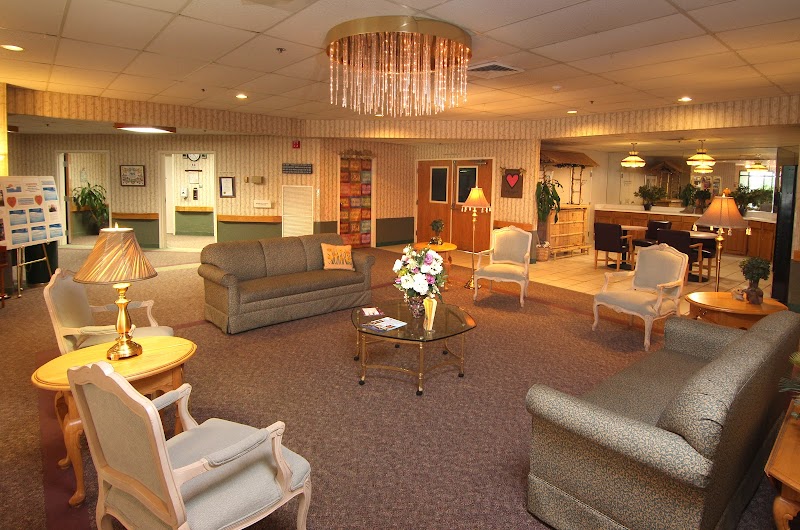
How is Gladeview Health Staffed?

CMS rates GLADEVIEW HEALTH CARE CENTER's staffing level at 4 out of 5 stars, which is above average compared to other nursing homes. Staff turnover is 41%, compared to the Connecticut average of 46%. This relatively stable workforce can support continuity of care.

What Have Inspectors Found at Gladeview Health?

State health inspectors documented 39 deficiencies at GLADEVIEW HEALTH CARE CENTER during 2020 to 2025. These included: 1 that caused actual resident harm, 36 with potential for harm, and 2 minor or isolated issues. Deficiencies causing actual harm indicate documented cases where residents experienced negative health consequences.
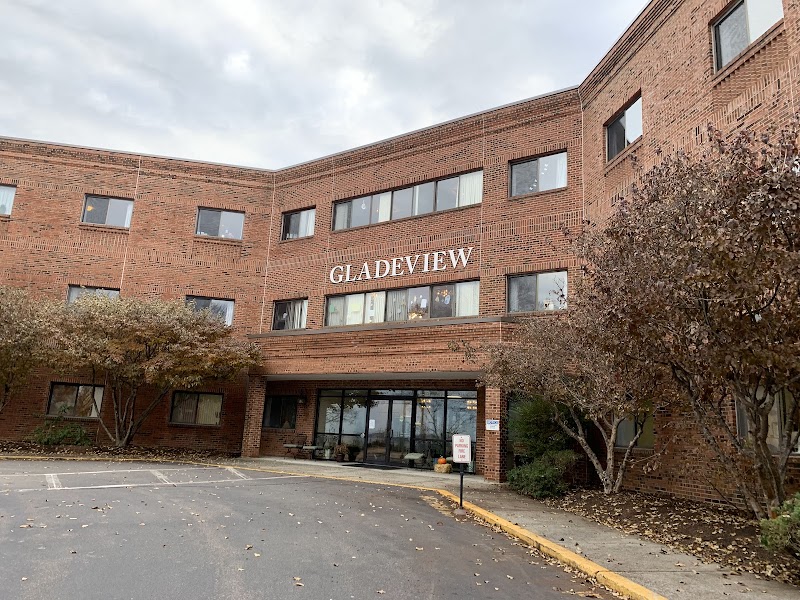
Who Owns and Operates Gladeview Health?

GLADEVIEW HEALTH CARE CENTER is owned by a for-profit company. For-profit facilities operate as businesses with obligations to shareholders or private owners. The facility operates independently rather than as part of a larger chain. With 132 certified beds and approximately 114 residents (about 86% occupancy), it is a mid-sized facility located in OLD SAYBROOK, Connecticut.
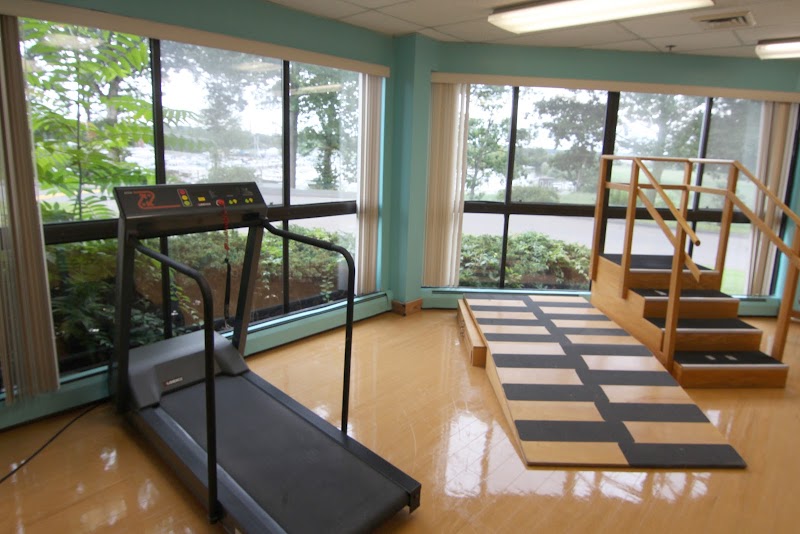
How Does Gladeview Health Compare to Other Connecticut Nursing Homes?

Compared to the 100 nursing homes in Connecticut, GLADEVIEW HEALTH CARE CENTER's overall rating (3 stars) is below the state average of 3.0, staff turnover (41%) is near the state average of 46%, and health inspection rating (3 stars) is at the national benchmark.

What Should Families Ask When Visiting Gladeview Health?

Based on this facility's data, families visiting should ask: "Can I visit during a mealtime to observe dining assistance and food quality?" "How do you handle medical emergencies, and what is your hospital transfer rate?" "Can I speak with family members of current residents about their experience?"

Is Gladeview Health Safe?

Based on CMS inspection data, GLADEVIEW HEALTH CARE CENTER has a clean safety record: no substantiated abuse findings (meaning no confirmed cases of resident harm), no Immediate Jeopardy citations (the most serious violation level indicating risk of serious injury or death), and is not on the Special Focus Facility watch list (a federal program monitoring the lowest-performing 1% of nursing homes). The facility has a 3-star overall rating and ranks #100 of 100 nursing homes in Connecticut. While no facility is perfect, families should still ask about staff-to-resident ratios and recent inspection results during their visit.

Do Nurses at Gladeview Health Stick Around?

GLADEVIEW HEALTH CARE CENTER has a staff turnover rate of 41%, which is about average for Connecticut nursing homes (state average: 46%). Moderate turnover is common in nursing homes, but families should still ask about staff tenure and how the facility maintains care continuity when employees leave.

Was Gladeview Health Ever Fined?

GLADEVIEW HEALTH CARE CENTER has been fined $23,989 across 1 penalty action. This is below the Connecticut average of $33,319. While any fine indicates a compliance issue, fines under $50,000 are relatively common and typically reflect isolated problems that were subsequently corrected. Families should ask what specific issues led to these fines and confirm they've been resolved.

Is Gladeview Health on Any Federal Watch List?

GLADEVIEW HEALTH CARE CENTER is not on any federal watch list. The most significant is the Special Focus Facility (SFF) program, which identifies the bottom 1% of nursing homes nationally based on persistent, serious quality problems. Not being on this list means the facility has avoided the pattern of deficiencies that triggers enhanced federal oversight. This is a positive indicator, though families should still review the facility's inspection history directly.