Saint Josephs Living Center, Inc.
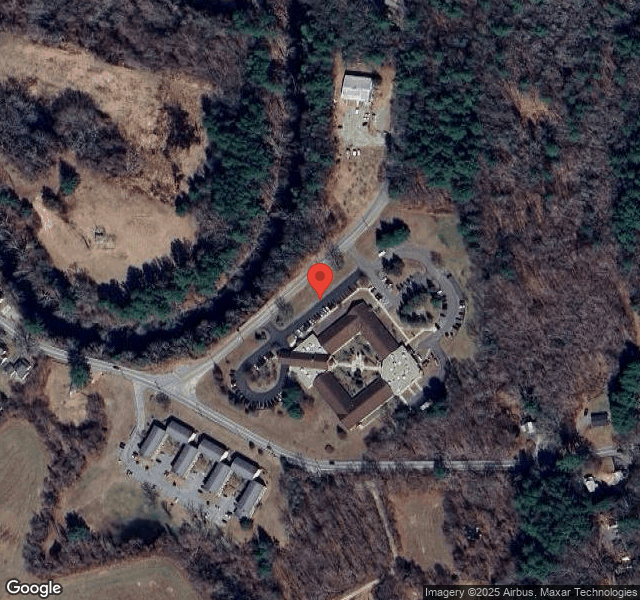

14 CLUB RD, WINDHAM, CT 06280 (860) 456-1107
Non profit - Corporation 120 Beds Independent Data: November 2025
Trust Grade
55/100
#103 of 192 in CT
Last Inspection: December 2024

Within standard 12-15 month inspection cycle. Federal law requires annual inspections.

Overview

Saint Joseph's Living Center in Windham, Connecticut, has received a Trust Grade of C, indicating it is average among nursing homes, not excelling but also not the worst. It ranks #103 out of 192 facilities in Connecticut, placing it in the bottom half, and #4 out of 8 in the county, meaning there are only three local options that are better. The facility is experiencing a worsening trend, with issues increasing from 5 in 2022 to 13 in 2024. Staffing is a significant concern, with a low rating of 1 out of 5 stars and a high turnover rate of 56%, which is above the state average of 38%. On a positive note, there have been no fines recorded, and while RN coverage data is not available, the facility has received a good health inspection rating of 4 out of 5 stars. Specific incidents include failures to follow CDC guidelines for infection control, such as not initiating Enhanced Barrier Precautions for residents with drug-resistant infections and not practicing proper hand hygiene. Additionally, kitchen sanitation concerns were noted, including improper sanitization solutions and cleanliness issues, like debris in essential kitchen equipment. Overall, while the facility has strengths such as a good health inspection score and no fines, significant weaknesses in staffing, infection control, and kitchen sanitation raise concerns for families considering this nursing home.

Trust Score
C
55/100
In Connecticut
#103/192
Bottom 47%
Safety Record
Low Risk
No red flags
Inspections
Getting Worse
5 → 13 violations
Staff Stability
⚠ Watch
56% turnover. Above average. Higher turnover means staff may not know residents' routines.
Penalties
✓ Good
No fines on record. Clean compliance history, better than most Connecticut facilities.
Skilled Nurses
○ Average
RN staffing data not reported for this facility.
Violations
⚠ Watch
21 deficiencies on record. Higher than average. Multiple issues found across inspections.
★★★☆☆
3.0
Overall Rating
★☆☆☆☆
1.0
Staff Levels
★★★☆☆
3.0
Care Quality
★★★★☆
4.0
Inspection Score
Stable
2022: 5 issues
2024: 13 issues

The Good

  • Full Sprinkler Coverage · Fire safety systems throughout facility
  • No fines on record

Facility shows strength in fire safety.

The Bad

3-Star Overall Rating

Near Connecticut average (3.0)

Meets federal standards, typical of most facilities

Staff Turnover: 56%

Near Connecticut avg (46%)

Frequent staff changes - ask about care continuity

Staff turnover is elevated (56%)

8 points above Connecticut average of 48%

The Ugly 21 deficiencies on record

Dec 2024 9 deficiencies
CONCERN (D)

Potential for Harm - no one hurt, but risky conditions existed

Deficiency F0561 (Tag F0561)

Could have caused harm · This affected 1 resident

**NOTE- TERMS IN BRACKETS HAVE BEEN EDITED TO PROTECT CONFIDENTIALITY** Based on observations, review of the clinical record, facility documentation, facility policy and interviews for 1 of 6 resident...

Read full inspector narrative →
**NOTE- TERMS IN BRACKETS HAVE BEEN EDITED TO PROTECT CONFIDENTIALITY** Based on observations, review of the clinical record, facility documentation, facility policy and interviews for 1 of 6 residents (Resident #208) reviewed for Nutrition, the facility failed to identify preferences for meals and provide choices for food items.  The findings include:    Resident #208 was admitted to the facility in November of 2024 and had diagnoses that included fracture of upper end of the right humerus and diabetes.    A Physician's order dated 11/21/24 at 4:36 PM directed to provide a regular diet, regular thin consistency.     A Dietary admission assessment dated [DATE] at 2:11 PM identified Resident #208 wanted a diet change to a diabetic diet with limited carbohydrate portions, increased vegetables and protein.  assessment indicated the Food Service Director would updated.   On 11/25/24 at 2:21 PM a Physician's order directed to provide a consistent carbohydrate diet, regular texture, regular thin consistency per resident request.      The admission Minimum Data Set assessment dated [DATE] identified Resident #208 was cognitively intact (Brief Interview for Mental Status (BIMS) score of 14) and required set up assistance for eating and oral hygiene, partial moderate assistance for bed mobility, transfers and toileting.    A Dietitian note dated 11/30/24 at 10:08 AM identified a 5 pound (lb) (3%) weight gain in 9 days and to continue a carbohydrate-controlled diet related to diabetes. The recommendation was to continue the current diet and monitor for new weight fluctuations.     The Resident Care Plan dated 12/4/24 identified Resident #208 was at risk for alteration in nutrition due to advanced age and type 2 diabetes with a therapeutic carbohydrate-controlled diet. Interventions included to serve a consistent carbohydrate diet with regular texture and regular thin consistency, provide diet as ordered, Dietary assessment and consult as needed, labs as ordered, monitor intake of meals, and obtain weights as ordered.    A Nutrition/Dietary note dated 12/6/24 at 4:45 PM by the Dietitian identified the Assistant Director of Nursing (ADNS) reported Resident #208 requested to see the Dietitian. The note indicated Resident #208 reported updated preferences related to his/her diabetes diagnosis and would continue a diabetic diet. The note indicated specific preferences were updated and she would remain available for follow-up as needed.    Observation on 12/9/24 at 5:18 PM, of Resident #208 ' s saved meal tickets identified the following:     12/8/24: Breakfast: under the entree and bread sections: ½ cup of egg and sausage bake was noted and under the bread section: 1 slice of buttered toast was noted 12/8/24: Lunch: under the entree section: 1 cup of pork fried rice was noted, under the vegetable section ½ cup of oriental vegetables was noted. Handwritten instructions on the meal ticket noted: no meat, no rice, no pork and there was an X marked next to dinner roll, mashed potatoes and tropical fruit cup indicating Resident #208 should not have been served these meal items. 12/9/24 Lunch: the bottom of the meal ticket identified: no breads/pork/beef/dessert, under the entree and bread sections: substitute needed was noted, under the vegetable section: ½ cup of peas and carrots was noted. Interview with Resident #208 on 12/9/24 at 5:18 PM identified for breakfast on 12/8/24 he/she was served oatmeal, egg sausage bake and toast and subsequently only ate the oatmeal.  #208 indicated for lunch on 12/8/24 he/she was served pork fried rice, oriental vegetables, and mashed potatoes and subsequently only ate the oriental vegetables. Resident #208 identified for lunch on 12/9/24 he/she was served a breaded chicken patty, peas and carrots, and pudding and subsequently only ate the chicken after scraping off the breading and peas.  #208 identified he/she did not eat pork, root vegetables, breads or desserts.    Observation of Resident #208's dinner meal tray on 12/09/24 5:34 PM identified he/she was served a turkey salad sandwich on white bread, a bowl of pumpkin soup with crackers, a cup of three bean salad, a cup of red Jello with whipped cream and a cup of milk. Observation of the dinner meal ticket identified: no breads/pork/beef/dessert, 8 oz of milk with each meal, and small starch portion was typed at the bottom of the meal ticket. Under the soup section: pumpkin soup was noted, under the entrée section: substitute for the entrée needed was noted, under the starch section: 1 oz of potato chips was noted, under the vegetable section ½ cup three bean salad was noted, under the dessert section: substitute needed for dessert was noted. Resident #208 ate the soup, the turkey salad inside the sandwich and the three bean salad.   Interview and review of the meal tickets for Resident #208 with the Food Service Director on 12/9/24 at 5:47 PM identified that the meal tickets noted no breads/pork/beef/dessert, 8 oz of milk each meal/small starch portion. The Food Service Director indicated the dietary aides were not reading the entire ticket, and she would provide education for reading the entire ticket.    Review of the Resident Menu Selection policy directed, in part, Residents are offered the ability to choose menu selections from offered choices available. Residents will be offered the availability to choose their meal options ahead of time. A staff member will be available to meet with the resident to determine their choices for meals. The resident can choose their meals up to a week in advance from menu options and always available menu. A resident can change their meal selection at any time to a different available option that does not conflict with their current physicians' orders.    Review of the Resident Food Preferences policy directed, in part, a Nutritional assessment will include an evaluation of individual food preferences. After a resident's admission, the Dietitian or nursing staff will identify a resident's food preference. When possible, this will be done by direct interview with the resident. The Dietitian will visit residents periodically to determine if revisions are needed regarding food preferences. The nursing staff will inform the kitchen about resident requests. The Food Service Department will offer a limited number of food substitutes for individuals who do not want to eat the primary meal. The facility provides selective food items as a part of an always available menu. 
CONCERN (D)

Potential for Harm - no one hurt, but risky conditions existed

Safe Environment (Tag F0584)

Could have caused harm · This affected 1 resident

**NOTE- TERMS IN BRACKETS HAVE BEEN EDITED TO PROTECT CONFIDENTIALITY** Based on observations, review of the clinical record, facility documentation, facility policy and interviews for 1 of 2 resident...

Read full inspector narrative →
**NOTE- TERMS IN BRACKETS HAVE BEEN EDITED TO PROTECT CONFIDENTIALITY** Based on observations, review of the clinical record, facility documentation, facility policy and interviews for 1 of 2 residents (Resident #12) reviewed for the environment, the facility failed to ensure resident room temperatures were comfortable. The findings included: Resident #12 was admitted to the facility in April of 2023 with diagnoses that included Chronic Obstructive Pulmonary Disease (COPD), Muscle Weakness, and Congestive Heart Failure. The Quarterly Minimum Data Set (MDS) assessment dated [DATE] identified Resident #12 was cognitively intact (Brief Interview for Mental Status (BIMS) score of 14). Observations on 12/4/24 at 11:30 AM, identified Resident #12 lying in bed, closest to the window, wearing a red jacket (fleece material), and covered in two thick plush blankets. The room temperature was observed to be cool. Interview with Resident #12 on 12/4/24 at 11:30 AM, identified the room temperature had been cold for a couple of weeks and when Resident #12 communicated feeling cold to the staff, a warm blanket would be provided. On 12/5/24 at 9:30 AM the Life Safety surveyor was notified of the cool temperature in Resident #12 ' s room and obtained room temperatures of 69 degrees Fahrenheit by the window and 71 degrees Fahrenheit near the hallway door. The Life Safety surveyor also identified the room baseboards were cold and had no heat flow. Subsequent to surveyor inquiry, the Maintenance Assistant assessed the heating system and identified the rooms heating unit was not functioning and the system needed to be bled. After bleeding the system, the heat began functioning. Maintenance Logs reviewed for the St. [NAME] wing on 12/6/24 at 11:50 AM identified there were no heating concerns noted for the month of December. There were no Maintenance Logs for the months of October and November. Interview with the Director of Nursing (DNS) on 12/9/24 at 4:18 PM identified there was a Maintenance Log, located at each unit ' s nurse's station, where the staff would log concerns or issues related to resident rooms. The DNS indicated the Maintenance Assistant would make rounds on each unit, review the logs, address logged concerns and then sign off on the log. She further identified that the Director of Maintenance keeps logs from prior months and participates in monthly environmental rounds. Interview with Nurse Aide (NA) #5 on 12/10/24 at 8:44 AM, identified she worked on 12/3/24 during the 11:00 PM to 7:00 AM shift and provided care to Resident #12. NA #5 indicated the room felt chilly, but did not check the room's thermostat. Interview with the Director of Maintenance on 12/10/24 at 10:49 AM identified there were no monthly Maintenance Logs documented for October and November, and he was not made aware of any heating issues on the units. He indicated that staff utilize the Maintenance Logs at the nurses stations and share information verbally in person. He identified an ongoing issue with a component of the heating system called a zone valve, which would get stuck and block heat flow, and indicated he should have had a system in place to monitor the zone valves. The Director of Maintenance identified he did not consistently participate in the facility monthly environmental rounds and indicated that this issue would have been identified had a member of maintenance been present during environmental rounds. The Director of Maintenance could not identify when he last attended monthly environmental rounds. The facility policy titled Homelike Environment directed, in part, the facility staff and management shall maximize to the extent possible, the characteristics of the facility that reflect a personalized homelike setting. Although requested, a facility policy for Environmental Rounds was not provided.
CONCERN (D)

Potential for Harm - no one hurt, but risky conditions existed

Pressure Ulcer Prevention (Tag F0686)

Could have caused harm · This affected 1 resident

**NOTE- TERMS IN BRACKETS HAVE BEEN EDITED TO PROTECT CONFIDENTIALITY** Based on observation, review of the clinical record, facility documentation, facility policy and interviews for 1 of 2 residents...

Read full inspector narrative →
**NOTE- TERMS IN BRACKETS HAVE BEEN EDITED TO PROTECT CONFIDENTIALITY** Based on observation, review of the clinical record, facility documentation, facility policy and interviews for 1 of 2 residents (Resident #81) reviewed for pressure injuries, the facility failed to ensure a dietician assessment was completed in a timely manner for a resident with a new facility acquired pressure injury and failed to perform preventative weekly skin assessments per provider order and facility policy and failed to perform weekly wound assessments per provider order. The findings include: Resident #81 was admitted to the facility in November of 2023 and had diagnoses that included Parkinson ' s disease, diabetes, and aphasia. The quarterly Minimum Data Set (MDS) assessment dated [DATE] identified Resident #81 was severely cognitively impaired (Brief Interview for Mental Status (BIMS) score of 6), required partial/moderate assistance with bed mobility and transfers and was at risk for developing pressure injuries. The Resident Care Plan (RCP) dated 7/31/2024 identified Resident #81 had potential for impaired skin integrity related to Parkinson ' s disease, diabetes, incontinence, and stage 2 pressure injury to the right buttock identified in April of 2024. Interventions included completion of a skin evaluation weekly on shower day, provide supplements as ordered, updated provider as needed regarding pressure injury, and obtain dietician consult as needed. The RCP further identified Resident #81 was at risk for malnutrition related to variable meal intake, and Resident #81 ' s increased nutrient needs related to presence of a Stage 2 pressure injury to the right buttock. Interventions included to provide and serve supplements as ordered, obtain evaluation by the registered dietician with diet change recommendations as needed and administer liquid protein once daily. A Skin Assessment by RN #2 dated 10/17/2024 at 6:44 AM identified Resident #81 had a new right buttock stage 2 pressure injury (wound) measuring 3 centimeters (cm) by 2 cm which was cleansed with normal saline followed by a topical moisture barrier. The Skin Assessment identified the provider, dietician, and supervisor/wound nurse were notified of the new skin issue, and a treatment order was initiated. 1. A Dietician progress note by Dietician #2 on 10/24/24 at 2:09 PM identified Resident #81 was seen for a high risk assessment related to a new right buttock stage 2 pressure injury. A new order for liquid protein once a day was initiated. This assessment was conducted 7 days after the development of the new pressure injury and resulted in an added intervention of supplemental protein to aid in wound healing. A Provider order dated 10/24/2024 directed administration of liquid protein by mouth one time of day for a stage 2 wound to the right buttock. The provider order failed to identify the amount of liquid protein that was ordered for administration by the nurse. Review of the Nutritional Assessment Policy directed, in part, the dietician will conduct a nutritional assessment as indicated by a change in condition that places the resident at risk for impaired nutrition. Situations which placed the resident at increased risk for impaired nutrition included increased demand for calories and protein resulting from wounds. 2. A provider order dated 10/31/2024 directed the charge nurse to complete a weekly skin assessment and document the skin assessment (Skin Assessment-V2) under the assessments section in the electronic medical record (EMR) on Sunday ' s during the 3 PM to 11 PM shift. Review of the facility document titled Skin Checks on Shower Days identified 22 licensed nurses were provided education on 11/1/24 for a new skin assessment protocol. The education instructed nurses would receive a notification within the Electronic Medical Record (EMR), on residents scheduled shower days, directing them to complete a Skin Assessment. The nurses were instructed that when performing an Skin Assessment for a resident with a wound being treated by the wound doctor, the nurse was to document the type and location of the wound on the Skin Assessments. The education failed to instruct nurses to document wounds that were not being treated by the wound doctor on the Skin Assessment. Review of the clinical record identified weekly Skin Assessments were not completed on 10/20/24, 10/27/24, 11/3/24 (20 days with no skin assessment), and 12/1/24, despite the presence of a new facility acquired pressure injury. The Skin Assessments completed on 11/9/2024, 11/16/2024, and 11/23/2024 failed to include documentation of an existing pressure injury or the resolution of the pressure injury to the right buttock. Subsequent to surveyor inquiry a Skin Assessment was performed on 12/7/24 which identified a new dry, superficial area to the left elbow measuring 1 cm by 1 cm, but did not include documentation of an existing pressure injury or the resolution of the pressure injury to the right buttock. Interview with the ADNS on 12/10/24 at 10:20 AM identified weekly Skin Assessments should be documented by the charge nurse in the assessment section of the EMR. He identified licensed nurses should include documentation of existing skin issues within the Skin Assessments. The ADNS indicated licensed nurses received education on 11/1/24 related to the facility ' s new process for Skin Assessments. 3. A Wound-Weekly Progress Notes assessment by the Assistant Director of Nursing Services (ADNS) dated 10/25/24 at 2:16 PM identified Resident #81 had an improved facility acquired right buttock pressure injury, onset date unknown, which measured 2.4 cm by 0.4 cm. A physician ' s order dated 11/6/24 directed to measure wound(s) to the right upper and right medical buttock every Wednesday on the 7 AM to 3 PM shift. A physician ' s order clarification dated 11/20/24 directed to complete a wound assessment for buttock wounds every Wednesday on the 7 AM to 3 PM shift. Review of the clinical record for Wound-Weekly Progress Notes assessments in the assessment section of the EMR identified there were no documented wound assessments during the week of 10/27/24 through 11/2/24, and on 11/20/24, 11/27/24, and 12/4/24 according to provider order. Observation of Resident #81 ' s skin integrity with the Director of Nursing Services (DNS) and Nurse Aide (NA) #8 on 12/10/24 at 9:10 AM identified Resident #81 had 2 small superficial stage 2 pressure injuries (wounds) to the upper and lower coccyx with red wound beds and scant drainage. The DNS indicated she would have the charge nurse initiate a wound evaluation and ensure Resident #81 was added to the weekly wound rounds schedule for the wound doctor to evaluate. The DNS indicated that the observed wounds were new as the Skin Assessment performed on 12/7/24 did not identify wounds to the coccyx or buttocks, and a new treatment would be initiated. Interview with the ADNS on 12/10/24 at 10:20 AM identified he performed weekly wound rounds with the doctor and was responsible for entering subsequent wound assessments into the EMR. He further identified charge nurses were responsible for assessing and documenting all other wounds not seen by the doctor during wound rounds. The ADNS confirmed Resident #81 had stage 2 wounds to the right upper and medial buttocks as documented on 11/13/24 but was unable to identify why wound assessments were missing for 11/20/2024, 11/27/2024 and 12/4/2024. The ADNS indicated the right upper and medial buttock wounds were healed and there should have been documentation of the healed wounds in the clinical record. He was unable to provide a healed date for the wounds. The ADNS indicated he was notified by the charge nurse of 2 new stage 2 pressure injuries that morning. The ADNS identified that charge nurses were responsible for documentation of new or existing wounds, that were not followed by the wound doctor during wound rounds, during weekly skin assessments. The ADNS was unable to explain how charge nurses would identify a decline in wound status if they were not consistently assessing a wound or how they would know when to report wound status to a provider. Review of the Pressure Ulcer Prevention Policy directed, in part, the facility should have a system/procedure to assure assessments are timely and appropriate and changes in condition are recognized, evaluated, reported to the practitioner, family and addressed and weekly Skin Assessments and documentation completed in EMR.
CONCERN (D)

Potential for Harm - no one hurt, but risky conditions existed

Accident Prevention (Tag F0689)

Could have caused harm · This affected 1 resident

**NOTE- TERMS IN BRACKETS HAVE BEEN EDITED TO PROTECT CONFIDENTIALITY** Based on review of the clinical record, facility documentation, facility policy and interviews for 1 of 5 residents (Resident #2...

Read full inspector narrative →
**NOTE- TERMS IN BRACKETS HAVE BEEN EDITED TO PROTECT CONFIDENTIALITY** Based on review of the clinical record, facility documentation, facility policy and interviews for 1 of 5 residents (Resident #210) reviewed for accidents, the facility failed to follow the plan of care to prevent an accident for a resident who was at risk of falls. The findings include: Resident #210 was admitted to the facility in October of 2022 with diagnoses that included acute and chronic respiratory failure, heart failure, long term (current) use of anticoagulants and difficulty in walking. Physician ' s order dated [DATE] directed to administer oxygen at 3 liters (L) per minute via nasal cannula. Physician's order dated [DATE] directed to place a sensor alarm to Resident #210's bed and chair every shift for safety. The quarterly Minimum Data Set (MDS) assessment dated [DATE] identified Resident #210 was moderately cognitively impaired (Brief Interview for Mental Status (BIMS) score of 12) and was dependent for toileting hygiene, required moderate assistance with positioning from lying to sitting on the side of the bed and supervision assistance from sitting to standing. Additionally, the MDS identified that Resident #210 had other health conditions that caused him/her to experience shortness of breath or trouble breathing with exertion e.g. walking, bathing, transferring, when sitting at rest, and when lying flat. The MDS identified Resident #210 was receiving oxygen therapy, was prescribed an anticoagulant, and required bed alarm and chair alarm to monitor his/her movement and alert staff when movement was detected. The MDS further identified that Resident #210 had sustained a fall prior to admission to the facility. The Resident Care Plan (RCP) dated [DATE] identified Resident #210 had a history of falls related to poor safety awareness and cognitive deficits. The identified goal was a decreased risk of injury related to falls as evidenced by maximum interventions placed to provide a safe, calming environment with minimal risk of injury should a fall/incident occur. Interventions included use of bed and chair alarms and to check the function and placement every shift, provide toileting assistance at the appropriate frequency and as needed, keep bed in lowest position with brakes locked, observe Resident #210 frequently and place him/her in a supervised area when out of bed. The RCP further identified that Resident #210 had chronic respiratory failure with interstitial lung disease and hypoxia (deficiency in the amount of oxygen reaching tissues). Interventions included administering oxygen as ordered, checking for placement frequently and obtaining vital signs as ordered. The RCP further identified that Resident #210 was at potential risk for injury/bleed related to the use of anticoagulation medications for atrial fibrillation (a fib), interventions included monitoring Resident #210 for active bleeding, cyanosis and pallor and obtaining labs as ordered. The Resident Care Card (RCC) for the month of [DATE] identified that Resident #210 was alert but forgetful and required an assist of 1 with a rolling walker and gait belt for ambulation. Additionally, the RCP directed to place bed and chair sensor alarms and to check for placement and function every shift. The RCP also directed to pad oxygen cannula and check oxygen setting frequently. A Social Services note dated [DATE] at 3:07 PM written by Social Worker #1 identified that Resident #210 presented with periods of increased confusion, hallucinations and delusions particularly in the evening. The note further identified that Resident #210 had exhibited poor safety awareness with self-transfer attempts and was removing his/her oxygen despite ongoing education and oxygen saturation readings ranged from 79% to 97% while on 3L of oxygen but drops quickly with little activity including ambulating to and from the bathroom. A Nurses noted dated [DATE] at 6:20 PM written by LPN #5 identified that on 3:00 PM to 11:00 PM shift, Resident #210 was alert and forgetful with intermittent confusion and ambulated him/herself to the bathroom. The note further identified that Resident #210 was found sitting on the toilet without his/her oxygen but was brought back to his/her recliner and oxygen was applied at 3.5 L. The note identified that Resident #210 ' s oxygen saturation levels were between 81%-84% but increased to 87% when oxygen was applied. The note further identified that Resident #210 ' s oxygen increased to 93% after Morphine was administered at 5:39 PM. A Reportable Event form dated [DATE] at 3:40 AM written by LPN #6, identified that staff heard a loud thump from Resident #210's room and when they responded they found Resident #210 lying in supine position (lying on back with face and torso facing up) on the floor. The form identified that Resident #210 was unresponsive, was observed with a left eye bruise and small trickle of blood near the outer side of the left eye and LPN #6 was unable to obtain vital signs. The Registered Nurse Supervisor (RN #4) and physician were notified. The form identified LPN #4 called 911 and applied oxygen, but Resident #210 deceased within 2-3 minutes. The report identified that Resident #210 was cognitively impaired, had experienced episodes of restlessness, mood swings and agitation prior to the fall and had a bed sensor/alarm in place which was always connected. The form further identified that Resident #210 self-transferred out of bed and the bed sensor/alarm did not sound. The form identified the bed sensor/alarm was later taken apart and the alarm control unit was found to be broken. A Nurse's note dated [DATE] at 4:28 AM by RN #2, identified that at 3:40 AM she was alerted by LPN #6 that Resident #210 was on floor. RN #2 ' s note indicated he/she responded and found Resident #210 in his/her room by the bathroom door in a supine position. The note identified that Resident #210 was unresponsive and was noted to have a small amount of blood coming from the left eye. The note indicated that RN #2 was unable to obtain vital signs, called 911 and notified RN #4. The note further identified that Resident #210 was pronounced deceased at 3:45 AM. Additionally, the note indicated that EMS arrived at 3:50 AM and confirmed Resident #210's death and Resident #210's daughter was notified at 4:05 AM. A Nurses note dated [DATE] at 7:02 AM written by LPN #6, identified that prior to Resident #210 ' s fall incident on [DATE], he/she had not voided during the 11:00 PM to 7:00 AM shift. The note further identified that Resident #210 had remained asleep through the 11:00 PM to 7:00 AM shift prior to self-transferring from bed and falling. Interview with RN #4 on [DATE] at 3:37 PM identified that she responded to the fall incident on [DATE] after being called by the LPN #6. RN #4 identified that she found Resident #210 on the floor in the supine position, unresponsive and was bleeding slightly from the back of his/her head due to a small cut on the back of his/her head. RN #4 identified that Resident #210 did not have his oxygen tubing applied when he/she fell but the oxygen tubing was on the floor a few feet away. RN #4 identified that she did not check the bed alarm function at the beginning of the 11:00 PM to 7:00 AM shift because Resident #210 was asleep, and she did not want to wake him up because he would become restless, but she observed that the bed alarm/sensor was plugged in. RN #4 identified that checking the bed sensor/alarm is a routine safety task that should be done at the beginning of shift. RN #4 identified that checking for bed alarm function entails moving/rolling the resident completely off the sensor pad that is normally placed underneath the resident and then rolling the resident back. RN #4 further identified that Resident #210 was a fall risk, and the bed alarm should have sounded when Resident #210 moved out of bed alerting staff to respond timely to prevent him/her from falling and redirect him/her, but the bed alarm did not sound. RN #4 identified that both nurses and nurses assistants were responsible for checking bed alarm placement and function at the beginning of their shifts. Interview with NA #8 on [DATE] at 11:51 AM, identified that she heard a loud bang and when she responded, she found Resident #210 laying on the floor on his/her back in his/her room near the bathroom door. NA #8 further identified that Resident #210 was still and not moving. NA #8 identified that at the beginning of her shift when she did rounds, Resident #210 was sleeping, and the bed alarm was plugged in. NA #8 identified that she did not check the bed alarm's function because Resident #8 was sleeping, and she did not want to wake him/her up. NA #8 identified that she would normally check for bed alarm placement and functioning at the beginning of the shift. NA #8 further identified that checking for bed alarm function entails moving/rolling the resident completely off the sensor pad that is normally placed underneath the resident and then rolling the resident back. Rolling the Resident off the sensor pad would activate the bed alarm to sound. Interview with the DNS on [DATE] at 12:30 PM, identified that bed alarm placement was implemented as an intervention protocol to mitigate Resident #210's fall risk. The DNS identified that the bed alarm last sounded around 4:00 PM on the 3:00 PM to 11:00 PM shift when Resident #210 self-transferred to the bathroom. The DNS identified that the bed alarm control unit was found to be broken resulting in the failure to sound when Resident # 210 got out of bed. The DNS further identified that the NA's were responsible for checking the bed alarm function. Although requested, a bed alarm policy was not provided. Although requested, competencies or staff education related to bed alarm function checks by NA's was not provided. Review of facility policy titled, Fall Prevention Program, identified, in part, that the purpose of the fall preventive program is to prevent avoidable falls and injuries that result from falls. The program further identified that the plan of care will be individualized to resident.
CONCERN (D)

Potential for Harm - no one hurt, but risky conditions existed

Deficiency F0692 (Tag F0692)

Could have caused harm · This affected 1 resident

**NOTE- TERMS IN BRACKETS HAVE BEEN EDITED TO PROTECT CONFIDENTIALITY** Based on observations, review of the clinical record, facility documentation, facility policy and interviews for 1 of 6 resident...

Read full inspector narrative →
**NOTE- TERMS IN BRACKETS HAVE BEEN EDITED TO PROTECT CONFIDENTIALITY** Based on observations, review of the clinical record, facility documentation, facility policy and interviews for 1 of 6 residents (Resident #203) reviewed for nutrition and hydration, the facility failed to obtain accurate weights and failed to notify the provider of weight increases according to provider order. The findings include: Resident #203 was admitted to the facility in December of 2024 and had diagnoses that included periprosthetic fracture around the internal prosthetic right hip, diabetes, congestive heart failure (CHF) and hypertension. The admission assessment dated [DATE] identified Resident #203 was alert and oriented to person, place and time. The Resident Care Plan dated 12/2/24 identified CHF and a risk for complications due to CHF. Interventions included to administer medications as ordered, check labs as ordered, chest x-ray as needed, daily weights for CHF, report weight gain of 3 pounds (lbs.) or more in a day to physician, diet as ordered, notify Physician of signs or symptoms of CHF exacerbation, and weigh as ordered. A Physician's order dated 12/4/24 directed to obtain daily weights for 3 days. A Physician's order dated 12/5/24 directed to obtain daily weights for CHF and directed to report a weight gain of 3 lbs. or more, within 1 day, to the physician. A Weights and Vital signs summary identified the following weight entries: 12/3/24 at 12:30 PM: 150.2 lbs. standing scale 12/4/24 at 11:06 AM: 133.4 lbs. standing scale (16.8 lb (11.2%) weight loss) 12/5/24 at 2:15 PM: 150.4 lbs. wheelchair scale (17 lb (12.7%) weight gain) 12/6/24 at 2:40 PM: 150 lbs. standing scale 12/7/24 at 1:45 PM: 134.2 lbs. wheelchair scale (15.8 lb (10.5%) weight loss) 12/7/24 at 10:01 PM: 135 lbs. sitting scale 12/8/24 at 2:39 PM: 134.6 lbs. standing scale 12/9/24 at 12:02 PM: 132.6 lbs. standing scale 12/10/24 at 11:20 AM: 137.4 lbs. standing scale (4.8 lb (3.6%) weight gain) 12/10/24 at 11:22 AM; 133.4 lbs. standing scale Review of the clinical record for December of 2024 failed to identify provider notification of the documented weight changes. Subsequent to surveyor inquiry, a handwritten Weights worksheet dated 12/7/24 was provided and identified the following weights: 12/03/24: 134.2 lbs., 12/04/24: 133.4 lbs., 12/6/24: 134.2 lbs. A Weight change note by the Dietitian dated 12/8/24 at 9:11 AM identified a significant weight change and recommended continuing daily weights and obtaining a baseline weight. A Nurse Practitioner note dated 12/9/24 at 3:00 PM identified, in part, no weight changes, no evidence of fluid overload. Interview and review of the clinical record with the Assistant Director of Nursing (ADNS) on 12/10/24 at 11:30 AM identified the physician should have been notified of the weight changes. The ADNS further identified the weights should have been obtained using the same scale. The ADNS could not determine the reason for the weight fluctuations. Subsequent to surveyor inquiry, on 12/10/24 at 11:30 AM, a standing reweight was obtained and identified a weight of 133.4 lbs. Subsequent to surveyor inquiry, on 12/10/24 at 1:30 PM the ADNS identified that he notified the provider of the weight changes and received orders for bloodwork. Review of the facility policy for Weight Assessment and Intervention, in part, directed the nursing staff will measure resident weights within a month and as scheduled by the physician, dietitian or the interdisciplinary team. Any weight change of 5% or more since the last weight assessment will be retaken for confirmation. If the weight is verified, nursing will notify the physician or and Dietitian. The responsible party will also be notified. The dietitian will discuss undesired weight gain with the resident and/or family. Interventions for undesired weight gain should consider resident preferences and rights.
CONCERN (D)

Potential for Harm - no one hurt, but risky conditions existed

Pharmacy Services (Tag F0755)

Could have caused harm · This affected 1 resident

**NOTE- TERMS IN BRACKETS HAVE BEEN EDITED TO PROTECT CONFIDENTIALITY** Based on observations, review of facility documentation, facility policy, and interviews, the facility failed to ensure shift to...

Read full inspector narrative →
**NOTE- TERMS IN BRACKETS HAVE BEEN EDITED TO PROTECT CONFIDENTIALITY** Based on observations, review of facility documentation, facility policy, and interviews, the facility failed to ensure shift to shift controlled drug reconciliation was consistently completed and failed to maintain documentation of bi-monthly controlled drug audits. The findings include: 1. Observations on 12/9/24 at 1:50 PM of the St. [NAME]'s A medication cart with the Assistant Director of Nursing (ADNS) identified the December Change of Shift Inventory Record for Required Drugs sheet (the controlled drug reconciliation form that the on-coming and off-going nurses complete to ensure controlled drugs are counted) were missing signatures on the following dates: A. 12/3/24: 7:30 AM to 3:00 PM off-going, 3:30 PM to 11:00 PM off-going B. 12/4/24: 7:30 AM to 3:00 PM off-going, 3:30 PM to 11:00 PM off-going C. 12/6/24: 7:30 AM to 3:00 PM on-coming and off-going, 11:30 PM to 7:00 AM off-going D. 12/8/24: 7:30 AM to 3:00 PM off-going, 3:30 PM to 11:00 PM on-coming and 11:30 PM to 7:00 AM off-going Interview with LPN #1 on 12/9/24 at 1:55 PM identified she worked on the St. [NAME] unit on 12/8/24 from 7:00 AM until 7:30 PM, and she forgot to sign the change of shift controlled drug reconciliation form because she continued to work past her regular shift hours. LPN #1 indicated it was the responsibility of all the nurses to sign the controlled drug reconciliation form at the change of shift when the controlled drug count is completed. Interview with the ADNS on 12/9/24 at 2:00 PM identified that he was not aware of the missing signatures on the controlled drug reconciliation form, and it is his responsibility as the ADNS to check it, and he did not do so. The controlled drug reconciliation form should be checked weekly. 2. Observation with the ADNS on 12/9/24 at 2:15 PM identified the facility was unable to provide bi-monthly controlled drug audit sheets. Interview on 12/9/24 at 2:21 PM with the Director of Nursing (DNS) identified that she goes to each of the medication carts to review the controlled drug book and verify the counts in the cart, then matches the count to the pharmacy delivery sheets which were delivered with the controlled drugs by the pharmacy. The DNS indicated that she previously maintained a book with audit sheets but that process fell off. Review of the facility policy titled Handling and Destroying Narcotics indicated strict narcotics count should be done at the start and end of each shift. The incoming and outgoing nurses will both sign the narcotics book before handing out the key. Additionally, directed the facility shall comply with all laws, regulations, and other requirements related to handling, storage, disposal, and documentation of Schedule II and other controlled substances.
CONCERN (D)

Potential for Harm - no one hurt, but risky conditions existed

Deficiency F0806 (Tag F0806)

Could have caused harm · This affected 1 resident

**NOTE- TERMS IN BRACKETS HAVE BEEN EDITED TO PROTECT CONFIDENTIALITY** Based on interviews, review of the clinical record, and facility policy for 1 of 9 residents (Resident #57) reviewed for food an...

Read full inspector narrative →
**NOTE- TERMS IN BRACKETS HAVE BEEN EDITED TO PROTECT CONFIDENTIALITY** Based on interviews, review of the clinical record, and facility policy for 1 of 9 residents (Resident #57) reviewed for food and nutrition, the facility failed to assist a dependent resident with menu selection. The findings include: Resident #57 was admitted to the facility in July of 2023 and had diagnoses that included legal blindness, gastro-esophageal reflux disease, and feeding difficulties A provider order dated 12/12/23 directed a regular diet, regular texture with an allergy to eggs and egg derivates. The quarterly Minimum Data Set (MDS) assessment dated [DATE] identified Resident #57 was cognitively intact (Brief Interview for Mental Status (BIMS) score of 13), required set up assistance for eating, and was dependent for toileting, bathing, and transfers. The Resident Care Plan (RCP) dated 10/30/24 identified Resident #57 had impaired visual function related to legal blindness. Interventions included reviewing medications for side effects which affect vision and telling the resident where their items were placed. Additionally, the RCP identified Resident #57 was at risk for malnutrition due to varied meal intakes. Interventions included to provide diet as ordered, monitor intake of meals, offer meal alternates as needed, and provide assistance with meals as needed. Interview with Resident #57 on 12/9/24 at 3:09 PM identified he/she was not informed of the facility meal menus or given an option to select food preferences for meals but was just provided with the scheduled meal. Additionally, Resident #57 identified that he/she had informed staff that he/she would like to be informed of meal options and given the opportunity to make selections, but nothing had been done. Interview with the Food Service Director on 12/09/24 at 3:40 PM identified that the process for assisting residents with menus, food preferences and informing residents of what is on the menu is completed by the Nurse Aids (NA). Interview with NA #3 on 12/09/24 at 3:59 PM identified that NA's assist residents with filling out menus and selecting meal options. NA #3 further indicated that she did not assist Resident #57 with his/her meal selections and believed that this was completed on first shift. Interview with LPN #3 on 12/09/24 at 4:06 PM indicated that NA ' s or the recreation department help residents' complete meal selections and could not answer why it was not completed. LPN #3 stated she did not know who was overall responsible for ensuring menu selection was completed. Interview with the Director of Recreation on 12/09/24 at 5:05 PM identified that recreation helped with menu selection in the past and would help if requested, but that NA ' s were responsible for assisting residents with their menu selection. Interview with the Director of Nursing Services (DNS) on 12/09/24 at 5:40 PM identified that it was the responsibility of the NA to assist residents with menu selection and could not answer why it was not being completed for Resident #57. Additionally, the DNS stated that according to the policy, residents who were not capable of making their food selections would be assisted. Review of the Resident Menu Selections Policy identified, in part, residents would be offered the availability to choose their meal options ahead of time. A staff member would be available to meet with the resident or responsible party to determine their choices for meals. The resident could choose their meals up to one week in advance from the menu options or always available menu. A resident could change their meal selection at any time to a different available option that did not conflict with their current physician orders.
CONCERN (D)

Potential for Harm - no one hurt, but risky conditions existed

Deficiency F0883 (Tag F0883)

Could have caused harm · This affected 1 resident

**NOTE- TERMS IN BRACKETS HAVE BEEN EDITED TO PROTECT CONFIDENTIALITY** Based on observations, review of the clinical record, facility documentation, facility policy and interviews for 2 of 8 resident...

Read full inspector narrative →
**NOTE- TERMS IN BRACKETS HAVE BEEN EDITED TO PROTECT CONFIDENTIALITY** Based on observations, review of the clinical record, facility documentation, facility policy and interviews for 2 of 8 residents (Resident #85 and Resident #98) reviewed for infection control, the facility failed to identify and document vaccination status and offer vaccinations for resdients newly admitted to the facility. The findings include: 1. Resident #85 was admitted to the facility in October of 2024, with diagnoses that included Alzheimer's Disease, Atrial Fibrillation, Asthma and Osteoporosis. The admission Minimum Data Set assessment dated [DATE] identified Resident #85 was severely cognitively impaired (Brief Interview for Metal status (BIMS) score of 3). Review of the Electronic Health Record (EHR) immunization record identified that a Moderna Covid-19 vaccine was administered on 11/18/24 and an Influenza vaccine was administered on 12/9/24 but failed to identify if a Pneumovax vaccine was offered, refused or administered. The facility failed to identify any documentation of a Vaccine Administration Consent form was completed for the Pneumovax vaccine for Resident #85. 2. Resident #98 was admitted to the facility in October of 2024 with Diagnoses that included Acute Respiratory Failure with Hypoxia and Pneumonia due to Covid- 19. The admission Minimum Data Set assessment dated [DATE] identified Resident #98 was Cognitively intact (Brief interview of Mental Status (BIMS) score of 14). Review of the Electronic Health Record (EHR) immunization record failed to identify if any immunizations had been offered, refused or administered. The facility failed to identify documentation of Vaccine Administration Consent forms were completed for any vaccinations. Interview and clinical record review with the Director of Nursing (DNS) on 12/9/24 at 2:35 PM identified that the Infection Control Nurse (ICN) interviewed residents and resident representatives and used CTWIZ (an electronic vaccine tracking system) to identify vaccination status. The DNS indicated education was provided to residents and families within the admissions packet which included immunization fact sheets. The DNS indicated that the education should have been offered upon admission to the facility and would be in the immunization tab of the EHR if it were offered. Additionally, the DNS indicated she did not know why vaccines were not offered and further identified that the ICN is new to the role. Review of the Vaccination of Residents policy directed, in part, all residents will be offered vaccines that aid in preventing infectious diseases unless the vaccine is medically contraindicated, or the resident has already been vaccinated. Prior to receiving vaccinations, the resident or legal representative will be provided information and education regarding the benefits and potential side effects of the vaccinations. Provision of such education shall be documented in the resident's medical record. All new residents shall be assessed for current vaccination status upon admission. If vaccines are refused, the refusal shall be documented in the resident's medical record. If the resident receives a vaccine, the following information shall be documented in the resident's medical record: site of administration, date of administration, lot number of the vaccine, expiration date and the name of the person administering the vaccine.
CONCERN (E)

Potential for Harm - no one hurt, but risky conditions existed

Infection Control (Tag F0880)

Could have caused harm · This affected multiple residents

**NOTE- TERMS IN BRACKETS HAVE BEEN EDITED TO PROTECT CONFIDENTIALITY** Based on observations, review of the clinical record, facility documentation, facility policy and interviews for 6 of 13 residen...

Read full inspector narrative →
**NOTE- TERMS IN BRACKETS HAVE BEEN EDITED TO PROTECT CONFIDENTIALITY** Based on observations, review of the clinical record, facility documentation, facility policy and interviews for 6 of 13 residents (Resident #22, Resident #36, Resident #44, Resident #64, Resident #71 and Resident #89) reviewed for Enhanced Barrier Precautions (EBP) and 1 of 2 residents (Resident #211) reviewed for Transmission Based Precautions (TBP), the facility failed to initiate Enhanced Barrier Precautions (EBP) per Center of Disease Control (CDC) guidelines for residents with a history of Multiple Drug Resistant Organisms (MDROs) and failed to perform hand hygiene after exiting a resident room and before entering another resident room and failed to maintain Transmission Based Precautions (TBP) while assisting a resident with a positive COVID-19 diagnosis. The findings include: 1. Resident #22, Resident #36 and Resident #44 had diagnoses that included a history of Methicillin Resistant Staphylococcus Aureus (MRSA) Resident #64 had diagnoses that included a history of Clostridium Difficile (C. Diff.). Resident #71 had diagnoses that included a history Extended Spectrum Beta Lactamases (ESBL). Resident #89 had diagnoses that included a history of Methicillin Suseptible Staphylococcus Aureus. Review of the History vs Active MDRO list compared to the Enhanced Barrier Precautions list provided by the Infection Control Nurse identified Resident #22, Resident #36, Resident #44, Resident #64, Resident #71 and Resident #89 were not on EBP. Interview and review of MDRO list, EBP list and current CDC guidelines with the Director of Nursing on 12/9/24 at 2:35 PM identified that Resident #22, Resident #36, Resident #44, Resident #64, Resident #71 and Resident #89 were identified to have a history of an MDRO and should have been placed on EBP. Center for Disease Control (CDC) guidelines identified April 1, 2024: Implementation of Enhanced Barrier Precautions (EBP) in Nursing Homes to Prevent Spread of Multidrug-resistant Organisms. Multidrug-resistant Organism (MDRO): bacteria or fungi resistant to multiple antimicrobials and colonization identifies a germ is found on or in the body but is not causing infection. Many nursing home residents are unknowingly colonized with an MDRO, especially residents with risk factors like indwelling medical devices or wounds. Residents who have an MDRO can develop serious infections, remain colonized for long time periods, and spread MDROs to others. EBP are indicated for nursing home residents with any of the following: Infection or colonization with an MDRO when Contact Precautions do not otherwise apply, wounds and/or indwelling medical devices. EBP is not limited to outbreaks or specific MDROs. Review of the facility policy titled Enhanced Barrier Precautions directed, in part, to be used when caring for residents during high contact care activities for residents with an infection or colonization with a CDC targeted MDRO when contact precautions do not otherwise apply. The facility will utilize the orange enhanced barrier precautions signs to be placed outside of the resident's room, to notify staff of proper PPE usage. PPE will be stored on the unit for staff availability. 2. Observation on 12/9/24 at 4:58 PM identified NA #6 was passing meal trays with gloves on. NA #6 delivered a tray to room [ROOM NUMBER] with gloves on, exited the room without the benefit of changing her gloves and performing hand hygiene, then went into room [ROOM NUMBER] to deliver another meal tray. Interview on 12/9/24 at 4:58 PM with NA #6, upon exiting room [ROOM NUMBER], indicated she was not thinking about her gloves and forgot to perform hand hygiene. NA #6 then removed her gloves and performed hand hygiene. Interview with LPN #4 on 12/9/24 at 5:18 PM identified that gloves should not be worn in the hallway or to pass meal trays and upon disposal of gloves, hands are to be sanitized prior to serving the next tray. LPN #4 did not know why NA #7 was wearing gloves to pass meal trays and did not remove the gloves and sanitize her hands before passing the next tray. A facility policy titled Standard Precautions and Other Precautions identified, in part, hand hygiene refers to handwashing with soap (antimicrobial or non-antimicrobial) or alcohol-based hand rubs (gels, foams, rinses) that do not require water. In the absence of visible soiling of hands, alcohol-based hand rubs are preferred for hand hygiene. Wash hands after removing gloves. Remove gloves promptly after use, before touching non-contaminated items and environmental surfaces, and before going to another resident and wash hands immediately to avoid transfer of microorganisms to other residents or environments. 3. Resident #211 was admitted to the facility on [DATE] with diagnoses that included Covid-19 and was identified to require TBP and Contact/Droplet precautions. A Physician's order dated 12/3/24 at 3:00 PM directed to maintain strict isolation precautions and included instructions to render all care, meals, and services within Resident #211 ' s room due to Covid-19. A Physician's order dated 12/4/24 at 7:00 AM directed contact and droplet precautions for Covid-19. Observation on 12/9/24 at 5:00 PM, identified NA #7 wore only a surgical mask, without the benefit of Personal Protective Equipment (PPE), when entering Resident #211's room to deliver a meal tray. NA #7 was observed assisting Resident #211 with positioning in his/her chair and then setting up the meal tray, all within close proximity to Resdient #211. Signage was observed to be posted outside of Resident #211's room regarding precautions and required Personal Protection Equipment (PPE). Interview with NA #7 on 12/9/24 at 5:00 PM indicated NA #7 was unaware that Resident #211 was on TBP as identified by the signage posted outside of Resident #211 ' s room. NA #7 further indicated she was unaware she needed to wear an N95 mask to enter a room for a resident on TBP for Covid-19. Subsequent to surveyor identification of NA #7 rendering care without the use of PPE for Resident #211, the DNS verbally educated NA #7 regarding contact/droplet precautions and the required PPE to enter a room with TBP. Interview with LPN #4 on 12/9/24 at 5:18 PM identified that NA #7 should have been aware that Resident #211 was on TBP due to Covid-19 because NA #7 received report the start of the shift and was informed that Resident #211 was positive for Covid-19, in addition to the signage outside of the room. LPN #4 identified that meal trays for residents on isolation precautions should be served last. Interview with the DNS on 12/9/24 at 5:45 PM identified that gloves should not be worn in the hallways to pass meal trays and hands are to be washed upon the removal of gloves. A facility policy titled Standard Precautions and Other Precautions identified, in part, residents on contact and/or isolation precaution will have precautions set up and available to staff and family members including personal protection equipment. Residents, staff and visitors will be educated about the precautions as necessary and hand washing. Alcohol gel sanitizer will be available for use. Resident ' s room will show Stop or Please see the nurse sign in the room.
Jul 2024 2 deficiencies
CONCERN (D) 📢 Someone Reported This

A family member, employee, or ombudsman was alarmed enough to file a formal complaint

Potential for Harm - no one hurt, but risky conditions existed

Free from Abuse/Neglect (Tag F0600)

Could have caused harm · This affected 1 resident

**NOTE- TERMS IN BRACKETS HAVE BEEN EDITED TO PROTECT CONFIDENTIALITY** Based on clinical record review, facility documentation review, facility policy review, and interviews for one of three resident...

Read full inspector narrative →
**NOTE- TERMS IN BRACKETS HAVE BEEN EDITED TO PROTECT CONFIDENTIALITY** Based on clinical record review, facility documentation review, facility policy review, and interviews for one of three residents (Resident #2) reviewed for abuse, the facility failed to ensure a resident was free from mistreatment. The findings include: Resident #2's diagnoses included Parkinsonism, schizophrenia, and depression. The annual Minimum Data Set (MDS) assessment dated [DATE] identified Resident #2 was alert and oriented (no cognitive impairment). The Resident Care Plan (RCP) dated 5/17/2024 identified Resident #2 had a history of socially inappropriate behavioral symptoms. Interventions directed to provide education on what is not acceptable behavior. Review of facility Reportable Event Form dated 7/9/2024 at 10:30 AM identified Resident #2 reported to a NA that he/she did not want a certain NA to provide care because that NA asks for money. Resident #2 stated he/she gave NA #1 $80.00 and he/she wanted it back. An investigation was initiated, and NA #1 was removed from the schedule. The report identified NA #1 denied taking $80, but stated she did accept $4 that was left over from a take-out food order. NA #1 indicated she had shared personal information with Resident #2, and Resident #2 offered her money to help NA #1, and NA #1 admitted she did accept $75 from Resident #2. Facility documentation identified Resident #2 reported he/she gave the $75 to NA #1 because NA #1 had no food, and Resident #2 told NA #1 to keep the money; he/she wanted to help NA #1. The facility summary dated 7/13/2024 identified Resident #2 offered $75 to NA #1, and NA #1 accepted the money. The summary further identified Resident #2 and NA #1 both stated NA #1 kept $4 remaining from a take-out order. The DNS summary identified during the investigation, it was determined that NA #1 had kept the change of $4 from a take out order, and also had accepted $80 from Resident #2. Facility documentation review identified NA #1 was no longer employed at the facility due to violation of facility policy regarding accepting cash from residents. Interview and facility documentation review on 7/24/2024 at 10:12 AM with NA #1 identified, on an unidentified date, that she was having a rough day, stated she had not eaten for two (2) days and when Resident #2 asked her what was wrong, Resident #2 offered her money for food. NA #1 indicated that she did not ask Resident #2 for the money, but stated she did take the money. NA #1 further indicated that she initially lied about it because she was scared, but then later told the facility during a second interview that she took the money. Lastly, NA #1 identified that she should not have taken the money. Interview and record review with the DNS on 7/24/2024 at 1:30 PM identified NA #1 should not have shared personal information, and should not have accepted money from Resident #2. The DNS stated her investigation identified NA #1 kept the change of $4 from a take-out order, and also accepted $80 from Resident #1, and the facility reimbursed Resident #2. NA #1's employment was terminated as she violated facility policy regarding accepting money and discussing personal issues with residents. Review of facility Code of Conduct directed in part, employees shall follow the policies and procedures employees are responsible for safe-guarding resident's financial affairs. Review of facility Nursing Home Residents' [NAME] of Rights directed in part, Freedom from Abuse, you have the right to be free from misappropriation of property. Review of facility Abuse/Indignity/Mistreatment/Neglect Policy directed in part, misappropriation of property means deliberate misplacement, exploitation, or wrongful, temporary, or permanent use of a resident's belongings or money without the resident's consent.
CONCERN (D) 📢 Someone Reported This

A family member, employee, or ombudsman was alarmed enough to file a formal complaint

Potential for Harm - no one hurt, but risky conditions existed

Deficiency F0602 (Tag F0602)

Could have caused harm · This affected 1 resident

**NOTE- TERMS IN BRACKETS HAVE BEEN EDITED TO PROTECT CONFIDENTIALITY** Based on clinical record review, facility documentation review, facility policy review, and interviews for one of three resident...

Read full inspector narrative →
**NOTE- TERMS IN BRACKETS HAVE BEEN EDITED TO PROTECT CONFIDENTIALITY** Based on clinical record review, facility documentation review, facility policy review, and interviews for one of three residents (Resident #2) reviewed for abuse, the facility failed to ensure a resident was free from mistreatment. The findings include: Resident #2's diagnoses included Parkinsonism, schizophrenia, and depression. The annual Minimum Data Set (MDS) assessment dated [DATE] identified Resident #2 was alert and oriented (no cognitive impairment). The Resident Care Plan (RCP) dated 5/17/2024 identified Resident #2 had a history of socially inappropriate behavioral symptoms. Interventions directed to provide education on what is not acceptable behavior. Review of facility Reportable Event Form dated 7/9/2024 at 10:30 AM identified Resident #2 reported to a NA that he/she did not want a certain NA to provide care because that NA asks for money. Resident #2 stated he/she gave NA #1 $80.00 and he/she wanted it back. An investigation was initiated, and NA #1 was removed from the schedule. The report identified NA #1 denied taking $80, but stated she did accept $4 that was left over from a take-out food order. NA #1 indicated she had shared personal information with Resident #2, and Resident #2 offered her money to help NA #1, and NA #1 admitted she did accept $75 from Resident #2. Facility documentation identified Resident #2 reported he/she gave the $75 to NA #1 because NA #1 had no food, and Resident #2 told NA #1 to keep the money; he/she wanted to help NA #1. The facility summary dated 7/13/2024 identified Resident #2 offered $75 to NA #1, and NA #1 accepted the money. The summary further identified Resident #2 and NA #1 both stated NA #1 kept $4 remaining from a take-out order. The DNS summary identified during the investigation, it was determined that NA #1 had kept the change of $4 from a take out order, and also had accepted $80 from Resident #2. Facility documentation review identified NA #1 was no longer employed at the facility due to violation of facility policy regarding accepting cash from residents. Interview and facility documentation review on 7/24/2024 at 10:12 AM with NA #1 identified, on an unidentified date, that she was having a rough day, stated she had not eaten for two (2) days and when Resident #2 asked her what was wrong, Resident #2 offered her money for food. NA #1 indicated that she did not ask Resident #2 for the money, but stated she did take the money. NA #1 further indicated that she initially lied about it because she was scared, but then later told the facility during a second interview that she took the money. Lastly, NA #1 identified that she should not have taken the money. Interview and record review with the DNS on 7/24/2024 at 1:30 PM identified NA #1 should not have shared personal information, and should not have accepted money from Resident #2. The DNS stated her investigation identified NA #1 kept the change of $4 from a take-out order, and also accepted $80 from Resident #1, and the facility reimbursed Resident #2. NA #1's employment was terminated as she violated facility policy regarding accepting money and discussing personal issues with residents. Review of facility Code of Conduct directed in part, employees shall follow the policies and procedures employees are responsible for safe-guarding resident's financial affairs. Review of facility Nursing Home Residents' [NAME] of Rights directed in part, Freedom from Abuse, you have the right to be free from misappropriation of property. Review of facility Abuse/Indignity/Mistreatment/Neglect Policy directed in part, misappropriation of property means deliberate misplacement, exploitation, or wrongful, temporary, or permanent use of a resident's belongings or money without the resident's consent. Based on clinical record review, facility documentation review, facility policy review, and interviews for one of three residents (Resident #2) reviewed for abuse, the facility failed to ensure a resident was free from mistreatment. The findings include: Resident #2's diagnoses included Parkinsonism, schizophrenia, and depression. The annual Minimum Data Set (MDS) assessment dated [DATE] identified Resident #2 was alert and oriented (no cognitive impairment). The Resident Care Plan (RCP) dated 5/17/2024 identified Resident #2 had a history of socially inappropriate behavioral symptoms. Interventions directed to provide education on what is not acceptable behavior. Review of facility Reportable Event Form dated 7/9/2024 at 10:30 AM identified Resident #2 reported to a NA that he/she did not want a certain NA to provide care because that NA asks for money. Resident #2 stated he/she gave NA #1 $80.00 and he/she wanted it back. An investigation was initiated, and NA #1 was removed from the schedule. The report identified NA #1 denied taking $80, but stated she did accept $4 that was left over from a take-out food order. NA #1 indicated she had shared personal information with Resident #2, and Resident #2 offered her money to help NA #1, and NA #1 admitted she did accept $75 from Resident #2. Facility documentation identified Resident #2 reported he/she gave the $75 to NA #1 because NA #1 had no food, and Resident #2 told NA #1 to keep the money; he/she wanted to help NA #1. The facility summary dated 7/13/2024 identified Resident #2 offered $75 to NA #1, and NA #1 accepted the money. The summary further identified Resident #2 and NA #1 both stated NA #1 kept $4 remaining from a take-out order. The DNS summary identified during the investigation, it was determined that NA #1 had kept the change of $4 from a take out order, and also had accepted $80 from Resident #2. Facility documentation review identified NA #1 was no longer employed at the facility due to violation of facility policy regarding accepting cash from residents. Interview and facility documentation review on 7/24/2024 at 10:12 AM with NA #1 identified, on an unidentified date, that she was having a rough day, stated she had not eaten for two (2) days and when Resident #2 asked her what was wrong, Resident #2 offered her money for food. NA #1 indicated that she did not ask Resident #2 for the money, but stated she did take the money. NA #1 further indicated that she initially lied about it because she was scared, but then later told the facility during a second interview that she took the money. Lastly, NA #1 identified that she should not have taken the money. Interview and record review with the DNS on 7/24/2024 at 1:30 PM identified NA #1 should not have shared personal information, and should not have accepted money from Resident #2. The DNS stated her investigation identified NA #1 kept the change of $4 from a take-out order, and also accepted $80 from Resident #1, and the facility reimbursed Resident #2. NA #1's employment was terminated as she violated facility policy regarding accepting money and discussing personal issues with residents. Review of facility Code of Conduct directed in part, employees shall follow the policies and procedures employees are responsible for safe-guarding resident's financial affairs. Review of facility Nursing Home Residents' [NAME] of Rights directed in part, Freedom from Abuse, you have the right to be free from misappropriation of property. Review of facility Abuse/Indignity/Mistreatment/Neglect Policy directed in part, misappropriation of property means deliberate misplacement, exploitation, or wrongful, temporary, or permanent use of a resident's belongings or money without the resident's consent.
May 2024 2 deficiencies
CONCERN (D) 📢 Someone Reported This

A family member, employee, or ombudsman was alarmed enough to file a formal complaint

Potential for Harm - no one hurt, but risky conditions existed

Quality of Care (Tag F0684)

Could have caused harm · This affected 1 resident

**NOTE- TERMS IN BRACKETS HAVE BEEN EDITED TO PROTECT CONFIDENTIALITY** Based on clinical record review, facility documentation review, and interviews for one of three residents (Resident #1) reviewed...

Read full inspector narrative →
**NOTE- TERMS IN BRACKETS HAVE BEEN EDITED TO PROTECT CONFIDENTIALITY** Based on clinical record review, facility documentation review, and interviews for one of three residents (Resident #1) reviewed for accidents, the facility failed to ensure a physician order for STAT (immediate) x-rays were ordered as STAT. The findings include: Resident #1's diagnoses included dementia and syncope. The quarterly Minimum Data Set (MDS) assessment dated [DATE] identified Resident #1 had severely impaired cognition, required supervision or touch assistance with ambulation and toilet transfers, and had no falls since the prior assessment. The Resident Care Plan (RCP) dated 4/22/2024 identified Resident #1 had a history of falls related to poor safety awareness and cognitive deficits. Interventions directed ambulation assist of one (1) with gait belt and four-wheel walker and to keep call light in reach at all times. Physician order dated 3/20/2024 directed a hospice evaluation. Physician order dated 3/26/2024 directed CMO (comfort measures only), Do Not Resuscitate (DNR), Do Not Intubate (DNI), Nurse May Pronounce (NMP), Do Not Hospitalize (DNH) and no tube feedings. Review of facility incident report dated 4/29/2024 at 4:30 PM identified Resident #1 fell on the floor on his/her left side in the bathroom door entrance. Resident #1 sustained a skin tear to the left elbow and had complaints of pain to the left hip and knee when attempting to stand. The APRN was notified, and an order was obtained for x-rays of left hip, knee, elbow, and for wound care to left elbow. A physician's order dated 4/29/2024 directed non-weight bearing until after x-rays are obtained and cleared by physician. Review of facility documentation dated 4/29/2024 at 5:19 PM identified that an order was entered by the ADNS from APRN #1 to obtain x-rays: left hip unilateral with pelvis when performed, two (2) to three (3) views, left knee one (1) to two (2) views and left elbow two (2) views status post fall, pain, unable to bear weight. Further review failed to identify the order was placed as a STAT (immediate) order. Clinical record review failed to identify that x-rays were obtained prior to Resident #1's transfer to the hospital. Nursing note dated 4/30/2024 at 5:41 AM identified Resident #1 was noted to have increased pain to the left elbow, edema and leg externally rotated, RN assessment was completed, and x-ray was not obtained. The on-call APRN was notified, and a new order was obtained to transfer Resident #1 to the hospital for evaluation. The responsible party and triage nurse were notified, and 911 was called at 5:30 AM. Nursing note (health status note) dated 4/30/2024 at 4:04 PM identified Resident #1 returned to the facility on 4/30/2024 at 1:45 PM with diagnoses of acute, moderately displaced, comminuted intertrochanteric fracture of the left femur with femoral varus deformity and comminuted olecranon fracture and a plan for admission to hospice services, and the responsible party declined surgical intervention. Interview, clinical record review and facility documentation review at 5/28/2024 at 1:18 PM with the ADNS identified he notified the APRN of the fall, and the APRN gave orders for x-rays of the left hip and elbow. The ADNS stated he called radiology and notified them of the order, and indicated he did not notify radiology the order was ordered STAT because they typically arrive within four (4) hours of notification. Interview on 5/28/2024 at 3:40 PM with Radiology Provider #1 identified that the facility ordered x-rays on 4/29/2024 at 5:19 PM, and when the x-ray technician arrived at the facility on the morning of 4/30/2024, Resident #1 had been transferred to the hospital. Radiology Provider #1 stated the facility did not order the x-rays to be completed STAT. Interview, clinical record review on 5/29/2024 with APRN #1 identified he was aware Resident #1 complained of hip pain after the fall on 4/29/2024. APRN #1 stated Resident #1 had orders that directed CMO and DNH and he did not direct to transfer Resident #1 to the hospital due to the orders for no hospitalization. APRN #1 ordered x-rays to be obtained STAT, with the plan to then discuss next steps with the responsible party. Interview, record review and facility documentation review on 5/29/2024 at 9:49 AM with the DNS identified that if x-rays were ordered STAT the orders should have been entered in the medical record as STAT and the radiology notified the orders were STAT. The DNS stated the STAT x-rays should have been done and was unable to explain why they were not obtained. Although requested, no facility policy was provided for surveyor review regarding ordering STAT x-rays.
CONCERN (D) 📢 Someone Reported This

A family member, employee, or ombudsman was alarmed enough to file a formal complaint

Potential for Harm - no one hurt, but risky conditions existed

Medical Records (Tag F0842)

Could have caused harm · This affected 1 resident

**NOTE- TERMS IN BRACKETS HAVE BEEN EDITED TO PROTECT CONFIDENTIALITY** Based on clinical record review, facility documentation review, and interviews for one of three residents (Resident #1) reviewed...

Read full inspector narrative →
**NOTE- TERMS IN BRACKETS HAVE BEEN EDITED TO PROTECT CONFIDENTIALITY** Based on clinical record review, facility documentation review, and interviews for one of three residents (Resident #1) reviewed for accidents, the facility failed to ensure the clinical record was complete and accurate to include an RN assessment was completed after a resident fall. The findings include: Resident #1's diagnoses included dementia and syncope. The quarterly Minimum Data Set (MDS) assessment dated [DATE] identified Resident #1 had severely impaired cognition, required supervision or touch assistance with ambulation and toilet transfers, and had no falls since the prior assessment. The Resident Care Plan (RCP) dated 4/22/2024 identified Resident #1 had a history of falls related to poor safety awareness and cognitive deficits. Interventions directed ambulation assist of one (1) with gait belt and four-wheel walker and to keep call light in reach at all times. Review of facility incident report dated 4/29/2024 at 4:30 PM identified Resident #1 fell on the floor on his/her left side in the bathroom door entrance. Resident #1 sustained a skin tear to the left elbow and had complaints of pain to the left hip and knee when attempting to stand. The APRN was notified, and an order was obtained for x-rays of left hip, knee, elbow, and for wound care to left elbow. Review of facility Post Event Assessment Form identified Resident #1 had fall on 4/29/2024 at 4:30 PM and had a seven (7) centimeter (cm) skin tear on the left elbow. The Assessment Form further indicated Resident #1 was able to tolerate passive range of motion of the bilateral upper and lower extremities without complaints of pain, and when asked to bear weight, Resident #1 had complaints of increased pain to the left side. Additional review of the Assessment Form failed to identify an RN signature. Record review and facility documentation review failed to identify an RN assessment was completed after the fall on 4/29/2024 at 4:30 PM. Interview and record review with the ADNS on 5/28/2024 at 2:54 PM identified although he completed an RN assessment after Resident #1's fall on 4/29/2024 at 4:30 PM, he did not write a note in the clinical record to include the assessment. The ADNS stated he thought writing his assessment on the incident post event report would be documentation of the assessment and he thought the incident report was part of the clinical record. Further, the ADNS was unable to provide documentation that was included in the electronic medical record or the paper medical record that an RN assessment was completed. Interview, clinical record review and facility documentation review on 5/29/2024 at 9:49 AM with the DNS identified that the RN assessment should be completed and documented after a resident fall, and stated it is documented on the Post Event paper form and not in the electronic medical record. Although the Post Event Assessment was included with the facility incident report, the DNS indicated it was considered part of the clinical record. Further, the DNS was unable to provide documentation that was included in the electronic medical record or the paper medical record that an RN assessment was completed. Review of facility Fall Management policy in part directs residents who have a fall will be assessed by the charge nurse/RN supervisor. Review of facility Charting and Documentation policy in part directs all observations, medications administered, services performed, etc., must be documented in the resident's clinical record. All incidents, accidents or changes in resident's condition must be recorded. Documentation of procedures shall include care-specific details and shall include at a minimum: dates and time procedure/treatment was provided; name and title of individual(s) who provided the care; assessment data and/or any unusual findings obtained during the procedure/treatment; how the resident tolerated the procedure/treatment; whether resident refused procedure/treatment; notification of family, physician or other staff, if indicated; signature and title of the individual documenting.
Aug 2022 5 deficiencies
CONCERN (D)

Potential for Harm - no one hurt, but risky conditions existed

Deficiency F0657 (Tag F0657)

Could have caused harm · This affected 1 resident

**NOTE- TERMS IN BRACKETS HAVE BEEN EDITED TO PROTECT CONFIDENTIALITY** Resident #36 Accidents Based on review of the clinical record, facility documentation, facility policy and interviews for the o...

Read full inspector narrative →
**NOTE- TERMS IN BRACKETS HAVE BEEN EDITED TO PROTECT CONFIDENTIALITY** Resident #36 Accidents Based on review of the clinical record, facility documentation, facility policy and interviews for the only sampled resident (Resident #36) who was reviewed for falls, the facility failed to revise the care plan. The findings include: Resident #36 's diagnoses included repeated falls, difficulty walking, and dementia. The most recent Physical Therapy Discharge summary dated [DATE] recommended supervision during all functional transfers and ambulation due to decreased safety and history of fall, The quarterly MDS assessment dated [DATE] identified Resident #36 was cognitively intact and required the limited assistance of one staff for transfers and walking, and the extensive assistance of one staff for toilet use. The care plan dated 4/1/22 identified Resident #36 was at risk for falls. Interventions directed to provide two staff assist for transfers, a sensor alarm to the chair, to check the sensor alarm every shift, and to assist with transfers and ambulation as indicated. The physician's orders dated 3/10/22 and 5/7/22 directed to ensure a sensor to Resident #36's chair and to check every shift. Review of the NA care card dated 5/5/22, 5/6/22 and 5/9/22 directed Resident #36 was to have sensors to chair, required supervision with a walker for transfers, and was independent with a rollator and ambulation for mobility. Review of the Reportable Event dated 5/7/22 at 10:35 AM identified Resident #36 turned too fast and fell. The fall review investigation form dated 5/7/22 failed to indicate if Resident #36 required the use of an alarm or if the alarm sounded. Review of the NA care card dated 5/22/22, 5/24/22, 5/25/22 and 5/26/22 directed Resident #36 was to have sensors to chair, required supervision with a walker for transfers, and was independent with a rollator and ambulation for mobility. Review off the Reportable Event dated 5/24/22 at 5:00 PM identified that Resident #36 fell, lost consciousness, and was sent to the Emergency Department. The fall review investigation dated 5/24/22 failed to indicate if Resident #36 required the use of an alarm or if the alarm sounded. Review of the hospital Discharge Summary identified that Resident #36 returned to the facility on 5/25/22 with a subdural hematoma and six sutures to his/her head. Interview with NA #2 on 8/30/22 at 2:10 PM identified that when Resident #36 fell on 5/7/22 she did not require an alarm and that if an alarm had been required, the information would have been on the resident's care card. Interview and review of fall investigation documentation on 8/31/22 at 10:24 AM with LPN #3 identified that when Resident #36 fell on 5/7/22 the resident's alarm had been taken off and put back on for safety many times and LPN #3 could not recall if she saw Resident #36's sensor on 5/7/22 but that no alarm was sounding when she entered. LPN #3 indicated that the alarm portion of the fall investigation should have been filled out and that she was sorry. Interview and review of fall investigation documentation on 8/31/22 at 10:31 AM with NA #1 identified that on 5/24/22 he remembered that he had toileted Resident #36 and that the resident had an alarm at one point, then it was taken away, and was unsure if there was an alarm on Resident #36's chair on 5/24/22. NA #1 indicated that Resident #36 got up independently. Interview and review of fall investigation documentation with the ADNS on 8/31/22 at 11:07 AM identified that when Resident #36 fell on 5/7/22 and 5/24/22 an alarm was supposed to have been in place according to the NA care card, but the fall investigations failed to document whether an alarm was present or sounding. The ADNS indicated that, according to his fall investigation documentation dated 5/25/22 when he had gone to check on Resident #36, there was no sensor alarm in place, that the resident indicated that s/he threw the alarm away, and that Resident #36 had a history of disconnecting or moving the alarm and that this had been going on for at least a month. The ADNS identified that this had brought to his attention by a floor nurse and a NA during a conversation, but that he was not involved in changing the care plan interventions and assumed that the care plan change for the alarm had been addressed. The ADNS indicated that the floor nurse, unit supervisor or the NA should have changed the care plan and that the facility team was responsible for reviewing the care plan changes. The ADNS identified that Resident #36 had his/her sensor subsequently discontinued on 7/22/22 (approximately 3 months after misuse of the alarm had been identified). Although the facility was aware that the use of Resident #36's sensor alarm was ineffective when Resident #36 fell on 5/7/22 and again on 5/24/22, they failed to revise the care plan. Review of the Care Plan Goals and Objective policy dated 4/2011 identified, in part, that goals and objectives are reviewed and/or revised when the desired outcome has not been achieved. Attempts to interview RN #1, the RN Supervisor on 5/24/22, were unsuccessful.
CONCERN (D)

Potential for Harm - no one hurt, but risky conditions existed

Deficiency F0692 (Tag F0692)

Could have caused harm · This affected 1 resident

**NOTE- TERMS IN BRACKETS HAVE BEEN EDITED TO PROTECT CONFIDENTIALITY** Resident #66 Nutrition Based on observation, clinical record review, review of facility policy and interview for 1 of 2 residen...

Read full inspector narrative →
**NOTE- TERMS IN BRACKETS HAVE BEEN EDITED TO PROTECT CONFIDENTIALITY** Resident #66 Nutrition Based on observation, clinical record review, review of facility policy and interview for 1 of 2 residents (Resident#66) reviewed for nutrition, the facility failed to ensure a reweight was obtained timely for verification, after a significant weight loss was identified. The findings include: Resident #66's diagnoses included Alzheimer's disease, moderate protein-calorie malnutrition, hypertension, anxiety and depression. The Annual MDS dated [DATE] identified Resident #66 was severely cognitively impaired and was independent with eating after set up. Resident was 60 inches tall and weighed 123 pounds (lbs). The Care Plan dated 5/7/22 identified resident had an increased risk for alteration in nutrition. Interventions directed to provide diet as ordered, document the percent consumed at each meal, weight resident weekly and document and obtain nutritional consult as needed to ensure resident is meeting nutritional needs. The Physician ' s orders dated 6/2/22 directed to provide a regular diet with regular texture and regular/thin consistency, Resource 2.0 liquid 120 milliliters (mls) by mouth 2 times a day for supplement at 2:00PM and 9:00PM. Review of Resident #66 ' s weights from 3/8/22 through 7/5/22 identified stable weights ranging from 123 - 126 lbs. Further review identified that on 7/17/22 a weight of 127 lbs was obtained. Documentation identified that 2 days later, on 7/19/22, resident weighed 116 lbs showing an 11 lb weight loss in 2 days, indicating a significant weight loss. No reweight could be found to verify and confirm the loss until 6 days later, on 7/24/22, with weight documented as 116.3 lbs. Review of the Nurse ' s Notes failed to reflect documentation related to Resident #66 ' s weight loss identified on 7/19/22 or that a reweight was obtained. A Dietitian note dated 7/28/22 identified Resident #66 triggered for a significant weight loss, 5% in 30 days. Resident ' s appetite varies from refusal to 75%. Dietary will add magic cup to all meals and will continue with super products. Remeron was recently added on 7/26/22 and may help improve appetite. Interview with the ADNS on 8/31/22 at 10:05AM identified that Resident #66 ' s significant weight loss was reviewed at their weekly Wounds/Weights meeting on 7/21/22 with the Dietitian in attendance. ADNS identified the plan was to check the resident ' s next weight and interventions were initiated on 7/26/22 adding Remeron (an antidepressant used as an appetite stimulant). Additionally, on 7/29/22, Resource 2.0 supplement was increased from 120 mls to 240 mls twice daily. ADNS identified he was unable to find a reweight documented after the 7/19/22 weight of 116 lbs, to confirm the significant weight loss. ADNS identified the charge nurses were responsible for documenting weights into the electronic medical record (EMR) and would also be responsible for ensuring a reweight was obtained. ADNS indicated it was their practice to obtain reweights the same day or at least by the following day to confirm the accuracy of the weight. Although the ADNS identified they had recently transitioned from paper documentation to electronic, he was unable to find any paper documentation to support the reweight had been obtained timely. Interview and review of the clinical record with LPN#2 on 8/31/22 at 10:30AM identified although she was Resident #66 ' s charge nurse on 7/19/22, she did not recall resident showing a significant weight loss that day indicating she only occasionally works on that unit. LPN identified that her usual practice was to always obtain a reweight on the same day the resident shows a significant change from their previous weight. Although LPN indicated she must have had the resident reweighed on 7/19/22, she could not find documentation of a reweight, and could not recall if she had ensured the reweight was done. Interview with the Dietitian on 8/31/22 at 12:00PM identified she was aware of Resident #66 ' s significant weight loss on 7/19/22 and it was discussed at their Thursday meeting. Dietitian identified she is in the facility every Tuesday and Thursday and indicated she wanted to see the resident ' s next weight for confirmation before implementing interventions. Dietitian identified she would expect a reweight to be obtained the same day on that shift, not 6 days later. Dietitian indicated that although their policy does not specify to obtain reweights when a significant weight change is identified, their practice was to obtain a reweight whenever there is a 3 lb or more weight difference from the previous weight. The Dietitian identified all the nurses were aware of this expectation and the reweight should have been obtained timelier. Review of the facility ' s Weight Loss Protocol identified a significant weight loss is considered a 5% weight loss in 30 days, a 10% weight loss in 180 days and a 3 lb weight loss/gain in 1 week. The procedure indicated to assess for causes of weight loss/gain which included, in part, improper weight obtained.
CONCERN (D)

Potential for Harm - no one hurt, but risky conditions existed

Infection Control (Tag F0880)

Could have caused harm · This affected 1 resident

**NOTE- TERMS IN BRACKETS HAVE BEEN EDITED TO PROTECT CONFIDENTIALITY** Resident #20 Urinary Catheter or UTI Based on clinical record review, observations, facility policy review, and interviews for ...

Read full inspector narrative →
**NOTE- TERMS IN BRACKETS HAVE BEEN EDITED TO PROTECT CONFIDENTIALITY** Resident #20 Urinary Catheter or UTI Based on clinical record review, observations, facility policy review, and interviews for the only sampled Resident, (Resident #20) reviewed for urinary catheter use, the facility failed to position the urinary collection bag in a clean manner. The findings include: Resident #20's diagnoses included Benign Prostatic Hypertrophy (BPH) with urinary retention. The admission Minimum Data Set (MDS) assessment dated [DATE] identified that Resident #20 was severely cognitively impaired and required limited assistance of one staff with transfers and required extensive assistance with locomotion and dressing and required a urinary catheter. The Resident Care Plan (RCP) dated 6/9/22 identified an indwelling catheter and failed voiding trial on 6/2/22, retention of urine. Interventions directed to position the urinary catheter bag and tubing below the level of the bladder to gravity, secure Foley catheter to avoid dislodgement, and use a privacy bag for collection bag. A physician's order dated 7/16/22 directed to change Resident #20's Foley catheter to a leg bag in the morning when s/he gets out of bed, discard old Foley bag. An Observation on 8/25/22 at 10:12 AM identified that Resident #20 was out of bed utilizing a Foley catheter bag secured and hanging from his/her wheelchair. The urinary collection bag was resting on the floor. Observation on 8/25/22 at 11:52 AM identified that Resident #26 remained in the same position with no change to the Foley catheter bag on the floor. Interview and observation with LPN #1 identified that Resident #20's Foley catheter remained on the floor. LPN #1 identified that she was busy passing medications to residents and had no time to change Resident #20's Foley catheter bag to a leg bag. LPN #1 indicated that the Foley catheter should not be left on the floor and was improperly positioned for infection control. Subsequent to surveyor inquiry, LPN #1 changed Resident #20 to a leg catheter bag and threw away the Foley catheter bag that had been resting on the floor. Review of the facility Foley Catheter policy dated 2/1/1981 directed, in part, that the catheter meatal junction is a significant portal of entry for bacteria into the urinary tract potentially causing urinary tract infections.
CONCERN (E)

Potential for Harm - no one hurt, but risky conditions existed

Deficiency F0800 (Tag F0800)

Could have caused harm · This affected multiple residents

Based on observation, interviews, and review of facility policy during the initial tour of the kitchen, the facility failed to ensure the proper concentration of sanitizing solution for one of three s...

Read full inspector narrative →
Based on observation, interviews, and review of facility policy during the initial tour of the kitchen, the facility failed to ensure the proper concentration of sanitizing solution for one of three sanitization buckets reviewed. The findings include: Interview and observation with the Food Service Supervisor on 8/24/22 at 10:15 AM identified three buckets of sanitizing solution for cleansing kitchen surfaces, one in a sink, one on a mobile cart, and one on a shelf below a food preparation surface. The Food Service Supervisor indicated that the sanitizing solutions had been mixed on 8/24/22 between 9:30 and 10:00 AM and that the proper level of sanitization for food contact surfaces is 150-200 parts per million (PPM) for quaternary ammonia compound (QAC). Upon testing, the sanitization bucket that was in use and stored on the mobile cart indicated a level of 0 parts PPM of QAC which failed to reach the appropriate level of sanitization. The Food Service Supervisor re-tested the sanitization solution using a new package of dip sticks, but the sanitization level again indicated a level of 0 PPM. The Food Service Supervisor indicated that the sanitizer level was not at the appropriate level, the bucket should not have been in use, and subsequently, he discarded the solution. Interview with Cook/Cook's Helper on 8/24/22 at 10:55 AM identified that the three sanitizing solutions had been mixed by the automatic dispenser at the dishwashing sink earlier that morning, and that the solutions dilute due to the use of wet wiping towels. The facility Cleaning Schedule policy, directed in part, that Dietary Aids would wipe down and sanitize worktables, tray carts, and other food contact surfaces after each use.
CONCERN (E)

Potential for Harm - no one hurt, but risky conditions existed

Food Safety (Tag F0812)

Could have caused harm · This affected multiple residents

FACILITY Kitchen Based on observations, interviews, and review of facility policy during the initial tour of the kitchen, the facility failed to ensure essential kitchen equipment was free of debris a...

Read full inspector narrative →
FACILITY Kitchen Based on observations, interviews, and review of facility policy during the initial tour of the kitchen, the facility failed to ensure essential kitchen equipment was free of debris and maintained in a clean and sanitary manner, that food items were appropriately labeled, that expired food was discarded prior to the expiration date and that during meal distribution food items were appropriately covered. The findings include: 1. Observations during the initial kitchen tour on 8/24/22 at 10:00 AM identified the following: A. Observation of the ice machine identified a black substance on the interior back of the machine above the current supply of ice for kitchen use. Interview and review of facility policy with the Food Service Supervisor at 10:40 AM identified that the kitchen ice machine was scheduled to be cleaned every three months by maintenance. The Food Service Supervisor indicated that the interior of the ice bin currently required cleaning, that the black substance above the ice was easily removed with a paper towel and could have been mold, the current supply of ice should not be dispensed, and that he would call maintenance to empty the ice and ensure cleaning and sanitization prior to any further use. The Food Service Supervisor was unable to provide routine inspection or cleaning of the ice compartment by his staff or that maintenance had performed routine cleaning and sanitization on a three-month interval. The Food Service Supervisor subsequently placed a do not use sign on the ice machine and a maintenance log was placed into use. B. Inside the walk-in refrigerator, a fine dust like, gray debris was noted to be hanging from the running compressor fan and the ventilation grill above stored refrigerated food items. Additionally, deli turkey, American cheese, salami, cooked pancakes, and cooked waffles were noted to be wrapped in plastic wrap (secondary packaging not the original container), that failed to indicate an open date or a date that the item would expire, and a container of ricotta cheese was noted to have expired on 7/31/22. C. Observations of the facility's emergency three-day supply of food identified six cans of expired fruit cocktail with a use by date of 5/9/22. Interview with the Food Service Supervisor on 8/24/22 at 11:00 AM identified that the secondary packaging, plastic wrapped food items in the walk-in refrigerator required dating for expiration and discarding purposes, and that all expired foods should have been discarded prior to the expiration date. Review of the facility legionella policy dated 7/31/17 directed, in part, that internal cleaning of ice machine bin should be done via to manufacturer's recommendation and cleaning procedure of the machine. A good rule of thumb is semi-annually and that the process also needs documentation to ensure compliance and records should be maintained in the service section of this plan. Review of facility Labeling, and Dating Food policy directed, in part, that all food must be wrapped, labeled, and dated once opened. The label must include the date it was prepped and the date to discard. 2. Observation on 8/24/22 at 12:20 PM identified cut fruit being delivered without the benefit of being covered during distribution to residents. Observation on 8/25/2022 at 12:20 PM noted cut fruit and salad being distributed to residents uncovered. Interview and observation with the Infection Control Nurse (ICN) on 8/25/2022 at 12:22 PM identified facility staff passing out food items without the benefit of being covered. The ICN indicated that the facility had a recent in-service to ensure food was kept covered during distribution and that facility staff, although in-serviced, was observed failing to follow the protocol. Interview with the Food Services Manager on 08/30/22 at 10:40 AM identified there was a backorder of lids for the existing bowls used for fruit and soup, new bowls were ordered, and delivery is expected next week. The Food Services Manager identified that all items coming from the kitchen must be covered for distribution to residents and indicated that he would use cling wrap until the appropriate coverings were delivered. The facility did not have a policy for resident food distribution.
Nov 2019 3 deficiencies
CONCERN (D)

Potential for Harm - no one hurt, but risky conditions existed

Quality of Care (Tag F0684)

Could have caused harm · This affected 1 resident

**NOTE- TERMS IN BRACKETS HAVE BEEN EDITED TO PROTECT CONFIDENTIALITY** Based on review of the clinical record, facility documentation, facility policy and interview for one resident (Resident # 100) ...

Read full inspector narrative →
**NOTE- TERMS IN BRACKETS HAVE BEEN EDITED TO PROTECT CONFIDENTIALITY** Based on review of the clinical record, facility documentation, facility policy and interview for one resident (Resident # 100) reviewed for Advanced Directives, the facility failed to ensure a RN May Pronounce order was in place prior to the expiration of the resident. The findings include: Resident #100 was admitted to the facility on [DATE]. Resident # 100's diagnoses included CHF, chronic kidney disease, atherosclerotic heart disease, and unstable angina. The admission MDS assessment dated [DATE] identified Resident # 100 had severely impaired cognition, required extensive assistance with Activities of Daily Living (ADL), transfers and with mobility; noted a walker and indicated the resident utilized a wheelchair for mobility. The care plan dated [DATE] identified poor prognosis due to severe cardiac disease and the implementation of palliative care. Interventions directed to honor the resident's Advanced Directives and noted Comfort Measures. The physician's orders for Advanced Directives for [DATE] directed DNR, DNI, CMO, No weights, No Intravenous Therapy (IV)/G Tube and noted no RN May Pronounce. The nurse's notes dated [DATE] at 4:00 P.M. identified RN supervisor was called to the unit by the charge nurse because the resident had passed and indicated the resident's family was at the bed side. The nurse's notes dated [DATE] at 4:05 P.M. identified Resident # 100 was lying in bed with Head Of Bed (HOB) elevated , color waxy, no pulse , no respirations and pupil fixed dilated , non-reactive to light and no blood pressure. Additionally, the nurse's note dated [DATE] identified Resident #100 was pronounced deceased . An interview with DNS on [DATE] at 1:33 P.M. identified that a RN May Pronounce order should have been active at the time of the death of Resident #100 on ([DATE]) and indicated the order was not present on the [DATE] physician's orders. The DNS further identified the RN May-Pronounce order has not been present on monthly physician's renewal orders since [DATE] secondary to editing errors. Review of the facility Pronouncement of Death by a Registered Nurse policy on [DATE] identified a attending physician must give prior authorization with documentation in the resident's record to permit a RN to make determination and pronouncement of death of a resident at the facility .
CONCERN (D)

Potential for Harm - no one hurt, but risky conditions existed

Pressure Ulcer Prevention (Tag F0686)

Could have caused harm · This affected 1 resident

**NOTE- TERMS IN BRACKETS HAVE BEEN EDITED TO PROTECT CONFIDENTIALITY** Based on observations, review of the clinical record, interviews and review of facility policy for one of three residents review...

Read full inspector narrative →
**NOTE- TERMS IN BRACKETS HAVE BEEN EDITED TO PROTECT CONFIDENTIALITY** Based on observations, review of the clinical record, interviews and review of facility policy for one of three residents reviewed for pressure ulcer, (Resident # 201), the facility failed to consistently offload the resident's heels per physician's orders and to ensure the application of green boots in accordance to the plan of care. The findings include: Resident # 201 was admitted on [DATE]. Resident # 201's diagnoses included Congestive Heart Failure (CHF) and muscle weakness, The admission MDS assessment dated [DATE] identified Resident #201 had severe cognitive impairment, required extensive assistance of two staff for bed mobility, one stage 1 pressure ulcer and had two Suspected Deep Tissue Injuries (DTI). The admission MDS assessment directed staff to apply a pressure reducing device to the resident's bed and chair, to apply pressure ulcer/injury care and did not note any turning /repositioning program. The care plan dated 10/9/19 identified a problem with skin integrity but did not reflect heel DTI or include interventions for offloading heels. The care plan for alteration in skin integrity dated 10/1/19 with an update 10/28/19. Interventions directed staff to keep the resident's skin clean and dry, to educate family and patient on an ongoing basis in regards to preserving skin integrity, to apply a pressure relief device to bed and chair as indicated/ordered, skin checks and pressure risk assessment per protocol and to turn and reposition frequently as tolerated. The physician's renewal of orders dated 10/29/19 directed to offload heels while in bed and to apply green boots to bilateral feet when in bed. The Weekly Wound Assessment Form dated 11/1/19 identified Resident #201 had a 1.0 Centimeter (CM) x 2.0 CM unmeasurable pressure ulcer unstageable to the right heel and a 2.5 CM x 1.5 CM unmeasurable pressure ulcer unstageable to the left heel. The wound physician's note dated 11/4/19 identified unstageable DTI of the right lateral heel 1.0 CM x 2.0 CM unmeasurable and an unstageable DTI of the left heel 2.5 CM x 1.5 CM unmeasurable. The wound physician's note further identified recommendations to float heels in bed, off-load wound; reposition per facility policy. The Resident Care Card directed to offload heels and directed green boots in bed. Observations on 11/4/19 from 10:15 A.M. to 11:00 A.M. identified the resident in bed with no boots and no offloading/floating of heels. Observation on 11/5/19 from 1:30 P.M. to 2:00 P.M. identified the resident in bed without boots and with no offloading/floating of heels. Observation on 11/6/19 at 7:47 A.M. identified Resident # 201 in bed, awake without the benefit of offloading/floating of heels and the utilization of green boots as prescribed. Observation on 11/7/19 at 7:31 A.M. identified the resident in bed without the benefit of heels off loaded and the utilization of boots. Interview and observation with the DNS and Nurse Aide ( NA #1 ) on 11/07/19 at 8:09 A.M. identified Resident # 201's heels were not offloaded and green boots applied as prescribed and per plan of care. Further observation on 11/7/19 with the DNS identified Resident # 201's green boots in the resident's closet. NA #1 identified that the resident was dressed by a staff working 6:00 A.M. to 2:00 P.M. NA #1 also indicated she/he had just come into the room to get the resident up for breakfast and noticed the resident's heels were not offloaded and no boots were on Resident # 201. Interview and record review with the DNS on 11/7/19 at 8:17 A.M. identified Resident # 201's heels should be offloaded and boots should be used as ordered. The DNS further indicated the nursing staff is responsible for ensuring offloading and boot application and indicated she/he did not know why Resident # 201's heels were not offloaded and boots applied. The facility policy for Skin Hygiene and Pressure Ulcer Prevention dated 2017 notes in part for skin prevention for positioning: to properly position the resident to offset load, frequency of positioning per care plan, to encourage frequent small shifts in positioning while sitting and noted the use of support surface. The policy also noted for relieve of heel pressure/shearing: to moisturize the skin and the utilization of off-loading boots.
CONCERN (D)

Potential for Harm - no one hurt, but risky conditions existed

Infection Control (Tag F0880)

Could have caused harm · This affected 1 resident

**NOTE- TERMS IN BRACKETS HAVE BEEN EDITED TO PROTECT CONFIDENTIALITY** Based on observation, review of the clinical record, facility documentation and interviews for one of four residents (Resident #...

Read full inspector narrative →
**NOTE- TERMS IN BRACKETS HAVE BEEN EDITED TO PROTECT CONFIDENTIALITY** Based on observation, review of the clinical record, facility documentation and interviews for one of four residents (Resident # 22) reviewed for medication administration, the facility failed to follow facility policy when administering a resident's medication and failed to ensure infection prevention techniques during administration of a medication were performed to prevent the spread of infection. The findings include: Resident # 22 was admitted to the facility on [DATE] with diagnoses that included type 2 diabetes mellitus, chronic kidney disease and muscle weakness. The quarterly MDS assessment dated [DATE] identified Resident # 22 had intact cognition, required supervision with eating and received a diuretic 7 days a week. The care plan dated 8/14/19 identified an alteration in nutritional status. Interventions included: to monitor laboratory blood work values as directed and to report abnormal laboratory blood work values to the physician. A physician's order dated 11/2/19 directed to administration Potassium Chloride ER 20 Milliequivalent (mEq) to Resident #22 once a day. Observations on 11/5/19 at 8:57 A.M. during the medication pass identified RN #2 was unable to locate an identification band on Resident #22's arms. Resident #22 identified that the identification band was located in a bag beside the dresser drawer. Resident # 22 also indicated his/her identification band often fall off and was uncomfortable. RN #2 reached into the bag beside the resident's dresser drawer to locate the identification band. While reaching into the bag, RN #2 inadvertently bumped a Reacher/Grabber assistive device that had been propped on top of the bag that landed on the floor. RN #2 opened the bag and retrieved the resident's name band, read the name on the identification band out loud, then placed the band into the resident's bag. RN # 2 then picked up the grabber off the floor and placed it back on top of the resident's bag. Resident #22 then requested RN #2 break the potassium tablet in half noting it was too big to swallow whole. Without washing her/his hands nor donning gloves, RN #2 took the potassium tablet from the medication cup, broke it in half and handed the medication cup to the resident. Resident #22 took the medication. Interview with RN #2 on 11/5/19 at 9:10 AM identified that although she knew washing hands and donning gloves before handling a resident's medication was important to prevent the spread of infection or contamination of a resident's medication, she/he failed to wash her/his hands or put on gloves before breaking Resident #22's potassium tablet in half. RN #2 was unable to explain why she/he did not wash her/his hands after touching the resident's belongings and items touching the floor before handling a resident's medication. RN #2 identified she/he broke the scored potassium tablet in two to make it easier for the resident to swallow the medication. Interview with RN #3 the unit manager on 11/5/19 at 10:20 A.M. identified that it is not the facility's practice for nursing staff to split tablets of medication for residents even if a resident request. Additionally, RN # 3 identified that nurses are instructed to wash hands prior to medication administration for infection control. RN #3 also indicated resident medication is not to be handled by nursing with bare hands. RN #3 indicated if a resident's medication was handled by nursing staff, the nurse should wear gloves to prevent potential spread of infection. Interview with DNS on 11/6/19 at 1:30 P.M. identified the nursing staff is taught not to split resident medication. Additionally, the DNS identified the nursing staff should have washed his/her hands prior to the administration of medication and indicated nursing staff should not touch a resident's medications with bare hands for infection control prevention. Medical Administration Record dated 11/5/19 identified that Potassium Chloride 20 mEq was administered on 11/5/19 to Resident #22. Subsequent to inquiry, staff was in-serviced on 11/6/2019 regarding Medication Administration -Splitting and Crushing Medication per patient request notes in part; to verify if it is safe to split, crush or empty the pill, tablet according to pharmacy guidelines for that specific medication, to wash hands with soap and water and to don gloves.
Understanding Severity Codes (click to expand)
Life-Threatening (Immediate Jeopardy)
J - Isolated K - Pattern L - Widespread
Actual Harm
G - Isolated H - Pattern I - Widespread
Potential for Harm
D - Isolated E - Pattern F - Widespread
No Harm (Minor)
A - Isolated B - Pattern C - Widespread

Questions to Ask on Your Visit

  • "Why is there high staff turnover? How do you retain staff?"
  • "Can I speak with families of current residents?"
  • "What's your RN coverage like on weekends and overnight?"

Our Honest Assessment

Strengths
  • • No major safety red flags. No abuse findings, life-threatening violations, or SFF status.
  • • No fines on record. Clean compliance history, better than most Connecticut facilities.
Concerns
  • • 21 deficiencies on record. Higher than average. Multiple issues found across inspections.
  • • Grade C (55/100). Below average facility with significant concerns.
  • • 56% turnover. Above average. Higher turnover means staff may not know residents' routines.
Bottom line: Mixed indicators with Trust Score of 55/100. Visit in person and ask pointed questions.

About This Facility

What is Saint Josephs Living Center, Inc.'s CMS Rating?

CMS assigns Saint Josephs Living Center, Inc. an overall rating of 3 out of 5 stars, which is considered average nationally. Within Connecticut, this rating places the facility higher than 0% of the state's 100 nursing homes. This mid-range rating indicates the facility meets federal standards but may have areas for improvement.

How is Saint Josephs Living Center, Inc. Staffed?
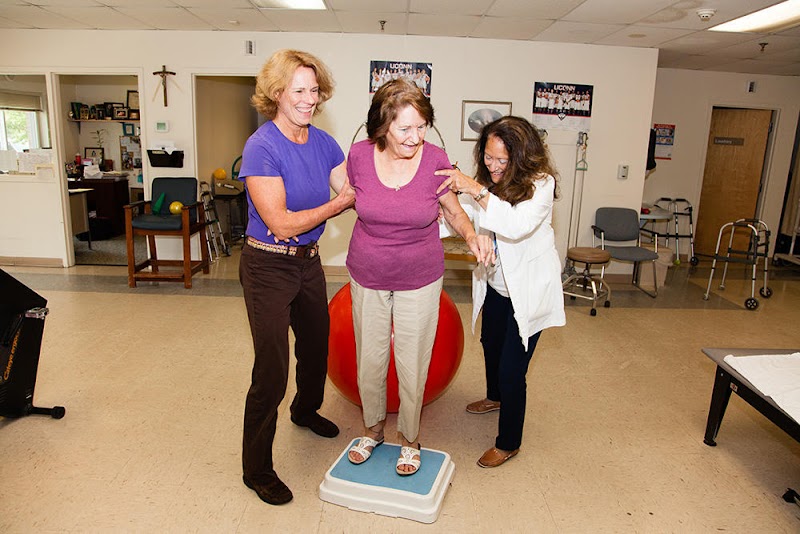
CMS rates Saint Josephs Living Center, Inc.'s staffing level at 1 out of 5 stars, which is much below average compared to other nursing homes. Staff turnover is 56%, which is 10 percentage points above the Connecticut average of 46%. High turnover can affect care consistency as new staff learn residents' individual needs.

What Have Inspectors Found at Saint Josephs Living Center, Inc.?

State health inspectors documented 21 deficiencies at Saint Josephs Living Center, Inc. during 2019 to 2024. These included: 21 with potential for harm.

Who Owns and Operates Saint Josephs Living Center, Inc.?

Saint Josephs Living Center, Inc. is owned by a non-profit organization. Non-profit facilities reinvest revenue into operations rather than distributing to shareholders. The facility operates independently rather than as part of a larger chain. With 120 certified beds and approximately 106 residents (about 88% occupancy), it is a mid-sized facility located in WINDHAM, Connecticut.

How Does Saint Josephs Living Center, Inc. Compare to Other Connecticut Nursing Homes?

Compared to the 100 nursing homes in Connecticut, Saint Josephs Living Center, Inc.'s overall rating (3 stars) is below the state average of 3.0, staff turnover (56%) is near the state average of 46%, and health inspection rating (4 stars) is above the national benchmark.

What Should Families Ask When Visiting Saint Josephs Living Center, Inc.?

Based on this facility's data, families visiting should ask: "How do you ensure continuity of care given staff turnover, and what is your staff retention strategy?" "Can you walk me through typical staffing levels on day, evening, and night shifts?" "Can I visit during a mealtime to observe dining assistance and food quality?" "How do you handle medical emergencies, and what is your hospital transfer rate?" These questions are particularly relevant given the facility's high staff turnover rate and the below-average staffing rating.

Is Saint Josephs Living Center, Inc. Safe?

Based on CMS inspection data, Saint Josephs Living Center, Inc. has a clean safety record: no substantiated abuse findings (meaning no confirmed cases of resident harm), no Immediate Jeopardy citations (the most serious violation level indicating risk of serious injury or death), and is not on the Special Focus Facility watch list (a federal program monitoring the lowest-performing 1% of nursing homes). The facility has a 3-star overall rating and ranks #100 of 100 nursing homes in Connecticut. While no facility is perfect, families should still ask about staff-to-resident ratios and recent inspection results during their visit.

Do Nurses at Saint Josephs Living Center, Inc. Stick Around?

Staff turnover at Saint Josephs Living Center, Inc. is high. At 56%, the facility is 10 percentage points above the Connecticut average of 46%. High turnover means new staff may not know residents' individual needs, medications, or preferences. It can also be disorienting for residents, especially those with dementia who rely on familiar faces. Families should ask: What is causing the turnover? What retention programs are in place? How do you ensure care continuity during staff transitions?

Was Saint Josephs Living Center, Inc. Ever Fined?

Saint Josephs Living Center, Inc. has no federal fines on record. CMS issues fines when nursing homes fail to meet care standards or don't correct problems found during inspections. The absence of fines suggests the facility has either maintained compliance or corrected any issues before penalties were assessed. This is a positive indicator, though families should still review recent inspection reports for the full picture.

Is Saint Josephs Living Center, Inc. on Any Federal Watch List?

Saint Josephs Living Center, Inc. is not on any federal watch list. The most significant is the Special Focus Facility (SFF) program, which identifies the bottom 1% of nursing homes nationally based on persistent, serious quality problems. Not being on this list means the facility has avoided the pattern of deficiencies that triggers enhanced federal oversight. This is a positive indicator, though families should still review the facility's inspection history directly.