REGAL HEIGHTS HEALTHCARE & REHAB CENTER
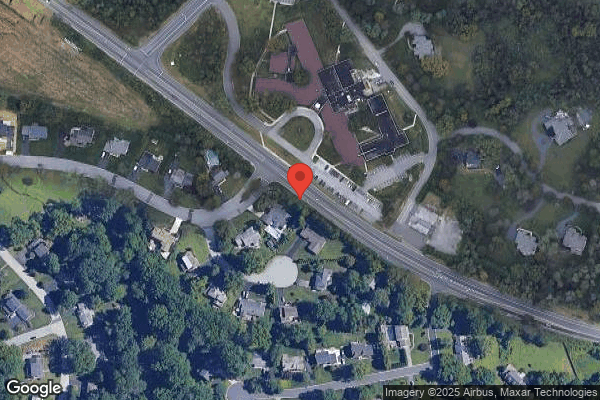
6525 LANCASTER PIKE, HOCKESSIN, DE 19707 (302) 998-0181
For profit - Corporation 172 Beds NATIONWIDE HEALTHCARE SERVICES Data: November 2025 1 Immediate Jeopardy citation
Trust Grade
0/100
#37 of 43 in DE
Last Inspection: May 2025

Inspected within the last 6 months. Data reflects current conditions.

Overview

Regal Heights Healthcare & Rehab Center has a Trust Grade of F, which indicates significant concerns regarding care quality. Ranking #37 out of 43 facilities in Delaware means they are in the bottom half of nursing homes in the state, and #21 out of 25 in New Castle County suggests there are only a few local options that are better. The facility is worsening, with an increase in issues from 17 in 2024 to 26 in 2025. Staffing is a relative strength with a 4/5 star rating and a turnover rate of 38%, which is below the state average. However, the facility has concerning fines totaling $139,846, higher than 79% of Delaware facilities, and less RN coverage than 97% of state facilities. Specific incidents of concern include a resident falling from an elevated bed due to improper assistance, a resident being physically restrained inappropriately, and another suffering second-degree burns due to inadequate supervision. While there are some staffing strengths, the overall picture of care raises significant red flags for families considering this facility.

Trust Score
F
0/100
In Delaware
#37/43
Bottom 14%
Safety Record
High Risk
Review needed
Inspections
Getting Worse
17 → 26 violations
Staff Stability
○ Average
38% turnover. Near Delaware's 48% average. Typical for the industry.
Penalties
✓ Good
$139,846 in fines. Lower than most Delaware facilities. Relatively clean record.
Skilled Nurses
⚠ Watch
Each resident gets only 21 minutes of Registered Nurse (RN) attention daily — below average for Delaware. Fewer RN minutes means fewer trained eyes watching for problems.
Violations
⚠ Watch
67 deficiencies on record. Higher than average. Multiple issues found across inspections.
★★☆☆☆
2.0
Overall Rating
★★★★☆
4.0
Staff Levels
★★★☆☆
3.0
Care Quality
★★☆☆☆
2.0
Inspection Score
Stable
2024: 17 issues
2025: 26 issues

The Good

  • 4-Star Staffing Rating · Above-average nurse staffing levels
  • Full Sprinkler Coverage · Fire safety systems throughout facility
  • No fines on record
  • Staff turnover below average (38%)

    10 points below Delaware average of 48%

Facility shows strength in staffing levels, fire safety.

The Bad

2-Star Overall Rating

Below Delaware average (3.3)

Below average - review inspection findings carefully

Staff Turnover: 38%

Near Delaware avg (46%)

Typical for the industry

Federal Fines: $139,846

Well above median ($33,413)

Significant penalties indicating serious issues

Chain: NATIONWIDE HEALTHCARE SERVICES

Part of a multi-facility chain

Ask about local staffing decisions and management

The Ugly 67 deficiencies on record

1 life-threatening 3 actual harm
May 2025 20 deficiencies 1 Harm
SERIOUS (G) 📢 Someone Reported This

A family member, employee, or ombudsman was alarmed enough to file a formal complaint

Actual Harm - a resident was hurt due to facility failures

Deficiency F0604 (Tag F0604)

A resident was harmed · This affected 1 resident

Based on interview, record review and review of other documentation as indicated, it was determined that for one (R70) out of six residents reviewed for abuse, the facility failed to assure that a phy...

Read full inspector narrative →
Based on interview, record review and review of other documentation as indicated, it was determined that for one (R70) out of six residents reviewed for abuse, the facility failed to assure that a physical restraint was used to treat R70's medical symptoms and was not being used for staff convenience. Findings include: R70, a resident with dementia, had two gowns on during the evening shift of 3/31/25. The first gown was on in the correct position. The second gown was oversized and the gown material was gathered and tied in a knot below R70's knees and behind her neck to prevent R70 from exposing herself. R70's oversized gown was not untied and R70 remained in the same position through the evening and night shifts without opportunities for repositioning, incontinence care or release of the knotted oversized gown for mobility. The inability to reposition or straighten one's legs would result in psychosocial harm to a reasonable person. Due to the facility's corrective measures completed on 4/10/25, the facility was notified that R70's incident was a harm past non-compliance. The facility policy titled, Use of Restraints (2001) documented, Policy Statement . Restraints shall only be used to treat the resident's medical symptom(s) and never for discipline or staff convenience, or for the preventions of falls . Policy Interpretation and Implementation . 1. 'Physical Restraints - . any manual method or physical or mechanical device, material or equipment attached or adjacent to the resident's body that the individual cannot remove easily, which restricts freedom or restricts normal access to one's body . Cross refer F677 Review of R70's clinical records revealed: 9/24/19 - R70 was admitted to the facility with diagnoses including dementia, bipolar, anxiety and insomnia. 9/25/19 (revised 6/1/22) - R70 had a care plan for potential for falls related to poor safety awareness with interventions including, but not limited to, allowing R70 to sit in doorway of room when up when possible to experience increased stimulus from other people in the hallway. 9/25/19 (revised 5/1/20) - R70's ADL care plan stated, [R70] was unable to do own ADLs (Activities of Daily Living) without assist related to cognitive loss and interventions included . assist resident to pick out own clothes. 10/21/19 - R70 had a care plan for repetitive statements related to anxiety and memory loss. Interventions included: assessing for unmet needs. 10/21/19 - R70 had a care plan for making sexual comments and/or touches others inappropriately. Interventions included getting involved in activities of choice. 5/7/20 - R70 was care planned for removing clothes over and over in inappropriate places related to cognitive level. Interventions for R70 included approaching in a calm manner and not being judgmental. 8/9/22 - R70 had impaired verbal communication care plan developed related to cognitive loss. R70's interventions included anticipating R70's needs and approaching R70 in a gentle, calm, friendly, relaxed manner with a smile on the face. 9/27/23 - R70 was care planned for alteration in thought process related to progressive dementia with interventions including allowing R70's choices when appropriate and assisting resident to activities of choice. 2/21/25 - R70's quarterly MDS (Minimum Data Sets) assessment indicated that R70's cognition was severely impaired with short and long term memory problems and had verbal behavioral symptoms occurring 1- 3 days during the review period. R70 was dependent with toileting hygiene and upper/lower body dressing. In addition, R70 was dependent with the following mobility performance: roll left and right, sit to lying to, lying to sitting on side of bed and sit to stand. R70 was always incontinent of urine and bowel. 3/31/25 - R70's CNA Kardex Report for Activities indicated that R70 required assistance in developing/providing a program of activities that was meaningful and of interest including to encourage and provide opportunities for exercises and physical activity. 4/1/25 7:30 AM - A nurse progress note by E13 (LPN) documented, CNA [E14] reported this morning that the resident's gown was tied up very tightly on the patient. Upon assessment the gown was bunched up and tied up very tightly by the neck and left thigh. It took a considerable amount of force in order to untie the knots, to the point where the gown was torn some . patient [R70] could not lay down straight when I observed how she was laying. 4/1/25 11:57 AM - A facility incident report submitted to the State reporting agency documented that on 4/1/25 at 7:30 AM, . Resident observed in bed with two gowns. One fitted appropriately, second gown oversized and tied incorrectly. 4/1/25 12:01 PM - A skin evaluation note by E13 documented, . [R70] had gown tied too tightly (sic) no injuries to skin, no red marks, no skin tears present . 4/1/25 - A written statement by E18 (7-3 shift RN, UM) documented, Made aware by 7-3 charge nurse [E13] . [R70] was observed in bed with two gowns on. The first gown was on in the correct position. The second gown was oversized and placed on over the first knotted at the right [left when clarified] thigh. [R70] was unable to straighten herself out and was observed in a semi fetal position . 4/1/25 - A documented phone interview of E12 (11-7 LPN) by E18 revealed that she was made aware of [R70] having on two gowns and gowns being knotted in passing by the day shift nurse as she was leaving. [E12] stated that she did not notice during her shift. 4/1/25 - A documented statement by E14 (CNA) revealed that E14 came in to provide care to R70 who was observed in a semi fetal position with two gowns on, one knotted at the right thigh. E14 immediately notified the nurse [E13]. 4/1/25 - In a joint phone interview with E2 (DON) and E18, E10, the CNA assigned to provide care to R70 in the evening shift (3-11), confirmed Yes and that she put two gowns on R70. E10 stated that while R70 was out to bed, R70 kept lifting her gown up in the hallway. Because R70 kept exposing herself, E10 obtained a second gown and put on R70 and tied the gown just below R70's knees to keep her from exposing herself. 4/1/25 - In a separate statement documentation, a clarification phone interview by E2 and E37 (Admin/Office) revealed that E10 was not aware that putting on two gowns and preventing resident from lifting up the gown by criss-crossing it at the bottom is considered a form of restraint. 4/1/25 - A documented phone interview by E18 with E11, the CNA assigned to provide care to R70 during the night shift (11-7 on 3/31/25 going into 4/1/25) revealed that E11 did not put two gowns on R70. E11 stated that she was unaware if R70 had on two gowns while providing care and from what she can recall the gown was not tied at all during her time of providing care for R70. 4/8/25 - The facility's 5 Day follow up summary documented, . [R70] with a past history of dementia, bipolar disorder, anxiety and insomnia . with severe cognitive impairment . note (sic) occasional impulsivity with poor safety awareness and mild agitation . In an attempt to limit resident exposing herself and protect her dignity an oversized gown was placed on resident incorrectly. The gown was oversized and the gown material was gathered and tied in a knot below her knees and behind her neck. [R70] was able to move freely in her gown but was unable to pull up gown exposing herself. During movement in her sleep resident pulled her legs up and they got caught in (sic) gown. 4/10/25 - A psych physician assistant follow up note by P1 (PA) documented, . Chief Complaint/Nature of Presenting Problem: F/u (follow up) dementia, recent med adjustment, recent worsening mood lability/compulsions . Seen today at request of facility staff due to report of recent increased agitation and restlessness over the past week . restless and engaging in repetitive movements globally and appears mildly irritable . 5/20/25 9:00 AM - In an interview, P1 stated that he saw R70 and had read the nurse's notes about the inappropriate way of tying the oversized gown on R70. P1 stated that it was not the right way to address R70s' increasing behavior of raising her gown exposing herself and that R70 has intermittent clothing removal, repetitive behaviors. P1 stated, . [R70] has severe cognitive impairment and from the psychosocial point, there was no indication of harm. 5/20/25 1:25 PM - In an interview, E27 (PT) stated, . [R70] was pretty mobile . can move and walk at least 40 feet and she has been on the restorative nursing program for ambulation and range of motion when discharged from Physical Therapy caseload in February 2025 . 5/20/25 1:37 PM - During an interview, E13 (7-3 LPN) stated that he was the primary nurse for R70 on 4/1/25. Responding to E14's (CNA) call, he went to R70's room. E11 further stated, . I saw [R70] almost on her left side in a fetal position. E14 pulled down the outer gown but the knot around the neck was tied very tight that E14 had to use a pair of scissors to cut it off. I also untied the knot in the bottom of her gown. The hem or bottom of the gown was below the knee and tied around the legs, with the knot on the left side of R70's leg. The knot was tied very tight that it took an amount of time and strength for me to untie the knot. 5/20/25 1:50 PM - During interview, E14 stated, . I went to R70's room on 4/1/25 around 7:30 AM. I saw her gown tied up in a knot and she was in a fetal position. It did not looked right to me so I called [E13]. R70 had on 2 gowns. 1 smaller gown she had on underneath with snaps on the shoulders . The inner gown had ties tied very tightly on her back. She had another oversized gown over the smaller gown. The top part of the outer gown was loose enough to be gathered around the neck and formed a knot. The knot on the right side of the neck was very tight I had to use a pair of scissors to cut it. I checked her incontinence brief and she was soaked in urine and was very soiled. 5/20/25 3:30 PM - In a follow up interview, E13 demonstrated to Surveyor how R70 was found with the double gowns. The following were observed with the Surveyor as the model resident for demonstration purpose: The top part of the outer gown was gathered and tied in a knot on the right side of the model's neck. The lower hem or bottom of the model's outer gown was wrapped around the model's legs and tied in a knot on the left side of the leg. Both knots on the right side of the model's neck and on the left side of the leg were tied so tight that it was very difficult to untie them. 5/22/25 5:00 PM - Findings were discussed with E1 (NHA) and E2 (DON). 5/22/25 5:15 PM - E1 submitted to the Surveyor documentation of the abatement/corrective action plan with correction completed 4/10/25 at 1:00 PM. Corrective Actions: 4/1/25 - R70's gowns were removed and skin check was performed with no noted areas of concern. - Investigation was initiated and statements were obtained. - Staff directly involved were interviewed and suspended pending investigation. - Incident reported to Division of Healthcare Quality (DHCQ) - Through investigation and interviews it was found that in an attempt to limit [R70] from exposing herself and to protect her dignity, an oversized gown was placed on [R70] incorrectly. The oversized gown gathered and tied in a knot below her knees and behind her neck. [R70] was able to move freely in her gown but was unable to pull up her gown to expose herself. During movement in her sleep it appears [R70] pulled her legs up and they got caught in the gown causing her to be unable to straighten out her legs. This is how she [R70] was found during routine rounding on 4/1/25 7-3 shift. - No other residents were found with gowns tied. - Facility reviewed incident during high risk meeting with Medical Director present. Discussed with Medical Director the events reported and staff statements obtained at that time. - Facility reviewed incident with the Corporate Regional Nurse. 4/10/25 - Facility initiated nursing staff education to promote resident dignity, proper use of a gown and reporting anything found to be out of the ordinary. All nursing staff will be educated prior to next scheduled shift. - Facility initiated audits of residents who are dependent on staff for care to ensure dignity is being observed an gowns are being used properly. - Audits will continue three times a week until 100% successful audits over three consecutive evaluations, then continue monitoring once a week until 100% successful over three consecutive evaluations. Audits will continue another month after that time, if 100% success is noted then compliance is achieved. Results of the audits and evaluations will be brought to the QAPI steering committee for further evaluation or recommendation. - CNAs [E10] and [E11] were terminated for inconsiderate care of a resident. No immediate action required related to facility correction and no further occurrences after the incident on 4/1/25. This was verified by interviews with staff about promoting resident dignity and abuse with use of physical restraints, education, spot inspection for residents wearing gowns and inspection of the facility abuse incident reports. 5/22/25 5:00 PM - Findings were discussed with E1 (NHA) and E2 (DON). 5/23/25 2:30 PM - Findings were reviewed with E1 (NHA) and E2 (DON) during the Exit Conference.
CONCERN (D) 📢 Someone Reported This

A family member, employee, or ombudsman was alarmed enough to file a formal complaint

Potential for Harm - no one hurt, but risky conditions existed

Resident Rights (Tag F0550)

Could have caused harm · This affected 1 resident

Based on observation and interview, it was determined that for two (R136 and R163) out of four residents reviewed for dignity, the facility failed to ensure that staff treat each resident with respect...

Read full inspector narrative →
Based on observation and interview, it was determined that for two (R136 and R163) out of four residents reviewed for dignity, the facility failed to ensure that staff treat each resident with respect and dignity. Findings include: 1. 5/16/25 9:00 AM - During a medication pass observation, E16 (LPN) was seen administering medications to R163 who was lying in bed, via PEG/feeding tube (a tube that is passed into a patient's stomach through the abdominal wall). R163's bedroom door was left opened and she was visible from the hallway by visitors and staff walking by. R163's bed curtain was not pulled out to cover her and provide privacy. 5/16/25 9:20 AM - Finding was discussed with E16 who confirmed that she should have shut the door or pulled the curtain for privacy as a way to treat R163 with dignity and respect while administering her medications. 5/22/25 5:00 PM - Finding was discussed with E1 (NHA) and E2 (DON). 2. Review of R136's clinical record revealed: 12/1/23 - R136 was admitted to the facility with diagnosis of dementia. Observations of R136 during the survey include: - 5/14/25 4:32 PM - R136 was sitting on a blue-colored sling in her wheelchair in the B-Wing dining/activity room. - 5/20/25 11:40 AM - R136 was sitting on a blue-colored sling in her wheelchair outside the Social Worker's office after having participated in an activity. - 5/20/25 1:02 PM - R136 was sitting on a blue-colored sling in her wheelchair and seated at the table in the B-Wing dining room while lunch was being served. 5/20/25 1:13 PM - During an interview, E39 (LPN/UM) confirmed that the resident's sling is not to remain under the resident when sitting in the wheelchair during the day. The facility failed to provide R136, a dependent resident, with dignity as evidenced by multiple observations where a blue sling, used for mechanical lift transfers, was left under her while she sat in her wheelchair. 5/23/25 2:30 PM - Findings were reviewed during the exit conference with E1 (NHA), E2 (DON) and E3 (ADON).
CONCERN (D)

Potential for Harm - no one hurt, but risky conditions existed

Deficiency F0551 (Tag F0551)

Could have caused harm · This affected 1 resident

Based on record review and interview, it was determined for one (R95) out of three residents reviewed for participation in care planning, the facility failed to ensure the correct resident representat...

Read full inspector narrative →
Based on record review and interview, it was determined for one (R95) out of three residents reviewed for participation in care planning, the facility failed to ensure the correct resident representative was invited to participate in R95's care planning conferences. Findings include: Review of R95's clinical record revealed: 11/19/20 - A durable power of attorney (DPOA) financial only document appointing P6 was signed and notarized by R95. 7/1/21 - R95 was admitted to the facility for long-term care. 7/8/21 - The facility's form entitled Preferred Intensity of Medical Care and Treatment was signed by F3 (R95's family member). 7/1/24 8:29 AM - A care conference review documented the following: - R95 had severe cognitive impairment. - R95's resident representative was P6 (R95's DPOA-financial only). P6 was invited, but did not attend. The documented stated, No RSVP. - Does Resident and or Resident/Representative agree with Plan of Care established? YES. - Under the social work section, it was documented that . Nursing reported fall on 6/12/24 and [R95] was sent to the hospital. [F3, family member] was informed . - Code Status Reviewed? Yes, No changes required. 9/19/24 6:17 PM - A care conference review documented the following: - R95 had severe cognitive impairment. - R95's resident representative was P6 (DPOA-financial only). P6 was invited, but did not attend. The documented stated, No RSVP. - Does Resident and or Resident/Representative agree with Plan of Care established? YES. - Code Status Reviewed? Yes, No changes required. 12/16/24 10:56 AM - A care conference review documented the following: - R95 had cognitive impairment. - R95's resident representative was P6 (DPOA-financial only). P6 was invited, but did not attend. The documented stated, No RSVP. - Does Resident and or Resident/Representative agree with Plan of Care established? YES. - Code Status Reviewed? Yes, No changes required. 3/7/25 10:43 AM - A care conference review documented the following: - R95 had cognitive impairment. - R95's resident representative was P6 (DPOA-financial only). P6 was invited, but did not attend. The documented stated, No RSVP. - Does Resident and or Resident/Representative agree with Plan of Care established? YES. - Code Status Reviewed? Yes, No changes required. 5/22/25 at 4:41 PM - During an interview, E20 (BOM) confirmed that R95's profile had P6 (DPOA-financial) incorrectly listed as the facility's first point of contact/resident representative. As a result, R95's care conference invitation letters were incorrectly and repeatedly sent to P6 and not to F3 (R95's family member). The facility failed to ensure that the correct Resident Representative, F3, was able to excerise the resident's rights on behalf of R95 with respect to medical care and treatment. 5/23/25 2:30 PM - Finding was reviewed during the exit conference with E1 (NHA), E2 (DON) and E3 (ADON).
CONCERN (D)

Potential for Harm - no one hurt, but risky conditions existed

Deficiency F0559 (Tag F0559)

Could have caused harm · This affected 1 resident

Based on record review and interview, it was determined that for one (R87) out of four (4) residents reviewed for personal property, the facility failed to provide the family with a written explanatio...

Read full inspector narrative →
Based on record review and interview, it was determined that for one (R87) out of four (4) residents reviewed for personal property, the facility failed to provide the family with a written explanation of why R87 moved rooms at the facility's request on 1/23/25. Findings include: 2/23/22 - R87 was admitted to the facility on the C wing with diagnoses including, but was not limited to, dementia. 2/23/22 - 1/23/25, R87 resided on the C wing of the facility. 1/23/25 - R87's room was changed, and she was moved to the A wing of the facility. 5/15/25 2:56 PM - During an interview, F1 (R87's husband) stated, They (the facility staff) told me on a Thursday around 11:30 AM that they were going to move my wife's room. It was [E20] (admission office) who told me. When I asked why, my wife has been on C wing for 3 years, we went to the office (admissions) and . the DON (E2) came in and said it was because she (R87) was hollering. But she has been hollering for years. I had built relationships with the staff on C wing, and they knew my wife. By 2 PM, a lady with a clipboard came in (my wife's room) and they started moving her. I thought it would happen in a few days. I did not get any paperwork or sign anything . 5/15/25 3:30 PM - A review of R87's progress notes revealed no documentation regarding the 1/23/25 room change. 5/16/25 10:30 AM - A review of the Notice of Room Change document provided by the facility regarding R87's move did not demonstrate the required explanation in writing of why the move was required. 5/23/25 2:30 PM - Findings were reviewed during the exit conference with E1 (NHA), E2 (DON) and E3 (ADON).
CONCERN (D) 📢 Someone Reported This

A family member, employee, or ombudsman was alarmed enough to file a formal complaint

Potential for Harm - no one hurt, but risky conditions existed

Free from Abuse/Neglect (Tag F0600)

Could have caused harm · This affected 1 resident

Based on interview and record review, it was determined that for one (R167) out of six (6) residents reviewed for abuse, the facility failed to ensure that R167 was protected from verbal abuse. Findin...

Read full inspector narrative →
Based on interview and record review, it was determined that for one (R167) out of six (6) residents reviewed for abuse, the facility failed to ensure that R167 was protected from verbal abuse. Findings include: Review of R167's clinical records revealed: 11/12/24 - R167 was admitted to the facility with diagnoses including end stage renal failure, heart failure and morbid obesity. 2/11/25 - R167's quarterly MDS documented a BIMS score of 15, indicating a cognitively intact status. The MDS also documented that R167 was independent with activities of daily living. 4/2/25 8:00 PM - The facility's investigation documented that R167 wanted to take a shower but there were used towels on the bathroom floor. He requested that the bathroom be cleaned. E6 (CNA) told R167, If you don't think I am doing my job, then speak to the supervisor. Approximately one hour later, E6 overheard R167 telling his significant other on the phone about the dirty towels in the shower. E6 stated, Why are you still talking about it? It was a mistake. E6 began to yell profanities at him. Both E6 and R167 then yelled profanities towards each other. This event was witnessed on the phone video by R167's significant other. 4/3/25 9:21 AM - A facility report to the Division documented, Staff member [E6] CNA got into a verbal confrontation with resident [R167]. Staff member was suspended pending outcome of investigation. 5/19/25 11:13 AM - During an interview E6 stated, He started cursing and snapping at me, so I cursed back at him. The Surveyor asked E6 whether she had received any training at the facility on abuse, dementia, and resident rights. E6 stated, We had a lot of training. But it was not like he [R167] had dementia or anything. E6 was terminated from employment at the facility. The facility failed to protect R167 from verbal abuse from a staff member. 5/23/25 2:30 PM - Findings were reviewed during the exit conference with E1 (NHA), E2 (DON) and E3 (ADON).
CONCERN (D) 📢 Someone Reported This

A family member, employee, or ombudsman was alarmed enough to file a formal complaint

Potential for Harm - no one hurt, but risky conditions existed

Report Alleged Abuse (Tag F0609)

Could have caused harm · This affected 1 resident

**NOTE- TERMS IN BRACKETS HAVE BEEN EDITED TO PROTECT CONFIDENTIALITY** Based on record review and interview, it was determined that for two (R6 and R22) of six residents reviewed for abuse, the facil...

Read full inspector narrative →
**NOTE- TERMS IN BRACKETS HAVE BEEN EDITED TO PROTECT CONFIDENTIALITY** Based on record review and interview, it was determined that for two (R6 and R22) of six residents reviewed for abuse, the facility failed to report an allegation of abuse within two hours. Findings include: 1. Review fo R22's clinical record revealed: 5/3/25 8:30 AM - A facility incident report documented, . [R22] presents wit (sic) 2 bruises on the the inner side of the left arm above the elbow. Main bruise is 13.0 x 10.5 and smaller bruise above it is 2.5 x 3.0. [R22] did not know how it occurred. RCA (Root Cause Analysis) Summary: . bruises appear that they may have been caused by a hand that may have been facilitating a transfer . [R22] also noted to have been transported to the dentist by family on 4/30/25 .also noted to be on aspirin therapy . 5/20/25 3:00 PM - Review of the state incident report database lacked evidence that the facility reported the incident to the state incident reporting center. 5/22/25 - A written statement by E2 (DON) documented, I have observed family both daughter and son, have difficulty putting him in car. They seem to have most difficulty with getting him out of his wheelchair when putting him into car. When the son has him alone, he often will hold on to his upper arms and or wrap his arms around him to assist him into and out of the car . 5/22/25 5:00 PM - Finding was discussed with E1 (NHA) and E2 (DON). 2. Review of R6's clinical record revealed: 3/27/23 - R6 was admitted to the facility with diagnoses including. but was not limited to bipolar disorder. 4/2/25 - R6 was hospitalized with a mental status change and was diagnosed with a urinary tract infection (UTI). 4/12/25 - R6 returned to the facility from the hospital. 5/20/25 10:10 AM - A review of R6's hospital records revealed documentation of R6's allegation to hospital staff regarding this alleged incident and the hospital's subsequent report to the state agency. 5/20/25 11:35 AM - A review of the facility personnel lists revealed no staff by the name of [name] work at the facility. A review of the staff assignments on the day of the alleged incident revealed there were no Caucasian staff providing care on that wing on that date. 5/20/25 1:52 PM - During an interview, E1 (NHA) stated, We did not know about the allegation when she was at the hospital. She has made multiple allegations (prior to the 4/2/25 hospitalization) and the story changed several times. 5/21/25 11:09 AM - During an interview, E36 (RNAC) stated, I was the one that [R6] reported the alleged abuse to. I was doing a pain assessment for her quarterly MDS in late March. Her roommate [R126] was there shaking her head the entire time saying 'No, that did not happen.' I reported it to leadership within two hours. I thought it was reported to the state agency because there was a big investigation. 5/21/25 12:04 PM - During an interview, E2 (DON) stated, We investigated it twice. We did not think it was anything and we knew [hospital] had reported it so I did not report it. 5/23/25 2:30 PM - Findings were reviewed during the exit conference with E1 (NHA), E2 (DON) and E3 (ADON).
CONCERN (D)

Potential for Harm - no one hurt, but risky conditions existed

Assessment Accuracy (Tag F0641)

Could have caused harm · This affected 1 resident

**NOTE- TERMS IN BRACKETS HAVE BEEN EDITED TO PROTECT CONFIDENTIALITY** Based on record review and interview, it was determined that for two (R14 and R110) out of four residents reviewed for assessmen...

Read full inspector narrative →
**NOTE- TERMS IN BRACKETS HAVE BEEN EDITED TO PROTECT CONFIDENTIALITY** Based on record review and interview, it was determined that for two (R14 and R110) out of four residents reviewed for assessments, the facility failed to document each residents' insulin usage. Findings include: 1. Review of R110s cinical record revealed: 5/24/22 - R110 was admitted to the facility with diagnoses including, but were not limited to, diabetes and end stage kidney disease. 12/17/24 - E5 (MD) ordered in R110's EMR, Insulin Lispro injection solution 100 unit/ml . subcutaneously before meals and at bedtime for diabetes. 2/20/25 - R110's quarterly Minimum Data Set (MDS) documented in Section N - Medications that R100 received 7 days of insulin injections in the look back period but failed to document that R100 was taking a Hypoglycemic (including insulin). The facility failed to accurately document R100's High Risk Drug classes in the 2/20/25 MDS. 5/22/25 12:47 PM - During an interview, E36 (RNAC) confirmed that hypoglycemics was not checked on R110's MDS dated [DATE]. 2. Cross refer to F656 Review of R14's clinical record revealed: Review of R14's April 2025 eMAR revealed that the resident received insulin injections two times a day from 4/10/25 through 4/16/25 for diabetes. 4/16/25 - The quarterly MDS assessment documented that R14 received seven days of insulin injections under Section N - Medications. However, the facility failed to document that R14 was taking a hypoglycemic (including insulin) under the subsection N0415. High-Risk Drug Classes: Use and Indication. 5/22/25 12:47 PM - During an interview, E36 (RNAC) confirmed the finding. 5/23/25 2:30 PM - Finding was reviewed during the exit conference with E1 (NHA), E2 (DON) and E3 (ADON).
CONCERN (D)

Potential for Harm - no one hurt, but risky conditions existed

PASARR Coordination (Tag F0644)

Could have caused harm · This affected 1 resident

Based on record review and interview, it was determined that for one (R92) out of three residents reviewed for PASRR, the facility failed to incorporate the recommendation from the 9/10/24 PASRR level...

Read full inspector narrative →
Based on record review and interview, it was determined that for one (R92) out of three residents reviewed for PASRR, the facility failed to incorporate the recommendation from the 9/10/24 PASRR level II determination in R92's care plan. Findings include: The facility's policy and procedure for Care of Visually Impaired Resident, last revised March 2021, stated, . 4. When interacting with the visually impaired resident implement the following procedures: a. Use the resident's name when speaking to him/her so he/she will know you are speaking to him/her. b. Introduce anyone else who may be with you. c. Always speak directly to the resident. d. Assist with ADLs as needed or requested. e. Let the resident know when you leave the room. f. Use large lettering on any distributed written information. 5. To help the resident orient and avoid accidents in the environment implement the following practices: a. Use nightlights to help the resident with dark adaptation problems. b. When the resident dines, describe the location of the place setting and food on the plate according to the clock face (e.g., meat at 12 o'clock, potato at 6 o'clock, etc.). c. Leave doors in the open or closed positions only. A partially closed door may be difficult for the resident to see . e. Attempt to keep the environment consistent by leaving objects in their designated locations. f. Keep lighting bright and at consistent levels. Eliminate as much glare and reflection as possible. Review of R92's clinical record revealed: 8/26/24 - R92's PASRR level I was completed and referred R92 for a level II evaluation. 9/10/24 - R92's PASRR level II determined that R92 has a PASRR condition with the outcome documented that R92 was approved for nursing facility services. Specifically, the level II documented, If you are admitted to a Medicaid certified nursing facility, What services and supports are nursing facility staff required to provide for you? . Rehabilitative services: You will need to be provided the following services and/or supports: . Services or Accommodations for the Visually Impaired . Review of R92's comprehensive care plan revealed a impaired vision care plan, last revised on 11/24/21, as follows, [R92] has impaired vision related to diabetes/dense cataract's. She had a vision consult 11/22/21. She declines cataract surgery. Approaches: - arrange consultation with eye care practitioner as required (11/23/21); - she may be able to see better in a well lit room etc. (revised 11/23/21); - she may prefer to have her personal item's arranged the way she likes, in order to promote independence (11/23/21). R92's comprehensive care plan lack evidence of incorporation of her PASRR level II recommendation to provide accommodations for her visual impairment that include, but are not limited to, activities of daily living, activities, nursing care and treatments, care plan conferences and reviewing/signing any medical or financial facility documents, if necessary, as she is her own resident representative. 5/20/25 11:50 AM - During an interview, E22 (SW) provided the surveyor with R92's last annual eye consultation dated 9/13/24 and stated that the resident did not want cataract surgery. At the request of the surveyor, E22 obtained a copy of R14's 9/10/24 PASRR level II from the PASRR website as this document was not readily accessible in R14's EMR. 5/22/25 1:00 PM - During an interview, the surveyor reviewed the 9/10/24 PASRR level II recommendation with E39 (LPN/UM) for accommodations for R14's vision impairment. 5/23/25 2:30 PM - Finding was reviewed during the exit conference with E1 (NHA), E2 (DON) and E3 (ADON).
CONCERN (D) 📢 Someone Reported This

A family member, employee, or ombudsman was alarmed enough to file a formal complaint

Potential for Harm - no one hurt, but risky conditions existed

Comprehensive Care Plan (Tag F0656)

Could have caused harm · This affected 1 resident

2. Cross refer to F641, example 2 Review of R14's clinical record revealed: 8/19/24 - R14 was admitted to the facility with a diagnosis of diabetes. Review of R14's comprehensive care plan lacked evid...

Read full inspector narrative →
2. Cross refer to F641, example 2 Review of R14's clinical record revealed: 8/19/24 - R14 was admitted to the facility with a diagnosis of diabetes. Review of R14's comprehensive care plan lacked evidence of an individualized care plan with approaches for R14's diabetes diagnosis and use of insulin. 5/22/25 12:55 PM - During an interview, E39 (LPN/UM) confirmed the finding. 5/23/25 2:30 PM - Findings were reviewed during the exit conference with E1 (NHA), E2 (DON) and E3 (ADON). Based on record review and interview, it was determined that for two (R22 and R14) out of 35 sampled residents, the facility failed to develop a person centered care plan to address an identified need for R22. For R14, the facility failed to initiate a care plan for R14's diagnosis and treatment of diabetes. Findings include: 1. Review of R22's clinical record revealed: 12/13/22 - R22 was admitted to the facility with diagnoses including peripheral vascular disease with a need for assistance with personal care and a non - pressure ulcer of the left ankle. 12/13/22 - A care plan was developed for R22's risk for skin breakdown related to decreased mobility and fragile skin.R8's interventions included: encourage [R22] to wear long pants to prevent injury. 5/21/25 - R22's CNA Kardex (a CNA plan of care for individual resident) documented. for safety in resident's dressing, encourage [R22] to wear long pants to prevent injury . 5/21/25 12:00 PM - R22 was observed in the hallway sitting on his wheelchair wearing short pants. E17 (CNA) approached R22 and began to maneuver R22's wheelchair and started wheeling R22 into the dining room. 5/21/25 12:00 PM - When asked if R22 was to wear short pants while having lunch in the dining room, E17 responded, Yes, he can wear short pants. 5/22/25 8:50 AM - R22 was observed in his room sitting on his wheelchair and wearing the same short pants he wore the day before. Long pants were folded on his bed and a pair of pants lying on the floor. 5/22/25 9:00 AM - When asked whether he wanted to wear short pants or long pants, R22 responded, I don't know. This is all I can wear (pointing down on his short pants). 5/22/25 9:30 AM - In an interview, E29 (LPN) stated, [R22] has a non compliance behavior with the care we provide. Sometimes he wants to dress for the weather with just short pants on like what is wearing know. We know we need to encourage him to wear long pants as he has no safety awareness and he could easily hit himself and bump against anything and could get a skin tear . Follow up review of R22's comprehensive care plan lacked evidence of an individualized care plan with approaches for R22's non compliance with wearing long pants. 5/22/25 5:00 PM - Finding was discussed with E1 (NHA) and E2 (DON).
CONCERN (D)

Potential for Harm - no one hurt, but risky conditions existed

Deficiency F0658 (Tag F0658)

Could have caused harm · This affected 1 resident

Based on record review and interview, it was determined that for one (R65) out of thirty-five sampled residents, the facility failed to have a comprehensive care plan in complaince with the standard o...

Read full inspector narrative →
Based on record review and interview, it was determined that for one (R65) out of thirty-five sampled residents, the facility failed to have a comprehensive care plan in complaince with the standard of practice regarding R65's dental cleanings and risk for infective endocarditis. Findings include: Subacute Bacterial Endocarditis Prophylaxis -Infective endocarditis is an infection of the heart's endocardial surfaces involving one or more heart valves . Several risk factors can predispose patients to infective endocarditis, including structural heart disease, prosthetic heart valves, indwelling cardiovascular device . National Library of Medicine, STATPEARLS 2025, Updated February 10, 2024 [Hospital] LVAD Heartmate Discharge Binder- . Important Information Regarding Dental Procedures- Please let your dentist know that you have an artificial heart pump and will need prophylactic antibiotics for any procedure that invades the gums. This includes basic dental cleaning. There is the potential that bacteria could invade the blood stream and possibly contaminate the LVAD . 7/12/18 - R65 was admitted to the facility with diagnoses including but not limited to, stroke affecting left side and presence of a heart assist device. 12/9/24 - P4 (dentist) documented a Dental Consult note in R65's EMR, # 9 (tooth) facial and #11 (tooth) facial have fixable decay . Recommendations: I will return to clean teeth and place resin fillings where decay of on teeth #'s 9 & 11. 5/21/25 - A review of R65's orders lacked evidence of a prophylactic antibiotic order for the dental appointment in December 2024. A review of R65's care plan revealed that R65 was not care planned to receive SBE (subacute bacterial endocarditis) prophylaxis prior to dental procedures. The facility failed to meet the standard of practice for SBE antibiotic prophylaxis for dental procedures. 5/23/25 2:30 PM - Findings were reviewed during the exit conference with E1 (NHA), E2 (DON) and E3 (ADON).
CONCERN (D) 📢 Someone Reported This

A family member, employee, or ombudsman was alarmed enough to file a formal complaint

Potential for Harm - no one hurt, but risky conditions existed

ADL Care (Tag F0677)

Could have caused harm · This affected 1 resident

Based on observation, interview and record review, it was determined that for one (R70) out of 35 sampled residents, the facility failed to provide incontinence care to a resident who was unable to ca...

Read full inspector narrative →
Based on observation, interview and record review, it was determined that for one (R70) out of 35 sampled residents, the facility failed to provide incontinence care to a resident who was unable to carry out out activities of daily living. Findings include: Cross refer F604 Review of R70's records revealed: 9/24/19 - R70 was admitted to the facility. 9/25/19 (revised 5/1/20) - R70's ADL care plan stated, [R70] was unable to do own ADLs (Activities of Daily Living) without assist related to cognitive loss and interventions included . toileting schedule as resident allows . 9/25/19 (revised 10/18/23) - R70 was care planned for incontinence of bowel and bladder related to cognition and interventions included . encourage highest level of independence of toileting as possible and toilet at regular intervals if able. 2/21/25 - R70's quarterly MDS assessment indicated that R70's cognition was severely impaired with short and long term memory problems. R70 was dependent with toileting hygiene and was always incontinent of urine and bowel. 5/20/25 1:50 PM - During interview, E14 stated, . I went to [R70's] room on 4/1/25 past 7:30 AM. I saw her gown tied up in a knot and she was in a fetal position . I checked her incontinence brief and she was soaked in urine and was very soiled. 5/20/25 2:00 PM - Review of R70's 3/31/25 going into 4/1/25 11-7 shift CNA flowsheet lacked evidence that R70's Bladder Continence and Toilet Use was completed. 5/21/25 9:22 AM - During a telephone interview, E11 (CNA) confirmed that she was the CNA assigned to provide care to R70 on 3/31/25 going into 4/1/25 11-7 shift. E11 further confirmed that she did not provide incontinence care to R70. E11 stated, I checked the back of her incontinence brief and I felt that she was dry so I did not change her. 5/22/25 5:00 PM - Findings were discussed with E1 (NHA) and E2 (DON). 5/23/25 2:30 PM - Findings were reviewed with E1 (NHA) and E2 (DON) during the exit conference.
CONCERN (D)

Potential for Harm - no one hurt, but risky conditions existed

Deficiency F0685 (Tag F0685)

Could have caused harm · This affected 1 resident

Based on record review and interview, it was determined that for one (R22) out of one sampled resident reviewed for hearing/vision, it was determined that the facility failed to ensure that R22 receiv...

Read full inspector narrative →
Based on record review and interview, it was determined that for one (R22) out of one sampled resident reviewed for hearing/vision, it was determined that the facility failed to ensure that R22 received proper treatment and assistive device to maintain hearing abilities. Findings include: Review of R22's clinical record revealed: 12/13/22 - Resident was admitted to the facility. 12/19/22 - R22's admission MDS indicated that R22's cognition was intact, had adequate hearing and did not use a hearing aid. 1/18/23 - R22 had a care plan developed for impaired verbal communication related to hard of hearing with interventions including to assess [R22's] hearing and vision, and if deficits are noted, refer resident for further evaluation and treatment. 3/13/23 - R22's quarterly MDS indicated that R22 had minimal difficulty with hearing and did not use a hearing aid. 1/18/23 - R22 had a care plan developed for impaired verbal communication related to hard of hearing with interventions including to asses [R22's] hearing and vision, and if deficits are noted, refer resident for further evaluation and treatment. 11/16/23 12:37 PM - A social worker progress note documented, . [R22] goes to the VA (Veterans Affairs) for any vision/dental/hearing issues . 5/3/24 - R22's quarterly MDS indicated that R22 had moderate difficulty with hearing and did not use a hearing aid. 7/29/24 - R22's quarterly MDS indicated that R22 had moderate difficulty with hearing and did not use a hearing aid. 10/3/24 - R22's annual MDS indicated that R22 had moderate difficulty with hearing and did not use a hearing aid. 1/17/25 - R22's quarterly MDS indicated that R22 had moderate difficulty with hearing and did not use a hearing aid. 1/15/25 12:09 PM - A social worker progress note documented, . [R22] is HOH (hard of hearing), no aids . 3/31/25 - R22's quarterly MDS indicated that R22 had moderate difficulty with hearing and did not use a hearing aid. 5/14/25 9:00 AM - During an interview, R22 was observed repeatedly asking this Surveyor to raise her voice. R22 stated, I can not hear you! I have a hearing aid on my drawer but I don't have it on with me. A hearing aid sitting on the charger box was noted on the resident's bedside table. 5/15/25 10:00 AM - Review of R22's physician's order did not indicate R22's use of a hearing aid. 5/15/25 11:15 AM - R22 was observed self propelling his wheelchair in the unit's hallway. R22 did not have a hearing aid applied on either ears. 5/22/25 8:45 AM - R22 was observed sitting on his wheelchair watching TV with no hearing aid on. R22 requested Surveyor to get the hearing aid lodged on the charger box on R22's bedside table. 5/22/25 9:10 AM - A follow up review of R22's hard of hearing care plan did not include R22's use of a hearing aid. 5/22/25 9:40 AM - In an interview, E29 (LPN) stated that she is not aware of R22's use of hearing aid. E29 confirmed that R22 has a hearing loss but did not have an order for the use of hearing aid. E29 further confirmed that the use of a hearing aid was not included in R22's hard of hearing care plan interventions. 5/22/25 10:55 AM - During a telephone interview, P2 (NP) confirmed that R22 has a hearing loss and hard of hearing. P2 further confirmed that R22 uses a hearing aid. When asked why there was no physician order indicated for the use of R22's hearing aid, P2 stated that she will talk to E3 (ADON) and will have the order clarified. 5/22/25 11:45 AM - Findings were confirmed by E3 who also said she updated R22's care plan and obtained physician's order for nurses to put hearing aid on R22's left ear after surveyor's intervention. 5/22/25 5:00 PM - Findings were discussed with E1 (NHA) and E2 (DON). 5/23/25 2:30 PM - Findings were reviewed with E1 (NHA) and E2 (DON) during the Exit Conference.
CONCERN (D) 📢 Someone Reported This

A family member, employee, or ombudsman was alarmed enough to file a formal complaint

Potential for Harm - no one hurt, but risky conditions existed

Accident Prevention (Tag F0689)

Could have caused harm · This affected 1 resident

Based on observation, interview, and record review, it was determined that for one resident (R108) out of four (4) residents reviewed for accidents, the facility failed to ensure that R108 received ad...

Read full inspector narrative →
Based on observation, interview, and record review, it was determined that for one resident (R108) out of four (4) residents reviewed for accidents, the facility failed to ensure that R108 received adequate supervision and assistance to prevent accidents to the extent possible. R108 was left sitting on the side of the bed during care and fell to the floor. R108 sustained a large hematoma on her forehead and was sent emergently to hospital. Findings include: Review of R108's clinical records revealed: 3/22/24 - R108 was admitted to the facility with diagnoses including dementia, major mood disorder and age-related osteoporosis. 3/24/24 - R108's fall care plans included, Potential for (actual) falls r/t (related to) poor safety awareness Resident will not sustain or be injured from falls X 90 days. The interventions included, Bed in lowest position when care is not being provided. 2/24/25 - E108's annual MDS documented a BIMS score of 00, indicating a completely impaired cognitive status, and was completely dependent on staff for dressing and undressing of both lower and upper extremities. R108 required substantial/maximum to move from lying to sitting. The MDS defined substantial/maximal assistance as, Helper does more than half of the effort. Helper lifts or holds trunk or limbs and provides more than half the effort. 3/27/25 12:56 PM - A facility incident report submitted to the Division documented, Resident [R108] had an unwitnessed fall at approximately 11:05 AM. Resident was observed lying on her left side next to the bed and bedside table. Resident AOx1 [alert and oriented times 1] to self which is her baseline. Hematoma noted to left side of forehead, facial grimacing noted as well .order obtained to send resident to the ER for further evaluation. 3/27/25 4:47 PM - R108's clinical records documented, Patient was sent to the emergency room. She was evaluated and returned to Regal Heights Patient with an intact hematoma left side of her head. Her neurological status is at baseline. 3/28/25 10:39 AM - R108's clinical records documented, Left side of forehead remains swollen and bruised. 3/29/25 2:09 AM - R108's clinical records documented, Resident continues to be monitored s/p [status post] unwitnessed fall with hematoma sustained to left side of face. Swelling remains to the area with some tenderness when touched . 3/29/25 5:50 PM - R108's clinical records documented, Continues to be monitored s/p unwitnessed fall with hematoma sustained on left side of face. Hematoma noted with swelling and tender to touch. 5/19/25 1:30 PM - During an interview, E7 (CNA) stated, I was helping [R108] to get dressed and I realized that I did not have a top for her. She was sitting on the side of the bed, and I went to the closet to get a top and I heard a noise. I ran over and saw that the resident had fallen to the floor. The Surveyor asked E7 how much help R108 needed to sit up in bed. E7 stated, She needed a lot of help because she was weak. The Surveyor also asked E7 if the resident was in her line of vision when she went to the closet. E7 stated, No, the curtain was pulled so I could not see her. I know now that I should not leave a resident sitting on the side of the bed. 5/19/25 2:00 PM - During an interview, E8 (CNA) stated, I only worked with the resident (R108) a couple of times. She needed total assistance because of her poor balance. 5/19/25 2:30 PM - During an interview, E9 (CNA) stated, She (R108) sometimes sits up but she is kind of weak at other times. She must be positioned correctly in wheelchair because she leans a lot. The facility failed to ensure that R108 received adequate supervision and assistance to the extent possible to prevent accidents. 5/23/25 2:30 PM - Findings were reviewed at the Exit conference with E1 (NHA), E2 (DON) and E4 (Regional nurse) in attendance.
CONCERN (D)

Potential for Harm - no one hurt, but risky conditions existed

Tube Feeding (Tag F0693)

Could have caused harm · This affected 1 resident

Based on observation, interview and review of the facility's policy and procedures it was determined that the facility failed to provide the appropriate care and services to one (R163) out of one samp...

Read full inspector narrative →
Based on observation, interview and review of the facility's policy and procedures it was determined that the facility failed to provide the appropriate care and services to one (R163) out of one sampled resident who had a PEG/feeding tube through the abdomen into the stomach for medication administration. Findings include: Cross refer F759 Review of R163's clinical record revealed: 3/28/25 - R163 was admitted to the facility. 3/31/25 - R163 had a care plan developed for potential for alteration in nutrition/hydration related to NPO (eating nothing by mouth) status and traumatic brain injury requiring tube feeding for nutrition/hydration. R163's interventions included tube feeding and flushes as ordered. 3/28/25 - R163 had a physician's feeding tube order to flush tube with 5 ml (milliliters) of water between each medication. 3/28/25 - R163 had a physician's feeding tube order to flush with 30 ml of water before and after each medication. 4/3/25 - R163's MDS (Minimum Data Set) assessment indicated that R163 had an intact cognition and is dependent with the use of the feeding tube for nutrition and hydration. 5/16/25 8:45 AM - 9:08 AM - During a medication pass observation, E16 (LPN) crushed eight medications and mixed together with approximately 30 ml of water. In a separate medication cup, E16 mixed a liquid medication with approximately 15 ml water. After checking the peg/feeding tube for placement, E16 flushed R163's feeding tube with 30 ml water, and began administering all the prepared medications followed by another 30 ml water to flush. 5/16/25 9:15 AM - During interview, E16 confirmed that she administered R163's medications all at the same time and not one medicine at a time. When asked why the 5 ml of water was not flushed in between medication per physician's order, E16 replied, I did not flush 5 ml of water between each medication. I already flushed it with 30 ml of water before and after the medication pass. The facility failed to flush R163's feeding tube with 5 ml (milliliters) of water between each medication. 5/22/25 5:00 PM - Findings were discussed with E1 (NHA) and E2 (DON). 5/23/25 2:30 PM - Findings were reviewed during the exit conference with E1 (NHA) and E2 (DON).
CONCERN (D)

Potential for Harm - no one hurt, but risky conditions existed

Respiratory Care (Tag F0695)

Could have caused harm · This affected 1 resident

Based on record review and interview, it was determined that for two (R1 and R81) out of three residents reviewed for respiratory, the facility failed to have the CPAP( a repiratory device the deliers...

Read full inspector narrative →
Based on record review and interview, it was determined that for two (R1 and R81) out of three residents reviewed for respiratory, the facility failed to have the CPAP( a repiratory device the deliers continuous positive airway pressure) settings written in the orders. Findings include: 1. Review of R21's clinical record revealed: 12/13/24 - R21 was admitted to the facility with diagnoses including but not limited to, obstructive sleep apnea. 12/13/24 - P2 (NP) ordered in R21's EMR, CPAP on at HS (hour of sleep), off in AM in the morning and at bedtime apply. The facility failed to order the CPAP machine settings required for R21's care. 2. Review of R81's clinical record revealed: 7/8/24 - R81 was admitted to the facility with diagnoses including but not limited to, obstructive sleep apnea. 8/3/24 - E5 (DO) ordered in R81's EMR, CPAP on at HS, off in AM, settings at bedtime apply and in the morning remove. The facility failed to order the CPAP machine settings required for R81's care. 5/22/25 11:07 AM - During a telephone interview, P5 (respiratory therapist) stated, Those two residents brought their home CPAP machines (to the facility). Likely their settings came from a sleep center. So all you have to do to find out the settings is plug the machine in and turn it on. The doctor is the person who enters the settings on the CPAP orders. 5/22/25 2:35 PM - During an interview, E2 (DON) confirmed that the CPAP orders for R21 and R81 did not contain the necessary settings for the machine. 5/23/25 2:30 PM - Findings were reviewed at the exit conference with E1 (NHA), E2 (DON) and E3 (ADON).
CONCERN (D)

Potential for Harm - no one hurt, but risky conditions existed

Unnecessary Medications (Tag F0759)

Could have caused harm · This affected 1 resident

Based on observation, record review, and interview it was determined that the facility failed to ensure that it was free of medication error rate of 5 percent or greater. During medication pass observ...

Read full inspector narrative →
Based on observation, record review, and interview it was determined that the facility failed to ensure that it was free of medication error rate of 5 percent or greater. During medication pass observation on 5/16/25, 9 medication errors out of fourty four opportunities were identified, resulting in a medication error of 20.45% and affecting 1 resident (R163). Findings include: Cross refer F693 Observation of R163s' medication pass via the peg/feeding tube (a tube that is passed into a patient's stomach through the abdominal wall) revealed the following: 5/16/25 8:45 AM - E16 (LPN) opened the drawer of the medication cart and pulled out R163's morning medications. E16 proceeded to open the following medications and put into the medication cup: - Aspirin 81 mg capsule 1 cap - Multivitamin tablet 1 tab - Vitamin B12 1,000 mcg 1 tab - Vitamin D3 25 mcg 2 tablets - Gabapentin 300 mg 1 capsule - Magnesium Oxide 400 mg 1 tablet - Dantrolene Sodium 25 mg 1 capsule - Midodrine HCL 5 mg 1 tablet 5/16/25 8:48 AM - E16 poured the oral medications into the pill crusher pouch and then used the pill crusher to crush the capsules and tablets all together and in one batch. The 10 ml of Valproic Acid 250 mg/ml was poured in a separate medication cup. 5/16/25 9:06 AM - E16 entered R163's room, put on gloves and proceeded to check the peg/feeding tube for placement. E16 flushed the tubing with approximately 30 ml of water. Next, E16 dissolved the crushed medications in 30 ml water and E16 also mixed the 10 ml Valproic Acid separately in approximately 15 ml water. 5/16/25 9:08 AM - E16 was observed pouring all of R163's prepared medications into R163's peg/feeding tube which was flushed down with approximately 30 ml water. 5/16/25 9:15 AM - During interview, E16 confirmed that she administered R163's medications all at the same time and not one medicine at a time. 5/22/25 5:00 PM - Findings were discussed with E1 (NHA) and E2 (DON). 5/23/25 2:30 PM - Findings were reviewed during the exit conference with E1 (NHA) and E2 (DON).
CONCERN (D)

Potential for Harm - no one hurt, but risky conditions existed

Infection Control (Tag F0880)

Could have caused harm · This affected 1 resident

Based on observation, interview, and review of facility documentation, it was determined that the facility failed to establish and maintain an infection prevention and control program designed to prov...

Read full inspector narrative →
Based on observation, interview, and review of facility documentation, it was determined that the facility failed to establish and maintain an infection prevention and control program designed to provide a safe, sanitary and comfortable environment and to help prevent the development and transmission of communicable diseases and infections. The facility failed to have proper PPE (Personal Protective Equipment) worn for two employees after direct resident contact during bedside patient care observations. In addition, the facility failed to perform hand hygiene and change gloves for one employee during a wound dressing change observation. Findings include: The facility policy titled, Enhanced Barrier Precautions (2001) documented, . 1. Enhanced barrier precautions (EBPs) are used as infection prevention and control interventions to reduce the spread of multi-drug resistant organisms (MDROs) to residents . 2. 3. Gloves and gowns are applied prior to performing the high contact resident care activities . 4. Personal protective equipment (PPE) is changed and hand hygiene performed before caring for another resident. Review of the CDC (Centers for Disease Control and Prevention) Enhanced Barrier Precautions poster posted on the doors of R163 and R149 indicated that everyone must clean their hands before entering and when leaving the room . Providers and staff must also wear gloves and gown for the following High - Contact Resident Care Activities: - Dressing - Bathing/Showering - Transferring - Changing Linens - Providing Hygiene - Changing briefs or assisting with toileting - Device care or use: central line, urinary catheter, feeding tube, tracheostomy - wound Care: any skin opening requiring a dressing Cross refer F684 1. 4/9/25 - R163 had a physician's order for enhanced barrier precautions every shift. 5/16/25 8:45 AM - During a medication pass observation, E16 (LPN), proceeded to administer and pour a small cup of liquid medications into R163's peg/feeding tube (a tube that is passed into a patient's stomach through the abdominal wall). E16 did not wear a gown. The facility failed to apply complete enhanced barrier precaution when E16 did not wear a gown while administering medications on R163's feeding tube. 5/16/25 9:10 AM - Observations were reviewed with E16, who also confirmed and stated, . I should have worn the gown . 5/22/25 5:00 PM - Finding was discussed with E1 (NHA) and E2 (DON). 2. 4/11/25 - R149 had a physician's order for enhanced barrier precautions every shift. Right Upper Buttock 2.a. 5/16/25 2:00 PM - During a wound dressing change observation, E19 (LPN) donned her gloves and proceeded to remove and discard R149's soiled wound dressing on her right upper buttock. Without removing the contaminated gloves, E19 started cleaning R149's open area with a wound cleanser. E19 continued to use the same contaminated gloves and proceeded to apply the medication, medical grade honey to the base of the wound and secured it with a clean bordered gauze. Right Lower Buttock 2.b. 5/16/25 2:15 PM - During a wound dressing change observation, E19 (LPN) donned her gloves and proceeded to remove and discard R149's soiled wound dressing on her right lower buttock. Without removing the contaminated gloves, E19 started cleaning R149's open area with a wound cleanser. E19 continued to use the same contaminated gloves and proceeded to apply the medication, medical grade honey to the base of the wound and secured it with a clean bordered gauze. Right Calf 2.c. 5/16/25 2:20 PM - During a wound dressing change observation, E19 (LPN) donned her gloves and proceeded to remove and discard R149's soiled wound dressing on her calf. Without removing the contaminated gloves, E19 started cleaning R149's open area with a wound cleanser. E19 continued to use the same contaminated gloves and proceeded to apply the medication, medical grade honey to the base of the wound and secured it with an abdominal pad a rolled gauze. 5/16/25 2:30 PM - Observations were reviewed with E16, who also confirmed and stated, . Yes I did not change gloves after I removed the soiled dressings and before I started applying the clean dressings. 2.d. 5/16/25 2:35 PM - During an incontinence care observation, E17 (CNA) was observed donning on a gown and the ties were not securely tied around her neck and on her back. E17 assisted E19 (LPN) in removing R149's soiled incontinence brief and as E17 turned R149 towards E17's side, the top of E17's gown dropped and fell on R149's trunk. E17 picked up the top of the gown and put it back on her again, still not securing the ties for the gown to stay in place. 5/16/25 2:45 PM - Observations were reviewed with E17, who also confirmed and stated that she did not securely tie the back of her gown and did not properly use the PPE. E17 further stated, I did not know I have to wear a gown when doing care for R149. When the nurse [E19] told me, I went in and I was in a hurry to put on my PPE/gown and I was not able to securely tie them around my neck and on my back. The gown kept falling while I was doing care for R149 5/22/25 5:00 PM - Findings were discussed with E1 (NHA) and E2 (DON). 5/23/25 2:30 PM - Findings were reviewed during the exit conference with E1 (NHA) and E2 (DON).
CONCERN (D)

Potential for Harm - no one hurt, but risky conditions existed

Deficiency F0883 (Tag F0883)

Could have caused harm · This affected 1 resident

Based on record review and interview, it was determined that for five (R119, R143, R158, R160 and R267) out of ten residents reviewed for vaccines, the facility failed to ensure that these residents' ...

Read full inspector narrative →
Based on record review and interview, it was determined that for five (R119, R143, R158, R160 and R267) out of ten residents reviewed for vaccines, the facility failed to ensure that these residents' vaccination status was accurately documented. For four (R119, R143, R158, R267) out of ten residents reviewed for vaccines, the facility failed to offer the four residents the pneumococcal vaccine. For six (R119, R143, R158, R160, R267) out of ten residents reviewed for vaccines, the facility failed to assess and document the residents' influenza vaccine. For R267, the facility failed to check Delvax, where there was documentation of a flu vaccine on 9/18/2024. Findings include: 1. Review of R119's clinical record revealed: 2/20/25 - R119 was admitted to the facility. 5/19/25 11:25 AM - A review of R119's EMR revealed no evidence of the facility assessing and offering R119 the influenza and the pneumococcal vaccines. 2. Review of R143's clinical record revealed: 4/14/25 - R143 was admitted to the facility. 5/19/25 11:28 AM - A review of R143's EMR revealed no evidence of the facility assessing and offering R143 the influenza vaccine. 3. Review of R158's clinical record revealed: 2/26/25 - R158 was admitted to the facility. 5/19/25 11:32 AM - A review of R158's EMR revealed no evidence of the facility assessing and offering R158 the influenza and the pneumococcal vaccines. 4. Review of R160's clinical record revealed: 2/27/25 - R160 was admitted to the facility. 5/19/25 11:35 AM - A review of R160's EMR revealed no evidence of the facility assessing and offering R160 the influenza vaccine. 5. Review of R267's clinical record revealed: 5/5/25 - R267 was admitted to the facility. 5/19/25 11:38 AM - A review of R267's EMR revealed no evidence of the facility assessing and offering R267 the influenza and the pneumococcal vaccines. Per the Delvax website, R267 received the influenza vaccine on 9/18/24 and the PPV23 pneumococcal vaccine on 2/17/22. The facility failed to offer R267 the PCV20 pneumococcal vaccine as per CDC recommendations. 5/20/25 2:45 PM - The facility was unable to provide evidence of these residents' vaccination or declination of the vaccines when documentation was requested. 5/21/25 11:30 AM - During an interview, E2 (DON) stated that the facility was between a full-time infection preventionist (IP). E2 stated, The new IP will start at the end of May. 5/23/25 2;30 PM - Findings were reviewed at the Exit conference with E1 (NHA), E2 (DON) and E3 (ADON).
CONCERN (D)

Potential for Harm - no one hurt, but risky conditions existed

Deficiency F0887 (Tag F0887)

Could have caused harm · This affected 1 resident

Based on record review and interviews, it was determined that for three (R143, R158, R160) out of ten residents reviewed for vaccines, the facility failed to assess and offer the COVID vaccine. Findin...

Read full inspector narrative →
Based on record review and interviews, it was determined that for three (R143, R158, R160) out of ten residents reviewed for vaccines, the facility failed to assess and offer the COVID vaccine. Findings include: 1. Review of R143's clinical record revealed: 4/14/25 - R143 was admitted to the facility. 5/19/25 11:28 AM - A review of R143's EMR revealed no evidence of the facility assessing and offering R143 the COVID vaccine. 2. Review of R158's clinical record revealed: 2/26/25 - R158 was admitted to the facility. 5/19/25 11:32 AM - A review of R158's EMR revealed no evidence of the facility assessing and offering R158 the COVID vaccine. 3. Review of R160's clinical record revealed: 2/27/25 - R160 was admitted to the facility. 5/19/25 11:35 AM - A review of R160's EMR revealed no evidence of the facility assessing and offering R160 the COVID vaccine. 5/20/25 2:45 PM - The facility was unable to provide evidence of these residents' vaccination or declination of the vaccines when documentation was requested. 5/21/25 11:30 AM - During an interview, E2 (DON) stated that the facility was between a full-time infection preventionists (IP). E2 stated, The new IP will start at the end of May. 5/23/25 2:30 PM - Findings were reviewed during the exit conference with E1 (NHA), E2 (DON) and E3 (ADON).
CONCERN (D)

Potential for Harm - no one hurt, but risky conditions existed

Deficiency F0940 (Tag F0940)

Could have caused harm · This affected 1 resident

Based on record review and interview, it was determined that for one (R65) out of thirty-five sampled residents, the facility failed to provide and evaluate staff for appropriate competencies and skil...

Read full inspector narrative →
Based on record review and interview, it was determined that for one (R65) out of thirty-five sampled residents, the facility failed to provide and evaluate staff for appropriate competencies and skill sets regarding R65's LVAD (left ventricular assist device) as identified in the resident assessment. Findings include: 5/19/25 1:30 PM - A review of the facility assessment, Section III Resources Needed documented the facility as having Special Care Needs population regarding: dialysis, hospice, ostomy care, tracheostomy care, bariatric care, palliative care, end of life care and LVAD (left ventricular assist device). 5/19/25 4:21 PM - During an interview, E1 (NHA) stated, I don't have competencies for the LVAD. [E41], the unit manager, has started some education for the LVAD but we don't have anything formalized. We need to get the staff more education on this. 5/20/25 2:15 PM - During an interview, R65 stated that the staff were knowledgeable about his LVAD. R65 stated that during the weekly drive line exit site dressing change, the staff wear the gowns and gloves. 5/20/25 2:35 PM - During an interview, E41 (LPN) reviewed the tasks involved in caring for a resident with an LVAD. E41 spoke knowledgably about charging the device and changing the batteries as well as about the weekly dressing change and the need for enhanced barrier precautions with care. 5/21/25 9:30 AM - A review of the [Hospital] LVAD Heartmate Discharge Binder revealed twenty-four (24), double-sided pages of pertinent information for the care of a person with an implanted LVAD. The topics covered in this manual included: emergency contact for the [hospital] LVAD team, daily care needs, system maintenance, allowed activities, instructions regarding the LVAD power module, mobile power unit, universal battery charger, the significance of the charge status lights, checking charge status, patient cable, and system controllers, as well as information regarding dental procedures, traveling, warfarin therapy, nosebleeds and cardiac medications. There were instructions regarding donning sterile gloves to perform the weekly, sterile Drive Line Exit site dressing. 5/23/25 - The facility furnished a two-page HMII (heartmate II) VAD (ventricular assist device) Competency checklist and initiated training for the staff. 5/23/25 2:30 PM - Findings were reviewed during the exit conference with E1 (NHA), E2 (DON) and E3 (ADON).
Feb 2025 6 deficiencies 1 Harm
SERIOUS (G) 📢 Someone Reported This

A family member, employee, or ombudsman was alarmed enough to file a formal complaint

Actual Harm - a resident was hurt due to facility failures

Accident Prevention (Tag F0689)

A resident was harmed · This affected 1 resident

**NOTE- TERMS IN BRACKETS HAVE BEEN EDITED TO PROTECT CONFIDENTIALITY** Based on record review, interview and review of other related documents, it was determined that for one (R10) out of nine reside...

Read full inspector narrative →
**NOTE- TERMS IN BRACKETS HAVE BEEN EDITED TO PROTECT CONFIDENTIALITY** Based on record review, interview and review of other related documents, it was determined that for one (R10) out of nine residents reviewed for accidents, the facility failed to provide R10 adequate supervision and assistance to prevent burns. This resulted in harm to R10 as he sustained second-degree burns over 15-20 % of his body surface area. This is being brought forward as past non-compliance with an alleged date of compliance of 10/13/24. Findings include: 2/18/19 - R10 was admitted to the facility with diagnoses, including but not limited to, Alzheimer's disease. 3/1/22 - R10's care plan documented, [R10] has impaired verbal communication R/T (related to) cognitive loss . Interventions: . Assess resident's non-verbal behaviors, such as facial expressions, body language, grimacing and increased restlessness . Face resident when communicating . 9/5/24 2:48 PM -E17 (Psych NP) documented in R10's EMR in a Psychiatric Periodic Evaluation note, XXX[AGE] year old male .[R10] is noted with severe cognitive impairment and non-verbal throughout . Mental Status Evaluation - Sensorium: alert, Orientation: person, Speech: non-verbal, Affect: dull, . 9/13/24 -R10's MDS revealed a BIMS score of 0, which is reflective of severe cognitive impairment. 10/3/24 5:05 PM - E19 (LPN) documented in R10's EMR in a health status note, Called to shower room by assigned CNA [E20], same [E20] stated 'after giving resident shower and drying him off, he noticed that resident skin (sic) became very red.' This nurse [E19] noticed redness and skin peeling on resident (sic) face, neck, forehead, chest and upper upper (sic) left shoulder, this writer immediately called supervisor on duty. Resident taken to his room. No s/s (signs/symptoms) of pain noted. Vs (vital signs) obtained 133/57, 78, 97.6, 20, 96%. NP [E16] made aware. New order obtained to send resident to ER (emergency room) for evaluation, apply (sic) cold towels and wash rags to affected area, responsible party wife [F1] made aware. resident left facility @ 5:38 PM via 911 on stretcher. 10/3/24 5:33 PM - In R10's prehospital care report, C2 (EMT) documented, At 5:33 PM, the patient [R10] was found lying in bed alert, but mental status was unable to be performed due to patient being nonverbal at baseline . Skin- red with multiple burns. Nurse reported to EMS crew that the patient's skin was red and peeling. Upon further assessment, it was noted that the patient had multiple first-degree burns on his body along with second -degree burns. The first first-degree burns were all over his body to include the chest, abdomen and head. The second-degree burns were again found in multiple areas differentiating in size with some blisters noted both open and closed. The nurse stated that the pt (patient) came out of the shower this way, and that the aid (sic) took him into the shower to clean him up and when he got out of the shower and back in bed they noted his skin red all over with some areas peeling and blistering. She stated the water must have been to (sic) hot .The nurse was unable to tell us how this happened other than it happened in the shower when the aid (sic) took him to give a shower, and she was unable to say if he [R10] was left in there unattended or not. As baseline this patient is a full care patient and is unable to care for himself, is nonverbal and unable to follow direct commands at baseline .Med report was called to [hospital] to request forensic nurse and trauma eval (evaluation) . 10/3/24 approx. 5:35 PM - Per the facility's abateman plan, At approximately 5:35 PM, [E4, Maintenance director] checked the temperature of the hot water. [E4] noted the temperature to be above 120 degrees and attempted an adjustment first and the temperature did not change. [E4] then immediately shut off the hot water to the building. 10/3/24 6:12 PM - C4 (hospital FNE RN) documented on R10's hospital forensic examination, pt (patient) nonverbal at baseline, unable to provide any details of events. Per wife [F1], pt with hx (history) (sic) dementia, non-ambulatory and totally dependent on facility staff for care. Areas of second degrees burns with blistering notable on exam. Unknown duration of thermal exposure. The hospital FNE nurse documented R10's burns with photographs and written descriptions as follows. DSC_0001 (face picture) was described as generalized superficial burn to head/face. DSC_0002 (left ear/cheek picture) was described as partial thickness burn with area of blisters and measured a 5 cm X 4 cm area of superficial partial thickness burn to L (left) cheek. DSC_0003 and DSC_0004 (right ear/cheek picture) were described as 2 cm X 2 cm area of superficial partial thickness burn. DSC_0005 and DSC_0006 (top of head pictures) were described as area of redness. DSC_0007, DSC_0008, DSC_0009, DSC_0010, DSC_0012, DSC_0018 (left clavicle/chest/neck pictures) were described as superficial burn generalized to neck, chest and abdomen with sparing noted to skin folds, area of 2 cm X 3 cm partial thickness burn to L chest. DSC_0011 (right inner upper arm picture) was described as superficial burn. DSC_0013, DSC_0014, DSC_0016, DSC_0019, DSC_0020, DSC_0021 (bilateral shoulders/back pictures) were described as generalized superficial burn to upper back with 4 cm X 4 Cm area of partial thickness burn to upper L back and 4 cm X 2 cm partial thickness burn to R (right) upper back. DSC_0017 and DSC_0023 (nose pictures) were described as circular partial thickness burn. DSC_0015, DSC_0022 (right/left ears pictures) were described as superficial burns behind R ear and L ear. 10/3/24 6:43 PM - In the ED (Emergency Department) Teaching Physician Record, C1 (hospital emergency room physician) documented, [AGE] year old male arriving per EMS for evaluation of second -degree burns. Patient has a history of CVA (stroke), is bedbound at baseline, nonverbal at baseline, and all his ADLs (activities of daily living) are provided by nursing home staff. Per nursing home, patient was found in the shower with reddened skin to face, chest and shoulders and upper back .roughly 15 to 20% surface area burns . However, secondary burns are very mild in nature and do not suspect he would require transfer to burn center at this time . 10/4/24 6:30 AM - E21 (LPN) documented in R10's EMR, Late entry. Resident [R10] arrived back to facility from hospital at 4:17 AM via stretcher, vital signs WNL (within normal limits) 126/73, O2 98%, HR 101, temp 97.4. Residents (sic) show no nonverbal signs of pain or discomfort, was able to take meds as needed without any issues, no new skin issues outside burns to face and shoulders. Orders to not remove bandage until follow-up with [physician] at the burn center in 1-2 days. Resident is in room resting in bed, with call bell in reach, bed in lowest position. 2/6/25 2:39 PM - During an interview, E19 (LPN) stated, There were two CNAs who showered [R10]. [E20 (CNA)] was orienting [E22 (CNA)], who was a new hire. They were with him the hole time. I was not in the shower room during the shower. I was called into the shower room to perform a skin check. His [R10] skin was red in the face and even his arm. His chest and shoulder was peeling . [R10] was in a reclining shower chair with the seat having a hole so the water drained. I think the water was malfunctioning, going hot then cold. 2/7/25 10:38 AM - During a telephone interview, F1 stated, . I never said it was intentional .maybe negligent but not intentional . My husband is able to move his head back and forth and he does very occasionally moan or groan but you don't know why he is doing it. He would not be able to groan when hot water hit him. 2/7/25 11:25 AM - During a telephone interview, E20 (CNA) stated, . It was me and another aide [E22] that I was orienting. She [E22] was there the whole time. I checked the temperature of the water twice once with my gloved hand and then on my bare wrist. The water was fine when we started the shower. We started with his head to wash his hair. He was in a reclining shampoo chair so we could tilt him back and just wash his head first. He uses a special shampoo. So I wet his hair, then I put the shower head the grab bar and the wall spraying the wall, while I lathered up his hair. I washed the shampoo out of his hair. I don't remember if I checked the water temp again before washing the shampoo out. I noticed the redness when I was drying him. So I sent [E22] to get the nurse to do a skin check. Once he was back in bed, [E19 LPN] was busy putting cool towels on him so I left the room. 2/7/25 12:49 PM - During an interview, E4 (Maintenance Director) stated, We don't know the actual temperature of the hot water when the mixing valve was defective, because the thermometer on the thermostat only goes to 120 degrees. All I can say is it was greater than 120 degrees. E4 also clarified that the temperatures were in degrees Fahrenheit. The facility did the following as a result of this incident: - 10/3/24 at approximately 5:15 PM - E2 (DON) put all showers/baths on hold within the facility. - 10/3/24 at 5:35 PM- E4 (Maintenance Director) checked the hot water temperature and once confirmed it was out of range, E4 shut down the hot water supply in the facility. - 10/3/24 6:00 PM - E4 replaced the problematic mixing valve to the hot water heating system. - 10/3/24 during 3 - 11 PM shift, E2 (DON) started educating the direct care staff regarding testing the water temperature prior to patient care and the risk factors of the elderly for receiving burns. Education of the entire direct staff continued until 10/13/24, when all staff had been educated. - 10/4 24 at 12:01 PM - E5 (Corporate facilities manager) and [plumbing contractor] technician were on site to check the operation of the facility water mixing valve. No issues were found with the water temperature. The old mixing valve cartridge was examined and found to have sediment stuck in the valve body/spring, which affected its function. This service call lasted 3 hours. -10/4/24 2 PM - A risk management meeting was conducted with the Medical Director regarding this incident. - The facility installed water temperature safety gauges on all shower heads in the facility that notify the resident and the care provider by the color of gauge light whether the water temperature is in a safe temperature range. - Additionally, E1 (NHA) and E4 (maintenance director) monitored the facility's water temperature daily on all units for 2 consecutive weeks, then weekly for 3 weeks and then monthly to confirm 100% compliance with the water temperatures being less than 110 degrees F. - These audit logs were presented at the QAPI steering committee meetings. The date of abatement completion was 10/13/24 at 3:30 PM. The surveyor confirmed these interventions were completed during the survey with review of trainings logs,document review and interview. 2/10/25 2:23 PM - Findings were reviewed during exit conference with E1 (NHA), E2 (DON), E6 (ADON), E9 (Corporate Risk Manager) and E8 (Corporate IP/SP).
CONCERN (D) 📢 Someone Reported This

A family member, employee, or ombudsman was alarmed enough to file a formal complaint

Potential for Harm - no one hurt, but risky conditions existed

Deficiency F0658 (Tag F0658)

Could have caused harm · This affected 1 resident

Based on record review and interview it was determined that for three (R15, R19, R20) out of seven residents reviewed for falls, the facility failed to meet professional standards of the Delaware Boar...

Read full inspector narrative →
Based on record review and interview it was determined that for three (R15, R19, R20) out of seven residents reviewed for falls, the facility failed to meet professional standards of the Delaware Board of Nursing Scope of practice by failing to have a registered nurse (RN) complete and document an RN post- fall assessment . Findings include: Delaware State Board of Nursing - RN, LPN and NA/UAP Duties 2024 . RN (registered nurse) .post-fall assessment and documentation . 1. Review of R15's clinical record revealed: 3/31/18 - R15 was admitted to the facility with diagnoses, including but not limited to, stroke and difficulty walking. 4/28/24 5:40 AM - E12 (LPN) documented in R15's EMR (electronic medical record), While standing at the med cart, a loud thump could be heard .she [R15] could be seen laying on the floor, the supervisor was then called to the room to assess the resident. The resident was assessed and vitals were taken . 4/28/24 6:30 AM - E12 (LPN) documented in R15's EMR, left with EMS (emergency medical services). Review of R15's EMR progress notes after the 4/28/24 fall lacked evidence of any documentation by a registered nurse (RN) of the State required post-fall assessment. 2. Review of R19's clinical record revealed: 6/7/24 - R19 was admitted to the facility with diagnoses, including but not limited to, dementia and difficulty walking. 2/3/25 8:08 PM - E13 (LPN) documented in R19's EMR, . while doing night medication pass when I heard a loud noise coming from [R19]'s room. Upon arrival resident was noted on the floor close to the doorway with wheelchair behind him. Resident [R19] states 'I was trying to get into my cart (wheelchair) and I fell.' House supervisor notified. Resident assessed for pain and injuries, Vital signs taken . Review of R19's EMR progress notes after the 2/3/25 fall lacked evidence of any documentation by a registered nurse (RN) of the State required post-fall assessment. 3. Review of R20's clinical record revealed: 1/7/25 - R20 was admitted to the facility with diagnoses, including but not limited to, dementia and difficulty walking. 1/20/25 1:27 PM - E3 (LPN) documented in R20's EMR, Nurse contacted nephew. He was informed that resident had a fall and was taken to the hospital. NP was also made aware that the resident was taken to the hospital. Review of R20's EMR progress notes after the 1/20/25 fall lacked evidence of any documentation by a registered nurse (RN) of the State required post-fall assessment. 2/10/25 12:03 PM - During an interview, E9 (Corporate Risk Manager) stated, The facility incident report is not part of the resident's EMR. They are an internal document. They do not appear in the resident's progress notes or chart.' 2/10/25 - 1:30 PM - During an interview, E1 (NHA) confirmed that the facility did not have documentation from an RN regarding R15's 4/28/24 fall, R19's 2/3/25 fall and R20's 1/20/25 fall. 2/10/25 2:23 PM - Findings were reviewed during exit conference with E1 (NHA), E2 (DON), E6 (ADON), E9 (Corporate Risk Manager) and E8 (Corporate IP/SP).
CONCERN (D) 📢 Someone Reported This

A family member, employee, or ombudsman was alarmed enough to file a formal complaint

Potential for Harm - no one hurt, but risky conditions existed

Respiratory Care (Tag F0695)

Could have caused harm · This affected 1 resident

Based on record review, interview and review of other facility documents as indicated, it was determined that the facility failed to ensure that one (R14) out of one resident was provided respiratory ...

Read full inspector narrative →
Based on record review, interview and review of other facility documents as indicated, it was determined that the facility failed to ensure that one (R14) out of one resident was provided respiratory care consistent with physician's orders. Findings include: 6/6/22 - R14 was admitted to the facility with multiple diagnoses, including Chronic Obstructive Pulmonary Disease (COPD), and dysphonia (difficult speech). R14's admission MDS documented R14's speech clarity as being no speech, absence of spoken words. On 6/7/24 the following progress notes were written: 10:37 AM - E14 (LPN) wrote that at 10:30 AM R14 wrote a note was complaining of having a hard time breathing and that E14 and E15 (RN) assessed [R14's] oxygen level to be in the low 70's, with an elevated heart rate of 104. We got her to calm down so she could control her breathing which worked her 02 started increasing to low 80's, reached out to NP to obtain a stat chest x-ray and some oxygen. 10:51AM - E14 wrote that R14 was still having a hard time breathing, after taking a listen to her he (sic) is wheezing and her 02 is still in the 70's . She is being sent out to the hospital, due to respiratory distress. 2/6/25 10:15 AM - A review of the Electronic medical record (EMR) for R14's medication orders revealed the following respiratory medications were ordered for R14 on 6/7/22: -Trelegy Ellipta, inhale by mouth daily one time a day for COPD; -albuterol sulfate, 1 puff inhale orally every 6 hours as needed for SOB (shortness of breath). 2/6/25 10:20 AM - A review of R14's EMR June 2024 medication administration record (MAR) revealed that on 6/7/24, the day that R14 experienced respiratory distress, R14 was never administered the as needed for shortness of breath medication abuterol during the time she experienced respiratory distress. The albuterol medication was never administered to R14 prior to the time that she was sent to the hospital emergently for respiratory distress. 2/6/25 2:45 PM - During an interview, E14 confirmed that Albuterol was not administered to R14 during the time that R14 experienced respiratory distress on 6/7/24 2/10/25 2:23 PM - Findings were reviewed during the exit conference with E1(NHA), E2 (DON), E6 (ADON), E9 (Corporate Risk Manager) and E8 (Corporate IP/SP).
CONCERN (D) 📢 Someone Reported This

A family member, employee, or ombudsman was alarmed enough to file a formal complaint

Potential for Harm - no one hurt, but risky conditions existed

Deficiency F0697 (Tag F0697)

Could have caused harm · This affected 1 resident

**NOTE- TERMS IN BRACKETS HAVE BEEN EDITED TO PROTECT CONFIDENTIALITY** Based on interview and record review, it was determined that for one (R12) out of one residents sampled for pain management, the...

Read full inspector narrative →
**NOTE- TERMS IN BRACKETS HAVE BEEN EDITED TO PROTECT CONFIDENTIALITY** Based on interview and record review, it was determined that for one (R12) out of one residents sampled for pain management, the facility failed to monitor the resident's pain to the extent possible in accordance with the comprehensive assessment and care plan, and current professional standards of practice. Findings include: 4/4/22 - R12 admitted to the facility with a diagnosis of dementia. 2/5/25 - a review of R12's care plan dated 4/4/22 reveals that staff should assess for verbal or non-verbal signs and symptoms of pain. A review of R12's Quarterly Minimum Data Set (MDS) dated [DATE] revealed a Brief Interview for Mental Status (BIMS)could not be conducted because the resident is rarely/never understood. The same MDS identifies R12's Speech Clarity: Unclear speech - slurred or mumbled words; Ability to express ideas and wants: Rarely/never understood; Ability to Understand others: Rarely/never understands. 8/29/24 - R12 admitted to hospice. 9/22/24 - At approximately 7:20 PM, nurse aides providing care reported to the charge nurse swelling and bruising to resident's right knee as well as a skin tear. The charge nurse reported this to the nursing supervisor. R12 was administered 650 milligrams of as needed Tylenol. 9/22/24 9:47 PM and 10:41 PM - resident's pain level was assessed utilizing a numerical pain scale and documented as 4/10, moderate pain, even though R12's speech clarity was rated as Unclear and her ability to understand others was Rarely/never understands. A numerical pain scale requires the ability to self-report their pain. 9/23/24 - 7:17 AM Record review revealed R12 continues (sic) monitoring for a skin tear to left lower leg. Resident is in bed with her eyes closed with no apparent distress at this time. Vital signs recorded: blood pressure 123/74, temperature 97.8, and pulse 69. 9/23/24 11:13 AM - Resident's pain was assessed and rated at 8/10 (severe pain) and 5 milligrams of morphine sulfate was administered orally, even though there is no evidence that a non-verbal assessment of pain was performed. 9/23/24 - An x-ray was obtained at approximately 11:23 AM that revealed a distal femur fracture. Family, hospice, and provider informed, and resident was transferred to a higher level of care. 2/7/25 1:45 PM - An interview with E2 (DON) confirmed that when there is an injury of unknown origin, a full assessment must be performed. A full assessment would include a pain assessment utilizing tools appropriate for assessing a resident with severe cognitive deficits who has difficulty understanding and being understood verbally. R12 was care planned for the potential for impaired verbal communication, but the facility failed to utilize a pain monitoring instrument (such as the PAINAD scale, which is a pain measurement tool for people with advanced dementia) that aligned with the communication deficits that were identified in the care plan and the MDS. 2/10/25 2:23 PM - Findings were reviewed during the exit conference with E1 (NHA), E2 (DON), E6 (ADON), E7 (Corporate Risk Manager) and E8 (Corporate IP/SP).
CONCERN (D) 📢 Someone Reported This

A family member, employee, or ombudsman was alarmed enough to file a formal complaint

Potential for Harm - no one hurt, but risky conditions existed

Medical Records (Tag F0842)

Could have caused harm · This affected 1 resident

**NOTE- TERMS IN BRACKETS HAVE BEEN EDITED TO PROTECT CONFIDENTIALITY** Based on interview and record review, it was determined that for one (R1) out of seven residents reviewed for falls, the facilit...

Read full inspector narrative →
**NOTE- TERMS IN BRACKETS HAVE BEEN EDITED TO PROTECT CONFIDENTIALITY** Based on interview and record review, it was determined that for one (R1) out of seven residents reviewed for falls, the facility failed to have complete, readily accessible medical records regarding the required post-fall assessment. Findings include: Review of R1's clinical record revealed: 12/10/07 - R1 admitted to facility for CAD (coronary artery disease), HTN (hypertension), PVD (peripheral vascular disease), and right-sided hemiplegia. 10/2/24 - Progress note entered by E11 (RN, charge nurse) at approximately 8:45 PM revealed R1 was found on the floor of his room. He explained to staff that he was removing the footrests from his wheelchair in preparation for going to bed as he does every night. He leaned forward too far and fell out of his chair and onto the floor. R1 has a BIMS of 15 (indicating a resident is cognitively intact), according to his MDS dated [DATE]. 10/2/24 8:56 PM - Progress note entered by E11 (RN, charge nurse) states Resident assessed with small skin tear to right lower leg .resident denies pain. 2/7/25 - Record review revealed no comprehensive assessment (vital signs, focused assessment, or range of motion) documented in R1's chart. 2/10/25 - Findings were confirmed with E2 (DON). 2/10/25 2:23 PM - Findings were reviewed during the exit conference with E1 (NHA), E2 (DON), E6 (ADON), E9 (Corporate Risk Manager) and E8 (Corporate IP/SP).
CONCERN (D) 📢 Someone Reported This

A family member, employee, or ombudsman was alarmed enough to file a formal complaint

Potential for Harm - no one hurt, but risky conditions existed

Room Equipment (Tag F0908)

Could have caused harm · This affected 1 resident

**NOTE- TERMS IN BRACKETS HAVE BEEN EDITED TO PROTECT CONFIDENTIALITY** Based on record review and interview, it was determined that for one (R10) out of twenty-eight residents reviewed for environmen...

Read full inspector narrative →
**NOTE- TERMS IN BRACKETS HAVE BEEN EDITED TO PROTECT CONFIDENTIALITY** Based on record review and interview, it was determined that for one (R10) out of twenty-eight residents reviewed for environment, the facility failed to maintain the water supply/patient care equipment was in safe operating condition. Findings include: Facility 's Safety of Water Temperatures policy- Domestic water in the facility shall be kept within a temperature range of 95-110 degrees to prevent scalding of residents and to maintain temps (temperatures) for infection control and good handwashing practices . 2. Mixing valves are to be set at 110 degrees to ensure domestic water temperatures are provided to resident rooms, bathroom common area fixtures and shower/tub rooms . 3. Maintenance staff are responsible for checking thermostats, mixing valves and temperature controls in the facility. 4. Maintenance staff shall conduct daily water temperature checks and record the water temperature in a water temperature log . 6. Recordings will be taken on each wing or floor, the date, time and location is to be recorded by an employee.7. If at any time water temperature feel excessive to the touch .staff will report this finding to the immediate supervisor, Maintenance director and NHA. 8. If at any time water temperatures are above 110 degrees, water source/fixture will be shut down immediately . 10. The length of exposure to warm or hot water, the amount of skin exposed, and the resident's current condition affect whether or not exposure to certain temperatures will cause scalding or burns. Therefore, ongoing resident observation and assessment during prolonged exposure to warm or hot water will help to determine the safety of the situation .12. If a resident is scalded or burned, nursing staff shall follow pertinent first aid and physician notification protocols and report the injury to his or her direct supervisor. Revision date: December 2009 10/4/24 - The appointment summary/ work order (service call ID 241004-0018) from [plumbing/HVAC/R contractor] stated, Hot water mixing valve- Symmons MN 7-900NW. Checked over operation of mixing valve that contact [E4, Maintenance director] had recently replaced cartridge in after mixing valve had spike in temperature . Note: At contact's [E4] request, checked old cartridge to determine why it failed, appears sediment had been stuck in valve body/spring. 2/7/25 12:30 PM - During an interview, E1 (NHA) stated the recordings [of water temperatures) on each floor was not being done prior to 10/3/24. 2/7/25 12:49 PM - During an interview, E4 stated that the maintenance team checks the water temperatures daily in the morning. On October 3, 2024 during the daily water temperature checks, hot water was in the correct range based on area checked. 1. Mixing valve 109 degrees F (Fahrenheit), C wing hydration room [ROOM NUMBER] degrees F, Water heater 152 degrees F, and Pot sink 105 degrees F. E4 also stated that prior to this incident the mixing valve was checked every three months. Of note, R10 was showered in a different wing's shower room, not C wing. Review of the manufacturer's Parts Breakdown (7-9000) manual, page 10 stated Maintenance- the cartridge unit contains the entire valve control mechanism. For non-interrupted service, keep a spare cartridge on hand. Temp Control Valve control mechanism must be kept clean and free from deposits and any foreign matter build-up that will be present in many water systems . If inspection determines that your water system causes deposits and foreign matter build-up monthly, then valve should be cleaned monthly . The facility was lacked evidence of the monthly mixing valve cartridge inspections prior to 10/3/24. 2/10/25 2:23 PM - Findings were reviewed during exit conference with E1 (NHA), E2 (DON), E6 (ADON), E9 (Corporate Risk Manager) and E8 (Corporate IP/SP).
May 2024 17 deficiencies 1 IJ
CRITICAL (J) 📢 Someone Reported This

A family member, employee, or ombudsman was alarmed enough to file a formal complaint

Immediate Jeopardy (IJ) - the most serious Medicare violation

Accident Prevention (Tag F0689)

Someone could have died · This affected 1 resident

**NOTE- TERMS IN BRACKETS HAVE BEEN EDITED TO PROTECT CONFIDENTIALITY** 3. Review of R165's clinical record revealed: 11/17/16 - R165 was admitted to the facility with diagnoses including, but not lim...

Read full inspector narrative →
**NOTE- TERMS IN BRACKETS HAVE BEEN EDITED TO PROTECT CONFIDENTIALITY** 3. Review of R165's clinical record revealed: 11/17/16 - R165 was admitted to the facility with diagnoses including, but not limited to, dementia and heart failure. 1/5/23 - R165's medical record documented E52's (MD) order: Transfer Status: assist of 2, Bed Mobility: assist of 1, Ambulation 1 person assist with RW (rolling walker) with wheelchair following. 11/22/23 4:30 AM- R165 fell from an elevated bed while receiving incontinence care by E53 (former CNA). 11/22/23 7:07 AM - E54 (Emergency Department MD) documented in the ED (Emergency Department) Physician Record, . History of Present Illness . patient's bed was elevated and they [staff] were changing her when she was rolled and unfortunately fell out of the bed . Secondary Survey- Head: hematoma to the right parietal region . CT (computed tomography) scan chest/abdomen/pelvis shows evidence of acute displaced rib fractures on the right side including ribs 4,6,7 and 9. Also has progressive loss of height of L3 (lumbar vertebrae 3) when compared to prior imaging . Trauma evaluated the patient and will admit to their service . 11/25/23 12:53 PM - R165 was discharged back to the facility after a three day admission following her fall with resultant right rib fractures. 4/26/24 7:36 AM - During an interview, E25 (RN) stated, I was called and told R165 had fallen. I went to her room and found her sitting on her butt with her legs in a V shape kind of in the air . I thought she [R165] hurt her right hip because she complained of pain when I palpated her right hip area but she ended up having right rib fractures . 4/26/24 11:07 AM - During a telephone interview, E53 (former CNA) stated, I was changing her [R165] and she had poop all over. I was turning her away from me towards the door . there was no scoop mattress or side rail. There was another CNA on the floor but she was a one person assist for bed mobility. She rolled out of the bed and onto the floor. I went and got the nurse. They sent her to the hospital. 4/30/24 1:25 PM - During an interview, E1 (NHA) stated that the facility immediately started to educate the staff on the proper method of turning and repositioning residents that morning of the incident. She said that she would provide the documentation of the facility's efforts to correct this situation. 4/30/24 - Review of all documentation of the corrective action plan completed on 11/28/23 included: - Timely reporting to State Agency; - Education regarding bed mobility for all nursing staff providing direct care to residents; - Initiated competencies on turning and repositioning residents; - Initiated a perimeter mattress on R165's bed upon her return from the hospital; - Facility investigation of the incident; and - Observations of bed mobility care with audits that documented compliance. This was verified by the Surveyor with observations of resident repositioning as well as multiple staff interviews about the content of the turning and repositioning inservice/education. 4. Review of R12's clinical record revealed: Eliquis (Apixiban) is an anticoagulant medication used to prevent serious blood clots from forming due to a certain irregular heartbeat (Atrial fibrillation). Source: Drugs.com 2024 1/24/14 - R12 was admitted to the facility with diagnoses including, but not limited to, dementia and atrial fibrillation. 10/26/22 - E55 (NP) ordered, Eliquis tablet 2.5 mg (milligram) - give one tablet by mouth two times a day for A fib (Atrial fibrillation). 7/19/23 - R12's medical record documented E52 (MD) ordering: Updated Transfer Status: transfer and bed mobility- assist of 1, Ambulation with PT (Physical therapy) only. 11/17/23 - R12's quarterly Minimum Data Set (MDS) assessment documented her Brief Inventory of Mental Status (BIMS) score of three, which reflected severe cognitive impairment. 12/25/23 2:45 PM - A progress note documented that while receiving care by E56 (CNA), R12 was rolled to her side and her head struck the windowsill. 12/25/23 4:06 PM - E57 (DO) documented in the ED (Emergency Department) Physician Record, . patient was at her skilled nursing facility, nursing staff was rolling her in bed. Her bed is up against a wall/window, and they accidentally rolled her against the windowsill when she hit her head. She developed a large hematoma over her left forehead . 12/25/23 8:32 PM - R12 discharged from the ED back to the facility. 4/30/24 12:07 PM - During an interview, E14 (LPN) stated that R12 no longer was able to interact with the staff in a meaningful way. She just grunts and makes noises. 4/30/24 1:25 PM - During an interview, E1 (NHA) stated that the facility recognized immediately that this incident involved staff rolling a resident in an inappropriate manner and began to re-educate the staff. 4/30/23 - Review of all documentation of the corrective action plan completed on 1/1/24 included: - Timely reporting to State Agency; - Additional education regarding bed mobility for all nursing staff providing direct care to residents; - Facility investigation of the incident; and - Observations of bed mobility care with audits that documented compliance. This was verified by the Surveyor with observations of resident repositioning as well as multiple staff interviews about the content of the turning and repositioning inservice/education. The Surveyor also reviewed the competency sheets for the bedside staff, which involved observations by management. Based on interview and review of clinical records and other documentation as indicated, it was determined that for five (R12, R63, R165, R169 and R170) out of nine residents reviewed for accidents, the facility failed to ensure that the residents' environment were free from accident hazards and the residents received adequate supervision. - R170 eloped on 8/16/23 at approximately 6:40 AM and was found outside the facility. Due to the facility's corrective measures completed on 8/31/23, the facility was notified that R170's elopement was an Immediate Jeopardy (IJ) past non-compliance. - R169 was able to retrieve a pair of sharp utility scissors from a treatment cart on 11/21/23 at 10:45 AM. Due to the facility's corrective measures completed on 11/28/23, the facility was notified that R169's incident was an Immediate Jeopardy past non-compliance. - R165 fell from an elevated bed while receiving incontinence care on 11/22/23 and sustained multiple right rib fractures and a back fracture. Due to the facility's corrective measures completed on 11/28/23, the facility was notified that R165's incident was a harm past non-compliance. - R12 was rolled into the windowsill during care with resultant facial hematoma on 12/25/23. Due to the facility's corrective measures completed on 1/1/24, the facility was notified that R12's incident was a harm past non-compliance. - R63 was served a hot tea beverage on 11/30/23 with breakfast at an inappropriate temperature as she sustained a first degree burn to her stomach and second degree burn to her upper right thigh. Additionally, the facility failed to ensure that E35 (LPN), the assigned nurse, followed the facility's policy and procedure when R63 had a change of condition (burns). Due to the facility's corrective measures completed on 12/5/23, the facility was notified that R63's incident was a harm past non-compliance. Findings include: 1. Review of R170's record revealed: The facility's Wandering and Elopements Policy, revised April 2024, Policy Interpretation and Implementation . A wandering/elopement assessment is completed as well as an obtained wandering/elopement hx (history) if able. Review of R170's clinical record revealed the presence of the following progress notes and physician's orders from the previous facility that R170 was in prior to his 8/9/23 facility admission. The documents indicated that R170 had been a resident of the previous facility from 8/2/23 - 8/9/23. The notes and orders were scanned into the facility's Emr (electronic medical record) on 8/9/23 by E6 (AD): - A Physician Order Summary Report that included an 8/2/23 order for R170 to have a Wanderguard; to check placement and function every shift. - An 8/2/23 Elopement Risk assessment that scored R170 at 2, at risk for elopement, related to his history of elopement at home, wandering in the facility and his verbal desire to return to his home. - An 8/2/23 nursing progress note which revealed that R170's elopement risk was a 2, and that R170 had a Wanderguard placed on his right ankle. - An 8/3/23 physician progress note that documented that R170 was under elopement precautions. 8/9/23 2:00 PM - R170 was admitted to the facility with diagnoses including dementia, mood disturbance and anxiety. The facility's new resident admission process included an assessment for a facility elopement risk and R170 was assessed as zero risk of elopement. A 3:09 PM progress note was written by E33 (LPN) revealed that R170 was admitted to the facility after being at another nursing home in the same city. 8/16/23 9:20 AM - A progress note was written by E24 (RN) that R170 eloped to parking lot . on 8/16/23 at 6:50 AM secondary to wandering related to advanced dementia. 4/25/23 9:30 AM - During an interview, E2 (DON) stated that R170 was able to elope from the facility through a locked window in the dining room, and that the resident apparently pushed the window until he broke the window locks, raised the window, removed the screen and then climbed out the window. R170 landed on a grassy area and walked to a cement path area which was on the side of the parking lot, which was next to a vehicular traffic road. A staff member who was arriving to work saw the resident on the pathway. 4/25/23 10:45 AM - During an interview, E16 (CNA) stated that on 8/16/23 when she was arriving to work at approximately 6:45 AM that she saw R170 walking on the walking pathway at the side of the facility. E16 stated that she did not know the resident so she wasn't sure if he was a facility resident and that she came in the building and asked E25 (RN) for assistance to verify the identity of R170. E16 stated that R170 was frustrated at the time and he wanted to go home. 4/30/24 10:30 AM - During an interview, E2 (DON) confirmed the presence of the previous facility's documents related to R170 previous facility stay and which had been scanned into the facility Emr on 8/9/23 by E6 (AD). E2 confirmed that R170 had a physician order for a Wanderguard, elopement precautions and the progress notes that described R170's elopement precautions, and all of which had previously been scanned into the facility's Emr. E2 stated that she was unaware of the elopement precautions that previous facility had R170 under. 4/30/23 1:42 PM - E1 (NHA) submitted to the Surveyor documentation of the corrective action plan with correction completed 8/31/23 at 7:00 AM. Immediate actions taken: - R170 was immediately moved to the facility's secured dementia unit, with one-to-one supervision and with a Wanderguard in place. - Facility wide Elopement Assessments accuracy was verified by E29 (ADON) 8/16/23. - Elopement Drills were conducted on 8/16/23, 8/17/23 and 8/30/23. - QAPI ad hoc meeting to review the elopement was held on 8/18/23. - Maintenance conducted a sweep of all windows to ensure the window locks were in place. - All staff elopement education began on 8/16/23 and was completed 8/31/23. - All resident name bracelets were audited to ensure that the bracelets were on the residents. - The elopement book that contained the residents identified as an elopement risk was reviewed and updated. Ongoing Actions: - QAPI review of the elopement incident at the September and October 2023 meetings. - All new admissions will have notes reviewed and elopement assessments checked by the ADON/designee. - Elopement book was audited weekly and then monthly for three months after the 8/16/23 elopement. Ongoing, E2 will review and update the elopement book with changes. 4/30/24 1:42 PM - Received from E1 the corrective action plan that was fully corrected, signed, dated and timed for 8/31/23 at 7:00 AM. 5/1/24 8:00 AM - An Immediate Jeopardy past non-compliance was called and reviewed with the facility leadership, including E1 (NHA), E2 (DON) and E28 (CRM). No immediate action required related to facility correction and no further occurrences after the incident on 8/16/23. This was verified by interviews with staff about elopement education, spot inspection for window locks and inspection of the elopement book. 2. Review of R169's clinical record revealed: The facility's policy on Security of Medication/Treatment Cart (revised June 2023) documented, The medication/treatment cart shall be secured during medication/treatment passes . 1. The nurse must secure the . cart during the medication/treatment pass to prevent unauthorized entry . 3 . The cart must be locked before the nurse enters the resident's room. 4 . carts must be securely locked at all times when out of the nurse's view. 5. When the . cart is not being used, it must be locked. 11/2/23 - R169 was admitted to the facility with a wound on the right lower extremity. 11/3/23 - A care plan was initiated for R169's agitation with verbal abuse exhibiting behaviors of cursing and use of derogatory language towards staff. 11/6/23 - R169 was also care planned for alteration in thought process related to episodes of confusion and anxiety. 11/6/23 9:28 PM - A nurse's progress note documented, Resident [R169] making suicidal statements to son. Resident stated that he wants to find a gun and 'end it all' . Son does not want resident sent to hospital. On call provider notified - provider made aware of son's wish to not send him. Provider ordered q (every) 15 (sic) checks until tomorrow, stat (immediately) psych consultation Q (every) 15 minute checks initiated. 11/7/23 - R169's admission MDS assessment revealed an intact cognition, having fluctuating behaviors of difficulty focusing attention and easily distractible with verbal behavioral symptoms directed towards others. R169 required supervision or hand touch assistance with mobility. 11/8/23 - R169 was hospitalized on [DATE] and was readmitted to the facility with new diagnoses including, but not limited to, depression and anxiety disorder. 11/16/23 - R169's physician's order for lorazepam (for anxiety) 0.5 mg (milligram), 1 tablet by mouth every 12 hours as needed for 14 days was changed to every 8 hours as needed for 14 days. 11/21/23 10:45 AM - A facility incident submitted to the State Incident Reporting Center documented that, Resident while in his wheelchair approached wound cart took out a pair of scissors and told staff he was going to hurt himself. He then began to cut at the bandage on his lower leg. When staff approached him to take away scissors he began to swing them around stating to staff he would harm himself. Scissors were successfully removed from his person. Wound team had used the cart during wound rounds. Resident sent to (hospital) for evaluation and behavior. 11/21/23 11:05 AM - A nurse's progress note revealed, Resident became combative with staff physically and verbally . Resident then went into the wound care cart, grabbed scissors and attempted to harm himself. Resident then smacked a nurse on her leg twice and attempted to bite unit clerk. NP (Nurse Practitioner) made aware . pick up resident to take (hospital). 11/21/23 - A written statement by E8 (Wound Nurse/UM) documented, During wound rounds on 11/21/23, I went to treatment cart to obtain scissors, and found none. I obtained a pair of bandage shears from the lower cart nurse (sic) and proceeded to complete dressing changes for residents seen on wound rounds. After rounds completed I returned supplies to treatment cart and thought I locked cart, I did not . 11/21/23 - A written statement by E9 (LPN) documented, I was sitting at the nursing station starting to chart. I heard the treatment cart doors opening and closing. I got up and stated, '[R169] please stop opening those.' As I got closer to him I noticed [R169] had a pair of scissors from the treatment cart he had started cutting his leg bandage off. I immediately intervened and I tried to get the scissors from him. When I tried the first time he threw his hands back and almost hit me in the head with the sharp end of the scissors. I lightly held his wrists with my palms so he couldn't hurt me or himself. I yelled for E10 (Unit Clerk) to come help me and take the scissors away from him. As E10 came over (sic) [R169] stated 'he wanted to die'. Once [R169] was safe and away from the scissors and the treatment cart, I had him sit next to me at the nurses station. [R169] proceeded to be disruptive and violent. He started to hit me in the legs and tried to grab my computer. We removed him for my safety and place (sic) him where he couldn't hurt me or anyone else or himself. 11/21/23 - A written statement by E10 (Unit Clerk) documented, I was sitting at my desk when me and the nurse heard the resident [R169] slamming the drawers open & (and) close on the wound cart, the nurse got up and went over and he had scissors in his hand. She went to grab them because he was cutting his wound bandage and said he was going to hurt himself (sic) as she went to grab he would not let her and was swinging the scissors. I came over to help her and I was able to get the scissors. Afterwards he was very rude to the staff he wouldn't stay calm he tried to hit the nurse multiple times as she had him sit with her, he said, 'Ima (sic) get serious now' and then grabbed at her computer trying to knock it down (sic) he was calm for just a minute then rolled over by the wound cart again and the key attached to the oxygen tank near the wound cart he grabbed and had it around his hand pulling . I tried to get it from me (sic) and on multiple occasions he tried to bite me saying 'I'm going to bite you stop!' I called over the unit manager for help . 4/25/24 1:00 PM - In an interview, E10 confirmed that she removed the scissors away from R169, who was very agitated at that time. E10 further stated, He tried to bite me as I took the scissor away. I don't know what type of scissors it was but the ends were sharp . He was sent out to the hospital after that incident and he did not return anymore. 4/26/24 11:30 AM - A spot check of the five treatment carts, four oxygen carts and nine medication carts across the five units revealed all carts were locked. 4/26/24 3:20 PM through 3:34 PM - An interview with the following nursing staff E11, E12, E13, E8, E14 and E15 revealed that staff were educated to keep all of the medication and treatment carts locked at all times when not in use and in view. 4/26/24 3:36 PM - In a separate interview, E8 (RN/Wound Nurse) clarified that she used a regular utility scissor and not a bandage scissor. E8 stated, There was no bandage scissor on the treatment cart. I used a regular scissor and that was the same scissor that [R169) took out from the drawer. 4/29/23 10:54 AM - E1 (NHA) submitted to the Surveyor an acceptable documentation of a signed and dated corrective action plan that was fully corrected on 11/28/23. The facility's corrective actions at the time of the incident included: - Investigation found that the treatment cart was left unlocked and resident was able to open it and obtain a pair of non-safety scissors. - Scissors were removed and the resident was unharmed. The resident was sent out for psychosocial evaluation. - Staff education immediately initiated on 11/21/23 along with auditing of treatment carts being locked. Safety scissors were placed in all treatment carts. - Completed education as of 11/28/23. - Audits documented compliance as of 11/28/23. - Facility was in substantial compliance as of 11/28/23. - The facility continued to audit and maintained compliance. 4/29/24 2:54 PM - An IJ was called and reviewed with the facility leadership, including E1 (NHA), E2 (DON) and E28 (CRM). During this conference, both E1 and E2 confirmed that there had been no other incidents of residents opening unlocked medication and treatment carts after the 11/21/23 incident. No immediate action required related to no further occurrences after the incident on 11/21/23 and past non-compliance. This was verified by spot inspection of medication/treatment carts, review of facility documents and interview with facility staff and residents. 5. Review of R63's clinical record revealed: 3/23/23 - R63 was admitted to the facility with hemiplegia and hemiparesis following a stroke affecting the right dominant side. 9/20/23 - R63's quarterly MDS assessment documented that she was cognitively intact and required supervision and setup help only for eating. 12/1/23 - A physician's note documented that R63 was seen and evaluated for .spilled tea to right thigh and lower abdomen . Right thigh with intact blister, + (positive) erythema (redness), mild swelling, no tenderness or drainage. Right lower abdomen with mild erythema, no blisters, swelling or open wound . Burn of abdominal wall, first degree . Burn of thigh, second degree . Monitor for signs of pain or discomfort, or infection. Apply Silvadene cream . Tylenol . for pain . Peripheral neuropathy. Discussed with patient concerns with drinking hot beverages and she is unable to feel when she dropped hot liquids. Reiterated with patient the need to have a two handle cup for all hot beverages and this includes any beverages that family or friends may bring in from the outside . 12/1/23 - The facility's investigation documented the following timeline: - at 10 AM, E2 (DON) was notified by NP of R63's burn/blisters from a hot water spill. NP and Wound Nurse assessed resident and treatment ordered. - at 10:30 AM, R63 stated during an interview that on 11/30/23 she spilled the hot water from her breakfast tray onto herself. She stated that when she picked up the cup that her hand gave out and it spilled. Resident admitted that she did not tell any staff members of the incident. During care on 12/1/23 at approximately 6am resident said that the C.N.A. [E37] discovered the blisters to her right thigh while she was getting her up. Additional interviews on 12/1/23 revealed: - Nurse [E38] from 12/2/23 7-3 shift was interviewed and stated that the burn/blister area on the resident was passed along to her during shift to shift report to have the NP assess the resident. Stated that the 11-7 nurse had contacted the family regarding the findings. - Nurse [E35] from 11/30/23 11-7 shift was called and multiple messages left to return urgently. Supervisor for 11-7 shift was not made aware of the resident having a blister on her right upper thigh area. Update: nurse returned DON call later that day 12/1/23. Nurse stated after aide notified her of changes to residents skin she assessed and notified MD/NP and emergency contact. Emergency contact told the nurse that her mother spilled a hot beverage and the skin changes may be a result of her mother spilling the hot beverage on herself. She then reported to the oncoming nurse of skin changes and MD/NP will follow up. (It should be noted that E35 did not call the on-call provider at the time, but documented R63's burn/blisters in the MD/NP book to follow up.) - at 11 AM, interviews of multiple nursing staff assigned to provide care for R63 on 11/30/23 day and evening shifts revealed that R63 did not tell anyone that she spilled her tea nor did anyone see any skin issues during care. - On 12/1/23, Therapy was notified of the need for 2 handled lidded cups for hot beverages with meals. Cups ordered with meals and supplied to the kitchen for use. Therapy will evaluate for hand strengthening. - On 12/1/23 at approximately 12 pm, the kitchen manager was notified of incident with resident burn/blisters. Water coming from the coffee machine was tempted and showed to be 170 degrees. Maintenance director contacted manufacturer of coffee machine and was able to lower the temperature. Dietary staff was instructed that the temperature of coffee or hot water has to be served at 150 degrees or lower. Dietary manager immediately initiated new process of temping hot beverages at start of meal service and taking temp of hot beverage of each cart prior to service to ensure temps at 150 degrees or below. Education for dietary staff was initiated on 12/1/23 on new process for taking temperatures of hot beverages prior to service. - On 12/1/23, staff educator initiated education with nursing staff on the importance of notifying the Supervisor of burn/blister for proper resident assessment and investigation. - On 12/1/23 at 1:30 PM, facility reported R63's incident to the State Agency. - The facility identified and noted during the investigation that the Nurse [E35] who first assessed R63 was given a write up and education was conducted on proper process to follow when there is an observed change in a resident's condition. Plan to review the nurse's documentation to ensure proper documentation and following the facility's policy and procedure. 12/5/23 - E2 (DON) completed an Employee Performance Improvement/Action Notification for E35 (LPN) for Violation of Policy #501-1 Failure to report incident or change in resident condition to Supervisor. Failure to provide notification of a residents change in condition to the N.P. and or On Call Service. Failure to document note in chart and obtain treatment orders. Failure to initiate incident report. The corrective actions were: [Name of E35] will receive training on the proper procedure for reporting and documentation change in resident condition and notification of supervisor and or Nurse Practitioner . will be audited by supervisor to review documentation in order to insure following proper procedure for documenting. 12/5/24 at 4 PM - E8 (RN/UM) documented that she educated E35 (LPN) of the proper documentation/notification of a resident's change in condition, which was signed and dated by both nurses. Based on the immediate actions taken after R63's incident, reviewed by the Surveyor and confirmation of no further incidents, the facility returned to substantial compliance as of 12/5/23 at 4 PM. 5/1/24 1:30 PM - All findings were reviewed during the exit conference with E1 (NHA), E2 (DON) and E28 (CRM) and representative's of the Ombudsman's Office.
CONCERN (D)

Potential for Harm - no one hurt, but risky conditions existed

Resident Rights (Tag F0550)

Could have caused harm · This affected 1 resident

**NOTE- TERMS IN BRACKETS HAVE BEEN EDITED TO PROTECT CONFIDENTIALITY** Based on observation and interview, it was determined that for two (R154 and R28) out of 40 residents observed the facility fail...

Read full inspector narrative →
**NOTE- TERMS IN BRACKETS HAVE BEEN EDITED TO PROTECT CONFIDENTIALITY** Based on observation and interview, it was determined that for two (R154 and R28) out of 40 residents observed the facility failed to ensure the residents right for a dignified existence and privacy was upheld. Findings include: 1. 4/18/24 12:11 PM - During a lunch observation on the [NAME] unit E43 (LPN) referred to R154 as a feeder when removing the resident's lunch tray from the dining care. E43 then stood over R154 while assisting R154 with her meal. E43 immediately confirmed the finding. 2. 4/25/24 11:22 AM - 11:58 AM- During a dressing change observation the privacy curtain to R28's room remained opened. Additionally, E44 (RN) placed a bandage on R28's foot and buttocks. After placing the bandage on R28, E44 then signed and dated the bandages while they were already on the resident. E44 immediately confirmed the finding. 5/1/24 at 1:30 PM - Finding was reviewed during the exit conference with E1 (NHA), E2 (DON), E28 (CRM) and representatives with the Ombudsman's Office.
CONCERN (D)

Potential for Harm - no one hurt, but risky conditions existed

Deficiency F0578 (Tag F0578)

Could have caused harm · This affected 1 resident

Based on interview and record review, it was determined that for one (R35) out of four residents reviewed for advance directives, the facility failed to offer R35 the opportunity to formulate an advan...

Read full inspector narrative →
Based on interview and record review, it was determined that for one (R35) out of four residents reviewed for advance directives, the facility failed to offer R35 the opportunity to formulate an advanced directive. Findings include: R35's clinical record revealed: 1/29/24 - R35's quarterly MDS assessment documented that she was cognitively intact with a BIMS (Brief Interview of Mental Status) of 15. Review of R35's clinical record lacked evidence that R35 was offered the opportunity to formulate an advanced directive. 4/26/24 at 2 PM - During an interview, E42 (SW) reviewed the facility's process and acknowledged that R35 was not offered the opportunity to formulate a written advanced directive. E42 stated that she would check with R35 right now and offer the opportunity. 5/1/24 at 1:30 PM - Finding was reviewed during the exit conference with E1 (NHA), E2 (DON), E28 (CRM) and representatives with the Ombudsman's Office.
CONCERN (D) 📢 Someone Reported This

A family member, employee, or ombudsman was alarmed enough to file a formal complaint

Potential for Harm - no one hurt, but risky conditions existed

Report Alleged Abuse (Tag F0609)

Could have caused harm · This affected 1 resident

Based on interview and review of facility and other documentation as indicated, it was determined that for one (R132) out of five residents reviewed for abuse, the facility failed to report staff to r...

Read full inspector narrative →
Based on interview and review of facility and other documentation as indicated, it was determined that for one (R132) out of five residents reviewed for abuse, the facility failed to report staff to resident abuse to the State Agency within the two hour requirement. Findings include: Cross refer to F600, example 3 The facility's policy and procedure entitled Abuse, Neglect, Exploitation or Misappropriation - Reporting and Investigating, revised September 2022, stated, . 1. If resident abuse, neglect, exploitation, misappropriation of resident property or injury of unknown source is suspected, the suspicion must be reported immediately to the administrator and to other officials . 2. The administrator or the individual making the allegation immediately reports his or her suspicion to the following persons or agencies: a. The state licensing/certification agency responsible for surveying/licensing the facility; . 3. 'Immediately' is defined as: a. within two hours of an allegation involving abuse . Review of the facility's investigation revealed: 7/24/23 - On the 3-11 PM shift, a staff to resident altercation occurred between E21 (CNA) and R132 where multiple staff observed and/or were involved. Despite the House Supervisor's (E40) knowledge and involvement as well as other staff, the facility management did not become aware of the incident until two days later, during the 3-11 PM shift stand down meeting on 7/26/23 where a different Supervisor reported it to E2 (DON). 7/26/23 at 6:40 PM - The State Agency received a report from E2 (DON) that an employee (E21, CNA) caused emotional distress to a resident (R132). The employee was suspended pending investigation. The facility failed to ensure that staff immediately report alleged violations of abuse to the State Agency within the two hour requirement. 4/30/23 at 3:34 PM - During a combined interview with E1 (NHA), E2 (DON) and E28 (CRM), the finding was reviewed. No further information was provided to the Surveyor. 5/1/24 at 1:30 PM - Finding was reviewed during the exit conference with E1 (NHA), E2 (DON), E28 (CRM) and representatives of the Ombudsman's Office.
CONCERN (D)

Potential for Harm - no one hurt, but risky conditions existed

Assessment Accuracy (Tag F0641)

Could have caused harm · This affected 1 resident

Based on interview and record review, it was determined that for one (R130) out of six residents sampled for nutrition and one (R146) out of seven residents sampled for hospitalization, the facility f...

Read full inspector narrative →
Based on interview and record review, it was determined that for one (R130) out of six residents sampled for nutrition and one (R146) out of seven residents sampled for hospitalization, the facility failed to ensure accuracy of the MDS assessments for each resident. Findings include: 1. R130's clinical record revealed: 12/11/23 - R130's physician ordered diet was mechanical soft texture. 4/16/24 - R130's quarterly MDS assessment was not accurately coded to reflect his mechanical diet. 4/24/24 at 10:01 AM - During an interview, finding was confirmed with E48 (RNAC). 2. R146's clinical record revealed: 2/23/23 (revised) - R146 was care planned for requiring hemodialysis for a diagnosis of end stage renal disorder with an approach that specified the offsite location and the treatment days: Tuesday, Thursday and Saturday. 2/16/24 - R146's quarterly MDS assessment was not accurately coded to reflect his required ongoing dialysis treatment under Section O - Special Treatments, Procedures, and Programs. 5/1/24 at 10:42 AM - During an interview, finding was confirmed with E48 (RNAC). 5/1/24 at 1:30 PM - Findings were reviewed with E1 (NHA), E2 (DON), E28 (CRM) and representatives from the Ombudsman's Office.
CONCERN (D) 📢 Someone Reported This

A family member, employee, or ombudsman was alarmed enough to file a formal complaint

Potential for Harm - no one hurt, but risky conditions existed

Comprehensive Care Plan (Tag F0656)

Could have caused harm · This affected 1 resident

2. Review of R169's clinical records revealed the following: 11/8/23 - R169 was readmitted to the facility. 11/9/23 - R169's list of diagnoses included depression and anxiety disorder. 11/14/23 - R169...

Read full inspector narrative →
2. Review of R169's clinical records revealed the following: 11/8/23 - R169 was readmitted to the facility. 11/9/23 - R169's list of diagnoses included depression and anxiety disorder. 11/14/23 - R169's physician's order for lorazepam (for anxiety) 0.5 mg, 1 tablet by mouth every 12 hours as needed for 14 days was discontinued on 11/16/23. 11/16/23 - R169 had a new physician's order for lorazepam 0.5 mg, 1 tablet by mouth every 8 hours as needed for 14 days. 4/25/24 11:42 AM - A further review of R169's records revealed a lack of evidence that the facility developed a person centered care plan to address R169's new medical diagnoses of depression and anxiety disorder. 5/1/24 at 1:30 PM - Findings were reviewed with E1 (NHA), E2 (DON), E28 (CRM) and representatives from the Ombudsman's Office. Based on observation and interview, it was determined that for one (R29) out of three residents reviewed for dental services the facility failed to develop a care plan to address the resident's missing teeth. Additionally, for one (R169) out of three residents reviewed for behavior, the facility failed to develop a person centered care plan to address R169's new medical diagnoses of depression and anxiety disorder. Findings include: 1. 12/5/23 - An admission MDS assessment documented R29 had obvious cavity or broken natural teeth. During initial pool screening on 4/18/24 at 12:18 PM, R29 was observed to have missing teeth. During an interview on 4/19/24 at 10:43 AM, FM1 stated, He is losing teeth like crazy and I am worried about that. 4/20/24 - Review of R29's clinical record lacked evidence of a care plan that addressed the resident's broken teeth. During an interview on 4/24/24 at 12:33 PM, E17 (RN) and unit manager confirmed a care plan for R29's missing teeth had not been created but that one would be created immediately.
CONCERN (D) 📢 Someone Reported This

A family member, employee, or ombudsman was alarmed enough to file a formal complaint

Potential for Harm - no one hurt, but risky conditions existed

Deficiency F0676 (Tag F0676)

Could have caused harm · This affected 1 resident

Based on interview and record review it was determined that for one (R35) out of six residents reviewed for communication-sensory, the facility failed to ensure nursing staff provided communication as...

Read full inspector narrative →
Based on interview and record review it was determined that for one (R35) out of six residents reviewed for communication-sensory, the facility failed to ensure nursing staff provided communication assistive devices. Findings include: R35's clinical record revealed: 6/16/22 (revised) - R35 was care planned for impaired verbal communication related to dsyarthria (speech disorder caused by muscle weakness or control problems in the mouth, face or throat) and she can write on paper with a pen. One intervention was to provide paper and pen for the resident to communicate with. 1/29/24 - The quarterly MDS assessment documented that R35 has no speech, but she has the ability to express her ideas/wants and to understand others. R35 was cognitively intact and used a walker. On 2/1/24, according to the Prehospital Care Report documented by the Basic Life Safety (BLS) crew: - at 11:27 AM - 911 was called by the facility for medical transport to the ER for R35's pain; - at 11:41 AM - Upon arrival the patient was found sitting outside of (name of facility) with staff. Staff advised the patient began to have abdominal pain since this morning. Staff advised the patient is unable to speak and communicates by writing on a notepad. The patient did not have a notepad on her and staff advised that they did not provide her with one . BLS provided the patient with pen and paper for communication purposes . 4/18/24 at 1:12 PM - During an interview with the Surveyor, R35 confirmed that the ambulance staff had to provide her with paper and pen on 2/1/24 so she could answer their questions about her pain. 4/30/24 - A typed statement from E8 (RN) documented, 2/1/24 resident wanted to be sent to ED for evaluation. She sat outside the facility and refused to come back inside. This writer stood outside with her the entire time. Resident was able to communicate to this writer by using writing pad she always has with her. I was able to convince her to come inside the lobby to wait for transport. She agreed, and when entering the building transport arrived. Resident left walker in lobby of building with her notepad and pen on walker seat. While this writer giving emergency transport report on the situation resident got on their stretcher and refused to get up. This writer made transport aware that resident was non verbal and communicated by writing. They then pulled out paper and pen to give resident to communicate with them while they interviewed her before taking her to the ED. Residents (sic) walker with note pad and pen were taken back to the unit by this writer . 5/1/24 at 9:11 AM - During an interview, E60 (Receptionist) stated that she recalled the 2/1/24 incident with R35, where she was outside waiting. When asked did R35 come back inside the first door to the vestibule, she stated that she did not see R35 come back inside the first door to the vestibule. E60 stated that she can see the front vestibule by surveillance camera. This Surveyor observed the surveillance of the front vestibule from the receptionist desk. 5/1/24 at 9:52 AM - During an interview, C1 (BLS crew member) stated that R35 was sitting on the bench. BLS asked the staff person if they had pen and paper and the staff person said no when they were trying to communicate with the resident. C1 stated that the staff person went back inside to find a pen and came back out with no pen or paper. BLS had to give the resident pen and paper to communicate. 5/1/24 at 1:30 PM - Finding was reviewed during the exit conference with E1 (NHA), E2 (DON) and E28 (CRM) and representative's with the Ombudsman's Office.
CONCERN (D) 📢 Someone Reported This

A family member, employee, or ombudsman was alarmed enough to file a formal complaint

Potential for Harm - no one hurt, but risky conditions existed

ADL Care (Tag F0677)

Could have caused harm · This affected 1 resident

Based on interview and record review, it was determined that for two (R53 and R120) out of six residents reviewed for ADLs (activities of daily living), the facility failed to ensure each resident was...

Read full inspector narrative →
Based on interview and record review, it was determined that for two (R53 and R120) out of six residents reviewed for ADLs (activities of daily living), the facility failed to ensure each resident was provided toileting care per each resident's care plan. Findings include: 1. R53's clinical record revealed: 11/17/23 - R53 was admitted to the facility with diagnoses that included, but were not limited to, cancer, heart failure, depression, Post Traumatic Stress Disorder (disorder in which a person has difficulty recovering after experiencing or witnessing a terrifying event that can last from months or years, with triggers that can bring back the memories of the trauma accompanied by intense emotional and physical reactions) and diabetes. 12/1/23 - R53 was care planned for incontinence of bowel and bladder with interventions that included, but were not limited to: - check resident every two hours and PRN (as needed); - incontinence care after each incontinent episode; - toilet after meals - urinal and bedpan (date initiated 12/6/23); and - use absorbent products as needed. 1/23/24 - The admission MDS assessment documented that R53 was cognitively intact, always incontinent for bowel and bladder and dependent for toileting hygiene. a. On 2/14/24 day shift, R53 went to a morning appointment and returned to the facility at 12:12 PM. R53's family member had to call the facility's Administrator to ask how long it takes for R53 to be changed. The facility's investigation by E2 (DON) revealed: - Surveillance video was reviewed. It appeared that resident (name of R53) was placed into his room at 1212 (PM). [E67] who was his CNA did not go into resident's room until around 1225 (12:25 PM) when he was called to change [R53's] roommate who was sitting in the hallway. [E67] was observed after changing [R53's] roommate walking around unit with his ear buds on and had his phone in his hand. 1335 (1:35 PM) (name of E67] checked [R53's] roommate who was sitting in the hall . At 1409 (2:07 PM) [E67] was once again called to change [R53's] roommate after changing him he took him back into the hallway. [E67] had not rendered any care to [R53] during my observation on video from 1212 until he left the building sometime around 1500 (3 PM) . [R53's family member] had called the administrator stating how long it takes someone to change [R53]. It was around 1515 (3:15 PM) when I went on the unit to investigate and [E67] had already left for the day. [R53] was then changed for the first time since he returned from his appointment around 1212 (PM). Care Plan Changes: Resident will be toileted before and after meals. System Changes: (blank). 4/30/24 at 2:50 PM - During an interview with the Surveyor, E66 (CNA) stated that she was the assigned CNA to escort R53 to his morning appointment. E66 stated that the 11 PM - 7 AM shift had R53 ready for his 8 AM pickup and they returned to the facility around 12 Noon. E66 stated that R53 told her that he was wet. E66 stated that she told the nurse at the nurse's station that R53 was back and handed the papers from the appointment. E66 stated that she told R53's assigned CNA, who was in the dining room, that R53 was back from his appointment. When asked if she told anyone that R53 was wet, E66 said no, she just assumed they know he needed to be changed because he was gone all morning and needed lunch. While the facility's investigation addressed the lack of care provided by one CNA that resulted in termination, there was no evidence provided to the Surveyor that the facility initiated systemic changes with respect to nursing staff in response to this incident. b. On 4/8/24 evening shift, R53 triggered his call light twice and was not provided with timely toileting care per the following interviews. This was uncovered during a related facility investigation of another resident's complaint of lack of toileting care on the same hallway. 4/18/24 at 3:14 PM - During an interview between the Surveyor and R53, R53 was asked if he gets the care and service he needs without having to wait a long time, R53 replied that he needs incontinence care because he tends to pee a lot. R53 stated that a recent incident occurred right around change of shift where he triggered his call light and staff turned the call light off and did not return. R53 stated that he was incontinent and he laid in it. 4/30/24 at 10:59 AM - During an interview with the Surveyor, E59 (CNA) stated that she was assigned to R53 on 4/8/24 evening shift. E59 stated that R53 will ring his call bell when he needs to be changed. E59 stated that she had a medical condition and she sits when charting. E59 stated one nurse was on the computer at the nurse's station and the other computer was not working. E59 stated that she told her nurse [E32] that she was going over to the Eastburn Unit to do her charting. E59 stated that all her resident care was done and no call bells were on at the time. E59 stated that she came back on the unit after 11 PM when another CNA [E61], who was working a double shift (3 PM through 7 AM), told her that R53's call bell had been ringing a long time. E59 said that she asked E61 (CNA) 'why couldn't you take care of it?' E59 stated that E61 (CNA) cussed at her and stated that she was going to report her. E59 stated that it was after her shift and left. E59 said that she was suspended for a week and then terminated. When asked by the Surveyor if the facility was short staffed on this shift, E59 stated no. 4/30/24 at 11:43 AM - During an interview with the Surveyor, E61 (CNA) stated that she was assigned a 1:1 with another resident on the 3 PM - 11 PM shift on 4/8/24. E61 stated that she answered R53's call light when it was triggered. R53 stated he was wet and she turned off his call light and said she would find his CNA (E59). E61 stated that she asked E62 (Nurse) and another CNA where E59 was and determined that E59 was over at Eastburn Unit charting. E61 said that someone was sent over to let E59 know that R53 needs care. E61 stated that R53 triggered his call light again and E62 (Nurse) answered it. E59 stated that she believed the call bell was ringing from approximately 10:30 PM to 11 PM. E59 did not return back to the unit until after 11 PM. E61 stated that E59 did not provide care to R53. E61 stated that she provided care to R53 at 11:15 PM and stated that his bed was wet. When asked if the facility was short staffed on that shift, E61 stated no. 4/30/24 at 1:30 PM - During an interview, E2 (DON) provided the Surveyor with a copy of the facility's investigation for another resident's complaint in the same hallway where incontinence care was not provided by the same CNA (E59) at the end of evening shift on 4/8/24. E2 stated that R53 was interviewed as part of the investigation and it was determined that R53 was not provided with incontinence care on 4/8/24 evening shift. The facility's investigation by E2 (DON) revealed: - the facility's five day follow-up to the 4/8/24 incident submitted to the State Survey Agency on 4/15/24 revealed the following: . Result of Investigation: Summary . CNA [name of E59] was suspended and termination pending for the following: Excessive amount of time off the unit and tasks not completed . Were changes made to the Care Plan? No. Were system changes put into place? No. - the facility's Employee Performance Improvement/Action Notification form, on 4/16/24, documented that E59 was terminated for multiple violations that occurred on 4/8/24, including E59 . was not on the nursing unit for an extended period . did not make final rounds at the end of her shift, returned to unit to get belongings and left. While the facility's investigation addressed the lack of care provided by one CNA that resulted in termination, there was no evidence provided to the Surveyor that the facility initiated systemic changes to ensure that nursing staff are responding to call lights timely and, if necessary, providing care to residents. 2. Cross refer to F725 R120's clinical record revealed: 12/1/22 - R120 was admitted to the facility with diagnosis of vascular dementia (a general term describing problems with reasoning, planning, judgment, memory and other thought processes caused by brain damage from impaired blood flow to your brain). 12/1/22 - R120 was care planned for incontinence of bowel and bladder with the following interventions: - check resident every two hours and PRN (as needed); - incontinence care after each incontinent episode; - offer toileting before/after meals and at bed time (initiated 1/8/23, revised 8/2/23); - toilet at regular intervals if able; and - use absorbent products as needed. 11/10/23 - The annual MDS assessment documented R120 as cognitively impaired (BIMS=9); required partial/moderate assistance for toileting hygiene; independent for toilet transfer; and occasionally incontinent of bladder and frequently incontinent of bowel. 12/17/23 at 2:59 PM - Review of the CNA documentation survey report revealed that E36 (CNA) documented that R120 was independent with no setup help for toilet use. Review of the R120's progress notes lacked evidence of any nurse's notes documented on 12/17/23 day shift. 4/30/23 at 10:23 AM - During an interview with the Surveyor, E36 stated that she was the assigned CNA on 12/17/23 (Sunday) day shift. E36 stated that the unit was short staffed that day, only three CNAs when usually it was four. E36 stated that when this happens, the resident workload goes from eight residents to 10-12 residents. E36 explained that the CNAs try to get up the residents that need to be out of bed for breakfast. E36 stated that she was familiar with R120 as he has dementia. E36 stated that her routine with care was to work her way up the hallway from the entrance to the back. E36 stated that R120's family member arrived that day approximately 9:15 AM - 9:30 AM and saw R120 was soaking wet. E36 stated that she didn't get to him yet. E36 stated that she provided care to two residents then the breakfast trays came so she stopped care and provided feeding assistance then resume care after breakfast. E36 stated that she was two residents away from R120 when R120's family member arrived. E36 stated that when she saw R120's family member, she got R120 showered, changed and the changed the bed linens. E36 stated that she wasn't avoiding R120, but that she didn't get to him yet. E36 stated that R120's family member expressed frustration, not personally at her, but that this had been occurring multiple times where he needs care. 4/30/24 at 8:51 AM - The Surveyor requested the 12/17/23 incident report with respect to R120's lack of incontinence care. In response, the facility provided a facility reported incident to the State Survey Agency where R120's multiple care issues were discussed during a care conference on 2/7/24 with R120's family member. The 12/17/23 date was documented in this report but it was regarding another issue, not about the incontinence care issue. The facility documented that they discussed with R120's family member to bring care issues immediately to the Supervisor's attention so the issue can be addressed. 5/1/24 at 1:30 PM - Findings were reviewed during the exit conference with E1 (NHA), E2 (DON), E28 (CRM) and representative's with the Ombudsman's Office.
CONCERN (D)

Potential for Harm - no one hurt, but risky conditions existed

Deficiency F0688 (Tag F0688)

Could have caused harm · This affected 1 resident

Based on observation, interview and record review, it has been determined that for one (R41) out of one resident reviewed for range of motion and mobility, the facility failed to provide appropriate s...

Read full inspector narrative →
Based on observation, interview and record review, it has been determined that for one (R41) out of one resident reviewed for range of motion and mobility, the facility failed to provide appropriate services, equipment and assistance to maintain function and mobility or prevent further decrease in range of motion to R41's left wrist and hand. Findings include: Review of R41's clinical record revealed: 3/14/24 - R41 was readmitted to the facility with diagnoses including but not limited to stroke, left side weakness and contractures. 2/9/23 - A review of the facility contracture measurement comparison evaluation revealed R41 has severe contractures to the left wrist and left hand. 2/2/24 - A review of the facility contracture measurment comparison evaluation revealed R41 has severe contractures to the left wrist and left hand. 3/13/24 3:00 PM - A treatment order for R41 documented adaptive equipment left hand/wrist orthotic to be donned for five hours as tolerated, with skin checks performed every shift for hand therapy. 4/18/24 11:01 AM - R41 was observed in bed and did not have a left hand/wrist orthotic on. The Surveyor asked R41 if she had a splint to wear on the left hand/wrist, R41 said, I have a drawer full. 4/19/24 12:57 PM - Another observation revealed R41 was not wearing a left hand/wrist orthotic. 4/23/24 11:36 AM - During an interview and observation (E17) LPN confirmed R41 is supposed to wear the left hand/wrist orthotic 5 hours a day as tolerated every shift. In addition E17 asked R41 if anyone offered to put the orthotic on, [R41] said, No, not until you asked me. 4/23/24 12:12 PM - An interview with E18 (CNA) confirmed that R41's left hand/wrist orthotic was not on. Additonally E18 stated, I would need to look at R41's care plan to know how long the orthotic should be worn. 4/30/24 1:12 PM - During an interview E34 (Rehab. D) confirmed R41 had left side weakness from a stroke and contractures to the left wrist and hand. In addition, E34 revealed, the orthotic is to prevent worsening of contractures. 5/1/24 at 1:30 PM - Findings were reviewed with E1 (NHA), E2 (DON), E28 (CRM) and representatives from the Ombudsman's Office.
CONCERN (D) 📢 Someone Reported This

A family member, employee, or ombudsman was alarmed enough to file a formal complaint

Potential for Harm - no one hurt, but risky conditions existed

Deficiency F0725 (Tag F0725)

Could have caused harm · This affected 1 resident

Based on interview and record review, it was determined that for one (R120) out of six residents reviewed for ADLs, the facility failed to ensure there was sufficient staff on 12/17/23 day shift to pr...

Read full inspector narrative →
Based on interview and record review, it was determined that for one (R120) out of six residents reviewed for ADLs, the facility failed to ensure there was sufficient staff on 12/17/23 day shift to provide toileting care in accordance with the resident's care plan. Findings include: Cross refer to F677, example 2 R120's clinical record revealed: 12/1/22 - R120 was care planned for incontinence of bowel and bladder with the following interventions: - check resident every two hours and PRN; - incontinence care after each incontinent episode; - offer toileting before/after meals and at bed time (initiated 1/8/23, revised 8/2/23); - toilet at regular intervals if able; and - use absorbent products as needed. 4/30/23 at 10:23 AM - During an interview with the Surveyor, E36 stated that she was the assigned CNA on 12/17/23 (Sunday) day shift. E36 stated that the Unit was short staffed that day, only three CNAs when usually it was four. E36 stated that when this happens, the resident workload goes from eight residents to 10-12 residents. E36 explained that the CNAs try to get up the residents that need to be out of bed for breakfast. E36 stated that she was familiar with R120 as he has dementia. E36 stated that her routine with care was to work her way up the hallway from the entrance to the back. E36 stated that R120's family member arrived that day approximately 9:15 AM - 9:30 AM and saw R120 was soaking wet. E36 stated that she didn't get to him yet. E36 stated that she provided care to two residents then the breakfast trays came so she stopped care and provided feeding assistance then resume care after breakfast. E36 stated that she was two residents away from R120 when R120's family member arrived. E36 stated that when she saw R120's family member, she got R120 showered, changed and the changed the bed linens. E36 stated that she wasn't avoiding R120, but that she didn't get to him yet. E36 stated that R120's family member expressed frustration, not personally at her, but that this had been occurring multiple times where he needs care. 5/1/24 at 1:30 PM - Findings were reviewed during the exit conference with E1 (NHA), E2 (DON), E28 (CRM) and representative's with the Ombudsman's Office.
CONCERN (E) 📢 Someone Reported This

A family member, employee, or ombudsman was alarmed enough to file a formal complaint

Potential for Harm - no one hurt, but risky conditions existed

Free from Abuse/Neglect (Tag F0600)

Could have caused harm · This affected multiple residents

**NOTE- TERMS IN BRACKETS HAVE BEEN EDITED TO PROTECT CONFIDENTIALITY** Based on record review and interview, it was determined that for three (R91, R132 and R136) out of five residents reviewed for a...

Read full inspector narrative →
**NOTE- TERMS IN BRACKETS HAVE BEEN EDITED TO PROTECT CONFIDENTIALITY** Based on record review and interview, it was determined that for three (R91, R132 and R136) out of five residents reviewed for abuse, the facility failed to ensure that each resident were free from abuse. Findings include: A facility policy dated 2001, revised 4/21, and titled, Abuse, Neglect .Prevent Program, documented, Residents have the right to be free from abuse . Review of R136's clinical records revealed: 1. 6/18/22 - R136 was admitted to the facility with diagnoses including right sided weakness, anxiety, and depression. R136's BIMS score was 13 (cognitively intact). 6/21/22 - R136's care plan documented, Approach calmly and give empathy, support and compassion. a. 8/18/23 4:30 PM - R136 reported that he felt that E27 (LPN) was disrespectful and rude to him when she told him she was not going to bring his medications out to the front of the building anymore. 4/21/24 10:20 AM - During an interview, R136 stated, I live at this facility because I can't remember to take my medications at home. I tried to tell the nurse (E27) but she did not want to listen to me. E27's statement (in the facility investigation) documented, .It's not my job to look for you outside .you need to come back in the building for your medications. 4/21/24 11:30 AM - During a telephone interview, E27 stated, I have to take his medications outside to him, and I told him he had to come inside. He said I was not a real nurse and called me a racist. b. 4/10/24 8:30 AM - The facility reported to the Division of Long-Term Care Protection an incident involving a resident and staff member. The report documented that R136 became upset E26 (maintenance staff) accused him of pulling the call bell out of the wall. R136 denied pulling the call bell out of the wall but E26 continued to insist that he did. R136 became angry and cursed at E26. E26 cursed back at R136, and R136 then attempted to hit E26. The facility's staff intervened and separated them. 4/21/24 12:30 PM - During an interview R136 stated, I tried to tell him (E26) that I did not pull the call bell out of the wall, but he kept insisting that I did it. I became angry and, told him, Fuck you, I did not pull the call bell out of the wall. Why are you accusing me of do it?. R136 stated, He (E26) said Fuck you back to me. 4/21/24 1:30 PM - During a telephone interview E26 stated, I asked him (R136) if he pulled the call bell out of the wall. He because (sic) angry and started to yell Fuck you to me. So I said Fuck you back to him. He then tried to hit me but the nurses came in and he didn't get to hit me. 2. Review of R91's clinical records revealed the following: 3/15/19 - R91 was admitted to the facility with diagnoses including dementia. 6/2/21 - R91 was care planned for agitation with verbal abuse related to screaming, cursing and calling out behaviors. Interventions including but not limited to leaving the resident alone, allowing time to calm down and then reapproach. 4/8/22 - R91 was care planned for impaired verbal communication related to cognitive loss and difficulty finding words. Interventions including but not limited to gently approaching resident in a calm, friendly, relaxed manner with a smile on your face. 6/20/23 - R91's quarterly MDS assessment revealed moderately impaired cognition with behavioral symptoms directed towards others occurring 1-3 days during the review period. R91 required supervision and set up help only with transfers to or from: bed, chair, wheelchair or standing position. In addition, R91 was independent with eating requiring set up help only. 9/8/23 10:40 AM - A facility incident submitted to the State Incident Reporting Center documented that, Resident [R91] sitting in her wheelchair in doorway of room stated to her CNA (Certified Nurse Assistant) [E4] that she was hungry and did not get her tray (breakfast). CNA stated that he put her breakfast tray in her room. Resident then told him you are lying, he then stated you are lying in an aggressive manner. Nurse immediately intervened and stopped the verbal exchange. 9/8/23 12:53 PM - A progress note by E3 (SW) documented, Social Services met with [R91] after the argument she had with a staff member (E4). She stated that she is okay. 'I held my ground. I don't lie and I don't steal.' She appears okay and denies any form of distress. 9/8/23 - A facility documentation of E4's verbal statement revealed that R91 stated she was hungry and did not get a breakfast tray. E4 told R91 that she got a tray and she already ate her breakfast .[R91] then stated .you (E4) are a liar. E4 then told R91 not to call him a liar . The document further revealed that E4 stated . I gave you your breakfast and you ate it all. She then called me a liar. I stated to her don't call me a liar . The nurse (E5, RN) came up to me and took me away . 9/8/23 - A facility documentation of E5's verbal statement revealed that E5 pulled E4 away. E5 told E4 that he can't talk to a resident like that and that E5 found E4's acting towards R91 as defensive and aggressive with his (E4) tone. 9/8/24 - A facility documentation of E3's statement revealed, . I was walking the hallway . to E5's cart, I got to stop because E4 was in the way, by [R91]'s door. I heard [R91] say you are a liar, E4 then yelled back, facing [R91] calling her a liar. They both went back and forth calling each other a liar. E5 then intervened by telling E4 to stop. 4/25/24 1:25 PM - During an interview, E3 stated that she saw and heard E4 in a verbal exchange with R91. E3 went to E5 and advised E5 to let E4 know that he can not talk to the residents in that manner. E3 further confirmed that the incident was substantiated for verbal abuse. 3. R132's clinical record revealed: 5/23/23 - R132 was admitted to the facility with diagnoses that included, but were not limited to, - Parkinson's Disease (progressive disorder of the nervous system that affects your movement or a disorder of the brain that leads to shaking ( tremors) and difficulty with walking, movement, and coordination); - Chronic Obstructive Pulmonary Disease (chronic inflammatory lung disease that causes obstructed airflow from the lungs); and - a history of repeated falls. 5/29/23 - The admission MDS assessment documented that R132 had moderate cognitive impairment (BIMS of 12) and it was very important to choose between a bath/shower. R132 required physical help of one staff person in part of the bathing activity; required supervision of one staff person for locomotion/walking on the unit; and limited assistance of one staff person for dressing. 7/24/23 - On the 3-11 PM shift, a staff to resident altercation occurred between E21 (CNA) and R132. Despite the House Supervisor's (E40) knowledge and involvement, the facility management did not become aware of the incident until two days later, during the 3-11 PM shift stand down meeting on 7/26/23 where another Supervisor reported it to E2 (DON). It should be noted that there were no nurse's notes documented in R132's clinical record regarding the 7/24/23 evening shift incident that occurred between E21 (CNA) and R132 and follow-up assessments, until a social services note was documented on 7/28/23 at 4:06 PM, four days later. Review of E21's (CNA) timecard revealed: - 7/24/23 - E21 clocked in at 4:27 PM and clocked out at 11:01 PM. - 7/26/23 - E21 clocked in at 3:06 PM and clocked out at 4 PM. On 7/26/23 during the 3-11 PM shift, the facility's investigation was initiated by E2 (DON) and included the following: - 7/26/23 at 5:15 PM - A documented interview of R132 by E2 (DON) was: I began this interview by asking him how [name of E21 (CNA)] is doing with his care? Resident stated 'not too good' he then stated I tried to give him another chance but on Monday her (sic) took me into the shower a little after 2015 (8:15 PM) and all he did was turn on the shower and he said to me, I have to do care across the hallway I will be right back. Resident then stated around 2100 (9 PM) I was naked still in the shower over one hour and [name of E21] never came back. Resident stated I had to walk to the shower room door naked open it up and ask for help. Two nice girls covered me up and helped me back into my room. Resident then stated I was talking to one of those girls from inside of my room she was standing outside of my doorway. [Name of E21] then came up to the doorway and she asked him why did you leave (sic) resident in the shower alone. [Name of E21] was standing outside of my room and then came in talking very loud saying you told me to leave the shower. Resident answered said you told you had other people to take care of and would be right back. Resident stated to [name of E21] I was in the shower for about one hour until I came to the door naked and the girls helped me. Resident stated then [name of E21] began yelling about my [family member], and I am still upset with [name of E21] because I heard him talking about my [family member] when he walked past me when I was outside smoking. Her name is [name] and [name of E21] said her name several times when he was on the phone. [Family member name] is not a very common name so I know he was talking about my [family member]. Resident then said [name of E21] then said to me why did you told (sic) your [family member] that I did not give you good care when you know that I do. One of the CNA's went to get the supervisor to intervene and remove [name of E21] from the residents room. Supervisor arrived on location and overheard the end of [name of E21] yelling at resident and asked him to leave the residents room. Supervisor stated after asking [name of E21] to leave residents room that she then texted the ADON stating [E21's] assignment needs to be changed resident does not want [name of E21] as his CNA. I asked [name of R132] how was he doing he stated today I'm OK but don't know why it's a problem for [name of E21] to provide care timely and why he gets so upset when I ask him for an explanation. - 7/26/23 (untimed) - E8's (CNA) statement: 7/24/23 Monday . During 3-11 shift [R132] was to receive a shower it was his shower night. [E21] told [R132] he will give him a shower at 8 PM. Later, that night around 8:30/9:00 PM [E21] and [R132] were talking and [R132] was addressing how he was left unattended in the shower and was calling for help and [E39 (CNA)] assisted resident out of shower. [E21] began to get upset with [R132] and began to tell him 'he is lying.' [E21] also stated 'I told you one thing and you are listening to what you wanna hear' 'Nobody is going to give you as many showers as I gave you.' Your chart does not say you are a (sic) everyday shower, so we have to put in the chart your taking a shower everyday so Regal can start charging you for showers.' 'If you (sic) in the shower you don't need assistance because you are listed in the chart as independent.' All [R132's name] proceeded to say was nun (sic) of this is true. Then, I stepped in and told [E21's name] he can't talk to residents like that but he proceeded to go on. I stepped away and got the supervisor. She then went into [R132's name] room where he followed [R132's name] to get him out. The supervisor asked [E21] (sic) happen (sic), [E21] stated '[R132's name] was yelling at me' which was incorrect. - 7/26/23 (untimed) - E2 (DON) completed an Employee Performance Improvement/Action Notification for E40 (RN/House Supervisor) that documented [E40's name] failed to report or notify the DON, Administrator, ADON or designee of a case of suspected verbal abuse timely . was re-educated on procedure for timely notification and or reporting of suspected cases of Abuse. - 7/27/23 (untimed) - E41 (Nurse) statement: On 7/26/2023, I came to stand down and the 3-11 (PM) Supervisor advised me that [E21] could not have [R132]. This was due to [E21] yelling at the resident. At the time I was on vacation. I reported the incident immediately to my Director of Nursing. - 7/27/23 (untimed) - E39 (CNA) statement: On Monday 7/24/23 on 3-11 I walked past the room and asked [R132] if he had his shower. It was around 8:45 PM. Per [R132] '[E21's name] said he was going to give me my shower at 8P (sic) but it was passed 8P (sic) so I am just going to call my (family member).' I went and called the supervisor [E40's name] who then called [E21] on the phone to come complete his . shower. When [E21] came back in the building he was mad and stated 'someone called me off my break to get a shower.' [E21] gave him the shower around 9P (sic). [E21] put the resident in the shower and left (sic) there. [E21] started yelling for help, I went to check on him and helped him dry off. I told [E21] he should not have left him alone. [E21] then went in the room agitated and started yelling at [R132], stating 'I am a good CNA. You called and reported me to your (family member) and supervisor. [R132] began yelling back but you could tell he was intimidated. I was going to get [E40's name] but she was already coming up the hallway and told him to come out of the room away from the resident. [E40's name] then spoke to [E21] in the hallway about his behavior to the resident. - Undated - E40's (RN/House Supervisor) statement: [E36 (CNA)] and [E39 (CNA)] approached me and said that [E21] was in a resident's room upset. Approached resident room and saw [E21] gathering linens. [E21] was visibly upset making remarks to Resident about how the resident had called his (family member). Statements such as 'I'm sorry you aren't happy with my services.' Spoke with [E21] to come out of resident room and that his assignment needs to be changed. - 7/27/23 - During a follow up interview with E40 by E2 (DON), E40 stated [E21] was loud and yelling at the resident and acting out. [E21] was aggressive and that's why I told him to leave the resident's room . [R132] looked shocked like he was confused just standing there still like . I asked him [R132] if he was OK and resident replied YEAH . 7/28/23 at 4:06 PM - A social services note documented, Supportive visit to him in room. At first he noted that he was angry that a service person could be disrespectful to him. He then stated that he is over it. Aware that Management has resolved the issue and that said service person will no longer be in the building. 7/28/23 at 6:40 PM - The facility reported the 7/24/23 staff to resident allegation of emotional abuse incident to the State Agency. However, the facility failed to report the alleged violation within the 2 hour requirement. 8/7/23 - E1 (NHA) documented an Employee Performance Improvement/Action Notification via phone with E21 at 1:30 PM. E21 was being terminated for .violation of Policy #501, Major Offense #26 . On Monday, July 24, 2023, there was an allegation of verbal abuse between [E21] and a resident [R132] . After further investigation, it has been substantiated that verbal abuse occurred . 4/29/24 at 1:21 PM - During an interview with the Surveyor, E21 (CNA) stated that R132 was independent. On 7/24/23 evening shift, E21 stated that the supervisor gave me an extra shower to do and that he had a heavy workload. E21 stated that R132 was on oxygen and told him to go tend to another person. E21 stated that R132 was supposed to wait on the shower bench. E21 stated that R132 was calling my name, had bunched up the towels and wasn't using his walker. E21 stated that he said to R132 to be careful as he wanted him to hold onto something. E21 stated that I was just being assertive to the guy (resident). E21 acknowledge that he speaks too loud, but sometimes residents can't hear. E21 stated that other nursing staff were standing outside the resident's room. E21 stated that two days later (7/26/24) I was called to the office and told that I was too aggressive with my tone. 4/29/24 at 3:32 PM - During an interview with the Surveyor, E39 (CNA) stated that R132 was mad at the situation. E39 stated that E21 (CNA) was avoiding giving him a shower on that day. E39 stated that R132 was supervision for showers and depending on the day and his Parkinson's diagnosis, he may need assistance with his lower extremities. E39 stated that she overhead R132 and E21 and she was going to get the supervisor (E40), but the supervisor walked up on it and heard what was taking place. 4/30/24 at 12:22 PM - During an interview with the Surveyor, E40 (RN/House Supervisor) stated that on 7/24/23 evening shift, she was assigned to a medication cart in the Eastburn Unit due to a nursing calling off late in addition to being the House Supervisor. E40 stated that she arrived after the incident occurred and only heard hearsay. E40 stated that she believed that the CNA (E21) was fired for the incident. E21 stated that the incident report was not filed until a day later. The facility failed to ensure that R132 was free from verbal abuse by a staff person that caused emotional distress for the resident on the 7/24/23 evening shift and failed to immediately implement their facility's abuse policy and procedure. 4/30/24 at 3:34 PM - Finding was reviewed with E1 (NHA), E2 (DON), and E28 (CRM). No further information was provided to the Surveyor. 5/1/24 at 1:30 PM - All findings were reviewed during the exit conference with E1 (NHA), E2 (DON), E28 (CRM) and representative's with the Ombudsman's Office.
CONCERN (E) 📢 Someone Reported This

A family member, employee, or ombudsman was alarmed enough to file a formal complaint

Potential for Harm - no one hurt, but risky conditions existed

Deficiency F0658 (Tag F0658)

Could have caused harm · This affected multiple residents

2. 9/4/23 - R174 was admitted to the facility. A review of the clinical record revealed the following 9/4/23 facility admission assessments conducted by E68 (LPN): admission evaluation, AIMS (Abnormal...

Read full inspector narrative →
2. 9/4/23 - R174 was admitted to the facility. A review of the clinical record revealed the following 9/4/23 facility admission assessments conducted by E68 (LPN): admission evaluation, AIMS (Abnormal Involuntary Movement Scale) evaluation, Bladder and Bowel Continence evaluation, Braden (scale for predicting pressure ulcer risk) evaluation, Elopement evaluation, Fall Risk evaluation and Skilled Nurse admission note. Of note, E40 (RN) completed the Side Rail/Restraint evaluation and E47 (RN) completed the Skin Only evaluation. 3. 11/27/23 - R176 was admitted to the facility. A review of the clinical record revealed the following 11/27/23 facility admission assessments conducted by E64 (LPN): admission evaluation, AIMS evaluation, Bladder and Bowel Continence evaluation, Braden evaluation, Elopement evaluation, Fall Risk evaluation, Side Rail/ Restraint evaluation, Smoking Screen evaluation and Skilled Nurse admission note. Of note, E19 (RN) did complete the Skin Only evaluation. 4. 11/1/23 - R177 was admitted to the facility. A review of the clinical record revealed the following 11/1/23 facility admission assessments conducted by E63 (LPN): admission Assessment evaluation form and Skin Only Evaluation. A review of the clinical record revealed the following 11/1/23 facility admission assessments conducted by E64 (LPN): AIMS evaluation, Bladder and Bowel Continence evaluation, Braden evaluation, Elopement evaluation, Pain Interview, Side Rail/ Restraint evaluation and Smoking Screen evaluation. A review of the clinical record revealed the following 11/1/23 facility admission assessments conducted by E65 (LPN): Fall Risk evaluation and Skilled Nurse admission note. 4/25/24 8:07 AM - During an interview about the facility's admission process, E2 (DON) stated, We use a checklist. The admitting nurse does the assessments. We (DON, ADON) check and enter the orders and have them in que so the admitting nurse can focus on the assessments. The admitting nurse does the assessments, there are many. E2 provided the surveyor with a copy of the facility admission checklist. The checklist documented the following admission assessments: admission evaluation, AIMS evaluation (if on anti-psychotic), Bladder and Bowel assessment, Braden evaluation, Fall Risk evaluation, Skin Only evaluation, Weekly Skin evaluation (entered based on shower schedule), Smoking Screen evaluation, Side Rail/ Restraint evaluation, Self-Administration of Medications evaluation, Skilled Nurse admission note, Pain Interview tool and Lift/Transfer evaluation. 4/30/24 1:05 PM - During an interview, E14 (LPN) stated, Yes, the LPNs do the various admission assessments such as fall risk, elopement and Braden evaluations. 4/30/24 1:12 PM - During an interview, E65 (LPN) stated, LPNs do admission evaluations and assessments when a new admission comes in. 5/1/24 at 1:30 PM - Findings were reviewed with E1 (NHA), E2 (DON), E28 (CRM) and representatives from the Ombudsman's Office. Based on clinical record review and interviews, it was determined that for four (R170, R174, R176, R177) out of six residents reviewed for accidents, the facility failed to provide services that meet professional standards of quality by having Licensed Practical Nurses (LPN) complete admission assessments and admission progress notes. Findings include: A review of the 2023 State of Delaware Board of Nursing RN, LPN, and NA/UAP (Nurse Assistant/Unlicensed Assistive Personnel) Duties Task list revealed that Registered Nurses are supposed to do admission Assessments. 1. A review of R170's clinical record revealed: 8/9/23 2:00 PM - R170 was admitted to the facility. A review of the clinical record revealed the following 8/9/23 facility admission assessments conducted by E33 (LPN): - admission Assessment Evaluation form - An admission progress note for R170's facility admission assessment - A Braden Scale for Predicting Pressure Ulcer Risk assessment.
CONCERN (E) 📢 Someone Reported This

A family member, employee, or ombudsman was alarmed enough to file a formal complaint

Potential for Harm - no one hurt, but risky conditions existed

Deficiency F0712 (Tag F0712)

Could have caused harm · This affected multiple residents

Based on record review and interview, it was determined that for three (R12, R165, R174) out of five reviewed for Accidents, the facility failed to ensure that the physician conducted the required vis...

Read full inspector narrative →
Based on record review and interview, it was determined that for three (R12, R165, R174) out of five reviewed for Accidents, the facility failed to ensure that the physician conducted the required visits. Findings include: 1. Review of R12's clinical record revealed: 1/24/14 - R12 was admitted to the facility, with diagnoses including but not limited to, dementia and atrial fibrillation. 6/20/23 - R12 was examined by E52 (MD). 1/20/24 - R12 was examined by E52 (MD). R12 went 213 days between physician visits instead of the 120 days as required 2. Review of R174's clinical record revealed: 9/4/23 - R174 was admitted to the facility. 9/6/23 - R174 was examined by E52 (MD). 12/7/23 - R174 was examined by E52 (MD). R174 went 92 days between physician visits. During the first 90 days of an admission to a skilled nursing facility, by regulation a patient should be examined every 30 days. 3. Review of R176's clinical record revealed: 11/27/23 - R176 was admitted to the facility. 11/28/23 - R176 was examined by E52 (MD). R176 was not seen by a physician during December 2023. During the first 90 days of an admission to a skilled nursing facility, by regulation a patient should be examined every 30 days. 1/12/24- R176 was discharged from the facility. 5/1/24 at 1:30 PM - Findings were reviewed with E1 (NHA), E2 (DON), E28 (CRM) and representatives from the Ombudsman's Office.
CONCERN (E)

Potential for Harm - no one hurt, but risky conditions existed

Food Safety (Tag F0812)

Could have caused harm · This affected multiple residents

**NOTE- TERMS IN BRACKETS HAVE BEEN EDITED TO PROTECT CONFIDENTIALITY** Based on observation and interview, it was determined that for four out of five unit's nourishment areas the facility failed to ...

Read full inspector narrative →
**NOTE- TERMS IN BRACKETS HAVE BEEN EDITED TO PROTECT CONFIDENTIALITY** Based on observation and interview, it was determined that for four out of five unit's nourishment areas the facility failed to ensure unit refrigerator food items were dated and labeled. Findings include: The facility policy on Food brought by family/visitors last updated March 2024 indicated, Food bought in by family/visitors that is left with the resident to consume later is labeled, resident name and date. The following observations were made during unit refrigerator tours: - 4/24/24 11:08 AM - The [NAME] unit refrigerator contained one undated, unlabeled garden salad. Finding immediately confirmed by E10 unit clerk. - 4/24/24 11:10 AM - The Eastburn unit freezer/refrigerator contained an undated and unlabeled bag of frozen food, a tea bag, and a bowl of cold cereal. E46 (RN) immediately confirmed the finding. - 4/26/24 1:54 PM - The [NAME] unit refrigerator contained an unlabled and undated pint of fresh strawberries and a Tupperware inside a Ziploc bag. E45 (RN) immediately confirmed the finding. - 4/26/24 1:58 PM - The [NAME] unit refrigerator contained three undated, unlabeled frozen beverages. E19 (RN) immediately confirmed the finding. 5/1/24 at 1:30 PM - Findings were reviewed with E1 (NHA), E2 (DON), E28 (CRM) and representatives from the Ombudsman's Office.
MINOR (B)

Minor Issue - procedural, no safety impact

Deficiency F0620 (Tag F0620)

Minor procedural issue · This affected multiple residents

**NOTE- TERMS IN BRACKETS HAVE BEEN EDITED TO PROTECT CONFIDENTIALITY** Based on interview and record review, it was determined that for one (R35) out of four residents reviewed for advanced directive...

Read full inspector narrative →
**NOTE- TERMS IN BRACKETS HAVE BEEN EDITED TO PROTECT CONFIDENTIALITY** Based on interview and record review, it was determined that for one (R35) out of four residents reviewed for advanced directives, the facility failed to disclose and provide R35, a cognitively intact resident, with the facility's admission agreement that included, but was not limited to, addressing services, charges, consents, policies, advance directive form and resident rights. Findings include: Cross refer to F578 R35's clinical record revealed: 6/6/22 - R35 was admitted directly from another skilled nursing facility pending facility closure. Review of the R35's clinical record lacked evidence of a signed admission agreement by R35. 4/26/24 at 3:22 PM - In response to the Surveyor's request for R35's admission agreement, E6 (AD) confirmed in an interview that the admission agreement was not done when R35 was admitted on [DATE]. E6 confirmed that the admission agreement was completed today (4/26/24) with R35 as she was her own representative. 5/1/24 at 1:30 PM - Finding was reviewed during the exit conference with E1 (NHA), E2 (DON), E28 (CRM) and representative's with the Ombudsman's Office.
MINOR (B) 📢 Someone Reported This

A family member, employee, or ombudsman was alarmed enough to file a formal complaint

Minor Issue - procedural, no safety impact

Transfer Notice (Tag F0623)

Minor procedural issue · This affected multiple residents

Based on record review and interviews, it was determined that for four (R12, R169, R176, R177) out of seven residents reviewed for Hospitalization, the facility failed to ensure that all the mandatory...

Read full inspector narrative →
Based on record review and interviews, it was determined that for four (R12, R169, R176, R177) out of seven residents reviewed for Hospitalization, the facility failed to ensure that all the mandatory contents of the transfer notice when a resident was transferred to the hospital. Findings include: 1. Review of R12's clinical record revealed: 1/24/14 - R12 was admitted to the facility. 12/25/23 - A progress note documented that R12 was transferred to the hospital to be evaluated after hitting her head on the windowsill. 4/29/24 2:20 PM- Review of the Notices for transfer for R12's 12/25/23 transfer revealed a lack of the required content within the notice such as: - an explanation of the right to appeal the transfer or discharge to the State; - the name, address and telephone number of the State entity that receives such appeal hearing requests; - the information on how to obtain an appeal form; - the information on obtaining assistance in completing and submitting the appeal hearing request; and - the name, address and telephone number of the representative of the Office of the State Long-term Care Ombudsman. 2. Review of R176's clinical record revealed: 11/27/23 - R176 was admitted to the facility. 1/12/24 - A progress note documented that R76 was transferred to the hospital for a change in mental status at the daughter's insistence. 4/29/24 2:20 PM- Review of the Notices for transfer for R176's 1/12/24 transfer revealed a lack of the required content within the notice such as: - an explanation of the right to appeal the transfer or discharge to the State; - the name, address and telephone number of the State entity that receives such appeal hearing requests; - the information on how to obtain an appeal form; - the information on obtaining assistance in completing and submitting the appeal hearing request; and - the name, address and telephone number of the representative of the Office of the State Long-term Care Ombudsman. 3. Review of R177's clinical record revealed: 11/1/23- R177 was admitted to the facility. 11/15/23 3:21 AM - E58 (LPN) documented R177 was sent to the hospital after a fall. 4/29/24 2:20 PM- Review of the Notices for transfer for R177's 11/15/23 transfer revealed a lack of the required content within the notice such as: - an explanation of the right to appeal the transfer or discharge to the State; - the name, address and telephone number of the State entity that receives such appeal hearing requests; - the information on how to obtain an appeal form; - the information on obtaining assistance in completing and submitting the appeal hearing request; and - the name, address and telephone number of the representative of the Office of the State Long-term Care Ombudsman. 4/26/24 12:20 PM- During an interview, E6 (admission Director) confirmed that the facility's Notice of Transfer did not include the appeal information. 4/29/24 11:24 AM - During an interview, E1 (NHA) confirmed that the facility failed to complete appeal and Ombudsman contact information on the current facility's Notice of Transfer form. 4. The following was reviewed in R169's clinical record: 11/7/23 - A progress note documented that R169 was admitted to the hospital. 11/21/23 - A progress note and MDS entry documented that R169 was admitted to the hospital. 4/26/24 11:15 AM - Review of R169's Notice of Transfers on 11/7/23 and 11/21/23 revealed a lack of the required information on the contents of the notice such as: - An explanation of the right to appeal the transfer or discharge to the State; - The name, address (mail and email), and telephone number of the State entity which receives such appeal hearing requests; - Information on how to obtain an appeal form; - Information on obtaining assistance in completing and submitting the appeal hearing request; and - The name, address (mailing and email), and phone number of the representative of the Office of the State Long-Term Care ombudsman. 4/26/24 12:20 PM - During an interview, E6 (admission Director) stated that the facility's Notice of Transfer form does not include the appeal information. 4/29/24 11:24 AM - In an interview, E1 (NHA) confirmed that the facility did not have the complete appeal and ombudsman contact information in the Notice of Transfer forms currently being sent out to the resident/family representative during a resident transfer/discharge to the hospital. 5/1/24 at 1:30 PM - Findings were reviewed with E1 (NHA), E2 (DON), E28 (CRM) and representatives from the Ombudsman's Office.
MINOR (B)

Minor Issue - procedural, no safety impact

Medical Records (Tag F0842)

Minor procedural issue · This affected multiple residents

2. Review of R51's clinical record revealed: 7/20/23 - R51 was admitted to the facility with diagnoses including, but not limited to diabetes, hypertension and chronic obstructive pulmonary disease. ...

Read full inspector narrative →
2. Review of R51's clinical record revealed: 7/20/23 - R51 was admitted to the facility with diagnoses including, but not limited to diabetes, hypertension and chronic obstructive pulmonary disease. 1/15/24 - Review of the facility smoking screen evaluation for R51 documented ''no, that the resident does not smoke. 2/8/24 - Review of R51's care plan for smoking documented . 1. Resident is at risk for injury related to smoking . 2. Resident will require supervision while outside smoking . 3. Resident will smoke at designated smoking times and locations. 4/9/24 - Review of the facility smoking evaluation for R51 documented, no, that the resident does not smoke. 4/18/24 2:19 PM - R51 was observed smoking outside. 4/23/24 11:15 AM - During an interview E17 (LPN) confirmed R51's smoking screen evaluation for 1/15/24 and 4/9/24 documented R51 does not smoke. E17 stated, [R51] is definetly a smoker. 5/1/24 10:50 AM - Findings were confirmed with E1 (NHA) and E2 (DON). 5/1/24 at 1:30 PM - Findings were reviewed with E1 (NHA), E2 (DON), E28 (CRM) and representatives from the Ombudsman's Office. Based on record review and interview it was determined for one (R134) out of four residents reviewed for communication sensory and for one (R51) out of one residents reviewed for smoking the facility failed to ensure resident records were complete and accurate. Findings include: 1. 11/18/22- R134 had cataract surgery. 1/27/24 - An order for protective eye shield as resident allows every shift for cataract surgery was discontinued. 3/12/24-3/15/24 - R134 was hospitalized and returned then readmitted to the facility. 3/16/24 - The order was resumed for R134 to receive a protective eye shield as resident allows every shift for cataract surgery. R143 was not scheduled to receive another cataract surgery. March 2024 - Review of TAR for R134 revealed the protective eye shield was documented as given to the resident. April 2024 - Review of TAR for R134 revealed the protective eye shield was documented as given to the resident. During an interview on 4/25/24 at 11:12 AM, E17 (RN) confirmed the error and stated, The order was discontinued in January. The day of readmission they must have accidentally added it back. E17 then confirmed that staff had been signing the order for protective eye covering as completed and stated, it shouldn't have been signed. During an interview on 4/25/24 at 12:43 PM, E43 (LPN) stated, There's an order for a protective eye covering but he doesn't like it. He doesn't wear it so we still sign it off. E43 was unable to show the R134's eye patch or describe it. E43 then confirmed she had never seen it. During an interview on 4/26/24 at 12:43 PM, R134 confirmed the date of cataract surgery as, and that protective eye covering was no longer needed and not worn by the resident in months.
Jun 2023 24 deficiencies 1 Harm
SERIOUS (G) 📢 Someone Reported This

A family member, employee, or ombudsman was alarmed enough to file a formal complaint

Actual Harm - a resident was hurt due to facility failures

Quality of Care (Tag F0684)

A resident was harmed · This affected 1 resident

**NOTE- TERMS IN BRACKETS HAVE BEEN EDITED TO PROTECT CONFIDENTIALITY** 2. Review of R24's clinical record revealed the following: 2/5/16- R24 was admitted to the facility. 1/30/18- A Physician's orde...

Read full inspector narrative →
**NOTE- TERMS IN BRACKETS HAVE BEEN EDITED TO PROTECT CONFIDENTIALITY** 2. Review of R24's clinical record revealed the following: 2/5/16- R24 was admitted to the facility. 1/30/18- A Physician's order was written for heel boots to bilateral feet as tolerated every shift while in bed. 1/30/18- R24 was care planned for the potential for impaired skin integrity related to incontinence and decreased mobility. 1/30/18- Interventions included, but were not limited to: heel boots to bilateral feet as tolerated when in bed. 7/5/19- A Physician's order was written to consult therapy for interventions as needed. 5/26/23 10:30 AM- R24 was observed lying in her bed. Her right foot was in a soft cast and the left foot/heel was resting directly on the bed. A blue heel protector was on the ledge of the window sill on the right side of the bed and one was in the clear bin near the bedside drawer. No heel boots were on R24. 5/26/23 11:00 AM- R24 was observed lying in bed in the same position. Her left foot/heel was resting on the bed. Heel protectors continued to be on the window ledge and in the bin. 5/26/23 11:05 AM- R24's heel protectors were in the same places. R6 (RN) confirmed that R24's heel protectors remained on the window ledge and in the bin. R6 stated, She (R24) kicks them off sometimes. 5/26/23 11:30 AM- R24 was observed with a soft cast on her right foot and a heel protector on her left foot only. 6/8/23 2:30 PM- Findings were reviewed during the Exit Conference with E1 (NHA), E2 (DON) and E3 (ADON.) Based on record review, interviews and review of facility documentation, it was determined that for one (R370) out of three (R24, R222 and R370) residents reviewed in the investigative sample, the facility caused harm by failure to ensure that R370 received adequate nursing care after R370 had an unwitnessed fall on 10/1/22. R370 didn't receive ongoing post fall assessments and pain management for injury/pain related to the fall until 10/4/23, three days later. For R222, the facility failed to implement the behavior care plan intervention of two CNAs in the room when offering care as needed. For R24, the facility failed to ensure that the resident received her heel protectors per the Physician's order and plan of care. Findings include: Review of the facility Employee Handbook, revised 7/1/12, Policy #200 Workplace Safety, Resident Injuries: Resident injuries including falls, must be reported immediately to your supervisor. Residents are not to be moved until a nurse or other healthcare professional has seen them. 5/20/21 - R370 was admitted to the facility. Hospice care in the facility was initiated for R370 and a hospice care plan was created that included an approach to administer pain medications (meds) as needed and to monitor for the response. The following pain meds were in place: Acetaminophen Tablet 325 MG, give two tablet by mouth two times a day for pain. Tramadol Tablet 50 MG, give 1 tablet by mouth every twelve hours as needed for moderate pain. Morphine Sulfate Solution 20 MG/ML Give 0.25 ml by mouth every 4 four hours as needed for severe pain. 7/20/22 - The quarterly Minimum Data Set (MDS) assessment revealed a BIMS (Brief Interview for Mental Status) score of 3, which meant R370 had a severe decline in mental status. 9/16/22 - A fall risk assessment documented R370 as being at high risk for falls with a score of 12; any score greater than 10 is high risk. 10/1/22 - A facility video recording revealed that R370 fell in the hallway at approximately 8:40 PM; R370 did not receive a fall assessment from a Nurse before E16 (CNA) and E17 (CNA) lifted R370 with their hands and moved her. 10/2/22 - Review of a staff statement that was completed as part of the facility's investigation of the 10/1/22 fall, revealed that E18 (CNA), who was caring for R370 on the 7AM-3PM shift, believed that R370 was in pain because R370 was usually willing to get out of bed, but that on this day R370 was not willing to get out of bed or stand to use her walker, as she normally had done other times when E18 cared for R370. Additionally, E18 observed R370 moaning during lunch. E18 told the Nurse caring for R370 that she thought R370 was in pain. 10/2/22 10:21 AM - A nursing progress note revealed that R370 was having nonverbal signs of pain. Tylenol was administered at 8:00 AM, however, the resident was still showing nonverbal signs of pain at 10:21 AM. 10/2/22 - A review of the medication administration record (MAR) revealed that R370's pain was assessed at a 7 on a scale of 0-10 (with 10 being the most pain). R370 was given Tramadol 50 MG tablet by mouth at 10:21 AM. R370's untimed post pain assessment was documented as E for effective, a post pain number assessment was not documented. Pain medications, other than routine Acetaminophen, were not documented as given to R370 again on 10/2/22. 10/3/22 - A review of the MAR revealed that R370's pain was assessed at a 7 on a scale of 0-10. R370 was given Morphine 0.25 ml by mouth at 8:10 AM. R370's untimed post pain assessment was documented as E for effective, a post pain number assessment was not documented. Pain medications, other than routine Acetaminophen, were not documented as given to R370 again on 10/3/22. 10/3/22 - A MAR review revealed a 4:45 PM Physician's order for a Stat (immediate) X-Ray to R370's bilateral hips. The chart lacked documentation of when the Stat x-ray was obtained. 10/4/22 - Review of the MAR revealed that R370's pain was assessed at a 6 on a scale of 0-10. R370 was given Morphine 0.25 ml by mouth at 5:20 AM. R370's untimed post pain assessment was documented as E for effective, a post pain number assessment was not documented. Additionally, R370s pain was assessed at an 8 on a scale of 0-10 and R370 was given Morphine 0.25 ml by mouth at 10:16 AM. R370's untimed post pain assessment was documented as E for effective, a post pain number assessment was not documented. 10/4/22 9:07 PM electronically signed - An Encounter note by E21 (NP) revealed that on 10/3/22, E21 was notified by nursing staff that R370 had complained of lower extremity (leg) pain during activities of daily living (ADLs) and an x-ray was ordered. On the 10/4/22 exam, R370's left lower leg was observed to be swollen and R370 showed signs of pain when the leg was moved. The 10/3/22 x-ray revealed a fracture of the left leg/hip. R370 was sent to the emergency room and was admitted to the hospital. 10/4/22 7:55 AM - electronically signed - An X-Ray report revealed that R370 had a left femur fracture. It was still unclear when the X-ray was obtained and why it took 15 hours to get results. 10/5/22 - A facility incident report, dated 10/3/22, for R370, documented an Incident Description: At the start of the 7-3 shift during rounds observed resident to be moaning and groaning, shivering in bed CNA administered care to resident, and stated that the resident complaint (sic) of moderate amount of pain. Resident was crying while being turned during am (morning) care. Care giver stated resident screamed when she touched leg . Immediate Action Taken-Description of Action Taken: Resident was assessed, and observed swollen left hip; sensitive to touch, also complained of increased pain. Resident was given routine Tylenol 0800- (8:00 AM); was ineffective, resident continues to moans (sic) and groans (sic). At 0830 (8:30 AM) . Morphine 0.25 ml administered; meds effective. NP (Nurse Practitioner) was notified and ordered Stat X-Ray to bilateral hips 3 views. 10/4/22 X Ray result came back; positive for Acute displaced fracture of left Femur . 5/25/23 - A review of hospital records revealed that R370 was admitted to the hospital on [DATE] at 6:00 PM for a hip fracture and that R370 had surgical hip repair on 10/5/22. 6/6/23 2:33 PM - During an interview, E2 (DON) stated that R370's 10/1/22 fall was unknown to the facility until they performed an investigation after R370 was found to have a hip fracture on 10/4/22. 6/6/23 8:31 AM - During an interview, E34 (LPN) stated that if a resident sustains a fall, the fall should be reported to the Nursing Supervisor. Additionally, a verbal fall report would be given during the nursing shift to shift reports, so that fall assessments would be continued by the oncoming Nurses. 6/7/23 12:15 PM- During a phone interview, E17 (CNA) stated that she was working at the facility on 10/1/22 on the 3:00 PM-11:00 PM shift. E17 was doing rounds and discovered R370 on the floor outside of her room. E17 was not assigned to R370, so she went to get E16, the CNA that was assigned to R370. E17 told E19 (LPN) who was caring for R370, that the resident had fallen, but stated that E19 did not move from the nursing desk where he was sitting. The two Aides then proceeded to lift R370 with their hands and put her to bed. E17 stated that E19 did not assess R370 before she and E16 put R370 in bed. 6/7/23 12:25PM - During a phone interview, E16 (CNA) stated that she was assigned to care for R370 on the 3:00 PM-11:00 PM shift on 10/1/22. E16 said that E17 found R370 on the floor and came to get E16 to assist with R370. E16 stated that she and E17 proceeded to lift R370 with their hands and put her to bed. E16 stated that E19 (LPN) did not assess R370 before she and E17 put R370 in bed. R370 experienced harm when staff failed to assess the resident for injury and pain post fall. Staff reports and pain medication assessments revealed that R370 had nonverbal signs and symptoms of pain which required the administration of Tramadol on 10/2/22 for moderate pain and Morphine on 10/3/22 and 10/4/22 for severe pain. Additionally, the result of the STAT x-ray ordered on 10/3/22 at 4:45 PM did not return until 10/4/22 at 7:55 AM, more than twelve hours after the order was written. R370 remained at the facility for two and a half days with a broken leg before receiving medical treatment at the hospital. During this time there was lack of assessment and intervention for injury and pain. 3. Review of R222's clinical record revealed the following: 6/11/21 - R222 had a care plan developed and revised (9/9/21) for making false accusations towards staff with interventions including, but not limited to, having two CNA's in the room when offering care as needed. 5/27/22 - A facility Complaint/Grievance Report filed by FM1 revealed that a 3-11 PM shift CNA has been extremely nasty to her mother (R222). 3/27/22 - A written statement by E67 (former DON) documented that on 3/26/22 on the 11 PM-7 AM shift .it was identified that CNA (E41) was assigned to the resident (R222) .E41 stated that she responded to the call light in the bedroom and assisted the resident to the bathroom, utilizing her rollator. After toileting, E41 was assisting the resident back to the bed, the rollator swayed from side to side and as the staff member was attempting to maneuver the rollator, the resident verbalized that the staff was making her sick to her stomach and stated that she did not want her to come back to care for her because she (E41) mistreats her (R222) every night .E41 also indicated that she has not provided care to resident (R222) in quite a long time. 6/5/23 1:03 PM - During an interview, E41 stated that she remembered what happened that night on 3/26/22. E41 also stated R41 had a behavior of making false accusations towards staff providing her care. E41 further confirmed that on 3/26/22 late evening she entered R222's room and was by herself when she provided assistance to R222 to the bathroom. Findings were reviewed with E1 (NHA) and E2 (DON) during the Exit Conference on 6/8/23 at 2:30 PM.
CONCERN (D)

Potential for Harm - no one hurt, but risky conditions existed

Deficiency F0553 (Tag F0553)

Could have caused harm · This affected 1 resident

2. R34's clinical record revealed: 2/1/22- R34 was admitted to the facility. 9/28/22 - R34's Care Plan Conference Summary documented her attendance at the conference with her signature. 1/10/23 - R34'...

Read full inspector narrative →
2. R34's clinical record revealed: 2/1/22- R34 was admitted to the facility. 9/28/22 - R34's Care Plan Conference Summary documented her attendance at the conference with her signature. 1/10/23 - R34's MDS assessment documented a BIMs score of 12, showing mildly impaired cognition. 1/18/23 - R34's Care Plan Conference Summary documented that R34 was NOT in attendance. January 18th was a Wednesday; R34 was scheduled for her hemodialysis treatments on Monday - Wednesday - Fridays. 4/6/23 - R34's MDS assessment documented a BIMs score of 15, showing R34 was cognitively intact. 4/13/23 - R34's Care Plan Conference Summary documented that R34 was NOT in attendance. April 13th was a Thursday, so R34 was in the facility on the day of this conference. 5/26/23 12:37 PM - During an interview, R34 reported awareness of the monthly Care Plan meeting and stated that she does not get invited. They call my brother in Virginia, but I want to attend. 5/31/23 12:08 PM - R34 confirmed her signature on the 9/28/22 Care Plan meeting attendance sheet and confirmed that she attended the meeting. 6/8/23 2:30 PM - Findings were reviewed during the Exit Conference with E1 (NHA), E2 (DON) and E3 (ADON). Based on record review, facility policy review, and interview, it was determined that the facility lacked evidence that two (R34 and R154) out of four residents reviewed for care planning, was afforded the opportunity to participate in their care planning conference. Findings include: The facility's policy on care planning titled, Care Plans, Comprehensive Person-Centered, last revised December 2016, reads, .The Interdisciplinary Team (IDT), in conjunction with the resident and his/her family or legal representative, develops and implements a comprehensive, person-centered care plan for each resident .Each resident's comprehensive person-centered care plan will be consistent with the resident's rights to participate in the development and implementation of his or her plan of care .The resident will be informed of his or her right to participate in his or her treatment . 1. Review of R154's clinical record revealed: 9/28/22 - R154 was admitted to the facility with a past medical history of brain damage and was assessed to have a BIMS (brief interview of mental status) score of 14 (13 to 15 - Intact cognitive response). 3/16/23 - R154's quarterly MDS (Minimum Data Set) assessment identified R154 was usually understood/usually understands with a BIMS score of 13. 5/25/23 10:39 AM - During an interview, R154 informed the Surveyor that he Does not get to go to his care plan conferences. 5/31/23 10:00 AM - Review of R154's clinical record revealed that R154 had care plan meetings on 9/28/22, 10/5/22, 12/28/22 and 3/22/23. It was documented on each care conference summary of attendees, cognitive issue, and the resident did not participate or attend with his resident representative. 5/31/23 11:06 AM - During an interview, E29 (Social Services) stated, .I will invite [the resident] despite a cognitive issue with a BIMS of 13/14 that's a good BIMS . 5/31/23 12:02 PM - E29 confirmed that the facility lacked evidence that R154 was ever invited to attend his care planning conference.
CONCERN (D) 📢 Someone Reported This

A family member, employee, or ombudsman was alarmed enough to file a formal complaint

Potential for Harm - no one hurt, but risky conditions existed

Deficiency F0561 (Tag F0561)

Could have caused harm · This affected 1 resident

Based on interview and record review, it was determined that the facility failed to help and support one (R123) sampled resident for self-determination who wanted to be transferred back to bed. Findin...

Read full inspector narrative →
Based on interview and record review, it was determined that the facility failed to help and support one (R123) sampled resident for self-determination who wanted to be transferred back to bed. Findings include: Review of R123's clinical record revealed: 2/15/21- R123 was admitted to the facility with a diagnosis of a stroke with right sided weakness. 3/3/21 - R123's care plan for ADL's (Activities for Daily Living), revised on 1/11/23, documented R123 was unable to do ADLs without assistance secondary to having a stroke and included: Transfers: Hoyer assist times two staff. 6/3/22 - Review of an Employee Performance Improvement/Action Notification documented: On May 27, 2022, R123 wanted to be transferred back to bed after attending an event, E18 (CNA) pushed R123 to her room. E18 stated, There was not a Hoyer pad and (R123) was left sitting up in her wheelchair at the bedside by (E18). Further documentation stated, (E18) failed to respond to (R123's) request, additionally (E18) failed to ask for assistance and had not notified the Nurse a Hoyer pad was needed to transfer (R123) to bed. E18 was terminated for failure to perform job duties. 6/3/22 - Review of E18's documented statement revealed, Around or about 3:00 PM R123 wanted to go back to bed but there wasn't a Hoyer pad under her, so I left her by the bed. 1/4/23 - An Annual MDS Assessment documented that R123 was totally dependent for transfers and required a Hoyer lift and two staff for assistance. 3/30/23 - A Quarterly MDS Assessment documented that R123 was totally dependent for transfers and required a Hoyer lift and two staff for assistance. 6/7/23 3:22 PM - An interview with E2 (DON) revealed, I don't one hundred percent remember what happened, but I know that (R123) was at a barbecue and when she came back from the activity, she wanted to go back to bed and she had not been transferred back to bed by (E18), and after further investigation, E18 had been terminated. The facility failed to ensure that R123 was given the opportunity to exercise her right of self-determination by choosing to be transferred back to bed. Findings were reviewed with E1 (NHA), E2 during the Exit Conference on 6/8/23 at 2:30 PM.
CONCERN (D) 📢 Someone Reported This

A family member, employee, or ombudsman was alarmed enough to file a formal complaint

Potential for Harm - no one hurt, but risky conditions existed

Report Alleged Abuse (Tag F0609)

Could have caused harm · This affected 1 resident

Based on record review and interview, it was determined that the facility failed to notify the State Agency within two hours after an allegation of mistreatment for one (R222) out of 54 sampled reside...

Read full inspector narrative →
Based on record review and interview, it was determined that the facility failed to notify the State Agency within two hours after an allegation of mistreatment for one (R222) out of 54 sampled residents. Findings include: Review of R222's clinical record revealed: 11/9/22 2:46 PM - A Social Service note by E56 (SW) for R222 stated, . (SW) met with resident (R222) in her room and she (R222) complained that she was being mistreated by staff and asking SW to look for a home for her . 11/11/22 12:30 - R222's allegation of mistreatment was reported to the State Agency two days after R222's allegation of mistreatment on 11/9/22. The facility failed to report R222's allegation of mistreatment to the State Survey Agency in a timely manner. 6/5/23 11:20 AM - Findings were confirmed by E2 (DON). Findings were reviewed during the Exit Conference with E1 (NHA), E2 and E3 (RN Risk Manager) on 6/8/23 at approximately 2:30 PM.
CONCERN (D)

Potential for Harm - no one hurt, but risky conditions existed

Comprehensive Care Plan (Tag F0656)

Could have caused harm · This affected 1 resident

Based on record review and interviews, it was determined that the facility failed to develop a care plan and/or add interventions as needed related to smoking for two (R22 and R84) out of five residen...

Read full inspector narrative →
Based on record review and interviews, it was determined that the facility failed to develop a care plan and/or add interventions as needed related to smoking for two (R22 and R84) out of five residents sampled for smoking. Findings include: 1. R84's clinical record revealed: 6/4/18 - R84 was admitted to the facility. 9/23/22 - R84's care plan review lacked smoking as a focus area. 3/6/23 - The Minimum Data Set (MDS) assessment documented R84 as having mild cognitive impairment. 5/26/23 11:52 AM - R84's Smoking Screen Evaluation answered Safety question 10 Plan of care is used to assure resident is safe while smoking? Yes. 5/29/23 - R84's care plan was revised, however, it continued to lack smoking as a focus area. 2. R22's clinical record revealed: 4/5/18 - R22 was admitted to the facility. 3/30/23 13:23 PM - R22's Smoking Screen Evaluation answered Safety question 8 Resident need for adaptive equipment 8b. smoking apron (checked), 8c. supervision (checked). 3/31/23 - The MDS assessment documented that R22 was cognitively intact. 4/24/23 - R22's at risk for injury related to smoking care plan review lacked an intervention for utilization of a smoking apron. 5/29/23 - The facility's Smoking Policy for Residents, dated July 2017, stated, Policy Statement- This facility shall establish and maintain safe resident smoking practices. #10 The facility may impose smoking restrictions on a resident at any time if it is determined that the resident cannot smoke safely with the available levels of support and supervision. 6/5/23 11:00 AM - During an interview, E2 (DON) stated if a resident refuses the smoking apron, They are still allowed to smoke, but we keep a double eye on them. The policy is that Someone is out with the smokers at all times, but if they are not wearing the smoking apron, we keep a closer eye on them. 6/5/23 12:48 PM - During an interview, R22 stated that she's been educated about the need for wearing a smoking apron, but I don't need it. They're not going to be telling me what I have to do. 6/5/23 - R22's care plan was revised and utilization of a smoking apron was added and to document refusals to wear a smoking apron. 6/8/23 2:30 PM - Findings were reviewed during the Exit Conference with E1 (NHA), E2 and E3 (ADON).
CONCERN (D)

Potential for Harm - no one hurt, but risky conditions existed

Deficiency F0657 (Tag F0657)

Could have caused harm · This affected 1 resident

**NOTE- TERMS IN BRACKETS HAVE BEEN EDITED TO PROTECT CONFIDENTIALITY** Based on observation, record review and interview, it was determined that for one (R60) out of 32 sampled residents for care pla...

Read full inspector narrative →
**NOTE- TERMS IN BRACKETS HAVE BEEN EDITED TO PROTECT CONFIDENTIALITY** Based on observation, record review and interview, it was determined that for one (R60) out of 32 sampled residents for care plan review, the facility failed to revise the care plan to reflect an identified need. Findings include: Review of R60's clinical record revealed: 2/14/23 - R60 was admitted to the facility. 2/15/23 - R60 had a care plan problem for inability to do her own ADLs without assistance related to weakness, with interventions that included requiring total care for her weekly shower two days per week and to clean and check fingernails and toenails. 5/30/23 9:10 AM - R60 was observed in bed with very long fingernails on both hands; dirty fingernails were also observed on her left contracted hand. 6/1/23 9:51 AM - R60 was observed in bed with long fingernails on both hands; dirty fingernails were also observed on her left hand. 6/1/23 11:06 AM - R60 was observed in bed with long fingernails on both hands; dirty fingernails were also observed on her left hand. 6/1/23 11:35 AM - E52 (CNA) was observed in R60's room and asked R60 if she needed help with anything. R60 shook her her and said, No. E52 explained to the Surveyor that R60 has refusal behaviors. E52 further explained that she has not trimmed R60's fingernails, She (R60) refused all the time. 6/1/23 11:44 AM - In an interview, E54 (LPN) stated that R60 was known by Nursing staff to be resistant with showers and bathing, including nail care. E54 further stated that R60's [NAME] had instructions for Nursing staff to check and clean fingernails on shower days, but no trimming nails. 6/1/23 11:55 AM - In a follow up interview, E54 stated that Nursing staff are aware of R60's resistance to nail care. E54 further confirmed the care plan did not include R60's behavior of refusing nail care. 6/1/23 1:50 PM - Findings were discussed with E2 (DON). Findings were reviewed during the Exit Conference with E1 (NHA), E2 and E3 (RN Risk Manager) on 6/8/23 at approximately 2:30 PM.
CONCERN (D) 📢 Someone Reported This

A family member, employee, or ombudsman was alarmed enough to file a formal complaint

Potential for Harm - no one hurt, but risky conditions existed

ADL Care (Tag F0677)

Could have caused harm · This affected 1 resident

Based on observation, interview, and record review, it was determined that for two (R26 and E27) out of five residents sampled for inability to carry out their own ADL's (Activities for Daily Living),...

Read full inspector narrative →
Based on observation, interview, and record review, it was determined that for two (R26 and E27) out of five residents sampled for inability to carry out their own ADL's (Activities for Daily Living), the facility failed to provide care and services for toileting. In addition, R26's water pitcher wasn't placed within reach and R26 was not set up for lunch in a timely manner. R27's fingernails were long, untrimmed and ungroomed. Findings include: 1. R26's clinical record revealed: 12/30/2017 - R26 was admitted to the facility with a diagnosis of Dementia. A facility policy titled Activities of Daily Living (ADLs), Supporting, revised on 3/2018, included: Policy interpretation and implementation 2. Appropriate care and services will be provided for residents who are unable to carry out ADL's independently, with the consent of the resident and in accordance with the plan of care, including appropriate support and assistance with: c. elimination (toileting), d. dining (meals and snacks). 5. A resident's ability to perform ADL's will be measured using clinical tools, including the MDS (Minimum Data Set) assessment. 12/30/17 - R26's care plan for Bowel and Bladder, revised on 10/12/22, included: R26 is incontinent of bowel and bladder. R26 will stay clean, dry, and comfortable with no skin breakdown or irritation and documented scheduled toileting while awake as tolerated at 12:00 AM, 4:00 AM, 6:00 AM, 8:00 AM, 10:00 AM, 1:00 PM, 4:00 PM, 6:00 PM, 8:00 PM and 10:00 PM for safety. 12/30/17 - R26's care plan Actual and Potential for Falls, revised on 10/12/22, included: 1. offer toileting before meals and at bedtime. 2. Responsible party and frequent visitor were educated they are not to provide direct care. 12/30/17 - R26's care plan for ADLs, revised on 10/12/22, included: R26 is unable to do her own ADLs without assistance secondary to weakness and documented assist with meal tray, opening items and setup as needed. 1/1/18 - R26's care plan for Potential for alteration in nutrition and hydration included: R26 had a potential for alteration in nutrition and hydration related to varied oral intake secondary to dementia and advanced age and documented to encourage food and fluids as needed, resident requires set-up and supervision for meals; occasionally requires varying levels of assistance. 9/26/22 - An annual MDS Assessment documented that R26 required extensive assistance of two staff for toileting and supervision with limited assistance of one staff person for eating. 12/20/22 - A quarterly MDS Assessment documented that R26 was totally dependent for toileting and required supervision with limited assistance of one staff person for eating. 5/31/23 9:50 AM - R26 was observed in bed watching television, no staff were seen in the room. 5/31/23 11:47 AM - Continuous observation of R26 revealed R26 in bed and awake, with no staff seen in the room. 5/31/23 12:08 PM - Continuous observation of R26 revealed R26 watching television with no staff seen in the room. 5/31/23 12:37 PM - R26 was observed in bed with no staff seen in the room. 5/31/23 12:43 PM - E10 (Unit Clerk) was observed placing R26's lunch tray on the bedside table. E10 spoke with R26 and said, Hold on until I can get to you, ok? E10 then exited R26's room. 5/31/23 12:55 PM - Continuous observation revealed R26 had still not been set up for lunch. 5/31/23 1:13 PM - E12 (CNA) entered R26's room and proceeded to set R26 up to eat lunch. R26 had waited 30 minutes to be set up for lunch to eat. Additionally, R26 had not had her brief changed as care planned. 6/1/23 10:31 AM - An observation revealed that R26's bedside table and water cup were not within reach. 6/1/23 10:34 AM - A brief interview with E12 revealed that R26 had been provided morning care. 6/1/23 10:36 AM - A random observation revealed E14 (LPN) entering R26's room and E14 didn't move R26's bedside table and water cup so they'd be within reach. E14 exited R26's room. 6/1/23 11:07 AM - Observed R26's beside table and water cup not within reach. 6/1/23 11:32 AM - Observed R26's bedside table and water cup not within reach. 6/1/23 11:56 AM - Observed R26's call light on, E11 (CNA) answered and asked R26 if they needed anything. E11 exited the room. R26's bedside table and water cup remained out of reach. 6/1/23 12:01 PM - An observation of E9 (LPN) in R26's room revealed that the bedside table and water cup remained out of R26's reach. 6/5/23 - An interview with E53 (Companion) revealed that E53 visited R26 every Monday for two hours to assist R26 with her meals. Additionally, E53 said, Staff only entered R26's room to bring in her meal tray and that R26 was not provided any other care when E53 was present. The facility policy and procedure for ADLs lacked specificity for a resident that was unable to carry out ADLs without staff support and assistance as care planned. 2. R27's clinical record revealed: 11/30/17 - R27 was admitted to the facility with a diagnosis of a stroke with left sided weakness and contractures to the left upper extremity. 11/30/17 - R27's care plan for ADLs (Activity of Daily Living), revised on 2/2/23, documented, 1. R27 is unable to do her own ADLs without assistance secondary to Stroke, 2. R27 will be well groomed, 3. Extensive care for weekly shower two days a week using shower bed, 4. Clean and check fingernails and toenails. 1/23/23 - An annual MDS Assessment documented that R27 required extensive assist of one staff for personal hygiene, grooming and bathing. 3/26/23 - A quarterly MDS Assessment documented that R27 required extensive assist of two staff for personal hygiene, grooming and bathing. 5/25/23 12:28 PM - A random observation with E7 (LPN) revealed that R27's right and left hand fingernails were long and had dark debris underneath the nailbeds and nail fungus (common infection of the nail). 5/31/23 10:21 AM - During an observation with E7, she said R27's left hand fingernails were pressed against the palm of her (R27's) hand. E7 also revealed that R27's left hand was sticky, had an odor and she updated E48 (Nurse Practitioner). 5/31/23 10:27 AM - During an interview, E48 said, I ordered medication for R27's nail fungus and asked E7 to cut her fingernails. The facility failed to provide appropriate support and assistance for R27's personal hygiene and grooming and had not cut, filed, and trimmed the resident's fingernails in accordance with R27's documented plan of care for ADL's. Findings were reviewed with E1 (NHA) and E2 (DON) during the Exit Conference on 6/8/23 at 2:30 PM.
CONCERN (D)

Potential for Harm - no one hurt, but risky conditions existed

Deficiency F0685 (Tag F0685)

Could have caused harm · This affected 1 resident

Based on record review and interview, it was determined that for one (R154) out of two sampled residents reviewed for vision and hearing, the facility failed to ensure that the resident received prope...

Read full inspector narrative →
Based on record review and interview, it was determined that for one (R154) out of two sampled residents reviewed for vision and hearing, the facility failed to ensure that the resident received proper treatment to maintain vision. Findings include: Review of R154's clinical record revealed: 5/2/23 - Due to a complaint of a decrease in vision, R154 received an eye exam in the facility from the facility's vision provider. The eye exam found R154 to have cataracts (clouded, blurred, and/or dimmed vision) in both eyes. The vision provider gave the facility a copy of the eye exam result, which included a referral for R154 to have eye surgery. 5/25/23 - During an interview with R154, he stated, I have cataracts. I am supposed to have surgery. I don't know when, they never told me. I cannot see well. 6/1/23 10:00 AM - E29 (Social Service) described how the facility carries out recommendations made by their vision provider and stated that the vision provider, comes into the building, Social Services receives the consults/recommendations and places it in the Dr.'s book for the NP (Nurse Practitioner) to review. The NP signs off, informs the UM (Unit Manager) of the recommendation, and then the UC (Unit Clerk) is made aware so that they can set up the appointment and transport. 6/1/23 10:06 AM - During an interview with E30 (Unit Clerk), it was revealed that she did not have any recommendations that R154 should have eye surgery and stated, They have not told me anything. 6/1/23 10:11 AM - E29 confirmed that R154's eye surgery referral was not acted upon by the facility. Findings were reviewed during the Exit Conference with E1 (NHA), E2 (DON), and E3 (ADON) on 6/8/23, at approximately 2:30 PM.
CONCERN (D)

Potential for Harm - no one hurt, but risky conditions existed

Deficiency F0688 (Tag F0688)

Could have caused harm · This affected 1 resident

2. R27's clinical record revealed: A facility policy titled Range of Motion Exercises, revised in 10/2021, included: The purpose of this process is to exercise the residents' joints and muscles. 1. If...

Read full inspector narrative →
2. R27's clinical record revealed: A facility policy titled Range of Motion Exercises, revised in 10/2021, included: The purpose of this process is to exercise the residents' joints and muscles. 1. If ROM (range of motion) exercise is PROM (passive range of motion), to exercise the shoulder, you will need to support the resident's arm at the elbow and wrist 2. To exercise the elbow, you will need to support the resident's arm at the wrist and elbow and 3. To exercise the wrist, you will need to support the resident's arm and hand. A facility policy titled Restoring Nursing Services, revised in 7/2021, included: Policy Statement; Residents will receive restorative nursing care as needed to help promote optimal safety and independence. 1. Restorative goals and objectives are individualized and resident centered and are outlined in the resident's plan of care. 11/30/17 - R27 was admitted to the facility with a diagnosis of a stoke with left side weakness and contractures to the left upper extremity. 11/30/17 - Record review of R27's contracture measurements documented that the left wrist and hand joint contracture status was severe on admission. 1/5/18 - R27's care plan for Actual Contractures, revised (2/2/23), documented 1. PROM to all extremities (all joints) BID (twice a day) for fifteen minutes, 2. Upper extremity orthotic devices on as tolerated, 3. Rolled washcloth to be donned in resident's left hand for up to three hours as tolerated. 11/14/20 - Record review of R27's contracture measurements documented that the left wrist and hand joint contracture status remained severe. 9/1/22 - Record review of R27's contracture measurements documented that the wrist and hand left joint contracture status remained severe. 1/23/23 - An Annual MDS Assessment documented that R27 had impairment on one side in the upper extremity. 3/9/23 - A Physicians order was written for PROM to all extremities and all joints BID for fifteen minutes. Stop if the resident complains of pain and notify the Nurse. 3/17/23 - A Physicians order was written for upper extremity orthotic devices on as tolerated, left hand carrot orthotic to be donned for two hours as tolerated for contracture management and skin checks performed every shift. 3/26/23 - A Quarterly MDS Assessment documented that R27 had impairment on one side in the upper extremity. 5/3/23 - A Restorative Nursing Program (RNP) Form for R27 was signed by E13 (Director of Rehabilitation- DOR) and E9 (LPN, Unit Manager), yet had no documentation that caregiver training was completed for PROM BID daily for R27. 5/25/23 12:58 PM - A random observation revealed that R27 had contractures to the left elbow, wrist, and hand. 5/31/23 10:10 AM - An interview and observation with E4 (LPN) revealed that R27's nails were pressed into the palm of R27's left hand. 6/1/23 11:36 AM - During an interview, E8 (RN) revealed, She wears that carrot as tolerated, if she wants it out, she takes it out. 6/2/23 9:42 AM - An interview with E13 (DOR) revealed, The CNA (Certified Nursing Assistant) and Nurses are trained by the Therapist and/or the Unit Manager to perform ROM for Restorative Nursing services. 6/2/23 9:42 AM - An interview with E8 (RN) revealed, No, I don't observe the CNA doing range of motion, so no, I don't know that it's being done. Additionally, E8 said, I have not had any training or education on range of motion. 6/2/23 10:16 AM - An interview with E9 (LPN) revealed, Yes, the Nurse observes the CNA doing ROM. 6/2/23 10:31 AM - During an interview, E15 (CNA) revealed that she worked for an agency and had not received range of motion training from the facility for (R27). E15 said, R27's minutes for PROM included morning care that involved bathing, turning - repositioning in bed and getting dressed. Additionally, E15 stated that R27 completed her own PROM for the left upper extremity and had lifted her left arm up with the right hand. E15 also revealed that E8 (RN) entered the room at the time R27 raised her left arm up, observed a dressing on R27's left arm and exited the room. 6/7/23 8:44 AM - An interview with E7 (LPN) revealed, No I don't observe the CNA when they are doing a resident's range of motion. Interviews and documentation identified that staff had not received training or education for RNP for Range of Motion. Furthermore, staff interviews also identified that staff considered delivering care to the resident counted as ROM exercises. There was no evidence that R27 was receiving fifteen minutes of PROM exercise daily as prescribed. Findings were reviewed with E1 (NHA) and E2 (DON) during the Exit Conference in 6/8/23 at 2:30 PM. Based on observation, interview, and record review, it was determined that for two (R27 and R154) out of four residents reviewed for ROM (Range of Motion)/mobility, the facility failed to provide restorative nursing services to maintain or prevent further decline in function/mobility. The facility failed to provide R154 with restorative services while R154's orthotic devices (an artificial support or brace for the limbs or spine) for contracture management were in the laundry. For R27, the facility failed to ensure that R27 received PROM (Passive Range of Motion) exercise daily as prescribed. Findings include: 1. Review of R154's clinical record revealed: 9/28/22 - R154 was admitted to the facility with contractures (the shortening of certain tendons, muscles or other connective tissues causing loss of full extension of the affected joints) of both hands. 3/13/23 - R154's Physician orders read, Left Upper extremity wrist hand orthotic devices on as tolerated to a maximum of 1 hour. 4/6/23 - R154's Physician orders read, Upper extremity orthotic devices on as tolerated. Right hand palm protector and left hand orthotic to be donned for 2 hours, as tolerated, for contracture management, with skin checks performed every shift. 5/25/23 10:47 AM - During an interview, R154 informed the Surveyor that he has splints and they are inside his bedside drawer. The Surveyor obtained permission to check his bedside table; the Surveyor did not see any orthotic devices or palm protectors in R154's bedside table. The Surveyor asked R154 if he wears them. R154 replied, They put them on me sometime (sic). 5/25/23 1:02 PM - R154 was observed with a visitor, not wearing splints or a palm protector. 5/30/23 10:57 AM - R154 was observed lying in bed not wearing splints or a palm protector. 5/31/23 1:12 PM - R154 was observed sitting up in bed not wearing splints or a palm protector. 5/31/23 3:10 PM - R154 was observed sitting up in bed talking with an Activity Aide, not wearing splints or a palm protector. 5/31/23 3:13 PM - An interview with E68 (CNA), confirmed that R154's orthotic devices were not in the resident's room and stated, They are usually here, therapy must have took them. 6/1/23 8:20 AM - During an observation, R154 was sitting up in bed, without any orthotic devices on. The Surveyor observed one orthotic device sitting on R154's windowsill. 6/1/23 8:38 AM - During an interview, E3 (ADON) confirmed the findings and informed the Surveyor that R154's splints were, dirty and just came up from laundry this morning. 6/1/23 9:07 AM - E3 returned with R154's missing orthotic device/palm protector since only one was returned from the laundry. E3 asked R154 if he wanted to wear the orthotic devices. R154 stated, Yes .I want to get cleaned .first. E3 informed E33 (CNA) to put them on R154 after he was cleaned up. 6/2/23 1:53 PM - R154 was observed wearing his orthotic devices.
CONCERN (D) 📢 Someone Reported This

A family member, employee, or ombudsman was alarmed enough to file a formal complaint

Potential for Harm - no one hurt, but risky conditions existed

Accident Prevention (Tag F0689)

Could have caused harm · This affected 1 resident

**NOTE- TERMS IN BRACKETS HAVE BEEN EDITED TO PROTECT CONFIDENTIALITY** Based on record review, observations and interviews, it was determined that for one (R1) out of three residents reviewed for acc...

Read full inspector narrative →
**NOTE- TERMS IN BRACKETS HAVE BEEN EDITED TO PROTECT CONFIDENTIALITY** Based on record review, observations and interviews, it was determined that for one (R1) out of three residents reviewed for accidents, the facility failed to ensure that the resident's environment remained free of accident hazards when R1 was incorrectly transferred from a bed to a wheelchair with a Hoyer full body mechanical lift with the use of a sling. Findings include: 5/26/23 - R1 was admitted to the facility. 6/14/23 -The EMR CNA Care Plan History Task List ([NAME]) documented R1's transfer status is a 2- person assist. 7/26/23 - The Facility Plan of Correction from the survey ending 6/8/23 documented that staff educator/designee will educate nursing staff on ensuring residents environment remains free of accident hazards. Education will include: following each residents proper mobility status that is listed on the [NAME] in POC, ensuring that proper lift slings are being used for residents requiring a mechanical lift for transfers. 8/9/23 12:50 PM - R1 was observed in the [NAME] Wing small dining room in a wheelchair, with a sling with a green edge in place under R1. 8/9/23 1:10 PM - During an interview, E8 (LPN) confirmed that R1 had a green edged sling underneath him in the wheelchair. 8/9/23 - During an interview, E5 (ADON) confirmed that if R1 is ordered a purple edged sling, and the sling and Hoyer mechanical lift would be used to pick R1 up only if he experienced a fall. The facility is a no-lift facility, and any resident that falls is required to be lifted from the fall with a Hoyer mechanical lift with an appropriate sling that corresponds to their weight. 8/9/23 1:15 PM - During an interview E8 (CNA) confirmed that she had used a Hoyer mechanical lift to move R1 from the bed into a wheelchair. 8/9/23 1:30 PM - During an interview E7 (LPN, UM) confirmed that R1 transfer status was not a Hoyer lift full body mechanical lift transfer. E7 stated that she believed that E8's confusion over R1's transfer status was because the transfer status of 2 person assist listed on R1's CNA task list did not provide enough detail on how to transfer R1 out of bed. The CNA task list is where E8 would check what the R1's transfer status was, but R1's mobility transfer status had been updated several times: 5/30/23, 6/7/23 (2 different transfer status descriptions) and 6/14/23. The previous update prior to the current (6/7/23) transfer status of 2 person assist was Transferring-Mechanical lift: sit to stand: 2 person assist .non-ambulatory, so E8 must have seen mechanical lift and used the Hoyer lift because of that wording. R1's mobility transfer status was not fully documented in R1's Electronic Medical Record (EMR) resulting in a Hoyer list transfer with sling that was not assessed for instead of a sit to stand mechanical lift per the resident's plan of care. 8/10/23 - Findings were reviewed with E1 (NHA), E2 (DON), E3 (RN Risk Manager) and (E4 DCS).
CONCERN (D) 📢 Someone Reported This

A family member, employee, or ombudsman was alarmed enough to file a formal complaint

Potential for Harm - no one hurt, but risky conditions existed

Deficiency F0757 (Tag F0757)

Could have caused harm · This affected 1 resident

Based on review of facility documentation and interviews, it was determined that for one (R222) out of six residents sampled for medication (med) review, the facility failed to ensure that the residen...

Read full inspector narrative →
Based on review of facility documentation and interviews, it was determined that for one (R222) out of six residents sampled for medication (med) review, the facility failed to ensure that the residents were free from unnecessary meds. The facility failed to discontinue the antibiotic med Hiprex from 12/6/22 until 3/26/23. Findings include: Review of R222s clinical record revealed: 4/2/21 - R222 was admitted to the facility. 11/25/22 - A Consultant Pharmacist Recommendation to Physician revealed, Resident has a current order for Hiprex 1 gram BID (twice a day) for prophylaxis. An acidic urinary ph, below 6.0 is recommended when administering Hiprex. The antibacterial activity of Hiprex is greater in acid urine, especially when treating infections due to urea-splitting organisms such as Proteus and strains of Pseudomonas. Her most recent labs completed 7/15/22 shows her urinary ph to be greater than or equal to 9.0. Is therapy indicated at this time? . 12/6/22 - The facility Physician, E20 (MD), signed and agreed to discontinue the medication Hiprex per the pharmacy recommendation. 6/8/23 9:27 AM - Review of Consultant Pharmacist Recommendations to Nursing staff from December 2022 through February 2023 repeatedly revealed: The physician agreed with the previous pharmacy recommendation to discontinue the Hiprex therapy on 12/6/22. This change has yet to be made in the orders. No progress note has been made on the recommendation . Please update the orders to Discontinue the Hiprex therapy at this time per the agreed recommendation. 6/8/23 10:00 AM - Review of R222's December 2022 through March 2023 eMAR (electronic Medication Administration Record) revealed that R222 continued to receive the antibiotic Hiprex until 3/26/23. 6/8/23 10:24 AM - During an interview, E2 (DON) confirmed that the Pharmacist's recommendation and Physician's agreement to discontinue Hiprex administration on 12/6/22 was not followed up by Nursing until the last dose was administered on 3/26/23. Findings were reviewed during the Exit Conference with E1 (NHA), E2 (DON) and E3 (RN Risk Manager) on 6/8/23 at approximately 2:30 PM.
CONCERN (D)

Potential for Harm - no one hurt, but risky conditions existed

Medication Errors (Tag F0758)

Could have caused harm · This affected 1 resident

Based on record review and policy review, it was determined that for one (R34) out of six residents reviewed for MRR, the facility failed to ensure for R34 that the PRN psychotrophic medication, Xanax...

Read full inspector narrative →
Based on record review and policy review, it was determined that for one (R34) out of six residents reviewed for MRR, the facility failed to ensure for R34 that the PRN psychotrophic medication, Xanax, was limited to a 14 day duration or to have the Provider document the reason for a prolonged period of PRN psychotrophic medication (30 days). Findings include: Cross refer to F756 Review of the Medication Regimen Review (MRR) policy, stated, The consultant pharmacist reviews the medication regimen of each resident at least monthly .The MRR involves a thorough review of the resident's medical record to prevent, identify, report and resolve medication related problems, medication errors and other irregularities, for example: .a. medications ordered in excessive doses or without clinical indications .g). incorrect medications, administration times or dosage forms; or . R34's clinical record revealed: 2/1/22- R34 was admitted to the facility. 5/8/23 1:00 PM- E48's (NP) Progress note documented, Resident lying in bed in no acute distress . Assessment: .Generalized anxiety disorder Zoloft 50 mg 1 tablet daily. Monitor resident's mood and behavior. Redirect when able . 5/12/23 11:21 AM- E48 ordered Xanax Oral Tablet 0.25 mg (Alprazolam) Give 1 tablet by mouth every 12 hours as needed for anxiety until 6/12/2023 23:59 (11:59 PM). 5/26/23 1:00 PM- E48's Progress note documented She (R34) is seen lying in bed in no acute distress . Assessment: . Generalized anxiety disorder Xanax 0.25 mg, 1 tablet every 12 hours Zoloft 50 mg, 1 tablet daily. Continue to monitor resident's mood and behavior. Redirect when able. Continue with supportive measures. 6/8/23 2:30 PM - Findings were reviewed during the Exit Conference with E1 (NHA), E2 (DON) and E3 (ADON).
CONCERN (D)

Potential for Harm - no one hurt, but risky conditions existed

Deficiency F0761 (Tag F0761)

Could have caused harm · This affected 1 resident

**NOTE- TERMS IN BRACKETS HAVE BEEN EDITED TO PROTECT CONFIDENTIALITY** 2. 6/1/23 9:55 AM - An observation of the [NAME] wing wound and supply storage cart revealed that the cart was unlocked and it c...

Read full inspector narrative →
**NOTE- TERMS IN BRACKETS HAVE BEEN EDITED TO PROTECT CONFIDENTIALITY** 2. 6/1/23 9:55 AM - An observation of the [NAME] wing wound and supply storage cart revealed that the cart was unlocked and it contained resident prescription ointments. 6/6/23 10:00 AM - An observation of the [NAME] wing wound and supply storage cart revealed that the cart was unlocked and it contained resident prescription ointments. 6/1/23 9:55 AM - During an interview, E42 (LPN) verified that the cart was unlocked and that it should be locked. 6/6/23-10:00 AM - During an interview, E57, (LPN) verified that the cart was unlocked and that it should be locked. Findings were reviewed during the Exit Conference with E1 (NHA), E2 (DON) and E3 (RN Risk Manager) on 6/8/23 at approximately 2:30 PM. Based on observation, interview and review of a clinical record and other resources as indicated, it was determined that for one (R93) out of five sampled residents for medication review, the facility failed to store R93's insulin medications in a locked compartment in her room as she was under transmission-based precautions for Candida auris (C. auris). In addition, the facility failed to ensure that the [NAME] wing wound care cart was secured (locked) and accessible only to designated staff. Findings include: 1. According to the Centers for Disease Control and Prevention's (CDC) fact sheet posted on their website, Candida auris is an emerging multi-drug-resistant yeast (a type of fungus). It can cause severe infections and spreads easily between . nursing home residents. (https://www.cdc.gov/drugresistance/pdf/threats-report/candida-auris-508.pdf) R93's clinical record revealed: 8/29/22 - R93 was care planned for C. auris colonization (bacteria existing in an area [wound] that cause local or systemic symptoms) and was placed on transmission-based precautions. 5/30/23 at 10:30 AM - Observation revealed that R93's two different types of insulin medication injection pens were sitting on top of an overbed table and not secured in a locked compartment in R93's room. Finding was immediately reviewed with E6 (RN/UM). E6 stated that her insulin medication pens were being kept in her room instead of the medication cart to prevent transmission of C. auris. 5/30/23 at 3:30 PM - During an interview, E6 (RN/UM) stated that R93's insulin medication pens and eye drops were placed and locked in R93's bedside table along with the needles and insulin test strips.
CONCERN (D)

Potential for Harm - no one hurt, but risky conditions existed

Menu Adequacy (Tag F0803)

Could have caused harm · This affected 1 resident

Based on observation and interview, it was determined that the facility failed to ensure that one (R154) out of seven residents received the correct meal as issued on their meal ticket. Findings inclu...

Read full inspector narrative →
Based on observation and interview, it was determined that the facility failed to ensure that one (R154) out of seven residents received the correct meal as issued on their meal ticket. Findings include: Review of R154's clinical record revealed: 9/28/22 - R154 was admitted to the facility with a past medical history that included Dysphagia (difficulty swallowing). 11/12/22 - A diet requisition form for R154 that was signed off by the facility read, Nutrient Content - Regular, Texture - Dysphagia Puree. 6/1/23 8:48 AM - During a random dining observation of R154's breakfast tray, the resident received a breakfast tray of regular consistency (all solids), despite his meal ticket reading, Regular - Puree texture. 6/1/23 8:50 AM - An interview with E33 (CNA) confirmed that R154 was not provided the correct tray and removed the breakfast tray. 6/1/23 9:02 AM - E33 returned with a new breakfast tray with the correct consistency of Regular-Puree for R154. Findings were reviewed during the Exit Conference with E1 (NHA), E2 (DON), and E3 (ADON) on 6/8/23, at approximately 2:30 PM.
CONCERN (E) 📢 Someone Reported This

A family member, employee, or ombudsman was alarmed enough to file a formal complaint

Potential for Harm - no one hurt, but risky conditions existed

Safe Environment (Tag F0584)

Could have caused harm · This affected multiple residents

**NOTE- TERMS IN BRACKETS HAVE BEEN EDITED TO PROTECT CONFIDENTIALITY** Based on interview and observation of three out of five units toured, it was determined that the facility failed to provide a sa...

Read full inspector narrative →
**NOTE- TERMS IN BRACKETS HAVE BEEN EDITED TO PROTECT CONFIDENTIALITY** Based on interview and observation of three out of five units toured, it was determined that the facility failed to provide a safe, clean, and homelike environment. Findings include: 1. 6/1/23 12:03 PM - During an observation of the Ashland unit, room A16 was observed with the air conditioning unit having a broken cover. 2. 6/1/23 12:17 PM - During an observation of the [NAME] unit, room C9's bathroom floor was observed to be sticky with a strong smell of urine. 3. 6/1/23 12:27 PM - During an observation of the [NAME] unit, room H101 was observed to have brownish/black discoloration on the floor underneath a supply cart, and dust/grime on the floor near the radiator. Lastly, it was observed that room H104's air conditioning unit's cover was off, laying against the wall and bedside table revealing a dirty filter that was black in color. 6/1/23 12:47 PM - E32 (Maintenance Supervisor) confirmed findings. Findings were reviewed during the Exit Conference with E1 (NHA), E2 (DON), and E3 (ADON) on 6/8/23, at approximately 2:30 PM.
CONCERN (E) 📢 Someone Reported This

A family member, employee, or ombudsman was alarmed enough to file a formal complaint

Potential for Harm - no one hurt, but risky conditions existed

Pressure Ulcer Prevention (Tag F0686)

Could have caused harm · This affected multiple residents

Based on clinical record review and interview, it was determined that for one (R219) out of four residents reviewed for pressure ulcers, the facility failed to ensure that R219 received the necessary ...

Read full inspector narrative →
Based on clinical record review and interview, it was determined that for one (R219) out of four residents reviewed for pressure ulcers, the facility failed to ensure that R219 received the necessary treatment and services to promote the healing of a Stage 3 right hip pressure ulcer (PU - skin develops an open, sunken hole called a crater. There is damage to the tissue below the skin). Findings include: R219's clinical record revealed: 3/10/22 - R219 was admitted to the facility with diagnoses that included, but were not limited to Quadriplegia (paralysis of arms and legs) and Peripheral Vascular Disease (PVD - common circulatory problem in which narrowed arteries reduce blood flow to your limbs). 10/8/22 - A Physician's Order by E20 (MD) documented, Consult - Wound care consultant - Evaluate and treat as indicated. 10/9/22 - A Physician's Order by E20 (MD) documented to apply Collagenase ointment to R219's hip wound daily and cover with gauze and Tegaderm (transparent film dressing). Review of R219's eMAR revealed that nursing staff signed off that this treatment was done from 10/10/22 through 10/19/22. 10/12/22 - R219 was seen by a Wound Care Consultant (WCC) for her Stage 3 right hip pressure ulcer. R219 was noted to be incontinent of both urine and bowel. The WCC recommended . Bactroban (antibacterial medication) . Silver Alginate . cover with clean dry dressing (CDD) to R219's right hip PU. 10/13/22 - A Physician's Order by E21 (NP) documented to apply Bactroban ointment then Silver Alginate and cover with a CDD to R219's right hip. Review of R219's eMAR revealed that nursing staff signed off that this treatment was done from 10/14/22 through 10/19/22. The facility failed to discontinue the 10/9/22 Physician's Order, which resulted in two different wound care treatments being signed off as done by nursing staff on R219's right hip PU from 10/14/22 through 10/19/22. On 10/20/22, both treatments were discontinued and a new treatment was ordered. 11/16/22 - R219 was seen by the WCC for the right hip PU and recommended to change the treatment to . apply medical-grade honey gel to wound base then apply calcium alginate to wound base, cover with CDD, twice a day and PRN (as needed). 11/17/22 - A Physician's Order received by phone from E20 (MD) was entered as . apply medihoney alginate and cover with CDD . Review of R219's eMAR revealed that nursing staff signed off that this treatment was done from 11/17/22 through 11/23/22. Despite the WCC recommending Calcium Alginate, the facility failed to identify the incomplete Physician's Order of Alginate. 11/23/22 - R219 was seen by the WCC for the right hip PU and recommended to change the treatment to . apply Silver Alginate . BID (twice a day) and PRN . 11/23/22 - A Physician's Order received by phone from E20 (MD) was entered as . apply Silver Alginate . BID. Despite R219 being incontinent of both urine and bowel, the facility failed to identify the incomplete Physician's Order that was missing a PRN order. A PRN treatment order would be performed if R219's wound dressing was soiled due to incontinence or it became dislodged. Review of additional Physician Orders following the WCC's recommendations revealed that PRN orders were not captured on 11/30/22, 12/8/22 and 12/29/22. 6/8/23 at approximately 9:30 AM - During an interview, findings were reviewed and discussed with E2 (DON). 6/8/23 at 2:30 PM - Finding was reviewed during the Exit Conference with E1 (NHA), E2 (DON) and E5 (RN Risk Manager).
CONCERN (E)

Potential for Harm - no one hurt, but risky conditions existed

Respiratory Care (Tag F0695)

Could have caused harm · This affected multiple residents

3. 2/5/16- R24 was admitted to the facility. 8/17/19- R24's orders included, but were not limited to- Oxygen at 2 Liters per minute via trach stoma (trach site on the neck) as needed to maintain oxyge...

Read full inspector narrative →
3. 2/5/16- R24 was admitted to the facility. 8/17/19- R24's orders included, but were not limited to- Oxygen at 2 Liters per minute via trach stoma (trach site on the neck) as needed to maintain oxygen saturations (noninvasive way of monitoring blood oxygen levels) over 92%. Stoma care every shift and as needed. Suction as needed for increased secretions. 8/17/19- R24's Care plans were revised to include, but were not limited to- R24 has altered respiratory status related to Chronic Obstructive Pulmonary Disease and utilizes oxygen therapy. Provide oxygen at 2 liters per minute via nasal cannula (tubing used to deliver supplemental oxygen) to keep oxygen saturations above 95%. R24 has ineffective airway clearance related to accumulation of tracheobronchial secretions, moisture at stoma and inability to mobilize secretions. 8/17/19- R24's care plan interventions included, but were not limited to- Maintain a clear airway by encouraging resident to clear own secretions with effective coughing. If secretions cannot be cleared, suction as ordered/required to clear secretions. Provide oxygen as ordered. Suction as needed. Treatment to trach stoma as ordered. 5/26/23 10:30 AM- R24's trach stoma site was noted with a large area of thick yellow secretions (a clothing protector was on her neck/chest area.) A suction machine was on a table beside the bed, however, a suction cannister, tubing, sterile water, oxygen tank/concentrator and tubing for PRN oxygen use were not found in the room. The Surveyor spoke to E6 (RN) about the secretions. E6 stated that the resident usually received care depending on the Aide. The Aide is currently giving a shower and will take care of her soon. 5/26/23 10:45 AM- R24 was noted with a clean dressing on the trach site. Absence of emergency trach(s) and PRN O2 (oxygen) supplies were confirmed with E6. When asked what would happen if R24 needed emergency respiratory care, E6 stated, We would have to get supplies and call the respiratory team. E6 did not answer when asked what would happen if R24 had an emergency respiratory event in the middle of the night. 5/26/23 11:05 AM- The absence of an emergency trach and PRN 02 supplies were confirmed with E2 (DON.) When asked what the staff would do if the resident was in respiratory distress E2 stated Obviously they would not be able to do anything. E2 further stated, They would call a respiratory code and the respiratory team would come with the cart. E2 did not answer when asked what would happen if R24 had an emergency respiratory event in the middle of the night. 5/26/23 12:05 PM- E2 entered the conference room with a bin containing respiratory supplies. E2 stated, This was in the resident's drawer. The Surveyor stated that the resident's supply drawers were checked and supplies were not found. E2 returned at approximately 12:15 PM and stated, The staff told me they just put the supplies in the drawer. 5/26/23 12:30 PM- An Emergency trach and PRN 02 supplies were observed in R24's room. Based on observation, interview, and record review, it was determined that for four (R6, R24, R80 and R89) out of five sampled residents for respiratory care, the facility failed to change the oxygen tubing, in addition, the facility failed to follow the manufacturer's instructions for cleaning the oxygen concentrator's filter for R80 and R89. For R6, the facility failed to ensure that staff used sterile gloves when providing respiratory care to R6 during a procedure that required the use of sterile gloves. For R24, the facility failed to provide emergency tracheostomy (trach- an opening surgically created in the neck into the windpipe to allow air to fill the lungs) and as needed (PRN) oxygen supplies for trach care. Findings include: Review of the manufacturer's recommended instructions to clean the oxygen concentrator filter included: 1. Remove the filter and clean at least once a week depending on environmental conditions. 2. Clean the cabinet filter with a vacuum cleaner or wash in warm soapy water and rinse thoroughly. Note environmental conditions that may require more frequent cleaning of the filters that include high dust and air pollutants. 1. Review of R80's clinical record revealed: 8/30/22 - R80 was admitted to the facility with diagnoses including lung cancer. 2/16/23 - A Physician's order listed: Oxygen two liters a minute by nasal cannula, continuous every shift. 2/16/23 - A Physician's order listed: Clean oxygen concentrator filter one time a day for oxygen use. 2/22/23 - A Physician's order listed: Change oxygen tubing one time a day every Wednesday. 5/26/23 9:16 AM - An observation of R80's oxygen filter revealed the filter had layers of gray dust particles, additionally, R80's tubing was dated 3/8/23. 5/26/23 11:43 AM - During an observation with E4 (LPN) said, Yes, the tubing is dated 3/8/23 and the filter is dirty. 2. Review of R89's clinical record revealed: 3/30/23 - R89 was admitted to the facility with a diagnosis of Chronic Obstructive Pulmonary Disease. 3/30/23 - A Physician's order listed: Oxygen four liters a minute by nasal cannula, continous every shift. 3/30/23 - A Physician's order listed: Clean concentrator filter one time a day for oxygen use. 4/5/23 - A Physician's order listed: Change oxygen tubing one time a day every Wednesday. 5/26/23 9:20 AM - An observation of R89's oxygen filter revealed the filter had layers of gray dust particles, additionally, R89's tubing was dated 5/11/23. 5/26/23 11:46 AM - During an observation with E4 (LPN) said, Yes, the tubing is dated 5/11/23 and the filter is dirty. The Tracheostomy Care Policy, revised 2/2022, revealed under General Guidelines: 1. Aseptic technique must be used: . c. During tracheostomy tube changes. 2.Sterile gloves must be used during aseptic procedures. 4. 8/2/18 - R6 was admitted to the facility with chronic respiratory failure and a tracheostomy (trach). 3/28/23 - A Physician order was written to change R6's tracheostomy inner tube every day and as needed. 5/31/23 10:30 AM- An observation of R6's trach care revealed that E42 (LPN) did not use sterile gloves when changing the inner tube of R6's trach. 6/1/23 1:30 PM - An observation of R6's trach care revealed that E42 (LPN) did not use sterile gloves when changing the inner tube of R6's trach. Findings were reviewed with E1 (NHA) and E2 (DON) during the Exit Conference on 6/8/23 at 2:30 PM.
CONCERN (E) 📢 Someone Reported This

A family member, employee, or ombudsman was alarmed enough to file a formal complaint

Potential for Harm - no one hurt, but risky conditions existed

Drug Regimen Review (Tag F0756)

Could have caused harm · This affected multiple residents

3. R34's clinical record revealed: 2/1/22- R34 was admitted to the facility. 5/31/23 1:59 PM- R34's MRRs for the months of January through April 2023 revealed: -- 1/24/23- no recommendations. -- 2/2...

Read full inspector narrative →
3. R34's clinical record revealed: 2/1/22- R34 was admitted to the facility. 5/31/23 1:59 PM- R34's MRRs for the months of January through April 2023 revealed: -- 1/24/23- no recommendations. -- 2/24/23- recommended the discontinuation of Prilosec (medication for gastric reflux). The MRR was not signed by E20 (PCP). --3/29/23- recommended an update on the diagnosis for Eliquis, which was inappropriately documented as anticoagulant. The MRR was not signed by E20. --4/23/23- recommended the discontinuation of Prilosec. The MRR to Physician was again not signed by a Provider. 5/31/23- The April 2023 MRR was signed by E48 (NP- a Provider) and stated disagreement to the recommendation and will continue, therapeutic. 5/31/23 2:07 PM- R34's Eliquis order was updated in the PCC by E6 (RN/Unit Manager) to specify that the drug was related to Atrial Fibrillation. 6/8/23 2:30 PM - Findings were reviewed during the Exit Conference with E1 (NHA), E2 (DON) and E3 (ADON). 2. Review of R117's record revealed: 6/6/23 - Review of R117's MRR's from January 2023 - May 2023 revealed that the Consultant Pharmacist identified irregularities on the 2/26/23 and 3/30/23 MRR's. Consultant Pharmacist Recommendations to Physician on the following dates revealed: 2/26/23 and 3/30/23 - Resident has a current order for Ativan prn. CMS regulations require that all prn psychotropic are limited to a duration of 14 days. Can the prn Ativan therapy be discontinued at this time? If the Ativan therapy is to continue for more than 14 days, the prescriber must document the rationale in the medical record and indicate the duration of therapy for the prn order. There was no response by the Physician to the 2/26/23 and 3/30/23 Consultant Pharmacist Recommendations found in the clinical record. 6/7/23 1:15 PM - In an interview, E2 (DON) confirmed that the 2/26/23 and 3/30/23 Consultant Pharmacist Recommendations to Physician did not contain a signed and dated Physician/Prescriber response in the clinical record. Based on record review and interview, it was determined that for three (R34, R117 and R222) out of six residents sampled for medication review, the facility (Nursing and/or Physician) failed to consistently act on irregularities identified during Medication Regimen Reviews (MRRs) by the Pharmacist. Findings include: Review of the Medication Regimen Review (MRR) policy, dated May 2019, stated, The consultant pharmacist reviews the medication regimen of each resident at least monthly .the attending physician documents in the medical record that the irregularity has been reviewed and what (if any) action was taken to address it. The consultant pharmacist provides the director of nursing services and medical director with a written, signed and dated copy of all medication regimen reports. Copies of medication regimen review reports, including physician responses, are maintained as part of the permanent medical record. 1. Review of R222's clinical record revealed: 6/7/23 - R222's MRRs from November 2022 - February 2023 were reviewed. The Pharmacist identified irregularities on 12/31/22, 1/24/23, 1/27/23, 2/24/23 and 2/28/23. 1. a. Consultant Pharmacist Recommendations to the Physician on the following dates revealed: 1/24/23 - The resident has been taking Protonix 40 mg QD (once a day) since 12/1/22 for GERD (Gastroesophageal Reflex Disease). It is recommended to review the PPI (Proton Pump Inhibitor) use after 12 weeks of therapy. Chronic PPI therapy has been associated with many potential adverse side effects, and the increased risk for pneumonia or C. Difficile diarrhea which maybe related to bacterial overgrowth. If indicated can the Protonix therapy be discontinued at this time? If therapy is still indicated would a decrease in dose be of benefit? 2/24/23 - Can we have a stop date for the Fexofenadine (antiallergy medication) therapy? Resident has been receiving Fexofenadine 180 mg QD for congestion since 1/4/23 . There was no response by the Physician found in the clinical record. 6/8/23 11:45 AM - In an interview, E2 (DON) stated that E48 (NP) addressed these issues with the resident. E2 also confirmed that no signed and dated Physician response was found in R222's clinical record. 1. b. Consultant Pharmacist Recommendations to Nursing Staff on the following dates revealed: 12/31/22 - The physician agreed with the previous pharmacy recommendation to discontinue the Hiprex (antibiotic) therapy on 12/6/22. This change has yet to be made in the orders. No progress note has been made on the recommendation . Please update the orders to Discontinue the Hiprex therapy at this time per the agreed recommendation. 1/27/23 - As above on 12/31/22. 2/28/23 - As above on 12/31/22 and 1/27/23. There was no response by Nursing found in the clinical record. 6/8/23 10:24 AM - In an interview, E2 (DON) stated that nursing staff was unable to pick up the pharmacy recommendation and confirmed that the Physician's agreement to discontinue the order for Hiprex was not followed through by Nursing.
CONCERN (E)

Potential for Harm - no one hurt, but risky conditions existed

Infection Control (Tag F0880)

Could have caused harm · This affected multiple residents

Based on interview and review of the facility's Infection Control records, the facility failed to ensure that monthly tracking and surveillance data was collected and entered into the monthly Infectio...

Read full inspector narrative →
Based on interview and review of the facility's Infection Control records, the facility failed to ensure that monthly tracking and surveillance data was collected and entered into the monthly Infection Control Logs and reviewed, analyzed and acted upon, if indicated. In addition, the facility lacked evidence that their IPCP (Infection Prevention and Control Program), including standards, policies and procedures were reviewed annually. Findings include: 1a. The facility's policy and procedure entitled Antibiotic Stewardship - Review and Surveillance of Antibiotic Use and Outcomes, last revised on 12/2016, stated, . All resident antibiotic regimens will be documented on the facility-approved antibiotic surveillance tracking form. The information gathered will include: a. resident name .; b. unit and room number; c. date symptoms appeared; d. name of antibiotic .; e. start date of antibiotic; f. pathogen identified .; g. site of infection; h. date of culture; i. stop date; j. total days of therapy; k. outcome; and l. adverse events. Review of the following months of surveillance data for residents treated for urinary tract infections (UTIs) revealed: -January 2023: for seven residents, the facility lacked data on pathogens; and for two residents, the facility lacked data on symptoms and date symptoms appeared. -February 2023: for three residents, the facility lacked data on room numbers and data on pathogens; and for two residents, the facility lacked data on symptoms and date symptoms appeared. -March 2023: for four residents, the facility lacked data on room numbers and data on pathogens; and for three residents, the facility lacked data on symptoms and date symptoms appeared. -April 2023: for seven residents, the facility lacked data on pathogens; for five residents, the facility lacked data on room numbers; for four residents, the facility lacked data on dates when symptoms appeared and for two residents, the facility lacked data on symptoms. -May 2023: for four residents, the facility lacked data on pathogens and dates when symptoms appeared; and for one resident, the facility lacked data on a room number. Without complete infection control surveillance data, the facility lacked the ability to review, analyze and conduct follow-up activity from January 2023 through May 2023. 1b. The facility's policy and procedure entitled, Infection Prevention and Control Program (IPCP), last revised in 2022, stated, .The written infection control program shall be periodically reviewed by the facility and revised as appropriate. 6/7/23 3:50 PM - Review of the facility's policy on Infection Prevention and Control Program lacked evidence that their IPCP including standards, policies and procedures were reviewed annually. 6/8/23 9:52 AM - Findings were discussed with E1 (NHA). Findings were reviewed during the Exit Conference with E1 (NHA), E2 (DON) and E3 (RN Risk Manager) on 6/8/23 at approximately 2:30 PM.
CONCERN (E)

Potential for Harm - no one hurt, but risky conditions existed

Deficiency F0943 (Tag F0943)

Could have caused harm · This affected multiple residents

Based on record reviews and interviews, it was determined that the facility failed to provide training to three out of four of the Unit Managers (E6, E9, and E66) regarding the procedure for reporting...

Read full inspector narrative →
Based on record reviews and interviews, it was determined that the facility failed to provide training to three out of four of the Unit Managers (E6, E9, and E66) regarding the procedure for reporting incidents of abuse or neglect as evidenced by the Unit Managers (UM) being unable to or incorrectly state the time frame that such incidents need to be reported to the State Agency. Findings include: Cross refer F609 1a. 10/4/22 - E6 (RN/Unit Manager) completed Abuse and Neglect training inservice. 11/10/22 - E6 completed Abuse and Neglect training inservice. 5/15/23 4:45 PM - E6 completed Relias' Preventing, Recognizing and Reporting Abuse training. 6/5/23 10:21 AM - During an interview, E6 (RN), whose hire date was 4/27/2009, stated, The DON reports cases of suspected abuse or neglect during day shift. On the off shift or weekends when covering, I would report it. When asked about specific time frames for reporting, E6 stated, I did not know there is one. 1b. 12/23/22 11:57 AM - E9 (LPN/Unit Manager) completed Relias' Preventing, Recognizing and Reporting Abuse training. 6/5/23 10:56 AM - During an interview with E9 (LPN), who was hired on 1/21/2020, E9 stated that abuse and neglect need to be reported in 4 hours. 1c. 6/5/23 11:08 AM - During an interview, E66 (LPN/Unit Manager), who was hired on 2/22/23, stated, Abuse and neglect need to be reported in 2 hours to the State . I don't have access to the State system, so the DON would need to report it on the computer. 6/5/23 1:20 PM - During an interview, E2 (DON) stated, The RN Supervisors who do weekends and off shifts coverage have access to the State website. The LPN managers report cases of abuse immediately to me (DON) and then I (DON) put the reportable in. 6/8/23 2:30 PM - Findings were reviewed during the Exit Conference with E1 (NHA), E2 and E3 (ADON).
CONCERN (F)

Potential for Harm - no one hurt, but risky conditions existed

Food Safety (Tag F0812)

Could have caused harm · This affected most or all residents

Based on observations and interviews, it was determined that the facility failed to ensure proper food storage, food handling, and food service worker and Nursing staff personal hygiene. Findings incl...

Read full inspector narrative →
Based on observations and interviews, it was determined that the facility failed to ensure proper food storage, food handling, and food service worker and Nursing staff personal hygiene. Findings include: The following were observed on 5/25/23 during the initial kitchen tour from 8:40 AM to 9:30 AM: 1. All the hand sinks were dirty and not cleaned; 2. The walk-in refrigerator floor was dirty; 3. The walk-in refrigerator was pooling water from the condenser; 4. The walk-in refrigerator was using dirty trays to hold vegetables; 5. The walls in the facility were not kept clean; Findings were reviewed and confirmed by E1 (NHA) on 5/25/23 at approximately 10:00 AM. Findings were reviewed during the Exit Conference with E1, E2 (DON), and E3 (ADON) on 6/8/23, at approximately 2:30 PM.
CONCERN (F)

Potential for Harm - no one hurt, but risky conditions existed

Garbage Disposal (Tag F0814)

Could have caused harm · This affected most or all residents

Based on observations and interviews, it was determined that the facility failed to effectively monitory and timely clean and sanitize areas of pest droppings. Findings include During the initial kitc...

Read full inspector narrative →
Based on observations and interviews, it was determined that the facility failed to effectively monitory and timely clean and sanitize areas of pest droppings. Findings include During the initial kitchen tour on 5/25/23 from 8:40 AM to 9:30 AM, it was observed that the dry storage shelf containing sugar had mouse dropping, mouse prints, and urine trails. E1 (NHA) was made aware and confirmed the finding at 10:00 AM. A second observation of the same location in the dry storage room was made on 5/31/23 at approximately 11:00 AM, and some of the original mouse droppings discovered on 5/25/23 were still there. E1 was made aware and confirmed the finding at 11:10 AM. Findings were reviewed during the Exit Conference with E1, E2 (DON), and E3 (ADON) on 6/8/23 at approximately 2:30 PM.
CONCERN (F)

Potential for Harm - no one hurt, but risky conditions existed

QAPI Program (Tag F0867)

Could have caused harm · This affected most or all residents

Based on observation and interview, the facility failed to ensure that the QAA committee measured the success of actions, track performance and regularly review, analyze, and act on data collected. Fi...

Read full inspector narrative →
Based on observation and interview, the facility failed to ensure that the QAA committee measured the success of actions, track performance and regularly review, analyze, and act on data collected. Findings include: 6/8/23 9:08 AM - An observation of the facility's Quality Assurance Performance Improvement (QAPI) binder revealed the lack of audit tools for performance improvement project analysis. 6/8/23 9:45 AM - During an interview, E1 stated that performance project audit tools had not been created consistently for the analysis of performance projects in progress. Findings were reviewed during the Exit Conference with E1 (NHA), E2 (DON) and E3 (RN Risk Manager) on 6/8/23 at approximately 2:30 PM.
MINOR (B)

Minor Issue - procedural, no safety impact

Resident Rights (Tag F0550)

Minor procedural issue · This affected multiple residents

**NOTE- TERMS IN BRACKETS HAVE BEEN EDITED TO PROTECT CONFIDENTIALITY** Based on observations and interview, it was determined that the facility failed to promote care for residents in a manner and en...

Read full inspector narrative →
**NOTE- TERMS IN BRACKETS HAVE BEEN EDITED TO PROTECT CONFIDENTIALITY** Based on observations and interview, it was determined that the facility failed to promote care for residents in a manner and environment that maintained or enhanced each resident's dignity and respect in full recognition of his or her own individuality. Findings include: 5/25/23 12:15 PM - The lunch trays delivered to the [NAME] unit were observed to have plastic cutlery (knife, fork and spoon) on all of the trays. 5/31/23 12: 20 PM - The lunch trays delivered to the [NAME] unit were observed to have plastic cutlery on all of the trays. 5/31/23 12:45 PM - During an interview, E37 (Dietary Aide) stated that the plastic cutlery was on the lunch trays because the trays were late to be delivered and it was faster to get the trays out to the units by putting plastic cutlery on the trays. Findings were reviewed during the Exit Conference with E1 (NHA), E2 (DON) and E3 (RN Risk Manager) on 6/8/23 at approximately 2:30 PM.
Understanding Severity Codes (click to expand)
Life-Threatening (Immediate Jeopardy)
J - Isolated K - Pattern L - Widespread
Actual Harm
G - Isolated H - Pattern I - Widespread
Potential for Harm
D - Isolated E - Pattern F - Widespread
No Harm (Minor)
A - Isolated B - Pattern C - Widespread

Questions to Ask on Your Visit

  • "What changes have you made since the serious inspection findings?"
  • "What safeguards are in place to prevent abuse and neglect?"
  • "Can I speak with families of current residents?"
  • "What's your RN coverage like on weekends and overnight?"

Our Honest Assessment

Strengths
  • • 38% turnover. Below Delaware's 48% average. Good staff retention means consistent care.
Concerns
  • • Multiple safety concerns identified: Federal abuse finding, 1 life-threatening violation(s), 3 harm violation(s), $139,846 in fines. Review inspection reports carefully.
  • • 67 deficiencies on record, including 1 critical (life-threatening) violation. These warrant careful review before choosing this facility.
  • • $139,846 in fines. Extremely high, among the most fined facilities in Delaware. Major compliance failures.
  • • Grade F (0/100). Below average facility with significant concerns.
Bottom line: This facility has a substantiated abuse finding. Extreme caution advised. Explore alternatives.

About This Facility

What is Regal Heights Healthcare & Rehab Center's CMS Rating?

CMS assigns REGAL HEIGHTS HEALTHCARE & REHAB CENTER an overall rating of 2 out of 5 stars, which is considered below average nationally. Within Delaware, this rating places the facility higher than 0% of the state's 100 nursing homes. A rating at this level reflects concerns identified through health inspections, staffing assessments, or quality measures that families should carefully consider.

How is Regal Heights Healthcare & Rehab Center Staffed?

CMS rates REGAL HEIGHTS HEALTHCARE & REHAB CENTER's staffing level at 4 out of 5 stars, which is above average compared to other nursing homes. Staff turnover is 38%, compared to the Delaware average of 46%. This relatively stable workforce can support continuity of care.

What Have Inspectors Found at Regal Heights Healthcare & Rehab Center?

State health inspectors documented 67 deficiencies at REGAL HEIGHTS HEALTHCARE & REHAB CENTER during 2023 to 2025. These included: 1 Immediate Jeopardy (the most serious level, indicating potential for serious harm or death), 3 that caused actual resident harm, 59 with potential for harm, and 4 minor or isolated issues. Immediate Jeopardy findings are rare and represent the most serious regulatory concerns. They require immediate corrective action.

Who Owns and Operates Regal Heights Healthcare & Rehab Center?

REGAL HEIGHTS HEALTHCARE & REHAB CENTER is owned by a for-profit company. For-profit facilities operate as businesses with obligations to shareholders or private owners. The facility is operated by NATIONWIDE HEALTHCARE SERVICES, a chain that manages multiple nursing homes. With 172 certified beds and approximately 164 residents (about 95% occupancy), it is a mid-sized facility located in HOCKESSIN, Delaware.

How Does Regal Heights Healthcare & Rehab Center Compare to Other Delaware Nursing Homes?

Compared to the 100 nursing homes in Delaware, REGAL HEIGHTS HEALTHCARE & REHAB CENTER's overall rating (2 stars) is below the state average of 3.3, staff turnover (38%) is near the state average of 46%, and health inspection rating (2 stars) is below the national benchmark.

What Should Families Ask When Visiting Regal Heights Healthcare & Rehab Center?

Based on this facility's data, families visiting should ask: "What changes have been made since the serious inspection findings, and how are you preventing similar issues?" "What safeguards and monitoring systems are in place to protect residents from abuse or neglect?" "Can I visit during a mealtime to observe dining assistance and food quality?" "How do you handle medical emergencies, and what is your hospital transfer rate?" These questions are particularly relevant given the facility's Immediate Jeopardy citations and the substantiated abuse finding on record.

Is Regal Heights Healthcare & Rehab Center Safe?

Based on CMS inspection data, REGAL HEIGHTS HEALTHCARE & REHAB CENTER has documented safety concerns. The facility has 1 substantiated abuse finding (meaning confirmed case of resident harm by staff or other residents). Inspectors have issued 1 Immediate Jeopardy citation (the most serious violation level indicating risk of serious injury or death). The facility has a 2-star overall rating and ranks #100 of 100 nursing homes in Delaware. Families considering this facility should ask detailed questions about what corrective actions have been taken since these incidents.

Do Nurses at Regal Heights Healthcare & Rehab Center Stick Around?

REGAL HEIGHTS HEALTHCARE & REHAB CENTER has a staff turnover rate of 38%, which is about average for Delaware nursing homes (state average: 46%). Moderate turnover is common in nursing homes, but families should still ask about staff tenure and how the facility maintains care continuity when employees leave.

Was Regal Heights Healthcare & Rehab Center Ever Fined?

REGAL HEIGHTS HEALTHCARE & REHAB CENTER has been fined $139,846 across 4 penalty actions. This is 4.1x the Delaware average of $34,477. Fines at this level are uncommon and typically indicate a pattern of serious deficiencies, repeated violations, or failure to correct problems promptly. CMS reserves penalties of this magnitude for facilities that pose significant, documented risk to resident health or safety. Families should request specific documentation of what issues led to these fines and what systemic changes have been implemented.

Is Regal Heights Healthcare & Rehab Center on Any Federal Watch List?

REGAL HEIGHTS HEALTHCARE & REHAB CENTER is not on any federal watch list. The most significant is the Special Focus Facility (SFF) program, which identifies the bottom 1% of nursing homes nationally based on persistent, serious quality problems. Not being on this list means the facility has avoided the pattern of deficiencies that triggers enhanced federal oversight. This is a positive indicator, though families should still review the facility's inspection history directly.