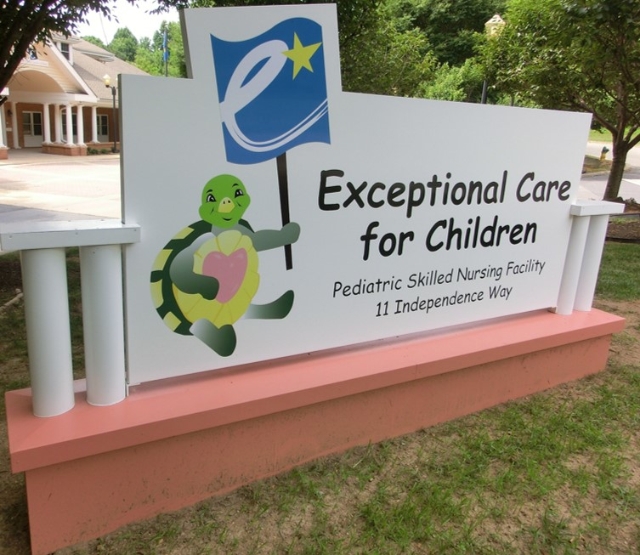
EXCEPTIONAL CARE FOR CHILDREN
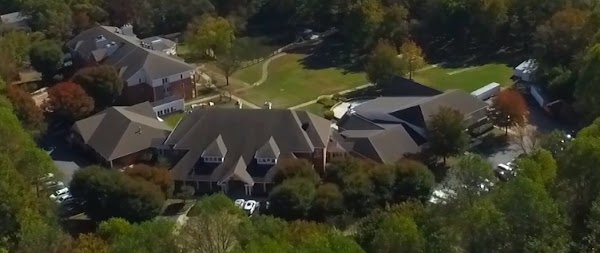
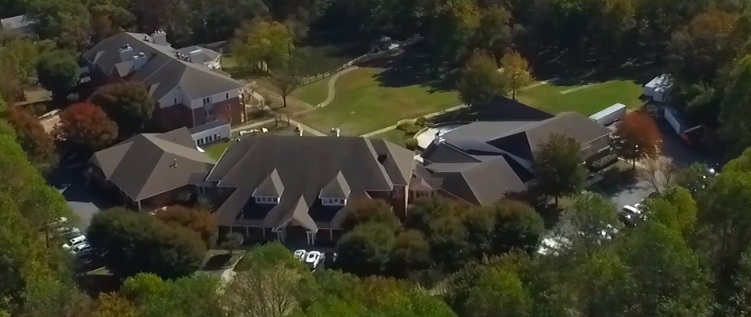
11 INDEPENDENCE WAY, NEWARK, DE 19713 (302) 894-1001
Non profit - Corporation 46 Beds Independent Data: November 2025
Trust Grade
93/100
#5 of 43 in DE
Last Inspection: May 2024

Within standard 12-15 month inspection cycle. Federal law requires annual inspections.

Overview

Exceptional Care for Children in Newark, Delaware, has received an impressive Trust Grade of A, indicating excellent quality and care standards, making it highly recommended. It ranks #5 out of 43 facilities in the state, placing it in the top tier of Delaware nursing homes, and #2 out of 25 in New Castle County, meaning only one local option is better. The facility is new, with no prior inspection history, but it shows promise with 5-star ratings in overall quality, health inspections, staffing, and quality measures. Staffing is a notable strength, with a turnover rate of just 26%, well below the state average, and they provide more RN coverage than 90% of facilities in Delaware, ensuring attentive care. However, there are some concerns, including incidents where residents did not receive timely physician visits as required and a past report of physical and verbal abuse against a dependent resident, which raises questions about staff interactions.

Trust Score
A
93/100
In Delaware
#5/43
Top 11%
Safety Record
Low Risk
No red flags
Inspections
Too New
0 → 3 violations
Staff Stability
✓ Good
26% annual turnover. Excellent stability, 22 points below Delaware's 48% average. Staff who stay learn residents' needs.
Penalties
✓ Good
No fines on record. Clean compliance history, better than most Delaware facilities.
Skilled Nurses
✓ Good
Each resident gets 233 minutes of Registered Nurse (RN) attention daily — more than 97% of Delaware nursing homes. RNs are the most trained staff who catch health problems before they become serious.
Violations
✓ Good
Only 3 deficiencies on record. Cleaner than most facilities. Minor issues only.
★★★★★
5.0
Overall Rating
★★★★★
5.0
Staff Levels
★★★★★
5.0
Care Quality
★★★★★
5.0
Inspection Score
Stable
: 0 issues
2024: 3 issues

The Good

  • 5-Star Staffing Rating · Excellent nurse staffing levels
  • 5-Star Quality Measures · Strong clinical quality outcomes
  • Low Staff Turnover (26%) · Staff stability means consistent care
  • Full Sprinkler Coverage · Fire safety systems throughout facility
  • No fines on record
  • Staff turnover is low (26%)

    22 points below Delaware average of 48%

Facility shows strength in staffing levels, quality measures, staff retention, fire safety.

The Bad

No Significant Concerns Identified

This facility shows no red flags. Among Delaware's 100 nursing homes, only 1% achieve this.

The Ugly 3 deficiencies on record

Jun 2024 1 deficiency
CONCERN (D) 📢 Someone Reported This

A family member, employee, or ombudsman was alarmed enough to file a formal complaint

Potential for Harm - no one hurt, but risky conditions existed

Deficiency F0712 (Tag F0712)

Could have caused harm · This affected 1 resident

Based on record review and interview, it was determined that for three (R1, R2 and R3) out of three residents reviewed for hospitalization, the facility failed to ensure that the physician conducted t...

Read full inspector narrative →
Based on record review and interview, it was determined that for three (R1, R2 and R3) out of three residents reviewed for hospitalization, the facility failed to ensure that the physician conducted the required visits. Findings include: 1. Review of R1's clinical record revealed: 12/28/24 - R1 was admitted to the facility to the facility. 12/28/24 - R1 was examined by a physician and a Health Appraisal Visit documented the encounter in the electronic medical record (EMR). 4/10/24 - R1 was examined by a physician and a Health Appraisal Visit documented the encounter in the EMR. R1 went 104 days between physician visits. During the first 90 days of an admission to a skilled nursing facility, by regulation a patient must be examined every 30 days. 2. Review of R2's clinical record revealed: 5/1/18 - admission to the facility. 7/25/23 - R2 was examined by the physician and a Health Appraisal Visit documented the encounter in the EMR. 11/14/23 - R2 was examined by the physician and a Health Appraisal Visit documented the encounter in the EMR. R2 went 112 days between physician visits instead of the 60 days as required. 3/4/24 - R2 was examined by a physician and a Health Appraisal Visit documented the encounter in the EMR. R2 went 112 days between physician visits instead of the 60 days as required. 3. Review of R3's clinical record revealed: 7/18/23 - R3 was admitted to the facility. 10/31/23 - R3 was examined by a physician and a Health Appraisal Visit documented the encounter in the EMR. R3 went 105 days between physician visits. During the first 90 days of an admission to a skilled nursing facility, by regulation a patient must be examined every 30 days. 2/13/24 - R3 was examined by a physician and a Health Appraisal Visit documented the encounter in the EMR. 6/4/24 - R3 was examined by a physician and a Health Appraisal Visit documented the encounter in the EMR. R2 went 111 days between physician visits instead of the 60 days as required. 4/17/24 approximately 1:00 PM - During an interview with E3 (Quality Assurance/Infection Control Nurse) it was revealed that the physician visits occur with the quarterly assessments and a physicians' group round on residents once a week. When asked if the facility had evidence that the physicians' group see and examine each resident every every 60 days, E3 stated that all residents were seen quarterly but the physicians group rounds on residents that are sick and or require a visit by the physicians group. 6/17/24 at 2:20 PM - During an exit conference findings were reviewed with E1 (NHA) and E2 (ADON).
May 2024 2 deficiencies
CONCERN (D) 📢 Someone Reported This

A family member, employee, or ombudsman was alarmed enough to file a formal complaint

Potential for Harm - no one hurt, but risky conditions existed

Free from Abuse/Neglect (Tag F0600)

Could have caused harm · This affected 1 resident

**NOTE- TERMS IN BRACKETS HAVE BEEN EDITED TO PROTECT CONFIDENTIALITY** Based on interview and review of the clinical record and other documentation as indicated, it was determined that for one (R3) o...

Read full inspector narrative →
**NOTE- TERMS IN BRACKETS HAVE BEEN EDITED TO PROTECT CONFIDENTIALITY** Based on interview and review of the clinical record and other documentation as indicated, it was determined that for one (R3) out of one resident reviewed for abuse, the facility failed to ensure that R3, a non-verbal, medically challenged dependent teenager, was free from physical and verbal abuse from a staff person on 9/9/23, which caused R3 to cry. Based on observations of staff interactions with R3 during the current survey, staff interviews, record review since the 9/9/23 incident and consideration of the reasonable person concept revealed that R3 did not have a psychosocial outcome. Review and verification of the facility's immediate actions and no further incidents, the facility was in substantial compliance as of 9/26/23. The 9/9/23 incident was past non-compliance. Findings include: R3's clinical record revealed: 6/14/17 - R3 was admitted to the facility with diagnoses that included, but were not limited to, megalencephaly syndrome (chromosomal abnormality), chronic respiratory failure and tracheostomy. 12/6/18 - R3 was care planned for communication deficit related to cognitive deficit and trach/vent dependent. Interventions included, but were not limited to: - patient is unable to communicate verbally. Monitor facial expressions and vital sign changes; - speak slowly and clearly and repeat PRN (as needed). Communicate at eye level; and - maintain eye contact when interacting with resident. R3 was also care planned for significant and global developmental delays with severe intellectual disability. 12/17/20 - R3 was care planned for behavioral symptoms, including hitting staff and throwing equipment and disconnecting self-off vent/pulse ox and tube feeds. Interventions included, but not limited to: - avoid over-stimulation (e.g. noise, crowding, other aggressive residents); - maintain a calm environment and approach to the resident; - maintain a calm, slow, understandable approach with the resident; - patient cries to make needs known .; - redirect from inappropriate behavior. Provide re-orientation and cues PRN (as needed). Provide verbal reminders related to behaviors .; - when resident begins to become socially inappropriate/disruptive, provide comfort measures for basic needs (e.g. pain, hunger, toileting .). 8/11/23 - The quarterly MDS assessment documented that R3 had minimal difficulty hearing; was rarely/never understood; sometimes understands - responds adequately to simple, direct communication only; had adequate vision; and was severely impaired for daily decision making. 9/9/23 - The facility's incident report documented that approximately 2:30 PM while the CNA (E9) was in the resident's bathroom, she reported hurting (sic) a slap noise while [E10, RT] was in the room with the patient [R3] . The CNA exited the bathroom, and noted the child was crying. The CNA asked the [E10] if everything was ok, to which the [E10] replied the patient tried hitting her. [E10] has been placed on Administrative Leave, pending investigation. 9/9/23 (untimed) - During an interview with E1 (NHA) and E2 (DON), E10's verbal statement was documented by E1 (NHA) as follows: [E1]: [E10, RT] Can you share what happened with you and [R3] today? [E10]: While I was in her room this afternoon [R3] hit me. [E1]: Where did she hit you? [E10]: On my leg. [E1]: Did you touch [R3] at all after she hit you? [E10]: I swatted her away from me. [E1]: Can you please demonstrate? [E10]: Demonstrated on [E1's] arm a pushing away motion to the lower left arm. [E1]: Did you say anything to her? [E10]: I told her to stop hitting. [E1]: Is there anything else you would like to share? [E10]: No. At the conclusion of the interview, [E10] was asked to prepare a written statement and to forward that statement to the DON (E2) and Executive Director (E1). 9/9/23 at 5:42 PM - A nurse's note documented, Spoke with patients [F1, family member] at 1730 (5:30 PM). Informed [F1] of patient's interactions of the day. Patient is currently at her baseline, happy and playing quietly. 9/9/23 at 5:53 PM - A nurse's note documented, This nurse performed a skin check around 1530 (3:30 PM) and 1730 (5:30 PM) per administration. No bruises, red marks or open areas noted. Patient is currently in room watching tv, smiling and neuro status per baseline . MD (Medical Doctor) on call made aware. 9/9/23 at 7:05 PM - An emailed statement from E9 (CNA) to E1 (NHA) documented, Today around 2-3 pm I walked into [R3's] bathroom to document on her clipboard as [E10, RT] did her treatment. I heard commotion as she continued to talk to her in an unprofessional manner. I then intervened and asked her if everything was okay, when she then stated that [R3] is bad and is always swatting at somebody. 9/10/23 at 11:21 AM - A nurse's note documented, Skin assessment performed. Skin clean, dry and intact. No bruises or open areas noted . 9/11/23 - The facility submitted a five-day follow-up to the State Agency: On 09/09/23 it was reported by [E9, CNA] that at approximately 14:25 (2:25 PM) she heard commotion in [R3's] room, while she was in that patients bathroom. [E9] further stated that she could hear [E10, RT] speaking in a (sic) unprofessional manner towards the patient. [E9] left the bathroom to check on the patient and [E10] in the room. [E9] asked [E10] if everything was ok, to which she stated [E10] told her that [R3] had swatted at her. [E9] reported this incident to the charge nurse and [E10] was placed on administrative leave pending investigation. During an interview conducted with [E10] by the [E1, NHA] and [E2, DON] she admitted to swatting [R3] after she had struck [E10], and stated that she told [R3] to Stop Hitting. A review of the video camera footage was conducted by the NHA and DON on 09/09/2023 . shows the child sitting on the floor, which [E10] is straightening up items behind the child in room [XXX]. At approximately 14:23 (2:23 PM) something occurs to which [R3] makes a motion towards [E10]. [E10] pushes her away, then makes a slapping motion toward the child's left lower arm telling her to stop hitting. At which point [E9] is observed walking out of the bathroom into the room to check on the situation. At this point [E10] begins explaining to [E9] that [R3] had hit her. Actions taken: - [E10, RT] was placed on Administrative Leave on 09/09/2023; - Incident was initially reported to DHS (Department of Health Services/State Agency) on 09/09/2023; - Resident was assessed for injury on 09/09/2023 and [F1, family member]/physician were notified. No bruising was noted after the incident on 09/09 or on 09/10; - [Name of] Police were contacted on 09/11/2023 Report #[YY-YY-YYYYY]; - [S1's name], Ombudsman notified on 09/11/2023. Conclusion: In this writer's opinion, Resident Abuse occurred. The first motion by [E10, RT] was not abusive and looked reactionary and as move to protect herself, the second motion where [E10] swatted/slapped [R3] on the left arm was Abusive in my opinion. It is recommended that the employee be terminated, and that this incident be reported to her professional licensing board. 9/11/23 at 3:15 PM - E10's (RT) written statement emailed to E1 (NHA) was as follows: . my account of the alleged incident involving Resident [initials of R3] on 9/9/23 . On the day in question, I wheeled [initials of R3] in her gait trainer to her room for her respiratory treatment. After situating herself nicely on the mat in her room, she began to hit me multiple times as she often does out of anger for being led from the living room. Because of this ongoing negative behavior, I have had to become a little creative in coming up with ways to distract her to redirect her physical behavior. I have danced, [NAME] to her, given her hand or foot massages, and played the . or shoe toss back and forth. On this day however her hitting was exceptionally worse than usual. I found myself having to block shots with my arms and even caught her arm a couple of times mid swing placing it on her lap while sternly saying that we do not hit. My correction and not allowing myself to be hit seemed to anger her more, so as I waited for the treatment to finish, I sang to the video and waved my arm back and forth to prevent her from raising her hand and striking me. As I stated, there was light contact. It came from the backswing of a wave and my fingertips barely touched her left arm. It's possible that the combination of all the above with the light touch and stern correction hurt her feelings, which is why when charge asked about anything occurring, I had no idea why she would be crying. This behavior is more the rule than the exception and occurs regularly. Though there was no deliberation, and the vantage point of the reporter did not give a clear view of the event, I am in 100% agreement with the report to preserve the rights of the resident, even at my expense. I trust that the combination of the video and this account will be what is needed to clear myself . 9/12/23 - The facility's QAPI Committee reviewed the 9/9/23 staff to resident abuse incident. 9/26/23 - E1 (NHA) provided evidence that staff were educated on this day about abuse incident and the importance of reporting during the general staff meeting. Review of the facility's surveillance footage provided to the State Agency revealed: - at 14:23:31 (hour:minute:second), R3 turns her head to left, with left hand swatted/hit E10's (RT) left lower leg. R3's right back hand covering mouth. E10 swats at R3's left hand while stepping back and bending down to R3's face and says, Stop it. Don't you hit. E10 appears to grab the left lower arm of R3 with her right gloved hand and pushed R3's left lower arm down to the floormat while pointing with her finger and stating, Put your hand down. Put it down. Put it down. We're not playing that. RT stated, You need some manners girl while standing behind R3 working with the medical equipment. - at 14:23:46, E9 (CNA) asked E10 if everything was okay. E10 said, I'm hollering at her because she hit me. I'm tired of her hitting me. She knows better. She knows exactly what she is doing. That's what I do with my kids yell at them. - at 14:25:00, R3 turns head to left and E10 said, You better stop looking around behind you. You hit me that's it. E10 was bent over behind R3 and continues to organize medical equipment. E10 stated, You better knock it off girl. R3 was stilled turned to the left where E10 was bent over. - at 14:25:17, E10 responds, Turn around I'm not doing anything to you. - at 14:25:36, E10 said, Turn around and watch the show while pointing her finger toward the TV. R3 was watching E10. E10 responds, I'm fixing things turn around. Cry all you want. I don't care. You hit me. You're in trouble. - at 14:25:56, R3 reached out with left hand and E10 pushed it away. Video ended at 14:26:04. *14:00 = 2:00 PM 5/24/24 at 11:02 AM - During an interview, E11 (RN) confirmed that she was the charge nurse on 9/9/23. E11 stated that E9 (CNA) said that she was in the bathroom and she heard the [E10, RT] say R3's name stop. E11 stated that E9 told her that she heard what it sounded like a slap and when E9 looked over at R3 she was crying. E11 stated that when R3 cries the resident exhibits facial redness, no tears. When R3 was angry, the resident will put out her trach, throw things around her and/or she will hit you. When she grabs or hits you the resident is trying to communicate something she wants. E11 stated that R3 has had the grabbing/hitting behavior before this incident. E11 stated that R3 can't communicate and can't understand why she can't have things when she wants it. E11 stated that it is acceptable to tell her to stop hitting. However, E11 stated it was not acceptable at the facility to hit any child or yell at a child. E11 stated that she requested E10 (RT) to leave the patient floor and immediately checked on R3. E11 stated that upon her assessment, R3 was completely as baseline and performed a skin check with no injuries or signs of pain. E11 stated that R3 would exhibit pain by crying with mouth wide open/no noise. E11 stated that R3 appeared happy as she was clapping while watching her favorite movie, Frozen. E11 immediately notified E2 (DON) and remembered that E1 (NHA) and E2 (DON) arrived at the facility super quick to review the surveillance camera footage. E11 also stated that she notified the physician. 5/24/24 at 12:45 PM - During an interview, E12 (RN) confirmed that she was R3's assigned nurse on 9/9/23 during the incident. E12 stated that she went into R3's room to administer medications and the charge nurse (E11) came into the room informing her of the incident and performed a full body skin assessment. E12 stated that on that day R3 was more agitated than usual right from the beginning of the shift. E12 stated that this usually happened on weekends when R3 was not in a structured environment. When asked if R3 was acting any different after the incident, E12 (RN) stated No. I would not have known had I not been told about the incident. 5/24/24 at 12:56 PM - Surveyor left voicemail for E10 (RT) and as of 5/28/24 at 8:38 AM, no return call was received. 5/28/24 at 10:15 AM - During an interview, E1 (NHA) stated that E10 was immediately suspended on 9/9/23 pending the investigation. E10 never returned to the facility and was terminated on 9/13/23 by phone. E1 stated that QAPI Committee reviewed the incident and staff were in-serviced for abuse prevention on 9/26/23. When asked if there have been any abuse incidents since 9/9/23, E1 stated no. When asked how you assure retaliation does not occur when staff report an allegation of abuse, E1 stated that in this case he wrote a letter to E9 stating how she did the right thing for reporting it. E1 stated that he encourages staff to report and educates staff by using a real life example of an allegation of abuse that occurred in the past at another facility. E1 stated that he tells his staff to trust the process. 5/28/24 at 11:27 AM - During an interview, E2 (DON) confirmed that she was notified by E11 (RN/Charge Nurse) and E10 was removed from patient care and suspended then terminated. When asked if any medical interventions were done, E2 stated no medical interventions were required. R3 was back to baseline with no noted changes. E2 stated that R3 had behaviors of swatting/hitting prior to and after the 9/9/23 incident. Verification of the facility's immediate actions taken after the 9/9/23 incident included: - suspended E10 (RT) on 9/9/23 and then terminated on 9/13/23; - assessed R1 after incident and continued to monitor; - notified F1 (R1's representative) and the Physician on 9/9/23; - other residents were assessed by nursing on 9/9/24 and 9/10/24; - conducted a facility investigation and maintained evidence; - conducted a QAPI Committee review on 9/12/23; - reported incident to the State Agency, Ombudsman's Office, local law enforcement and Delaware Professional Regulations Agency; and - in-serviced all staff regarding the facility's abuse policy and reporting on 9/26/23. The facility was in substantial compliance as of 9/26/23. 5/28/24 at 2:00 PM - Findings were reviewed with E1 (NHA), E2 (DON), E4 (Medical Director) and a representative from the Ombudsman's Office.
MINOR (B)

Minor Issue - procedural, no safety impact

Assessment Accuracy (Tag F0641)

Minor procedural issue · This affected multiple residents

Based on record review and interview, it was determined that for four (R3, R21, R28, R33) out of eight residents reviewed for resident assessments, the facility failed to accurately report the residen...

Read full inspector narrative →
Based on record review and interview, it was determined that for four (R3, R21, R28, R33) out of eight residents reviewed for resident assessments, the facility failed to accurately report the resident's status. Findings include: According to the CMS (Centers for Medicare and Medicaid Services) RAI (Resident Assessment Instrument) Version 3.0 Manual, October 2023, page A-20, under A1005 Ethnicity and A1010 Race, the Steps for Assessment: Interview Instructions . 2. If the resident is unable to respond, the assessor may ask a family member, significant other, and/or guardian/legally authorized representative . 4. Respondents should be offered the option of selecting one or more ethnic [and racial] designations . 5. Only use medical record documentation to code A1005, Ethnicity [and A1010 Ethnicity] if the resident is unable to respond and no family member, significant other, and/or guardian/legally authorized representative provides a response for this item . Code X, Resident unable to respond: if the resident is unable to respond. In cases where the resident is unable to respond and the response is determined via family, significant other, or legally authorized representative input or medical record documentation, check all boxes that apply, including X. Resident is unable to respond . 1. R3's clinical record revealed: 4/30/24 - E7 (MD) documented in the Physician Medical Update letter that R3 was nonverbal and had significant and global developmental delays with severe intellectual disability. 5/13/24 - R3's annual MDS (Minimum Data Set) assessment documented in Section A under A1005 Ethnicity, X. Resident unable to respond and under A1010 Race, X. Resident unable to respond. The MDS documentation failed to provide any other information regarding R3's ethnicity or race. 5/24/24 - Review of R3's facesheet demographics revealed that R3's race was white. 2. R21's clinical record revealed: 3/14/24 - E6 (MD) documented in the Physician Medical Update letter that R21 was nonverbal and globally delayed with severe intellectual disability. 4/21/24 - R21's quarterly MDS assessment documented in Section A under A1005 Ethnicity, X. Resident unable to respond and under A1010 Race, X. Resident unable to respond. 5/24/24 - Review of R21's facesheet demographics revealed that R21's race was black or African American. 3. R28's clinical record revealed: 2/29/24 - E5 (MD) documented in the Physician Medical Update letter that R28 was nonverbal and had global developmental delays. 4/13/24 - R28's quarterly MDS assessment documented in Section A under A1005 Ethnicity, X. Resident unable to respond and under A1010 Race, X. Resident unable to respond. 5/23/24 - During an interview, E8 (RN) stated that R28 was of Middle Eastern descent but was not sure what country his family comes from. His (family member) speaks Arabic. 5/24/24 - Review of R28's facesheet demographics revealed that the section on race and ethnicity were not completed. 4. R33's clinical record revealed: 11/8/23 - E6 (MD) documented in the Physician Medical Update letter that R33 was nonverbal . with severe intellectual disability. 4/19/24 - R33's quarterly MDS assessment documented in Section A under A1005 Ethnicity, X. Resident unable to respond and under A1010 Race, X. Resident unable to respond. 5/24/24 - Review of R21's facesheet demographics revealed that R21's race was Hispanic, Latino and/or Spanish origin. 5/28/24 12:04 PM - During an interview, E3 (ADON) stated, The reason that I don't document race or ethnicity is that it is an interview question and most of our residents are not interviewable. The facility failed to ensure that each residents' MDS assessment accurately reflected the residents' status with respect to ethnicity and race. 5. According to the CMS RAI Version 3.0 Manual, October 2023, page N-9, Anticoagulants such as Target Specific Oral Anticoagulants (TSOACs), which may or may not require labarotory monitoring, should be coded in N0415E, Anticoagulants. Do not code flushes to keep an IV access port patent. R33's clinical record revealed: 3/23/24 - E6 (MD) ordered in R33's electronic medical record (EMR), Heparin lock flush (porcine) 10 units/ml (milliliters) 5 ml IV (intravenous) once a day. DX (diagnosis) . management of vascular access device. 4/19/24 - R33's quarterly MDS assessment documented in Section N under N4015 High Risk Drug Classes - Uses & Indications that R33 was ordered E. Anticoagulants . 5/24/24 - Review of R33's active physician orders revealed no evidence of any anticoagulants ordered for R33. The facility failed to accurately code R33's 4/19/24 quarterly MDS assessment with respect to anticoagulant use. 5/28/24 at 2:00 PM - Findings were reviewed with E1 (NHA), E2 (DON), E4 (Medical Director) and a representative from the Ombudsman's Office.
Understanding Severity Codes (click to expand)
Life-Threatening (Immediate Jeopardy)
J - Isolated K - Pattern L - Widespread
Actual Harm
G - Isolated H - Pattern I - Widespread
Potential for Harm
D - Isolated E - Pattern F - Widespread
No Harm (Minor)
A - Isolated B - Pattern C - Widespread

Questions to Ask on Your Visit

  • "Can I speak with families of current residents?"
  • "What's your RN coverage like on weekends and overnight?"

Our Honest Assessment

Strengths
  • • Grade A (93/100). Above average facility, better than most options in Delaware.
  • • No major safety red flags. No abuse findings, life-threatening violations, or SFF status.
  • • No fines on record. Clean compliance history, better than most Delaware facilities.
  • • Only 3 deficiencies on record. Cleaner than most facilities. Minor issues only.
Concerns
  • • No significant concerns identified. This facility shows no red flags across CMS ratings, staff turnover, or federal penalties.
Bottom line: Generally positive indicators. Standard due diligence and a personal visit recommended.

About This Facility

What is Exceptional Care For Children's CMS Rating?

CMS assigns EXCEPTIONAL CARE FOR CHILDREN an overall rating of 5 out of 5 stars, which is considered much above average nationally. Within Delaware, this rating places the facility higher than 99% of the state's 100 nursing homes. This rating reflects solid performance across the metrics CMS uses to evaluate nursing home quality.
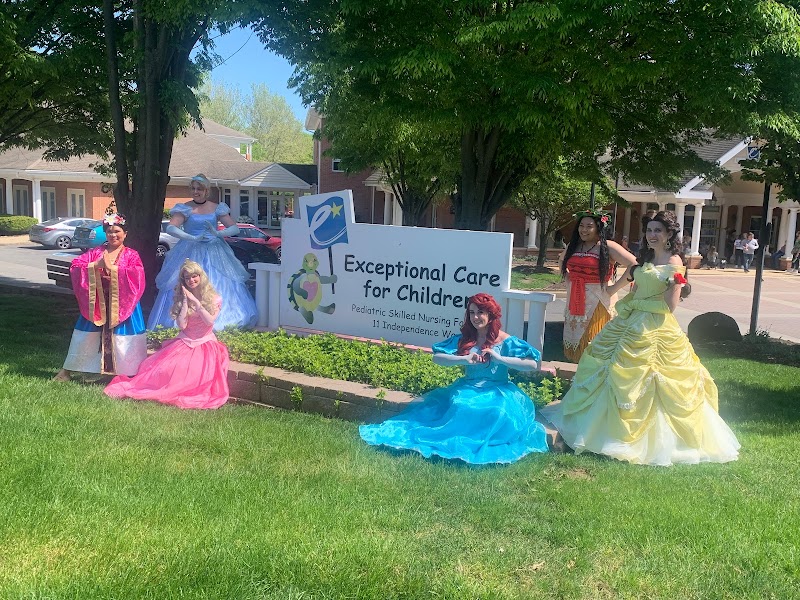
How is Exceptional Care For Children Staffed?

CMS rates EXCEPTIONAL CARE FOR CHILDREN's staffing level at 5 out of 5 stars, which is much above average compared to other nursing homes. Staff turnover is 26%, compared to the Delaware average of 46%. This relatively stable workforce can support continuity of care.

What Have Inspectors Found at Exceptional Care For Children?

State health inspectors documented 3 deficiencies at EXCEPTIONAL CARE FOR CHILDREN during 2024. These included: 2 with potential for harm and 1 minor or isolated issues.
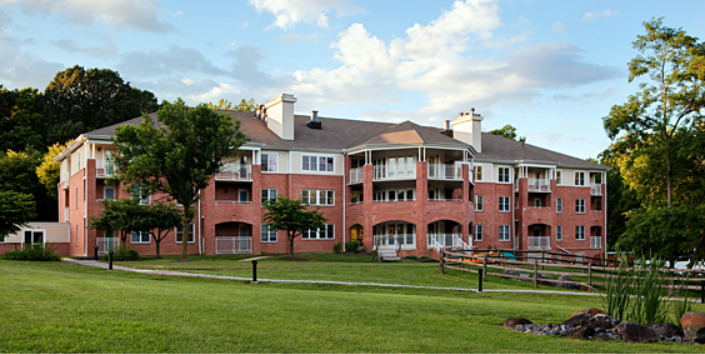
Who Owns and Operates Exceptional Care For Children?

EXCEPTIONAL CARE FOR CHILDREN is owned by a non-profit organization. Non-profit facilities reinvest revenue into operations rather than distributing to shareholders. The facility operates independently rather than as part of a larger chain. With 46 certified beds and approximately 43 residents (about 93% occupancy), it is a smaller facility located in NEWARK, Delaware.
How Does Exceptional Care For Children Compare to Other Delaware Nursing Homes?

Compared to the 100 nursing homes in Delaware, EXCEPTIONAL CARE FOR CHILDREN's overall rating (5 stars) is above the state average of 3.3, staff turnover (26%) is significantly lower than the state average of 46%, and health inspection rating (5 stars) is much above the national benchmark.

What Should Families Ask When Visiting Exceptional Care For Children?

Based on this facility's data, families visiting should ask: "Can I visit during a mealtime to observe dining assistance and food quality?" "How do you handle medical emergencies, and what is your hospital transfer rate?" "Can I speak with family members of current residents about their experience?"

Is Exceptional Care For Children Safe?

Based on CMS inspection data, EXCEPTIONAL CARE FOR CHILDREN has a clean safety record: no substantiated abuse findings (meaning no confirmed cases of resident harm), no Immediate Jeopardy citations (the most serious violation level indicating risk of serious injury or death), and is not on the Special Focus Facility watch list (a federal program monitoring the lowest-performing 1% of nursing homes). The facility has a 5-star overall rating and ranks #1 of 100 nursing homes in Delaware. While no facility is perfect, families should still ask about staff-to-resident ratios and recent inspection results during their visit.

Do Nurses at Exceptional Care For Children Stick Around?

Staff at EXCEPTIONAL CARE FOR CHILDREN tend to stick around. With a turnover rate of 26%, the facility is 20 percentage points below the Delaware average of 46%. Low turnover is a positive sign. It means caregivers have time to learn each resident's needs, medications, and personal preferences. Consistent staff also notice subtle changes in a resident's condition more quickly. Registered Nurse turnover is also low at 19%, meaning experienced RNs are available to handle complex medical needs.

Was Exceptional Care For Children Ever Fined?

EXCEPTIONAL CARE FOR CHILDREN has no federal fines on record. CMS issues fines when nursing homes fail to meet care standards or don't correct problems found during inspections. The absence of fines suggests the facility has either maintained compliance or corrected any issues before penalties were assessed. This is a positive indicator, though families should still review recent inspection reports for the full picture.

Is Exceptional Care For Children on Any Federal Watch List?

EXCEPTIONAL CARE FOR CHILDREN is not on any federal watch list. The most significant is the Special Focus Facility (SFF) program, which identifies the bottom 1% of nursing homes nationally based on persistent, serious quality problems. Not being on this list means the facility has avoided the pattern of deficiencies that triggers enhanced federal oversight. This is a positive indicator, though families should still review the facility's inspection history directly.