CADIA REHABILITATION PIKE CREEK
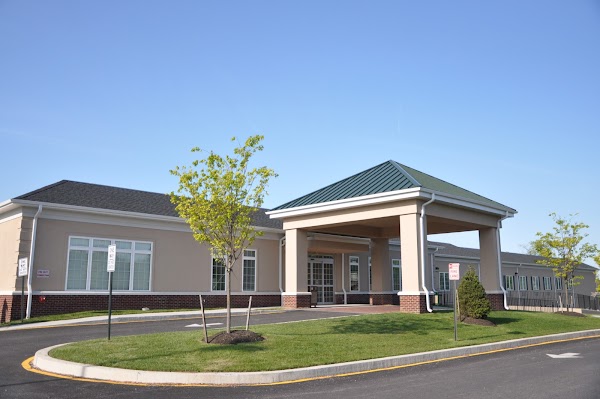
3540 THREE LITTLE BAKERS BLVD, WILMINGTON, DE 19808 (302) 455-0808
For profit - Limited Liability company 177 Beds CADIA HEALTHCARE Data: November 2025 4 Immediate Jeopardy citations
Trust Grade
0/100
#29 of 43 in DE
Last Inspection: March 2024

Within standard 12-15 month inspection cycle. Federal law requires annual inspections.

Overview

Cadia Rehabilitation Pike Creek has received a Trust Grade of F, indicating significant concerns about the quality of care provided. Ranked #29 out of 43 facilities in Delaware, they fall in the bottom half of state options, and at #17 of 25 in New Castle County, only one local facility ranks lower. The facility is currently experiencing a worsening trend, with the number of reported issues increasing from 7 in 2024 to 9 in 2025. Staffing is a major concern, as they earned a poor 1-star rating and have a turnover rate of 51%, which is higher than the state average of 42%. Additionally, they have incurred $181,151 in fines, which is above average for the state; this suggests ongoing compliance issues. Strengths include an excellent 5-star rating for quality measures, indicating some aspects of care are being handled well. However, specific incidents raise alarm, such as one resident not receiving timely treatment after a fall, which resulted in a severe brain injury, and another resident not receiving their anticoagulant medication after an outpatient procedure, putting them at risk for blood clots. Overall, families should weigh these serious issues against the facility's strengths when considering care options.

Trust Score
F
0/100
In Delaware
#29/43
Bottom 33%
Safety Record
High Risk
Review needed
Inspections
Getting Worse
7 → 9 violations
Staff Stability
⚠ Watch
51% turnover. Above average. Higher turnover means staff may not know residents' routines.
Penalties
⚠ Watch
$181,151 in fines. Higher than 84% of Delaware facilities, suggesting repeated compliance issues.
Skilled Nurses
○ Average
Each resident gets 38 minutes of Registered Nurse (RN) attention daily — about average for Delaware. RNs are the most trained staff who monitor for health changes.
Violations
⚠ Watch
53 deficiencies on record. Higher than average. Multiple issues found across inspections.
★★☆☆☆
2.0
Overall Rating
★☆☆☆☆
1.0
Staff Levels
★★★★★
5.0
Care Quality
★★☆☆☆
2.0
Inspection Score
Stable
2024: 7 issues
2025: 9 issues

The Good

  • 5-Star Quality Measures · Strong clinical quality outcomes
  • Full Sprinkler Coverage · Fire safety systems throughout facility
  • No fines on record

Facility shows strength in quality measures, fire safety.

The Bad

2-Star Overall Rating

Below Delaware average (3.3)

Below average - review inspection findings carefully

Staff Turnover: 51%

Near Delaware avg (46%)

Higher turnover may affect care consistency

Federal Fines: $181,151

Well above median ($33,413)

Significant penalties indicating serious issues

Chain: CADIA HEALTHCARE

Part of a multi-facility chain

Ask about local staffing decisions and management

The Ugly 53 deficiencies on record

4 life-threatening 2 actual harm
Apr 2025 6 deficiencies 1 IJ
CRITICAL (J) 📢 Someone Reported This

A family member, employee, or ombudsman was alarmed enough to file a formal complaint

Immediate Jeopardy (IJ) - the most serious Medicare violation

Quality of Care (Tag F0684)

Someone could have died · This affected 1 resident

**NOTE- TERMS IN BRACKETS HAVE BEEN EDITED TO PROTECT CONFIDENTIALITY** Based on observation, interview, record review, and policy review, the facility failed to ensure residents who experienced a cha...

Read full inspector narrative →
**NOTE- TERMS IN BRACKETS HAVE BEEN EDITED TO PROTECT CONFIDENTIALITY** Based on observation, interview, record review, and policy review, the facility failed to ensure residents who experienced a change in condition received timely treatment for one of four sampled residents reviewed for a change in condition (Resident (R)162). R162's had a fall at home prior to admission and sustained a subdural hematoma requiring a craniotomy (a surgical procedure where a neurosurgeon makes an opening in the skull to access and remove a blood clot (hematoma) that has formed to relieve pressure on the brain). R162 experienced changes in his condition after a fall he sustained on 10/10/24. On 10/14/24 R162 was emergently transferred to the hospital and was diagnosed with an acute subdural hematoma with a left to right shift requiring a craniotomy and intubation while in the hospital resulting in a delay of care. The Administrator and Director of Nursing (DON) were notified on 04/17/25 at 6:28 PM that Immediate Jeopardy existed. The failure to identify R162 exhibited symptoms of a potential head injury and failure to send R162 to the hospital timely created an immediate jeopardy situation resulting in a delay in treatment. Once hospitalized on [DATE], R162 had craniotomy surgery due to an acute re-injured subdural hematoma with left to right shift of his brain. The facility's failure to identify R162 was exhibiting signs and symptoms of a head injury and send him to the hospital timely put him at risk for significant injury and potentially death. The facility did not identify any failures from this incident and no corrective measures were implemented to ensure future residents with changes in condition would receive timely treatment. An acceptable Immediate Jeopardy Plan of Removal was provided on 04/17/25 at 8:00 PM and was validated on 04/18/25 at 1:16 PM. The Administrator was notified on 04/18/25 at 1:16 PM that the Immediate Jeopardy was removed. After the removal of the Immediate Jeopardy, the deficiency remained at a scope and severity of a D Findings include: Review of the facility's policy titled, Alert Charting dated 01/03/25 revealed It is the policy of [Name of Facility] to utilize alert charting for residents experiencing changes in condition that warrant heightened observation as determined through nursing judgment .Residents placed on alert charting are assess by the nurse each shift and assessment data entered into nursing notes .Document objective data related to the resident's condition i.e. vital signs .level of consciousness; .and response or lack of response to treatment .Report change in resident condition to the physician and the responsible party . Review of the facility's policy titled, Neurological Checks dated 01/03/25 revealed Neurological checks are initiated for residents experiencing a fall (change in plane) with a suspected head injury and/or a change from the resident's neurological baseline . Review of R162's undated admission Record in the electronic medical record (EMR) under the Profile tab revealed the resident was admitted to the facility on [DATE] with a primary diagnosis of traumatic subdural hemorrhage. Review of R162's admission Minimum Data Set (MDS) with an assessment reference date (ARD) of 09/29/24 in the EMR under the MDS tab revealed R162 was admitted to the facility on [DATE] and had a goal of discharging to the community. According to the MDS the facility assessed R162 to have a Brief Interview for Mental Status (BIMS) score of four out of 15 which indicated the resident was severely cognitively impaired. R162 had clear speech, was usually understood by others, and sometimes understood others. R162 exhibited no mood or behavioral concerns. Review of R162's Care Plan dated 09/25/24 in the EMR under the Care Plan tab revealed, [R162] wishes to be discharged to home/another facility. Interventions in pertinent part were, Make arrangements with required community resources to support independence post-discharge . During an interview on 04/15/25 at 1:37 PM, Family Member (F) 5 stated R162 had been living at home with family when he experienced a fall getting into her car which resulted in the initial subdural hematoma and craniotomy in September 2024. F5 stated when R162 was admitted to the facility from the hospital, he needed assistance with walking and the goal was for him to get stronger and return home. F5 stated R162 rarely slept while at the facility and was always up, active, and often at the nursing station even at night. F5 stated when she came in to visit R162 on the morning of 10/14/24, he was not responsive at all, and she knew something was seriously wrong. F5 stated she insisted that Nurse Practitioner (NP) 1 send R162 to the hospital. The facility's Administrator was notified on 04/17/25 at 6:28 PM that Immediate Jeopardy existed related to the failure to identify and respond timely to a change in condition on 10/12/24 after Resident (R) 162 fell and hit his head on 10/10/24. The Immediate Jeopardy began on 10/11/24 when R162 experienced a change in condition. During an interview on 04/16/25 at 2:44 PM, R162's Personal Care Physician (PCP) 1 stated R162 was able to communicate his needs upon admission but was impaired in cognition. Review of R162's Nurse's Note dated 10/10/24 and located in the resident's EMR under the Progress Notes tab revealed R162 was found on the floor of his room after the staff heard a loud thud. The note read, Pt [Patient] found on floor holding the right side of his face. Pt says he did hit his head. Pt was assessed and able to move all extremities. Pt was assessed by supervisor and then helped off the floor. Pt has a superficial laceration on right side of face near right eye. Pt also sustained a skin tear on his lower left arm. The area was cleaned, and a dry dressing was applied. Pt was given an ice pack for facial laceration. NP [Nurse Practitioner (NP)1] made aware of fall and skin injuries .Pt unable to remember how he fell and what caused his fall . Wheelchair was in room near where pt was on the floor. Review of R162's Nurse's Note dated 10/10/24 at 5:00 PM and located in the resident's EMR under the Progress Notes tab revealed Resident was found on the floor in front of his bed. Resident was trying to get into bed unassisted and fell .On call notified and new orders for a CBC [complete blood count], BMP [basic metabolic panel], chest x-ray, and UA [urinalysis] C&S [culture and sensitivity]. Neuro checks initiated . Review of R162's Physical Therapy Summary of Skill Notes showed a decline between 10/09/24 and 10/11/24 as follows: - Review of a PT Summary of Skill note dated 10/09/24 provided by the facility revealed R162 walked 118 feet on this date, completed four minutes of standing with support, and performed marching for improved balance. -Review of a Physical Therapy (PT) Summary of Skill note dated 10/10/24 and provided by the facility and signed at 4:57 PM, revealed R162 ambulated ten feet with a rolling walker. In addition, R162 completed 15 minutes on the omni cycle. It was unknown whether therapy occurred before or after R162's fall on this date. -Review of a PT Summary of Skill note dated 10/11/24 at 5:31 PM revealed R162's condition had changed from 10/10/24 as follows, Pt [Patient] sitting in WC [wheelchair] very drowsy with limited eye opening .increase confusion .Pt complete x3 STS [sit to stand] and present with difficulty completing task of pivoting. SPT [stand pivot transfer] WC [wheelchair] to recliner with Mod [moderate] of 2 person assist for proper positioning . Per the Summary of Skill R162 did not walk on this date. The PT who wrote the Summary of Skill notes no longer worked at the facility and was unavailable for interview. -Review of the next and last PT Summary of Skill note dated 10/14/24 revealed, Pt encountered in recliner very drowsy with limited eye opening. Pt [unable to] complete transfer to WC on multiple attempts due to increase resistance . Review of R162's Nurse's Note dated 10/12/24 at 11:38 AM and located in the resident's EMR under the Progress Notes tab revealed R162 was experiencing a change in his mental status as follows, Resident is not able to wake up for medication tried waking him to transfer him to bed but not waking up resident is snoring breathing but will not open eyes not safe to give medication resident vital signs were taken but unable to get temp [temperature] due to him sleeping and not waking up to close his mouth while sleeping tried to take [sic] wake up several times will continue to monitor was not able to eat breakfast will try lunch. Review of R162's Nurse's Note dated 10/12/24 at 2:22 PM and located in the resident's EMR under the Progress Notes tab revealed, Resident continue to sleep resident did not eat lunch was able to only take small bite of cheesecake but coughed and then offered ginger ale and water . could not drink eyes are closed was telling resident to open eyes resident would mumble but not verbalize using words resident son was here and notified him of the situation that he did not eat breakfast or lunch and was not able to get medications this shift on the on call NP [Nurse Practitioner] was notified and he said can hold medication for 24 hr [hours]. Review of R162's Nurse's Note dated 10/12/24 at 9:10 PM and located in the resident's EMR under the Progress Notes tab revealed, Patient slept most of the shift. Alert. Not oriented. Open eyes to voice. Vitals wnl [within normal limit]. Med [medications] melatonin/buspirone on hold. Review of R162's Nurse's Note dated10/13/24 at 3:07 PM and located in the resident's EMR under the Progress Notes tab revealed Resident post fall resident was on nuero [sic] checks resident was more awake and alert this shift ate about 50-75% breakfast did not eat lunch son was here and offered but refused this morning when he was done eating breakfast I tried taking vital signs and giving medication but resident was pushing me away and saying no resident speech was not clear was not able to communicate clear this shift .resident was also very weak and unable to do two person assist to take to the bathroom had to use the sit and stand lift to use the bathroom . Review of R162's Nurse's Note dated 10/14/24 at 12:21 PM and located in the Progress Notes tab revealed, Patient is noted with increased lethargy this shift. NP evaluated; patient's daughter was at bedside. Daughter wishes for patient to be sent to ER [emergency room] for eval. 911 was called, NP called report to ER. 911 arrived to facility at 1221, was transported to ER with all appropriate paperwork. Review of R162's NP's Encounter note dated 10/14/24 and located in the resident's EMR under the Progress Notes tab revealed, Nursing reporting that patient has increased lethargy and generalized confusion. Patient is currently out of bed to the chair and awakens to verbal commands, but does not communicate needs and has increased confusion. Patient's daughter is at the side of the chair and requesting patient to be sent to the hospital for acute change of mental status. Patient awakens eyes to verbal commands and unable to follow simple commands, even with redirection. Nursing reports acute change in mental status overnight . 1. Acute delirium: Pt with acute onset of change in overall mentation. Pt is not currently at baseline, and workup is still pending including urinalysis. Family at the bedside and requesting patient to be sent to the hospital for further evaluation. Discussed with nursing staff and orders given to send the patient to the ED. Review of R162's Neurological Flow Sheet provided by the facility and initiated on 10/10/24 at 4:30 PM and completed on 10/13/24 on the 7:00 AM - 3:00 PM shift, revealed a change in R162's level of consciousness that started on the 7:00 AM - 3:00 PM shift on 10/12/24 with a change from fully conscious - awake, aware and oriented to lethargic - responds slowly to verbal stimuli that persisted through 10/13/24, the end of the monitoring period. In addition, the Neurological Flow Sheet revealed a change in R162's speech from clear to slurred that started on 10/12/24 on the 7:00 AM - 3:00 PM shift and persisted through 10/13/24, the end of the monitoring period. Review of 162's hospital ED [Emergency Department] Physician Record dated 10/14/24 and provided by the facility revealed, I reviewed the patient's CT head once it was available in the [name] system and on my interpretation, I am concerned for a large left sided subdural hematoma with midline shift. I immediately active a trauma alert given the patient's age, intracranial hemorrhage, and altered mentation . Review of R162's hospital CT [computed tomography] Head Scan dated 10/14/24 and provided by the facility revealed, Impression: Left cerebral convexity and left parafalcine subdural hematoma measuring up to 15 mm in thickness resulting in 7 mm left to right midline shift. During an interview on 04/15/25 at 5:59 PM, Registered Nurse (RN) 2 stated LPN12 should have contacted the Unit Manager regarding the change in condition (change in level of consciousness) observed on 10/12/24 (Saturday). RN2 stated there was no NP in the facility on the weekends at the time of the change in R162's mental status occurred. RN2 stated, considering R162's history of a subdural hematoma and change in level of consciousness, she would have had R162 sent to the hospital on [DATE]. During an interview on 04/16/25 at 11:15 AM, LPN12 stated on 10/12/24, she could not wake R162 up for breakfast and he did not eat lunch or dinner either. In addition, he refused to take his pills. LPN12 stated she was concerned R162 was experiencing a change in condition and was aware the change in cognition could be a trigger for a head injury from the fall on 10/10/24. LPN12 stated she conveyed all information to the weekend on call NP on 10/12/24 who instructed her to hold medications for 24 hours and monitor him. LPN12 stated the NP did not instruct her to send R162 to the hospital. LPN12 stated R162 was a little better on 10/13/24 as he was able to eat breakfast and was more alert. During an interview on 04/16/25 at 1:14 PM, NP1 stated she assessed R162 on 10/10/24 after his fall and on 10/14/24 when notified he experienced a change in condition. NP1 stated when she evaluated R162 on 10/14/24, he was different from his baseline and had experienced an acute change in cognition. NP1 stated R162 was not usually sleepy and had previously been more alert and able to communicate his needs. She stated on 10/14/24 R162 was not making sense. When reviewing the description of R162 documentation by LPN12 on 10/12/24, NP1 stated LPN12's documentation of symptoms was similar to the acute change in mental status that she witnessed on 10/14/24 when she sent the resident out to the emergency room. During an interview on 04/15/25 at 10:22 AM, Forensic Nurse (nurses who conduct comprehensive medical examinations to assess injuries, document findings, and determine the need for medical intervention) (FN) 3 from the hospital stated R162 was admitted to the hospital on [DATE] with subdural hematoma. A craniotomy was performed and R162 had to be intubated (tube inserted inside the windpipe through the mouth or nose). FN3 stated the hospital staff was concerned regarding the delay in sending R162 to the hospital after he started exhibiting signs and symptoms of a change in condition on 10/12/24. FN3 stated when R162 arrived at the hospital, he had obvious signs of injury to his forehead and staff were unable to wake him for more than a few seconds. R162 was unable to communicate verbally and was groaning and coughing when he arrived. FN3 stated R162 was placed onto hospice services while in the hospital. During an interview on 04/17/25 at 1:20 PM, FN4 stated there were three CT scans taken for R162 following his initial fall in 09/10/24. FN4 stated the first CT scan on 09/10/24 showed the hematoma measured 25 mm thickness; the 09/17/24 CT scan was not measured but showed marked improvement; the 10/14/24 CT scan showed a 15 mm thickness with a seven mm shift. FN4 stated the shift was due to the bleeding pushing the left side of the brain to the right-side accounting for the shift from left to right. FN4 stated R162 had a re-injury of the subdural hematoma, based on the CT scan dated 10/14/24 with a craniotomy recommended and performed to relieve the pressure. FN4 stated, due to the previous subdural hematoma in September 2024, R162 was at increased risk and should have been sent to the hospital right away on 10/14/24 after hitting his head when he fell on this date. During an interview on 04/17/25 at 2:38 PM, NP1 reviewed the Emergency department report and the CT scan for R162 both dated 10/14/24. NP1 stated the documentation revealed an intracranial bleed and that an intervention was needed to alleviate the pressure. She stated the midline shift was the concern and indicated that something acute had occurred. NP1 reviewed the Therapy Note dated 10/11/24 showing a decline in R162's cognition the day after the fall and stated if she had known about that, she would have had R162 sent to the hospital at that time. During an interview on 04/15/25 at 1:37 PM, Family Member (F) 5 stated R162 went onto hospice while in the hospital due to his deteriorated condition and was discharged from the hospital to a different nursing facility where he passed away a few months later. Review of the facility's Immediate Jeopardy Removal Plan dated 04/17/25 revealed the facility took the following actions: -Rl62 no longer resides in the facility. No immediate actions can be taken for this resident. -The facility Medical Director was made aware of the immediate jeopardy citation on April 17, 2025. -All residents who have fallen within the last 72 hours were assessed by a medical provider for changes in condition on April 17, 2025. -All current residents who have fallen within the last 30 days were reviewed to validate that they did not experience an unidentified change in condition on April 17, 2025. -Immediate education of all licensed nurses other than those on leave on identifying and notifying providers of changes in condition after a fall was initiated and completed by the DON/ designee on April 18, 2025. Any staff on leave will be educated prior to their next scheduled shift. -Audits will be conducted by the DON [Director of Nursing]/ designee on residents who sustain a fall to validate that residents are monitored for changes in condition, that changes in condition are identified timely, and the medical provider is notified. The facility QAPI committee through ad hoc will monitor weekly for four weeks to review any trends, findings, issues, or concerns and develop plan of action for follow up or resolution. During an interview on 04/17/25 at 8:16 PM, DON1 stated the training consisted of educating nurses on clinical evaluations, subjective versus objective data, level of consciousness, and provider notification of changes in condition. DON1 stated if the nurses did not agree with the provider, such as whether to send a resident to the hospital, they were to notify the DON, and the DON would notify the Medical Director. The Medical Director will make the final decision for the resident. During an interview on 04/17/25 at 8:19 PM, LPN14 verified she had been trained by DON1 and verbalized understanding of the training when asked specific questions. During an interview on 04/17/25 at 8:21 PM, LPN7 verified she had been trained by the DON and verbalized understanding of the training when asked specific questions. During an interview on 04/17/25 at 8:24 PM, RN7 verified she had been trained by the DON and verbalized understanding of the training when asked specific questions. During an interview on 04/18/25 at 9:11 AM, the Director of Rehabilitation (DOR) and Interim DOR stated they started educating therapy staff last night about change of condition, and how therapy staff should communicate this information to nursing. Therapy was to notify and inform nursing and bring the information to department heads in the morning meetings.
SERIOUS (G) 📢 Someone Reported This

A family member, employee, or ombudsman was alarmed enough to file a formal complaint

Actual Harm - a resident was hurt due to facility failures

Accident Prevention (Tag F0689)

A resident was harmed · This affected 1 resident

**NOTE- TERMS IN BRACKETS HAVE BEEN EDITED TO PROTECT CONFIDENTIALITY** Based on observation, interview, and record review the facility failed to ensure that two of 10 residents reviewed for accidents...

Read full inspector narrative →
**NOTE- TERMS IN BRACKETS HAVE BEEN EDITED TO PROTECT CONFIDENTIALITY** Based on observation, interview, and record review the facility failed to ensure that two of 10 residents reviewed for accidents (Resident (R) 114 and R90) were provided supervision to prevent accidents. Both residents were planned for two staff for bed mobility and transfer but only one staff provided care. R114 was harmed when injuries from the all required emergecy room treatment with stitches to a laceration to the skull. R90 sustained minimal injuries. Verification of training and binder review confirmed the incident with R114 was corrected 12/3/24 and determined to be past-non compliance. The citation for R90 was a D level finding was verified as corrected on 3/21/24. Findings include: 1. Review of the facility's policy titled, Care Planning revised on 01/12/23 revealed that The services provided or arranged by the facility, as outlined by the comprehensive care plan, must: Be provided by qualified persons in accordance with each resident's written plan of care. Review of R114's admission Record located in the Profile tab of the EMR revealed he was admitted to the facility on [DATE] with diagnoses which included anoxic brain damage and persistent vegetative state. Review of R114's Care Plan located in the resident's EMR under the Care Plan tab revealed an intervention dated 10/13/23 to: Assist with transfers and repositioning in bed as ordered. Review of R114's Order Summary Report located in the resident's EMR under the Orders tab revealed an order dated 04/05/24 for Bed Mobility [side to side]: assist of two. Review of R114's Transfer Status Sheet dated 04/05/24 and located in the Misc tab of the EMR revealed R114 required assist of two with rolling side to side. Review of R114's Fall Risk Evaluation, dated 10/14/24 and located in the Evaluations tab of the EMR revealed R114 was not at risk of falling. Review of R114's annual MDS assessment with an ARD (assessment reference date) of 10/16/24 and located in the MDS tab of the EMR revealed R114 was in a persistent vegetative state with no discernible consciousness. R114 had functional limitation in range of motion to both upper and lower extremities and was dependent on staff for rolling side to side. Review of a facility provided Incident Report, dated 11/28/24 and completed by LPN11 revealed CNA14 reported R114 fell out of bed during care. R114 was observed lying on the floor next to the bed, bleeding from the left side of his head. R114 went out to the emergency room for evaluation. Review of R114's Progress Notes, located in the Progress Notes, tab of the EMR revealed: A Nurses Note dated 11/28/24 at 2:42 PM which documented R114 fell onto the floor during care around 12:55 PM. R114 was assessed and an injury to the left side of his head was cleaned and a pressure dressing placed. 911 was called, and R114 left for the hospital at 1:27 PM. An Orders - General Note from eRecord dated 11/29/24 at 12:04 PM which documented R114 returned to the facility at 8:55 AM. R114 had a laceration with stitches on the back left side of his head from the 11/28/24 fall. During an interview on 04/15/25 at 11:53 AM, CNA14 reported she had rolled R114 by herself on 11/28/24 when providing incontinence care. CNA14 had raised the bed to working height, rolled R114 away from her, and reached to grab wipes and a clean brief when R114 slowly fell out of bed. CNA14 reported R114 was supposed to be assisted by two staff to roll but that when she was unable to find someone to assist, she had provided care alone. During a concurrent observation and interview on 04/15/25 at 3:26 PM, CNA13 and CNA19 repositioned R114 in bed. R114 was observed to be totally dependent on staff for mobility with no discernible response to verbalizations. CNA13 reported R114 had little movement, but residents in his state coughed or spasmed at times with rolling, which could cause them to move. When asked how staff knew how to transfer or position residents, CNA13 opened R114's closet door to reveal his Transfer Status Sheet which showed R114 required two staff for rolling side to side. During an interview on 04/16/25 at 12:14 PM, LPN11 stated she was notified by a CNA on 11/28/24 that R114 had fallen from the bed. When LPN11 lifted R114's head, she felt blood on her glove and got another nurse to further assist with assessing. CNA14 reported to LPN11 that when R114 was rolled on his side for incontinence care, he jerked and fell off the bed. He likely coughed or something. CNA14 was the only staff in the room providing care when R114 fell. R114 was supposed to have two staff when rolling. During an interview on 04/16/25 at 6:00 PM, DON1 stated she expected staff to follow the plan of care for rolling, transferring, and ambulation. Nursing staff were educated to look for the plan of care inside the resident's closet doors. If the plan of care stated to roll with the assist of two staff, she expected two staff to be utilized. Review of a facility provided binder revealed the facility started a Quality Assurance and Performance Improvement (QAPI) plan following the 11/28/24 fall. An Action Plan titled Resident Staff Assisted Bed Mobility was initiated on 11/29/24. Certified staff received re-education on utilizing the ordered amount of staff assistance with bed mobility from 11/29/24 to 12/03/24. Audits were completed on utilizing the required staff assistance with bed mobility three times weekly until compliance was consistent at 100% for three consecutive audits. Following this, audits were completed weekly until consistent compliance was achieved over three consecutive weeks. Finally, monthly audits were performed, which began in January 2025. The last audit form in the binder was dated 01/10/25. 2. Review of R90's undated admission Record located in the EMR under the Profile tab revealed he was admitted on [DATE] with multiple diagnoses which included vegetative state, acute respiratory failure, tracheostomy, contractures, gastrotomy, and nontraumatic intracerebral hemorrhage. Review of R90's annual MDS assessment with an ARD of 10/18/24, located in the EMR under the MDS tab revealed R90 was not interviewable and could not be assessed for mental status. The MDS indicated that R90 was dependent on staff for eating, oral hygiene, toileting, shower, upper and lower body dressing, personal hygiene, rolling, and transfers. Review of R90's Care Plan, dated 02/24/23, located in the EMR under the Care Plan tab revealed a focus of ADL self-care performance deficit r/t [related to] vegetative state with interventions of Picture in closet for positioning dated 01/18/24, and Transfer: The resident requires Mechanical Lift (Hoyer) with 2 staff assistance for transfers (dated 02/24/23). Review of R90's Nurses Note, dated 02/22/25, located in the EMR under the Prog Note tab revealed Charge nurse came in to the Unit and reported to the nursing supervisor that resident has a fall during provision of care. Nursing supervisor ran to resident's room. Resident has contractures of the upper limbs and very limited movement in lower extremities. No evidence of bones fracture. Resident presented: excoriations of the right side of forehead, small hematoma/elevation of the middle of the forehead, scant amount of dry blood on the inferior lip, small skin tear on right shoulder. Resident was resistant to mouth evaluation. Review of R90's Nurses Note, dated 02/22/25, located in the EMR under the Prog Note tab revealed . Resident was assessed by NPs [nurse practitioners] and new order received to send resident to the Hospital for evaluation and treatment . Review of R90's Nurses Note, dated 02/22/25, located in the EMR under the Prog Note tab revealed pt [patient] returned from hospital s/p [status post] fall. no new orders received. pt vitals are stable. no signs of distress noted. no signs of pain or discomfort. call bell within reach . Review of R90's Facility Reported Incident (FRI), dated 02/22/25, provided by the facility revealed the five-day report was sent to the State Survey Agency (SSA) on 02/28/25 which documented CNA10 stated she was cleaning the resident and went to turn him, and he rolled off the bed. During an interview on 04/14/25 at 8:50 PM, Family Member (F) 9 stated there was an incident on 02/22/25 when two staff were not present when turning R90 in bed during care. F9 also stated the CNA told him that she was giving a bath to R90, then she turned him away from her and he fell off the bed onto the floor. F9 stated the CNA stated R90 had a few scraps on him but no injuries. During an interview on 04/17/25 at 3:33 PM, DON1 confirmed she completed R90's fall investigation and concluded CNA10 did not wait for another nursing assistant to assist her in providing care to the resident on 02/22/25, which was the required level of assistance per the care plan. DON1 also stated the care plan was posted in each resident's armoire. DON1 indicated R90 returned from the hospital with no injuries. DON1 also indicated CNA10 was suspended during the investigation and terminated after the investigation was concluded. DON1 stated training was provided to all staff on 02/24/25 then auditing was conducted which included observations of the nursing assistants providing care to the residents. Training was provided to all nursing staff on 02/24/25 on patient transfer status and bed mobility by the DON. Audits were conducted three times weekly by the Staffing Coordinator from 02/24/25 to 03/21/25 through observations on each floor of assistance required with bed mobility per the QAPI Plan.
CONCERN (D) 📢 Someone Reported This

A family member, employee, or ombudsman was alarmed enough to file a formal complaint

Potential for Harm - no one hurt, but risky conditions existed

Deficiency F0563 (Tag F0563)

Could have caused harm · This affected 1 resident

**NOTE- TERMS IN BRACKETS HAVE BEEN EDITED TO PROTECT CONFIDENTIALITY** Based on observation, interview, and record review, the facility failed to allow family visitation for one out of 49 sampled res...

Read full inspector narrative →
**NOTE- TERMS IN BRACKETS HAVE BEEN EDITED TO PROTECT CONFIDENTIALITY** Based on observation, interview, and record review, the facility failed to allow family visitation for one out of 49 sampled residents (Resident (R)10). The facility restricted visitation of R10's family member (Family Member (F) 4). This failure violated R10's right as a resident of the facility. Findings include: During an interview on 04/18/25 at 12:33 PM, the Administrator stated the facility did not have a visitation policy. Observation on 04/18/24 at 8:30 PM revealed a sign was posted at the facility entrance that read, Recommended visiting hours 10:00 AM - 7:00 PM. Review of R10's undated admission Record, in the electronic medical record (EMR) under the Profile tab revealed R10 was admitted to the facility on [DATE]. Review of R10 admission Minimum Data Set (MDS), with an Assessment Reference Date (ARD) of 03/22/25, located in the EMR under the MDS tab revealed the facility assessed R10 to have a Brief Interview for Mental Status (BIMS) score of 15 out of 15 which indicated the resident was cognitively intact. During an interview on 04/14/25 at 2:25 PM, F4 stated R10 had almost fallen out of bed twice at night and he had caught her. F4 stated he visited R10 in the evening and at night to make sure R10 was safe, and to make sure her needs were met such as making sure R10 got her pain medications, assistance she needed in the evening/at night, and to follow up on everything. F4 stated he did not sleep while in R4's room and the curtain was pulled between R10 and her roommate. F4 stated he was quiet and did not disturb R10's roommate. F4 stated one of the reasons they chose the facility was because it allowed 24-hour visitation. F4 stated he was told about a week ago that he could no longer visit at night due to R10 having a roommate. F4 stated R10 wanted him there in the evenings/nights. F4 stated there was an incident about a week ago when Registered Nurse (RN) 2 was working at night and told him he could not visit R10, and if he did not leave, she was going to call the police. F4 stated he was denied visitation and left the building without visiting R10. F4 stated the facility recently posted recommended visiting hours by the entry door into the facility. During an interview on 04/15/25 at 11:02 AM, R10 stated when she was admitted to the facility, she was very weak. R10 stated the mattress was much narrower than what she was used to at home, and she almost fell out of bed twice, but F4 had caught her. R10 stated she felt safer when F4 was there at night. R10 stated the facility advertised they were open 24 hours, and she thought visitation was allowed. R10 stated the staff recently told her F4 could come after 9:00 AM but could not stay past 8:00 PM. R10 stated one-night last week F4 came to visit her, and they would not let him visit and if he did not leave, told him they would call the police. R10 stated this was upsetting to her. Review of R10's Progress Notes including Nursing, Physician, Social Services, etc. from admission through 04/18/25, located in the resident's EMR under the Progress Notes, tab revealed no documentation about F4's visitation, about him being disruptive or causing any concern. There was no mention at all of F4 in the Progress Notes. During an interview on 04/15/25 at 6:30 PM, RN2 stated F4 had a history of coming in at 9:00 PM and leaving at 11:00 PM or visiting during the night. RN2 stated F4 recently came in at 10:00 PM, and she told him that R10 had a roommate, and he needed to respect her sleep. RN2 stated she told F4 he could not visit and that she would call the police if he did not leave. RN2 stated F4 looked homeless and scary, he wore black clothing, a mask, sunglasses, and pushed a cart. RN2 stated the staff recently put the sign up for recommended visiting hours due to F4's visits. RN2 stated she was only aware of one other family that visited at night. During an interview on 04/16/25 at 9:27 AM, Licensed Practical Nurse (LPN) 14, the Unit Manager for DelCastle stated she had been notified by nursing staff that F4 was staying at the facility at night. LPN14 stated the administrative team discussed it and agreed it was not appropriate for F4 to be visiting at night. LPN14 verified R10's roommate had not complained about F4's visits. LPN14 stated F4 could visit at night if R10 wanted to come out to the dining room common area. During an interview on 04/17/25 at 11:36 AM, Certified Nursing Assistant (CNA) 16 stated R10's roommate had not complained about F4 being in the room; however, CNA16 stated the room was small and F4 was sometimes in the way. CNA16 stated there were some families on Limestone unit that spent the night, but those were private rooms. During an interview on 04/18/25 at 9:33 AM, Social Services (SS) stated she had been recently hired. She stated she was not aware that F4 was not allowed to visit at night. SS stated the visitation hours posted were recommended hours. SS stated families should not be told they could not come in. SS stated F4 visited at night and brought stuff with him; she denied he caused problems. SS stated she had not heard of any concerns from R10's roommate about F4's visits. During an interview on 04/18/25 at 10:51 AM, Director of Nursing (DON) 1 stated the facility had 24-hour visitation and recommended visiting hours. The DON stated the staff spoke with F4 about the recommended visiting hours. She stated the facility had lounge areas and F4 could visit after hours in the lounge with R10. During an interview visit on 04/18/25 at 12:33 PM, Administrator1 stated the posted hours were recommended visiting hours. Administrator1 stated it was not appropriate for F4 to visit at night in R10's room considering R10 had a roommate, and this violated the roommate's rights. Administrator1 verified R10's roommate had not alleged a concern about F4's visits.
CONCERN (D) 📢 Someone Reported This

A family member, employee, or ombudsman was alarmed enough to file a formal complaint

Potential for Harm - no one hurt, but risky conditions existed

Safe Environment (Tag F0584)

Could have caused harm · This affected 1 resident

**NOTE- TERMS IN BRACKETS HAVE BEEN EDITED TO PROTECT CONFIDENTIALITY** Based on observation, interview, and record review, the facility failed to ensure a homelike environment was maintained for one ...

Read full inspector narrative →
**NOTE- TERMS IN BRACKETS HAVE BEEN EDITED TO PROTECT CONFIDENTIALITY** Based on observation, interview, and record review, the facility failed to ensure a homelike environment was maintained for one resident (Resident (R) 90) out of 49 sampled residents. Facility nursing staff disposed of a soiled brief in R90's trash can which caused urine odor in the resident's room. This had the potential to create odors throughout the facility. Findings include: Review of R90's undated admission Record, located in the resident's electronic medical record (EMR) under the Profile tab revealed the resident was admitted on [DATE] with multiple diagnoses that included vegetative state, acute respiratory failure, and nontraumatic intracerebral hemorrhage. Review of R90's annual Minimum Data Set (MDS) with an Assessment Reference Date (ARD) of 10/18/24, located in the EMR under the MDS tab, revealed R90 was always incontinent of bowel and bladder. Observation on 04/17/25 at 5:45 PM with Licensed Practical Nurse (LPN) 6 revealed a soiled brief in R90's trash can in his room. During an interview at this time, LPN6 confirmed the soiled brief in the trash can was saturated with urine. LPN6 stated she was not aware of nursing assistants disposing of briefs in the trash can until now. During an interview on 04/17/25 at 6:23 PM, Certified Nursing Assistant (CNA) 13 confirmed he was assigned to R90 and had changed his brief earlier. CNA13 stated he disposed of soiled brief in R90's trash can in his room. CNA13 also stated he should have placed the brief in the plastic trash bag and then taken it to the soiled utility room, but he was asked to assist another nursing assistant and so he had not gone back to his room to remove it yet. CNA13 indicated this practice caused R90's room to smell like urine. Observation on 04/18/25 at 9:50 AM with the Assistant Director of Nursing (ADON) and LPN21 revealed a urine-soaked brief was in R90's trash can in his room. During an interview at this time LPN21 confirmed the brief was in the trash can, but she did not know what the nursing assistants were trained to do after removing briefs from residents. During an interview on 04/18/25 at 9:45 AM, LPN6 stated she trained the nursing assistants on removing briefs and taking them to the soiled utility room for disposal. LPN6 also stated CNA20 had already changed several residents and had disposed of their briefs in the trash can prior to the training. During an interview on 04/18/25 at 10:20 AM, CNA20 stated she changed R90's brief at 8:00 AM, disposed of it in the trash can, but had not taken the trash bag to the soiled utility room yet. CNA20 also stated she had not been trained to take urine-soaked briefs out of the room during orientation at the facility. During an interview on 04/14/25 at 8:50 PM, Family Member (F) 9 stated the CNAs were disposing of R90's briefs in the trash can and he could smell feces and urine when he visited several times a week. During an interview on 04/18/25 at 10:13 AM, the Staffing Coordinator stated incontinence care was discussed, and competencies were provided; however, the competency and discussion did not include disposal of briefs. The Staffing Coordinator also stated disposing of soiled briefs in the soiled utility room was a standard of practice that all nursing assistants should have learned in their CNA courses. During an interview on 04/18/25 at 10:15 AM, Housekeeper (HK) 1 stated she had observed briefs disposed of in residents' trash cans on the unit while she was cleaning their rooms. During an interview on 04/18/25 at 10:34 AM, Director of Nursing (DON) 1 stated she did not know what the standard was when CNA20 was hired, but soiled briefs and wipes should be placed in the clear trash bag and then disposed of in the soiled utility room. During an interview on 04/18/25 at 2:21 PM, the Administrator stated she expected staff to dispose of the briefs in the dirty utility room on the units to decrease smells to create a homelike environment. The Administrator also stated she did not have a homelike environment policy.
CONCERN (D) 📢 Someone Reported This

A family member, employee, or ombudsman was alarmed enough to file a formal complaint

Potential for Harm - no one hurt, but risky conditions existed

Investigate Abuse (Tag F0610)

Could have caused harm · This affected 1 resident

**NOTE- TERMS IN BRACKETS HAVE BEEN EDITED TO PROTECT CONFIDENTIALITY** Based on interview, record review, and review of facility policy, the facility failed to thoroughly investigate an allegation of...

Read full inspector narrative →
**NOTE- TERMS IN BRACKETS HAVE BEEN EDITED TO PROTECT CONFIDENTIALITY** Based on interview, record review, and review of facility policy, the facility failed to thoroughly investigate an allegation of an injury of unknown origin for one resident (Resident (R) 101) of 17 residents reviewed for abuse. Findings include: Review of a facility policy titled Abuse, Neglect, Mistreatment, Exploitation, and Reasonable Suspicions of Crime, dated 01/03/25 indicated .The NHA [Nursing Home Administrator] or designee shall investigate allegations and report to appropriate regulatory agencies and/or law enforcement.All persons identified as involved in or with knowledge of the occurrence will be interviewed. Review of R101's admission Record located in the resident's electronic medical record (EMR) under the Profile tab indicated the resident was admitted to the facility on [DATE]. Review of R101's Care Plan located in the resident's EMR under the Care Plan tab dated 01/17/24 indicated the staff were to assist the resident with repositioning in bed as ordered. Review of R101's Physician Orders located in the resident's EMR under the Prog Note tab dated 02/20/25 indicated the resident was ordered to have two staff members to assist with bed mobility (side to side). Review of R101's quarterly Minimum Data Set (MDS), and located in the resident's EMR under the MDS tab with an assessment reference date (ARD) of 04/02/25 indicated the staff could not determine the resident's BIMS score. The resident was totally dependent on all activities of daily living by staff. Review of R101's hospital records, dated 05/08/24, indicated the resident had a history of chronic left shoulder dislocation. The hospital records revealed the resident had a CT scan, of the resident's right shoulder, which revealed the resident had a fractured humerus or scapula. The scan stated that the resident had osseous (bone) structures were mildly demineralized diffusely. There was evidence of an anterior-inferior dislocation of the humeral head in relation to the glenoid (the shallow socket of the shoulder). The remainder of the visualized osseous structures appear intact without evidence of other acute osseous abnormality or suspicious osseous lesion. Mild osteoarthrosis was demonstrated. The resident was not a candidate for surgery. Review of a document provided by the facility titled Facility Incident Investigations dated 05/14/24 indicated that the facility reported the injury of unknown origin for R101 to the State Survey Agency (SSA) timely and a follow-up five-day summary. There was no evidence that the facility interviewed potential witnesses (staff) as part of their internal investigation. This investigation was completed by the former Director of Nursing (DON) 2. During an interview on 04/17/25 at 3:24 PM, DON2 remembered R101's injury of unknown origin and stated that he typically did collect witness statements and would go back at least 48 hours to gather statements from the staff who worked with the resident. During an interview on 04/17/25 4:23 PM, the Clinical Consultant and the current Administrator stated they could not locate any staff interviews for the injury of unknown origin which involved R101. During an interview on 04/18/25 at 10:25 AM, the current DON1 confirmed she was the facility's abuse coordinator. DON1 stated she would gather witness statements, interview the suspect, if there was and decide what happened.
CONCERN (D) 📢 Someone Reported This

A family member, employee, or ombudsman was alarmed enough to file a formal complaint

Potential for Harm - no one hurt, but risky conditions existed

Pressure Ulcer Prevention (Tag F0686)

Could have caused harm · This affected 1 resident

**NOTE- TERMS IN BRACKETS HAVE BEEN EDITED TO PROTECT CONFIDENTIALITY** Based on interview, record review, and facility policy review, the facility failed to obtain wound treatment orders and provide ...

Read full inspector narrative →
**NOTE- TERMS IN BRACKETS HAVE BEEN EDITED TO PROTECT CONFIDENTIALITY** Based on interview, record review, and facility policy review, the facility failed to obtain wound treatment orders and provide wound care upon admission to the facility for one of eight residents reviewed for pressure ulcers (Resident (R) 170). Findings include: Review of the facility's policy titled Pressure Ulcer Prevention and Management, revised 01/17/23, provided by the facility revealed Policy: It is the policy of the facility to promote skin integrity through the recognition, treatment and prevention of pressure ulcers. Purpose: To identify residents at risk for skin breakdown and develop an individualized plan of care for prevention, recognition, and treatment of pressure ulcers . Review of R170's undated admission Record located in the electronic medical record (EMR) under the Profile tab revealed she was admitted to the facility on [DATE] with multiple diagnoses which included displaced comminuted fracture of shaft of the left femur, encounter for other orthopedic aftercare, and history of falling. Review of R170's admission Assessment, dated 03/05/25, located in the EMR under the Evaluations tab revealed she was admitted with a stage 2 pressure ulcer on the sacrum and a new dressing was applied. Review of R170's Weekly Skin Check, dated 03/06/25, located in the EMR under the Evaluations tab revealed an existing skin issue on the sacrum. Review of R170's Weekly Skin Check, dated 03/10/25, located in the EMR under the Evaluations tab revealed an existing skin issue wound on sacrum. Review of R170's Encounter Note, dated 03/08/25, located in the EMR under the Prog Notes tab revealed Chief complaint/Nature of presenting problem: pain, wound sacrum History of Present Illness: .Patient was also assessed due to wound to sacrum area that was bleeding and nursing instructed to cleanse and apply dressing. Surrounding areas to wound deep red and nursing instructed to return patient to prevent further breakdown .Sacral Wound start and continue with daily dressing to wound consult wound team per facility schedule continue with q [every] turns . Review of R170's Physician's Orders, dated 03/11/25, located in the EMR under the Orders tab revealed an order to cleanse sacrum with normal saline, apply collagen and cover with a dry dressing one time a day every Monday, Wednesday, and Friday and notify the provider for signs/symptoms of infection and complications. Review of R170's Medication Administration Record (MAR), dated March 2025, located in the EMR under the Orders tab revealed there was no documented treatment provided to the sacral wound until 03/12/25. Review of R170's Wound Consult, dated 03/12/25, located in the EMR under the Misc tab revealed an unstageable pressure wound on the sacrum measuring 6 centimeters (cm) length x 8 cm width x undetermined cm depth (48 square cm) and was debrided. Review of R170's Wound Consult, dated 03/19/25, located in the EMR under the Misc tab, revealed an unstageable sacral wound measuring 7 cm length x 9.5 cm width x undetermined cm depth (66.5 square cm) and was debrided. During an interview on 04/16/25 at 2:19 PM, the Assistant Director of Nursing (ADON) confirmed R170 had a sacral wound upon admission and there was no alert charting completed on the wound, or a treatment order obtained for the wound until 03/11/25. The ADON stated the former wound nurse saw R170 when she was admitted to the facility and documented the wound on her sacrum. The ADON also stated she should have seen R170 on 03/06/25 and 03/07/25 but she resigned from the position without obtaining a treatment order. The ADON stated Licensed Practical Nurse (LPN) 12 notified her of the sacral wound without a treatment order on 03/10/25 after she completed R170's skin check. The ADON indicated she interviewed the nurses that were assigned to R170 over the weekend (03/08/25 and 03/09/25) and they stated they provided treatments to the wound on the sacrum without an order but did not document it and did not notify the provider. During an interview on 04/16/25 at 2:43 PM, LPN8 stated he was assigned to R170 on 03/06/25 and performed a skin check on her legs so he did not know she had a sacral wound. During an interview on 04/16/25 at 3:36 PM, LPN12 verified she was assigned to R170 and observed the sacral wound when she completed the skin assessment on 03/10/25. LPN12 stated there was no treatment order in place. LPN12 stated she notified the nurse practitioner and informed the ADON. LPN12 also stated the sacral wound was not passed onto her in nursing report and she did not see alert charting on it in the progress notes. LPN12 stated R170 was placed on the wound rounds on 03/12/25. During an interview on 04/16/25 at 3:50 PM, the Wound Physician stated he was not aware that there were no treatments in place for R170's wound on her sacrum until 03/11/25. The Wound Physician confirmed he saw R170 on 03/12/25 and on 03/19/25, the sacral wound was unstageable, and he debrided it. During an interview on 04/17/25 at 5:34 PM, the Director of Nursing (DON) 1 stated she was informed by the ADON that LPN12 reported to her that R170 had a wound to her sacrum without treatment orders and that LPN12 reported it to the Nurse Practitioner.
Feb 2025 3 deficiencies
CONCERN (D) 📢 Someone Reported This

A family member, employee, or ombudsman was alarmed enough to file a formal complaint

Potential for Harm - no one hurt, but risky conditions existed

Quality of Care (Tag F0684)

Could have caused harm · This affected 1 resident

Based on interview and record review, it was determined that for two (R1 and R3) out of three residents sampled for falls, the facility failed to ensure that each resident received care and services i...

Read full inspector narrative →
Based on interview and record review, it was determined that for two (R1 and R3) out of three residents sampled for falls, the facility failed to ensure that each resident received care and services in accordance with physician orders and professional standards of practice for post-fall assessments. For R1, the facility failed to obtain and document current vital signs (VS) every shift after alert charting was initiated for increased monitoring of the resident. For R3, the facility failed to ensure the resident was monitored after a fall which included seizure activity. Findings include: The facility's policy and procedure entitled Alert Charting, last reviewed 1/3/25, stated, . It is the policy . to utilize alert charting for residents experiencing changes in condition that warrant heightened observation as determined through nursing judgment . Procedure: Residents placed on alert charting are assessed by the nurse each shift and assessment data entered into nursing notes. Incidents that may warrant placing a resident on alert charting include; but are not limited to; resident falls . Document objective data related to the resident's condition i.e., vital signs . 1. R1's clinical record revealed: 1/28/25 4:47 PM - A nurse's note documented, Resident was found by staff lying on the floor in front of his bed . Neuro checks and alert charting initiated. 1/28/25 - The following physician's order was entered in R1's record: Alert Charting s/p [status post] fall x [times] 3 days, every shift for 3 days. According to the facility's daily staff posting on 1/28/25, the facility has three shifts for nurses: day shift (7 AM to 3:30 PM); evening shift (3 PM to 11:30 PM); and night shift (11 PM to 7:30 AM). The Alert Charting notes in R1's record were the following: - E7 (LPN) documented, Effective Date: 01/29/2025 04:51 [4:51 AM] . Resident is on Alert Charting for Fall. Vitals: .BP [Blood Pressure] 156/74 - 1/28/2025 22:36 [10:36 PM] . T [Temperature] 98.2 - 1/28/2025 22:36 . P [Pulse] 77 - 1/28/2025 22:36 . R [Respirations] 18.0 - 1/28/2025 22:36 . O2 [Oxygen Saturation] 94.0 % - 1/28/2025 22:36 . E7 failed to obtain and document R1's current vital signs. - E7 (LPN) documented, Effective Date: 01/30/2025 03:22 [3:22 AM] . Resident is on Alert Charting for S/p [status post] fall. Vitals: . BP 145/66 - 1/29/2025 21:20 [9:20 PM] . T 97.9 - 1/29/2025 21:20 . P 81 - 1/29/2025 21:20 . R 18.0 - 1/29/2025 21:20 . O2 93.0 % - 1/29/2025 21:20 . E7 failed to obtain and document R1's current vital signs. - E8 (LPN) documented, Effective Date: 01/30/2025 11:49 [11:49 AM] . Resident is on Alert Charting for s/p fall. Vitals: . BP 145/66 - 1/29/2025 21:20 [9:20 PM] . T 97.9 - 1/29/2025 21:20 . P 81 - 1/29/2025 21:20 . R 18.0 - 1/29/2025 21:20 . O2 93.0 % - 1/29/2025 21:20 . E8 failed to obtain and document R1's current vital signs. - E9 (LPN) documented, Effective Date: 01/30/2025 22:46 [10:46 PM] . Resident is on Alert Charting for s/p fall. Vitals: . BP 145/66 - 1/29/2025 21:20 [9:20 PM] . T 97.9 - 1/29/2025 21:20 . P 81 - 1/29/2025 21:20 . R 18.0 - 1/29/2025 21:20 . O2 93.0 % - 1/29/2025 21:20 . E9 failed to obtain and document R1's current vital signs. - E7 (LPN) documented, Effective Date: 01/31/2025 03:03 [3:03 AM] . Resident is on Alert Charting for Fall. Vitals: . BP 145/66 - 1/29/2025 21:20 [9:20 PM] . T 97.9 - 1/29/2025 21:20 . P 81 - 1/29/2025 21:20 . R 18.0 - 1/29/2025 21:20 . O2 93.0 % - 1/29/2025 21:20 . E7 failed to obtain and document R1's current vital signs. - E8 (LPN) documented, Effective Date: 01/31/2025 10:16 [10:16 AM] . Resident is on Alert Charting for Fall. Vitals: . BP 145/66 - 1/29/2025 21:20 [9:20 PM] . T 97.9 - 1/29/2025 21:20 . P 81 - 1/29/2025 21:20 . R 18.0 - 1/29/2025 21:20 . O2 93.0 % - 1/29/2025 21:20 . E8 failed to obtain and document R1's current vital signs. 2/1/25 - R1 was placed on Alert Charting for signs/symptoms (s/s) of FLU/COVID/RSV, which included the following: - E7 (LPN) documented, Effective Date: 02/1/2025 06:00 [6:00 AM] . Resident is on Alert Charting for S/S OF FLU/COVID/RSV. Vitals: . BP 117/60 - 1/31/2025 21:46 [9:46 PM] . T 98.3 - 1/31/2025 21:46 . P 91 - 1/31/2025 21:46 . R 18.0 - 1/31/2025 21:46 . O2 93.0 % - 1/31/2025 21:46 . E7 failed to obtain and document R1's current vital signs. 2/17/25 at 12:46 PM - During an interview, Surveyor reviewed with E12 (NP) and E12 acknowledged that current vital signs were not obtained and documented by nursing staff. 2/17/25 2:00 PM - During an interview, findings were reviewed with E3 (CNO). No further information was provided to the Surveyor. 2. Review of R3's clinical record revealed: 12/17/22 - R3 was admitted to the facility with diagnoses including acute and chronic respiratory failure, seizure disorder, ventilator dependence, and persistent vegetative state. 12/20/22 - R3's seizure care plan (revised 2/15/23 and 9/9/23) documented, .At risk for falls r/t [related to] seizure d/o [disorder] & involuntary movement .the resident is on hypnotic for seizures . 12/9/24 - R3's annual MDS documented, Completely dependent on staff for all activities of daily. 1/26/25 11:19 AM - R3's clinical records documented, .Received order to send resident to ER for further evaluation . 1/26/25 11:42 AM - R3's clinical records documented, On the floor .no visible injuries noted, but resident was seizing to the point where automatic blood pressure could not be taken on the arms but [sic] taken on the legs. Seizures lasted about 5 minutes .CNA reported that resident was first found on her face then was turned on her back . 1/27/25 1:44 AM - R3 returned to facility from the hospital. The facility lacked evidence that R3's vital signs, clinical assessments and seizure monitoring were done on for 1/27/25 on the 7-3 and 3-11 shifts. 2/3/25 6:26 PM - The facility's 5-day follow up report submitted to the Division documented, . Resident noted with possible seizure activity. 2/14/25 12:00 PM - During a telephone interview E5 (RN supervisor) stated, I was called to the room and saw the resident [R3] laying on her back on the floor. Her arms and legs were shaking. Her arms were shaking so badly that her blood pressure had to be taken on her leg. The surveyor asked E5 whether R3 was coughing, E5 stated, No, but her arms and legs were shaking. 12/14/25 12:30 PM - Findings were confirmed with E3 (CNO.) 2/17/25 3:00 PM - Findings were reviewed during the exit conference with E1 (NHA), E2 (DON), E3 (CNO), E10 (Corp. Nurse) and E11 (Corp. Nurse).
CONCERN (D) 📢 Someone Reported This

A family member, employee, or ombudsman was alarmed enough to file a formal complaint

Potential for Harm - no one hurt, but risky conditions existed

Deficiency F0773 (Tag F0773)

Could have caused harm · This affected 1 resident

2. Review of R3's clinical record revealed: 12/17/22 - R3 was admitted to the facility with diagnoses including acute and chronic respiratory failure, seizure disorder, ventilator dependence, and pers...

Read full inspector narrative →
2. Review of R3's clinical record revealed: 12/17/22 - R3 was admitted to the facility with diagnoses including acute and chronic respiratory failure, seizure disorder, ventilator dependence, and persistent vegetative state. R3 was completely dependent on staff for all activities of daily. 10/24/24 - R3's physician's orders included, Phenobarbital, Keppra Levels every night shift every 6 month(s) starting on the 25th . Lab draw was scheduled for 10/25/24 on the 11-7 shift. R3's clinical records (lab records) documented that the labs were drawn on 10/28/24. 2/12/25 11:00 AM - A review of R3's clinical records failed to show evidence of the antiseizure medications laboratory results from 10/28/24. During an interview, E3 (Unit Manager) stated, I will check for the results. E3 confirmed with the Surveyor that the lab results were not available in R3's clinical record. 2/12/25 3:08 PM - Phenobarbital results of 33.2 from 10/28/24 was uploaded into R3's clinical record. The clinical record lacked evidence that the labs for Keppra was obtained. 12/14/25 12:14 AM - R3's clinical record revealed that the lab results were reviewed by the NP (more that 3 1/2 months after the labs were drawn.) The facility failed to obtain antiseizure medications lab results per physician's orders for a resident with a diagnosis of seizure disorder. 12/14/25 12:30 PM - Findings were confirmed with E3 (CNO.) 2/17/25 3:00 PM - Findings were reviewed during the exit conference with E1 (NHA), E2 (DON), E3 (CNO), E10 (Corp. Nurse) and E11 (Corp. Nurse). Based on record review and interview, it was determined that for two (R1 and R3) out of three residents reviewed for falls, the facility failed to obtain laboratory services when ordered by a provider. Findings include: 1. R1's clinical record revealed: 11/4/16 - R1 was admitted to the facility with a diagnosis of seizure disorder. 9/23/24 - R1 had the following physician orders for an active diagnosis of seizure disorder: - Administer two medications twice daily: Phenobarbital and Keppra; and - Obtain Phenobarbital and Keppra lab levels every six months starting on 10/25/24. Review of R1's clinical record revealed the absence of 10/25/24 Phenobarbital and Keppra lab results. 2/12/25 at 10:30 AM - During an interview, finding was confirmed with E3 (CNO). The two labs were not completed.
CONCERN (E) 📢 Someone Reported This

A family member, employee, or ombudsman was alarmed enough to file a formal complaint

Potential for Harm - no one hurt, but risky conditions existed

Respiratory Care (Tag F0695)

Could have caused harm · This affected multiple residents

Based on observation, interview, and record review, it was determined that for five (R2, R3, R4, R5, and R6) out of five residents reviewed for respiratory care, the facility failed to ensure that res...

Read full inspector narrative →
Based on observation, interview, and record review, it was determined that for five (R2, R3, R4, R5, and R6) out of five residents reviewed for respiratory care, the facility failed to ensure that respiratory care, including tracheostomy care and respiratory mouth care, was provided consistent with professional standards of practice and the comprehensive person-centered care plan. Findings include: 1. Review of R2's clinical record revealed: 8/3/23 - R2 was admitted to the facility with diagnoses including acute respiratory failure with hypoxia, and tracheostomy. R2 was dependent on the staff for all activities of daily living. 8/4/23 - R2's respiratory care plan documented, The resident [R2] has a tracheostomy. The interventions included, Trach care per order . Provide good oral care . 8/4/23 - R2's respiratory treatment administration record documented, Respiratory to perform mouth care every shift Trach care every shift. A review of R2's respiratory TAR revealed the following: 6/6/24 7:00 PM - R2's respiratory TAR lacked evidence of tracheostomy and respiratory mouth care. 6/9/24 7:00 PM - R2's respiratory TAR lacked evidence of tracheostomy and respiratory mouth care. The facility failed to provide tracheostomy and respiratory mouth care for two out of 24 opportunities. 2. Review of R3's clinical record revealed: 12/17/22 - R3 was admitted to the facility with diagnoses including acute and chronic respiratory failure, seizure disorder, ventilator dependence, and persistent vegetative state. R3 was completely dependent on staff for all activities of daily. 2/16/23 - R3's respiratory care plan documented, The resident is ventilator dependent r/t [related to] Respiratory Failure. The interventions included, Trach care per order. 9/26/23 - R3's respiratory treatment record documented, Respiratory to perform mouth care, Trach care every shift. 12/14/25 12:15 PM - A review of R3's respiratory TAR revealed the following: 6/9/24 7:00 PM - R3's respiratory TAR lacked evidence of tracheostomy and respiratory mouth care The facility failed to provide tracheostomy and respiratory mouth care for one out of a total of 60 opportunities. 3. Review of R4's clinical record revealed: 8/22/23 - R4 was admitted to the facility with diagnoses including left sided paralysis status post stroke, chronic respiratory failure and tracheostomy. R4 was dependent on staff for all activities of daily living. 8/23/23 - R4's respiratory care plan documented, Has a tracheostomy . The interventions included, Monitor/document respiratory rate, depth and quality. Check and document q [every] shift as ordered. 5/17/24 - R4's physician's orders documented, Trach care every shift, Respiratory to perform mouth care every shift. A review of R4's respiratory TAR revealed the following: 6/6/24 7:00 PM - R4's respiratory TAR lacked evidence of tracheostomy care. 6/9/24 5:00 PM - R4's respiratory TAR lacked evidence of respiratory mouth care, and tracheostomy care at 7:00 PM. 6/17/24 5:00 PM - R4's respiratory TAR lacked evidence of respiratory mouth care, and tracheostomy care at 7:00 PM. 6/18/24 5:00 PM - R4's respiratory TAR lacked evidence of respiratory mouth care, and tracheostomy care at 7:00 PM. 6/23/24 1:00 PM - R4's respiratory TAR lacked evidence of respiratory mouth care. The facility failed to provide tracheostomy and respiratory mouth care for four out of 60 out of opportunities. 4. Review of R5's clinical record revealed: 8/25/23 - R5 was admitted to the facility with diagnoses including chronic obstructive pulmonary failure, acute respiratory failure, and tracheostomy. 2/23/24 - R5's care respiratory care plan documented, .Has a tracheostomy . The interventions included, . Trach care per orders . 6/1/24 - R5's respiratory treatment record documented, Trach care every shift. Respiratory to perform mouth care two times a day. A review of R5's respiratory TAR revealed the following: 6/6/24 7:00 PM - R5's respiratory TAR lacked evidence of tracheostomy and respiratory mouth care. 6/9/24 7:00 PM - R5's respiratory TAR lacked evidence of tracheostomy and respiratory mouth care. 6/17/24 7:00 PM - R5's respiratory TAR lacked evidence of tracheostomy and respiratory mouth care. The facility failed to perform tracheostomy and respiratory mouth care for three out of total 60 opportunities. 5. Review of R6's clinical record revealed: 12/6/22 - R6 was admitted to the facility with diagnoses including anoxic brain damage, persistent vegetative state, acute and chronic respiratory failure, and tracheostomy. R6 was completely dependent on staff for all activities of daily living. 12/6/22 - R6's respiratory care plan documented, .Resident has a tracheostomy r/t [related to] impaired breathing mechanic . The interventions included, Suction as necessary. Trach care per order. 4/24/24 - R6's respiratory TAR documented, Trach care every shift, and respiratory to perform mouth care 2 times a shift. A review of R6's respiratory TAR revealed the following: 6/6/24 7:00 PM - R6's respiratory TAR lacked evidence of tracheostomy and respiratory mouth care. 6/9/24 7:00 PM - R6's respiratory TAR lacked evidence of tracheostomy and respiratory mouth care. 6/17/24 7:00 PM - R6's respiratory TAR lacked evidence of tracheostomy and respiratory mouth care. 6/18/24 7:00 PM - R6's respiratory TAR lacked evidence of tracheostomy and respiratory mouth care. The facility failed provide tracheostomy and respiratory mouth care for a total of four out of 60 opportunities. 2/14/25 2:30 PM - During an interview the Surveyor asked E6 (RT) which department provided tracheostomy and respiratory mouth care for the residents. E6 stated, Respiratory therapy. 2/16/25 2:00 PM - Findings were confirmed with E3 (CNO.) 2/17/25 3:00 PM - Findings were reviewed during the exit conference with E1 (NHA), E2 (DON), E3 (CNO), E10 (Corp. Nurse) and E11.
Mar 2024 7 deficiencies
CONCERN (D)

Potential for Harm - no one hurt, but risky conditions existed

Assessment Accuracy (Tag F0641)

Could have caused harm · This affected 1 resident

Based on record review and interview, the facility failed to accurately code the Minimum Data Set (MDS) assessment for one of 49 sampled residents (Resident (R) 142) reviewed for MDS assessments. This...

Read full inspector narrative →
Based on record review and interview, the facility failed to accurately code the Minimum Data Set (MDS) assessment for one of 49 sampled residents (Resident (R) 142) reviewed for MDS assessments. This deficient practice increased the potential for missed opportunities of care or services. Findings include: Review of R142's undated admission Record located in the electronic medical record (EMR) under the Profile tab, indicated an admission date of 12/05/23 and diagnoses of respiratory insufficiency, muscle weakness, and difficulty in walking. Review of R142's discharge MDS with an Assessment Reference Date (ARD) of 01/23/24, located in the EMR under the MDS tab, revealed the resident was discharged , return not anticipated, due to an acute hospitalization. Review of R142's Progress Notes located in the EMR under the Progress Note tab, revealed R142 did not discharge to the hospital as indicated on the 01/23/24 MDS; however was a planned discharge home. During an interview on 08/17/22 at 4:00 PM, the Minimum Data Set Coordinator (MDSC) stated the MDS on 01/23/24 was coded incorrectly with the discharge to hospital and it should have been coded as discharge to home/community. The MDSC also stated the facility did not have a specific policy for following the MDS, the MDS nurses followed the MDS manual for coding.
CONCERN (D)

Potential for Harm - no one hurt, but risky conditions existed

Deficiency F0657 (Tag F0657)

Could have caused harm · This affected 1 resident

**NOTE- TERMS IN BRACKETS HAVE BEEN EDITED TO PROTECT CONFIDENTIALITY** Based on interview, record review, and review of facility policy, the facility failed to provide one Resident (R) 16 advance not...

Read full inspector narrative →
**NOTE- TERMS IN BRACKETS HAVE BEEN EDITED TO PROTECT CONFIDENTIALITY** Based on interview, record review, and review of facility policy, the facility failed to provide one Resident (R) 16 advance notice of their care plan meetings and ensure one resident (R25) was invited to participate in his quarterly care plan meeting of 49 sampled residents. Findings include: Review of facility's policy titled, Care Planning, dated 01/03/24, indicated .Care Plan Meetings .Care plan meetings will be held at least quarterly for each resident .The facility must provide the resident and the resident representative, if applicable, with advance notice of care planning conferences to promote participation . 1. Review of R16's admission Record located under the Profile tab of the electronic medical record (EMR), indicated the resident was admitted to the facility on [DATE]. Review of R16's annual Minimum Data Set (MDS) located under the MDS tab of the EMR with an Assessment Reference Date (ARD) of 12/13/23, indicated the resident had a Brief Interview for Mental Status (BIMS) score of 14 out of 15 which revealed the resident was cognitively intact. Review of R16's care conference Progress Notes located under the Prog (Progress) tab of the EMR failed to include the resident was provided advance notice to participate in her care conference. There was evidence the resident had a care conference at bedside with her representative. During an interview on 03/18/24 at 10:33 PM, R16 stated the facility just showed up in her room to have a care conference and did not provide her with advance notice. 2. Review of R25's admission Record located under the Profile tab of the EMR, indicated the resident was admitted to the facility on [DATE]. Review of R25's annual MDS located under the MDS tab of the EMR with an ARD of 01/17/24, indicated the resident had a BIMS score of 15 out of 15 which revealed the resident was cognitively intact. Review of R25's care conference Progress Notes located under the Prog tab of the EMR, indicated the resident's last care conference was on 11/09/23, in which he participated. During an interview on 03/18/24 at 2:28 PM, R25 stated he was not invited to his care conference. During an interview on 03/19/24 at 3:14 PM, the Social Services Director (SSD) stated a care conference would have been held with a resident and/or their family member from 14 to 21 days after the assessment. The SSD stated once the care conference was scheduled, the facility provided advance notice. The SSD stated the facility staff did not document the residents' invitation within the EMR. The SSD stated there was no evidence she could provide that showed R16 was provided advance notice or that R25 participated in his last quarterly care conference, February 2024. During an interview on 03/21/24 at 6:20 PM, the Director of Nursing (DON) stated residents should have been given advance notice and permitted to participate in their care conferences.
CONCERN (D)

Potential for Harm - no one hurt, but risky conditions existed

Deficiency F0692 (Tag F0692)

Could have caused harm · This affected 1 resident

**NOTE- TERMS IN BRACKETS HAVE BEEN EDITED TO PROTECT CONFIDENTIALITY** Based on observation, interview, record review and facility policy review, the facility failed to obtain a reweigh within 48 hou...

Read full inspector narrative →
**NOTE- TERMS IN BRACKETS HAVE BEEN EDITED TO PROTECT CONFIDENTIALITY** Based on observation, interview, record review and facility policy review, the facility failed to obtain a reweigh within 48 hours after a 26.3-pound weight loss for one of four residents (Resident (R) 104) reviewed for nutrition of 49 sampled residents. Findings include: Review of a facility policy titled, Weight Tracking and Recording, revised 01/11/24 and provided by the facility, indicated Policy: It is the policy .to consistently take and record weight. Purpose: To attain and document weights in a timely manner to track resident at nutritional risk and clarifying possible false weight fluctuations .Procedure .5. The re-weight will be documented by nursing within 48 hours .6. Once the weight fluctuation has been confirmed, the Dietician or designee will be notified. Review of R104's Order Summary Sheet, dated 01/01/24 through 03/21/24, located in R104's electronic medical record (EMR) under the Orders tab, indicated the resident was re-admitted to the facility on [DATE] with diagnoses which included gastroesophageal reflux disease (GERD), enterocolitis due to clostridium difficile, Parkinsons, tracheostomy, ventilator dependent, and dysphagia (difficulty in swallowing). Review of a quarterly Minimum Data Set (MDS) with an Assessment Reference Date (ARD) of 01/23/24 located in the resident's EMR under MDS tab, indicated R104 was 67 inches tall with a weight of 203 pounds, had no significant weight gain or loss, and received nutrition through a feeding tube. Review of Weights, located in the EMR under Vital Signs tab, indicated the following weights: 203 pounds on 01/19/24; 202.8 pounds on 02/29/24; 179.5 pounds on 03/13/24- with 11.5 percent loss; and 176.5 pounds on 03/20/24- reweight during survey, with additional weight loss present. Review of a Nutrition/Dietary Note, dated 02/27/24 and located in the EMR under Progress Notes tab, revealed Resident is at risk for malnutrition related to being dependent on tube feeding and .Res [resident] not tolerating current TF (tube feeding) formula and would be changed from Osmolite to Vital. Review of the Medication Administration Record (MAR), dated February 2024, under the Orders tab of the EMR, indicated R104 was receiving Osmolite 1.5 (feeding formula) via G-tube (tube in stomach) at 65 mL/hr. (milliliters per hour) for 20 hours. On 02/24/24, the formula was changed to Osmolite 1.2 at 60mL/hr. for 20 hours. On 02/27/24, the formula was changed to Vital 1.5 at 50 mL/hr. for 20 hours. R104 was also receiving 30 mL of liquid protein supplement three times a day. Review of the MAR, dated March 2024, under Orders tab of the EMR, indicated the resident was receiving Vital 1.5 via G-tube at 40 mL/hr. for 20 hours per day from 03/01/24 through 03/20/24 and 30 mL liquid protein supplement three times a day without interruption or holding of tube feed. Review of an Encounter note, dated 03/12/24, located in the resident EMR under Progress Note, documented Pt being seen lying in bed in no acute distress Staff reporting that the patient has had one episode of vomiting in the last 24 hours. Orders given to hold TF. Pt [patient] with VSS (vital signs stable) and mildly distended abdomen with enteral tube patient .Weight 202.8 pounds; 02/29/2024 2:28 PM .BMI 31.8. During an interview on 03/20/24 at 9:55 AM, the RD stated R104 was not tolerating his formula, so it was changed from Osmolite (with fiber) to Vital (no fiber) on 02/27/24. The RD stated she was not aware of the significant weight loss. The RD stated she would ask for the resident to be weighed right now. She stated all residents were on monthly weights unless they were at high risk for malnutrition. During an interview on 03/20/22 at 10:00 AM, Licensed Practical Nurse (LPN) 10 confirmed she entered the resident's weight into the EMR on 03/13/24 but did not remember asking for a reweight. During an interview on 03/20/24 at 3:37 PM, LPN10 stated she would ask for a reweigh the same day if a resident had a significant weight loss and if it was accurate, the RD would be notified. Review of a Physician Progress note, located in the EMR under Progress Note tab, dated 03/20/24, revealed Note Text: Reviewed weight loss-patient had been steadily and slowly declining due to respiratory failure and advanced Parkinson?s [sic] disease. Severe gastroparesis is also contributing to it. Due to intolerance of higher volume of tube feed, He is receiving maximum amount of nutrition that his gastric capacity can take. We hvave [sic] been following him last 2 months in our high-risk meeting. Cont (continue) current care. Reduce Carbidopa/ Levodopa (medication for Parkinsons) as pt [patient] is fairly immobile and bedbound to see if that helps reduce some of the distressing symptoms of Gastro paresis (a condition that affects the stomach muscles from properly emptying). Review of a Nutrition/Dietary note, located in the EMR under Progress Note and dated 03/20/24, revealed Note Text: NUTRITION/TF FOLLOW-UP, SIGNIFICANT WEIGHT LOSS .Updated Nutrition Goal: to receive and tolerate enteral feeds .stabilizing calculated body weight of 176 plus or minus five pounds. The RD note continued to indicate resident was at risk for Malnutrition related to not tolerating TF, multiple hospitalizations, and necessity to hold formula. During an interview on 03/21/24 at 10:12 AM, the LPN10 did not know if the family had been notified of weight loss or why there was no documentation.
CONCERN (D)

Potential for Harm - no one hurt, but risky conditions existed

Deficiency F0697 (Tag F0697)

Could have caused harm · This affected 1 resident

Based on observation, interview, record review, and facility policy review, the facility failed to ensure narcotic pain medications were delivered in a timely manner, failed to offer additional non-ph...

Read full inspector narrative →
Based on observation, interview, record review, and facility policy review, the facility failed to ensure narcotic pain medications were delivered in a timely manner, failed to offer additional non-pharmacy interventions or medications, and recognize there was an issue with pharmacy delivery for one of one resident (Resident (R) 73) reviewed for pain management of 49 sampled residents. This resulted in the resident missing multiple doses of pain medication and unresolved pain. Findings include: Review of the facility's policy titled, Medication Administration, revised on 03/31/23, did not address ordering of medications, specifically controlled substances or what the process was regarding pharmacy not delivering medications. The Administrator confirmed on 03/20/24 at 4:00 PM, the facility did not have a policy on ordering medications. Review of Order Summary Report, dated 01/01/24 through 03/31/24, located under the Orders tab of the resident's electronic medical record (EMR) indicated an admission date of 08/25/23. The resident had diagnoses which included chronic pain, polyneuropathy, anxiety disorder, major depression, and post-traumatic stress disorder. Review of R73's quarterly Minimum Data Set (MDS) with an Assessment Reference Date (ARD) of 02/26/24, revealed the resident had a Brief Interview for Mental Status (BIMS) score of 15 out of 15, which indicated the resident was cognitively intact. The assessment of pain management revealed the resident was on a pain management program and received narcotic medications. The assessment also revealed R73 had not received any non-medication interventions for pain. The resident had reported her pain was almost constant at a level of five out of 10. Review of R73's Care Plans located in the EMR under Care Plans tab, initiated on 08/25/24 and revised 03/12/24, indicated Problem .Potential for pain r/t [related to] chronic pain syndrome, polyneuropathy .Goal .The resident will not have an interruption in normal activities due to pain through the review date .Interventions .Administer analgesia as per orders, Evaluate the effectiveness of pain interventions. The Care Plan failed to include non-pharmacy interventions. During an interview on 03/18/24 at 2:47 PM, R73 stated she must go without pain medications frequently because the nurses did not order them in a timely manner. She stated the pharmacy only sent a small number each time. R73 stated the facility told her it was because the insurance would not pay for it. R73 stated she offered to pay for it herself and the facility told her no. She stated she got short of breath easily because of her rare lung disease and if she was in pain, made it worse and she began to get anxious. Review of Order Summary Report, dated 01/01/24 through 03/31/24 and located under the Orders tab of the resident's EMR, revealed the following orders for pain medication: -Acetaminophen (Tylenol) tablet 325 MG (milligram) every six hours as needed for mild to moderate pain. Scale of 1-3 and not to exceed 3000 MG in a 24-hour period. - Oxycodone HCL [Hydrochloric acid] Oral Tablet 10 MG (Oxycodone HCL) Give 10 mg by mouth every 4 hours for pain-Start Date-03/21/24 0900. -Gabapentin Oral Capsule 400 MG (Gabapentin) Give 2 capsules by mouth every 6 hours for neuropathy-Start Date-08/25/2023. -Ibuprofen Oral Tablet 400 MG (Ibuprofen) Give 400 mg by mouth every 6 hours as needed for pain-Start Date- 01/27/2024. Review of the Medication Administration Record (MAR), dated January 2024 through March 2024 and located in the EMR under Orders tab, revealed the following missed doses of Oxycodone: -01/01/24 at 3:37 AM. The nurse documented the resident's pain at seven. The nurse failed to offer Tylenol or any other non-pharmacy interventions. The Ibuprofen was not an active order at that time. 01/05/24 at 3:29 AM. The nurse documented the resident's pain at seven. The nurse failed to offer Tylenol or any other non-pharmacy interventions. -02/14/24 at 9:00 AM and 1:00 AM and documented the medication was effective (E). The nurse did not administer Tylenol or Ibuprofen. -02/21/24 at 6:00 PM. The nurse did not administer Tylenol or Ibuprofen. -01/19/24 at 9:37 PM. The nurse documented the resident's pain at level seven. The nurse failed to administer Tylenol. -03/17/24 at 5:00 AM and 9:00 AM. Nurse did not administer Tylenol or Ibuprofen. -03/19/24 at 9:00 PM. Nurse did not administer Tylenol or Ibuprofen. -03/20/21 at 1:00 AM and 5:00 AM. Nurse did not administer Tylenol or Ibuprofen. Review of an Administration Note, dated 03/19/24 at 10:18 PM, located in the EMR under Orders tab, revealed Licensed Practical Nurse (LPN) 4 documented Oxycodone HCL Oral Tablet 10 MG Give 10 mg by mouth every 4 hours for pain, Awaiting overnight delivery from pharmacy, per pharmacist. During an interview on 03/20/24 at 9:35 AM, LPN10 stated there was an issue with insurance paying for the medications. She stated the dose was changed recently to better control the resident's pain. LPN10 confirmed there were missed doses last evening. LPN10 stated she reordered the Oxycodone yesterday, 03/19/24, and was told by the pharmacist the Oxycodone would be sent in the evening. The pain medication was not delivered until 8:00 AM on 3/21/24. During an interview and observation on 03/20/24 at 9:30 AM, R73 stated she was miserable all night and had a pain level of 10. She stated the nurse was aware she was crying in pain. R73 stated she kept telling staff she needed pain medication all night. R73 stated she had an abscessed tooth, and it was causing additional pain in her right cheek and jaw. She stated she had a dental appointment for 04/05/24. R73's right cheek was observed to be very swollen. She stated the Nurse Practitioner (NP) had been collaborating with her to find a good schedule for managing her pain. During an interview on 03/21/24 at 10:16 AM, Certified Nursing Assistant (CNA) 7, assigned to R73, stated on 03/19/24, the resident was complaining she had pain in her tooth and was asking for pain medication all evening. During an interview on 03/20/24 at 2:22 PM, the Director of Quality at the facilities pharmacy provider stated the cutoff for getting a same day delivery was 1:00 PM. She stated if the medication was ordered after 1:00 PM, it would be delivered the following day. During an interview on 03/20/24 at 2:47 PM, LPN8 stated the pharmacy had only been sending 12 Oxycodone pain medications at a time. LPN8 stated she was not aware the pharmacy had a 1:00 PM cutoff time for same day delivery.
CONCERN (D)

Potential for Harm - no one hurt, but risky conditions existed

Deficiency F0699 (Tag F0699)

Could have caused harm · This affected 1 resident

**NOTE- TERMS IN BRACKETS HAVE BEEN EDITED TO PROTECT CONFIDENTIALITY** Based on interview, record review, and facility policy review, the facility failed to ensure that trauma survivors received trau...

Read full inspector narrative →
**NOTE- TERMS IN BRACKETS HAVE BEEN EDITED TO PROTECT CONFIDENTIALITY** Based on interview, record review, and facility policy review, the facility failed to ensure that trauma survivors received trauma-informed, culturally competent care accounting for residents' experiences and preferences to avoid triggers (psychological stimulus that prompts recall of a previous traumatic event, even if the stimulus itself is not traumatic or frightening) leading to potential re-traumatization for two of two residents (Resident (R) 63 and R110) of 49 sampled residents. Findings include: Review of the facility's policy titled, Trauma-Informed Care, dated 01/11/24, revealed Policy: It is the policy of [Facility Name] to provide trauma-informed care to all residents. Purpose: To address the trauma in the lives of the residents served by [Facility Name]; to promote the understanding of trauma and its impact; to eliminate or mitigate triggers that may cause re-traumatization. Procedure: The facility works to ensure that residents receive culturally competent, trauma-informed care in accordance with standards of practice. The facility strives to eliminate or mitigate triggers that may cause re-traumatization of the resident. Screening: .A positive screen will warrant further evaluation by the provider. Resources and referrals to outside organizations will be made available. Care Planning: Care planning will be person-centered and incorporate the resident's experiences and preferences. Trauma specific interventions may include: .Resident-specific techniques to eliminate or mitigate triggers. 1. Review of R63's undated admission Record, located in the electronic medical record (EMR) under the Profile tab, revealed R63 was admitted to the facility on [DATE] with diagnoses including type two diabetes mellitus and additional diagnoses added of Parkinson's disease and post-traumatic stress disorder (PTSD). Review of R63's quarterly Minimum Data Set (MDS) with an Assessment Reference Date (ARD) of 01/04/24, revealed the resident had a Brief Interview for Mental Status (BIMS) score of 15 out of 15, which indicated R63 was cognitively intact. Further review of R63's record revealed a care plan for PTSD dated 01/09/24. The care plan failed to specifically identify any triggers related to PTSD or how to address them. There were no specific traumatic event(s) identified. The effects of the trauma on R63's mental, physical, social, emotional, and spiritual well-being were not addressed. There was no trauma-informed care approach (delivering care that involves understanding, recognizing, and responding to the effects of all types of trauma) to providing care to R63. There were no triggers identified that may cause R63 to be re-traumatized. 2. Review of R110's undated admission Record, located in the EMR under the Profile tab, revealed R110 was admitted to the facility on [DATE] with diagnoses which included aphasia, cognitive communication deficit, and PTSD. Review of R110's quarterly MDS with an ARD of 01/22/24, revealed the resident had a BIMS score of zero out of 15, which indicated R110 was severely cognitively impaired. Further review of R110's record revealed a care plan for having a post trauma screen dated 03/11/24. The care plan failed to specifically identify any triggers related to trauma or how to address them. There were no specific traumatic event(s) identified. The effects of the trauma on R110's mental, physical, social, emotional, and spiritual well-being were not addressed. There was no trauma-informed care approach (delivering care that involves understanding, recognizing, and responding to the effects of all types of trauma) to providing care to R110. There were no triggers identified that may cause R110 to be re-traumatized. During an interview on 03/21/24 at 1:45 PM, the Director of Nursing (DON) stated, We did a complete audit of care plans for trauma. R63 was identified due to having issues with a previous care giver and R110 was identified due to having family loss. During an interview on 03/21/24 at 2:20 PM, the DON stated, The diagnosis is correct for both residents and the care plan is not adequate for either resident because it fails to identify the triggers for either resident.
CONCERN (D)

Potential for Harm - no one hurt, but risky conditions existed

Pharmacy Services (Tag F0755)

Could have caused harm · This affected 1 resident

Based on interview, record review, and facility policy review, the facility failed to identify issues related to timely delivery of pain medications for one of one resident (Resident (R) 73) reviewed ...

Read full inspector narrative →
Based on interview, record review, and facility policy review, the facility failed to identify issues related to timely delivery of pain medications for one of one resident (Resident (R) 73) reviewed for pain management of 49 sampled residents. The facility also failed to collaborate with the pharmacy to ensure a process was in place for ordering controlled substances. This resulted in R73 having unresolved pain. Findings include: Review of the facility's policy titled, Medication Administration, revised on 03/31/23, did not address ordering of medications, specifically controlled substances or what the process is regarding pharmacy not delivering medications. The Administrator confirmed on 03/20/24 at 4:00 PM the facility did not have a policy on ordering medications. Review of Order Summary Report, dated 01/01/24 through 03/31/24 and located in the resident's electronic medical record (EMR) indicated an admission date of 08/25/23. The resident had diagnose which included chronic pain, polyneuropathy, anxiety disorder, major depression, and post-traumatic stress disorder. Review of R73's quarterly Minimum Data Set (MDS) with an Assessment Reference Date (ARD) of 02/26/24, revealed the resident had a Brief Interview for Mental Status (BIMS) score of 15 out of 15, which indicated the resident was cognitively intact. The assessment of pain management revealed the resident was on a pain management program and receiving narcotic medications. During an interview on 03/18/24 at 2:47 PM, R73 stated she must go without pain medications frequently because the nurses did not order them in a timely manner. She stated the pharmacy only sent a small number each time. R73 stated the facility told her it was because the insurance would not pay for it. Review of Order Summary Report, dated 02/01/24 through 03/31/24 located under the Orders tab of the resident's EMR indicated the following one-time orders written by the provider for Oxycodone. -Oxycodone HCL [Hydrochloric acid] Oral Tablet 10 MG [milligram] (Oxycodone HCL) Give 1 tablet by mouth every 4 hours for acute pain .Prescriber Entered. The start date was 02/01/24 and end date was 02/01/24. The start date was 02/19/24 and end date was 02/19/24. The start date was 02/21/24 and end date was 02/22/24. The start date was 02/21/24 and end date was 02/21/24. -Oxycodone HCL Oral Tablet 20 MG (Oxycodone HCL) Give 1 tablet by mouth every 8 hours as needed for Pain .Prescriber entered. The start date was 01/29/24 and the discontinued date was 01/29/24. -Oxycodone HCL Oral Tablet 5 MG (Oxycodone HCL) Give 2 tablets by mouth every 8 hours as needed for Pain .Prescriber entered. The start date was 01/28/24 and the discontinued date was 01/28/24. -Oxycodone HCL Oral Tablet 5 MG (Oxycodone HCL) Give 4 tablets by mouth one time only for pain 1 Day .Verbal. The start day was 01/29/24 and the end date was 01/30/24. -Oxycodone HCL Oral Tablet 10 MG (Oxycodone HCL) Give 2 tablets by mouth every 8 hours as needed for pain .Prescriber Entered. The start date was 01/14/24 and end date was 01/14/24. -Oxycodone HCL Oral Tablet 10 MG (Oxycodone HCL) Give 2 tablets by mouth every 4 hours for pain Discontinue order when 10mg arrives. To pull back up supply . Prescriber (Physician or [Nurse Practitioner] NP) entered. The start date was 03/01/24 and the discontinued date was 03/01/24. The start date was 03/06/24 and the end date was 03/07/24. -Oxycodone HCL Oral Tablet 10 MG (Oxycodone HCL) Give 1 Tablet by mouth every 4 hours for pain .Prescriber Entered. The start date was 03/20/24 and the end date was 03/21/24. Review of an Administration Note, dated 03/19/24 at 10:18 PM, located in the EMR under Orders tab, revealed Licensed Practical Nurse (LPN) 4 documented Oxycodone HCL Oral Tablet 10 MG Give 10 mg by mouth every 4 hours for pain, Awaiting overnight delivery from pharmacy, per pharmacist. Review of the Medication Administration Record (MAR), dated 01/24 through 03/24 and located in the EMR under Orders tab, revealed the following missed doses of Oxycodone: -01/01/24 at 3:37 AM. -01/05/24 at 3:29 AM. -02/14/24 at 9:00 AM and 1:00 AM. -02/21/24 at 6:00 PM. -01/19/24 at 9:37 PM. -03/17/24 at 5:00 AM and 9:00 AM. -03/19/24 at 9:00 PM. -03/20/21 at 1:00 AM and 5:00 AM. Missed doses of medications were reviewed with Chief Nursing Officer on 03/21/24 at 1:00 PM and he stated he would have to review it. During an interview on 03/20/24 at 9:35 AM, LPN10 stated there was an issue with insurance paying for the medications. She stated the dose was changed recently to better control the resident's pain. LPN10 confirmed there were missed doses last evening. She stated the nurse did not call the pharmacy for a code to pull the medication from the onsite locked supply. LPN10 stated at times the pharmacy would give the nurses the code to pull the Oxycodone if they called the physician for a one-time order, then at other times the pharmacy would tell nursing staff that a new prescription was needed. She stated her expectation, as the unit manager, was that staff would call the NP to get an order or figure out how to get a script. LPN10 stated she reordered the Oxycodone (Narcotic pain med) yesterday, 03/19/24, and was told by the pharmacist the Oxycodone would be sent in the evening. The pain medication was not delivered until 8:00 AM on 03/21/24. During an interview on 03/20/24 at 10:56 AM, the Director of Nursing (DON) stated the facility had already gotten a prior authorization and sent the paperwork to obtain pain medications for R73. He stated the insurance has nothing to do with the pharmacy not sending the medication. The DON stated he would check into it. During an interview on 03/20/24 at 9:30 AM, R73 stated she was miserable all night and had a pain level of 10. She stated the nurse was aware she was crying in pain. R73 stated she kept telling staff she needed pain medication all night. During an interview on 03/20/24 at 2:22 PM, the Director of Quality at the facilities pharmacy provider stated the cutoff for getting a same day delivery was 1:00 PM. She stated if the medication was ordered after 1:00 PM, it would be delivered the following day. She stated once the pharmacy had delivered the number of pills ordered by the physician, the provider must obtain a new prescription. She stated the nurses could not pull narcotics from onsite until the pharmacy received a new script. She stated if the physician ordered a 20 MG dose, the nurses could only pull a 20 MG tablet and not two 10 MG tablets. She agreed to send the facility the policy and procedure for ordering Narcotics, but it was never received. During an interview on 03/20/24 at 2:47 PM, LPN8 stated the pharmacy had only been sending 12 Oxycodone at a time. LPN8 was not aware the pharmacy had a 1:00 PM cutoff time for same day delivery. During an interview on 03/21/24 at 11:39 AM, LPN4, the nurse assigned to R73 on 03/19/24 on the evening shift, stated she called the pharmacy, and they told her the medication was on its way to the facility. LPN4 stated she spoke to the night shift nurse after she left the facility and she stated the pharmacy told her the same thing, that the medication was on its way. She stated the pharmacy told her something different each time she called for the delivery of R73's pain medication. LPN4 stated she did not understand why the pharmacy would not give a 30-day supply.
CONCERN (E) 📢 Someone Reported This

A family member, employee, or ombudsman was alarmed enough to file a formal complaint

Potential for Harm - no one hurt, but risky conditions existed

Safe Environment (Tag F0584)

Could have caused harm · This affected multiple residents

**NOTE- TERMS IN BRACKETS HAVE BEEN EDITED TO PROTECT CONFIDENTIALITY** Based on observation, record review, and interviews, the facility failed to provide a safe, clean, comfortable, and homelike env...

Read full inspector narrative →
**NOTE- TERMS IN BRACKETS HAVE BEEN EDITED TO PROTECT CONFIDENTIALITY** Based on observation, record review, and interviews, the facility failed to provide a safe, clean, comfortable, and homelike environment. Specifically, the facility failed to ensure a homelike environment for five of 49 sampled residents (Resident (R) 85, R90, R25, R40, and R98). Findings include: 1. Review of R85's admission Record located under the Profile tab of the electronic medical record (EMR), indicated the resident was admitted to the facility on [DATE]. Review of R85's quarterly Minimum Data Set (MDS) located under the MDS tab of the EMR with an Assessment Reference Date (ARD) of 01/22/24 titled Brief Interview for Mental Status (BIMS) score, indicated staff was unable to determine the resident's cognition. An observation was conducted on 03/21/24 at 11:01 AM in R85's room. The Manager of Housekeeping (MH) was present. The resident's privacy curtain was partially detached from the track (attached to the ceiling) which surrounded the resident's bed. The ends of the curtain were broken. The MH confirmed the observation. 2. Review of R90's admission Record located under the Profile tab of the EMR, indicated the resident was admitted to the facility on [DATE]. Review of R90's quarterly MDS located under the MDS tab of the EMR with an ARD of 01/23/24, indicated the staff was unable to determine the resident's BIMS score. During an observation on 03/19/24 at 4:15 PM, the ceiling over R90's bed had two reddish stains on the ceiling. When the privacy curtain was pulled around the resident, the privacy curtain exposed a large water stain. An observation was conducted on 03/21/24 at 11:01 AM in R90's room with the MH present. The resident's privacy curtain was partially detached from the track (attached to the ceiling) which surrounded the resident's bed. The ends of the curtain were broken. The curtain had stains on the privacy curtain and the ceiling had two reddish stains located over the resident's bed. The MH confirmed this observation. 3. Review of R25's admission Record located under the Profile tab of the EMR, indicated the resident was admitted to the facility on [DATE]. Review of R25's annual MDS located under the MDS tab of the EMR with an ARD of 01/17/24, indicated the resident had a BIMS score of 15 out of 15 which revealed the resident was cognitively intact. During an observation on 03/18/24 at 2:12 PM, R25's room was observed with trash on the floor and a towel was on the floor, under the head of his bed. The resident's floor had dark marks under his bed and under the ventilation system. During an observation conducted on 03/19/24 at 10:26 AM, R25 still had a towel under his bed located at the head of the resident's bed. On the windowsill, there were two spoons, multiple medical supplies, and a land line phone with beard/hair trimmings that covered the top of the handle. The air conditioning unit had a thick layer of dust and yellow stains. The resident's television stand had dust on the base. During an interview conducted on 03/21/24 at 12:20 PM, MH confirmed the observations of R25's room which included the towel on the floor, items on the windowsill, the dust and stains on the air conditioner unit, and dust on the television stand base. 4. Review of R40's admission Record located under the Profile tab of the EMR, indicated the resident was admitted to the facility on [DATE]. Review of R40's quarterly MDS located under the MDS tab of the EMR with an ARD of 02/05/24, indicated the resident had a BIMS score of 15 out of 15 which revealed the resident was cognitively intact. During an interview and observation on 03/19/24 at 10:37 AM, R40 stated the facility did not clean under her bed. Observations included a privacy curtain with multiple spatter stains. The netting was damaged and there were large holes in the top section of the privacy curtain. The ceiling had brown spatter stains. During an observation conducted on 03/21/24 at 11:04 AM, the MH confirmed the splatters, and the torn netting of the privacy curtain. The MH confirmed the brown spots under the resident's bed. 5. Review of R98's admission Record located under the Profile tab of the EMR, indicated the resident was admitted to the facility 08/22/23. Review of R98's quarterly MDS located under the MDS tab of the EMR with an ARD of 02/19/24, indicated the resident had a BIMS score of 15 out of 15 which revealed the resident was cognitively intact. During an observation and interview on 03/18/24 at 11:04 AM, R98 pointed to red spatter marks, on the ceiling, over her bed. R98 stated they have been there since she was first admitted . During an observation on 03/21/23 at 11:00 AM, the MH confirmed R98's privacy curtain was partially detached from the track (attached to the ceiling) which surrounded the resident's bed. The ends of the curtain were broken. The MH confirmed the splatter on the ceiling over her bed. During an interview on 03/21/24 at 10:56 AM, the MH stated deep cleaning was completed daily and MH was able to produce a cleaning schedule. The MH stated privacy curtains were checked once a week and if they were damaged, she would let the Maintenance Director know so the curtains could be replaced. The MH stated for the ceiling stains, housekeeping would have attempted to wash. The MH stated if the department could not get the stain out, then she would alert Maintenance of the issue, so that the department could paint over the area. During an interview on 03/21/24 at 11:27 AM, the Maintenance Director stated he attempted to repair concerns for residents as soon as possible. The Maintenance Director stated Housekeeping did not alert him to the concerns of the residents and the environmental issues. During an interview on 03/21/24 at 6:25 PM, the Director of Nursing (DON) stated the facility completed environmental checks on residents' rooms once a week.
Oct 2023 6 deficiencies 2 IJ
CRITICAL (J) 📢 Someone Reported This

A family member, employee, or ombudsman was alarmed enough to file a formal complaint

Immediate Jeopardy (IJ) - the most serious Medicare violation

Deficiency F0711 (Tag F0711)

Someone could have died · This affected 1 resident

**NOTE- TERMS IN BRACKETS HAVE BEEN EDITED TO PROTECT CONFIDENTIALITY** Based on interview and record review, it was determined that for two (R5 and R19) out of four residents reviewed for physician v...

Read full inspector narrative →
**NOTE- TERMS IN BRACKETS HAVE BEEN EDITED TO PROTECT CONFIDENTIALITY** Based on interview and record review, it was determined that for two (R5 and R19) out of four residents reviewed for physician visits, the facility failed to ensure that the physician reviewed R5's total program of care including medications.R5's Eliquis (anticoagulant-medication that works to prevent clotting of blood) was not re-started following R5's outpatient procedure on [DATE]. The facility's failure to ensure the physician/providers had a process to track residents on anticoagulants placed R5 in immediate jeopardy (IJ) of a serious adverse outcome. R5 had chronic atrial fibrillation, which placed him at risk for developing clots; R5 has been prescribed eliquis since [DATE] in order to prevent the development of clots. Due to this failure, R5, whose anticoagulant (Eliquis) had been discontinued pre-operatively beginning [DATE] did not receive his Eliquis (anticoagulation) from [DATE] through [DATE]. On [DATE], R5 was sent to the hospital with complaints of abdominal pain and nausea and was found to have significant blood clots impacting several organ systems. R5 was placed on comfort care and died the following day on [DATE]. The immediate jeopardy is being cited as past non compliance with an abatement date of [DATE]. For R19, the facility failed to ensure the provider was reviewing and responding to R19's clinical lab work. Findings include: Eliquis (apixiban) Drug Package Insert .Black Box Warning: WARNING: (A) PREMATURE DISCONTINUATION OF ELIQUIS INCREASES THE RISK OF THROMBOTIC EVENTS . 2.3 Temporary Interruption for Surgery and Other Interventions- ELIQUIS should be discontinued at least 48 hours prior to elective surgery or invasive procedures with a moderate or high risk of unacceptable or clinically significant bleeding. Eliquis should be discontinued at least 24 hours prior to elective surgery or invasive procedures with a low risk of bleeding or where the bleeding would be non-critical in location and easily controlled. Bridging anticoagulation during the 24-48 hours after stopping Eliquis and prior to the intervention is not generally required. Eliquis should be restarted after the surgical or other procedures as soon as adequate hemostasis has been established .5.2 Bleeding- . The pharmacodynamic effect of Eliquis can be expected to persist for at least 24 hours after the last dose, i.e. for about two drug half-lives . Bristol [NAME] Squibb revised [DATE]. Review of R5's clinical record revealed: [DATE] - R5 was admitted to the facility with diagnoses including but not limited to stroke, heart failure and atrial fibrillation. [DATE] - E6 (MD) ordered, Eliquis (anticoagulant) tablet 5 mg (milligram) Give 1 tablet by mouth two times a day for Afib (atrial fibrillation). 12/2022 - Pre-operative paperwork was received by the facility from an ENT (Ear, Nose and Throat) Surgeon regarding R5's upcoming surgical procedure scheduled for [DATE]. An instruction sheet provided to the patient from an ENT surgery center stated, .Unless otherwise directed, we must ask you to avoid any of these medications for at least two weeks prior to surgery. If any of these medications have been prescribed for you by your family doctor, please notify them of your pending surgery. A list of medications included with the paperwork and eliquis was circled. [DATE] - E6 (MD) gave a verbal order to E13 (RN) to discontinue Eliquis,give 1 tablet . two times a day for afib until [DATE] 23:59. [DATE] was 15 days prior to R5's surgical date of [DATE]. [DATE] 8:00 PM - R5's Medication Administration Record (MAR) documented R5's last dose of Eliquis. [DATE] - An operative report documented, R5 underwent an outpatient surgical procedure with the a right ear. R5 tolerated the procedure well and returned to the facility. [DATE] 3:40 PM - R5's Discharge Instructions from the procedure documented no changes to R5's medications including Eliquis, specifically the term unchanged was used with regards to R5's Eliquis on this document. [DATE] 5:32 PM - A nursing progress note documented that R5 returned to the facility without incident. [DATE] 1:00 AM - E7's (NP) progress note documented, .History of Present Illness: Pt with decline in functions, constantly c/o (complaint of) dizziness . Chart, labs, meds reviewed . Plan: .Dizziness - Possibly dt (due to) meds. Meds reconciled and made changes today .A-fib- cont (continue) eliquis, sotalol . [DATE] - A nursing progress note documented Resident requested to be sent out to the hospital for abdominal pain and nausea. (E7) was made aware and approved. [DATE] 11:48 AM - An Emergency Department physician record documented R5 had atrial fibrillation on Eliquis presenting from a nursing facility with altered mental status and green stool. He is not following commands .tender when he pushes abdomen and nods yes when asked if he is tender. A CT scan (imaging test that takes detailed pictures of the inside of the body) was performed and the results determined, R5 had an occlusion of the SMA with signs of ischemia (an inadequate blood supply to a body organ), complete occlusion of the common illiac artery, left external iliac artery, and left femoral artery and a new infarct of the kidney and spleen (a blood clot in the intestines, three arteries that bring blood to the legs, and blood clots in the arteries that bring blood to the kidneys and spleen). [DATE] - A hospital History and Physical report documented He has not been taking his Eliquis .seen by vascular surgery team and underwent an exam of blood vessels by taking an x-ray and a surgical procedure to remove blood clots from an artery or vein. Following the procedure R5's heart rate was in the 140's (normal range is 60-100 beats per minute), rapid breathing greater than 20 breaths per minute (normal range is 12-20 breaths per minute), and a lack of oxygen in the tissues to sustain bodily functions. R5 was admitted to the ICU (intensive care unit). [DATE] - A Discharge Summary documented, R5 in collaboration with family members have elected to proceed with comfort measures (care that helps or soothes a person who is dying) .they declined hospice and would like to stay in the unit during his dying process. [DATE] - Review of Certificate of Death established R5 was pronounced deceased at 3:53 PM. Documented cause of death: Mesenteric ischemia, Superior Mesenteric Artery Occlusion (inadequate blood flow to the small intestine), and Atrial Fibrillation (an irregular, often rapid heart rate that commonly causes poor blood flow). [DATE] 10:30 AM - An interview was conducted with E1 (NHA), E2 (DON), E5 (RN,CNO), E11 (COO) regarding the events leading up to R5's death. E1, E2, and E5 confirmed that on [DATE] when R5 returned from his outpatient procedure that Eliquis was not re-started and they stated that no medication reconciliation was done as the procedure was performed as a same-day procedure. They confirmed that R5 had been taking the medication since 2020 for A-fib. [DATE] 1:45 PM - During an interview with E6 (MD), this Surveyor asked E6 why was R5's Eliquis not re-started upon his return to the facility from his procedure? E6 replied It should have been. E6 also confirmed that she had given a verbal order to E13 (RN) to discontinue the medication on [DATE] and also confirmed that it should have been an order to hold and resume upon return. [DATE] 11:55 AM - During an interview, E7 (NP) confirmed that she had seen R5 on [DATE]. E7 stated, I have been seeing this resident for five years, I discontinued his psychiatric medicines because he was fatigued and dizzy. I thought this was secondary to his psych. medications. When asked about her note regarding Eliquis and if she had reviewed the meds, E7 replied that she didn't know Eliquis had been discontinued. E7 stated she had reviewed R5's medicine list in Gerimed, the electronic application that E6 (MD) has her NPs document in and the Eliquis was still listed there. When E7 was asked if Gerimed communicates in real time with Point Click Care (the electronic application used by the facility to order and document in a resident's record within the facility) to update medicines, E7 stated' No, I have to update the meds. This application (Gerimed) doesn't automatically update; updates are done manually. When asked if she had looked at the discharge summary, E7 replied If I looked at it, I would have signed it. [DATE] 12:17 AM - During an interview, E7 confirmed that the discharge summary for the [DATE] procedure in R5's clinical record was not signed and she had not looked at it. [DATE] - Review of all documentation of the corrective action plan that was abated on [DATE] included: - Timely reporting to State Agency; - An immediate QAPI plan of action initiated; - Education of all nursing staff, including providers; - A house sweep with a 90 day lookback of all residents taking blood thinners; - A 30 day lookback of care plans of those residents taking blood thinners, then monthly audits conducted through [DATE]; - A 30 day lookback at all consults for outpatient procedures; - System changes initiated for all residents returning from outpatient procedures. The nurse will notify the unit manager, who will take it to the provider. If clarification is needed, the provider will contact the outside entity. For R5, the facility failed to resume an anticoagulant medication used to treat atrial fibrillation and prevent blood clots upon return from a same day outpatient procedure, causing an adverse outcome and ultimately death.
CRITICAL (J) 📢 Someone Reported This

A family member, employee, or ombudsman was alarmed enough to file a formal complaint

Immediate Jeopardy (IJ) - the most serious Medicare violation

Deficiency F0760 (Tag F0760)

Someone could have died · This affected 1 resident

**NOTE- TERMS IN BRACKETS HAVE BEEN EDITED TO PROTECT CONFIDENTIALITY** Based on interview, record review and review of other facility documentation, it was determined that for one (R4) out of four re...

Read full inspector narrative →
**NOTE- TERMS IN BRACKETS HAVE BEEN EDITED TO PROTECT CONFIDENTIALITY** Based on interview, record review and review of other facility documentation, it was determined that for one (R4) out of four residents reviewed for medication errors, the facility failed to ensure R4 received the correct dose of NPH (Neutral Protamine [NAME]) insulin on 9/7/23. The facility's failure placed R4 at risk for a serious adverse outcome, hypoglycemia and diabetic coma. An IJ was identified and due to the facility's corrective measures following the incident on 9/7/23 at approximately 5:00 PM this is being cited as past non-compliance with an abatement date of 9/8/23. Findings include: A facility policy Blood Glucose Monitoring last revised 11/12/21, reviewed 1/20/23 documented, It is the policy of Cadia Healthcare to provide safe blood glucose monitoring . verify the resident's order . obtain blood sample, check results .document results in Medical record and administer Review of R4's clinical record revealed: 3/24/23 - R4's most recent admission to the facility included diagnoses of but not limited to stroke, tracheostomy and diabetes. 8/2/23 - A physician order written by E6 (MD) documented, NPH Insulin 100 UNIT/ml (means there are 100 units of insulin in each millimeter of insulin). Inject 15 units subcutaneously two times a day for diabetes, at breakfast and dinner. 9/7/23 - A facility investigation documented, at approximately 5:00 PM, R4 was inadvertently administered 100 units of NPH insulin by E4 (LPN) instead of the prescribed 15 units. E4 immediately self-reported the error and R4 was given glucagon (an emergency medicine used to treat severe hypoglycemia [low blood sugars] in diabetes) and orange juice via peg tube. 911 was called and EMS transported R4 to the hospital. 9/7/23 5:54 PM - An ED Physician Record documented, R4 arrived .from the facility for evaluation of incorrect medication administration .blood glucose initially 324 in the emergency department . anticipate patient will require admission for observation. Discussed case with pharmacy who reports that NPH has a bell-curve (a graph after administration and can cause effects up to 24 hours afterwards.) onset with peak onset 4 hrs - 12 hours 9/7/23 6:28 PM - E18 (ED MD) documented in the ED Teaching Physician Record . (R4) presents after an overdose administration of her insulin .Patient was given 100 units of NPH just prior to the arrival at 4:55 PM. She was given glucagon as well as orange juice via her PEG tube immediately afterwards .Iatrogenic (a medical injury caused in the process of medical treatment) insulin overdose . 9/8/23 6:58 AM - E20 (MD) documented on a hospital admission History & Physical .accidental insulin overdose . initial blood glucose 290 on BMP (basic metabolic panel) now trended down to 80 most recently . lactate 3.7 . She was started on D5LR (a solution that is a source of water, glucose, and electrolytes) in the ED and rate has been increased to 200 ml (milliliters)/ hr .Assessment/Plan: Accidental overdose of insulin: monitor blood glucose every 2 hours x 4, then switch to 4 hours .Diabetes - holding diabetic medications due to an accidental insulin overdose . 9/15/23 6:44 PM - On R4's Hospital Discharge Summary, E21 (DO) documented .admitted for hypoglycemia .accidental overdose of insulin. 10/12/23 12:05 PM - A Surveyor observed insulin administration to a resident by E11 (LPN) prior to lunch being served, which revealed right resident, right medication, right dose, right route, right time. 10/13/23 10:30 AM - During an interview E1 (NHA), E5 (RN, CNO), and E10 (COO) all confirmed that R4 had been administered the wrong dose of insulin on 9/7/23 and the nurse immediately reported the error and R4 was sent to the hospital. E2 immediately educated E4 (LPN) with regards to the eight rights of medication administration, verifying orders and due to E4 being a new nurse she stated that when administering insulin to have another nurse double check the order with her. E2 stated she went over the insulin competency with E4 and had her return demonstrate the nine listed tasks. Based on this event, the facility initiated education for all staff nurses on 9/8/23, which included: insulin types, onset, peak and duration, eight rights of medication administration, selecting the correct syringe, and return demonstration of drawing up the medication and verifying the order. 10/13/23 1:25 PM - During an interview, E2 (DON) confirmed that by 9/8/23 that all nurses had completed the competencies/education regarding insulin. 10/17/23 1:45 PM - During an interview, E11 (LPN), E12 (RN), and E14 (RN) all confirmed they had completed the competencies/education regarding insulin that the facility implemented in response to the medication error. The survey team reviewed and confirmed the corrective actions were completed on 9/8/23. 10/17/23 3:12 PM- Findings were reviewed during the Exit conference with E1 (NHA), E2 (DON), E5 (CNO), E15 (Corporate consultant) and E16 (Corporate nurse).
CONCERN (D) 📢 Someone Reported This

A family member, employee, or ombudsman was alarmed enough to file a formal complaint

Potential for Harm - no one hurt, but risky conditions existed

Notification of Changes (Tag F0580)

Could have caused harm · This affected 1 resident

**NOTE- TERMS IN BRACKETS HAVE BEEN EDITED TO PROTECT CONFIDENTIALITY** Based on record review and interview, it was determined that for one (R1) out of nineteen residents reviewed for Quality of Care...

Read full inspector narrative →
**NOTE- TERMS IN BRACKETS HAVE BEEN EDITED TO PROTECT CONFIDENTIALITY** Based on record review and interview, it was determined that for one (R1) out of nineteen residents reviewed for Quality of Care, the facility failed to ensure the provider was consulted for a significant change. R1 had an elevated heart rate, ranging from 120 to 154 beats per minute, intermittently for five days and consistently for sixteen hours prior to R1's 7/1/23 hospitalization with no interventions or notification of the provider. Findings include: [Facility] Healthcare Policy Title: Alert Charting - POLICY: it is the policy of [facility] Healthcare to utilize alert charting for residents experiencing changes in condition that warrant heightened observation as determined through nursing judgment. PROCEDURE: . report changes in resident condition to the physician and the responsible party. 1. Review of R1's clinical record revealed: The American Heart Association states the normal resting adult human heart rate is 60-100 bpm. Tachycardia is a high heart rate, defined as above 100 bpm. 1/20/15 - R1 was admitted to the facility with diagnoses including but not limited to: chronic respiratory failure with the need for mechanical ventilation (machine to assist breathing). R1's heart rate was documented in the EMR on the following dates and times: 6/25/23 8:31 PM - 121 bpm (beats per minute) 6/26/23 2:12 AM - 113 bpm. 6/26/23 2:13 AM - 113 bpm 6/26/23 3:12 AM - 113 bpm 6/26/23 8:35 AM - 116 bpm 6/26/23 4:56 PM - E30 (NP) documented in a Follow Up Progress Note .Pulse 116 bpm (6/26/2023 8:35 AM) .patient seen lying in bed, awake, non-verbal appears comfortable .Afebrile .Cardiac exam reveals RRR (regular rate and rhythm) The Progress Note does not describe R1's intermittent elevated heart rate, which had been occurring for over 24 hours, and did not address this issue despite the documentation that R1's heart rate was 116. R1's heart rate was documented in the EMR on the following dates and times: 6/26/23 8:37 PM - 110 bpm 6/27/23 2:16 AM - 109 bpm 6/28/23 1:55 AM - 112 bpm 6/28/23 8:12 PM - 106 bpm 6/29/23 2:25 AM - 110 bpm 6/29/23 2:34 PM - 103 bpm 6/30/23 2:41 AM - 119 bpm 6/30/23 8:14 PM - 120 bpm 7/1/23 2:46 AM - E15 (Corporate Consultant) initiated an Alert Charting for tachycardia documentation for R1 in the EMR. R1's heart rate was documented in the EMR on the following dates and times: 7/1/23 2:48 AM - 137 bpm 7/1/23 2:57 AM - 135 bpm 7/1/23 3:33 AM - 128 bpm 7/1/23 7:50 AM - 122 bpm 7/1/23 12:38 PM - 154 bpm 7/1/23 - R1 was transferred to the hospital for an elevated heart rate. 7/1/23 11:05 AM - E29 (RN) notified R1's family of her transfer to the hospital. 7/1/23 11:49 AM - E13 (Emergency Department MD) documented in the ED Physician Record under History of Present Illness .[AGE] year old female with past medical history of quadriplegia, CP (cerebral palsy), ventilator dependence, G-tube dependence, epilepsy presents today from [facility] due to tachycardia in the 150s and respiratory distress. The report given to the medics is that the patient's tachycardia has been ongoing for the last week .At presentation, she (R1) was tachycardic into the 140's and tachypneic (rapid, shallow breathing) to 24. Adequate O2 (oxygen) saturations. 7/1/23 4:08 PM - E31 (Paramedic candidate) documented in the Prehospital Care Report . Staff on scene advised that the patient has had a HR (heart rate) of around 150 bpm for the past week. This morning they noticed the patient in respiratory distress with flushed skin and initiated 911 . 7/20/23 1:23 PM - R1's Discharge Summary from the hospital stated that R1 was hospitalized with acute on chronic respiratory failure for a total of nineteen days. 10/10/23 11:35 AM - During a telephone interview, E24 (RT) stated that it is her practice to inform the nursing care provider when her assigned residents have abnormal vital signs such as heart rate, pulse oximetry (oxygen saturation) or respiratory rate. She confirmed that though she did not remember the specifics, she was confident that she spoke with R1's nurse provider on the nightshifts of 6/28/23, 6/30/23 and 7/1/23 regarding R1's elevated heart rate. 10/16/23 8:45 PM - During a telephone interview, E28 stated she remembered this incident (R1's transfer to the hospital on 7/1/23) vividly. R1 had been having tachycardia (elevated heart rate) for about a week or two .The nurses were passing it on at shift report. She (R1) is usually smiling and follows me as I walk around her room with her eyes. I talk to her the whole time. That day, she was drenched and sweaty and she was not tracking me with her eyes. I told the supervisor that she was very different and needed to go to the hospital. 10/17/23 3:12 PM- Findings were reviewed during the Exit conference with E1 (NHA), E2 (DON), E5 (CNO), E15 (Corporate consultant) and E16 (Corporate nurse).
CONCERN (D) 📢 Someone Reported This

A family member, employee, or ombudsman was alarmed enough to file a formal complaint

Potential for Harm - no one hurt, but risky conditions existed

Deficiency F0658 (Tag F0658)

Could have caused harm · This affected 1 resident

**NOTE- TERMS IN BRACKETS HAVE BEEN EDITED TO PROTECT CONFIDENTIALITY** Based on record review and interview, it was determined that the facility failed to ensure that R3's care was implemented in acc...

Read full inspector narrative →
**NOTE- TERMS IN BRACKETS HAVE BEEN EDITED TO PROTECT CONFIDENTIALITY** Based on record review and interview, it was determined that the facility failed to ensure that R3's care was implemented in accordance with professional standards of practice as evidence by a nurse prepared R3's medications and were administered by another nurse. Findings include: Nursing Rights of Medication Administration - Nurses have a unique role and responsibility in medication administration, in that they are frequently the final person to check to see that the medication is correctly prescribed and dispensed before administration. It is standard during nursing education to receive instruction on a guide to clinical medication administration and upholding patient safety known as the 'five rights' or five Rs' of medication administration .The traditional rights in the traditional sequence include: 'right patient', 'right drug', 'right route', right time', and 'right dose'. A basic premise of this standard is the nurse who performs the 'five rights' check will be the same nurse who is responsible to administer the medication to the patient. The consistency of one person initiating and completing the task of a patient's medication administration is a tenet of professional nurses in an effort to reduce medication administration errors. National Library of Medicine, [NAME] & [NAME] M. [NAME], last updated September 5, 2022. 5/20/22 - R3 was admitted to the facility with a gastrostomy tube. 5/20/22 - E6 (MD) ordered melatonin tablet 3 mg, give two tablets via gastrostomy tube at bedtime for sleep and ascorbic acid tablet 250 mg give one tablet via gastrostomy tube two times a day for supplement. 5/20/23 - E30 (NP) ordered clonazepam (anti-anxiety medicine) oral tablet 0.5 mg, give 0.5 mg via gastrostomy tube at bedtime for anxiety. 7/21/23 Approximately 10:00 PM - Documentation on R3's MAR for 7/21/23 reflected that E46 (LPN) signed out R3's nighttime medications (clonazepam, ascorbic acid and melatonin). 10/12/23 3:51 PM - During an interview, E3 (ADON) stated that E46 (LPN) crushed and prepped the evening medications for R3 on 7/21/23 but asked E47 (LPN) to administer the medications to R3 via her gastrostomy tube but then E46 (LPN) signed out the meds (medications). 10/13/23 9:45 AM - During an interview, E12 (Unit manager RN) stated that the nurse who crushes the meds must give the med (medications). It all has to match the person who crushes the medicine, gives the medicine and signs out the medicine. 10/13/23 10:24 AM - During an interview, E48 (LPN) stated that for med (medication) pass, the nurse who crushes med (medication) should be the person who gives the med. 10/13/23 2:10 PM - During a telephone interview, E46 confirmed that her sign out initials on the MAR. E46 stated that she handed E47 (LPN) the crushed medications and that he went into R3's room and E 47 administered the medicines via R3's gastrostomy tube. E46 stated that R3 receives all her oral meds (medications) via the PEG (percutaneous gastrostomy tube). 10/17/23 3:12 PM - Findings were reviewed during the Exit conference with E1 (NHA), E2 (DON), E5 (CNO), E15 (Corporate consultant) and E16 (Corporate nurse).
CONCERN (D) 📢 Someone Reported This

A family member, employee, or ombudsman was alarmed enough to file a formal complaint

Potential for Harm - no one hurt, but risky conditions existed

Quality of Care (Tag F0684)

Could have caused harm · This affected 1 resident

Based on record review and interview, it was determined that for one (R2) out of nineteen residents reviewed for Quality of Care. R2 was transported to an outpatient medical center at which he did not...

Read full inspector narrative →
Based on record review and interview, it was determined that for one (R2) out of nineteen residents reviewed for Quality of Care. R2 was transported to an outpatient medical center at which he did not have an appointment and then waited greater than five hours for a return ride back to the facility missing lunch and medications. Findings include: Review of R2's clinical record revealed: 5/18/18 - R2 was admitted to the facility with diagnoses that included but not limited to stroke, dementia and diabetes. 8/22/23 - R2's quarterly MDS Assessment documented a BIMS indicating moderate cognitive impairment. Based on review of records and interviews the following time line was established: 8/31/23 approximately 10:00 AM - R2 was dropped off at an outpatient medical center in the lobby by a transportation company. 8/31/23 11:22 AM - C1 (Outpatient practice nurse manager) called E2 (DON) to find out when transport was coming for R2. 8/31/23 12:16 PM - E32 (RN) documented in the MAR, that R2 missed his dose of clonidine for HTN (high blood pressure) patient out at doctor appointment. 8/31/23 12:30 PM - Lunch was served at the facility. 8/31/23 12:30 PM - C1 placed second call to E2's (DON) office number. 8/31/23 1:36 PM - C1 placed third call to E2's office number and then called the facility main number. 8/31/23 2:15 PM - R2 was picked up by an Uber that was sent by the facility. C1 stated that her staff helped R2 into the car and put his wheelchair into the trunk of the car. 10/11/23 11:16 AM - During an interview, E5 (CNO) stated that the facility does not have a policy for transporting a resident to an outpatient appointment. He confirmed that there was no policy delineating that a certain BIMs score requires an attendant to accompany the resident. E5 stated that the unit manager makes the decision if the resident can go to their outpatient appointment alone (if family is not able to meet them at the appointment). 10/12/23 8:30 AM - During a telephone interview, C1 (outpatient practice nurse manager) stated that, he (R2) was dropped off in the downstairs lobby by transport. He did not have an attendant with him. He somehow self-propelled himself to the elevator and ended up on the second floor and in our office. Then our front desk staff called [facility] to find out why he was here since he is not our patient and did not have a scheduled appointment here or in the building. C1 reported that the front desk staff had call all the practices in the building to find out if R2 had an appointment with any of the other practices. C1 stated that she was informed about R2 on 8/31/23 at 11:22 AM and that he had been waiting since 10:00 AM for transport back to the facility. C1 then called E2 (DON) to find out when transport was coming for R2. C1 stated that E2 told her, transport was called and there was not much more that she (E2) could do. C1 reported placing a second call to E2's office number on 8/31/23 at 12:30 PM but there was no answer and availability to leave a voicemail. C1 reported placing a third call on 8/31/23 at 1:36 PM to E2's office number but again there was no answer or availability to leave a voicemail. C1 then called the facility Main number and was transferred to E2's voicemail, where she left a message. During this time, C1 reported that her front desk staff was calling the Main number pretty much every 30 minutes to find out when transport would arrive. Her front desk staff tried to call his emergency contacts but R2 reported that the first contact (FM1) had recently passed away. The staff called the second emergency contact's (FM2) number but FM2 did not pick up or return the call. R2 only had a sheet of paper with him; the facesheet. So we were able to find out that he was a diabetic so we gave him some juice and crackers. We had no idea if he needed medications or insulin. 10/12/23 11:10 AM - During an interview, R2 stated that he remembered going out to this appointment but he did not know I even had an appointment. He stated that he was not upset or distressed about the incident. They took good care of me there. R2 was able to state his name and that he lived at [facility]. 10/12/23 11:25 AM - During an interview, E35 (Unit clerk) explained the process for setting up transportation to an outpatient appointment for a resident. E35 stated that the clerk gets an appointment sheet or a script from the doctor or unit manager. The clerk then makes the appointment. After confirming the payor source, the clerk then books the transport. The transport company depends on the payor source a lot of the time. If the resident was confused, the clerk calls the family/ representative person to see if they are able to meet the resident at the appointment. If not, she lets the unit manager know and they organize if the resident will be accompanied. Regarding the incident with R2, E35 (Unit clerk) stated that E34 (front desk clerk) called her on the morning of 8/31/23 and stated that transport was her to pick up R2. The building did not know that he had an appointment or who it was with. The aide then rushed to get R2 ready to go out. When R2 rolled passed her (E35) on his way to the lobby, E35 asked him 'why didn't you tell me that you had an appointment? to which R2 replied 'I didn't know that I had an appointment'. E35 stated that after receiving multiple calls from the outpatient office that R2 was at, the facility booked an Uber to transport R2 back to the facility. I had to find a large vehicle so that the wheelchair could fit. 10/12/23 2:05 PM - During an interview with E36 (SW) and E37 (SW), We don't handle transport. But we do update emergency contacts. We know about his brother's death but it is a bit of a dilemma as the sister in law (FM2) does not want to be his representative person and his other brother lives in New York. When asked about transporting cognitively impaired persons, the response was Anyone with a BIMS of 11 or less is considered cognitively impaired. 10/13/23 9:55 AM - During an interview, E32 (RN) stated that R2 did not return on her shift (7 AM to 3:30 PM). E32 stated that R2 missed both his hydralazine and clonidine doses during my shift. 10/13/23 12:10 PM - During a telephone interview, E33 (LPN) confirmed that R2 returned to the facility sometime between 3:30 PM and dinner, which is around 5 PM. E33 stated that R2 brushed it off with regards to being out of the facility all day when he did not have an appointment. 10/15/23 1:30 PM - During telephone interview, E34 (front desk clerk) confirmed the transportation company worker did show her a screen shot on his cell phone with R2's name and the location of R2's appointment. E34 also stated that the outpatient practice where R2 was called the building about every 30 minutes for hours requesting that the facility come pick him up. I believe it was a communication issue on the facility's part. 10/17/23 3:12 PM- Findings were reviewed during the Exit conference with E1 (NHA), E2 (DON), E5 (CNO), E15 (Corporate consultant) and E16 (Corporate nurse).
CONCERN (D) 📢 Someone Reported This

A family member, employee, or ombudsman was alarmed enough to file a formal complaint

Potential for Harm - no one hurt, but risky conditions existed

Medical Records (Tag F0842)

Could have caused harm · This affected 1 resident

**NOTE- TERMS IN BRACKETS HAVE BEEN EDITED TO PROTECT CONFIDENTIALITY** 2. Review of R1's clinical record revealed: 1/20 2015 - R1 admitted to the facility with diagnoses including but not limited to:...

Read full inspector narrative →
**NOTE- TERMS IN BRACKETS HAVE BEEN EDITED TO PROTECT CONFIDENTIALITY** 2. Review of R1's clinical record revealed: 1/20 2015 - R1 admitted to the facility with diagnoses including but not limited to: chronic respiratory failure with the need for mechanical ventilation (machine to assist breathing) through a tracheostomy (surgical opening in the windpipe that allows air to enter and secretions to be removed), and spastic quadriplegic (a condition that affects all four limbs in which the person has lost control of her entire body but does display stiff, jerky movements stemming from increased muscle tone) cerebral palsy. a. 7/2/23 4:51 PM - E43's (Otolaryngology [ears, nose & throat] MD Hospital Consult note documented, . Shiley in place. CT . the tracheostomy was exchanged for a Bivona flexible tracheostomy secured at 9 cm (centimeters) at the skin. There was immediate improvement . 7/23/23 1:35 AM - E9's (Pulmonary MD) Pulmonary consult follow up note documented, .Patient has a size 6 Shiley XLT (extra long trach) . [(R1)] just returned from the hospital. She now has a #6 Bivona trach. Remains on Assist control mode (ventilator setting) 24/7. Assessment/Plan: . continue trach management . 7/30/23 11:01 PM - E9's Pulmonary consult follow up note documented, . Patient has a size 6 Shiley XLT . R1 had a tracheostomy exchange on 7/19/23 while hospitalized and had a Bivona 6 flex tracheostomy at this time. 8/8/23 7:05 AM - E9's Pulmonary consult follow up note documented, .Patient has a size 6 Shiley XLT . R1 had a tracheostomy exchange on 7/19/23 while hospitalized and had a Bivona 6 flex tracheostomy at this time. 8/13/23 10:42 PM - E9's Pulmonary consult follow up note documented, Patient has a size 6 Shiley XLT . R1 had a tracheostomy exchange on 7/19/23 while hospitalized and had a Bivona 6 flex tracheostomy at this time. 8/20/23 10:32 PM - E9's Pulmonary consult follow up note documented, .Patient has a size 6 Shiley XLT . R1 had a tracheostomy exchange on 7/19/23 while hospitalized and had a Bivona 6 flex tracheostomy at this time. 8/27/23 8:57 AM - E9's Pulmonary consult follow up note documented, .Patient has a size 6 Shiley XLT . R1 had a tracheostomy exchange on 7/19/23 while hospitalized and had a Bivona 6 flex tracheostomy at this time. 9/3/23 10:30 PM - E9's Pulmonary consult follow up note documented, Patient has a size 6 Shiley XLT . R1 had a tracheostomy exchange on 7/19/23 while hospitalized and had a Bivona 6 flex tracheostomy at this time. 9/9/23 11:14 PM - E9's Pulmonary consult follow up note documented, .Patient has a size 6 Shiley XLT . R1 had a tracheostomy exchange on 7/19/23 while hospitalized and had a Bivona 6 flex tracheostomy at this time. 9/25/23 8:27 AM - E9's Pulmonary consult follow up note documented, .Patient has a size 6 Shiley XLT . R1 had a tracheostomy exchange on 7/19/23 while hospitalized and had a Bivona 6 flex tracheostomy at this time. 10/1/23 10:32 PM - E9's Pulmonary consult follow up note documented, .Patient has a size 6 Shiley XLT . R1 had a tracheostomy exchange on 7/19/23 while hospitalized and had a Bivona 6 flex tracheostomy at this time. 10/6/23 10:53 AM - E9's Pulmonary consult follow up note documented, .Patient has a size 6 Shiley XLT . R1 had a tracheostomy exchange on 7/19/23 while hospitalized and had a Bivona 6 flex tracheostomy at this time. The provider continued to document the incorrect type of tracheostomy. b. 6/16/23 - R1's quarterly Minimum Data Set (MDS) documented R1 as being severely cognitively impaired and never or rarely made decisions regarding tasks of daily life. R1 was unable to participate in a Basic Inventory of Mental Status (BIMS) evaluation due to her cognitive impairment. 7/1/23 11:49 AM - E17 (Emergency Department MD) documented in the ED Physician Record under History of Present Illness .[AGE] year old female with past medical history of quadriplegia, CP (cerebral palsy), ventilator dependence, G-tube dependence, epilepsy presents today from [facility] due to tachycardia in the 150s and respiratory distress . Assessment/ Plan: I did attempt to contact the family to discuss her care however the number included in her records is not in working order. 7/1/23 4:25 PM - E17 documented in ED progress note, .I was able to speak with staff at [facility] who was able to provide me with an alternative phone number to contact patient's family . R1 was non-verbal and severely cognitively impaired and relied on a Surrogate decision maker for all health care decisions. There was a 4.5 hour delay in care due to the facility's failure to undate R1's contact information 10/17/23 3:12 PM- Findings were reviewed during the Exit conference with E1 (NHA), E2 (DON), E5 (CNO), E15 (Corporate consultant) and E16 (Corporate nurse). Based on interview and record review, it was determined that for two (R19 and R1) out of 19 residents reviewed the facility failed to ensure the provider accurately documented in the clinical record. Findings include: 1. Review of R19's clinical record revealed: 8/21/23 - R19 admitted to the facility with diagnoses including diabetes and hyponatremia (low blood sodium level). 8/22/23 4:29 PM - R19's lab work reviewed and flagged as abnormal with serum sodium result as 125 (normal serum sodium range 137-145). 9/1/23 1:00 AM - E8's re-admission History & Physical documented, .History of Present Illness: .chronic hyponatremia (low blood sodium level) with sodium level of 129 Labs 8/28/23 Na (sodium) 128 (L) [low] mmol (millimoles)/L (liter) .PLAN: .hyponatremia (low blood sodium)- sodium (sic) Today is 125. Discussed with dietician to reevaluate cardiac diet as appropriate. Trend labs . 9/1/23 6:32 PM - E8 reviewed R19's lab work with serum sodium level reported as 127 (normal range 137-145). This result was flagged as abnormal. 9/5/23 1 AM - E8's Follow up progress note documented, .History of Present Illness: .chronic hyponatremia with sodium level of 129 .Labs 8/28/23 Na 128 (L) mmol/L .PLAN: .hyponatremia - sodium (sic) Today is 125. Discussed with dietician to reevaluate cardiac diet as appropriate. Trend labs . The note did not reflect the most recent lab work in which the sodium was 127. 9/7/23 - E8 wrote an order for R19 to receive Sodium chloride tablet 1 gm (gram)- give one tablet by mouth two times a day for electrolyte imbalance. 9/21/23 10:55 AM - E8's Follow up progress note documented, .History of Present Illness: .chronic hyponatremia with sodium level of 129 .Labs 8/28/23 Na 128 (L) mmol/L .PLAN: .hyponatremia - sodium (sic) Today is 125. Discussed with dietician to reevaluate cardiac diet as appropriate. Trend labs . The sodium tablets that were ordered on 9/7/23 were not documented in the medication list of this progress note nor did the note reflect the most recent lab work in which the sodium was 127. 9/22/23 9:41 AM - E8 reviewed R19's lab work dated from 9/21/23 with serum sodium level reported as 131 (normal range 137-145). This result was flagged as abnormal. 10/4/23 9:12 AM - E8's Follow up progress note documented, .History of Present Illness: .chronic hyponatremia with sodium level of 129 .Labs 8/28/23 Na 128 (L) mmol/L .PLAN: .hyponatremia - sodium (sic) Today is 125. Discussed with dietician to reevaluate cardiac diet as appropriate. Trend labs . The sodium tablets that were ordered on 9/7/23 were not documented in the medication list of this progress note nor did the note reflect the most recent lab work in which the sodium was 131. 10/9/23 9:15 AM - E8's acute progress note documented, .History of Present Illness: .chronic hyponatremia with sodium level of 129 .Labs 8/28/23 Na 128 (L) mmol/L .PLAN: .hyponatremia - sodium (sic) Today is 125. Discussed with dietician to reevaluate cardiac diet as appropriate. Trend labs . The sodium tablets that were ordered on 9/7/23 were not documented in the medication list of this progress note nor did the note reflect the most recent lab work in which the sodium was 131. 10/11/23 10:18 AM - E8's acute progress note documented, .History of Present Illness: .chronic hyponatremia with sodium level of 129 .Labs 8/28/23 Na 128 (L) mmol/L .PLAN: .hyponatremia- sodium (sic) Today is 125. Discussed with dietician to reevaluate cardiac diet as appropriate. Trend labs . The sodium tablets that were ordered on 9/7/23 were not documented in the medication list of this progress note nor did the note reflect the most recent lab work in which the sodium was 131. 10/11/23 7:37 PM - E8 reviewed R19's lab work dated from 10/10/23 with serum sodium level reported as 133 (normal range 137-145). This result was flagged as abnormal.
Feb 2023 9 deficiencies 1 IJ
CRITICAL (J)

Immediate Jeopardy (IJ) - the most serious Medicare violation

Infection Control (Tag F0880)

Someone could have died · This affected 1 resident

3. Review of the facility policy and procedure, revised 6/2/2021, titled Infection Control Hand Hygiene included, .it is the policy of Cadia Healthcare to help control the spread of infection through ...

Read full inspector narrative →
3. Review of the facility policy and procedure, revised 6/2/2021, titled Infection Control Hand Hygiene included, .it is the policy of Cadia Healthcare to help control the spread of infection through hand hygiene, wash hands thoroughly, using rigorous scrubbing action for at least 20 seconds . Review of When and How to Perform Hand Hygiene included .after touching a patient or the patient's immediate environment, after contact with blood, body fluids or a contaminated surface. https://www.cdc.gov/handhygiene/providers/index.html. 2/20/23 9:55 AM - During an observation, R29's breakfast tray and a urinal containing urine were on the bedside table. E14 (LPN) placed dressing supplies on the unclean bedside table and then picked up R29's breakfast tray and left the room. E14 then picked up the urinal from the bedside table and emptied it in the bathroom and washed her hands for five seconds. E14 placed a blue pad on the bedside table to create a clean field, then picked up the dressing supplies that had been placed on a dirty bedside table, and put them on the blue pad causing contamination of the clean field. E14 then put on clean gloves and opened the treatment supplies that had been contaminated causing the nurses gloves to no longer be clean. The nurse proceeded to complete the dressing change with gloved hands that were contaminated. 2/21/23 11:00 AM - The Surveyor asked E1 (CNO) for a policy and procedure for wound care, and E1 replied, No, we don't have a policy and procedure for wound care. 2/21/23 2:11 PM - During an interview with E14 she stated, I put the dressings on the table and put the dressings on top of the pad. 2/23/23 - Findings were reviewed with E1 (CNO), E2 (NHA) and E3 (DON) during the exit conference beginning at 2:15 PM. 1b. Review of R417's clinical record revealed the following: 2/8/23 - R417 was admitted to the facility. 2/14/23 3:26 PM - A progress note by E24 (NP) stated that R417 was experiencing loose stools and had orders for medications to treat diarrhea and nausea and vomiting. 2/15/23 3:45 PM - An interview was done with E6 (CNA) and E7 (CNA). E6 stated that a stomach bug is growing and growing and it is hard to make sure that you don't catch it. E6 and E7 both stated they do not know when residents are positive for a stomach virus and that they ask the Nurses to find out information about residents because the Nurses do not automatically tell them. E6 and E7 added that it is hard to tell who has a stomach virus because some residents are on laxatives and it is hard to know the difference when the residents have loose stools. 2/16/23 9:00 AM - A review of the facility's infection control tracking document for gastroenteritis documented that R417's last episode of diarrhea was on 2/15/23 at 2:00 PM. 2/16/23 11:00 AM - An observation of R417's exterior room door lacked evidence of contact precautions signage and the presence of PPE for staff and visitors to apply prior to entering R417's room. 1c. Review of R52's clinical record revealed the following: 12/23/22 - R52 was admitted to the facility. 2/14/23 3:15 AM - A nurses note in the electronic medical record (EMR) revealed that R52 was being monitored for GI symptoms. 2/14/23 2:00 PM - A nurses note in the EMR revealed that R52 was experiencing loose stools and a new order was received for a medication to treat R52's diarrhea. R52's onset of diarrhea was noted on the facility's Gastroenteritis: Data Collection Line Listing. 2/16/23 11:00 AM - While PPE was present outside of R52's door as the resident was already on enhanced barrier precautions, an observation of R52's exterior door revealed the absence of contact precautions signage to inform staff and visitors to apply the PPE prior to entering the room. According to the facility's Gastroenteritis: Data Collection Line Listing, R52's last episode of diarrhea was on 2/16/23 at 8:30 AM. 2/16/23 4:11 PM - Based on observations, interviews, review of facility documentation and other sources, an Immediate Jeopardy was called and reviewed with facility leadership including E1 (CNO), E2 (NHA), E3 (DON) and E26 (VPO). 2/16/23 7:02 PM - It was confirmed by Surveyors that the affected three resident rooms had contact precautions signage and PPE in place for staff and visitors on what was required prior to entering the rooms. The facility started staff education that was ongoing around the clock and through an electronic module available to staff. In addition, a CDC sign for norovirus was posted at the receptionist desk educating visitors on what precautions were required during the outbreak. 2/16/23 7:30 PM - E2 submitted an acceptable Abatement Plan signed, dated, and timed 2/16/23 at 7:29 PM. 2/17/23 4:00 PM - E1 was advised by the Surveyor to send via email evidence of staff education once completed. 2/17/23 5:40 PM - In an email correspondence, E2 sent proof of staff education status as of 2/17/23 at 5:30 PM and stated, continuing to educate staff. 2/20/23 10:19 AM - The date and time E2 stated that staff in-service was completed. 2. The facility failed to provide evidence of an infection control surveillance program that included monitoring staff for GI signs and symptoms. The CDC's Guideline for the Prevention and Control of Norovirus Gastroenteritis Outbreaks in Healthcare Settings, last updated on 2/15/17, documented . The Summary of Recommendations includes recommendations organized into the following categories: -Staff Leave and Policy . Exclude ill personnel from work for a minimum of 48 hours after the resolution of symptoms. Once personnel return to work, the importance of performing frequent hand hygiene should be reinforced, especially before and after each patient contact . 2/14/23 12:17 PM - An interview with E9 (LPN) stated that a GI illness started on the second floor last weekend and then spread to the first floor residents. E9 stated that she believed a random test was done, but she was not sure if the residents were tested specifically for Norovirus. 2/15/23 3:00 PM - E3 (IC/DON) provided the survey team with copies of the correspondence from the State of Delaware Department of Public Health (DPH). This included the Gastroenteritis Data Collection Line List. DPH recommended 2-3 resident stool samples for testing. E3 also stated that the official start of the outbreak was 2/8/23 when the facility received notification of a positive test for norovirus. 2/16/23 10:35 AM - A joint interview with E1 (CNO), E2 (NHA) and E3 revealed that DPH sent an email for the facility to call DPH to go over the results and recommendations when the positive norovirus test came back on 2/8/23. According to E1 and E3, the recommendations included to quarantine (resident) cases in their room .if .any more staff please exclude them until .(diarrhea) symptoms have resolved .isolating precautions .cohorting or exclusion for staff . 2/16/23 10:45 AM - An interview with E3 confirmed that an infection control line listing was not initiated for staff. It was further revealed there were sporadic staff cases based on who called out sick. E3 stated that symptomatic staff could not come back to work until they were without nausea, vomiting, diarrhea and/or fever for 48 hours. E3 stated that she'll start creating the staff line list using the DPH template. Based on observations, interviews and reviews of clinical records, facility documentation and other sources as indicated, it was determined that the facility failed to maintain an infection prevention and control program to protect the residents against an outbreak of norovirus (a highly contagious infection that can cause a sudden onset of severe vomiting and diarrhea) and they failed to have a system in place to control a contagious disease to residents, staff and visitors. For three (R52, R167 and R417) out of nine sampled residents, the facility failed to actively adhere to contact precautions and hand hygiene among healthcare personnel, residents, and visitors in patient care areas affected by outbreaks of norovirus gastroenteritis, including a process to identify the residents who were symptomatic with signs and symptoms of norovirus as per CDC guidance. The facility's system failure put all residents, including R52, R167 and R417 at immediate jeopardy (IJ) of a serious adverse outcome by not having a method of identifying residents that required contact precautions as it relates to Norovirus, not providing staff the necessary education and PPE (Personal Protective Equipment) to use for contact precautions while delivering resident care and lack of evidence of staff surveillance as per CDC guidance. The IJ was identified on 2/16/23 at 4:11 PM and was abated on 2/20/23 at 10:19 AM. In addition, the facility failed to use infection control precautions for R29 during wound care. Findings include: The facility policy titled, Standard and Transmission Based Precautions, effective June 2013 and revised 1/27/23 documented, 'Contact Precautions' -applies to all residents infected or colonized with a MDRO (multidrug-resistant organisms or bacteria that resist treatment with more than one antibiotic) in the following situations: presence of acute diarrhea . c. diff (or clostridium difficile, a bacterial overgrow that releases toxins that attack the lining of the intestines) . norovirus . Special Situations: Organisms likely to have spores like Clostridium difficile and some diseases with ongoing transmission like Norovirus and Influenza may require special contact precautions. In addition to contact precautions, perform hand hygiene using soap and water and use a hypochlorite solution (e.g., bleach) for environmental cleaning . Resident Care Equipment and Articles - cleaned and disinfected after use . The CDC's Guideline for the Prevention and Control of Norovirus Gastroenteritis Outbreaks in Healthcare Settings, last updated 2/15/17, documented, . The Summary of Recommendations includes recommendations organized into the following categories: -Patient Cohorting and Isolation Precautions . Avoid exposure to vomitus or diarrhea . During outbreaks, place patients with Norovirus gastroenteritis on Contact Precautions for a minimum of 48 hours after the resolution of symptoms to prevent further exposure of susceptible patients . Consider longer periods of isolation or cohorting precautions for complex medical patients (e.g., those with cardiovascular, autoimmune, immunosuppressive, or renal disorders) as they can experience protracted episodes of diarrhea and prolonged viral shedding. Patients with these or other comorbidities have the potential to relapse, and facilities may choose longer periods of isolation based on clinical judgment . Staff who have recovered from recent suspected norovirus infection associated with an outbreak may be best suited to care for symptomatic patients until the outbreak resolves . -Hand Hygiene . Actively promote adherence to hand hygiene among healthcare personnel, patients and visitors in patient care areas affected by outbreaks of norovirus gastroenteritis . During outbreaks, use soap and water for hand hygiene after providing care or having contact with patients suspected or confirmed with norovirus gastroenteritis . -Personal Protective Equipment . If norovirus infection is suspected, adherence to PPE use according to Contact and Standard Precautions is recommended for individuals entering the patient care area (i.e. gowns and gloves upon entry) to reduce the likelihood of exposure to infectious vomitus or fecal material . Use a surgical or procedure mask and eye protection or a full face shield if there is an anticipated risk of splashes to the face during the care of patients, particularly among those who are vomiting . -Education . Provide education to staff, patients, and visitors, including recognition of norovirus symptoms, preventing infection, and modes of transmission upon the recognition and throughout the duration of a norovirus gastroenteritis outbreak . -Active Case-Finding . Begin active case-finding when a cluster of acute gastroenteritis cases is detected in the healthcare facility. Use a specified case definition, and implement line lists to track both exposed and symptomatic patients and staff. Collect relevant epidemiological, clinical, and demographic data as well as information on patient location and outcomes . -Communication and Notification . Provide timely communication to personnel and visitors when an outbreak of norovirus gastroenteritis is suspected and outline what policies and provisions need to be followed to prevent further transmission . (https://www.cdc.gov/infectioncontrol/guidelines/norovirus/) According to the facility's completed form entitled Gastroenteritis Data Collection Line Listing for Patients, from 1/31/23 to 2/15/23, 46 residents were documented with gastrointestinal (GI) symptom(s) on both floors of the facility. Observations and clinical record reviews of three current residents with recent GI symptoms identified on the GI Line Listing revealed: 1a. Review of R167's clinical record revealed the following: 2/9/23 - R167 was admitted to the facility. 2/13/23 5:47 PM - Review of the Electronic Medication Administration Record (eMAR) revealed that R167 was administered a medication to treat diarrhea and another medication to treat nausea and vomiting. Subsequently, the eMAR documented that these medications were effective in treating the diarrhea, as well as the nausea and vomiting. 2/14/23 8:45 AM - A Physician Order was written to chart GI symptoms, which included to monitor for nausea, vomiting, and diarrhea every shift for three days. 2/15/23 3:30 PM - An interview with R167 revealed that he had nausea yesterday on 2/14/23, but denied nausea, vomiting and/or diarrhea today. An observation of the exterior door into R167's room revealed that there was no signage indicating that R167 was on contact precautions and there was no PPE hanging on his door for staff and visitors to apply prior to entering the room. 2/16/23 3:40 PM - An interview with the assigned nurse E8 (LPN) revealed that R167 was not on contact precautions. The facility failed to ensure R167 had contact precautions implemented (including PPE and signage) and the facility failed to ensure that staff were aware of the precautions to follow during an outbreak in the facility.
CONCERN (D)

Potential for Harm - no one hurt, but risky conditions existed

Deficiency F0558 (Tag F0558)

Could have caused harm · This affected 1 resident

Based on observations and interview, it was determined that the facility failed to ensure a call bell was in reach for one (R105) out of five residents reviewed. Findings include: Review of R105's cl...

Read full inspector narrative →
Based on observations and interview, it was determined that the facility failed to ensure a call bell was in reach for one (R105) out of five residents reviewed. Findings include: Review of R105's clinical record revealed: 11/18/22 - R105 was admitted to the facility with a past medical history including paralysis and weakness of his right side following a stroke, a tracheostomy (small surgical opening that is made through the front of the neck into the windpipe), and dependence on a ventilator (machine that moves air in and out of your lungs). 2/14/23 11:28 AM - During an interview with R105, the Surveyor observed his call bell not within reach as it was hanging off the right side of R105's bed. The Surveyor asked the resident if this happens often and he stated, Sometimes. They just changed my linen. The Surveyor picked the call bell up to test the device and left it within reach of resident. 2/14/23 3:47 PM - During an observation, R105 was observed lying in bed with eyes closed. R105's call bell was lying off of the right side of his bed about 2 inches from the floor. 2/21/23 10:00 AM - The Surveyor observed R105's call bell hanging from the right side of his bed underneath the bedrail hanging a few inches from the floor. R105 was awake and watching television. E19 (LPN) confirmed that R105's call bell was out of reach and stated, Oh, sorry sometimes it just takes me long to get down here. 2/23/23 11:19AM - Findings were reviewed with E1 (CNO) and E2 (NHA).
CONCERN (D)

Potential for Harm - no one hurt, but risky conditions existed

Deficiency F0582 (Tag F0582)

Could have caused harm · This affected 1 resident

Based on record review, interview and other facility information as indicated, it was determined that for one (R223) out of three residents reviewed for the beneficiary protection notification, the fa...

Read full inspector narrative →
Based on record review, interview and other facility information as indicated, it was determined that for one (R223) out of three residents reviewed for the beneficiary protection notification, the facility failed to obtain R223's signature or to document R223's refusal to sign the Notice of Medicare Non-Coverage (NOMNC) when the resident was discharged from Medicare Part A Services and transferred to an assisted living facility. Findings include: Review of R223's clinical record revealed: 12/8/22 - R223 was admitted to the facility. 12/15/22 - R223's MDS assessment documented that R223 was independent and able to make decisions that are consistent and reasonable. 1/25/23 - R223 was discharged from Medicare Part A services and transferred to an assisted living facility. 2/20/23 - Review of R223's NOMNC notice which was provided with the completed SNF (skilled nursing facility) beneficiary protection notice worksheet revealed that R223 did not sign the statement acknowledging that she received and understood the NOMNC. 2/21/23 at 9:53 AM - During an interview with E22 (SW) and E23 (SW) regarding the NOMNC process, E23 confirmed that R223's family member (F1) was called and notified the end date of Medicare Part A services. E23 confirmed that R223 was not asked to sign the NOMNC notice. 2/23/23 11:19AM - Findings were reviewed with E1 (CNO) and E2 (NHA).
CONCERN (D)

Potential for Harm - no one hurt, but risky conditions existed

Comprehensive Care Plan (Tag F0656)

Could have caused harm · This affected 1 resident

2. Review of R102's clinical record revealed: 11/6/22 - R102 was admitted to the facility with a past medical history including traumatic brain injury, dysphagia following a brain hemorrhage, and con...

Read full inspector narrative →
2. Review of R102's clinical record revealed: 11/6/22 - R102 was admitted to the facility with a past medical history including traumatic brain injury, dysphagia following a brain hemorrhage, and contractures of the left hip and knee. 11/13/22 - R102's comprehensive MDS assessment revealed that he was a totally dependent (requiring full staff performance every time during a 7-day period) in the following activities of daily living (ADL) care areas: dressing, eating, toileting, and personal hygiene. Record review lacked evidence of an ADL care plan for R102. 2/20/23 11:09 AM - During an interview, E21 (RNAC) was asked for a copy of R102's ADL care plan. E21 looked through R102's care plan and stated, I don't see one in here for him. The Surveyor asked who initiates the care plans? E21 replied, The CAA (Care Area Assessment) will trigger . the resident did not trigger for ADLs. We do what the CAA triggers, if not it's up to nursing to make that decision . The facility's policy on Care Planning revised on 1/12/23 documented, A comprehensive care plan should be developed to address medical, nursing, nutritional, and psychosocial needs within 7 days of completion of the comprehensive assessment. A comprehensive care plan must be prepared by an interdisciplinary team .Care plans should include: Services furnished to maintain highest practical well-being . The facility failed to develop and implement a comprehensive ADL care plan for R102. 2/23/23 11:19 AM - Findings were reviewed with E1 (CNO) and E2 (NHA). Based on record reviews and interviews, it was determined that the facility failed to develop a comprehensive person-centered care plan for two (R102 and R619) out of 35 residents sampled for review of care plans. Findings include: 1. Review of R619's clinical record revealed the following: 12/25/22 - R619 was admitted to the facility with multiple diagnoses, including respiratory failure and asthma. 12/28/22 - A Physician's order was written for Ipratropium-Albuterol Solution 3 ml inhale orally every 6 hours as needed for shortness of breath. 12/28/2022 - A Physician's order was written for Continuous Positive Airway Pressure (CPAP) breathing machine use at bedtime. 12/29/22 - A Physician's order was written for Montelukast Sodium 1 tablet by mouth one time a day for asthma. Review of R619's comprehensive person-centered care plan revealed a lack of evidence regarding the respiratory care for CPAP and treatment to be provided to R619. 2/20/23 at 12:13 PM - During an interview, E5 (Respiratory Therapist) acknowledged that R619's comprehensive person-centered care plan did not contain evidence regarding the respiratory care and treatment to be provided to R619.
CONCERN (D)

Potential for Harm - no one hurt, but risky conditions existed

Deficiency F0657 (Tag F0657)

Could have caused harm · This affected 1 resident

Based on record review and interview, it was determined that for one (R97) out of 35 sampled residents for care plan investigation, the facility failed to ensure that the required interdisciplinary te...

Read full inspector narrative →
Based on record review and interview, it was determined that for one (R97) out of 35 sampled residents for care plan investigation, the facility failed to ensure that the required interdisciplinary team (IDT) members attended or otherwise participated in the care plan meeting. Findings include: Review of the facility's policy and procedure titled Care Planning, with a revision date of 1/12/23, stated that the comprehensive care plans should be reviewed and revised by the interdisciplinary team (IDT) after each assessment. The following was reviewed in R97's clinical record: 10/2/22 - R97 was admitted to the facility. 10/19/22 -An admission MDS (Minimum Data Set) assessment was completed. 10/19/22 - Review of the Care Conference Participation Form lacked evidence of participation by R97's Attending Physician and the assigned CNA. 1/5/23 - A quarterly MDS assessment was completed. 1/5/23 - Review of the Care Conference Participation Form lacked evidence of participation by R97's Attending Physician and the assigned CNA. 2/17/23 12:00 PM - An interview with E22 (SW) confirmed that the facility was unable to provide evidence that R97's Attending Physician or the assigned CNA participated in the above two Care Conference Meeting's on 10/19/22 and 1/5/23. 2/23/23 2:15 PM - Finding was reviewed during the Exit Conference with E1 (CNO), E2 (NHA) and E3 (DON).
CONCERN (D)

Potential for Harm - no one hurt, but risky conditions existed

Incontinence Care (Tag F0690)

Could have caused harm · This affected 1 resident

Based on observation, interview and review of the clinical record, it was determined that for one (R108) out of four residents reviewed for urinary catheters/urinary tract infection (UTI), the facilit...

Read full inspector narrative →
Based on observation, interview and review of the clinical record, it was determined that for one (R108) out of four residents reviewed for urinary catheters/urinary tract infection (UTI), the facility failed to ensure that R108 received appropriate treatment and services to prevent the risk of infection UTI when R108's urinary catheter bag was observed lying on a visibly soiled floor. Findings include: The following was reviewed in R108's clinical record: 12/17/22 - R108 was admitted to the facility with a neurogenic bladder and required a foley catheter (a tube in the bladder to drain urine). 12/21/22 - A Physician's order included indwelling catheter care every shift. 2/14/23 10:14 AM - During a random observation, R108's foley catheter drainage bag was noted to be hooked to the left side of R108's bed, approximately one half full of urine and lying on the floor. Beneath R108's catheter drainage bag the floor was observed to be visibly soiled with dried spill-like soiled areas beneath it. 2/14/23 10:36 AM - During an interview, E30 (CNA) confirmed that R108's catheter drainage bag was on a visibly soiled floor. The facility failed to prevent the risk for R108 to acquire a bladder infection related to placement of the catheter drainage bag on a visibly soiled floor. 2/23/23 at 2:15 PM - The finding was reviewed during the Exit Conference with E1 (CNO), E2 (NHA) and E3 (DON) during the exit conference.
CONCERN (D) 📢 Someone Reported This

A family member, employee, or ombudsman was alarmed enough to file a formal complaint

Potential for Harm - no one hurt, but risky conditions existed

Deficiency F0710 (Tag F0710)

Could have caused harm · This affected 1 resident

Based on interviews and review of clinical records, the facility's policy and procedure and other source as indicated, it was determined that for two (R54 and R80) out of two residents reviewed for Ga...

Read full inspector narrative →
Based on interviews and review of clinical records, the facility's policy and procedure and other source as indicated, it was determined that for two (R54 and R80) out of two residents reviewed for Gastrojejunostomy (GJ) Tubes, the facility failed to ensure that the active Physician orders that were provided for the residents' immediate care and needs clearly specified which port of the GJ tube to use when administering medications, tube feedings, checking residual and tube placement. Findings include: Gastrojejunostomy Tube (GJ Tube) - a soft, narrow tube that enters the stomach in the upper part of the abdomen and then into the small intestine. On the outside of the tube there are three ports labeled: gastric, jejunal and balloon and each serve a different purpose. The gastric port of the tube enters in the stomach and used to give medications. The end of the jejunal port sits in the small intestines and is used for feeding. The tube is held in place by a small balloon on the inside to prevent it from coming out. (https://patient.uwhealth.org/healthfacts/7986) The facility's policy and procedure entitled Enteral Tube Management and Feeding Guidelines: Gastric and Jejunostomy, last revised on 1/12/23, stated, . Verification of Placement of Gastrostomy Tube . Gastric Residual Volume Check of Gastrostomy Tube . -Residual volume checks are performed per physician order . Jejunostomy Tubes: -Residual Volume Checks for Jejunostomy Tubes require a physician order. Medication Administration: -Verify MD (Medical Doctor) orders . -Verify tube placement prior to medication administration . 1. Review of R54's clinical record revealed the following active Physician orders (as of 2/22/23 at 11:52 AM) and the initial Physician's order date: 12/21/21 - admitted to the facility with GJ tube malfunction. 12/21/21 - Medication orders included: Keppra for seizures, Furosemide for edema, Gabapentin for pain/spacticity, Propranolol for high blood pressure, Senna / Docusate / Lactulose / Miralax / Milk of Magnesia for constipation, Metoclopramide for gastric reflux, Multivitamin for supplement, Acetaminophen for fever/pain, were ordered enterally. 12/21/21 - Check residual prior to each feed, flush, or medication. If residual greater than 100 ml (milliliters), hold feeding for 1 hour and recheck. If residual is still greater than 100 ml, notify Physician. Every shift. 12/21/21 - Check tube placement before initiation of formula, medication administration, and flushing tube or at least every shift. 1/19/22 - Bromocriptine Mesylate for neuroleptic syndrome (life-threatening reaction that can occur in response to antipsychotic medication). 6/24/22 - Feeding tube type: GJ. 8/4/22 - Enteral Feed Order - Vital 1.5 (tube feeding name) at 45 ml/hr (milliliter per hour) for 20 hours or until total volume of 900 ml is infused. Water flush at 30 ml/hr for 20 hours or until total volume of 600 ml infused. One time a day. 9/9/22 - Baclofen for spasticity. 9/14/22 - Omeprazole suspension for gastric reflux. 2/13/23 - Klonopin for seizure disorder. 2. Review of R80's clinical record revealed the following active Physician orders (as of 2/22/23 at 11:03 AM) and the initial Physician's Order date: 3/28/22 - Medication orders included: Levetiracetam / Valproic Acid for seizures, Docusate / Lactulose for constipation, Acetaminophen for fever/pain, were ordered enterally. 3/28/22 - Check residual prior to each feed, flush, or med. If residual greater than 100 ml, hold feeding for 1 hour and recheck. If residual is still greater than 100 ml, notify Physician. Every shift. 3/28/22 - Check tube placement before initiation of formula, medication administration, and flushing tube or at least every shift. 6/24/22 - Feeding Tube Type: GJ. 7/6/22 - Famotidine for gastric reflux. 7/16/22 - Baclofen for spasticity. 7/21/22 - Apixaban for deep vein blood clot. 8/16/22 - Gabapentin for muscle spasm. 12/9/22 - Phenobarbital for seizures. 12/19/22 - Propranolol for a heart rhythm disorder with heartbeats faster than normal. 12/21/22 - Enteral Feed Order - Promote (tube feeding name) at 60 ml/hr (milliliters) for 20 hours or until total volume of 1200 ml is infused. Flush with 15 ml per hour for 20 hours or until total volume of 300 ml is infused. One time a day. The active Physician orders for both R54 and R80, two residents with GJ Tubes, failed to specify the port to use when administering medications, tube feedings, checking residual and tube placement. 2/22/23 at 12:45 PM - During an interview with E24 (NP), the Surveyor asked about R54's Physician orders for medications. E24 stated that R54 was not her patient. E24 stated that E28 (NP) managed R54 and she was not accessible at the time. The Surveyor asked E24, as a general question, which port should the nurses administer medications (G or J ports) for residents who have a GJ tube. E24 stated that she did not know and called out to E21 (RNAC), who was sitting in the office next door. E21 stated that this was a medical question to address. During the interview, E24 attempted to reach E27 (Medical Director), but E27 did not answer her call while the Surveyor was present in the office. Upon leaving E24's office, the Surveyor observed E21 talking to E1 (CNO) in the dining room. The Surveyor met with E1 to discuss the findings where active Physician orders for the two residents who have GJ tubes (R54 and R80) stated to give medications enterally instead of specifying which port (G or J) to use for administering medications, continuous tube feedings, checking residual and tube placement. 2/23/22 at 2:15 PM - Findings were reviewed during the Exit Conference with E1 (CNO), E2 (NHA) and E3 (DON).
CONCERN (D)

Potential for Harm - no one hurt, but risky conditions existed

Deficiency F0761 (Tag F0761)

Could have caused harm · This affected 1 resident

Based on observations and interviews, it was determined that the facility failed to ensure that medications were stored and labeled properly in two out of five medication carts and in one out of two m...

Read full inspector narrative →
Based on observations and interviews, it was determined that the facility failed to ensure that medications were stored and labeled properly in two out of five medication carts and in one out of two medication rooms reviewed. Findings include: The facility policy on storage of medications, last updated 1/31/23, indicated, .When opening a multi-dose container, place the date on the container . 2/16/23 - During a medication storage review of the first floor the following was observed: 2/16/23 10:30 AM- The [NAME] Clay 3 medication cart had one opened vial containing Olopatedine (used for allergies) that did not have an open date. E19 (LPN) confirmed the finding. 2/16/23 11:00 AM - The [NAME] Clay 1 medication cart had one opened bottle of Keppra (used for seizures) that did not have an open date. E19 confirmed the finding. 2/16/23 11:30 AM - The [NAME] Clay medication room had a refrigerated bottle of Omeprazole (used for acid reflux) liquid that did not have an open date. E9 (RN) confirmed the finding. 2/23/23 2:15 PM - Findings were reviewed during the Exit Conference with E1 (CNO), E2 (NHA) and E3 (DON).
CONCERN (E)

Potential for Harm - no one hurt, but risky conditions existed

Food Safety (Tag F0812)

Could have caused harm · This affected multiple residents

Based on observations and interview, it was determined that the facility failed to ensure that the kitchen's handwashing stations were properly maintained. Findings include: The following were observe...

Read full inspector narrative →
Based on observations and interview, it was determined that the facility failed to ensure that the kitchen's handwashing stations were properly maintained. Findings include: The following were observed on 2/13/23 from 8:45 AM to 9:30 AM during the initial kitchen tour: 1. The cleaning supplies were stored on top of the handwashing sink in the dishwashing room, blocking access to the handwashing sink. 2. No handwashing sign was present designating handwashing only at the handwashing sink outside of the Dietary Director's office. 2/13/23 at approximately 10:10 AM - Findings were reviewed and confirmed with E29 (Food Service Director).
Sept 2019 22 deficiencies 1 Harm
SERIOUS (G)

Actual Harm - a resident was hurt due to facility failures

Quality of Care (Tag F0684)

A resident was harmed · This affected 1 resident

**NOTE- TERMS IN BRACKETS HAVE BEEN EDITED TO PROTECT CONFIDENTIALITY** Based on record review, interview, and review of other facility documentation, it was determined that for two (2) (R51 and R84) ...

Read full inspector narrative →
**NOTE- TERMS IN BRACKETS HAVE BEEN EDITED TO PROTECT CONFIDENTIALITY** Based on record review, interview, and review of other facility documentation, it was determined that for two (2) (R51 and R84) out of four (4) sampled residents reviewed for hospitalization and one (1) (R209) out of three (3) sampled residents for nutrition, the facility failed to ensure that residents received the treatment and care in accordance with professional standards of practice and the comprehensive person-centered care plan. For R51, the facility failed to notify the physician/nurse practitioner of refusal of ordered labs, failed to re-educate R51 about the health risks of refusing labs, and failed to re-attempt to obtain the labs during a 39 day span. The facility failed to adequately assess and monitor the amount of blood loss from R51's wounds. This failure resulted in harm when R51 was hospitalized from [DATE] to 8/3/19 for blood transfusions and treatment for critically low Hemoglobin and Hematocrit levels. For R84, the facility failed to identify and treat a right foot wound on a resident that was susceptible to chronic wounds and infections until it was infested with maggots on 6/24/19 requiring hospital evaluation and treatment. For R209, the facility failed to follow the resident's plan of care to obtain a weight on 7/24/19 as per a 7/17/19 physician's order. For R84 and R209 there was no evidence to support harm level deficiencies. Findings include: A facility policy entitled Refusal of Medications and Treatments (last revised 1/18/19) included: Documentation pertaining to a resident's refusal of medication, treatment, or procedures should include: -What the resident is refusing. -The reasons for the refusal, if known. -Advising, educating the resident/responsible party about risks/consequences of refusal (i.e.: deterioration in condition). -Physician notification and response. -Steps that were taken to address the resident's concerns and alternatives that were offered. -For on-going refusals documentation should include: All the efforts made by the facility and the care team to render care; and encourage compliance and consideration of alternatives. The resident's care plan should address the refusals, non-compliance/non-adherence to the recommended care; and the approaches implemented to address the refusals. Review of R51's clinical record revealed: 10/17/14 - R51 was admitted to the facility with paraplegia, chronic respiratory failure and dependence on mechanical ventilation related to a motor vehicle accident. 4/19/19 - An annual MDS assessment documented that R51 was independent with decisions. 6/1/19-7/24/19 - R51's nursing progress notes lacked evidence of assessing and monitoring the resident's blood loss from his wounds. 6/13/19 - R51's physician orders included the following blood tests: CMP, Lipid Profile, HgbA1c, and CBC. 6/13/19 - R51's lab results revealed that R51's Hemoglobin was 7.0, and Hematocrit was 21.4. (Normal Hemoglobin and Hematocrit lab values per the facility contracted lab results were: Hemoglobin 13.5-17.5 and Hematocrit 37.5-55.5.) 6/14/19 - R51's physician orders included the following blood tests: Ferritin, Iron, TIBC, Transferrin Sat. Folate, and B12 level. Repeat H&H (Hemoglobin and Hematocrit) in one week. Special Instructions: low Hemoglobin. 6/15/19 - Although it was noted on the facility's contracted lab log that R51 refused to have the 6/14/19 ordered labs drawn (the following day) and the lab tech advised the facility nurse, R51's clinical record lacked evidence that: R51 refused the ordered labs to be drawn; that the facility educated R51 of the risks of refusing labs related to critical lab values; that the physician/practitioner was consulted about R51's refusal for the ordered labs; that any steps were taken to address R51 to feel more comfortable/compliant for lab draws (such as a familiar staff member was present during the procedure). The physician orders, nursing and physician/practitioner progress notes also lacked evidence of re-attempting to obtain labs from R51 after the 6/15/19 refusal. 6/21/19 - R51's physician's orders included the following blood tests: H&H (Hemoglobin and Hematocrit). 6/21/19 - It was noted on the facility contracted lab log that R51 refused to have the ordered labs drawn and that the tech notified the facility nurse. The facility's daily report and midnight census report documented that R51 refused ordered labs and stated the NP was notified. Although this information was recorded on in-house tools, R51's clinical record lacked evidence of R51's refusal to have the ordered labs drawn, re-education of consequences of refusal on resident's health status, that the physician or nurse practitioner was consulted, any steps that were taken to address the resident's concerns and alternatives that were offered, or a re-attempt to obtain the ordered labs. The facility lacked evidence of a system to ensure that the refusals that were noted on the contracted lab sign-off sheet were documented in the clinical record, and a method to ensure that the physician or nurse practitioner was consulted when blood draws were refused. Review of R51's physician orders lacked evidence of a standing order for weekly H&H's (Hemoglobin and Hematocrit blood levels). The lab orders for 6/14/19 and 6/21/19 were one time orders which resulted in not attempting to obtain another H&H in a timely fashion. 6/21/19 - The lab result from the contracted lab documented that the lab draw was refused, however, the lab sheet lacked evidence that a practitioner reviewed the result sheet or was consulted related to the refusal of the lab. The lab result paper hard copy provided by the facility was unsigned and undated. 6/22/19 - Again it was noted in the contracted lab log that R51 refused to have (H&H) Hemoglobin and Hematocrit blood tests and that the tech told nurse. The clinical record lacked evidence of consultation with the physician or nurse practitioner and further re-attempts to obtain the labs. 7/23/19 - Although a progress note written by E4 (NP) documented that R51 refused labs, the practitioner's notes and review of the June 2019 orders lacked evidence of E4's knowledge of the particular dates and labs that R51 refused, and any re-attempts to obtain R51's labs. R51 was compliant with having labs drawn on 6/13/19 and 7/24/19, one day after the 7/23/19 nurse practitioner's progress note documented that R51 refuses labs. 7/24/19 - R51's physician orders included the following blood tests: BMP, CBC, Iron, Ferritin TIBC, Transferrin sat, Folate and Vitamin B12 level. The clinical record lacked evidence of consultation with the physician or nurse practitioner regarding the status of R51's labs and R51's refusal to consent to lab draws on 6/15/19 and 6/21/19 until 7/24/19 when the labs were re-ordered by E4 (NP), 39 days after the initial refusal on 6/15/19. 7/24/19 - R51's lab results revealed a Hemoglobin of 6.0 and a Hematocrit of 18.5 (down from a Hemoglobin of 7.0 and a Hematocrit of 21.4 on 6/13/19). 7/24/19 4:30 PM - A nursing progress note documented that (R51) was sent to the ER for a critical Hemoglobin of 6.0 and a Hematocrit of 18.5. 7/24/19 5:57 PM - A progress note written by E5 (NP) lacked evidence of knowledge of the resident's previous refusals of the 6/15/19 and 6/21/19 ordered lab draws. 7/24/19 - A hospital record History and Physical physician's note revealed: (R51) is a [AGE] year old male patient with past medical history of paraplegia and ventilatory (sic) dependent, respiratory failure secondary to motor vehicle accident, . chronic anemia, .chronic decubitus ulcer who was sent from his long-term skilled nursing facility for low hemoglobin of 6.0. He was found to have blood oozing from his wounds. Acute on (sic) chronic blood loss anemia. This is likely secondary to blood loss from patient's wound. Homeostasis was achieved. Patient received 1 unit of blood transfusion. Monitor H&H (Hemoglobin and Hematocrit). 7/24/19 - A hospital record physician's note included: Skin: Numerous decubitus ulcers on his backside, with thick granulation tissue, with 2-3 areas of persistent bleeding with minimal agitation. I injected with lidocaine with epinephrine, attempted silver nitrate cautery but defaulted to hot dressing followed by 4 x 4's. This seemed to abate the bleeding. When he first came in .posterior dressings were changed and we discovered numerous clots. 8/1/19 3:40 PM - R51's hospital discharge summary included: He presents in a setting of anemia and bleeding from his chronic wounds sent from his long-term skilled nursing facility. Patient's anemia has been treated with 3 total units of blood throughout his stay. 8/3/19 - R51's discharge diagnosis from the hospital was acute on (sic.) chronic blood loss anemia bleeding from wound and multiple wounds. 8/26/19 1:35 PM - During an interview with E6 (Corporate Nurse), it was confirmed that there were physician orders for labs on 6/13/19, 6/14/19, 6/21/19 and 7/24/19 and that R51's record lacked evidence of lab results for the 6/15/19 and 6/21/19 orders. 8/27/19 10:10 AM - During an interview with E7 (RN, UM), it was confirmed that the clinical record lacked evidence of refusals of labs in the progress notes for 6/15/19 and 6/21/19, and there were no lab results for those dates. E7 confirmed that the same labs (from 6/15/19 and 6/21/19) were re-ordered on 7/24/19. 8/27/19 10:34 AM - During an interview, E4 (NP) reported that R51 often refused care, but did not know if E51 had refused the labs or not on 6/15/19 and 6/21/19. E4 stated that the labs were re-ordered related to lack of evidence of lab results for 6/15/19 and 6/21/19 in the medical record. 8/27/19 10:46 AM - During an interview, E3 (ADON) reported that sometimes the lab tech would go to nursing and report refusals for lab draws to see if staff can go in and explain the need for the labs, and encourage the resident to let the labs be drawn. The clinical record lacked evidence of that approach/intervention and/or that the nurse consulted the physician/practitioner. E3 added that the lab techs do not always report refusals to the nurse and the lab tech will make note of the refusals in the lab sign-off log. E3 confirmed that it was the expectation of facility nurses to re-attempt to complete the labs, consult the physician/practitioner, and complete a nursing progress note. 8/27/19 11:10 AM - During an interview with E1 (NHA) and E2 (DON), E2 presented the surveyor with physician, nurse practitioner and nursing progress notes, and stated there was documentation that R51 refused care and labs at times, but confirmed there were no specific dates of the lab refusals. E2 reported that it was common for R51 to refuse care. E2 confirmed there was a lack of evidence of R51's refusal of labs, physician/nurse practitioner notification, and interventions to re-attempt the lab draws in the nursing progress notes on 6/15/19 and 6/21/19. Review of the resident record revealed lack of evidence of any orders to re-attempt to draw the 6/15/19 and 6/21/19 ordered labs. E2 reported that E4 (NP) was at the facility every day, and staff report those things directly to E4 when at the facility. The clinical record lacked evidence that R51's refusals of the 6/15/19 and 6/21/19 labs were reported to E4 and or any other physician or nurse practitioner until 7/24/19 when E4 gained knowledge that there were no lab results for those days. The facility failed to notify the physician/nurse practitioner of R51's refusal of ordered labs, failed to re-educate R51 about the health risks of refusal of labs, failed to obtain further orders after the refusal of labs, failed to re-attempt to obtain the labs, and failed to accurately assess and monitor R51's blood loss from the resident's wounds (from 6/1/19-7/24/19) which resulted in R51's hospitalization from 7/24/19 to 8/3/19 for blood transfusions and treatment for critically low Hemoglobin and Hematocrit levels. 2. Review of R84's clinical record revealed: 1/5/17 - R84 was admitted to the facility. 4/28/19 - R84 was care planned for actual MASD of right posterior thigh to buttock and left posterior thigh (back of thigh) with approaches that included skin checks every 2 hours and turn and reposition every 2 hours and as needed. 6/24/19 - Review of R84's clinical record lacked evidence that a skin integrity issue and/or wound was identified on R84's right foot or if a current treatment was in place. 6/24/19 at 1:58 AM - Review of the CNA Point of Care History report revealed that E50 (CNA) signed off that he/she completed Skin checks every 2 hours and report any changes to the nurse AND Turn and Reposition every 2 hours during the 11 PM to 7 AM shift. It was unclear how E50 could sign off both of these tasks as Done only 3 hours after his/her 8 hour shift started. 6/24/19 at 11:41 AM - A nurse's note stated, Resident noted with maggots to right foot during am/wound care at 1000 am. Right foot flushed by wound nurse. E48 (MD's name) at facility and informed of new development. E4 (NP's name), examined resident with this nurse. One maggot still visible. Right lower extremity red with increase edema (swelling) Received order to send to ER for evaluation for maggots .to right foot . 6/24/19 at 4:22 PM - E4's (NP) progress note stated, .Asked to eval (evaluate) due to increase erythema (redness) and drainage ble .Maggots found in wound right foot . 6/24/19 at 7:41 PM - The hospital record's history and physical stated, .Patient is coming from a nursing home where (he/she) was found today to have maggots in (his/her) feet .(R84) has chronic wounds on her lower extremities secondary to bedbound state . 6/24/19 at 7:45 PM - The hospital record progress note stated, .Wound noted to bottom of R (right) foot, 6 cm x 3.5, red, hypergranulation tissue (excessive granulation filling a wound bed; tissue is raised) noted, area just above, yellow necrotic (dead tissue) skin flap, 14 maggots removed from this . 6/25/19 at 12:13 PM - The hospital's infectious disease consult stated, .Maggots in wounds .Patient has had difficulties with immobility, progressive lower body/LE (lower extremity) lymphedema and stasis ulcerations (venous wounds due to abnormal veins). Chronic ulceration right plantar lateral foot and right lateral calf more recently noted. (He/she) subsequently noted maggots on (his/her) feet yesterday .Patient notes that since admission overnight 18 more maggots were removed from (R84's) foot. (He/she) states 'I know there are flies around, I have a fly sweater (sic) at my bedside.' .Right foot .moderate-copious serous drainage .Assessment/Plan .Infestation, maggots .Important to keep wounds with drainage covered to prevent ongoing infestation .Additional Recommendation or Comments .admitted with progressive stasis ulcerations/maggot infestation, super infection (previous infection and develops another strain of infection on top of the first one) suspect right lower extremity/plantar foot . 9/3/19 at 8:30 AM - Findings were reviewed with E1 (NHA) and E2 (DON). The facility failed to identify and treat a right foot wound on a resident that was susceptible to chronic wounds and infections until it was infested with maggots on 6/24/19 requiring hospital evaluation and treatment 9/4/19 at 7:30 PM - Findings were reviewed during the Exit Conference with E1 (NHA), E2 (DON) and E3 (ADON). 3. Review of R209's clinical record revealed: 6/21/19 - R209 was admitted to the facility for short-term rehabilitation. 6/29/19 - R209 was care planned for potential for alteration in hydration with an approach to obtain weights as ordered. 7/17/19 - A physician's order stated to obtain R209's weight on Monday, Wednesday and Friday once a day at 12:30 PM. 7/24/19 - Review of R209's clinical record lacked evidence that the resident's weight was taken on Wednesday, 7/24/19. 9/3/19 at 8:30 AM - Findings were reviewed with E1 (NHA) and E2 (DON). The facility failed to follow R209's plan of care to obtain a weight on 7/24/19. 9/4/19 at 7:30 PM - Findings were reviewed during the Exit Conference with E1 (NHA), E2 (DON) and E3 (ADON).
CONCERN (D)

Potential for Harm - no one hurt, but risky conditions existed

Deficiency F0558 (Tag F0558)

Could have caused harm · This affected 1 resident

Based on observation, clinical record review and interview, it was determined that the facility failed to provide R33, a resident who was blind, services with reasonable accommodation of resident need...

Read full inspector narrative →
Based on observation, clinical record review and interview, it was determined that the facility failed to provide R33, a resident who was blind, services with reasonable accommodation of resident needs and preferences. Findings include: Review of R33's clinical record revealed: 6/22/19 - The quarterly MDS assessment stated that R33 had highly impaired vision and an active diagnosis of cortical blindness. 8/21/19 at 9:12 AM - An observation of R33 revealed the resident sitting in a wheelchair in the resident's room on the right side of the bed. R33 was observed calling out for the nurse with the door opened. R33 responded when the surveyor knocked and asked permission to enter the room. The surveyor asked R33 why he/she was reaching out and around the wheelchair. R33 stated that he/she wanted a cup of water. The surveyor told her there was no cup of water present and then asked R33 if he/she had a call bell. R33 stated no. The surveyor observed R33's call bell wrapped around the left side bed rail on the opposite side of the bed, which was out of R33's reach. The surveyor stepped outside into the hallway and observed E23 (activity staff) talking to another resident. E23 responded to R33's room and asked R33 if he/she needed anything. R33 asked for a sweater and E23 retrieved a sweater and assisted R33 to put it on. E23 then stated that he/she will get R33 a glass of water. The surveyor asked E23 as he/she was about to exit R33's room if R33 had her call bell. E23 confirmed that R33 did not have his/her call bell. 9/4/19 at 7:30 PM - Finding was reviewed during the Exit Conference with E1 (NHA), E2 (DON) and E3 (ADON).
CONCERN (D)

Potential for Harm - no one hurt, but risky conditions existed

Notification of Changes (Tag F0580)

Could have caused harm · This affected 1 resident

Based on clinical record review, interview and review of facility documentation as indicated, it was determined that for 1 (R209) out of 52 sampled residents, the facility failed to consult with the r...

Read full inspector narrative →
Based on clinical record review, interview and review of facility documentation as indicated, it was determined that for 1 (R209) out of 52 sampled residents, the facility failed to consult with the resident's physician when R209 repeatedly refused a physician-ordered treatment. Findings include: Cross refer to F695 The facility's policy entitled Refusal of Medications and Treatments, last revised on 1/18/19, stated, .Guidelines: In order for a resident to exercise their right appropriately to make informed choices about care and treatment or to refuse treatment, the facility, provider and the resident (or the resident's legal representative) must discuss the resident's condition, treatment options, expected outcomes, and consequences of refusing treatment. Documentation pertaining to a resident's refusal of medication, treatment, or procedures should include: What the resident is refusing. The reasons for refusal, if known. Advising/educating the resident/responsible party about risks/consequences of refusal (i.e. deterioration in condition). Physician notification and response. Steps that were taken to address the resident's concerns and alternatives that were offered . Review of R209's clinical record revealed: 6/21/19 - R209 was admitted to the facility for short-term rehabilitation. 6/21/19 - A physician's order stated for R209 to wear BIPAP every night with 3 liters of oxygen. 6/22/19 at 7:22 AM - A nurse's note stated, .Resident put on CPAP some of the night and took off because (R209) felt like it was too 'heavy' on (his/her) face. Resident states (he/she) will have family bring in the mask (he/she) uses . 6/22/19 through 6/28/19 - Review of R209's eTAR revealed that nursing staff were documenting BIPAP Refused every night for a total of 6 nights. 6/21/19 through 6/27/19 - Review of 209's clinical record lacked evidence that the resident's physician was notified of R209's repeated refusals of a physician-ordered treatment of wearing BiPAP every night. 9/3/19 at 8:30 AM - Finding was reviewed with E1 (NHA) and E2 (DON). The facility failed to consult with the resident's physician when R209 repeatedly refused a physician-ordered treatment until a critically high lab result was received and reviewed by E4 (NP). 9/4/19 at 7:30 PM - Finding was reviewed during the Exit Conference with E1 (NHA), E2 (DON) and E3 (ADON).
CONCERN (D)

Potential for Harm - no one hurt, but risky conditions existed

Comprehensive Care Plan (Tag F0656)

Could have caused harm · This affected 1 resident

**NOTE- TERMS IN BRACKETS HAVE BEEN EDITED TO PROTECT CONFIDENTIALITY** 3. Review of R19's clinical records revealed: 2/24/17 - R19 was admitted to the facility with diagnoses including weakness and i...

Read full inspector narrative →
**NOTE- TERMS IN BRACKETS HAVE BEEN EDITED TO PROTECT CONFIDENTIALITY** 3. Review of R19's clinical records revealed: 2/24/17 - R19 was admitted to the facility with diagnoses including weakness and inability to walk in the usual way due to problems with the legs and feet. 4/29/17 at 3:15 PM - A progress note documented that, Resident was observed on the sling above the bed. Son had disconnected the tube feeding and was using the lift to transfer his mother into the geri chair (wheelchair type- chair that reclines). A CNA (Certified Nurse's Aide) went into the room to assist and they refused. Family was aware that it is unsafe for them to transfer the resident without assistance. Supervisor made aware(sic). 7/6/18 - A physician's order was entered by physical therapy for Transfer Care Plan: Resident is 2 person assist rolling side to side, Hoyer lift machine with .transfers bed to wheelchair . 8/14/18 - A physician's order was entered for R19 to be OOB (out of bed) in geri chair for 1-2 hour(s)/day as tolerated 3 times a week as tolerated on Mondays, Tuesdays and Thursdays between 3:00 PM - 11:00 PM. 8/23/19 at 8:49 AM - Review of R19's annual and quarterly MDS (Minimum Data Set) assessment in March and June 2019 revealed that R19 was totally dependent and required two + person physical assist with transfer. 8/20/19 at 3:13 PM - During an interview, R19's son revealed to the surveyor that the family has been transferring R19 from the bed to the geri chair using the hoyer and the ceiling lift machines since R19 was admitted to the facility on [DATE]. 9/4/19 at 9:22 AM - Review of R19's clinical records revealed no evidence of a comprehensive person - centered care plan that included approaches addressing R19's family and their continued non - compliance with using the hoyer and ceiling lift machines to transfer R19 9/4/19 at 10:00 AM - Findings were discussed with E1 (NHA) and E2 (DON). Findings were reviewed during the exit conference on 9/4/19 at 7:30 PM with E1 and E2. Cross refer F684, example #1 2. A facility policy entitled Refusal of Medications and Treatments, (last revised 1/18/19), included: The resident's care plan should address the refusals, non-compliance/non-adherence to the recommended care; and the approaches implemented to address the refusals. Review of R51's clinical record revealed: 10/17/14 - R51 was admitted to the facility with paraplegia, chronic respiratory failure and was dependent on mechanical ventilation related to a motor vehicle accident. 6/14/19 - R51's physician orders included the following blood tests: Ferritin, Iron, TIBC, Transferrin Sat. Folate, and B12 level. Special Instructions: low Hemoglobin. R51 refused the blood draw for these labs on 6/15/19. 6/21/19 - R51's physician' order included the following blood tests: (H&H) Hemoglobin and Hematocrit. Again R51 refused for the labs to be completed. R51's Behavioral Symptoms Care Plan Problems included: 2/5/16 - Potential for safety hazard to self: refusing prescribed medications as ordered. 2/5/16 - Resistance to care: Verbally refuses showers, wound care dressing changes, getting out of bed, prescribed weight, refusing to turn and reposition every 2 hours, and trach care. 7/13/17 - Resistance to care: Verbally refuses showers. 7/27/17 - Resistance to care: Verbally refuses showers and requires air filtration system within room. 2/6/19 - Potential for non-healing wound or worsening wounds as evidenced by non-compliance with prescribed treatment and treatment scheduled. R51's care plan did not address R51's refusal of labs, including interventions to aid in compliance to having blood work completed. The facility failed to care plan for R51's refusal of labs, including approaches implemented to address the refusals. Based on record review, interview, and review of other facility documentation, it was determined that for three (R19, R51 and R58) out of 50 sampled residents reviewed, the facility failed to develop and implement a comprehensive care plan to include: R19's family and their non compliance with transferring R19 using the Hoyer (a sling-type hydraulic lift) and ceiling lifts, R51's refusal to have labs drawn, and R58's chronic pain. Findings include: 1. Review of R58's clinical record revealed: 6/24/19 - R58 was admitted to the facility with diagnoses that included chronic pain syndrome. 8/8/19 - physician orders for R58 included: Oxycodone 10 mg every 6 hours for pain OxyContin 20 mg ever 12 hours for pain, Lidocaine pain relief patch once a day, Check pain every shift, and Non-pharmacological pain interventions attempted during each shift. A care plan for R58 with problem start dates beginning 6/25/19, and last revised 8/21/19 revealed no evidence of a care plan for pain. On 8/26/19 at 1:34 PM, during an interview, E17 (RNAC) stated the floor nurse would do a 48 hour care plan when the resident was first admitted . On 8/26/19 1:44 PM, during an interview, E8 (UM) stated that a care plan for pain should have been done and he/she would update R58's care plan. The facility failed to develop a pain management care plan for R8 who was prescribed routine narcotic pain medication. Findings were reviewed with E1 (NHA) and E2 (DON) on 9/4/19 at 11:00 AM.
CONCERN (D)

Potential for Harm - no one hurt, but risky conditions existed

Pressure Ulcer Prevention (Tag F0686)

Could have caused harm · This affected 1 resident

Based on observation, record review and staff interview, it was determined that the facility failed to ensure that one (R4) out of three (3) residents reviewed for pressure ulcers, received the necess...

Read full inspector narrative →
Based on observation, record review and staff interview, it was determined that the facility failed to ensure that one (R4) out of three (3) residents reviewed for pressure ulcers, received the necessary treatment and services, consistent with professional standards of practice, to promote healing, prevent infection and prevent new ulcers from developing. Findings include: The facility's undated Skin Integrity Manual stated, .Cadia Healthcare Core Standards: No lift devices for turning and repositioning .Consistent weekly wound rounds .Wound care nurse will document weekly assessment on the Weekly Wound Observation Form in the electronic health record (EHR). If the wound is assessed by a wound consultant, documentation is completed on their preferred form. Assessments are reviewed and signed by the Attending Provider and placed within the EHR .Skin Care .Resident should be turned and repositioned based upon need. A draw sheet under resident is important to prevent shearing during bed mobility or transfers . Review of R4's clinical record revealed the following: 11/09 - R4 was admitted to the facility. R4 had diagnoses that included ventilator dependent respiratory failure (VDRF), quadriplegia, anemia, protein calorie malnutrition and a Stage IV (4) pressure ulcer. 9/19/18 - A care plan for actual pressure ulcer, last reviewed 8/28/19, was developed and included interventions to measure on weekly wound rounds .skin treatments as ordered . A. 1/8/19 - The wound care consultant's note stated, Recommend checking CBC, ESR, CRP, Prealbumin. Although the note was signed by the facility NP, it was undated and there was no evidence that an order was written to obtain the recommended blood work. There was no evidence that these blood tests were drawn at this time. 1/15/19 - The wound care consultant's note stated, Recommend checking CBC, ESR, CRP, Prealbumin - results not available to me. The note was signed by the facility NP, but was undated. 2/5/19 - The wound care consultant's note stated, Please obtain CBC, ESR, CRP, prealbumin . The note was signed by the facility NP, but was undated. 2/6/19 - Review of the EHR revealed that the recommended blood tests were drawn as first requested on 1/8/19, approximately one month prior. 9/3/19 - After an interview, E2 (DON) was only able to provide blood test results from 2/6/19. There were none available from around 1/8/19. B. Review of R4's Weekly Wound Observation Forms from 12/4/18 through 8/27/19 revealed that the weekly assessments were not completed according to the facility policy and procedure, and professional standards of practice on the following dates: 2/12/19; 3/28/19; 4/25/19; 5/9/19; and 5/23/19. 9/3/19 - Although other documents were provided by E21 (WCN), none were the Weekly Wound Observations Forms from the above listed dates. C. 4/9/19 - A physician's order stated to cleanse the wound bed with dakins (sodium hypochlorite solution used to kill germs and prevent germ growth in wounds), apply promogran (contains collagen which stimulates wound healing) to wound bed and cover with foam dressing three (3) times weekly and as needed. Review of R4's TARs lacked evidence that wound treatments were provided on 4/24/19 and 4/29/19. 9/3/19 10:53 AM - During an interview, E21 (WCN) stated that she did not work on 4/24/19 and 4/29/19, so she can not say why the treatment was not completed. D. On 8/28/19 from approximately 9:35 AM to 10:00 AM, R4's wound care was observed being provided by E20 (LPN) with E22 (CNA) assisting. After wound care was completed, E20 and E22 attempted to lift R4 up in the bed. Using a drawsheet, they were only able to get R4 up a short distance in the bed while causing R4's backside (area of the pressure ulcer) to slide against the mattress (shearing - sliding of tissue layers against one another). E20 and E22 did not utilize a no lift device, nor did they request more staff to assist in positioning R4 higher in bed without causing shearing. 9/4/19 8:23 AM - All of the above findings were reviewed with E1 (NHA) and E2 (DON).
CONCERN (D)

Potential for Harm - no one hurt, but risky conditions existed

Deficiency F0688 (Tag F0688)

Could have caused harm · This affected 1 resident

**NOTE- TERMS IN BRACKETS HAVE BEEN EDITED TO PROTECT CONFIDENTIALITY** Based on observations, interviews, and record review, it was determined that for one (R67) out of three sampled residents, the f...

Read full inspector narrative →
**NOTE- TERMS IN BRACKETS HAVE BEEN EDITED TO PROTECT CONFIDENTIALITY** Based on observations, interviews, and record review, it was determined that for one (R67) out of three sampled residents, the facility failed to ensure that R67 who had limited mobility, received appropriate services, equipment, and assistance to maintain or improve mobility with the maximum practicable independence unless a reduction in mobility is demonstrably unavoidable. Findings include: Cross refer F842 Review of R67's record revealed: A facility policy titled Documentation Guidelines, effective July 2013 and revised May 17, 2019 stated: Resident care delivered is entered into the medical record legibly and timely. CNA's document care delivery electronically. Unit managers/designees are required to review CNA documentation daily and address inconsistencies. R67 was admitted to the facility on [DATE] with diagnoses that included stroke, paralysis, and tracheostomy (an opening made in the throat to assist with breathing). 7/5/19 - A physician's order stated that R67 was to wear a left, blue resting hand splint during the day only and then off at night to prevent finger contractures. 7/5/19 - A note written by E35 (OT) stated that R67 was assessed for proper fit of the left hand splint, a splint schedule and orders were written, staff were educated on reactivating orders for the left hand splint and questions were answered regarding splint application. 7/20/19 - A quarterly MDS revealed that R67 was rarely understood and that he/she was totally dependent on staff for daily care. The number of days for splint assisstance was zero. 7/24/19 - A care plan for the problem that R67 wears a splint was edited with the approach to put on/take off the splint as ordered. 8/28/19 at 10:36 AM - It was observed that R67 did not have a left hand splint on. Review of the August 2019 Point of Care History for R67 to wear a left blue resting hand splint during the day only and then off at night, was documented as done 26 out of 28 days in August. 8/28/19 at 11:49 AM - It was observed that R67 did not have a left hand splint on. Review of R67's electronic medical record revealed that his/her hand splint was documented as on. 8/28/19 at 11:57 AM - During an interview, E12 (CNA) stated he/she was familiar with R67 and had not seen R67 with a hand splint on for awhile. Upon searching R67's room, E12 was unable to find the hand splint. There were multiple days in August 2019 when E12 documented that R67's hand splint was on. When the surveyor pointed out to E12 that he/she had documented other instances of putting the splint on R67, E12 stated 'that must've been a mistake'. 9/3/19 at 9:11 AM - E36 (CNA) documented in the Point of Care documentation that R67's hand splint was on. 9/3/19 at 9:39 AM - E37 (PT Director) was observed entering R67's room and he/she applied R67's left hand splint. 9/3/19 at 9:51 AM - E36 (CNA) amended the Point of Care documentaion to read that R67's hand splint was not done at 9:11 AM. 9/3/19 at 2:29 PM - During an interview, E36 (CNA) stated that she did not put the hand splint on R67 and did not put the hand splint on yesterday either. E36 stated that he/she mistakenly logged it in the Point of Care documentation. The facility failed to ensure that R67's left hand splint was on as ordered. Findings were reviewed with E1 (NHA) and E2 (DON) on 9/4/19 at 11:00 AM.
CONCERN (D)

Potential for Harm - no one hurt, but risky conditions existed

Accident Prevention (Tag F0689)

Could have caused harm · This affected 1 resident

**NOTE- TERMS IN BRACKETS HAVE BEEN EDITED TO PROTECT CONFIDENTIALITY** Based on observation, record review, and interview, it was determined that for two (R19 and R84) out of three residents sampled ...

Read full inspector narrative →
**NOTE- TERMS IN BRACKETS HAVE BEEN EDITED TO PROTECT CONFIDENTIALITY** Based on observation, record review, and interview, it was determined that for two (R19 and R84) out of three residents sampled for accidents, the facility failed to ensure that the residents environment remained as free of accident hazards as possible and that each resident received adequate supervision to prevent accidents. For R19, the facility failed to ensure that R19's transfers were safely performed by qualified clinical staff when R19's son reported that the family had been using the hoyer (a sling-type hydraulic lift) and ceiling lifts to transfer R19 from the bed to the geri chair (wheelchair type- chair that reclines). For R84, the facility failed to ensure R84's safety on 4/13/19 when R84 was turned on the resident's left side and staff left the room; R84's right leg started to fall forward causing the resident's entire body to completely fall forward and the upper bed rail gave way; the resident fell from the elevated bed to the tiled floor, resulting in a facial contusion, a grossly large hematoma on the right shoulder and upper arm and sustained a laceration (cut) on her right elbow. In addition, a medication cart was observed unattended with a pill and a syringe with a closed needle sitting on top of the Sharps container. Findings include: 1. Review of R19's clinical records revealed: 2/24/17 - R19 was admitted to the facility with diagnoses including weakness and inability to walk in the usual way due to problems with the legs and feet requiring the use of a hoyer lift for transfers. 8/20/19 at 3:13 PM - During an interview, R19's son revealed to the surveyor that the family has been transferring R19 from the bed to geri chair using the hoyer and the ceiling lift machines since R19 was admitted to the facility on [DATE]. 8/29/19 at 10:39 AM - During an interview, E12 (CNA) stated, I see the family come in around 7PM when I work on the 3-11 shift. They want him/her out of bed by then. They are very hands on with their mother's care. If they come and he/she is not out of bed yet, they will transfer him/her by themselves using the ceiling lift. The two sons are usually there. Sometimes they call the aide for help .other times they do the transfer on their own (sic). 8/29/19 at 10:50 AM - During an interview, E13 (CNA) stated that R19's two sons usually come on the 3-11 shift and are the ones getting R19 out of bed to the geri chair. E13 further stated that the sons do not ask for help. 8/29/19 at 11:02 AM - In an interview, E14 (CNA) stated, When I work on the 3-11 shift, the son will ask me to help him transfer his mom from the bed to the geri chair. 8/29/19 at 4:27 PM - During an interview, E1 (NHA) stated that the facility has no policy on the use of hoyer and ceiling lifts. E1 further confirmed that only the clinical staff are qualified to perform lift transfers to residents and that families are not allowed to use the hoyer, ceiling and other lift machines in the facility during transfers. Findings were reviewed during the exit conference on 9/4/19 at 7:30 PM with E1 (NHA) and E2 (DON). 3. 8/22/19 8:42 AM- E18 (RN) was observed walking away from a second floor medication cart. On the side of the medication cart there was a sharps container that had a pill and a syringe with a capped needle sitting on top where it was accessible to residents. E18 was half way down the hallway walking towards the nurse station and the medication cart was unsupervised. The surveyor stopped E18 and showed her the pill and syringe with the capped needle sitting on top of the sharps container on the medication cart. E18 (RN) confirmed the finding and pushed the pill and the syringe with the capped needle into the sharps container. 9/4/19 7:30 PM- Findings were reviewed during the exit conference with E1 (NHA) and E2 (DON). 2. Review of R84's clinical record revealed: 1/5/17 - R84 was admitted to the facility. 1/5/17 - R84 was care planned for falls with approaches that included, but were not limited to, encourage resident to use handrails or assistive devices properly and keep bed in low/lowest position that is appropriate for resident. 2/8/19 - The quarterly MDS assessment stated that R84 was cognitively intact, had active diagnoses that included, but were not limited to dependence on a ventilator, morbid obesity, lymphedema of the bilateral lower extremities, was totally dependent with 2+ staff person physical assistance for toileting, and weighed 560 lbs. (pounds). 4/13/18 at 6 PM - A late entry nurse's note entered on 4/14/19 at 1:28 AM stated, Resident found on the floor in her room by RT who went in to answer a stat call that came from (his/her) room, resident denied hitting (his/her) head on the floor, vital signs WNL (within normal limits) and no visible signs of respiratory distress noted, resident sustained skin tears B/L elbows. Head to toe assessment completed and together with the other staff we helped the resident into a sitting position, paged 911 stat for the ambulance and the resident was transferred to ER for further evaluation. pcp and poa both notified. 4/13/19 at 6:27 PM - A respiratory progress note stated, I heard a stat page to resident's room at approx (approximately) 1725 (5:25 PM). I entered the room and found resident face down on the floor. I once again paged for more staff members to report to the room due to the large size and weight of resident. Resident was turned face up and Sats (oxygen saturation- amount of oxygen in the blood) were 97%/HR (heart rate) 80. Resident was awake and alert and talking. No respiratory distress noted at this time. Resident out with 911. 4/13/19 at 7:01 PM - According to the State Survey Agency's Incident Report, the facility stated, Found resident laying on floor. Sent to hospital due to being on Coumadin (blood thinning medication). 4/13/19 at 7:37 PM - The hospital ED (emergency department) physician record stated, .This patient arrived via EMS (Emergency Medical Services) at 1839 (6:39 PM) .is at (name) nursing home today when (he/she) says they rolled (him/her) on (his/her) .side against the rail for (R84) to go to the bathroom and then the staff left the room and the rail gave way and (R84) fell about 3 feet to the floor suffering an injury to (his/her) right upper arm and contusions to her right face without loss of consciousness . has obvious contusions to her right face and a very large hematoma of her right upper arm . 4/14/19 at 12:36 PM - According to the hospital's discharge planning notes, the facility was not able to readmit R84 to the facility until his/her broken bed was fixed. 4/14/19 (untimed) - According to E40's (CNA) statement regarding the 4/13/19 incident, E40 stated, .Patient was on the floor but I didn't see (R84) falling. (R84) refused to lay on (his/her) back when the dinner trays were up . 4/17/19 (untimed) - According to the facility's 5-day follow up report to the State Survey Agency, the facility stated, Resident was found on the floor in (his/her) room. Resident interview conducted on 4/15/19. Resident stated (he/she) was having a bowel movement when (he/she) felt (his/her) leg sliding and .could not stop (his/her) weight from rolling and slid out the bed. Resident sent to the ED for evaluation and returned in less than 24 hours .Root cause analysis determined to be resident slid off bed because (R84) was unable to support .own weight when lying on (his/her) side. Fall interventions (1) Staff present during bowel movements. (2) Bed in lowest position during bowel movements. (3) Fall mat to sides of bed. The facility's investigation failed to address anything about how and why R84's bed rail broke. 9/3/19 at 11:26 AM - During an interview, E51 (Maintenance Director) confirmed that R84's left bed side rail on his/her bariatric bed was replaced in April 2019. Review of the manufacturer's 2015 Operation Manual for R84's bariatric low bed stated, .Cautions and Warnings .The bed should be left in the lowest position when unattended in order to reduce the risk of injury due to falls while getting into or out of bed, or while lying on the bed. 9/3/19 at 8:30 AM - Findings were reviewed with E1 (NHA) and E2 (DON). The facility failed to ensure R84's safety on 4/13/19 when R84 was turned on the resident's left side and staff left the room; R84's right leg started to fall forward causing the resident's entire body to completely fall forward and the upper bed rail gave way; the resident fell from the elevated bed to the tiled floor, resulting in a facial contusion, a grossly large hematoma on the right shoulder and upper arm and sustained a laceration on the right elbow. 9/4/19 at 7:30 PM - Findings were reviewed during the Exit Conference with E1 (NHA), E2 (DON) and E3 (ADON).
CONCERN (D)

Potential for Harm - no one hurt, but risky conditions existed

Incontinence Care (Tag F0690)

Could have caused harm · This affected 1 resident

Based on clinical record review, observations, interview and review of facility documentation as indicated, it was determined that for one (R84) out of three (3) sampled residents for catheter care, t...

Read full inspector narrative →
Based on clinical record review, observations, interview and review of facility documentation as indicated, it was determined that for one (R84) out of three (3) sampled residents for catheter care, the facility failed to ensure that a resident with an indwelling catheter received appropriate treatment and services as per the plan of care, as well as facility policy. Findings include: The facility's policy entitled Appropriate Indwelling Catheter Use, last revised 1/14/19, stated, .Residents with an indwelling catheter will receive daily catheter care . Review of R84's clinical record revealed: 1/17/17 - R84 was care planned for use of an indwelling foley (brand of urinary catheter) catheter with approaches that included to check for leakage around the urethra every shift and as needed and monitor the collection bag for odor every shift and report findings to MD (Medical Doctor). 4/3/19 - The hospital urology consult progress note stated, .states (he/she) does have leakage of (his/her) foley catheter which typically happens when tension is applied to the catheter tubing which occurs when the patient is turned .Patient with long-standing history of chronic indwelling foley catheter .(He/she) has chronic leakage of urine around the catheter which is not surprising as he/she most likely has a patulous (spread widely apart)urethra with some erosion of the catheter which is an expected finding when someone has had an indwelling catheter as long as he/she has. He/she states he/she does have significant leakage around the catheter at (nursing home name) . 8/21/19 at 4:27 PM - During an interview with R84, this surveyor observed a strong urine odor. 8/28/19 at 8:33 AM - An observation revealed E47 (LPN) in R84's room wearing a PPE gown, gloves and a mask which was scrunched up under his/her nose and not covering his/her mouth. At 8:39 AM, this surveyor and another surveyor were standing in the hallway in front of R84's room and smelled a strong urine odor coming from the resident's room. 8/28/19 at 2:37 PM - An observation of this surveyor standing in the hallway revealed that a urine odor remained present, although not as strong as during the 8:33 AM observation. 8/29/19 at 7:57 AM - An observation of this surveyor and another surveyor revealed a strong urine odor coming from R84's room. 8/29/19 at 10:30 AM - An observation by this surveyor revealed that even after R84 was provided morning care, there was still a strong urine odor while standing in the hallway outside of R84's door. 9/3/19 at 7:50 AM - An observation of this surveyor revealed a small puddle of fluid under the footboard of R84's bed. 9/3/19 at 9:52 AM - An observation of this surveyor upon entering R84's room to observe morning care revealed a strong urine odor. This surveyor observed a puddle of brown fluid on the floor at the end of the bed under the footboard. This surveyor asked E40 (CNA) what was the puddle from and R84 answered by saying it was a mixture of weeping from his/her lower extremities, blood and urine leaking. This surveyor observed E40 clean the puddle on the floor using the Microkill bleach wipes. 9/3/19 at 1:40 PM - During an interview, E29 (Housekeeper) was asked about the puddling of brown fluid at the end of R84's bed under the footboard. E29 stated that it was coming from the resident's mattress. E29 stated that he/she thoroughly cleans the resident's room and sometimes the puddle reappears after the floor was cleaned. E29 stated that staff throws linens on top of the area where the puddling occurs. E29 acknowledged there was a strong odor coming from R84's room. 9/3/19 at 2:05 PM - During an interview, when asked about the continuous puddling of brown fluid accumulating at the end of R84's bed under the footboard and the strong odor coming from the room, E33 (Housekeeping Director) acknowledged that the puddling was coming from R84's mattress. 9/3/19 at 8:30 AM - Findings were reviewed with E1 (NHA) and E2 (DON). The facility failed to ensure that a resident with an indwelling catheter received appropriate treatment and services as per the plan of care. 9/4/19 at 7:30 PM - Findings were reviewed during the Exit Conference with E1 (NHA), E2 (DON) and E3 (ADON).
CONCERN (D)

Potential for Harm - no one hurt, but risky conditions existed

Respiratory Care (Tag F0695)

Could have caused harm · This affected 1 resident

Based on clinical record review, interview and review of facility documentation as indicated, it was determined that for 1 (R209) out of 3 sampled residents, the facility failed to ensure that a resid...

Read full inspector narrative →
Based on clinical record review, interview and review of facility documentation as indicated, it was determined that for 1 (R209) out of 3 sampled residents, the facility failed to ensure that a resident who needed respiratory care was provided such care, consistent with the comprehensive person-centered care plan. For R209, the facility failed to ensure that a physician-ordered treatment for BIPAP was provided every night from 6/22/19 through 6/27/19 until a critical lab on 6/28/19 revealed that R209's CO2 was at a critically high level of 43 (normal range 22-29). The facility failed to notify the physician when R209 repeatedly refused the physician-ordered treatment for 6 nights and failed to determine the reason as to why R209 repeatedly refused. Findings include: Cross refer to F580 The facility's policy entitled Bi-level Positive Airway Pressure (BiPAP) .and Other Types of Non-invasive Ventilation Support Machine Use and Administration, last revised on 1/14/19, stated, .Procedure: The Licensed Nurse and/or Respiratory Therapist is responsible for the safe and correct usage and administration of BiPAP . Review of R209's clinical record revealed: 6/21/19 - R209 was admitted to the facility for short-term rehabilitation. 6/21/19 - A physician's order stated for R209 to wear BIPAP every night with 3 liters of oxygen. 6/22/19 at 7:22 AM - A nurse's note stated, .Resident put on CPAP some of the night and took off because (he/she) felt like it was too 'heavy' on (his/her) face. Resident states (he/she) will have family bring in the mask (he/she) uses . Despite a physician's order for BIPAP, nursing staff were documenting that R209 had CPAP. 6/22/19 through 6/28/19 - Review of R209's eTAR revealed that the nursing staff were documenting BIPAP Refused every night for a total of 6 nights. 6/23/19 at 10 PM - A nurse's note stated, pt refused c-pap machine. 6/24/19 at 21:36 PM - A nurse's note stated, pt refused to wear C-pap. 6/28/19 at 12:15 PM - Review of R209's lab result report revealed that the facility was notified by telephone regarding the resident's critically high lab result of CO2=43 (normal range 22-29). 6/28/19 at 1:25 PM - A nurse's note stated, .Patient did not have BiPAP on this AM at change of shift. 6/28/19 at 2:11 PM - A progress note, written by E4 (NP), stated, .Refuses to wear BiPAP at night. Seen by respiratory therapy who has discussed with pt and tried several masks . 6/28/19 at 3:10 PM - A progress note, written by E45 (RT), stated, the NP just told me that the Resident Co2 is 44 this is due to the Resident continued to refuse to wear the bipap. I went to speak to the Resident about the increase of (his/her) co2 and asked (R209) to please use the mask, (R209) agreed and i put (him/her) on settings 10/5. (R209) tolerated it well and stable without any Respiratory Distress, Saturation is 98% on 2 liters of oxygen and HR 75. I also called the Unit Manager (name) and 3-11 supervisor (name) to the Resident room and gave them the information on what I have done for the Resident, and i also gave the NP the same information on what i have done for the Resident and (R209) is pleased with it. I also advice (sic) both (name) and (name) to make sure the incoming nurse to monitor the Resident because (R209) is on bipap. I will also sent (sic) a RT tonight through Monday night to put (R209) on the bipap. Review of R209's clinical record from 6/21/19 through 6/28/19 lacked evidence that the resident's physician was notified of R209's repeated refusals of a physician-ordered treatment to wear BIPAP every night. 9/3/19 at 8:30 AM - Finding reviewed with E1 (NHA) and E2 (DON). The facility failed to ensure that a physician-ordered treatment for BIPAP was provided every night from 6/22/19 through 6/27/19 until a critical lab result received on 6/28/19 revealed that R209's CO2 was at a critically high level of 43 (normal range 22-29); failed to notify the physician when R209 repeatedly refused the physician-ordered treatment for 6 nights; and failed to determine the reason as to why R209 repeatedly refused BIPAP. 9/4/19 at 7:30 PM - Findings were reviewed during the Exit Conference with E1 (NHA), E2 (DON) and E3 (ADON).
CONCERN (D)

Potential for Harm - no one hurt, but risky conditions existed

Deficiency F0725 (Tag F0725)

Could have caused harm · This affected 1 resident

Based on interviews and records review, it was determined that the facility failed to employ sufficient staff to provide care and services in assisting residents to attain or maintain their highest pr...

Read full inspector narrative →
Based on interviews and records review, it was determined that the facility failed to employ sufficient staff to provide care and services in assisting residents to attain or maintain their highest practicable level of physical and functional well being for three (R1, R48, and R56) out of 50 sampled residents. Findings include: 1a. Review of R1's clinical record revealed: Review of the July 2019 CNA documentation for urine/bowel movements revealed that R1 was changed: 7/5/19 at 10:57 AM then not again until 7/6/19 at 1:34 AM - 13.5 hours. 7/17/19 at 7:51 PM then not again until 7/18/19 at 2:13 PM - 18 hours. 7/21/19 at 3:13 AM then not again until 7/21/19 at 10:34 PM - 19.5 hours. 7/30/19 at 6:49 AM then not again until 7/30/19 at 10:50 PM - 16 hours. Review of the August 2019 CNA documentation for urine/bowel movements revealed that R1 was changed: 8/17/19 at 6:33 AM then not again until 8/18/19 at 6:28 AM - 24 hours. 8/23/19 at 10:20 PM then not again until 8/24/19 at 12:14 PM - 14 hours. 8/25/19 at 9:39 AM then not again until 8/26/19 at 5:09 AM - 20 hours. 8/31/19 at 12:58 PM then not again until 9/1/19 at 1:18 AM - 12 hours. 8/3/19 - A quarterly MDS assessment revealed that R1 was cognitively intact and was totally dependent on staff for care. On 8/21/19 at 2:49 PM - During a screening interview, R1 stated that he/she waited 23 hours to be changed. R1 stated it was three days ago (8/17/19) on the 11-7 shift, he/she put the call bell on and no one came. R1 stated he/she knew what time it was by looking at the clock on the wall. On 8/27/19 at 2:24 PM - During an interview, E34 (CNA) stated she worked day and evening shifts. E34 stated residents who do not go into the bathroom to toilet are changed in the morning when they get up, after lunch, at the start of the evening shift, after dinner, and whenever else the resident requested to be changed. 1b. Review of R48's clinical record revealed: 7/15/19 - An admission MDS assessment revealed that R48 was cognitively intact and required extensive two person staff assistance for toileting. Review of the July 2019 CNA documentation for urine/bowel movements revealed that R48 was toileted: 7/12/19 at 10:02 AM then not again until 7/13/19 at 4:07 AM - 16 hours. 7/13/19 at 4:07 AM then not again until 7/13/19 at 9:35 PM - 17.5 hours. 7/14/19 at 2:28 AM then not again until 7/14/19 at 7:02 PM - 14.5 hours. 7/21/19 at 8:15 PM then not again until 7/22/19 at 11:42 AM - 15.5 hours. 7/24/19 at 9:01 AM then not again until 7/25/19 at 1:28 AM - 16.5 hours. Review of the August 2019 CNA documentation for urine/bowel movements revealed that R48 was toileted: 8/11/19 at 2:23 AM then not again until 8/11/19 at 7:56 PM - 17 hours. 8/11/19 at 7:56 PM then not again until 8/12/19 at 9:15 AM - 13 hours. 8/15/19 at 4:07 AM then not again until 8/15/19 at 9:26 PM - 17.5 hours. 8/23/19 at 2:57 AM then not again until 8/23/19 at 9:38 PM - 18.5 hours. 8/23/19 at 9:38 PM then not again until 8/24/19 at 1:54 PM - 17 hours. 8/26/19 at 10:25 AM then not again until 8/27/19 at 5:34 AM - 19 hours. 8/28/19 at 10:39 AM then not again until 8/29/19 at 1:32 AM - 15 hours. 8/29/19 at 1:32 AM then not again until 8/30/19 at 4:57 AM - 26 hours. On 8/21/19 at 1:58 PM - During a screening interview, R48 stated that he/she has to wait a long time for staff to answer the call bell, especially during the night shift. 1c. Review of R56's clinical record revealed: 7/22/19 - An admission MDS assessment revealed that R56 was cognitively intact and was totally dependent on staff for care. 7/29/19 - A physician's order was written to check and change every shift. August 2019 CNA documentation for urine/bowel movements revealed that R56 was changed: 8/2/19 at 2:43 PM then not again until 8/3/19 at 1:05 AM - 22 hours. 8/4/19 at 6:58 AM then not again until 8/4/19 9:43 PM - 14.5 hours. 8/8/19 at 6:51 AM then not again until 8/8/19 at 10:34 PM - 15 hours. 8/11/19 at 10:24 PM then not again until 8/12/19 at 2:37 PM - 16 hours. 8/15/19 at 11:47 PM then not again until 8/16/19 at 2:24 PM - 15 hours. 8/21/19 at 11:43 PM then not again until 8/22/19 at 2:38 PM - 15 hours. 8/22/19 at 11:46 PM then not again until 8/23/19 at 2:27 PM - 15 hours. 8/28/19 at 2:32 PM then not again until 8/29/19 at 4:47 AM - 14 hours. On 8/20/19 at 3:32 PM - During a screening interview, R56 stated that sometimes his/her call bell is on for over an hour and he/she has to yell to get staff attention. R56 stated weekends are the worst. The facility failed assure that there was sufficient nursing staff available at all times to provide nursing and related services to meet the residents' needs safely and in a manner that promotes each resident's rights, physical, mental and psychosocial well-being. Findings were discussed with E1 (NHA) and E2 (DON) on 9/4/19 at 11:00 AM.
CONCERN (D)

Potential for Harm - no one hurt, but risky conditions existed

Drug Regimen Review (Tag F0756)

Could have caused harm · This affected 1 resident

Based on record review and interview, it was determined that the facility failed to consistently act on irregularities identified during medication regimen reviews (MRRs) by the pharmacist for two (R3...

Read full inspector narrative →
Based on record review and interview, it was determined that the facility failed to consistently act on irregularities identified during medication regimen reviews (MRRs) by the pharmacist for two (R30 and R53) out of five residents sampled for unnecessary medications. Findings include: 1. Review of R30's clinical record revealed: 1/3/19- Review of R30's MRR revealed a pharmacist recommendation stating that R30 had an order for an AIMS assessment and was not on any antipsychotic medication at this time. The pharmacist recommended evaluating the continued need for an AIMS assessment and to discontinue if not clinically appropriate. E4 (NP) responded to the recommendation writing D/C and checking agree. E4 signed the recommendation, however, there was no date indicating when it was signed. 3/5/19- Review of R30's MRR revealed a pharmacist recommendation stating that R30's AIMS assessment was discontinued from the 1/3/19 recommendation, but the discontinuation was not transcribed. The pharmacist wrote to cancel the AIMS assessment if appropriate. The physician responded to the recommendation writing D/C'd and signed the recommendation on 3/13/19. 3/14/19- R30's physician ordered AIMS assessment was discontinued. 6/9/19- Review of R30's MRR revealed a pharmacist recommendation stating that R30 had PRN (as needed) order for albuterol every 4 hours and the MAR did not reflect that. The pharmacist recommended changing the MAR to reflect the order. E4 (NP) signed the recommendation on 6/11/19, but did not write a response to the recommendation or check off whether they agreed or disagreed with the recommendation. 8/28/19- Review of R30's current physician orders revealed that R30's albuterol PRN order was not changed in the MAR per the pharmacist's recommendation. The facility failed to ensure the physician reviewed and took action for the pharmacists identified irregularities for R30's 1/3/19 and 6/9/19 MRRs. 9/4/19 7:30 PM- Findings were reviewed during the exit conference with E1 (NHA) and E2 (DON). 2. Review of R53's clinical record revealed: 4/4/19- A physician's order was entered for R53 to receive Hydralazine (medication to treat high blood pressure) 25 mg 1 tab orally every 12 hours PRN (as needed) for a systolic blood pressure (BP) less than (<) 170. 4/4/19 1:42 PM- A physician's observation progress note stated that for hypertension R53 had Hydralazine PRN for systolic BP >(greater than) 170. 5/10/19- Review of R53's MRR revealed a pharmacist recommendation stating that R53's PRN hydralazine order stated to administer every 12 hours PRN for a systolic blood pressure < (less than) 170. The pharmacist stated to please evaluate this parameter and questioned if it should read if > (greater than) 170. The physician checked disagree and signed the recommendation on 5/23/19. 5/23/19- A physician's observation progress note stated that for hypertension R53 had Hydralazine PRN for systolic BP >170. 8/28/19- Review of R53's physician orders revealed that R53's PRN hydralazine order still stated to administer every 12 hours PRN if R53's systolic BP was < (less than) 170. The physician failed to appropriately respond to the pharmacist's recommendation on 5/10/19 to evaluate R53's Hydralazine PRN order to administer every 12 hours if R53's systolic BP was less than 170. The physician signed off stating disagree when physician notes documented that the order was to be greater than 170. 9/4/19 7:30 PM- Findings were reviewed during the exit conference with E1 (NHA) and E2 (DON).
CONCERN (D)

Potential for Harm - no one hurt, but risky conditions existed

Deficiency F0761 (Tag F0761)

Could have caused harm · This affected 1 resident

Based on observations and interviews, it was determined that for four out of four medication carts, the facility failed to date and discard expired medications. Findings include: 9/4/19 at 10:25 AM - ...

Read full inspector narrative →
Based on observations and interviews, it was determined that for four out of four medication carts, the facility failed to date and discard expired medications. Findings include: 9/4/19 at 10:25 AM - An observation of the first floor medication cart #4 revealed one opened Lantus insulin multi - dose vial that was undated. This was immediately confirmed by E9 (RN). 9/4/19 at 10:35 AM - An observation of the first floor medication cart #2 revealed one opened bottle of Vimpat oral solution that was undated. This was immediately confirmed by E10 (LPN). 9/4/19 at 11:15 AM - An observation and inspection of the second floor medication cart #2 revealed two opened multi - dose vials of Lidocaine; one of the vials was undated and the other vial was dated 5/31/19 (expired). An undated insulin pen was also found in the top drawer of the medication cart. These were immediately confirmed by E11 (RN). 9/4/19 at 11:23 AM - An observation of the second floor medication cart #1 revealed one opened Humalog insulin multi - dose vial that was undated. This was immediately confirmed by E11 (RN). Findings were reviewed during the exit conference on 9/4/19 at 7:30 PM with E1 (NHA) and E2 (DON).
CONCERN (D)

Potential for Harm - no one hurt, but risky conditions existed

Deficiency F0776 (Tag F0776)

Could have caused harm · This affected 1 resident

Based on record review and interviews, it was determined that for one (R76) out of one resident sampled for radiologic/diagnostic services, the facility failed to provide and obtain the x-rays that we...

Read full inspector narrative →
Based on record review and interviews, it was determined that for one (R76) out of one resident sampled for radiologic/diagnostic services, the facility failed to provide and obtain the x-rays that were ordered. Findings include: Review of R76's clinical records revealed: 7/22/19 - R76 was admitted to the facility with diagnoses including a broken right elbow and right arm. 7/29/19 - A physician's order from the orthopedic specialist prescribed a follow up x-ray of the right elbow and right humerus (arm) and to send x-ray CD (compact disc used for storage of data)) with R76 for his/her follow up appointment on 8/12/19. 8/2/19 - A physician's order was entered into the EHR (Electronic Health Record) for x-rays of the right elbow and right femur (thigh bone). 8/20/19 at 10:16 AM - During an interview, R76's spouse reported to the surveyor that the facility made an error in obtaining an x-ray of her husband's right femur (thigh) instead of an x-ray to the right arm. R76's spouse also stated that R76 had to have an x-ray of the right arm at the ortho clinic on the follow up visit on 8/12/19. 8/28/19 at 11:24 AM - During an interview, E8 (RN) confirmed there was a transcription error when entering the physician's order into the EHR. 9/4/19 at 8:45 AM - Findings were discussed with E1 (NHA) and E2 (DON). Findings were reviewed during exit conference on 9/4/19 at 7:30 PM with E1 and E2.
CONCERN (D)

Potential for Harm - no one hurt, but risky conditions existed

Dental Services (Tag F0791)

Could have caused harm · This affected 1 resident

Based on observation, interview and record review, it was determined that for one (R30) out of 3 sampled residents, the facility failed to provide the opportunity for routine dental services. Findings...

Read full inspector narrative →
Based on observation, interview and record review, it was determined that for one (R30) out of 3 sampled residents, the facility failed to provide the opportunity for routine dental services. Findings include: 6/22/16 - R30 was admitted to the facility with diagnoses that included respiratory failure. R30 is ventilator dependent. 6/18/19 - R30's annual MDS indicated he/she was cognitively intact and had no broken teeth or mouth pain. 6/19/19 - R30's dental care plan was edited. Care plan approaches included arrange for dental consult as needed. 8/20/19 at 3:54 PM - During an interview, R30 stated he/she had a broken tooth. R30 stated he/she called the nurse's desk approximately 2 months ago and asked to see the dentist. R30 stated his/her sister also went to the nurse's desk to request a dental visit. 8/26/19 at 8:35 AM- During an interview E3 (ADON) stated she was unaware of R30's request to see the dentist. 8/27/19 at 9:16 AM - During an interview, E1 (NHA) provided documentation that R30 was seen 4/18/18 for a routine dental visit. E1 stated that since R30 is ventilator dependent he/she is seen by a special dentist, and not by the dental provider offered to facility residents. E1 stated he/she would arrange for dental services for R30 due to his/her broken tooth. The facility failed to obtain annual routine dental services for R30, and failed to obtain dental services when requested by R30 for a broken tooth. Findings were discussed with E1, E2, and E3 on 9/4/19 at 11:00 AM.
CONCERN (D)

Potential for Harm - no one hurt, but risky conditions existed

Medical Records (Tag F0842)

Could have caused harm · This affected 1 resident

**NOTE- TERMS IN BRACKETS HAVE BEEN EDITED TO PROTECT CONFIDENTIALITY** Based on record review and interview, it was determined that the facility failed to maintain medical records for one (R67) out o...

Read full inspector narrative →
**NOTE- TERMS IN BRACKETS HAVE BEEN EDITED TO PROTECT CONFIDENTIALITY** Based on record review and interview, it was determined that the facility failed to maintain medical records for one (R67) out of 50 sampled residents that were in accordance with accepted professional standards and practices. Findings include: Cross refer to F688 A facility policy titled Documentation Guidelines, effective July 2013 and revised May 17, 2019 stated: Resident care delivered is entered into the medical record legibly and timely. CNA's document care delivery electronically. Unit managers/designees are required to review CNA documentation daily and address inconsistencies. Review of R67's clinical record revealed the following: R67 was admitted to the facility on [DATE] with diagnoses that included stroke, paralysis, and a tracheostomy (an opening made in the throat to assist with breathing). 7/5/19 - A physician's order stated that R67 was to wear a left, blue resting hand splint during the day only and then off at night to prevent finger contractures. Review of the August 2019 Point of Care History for R67 to wear the left blue resting hand splint during the day only and then off at night, was documented as done 26 out of 28 days in August. 8/28/19 at 11:49 AM - It was observed that R67 did not have a left hand splint on. Review of R67's electronic medical record revealed that his/her hand splint was documented as on. 8/28/19 at 11:57 AM - During an interview, E12 (CNA) stated he/she was familiar with R67 and had not seen R67 with a hand splint on for awhile. Upon searching R67's room, E12 was unable to find the hand splint. There were multiple days in August 2019 when E12 documented that R67's hand splint was on. When the surveyor pointed out to E12 that he/she had documented other instances of putting the splint on R67, E12 stated 'that must've been a mistake'. 9/3/19 at 9:11 AM - E36 (CNA) documented in the Point of Care documentation that R67's hand splint was on. 9/3/19 at 9:39 AM - E37 (PT Director) was observed entering the room to apply R67's left hand splint. 9/3/19 at 9:51 AM - E36 (CNA) amended the Point of Care documentaion to read that R67's hand splint was not done at 9:11 AM. 9/03/19 at 2:29 PM - During an interview, E36 (CNA) stated she did not put the hand splint on R67 and did not put the hand splint on yesterday either. E36 stated he/she mistakenly logged it in the Point of Care documentation on 9/2/19. The facility failed to to ensure that R67's hand splint was recorded accurately in the Point of Care documentation. Findings were reviewed with E1 (NHA) and E2 (DON) on 9/4/19 at 11:00 AM.
CONCERN (E)

Potential for Harm - no one hurt, but risky conditions existed

Deficiency F0658 (Tag F0658)

Could have caused harm · This affected multiple residents

Based on clinical record review and interview, it was determined that for two (R29 and R53) out of 52 sampled residents, the facility failed to meet professional standards of quality. For R29, the nur...

Read full inspector narrative →
Based on clinical record review and interview, it was determined that for two (R29 and R53) out of 52 sampled residents, the facility failed to meet professional standards of quality. For R29, the nurse failed to document an assessment after being told that the resident had a decline in status on 12/18/18. For R53, the nursing staff failed to question R53's incorrect parameters on his PRN hydralazine order during their 24-hour chart checks from 4/4/19 to 8/27/19. In addition, on 4/8/19, R53's blood pressure was 179/83, R53 did not receive his/her ordered PRN Hydralazine, and the facility failed to clarify the physician ordered parameter. Findings include: The facilities policy titled, Documentation Guidelines, Revised 5/17/19, stated, Resident care delivered is entered into the medical record legibly and timely .Progress notes should be entered during the shift care is delivered . 1. Review of R29's clinical record revealed: 11/29/09- R29 was admitted to the facility with diagnoses including persistent vegetative stated and chronic respiratory failure. 12/18/18 5:05 AM- A progress note by E25 (RT) documented that R29 was very diaphoretic and was wiped at least 3 times and each time beads of sweat immediately reappeared. R29's heart rate was noted to be elevated at 116 and his/her respiratory rate was noted to be elevated at 24. E25 stated that the nurse, E24 (RN), was notified of E25's findings. 12/18/18 5:05 AM- 7:37 AM- Review of R29's clinical record revealed no evidence that E24 (RN) performed an assessment on R29 after receiving notification of a change in R29's status by E25 (RT). 12/18/18 7:38 AM- Review of R29's progress notes revealed that E26 (RN) stated that R29 was diaphoretic with a heart rate of 128, BP 130/93, temperature of 98.1. E26 documented that R29's abdomen was distended and firm with hypoactive to no bowel sounds. E26 documented that the NP was notified and a stat EKG and KUB was ordered. 12/18/18 8:22 AM- A progress note by E26 (RN) stated that R29's respiratory rate was now 38-40 and his/her bilateral lower extremities (legs) were mottled in appearance and cold to touch. The NP was notified and assessed the resident and ordered to send R29 to the Emergency Department (ED). 9/4/19 5:01 PM- An email from E24 (RN) to E2 (DON) stated that E25 (RT) mentioned that R29 looked diaphoretic and that she (E24) went to assess R29 like always after respiratory comes to her about a resident. E24 stated that she removed R29's covers, turned down the room temperature, and repositioned R29. E24 stated that since nothing was out of the ordinary she did not chart in R29's medical record. At the end of the shift during bedside report was when E26 (RN) noticed that R29 looked different. The facility failed to meet professional standards of quality as evidenced by E24's (RN) failure to document an assessment and care provided to R29 on 12/18/18 per the facility documentation policy. 9/4/19 7:30 PM- Findings were reviewed during the exit conference with E1 (NHA) and E2 (DON). 2. Review of R53's clinical record revealed: 11/25/09- E53 was admitted to the facility with diagnoses including hypertension. 4/4/19- A physician's order was entered for R53 to receive Hydralazine (medication to treat high blood pressure) 25 mg 1 tab orally every 12 hours PRN (as needed) for a systolic blood pressure (BP) less than (<) 170. 4/4/19 1:42 PM- A physician's observation progress note stated that for hypertension R53 had an order for Hydralazine PRN for systolic BP > (greater than) 170. 4/4/19-4/8/19- Review of R53's EMAR/ETAR revealed that nurses signed off every night that they did a 24-hour chart check. There was no evidence in R53's clinical record that any of the nursing staff that reviewed R53's chart questioned his/her PRN Hydralazine order. 4/8/19- Review of R53's EMAR/ETAR showed on 4/8/19 at 8:00 AM that R53's BP was 179/83. R53's systolic blood pressure was greater than 170, but R53 never received his/her PRN Hydralazine and nursing staff did not question the order. 4/9/19-5/23/19- Review of R53's EMAR/ETAR revealed that nurses signed off every night that they did a 24-hour chart check. There was no evidence in R53's clinical record that any of the nursing staff that reviewed R53's chart questioned his/her PRN Hydralazine order. 5/23/19- A physician's observation progress note stated that for hypertension R53 had Hydralazine PRN for systolic BP >170. 5/23/19-8/27/19- Review of R53's EMAR/ETAR revealed that nurses signed off every night that they did a 24-hour chart check. There was no evidence in R53's clinical record that any of the nursing staff that reviewed R53's chart questioned his/her PRN Hydralazine order. 8/28/19- Review of R53's physician orders revealed that R53's PRN hydralazine order still stated to administer every 12 hours PRN if R53's systolic BP was < (less than) 170. 08/28/19 10:22 AM- During an interview, E9 (RN) stated that the hydralazine order must be a mistake and that she would talk to the ordering NP. The facility failed to meet professional standards of quality as evidenced by the nursing staff's failure to question R53's incorrect parameters on his/her PRN hydralazine order during 24-hour chart checks from 4/4/19 to 8/27/19. In addition, on 4/8/19, R53's blood pressure was 179/83, R53 did not receive his/her ordered PRN Hydralazine, and the physician was not questioned about the ordered parameters. 9/4/19 7:30 PM- Findings were reviewed during the exit conference with E1 (NHA) and E2 (DON).
CONCERN (E)

Potential for Harm - no one hurt, but risky conditions existed

Deficiency F0692 (Tag F0692)

Could have caused harm · This affected multiple residents

2. Review of R30's clinical record revealed: 6/22/16- R30 was admitted to the facility. 6/24/18- A care plan was initiated stating that R30 needed to maintain good nutrition and hydration in spite of ...

Read full inspector narrative →
2. Review of R30's clinical record revealed: 6/22/16- R30 was admitted to the facility. 6/24/18- A care plan was initiated stating that R30 needed to maintain good nutrition and hydration in spite of a BMI above 80, and that no further weight gain was desired. Approaches included to obtain weights as ordered. 6/5/19-8/5/19- Review of R30's weights revealed that on 6/5/19 R30 was 409.2 lbs. On 7/8/19, R30 was 349.8 lbs, which was a 7.45% significant weight change. R30 was not reweighed until 8/5/19 and was 440.8 lbs. 8/28/19- Review of R30's clinical record showed no evidence that E16 (Dietician) was aware of R30's significant weight change on 7/8/19, and there was no evidence that an assessment of this weight change was completed. 8/28/19 4:06 PM- During an interview, E16 (Dietician) stated that if a resident had a significant weight increase or decrease a reweight was completed within 24 to 48 hours. E16 stated that the nurses typically enter the monthly weights on R30's floor and nursing staff was expected to notify her (E16) if a resident had a significant weight change. E16 stated that regarding R30's weight change she would look to see if an assessment was ever done after R30's significant weight gain on 7/8/19. 8/28.19 4:29 PM- During an interview, E17 (Corporate Nurse) confirmed that she looked with E16 (Dietician) and there was no evidence that R30's significant weight gain on 7/8/19 was assessed and evaluated. The facility failed to recognize, evaluate, and address R30's significant weight change of 7.45% from 6/5/19 to 7/5/19. 9/4/19 7:30 PM- Findings were reviewed during the exit conference with E1 (NHA) and E2 (DON). Based on clinical record reviews and interviews, it was determined that for 2 (R30 and R3209) out of 3 sampled residents, the facility failed to ensure that residents maintained acceptable parameters of nutritional status based on the residents' comprehensive assessments. For R209, the facility failed to ensure that the resident did not exceed the physician-ordered 1200 ml fluid restriction from 6/25/19 through 7/18/19. Findings include: 1. Review of R209's clinical record revealed: 6/21/19 - R209 was admitted to the facility for short-term rehabilitation. 6/24/19 at 8:53 AM - A history and physical stated, .start fluid restriction . 6/25/19 - A physician's order stated, .1200 mL Fluid Restriction . 6/25/19 through 7/18/19 - Review of R209's total fluid intake per day as recorded in the clinical record revealed that R209 exceeded the 1200 ml fluid restriction on 19 out of 24 days: - 6/25/19 = 1,260 ml; - 6/26/19 = 1,310 ml; - 6/27/19 = 1,680 ml; - 6/28/19 = 990 ml; - 6/29/19 = 1,320 ml; - 6/30/19 = 1,680 ml; - 7/1/19 = 960 ml; - 7/2/19 = 1,710 ml; - 7/3/19 = 1,140 ml; - 7/4/19 = 1,500 ml; - 7/5/19 = 1,560 ml; - 7/6/19 = 1,580 ml; - 7/7/19 = 1,340 ml; - 7/8/19 = 780 ml; - 7/9/19 = 1,800 ml; - 7/10/19 = 1,500 ml; - 7/11/19 = 1,560 ml; - 7/12/19 = 1,080 ml; - 7/13/19 = 1,380 ml; - 7/14/19 = 1,500 ml; - 7/15/19 = 1,540 ml; - 7/16/19 = 1,540 ml; - 7/17/19 = 1,620 ml; - 7/18/19 = 2,090 ml. 6/29/19 - R209 was care planned for the potential for systemic complications related to congestive heart failure with an approach to monitor for appropriate food and fluid intakes. 9/3/19 at 8:30 AM - Findings were reviewed with E1 (NHA) and E2 (DON). The facility failed to ensure that R209 did not exceed the physician-ordered 1200 ml fluid restriction from 6/25/19 through 7/18/19. 9/4/19 at 7:30 PM - Findings were reviewed during the Exit Conference with E1 (NHA), E2 (DON) and E3 (ADON).
CONCERN (E)

Potential for Harm - no one hurt, but risky conditions existed

Deficiency F0757 (Tag F0757)

Could have caused harm · This affected multiple residents

Based on record review and staff interview it was determined that the facility failed to ensure that one (R1) out of five (5) residents, who's drug regimen was reviewed, was free from unnecessary drug...

Read full inspector narrative →
Based on record review and staff interview it was determined that the facility failed to ensure that one (R1) out of five (5) residents, who's drug regimen was reviewed, was free from unnecessary drugs. The facility failed to discontinue two (2) medicated eye drops (Ilevro and Prednisolone) after cataract surgery according to physician's orders. Findings include: Review of R1's clinical record revealed the following: 5/14/19 - R1 had cataract surgery of the left eye. Discharge/Transfer Instructions post cataract surgery listed the schedule for eye drops (Ilevro and Prednisolone) to be administered for the subsequent four (4) weeks. The discharge instructions stated that both the Ilevro and Prednisolone were to be stopped after the fourth week. That date would have been June 11, 2019. Review of the MAR from 5/14/19 through 8/28/19 revealed that the facility continued to administer the Ilevro and Prednisolone eye drops despite the physician's order that they be discontinued after four (4) weeks. 8/28/19 at 11:28 AM - During an interview, E17 (RNAC) stated she would follow up with the physician regarding the eye drops. 8/28/19 at 2:00 PM - During an interview, E17 (RNAC) stated that she had spoken with the physician and that the eye drops should have been stopped after four (4) weeks. 8/29/19 - Review of the MAR revealed that the Ilevro eye drops had been discontinued. 9/3/19 - Review of the MAR revealed that the Predisolone eye drops continued to be administered. 9/4/19 at 8:23 AM - Findings were reviewed with E1 (NHA) and E2 (DON). 9/4/19 approximately 10:00 AM - During an interview, E2 (DON) stated that according to her review, both the eye drops should have been discontinued after four (4) weeks and as of now they have been. The facility failed to ensure that R1 did not receive any unnecessary medications when two (2) eye drops, Ilevro and Prednisolone, continued to be administered despite physician's orders that they be discontinued after four (4) weeks. The facility failed to discontinue the eye drops and administered them for approximately an additional two (2) and a half months. 9/4/19 approximately 7:30 PM - Findings were reviewed during the exit conference with E1 (NHA) and E2 (DON).
CONCERN (E)

Potential for Harm - no one hurt, but risky conditions existed

Deficiency F0760 (Tag F0760)

Could have caused harm · This affected multiple residents

3. Review of R90's clinical record revealed the following: 12/2/16- R90 was admitted to the facility with diagnoses that included chronic pain. 4/19/19 10:02 PM- A progress note stated that around 7:...

Read full inspector narrative →
3. Review of R90's clinical record revealed the following: 12/2/16- R90 was admitted to the facility with diagnoses that included chronic pain. 4/19/19 10:02 PM- A progress note stated that around 7:30 PM E19 (LPN) was asked by E33 (Nursing Supervisor) to help pass medications on the long term care section of the facility. E19 stated that she initially declined, but later changed her mind and went to help. E19 stated that she mistakenly gave R90 the wrong dose of Morphine. R90 was to receive 3 tabs of Morphine 15 mg Extended Release (45 mg total), but instead R90 received 3 tabs of Morphine 30 mg Extended Release (90 mg total). E19 noted that safety precautions were initiated immediately with vital signs every 15 minutes, neuro checks, and 2 liters of oxygen via nasal cannula. The on call NP was notified and ordered to send R90 to the ED (Emergency Department) for further evaluation. R90 was sent to the ER around 9:50 PM. R90 was noted to be stable with no signs/symptoms of respiratory issues, he/she was alert, and was able to make his/her needs known. 4/19/19 10:23 PM- A progress note stated that R90 was sent to the ED (Emergency Department) for evaluation status post administration of morphine 90 mg. It was noted that prior to transfer to the ED, R90 was in no acute distress, was alert and oriented times three, cooperative, and had stable vital signs. 4/21/19 10:59 AM- A progress note stated that R90 was readmitted back to the facility from the hospital around 10:00 AM. R90 was noted to be alert and oriented with no signs of distress noted. 4/29/19 9:00 PM- Review of the facilities follow up to the incident revealed that R90 returned from the ED with no new orders and remained stable during his/her ED visit. Upon return to the facility, the NP evaluated R90 and R90's pain medication was increased. The root cause analysis determined that the medication error occurred because the 5 rights of medication administration were not performed before R90 received the medication. The primary nurse was educated on the rights of medication administration and medication observation was completed with E19 (LPN). The facility failed to ensure that R90 was free from significant medication errors as evidenced by on 4/19/19 R90 received a 90 mg dose of morphine Extended Release when the order was for 45 mg of morphine Extended Release. 9/4/19 7:30 PM- Findings were reviewed during the exit conference with E1 (NHA) and E2 (DON). Based on clinical record reviews, interviews and review of facility documentation as indicated, it was determined that for 3 (R90, R209 and R211) out of 8 sampled residents, the facility failed to ensure that its residents are free of any significant medication errors. For R211, the facility failed to follow the pharmacy's policy, dated 1/7/19, entitled Administration Procedures for All Medications when R211, a non-diabetic, was incorrectly administered 4 units of Humalog insulin that was meant for his/her roommate, which resulted in close monitoring of R211's blood sugar levels by the administration of four (4) physician-ordered Accuchecks over 8 hours. For R209, the facility failed to ensure a physician ordered INR lab was transcribed and obtained for a resident on Warfarin, a blood thinner medication that required close monitoring of the resident's specific blood level. For R90 the facility failed to be free from significant medication errors as evidenced by on 4/19/19 R90 received a 90 mg dose of morphine Extended Release when the order was for 45 mg of morphine Extended Release. Findings include: The facility's pharmacy policy entitled Administration Procedures for All Medications, dated 1/7/19, stated, To administer medications in a safe and effective manner .Procedures: .E. Identify resident using two identification methods before administering medication . 1. Review of R211's clinical record revealed: 6/17/19 - R211 was admitted to the facility for short-term rehabilitation. 6/19/19 - Review of the physician's history and physical (timed at 11:21 AM), R211's eMAR and physician orders revealed that R211 did not have a diagnosis of Diabetes and was not ordered insulin medication. 6/19/19 - A physician's order stated, Accu-check q (every) 2 hours x (times) 8 hours. Every 2 hours (x 4) at (8:15 PM, 10: 15 PM, 12:15 AM, 2:15 AM). 6/19/19 at 9:04 PM - A nurse's note stated, Resident alert and oriented x3. New order received this shift from E46 (NP) for accu-checks q2hrs x8hrs. Order implemented . 6/20/19 at 2:52 AM - A nurse's note stated, .Accuchecks done as ordered, no s/s (signs or symptoms) of hypoglycemia . Review of facility documentation provided to this surveyor revealed the following: - Signed (undated) statement from E47 (LPN): While I was on my way to give schedule (sic) insulin to another patient, I got distracted by more than one staffs (sic) communicating with me concerning other residents. That how I ended up administering the wrong medication to the wrong patient. I did apologize to family and patient. - The facility performed a urine drug test on E47 (LPN) on 6/19/19 during 3-11 PM shift which revealed negative results. - Review of the In-Service Record for Medication Administration Patient Identification, dated 6/19/19 on the 3-11 PM shift, revealed that E47 (LPN) was in-serviced on when administering medications, always use two patient identifiers. - Review of the In-Service Record for Medication Administration, dated 6/24/19, revealed that 15 nurses participated in training regarding Know the Rights: right drug, dose, time, route, resident, documentation, check wrist band, check computer .compare 6 to med cards. - E47 (LPN) completed 1 hour of training on 6/27/19 for Assistance with Medication Administration. 6/27/19 at 10:27 AM - The facility reported the Medication Error incident to the State Survey Agency nine (9) days later. The incident description was: Resident received incorrect medications, family and doctor were notified. The facility failed to report R211's medication error incident to the State Survey Agency within the eight hours of the incident. 7/1/19 - The facility's 5-day follow up report to the State Survey Agency stated, .Root cause determined the nurse did not follow the rights of medication administration. Result of Investigation: Resident received 4 units of Humalog insulin on 6/19/19. (E47) LPN became distracted before administering the insulin to resident in error. Resident blood sugar was monitored every 2 hours for 8 hours .and resident reported no ill effects related to insulin administration. Root cause determined the nurse did not follow the rights of medication administration. Nurse educated on patient identifiers . 9/3/19 at 8:30 AM - Findings were reviewed with E1 (NHA) and E2 (DON). For R211, the facility failed to follow the pharmacy's policy, dated 1/7/19, entitled Administration Procedures for All Medications when R211, a non-diabetic, was incorrectly administered 4 units of Humalog insulin that was meant for his/her roommate, which resulted in close monitoring of R211's blood sugar levels by the administration of four (4) physician-ordered Accuchecks over 8 hours. 9/4/19 at 7:30 PM - Finding was reviewed during the Exit Conference with E1 (NHA), E2 (DON) and E3 (ADON). 2. Review of R209's clinical record revealed: 6/21/19 - R209 was admitted to the facility for short-term rehabilitation. 6/21/19 - R209 was care planned for the potential for excessive bleeding related to anticoagulant therapy use with an approach that included labs as ordered. 6/24/19 at 2:03 PM - A nurse's note stated, .INR 3.6; per (E4) NP: hold warfarin 6/24/19; recheck labs in am. 6/25/19 - Review of R209's clinical record lacked evidence that E4's 6/24/19 order to recheck R209's INR lab the next day was transcribed as a physician's order and the INR lab draw was not obtained on the morning of 6/25/19. 6/27/19 - R209's next INR lab result revealed a critically high level of 5.3 (recommended range 2.0 to 3.0). 9/3/19 at 4:56 PM - Findings were confirmed with E2 (DON). The facility failed to ensure a physician ordered INR lab was transcribed and obtained for R209, who was on Warfarin, a blood thinner medication that required close monitoring of the resident's specific blood level. 9/4/19 at 7:30 PM - Finding was reviewed during the Exit Conference with E1 (NHA), E2 (DON) and E3 (ADON).
CONCERN (F)

Potential for Harm - no one hurt, but risky conditions existed

Food Safety (Tag F0812)

Could have caused harm · This affected most or all residents

Based on observations and interviews, it was determined that the facility did not store food and utensils in a sanitary manner. Findings include: The following were observed on 8/20/19 from 8:00 AM to...

Read full inspector narrative →
Based on observations and interviews, it was determined that the facility did not store food and utensils in a sanitary manner. Findings include: The following were observed on 8/20/19 from 8:00 AM to 9:00 AM during the initial kitchen tour: 1. The ice machine in the kitchen was dirty; 2. The cooking utensil drying mat by the 3 compartment sink was dusty. Findings were reviewed and confirmed with E15 (food service director) on 8/20/19 at approximately 9:00 AM.
CONCERN (F)

Potential for Harm - no one hurt, but risky conditions existed

QAPI Program (Tag F0867)

Could have caused harm · This affected most or all residents

Based on review of clinical records and facility documentation, observations and interview, it was determined that the facility's Quality Assurance and Performance Improvement (QAPI) program failed to...

Read full inspector narrative →
Based on review of clinical records and facility documentation, observations and interview, it was determined that the facility's Quality Assurance and Performance Improvement (QAPI) program failed to identify and implement corrective actions with respect to infection control practices occurring in the facility. Findings include: Cross refer to F880 9/4/19 at 3:44 PM - During an interview, E1 (NHA) was asked if the facility's QAPI program identified and corrected any quality deficiencies with respect to infection control practices in the facility. E1 stated that prior to this survey, the facility's QAPI program identified that PPE gowns were not being tied. The facility ordered new PPE cloth gowns that arrived right before the survey started. The facility did not implement the new PPE gowns and did not in-service the staff on the new gowns. E1 stated that audits were being done to check isolation carts for PPE supplies and appropriate equipment and to ensure that staff know the reason residents are on isolation. E1 stated this had being going on for about one month and the audits are ongoing. E1 confirmed that the QAPI program did not identify the improper cohorting of 2 residents with 2 different transmittable MDRO organisms, lack of or improper use of PPE by staff and visitors, lack of or improper sanitizing/handwashing of hands and medical equipment, and lack of or improper housekeeping and laundry practices. 9/4/19 at 7:30 PM - Findings were reviewed during the Exit Conference with E1 (NHA), E2 (DON) and E3 (ADON).
CONCERN (F)

Potential for Harm - no one hurt, but risky conditions existed

Infection Control (Tag F0880)

Could have caused harm · This affected most or all residents

**NOTE- TERMS IN BRACKETS HAVE BEEN EDITED TO PROTECT CONFIDENTIALITY** 17. 8/23/19 at 1:47 PM - E31 (housekeeper) was observed going from isolation room [ROOM NUMBER] to isolation room [ROOM NUMBER] ...

Read full inspector narrative →
**NOTE- TERMS IN BRACKETS HAVE BEEN EDITED TO PROTECT CONFIDENTIALITY** 17. 8/23/19 at 1:47 PM - E31 (housekeeper) was observed going from isolation room [ROOM NUMBER] to isolation room [ROOM NUMBER] without changing his/her gown. 18. 8/26/19 at 1:51 PM - E31 (housekeeper) was observed wearing PPE and cleaning R95's room. R95 was on contact precautions for CRE in the urine, had a tracheostomy and was ventilator dependent. When E31 finished cleaning the room, he/she came out of the room into the hall, took off the isolation gown and gloves, then walked back into the bathroom in R95's room, threw away the isolation gown and gloves, and without washing or sanitizing his/her hands went 10 feet down the hallway to the janitor's closet which required a push code to enter. 19. 8/26/19 at 2:09 PM - E31 (housekeeper) was observed wearing PPE and walking in and out of R7 and R50's room to get items from the housekeeping cart in the hall. R7 was on contact precautions for CRE in the urine, had a tracheostomy and was ventilator dependent. R50 was on droplet precautions for CRE in respiratory secretions, had a tracheostomy and was ventilator dependent. 8/29/19 at 2:29 PM - During an interview, E33 (housekeeping director) stated laundry from isolation rooms is placed into melt away bags in the isolation room before coming to the laundry room. In the dirty laundry room the melt away bags are placed directly into the washer. E33 stated the melt away bags have a red top so that laundry staff can distinguish them from non-isolation laundry. 20. 9/4/19 at 1:52 PM - E29 (housekeeper) was observed exiting R51's room and placing the mop head into a standard clear trash bag with other rags and mop heads on the housekeeping cart. E29 stated when he/she was done cleaning he/she would bring the bag of soiled rags and mop heads to the laundry. R51 was on contact precautions for CRE in wounds, had a tracheostomy and was ventilator dependent. The housekeepers failed to properly follow the facility Contaminated Isolation Room Cleaning guidelines: Damp Mop - remove mop head and double bag so there is no cross contamination. Take off all isolation clothes and properly dispose of as you exit the room. Take all double bagged linens and mops to the dirty linen room and let the laundry employees know you have just completed an isolation room cleaning. Wash hands and arms using the proper hand washing technique. The facility failed to ensure that it's infection control program was implemented in regards to isolation and cohorting (a group of people who share a characteristic, in this case the same microorganism) of residents with transmittable organisms, staff and visitor use of personal protective equipment (PPE), sanitizing of hands and medical equipment, and housekeeping and laundry practices. 9/4/19 approximately 7:30 PM - Findings were reviewed with E1 (NHA) and E2 (DON) at the exit conference. 11. 8/20/19 at 12:03 PM - Observation revealed a visitor wearing an isolation gown and gloves entering R95's room. R95 was on contact precautions for CRE in the urine, had a tracheostomy and was ventilator dependent. At 12:13 PM, the visitor was observed opening the bathroom door with gloves on, then leaving the bathroom with one glove still on their right hand. The visitor walked to the door as if to leave the room, turned around, removed the glove and opened the bathroom door again and disposed of the glove. There was no sound of running water to indicate the visitor was handwashing. The visitor then exited the room. 12. 8/20/19 at 12:25 PM - Observation revealed E41 (CNA) removing an isolation gown and gloves and placing them in the trashcan in R84's room. E41 did not wash or sanitize his/her hands. R84 was on contact precautions for CRE in wounds, had a tracheostomy and was ventilator dependent. After leaving R84's room, E41 went to the nurses station, got a cup with ice, returned to R84's room, applied an isolation gown, but did not tie it properly, did not apply gloves and went into the room and delivered the ice. E41 then walked to R84's door, disposed of the gown, sanitized his/her hands and left the room. 13. 8/20/19 at 2:12 PM - Observation revealed a cleaning cart positioned outside of R7's and R50's room. R7 was on contact precautions for CRE in the urine, had a tracheostomy and was ventilator dependent. R50 was on droplet precautions for CRE in respiratory secretions, had a tracheostomy and was ventilator dependent. E29 (Housekeeper) was observed stepping out of the room into the hallway while still wearing an isolation gown, gloves and mask to retrieve something from the cleaning cart. E29 then went back into the room. 14. 8/20/19 at 2:53 PM - Observation revealed a visitor entering R95's room with no isolation gown on but wearing gloves. R95 was on contact precautions for CRE in the urine, had a tracheostomy and was ventilator dependent. 15. 8/28/19 at 9:03 AM - Observation of E42 (CNA) revealed him/her applying an isolation gown, but not securing it at the neck, and not applying gloves. E42 entered R84's room, wrote the staff assignment on R84's white board while talking with the resident. E42 then went into the bathroom and running water could be heard for less than 15 seconds (surveyor counted 1-1000 to 6-1000). E42 did not sanitize his/her hands. R84 was on contact precautions for CRE in wounds, had a tracheostomy and was ventilator dependent. 16. 8/28/19 at approximately 10:00 AM - After completion of morning care, E41 (CNA), E42 (CNA), E43 (CNA), and E44 (CNA) were observed placing R84's soiled linen into four (4) regular clear plastic bags, instead of the dissolvable laundry bags that are to be used for isolation rooms. R84 was on contact precautions for CRE in wounds, had a tracheostomy and was ventilator dependent. At 10:10 AM, E44 removed his/her PPE, did not hand wash or sanitize his/her hands and proceeded to exit the room carrying two (2) of the clear plastic bags containing soiled linen. Based on observations, staff interviews, review of hospital records, and review of facility policy and procedures, it was determined that the facility failed to ensure that it's infection control program was implemented in regards to isolation and cohorting (a group of people who share a characteristic, in this case the same microorganism) of residents with transmittable organisms, staff and visitor use of personal protective equipment (PPE), sanitizing of hands and medical equipment, and housekeeping and laundry practices. Findings include: The facility policy titled Standard and Transmission-Based Precautions, revision date July 23, 2019, stated .Types of Precautions: 1. Standard precautions should be used in the care of all residents at all times to reduce the risk of transmission of microorganisms. Clean, non-sterile gloves when touching or coming into contact with blood, body fluids, secretions or excretions. Remove gloves after use. Discard before touching non-contaminated items or environmental surfaces, and before providing care to another resident. Wash hands after removing gloves. 2. Contact precautions are used for residents that have an infection that can be spread by contact with the person's skin, mucous membranes, feces, vomit, urine, wound drainage, or other body fluids, or by contact with equipment or environmental surfaces that may be contaminated by the resident or by his/her secretions and excretions. In addition to standard precautions wear a gown and gloves upon room entry of a resident on contact precautions. 3. Droplet precautions are used for residents with an infection spread through close respiratory or mucous membrane contact with respiratory secretions. In addition to standard precautions wear a mask upon room entry . 5. Special Situations: Carbapenem-Resistant Enterobacteriaceae (CRE): Residents with known CRE should continue on contact precautions if they are in one of the following high risk categories: Tracheostomy; Vent (ventilator) dependent; Wounds requiring dressing changes more than once a day; Active antibiotic therapy . Resident Placement: Whenever possible, place residents that require transmission-based precautions in a private room, to reduce opportunities for transmission of microorganisms. When a private room is not available, cohort the resident with an appropriate roommate. Residents infected by the same microorganism can usually share a room provided the residents are not infected with other transmissible microorganisms and the likelihood of re-infection with the same organism is minimal. If a private room is unavailable and an appropriate roommate is not possible, consult with the infection control provider, prior to placement . Resident Care Equipment and Articles: Equipment contaminated with blood, bodily fluids, secretions, or excretions is cleaned and disinfected after use. Disposable resident care equipment should be used when available. Linen and Laundry: Melt-away laundry bags are used for collection of contaminated laundry and linen . Routine and Terminal Cleaning: The room and bedside equipment of residents on isolation precautions are cleaned using the same procedures used for other residents, unless the infecting microorganism (s) and the amount of environmental contamination indicates special cleaning. The methods, thoroughness and frequency of cleaning and the products used are determined by facility policy . The facility's contracted environmental services provider's policy and procedure titled Contaminated Isolation Room Cleaning MRSA (Methicillin Resistant Staphylococcus Aureus - a type of staph bacteria [types of germs commonly found on the skin or in the nose of even healthy individuals. Most of the time, these bacteria cause no problems or result in relatively minor skin infections] that's become resistant to many of the antibiotics used to treat ordinary staph infections) stated, .Scrub hands and arms for 3 minutes with disinfectant soap. Dress in isolation clothes: 1st Booties, 2nd Cap, 3rd Mask, 4th Gown, 5th Gloves .Begin the Isolation Room Cleaning using the guidelines below: 1. Empty trash .7. Damp mop .If using Microfiber flat mop - Use a new pad for every room, never re-insert pad into mop bucket .Remove your mop head and double bag so there is NO CROSS CONTAMINATION Exit Room: Take off all isolation clothes and double bag and properly dispose as you exit the room. Take all double bagged linens, mops and curtains to the dirty linen room and let the laundry employees know you have just completed an Isolation Room cleaning. Mop water MUST be changed after completing the isolation room procedure. Disinfect all tools utilized to clean the MRSA room using the EPA (Environmental Protection Agency) approved solution. Wash hands and arms using the proper hand washing technique . The CDC Guideline for Hand Hygiene in Healthcare Settings, October 25, 2002, recommends: When cleaning your hands with soap and water, wet your hands first with water, apply the amount of product recommended by the manufacturer to your hands, and rub your hands together vigorously for at least 15 seconds, covering all surfaces of the hands and fingers. Rinse your hands with water and use disposable towels to dry. Use towel to turn off the faucet. Avoid using hot water, to prevent drying of skin.Other entities have recommended that cleaning your hands with soap and water should take around 20 seconds. Either time is acceptable. The focus should be on cleaning your hands at the right times (https://www.cdc.gov/handhygiene/providers/index.html). 1. Review of R29's and R94's clinical records, hospital records and observations revealed the following: A. R94 was originally admitted to the facility in 11/09. R94 has diagnoses that included chronic vegetative state, quadriplegia, and tracheostomy with ventilator dependence. 7/3/19 - Review of the hospital record revealed R94's past medical history included MDR (Multi-Drug Resistant) Acinetobacter baumanii carrier (an opportunistic pathogen in humans, affecting people with compromised immune systems, and is becoming increasingly important as a hospital-derived [nosocomial] infection). 7/9/19 - The hospital Interagency Discharge Orders and the Interagency Nursing Communication Record did not state or identify that R94 was on any type of isolation precautions. 7/10/19 - R94 was re admitted to the facility post hospitalization. 7/24/19 - A physician's order stated R94 required Contact/droplet isolation precautions due to being a carrier of carbapenem resistant acinetobacter baumannii (CRAB) in the lungs. B. R29 was originally admitted to the facility in 11/19. R29 has diagnoses that included persistent vegetative state and tracheostomy with ventilator dependence. 5/23/19 - A hospital Interagency Nursing Communication Record noted that R29 was on isolation precautions for CRE (Carbapenem-Resistant Enterobacteriaceae, a family of germs that are difficult to treat because they have high levels of resistance to antibiotics). 5/27/19 - R29 was readmitted to the facility post hospitalization. A physician's order stated R29 was to be on contact isolation precautions for CRE in the urine. 8/4/19 - A culture of R29's trachea secretions revealed heavy growth of an organism. The organism was not CRE or CRAB. 8/20/19 at approximately 9:05 AM - Observation of R29 and R94 revealed that they shared a room. An isolation sign was posted at the entry way into the room and PPE was stored outside of the room. Review of R29's and R94's Resident Census Lists revealed that they have been roommates since 11/20/18. Review of written data contained on the isolation cart revealed that R29 was on contact precautions for CRE in the urine and R94 was on droplet precautions for CRAB in the lungs. 8/27/19 - During email communications, S1 (State Epidemiologist) stated that these two (2) residents should not have been cohorted together, but that they've been together for so long not sure it will make a big difference to separate them at this point. The facility failed to ensure that residents with different organisms were not cohorted. 9/4/19 at 7:56 AM - During an interview, E26 (Staff Educator/Infection Control Nurse) was asked about the cohorting of R29 and R94. E26 stated that she asked the same question and that the facility had consulted with someone about this issue and that she would look for the information. 9/4/19 at 8:23 AM - The findings were reviewed with E1 (NHA) and E2 (DON). 9/4/19 - E1 and E2 provided a printed copy from a text message from facility staff and the facility's Infectious Disease physician regarding the cohorting of the residents. The physician's reply was .Yes we can cohort them together .Acinetobacter is considered MDRO-hence can be cohorted with CRE. The following observations were made; 2. 8/20/19 at 8:55 AM - E27 (RT) was observed providing care to R7. R7 had a trachesotomy, was ventilator dependent, and was on contact precautions for CRE in the urine. E27 was wearing an isolation gown that was not secured at the neck causing it to fall down to near E27's waist, exposing E27's uniform scrub top. E27 was also wearing a mask and gloves. After providing care to R7, E27 was observed removing the gloves, applying new gloves and proceeding to provide care to R50, the roommate who was on droplet precautions for CRE in respiratory secretions. E27 failed to change the gown, mask and gloves before going from R7 to R50 to provide care. E27 also failed to handwash or sanitize his/her hands before applying new gloves. 8/20/19 at approximately 9:05 AM - During an interview, E27 was questioned about failing to sanitize his/her hands after removing and reapplying gloves. E27 stated, Oh, I'm sorry. 3. 8/20/19 at 10:22 AM - Observation revealed R101 had a visitor who was wearing an isolation gown and gloves. The isolation gown did not fit the visitor properly exposing their upper body clothing. R101 was on contact precautions for CRE in the urine, had a tracheostomy and was ventilator dependent. 4. 8/21/19 at 11:26 AM - During a resident interview with R101, who was on contact precautions for CRE in the urine, E28 (RT) entered the room to provide respiratory care wearing an isolation gown and gloves. E28 checked R101's ventilator tubing, and suctioned the resident, who had a tracheostomy and was on a ventilator. E28 removed a stethoscope that was under his/her isolation gown and listened to R101's lungs. After assessing the lungs, E28 placed the stethoscope back on his/her neck after touching it with his/her contaminated gloved hands. E28 removed his/her PPE, washed his/her hands and then left the room to enter data for R101 on a rolling computer terminal. E28 failed to sanitize the stethoscope after using it to assess R101's lungs. 5. 8/23/19 at 1:13 PM - E31 (Housekeeper) was observed in R4's (who was on contact precautions for MRSA in a wound) room wearing gown and gloves. E31 used the mop and water/cleaner that was on the housekeeping cart to mop the bedroom and bathroom floor. E31 discarded the PPE, came out of the room and used hand sanitizer that was on the wall in the hallway. E31 then proceeded to gown and glove and went into R95's room, who was on contact precautions for CRE in the urine. After cleaning the bathroom, E31 used the same mop and water/cleaner that had been used to clean R4's room to mop R95's bedroom and bathroom. E31 was then observed removing the mop head and placing it into a large, clear plastic bag that contained used cleaning rags, hanging on the side of the housekeeping cart. E31 then discarded the isolation gown and gloves, used hand sanitizer, took the cart into the janitor closet where running water could be heard through the closed door. E31 came out of the janitor's closet approximately 10 minutes later and went to R51's, who was on contact precautions for CRE in wounds, applied PPE and began cleaning the room. 6. 8/27/19 at 10:17 AM - E30 (RT) was observed in R4's room (on contact precautions for MRSA in wound) providing repiratory care. R4 had a tracheostomy and was ventilator dependent. E30 discarded his/her PPE into the red container inside R4's room then proceeded into the bathroom. E30 came out of the bathroom after approximately two (2) seconds (suveyor counting 1-1000, 2-1000) and then came out into the hallway. E30 stood in the hallway looking for any call lights that needed to be answered and then proceeded into the respiratory therapy office. E30 did not sanitize his/her hands. 7. 8/27/19 at 11:46 AM - Observation revealed E30 in R4's room (who was on contact precautions for MRSA in a wound) wearing an isolation gown, gloves and mask. The isolation gown was not tied at the neck causing it to slip down exposing E30's scrub top. E30 was observed pulling the isolation gown up to his/her shoulders then pulling the privacy curtain. After several minutes of providing respiratory care, E30 pulled the privacy curtain open and went into the bathroom wearing the PPE. E30 remained in the bathroom for approximately 9 seconds (surveyor counting 1-1000, 2-1000 .9-1000). E30 came out of R4's bathroom and proceeded directly to room [ROOM NUMBER], which did not have any isolation precautions. E30 failed to wash his/her hands adequately (if hand washing occurred while E30 was in the bathroom) and failed to sanitize his/her hands, as there was no hand sanitizer in R4's bathroom. 8. 8/27/19 at 12:12 PM - E30 (RT) was observed entering R4's room wearing an isolation gown, mask and gloves. R4 was on contact isolation for MRSA in a wound and had a tracheostomy and was on a ventilator. E30's isolation gown was not secured at the neck causing it fall down off the shoulders exposing his/her uniform scrub top. After providing respiratory care, E30 went into the bathroom where he/she discarded the PPE and exited after approximately 10 seconds (surveyor counted 1-1000 to 10-1000). If E30 performed handwashing while in the bathroom it was inadequate. 9. 8/28/19 at 9:35 AM - Wound care was observed for R4 provided by E20 (LPN) with E22 (CNA) assisting. R4 was on contact precautions for MRSA in a wound, had a tracheostomy and was on a ventilator. Both E20 and E22 wore isolation gowns and gloves. After completion of R4's wound care, E20 and E22 applied a clean brief and changed a drawsheet that was under R4. E22, still wearing his/her contaminated gloves, went to open the top right cabinet near the window, went back to R4 and removed soiled linens and placed them into the bathroom hamper. E22 removed the contaminated gloves, applied new gloves without first sanitizing his/her hands and assisted in turning R4. While turning R4, E20 removed the draw sheet from under the resident and threw it on the floor. The draw sheet was soiled with feces. After completion of repositioning R4, E20 picked up the draw sheet from the floor and placed it into the bathroom hamper. E22 while wearing the contaminated gloves touched the bed controls at the foot of the bed, the TV control panel and R4's call bell apparatus. 10. 8/29/19 at 1:35 PM - E29 (housekeeper) was observed cleaning room [ROOM NUMBER], a non isolation room. E29 cleaned and mopped the room, placed the mop in the water/cleaner bucket, changed gloves, did not sanitize hands, applied new gloves and went into room [ROOM NUMBER], a non isolation room, to clean and mop. 9/3/19 at 10:05 AM - During an interview, E29 (Housekeeper) explained how he/she proceeds with cleaning resident's rooms. E29 stated that the Red Rooms the rooms with red isolation bags or isolation signage are left for last and the non isolation rooms are cleaned first. E29 stated that if an isolation room is very dirty, he/she will start with the isolation rooms and leave the non isolation until the end. E29 stated that the water and cleaning solution in the mop bucket is changed approximately every four (4) rooms in non isolation rooms depending on how dirty they are. E29 stated that for isolation rooms, the water and cleaning solution is changed every two (2) rooms. E29 stated the mop heads are changed every four to five (4-5) non isolation rooms and and every two (2) isolation rooms. E29 stated he/she wears gloves to clean every room and that at times will double glove. E29 stated he/she looks at the folder in the isolation cart to see what PPE to wear. E29 stated that he/she uses hand sanitizer to clean hands after each isolation room and most times will sanitize hands after cleaning the non isolation rooms. 9/4/19 at approximately 2:15 PM - During an interview, C1 (Regional Housekeeping Director) was requested to review the procedures for the cleaning of isolation and non isolation rooms. C1 stated that non isolation rooms are cleaned first, isolation rooms are cleaned last. C1 stated that for isolation rooms, proper PPE is used and hands are washed for 3 minutes before applying gloves. C1 stated that hand sanitizers are not used prior to applying gloves. C1 stated that the sequence of room cleaning consists of emptying the trash, cleaning surfaces, dusting floors and then mopping floors. C1 stated that for non isolation rooms the water and detergent are changed at least every three (3) rooms and the mop head, dependent on how dirty it is, is changed every 6-9 rooms. C1 stated that for isolation rooms the water. detegent and mop are to be chnaged after every room is cleaned. C1 stated cleaning items such as mops and cleaning rags used in isolation rooms are to be placed into the dissolving plastic bags for delivery to the laundry.
Understanding Severity Codes (click to expand)
Life-Threatening (Immediate Jeopardy)
J - Isolated K - Pattern L - Widespread
Actual Harm
G - Isolated H - Pattern I - Widespread
Potential for Harm
D - Isolated E - Pattern F - Widespread
No Harm (Minor)
A - Isolated B - Pattern C - Widespread

Questions to Ask on Your Visit

  • "What changes have you made since the serious inspection findings?"
  • "Can I speak with families of current residents?"
  • "What's your RN coverage like on weekends and overnight?"

Our Honest Assessment

Strengths
  • • Licensed and certified facility. Meets minimum state requirements.
Concerns
  • • Multiple safety concerns identified: 4 life-threatening violation(s), 2 harm violation(s), $181,151 in fines, Payment denial on record. Review inspection reports carefully.
  • • 53 deficiencies on record, including 4 critical (life-threatening) violations. These warrant careful review before choosing this facility.
  • • $181,151 in fines. Extremely high, among the most fined facilities in Delaware. Major compliance failures.
  • • Grade F (0/100). Below average facility with significant concerns.
Bottom line: This facility has 4 Immediate Jeopardy findings. Serious concerns require careful evaluation.

About This Facility

What is Cadia Rehabilitation Pike Creek's CMS Rating?

CMS assigns CADIA REHABILITATION PIKE CREEK an overall rating of 2 out of 5 stars, which is considered below average nationally. Within Delaware, this rating places the facility higher than 0% of the state's 100 nursing homes. A rating at this level reflects concerns identified through health inspections, staffing assessments, or quality measures that families should carefully consider.
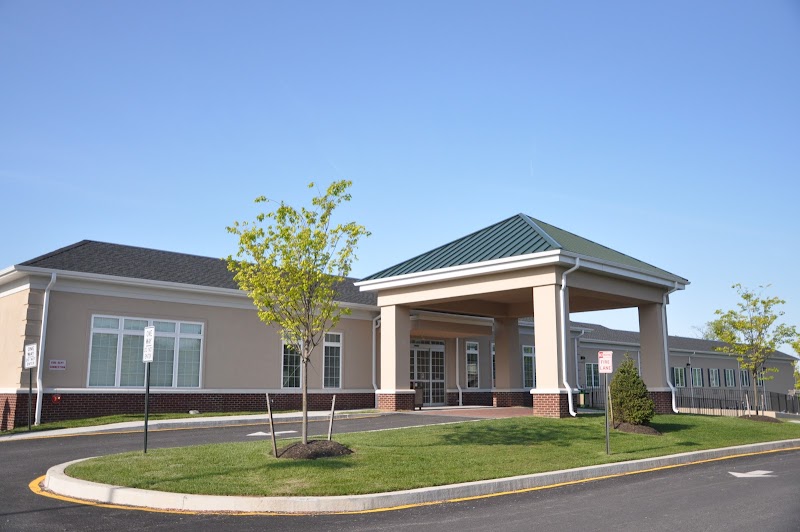
How is Cadia Rehabilitation Pike Creek Staffed?

CMS rates CADIA REHABILITATION PIKE CREEK's staffing level at 1 out of 5 stars, which is much below average compared to other nursing homes. Staff turnover is 51%, compared to the Delaware average of 46%. RN turnover specifically is 63%, which is notably high. RNs provide skilled clinical oversight, so turnover in this role can affect medical care quality.

What Have Inspectors Found at Cadia Rehabilitation Pike Creek?

State health inspectors documented 53 deficiencies at CADIA REHABILITATION PIKE CREEK during 2019 to 2025. These included: 4 Immediate Jeopardy (the most serious level, indicating potential for serious harm or death), 2 that caused actual resident harm, and 47 with potential for harm. Immediate Jeopardy findings are rare and represent the most serious regulatory concerns. They require immediate corrective action.
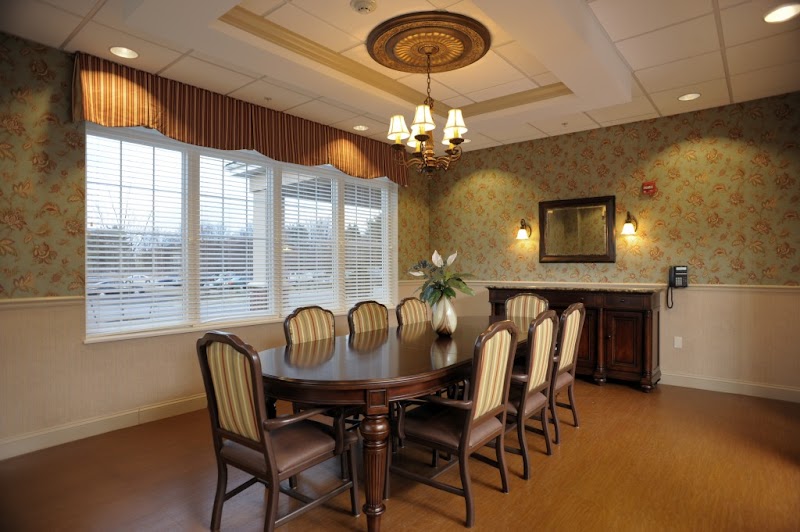
Who Owns and Operates Cadia Rehabilitation Pike Creek?

CADIA REHABILITATION PIKE CREEK is owned by a for-profit company. For-profit facilities operate as businesses with obligations to shareholders or private owners. The facility is operated by CADIA HEALTHCARE, a chain that manages multiple nursing homes. With 177 certified beds and approximately 144 residents (about 81% occupancy), it is a mid-sized facility located in WILMINGTON, Delaware.

How Does Cadia Rehabilitation Pike Creek Compare to Other Delaware Nursing Homes?

Compared to the 100 nursing homes in Delaware, CADIA REHABILITATION PIKE CREEK's overall rating (2 stars) is below the state average of 3.3, staff turnover (51%) is near the state average of 46%, and health inspection rating (2 stars) is below the national benchmark.

What Should Families Ask When Visiting Cadia Rehabilitation Pike Creek?

Based on this facility's data, families visiting should ask: "What changes have been made since the serious inspection findings, and how are you preventing similar issues?" "Can you walk me through typical staffing levels on day, evening, and night shifts?" "Can I visit during a mealtime to observe dining assistance and food quality?" "How do you handle medical emergencies, and what is your hospital transfer rate?" These questions are particularly relevant given the facility's Immediate Jeopardy citations and the below-average staffing rating.

Is Cadia Rehabilitation Pike Creek Safe?

Based on CMS inspection data, CADIA REHABILITATION PIKE CREEK has documented safety concerns. Inspectors have issued 4 Immediate Jeopardy citations (the most serious violation level indicating risk of serious injury or death). The facility has a 2-star overall rating and ranks #100 of 100 nursing homes in Delaware. Families considering this facility should ask detailed questions about what corrective actions have been taken since these incidents.

Do Nurses at Cadia Rehabilitation Pike Creek Stick Around?

CADIA REHABILITATION PIKE CREEK has a staff turnover rate of 51%, which is 5 percentage points above the Delaware average of 46%. Moderate turnover is common in nursing homes, but families should still ask about staff tenure and how the facility maintains care continuity when employees leave.

Was Cadia Rehabilitation Pike Creek Ever Fined?

CADIA REHABILITATION PIKE CREEK has been fined $181,151 across 4 penalty actions. This is 5.2x the Delaware average of $34,890. Fines at this level are uncommon and typically indicate a pattern of serious deficiencies, repeated violations, or failure to correct problems promptly. CMS reserves penalties of this magnitude for facilities that pose significant, documented risk to resident health or safety. Families should request specific documentation of what issues led to these fines and what systemic changes have been implemented.

Is Cadia Rehabilitation Pike Creek on Any Federal Watch List?

CADIA REHABILITATION PIKE CREEK is not on any federal watch list. The most significant is the Special Focus Facility (SFF) program, which identifies the bottom 1% of nursing homes nationally based on persistent, serious quality problems. Not being on this list means the facility has avoided the pattern of deficiencies that triggers enhanced federal oversight. This is a positive indicator, though families should still review the facility's inspection history directly.