ASCENSION LIVING CARROLL MANOR
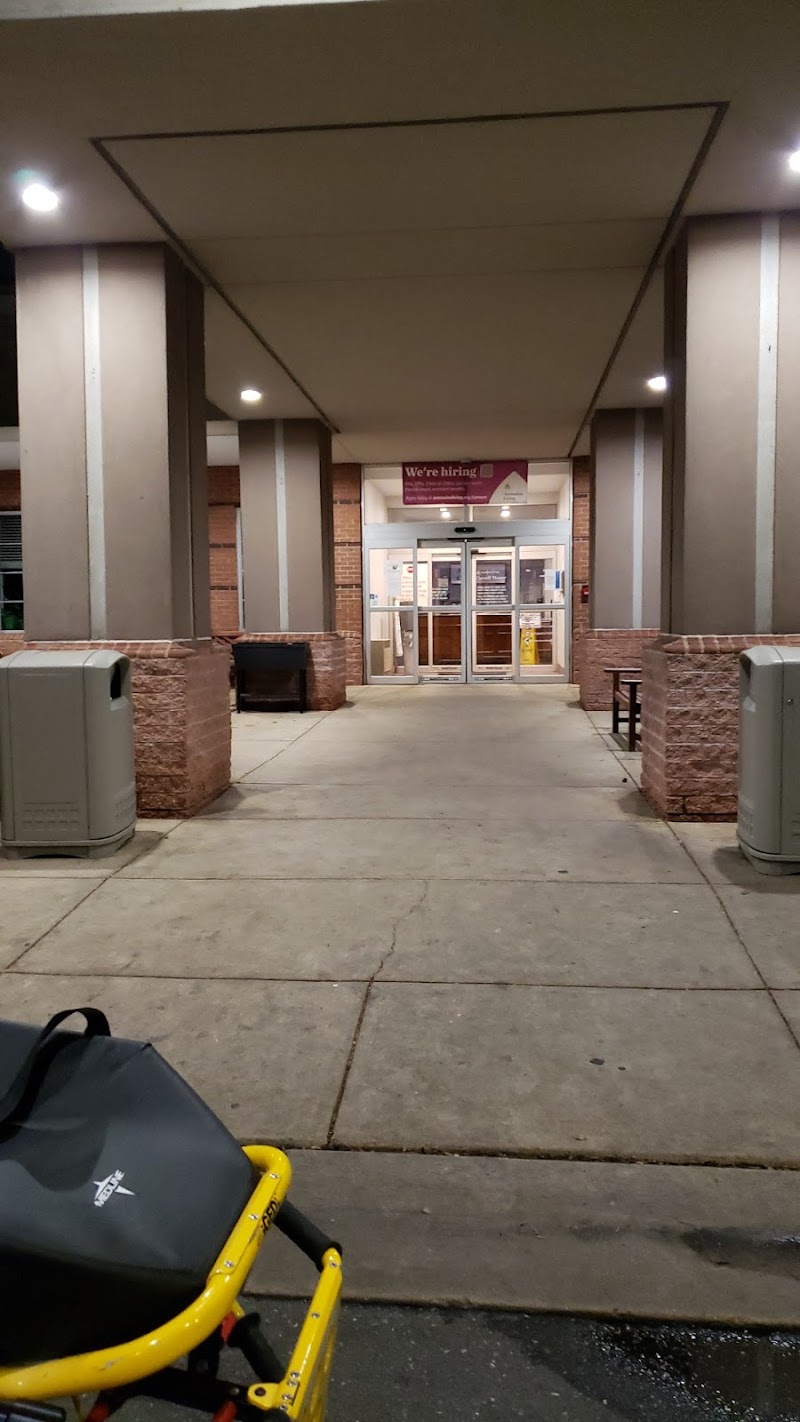
725 BUCHANAN ST., NE, WASHINGTON, DC 20017 (202) 854-7100
Non profit - Corporation 252 Beds ASCENSION LIVING Data: November 2025 1 Immediate Jeopardy citation
Trust Grade
36/100
#7 of 17 in DC
Last Inspection: September 2024

Within standard 12-15 month inspection cycle. Federal law requires annual inspections.

Overview

Ascension Living Carroll Manor has received a Trust Grade of F, indicating significant concerns about the quality of care provided. They rank #7 out of 17 facilities in Washington, D.C., placing them in the top half, but this does not negate the serious issues they face. The facility's performance is worsening, with the number of reported issues increasing from 11 in 2023 to 24 in 2024. While staffing is a strength, boasting a 5/5 star rating with a low turnover rate of 14%, there are concerning deficiencies in RN coverage, with less RN support than 80% of other facilities in the area. Specific incidents of concern include a resident who fell and suffered a serious injury due to inadequate supervision and another who eloped from the facility, highlighting potential safety risks. Overall, families should weigh these strengths and weaknesses carefully when considering this nursing home.

Trust Score
F
36/100
In District of Columbia
#7/17
Top 41%
Safety Record
High Risk
Review needed
Inspections
Getting Worse
11 → 24 violations
Staff Stability
✓ Good
14% annual turnover. Excellent stability, 34 points below District of Columbia's 48% average. Staff who stay learn residents' needs.
Penalties
⚠ Watch
$16,801 in fines. Higher than 76% of District of Columbia facilities, suggesting repeated compliance issues.
Skilled Nurses
✓ Good
Each resident gets 57 minutes of Registered Nurse (RN) attention daily — more than average for District of Columbia. RNs are trained to catch health problems early.
Violations
⚠ Watch
63 deficiencies on record. Higher than average. Multiple issues found across inspections.
★★★☆☆
3.0
Overall Rating
★★★★★
5.0
Staff Levels
★★★★☆
4.0
Care Quality
★★☆☆☆
2.0
Inspection Score
Stable
2023: 11 issues
2024: 24 issues

The Good

  • 5-Star Staffing Rating · Excellent nurse staffing levels
  • 4-Star Quality Measures · Strong clinical quality outcomes
  • Low Staff Turnover (14%) · Staff stability means consistent care
  • Full Sprinkler Coverage · Fire safety systems throughout facility
  • No fines on record
  • Staff turnover is low (14%)

    34 points below District of Columbia average of 48%

Facility shows strength in staffing levels, quality measures, staff retention, fire safety.

The Bad

3-Star Overall Rating

Near District of Columbia average (3.2)

Meets federal standards, typical of most facilities

Federal Fines: $16,801

Below median ($33,413)

Minor penalties assessed

Chain: ASCENSION LIVING

Part of a multi-facility chain

Ask about local staffing decisions and management

The Ugly 63 deficiencies on record

1 life-threatening 3 actual harm
Sept 2024 24 deficiencies 1 IJ
CRITICAL (J) 📢 Someone Reported This

A family member, employee, or ombudsman was alarmed enough to file a formal complaint

Immediate Jeopardy (IJ) - the most serious Medicare violation

Accident Prevention (Tag F0689)

Someone could have died · This affected 1 resident

**NOTE- TERMS IN BRACKETS HAVE BEEN EDITED TO PROTECT CONFIDENTIALITY** Based on observation, record review, video footage, staff interviews, and the resident's interview, for two (2) of 50 sampled re...

Read full inspector narrative →
**NOTE- TERMS IN BRACKETS HAVE BEEN EDITED TO PROTECT CONFIDENTIALITY** Based on observation, record review, video footage, staff interviews, and the resident's interview, for two (2) of 50 sampled residents, the facility staff failed to: adequately supervise Resident #165 while the resident sat in the nurse's station on the evening of 06/28/24. Subsequently, the resident eloped through the loading dock door in the facility's basement. On 06/29/24, the police located the resident near a police station (approximately 5.1 miles from the facility). After being evaluated at a hospital, the resident returned to the facility that same day; and (2) ensure Resident #48 was adequately supervised while wearing facility-provided oversize non-skid socks. Subsequently, the resident had a fall with injury (occipital hematoma) on 09/02/24 (Resident #165 and #48). These failures resulted in an immediate jeopardy situation. The immediate jeopardy was identified on September 25, 2024, at 11:50 AM. The facility provided a plan of action to address the immediacy on September 25, 2024 at 5:29 PM and it was accepted. After the plan was verified the IJ was removed on September 25, 2024, at 5:45 PM while the survey team was onsite. After the removal of immediacy, the deficient practice remained due to actual harm, with the scope and severity of G. The findings included: The facility's assessment dated 12/23 documented in part, Management of Health and Behavior- manage the medical conditions and medical-related issues causing .behaviors. Provide care for residents with exit-seeking behavior and/or memory care needs. Provide person-centered/directed care: Psycho/social/spiritual support - identify hazards and risks for residents .prevent abuse/neglect . A review of the Missing Resident (Code Yellow) policy with an approval date of 01/24 documented in part, It is the policy of Ascension's Living to provide a safe and secure environment for all residents. In the event of a resident elopement, policies and procedure will be implemented immediately to locate the resident .The designated code color for a Resident Elopement is YELLOW. When an Elopement Code Yellow is announces, associates will follow the elopement procedure .Charge nurse at the location of the missing person make a determination if the resident is missing (verify resident is not signed out), contact Elopement Commander (Nursing Supervisor) to notify of resident elopement, contact receptionist to announce Elopement Code Yellow. Elopement Commander upon notification form charge nurse will assign search assignments including description and photo of missing resident .if resident is not found in 10 minutes, contact Administrator and Director of Nursing, if resident is not found within 15 minutes contact local police, complete Elopement Drill check list . The Elopement Prevention policy with a review date of 05/24 documented in part, Ascension Living follows processes designed to minimize the risk of harm to the residents living in our community, including risks associated with elopement . Evaluate each resident for degree of elopement risk . on admission [and] approximately 7 days after admission . Resident #165 was admitted to the facility on [DATE] with multiple diagnoses to include Major Depression, Syncope, and Disorientation. A nursing progress note dated 05/07/14 at 3:25 PM documented, Writer received resident at 2:15 PM, in no acute distress. Resident .admitted to [hospital's name] for fall. CT (computer tomography) shows subdural hematoma, and she has a right arm cast. She has a foley cath [catheter] .will continue to monitor. An Elopement Screening and Evaluation dated 05/07/24 documented, Resident is not an elopement risk. An Activity of Daily Living/Functioning/Rehab Potential Care plan dated 05/07/24 documented in part, [Resident #165] needs assistance with daily ADL care. Interventions-mobility need to assistance with 1 person staff support, uses a wheelchair assistive device . A comprehensive admission nursing progress note dated 05/08/24 at 8:16 AM documented in part, Resident .admitted from [hospital's name]. [Resident #165's] diagnosis includes Syncopal Episode, Head Injury, Traumatic Subdural Hemorrhage, Altered Mental Status, and Olecranon Fracture . Resident went to ER after being found down [fall] by neighbors .Resident is alert and oriented to person but confused and impulsive. Resident denied pain, no distress, no discomfort noted .Resident was able to ambulate, AROM (active range of motion) in all four extremities . An admission Minimum Data Set assessment dated [DATE] documented in part that resident had a Brief Interview for Mental Status summary score of 3 indicating that the resident's cognitive status was severly impaired. The resident was also coded for requiring assistance from staff, with acitivities of daily living, and supervision with walking and transferring from chair to bed. Progress notes from 05/09/24 to 06/27/24 lacked documented evidence of staff noting elopement attempts or elopement concerns for Resident #165. An observation of the facility's surveillance camera footage dated 06/28/24 at 6:02 PM showed [Resident #165] walk out the loading dock door on the ground level of the facility without staff supervision. The resident was wearing long blue pants, gray shirt, black long sleeve jacket with hood, and flat black slip-on shoes with white socks. The resident was also noted to have multiple papers in hand including a red folder. At 6:05 PM the resident walked pass the glass front door of the building where the security guard [Employee #20] was stationed. At 6:06 PM the video showed the resident walking toward the parking lot. There was no further footage of the resident after walking into the parking lot. It should be noted at the time of this incident the facility's had one security office on duty on evening shift (3 PM - 11PM). Review of the Elopement Response Record (Checklist) dated 06/28/24 at 9:47 PM documented in part, Resident declared missing at 9:45 PM, Time code (Yellow) was initiated 9:47 PM, Time associates arrived for search assignments 9:49 PM .Resident #165 was located on 06/29/24 . It was noted that the Checklist, however, lacked documented evidence of documentation the resident's description, when and where the resident last was seen, who led the search team, when the administrator, physician, family, police, and DC Health were notified, and where and at what time the resident was located after the elopement. Per World Weather, the following temperatures were listed for 06/28/24. Morning - 59 degrees Day - 86 degrees Evening - 91 degrees Night - 79 degrees https://world-weather.info/forecast/usa/[NAME]/28-june/ A security log dated 06/28/24 documented in part, (Friday) evening shift (3PM-11PM) .9:40 PM Code Yellow (missing resident) called .night shift (11 PM- 7AM) .11:22 PM-both old and new Administrator on site searching for missing resident. 11:33 PM-Nursing supervisor gone out into neighborhood in search of missing resident .and family member on site. 12:35 AM- called 911 (3rd time) waiting for response .1:11 AM-Metropolitan police responded . A security guard incident report dated 06/28/24 documented in part, On my arrival for nightshift .11PM-7AM. I was told that [Resident #165] was missing. Family member and Administrator were all present where all present in search of [Resident #165] for hours till no avail. Police on site .was on site at 1:11 AM .till morning in search of the missing resident. [Surveillance] camera footage showed [Resident #165] making her way through the G (ground0 level back [dock] door . A State Survey Agency Facility Report Incident form (DC~12936) dated 06/29/24 at 3:43 AM documented in part, Writer was informed by one of the nurses on the floor at about 9:44 PM [Resident #165] was not on the floor. According to the assigned nurse [Employee #15, LPN] she saw the resident around dinner time [5:30 PM-6PM] sitting in a chair arranging papers .At 9:47 PM .code yellow (missing resident) was called . all staff searched [residents]rooms .stairwells .outside parameter of the building, and metro station. Security identified [Resident #165] on camera leaving the building via the loading duck [dock] in the basement .At 10:02 PM 911 called . A unit manager nursing note dated 06/29/24 at 4:27 AM documented in part, Writer informed by one nurse on floor at about 9:44 PM that the resident [Resident #165] was not on the floor. At 9:45 PM all units were searched. At 9:47 PM code yellow (missing resident) called. At 9:48 PM Director of Nursing and Assistant Director of Nursing notified. Security identified the resident on camera leaving the building via the loading doc [dock]. Administrator, RP (resident representative), and police notified . A nursing note dated 06/29/24 at 3:55 PM documented in part, Resident was located and ADMIN (Administrator) notified at 2:54 PM, on 06/29/24, [doctor's name] was notified . A nursing note dated 06/29/24 at 11:12 PM documented in part, [Resident #165] returned to the facility from ED at [hospital's name] . accompanied by [responsible party] . resident seen for evaluation .discharge [diagnosis] listed as sever dementia without behavioral disturbance and unspecified dementia .no new medication orders [or] treatment recommendation given .Resident transferred to [secure unit] Resident alert and oriented to person, cooperative, pleasant but confused . Resident was asked where has she been, resident did not respond .head to toe assessment was done .vital signs 97.1, 86, 20, 164/92, oxygen saturation rate 98%. On room air . A hospital Discharge summary dated [DATE] at 7:42 PM documented in part, .presenting for medical evaluation in the setting of leaving her nursing home. Patient has no complaints at this time. Patient exam appears to be at baseline per her mental status and patient vital signs are within normal limits. Given the fact the the patient was outsident for 24 hours in the heat and walking, will make sure patient does not have any kidney issues or other complaints Patient is medically cleared to go back to nursing home . Clinical Impression- Severe Dementia without behavioral disturbance .[and] Unspecified Dementia . A review of the facility's investigative packet dated 06/29/24 revealed written Incident Witness Statement forms statements from all staff who worked the 3-11 PM shift on the unit Resident #165 eloped. Also, noted was Metropolitan Police Department Missing Person Report dated 06/29/24 at 3:33 AM documented in part, Event start date 06/28/26 at 6 PM [and] Event end date 06/29/24 at 3:32 AM . On the listed date and time officers responded to 725 [NAME] Street NE in reference to a missing person. On arrival contact was made with [reporting person] who stated at approximately 1800 [6 PM] hours [Resident #165] walked out the loading dock doors and through the parking lot leaving the facility. [Reporting person] stated that [Resident #165] had Dementia and is not free to leave the facility .due to diagnosis . surveillance video reviewed .Located .missing person [Resident #165] was located at 7th & Indiana Avenue .[Resident #165] was transported by ambulance to [hospital's name] .[Detective's name] advised reporting person and power of attorney that [Resident #165] was located .This case is closed with the location of the missing person . On 08/26/24 an observation revealed that nurse's station was approximately 50 feet away from the elevator on the unit Resident #165 resided on prior to the elopement incident on 06/28/24. It was also noted that no code was needed to access the elevator. Access to the steps, however, required entering a code. From 08/26/24 to 09/05/24, multiple observations showed the resident in the secure Memory Care unit independently walking around the unit. Resident #165 was alert and oriented to name only, but could not provide information about the elopement incident. From 09/05/24 to 09/13/24, two security guards and one receptionist were observed at the desk in the lobby. The observation also revealed that one of the two security guards was sitting in front of a monitor showing multiple views of the facility, including the lower-level hallway and loading dock door. Additionally, a security guard was stationed on the lower level in front of the loading dock doors monitoring everyone entering and exiting. During the face-to-face interview conducted on 09/05/24 at 12 PM, Employee #15 (assigned LPN) reported that the resident was sitting at the nurse's station working on papers at the time of her initial rounds at 4 PM. When she saw the resident again between 5:30 and 6 PM, the resident was still sitting at the nurse's station. After she administered medications, completed documentation, and monitored residents on the west wing around 8 PM - 9 PM, the employee was unable to locate the resident. She then immediately notified the supervisor and other employees on the floor that the resident was missing after the assigned CNA (Employee #21) could not provide the resident's location. A code yellow (missing resident) was announced over the loudspeaker and staff members (on unit and other units) began searching the facility, outside the facility, and around the neighborhood for Resident #165. Police checked the camera and saw that the resident left through the loading dock door. Additionally, she said it was her first time working with the resident, and there was no indication the resident might elope. During a face-to-face interview on 09/05/24 at approximately 3:00 PM, Employee #1 (Administrator) explained that at the time of the incident, she acted as interim administrator and assisted the previous administrator in search of the missing resident. After being found by the police the following day (06/29/24) the resident was taken to the ER for evaluation. Immediately following their elopement, a security guard was stationed at the loading dock doors 24 hours a day. Several elopement drills were conducted. Staff members were also re-educated on elopement risks and drills. When the resident returned to the facility, she was transferred to a secure memory care unit. A security system for elevators is being considered as an additional security measure at the facility. During a face-to-face interview on 09/05/24 at 3:32 PM, Employee #21 (CNA) reported that Resident #165 was sitting at the nurse's station around 5:30 PM when he gave her the dinner tray. After dinner, the resident remained at the nursing station when he picked up the tray. Despite not being able to remember exactly when he picked up the dinner tray, the employee indicated that the resident was at the nurse's station with two licensed nurses at the time. At around 9 PM, the employee looked for the resident to provide care to prepare for bed. At that same time, the assigned nurse asked him where the resident was located. When they couldn't find the resident, they informed other staff on the floor and the supervisor. A code yellow was called, and staff searched the facility, outside, and in the neighborhood, but were not able to locate the resident. He was told that security saw on the video footage that the resident left the facility through the loading dock doors. Additionally, the employee stated that the resident was recently admitted , and never attempted elopement before. During a face-to-face interview on 09/06/24 at 11:06 AM, Employee #20 (Security Officer) stated that the facility had only one security guard on the evening shift before Resident #165 eloped on 06/28/24. She was informed by a nurse that Resident #165 was missing. Her response was to announce a code yellow over the loudspeaker and contact her supervisor. As soon as her supervisor arrived, she received instructions on how to access the facility's cameras. In viewing the footage, they discovered that the resident exited the building around 6 PM on 06/28/24 through the loading dock doors. Before seeing the video footage with her supervisor, she did not see the resident leaving on the monitor. It was explained by her that she could not always look at the monitor because she was busy writing in the log, helping people sign in at the kiosk, providing masks, and locking the loading dock doors at 8 p.m. Around the same time, another resident also went to the hospital on that same evening. In response to the question of whether she saw the resident walk past the glass front door where she was stationed, she replied, No. During a face-to-face interview on 09/06/24 at 1:12 PM, Employee #23 (RN/Unit Manager) stated that the supervisor called her to inform her that Resident #165 was missing. At the time of her arrival, the police and the resident's family were inside the building. She and other employees searched the neighborhood and metro station, but were unable to locate the resident. The police searched the resident's old neighborhood but were unable to locate her. He was reported to have gotten on a bus by a city bus driver. On 6/29/24, police found the resident near the Indiana Avenue police station. After being evaluated at the hospital, the resident returned to the facility and was transferred to a secured unit. The employee also noted that the resident had not previously been at risk of elopement Based on these findings, on September 25, 2024, at 11:50 AM, an Immediate Jeopardy (IJ)-J situation was identified. On September 25, 2024, at 5:29 PM, the facility's Administrator provided a corrective action plan to the State Agency Survey Team that was accepted. The plan included: - Resident #165 was identified as missing from the unit on 6/28/24 at 2143pm. - Search of resident was initiated, code yellow called, and elopement process initiated. - Resident was located on 6/29/24 by the DC police and transported to Hospital for evaluation with no findings and treated/released back to the facility on 6/29/24. At 1454 The Executive Director was notified by the Detective that Resident #165 was located on South Indiana; at 2030 Resident #165 returned to [NAME] Manor with no evidence of injury or illness and no new orders and was readmitted to a secure unit with a wanderguard and care plan was also updated on 6/30/24. -On 6/29/24 a complete audit for all residents was completed to ensure all other residents were accounted for and all other residents were identified to be safe within the community. -All residents residing in the community were re-assessed for elopement risk with appropriate interventions and care plans were reviewed and updates made as needed. -All residents had a new Cognition/BIMS assessment completed to confirm current cognitive status. -All resident charts were audited to confirm there is a photo of all residents in the charts. -Other residents residing in the community as of 6/28/24 who do not reside in the secured unit, scored low as an elopement risk, have low cognitive status and the ability to be mobile independently (walking or by w/c) have the potential to be affected. -All doors exiting from a unit were audited to confirm alarms function properly when opened. -Wanderguard system was audited at all secured doors to ensure functioning 1 of 2 -All residents with a wanderguard bracelet had the bracelet checked to confirm functioning, order is in place, care plan is up to date with elopement risk/interventions. - Elopement binder was audited and confirmed it is up to date and available at all times on the receptionist shelf in the lobby on 6/29/2024. - An elopement binder was created and placed at each unit at the nurse's station 6/29/24. -An elopement drill was completed on all three shifts on 6/29/2024. -The dock door that was identified as the resident BH site of exit will be monitored 24/7 by the security company until an alarm can be placed on the door by the alarm company starting 6/29/24. On 9/9/24 a third security guard was added for on-going facility monitoring. -AdHoc QAPI meeting held by the interdisciplinary team on 6/29/2024 to determine root cause of resident's ability to exit community and this plan of correction was developed and implemented. -Medical Director was notified by the charge nurse on 6/28/2024 and is in agreement with this plan of correction. -Staff was re-educated by the Executive Director or designee on 6/29/24 and during their next shift on Elopement Prevention and Missing Resident/Elopement Response, and how to complete the elopement risk assessment to account for cognition/wandering. -The policy and procedure Elopement Prevention has been reviewed by the IDT on 6/29/2024 and has been updated to Policy: Elopement and Wandering Residents. -The IDT has been re-educated by Asst. Director of Nursing to evaluate residents and update care plans upon resident improvements in condition 9/25/24. Completion Date: 9/25/24 2. Resident #48 was admitted to the facility on [DATE], with multiple diagnoses including Repeated Falls, Orthostatic Hypotension, Syncope, Collapse, Generalized Weakness and Difficulty in Walking. An admission Minimum Data Set assessment dated [DATE] documented, the resident was coded section C Cognitive Patterns as having a BIMS score of 14 (Cognitive intact), Section GG Functional Abilities and Goals as requiring Supervision or touching assistance for Self-care: putting on/taking off foot wear (the ability to put on and take off socks and shoes or other foot wear that is appropriate for safe mobility including fasteners, if applicable), for Mobility: roll left to right (The ability to roll from lying on back to left and right side, and return to lying on back on the bed), for Sit to lying (The ability to move from sitting on side of bed to lying flat on bed), for Lying to sitting on side of bed (The ability to move from lying on the back to sitting on the side of the bed and with no back support), for Sit to stand (The ability to come to a standing position from sitting in a chair, wheelchair, or on the side of the bed), for Chair/bed-to-chair transfer (The ability to transfer to and from a bed to a chair (or wheelchair), for Toilet Transfer (the ability to get on and off a toilet or commode), and for Walk 10 feet (Once standing, the ability to walk at least 10 feet in a room, corridor, or similar space). Section J Health Conditions J1700 (Fall history on admission/ Entry or Reentry) Did the resident have a fall any time in the last month prior to admission/entry or reentry was coded as having one (1) fall . A State Survey Agency Facility Reported Injury Intake Form dated at 09/02/24 at 7:41 PM showed Writer was informed by the assigned charge nurse that the resident had a fall. Upon entering into the resident's room with her permission, she was observed kneeling on the floor on her right knee next to the recliner chair in her room. Per the given report she heard and responded to the call for help that was coming from the resident's room and then found her on the floor in the position which I met her. ROM [range of motion] was done to all extremities with no difficulties and resident was then assisted off the kneeling position into her bed for head-to-toe assessment. Resident is alert, oriented and verbally, responsive with no changes noted to her mentation compared to his baseline and very impulsive with constant redirection /reminder to be calm. Pupil equal and reactive to light. Resident did not remember hitting her head on any object. however, there is a raised, soft and slightly tender area in the mid of her head. She was able to move all extremities with no difficulties. Resident c/o pain that is 5/10 to her left hip, area assessed, no swelling, no discoloration, and no external/ internal rotation noted to her lower extremities. She was not able to stand and bear full weight on the left leg neither was she able to ambulate even with her walker. She stated that prior to the fall, she was arranging the flowers on her dresser along with the stacking her food container on her dresser when she lost her balance and fell. She stated further that the fall was probably due to the oversized nonskid socks that she has on. Resident confirmed that she didn't initiate her call light prior to or after falling. Resident room was noted to be cluttered free, the floor was dry and her [NAME] . immediately initiated, ice pack applied to the swollen area on her head and a new pair of medium size nonskid socks was given to the resident. She was also, re-educated/re oriented to the use of call light after encouraging her to always use her call light to call for assistance. On call was notified of the fall along with the resident's initial VS [vital signs] . on room air . new order given to transfer resident via 911 to the nearest ER [emergency room]. Resident and RR [respiratory rate] were updated accordingly. Resident 's Dx [diagnoses]. includes but not limited to Generalized osteoarthritis, HTN [hypertension], DM [diabetes mellitus], Repeated falls, Orthostatic hypotension, Syncope and collapse, generalized weakness and difficulty walking. 911 was called, arrived on the unit and verbal report given along with all the necessary documents (copy of H&P [history and physical], careplan, medication list, recent labs, bed hold policy etc.) 911 left with the resident via stretcher after reassessing the resident to [Hospital name] and her RR was updated accordingly. Review of F/U [follow up] report that was submitted to the state agency on 9/3/2024 7:12AM showed S/p [status /post] Fall: Resident returned from [hospital name] ER to facility at 12:45Am via Stretcher accompanied by 2 ambulance crew, with order to apply ice on the affected area, leave the ice on for 20 minutes, 2-3 times a day for the first couple of days. (slightly raised area in the mid of her head). Assessed resident denies pain and discomfort at this time. VS . Follow up with ER spoke with RN stated CT [computed tomography] scan was done, result revealed Hematoma, no mass, no lesion, Result was not sent with the resident. Resident was made comfortable in bed stable, will continue with plan of care. A nursing progress note dated 09/03/24 at 4:28PM documented in part, F/U [follow up] Resident alert and oriented to name, place and time s/p [status post] fall of 09/02/24 and ER visit. Resident assessed and she verbalized pain to the left hip and the pain has improved as compared to yesterday . assessment done, swollen to the back of the head measuring 4cmx4cm subsided. All over sized nonskid socks were removed and appropriate nonskid socks given currently wearing them Resident did not used call light prior to the fall of 09/02/24 and were reoriented and educated to use the call light at all times. Resident verbalized understanding. The call light placed within her reach. ICE applied the swollen to the back of the head as ordered by MD [physician]. Tylenol 500mg is also administered for pain with good effect. Fall interventions: (1) PT [physical therapy] /OT [occupational therapy] screen/p fall' (2) Offer and assist resident to put on nonskid socks that are medium in size at all times. (3) Reorient /re-educate on the importance of using call light to request for assistance (4) Apply ice to the hematoma at the back of the head three times a day for 5 mins each time. A Root Cause Determination Report dated 09/03/24 document . [resident] had a fall 09/02/24 because she was wearing oversized pair socks, her BIMS score 14, the team met, and the plan of care are as follows: (1) room search was done to remove any oversized socks, but none were found. (2) The resident was encouraged to call for assistance as needed. (3) Staff will offer and assist the resident to put on appropriate size sock /footwear. A care plan with an initiation date of 09/03/24 documented, Problem: [Resident name] had a fall with hematoma to the medial head on 09/02/24. Goal: Offer and assist [resident name] to put on non-skid socks that are medium in size at all times. During a face-to-face interview on 09/06/24 at 10 AM , Resident#48 stated, I should have called for assistance but I did not and the socks I had on did not help. During a face-to-face interview on 09/08/24 at 11 AM, Employee #17 [RN/Unit Manager] acknowledged the finding. The evidence showed that facility staff did not have adequate supervision including monitoring the residents who needed supervision or touching assistance and the use of appropriate footwear to prevent accidents. Subsequently, the resident was observed kneeling on the floor on her right knee next to the recliner chair in her room and the bed wearing oversized nonskid socks. CT scan result showed she sustained a Hematoma measuring 4cmx4cm at the back of the head. There was no witness to Resident #48 falling. Cross Refrerence DCMR Title 22B sect. 3211.1d
CONCERN (D) 📢 Someone Reported This

A family member, employee, or ombudsman was alarmed enough to file a formal complaint

Potential for Harm - no one hurt, but risky conditions existed

Notification of Changes (Tag F0580)

Could have caused harm · This affected 1 resident

**NOTE- TERMS IN BRACKETS HAVE BEEN EDITED TO PROTECT CONFIDENTIALITY** Based on record review, and resident and staff interviews for one (1) of 50 sampled residents, the facility staff failed to noti...

Read full inspector narrative →
**NOTE- TERMS IN BRACKETS HAVE BEEN EDITED TO PROTECT CONFIDENTIALITY** Based on record review, and resident and staff interviews for one (1) of 50 sampled residents, the facility staff failed to notify a resident's physician of the need to start treatment for a resident rash with newly opened lesions. Resident #19. The findings included: Resident #19 was admitted to the facility on [DATE] with diagnoses that included: Congestive Heart Failure, Chronic Atrial Fibrillation, Unilateral Primary Generalized Osteoarthritis, Lymphedema, Presence of Automatic Implantable Cardiac Defibrillator, Diabetes Mellitus, and Difficulty in Walking. An observation on 08/27/24 at 01:33 PM showed Resident #19 lying on his back in bed. The bed linen was pulled up to the resident ' s chest with his upper extremities exposed. A rash with clusters of dry, intact blackhead pimples/lesions was on the resident's outer left upper extremity. During a face-to-face interview on 08/27/24 at 01:33 PM, the resident stated that a rash was also on his outer right thigh. He added that the rashes had been on his arm and thigh for months, but the facility had not treated it. He stated that he had to constantly remind himself not to scratch his skin because the rashes itch. A second observation by the surveyor and Employee # 26 (Licensed Practical Nurse(LPN/Resident #19's assigned nurse), showed the resident lying on his back in bed with the bed linens pulled up to his chest. The resident ' s upper extremities were exposed. The assigned nurse and the surveyor observed a rash on the resident ' s outer left upper extremity, that had clusters of blackhead lesions/pimples. Two of the lesions had bloody pinpoint openings that exposed the skin underneath. A review of Resident #19 ' s medical record revealed the following: A care plan initiated on 05/31/22 documented, (Problem): [First Name of Resident #19] is at risk for pressure ulcers and other skin-related injuries; (Goal): [First Name of Resident #19] will maintain skin integrity without new skin related injuries over the next review period. Goal Date: 10/31/24 .; (Actions/Interventions): Observe for skin redness and breakdown during routine care . A physician ' s order dated 10/06/22 directed, Weekly skin check on Thursdays 7-3 shift (document results in skin & wound module – Every week on Thursdays day shift, for skin monitoring. A review of Resident #19 ' s Weekly Skin Evaluation forms from 06/11/24 to 09/05/24 documented the following: 06/11/24 - General skin check completed – No existing issues . 06/21/24 General skin check completed – No new issues . 06/28/24 - General skin check completed – No new issues . 07/05/24 - General skin check completed – No new issues . 07/12/24 - General skin check completed – No new issue . 07/26/24 - General skin check completed – No new issue . 08/01/24 - General skin check completed – No new issue . 08/08/24 - General skin check completed – No new issue . 08/12/24 - General skin check completed – No new issue . 08/15/24 - General skin check completed – No new issue . Of note, there was no documented evidence that the weekly skin assessments included the rash on the resident ' s upper left extremity or the rash on the resident ' s right thigh. In addition, there was no documented evidence that skin assessments were completed for the resident on 08/22/24 and 08/29/24. During a face-to-face interview on 09/05/24 at 12:01 PM, Employee #27 stated that skin assessments are done weekly and as needed if there is a new concern with the resident ' s skin. The Employee stated that she had been the nurse assigned to Resident #19 over the past month and had been responsible for completing the weekly skin assessments. When asked how she assessed the resident ' s skin, she stated that she looks at the resident ' s skin for any discoloration, new or opened areas on the skin, or, pressure ulcers, and documents in the resident ' s skin assessments. When asked if she was aware of the rashes on Resident # 19 ' s left arm and right thigh, she stated that the resident had them for a long time, and she did not include the rash(es) on the skin assessment because they were not new. During a face-to-face interview on 09/05/24 at 12:07 PM with Employee #28,(5th Floor Unit Manager/, Registered Nurse), she acknowledged that the nurse should have documented the rashes to the resident ' s left arm and right thigh on the weekly skin assessments. She added, that the nurse should have also contacted the physician to see if any further treatment was needed since the resident complained that the rash was itching, and the pimples/lesions of the rash had started to open.
CONCERN (D) 📢 Someone Reported This

A family member, employee, or ombudsman was alarmed enough to file a formal complaint

Potential for Harm - no one hurt, but risky conditions existed

Abuse Prevention Policies (Tag F0607)

Could have caused harm · This affected 1 resident

**NOTE- TERMS IN BRACKETS HAVE BEEN EDITED TO PROTECT CONFIDENTIALITY** Based on observations, record reviews, and interview, the facility's staff failed to follow its Abuse policy regarding notifying...

Read full inspector narrative →
**NOTE- TERMS IN BRACKETS HAVE BEEN EDITED TO PROTECT CONFIDENTIALITY** Based on observations, record reviews, and interview, the facility's staff failed to follow its Abuse policy regarding notifying the State Survey Agency immediately but no later than two hours of learning of an incident of abuse or neglect. In addition, the facility's staff failed to evaluate the resident's elopement risk 7 days after admission as per its Elopement policy. Subsequently, the resident had an elopement incident on 06/28/24. The findings included: Resident #165 was admitted to the facility on [DATE] with multiple diagnoses to include Major Depression, Syncope, and Disorientation. 1.The Abuse Prevention policy with a revision date of 06/20 documented in part, Neglect-means the failure of the community, its employees or service providers to provide goods and services to a resident that are necessary to avoid physical harm, pain mental anguish or emotional distress .Investigation-the community will investigate and report any allegations of abuse [neglect] within timeframes as required by federal, state, and local requirements . A State Survey Agency Facility Report Incident form (DC~12936) dated 06/29/24 at 3:43 AM documented in part, Writer was informed by one of the nurses on the floor at about 9:44 PM [Resident #165] was not on the floor. According to the assigned nurse [Employee #15, LPN] she saw the resident around dinner time [5:30 PM-6PM] sitting in a chair arranging papers .At 9:47 PM .code yellow (missing resident) was called . all staff searched [residents]rooms .stairwells .outside parameter of the building, and metro station. Security identified [Resident #165] on camera leaving the building via the loading duck [dock] in the basement .At 10:02 PM 911 called . A nursing note dated 06/29/24 at 4:27 AM documented in part, Writer informed by one nurse on floor at about 9:44 PM that the resident [Resident #165] was not on the floor. At 9:45 PM all units were searched. At 9:47 PM code yellow (missing resident) called .Security identified the resident on camera leaving the building via the loading doc[dock] .police notified . A review of the facility's investigation packet showed a Department of Health Compliant/Incident Report form that included documentation of the events related to the incident of Resident#165 elopement from the facility. In addition, the form had a submission had a submission date of 06/29/24 at 3:43, which was approximately 6 hours after staff were aware of the incident. During a face-to-face interview on 09/06/24 at approximately 9:00 AM, Employee #1 (Administrator) stated that she did not have documented evidence that the previous administrator notified the State Survey Agency prior to 06/29/24 at 3:43 AM. 2. The Elopement Prevention policy with a review date of 05/24 documented in part, Ascension Living follows processes designed to minimize the risk of harm to the residents living in our community, including risks associated with elopement .Individual resident risk. Evaluate each resident for degree of elopement risk .admission, approximately 7 days after admission . An admission Elopement Risk Screening dated 05/07/24 documented, Resident is not an elopement risk. An admission Minimum Data Set assessment dated [DATE] documented in part that the resident had a Brief Interview for Mental Status summary score of 3 indicating the resident had a severe cognitive impairment. The resident was also coded for requiring partial staff assistance with ADLs, and staff supervision with walking. A nursing note dated 06/29/24 at 4:27 AM documented in part, Writer informed by one nurse on floor at about 9:44 PM that the resident [Resident #165] was not on the floor. At 9:45 PM all units were searched. At 9:47 PM code yellow (missing resident) called .Security identified the resident on camera leaving the building via the loading doc[dock] .police notified . During multiple observations from 08/25/24 to 09/06/24, the resident was observed walking independently in a locked unit. During a face-to-face interview on 09/09/24 at approximately 2 PM, the resident was oriented to her name only and could not recall the elopement incident. During a face-to-face interview on 09/06/24 at 12:08 PM, Employee #16 (RN/Staff Educator) stated staff should have conducted an Elopement Risk Screening 7 days after the resident's admission, as stated in the policy. Please cross reference 483.25 Quality of Care (F689)
CONCERN (D) 📢 Someone Reported This

A family member, employee, or ombudsman was alarmed enough to file a formal complaint

Potential for Harm - no one hurt, but risky conditions existed

Report Alleged Abuse (Tag F0609)

Could have caused harm · This affected 1 resident

**NOTE- TERMS IN BRACKETS HAVE BEEN EDITED TO PROTECT CONFIDENTIALITY** Based on record review and staff interview, the facility's staff failed to notify the State Survey Agency of the elopement (negl...

Read full inspector narrative →
**NOTE- TERMS IN BRACKETS HAVE BEEN EDITED TO PROTECT CONFIDENTIALITY** Based on record review and staff interview, the facility's staff failed to notify the State Survey Agency of the elopement (neglect) of a resident on 06/28/24 immediately or within two hours of the occurrence. As evidenced by a State Survey Agency Facility Reported Incident form (DC~12936) that documented notification occurred at 3:34 AM on 06/29/24 (6 hours after staff first learned of the incident). The findings included: The Abuse Prevention Policy with a revision date of 06/20 documented in part, Neglect-means the failure of the community, its employees or service providers to provide goods and services to a resident that are necessary to avoid physical harm, pain mental anguish or emotional distress .Investigation-the community will investigate and report any allegations of abuse [neglect] within timeframes as required by federal, state, and local requirements . Resident #165 was admitted to the facility on [DATE] with multiple diagnoses to include Major Depression, Syncope, and Disorientation. A State Survey Agency Facility Report Incident form (DC~12936) dated 06/29/24 at 3:43 AM documented in part, Writer was informed by one of the nurses on the floor at about 9:44 PM [Resident #165] was not on the floor. According to the assigned nurse [Employee #15, LPN] saw the resident around dinner time [5:30 PM-6PM] sitting in a chair arranging papers .At 9:47 PM .code yellow (missing resident) was called . all staff searched [residents]rooms .stairwells .outside parameter of the building, and metro station. Security identified [Resident #165] on camera leaving the building via the loading duck [dock] in the basement .At 10:02 PM 911 called . A nursing note dated 06/29/24 at 4:27 AM documented in part, Writer informed by one nurse on floor at about 9:44 PM that the resident [Resident #165] was not on the floor. At 9:45 PM all units were searched. At 9:47 PM code yellow (missing resident) called .Security identified the resident on camera leaving the building via the loading doc[dock] .police notified . A review of the facility's investigation packet showed a Department of Health Compliant/Incident Report form that included documentation of the events related to the incident of Resident#165 elopement from the facility. The form had a submission had a submission date of 06/29/24 at 3:43, which was approximately 6 hours after staff were aware of the incident. During a face-to-face interview on 09/06/24 at approximately 9:00 AM, Employee #1 (Administrator) stated that she did not have documented evidence that the previous administrator notified the State Survey Agency prior to 06/29/24 at 3:43 AM. Please cross reference 483.25 Quality of Care F689
CONCERN (D) 📢 Someone Reported This

A family member, employee, or ombudsman was alarmed enough to file a formal complaint

Potential for Harm - no one hurt, but risky conditions existed

Transfer Notice (Tag F0623)

Could have caused harm · This affected 1 resident

**NOTE- TERMS IN BRACKETS HAVE BEEN EDITED TO PROTECT CONFIDENTIALITY** Facility staff failed to provide written notification to a resident, her representative, or the Ombudsman of her transfer to the...

Read full inspector narrative →
**NOTE- TERMS IN BRACKETS HAVE BEEN EDITED TO PROTECT CONFIDENTIALITY** Facility staff failed to provide written notification to a resident, her representative, or the Ombudsman of her transfer to the hospital from the facility on five (5) different occasions from January to April 2024. Resident #64. 2.) Resident #64 was admitted to the facility on [DATE] with multiple diagnoses that included: Type 2 Diabetes with Ketoacidosis, Diabetic Neuropathy and Hyperglycemia. A review of Resident #64's medical record revealed: A nursing progress note dated 01/13/24 at 4:17 AM documented, FSBS (finger stick blood sugar) was reading 'HI' (high), and AMS (altered mental status), unresponsive and lethargic, she was transferred via (by) stretcher out of the unit to [Hospital name] at 0251 (2:51 AM). A nursing progress note dated 01/24/24 at 19:50 (7:50 PM) documented, resident blood Glucose finger stick done at 1630 (4:30 PM) was high reading was above 600mg/dl (milligram per deciliter), medicated as ordered, order to give 10 units of Humalog x 1 time. Repeat blood glucose level, it was still high above 600mg/dl. Resident was becoming more and more unresponsive, called [doctor's name] and got an order to transfer Resident to the nearest ER (emergency room) for evaluation. A telephone physician order dated 02/08/24 at 09:04 AM documented, Transfer resident to the nearest ER via (by) 9-1-1 to [Hospital name] for elevated blood sugar and change in mental status. A nursing progress noted dated 02/24/24 at 10:07 AM documented, Resident was observed at 7:30 am in bed unresponsive to verbal communication, restless, but look up when name was called. Resident is Diabetic. Resident blood sugar was checked right away, and the blood sugar machine read high, writer then give resident her routine am (morning) Insulin and her extra Insulin per order, blood sugar was checked again, and the blood sugar still read high. The covering doctor [doctor's name] was called, an order was obtained to transfer resident to the nearest ER for high blood sugar level and change in mental status. A nursing progress note dated 04/03/24 at 14:38 (2:38 PM) documented, observed resident restless pulling [off] her gown and biting the bed sheet. BS checked reading 'HI' Humalog 16 units and sliding scale 5 units of Humalog administered. BS checked in 15 minutes and remains 'HI'. [Nurse Practitioner's name] on the unit assessed resident, order obtained to transfer to the nearest ER to evaluate change in mental status/hyperglycemia. A Quarterly Minimum Data Set (MDS) assessment dated [DATE] documented: facility staff coded a Brief Interview for Mental Status (BIMS) summary score of '15,' indicating the resident was cognitively intact; Section I - Active Diagnoses that indicated the resident had an active Diagnosis of Diabetes Mellitus. It was noted that Resident #64 was transferred to the hospital a total of 5 times between January 13, 2024, and April 3, 2024, and there was no documented evidence that facility staff provided written notification to the resident, her representative, or the Ombudsman of her transfer to the hospital from the facility. During a face-to-face interview conducted on 09/11/24 at 3:55 PM Employee #1 (Administrator) acknowledged the findings and stated, I checked the record and we're not able to produce any of the notice of discharges for the resident. Based on record review and resident and staff interviews for one (1) of 50, the facility staff failed to provide written notification to a resident, their representative, or the Ombudsman of the reasons for the resident ' s discharge to the hospital on [DATE]. Resident #425. The findings included: 1.) Resident #425 was admitted to the facility on [DATE] with diagnoses that included: Metabolic Encephalopathy, Adult Failure to Thrive, Atrial Fibrillation, Diabetes Mellitus Type 2, and Chronic Kidney Disease. A review of Resident #425 ' s medical record revealed the following: A face sheet that showed that Resident #425 had a representative. A review of Resident # 425 ' s admission record showed that the Resident had no hospital admissions from 01/30/23 until 04/03/24. A physician's order dated 04/03/24 at 11:18 AM directed: Send pt (patient) to ED (Emergency Department) via 911 for AMS (altered mental status) AFTT (Adult failure to thrive). A Resident Transfer Form dated 04/03/24 at 12:24:18 PM by Employee # /LPN (Resident #425 ' s assigned nurse) documented: Reason for Transfer: Altered Mental Status. A Nurse ' s Progress Note dated 04/03/24 at 2:29 PM documented, Resident was observed with lethargy and confusion .(Nurse Practitioner) notified and was in the unit. New order given to transfer (the)resident to the ER (Emergency Room) via 911. (The) Resident was taken to [Name of local hospital] for altered mental status. Resident with a history of metabolic encephalopathy, unspecified dementia, anemia, vitamin D deficiency, and poor. Oral intake. Resident Rep {Name of Representative] was notified . resident left the unit about 1:03 PM via 911. Still under evaluation. Of note, there was no documented evidence that a written notification that specified the reason for Resident # 425's transfer to the hospital on [DATE] was provided to the resident, their representative, or to the Ombudsman. During a face-to-face interview on 09/13/24 at 9:51AM, Employee # 29/Medical Records Manager stated, We did not provide a written notification of transfer form to Resident #425, the resident ' s rep, or the Ombudsman when the resident transferred to the hospital on [DATE].
CONCERN (D) 📢 Someone Reported This

A family member, employee, or ombudsman was alarmed enough to file a formal complaint

Potential for Harm - no one hurt, but risky conditions existed

Deficiency F0625 (Tag F0625)

Could have caused harm · This affected 1 resident

**NOTE- TERMS IN BRACKETS HAVE BEEN EDITED TO PROTECT CONFIDENTIALITY** Facility staff failed to provide written notice to a resident or her representative regarding the facility's bed-hold policy or ...

Read full inspector narrative →
**NOTE- TERMS IN BRACKETS HAVE BEEN EDITED TO PROTECT CONFIDENTIALITY** Facility staff failed to provide written notice to a resident or her representative regarding the facility's bed-hold policy or their remaining bed-hold days. Resident #64. 2.) Resident #64 was admitted to the facility on [DATE] with multiple diagnoses that included: Type 2 Diabetes with Ketoacidosis, Diabetic Neuropathy and Hyperglycemia. A review of Resident #64's medical record revealed: A nursing progress note dated 01/13/24 at 4:17 AM documented, FSBS (finger stick blood sugar) was reading 'HI' (high), and AMS (altered mental status), unresponsive and lethargic, she was transferred via (by) stretcher out of the unit to [Hospital name] at 0251 (2:51 AM). A nursing progress note dated 01/24/24 at 19:50 (7:50 PM) documented, resident blood Glucose finger stick done at 1630 (4:30 PM) was high reading was above 600mg/dl (milligram per deciliter), medicated as ordered, order to give 10 units of Humalog x 1 time. Repeat blood glucose level, it was still high above 600mg/dl. Resident was becoming more and more unresponsive, called [doctor's name] and got an order to transfer Resident to the nearest ER (emergency room) for evaluation. A telephone physician order dated 02/08/24 at 09:04 AM documented, Transfer resident to the nearest ER via (by) 9-1-1 to [Hospital name] for elevated blood sugar and change in mental status. A nursing progress noted dated 02/24/24 at 10:07 AM documented, Resident was observed at 7:30 am in bed unresponsive to verbal communication, restless, but look up when name was called. Resident is Diabetic. Resident blood sugar was checked right away, and the blood sugar machine read high, writer then give resident her routine am (morning) Insulin and her extra Insulin per order, blood sugar was checked again, and the blood sugar still read high. The covering doctor [doctor's name] was called, an order was obtained to transfer resident to the nearest ER for high blood sugar level and change in mental status. A nursing progress note dated 04/03/24 at 14:38 (2:38 PM) documented, observed resident restless pulling [off] her gown and biting the bed sheet. BS checked reading 'HI' Humalog 16 units and sliding scale 5 units of Humalog administered. BS checked in 15 minutes and remains 'HI'. [Nurse Practitioner's name] on the unit assessed resident, order obtained to transfer to the nearest ER to evaluate change in mental status/hyperglycemia. A Quarterly Minimum Data Set (MDS) assessment dated [DATE] documented: facility staff coded a Brief Interview for Mental Status (BIMS) summary score of '15,' indicating the resident was cognitively intact; Section I - Active Diagnoses that indicated the resident had an active Diagnosis of Diabetes Mellitus. The findings included: It was noted that Resident #64 was transferred to the hospital a total of 5 times between January 13, 2024, and April 3, 2024, and there was no documented evidence that facility staff provided written notice to a resident or her representative regarding the facility's bed-hold policy or her remaining bed-hold days. During a face-to-face interview conducted on 09/11/24 at 3:55 PM Employee #1 (Administrator) acknowledged the findings and stated, I checked the record and we're not able to produce any of the notice of discharges for the resident. Cross Reference DCMR Title 22B Sec. 3270.1 Based on observation, record review, and staff interviews, for one (1) of 50 sampled residents facility staff failed to provide written notification of its bed hold policy and the number of bed hold days available to a resident who transferred from the facility to the hospital. Resident #425. The findings included: 1.) Resident #425 was admitted to the facility on [DATE] with diagnoses that included: Metabolic Encephalopathy, Adult Failure to Thrive, Atrial Fibrillation, Diabetes Mellitus Type 2, and Chronic Kidney Disease. A review of Resident #425 ' s medical record revealed the following: A face sheet showed that Resident #425 had a representative. A review of Resident # 425 ' s admission record showed that the Resident had no hospital admissions from 01/30/23 until 04/03/24. A Quarterly Minimum Data Set (MDS) for Resident #425 dated 03/26/24, revealed that facility staff coded the resident with a Brief Interview for Mental Status (BIMS) Summary Score was 5, indicating that the resident had severely impaired cognition. A physician's order dated 04/03/24 at 11:18 AM directed: Send pt (patient) to ED (Emergency Department) via 911 for AMS (altered mental status) AFTT (Adult failure to thrive). A Resident Transfer Form completed on 04/03/24 at 12:24:18 PM by Employee # /LPN (Resident #425 ' s assigned nurse) documented: Reason for Transfer: Altered Mental Status. A Nurse ' s Progress Note dated 04/03/234 at 2:29 PM documented, Resident was observed with lethargy and confusion .(Nurse Practitioner) notified and was in the unit. New order (was) given to transfer (the) resident to the ER (Emergency Room) via 911. [The] Resident was taken to [Name of local hospital] for altered mental status. Resident with a history of metabolic encephalopathy, unspecified dementia, anemia, vitamin D deficiency, and poor oral intake. Resident Rep {Name of Representative] was notified . resident left the unit about 1:03 PM via 911. Still under evaluation. Of note, there was no documented evidence that the facility staff provided its bed hold policy or the number of bed hold days remaining to the resident ' s rep when Resident # 425 was transferred to the hospital on [DATE]. During a face-to-face interview on 09/13/24 at 9:51 AM, Employee #29 /Medical Records Manager stated, We did not provide a written notification of our bed hold policy and the number of bed hold days that Resident #425, had remaining when the resident was discharged to the hospital on [DATE].
CONCERN (D) 📢 Someone Reported This

A family member, employee, or ombudsman was alarmed enough to file a formal complaint

Potential for Harm - no one hurt, but risky conditions existed

Assessment Accuracy (Tag F0641)

Could have caused harm · This affected 1 resident

**NOTE- TERMS IN BRACKETS HAVE BEEN EDITED TO PROTECT CONFIDENTIALITY** Facility staff failed to accurately code a resident's Minimum Data Set (MDS) Assessment for a resident who was receiving an Opio...

Read full inspector narrative →
**NOTE- TERMS IN BRACKETS HAVE BEEN EDITED TO PROTECT CONFIDENTIALITY** Facility staff failed to accurately code a resident's Minimum Data Set (MDS) Assessment for a resident who was receiving an Opioid for pain management. Resident #128. 2.) Resident #128 was admitted to the facility on [DATE] with multiple diagnoses that included: Dementia, Alzheimer's and Chronic Pain Syndrome. A review of Resident #128's medical record revealed: A care plan dated 05/04/22 that documented, Problem: [Resident's name] is at risk for alteration in comfort related to OA (Osteoarthritis)/right and left thigh pains/chronic pains. A physician order dated 11/08/23 that documented FENTANYL 25 MCG/HR (Microgram per hour) TRANSDERMAL PATCH 1 PATCH Transdermal Every 3 days For PAIN (ROTATING SITES EXTERNALLY, HOLD FOR SEDATION) Times: 09:00 For PAIN. A Medication Administration Record dated June 1-30, 2024, revealed documented evidence that Resident #128 received Fentanyl, an Opioid medication, on the following dates: June 2, June 5, June 8, June 11, June 14, June 17, June 20, June 23, June 26, and June 29, 2024. A Quarterly Minimum Data Set (MDS) assessment dated [DATE] documented: Section I - Active Diagnoses, Chronic Pain Syndrome; Section N - Medications, revealed an empty box next to Opioid in the column marked 'Is taking' and a check mark inside the box beside 'None of the above' indicating the resident did not receive an Opioid medication included in the list of medications labeled 'High-Risk Drug Classes' during the last seven (7) days or since admission/entry or reentry is less than seven (7) days. During a face-to-face interview conducted on 09/06/24 at 1:44 PM Employee #14 (MDS Coordinator) acknowledged the findings and stated, I'm responsible for Sections A, B, GG, H, I, J, L, M, N, O, P. For section N, we look at doctor's order or medication and classification and that's how we code it. I must have missed it when I did the assessment in June. Based on record review and staff interview for one (1) of 50 sampled residents, facility staff failed to code a resident's quarterly Minimum Data Set Assessment accurately for diagnoses of Depression and Anxiety. Resident #104. The finding includes: 1.) Resident #104 was admitted to the facility on [DATE] with diagnoses that included: anxiety disorder unspecified; unspecified dementia, unspecified severity, without behavioral disturbance, Psychotic disturbance, mood disturbance, and anxiety; Major depressive recurrent. moderate; Major depressive disorder, single episode, severe without psychotic features; Paranoid personality. A review of Resident#104 's medical record showed the following: A review of the Quarterly Minimum Data Set (MDS) assessment dated [DATE] showed no check mark documented in the boxes in Section G Active Diagnosis allotted for Anxiety Disorder and Depression. Both boxes next to Anxiety Disorder and Depression were left blank indicating not coded. The evidence showed that facility staff failed to code Resident #104's Quarterly MDS to reflect his diagnosis of Anxiety Disorder and Depression. Psychotherapy progress note with date of service 7/18/2024 at 8:20am Reason for service: Symptoms Psychological Depression, Anxiety, and Paranoia. Therapeutic goals: Reduce psychological distress-Anxiety and Depression. Seen today for Psychotherapy. Patient diagnosis of depression disorder and dementia. Today's session conducted in patients' room for an individual therapy. Patient presented with symptoms of agitation, low, mod and isolation. Patient is currently taking medications. The medical director [dr name] is responsible for the medication management. Medication history Zyprexa 2.5mg. During the session, this provider employed a compassionate and empathetic approach to address the patient's emotional need. The provider utilized cognitive behavioral techniques to address symptoms of Depression, while also providing support and validation for the patient's experiences. The provider engaged the patient in cognitive restructuring exercises to challenge negative thought and beliefs associated with depression. The patient was encouraged to practice deep breathing exercise. In addition, the provider provided education about sleep hygiene and relaxation techniques to promote better sleep quality. The patient was guided through progressive muscle relaxation exercises and deep breathing techniques to help alleviate depression and facilitate sleep onset. Treatment plan: Alleviate symptoms of depression, including sadness, irritability, low mood, and feelings of hopelessness. Improve sleep quality and reduce symptoms of insomnia, including difficulty falling and staying asleep. Provide support and validation for the patient's experience of cognitive decline. Enhance coping skills and resilience in managing the emotional and cognitive challenges. Treatment plan: The patient was encouraged to practice relaxation techniques and mindfulness exercise s before bedtime to promote relaxation and improve sleep quality. Additionally, the patient was encouraged to engage in pleasurable activities and hobbies during the day to boost mood and increase feelings of well-being. The patient demonstrated engagement and motivation to participate in therapy activities. Follow up: The provider will continue monitor the patient's progress and adjustment interventions as needed to address their unique needs and challenges follow up session is scheduled for twice a month to review progress and discuss further interventions. During a face-to-face interview conducted on 09/8/24 at 11:28 AM, Employee #18 (MDS Coordinator) when asked about the resident's Diagnosis of Anxiety Disorder and Depression. He acknowledged the finding reviewed the record and stated, It's not there.
CONCERN (D) 📢 Someone Reported This

A family member, employee, or ombudsman was alarmed enough to file a formal complaint

Potential for Harm - no one hurt, but risky conditions existed

Deficiency F0657 (Tag F0657)

Could have caused harm · This affected 1 resident

**NOTE- TERMS IN BRACKETS HAVE BEEN EDITED TO PROTECT CONFIDENTIALITY** Based on record review and staff interview facility staff failed to update a resident's care plan with new goals and interventio...

Read full inspector narrative →
**NOTE- TERMS IN BRACKETS HAVE BEEN EDITED TO PROTECT CONFIDENTIALITY** Based on record review and staff interview facility staff failed to update a resident's care plan with new goals and interventions following an allegation of resident-to-resident verbal abuse for two (2) residents. Residents' #27 and #132. The findings included: 1.) Resident #27 was admitted to the facility on [DATE] with multiple diagnoses that included: Traumatic Hip Fracture, Hypertension, Diabetes Mellitus Type 2 and Atrial Fibrillation. A review of Resident #27's medical record revealed: A Quarterly Minimum Data Set (MDS) assessment dated [DATE] documented: facility staff coded a Brief Interview for Mental Status (BIMS) summary score of '12,' indicating the resident was moderately impaired; Functional Abilities and Goals that documented: Setup or clean-up assistance with all Activities of Daily Living (ADLs), bed mobility, sit to stand, Chair/bed-to-chair transfer, toilet transfer and Walk 10 feet; uses a wheelchair for locomotion on and off the unit. A care plan dated 04/05/24 documented, Psychosocial Well-Being and [Resident's name] will have improved psychosocial well-being by increase socialization and Facilitate development of peer relationships/participation in activities. A Facility Reported Incident [#DC00012830] received by the State Agency on 05/28/2024 at 10:27 AM documented that Resident #27 reported verbal abuse from Resident #132. A review of Resident #27's care plan lacked documented evidence that her care plan was updated with new goals and interventions following the interaction with Resident #132 on 05/28/24. During a face-to-face interview conducted on 09/04/24 at 12:00 PM with Employee #12 (Assistant Director of Nursing/ADON) she stated that the Unit Managers were responsible for updating the resident's care plans. During a face-to-face interview conducted on 09/04/24 at 2:20 PM with Employee #13 (Unit Manager) she acknowledged the findings and stated, I forgot to update it in the system [the resident's electronic health record]. 2.) Resident #132 was admitted to the facility on [DATE] with multiple diagnoses that included: Dementia, Cerebral Infarction, Congestive Heart Failure and Atrial Fibrillation. A review of Resident #132's medical record revealed: A Quarterly Minimum Data Set (MDS) assessment dated [DATE] documented: facility staff coded a Brief Interview for Mental Status (BIMS) summary score of '10,' indicating the resident was moderately impaired; Functional Abilities and Goals that documented: Independent with eating, bed mobility, sit-to-lying/lying-to-sitting; Setup or clean-up assistance with chair/bed-to-chair transfer, toilet transfer, oral hygiene, toileting hygiene, personal hygiene; uses a manual wheelchair for locomotion on and off the unit. A care plan dated 11/02/23 documented, Mood State and [Resident's name] will demonstrate a reduction in presenting physiological, emotional or cognitive manifestations of Agitation. A Facility Reported Incident [#DC00012830] received by the State Agency on 05/28/2024 at 10:27 AM documented that Resident #132 was verbally abusive to Resident #27. A review of Resident #132's care plan lacked documented evidence that his care plan was updated with new goals and interventions following the allegation of verbal abuse directed at Resident #27 on 05/28/24. During a face-to-face interview conducted on 09/04/24 at 12:00 PM with Employee #12 (Assistant Director of Nursing/ADON) she stated that the Unit Managers were responsible for updating the resident's care plans. During a face-to-face interview conducted on 09/04/24 at 2:20 PM with Employee #13 (Unit Manager) she acknowledged the findings and stated, I forgot to update it in the system.
CONCERN (D) 📢 Someone Reported This

A family member, employee, or ombudsman was alarmed enough to file a formal complaint

Potential for Harm - no one hurt, but risky conditions existed

Deficiency F0658 (Tag F0658)

Could have caused harm · This affected 1 resident

Based on observations, policy review and staff interviews, facility staff failed to meet professional standards of quality in three (3) out of seven (7) medication administration observations. The fin...

Read full inspector narrative →
Based on observations, policy review and staff interviews, facility staff failed to meet professional standards of quality in three (3) out of seven (7) medication administration observations. The findings included: According to the National Institute of Health (NIH): - It is standard during nursing education to receive instruction on a guide to clinical medication administration and upholding patient safety known as the 'five rights' or 'five R's' of medication administration. -Right patient- means ascertaining that the patient being treated is, in fact, the correct recipient for whom medication was prescribed. This is best practiced by nurses directly asking a patient to provide his or her full name aloud (if appropriate), checking medical wristbands for matching name and ID number as on a chart. - Depending on the unit that a patient may be in, some patients, may not wear wristbands or may have altered mentation to the point where they are unable to identify themselves correctly. In these instances, nurses are advised to confirm a patient's identity through alternative means with appropriate due diligence. https://www.ncbi.nlm.nih.gov/books/NBK560654/ Review of the facility's Administering Medications policy dated 01/2024 documented: - The individual administering medications verifies the resident identity begore giving the resident his/her medications. Methods of identifying the resident includes checking the photograph attached to medical record/electronic health record; and if necessary, verifying resident identification with other community personnel. 1. During a medication administration observation on the 5th floor on 08/26/24 at 9:18 AM, Employee #5 (Licensed Practical Nurse/LPN) failed to verify a resident's identity before attempting to administer the resident her medications. The surveyor stopped nurse before she could administer the medications. During a face-to-face interview at the time of the observation, Employee #5 acknowledged that she failed to verify the resident's identity prior to medication administration and stated, The 5 rights for medication administration are right medication, route, dose, person, and time. I should've checked her name band with the information that is in the computer. 2. During a medication administration observation on the 5th floor on 08/26/24 at 9:51 AM, Employee #6 (LPN) failed to verify a resident's identity before attempting to administer the resident her medications. The surveyor stopped nurse before she could administer the medications. During a face-to-face interview at the time of the observation, Employee #6 acknowledged that she failed to verify the resident's identity prior to medication administration and stated that the 5 rights for medication administration were the right patient, medication, dose, time, and frequency. I have been dealing with the resident and know her well, but I could have called someone to come verify her identity with me, but I was already in the room. 3. During a medication administration observation on the 4th floor on 08/26/24 at 12:15 PM, Employee #7 (LPN) failed to verify a resident's identity before attempting to administer the resident his medications. The surveyor stopped nurse before she could administer the medications. During a face-to-face interview at the time of the observation, Employee #7 acknowledged that she failed to verify the resident's identity prior to medication administration and made no further comments. During a face-to-face interview on 08/28/24 at approximately 3:00 PM, the findings were brought to the attention of Employee #2 (Director of Nursing/DON). Employee #2 acknowledged the findings and stated that education will be provided.
CONCERN (D) 📢 Someone Reported This

A family member, employee, or ombudsman was alarmed enough to file a formal complaint

Potential for Harm - no one hurt, but risky conditions existed

Quality of Care (Tag F0684)

Could have caused harm · This affected 1 resident

**NOTE- TERMS IN BRACKETS HAVE BEEN EDITED TO PROTECT CONFIDENTIALITY** Based on record review and staff interviews for (one) 1 of 50 sampled residents the facility staff failed to ensure that a resid...

Read full inspector narrative →
**NOTE- TERMS IN BRACKETS HAVE BEEN EDITED TO PROTECT CONFIDENTIALITY** Based on record review and staff interviews for (one) 1 of 50 sampled residents the facility staff failed to ensure that a resident received treatment and care in accordance with professional standards of practice, for using a full body sling (Hoyer) lift to transfer a resident from the resident ' s bed to the resident ' s wheelchair. Subsequently, the resident had a fall with injuries during a transfer. Resident #19. The findings included: The Food and Drug Administration ' s document entitled, Patient Lifts Safety Guide, recommended the following: Most lifts require two or more caregivers to safely operate lift and handle patient. (https://www.fda.gov/files/medical%20devices/published/Patient-Lifts-Safety-Guide.pdf) The Occupational Safety and Health (OSHA), Guidelines for Nursing Homes, under the section entitled: ' Identifying Problems and Implementing Solutions for Resident Lifting and Repositioning, ' recommended the following: For transfers to and from: Chair to Stretcher /(Same as Bed) [Figure 3.] .Can the patient bear wait? If No. Use full-body sling lift and 2 or more caregivers (https://www.osha.gov/sites/default/files/publications/final_nh_guidelines.pdf. The facility ' s policy approved on 04/2024, entitled, Procedure: Lifting Machine, Using A Portable [Lift], documented: Procedure for total lift transfer: A. Explain procedure to the resident, to ensure their comfort and understanding of the situation. Always have 2 persons provide transfer . A review of facility-reported incident (FRI), DC00012934, submitted to the State Agency on 06/28/24 documented the following: Submitted on 6/28/24: On 6/14/28, [Name of Resident#19] was transferred from his bed to a wheelchair and while being repositioned, slid to the floor. He was transported to the hospital for evaluation and returned from the ED (Emergency Department) with no significant findings. Yesterday, 6/28/24, his attending physician documented that there may be a possible radial head fracture, although the CT scan in the ED was inconclusive, and he returned to the community with no new orders. Resident has returned to his baseline. FUP (follow-up) submitted on 7/2/24: This is a follow-up report. [Name of Resident#19] was admitted to [NAME] Manor on 2/8/21. His diagnoses were unspecified Congestive Heart Failure, Osteoarthritis, ASHD, Diabetes, Glaucoma, Hypokalemia, Anemia, Hyperlipidemia, Lymphedema, and Constipation. On 6/14/24, [Name of Resident#19] was in the process of being transferred from his bed to a wheelchair. An investigation was initiated immediately. Statements were obtained from the two associates involved. Two associates were transferring the resident with a Hoyer lift. Once (the)resident was placed on the wheelchair, associates attempted to reposition (the) resident and as a result he started to slide to the floor. (The) resident weighs approx( approximately) 240 lbs (pounds) and associates were not successful in breaking the fall. Resident landed on his buttocks and also attempted to hold himself to the floor his arm. Resident complained of mild pain to the buttocks and left wrist upon assessment by the nurse. Due to complaints of pain, physician was notified and orders received to send resident to the ER (Emergency Room) for evaluation and treatment if indicated. Responsible party was notified of event and orders for transfer to ER. On 6/28/24 resident attending physician documented that there may be a possible radial fracture although the CT scan from the ED (Emergency Department) was inconclusive. Resident returned from the ED with no new orders. Attending physician provided a recommendation for resident to be seen by an orthopedic physician. Orders were written on 6/28/24 and appointment was scheduled for 6/15/24. Resident is reported to be back at baseline with no acute distress. No swelling or bruising noted on the buttocks or on the left arm. Post this event, re-education reminder was provided to the two staff involved with the transfer on appropriate use of the Hoyer lift and following fall protocols. All additional clinical staff will be re- educated on use of the above. Resident #19 was admitted to the facility on [DATE] with diagnoses that included: Congestive Heart Failure, Chronic Atrial Fibrillation, Unilateral Primary Generalized Osteoarthritis, Lymphedema, Presence of Automatic Implantable Cardiac Defibrillator, Diabetes Mellitus, Generalized Weakness, Difficulty in Walking and Other Abnormalities of Gait and Mobility. A review of the Resident #19 ' s medical record revealed the following: A Quarterly MDS assessment dated [DATE] documented Resident#19 as having a BIMS of, 15, indicating intact cognition, had a diagnosis of required substantial to maximum assistance with transfers, used a manual wheelchair, was 67 inches tall, and weighed 240 pounds. A progress note dated 06/13/24 at 3:46 PM documented: The writer and therapist was transferring resident to bed at about 14 34 and resident verbalized he fell, and he is in pain at the back. He stated he fell when he was being transferred from bed to the w/c (wheelchair). This writer asked the assigned aid about the incident and she stated, when we were transferring resident from bed tow/c, he slipped to the floor. On assessment, resident AOX4 (alert and oriented times 4), able to move), able to move all extremity with no apparent distress, PERLLA ,(pupils are equal, round, and reactive to light and accommodation), verbalized pain 5/10 (5 out of 10) and prn (as needed) Tylenol given. MD (Medical Doctor) mad aware and order given to transfer resident to ER for further evaluation. RP {Name of Resident #19 ' s representative] made aware of situation and transfer. 911 called, arrived facility to further assess resident and implement transfer order. A progress note dated 06/14/24 at 6: 42 PM documented Resident was transferred to [Name of Local Hospital], or evaluation. Pt post-fall and returned at 11: 50am CT (computed tomography) scan, the humerus,(left) arm, CT elbow, (left), and CT forearm, (left), was done and an impression is there are subtle radioucencies of the radial, which may reflect a non-displaced fracture. Moderate arthrosis of the glenohumeral and acromioclavicular joints. Moderate degeneration of the elbow. The sift tissue is unremarkable. [Physician ' s Namee] noticed no new order given resident was medicated prn acetaminophen. Resident denied pain or discomfort. RR notified. Will continue plan of care. A review of the CT scan report for the resident ' s head, dated 06/13/24, documented: Findings, /Impression: No acute intracranial abnormality. A review of the X-ray report of the resident ' s right shoulder (3 radiographic views), dated, 06/13/24 documented: Findings, /Impression: No gross fracture or dislocation. A review of the X-ray report of the resident ' s left elbow (3 radiographic views), dated 06/13/24, documented: Impression: Anterior and posterior fat pads noted suggesting fracture, unclear if olecranon lucency is an acute or chronic fracture. A review of the X-ray report of the resident ' s left hip (radiograph 2 views) and pelvic (radiograph 1 view), dated 06/13/24, documented: Impression: Severe degenerative changes of the hips with no fracture or dislocation seen. A review of the CT scan report of the resident ' s left humerus/ arm dated 06/14/24, documented: Findings, /Impression: There are subtle radiolucencies (a void or an area of tissue that is less dense) of the radial head, which may reflect a nondisplaced fracture. Moderate arthrosis of the glenohumeral and acromioclavicular joints. Moderate degeneration of the elbow. The soft tissues are unremarkable. A review of the CT scan report of the resident ' s left ankle hindfoot, dated 06/14/24 documented: Findings, /Impression: No fracture identified within the limitations of the patient ' s osteopenia. A review of the IDT (Interdisciplinary) Teams Follow-Up Review/ Summary / Root Cause Determination documented: IDT Team met and discuss(ed) fall incident that occurred on 6/13/24. The Team determine(d) that (the resident was not properly positioned when transfer(red) to a wheelchair and slipped on the floor during positioning. Intervention(s) put in place are: Administer prn (as needed) pain medication for back pain of 4/ 5 (four to five) on a pain scale of 0/10 (zero out of 10). Transfer resident to the ER. X-ray of the elbow shows moderate fracture. Education given to staff post transfer. During a face-to-face interview on 08/28/24 at 1:18 PM Resident # 19 stated that the assigned CNA was trying to use the Hoyer lift by herself to transfer him from his bed to his wheelchair when he fell. During a face-to-face interview on 09/05/24 at 12:18 PM with Employee #31/ Certified Nurse Aide (CNA) she stated, that before Resident #19 fell, I was in the cafeteria when the assigned CNA called me to come to Resident #19 ' s room because the resident had fallen. When I got to the resident ' s room he was sitting on the floor. The assigned CNA did not ask for assistance to transfer the resident from his bed to his wheelchair. I don ' t understand why the assigned CNA did not ask for help, because I had helped her earlier that day with transferring the Resident to the shower. Resident #19 requires extensive assistance with 2 staff for transfers. We have to use the Hoyer lift to transfer him and with the Hoyer lift, you have to have two people. When asked if she saw the Hoyer lift in the hallway or nearby, when she was called to the resident ' s room, the employee stated, No. During a face-to-face interview on 09/05/24 at 2:18 PM with Employee #30/ Certified Nurse Aide (CNA) assigned to Resident #19 on 06/13/24, she stated, that Resident #19 required extensive assistance from one staff with most of his ADL (activities of daily living, but for transfers he required two staff assistance because he had back problems and could not stand. She added that she and another CNA had transferred the resident from his bed to his wheelchair using the Hoyer lift. She further stated that as soon as the resident ' s buttocks touched his wheelchair and after I unhooked the Hoyer sling from the lift, the other CNA left the resident ' s room. Employee # stated that she then noticed that the resident was not positioned correctly in his chair and as she went to use the Hoyer lift pad to reposition the resident, he slid from his wheelchair to the floor. When asked where the Hoyer lift was, when the resident fell, she stated that she had pushed the Hoyer lift into the hallway after the Resident was lowered into his wheelchair. When asked why she didn ' t ask the CNA to assist her with repositioning the resident in the wheelchair, the employee had no explanation and she acknowledged the finding During a face-to-face interview on 09/13/24 at 2:17 PM, Employee #32/Staff Educator stated that patient lift transfer training occurs with new hires, after an incident and as needed. The training includes a video, a post-test, and a return demonstration done with a manikin in the classroom, before working on the floors. She added that nursing staff is taught that the Hoyer lift transfers require two (2) staff and the transfer is not complete until the resident is seated in the chair with the buttocks to the back of the chair and the wheelchair is locked.
CONCERN (D) 📢 Someone Reported This

A family member, employee, or ombudsman was alarmed enough to file a formal complaint

Potential for Harm - no one hurt, but risky conditions existed

Deficiency F0685 (Tag F0685)

Could have caused harm · This affected 1 resident

**NOTE- TERMS IN BRACKETS HAVE BEEN EDITED TO PROTECT CONFIDENTIALITY** Based on record review and resident and staff interviews for one (1) of 50, the facility staff failed to ensure that a resident ...

Read full inspector narrative →
**NOTE- TERMS IN BRACKETS HAVE BEEN EDITED TO PROTECT CONFIDENTIALITY** Based on record review and resident and staff interviews for one (1) of 50, the facility staff failed to ensure that a resident received proper treatment to maintain vision by failing to assist the resident with scheduling an ophthalmology appointment. Resident #55 The findings included: Resident #55 was admitted to the facility on [DATE] with diagnoses that included: Non- Traumatic Brain Dysfunction, Peripheral Vascular Disease, Renal Insufficiency, Diabetes Mellitus, and Hemiplegia or Hemiparesis. An observation on 08/28/24 at 2:03 PM showed Resident #55 sitting in his wheelchair beside his bed in his room with the lights turned off. When asked if he had any problems with his vision, the resident stated that he had difficulty seeing. He added that he could recall when his last eye appointment was, and he needed an appointment with the ophthalmologist. He further added, that he wears glasses and had them at one time, but did not know what happened to them. A review of Resident #55 ' s medical record revealed the following: A Quarterly Minimum Data Set MDS assessment dated [DATE] documented that Resident #55 had impaired vision and wore corrective lenses. An ophthalmology consultation note dated 10/14/21 that documented, Assessment & Plan: 1. Cataract. OS, not ready for surgery. 2. DM. Dash. Diabetic retinopathy Mild. 3. Pseudophakic. OD. f/u (follow-up) in six months. An ophthalmology consultation note dated 04/28/22 documented, Assessment & Plan. 1. Cataract. OS(left eye) - not ready for surgery. 2. DM, no diabetic retinopathy. f/u (follow up) in six months. Of note from 04/28/22 to 09/ 13/24, there was no documented evidence of an additional ophthalmology consultation note in Resident #55 ' s medical record. A care plan initiated on 02/27/24 that documented, Category: Visual Function: [First Name of Resident #55] has impaired vision related to DX (diagnosis), cystoid macular edema of (the) right eye, combined form of age-related cataract of both eyes, non-proliferative diabetic retinopathy of right eye. Goal: Patient will continue to be without visual complication(s) AEB (as evidenced by) maintaining current visual acuity through next review. (Goal Date: 09/12/24) Actions/Interventions: Orient resident to their surroundings.; Administer medications if ordered; Encourage [Resident #55 ' s Name] to wear I wear when awake; Ophthalmology consult as needed. During a face-to-face interview on 09/09/24 at 2:33 PM, Employee #28, 5th Floor Unit Manager/Registered Nurse, stated that facility staff schedule appointments for residents once a consult order is received, unless the resident or their representative wants to schedule the appointment(s) themselves. She further acknowledged that Resident #55 had no ophthalmology appointments since 04/28/22, and she scheduled an ophthalmology appointment for the Resident to see the ophthalmologist on 09/27/24.
CONCERN (D) 📢 Someone Reported This

A family member, employee, or ombudsman was alarmed enough to file a formal complaint

Potential for Harm - no one hurt, but risky conditions existed

Deficiency F0697 (Tag F0697)

Could have caused harm · This affected 1 resident

**NOTE- TERMS IN BRACKETS HAVE BEEN EDITED TO PROTECT CONFIDENTIALITY** Based on the record review and staff interviews, for one (1) of 50 sampled residents, the facility staff failed to ensure a res...

Read full inspector narrative →
**NOTE- TERMS IN BRACKETS HAVE BEEN EDITED TO PROTECT CONFIDENTIALITY** Based on the record review and staff interviews, for one (1) of 50 sampled residents, the facility staff failed to ensure a resident was assessed for pain management as per a physician order and professional standard of practice. (Resident #81). Findings included: According to National Institute of Health (NIH): - Assessment of pain is a critical step to providing good pain management. - Nurses working with patients with acute pain must select the appropriate elements of assessment for the current clinical situation. - The most critical aspect of pain assessment is that it is done on a regular basis (e.g., once a shift, every 2 hours) using a standard format. The assessment parameters should be explicitly directed. - To meet the patients' needs, pain should be reassessed after each intervention to evaluate the effect and determine whether modification is needed. The time frame for reassessment also should be directed. - Pain assessment should include intensity, location, and quality. - Pain assessment should be ongoing (occurring at regular intervals), individualized, and documented so that all involved in the patients care understand the pain problem. - A patient's statement, I have pain is not descriptive enough to inform a health care professional about pain type. - The ability to quantify the intensity of pain is essential when caring for persons with acute and chronic pain. https://www.ncbi.nlm.nih.gov/books/NBK2658/ Resident #81 was admitted to the facility on [DATE] with multiple diagnoses including Closed Intertrochanteric Fracture, Acute Post-Operative Pain, Oropharyngeal Mass, and Acute Kidney Injury. A physician order dated 06/01/24 directed Assess pain and document every shift. A review of Resident #81 two care plans with an initiation date of 06/01/24 documented in part, Category - Pain . Interventions - Administer medications as indicated and monitor for effectiveness . Problem- [Resident #81] has potential of complications from hip fracture, and s/p [status post] hip surgery .Interventions - Assess for pain and medicate per orders. Monitor for response and advise physician of possible side effects . A physician order dated 06/03/24, instructed, Administer Oxycodone 5mg tablet 1/2 tab by mouth every 4 hrs as needed for pain. An admission Minimum Data Set assessment dated [DATE] documented in part that the resident had a Brief Interview for Mental Status summary score of 8 indicating the resident's had a moderately impaired cognitive status. Pain Management showed Received scheduled pain medication regimen; Received pain medications or was offered and declined; Should pain medication assessment interview be conducted; Have you had pain or hurting at any time in the last 5 days?; all coded 1 indicating yes; How much of the time have you experienced pain or hurting in the last 5 days?; Over the past 5 days, how much of the time has pain made it hard for you to sleep at night; both coded 2 indicating occasionally A physician order dated 06/21/24 directed Lidocaine 4% topical patch every day apply 1 patch to left hip daily for pain. A nursing progress note dated 06/24/24 at 3:53 PM, documented, Resident alert and oriented to name and place was seen by [the doctor] this morning, the staples to the left hip were removed and the incision remains dry and clean with no sign /symptoms of infection noted. A nursing progress note dated 07/08/24 at 8:36 PM, documented, Resident complain of pain Oxycodone 5mg given with good effect. Resident continues to be observed and monitored intertroch [intertrochanter] FX [fracture] L [left] femur, subs for [NAME] FX [fracture] W [with] routine heal PT [physical therapist]/OT [occupational therapist] service in progress. A nursing progress note dated 07/17/24 at 18:42 [6:42PM] documented, Resident complain of pain Oxycodone 5mg given with good effect. A physician order dated 07/24/24 directed Tylenol extra strength 500mg by mouth q6 hr PRN for pain. A physician order dated 08/29/24 directed Tylenol extra strength 500mg by mouth twice a day for pain (no more than 4grams a day). Review of the Medication and Treatment Administration record from the dates of 06/01/24 through 08/31/24 showed th at nurses documented there intial when they administered medication. Hwever, there was documented evidence of the nurses pain assessment to include pain intensity, location, and quality]. The evidence showed that facility staff failure to ensure that Resident#81's pain management assessment was provided per the physician's order to assess pain and document every shift and by the professional standard of practice by documenting resident statement of Pain intensity, location, and quality. Resident#81was on routine or as needed pain medication for an Intertrochanter left hip fracture. During a face-to-face interview on 09/08/24 at 11:28 AM, Employee #17 (RN/Unit Manager) stated, Pain assessment and documentation must be done each time pain medication is offered or administered.
CONCERN (D) 📢 Someone Reported This

A family member, employee, or ombudsman was alarmed enough to file a formal complaint

Potential for Harm - no one hurt, but risky conditions existed

Drug Regimen Review (Tag F0756)

Could have caused harm · This affected 1 resident

**NOTE- TERMS IN BRACKETS HAVE BEEN EDITED TO PROTECT CONFIDENTIALITY** 2.Resident #19 was admitted to the facility on [DATE] with diagnoses that included: Congestive Heart Failure, Chronic Atrial Fib...

Read full inspector narrative →
**NOTE- TERMS IN BRACKETS HAVE BEEN EDITED TO PROTECT CONFIDENTIALITY** 2.Resident #19 was admitted to the facility on [DATE] with diagnoses that included: Congestive Heart Failure, Chronic Atrial Fibrillation, Unilateral Primary Generalized Osteoarthritis, Lymphedema, Presence of Automatic Implantable Cardiac Defibrillator, Diabetes Mellitus, Gastroesophageal Reflux Disease (GERD), and Difficulty in Walking. A review of Resident #19 ' s medical record revealed the following: A Quarterly Minimum Data Set (MDS) assessment on 07/23/24 documented the Resident as having a Brief Interview for Mental Status BIMS summary score of 15, indicating that the resident was cognitively intact and had received the following medications during the last seven days: an anticoagulant, a diuretic, and an antiplatelet. A physician ' s order dated 02/08/21 that directed, Pantoprazole (Protonix) tab (tablet) 40 mg (milligrams). Administer one (1) tablet by mouth for Gastroesophageal Reflux Disease (GERD). A physician ' s order dated 02/08/21 directed, Furosemide [a diuretic] tab 40 mg - Administer 1 tablet by mouth two times a day, for Congestive Heart Failure. A physician ' s order dated 11/10/21 directed, Eliquis 5 mg tablet (Apixaban) [an anticoagulant] twice a day for Chronic Afib (Afibrillation). A physician ' s order dated 02/08/22 directed, Aspirin [an antiplatelet] 81 mg chewable tablet - 81 mg by mouth every day for prophylaxis. A physician ' s order dated 12/21/23 directed, Robitussin DM (Dextromethorphan) Syr Syrup) - Give 10 ml by mouth every 6 hours as needed for cough. A pharmacist ' s progress note dated 06/24/24 documented: Consultant pharmacist medication regimen review: see report. A monthly medication review (MMR)/Note to Attending Physician Prescriber form completed by the pharmacist on 06/24/24 documented the following recommendations: Pantoprazole 40 mg po (by mouth) daily for GERD Resident has been on an acute dose for many years. If he is not symptomatic and clinically appropriate, recommend reduce to a maintenance regimen. Of note, the Physician/Prescriber Response at the bottom of the form showed no response, signature, or date from the physician, to indicate that the physician reviewed the pharmacist ' s recommendations. In addition, there was no physician progress note to indicate whether the physician agreed with the pharmacist ' s recommendation, or not. The June 2024 Medication Administration Record (MAR) for Resident #19 showed that from 06/01/24 to 06/30/24, facility staff continued to administer, Pantoprazole (Protonix) tab 40 mg by mouth to the resident for GERD. A pharmacist ' s progress note dated 07/26/24 documented: Consultant pharmacist medication regimen review: see report. A monthly medication review (MMR)/Note to Attending Physician Prescriber form completed by the pharmacist on 07/26/24 documented the following recommendations: . Robitussin DM (Dextromethorphan) Syr Syrup) - Give 10 ml by mouth every 6 hours as needed for cough. In an attempt to reduce polypharmacy, recommend d/c due to non-use. Of note, the Physician/Prescriber Response at the bottom of the form showed no response, signature, or date from the physician, to indicate that the physician reviewed the pharmacist ' s recommendations. In addition, there was no physician progress note to indicate whether the physician agreed with the pharmacist ' s recommendation, or not. Of note, the Physician/Prescriber Response at the bottom of the form showed no response, signature, or date from the physician, to indicate that the physician reviewed the pharmacist ' s recommendations. In addition, there was no physician progress note to indicate whether the physician agreed with the pharmacist ' s recommendation, or not. During a telephone interview with Employee # (Consultant Pharmacist, on 09/13/24 at 10:30 AM, she stated, For the 06/24/24 MMR, I asked for the resident ' s dose of Pantoprazole to be reduced from 40 mg a day an acute dose to a maintenance dose of 20 mg a day. For the 07/25/24 MMR, I made the recommendation to discontinue the resident ' s Robitussin. The medication was prn (as needed) and the resident was already taking several medications, so I wanted to reduce the risk of polypharmacy. I did not get a response back from the physician regarding the June or July recommendations that were made for the resident. I document and send copies of my recommendations monthly on the MMRs to the physicians (for their response), the Administrator, and the Unit Managers. Usually, the physician will document their response to my recommendations. If I don't see the physician's response for a medication, I will generate my recommendations again on the next MMRs and send a report to the Administrator and the Unit Managers that says the physician ' s response to these medications is still pending. During a face-to-face interview on 09/13/24 at 12:21 PM, with 5th Floor Unit Manager, she stated, The pharmacist sends a monthly report to the Administrator and the Unit Managers. The Unit Managers then place the monthly medication review (MMR)/Note to Attending Physician Prescriber forms in the front of the residents ' paper charts for the physician to respond. Sometimes they respond and sometimes they don ' t. For Resident #19 ' s Pantoprazole, the physician did not change the dose of Pantoprazole from 40 mg to a maintenance, as recommended by the pharmacist on the 06/24/24 MMR. This order is currently on the Resident ' s active order list. I will follow up with the physician now. The Employee further stated that the physician followed the pharmacist ' s recommendation to discontinue the resident ' s Robitussin on the 07/26/24 MMR and the medication was no longer on the resident ' s active medication list. Based on record review and staff interview, for two (2) of 50 sampled residents the facility's staff failed to: ensure the pharmacist conducted a resident's monthly medication regimen; and provide documented evidence that a resident's medication irregularities identified by the pharmacist were reviewed and provide the rationale for not changing a resident ' s medication. (Residents #19 and #157) The findings included: A review of the Medication Regimen Review Nursing policy with a review date of 09/23 documented in part, The medication regimen of each resident is reviewed by a licensed pharmacist according to fedreal, stated, and local regulations . 1.Resident #157 was admitted on [DATE] with multiple diagnose including Vascular Dementia, Anxiety, Agitation, Unspecified Mood Disorder, and Paranoid Personality Disorder, Vitamin B Deficiency, Hypercholesterolemia, Chronic Back Pain. A review of a physician's order dated 11/22/23 instructed, Folic Acid 1mg (milligram) tablet po (by mouth) QD (every day) for supplement. Thiamine HCI 100mg tablet po QD for supplement. Donepezil 5mg tablet po QD for Dementia. Tylenol 325 mg tablet Q6 prn (as needed) for pain, Senna Plus 8.6 mg/50 mg tablet po QD for bowel mobility. A review of a physician's order dated 12/20/23 instructed, Cyanocobalamin (Vit.B12) 1,000 mcg (micrograms) tablet po QD start date 12/20/23(Dx. Vitamin B12). A review of a physician's order dated 01/05/24 instructed, Lexapro 10mg tablet po QD for anxiety. A review of the resident's monthly Medication Regimen Reviews from 11/2023 to 8/2024 lacked documented evidence the pharmacist reviewed the resident's medication in February of 2024. A review of the resident's February 2024 Medication Administration Record showed the resident was administered medications as prescribed. During a telephone interview on 09/12/24 at 12:45 PM, Employee #11 (Pharmacist) stated that she should have reviewed the resident's medication regimen for February 2024. Her oversight was due to the resident having been moved to another floor due to the resident having COVID at the time of the medication review.
CONCERN (D) 📢 Someone Reported This

A family member, employee, or ombudsman was alarmed enough to file a formal complaint

Potential for Harm - no one hurt, but risky conditions existed

Unnecessary Medications (Tag F0759)

Could have caused harm · This affected 1 resident

Based on observations and staff interviews, facility staff failed to ensure that the medication error rate was not five (5) percent or greater. The findings included: Seven (7) medication administrati...

Read full inspector narrative →
Based on observations and staff interviews, facility staff failed to ensure that the medication error rate was not five (5) percent or greater. The findings included: Seven (7) medication administration observations were conducted at the facility from 08/25/24 through 08/27/24. The total number of errors observed were four (4) out 31 opportunities, for error which equates to a medication error rate of 12.9%. During a telephone interview on 09/05/24 at approximately 2:30 PM, these findings were brought to the attention of Employee #1 (Administrator) and Employee #12 (Assistant Director of Nursing/ADON). The employees acknowledged the findings and made no additional comments. Cross Reference F658 and F726
CONCERN (D) 📢 Someone Reported This

A family member, employee, or ombudsman was alarmed enough to file a formal complaint

Potential for Harm - no one hurt, but risky conditions existed

Deficiency F0761 (Tag F0761)

Could have caused harm · This affected 1 resident

**NOTE- TERMS IN BRACKETS HAVE BEEN EDITED TO PROTECT CONFIDENTIALITY** Based on observations and staff interviews, facility staff failed to ensure that medications and biologicals, that were stored f...

Read full inspector narrative →
**NOTE- TERMS IN BRACKETS HAVE BEEN EDITED TO PROTECT CONFIDENTIALITY** Based on observations and staff interviews, facility staff failed to ensure that medications and biologicals, that were stored for use, were not expired and failed to ensure that medications were properly stored. The findings included: 1. During an observation of the 5th floor clean supply room on [DATE] at 6:16 AM, fourteen (14) Mesalt dressing packets (used to treat wounds with heavy discharge) were noted stored for use that had an expiration date of [DATE]. During a face-to-face interview at the time of the observation, Employee #8 (LPN) stated, Distribution department is responsible for stocking this room. 2. During an observation of the 2nd floor medication refrigerator on [DATE] at 7:00 AM, two (2) Pneumovax vaccines were stored for use that had an expiration date of [DATE]. During a face-to-face interview at the time of the observation, Employee #10 (LPN) stated, All nurses are responsible for checking the expiration date of the medications in the fridge. I did not check for any expiration dates for the medications in the refrigerator on my shift. 3. During an observation on the 2nd floor, of the north medication cart, on [DATE] at 7:15 AM, unlabeled, loose pills were observed. One medication had one (1) Gabapentin 300mg capsule in it, and another medication cup had two (2) Senna-s tablets in it. During a face-to-face interview at the time of the observation, Employee #10 (LPN) stated, I am not sure who those pills belong to. I had not noticed the loose pills in the cart. The findings showed evidence that facility staff failed to ensure that medications and biologicals, that were stored for use, were not expired and failed to ensure that medications were properly stored. During a face-to-face interview on [DATE] at 10:45 AM, Employee #2 (Director of Nursing/DON) acknowledged the findings and stated that the findings will be addressed, and that education will be provided. Cross Reference DCMR Title 22B sec. 3227.12
CONCERN (D) 📢 Someone Reported This

A family member, employee, or ombudsman was alarmed enough to file a formal complaint

Potential for Harm - no one hurt, but risky conditions existed

Deficiency F0790 (Tag F0790)

Could have caused harm · This affected 1 resident

**NOTE- TERMS IN BRACKETS HAVE BEEN EDITED TO PROTECT CONFIDENTIALITY** Based on record review, and resident and staff interviews for one (1) of 50, the facility staff failed to assist a resident with...

Read full inspector narrative →
**NOTE- TERMS IN BRACKETS HAVE BEEN EDITED TO PROTECT CONFIDENTIALITY** Based on record review, and resident and staff interviews for one (1) of 50, the facility staff failed to assist a resident with obtaining an appointment with the dentist for Resident #19. The findings included: A review of the facility ' s Dental Services policy approved on 01/2024 documented: 1. Oral health services are available to meet the resident ' s needs. 2. Routine and 24-hour emergency dental services are provided to our residents Resident #19 was admitted to the facility on [DATE] with diagnoses that included: Congestive Heart Failure, Chronic Atrial Fibrillation, Unilateral Primary Generalized Osteoarthritis, Lymphedema, Presence of Automatic Implantable Cardiac Defibrillator, Diabetes Mellitus, and Difficulty in Walking. A review of Resident #19 ' s medical record revealed the following: An admission MDS assessment dated [DATE] documented Resident#19 as having a BIMS of 15, indicating intact cognition. A care plan initiated on 09/30/21 documented, Category: Dental Care: [First Name of Resident #19] has potential for oral/dental problems related to some natural teeth lost – no dentures or partial plates; Goal: [First Name of Resident #19] will be free from oral/dental problems .Goal Date: (10/31/24) . (Actions/Interventions) .Dental appointment as needed. A further review of Resident#19 ' s medical record lacked documented evidence that the resident had any recent dental appointments. During a face-to-face interview with Resident #19 on 08/27/24 at 01:33 PM, the resident stated that he had been requesting a dental appointment for the last 3-4 months to get his new dentures. He added that he has been requesting a dental appointment for new dentures. He further added, that he went to [Name of Local Hospital] a couple of months ago and an impression of his mouth was made for new dentures, but nothing has been done since the appointment. During a face-to-face interview on 08/27/24 at 1:33 PM, Employee #28, 5th Floor Unit Manager, stated that she did not see a dental consult for Resident #19. She then acknowledged the finding and said that she would ensure the resident got a dental consult scheduled.
CONCERN (D)

Potential for Harm - no one hurt, but risky conditions existed

Deficiency F0836 (Tag F0836)

Could have caused harm · This affected 1 resident

Based on a review of the facility's records and a staff interview, the facility failed to comply with the State Regulation (22B DCMR sect. 3211.5) for daily staffing ratios,as evidenced by not providi...

Read full inspector narrative →
Based on a review of the facility's records and a staff interview, the facility failed to comply with the State Regulation (22B DCMR sect. 3211.5) for daily staffing ratios,as evidenced by not providing the minimum daily average of four and one tenth (4.1) hours of direct nursing care per resident per day, with at least six tenths (0.6) hours being provided by a registered nurse for 12 of 12 sampled days. The findings included: A review of the facility's daily staffing sheets revealed the following: On 10/16/24 the facility's resident census was 182. In addition, residents received 3.5 hours of direct nursing care with .35 of those hours being provided by a registered nurse. On 10/18/24 the facility's resident census was 184. In addition, residents received 3.4 hours of direct nursing care with .26 of those hours being provided by a registered nurse. On 10/19/24 the facility's resident census was 184. In addition, residents received 3.1 hours of direct nursing care with .21 of those hours being provided by a registered nurse. On 10/20/24 the facility's resident census was 184. In addition, residents received 3.1 hours of direct nursing care with .13 of those hours being provided by a registered nurse. On 11/08/24 the facility's resident census was 186. In addition, residents received 3.3 hours of direct nursing care with .25 of those hours being provided by a registered nurse. On 11/09/24 the facility's resident census was 183. In addition, residents received 3.4 hours of direct nursing care with .21of those hours being provided by a registered nurse. On 11/10/24 the facility's resident census was 183. In addition, residents received 2.7 hours of direct nursing care with .30 of those hours being provided by a registered nurse. On 11/28/24 the facility's resident census was 168. In addition, residents received 3.9 hours of direct nursing care with .33 of those hours being provided by a registered nurse. On 11/29/24 the facility's resident census was 176. In addition, residents received 3.2 hours of direct nursing care with .31 of those hours being provided by a registered nurse. On 11/30/24 the facility's resident census was 173. In addition, residents received 3.3 hours of direct nursing care with .18 of those hours being provided by a registered nurse. On 12/01/24 the facility's resident census was 174. In addition, residents received 3.1 hours of direct nursing care with .09 of those hours being provided by a registered nurse. On 12/03/24 the facility's resident census was 178. In addition, residents received 3.1 hours of direct nursing care with .26 of those hours being provided by a registered nurse. During a face-to-face interview on 12/05/24 at 12 PM, Employee #5 (Staffing Coordinator) stated that staffing was low due to staff calling in, going on vacation, or taking family medical leave. In addition, the employee said that his supervisor (DON) monitors the staffing ratios. During a face-to-face interview on 12/05/24 at 12:15 PM, Employee #2 (DON) stated that staffing was low due to staff calling in.
CONCERN (D) 📢 Someone Reported This

A family member, employee, or ombudsman was alarmed enough to file a formal complaint

Potential for Harm - no one hurt, but risky conditions existed

Infection Control (Tag F0880)

Could have caused harm · This affected 1 resident

Based on record review and staff interview, facility staff failed to ensure that infection control policies and procedures were reviewed annually. The findings included: Review of the Infection Preve...

Read full inspector narrative →
Based on record review and staff interview, facility staff failed to ensure that infection control policies and procedures were reviewed annually. The findings included: Review of the Infection Prevention and Control Program (IPCP) policy last approved 05/2023 documented: - The IPCP is based on the Facility Assessment and is reviewed annually and as needed. Review of the Infection Preventionist Policy dated 07/2023 documented: - The infection Preventionist is responsible for coordinating the implementation and updating of our established infection control policies and practices. Review of the Infection Prevention and Control Committee policy last approved on 01/2024 documented - Meet at least quarterly. - Functions: develop, recommend, review and set policies specific to infection prevention and control practices During a review of the facility's infection control policies and procedures on 08/26/24 at 2:40 PM, the following policies and procedures were noted to not have been reviewed within the last year: - Transmission-Based Precautions, last approved 05/2023, next review due 04/2024. - Antibiotic Stewardship last approved 07/2023, next review due 07/2024. - Infection Preventionist, last approved 07/2023, next review due 07/2024. - Infection Prevention and Control Program, last approved 05/2023, next review due 04/2024. - Hand Hygiene, last approved 05/2023, next review due 04/2024. - Procedure: COVID-19 Infection Prevention and Control Guidelines, last approved 07/2023, next review due 07/2024. During a face-to-face interview on 08/26/24 at 3:45 PM, Employee #3 (Infection Preventionist) acknowledged the findings. Cross Reference DCMR Title 22B sec. 3217.5
CONCERN (D) 📢 Someone Reported This

A family member, employee, or ombudsman was alarmed enough to file a formal complaint

Potential for Harm - no one hurt, but risky conditions existed

Deficiency F0887 (Tag F0887)

Could have caused harm · This affected 1 resident

**NOTE- TERMS IN BRACKETS HAVE BEEN EDITED TO PROTECT CONFIDENTIALITY** Based on record review and staff interviews, for one (1) out of 50 sampled residents, facility staff failed to have documented e...

Read full inspector narrative →
**NOTE- TERMS IN BRACKETS HAVE BEEN EDITED TO PROTECT CONFIDENTIALITY** Based on record review and staff interviews, for one (1) out of 50 sampled residents, facility staff failed to have documented evidence that they provided a resident or the resident's representative education regarding the benefits and potential side effects of the COVID-19 booster vaccine to either consent or refuse the immunization. Resident #160. The findings included: Resident #160 was admitted to the facility on [DATE] with multiple diagnoses that included: Dementia and Type 2 Diabetes. Review of the resident's medical record revealed the following: A face sheet that showed the resident had legal guardian. A Quarterly Minimum Data Set (MDS) assessment dated [DATE] showed that facility staff documented a Brief Interview for Mental Status (BIMS) summary score of 10, indicating moderately impaired cognitive status. During an observation of Resident #160 on 08/26/24 by the survey team, it was noted that the resident had audible wheezing and nasal congestion. The survey team alerted facility staff. Upon testing, Resident #160 tested positive for COVID-19 on 08/26/24. Review of Resident #160's immunizations on 08/27/24 documented that the resident received the initial COVID-19 vaccine ([NAME]) on 04/02/21 and received a Moderna COVID-19 booster vaccine on 02/17/22. There was no documented evidence that the resident or her legal guardian were provided with education on the benefits of the COVID-19 booster vaccines in order to make an informed decision. During a face-to-face interview on 08/27/24 at 10:38 AM, Employee #3 (Infection Preventionist) acknowledged the findings and stated that she would follow up with Resident #160's boosters during the upcoming COVID-19 clinic in October 2024.
CONCERN (E) 📢 Someone Reported This

A family member, employee, or ombudsman was alarmed enough to file a formal complaint

Potential for Harm - no one hurt, but risky conditions existed

Deficiency F0726 (Tag F0726)

Could have caused harm · This affected multiple residents

**NOTE- TERMS IN BRACKETS HAVE BEEN EDITED TO PROTECT CONFIDENTIALITY** Based on observations, policy review and staff interviews, for one (1) out of 50 sampled residents, facility staff failed to ens...

Read full inspector narrative →
**NOTE- TERMS IN BRACKETS HAVE BEEN EDITED TO PROTECT CONFIDENTIALITY** Based on observations, policy review and staff interviews, for one (1) out of 50 sampled residents, facility staff failed to ensure that licensed nurses had the specific competencies, and skill sets necessary to meet resident needs; and for failed to ensure that licensed nurses met the professional standards of quality for medication administration in three (3) out of seven (7) observations. Resident #64. The findings included: According to the manufacturer's instructions: - BREO (inhaler medication used to treat Asthma/Chronic Obstructive Pulmonary Disease/COPD) can cause serious side effects, including fungal infection in your mouth or throat (thrush). Rinse your mouth with water without swallowing after using BREO to help reduce your chance of getting thrush. - If you are using other inhalers at the same time, wait at least 1 minute between the use of each medication. https://www.mybreo.com/#:~:text=meter%20results%20decrease.-,Your%20healthcare%20provider%20will%20tell%20you%20the%20numbers%20that%20are,your%20chance%20of%20getting%20thrush According to the National Institute of Health (NIH): - It is standard during nursing education to receive instruction on a guide to clinical medication administration and upholding patient safety known as the 'five rights' or 'five R's' of medication administration. - Right patient - means ascertaining that the patient being treated is, in fact, the correct recipient for whom medication was prescribed. This is best practiced by nurses directly asking a patient to provide his or her full name aloud (if appropriate), checking medical wristbands for matching name and ID number as on a chart. - Depending on the unit that a patient may be in, some patients, may not wear wristbands or may have altered mentation to the point where they are unable to identify themselves correctly. In these instances, nurses are advised to confirm a patient's identity through alternative means with appropriate due diligence. https://www.ncbi.nlm.nih.gov/books/NBK560654/ Review of the facility's Administering Medications policy, dated 01/2024, documented: - The individual administering medications verifies the resident identity begore giving the resident his/her medications. Methods of identifying the resident includes checking the photograph attached to medical record/electronic health record; and if necessary, verifying resident identification with other community personnel. 1. Facility staff failed to ensure that Employee #4 (Licensed Practical Nurse/LPN) had the competency, and skill sets necessary to care for residents' needs. Resident #67 was admitted to the facility on [DATE] with multiple diagnoses that included: Chronic Obstructive Pulmonary Disease (COPD) and Shortness of Breath. Review of the resident's medical record revealed: A physician's order dated 05/14/21 that directed, BREO Ellipta 100/25mcg (micrograms), administer 1 puff by mouth, one time a day for COPD. A physician's order dated 05/31/21 that directed, Spiriva HandiHaler 18mcg, administer 1 capsule with inhalation device by mouth, one time a day for COPD. A Quarterly Minimum Data Set (MDS) assessment dated [DATE] showed that facility staff coded: a Brief Interview for Mental Status (BIMS) summary score of 08 indicating moderately impaired cognition. During a medication administration on the 2nd floor on 08/25/24 at 8:35 AM, Employee #4 was observed administering Resident #67 his BREO Ellipta inhaler 1 puff and then immediately after that, administered the Spiriva Inhaler 18mcg via the HandiHaler device. During a face-to-face interview at the time of the observation, Employee #4 was asked why she did not have the resident rinse out his mouth after each administration of the inhalers or wait at least one minute between administrations. Employee #4 stated, I was not aware that I had wait a minute or that I had to make the resident rinse out his mouth after giving the inhalers. 2. Facility staff failed to meet professional standards of quality in three (3) out of seven (7) medication administration observations. A. During a medication administration observation on the 5th floor on 08/26/24 at 9:18 AM, Employee #5 (Licensed Practical Nurse/LPN) failed to verify a resident's identity before attempting to administer the resident her medications. The surveyor stopped nurse before she could administer the medications. During a face-to-face interview at the time of the observation, Employee #5 acknowledged that she failed to verify the resident's identity prior to medication administration and stated, The 5 rights for medication administration are right medication, route, dose, person, and time. I should've checked her name band with the information that is in the computer. B. During a medication administration observation on the 5th floor on 08/26/24 at 9:51 AM, Employee #6 (LPN) failed to verify a resident's identity before attempting to administer the resident her medications. The surveyor stopped nurse before she could administer the medications. During a face-to-face interview at the time of the observation, Employee #6 acknowledged that she failed to verify the resident's identity prior to medication administration and stated that the 5 rights for medication administration were the right patient, medication, dose, time, and frequency. I have been dealing with the resident and know her well, but I could have called someone to come verify her identity with me, but I was already in the room. C. During a medication administration observation on the 4th floor on 08/26/24 at 12:15 PM, Employee #7 (LPN) failed to verify a resident's identity before attempting to administer the resident his medications. The surveyor stopped nurse before she could administer the medications. During a face-to-face interview at the time of the observation, Employee #7 acknowledged that she failed to verify the resident's identity prior to medication administration and made no further comments. During a face-to-face interview on 08/28/24 at approximately 3:00 PM, these findings were brought to the attention of Employee #2 (Director of Nursing/DON). Employee #2 acknowledged the findings and stated that education will be provided.
CONCERN (E) 📢 Someone Reported This

A family member, employee, or ombudsman was alarmed enough to file a formal complaint

Potential for Harm - no one hurt, but risky conditions existed

Pharmacy Services (Tag F0755)

Could have caused harm · This affected multiple residents

Based on observations, policy review and staff interviews, facility staff failed to ensure that the established a system for the reconciliation of controlled medications was followed. The findings in...

Read full inspector narrative →
Based on observations, policy review and staff interviews, facility staff failed to ensure that the established a system for the reconciliation of controlled medications was followed. The findings included: Review of the facility's Controlled Substances policy dated 06/2022 documented: - An individual resident-controlled substance record is made for each resident's medication. - This record contains information to include name of resident, name and strength of the medication, time of administration and signature of nurse administering the medication. - The associate administering medications, who confirmed count at the start of the shift, will maintain the keys to controlled substance. Keys are passed from associate to associate at the time of count. - Associates are to count controlled mediations at the end of each shift. The associate coming on duty and the associate going off duty are to make count together. 1. During a controlled substance reconciliation on the 5th floor, of medication cart 2, with Employee # 8 (LPN) on 08/25/24 at 6:03 AM, it was observed that the [Facility name] Shift to Shift Controlled Medication Count Log showed that on 08/24/24 at 11:00 PM, the on-coming nurse (Employee #8), failed to sign the log to indicate that narcotic reconciliation was completed and that it was correct. During a face-to-face interview at the time of the observation, Employee #8 stated, That's me. I'm the culprit. I forgot. There was an emergency with trying to send out another resident with a low hemoglobin to the emergency room. 2. During a controlled substance reconciliation on the 4th floor, of the north medication cart, with Employee #9 (Registered Nurse/RN) on 08/25/24 at 6:35 AM, the [Facility name] Shift to Shift Controlled Medication Count Log showed the following: A. The assigned nurse, Employee #9, who was in possession of the keys to controlled substances on 08/25/24 at 6:35 AM, was not the staff who signed in the area designated for the oncoming shift on 08/24/24 at 11:00 PM. The nurse whose signature was in the on coming signature for 08/24/24 at 11:00 PM was also noted in the off going signature line for 08/25/24 at 7:00 AM. During a face-to-face interview at the time of the observation, Employee #9 was asked why his signature is not in the book as the person who confirmed count at the start of his shift and was currently maintaining the keys to controlled substances. Employee #9 responded, I don't know. Employee #9 was further stated that he did do the narcotic count but could not explain why there was no documented evidence of his signature in the log book. B. On 08/21/24 at 3:00 PM, the same licensed nurse signed as the off going and in coming staff, indicating that the narcotics were not reconciled by two staff. C. On 08/24/24 at 3:00 PM, the same licensed nurse signed as the off going and in coming staff, indicating that the narcotics were not reconciled by two staff. D. Resident #174's Oxycodone (narcotic pain reliever) Tablet 5mg (milligrams) inventory sheet showed 23 tablets remaining, however the blister packet had 22 tablets remaining. During a face-to-face interview at the time of the observation, Employee #9 stated, I gave her the medication not too long ago. I sign the medication after the resident takes the medication. When asked if that is the standard of practice for narcotic administration, the employee stated Yes. The findings showed evidence that facility staff failed to ensure that the established a system for reconciliation of controlled drugs was followed. During a face-to-face interview on 08/25/24 at 10:45 AM, Employee #2 (Director of Nursing/DON) acknowledged the findings and stated that the findings will be addressed, and that education will be provided. Cross Reference 22B DCMR Sec. 3224.3(d)
CONCERN (E) 📢 Someone Reported This

A family member, employee, or ombudsman was alarmed enough to file a formal complaint

Potential for Harm - no one hurt, but risky conditions existed

Food Safety (Tag F0812)

Could have caused harm · This affected multiple residents

Based on observations and interview, facility staff failed to store and distribute foods under sanitary condition as evidenced by food items such as one (1) of one (1) container of mashed potatoes, an...

Read full inspector narrative →
Based on observations and interview, facility staff failed to store and distribute foods under sanitary condition as evidenced by food items such as one (1) of one (1) container of mashed potatoes, and one (1) of one (1) open pack of yellow cheese that were not labeled or dated in the walk-in refrigerator, one (1) of one (1) container of pineapple chunks, one (1) of one container of blueberries, and one (1) of one (1) container of canned peaches, that were expired in the walk-in refrigerator, two (2) of two (2) convection ovens that were in need of cleaning, and inadequate breakfast food temperatures from the second floor kitchen. The findings include: 1.Cooked food such as mashed potatoes and ready-to-eat food such as an open pack of yellow cheese stored in one (1) of one (1) walk-in refrigerator were not labeled or dated. 2.Ready-to-eat foods such as a container of pineapple chunks, a container of blueberries, and a container of canned peaches were stored beyond their expiration dated of August 21, and August 24, 2024, in the walk-in refrigerator. 3.Two (2) of two (2) convection ovens were soiled with leftover burnt foods deposits. 4.Breakfast food temperatures from the second-floor kitchen were inconsistent as hot food items such as puree French toast (123 Degrees Fahrenheit °, puree sausage (125.6 °), and mechanical meat (127°), tested below 135°. Employee #19 acknowledged the findings during a face-to-face interview on September 5, 2024, at approximately 11:30 AM. Cross Refrence DCMR Title 22B sect. 3219.1
CONCERN (E) 📢 Someone Reported This

A family member, employee, or ombudsman was alarmed enough to file a formal complaint

Potential for Harm - no one hurt, but risky conditions existed

Room Equipment (Tag F0908)

Could have caused harm · This affected multiple residents

Based on observations and interview, facility staff failed to store and distribute foods under sanitary condition as evidenced by food items such as one (1) of one (1) container of mashed potatoes, an...

Read full inspector narrative →
Based on observations and interview, facility staff failed to store and distribute foods under sanitary condition as evidenced by food items such as one (1) of one (1) container of mashed potatoes, and one (1) of one (1) open pack of yellow cheese that were not labeled or dated in the walk-in refrigerator, one (1) of one (1) container of pineapple chunks, one (1) of one container of blueberries, and one (1) of one (1) container of canned peaches, that were expired in the walk-in refrigerator, two (2) of two (2) convection ovens that were in need of cleaning, and three (3) of seven (7) hot food items that tested below 140 degrees Fahrenheit (°) during a food temperature assessment on the second floor kitchen on August 25, 2024. The findings include: 1.Cooked food such as mashed potatoes and ready-to-eat food such as an open pack of yellow cheese stored in one (1) of one (1) walk-in refrigerator were not labeled or dated. 2.Ready-to-eat foods such as a container of pineapple chunks, a container of blueberries, and a container of canned peaches were stored beyond their expiration date of August 21, and August 24, 2024, in the walk-in refrigerator. 3.Two (2) of two (2) convection ovens were soiled with leftover burnt foods deposits. 4. Breakfast food temperatures were inadequate and failed to test at or above 140 degrees Fahrenheit (°) on three (3) of seven (7) observations, during a breakfast food temperature assessment on August 25, 2024. Puree French toast (123°), puree sausage (125.6 °), and mechanical meat (127°), tested below 140°. Employee #19 acknowledged the findings during a face-to-face interview on September 5, 2024, at approximately 11:30 AM. Cross Refrence DCMR Title 22B sect. 3258.13
CONCERN (F) 📢 Someone Reported This

A family member, employee, or ombudsman was alarmed enough to file a formal complaint

Potential for Harm - no one hurt, but risky conditions existed

Deficiency F0725 (Tag F0725)

Could have caused harm · This affected most or all residents

Based on record review and staff interviews, facility staff failed to have sufficient nursing staff to provide nursing and related services to assure resident safety based on the Payroll Based Journal...

Read full inspector narrative →
Based on record review and staff interviews, facility staff failed to have sufficient nursing staff to provide nursing and related services to assure resident safety based on the Payroll Based Journal (PBJ). The census on the first day of the survey was 175. The findings included: During a Resident Council meeting on 08/27/24, residents complained of low staffing on the weekends causing a delay in getting activities of daily living (ADL) care and services. One resident stated, It's a ghost town in here. Another resident stated, There's hardly any staff here. When I call, they eventually come. They aren't deliberately taking their time, it's just not enough staff to go around. Review of the staffing data submitted via the PBJ system revealed that the facility triggered for excessively low weekend staffing for quarter 2, 01/01/24 to 03/31/24. Review of the staffing for weekends dates of 01/12/24 - 01/15/24, 02/02/24 - 02/04/24, 03/12/24 - 03/15/24, and 03/29/24 - 03/31/24 revealed that the facility failed to provide sufficient nurse staffing creating the risk for the potential for more than minimal harm, that is not immediate jeopardy. During a face-to-face interview on 08/28/24 at 3:00 PM, Employee #2 (Director of Nursing/DON) and Employee #12 (Assistant DON/Staffing Coordinator) acknowledged the findings. Employee #2 stated, Yes, we do have low staffing, especially on the weekends like most other places. We are making efforts to change that. We have a master staffing plan for the weekends and the supervisors make adjustments as needed to accommodate resident care needs. We are doing recruitment fairs, offering bonuses and started hiring more part-time to have more personnel with better flexibility in the building.
May 2023 11 deficiencies
CONCERN (D)

Potential for Harm - no one hurt, but risky conditions existed

Safe Environment (Tag F0584)

Could have caused harm · This affected 1 resident

Based on observations and interview, it was determined that facility staff failed to provide housekeeping services necessary to maintain a safe, and comfortable environment, as evidenced by privacy cu...

Read full inspector narrative →
Based on observations and interview, it was determined that facility staff failed to provide housekeeping services necessary to maintain a safe, and comfortable environment, as evidenced by privacy curtains that were hanging loose, detached from curtain hooks, in 75 of 192 residents' rooms. The findings include: During an environmental tour of the facility on May 19, 2023, between 9:15 AM and 11:30 AM, privacy curtains in residents' rooms were hanging loose off curtain tracks, and detached from curtain hooks on all occupied floors. The observations included: -Fifth floor: 35 of 48 residents' rooms; -Fourth floor: 18 of 48 resident's rooms; -Third floor: unoccupied; -Second floor: 17 of 48 residents' rooms; -First floor: five (5) of 48 residents' rooms. These observations were acknowledged by Employee #11 during a face-to-face interview on May 19, 2023, at approximately 2:00 PM.
CONCERN (D)

Potential for Harm - no one hurt, but risky conditions existed

Deficiency F0625 (Tag F0625)

Could have caused harm · This affected 1 resident

**NOTE- TERMS IN BRACKETS HAVE BEEN EDITED TO PROTECT CONFIDENTIALITY** Based on record reviews and staff interviews for two (2) out of 41 sampled residents, facility staff failed to provide notificat...

Read full inspector narrative →
**NOTE- TERMS IN BRACKETS HAVE BEEN EDITED TO PROTECT CONFIDENTIALITY** Based on record reviews and staff interviews for two (2) out of 41 sampled residents, facility staff failed to provide notification to resident representatives that included the facility's bed hold policy or the number of bed hold days available for each Resident when they transferred to the hospital. (Resident #94 and #139) 1. Resident #94 was admitted to the facility on [DATE] with diagnoses including: Cerebral Infarct, Metabolic Encephalopathy, Altered Mental Status, Generalized Muscle Weakness, and Age-Related Cognitive Decline. A review of Resident #94's medical record showed a Quarterly Minimum Data Set (MDS) assessment dated [DATE] showing that the Resident had severely impaired cognition, exhibited trouble falling asleep or sleeping too much for 2-6 days poor appetite or overeating for 7-11 days, required extensive assistance for assisted daily living skills, (transfers. Eating, grooming, toileting, personal hygiene). A Nurses Note on 04/18/23 at 8:55 AM documented, .around 10:00 am resident('s) son came to the nurse's station and said sister wanted to speak to doctor resident ('s) daughter) called and stated, 'You need to call wheelchair transportation, so I can take my mother to the ER cause she is going downhill by the hour .[Physician's Name] was informed of the Resident's daughter's request to transfer the Resident to the nearest ER for further evaluation [Physician's Name] give (gave) an order to transfer the Resident to the nearest ER. Of note, there was no documented evidence that Resident #94's Representative provided the bed hold policy. A Department of Health (DOH) Notice of Discharge Transfer or Relocation Form dated 04/18/23 at 4:07 pm documented: .This proposed action is an a) Transfer - Hospital/Rehab facility/ Nursing home (2) Must list the specific reason(s) for the action: Resident was transferred to ER due to change in medical condition .(5) If you are being transferred to a hospital or the transfer is for therapeutic leave, attached is the facility's bed hold policy. Your available number of bed hold days is: N/A In addition, there was no copy of the facility's bed hold policy attached to the form. A review of Resident #94's medical record lacked documented evidence that facility staff provided the facility's bed hold notice to the Resident or their representative, which included how long the facility would hold the bed, how the Resident or their Representative could make reserve payments and the conditions upon which the Resident could return to the facility. During a face-to-face interview on 05/26/23 at 2:54 PM, Employee #19 (Director of Social Work) stated that the family chose to have Resident #94 transferred to the hospital. The Employee then acknowledged that the Notice of Discharge Transfer or Relocation Form did not indicate the number of bed hold days available to the Resident and acknowledged no bed hold policy was attached to the notice. 2. Resident #139 was admitted to the facility on [DATE] with diagnoses including: Alcohol Dependence with Alcohol-Induced Dementia, Delusional Disorders, Personal History of Other Mental and Behavioral Disorders, and Restlessness and Agitation. A review of Resident #139's medical record showed an Annual Minimum Data Set (MDS) assessment dated [DATE] showed that the Resident had severely impaired cognition, required supervision for walking in the corridor and the room, locomotion on the unit, and eating, used a wheelchair for mobility, and had no swallowing disorder. A Nurses Note dated 04/02/23 at 4:49 PM documented: During lunchtime, around 12:50 pm, I was in the dining room serving residents their meal and sitting with other residents. The Resident was seated at [pronoun] seat, and the writer brought in [pronoun] tray, opened [pronoun] food, and went to go get [pronoun] coffee. As the writer was fixing the coffee, [pronoun] heard the Resident screaming and observed the Resident choking, started Heimlich Maneuver, and called for help; another nurse called for 911, Resident was still unresponsive .The supervisor came in, and suctioning was initiated, with some food particles noted. 911 arrived at the unit .Narcan was administered by 911, and the Resident was transferred via stretcher to [Local Hospital] .MD (Medical Doctor) called .RR [Name of Representative] contacted. A Department of Health (DOH) Notice of Discharge Transfer or Relocation Form dated 04/03/23 at 10:12 am documented: .This proposed action is an a) Transfer - Hospital/Rehab facility/ Nursing home (2) Must list the specific reason(s) for the action: Change in medical status. RR [Name of Representative] informed of transfer and change in medical condition .(5) If you are being transferred to a hospital or the transfer is for therapeutic leave, attached is the facility's bed hold policy. Your available number of bed hold days is: N/A. In addition, there was no copy of the facility's bed hold policy attached to the form. A review of Resident #139's medical record lacked documented evidence that facility staff provided the facility's bed hold notice to the Resident or their Representative, which included how long the facility would hold the bed, how the Resident or their representative could make reserve payments and the conditions upon which the Resident could return to the facility. During a face-to-face interview on 05/26/23 at 2:54 pm, Employee #19 (Director of Social Work) stated that facility staff provided Resident #139's Representative with the Notice of Discharge Transfer or Relocation Form. The Employee then acknowledged that the notice did not indicate the number of bed hold days available to the Resident and had no bed hold policy attached. Cross reference 22B DCMR sect. 3270.1.
CONCERN (D)

Potential for Harm - no one hurt, but risky conditions existed

Deficiency F0655 (Tag F0655)

Could have caused harm · This affected 1 resident

**NOTE- TERMS IN BRACKETS HAVE BEEN EDITED TO PROTECT CONFIDENTIALITY** Based on record review and staff interview, the facility staff failed to have documented evidence that residents' representative...

Read full inspector narrative →
**NOTE- TERMS IN BRACKETS HAVE BEEN EDITED TO PROTECT CONFIDENTIALITY** Based on record review and staff interview, the facility staff failed to have documented evidence that residents' representatives were provided with a copy of the Base Line Care Plan for two (2) of 41 sampled residents (Residents #28 and #323). Findings included: 1. Resident #28 was admitted to the facility on [DATE] with multiple diagnoses including Abnormalities of Gait Mobility, Repeated Falls, Pain in Right Hip, Sever Protein-Calorie Malnutrition. and Dementia. A review of Resident #28's face-sheet showed the resident had a legal guardian. A review of the resident's medical record revealed a baseline care plan dated 02/13/23. However, review of the progress notes from 02/13/23 to 02/23/23 lacked documented evidence that Resident #28's representative received a copy of the previously mentioned Baseline Care Plan. 2. Resident #323 was admitted to the facility on [DATE] with multiple diagnoses including Vascular Dementia, Type 2 Diabetes mellitus, and Chronic Kidney Disease Stage 3 . A review of Resident #323's face-sheet showed the resident's daughter as the representative. A review of the resident's medical record revealed a baseline care plan dated 05/10/23. However, review of the progress notes from 05/10/23 to 05/22/23 lacked documented evidence that Resident #323's representative received a copy of the previously mentioned Baseline Care Plan. During a face-to-face interview on 05/23/23 at 12:30 PM, Employee #12 (Unit Manager/RN) stated that she had conducted telephone conferences with Resident #28 and #323's representatives to discuss their Baseline Care Plans but had not provided a copy since the representatives had not come to the facility to retrieve them.
CONCERN (D)

Potential for Harm - no one hurt, but risky conditions existed

Comprehensive Care Plan (Tag F0656)

Could have caused harm · This affected 1 resident

**NOTE- TERMS IN BRACKETS HAVE BEEN EDITED TO PROTECT CONFIDENTIALITY** Based on record review and staff interview, for three (3) of 41 sampled residents, the facility staff failed to develop person-c...

Read full inspector narrative →
**NOTE- TERMS IN BRACKETS HAVE BEEN EDITED TO PROTECT CONFIDENTIALITY** Based on record review and staff interview, for three (3) of 41 sampled residents, the facility staff failed to develop person-centered care plans with goals and interventions to address (1) a resident's choking incident, (2) a resident's recent right femur (hip) fracture and (3) a resident who had a UTI. (Residents #20, #28, and #139). The findings included: 1. Facility staff failed to update a care plan for a resident that included Resident #139's dysphagia and risk for aspiration after choking in the facility's first-floor dining room on 04/03/23. Resident #139 was admitted to the facility on [DATE] with diagnoses including: Alcohol Dependence with Alcohol-Induced Dementia, Delusional Disorders, Personal History of Other Mental and Behavioral Disorder, and Restlessness and Agitation. A review of Resident #139's medical record showed: A Nurses Note dated 04/02/23 at 4: 49 PM documented: During lunchtime, around 12:50 pm, I was in the dining room serving residents their meal and sitting with other residents. The Resident was seated at his seat, and the writer brought in his tray, opened his food, and went to go get his coffee. As the writer was fixing the coffee, he heard the Resident screaming and observed the Resident choking, started Heimlich Maneuver, and called for help; another nurse called for 911, Resident was still unresponsive .The supervisor came in, and suctioning was initiated, with some food particles noted. 911 arrived at the unit .Narcan was administered by 911, and the Resident was transferred via stretcher to {Local Hospital] .Md called .RR [Name of Representative] contacted. A Hospital Discharge summary dated [DATE] documented: Hospitalization Summary .presented to the emergency room after a [incident] when he appeared to be choking followed by lethargy. Improved with Narcan, after which he became combative. UDS (urine drug screen) negative . Discharge Instructions: Acute and chronic encephalopathy - no acute stroke fragment. Returned to baseline .Dysphagia. Evaluated by speech and swallow. A diet modified to puree', thin liquids; Behavioral modifications while eating; 1:1 feeding assistance; Small bites/sips., slow rate; Feed only when awake/alert; oral care 3-4 x (times) per day; and Aspiration precautions . A Care Plan dated 04/08/23 with a Category: Functional/Rehab Potential .Eating: I need assistance with meals and snacks . A Speech Therapy Initial assessment dated [DATE]: .Standardized Tests: Clinical swallow evaluation revealed moderate oropharyngeal dysphagia. Pt (patient) is edentulous and is currently downgraded to a puree diet, thin liquids with 1:1 feeding. Previously able to self-feed finger foods pr nursing .Goal: The patient/caregivers will use safety strategies for purees and thin liquids with 80% accuracy with 1:1 feeding when fully alert with verbal, tactile, and visual instruction/cues . During a face-to-face interview on 05/24/23 at 12:19 pm, Employee # 12 (First Floor Unit Manager ) stated she was responsible for updating care plans, and she acknowledged that Resident #139's comprehensive care plan did not include the Resident's dysphagia and risk for aspiration after choking on 04/08/23. [Cross-over DCMR 3210.4(a)] 2.The facility's staff failed to develop a care plan with goals and interventions to address Resident #28's recent hip fracture. Resident #28 was admitted to the facility on [DATE]. The resident had a history of Fracture of Right Femur, Abnormalities of Gait Mobility, Repeated Falls, Pain in Right Hip, Dementia, and Sever Protein-Calorie Malnutrition. A review of a quarterly Minimum Data Set, dated [DATE] documented the resident had a Brief Interview for mental Status summary score of 04 indicating Resident #28's had severely impaired cognitive status. The resident was not coded for wandering. In addition, the resident was coded for requiring supervision of one staff member for walking in room and walking in corridor. A review of the resident's medical record revealed a nursing progress note dated 03/03/23 at 7:11 AM documented, At approx. 5:55 .[Resident #28] said my leg hurting . [pro-[NAME]] was rubbing entire right leg esp (sp) right thigh and hip area with external rotation [Resident #28] was not able to explain what happen .offered Tylenol for pain but [pro-[NAME]] refused. Temperature 98.1, Respiration 20, Blood Pressure 165/84, Oxygen Saturation Rate 96% on Room Air .911 called awaiting transfer. A review of a re-admission nursing progress note dated 03/08/23 at 8:47 PM documented, .[Resident #28] was transferred to ER (emergency room) on 03/03/23 for c/o (complaint) RT. (right) hip pain. During hospital stay resident was found to have Right Intertrochanteric Femur fracture. Resident underwent surgery of Right ORIF (Open Reduction and Internal Fixation) Intertrochanteric Fracture . A review of Resident #28's care plans showed there was no documented evidence that facility staff developed a care plan outlining goals and interventions to address Resident #28's right hip fracture. During a face-to-face interview on 05/22/23 at approximately 2:00 PM, Employee #12 (Unit Manager/RN) stated that she did not develop a care plan for Resident #28's right hip fracture, but she provided staff education on how to care for the resident. When asked if she had documentation of the training she provided? Employee # 12 stated, No. 3. Failed to develop a comprehensive care plans with measurable goals, timeframes, and approaches to address resident care concerns for diagnoses of UTI [Urinary tract infection] for Residents #20. Resident #20 was admitted to the facility on [DATE] with multiple diagnoses including Peripheral Vascular Disease, Hypertension, Osteoarthritis, Hypercholesterolemia, Alzheimer ' s, and Major Depressive Disorder. An Annual Minimum Data Set (MDS) dated [DATE] showed that facility staff coded the following: In section C BIMS (Brief Interview for Mental Status) C0500 coded 10 indicating moderately impaired cognition. In Section I (Active Diagnoses), I2300 Urinary tract Infection (UTI) (last 30 days). Review of Resident #3's medical record revealed the following: 03/08/2023 13:36 Resident was seen by [NP (nurse practitioner) name] with POA (power of attorney) [son] at the bedside. After discussing orders were written for CBC, CMP, and UA C&S in the AM 03/09/2023. 03/10/2023 21:09 Resident lab result was reviewed by (NP name) she called later and gave an order for Ciprofloxacin 250mg POq12 hrs x 7 days for UTI, medication taken from entry box and given . 03/14/202319:36 Resident urine culture result received (MD name ) notified new order given to Discontinue Cipro250mg PO q12hrs, start Nitrofurantoin 100mg BID x 5 days for UTI Medication taken from entry box and given . 03/08/2023 10:24 [physician's order] Directed, Check CBC, CMP in am, UA C+S straight catch if needed. 03/10/2023 16:10 [Physician's order] Directed, Cipro 250mg Po Q12 hrs x7 days for UTI. 03/14/2023 19:00 [Physician's order] Directed, D/C [discontinue] Cipro 250mg start Nitrofurantoin 100mg BID x5 days for UTI. Review of the comprehensive care plan showed no care plan was developed with a category for Diagnosis of UTI. The evidence showed that Resident#20's comprehensive care plans lacked documented evidence of the category, goals, approaches, and interventions to address care for the resident diagnosis of UTI. A face-to-face interview was conducted on 05/25/2023 at 2:25 PM with Employee #17 (Nurse Manager) and she acknowledged the findings.
CONCERN (D)

Potential for Harm - no one hurt, but risky conditions existed

Deficiency F0657 (Tag F0657)

Could have caused harm · This affected 1 resident

**NOTE- TERMS IN BRACKETS HAVE BEEN EDITED TO PROTECT CONFIDENTIALITY** Based on record reviews and staff interviews for three (3) out of 41 residents, facility staff failed to update and revise perso...

Read full inspector narrative →
**NOTE- TERMS IN BRACKETS HAVE BEEN EDITED TO PROTECT CONFIDENTIALITY** Based on record reviews and staff interviews for three (3) out of 41 residents, facility staff failed to update and revise person-centered care plans. (Residents #6, #375 and #35). The findings included: 1.Facility staff failed to update and revise the interventions on a Resident's person-centered care plan after the Resident had a second fall and sustained an injury. Resident #6. Resident #6 was admitted to the facility on [DATE] with diagnoses including Heart Failure, Diabetes Mellitus, Chronic Obstructive Pulmonary Disease (COPD), Volume Overload, and Generalized Muscle Weakness. A Nurse's Note dated 03/28/23 at 3:41 pm documented: .At 11:30 nurse was called to [Resident #6's room] by assigned Certified Nurse Aide (CNA) that [Name of Resident #6] is on the floor. The nurse went to [pronoun] room and found Resident in a sitting position, leaning back on the commode .RN and nurse assessed the Resident; no apparent injury was noted .The Resident was encouraged to use the call light to call for help A Nurse's Note dated 04/22/23 at 12:35 pm documented: . about 10:45 am, the writer's (writer's) attention was called to [the Resident's] room by the assigned CNA. Upon arrival to the room, [the] Resident was observed sitting on the floor with her hand over[pronoun] face and was noted with blood gushing out from the left side of[pronoun] head. Immediately, pressure was applied to the site .MD (Medical Director) was notified of an unwitnessed fall with a head injury. Order obtained to send (send) to the nearest ER (Emergency Room) for further evaluation . A Care Plan revised on 04/22/23 documented: Category: Falls .Problem: [Name of Resident#6 ] had a fall on 03/28/23. Goal: 1. [Resident #6's Name] will be free of injury related to falls over the next review period. Interventions: 1.PT/OT (Physical Therapy/Occupational Therapy) Screen s/p fall 3/28/23. 2) Ensure that residents wear non-skid socks .Problem [Name of Resident#6 ] had a fall on 4/22/23. Goal: 1. [Resident #6's Name] will be free of injury related to falls over the next review period. Interventions: 1.PT/OT Screen s/p fall 4/22/23. 2) Ensure that the Resident wears non-skid socks .Of note, the fall prevention interventions that facility staff added from the Resident's fall on 03/28/23 to the Resident's fall on 04/22/23 were the same. There was no documented evidence that facility staff updated or revised the interventions to prevent Resident #6 from sustaining another fall. During a face-to-face interview on 05/26/23 at approximately 12:11 pm, Employee #7 (Unit Manager) acknowledged that facility staff should have updated and revised the fall prevention interventions on Resident # 6 comprehensive care plan after the Resident had a second fall on 04/22/23. 2.Facility staff failed to update the person-centered comprehensive care plan to include the name and phone number of the hospice agency for a resident who received hospice services. Resident #375. Resident # 375 was re-admitted to the facility on [DATE] with diagnoses including Alzheimer's Disease, Dementia, Peripheral Vascular Disease, Pathological Fracture of Left Femur, Psychosis Not Due to A Substance, Anorexia, Unspecified Pain and Pressure Ulcer of Sacral Region. A review of Resident #375's medical record revealed: A Nurse Note dated 02/23/23 3:11 pm documented: Resident was admit[ted] to [Name of Hospice Agency] routine hospice code status DNR/DNI/DNH (do not resuscitate, do not intubate, do not hospitalize), D/C (discharge labs, weight(s) vital signs, continue routine medication and diet, A Long Term Care [NAME] Information Sheet showed that as of 02/23/23, Resident # 375 began to receive hospice services from [Name of Hospice agency], Hospice Social Worker and Hospice Chaplain visits as per order, and prn (as needed) Hospice volunteer visits as indicated . A Physician's Order dated 02/24/23 at 11:00 am directed: Admit to [Name of Hospice Agency] Code status DNR/DNI/DNH. A Care Plan dated 03/08/23 documented: Category: End of Life .Problem: Hospice Services: Resident #375 will be free of pain and suffering and die a peaceful, dignified death .Interventions: Hospice referral and services through review date. Hospice Nurse visits as per ordered with times per week with prn visits. A progress note dated 03/20/23 at 2:43 pm: Transfer Note: Resident is to be transferred to [2nd Floor Room] since [pronoun] is no longer an elopement risk .is currently on hospice care with [Name of Hospice Agency] and [an] aide visit 2-3 times weekly. During a face-to-face interview on 05/26/23 at 2:14 pm, Employee # 12 (First Floor Manager) stated that Resident #375 was placed on hospice before moving to the second floor. The Employee then acknowledged that Resident #375's comprehensive care plan did not identify the hospice agency's name or the agency's telephone number. 3.Facility staff failed to update the comprehensive care plan with goals and approaches that address the resident's recieving Intravenous Fluid. Residents' #35. Resident #35 was admitted to the facility on [DATE] with the following diagnoses: Chronic Kidney Disease, Hypertension, Peripheral Vascular Disease, Heart failure, and Hyperlipidemia. A review of Resident #35's medical record showed: Reviewed Progress note dated 05/16/2023 11:55 showed, Resident is alert and verbally responsive, no acute distress noted. She was seen by [NP (nurse practitioner) name] due to pus-like drainage reported coming from the right ischium wound . after reassessment, orders were written to apply warm compression for 10 mins to the right ischium abscess twice daily times 2 days . Insert IV [intravenous] and start D51/2 NS@75ml[milliliters]/hr[hour] 2L [liters], then repeat CBC [complet blood count], BMP [Basic Metabolic Panel] on Thursday 5/18/2023. Reviewed Progress note dated 05/16/2023 20:10 showed, . she was started on Sodium Chloride o.45% @75ml/hr at 3 pm while awaiting D51/2NS to be delivered. D51/2NS was received about 7:30pm and was started as ordered. IV infusing well. No infiltration was noted. Reviewed Progress note dated 05/17/2023 00:06 showed, . insert IV and start D51/2NSat 75ml/hrs x2L . D51/2 NS not available in house, order given by NP to start sodium chloride 0.45% at 75ml while awaiting D51/2NS. A peripheral IV line inserted to the right arm and the resident started on IV fluids as ordered. A review of Resident #35's comprehensive care plan showed a Category area of Infection and IVs that lacked information that pertained to the goals, approaches, and iterventions for the care and treatment of the resident receiving intravenous fluid. During a face-to-face interview conducted on 05/26/2023, at approximately 1:15 PM with Employee #17 (Nurse Manager), she acknowledged the findings. [Cross-over DCMR 3210.4 (c)]
CONCERN (D)

Potential for Harm - no one hurt, but risky conditions existed

Accident Prevention (Tag F0689)

Could have caused harm · This affected 1 resident

**NOTE- TERMS IN BRACKETS HAVE BEEN EDITED TO PROTECT CONFIDENTIALITY** Based on observation, record review, and interviews, facility staff failed to adequately monitor and provide supervision to a Re...

Read full inspector narrative →
**NOTE- TERMS IN BRACKETS HAVE BEEN EDITED TO PROTECT CONFIDENTIALITY** Based on observation, record review, and interviews, facility staff failed to adequately monitor and provide supervision to a Resident who was a smoker. Resident #136. Resident #136 was admitted to the facility from the hospital on [DATE] with diagnoses including: Hemiplegia following Cerebral Infarct, Atrial Fibrillation, Essential Hypertension, Abnormal Levels of Serum Enzymes, and Anxiety Disorders. A review of Resident #136's medical record revealed the following: A Hospital Discharge summary dated [DATE] that documented Discharge Diagnosis: Smoking Hx (History) .Hospital Course: History of cigarette smoking- Nicotine patch d/c discharge as patient refusing . An admission assessment dated [DATE] at 7:51 pm documented that the Resident had no desire to smoke: .Smoking Evaluation: Resident desires to smoke(?): No. Of note, Resident #136's medical record lacked documented evidence that facility staff conducted any subsequent smoking evaluations/assessments for the Resident after admission. A review of the facility's Smoking Policy -Residents approved on 06/2022 documented: Prior to, and upon admission, residents shall be informed of any limitations on smoking, including designated smoking areas .The use of tobacco on property is restricted to designated resident smoking areas, which are located outside of the building .The Resident should be evaluated on admission to determine smoking preference .The Resident's ability to smoke safely should be re-evaluated quarterly upon a significant change (physical or cognitive) or as determined by staff. The Resident's care plan will be updated accordingly .Smoking-related privileges, restrictions, and concerns are noted in the care plan. Residents are not permitted to keep smoking materials, including lighters and matches with other residents . Smoking is not permitted while oxygen is in use . A review of Resident #136's comprehensive care plan, initiated on 01/20/22 and last updated on 05/0423, failed to address the Resident's history of smoking or current use of tobacco. A review of the Nurses' Notes from 03/21/23 to 05/18/23 lacked documented evidence that Resident #136 was a smoker or had smoking materials (cigarettes, lighter, matches) in [pronoun] current possession. During a face-to-face interview on 05/18/23 at approximately 2:00 pm, Employee #3 (Assistant Director of Nursing/ADON) stated that no residents on the second floor or in the entire facility smoked. During a face-to-face interview on 05/18/23 at 2:06 pm, Employee# 4 (Certified Nurse Assistant)/CNA), Employee stated that [pronoun] had never observed any of the Residents smoking. About one month ago, while cleaning Resident #136's room, [pronoun] noticed a pack of cigarettes in a bag sitting on the windowsill of the Resident's room. The Employee reported that [she] notified a licensed nurse and left the cigarettes in the Resident's room. When asked which nurse was notified, the Employee stated that [pronoun] could not remember. A review of Resident #136's entire medical record lacked documented evidence that after Employee #4 observed smoking materials in the Resident's room, that facility staff: 1) Reported the observation and investigated the incident; 2) Confiscated the cigarettes and other smoking material from the Resident or the Resident's room; 3) Supervised or monitored the Resident to ensure the Resident was not smoking in the facility; or 4) Updated the Resident's care plan. During an observation and face-to-face interview on 05/18/23 at 2:20 pm, Resident #136 was lying on his bed. When asked if he smoked, the Resident said, Yes, I used to smoke and drink every day. Now I smoke now and then. The last time I had a cigarette was last week. I do not smoke in the facility or on the premises. I do not share cigarettes with other residents. I buy cigarettes myself and smoke cigarettes when I am out with my family or friends. I know there is no designated area to smoke in the facility, and I know there is no smoking in the building because I have seen the signs at the front door. The Resident then stated that [pronoun] currently had cigarettes in [pronoun] possession and pointed to a bag on his windowsill. The Resident then opened the bag to show the surveyors a pack of [NAME] cigarettes. When asked if [pronoun] had a cigarette lighter in his possession, the Resident stated that [pronoun] did but did not show the cigarette lighter to the surveyors. Of note, Resident #136's room was close to three (3) residents receiving oxygen therapy. During a face-to-face interview on 05/18/23 at 3:03 pm with Employee #1 (Executive Director) and Employee #2 (Director of Nursing/DON), Employee #1 reiterated that, to their knowledge, the facility had no residents that smoke. When asked about the facility's smoking policy, Employee #1 stated, If a resident is admitted and they smoke, we inform them that they cannot smoke onsite. We review our smoking policy included in the Residents' admission packets. We inform them that they are not allowed to have smoking materials in their possession for safety. The survey team then notified Employees #1 and #2 that Resident #136 was observed with smoking materials in [pronoun] and admitted to smoking. On 05/18/23 at 5:31 pm, Employee #1 reported that facility staff had spoken with Resident # 136, had confiscated the smoking materials from the Resident's room, and had re-educated the Resident about the facility's smoking policy. [Cross-over DCMR 3211.1(d)]
CONCERN (D)

Potential for Harm - no one hurt, but risky conditions existed

Deficiency F0711 (Tag F0711)

Could have caused harm · This affected 1 resident

**NOTE- TERMS IN BRACKETS HAVE BEEN EDITED TO PROTECT CONFIDENTIALITY** Based on observation, medical record review, and staff interview for one (1) of 41 sampled residents, facility staff failed to o...

Read full inspector narrative →
**NOTE- TERMS IN BRACKETS HAVE BEEN EDITED TO PROTECT CONFIDENTIALITY** Based on observation, medical record review, and staff interview for one (1) of 41 sampled residents, facility staff failed to obtain physician orders that include the resident ' s use of continuous oxygen therapy. Resident #143. Findings included: Resident #143 was admitted to the facility on [DATE] with diagnoses that include Heart Failure, Pulmonary Hypertension, Respiratory Failure, Hyperlipidemia, Peripheral Vascular Disease, Anemia, Chronic Kidney Disease, and Dementia. Review of the Quarterly Minimum Data Set, dated [DATE] showed that under Section C [Cognition] resident is coded as 7 to indicate severely impaired cognition. Review of the pulmonary Critical Care Associates consultation report dated 04/20/2023 at 12:18 PM showed Very elderly woman brought from [facility name] in wheelchair without oxygen alert, conversant, breathing regularly; lungs good airflow. A/P [action/plan] Chronic Obstructive Pulmonary Disease [COPD], use face mask for nebulizer machine and for inhalers for better delivery. Hypoxemia, Use pulse oxim at home to measure O2 saturations after exercise exertion; if sats fall below 88%-> we need order Oxygen, Pulmonary embolism, Hypertensive heart disease. 1. Return office appointment 4 months. 2. Continue Symbicort inhaler Q12hrs, Albuterol inhaler, Montelukast QDy [every day] Spiriva, 3. Continue to monitor O2 sats with pulse oxim. 04/27/2023 10:01 [interdisciplinary notes] showed . Oxygen 2L/M via nasal cannula was initiated for SOB/COPD . Review of Physician order sheet for April 2023, and May 2023 showed no physician ' s order for continuous oxygen Review of the care plan showed, started 05/02/2023 Category Pulmonary [resident name] has potential for SOB [shortness of breathe] and/or respiratory complications related to COPD . Monitor Oxygen saturation and administer oxygen per Physician orders . 05/02/2023 22:04 [interdisciplinary notes] showed . continues O2 no SOB noted . During a resident observation on 05/16/2023 through 05/26/2023 Resident #143 was noted to be in her bed and on continuous Oxygen at 2l/ml via Nasal cannula. On 05/26/2023, the oxygen humidifier was changed. Inquiry made with employee#16 concerning the treatment administration record that had no Physician ' s order for continuous oxygen. The evidence showed medical that facilitystaff failed to obtain a physician's order for the resident continuous use of oxygen therapy. During a face-to-face interview on 05/26/2023 at 3:30 PM with Employee #17, [Nurse Manager] acknowledged the findings when stated, No, I don't see the order I will look.
CONCERN (D)

Potential for Harm - no one hurt, but risky conditions existed

Pharmacy Services (Tag F0755)

Could have caused harm · This affected 1 resident

Based on record review and staff interviews for one (1) of four (4) nursing units, the facility staff failed to ensure the system used for an acceptable standard of practice to account for the receipt...

Read full inspector narrative →
Based on record review and staff interviews for one (1) of four (4) nursing units, the facility staff failed to ensure the system used for an acceptable standard of practice to account for the receipt, usage, disposition, and reconciliation of controlled medications was being followed by staff. Findings included . Review of the Controlled Drug Shift Change Audit Sheet on unit #5 on the fifth floor showed that the controlled drugs (scheduled II to schedule V) system that is to be counted by two nurses at the change of shift, the nurse going off duty and the nurse coming on was not being followed. Further Review of the Controlled Drug Shift Change Audit Sheet showed the spaces allotted for nurse signature going off duty and coming on duty to reconcile the narcotic count for the 3:00 PM to 11:00 PM shift on the following dates was done by the same nurses signatures on the folowing dates and shift. 05/13/2023 3p -11p 05/14/2023 3p-11p 05/17/2023 3p-11p 05/19/2023 3p-11p The evidence showed that the system used for acceptable standard of practice to account for the receipt, usage, disposition, and reconciliation of controlled medications was not followed by the nursing staff. A face-to-face interview was conducted with Employee #15 [Nurse Manager] on 05/26/2023, at 9:30 AM on the fifth floor concerning the reconciling of controlled medication, and she acknowledged the finding.
CONCERN (D)

Potential for Harm - no one hurt, but risky conditions existed

Food Safety (Tag F0812)

Could have caused harm · This affected 1 resident

Based on observations and staff interview, facility staff failed to store and prepare foods in accordance with professional standards of practice for food services safety as evidenced by eight (8) of ...

Read full inspector narrative →
Based on observations and staff interview, facility staff failed to store and prepare foods in accordance with professional standards of practice for food services safety as evidenced by eight (8) of nine (9) four-inch-deep soiled bullet pans and two (2) of five (5) two-inch deep soiled bullet pans stored on a ready-for-use shelf, one (1) of one (1) six-pound, four-ounces can of Sysco Fancy Shredded Sauerkraut labeled with a best-by date of October 2022, six of six (6) six-pound, four-ounces cans of Jalapeno slices with a best-by date of January 21, 2023, and fire sprinkler blow off caps that were soiled with grease and/or foreign substances. The findings include: During a walkthrough of the facility's kitchen on May 16, 2023, at approximately 9:00 AM, the following observations were made: 1. Eight (8) of nine (9) four-inch-deep bullet pans and two (2) of five (5) two-inch deep bullet pans stored in the designated clean, and ready for use area of the kitchen, were stained throughout. 2. One (1) of one (1) six-pound, four-ounces can of Sysco Fancy Shredded Sauerkraut stored in dry storage had a best-by date of October 2022. 3. Six of six (6) six-pound, four-ounces cans of Jalapeno slices stored in dry storage had a best-by date of January 21, 2023. 4. Rubber blow off caps attached to seven (7) of seven (7) fire sprinkler heads located above two (2) deep fryers, and the gas stove were soiled with dust and/or foreign substance. These observations were acknowledged by Employee #13 during a face-to-face interview on May 25, 2023, at approximately 11:00 AM.
CONCERN (D)

Potential for Harm - no one hurt, but risky conditions existed

Medical Records (Tag F0842)

Could have caused harm · This affected 1 resident

**NOTE- TERMS IN BRACKETS HAVE BEEN EDITED TO PROTECT CONFIDENTIALITY** Based on observation, record review and staff interview for one (1) of 41 sampled residents, facility staff failed to maintain a...

Read full inspector narrative →
**NOTE- TERMS IN BRACKETS HAVE BEEN EDITED TO PROTECT CONFIDENTIALITY** Based on observation, record review and staff interview for one (1) of 41 sampled residents, facility staff failed to maintain accurate documentation in a resident's medical record as evidenced by not completing the physician's tube feeding order at the time ordered to take it down. (Resident #50) The findings included: Resident #50 was admitted to the facility on [DATE] with multiple diagnoses that included: Dementia, Metabolic Encephalopathy, Adult Failure to Thrive, Gastrostomy Status, Dysphagia, Malignant Neoplasm of Major Salivary Gland, Flaccid Hemiplegia of Right Side, Type 2 Diabetes Mellitus, Hypertension. A Physician's Order dated 12/03/22 documented Glucerna 1.5 @ 40 ml/hr x 10 hrs (40 milliliter per hour for 10 hours) to provide 400ml (milliliter) total volume, 600kcal (kilocalories), 33g (grams) pro (protein), 303ml (milliliter) free H2O (water) Up @ (at) 8:00PM and Down @ (at) 06:00 (6:00AM) - Every Day for Nutritional Support. A Care Plan dated 12/06/21 documented, .EATING: on G-tube feeding . A Care Plan dated 12/15/21 documented, .Administer the tube feeding formula as ordered . A Quarterly Minimum Data Set (MDS) assessment dated [DATE] documented Resident #50 had a Brief Interview for Mental Status score of 05 indicating the resident had a severely impaired cognitive status and Functional Status for Activities of Daily Living indicating 1-person physical assistance for bed mobility, transfer, dressing, eating, toilet use and personal hygiene. During an observation of Resident #50's room on 5/16/23 at 11:00AM, it was noted that a Tube Feeding bottle of Glucerna 1.5 with a label that documented, Resident's Name, Date 5/15/23, Start 2000 (8:00PM) and contained 500ML (milliliter) of a total volume of 1000ML was hanging at the bedside, on an IV (intravenous) pole 5 hours after the physician's order directed staff to take down at 0600 (6:00AM). During an observation of Resident #50's wound care on 05/22/23 that began at 11:10AM and ending at 11:45AM, a Tube Feeding bottle of Glucerna 1.5 with a label that documented Resident's name, Date 5/21/23, Start 2000 (8:00PM), Rate 40ml/hr (milliliter per hour) and contained 700ML (milliliter) of a total volume of 1000ML was hanging at the bedside, on an IV (intravenous) pole 5 hours and 45 minutes after the physician's order directed staff to take down at 0600 (6:00AM). During a face-to-face interview on 5/22/23 AT 11:45AM with Employee #5 (5th Floor, Licensed Practical Nurse), after completion of Resident #50's wound care, she was asked about the tube feeding bottle of Glucerna 1.5 that was hanging at the resident's bedside and she stated, the tube feeding is finished, it's not running it's just hanging there because it's good for 24 hours .it was started at 8PM (8:00 PM) last night .but they should have taken it down because it can't be used again. During a face-to-face interview on 5/22/23 AT 2:01PM with Employee #2 (Director of Nursing), she was asked about the tube feeding bottle left hanging at the resident's bedside nearly 6 hours after the physician's order directed that staff take down at 0600 (6:00AM). Employee #2 stated, It looks like no one signed to take it down, I have to check to see if we can get a separate order for 6AM to take down the tube feeding since it can't be used again anyway. Our staff only does 8 hour shifts so it's documented that she hung the tube feeding, but if you saw it twice after that time it looks like it was documented, but not done. Let me make a note to get order changed so staff can remember to do it and sign off in a separate place at 6AM (6:00AM). During an observation of Resident #50's room on 5/24/23 at 08:35AM, it was noted again after staff interviews that a Tube Feeding bottle of Glucerna 1.5 with a label that documented Resident's Name, Date 5/23/23, Start 2000 (8:00PM) and contained 700ML (milliliter) of a total volume of 1000ML (milliliter) was hanging at the bedside, on an IV (intravenous) pole 2 hours and 35 minutes after the physician's order directed staff to take down at 0600 (6:00AM). While exiting Resident #50's room, I encountered Employee #5 entering the resident's room and she stated, Did they leave it up again, I always have to take it down on my shift. I usually do it when I'm doing my rounds then proceeded to take down the Tube Feeding that the physician's order had directed staff to take down at 0600 (6:00AM).
CONCERN (D)

Potential for Harm - no one hurt, but risky conditions existed

Deficiency F0919 (Tag F0919)

Could have caused harm · This affected 1 resident

Based on observations and staff interview, facility staff failed to maintain the call bell system in good working condition as evidenced by call bells in two (2) of 43 resident's rooms that failed to ...

Read full inspector narrative →
Based on observations and staff interview, facility staff failed to maintain the call bell system in good working condition as evidenced by call bells in two (2) of 43 resident's rooms that failed to initiate an alarm when tested. The findings include: During an environmental tour of the facility on May 22, 2023, at approximately 2:00 PM, call bells in two (2) of 48 resident's rooms (#129, #455) did not alarm when tested. These breakdowns could prevent or delay staff from responding to residents' needs in a timely manner. These observations were acknowledged by Employee #13 during a face-to-face interview on May 25, 2023, at approximately 11:00 AM.
Nov 2022 9 deficiencies 2 Harm
SERIOUS (G) 📢 Someone Reported This

A family member, employee, or ombudsman was alarmed enough to file a formal complaint

Actual Harm - a resident was hurt due to facility failures

Pressure Ulcer Prevention (Tag F0686)

A resident was harmed · This affected 1 resident

**NOTE- TERMS IN BRACKETS HAVE BEEN EDITED TO PROTECT CONFIDENTIALITY** Based on record reviews and staff interviews, for one (1) of 19 sampled residents, the facility's staff failed to provide care c...

Read full inspector narrative →
**NOTE- TERMS IN BRACKETS HAVE BEEN EDITED TO PROTECT CONFIDENTIALITY** Based on record reviews and staff interviews, for one (1) of 19 sampled residents, the facility's staff failed to provide care consistent with professional standards of practice to promote healing of Resident #2's Moisture Associated Skin Disorder (MASD). Subsequently, Resident #2's sacrum MASD declined to a Stage III pressure ulcer/injury. These failures resulted in actual harm to Resident #2 when it was determined that the resident's Moisture Associated Skin Disorder to the sacrum, first observed on (04/20/2022) was not treated in accordance with the Nurse Practitioners recommendation. Seven days later, the skin disorder further declined, and the resident was observed with a Stage III pressure ulcer/injury to the sacrum. The findings included: Resident #2 was admitted to the facility on [DATE] with multiple diagnoses including Cerebral Vascular Accident, Hemiplegia affecting Left Side, Generalized Weakness, and Diabetes Mellitus. Review of District of Columbia Department of Health's Intake Information form dated 07/07/22 documented, [Resident's name] . [had an] infected bedsore . the nurses there neglected to their job, the bedsore was not being treated properly . Review of the resident's medical record showed the following: 12/08/21 {Phuysican order] directed, Cleanse sacrum with soap and water, pat dry, apply A&D ointment TID (three-times-a-day) for protection. 02/15/22 [Significant Change Minimum Data Set] showed the following: Section C (Brief Interview for Mental Status Summary Score) documented the resident had a score of 9 indicating that the resident had moderately impaired cognition. Section E (Behavior) did not code the resident for rejection of care. Section G (Functional Status) coded the resident as requiring extensive assistance from two (2) staff members for bed mobility, being totally dependent on two staff members for toilet use, being totally dependent on staff for bathing, and using a wheelchair as a mobility device. Section GG (Functional Abilities and Goals) coded the resident as always being incontinent of bowel and bladder and not being on a toileting program. And Section M (Skin Conditions) coded the resident for being at risk for developing pressure ulcers and injuries but did not have any at the time of assessment. 04/07/22 [Braden Scale for Predicting Pressure Score Risk] documented the resident had a score of 10 indicating that Resident #2 was at risk for developing pressure ulcers/injuries. 04/07/22 to 04/20/22 [Treatment Administration Record] showed, the nursing staff was providing care per the following order [start date of 12/08/21], Cleanse sacrum with soap and water, pat dry, apply A&D ointment three-times-a-day (6 AM, 2 PM, and 10 PM). 04/20/22 at 12:07 PM [Skin Evaluation] form assessed by Employee #16 (License Practical Nurse/LPN) showed, . sacrum MASD (Moisture Associated Skin Damage) . size - length 2.5 centimeters and width 2.5 centimeters . description - slough not applicable, 100% pink granulating tissue, no drainage, no cellulitis, no foul smell, .Treatment - Z guard cream plus [and] A&D ointment three-times-a-day and as needed . Nurses Notes: Resident was observed with opening on sacrum during ADL (activities of daily living) care by assigned CNA (certified Nurse Aide) .Resident denies pain on assessment. NP (Nurse Practitioner made aware, new order received for Z guard plus [and] A&D ointment tid and prn . (Zguard is indicated to protect minor skin irritation associated with diaper rash and to help seal out wetness. Also protects and helps relieve chapped or cracked skin. https://www.woundsource.com/product/remedy-phytoplex-z-guard-skin-protectant-paste) Review of the physician's orders and the TAR from 04/20/22 to 04/26/22 lacked documented evidence that Z guard cream plus was ordered to treat the resident's MASD. 04/20/22 to 04/26/22 [Treatment Administration Record] showed, the nursing staff was providing care per the following order [start date of 12/08/21], Cleanse sacrum with soap and water, pat dry, apply A&D ointment three-times-a-day (6 AM, 2 PM, and 10 PM). However, there was not documented evidence that nursing staff applied Z-guard. 04/26/22 at 9:00 AM [Physician Progress Note]- eating 25-50 % .no skin breakdown .left sided weakness and contracted . It should be noted, that the physician's note of 04/26/22 at 9:00 AM records that the resident has no skin breakdown, however the resident was noted with MASD to her sacrum on 04/20/22. 04/27/22 at 12:31 PM [Nursing Progress Note] documented - Sacrum Stage 3 measured 4X2 centimeters (length), 4X8 centimeters (width), 40% slough, pink granulating 60%, no cellulitis, mild serous drainage. New order received for [NAME] Na cream plus Santyl ointment two-times-a-day and as needed cover with Allevyn Life (foam dressing), [resident representative name] made aware . 04/27/22 at 20:40 (8:40 PM) [Physician Consult Record] documented, Report- Sacrum Stage 3, 4.2 X 4.8 cm (centimeters), slough 40 %, pink granulation 60 %, mild serious drainage) cellulites. Recommendations - Salna +Santyl bid (two-times-a-day) and prn (as needed), cover with bordered dressing. 04/27/22 at 22:00 (10:00 PM) [Physician Order] directed, Cleanse sacrum wound with normal saline, pat dry, apply [NAME] cream and Santyl ), cover with Allevyn life, twice a day [and] as needed . There was no evidence that facility staff provided the treatment as prescribed by the NP recorded in the Skin Evaluation form dated 04/20/2022. Review of Resident #2's care plan dated 08/30/21 revealed the following: Problem - Pressure Ulcer/Skin Prevention) documented [resident's name] is at risk for pressure injury secondary to her decreased mobility, incont [incontinence] and inability to toilet herself. Goal - [resident's name] will maintain skin integrity without new skin related injures over the next review period. The care plan outlined multiple interventions including observe skin for redness and breakdown during routine care, and [provide] treatment as ordered when needed . During a face-to-face interview on 11/07/22 at approximately 9:00 AM, the resident's physician stated that she was not aware that Resident #2 had MASD wound. However, she was informed by the nursing staff that the resident had a Stage III sacral wound on 04/27/22 at which time she assessed and gave treatment orders. During a face-to-face interview on 11/08/22 at approximately 10:30 AM, Employee #2 (Director of Nursing) stated she did not see where the staff had provided the treatment for Z guard. There was no evidence that facility staff implemented the comprehensive care plan intervention, [provide] treatment as ordered when needed . when they failed to transcribe the physician's order to apply Z guard to Resident #2's sacrum MASD when it was first identified on 04/20/2022. Subsequently, within seven days (04/27/22), Resident #2's sacrum MASD declined to a Stage III pressure ulcer/injury.
SERIOUS (G) 📢 Someone Reported This

A family member, employee, or ombudsman was alarmed enough to file a formal complaint

Actual Harm - a resident was hurt due to facility failures

Accident Prevention (Tag F0689)

A resident was harmed · This affected 1 resident

**NOTE- TERMS IN BRACKETS HAVE BEEN EDITED TO PROTECT CONFIDENTIALITY** Based on observations, that record reviews and interviews, for four (4) of 19 sampled residents, the facility's staff failed to ...

Read full inspector narrative →
**NOTE- TERMS IN BRACKETS HAVE BEEN EDITED TO PROTECT CONFIDENTIALITY** Based on observations, that record reviews and interviews, for four (4) of 19 sampled residents, the facility's staff failed to ensure that Resident #1 received adequate supervision to prevent a fall with injury (subdural hematoma) on 11/18/21. Subsequently, following the fall, the resident required surgery repair (left decompressive hemi-craniotomy for evaluation of subdural hematoma). Failed to ensure that: Resident #3 received adequate supervision to prevent an elopement on 03/10/22; Resident #4 was secure in mechanical lift during a transfer which led to the resident having an assisted fall with minor injury (pain) on 06/22/22; and Resident #5 was not secured in bed which led to fall without injury on 09/30/22. (Residents' #1, #3, #4 and #5) These failures resulted in actual harm to Resident #1 The findings included: 1. The facility's staff failed to ensure Resident #1 received adequate supervision to prevent a fall with injury (subdural hematoma) on 11/18/21. Subsequently, following the fall, the resident required surgery repair (left decompressive hemi-craniotomy for evaluation of subdural hematoma). Resident #1 was admitted to the facility on [DATE]. The resident had a history of multiple diagnoses including history of falls, muscle weakness, generalized osteoarthritis, age-related debility, hypertension and epilepsy. Review of Resident #1's medical history prior to admission to the facility revealed a computed tomography scan (CT scan of the resident's head) which showed no cranial abnormalities. A review of the District of Columbia's complaint intake #DC00010417 documented, Did the [resident] suffer any physical injuries? Yes, brain clot surgery [local hospital's name] 11/19/21 . Complaint: 09/18/21- first fall .explanation of injury didn't match what I expected when I saw him [Resident #1] in a video chat. 10/23/21- he [Resident #1] fell again not going to hospital .11/18/21 he fell again doctor wants him to go to the hospital .admitted and had surgery [left decompressive hemi-craniotomy] on 11/19/21 .three falls are two too many should have had a better safety plan for patients [residents]. He came their [there] with a history of fall from 1/2021 .not sure how many other times he fell not witnessed [brain blood] clot is [was] older and during the time he was in the nursing home. Review of the policy tilted, Fall Policy with a last approval date of 01/2022 instructed staff complete the [NAME] II Fall Risk (or similar fall risk evaluation) during admission and quarterly . Review of medical record showed the following: 05/13/21 - The record lacked documented evidence the facility's staff completed a [NAME] II Fall Risk (or similar fall risk evaluation) during the resident's admission. 08/10/21- [Quarterly Minimum Data Set] documented, under Section C (Cognitive Pattern) Resident #1 had a Brief Interview for Mental Status summary score of 9, which suggested that the resident had a moderately impaired cognitive status. Under section E (Behavior)- the resident was not coded for rejection of care. Under section G (Functional Status) the resident was coded for needing extensive physical assistance from one staff person for transfers between surfaces and toilet use, the resident required supervision from one staff member for walking in his room. And used an assistive device (walker) for mobility. Under Section J (Health Condition) the resident was coded for not having any fall since admission. Under Section O, the resident was not coded for receiving physical or occupational therapy services, And Under Section P (Restraints and Alarms) the resident was not coded for using any restraints or alarms. 08/01/21 to 08/31/21- the record lacked documented evidence the facility's staff completed a quarterly [NAME] II Fall Risk (or similar fall risk evaluation). Review of Resident #1's care plans showed the following: Care Plan Problem: [Resident #1's name] requires assistance with related to pain, dementia, and depression with an initial date of 09/02/21. Continue review of the care plan revealed multiple interventions including need extensive assistance with transfers, keep environment clean, clutter free and provide adequate light, keep personal items within reach, complete fall risk quarterly and as indicated. Care Plan Problem -Falls with an initial date of 09/03/21. Interventions included physical and occupational therapy consult as needed 09/18/21 at 4:46 PM [Nursing Progress Note (1st documented fall)] documented, at about 4:30 PM resident was observed on the floor in a supine position in the hallway in front of his room with his walker close by. Resident was observed walking in the hallway towards his room then tripped and fell. Resident stated that he went to get a blanket .tripled [tripped] on his walker and fell. Sustained skin tear to right upper eyelid, swollen measured 3 cm (centimeter) X 0.6 (cm) with minimal bleeding, pressure and ice applied. Resident complained of pain on right eye lid. Dr notified .transfer to ER (emergency room) for further evaluation and treatment . Review of the [NAME] II showed that on 09/18/21 at 5:37 PM the resident had a score of 7 indicating he was a high risk for having falls. 09/19/21 at 10:49 AM [Hospital Discharge Summary] documented, reason for visit- fall and head injury. Diagnoses - multiple closed fractures of facial bone, subdural hematoma, facial hematoma, and facial laceration .you have been seen for a subdural hematoma. On your CT scan it does not look recent and was not caused by today's fall. It was probably from another fall or minor injury at some point in the last few weeks or months . 09/19/21 at 1:55 PM [Nursing Progress Note] documented, resident returned to the facility at 12:00 noon from [local hospital's name] where he was transferred after being observed on the floor .He is alert and verbally responsive .has periods of confusion .steri-strips noted to the lateral area of right brow with no active bleeding, no swelling, no bone protrusion. Discoloration also noted especially around the right eye and right lower eyelid area . 09/19/21 [Hospital After Visit Summary] documented, Reason for visit- fall and head injury. Diagnoses - multiple closed fractures of facial bone, subdural hematoma, facial hematoma, and facial laceration .you have been seen for a subdural hematoma. On your CT scan it does not look recent and was not caused by today's fall. It was probably from another fall or minor injury at some point in the last few weeks or months . 10/23/21 at 10:41 PM [nursing progress note (2nd documented fall)]- at 10:20 PM writer was called by assigned CNA (certified nursing assistant) to report an unwitnessed fall, upon arrival to residents room, resident was found in a sitting position by his chair in his room, when asked what happened stated, I was trying to get up [but] didn't give any other information .head to toe assessment done .no acute distress .initiated neuro-checks .alert but oriented X1 .educated to always call for assistance and verbalized understanding . Care Plan Problem- Falls with an initial date of 10/23/21. Interventions included physical/occupational therapy screen post fall, resident will be queuing to always call for help before any transfer and keep room clutter free, dry floor, and low bed. 11/02/21 [Quarterly Minimum Data Set] documented, under Section C (Cognitive Pattern) Resident #1 had a Brief Interview for Mental Status summary score of 4, which suggested that the resident had a severely impaired cognitive status. Under section E (Behavior)- the resident was coded for rejection of care behavior that occurred 1 to 3 days a week. Under section G (Functional Status) the resident was coded for needing extensive physical assistance from one staff person for transfers between surfaces and toilet use, the resident required supervision from one staff member for walking in his room. And used an assistive device (walker) for mobility. Under Section J (Health Condition) the resident was coded for having one (1) fall with no injury since his admission. Under Section 0 the resident was the resident was coded for receiving occupational therapy services. And, Under Section P (Restraints and Alarms) the resident was not coded for using any restraints or alarms. It should be noted that Section J of the MDS dated [DATE] is inaccurately coded under section J as the resident had two falls within this look back period. 11/17/22 at 11:50 PM [Professional Communication Form (3rd documented fall)] documented, .fall .resident hit his head . temperature 97.1, pulse 56, respirations 20, blood pressure 108/62, pulse ox 98% on room air .resident was more confused, change in behavior, insomnia .transfer to hospital . 11/18/21 at 3:08 AM [Nursing Note] documented, .at 11:50 PM CNA (certified nursing assistant) called to this write's attention and reported resident was observed on the floor .resident was lying on the floor near his bed, [resident's] head was very closed (sp) to the dresser, on assessment noted on the top of his head skin was scrapped, resident was aert [alert] and verbally responsive, [Resident #1] stated [he was] trying to get his socks. 11/18/21 at 5:41 AM [Supervisor Nursing Note] documented, called received for 2nd Floor charge nurse at 11:50 PM that resident was observed lying on the floor close to dresser at the foot of the bed .upon arrival, resident observed in bed resting, with abrasion measured 1 cm (centimeter) X 2 cm not at top of his head .resident stated I was trying to get my socks from the dresser .for work .then I fell , bending down .and hit my head on the dresser .head to toe assessment completed .resident denied pain. Neurological assessment implemented and no changes from resident baseline . Care plan Problem- Fall with an initial date of 11/18/21. Interventions included transfer resident to ED (emergency department) for further evaluation, monitor sleep pattern X 1 week, anti-roll back wheelchair for safety when out of bed, and corner guard applied to edges of furniture in resident's room. 11/20/21 at 1:39 PM [Nursing Progress Note] documented, . the ER (emergency room) nurse informed writer that resident was admitted [to] .medical surgical ICU (intensive care unit) on 11/18/21, and ICU nurse informed writer that there was no discharge plan for resident yet. 12/02/21 at 7:59 PM [Nursing Progress Note] documented, resident .re-admitted to facility at about 2:30 PM from [local hospital's name] after being treated for subdural hematoma evacuation after a fall .he is alert, awake, oriented to self .resident was re-admitted to the unit with diagnoses of subdural hemorrhage .left side of head surgical site sutures intact, dry and healing progresses well . 12/02/21 [Hospital Discharge Summary]-CT head shows bilateral subdural hematomas. Pt taken to the operating room for left decompressive hemi-craniotomy for evacuation of subdural hematoma. 11/19/21- admitted to surgical intensive care unit status-post fall with bilateral SDH (subdural hematoma) L > R with left to right shift. Radiology review details shows .Bilateral subdural hematoma (subacute/chronic with questionable acute superimposed subarachnoid hemorrhage versus artifact .There is a mild rightward midline shift .Discharge Diagnosis - Subdural Hemorrhage present on admission. A review of rehabilitation notes showed an occupational therapist progress and discharge summary note dated 11/23/2021, documented, the resident started care from 09/21/21 to 11/18/22 .Indoor mobility (ambulation) -resident needed partial assistance of another person to complete activities .functional transfer from sit to stand [the resident required] stand by assist (close enough to reach patient if assistance needed) .precautious -falls .patient was unexpectantly discharged to hospital. The complainant stated during a telephone interview on 10/25/22 at approximately 2:30 PM, The staff took insufficient care of my dad (Resident #1). The complaint stated that the resident fell for the first time on 09/18/21. According to the complainant, the staff kept giving her conflicting explanations about the (09/18/21) fall because her dad didn't look like what the nurses described. She said that Resident #1 looked horrible, with a black and blue face, a fractured nose, and an eye fracture. Also, the staff called her an informed that Resident #1 suffered a second fall on 10/23/21, but he did not require a hospital transfer. The complainant also said, Her father had to have an operation to remove a brain blood clot after his third fall on 11/18/22. During a face-to-face interview on 10/28/22 starting at 2:31 PM, Employee #3 (Rehab Director) stated that staff should have provided stand by assist (been no more than an arm length away from resident for safety). When asked, if staff should have been at least an arm length away from Resident #1 with the fall on 10/23/22, Employee #3 stated, yes. Additionally, the employee said that according to the therapy notes Resident #1 was not safe to ambulate independently in his room on 11/18/21. He required the assistance from another person to complete the activity. When asked, how is nursing staff made aware of the recommendation for rehab, Employee #3 stated they are discussed weekly during utilization review meetings. The employee was asked for copies of the utilization review notes at the time of the interview; however, the notes were not provided to the surveyor for review. During a face-to-face interview on 10/29/22 at 5:00 PM, Employee #4 (Occupational Therapist) was asked how was nursing staff made aware that the resident required stand-by-assistance with transfers and assistance from staff with ambulation? The employee said that he made nursing staff aware of the assistance the resident required during a care plan meeting on 09/23/21. Employee #4 also stated that Resident #1 was impulsive. During a telephone interview on 10/31/22 starting at 12:14 PM, the resident's physician stated that Resident #1's daughter brought the resident to the nursing home because he was falling at home. According to the physician, the resident failed to call for help, which led to him falling. The physician stated, How can we control him if doesn't call for help. When we have patients with dementia, they may refuse care (call for assistance from staff). I asked nursing staff for one-to-one care for him [Resident #1], but they told me that they don't have one-to-one services. Additionally, the physician, stated that he could not remember what nurse he talked to about one-to-one services for the resident. During a face-to-face interview on 10/31/22 starting a 12:20 PM, Employee #2 (DON) who was present doing the telephone interview with the previously mentioned telephone interview with the resident physician, said that the physician was right when he said the facility does not offer one-to-one services for residents. The employee was then asked how did you keep Resident #1 safe from falls? The employee said we moved him closer to the nursing station. The employee was then asked how was that an arm length away as recommended by rehab. The employee failed to provide an answer. 2. The facility staff failed ensure Resident #3 received adequate supervision Subsequently, the resident eloped from the facility on 03/10/22. Resident #3 was admitted to the facility on [DATE] with multiple diagnoses including Alzheimer's Disease and Dementia. Review of a District of Columbia Intake form #DC00010619 documented, .the resident was missing from the unit at 5:15 PM .Another staff from the activity department brought the resident to the unit at 5:30 PM .the resident [was] on 12th [NAME] Street NE (at the entrance of the campus of the facility). Resident was assessed .no skin bruises, discomfort, distress .She thought she could walk outside to get some fresh air on her own . During an observation on 11/03/22 at approximately 10:00AM, Resident #3 was walking around the talking and laughing with other residents. The resident had on a wander/elopement alarm (bracelet) on her ankle. She was oriented to her name only and unable to recall the incident when she wandered away from the facility on 03/09/2022. Further observation showed the unit was secured (locked) with monitors and alarms to capture people entering and exiting the unit. Review of the resident's medical record showed the following: 07/15/21 [Physician Order]- Roam alert for safety monitoring- check placement every shift . 01/31/22 [Quarterly Minimum Data Set] showed Under Section C (Cognitive Pattern) the resident a Brief Interview of Mental Status summary of 3 indicating the resident was severely impaired cognitively. Under Section E (Behavior)- the resident was not coded for refusal behavior. Under Section G (Functional Status)- the resident was coded for activity did not occur for locomotion off the unit, needing supervision of one staff member when walking in the corridor, and needing set-up for walking in her room. Under Section O- the resident was not coded for receiving psychological therapy. Under Section P (Alarms) the resident was coded for using a wander/elopement alarm daily. 03/01/22 to 03/09/22 [Medication Administration Record] showed that nursing staff was checking the placement of the wander/elopement alarm every shift. 03/09/22 at 10:26 PM [Nursing Progress Note] documented, At 4:30 PM this writer noted resident was in her room alert and verbally responsive with her room alert on her right wrist but non-compliant in keeping it on. At 5PM this writer notice resident was not in her room .We searched for the resident .within the unit. While searching .activity personnel show up with resident. She reported that the resident on 12th and [NAME] Street .On assessment [resident] is calm, no distress noted .and without her room alert (wander/elopement device). A new room alert was immediately place on resident and its working properly . 03/09/22 [5 Working Day/Final Report] documented, .Summary of Investigation; Ms. [NAME] left the memory care unit, when a visitor held the door open for her. The following actions are in place to prevent further exits: Notice was sent to RR (resident representative), unit access and exit changed, and staff was re-educated on the elopement prevention process. 03/10/22 at 7:45 AM [Physician Progress Note] documented, Resident was found by staff member outside the building on the street, left outside the unit with some other family member no injuries noted .PT (patient) to keep roam alert (wander/elopement alarm). 03/15/22 at 4:01 PM [Social Work Progress Note] documented, A care plan meeting was held 3/14/22 to address [resident's name] elopement on 03/09/22. In attendance virtually .[two family members names]. How [resident's name] managed to get off the unit was explained: she was unintentionally let out of the unit at 5:13 PM by another resident's family member, she was returned to the unit by staff at 5:27 PM. Family .watched the security footage (video) of the elopement .In order to prevent any future risk of elopement, the security code for the floor has ben changed and will not be disturbed to family or visitors. All visitors to the unit will need to be escorted onto and off the unit by staff .[resident's name] is also wearing a roam alert bracelet. Review of the resident's care plan showed the following: 08/14/21 - Problem- [Resident's name] is at risk for .elopement. Intervention included follow community elopement evaluation and monitoring process . 10/01/21 - Problem - Potential for elopement from the facility secondary to dx (diagnosis of dementia/verbalized intentions to leave the facility. Interventions included apply roam mate bracelet as ordered, access .for potential to wander, replace roam alert if becomes lost, orient to surroundings . 01/07/22 -Problem [Resident's name] has impaired behavior related to exit seeking, hovering around the exit doors (with a start dated on .Interventions included nursing to re-direct resident when standing at the exit door . During a face-to-face interview on 11/03/22 at approximately 3:00 PM, Employee #5 (Activity Assistant) stated that when she was going home for the day, she saw Resident #3 at the back of the hospital (located on the same grounds as the nursing home). She escorted the resident back to the nursing home. During a face-to-face interview on 11/03/22 at approximately 4:30 PM, Employee #1 (Administrator) stated that they looked at the security video and saw that that another resident's family member let Resident #3 out of the unit. When asked, if the alarm went off when resident went through the door, the employee stated no because she did not have her wander/elopement alarm on at the time. She removed the alarm. We put a care plan in place for removing her wander/elopement alarm. 3.The facility's staff failed to ensure Resident #4 was secure in a mechanical lift during transfer which led to the resident having an assisted fall with minor injury (pain). Review of District of Columbia Intake form #DC00010829 dated 06/22/22 documented, .resident was transferred with a full body mechanical left [lift] to the bed to wheelchair with 2 staff .in an attempt to adjust the mechanical pad left underneath her for comfort while in the wheelchair, suddenly resident slide off the wheelchair to the floor in a sitting position in front of her wheelchair .she reported pain to left hip on touch and by nodding her head, no swelling noted, and skin warm and dry to touch. During an observation on 11/10/22 at 8:45 AM showed Resident #4 alert, non-verbal, totally dependent on staff for activities of daily living. When asked about the fall on 06/22/22, the resident hunched her shoulders indicating that she did not know about the fall. Review of the resident's medical record showed the following: Review of Resident #4's care plans showed the following: 08/19/21 - Problem- [Resident's name] needs assistance with daily activities of daily living care. Interventions included .need total assistance with mobility .need one person staff support mobility .use wheelchair device for mobility 08/19/21 - Problem- [Resident's name] has a potential for falls related to hx (history) of seizure activity. Interventions included assist with all transfers and mobility prn (as needed) 05/31/22 [Annual Minimum Data Set] showed the following: Under Section C (Cognitive) Brief Interview for Mental Status summary score of 12 indicating the resident intact cognitively. Under Section G (Functional Status) the resident was coded for extensive assistance from one staff member for transferring between surfaces and uses a wheelchair for mobility. Under Section J (Health Condition) the resident was not coded for fall since her admission to the facility. Under Section O (Special Treatments, Procedures and Programs) the resident was not coded for receiving occupational/physical therapy services. 06/22/22 at 1:09 PM [Nursing Progress Note] documented, Nurse was called to the hallway by resident's assigned CNA (certified nursing assistant) at 11:30 AM .resident was observed sitting on the floor in front of her wheelchair with legs stretched out .about .1:00 PM .resident identified that she is feeling pain now on her left hip. Tylenol 500 mg (milligrams) po (by mouth) was given for pain. Order received for x-ray of left hip . 06/22/22 [Physician Order]- X-ray of left hip for pain post fall. 06/23/22 [Physician Progress Note] documented, Transferred from bed to chair with [name of mechanical lift] but slid and fell to floor . left hip WNL (within normal limits) . Some pain with adduction . Xray of (left) hip negative. Lower back pain on exam. Assessment/plan- status post fall, LT (left) lower back pain, ice TID (three-times-a-day), Naprosyn 500 mg (milligrams) BID (two-times-a-day) for 10 days. X-ray of lower back. 06/23/22- [X-Ray Results of Lumbar Spine] documented, Vertebral bodies are normal .Impressions; mild-to-moderate degenerative changes in lumbar spine . Review of the facility's investigative notes showed the following: 06/22/22 [Incident Witness Statement Form] from assigned certified nursing assistant, documented, We were transferring the incident [resident] in her wheelchair. While we were adjusting the pad to make her comfortable. She started sliding, so we lowered her to the floor in front of her wheelchair . During a face-to-face interview on 11/10/22 at approximately 1:00 PM, Employee #7 (Activity Assistant) stated, Staff was trying to put the resident in her wheelchair. Because the blue sling (used with mechanical lift) was not under the resident properly, she (Resident #4) started to slide forward. When she started sliding forward, I helped the two staff members assist her down to the floor in front of her wheelchair. 4. The facility's staff failed to ensure Resident #5 was safe in bed which led to a fall without injury on 09/30/22. Resident #5 was admitted to the facility on [DATE] with multiple diagnoses including hemiplegia, muscle weakness, and need for assistance with personal care. Review of the District of Columbia's Intake Information form #DC00011009 documented, [At 8:00 AM .Resident #5's name was observed lying on the floor beside her bed on her right side with both of her legs stretched out .alert, oriented to name and place .reported she rolled out of the bed to the floor and refused hitting her head .At 9:30 AM resident noted lethargic and difficult to arouse .transferred to [local hospital's name] . An observation was conducted at 10:30 AM on 11/10/22 revealed Resident #5 was lying in bed, on her back and the bed was in high position (from the floor). The head of bed elevated at a 45-degree angle, and quarter side rails in up position. The resident was not eating at the time of the observation. Employee #13 (LPN/Licensed Practical Nurse) was called to the bedside. The employee lowered the bed and stated, She is a fall risk and it's not safe to leave her bed elevated that high. The staff may have left the bed elevated when she was eating. Review of the resident's medical record showed the following: Review of the resident's care plan dated 11/27/21 showed the following: Problem [Resident's name] fell . Further review of the care plan revealed multiple interventions including place bed in lowest position while in bed . 09/20/22 [Quarterly Minimum Data Set] documented, Under Section C (Cognitive) the resident had a Brief Summary Score of 11 indicating the resident was intact cognitively. Under Section E (Behavior) the resident was not coded for rejection of care. Under Section G (Functional Status) the resident was coded for requiring extensive assistance from two or more staff members for bed mobility. Under Section J (Health Condition) the resident was coded for have one fall since admission. Under Section O (Special Treatment, Procedures, and Programs) the resident was coded for receiving occupational therapy services, and Under Section P (Restraints and Alarms) the resident was not coded for using physical restraints or alarms. 09/27/2022 [[NAME] II Fall Risk] documented that the resident has a score of 11 indicating that the resident was a high Risk for falls. 09/30/22 at 11:08 AM [Nursing Progress Note] documented, At 8:00 AM .[Resident #5] was observed lying on the floor beside her bed on her right side with both of her legs stretched out .alert, oriented to name and place reported she rolled out of the bed to the floor and refused hitting her head. Denies pain or discomfort. Resident bed in low position . assisted from the floor by 3 staff to bed via full body mechanical lift . denies dizziness . no apparent injury noted . v/s (vital signs) 117/74 (blood pressure), 78 (pulse), 20 (respirations), 97.5 (temperature) . At 9:30 AM resident noted lethargic and difficult to arouse .transferred to [local hospital's name]. 09/30/22 at 8:08 PM [Nursing Progress Note] documented, writer placed call to [local hospital's name] .nurse stated [Resident #5] was admitted . 09/30/22 [hospital discharge summary] documented, Active problems principal urinary tract infection . ED (emergency department) course: . UA (urinary analysis) consistent with UTI (urinary tract infection), CT of the head no acute intracranial hemorrhage .Hospital course- UTI confirmed . in urine culture . patient will complete course of (oral) antibiotics X 2 days . Other medical issues are stable at this time . During a face-to-face interview on 11/10/22 at 12:10 PM, Employee #13 (LPN), who was the resident's assigned nurse on the day of the fall stated, The resident was trying to reposition herself in the bed, and she rolled onto the floor on the left side of her bed. The bed was in low position. When ask was the resident's side rail up? The employee said, The side rail was not attached to the bed. It was up against the wall. I don't if it was broken. Cross reference DCMR 3211.1
CONCERN (D) 📢 Someone Reported This

A family member, employee, or ombudsman was alarmed enough to file a formal complaint

Potential for Harm - no one hurt, but risky conditions existed

Comprehensive Care Plan (Tag F0656)

Could have caused harm · This affected 1 resident

**NOTE- TERMS IN BRACKETS HAVE BEEN EDITED TO PROTECT CONFIDENTIALITY** Based on observations, record reviews, and staff interviews, for three (3) of 19 sampled residents, the facility's staff failed ...

Read full inspector narrative →
**NOTE- TERMS IN BRACKETS HAVE BEEN EDITED TO PROTECT CONFIDENTIALITY** Based on observations, record reviews, and staff interviews, for three (3) of 19 sampled residents, the facility's staff failed to: develop a care plan to outline how staff were to address Resident #1's behavior of refusing to call for assistance with ambulating and transferring, subsequently, the resident had multiple falls, including a fall resulting in a major injury on 11/18/21; and implement the Falls care plan for Residents' #5 and #9, as evidence by not placing bed in lowest position while in bed or placing mats on both sides of the bed while the resident was in the bed. The findings included: 1.The facility's staff failed develop a care plan to outline how staff were to address Resident #1's behavior of refusing to call for help with ambulating and transferring, subsequently, the resident had multiple falls, including a fall resulting in a major injury on 11/18/21. Resident #1 was admitted to the facility on [DATE]. The resident had a history of multiple diagnoses including history of falls, muscle weakness, generalized osteoarthritis, age-related debility, hypertension and epilepsy. Continued review of the medical record revealed a history and physical (dated 02/27/21) from a nursing home the where Resident #1 previously resided that documented, [Resident #1's] CT was negative for cranial abnormalities However, review of the facility's face sheet documented the resident had a new diagnosis on 12/02/21 of trauma subdural hematoma without loss of consciousness. A review of the District of Columbia's complaint intake #DC00010417 documented, Did the [resident] suffer any physical injuries? Yes, brain clot surgery [local hospital's name] 11/19/21 . Complaint: 09/18/21- first fall .explanation of injury didn't match what I expected when I saw him [Resident #1] in a video chat. 10/23/21- he [Resident #1] fell again not going to hospital .11/18/21 he fell again doctor wants him to go to the hospital .admitted and had surgery [left decompressive hemi-craniotomy] on 11/19/21 .three falls are two too many should have had a better safety plan for patients [residents]. He came their [there] with a history of fall from 1/2021 .not sure how many other times he fell not witnessed [brain blood] clot is [was] older and during the time he was in the nursing home. Review of the policy tilted, Fall Policy with a last approval date of 01/2022 instructed staff complete the [NAME] II Fall Risk (or similar fall risk evaluation) during admission and quarterly . Review of medical record showed the following: 05/13/21 - The record lacked documented evidence the facility's staff completed a [NAME] II Fall Risk (or similar fall risk evaluation) during the resident's admission. 08/10/21- [Quarterly Minimum Data Set] documented, under Section C (Cognitive Pattern) Resident #1 had a Brief Interview for Mental Status summary score of 9, which suggested that the resident had a moderately impaired cognitive status. Under section E (Behavior)- the resident was not coded for rejection of care. Under section G (Functional Status) the resident was coded for needing extensive physical assistance from one staff person for transfers between surfaces and toilet use, the resident required supervision from one staff member for walking in his room. And used an assistive device (walker) for mobility. Under Section J (Health Condition) the resident was coded for not having any fall since admission. Under Section O, the resident was not coded for receiving physical or occupational therapy services, And Under Section P (Restraints and Alarms) the resident was not coded for using any restraints or alarms. 08/01/22 to 08/31/22- the record lacked documented evidence the facility's staff completed a quarterly [NAME] II Fall Risk (or similar fall risk evaluation). 09/18/21 at 4:46 PM [Nursing Progress Note (1st documented fall)] documented, at about 4:30 PM resident was observed on the floor in a supine position in the hallway in front of his room with his walker close by. Resident was observed walking in the hallway towards his room then tripped and fell. Resident stated that he went to get a blanket .tripled [tripped] on his walker and fell. Sustained skin tear to right upper eyelid, swollen measured 3 cm (centimeter) X 0.6 (cm) with minimal bleeding, pressure and ice applied. Resident complained of pain on right eye lid. Dr notified .transfer to ER for further evaluation and treatment . 09/18/21 at 5:37 PM [[NAME] ll] had a score of 7 indicating the resident was at a high risk for having falls. 09/19/21 10:49 AM [Hospital Discharge Summary] documented, reason for visit- fall and head injury. Diagnoses - multiple closed fractures of facial bone, subdural hematoma, facial hematoma, and facial laceration .you have been seen for a subdural hematoma. On your CT scan it does not look recent and was not caused by today's fall. It was probably from another fall or minor injury at some point in the last few weeks or months . 09/19/21 at 1:55 PM [Nursing Progress Note] documented, resident returned to the facility at 12:00 noon from [local hospital's name] where he was transferred after being observed on the floor .He is alert and verbally responsive .has periods of confusion .steri-strips noted to the lateral area of right brow with no active bleeding, no swelling, no bone protrusion. Discoloration also noted especially around the right eye and right lower eyelid area . 09/19/21 [Hospital After Visit Summary] documented, reason for visit- fall and head injury. Diagnoses - multiple closed fractures of facial bone, subdural hematoma, facial hematoma, and facial laceration .you have been seen for a subdural hematoma. On your CT (computerized tomography) scan it does not look recent and was not caused by today's fall. It was probably from another fall or minor injury at some point in the last few weeks or months . 10/23/21 at 10:41 PM [nursing progress note (2nd documented fall)]- at 10:20 PM writer was called by assigned CNA (certified nursing assistant) to report an unwitnessed fall, upon arrival to residents room, resident was found in a sitting position by his chair in his room, when asked what happened stated, I was trying to get up [but] didn't give any other information .head to toe assessment done .no acute distress .initiated neuro-checks .alert but oriented X1 .educated to always call for assistance and verbalized understanding . 11/02/21 [Quarterly Minimum Data Set] documented, under Section C (Cognitive Pattern) Resident #1 had a Brief Interview for Mental Status summary score of 4, which suggested that the resident had a severely impaired cognitive status. Under section E (Behavior)- the resident was coded for rejection of care behavior that occurred 1 to 3 days a week. Under section G (Functional Status) the resident was coded for needing extensive physical assistance from one staff person for transfers between surfaces and toilet use, the resident required supervision from one staff member for walking in his room. And used an assistive device (walker) for mobility. Under Section J (Health Condition) the resident was coded for having one (1) fall with no injury since his admission. Under Section 0 the resident was the resident was coded for receiving occupational therapy services. And, Under Section P (Restraints and Alarms) the resident was not coded for using any restraints or alarms. 11/17/22 at 11:50 PM [Professional Communication Form] documented, .fall .resident hit his head . temperature 97.1, pulse 56, respirations 20, blood pressure 108/62, pulse ox 98% on room air .resident was more confused, change in behavior, insomnia .transfer to hospital . 11/18/21 at 3:08 AM [Nursing Note] documented, .at 11:50 PM CNA (certified nursing assistant) called to this write's attention and reported resident was observed on the floor .resident was lying on the floor near his bed, [resident's] head was very closed (sp) to the dresser, on assessment noted on the top of his head skin was scrapped, resident was aert [alert] and verbally responsive, [Resident #1] stated [he was] trying to get his socks. 11/18/21 at 5:41 AM [Supervisor Nursing Note] documented, called received for 2nd Floor charge nurse at 11:50 PM that resident was observed lying on the floor close to dresser at the foot of the bed .upon arrival, resident observed in bed resting, with abrasion measured 1 cm (centimeter) X 2 cm not at top of his head .resident stated, I was trying to get my socks from the dresser .for work .then I fell , bending down .and hit my head on the dresser .head to toe assessment completed .resident denied pain. Neurological assessment implemented and no changes from resident baseline . 11/20/21 at 1:39 PM [Nursing Progress Note] documented, . the ER (emergency room) nurse informed writer that resident was admitted [to] .medical surgical ICU (intensive care unit) on 11/18/21, and ICU nurse informed writer that there was no discharge plan for resident yet. 12/02/21 at 7:59 PM [Nursing Progress Note] documented, resident .re-admitted to facility at about 2:30 PM from [local hospital's name] after being treated for subdural hematoma evacuation after a fall .he is alert, awake, oriented to self .resident was re-admitted to the unit with diagnoses of subdural hemorrhage .left side of head surgical site sutures intact, dry and healing progresses well . 12/02/21 [Hospital Discharge Summary]-CT head shows bilateral subdural hematomas. Pt taken to the operating room for left decompressive hemi-craniotomy for evacuation of subdural hematoma. 11/19/21- admitted to surgical intensive care unit status-post fall with bilateral SDH L > R with left to right shift. Radiology review details shows .Bilateral subdural hematoma (subacute/chronic with questionable acute superimposed subarachnoid hemorrhage versus artifact .There is a mild rightward midline shift .Discharge Diagnosis - Subdural Hemorrhage present on admission. During a telephone interview on 10/31/22 starting at 12:14 PM, the resident's physician stated that the resident failed to call for help, which led to him falling. The physician stated, How can we control him if doesn't call for help. When we have patients with dementia, they may refuse care (call for assistance from staff). During a face-to-face interview on 10/31/22 starting a 12:20 PM, Employee #2 (DON) was asked, did Resident #1 have a care plan to address behavior of refusing to call staff for assistance when ambulating or transferring? Employee #2 failed to provide an answer. Please cross reference 483.25 Quality of Care F689 2. The facility's staff failed to implement the Falls care plan for Residents #5 as evidence by not placing bed in lowest position while in bed; and not having the bed in the lowest position and having mats on both sides of the bed when Resident #9 was in bed. 2a.Resident #5 was admitted to the facility on [DATE]. The resident had a history of multiple diagnoses including transient ischemic attack, repeated falls, and abnormalities of gait and mobility. Review of the District of Columbia's Intake Information form #DC00011009 dated 09/30/22 documented, [At 8:00 AM .Resident #5's name was observed lying on the floor beside her bed on her right side with both of her legs stretched out .alert, oriented to name, place, and time reported she rolled out of the bed to the floor and refused hitting her head At 9:30 AM resident noted lethargic and difficult to arouse .transferred to [local hospital's name] . Review of a quarterly Minimum Data Set, dated [DATE] documented, Under Section C (Cognitive) the resident had a Brief Summary Score of 11 indicating the resident was intact cognitively. Under Section E (Behavior) the resident was not coded for rejection of care. Under Section G (Functional Status) the resident was coded for requiring extensive assistance from two or more staff members for bed mobility. Under Section J (Health Condition) the resident was coded for have one fall since admission. Under Section O (Special Treatment, Procedures, and Programs) the resident was coded for receiving occupational therapy services, and Under Section P (Restraints and Alarms) the resident was not coded for using physical restraints or alarms. An observation was conducted at 10:30 AM on 11/10/22 revealed Resident #5 was lying in bed, awake in a supine position, head of bed elevated at a 45-degree angle, and quarter side rails in up position. Employee #13 was called to the bedside. The employee lowered the bed and stated, She is a fall risk and it's not safe to leave her bed elevated that high. The staff may have left the bed elevated when she was eating. Please cross reference (483.25 Quality of Care F689) 2b.Resident #9 was admitted to the facility on [DATE]. The resident had multiple diagnoses including history of falls, generalized muscle weakness, and altered mental status. Review of District of Columbia's Intake Information #DC00010310 dated 10/15/21 stated, [Resident #9 was on the floor face down .small amount of blood .close to mouth .transferred . to [local hospital's name] . Review of a Quarterly Minimum Data Set, dated [DATE]documented, Under Section C (Cognitive Pattern) the resident was coded with having problems with short/long term memory, recall memory, and severely impaired with daily decision making, Under Section E (Behavior) the resident was not coded for rejection of care. Under Section G (Functional Status) the resident was coded for requiring extensive assistance form two or more staff for bed mobility, Under Section J (Health Condition) the resident was not coded for falls history of falls or falls since admission, Under Section O (Special Treatment, Procedures, and Programs) the resident was coded for receiving occupational therapy services, and Under Section P (Restraints and Alarms) the resident was not coded using restraints or alarms. Review of Resident #9's care plan dated 10/14/21 showed the following: Problem [Resident #9's name] has potential for falls related to immobility/twitching body movement/use of cardiac medication/cognitive impairment. Further review of the care plan showed multiple interventions including floor mats on both sides of the bed when residents is in bed. An observation was conducted at 12:55PM on 10/26/22 revealed Resident #9 was in bed, sleeping in supine position, bed elevated, and not having mats on either side of the bed. Employee #15 (RN) was called to the bedside, she lowered the bed and stated, I'm not sure if staff was in here earlier doing something. During a face-to-face interview on 10/26/22 at 2:52 PM, Resident #14 (CNA) stated, I should have left her bed in the low position with mats on both sides of the bed, but I forgot when I had to take another resident to church. The employee also said that they use the mats and lower the resident's bed because the resident was a fall risk.
CONCERN (D) 📢 Someone Reported This

A family member, employee, or ombudsman was alarmed enough to file a formal complaint

Potential for Harm - no one hurt, but risky conditions existed

Deficiency F0657 (Tag F0657)

Could have caused harm · This affected 1 resident

**NOTE- TERMS IN BRACKETS HAVE BEEN EDITED TO PROTECT CONFIDENTIALITY** 2. Resident #2 was admitted to the facility on [DATE] with diagnoses that included: History of Pneumonia, Alzheimer's Dementia, ...

Read full inspector narrative →
**NOTE- TERMS IN BRACKETS HAVE BEEN EDITED TO PROTECT CONFIDENTIALITY** 2. Resident #2 was admitted to the facility on [DATE] with diagnoses that included: History of Pneumonia, Alzheimer's Dementia, Adult Failure to Thrive, Unspecified Fall, and Other Abnormalities of Gait and Mobility. Review of Resident#2's medical record revealed the following: Face Sheet indicating that the Resident's room (108) was located on the first floor. A Significant Change Minimum Data Set (MDS) dated [DATE] showed facility staff coded: a Brief Summary Score of 05 indicating severe cognitive impairment, diagnosis of a cough (unspecified), received antibiotic medication in the last seven (7) days of assessment, and received flu vaccination on 10/05/22, and was offered but declined the pneumococcal vaccination. 11/11/22 (Start date) [Infection .care plan] Problem: [Resident #2] is at risk for infection related to COVID-19 pandemic Of note, the interventions under this care plan had a start date of 11/11/22. Review of Resident #2's medical record showed no evidence that facility staff updated or revised the resident's care plan after being exposed to a staff person who tested positive for COVID-19. 3. Resident #3 was admitted to the facility on [DATE] with diagnoses that included: History of COVID-19, Type 2 Diabetes Mellitus, Alzheimer's Dementia, and Generalized Muscle Weakness. Review of Resident#3's medical record revealed the following: Face Sheet indicating that the Resident's room (124) was located on the first floor. A Quarterly Minimum Data Set (MDS) dated [DATE] showed facility staff coded the Resident as having: a Brief Summary Score of 05, indicating severe cognitive impairment, and received flu vaccination on 10/14/22. 07/20/22 (Start date) [Infection care plan] Problem, resident is at risk for infection related to COVID-19 pandemic. All the interventions under this care plan had a start date of 07/20/22. 01/29/23 at 2: 36 PM [Nurse Progress Note]: The writer [received] a call from the Resident' (s) husband who stated he tested himself on Friday morning. he tested negative, then came to visited (sp.) his wife and on Friday night, he retested himself because he was feeling well, and the result came back positive and just want to let the facility know. Review of the Resident #3's medical record lacked documented evidence that facility staff updated or revised Resident #3's care plan after being exposed to a family who tested positive for COVID-19. During a conference conducted on 02/01/23 at 2:50 PM with Employee #4 (Infection Preventionist), #1 (Administrator), and #2 (Director of Nursing/DON), Employee #4 stated that the residents residing on the 1st and 4th floor are under quarantine for a period of 10 days due having direct contact with employees who tested positive for COVID-19 on 01/24/23. When asked what new interventions were put in place, Employee #4 stated, Enhanced Respiratory Precautions which mean full PPE (personal protective equipment) ,N95 mask and eye protection at all times on the units and when in the resident rooms, gowns and gloves. Employee #2 added, More frequent monitoring of vital signs and respiratory evaluations, every four (4) hours, testing, limiting those resident's movement throughout the facility and canceling any outside appointments until the quarantine period is over. When asked to show documented evidence that the infection care plan was revised/updated for Residents' #5, #2 and #3, Employee #2 acknowledged that the facility staff failed to revise/update their care plans and made no further comments. DCMR 3210.4(c) Based on record review and staff interview, three (3) of 11 sampled residents, facility staff failed to revise/update the resident's comprehensive care plans with new goals, approaches/interventions for being on enhanced respiratory precautions due to exposure to a COVID-19 positive employee. Residents #5, #2 and #3. The findings included: 1. Resident #5 was admitted to the facility on [DATE] with diagnoses that included: Repeated Falls, Abnormalities of Gait and Mobility and Transient Ischemic Attack. During an observation on 02/01/23 at 10:06 AM on the 4th floor, Resident #5's door was noted to be closed, with a sign on the resident's door that documented, .Enhanced Respiratory Precautions . door should be kept closed. Review of Resident #5's medical record revealed the following: 10/03/22 (Start date) [Infection care plan] Problem, resident is at risk for infection related to COVID-19 pandemic; all the interventions listed had a start date of 10/03/22. A Significant Change Minimum Data Set (MDS) dated [DATE] showed facility staff coded: a Brief Summary Score of 06 indicating severe cognitive impairment.
CONCERN (D) 📢 Someone Reported This

A family member, employee, or ombudsman was alarmed enough to file a formal complaint

Potential for Harm - no one hurt, but risky conditions existed

Quality of Care (Tag F0684)

Could have caused harm · This affected 1 resident

**NOTE- TERMS IN BRACKETS HAVE BEEN EDITED TO PROTECT CONFIDENTIALITY** Based on record review and staff interview, for two (2) of 19 sampled residents, the facility staff failed to: have documented e...

Read full inspector narrative →
**NOTE- TERMS IN BRACKETS HAVE BEEN EDITED TO PROTECT CONFIDENTIALITY** Based on record review and staff interview, for two (2) of 19 sampled residents, the facility staff failed to: have documented evidence Resident #1, who had a recent fall with major injury (subdural hematoma), was monitored hourly as outlined in his care plan; apply cold compresses to Resident #6's right eye as ordered. (Residents' #1 and #6). The findings included: 1. The facility staff failed to have documented evidence Resident #1, who had a recent fall with major injury (subdural hematoma), was monitored hourly as outlined in his care plan. Resident #1 was admitted to the facility on [DATE]. The resident had a history of multiple diagnoses including history of falls, muscle weakness, generalized osteoarthritis, age-related debility, hypertension, and epilepsy. Continued review of the medical record revealed a history and physical (dated 02/27/21) from a nursing home the where Resident #1 previously resided that documented, [Resident #1's] CT was negative for cranial abnormalities However, review of the facility's face sheet documented the resident had a new diagnosis on 12/02/21 of trauma subdural hematoma without loss of consciousness. Review of the resident's medical record showed the following: 11/02/21 [Quarterly Minimum Data Set] documented, under Section C (Cognitive Pattern) Resident #1 had a Brief Interview for Mental Status summary score of 4, which suggested that the resident had a severely impaired cognitive status. Under section E (Behavior)- the resident was coded for rejection of care behavior that occurred 1 to 3 days a week. Under section G (Functional Status) the resident was coded for needing extensive physical assistance from one staff person for transfers between surfaces and toilet use, the resident required supervision from one staff member for walking in his room. And used an assistive device (walker) for mobility. Under Section J (Health Condition) the resident was coded for having one (1) fall with no injury since his admission. Under Section 0 the resident was the resident was coded for receiving occupational therapy services. And, Under Section P (Restraints and Alarms) the resident was not coded for using any restraints or alarms. 11/17/22 at 11:50 PM [Professional Communication Form] documented, .fall .resident hit his head . temperature 97.1, pulse 56, respirations 20, blood pressure 108/62, pulse ox 98% on room air .resident was more confused, change in behavior, insomnia .transfer to hospital . 11/18/21 at 3:08 AM [Nursing Note] documented, .at 11:50 PM CNA (certified nursing assistant) called to this write's attention and reported resident was observed on the floor .resident was lying on the floor near his bed, [resident's] head was very closed (sp) to the dresser, on assessment noted on the top of his head skin was scrapped, resident was aert [alert] and verbally responsive, [Resident #1] stated [he was] trying to get his socks. 11/18/21 at 5:41 AM [Supervisor Nursing Note] documented, called received for 2nd Floor charge nurse at 11:50 PM that resident was observed lying on the floor close to dresser at the foot of the bed .upon arrival, resident observed in bed resting, with abrasion measured 1 cm (centimeter) X 2 cm not at top of his head .resident stated, I was trying to get my socks from the dresser .for work .then I fell, bending down .and hit my head on the dresser .head to toe assessment completed .resident denied pain. Neurological assessment implemented and no changes from resident baseline . 11/20/21 at 1:39 PM [Nursing Progress Note] documented, . the ER (emergency room) nurse informed writer that resident was admitted [to] .medical surgical ICU (intensive care unit) on 11/18/21, and ICU nurse informed writer that there was no discharge plan for resident yet. 12/02/21 at 7:59 PM [Nursing Progress Note] documented, resident .re-admitted to facility at about 2:30 PM from [local hospital's name] after being treated for subdural hematoma evacuation after a fall .he is alert, awake, oriented to self .resident was re-admitted to the unit with diagnoses of subdural hemorrhage .left side of head surgical site sutures intact, dry and healing progresses well . 12/02/21 [Hospital Discharge Summary]-CT head shows bilateral subdural hematomas. Pt taken to the operating room for left decompressive hemi-craniotomy for evacuation of subdural hematoma. 11/19/21- admitted to surgical intensive care unit status-post fall with bilateral SDH L > R with left to right shift. Radiology review details shows .Bilateral subdural hematoma (subacute/chronic with questionable acute superimposed subarachnoid hemorrhage versus artifact .There is a mild rightward midline shift .Discharge Diagnosis - Subdural Hemorrhage present on admission. 12/02/21 [Falls Care Plan] documented, Problem- Falls. Further review of the care plan revealed multiple interventions including continue hourly check on residents. 12/02/21- 12/ 27/21- Review of nursing progress notes, medication administration records, and treatment administration records lacked documented evidence staff monitored Resident #1 hourly as outlined in the care plan. (It should be noted that the resident was transferred to the hospital on [DATE] and did not return to the facility). During a face-to-face interview on 10/31/22 starting a 12:20 PM, Employee #2 (DON) stated that if the resident was monitored hourly it would be documented in the nursing progress notes, medication administration record, or treatment administration record. Please cross reference (483.25 Quality of Care F689) 2. The facility' staff failed to apply cold compresses to Resident #6's right eye as ordered. Resident #6 was admitted to the facility on [DATE] with multiple diagnoses including dementia, restlessness, agitation, and edema. Review of a District of Columbia Intake form dated 02/07/22 documented, Resident has a new that was identified this am .dark blue discoloration with soft tissue swelling under right eye . Review of the resident's medical record showed the following: 01/25/22 [Significant Change Minimum Data Set] documented, Under Section C (Cognitive) the resident did not have Brief Interview for Mental Status summary score, indicating the resident was not able to take the test. Under Section E (Behavior) the resident was coded for rejection of care one to three times a week. Under Section G (Functional Status) the resident was coded for requiring extensive assistance from one staff member for bed mobility, and Under Section M (skin Condition) the resident was not coded for skin problems and using a pressure reducing device for bed. 02/04/22 at 12:12 PM [Nursing Progress Note] documented, .Resident has a new issue that were identified this am . dark blue discoloration with soft tissue swelling under the right eye .5cm (centimeters) X 3.5 cm. Resident unable to explain how she obtained the discoloration due to her advanced dementia .NP (nurse practitioner) ordered cold compresses application for two days . 02/04/22 [Physician Progress Note] documented, Staff requested pt. (patient) be evaluated for under right eye swelling .assessment/plan right facial swelling, monitor for now can apply ice/cold compress to right facial area BID (two-times-a day) until resolved. Review of Resident #6's medication and treatment administration record from 02/04/22 to 02/06/22 showed that resident did not receive the prescribed treatment for cold compress four times as ordered. Instead, she received the cold compress two times. During a face-to-face interview on 11/03/22 at approximately 3:00 PM, Employee #2 (Director of Nursing) stated that she did not see in Resident #6's record where the resident received cold compresses twice a day ordered.
CONCERN (D) 📢 Someone Reported This

A family member, employee, or ombudsman was alarmed enough to file a formal complaint

Potential for Harm - no one hurt, but risky conditions existed

Tube Feeding (Tag F0693)

Could have caused harm · This affected 1 resident

**NOTE- TERMS IN BRACKETS HAVE BEEN EDITED TO PROTECT CONFIDENTIALITY** Based on observation, record review and staff interview, for one (1) of 11 sampled residents, facility staff failed to ensure th...

Read full inspector narrative →
**NOTE- TERMS IN BRACKETS HAVE BEEN EDITED TO PROTECT CONFIDENTIALITY** Based on observation, record review and staff interview, for one (1) of 11 sampled residents, facility staff failed to ensure that one resident's enteral feeding bottle was labeled with his name and the date and time it was started. Resident #9. The findings included: According to [NAME] Nutrition, .Fill in information on label (ie, patient name, room, date, start time, and rate). Also mark feeding set with start date and time . Proper identification and dating are essential for patient safety. Use formula, container, and tubing for 24 hours, or up to 48 hours after initial connection, when clean technique and only one new feeding set are used. https://static.abbottnutrition.com/cms-prod/abbottnutrition-2016.com/img/RTH%20setup%20procedure_tcm1411-57850.pdf During an observation on 02/01/23 at10:42 AM, Resident #9 was observed in bed with bottle of [NAME] Nutrition (manufacturer), Glucerna 1.5 Cal (calorie) tube feeding bottle infusing via his gastrostomy tube. It was noted that this bottle did not have the resident's name, date or time when it was started documented on it. Resident #9 was admitted to the facility on [DATE] with diagnoses that included: Gastrostomy Status, Dysphagia and Failure to Thrive. Review of Resident $9's medical record revealed the following: 10/13/22 (start date) Care plan Nutritional status . [Resident #9] is prescribed TF (tube feeding) . 10/13/22 (start date) Care plan Feeding tubes .change feeding tube per doctor's order . 10/29/22 [physician's order] Glucerna 1.5 cal [at] 55ml/hr (milliliters per hour) . every day up at 6pm . every day off at 12:00 PM for nutrition A Quarterly Minimum Data Set (MDS) dated [DATE] showed staff code: Brief Interview for Mental Status could not be completed; and nutritional approach was by feeding tube while a resident. During a face-to-face interview conducted on 02/01/23 at the time of the observation, Employee #3 (Licensed Practical Nurse/LPN) acknowledged the finding that Resident #9's tube feeding was not labeled and stated, The nurse who hung it up should've labeled it with the resident's name, date, time and rate of the feeding.
CONCERN (D) 📢 Someone Reported This

A family member, employee, or ombudsman was alarmed enough to file a formal complaint

Potential for Harm - no one hurt, but risky conditions existed

Food Safety (Tag F0812)

Could have caused harm · This affected 1 resident

Based on an observation, staff interviews and record review, the facility's staff failed to store food in accordance with professional standards for food service safety, as evidence by a crawling inse...

Read full inspector narrative →
Based on an observation, staff interviews and record review, the facility's staff failed to store food in accordance with professional standards for food service safety, as evidence by a crawling insect observed crawling on ice chest where food was stored. The findings included: On 10/26/22 at approximately 12:00 PM, an observation of the facility's cafeteria used by residents, staff, and the public revealed a crawling on the perimeter of the ice chest where foods including salads, sandwiches, muffins and cheese was stored. After the surveyor made Employee #10 (Cashier) aware of the crawling insect, she used a paper towel to kill the crawling insect and wiped off the perimeter of the ice chest with a Oxivir TB wipe (disinfectant cleaner based on proprietary hydrogen peroxide effective cleaning performance. Disinfects in 60 seconds . non-food contact sanitizer). https://www.diverseybrands.com/product/OxivirRTbOneStepDisinfectantCleanerandDeodorizingWipes6x7160ea12count Review of Pest Control Invoice showed the cafeteria treated with pest control maintenance on 10/19/22. During a face-to-face interview on 10/26/22 at 12:05 PM, Employee #11 (Chef) stated that should not have happened and he discarded the food from the ice chest and instructed staff to deep clean the ice chest. During a face-to-face interview on 10/26/22 at 3:58 PM, Employee #12 (Environmental Service Director) stated that they are contracted to have pest control maintenance weekly and when needed. The employee also said that the company had been contact and will be in today (10/26/22) to treat the cafeteria.
CONCERN (D) 📢 Someone Reported This

A family member, employee, or ombudsman was alarmed enough to file a formal complaint

Potential for Harm - no one hurt, but risky conditions existed

Medical Records (Tag F0842)

Could have caused harm · This affected 1 resident

**NOTE- TERMS IN BRACKETS HAVE BEEN EDITED TO PROTECT CONFIDENTIALITY** Based on record reviews and staff interviews, for two (2) of 19 sampled residents, the facility's staff failed to ensure: Reside...

Read full inspector narrative →
**NOTE- TERMS IN BRACKETS HAVE BEEN EDITED TO PROTECT CONFIDENTIALITY** Based on record reviews and staff interviews, for two (2) of 19 sampled residents, the facility's staff failed to ensure: Resident #2's medical record contained accurate information related to Stage III pressure ulcer; And Resident #7's fall assessment dated [DATE] contained accurate information. The finding included: 1.Resident #2 was admitted to the facility on [DATE] with multiple diagnoses including Cerebral Vascular Accident, Hemiplegia affecting Left Side, Generalized Weakness, and Diabetes Mellitus. Review of the resident's medical record showed the following: 04/27/22 at 12:28 PM [Skin Evaluation Form] documented, Type- Moisture Associated Skin Damage .Description-slough 40%, 60% pink granulating tissue, mild serous drainage, no cellulitis . 04/27/22 at 12:31 PM [Nursing Progress Note] documented - Sacrum Stage 3 measured 4X2 centimeters (length), 4X8 centimeters (width), 40% slough, pink granulating 60%, no cellulitis, mild serous drainage. New order received for SalNa cream plus Santyl ointment two-times-a-day and as needed cover with Allevyn Life. [resident representative name] made aware . 04/27/22 at 8:40 PM [Physician Consult Record] documented, Report- Sacrum Stage 3, 4.2 X 4.8 cm (centimeters), slough 40 %, pink granulation 60 %, mild serous drainage, ) cellulites. Recommendations - Salna +Santyl bid (two-times-a-day) and prn (as needed), cover with bordered dressing. 04/28/22 at 11:16 AM [Skin Evaluation Form] documented, Type- Moisture Associated Skin Damage .Description-slough 40%, 60% pink granulating tissue, mild serous drainage, no cellulitis . During a face-to-face interview on 11/08/22 at approximately 10:30 AM, Employee #2 (Director of Nursing) stated that the resident had a Stage III sacral wound not a MASD wound. The Skin Evaluation Forms dated 04/27/22 and 04/28/22 which documented the resident had a MASD wound were incorrect. 2.Resident #7 was admitted to the facility on [DATE] with multiple diagnoses including history of falling, difficulty walking, and muscle weakness. Review of the policy titled, Falls, dated 01/22, showed that staff were to complete [NAME] II Fall Risk (or similar fall risk evaluation) .after every fall. On 11/08/22 at 11:25AM, observation showed Resident #7 sitting in a reclined geri-chair in the common area of the unit listening to music. When asked, what is your name? The resident just smiled. Review of the resident's medical record showed the following: 12/14/21 [Quarterly Minimum Data Set] documented, Under Section C (Cognitive Pattern) the resident was coded for having problem with recalling memories to include after 5 minutes, long memories, current season, location of room, staff names/faces, and being in a nursing home. Also, the resident was coded for being severely impaired with daily decision making. And Under Section H (Bladder and Bowel) the resident coded for being always incontinent of urine and bowel. 02/02/22 [Nursing Progress Note] documented, Resident noted to be lying on floor by housekeeping staff at 11:00 AM on 02/02/22 .lying on her left side with feet stretched out and head resting on the floor bedside her bed . 02/02/22 [[NAME] II Fall Risk] documented that Resident #7 was oriented to person, place, and time. Also, the resident was continent of both bowel and bladder. During a face-to-face interview on 11/08/22 at 12:00 PM, Employee #9 (Licensed Practical Nurse) stated that she worked with the resident on the day of fall on 02/02/22. The employee also said that within the last year the resident was not oriented to time, place, or time and was incontinent of both bowel and bladder. During a face-to-face interview on 11/08/22 at 12:30 PM, Employee #8 (Unit Manager) stated that the [NAME] II Fall Risk dated 02/02/22 was inaccurate.
CONCERN (F) 📢 Someone Reported This

A family member, employee, or ombudsman was alarmed enough to file a formal complaint

Potential for Harm - no one hurt, but risky conditions existed

QAPI Program (Tag F0867)

Could have caused harm · This affected most or all residents

Based on record review and staff interview, the facility failed to maintain and implement an effective, comprehensive quality assurance and performance improvement (QAPI) program inclusive of all syst...

Read full inspector narrative →
Based on record review and staff interview, the facility failed to maintain and implement an effective, comprehensive quality assurance and performance improvement (QAPI) program inclusive of all systems as evidenced by failing to ensure that they developed plans of action to identify quality deficiencies. The resident census during the survey was 144. The findings included: A review of the facility's previous survey dated 10/26/22 to 11/16/22 showed that the facility was cited for the following deficiencies: Under §483.21 Comprehensive Resident Centered Care Plan, F656 Under §483.25 Quality of Care, F689 (G level) Under §483.70 Administration, F842 The aforementioned deficiencies were cited again during the Revisit Survey that was conducted on 02/01/23. Review of the facility's Plan of Correction with a compliance date of 01/26/23 documented, .Quality Assurance Plans to monitor facility compliance to make sure that corrections are achieved and permanent . According to Employee #1 (Administrator), the QAPI team last met on 01/26/2023. During a conference conducted on 02/01/23 at 2:50 PM, Employees #1 (Administrator), #2 (Director of Nursing/DON), and Employee #4 (Infection Preventionist/Quality), acknowledged the findings.
Jul 2021 19 deficiencies 1 Harm
SERIOUS (G)

Actual Harm - a resident was hurt due to facility failures

Accident Prevention (Tag F0689)

A resident was harmed · This affected 1 resident

**NOTE- TERMS IN BRACKETS HAVE BEEN EDITED TO PROTECT CONFIDENTIALITY** Based on record review and staff interview, for one (1) of 60 sampled residents, facility staff failed to provide supervision, m...

Read full inspector narrative →
**NOTE- TERMS IN BRACKETS HAVE BEEN EDITED TO PROTECT CONFIDENTIALITY** Based on record review and staff interview, for one (1) of 60 sampled residents, facility staff failed to provide supervision, monitoring and modification of the residents plan of care to decrease the resident ' s risk for falls. Resident #51, who had a history of falls with injury, sustained another subsequent fall with injury. The findings included: Resident #51 was admitted to the facility on [DATE]. The medical record revealed the resident had multiple diagnoses including Dementia, Generalized Muscle Weakness, Wandering, History of Falling, Left Artificial Hip Joint, Fracture of Neck of Left Femur and Age-Related Physical Debility. Review of the medical record revealed the following: 04/15/2021 at 2:37 AM [Nursing Supervisor Note] .I saw the resident sitting on the floor in front of her room .Resident complained of severe pain in her left hip .The resident is alert to herself but confused .We did not move or turn the resident from the floor .MD (medical doctor) said to send resident ot [to] hospital for evaluation and treatment .911 crew arrived . [Resident #51] left facility at 1:14AM . Resident #51 was readmitted to the facility on [DATE] with a diagnoses of Left Hemiarthroplasty (a surgical procedure that involves replacing half of the hip joint). 04/23/2021 [Physician ' s Progress Note] MD (medical doctor) readmission .patient was sent to [hospital name] s/p (status post) fall sustained left hip fracture s/p (status post) left hemiarthroplasty . .Review of Resident #51 ' s Fall Risk Assessments revealed the following: On 04/15/2021 - the resident had a score of 14. On 04/22/2021 - the resident had a score of 24. On 06/04/2021 - the resident had a score of 20. According to the fall risk assessment, A resident whose score is over 9 is at risk for falls. Review of the Significant Change Minimum Data Set (MDS) dated [DATE], revealed the following: In section C (Brief Interview for Mental Status - Summary Score) - the resident was coded as a 3 indicating that the resident was severely impacted cognitively. In Section E (Rejection of Care) -the resident was coded as behavior not exhibited. In Section G (Toileting Use) - the resident was coded as total dependence and requiring one-person physical assist. In section G (Mobility Device) - the resident was coded as using a wheelchair. In Section J (Health Condition - Fall History/ Recent Surgery)- the resident was coded as having fracture related to fall and having major surgery. In Section M (Other Ulcers, Wounds and Skin Problems) - the resident was coded as having a surgical wound. In Section O (Special Treatments, Procedures, and Programs) - the resident was coded as receiving speech, physical and occupational therapy services. In Section V (Care Area Assessment Summary) - indicated that the resident triggered for falls, which were addressed in the resident ' s care plan. Review of the Fall Care Plan with a start date of 10/23/2018 outlined multiple intervention including: Initial interventions: Complete Fall Risk Assessment quarterly. Encourage resident to request assistance, as needed. Encourage resident to rise slowly and sit in upright position before attempting to transfer. Keep frequently used items in easy reach. Revised interventions after fall on 04/15/2021: PT/OT (physical therapy/occupational therapy) Screen. Transferred to ER (emergency room) Left hip hemiarthroplasty It should be noted that the 10/23/2018 interventions were still being implemented. There was no evidence that facility staff revised the plan of care and or facility practice with goals and approaches to reduce the likelihood of another fall for Resident #51 who has a history of a fall with injury and is cognitively impaired. Review of therapy documents revealed the following: Physical Therapy Plan of Care with a start care date of 04/23/2021 and end date of 06/02/2021 revealed, . Treatment diagnosis - aftercare following joint replacement surgery . Frequency/duration of services were four (4) times a week for 60 days Resident #51 required skilled services to focused on . therapeutic exercise, neuromuscular re-education, gait training, manual therapy, physical therapy evaluation moderate complexity, and therapeutic activity. The Physical Therapy Progress & Discharge Summary dated 06/02/2021 documented, Patient has achieved 100% of rehab goal at this time and to be d/c (discharged ) to LTC (long term care) with assistance from nursing staff as needed .Pt (patient) educated in order to improve functional mobility .Pt (patient) educated on safety precautions in order to decrease .falls .Pt. requires *CGA (contact guard assist- the assisting person has one or two hands on your body but provides no other assistance to perform the functional mobility task) -*SBA (stand by assist- the assisting person does not touch you or provide any assistance, but needs to be close by for safety in case you lose your balance or need help to maintain safety during the task being performed.) for safety mobility . The therapy discharge summary indicates that Resident #51 (who was assessed as cognitively impaired) was educated. However, there was no evidence in the discharge summary that the resident verbalized understanding or was able to return demonstration of the material she was taught. On 07/27/2021 at 7:50 AM [Physician Geriatric Progress Note] - Pt (patient) c/o (complained of) severe pain rt (right) hip . she said [that she] fell down while trying to go to bathroom and got back to bed herself . transfer to ER (emergency room) acute severe pain . 07/27/2021 at 8:00 AM [Telephone - physician order] - Transfer resident via 911 to ER (emergency room) for acute severe right hip pain. 07/27/2021 at 9:45 AM [Nursing Note] - Writer ' s attention was called to the resident ' s room secondary to complaining of pain in her right hip during care . that won ' t go away . Resident . remained alert, oriented to her name only and able to verbally make her needs which is her baseline secondary to diagnosis of Dementia .Resident confirmed that she did not tell anyone that she fell . prior to now . 911 called .first responder in house . left with resident via stretcher to [hospital name] . During a face-to-face interview conducted on 07/28/2021, at approximately 10:30 AM, Employee #26 (Director of Rehabilitation) stated that the resident required moderate assistance with transfers. She then said she did not see any evidence that therapy staff provided nursing staff education on safety issues including contact guard assist and stand-by assist to reduce falls and improve functional mobility for Resident #51. During a face-to-face interview conducted on 07/28/2021, at approximately 11:00 AM, Employee #5 (4th floor Unit Manager) acknowledged the findings.
CONCERN (D)

Potential for Harm - no one hurt, but risky conditions existed

Transfer Requirements (Tag F0622)

Could have caused harm · This affected 1 resident

**NOTE- TERMS IN BRACKETS HAVE BEEN EDITED TO PROTECT CONFIDENTIALITY** Based on record reviews and staff interviews, facility staff failed to ensure all required documents were conveyed to the receiv...

Read full inspector narrative →
**NOTE- TERMS IN BRACKETS HAVE BEEN EDITED TO PROTECT CONFIDENTIALITY** Based on record reviews and staff interviews, facility staff failed to ensure all required documents were conveyed to the receiving health care provider for three (3) of 60 sampled residents that were transferred from the facility to the hospital. Residents' #1, #92 and #145. The findings included: 1. Resident #1 was admitted to the facility on [DATE], with diagnoses of Peripheral Vascular Disease Unspecified, Vitamin D Deficiency, Muscle Weakness, and Hypertension. Review of the physician's order dated 05/23/2021, directed, Send Resident to ER (emergency room) for s/p (status post) fall and fracture Review of Resident #1's transfer documents dated 05/23/2021, lacked evidence that the facility staff included the care plan goals with the transfer documents. During a face-to-face interview conducted on 07/28/2021, at 4:21 PM, Employee #28, acknowledged the finding and stated, The care plan is separate, we did not send it with them. 2. Resident #92 was readmitted to the facility on [DATE], with diagnoses that included: Cancer, Hypertension, Diabetes Mellitus, Dementia, Dysphagia, and Gastrostomy Status. Review of the medical record revealed: A nursing progress note dated 3/16/2021, documented, NP (Nurse Practitioner) order given to transfer resident via 911 to the nearest ER (emergency room) for further evaluation of unresponsiveness . Review of the physician's orders showed the following: 05/11/2021 at 15:50 [3:50 PM], Transfer resident to [Name of Hospital] on 5-12-21 to treat her [unable to read] Limbic Encephalitis, direct admission 06/02/2021 at 20:00 [8:00 PM] Transfer resident via 911 due to G-Tube (gastrostomy tube) malfunction, patient has a history of seizure and has not taken her medication. A review of the documents [transfer packet] sent to the emergency room with Resident #92 on 05/11/2021 and 06/02/2021, lacked documented evidence that the resident's comprehensive care plan goals were included in the documents sent to the hospital (receiving provider). During a face-to-face interview with Employee #28 (2nd floor Unit Manager) on 06/22/2021, at approximately 10:50 AM, she acknowledged that the comprehensive care plans goals were not sent to the hospital with the resident. 3. Resident #145 was admitted to the facility on [DATE], with multiple diagnoses including Heart Failure, Respiratory Distress, Acute Kidney Failure, and Obesity. Review of the document entitled, Transfer Sheet, dated 07/22/2021, revealed, .Nurse reason for discharge/transfer .for evaluation due to respiratory distress . MD (medical doctor) called order given to send resident emergency department (room) for further evaluation. 911 called . Review of the physician's order [telephone order] revealed: 07/22/2021 transfer resident out to the nearest ER (emergency room) for evaluation and treatment of respiratory distress. Review of the transfer documents lacked evidence that the facility staff included the resident's comprehensive care plan goals. During a face-to-face interview on 07/22/2021 at approximately 1:00 PM, Employee #17 (Medical Records) stated that the resident's care plan goals are not included in the transfer documents sent to the hospital (emergency room) when residents are transferred.
CONCERN (D)

Potential for Harm - no one hurt, but risky conditions existed

Assessment Accuracy (Tag F0641)

Could have caused harm · This affected 1 resident

**NOTE- TERMS IN BRACKETS HAVE BEEN EDITED TO PROTECT CONFIDENTIALITY** Based on record review and staff interview, for one (1) of 60 sampled residents, facility staff failed to accurately code a resi...

Read full inspector narrative →
**NOTE- TERMS IN BRACKETS HAVE BEEN EDITED TO PROTECT CONFIDENTIALITY** Based on record review and staff interview, for one (1) of 60 sampled residents, facility staff failed to accurately code a resident's assessment on the Minimum Data Set (MDS). Resident #152. The findings included: Resident #152 was admitted to the facility on [DATE], with multiple diagnoses that included: Parkinson's Disease, Malnutrition, Adult Failure to Thrive and Dehydration. Review of the Quarterly MDS dated [DATE], revealed in Section P (Restraints) that facility staff coded Resident #152 as, Physical Restraints- Bed rail- used less than daily, indicating that the bedrail was being used as a restraint. During a face-to-face interview conducted on 07/28/2021, at 1:30 PM, Employee #11 (MDS Coordinator) acknowledged the finding and stated, That assessment [MDS dated [DATE]] was coded in error. We don't use restraints in this facility. It needs to be modified.
CONCERN (D)

Potential for Harm - no one hurt, but risky conditions existed

Deficiency F0655 (Tag F0655)

Could have caused harm · This affected 1 resident

**NOTE- TERMS IN BRACKETS HAVE BEEN EDITED TO PROTECT CONFIDENTIALITY** Based on record reviews and staff interviews, for two (2) of 60 sampled residents, facility staff failed to develop and implemen...

Read full inspector narrative →
**NOTE- TERMS IN BRACKETS HAVE BEEN EDITED TO PROTECT CONFIDENTIALITY** Based on record reviews and staff interviews, for two (2) of 60 sampled residents, facility staff failed to develop and implement a baseline care plan within 48 hours of two (2) residents' admission. Residents' #87 and #367. The findings included: 1. Resident #87 was admitted to the facility on [DATE], with multiple diagnoses that included: Renal Insufficiency, Urinary Retention, Benign Prostatic Hypertrophy (BPH), and Non-Alzheimer's Dementia. Review of the Significant Change Minimum Data Set (MDS) dated [DATE], revealed the following: In Section H (Bowel & Bladder), . Appliances- Indwelling catheter Review of the physician's orders revealed: 05/19/2021 Foley: Change Foley Catheter- 16 Fr (French) 10 ml (milliliters) every month . 05/19/2021 Indwelling catheter every shift due to urinary retention/BPH . Review of the progress notes revealed: 05/19/2021 at 1:53 PM (nursing note) [Resident #87] . readmitted on [DATE] . Foley catheter 16 F (French) in place secondary to prostate CA (cancer) and urinary retention . During a review of Resident #87's medical record to include the care plan section of the record, there was no documented evidence that facility staff developed a baseline care plan [within 48 hours of admission] to address his use of an indwelling catheter. During a face-to-face interview conducted on 07/28/2021, at approximately 1:00 PM, Employee #5 (4th floor Nurse Manager) acknowledged the finding and stated, The admitting nurse doing the admissions assessment should have initiated that care plan [indwelling catheter]. 2. Resident #372 was admitted to the facility on [DATE], with multiple diagnoses that included: History of Falling, Chronic Kidney Disease, Hypertension and Type 2 Diabetes Mellitus. Review the facility's document entitled, Falls Risk Assessment dated 07/15/2021 revealed that Resident #372 had a documented score of 22 . a resident whose score is over 9 is at risk for falls . Review of the progress notes revealed the following: 07/15/2021 at 8:07 PM (nursing note) Resident . admitted from [hospital name] . where she was treated for left side pain post fall from her bed . 07/18/2021 at 2:22 PM (nursing note) . the resident was observed sitting on the floor on her buttocks besides her bed facing the wall . Resident is s/p (status post) new admission day 3 who presented to the ED (emergency department) after a fall at home . Review of Resident #372's medical record to include the care plan section, lacked documented evidence that facility staff developed a baseline care plan [within 48 hours of admission] to address falls. During a face-to-face interview conducted on 07/26/2021, at approximately 11:30 AM, Employee #6 (Registered Nurse) acknowledged the finding and stated that either the nurse managers or the admitting nurse on the unit develops the baseline care plans.
CONCERN (D)

Potential for Harm - no one hurt, but risky conditions existed

Comprehensive Care Plan (Tag F0656)

Could have caused harm · This affected 1 resident

**NOTE- TERMS IN BRACKETS HAVE BEEN EDITED TO PROTECT CONFIDENTIALITY** Based on record review and staff interview, for one (1) of 60 sampled residents, facility staff failed to develop and implement ...

Read full inspector narrative →
**NOTE- TERMS IN BRACKETS HAVE BEEN EDITED TO PROTECT CONFIDENTIALITY** Based on record review and staff interview, for one (1) of 60 sampled residents, facility staff failed to develop and implement a comprehensive person-centered care plan. Resident #87. The findings included: Resident #87 was admitted to the facility on [DATE], with diagnoses that included: Renal Insufficiency, Urinary Retention, Benign Prostatic Hypertrophy (BPH), and Non-Alzheimer's Dementia. Review of the Significant Change Minimum Data Set (MDS) dated [DATE], revealed in Section H (Bowel & Bladder), . Appliances- Indwelling catheter. Review of the physician's orders revealed: 05/19/2021 Foley: Change Foley Catheter- 16 Fr (French) 10 ml (milliliters) every month . 05/19/2021 Indwelling catheter every shift due to urinary retention/BPH . Review of the progress notes revealed: 05/19/2021 at 1:53 PM (nursing note) [Resident #87] . readmitted on [DATE] . Foley catheter 16 F (French) in place secondary to prostate CA (cancer) and urinary retention . During a review of Resident #87's care plan on the 07/28/2021, there was no documented evidence that facility staff developed a person-centered care plan to address his use of an indwelling catheter. During a face-to-face interview conducted on 07/28/2021, at approximately 1:00 PM, Employee #5 (4th floor Nurse Manager) acknowledged the finding and stated, The admitting nurse doing the admissions assessment should have initiated that care plan [indwelling catheter].
CONCERN (D)

Potential for Harm - no one hurt, but risky conditions existed

Deficiency F0657 (Tag F0657)

Could have caused harm · This affected 1 resident

**NOTE- TERMS IN BRACKETS HAVE BEEN EDITED TO PROTECT CONFIDENTIALITY** Based on record review and staff interview, for three (3) of 60 sampled residents, the facility staff failed to update/revise th...

Read full inspector narrative →
**NOTE- TERMS IN BRACKETS HAVE BEEN EDITED TO PROTECT CONFIDENTIALITY** Based on record review and staff interview, for three (3) of 60 sampled residents, the facility staff failed to update/revise the resident's care plan to include person-centered aspects of care. Residents' #2, #51 and #92. The findings included: 1. Facility staff failed to update/revise the resident's care plan to include person-centered aspects of care for the resident's ileostomy. Resident #2 was admitted to the facility on [DATE], with diagnoses that include: Ileostomy, Renal Insufficiency and Gastroesophageal Reflux Disease. The Annual Minimum Data Set completed on 07/06/2021, showed the resident was coded as having an ostomy (ileostomy) under Section H (Bladder and Bowel); and Section I (Active Diagnoses) was coded encounter for attention ileostomy. Review of the physician's orders dated and signed on 06/02/2021, directed the following: Ostomy site .cleanse stoma site with water and pat dry and apply powder Cleanse stoma site with skin prep with each ileostomy bag change as needed nurses to supervise .use no sting barrier film. Review of the care plan in the category titled, Bowel and Bladder last updated 07/06/2021, showed approaches were not updated to include the aforementioned physician ' s orders in place to treat Resident #2 ' s ileostomy site. During a face-to-face interview with Employee #28 conducted on 07/26/2021 at 5:34 PM, she reviewed the care plan and the orders and acknowledged the findings. 2. Facility staff failed to revise Resident #51's Fall Care Plan with new and adequate interventions. Resident #51 was admitted to the facility on [DATE]. The medical record revealed the resident had multiple diagnoses including Dementia, Generalized Muscle Weakness, Wandering, History of Falling, Left Artificial Hip Joint, and Fracture of Neck of Left Femur. Review of the medical record revealed the following: 09/19/2020 at 11:00 AM - [Nursing Note] - .she [Resident #51] states while going back and forth to use the bathroom she fell, got up without assistance and that alleged fall occurred this morning .has some soreness in right knee . 04/15/2021 at 2:37 AM [Nursing Supervisor Note] - .I saw the resident sitting on the floor in front of her room .Resident complained of sever pain in her left hip .The resident is alert to herself but confused .We did not move or turn the resident from the floor .MD (medical doctor) said to send resident ot (sp) hospital for evaluation and treatment .911 crew arrived . left facility at 1:14AM . 04/23/2021 [Physician Progress Note] MD (medical doctor) readmission .patient was sent to [hospital name] s/p (status post) fall sustained left hip fracture s/p (status post) left hemiarthroplasty . 07/27/2021 at 7:50 AM [Physician Geriatric Progress Note] - Pt (patient) c/o (complained of) severe pain rt (right) hip . she said [that she]fell down while trying to go to bathroom and got back to bed herself . transfer to ER (emergency room) acute severe pain . 07/27/2021 at 8:00 AM [telephone - physician order] - Transfer resident via 911 to ER (emergency room) for acute severe right hip pain. 07/27/2021 at 9:45 AM [Nursing Note] - Writer's attention was called to the resident's room secondary to complaining of pain in her right hip during care . that won't go away . Resident . remained alert, oriented to her name only and able to verbally make her needs which is her baseline secondary to diagnosis of Dementia .Resident confirmed that she did not tell anyone that she fell . prior to now . 911 called .first responder in house . left with resident via stretcher to [hospital name] . Review of the Significant Change Minimum Data Set (MDS) dated [DATE] revealed the following: In section A (Assessment Reference Date) - 04/29/2021 In section G (Toileting Use) - the resident was coded as total dependence and requiring one-person physical assist. In section G (Mobility Device) - the resident was coded as using a wheelchair. In section I (Active/Other Diagnoses) - the resident was coded as history of falling, generalized muscle weakness and presence of left artificial hip joint. In section J (Health Condition - Fall History/ Recent Surgery)- the resident was coded as having fracture related to fall and having major surgery. In section O (Special Treatments, Procedures, and Programs) - the resident was coded as receiving speech, physical and occupational therapy services. In section V (Care Area Assessment Summary) - indicated that the resident triggered for falls, which were addressed in the resident ' s care plan. Review of Resident #51's Fall Risk Assessments revealed the following: On 04/15/2021 - the resident had a score of 14. On 04/22/2021 - the resident had a score of 24. On 06/04/2021 - the resident had a score of 20. According to the fall risk assessment, A resident whose score is over 9 is at risk for falls. Review of the Fall care plan with a start date of 10/23/2018 lacked documented evidence that the Inter-Disciplinary Team revised it from 04/15/2021 to 07/27/2021 with new and adequate interventions to mitigate or prevent falls. During a face-to-face interview on 07/27/2021 at approximately 11:00 AM, Employee #5 (Unit Manager) acknowledged that no additional interventions for the fall care plan were put in place after 04/15/2021. Facility staff failed to update/revise the resident ' s care plan to reflect the appropriate disciplines to implement the approaches to the resident ' s care and failed to update the resident no longer receiving Remeron as an appetite stimulant. 3. Resident #92 was readmitted to the facility on [DATE] with diagnoses that included: Cancer, Hypertension, Diabetes Mellitus, Dementia, Dysphagia, and Gastrostomy Status. According to the Minimum Data Set completed on 06/08/2021, the resident was coded for having a feeding tube under Section K (Swallowing/Nutritional Status). Review of the physician's order dated 06/02/2021 directed, Glucerna 1.2 at 75 ml (milliliters)/hr (hour) times 18 hours Review of the care plans revealed the following: Category ' Feeding Tubes' last updated 06/01/2021 Approach- administer water flushes as ordered; disciplines: Certified Nursing Assistant, Nursing, Physician Assess for placement/patency of gastrostomy site; disciplines: Certified Nursing Assistant, Nursing, Physician Assess GI (gastrostomy) function and tolerance to feedings; disciplines: Certified Nursing Assistant, Nursing, Physician Flush tube with 30 ml (milliliters) of water before and after medication administration; disciplines: Certified Nursing Assistant, Nursing, Physician . The aforementioned approaches list certified nursing assistants as a interdisciplinary team member identified to implement approaches. According to District of Columbia Register Vol. 66 - No. 35, August 23, 2019 Chapter 96, Certified Nursing Assistants the aforementioned approaches are not within the scope of practice for a Certified Nursing Assistant. Review of the physician's orders dated 07/01/2021 directed, D/c (discontinue) Remeron. Review of the care are plan last updated 03/26/2021 showed, Psychotropic Drug Use . [Resident #92] is taking Remeron 7.5 mg (milligram) for appetite stimulator . Review of the care plan lacked documented evidence that facility staff updated the resident's care plan to show that the resident was no longer receiving Remeron. During a face-to-face interview conducted on 07/28/2021 at 4:22 PM, Employee #28 (Unit Manager) acknowledged the finding and stated, I will check it (care plan discipline and discontinued Remeron) and acknowledged the findings.
CONCERN (D)

Potential for Harm - no one hurt, but risky conditions existed

Deficiency F0676 (Tag F0676)

Could have caused harm · This affected 1 resident

**NOTE- TERMS IN BRACKETS HAVE BEEN EDITED TO PROTECT CONFIDENTIALITY** Based on observations, record review, and staff interview, for one (1) of 60 sampled residents, facility staff failed to demonst...

Read full inspector narrative →
**NOTE- TERMS IN BRACKETS HAVE BEEN EDITED TO PROTECT CONFIDENTIALITY** Based on observations, record review, and staff interview, for one (1) of 60 sampled residents, facility staff failed to demonstrate evidence that Resident #1 received assistance with meals as directed by the care plan and physician ' s orders to maintain the resident ' s ability to carry out ADLs (activities of daily living). The findings included: Resident #1 was admitted to the facility on [DATE], with the following diagnoses of Anemia, Vitamin D Deficiency, Chronic Kidney Disease Stage 3 Moderate and Hypertension. During an observation on 7/19/2021, at 1:05 PM, the writer observed Resident #1 in her room, the head of the bed was raised and the resident was asleep. Her lunchtime meal tray was on the over-the-bed table that was placed to the right side of the resident ' s bed. A lid was covering the plate of food, a roll/bread was wrapped in plastic and two beverages were unopened and lying flat on the tray. At 1:17 PM, the writer observed the staff remove the tray from Resident #1 ' s room and place it on the food cart with other soiled food trays (from other resident rooms) to be returned to the kitchen. Upon further review of the resident ' s tray, the lid was still on the plate, the food had been untouched/uneaten, the roll/bread was still wrapped in plastic and the beverages were unopened and lying flat on the tray. According to the Annual Minimum Data Set, dated [DATE], in Section C (Cognitive Pattern), Resident #1 had a Brief Interview for Mental Status score of 00 indicating the resident had severe cognitive impairment. Under Section G (Functional Status) the resident was coded as requiring supervision and one person physical assistance for eating. According to the ADL (Activities of Daily Living) care plan last update 05/24/2021, shows, .Requires assistance with ADLS .Approach: .requires one assist with ADLS setup help with meals. According to the Physician ' s orders dated 5/24/2021, [Resident #1] requires 1 assist with ADL ' s. Set up help with meals . There was no evidence that facility staff assisted Resident #1 with her meal set up and encouraged or cued the resident to eat her lunch meal. During a face-to-face interview conducted on 7/19/2021, at 1:17 PM, Employee #29 acknowledged the finding and stated, She does not want to eat. The resident asked for her dentures and I gave them to her.
CONCERN (D)

Potential for Harm - no one hurt, but risky conditions existed

Quality of Care (Tag F0684)

Could have caused harm · This affected 1 resident

**NOTE- TERMS IN BRACKETS HAVE BEEN EDITED TO PROTECT CONFIDENTIALITY** Based on observations, record reviews and staff interviews, for three (3) of 60 sampled residents, facility staff failed to ensu...

Read full inspector narrative →
**NOTE- TERMS IN BRACKETS HAVE BEEN EDITED TO PROTECT CONFIDENTIALITY** Based on observations, record reviews and staff interviews, for three (3) of 60 sampled residents, facility staff failed to ensure that residents received treatment and care in accordance with the professional standards of practice, the comprehensive person-centered care plan, as evidenced by: failure to ensure one (1) resident ' s blood sugar was obtained in accordance with the professional standards of practice and the physician ' s order; failed to administer hydrocortisone (used to treat redness, swelling, itching, and discomfort of various skin conditions) as ordered by the physician for one (1) resident; and failed to follow the physician ' s orders and care plan approaches for bowel regimen for one (1) resident. Residents' #67, #106, and #369. The findings included: 1. Facility staff failed to ensure Resident #67 ' s blood sugar was obtained in accordance with the professional standards of practice and the physician ' s order. Resident #67 was admitted to the facility on [DATE], with multiple diagnoses which include: Hypertension, Renal Insufficiency, Acute Cholecystitis, Diabetes Mellitus, Hyperlipidemia, Seizure disorder, and Hemiplegia or Hemiparesis. Review of physician ' s orders dated 5/14/2021, revealed, Blood glucose check TID (3 times per day) before meals at 07:30; 11:30, 16:30 . On 07/12/2021 at 10:30 AM, Employee #22 was observed checking the resident ' s blood sugar and administering his AM medication. The resident ' s breakfast tray was placed in front of him on the over-the-bed table. Resident #67 stated he had just finished eating his breakfast. Employee #22 performed the resident ' s blood sugar check, and the reading was 169 mg/dl (milligrams/deciliter). Facility staff failed to follow the physician ' s orders for checking the resident ' s blood sugar. During a face-to-face interview conducted at the time of the observation, Employee #22 stated that she was giving the medication late. 2. Facility staff failed to administer hydrocortisone as ordered by the physician for Resident #106. Resident #106 was admitted to the facility on [DATE], with multiple diagnoses that included: Dermatitis, Localized Edema, Shortness of Breath and Asthma. Review of the physician ' s orders revealed: 06/04/2021 Hydrocortisone cream 2.5% apply to b/l (bilateral lower) extremities twice a day for severe dry skin X 7 days . 06/08/2021 Hydrocortisone cream 2.5% topically apply to b/l low extremity 3 times a week after 06/12/2021 for venous stasis dermatitis . Review of the Electronic Medication Administration Record for June 2021 revealed that Resident #106 did not receive the Hydrocortisone cream on 06/11/2021 as ordered by the physician. A face-to-face interview with Employee #28 (Unit Manager) was conducted on 07/28/2021, at 4:21 PM. At this time, she reviewed the document and acknowledged the finding. 3. Facility staff failed to follow the physician ' s orders and care plan approaches for Resident #369. Resident #369 was admitted to the facility on [DATE], with diagnoses that included: Stroke, Hemiplegia Following Cerebral Infarct, Hypertension and Hyperlipidemia. Review of the Physician ' s orders revealed: 07/13/2021 Polyethylene Glycol (osmotic laxatives) 3350, powder 17gram/dose . Give by mouth one time a day as needed for constipation 07/13/2021 Bisacodyl suppository (stimulant laxative), 10mg (milligram): administer 1 suppository rectally one time a day as needed for constipation 07/13/2021 Senna (laxative)-S tablet, 8.6-50mg; administer 1 tablet by mouth one time a day as needed for constipation Review of the Bowel and Bladder care plan revealed the following: 07/14/2021 [Resident #369] is at risk for constipation r/t (related to) decreased mobility and medication regimen. Goal- [Resident #369] will have regular formed BM (bowel movement) at least once every 3 days over the next 30 days. Approach- Medicate a/o (as ordered); monitor BM and record; offer assistance to toilet . Review of the facility ' s document entitled, Bowel and Bladder Summary . For recordings from 07/13/2021 to 07/21/2021 . revealed that on the dates: 07/14/2021, 07/15/2021, 07/16/2021, 07/17/2021 and 07/18/2021 (5 days) facility staff documented 0 under the section Bowel Movement, indicating Resident #369 had no bowel movements'. Review of the electronic medication administration record (EMAR) from dates 07/15/2021 through 07/21/2021 revealed that facility staff failed to follow the physician ' s orders to administer Resident #369 ' s medications for constipation. During a face-to-face interview conducted on 07/26/2021, at 3:27 PM, Employee #6 (Registered Nurse) acknowledged the finding and stated, The resident does go on her own sometimes and that is not being recorded. I will educate the CNAs (Certified Nurse ' s Aide) to always ask the resident and document when she reports having a bowel movement.
CONCERN (D)

Potential for Harm - no one hurt, but risky conditions existed

Deficiency F0688 (Tag F0688)

Could have caused harm · This affected 1 resident

**NOTE- TERMS IN BRACKETS HAVE BEEN EDITED TO PROTECT CONFIDENTIALITY** Based on observation, record review and staff interview, for one (1) of 60 sampled residents, the facility staff failed to ensur...

Read full inspector narrative →
**NOTE- TERMS IN BRACKETS HAVE BEEN EDITED TO PROTECT CONFIDENTIALITY** Based on observation, record review and staff interview, for one (1) of 60 sampled residents, the facility staff failed to ensure that a resident with limited range of motion received appropriate treatment and services to increase their range of motion. Resident #92. The findings included: Resident #92 was readmitted to the facility on [DATE], with multiple diagnoses that included: Cancer, Hypertension, Diabetes Mellitus, Dementia, Dysphagia and Gastrostomy status. According to the Minimum Data Set completed on 06/08/2021, Resident #92 ' s Brief Interview for Mental Status (BIMS) score was coded as 99, indicating the resident was unable to complete the interview. The resident was coded as having impairment to one side of her upper extremity (shoulder, elbow, wrist, hand) under Section G0400 Functional Limitation in Range of Motion. On 07/19/2021, at approximately 3:50 PM and on 07/21/2021, at 12:07 PM, Resident #92 was observed lying in bed with her left hand in a closed position. Review of the physician ' s orders and the resident ' s care plan lacked documented evidence of specific interventions to maintain or improve Resident #92 ' s range of motion. During a face-to-face interview conducted on 07/28/2021, at approximately 1:50 PM, with Employee #26 (Director of Rehabilitation), she stated, The resident ' s four fingers on the left hand have passive range of motion (movement of a joint with no effort from the patient/resident). We will address it, she will be screened. Employee #26 also verified that the resident had no positioning device such as a splint in place. During a face-to-face interview on 07/28/2021 at 4:25 PM, Employee #28 (3rd floor Unit Manager) was made aware of the finding.
CONCERN (D)

Potential for Harm - no one hurt, but risky conditions existed

Respiratory Care (Tag F0695)

Could have caused harm · This affected 1 resident

**NOTE- TERMS IN BRACKETS HAVE BEEN EDITED TO PROTECT CONFIDENTIALITY** Based on observation and staff interview, for one (1) of 60 sampled residents, facility staff failed to ensure that a resident '...

Read full inspector narrative →
**NOTE- TERMS IN BRACKETS HAVE BEEN EDITED TO PROTECT CONFIDENTIALITY** Based on observation and staff interview, for one (1) of 60 sampled residents, facility staff failed to ensure that a resident ' s respiratory care was consistent with professional standards of practice. Resident #8. The findings included: Review of the facility ' s policy entitled, Respiratory Care - Prevention of Infection, documented, . Change the oxygen cannula and tubing every seven (7) days, or per state regulations (whichever is more strict), or as needed . On 07/20/2021, at approximately 11:30 AM, Resident #8 was observed lying down in her bed and wearing a nasal cannula. There was no labeling noted on the resident ' s nasal cannula tubing to indicate the last date and time that either was changed. Resident #8 was admitted to the facility on [DATE], with multiple diagnoses that included: Shortness of Breath, Heart Failure, Gastroesophageal Reflux Disease and Non-Alzheimer's Dementia. During a face-to-face interview conducted at the time of the observation, Employee #28 (2nd floor Unit Manager), she acknowledged the finding.
CONCERN (D)

Potential for Harm - no one hurt, but risky conditions existed

Medication Errors (Tag F0758)

Could have caused harm · This affected 1 resident

**NOTE- TERMS IN BRACKETS HAVE BEEN EDITED TO PROTECT CONFIDENTIALITY** Based on observation, record review and staff interview, for one (1) of 60 sampled residents, the facility staff failed to attem...

Read full inspector narrative →
**NOTE- TERMS IN BRACKETS HAVE BEEN EDITED TO PROTECT CONFIDENTIALITY** Based on observation, record review and staff interview, for one (1) of 60 sampled residents, the facility staff failed to attempt a gradual dose reduction for a resident who used Bupropion (antidepressant) HCL (hydrochloride) SR (sustain released tablet) daily for depression. Resident #123. The findings included: During observations from 07/19/2021 to 07/29/2021, Resident #123 was observed in her room, alert, oriented to name, place, time, very pleasant watching movies and interacting with staff. Resident #123 was admitted to the facility on [DATE]. The medical record revealed the resident had multiple diagnoses including Major Depression. Review of the physician ' s order dated 02/12/2021, ordered, Bupropion HCL SR 150 milligrams by mouth one time a day for depression. Review of the psychotherapy progress notes from 02/16/2021 to 07/20/2021, lacked documented evidence that Resident #123 was observed or verbalized she had any signs/symptoms of depression. Review of the Annual Minimum Data Set, dated [DATE] revealed the following: In Section C (Brief Interview for Mental Status) the resident had a summary score of 14, indicating that the she was cognitively intact. In section D (Feeling Down, Depressed, or Hopeless) - the resident was coded 0, indicating that the resident did not have any symptoms of feeling down, depressed or hopelessness. In Section N (Medication received) - the resident was coded as receiving anti-depressants (psychotropic drug). In Section N ( Date of last attempted Gradual Dose Reduction (GDR)) - nothing was coded in this section. In section N (Antipsychotic- Physician documented GDR is clinically contradicted) - nothing was coded in the section. The record lacked documented evidence that facility staff attempted a GDR for Bupropion HCL SR from 02/12/2021 to 07/23/2021 for Resident #123. During a face-to-face interview conducted on 07/23/2021 at approximately 3:30 PM, Employee #16 (Unit Manager) stated that a GDR was not attempted, but she would ensure that Resident #123 was seen by a psychiatrist to evaluate for a possible GDR of the Bupropion HCL SR.
CONCERN (D)

Potential for Harm - no one hurt, but risky conditions existed

Medical Records (Tag F0842)

Could have caused harm · This affected 1 resident

**NOTE- TERMS IN BRACKETS HAVE BEEN EDITED TO PROTECT CONFIDENTIALITY** Based on record review and staff interview, for one (1) of 60 sampled residents, facility staff failed to accurately document re...

Read full inspector narrative →
**NOTE- TERMS IN BRACKETS HAVE BEEN EDITED TO PROTECT CONFIDENTIALITY** Based on record review and staff interview, for one (1) of 60 sampled residents, facility staff failed to accurately document resident assessments in the medical record in accordance with professional standards and practice. Resident #3. The findings included: Resident #3 was admitted to the facility on [DATE], with diagnoses that included: Non-Alzheimer's Dementia, Psychotic Disorder, Muscle Weakness and Chronic Kidney Disease. Review of the Quarterly Minimum Data Set (MDS) dated [DATE] revealed the following: In Section E (Behavior) - . Wandering- Presence and Frequency- Has the resident wandered? the resident was coded 2 indicating, Behavior of this type occurred 4 to 6 days, but less than daily. In Section I (Active Diagnoses) - Hypertension, Insomnia Unspecified. Review of the physician ' s orders revealed: 04/12/2018 Check wander guard (roam alert) for safety risk placement q (every) shift . Review of the care plan revealed the following problem areas: 12/17/2014 [Resident #3] wanders r/t (related to) dementia 10/15/2017 [Resident #3] will not leave unit/facility without notification of staff/management via alarm system Watchmate Review of the progress notes revealed: 07/08/2021 at 11:09 AM (nursing note) . redirection and reminders provided as needed. Resident continues wandering out . 07/15/2021 at 10:26 AM (social services note) . [Resident #3] was found wandering on a few occasions but is easily redirected back to her room or unit . Review of the facility ' s document entitled Elopement Risk Assessment dated 7/20/2021 revealed that facility staff failed to document in the following areas: wanders aimlessly, physical changes in the brain (e.g., Dementia process), respiratory/cardiac disorders and sleep disturbances, all which applied to Resident #3. The document also revealed that facility staff scored the resident as Not at risk to wander . During a face-to-face interview conducted on 07/28/2021 at 12:21 PM, Employee #5 (5th floor Unit Manager) acknowledged the finding and stated that the form was filled out incorrectly.
CONCERN (D)

Potential for Harm - no one hurt, but risky conditions existed

Room Equipment (Tag F0908)

Could have caused harm · This affected 1 resident

**NOTE- TERMS IN BRACKETS HAVE BEEN EDITED TO PROTECT CONFIDENTIALITY** Based on observations, record review and staff interview, the facility staff failed to maintain a low air loss mattress (for pre...

Read full inspector narrative →
**NOTE- TERMS IN BRACKETS HAVE BEEN EDITED TO PROTECT CONFIDENTIALITY** Based on observations, record review and staff interview, the facility staff failed to maintain a low air loss mattress (for pressure redistribution) in a safe operating condition for one (1) of 60 sampled resident ' s using a low air loss mattress, Resident #64; and failed to maintain essential equipment in safe condition as evidenced by one (1) of 14 baffle filters from the kitchen range hood that was damaged. The findings included: 1. Facility staff failed to maintain a low air loss mattress in a safe operating condition for Resident #64. During observations on 07/23/2021 at 8:30 AM, 10:30 AM and 12:23 PM, Resident #64 ' s low air loss mattress was inflated, but the mattress pump ' s operating light was off. Resident #64 ' s medical record revealed the resident was admitted to the facility on [DATE] with multiple diagnoses including Generalized Muscle Weakness, Mild Cognitive Impairment, and Acute Kidney Failure. A review of the current physician ' s orders showed the following: 10/21/2020 Low air mattress 3 times a day .for sacral wound Stage 4 Review of the Skin Condition Report dated 07/21/2021, documented, . Coccyx is a deep tissue injury . Stage 4, length in cm (centimeter) = 5, width in cm = 3.5, depth in cm = 2.2, skin is not blanchable, no odor is apparent, moderate drainage is present, color is serosanguineous . wound base is visible, pink wound base = 100%, granulation tissue type = 100% . A review of the Alteration in Skin Integrity care plan with a start date of 09/26/2019 listed multiple interventions including low air loss mattress to bed for pressure redistribution. During a face-to-face interview on 07/23/2021 at approximately 12:25 PM, Employee #5 (Director of Facility Management) stated that the pump for the mattress was not working. The employee then stated he would replace the resident ' s pump and [low air loss] mattress. 2. Facility staff failed to maintain essential equipment in safe condition as evidenced by one (1) of 14 baffle filters from the kitchen range hood that was damaged. During a tour of dietary services on 07/19/2021, at approximately1000 AM, the stainless-steel/aluminum panels to one (1) of 14 baffle filters from the kitchen range hood, were loose and damaged. Employee #9 acknowledged the findings during a face-to-face interview on 07/21/2021, at approximately 10:00 AM.
CONCERN (D)

Potential for Harm - no one hurt, but risky conditions existed

Deficiency F0919 (Tag F0919)

Could have caused harm · This affected 1 resident

Based on observations and staff interview, the facility failed to maintain the call bell system in good working condition as evidenced by call bells in three (3) of 43 resident's rooms that failed to ...

Read full inspector narrative →
Based on observations and staff interview, the facility failed to maintain the call bell system in good working condition as evidenced by call bells in three (3) of 43 resident's rooms that failed to alarm when tested. The findings included: During an environmental tour of the facility on 07/21/2021, at approximately 3:00 PM, and on 0722/2021, at approximately 11:00 AM, call bells in three (3) of 47 resident ' s rooms (#215, #455, #555) failed to initiate an alarm when tested. These breakdowns could prevent or delay staff from responding to resident ' s needs in a timely manner. During a face-to-face interview on 07/22/2021, at approximately 12:30 AM, Employee #7 acknowledged the findings.
CONCERN (E)

Potential for Harm - no one hurt, but risky conditions existed

Safe Environment (Tag F0584)

Could have caused harm · This affected multiple residents

**NOTE- TERMS IN BRACKETS HAVE BEEN EDITED TO PROTECT CONFIDENTIALITY** Based on observations and staff interview, facility staff failed to provide housekeeping services necessary to maintain a safe, ...

Read full inspector narrative →
**NOTE- TERMS IN BRACKETS HAVE BEEN EDITED TO PROTECT CONFIDENTIALITY** Based on observations and staff interview, facility staff failed to provide housekeeping services necessary to maintain a safe, clean, comfortable environment as evidenced by a dome cover that was missing from one (1) of 10 ceiling lights in the fifth floor dining room, dome covers that were missing from two (2) of nine (9) ceiling lights in the second floor dining room, a dome cover that was missing from one (1) of 10 ceiling lights in the first floor dining room, two (2) stained ceiling tiles in the Activity's room on the fifth floor, one (1) of eight (8) electrical outlets in the second floor dining room that lacked an outside cover, low water temperatures in 10 of 47 resident's rooms, and missing dresser knobs from one (1) of 47 resident's rooms. The findings included: During an environmental walkthrough of the facility on 07/21/2021 and 07/22/2021, the following was observed: 1. One (1) of 10 ceiling light dome cover located in the dining room on the fifth floor was missing. 2. Two (2) of nine (9) ceiling light dome covers located in the dining room on the second floor was missing. 3. One (1) of ten (10) ceiling light dome cover located in the dining room on the first floor was missing. 4. Two (2) ceiling tiles in the Activity's room on the fifth floor were stained. 5. One (1) of eight (8) electrical outlets in the dining room on the second floor did not have an outside cover. 6. Water temperatures were tested at less than 95 degrees Fahrenheit in 10 of 47 resident's rooms, including rooms #114, #135, #205, #230, #235, #313, #315, #414, #431, #433. 7. Knobs were missing off a dresser in resident room [ROOM NUMBER] During a face-to-face interview conducted on 07/22/2021, at approximately 12:30 AM, Employee #7 acknowledged the findings.
CONCERN (E)

Potential for Harm - no one hurt, but risky conditions existed

ADL Care (Tag F0677)

Could have caused harm · This affected multiple residents

**NOTE- TERMS IN BRACKETS HAVE BEEN EDITED TO PROTECT CONFIDENTIALITY** Based on observation, record review and staff interview, for six (6) of 60 sampled residents, facility staff failed to ensure re...

Read full inspector narrative →
**NOTE- TERMS IN BRACKETS HAVE BEEN EDITED TO PROTECT CONFIDENTIALITY** Based on observation, record review and staff interview, for six (6) of 60 sampled residents, facility staff failed to ensure residents who are unable to carry out activities of daily living received the necessary services to maintain good nutrition, grooming, and/or personal hygiene. Residents' #61, #109, #116, #123, #127, and #144. The findings included: 1. Resident #61 was admitted to the facility on [DATE], with multiple diagnoses that included: Dementia, Anxiety Disorder, Tinea Unguium, Unspecified Mood Disorder and Restlessness and Agitation. During a tour of unit 5 north on 07/26/2021, at 2:57 PM, Resident #61 was observed in bed with her heels offloaded on pillows. A head-to-toe skin assessment of the resident was conducted with Employee #19 (Licensed Practical Nurse). The resident ' s fingernails were observed to be long. Toenails on bilateral feet were noted to be very long, thick and yellow. Review of the Quarterly Minimum Date Set (MDS) dated [DATE], revealed the following: In Section C (Cognitive Patterns) - Brief Interview for Mental Status (BIMS) score of 0 indicating severe cognitive impairment. In Section G (Functional Status) - . Personal Hygiene- extensive assistance, two + (or more) persons physical assist. Review of the care plan revealed the following: 11/15/2017 Category ADL (activities of daily living), [Resident #61] requires assistance with ADL (activities of daily living) secondary to: history of falls/muscle weakness. Approach: assist with bathing, dressing, toileting and personal hygiene as needed 03/25/2019 Category Mycotic Toenails. [Resident #61] has mycotic toenails. Approach: Podiatry consult as ordered. Wash and dry feet and between toes with scheduled bath. 07/16/2021 Category Behavior [Resident #61] resisting care: Fingernail care. Approach: Offer assistance with fingernail care, notify MD (medical doctor)/ RR (resident representative) if resident refuses Review of the physician ' s orders revealed the following: 04/16/2021 Weekly skin check document findings in progress note on shower days . 07/19/2021 Podiatry consult . podiatry consult for nail care when available . Review of Nurses ' Notes revealed the following: 07/20/2021 at 9:45 PM . [Resident #61] was assisted with foot care, toenails are thick, podiatry consults was placed. Resident assisted with fingernail care . 07/26/2021 at 3:26 PM . Resident [has] a podiatrist consult for foot and nail care on 07/28/2021, head to toe skin assessment done, right second toe corn slightly tender to touch, medicated for pain x1, R/R (resident representative) aware . During a face-to-face interview conducted on 07/26/ 2021, at approximately 3:15 PM, Employee #8 (5th floor Nurse Manager) acknowledged the finding and stated, The podiatrist had not been coming in due to COVID but the staff should have been doing nail care with bathing. The resident is on the list to see the podiatrist on 7/28/2021. 2. Resident #109 was admitted to the facility on [DATE], with multiple diagnoses that included: Anemia, Heart Failure, Hypertension, Renal Insufficiency, Alzheimer' s Disease/Non-Alzheimer ' s Dementia and Depression. On 07/20/2021 at 04:45 PM Resident #109 was observed wearing blue socks size large. The resident was able to ambulate from the day room to her room. The unit manger removed the resident ' s blue socks and the Resident #109 was observed to have long toe nails. Review of Resident #109 ' s Quarterly Minimum Data Set (MDS) dated [DATE], under Section G0110 Activities of Daily Living Assistance showed the resident required extensive assistance for personal hygiene. Review of Resident #109 ' s care plan identified mycotic toenails as a medical problem and noted the following goal for resident: Resident #109 will receive routine footcare to prevent complications. Goal date 6/20/2021 to 9/8/2021. Approach: Podiatry consult as ordered . Review of the nurses progress note dated 7/19/2021 at 23:03 [11:03 PM] revealed, . Resident toenails assessment done, needs podiatry care. During a-face-to-face interview conducted at the time of the observation, Employee #12 acknowledged the findings and stated, We have called the podiatrist. She [Resident #109] has not seen the podiatrist. 3. Resident #116 was admitted to the facility on [DATE], with diagnoses that included: Non- Alzheimer's Dementia, Arthritis, Muscle Weakness and Gastroesophageal Reflux Disease. During a tour of unit 1 west on 07/19/2021, at 3:51 PM, Resident #116 was observed sitting in a Geri-chair, outside her room, in the hallway. Her fingernails were noted to be long and toe nails were thick, yellow, long, curving to the left on the left foot and curving to the right on the right foot. Review of the Quarterly MDS dated [DATE], revealed the following: In Section G (Functional Status), the resident is coded as Activities of Daily Living (ADL) assistance . personal hygiene- ' 4 ' - total dependence, one person physical assist In Section I (Active Diagnoses) , Need for assistance with personal care Review of the Activities of Daily Living care plan dated 05/14/2019 revealed: [Resident #116] requires assistance with ADL secondary to dementia. Approach: Assist with bathing, dressing, toileting. oral hygiene, and personal hygiene as needed . During a face-to-face interview conducted on 07/19/2021, at approximately 4:00 PM, Employee #12 (1st floor Unit Manager) acknowledged the finding and stated that podiatry had not been in to see the residents during the pandemic and that the nursing staff should have been doing nail care for the residents who are not diabetics. 4. Resident #123 was admitted to the facility on [DATE], with multiple diagnoses including Hemiplegia, Acquired Absence Right Leg Above Knee, Morbid Severe Obesity and Generalized Muscle Weakness. During a face-to-face interview on 07/23/2021 at approximately 3:30 PM, Resident #123 stated that she had not had a bed bath or shower since 07/01/2021. The resident said that because her motorized wheelchair doesn ' t fit in the tub area on her floor (5th), she would usually go to the 3rd floor shower room. Continued interview revealed that she was unable to go to the 3rd floor for a few months due the facility ' s COVID-19 Precautions. Review of the Annual Minimum Data Set, dated [DATE], revealed the following: In section C (Brief Interview for Mental Status), the resident had a summary score of 14, indicating the resident was intact cognitively. In section E (Rejection of Care) - resident was coded as behavior not exhibited. In section G (Functional Status), the resident was coded as needing supervision and the physical assistance of one person for personal hygiene. In section I (Active/Other Diagnoses), the resident was coded for hemiplegia, acquired absence right leg above knee and morbid obesity . Review of the Activities of Daily Living care plan dated 07/29/2017, outlined multiple interventions including assist with bathing .and personal hygiene as needed . Review of the Shower Schedule revealed Resident #123 ' s shower days were every Wednesday and Saturday on day shift. The record lacked documented evidence that the facility ' s staff made arrangements or offered the resident another floor to take a shower. During a face-to-face interview on 07/23/2021 at approximately 4:00 PM, Employee #18 (Certified Nursing Aide) stated that residents are provided showers twice a week on the days and shifts indicated on the shower schedule. During a face-to face interview on 07/23/2021 at approximately 5:00 PM, Employee #16 (Unit Manager) stated that she would give the resident a bath that evening. 5. On 07/19/2021, at approximately 11:45 AM, an observation of Resident #127 ' s room noted that the resident was lying in bed. The resident was observed to have long, thick, and discolored bilateral toenails. During a face-to-face interview on 07/19/2021, at approximately 11:45 AM, Resident #127 stated that his toenails had not been trimmed in 6-7 months. Resident #127 was admitted to the facility on [DATE]. The medical record revealed the resident had multiple diagnoses including Type 2 Diabetes Mellitus without complications, Pain in Right Foot, Pain in Left Foot, Atherosclerosis Heart Disease, Chronic Peripheral Venous Insufficiency, and Generalized Muscle Weakness. Review of the Annual Minimum Data Set, dated [DATE], revealed the following: In Section C (Brief Interview for Mental Status), the resident had a summary score of 15, indicating the resident was intact cognitively. In Section G (Functional Status), the resident was coded as needing supervision and the physical assistance of one person for personal hygiene. In Section M (Foot Problems), nothing was coded in this section. Review of the Mycotic toenail care plan listed multiple interventions including podiatry consult as ordered, with start date of 05/10/2021. Review of the progress notes and consults revealed the last podiatry consulted 01/27/2020. During a face-to-face interview conducted on 07/19/2021, at approximately 4:30 PM, Employee #16 (Unit Manager) stated that she would ensure a podiatrist saw the resident today or as soon as possible. 6. Resident #144 was admitted to the facility on [DATE] with multiple diagnoses that included: Hypertension, Alzheimer's Disease and Non-Alzheimer's Dementia. During a tour of unit 1 on 07/19/2021 at 10:53 AM, Resident #144 was observed in her room, in bed, with her breakfast tray at her bedside. The food on the tray was noted to be cold and untouched, indicating no attempts had been made to feed the resident. Review of the Annual MDS dated [DATE], revealed the following: In Section G (Physical Function), the resident was coded as Activities of Daily Living (ADL) - Eating total dependence One person physical assist. Review of the care plan revealed: 07/21/2020 [Resident] requires total assistance with ADL due to decreased cognition . Goal: [Resident] will be provided total assist with . feeding . Approach: Total assist with . feeding . daily q (every) shift . Review of the physician ' s orders revealed the following: 02/23/2021 Feeding assistance, total care . everyday . During a face-to-face interview conducted on 07/19/2021, at approximately 11:00 AM, Employee #12 (1st floor Unit Manager) she stated, Breakfast trays were delivered between 8:00 AM and 8:15 AM today. During a face-to-face interview conducted on 07/19/2021, at approximately 11:05 AM, Employee #13 (Certified Nurses Aide) acknowledged the finding and stated, I thought my coworker was going to feed her since I have three other feeders on my assignment.
CONCERN (E)

Potential for Harm - no one hurt, but risky conditions existed

Pharmacy Services (Tag F0755)

Could have caused harm · This affected multiple residents

**NOTE- TERMS IN BRACKETS HAVE BEEN EDITED TO PROTECT CONFIDENTIALITY** Based on observations, record reviews and staff interviews, facility staff failed to: (1) administer medications in accordance w...

Read full inspector narrative →
**NOTE- TERMS IN BRACKETS HAVE BEEN EDITED TO PROTECT CONFIDENTIALITY** Based on observations, record reviews and staff interviews, facility staff failed to: (1) administer medications in accordance with professional standards of practice, (2) dispose of medications in a timely manner and (3) accurately reconcile narcotics. Residents ' #67 and #123. The findings included: 1. Facility staff failed to ensure medication was administered in accordance with professional standards of practice. Review of the facility ' s policy entitled, Medication Administration Policy 5.2 PAXIT MED-Pass Procedure revealed, .Explain to the resident the type of medication to be administered. The resident has the right to be informed of all medications that are administered. 1a. Resident #67 was admitted to the facility on [DATE], with multiple diagnoses which included: Hypertension, Renal Insufficiency, Acute Cholecystitis, Diabetes Mellitus, Hyperlipidemia, Seizure disorder, and Hemiplegia or Hemiparesis. On 7/20/2021, at 10:30 AM, during a medication administration observation, Employee #22 (Licensed Practical Nurse) was administering medications to Resident #67. Employee #22 placed the clear 30 cc medication cup containing four pills, up to the resident ' s lips for him to take the medication. Prior to administering the medication to Resident #67, the nurse did not properly inform the resident of the medications being administered. During a face-to-face interview conducted at the time of the observation, Employee #22 acknowledged the finding. 1b.During an observation of medication administration on 07/21/2021 at 8:49 AM, Employee #14 (Licensed Practical Nurse) poured nine (9) tablets into a 30cc (cubic centimeters) plastic cup, introduced herself to Resident #123, and administered the medications. Employee #14 failed to inform the resident of the names of the medications she was administering and the reasons why she was giving the pills(tablets). Resident #123 was admitted to the facility on [DATE] with multiple diagnoses including Hypertension, Major Depression, Anemia, and Hyperlipidemia. Review of the Annual Minimum Data Set, dated [DATE] revealed in Section C (Brief Interview for Mental Status), the resident had a summary score of 14, indicating the resident was intact cognitively. Review of the Care plan category 9 or more medications revealed multiple interventions including medication teaching as appropriate . During a face-to-face interview conducted on 07/21/2021 at approximately 9:15 AM, Employee #14 stated that she should have told the resident the names of the medications and the reasons for them. 2. The facility ' s staff failed to discard a residents medications in a timely manner. During an observation of unit 4 ' s medication room on 07/21/2021 at approximately 3:30 PM, a resident ' s medications and supplements (14 in total) were noted in a plastic bag in an upper cabinet. Review of the nurse ' s progress notes revealed the following: 03/08/21 at 20:25 - At 16:06 (4:06 PM), a [AGE] year-old AA (African American) female admitted to facility room [ROOM NUMBER] on 3rd floor from [hospital ' s name] on stretcher via ambulance . 03/28/21 at 20:10 (8:10 PM) - About 7PM assigned charge [nurse] reported a changes in a resident mental status, on arrival resident observed .non verbally responsive and difficult to arose with sternum rub .911 called and the EM (emergency med team arrived at 7:30 PM and transferred resident to [hospital ' s name]. Review of physician orders revealed a telephone order dated 03/28/2021 that ordered, Transfer resident out via 911 to ER (emergency room) for change in mental status. During a face-to-face interview conducted on 07/21/2021 at 3:35 PM, Employee #5 (Unit Manager) stated that the resident came to the facility with the medications and when she reached out to the resident ' s family, they did not want resident ' s medications. The employee said that the resident was sent to hospital on [DATE] and discharged home from there. Employee #5 stated that she would discard the medications on 07/21/2021. 3. Facility staff failed to ensure accurate reconciliation of narcotics. Review of the Controlled Substances policy with a revision date of 06/2020, instructed associates (staff) to count controlled medications at the end of each shift. The associates coming on duty and the associate going off duty are to make count together. 3a. During a tour of the 1st floor medication storage room on 07/21/2021 at 03:51 PM, it was observed in the Ascension Living shift to shift controlled medication count log that there was no narcotic reconciliation (counting of the number of medications) nor any staff signatures documented at 3:00 PM for the evening shift. During a face-to-face interview conducted on 07/21/2021 at approximately 3:55 PM, Employee #20 (Licensed Practical Nurse), the medication nurse stated, My shift starts at 3. She [day shift medication nurse] gave me the keys and left to get report upstairs. She said she would come down after getting report for us to do the narcotic count. During a face-to-face interview conducted on 07/21/2021 at approximately 4:00 PM, Employee #21 (Licensed Practical Nurse), acknowledged that she did not do a narcotic count and stated, I just went up to get report quickly and was going to come back to count. During a face-to-face interview conducted on 07/27/2021 at 2:38 PM, Employee #2 (Director of Nursing) acknowledged the finding and stated, They [nurses] are required to count at the change of shift and if giving the key to someone else taking over the assignment. 3b. During an observation of 2 west, medication cart #3, on 07/27/2021 at 1:36 PM, it showed in the Ascension Living shift to shift controlled medication count log that two nurses signed off. However, the form lacked documented evidence that the two nurses counted the narcotics as the section labeled, Total RX (prescription) was left blank for the 7:00 AM change of shift. During a face-to-face interview conducted on 07/27/2021 at approximately 1:40 PM, Employee #22 (Licensed Practical Nurse) acknowledged the findings. 3c. During an observation of the 3rd floor, medication cart #3, on 07/27/2021 at 2:12 PM, it was noted in the document entitled, Ascension Living shift to shift controlled medication count log, one facility staff signed off in the section off going and on coming signature line, indicating reconciling the narcotic count with herself. During a face-to-face interview conducted on 07/27/2021 at approximately 2:15 PM, Employee #23 (Licensed Practical Nurse) acknowledged the finding and stated, That's how we have been doing it, if you stay over for a double shift, you sign off with yourself. 3d. During an observation of 5 west, medication cart 3, on 07/27/2021 at 2:29 PM, it was noted in the document entitled, Ascension Living shift to shift controlled medication count log, one facility staff signed off in both off going and on coming signature line, indicating reconciling the narcotic count with herself. During a face-to-face interview conducted on 07/27/2021 at 2:38 PM, Employee #2 (Director of Nursing) acknowledged the finding and stated, It ' s our process that two nurses must count at the end or change of shift. If a nurse is staying over or working a double, they count when someone is relieving them. 3e. During an observation of 5 west medication cart on 07/21/2021 at approximately 3:30 PM revealed the narcotic count sheet with Employee #27 ' s signature for the following times: 07/20/2021 [11:00 PM] - On-coming 07/21/2021 [7:00 AM] - Off-going 07/21/2021 [7:00 AM] - On-coming This indicated that Employee #27 (Registered Nurse) signed off with herself for doing the narcotic reconciliation count. During a face-to-face interview on 07/21/2021 at approximately 3:35 PM, Employee #27 was asked how does she ensure the narcotic count is accurate if there is not a second nurse to count with her? The employee stated that she was unaware she could not sign for off-going and on-coming when working a double shift on the same team.
CONCERN (E)

Potential for Harm - no one hurt, but risky conditions existed

Food Safety (Tag F0812)

Could have caused harm · This affected multiple residents

Based on observations and staff interview, facility staff failed to distribute and serve foods under sanitary conditions as evidenced by 10 of 11 steam pans that were stacked wet, two (2) of two (2) c...

Read full inspector narrative →
Based on observations and staff interview, facility staff failed to distribute and serve foods under sanitary conditions as evidenced by 10 of 11 steam pans that were stacked wet, two (2) of two (2) convection ovens that were soiled throughout, 14 of 42 plastic dinner plates that were soiled, seven (7) of seven (7) food tray transport carts that were marred, two (2) of two food tray transport carts plastic coverings that were torn and soiled, and one (1) of 14 baffle filters from the kitchen range hood that was damaged. The findings included: 1. 10 of 11 full steam pans were stored wet, on a shelf, ready for use. 2. Two (2) of two (2) convection ovens were soiled throughout with leftover burnt food deposits. 3. 14 of 42 dinner plates were soiled throughout. 4. Seven (7) of seven (7) enclosed food tray transport carts located on the second (2), third (1), fourth (2), and fifth floor (2), were soiled on the outside 5. Two (2) of two plastic covers to open food tray transport carts on the first-floor unit were torn and soiled. 6. Stainless-steel/aluminum panels to one (1) of 14 baffle filters from the kitchen range hood, were loose and bent. Employee #9 acknowledged the findings during a face-to-face interview on 07/21/2021, at approximately 10:00 AM.
CONCERN (E)

Potential for Harm - no one hurt, but risky conditions existed

Infection Control (Tag F0880)

Could have caused harm · This affected multiple residents

**NOTE- TERMS IN BRACKETS HAVE BEEN EDITED TO PROTECT CONFIDENTIALITY** Based on observation, record review, and staff interview, for five (5) of 60 sampled residents, facility staff failed to maintai...

Read full inspector narrative →
**NOTE- TERMS IN BRACKETS HAVE BEEN EDITED TO PROTECT CONFIDENTIALITY** Based on observation, record review, and staff interview, for five (5) of 60 sampled residents, facility staff failed to maintain infection prevention and control practices to minimize the potential spread of infections during medication administration, while providing wound care and not continuing transmission-based precautions. Residents' #61, #64, #67, #168, and #370. The findings included: 1. Facility staff failed to maintain infection prevention and control practices during medication administration for Residents' #61 and #67. Review of the facility ' s policy and entitled, Medication Administration Policy . documented, . never touch any of the medication with fingers . 1a. During an observation of medication administration on 07/21/2021 at 8:15 AM, Employee #19 (Licensed Practical Nurse) performed hand hygiene, poured five (5) tablets into a 30cc (cubic centimeters) plastic cup, introduced herself to Resident #61. As the employee was administering the pill, two (2) pills fell on to the resident ' s gown. The employee failed to maintain infection control practices when she scooped the two (2) pills up from the resident ' s gown using the plastic 30cc cup and administer them to the resident. Resident #61 was admitted to the facility on [DATE]. The medical record revealed the resident had multiple diagnoses including Unspecified Pain, Constipation, Iron Deficiency Anemia and Agitation. Review of the sixty-day (05/01/2021 to 07/31/2021) Physician Order Sheet Medication Administration Record, showed the following: Employee #19, initialed on 07/21/2021 at 9:00 AM that she administered (by mouth) the following medication orders: -Acetaminophen (pain reliever) 500 mg (milligrams) by mouth for pain. -Docusate Sodium (laxative) 100mg by mouth for constipation -Ferrous Sulfate (iron supplement) 325mg by mouth for anemia. -Seroquel (antipsychotic) 25mg by mouth for agitation. During a face-to-face interview on 07/21/2021 at 8:20 AM, Employee #19 stated that she should have discarded and not administered the pills that fell on the resident ' s gown. 1b. During an observation on 07/20/2021, at 10:30 AM, Employee #22 (Licensed Practical Nurse) was observed administering medications to Resident #67. Employee #22 placed the clear 30 cc medication cup containing four pills up to the resident ' s lips for him to take the medication. At this time, one pill fell out of the cup and onto the unclean bed linen. Employee #22 then scooped the medication back into the cup with her bare hands and administered the pill to the resident. Resident #67 was admitted to the facility on [DATE], with diagnoses that included: Hypertension, Renal Insufficiency, Diabetes Mellitus and Hyperlipidemia. During a face-to-face interview conducted at the time of the observation, Employee #22 acknowledged the findings and stated, I should have discarded the medication. 2. Facility staff failed to maintain infection prevention and control practices during wound care for Residents ' #64 and #168. Review of the facility ' s Wound Care/Dressing Policy with a review date of 12/2021 instructed staff to, .place a disposable cloth .under the wound to serve as a barrier to protect .other body sites. The procedure also instructed staff to [after removing the old dressing] pull glove over dressing and discard into appropriate receptacles .wash and dry hands thoroughly .apply clean gloves .then proceed with wound care. 2a. During an observation on 07/21/2021 at 10:58 AM, Employee #10 (Registered Nurse) was providing wound care to Resident #64 ' s Stage 4 sacral wound. The employee failed to maintain infection control practices by not placing a barrier under the resident while providing wound care. Instead, Employee #10 opened the resident ' s incontinent brief (which was blood tinged due to the resident ' s wound not being covered with a gauze) and provided wound care. Resident #64 was admitted to the facility on [DATE] with multiple diagnoses including Generalized Muscle Weakness, Mild Cognitive Impairment, and Acute Kidney Failure. A review of the medical record showed the following physician ' s order dated 05/19/2021 that directed staff to Cleanse sacrum wound Stage 4 [wound] with normal saline, pat dry, pack with calcium alginate ribbon 2 times a day .for sacrum wound stage 4 . Review of the Skin Condition Report dated 07/21/2021, documented, . Coccyx is a deep tissue injury . Stage 4, length in cm (centimeter) = 5, width in cm = 3.5, depth in cm = 2.2, skin is not blanchable, no odor is apparent, moderate drainage is present, color is serosanguineous . wound base is visible, pink wound base = 100%, granulation tissue type = 100% . A review of the Alteration in Skin Integrity care plan outlined multiple interventions including Cleanse [wound] W (with) NS (normal saline), pat dry, apply calcium alginate ribbon, cover with gauze and Alleyvn Life dressing BID (twice a day) and prn (as needed) with a start date of 07/21/2021. During a face-to-face interview on 07/21/2021 at 11:15 AM, Employee #10 stated that she should have placed a barrier under the resident before providing wound care. 2b. During an observation on 07/21/2021 at 10:00 AM, Employee #14 (Licensed Practical Nurse) provided wound care for Resident #168 ' s unstageable sacral pressure ulcer, left buttocks blister, lower back blister, and left heel deep tissue injury. While providing wound care, Employee #14 failed to maintain infection control practices by not placing a barrier under the resident. Instead, the employee provided wound care on top of the draw sheet Resident #168 was lying on prior to the wound care services. Additionally, Employee #14 failed to perform hand hygiene after providing wound care for each wound including the unstageable sacral pressure ulcer, left buttocks blister, lower back blister, and left heel deep tissue injury wounds. However, the employee was observed wearing two pairs of gloves during each wound change. Employee #14 removed the top pair of gloves after each wound change, but she did not remove the bottom pair of gloves until she completed all the wound care. Resident #168 was admitted to the facility on [DATE] with multiple diagnoses including Venous Insufficient, Muscle Weakness, and Essential Hypertension. A review of the medical record revealed the following: 07/20/21: 07/20/2021 [Physician order] - Sacral and left buttocks: clean with NS (normal saline), apply Santly (debridement ointment) BID (two times a day) and prn (as needed) , cover with moist gauze and apply Alleyvn Life (dressing). 07/20/2021 [Physician order] - Lower back open blister: clean with NS (normal saline) apply Santyl daily and prn (as needed), cover with moist gauze and Alleyvn Life. 07/20/2021 [Physician order] - DTI (Deep Tissue Injury) left heel: apply betadine daily and prn (as needed). Review of the Skin Condition Report dated 07/22/2021 documented the following: Sacrum Pressure Ulcer/Injury - . Unable to accurately stage - suspected deep tissue injury . length =8.5 cm (centimeters), width = 7.5 cm . wound base is visible, pink wound base = 60 %, other color in wound base +40 %, granulation tissue type = 60%, slough tissue type = 40% . wound noted with mild drainage of serosanguinous, with no cellulitis and no odor noted .this wound present on admission. Left lower buttocks - open blister, length = 1 cm, width = 2 cm, skin is not blanchable, no odor is apparent, no drainage apparent . wound base is visible = 100 %, granulation tissue type = 100% . this wound was not present on admission Left heel Pressure Ulcer/Injury - . length in cm = 3, width in cm = 3, skin is not blanchable, no odor is apparent, no drainage is apparent . This wound was not present on admission . A review of the Alteration in Skin Integrity care plan outlined multiple interventions including: Clean [sacral and left buttocks clean with NS (normal saline), apply Santly (debridement ointment) BID (two times a day) and prn (as needed), cover with moist gauze and apply Alleyvn Life (dressing) with a start date of 07/20/2021. During a face-to-face interview on 07/21/2021 at 10:30 AM, Employee #14 stated that she should have placed a barrier under the resident ' s wounds, removed her gloves, and used hand sanitizer (hand hygiene) after providing wound care for each wound. 3. Facility staff failed to maintain infection prevention and control practices by not providing Droplet Precautions as ordered for Resident #370. During a unit tour of the 1st floor on 07/21/2021 at 10:20 AM, Resident #370 was observed in bed, with the door open, with a CNA (Certified Nurse ' s Aide) sitting at his bedside (less than six feet apart). It should be noted that the CNA was wearing only a surgical face mask. Also, there was no signage observed on the door to indicate the resident was on Droplet Precautions. Resident #370 was admitted to the facility on [DATE], with diagnoses that included: Unspecified Dementia without Behavioral Disturbance and Altered Mental Status. Review of the physician ' s orders revealed the following: 07/14/2021 COVID-19 Precautions: droplet precautions (gloves, gown, mask, eye protection) every shift for 14 days . Finish date 7/27/2021 07/15/2021 Re-locate resident to room [ROOM NUMBER] for safety and continue COVID observations precautions Review of the care plan revealed the following: 07/14/2021 Resident is high risk for infection; developing signs and symptoms of COVID-19 related to presence of underlying health . Approach: Follow [facility name] protocol for COVID-19 Screening/precautions . Review of the progress notes revealed the following: 07/15/2021 5:44 PM (nursing note) . received call from infection control nurse that the resident should be moved to room [ROOM NUMBER] for safety and continued COVID-19 observation . Upon his transfer to room [ROOM NUMBER] all precautions are to be continued. During a face-to-face interview conducted on 07/21/2021 at 10:44 AM, when asked about Resident #370 ' s transmission-based precautions, Employee #12 (Unit Manager) stated, The infection control nurse said it was OK. He was only on COVID-19 observation because he has not received his vaccine yet; he's scheduled to get it later this week. During a face-to-face interview conducted on 07/27/2021, at 3:42 PM, Employee #15 (Infection Control Preventionist) acknowledged the finding and stated Resident #370 was moved to that room [128] where he was the only resident on that wing since he wanders. COVID-19 precautions should have been maintained for the full 14 days.
Understanding Severity Codes (click to expand)
Life-Threatening (Immediate Jeopardy)
J - Isolated K - Pattern L - Widespread
Actual Harm
G - Isolated H - Pattern I - Widespread
Potential for Harm
D - Isolated E - Pattern F - Widespread
No Harm (Minor)
A - Isolated B - Pattern C - Widespread

Questions to Ask on Your Visit

  • "What changes have you made since the serious inspection findings?"
  • "Can I speak with families of current residents?"
  • "What's your RN coverage like on weekends and overnight?"

Our Honest Assessment

Strengths
  • • 14% annual turnover. Excellent stability, 34 points below District of Columbia's 48% average. Staff who stay learn residents' needs.
Concerns
  • • Multiple safety concerns identified: 1 life-threatening violation(s), 3 harm violation(s), Payment denial on record. Review inspection reports carefully.
  • • 63 deficiencies on record, including 1 critical (life-threatening) violation. These warrant careful review before choosing this facility.
  • • $16,801 in fines. Above average for District of Columbia. Some compliance problems on record.
  • • Grade F (36/100). Below average facility with significant concerns.
Bottom line: Trust Score of 36/100 indicates significant concerns. Thoroughly evaluate alternatives.

About This Facility

What is Ascension Living Carroll Manor's CMS Rating?

CMS assigns ASCENSION LIVING CARROLL MANOR an overall rating of 3 out of 5 stars, which is considered average nationally. Within District of Columbia, this rating places the facility higher than 0% of the state's 100 nursing homes. This mid-range rating indicates the facility meets federal standards but may have areas for improvement.
How is Ascension Living Carroll Manor Staffed?

CMS rates ASCENSION LIVING CARROLL MANOR's staffing level at 5 out of 5 stars, which is much above average compared to other nursing homes. Staff turnover is 14%, compared to the District of Columbia average of 46%. This relatively stable workforce can support continuity of care.

What Have Inspectors Found at Ascension Living Carroll Manor?

State health inspectors documented 63 deficiencies at ASCENSION LIVING CARROLL MANOR during 2021 to 2024. These included: 1 Immediate Jeopardy (the most serious level, indicating potential for serious harm or death), 3 that caused actual resident harm, and 59 with potential for harm. Immediate Jeopardy findings are rare and represent the most serious regulatory concerns. They require immediate corrective action.
Who Owns and Operates Ascension Living Carroll Manor?

ASCENSION LIVING CARROLL MANOR is owned by a non-profit organization. Non-profit facilities reinvest revenue into operations rather than distributing to shareholders. The facility is operated by ASCENSION LIVING, a chain that manages multiple nursing homes. With 252 certified beds and approximately 172 residents (about 68% occupancy), it is a large facility located in WASHINGTON, District of Columbia.
How Does Ascension Living Carroll Manor Compare to Other District of Columbia Nursing Homes?

Compared to the 100 nursing homes in District of Columbia, ASCENSION LIVING CARROLL MANOR's overall rating (3 stars) is below the state average of 3.2, staff turnover (14%) is significantly lower than the state average of 46%, and health inspection rating (2 stars) is below the national benchmark.

What Should Families Ask When Visiting Ascension Living Carroll Manor?

Based on this facility's data, families visiting should ask: "What changes have been made since the serious inspection findings, and how are you preventing similar issues?" "Can I visit during a mealtime to observe dining assistance and food quality?" "How do you handle medical emergencies, and what is your hospital transfer rate?" "Can I speak with family members of current residents about their experience?" These questions are particularly relevant given the facility's Immediate Jeopardy citations.

Is Ascension Living Carroll Manor Safe?

Based on CMS inspection data, ASCENSION LIVING CARROLL MANOR has documented safety concerns. Inspectors have issued 1 Immediate Jeopardy citation (the most serious violation level indicating risk of serious injury or death). The facility has a 3-star overall rating and ranks #100 of 100 nursing homes in District of Columbia. Families considering this facility should ask detailed questions about what corrective actions have been taken since these incidents.

Do Nurses at Ascension Living Carroll Manor Stick Around?

Staff at ASCENSION LIVING CARROLL MANOR tend to stick around. With a turnover rate of 14%, the facility is 32 percentage points below the District of Columbia average of 46%. Low turnover is a positive sign. It means caregivers have time to learn each resident's needs, medications, and personal preferences. Consistent staff also notice subtle changes in a resident's condition more quickly. Registered Nurse turnover is also low at 9%, meaning experienced RNs are available to handle complex medical needs.

Was Ascension Living Carroll Manor Ever Fined?

ASCENSION LIVING CARROLL MANOR has been fined $16,801 across 1 penalty action. This is below the District of Columbia average of $33,247. While any fine indicates a compliance issue, fines under $50,000 are relatively common and typically reflect isolated problems that were subsequently corrected. Families should ask what specific issues led to these fines and confirm they've been resolved.

Is Ascension Living Carroll Manor on Any Federal Watch List?

ASCENSION LIVING CARROLL MANOR is not on any federal watch list. The most significant is the Special Focus Facility (SFF) program, which identifies the bottom 1% of nursing homes nationally based on persistent, serious quality problems. Not being on this list means the facility has avoided the pattern of deficiencies that triggers enhanced federal oversight. This is a positive indicator, though families should still review the facility's inspection history directly.