SIBLEY MEM HOSP RENAISSANCE
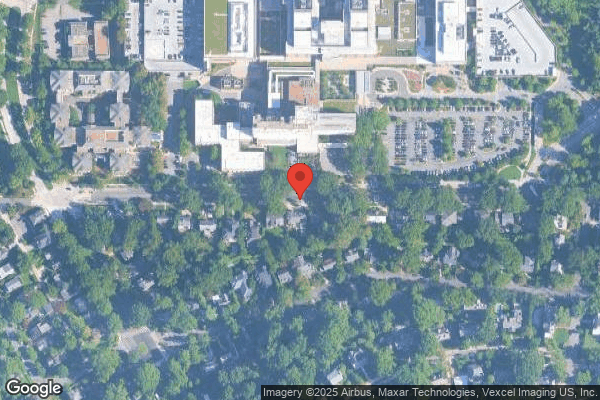
5255 LOUGHBORO ROAD NW, WASHINGTON, DC 20016 (202) 537-4000
Non profit - Other 45 Beds Independent Data: November 2025 1 Immediate Jeopardy citation
Trust Grade
66/100
#5 of 17 in DC
Last Inspection: January 2023

Over 2 years since last inspection. Current conditions may differ from available data.

Overview

Sibley Memorial Hospital Renaissance has a Trust Grade of C+, indicating it is slightly above average but not exceptional. Ranked #5 out of 17 facilities in Washington, D.C., it is in the top half of local options, which is a positive sign. The facility is improving, having reduced its issues from 12 in 2023 to 6 in 2024, although it still has a total of 34 deficiencies noted in inspections. Staffing is a strength here, with a perfect 5/5 rating and only 24% turnover, which is lower than the state average. However, the facility has a concerning history of incidents, including failing to provide necessary behavioral health support for a resident and not treating a resident's heel injury properly for 14 days, which could have led to serious harm. Despite these weaknesses, the nursing home maintains excellent RN coverage, ensuring better oversight of resident care.

Trust Score
C+
66/100
In District of Columbia
#5/17
Top 29%
Safety Record
High Risk
Review needed
Inspections
Getting Better
12 → 6 violations
Staff Stability
✓ Good
24% annual turnover. Excellent stability, 24 points below District of Columbia's 48% average. Staff who stay learn residents' needs.
Penalties
○ Average
$23,827 in fines. Higher than 65% of District of Columbia facilities. Some compliance issues.
Skilled Nurses
✓ Good
Each resident gets 297 minutes of Registered Nurse (RN) attention daily — more than 97% of District of Columbia nursing homes. RNs are the most trained staff who catch health problems before they become serious.
Violations
⚠ Watch
34 deficiencies on record. Higher than average. Multiple issues found across inspections.
★★★★★
5.0
Overall Rating
★★★★★
5.0
Staff Levels
★★★☆☆
3.0
Care Quality
★★★★☆
4.0
Inspection Score
Stable
2023: 12 issues
2024: 6 issues

The Good

  • 5-Star Staffing Rating · Excellent nurse staffing levels
  • Low Staff Turnover (24%) · Staff stability means consistent care
  • Full Sprinkler Coverage · Fire safety systems throughout facility
  • No fines on record
  • Staff turnover is low (24%)

    24 points below District of Columbia average of 48%

Facility shows strength in staffing levels, staff retention, fire safety.

The Bad

Federal Fines: $23,827

Below median ($33,413)

Minor penalties assessed

The Ugly 34 deficiencies on record

1 life-threatening 1 actual harm
Aug 2024 3 deficiencies
CONCERN (D) 📢 Someone Reported This

A family member, employee, or ombudsman was alarmed enough to file a formal complaint

Potential for Harm - no one hurt, but risky conditions existed

Investigate Abuse (Tag F0610)

Could have caused harm · This affected 1 resident

**NOTE- TERMS IN BRACKETS HAVE BEEN EDITED TO PROTECT CONFIDENTIALITY** Resident #172 Neglect 08/14/24 12:20 PM 609/610 Facility staff failed to report the results of its final investigation to the ...

Read full inspector narrative →
**NOTE- TERMS IN BRACKETS HAVE BEEN EDITED TO PROTECT CONFIDENTIALITY** Resident #172 Neglect 08/14/24 12:20 PM 609/610 Facility staff failed to report the results of its final investigation to the State Agency Record Review AM Resident # 172 was admitted to the SNF on 02/17/23 with admitting diagnoses that included: Acute cystitis without hematuria, Cancer related pain, Urinary tract infection without hematuria, and Pain. Resident was discharged to her home on [DATE] MDS admission [DATE] Resident # 172 required Extensive assistance for bed mobility, transfer,dressing, toilet use , bathing (total dependence) Progress Note Noted in a progress note dated 3/3/23 at 10:22 PM. Nurse was transporting Res to Cancer Center . Nurse [NAME] encouraged res to discontinue video chat or recordings because staff cannot be involved in Resident # 172's personal video chat. There would have been no reason for staff to ask her to get off the phone. She was not happy . I would ask do you want me to step out. Facility's Investigation to incident: Included Memo from [NAME] documented as initial incident reported to DOH. A statement dated 2/28/23 at 7:25 PM from [NAME], LPN who cared for resident that stated. Pt called to be cleaned. Tech went to clean patient. She refused stated (ing) that the nurse has to come clean her. Nurse went to assist with patient care, Patient then said, I reported you to my family and they are upset at you. I tried my best to attend to my patient's needs. I feel threatened being reported to family. hereafter, patient refused her evening meds and stated she will wait for the next shift to assist her with care. As much as I tried to carry out my duties to the best of my ability, in this situation I feel scared for I do not (know) how her family will react if I continue caring for her in the future. Employee acknowledged that there were no final results reported to the State Agency and Nurse who provded care for Resident was kept on the schedule and reassigned to other residents. Interviews 08/12/24 12;50 PM - [NAME], CNA She was demanding. I can't recall if she was 1or 2 staff assist. I used to see the son there overnight . She was always talking on the phone. We would ask her if she wanted me to step out of the room and come back if she was on the phone. When the resident wants to go back to bed we (CNA/nursing staff) put them back to bed. We encourage them to call us when they want to get back in bed. 08/12/24 1:02 PM [NAME],,RN She re max assistance she was a lift tx , she could use upper body. She loved food. Her ADL ability was about the same. She was very particular. She refused care at times, She spent a08/13/24 07:12 PM lot of time on the phone, She did not share with me that she had concerns She wanted her pain medication before going to bed. She was familiar with meds. She was getting pain meds ATC because once you moved her she c/pain. even though she knows I would go through he medication. She was i came on She was in the room most of the time. She did not like to sit the w/c for a long-time . She was a former CNA at WHC. OT would do initial shower. 08/13/24 02:58 PM [NAME], RN She passed. She was dependent on care. She had issue with other nurses. She was having phone on the line with her family with the incident. I was one of the nurses that could take care of her. I remember going to her because . It was said I removed . She had an issue with [NAME]. I was assigned regularly to the patient. I was one of her favorites She and her family wanted me to take care of the resident. She was upset That wasn't what it was They said she was filming nurses during care. It wasn't a thing of a big deal. I turned the statement to the /Unit Manager/DON. I continued to work with the Resident # 172 . I never recalled them saying that there was an incident that needed to be investigated. When I found out the resident had complained about me to the family The incident occurred and I was told to put it in writing. Resident #123 Abuse 08/13/24 09:20 AM #123 [NAME] DOB [DATE] DOA [DATE] Discharge [DATE] DX: - Rupture of Quadriplegic tendon - Lumbar Dengerative Disc Disease - Status Fall F610 The facility failed to ensure an alleged perpetrator did not have access to a resident who made an allegation of rough handling. Additionally, the facility failed to conduct a through investigation. As evidence by not having documented evidence of interview with the companion who was in the room on the night if the alleged incident of rough handling. OBSERVATION Unable to conduct observations, resident was discharged on [DATE] RECORD REVIEW MDS ADD Info see hard copy Care Plan- see hard copy 04/27/24 and 04/28/24 flow sheeted did not document any concerns or complaints from the resident. 04/28/24 at 8:37 AM [[NAME]'s (alleged perpetrator) Nursing Note] Pt. slept well .companion with patient from mid-night resident remains stable with no new complaints/concerns. 05/08/24 Facility Investigation- included statements from all staff who worked that shift. However, there was no statement from the companion who was in the room during the time of the allegation. See note above. INTERVIEWS During a face-to-face interview on 08/12/24 at 2:44 PM, [NAME] (MDS/admission Coordinator) stated that the resident's sister called and mentioned that a female staff member made rough hand poking gestures toward the resident. He text the sister that it was [NAME] and [NAME]. I told her that I would tell the DON and she said don't mke a big deal owut of it. I said we had to report it then I told the DON [NAME]. I gave my statement. He had never had the compliant before. He was admitted in April -June 2024. I did not speak with him about the concern. I did not document the conversation in his record . I just wrote a statement. She said it happened on 04/28/24. I did speak with the sister after the concern but we never discussed the concern again. During a face-to-face interview on 08/12/24 at 2:55 Pm, [NAME] DON stated that she received a phone call from Ms. [NAME] sister and she said the mentioned that the brother text her doing thr night on 04/28/24 had rough hand with him. She told her lets report it. I called the sister and she said it 's really nothing he had been receiving great care. She said she didn 't want to talk about. It she looked through her phone 04/28 or 04/27 and he text a name [NAME]. He said he was sleeping he has confusion. He could not described the nurse. He said she had rough hands. I told I would speak with the brother. After the incident she started providing him with sitter at night but she never told us about her concerns for his safety. I spoke with the resident he said she had rough callous hands. she was not trying to physical because. HHe said he thin it was someone name [NAME] but he could be mistaken about the name. ER hands were just rough and callous. She would tell him she didn't tell have time to wait. I then had staff to go in his room with me to see if he could physically identify. And he could not. I would not ask him in front of staff. I would ask them to help with him. And when they leave to see if I would identify them. Staff was not informed about the resident's complaint of abuse. I didn't want him to feel like he had any repercussion. We do have a [NAME], RN that worked with him on that night. I did bring her in the room couple of times. When I told him that was [NAME], she said she was just to gentle. Since he could not identify , we provided the sitters until he was discharged . The sister brought in her phone and we found that it occurred on 04/27/24. I'll look for the date she bright her phone in. Everybody was retrained on abuse. [NAME] was not pull off the schedule. It depends on what the allegation is. During a telephone interview on 08/12/24 at 4:10 Pm, [NAME], RN I work night shift. I worked with him a few times. I remember that he calls a lot. He likes a lot of attention. He could feed himself, he could turn with minimal assistance in bed. He could make you aware that he needed needed to use the bathroom. He requires assistance with transferring from the bed to chair. He was admitted with sacral wound. He accuses the staff that someone abuse him. He would say things that were not true. During a face-to-face interview on 08/12/24 at 4:17 PM, [NAME], Director of HR stated that the employee was hired on 06/05/17. She had no disciplinary actions. Her most recent performance evaluation was conducted on 09/22/23 and she received a score of 4.18/5.0 which means she exceeded expectations. HR is not involved with abuse allegation. Once the allegation is sustained by the investigative teams is when HR gets involve. HR provides recommendation, guidance, and support to management on employment status once the investigation had been sustained. HR is not involved in the investigation with employee to resident abuse. According to her punch sheet, she worked 14.25 hours (punched in 04/27/24 at 6:57 PM and punched out on 04/28/24 at 9:50 AM). 5/3/24, 5/4/24, and 5/5/24 she didn't work 5/6/24 punched in 6:59 Pm pinched out 5/7/24 at 9:02 Am (13.50 hours) 5/7/8/24 punched in 7:01 PM punched out 8:10 AM on 05/08/24 (12.75 minutes). During a face-to-face interview on 08/13/24 at 11:01 AM, the DON stated that she did not interview of the companion and the employee was not removed from the schedule. During a telephone interview on 08/13/24 at 10:30 AM, [NAME] stated that the DON informed her that the resident made an allegation against her about rough handling but he could not physically identify her. The employee stated that she was not removed from the schedule but she was not assigned to him again. She also was asked to write a stament.
CONCERN (D) 📢 Someone Reported This

A family member, employee, or ombudsman was alarmed enough to file a formal complaint

Potential for Harm - no one hurt, but risky conditions existed

Drug Regimen Review (Tag F0756)

Could have caused harm · This affected 1 resident

**NOTE- TERMS IN BRACKETS HAVE BEEN EDITED TO PROTECT CONFIDENTIALITY** Based on record review and staff interviews for (one) 1 of 24 sampled residents the facility staff failed to provide documented ...

Read full inspector narrative →
**NOTE- TERMS IN BRACKETS HAVE BEEN EDITED TO PROTECT CONFIDENTIALITY** Based on record review and staff interviews for (one) 1 of 24 sampled residents the facility staff failed to provide documented evidence in the resident's medical record that the medication irregularities identified by the pharmacist were reviewed and failed to provide the rationale for not changing a resident 's medication. Resident #175. The findings included: Resident #175 was admitted to the facility on [DATE] with diagnoses that included: Dementia, Attention Deficit Hyperactivity Disorder (ADHD), Gastroesophageal Reflux Disease (GERD), Anxiety, History of Total Knee Arthroplasty (knee replacement), Type 2 Diabetes, and Coronary Artery Disease (CAD). A review of Resident #175's medical record revealed the following: An admission Minimum Data Set (MDS) assessment on [DATE] that documented the Resident as having a Brief Interview for Mental Status BIMS summary score of 15, indicating that the resident was cognitively intact and had received the following medications: Antianxiety, Antidepressant, Diuretic (for fluid overload), Opioid (for pain) and an Antiplatelet (prevent blood clots). A physician's order dated 07/26/24 that directed, Donepezil (Aricept) tablet 15 mg (milligram) nightly for Dementia. The following physician ' s orders dated 07/27/24 that directed: Alprazolam (Xanax) tablet 0.25 mg nightly for anxiety; Dextroamphetamine-amphetamine (Adderall) 24hr capsule 10 mg for ADHD; Bupropion (Wellbutrin XL) (extended-release) 24hr tablet 150 mg 1 tablet for depression; Dextroamphetamine-amphetamine (Adderall XR) (extended-release) 24 hr (hour) capsule 10 mg for ADHD; Furosemide (Lasix) 40 mg tablet for fluid; and Trazodone (Desyrel) tablet 100 mg nightly for Insomnia. The following physician's orders dated 07/29/24 that directed: Hydromorphone (Dilaudid) tablet 4 mg every 3-hour prn for moderate pain (rating) (4-6); and Hydromorphone (Dilaudid) tablet 6 mg every 3-hour prn for severe pain (rating) (7-10). A physician's order dated 08/11/24 that directed, Bupropion (Wellbutrin XL) 24hr tablet 450 mg 3 tablet (3 x 150 mg) for Depression every morning. A monthly medication review (MMR) completed by the pharmacist on 07/31/24 documented the following recommendations: Please consider reassessing patient needs to pharmacologic anticoagulants. (The) Patient is at a high risk for DVT/PE (deep vein thrombosis/pulmonary embolism due to his medical condition, surgery, history of Afib (atrial fibrillation), and use of testosterone. Currently, (the patient) is taking aspirin 81 mg once a day. Also, (the) patient is at increased risk of fall, slowed or difficult breathing and or sedation secondary to use of multiple psychoactive medications. Of note, there was no documented evidence that the physician responded to the pharmacist's recommendations on the MMR or in the resident's medical record. During a face-to-face interview on 08/12/24 at 1:38 PM Employee #6 (Registered Pharmacist) stated that the pharmacist makes recommendations, and the physician will respond either through an email chat or under the Physician Assessment and Review Recommendations section of the MMR in the resident's medical record. The Employee then acknowledged the finding. Resident #175 Unnecessary Meds, Psychotropic Meds, and Med Regimen Review 08/12/24 04:02 PM F756 The attending physician (Facility staff) failed to provide documented evidence in the resident's medical record that the medication irregularities identified by the pharmacist were reviewed and failed to provide his/her rationale for not changing a medication. 08/09/24 04:08 PM According to RR the resident has Alzheimers or Dementia. According to RR the resident takes an Antianxiety. According to RR the resident takes an Opioid. According to RR the resident takes an Antidepressant. According to RR the resident takes a Diuretic. Resident # 175 was admitted to the facility on [DATE] with dx that included: Dementia, ADHD, GERD, Anxiety, Hx total knee arthroplasty, Type2 Diabetes, CAD coronary artery disease admission MDS assessment 08/02/24 - BIMS = 15 Resident received the following meds with 7 days of assessment: Antiaxiety Antidepressant Diuretic Opioid Antiplatelet and had not received the following: Antipsychotic Hypnotic Anticoagulant Antibiotic Hypoglycemic Physician orders : 07/27/24 Alprazolam (Xanax) tablet 0.25 mg nightly for anxiety changed from daily to nightly by pharmacist on 7/27/24 7/27/24 Dextroamphetamine -amphetamine (Adderall) 24hr capsule 10 mg for ADHD 7/27/24 Buproprion (Wellbutrin XL) 24hr tablet 150 mg 1 tablet for depression 8/11/24 Buproprion (Wellbutrin XL) 24hr tablet 450 mg 3 tablet (3 x 150 mg) for Depression every morning 07/26/24 Donezepezil (Aricept) tablet 15 mg nightly for Dementia 07/27/24 Dextroamphetamine-amphetamine (Adderall XR) 24 hr capsule 10 mg for ADHD 07/27/24 Furosemide (Lasix) 40 mg tablet for diuresis 07/29/24 Hydromorphone (Dilaudid) tablet 4 mg every 3 hour prn for moderate pain (4-6) 07/29/24 Hydromorphone (Dilaudid) tablet 6 mg every 3 hour prn for severe pain (7-10) 07/27/24 Trazodone (desyrel) tablet 100 mg nightly for insomnia MMR completed by the pharmacist [NAME] on 07/31/24. T Under RPH Medication Recommendations the pharmacist documented: Please consider reassessing patient needs to pharmacologci anticoagulants. Patient is at ahigh risk for DVT/PE due to his medical condition, surgery, history of Afib and use of testosterone. Currently he is taking aspirin 81 mg once a day. Also patient is at increased risk of fall, slowed or difficilt breathing and or sedation secondary to use of multiple psychoactive medication. Interview: The pharmacist will do another MMR sooner than one month if they find an irregularity . The pharnacist makes recommendations and the physician will respond either through an email chat or in the MMR (in the ehr) under Physician Assessmentand Review Reccomendations Resident #17 Unnecessary Meds, Psychotropic Meds, and Med Regimen Review 08/12/24 09:58 AM #17 [NAME] DOB - [DATE] DOA - [DATE] DX: - Gram positive Bacteria -Anemia -Endocarditis -DVT -Thrombophilia -Insomnia [DATE] admission MDS C-11 I - Insomnia 483.45 Pharmacy (F756) - The physician failed to documented response to pharmacist recommendations. 08/12/24 10:01 AM OBSERVATION During an observation on 08/08/24 at 11:00 AM, the resident was observed lying in bed. A, OX 3, no bruising noted. RECORD REVIEW 07/16/23 - MMR Please monitor patient for additive CNS depressant effect and QTC prolongation due to DDI between Quetiapane and Mirtazine. The physcian failed to documented hi response. [DATE]- admission MDS C-11 I - Insomnia N- antipsychotics, anticoags. o 07/29/24 - Eliquis (anticoagulant) 5mg po BID for VTE Tx. no monthly labs need for this mediation o 07/29/24 -Trazadone (psychotropic) 25mg (1/2 tab) prn nightly X1 for sleep. It should be noted the resident has not received this medication since start date. During an interview with the pharmacist she stated that the need to add special instruction to adminster Tradone if melatnin is not effective. o Diuretics, Opioids, Insulin, and Antibiotics - resident is not currently getting these medication types of medications. Care Plans 07/11/24 -Problem- Psychotropic Drug use Interventions-Assess efficacy of drug therapy, assess and reassess resident's level of orientation daily, and administer psy. meds as ordered. 08/06/24 - Problem -Insomnia Interventions- observe for any episodes of insomnia, keep are quiet and calm, administer meds as ordered. INTERVIEW During a face-to-face interview on 08/08/24 at 11:15 AM, the resident and her daughter stated that the staff was wonderful . They had no concerns with medication administration. The resident and daughter stated that staff gives meds as prescribed, as as requested. During a face to face interview on 08/12/24 at 12:30 PM, Nurse [NAME], RN stated the resident was on Melatonin for sleep and she does not recall the resident requesting Trazadone. During a face-to-face interview on 08/12/24 at 12:45 PM, the resident stated that she doesn't request medications for sleep. During a telephone interview on 08/12/24 at 1:49 Pm, [NAME] (Pharmacist) stated that the physician should document their response. I do chat with them through electronic health record and they sometime respond back. The pheamicaist she does mointor prn meds to see the effectiveness and how often the medication has been administered. And she finds any concerns she will reach out to the physcian.
CONCERN (D) 📢 Someone Reported This

A family member, employee, or ombudsman was alarmed enough to file a formal complaint

Potential for Harm - no one hurt, but risky conditions existed

Infection Control (Tag F0880)

Could have caused harm · This affected 1 resident

**NOTE- TERMS IN BRACKETS HAVE BEEN EDITED TO PROTECT CONFIDENTIALITY** 2. Facility staff failed to ensure that their infection control policies were reviewed annually. During a review of the facility...

Read full inspector narrative →
**NOTE- TERMS IN BRACKETS HAVE BEEN EDITED TO PROTECT CONFIDENTIALITY** 2. Facility staff failed to ensure that their infection control policies were reviewed annually. During a review of the facility's infection control policies on 08/09/24 revealed a policy titled Mandatory COVID-19 Vaccination Policy - Policy Number ADMIN033 that documented Effective Date 11/10/2022 and Supersedes Date 09/23/2022. A face-to-face interview conducted on 08/09/24 at 12:50 PM, Employee #2 (Director of Nursing/DON) acknowledged the findings and stated, We adopt our policies from the hospital. We need to show that the policies are being reviewed annually and the review date should be reflected on the policy. Cross Reference: 22B DCMR Sec. 3206.3 FACILITY Infection Control 08/14/24 02:16 PM UIC [NAME] ICIP [NAME], RN [NAME], Nurse is assigned on a weekly basis to screen all residents and to offer vaccinations. If a resident refuses she documents in the [NAME] reord in progress notes. She uses the VIS to educate residents on vaccinations Clinic upon admission and weekly Staff no regular screeniing for staff Typically staff that aree exposed in an outbreak situation are screened every other day after conf Postive test Day 1,3,5 NHSN Central line, CAUTI, C. diff, MRO, PPE Compliance , MaskReportableC diff Policies - F880 - The facility failed to conduct an annual review of its IPCP (COVID-19) and update their program, as necessary. monthly PPE hand hygiene audits. Staff is educated almost weekly on EBP, when residents are admitted , and we follow an algorithym Influenza and Pneumoccal Policies were last reviewed November 2023 COVID -19 policy was last reviewed November 2022 A etter id distributed to staff and residents. We post a notice . We restrict communal activities. Each staff and residents are notfied . The signage is a copy of the letter. Staff not required to provide neg test upon proff of return. Letters given to resident and or care partner directly [NAME], [NAME] - Covid -19 10/25/21, 3/18/21, 2/18/21 - Moderna 3/14/24 - Pfizer, 10/24/22, 3/31/22 Influenza 11/2/23 [NAME] -Covid-19 - 7/18/24 [NAME] Covid-19 10/22/21, 2/13/21, 1/23/21 Covid-19 4/7/24 Covid-19 9/26/22, Covid -19 4/15/22 [NAME], [NAME] Covid-19 3/20/21, 02/20/21 [NAME] Moderna 2/8/21, 1/8/21 Covid-19 7/26/24 Based on observation, record review and staff interview, for one (1) of 18 sampled residents, facility staff failed to follow the facility's policy of acceptable Infection Control Standards and Practices while changing a Peripherally Inserted Central Catheter (PICC) line dressing; and failed to ensure that their infection control policies were reviewed annually. Resident #18. The findings included: 1. Facility staff failed to follow the facility's policy of acceptable Infection Control Standards and Practices while changing a Peripherally Inserted Central Catheter (PICC) line dressing for Resident #18. Resident #18 was admitted to the facility on [DATE] with multiple diagnoses including Septicemia, Perforated Appendicitis, Gangrene due to Parastomal Hernia, and Small Bowel Obstruction. A Vascular Access Device policy with an approval date of 01/03/23 instructed staff in part to, .put on sterile gloves to remove and discard the old statlock (device used to secure the central line), remove gloves, clean hands with hospital approve alcohol bases sanitizer, apply second set of sterile gloves .scrub skin with chlorhexidine gluconate 2% with isopropyl alcohol 70% swab .begin directly at the insertion site and scrub in a circular fashion .secure catheter . until new stat lock is in place .apply transparent dressing .being sure statlock and insertion site are completed located under the dressing, remove and discard gloves . An Enhanced Barrier Precautions policy with an approval date of 04/22/24 documented in part, Enhanced Barrier Precautions refers to an infection control intervention designed to reduce transmission of multidrug-resistant organisms that employs targeted gown and gloves [personal protective equipment] during high-contact resident care activities .High contact resident care activities refers to . device care or use [of] central lines .education is provided to residents and visitors via signage on the door. It should be noted that Enhanced Barrier Precautions is a strategy that uses personal protective equipment to reduce the spread of Multidrug-Resistant Organisms between residents in skilled nursing facilities. A physician's order dated 07/18/24 instructed, PICC (Peripheral Inserted Central Cather) Line dressing change per protocol. Please note: PICC line [central line] used for long term use of intravenous antibiotics, nutrition, medications and for blood draws. A review of two (2) care plans dated 07/18/24 documented in part Problem - Enhanced Isolation Precautions . Interventions- use proper personal protective equipment .Problem- PICC line .Interventions- routine (weekly) dressing changes as ordered using sterile technique . The admission Minimum Data Set assessment dated [DATE] documented that the resident had a Brief Interview for Mental Status summary score of 13, indicating an intact cognitive status. Also, the patient was coded as having septicemia and receiving antibiotics via intravenous access. On 08/08/24 at approximately 1:00 PM, an observation showed an Enhanced Barrier Precautions sign posted on the front of Resident #18's door. The sign instructed staff to wear gloves and a gown for high contact resident care activities [such as] device care or use [of a] central line . Also, during the observation Employee #7 (RN) changing the resident's PICC Line dressing revealed the following concerns: 1. Employee #7 (RN) fanned a clean, disposable absorbent pad towards Resident #18's face who was sitting in a chair in front of the employee. After placing the pad on the table, the employee apologized to the resident for fanning the pad toward her face. 2. After the employee put clean gloves on, she started removing the transparent dressing covering the resident's PICC line. The resident then asked the employee why she wasn't wearing a yellow gown like the other nurses. The employee responded, You're right. The employee then removed her gloves, performed hand hygiene, put on a yellow disposable gown and new pair of gloves, and removed the transparent dressing covering the PICC line. Additionally, the employee explained that the resident was on Enhanced Barrier Precautions, thus wearing a gown when changing the PICC line dressing was required. 3. After removing the transparent dressing, the employee failed to remove the stat-lock that was in place to secure the PICC Line. Instead, she attempted to clean the insertion area, but she failed to use aseptic technique. As evidenced by her not cleaning the site in a circular motion, but rather going from clean to dirty, then back to clean. 4. Following the cleaning of the area, the employee applied a new transparent dressing over the PICC line and the old stat-lock. In an attempt to remove part of the dressing covering the stat-lock, the employee's gloves became stuck. Upon being asked why the dressing was being removed, the employee said that she needed to remove the stat-lock and replace it with a new one, which she had to get from the supply room. As the nurse was attempting to get her unstuck from the dressing, the resident face was grimacing. However, the employee never asked the resident how she was feeling doing the dressing change. The surveyor then asked the employee to stop the dressing change and get help once her gloves became unstuck from the dressing. During a face-to-face interview 08/08/24 at 1:30 PM, Employee #7 (RN) stated that she should've don a disposable gown before providing care for the PICC line because the resident was on Enhanced Barrier precautions. Additionally, the employee said she should've removed the old statlock before cleaning the area and applying the new transparent dressing. During a face-to-face interview on 08/08/24 at 1:45 PM, Employee #2 (DON) stated that Employee #7 should have followed the policy, and she would have the unit manager assist the nurse. Resident #18 FTag Initiation 08/09/24 08:57 AM #18 [NAME] DOB - [DATE] DOB - [DATE] DX - Small Bowel Obstruction - Gangrene due to Parastomal Hernia - Entrapment of Intestine in Abdomen Adhesions admission MDS [DATE] C-13 H - Septicemia N - 7 injection, antibiotics O - IV medication, IV Access 483.80 Infection Control [F880] - The facility staff failed to follow Infection Control Standards of Practice while changing a PICC line dressing. OBSERVATIONS During an observation on 08/08/24 starting at 1:00 PM, Nurse- [NAME], RN attempted to change the resident's PICC Line dressing the following was observed: - She failed to remove items from the table to ensure a sterile area for dressing supplies. - Before putting the chux on the table for a clean field, she fanned the chux padding towards the resident's face. She apologize to the resident for shaking the chux toward her face. - She failed to wear a gown to cover her clothes after removing the PICC Line dsg. The resident was on Enhanced Barrier Precautions - She failed to remove the previous stat-lock before cleaning the area. - After cleaning the area she place a new dressing over the old stat-lock. - While trying to lift part of the PICC line dressing to remove and replace the stat-lock , the nurses gloves got stuck to the dressing. - After getting her gloves unstick from the dressing, the surveyor asked the nurse to stop and get help. RECORD REVIEWS DX - Small Bowel Obstruction - Gangrene due to Parastomal Hernia - Entrapment of Intestine in Abdomen Adhesions 07/17/24 MD Order - PICC Line dressing protocol 07/18/24- Care Plan (PICC Line) Interventions: - routine weelky dressing changes as ordered using streil technique -Assessment of insertion site by nursing staff. [DATE] -admission MDS C-13 H - Septicemia N - 7 injection, antibiotics O - IV medication, IV Access 07/27/24 MD Order - Rocephin 2gm IV QD. INTERVIEWS During a face to face interview 08/08/24 at 1:30 PM, the nurse stated that she should have put in the gown before providing care because the resident was on Enhanced Barrier precautions. And she should've removed the old stat-lock after cleaning the area and applied the new protective dressing. During a face-to-face interview on 08/08/24 at 1:45 PM, the DON stated that the nurse should have followed the policy and she would have the unit manager assist the nurse.
Feb 2024 3 deficiencies 1 IJ
CRITICAL (J) 📢 Someone Reported This

A family member, employee, or ombudsman was alarmed enough to file a formal complaint

Immediate Jeopardy (IJ) - the most serious Medicare violation

Deficiency F0740 (Tag F0740)

Someone could have died · This affected 1 resident

**NOTE- TERMS IN BRACKETS HAVE BEEN EDITED TO PROTECT CONFIDENTIALITY** Based on record review and staff interviews, for one (1) of five (5) sampled residents, facility staff failed to provide the nec...

Read full inspector narrative →
**NOTE- TERMS IN BRACKETS HAVE BEEN EDITED TO PROTECT CONFIDENTIALITY** Based on record review and staff interviews, for one (1) of five (5) sampled residents, facility staff failed to provide the necessary social and health care services to attain, maintain, or support the behavioral health (emotional and mental well-being) needs of Resident #1. Due to these failures, an Immediate Jeopardy (IJ-J) was identified on February 5, 2024 at 12:07 PM. During this survey, Immediate Jeopardy was identified at 42 CFR §483.40, Behavioral Health (F740), on February 5, 2024 at 12:07 PM. The facility's Administrator submitted a corrective action plan to the Survey Team that was accepted on February 5, 2024 at 7:52 PM. The Survey Team verified implementation of the corrective plan while onsite and the Immediate Jeopardy was lifted on February 6, 2024 at 2:15 PM. After removal of the immediacy, the deficient practice remained at a potential for harm at the scope and severity level of G. The findings included: Resident #1 was admitted to the facility on [DATE] to room [ROOM NUMBER] with multiple diagnoses that included: Orthostatic Hypotension, Rapid Eye Movement (REM) Sleep Disorder, Diabetes Mellitus, Parkinson's Disease, and Coronary Artery Disease. Review of Resident #1's medical record revealed the following: A care plan focus area: Activities initiated on [DATE] had interventions that included: - Monitor for signs and symptoms of activity withdrawal. If withdrawal noted, nurse will assess, document findings and notify interdisciplinary team of results as needed A care plan focus area: Psychotropic drug use initiated on [DATE] had interventions that included: - Assess and re-assess resident's level of orientation, daily - Assess for mood changes - Assess anxiety - Provide emotional support as needed An admission Minimum Data Set (MDS) assessment dated [DATE] showed that facility staff coded: clear speech, able to make self understood; clear comprehension; a Brief Interview for Mental Status (BIMS) summary score of 15, indicating intact cognition; a mood severity score of 06 indicating mild depression; no indicators of psychosis; and received occupational therapy (OT) services that started on [DATE]. An Occupational Therapy Note: Date of service [DATE] at 11:40 AM documented: - Exercise and treatment - focused on hand strengthening with yellow Thera putty (playdough like substance) during morning session. A Physician's Progress Note: Date of service [DATE] at 8:55 AM documented: - Resident #1 expressed to staff and to me on [DATE] when very emotional that he does not want CPR (cardiopulmonary resuscitation) - Reported severe night terrors feeling like he is falling, short of breath thrashing around and blames meds - He is very frustrated - He wants to be discharged immediately and thinks he will be better at home and familiar surroundings - He states he slept well last night - General appearance - alert cooperative, no distress A physician's order dated [DATE] directed, Code status and care directives - no CPR, do not intubate A Nursing Progress Note: Date of service [DATE] at 12:19 PM documented: - Patient made DNR (do not resuscitate) by Medical Doctor today - He refused tech (Certified Nurse Aide/CNA), nurse, social worker and therapy attempted to wake him up, he stated that he just want to sleep - Note sent to Medical Doctor (MD) regarding patient depressed mood, not wanting to participate in any activity. Awaiting order. It should be noted that there is no documented response by the MD to this notification in the medical record. A Social Worker Progress Note: Date of Service [DATE] at 2:25 PM documented, Social Worker met with patient and all he was saying is 'I want to die'. He also clearly stated that he does not want to speak to a psychiatrist. Attending MD and team informed . It should be noted that there is no documented response by the MD to this notification in the medical record. A Nursing Progress Note: Date of Service [DATE] at 4:03 PM documented, At around 3:30 (PM) today during rounding. The tech found patient with yellow stuff. Covering both nostril and mouth was filled with the same stuff (the stuff was play dough that was given to him by therapy to practice motor skills with his hand). Tech called nurse to assist. Nurse removed yellow stuff from his nose and mouth . When asked about it, he (Resident #1) stated that he did not want to live anymore. MD was called and received order to transfer patient to ED (emergency department) to get psychological evaluate . During a telephone interview conducted on [DATE] at approximately 2:45 PM, Employee #11 (Medical Doctor) stated, I saw the resident that morning ([DATE]) and talked to him. He expressed wanting a code status change from CPR/full code to DNR, which was addressed. There was no ideation or expression of self-harm when I talked to him that day. He was ready to go home because he felt it was better for him than being here. He was offered psych services or to talk to someone multiple times due to his feelings about his current condition, but he flatly refused. Him saying he wants to die was in the context of his code status and wanting to be DNR/DNI (do not resuscitate/do not intubate), not wanting to take his own life. If a patient is suicidal, that's something I would expect for the staff to call me about immediately. The only notification call I remember receiving that day, was right after staff found [Resident #1] with the putty in his nose and mouth. I can't recall the Social Worker mentioning [Resident #1] wanting to die to me any time prior to that. During a face-to-face conference/interview on [DATE] at 3:18 PM with Employees #2 (Director of Nursing/DON), #5 (Social Worker), #7 (Rehabilitation Manager), #4 (Lead MDS/Admissions Coordinator), #6 (Senior Director for Patient Safety and Quality) and #3 (Quality Assurance Coordinator). It should be noted that all the employees stated that were present at a huddle meeting that was conducted on [DATE] at 10:00 AM to include the Administrator. The following was stated during the conference: - Leadership huddles are done every Monday, Wednesday and Friday at 10:00 AM - Official notification to the MD is done via a phone call or the secure chat - The secure chat is not part of a resident's medical record - All notifications are documented in the medical record and whatever the follow-up is, for example no new orders or if new orders, they are recorded and documented in the resident's progress notes - Employee #5 stated that she met with Resident #1 before the huddle meeting held on Monday [DATE] at 10:00 AM [no time specified] and discussed with the team that the resident expressed wanting to die at the huddle - Employee #5 also stated that she met with the resident twice after the leadership huddle meeting - Apart from the Social Worker and the MDS/Admissions Coordinator, all the other employees stated that the only thing discussed regarding Resident #1 during the huddle meeting was his expressed desire change his code status from full code to do not resuscitate (DNR) - When asked was there any follow-up questions asked to Resident #1 after the I want to die statement, Employee #5 stated, I am not a psych doctor, that's why I informed the doctor. I had asked him (Resident #1) if he wanted to talk to a psych doctor and he said 'no' over and over again. I did not follow-up with the doctor when I didn't get a response to the initial notification. At the time of this interview, Employee #3 stated that there is no documentation or record keeping of the huddle meetings, everything is verbal. It should also be noted that a review of Employee #5's training record was conducted and showed that she completed the facility required training, Suicidal Patients, Care in Emergency Department, Perioperative/Procedural Area, and Non-Psychiatry In Hospital Nursing Units last on [DATE]. During a telephone interview conducted on [DATE] at 6:00 PM, Employee #12 (Chair of Psychiatry) stated, I want to die is considered a passive death wish that gets equated with depression versus an active suicidal ideation (SI) with a plan. Passive death wish gets evaluated by either the nurse, social worker or primary doctor by asking follow-up questions to determine if there is any intent of harm behind the death wish, from there, we (psychiatrist) would be consulted. That's the first line, whoever is first made aware of the passive death wish, they ask follow-up, escalating questions for signs and symptoms of active SI. That's the process in the ED. Active SI would get a 1-to-1 until seen by the psychiatrist. Passive death wish wouldn't get a 1-to-1 unless the follow-up questions warrant that. Subsequently, due to these failures, on [DATE] at 3:30 PM, Resident #1 was found alone, in his room, by facility staff, with Thera putty in his nostrils and in his mouth, in an attempt to end his life. According to the medical record, Resident #1 was taken to the ED and admitted to the hospitaal for inpatient psychiatry services on [DATE]. Based on these findings, an Immediate Jeopardy (IJ-J) was identified at 42 CFR §483.40 Behavioral Health (F740) on February 5, 2024, at 12:07 PM. The facility's Administrator provided a corrective action plan to the State Agency Survey Team that was accepted on February 5, 2024, at 5:55PM. The plan included: 1. The [Hospital Name] Health System policy Suicidal Patients, Care in Emergency Department, Perioperative/Procedural Areas, and Non-Psychiatry In-hospital Nursing Units will be revised and adopted by the [Facility Name]. Revisions to the policy have been made so that the policy is applicable to SNF (Skilled Nursing Facility) residents. 2. The Director of Nursing or Quality Insurance Coordinator of the [Facility name] will educate the [Facility name] staff on the newly implemented policy beginning at each shift huddle starting at 7 PM ([DATE]) to ensure understanding of the responsibilities on suicide screening. Attestations will be obtained. All staff will be educated within 7 days, by [DATE]. 3. As part of the new policy, the [Facility name] will adopt the Ask Suicide Screening Questions (ASQ) screening tool to determine suicidal ideation at admission and any change in status as per newly implemented policy. If the resident has an acute positive screen, staff will secure Constant Patient Observer (CPO) and then make arrangements to send the resident to the Emergency Department for further assessment. For non-acute positive screen, the provider will be notified to assess the resident. 4. The Director of Nursing or Quality Assurance Coordinator of the [Facility Name] will educate the [Facility Name] staff on how to document ASQ responses in the EPIC (facility's electronic health record) medical record. ASQ screenings answers will be entered into EPIC prior to sending the resident to the Emergency Department. 5. All current residents will be screened using the ASQ screening tool by nursing staff within the next 24 hours to be completed by [DATE]. 6. [Hospital and Facility name] Chain of Command policy delegates the authority for staff to escalate concerns. The chain of command ensures that staff know where they are in the chain order to address administrative and/or clinical concerns. 7. The clinical [Facility name] team meets daily doing 7am and 7pm huddles. Staff will be asked to discuss any resident that may require any escalation based on mood or behavior health changes. The Change of Command policy will be retrained by all clinical [Facility name] staff during shift huddles beginning [DATE] to reiterate the escalation process. Staff will be reminded of their responsibility to escalate concerns if not addressed promptly. 8. [Hospital and Facility name] Chain of Command policy delegates the authority for staff to escalate concerns. The chain of command ensures that staff know where they are in the chain order to address administrative and/or clinical concerns. 9. The clinical [Facility name] team meets daily doing 7am and 7pm huddles. Staff will be asked to discuss any resident that may require any escalation based on mood or behavior health changes. 10. All social work staff assigned to the [Facility name] will be retrained by the Interim Social Work Supervisor on the Chain of Command policy to reiterate the escalation process. Staff will be reminded of their responsibility to escalate concerns if not addressed promptly. Verification for the removal of the immediacy was performed by the survey team onsite on February 6, 2024 at 2:15 PM. Cross Reference 22B DCMR Sec. 3229.1
CONCERN (D) 📢 Someone Reported This

A family member, employee, or ombudsman was alarmed enough to file a formal complaint

Potential for Harm - no one hurt, but risky conditions existed

Deficiency F0745 (Tag F0745)

Could have caused harm · This affected 1 resident

**NOTE- TERMS IN BRACKETS HAVE BEEN EDITED TO PROTECT CONFIDENTIALITY** Based on record reviews and staff interviews, for one (1) of five (5) sampled residents, the facility's staff (Employee #5) fail...

Read full inspector narrative →
**NOTE- TERMS IN BRACKETS HAVE BEEN EDITED TO PROTECT CONFIDENTIALITY** Based on record reviews and staff interviews, for one (1) of five (5) sampled residents, the facility's staff (Employee #5) failed to provide appropriate medically-related social services to meet Resident #1's needs, as evidenced by the employee's failure to conduct a follow-up assessment on 01/29/24 after the resident expressed that he wanted to die. The findings included: A review of Employee #5's job description signed on 05/11/22, revealed the following Job title Social Worker II (Department Case Coordination) .Provides expeditious patient assessments and collaborates with medical providers in determining the appropriate disposition and treatment for behavioral health patients and other vulnerable patient populations .Conducts behavioral health assessments using standardized assessment and screening tools in conjunction with the department of psychiatry policies and procedures. Communicates psychiatric crisis intake assessments and clinical information to psychiatric medical provider and develops disposition to be communicated to ED (emergency medical) medical provider . Employee #5's training record showed that she completed the facility required training, Suicidal Patients, Care in Emergency Department, Perioperative/Procedural Area, and Non-Psychiatry In Hospital Nursing Units last on 06/16/22. A review of the facility's policy titled Case Management Services with an effective date of 02/21/23 documented the following: The Case Coordination Department provides services in the following areas: Recognition/ assessment of emotional and social needs 1. Collaboration with the hospital medical, clinical staff, and social work with regard to the identified patients' current, traumatic situation, interpretation of the emotional, social and environmental factors which are contributive, and provision of individual and group services to the patient and/ or family during hospitalization. Care Coordinators will make referrals as appropriate. Resident #1 was admitted to the facility on [DATE] to room [ROOM NUMBER] with multiple diagnoses that included: Orthostatic Hypotension, Rapid Eye Movement (REM) Sleep Disorder, Diabetes Mellitus, Parkinson's Disease, and Coronary Artery Disease. A review of the medical record revealed the following: A care plan focus area: Activities initiated on 01/02/24 had interventions that included: - Monitor for signs and symptoms of activity withdrawal. If withdrawal noted, nurse will assess, document findings and notify interdisciplinary team of results as needed A care plan focus area: Psychotropic drug use initiated on 01/02/24 had interventions that included: - Assess and re-assess resident's level of orientation, daily - Assess for mood changes - Assess anxiety - Provide emotional support as needed An admission Minimum Data Set (MDS) assessment dated [DATE] showed that facility staff coded: clear speech, able to make self-understood; clear comprehension; a Brief Interview for Mental Status (BIMS) summary score of 15, indicating intact cognition; a mood severity score of 06 indicating mild depression; no indicators of psychosis; and received occupational therapy (OT) services that started on 01/03/24. An Occupational Therapy Note: Date of service 1/10/24 at 11:40 AM documented: - Exercise and treatment - focused on hand strengthening with yellow Thera putty (playdough like substance) during morning session. A Social Worker Progress Note: Date of Service 1/29/2024 at 2:25 PM documented, Social Worker met with patient and all he was saying is 'I want to die'. He also clearly stated that he does not want to speak to a psychiatrist. Attending MD and team informed . A Nursing Progress Note: Date of Service 1/29/2024 at 4:03 PM documented, At around 3:30 (PM) today during rounding. The tech found patient with yellow stuff. Covering both nostril and mouth was filled with the same stuff (the stuff was play dough that was given to him by therapy to practice motor skills with his hand). Tech called nurse to assist. Nurse removed yellow stuff from his nose and mouth. Assessed patient. He seems clinical (sp)- stable vss (sp) (vital signs) BP (Blood Pressure) 141/88 hr (Heart rate) 72 Temp (Temperature) 36.6 resp (respirations) 19 oxygen sat (saturation) is 98 on room air. When asked about it, he (Resident #1) stated that he did not want to live anymore. MD was called and received order to transfer patient to ED (emergency department) to get psychological evaluate . A review of a Facility Reported Incident submitted to the State Agency on 02/01/24 reported the following: This resident was found in his room with thera-putty in his nose and mouth at 3:30. Clin tech (Clinical Technician) walked into the room around 3:30 and found the resident with thera-putty in his mouth and nose. She called for the nurse who ran in and removed the substance from the resident's nose and mouth. Vitals were immediately taken and were stable. The resident requested to watch mass. A team member sat with a resident while the attending physician was called. The attending physician ordered a transfer to (Facility Name) ED (Emergency Department) for psychiatric evaluation . The medical record lacked documented evidence that Employee #5 (Social Worker) conducted a follow up assessment for suicidal ideation on 01/29/24 after Resident #1 stated I want to die. During a face-to-face interview conducted on 02/02/2024 at approximately 3:55 PM, Employee #5 (Social Worker) acknowledged that she did not do a follow assessment or ask any follow up questions for suicidal ideation/self-harm after Resident #1 stated that they wanted to die and Employee #5 stated It's not my job to do psych consult doctors do psych consult he said he didn't want to talk to a psychiatrist. During a telephone interview conducted on 02/02/24 at 6:00 PM, Employee #12 (Chair of Psychiatry) stated, I want to die is considered a passive death wish that gets equated with depression versus an active suicidal ideation (SI) with a plan. Passive death wish gets evaluated by either the nurse, social worker or primary doctor by asking follow-up questions to determine if there is any intent of harm behind the death wish, from there, we (psychiatrist) would be consulted. That's the first line, whoever is first made aware of the passive death wish, they ask follow-up, escalating questions for signs and symptoms of active SI. That's the process in the ED. Active SI would get a 1-to-1 until seen by the psychiatrist. Passive death wish wouldn't get a 1-to-1 unless the follow-up questions warrant that. During a face-to-face interview conducted on 02/06/24 at 1:17 PM, Employee #1 (Administrator) stated that Employee #5 should have done a follow-up assessment and acknowledged the findings. Cross reference F740
CONCERN (D) 📢 Someone Reported This

A family member, employee, or ombudsman was alarmed enough to file a formal complaint

Potential for Harm - no one hurt, but risky conditions existed

Medical Records (Tag F0842)

Could have caused harm · This affected 1 resident

**NOTE- TERMS IN BRACKETS HAVE BEEN EDITED TO PROTECT CONFIDENTIALITY** Based on record reviews and staff interviews for one (1) of five (5) sampled residents, the facility staff failed to maintain a ...

Read full inspector narrative →
**NOTE- TERMS IN BRACKETS HAVE BEEN EDITED TO PROTECT CONFIDENTIALITY** Based on record reviews and staff interviews for one (1) of five (5) sampled residents, the facility staff failed to maintain a complete medical record for Resident #1. The findings included: A review of the facility's policy titled Records and Record Keeping with an effective date 03/24/23, documented .Staff are responsible for maintaining current and accurate documentation of interventions on behalf of the patient utilizing the charting system adopted by (Facility Name) . Entries on the patients electronic medical record should be responsive to physician direction and facilitate communication among all staff members involved in the patient's care . Resident #1 was admitted to the facility on [DATE] to room [ROOM NUMBER] with multiple diagnoses that included: Orthostatic Hypotension, Rapid Eye Movement (REM) Sleep Disorder, Diabetes Mellitus, Parkinson's Disease, and Coronary Artery Disease. A review of the medical record revealed the following: An admission Minimum Data Set (MDS) assessment dated [DATE] showed that facility staff coded: clear speech, able to make self understood; clear comprehension; a Brief Interview for Mental Status (BIMS) summary score of 15, indicating intact cognition; a mood severity score of 06 indicating mild depression; no indicators of psychosis; and received occupational therapy (OT) services that started on 01/03/24. A review of the facility's Secure Chat document revealed that on 01/29/24 at 1:04 PM Employee #5 (Social Worker) communicated the following to Resident #1's attending physician .I met with patient and all he is saying is he want to die. He clearly stated that he does not want to speak to a psychiatrist. On 01/29/24 at 1:21 PM, the attending physician responded .He has said he will be happier at home . Review of Resident #1's medical record lacked documented evidence that message sent from the physician to Employee #5 on 1/29/2024 at 1:21 PM via the secure chat was recorded/documented in the Resident's active clinical record. A review of a Social Worker Progress Note: Date of Service 1/29/2024 at 2:25 PM documented, Social Worker met with patient and all he was saying is 'I want to die'. He also clearly stated that he does not want to speak to a psychiatrist. Attending MD and team informed . During a face-to-face interview conducted on 02/06/24 at 1:20 PM, Employee #1 (Administrator) stated that secure chat information is not documented in the medical record and acknowledged the findings. Cross Reference 22B DCMR Sec 3231.11
Jan 2023 12 deficiencies
CONCERN (D)

Potential for Harm - no one hurt, but risky conditions existed

Deficiency F0578 (Tag F0578)

Could have caused harm · This affected 1 resident

**NOTE- TERMS IN BRACKETS HAVE BEEN EDITED TO PROTECT CONFIDENTIALITY** Based on record review and staff interview, for one (1) of 16 sampled residents, facility staff failed to offer a resident or th...

Read full inspector narrative →
**NOTE- TERMS IN BRACKETS HAVE BEEN EDITED TO PROTECT CONFIDENTIALITY** Based on record review and staff interview, for one (1) of 16 sampled residents, facility staff failed to offer a resident or their representative the right to formulate or refuse an Advanced Directive (AD). Resident #79. The findings included: Resident #79 was admitted to the facility on [DATE] with diagnoses that included Osteoarthritis, Osteoporosis, Chronic Pain Syndrome, Right Hip Pain, and Obesity. Review of Resident #79's medical record revealed the following: Review of the Resident's Face Sheet revealed that the resident had a legal guardian. An admission Minimum Data Set (MDS), dated [DATE], showed facility staff coded the resident as having a Brief Interview for Mental Status score of 15, indicating intact cognition. Resident #79's electronic medical record documented, Advance Directives - Living Will - Patient has [an] advance directive. Copy in [physical] Chart. Review of Resident #79's physical chart showed that there were no documents filed under the Advance Directive tab. During a face-to-face interview on 01/06/23 at 9:12 AM, Employee #5 (Unit Manager) acknowledged that there was no documented evidence that facility staff offered Resident #79 or their legal guardian the opportunity to formulate or refuse Advanced Directives. DCMR 3231.12(r)
CONCERN (D)

Potential for Harm - no one hurt, but risky conditions existed

Safe Environment (Tag F0584)

Could have caused harm · This affected 1 resident

Based on observations and interview, facility staff failed to provide housekeeping services necessary to maintain a safe, clean, comfortable environment as evidenced by soiled bathroom vents in four (...

Read full inspector narrative →
Based on observations and interview, facility staff failed to provide housekeeping services necessary to maintain a safe, clean, comfortable environment as evidenced by soiled bathroom vents in four (4) of eight (8) resident's rooms, and walls marred with peeling paint in three (3) of eight (8) resident's rooms. The findings include: During an environmental walkthrough of the facility on January 4, 2023, at approximately 3:15 PM, the following were observed: 1. Bathroom vents were soiled on the inside and outside in four (4) of eight (8) resident's rooms including rooms #322, #327, #328, and #330. 2. Paint was peeling from the walls in three (3) of eight (8) resident's rooms (#322, #327, #330). These findings were acknowledged by Employee #8 on January 4, 2023, at approximately 4:00 PM.
CONCERN (D) 📢 Someone Reported This

A family member, employee, or ombudsman was alarmed enough to file a formal complaint

Potential for Harm - no one hurt, but risky conditions existed

Abuse Prevention Policies (Tag F0607)

Could have caused harm · This affected 1 resident

**NOTE- TERMS IN BRACKETS HAVE BEEN EDITED TO PROTECT CONFIDENTIALITY** Based on record review and staff interviews, for three (3) of 16 sampled residents, facility staff failed to implement its polic...

Read full inspector narrative →
**NOTE- TERMS IN BRACKETS HAVE BEEN EDITED TO PROTECT CONFIDENTIALITY** Based on record review and staff interviews, for three (3) of 16 sampled residents, facility staff failed to implement its policies and procedures for reporting and investigating incidents involving abuse, neglect, and injuries of unknown origin. Residents' #81, #80 and #85. The findings included: Review of the Abuse and Neglect Policy with an effective date of 12/23/21, documented, .The Director of Nursing (DON) shall be notified in order to assist in appropriately implementing the notification requirements . incidents of abuse .shall be reported to the DC (District of Columbia) Metropolitan Police, the Long-Term Care Ombudsman, and Adult Protective Services: within 2 hours after the allegation has been made if the event(s) that caused the allegation involve(s) abuse .Investigation . All reports of alleged abuse, misappropriation of property, and injuries of unknown origin are investigated promptly in a systematic and thorough manner . The facility shall report the results of all investigations to the Administrator or his/her designated representative and to other officials in accordance with DC law, including the State Survey Agency, within five (5) working days of the incident, and if the alleged violation is verified, appropriate corrective action must be taken . 1. Facility staff failed to follow their policy to investigate a potential allegation of neglect involving Resident #81's witnessed fall with injury and failed to report it to State Agency in the required timeframe. Resident #81 was admitted to the facility on [DATE] with multiple diagnoses that included: Unspecified Fall, Hypertension, and Benign Prostatic Hyperplasia (BPH). Review of a Facility Reported Incident (FRI), DC00010459, submitted to the State Agency on 12/16/21, showed, .Date 12/10/21 Time 1730 (5:30 PM) At 1730H (5:30 PM) Resident requested to be transferred from chair to bed. The patient care tech (technician) (PCT) assisted the resident gait belt in place and help the resident stand and move the chair to give space for resident to turn, after standing started to sit so the PCT assisted the resident to the floor. According to the resident, he thought that the chair is still at the back .RN (registered nurse) assessed resident vital sign (Sp) was stable and treated the small abrasion on the left upper shoulder . A review of Resident #81's medical record revealed the following: An admission Minimum Data Set (MDS) dated [DATE], showed that the facility staff coded: a Brief Interview for Mental Status (BIMS) summary score of 15, which indicates intact cognition; required two-person physical assistance for transfers; used a walker for mobility; and had fall in the last one (1) to six (6) months prior to admission. 12/10/21 [Physician's Order] CT (computed tomography) Head/Brain WO (without) Contrast Order .stat . 12/10/21 at 5:30 PM, the Post Fall Safety Huddle showed facility staff placed a checkmark in the section that stated, .All falls must be reported to the DOH (Department of Health) . to indicate that the incident was reported. 12/10/21 at 8:20 PM [Nurse's Note] .At 1730 (5:30 PM) pt (Patient) had incident, assisted fall when transferred him from chair to bed. After notified to his provider .Pt sent to CT (computed tomography) scan (no Hemorrhage, Mass lesion, Acute infarction). Patient denied pain and has skin abrasion on left upper shoulder . 12/13/21 at 5:57 PM [Physician's Note] .CT of the head WO (without) contrast showed no acute intracranial pathology . The evidence showed that the facility's staff did not report the fall incident that occurred on 12/10/21 to the State Agency until 12/16/21, seven (7) days later and there was no documented evidence that an investigation into the fall incident had been conducted by the facility's staff. The medical record lacked documented evidence that the facility staff conducted a thorough investigation into Resident #81's witnessed fall with staff as evidenced by: no statement from the PCT present at the time of the fall; and no resident interview. During a face-to-face interview conducted on 01/09/23 at 3:14 PM, Employee #2 (Director of Nursing) stated, I have no record of it (Facility incident investigation). 2. Facility staff failed to follow their policy to investigate injuries of unknown origin as evidenced by failing to investigate Resident #80's injury of unknown origin which occurred on 05/12/22. Resident #80 was admitted to the facility on [DATE] with multiple diagnoses that included: Hypertension, Dislocation of Internal Right Hip Prosthesis, Presence of Left Artificial Hip Joint, and Infection and Inflammatory Reaction. Review of a facility-reported incident (FRI), DC00010740, submitted by the facility to the State Agency on 05/13/22 documented, .5/12/22 Time: 0515 (5:15 AM) .At around 0515 (5:15) CNA (Certified Nurse Aide) called the attention of the assigned nurse to resident, she stated that the resident was having pain. Interpreter was called. Resident related to interpreter that when she got up with the help of the CNA to go to the bathroom she felt as if her hip was out of place. Resident was assessed. Hip abductor brace was in placed (sp) but noted that the legs are uneven .The Charge nurse was informed and .called the on-call doctor .order was written and carried out, X-ray (X radiation) of rt (right) hip and pelvis was done, result was hip arthroplasty dislocation . A review of Resident #80's medical record revealed the following: An admission MDS dated [DATE], showed that the facility staff coded: preferred language as Spanish to communicate; a Brief Interview for Mental Status summary score of 15, indicating intact cognition; needed limited assistance requiring one-person physical assistance from staff for bed mobility, transfer, walk-in room, toilet use, and personal hygiene; and the resident was coded as using a walker. 05/12/22 at 9:43 AM [Physician's Note] .Contacted by RN (Registered Nurse) at 7:45 AM that patient is concerned that her right hip has dislocated again RN also confirms that her leg length is uneven. I contacted the Ortho resident who requested Xrays of hip and pelvis. Xrays ordered stat (immediately). At 9:10am - I have been contacted by the Radiologist, patient does in fact have a dislocation .asked for patient to be transferred to the ER (emergency room) promptly . 05/13/22 at 10:52 AM [Physician's Assistant Note] .Use of language line interpreter .to interview patient. Patient states she woke up yesterday morning and asked for assistance to restroom. As she was ambulating noted that her Right leg felt much shorter than her left it may be dislocated. She denies any difficulty ambulating earlier in the day and denies any occurrence of a sharp pain or a pop in that hip. She was subsequently sent to the ED (Emergency Department) and it was reduced by the orthopedic resident under conscious sedation . A review of the facility's incidents binder and investigation documents lacked documented evidence that the facility investigated Resident #80's injury of unknown origin. During a face-to-face interview conducted on 01/09/23 at 3:19 PM, Employee #2 (Director of Nursing) stated I am not aware of a reason why we did not complete an investigation. 3. Facility staff failed to report an alleged incident of staff-to-resident verbal abuse between Resident #85 and Employee #11 to the State Agency within the required timeframe per the facility's Abuse policy. Resident #85 was re-admitted to the facility on [DATE] with diagnoses including Acute and Chronic Pain, Type 2 Diabetes, Diabetic Neuropathy and Anxiety Disorder. Review of Resident #85's medical record revealed: A face sheet that showed Resident #85 resided in room [ROOM NUMBER]. A 5-Day assessment dated [DATE] showed that facility staff coded: a Brief Interview for Mental Status Summary Score of 15, indicating intact cognition; no rejection of care and was almost always in pain. 07/07/22 [Physician's Order]: Hydromorphone (Dilaudid) (narcotic pain medication) Take 1 tablet 8 mg (milligrams) total by mouth every 6 hours as needed for pain (severe pain). 07/07/22 [Physician's Order]: Zolpidem (Ambien) (narcotic sleeping medication) 12.5 mg CR (controlled release) tablet. Take 12.5 mg by mouth nightly as needed for sleep. 07/08/22 at 7:32 AM [Nurses Progress Note written by Employee #11]: Late entry for care provided on the 7th July 2022 - Assumed care of [Resident #85] at 7 PM 7/7/2022. Patient was met sitting in bed watching TV (television), was assisted throughout the night, and medicated for pain and Ambien for sleep; she requested another dose of 8 mg (milligrams) of Dilaudid and was reminded that it was too early for another dose of Dilaudid .She was not happy .but reluctantly accepted the message and went back to sleep at bedtime . 07/12/22 at 1:41 PM, a Facility Reported Incident (FRI), DC00010859, received by the State Agency documented, . [Resident #85] alleges that on Friday, July 8th during the night shift (7p-7a), she was confronted by an RN (Registered Nurse) in her room who said, Do you have a problem with me. The patient was uncomfortable with this interaction and was concerned she wouldn't receive proper care. The RN in question was not assigned to this Resident at the time of the alleged verbal confrontation . 07/12/22 at 3:07 PM [Nurses Progress Note/Late Entry]: This writer met with [Resident #85] at her request on 07.09.2022. [Resident #85] expressed to me an unpleasant interaction she had with an RN. Her perception was that RN was not caring and responsive to her pain med needs .At the Resident's request, the RN involved will not be assigned to her while she is in the facility . The evidence showed that the alleged incident between Resident #85 and Employee #11 occurred on the night shift on 07/07/22. Facility staff reported this incident to the State Agency on 07/12/22, six (6) days later. During a face-to-face interview on 01/09/23 at 2:43 PM, Employee #1 (Administrator) stated that she was not working at the facility when the incident occurred. She acknowledged that facility staff should have reported the incident between Resident # 85 and Employee #11 to the State agency immediately. DCMR - 3232.4
CONCERN (D) 📢 Someone Reported This

A family member, employee, or ombudsman was alarmed enough to file a formal complaint

Potential for Harm - no one hurt, but risky conditions existed

Report Alleged Abuse (Tag F0609)

Could have caused harm · This affected 1 resident

**NOTE- TERMS IN BRACKETS HAVE BEEN EDITED TO PROTECT CONFIDENTIALITY** Based on review of facility records, reported incidents, policies, and staff interview for four (4) of 16 sampled residents, fac...

Read full inspector narrative →
**NOTE- TERMS IN BRACKETS HAVE BEEN EDITED TO PROTECT CONFIDENTIALITY** Based on review of facility records, reported incidents, policies, and staff interview for four (4) of 16 sampled residents, facility staff failed to report the following incidents to the state agency in the required timeframes for one (1) resident who had a witnessed fall with staff that resulted in injury, one (1) residents with injuries of unknown origin, and one (1) resident with an allegation of abuse. (Residents' #81, #80, and #85) The findings included: A facility policy titled Abuse and Neglect Policy (Formerly 01-28-01), effective 12/23/2021, documented: .Procedure .E. The Director of Nursing shall be notified to assist in appropriately implementing the notification requirements . incidents of abuse .shall be reported to the DC Metropolitan Police, the Long-Term Care Ombudsman, and Adult Protective Services: within 2 hours after the allegation has been made if the event(s) that caused the allegation involve abuse .Investigation: a. All reports of alleged abuse, misappropriation of property, and injuries of unknown origin are investigated promptly in a systematic and through manner .e. The facility shall report the results of all investigations to the Administrator or his/her designated representative and to other officials in accordance with DC law, including the State Survey Agency, within five (5) working days of the incident, and if the alleged violation is verified, appropriate corrective action must be taken . 1. Facility staff failed to report Resident #81's witnessed fall with staff that occurred on 12/10/21, to the state agency within 24 hours but instead reported the fall on 12/16/2021. Resident #81 was admitted to the facility on [DATE] with multiple diagnoses that included: Unspecified Fall, Hypertension, and Benign Prostatic Hyperplasia (BPH). Review of a Facility Reported Incident (FRI), DC00010459, submitted to the State Agency on 12/16/21, showed, .Date 12/10/21 Time 1730 (5:30 PM) At 1730H (5:30 PM) Resident requested to be transferred from chair to bed. The patient care tech (technician) (PCT) assisted the resident gait belt in place and help the resident stand and move the chair to give space for resident to turn, after standing started to sit so the PCT assisted the resident to the floor. According to the resident, he thought that the chair is still at the back .RN (registered nurse) assessed resident vital sign (Sp) was stable and treated the small abrasion on the left upper shoulder . A review of Resident #81's medical record revealed the following: An admission Minimum Data Set (MDS) dated [DATE], showed that the facility staff coded: a Brief Interview for Mental Status (BIMS) summary score of 15, which indicates intact cognition; required two-person physical assistance for transfers; used a walker for mobility; and had fall in the last one (1) to six (6) months prior to admission. 12/10/21 [Physician's Order] CT (computed tomography) Head/Brain WO (without) Contrast Order .stat . 12/10/21 at 5:30 PM, the Post Fall Safety Huddle showed facility staff placed a checkmark in the section that stated, .All falls must be reported to the DOH (Department of Health) . to indicate that the incident was reported. 12/10/21 at 8:20 PM [Nurse's Note] .At 1730 (5:30 PM) pt (Patient) had incident, assisted fall when transferred him from chair to bed. After notified to his provider .Pt sent to CT (computed tomography) scan (no Hemorrhage, Mass lesion, Acute infarction). Patient denied pain and has skin abrasion on left upper shoulder . 12/13/21 at 5:57 PM [Physician's Note] .CT of the head WO (without) contrast showed no acute intracranial pathology . The evidence showed that the facility's staff did not report the fall incident that occurred on 12/10/21 to the State Agency until 12/16/21, seven (7) days later and there was no documented evidence that an investigation into the fall incident had been conducted by the facility's staff. During a face-to-face interview conducted on 01/09/23 at 3:14 PM, Employee #2 (Director of Nursing) stated, I have no record of it (Facility incident investigation). 2. Facility staff failed to report an injury of unknown origin that resulted in Resident #80's right hip dislocation within 2 hours to the state agency. Resident #80 was admitted to the facility on [DATE] with multiple diagnoses that included: Hypertension, Dislocation of Internal Right Hip Prosthesis, Presence of Left Artificial Hip Joint, and Infection and Inflammatory Reaction. Review of a facility-reported incident (FRI), DC00010740, submitted by the facility to the State Agency on 05/13/22 documented, .5/12/22 Time: 0515 (5:15 AM) .At around 0515 (5:15) CNA (Certified Nurse Aide) called the attention of the assigned nurse to resident, she stated that the resident was having pain. Interpreter was called. Resident related to interpreter that when she got up with the help of the CNA to go to the bathroom she felt as if her hip was out of place. Resident was assessed. Hip abductor brace was in placed (sp) but noted that the legs are uneven .The Charge nurse was informed and .called the on-call doctor .order was written and carried out, X-ray (X radiation) of rt (right) hip and pelvis was done, result was hip arthroplasty dislocation . A review of Resident #80's medical record revealed the following: An admission MDS dated [DATE], showed that the facility staff coded: preferred language as Spanish to communicate; a Brief Interview for Mental Status summary score of 15, indicating intact cognition; needed limited assistance requiring one-person physical assistance from staff for bed mobility, transfer, walk-in room, toilet use, and personal hygiene; and the resident was coded as using a walker. 05/12/22 at 9:43 AM [Physician's Note] .Contacted by RN (Registered Nurse) at 7:45 AM that patient is concerned that her right hip has dislocated again RN also confirms that her leg length is uneven. I contacted the Ortho resident who requested Xrays of hip and pelvis. Xrays ordered stat (immediately). At 9:10am - I have been contacted by the Radiologist, patient does in fact have a dislocation .asked for patient to be transferred to the ER (emergency room) promptly . 05/13/22 at 10:52 AM [Physician's Assistant Note] .Use of language line interpreter .to interview patient. Patient states she woke up yesterday morning and asked for assistance to restroom. As she was ambulating noted that her Right leg felt much shorter than her left it may be dislocated. She denies any difficulty ambulating earlier in the day and denies any occurrence of a sharp pain or a pop in that hip. She was subsequently sent to the ED (Emergency Department) and it was reduced by the orthopedic resident under conscious sedation . There was no documented evidence that the facility staff reported Resident #80's injury of unknown origin, resulting in a dislocation of the right hip to the State agency within the 2-hour required time. During a face-to-face interview conducted on 01/09/23 at approximately 5:00 PM Employee #2 (Director of Nursing) acknowledged the findings and stated, There were instructions where we should call a number to DOH (Department of Health) and leave a message and that's probably what staff did. 3. Facility staff failed to immediately report an alleged incident of staff-to-resident verbal abuse involving Resident #85 on 07/08/22 to the State Agency. Resident #85 was re-admitted to the facility on [DATE] with diagnoses including Acute and Chronic Pain, Type 2 Diabetes, Diabetic Neuropathy and Anxiety Disorder. Review of Resident #85's medical record revealed: A face sheet that showed Resident #85 resided in room [ROOM NUMBER]. A 5-Day assessment dated [DATE] showed that facility staff coded: a Brief Interview for Mental Status Summary Score of 15, indicating intact cognition; no rejection of care and was almost always in pain. 07/07/22 [Physician's Order]: Hydromorphone (Dilaudid) (narcotic pain medication) Take 1 tablet 8 mg (milligrams) total by mouth every 6 hours as needed for pain (severe pain). 07/07/22 [Physician's Order]: Zolpidem (Ambien) (narcotic sleeping medication) 12.5 mg CR (controlled release) tablet. Take 12.5 mg by mouth nightly as needed for sleep. 07/08/22 at 7:32 AM [Nurses Progress Note written by Employee #11]: Late entry for care provided on the 7th July 2022 - Assumed care of [Resident #85] at 7 PM 7/7/2022. Patient was met sitting in bed watching TV (television), was assisted throughout the night, and medicated for pain and Ambien for sleep; she requested another dose of 8 mg (milligrams) of Dilaudid and was reminded that it was too early for another dose of Dilaudid .She was not happy .but reluctantly accepted the message and went back to sleep at bedtime . 07/12/22 at 1:41 PM, a Facility Reported Incident (FRI), DC00010859, received by the State Agency documented, . [Resident #85] alleges that on Friday, July 8th during the night shift (7p-7a), she was confronted by an RN (Registered Nurse) in her room who said, Do you have a problem with me. The patient was uncomfortable with this interaction and was concerned she wouldn't receive proper care. The RN in question was not assigned to this Resident at the time of the alleged verbal confrontation . 07/12/22 at 3:07 PM [Nurses Progress Note/Late Entry]: This writer met with [Resident #85] at her request on 07.09.2022. [Resident #85] expressed to me an unpleasant interaction she had with an RN. Her perception was that RN was not caring and responsive to her pain med needs .At the Resident's request, the RN involved will not be assigned to her while she is in the facility . The evidence showed that the alleged incident between Resident #85 and Employee #11 occurred on the night shift on 07/07/22. Facility staff reported this incident to the State Agency on 07/12/22, six (6) days later. During a face-to-face interview on 01/09/23 at 2:43 PM, Employee #1 (Administrator) stated that she was not working at the facility when the incident occurred. She acknowledged that facility staff should have reported the incident between Resident # 85 and Employee #11 to the State agency immediately. DCMR 3232.5
CONCERN (D) 📢 Someone Reported This

A family member, employee, or ombudsman was alarmed enough to file a formal complaint

Potential for Harm - no one hurt, but risky conditions existed

Investigate Abuse (Tag F0610)

Could have caused harm · This affected 1 resident

**NOTE- TERMS IN BRACKETS HAVE BEEN EDITED TO PROTECT CONFIDENTIALITY** Based on review of facility records, reported incidents, policies, and staff interviews for two (2) of 16 sampled residents, the...

Read full inspector narrative →
**NOTE- TERMS IN BRACKETS HAVE BEEN EDITED TO PROTECT CONFIDENTIALITY** Based on review of facility records, reported incidents, policies, and staff interviews for two (2) of 16 sampled residents, the facility's staff failed to show evidence of conducting thorough investigations for one (1) resident that had a fall with injury and one (1) resident with an injury of unknown origin. Residents' #81 and #80. The findings included: Review of the facility's policy titled Abuse and Neglect Policy with an effective date of 12/23/21 instructs .The Director of Nursing, and or Administrator or designee of the [Facility Name], will investigate all allegations as soon as they have knowledge of the event .The facility shall report the results of all investigations to the administrator or his/her designated representative and to other officials in accordance with DC law, including the State Survey Agency, within five (5) working days of the incident and if the alleged violation is verified, appropriate corrective action must be taken . 1. Facility staff failed to thoroughly investigate Resident #81's witnessed fall with staff that resulted in an injury. Resident #81 was admitted to the facility on [DATE] with multiple diagnoses that included: Unspecified Fall, Hypertension, and Benign Prostatic Hyperplasia (BPH). Review of a Facility Reported Incident (FRI), DC00010459, submitted to the State Agency on 12/16/21, showed, .Date 12/10/21 Time 1730 (5:30 PM) At 1730H (5:30 PM) Resident requested to be transferred from chair to bed. The patient care tech (technician) (PCT) assisted the resident gait belt in place and help the resident stand and move the chair to give space for resident to turn, after standing started to sit so the PCT assisted the resident to the floor. According to the resident, he thought that the chair is still at the back .RN (registered nurse) assessed resident vital sign (Sp) was stable and treated the small abrasion on the left upper shoulder . A review of Resident #81's medical record revealed the following: An admission Minimum Data Set (MDS) dated [DATE], showed that the facility staff coded: a Brief Interview for Mental Status (BIMS) summary score of 15, which indicates intact cognition; required two-person physical assistance for transfers; used a walker for mobility; and had fall in the last one (1) to six (6) months prior to admission. 12/10/21 [Physician's Order] CT (computed tomography) Head/Brain WO (without) Contrast Order .stat . 12/10/21 at 5:30 PM, the Post Fall Safety Huddle showed facility staff placed a checkmark in the section that stated, .All falls must be reported to the DOH (Department of Health) . to indicate that the incident was reported. 12/10/21 at 8:20 PM [Nurse's Note] .At 1730 (5:30 PM) pt (Patient) had incident, assisted fall when transferred him from chair to bed. After notified to his provider .Pt sent to CT (computed tomography) scan (no Hemorrhage, Mass lesion, Acute infarction). Patient denied pain and has skin abrasion on left upper shoulder . 12/13/21 at 5:57 PM [Physician's Note] .CT of the head WO (without) contrast showed no acute intracranial pathology . The evidence showed that the facility's staff did not report the fall incident that occurred on 12/10/21 to the State Agency until 12/16/21, seven (7) days later and there was no documented evidence that an investigation into the fall incident had been conducted by the facility's staff. The medical record lacked documented evidence that the facility staff conducted a thorough investigation into Resident #81's witnessed fall with staff as evidenced by: no statement from the PCT present at the time of the fall; and no resident interview. During a face-to-face interview conducted on 01/09/23 at 3:14 PM, Employee #2 (Director of Nursing) stated, I have no record of it (Facility incident investigation). 2. Facility staff failed to thoroughly investigate Resident #80's injury of unknown origin later diagnosed as a dislocation of the right hip. Resident #80 was admitted to the facility on [DATE] with multiple diagnoses that included: Hypertension, Dislocation of Internal Right Hip Prosthesis, Presence of Left Artificial Hip Joint, and Infection and Inflammatory Reaction. Review of a facility-reported incident (FRI), DC00010740, submitted by the facility to the State Agency on 05/13/22 documented, .5/12/22 Time: 0515 (5:15 AM) .At around 0515 (5:15) CNA (Certified Nurse Aide) called the attention of the assigned nurse to resident, she stated that the resident was having pain. Interpreter was called. Resident related to interpreter that when she got up with the help of the CNA to go to the bathroom she felt as if her hip was out of place. Resident was assessed. Hip abductor brace was in placed (sp) but noted that the legs are uneven .The Charge nurse was informed and .called the on-call doctor .order was written and carried out, X-ray (X radiation) of rt (right) hip and pelvis was done, result was hip arthroplasty dislocation . A review of Resident #80's medical record revealed the following: An admission MDS dated [DATE], showed that the facility staff coded: preferred language as Spanish to communicate; a Brief Interview for Mental Status summary score of 15, indicating intact cognition; needed limited assistance requiring one-person physical assistance from staff for bed mobility, transfer, walk-in room, toilet use, and personal hygiene; and the resident was coded as using a walker. 05/12/22 at 9:43 AM [Physician's Note] .Contacted by RN (Registered Nurse) at 7:45 AM that patient is concerned that her right hip has dislocated again RN also confirms that her leg length is uneven. I contacted the Ortho resident who requested Xrays of hip and pelvis. Xrays ordered stat (immediately). At 9:10am - I have been contacted by the Radiologist, patient does in fact have a dislocation .asked for patient to be transferred to the ER (emergency room) promptly . 05/13/22 at 10:52 AM [Physician's Assistant Note] .Use of language line interpreter .to interview patient. Patient states she woke up yesterday morning and asked for assistance to restroom. As she was ambulating noted that her Right leg felt much shorter than her left it may be dislocated. She denies any difficulty ambulating earlier in the day and denies any occurrence of a sharp pain or a pop in that hip. She was subsequently sent to the ED (Emergency Department) and it was reduced by the orthopedic resident under conscious sedation . A review of the facility's incidents binder and investigation documents lacked documented evidence that the facility investigated Resident #80's injury of unknown origin. During a face-to-face interview conducted on 01/09/23 at 3:19 PM, Employee #2 (Director of Nursing) stated I am not aware of a reason why we did not complete an investigation. DCMR 3232.2
CONCERN (D) 📢 Someone Reported This

A family member, employee, or ombudsman was alarmed enough to file a formal complaint

Potential for Harm - no one hurt, but risky conditions existed

Comprehensive Care Plan (Tag F0656)

Could have caused harm · This affected 1 resident

**NOTE- TERMS IN BRACKETS HAVE BEEN EDITED TO PROTECT CONFIDENTIALITY** 2. Facility staff failed to develop a comprehensive patient-centered care plan that included Resident #3's recent COVID-19 infec...

Read full inspector narrative →
**NOTE- TERMS IN BRACKETS HAVE BEEN EDITED TO PROTECT CONFIDENTIALITY** 2. Facility staff failed to develop a comprehensive patient-centered care plan that included Resident #3's recent COVID-19 infection on 12/10/22. Resident #3 was re-admitted to the facility on [DATE] with diagnoses including a Personal History of COVID-19, Pneumonia due to COVID-19, and Unspecified Intellectual Disabilities. Review of Resident #3's medical record revealed: A 5 Day Scheduled assessment dated [DATE] showed that facility staff coded: a Brief Interview for Mental Status Summary Score of 15, indicating intact cognition. 12/09/22 [Department of Health (DOH) Notice of Discharge Transfer or Relocation] form . (1) The proposed action is transfer (2) The specific reason(s) to this section is .transfer to acute for positive COVID . 12/20/22 [History and Physical/Physician's Note]: .had no new acute problems until 12-10-22 when he developed onset congested cough and rhinorrhea. He had repeat covid testing performed and was positive with [COVID-19] and again transferred to the main hospital Covid Unit . He returns today c/o (complaining of) a stiff neck, resolved cough, generalized weakness, and increased dependence for care . 12/20/22 [Care Plan]: .Problem: Ineffective Breathing Pattern. Start Date: 12/20/23 .Goal: Resident's breathing pattern will be maintained. Interventions: Assess Resident for changes in orientation, increase restlessness, anxiety, and hunger .Monitor vital signs, lung sounds, and presence of secretion every shift. Notify physician for abnormal changes . Position resident with proper body alignment for optimal breathing pattern .Maintain a clear airway .Call Rapid Response for acute respiratory distress for immediate intervention . Of note, there was no documented evidence that facility staff included Resident #3's recent COVID-19 infection and hospitalization in the resident's comprehensive care plan. During a face-to-face interview on 01/06/23 at 10:38 AM, Employee #5 (Unit Manager) stated that facility staff did not include the Resident's recent COVID-19 infection and hospitalization in the Resident's comprehensive care plan. DCMR 3210.4 Based on record review and staff interviews, for two (2) of 16 sampled residents, facility staff failed to develop and implement comprehensive person-centered care plans with goals and approaches to address one (1) resident who is prescribed nine (9) prescribed medications; and one (1) resident who contracted COVID-19. Residents' #128 and #3. The findings included: 1. Facility staff failed to develop a comprehensive-person-centered care plan with goals and approaches to address Resident #128 being on nine (9) prescribed medications. Resident #128 was admitted to the facility on [DATE] with multiple diagnoses that included: Hypertension, Hyperlipidemia, Benign Prostatic Hyperplasia (BPH), and Hypothyroidism. Review of resident #128's medical record revealed the following physician's orders: 12/21/22 Benzonatate (cough suppressants) . capsule 100mg (Milligram) . 12/21/22 Enoxaparin (anticoagulant) . syringe 40 mg Subcutaneous, every evening 12/21/22 Simvastatin (cholesterol lowering medication) tablet 5 mg oral nightly 12/21/22 Guaifenesin (expectorant) 12 hr (hour) tablet 600 mg oral 2 times daily 12/21/22 Tamsulosin (treats BPH) 24 hr (hour) capsule 0.4 mg oral daily 12/21/22 Polyethylene Glycol (laxative) packet 17 g oral daily 12/21/22 Levothyroxine (thyroid hormone supplement) tablet 88 mcg (microgram) oral every morning 12/21/22 Finasteride (treats BPH) tablet 5 mg oral every morning 12/24/22 Rivastigmine (treats dementia) 4.6 mg/24-hour patch: 1 patch transdermal daily . A review of Resident #128's medical record lacked documented evidence of a polypharmacy care plan to address the resident receiving nine (9) prescribed medications. During a face-to-face interview conducted on 01/09/23 at 4:20 PM, Employee #5 (Charge Nurse) acknowledged the findings and stated, I don't see it [polypharmacy care plan].
CONCERN (D) 📢 Someone Reported This

A family member, employee, or ombudsman was alarmed enough to file a formal complaint

Potential for Harm - no one hurt, but risky conditions existed

Deficiency F0657 (Tag F0657)

Could have caused harm · This affected 1 resident

**NOTE- TERMS IN BRACKETS HAVE BEEN EDITED TO PROTECT CONFIDENTIALITY** Based on record review and staff interviews, for two (2) of 16 sampled residents, facility staff failed to revise/update the com...

Read full inspector narrative →
**NOTE- TERMS IN BRACKETS HAVE BEEN EDITED TO PROTECT CONFIDENTIALITY** Based on record review and staff interviews, for two (2) of 16 sampled residents, facility staff failed to revise/update the comprehensive care plan with new goals and approaches that addressed: one (1) resident's family bringing in foods from outside the facility; and one (1) resident's fall. Residents' #277 and #278. The findings included: 1. Facility staff failed to revise/update Resident #277's nutritional care plan to include foods brought in from outside the facility. Policy NUSE-GEN061 dated 11/04/20 documented, .Food and Nutrition Services will not serve food prepared outside the food and nutrition services .The department of Food and Nutrition Services does not accept responsibility for patient illness resulting from foods provided by a family member or outside sources . Resident #277 was admitted to the facility on [DATE], with multiple diagnoses that included Asthma, Congestive Heart Failure, Chronic Lymphocytic Leukemia, Hypertension, and Hyponatremia. During an interview on 01/04/23 at 11:00 AM, Resident #277 stated, I only eat breakfast here. My family brings in my lunch and dinner. At this time, the private aide in the resident's room and resident's daughter both confirmed this statement made by Resident #277. Review of Resident #277's medical record revealed: admission MDS dated [DATE] showed that facility staff coded a Brief Interview for Mental Status summary score of 15, indicating intact cognition; independent for eating; active diagnosis of Gastroesophageal Reflux Disease (GERD), or Ulcer (e.g. Esophageal, Gastric, and Peptic Ulcers); and was on a therapeutic diet (e.g., low salt, diabetic, low cholesterol). 12/15/22 [physician's order] Nutrition - Oral diet: Heart Healthy (low fat, sodium select) . 12/20/22 at 4:26 PM [Nutrition Recommendation (dietitian) Note] Continue Heart Healthy, 2 g (gram) Na+ (sodium) Diet with easy chew/IDD7 [International Dysphagia Diet Level 7 (Regular/easy to chew)] [and] diet texture; monitor PO (by mouth) intake and document on flow sheet the percentage of meals and volume of supplements consumed . 12/20/22 [Nutritional Assessment] RD (Registered Dietician) provided sitter with Heart Healthy 2gNA+ menu for ease of ordering, noting that some items may not be available due to the Easy to Chew/IDD7 diet texture . Pt (patient) caregiver at bedside stated that .family is bringing in pt lunch and dinner foods that are not in compliance w/heart healthy diet. Caregiver requesting to have pt diet transitioned to regular. Secure chat message sent to attending MD (medical doctor) w/this information. 12/27/22 at 9:56 AM [Nutrition Recommendation Note] Continue Heart Healthy, 2g Na+ Diet with Easy to Chew/IDD7 diet texture. Please consider liberalization to regular diet as pt does not like menu options and is having family bring in lunch and dinner daily. Secure chat sent to MD [with] request. Review of the Nutritional status care plan with a start date of 12/19/22, showed no documented evidence that the facility staff revised this care plan to indicate that Resident #277's family was bringing in foods from outside. During a face-to-face interview on 01/09/23 at 10:00 AM, Employee #4 (Director of Nutrition Food) acknowledged the findings and made no further comments. 2. Facility staff failed to update Resident #278's fall care plan after a fall. Resident #278 was admitted to the facility on [DATE] with multiple diagnoses that included: Sundowning, Spondylosis with Myelopathy, Hypertension and Hyperlipidemia. A Facility Reported Incident (FRI), DC00011445, received by the State Agency on 01/04/23 documented, . Around 12:23 [AM] [on] January 3, 2023, received call from 6B that patient could not reach his call button. Nurse went to patient room, found him lying on his back, beside his bed talking to someone on using the hospital phone. When asked what happened patient said, I tried to [sit] at the edge of the bed to use the urinal and I slid off the bed . Patient said I did not hit my head and I don't feel any hurt. Resident was examined and did not sustain any injuries. Review of Resident #278's medical record revealed the following: An admission Minimum Data Set (MDS) dated [DATE], where facility staff coded: cognitively intact; extensive assistance with one-person physical assist for bed mobility and transfers; extensive assistance with two-person physical assist for walking in room; extensive assistance with two-person physical assist, for surface-to-surface transfer; functional limitation/impairment in range of motion in both upper and lower extremities; uses a walker for mobility; and no falls since admission/entry of reentry to the facility. 01/03/23 at 8:22 AM [Nurse progress note] Patient is alert x 3, around 0025 (12:25 AM) nurse received telephone call from 6B that patient could not reach his call button Nurse went to patient room and found patient lying on his back on the floor beside his bed. Patient said I wanted to seat at the edge of the bed to urinate but I slide off the bed. Patient is on Aspirin (blood thinner), house supervisor and Rapid Respond called to the unit. Patient denied [hitting] his head and stated he just slide off the bed to the floor .Patient remains stable, safety measures maintained . 01/03/23 at 1:54 AM [Physician progress note] . I saw the patient after rapid response was called for a fall. The patient states that he was sitting at the side of the bed to urinate and was bending over. He states that he did not have his prescription socks on and began to slip forward. He states that he slipped forward but was able to lower himself to the floor with his arms. He states he was down for about 10 minutes before being helped back into the bed by nursing .We will continue to monitor. 01/03/23 at 7:21 PM [Nurse's Note] .safety . and fall precautions in placed (sp) Review of the Fall care plan with a start date of 12/19/22, showed no documented evidence that facility staff revised it to include the actual fall on 01/03/22, or any new goals and approaches/interventions. During a face-to-face interview on 01/06/23 at 11:54 AM, Employee #5 (Charge Nurse) stated that the care plans are being reviewed. DCMR - 3210.4
CONCERN (D)

Potential for Harm - no one hurt, but risky conditions existed

Food Safety (Tag F0812)

Could have caused harm · This affected 1 resident

Based on observations and staff interview, facility staff failed to distribute and serve foods under sanitary conditions as evidenced by: foods such as grilled chicken and beans that tested below 135 ...

Read full inspector narrative →
Based on observations and staff interview, facility staff failed to distribute and serve foods under sanitary conditions as evidenced by: foods such as grilled chicken and beans that tested below 135 degrees Fahrenheit (F); inconsistent dish machine final rinse temperatures that were below 180 degrees Fahrenheit (F); and a crawling pest that was observed on the kitchen floor. The findings included: 1. Lunch food temperatures were inadequate and failed to test above 135 degrees Fahrenheit (F) or more during a food tray test on January 4, 2023, at approximately 1:00 PM, on two (2) of three (3) observations. Grilled chicken breast tested at 126 degrees Fahrenheit, and black beans tested at 127 degrees Fahrenheit. 2. Final rinse dish machine temperatures failed to reach 180 degrees Fahrenheit during observations on January 4, 2023. Dishes and utensils were disinfected with the disinfectant solution from the 3-compartment sink. Final rinse temperatures were normal on January 5, 2023, at approximately 2:30 PM 3. A crawling insect was observed on the kitchen floor near the grill during observations on January 5, 2023, at approximately 2:30 PM. Employee #4 acknowledged the findings on January 6, 2023, at approximately 10:00 AM.
CONCERN (D)

Potential for Harm - no one hurt, but risky conditions existed

Infection Control (Tag F0880)

Could have caused harm · This affected 1 resident

**NOTE- TERMS IN BRACKETS HAVE BEEN EDITED TO PROTECT CONFIDENTIALITY** Based on observation, record review, and staff interview, for one (1) of 16 sampled residents, the facility's staff failed to ma...

Read full inspector narrative →
**NOTE- TERMS IN BRACKETS HAVE BEEN EDITED TO PROTECT CONFIDENTIALITY** Based on observation, record review, and staff interview, for one (1) of 16 sampled residents, the facility's staff failed to maintain infection control policies and procedures as evidenced by: inappropriately transporting soiled linen; staff not performing hand hygiene and wearing a facemask inappropriately during meal tray distribution. Resident #1. The findings included: Review of the facility's policy titled Wound Care Policy with an effective date of 06/23/20 instructed staff to .maintain standard precautions and isolation precautions as indicated. After completion of the procedure, clean, store and/ or dispose of equipment and supplies in the appropriate manner as identified per facility infection control policy . Review of the policy titled Hand Hygiene Policy with an effective date of 06/15/20 instructs staff to do the following .Hand hygiene with either alcohol-based hand sanitizer and or soap and water is required .Before handling food .when carrying supplies, dietary trays or transporting a patient into or out of a room, hand hygiene is required as soon as hands are free . Review of the CDC (Center for Disease Control) guidelines for best practices for linen and laundry handling instructed, .Never carry soiled linen against the body. Always place it in the designated container. https://www.cdc.gov/hai/prevent/resource 1. Employee #9 failed to appropriately transport soiled linens after providing wound care for Resident #1 who is on contact precautions/isolation. Resident #1 was admitted to the facility on [DATE] with diagnoses including: Pressure Ulcer Sacral Region Stage 4, Non-Healing Right Heal Wound, Multiple Wounds, and Heart Failure. During an observation on 01/06/23 starting at 10:48 AM, Employee #9 (Registered Nurse) was observed performing wound care dressing change to Resident #1's Stage 4, sacral, pressure ulcer. After changing the resident's wound dressings, Employee #9 picked up a soiled blanket, placed it under her arm, which moved the protective gown, causing direct contact of the soiled blanket with the employee's uniform. It should be noted that Resident #1 had a sign on his door stating that he was on Contact Isolation Precautions requiring staff to wear personal protective equipment (gown, gloves, and mask) when entering the room to provide care. A review of the medical record revealed the following: 11/04/22 at 12:34 PM [Physician's Order] .Contact isolation . 01/06/23 at 10:09 AM [Physician's Order] .change dressing .dressing type: cleanse the wound with Vashe (Wound cleanser) with VAC (vacuum-assisted closure) dressing change Site: Sacrum .2 times weekly . During a face-to-face interview conducted at the time of the observation, Employee #9 (Registered Nurse) stated, I wasn't thinking but I know better. 2. Facility staff failed to perform hand hygiene and was observed not wearing their facemask appropriately. During an observation on 01/04/23 at approximately 12:00 PM, Employee #14 (Dietary Aide) was observed on the unit pushing a meal cart down the hallway and stopping at each resident's room. The employee was noted to be wearing a face mask below the nose, and only partially covering their mouth. Employee #14 was also seen not performing hand hygiene in between coming out of one resident's room, and then touching and delivering another resident's meal tray. At the time of the observation, Employee #14 was asked why his facemask was not covering his nose and mouth. The employee refused to answer. This observation was brought to the attention of Employee #2 (Director of Nursing) on 01/04/23 at 12:03 PM. Employee #2 acknowledged the findings and made no comment. DCMR 3217.6
CONCERN (D)

Potential for Harm - no one hurt, but risky conditions existed

Room Equipment (Tag F0908)

Could have caused harm · This affected 1 resident

Based on observations and staff interview, facility staff failed to maintain essential equipment in safe condition as evidenced by dish machine final rinse temperatures that were below 180 degress Fah...

Read full inspector narrative →
Based on observations and staff interview, facility staff failed to maintain essential equipment in safe condition as evidenced by dish machine final rinse temperatures that were below 180 degress Fahrenheit on January 4, 2023, at approximately 2:30 PM. The findings included: During observation in dietary services on January 4, 2023, at approximately 2:30 PM, final rinse temperatures from the dish machine were about 154 degress Fahrenheit and did not reach a minimum of 180 degress Fahrenheit (F) as required. Dishes and utensils were disinfected from the three-compartment sink disinfectant solution. Final rinse temperatures were at or above 180°F on January 5, 2023, at approximately 2:30 PM Employee #4 acknowledged the findings on January 4, 2023, at approximately 3:00 PM.
CONCERN (D)

Potential for Harm - no one hurt, but risky conditions existed

Deficiency F0925 (Tag F0925)

Could have caused harm · This affected 1 resident

Based on observation and staff interview, facility staff failed to maintain an effective pest control program as evidenced by a crawling pest observed on the floor, around the flat grill, in dietary s...

Read full inspector narrative →
Based on observation and staff interview, facility staff failed to maintain an effective pest control program as evidenced by a crawling pest observed on the floor, around the flat grill, in dietary services. The findings included: A crawling pest was seen on the kitchen floor, by the flat grill, on January 5, 2023, at approximately 2:30 PM. The vermin was removed and discarded by staff. Employee #4 (Director of Nutrition Food) acknowledged the findings on January 6, 2023, at approximately 10:00
CONCERN (E)

Potential for Harm - no one hurt, but risky conditions existed

Respiratory Care (Tag F0695)

Could have caused harm · This affected multiple residents

**NOTE- TERMS IN BRACKETS HAVE BEEN EDITED TO PROTECT CONFIDENTIALITY** Based on observation of nine (9) nasal cannulas (delivers oxygen via the nose), facility staff failed to maintain respiratory/ox...

Read full inspector narrative →
**NOTE- TERMS IN BRACKETS HAVE BEEN EDITED TO PROTECT CONFIDENTIALITY** Based on observation of nine (9) nasal cannulas (delivers oxygen via the nose), facility staff failed to maintain respiratory/oxygen care equipment in accordance with the professional standards of practice. The findings included: During an observation of the Respiratory Equipment Cart on [DATE] at 12:14 PM, nine (9) of nine (9) Vyaire (manufacturer) nasal cannula tubing with expiration dates of 2022-10-08 ([DATE]) were stored for resident use, approximately three (3) months after the expiration date. During a face-to-face interview conducted on [DATE] at 12:59 PM, Employee #12 (Respiratory Therapy Manager) stated, There's no daily or weekly inventory check of the respiratory equipment cart. If supplies are needed, they [the nurses] call us and we bring the supplies. The employee was shown the expired nasal cannula tubing's and stated, Oh wow! I will get rid of these and get new ones. Employee #12 further stated that the nasal cannulas come from central supply. During a face-to-face interview on [DATE] at 2:13 PM, Employee #13 (Supply Chain Manager) stated, We are responsible for checking the expiration dates before putting them [nasal cannula tubing] for use on the units. We would be the root cause of something expired being on the units. DCMR 3215.4
Apr 2021 8 deficiencies 1 Harm
SERIOUS (G)

Actual Harm - a resident was hurt due to facility failures

Pressure Ulcer Prevention (Tag F0686)

A resident was harmed · This affected 1 resident

**NOTE- TERMS IN BRACKETS HAVE BEEN EDITED TO PROTECT CONFIDENTIALITY** Based on observation, record review, and resident and staff interview, facility staff failed to ensure that Resident #20, who wa...

Read full inspector narrative →
**NOTE- TERMS IN BRACKETS HAVE BEEN EDITED TO PROTECT CONFIDENTIALITY** Based on observation, record review, and resident and staff interview, facility staff failed to ensure that Resident #20, who was admitted to the facility with a bruise to the left heel received necessary treatment and services, consistent with professional standards of practice, to promote healing and prevent a deep tissue injury from developing for approximately 14 days, for one (1) of 17 sampled residents. The findings included . Deep Tissue Pressure Injury: Persistent non-blanchable deep red, maroon, or purple discoloration - Intact or non-intact skin with localized area or persistent non-blanchable deep red, maroon, purple discoloration or epidermal separation revealing a dark wound bed or blood-filled blister. Pain and temperature changes often preceded skin color changes. Discoloration may appear differently in darkly pigmented skin. This injury results from intense and/or prolonged pressure and shear forces at the bone muscle interface. The wound may evolve rapidly to reveal the actual extent of tissue injury or may resolve without tissue loss. If necrotic tissue, subcutaneous tissue, granulation tissue, fascia, muscle or other underlying structures are visible, this indicates a full-thickness pressure injury (unstageable, Stage 3 or Stage 4). Do not use DTPI to describe vascular, traumatic, neuropathic, or dermatologic conditions. https://www.jointcommission.org/-/media/deprecated-unorganized/imported-assets/tjc/system-folders/joint-commission-online/quick_safety_issue_25_july_20161pdf.pdf?db=web&hash=A8BF4B1E486A6A67DD5210A2F36E0180 Resident #20 was admitted to the facility on [DATE], with multiple diagnoses, including Fracture of the (Right) Tibial Plateau, Status Post Open Reduction and Internal Fixation, Deep Vein Thrombosis, Rheumatoid Arthritis, and Osteoporosis. Review of the admission Minimum Data Set (Assessment Reference Date of 03/24/21), doucmeted the following: in Section C0500 (Brief Interview for Mental Status), the resident had a summary score of 14, indicating the resident was cognitively intact. In Section M0300 (Current Number of Unhealed Pressure/Ulcers at Each Stage), skipped was documented, indicating Resident #20 did not have a pressure ulcer during the assessment period. Review of the resident's medical record revealed the following notes: 03/17/21 at 9:07 PM (Nursing Note) - sole of feet observed with hard skin . 03/18/21 at 3:39 PM (Wound/Ostomy Note) - patient seen today for wound care to surgical incision on right leg, s/p (status post) ORIF (open reduction and internal fixation) of right bicondylar tibial plateau .offloaded heels, heels are dry, no redness noticed. It is sore to touch . A review of the Wound Nurse's picture of the Resident's left heel (scan date of 03/18/21) showed a dark area approximately the size of a quarter. Review of the Care Plan (Compromised Skin Integrity) with a start date of 03/18/2021, revealed the following interventions: .2. Observe and relieve pressure to boney prominences. 3. Avoid sheering. 4. Keep skin clean and dry .6. Apply or encourage use of lotion/moisturizer on intact skin as indicated .8. Consult with wound, ostomy and/or continence nurse as needed. Review of the physician's orders dated 03/29/21 at 21:52 (9:52 PM), revealed the following, Specialized bed therapy .non-weight bearing to RLE [right lower extremity] now presents with pressure sore of [heels L > R]. Although the physician ordered a specialized bed for the resident due to pressure sore(s) of heels, there was no doumented evidence of an assessment of the resident's left or right heel to determine the size, characteristic and staging of the pressure ulcer on 03/29/21. Review of the Nursing Flow sheet from 03/17/21 at 7:40 PM to 04/01/21 at 9:00 PM revealed the following: -Integumentary section [the form used by the nursing staff to monitor a resident's skin appearance every shift). The section was left blank indicating that nursing staff did not observe any impairment or discoloration to the residents left heel. - Pressure Ulcer Prevention Intervention section documented - suspend heels off [the] bed and heel pressure-offloading device . 04/01/21 at 10:30 AM (Wound/Ostomy Note): Subjective: pt [patient] said the left heel was burning last night, it feels somebody scraped the heel. The nurse put some cream on it .gave me some medicine. The pain finally went away . The [left] heel is black, hard to touch, it is very tender to touch. Recommend .x-ray .check for any traumatic changes . pain on left heel when it is touched 9 of 10. Review of the physician's orders dated 04/01/21[not time indicated] revealed, XR [x-ray] Calcaneus [heel bone] Left Minimum 2VWs [views]. Review of the X-ray dated 04/01/21 at 4:45 PM of the Resident's left heel showed, Impression Osteopenia without acute osseous findings and degenerative changes. 04/01/21 at 5:49 PM (Physician Progress Note) - Plan #11- Pressure sore to the left heel, low air loss mattress, reposition every 2 hours as needed, ostomy care team following patient, [and] float heels as tolerated. 04/02/21 at 5:54 PM (Wound/Ostomy Note) - Patient seen for pressure injury assessment and care. Location- left heel, stage - deep tissue injury .the heel has a localized black area, it is tender and firm to touch, skin is intact. It is likely deep tissue injury .Initial Pressure Injury Staging - Deep Tissue Pressure Injury, Length 3 cm (centimeters), Width 3.5 cm 04/08/21 at 1:00 PM (Wound/Ostomy Note) - The black discoloration on left heel remains dry and intact. Patient said it feels better, it is not tender anymore. Continue to offload the heels . 04/19/21 at 4:10 PM (Wound/Ostomy Note) - patient seen today .assess DTI (Deep Tissue Injury) on left heel .dry black eschar . A face-to-face interview was conducted with Resident #20 in her room on 04/21/2021, at approximately 5:00 PM. During this time, the resident was observed sitting up in the bed eating dinner and reported that there was pain to her left heel. An observation of Resident #20's left heel was conducted and revealed a darkened area that covered the resident's left heel. The area was intact and did not have drainage or smell. A cushion used to elevate the resident's feet/heel(s) was observed at the foot of the bed. At the time of the observation, the resident's heel was not on the cushion as the resident was eating dinner. During a face-to-face interview on 04/23/21 at 9:39 AM, the Director of Nursing (Employee #2), stated that nursing staff assess all resident's skin every shift and document findings on the flowsheets. There was no evidence that facility staff noted and treated the darkened area to Resident #20's left heel for approximately 14 days (3/29/2021) when there was an order for a Specialized bed therapy due to the resident presenting with pressure sore of [heels L > R]. Four (4) days later on 04/02/21, the wound/ostomy nurse documented that the resident had an Initial Pressure Injury Staging - Deep Tissue Pressure Injury, Length 3 cm (centimeters), Width 3.5 cm The Care Plan/Compromised skin integrity was not updated with goals and approaches to address Resident #20's left heel (pressure) wound identified on 3/29/2021. During a face-to-face interview conducted on 04/23/2021, at approximately 1:00 PM, Employee #13 stated that she observed a bruise on Resident #20's left heel during her initial assessment on 03/18/2021. However, she did not inform staff about the bruise to the resident's left heel, but she did start the resident on Heelz Up (a pressure-relieving device). Employee #13 also said although she performed wound care to Resident #13's right knee surgical wound twice a week starting on 03/18/21, she did not re-assess the resident's left heel bruise again until 04/01/21 (15 days after her initial assessment) when the resident complained of pain. The left heel was staged as a deep tissue injury on 04/02/21. Employees #'s 1, 2, 13, and 15, acknowledged the finding.
CONCERN (D)

Potential for Harm - no one hurt, but risky conditions existed

Deficiency F0557 (Tag F0557)

Could have caused harm · This affected 1 resident

**NOTE- TERMS IN BRACKETS HAVE BEEN EDITED TO PROTECT CONFIDENTIALITY** Based on observation, record review and staff interview, for one (1) of 17 sampled residents, facility staff failed to treat a r...

Read full inspector narrative →
**NOTE- TERMS IN BRACKETS HAVE BEEN EDITED TO PROTECT CONFIDENTIALITY** Based on observation, record review and staff interview, for one (1) of 17 sampled residents, facility staff failed to treat a resident with an indwelling catheter with respect and dignity as evidenced by his urinary collection bag being exposed while walking in the hallway. Resident #284. The findings included . Resident #284 was admitted to the facility on [DATE], with diagnoses that included: Left hip postop wound infection, Deep Vein Thrombosis (DVT), Post-Operative Pain, Difficulty Urinating due to Benign Prostatic Hypertension and Insomnia. Review of the admission Minimum Data Set (MDS) dated [DATE], revealed in Section H (Bowel and Bladder) 16 Fr [French] Catheter Balloon size 10mL (milliliters) Placement 4/8/2021 by urology. Review of the care plan dated 04/14/2021, revealed for the problem, Indwelling Catheter Maintenance, intervention #12, Nursing staff will ensure resident's Foley bag is covered when out of resident's room to ensure resident dignity During a tour of unit 3 south on 04/20/2021, at 11:56 AM, Resident #284 was observed walking in the hallway with Employee #7 with his urinary catheter drainage bag not covered, exposing the contents of the drainage bag. During a face-to-face interview conducted with Employee #7 on 04/20/2021, at approximately 11:56 AM, she acknowledged the finding and stated, I am not sure about any privacy covering for the regular drainage bag.
CONCERN (D)

Potential for Harm - no one hurt, but risky conditions existed

Deficiency F0578 (Tag F0578)

Could have caused harm · This affected 1 resident

**NOTE- TERMS IN BRACKETS HAVE BEEN EDITED TO PROTECT CONFIDENTIALITY** Based on record review and staff interview, for one (1) of 17 sampled residents, facility staff failed to update the resident's ...

Read full inspector narrative →
**NOTE- TERMS IN BRACKETS HAVE BEEN EDITED TO PROTECT CONFIDENTIALITY** Based on record review and staff interview, for one (1) of 17 sampled residents, facility staff failed to update the resident's code status and failed to address the resident's option to formulate an Advanced Directive. Resident #3. The findings included . Resident #3 was admitted to facility on [DATE], with diagnoses that included: Constipation, Diabetic Ulcer of Left Foot and Type 2 Diabetes Mellitus (DM). Review of the admission Minimum Data Set (MDS) dated [DATE], revealed Resident #3 had a Brief Interview for Mental Status Score (BIMS) of 15 indicating intact cognition. Review of the Code Status History revealed an order which directed, Code status CPR (cardiopulmonary resuscitation)- Full . with an active date of [DATE] at 1704 (5:04 PM). According to the physician's order, Resident #3's code status became inactive on [DATE] at 0720 (7:20 AM) . Review of the electronic health record (EHR) on [DATE], at 11:31 AM in the section labeled Code Status revealed the entry, update needed. Review of the paper chart on [DATE], lacked documented evidence that facility staff updated the resident's code status after it expired on [DATE]. The chart review aslo revealed there was no documented evidence addressing the resident's option to formulate an Advanced Directive. During a face-to-face interview with Employee #8 on [DATE], at 12:04 PM, he acknowledged the finding and stated, The medical doctor is the one to always update the code status. I will call the doctor now to inform him. He may not have known the order expired.
CONCERN (D)

Potential for Harm - no one hurt, but risky conditions existed

Deficiency F0657 (Tag F0657)

Could have caused harm · This affected 1 resident

**NOTE- TERMS IN BRACKETS HAVE BEEN EDITED TO PROTECT CONFIDENTIALITY** Based on record review and staff interview, for one (1) of 17 sampled residents, the facility's staff failed to update/revise th...

Read full inspector narrative →
**NOTE- TERMS IN BRACKETS HAVE BEEN EDITED TO PROTECT CONFIDENTIALITY** Based on record review and staff interview, for one (1) of 17 sampled residents, the facility's staff failed to update/revise the compromised skin integrity care plan to address a resident's impaired skin integrity. Resident #20. The findings included . Resident #20 was admitted to the facility on [DATE], with multiple diagnoses, including Fracture of the Tibial Plateau, Status Post Open Reduction and Internal Fixation, Deep Vein Thrombosis, Rheumatoid Arthritis, and Osteoporosis. Review of the Care Plan (Compromised Skin Integrity) with a start date of 03/18/2021, revealed the following Interventions: .2. Observe and relieve pressure to boney prominences. 3. Avoid sheering. 4. Keep skin clean and dry .6. Apply or encourage use of lotion/moisturizer on intact skin as indicated .8. Consult with wound, ostomy and/or continence nurse as needed. Review of the admission Minimum Data Set (Assessment Reference Date of 03/24/21), docuemnted the following: in Section C0500 (Brief Interview for Mental Status), the resident has a summary score of 14, indicating the resident was cognitively intact. In Section M0300 (Current Number of Unhealed Pressure/Ulcers at Each Stage), skipped was documented, indicating Resident #20 did not have a pressure ulcer during the assessment period. Review of the physician's orders dated 03/29/21 at 21:52 (9:52 PM), revealed the following, Specialized bed therapy .non-weight bearing to RLE [right lower extremity] now presents with pressure sore of [heels L > R]. The Care Plan (Compromised Skin Integrity) was not updated with goals and approaches to address Resident #20's left heel (pressure) wound identified on 3/29/2021. During a face-to-face interview with Employee #12 on 04/21/2021, at approximately 3:30 PM, she acknowledged the finding and stated, It's not there.
CONCERN (D)

Potential for Harm - no one hurt, but risky conditions existed

Deficiency F0761 (Tag F0761)

Could have caused harm · This affected 1 resident

Based on one (1) of one (1) medication storage observation, facility staff failed to ensure that a syringe containing Neurontin (an anti-epileptic drug) was not stored for use beyond the expiration da...

Read full inspector narrative →
Based on one (1) of one (1) medication storage observation, facility staff failed to ensure that a syringe containing Neurontin (an anti-epileptic drug) was not stored for use beyond the expiration date. The findings included . During an observation of the 3 south medication refrigerator on 04/20/2021, at approximately 10:45 AM, it was observed that one (1) of one (1) syringe labeled, Neurontin 250 mg (milligrams)/5 ml (milliliters) solution 300 mg dose = 8 ml expiration date 4/18/21 was stored for use. Employee #9 acknowledged the finding at the time of the observation and stated that the resident had been discharged and that the medication should have been removed from the unit by the pharmacy technician during their rounds.
CONCERN (D)

Potential for Harm - no one hurt, but risky conditions existed

Infection Control (Tag F0880)

Could have caused harm · This affected 1 resident

**NOTE- TERMS IN BRACKETS HAVE BEEN EDITED TO PROTECT CONFIDENTIALITY** Based on two (2) of two (2) observations, record review and staff interview, facility staff failed to maintain infection control...

Read full inspector narrative →
**NOTE- TERMS IN BRACKETS HAVE BEEN EDITED TO PROTECT CONFIDENTIALITY** Based on two (2) of two (2) observations, record review and staff interview, facility staff failed to maintain infection control prevention practices in accordance with standards of practice to minimize the potential spread of infections. The findings included . 1. Facility staff failed to don required personal proctective equipment while in a resident care area. During a tour of unit 3 south on 04/19/2021, at approximately 11:00 AM, it was noted that there was a sign on all the resident's doors that revealed, Please wear the following when entering in resident's room: Gown, gloves, surgical mask, face shield . During an observation on 04/19/2021, at 1:18 PM, Employee #10 was observed inside resident room [ROOM NUMBER], not wearing a gown while setting up the resident's meal tray. It should be noted that the employee was wearing a mask, face shield and gloves. During a face-to face interview conducted at the time of the observation, Employee #10 acknowledged the finding and stated, I just came back from lunch and was setting her tray set up. And I gown up in the room. During a face-to face interview conducted on 04/22/2021, at 2:44 PM, Employee #3 stated, The standard is to have on face shield and mask everywhere, at all times in the [Skilled Nursing Facility]. In resident rooms, the standard is to have on a gown in the room regardless if doing patient care or not. Gowns are to be put on before entering the resident's room. 2. Facility staff failed to maintain Infection Prevention and Control Practices while performing wound care. On 04/20/2021, at 11:15 AM, observation of wound care being provided for Resident #28's surgical wound (lower back staples) revealed the following: Employee #14, Wound/Ostomy Nurse, placed wound care supplies on top of the resident's bedspread while the resident was lying under it at the start time of the dressing change. After removing the old dressing and placing it on the bed, the employee failed to perform hand hygiene and put on new gloves before cleaning the resident's lower back surgical site. The employee failed to maintain infection prevention and control practices to help prevent the development and transmission of infections by failing to place wound supplies on a clean surface. During a face-to-face interview conducted on 04/20/2021, at approximately 11:25 AM, Employee #14, acknowledged that she failed to place the wound care supplies on a clean surface and sanitize her hands between removing the old dressing and cleaning the resident's surgical site.
CONCERN (E)

Potential for Harm - no one hurt, but risky conditions existed

Food Safety (Tag F0812)

Could have caused harm · This affected multiple residents

Based on observations and staff interview, facility staff failed to prepare and distribute foods under sanitary conditions as evidenced by one (1) of two (2) soiled convection oven in the bake shop ar...

Read full inspector narrative →
Based on observations and staff interview, facility staff failed to prepare and distribute foods under sanitary conditions as evidenced by one (1) of two (2) soiled convection oven in the bake shop area, two (2) of two (2) soiled convection ovens in the patient hotline area, and 32 of 33 food service trays that were cracked at both handles. The findings included . During a walkthrough of dietary services on 04/19/2021, at approximately 11:15 AM, the following were observed: 1. One (1) of two (2) convection ovens in the bake shop area was soiled with burnt food residue. 2. Two (2) of two (2) convection ovens in the patient hotline area were soiled with burnt food residue. 3. 32 of 33 food service trays stored for use in the dishwashing machine area were cracked at both handles. Employee #4 acknowledged the findings during the walkthrough on 04/19/2021, at approximately 2:00 PM.
CONCERN (E)

Potential for Harm - no one hurt, but risky conditions existed

Room Equipment (Tag F0908)

Could have caused harm · This affected multiple residents

Based on observation and staff interview, facility staff failed to maintain essential equipment in good working condition as evidenced by two (2) of six (6) convection ovens with a loose door handle, ...

Read full inspector narrative →
Based on observation and staff interview, facility staff failed to maintain essential equipment in good working condition as evidenced by two (2) of six (6) convection ovens with a loose door handle, and one (1) of two (2) steam kettles that intermittently blew out steam from its connection valve in the patient hotline area. The findings included . During a walkthrough of dietary services on 04/19/2021, at approximately 11:15 AM, essential pieces of equipment were not functioning as intended: 1. One (1) of two (2) convection ovens in the bake shop area had a loose door handle. 2. One (1) of four (4) convection ovens at station #6 had a loose door handle. 3. The connection valve located at the bottom of one (1) of two (2) steam kettles kept releasing occasional bursts of steam in the patient hotline area. Employee #4 acknowledged the findings during the walkthrough on 04/21/2021, at approximately 2:00 PM.
Sept 2019 8 deficiencies
CONCERN (D)

Potential for Harm - no one hurt, but risky conditions existed

Deficiency F0558 (Tag F0558)

Could have caused harm · This affected 1 resident

Based on an resident interviews during the group meeting, record review and staff interview for four (4) of 26 sampled residents, it was determined that facility staff failed to respond with timelines...

Read full inspector narrative →
Based on an resident interviews during the group meeting, record review and staff interview for four (4) of 26 sampled residents, it was determined that facility staff failed to respond with timeliness to resident call lights when they request assistance. Residents' #1, 5, 29 and T1. Findings include . A review of the May 10, 2019 Resident Council meeting minutes showed residents had concerns which included .would like there to be more consistency with staff here .they need more staff here on the weekend, not enough help to go around for everyone .they need more staff so the wait time is less . The meeting minutes also included the facility's response to the resident's previously identified concerns included, Resident's thoughts, comments and concerns immediately addressed. All patients were provided with Shining Star forms. The July 26, 2019 Resident Council meeting minutes showed residents had the following concerns, which included .There is a lot of confusion about the medicine I am taking and what they are for. Nurse cannot seem to give me a straight answer . Resident's thoughts, comments and concerns immediately addressed. All patients were provided with Shining Star forms. There was no evidence that resident concerns from the May 10, 2019 and July 26, 2019 Resident Council meetings were addressed by the Administrator or designee. On September 11, 2019 at approximately 11:45 AM, the Group meeting was held with four (4) residents of the facility. During this time, one Resident stated, When you ring the call bell, it's not enough people the call bell is a concern, the nurses do not answer them timely when you have to go to the bathroom . Based on the resident's comments/concerns a review of the facility's Callpoint Activation Summary Report (the facility's call light/bell activation system) was conducted and showed the following: Resident call - waited 16:45 minutes before the call light was answered Resident call - waited 12:40 minutes before the call light was answered Resident call - waited 15:27 minutes before the call light was answered Resident call - waited 8:36 minutes before the call light was answered Resident call - five total activations, 44.42 duration, duration average 8:56 before the call light was answered. Review of the facility's call light activation system report, supported resident concerns related to staff answering the call light in a timely manner. There were five (5) occasions when facility staff failed to respond to the residents' call for assistance to accommodate their needs in a timely manner. During a face-to-face interview with Employee # 2 on September 13, 2019 at 11:00 AM, she acknowledged the findings.
CONCERN (D)

Potential for Harm - no one hurt, but risky conditions existed

Deficiency F0657 (Tag F0657)

Could have caused harm · This affected 1 resident

**NOTE- TERMS IN BRACKETS HAVE BEEN EDITED TO PROTECT CONFIDENTIALITY** Based on observation, record reviews, and interviews, the facility's staff failed to ensure that three (3) of 26 sampled residen...

Read full inspector narrative →
**NOTE- TERMS IN BRACKETS HAVE BEEN EDITED TO PROTECT CONFIDENTIALITY** Based on observation, record reviews, and interviews, the facility's staff failed to ensure that three (3) of 26 sampled residents' Care Plans were patient-centered (Residents' #5, #18, and #90) Findings include . 1. Review of Resident #5 current medical record on 09/13/19 at 11:45 AM showed that the resident was admitted on [DATE] with multiple diagnoses including Chronic Pain. Further review of the record revealed a Care Plan dated 04/18/19 that document Resident #5 used a non-pharmacological cold therapy device for pain management. Observation of the resident's room on 09/11/19 at 10: 15 AM, however, failed to evidence a cold therapy device. During a face-to-face interview on 09/13/19 at 1:00 PM, with the Unit Manager, she stated that the resident never used a cold therapy device, and that type of therapy was a general intervention used for pain management. The Unit Manager also said that she would update and remove the cold therapy device from Resident #5's Care Plan dated 04/13/19. 2. Review of Resident #18's current medical record starting on 09/11/19 at 9:45 AM showed that the resident was admitted on [DATE] with several diagnoses including: Nephrostomy Status, Flank Pain, Perinephric Fluid Collection, Immobility, Bilateral Nephrostomy tubes and a Deep Tissue Injury to the Left Buttocks. Continued review of the record revealed that the resident had a Fluoroscopy procedure done at the facility's hospital on [DATE] to replace the right-side nephrostomy tube due to hydronephrosis and displacement of the previous tube. Review of the current medical record revealed a Care Plan dated 07/11/19 failed to document that Resident #18 had bilateral nephrostomy tubes or a deep tissue injury to the left buttocks. The Care Plan also lacked documented evidence of the staffs' responsibility for monitoring and managing the nephrostomy tubes or the left buttocks wound. During an interview the Unit Manager on 09/11/19 at 3:15 PM, she stated that the licensed nursing staff is responsible for monitoring and measuring the resident's urinary output from the nephrostomy tubes and monitoring the left buttock wound. The Unit Manager also said that she would update Resident #18's 07/11/19 Care Plan to include: the nephrostomy tubes, the left buttock wound, and the staffs' responsibility for monitoring and managing bilateral nephrostomy tubes and left buttocks wound. 3. Observation of the Resident #90's room on 09/10/19 at 10:40 AM showed the resident sitting in a chair applying ice to his right thigh, which had a white, dry, and intact dressing in place. Review of Resident #90's current medical record starting on 09/10/19 at 1:30 PM showed that the resident was admitted on [DATE] with multiple diagnoses including Femoral Shaft Fracture/Displacement [of] Right Femoral Rod Revision on 09/02/19. Further review of the record revealed a nursing note dated 09/06/19 at 7:51 PM that documented two nurses assessed the resident's skin and noted the following: Surgical incision to right thigh covered with aqua cell dressing, gauze and Tegaderm at JP (Jackson Pratt) drain removal site, RLE (right lower extremity) covered with ace wrap and knee immobilizer. Further review of the current medical record revealed a Care Plan dated 09/06/19 that lacked documented evidence the resident had a surgical wound and the staffs' responsibility with wound care. During an interview on 09/10/19, at 3:20 PM, the Unit Manager, stated that she would update Resident #90's Care Plan dated 09/06/19, to include his right femoral surgical wound site and outline the staff's responsibility with monitoring and managing the wound.
CONCERN (D)

Potential for Harm - no one hurt, but risky conditions existed

Pressure Ulcer Prevention (Tag F0686)

Could have caused harm · This affected 1 resident

**NOTE- TERMS IN BRACKETS HAVE BEEN EDITED TO PROTECT CONFIDENTIALITY** Based on record review and interview, the facility's nursing staff failed to appropriately and accurately assess a significant c...

Read full inspector narrative →
**NOTE- TERMS IN BRACKETS HAVE BEEN EDITED TO PROTECT CONFIDENTIALITY** Based on record review and interview, the facility's nursing staff failed to appropriately and accurately assess a significant change of deep tissue wound for one (1) of 26 sampled residents (Resident #18). Findings include . Centers for Medicaid and Medicare Services, State Operation Manual Appendix PP-Guidance to Surveyors for Long Term Care Deep Tissue Pressure Injury .once a deep tissue injury opens to an ulcer, reclassify the ulcer into the appropriate stage . Pressure Ulcer/Injury Characterizes .With each dressing change or at least weekly (and more often when indicated by wound complications or changes in wound characteristics), an evaluation of the PU/PI should be documented. At a minimum, documentation should include the date observed and: - Location and staging; - Size (perpendicular measurements of the greatest extent of length and width of the PU/PI), depth; and the presence, location and extent of any undermining or tunneling/sinus tract; - Exudate, if present: type (such as purulent/serous), color, odor and approximate amount; - Pain, if present: nature and frequency (e.g., whether episodic or continuous); - Wound bed: Color and type of tissue/character including evidence of healing (e.g., granulation tissue), or necrosis (slough or eschar); and - Description of wound edges and surrounding tissue (e.g., rolled edges, redness, hardness/induration, maceration) as appropriate . https://www.cms.gov/Medicare/Provider-Enrollment-and-Certification/GuidanceforLawsAndRegulations/Downloads/Appendix-PP-State-Operations-Manual.pdf Review of Resident #18's current medical record starting on 09/11/19 at 9:45 AM showed that the resident was admitted on [DATE] with several diagnoses including Immobility and Nephrostomy Status. Further review of the record revealed a nursing admission note dated 07/11/19 that documented the resident was assessed by two nurses and noted to have bilateral nephrostomy tubes and a deep tissue injury to the left buttocks. Continued review of the record showed a note from the Wound Ostomy and Continence nurse dated 07/11/19 that documented under the assessment section, There is a localized purple and red area on left buttock, skin is intact. It [was] caused by [the] nephrostomy tube and plastic hub. Skin is intact around it. The nurse also described Resident #18's wound and the dressing status, as listed below: Wound Bed Assessment: Purple Description: Purple Intact Skin Peri-Wound Assessment: Clean, Dry, Intact Drainage Amount: None Length: 5 centimeters Width: 2.5 centimeters Dressing Status: Open to air Further review of Resident #18's current medical record revealed a nursing note dated 07/14/19 that documented, Wound to left buttock noted with small break and cover [sp] with Mepliex. The nurse, however, failed to record the characteristics change(s) of the wound to include: the size of the open area, description of the wound bed, description of the tissue surrounding the wound, if the wound had exudate, if the wound had a smell, or if there was any pain associated with the wound. During a face-to-face interview on 09/13/19 at 1:00 PM, the Unit Manager stated, The nurse should have documented the characteristic changes of [resident's name] wound. Continued review of the current medical record revealed a note from the Wound Ostomy and Continence nurse dated 07/16/19. The nurse documented, The DTI (deep tissue injury) is less purple, old dressing has small amount of serosanguineous drainage, most of skin in place .Pt (patient) couldn't stand long, so didn't measure the wound. Will check pt (patient) later this week. During a face-to-face interview on 09/13/19 at 2:00 PM, the Wound Ostomy and Continence nurse stated, I did not measure the wound because the patient could not stand for long time. When asked, if it was the facility's practice to have residents stand while measuring their wounds? The Wound Ostomy and Continence nurse stated, No, but she [resident's name] was sitting in a chair eating dinner and didn't want to go back to bed. The nurse was then asked, did you go back that week to measure the new open area of the resident's wound? The nurse stated, No. There was no evidence that facility staff provided care to Resident' #18's wound that is consistent with professional standards of practice. During a face-to-face interview on 09/13/19 at 2:10 PM, the Unit Manager acknowledged the findings.
CONCERN (D)

Potential for Harm - no one hurt, but risky conditions existed

Drug Regimen Review (Tag F0756)

Could have caused harm · This affected 1 resident

**NOTE- TERMS IN BRACKETS HAVE BEEN EDITED TO PROTECT CONFIDENTIALITY** Based on record review and interview, an attending physician failed to document the reason for the continued dose of a medicatio...

Read full inspector narrative →
**NOTE- TERMS IN BRACKETS HAVE BEEN EDITED TO PROTECT CONFIDENTIALITY** Based on record review and interview, an attending physician failed to document the reason for the continued dose of a medication identified by the pharmacist to increase falls for one (1) of 26 sampled residents (Resident #18). Findings include . Review of Resident # 18's current medical record starting on 09/11/19 at 9:45 AM showed that the resident was admitted on [DATE] with several diagnoses, including Insomnia (unspecified type). Further review of the record revealed that the resident was ordered Temazepam (pharmacologic class: benzodiazepine) 30 mg, orally, nightly as needed for sleep on 07/11/19. Continued review of the record revealed that the facility's pharmacist recommended decreasing the dose of the Temazepam, during three (3) medication regimen reviews, as evidenced below: 07/12/19- Consider reducing the dose of Temazepam to 7.5 - 15 mg (milligrams) if you wish to continue therapy. Patient is at increased risk of falling. 08/09/19- Please consider discontinuing Temazepam 30 mg (milligrams), which patient get [sp] every night on a regular basis. Please decrease the dose slowly and monitor for withdrawal [sp], recommended dose is 7.5 mg (milligrams). Per manufacture concomitant of benzodiazepine and opioids may result in profound sedation, respiration depression. Also benzodiazepine have been associated with falls and traumatic injury. 09/06/19- Patient is at risk for sedation/fall secondary to medications as was noted in previous review. Attending has been notified. Continued review of the previously mentioned pharmacist medication regimen reviews showed that the attending physician counter-signed all the previously mentioned reviews. The attending physician, however, failed to document his rationale for continuing the order of Temazepam 30 mg, orally, nightly as needed for sleep. During a face-to-face interview with the pharmacist on 09/13/19 at 1:00 PM, the pharmacist stated that when the physician counter-signed her reviews, it indicated he was aware of her recommendations. When asked if she verbally made the physician aware of her recommendation for decreasing the dose of Temazepam for Resident #18, the pharmacist stated that she might have spoken with the physician, but she could not recall the date. Further review of Resident #18's current medical record revealed that the resident fell off the bedside commode, hit her forehead on the floor, sustained a quarter size hematoma and slight abrasion to the forehead on 08/08/19 at 1:43 AM. After the fall, the resident was immediately assessed by a physician. During an interview via telephone on 09/13/19 at 12:50 PM, the Medical Director was asked if he thought the resident's fall 08/08/19 was caused by the Temazepam 30 mg, he stated, I did review the fall, and I don't think it was due to the medication but more to the resident's debilitation. The Medical Director then stated I think [resident's name] needs the 30mg like she has used for years at home. The Medical Director also said, during a recent hospital admission, the Temazepam was decreased to 15mg, but it was not effective for [resident's name]. There was no evidence the attending physician documented in the resident's medical record his rationale to the pharmacist medication regimen in the resident's medical record. During a face-to-face interview on 09/13/19 at 1:00 PM, the Director of Nursing acknowledged the findings.
CONCERN (D)

Potential for Harm - no one hurt, but risky conditions existed

Deficiency F0757 (Tag F0757)

Could have caused harm · This affected 1 resident

**NOTE- TERMS IN BRACKETS HAVE BEEN EDITED TO PROTECT CONFIDENTIALITY** Based on record review and interview, the facility's staff failed to: monitor and document Resident #18's response to a PRN (as ...

Read full inspector narrative →
**NOTE- TERMS IN BRACKETS HAVE BEEN EDITED TO PROTECT CONFIDENTIALITY** Based on record review and interview, the facility's staff failed to: monitor and document Resident #18's response to a PRN (as needed) medication for one (1) of 26 sampled residents. (Resident #18). Findings include . The facility's staff failed to monitor and document Resident #18's response to a PRN medication. Review of Resident #18's current medical record starting on 09/11/19 at 9:45 AM showed that the resident was admitted on [DATE], with several diagnoses, including Insomnia (unspecified type). Further review of the record revealed that the resident was ordered Temazepam (used to treat insomnia) 30 mg, orally, nightly as needed for sleep on 07/11/19. Further review of the record showed the following physician's order, Temazepam 30 mg, orally, nightly as needed for sleep on 07/11/19. Continued review showed the Medication Administration Record dated from 07/11/19 through 09/11/19 which documented the resident received the Temazepam 30 mg, orally every night except on 07/17/19, 07/26/19, and 09/10/19 when the resident was on Leave of Absence. Further review of Resident #18's current medical record showed a pharmacy note dated 08/09/19 that recorded, Please consider discontinuing Temazepam 30 mg (milligrams), which patient get [sp] every night on a regular basis . Continued review of Resident # 18's current medical record revealed Nursing Notes, Medication Administration Records, and Flowsheets dated from 07/11/19 to 09/12/19 lacked documented evidence that the nurses monitored the resident's response to Temazepam. During a face-to-face interview on 09/13/19, at 11:30 AM, the unit manager stated that the nursing staff should have documented in their nursing notes Resident #18's response to Temazepam. During a face-to-face interview on 09/13/196, starting at 2:00 PM, the Unit Manager acknowledged the finding.
CONCERN (E)

Potential for Harm - no one hurt, but risky conditions existed

Deficiency F0565 (Tag F0565)

Could have caused harm · This affected multiple residents

Based on record review and staff interviews, facility staff failed to act promptly upon the May and July 2019, grievances of the Resident Council concerning issues related to resident care and life in...

Read full inspector narrative →
Based on record review and staff interviews, facility staff failed to act promptly upon the May and July 2019, grievances of the Resident Council concerning issues related to resident care and life in the facility. The resident census was 27 on the first day of the survey. Findings included . The Facility's Grievance Policy last revised 08/12/2019 Stipulated: .2)A grievance and/or complaint may be submitted orally or in writing by the resident or the person filing the grievance and/or complaint to the appropriate area of responsibility .6) the resident, or person filing the grievance and/or complaint on behalf of the resident, will be informed of the findings of the investigation and the actions that will be taken to correct any identified problems. Such report will be made orally by the Administrator or his or her designee within five (5) working days of the filing of the written report of the findings. A written summary of the report will also be provided to the resident. A review of the May 10, 2019 Resident Council meeting minutes showed residents had concerns which included .would like there to be more consistency with staff here .they need more staff here on the weekend, not enough help to go around for everyone .they need more staff so the wait time is less . The meeting minutes also included the facility's response to the resident's previously identified concerns included, Resident's thoughts, comments and concerns immediately addressed. All patients were provided with Shining Star forms. The July 26, 2019 Resident Council meeting minutes showed residents had the following concerns, which included .There is a lot of confusion about the medicine I am taking and what they are for. Nurse cannot seem to give me a straight answer . Resident's thoughts, comments and concerns immediately addressed. All patients were provided with Shining Star forms. There was no evidence that residents concerns from the May 10, 2019 and July 26, 2019 Resident Council meetings were addressed or acted upon by the facility staff. During a face-to-face interview on 9/13/19, at 12:31 PM with Employee #2, she stated, we address the issues but it is not in writing.
CONCERN (E)

Potential for Harm - no one hurt, but risky conditions existed

Food Safety (Tag F0812)

Could have caused harm · This affected multiple residents

**NOTE- TERMS IN BRACKETS HAVE BEEN EDITED TO PROTECT CONFIDENTIALITY** Based on observations and interview, it was determined that facility staff failed to store, prepare and distribute foods under s...

Read full inspector narrative →
**NOTE- TERMS IN BRACKETS HAVE BEEN EDITED TO PROTECT CONFIDENTIALITY** Based on observations and interview, it was determined that facility staff failed to store, prepare and distribute foods under sanitary conditions as evidenced by expired food items: 11 of 11 forty-six fluid ounce containers of cranberry juice cocktail and one (1) of three (3) plastic containers of ready-for-use vegetable broth, soiled equipment - four (4) of six (6) convection ovens and oven racks, one (1) of one (1) [NAME] Shaam brand food warmer, one (1) of one (1) Trauslen brand food warmer with shelves, 24 of 24 plastic containers of various sizes, and 40 of 80 food trays stored in the dishwashing area that were cracked at the handles. Findings included . The following observations were made during a walkthrough of dietary services on September 9, 2019, at approximately 10:05 AM: 1. 11 of 11 forty-six fluid ounce containers of cranberry juice cocktail located in the dry storage room were labeled with a 'best before' date of January 22, 2019. 2. One (1) of three (3) plastic container of ready-for-use vegetable broth stored in refrigerator box #1 had a 'use by' date of July 24, 2019. 3. Four (4) of six (6) convection ovens and oven racks were soiled throughout with burnt food residue. 4. One (1) of one (1) [NAME] Shaam brand food warmer was soiled throughout. 5. One (1) of one (1) Trauslen brand food warmer including the shelves (9) were soiled. 6. 24 of 24 plastic containers of various sizes, used to store cold foods were soiled and cracked throughout. 7. 40 of 80 food trays stored in the dishwashing area were cracked at the handles. Employee #4 acknowledged the findings during a face-to-face interview on September 9, 2019, at approximately 11:00 AM.
CONCERN (E)

Potential for Harm - no one hurt, but risky conditions existed

Infection Control (Tag F0880)

Could have caused harm · This affected multiple residents

Based on observation, record review and staff interview the facility staff failed to develop a system of surveillance to identify infections or communicable diseases; and failed to store drinkware und...

Read full inspector narrative →
Based on observation, record review and staff interview the facility staff failed to develop a system of surveillance to identify infections or communicable diseases; and failed to store drinkware under sanitary conditions as evidenced by 55 of 55 clean drinking cups were stacked wet in the dishwashing room. The census on the first day of survey was 27. Findings included . 1. Facility staff failed to develop a system of surveillance to identify infections or communicable diseases that are facility or community acquired. Review of the facility's Infection Control Surveillance logs for May, June and July 2019, list the following information: Medical record number, [resident] name, admit date , culture date, organism, unit/room, comments, opportunities for improvement, unit manager notified . The surveillance logs lacked evidence that the facility staff established a system for surveillance inclusive of the following components: a systematic collection, analysis, interpretation, and dissemination of surveillance data to identify infections acquired within the facility and from the community. During a face-to-face interview on September 13, 2019, at approximately 9:53 AM, Employee # 7 acknowledged the findings. 2. Facility staff failed to store drinkware under sanitary conditions. During a walkthrough of the dishwashing area on September 9, 2019, at approximately 10:05 AM, 55 of 55 clean drinking cups were observed stacked wet, on a storage shelf and ready for use. Employee #4 acknowledged the above findings during a face-to-face interview on September 9, 2019, at approximately 11:00 AM.
Understanding Severity Codes (click to expand)
Life-Threatening (Immediate Jeopardy)
J - Isolated K - Pattern L - Widespread
Actual Harm
G - Isolated H - Pattern I - Widespread
Potential for Harm
D - Isolated E - Pattern F - Widespread
No Harm (Minor)
A - Isolated B - Pattern C - Widespread

Questions to Ask on Your Visit

  • "What changes have you made since the serious inspection findings?"
  • "Can I speak with families of current residents?"
  • "What's your RN coverage like on weekends and overnight?"

Our Honest Assessment

Strengths
  • • 24% annual turnover. Excellent stability, 24 points below District of Columbia's 48% average. Staff who stay learn residents' needs.
Concerns
  • • Multiple safety concerns identified: 1 life-threatening violation(s), 1 harm violation(s). Review inspection reports carefully.
  • • 34 deficiencies on record, including 1 critical (life-threatening) violation. These warrant careful review before choosing this facility.
  • • $23,827 in fines. Higher than 94% of District of Columbia facilities, suggesting repeated compliance issues.
Bottom line: Mixed indicators with Trust Score of 66/100. Visit in person and ask pointed questions.

About This Facility

What is Sibley Mem Hosp Renaissance's CMS Rating?

CMS assigns SIBLEY MEM HOSP RENAISSANCE an overall rating of 5 out of 5 stars, which is considered much above average nationally. Within District of Columbia, this rating places the facility higher than 99% of the state's 100 nursing homes. This rating reflects solid performance across the metrics CMS uses to evaluate nursing home quality.

How is Sibley Mem Hosp Renaissance Staffed?

CMS rates SIBLEY MEM HOSP RENAISSANCE's staffing level at 5 out of 5 stars, which is much above average compared to other nursing homes. Staff turnover is 24%, compared to the District of Columbia average of 46%. This relatively stable workforce can support continuity of care.

What Have Inspectors Found at Sibley Mem Hosp Renaissance?

State health inspectors documented 34 deficiencies at SIBLEY MEM HOSP RENAISSANCE during 2019 to 2024. These included: 1 Immediate Jeopardy (the most serious level, indicating potential for serious harm or death), 1 that caused actual resident harm, and 32 with potential for harm. Immediate Jeopardy findings are rare and represent the most serious regulatory concerns. They require immediate corrective action.

Who Owns and Operates Sibley Mem Hosp Renaissance?

SIBLEY MEM HOSP RENAISSANCE is owned by a non-profit organization. Non-profit facilities reinvest revenue into operations rather than distributing to shareholders. The facility operates independently rather than as part of a larger chain. With 45 certified beds and approximately 33 residents (about 73% occupancy), it is a smaller facility located in WASHINGTON, District of Columbia.

How Does Sibley Mem Hosp Renaissance Compare to Other District of Columbia Nursing Homes?

Compared to the 100 nursing homes in District of Columbia, SIBLEY MEM HOSP RENAISSANCE's overall rating (5 stars) is above the state average of 3.3, staff turnover (24%) is significantly lower than the state average of 46%, and health inspection rating (4 stars) is above the national benchmark.

What Should Families Ask When Visiting Sibley Mem Hosp Renaissance?

Based on this facility's data, families visiting should ask: "What changes have been made since the serious inspection findings, and how are you preventing similar issues?" "Can I visit during a mealtime to observe dining assistance and food quality?" "How do you handle medical emergencies, and what is your hospital transfer rate?" "Can I speak with family members of current residents about their experience?" These questions are particularly relevant given the facility's Immediate Jeopardy citations.

Is Sibley Mem Hosp Renaissance Safe?

Based on CMS inspection data, SIBLEY MEM HOSP RENAISSANCE has documented safety concerns. Inspectors have issued 1 Immediate Jeopardy citation (the most serious violation level indicating risk of serious injury or death). The facility has a 5-star overall rating and ranks #1 of 100 nursing homes in District of Columbia. Families considering this facility should ask detailed questions about what corrective actions have been taken since these incidents.

Do Nurses at Sibley Mem Hosp Renaissance Stick Around?

Staff at SIBLEY MEM HOSP RENAISSANCE tend to stick around. With a turnover rate of 24%, the facility is 21 percentage points below the District of Columbia average of 46%. Low turnover is a positive sign. It means caregivers have time to learn each resident's needs, medications, and personal preferences. Consistent staff also notice subtle changes in a resident's condition more quickly. Registered Nurse turnover is also low at 17%, meaning experienced RNs are available to handle complex medical needs.

Was Sibley Mem Hosp Renaissance Ever Fined?

SIBLEY MEM HOSP RENAISSANCE has been fined $23,827 across 2 penalty actions. This is below the District of Columbia average of $33,317. While any fine indicates a compliance issue, fines under $50,000 are relatively common and typically reflect isolated problems that were subsequently corrected. Families should ask what specific issues led to these fines and confirm they've been resolved.

Is Sibley Mem Hosp Renaissance on Any Federal Watch List?

SIBLEY MEM HOSP RENAISSANCE is not on any federal watch list. The most significant is the Special Focus Facility (SFF) program, which identifies the bottom 1% of nursing homes nationally based on persistent, serious quality problems. Not being on this list means the facility has avoided the pattern of deficiencies that triggers enhanced federal oversight. This is a positive indicator, though families should still review the facility's inspection history directly.