BRIDGEPOINT SUB-ACUTE & REHAB NATIONAL HARBORSIDE
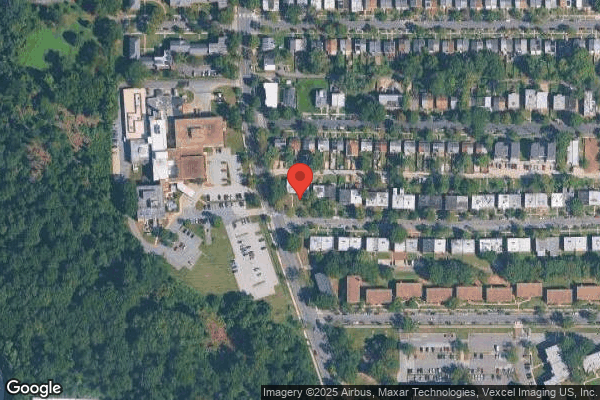
4601 MARTIN LUTHER KING JR AVENUE SW, WASHINGTON, DC 20032 (202) 574-5700
For profit - Limited Liability company 125 Beds Independent Data: November 2025 2 Immediate Jeopardy citations
Trust Grade
0/100
#13 of 17 in DC
Last Inspection: July 2023

Over 2 years since last inspection. Current conditions may differ from available data.

Overview

BridgePoint Sub-Acute & Rehab National Harborside has received an F Trust Grade, indicating significant concerns and poor overall quality of care. Ranking #13 out of 17 facilities in Washington, D.C., they fall in the bottom half, meaning there are several better options available. While the facility has shown improvement in reducing issues from 32 in 2024 to just 2 in 2025, staffing remains a concern with a 46% turnover rate, which is higher than the state average. They have accumulated $131,795 in fines, which is alarming and suggests ongoing compliance problems. However, they do have better RN coverage than 86% of facilities, which is a strength, as RNs can catch issues that other staff might miss. Specific incidents of concern include a resident being transferred without adequate assistance, leading to a fall and neck fracture, and failures in preventing psychological and physical abuse, underscoring the need for careful consideration by families.

Trust Score
F
0/100
In District of Columbia
#13/17
Bottom 24%
Safety Record
High Risk
Review needed
Inspections
Getting Better
32 → 2 violations
Staff Stability
⚠ Watch
46% turnover. Above average. Higher turnover means staff may not know residents' routines.
Penalties
✓ Good
$131,795 in fines. Lower than most District of Columbia facilities. Relatively clean record.
Skilled Nurses
✓ Good
Each resident gets 122 minutes of Registered Nurse (RN) attention daily — more than 97% of District of Columbia nursing homes. RNs are the most trained staff who catch health problems before they become serious.
Violations
⚠ Watch
126 deficiencies on record. Higher than average. Multiple issues found across inspections.
★★☆☆☆
2.0
Overall Rating
★★★☆☆
3.0
Staff Levels
★★★★☆
4.0
Care Quality
★★☆☆☆
2.0
Inspection Score
Stable
2024: 32 issues
2025: 2 issues

The Good

  • 4-Star Quality Measures · Strong clinical quality outcomes
  • Full Sprinkler Coverage · Fire safety systems throughout facility
  • No fines on record

Facility shows strength in quality measures, fire safety.

The Bad

2-Star Overall Rating

Below District of Columbia average (3.2)

Below average - review inspection findings carefully

Staff Turnover: 46%

Near District of Columbia avg (46%)

Higher turnover may affect care consistency

Federal Fines: $131,795

Well above median ($33,413)

Significant penalties indicating serious issues

The Ugly 126 deficiencies on record

2 life-threatening 3 actual harm
Mar 2025 2 deficiencies
CONCERN (D) 📢 Someone Reported This

A family member, employee, or ombudsman was alarmed enough to file a formal complaint

Potential for Harm - no one hurt, but risky conditions existed

Respiratory Care (Tag F0695)

Could have caused harm · This affected 1 resident

**NOTE- TERMS IN BRACKETS HAVE BEEN EDITED TO PROTECT CONFIDENTIALITY** Based on record review and staff interviews, for one (1) of eight (8) sampled residents, facility staff failed to provide Reside...

Read full inspector narrative →
**NOTE- TERMS IN BRACKETS HAVE BEEN EDITED TO PROTECT CONFIDENTIALITY** Based on record review and staff interviews, for one (1) of eight (8) sampled residents, facility staff failed to provide Resident #67 with the necessary respiratory care per the residents comprehensive care plan and the facility's policy after decannulation of her tracheostomy (trach) tube. The findings included: The facility's Unplanned Decannulation: Risk Assessment, Precautions and Interventions policy with an effective date of December 2014 documented: - An unplanned decannulation is an unplanned removal or dislodgement of an artificial airway prior to its scheduled removal. - If unplanned decannulation occurs, the following will take place: call a Rapid Response (RRT); assess if the patient is stable without the trach tube, if not, the trach tube will be immediately reinserted to establish a patent airway by a qualified practitioner. Resident #67 was admitted to the facility on [DATE] with multiple diagnoses that included: Encounter for Tracheostomy, Acute and Chronic Respiratory Failure with Hypercapnia, and Pyothorax Without Fistula, Review of the resident's medical record revealed a Physician's order dated 10/15/24 directing, Aspiration safety precautions, every shift; Monitor area under trach mask for signs of discoloration\edema\redness every shift; Trach care twice a day (BID) and as needed (PRN), two times a day for airway management; Maintain neck collar in place, check skin under neck collar every (q) shift for any changes and report to medical doctor (MD)/Nurse Practitioner (NP), every shift for safety; High Risk Airway, every day and night shift, post 'High Risk Airway' sign at resident's bedside; FIO2 (fraction of inspired oxygen): 28%, Trach type: Shiley, Trach size: 6.5 cuffless, every shift for Respiratory Failure, wean FIO2 as tolerated and to keep saturations greater than 92%. A physician's order dated 10/16/24 directed, Suction trach as needed, every shift. An Annual Minimum Data Set (MDS) assessment dated [DATE] showed that facility staff coded the resident as; severely impaired cognitive skills for decision making; received oxygen therapy, suctioning, and tracheostomy care. A Care plan focus area last reviewed on 11/26/24 documented: [Resident #67] is at risk for decannulating her trach device. Goal: [Resident #67] will continue to be monitored closely so as not to allow her harm self via decannulation through the next review date. Interventions: Educate resident to understand the risk of removing the trach device. Frequent rounds. [Resident #67] and representative (RP) educated on risk of removing trach. Frequent rounding to ensure safety. Provide alternative activities to keep her attention away from the trach. A care plan focus area last reviewed on 12/02/24: [Resident #67] has a High-Risk Airway due to (d/t) self-decannulation, airway mass, and mittens. Goal: [Resident #67] will have a patent and intact airway though the review period. Interventions: Tube out procedures: Keep extra trach tube and obturator at bedside. If tube is coughed out, call a Rapid Response immediately, reinsert airway using an obturator. If the tube cannot be reinserted and the resident is able to breathe spontaneously and there are no signs/symptoms of acute respiratory distress, provide oxygen via nasal cannula to maintain O2 saturation greater than 92%. Cover stoma site with a dressing. Keep head of bed (HOB) 30-45 degrees and monitor the resident with pulse oximetry and end-tidal for at least 24 hours. Monitor/document for signs of respiratory distress. A physician's order dated 12/12/24 directed, Speech Language Pathology (SLP) evaluation and treat 4x/week x 30 days. A 12/17/24 at 11:19 AM Pain Assessment in Advanced Dementia (PAINAD): score, 0. A 12/17/24 at 2:06 PM General Progress Note written by Employee #4 (Registered Nurse assigned to Resident #67): Patient alert, awake and non verbal. Vitals stable. Medicated as prescribed. Total care provided. writer called in room [ROOM NUMBER]A for trach concern. On assessment, writer noticed the gauze not in place, the trach tie loose holding the trach half way out. Writer tightened the neck tie and placed the gauze. No distress noted . A 12/17/24 at 3:00 PM: Speech Therapy Note: - Upon arrival, the patient had self-decannulated with trach [tube] near oxygen mask. - No signs of respiratory distress. - Alerted the nurse, two nurses entered the room and reinserted the trach. - The patient made a wincing face and attempted to vocalize, indicating pain. A12/17/24 at 3:40 PM Respiratory Treatment Care Assessment: - Trach intact. - Patient resting comfortably at this time after decannulation. - [Resident #67] self-decannulated again. - The nurse said that the tube was halfway out. - The two nurses working on 1 south re-inserted the tube successfully. - The patient is resting comfortably, no distress noted. An email correspondence from Employee #4 (Registered Nurse/RN) to Employee #1 (Administrator) dated 12/20/24 at 1:21 PM documented: - On 12/17/24, I arrived in 156A, the patient was in bed with no shortness of breath, no distress. - The gauze around the [trach] site wasn't in place and the trach was loose, the trach halfway out, visibly about 2 centimeters (cm). - The writer tightened the necktie and fixed the gauze to avoid irritation. Review of an employee statement written by Employee #5 (RN), dated 12/20/24 documented: - One of the therapists came to me and asked if I was [Resident #67's] nurse, I said not but went to the room. - I saw the resident with a loose trach tie and the trach [tube] was slightly out, no acute respiratory distress was noted. - I called [Employee #4]. - The nurse adjusted the trach [tube] and trach tie. - I left the room, leaving the nurse and the therapist in the room. An anonymous Complaint, DC~13353, was submitted to the State Agency on 12/26/24. During a face-to-face interview on 03/05/25 at 10:24 AM, Employee #3 (SLP) stated, I was going in to see [Resident #67] for a speech therapy session and when I walked in, I saw her trach [tube] had completely come out and was resting on the oxygen mask. I alerted the nursing staff so they can call respiratory. The resident had a history of picking at her trach, so I was very worried. I stayed in the room and two nurses walked in, and did not perform any hand hygiene. One nurse pinned down the resident while the other jammed the trach back in. The resident winced in pain when the trach was back in the way that they did. They did not check the resident's vital signs or anything and then they both left. I was very worried and reported it to my supervisor. During a face-to-face interview on 03/05/25 at 10:33 AM, Employee #5, stated, That day (12/17/24), one of the therapists came to me and said that [Resident #67] needed help. I went to the room and saw that the patient's trach [tube] was halfway out. I called her nurse, [Employee #4], who went into the room. [Employee #4] saw the trach [tube] was out and she reinserted it back in. She said she had it from there and I left the room. I left the patient, the nurse and the therapist in the room. When asked what the facility's protocol is for when a resident's trach tube is out, Employee #5 responded, We are supposed to call rapid response, if the respiratory therapist is not around. A rapid response was not called that day for Resident #67. During a telephone interview on 03/05/25 at 10:40 AM, Employee #4 stated, I was in another room, my colleague [Employee #5] called me and said she needed me in room [ROOM NUMBER]. I went into the room, I saw that [Resident #67]'s trach collar necktie was loose, and the trach [tube] was halfway out. I remember there was one white lady was in there, a therapist, who was standing there. What I did was, I moved [Resident #67]'s hands, tied the necktie and readjusted the trach [tube] back in place, and then went back to my duties. When asked the facility's protocol for when a trach tube comes out, Employee #4 responded, The facility's process is to not reinsert trach, we would call respiratory. The male RT (Respiratory Therapist) who was on the unit that day, was not on the floor at that time. I didn't call him because the trach [tube] did not come out completely. When asked if she checked for airway patency or oxygenation status before readjusting Resident #67's trach tube back in place, Employee #4 stated, No. Someone reported something to the Administration was made aware that something happened because they wrote me up and gave me an in-service. A face-to-face interview was conducted on 03/05/25 at 12:49 PM with Employee #1 (Administrator), Employee #2 (Director of Nursing/DON) and Employee #6 (Director of Respiratory) Employee #6 stated, The protocol is if a tube is dislodged, call a rapid response. While waiting for respiratory therapist or the response team to come, if the trach tube is completely out, cover the trach with gauze dressing, monitor the resident's breathing and oxygen and if required, provide the resident with supplemental breathing via an Ambu bag via nose or mouth. Once the respiratory therapist arrives, they do their assessment and reinsert the trach tube at the bedside. If not able to, the resident would get transferred out. Nurses are not trained to reinsert a trach tube. Each resident with an airway has a Tube Out intervention protocol written in their care plans that states exactly what to do. Whether the trach tube is partially or completely out, a respiratory therapist or trained staff would be the one to first check for airway in order to make the determination to reinsert the trach tube or not. We teach the tube out procedure to all nurses at the annual skills fair. Review of Employee #4's record on 03/05/25 for training/competencies showed no documented evidence that she was trained to be a qualified practitioner who can reinsert a resident's tracheostomy in the event of dislodgement/decannulation. It should be noted that Resident #67 did not suffer any harm from this deficient practice. Cross Reference 22B DCMR Section 3215.3
CONCERN (D) 📢 Someone Reported This

A family member, employee, or ombudsman was alarmed enough to file a formal complaint

Potential for Harm - no one hurt, but risky conditions existed

Deficiency F0726 (Tag F0726)

Could have caused harm · This affected 1 resident

**NOTE- TERMS IN BRACKETS HAVE BEEN EDITED TO PROTECT CONFIDENTIALITY** Based on record review and staff interviews, for one (1) of eight (8) sampled residents, facility staff failed to demonstrate co...

Read full inspector narrative →
**NOTE- TERMS IN BRACKETS HAVE BEEN EDITED TO PROTECT CONFIDENTIALITY** Based on record review and staff interviews, for one (1) of eight (8) sampled residents, facility staff failed to demonstrate competencies and skills to provide safe nursing care and services as evidenced by a nurse, who was not trained to do so, reinserting Resident #67's tracheostomy tube after decannulation. The findings included: The facility's Unplanned Decannulation: Risk Assessment, Precautions and Interventions policy with an effective date of December 2014 documented: - An unplanned decannulation is an unplanned removal or dislodgement of an artificial airway prior to its scheduled removal. - If unplanned decannulation occurs, the following will take place: call a Rapid Response (RRT); assess if the patient is stable without the trach tube, if not, the trach tube will be immediately reinserted to establish a patent airway by a qualified practitioner. Resident #67 was admitted to the facility on [DATE] with multiple diagnoses that included: Encounter for Tracheostomy, Acute and Chronic Respiratory Failure with Hypercapnia, and Pyothorax Without Fistula, Review of the resident's medical record revealed the following Physician's orders dated 10/15/24 directing, Aspiration safety precautions, every shift; Monitor area under trach mask for signs of discoloration\edema\redness every shift; Trach care twice a day (BID) and as needed (PRN), two times a day for airway management; Maintain neck collar in place, check skin under neck collar every (q) shift for any changes and report to medical doctor (MD)/Nurse Practitioner (NP), every shift for safety; High Risk Airway, every day and night shift, post 'High Risk Airway' sign at resident's bedside; FIO2 (fraction of inspired oxygen): 28%, Trach type: Shiley, Trach size: 6.5 cuffless, every shift for Respiratory Failure, wean FIO2 as tolerated and to keep saturations greater than 92%. An Annual Minimum Data Set (MDS) assessment dated [DATE] showed that facility staff coded; severely impaired cognitive skills for decision making; received oxygen therapy, suctioning, and tracheostomy care. A Care plan focus area last reviewed on 11/26/24: [Resident #67] is at risk for decannulating her trach device. Goal: [Resident #67] will continue to be monitored closely so as not to allow her harm self via decannulation through the next review date. Interventions: Educate resident to understand the risk of removing the trach device. Frequent rounds. [Resident #67] and representative (RP) educated on risk of removing trach. Frequent rounding to ensure safety. Provide alternative activities to keep her attention away from the trach. A care plan focus area last reviewed on 12/02/24: [Resident #67] has a High-Risk Airway due to (d/t) self-decannulation, airway mass, and mittens. Goal: [Resident #67] will have a patent and intact airway though the review period. Interventions: Tube out procedures: Keep extra trach tube and obturator at bedside. If tube is coughed out, call a Rapid Response immediately, reinsert airway using an obturator. If the tube cannot be reinserted and the resident is able to breathe spontaneously and there are no signs/symptoms of acute respiratory distress, provide oxygen via nasal cannula to maintain O2 saturation greater than 92%. Cover stoma site with a dressing. Keep head of bed (HOB) 30-45 degrees and monitor the resident with pulse oximetry and end-tidal for at least 24 hours. Monitor/document for signs of respiratory distress. A 12/17/24 at 2:06 PM General Progress Note written by Employee #4 (Registered Nurse assigned to Resident #67): Patient alert, awake and non verbal. Vitals stable. Medicated as prescribed. Total care provided. writer called in room [ROOM NUMBER]A for trach concern. On assessment, writer noticed the gauze not in place, the trach tie loose holding the trach half way out. Writer tightened the neck tie and placed the gauze. No distress noted . A 12/17/24 at 3:00 PM: Speech Therapy Note documented: - Upon arrival, the patient had self-decannulated with trach [tube] near oxygen mask. - No signs of respiratory distress. - Alerted the nurse, two nurses entered the room and reinserted the trach. - The patient made a wincing face and attempted to vocalize, indicating pain. 12/17/24 at 3:40 PM Respiratory Treatment Care Assessment: - Trach intact. - Patient resting comfortably at this time after decannulation. - [Resident #67] self-decannulated again. - The nurse said that the tube was halfway out. - The two nurses working on 1 south re-inserted the tube successfully. - The patient is resting comfortably, no distress noted. An email correspondence from Employee #4 (Registered Nurse/RN) to Employee #1 (Administrator) dated 12/20/24 at 1:21 PM documented: - On 12/17/24, I arrived in 156A, the patient was in bed with no shortness of breath, no distress. - The gauze around the [trach] site wasn't in place and the trach was loose, the trach halfway out, visibly about 2 centimeters (cm). - The writer tightened the necktie and fixed the gauze to avoid irritation. Review of an employee statement written by Employee #5 (RN), dated 12/20/24 documented: - One of the therapists came to me and asked if I was [Resident #67's] nurse, I said not but went to the room. - I saw the resident with a loose trach tie and the trach [tube] was slightly out, no acute respiratory distress was noted. - I called [Employee #4]. - The nurse adjusted the trach [tube] and trach tie. - I left the room, leaving the nurse and the therapist in the room. An anonymous Complaint, DC~13353, was submitted to the State Agency on 12/26/24. During a face-to-face interview on 03/05/25 at 10:24 AM, Employee #3 (SLP) stated, I was going in to see [Resident #67] for a speech therapy session and when I walked in, I saw her trach [tube] had completely come out and was resting on the oxygen mask. I alerted the nursing staff so they can call respiratory. The resident had a history of picking at her trach, so I was very worried. I stayed in the room and two nurses walked in, and did not perform any hand hygiene. One nurse pinned down the resident while the other jammed the trach back in. The resident winced in pain when the trach was back in the way that they did. They did not check the resident's vital signs or anything and then they both left. I was very worried and reported it to my supervisor. During a face-to-face interview on 03/05/25 at 10:33 AM, Employee #5, stated, That day (12/17/24), one of the therapists came to me and said that [Resident #676] needed help. I went to the room and saw that the patient's trach [tube] was halfway out. I called her nurse, [Employee #4], who went into the room. [Employee #4] saw the trach [tube] was out and she reinserted it back in. She said she had it from there and I left the room. I left the patient, the nurse and the therapist in the room. When asked what the facility's protocol is for when a resident's trach tube is out, Employee #5 responded, We are supposed to call rapid response, if the respiratory therapist is not around. A rapid response was not called that day for Resident #67. During a telephone interview on 03/05/25 at 10:40 AM, Employee #4 stated, I was in another room, my colleague [Employee #5] called me and said she needed me in room [ROOM NUMBER]. I went into the room, I saw that [Resident #67]'s trach collar necktie was loose, and the trach [tube] was halfway out. I remember there was one white lady was in there, a therapist, who was standing there. What I did was, I moved [Resident #67]'s hands, tied the necktie and readjusted the trach [tube] back in place, and then went back to my duties. When asked the facility's protocol for when a trach tube comes out, Employee #4 responded, The facility's process is to not reinsert trach, we would call respiratory. The male RT (Respiratory Therapist) who was on the unit that day, was not on the floor at that time. I didn't call him because the trach [tube] did not come out completely. When asked if she checked for airway patency or oxygenation status before readjusting Resident #67's trach tube back in place, Employee #4 stated, No. Someone reported something to the Administration was made aware that something happened because they wrote me up and gave me an in-service. A face-to-face interview was conducted on 03/05/25 at 12:49 PM with Employee #1 (Administrator), Employee #2 (Director of Nursing/DON) and Employee #6 (Director of Respiratory) Employee #6 stated, The protocol is if a tube is dislodged, call a rapid response. While waiting for respiratory therapist or the response team to come, if the trach tube is completely out, cover the trach with gauze dressing, monitor the resident's breathing and oxygen and if required, provide the resident with supplemental breathing via an Ambu bag via nose or mouth. Once the respiratory therapist arrives, they do their assessment and reinsert the trach tube at the bedside. If not able to, the resident would get transferred out. Nurses are not trained to reinsert a trach tube. Each resident with an airway has a Tube Out intervention protocol written in their care plans that states exactly what to do. Whether the trach tube is partially or completely out, a respiratory therapist or trained staff would be the one to first check for airway in order to make the determination to reinsert the trach tube or not. We teach the tube out procedure to all nurses at the annual skills fair. Review of Employee #4's record on 03/05/25 for training/competencies showed no documented evidence that she was trained to be a qualified practitioner who can reinsert a resident's tracheostomy in the event of dislodgement/decannulation. It should be noted that Resident #67 did not suffer any harm from this deficient practice. Cross Reference 22B DCMR Section 3210.4
Oct 2024 26 deficiencies 1 Harm
SERIOUS (G) 📢 Someone Reported This

A family member, employee, or ombudsman was alarmed enough to file a formal complaint

Actual Harm - a resident was hurt due to facility failures

Accident Prevention (Tag F0689)

A resident was harmed · This affected 1 resident

**NOTE- TERMS IN BRACKETS HAVE BEEN EDITED TO PROTECT CONFIDENTIALITY** Based on record review and staff interview for one (1) of 55 sampled residents, facility staff failed to ensure that Resident #6...

Read full inspector narrative →
**NOTE- TERMS IN BRACKETS HAVE BEEN EDITED TO PROTECT CONFIDENTIALITY** Based on record review and staff interview for one (1) of 55 sampled residents, facility staff failed to ensure that Resident #67 (who is dependent on staff for activities of daily living, bed mobility and transferring from bed to chair) received adequate supervision when staff failed to use two staff person(s) while attempting to transfer a resident from bed to chair, subsequently the resident fell from the bed to the floor and sustained a neck fracture. Actual harm was identified on 7/15/2024 for resident #67. The findings included: A facility policy titled 'Falls and Fall Risk, Managing' with a review date of 05/24/24 documented, Policy Statement - Based on previous evaluation and current data, the staff will identify interventions related to the resident's specific risks and causes to try to prevent the resident from falling and to try to minimize complications from falling and Definition: According to the MDS, a fall is defined as: Unintentionally coming to rest on the ground, floor or other lower level and Fall Risk Factors 2. Resident conditions that may contribute to the risk of falls include: c. delirium and other cognitive impairment; g. medication side effects; i. functional impairments; k. incontinence and 3. Medical factors that contribute to the risk of falls include: e. balance and gait disorders; etc. and Fall Risk Assessment - 7. The staff, with the support of the attending physician, will evaluate functional and psychological factors that may increase fall risk, including ambulation, mobility, gait, balance, excessive motor activity, Activities of Daily Living (ADL) capabilities, activity tolerance, continence, and cognition. A facility policy titled 'Activities of Daily Living (ADLs), Supporting' with a review date of 05/24/2024 documented, Appropriate care and services will be provided for residents who are unable to carry out ADLs independently, with the consent of the resident and in accordance with the plan of care, including appropriate support and assistance with: b. Mobility (transfer and ambulation, including walking) and A resident's ability to perform ADLs will be measured using clinical tools, including the MDS (Minimum Data Set). Functional decline or improvement will be evaluated in reference to the Assessment Reference Date (ARD) and the following MDS definitions: e. Total Dependence - Full staff performance of an activity with no participation by resident for any aspect of the ADL activity. A facility policy titled 'Dementia - Clinical Protocol' with a review date of 05/24/24 documented, Treatment/Management: 4. Direct care staff will support the resident in initiating and completing activities and tasks of daily living. Resident #67 was admitted to the facility on [DATE] with multiple diagnoses that included: Dementia, Restlessness/Agitation and Anxiety Disorder. A review of Resident #67's medical record revealed: A care plan dated 09/08/22 documented, Focus- [Resident's name] had an actual fall on 8/23/22 with a skin tear to the left elbow r/t (related to) muscle weakness. Goal- [Resident's name] will resume usual activities without further incident, an open skin tear to the left elbow will be healed without any complication through the review date. Interventions- Bed in lowest position when resident is in bed to minimize fall related injuries. Continue interventions on the at-risk plan. Monitor skin tear to left elbow every shift and notify MD if any s/s of infection is noted. Pharmacy consult to evaluate medications. PT (physical therapy) consult for strength and mobility. Mats to floor when resident is in bed to minimize fall related injuries Date Initiated: 10/12/2022. A care plan dated 09/08/22 documented, Focus-[Resident's name] has limited physical mobility r/t (relatd to) Disease Process. Goal-[Resident's name] will remain free of complications related to immobility, including fall-related injury through the next review date. Interventions- Provide supportive care, assistance with mobility; Provide gentle range of motion as tolerated. A care plan dated 09/08/22 documented, Focus-[Resident's name] has an alteration in musculoskeletal status r/t immobility, bedbound. Goal-[Resident's name] will remain free of injuries or complications related to the disease process. Interventions- Monitor/document for risk of falls. Educate resident/family /caregivers on safety measures that need to be taken in order to reduce risk of falls. (If resident has a care plan for falls, refer to this). A care plan dated 09/08/22 documented, Focus-[Resident's name] uses anti-anxiety medications r/t anxiety disorder. Goal-[Resident's name] will be free from discomfort or adverse reactions related to anti-anxiety therapy through the review date. Interventions- Monitor/document/report PRN (as neded) clumsiness, slow reflexes, Slurred speech, confusion and disorientation, depression, dizziness, lightheadedness, impaired thinking and judgment, memory loss, forgetfulness, nausea, stomach upset, blurred or double vision. UNEXPECTED SIDE EFFECTS: Mania, hostility, rage, aggressive or impulsive behavior, hallucinations. A care plan dated 11/05/2022 documented, Focus- [Resident's name] had actual fall no injury 06/28/2024 [Resident's name] had actual fall Resident found sitting on floor mat no injury. 7/15/2024 fall with injury. Interventions- For no apparent acute injury, determine and address causative factors of the fall. Frequent rounding when resident is in bed, reposition if resident is found close to the edge of the bed. Neuro-checks daily for 72 hours. A care plan dated 01/20/23 documented, Focus- [Resident's name] has an ADL (activities of daily living) self-care performance deficit r/t to disease process. Goal- [Resident's name] will improve current level of function in ADLs through the review date. Interventions- Bed Mobility: The resident is dependent on (2) staff for repositioning; BEDFAST: The resident is bedfast all or most of the time. A physician order dated 08/16/23 documented, Fall and Safety Precaution every shift. A physician order dated 08/16/23 documented, Side rails up x 2 while resident is in bed BID (twice daily) for bed mobility every shift. A physician order dated 09/05/23 documented, Antianxiety Medication - Monitor for drowsiness, slurred speech, dizziness, nausea, aggressive/impulsive behavior. A physician order dated 04/26/24 documented, Before lunch staff to Bring resident to nursing station in her geri chair and bring resident crochet supply to her while watching resident every shift. A physician order dated 05/06/24 documented, Psych Consult and PRN one time only for Agitation and restlessness. A physician order dated 05/11/24 documented, Escitalopram Oxalate Tablet 10 MG Give 1 tablet via G-Tube one time a day for Depression/agitation. A Quarterly and State Minimum Data Set (MDS) assessment dated [DATE] documented: facility staff coded a Brief Interview for Mental Status (BIMS) summary score of 'Severely Impaired;' Functional Abilities and Goals documented: Two+ person physical assist with Bed mobility, Transfers and Toilet use; Walking was coded as '88,' indicating the activity was not attempted due to medical condition or safety concerns; Dependent for all Activities of Daily Living (ADLs) that included toileting hygiene, personal hygiene, oral hygiene, dressing and bathing; Mobility documented: Dependent for all mobile activities that included Chair/bed-to-chair transfer, Toilet/shower transfer, Roll left and right, Sit to lying, Lying to sitting on side of bed and Sit to stand. A physician order dated 05/28/24 documented, Behaviors - Monitor for the following: Restlessness (Agitation). A physician order dated 06/04/24 documented, clonazepam Oral Tablet Disintegrating 0.5 MG (milligram) (Clonazepam) Give 1 tablet via G(Gastrostomy)-Tube two times a day for Agitation and anxiety Hold for sedation. A care plan dated 06/28/24 documented, Focus -06/28/2024 [Resident's name] had actual fall Resident found sitting on floor mat no injury. Goal- [Resident's name] will resume usual activities without further incident Revision on: 07/12/2024. Interventions- Hourly checks for safety 6/28/2024. Rehab consult. A Morse Fall Scale dated 06/28/24 documented that Resident #67 had a history of falls, had impaired gait, overestimated or forgets limits to ambulate safely and had a Fall Risk Score of '55.0,' indicating the resident was a high risk for falls. A review of a Treatment Administration Record (TAR) dated Jul-24 (July 2024) revealed that Resident #67 was totally dependent on staff and required two (2) or more person physical assist for transferring, but was only provided with one (1) person physical assist when transferring the resident on 07/02/24, 07/03/24, 07/05/24 and 07/13/24. A physician order dated 07/12/24 documented, Hourly checks for safety due to recent fall every hour for poor safety awareness due to recent fall. A physician progress note dated 07/13/24 at 07:00AM documented, Dementia, Non-ambulatory and limited ROM (range of motion). A physician progress note dated 07/13/24 documented, Type of visit: Follow-Up and Dementia and Non-ambulatory and limited ROM (range of motion) and Restlessness/agitation-?d/t (due to) cognitive impairment. It should be noted that there was no documentation in the Treatment Administration Record on 07/15/24, the date of fall, when she sustained a neck fracture during a transfer from bed to Geri-chair by one (1) staff person. An SBAR (Situation, Background, Assessment, Request) Communication Form and progress note dated 07/15/24 at 14:55 (2:55PM) documented, Resident fell and [I] was reaching for the Geri (Geriatric) chair which was at the bed to position the chair for transfer the resident fell out of bed and [Resident #67 ' s name] was up in the bed at about a 45-degree position prior to me attempting to pull the Geri Chair closer to the bed to transfer her to the GERI-CHAIR. An eInteract Transfer Form dated 07/15/24 at 15:00 (3:00PM) documented, Sent to [Hospital Name] and Fall, unplanned and Alert, disoriented and Not ambulatory and Transfers Dependent. A care plan with a revision date of 07/15/24 documented, 7/15/2024 fall with injury. Interventions- Staff to ensure Geri chair is very close to bed prior to transfer. Two staff members to assist during transfers. A Morse Fall Scale dated 07/15/24 documented that Resident #67 had a history of falls, had impaired gait, overestimated or forgets limits to ambulate safely and had a Fall Risk Score of ' 55.0, ' indicating the resident was a high risk for falls. A Facility Reported Incident [Intake Number: DC00012974] received by the State Agency on 07/15/24 at 09:49AM documented, resident had a fall while being provided with care and FUP (follow-up) 7/16/24: I finished giving [Resident ' s name] a bed bath as I was reaching for Geri chair which was beside the bed to position the chair for transfer, the resident fell out of bedand [Resident ' s name] was sitting up in the bed at about 45-degree position prior to me attempting to pull the Geri chair closer to the bed to transfer her to the Geri-chair. An Employee Warning Notice dated 07/15/24 documented, [Employee Name] CNA (Certified Nursing Assistant), Reason For Notice: Failure to prevent a fall and Employee educated to ensure Geri chair and all frequently used items within reach prior to transfer and also to have two staff members at all times assist with transfer. A hospital summary with an admit date of 07/15/24 documented, Yes-bed confined: unable to get up from bed without assistance, unable to ambulate and unable to sit in a chair or wheelchair and No-Can this patient safely be transported by car or wheelchair van (i.e., seated during transport without a medical attendant or monitoring?) and patient is confused. A hospital summary with an admit date of 07/15/24 documented, CT (computed tomography) scan SPINE/CERV (cervical) W/O (without) CONTRAST and Clinical History: Fall and Findings: An acute fracture through the base of the Ondontoid Process is noted with mild separation of the fracture fragments and The neurosurgeon [Doctor ' s name] should be followed up in 2 weeks and the soft cervical collar should remain on until cleared by the neurosurgeon/spine surgeon. A review of a Treatment Administration Record (TAR) dated Jul-24 (July 2024) revealed that Resident #67 was totally dependent on staff and required two (2) or more person physical assist for transferring, after she sustained fall with fracture on 07/15/24, but was only provided with one (1) person physical assist when transferring the resident on 07/16/24, 07/17/24, 07/18/24, 07/29/24 and 07/30/24. During a face-to-face interview conducted on 10/18/24 at 2:46 PM Employee #42 (RN) acknowledged the findings and stated, The CNA was providing care alone at the time of the fall. She ' s [Resident #67] a high risk for falls. She's not a heavy patient, but if you ' re transferring her out of bed it ' s definitely a two (2) person assist. Cross reference: 22B DCMR § 3211.1(d)
CONCERN (D) 📢 Someone Reported This

A family member, employee, or ombudsman was alarmed enough to file a formal complaint

Potential for Harm - no one hurt, but risky conditions existed

Deficiency F0561 (Tag F0561)

Could have caused harm · This affected 1 resident

**NOTE- TERMS IN BRACKETS HAVE BEEN EDITED TO PROTECT CONFIDENTIALITY** Based on record review and staff interviews, for one (1) out of 55 sampled residents, facility staff failed to ensure that the r...

Read full inspector narrative →
**NOTE- TERMS IN BRACKETS HAVE BEEN EDITED TO PROTECT CONFIDENTIALITY** Based on record review and staff interviews, for one (1) out of 55 sampled residents, facility staff failed to ensure that the resident's preference/choice was honored as evidence by failing to get the resident out of bed and into the Geri chair. Resident #72. The findings included: Resident #72 was admitted to the facility on [DATE] with diagnoses that included Cerebral Infarction, Dysphagia, Acute and Chronic Respiratory Failure with Hypoxia, and Dementia. Review of the resident's medical record revealed the following: A face sheet that showed that the resident's son is listed as Responsible Party (RP), care and financial power of attorney (POA); care conference person; and emergency contact #1. An Annual Minimum Data Set (MDS) dated [DATE] showed that facility staff coded: no speech; rarely/never makes self-understood; rarely/never makes understands others; severely impaired cognitive skills for daily decision making; no refusal of care behaviors; functional limitations in range of motion on one side for upper extremity; and was totally dependent on two (2) staff for bed mobility and transfers. 08/15/24 at 11:12 AM Care Conference Note: - Resident's son would like resident out of bed at least 4x a week. 08/15/24 at 12:43 PM Care Conference Note: - Resident's son wants resident to get out of bed 4X/week. Told him we will try to accommodate his request but might not be possible every week. A Care plan focus area: [Resident #72] has an ADL (activities of daily living) self-care performance deficit r/t (related to) Dementia, limited range of motion, revised on 08/16/24, had interventions that included, resident to be up in Geri Chair five times weekly. A physician's order dated 09/25/24 directed, Have resident out of bed to Geri Chair on Tuesday, Thursday and Saturdays. Private duty aide to take resident outside for fresh air. License Nurse to ensure that C.N.A (Certified Nurse Aide) assist with getting resident out of bed to Geri Chair. 10/05/24 at 8:41 PM General Progress Note: - Total ADL care provided. Turned and repositioned every two hours for pressure relief and comfort. - Staff will continue with plan of care and monitor. 10/06/24 at 8:37 PM General Progress Note: - Resident was up in Geri chair this shift and taken downstairs by {pronouns} private aide. - Resident's son visited this shift, and no new complaint made. A Complaint, DC~13186, received by the State Agency on 10/09/24 documented, Problem as been ongoing for a year and a half. The facility is currently experiencing a CNA (Certified Nurse Aide) staffing shortage. On the 3rd floor, only two CNA's are responsible for the care of 30 to 35 patients. This shortage is negatively impacting patient care, leading to staff burnout and causing CNA's to leave their positions. [Resident #72] is nonverbal and nonmobile, and she enjoys being outside. She requires assistance with a lift to be placed in a special chair. Initially, she was being taken outside four times a week, which was later reduced to three times, if possible. Now it is reported that residents, are only going outside once or twice a week, with staff citing a lack of time as the reason. [Anonymous] is questioning how staff cannot spare the 10 minutes needed to assist in placing the resident in her chair, especially when the family is willing to take her outside themselves. No human being should be restricted from going outdoors. The family even pays for a private aide . Another issue is that CNA's are frequently pulled away from their duties on the 3rd floor to transport residents to the dialysis unit on the first floor. This raises concerns about the care of the other residents who are not receiving dialysis. Why is there insufficient staffing to cover both the dialysis transport and the care of the other residents? Medicare patients are being neglected for 6 hours, three days a week. During this time, they are not being changed or fed in a timely manner. While the facility itself is clean, and the nurses and doctors do their jobs well, the management, particularly upper management, is falling short in addressing these critical staffing and caring issues. During a face-to-face interview conducted on 10/10/24 at 3:10 PM, [Anonymous] stated, there is understaffing with CNAs that has led to push back in getting [Resident #72] outside for fresh air. Management has stated that they can only transfer her to the chair 4 times a week, then it decreased to now, three days a week. Residents should be allowed to go outside if that is their preference. They are taking CNAs from the floors to transport people to dialysis, and they stay there a long time. In turn, leaving the floors understaffed. This issue has been brought to management, and they say they just don't have the staff. Now we are settled, for now, on getting my mom up in the chair and outside, 3 days, the non-dialysis days, Tues, Thurs, Sat. This past Saturday (10/05/24) and the staff refused to get [Resident #72] out of bed. It feels like these residents are being warehoused and that's not right. During unit tour on 10/11/24 at 9:05 AM, [Resident #72] was observed lying in bed and had a sign over her bed that documented, 9/18/24 On Geri-Chair Schedule Tuesday Thursday Saturday. During a face-to-face interview on 10/11/24 at 2:50 PM, Employee #4 (3 East Unit Manager) stated, We (facility staff and resident's son) agreed on a contract with the son to get her out of bed, which was before we had dialysis residents on the unit. Lately, because of the dialysis residents, the nurses and CNAs have to take residents to dialysis and then go pick them up. The son has voiced the concerns to me and Employee #1 (Administrator). We talked about it, me, him, [Employee #1] and said we'd make sure [pronouns] gets up on the non-dialysis (Tues, Thurs, Sat) days and that [pronouns] is up early enough to be able to go outside. It's a lot on the nursing staff to do on the dialysis days. It was brought to the employee's attention that Resident #72 did not get out bed and into the chair on Saturday (10/05/24), a non-dialysis day. Employee #4 stated that [pronouns] was not aware that the resident was not put into the Geri chair and further stated, I follow up with staff and the private care giver to make sure we are not missing a day. When asked on Monday (10/07/24), the staff said she got up over the weekend. I don't know which day it was, but it should've been on Saturday. During a face-to-face interview on 10/11/24 at 3:25 PM, Employee #1 reviewed the nursing assignment for unit 3 east and stated that there were three (3) nurses, two (2) CNAs and two orienting CNAs on the unit for the day shift, 7:00 AM - 7:00 PM, with a resident census of 28. During a face-to-face interview on 10/11/24 at 3:45 PM, Employee #5 (assigned CNA for Resident #72 on 10/05/24, day shift) stated, I had an emergency and had to leave around 12:15 PM. I am not sure if anyone else came over to replace me. It was a hectic that morning, it was just the two of us. I had not provided her (Resident #72) ADL care before having to leave. During a face-to-face interview on 10/11/24 at 3:54 PM, Employee #6 (Registered Nurse/RN, assigned to Resident #72 on 10/05/24, day shift) stated, They (facility management) did not send someone to replace the CNA that left. The nursing supervisor came to help us and that's how we provided patient care that day. [Resident #72] did not get out of bed that day. We were too busy on the floor. The evidence showed that facility staff failed to ensure that the resident's preference/choice was honored by not getting Resident #72 out of bed and into the Geri chair on a non -dialysis day, Saturday, 10/05/24. Cross Reference 22B DCMR § 3269.1(h)
CONCERN (D) 📢 Someone Reported This

A family member, employee, or ombudsman was alarmed enough to file a formal complaint

Potential for Harm - no one hurt, but risky conditions existed

Deficiency F0578 (Tag F0578)

Could have caused harm · This affected 1 resident

**NOTE- TERMS IN BRACKETS HAVE BEEN EDITED TO PROTECT CONFIDENTIALITY** Based on record reviews and staff interviews, for one (1) of 55 sampled residents, facility staff failed to have documented evid...

Read full inspector narrative →
**NOTE- TERMS IN BRACKETS HAVE BEEN EDITED TO PROTECT CONFIDENTIALITY** Based on record reviews and staff interviews, for one (1) of 55 sampled residents, facility staff failed to have documented evidence that the resident or their representative (RP) were provided with written information concerning the right to accept or refuse to formulate an Advance Directive (AD). Resident #121. The findings included: Resident #121 was admitted to the facility on [DATE] with multiple diagnoses that included: Acute and Chronic Respiratory Failure, Gastrostomy Status, Dysphagia, and Anxiety Disorder. Review of the resident's medical record revealed the following: A face sheet that showed that the resident's father is his RP and emergency contact #1. A physician's order dated 08/20/24 directed, Full code. A care plan focus area: [Resident #121] wishes to remain a full code, was initiated on 08/21/24. - Goal: Interdisciplinary team (IDT) team will honor the resident wishes for end-of-life care. - Interventions: Offer 5 Wishes (the facility's AD form) quarterly. An admission Minimum Data (MDS) assessment dated [DATE] showed that facility staff coded a Brief Interview for Mental Status (BIMS) summary score of 09, indicating moderately impaired cognitive status. During a record review on 10/01/24 at 9:52 AM, there was no documented evidence that the resident or their representative (RP) were provided with written information concerning the right to accept or refuse to formulate an Advance Directive (AD). During a face-to-face interview on 10/03/24 at 12:35 PM, Employee #7 (Social Services) acknowledged the finding and stated, (Resident #121) does not have AD, and [pronouns] father (resident's RP) was not provided with information about an AD. The father was more concerned about getting power of attorney (POA) documents filled out. Cross Reference 22B DCMR § 3231.12(r)
CONCERN (D) 📢 Someone Reported This

A family member, employee, or ombudsman was alarmed enough to file a formal complaint

Potential for Harm - no one hurt, but risky conditions existed

Safe Environment (Tag F0584)

Could have caused harm · This affected 1 resident

**NOTE- TERMS IN BRACKETS HAVE BEEN EDITED TO PROTECT CONFIDENTIALITY** 4. Resident #329 was admitted to the facility on [DATE] with diagnoses that included: Quadriplegia, Acute and Chronic Respirator...

Read full inspector narrative →
**NOTE- TERMS IN BRACKETS HAVE BEEN EDITED TO PROTECT CONFIDENTIALITY** 4. Resident #329 was admitted to the facility on [DATE] with diagnoses that included: Quadriplegia, Acute and Chronic Respiratory Failure, Pressure Ulcer of the Sacral Region Stage 3, Schizoaffective Disorder Bipolar Type, Urinary Tract Infection, Other Psychoactive Substance Abuse and Resistance to Vancomycin. A review of Resident #329 ' s medical record revealed: A Face Sheet listed the Resident and a family member as the Responsible Party(ies). A quarterly minimum data set (MDS) dated [DATE] documented that Resident #329: had a BIMS score of, 15, indicating intact cognition; required total assistance (was totally dependent on staff) for all ADLs (activities of daily living) except eating; had lower extremity impairment on both sides; had an indwelling catheter; had four Stage 3 pressure ulcers; had one Stage 4 pressure ulcer; had five unstageable pressure ulcers; and had one unstageable deep tissue injury. An SBAR (Situation, Background, Assessment, and Request) Communication Form and Progress Note dated 05/05/23 at 10:03 AM, that documented: Situation: Transfer out via stretcher to [Local Hospital] for IV/ABT (intravenous antibiotics); Treatment for Sacral wound drainage. Refused wound treatment. Background: Quadriplegia, Acute and Chronic Respiratory Failure with Hypoxia, See POC (plan of care), Assessment or Appearance for LPN: Appearance: Resident is alert and verbally responsive. Request: Nursing Notes: On 5/4/23, [the] wound team assessed him, and a report was given to N/P (Nurse Practitioner). New order was placed for him to start on IV Vancomycin HCL in Dextrose 500-5mg x10 days for severe sacral wound drainage. Resident said, ' I am not taking any IV treatment in this facility. I want to go to [Name of Local Hospital] for an IV (intravenous) treatment. ' NP [Nurse Practitioner] aware and agreed. R/P (Representative) aware. {the] Resident was scheduled to transfer on 5/5/23 @ 9:30 am to [Name of Local Hospital] .left at 9:30 am via stretcher in an ambulance to [Name of Local Hospital] ER (Emergency Room). A Physician ' s Order dated 05/05/23/ at 4:02 PM that documented: D/c (discharge) to hospital. one time only for needs IV abx (antibiotics), [the] patient refused therapy in SNF (shared nursing facility) for one (1) Day. A Hospital Discharge summary, dated [DATE] which showed that Resident #329 was in the hospital from [DATE] to 05/16/23. A complaint that was submitted to the State Agency (DC~13145) on 09/18/24 at 11:45 am that documented: . When discharged from [Local Hospital], [Resident #239] was mistakenly sent to the wrong facility, [Name of Facility]. Although this was supposed to be a temporary stay, [the Resident] remained there until discharge on [DATE] . During a telephone interview on 10/03/24 at 03:18 PM, Resident #329/Complaintant stated, I was supposed to go back to the facility, but when I was discharged from the hospital, I was transferred to [Name of Facility]. I spoke with the Social Worker from the old facility/Employee # 7, who said that I could not return to the facility, because I had used all my bed hold days, and the facility had no rooms available. Facility said when a room became available, facility would let me know. I never went back to [Name of Facility]. Employee #7 told me that someone would bring my personal belongings to me. I received some of my belongings, but not all of them. I had some family pictures that had been in my room and were never returned. A few days before I was discharged from the other facility to go home, I contacted Employee #32 (Security Supervisor) at the former facility to ask, if they had the pictures I left in my room. Employee #32 told me that the facility did not have the pictures or any other personal belongings for me, and if they had not been claimed, they had been thrown away by facility staff. During a face-to-face interview on 10/04/24 at 3:13 PM with Employee #32 /Facility ' s Security Supervisor, stated: When the resident is discharged to the hospital, the Resident 's personal property/belongings are retrieved from the Resident 's room by the nursing staff who annotates the items on an inventory list, then bags and labels the resident 's items/personal belongings and takes them to security. The nurse and security then go through the Resident 's bagged and labeled personal items to ensure everything is on the inventory sheet. The inventory sheet then goes in a notebook, kept in a binder at the security desk. The Resident 's belongings are then locked in the storage area behind the security desk. Security keeps the Resident 's belongings for approximately two (2) weeks/14 calendar days. The security staff attempts to contact the resident or family members after 14 days. The security staff is supposed to document when we reach the Resident or their family in the inventory book, or on the inventory sheet itself. If a resident's belongings are left longer than 2 weeks, we usually keep them for another week or two. We then donate them to the other residents, or we destroy/discard them. He added, I remember Resident #329 calling a few days after resident was admitted to [Name of other Facility], [pronouns] spoke with me. [Pronouns] said they were missing some pictures. The pictures were not written on the inventory sheet and there were no personal belongings for Resident # 328 that were left in the storage area. He added, We reviewed the inventory log sheets and the Resident had no inventory sheets for May 2023 when the Resident was discharged from the facility to the hospital. He also stated there was no documentation showing that the Resident's family had been contacted to pick up the resident 's belongings. The Employee then acknowledged the findings. Based on observations and interview, facility staff failed to provide housekeeping services necessary to maintain a safe, clean, comfortable environment as evidenced by a torn privacy curtain in one (1) of 18 resident's rooms, an entrance door in one (1) of 18 resident's rooms that would not stay open, and broken furniture such as two (2) of two (2) Geri chairs, and one (1) of one (1) broken desk that were stored in the dayroom located on resident care unit 3 West; and facility staff failed to exercise reasonable care for the protection of the resident's property from loss or theft when the resident was transferred to a local hospital. Resident #329. The findings included: During an environmental walkthrough of the facility on October 17, 2024, at approximately 11:00 AM, the following were observed: 1. The privacy curtain in resident room [ROOM NUMBER] A was torn at the mesh and hung loose from the curtain hooks. 2. The entrance door to resident room [ROOM NUMBER] would not stay open and was held in place with a wedge door stop. 3. Broken furniture such as two (2) of two (2) Geri chairs, and one (1) of one (1) desk were stored in the dayroom on 3 West. Employee #12 confirmed the findings during a face-to-face interview on October 17, 2024, at approximately 11:30 AM.
CONCERN (D) 📢 Someone Reported This

A family member, employee, or ombudsman was alarmed enough to file a formal complaint

Potential for Harm - no one hurt, but risky conditions existed

Grievances (Tag F0585)

Could have caused harm · This affected 1 resident

**NOTE- TERMS IN BRACKETS HAVE BEEN EDITED TO PROTECT CONFIDENTIALITY** Based on record review and staff interviews, for one (1) of 55 sampled residents, facility staff failed to have documented evide...

Read full inspector narrative →
**NOTE- TERMS IN BRACKETS HAVE BEEN EDITED TO PROTECT CONFIDENTIALITY** Based on record review and staff interviews, for one (1) of 55 sampled residents, facility staff failed to have documented evidence that they made any prompt efforts to resolve one resident's complaint/grievance regarding Americans with Disabilities Act (ADA) accessibility at the facility when resident alleged that hand was smashed in a door. Resident #71. The findings included: Review of the facility's Grievances policy dated 05/24/24 documented: - The Administrator and staff will make prompt efforts to resolve grievances to the satisfaction of the resident and/or representative. - Upon receipt of a grievance and/or complaint, the Grievance Officer will review and investigate the allegations and submit a written report of such findings to the Administrator within five (5) working days of receiving the grievance and/or complaint. - A written summary of the investigation will also be provided to the resident and a copy will be filed in the Administrator's office. Resident #71 was admitted to the facility on [DATE] with multiple diagnoses that included: Spastic Hemiplegia Affecting Left Dominant Side, Contracture of Muscle, Left Hand, Weakness, and Difficulty in Walking. Review of the resident's medical record revealed the following: An Annual Minimum Data Set (MDS) assessment dated [DATE] showed that facility staff coded: adequate hearing; clear speech; makes self-understood; understands others; a Brief Interview for Mental Status (BIMS) summary score of 15, indicating intact cognitive status; no indicators of psychosis; no rejection of care behaviors; functional limitations in range of motion on one side for upper and lower extremities; used a wheelchair mobility device; required extensive assistance of one person for bed mobility; transfers and toilet use. A document presented to the survey team by the resident dated on 10/03/24 documented, September 23, 2024. Dear [Resident #71], providing quality care is the ultimate goal of the staff at [Facility name]. We thank you for bringing your concerns to our attention. The following is a response to your recent information regarding an opportunity for us to improve our services and provide the quality of care our patients and their families expect and deserve. We understand your concerns to be the following . ADA non-compliance: wheelchair accessibility. We feel it is important for you to be aware that your concern has been forwarded to the administrative offices of the hospital. This has initiated an investigation under their auspices. As of today, the following has occurred . Doors will be assessed for ADA compliance: wheelchair accessibility. We expect complete resolution of this issue to be on or before 09/30/24. This document was signed by Employee #8 (Chief Executive Officer/CEO). During a face-to-face interview with Resident #71 on 10/14/24 at 11:00 AM, Resident #71 stated that he was in the dining room when the door smashed his right hand on his way out. I filed a complaint and brought the concern to the administration office and that's when I got that letter. The resident could not remember the exact date and time when this alleged incident occurred but stated that it was before September 30th, 2024. They (administration) haven't told me anything else since that letter was given to me. An email correspondence provided to the surveyor on 10/14/24 at 1:50 PM documented the following: - Friday, 09/20/24; to [Employee #8]. - Reporter, [Resident #71]. - What is the general nature of this matter? Accessibility of the hospital; in the dining room area. - Approximate time of this incident: the week of 09/02/24. - In the week of September 2, 2024, in the dining room area, [Resident #71] smashed his hands on the door trying to get out . [Resident #71] is requesting something to be done and make the hospital wheelchair accessible . A face-to-face interview was conducted on 10/14/24 at 1:57 PM with Employee's #1 (Administrator) and #8, where they were asked to provide documented evidence of the prompt efforts made by the facility to resolve Resident #71's complaint/grievance regarding Americans with Disabilities Act (ADA) accessibility at the facility. Employe #8 stated, I got forwarded the resident's complaint from the corporate compliance line which was on 09/20/24 and I shared that information with [Employee #1] that day. Employe #1 stated, I was made aware of the complaint on 09/20/24 by Employee #8. Both employees were asked again to provide documented evidence of the facility's efforts to investigate and resolve Resident #71's complaint/grievance that they both aware of on 09/20/24. Employee #8 stated that he did not currently have such documentation and would follow-up. The evidence showed that even though facility staff were made aware of Resident #71's complaint/grievance regarding ADA accessibility on 09/20/24, on 10/14/24, twenty-four (24) days later, there was no documented evidence that his complaint/grievance was investigated, that any prompt efforts were made to resolve his complaint/grievance or that it was brought to the attention of the facility's Grievance officer.
CONCERN (D) 📢 Someone Reported This

A family member, employee, or ombudsman was alarmed enough to file a formal complaint

Potential for Harm - no one hurt, but risky conditions existed

Deficiency F0604 (Tag F0604)

Could have caused harm · This affected 1 resident

**NOTE- TERMS IN BRACKETS HAVE BEEN EDITED TO PROTECT CONFIDENTIALITY** Based on observations, record review and staff interviews, for one (1) of 55 sampled residents, facility staff failed to ensure ...

Read full inspector narrative →
**NOTE- TERMS IN BRACKETS HAVE BEEN EDITED TO PROTECT CONFIDENTIALITY** Based on observations, record review and staff interviews, for one (1) of 55 sampled residents, facility staff failed to ensure that 1 resident was free from any physical restraints imposed for purposes of convenience that was not required to treat the resident's medical symptoms. Resident #10. The findings included: Review of the facility's Restraints policy dated 05/24/24 documented: - Restraints shall only be used for the safety and well-being of the residents and only after alternatives have been unsuccessful. - Physical restraints are defined as a manual method or physical or mechanical device, material or equipment attached or adjacent to the resident's body that the individual cannot remove easily, which restricts freedom of movement. - The definition of a restraint is based on the functional status of the resident and not the device. If the resident cannot remove a device in the same manner in which staff applied it given the residents physical condition (i.e. side rails are put back down, rather than climbed over), and this restricts his/her typical ability to change position or place, that device is considered a restraint. Resident #10 was admitted to the facility on [DATE] with diagnoses that included: Conversion Disorder with Seizures or Convulsions, Difficulty in Walking, Chron's Disease, and Dementia. Review of the resident's medical record on 10/16/24 revealed the following: A physician's order dated 04/09/24 directed, Supervise resident every two hours while in bed, every 2 hours for to prevent falls. A physician's order dated 04/18/24 directed, Staff to remind resident not to attempt to get out of bed without staff assistance to minimize fall related injuries, every shift for minimize fall related injuries related to muscle weakness. A physician's order dated 08/31/24 directed, Side rails up X 2 to aid with mobility and repositioning when in bed. An Annual Minimum Data Set (MDS) assessment dated [DATE] showed that facility staff coded: adequate hearing; easily understands others; a Brief Interview for Mental Status (BIMS) summary score of 07, indicating severe cognitive impairment; no potential indicators of psychosis; no rejection of care behaviors; required limited assistance of one staff for bed mobility; required extensive assistance of two staff for transfers; had functional limitation in range of motion on one side for upper and lower extremity; and had an active diagnoses of Stroke, Hemiplegia Affecting Left Dominant Side, Muscle Weakness; and physical restraints were not used. A physician's order dated 09/10/24 directed, Fall and Safety Precaution: Bilateral floor mats to floor when resident is in bed to minimize fall related injuries. Licensed nurse to check for placement every shift. On 10/01/24 at 10:42 AM, Resident #10 was observed lying in bed, a fall mat on each side of the bed, on the floor, and all 4 side rails up. On 10/02/24 at 8:37 AM, Resident #10 was observed lying in bed, a fall mat on each side of the bed, on the floor, and all 4 side rails up. During a face-to-face interview on 10/02/24 at 10:05 AM, Employee #9 (Registered Nurse/RN) stated that Resident #10 is a high fall risks and that's why the resident needed all 4 side rails up while she was in the bed. On 10/03/24 at 12:32 PM, Resident #10 was observed lying in bed, a fall mat on each side of the bed, on the floor, and all 4 side rails up. On 10/08/24 at 10:00 AM, Resident #10 was observed lying in bed, a fall mat on each side of the bed, on the floor, and all 4 side rails up. On 10/09/24 at 2:03 PM, Resident #10 was observed lying in bed, a fall mat on each side of the bed, on the floor, and all 4 side rails up. On 10/16/24 at 1:45 PM, Resident #10 was observed lying in bed, a fall mat on each side of the bed, on the floor, and all 4 side rails up. During a face-to-face interview on 10/16/24 at 3:33 PM, Employee #10 (assigned Certified Nurse Aide/ CNA) stated, [Resident #10] has always had all the side rails up. It's been like that since I started working here in January [2024] and I don't know why. During a face-to-face interview on 10/16/24 at 3:40 PM, Employee #11 (Licensed Practical Nurse/LPN stated, The resident has four (4) side rails up because she tries to get out of the bed. The side rails are to keep resident from getting out of the bed and falling. I am not sure if there's a doctor's order for the 4 side rails. [Pronouns] has tried twice today to get out of the bed, and I saw resident with legs hanging in between the side rails. I had to put resident back in the bed. When asked if Resident #10 can manipulate the side rails to bring them down, the employee stated, I am not sure if resident is able to disengage the side rails to put them down, it's not something I have seen her do. The surveyor reviewed Resident #10's doctor's orders with the employee and he acknowledged that the order is for 2 side rails, not 4. The evidence showed that facility staff failed to ensure that Resident #10 was free from any physical restraints imposed for purposes of convenience that was not required to treat the resident's medical symptoms. During a face-to-face interview on 10/16/24 at 4:03 PM, Employee #2 (Interim Director of Nursing) acknowledged the finding and stated, [Resident #10] likes to stand up and for standing, holds onto the side rails to guide resident. When asked if the resident can lower the siderails, Employee #2 stated, [Pronoun] is not able to put them down. [pronoun] is a high falls risk, resident bed is kept low, and has floor mats. I will go and talk to my staff about not having all 4 side rails up. I cannot tell you how much they know as far what is considered a restraint. Cross Reference 22B DCMR§ 3216.1
CONCERN (D) 📢 Someone Reported This

A family member, employee, or ombudsman was alarmed enough to file a formal complaint

Potential for Harm - no one hurt, but risky conditions existed

Abuse Prevention Policies (Tag F0607)

Could have caused harm · This affected 1 resident

**NOTE- TERMS IN BRACKETS HAVE BEEN EDITED TO PROTECT CONFIDENTIALITY** Based on record review and interview, the facility staff failed to implement it's Abuse Prevention Program policy, As evidenced ...

Read full inspector narrative →
**NOTE- TERMS IN BRACKETS HAVE BEEN EDITED TO PROTECT CONFIDENTIALITY** Based on record review and interview, the facility staff failed to implement it's Abuse Prevention Program policy, As evidenced by not having documented evidence of that an investigation was conducted for an allegation of missing items for one (1) of 55 sampled residents. (Resident #226) The findings included: Resident #226 was admitted on [DATE] with multiple diagnoses Dependence on Ventilator, Acute Respiratory Failure, and Morbidity Obesity. Please note the resident A policy titled, Abuse Prevention Program with a revision date of 12/01/22 documented in part, Our residents have the right to be free from abuse, neglect, misappropriation of resident property and exploitation .As part of the resident abuse prevention, the administration will .investigate .any allegation of abuse within the timeframes required by federal requirements . A State Survey Agency Facility Report Incident form DC~11781 dated 03/27/23 documented, March 23, 2023 - It was reported that resident was missing items from her room an investigation is currently being conducted to locate items. March 28, 2023- An investigation was conducted and residents missing items were unable to be located. A police report was made. Facility provided resident with a $50 gift card. Progress notes dated from 03/22/23 to 03/28/23 lacked documented evidence that staff documented the resident's claim of missing items. The facility's investigation binder lacked documented evidence that an investigation had been conducted to address Resident 226's missing items. During a face-to-face interview on 10/18/24 at approximately 9 AM, the Administrator stated that she was not working for the company during the incident when Resident #226's items were alleged to be missing. According to Administrator, she searched all the investigations and couldn't find an investigation related to the incident. Additionally, she said she would speak with Regional Director to find out whether she was aware of the incident. During a face-to-face interview on 10/18/24 at approximately 2 PM, the Regional Director stated that an investigation should have been conducted regarding Resident #226's missing items. In addition, she had no knowledge of the incident or evidence that an investigation happened.
CONCERN (D) 📢 Someone Reported This

A family member, employee, or ombudsman was alarmed enough to file a formal complaint

Potential for Harm - no one hurt, but risky conditions existed

Report Alleged Abuse (Tag F0609)

Could have caused harm · This affected 1 resident

**NOTE- TERMS IN BRACKETS HAVE BEEN EDITED TO PROTECT CONFIDENTIALITY** Based on record reviews and staff interviews, for two (2) of 55 sampled residents, facility staff failed to report the results t...

Read full inspector narrative →
**NOTE- TERMS IN BRACKETS HAVE BEEN EDITED TO PROTECT CONFIDENTIALITY** Based on record reviews and staff interviews, for two (2) of 55 sampled residents, facility staff failed to report the results their investigation of alleged neglect to the State Agency within five (5) days; and failed to report the results of their investigation for one resident's allegation of abuse to the State Agency. Residents #68 and #276. The findings included: Review of the facility's Abuse Investigation and Reporting policy dated 05/24/24 documented: - All reports of resident abuse, neglect, mistreatment and/or injuries of unknown source (abuse) shall be promptly reported to local, state and federal agencies and thoroughly investigated by facility management. - Findings of investigations will also be reported. - The Administrator, or his/her designee, provide the State Agency with written report of the findings of the investigation within five (5) working days of the occurrence of the incident. 1. Facility staff failed to report the results their investigation of Resident #68's alleged neglect to the State Agency within five (5) days. Resident #68 was admitted to the facility on 04/21//22 with multiple diagnoses that included: Unspecified Dementia, Cognitive Communication Deficit, Age-Related Physical Debility and Fracture of Right Femur. Review of the resident's medical record revealed the following: A Quarterly Minimum Data Set (MDS) assessment dated [DATE] showed that facility staff coded: a Brief Interview for Mental Status (BIMS) summary score of 04 , indicating severely impaired cognitive status; no rejection of care behaviors; had functional limitations in range of motion on one side for lower extremities; required substantial/maximal assistance (helper does more than half the effort) for eating, upper body dressing, personal hygiene; totally dependent (helper does all of the effort) for toileting hygiene, shower/bath self, and lower body dressing; and always incontinent of bowel and bladder. A Facility Reported Incident (FRI), DC~12496, submitted to the State Agency on 12/21/23 documented: Initial Investigation Report: Administration received email this morning, which was sent at 8:30pm on 12/20/2023, that the family member of resident listed above, contacted MPD (Metropolitan Police Department) to file a complaint of neglect stating that resident was soiled with urine. Family refused for nursing staff to change resident once complaint was made aware to staff. Investigation initiated. Review of the facility's investigation documents on 10/09/24 showed that the initial report to the State Agency was made on 12/21/23, however, the results of their investigation were sent to the State Agency on 12/28/23, seven (7) days later. The evidence showed that facility staff failed to report the results of their investigation to the State Agency within 5 working days. During a face-to-face interview on 10/09/24 at 1:49 PM, Employee #2 (Interim Director of Nursing/DON) acknowledged the findings and stated, The previous DON and the unit manager did that investigation. 2. Facility staff failed to report the results of their investigation for Resident #276's allegation of abuse to the State Agency. Resident #276 was admitted to the facility on [DATE] with multiple diagnoses that included: Bipolar Disorder, Dysphagia and Acute and Chronic Respiratory Failure. Review of the resident's medical revealed the following: A Quarterly Minimum Data Set (MDS) dated [DATE] showed that facility coded: a Brief Interview for Mental Status (BIMS) summary score of 13, indicating intact cognitive response; required extensive assistance of one to two staff for bed mobility, transfer, dressing, eating, toilet use and personal hygiene; and had an active diagnosis of UTI (Urinary Tract Infection) in the last 30 days. A FRI, DC~12328, submitted to the State Agency on 09/27/23 documented: Initial Report; 1) On 9/27/23 received an email was received from [Hospital name] chief clinical officer stating [Resident #276] that was transferred to the hospital on 9/23/2023 has an allegation of abuse. Resident spouse .was immediately contacted by phone by the facility administrator, and he responded to the call stating, 'I probably know why you are calling. If it is concerning the abuse report that was filed. I was contacted by [Insurance company name] who informed me that they are filing an abuse report against [Facility name] on behalf of [Resident #276]. I asked them not to file a report because everyone at [Facility name] did wonderful and they were good to my wife except for one incident where they did not change her for a couple of hours. This was an incident I shared with [Insurance company name] a few weeks back regarding her frequent UTI's. [Insurance company name] told me they were obligated to file a report . 2) Investigation has been initiated. 3) Care plan cannot be updated as [Resident #276] was discharged on 09/23/2023. Review of the facility's investigation documents on 10/16/24 showed no documented evidence that the results of the investigation were submitted to the State Agency. During a face-to-face interview on 10/16/24 at 8:40 AM, Employee #1 (Administrator) employee acknowledged the findings and stated, The results should be there. I will see if I can find it. It should be noted that the employee did not provide any further documents to the surveyor. Cross Reference 22B DCMR § 3232.1.
CONCERN (D) 📢 Someone Reported This

A family member, employee, or ombudsman was alarmed enough to file a formal complaint

Potential for Harm - no one hurt, but risky conditions existed

Investigate Abuse (Tag F0610)

Could have caused harm · This affected 1 resident

**NOTE- TERMS IN BRACKETS HAVE BEEN EDITED TO PROTECT CONFIDENTIALITY** 2. Resident #276 was admitted to the facility on [DATE] with multiple diagnoses that included: Bipolar Disorder, Dysphagia and A...

Read full inspector narrative →
**NOTE- TERMS IN BRACKETS HAVE BEEN EDITED TO PROTECT CONFIDENTIALITY** 2. Resident #276 was admitted to the facility on [DATE] with multiple diagnoses that included: Bipolar Disorder, Dysphagia and Acute and Chronic Respiratory Failure. Review of the facility's Abuse Investigation and Reporting policy dated 05/24/24 documented, All reports of resident abuse, neglect, mistreatment and/or injuries of unknown source (abuse) shall be promptly reported to local, state and federal agencies and thoroughly investigated by facility management. Review of the resident's medical revealed the following: A Quarterly Minimum Data Set (MDS) dated [DATE] showed that facility coded: a Brief Interview for Mental Status (BIMS) summary score of 13, indicating intact cognitive response; required extensive assistance of one to two staff for bed mobility, transfer, dressing, eating, toilet use and personal hygiene; and had an active diagnosis of UTI (Urinary Tract Infection) in the last 30 days. A FRI, DC~12328, submitted to the State Agency on 09/27/23 documented: Initial Report; 1) On 9/27/23 received an email was received from [Hospital name] chief clinical officer stating [Resident #276] that was transferred to the hospital on 9/23/2023 has an allegation of abuse. Resident spouse .was immediately contacted by phone by the facility administrator, and he responded to the call stating, 'I probably know why you are calling. If it is concerning the abuse report that was filed. I was contacted by [Insurance company name] who informed me that they are filing an abuse report against [Facility name] on behalf of [Resident #276]. I asked them not to file a report because everyone at [Facility name] did wonderful and they were good to my wife except for one incident where they did not change her for a couple of hours. This was an incident I shared with [Insurance company name] a few weeks back regarding her frequent UTI's. [Insurance company name] told me they were obligated to file a report . 2) Investigation has been initiated. 3) Care plan cannot be updated as [Resident #276] was discharged on 09/23/2023. Review of the facility's investigation documents on 10/16/24 showed no documented evidence that a thorough investigation was conducted as evidenced by no statements from staff or a summary of the investigation. During a face-to-face interview on 10/16/24 at 8:40 AM, Employee #1 (Administrator) employee acknowledged the findings and stated, No. when asked if she interviewed any staff as part of the investigation. Cross Reference 22B DCMR § 3232.2 Based on record review and interview, for two (2) of 55 sampled residents, the facility staff failed to ensure thorough investigations was conducted to adresss: (1) an allegation of missing items for Resident #226's; and (2) an allegation of abuse for Resident #276. (Residents #226 and #276) The findings included: 1. Resident #226 was admitted on [DATE] with multiple diagnoses Dependence on Ventilator, Acute Respiratory Failure, and Morbidity Obesity. A policy titled, Abuse Prevention Program with a revision date of 12/01/22 documented in part, Our residents have the right to be free from abuse, neglect, misappropriation of resident property and exploitation .As part of the resident abuse prevention, the administration will .investigate .any allegation of abuse within the timeframes required by federal requirements . A State Survey Agency Facility Report Incident form DC~11781 dated 03/27/23 documented, March 23, 2023 - It was reported that resident was missing items from her room an investigation is currently being conducted to locate items. March 28, 2023- An investigation was conducted and residents missing items were unable to be located. A police report was made. Facility provided resident with a $50 gift card. Progress notes dated from 03/22/23 to 03/28/23 lacked documented evidence that staff documented of the resident's claim of missing items. The facility's investigation binder lacked documented evidence an investigation was conducted to address Resident #226's missing items. During a face-to-face interview on 10/18/24 at approximately 9 AM, the Administrator stated that she was not working for the company during the incident when Resident #226's items were alleged to be missing. According to her, she searched all the investigations and couldn't find an investigation related to the incident. Additionally, she said she would speak with Regional Director to find out whether she was aware of the incident. During a face-to-face interview on 10/18/24 at approximately 2 PM, the Regional Director stated that an investigation should have been conducted regarding Resident #226's missing items. In addition, she had no knowledge of the incident or evidence that an investigation had been conducted.
CONCERN (D) 📢 Someone Reported This

A family member, employee, or ombudsman was alarmed enough to file a formal complaint

Potential for Harm - no one hurt, but risky conditions existed

Transfer Notice (Tag F0623)

Could have caused harm · This affected 1 resident

**NOTE- TERMS IN BRACKETS HAVE BEEN EDITED TO PROTECT CONFIDENTIALITY** 3. Resident #67 was admitted to the facility on [DATE] with multiple diagnoses that included: Dementia, Restlessness/Agitation, ...

Read full inspector narrative →
**NOTE- TERMS IN BRACKETS HAVE BEEN EDITED TO PROTECT CONFIDENTIALITY** 3. Resident #67 was admitted to the facility on [DATE] with multiple diagnoses that included: Dementia, Restlessness/Agitation, Anxiety Disorder, Acute and Chronic Respiratory Failure, Severe Protein Calorie Malnutrition; Right Paraganglioma-status post Radiation Therapy. A review of Resident #67's medical record revealed: A Quarterly and State Minimum Data Set (MDS) assessment dated [DATE] documented: facility staff coded a Brief Interview for Mental Status (BIMS) summary score of 'Severely Impaired'; No impairment to upper/lower extremities; Dependent on staff for all ADLs (oral hygiene, toileting, shower/bath, dressing, personal hygiene, rolling left to right, sit to lying/to sit, sit to stand/to sit, chair-to-bed/to chair transfers, toilet transfer; Walk 10 feet not attempted due to medical condition or safety concerns. Two+ persons physical assist for Bed mobility, transfers and toilet use. A care plan dated 07/15/24 documented, Focus-7/15/2024 fall with injury. An eInteract Transfer Form dated 07/15/24 at 15:00 (3:00PM) documented, [Resident's name], Transfer/Discharge Details: [Hospital name], Fall, unplanned, Report called in to ER (emergency room), Report called in on 07/15/24. A nursing progress note dated 07/15/24 at 15:30 (3:30PM) documented, resident fell out of bed and [doctor's name] was at bedside gave order to send resident to ER for evaluation and At 3:25 PM Resident left the facility and went to [Hospital name]. A Hospital Summary documented, Assessment Report, ADM (Admission) D(date)Time: 07/15/24 16:19 (4:19PM) and Examination: CT SPINE/CERV W/O CONTRAST, EXAM DATE: Jul (July) 15 2024. A DOH (Department of Health) Complaint/Incident Report Form dated 07/15/24 at 05:45PM documented, [Facility Name and Address] and Resident sustained a fall and was sent to the hospital for further evaluation. It should be noted that there was no documented evidence that facility staff provided notification to Resident #67, her representative, or the Ombudsman of the resident's transfer to the hospital on [DATE]. During a face-to-face interview conducted on 10/16/24 1:37PM Employee #35 (Information Technology Specialist-IT) stated, I looked in the record and can't find it, maybe it wasn't done. During a face-to-face interview conducted on 10/17/24 10:17AM Employee #7 (Social Worker) acknowledged the findings and stated, We couldn't find it either, I also had [employee name] look and couldn't find the documentation. Based on observations, record review, and interviews, for three (3) of fifty-five (55) sampled residents, the facility staff failed to provide written notification to a resident or the Resident's representative(s), which explained the reasons for a resident's transfer or discharge to the hospital. Residents #122, #328 and #67. The findings included: 1. Resident #122 was admitted to the facility on [DATE] with diagnoses that included: Metabolic Encephalopathy, Chronic Respiratory Failure, Atrial Fibrillation, Acute Kidney Failure, Respiratory Conditions Due To Smoke Inhalation Type 2 Diabetes Mellitus, and Anxiety Disorder. A review of Resident #122 's medical record revealed: A face sheet which documented that the Resident had a spouse who was the Representative. An admission minimum data set (MDS) assessment dated [DATE] documented that Resident #122 had a Brief Interview for Mental Status Summary Score of 12, indicating that the Resident had moderately impaired cognition, had impairment to upper and lower extremities on both sides, required oxygen therapy, had a tracheostomy, required suctioning, and was on a ventilator. An SBAR Communication Form and Progress Note dated 09/25/24 at 9:09 AM that documented: Situation: Resident was unresponsive and in respiratory distress .Background: Encephalopathy, Chronic Respiratory Failure, Hypertensive Heart, and Heart Failure with Chronic Kidney Disease .Mental Status Changes: Decreased Consciousness (Sleepy, Lethargic), Unresponsiveness .Assessment/Appearance Resident is dehydrated and has an electrolyte imbalance .Request: [The] Dialysis Nurse reported that the resident has [had] episodes of respiratory distress, unresponsiveness,, and pallor skin during [the] dialysis procedure. BP (blood pressure) was 84/35 mm Hg (millimeter per mercury) at 8:33 AM. Rapid Response activated by the Dialysis Nurse. [The] Dialysis procedure terminated early. Pt (patient) was temporarily vented by RT (respiratory therapy) for stabilization .At 8:39 AM, BP was 105/48 mmHg and the resident was responsive. The Rapid Response doctor ordered[ that the] patient be transferred to the ER (Emergency Room) Hospital. Order carried out. The facility staff] called 911 and [the] resident was transferred to [emergency room of Local Hospital]. [The] family of the resident was made aware of the incident that took place. A review of a State Agency Notice of a Transfer Discharge of Relocation Form dated 09/26/24 at 3:29 PM documented: .,.(1.) This proposed action is a: a) Transfer to the hospital. Rehab facility/Nursing home; Transfer Type: Hospital; (2) Must list the specific reason(s) for this action; Resident transferred out to the hospital .(5). The following person from the facility responsible for supervising the discharge, transfer, or relocation; Employee # (Social Worker) .Responsible party made aware via phone . A further review of Resident #122 ' s medical record showed no documented evidence that Employee #7/Social Worker provided a reason for the Resident ' s transfer to the hospital to the Resident, their Representative in writing. During a face-to-face interview on 10/18/ 24 at 2:17 PM with Employee #7/Social Worker. She stated that the reason for Resident #122 should have been provided in writing to the Resident ' s representative either in her progress notes or in an email. On 10/18/ 24 at approximately 3:00 PM, the Employee returned with a copy of an email sent to the Resident ' s representative on 09/26/24 at 3:26 PM that included an attachment file with Resident #122 ' s name and no other text. When asked what the attachment was, the Employee stated that the attachment was the State Agency Notice of a Transfer Discharge of Relocation Form dated 09/26/24 at 3:29 PM. When asked where she specified in writing to Resident #122 ' s representative, the reason for the resident ' s transfer to the hospital, the Employee made no further comment and acknowledged the finding. 2. Resident #328 was admitted to the facility on [DATE] with diagnoses that included: Metabolic Encephalopathy, Acute And Chronic Respiratory Failure, Type 2 Diabetes Mellitus, Morbid Severe Obesity, Encounter For Attention to Tracheostomy, Anxiety Disorder, Acute and Chronic Diastolic (Congestive) Heart Failure, Anxiety Disorder, and Schizophrenia. A review of Resident #328 ' s medical record revealed: A face sheet that showed that the Resident was the Responsible Party and a family member was Emergency Contact #1. A significant change minimum data set (MDS) assessment dated [DATE] documented that Resident #328 had a Brief Interview for Mental Status Summary Score of 15, indicating that the Resident: had intact cognition, had displayed behavioral symptoms towards others ( e.g., threatening others, screaming at others, cursing at others); had displayed other behavioral symptoms (e.g., physical symptoms such as hitting or scratching self, pacing, rummaging, public sexual acts, disrobing in public, throwing or smearing food or bodily wastes, or verbal/vocal symptoms like screaming, disruptive sounds); had an impairment to the lower extremities on both sides; was dependent on or required substantial maximal assistance from staff with most ADLs (activities of daily living) except eating; used continuous oxygen therapy, and had a tracheostomy. An SBAR Communication Form and Progress Note dated 01/13/2024 at 7:09 AM documented: Situation: Respiratory distress and unresponsiveness .Background: Respiratory failure, CKD (chronic kidney disease), DM2 (Diabetes Mellitus Type 2) .Mental Status Changes: Unresponsiveness .Assessment/Appearance: Upon arrival to [Resident #328 ' s Room #] . [The] Resident was noted unresponsive. Vital sign BP (Blood Pressure) =74/50, P (pulse) =68, R (respirations) =10, T (temperature) =96.9, 02 (oxygen) sat (saturation) 82%.Request: At around 4:45 AM [the] resident called and asked for her morning medicine and was given. After giving her medicine, [the] resident was fine and said thank you, then I exited the room and continued unit round(s). At around 5:15 AM security called [and said] that 911 [was] coming for [Resident #328 ' s Room]. Upon arrival to room . Upon arrival to [Resident #328 ' s Room #], Plenty of food was observed on the table and some was on the floor. [The] Resident was also noted unresponsive. Vital sign BP = 74/50, P = 68, R=10, T = 96.9, 02 sat 82%. [The] Resident is a full code and rapid response was called along with code blue, while CPR was in progress. Paramedics picked up the resident and left the unit at 5:45 am. [Name of Physician] was called at 6: 00 am. A review of a State Agency Notice of a Transfer Discharge of Relocation Form dated 02/14/24 at 1:44 PM documented: .,.(1) This proposed action is a: a) Transfer - Hospital/Rehab facility/Nursing home; Transfer Type: Hospital; (2) Must list the specific reason(s) for this action; Resident transferred out to the hospital .(5). The following person from the facility responsible for supervising the discharge, transfer, or relocation; [Name of Social Worker] A further review of Resident #328 ' s medical record showed no documented evidence that Employee #7 provided a specific reason for the Resident ' s transfer to the hospital to the Resident, their Representative in writing. During a face-to-face interview on 10/18/ 24 at 2:17 PM with Employee #7. She stated that the reason for Resident #328 ' s transfer to the hospital should have been provided in writing to the Resident. The Employee then made no further comment and acknowledged the finding.
CONCERN (D) 📢 Someone Reported This

A family member, employee, or ombudsman was alarmed enough to file a formal complaint

Potential for Harm - no one hurt, but risky conditions existed

Deficiency F0658 (Tag F0658)

Could have caused harm · This affected 1 resident

**NOTE- TERMS IN BRACKETS HAVE BEEN EDITED TO PROTECT CONFIDENTIALITY** Based on observations, record review, policy review and staff interviews, facility staff failed to adhere to professional standa...

Read full inspector narrative →
**NOTE- TERMS IN BRACKETS HAVE BEEN EDITED TO PROTECT CONFIDENTIALITY** Based on observations, record review, policy review and staff interviews, facility staff failed to adhere to professional standards of Practice for administering medication via G-tube for four (4) of seven (7) Medpass observations. The findings included: According to the ANA [America Nurses Association] standards of Practice, refers to the document, Nursing: Scope and standards of Practice, developed by American Nurses Association. This resource is meant to inform and guide registered nurses (RNs) in providing safe quality, and competent patient care. It is consistently updated to reflect the latest topics, technologies, and issues affecting nursing. This ANA resource is divided into two components as the title infers. The first is a scope of practice statement, which defines nursing care, processes, and methods discusses the different nursing professionals, and divulges the future of their work. The second is ANA's standard of practice for nurses today. The most recent edition reveals 18 standards of practice for nursing professionals. [Assessment, Diagnosis, Outcomes Identification, Planning, Implementation, Evaluation, Ethics, Advocacy, Respectful and Equitable Practice, Communication, Collaboration, Leadership, Education, Scholarly Inquiry, Quality of Practice, Professional Practice Evaluation, Resource Stewardship and Environmental Health]. The ANA standards of practice outline and describe a competent level of care for registered nurses to follow. www.[NAME].edu/enews/ana-standards of practice-for nurses/ According to facility policy: Title: Administering Medication through an Enteral Tube, Purpose is to provide guidelines for the safe administration of medication through an enteral tube. (Revised November 2018) Verify placement of feeding tube [Ensure feeding port is closed. Draw up 5-10ml of air into a 60 ml [NAME] syringe. Place a stethoscope on the left side of the abdomen just above the waist. Inject the air into the extension set feeding port and listen for the stomach to growl or rumbling sound as the air goes in: Stop feeding and flush tubing with at least 15 ml warm purified water (or the amount prescribed]. Remove the syringe and clamp tubing. Place the end of tubing on a clean gauze pad positioned on the abdomen or chest of the resident. Dilute medication: remove plunger from syringe. Add medication and appropriate amount of water to dilute. Dilute crushed (powdered) medication with at least 30ml purified water (or prescribed amount). Administer each medication separately. Reattach syringe (without plunger) to the end of the tubing. Administer medication by gravity flow. Pour diluted medication in the barrel of the syringe while holding the tubing slightly above the level of insertion, open the clamp and deliver medication slowly [by gravity] . 1. During a medication administration observation pass on the 3rd floor unit on 10/01/24 at 2:25 PM, Employee # 20 (Registered Nurse/RN) failed to verify placement of the G-tube prior to the administration of Medication via G-tube. During a face-to-face interview at the time of the observation, Employee #20 acknowledged and stated, I did not verify the placement of enteral feeding tube prior to administering the resident her medication because I did it earlier in the shift. 2. During a medication administration observation on the 3rd floor on 10/02/24 at 9:25 AM, Employee # 6 (Registered Nurse/RN) did not verify placement of the G- tube prior to the administration of medication via G-tube, and did not allow the medications [crushed medication mixed with 30cc fluids] to be administered via G-tube by gravity instead medication was pulled up and pushed with the 60cc syringe into the G-tube. During a face-to-face interview at the time of the observation, Employee#9 acknowledged and stated, I did not verify the placement of the G-tube prior to administering of the medication because I did it at the beginning of the shift. 3. During a medication administration observation on the 3rd floor on 10/02/24 at 9:40 AM, Employee #21 (Registered Nurse/RN) did not verify placement of the G-tube prior to the administration of medication via G-tube, and did not allow the medications [crushed medication mixed with 30cc fluids] to be administered via G-tube by gravity instead medication was pulled up and pushed with 60cc syringe into the G-tube. . During a face-to-face interview at the time of the observation, Employee #21 acknowledged and stated, I did not verify the placement of the tube because it was done earlier when I started my shift. 4.During a medication administration observation on the 3rd floor on 10/02/24 at 9:00 AM, Employee #25 (Registered Nurse/RN) did not close the privacy curtains before exposing the resident stomach area to administer medication via G-tube, left the resident room leaving the medication openly on the resident bedside table in search of a stethoscope to verify placement of the G-tube prior to the administration of medication of medication. Return verified G-tube placement, administer medication via G-tube and did not allow the medications [crushed medication mixed with 30cc fluids] to be administered via G-tube by gravity instead medication was pulled up and pushed with 60cc syringe into the G-tube. During a face-to-face interview at the time of the observation, Employee #25 acknowledged and stated, I did not have what I need for administering medication via G-tube and I wanted to be doing it correct. Asked her how often she verify the placement of the G-tube, she stated every time it is used to prevent clogging. The evidence showed that facility staff during Medpass observation failed to practice professional standard of care when verify g-tube placement prior to administering medication via the G-tube, and to allow the medication given via g-tube [medication mixed with fluid] to flow by gravity via the syringe, to not leave medication at resident bedside, to provide privacy when caring for the resident during the Medication pass observed on the dates mentioned above. A Face-to-face interview conducted on 10/3/2024 at approximately 10:00AM with Employee#2 Director of Nursing/DON] concerning when or how often is the nurse's verifying placement of G-tube. Employee #2 acknowledge findings and stated, Every time the G-tube is used during administration of medication or feeding placement should be verified.
CONCERN (D) 📢 Someone Reported This

A family member, employee, or ombudsman was alarmed enough to file a formal complaint

Potential for Harm - no one hurt, but risky conditions existed

Quality of Care (Tag F0684)

Could have caused harm · This affected 1 resident

**NOTE- TERMS IN BRACKETS HAVE BEEN EDITED TO PROTECT CONFIDENTIALITY** 2. Resident #71 was admitted to the facility on [DATE] with multiple diagnoses that included: Spastic Hemiplegia Affecting Left ...

Read full inspector narrative →
**NOTE- TERMS IN BRACKETS HAVE BEEN EDITED TO PROTECT CONFIDENTIALITY** 2. Resident #71 was admitted to the facility on [DATE] with multiple diagnoses that included: Spastic Hemiplegia Affecting Left Dominant Side, Contracture of Muscle, Left Hand, Weakness, and Difficulty in Walking. A Facility Reported Incident (FRI), DC~11912, submitted to the State Agency on 04/27/23 at 7:04 AM documented: On 4/27/23, around 6:30am, [Resident #71] was observed on the floor in room. Resident stated that [pronoun] was watching TV on bed in room and then found that resident was on the floor. Resident could not give good history of how [pronoun] fell. Resident was assessed from head to toe. Resident was noted with bruise and mild swelling on the left side of head above and left eye. Resident was transferred safely to bed. A physician's order dated 03/19/24 directed, Please keep [fall] mats bilaterally on the floor. An Annual Minimum Data Set (MDS) assessment dated [DATE] showed that facility staff coded: a Brief Interview for Mental Status (BIMS) summary score of 15 , indicating intact cognitive status; no rejection of care behaviors; functional limitations in range of motion on one side for upper and lower extremities; used a wheelchair mobility device; required extensive assistance of one person for bed mobility; transfers and toilet use; always incontinent of bowel and bladder; and no falls since prior assessment. 09/21/24 admission Morse Fall Scale: - Resident score: Moderate Risk for Falling, 35.0. - Scoring: High Risk 45 and higher; Moderate Risk 25-44; Low Risk 0-24. 09/27/2024 at 6:10 PM Situation Background Assessment Request (SBAR) Communication Form and Progress Note: - Situation: Fall - Nursing note: Resident noted sitting on the floor in front of the commode in the bathroom, asked what happened, resident stated, I forget to lock my wheelchair before transferring to the chair. On assessment, no apparent injury noted, resident denied hitting the head and was able to move extremities. Resident was helped back to the chair, ate his dinner and went downstairs to socialize. - Medical doctor and siter made aware. Neuro check in progress. 09/27/24 Post-fall Morse Fall Scale: - Resident score: Moderate Risk for Falling, 40.0. - Scoring: High Risk 45 and higher; Moderate Risk 25-44; Low Risk 0-24. Care plan focus area: [Resident #71] had an actual fall. Resident had an actual unwitnessed fall, 09/27/24, on the bathroom with no injury, revised 10/03/24 had interventions that included: floor mat bilaterally to the bed side when resident is in bed, to minimize injuries related to falls and licensed staff to check for and ensure that floor [fall] mat is always in place. During a unit tour on 10/01/24 at 11:30 AM, Resident #71 was observed in his room, sitting on the side of bed, with one floor fall mat on the side of the bed closest to the door. During an observation on 10/03/24 at 1:25 PM, Resident #71 was observed in his room, sitting on the side of bed, with one floor fall mat on the side of the bed closest to the door. During an observation on 10/15/24 at 12:55 PM, Resident #71 was observed in his room, sitting on the side of bed, with one floor fall mat on the side of the bed closest to the door. The evidence showed that facility staff failed to implement the physician's order of having bilateral fall mats at Resident #71's bedside. During a face-to-face interview on 10/15/28 at 12:57 PM, Employee #16, (Licensed Practical Nurse/LPN) acknowledged the findings and stated, I don't know what happened to the other mat, maybe he removed it. Based on record review and interview, for one (1) of 55 sampled residents, the facility staff failed to: (1) have a physician order to irrigate and remove a urinary catheter for Resident #103 who was bleeding from thr catheter insertion site.(2). follow the physician's order to keep [fall] mats bilaterally on the floor for Resident #71, who has a history of falls with injury. The findings include: 1. Resident #103 was admitted to the facility on [DATE] with multiple diagnoses including Quadriplegia, Neurogenic Bladder, and Urinary Tract Infection. A physician order dated 03/31/24 documented in part, Change [brand name of urinary indwelling catheter] every last day of night shift at bedtime .to prevent infection. A review of a policy titled, Medication and Treatment Orders with a review date of 05/24/24 documented in part, Order for Medication and treatment will be consistent with principles of safe and effective order writing .verbal orders must be recorded immediately in the resident's chart by the person receiving the order and must include the prescriber's name, credentials, and date and the time of the order . A quarterly Minimum Data Set assessment dated [DATE] documented in part the resident had a Brief Interview for Mental Status summary score of 15 indicating that the resident had an intact cognitive status. The assessment also coded the resident as being totally dependent on staff for activities of daily living and having an indwelling catheter. A care plan with a revision date of 07/12/24 documented in part, Problem-[Resident #103] has Indwelling foley Catheter [for] Neurogenic Bladder. Goal- [Resident #103] will be/remain free from catheter-related trauma through review date. Interventions .monitor/record/report to MD for sign/symptoms urinary tract infection: pain, burning, blood tinged urine . A nursing progress note dated 08/16/24 at 8:23 PM documented in part, At 6pm observed active bleeding from the resident tip of his [genital] . [Brand name of catheter] was in placed. On assessment no swelling noted. Resident denies pain. [Physician's name] aware and ordered to transfer resident out via 911 to the nearest ER (emergency room for further evaluation and treatment). Responsible party (father and mother) at bedside . 911 called at 6:45pm, arrived on the unit at 7pm. Resident was transfer out at 7: 15pm to [hospital's name]. VS-blood pressure 90/50, pulse 68, respiration 20, oxygen saturation 99% at [on] room air. A review of hospital discharge instructions dated 08/17/24 documented in part, History and Physical .patient .who presents [to the] emergency department with bleeding from his [genital area]. Per Emergency Medical Services, patient had a [brand name of catheter] in place that was removed by nursing at Bridgepointe. He was noted to have significant amount of bleeding from [genital area] around 5 PM. There was no trauma from the prior [brand name of catheter] .patient reports that he is not blood thinners .no history of bleeding from his [genital area] Exam .steady bleeding from the urethral meatus . Computerized tomography scan of abdomen and pelvis conclusion: 1. Multiple clustered calcification in the proximal urethra .2. Non-obstructive calculus in the upper of the right kidney .Reassessment .[catheter] replaced in the emergency room .Disposition .hematuria . A nursing progress note dated 08/17/26 at 6:26 PM documented in part, Resident arrived unit via stretcher at 11 am. accompanied his father and brother after a .catheter change. Catheter draining clear odorless urine with no obstruction. No complain of pain or discomfort. No new orders given. Will continue with plan of care. During a face-to-face interview on 10/04/24 at approximately 1PM, the resident stated that a month ago had a lot of bleeding from his urinary catheter. According to the resident, the occupational therapist informed [pronoun] that there was a lot of blood on gown near private area. After informing resident of the blood on [pronoun] gown, the occupational therapist went to get the nurse. The resident denied any pain or discomfort at the time of the incident. During a face-to-face interview on 10/04/24 at approximately 2 PM, Employee #44 (LPN) stated that she was the assigned nurse for the resident on 08/16/24. As soon as she learned of the bleeding, she irrigated the resident's catheter with saline. Because irrigating the catheter did not stop bleeding, she decided to remove the catheter. When asked if she had an order or informed the physician that she irrigated and removed the catheter, she replied, No. In addition, the employee said she forgot to note in the resident's progress notes that she irrigated and removed the resident's urinary catheter because she was busy. During a face-to-face interview on 10/04/24 at approximately 3PM, the DON said Employee #44 should have gotten a physician's order to irrigate and remove the resident's catheter. In addition, the employee should have documented her actions the progress notes.
CONCERN (D) 📢 Someone Reported This

A family member, employee, or ombudsman was alarmed enough to file a formal complaint

Potential for Harm - no one hurt, but risky conditions existed

Deficiency F0687 (Tag F0687)

Could have caused harm · This affected 1 resident

**NOTE- TERMS IN BRACKETS HAVE BEEN EDITED TO PROTECT CONFIDENTIALITY** 2. Resident #38 was admitted to the facility on [DATE] with diagnoses that included: Dysphagia Following Cerebral Infarction, Ty...

Read full inspector narrative →
**NOTE- TERMS IN BRACKETS HAVE BEEN EDITED TO PROTECT CONFIDENTIALITY** 2. Resident #38 was admitted to the facility on [DATE] with diagnoses that included: Dysphagia Following Cerebral Infarction, Type 2 Diabetes Mellitus With Diabetic Chronic Kidney Disease, Other Specified Disorders Of Muscle, Pain, Unspecified, and Muscle Weakness (Generalized). During an observation and a face-to-face interview on 10/02/24 at approximately 3:00 PM, with Resident #38. The Resident was observed lying in bed and resting with the bed linen covers pulled up to the Resident ' s chest. With permission, the surveyor and Employee (Nurse assigned to Resident #38) observed the resident ' s feet which were dry and had elongated, yellow toenails. The Resident denied pain in [pronoun] feet/toenails, and [pronoun] stated that the last time [pronoun] saw the podiatrist was in June. During a face-to-face interview on 10/02/24 at 3:06 PM, Employee # stated that she had not observed Resident #38's feet because she planned to complete the Resident 's head-to-toe assessment before the end of her shift. She then stated that she would add the Resident 's name to the Podiatry List, so the Resident could see the Podiatrist who comes to the facility once a month. A review of Resident 38's medical record revealed the following: A physician's order dated 11/13/20 directed: Shower resident, Please document patient refusal and notify MD (Medical Doctor)/ RP(Representative)/ Supervisors every dayshift. A physician ' s order dated,11/13/20 that directed: Wash feet with soap and water, pat dry, and apply moisturizer. Check in between toes and feet, report any unusual changes. every dayshift every Tue (Tuesday), Sat (Saturday). A physician ' s order dated 04/14/24 that directed: Podiatry Consult prn (as needed). A quarterly minimum daily set (MDS) assessment dated [DATE] documented that Resident #38: had a BIMS score of 15, indicating intact cognition; bilateral lower extremity impairment; was independent with eating, oral, and personal hygiene, and required supervision by staff for all other ADLs (activities of daily living). A review of the monthly Podiatry Lists from June to October 2024, documented that Resident # 38 last saw the Podiatrist in June. A review of the weekly shower schedule for Resident #38 showed that the Resident was scheduled for showers every Monday and Wednesday during the night shift (7:00 PM to 7:00 AM). A review of the Skin Monitoring Comprehensive Shower Bed Bath Review forms for September and October 2024 for Resident #38 directed: Perform a visual assessment of resident ' s skin when showering the resident. Report any abnormal looking skin (as described below) to the charge nurse immediately. Forward any problems to the Unit Manager/Designee for review . The CNAs (Certified Nurse Aides) documented the following responses to the question on the form which asked, 2. Does the resident: need his/her toenails cut?: 09/16/24, No 09/19/24, No 10/01/2.4 Yes 10/09/24, No Of note, there were only four shower sheets for Resident #38 from September to October 2024. During a face-to-face interview on 10/18/24 at 10:01 AM Employee #,/CNA) Assigned to Resident #38 stated, The 'shower sheets' are completed by the CNAs every time the resident showers. If the CNA notices any changes to the Resident ' s skin changes during the shower or bath, they note the changes on the form and tell the nurse who also must sign the form. The Employee added that if she notices long toenails she will let the nurse know and add the Resident to the Podiatrist list. A review of the Podiatrist list showed that no Resident names had been added to the Podiatrist ' s list for October 2024. During a face-to-face interview with Resident #38 on 10/18/24 at 10:15 AM, the Resident stated, I am independent with showering and bathing, so when I want to shower, I just go to the shower room. I usually take a shower every other day. During a face-to-face interview on 10/18/24 at 10:18 AM, Employee #33 (Licensed Practical Nurse/LPN assigned to Resident #38) stated that the nurses complete Resident head-to-toe assessments: upon admission/re-admission, before transfer or discharge out of the facility, when there is a change in the Resident(s) ' condition, during weekly showers and when the CNA ' s let them know there has been a change to the Resident ' s skin. For residents like Resident #38 who are independent with showering and are cognitively intact, the Resident will let us know if there is a change to the skin or the Nurse will go to the shower room to do the head-to-toe assessment. The Nurse will then document any skin changes in the progress notes. After reviewing the shower sheet for Resident #38 on 10/01/24, the nurse acknowledged that the assigned CNA documented that the Resident 's toenail needed to be clipped; however, there was no Nurse 's Progress Note that documented the condition of the Resident 's toenails. In addition, the nurse acknowledged that the Resident 's name was not added to the Podiatry List for October. The Employee was then made aware that Resident#38 was about to take a shower and the Employee left to ask the Resident if she could assess [pronoun] skin. During an observation on 10/18/24 at 10:35 AM by the Employee #33, Resident #38 was observed in [pronoun] room sitting in the wheelchair beside the bed. With permission, the nurse asked to see the Resident's feet. The Resident removed [pronoun] socks. The nurse observed that the resident 's feet were dry and had elongated, yellow toenails. She then added the Resident 's name to the Podiatry List and acknowledged the finding. Cross Reference 22B DCMR §3228.3 Based on observation, record reviews, and staff interviews, for two (2) of 55 sampled resident the facility failed to ensure the residents received proper treatment and care to maintain good foot health. As evidenced by the residents were observed with elongated and thickened toenails. (Resident #7 and Resident #38) The findings included: 1. Resident #7 was admitted to the facility on [DATE] with multiple diagnoses including Type 2 Diabetes Mellitus and Generalized Muscle Weakness. A physician order dated 07/08/23 documented in part, Wash resident bilateral feet with soap and water .apply lotion .done by charge nurse one time a day. A physician order date 09/09/23 instructed, Podiatry consult and PRN (as needed). A podiatry progress note dated 03/01/24 documented in part, Patient seen today in facility with compliant of elongated and thickened toenails. They have been present for many years .Assessment/Plan 1). Painful mycotic toenails. All patient's toenails were debrided in thickness and length .follow-up in 9 weeks . A podiatry progress note dated 04/23/24 documented, Resident refused podiatric care today. A review of the podiatry consultation request book dated from 04/24/24 to 10/16/24 lacked documented evidence that staff made a request for the resident to be seen by the podiatrist. A policy titled Podiatry Services dated 05/24/24 documented in part, Employees should refer and identified need for foot care to unit secretary or designee. The Unit secretary or designee will assist resident with making appointments . A care plan with a revision date of 07/15/24 documented in part, [Resident #7] is at risk for complications relayed to Diabetes Mellitus. Interventions .check all of body for breaks in skin and treat promptly as ordered by doctor . A review of the Treatment Administration Record dated from 10/01/24 to 10/16/24 showed that nurses signed their initials at 10 AM indicating that they provided the resident with foot care as prescribed. However, the progress notes for that same time frame lacked documented evidence that a request was made for a podiatry consult. An observation on 10/17/24 at 11:31 AM showed the resident lying in bed. The resident's bilateral toenails were yellow, thicken, and elongated extending beyond the surface of the toe. During a face-to-face interview on 10/17/24 at 1:20 PM, Employee # 44 (LPN) who was assigned the resident's assigned dayshift nurse (7AM to 7 PM) for 10/15/24 and 10/16/24 stated that she provided the foot care as prescribed but she did not notice that the resident's bilateral toes nails were long and thick. During a face-to-face interview on 10/17/24 at 1:40 PM, Employee #45 (LPN) stated that she works for an agency, and this was her first time working with the resident. She said that she assessed the resident's feet and saw that his toenails were long and thick. She will write a nursing note and request a podiatry consult. During a face-to-face interview on 10/17/24 at 1:50 PM, the DON stated that nurses are to report all podiatry concerns to the charge nurse or secretary, then a request is made for a podiatry consult to address the concern. During a face-to-face interview on 10/17/24 at 3:12 PM, Employee #46 (unit secretary) stated that no one made her aware that Resident #7 needed to see the podiatrist.
CONCERN (D) 📢 Someone Reported This

A family member, employee, or ombudsman was alarmed enough to file a formal complaint

Potential for Harm - no one hurt, but risky conditions existed

Incontinence Care (Tag F0690)

Could have caused harm · This affected 1 resident

**NOTE- TERMS IN BRACKETS HAVE BEEN EDITED TO PROTECT CONFIDENTIALITY** Based on observation, record review and staff interviews, for one (1) of 55 sampled residents, the facility staff failed to prov...

Read full inspector narrative →
**NOTE- TERMS IN BRACKETS HAVE BEEN EDITED TO PROTECT CONFIDENTIALITY** Based on observation, record review and staff interviews, for one (1) of 55 sampled residents, the facility staff failed to provide appropriate treatment and services for a resident with an indwelling catheter. As evidenced, by not having documented evidence that the resident's urinary put was monitored every shift, as ordered. The findings included: A policy titled, Urinary Catheter Care with a revision date of 12/20/23 documented in part, Purpose-the purpose of this procedure is to prevent catheter-associated urinary tract infections .Input/Output .maintain an accurate record of the resident's daily output, per facility policy and procedure . Resident #103 was admitted to the facility on [DATE] with multiple diagnoses including Quadriplegia, Neurogenic Bladder, and Urinary Tract Infection. A physician order dated 03/31/24 documented in part, Change [brand name of urinary indwelling catheter] every last day of night shift at bed time .to prevent infection. A quarterly Minimum Data Set assessment dated [DATE] documented in part the resident had a Brief Interview for Mental Status summary score of 15 indicating that the resident had an intact cognitive status. The assessment also coded the resident for being totally dependent on staff for activities of daily living and having an indwelling catheter. A care plan dated 05/08/24 documented in part, Problem-[Resident #103]has Indwelling Foley Catheter .Neurogenic bladder .Interventions .Monitor and document intake and output as per facility policy . A physician order dated 05/13/24 instructed, Record urine output every shift. A review of Treatment Administration Records and Progress Notes from 05/13/24 to 07/31/24 revealed that staff monitored the resident's urinary output on 5 occasions, out of 159 opportunities. The dates are as follows: - 05/18/24 at 6:44 AM (day shift). - 05/31/24 at 5:36 AM (day shift). - 06/26/24 at 8 AM (day shift). - 06/26/24 at 4:30 PM (day shift). - 06/30/24 at 7:22 PM (night shift). Please note the facility had two shifts: Day Shift (7 AM-7PM) and Night Shift (7PM-7AM). Multiple observations from 10/01/24 to 10/04/24 showed the resident had an indwelling urinary catheter that drained clear amber colored urine approximately 100cc to 300 ccc. During a face-to-face interview on 10/04/24 at approximately 1 PM, the resident said that staff empties [pronoun] indwelling catheter drainage bag daily. During a face-to-face interview on 10/04/24 at approximately 3 PM, the DON stated that nursing staff should have documented the resident's urinary output daily and every shift in the progress notes or the Treatment Administration Record.
CONCERN (D) 📢 Someone Reported This

A family member, employee, or ombudsman was alarmed enough to file a formal complaint

Potential for Harm - no one hurt, but risky conditions existed

Deficiency F0698 (Tag F0698)

Could have caused harm · This affected 1 resident

**NOTE- TERMS IN BRACKETS HAVE BEEN EDITED TO PROTECT CONFIDENTIALITY** Based on record review and staff interview for one (1) of 55 sampled residents, facility staff failed to ensure Dialysis treatme...

Read full inspector narrative →
**NOTE- TERMS IN BRACKETS HAVE BEEN EDITED TO PROTECT CONFIDENTIALITY** Based on record review and staff interview for one (1) of 55 sampled residents, facility staff failed to ensure Dialysis treatments were provided according to physician orders, subsequently the resident became increasingly confused and had to be transferred to the hospital for urgent dialysis. Resident #383. The findings included: Resident #383 was admitted to the facility on [DATE] with multiple diagnoses that included: End Stage Renal Disease dependence on Renal Dialysis, Seizure Disorder, Anemia, Hypertension and Type 2 Diabetes Mellitus. A review of Resident #383's medical record revealed: A review of a Dialysis Referral transmitted to the Skilled Nursing Facility (SNF) Admissions Team dated 10/12/23 at documented, [Resident #383's name], [Facility name], [Dialysis' company name] SNF Dialysis, First Request Treatment Date 10/17/23 and We are working to obtain all records. A Long Term Acute Care Hospital (LTACH) [Dialysis Name] Hemodialysis Flow Sheet dated 10/14/23 documented, [Resident #383's name], Tx. (Treatment) Initiation Note: Patient is awake, alert, vital signs stable, Time 1200 (12:00PM) and Post Tx Note: Hemodialysis treatment completed. 1.0 lit. (liter) removed. Treatment tolerated, Time: 1511 (3:11PM). A [Dialysis name] Acute Treatment Log dated 10/14/23 documented, Saturday [Resident #383's name] Start: 1204 (12:04PM) Stop: 1511 (3:11PM). A review of a Dialysis Referral transmitted to the SNF Admissions Team dated 10/16/23 at 11:11AM documented, Good morning Team, we're just waiting for RS (referral source) to provide and update on pt's (patient's) TB (Tuberculosis) clearance and Hep-B (Hepatitis B) labs. An LTACH Discharge Note dated 10/16/23 at 15:12 (3:12PM) documented, Discharge To Skilled Nursing Facility (SNF), Other: Appropriate for [SNF's name] discharge and continuation of care. An LTACH nursing note dated 10/16/23 at 19:48 (7:48PM) documented, Patient was transferred to [Skilled nursing facility (SNF) room location] @ (at) 2315 (11:15PM) with all his personal belongings after quality report given to receiving Licensed Nurse [name]. A History and Physical dated 10/17/23 at 00:38 (12:38AM) documented, Type of H&P: 1. Admission, 1. Chief Compliant: Transfer from [In-house LTACH's name] [Resident's demographics] w[ith] a PMH (past medical history) CKD (Chronic Kidney Disease) on HD (Hemodialysis) (MWF) (Monday Wednesday Friday). A physician order dated 10/17/23 documented, admission Date: 10-16-23 Health Insurance Claim Number: 7TQ2V79QH17 Certification: I certify that post hospital skilled nursing care and/or rehabilitation services are required to be given daily for observation and treatment of: ESRD (End Stage Renal Disease) on HD. A physician order dated 10/17/23 documented the following directives for Resident #383 with End Stage Renal Disease: Dialysis days Monday, Wednesday and Friday Morning every day and night shift. Nepro Shake [for people on Dialysis] with meals for supplement via PO (by mouth). Monitor Left arm AV (arterial vascular) Fistula for S/S (signs and symptoms) [of] infection. Every shift. Renal diet regular texture. Aranesp (Albumin Free) Injection Solution Prefilled Syringe 60 MCG (microgram)/0.3ML (milliliter) (Darbepoetin Alfa) Inject 60 mcg subcutaneously in the morning every Wed (Wednesday) for ESRD (End Stage Renal Disease). Finasteride Tablet 5 MG (milligram) Give 1 tablet by mouth one time a day for Renal disease. Lacosamide Oral Tablet 100 MG (Lacosamide) Give 1 tablet by mouth one time a day every Mon, Wed, Fri (Monday, Wednesday, Friday) for seizure on dialysis days after dialysis in addition to regular lacosamide dose. A care plan dated 10/17/23 documented, Focus-The resident needs hemodialysis r/t (related to) Chronic kidney failure. renal failure. Goal- The resident will have no s/sx (signs and symptoms) of complications from dialysis through the review date. Interventions- Staff to encourage [Resident's name] to go for the scheduled dialysis appointments. Resident receives dialysis on (MWF). A nursing progress note dated 10/17/23 at 07:59 AM documented, Resident is a new admit and dialysis days: Mondays, Wednesdays and Fridays, RP (responsible party) (SIBLING) requesting that resident should be sent back to the hospital to be dialyze because the last time he had one [Hemodialysis] was on Saturday [10/14/23]. writer informed RP that MD (medical doctor) will be notified of her request. gave report to incoming nurse to follow up with MD. A nursing progress note dated 10/17/23 at 13:28 (1:28PM) documented, LATE ENTRY Note Text: [Doctor's name] called to confirm pt's (patient's) HD (Hemodialysis) per family request. Pending response. A physician progress note with an assessment date of 10/18/23 at 12:23PM documented, CKD (Chronic Kidney Disease) on HD (MWF) (Monday, Wednesday, Friday). A nursing progress note dated 10/19/23 at 10:52AM documented, Dialysis not done. A nursing progress note dated 10/20/23 at 10:54AM documented, Resident Not Dialyzed. A review of [SNF Unit location] 24-Hour Report revealed no documented evidence that Resident #383 left the Unit after being admitted until facility staff documented the following on 10/20/23: [Resident's name] Tx (transfer) to [Hospital name] by ambulance for AMS (altered mental status) and HD and Transferred to [Hospital name] ER (emergency room) to be dialyzed/Altered Mental Status at 11AM. An SBAR (Situation Background Assessment Request) Communication Form and progress note dated 10/20/23 at 11:06AM documented, SITUATION - 1. The change in condition, symptoms, or signs I am calling about is/are: Resident noted with Altered mental status; [Doctor's name] ordered to transfer Resident to ER to be dialyzed and 4. Things that make the condition or symptom worse are: Missed dialysis and 5. Things that make the condition or symptom better are: Dialysis and BACKGROUND - b. Primary Diagnoses End-stage Renal disease and 1. Mental Status Changes 1b. Increased confusion 1d. Decreased consciousness (sleepy, lethargic) and 2. Functional Status Changes (compared to baseline; check all that you observe) 2b. Needs more assistance with ADLs 2c. Decreased mobility and ASSESSMENT (RN) or APPEARANCE (LPN) What do you think is going on with the resident? RN. I think the problem may be: Resident needs to be Dialyzed and REQUEST - 1f. Transfer to the hospital. An eInteract Transfer Form dated 10/20/23 at 11:06AM documented, [Resident #383's name], Transfer/Discharge Details: Sent To: [Hospital name] Sent From: [Skilled Nursing Facility's name and Unit location] Reason Other: Transferred for Altered mental status to be dialyzed. A physician Discharge summary dated [DATE] at 11:14AM documented, 3. Discharge/Transfer details: Sent To: [Hospital name] Reason(s) for: Altered Mental 5. Comments: Missed HD since admission to SNF (skilled nursing facility), reason unclear. [Doctor's name] recommending transfer to hospital for AMS (altered mental status) and 2. Hospital Course [SNF]: Gen (General): pt laying [sic] in bed somnolent, no arousable to voice and touch AMS/encephalopathy likely d/t (due to) missed HD Nephrologist recommending transfer to hospital -ordered transfer to hospital via EMS (emergency medical services). A DOH (Department of Health) Notice of Discharge Transfer of Relocation Form dated 10/20/23 at 12:10PM documented, change in status hospital transfer. A nursing progress noted dated 10/20/23 at 12:21PM documented, Resident was not accepted to be dialyzed at dialysis this morning (Friday) and on Wednesday as per the outgoing night shift nurse. Resident was last dialyzed since Saturday [10/14/23] and was admitted on Monday night [10/16/23] to [Unit location]. Upon assessment, Writer noted altered LOC (level of conscious) below the Resident's baseline but WNL (within normal limits) V/S (vital signs). Resident was lethargic and [Doctor's name] notified; after he assessed the resident, he ordered for resident to be transferred to [Hospital name] for Altered mental status via 911 to be dialyzed. 911 arrived at 10:20 AM and Left with Patient to [Hospital name] at 11AM via stretcher. A nursing progress note dated 10/20/23 at 16:50 (4:50PM) documented, Per this writer's conversation with ER (emergency room) Nurse at HUH and It was reiterated to [Hospital nurse's name], the urgency of the pt been dialyzed given that was his reason to be discharged [from skilled nursing facility] per MD order. A 5-Day Minimum Data Set (MDS) assessment dated [DATE] documented: facility staff coded a Brief Interview for Mental Status (BIMS) summary score of '15,' indicating the resident was cognitively intact; Section I-Active Diagnosis documented: ESRD (End Stage Renal Disease); Section O-Special Treatments, Procedures, and Programs documented: Dialysis- On Admission-No, While a Resident-No, At Discharge-No, indicating the resident was not provided with Dialysis treatment while admitted to the Skilled Nursing Facility. A physician order dated 10/20/23 at 23:14 (11:14PM) documented, Transfer Patient Via 911 to ER for Altered Mental Status as per [Doctor's name] to be Dialyzed. A Facility Reported Incident [Intake Number: DC00012388] received by the State Agency on 10/23/23 at 10:51AM documented, Patient was sent from Ltac [LTACH] side to SNF side Monday night. Patient is on dialysis M/W/F. SNF thought paper work was in place for resident and took resident to [pronoun] dialysis apt (appointment) to find out that [pronoun] was not accepted. Resident missed Wednesday apt. The SNF put resident back into LTAC so [pronoun] does not missed [sic] any more appt (appointments). It should be noted that Resident #383 did not return to LTACH to be dialyzed and remained on SNF side for six (6) consecutive days without receiving life sustaining Dialysis treatment as ordered. Subsequently resident had to be transferred out to the hospital due to Altered Mental Status/encephalopathy secondary to not receiving Dialysis treatment as ordered. A telephone interview conducted on 10/18/24 at 09:03AM Employee #36 (RN) stated, If they are transferred from LTACH we ask them if they have been dialyzed. I worked the night shift (7PM to 7AM). I saw that he should have been dialyzed already and told the nurse on the next shift (day shift 7am to 7pm) when I was leaving. A face-to-face interview conducted on 10/18/24 at 09:27AM Employee #37 (RN) stated, We ask the last day the patient was dialyzed. Whoever accepts the patient to come to SNF side they are aware the patient is a Dialysis patient. The schedule comes from Dialysis at the end of the dialysis day for the next dialysis day, Monday, Wednesday or Friday. The schedule is handed to the nurse who brings the last patient back from dialysis. Since this patient came on a Monday night, [pronoun] would not have been on the schedule for Wednesday so it's everyone's responsibility to let Dialysis [staff] know that the patient needs to be put on the schedule. During a face-to-face interview conducted on 10/18/24 at 10:38AM Employee #38 (unit secretary) stated, When LTACH send their packet they will have the dialysis information already in there regarding the patient. The nurses should know in the 24-hour report that the patient is getting dialysis and the nurse from LTACH should give report to the receiving nurse on SNF that the resident is getting dialysis. I remember this was a big thing, I can't remember why Dialysis wouldn't take [pronoun] that's why we sent resident out. During a face-to-face interview conducted on 10/18/24 at 11:05AM Employee #28 (SNF Dialysis Nurse) stated, I don't think we treated resident here because we don't have a record of [pronoun]. During a face-to-face interview conducted on 10/18/24 at 11:42AM Employee #39 (Chief Clinical Officer, LTACH) stated, They [SNF staff] get a discharge summary that list everything that goes on with the patient, it goes to Dialysis staff to review and goes to the admission's team on SNF side. During a telephone interview conducted on 10/18/24 at 12:09PM Employee #40 (Regional Operations Manager-Dialysis) stated, Referrals come from admission Director for SNF. We look at X-rays, labs, Hepatitis-B, History and Physical, Nephrology notes, insurance information to verify if clinically and financially approved for Dialysis. I don't have the patient on our list, we did not receive any information about this patient. He was never accepted by us. During a telephone interview conducted on 10/18/24 at 12:49PM Employee #41 (SNF admissions coordinator) stated, If a resident is denied by [Dialysis], it's a case-by-case basis. I don't recall a patient that was already admitted to SNF, [Dialysis] denied them, and they never received dialysis. We would have to send them out at that point when they are denied by [Dialysis]. During a telephone interview conducted on 10/18/24 at 1:43PM Employee #2 (DON) acknowledged the findings and stated, I remember [pronoun]came on a Monday night and then resident went to the hospital. I don't know if there was miscommunication with admissions. The staff is responsible for calling the doctor and notify that the resident didn't get dialysis.
CONCERN (D) 📢 Someone Reported This

A family member, employee, or ombudsman was alarmed enough to file a formal complaint

Potential for Harm - no one hurt, but risky conditions existed

Deficiency F0725 (Tag F0725)

Could have caused harm · This affected 1 resident

Based on record review and staff interviews, facility staff failed to have sufficient nursing staff to provide nursing and related services to assure resident safety based on the Payroll Based Journal...

Read full inspector narrative →
Based on record review and staff interviews, facility staff failed to have sufficient nursing staff to provide nursing and related services to assure resident safety based on the Payroll Based Journal (PBJ). The census on the first day of the survey was 112. The findings included: During a Resident Council meeting on 10/03/24 at 2:00PM, residents complained of low staffing on the weekends causing a delay in getting activities of daily living (ADL) care and services. One resident stated, It takes up to 2hrs to get staff assistance after pressing call bell device especially on weekends. Another resident stated, There's hardly any staff here. When I call, they eventually come. They are not deliberately taking their time, it's just not enough staff to go around. Review of the staffing data submitted via the PBJ system revealed that the facility triggered for excessively low weekend staffing for quarter 3 2024, 04/01/24 to 06/30/24. Review of the staffing for weekends dates of 04/5/24, 4/6/24, 4/7/24, 4/12/24, 4/14/24,5/3/24, 5/5/24, 5/10/24, 5/12/24, 5/17/24, 6/22/24, 6/22/24, 6/28/24 6/29/24, 6/30/24, revealed that the facility failed to provide sufficient nurse staffing creating the risk for the potential for more than minimal harm, that is not immediate jeopardy. During a face-to-face interview on 10/18/24 at 3:00 PM, Employee #2 (Director of Nursing/DON) and Employee #24 (Staffing Coordinator) acknowledged the findings. Employee#24 stated, I am aware of staff name being on the PBJ that is not a part of the punch sheet that they worked when they did not. We just started using a new computer system, maybe the corporate office that sends out the PBJ is using the old/wrong system in corporation. I will get in touch with corporations concerning incidents to connect future PBJ administrator to CMS [Center for Medicare and Medicaid Services].
CONCERN (D) 📢 Someone Reported This

A family member, employee, or ombudsman was alarmed enough to file a formal complaint

Potential for Harm - no one hurt, but risky conditions existed

Pharmacy Services (Tag F0755)

Could have caused harm · This affected 1 resident

**NOTE- TERMS IN BRACKETS HAVE BEEN EDITED TO PROTECT CONFIDENTIALITY** Based on record review and staff interviews, facility staff failed to ensure one resident controlled medications were accurately...

Read full inspector narrative →
**NOTE- TERMS IN BRACKETS HAVE BEEN EDITED TO PROTECT CONFIDENTIALITY** Based on record review and staff interviews, facility staff failed to ensure one resident controlled medications were accurately recorded by documented as given and accurately reconciled controlled medications showing amount remaining for one (1) of three (3) sampled resident controlled drug records reviewed. Residents #76. The findings included: Resident #76 was admitted to the facility on [DATE] with diagnoses that included Respiratory failure, Cerebrovascular Disease, Acute Kidney Disease, Congestive Heart Failure, Diabetes Mellitus, and Dependent on a respirator. According to the physician's order dated 09/30/23 the resident is to receive Tramadol HCI (used to relieve wound pain prior to wound care) 50 mg (milligram) one tablet via G-tube every day shift give prior to wound care for pain. During an observation on 10/01/24 at 2:04 PM one (1) of two (2) Medication Carts on unit 3, there was one resident (Resident #76) with a physician's order that directed, Tramadol 50 mg take 1 tablet via G-tube every day shift give prior to wound care for pain as needed for pain 6-10. Review of the controlled drug administration record for Resident #76 showed the amount and count received from the pharmacy was 30. The blister packet of Tramadol was observed with 12 pills remaining, however, the controlled drug administration record showed, amount remaining as 13 as of 09/30/24 at [no time recorded]. During a face-to-face interview on 10/01/24 at approximately 02:54 PM, Employee # 20 (Registered Nurse) stated, I gave the resident the medication. I did not sign that medication was given. Further review of the Controlled Drug Administration Record revealed the nurse did not sign with a second nurse to reconcile the narcotic medication count; she did not sign in the allotted space for witnessing on 06/16/22 at 1:00 AM. The evidence showed that facility staff did fail to accurately record the information that the resident received one (1) of 13 tramadol and to reconcile the number of tramadol remaining by documenting 12 and signed on the controlled drug administration reconciliation record that 12 tablets remained for Resident #76. During a face-to-face interview on 10/01/24 at approximately 03:00 PM, Employee #20 (Registered Nurse) acknowledge and stated, When I gave the medication today, I did not sign it as given and also I did not sign with the nurse going off duty to reconcile narcotic record, none of those signatures (pointing to the controlled drug administration record) are not mine. Resident #76 tramadol was only narcotic medication on the medication cart.
CONCERN (D) 📢 Someone Reported This

A family member, employee, or ombudsman was alarmed enough to file a formal complaint

Potential for Harm - no one hurt, but risky conditions existed

Deficiency F0761 (Tag F0761)

Could have caused harm · This affected 1 resident

Based on observation, record review and staff interview two (2) of three (3) medication storage rooms observation, facility staff failed to ensure proper and accurate temperature control for one refri...

Read full inspector narrative →
Based on observation, record review and staff interview two (2) of three (3) medication storage rooms observation, facility staff failed to ensure proper and accurate temperature control for one refrigerator used for storing the resident's medication was maintained and the daily documentation of glucometer calibration record for use was completed on the date and in the space allotted to do so. The findings included 1.During an observation of the 2 south medication room refrigerators on 10/02/2024, at approximately 10:45 AM, it was observed that one (1) refrigerator storing residents medication temperature showed reading 49-50, this was out of the required range of 34 - 41syringe. The form used to log refrigerator temperature showed documentation for the day was read at 49. The reading at the time of observation was 50. Documented policy stated Call for maintenance/RCC if temperature out of range 34-41 degrees. Employee #23 acknowledged the finding at the time of the observation and stated that I will call for maintenance now. 2. During observation of the 1 South and 2 South medication room the Glucometer QC logbook showed discrepancy in performing the Glucometer daily testing of QC Start Strip glucometer machine calibration for use to measure blood sugar levels. Glucometer daily testing calibration of QC Start Strip glucometer showed that the daily calibration log form to document date and time, failed/passed and staff signature was not completed by unit 1 South staff on 9/29/2024 and by unit 2 South staff on 9/29/24 and 9/30/24. The evidence showed that the dates mentioned above for 1 South and 2South were left blank indicating not done. Employee #2 [Director of Nursing] acknowledged the finding at the time of the observation and stated that I would look on the glucometer machine to see if they did the calibration. The employee brought the calibration information that was completed and, in the machine, but was not documented in the space the facility allotted to do so
CONCERN (D) 📢 Someone Reported This

A family member, employee, or ombudsman was alarmed enough to file a formal complaint

Potential for Harm - no one hurt, but risky conditions existed

Food Safety (Tag F0812)

Could have caused harm · This affected 1 resident

Based on observations and interview, facility staff failed to store and distribute food under sanitary condition as evidenced by a clogged floor drain line on the cook line, two (2) of approximately t...

Read full inspector narrative →
Based on observations and interview, facility staff failed to store and distribute food under sanitary condition as evidenced by a clogged floor drain line on the cook line, two (2) of approximately ten (10) dented cans of Sharp Aged Cheddar Cheese in dry food storage, one (1) of one (1) soiled food slicer, disposable items that were stored uncovered in dry food storage, ready-to-eat cold foods and drinks that tested above 41degrees Fahrenheit (F), and a frozen condensate pipeline in one (1) of one (1) walk-in-freezer. The findings include: During an initial visit of dietary services on October 1, 2024, and a follow-up visit on October 3, 2024, between the hours of 9:00 AM and 12:15 PM. 1. The floor drain on the cook line was clogged during observations on October 1, 2024, at approximately 9:00 AM. The drain was immediately repaired by the maintenance department. 2. Two (2) of approximately ten (10), 6.69 pounds (lb.) cans of Sharp Aged Cheddar Cheese stored in dry food storage were dented. 3. One (1) of one (1) food slicer was soiled with leftover food residue. 4. Disposables such as forks, knives, and paper plates, stored in dry storage, were not covered or inverted to prevent contamination. 5. Cold, ready-to-eat food items such as mandarin wedges (45 degrees F) and lemonade drinks (43 degrees F ) tested above 41degrees F during the first test tray assessment on October 1, 2024, at approximately 12:05 PM, and lemonade drinks (51 degrees F) tested above 41 degrees F during a second test tray assessment on October 3, 2024, at approximately 12:10 PM. 6. The wash solution temperature in the three-compartment sink was 103 degrees F when tested, the expected temperature is a minimum of 110 degrees F. 7. The condensate pipeline from one (1) of one (1) walk-in freezer has been leaking as indicated by ice accumulation on the pipeline and on the wire racks beneath it. Employee #13 acknowledged the findings during a face-to-face interview on October 18, 2024, at approximately 11:00 AM.
CONCERN (D) 📢 Someone Reported This

A family member, employee, or ombudsman was alarmed enough to file a formal complaint

Potential for Harm - no one hurt, but risky conditions existed

Deficiency F0836 (Tag F0836)

Could have caused harm · This affected 1 resident

**NOTE- TERMS IN BRACKETS HAVE BEEN EDITED TO PROTECT CONFIDENTIALITY** Based on observation, record review, and resident and staff interviews, for one (1) of 55 sampled residents, the facility staff ...

Read full inspector narrative →
**NOTE- TERMS IN BRACKETS HAVE BEEN EDITED TO PROTECT CONFIDENTIALITY** Based on observation, record review, and resident and staff interviews, for one (1) of 55 sampled residents, the facility staff failed to be compliance with the District of Columbia's state regulation (3211.1). As evidenced by staff not promptly responding to an activated call bell. Consequently, a resident waited 41 minutes for staff to answer the call light. (Resident #103) The findings included: A review of a policy titled, Response to Patient Call Light Activation dated 12/23 documented in part, The purpose of this procedure is to respond to the resident's requests and needs General guidelines .answer the resident's call as soon as possible . Resident #103 was admitted to the facility on [DATE] with multiple diagnoses including Quadriplegia, Neurogenic Bladder, and Urinary Tract Infection. During an observation on 10/04/24 starting at 1:30 PM the resident was observed in bed, alert, oriented to name, place and time. Also observed on the floor was the resident's urinary catheter drainage bag with privacy cover. The surveyor instructed the resident to activate the call light so staff could address the resident's catheter bag on the floor. According to the resident, he usually waits a long time for someone to answer the call light when he activates the call light. In the past, he said he waited up to an hour for someone to answer his call light. At the time (2:01 PM the surveyor went to the nurses station, Employee #49 (Infection Preventionist) was providing an in-service to the staff (3 licensed nurses and three certified nursing assistants). The surveyor asked for assistance for the resident. While walking to the nurses station, the surveyor could hear the call light bell. Outside the resident's room, a light illuminated above the resident's door, indicating that the call system was active. At the nursing station, the call light monitoring system documented that the resident's call light had been activated for 41 minutes. According to the staffing assignment sheet dated 10/04/24 dayshift (7AM-7PM), the resident census was 34 and the staff assigned were two (2) licensed nurses and three (3) certified nursing assistants. During a face-to-face interview on 10/04/24 at 2:01 PM, Employee #47 (assigned CNA) stated that despite being at the nurse's station, she wasn't able to hear the call light bell ring. During a face-to-face interview on 10/04/24 at 2:05 PM, Employee # 48 (assigned RN) said although she was the nurse station she did not hear the call light ringing. During a face-to-face interview on 10/04/24 at 2:15 PM, the DON stated that the staff did not have a specific timeframe for answering the call light. Staff should, however, respond as soon as possible.
CONCERN (D) 📢 Someone Reported This

A family member, employee, or ombudsman was alarmed enough to file a formal complaint

Potential for Harm - no one hurt, but risky conditions existed

Deficiency F0919 (Tag F0919)

Could have caused harm · This affected 1 resident

**NOTE- TERMS IN BRACKETS HAVE BEEN EDITED TO PROTECT CONFIDENTIALITY** Based on observation and staff interviews for two (2) of 55 sampled residents, facility staff failed to ensure that the call bel...

Read full inspector narrative →
**NOTE- TERMS IN BRACKETS HAVE BEEN EDITED TO PROTECT CONFIDENTIALITY** Based on observation and staff interviews for two (2) of 55 sampled residents, facility staff failed to ensure that the call bell device was within reach that would allow residents to call for staff assistance, as evidenced by the call bell device found hanging on the oxygen flow meter attached to the wall behind the resident's bed. Residents' #376 and #378. The findings included: 1.Resident #376 was admitted to the facility on [DATE] with multiple diagnoses that included: Dementia, Schizophrenia and Seizure Disorder. A review of Resident #376's medical record revealed: A care plan dated 05/18/17 documented, Focus- [Resident's name] has an ADL (Activities of Daily Living) self-care performance deficit r/t (related to) h/o (history of) seizures, dementia (with h/o alcohol abuse)Myopia & Nuclear sclerosis cataract, psychosis and anxiety and Goal-[Resident's name] will maintain his current level of independence and ADL needs will be met daily with the appropriate staff assistance through the next review and Interventions- Place call light within reach. A care plan dated 05/18/17 documented, Focus- [Resident's name] is at risk for falls/injury r/t dementia, impaired vision, seizure d/o (disorder) and daily use of psychoactive medication and Goal- [Resident's name] will have no falls with significant injuries through next review date and Interventions- Place call light within reach and encourage the resident to use it for assistance as needed. The resident needs a safe environment with: even floors free from spills and/or clutter; adequate, glare-free light; a working and reachable call light. A care plan dated 05/18/17 documented, Focus- [Resident's name] is at risk for complications r/t seizure d/o (disorder) and Goal- Medical treatment and interventions will be effective for managing symptoms without complications through the next review and Interventions- Maintain seizure precautions. Assess environment for safety risk factors and adjust as needed. Place call light within reach. A Quarterly Minimum Data Set (MDS) assessment dated [DATE] documented: facility staff coded a Brief Interview for Mental Status (BIMS) summary score of '10,' indicating the resident was moderately impaired; Functional Abilities that documented: Substantial/maximal assistance with personal hygiene; Partial/moderate assistance with toileting, shower and putting on/taking off footwear; Supervision with toilet transfer, walking 10 feet/walk 50 feet with turns/walking 150 feet. During an observation conducted on 10/02/24 at 1:00PM the State Surveyor observed Resident #376's call bell device out of reach and hanging from the oxygen flow meter that was attached to the wall behind the resident's bed. During a face-to-face interview conducted on 10/02/24 at 1:00PM at the resident's bedside Employee #34 (Certified Nursing Assistant, CNA) was asked where the call bell device was located and began looking around the resident's room, including underneath the bed and pushed buttons located on the side rails of the bed before finding the call bell device hanging from the oxygen flow meter on the wall behind the resident's bed. Employee #34 then stated, I'm not used to seeing this kind of call bell. During a face-to-face interview conducted on 10/02/24 at 1:15PM at the resident's bedside Employee #22 (charge nurse) acknowledged the findings and stated, I don't know how it got there. There are people in and out of the room all the time and someone must've put it [call bell device] there and forgot to put it back. 2. Resident #378 was admitted to the facility on [DATE] with multiple diagnoses that included: Stroke, Cognitive Communication Deficit, Morbid Obesity and Difficulty Walking. A review of Resident #378's medical record revealed: A care plan dated 02/08/22 that documented, Focus-[Resident's name] has an ADL (activities of daily living) self-care performance deficit r/t (related to) Impaired balance, Musculoskeletal impairment. Goal-[Resident's name] will improve current level of function through the review date. Interventions- Encourage the resident to use bell to call for assistance. A care plan dated 02/08/22 that documented, Focus-[Resident's name] is at risk for falls r/t Gait/balance problems, Incontinence. Goal-[Resident's name] RESOLVED: The resident will be free of falls through the review date; will not sustain serious injury through the review date. Interventions-Keep call light and all frequently used items within reach. A Quarterly and State Minimum Data Set (MDS) assessment dated [DATE] documented: facility staff coded a Brief Interview for Mental Status (BIMS) summary score of '11,' indicating the resident was moderately impaired; Functional Abilities and Goals that documented: Two+ persons physical assist with Bed Mobility and Toilet Use; Sit to Stand, Chair/Bed-to-chair Transfer, Toilet Transfer and Walk 10 feet Not attempted due to Medical Condition or Safety Concerns; Bowel and Bladder that documented: Always incontinent of urine and bowel. During an observation conducted on 10/02/24 at 1:00PM, it was noted by the State Surveyor that the resident's call bell device was not at the resident's bedside, or within the resident's reach when needed to call for staff assistance. The call bell device was observed hanging from the oxygen flow meter attached to the wall behind the resident's bed. It should also be noted that Resident #378 stated that he was unaware of how to call for assistance, if needed. During a face-to-face interview conducted on 10/02/24 at 1:00PM at the resident's bedside Employee #34 (CNA) was asked where the call bell device was located and she began looking around the resident's room, including underneath the bed, pushed buttons located on the side rails of the bed before finding the call bell device hanging from the oxygen flow meter on the wall behind the resident's bed. Employee #34 then stated, I'm not used to seeing this kind of call bell. During a face-to-face interview conducted on 10/02/24 at 1:15PM at the resident's bedside Employee #22 (charge nurse) acknowledged the findings and stated, I don't know how it got there. There are people in and out of the room all the time and someone must've put it [call bell device] there and forgot to put it back.
CONCERN (D) 📢 Someone Reported This

A family member, employee, or ombudsman was alarmed enough to file a formal complaint

Potential for Harm - no one hurt, but risky conditions existed

Deficiency F0943 (Tag F0943)

Could have caused harm · This affected 1 resident

**NOTE- TERMS IN BRACKETS HAVE BEEN EDITED TO PROTECT CONFIDENTIALITY** Based on observations, record review, and interviews, for one of fifty-five (55) sampled residents, the facility staff failed to...

Read full inspector narrative →
**NOTE- TERMS IN BRACKETS HAVE BEEN EDITED TO PROTECT CONFIDENTIALITY** Based on observations, record review, and interviews, for one of fifty-five (55) sampled residents, the facility staff failed to provide documented evidence that they provided education and training to a staff that was investigated for an incident of alleged staff-to-resident abuse. Resident # 122 Resident # 122 was admitted to the facility on [DATE] with diagnoses that included: Metabolic Encephalopathy, Chronic Respiratory Failure, Atrial Fibrillation, Acute Kidney Failure, Respiratory Conditions Due To Smoke Inhalation Type 2 Diabetes Mellitus, and Anxiety Disorder. The State Agency received a facility-reported (FRI), (Incident DC ~13151), submitted on 09/21/24 at 10:39 PM that documented: Initial Investigation Report Administrator received a call tonight that resident listed above reported to a nurse that she was hit in the face earlier today around 4 pm or 5 pm by the nurse who was providing care. Investigation initiated. The facility submitted its final report to the investigation on 09/26/24 at 3:11 PM that documented: Final Report for Investigation. This is the conclusion of the self-report that was submitted on 9/21/2024 regarding [Resident #122] ' s allegation that the nurse hit the resident in the face. The facility was not able to substantiate the Resident ' s allegation as an abuse incident based on the following: 1. When [the] resident was interviewed by the social worker on 9/23/2024, [pronoun] showed where the nurse hit [pronoun] face but acknowledged that it may have been an accident. 2. On 9/23/2024, [the] resident was interviewed by the Administrator, with the unit manager as a witness, [the] resident motioned at [the trach/vent when asked what the nurse was doing at the time of the incident. [The] Resident motioned no to the question of feeling afraid or unsafe. Resident motioned twice as yes when asked if [pronoun] thought or felt that the incident was an accident as [pronoun] pointed to her trach/vent again to indicate what the nurse was doing at the time, and pointed to the lower right side of [pronoun] face that was touched. 3. Resident motioned yes when asked if the nurse apologized during the incident. 4. Based on the area of the neck where the Resident's trach and tubing were placed, it was difficult to provide trach care without touching the jawline of the resident ' s face. 5. No other staff member or resident verbalized that they witnessed any abuse to [Resident #122] during interviews and statements. A review of Resident #122 ' s medical record revealed: A face sheet that showed the spouse as the Resident's representative. An admission minimum data set (MDS) assessment dated [DATE] documented that Resident #122 had a Brief Interview for Mental Status Summary Score of 12, indicating that the Resident had moderately impaired cognition, had impairment to upper and lower extremities on both sides, required oxygen therapy, had a tracheostomy, required suctioning, and was on a ventilator. A review of the facility's investigation packet that included: 1.A review of the Nursing Assignment Sheet for 09/21/24 (the day of the incident) showed that Employee #20/Registered Nurse, was the Registered Nurse who provided care for Resident # 122 2.A written statement from Employee #20, that documented: At 2:30 pm, the Resident's spouse [Name of Resident #122 ' s spouse] came to the nurse's station and told this writer that [the] Resident want[ed] to be suction[ed]. The writer went to [the] Resident's room to suction [the] Resident. Explain(ed) [the] procedure before suctioning secretions. RP (spouse) was present at Resident('s) bedside. Resident tolerated suction(ing) and no complaints were voiced before or after suctioning. 3 An Abuse Policy and Training Sign-In Record for 09/23/24 for CNAs and Nurses. Of note, there was no documented evidence that Employee #20 (Alleged perpetrator) received or attended Abuse Policy Training on 09/21/24. A review of Employee #20's punch card for the pay period 09/13/24 to 09/28/24 showed that she worked from 7:07 AM to 7:57 PM on 09/21/24, and on 09/23/24, 09/26/24, and 09/27/24, she was scheduled to work but was placed on administrative leave by the facility. During a face-to-face interview on 10/17/24 at 02:48 PM Employee #20 stated, The Resident ' s spouse came to the nurses ' station and said that Resident #122 needed to be suctioned. I went to the Resident ' s room and suctioned the Resident. The dressing on the Resident ' s trach (tracheostomy) was soiled, so I reached across the Resident ' s to untie the trach dressing ties, and I removed the old, soiled dressing. The CNA later told me that Resident #122 said, 'You hit [pronoun].' The Supervisor asked the Resident if I was the one who hit [pronoun]. The Resident did not answer. The nursing supervisor said I had to write a statement. I completed my shift on 3East with a different resident assignment and the nursing supervisor took over my care for Resident #122. The next day the Nursing Supervisor called me and told me I could not report to work until after the facility completed its investigation of the incident. I came back to work on 10/01/24. I did not have any training or in-services about abuse before returning to work or before starting my shift. Usually, the Unit, Managers, Nurse Supervisors, or the Director of Nursing (DON) provide abuse training the same day that an incident of abuse is reported. During a face-to-face Nursing (DON), stated that she provided the in-service to the nursing staff after the alleged incident between Employee 3 and Resident #122. She said that she remembered discussing the incident with Employee # before she returned to work on 10/01/24. Still, because it was a discussion, the Employee did not understand that the conversation, was abuse training and education. She commented further, that I discussed it all with Employee # but did not document that it was done. Employee #2 then acknowledged the finding.
CONCERN (E) 📢 Someone Reported This

A family member, employee, or ombudsman was alarmed enough to file a formal complaint

Potential for Harm - no one hurt, but risky conditions existed

Assessment Accuracy (Tag F0641)

Could have caused harm · This affected multiple residents

**NOTE- TERMS IN BRACKETS HAVE BEEN EDITED TO PROTECT CONFIDENTIALITY** 4. Resident #381 was admitted to the facility on [DATE] with multiple diagnoses that included: Chronic respiratory failure, Majo...

Read full inspector narrative →
**NOTE- TERMS IN BRACKETS HAVE BEEN EDITED TO PROTECT CONFIDENTIALITY** 4. Resident #381 was admitted to the facility on [DATE] with multiple diagnoses that included: Chronic respiratory failure, Major laceration of liver, Dysphagia, s/p (status post) Motor Vehicle Accident with Fracture of T-5/T-6 (Thoracic Spine) and Fracture of Pelvis. A review of Resident #381's medical record revealed: A nursing progress note dated 08/02/24 at 19:54 (7:54PM) documented, Resident has a f/u (follow-up) appointment with [Doctor's name], [NAME] (Audiology) for routine hearing exam (ENT (Ear, Nose & Throat) consult for bilateral hearing loss). A medical office appointment summary dated 08/19/24 documented, significant hearing loss noted possibly exacerbated by cerumen impaction No hx (history) of trauma or bleeding from ears no known hx of ear drum rupture. Improved hearing but unable to appreciate words well after irrigation. Request ENT eval. Advised patient's sister [RP] (responsible party) that may need audiolgy re-eval (evaluation) for hearing aides. A Quarterly Minimum Data Set (MDS) assessment dated [DATE] documented: facility staff coded a Brief Interview for Mental Status (BIMS) summary score of '13,' indicating the resident was cognitively intact; Hearing, Speech, Vision that documented: Ability to hear-Adequate. It should be noted that the Quarterly MDS assessment dated [DATE] documented that Resident #381 had adequate hearing although there is documented evidence in the record of the resident's hearing loss. During a face-to-face interview conducted on 10/17/24 at 9:35 AM, Employee #15 acknowledged the findings and stated, We're responsible for Sections A, B, G, GG, J, L, M, N, O, P and responsible for assessing the resident. We do a head-to-toe assessment and look at nursing notes, then document. If nursing says a resident is hard of hearing, we go back to see if the documentation validates it. I will correct the MDS Assessment for that resident. Cross Reference 22B DCMR § 3231.11 Based on record review and staff interviews, for four (4) of fifty-five (55) sampled residents, the facility staff failed to ensure that a Resident's assessment accurately reflected the resident's nutrition status by documenting an inaccurate weight. Residents' #85, #71, #121 and #381. The findings included: 1. Resident #85 was admitted to the facility on [DATE] with diagnoses that included: Traumatic Subarachnoid Hemorrhage with Loss of Consciousness, Dislocation Of C1/C2 Cervical Vertebrae, Laceration of Diaphragm, Encounter for Attention to Tracheostomy, Encounter for Attention to Gastrostomy, and Dependence on Respirator/Ventilator. A review of Resident #85's medical record revealed the following: A census report that showed the resident was discharged from the facility to the hospital on [DATE] and was readmitted to the facility on [DATE]. A discharge minimum data set (MDS) assessment dated [DATE] documented that the Resident weighed 144 pounds. A nutrition assessment completed by Employee #29 (Dietician) documented, .Current body weight pending reweigh. A significant change minimum data set (MDS) assessment dated [DATE] documented that the Resident weighed 268 pounds. A weight report for Resident # 85 for August 2024 that showed the following: 08/07/2024 3:23 PM 153.2 Lbs (Mechanical Lift) 08/20/2024 5:06 PM 155.2 Lbs (Mechanical Lift) 08/21/2024 5:07 PM 155.0 Lbs (Mechanical Lift) 08/28/2024 5:07 PM 155.3 Lbs (Mechanical Lift) A significant change minimum data set (MDS) assessment dated [DATE] documented that the Resident weighed 268 pounds. The MDS assessment showed that it was completed by the dietician on 09/03/24. During a face-to-face interview on 10/16/24 at 10:35 AM with Employee #15 (MDS Coordinator), she stated that the weight came from a hospital Discharge summary dated [DATE]. She added that the dietician was responsible for recalculating the Resident's weight. During a face-to-face interview Employee #29 (Dietician) acknowledged that the weight was incorrect and did not reflect the Resident's nutritional status when she was readmitted to the facility in August. She added that she requested a reweight for the Resident. She did not explain why the Resident's assessment did not include the correct re-calculated weight, which she completed on 09/03/24. [DCMR cross-over tag 3231.12(l)] 2. Facility staff failed to accurately code Resident #71's Annual MDS to reflect that he is a tobacco user. Resident #71 was admitted to the facility on [DATE] with multiple diagnoses that included: Spastic Hemiplegia Affecting Left Dominant Side, Contracture of Muscle, Left Hand, Weakness, and Difficulty in Walking. Review of the resident's medical record revealed the following: 07/29/24 Smoking Safety Screen: - IDT (interdisciplinary team) decisions: Resident had Dx (diagnosis): Schizophrenia and he forgot things a lot. Resident will need close supervision during smoking. - For safety, resident needs close supervision. - Score: 2.0; Safe to smoke with supervision. Care plan focus area: [Resident #71] uses tobacco products has been assessed for safety, revised on 09/03/24 had interventions that included: complete smoking assessment and provide education on risk of smoking to resident. An Annual MDS assessment dated [DATE] showed that facility staff coded: a Brief Interview for Mental Status (BIMS) summary score of 15, indicating intact cognitive status and no current tobacco use. The evidence showed that facility staff failed to accurately code Resident #71's Annual MDS assessment to reflect his current use of tobacco. During a face-to-face interview on 10/15/24 at 1:20 PM, Employee #15 (MDS coordinator) acknowledged the findings and stated that she did not see the smoking assessment that was completed on 07/29/24. 3. Facility staff failed to accurately code Resident #121's admission MDS assessment to reflect hemiplegia on his left side. admitted to the facility on [DATE] with multiple diagnoses that included: Acute and Chronic Respiratory Failure, Retention of Urine and Hemiplegia, Affecting Left Nondominant Side. Review of the resident's medical record revealed the following: An admission MDS assessment dated [DATE] showed that facility staff coded: a Brief Interview for Mental Status (BIMS) summary score of 09, indicating moderately impaired cognitive status; no functional limitations in range of motion; and had an active diagnosis of Hemiplegia or Hemiparesis. The evidence showed that facility staff failed to accurately code Resident #121's admission MDS assessment to reflect his hemiplegia/hemiparesis on the left side. During a face-to-face interview on 10/04/24 at 10:20 AM, Employee #15 reviewed the MDS, acknowledged the findings and stated, I will make the corrections.
CONCERN (E) 📢 Someone Reported This

A family member, employee, or ombudsman was alarmed enough to file a formal complaint

Potential for Harm - no one hurt, but risky conditions existed

Comprehensive Care Plan (Tag F0656)

Could have caused harm · This affected multiple residents

**NOTE- TERMS IN BRACKETS HAVE BEEN EDITED TO PROTECT CONFIDENTIALITY** Based on record review and staff interview for four (4) of 55 sampled residents, facility staff failed to develop a person-cente...

Read full inspector narrative →
**NOTE- TERMS IN BRACKETS HAVE BEEN EDITED TO PROTECT CONFIDENTIALITY** Based on record review and staff interview for four (4) of 55 sampled residents, facility staff failed to develop a person-centered care plan with goals and interventions for residents with bowel and bladder incontinence, a resident with hearing loss, a resident with fall mats on both sides of the bed and for a resident's refusal of respiratory care/treatments. Residents' #377, #381, #71 and #121. The findingd inclued: 1. Resident #377 was admitted to the facility on [DATE] with multiple diagnoses that included: Disorientation, Hemiplegia, Chronic Respiratory Failure, Dependence on Respirator and End Stage Renal Disease. A review of Resident #377's medical record revealed: An admission Minimum Data Set (MDS) assessment dated [DATE] documented: facility staff coded a Brief Interview for Mental Status (BIMS) summary score of '15' indicating the resident was cognitively intact; Functional Abilities and Goals that documented: Dependent on staff for all Activities of Daily Living (ADLs) that included toileting, bathing, personal hygiene, oral hygiene and dressing; Dependent on staff for Bed Mobility-roll left to right, lying to sitting on side of bed/sit to lying, toilet transfer; and Bowel and Bladder that documented: Frequently incontinent, seven (7) or more episodes of urinary incontinence and two (2) or more episodes of bowel incontinence. A care plan dated 08/29/24 documented, Focus-[Resident's name] has an ADL self-care performance deficit r/t (related to) Confusion, Disease Process CVA (Cerebral Vascular Accident), and muscle weakness and Goal-[Resident's name] will improve current level of function in washing [pronoun] face with help through the review date. The resident will be able to: wash her face and upper body without extensive assistance. and Interventions-BATHING/SHOWERING: Avoid scrubbing & pat dry sensitive skin. Check nail length and trim and clean. Use short, simple instructions. BEDFAST: Resident is bedfast all or most of the time. DRESSING: The resident is dependent on (1) staff for dressing. It should be noted that the ADL care plan dated 08/29/24 lacked documented evidence of goals and interventions that addressed Resident #377's frequent urinary and bowel incontinence. During a face-to-face interview conducted on 10/17/24 at 11:08 AM Employee #2 (Director of Nursing, DON) acknowledged the findings and stated The resident is totally dependent and needs help with everything, she cannot walk to the toilet, she's incontinent of urine and bowel. It wasn't intentional, maybe they [the nursing staff] forgot to update the care plan for the incontinence. 2. Resident #381 was admitted to the facility on [DATE] with multiple diagnoses that included: Chronic respiratory failure, Major laceration of liver, Dysphagia, s/p (status post) Motor Vehicle Accident with Fracture of T-5/T-6 (Thoracic Spine) and Fracture of Pelvis. A review of Resident #381's medical record revealed: A Quarterly Minimum Data Set (MDS) assessment dated [DATE] documented: facility staff coded a Brief Interview for Mental Status (BIMS) summary score of '13,' indicating the resident was cognitively intact; Bowel and Bladder that documented: Always incontinent of urine and bowel; Hearing, Speech, Vision that documented: Understanding Verbal Content, however able (with hearing aid or device if used)-Rarely/Never Understands. A care plan dated 06/08/24 documented, Focus-[Resident's name] has an ADL self-care performance deficit (Totally dependent in ADL) r/t weakness. Goal-[Resident's name] will maintain current level of function through the review date. Interventions- AM ROUTINE: The residents preferred dressing/grooming daily and PRN. BATHING/SHOWERING: Check nail length and trim and clean. BED MOBILITY: The resident requires 2 staff member[s] all times for turning and repositioning. DRESSING: Assist the resident to choose simple comfortable clothing that enhances the resident's ability to dress self, shoes are comfortable and not slippery. TRANSFER: The resident is totally dependent need 2 staff for transferring. A physician order dated 08/19/24 documented, Hourly checks for incontinence, nursing staff to perform incontinent care as needed every hour. It should be noted that the ADL care plan dated 06/08/24 lacked documented evidence of goals and interventions that addressed Resident #381's urinary and bowel as always incontinent. A Care plan dated 06/09/24 documented, Focus-[Resident's name] has a communication problem r/t (related to) Use of ventilator. Goal- Staff will establish method of communicating with resident to meet their needs. Interventions- COMMUNICATION: Resident is able to communicate in written [sic]. A nursing progress note dated 08/02/24 at 19:54 (7:54PM) documented, Resident has a f/u (follow-up) appointment with [Doctor's name], [NAME] (Audiology) for routine hearing exam (ENT (Ear, Nose & Throat) consult for bilateral hearing loss). Resident had hearing exam at [medical office name] on 08/19/24 that documented, significant hearing loss noted possibly exacerbated by cerumen impaction No hx (history) of trauma or bleeding from ears no known hx of ear drum rupture. Improved hearing but unable to appreciate words well after irrigation. Request ENT eval. Advised patient's sister [RP] (responsible party) that may need audiolgy re-eval for hearing aides. It should be noted that there was no person-centered care plan with goals and interventions that addressed Resident #381's hearing loss at the time of the State Surveyor's record review. During a face-to-face interview conducted on 10/17/24 at 11:08 AM Employee #2 (DON) acknowledged the findings and stated The resident is totally dependent and needs help with everything. It wasn't intentional, maybe they [the nursing staff] forgot to update the care plan for the incontinence and her hearing loss. 3. Facility staff failed to implement Resident #71's care plan intervention of having fall mats on both sides of his bed. Resident #71 was admitted to the facility on [DATE] with multiple diagnoses that included: Spastic Hemiplegia Affecting Left Dominant Side, Contracture of Muscle, Left Hand, Weakness, and Difficulty in Walking. A physician's order dated 03/19/24 directed, Please keep [fall] mats bilaterally on the floor. An Annual Minimum Data Set (MDS) assessment dated [DATE] showed that facility staff coded: a Brief Interview for Mental Status (BIMS) summary score of 15 , indicating intact cognitive status; no rejection of care behaviors; functional limitations in range of motion on one side for upper and lower extremities; used a wheelchair mobility device; required extensive assistance of one person for bed mobility; transfers and toilet use; always incontinent of bowel and bladder; and no falls since prior assessment. 09/21/24 admission Morse Fall Scale: - Resident score: Moderate Risk for Falling, 35.0. - Scoring: High Risk 45 and higher; Moderate Risk 25-44; Low Risk 0-24. 09/27/2024 at 6:10 PM Situation Background Assessment Request (SBAR) Communication Form and Progress Note: - Situation: Fall - Nursing note: Resident noted sitting on the floor in front of the commode in the bathroom, asked what happened, resident stated, I forget to lock my wheelchair before transferring to the chair. On assessment, no apparent injury noted, resident denied hitting the head and was able to move extremities. Resident was helped back to the chair, ate his dinner and went downstairs to socialize. - Medical doctor and siter made aware. Neuro check in progress. 09/27/24 Post-fall Morse Fall Scale: - Resident score: Moderate Risk for Falling, 40.0. - Scoring: High Risk 45 and higher; Moderate Risk 25-44; Low Risk 0-24. Care plan focus area: [Resident #71] had an actual fall. He had an actual unwitnessed fall, 09/27/24, on the bathroom with no injury, revised 10/03/24 had interventions that included: floor mat bilaterally to the bed side when resident is in bed, to minimize injuries related to falls and licensed staff to check for and ensure that floor [fall] mat is always in place. During a unit tour on 10/01/24 at 11:30 AM, Resident #71 was observed in his room, sitting on the side of his bed, with one floor fall mat on the side of the bed closest to the door. During an observation on 10/03/24 at 1:25 PM, Resident #71 was observed in his room, sitting on the side bed, with one floor fall mat on the side of the bed closest to the door. During an observation on 10/15/24 at 12:55 PM, Resident #71 was observed in his room, sitting on the side of the bed, with one floor fall mat on the side of the bed closest to the door. The evidence showed that facility staff failed to implement the care plan intervention of having bilateral fall mats at Resident #71's bedside. During a face-to-face interview on 10/15/28 at 12:57 PM, Employee #16, (Licensed Practical Nurse/LPN) acknowledged the findings and stated, I don't know what happened to the other mat, maybe he removed it. 4. Facility staff failed to develop a care plan with goals and approaches to address Resident #121's refusal of respiratory care/treatments. admitted to the facility on [DATE] with multiple diagnoses that included: Acute and Chronic Respiratory Failure, Retention of Urine and Hemiplegia, Affecting Left Nondominant Side. Review of the resident's medical record showed the following: A physician's orders dated 08/20/24 directed, Suction trach (tracheostomy) BID (twice a day) and as needed. An admission MDS assessment dated [DATE] showed that facility staff coded: a Brief Interview for Mental Status (BIMS) summary score of 09, indicating moderately impaired cognitive status; and received oxygen, suctioning and tracheostomy care while a resident. Physician's orders dated 09/06/24 directed, Trach care BID and PRN (as needed) two times a day for airway management. 09/11/24 at 11:58 PM Respiratory Orders Administration Note: PT (patient) refused trach care and suctioning. 09/17/24 at 4:06 AM Respiratory Orders Administration Note: patient refused trach care and suctioning. 09/18/24 at 11:00 PM Respiratory Orders Administration Note: PT refused. 09/19/24 at 8:19 AM Respiratory Orders Administration Note: Refused. 09/19/24 at10:28 PM Respiratory Orders Administration Note: PT refused. 09/19/24 at6:58 AM Respiratory Orders Administration Note: PT refused. 09/26/24 at 7:32 AM Respiratory Orders Administration Note: PT sleeping did not want to be disturbed. 09/26/24 at 7:32 AM Respiratory Orders Administration Note: Refused. 09/27/24 at 4:44 AM Respiratory Orders Administration Note: Refused. 10/03/24 at 12:57 PM Respiratory Orders Administration Note: pt refused trach/care and suction RN (Registered Nurse) notified. Review of Resident #121's care plan on 10/10/24, there was documented evidence that facility staff developed a care plan to address the resident's refusal of respiratory care/treatments. During a face-to-face interview on 10/04/24 at 11:33 AM, Employee #2 (Interim Director of Nursing/DON) stated, The first time a resident refuses care or treatment, we call their physician and RP to inform them. If the behavior is continuous and ongoing - a care plan should be implemented. Respiratory Therapist (RT) are supposed to communicate any refusals to the nursing care team. The respiratory care plans for residents who have tracheostomies or ventilators is handled by the Respiratory Department. They do the care plans. It has not been communicated to us (nursing staff) that [Resident #121] has been consistently refusing his respiratory care/treatments. During a face-to-face interview on 10/04/24 at 12:00 PM, Employee #17 (Director of Respiratory Services) stated that she took over implementing and revising care plans for residents who have a tracheostomy/ventilator. If a resident is refusing respiratory care/treatments, it is reported to the nursing team and is also documented it in the respiratory notes. If the refusal is consistent, I would need to be made aware to develop a care plan with interventions. I was not made aware that [Resident #121] was refusing respiratory care on a consistent basis. That needs to be addressed, and I will do that now. Cross Reference 22B DCMR §3210.4(a)
CONCERN (E) 📢 Someone Reported This

A family member, employee, or ombudsman was alarmed enough to file a formal complaint

Potential for Harm - no one hurt, but risky conditions existed

ADL Care (Tag F0677)

Could have caused harm · This affected multiple residents

**NOTE- TERMS IN BRACKETS HAVE BEEN EDITED TO PROTECT CONFIDENTIALITY** 6. A facility policy titled 'Response To Patient Call Light Activation' with a review date of December 2023 documented, 8. Answe...

Read full inspector narrative →
**NOTE- TERMS IN BRACKETS HAVE BEEN EDITED TO PROTECT CONFIDENTIALITY** 6. A facility policy titled 'Response To Patient Call Light Activation' with a review date of December 2023 documented, 8. Answer the resident's call as soon as possible. A facility policy titled 'Activities of Daily Living (ADLs), Supporting' with a review date of 05/24/2024 documented, Residents who are unable to carry out activities of daily living independently will receive the services necessary to maintain good nutrition, grooming and personal and oral hygiene and A resident's ability to perform ADLs will be measured using clinical tools including the MDS (Minimum Data Set) and Total Dependence - Full staff performance of an activity with no participation by resident for any aspect of ADL activity. Resident #377 was admitted to the facility on [DATE] with multiple diagnoses that included: Disorientation, Hemiplegia, Chronic Respiratory Failure, Dependence on Respirator and End Stage Renal Disease. A review of Resident #377's medical record revealed: An admission Minimum Data Set (MDS) assessment dated [DATE] documented: facility staff coded a Brief Interview for Mental Status (BIMS) summary score of '15' indicating the resident was cognitively intact; Functional Abilities and Goals that documented: Dependent on staff for all Activities of Daily Living (ADLs) that included toileting, bathing, personal hygiene, oral hygiene and dressing; Dependent on staff for Bed Mobility-roll left to right, lying to sitting on side of bed/sit to lying, toilet transfer; and Bowel and Bladder that documented: Frequently incontinent, seven (7) or more episodes of urinary incontinence and two (2) or more episodes of bowel incontinence. A care plan dated 08/29/24 documented, [Resident's name] has an ADL self-care performance deficit r/t (related to) Confusion, Disease Process CVA (Cerebral Vascular Accident), and muscle weakness and [Resident's name] will improve her current level of function and BEDFAST: Resident is bedfast all or most of the time. A nursing progress note dated 09/12/24 at 19:01 (7:01 PM) documented, ADLS provided with two staffs. A nursing progress note dated 09/19/24 at 06:51 AM documented, Total care for ADLs. 09/03/24 at 09:45 AM documented, The patient is incontinent of urine and stool and is at an increased risk of skin breakdown. Recommend continuing ongoing interventions and protocol for incontinence management. During an observation on 10/02/24 at 1:45PM upon entering Unit one (1) South, the State Surveyor noted the sound of the call bell device and observed the call light above Resident #377 door was illuminated outside of the resident's room. It should be noted that the call light from the resident's room went unanswered while a Certified Nursing Assistant (CNA) was seated at the nurse's station that was less than 10 feet from the resident's room reading from her personal journal. During a face-to-face interview conducted on 10/02/24 at 2:00 PM (Agency CNA) stated, I didn't hear the call bell ringing before going to the resident's room to provide incontinence care. During an observation on 10/03/24 at 1:30PM while on Unit one (1) South, the State Surveyor was seated in the charting area directly behind the nurse's station and witnessed staff not providing timely incontinent care for Resident #377 when requested. The following occurred: 1:34PM: Employee #22 (charge nurse) was notified by facility staff leaving the unit that the resident had called out to send a nurse to the room. 1:39PM: The same facility staff came back to the nurse's station and stated to Employee #22 that the resident don't need a nurse, she needed the CNA because she needed to be changed. Employee #22 replied okay and remained seated at the nurse's station. 1:48PM: The resident's husband came to the nurse's desk and asked Employee #22, who was still seated there, if the resident was on a stool softener because she was frequently incontinent of stool and Employee #22 stated, No. The resident's spouse returned to the resident's room while the Employee #22 remained seated at the nurse's desk. 1:54PM: The State Surveyor walked to the resident's room and was met at the door by Resident #377's husband who stated that no one had come to assist the resident and it always take a very long time before anybody answers the call bell and she has frequent diarrhea. 2:00PM: The State Surveyor walked back to the front desk and observed Employee #22 still seated at the desk, after being notified on three (3) different occasions, between 1:34PM and 1:48PM, that the resident needed assistance with incontinent care. During a face-to-face interview conducted on 10/03/24 at 2:00PM Employee #22 stated I'm the only nurse before going to the resident's room to provide incontinent care to the resident. During a face-to-face interview conducted on 10/03/24 at 3:00PM Employee #2 (Director of Nursing, DON) acknowledged the findings and stated, Call lights must be answered immediately and when the nursing staff is out on the unit they should be checking to see if call lights are on to see if the residents need assistance. Cross Reference 22B DCMR § 3211.1 5. Resident #105 was admitted to the facility on [DATE] with diagnoses that included: Hemiplegia And Hemiparesis, Chronic Respiratory Failure, Type 2 Diabetes Mellitus, Parkinson's Disease, Encounter For Attention To Tracheostomy, Encounter for Attention to Gastrostomy, Human Immunodeficiency Virus [HIV] Disease, and Bipolar Disorder. The State Agency received a confidential complaint DC ~12955 on 07/10/24 that alleged: Resident #105 is being neglected and [the facility staff is] not taking care of him or other patients. I am afraid for Resident #105 along with a lot of patients there (here). The resident is non-verbal and has been left for extended periods of time soiled and wet down to his legs and fingernails). The medical team, the doctor or nurses never check in on [Resident #105]. No one is ever present at the nurse's station; the facility is under staff[ed]. They do not bathe the resident; Due to the resident not being turned properly he has bed sores. On 10/11/24 the following observations were made: 11:00 AM - Resident # 105 was observed lying supine (on the back) in bed with the height of the bed raised. The Resident was receiving oxygen via a tracheostomy tube and a ventilator. The Resident was also receiving a feeding through a G-tube (gastrostomy tube). In addition, the Resident had an indwelling urinary catheter. A privacy bag for the urinary catheter (Foley) was observed halfway on and halfway off, the bag attached to the bedrail and touching the floor. The surveyor notified the nurse who fixed the privacy bag. The nurse did not reposition nor turn the Resident, and he did not check the Resident ' s brief or provide incontinent care. 12:16 PM - Resident #105 was observed in the same position as the prior observation. Certified Nurse ' s Aide (CNA) assigned to Resident #105 was not observed on the unit. Employee #30 the Registered Nurse assigned to the Resident was observed across from the Resident ' s room at the medication cart beside the nurse 's station. 1:34 PM- Resident #105 was lying on [pronoun] back in the same position as the prior observations. The surveyor observed and reviewed that the Resident 's treatment administration record (TAR) showed that Employee had documented that at 2:00 PM the facility staff had provided incontinent care every two hours and PRN and the Resident had turned and repositioned every 2 hours. Employee was observed sitting at the nurse 's station across from Resident #105 ' s room. The Employee had not checked the Resident for incontinent care and had not turned or repositioned the Resident. 2:28 PM - Resident #105 was lying on [pronpoun] back in the same position as the prior observations. Employee # 31/Certified Nurse Aide (CNA) assigned to Resident #105, was observed back on the unit. Employee #30/Registered Nurse assigned to Resident #105, was observed on the unit standing at the medication cart near the nurse 's station. Employees #30 and #31 were not observed entering the Resident 's room on 10/11/24 from 11:00 AM to 2:28 PM. A review of Resident #105 ' s medical record revealed the following: A discharge minimum data set (MDS) assessment dated [DATE] documented that Resident #105 was severely cognitively impaired, was totally dependent and required assistance from two staff for bed mobility and all activities of daily living (ADLs- personal hygiene, grooming, bed mobility, toileting). A care plan initiated on 08/22/24 documented the following: Focus/Problem: [Resident #105] has an ADL self-care performance deficit r/t (related to) Disease Process, Musculoskeletal impairment; Goal: [Resident Name] will maintain the current level of function in through the review date. Date Initiated: 08/22/2024 Revision on: 09/18/2024 Target Date: 12/19/2024; Interventions: Bathing/Showering: The resident is totally dependent on 1-2 staff to provide care daily and as necessary. Bed Mobility: The resident is totally dependent on 1-2 staff for repositioning and turning in bed every two hours and as necessary. Date Initiated: 08/22/2024 Revision Date: 08/22/2024. A physician ' s order dated 09/08/24 at 12:00 AM documented: Incontinent care every two hours and PRN (as needed). A physician ' s order dated 09/06/24 at 12:00 AM directed, Turn and reposition every 2 hours and as needed for skin (breakdown) prevention. A review of Resident #105 ' s treatment administration record (TAR) for October 2024 revealed that facility staff documented from 10/01/24 to 10/18/24 that they provided incontinent care to the resident every two (2) hours and prn (as needed) and that they turned and repositioned the Resident every 2 hours, and as needed. During a face-to-face interview on 10/11/24 at approximately 2:08 PM, Employee #30 stated that Resident # 105 is totally dependent on staff and requires assistance from two staff for incontinent care and turning and repositioning. When asked how often staff provide incontinent care and turn and reposition the Resident, the Employee replied that the tasks should be done every 2 hours and prn (as needed). When asked why the Resident had not been turned or repositioned and had not been checked for incontinence for 3.5 hours, the Employee responded, that the CNAs (Certified Nurse Aides) turn and reposition the resident and provide incontinent care. They will call the nurse if assistance is needed, otherwise the nurse doesn ' t get involved. I initialed that turning, repositioning, and incontinent care were done. I assumed that the CNA did it. If the CNAs did it I do not have to be involved. When asked why he signed that both tasks were done at 2:00 PM before 2:00 PM. the Employee gave no response. During a face-to-face interview on 10/11/24 at 2:28 PM, Employee #31 stated that This was my first time taking care of Resident # 105. When asked how much staff assistance the resident required, the Employee did not answer. When asked how often staff provide incontinent care and turn and reposition the Resident, the Employee stated, We check about every 2 hours and when needed. When asked why the resident had not been turned or repositioned and had not been checked for incontinent care for at least 3.5 hours, she responded, Resident # 105 has a Foley, and she stated that she had turned and repositioned him before leaving the floor. When asked who assisted her at that time, she stated, I just did it myself. She further commented that she had not talked to the CNA from the prior shift, or the nurse to ask how much assistance Resident # 105 required. During a face-to-face interview on 10/11/24 at 2:31 PM Employee #4/3- East Unit Manager was made aware of the surveyor ' s observations and interviews with Employees #30 and #31. She stated that both Employees had been educated on turning, repositioning, and incontinent care in the past and she would make sure they were educated again. 2. Resident #10 was admitted to the facility on [DATE] with diagnoses that included: Dementia, Chron's Disease, and Conversion Disorder with Seizures or Convulsions. A physician's order dated 05/08/23 directed, Cardiac diet, Regular texture, Thin consistency. An Annual Minimum Data Set (MDS) assessment dated [DATE] showed that facility staff coded: a Brief Interview for Mental Status (BIMS) summary score of 07, indicating severe cognitive impairment; required supervision and set up for eating; required extensive assistance of one staff for toilet use; functional limitation in range of motion on one side for upper and lower extremity; and active diagnoses of Stroke and Hemiplegia Affecting Left Dominant Side. The following was observed on unit 3 west on 10/02/24: 8:30 AM - breakfast trays were delivered. 8:32 AM - breakfast trays were passed out. 8:37 AM - Resident #10 was observed lying in bed, with breakfast tray on the overbed table, covered and untouched. 9:00 AM - Resident #10 was observed lying in bed, with breakfast tray on the overbed table, still covered and untouched. 9:25 AM - Resident #10 was observed lying in bed, with breakfast tray on the overbed table, still covered and untouched. 10:03 AM - Resident #10 was observed lying in bed with breakfast tray on the overbed table, still covered and untouched. During a face-to-face interview on 10/02/24 at 10:05 AM, Employee #9 (assigned Registered Nurse/RN) was asked why Resident #10's breakfast tray had not been set up for [pronoun] to be able to eat. The employee stated, [Pronoun] CNA (Certified Nurse Aide/ [Employee #18] is in another room feeding someone else. I can set up [Resident #10]'s tray now. The evidence showed that the even though breakfast trays were delivered to the unit at 8:30 AM on 10/02/24, Resident #10 was not provided with any assistance with her breakfast tray until it was brought to the attention of the staff, one hour and thirty-five minutes later. The following was observed on unit 3 west on 10/03/24: 12:17 PM - lunch trays were delivered. 12:20 PM - lunch trays were passed out. 12:32 PM - Resident #10 was observed lying in bed, with lunch tray on the overbed table, covered and untouched. 12:48 PM - Resident #10 was observed lying in bed, with lunch tray on the overbed table, still covered and untouched. 1:00 PM - Resident #10 was observed lying in bed, with lunch tray on the overbed table, still covered and untouched. 1:25 PM - Resident #10 was observed lying in bed with lunch tray on the overbed table, still covered and untouched. During a face-to-face interview on 10/03/24 at 1:30 PM, Employee #9 (RN) was made aware that that Resident #10 had not been assisted with [pronoun] lunch meal that was delivered over an hour ago. Employee #9 stated that Resident 10's assigned CNA was on lunch break as the reason for why the resident not being assisted with lunch and then proceeded to ask another staff member to assist Resident #10 with meal. The evidence showed that the even though lunch trays were delivered to the unit at 12:17 PM on 10/03/24, Resident #10 was not provided with any eating assistance until it was brought to the attention of the staff, one hour and thirteen minutes later. 3. Resident #29 was admitted to the facility on [DATE] with multiple diagnosis that included: Quadriplegia, Spinal Stenosis, Neuralgia and Neuritis. Review of the resident's medical record revealed the following: A physician's order dated 08/08/24 that directed, Regular diet, regular texture, thin consistency; Assist w (with)/meal tray set up such as: opening containers, mixing supplements, etc. A Quarterly Minimum Data Set (MDS) assessment dated [DATE] showed facility staff coded: a Brief Interview for Mental Status (BIMS) summary score of 15, indicating intact cognitive response and required set-up for eating. Care plan focus area: [Resident #29] has an ADL self-care performance deficit r/t (related to) DX (diagnoses) Quadriplegia, Spinal Stenosis, Muscle Spasm, revised on 09/07/24 had interventions that included: eating - the resident is able to feed self with limited assistance by 1 staff. The following was observed on unit 3 west on 10/02/24: 8:30 AM - breakfast trays were delivered. 8:32 AM - breakfast trays were passed out. 8:37 AM - Resident #29 was observed lying in bed, with breakfast tray on the overbed table, covered and untouched. 9:00 AM - Resident #29 was observed lying in bed, with breakfast tray on the overbed table, still covered and untouched. 9:25 AM - Resident #29 was observed lying in bed, with breakfast tray on the overbed table, still covered and untouched. 9:45 AM - Resident #29 was observed lying in bed, with breakfast tray on the overbed table, still covered and untouched. The resident stated, I need help eating. The lady said she was coming back to feed me, but I haven't seen her. During a face-to-face interview on 10/02/24 at 9:58 AM, Employee #18 (assigned Certified Nurse Aide/CNA) was asked why Resident #29 had not been fed. The employee stated, I was busy with other residents. I am going to feed him now. The evidence showed that the even though breakfast trays were delivered to the unit at 8:30 AM on 10/02/24, Resident #29 was not provided with any eating assistance until it was brought to the attention of the staff, one hour and thirty-five minutes later. 4. Resident #68 was admitted to the facility on 04/21//22 with multiple diagnoses that included: Age-Related Physical Debility, Dementia, and Cognitive Communication Deficit. Review of the resident's medical record revealed the following: A physician's order dated 07/18/23 that directed, Assist resident with feeding. Report to unit manager if resident refused feeding, every shift. A physician's order dated 01/08/24 that directed, Magic Cup, two times a day with lunch and dinner tray. Care plan focus area: [Resident #68] has a swallowing problem r/t (related to) swallowing assessment results - necessitating altered texture diet, revised on 02/02/24 had interventions that included - keep head of bed elevated 45 degrees during meal and thirty minutes afterwards. A Complaint, DC~12688, submitted to the State Agency on 04/29/24 documented, . On Friday April 26, 2024, at approximately 1:27 p.m. I noticed a tall light complexion female pushing the food cart pass room [ROOM NUMBER]. I believe she was a CNA. I remember pulling out my cell phone several times looking at the time and thinking why was it taking much longer than it normally would take to deliver [Resident #68's] food. At approximately 1:58 p.m. a female in a light blue uniform left the food cart in front of room [ROOM NUMBER] and went to the dining room across the hall from room [ROOM NUMBER] and came out immediately . As I was sitting in the black fold up chair, I could see my mother quickly exiting the dining room and into the hall asking if the female in the light blue uniform was going to deliver food and told her 'no' without explanation. After sitting in room [ROOM NUMBER], I immediately got up and exit the room to witness the conversation with my mother and the Bridgepoint nursing staff in the area of the nurses station regarding [Resident #68] . not receiving their lunch I stated to her (former Unit Manager) that it was serious for my grandmother not to have lunch . It wasn't until approximately 2:18 p.m. when [Resident #68] lunch was delivered . A physician's order dated 06/18/24 directed, Regular diet, soft and bite sized texture, thin consistency ground vegetables; 1:1 feeding; fortified food with all meals. A Quarterly MDS assessment dated [DATE] showed that facility staff coded: a Brief Interview for Mental Status (BIMS) summary score of 04, indicating severely impaired cognitive status; had functional limitation in range of motion on one side for upper extremity; and required extensive assistance of 1 staff for eating. The following was observed on unit 3 west on 10/02/24: 8:30 AM - breakfast trays were delivered. 8:32 AM - breakfast trays were passed out. 8:37 AM - Resident #68 was observed lying in bed, with breakfast tray on the overbed table, covered and untouched. 9:00 AM - Resident #68 was observed lying in bed, with breakfast tray on the overbed table, still covered and untouched. 9:25 AM - Resident #68 was observed lying in bed, with breakfast tray on the overbed table, still covered and untouched. 10:03 AM - Resident #68 was observed lying in bed with breakfast tray on the overbed table, still covered and untouched. During a face-to-face interview on 10/02/24 at 10:05 AM, Employee #9 stated that Resident #68 requires full staff assistance to eat. [Pronoun] needs help setting up and to eat. When asked why the resident had not been assisted with breakfast meal, Employee #9 stated, [Pronoun]CNA is in another room feeding someone else. I will go feed resident now. The evidence showed that the even though breakfast trays were delivered to the unit at 8:30 AM on 10/02/24, Resident #68 was not provided with any eating assistance until it was brought to the attention of the staff, one hour and thirty-five minutes later. The following was observed on unit 3 west on 10/03/24: 12:17 PM - lunch trays were delivered. 12:20 PM - lunch trays were passed out. 12:32 PM - Resident #68 was observed lying in bed, with lunch tray on the overbed table, covered and untouched. 12:48 PM - Resident #68 was observed lying in bed, with lunch tray on the overbed table, still covered and untouched. 1:00 PM - Resident #68 was observed lying in bed, with lunch tray on the overbed table, still covered and untouched. 1:25 PM - Resident #68 was observed lying in bed with breakfast tray on the overbed table, still covered and untouched. During a face-to-face interview on 10/03/24 at 1:30 PM, Employee #9 (RN) was made aware that that Resident #68 had not been assisted with lunch meal that was delivered over an hour ago. Employee #9 stated that Resident #68's assigned CNA was on lunch break as the reason for why the resident not being assisted with lunch and then proceeded to ask another staff member to assist Resident #68 with meal. The evidence showed that the even though lunch trays were delivered to the unit at 12:17 PM on 10/03/24, Resident #68 was not provided with any eating assistance until it was brought to the attention of the staff, one hour and thirteen minutes later. A face-to-face interview was conducted on 10/03/24 at 2:01 PM with Employee #2 (Interim Director of Nursing/DON) and Employee #3 (Regional Director of Clinical Operation). The findings related to Residents' #10, #29 and #68 were brought to the employees attention. Both employees acknowledged the findings with Employee #2 stating, Nurses or CNA's can assist with meals. If a CNA is not available to assist with meals, the assigned nurse should take over that task. Cross Reference 22B DCMR Sec. 3211.1 Based on record review and staff and resident interviews, for four (4) of 55 sampled residents, the facility staff failed to provide: (1) documented evidence that Resident #44 who was dependent on staff for toileting hygiene was provided incontinent care within 12 hours on 10/01/24 and with eight hours on 10/02/24, (2) activities of daily living (ADL) care assistance for Resident #10, #29, #68, (3) incontinent care and turn and repostion Resident #105 every two (2) hours as perscibed, and (4) incontinent care in a timely manner for Resident #377. The findings included: 1. Resident #44 was admitted to the facility on [DATE] with multiple diagnoses including Weakness and Obesity. A physician order dated 10/19/21 instructed, Apply hydra guard barrier cream to perineal, sacral, buttocks area after each incontinent care for skin maintenance. A quarterly Minimum Data Set assessment dated [DATE] documented in part that the resident had a Brief Interview for Mental Status summary score of 15 indicating that the resident's cognitive status was intact. The assessment also coded the resident for always being incontinent of urine and bowel and required maximum assistance from toilet hygiene. A care plan with a revision date of 09/23/24 documented part, Problem-[Resident #8] has bladder incontinence related to impaired mobility .Interventions - clean peri-area with each incontinence episode . A review of hand-written notes that Resident #8 documented in part, October 1, Tuesday-5:30 PM, still not changed from day[shift]. Put on [call] light round 5 PM nurse showed up at 6:30 [PM] to explain CNA gone for the day.10/02/24-no change again. midnight CNA did not come back to change me again around 5 AM. According to the certified nursing assistant notes, incontinent care was provided at 6:58 A.M., 9:50 A.M., and 10:02 P.M. on 10/01/24. On 10/02/24, incontinent care was provided once at 3:42 p.m. A review of the staff assignment sheets showed the following: 10/01/24 (7 AM to 7 PM) revealed the resident census was 33. The staff were two licensed nurses and three certified nursing assistants. 10/01/24 (7PM to 7 AM) revealed the resident census was 33. The staff were two licensed nurses and two certified nursing assistants. 10/02/24 (7 AM to 7 PM) revealed the resident census was 34. The staff were two licensed nurses and three certified nursing assistants. 10/02/24 (7PM to 7 AM) revealed the resident census was 34. The staff were two licensed nurses and two certified nursing assistants. During a face-to-face interview on 10/02/24 at approximately 11 AM, the resident stated that she was not provided with incontinent care for 12 hours on 10/01/24 and eight hours on 10/02/24. The resident also said to avoid having to wait a long time for the night shift (7PM-7AM) staff to provide incontinent care, she prefers to be changed around 6 PM on dayshift (7AM-7PM). During a face-to-face interview on 10/15/24 at 1:45 PM, Employee # 43 (CNA) stated that she provided incontinent care one time on 10/01/24 at 9:58 AM. Around 12 PM, she was sent on an escort, and another CNA took over. According to the employee, incontinent care can only be documented once a shift even if it is provided multiple times. During a face-to-face interview on 10/16/24 at 10 AM, the DON reviewed the resident's CNAs documentation for 10/01/24 and 10/02/24 and stated that she believed that the resident was provided with incontinent care more times than what was documented. After her statement, the DON was provided with handwritten notes from the resident for 10/01/24 and 10/02/24 related to incontinent care to review. The DON then said that she would speak with the resident and let her know she can always call her if she is not provided with incontinent care in a timely manner.
CONCERN (E) 📢 Someone Reported This

A family member, employee, or ombudsman was alarmed enough to file a formal complaint

Potential for Harm - no one hurt, but risky conditions existed

Infection Control (Tag F0880)

Could have caused harm · This affected multiple residents

**NOTE- TERMS IN BRACKETS HAVE BEEN EDITED TO PROTECT CONFIDENTIALITY** 2. Review of the facility's Transmission Based Isolation Precautions policy dated May 2024 documented: - Contact precautions (ye...

Read full inspector narrative →
**NOTE- TERMS IN BRACKETS HAVE BEEN EDITED TO PROTECT CONFIDENTIALITY** 2. Review of the facility's Transmission Based Isolation Precautions policy dated May 2024 documented: - Contact precautions (yellow sign) is used for specified residents known or suspected to be infected or colonized with multiple drug-resistant organisms (MDRO) transmitted by direct contact with resident such as hand or skin-to-skin; indirect contact, such as touching environmental surfaces or items in the resident's environment. Resident #277 was admitted to the facility on [DATE] with multiple diagnoses that included: Hypertensive Heart and Chronic Kidney Disease, Dependence on Respirator, and Anoxic Brain Injury. A care plan focus area: [Resident #277] has an ADL (activities of daily living) self-care performance deficit r/t (related to) Disease Process, initiated on 09/12/24 had interventions that included: The resident is totally dependent on 2 to 3 staff for dressing, personal hygiene, oral care and for toilet use. A care plan focus: [Resident #277] needs hemodialysis r/t Chronic Kidney Failure, initiated on 09/12/24 had interventions that included: Monitor vital signs every shift. An admission Minimum Data Set (MDS) dated [DATE] showed that facility staff coded: severely impaired cognitive skills for decision making; totally dependent on 2 staff for bed mobility and toilet use and received dialysis while a resident at the facility. A physician's order dated 10/02/24 directed, Maintain contact isolation precautions for Multi-Drug-Resistant Organism (MDRO) Acinetobacter baumannii in sputum and Methicillin-Resistant Staphylococcus Aureus (MRSA) in urine, every shift. A physician's order dated 10/03/24 directed, Dialysis three times a week; Monday, Wednesday and Friday. The following was observed on 10/11/24 on unit 3 east: 9:45 AM - a yellow sign on the outside of Resident #277's door that documented, Contact Precautions. Everyone must: clean their hands, including before entering and when leaving the room. Providers and staff must also: put on gloves before room entry. Discard gloves before room exit. Put on gown before room entry. Discard gown before room exit. The following was observed on 10/11/24 on the dialysis unit: 9:56 AM - The two employees assigned to Resident #277, Employee #26 (Certified Nurse Aide/CNA) and Employee #27 (Registered Nurse/RN) perform hand hygiene, grab the Hoyer Lyft scale and proceeded to start positioning the Resident #277 onto the scale to be weighed. The surveyor stopped the employee's and asked them why they failed to don personal protective equipment (PPE) prior to performing a task that involved having physical contact with Resident #277, who is contact precautions. Neither of the employees responded and then proceeded to don gloves and gowns to weigh the resident. 9:58 AM - After Resident #277 was weighed, Employee #26 (CNA) passed the Hoyer Lyft to another staff member to use on another resident. The surveyor stopped the employees and asked them why they failed to disinfect the equipment in between resident use. Employee #26 did not respond, and the other employee proceeded to disinfect the Hoyer Lyft. It was at this point that the Employee #28 (Dialysis Nurse) asked the surveyor, What precautions is [Resident #277] on? I was not aware that he was on any isolation. During a face-to-face interview on 10/11/24 at 10:05 AM, Employee #28 stated, The most recent list of isolation precautions I have from the Infection Preventionist is dated 09/06/24 and [Resident #277] is not on this list at all. The evidence showed that facility staff failed to maintain infection prevention and control to help prevent the transmission of communicable diseases and infections as evidenced by failing to don PPE prior to weighing Resident #277, who was on contact precautions and failing to disinfect equipment in between resident use. During a face-to-face interview on 10/11/24 at 10:09 AM, Employee #14 (Infection Preventionist) acknowledged the findings and stated, All equipment should be disinfected in between patient use, regardless of if they are on isolation or not. PPE should be worn for any 'high contact activity' with a resident. When asked what kinds of tasks are high contact activity, Employee #14 stated, Suctioning, bagging, turning and repositioning. Anything where there is the potential for contact and contamination. The employee was further asked why the dialysis nurse had not been made aware that Resident #277 was on contact precautions. Employee #14 stated, She should've been aware, she has access to PCC (Point Click Care/the facility's electronic health record system) and there's a pop-up that comes up every time the resident's chart is accessed. Cross Reference 22B DCMR § 3217.6 Based on observation, record review and interview, for two (2) of 55 sampled residents, the facility staff failed to: (1) follow Infection Prevention and Control measures. As evidenced by, a staff member placing a gallon of tea that was in Resident #8's room who was Enhanced Barrier Precautions in the community refrigerator. 2. maintain infection prevention and control to help prevent the transmission of communicable diseases and infections as evidenced by failing to don PPE prior to weighing Resident #277, who was on contact precautions and failing to disinfect equipment in between use. The findings included: 1. According to Center for Disease Control Prevention, Infection Control Guidance: Candid Auris documented in part, Environmental Disinfection: The fungus has been found on high-touch surfaces, such as bedside tables .Reducing Transmission: Clean and disinfect environment surfaces on a more frequent schedule .thoroughly clean and disinfect the areas in the facility the patient came in contact with . https://www.cdc.gov/candida-auris/hcp/infection-control/index.html Resident #8 was admitted to the facility on [DATE] and had a history of multiple diagnoses, including unspecified candidiasis. A physician order dated 02/12/23, instructed Maintain Enhanced Barrier Precautions for Candida auris. Every shift related to Candidiasis, Unspecified. A care plan dated 02/12/23 documented in part, Problem- [Resident # 8] is on Enhanced Barrier Precautions for colonized multi-drug-resistant organism candida auris on the skin. Interventions .Educate the residents/family/caregivers regarding the importance of hand washing. Use antibacterial soap and disposable towels. Wash hands immediately after ADLs, care tasks and activities . During a medication administration observation on 10/02/24 at approximately 10 AM, Employee #3 (LPN) retrieved a gallon of tea from the community refrigerator per the resident's request to take his medication with tea he had purchased. Rather than bring a cup of tea to the room, she brought a container (gallon) of tea. When putting the tea container on the resident's bedside table, the employee failed to remove items from the table or disinfect the table. After administering the resident's medication, she removed the container of tea from the bedside and returned it to the community refrigerator without disinfecting it. The resident's room also had a sign posted on the door that read in part Stop .Enhanced Barrier Precautions . During a face-to-face interview on 10/02/24 at approximately 10:30 AM, the surveyor was asked by Employee #3 (assigned LPN) whether the container of tea should've been returned to the community refrigerator after being removed from Resident #8's room. The employee was instructed to ask the Administration what the facility's procedure for removing items from a resident's room who is on Enhanced Barrier Precautions. During a face-to-face interview on 10/02/24 at 1 PM, Employee #14 (Infection Preventionist/Director of QAPI) stated that the nurse should not have placed the tea back into the community refrigerator because the resident was on Enhanced Barrier Precautions. The employee then said that she would re-educate employees on the facility's policy and procedure for Enhanced Barrier Precautions and deep-clean the refrigerator.
Jul 2024 2 deficiencies
CONCERN (D) 📢 Someone Reported This

A family member, employee, or ombudsman was alarmed enough to file a formal complaint

Potential for Harm - no one hurt, but risky conditions existed

Comprehensive Care Plan (Tag F0656)

Could have caused harm · This affected 1 resident

**NOTE- TERMS IN BRACKETS HAVE BEEN EDITED TO PROTECT CONFIDENTIALITY** Based on record review and staff interview for one (1) of three (3) sampled residents, facility staff failed to develop a care p...

Read full inspector narrative →
**NOTE- TERMS IN BRACKETS HAVE BEEN EDITED TO PROTECT CONFIDENTIALITY** Based on record review and staff interview for one (1) of three (3) sampled residents, facility staff failed to develop a care plan with goals and approaches to address Resident #1 being discharged from the facility. The findings included: Resident #1 was admitted to the facility on [DATE], with diagnoses that included Cardiac Arrest, Hypertension, Autistic Disorder, Anxiety Disorder, Adjustment Disorder with Mixed Anxiety and Depressed Mood. Review of Resident #1's progress notes showed: 04/12/2024 at 15:37 [03:37 pm]: Writer contacted (Name of psychiatric institute) regarding steps for admission. Writer will have to contact the (Name of Organization) the county in which the family lives in to see what steps can be taken to have resident transferred to a Virginia facility closer to residents' home. 04/15/2024 at 14:41 [02:41 pm]: Social Services Progress Note- .once resident returns to the facility he will be connected to a core service agency for regular psych visits the family has a preference to move the resident to a facility in VA (Virginia) he will talk with the case manager at (Hospital Name) to see if they can do a hospital to hospital transfer. 04/29/2024 at 16:06 [04:06 pm]: Social Services Progress Note-Writer spoke with [Facility staff member] with the (Name of Organization). Psychiatric intake writer was told that resident can walk in for an emergency intake and if he is in crises if he tells them he is hearing voices and seeing [things] in addition to having a desire to harm himself he will be admitted for treatment to a hospital. Getting him to Prince [NAME] County to be closer to family is the key the (Name of Organization) is [open] until 8 pm nightly. 05/02/2024 at 16:20 [04:20 pm]: Social Services Progress Note-Writer, Administrator, and long-term care ombudsman met to discuss resident family picking him up and taking him to the (Name of Organization) in Prince [NAME] County. Writer explained the process in addition to discussing his current behaviors that place him at risk. Residents brother stated that he will take a day off and take him for an intake evaluation. A review of Resident #1's care plans was conducted on 06/11/2024. After review of the documents, showed that there was no care plan developed with goals and approaches to address the resident being discharged from the facility and transferred to another State. During a telephone interview conducted on 7/10/2024 at approximately 1:40 PM, Employee #3 acknowledged the findings.
CONCERN (D) 📢 Someone Reported This

A family member, employee, or ombudsman was alarmed enough to file a formal complaint

Potential for Harm - no one hurt, but risky conditions existed

Medical Records (Tag F0842)

Could have caused harm · This affected 1 resident

**NOTE- TERMS IN BRACKETS HAVE BEEN EDITED TO PROTECT CONFIDENTIALITY** Based on record review and staff interview for one (1) of three (3) sampled residents, facility staff failed to maintain accurat...

Read full inspector narrative →
**NOTE- TERMS IN BRACKETS HAVE BEEN EDITED TO PROTECT CONFIDENTIALITY** Based on record review and staff interview for one (1) of three (3) sampled residents, facility staff failed to maintain accurate medical records for Resident #1. The findings included: Resident #1 was admitted to the facility on [DATE] with diagnoses that included Cardiac Arrest, Hypertension, Autistic Disorder, Anxiety Disorder, Adjustment Disorder with Mixed Anxiety and Depressed Mood. Review of the resident's medical record showed: 05/09/2024 at 19:58 [07:58 pm]: Social Services Progress Note- The writer witnessed the resident attempt to hit a staff person. (Name of Doctor), the facility psychiatrist, was contacted. The DC mobile crises unit was also contacted; they came to the facility to assess the resident and Fd-12ed him to (Name of Hospital). Several attempts have been made to contact the resident's brother . 05/09/2024 at 23:20 [11:20 pm] - The patient transferred to (Name of Hospital). Review of the Discharge MDS dated [DATE], showed that under section Type of Assessment-F. Entry/Discharge reporting was coded as 11 Discharge assessment - return anticipated Review of the DOH Notice of Discharge Transfer or Relocation Form DC Government dated 05/10/ 2024, at 04:19 PM, showed the following: [Resident #1's name] This proposed action is a -transfer; Transfer type: hospital; Your destination -hospital; .Available number of bed-hold days is: 1 05/12/2024 at 00:09 [12:09 am], Administration Note - Hosp (hospital) Review of the facility's daily census record on May 9 and 10, 2024, showed that the Resident #1's name was listed as a resident in the facility and his status was Hospital paid leave. On May 11, 2024, it was shown that the resident was not listed as a resident in the facility. It should be noted that there was no evidence in the clinical record to show that Resident #1 was officially discharged from the facility on May 11, 2024. 06/04/2024 at 15:52 [03:52 pm], Social Services Progress Note - Call was place to residents brother regarding conversation with (Hospital Name) and his desire to have resident transferred to a facility closer to him in VA [Virginia]. 06/04/2024 at 16:14 [04:14 pm] Social Services Progress Note- Writer spoke with [Resident#1's] brother he stated he has contacted (Hospital Name) on several occasions regarding having him transferred to a facility closer to his home in Manassas he stated he spoke to a male nurse. Writer suggested he talk with the case manager to assist him with transferred. On 6/11/2024 at approximately 10:15 AM, a conference call was held with thewriter, the facility, representatives from the (Hospital Name) the resident was transferred to, representatives from DC Medicaid Ombudsman office and a representative from the Department of Behavioral Health. During this call it was stated by the hospital that the facility will not take [Resident #1] back/readmit him to the nursing facility. The facility stated that they would take him back, but they do not have a bed for the resident at this time. The hospital representative stated that they wanted to discharge the resident to another skilled nursing facility, but they were told by other skilled nursing homes that he [Resident #1] had to first return to [name of skilled nursing home] and then be transferred. During the call the facility was asked had they discharged the resident? The nursing home representative replied, yes- on 05/11/24, as he ran out of bed hold days. The facility stated they would take the resident back when a bed becomes available. Currently, no bed is available. The hospital representatives and others on the call made it clear that they were unaware that Resident #1 had been officially discharged from the skilled nursing facility. The nursing facility staff stated that a representative from the skilled nursing home spoke with the hospital representative on the call to inform her that the resident was discharged from the facility. The hospital representative further stated that she was not notified by the facility that the resident had been discharged from the facility. It should be noted that after review of the resident's medical record from the skilled nursing facility, it does not have documentation to show that the resident was discharged from the facility and no record of notifying the hospital that Resident #1 was discharged from the facility on 5/11/2024. During a telephone interview conducted on 7/10/2024 at approximately 1:40 PM, Employees' #1 and #3 acknowledged the findings.
Mar 2024 4 deficiencies 1 Harm
SERIOUS (G) 📢 Someone Reported This

A family member, employee, or ombudsman was alarmed enough to file a formal complaint

Actual Harm - a resident was hurt due to facility failures

Accident Prevention (Tag F0689)

A resident was harmed · This affected 1 resident

**NOTE- TERMS IN BRACKETS HAVE BEEN EDITED TO PROTECT CONFIDENTIALITY** Based on observation, record review, and staff interviews, for one (1) of 11 sampled residents, the facility staff failed to ens...

Read full inspector narrative →
**NOTE- TERMS IN BRACKETS HAVE BEEN EDITED TO PROTECT CONFIDENTIALITY** Based on observation, record review, and staff interviews, for one (1) of 11 sampled residents, the facility staff failed to ensure that Resident #1, who was at risk for falls, received adequate supervision during an episode of confusion with aggressive behavior as evidenced by the resident having a witnessed fall with injury. Actual harm was determined for Resident #1 on 03/14/2024. The findings included: Policy: Safety and Supervision of Residents last revised on July 2017, System Approach to Safety: - The facility-oriented and resident-oriented approaches to safety are used together to implement a systems approach to safety, which considers the hazards identified in the environment and individual resident risk factors, and then adjusts interventions accordingly. - Resident supervision is a core component of the system's approach to safety. The type and frequency of resident supervision is determined by the individual resident's assessed needs and identified hazards in the environment. - The type and frequency of resident supervision may vary among residents and over time for the same resident. For example, resident supervision may need to be increased when there are temporary hazards in the environment (such as construction) or if there is a change in the resident's condition. Resident #1 was admitted to the facility on [DATE] with multiple diagnoses including Age-Related Physical Disability, Unspecified Fall sequela, Unspecifid Fracture of Right Femur sequela, Hypertension, Dementia, Psychotic Disturbance, Mood Disturbance, and Anxiety. Review of Resident #1's medical record revealed the following: A physician's order dated 05/05/22 directed, Fall and safety precaution every shift. A focus care plan problem with a start date of 08/24/22 showed, [Resident name] is risk for falls r/t (related to) Confusion, Incontinence, Unaware of safety needs. Resident had actual fall 09/12/23. Interventions included, anticipate and meet the resident's needs. Morse Falls Risk assessment dated [DATE] showed: Resident#1 had fallen before. - Ambulatory aid: none/bedrest/wheelchair/nurse assistant. - Gait: Impaired (difficulty rising from chair, uses arms to get up, bounces to rise, keep head down when walking, watches the ground, - Grasps furniture, person or aid when ambulating - Mental status: overestimates or forgets limit. A Quarterly Minimum Data Set (MDS), with an Assessment Reference dated 02/02/24 documented the following: - Section C (Cognitive Patterns), a Brief Interview for Mental Status (BIMS) summary score of 06, indicating severe cognitive impairment. - Section GG (Functional Status) - Mobility:01- Dependent (helper does all of the effort to complete the activity); Resident coded 01for chair/bed-to-chair transfer (the ability to transfer to and from a bed to a wheelchair); 88-Activity not attempted due to medical condition and safety; Resident coded 88 for sit to stand (the ability to come to a standing position from sitting in a chair, wheelchair, or on the side of the bed). - Section J (Health Conditions), 0 fall since admission/entry/reentry (05/04/22). A focus care plan problem with a start date of 02/29/24 showed: [Resident #1] had an episode of kicking and hitting, and had interventions that included, frequent rounding with turning and repositioning every two hours. Review of a Complaint, DC~12580, received by the State Agency on 03/14/24 documented: - I received a call from [Registered Nurse's name] reporting that grandma has fallen with bleeding head injuries. A Situation Background Assessment Request/Recommendation (SBAR) Communication Form dated 03/14/24 at 8:11 AM documented: Mental status change: Increased confusion, new or worsening behavioral symptoms. Assessment: 'Writer observed getting out of the chair, writer quickly trying to catch up with resident, by the time I trying to reach, she already on the floor.' Nursing note: Resident was noted with increase[d] agitation at 6:00 am trying to get out of bed on multiple times, resident was transfer[ed] to the wheelchair and placed at the nursing station for close monitoring, while [writer was] on the computer documenting, resident was getting out of the chair again, writer quickly trying to catch up with, by the time I reached her she was already on the floor, with laceration on the right side of her forehead, ice pack and pressure dsg [dressing] was applied. A Nursing Progress Note dated 03/14/24 at 8:51 AM documented, Writer received report from assign nurse, that resident fell on right forehead while sitting on wheelchair at 3 west nursing station' staff informed to follow facility protocol for fall. Resident observed with laceration on right forehead clean and covered with 4x4, call place to [Dr. Name], order receive to transfer resident to ER (emergency room) for further evaluation, non-emergency van called unable to get appointment, 911 call and pick up resident to [hospital name] around 8am. A Nursing Progress Note dated 03/14/24 at 10:19 AM documented, Resident was noted with increased agitation at 6:00am trying to get out of bed on multiple times. Resident was charged and offered water, and repositioned, Resident continued to yell and climbing out of bed. When asked what was going on? Resident continued to yell and kick. At 6:20am the resident was transferred to the W/C (wheelchair) and placed at the nursing station for close monitoring. Resident continued to get up from the wheelchair multiple times with anxiety. And was repositioned in the wheelchair so many times. At 6:30am, while the nurse was at the nursing station charting, resident got up the 4th time, before nurse could get to the resident, resident was on the floor on her right side, resident was noted with abrasion, pressure, icepack and dsg (dressing) applied. VS (vital signs) T (temperature) 97.6, P (pulse) 78, R (respirations) 18, B/P (blood pressure) 130/70, SPOX (oxygen saturation) 97, F/S (fingerstick) 152 MG/DL (milligrams/deciliter) taken, ROM (range of motion) exercise done able to follow command. Pain medication acetaminophen administered per order. Resident was assisted off the floor [Dr. Name] made aware order to transfer Resident to ER (Emergency Room) for evaluation RP [Responsible Party name] made aware. A Nursing Progress Note dated 03/14/24 at 12:19 PM documented, Writer informed that resident was restless and agitated and repeatedly attempting to get out of bed. Staff reported they brought resident to the nursing station for closer monitoring and had to repeated redirect resident to prevent fall. However, while staff was documenting at the end of shift, resident had a fall with a bruise/laceration to right side of head. Per reports, [Doctor's name] ordered resident to be transferred to the hospital and resident was transferred to (hospital name). Writer notified RP (responsible party name), that resident was transferred and was also updated that a CT (Computed Tomography) scan was negative. Nursing will continue monitoring resident upon return. Psych consult ordered for further evaluation. Radiology Report dated 03/14/24 at 3:41 PM documented, XR [x-ray right/hand; Findings: There is an acute, minimally displaced fracture of the distal head of the 2nd metacarpal. A Nursing Progress Note dated 03/14/24 at 4:17 PM documented, Resident returned from [hospital name] around 1500 (3:00 PM). Head-to-toe assessment done with primary nurse. Resident repositioned and made comfortable. Upon assessment, right hand in splint with laceration on right facial laceration. [RP Name], visiting and updated on interventions including [Dr. Name]'s notification to evaluate resident. Psych consult done. [Dr. Name], orthopedic consulted per d/c (discharge) recommendations. Wound consult done. He verbalized understanding but stated don't give my grandmom pain medication unless she is screaming and only Tylenol. Resident states she does not have pain at rest, only when moved and on her right lower extremity. Resident on Tylenol PRN [as needed]. Nursing to continue monitoring and implementing fall precautions. A Physician Progress Note dated 03/18/24 at 11:49 AM documented: - S/p (status/post) fall on 3/14 (March 14, 2024). - Treated in ER for facial laceration and right minimally displaced fracture of 2nd metacarpal. During a facility tour on 03/19/24 at 10:30 AM, Resident #1 was observed in bed with a bruise/laceration to the right side of her forehead. During a face-to-face interview on 03/19/24 at 11:15AM Employee #2 (Director of Nursing/DON) stated that if a resident is at risk of falling or had a fall, they are placed on frequent monitoring. When asked what she meant by Frequent monitoring, she stated, Everyone including the housekeeping and EVS (environment service) staff looks and checks on the resident. During a face-to-face interview on 03/20/24 at 1:00 PM, Employee #5, (Certified Nursing Assistant/CNA) who was assigned to care for and monitor Resident #1, was asked where she documented that she was monitoring Resident #1. The employee brought three forms titled Q (every) 2 hr (hour) Rounding Sheet dated from 03/11/24 to 03/20/24 that did not document Resident #1's name. The first form displayed another resident's name. The second form displayed the same resident's name with a line drawn through it. The third form lacked documented evidence of a resident name. When asked why Resident #1's name on the frequent monitoring forms dated 03/11/24 to 03/19/24, Employee #5 failed to provide an answer. During a telephone interview conducted on 03/21/24 at 2:05 PM Employee #4 (Licensed Practical Nurse/LPN), who was assigned to Resident #1, stated, The resident's chair could not come into the nursing station where I was seated so, the resident was seated outside of the nursing station where she was being monitored. I was monitoring the resident when she got up from her wheelchair and fell on the floor before I could get to her. Blood was coming out from her right forehead. Other staff were in their assigned rooms taking care of other residents. I was by myself. An observation made by the Surveyor on 03/21/24 at 2:15 PM of the nurse's station where Employee #4 stated she was seated and where Resident #1 was seated, showed that the nurse and the resident were not within arm's length of each other. In order for the nurse to reach the resident, she would have had to get up from her chair, walk around the side of the nurse's station desk, to the front of the desk. During a face-to-face interview on 03/21/24 at 2:50 PM Employee #2 (DON) stated, Resident #1 was on frequent monitoring and was moved to close monitoring when she became aggressive and was climbing out of the bed. We do not do 1:1 [one-to-one] monitoring. We do close monitoring. Close monitoring is when the at-risk resident's behavior threatens their safety, they are brought to areas such as the nursing station to be monitored. The employee further stated that close monitoring means that the resident and the facility staff are within arm's length of each other. Of note, the facility had no written policy relating to close monitoring. During a face-to-face interview conducted on 03/21/24 at 3:15 PM, Employee #2 (Director of Nursing) acknowledged the finding and stated, The resident was brought to the nursing station for close monitoring but where the nurse was seated, she could not reach the resident who stood up out of her wheelchair and fell to the floor. We will educate staff on the process for closely monitoring residents.
CONCERN (D) 📢 Someone Reported This

A family member, employee, or ombudsman was alarmed enough to file a formal complaint

Potential for Harm - no one hurt, but risky conditions existed

Assessment Accuracy (Tag F0641)

Could have caused harm · This affected 1 resident

**NOTE- TERMS IN BRACKETS HAVE BEEN EDITED TO PROTECT CONFIDENTIALITY** Based on record review and staff interview, for one (1) of 11 sampled residents, facility staff failed to code a resident's quar...

Read full inspector narrative →
**NOTE- TERMS IN BRACKETS HAVE BEEN EDITED TO PROTECT CONFIDENTIALITY** Based on record review and staff interview, for one (1) of 11 sampled residents, facility staff failed to code a resident's quarterly Minimum Data Set (MDS) Assessment accurately after a fall. Resident #2. The findings included: Resident #2 was admitted to the facility on [DATE] with diagnoses that included: Hemiplegia/Hemiparesis, Seizure Disorder, Unspecified Psychosis, and Schizophrenia. Review of Resident #2's medical record revealed: An SBAR Communication Form and Progress Note dated 12/16/23 that documented: - Situation: Resident was observed in a sitting position on the floor mat. - Nursing notes - Resident was observed in a sitting position on the floor mat beside her bed facing the door. - Head to toe assessment done, no apparent injury or open area noted. Resident denies pain, no s/s of pain noted. Resident was assisted off the floor with 3 staff assistance. - Neuro check initiated. [Doctor's name] made aware. A MDS assessment dated [DATE] documented that the resident had no falls since admission/entry, reentry, or since the prior assessment on 11/26/23. During a face-to-face interview conducted on 03/20/24 at 2:28 PM, Employee #3 (MDS Coordinator) was asked about the resident's fall on 12/16/23 and the quarterly MDS. The employee stated, It's not there. The fall should have been captured on the 01/02/24 MDS assessment.
CONCERN (D) 📢 Someone Reported This

A family member, employee, or ombudsman was alarmed enough to file a formal complaint

Potential for Harm - no one hurt, but risky conditions existed

Deficiency F0657 (Tag F0657)

Could have caused harm · This affected 1 resident

**NOTE- TERMS IN BRACKETS HAVE BEEN EDITED TO PROTECT CONFIDENTIALITY** Based on record review and staff interview, for one (1) of 11 sampled residents, facility staff failed to update/revise a reside...

Read full inspector narrative →
**NOTE- TERMS IN BRACKETS HAVE BEEN EDITED TO PROTECT CONFIDENTIALITY** Based on record review and staff interview, for one (1) of 11 sampled residents, facility staff failed to update/revise a resident's care plan interventions after a fall. Resident #2. The findings included: Resident #2 was admitted to the facility on [DATE] with diagnoses that included: Hemiplegia/Hemiparesis, Seizure Disorder, Unspecified Psychosis, and Schizophrenia. Review of Resident #2's medical record revealed: A physician's order on 06/01/23 that directed, Floor mats bilaterally to the resident's bedside when resident is in bed, to minimize fall related injuries. Licensed Nurse to check for placement when resident is in bed every shift to minimize fall related injuries. A Situation Background Assessment Request (SBAR) Communication Form and Progress Note dated 12/16/23 documented: - Situation: Resident was observed in a sitting position on the floor mat. - Nursing notes - Resident was observed in a sitting position on the floor mat beside her bed facing the door. - Head to toe assessment done, no apparent injury or open area noted. Resident denies pain, no s/s of pain noted. Resident was assisted off the floor with 3 staff assistance. - Neuro check initiated. [Doctor's name] made aware. Review of Resident #2's comprehensive care plan on 03/20/24 showed that the last care plan review/revision was completed on 02/07/24. However, there was no documented evidence that from 12/16/23 to 02/07/24, facility staff revised Resident #2's fall care plan with new interventions after she had a fall on 12/16/23. During a face-to-face interview conducted on 03/20/24 at 2:28 PM, Employee #2 (Director of Nursing/DON) acknowledged that the facility staff failed to update or revise Resident #2's care plan interventions after the resident's fall on 12/16/23.
CONCERN (D) 📢 Someone Reported This

A family member, employee, or ombudsman was alarmed enough to file a formal complaint

Potential for Harm - no one hurt, but risky conditions existed

Medical Records (Tag F0842)

Could have caused harm · This affected 1 resident

**NOTE- TERMS IN BRACKETS HAVE BEEN EDITED TO PROTECT CONFIDENTIALITY** Based on record review and staff interview, for one (1) of 11 sampled residents, facility staff failed to include accurate docum...

Read full inspector narrative →
**NOTE- TERMS IN BRACKETS HAVE BEEN EDITED TO PROTECT CONFIDENTIALITY** Based on record review and staff interview, for one (1) of 11 sampled residents, facility staff failed to include accurate documentation for Resident #1's frequent monitoring from 03/09/24 to 03/20/24 in the resident's medical record. The findings included: Review of a Complaint, DC~12580, received by the State Agency on 03/14/24 documented: - I received a call from [Registered Nurse's name] reporting that grandma has fallen with bleeding head injuries. Resident #1 was admitted to the facility on [DATE] with multiple diagnoses including Age-Related Physical Disability, Unspecified Fall sequela, Unspecified Fracture of Right Femur sequela, Hypertension, Dementia, Psychotic Disturbance, Mood Disturbance, and Anxiety. Review of Resident #1's medical record revealed the following: A Quarterly Minimum Data Set (MDS), with an Assessment Reference dated 02/02/24 documented the following: - Section C (Cognitive Patterns), a Brief Interview for Mental Status (BIMS) summary score of 06, indicating severe cognitive impairment. A physician's order dated 05/05/22 directed, Fall and safety precaution every shift. A Nursing Progress Note dated 03/14/24 at 8:51 AM documented, Writer received report from assign nurse, that resident fell on right forehead while sitting on wheelchair at 3 west nursing station' staff informed to follow facility protocol for fall. Resident observed with laceration on right forehead clean and covered with 4x4, call place to [Dr. Name], order receive to transfer resident to ER (emergency room) for further evaluation, non-emergency van called unable to get appointment, 911 call and pick up resident to [hospital name] around 8am. During a face-to-face interview conducted on 03/19/24 at 11:15 AM with Employee #2 (Director of Nursing/DON) concerning Resident #1 monitoring to prevent falls. She stated that if a resident is at risk of falling or had a fall, they are placed on frequent monitoring. Everyone including the housekeeping and EVS (environment service) staff looks and checks on the resident. During a face-to-face interview on 03/20/24 at 1:00 PM, Employee #5, (Certified Nursing Assistant/CNA) who was assigned to care for and monitor Resident #1, was asked where she documented that she was monitoring Resident #1. The employee brought three forms titled Q (every) 2 hr (hour) Rounding Sheet dated from 03/11/24 to 03/20/24 that did not document Resident #1's name. The first form displayed another resident's name. The second form displayed the same resident's name with a line drawn through it. The third form lacked documented evidence of a resident name. When asked why Resident #1's name was not on the frequent monitoring forms dated 03/11/24 to 03/19/24, Employee #5 failed to provided an answer. During a face-to-face interview conducted on 03/20/24 at 1:15 PM, Employee #2, (DON) acknowledged that Resident #1 was on frequent monitoring (every two hours). Employee #2 also reviewed the frequent monitoring documents (dated 03/11/24 to 03/19/24) for Resident #1 and stated that facility staff will be educated on the importance of accurate documentation for residents on frequent monitoring.
Jul 2023 15 deficiencies
CONCERN (D) 📢 Someone Reported This

A family member, employee, or ombudsman was alarmed enough to file a formal complaint

Potential for Harm - no one hurt, but risky conditions existed

Safe Environment (Tag F0584)

Could have caused harm · This affected 1 resident

Based on observations and interview, facility staff failed to provide housekeeping services necessary to maintain a safe, clean, comfortable environment as evidenced by loose, torn, privacy curtains i...

Read full inspector narrative →
Based on observations and interview, facility staff failed to provide housekeeping services necessary to maintain a safe, clean, comfortable environment as evidenced by loose, torn, privacy curtains in 30 of 75 resident's rooms. The findings include: During an environmental walkthrough of the facility on July 10, 2023, between 10:00 AM and 4:00 PM, privacy curtains were torn or separated from curtain tracks in 30 of 75 resident's rooms. Unit 3 East: Six (6) of 24 resident rooms (#301, #302, #304, #311, #321, #324). Unit 3 West: (12) of 15 resident's rooms (#330, #331, #332, #333, #334, #336, #337, #338, #340, #341, #343, #344). Unit 2 East: Five (5) of 20 resident's rooms (#213, #217, #220, #221, #224). Unit 2 South: Four (4) of eight (8) resident's rooms (#252, #257, #258, #259). Unit 1 South: Three (3) of eight (8) resident's rooms (#152, #157, #158). These findings were acknowledged by Employee # 27 during a face-to-face interview on July 10, 2023, at approximately 3:00 PM.
CONCERN (D) 📢 Someone Reported This

A family member, employee, or ombudsman was alarmed enough to file a formal complaint

Potential for Harm - no one hurt, but risky conditions existed

Investigate Abuse (Tag F0610)

Could have caused harm · This affected 1 resident

**NOTE- TERMS IN BRACKETS HAVE BEEN EDITED TO PROTECT CONFIDENTIALITY** Based on record reviews and staff interviews for 1 (one) of 45 sampled residents, the facility staff failed to report the result...

Read full inspector narrative →
**NOTE- TERMS IN BRACKETS HAVE BEEN EDITED TO PROTECT CONFIDENTIALITY** Based on record reviews and staff interviews for 1 (one) of 45 sampled residents, the facility staff failed to report the results of its investigation regarding a Resident's injury of unknown origin to the State Survey Agency within 5 (five) working days of the incident. Resident #83. The findings included: Resident # 83 was admitted to the facility on [DATE] with diagnoses including Unspecified Dementia, Hypertension, Cognitive Communication Deficit, Age-related Physical Debility, Weakness, Fracture of the Right Femur, and Unspecified Fall. A review of Resident #83's medical record revealed an admission Minimum Data Set (MDS) assessment dated [DATE] documenting the following: the Resident had a Brief Interview for Mental Status (BIMS) score of 03, indicating the Resident had severely impaired cognition, required extensive assistance for bed mobility, transfers, dressings, toilet use, and personal hygiene, required limited assistance for eating, was totally dependent on staff for bathing and was always incontinent for urine and bowel. A care plan initiated on 08/25/22 documented: [Resident #83] is on anticoagulant therapy related to post-surgical. Goal [Resident's #83] will be free from discomfort or adverse reactions related to anticoagulant use . Interventions .Monitor, document, report PRN (as needed) adverse reactions of anticoagulant therapy . bruising . A physician's order dated 09/28/22 documented: Aspirin tablet chewable 81 milligrams give one tablet by mouth one time a day for DVT deep vein thrombosis prophylaxis. A Facility Reported Incident (FRI), DC00011675, dated 02/16//23 at 9:23 PM documented the following: .Incident Date: 2/16/2023, Time: 1500, Injury of Unknown Origin-Resident observed with hematoma with [a] bruise on right inner hip measuring 2x2 cm,( centimeters) skin prep applied, no complain(t) of pain voice(d), no elevated temp(temperature). The Resident is on [an] anticoagulant (blood thinner) to prevent [a] DVT (deep vein thrombosis). Actions: Investigation initiated, Daughter in room with Resident and was made aware. Nurse Practitioner notified. A facility report submitted to the State agency on 03/31/23 at 3:44 PM (31 working days after the incident) documented: . Resubmitting final report: injury of known-origin-02/16/23-Time 1500. Outcome: Unsubstantiated .Actions: Investigation initiated and completed. RP (representative) was made aware of the outcome. Nurse Practitioner was notified, and the provider advised that the Resident is on Aspirin 81 Mg (milligrams) and the side effect is bruising. The provider stated she would not discontinue the aspirin because of the Resident's age, and it is an expected side effect that is not dangerous to the Resident's life. An X-ray order was obtained and completed. X-ray result shows no fracture. Family (RP) (Representative) .made aware of the discussion with the provider, and the nurse also discussed the x-ray results with RP. They voiced understanding, thankful of the X-Ray (was) done and the result. A review of a memo dated 04/03/23 at 6:20 PM from the facility's former Director of Nursing stated: Good evening. This is to let you know that I am unable to find the whole incident folder, which is very strange. All documents are missing, including the staff statements, schedule, unit assignments, Department of Health report (initial and final), face sheet, X-ray results, provider notes, risk management report, etc. I have searched my office as well as the Administrator's office to no avail. This incident was completed and discussed with the former administrator. The writer discussed with the family (Resident's grandson, daughter, and granddaughter) parentheses the outcome of the investigation. I am trying to trace my steps back to the last time I had the folder, but it has [a]been long.[time] Further review of Reisdent #83's medical record and review of the facility's investigation documents lacked documented evidence that the facility submitted the results of its investigation to the State agency within 5 (five) working days. During a face-to-face interview on 07/12/23 at approximately 12:30 PM, Employee #1 (Administrator) admitted that the facility could not provide documented evidence that facility staff reported the investigation results to the State agency within five (5) working days after the incident.
CONCERN (D) 📢 Someone Reported This

A family member, employee, or ombudsman was alarmed enough to file a formal complaint

Potential for Harm - no one hurt, but risky conditions existed

Transfer Notice (Tag F0623)

Could have caused harm · This affected 1 resident

**NOTE- TERMS IN BRACKETS HAVE BEEN EDITED TO PROTECT CONFIDENTIALITY** Based on record reviews and staff interviews for 1 (one) of 45 sampled residents, the facility staff failed to notify the Reside...

Read full inspector narrative →
**NOTE- TERMS IN BRACKETS HAVE BEEN EDITED TO PROTECT CONFIDENTIALITY** Based on record reviews and staff interviews for 1 (one) of 45 sampled residents, the facility staff failed to notify the Resident, the Resident's representative(s), and the Office of the State Long-Term Care Ombudsman of the reason for a resident's transfer to the hospital (in detail), before the Resident's transfer. Resident #84. The findings included: Resident #84 was admitted to the facility on [DATE] with the following diagnoses: Acute Infarction of the Spinal Cord, Acute and Chronic Respiratory Failure, Type 2 Diabetes, Chronic Kidney Disease, Dysphagia, Dependence on Respirator, Gastrostomy and Tracheostomy. A review of Resident #84's medical record revealed: A Quarterly Minimum Data Set (MDS) dated [DATE] documented that the Resident had a Brief Interview for Mental Status (BIMS) summary score of 7, indicating that the Resident required moderately impaired cognition. In addition, facility staff coded that the Resident required extensive assistance for most ADLs (grooming, personal hygiene), had received antibiotics for 6 out of 7 days prior to the assessment, was always incontinent of urine and bowel, and had one Stage 2 pressure ulcer. A Situational, Background, Assessment, and Recommendation (SBAR) Note dated 07/08/23 at 4:27 PM, documented .change in condition nurse practitioner parentheses in NP (Nurse Practitioner) in house reviewed resident labs order given to send the resident to LTAC (long-term acute care hospital) for blood transfusion for anemia hemoglobin 6.5. A physician's order dated 07/08/23 documented: Transferred to LTAC for blood transfusion one time only for anemia hemoglobin 6.5. A Department of Health Notice of Discharge/Transfer or Relocation form dated 07/10/23 at 10:55 AM documented the specific reason for transfer, Resident was transferred out to the hospital. In addition, the Resident transferred to the hospital on [DATE], and the notice of transfer was sent on 07/10/23 (2 days after the Resident's transfer). During a face-to-face interview on 07/14/23 at 02:57 PM, Employee #4 (Social Worker) acknowledged that facility staff should have noted the specific reason for the transfer as a change in condition, and should have provided the notification before the Resident's transfer to LTAC on 07/08/23. The Employee stated that she would provide an in-service with the staff assisting her in completing the Notification of Discharge /Transfer or Relocation, Form. She then said she would correct and resend the form to the Resident's representative and the Ombudsman.
CONCERN (D) 📢 Someone Reported This

A family member, employee, or ombudsman was alarmed enough to file a formal complaint

Potential for Harm - no one hurt, but risky conditions existed

Deficiency F0625 (Tag F0625)

Could have caused harm · This affected 1 resident

**NOTE- TERMS IN BRACKETS HAVE BEEN EDITED TO PROTECT CONFIDENTIALITY** Based on record reviews and staff interviews for two (2) of 45 sampled residents, the facility staff failed to provide bed hold ...

Read full inspector narrative →
**NOTE- TERMS IN BRACKETS HAVE BEEN EDITED TO PROTECT CONFIDENTIALITY** Based on record reviews and staff interviews for two (2) of 45 sampled residents, the facility staff failed to provide bed hold notices that included the number of bed hold days and/or the facility's bed hold policy to residents or their representatives at or before the residents' transfers to the hospital. Residents #84 and #97. The findings included: 1. Resident #84 was admitted to the facility on [DATE] with the following diagnosis Acute Infarction of Spinal Cord, Acute And Chronic Respiratory Failure, Type 2 Diabetes Cardiogenic Shock Chronic Kidney Disease, Dysphasia, Dependence on a Respirator, Gastrostomy and Tracheostomy. A review of Resident #84's medical record revealed a face sheet that documented that the Resident had a representative. A Quarterly Minimum Data Set (MDS) assessment dated [DATE] documented that the Resident had a brief interview for a mental status summary score of 7, indicating moderately impaired cognition, required extensive assistance for most ADLs had received antibiotics for 6 out of 7 days before the assessment was always incontinent of bow and bladder, had one stage 2 pressure ulcer. A Situational, Background, Assessment, and Recommendation (SBAR) note dated 07/08/23 at 4:27 PM documented .change in condition nurse practitioner (NP) in house reviewed resident labs order given to send the resident to LTAC (long-term acute care hospital) for blood transfusion for anemia hemoglobin 6.5 . A physician's order dated 07/08/23 documented: Transferred to LTAC for blood transfusion one time only for anemia hemoglobin 6.5. A Department of Health, Notice of Discharge/Transfer or Relocation, Form, dated 07/10/23 documented: .You are scheduled to be discharged , transferred or relocated on or by (date): July 08, 2023 .Your number of bed hold days is: Resident transferred out to the Hospital . Further review of Resident #84's medical record lacked documented evidence that the facility notified the Resident or the representative of the correct number of bed hold days before the Resident's transfer to the hospital on [DATE]. 2. Resident #97 was admitted to the facility on [DATE] with diagnoses including: Traumatic Subdural Hemorrhage with Loss of Consciousness Greater than 24 hours, Protein-calorie malnutrition, Pressure Ulcer of Sacral Region Stage 4, Unspecified Dementia, Dysphasia, Gastrostomy, Fluid Overload, and Dependence on supplemental oxygen. A review of Resident #97's medical record revealed a face sheet that documented that the Resident had a representative. A review of a Discharge Minimum Data Set assessment dated [DATE] that documented: the Resident had severely impaired cognition, was totally dependent on staff for transfers, dressing, eating, toilet use, personal hygiene, and bathing, required extensive assistance from staff for bed mobility, was always incontinent for bowel, had received anticoagulants, antibiotics, diuretics, and opioids within seven (7) days of the assessment. In addition, the MDS documented that the Resident had multiple pressure ulcers that included: one (1) unhealed pressure ulcer, one (1) Stage 2 pressure ulcer, two (2) Stage 3 pressure ulcers, four (4) Stage 4 pressure ulcers and had three (3) unstageable pressure ulcers. A physician's order dated 06/21/23 documented: Transfer resident to hospital r/t (related to) foot infection via non-emergency transportation. A Nurse's Progress Note dated 06/21/23 at 3:58 PM, documented: .NP ( [Name of Nurse Practitioner] assess(ed) resident and order given to transfer resident to [Name of Local Hospital] for evaluation via non-Emergency transportation for right wound infection . A Department of Health, Notice of Discharge/Transfer or Relocation, Form, dated 07/10/23 at 11:33 AM, documented: .You are scheduled to be discharged , transferred or relocated on or by (date): July 09, 2023 .If you are being transferred to a hospital or the transfer is for therapeutic leave, attached is the facility's bed hold policy. Your available number of bed hold days is n/a (not applicable). Of note, the Resident transferred to the hospital on [DATE], and the number of bed hold days was sent to the Resident's representative on 07/10/23 (19 days after the Resident's transfer). In addition, there was no bed hold policy attached to the notice. During a face-to-face interview on 07/14/23 at 02:57 PM, Employee #4 acknowledged that facility staff failed to send the bed hold notices for Residents #84 and #97 to the residents' representatives before the Residents' transfers to the hospital and failed to document the number of bed hold days accurately for both residents. In addition, the Employee acknowledged that facility staff did not attach a bed hold policy to the notification form for Resident #97. The Employee then stated that she would provide an in-service with the staff person assisting with completing the bed hold notices, and she would correct the forms for Residents #84 and #97. [Cross-reference 22B DCMR 3270.1]
CONCERN (D) 📢 Someone Reported This

A family member, employee, or ombudsman was alarmed enough to file a formal complaint

Potential for Harm - no one hurt, but risky conditions existed

Assessment Accuracy (Tag F0641)

Could have caused harm · This affected 1 resident

**NOTE- TERMS IN BRACKETS HAVE BEEN EDITED TO PROTECT CONFIDENTIALITY** Based on record review and staff interview, the facility's staff failed to ensure a resident's Significant Change MDS (Minimum D...

Read full inspector narrative →
**NOTE- TERMS IN BRACKETS HAVE BEEN EDITED TO PROTECT CONFIDENTIALITY** Based on record review and staff interview, the facility's staff failed to ensure a resident's Significant Change MDS (Minimum Data Set) contained accurate information related to skin condition for one (1) of 45 sampled residents. (Resident #107) The findings included: Resident #107 was re-admitted to the facility on [DATE] with multiple diagnoses including Anoxic Brain, Acute Respiratory Failure, Weakness, and Type 1 Diabetes. A review of an admission nursing progress note dated 03/07/23 at 2:28 AM, Resident is .admitted from [Name of hospital] .Resident is alert, non-verbal. Skin warm and dry to touch .Skin color is normal, no cyanosis noted. Cap [capillary] refills is less than 3 sec. [seconds]. Skin in non-tenting . A review of an admission wound team note dated 03/10/23 at 3:03 PM documented, At risk for pressure ulcers/skin breakdown given immobility, dependence on oxygen, malnutrition/ dependence on TF (tube feeding), incontinence, and anoxic brain injury. No open wounds on today's skin assessment . A review of an admission MDS dated [DATE] revealed Resident #107 had severe cognitive impairment and memory problems for both short and long-term memory. The resident was coded as being at risk for pressure ulcers. Furthermore, the resident was not coded as having pressure ulcers. A review of a Significant Change MDS dated [DATE], revealed Resident #107 had severe cognitive impairment and memory problems for both short and long-term memory. Additionally, the resident was coded as being at risk for pressure ulcers, having two Stage 2 pressure ulcers on admission, one Stage 4 pressure ulcer on admission, and one Unstageable pressure ulcer on admission. During a face-to face interview on 07/12/23 at 4:00 PM, Employee #18 (MDS Coordinator) stated that the Significant Change MDS dated [DATE] was inaccurately coded for Resident #107 having pressure ulcers on admission.
CONCERN (D) 📢 Someone Reported This

A family member, employee, or ombudsman was alarmed enough to file a formal complaint

Potential for Harm - no one hurt, but risky conditions existed

Comprehensive Care Plan (Tag F0656)

Could have caused harm · This affected 1 resident

**NOTE- TERMS IN BRACKETS HAVE BEEN EDITED TO PROTECT CONFIDENTIALITY** Based on observation, record review, and staff interview, the facility's staff failed to develop a resident's comprehensive pers...

Read full inspector narrative →
**NOTE- TERMS IN BRACKETS HAVE BEEN EDITED TO PROTECT CONFIDENTIALITY** Based on observation, record review, and staff interview, the facility's staff failed to develop a resident's comprehensive person-centered care plan with goals and interventions to address a resident's unplanned weight loss of 11 percent in 30-Days, a resident use of a Ventilator/Trach, and a resident use of hand mittens, use of anticoagulant (Warfarin) and use of nine (9) or more medications for three (3) of 45 sampled residents. (Resident #105, #109 and #111). The findings included: 1. Facility staff failed to develop a comprehensive person-centered care plan with goals and interventions to address Resident #105 unplanned weight loss of 11 percent in 30-Days. Resident #105 was admitted to the facility on [DATE] with multiple diagnoses including Protein-Calorie Malnutrition, Dysphagia, Percutaneous Endoscopic Gastrostomy, Gastro-Esophageal Reflux Disease, Multiple Sclerosis, and Quadriplegic. A review of the facility's Weight Assessment and Intervention policy dated 12/01/22 documented, Care Planning for weight loss or impaired nutrition will be a multidisciplinary effort and will include the physician, nursing staff, the dietician, the consultant pharmacist, and the resident or the resident's surrogate. Individualized care plans shall address to the extent possible: The identified causes of weight loss; Goals and benchmarks for improvement; and Time frames and parameters for monitoring and reassessment. A review of a physician order dated 01/24/23 instructed, Jevity [enteral feeding] 1.5 at 50 ml/hr (milliliters/hour) via G-tube (gastrostomy tube) X 24 hours. A review of a physician order dated 01/30/23 instructed, Juven [supplement] two times a day . A review of a nutritional progress note dated 01/30/23 at 3:15 PM documented, Current TF (tube feeding) order: Jevity 1.5 at 50 ml/hr X 24 hours, [water] flush 161 ml Q4H (every four hours) .Provides: 1800 cal (calorie), 77 g (gram) port (protein) . CBW (current body weight) 104.6 [pounds] .Goal - maintain weight . A review of a physician order dated 02/12/23 instructed, Active Liquid Protein [supplement] three-times-a-day via GT. A review of a nutritional progress note dated 02/18/23 at 9:13 AM documented, Current TF order: Jevity 1.5 at 50 ml/hr X 24 hr via GT (gastrostomy tube) .Current weight 107 [pounds] .BMI (body Mass Index) 16.8 underweight . A review of the weight log revealed Resident #105 weighted 105.6 [pounds] on 03/09/23. A review of a physician order dated 04/03/23 instructed Vital HP [enteral feeding] at 60 ml/hr X 24 hr via GT. A review of a nutritional progress note dated 04/23/23 at 4:19 PM documented, Current weight 93.8 [pounds] .Severe malnutrition related to chronic illness and multiple wounds requiring higher energy needs as evidenced by moderate to severe muscle/fat wasting noted, ~11 % unintentional body weight loss in 1-month Current BW 87.1 [pounds] . Resident triggering for weight loss .not desired . A review of a Quarterly Minimum Data Set, dated [DATE] revealed the Resident #105 did not have a Brief Interview for Mental Status summary score indicating the resident was not able to be tested. In addition, the resident was coded for weighting 938 [93.8] pounds and losing 5% or more weight in the last month . A review of the resident's comprehensive care plans lacked documented evidence the facility revised the care plan to include goals and interventions to address Resident #105's unplanned weight loss. During a face-to-face interview on 07/18/23 at 10:45 AM, Employee #19 (RN/Interim Unit Manager) reviewed the resident's care plans and stated that he did not see a care plan to address the resident's unplanned weight loss. Cross refrence 22-B DCMR sec. 3210.4 2. Facility staff failed to develop a person-centered comprehensive care plan failed to outline goals and interventions to address Resident #109's use of a Ventilator/Trach Resident #109 was admitted to the facility on [DATE] with multiple diagnoses that included Cerebral infarction, Congestive Heart Failure, Hypertensive Heart Disease, and Dependence on Respirator ventilator, A review of the physician order dated 3/27/2023 7:00PM instructed, Monitor area under trach mask for signs of discoloration\edema\redness every shift every shift. A review of the physician order dated 3/27/2023 at 7:00PM instructed, Initiate Ventilator Weaning per protocol?:__yes__every day and night shift: Vent Mode: _AC____ Rate:_12___ TV:_390__ Peep 5 FIO2:__30____% Type of Trach: __Tracoe______ Trach Size:___8.0_____ A review of the physician order dated 3/27/2023 at 22:00 instructed, Trach care BID (twice a day) and PRN (as needed) for Airway management. Review of a Quarterly Minimum Data Set (MDS) dated [DATE] showed that facility staff coded Resident #109 under section C (Cognitive Patterns) C1000 3 indicating cognitively severely impaired. Section I Active Diagnoses I8000G Dependence on Respirator [ventilator] status ICD Z99.11, Section O (special treatment, procedures, and programs), facility staff coded the resident while a resident under O0100 respiratory treatments Oxygen therapy, suctioning, tracheostomy care, and invasive mechanical ventilator box was checked indicating that all treatment mentioned was being performed for the resident. During the duration of the survey (07/05/2023 - 07/18/2023) Resident #109 was observed to be Dependent on a Ventilator for respiratory support. A review of General progress note 7/08/2023 at 2:08PM documented, Resident alert and responsive, but nonverbal, was on trach collar during the shift with no acute respiratory distress . suction as needed . aspiration precaution maintained with HOB elevated at 30 degrees . A review of General progress note 07/10/2023 at 6:26PM documented, Resident alert and responsive with no acute respiratory distress. Breathing even with no labor. HOB elevated to 45 degrees for aspiration precautions. Dependent on Ventilator for respiratory support, suction as needed . A Review of Resident #109's Care Plan failed to outline goals and interventions to address Resident #109's trach/ vent airway management. During a face-to-face interview on 07/17/2023 at 1:30 PM, Employee #19 (3East Nurse Manager) acknowledged the findings and stated the care plan will updated to include the resident's use of a Ventilator/Trach. 3A. Facility staff failed to develop a person-centered comprehensive care plan failed to outline goals and interventions to address Resident #111's use of hand mittens. Resident #111 was admitted to the facility on [DATE]. The resident had a history of multiple including Chronic Respiratory Failure, Dependence on Respirator (Ventilator Status), Dementia, and Anxiety. A review of a physician order dated 3/18/2023 at 7AM instructed, Apply Hand mittens. Remove every 2 hours to check for circulation every shift for prevent self-decannulation every shift. A review of the physician order dated 3/18/2023 at 10 AM instructed, Mittens: Pt (patient) with both hands mittens due to pulling of medical equipment's. Take off mittens q2 hours and monitor for circulations and reapply two times a day for hand mittens. Review of an admission Minimum Data Set (MDS) dated [DATE] showed that facility staff coded Resident #111 under section C (Cognitive Patterns) C1000 3 indicating cognitively severely impaired. Section P (Physical restraint), Limb Restraint 2 Used Daily box was checked indicating that all treatment mentioned was being performed for the resident. A review Resident #111's care plan failed to outline goals and interventions to address Resident #111's use of hand mittens. During a face-to-face interview on 07/17/2023 at 1:30 PM, Employee #19 (3East Nurse Manager) acknowledged the findings and stated the care plan will updated to include the resident's use of hand nittens. 3B. Facility staff failed to develop a person-centered comprehensive care plan outline goals and interventions to address Resident #111's use of Warfarin (anti-coagulant) . Resident #111 was admitted to the facility on [DATE] with multiple diagnoses that included Hyperlipidemia, Heart Failure and Congestive Heart Failure. Review of an admission Minimum Data Set (MDS) dated [DATE] showed that facility staff coded Resident #111 under section C (Cognitive Patterns) C1000 3 indicating cognitively severely impaired. Section N (Medication), N0410 (Medication Received) E Anticoagulant (eg, Warfarin, heparin, or low-molecular-weight heparin) coded 3 box was checked indicating that resident mentioned received anticoagulant medication. A review of the physician's order dated 06/25/2023 instructed, Warfarin [anticoagulant] Tablet 4 mg (milligrams) give via G-tube in the evening for treating/preventing blood clots. A review Resident #111's care plan failed to outline goals and interventions to address Resident #111's use of Warfarin. During a face-to-face interview on 07/17/2023 at 1:30 PM, Employee #19 (3East Nurse Manager) acknowledged the findings and stated the care plan will be updated to include Resident #111's use of Warfrin.
CONCERN (D) 📢 Someone Reported This

A family member, employee, or ombudsman was alarmed enough to file a formal complaint

Potential for Harm - no one hurt, but risky conditions existed

Deficiency F0657 (Tag F0657)

Could have caused harm · This affected 1 resident

**NOTE- TERMS IN BRACKETS HAVE BEEN EDITED TO PROTECT CONFIDENTIALITY** Based on observation, record review and interviews for one (1) of 45 sampled residents, facility staff failed to update the pers...

Read full inspector narrative →
**NOTE- TERMS IN BRACKETS HAVE BEEN EDITED TO PROTECT CONFIDENTIALITY** Based on observation, record review and interviews for one (1) of 45 sampled residents, facility staff failed to update the person center comprehensive care plan with goals and approaches to address Resident #111's use of vent/trach. Findings included: Resident #111 was admitted to the facility on [DATE]. The resident had a history of multiple including Chronic Respiratory Failure, Dependence on Respirator (Ventilator Status), Dementia, and Anxiety. A review of Resident #111's comprehensive care plan showed a focus area stating, [Resident #111] has ADL self-care performance deficit related disease process of respiratory failure, bed bound, and vent dependent . The care plan was initiated on 05/06/2023 with the following goals and interventions: Goals: The resident will maintain the current level of function; Interventions: Bedfast- The resident is bedfast all or most of the time. Oral care routine q shift. Monitor/document/ report PRN any changes, any potential for improvement reason for self-care deficit, expected course declines in function. A Review of this comprehensive care plan did not reveal a goal or intervention related to the use of a ventilator for respiratory support, treatments related to ventilator use and maintenance. A review of Resident #111's History/Physical reports dated 05/09/2023 at 1:30 PM documented, Chief complaint . Chronic Respiratory failure s/p tracheostomy . Review of system: Respiratory and no retractions. Patient has no sign of acute respiratory distress. Patient has no dyspnea with supine position, trach/vent . Review of an admission Minimum Data Set (MDS) dated [DATE] showed that facility staff coded Resident #111 under section C (Cognitive Patterns) C1000 3 indicating cognitively severely impaired. For section O (special treatment, procedures, and programs), facility staff coded under O0100 respiratory treatments Oxygen therapy, suctioning, tracheostomy care, and invasive mechanical ventilator box was checked indicating that all treatment mentioned was being performed for the resident. During an observation on 07/06/2023 at 1:30 PM, Resident #111 was lying on his bed, with hand mittens on and dependent on a ventilator for respiratory. A review of general progress note dated 07/10/2023 at 18:33 PM documented, Resident alert and responsive with no acute respiratory distress. Breathing even with no labored .HOB elevated to 45 degrees for aspiration precautions . Dependent on ventilator for respiratory support. Suction as needed . During a face-to-face interview on 07/17/2023 at 1:30 PM, Employee #19 (3 East Nurse Manager) acknowledged the findings and stated the care plan will updated to include the resident's use 111's use of vent/trach. . 22-B DCMR sec. 3210.4
CONCERN (D) 📢 Someone Reported This

A family member, employee, or ombudsman was alarmed enough to file a formal complaint

Potential for Harm - no one hurt, but risky conditions existed

ADL Care (Tag F0677)

Could have caused harm · This affected 1 resident

**NOTE- TERMS IN BRACKETS HAVE BEEN EDITED TO PROTECT CONFIDENTIALITY** 4. The facility's staff failed to maintain Resident #8's personal hygiene, as evidenced by the Resident's dry, scaly feet and my...

Read full inspector narrative →
**NOTE- TERMS IN BRACKETS HAVE BEEN EDITED TO PROTECT CONFIDENTIALITY** 4. The facility's staff failed to maintain Resident #8's personal hygiene, as evidenced by the Resident's dry, scaly feet and mycotic toenails. Resident #8 was admitted to the facility on [DATE] with multiple diagnoses, including: Type 2 Diabetes Mellitus, Peripheral Vascular Disease, Congestive Heart Failure, Bilateral Cataracts, Bilateral Dry Eye Syndrome, Muscle Weakness, and Dementia. A review of Resident #8's medical record revealed a physician's order dated 10/28/19 at 7:00 AM directed: Wash feet with soap and water, pat dry apply moisturizer. Check in-between toes and feet, and report any unusual changes. Every day shift every Mon, (Monday), Thu (Thursday). A review of two Podiatry Consult Notes dated 03/02/23 and 06/05/23 at 12:00 AM documented: .Pt (patient) seen at bedside .Referred by house staff. Pt is unable to maintain own foot care due to h/o (History of) DM2 (Diabetes Mellitus Type 2) .Assessment and Plan: Bilateral foot exam performed. Toenails debrided times 10 with sterile nippers. Rough edges smoothed with an electric file to the patient's tolerance. Lotion applied to feet sparing webspace .Pt requires at-risk foot care due to DM (Diabetes Mellitus) and PVD (Peripheral Vascular Disease). Will follow up in 10-12 weeks or sooner if problem occurs. A review of a physician's order dated 06/03/23 at 10:00 AM directed: Weekly skin head to toe assessment: Write nurses note regarding resident skin condition on PCC (PointClickCare app) one time a day every Sat (Saturday). A review of a care plan with a revision date of 06/25/23 showed the following: Focus area - [Resident's name] has an ADL (activity of daily living) self-care performance deficit r/t (related to) Disease Process. Intervention - Bathing/showering: Requires total care assistance from nursing staff. Continued review of the Resident's care plan lacked documented evidence of a refusal of care plan . A review of a Quarterly Minimum Data Set, dated [DATE] showed the Resident had a Brief Interview for Mental Status summary score of 11 which indicated the Resident had moderate impairment in cognitive function. In addition, the Resident was coded for requiring extensive assistance from staff with bed mobility and eating and was totally dependent on staff for personal hygiene and bathing. In addition, the Resident was not coded for refusal of care. A review of Resident #8's Treatment Administration Records revealed from 07/01/23 to 07/05/23; the nursing staff signed their initials indicating that staff performed a weekly skin assessment on 07/01/23 and washed the Resident's feet with soap and water, patted them dry and applied moisturizer. On 07/05/23 at 11:04 AM, during an observation and interview, Resident #8 was observed resting in bed. The Resident reported that his left big toe was hurting. The surveyor reported the Resident's complaint to Employee #33, Agency Registered Nurse. Employee #33 uncovered the Resident's feet and removed the Resident's socks. The skin on the Resident's feet was dry, flaky, and scaly, and the Resident's toes were mycotic (jagged, yellowed, thickened). The skin on the left big toe was intact, and there was no redness. A review of the July 2023 CNA Documentation Survey Report from 07/01/23 to 07/05/23 showed that the facility staff documented that they provided a bed bath or sponge bath to Resident #8 on 07/04/23 during the day shift and documented that they provided personal hygiene daily. During a face-to-face interview on 07/05/23 at 11:04 AM with Employee #33, when asked who was responsible for providing ADL care for Resident #8, Employee #33 stated that the Certified Nurse Aides (CNA's) are usually responsible, but the facility was short-staffed today, so the Nurses were assigned to assist the residents with ADL care. The Employee stated that she was unsure if the CNA had provided ADL care to the Resident then said she would wash the Resident's feet. Before doing so, Employee #9, 3 [NAME] Unit Manager, was called to the Resident's bedside to assess the Resident's feet. Employee #33 looked at the Resident's feet and stated, The Resident should have gotten foot care yesterday (Monday) since the Resident had an order for foot care every Monday. The Employee then acknowledged that the Resident's feet were dry and scaly and that facility staff needed to wash the Resident's feet. During a face-to-face interview on 07/05/23 at 12:39 PM, Employee #32, CNA stated that she had provided ADL care, including a bed bath, to Resident #8 around 8:00 AM. When asked if she had washed and moisturized the Resident's feet, she admitted that she had changed and fed the Resident but had not washed or moisturized the Resident's feet. She also commented that she knew that CNAs are supposed to provide bed baths as part of ADL care, but that does not always happen due to insufficient staffing. 5.The facility's staff failed to maintain Resident #33's personal hygiene, as evidenced by the Resident's dry, scaly feet and thickened, discolored, and jagged toenails. Resident #33 was admitted to the facility on [DATE] with multiple diagnoses, including Type 2 Diabetes Mellitus, Aphasia, Hemiplegia and Hemiparesis, Metabolic Encephalopathy, Anoxic Brain Damage, Schizoaffective Disorders, and Epilepsy. A review of Resident #33's medical record revealed two (2) physician's orders dated 11/14/20 directing: Daily head-to-toe assessment q (every) shift. Notify MD/NP of any abnormalities and document your assessment every shift. Bath/shower administer shower or sponge bath to Resident daily during the day shift as needed. Please document patients refusal and notify MD in the morning every Tue and Thur, every day shift every Tue, Thu. A review of a physician's order dated 11/19/20 directed: For foot hygiene, wash feet with soap and water, pat dry, apply moisturizer. Check between toes and feet any usual changes, In the morning every Tue and Thur in the morning. A review of a physician's order dated 02/06/23 documented: Podiatry consult. A review of a Podiatry Consult Note dated 02/16/23 at 12:00 AM documented: .[Resident's First Name] was referred by physician for diabetic foot exam .toenails are overgrown .is unable to maintain own foot care due to [pronoun] medical status .Assessment and Plan: Bilateral foot exam performed. Toenails debrided times 10 with sterile [NAME]. R (right) great toe removed in [NAME](sp.)(total) .Follow PCP (primary care physician)'s POC (plan of care) o maintain DM (Diabetes Mellitus) control. Pt (patient) requires at-risk foot care q 10-12 weeks due to h/o DM. Will follow up in 10-12 weeks or sooner if a problem occurs. A review of a Quarterly Minimum Data Set, dated [DATE] showed the Resident had severely impaired cognition, required extensive assistance from staff with bed mobility, was totally dependent on staff for personal hygiene and bathing, and had bilateral impairment to lower extremities (hip, knee, ankle, foot). On 07/05/23 at 3:45 PM, Resident #33 was observed resting in bed. The Resident's feet were dry and scaly, and the Resident's toenails on both feet were jagged and discolored. A review of Resident #33's Treatment Administration Records revealed from 07/01/23 to 07/13/23, the nursing staff signed their initials indicating that staff administered a shower or sponge bath to the Resident on 07/07, 07/06, 07/11, and 07/13; performed daily head to toe assessments every shift, and washed the Resident's feet with soap and water, patted them dry, and applied moisturizer daily. A review of the July 2023 CNA Documentation Survey Report showed that from 07/01/23 to 07/13/23, facility staff documented that they provided a bed bath or sponge bath to Resident #33 on 07/01, 07/04, 07/05, 07/07, 07/08, and 07/1, and provided personal hygiene daily. During a face-to-face interview on 07/17/23 at 1:45 PM, Employee #34, CNA, stated, I had to prioritize the residents, I provided incontinent care, mouth care and fed the residents who needed assistance, and then I completed ADL care for those residents who have therapy, first. He then added I have not given the Resident a bed bath, but I will. During an observation on 07/18/23 at 12:03 PM, Resident #33 was observed resting in bed. The Resident's feet were dry and scaly, and the Resident's toenails on both feet were jagged and discolored. Employees #21 (Licensed Practical Nurse) and #6 (2 East Unit Manager) were present during the observation. During an interview on 07/18/23 at 12:07 PM, Employee #6 stated that the CNAs were supposed to wash the Resident's feet as part of the ADL care, and she stated that the concern would be addressed with the nursing staff. The Employee then acknowledged the Resident's feet condition and the finding. Based on observations, record reviews, residents' interviews, and staff interviews, the facility staff failed to ensure residents who were dependent on staff for activities of daily living received incontinent care, regularly scheduled showers, and foot care to maintain good personal hygiene for five (5) of 45 sampled residents. (Residents #29,#8, #33, #68, and #76) The findings included: A review of the Activities of Daily Living Policy dated 12/01/22 instructed that Residents will [be] provided with care, treatment and services as appropriate to maintain or improve their ability to carry out activities of daily living . Appropriate care and services will be provided for residents who are unable to carry out ADLs (activity of daily living) independently, with the consent of the resident an in accordance with the plan of care, including appropriate support and assistance with: hygiene (bathing, grooming) .eliminating (toileting) . 1.The facility's staff failed to ensure Resident #29's personal hygiene was maintained as evidenced by the resident's dry, scaly feet and very long toenails. Resident #29 was admitted to the facility on [DATE] with multiple diagnoses including Chronic Respiratory Failure, Muscle Weakness, Dementia . A review of a physician order dated 01/16/20 instructed, Podiatry Consult and PRN (as needed) . A review of a two (2) physician orders dated 01/17/20 instructed the following: Administer bed bath or sponge bath to residents daily during dayshift . and Wash feet with soap and water, pat dry, apply moisturizer. Check between toes and feet. Report any unusual changes. Every evening shift on Monday and Friday. A review of the unit's Referral Log from 01/24/23 to 06/29/23 lacked documented evidence the facility's staff added Resident #29's name for a Podiatry Referral. A review of emails the facility's staff sent requesting services to the Podiatrist from 02/13/23 to 05/11/23, revealed Resident #29's name was not listed. A review of the Podiatry Service Policy dated 03/01/23 documented, Residents requiring foot care who have complicating disease process will be referred to qualified professional such as a Podiatrist .Foot disorders which may require treatment include, but not limited to .nail disorders. Employees should refer any identified need for foot care to the unit secretary of designee. The unit secretary or designees will assist the resident in making and appointment . A review of the resident's Treatment Administration Records revealed from 04/01/23 to 07/04/23, the nursing staff signed their initials indicating that staff provided a bed bath or sponge bath to Resident #29 daily during the day shift. The resident's feet were cleaned with soap and water, patted dry, moisturized and toes and feet were checked every Monday and Friday during the evening shift. A review of a Quarterly Minimum Data Set, dated [DATE] showed the resident had a Brief Interview for Mental Status summary score of 9 which indicated the resident had moderate impairment in [pronoun] cognitive function. In addition, the resident was coded for requiring extensive assistance from staff with personal hygiene. In addition, the resident was not coded for rejection (refusal) of care. A review of a care plan with a revision date of 05/29/23 showed the following: Focus area - [Resident #29] has an ADL (activity of daily living) self-care performance deficit r/t (related to) Disease Process. Intervention - Personal hygiene/oral care: The resident is totally dependent on staff for personal hygiene and oral care. Continued review of the resident's care plan lacked documented evidence of a refusal of care plan. Multiple observations from 12:28 PM on 07/05/23 to 11:32 AM to 07/10/23 showed Resident #29 was lying in bed. The skin on the resident's feet appeared dry and flaky. In addition, the toenails on the resident's left and right first toe big toe were very thick and long. The left [big toe] toenail was so long it curved over the nail bed and appeared to be touching the skin of the resident's big toe. During a face-to-face interview on 07/10/23 at 11:29 AM, Employee #29 (Unit Secretary) stated that nurses are responsible for adding resident names to the referral log for Podiatry services. After checking the referral log, she emails the Podiatrist to request services for the identified residents. During a face-to-face interview conducted on 07/10/23 at 11:32 AM, Employee #6 (RN/Unit Manager) revealed that she would ensure staff provided care to the resident's feet immediately. During a telephone interview on 07/10/23 starting at 12:15 PM, Employee #5 (Podiatrist) stated that she started working at the facility in November of 2022. She attempted to assess and treat Resident #29 in January 2023 and again in March 2023, but the resident refused. Due to the resident's refusal, she did not observe the resident's feet. When asked if she had informed staff of the resident's refusal, she stated did not. 2. The facility's staff failed to ensure Resident #68 received incontinent care from 6 PM on 07/12/23 to 8:00 AM on 07/13/23 [14 hours]. And regularly scheduled showers, resulting in the resident receiving one shower this year (2023). Resident #68 was admitted to the facility on [DATE] with multiple diagnoses including: Muscle Weakness, Rheumatoid Arthritis, Morbid Obesity, Fused Fingers and Right Shoulder Pain. A review of a Quarterly Minimum Data Set, dated [DATE] showed the resident had a Brief Interview for Mental Status summary score of 15 indicating the resident was cognitively intact. In addition, the resident was coded for: using a wheelchair, requiring extensive assistance from staff for toileting, being frequently incontinent of urine and bowel, being totally dependent on staff for bathing, and receiving occupational therapy services. A review of a Care Plan with a revision date of 05/17/23 showed the following: Focus area [Resident's name] has limited physical mobility r/t (related to) Weakness. Interventions: Frequent rounding and toileting every 2 hours. The resident is totally dependent on staff for ADL care. Provide supportive care, assistance with mobility as needed . A review of the certified nursing assistance task check list titled, Documentation Survey Report v2 revealed the section Activities of Daily Living (toilet use) was blank for the 7PM to 7AM shift on 07/13/23 indicating that Employee #22 did not document what toileting services she provided for Resident #68. A review of the unit's Shower Book revealed a document titled, Skin Monitoring: Comprehensive Shower/Bed-Bath Review dated 07/13/23 for Resident #68 that indicated staff conducted a skin assessment during Resident #68's bed bath and no new skin impairments were noted. A review of the unit's Weekly Shower Schedule showed Resident #68's scheduled shower days were every Monday and Wednesday Morning Shift [7 AM to 7 PM]. During an observation on 07/13/23 at approximately 8:00 AM, Resident #68 was observed wearing a hospital gown awake lying in bed watching television. When asked how [he/she] was doing, the resident stated, I have not been changed or seen the aide [Employee #22] since yesterday (07/12/23) around 6 PM. The aide usually comes in the morning, but she didn't come today. The resident was asked if [he/she] called for assistance, and stated no. The resident was asked if [he/she] was sleeping, how does [he/she] know that Employee #22 wasn't coming in every two hours as the facility's protocol required, and the resident said, I am a light sleeper, and every time someone opens my door, I wake up. The aides don't come in my room every two hours. They only come when the first arrive in the evening (7 PM) and before they leave in the morning (7 AM) that they come. It should be noted the resident denied any pain or discomfort at the time of the observation. And Resident #76 and Resident #68 are roommates. During a second observation on 07/14/23 at approximately 11:30 AM Resident #68 was observed lying in bed with a blue gown and a matching hair bonnet watching tv. The resident was smiling and appeared very happy. When asked if [pronoun] she received a shower? Resident #68 said, Yes, I did, and it felt so good to feel the water run all over my body. When I go home, the first thing I'm going do is take a shower for 30 minutes. During a face-to-face on 07/14/23 at 10:18 AM, the regularly scheduled dayshift nurse [Employee #21 LPN], stated that she gave Resident #68 a shower last month, but she could not recall another time the resident had a shower. During a telephone interview on 07/14/23 at 2:22 PM, Employee #22 [Certified Nursing Assistance] stated that she only provided incontinent care to Resident #68 at the beginning of her shift on 07/13/22. The employee then said she checked on the resident every two hours throughout the night, but the resident was asleep and did not request assistance, so she assumed the resident did not need any assistance. 3. The facility's staff failed to ensure Resident #76 received incontinent care from 5 PM on 07/12/23 to 8:00 AM on 07/13/23 [15 hours]. And regularly scheduled showers, resulting in the resident receiving one shower this year (2023). Resident #68 was admitted to the facility on [DATE] with multiple diagnoses including: Hemiplegia and Hemiparesis following Cerebral Infarction affecting Right Dominant Side, Cardiomyopathy, Muscle Weakness, Lack of Coordination, Difficulty Walking, and Visual Disturbance. A review of the Activities of Daily Living Policy dated 12/01/22 instructed that Residents will [be] provided with care, treatment and services as appropriate to maintain or improve their ability to carry out activities of daily living . Appropriate care and services will be provided for residents who are unable to carry out ADLs (activity of daily living) independently, with the consent of the resident an in accordance with the plan of care, including appropriate support and assistance with: hygiene (bathing) .eliminating (toileting) . A review of a Quarterly Minimum Data Set, dated [DATE] showed the resident had a Brief Interview for Mental Status summary score of 15 indicating the resident was cognitively intact. In addition, the resident was coded for: using a wheelchair, requiring extensive assistance from staff for toileting, being frequently incontinent of urine and bowel, and being totally dependent on staff for bathing. A review of care plan with a revision date of 06/19/23 showed the following: Focus area [Resident's name] has an ADL (activity of daily living 0 self-care performance deficit r/t (related to) stroke. Intervention - The resident is unable to wash her upper body . A review of the certified nursing assistance task check list titled, Documentation Survey Report v2 revealed the section Activities of Daily Living (toilet use) was blank for the 7PM to 7AM shift on 07/13/23 indicating that Employee #22 documented an 8 for toilet use: self-performance and an 8 for toilet use- support provided. According to the key code on the previously mentioned document, the number 8 indicates that the activity did not occur or family and/or non-facility staff provided 100% of the time for that activity. A review of the unit's Shower Book revealed a document titled, Skin Monitoring: Comprehensive Shower/Bed-Bath Review dated 07/13/23 for Resident #76 that indicated staff conducted a skin assessment during the resident's shower and no skin issues were observed. A review of the unit's Weekly Shower Schedule showed Resident #76's schedule shower days were every Tuesday and Thursday Morning Shift [7 AM to 7 PM]. During an observation on 07/13/23 at approximately 8:00 AM, Resident #76 was observed awake lying in bed watching television. When asked how [pronoun] was doing? The resident stated, I have not been changed since the dayshift aide changed me yesterday (07/12/23) around 5 PM. The evening aide [Employee #22] took my vital signs around 7 PM and she didn't come back. The resident also said, I had my first shower this year (2023) last week. It should be noted the resident denied any pain or discomfort at the time of the observation. And Resident #76 and Resident #68 are roommates. During a face-to-face on 07/13/23 at 3:20 PM, the regularly scheduled dayshift nurse [Employee #21 LPN], stated, I'm not aware of the last time the resident had a shower before 07/13/23. In addition, the employee said that residents receive showers twice a week as part of the facility's protocol. During a telephone interview on 07/14/23 at 2:22 PM, Employee #22 [Certified Nursing Assistance] stated that she only provided incontinent care to Resident #68 at the beginning of her shift on 07/13/22. The employee then said she checked on the resident every two hours throughout the night, but the resident was asleep and did not request assistance, so she assumed the resident did not need any assistance.
CONCERN (D) 📢 Someone Reported This

A family member, employee, or ombudsman was alarmed enough to file a formal complaint

Potential for Harm - no one hurt, but risky conditions existed

Quality of Care (Tag F0684)

Could have caused harm · This affected 1 resident

**NOTE- TERMS IN BRACKETS HAVE BEEN EDITED TO PROTECT CONFIDENTIALITY** 2. Facility staff failed to follow the physician's orders for three residents to receive restorative nursing for Residents #18 a...

Read full inspector narrative →
**NOTE- TERMS IN BRACKETS HAVE BEEN EDITED TO PROTECT CONFIDENTIALITY** 2. Facility staff failed to follow the physician's orders for three residents to receive restorative nursing for Residents #18 and #53 #97. A. Facility staff failed to offer Resident #18 restorative nursing for donning and doffing an orthotic after the Resident's physical therapy was discontinued per a physician's order. Resident #18 was admitted to the facility on [DATE] with diagnoses including: Other Sequelae of Cerebral Infarction, Hemiplegia, Unspecified Affecting Left Nondominant Side, Schizophreniform Disorder, Contracture, Right Hand. A review of Resident #18's medical record revealed: A review of an Annual Minimum Data Set (MDS) assessment dated [DATE] documented that: the Resident had a Brief Interview for Mental Status Summary (BIMS) score of 14, indicating the Resident had intact cognition; the assessment also revealed that the Resident required extensive assistance from staff for bed mobility, transfers, locomotion off unit, dressing, toilet use, personal hygiene, was totally dependent on staff for bathing, used a wheelchair for mobility, ended physical therapy on 05/05/23. A review of a care plan initiated on 05//05/23 documented: [Resident #18's Name] will participate in the restorative program as needed and as tolerated. Goal: [Resident #18's Name] will maintain the current level of function through the next review date. Interventions: Bridging x 10 reps; Donning of LUE (left upper extremity) elbow extension orthosis 3-5x/week; PROM (passive range of motion) on LUE (left upper extremity). Free weight on RUE/RLE.(right upper extremity/right lower extremity) AROM (active range of motion) on LLE in all available planes for 10 reps.(repetitions) 3-5x/week. A review of a physical therapy Discharge summary dated [DATE] at 11:22 AM documented: .Discharge Recommendations, RNP placed .Donning of L elbow extension orthosis and a hand carrot/roll, daily 7 hours. Inspection of skin after doffing the orthotics .D/C (discharge) Reason: Maximum Potential Achieved, referred for RNP . A review of a physician's order dated 05/11/23 documented: DC (Discharge) from PT (physical therapy) 5/6/23. RNP (Restorative Nursing Program) for donning of L (left) elbow extension orthosis for 3-5 days per week, as tolerated ROME (range of motion for extremities) on UE/LE (upper extremities/lower extremities) all planes, as tolerated. On 07/06/23 at 10:27 AM, Resident #18 was observed laying in a supine (flat on one's back) position in [pronoun] bed. The Resident's left arm was contracted at the elbow. A splint was observed on the Resident's windowsill. During a face-to-face interview during the observation, the Resident said that [pronoun] had not worn the splint since physical therapy stopped about one month ago. On 07/11/23 at 11:20 AM, Resident #18 was observed lying supine (on one's back) in bed. The Resident's left arm was contracted at the elbow. A splint was observed on the Resident's windowsill in the same position as the day before. Further review of Resident #18's medical record and observations of the Resident on 07/06/23, and 07/11/23 lacked evidence that facility staff provided the Resident with restorative nursing and assistance with applying or removing the left arm splint as directed by the physician's order. During a face-to-face interview on 07/11/23 at 12:24 PM, Employee #28 (Director of Rehabilitative Services) stated that restorative nursing was done by the restorative nursing aides (RNAs) unless the RNAs have trained the nursing staff. When asked where the RNAs document their care, she stated that each RNA hand-writes the care they provide in notebooks. When asked if she could provide the RNA's hand-written documentation for Resident #18, she acknowledged that when the Resident's physical therapy ended, facility staff failed to communicate that the Resident had a physician's order for restorative nursing to the RNA; therefore, the Resident did not receive restorative nursing. B. Facility staff failed to add Resident #53 to the restorative nursing caseload after the Resident's physical therapy ended on 05/11/23. Subsequently, Resident #53 received no restorative nursing from 05/11/23 to /07/12/23. Resident #53 was admitted to the facility on [DATE] with diagnoses that included: Cerebral infarction, Dysphagia, Aphasia, Gastrostomy, Weakness, Fall, Initial Encounter, and Dementia. A review of Resident #53's medical record revealed: A review of an Annual Minimum Data Set (MDS) assessment dated [DATE] documented that: the Resident had a Brief Interview for Mental Status Summary (BIMS) score of 11, indicating the Resident had moderately impaired cognition. The assessment also revealed that the Resident was totally dependent on staff for eating, and required extensive assistance with dressing, toilet use, personal hygiene, and bathing total dependence, started physical therapy on 03/13/23 and received physical therapy for four (4) out of seven (7) of the days during the assessment. A physician's order dated 05/11/23 directed: D/C (discharge) skilled PT effective 5/12/23. Referred to RNP (restorative nursing program) for ROME (sp) (range of motion) repositioning and donning/doffing of R (right) knee extension orthosis 3-5 days, as tolerated on UE/LE ( upper extremity/lower extremity) and repositioning, to prevent any decline on (in) functional mobility. A physical therapy discharge summary note dated 05/11/23 documented: .D/C Destination Maximum Potential Achieved, referred for RNP .Discharge Recommendations: RNP was established - ROME on UE/LE . A care plan revised on 05/12/23 documented : Focus: [Resident #53 will participate in restorative program as needed as tolerated .Interventions: BUE (bilateral upper extremiity) exercises in all safe and available planes as toleratedd 3-5x (times) /week .donning of R (right) knee extension splint as tolerated 3-5x/week . During an observation on 07/05/23 at 11:46 AM, Resident #53 was observed laying in a supine (flat on one's back) position in [pronoun] bed. The Resident's daughter was at Resident'# 53's bedside The Resident's daughter stated that she had been visiting with the Resident and, [Pronoun] is not getting out of bed. She added, No one has been working with [pronoun]. [Pronoun] is supposed to receive PT (physical therapy) or someone is supposed to working with the [pronoun], but I have not seen anyone and I have not seen [pronoun] progression. During an observation and a face-to-face interview on 07/07/23 at 10:13 AM, Resident #53 was lying in his bed on his back. The Resident stated that [pronoun] had not received therapy or restorative nursing that day and could not recall the last time [pronoun] had. The Resident then pointed to a gait belt draped over a walker leaning against the wall to the right side of the Resident's bed and stated, That walker and the strap (gait belt) have been in my room for six (6) months and have never been used. Further review of Resident #53's medical record, two observations made on 07/05/23 and 07/07/23, and an interview with the Resident on 07/07/23, lacked evidence that facility staff provided the Resident with restorative nursing after the Resident's physical therapy ended on 05/12/23. During a face-to-face interview on 07/12/23 at 3:49 PM, Employee #28, Director of Rehabilitative Therapy, stated, [Resident #53] is on my list for a physical therapy re-evaluation tomorrow. [pronoun] should have been on the caseload for restorative [nursing] when PT ended on 05/11/23 per the physician's order. The Employee then acknowledged that Resident #53 had not received restorative therapy from 05/11/23 to 0712/23 C. Facility staff failed to obtain and confirm a new weight for Resident #97 for two (2) days as directed by the physician's order. A review of the facilities policy entitled, Weight Assessment and Intervention, revised on 12/01/22, documented: . Any weight change of 5% or more since the last weight assessment will be retaken the next day for confirmation. If the weight is verified, nursing will immediately notify the Dietitian in writing. Verbal notification must be confirmed in writing. Resident #97 was admitted to the facility on [DATE] with diagnoses including: Traumatic Subdural Hemorrhage with Loss of Consciousness Greater than 24 hours, Protein-calorie malnutrition, Pressure Ulcer of Sacral Region Stage 4, Unspecified Dementia, Dysphasia, Gastrostomy, Fluid Overload, and Dependence on supplemental oxygen. A review of Resident #97's medical record revealed: A physician's order dated 02/28/23 at 1:56 PM directed: Weekly weight x 4 weeks then monthly thereafter every shift every Mon (Monday). If weight discrepancy noted +/- 5 lb (pound), re-weight must be completed within 24 hours and confirmed by RN manager/supervisor/DON. A physician's order dated 06/16/23 at 9:40 AM directed: Obtain new weight for June to confirm one time only for 2 days. A review of Resident #97's weight report from May 2023 to June 2023 documented the following: 5/22/2023 5:17 PM 187.7 lbs (pounds) Mechanical Lift 6/7/2023 12:22 PM 173.5 lbs (pounds) Mechanical Lift Of note, the weight report showed a 14.2 weight loss (7.5%) from 05/22/23 to 06/07/23. During a face-to-face interview on 07/07/23 at approximately 1:15 PM with Employee #11 stated that per her progress note and e-mails sent to the unit managers and department heads, she requested a re-weight for Resident #97. The Employee then provided the following e-mails: 1) An e-mail with an attachment dated 06/12/23 at 12:14 PM, from Employee #11, Registered Dietitian, to the unit manager and department heads, documented: Good morning, Here's a list of residents on weekly weights and ones that I've requested a re-weigh for. Attached to the e-mail was a document entitled Weekly Weight List .docx., which included Resident #97 in the list of residents to be re-weighed. 2) An e-mail with an attachment dated 06/12/23 at 12:14 PM, from Employee # 11, Registered Dietitian, to the unit manager and department heads, documented: Good morning, Here's are the requested weekly weights for this week aside from the monthly weights pending. Attached to the e-mail was a document entitled Weekly Weight List .docx., which included Resident #97 in the list of residents to be re-weighed. During a face-to-face interview on 07/07/23 at 1:22 PM, Employee #9, 3 [NAME] Unit Manager, stated that she created the May and June 2023 documents that noted the 3 [NAME] residents and their weights. She added, I noticed Resident #97's weight was inaccurate in June, and I told the dietician, so I and the CNA rechecked the Resident's weight together, and the Resident's weight was 163.2 lbs. The Employee then provided a copy of a weight report that she created, listing each Resident in the 3 [NAME] unit and their hand-written weights. Of note, the weight report created by the Employee documented that in May 2023, the Resident's weight was 187.9 lbs and, when re-weighed, was 177.9 lbs. For June, the Resident's weight was 163.2 lbs. The Employee provided no comment to address why the Resident's weights for May and June were documented differently on her reports compared to those in the Resident's medical record. The Employee acknowledged that the Resident was never re-weighed in June, per the dietician's request and the physician's order. [Cross-over 22B DCMR 3211.1(a)] Based on observations, record reviews, staff, and resident interviews for four (4) of 45 sampled residents, facility staff failed to ensure that residents received the treatment and care per standards of practice as evidenced by: 1) failure to provide a Gastro-Intestinal Consultation in a timely manner for one (1) resident #105 who had a 11 percent unplanned weight loss in 29 days 2) failure to follow physicians' orders for three residents. Residents #18, #53, and #97. The findings included: 1. Resident #105 was admitted to the facility on [DATE] with multiple diagnoses including Protein-Calorie Malnutrition, Dysphagia, Percutaneous Endoscopic Gastrostomy, Gastro-Esophageal Reflux Disease, Respiratory Failure, Multiple Sclerosis, Quadriplegic, and Depression. A review of a care plan dated 01/23/23 revealed the following: Focus - [Resident 105] has a BMI indicative of underweight. Goal- [Resident 105] will have a gradual weight gain. Interventions- RD [registered dietician] to evaluate quarterly and PRN (as needed), monitor caloric intake, estimate needs, make recommendations for changes to tube feeding as needed, check for tube placement and gastric content, the resident is dependent with tube feeding and water flushes . A review of a nutritional progress note dated 01/30/23 at 3:15 PM documented, CBW (current body weight) 104.6 [pounds] . TF (Tube feeding) providing estimated needs .continue to monitor weights, labs . goals- maintain weight . A review of weight log documented on 03/09/23 - Resident #105 weighted 105.6 pounds. A review of a nutritional progress note dated 04/03/23 at 8:02 PM documented, CBW (current body weight) 101.6 [pounds] on 03/28/23 .Resident continues with TF (tube feeding) regimen w/o (without) intolerance or residual .No N/V/D/C (nausea, vomiting, diarrhea, constipation). Resident with severe muscle wasting in lower and upper extremity (sp) require high calorie/protein needs. Will continue to monitor TF tolerance, weights, labs as available . A review of weight log for 04/07/23 documented Resident #105 weighed 93.8 pounds. A review of a nutritional progress note dated 04/23/23 at 4:19 PM documented, Current weight 93.8 [pounds] .Severe malnutrition related to chronic illness and multiple wounds requiring higher energy needs as evidenced by moderate to severe muscle/fat wasting noted, ~11 % unintentional body weight loss in 1-month Current BW 87.1 [pounds] . Resident triggering for weight loss .not desired . A review of a Quarterly Minimum Data Set, dated [DATE] revealed the Resident #105 did not have a Brief Interview for Mental Status summary score indicating the resident was not able to be tested. In addition, the resident was coded for weighting 938 [93.8] pounds and losing 5% or more weight in the last month. A review of a nurse practitioner's note dated 05/06/23 at 1:40 PM documented, Palliative care on board following patient .dysphagia/protein calorie malnutrition - continue enteral feeds-RD (registered Dietician) to follow [resident] . A review of a physician order dated 05/11/23 instructed, GI consult . for possible malabsorption . A review of the resident's Treatment Administration Record and nursing progress revealed no documented evidence that the resident had a GI consultation scheduled or completed from 05/11/23 to 07/13/23. A review of the unit's lacked documented evidence Resident #105's name was added for a GI (Gastro-Intestinal) consult from May 17, 2023 to July 11, 2023. During a face-to-face interview on 07/13/23 at approximately 10:30 AM, Employee #11 (Dietician) stated that she had changed the resident's feeding and supplements several times to address the resident's unplanned weight loss. The resident, however, continued to lose weight. She then recommended a GI consultation for possible malabsorption in May (2023), which had not been completed as of 07/13/23. In response to the question whether she informed the resident's physician/nurse practitioner that a GI consult had not been done? She explained that she discussed it in the weekly Risk Meeting where the physician is present. During a face-to-face interview on 07/13/23 at 11:57 AM, Employee #30 (Unit Secretary) stated that the facility's protocol is for nursing staff to notify her of new orders for consults. Then she will call the physician to schedule the consultation and document it on the Consultation Tracking Sheet. Also, the resident's TAR is updated with the consult. When asked if she called to schedule the GI consult? Employee #30 said she did call to schedule the GI consult, but she doesn't know why it's not on the tracking sheet or the TAR. During a telephone interview on 07/13/23 at approximately 12:30 PM, Employee #31 (Nursing Practitioner) stated that she believed the resident was evaluated by the gastroenterologist. The employee said that the resident's weight loss may be related to declining secondary to the Multiple Sclerosis diagnosis. Additionally, they approached the resident's responsible party about hospice care for Resident #105, but the responsible party was not receptive. During a telephone interview on 07/13/23 at approximately 4:00 PM, the Gastroenterologist stated that she was not aware of Resident #105's order for a GI consult in May 2023. Additionally, the Gastroenterologist said that Multiple Sclerosis can contribute to weight loss. However, she would come in and evaluate the resident to determine a possible cause for the unplanned weight loss.
CONCERN (D) 📢 Someone Reported This

A family member, employee, or ombudsman was alarmed enough to file a formal complaint

Potential for Harm - no one hurt, but risky conditions existed

Pressure Ulcer Prevention (Tag F0686)

Could have caused harm · This affected 1 resident

**NOTE- TERMS IN BRACKETS HAVE BEEN EDITED TO PROTECT CONFIDENTIALITY** Based on an observations, record reviews, and staff interviews, the facility's staff failed to ensure a resident's wound care wa...

Read full inspector narrative →
**NOTE- TERMS IN BRACKETS HAVE BEEN EDITED TO PROTECT CONFIDENTIALITY** Based on an observations, record reviews, and staff interviews, the facility's staff failed to ensure a resident's wound care was provided in consistency with professional standards, as evidence by not providing wound treatment as ordered for one (1) of 45 sampled residents. (Resident #105) The findings included: Resident #105 was admitted to the facility on [DATE]. The resident had a history of Multiple Pressure Ulcers to include a Stage 4 Left Trochanter and Left Buttocks Pressure Ulcer, Protein-Calorie Malnutrition, Dysphagia, Percutaneous Endoscopic Gastrostomy, Gastro-Esophageal Reflux Disease, Respiratory Failure, Multiple Sclerosis, and Quadriplegic. A review of Resident #105's care plan dated 01/27/23 documented the following: Focus area- the resident has potential/actual multiple areas of skin integrity .Interventions: keep skin clean and dry .weekly treatment documentation to include .any notable changes or observations . A review of a Quarterly Minimum Data Set, dated [DATE] revealed Resident #105 did not have a Brief Interview for Mental Status summary score indicating the resident was not able to be tested. In addition, the resident was coded for having six (6) Stage 3 Pressure Ulcers five (5) were present upon admission/reentry, six (6) Stage 4 Pressure Ulcers four were present upon admission, five (5) Unstageable Pressure Ulcers four were present upon admission/re-entry, and one (1) Unstageable Deep Tissue Injury. In addition, the resident was coded for using a pressure reducing bed, nutrition or hydration intervention, pressure ulcer care, surgical wound care and application of ointments/medications. A review of physician's order dated 06/29/23 instructed, Cleanse right trochanter with wound cleanser apply collagen followed by silver alginate to promote autolytic debridement secured with boarder foam. Change dressing daily or if soiled/ dislodged. A review of physician order dated 07/06/23 instructed, Cleanse left trochanter clustered with left buttock injury with Vashe wound wash, apply Medi-honey followed by Silver Alginate to promote autolytic debridement and secured with boarder foam. Change dressing daily or if soiled or dislodge. An observation on 07/11/23 starting at 11:00 AM showed Employee #16 (LPN- Wound Care Nurse) providing the following wound treatment for Resident 105's left trochanter and left buttocks pressure ulcer wounds: -cleaned wounds with wound cleanser. -applied collagen (sprinkles), -applied silver alginate, and -covered the wounds with a boarder foam dressing. During a face -to- face interview on 07/11/23 at approximately 11:15 AM, Employee #16 was asked if the current treatment for Resident 105's left trochanter and left buttock wound was used at the time of the observation, and she stated, Yes. During a face -to- face interview on 07/11/23 at approximately 11:20 AM, Employee #17 (Director of Wound Care Services) said that the treatment provided by Employee #16 was for the right trochanter, not the left. A review of a Wound Assessment Report dated 07/12/23 documented, Left Trochanter -Stage 4 Pressure Ulcer .Dressing Change Frequency - Daily and PRN (as needed), Clean wound with - Vashe, Primary Treatment - Silver alginate, medical grade honey, Other dressing- Boarder Foam
CONCERN (D) 📢 Someone Reported This

A family member, employee, or ombudsman was alarmed enough to file a formal complaint

Potential for Harm - no one hurt, but risky conditions existed

Deficiency F0726 (Tag F0726)

Could have caused harm · This affected 1 resident

**NOTE- TERMS IN BRACKETS HAVE BEEN EDITED TO PROTECT CONFIDENTIALITY** Based on observation record reviews, staff, and resident interviews for one (1) of 45 sampled residents, the facility staff fail...

Read full inspector narrative →
**NOTE- TERMS IN BRACKETS HAVE BEEN EDITED TO PROTECT CONFIDENTIALITY** Based on observation record reviews, staff, and resident interviews for one (1) of 45 sampled residents, the facility staff failed to follow professional standards of practice when administering medication to a resident. Resident #18 Resident #18 was admitted to the facility on [DATE] with diagnoses including Other Sequelae of Cerebral Infarction, Hemiplegia, Unspecified Affecting Left Nondominant Side, Schizophreniform Disorder, Tremor, Unspecified, Vitamin Deficiency, Unspecified, and Hypomagnesemia. A review of Resident #18's medical record revealed an Annual Minimum Data Set (MDS) assessment dated [DATE] documenting the Resident had a Brief Interview for Mental Status Summary (BIMS) score of 14, indicating the Resident had intact cognition; the assessment also revealed that the Resident required extensive assistance from staff for bed mobility, transfers, locomotion off unit, dressing, toilet use, personal hygiene, was totally dependent on staff for bathing, used a wheelchair for mobility, ended physical therapy on 05/05/23. A review of a physician's order dated 05/12/20 directed: Magnesium Oxide tablet 400 mg (milligrams). Give 2 tablet(s) by mouth three times a day for low magnesium. On 07/11/23 at 11:20 AM, Resident #18 was observed lying supine with the bedside table pulled across the bed in front of the Resident. On the bedside table was a Resident's phone, and beside the phone was a medication cup with two (2) large loose white pills. Of note, the pills were not moistened and were fully intact. During a face-to-face interview with Resident #18 during the observation, the Resident stated, Those are my magnesium pills that the overnight nurse left for me to take. I was asleep when she came, so she left them for me to take later. During a face-to-face interview with Employee #35 (Licensed Practical Nurse) on 07/11/23 at approximately 11:25 AM, Licensed Practical Nurse), she stated, I did not leave them there. The Resident must have hidden them when I came in earlier because I did not see them. During a telephone interview on 07/11/23 at 12:55 PM, Employee #36 (Licensed Practical Nurse) stated, The Resident took all his medications. I gave the magnesium to the [Resident #18]. I handed the Resident the cup with [pronoun] medications in it. I stood there and waited when the Resident pretended to put them in [pronoun] mouth. I cannot recall if I saw the Resident swallow or not. The Resident usually takes [pronoun] medications with no problem. I will make sure he swallows the pills the next time. It will not happen again. Employee #2, Director of Nursing, was made aware of the finding and stated that she would conduct an in-service on medication administration to the nurses.
CONCERN (D) 📢 Someone Reported This

A family member, employee, or ombudsman was alarmed enough to file a formal complaint

Potential for Harm - no one hurt, but risky conditions existed

Food Safety (Tag F0812)

Could have caused harm · This affected 1 resident

Based on observations and staff interview, facility staff failed to serve foods under sanitary conditions as evidenced by hot foods temperatures that were below 135 degrees Fahrenheit (F) on seven (7)...

Read full inspector narrative →
Based on observations and staff interview, facility staff failed to serve foods under sanitary conditions as evidenced by hot foods temperatures that were below 135 degrees Fahrenheit (F) on seven (7) of seven (7) observations, four (4) of four (4) convection ovens that were soiled throughout, and cooking equipment such as two (2) of two (2) grease fryers, one (1) of one (1) tilt skillet, and one (1) of one (1) grill that were exposed to potential food contamination. The findings include: 1. Test tray food temperatures were inadequate as puree hot foods such as chicken (114.0 F), green beans (131.0 F), rice (131.3 F), and regular hot foods such as chicken (125 .0 F), green beans (119.6 F), rice (122.5 F) and soup (117.8 F) tested at less than 135 degrees F. 2. Four of four convection ovens were soiled throughout. 3. Cooking equipment such as two (2) of two (2) grease fryers, one (1) of one (1) tilt skillet, and one (1) of one (1) grill were positioned unprotected, at less than 12 inches from the back of four (4) of four (4) convection ovens with no barrier in between. The motors from the convection ovens were soiled with dust and/or particulate matter and presented a potentially hazardous source of food contamination. There was no separation between the back of the convection ovens and the fryers, the tilt skillet, and the grill. These observations were acknowledged by Employee #14 during a face-to-face interview on July 11, 2023, at approximately 10:00 AM.
CONCERN (D) 📢 Someone Reported This

A family member, employee, or ombudsman was alarmed enough to file a formal complaint

Potential for Harm - no one hurt, but risky conditions existed

Deficiency F0825 (Tag F0825)

Could have caused harm · This affected 1 resident

**NOTE- TERMS IN BRACKETS HAVE BEEN EDITED TO PROTECT CONFIDENTIALITY** Based on observations, record reviews, staff, and resident interviews for three (3) of 45 sampled residents, the facility staff ...

Read full inspector narrative →
**NOTE- TERMS IN BRACKETS HAVE BEEN EDITED TO PROTECT CONFIDENTIALITY** Based on observations, record reviews, staff, and resident interviews for three (3) of 45 sampled residents, the facility staff failed to provide restorative nursing services for three residents. Residents #18, #22, and #53. 1. Facility staff failed to offer Resident #18 restorative nursing for donning and doffing an orthotic to the Resident's left elbow which was contracted. Resident #18 was admitted to the facility on [DATE] with diagnoses including Other Sequelae of Cerebral Infarction, Hemiplegia, Unspecified Affecting Left Nondominant Side, Schizophreniform Disorder, Contracture, Right Hand. A review of Resident #18's medical record revealed an Annual Minimum Data Set (MDS) assessment dated [DATE] documenting that the Resident had a Brief Interview for Mental Status Summary (BIMS) score of 14, indicating the Resident had intact cognition; the assessment also revealed that the Resident required extensive assistance from staff for bed mobility, transfers, locomotion off unit, dressing, toilet use, personal hygiene, was totally dependent on staff for bathing, used a wheelchair for mobility, ended physical therapy on 05/05/23. A review of a care plan initiated on 05/05/23 documented: [Resident #18's] will participate in the restorative program as needed and as tolerated. Goal: [Resident #18's] will maintain the current level of function through the next review date. Interventions: Bridging x 10 reps; Donning of LUE (left upper extremity) elbow extension orthosis 3-5x/week; PROM (passive range of motion) on LUE (left upper extremity). Free weight on RUE/RLE. (right upper extremity/right lower extremity) AROM (active range of motion) on LLE in all available planes for 10 (ten) reps. (repetitions) 3-5x/week. A review of a physical therapy Discharge summary dated [DATE] at 11:22 AM documented: .Discharge Recommendations, RNP placed .Donning of L elbow extension orthosis and a hand carrot/roll daily for 7 hours. Inspection of skin after doffing the orthotics .D/C (discharge) Reason: Maximum Potential Achieved, refereed for RNP . Review of a physician's order dated 05/11/23 documented: DC (Discharge) from PT (physical therapy) 5/6/23. RNP (Restorative Nursing Program) for donning of L (left) elbow extension orthosis for 3-5 days per week, as tolerated ROME (range of motion for extremities) on UE/LE (upper extremities/lower extremities) all planes, as tolerated. On 07/06/23 at 10:27 AM, Resident #18 was observed laying in a supine (flat on one's back) position in bed. The Resident's left arm was contracted at the elbow. A splint was observed on the Resident's windowsill. During a face-to-face interview during the observation, the Resident said that [pronoun] had not worn the splint since physical therapy stopped about one month ago. On 07/11/23 at 11:20 AM, Resident #18 was observed lying supine in bed. The Resident's left arm was contracted at the elbow. A splint was observed on the Resident's windowsill in the same position as the day before. A review of Resident #18's medical record and observations of the Resident on 07/06/23, 07/07/23, and 07/11/23 lacked evidence that facility staff provided the Resident with restorative nursing and assistance with applying or removing the left arm splint. Observations of Resident #18's sitting on the windowsill in the same position and a review of Resident #18's medical record, there was no evidence that facility staff offered the resident restorative nursing to the Resident. During a face-to-face interview on 07/11/23 at 12:24 AM, Employee #28 (Director of Rehabilitative Services) stated that restorative nursing was done by the restorative nursing aides (RNAs) unless the RNAs have trained the nursing staff. When asked where the RNAs document their care, she stated that each RNA hand-writes the care they provide in notebooks. When asked if she could provide the RNA's hand-written documentation for Resident #18, she acknowledged that when physical therapy ended for Resident #18, facility staff did not communicate that the Resident had a physician's order for restorative nursing to the RNA; therefore the Resident did not receive restorative nursing. 2. Facility staff failed to provide restorative nursing to Resident #22 for range of motion on the Resident's UE/LE (upper and lower extremities) to prevent a decline in functional mobility. Resident #22 was admitted to the facility on [DATE] with diagnoses including Hemiplegia and Hemiparesis Following Cerebral Infarction Affecting Left Nondominant Side, Epilepsy, Encephalopathy, Traumatic Brain Injury, Post Traumatic Stress Disorder, and Generalized Weakness. A physician's order dated 08/26/22 directed: D/C (discharge) skilled PT secondary to achieving the highest functional mobility at this time. The patient was referred to RNP (restorative nursing program) for ROME (sp) (range of motion) on UE/LE ( upper extremity/lower extremity) and repositioning to prevent any decline on (in) functional mobility. A physician's order dated 03/30/23 directed: Occupational therapy evaluation only. Occupational therapy is not indicated at this time. A review of a Quarterly Minimum Data Set (MDS) assessment dated [DATE] documented that: the Resident had a Brief Interview for Mental Status Summary (BIMS) score of 15, indicating the Resident had intact cognition. The assessment also revealed that the Resident required extensive assistance for bed mobility and personal hygiene, was totally dependent on staff for dressing, and toilet use, had impairment on one side to the upper extremity and lower extremity, and received physical therapy, which ended on 01/18/23 and started occupational therapy on 04/07/23 A care plan states revised on 06/08/23 target 09/17/23 documented: [Name of Resident #22] will participate in the restorative program as needed and as tolerated .Interventions: BUE (bilateral upper extremity) exercise in all safe and available planes as tolerated 3-5x/week . An occupational therapy evaluation and plan of treatment dated 06/21/23 documented: Certification period: 6/21/2023-6/21/2023 .Clinical Impressions: Pt (patient) presents with decreased ROM (range of motion) and endurance with all functional ROM and endurance .Risk factors: Due to the documented physical impairments and associated functional deficits without therapeutic intervention, the patient is at risk for decreased ability to return to a prior level of assistance, increased dependency upon caregivers, and limited out-of-bed activity . On 07/05/23 at approximately 11:15 AM, Resident #22 was observed asleep in bed, lying in a supine position. The bed was in its lowest position and had bed mats placed on each side of the bed. On 07/07/23 at approximately 1:00 PM, Resident #22 was observed asleep in bed, lying in a supine position. The bed was in its lowest position and had bed mats placed on each side of the bed. On 07/12/23 at approximately 3:00 PM, Resident #22 was observed in bed lying on his right side. During a face-to-face interview at the time of the observation, the Resident stated that he had not been getting restorative nursing or any therapy. A physical therapy discharge summary note dated 01/26/23 documented: .Prognosis to maintain CLOF (current level of functioning) = Excellent with participation in RNP .Discharge Recommendations: Air mattress, assistance with ADLs, FMP(functional maintenance program)/RNP. Low bed and 24-hour care . A review of Resident #22's medical record lacked documented evidence that facility staff offered or provided the Resident with restorative nursing after the Resident's occupational therapy evaluation. During a face-to-face interview on 07/12/23 at 3:17 PM, Employee #28, Director of Rehabilitative Therapy, stated that the occupational therapist (OT) reevaluated the Resident to see if [pronoun] could benefit from OT, but the Resident was unwilling to participate. The Employee acknowledged that the Resident had no refusal care plan and should have been offered restorative nursing after the Resident's OT (occupational therapy) re-evaluation. 3. Facility staff failed to add Resident #53 to the restorative nursing caseload after the Resident's physical therapy ended on 05/11/23. Subsequently, Resident #53 received no restorative nursing from 05/11/23 to 07/12/23. Resident #53 was admitted to the facility on [DATE]. A review of an Annual Minimum Data Set (MDS) assessment dated [DATE] documented diagnoses that included: Cerebral infarction, Dysphagia, Aphasia, Gastrostomy, Weakness, Fall, Initial Encounter, and Dementia. The Resident had a Brief Interview for Mental Status Summary (BIMS) score of 11, indicating the Resident had moderately impaired cognition. The assessment also revealed that the Resident was totally dependent on staff for eating, and required extensive assistance with dressing, toilet use, personal hygiene, and bathing total dependence, started physical therapy on 03/13/23 and received physical therapy for four (4) out of seven (7) of the days during the assessment. A physician's order dated 05/11/23 directed: D/C (discharge) skilled PT effective 5/12/23. Referred to RNP (restorative nursing program) for ROME (sp) (range of motion) repositioning and donning/doffing of R (right) knee extension orthosis 3-5 days, as tolerated on UE/LE ( upper extremity/lower extremity) and repositioning, to prevent any decline on (in) functional mobility. A physical therapy discharge summary note dated 05/11/23 documented: .D/C Destination Maximum Potential Achieved, referred for RNP .Discharge Recommendations: RNP was established - ROME on UE/LE . A review of Resident #53's medical record lacked documented evidence that facility staff provided the Resident with restorative nursing after the Resident's physical therapy ended on 05/11/23. During a face-to-face interview on 07/07/23 at 10:13 AM, Resident #53 stated that [pronoun] did not receive therapy or restorative nursing and could not recall the last time [pronoun] had either. The Resident then pointed to a gait belt draped over a walker leaning against the wall to the right side of the Resident's bed and stated, That walker and the strap (gait belt) have been in my room for six (6) months and have never been used. During a face-to-face interview on 07/12/23 at 3:49 PM, Employee #28, Director of Rehabilitative Therapy, stated, [Resident #53] is on my list for a physical therapy re-evaluation tomorrow. [Pronoun] should have been on the caseload for restorative [nursing] when PT ended on 05/11/23 per the physician's order. The Employee acknowledged that Resident #53 had not received restorative therapy from 05/11/23 to 07/12/23.
CONCERN (D) 📢 Someone Reported This

A family member, employee, or ombudsman was alarmed enough to file a formal complaint

Potential for Harm - no one hurt, but risky conditions existed

Medical Records (Tag F0842)

Could have caused harm · This affected 1 resident

**NOTE- TERMS IN BRACKETS HAVE BEEN EDITED TO PROTECT CONFIDENTIALITY** Based on record review and staff interview staff failed to ensure medical record (Treatment Administration Record) for two (2) o...

Read full inspector narrative →
**NOTE- TERMS IN BRACKETS HAVE BEEN EDITED TO PROTECT CONFIDENTIALITY** Based on record review and staff interview staff failed to ensure medical record (Treatment Administration Record) for two (2) of 45 sampled resident were complete. (Resident #5, and #104) The findings included: 1. Resident #5 Treatment Administration Record (TAR) showed failed to complete documentation in the allotted area as evidence below: Resident #5 was admitted to the facility on [DATE] with diagnoses that included: Acute Respiratory Failure, Pneumonia, Chronic Obstructive Pulmonary Disease, Heart Failure, Hypertension, and Hyperlipidemia. Review of a physician's orderd dated 4/12/23 instructed, Record urine output every shift. Review of a physician's orderd dated 4/12/23 instructed, Bilateral hand mittens to prevent trach decannulation, check and monitor blood circulation q2 hours and PRN. Review of a physician's orderd dated 4/12/23 instructed, Mouth care q4hrs and PRN. However, a review of the June 2023 TAR lack documented evidence that staff initial the designated area for 6/09/23 evening shift (1800hour), 6/27/23 night shift (0200, 0400, 0600 hours) and 6/30/23 evening shift (1800hour) indicating that the treatment had been provided as ordered However, a review of the June 2023 TAR lack documented evidence that staff initial the designated area for 6/10/23 evening shift (1800hour), 6/27/23 night shift (0200, 0600 hours) and 6/30/23 evening shift (1800hour) indicating that the treatment had been provided as ordered. However, a review of the June 2023 TAR lack documented evidence that staff initial the designated area for 6/27/23 night shift (7PM-7AM) and 6/30/23 day shift (7AM - 7PM) indicating that the treatment had been provided as ordered During a face-to-face interview on 07/17/2023 at 1:30 PM, Employee #19 (3East Nurse Manager) acknowledged the findings. 2.Resident #104 Treatment Administration Record (TAR) showed failed to complete documentation in the allotted area as evidence below: . Resident #104 was admitted to the facility on [DATE] with diagnoses that included: Cerebral Infarct, Acute and Chronic Respiratory Failure, Parkinson's Disease, Rheumatoid Arthritis, Pneumonia, Atrial Fibrillation, Hypotension, and Depression. Review of a physician's orderd dated 3/27/23 instructed, Initiate Ventilator weaning per protocol every day and night shift. Review of a physician's orderd dated 3/27/23 instructed, Monitor area under trach BID (twice a day) and PRN (as needed). Review of a physician's orderd dated 3/27/23 instructed, Trach care BID (twice a day) and PRN. However, a review of the June 2023 TAR lack documented evidence that staff initial the designated area for 6/16/23 day shift (7am -3pm) and 6/28/23 day shift (7am - 3pm ) indicating that the treatment had been provided as ordered. However, a review of the June 2023 TAR lack documented evidence that staff initial the designated area for 6/16/23 day shift (7a-3p), and 6/28/23 day shift 7-3) indicating that the treatment had been provided as ordered. However, a review of the June 2023 TAR lack documented evidence that staff initial the designated area for 6/16/23 evening shift (1000hour), and 6/28/23 night shift (1000 hours) indicating that the treatment had been provided as ordered. During a face-to-face interview on 07/17/2023 at 1:30 PM, Employee #6 (2East Nurse Manager) acknowledged the findings and stated, staff will be reeducate and improve on their tasks.'
CONCERN (D) 📢 Someone Reported This

A family member, employee, or ombudsman was alarmed enough to file a formal complaint

Potential for Harm - no one hurt, but risky conditions existed

Infection Control (Tag F0880)

Could have caused harm · This affected 1 resident

**NOTE- TERMS IN BRACKETS HAVE BEEN EDITED TO PROTECT CONFIDENTIALITY** Based on record review and staff interview, the facility's staff failed to maintain Infection Control and Prevention Practices d...

Read full inspector narrative →
**NOTE- TERMS IN BRACKETS HAVE BEEN EDITED TO PROTECT CONFIDENTIALITY** Based on record review and staff interview, the facility's staff failed to maintain Infection Control and Prevention Practices during wound care for one (1) of 45 sampled residents. (Resident #107). The findings included: Resident #107 was admitted to the facility on [DATE]. The resident had a history of multiple diagnoses including Stage 4 Sacrum Pressure Ulcer, Anoxic Brain, Acute Respiratory Failure, Weakness, and Type 1 Diabetes. A review of the policy titled, Wound Management, instructed staff to .Perform hand hygiene, put on gloves and remove old dressing and discard, take off gloves and perform hand hygiene .put on [clean] gloves and perform wound [care] . A review of Resident #107's care plan dated 03/07/23 documented the following: Focus area- [Resident #107] has potential for pressure ulcer development related to disease process .Interventions: Administer treatments as ordered and monitor effectiveness . A review of a Significant Change Minimum Data Set, dated [DATE] revealed Resident #107 did not have a Brief Interview for Mental Status summary score indicating the resident was not able to be tested. In addition, the resident was coded for having two (2) Stage 2 Pressure Ulcers, one (1) Stage 4 Pressure Ulcers and one (1) Unstageable Pressure Ulcers. In addition, the resident was coded for using a pressure reducing bed, turning and repositioning program, nutrition or hydration intervention, pressure ulcer care, surgical wound care and application of ointments/medications. A review of wound evaluation dated 07/05/23 documented, Stage 4 sacrum pressure ulcer . Dressing change frequency - daily and as needed, Clean wound with- Vashe, Primary Treatment - Silver Alginate, and Other dressing - Boarder foam . A review of a physician order dated 07/06/23 instructed, Cleanse sacral injury with Vashe wound cleanser, gently pack with silver alginate and secure with super absorbent dressing, change dressing daily and prn (as needed) . During an observation on 07/11/23 starting at approximately 10:30 AM, Employee #15 (RN/Wound Care Nurse) performed hand hygiene, applied gloves, removed the old dressing from Resident #107's sacral wound and discarded it. The employee, however, failed to follow Infection Control and Prevention Practices by failing to wash her hands and putting on clean gloves before performing wound care for the resident's sacral wound. During a face-to-face interview on 07/11/23 at approximately 10:40 AM, Employee #15 stated that she should have performed hand hygiene after removing and discarding the old sacral wound dressing. She also said she should have put on new gloves after performing hand hygiene and before providing treatment for the resident's sacral wound.
Mar 2023 12 deficiencies 1 Harm
SERIOUS (G) 📢 Someone Reported This

A family member, employee, or ombudsman was alarmed enough to file a formal complaint

Actual Harm - a resident was hurt due to facility failures

Quality of Care (Tag F0684)

A resident was harmed · This affected 1 resident

**NOTE- TERMS IN BRACKETS HAVE BEEN EDITED TO PROTECT CONFIDENTIALITY** Based on record review and staff interviews, for three (3) of eight (8) sampled residents, facility staff failed to 1. review ph...

Read full inspector narrative →
**NOTE- TERMS IN BRACKETS HAVE BEEN EDITED TO PROTECT CONFIDENTIALITY** Based on record review and staff interviews, for three (3) of eight (8) sampled residents, facility staff failed to 1. review physician's orders in advance of administering cardio pulmonary resuscitation to a resident who had a physicians order stating Do Not Resuscitate (Resident #4), 2. ensure one resident was not delayed care and treatment for an injury of unknown source (Resident #7), and 3. implement one resident's care plan intervention and physician's order of having floor mats at her bedside for fall/safety precautions (Resident #8). These failures resulted in actual harm for Resident #4 and #7. The findings included: 1. Review of the policy Advance Directives revised in [DATE] documented, .A resident will not be treated against his or her own wishes .Do Not Resuscitate indicates that, in case of respiratory or cardiac failure, the resident, legal guardian, heath care proxy, or representative (sponsor) has directed that no cardiopulmonary resuscitation (CPR) or other life-sustaining treatments or methods are to be used . Resident #4 was admitted to the facility on [DATE] with multiple diagnoses that included: Subarachnoid Hemorrhage, Encounter for Tracheostomy, Fracture of Sixth Cervical Vertebra and Weakness. Review of Resident #4's medical record revealed the following: [DATE] [physician's order] Full Code (discontinued on [DATE]) [DATE] at 1:55 PM [Psychosocial Note] In review of residents advanced directives that have been provided by the family. Resident wishes are to be a DNR writer explained directives to family residents code status will be changed to DNR physician will be made aware. DC (District of Columbia) Medical Orders for Scope of Treatment (MOST) form signed and dated on [DATE] documented, .Do Not Attempt Resuscitation (DNAR)/Allow Natural Death (AND) . Care Plan focus area initiated on [DATE] [Resident #4]'s end of life wishes remain a DNR . with interventions that included: .Document in medical record .honor spiritual and cultural wishes . Misc (Miscellaneous) tab of the electronic health record (EHR) showed that Resident #4's MOST form and Advance Directive documents were uploaded on [DATE]. An admission Minimum Data Set (MDS) dated [DATE] showed facility staff coded: a Brief Interview for Mental Status (BIMS) summary score of 10, indicating moderately impaired cognition and was totally dependent with two person's physical assist for personal hygiene. [DATE] [physician's order] DNR (Do Not Resuscitate) [DATE] at 2:04 PM [Care Conference Note] IDT (interdisciplinary team) met with .residents family to review plan of care. Residents current condition remains stable resident remains vent dependent and DNR all documentation is on medical record . [DATE] at 1:30 PM [Change in Condition Note] Around 12:07 PM, Resident' wife at the bedside requested patient to be changed as he had BM (bowel movement). Assigned aide presented to room [ROOM NUMBER]B and the patient's wife and the daughter stepped out so patient can be changed .nursing assistant observed that resident was not breathing and nursing assistant called charge nurse immediately. Upon notification, the assigned nurse assessed patient and notice no pulse, no respiration .One nurse checked code status and resident was noted to be full code from the patient's face sheet in the resident's chart; Rapid response called, Code blue called, at 12:10 PM CPR initiated, 911 also called immediately. At 12:16 pm Paramedic arrived to the facility, then staff turned over CPR to paramedic. Upon reassessment by paramedics patient noted with pulse and respiration. Resident transported to [Hospital Name] ER (emergency room) at about 1:00pm . Review of a Complaint, DC00011342, received by the State Agency on [DATE] documented, .concerns . [Resident #4] .had mittens on his hands and could not use the call light. He had a massive bowel movement .She [Resident #4's daughter] went to the nurse station to request someone to assist and clean her father. She and her mother waited in the hall about ten minutes passed when they heard a rapid response called to her father's room .that later turned to a code blue. CPR was performed, and her father was revived, but he had a DNR and advanced directives. She states that both were on file with [Facility name] . During a telephone interview conducted on [DATE] at 9:15 AM, Employee #3 (assigned Registered Nurse on [DATE]) stated, I was the nurse for that patient [Resident #4] that day ([DATE] - day shift). The family was in the room, the wife and daughter, and wanted him cleaned up and changed, so I told the CNA (Certified Nurse Aide). The CNA went in to clean him while the family waited outside the door. The CNA came and told me that he looked off. I went to the room and saw that his color was off and was having difficulty breathing. I yelled for my colleague (Employee #5/Registered Nurse) to check his code status and to call a rapid response while I started CPR. My colleague said she was having trouble logging into the computer, so she checked his face sheet and it said full code. The rapid response then turned into a code blue. Employee #3 further stated, I normally go over each patient chart in my care to know their code status and any other important information at the start of my shift but that day ([DATE]) it was not done. We were short [staffed]. It was two (2) nurses instead of the usual four (4). If I knew he was a DNR, I would have stopped giving him CPR. Even if the family insisted on doing everything to save him, I would have reminded them of the patient wishes to be DNR. During a face-to-face interview on [DATE] at 10:27 AM, Employee #4 (Social Worker) was asked who is responsible for updating the resident's physical chart when there is a change in code status or Advance Directives (AD). Employee #4 stated, It's a joint effort between Social Services, nursing and the unit clerks. Employee #4 was then asked what the process is for when there is a change in a resident's code status/AD. Employee #4 explained, On admission and as needed, code status is discussed with the resident, their family and the medical doctor. Once a decision is made, it is entered on the homepage in PCC (Point Click Care- facility's electronic health record system), the doctor writes the order, the MOST form is placed in the Advanced Directives section of the physical chart and the unit clerk prints out the new face sheet with the updated code status displayed at the bottom. The documents are uploaded into PCC and the originals are kept in the physical chart. Employee #4 was asked who audits resident face sheets to ensure that the code status reflected is accurate. Employee #4 stated, There's no regularly audit that is done but once a code status changes, it [face sheet] should be checked for accuracy. When asked if Resident #4's face sheet was checked for accuracy, Employee #4 stated, No. I didn't check his face sheet to see if it was changed after he became a DNR (on [DATE]). During a telephone interview conducted on [DATE] at 11:15 AM, Employee #5 (Registered Nurse) stated, The patient [Resident #4] was found unresponsive and his nurse [Employee #3] asked me to check his code status. I was at the nurse's station and PCC was taking a long time to log me in. I looked in the physical chart and the face sheet showed 'full code'. I didn't check the Advance Directive section of the [physical] chart. Employee #5 was asked at what point they were aware that Resident #4 had a DNR order. Employee #5 stated, The resident was revived and was getting ready for transfer to the hospital. When the ambulance came to take him, they [Emergency Medical Service/EMS] needed copies of documents and we handed him the [physical] chart and that's when he saw the paper that said DNR, but I don't remember what paperwork it was that EMS saw. During a face-to-face interview conducted on [DATE] at 2:00 PM, Employee #2 (Director of nursing/DON) acknowledged the findings and made no further comments. 2. Review of the policy Imaging Service revised in [DATE] documented, . The Radiologist must communicate critical findings to the ordering physician or designee as soon as critical finding is identified . Upon completion of dictated report, the transcribed report is auto-transmitted to the Imaging Services department where it is printed and downloaded by the technologist and placed into the EMR (Electronic medical record) within 24 hours of being read . Resident #7 was admitted to the facility on [DATE] with multiple diagnoses that included: Osteomyelitis of Vertebra Sacral and Sacrococcygeal Region, Multiple Sclerosis (MS), Protein Calorie Malnutrition, Quadriplegia, Encounter for Attention Tracheostomy and Gastrostomy. Review of Resident #7's medical revealed the following documentation: Care Plans: Focus area [Resident #7] has an ADL (activities of daily living) self-care performance deficit r/t (related to) limited mobility, immobility, chronic respiratory failure, advanced MS initiated on [DATE] had an intervention of; .The resident requires skin inspection. Observe for redness, open areas, scratches, cuts, bruises and report changes to the nurse Physician's orders: [DATE] Turn and reposition every 2 hours and as needed for comfort and to prevent pressure injury A Quarterly MDS dated [DATE] showed facility staff coded: a cognitive skills for daily decision making score of 3, indicating severely impaired; required extensive assistance with one person physical assist for bed mobility and dressing; required two plus persons physical assist for transfers; was totally dependent with one person physical assist for toilet use, dressing and personal hygiene; had functional impairment on both sides for upper and lower extremities; had an indwelling catheter; always incontinent of bowel; received scheduled and PRN (as needed) pain medications; received non-medication intervention for pain; no falls since admission; and had six (6) Stage 4 pressure ulcers. [DATE] [physician's order] Tylenol Tablet 325 MG (Acetaminophen) Give 2 tablet via G-Tube every day shift for pain 60 minutes before wound treatment [DATE] at 9:30 AM [Pain Level Summary] Value 8; Scale Numerical [DATE] at 9:30 AM [Administration Note] Oxycodone HCl Tablet 5 MG .for pain noted facial grimaces [DATE] at 1:15 PM [Nursing Daily Skilled Charting] .No distress and no discomfort noted . [DATE] at 4:33 PM [Progress Note- MD .(Medical Doctor) ./NP (Nurse Practitioner)] .37 yo (year old) male with advanced MS, anemia, DVT (deep vein thrombosis) of LLE (left lower extremity) .Opioid dependency -decline expected -pain control while on prn Oxycodone, Fentanyl patch .assess nonverbal cues for pain . Left leg DVT -continue Eliquis (blood thinner) . [DATE] at 4:42 PM [Administration Note] Oxycodone .was effective. [DATE] [physician's order] Venous Doppler of B/L (bilateral) lower extremities one time only for eval (evaluation) DVT for 3 Days [DATE] at 3:47 PM [Nursing Daily Skilled Charting] . Orders: Venous Doppler on B/L (bilateral) lowers extremities . [DATE] at 4:26 PM, the Medication Administration Record (MAR) showed facility staff initialed to indicate a new Fentanyl Patch 72 hour 50 MCG/HR was applied. [DATE] at 7:45 PM [Pain Level Summary] Value 8; Scale numerical [DATE] at 7:45 PM [Administration Note] Oxycodone HCl Tablet 5 MG .for pain. [DATE] at 11:25 PM [Administration Note] PRN Administration was: Effective; Follow-up Pain Scale was 0 [DATE] at 8:15 AM [General Progress Note] Resident received in bed .Routine care provided .Turned and repositioned every 2 hours and prn .Doppler of LE (lower extremity) faxed to be done . [DATE] at 8:48 AM [Progress Note - MD .NP] .noted to have new onset right thigh swelling. Venous Dopplers ordered yesterday but results not available .Right thigh swelling-new onset, will need to get Venous Doppler results ASAP (as soon as possible). Add Xray of right femur and right hip .Monitor for increase swelling . [DATE] at 8:54 AM [Pain Level Summary] Value 4; Scale PAINAD (Pain in Advanced Dementia) [DATE] at 8:54 AM [Administration Note] oxycodone HCl Tablet 5 MG .given for gen (general) pain [DATE] at 10:00 AM [Administration Note] PRN Administration was: Effective [DATE] at 3:24 PM [physician's order] Xray right hip and right femur STAT for localized swelling of right thigh [DATE] at 4:48 PM [Nursing Daily Skilled Charting] .X-ray rights right lower extremity [DATE] at 5:08 PM [X-ray results] Exam type Femur .two frontal views femur radiographs .findings there is complete transverse oblique proximal femoral diaphysis fracture with overlap, and elevation of the femoral shaft . Electronically signed by [Radiologist Name] [October] 08, 2022 17:08 (5:08 PM) . [DATE] at 5:10 PM [X-ray results] Exam type Hip . Addendum findings are called to housestaff officer at [Facility Name] at the time of this dictation by 5:15 P.M. [DATE]. Electronically signed by [Radiologist Name] ([DATE] 17:16 (5:14 PM) .End addendum .two frontal view right hip radiographs .findings there is complete transverse fracture through the proximal femoral shaft laterally towards the femoral head level . Osteopenia is identified suggest disuse .Electronically signed . [DATE] 17:10 (5:10 PM) . [DATE] at 7:01 PM [SBAR (situation background assessment request) Communication Form .] .right lower extremities Swollen and [painful] .Resident was noted to have right hip swollen and [painful]during care .NP in house was made aware and she came to assess resident in room. New order was noted for X-ray, which was done and awaiting results Pain meds given as ordered. with effective results. [DATE] at 7:48 PM [PAINAD] Description - Initial; Score 5.0 . Review of unit 3 East 24 hour summaries document for [DATE] showed no documented evidence that facility staff followed up with the radiology department regarding Resident #7's x-ray results. [DATE] at 12:12 PM [Pain Level Summary] Value 7; Scale PAINAD [DATE] at 12:12 PM [Administration Note] Oxycodone HCl Tablet 5 MG .pain med (medication) given [DATE] at 4:00 PM [Pain Level Summary] Value 9; Scale PAINAD [DATE] at 4:00 PM [Administration Note] Oxycodone HCl Tablet 5 MG .pain med given [DATE] at 6:56 PM [Administration Note] PRN Administration was: Effective; Follow-up Pain Scale was: 0 Review of unit 3 East 24 hour summaries document for [DATE], showed no documented evidence that facility staff followed up with the radiology department regarding Resident #7's x-ray results. [DATE] at 4:12 PM [Progress Note - MD .NP] . f/u (follow up) right thigh swelling- [x-ray] ordered on 10/8. Results not available for review. Discussed with nurse who contacted radiology. Xray was completed and they stated that they would fax over results. Patient seen today. Right thigh remains swollen and tender touch. No injury or falls reported .Right thigh swelling-first noted on [DATE] . Awaiting results of Xray and Doppler's ordered to proceed with plan of care. Monitor for increase swelling . [DATE] [physician's order] Please obtain .Xray results ordered of right leg ASAP; Notify .provider on call with results today . [DATE] at 6:22 PM [General Progress Note] . Alert, non-verbal, but responsive to touch with no apparent sign of acute change noted in condition .ADLs care provided . Multiple dressing done as per order. Turned and repositioned, made comfortable in bed . Review of the Misc (miscellaneous) section of Resident #7's electronic health record (EHR) showed that the x-ray results were uploaded on [DATE] (no time indicated) by Employee #9 (Radiology Technician). Review of unit 3 East 24 hour summaries document for [DATE], showed no documented evidence that facility staff followed up with the radiology department regarding Resident #7's x-ray results. Review of Resident #7's [DATE] Treatment Administration Record (TAR) showed that facility staff initialed to indicate the following tasks were completed daily from [DATE] through [DATE]: Left ischium wound dressing change, left trochanter wound dressing change, right ischium wound dressing change, float heels with pillow continuously while in bed, leg strap to stabilize Foley catheter, turn and reposition every 2 hours; facility staff initialed to indicate the following tasks were completed on [DATE] and [DATE] at 10:00 AM: right lateral malleolus wound dressing change; and facility staff initialed to indicate the following tasks were completed on [DATE] at 10:00 AM, sacral injury wound dressing change. Review of Resident #7's [DATE] Certified Nurse Aide (CNA) documentation showed that from [DATE] through [DATE], facility staff initialed to indicate that the following interventions/tasks were performed daily: dressing and personal hygiene. Review of a facility reported incident, DC00011023, received by the State Agency on [DATE] documented, . On [DATE] resident noted to have right hip swollen and painful during care .orders for X-ray of right femur and right hip .Nursing continued to monitor resident and administer pain medication as needed. X-ray results conclusion- Positive for complete transverse oblique fracture through the proximal femoral diaphysis . Osteopenia is identifiable suggest disuse. [DATE] [Medical Doctor's Name] notified per nurse notes . stated he will see the patient in am (morning) of [DATE] to make proper medical decision. Orders received on [DATE] from NP (Nurse Practitioner) .to transfer resident to the hospital due to fracture . Further medical record review revealed the following: [DATE] at 12:47 AM [General Progress Note] Received resident X-Ray result of hip and femur .There is a transverse oblique proximal diaphysis fracture with overlap and elevation of the femoral shaft . [Medical Doctor] was made aware of these finding. Resident was assessed and pain medication given for possible pain and discomfort. Lying in bed with body in a relaxed position at this time . [DATE] at 4:09 AM [SBAR Communication Form .] .Situation - X-Ray result of hip and femur shows transverse oblique proximal diaphysis fracture with overlap and elevation of the femoral shaft .swelling of the right hip .Pain meds given for pain and comfort with good effect. [Medical Doctor] was made aware of these finding . [DATE] at 7:22 AM [General Progress Note] [Medical Doctor] will be coming to evaluate patient. [DATE] at 7:37 AM [General Progress Note] [Medical Doctor] was notified of patient X-Ray result. MD informed writer that he will see patient this morning to make proper medical decision. [DATE] at 9:36 AM [Progress Note - MD .NP] .Assessment Date and Time: [DATE] [at] 0912 (9:12 AM) . Received report of X-rays of hips: Positive for complete transverse oblique proximal femoral diaphysis fracture, with overlap, and elevation of the fractured femoral shaft laterally and superiorly . [DATE] [physician's order] Please send patient to ER for eval/management .There is complete transverse fracture through the proximal femoral diaphysis with elevation of the femoral shaft laterally towards the femoral head .STAT . [DATE] at 3:38 PM [General Progress Note] X ray results 2 views of the right thigh received by the previous shift, addressed by [Medical Doctor] and [Nurse Practitioner] respectively during the previous shift. Order was given to transfer resident to the ER for further evaluation . Resident left the unit at 1350 (1:50 PM) via stretcher . Review of a Complaint, DC00011027, received by the State Agency on [DATE] documented, This patient [Resident #7] has advanced multiple sclerosis and is vent dependent (has a tracheostomy) .presented from [Facility Name] with a right hip fracture. This is highly concerning because he is bed bound and it is unclear how this injury could have happened . It's also concerning that the reported fracture happened on [DATE] and he didn't present to the ED until [[DATE]]. Resident #7's hospital Discharge summary dated [DATE] at 6:36 AM documented, .Hospital course .x-rays confirmed a R (right) sub trochanteric femur fracture and ortho (orthopedic) was consulted and underwent a R femur cephalomedullary nail insertion (surgical stabilization of a fracture) on [DATE] . During a face-to-face interview on [DATE] at 4:21 PM, Employee #10 (Director of Radiology) was asked what their process is for when an x-ray requisition is received. Employee #10 explained, Requisitions get faxed and called in by the clinical staff to our department. STATS [orders] get done usually within half an hour. On [DATE], the tech (technician) was on the unit at 4:18 PM to do the x-ray [for Resident #7]. For STAT orders, the results take 30 minutes to an hour to get read by the radiologist and can take up to 24 hours for routine [orders]. Once the results are read and signed off by the radiologist, they get uploaded into PCC (Point Click Care- the facility's electric health record system). The process is to upload the results immediately once they are received. Critical findings are called in to the clinical staff by the radiologist. Employee #10 further explained, After 4:30 PM, there is no x-ray tech in house; there's someone on call until the next day when a tech comes in for a regular shift. Any results that are read after 4:30 PM would not get uploaded until the following day. When asked why Resident #7's x-ray results from [DATE] (Saturday) were not uploaded into his EHR until [DATE], 2 days later, Employee #10 stated that he did not know. Whoever came in on [DATE] should have uploaded the results into PCC. On [DATE] at 10:10 AM, a face-to-face conference was held with Employee #2 (Director of Nursing/DON), Employee #8 (Regional Director of Clinical Operations) and Employee #11 (Infection Preventionist/Quality Assurance). Employee #2 stated, The process for getting lab or x-ray results is to look in PCC under 'Results' tab for labs and 'Misc' for x-rays. If there is any delay in getting results, especially STAT orders, the nurse must call and follow-up with the lab team or x-ray to determine the cause of the delay and document it. Nursing is aware that after 4:30 PM, the radiology techs are on call until the next day. The radiology schedule and on-call list is posted at all the nursing units. The nurse's know they are to call to follow-up for x-ray results that are not reflected in PCC. When asked if the facility's investigation determined that Resident #7 was delayed in getting proper treatment, care and services in accordance with professional standards of quality and practice, Employee #8 stated, Yes. The investigation saw there was delay in the resident getting care based on the time line of [x-ray] results being known by the nurses. It should be noted that there no interviews were conducted with any of the radiology staff (technician on duty on [DATE] or the radiologist on duty on [DATE]) as part of the facility's investigation. During a telephone interview on [DATE] at 9:50 AM, Employee #9 (Radiology Technician) stated, The process is at the beginning of the shift, you log in 'Med Anywhere (browser based medical management system) ', type in a patient's name and check to see if the x-ray results from the previous day or on your shift have been read by the radiologist. If they have not been read, we call the radiologist to follow-up, especially for GI (gastrointestinal) images of feeding tubes. If the results have been read and signed, we save the image and attach it to the resident's chart in PCC. That's what I did when I came in on Monday ([DATE]); I saw the results were not in the system so I went into Med Anywhere, got the results and uploaded them to the patient's chart. Employee #9 was asked if he remembered around what time he uploaded Resident #7's x-ray results into PCC. The responded, Monday through Friday I work 8:00 AM to 4:30 PM, so any x-ray results were most likely uploaded at the beginning of my shift an but definitely before I left at 4:30 PM. If the computer system isn't working, I'd call IT (information technology) help desk and let them know and then walk over a copy of the results to the nursing unit to put in the residents [physical] chart. We do not fax results. The employee also stated that he didn't know why the employee who worked on [DATE] failed to upload Resident #7's x-ray results to his electronic medical record. 3. Facility staff failed to implement Resident #8's care plan intervention and physician's order of having floor mats at her bedside for fall/safety precautions. Resident #8 was admitted to the facility on [DATE] with multiple diagnoses that included: Muscle Weakness, Muscle Spasm, Acute and Chronic Respiratory Failure. Review of Resident #8's medical record revealed: A Quarterly Minimum Data Set (MDS) dated [DATE] showed facility staff coded: a Brief Interview for Mental Status (BIMS) summary score of 10, indicating moderately impaired cognition; no behavior symptoms; required extensive assistant with one person physical assist for bed mobility and personal hygiene; was totally dependent with one person physical assist for toilet use; functional impairment in range of motion for both lower extremities; did not use any mobility devices; had an Ostomy appliance for bowels; always incontinent of bladder; and no falls since admission/reentry of prior assessment. Review of a Facility Reported Incident (FRI), DC00011236, received by the State Agency on [DATE] documented, On [DATE] at 04:10 am, resident was observed lying on the floor near the beside in a supine position. Resident stated that she was trying to go and turn off stove and get coffee. Patient has mild confusion .Ordered bilateral X-Ray of the legs/hips due compliant of mild pain . Further review of Resident #7's medical record revealed the following: [DATE] at 4:10 AM [SBAR (situation background assessment request) Communication Form .] .Situation unwitnessed fall lying on the floor beside her bed, assessment done transfer with Hoyer lift, complain of pain to bilateral legs/hips .Resident noted lying on the floor beside her bed. Stated that I want to turn off the stove, to go and get coffee in the kitchen. Complain of pain to lower extremities legs/hips. Alert and oriented with intermitted confusion. Neuro check initiated per facility protocol .X-Ray order STAT for bilateral hips/legs . [DATE] at 4:17 PM [X-ray results] . bilateral hips .findings moderately displaced fracture of the left proximal femur . [DATE] at 4:52 PM [X-ray results] .right knee .moderately displaced fracture of the distal femur . [DATE] [physician's order] Transfer resident to ER for evaluation S/P (status/post) fall with fractures Care plan focus area [Resident #8] has had actual fall . revised on [DATE] had the following intervention .Floor mats to the floor to minimize fall related injuries . [DATE] [physician's order] Place floor mat by resident's bedside bilaterally every shift related to . fall. During an observation on [DATE] at 2:01 PM, Resident #8 was observed in her room, in bed but there were no floor mats noted on either side of her bed. During a face-to-face interview conducted at the time of the observation, Employee #12 (Registered Nurse assigned to Resident #8) reviewed Resident #8's physician's order and care plan, acknowledged the findings and stated, I was not aware that [Resident #8] is supposed to have floor mats. I will call and get them now. Cross reference: 22-B DCMR sec. 3211.1
CONCERN (D) 📢 Someone Reported This

A family member, employee, or ombudsman was alarmed enough to file a formal complaint

Potential for Harm - no one hurt, but risky conditions existed

Deficiency F0578 (Tag F0578)

Could have caused harm · This affected 1 resident

**NOTE- TERMS IN BRACKETS HAVE BEEN EDITED TO PROTECT CONFIDENTIALITY** Based on record review and staff interview, for one (1) of eight (8) sampled residents, facility staff failed to honor one resid...

Read full inspector narrative →
**NOTE- TERMS IN BRACKETS HAVE BEEN EDITED TO PROTECT CONFIDENTIALITY** Based on record review and staff interview, for one (1) of eight (8) sampled residents, facility staff failed to honor one resident's Advanced Directives (AD) wishes of Do Not Resuscitate (DNR). Resident #4. The findings included: Review of the policy Advance Directives revised in [DATE] documented, .A resident will not be treated against his or her own wishes .Do Not Resuscitate indicates that, in case of respiratory or cardiac failure, the resident, legal guardian, heath care proxy, or representative (sponsor) has directed that no cardiopulmonary resuscitation (CPR) or other life-sustaining treatments or methods are to be used . The Staff Development Coordinator will be responsible for scheduling advance directives training classes for newly hired staff members as well as scheduling annual Advance Directives In-Service Training Programs to ensure that our staff remains informed about resident rights . and facility policy governing such rights . Resident #4 was admitted to the facility on [DATE] with multiple diagnoses that included: Subarachnoid Hemorrhage, Encounter for Tracheostomy, Fracture of Sixth Cervical Vertebra and Weakness. A [DATE] physician's order documented, Full Code. A [DATE] at 1:55 PM Psychosocial Note documented, In review of residents advanced directives that have been provided by the family. Resident wishes are to be a DNR writer explained directives to family residents code status will be changed to DNR physician will be made aware. DC (District of Columbia) Medical Orders for Scope of Treatment (MOST) form signed and dated on [DATE] documented, .Do Not Attempt Resuscitation (DNAR)/Allow Natural Death (AND) . The Care Plan focus area initiated on [DATE] revealed [Resident #4]'s end of life wishes remain a DNR . with interventions that included: .Document in medical record .honor spiritual and cultural wishes . The Misc. (Miscellaneous) tab of the electronic health record (EHR) showed that Resident #4's MOST form and Advance Directive documents were uploaded on [DATE]. An admission Minimum Data Set (MDS) dated [DATE] showed facility staff coded: a Brief Interview for Mental Status (BIMS) summary score of 10, indicating moderately impaired cognition and that the resident was totally dependent with two person's physical assist for personal hygiene. A subsequent physician's order dated [DATE] documented, DNR (Do Not Resuscitate) A [DATE] at 2:04 PM Care Conference Note documented, IDT (interdisciplinary team) met with .residents family to review plan of care. Residents current condition remains stable resident remains vent dependent and DNR all documentation is on medical record . On [DATE] Resident #4 experienced a change in condition. Medical record review revealed an [DATE] at 1:30 PM Change in Condition Note that documented, Around 12:07 PM, Resident' wife at the bedside requested patient to be changed as he had BM (bowel movement). Assigned aide presented to room [ROOM NUMBER]B and the patient's wife and the daughter stepped out so patient can be changed .nursing assistant observed that resident was not breathing and nursing assistant called charge nurse immediately. Upon notification, the assigned nurse assessed patient and notice no pulse, no respiration .One nurse checked code status and resident was noted to be full code from the patient's face sheet in the resident's chart; Rapid response called, Code blue called, at 12:10 PM CPR initiated, 911 also called immediately. At 12:16 pm Paramedic arrived to the facility, then staff turned over CPR to paramedic. Upon reassessment by paramedics patient noted with pulse and respiration. Resident transported to [Hospital Name] ER (emergency room) at about 1:00pm . Review of a Complaint (DC00011342) received by the State Agency documented, that while Resident #4's family was visiting, the resident required toileting assistance. The resident's family went to the nurse station to request someone to assist. The complaint further stated that Resident #4's family, .waited in the hall about ten minutes passed when they heard a rapid response called to [Resident #4's] room .that later turned to a code blue. CPR was performed, and [Resident #4] was revived, but he had a DNR and advanced directives. During a telephone interview conducted on [DATE] at 9:15 AM, Employee #3 (assigned Registered Nurse on [DATE]) stated, I was the nurse for that patient [Resident #4] that day ([DATE] - day shift). The family was in the room, the wife and daughter, and wanted him cleaned up and changed, so I told the CNA (Certified Nurse Aide). The CNA went in to clean him while the family waited outside the door. The CNA came and told me that he looked off. I went to the room and saw that his color was off and was having difficulty breathing. I yelled for my colleague (Employee #5/Registered Nurse) to check his code status and to call a rapid response while I started CPR. My colleague said she was having trouble logging into the computer, so she checked his face sheet, and it said full code. The rapid response then turned into a code blue. Employee #3 further stated, I normally go over each patient chart in my care to know their code status and any other important information at the start of my shift but that day ([DATE]) it was not done. We were short [staffed]. It was two (2) nurses instead of the usual four (4). If I knew he was a DNR, I would have stopped giving him CPR. Even if the family insisted on doing everything to save him, I would have reminded them of the patient wishes to be DNR. During a face-to-face interview on [DATE] at 10:27 AM, Employee #4 (Social Worker) was asked who is responsible for updating the resident's physical chart when there is a change in code status or Advance Directives (AD). Employee #4 stated, It's a joint effort between Social Services, nursing and the unit clerks. Employee #4 was then asked to explain the process when there is a change in a resident's code status/advance directive. Employee #4 explained, On admission and as needed, code status is discussed with the resident, their family and the medical doctor. Once a decision is made, it is entered on the homepage in PCC (Point Click Care- facility's electronic health record system), the doctor writes the order, the MOST form is placed in the Advanced Directives section of the physical chart and the unit clerk prints out the new face sheet with the updated code status displayed at the bottom. The documents are uploaded into PCC and the originals are kept in the physical chart. Employee #4 was asked who audits resident face sheets to ensure that the code status reflected is accurate. Employee #4 stated, There's no regularly audit that is done but once a code status changes, it [face sheet] should be checked for accuracy. When asked if Resident #4's face sheet was checked for accuracy, Employee #4 stated, No. I didn't check his face sheet to see if it was changed after he became a DNR (on [DATE]). During a telephone interview conducted on [DATE] at 11:15 AM, Employee #5 (Registered Nurse) stated, The patient [Resident #4] was found unresponsive and his nurse [Employee #3] asked me to check his code status. I was at the nurse's station and PCC was taking a long time to log me in. I looked in the physical chart and the face sheet showed 'full code'. I didn't check the Advance Directive section of the [physical] chart. Employee #5 was asked at what point they were aware that Resident #4 had a DNR order. Employee #5 stated, The resident was revived and was getting ready for transfer to the hospital. When the ambulance came to take him, they [Emergency Medical Service/EMS] needed copies of documents and we handed him the [physical] chart and that's when he saw the paper that said DNR, but I don't remember what paperwork it was that EMS saw. During a face-to-face interview conducted on [DATE] at 2:00 PM, Employee #2 (Director of nursing/DON) acknowledged the findings and made no further comments.
CONCERN (D) 📢 Someone Reported This

A family member, employee, or ombudsman was alarmed enough to file a formal complaint

Potential for Harm - no one hurt, but risky conditions existed

Abuse Prevention Policies (Tag F0607)

Could have caused harm · This affected 1 resident

**NOTE- TERMS IN BRACKETS HAVE BEEN EDITED TO PROTECT CONFIDENTIALITY** Based on record review and staff interview, for four (4) of 8 sampled residents, facility staff failed to implement its policies...

Read full inspector narrative →
**NOTE- TERMS IN BRACKETS HAVE BEEN EDITED TO PROTECT CONFIDENTIALITY** Based on record review and staff interview, for four (4) of 8 sampled residents, facility staff failed to implement its policies and procedures for abuse, mistreatment and injuries of unknown source as evidenced by failing to: protect one resident from further potential abuse by staff after an allegation of physical abuse; report an allegation of resident-to-resident sexual abuse in a timely manner; and interview staff members (on all shifts) who had contact with a resident during the period when an alleged incident injury of unknown source occurred. Residents' #4, #5, #6 and #7. The findings included: Review of the policy Abuse Investigation and Reporting revised July 2017 documented, All reports of resident abuse, neglect, . mistreatment and/or injuries of unknown source shall be promptly reported to local, state, and federal agencies (as defined by current regulations) .The Administrator will ensure that any further potential abuse, neglect .or mistreatment is prevented . The individual conducting the investigation will, as minimum . interview any witnesses to the incident . interview staff members (on all shifts) who have had contact with the resident during the period of the alleged incident .review all events leading up to the alleged incident .Reporting . An alleged violation of abuse, neglect . or mistreatment (including injuries of an unknown source ) will be reported immediately, but no later than: two (2) hours if the alleged violation involves abuse or has resulted in serious bodily injury . Review of the policy Abuse Prevention Program revised 11/01/21 documented, .As part of the resident abuse prevention, the administration will . protect our residents from abuse by anyone including, but not necessarily limited to: facility staff, other residents . Develop and implement policies and procedures to aid our facility in preventing abuse, neglect, or mistreatment of our residents . Investigate and report any allegations of abuse within timeframes as required by federal requirements . Review of the policy Resident-to-Resident Altercations revised 11/01/21 documented, .Facility staff will monitor residents for aggressive/inappropriate behavior towards other residents . If two residents are involved in an altercation, staff will . make any necessary changes in the care plan approaches to any or all of the involved individuals; document in the resident's clinical record all interventions and their effectiveness .Report incidents, findings and corrective measures to appropriate agencies as outlined in our facility's abuse reporting policy . 1. Facility staff failed to implement its policies as evidenced by failing to protect Resident #4 from any further potential abuse or mistreatment by Employee #6 (Certified Nurse's Aide). Resident #4 was admitted to the facility on [DATE] with multiple diagnoses that included: Subarachnoid Hemorrhage, Encounter for Tracheostomy, Fracture of Sixth Cervical Vertebra and Weakness. Review of Resident #4's medical revealed the following: 10/03/22 at 10:11 PM [Incident Note] Writer notified resident spouse .of the alleged abuse of [Resident #4] via the phone on 10/03/22 at 10:07PM .investigation is in progress . 10/03/22 at 10:52 PM [DOH (Department of Health) Complaint/Incident Report Form] . Initial report- 10/03/2022 [at] 9:00pm- Alleged Abuse . resident's roommate (302A) reported .that his roommate (Resident #4) was hit by the night shift CAN (Employee #6) who worked 7pm-7am on 10/2/2022. Actions- Investigation initiated .CNA suspended pending investigation . 10/03/22 at 11:06 PM [General Progress Note] Writer was called to room [ROOM NUMBER]A by 3East unit manager at about 8pm to witness verbal statement of alleged verbal and physical abuse of Resident in 302B that was reported by resident in bed 302A against overnight CNA of the previous night .Head to toe assessment was done. No apparent injury noted. Investigation is in progress. No evidence of discomfort noted. 10/04/22 at 9:52 PM [DOH Complaint/Incident Report Form] .Final Investigation Report- alleged abuse unsubstantiated . An admission Minimum Data Set (MDS) dated [DATE] showed facility staff coded: a Brief Interview for Mental Status (BIMS) summary score of 10, indicating moderately impaired cognition and was totally dependent with two person's physical assist for personal hygiene. Review of the document .Resident Care Assignment 3 East . for the dates 10/04/22 ,7:00 PM - 7 AM and 10/06/22, 7:00 PM - 7 AM showed that Employee #6 was assigned to and provided care for Resident #4, putting the resident at an increased risk for further potential abuse or mistreatment by Employee #6. The evidence showed that facility staff failed to protect and prevent Resident #4 from any further potential abuse or mistreatment by Employee #6 as evidenced by Employee #6 being assigned to and providing Resident #4 care after an allegation of abuse was made. During a face-to-face interview on 03/01/23 at 2:06 PM, Employee #1 (Administrator) was asked about what mitigating factors or corrective actions were put in place to prevent the potential reoccurrence of alleged abuse of Resident #4 by Employee #6. Employee #1 stated, The allegation was unsubstantiated. The employee was brought back from suspension after she completed the abuse and resident rights in-service. I am not sure if she was moved to a different unit or removed from the resident's assignment. If the allegation was substantiated, we would have taken mitigating actions. I would have to check with HR (Human Resources) to see if they have any policies that say anything about mitigating factors for unsubstantiated allegations. 2. Facility staff failed to implement its policies as evidenced by not reporting an allegation of resident-to-resident sexual abuse incident between Resident #5 and #6 to the State Agency in a timely manner. Review of a Facility Reported Incident (FRI), DC00010864, received by the State Agency on 06/07/22 documented, Initial Report On 06/07/2022, the Administrator was notified that . [Resident #5] was noted in [Resident #6]'s room moving furniture on 06/06/22 at approximately 4:15pm .[Resident #5] was redirected from the resident's room .During a follow up interview today with her social worker, [Resident #6] indicated that she invited [Resident #5] into her room to have sex .We have contacted her physician and are in the process of sending her to the hospital for a assessment of her sexual health. We have called the police who are currently onsite . 2A. Resident #5 was admitted to the facility on [DATE] with diagnoses that included: Schizoaffective Disorder, Major Depressive Disorder, Pain and Weakness. Review of Resident #5's medical record revealed the following: A Quarterly MDS dated [DATE] showed facility staff coded: a BIMS summary score of 15, indicating intact cognition; physical and behavioral symptoms directed towards others (hitting, kicking, pushing, scratching, grabbing, abusing others sexually, threatening, screaming and cursing at others); required supervision for locomotion on and off the unit; no functional limitations in upper extremities; had functional limitations in both lower extremities; and used a wheelchair for mobility. 06/06/22 at 4:15 PM [General Progress Note] Late Entry . Resident was seen in room [ROOM NUMBER], close to the female resident of that room who was lying in bed supine with HOB (head of bed) slightly elevated. The male resident was asked to leave the room and reluctantly did so. The door was shut and the resident asked if she knew the male resident who was so close to her bed. She [Resident #6) denied knowing him but went on to say that this male resident sometimes changes her diaper . 06/06/22 at 10:40 PM [General Progress Note] . At 8pm, CNA approached the writer stated 'I saw [Resident #5] in the [Resident #6] room with door closed, when I entered the resident room, [Resident #5] is too closed to the resident and Patient (Resident #5) said I did not do anything and left the room. At 8.51PM , another CNA called the writer again, stated, [Resident #5] in [Resident #6] room, Nurse immediately went to [Resident #6] room, at this time, resident door is closed , writer opened the door and saw that, [Resident #5] is too closed to [Resident #6]. [Resident #5] said I did not do anything to her, I just visit. Nurse asked [Resident #6], if [Resident #5] touch her body, resident replied no, he did not touch my body. [Resident #5] advised that the door should opened and he should not go closer to [Resident #6] . 06/07/22 at 1:27 AM [General Progress Note] At 11.23PM, Resident observed in [Resident #6] room, Nurse asked [Resident #5] what he is doing . he stated 'we are talking .Resident condition stable, monitor continue. 2B. Resident #6 was admitted to the facility on [DATE] with diagnoses that included: Alzheimer's Disease, Dementia, Muscle Weakness and Anxiety. Review of Resident #6's medical record revealed the following: An Annual Minimum Data Set (MDS) dated [DATE] showed facility staff coded: a BIMS summary score of 10, indicating moderately impaired cognition; no potential indicators of psychosis or behavior issues; required extensive assistance with two persons physical assist for bed mobility and personal hygiene; impairment on both sides for lower extremities; and always incontinent of bowel and bladder. 06/07/22 at 1:36 PM [Communication with Family .] Writer spoke with [Resident #6's daughter] and alerted her that her mother had reported having sex with another resident (#5). Informed that we are sending out for evaluation and would be starting the investigation. 06/07/22 at 3:48 PM [Incident Note] Writer was called into Resident Room (222) by wound tech (technician) that he observed a male resident (Resident #5) moved the overnight table away, and was sitting very close to the bed while the Resident (#6) was in the bed .[Resident #5] was escorted out from the room .Myself and the other nurse asked [Resident #6] if she knows the male resident that was in the room with her, she stated no I don't know him. But he some times come to change my diaper. We both assessed resident[,] her diaper was on and intact, and was covered. The DON (Director of Nursing) came to the unit at that time and was notified about what the wound tech observed, and our findings. The DON asked us to write statements, and to continue monitoring [these] two residents, and to pass it on report. Review of the facility's investigation documents showed an Incident Investigation form that documented, Type of occurrence Allegation of abuse . [Resident #6] . If staff or visitor involved, please note name . [Resident #5's name] room [ROOM NUMBER]A. Date of occurrence 6/6/22; time of occurrence 4:15 PM; date reported 6/7/22; time reported 4:39 PM . The evidence showed that the initial incident where Resident #5 was found in Resident #6's room, close the resident, where in which she reported, this male resident sometimes changes her diaper . was documented as occurring on 06/06/22 at 4:15 PM. This incident was not reported to the State Agency until 06/07/22 at 4:39 PM, 24 hours later. Per the facility's policy, this alleged violation was to be reported immediately, but no later than two (2) hours if the alleged violation involves abuse. During a face-to-face interview on 03/02/23 at 3:06 PM, Employee #7 (Regional Director of Operations) acknowledged the findings and stated, An incident report should have been sent immediately to DOH (Department of Health) when the incident first happened. When made aware, I reported it and I started the investigation process. 3. Facility staff failed to implement its written policies and procedures by failing to interview staff members (on all shifts) who had contact with Resident #7 during the period of when his injury of unknown source occurred. Review of a FRI, DC00011023, received by the State Agency on 10/11/22 documented, . On 10/8/2022 resident noted to have right hip swollen and painful during care .orders for X-ray of right femur and right hip . X-ray results conclusion- Positive for complete transverse oblique fracture through the proximal femoral diaphysis . Review of a Complaint, DC00011023, received by the State Agency on 10/12/22 documented, This patient [Resident #7] has advanced multiple sclerosis and is vent dependent (has a tracheostomy) .presented from [Facility Name] with a right hip fracture. This is highly concerning because he is bed bound and it is unclear how this injury could have happened . It's also concerning that the reported fracture happened on 10/8/2022 and he didn't present to the ED until [10/11/22]. Resident #7 was admitted to the facility on [DATE] with multiple diagnoses that included: Osteomyelitis of Vertebra, Sacral and Sacrococcygeal Region, Multiple Sclerosis (MS), Protein Calorie Malnutrition, Quadriplegia, Encounter for Attention Tracheostomy and Gastrostomy. Review of Resident #7's medical revealed the following: A Quarterly MDS dated [DATE] showed facility staff coded: a cognitive skills for daily decision making score of 3, indicating severely impaired; no behavior issues; required extensive assistance with one person physical assist for bed mobility and dressing; required two plus persons physical assist for transfers; was totally dependent with one person physical assist for toilet use, dressing and personal hygiene; had functional impairment on both sides for upper and lower extremities; had an indwelling catheter; always incontinent of bowel; and has had no falls since admission. 10/08/22 at 8:48 AM [Progress Note - MD (medical doctor) .NP (Nurse Practitioner] .noted to have new onset right thigh swelling. Venous Dopplers ordered yesterday .will need to get Venous Doppler results ASAP (as soon as possible). Add Xray of right femur and right hip . 10/08/22 at 3:24 PM [physician's order] Xray right hip and right femur STAT for localized swelling of right thigh 10/8/2022 at 4:48 PM [Nursing Daily Skilled Charting] .X-ray rights right lower extremity 10/08/22 at 5:08 PM [X-ray results] Exam type Femur .two frontal views femur radiographs .findings there is complete transverse oblique proximal femoral diaphysis fracture with overlap, and elevation of the femoral shaft . Electronically signed by [Radiologist Name] [October] 08, 2022 17:08 (5:08 PM) . 10/08/22 [X-ray results] Exam type Hip . Addendum findings are called to housestaff officer at [Facility Name] at the time of this dictation by 5:15 P.M. 10/08/2022. Electronically signed by [Radiologist Name] ([DATE] 17:16 (5:14 PM) .End addendum .two frontal view right hip radiographs .findings there is complete transverse fracture through the proximal femoral shaft laterally towards the femoral head level . Osteopenia is identified suggest disuse .Electronically signed . [DATE] 17:10 (5:10 PM) . Review of the facility's investigation documents of Resident #7's injury of unknown source (right hip fracture) revealed that they failed to interview staff members (on all shifts) who had contact with the resident during the period of when the incident occurred as indicated in their policy. During a face-to-face interview on 03/03/23 at 10:10 AM, Employee #8 (Regional Director of Clinical Operations) acknowledged the findings and made to further comments. Cross reference: 22-B DCMR sec. 3232.2
CONCERN (D) 📢 Someone Reported This

A family member, employee, or ombudsman was alarmed enough to file a formal complaint

Potential for Harm - no one hurt, but risky conditions existed

Report Alleged Abuse (Tag F0609)

Could have caused harm · This affected 1 resident

**NOTE- TERMS IN BRACKETS HAVE BEEN EDITED TO PROTECT CONFIDENTIALITY** Based on record review and staff interview, for four (4) of 8 sampled residents, facility staff failed to implement its policies...

Read full inspector narrative →
**NOTE- TERMS IN BRACKETS HAVE BEEN EDITED TO PROTECT CONFIDENTIALITY** Based on record review and staff interview, for four (4) of 8 sampled residents, facility staff failed to implement its policies and procedures for abuse, mistreatment and injuries of unknown source as evidenced by failing to: 1. protect one resident from further potential abuse by staff after an allegation of physical abuse, 2. report an allegation of resident-to-resident sexual abuse in a timely manner, and 3. interview staff members (on all shifts) who had contact with a resident during the period when an alleged incident injury of unknown source occurred. (Residents #4, #5, #6 and #7). The findings included: Review of the policy Abuse Investigation and Reporting revised July 2017 revealed, All reports of resident abuse, neglect, . mistreatment and/or injuries of unknown source shall be promptly reported to local, state, and federal agencies (as defined by current regulations) .The Administrator will ensure that any further potential abuse, neglect .or mistreatment is prevented . The individual conducting the investigation will, as minimum . interview any witnesses to the incident . interview staff members (on all shifts) who have had contact with the resident during the period of the alleged incident .review all events leading up to the alleged incident .Reporting . An alleged violation of abuse, neglect . or mistreatment (including injuries of an unknown source ) will be reported immediately, but no later than: two (2) hours if the alleged violation involves abuse or has resulted in serious bodily injury . Review of the policy Abuse Prevention Program revised 11/01/21 documented, .As part of the resident abuse prevention, the administration will . protect our residents from abuse by anyone including, but not necessarily limited to: facility staff, other residents . Develop and implement policies and procedures to aid our facility in preventing abuse, neglect, or mistreatment of our residents . Investigate and report any allegations of abuse within timeframes as required by federal requirements . Review of the policy Resident-to-Resident Altercations revised 11/01/21 documented, .Facility staff will monitor residents for aggressive/inappropriate behavior towards other residents . If two residents are involved in an altercation, staff will . make any necessary changes in the care plan approaches to any or all of the involved individuals; document in the resident's clinical record all interventions and their effectiveness .Report incidents, findings and corrective measures to appropriate agencies as outlined in our facility's abuse reporting policy . 1. Facility staff failed to implement its policies as evidenced by failing to protect Resident #4 from any further potential abuse or mistreatment by Employee #6 (Certified Nurse's Aide; CNA). Resident #4 was admitted to the facility on [DATE] with multiple diagnoses that included: Subarachnoid Hemorrhage, Encounter for Tracheostomy, Fracture of Sixth Cervical Vertebra and Weakness. Review of Resident #4's medical revealed an Incident Note dated 10/03/22 at 10:11 PM documenting, Writer notified resident spouse .of the alleged abuse of [Resident #4] via the phone on 10/03/22 at 10:07PM .investigation is in progress . A facility reported incident dated 10/03/22 at 10:52 PM received by the State Agency reported, . Initial report- 10/03/2022 [at] 9:00pm- Alleged Abuse . resident's roommate (302A) reported .that his roommate (Resident #4) was hit by the night shift CNN (Employee #6) who worked 7pm-7am on 10/2/2022. Actions- Investigation initiated .CNA suspended pending investigation . Further review of Resident #4's medical record revealed a general progress note dated 10/03/22 at 11:06 PM reporting, Writer was called to room [ROOM NUMBER]A by 3East unit manager at about 8pm to witness verbal statement of alleged verbal and physical abuse of Resident in 302B that was reported by resident in bed 302A against overnight CNA of the previous night .Head to toe assessment was done. No apparent injury noted. Investigation is in progress. No evidence of discomfort noted. On 10/04/22 at 9:52 PM, the facility submitted an incident report to the State Agency indicating it was the Final Investigation Report which indicated the alleged abuse was unsubstantiated. An admission Minimum Data Set (MDS) dated [DATE] showed facility staff coded Resident #4 as having a Brief Interview for Mental Status (BIMS) summary score of 10, indicating moderately impaired cognition and was totally dependent with two person's physical assist for personal hygiene. Review of the document, .Resident Care Assignment 3 East . for the dates 10/04/22 ,7:00 PM - 7 AM and 10/06/22, 7:00 PM - 7 AM showed that Employee #6 was assigned to and provided care for Resident #4, after there was an allegation of abuse by Employee #6 related to Resident #4. During a face-to-face interview on 03/01/23 at 2:06 PM, Employee #1 (Administrator) was asked about what mitigating factors or corrective actions were put in place to prevent the potential reoccurrence of alleged abuse of Resident #4 by Employee #6. Employee #1 stated, The allegation was unsubstantiated. The employee was brought back from suspension after she completed the abuse and resident rights in-service. I am not sure if she was moved to a different unit or removed from the resident's assignment. If the allegation was substantiated, we would have taken mitigating actions. I would have to check with HR (Human Resources) to see if they have any policies that say anything about mitigating factors for unsubstantiated allegations. 2. Facility staff failed to implement its policies as evidenced by not reporting an allegation of resident-to-resident sexual abuse incident between Resident #5 and #6 to the State Agency in a timely manner. Review of a Facility Reported Incident (FRI), DC00010864, received by the State Agency on 06/07/22 documented, Initial Report: On 06/07/2022, the Administrator was notified that . [Resident #5] was noted in [Resident #6]'s room moving furniture on 06/06/22 at approximately 4:15pm .[Resident #5] was redirected from the resident's room .During a follow up interview today with her social worker, [Resident #6] indicated that she invited [Resident #5] into her room to have sex .We have contacted her physician and are in the process of sending her to the hospital for an assessment of her sexual health. We have called the police who are currently onsite . 2A. Resident #5 was admitted to the facility on [DATE] with diagnoses that included: Schizoaffective Disorder, Major Depressive Disorder, Pain and Weakness. Review of Resident #5's medical record revealed a Quarterly MDS dated [DATE] showing facility staff coded: a BIMS summary score of 15, indicating intact cognition; physical and behavioral symptoms directed towards others (hitting, kicking, pushing, scratching, grabbing, abusing others sexually, threatening, screaming and cursing at others); required supervision for locomotion on and off the unit; no functional limitations in upper extremities; had functional limitations in both lower extremities; and used a wheelchair for mobility. A General Progress Note 06/06/22 at 4:15 PM documented, Late Entry . Resident was seen in room [ROOM NUMBER], close to the female resident of that room who was lying in bed supine with HOB (head of bed) slightly elevated. The male resident was asked to leave the room and reluctantly did so. The door was shut and the resident asked if she knew the male resident who was so close to her bed. She [Resident #6) denied knowing him but went on to say that this male resident sometimes changes her diaper . A 06/06/22 at 10:40 PM General Progress Note documented. At 8pm, CNA approached the writer stated 'I saw [Resident #5] in the [Resident #6] room with door closed, when I entered the resident room, [Resident #5] is too closed to the resident and Patient (Resident #5) said I did not do anything and left the room. At 8.51PM , another CNA called the writer again, stated, [Resident #5] in [Resident #6] room, Nurse immediately went to [Resident #6] room, at this time, resident door is closed , writer opened the door and saw that, [Resident #5] is too closed to [Resident #6]. [Resident #5] said I did not do anything to her, I just visit. Nurse asked [Resident #6], if [Resident #5] touch her body, resident replied no, he did not touch my body. [Resident #5] advised that the door should opened and he should not go closer to [Resident #6] . 06/07/22 at 1:27 AM [General Progress Note] At 11.23PM, Resident observed in [Resident #6] room, Nurse asked [Resident #5] what he is doing . he stated 'we are talking .Resident condition stable, monitor continue. 2B. Resident #6 was admitted to the facility on [DATE] with diagnoses that included: Alzheimer's Disease, Dementia, Muscle Weakness and Anxiety. Review of Resident #6's medical record revealed the following an Annual Minimum Data Set (MDS) dated [DATE] showed facility staff coded: a BIMS summary score of 10, indicating moderately impaired cognition; no potential indicators of psychosis or behavior issues; required extensive assistance with two persons physical assist for bed mobility and personal hygiene; impairment on both sides for lower extremities; and always incontinent of bowel and bladder. 06/07/22 at 1:36 PM [Communication with Family Note] Writer spoke with [Resident #6's daughter] and alerted her that her mother had reported having sex with another resident (#5). Informed that we are sending out for evaluation and would be starting the investigation. 06/07/22 at 3:48 PM [Incident Note] Writer was called into Resident Room (222) by wound tech (technician) that he observed a male resident (Resident #5) moved the overnight table away, and was sitting very close to the bed while the Resident (#6) was in the bed .[Resident #5] was escorted out from the room .Myself and the other nurse asked [Resident #6] if she knows the male resident that was in the room with her, she stated no I don't know him. But he some times come to change my diaper. We both assessed resident, her diaper was on and intact, and was covered. The DON (Director of Nursing) came to the unit at that time and was notified about what the wound tech observed, and our findings. The DON asked us to write statements, and to continue monitoring [these] two residents, and to pass it on report. Review of the facility's investigation documents showed an Incident Investigation form that documented, Type of occurrence Allegation of abuse . [Resident #6] . If staff or visitor involved, please note name . [Resident #5's name] room [ROOM NUMBER]A. Date of occurrence 6/6/22; time of occurrence 4:15 PM; date reported 6/7/22; time reported 4:39 PM . The evidence showed that the initial incident where Resident #5 was found in Resident #6's room, close the resident, where in which she reported, this male resident sometimes changes her diaper . was documented as occurring on 06/06/22 at 4:15 PM. This incident was not reported to the State Agency until 06/07/22 at 4:39 PM, 24 hours later. Per the facility's policy, this alleged violation was to be reported immediately, but no later than two (2) hours if the alleged violation involves abuse. During a face-to-face interview on 03/02/23 at 3:06 PM, Employee #7 (Regional Director of Operations) acknowledged the findings and stated, An incident report should have been sent immediately to DOH (Department of Health) when the incident first happened. When made aware, I reported it and I started the investigation process. 3. Facility staff failed to implement its written policies and procedures by failing to interview staff members (on all shifts) who had contact with Resident #7 during the period when his injury of unknown source occurred. Resident #7 was admitted to the facility on [DATE] with multiple diagnoses that included: Osteomyelitis of Vertebra, Sacral and Sacrococcygeal Region, Multiple Sclerosis (MS), Protein Calorie Malnutrition, Quadriplegia, Encounter for Attention Tracheostomy and Gastrostomy. Review of Resident #7's medical revealed a Quarterly Minimum Data Set (MDS) assessment dated [DATE] showing facility staff coded: a cognitive skills for daily decision making score of 3, indicating severely impaired; no behavior issues; required extensive assistance with one person physical assist for bed mobility and dressing; required two plus persons physical assist for transfers; was totally dependent with one person physical assist for toilet use, dressing and personal hygiene; had functional impairment on both sides for upper and lower extremities; had an indwelling catheter; always incontinent of bowel; and has had no falls since admission. Review of a FRI, DC00011023, received by the State Agency on 10/11/22 documented, . On 10/8/2022 resident noted to have right hip swollen and painful during care .orders for X-ray of right femur and right hip . X-ray results conclusion- Positive for complete transverse oblique fracture through the proximal femoral diaphysis . Review of a Complaint, DC00011027, received by the State Agency on 10/12/22 documented, This patient [Resident #7] has advanced multiple sclerosis and is vent dependent (has a tracheostomy) .presented from [Facility Name] with a right hip fracture. This is highly concerning because he is bed bound and it is unclear how this injury could have happened . It's also concerning that the reported fracture happened on 10/8/2022 and he didn't present to the ED until [10/11/22]. Further review of the medical record revealed physician and progress notes detailing the following: -10/08/22 at 8:48 AM [Progress Note - MD (medical doctor) .NP (Nurse Practitioner] .noted to have new onset right thigh swelling. Venous Dopplers ordered yesterday .will need to get Venous Doppler results ASAP (as soon as possible). Add Xray of right femur and right hip . -10/08/22 at 3:24 PM [physician's order] Xray right hip and right femur STAT for localized swelling of right thigh -10/8/2022 at 4:48 PM [Nursing Daily Skilled Charting] .X-ray rights right lower extremity -10/08/22 at 5:08 PM [X-ray results] Exam type Femur .two frontal views femur radiographs .findings there is complete transverse oblique proximal femoral diaphysis fracture with overlap, and elevation of the femoral shaft . Electronically signed by [Radiologist Name] [October] 08, 2022 17:08 (5:08 PM) . -10/08/22 [X-ray results] Exam type Hip . Addendum findings are called to housestaff officer at [Facility Name] at the time of this dictation by 5:15 P.M. 10/08/2022. Electronically signed by [Radiologist Name] ([DATE] 17:16 (5:14 PM) .End addendum .two frontal view right hip radiographs .findings there is complete transverse fracture through the proximal femoral shaft laterally towards the femoral head level . Osteopenia is identified suggest disuse .Electronically signed . [DATE] 17:10 (5:10 PM) . Review of the facility's investigation of Resident #7's injury of unknown source (right hip fracture) failed to include interview staff members (on all shifts) who had contact with the resident during the period of when the incident occurred, as indicated in their policy. During a face-to-face interview on 03/03/23 at 10:10 AM, Employee #8 (Regional Director of Clinical Operations) acknowledged the findings and made no further comments.
CONCERN (D) 📢 Someone Reported This

A family member, employee, or ombudsman was alarmed enough to file a formal complaint

Potential for Harm - no one hurt, but risky conditions existed

Investigate Abuse (Tag F0610)

Could have caused harm · This affected 1 resident

**NOTE- TERMS IN BRACKETS HAVE BEEN EDITED TO PROTECT CONFIDENTIALITY** Based on record review and staff interview, for four (4) of eight (8) sampled residents, facility staff failed to: implement cor...

Read full inspector narrative →
**NOTE- TERMS IN BRACKETS HAVE BEEN EDITED TO PROTECT CONFIDENTIALITY** Based on record review and staff interview, for four (4) of eight (8) sampled residents, facility staff failed to: implement corrective actions to protect and prevent further potential abuse of one resident after an allegation of employee-to- resident physical abuse; no evidence of corrective actions implemented to protect and prevent further potential abuse of one resident after an allegation of resident-to-resident sexual abuse; and failing to interview staff members (on all shifts) who had contact with a resident during the period when an alleged incident injury of unknown source occurred. Residents' #4, #5, #6 and #7. The findings included: Review of the policy Abuse Investigation and Reporting revised July 2017 documented, .The Administrator will ensure that any further potential abuse, neglect .or mistreatment is prevented . The individual conducting the investigation will, as minimum . interview any witnesses to the incident . interview staff members (on all shifts) who have had contact with the resident during the period of the alleged incident .review all events leading up to the alleged incident . Review of the policy Abuse Prevention Program revised 11/01/21 documented, .As part of the resident abuse prevention, the administration will . protect our residents from abuse by anyone including, but not necessarily limited to: facility staff, other residents . Develop and implement policies and procedures to aid our facility in preventing abuse, neglect, or mistreatment of our residents . Review of the policy Resident-to-Resident Altercations revised 11/01/21 documented, .Facility staff will monitor residents for aggressive/inappropriate behavior towards other residents . If two residents are involved in an altercation, staff will . make any necessary changes in the care plan approaches to any or all of the involved individuals; document in the resident's clinical record all interventions and their effectiveness . 1. Facility staff failed to implement corrective actions to protect and prevent Resident #4 from any further potential abuse or mistreatment by Employee #6 (Certified Nurse's Aide). Resident #4 was admitted to the facility on [DATE] with multiple diagnoses that included: Subarachnoid Hemorrhage, Encounter for Tracheostomy, Fracture of Sixth Cervical Vertebra and Weakness. Review of Resident #4's medical revealed the following: 10/03/22 at 10:11 PM [Incident Note] Writer notified resident spouse .of the alleged abuse of [Resident #4] via the phone on 10/03/22 at 10:07PM .investigation is in progress . 10/03/22 at 10:52 PM [DOH (Department of Health) Complaint/Incident Report Form] . Initial report- 10/03/2022 [at] 9:00pm- Alleged Abuse . resident's roommate (302A) reported .that his roommate (Resident #4) was hit by the night shift CAN (Employee #6) who worked 7pm-7am on 10/2/2022. Actions- Investigation initiated .CNA suspended pending investigation . 10/03/22 at 11:06 PM [General Progress Note] Writer was called to room [ROOM NUMBER]A by 3East unit manager at about 8pm to witness verbal statement of alleged verbal and physical abuse of Resident in 302B that was reported by resident in bed 302A against overnight CNA of the previous night .Head to toe assessment was done. No apparent injury noted. Investigation is in progress. No evidence of discomfort noted. 10/04/22 at 9:52 PM [DOH Complaint/Incident Report Form] .Final Investigation Report- alleged abuse unsubstantiated . An admission Minimum Data Set (MDS) dated [DATE] showed facility staff coded: a Brief Interview for Mental Status (BIMS) summary score of 10, indicating moderately impaired cognition and was totally dependent with two person's physical assist for personal hygiene. Review of the document .Resident Care Assignment 3 East . for the dates 10/04/22 ,7:00 PM - 7 AM and 10/06/22, 7:00 PM - 7 AM showed that Employee #6 was assigned to and provided care for Resident #4, putting the resident at an increased risk for further potential abuse or mistreatment by Employee #6. The evidence showed that facility staff failed to protect and prevent Resident #4 from any further potential abuse or mistreatment by Employee #6 as evidenced by Employee #6 being assigned to and providing Resident #4 care after an allegation of abuse was made. During a face-to-face interview on 03/01/23 at 2:06 PM, Employee #1 (Administrator) was asked about what mitigating factors or corrective actions were put in place to prevent the potential reoccurrence of alleged abuse of Resident #4 by Employee #6. Employee #1 stated, The allegation was unsubstantiated. The employee was brought back from suspension after she completed the abuse and resident rights in-service. I am not sure if she was moved to a different unit or removed from the resident's assignment. If the allegation was substantiated, we would have taken mitigating actions. I would have to check with HR (Human Resources) to see if they have any policies that say anything about mitigating factors for unsubstantiated allegations. 2. Facility staff failed to immediately implement any corrective or effective actions/ measures to protect Resident #6 (alleged victim) from Resident #5 (alleged perpetrator) after an allegation of resident-to-resident sexual abuse was initially documented. Review of a Facility Reported Incident (FRI), DC00010864, received by the State Agency on 06/07/22 at 5:57 PM documented, Initial Report On 06/07/2022, the Administrator was notified that a resident [Resident #5] was noted in [Resident #6]'s room moving furniture on 06/06/22 at approximately 4:15pm .[Resident #5] was redirected from the resident's room .During a follow up interview today with her social worker, [Resident #6] indicated that she invited [Resident #5] into her room to have sex .We have contacted her physician and are in the process of sending her to the hospital for a assessment of her sexual health. We have called the police who are currently onsite . 2A. Resident #5 was admitted to the facility on [DATE] with diagnoses that included: Schizoaffective Disorder, Major Depressive Disorder, Pain and Weakness. Review of Resident #5's medical record revealed the following: Care plan focus area [Resident #5] continues to display disruptive and inappropriate verbal and physically aggressive behaviors such as .entering into other resident's room . initiated on 10/18/21 had interventions such as: .Monitor behaviors; Document observed behavior and attempted interventions; Emphasize the positive aspects of compliance. A Quarterly MDS dated [DATE] showed facility staff coded: a BIMS summary score of 15, indicating intact cognition; physical and behavioral symptoms directed towards others (hitting, kicking, pushing, scratching, grabbing, abusing others sexually, threatening, screaming and cursing at others); required supervision for locomotion on and off the unit; no functional limitations in upper extremities; had functional limitations in both lower extremities; and used a wheelchair for mobility. 06/06/22 at 4:15 PM [General Progress Note] Late Entry . Resident was seen in room [ROOM NUMBER], close to the female resident of that room who was lying in bed supine with HOB (head of bed) slightly elevated. The male resident was asked to leave the room and reluctantly did so. The door was shut and the resident asked if she knew the male resident who was so close to her bed. She [Resident #6) denied knowing him but went on to say that this male resident sometimes changes her diaper . 06/06/22 at 10:40 PM [General Progress Note] . At 8pm, CNA approached the writer stated 'I saw [Resident #5] in the [Resident #6] room with door closed, when I entered the resident room, [Resident #5] is too closed to the resident and Patient (Resident #5) said I did not do anything and left the room. At 8.51PM , another CNA called the writer again, stated, [Resident #5] in [Resident #6] room, Nurse immediately went to [Resident #6] room, at this time, resident door is closed , writer opened the door and saw that, [Resident #5] is too closed to [Resident #6]. [Resident #5] said I did not do anything to her, I just visit. Nurse asked [Resident #6], if [Resident #5] touch her body, resident replied no, he did not touch my body. [Resident #5] advised that the door should opened and he should not go closer to [Resident #6] . 06/07/22 at 1:27 AM [General Progress Note] At 11.23PM, Resident observed in [Resident #6] room, Nurse asked [Resident #5] what he is doing . he stated 'we are talking .Resident condition stable, monitor continue. 2B. Resident #6 was admitted to the facility on [DATE] with diagnoses that included: Alzheimer's Disease, Dementia, Muscle Weakness and Anxiety. Review of Resident #6's medical record revealed the following: An Annual Minimum Data Set (MDS) dated [DATE] showed facility staff coded: a Brief Interview for Mental Status (BIMS) summary score of 10, indicating moderately impaired cognition; no potential indicators of psychosis or behavior issues; required extensive assistance with two persons physical assist for bed mobility and personal hygiene; impairment on both sides for lower extremities; and always incontinent of bowel and bladder. 06/07/22 at 3:48 PM [Incident Note] Writer was called into Resident Room (222) by wound tech (technician) that he observed a male resident (#5) moved the overnight table away, and was sitting very close to the bed while the Resident (#6) was in the bed. The Resident (#5) was escorted out from the room .Myself and the other nurse asked the resident (#6) if she knows the male resident that was in the room with her, she stated no I don't know him. But he some times come to change my diaper. we both assessed resident[,] her diaper was on and intact, and was covered. The DON (Director of Nursing) came to the unit at that time and was notified about what the wound tech observed, and our findings. The DON asked us to write statements, and to continue monitoring [these] two residents, and to pass it on report. Review of Resident #5's and #6's medical record lacked documented evidence that facility staff implemented any new interventions to address Resident #5's behavior of going into Resident #6's room after the allegation of resident-to-resident sexual abuse was documented on 06/06/22 at 4:15 PM. Subsequently, on 06/06/22, facility staff documented three times that Resident #5 was observed inside of Resident #6's room, at 8:00 PM, 8:51 PM and again at 11:23 PM. During a face-to-face interview on 03/02/23 at 3:06 PM, Employee #7 (Regional Director of Operations) acknowledged the findings and stated, We couldn't do a traditional 1:1 because [Resident #5] was very violent and had a history of attacking staff, police officers and the security guards. We did eventually end up moving [Resident #6] to another room. It should be noted that Resident #5 and #6 remained on the same unit (2 East) until 07/01/22, when Resident #6 was moved to unit 1 South. 3. Facility staff failed to thoroughly investigate Resident #7's injury of unknown source (right hip fracture) by failing to interview staff members (on all shifts) who had contact with the resident during the period of when the alleged incident occurred. Review of a FRI, DC00011023, received by the State Agency on 10/11/22 documented, . On 10/8/2022 resident noted to have right hip swollen and painful during care .orders for X-ray of right femur and right hip . X-ray results conclusion- Positive for complete transverse oblique fracture through the proximal femoral diaphysis . Review of a Complaint, DC00011023, received by the State Agency on 10/12/22 documented, This patient [Resident #7] has advanced multiple sclerosis and is vent dependent (has a tracheostomy) .presented from [Facility Name] with a right hip fracture. This is highly concerning because he is bed bound and it is unclear how this injury could have happened . It's also concerning that the reported fracture happened on 10/8/2022 and he didn't present to the ED until [10/11/22]. Resident #7 was admitted to the facility on [DATE] with multiple diagnoses that included: Osteomyelitis of Vertebra, Sacral and Sacrococcygeal Region, Multiple Sclerosis (MS), Protein Calorie Malnutrition, Quadriplegia, Encounter for Attention Tracheostomy and Gastrostomy. Review of Resident #7's medical revealed the following: A Quarterly MDS dated [DATE] showed facility staff coded: a cognitive skills for daily decision making score of 3, indicating severely impaired; no behavior issues; required extensive assistance with one person physical assist for bed mobility and dressing; required two plus persons physical assist for transfers; was totally dependent with one person physical assist for toilet use, dressing and personal hygiene; had functional impairment on both sides for upper and lower extremities; had an indwelling catheter; always incontinent of bowel; and has had no falls since admission. 10/08/22 at 8:48 AM [Progress Note - MD (medical doctor) .NP (Nurse Practitioner] .noted to have new onset right thigh swelling. Venous Dopplers ordered yesterday .will need to get Venous Doppler results ASAP (as soon as possible). Add Xray of right femur and right hip . 10/08/22 at 3:24 PM [physician's order] Xray right hip and right femur STAT for localized swelling of right thigh 10/8/2022 at 4:48 PM [Nursing Daily Skilled Charting] .X-ray rights right lower extremity 10/08/22 at 5:08 PM [X-ray results] Exam type Femur .two frontal views femur radiographs .findings there is complete transverse oblique proximal femoral diaphysis fracture with overlap, and elevation of the femoral shaft . Electronically signed by [Radiologist Name] [October] 08, 2022 17:08 (5:08 PM) . 10/08/22 [X-ray results] Exam type Hip . Addendum findings are called to housestaff officer at [Facility Name] at the time of this dictation by 5:15 P.M. 10/08/2022. Electronically signed by [Radiologist Name] ([DATE] 17:16 (5:14 PM) .End addendum .two frontal view right hip radiographs .findings there is complete transverse fracture through the proximal femoral shaft laterally towards the femoral head level . Osteopenia is identified suggest disuse .Electronically signed . [DATE] 17:10 (5:10 PM) . Review of the facility's investigation documents of Resident #7's injury of unknown source (right hip fracture) revealed that they failed to interview staff members (on all shifts) who had contact with the resident during the period of when the incident occurred as indicated in their policy. During a face-to-face interview on 03/03/23 at 10:10 AM, Employee #8 (Regional Director of Clinical Operations) acknowledged the findings and made to further comments.
CONCERN (D) 📢 Someone Reported This

A family member, employee, or ombudsman was alarmed enough to file a formal complaint

Potential for Harm - no one hurt, but risky conditions existed

Comprehensive Care Plan (Tag F0656)

Could have caused harm · This affected 1 resident

**NOTE- TERMS IN BRACKETS HAVE BEEN EDITED TO PROTECT CONFIDENTIALITY** Based on observation, record review and staff interview, for two (2) of eight (8) sampled residents, facility staff failed to: 1...

Read full inspector narrative →
**NOTE- TERMS IN BRACKETS HAVE BEEN EDITED TO PROTECT CONFIDENTIALITY** Based on observation, record review and staff interview, for two (2) of eight (8) sampled residents, facility staff failed to: 1. develop a care plan for one resident's use of mittens and implement his care plan for end of life wishes, and 2. implement the care plan intervention of having one resident's floor mats at bedside for fall/safety precautions. Residents' #4 and #8. The findings included: Review of the policy, Care Plans, Comprehensive Person-Centered revised [DATE] documented, .A comprehensive, person-centered care plan that includes measurable objectives and timetables to meet the resident's physical, psychosocial and functional needs is developed an implemented for each resident .person-centered care plan will .incorporate identified problem areas . risk factors associated with identified problems .reflect the resident's expressed wishes regarding are and treatment goals . Review of the policy entitled Advance Directives revised in [DATE] documented, .A resident will not be treated against his or her own wishes .Do Not Resuscitate indicates that, in case of respiratory or cardiac failure, the resident, legal guardian, heath care proxy, or representative (sponsor) has directed that no cardiopulmonary resuscitation (CPR) or other life-sustaining treatments or methods are to be used . 1. Facility staff failed to develop a care plan for Resident #4's use of mittens and implement his end of life wishes care plan of Do Not Resuscitate. Resident #4 was admitted to the facility on [DATE] with multiple diagnoses that included Subarachnoid Hemorrhage, Encounter for Tracheostomy, Fracture of Sixth Cervical Vertebra and Weakness. Review of Resident #4's medical record revealed the following documentation: -[DATE] [physician's order] Full Code (discontinued on [DATE]) -[DATE] at 8:10 AM [admission Summary Note] .admitted to the unit . Alert and confused, has mitten gloves on both hands and release every 2 hours . -[DATE] at 4:43 PM [Physician's Progress Note] .being seen for initial [evaluation] and review of comprehensive visit. Found in room trying to remove trach (tracheostomy) . Agitation . Hand mittens to reduce risk of decannulation. -[DATE] at 5:16 PM [General Progress Note] . (spouse and daughter) at bed side .Noted attempt to remove mittens, neck [collar], disconnected Trach (tracheostomy) tubing . -[DATE] at 1:55 PM [Psychosocial Note] In review of residents advanced directives that have been provided by the family. Resident wishes are to be a DNR writer explained directives to family residents code status will be changed to DNR physician will be made aware. Review of Resident #4's DC (District of Columbia) Medical Orders for Scope of Treatment (MOST) form signed and dated on [DATE] documented, .Do Not Attempt Resuscitation (DNAR)/Allow Natural Death (AND) . Care Plan focus area initiated on [DATE] [Resident #4]'s end of life wishes remain a DNR .Document in medical record .honor spiritual and cultural wishes . Misc (Miscellaneous) tab of the electronic health record (EHR) showed that Resident #4's MOST form and Advance Directive documents were uploaded on [DATE]. [DATE] at 8:02 AM [Physician's Progress Note] .Agitation -continue .Hand mittens to reduce risk of decannulation . An admission Minimum Data Set (MDS) dated [DATE] showed facility staff coded: a Brief Interview for Mental Status (BIMS) summary score of 10, indicating moderately impaired cognition; required extensive assistance with two persons physical assist for bed mobility, dressing, and toilet use; was totally dependent with two persons physical assist for personal hygiene; no functional impairment in range of motion for upper or lower extremities; and no use of restraints or alarms. Further review of the medical record revealed the following notes: -[DATE] [physician's order] DNR (Do Not Resuscitate) -[DATE] [physician's order] Apply mittens on both hands -[DATE] at 2:04 PM [Care Conference Note] IDT met with .resident's family to review plan of care. Residents current condition remains stable resident remains vent dependent and DNR all documentation is on medical record . -[DATE] at 1:51 PM [General Progress Note] .Mittens to bilateral hands in place to prevent patient from decannualizing himself and pulling out the g (gastrostomy)-tube. Mitten released q (every) 2 hour to check for circulation . -[DATE] at 5:34 AM [General Progress Note] .Bilateral hands mittens in place for safety . -[DATE] at 6:45 PM [General Progress Note] Resident was pulling on trach collar [continuously] . -[DATE] at 1:30 PM [Change In Condition Note] Around 12:07 PM, Resident' wife at the bedside requested patient to be changed as he had BM (bowel movement). Assigned aide presented to room [ROOM NUMBER]B and the patient's wife and the daughter stepped out so patient can be changed .nursing assistant observed that resident was not breathing and nursing assistant called charge nurse immediately. Upon notification, the assigned nurse assessed patient and notice no pulse, no respiration .One nurse checked code status and resident was noted to be full code from the patient's face sheet in the resident's chart; Rapid response called, Code blue called, at 12:10 PM CPR initiated, 911 also called immediately. At 12:16 pm Paramedic arrived to the facility, then staff turned over CPR to paramedic. Upon reassessment by paramedics patient noted with pulse and respiration. Resident transported to [Hospital Name] ER (emergency room) at about 1:00pm . A. Review of Resident #4's comprehensive care plan lacked documented evidence that facility staff developed a care plan that included measurable goals or objectives with timetables or interventions to address his use of hand mittens. B. The evidence also showed that despite Resident #4 having an end-of-life care plan, initiated on [DATE] stating his wish is to Do Not Resuscitate, on [DATE], facility staff failed to honor/implement this care plan by performing cardiopulmonary resuscitation Review of a Complaint, DC00011342, received by the State Agency on [DATE] documented, .concerns . [Resident #4] .had mittens on his hands and could not use the call light. He had a massive bowel movement .She [Resident #4's daughter] went to the nurse station to request someone to assist and clean her father. She and her mother waited in the hall about ten minutes passed when they heard a rapid response called to her father's room .that later turned to a code blue. CPR was performed, and her father was revived, but he had a DNR and advanced directives. She states that both were on file with [Facility name] . During a face-to-face interview conducted on [DATE] at 2:00 PM, Employee #2 (Director of nursing/DON) acknowledged the findings and made no further comments. 2. Facility staff failed to implement Resident #8's care plan intervention of having floor mats at her bedside for fall/safety precautions. Resident #8 was admitted to the facility on [DATE] with multiple diagnoses that included: Muscle Weakness, Muscle Spasm, Acute and Chronic Respiratory Failure. Review of Resident #8's medical record revealed: A Quarterly Minimum Data Set (MDS) dated [DATE] showed facility staff coded: a Brief Interview for Mental Status (BIMS) summary score of 10, indicating moderately impaired cognition; no behavior symptoms; required extensive assistant with one person physical assist for bed mobility and personal hygiene; was totally dependent with one person physical assist for toilet use; functional impairment in range of motion for both lower extremities; did not use any mobility devices; had an Ostomy appliance for bowels; always incontinent of bladder; and no falls since admission/reentry of prior assessment. [DATE] at 4:10 AM [SBAR (situation background assessment request) Communication Form .] .Situation unwitnessed fall lying on the floor beside her bed, assessment done transfer with Hoyer lift, complain of pain to bilateral legs/hips .Resident noted lying on the floor beside her bed. Stated that I want to turn off the stove, to go and get coffee in the kitchen. Complain of pain to lower extremities legs/hips. Alert and oriented with intermitted confusion. Neuro check initiated per facility protocol .X-Ray order STAT for bilateral hips/legs . [DATE] at 4:17 PM [X-ray results] . bilateral hips .findings moderately displaced fracture of the left proximal femur . [DATE] at 4:52 PM [X-ray results] .right knee .moderately displaced fracture of the distal femur . [DATE] [physician's order] Transfer resident to ER for evaluation S/P (status/post) fall with fractures Care plan focus area [Resident #8] has had actual fall . revised on [DATE] had the following intervention .Floor mats to the floor to minimize fall related injuries . Review of a Facility Reported Incident (FRI), DC00011236, received by the State Agency on [DATE] documented, On [DATE] at 04:10 am, resident was observed lying on the floor near the beside in a supine position. Resident stated that she was trying to go and turn off stove and get coffee. Patient has mild confusion .Ordered bilateral X-Ray of the legs/hips due compliant of mild pain . [DATE] [physician's order] Place floor mat by resident's bedside bilaterally every shift related to . fall During an observation on [DATE] at 2:01 PM, Resident #8 was observed in her room, in bed but there were no floor mats noted on either side of her bed. During a face-to-face interview conducted at the time of the observation, Employee #12 (Registered Nurse assigned to Resident #8) reviewed Resident #8's physician's order and care plan, acknowledged the findings and stated, I was not aware that [Resident #8] is supposed to have floor mats. I will call and get them now. 22-B DCMR sec. 3210.4
CONCERN (D) 📢 Someone Reported This

A family member, employee, or ombudsman was alarmed enough to file a formal complaint

Potential for Harm - no one hurt, but risky conditions existed

Deficiency F0657 (Tag F0657)

Could have caused harm · This affected 1 resident

**NOTE- TERMS IN BRACKETS HAVE BEEN EDITED TO PROTECT CONFIDENTIALITY** Based on record review and staff interview, for one (1) of eight (8) sampled residents, facility staff failed to revise/update o...

Read full inspector narrative →
**NOTE- TERMS IN BRACKETS HAVE BEEN EDITED TO PROTECT CONFIDENTIALITY** Based on record review and staff interview, for one (1) of eight (8) sampled residents, facility staff failed to revise/update one resident's care plan with new interventions and approaches after an allegation of resident-to-resident sexual abuse. Resident #5. The findings included: Review of the policy, Care Plans, Comprehensive Person-Centered revised 12/17/18 documented, .A comprehensive, person-centered care plan that includes measurable objectives and timetables to meet the resident's physical, psychosocial and functional needs is developed an implemented for each resident .person-centered care plan will .incorporate identified problem areas . risk factors associated with identified problems .reflect the resident's expressed wishes regarding are and treatment goals . assessments of residents are ongoing and care plans are revised as information about the residents and the resident's condition change . The Interdisciplinary Team (IDT) must review and updated the care plan . when the desired outcome is not met . Review of the policy Resident-to-Resident Altercations revised 11/01/21 documented, .Facility staff will monitor residents for aggressive/inappropriate behavior towards other residents . If two residents are involved in an altercation, staff will . make any necessary changes in the care plan approaches to any or all of the involved individuals; document in the resident's clinical record all interventions and their effectiveness .Report incidents, findings and corrective measures to appropriate agencies as outlined in our facility's abuse reporting policy . Resident #5 was admitted to the facility on [DATE] with diagnoses that included: Schizoaffective Disorder, Major Depressive Disorder, Pain and Weakness. Review of Resident #5's medical record revealed the following: A Quarterly MDS dated [DATE] showed facility staff coded: a BIMS summary score of 15, indicating intact cognition; physical and behavioral symptoms directed towards others (hitting, kicking, pushing, scratching, grabbing, abusing others sexually, threatening, screaming and cursing at others); required supervision for locomotion on and off the unit; no functional limitations in upper extremities; had functional limitations in both lower extremities; and used a wheelchair for mobility. 06/06/22 at 4:15 PM [General Progress Note] Late Entry . Resident was seen in room [ROOM NUMBER], close to the female resident of that room who was lying in bed supine with HOB (head of bed) slightly elevated. The male resident was asked to leave the room and reluctantly did so. The door was shut and the resident asked if she knew the male resident who was so close to her bed. She [Resident #6) denied knowing him but went on to say that this male resident sometimes changes her diaper . 06/06/22 at 10:40 PM [General Progress Note] . At 8pm, CNA (Certified Nurse's Aide) approached the writer stated 'I saw [Resident #5] in the [Resident #6] room with door closed, when I entered the resident room, [Resident #5] is too closed to the resident and Patient (Resident #5) said I did not do anything and left the room. At 8.51PM , another CNA called the writer again, stated, [Resident #5] in [Resident #6] room, Nurse immediately went to [Resident #6] room, at this time, resident door is closed , writer opened the door and saw that, [Resident #5] is too closed to [Resident #6]. [Resident #5] said I did not do anything to her, I just visit. Nurse asked [Resident #6], if [Resident #5] touch her body, resident replied no, he did not touch my body. [Resident #5] advised that the door should opened and he should not go closer to [Resident #6] . Review of a Facility Reported Incident (FRI), DC00010864, received by the State Agency on 06/07/22 at 5:57 PM documented, Initial Report On 06/07/2022, the Administrator was notified that a resident [Resident #5] was noted in [Resident #6]'s room moving furniture on 06/06/22 at approximately 4:15pm .[Resident #5] was redirected from the resident's room .During a follow up interview today with her social worker, [Resident #6] indicated that she invited [Resident #5] into her room to have sex .We have contacted her physician and are in the process of sending her to the hospital for a assessment of her sexual health. We have called the police who are currently onsite . A General Progress Note dated 06/07/22 at 1:27 AM documented, At 11.23PM, Resident observed in [Resident #6] room, Nurse asked [Resident #5] what he is doing . he stated 'we are talking .Resident condition stable, monitor continue. Review of Resident #5's medical record lacked documented evidence that facility staff revised his care plan to include any new interventions or approaches to address Resident #5's behavior of going into Resident #6's room after the allegation of resident-to-resident sexual abuse was documented on 06/06/22 at 4:15 PM. Subsequently, on 06/06/22, facility staff documented three more incidences where Resident #5 was observed inside of Resident #6's room, at 8:00 PM, 8:51 PM and again at 11:23 PM. During a face-to-face interview on 03/02/23 at 11:40 AM, Employee #2 (Director of Nursing/DON) acknowledged the findings and stated, I wasn't here at that time but the Unit Managers are supposed to make updates to the resident care plans. 22-B DCMR sec. 3210.4
CONCERN (D) 📢 Someone Reported This

A family member, employee, or ombudsman was alarmed enough to file a formal complaint

Potential for Harm - no one hurt, but risky conditions existed

Deficiency F0658 (Tag F0658)

Could have caused harm · This affected 1 resident

**NOTE- TERMS IN BRACKETS HAVE BEEN EDITED TO PROTECT CONFIDENTIALITY** Based on record review and staff interviews, for two (2) of eight (8) sampled residents, facility staff: provided one resident c...

Read full inspector narrative →
**NOTE- TERMS IN BRACKETS HAVE BEEN EDITED TO PROTECT CONFIDENTIALITY** Based on record review and staff interviews, for two (2) of eight (8) sampled residents, facility staff: provided one resident care and services that should not have been provided (cardiopulmonary resuscitation when he had a Do Not Resuscitate order in place); and failed to ensure one resident received treatment, care and services in accordance with professional standards of quality and practice for an injury of unknown source (right hip fracture). Residents' #4 and #7. The findings included: Review of the policy Imaging Service revised in [DATE] documented, . The Radiologist must communicate critical findings to the ordering physician or designee as soon as critical finding is identified . Upon completion of dictated report, the transcribed report is auto-transmitted to the Imaging Services department where it is printed and downloaded by the technologist and placed into the EMR (Electronic medical record) within 24 hours of being read . Review of the policy Advance Directives revised in [DATE] documented, .A resident will not be treated against his or her own wishes .Do Not Resuscitate indicates that, in case of respiratory or cardiac failure, the resident, legal guardian, heath care proxy, or representative (sponsor) has directed that no cardiopulmonary resuscitation (CPR) or other life-sustaining treatments or methods are to be used . 1. Facility staff provided Resident #4 care and services that should not have been provided, (cardiopulmonary resuscitation when he had a Do Not Resuscitate order in place). Review of a Complaint, DC00011342, received by the State Agency on [DATE] documented, .concerns . [Resident #4] .had mittens on his hands and could not use the call light. He had a massive bowel movement .She [Resident #4's daughter] went to the nurse station to request someone to assist and clean her father. She and her mother waited in the hall about ten minutes passed when they heard a rapid response called to her father's room .that later turned to a code blue. CPR was performed, and her father was revived, but he had a DNR and advanced directives. She states that both were on file with [Facility name] . Resident #4 was admitted to the facility on [DATE] with multiple diagnoses that included: Subarachnoid Hemorrhage, Encounter for Tracheostomy, Fracture of Sixth Cervical Vertebra and Weakness. Review of Resident #4's medical record revealed the following: [DATE] [physician's order] Full Code (discontinued on [DATE]) [DATE] at 1:55 PM [Psychosocial Note] In review of residents advanced directives that have been provided by the family. Resident wishes are to be a DNR writer explained directives to family residents code status will be changed to DNR physician will be made aware. DC (District of Columbia) Medical Orders for Scope of Treatment (MOST) form signed and dated on [DATE] documented, .Do Not Attempt Resuscitation (DNAR)/Allow Natural Death (AND) . Care Plan focus area initiated on [DATE] [Resident #4]'s end of life wishes remain a DNR . with interventions that included: .Document in medical record .honor spiritual and cultural wishes . Misc (Miscellaneous) tab of the electronic health record (EHR) showed that Resident #4's MOST form and Advance Directive documents were uploaded on [DATE]. An admission Minimum Data Set (MDS) dated [DATE] showed facility staff coded: a Brief Interview for Mental Status (BIMS) summary score of 10, indicating moderately impaired cognition and was totally dependent with two person's physical assist for personal hygiene. [DATE] [physician's order] DNR (Do Not Resuscitate) [DATE] at 2:04 PM [Care Conference Note] IDT (interdisciplinary team) met with .residents family to review plan of care. Residents current condition remains stable resident remains vent dependent and DNR all documentation is on medical record . [DATE] at 1:30 PM [Change in Condition Note] Around 12:07 PM, Resident' wife at the bedside requested patient to be changed as he had BM (bowel movement). Assigned aide presented to room [ROOM NUMBER]B and the patient's wife and the daughter stepped out so patient can be changed .nursing assistant observed that resident was not breathing and nursing assistant called charge nurse immediately. Upon notification, the assigned nurse assessed patient and notice no pulse, no respiration .One nurse checked code status and resident was noted to be full code from the patient's face sheet in the resident's chart; Rapid response called, Code blue called, at 12:10 PM CPR initiated, 911 also called immediately. At 12:16 pm Paramedic arrived to the facility, then staff turned over CPR to paramedic. Upon reassessment by paramedics patient noted with pulse and respiration. Resident transported to [Hospital Name] ER (emergency room) at about 1:00pm . During a telephone interview conducted on [DATE] at 9:15 AM, Employee #3 (assigned Registered Nurse on [DATE]) stated, I was the nurse for that patient [Resident #4] that day ([DATE] - day shift). The family was in the room, the wife and daughter, and wanted him cleaned up and changed, so I told the CNA (Certified Nurse Aide). The CNA went in to clean him while the family waited outside the door. The CNA came and told me that he looked off. I went to the room and saw that his color was off and was having difficulty breathing. I yelled for my colleague (Employee #5/Registered Nurse) to check his code status and to call a rapid response while I started CPR. My colleague said she was having trouble logging into the computer so she checked his face sheet and it said full code. The rapid response then turned into a code blue. Employee #3 further stated, I normally go over each patient chart in my care to know their code status and any other important information at the start of my shift but that day ([DATE]) it was not done. We were short [staffed]. It was two (2) nurses instead of the usual four (4). If I knew he was a DNR, I would have stopped giving him CPR. Even if the family insisted on doing everything to save him, I would have reminded them of the patient wishes to be DNR. During a face-to-face interview on [DATE] at 10:27 AM, Employee #4 (Social Worker) was asked who is responsible for updating the resident's physical chart when there is a change in code status or Advance Directives (AD). Employee #4 stated, It's a joint effort between Social Services, nursing and the unit clerks. Employee #4 was then asked what the process is for when there is a change in a resident's code status/AD. Employee #4 explained, On admission and as needed, code status is discussed with the resident, their family and the medical doctor. Once a decision is made, it is entered on the homepage in PCC (Point Click Care- facility's electronic health record system), the doctor writes the order, the MOST form is placed in the Advanced Directives section of the physical chart and the unit clerk prints out the new face sheet with the updated code status displayed at the bottom. The documents are uploaded into PCC and the originals are kept in the physical chart. Employee #4 was asked who audits resident face sheets to ensure that the code status reflected is accurate. Employee #4 stated, There's no regularly audit that is done but once a code status changes, it [face sheet] should be checked for accuracy. When asked if Resident #4's face sheet was checked for accuracy, Employee #4 stated, No. I didn't check his face sheet to see if it was changed after he became a DNR (on [DATE]). During a telephone interview conducted on [DATE] at 11:15 AM, Employee #5 (Registered Nurse) stated, The patient [Resident #4] was found unresponsive and his nurse [Employee #3] asked me to check his code status. I was at the nurse's station and PCC was taking a long time to log me in. I looked in the physical chart and the face sheet showed 'full code'. I didn't check the Advance Directive section of the [physical] chart. Employee #5 was asked at what point they were aware that Resident #4 had a DNR order. Employee #5 stated, The resident was revived and was getting ready for transfer to the hospital. When the ambulance came to take him, they [Emergency Medical Service/EMS] needed copies of documents and we handed him the [physical] chart and that's when he saw the paper that said DNR, but I don't remember what paperwork it was that EMS saw. The evidence showed that Resident #4 had Advance Directive documents, a MOST form and physicians order and care plan to Do Not Resuscitate in place as of [DATE], however, on [DATE] (30 days later), facility staff provided care that did not adhere to accepted standards of quality and practice, by performing CPR on the resident. During a face-to-face interview conducted on [DATE] at 2:00 PM, Employee #2 (Director of nursing/DON) acknowledged the findings and made no further comments. 2. Facility staff failed to ensure Resident #7 received treatment, care and services in accordance with professional standards of quality and practice for an injury of unknown source (right hip fracture). Review of a FRI, DC00011023, received by the State Agency on [DATE] documented, . On [DATE] resident noted to have right hip swollen and painful during care .orders for X-ray of right femur and right hip .Nursing continued to monitor resident and administer pain medication as needed. X-ray results conclusion- Positive for complete transverse oblique fracture through the proximal femoral diaphysis . Osteopenia is identifiable suggest disuse. [DATE] [Medical Doctor's Name] notified per nurse notes . stated he will see the patient in am (morning) of [DATE] to make proper medical decision. Orders received on [DATE] from NP (Nurse Practitioner) .to transfer resident to the hospital due to fracture . Review of a Complaint, DC00011027, received by the State Agency on [DATE] documented, This patient [Resident #7] has advanced multiple sclerosis and is vent dependent (has a tracheostomy) .presented from [Facility Name] with a right hip fracture. This is highly concerning because he is bed bound and it is unclear how this injury could have happened . It's also concerning that the reported fracture happened on [DATE] and he didn't present to the ED until [[DATE]]. Resident #7 was admitted to the facility on [DATE] with multiple diagnoses that included: Osteomyelitis of Vertebra Sacral and Sacrococcygeal Region, Multiple Sclerosis (MS), Protein Calorie Malnutrition, Quadriplegia, Encounter for Attention Tracheostomy and Gastrostomy. Review of Resident #7's medical revealed the following: Physician's orders: [DATE] Float heels with pillow continuously while in bed for pressure injury prevention every shift [DATE] Pain assessment every shift [DATE] Oxycodone (narcotic pain reliever) HCl (hydrochloride) Tablet 5 MG Give 1 tablet via G-Tube every 6 hours as needed for pain [DATE] Turn and reposition every 2 hours and as needed for comfort and to prevent pressure injury [DATE] Fentanyl Patch 72 Hour 50 MCG (micrograms)/HR 9hour) Apply 1 patch transdermally every 72 hours for pain and remove per schedule Care Plans: Focus area [Resident #7] has an ADL (activities of daily living) self-care performance deficit r/t (related to) limited mobility, immobility, chronic respiratory failure, advanced MS initiated on [DATE] had an intervention of; .The resident requires skin inspection. Observe for redness, open areas, scratches, cuts, bruises and report changes to the nurse Focus area [Resident #7] is at risk for pain r/t immobility, sacral wound . initiated on [DATE] had an intervention of; .Monitor/record pain characteristics q (every) shift and PRN (as needed) . A Quarterly MDS dated [DATE] showed facility staff coded: a cognitive skills for daily decision making score of 3, indicating severely impaired; required extensive assistance with one person physical assist for bed mobility and dressing; required two plus persons physical assist for transfers; was totally dependent with one person physical assist for toilet use, dressing and personal hygiene; had functional impairment on both sides for upper and lower extremities; had an indwelling catheter; always incontinent of bowel; received scheduled and PRN (as needed) pain medications; received non-medication intervention for pain; no falls since admission; and had six (6) Stage 4 pressure ulcers. [DATE] [physician's order] Tylenol Tablet 325 MG (Acetaminophen) Give 2 tablet via G-Tube every day shift for pain 60 minutes before wound treatment [DATE] at 9:30 AM [Pain Level Summary] Value 8; Scale Numerical [DATE] at 9:30 AM [Administration Note] Oxycodone HCl Tablet 5 MG .for pain noted facial grimaces [DATE] at 1:15 PM [Nursing Daily Skilled Charting] .No distress and no discomfort noted . [DATE] at 4:33 PM [Progress Note- MD .(Medical Doctor) ./NP (Nurse Practitioner)] .37 yo (year old) male with advanced MS, anemia, DVT (deep vein thrombosis) of LLE (left lower extremity) .Opioid dependency -decline expected -pain control while on prn Oxycodone, Fentanyl patch .assess nonverbal cues for pain . Left leg DVT -continue Eliquis (blood thinner) . [DATE] at 4:42 PM [Administration Note] Oxycodone .was effective [DATE] [physician's order] Venous Doppler of B/L (bilateral) lower extremities one time only for eval (evaluation) DVT for 3 Days [DATE] at 3:47 PM [Nursing Daily Skilled Charting] . Orders: Venous Doppler on B/L (bilateral) lowers extremities . [DATE] at 4:26 PM, the Medication Administration Record (MAR) showed facility staff initialed to indicate a new Fentanyl Patch 72 hour 50 MCG/HR was applied. [DATE] at 7:45 PM [Pain Level Summary] Value 8; Scale numerical [DATE] at 7:45 PM [Administration Note] Oxycodone HCl Tablet 5 MG .for pain [DATE] at 11:25 PM [Administration Note] PRN Administration was: Effective; Follow-up Pain Scale was 0 [DATE] at 8:15 AM [General Progress Note] Resident received in bed .Routine care provided .Turned and repositioned every 2 hours and prn .Doppler of LE (lower extremity) faxed to be done . [DATE] at 8:48 AM [Progress Note - MD .NP] .noted to have new onset right thigh swelling. Venous Dopplers ordered yesterday but results not available .Right thigh swelling-new onset, will need to get Venous Doppler results ASAP (as soon as possible). Add Xray of right femur and right hip .Monitor for increase swelling . [DATE] at 8:54 AM [Pain Level Summary] Value 4; Scale PAINAD (Pain in Advanced Dementia) [DATE] at 8:54 AM [Administration Note] oxycodone HCl Tablet 5 MG .given for gen (general) pain [DATE] at 10:00 AM [Administration Note] PRN Administration was: Effective [DATE] at 3:24 PM [physician's order] Xray right hip and right femur STAT for localized swelling of right thigh [DATE] at 4:48 PM [Nursing Daily Skilled Charting] .X-ray rights right lower extremity [DATE] at 5:08 PM [X-ray results] Exam type Femur .two frontal views femur radiographs .findings there is complete transverse oblique proximal femoral diaphysis fracture with overlap, and elevation of the femoral shaft . Electronically signed by [Radiologist Name] [October] 08, 2022 17:08 (5:08 PM) . [DATE] at 5:10 PM [X-ray results] Exam type Hip . Addendum findings are called to housestaff officer at [Facility Name] at the time of this dictation by 5:15 P.M. [DATE]. Electronically signed by [Radiologist Name] ([DATE] 17:16 (5:14 PM) .End addendum .two frontal view right hip radiographs .findings there is complete transverse fracture through the proximal femoral shaft laterally towards the femoral head level . Osteopenia is identified suggest disuse .Electronically signed . [DATE] 17:10 (5:10 PM) . [DATE] at 7:01 PM [SBAR (situation background assessment request) Communication Form .] .right lower extremities Swollen and [painful] .Resident was noted to have right hip swollen and [painful]during care .NP in house was made aware and she came to assess resident in room. New order was noted for X-ray, which was done and awaiting results Pain meds given as ordered. with effective results. [DATE] at 7:48 PM [PAINAD] Description - Initial; Score 5.0 . Review of unit 3 East 24 hour summaries document for [DATE] showed no documented evidence that facility staff followed up with the radiology department regarding Resident #7's x-ray results. [DATE] at 12:12 PM [Pain Level Summary] Value 7; Scale PAINAD [DATE] at 12:12 PM [Administration Note] Oxycodone HCl Tablet 5 MG .pain med (medication) given [DATE] at 4:00 PM [Pain Level Summary] Value 9; Scale PAINAD [DATE] at 4:00 PM [Administration Note] Oxycodone HCl Tablet 5 MG .pain med given [DATE] at 6:56 PM [Administration Note] PRN Administration was: Effective; Follow-up Pain Scale was: 0 Review of unit 3 East 24 hour summaries document for [DATE], showed no documented evidence that facility staff followed up with the radiology department regarding Resident #7's x-ray results. [DATE] at 4:12 PM [Progress Note - MD .NP] . f/u (follow up) right thigh swelling- [x-ray] ordered on 10/8. Results not available for review. Discussed with nurse who contacted radiology. Xray was completed and they stated that they would fax over results. Patient seen today. Right thigh remains swollen and tender touch. No injury or falls reported .Right thigh swelling-first noted on [DATE] . Awaiting results of Xray and Doppler's ordered to proceed with plan of care. Monitor for increase swelling . [DATE] [physician's order] Please obtain .Xray results ordered of right leg ASAP; Notify .provider on call with results today . [DATE] at 6:22 PM [General Progress Note] . Alert, non-verbal, but responsive to touch with no apparent sign of acute change noted in condition .ADLs care provided . Multiple dressing done as per order. Turned and repositioned, made comfortable in bed . Review of the Misc (miscellaneous) section of Resident #7's electronic health record (EHR) showed that the x-ray results were uploaded on [DATE] (no time indicated) by Employee #9 (Radiology Technician). Review of unit 3 East 24 hour summaries document for [DATE], showed no documented evidence that facility staff followed up with the radiology department regarding Resident #7's x-ray results. Review of Resident #7's [DATE] Treatment Administration Record (TAR) showed that facility staff initialed to indicate the following tasks were completed daily from [DATE] through [DATE]: Left ischium wound dressing change, left trochanter wound dressing change, right ischium wound dressing change, float heels with pillow continuously while in bed, leg strap to stabilize Foley catheter, turn and reposition every 2 hours; facility staff initialed to indicate the following tasks were completed on [DATE] and [DATE] at 10:00 AM: right lateral malleolus wound dressing change; and facility staff initialed to indicate the following tasks were completed on [DATE] at 10:00 AM, sacral injury wound dressing change. Review of Resident #7's [DATE] Certified Nurse Aide (CNA) documentation showed that from [DATE] through [DATE], facility staff initialed to indicate that the following interventions/tasks were performed daily: dressing and personal hygiene. [DATE] at 12:47 AM [General Progress Note] Received resident X-Ray result of hip and femur .There is a transverse oblique proximal diaphysis fracture with overlap and elevation of the femoral shaft . [Medical Doctor] was made aware of these finding. Resident was assessed and pain medication given for possible pain and discomfort. Lying in bed with body in a relaxed position at this time . [DATE] at 4:09 AM [SBAR Communication Form .] .Situation - X-Ray result of hip and femur shows transverse oblique proximal diaphysis fracture with overlap and elevation of the femoral shaft .swelling of the right hip .Pain meds given for pain and comfort with good effect. [Medical Doctor] was made aware of these finding . [DATE] at 7:22 AM [General Progress Note] [Medical Doctor] will be coming to evaluate patient. [DATE] at 7:37 AM [General Progress Note] [Medical Doctor] was notified of patient X-Ray result. MD informed writer that he will see patient this morning to make proper medical decision. [DATE] at 9:36 AM [Progress Note - MD .NP] .Assessment Date and Time: [DATE] [at] 0912 (9:12 AM) . Received report of X-rays of hips: Positive for complete transverse oblique proximal femoral diaphysis fracture, with overlap, and elevation of the fractured femoral shaft laterally and superiorly . [DATE] [physician's order] Please send patient to ER for eval/management .There is complete transverse fracture through the proximal femoral diaphysis with elevation of the femoral shaft laterally towards the femoral head .STAT . [DATE] at 3:38 PM [General Progress Note] X ray results 2 views of the right thigh received by the previous shift, addressed by [Medical Doctor] and [Nurse Practitioner] respectively during the previous shift. Order was given to transfer resident to the ER for further evaluation . Resident left the unit at 1350 (1:50 PM) via stretcher . [DATE] at 6:36 AM [Hospital Discharge Summary] .Hospital course .x-rays confirmed a R (right) sub trochanteric femur fracture and ortho (orthopedic) was consulted and underwent a R femur cephalomedullary nail insertion (surgical stabilization of a fracture) on [DATE] . During a face-to-face interview on [DATE] at 4:21 PM, Employee #10 (Director of Radiology) was asked what their process is for when an x-ray requisition is received. Employee #10 explained, Requisitions get faxed and called in by the clinical staff to our department. STATS [orders] get done usually within half an hour. On [DATE], the tech (technician) was on the unit at 4:18 PM to do the x-ray [for Resident #7]. For STAT orders, the results take 30 minutes to an hour to get read by the radiologist and can take up to 24 hours for routine [orders]. Once the results are read and signed off by the radiologist, they get uploaded into PCC (Point Click Care- the facility's electric health record system). The process is to upload the results immediately once they are received. Critical findings are called in to the clinical staff by the radiologist. Employee #10 further explained, After 4:30 PM, there is no x-ray tech in house; there's someone on call until the next day when a tech comes in for a regular shift. Any results that are read after 4:30 PM would not get uploaded until the following day. When asked why Resident #7's x-ray results from [DATE] (Saturday) were not uploaded into his EHR until [DATE], 2 days later, Employee #10 stated that he did not know. Whoever came in on [DATE] should have uploaded the results into PCC. On [DATE] at 10:10 AM, a face-to-face conference was held with Employee #2 (Director of Nursing/DON), Employee #8 (Regional Director of Clinical Operations) and Employee #11 (Infection Preventionist/Quality Assurance). Employee #2 stated, The process for getting lab or x-ray results is to look in PCC under 'Results' tab for labs and 'Misc' for x-rays. If there is any delay in getting results, especially STAT orders, the nurse must call and follow-up with the lab team or x-ray to determine the cause of the delay and document it. Nursing is aware that after 4:30 PM, the radiology techs are on call until the next day. The radiology schedule and on-call list is posted at all the nursing units. The nurse's know they are to call to follow-up for x-ray results that are not reflected in PCC. When asked if the facility's investigation determined that Resident #7 was delayed in getting proper treatment, care and services in accordance with professional standards of quality and practice, Employee #8 stated, Yes. The investigation saw there was delay in the resident getting care based on the time line of [x-ray] results being known by the nurses. It should be noted that there no interviews were conducted with any of the radiology staff (technician on duty on [DATE] or the radiologist on duty on [DATE]) as part of the facility's investigation. During a telephone interview on [DATE] at 9:50 AM, Employee #9 (Radiology Technician) stated, The process is at the beginning of the shift, you log in 'Med Anywhere (browser based medical management system) ', type in a patient's name and check to see if the x-ray results from the previous day or on your shift have been read by the radiologist. If they have not been read, we call the radiologist to follow-up, especially for GI (gastrointestinal) images of feeding tubes. If the results have been read and signed, we save the image and attach it to the resident's chart in PCC. That's what I did when I came in on Monday ([DATE]); I saw the results were not in the system so I went into Med Anywhere, got the results and uploaded them to the patient's chart. Employee #9 was asked if he remembered around what time he uploaded Resident #7's x-ray results into PCC. The responded, Monday through Friday I work 8:00 AM to 4:30 PM, so any x-ray results were most likely uploaded at the beginning of my shift an but definitely before I left at 4:30 PM. If the computer system isn't working, I'd call IT (information technology) help desk and let them know and then walk over a copy of the results to the nursing unit to put in the residents [physical] chart. We do not fax results. The employee also stated that he didn't know why the employee who worked on [DATE] failed to upload Resident #7's x-ray results to his electronic medical record.
CONCERN (D) 📢 Someone Reported This

A family member, employee, or ombudsman was alarmed enough to file a formal complaint

Potential for Harm - no one hurt, but risky conditions existed

Tube Feeding (Tag F0693)

Could have caused harm · This affected 1 resident

**NOTE- TERMS IN BRACKETS HAVE BEEN EDITED TO PROTECT CONFIDENTIALITY** Based on observation, record review and staff interview, for one (1) of 10 sampled residents, facility staff failed to ensure th...

Read full inspector narrative →
**NOTE- TERMS IN BRACKETS HAVE BEEN EDITED TO PROTECT CONFIDENTIALITY** Based on observation, record review and staff interview, for one (1) of 10 sampled residents, facility staff failed to ensure that one resident's enteral feeding bottle and tubing set were labeled with his name, the date and time it was started. Resident #1. The findings included: According to [NAME] Nutrition, .Fill in information on label (ie, patient name, room, date, start time, and rate). Also mark feeding set with start date and time . Proper identification and dating are essential for patient safety. Use formula, container, and tubing for 24 hours, or up to 48 hours after initial connection, when clean technique and only one new feeding set are used. https://static.abbottnutrition.com/cms-prod/abbottnutrition-2016.com/img/RTH%20setup%20procedure_tcm1411-57850.pdf Review of the policy Enteral Feedings- Safety Precautions dated 03/20/23, directed staff to, .All personnel responsible for preparing, storing and administering enteral nutrition formulas will be . competent in his or her responsibilities .On the formula label, document initials, date and time the formula was hung . Resident #1 was admitted to the facility on [DATE] with diagnoses that included: Dysphagia, Encounter for Attention Gastrostomy, Difficulty Walking and Weakness. Review of Resident #1's medical record revealed the following: A Quarterly Minimum Data Set (MDS) dated [DATE] showed facility staff coded: a Brief Interview for Mental Status (BIMS) Summary Score of 15, indicating intact cognitive function; nutritional approach was by feeding tube and mechanically altered diet; and received 51 percent or more of nutritional intake by artificial route. 03/27/23 [physician's order] Enteral feed every 4 hours for dysphagia; Osmolite 1.5 bolus 240 mls (millimeters) via g (gastrostomy) tube; administration times 12:00 AM, 4:00 AM, 8:00 AM, 12:00 PM, 4:00 PM and 8:00 PM Care plan focus area [Resident #1] requires tube feeding r/t (related to) dx (diagnosis) of dysphagia . last revised on 05/03/23. During a tour of unit 3 west on 05/09/23 at 10:35 AM, Resident #1 was observed in bed with an unlabeled (no patient name, start date or time) tube feeding bottle of Osmolite 1.5 cal (calories) infusing via an unlabeled tubing set. Review of Resident #1's Medication Administration Record (MAR) for 05/09/23 showed that Employee #4 (Registered Nurse assigned) initialed at 8:00 AM to indicate that she administered the Osmolite bolus feeding. During a face-to-face interview conducted at the time of the observation, Employee #4 was asked if she started the bottle of tube feeding that was currently being administered. Employee #4 stated, No. I did not. That bottle was hanging there when I came in. When asked if she checked the bottle for a date and time, Employee #4 stated, No. Employee #4 was further asked how she ensured that bottle had not been hanging longer than required for resident safety, she stated, I didn't set it up. It was there so I just connected it to him. I didn't check for any labels.
CONCERN (D) 📢 Someone Reported This

A family member, employee, or ombudsman was alarmed enough to file a formal complaint

Potential for Harm - no one hurt, but risky conditions existed

Deficiency F0726 (Tag F0726)

Could have caused harm · This affected 1 resident

**NOTE- TERMS IN BRACKETS HAVE BEEN EDITED TO PROTECT CONFIDENTIALITY** Based on record review and staff interviews, for two (2) of eight (8) sampled residents, facility staff failed to demonstrate co...

Read full inspector narrative →
**NOTE- TERMS IN BRACKETS HAVE BEEN EDITED TO PROTECT CONFIDENTIALITY** Based on record review and staff interviews, for two (2) of eight (8) sampled residents, facility staff failed to demonstrate competency and skills evidenced by 1. not verifying Resident #4's code status before initiating and performing CPR, and 2. delaying care and treatment for an injury of unknown source for Resident #7. The findings included: 1. Review of the policy Advance Directives revised in [DATE] documented, .A resident will not be treated against his or her own wishes .Do Not Resuscitate indicates that, in case of respiratory or cardiac failure, the resident, legal guardian, heath care proxy, or representative (sponsor) has directed that no cardiopulmonary resuscitation (CPR) or other life-sustaining treatments or methods are to be used . Resident #4 was admitted to the facility on [DATE] with multiple diagnoses that included: Subarachnoid Hemorrhage, Encounter for Tracheostomy, Fracture of Sixth Cervical Vertebra and Weakness. Review of Resident #4's medical record revealed the following documentation: -[DATE] [physician's order] Full Code (discontinued on [DATE]). -[DATE] at 1:55 PM [Psychosocial Note] In review of residents advanced directives that have been provided by the family. Resident wishes are to be a DNR writer explained directives to family residents code status will be changed to DNR physician will be made aware. -DC (District of Columbia) Medical Orders for Scope of Treatment (MOST) form signed and dated on [DATE] documented, .Do Not Attempt Resuscitation (DNAR)/Allow Natural Death (AND) . -Care Plan focus area initiated on [DATE] [Resident #4]'s end of life wishes remain a DNR . with interventions that included: .Document in medical record .honor spiritual and cultural wishes . -Misc (Miscellaneous) tab of the electronic health record (EHR) showed that Resident #4's MOST form and Advance Directive documents were uploaded on [DATE]. -An admission Minimum Data Set (MDS) dated [DATE] showed facility staff coded: a Brief Interview for Mental Status (BIMS) summary score of 10, indicating moderately impaired cognition and was totally dependent with two person's physical assist for personal hygiene. -[DATE] [physician's order] DNR (Do Not Resuscitate). -[DATE] at 2:04 PM [Care Conference Note] IDT (interdisciplinary team) met with .residents family to review plan of care. Residents current condition remains stable resident remains vent dependent and DNR all documentation is on medical record . -[DATE] at 1:30 PM [Change in Condition Note] Around 12:07 PM, Resident' wife at the bedside requested patient to be changed as he had BM (bowel movement). Assigned aide presented to room [ROOM NUMBER]B and the patient's wife and the daughter stepped out so patient can be changed .nursing assistant observed that resident was not breathing and nursing assistant called charge nurse immediately. Upon notification, the assigned nurse assessed patient and notice no pulse, no respiration .One nurse checked code status and resident was noted to be full code from the patient's face sheet in the resident's chart; Rapid response called, Code blue called, at 12:10 PM CPR initiated, 911 also called immediately. At 12:16 pm Paramedic arrived to the facility, then staff turned over CPR to paramedic. Upon reassessment by paramedics patient noted with pulse and respiration. Resident transported to [Hospital Name] ER (emergency room) at about 1:00pm . Review of a Complaint, DC00011342, received by the State Agency on [DATE] documented, .concerns . [Resident #4] .had mittens on his hands and could not use the call light. He had a massive bowel movement .She [Resident #4's daughter] went to the nurse station to request someone to assist and clean her father. She and her mother waited in the hall about ten minutes passed when they heard a rapid response called to her father's room .that later turned to a code blue. CPR was performed, and her father was revived, but he had a DNR and advanced directives. She states that both were on file with [Facility name] . During a telephone interview conducted on [DATE] at 9:15 AM, Employee #3 (assigned Registered Nurse on [DATE]) stated, I was the nurse for that patient [Resident #4] that day ([DATE] - day shift). The family was in the room, the wife and daughter, and wanted him cleaned up and changed, so I told the CNA (Certified Nurse Aide). The CNA went in to clean him while the family waited outside the door. The CNA came and told me that he looked off. I went to the room and saw that his color was off and was having difficulty breathing. I yelled for my colleague (Employee #5/Registered Nurse) to check his code status and to call a rapid response while I started CPR. My colleague said she was having trouble logging into the computer, so she checked his face sheet and it said full code. The rapid response then turned into a code blue. Employee #3 further stated, I normally go over each patient chart in my care to know their code status and any other important information at the start of my shift but that day ([DATE]) it was not done. We were short [staffed]. It was two (2) nurses instead of the usual four (4). If I knew he was a DNR, I would have stopped giving him CPR. Even if the family insisted on doing everything to save him, I would have reminded them of the patient wishes to be DNR. During a face-to-face interview on [DATE] at 10:27 AM, Employee #4 (Social Worker) was asked who is responsible for updating the resident's physical chart when there is a change in code status or Advance Directives (AD). Employee #4 stated, It's a joint effort between Social Services, nursing and the unit clerks. Employee #4 was then asked what the process is for when there is a change in a resident's code status/AD. Employee #4 explained, On admission and as needed, code status is discussed with the resident, their family and the medical doctor. Once a decision is made, it is entered on the homepage in PCC (Point Click Care- facility's electronic health record system), the doctor writes the order, the MOST form is placed in the Advanced Directives section of the physical chart and the unit clerk prints out the new face sheet with the updated code status displayed at the bottom. The documents are uploaded into PCC and the originals are kept in the physical chart. Employee #4 was asked who audits resident face sheets to ensure that the code status reflected is accurate. Employee #4 stated, There's no regularly audit that is done but once a code status changes, it [face sheet] should be checked for accuracy. When asked if Resident #4's face sheet was checked for accuracy, Employee #4 stated, No. I didn't check his face sheet to see if it was changed after he became a DNR (on [DATE]). During a telephone interview conducted on [DATE] at 11:15 AM, Employee #5 (Registered Nurse) stated, The patient [Resident #4] was found unresponsive and his nurse [Employee #3] asked me to check his code status. I was at the nurse's station and PCC was taking a long time to log me in. I looked in the physical chart and the face sheet showed 'full code'. I didn't check the Advance Directive section of the [physical] chart. Employee #5 was asked at what point they were aware that Resident #4 had a DNR order. Employee #5 stated, The resident was revived and was getting ready for transfer to the hospital. When the ambulance came to take him, they [Emergency Medical Service/EMS] needed copies of documents and we handed him the [physical] chart and that's when he saw the paper that said DNR, but I don't remember what paperwork it was that EMS saw. During a face-to-face interview conducted on [DATE] at 2:00 PM, Employee #2 (Director of nursing/DON) acknowledged the findings and made no further comments. 2. Review of the policy Imaging Service revised in [DATE] documented, . The Radiologist must communicate critical findings to the ordering physician or designee as soon as critical finding is identified . Upon completion of dictated report, the transcribed report is auto transmitted to the Imaging Services department where it is printed and downloaded by the technologist and placed into the EMR (Electronic medical record) within 24 hours of being read . Resident #7 was admitted to the facility on [DATE] with multiple diagnoses that included: Osteomyelitis of Vertebra Sacral and Sacrococcygeal Region, Multiple Sclerosis (MS), Protein Calorie Malnutrition, Quadriplegia, Encounter for Attention Tracheostomy and Gastrostomy. Review of Resident #7's medical record revealed the following documentation: -A Quarterly MDS dated [DATE] showing facility staff coded the resident as having a cognitive skills for daily decision making score of 3, indicating severely impaired; required extensive assistance with one person physical assist for bed mobility and dressing; required two plus persons physical assist for transfers; was totally dependent with one person physical assist for toilet use, dressing and personal hygiene; had functional impairment on both sides for upper and lower extremities; had an indwelling catheter; always incontinent of bowel; received scheduled and PRN (as needed) pain medications; received non-medication intervention for pain; no falls since admission; and had six (6) Stage 4 pressure ulcers. [DATE] [physician's order] Tylenol Tablet 325 MG (Acetaminophen) Give 2 tablet via G-Tube every day shift for pain 60 minutes before wound treatment [DATE] at 9:30 AM [Pain Level Summary] Value 8; Scale Numerical [DATE] at 9:30 AM [Administration Note] Oxycodone HCl Tablet 5 MG .for pain noted facial grimaces. [DATE] at 1:15 PM [Nursing Daily Skilled Charting] .No distress and no discomfort noted . [DATE] at 4:33 PM [Progress Note- MD . (Medical Doctor) ./NP (Nurse Practitioner)] .37 yo (year old) male with advanced MS, anemia, DVT (deep vein thrombosis) of LLE (left lower extremity) .Opioid dependency -decline expected -pain control while on prn Oxycodone, Fentanyl patch .assess nonverbal cues for pain . Left leg DVT -continue Eliquis (blood thinner) . [DATE] at 4:42 PM [Administration Note] Oxycodone .was effective. [DATE] [physician's order] Venous Doppler of B/L (bilateral) lower extremities one time only for eval (evaluation) DVT for 3 Days [DATE] at 3:47 PM [Nursing Daily Skilled Charting] . Orders: Venous Doppler on B/L (bilateral) lowers extremities . [DATE] at 4:26 PM, the Medication Administration Record (MAR) showed facility staff initialed to indicate a new Fentanyl Patch 72-hour 50 MCG/HR was applied. [DATE] at 7:45 PM [Pain Level Summary] Value 8; Scale numerical [DATE] at 7:45 PM [Administration Note] Oxycodone HCl Tablet 5 MG .for pain. [DATE] at 11:25 PM [Administration Note] PRN Administration was: Effective; Follow-up Pain Scale was 0. [DATE] at 8:15 AM [General Progress Note] Resident received in bed .Routine care provided .Turned and repositioned every 2 hours and prn .Doppler of LE (lower extremity) faxed to be done . [DATE] at 8:48 AM [Progress Note - MD .NP] .noted to have new onset right thigh swelling. Venous Dopplers ordered yesterday but results not available .Right thigh swelling-new onset, will need to get Venous Doppler results ASAP (as soon as possible). Add Xray of right femur and right hip .Monitor for increase swelling . [DATE] at 8:54 AM [Pain Level Summary] Value 4; Scale PAINAD (Pain in Advanced Dementia) [DATE] at 8:54 AM [Administration Note] oxycodone HCl Tablet 5 MG .given for gen (general) pain. [DATE] at 10:00 AM [Administration Note] PRN Administration was: Effective. [DATE] at 3:24 PM [physician's order] Xray right hip and right femur STAT for localized swelling of right thigh [DATE] at 4:48 PM [Nursing Daily Skilled Charting] .X-ray rights right lower extremity [DATE] at 5:08 PM [X-ray results] Exam type Femur .two frontal views femur radiographs .findings there is complete transverse oblique proximal femoral diaphysis fracture with overlap, and elevation of the femoral shaft . Electronically signed by [Radiologist Name] [October] 08, 2022 17:08 (5:08 PM) . [DATE] at 5:10 PM [X-ray results] Exam type Hip . Addendum findings are called to housestaff officer at [Facility Name] at the time of this dictation by 5:15 P.M. [DATE]. Electronically signed by [Radiologist Name] ([DATE], 17:16 (5:14 PM) .End addendum .two frontal view right hip radiographs .findings there is complete transverse fracture through the proximal femoral shaft laterally towards the femoral head level . Osteopenia is identified suggest disuse .Electronically signed . [DATE] 17:10 (5:10 PM) . [DATE] at 7:01 PM [SBAR (situation background assessment request) Communication Form .] .right lower extremities Swollen and [painful] .Resident was noted to have right hip swollen and [painful]during care .NP in house was made aware and she came to assess resident in room. New order was noted for X-ray, which was done and awaiting results Pain meds given as ordered. with effective results. [DATE] at 7:48 PM [PAINAD] Description - Initial; Score 5.0 . Review of unit 3 East 24-hour summaries document for [DATE] showed no documented evidence that facility staff followed up with the radiology department regarding Resident #7's x-ray results. [DATE] at 12:12 PM [Pain Level Summary] Value 7; Scale PAINAD [DATE] at 12:12 PM [Administration Note] Oxycodone HCl Tablet 5 MG .pain med (medication) given. [DATE] at 4:00 PM [Pain Level Summary] Value 9; Scale PAINAD [DATE] at 4:00 PM [Administration Note] Oxycodone HCl Tablet 5 MG .pain med given. [DATE] at 6:56 PM [Administration Note] PRN Administration was: Effective; Follow-up Pain Scale was: 0. Review of unit 3 East 24-hour summaries document for [DATE], showed no documented evidence that facility staff followed up with the radiology department regarding Resident #7's x-ray results. [DATE] at 4:12 PM [Progress Note - MD .NP] . f/u (follow up) right thigh swelling- [x-ray] ordered on 10/8. Results not available for review. Discussed with nurse who contacted radiology. Xray was completed and they stated that they would fax over results. Patient seen today. Right thigh remains swollen and tender touch. No injury or falls reported .Right thigh swelling-first noted on [DATE] . Awaiting results of Xray and Doppler's ordered to proceed with plan of care. Monitor for increase swelling . [DATE] [physician's order] Please obtain .Xray results ordered of right leg ASAP; Notify .provider on call with results today . [DATE] at 6:22 PM [General Progress Note] . Alert, non-verbal, but responsive to touch with no apparent sign of acute change noted in condition .ADLs care provided . Multiple dressing done as per order. Turned and repositioned, made comfortable in bed . Review of the Misc (miscellaneous) section of Resident #7's electronic health record (EHR) showed that the x-ray results were uploaded on [DATE] (no time indicated) by Employee #9 (Radiology Technician). Review of Resident #7's [DATE] Treatment Administration Record (TAR) showed that facility staff initialed to indicate the following tasks were completed daily from [DATE] through [DATE]: Left ischium wound dressing change, left trochanter wound dressing change, right ischium wound dressing change, float heels with pillow continuously while in bed, leg strap to stabilize Foley catheter, turn and reposition every 2 hours; staff initialed to indicate the following tasks were completed on [DATE] and [DATE] at 10:00 AM: right lateral malleolus wound dressing change, staff initialed to indicate the following tasks were completed on [DATE] at 10:00 AM, sacral injury wound dressing change. Review of a facility reported incident (DC00011023), received by the State Agency on [DATE] documented, . On [DATE] resident noted to have right hip swollen and painful during care .orders for X-ray of right femur and right hip .Nursing continued to monitor resident and administer pain medication as needed. X-ray results conclusion- Positive for complete transverse oblique fracture through the proximal femoral diaphysis . Osteopenia is identifiable suggest disuse. [DATE] [Medical Doctor's Name] notified per nurse notes . stated he will see the patient in am (morning) of [DATE] to make proper medical decision. Orders received on [DATE] from NP (Nurse Practitioner) .to transfer resident to the hospital due to fracture . Review of Resident #7's [DATE] Certified Nurse Aide (CNA) documentation showed that from [DATE] through [DATE], facility staff initialed to indicate that the following interventions/tasks were performed daily: dressing and personal hygiene. [DATE] at 12:47 AM [General Progress Note] Received resident X-Ray result of hip and femur .There is a transverse oblique proximal diaphysis fracture with overlap and elevation of the femoral shaft . [Medical Doctor] was made aware of these finding. Resident was assessed and pain medication given for possible pain and discomfort. Lying in bed with body in a relaxed position at this time . [DATE] at 4:09 AM [SBAR Communication Form .] .Situation - X-Ray result of hip and femur shows transverse oblique proximal diaphysis fracture with overlap and elevation of the femoral shaft .swelling of the right hip .Pain meds given for pain and comfort with good effect. [Medical Doctor] was made aware of these finding . [DATE] at 7:22 AM [General Progress Note] [Medical Doctor] will be coming to evaluate patient. [DATE] at 7:37 AM [General Progress Note] [Medical Doctor] was notified of patient X-Ray result. MD informed writer that he will see patient this morning to make proper medical decision. [DATE] at 9:36 AM [Progress Note - MD .NP] .Assessment Date and Time: [DATE] [at] 0912 (9:12 AM) . Received report of X-rays of hips: Positive for complete transverse oblique proximal femoral diaphysis fracture, with overlap, and elevation of the fractured femoral shaft laterally and superiorly . [DATE] [physician's order] Please send patient to ER for eval/management .There is complete transverse fracture through the proximal femoral diaphysis with elevation of the femoral shaft laterally towards the femoral head .STAT . [DATE] at 3:38 PM [General Progress Note] X ray results 2 views of the right thigh received by the previous shift, addressed by [Medical Doctor] and [Nurse Practitioner] respectively during the previous shift. Order was given to transfer resident to the ER for further evaluation . Resident left the unit at 1350 (1:50 PM) via stretcher . Review of a Complaint (DC00011027) received by the State Agency on [DATE] documented, This patient [Resident #7] has advanced multiple sclerosis and is vent dependent (has a tracheostomy) .presented from [Facility Name] with a right hip fracture. This is highly concerning because he is bed bound and it is unclear how this injury could have happened . It's also concerning that the reported fracture happened on [DATE] and he didn't present to the ED until [[DATE]]. [DATE] at 6:36 AM [Hospital Discharge Summary] .Hospital course .x-rays confirmed a R (right) sub trochanteric femur fracture and ortho (orthopedic) was consulted and underwent a R femur cephalomedullary nail insertion (surgical stabilization of a fracture) on [DATE] . During a face-to-face interview on [DATE] at 4:21 PM, Employee #10 (Director of Radiology) was asked what their process is for when an x-ray requisition is received. Employee #10 explained, Requisitions get faxed and called in by the clinical staff to our department. STATS [orders] get done usually within half an hour. On [DATE], the tech (technician) was on the unit at 4:18 PM to do the x-ray [for Resident #7]. For STAT orders, the results take 30 minutes to an hour to get read by the radiologist and can take up to 24 hours for routine [orders]. Once the results are read and signed off by the radiologist, they get uploaded into PCC (Point Click Care- the facility's electric health record system). The process is to upload the results immediately once they are received. Critical findings are called in to the clinical staff by the radiologist. Employee #10 further explained, After 4:30 PM, there is no x-ray tech in house; there's someone on call until the next day when a tech comes in for a regular shift. Any results that are read after 4:30 PM would not get uploaded until the following day. When asked why Resident #7's x-ray results from [DATE] (Saturday) were not uploaded into his EHR until [DATE], 2 days later, Employee #10 stated that he did not know. Whoever came in on [DATE] should have uploaded the results into PCC. On [DATE] at 10:10 AM, a face-to-face conference was held with Employee #2 (Director of Nursing/DON), Employee #8 (Regional Director of Clinical Operations) and Employee #11 (Infection Preventionist/Quality Assurance). Employee #2 stated, The process for getting lab or x-ray results is to look in PCC under 'Results' tab for labs and 'Misc' for x-rays. If there is any delay in getting results, especially STAT orders, the nurse must call and follow-up with the lab team or x-ray to determine the cause of the delay and document it. Nursing is aware that after 4:30 PM, the radiology techs are on call until the next day. The radiology schedule and on-call list is posted at all the nursing units. The nurse's know they are to call to follow-up for x-ray results that are not reflected in PCC. When asked if the facility's investigation determined that Resident #7 was delayed in getting proper treatment, care and services in accordance with professional standards of quality and practice, Employee #8 stated, Yes. The investigation saw there was delay in the resident getting care based on the timeline of [x-ray] results being known by the nurses. It should be noted that there no interviews were conducted with any of the radiology staff (technician on duty on [DATE] or the radiologist on duty on [DATE]) as part of the facility's investigation. During a telephone interview on [DATE] at 9:50 AM, Employee #9 (Radiology Technician) stated, The process is at the beginning of the shift, you log in 'Med Anywhere (browser based medical management system) ', type in a patient's name and check to see if the x-ray results from the previous day or on your shift have been read by the radiologist. If they have not been read, we call the radiologist to follow-up, especially for GI (gastrointestinal) images of feeding tubes. If the results have been read and signed, we save the image and attach it to the resident's chart in PCC. That's what I did when I came in on Monday ([DATE]); I saw the results were not in the system, so I went into Med Anywhere, got the results and uploaded them to the patient's chart. Employee #9 was asked if he remembered around what time he uploaded Resident #7's x-ray results into PCC. The responded, Monday through Friday I work 8:00 AM to 4:30 PM, so any x-ray results were most likely uploaded at the beginning of my shift an but definitely before I left at 4:30 PM. If the computer system isn't working, I'd call IT (information technology) help desk and let them know and then walk over a copy of the results to the nursing unit to put in the residents [physical] chart. We do not fax results. The employee also stated that he didn't know why the employee who worked on [DATE] failed to upload Resident #7's x-ray results to his electronic medical record.
CONCERN (D) 📢 Someone Reported This

A family member, employee, or ombudsman was alarmed enough to file a formal complaint

Potential for Harm - no one hurt, but risky conditions existed

Deficiency F0777 (Tag F0777)

Could have caused harm · This affected 1 resident

**NOTE- TERMS IN BRACKETS HAVE BEEN EDITED TO PROTECT CONFIDENTIALITY** Based on record review and staff interview, for one (1) of eight (8) sampled residents, facility staff failed to promptly notify...

Read full inspector narrative →
**NOTE- TERMS IN BRACKETS HAVE BEEN EDITED TO PROTECT CONFIDENTIALITY** Based on record review and staff interview, for one (1) of eight (8) sampled residents, facility staff failed to promptly notify the ordering physician of one resident's x-ray results that fell outside of clinical reference ranges in accordance with facility policies and procedures. Subsequently, the resident had a right hip fracture that went untreated from 10/08/22 to 10/11/22, three (3) days that required surgical intervention. Resident #7. The findings included: Review of the policy Imaging Service revised in May 2021 documented, . The Radiologist must communicate critical findings to the ordering physician or designee as soon as critical finding is identified . Upon completion of dictated report, the transcribed report is auto-transmitted to the Imaging Services department where it is printed and downloaded by the technologist and placed into the EMR (Electronic medical record) within 24 hours of being read . Resident #7 was admitted to the facility on [DATE] with multiple diagnoses that included: Osteomyelitis of Vertebra Sacral and Sacrococcygeal Region, Multiple Sclerosis (MS), Protein Calorie Malnutrition, Quadriplegia, Encounter for Attention Tracheostomy and Gastrostomy. Review of Resident #7's medical revealed a Quarterly minimum data set (MDS) dated [DATE] showing facility staff coded the resident as a 3 for cognitive skills for daily decision making, indicating severely impairment. Further review of the medical record revealed the following documentation: -10/08/22 at 8:48 AM [Progress Note - MD (Medical Doctor) .NP (Nurse Practitioner] .noted to have new onset right thigh swelling. Venous Dopplers ordered yesterday but results not available .Right thigh swelling-new onset, will need to get Venous Doppler results ASAP (as soon as possible). Add Xray of right femur and right hip .Monitor for increase swelling . -10/08/22 at 3:24 PM [physician's order] Xray right hip and right femur STAT for localized swelling of right thigh. -10/8/2022 at 4:48 PM [Nursing Daily Skilled Charting] .X-ray rights right lower extremity. -10/08/22 at 5:08 PM [X-ray results] Exam type Femur .two frontal views femur radiographs .findings there is complete transverse oblique proximal femoral diaphysis fracture with overlap, and elevation of the femoral shaft . Electronically signed by [Radiologist Name] [October] 08, 2022 17:08 (5:08 PM) . -10/08/22 at 5:10 PM [X-ray results] Exam type Hip . Addendum findings are called to housestaff officer at [Facility Name] at the time of this dictation by 5:15 P.M. 10/08/2022. Electronically signed by [Radiologist Name] ([DATE] 17:16 (5:14 PM) .End addendum .two frontal view right hip radiographs .findings there is complete transverse fracture through the proximal femoral shaft laterally towards the femoral head level . Osteopenia is identified suggest disuse .Electronically signed . [DATE] 17:10 (5:10 PM) . -10/08/22 at 7:01 PM [SBAR (situation background assessment request) Communication Form .] .right lower extremities Swollen and [painful] .Resident was noted to have right hip swollen and [painful]during care .NP in house was made aware and she came to assess resident in room. New order was noted for X-ray, which was done and awaiting results Pain meds given as ordered. with effective results. Review of unit 3 East 24 hour summaries document for 10/08/22 showed no documented evidence that facility staff followed up with the radiology department regarding Resident #7's x-ray results. Review of unit 3 East 24 hour summaries document for 10/09/22, showed no documented evidence that facility staff followed up with the radiology department regarding Resident #7's x-ray results. 10/10/22 at 4:12 PM [Progress Note - MD .NP] . f/u (follow up) right thigh swelling- [x-ray] ordered on 10/8. Results not available for review. Discussed with nurse who contacted radiology. Xray was completed and they stated that they would fax over results. Patient seen today. Right thigh remains swollen and tender touch. No injury or falls reported .Right thigh swelling-first noted on 10/8/22 . Awaiting results of Xray and Doppler's ordered to proceed with plan of care. Monitor for increase swelling . 10/10/22 [physician's order] Please obtain .Xray results ordered of right leg ASAP; Notify .provider on call with results today . Review of the Misc (miscellaneous) section of Resident #7's electronic health record (EHR) showed that the x-ray results were uploaded on 10/10/22 (no time indicated) by Employee #9 (Radiology Technician). Although Resident #7's x-ray results were uploaded into the EMR on 10/10/22, there is no documented evidence that the results were communicated to a physician. Review of a facility reported incident (DC00011023) received by the State Agency on 10/11/22 documented, . On 10/8/2022 resident noted to have right hip swollen and painful during care .orders for X-ray of right femur and right hip .Nursing continued to monitor resident and administer pain medication as needed. X-ray results conclusion- Positive for complete transverse oblique fracture through the proximal femoral diaphysis . Osteopenia is identifiable suggest disuse. 10/10/2022 [Medical Doctor's Name] notified per nurse notes . stated he will see the patient in am (morning) of 10/11/2022 to make proper medical decision. Orders received on 10/11/2022 from NP (Nurse Practitioner) .to transfer resident to the hospital due to fracture . -10/11/22 at 12:47 AM [General Progress Note] Received resident X-Ray result of hip and femur .There is a transverse oblique proximal diaphysis fracture with overlap and elevation of the femoral shaft . [Medical Doctor] was made aware of these finding. Resident was assessed and pain medication given for possible pain and discomfort. Lying in bed with body in a relaxed position at this time . -10/11/22 at 4:09 AM [SBAR Communication Form .] .Situation - X-Ray result of hip and femur shows transverse oblique proximal diaphysis fracture with overlap and elevation of the femoral shaft .swelling of the right hip .Pain meds given for pain and comfort with good effect. [Medical Doctor] was made aware of these finding . -10/11/22 at 7:37 AM [General Progress Note] [Medical Doctor] was notified of patient X-Ray result. MD informed writer that he will see patient this morning to make proper medical decision. -10/11/22 at 9:36 AM [Progress Note - MD .NP] .Assessment Date and Time: 10/11/2022 [at] 0912 (9:12 AM) . Received report of X-rays of hips: Positive for complete transverse oblique proximal femoral diaphysis fracture, with overlap, and elevation of the fractured femoral shaft laterally and superiorly . -10/11/22 [physician's order] Please send patient to ER for eval/management .There is complete transverse fracture through the proximal femoral diaphysis with elevation of the femoral shaft laterally towards the femoral head .STAT . -10/11/22 at 3:38 PM [General Progress Note] X ray results 2 views of the right thigh received by the previous shift, addressed by [Medical Doctor] and [Nurse Practitioner] respectively during the previous shift. Order was given to transfer resident to the ER for further evaluation . Resident left the unit at 1350 (1:50 PM) via stretcher . Review of a Complaint, DC00011027, received by the State Agency on 10/12/22 documented, This patient [Resident #7] has advanced multiple sclerosis and is vent dependent (has a tracheostomy) .presented from [Facility Name] with a right hip fracture. This is highly concerning because he is bed bound and it is unclear how this injury could have happened . It's also concerning that the reported fracture happened on 10/8/2022 and he didn't present to the ED until [10/11/22]. 10/19/22 at 6:36 AM [Hospital Discharge Summary] .Hospital course .x-rays confirmed a R (right) sub trochanteric femur fracture and ortho (orthopedic) was consulted and underwent a R femur cephalomedullary nail insertion (surgical stabilization of a fracture) on 10/12/22 . During a face-to-face interview on 03/02/23 at 4:21 PM, Employee #10 (Director of Radiology) was asked about the process when an x-ray requisition is received. Employee #10 explained, Requisitions get faxed and called in by the clinical staff to our department. STATS [orders] get done usually within half an hour. On 10/08/22, the tech (technician) was on the unit at 4:18 PM to do the x-ray [for Resident #7]. For STAT orders, the results take 30 minutes to an hour to get read by the radiologist and can take up to 24 hours for routine [orders]. Once the results are read and signed off by the radiologist, they get uploaded into PCC (Point Click Care- the facility's electric health record system). The process is to upload the results immediately once they are received. Critical findings are called in to the clinical staff by the radiologist. Employee #10 further explained, After 4:30 PM, there is no x-ray tech in house; there's someone on call until the next day when a tech comes in for a regular shift. Any results that are read after 4:30 PM would not get uploaded until the following day. When asked why Resident #7's x-ray results from 10/08/22 (Saturday) were not uploaded into his EHR until 10/10/22, 2 days later, Employee #10 stated that he did not know. Whoever came in on 10/09/22 should have uploaded the results into PCC. On 03/03/23 at 10:10 AM, a face-to-face conference was held with Employee #2 (Director of Nursing/DON), Employee #8 (Regional Director of Clinical Operations) and Employee #11 (Infection Preventionist/Quality Assurance). Employee #2 stated, The process for getting lab or x-ray results is to look in PCC under 'Results' tab for labs and 'Misc' for x-rays. If there is any delay in getting results, especially STAT orders, the nurse must call and follow-up with the lab team or x-ray to determine the cause of the delay and document it. Nursing is aware that after 4:30 PM, the radiology techs are on call until the next day. The radiology schedule and on-call list is posted at all the nursing units. The nurse's know they are to call to follow-up for x-ray results that are not reflected in PCC. When asked if the facility's investigation determined that Resident #7 was delayed in getting proper treatment, care and services in accordance with professional standards of quality and practice, Employee #8 stated, Yes. The investigation saw there was delay in the resident getting care based on the timeline of [x-ray] results being known by the nurses. It should be noted that there no interviews were conducted with any of the radiology staff (technician on duty on 10/09/22 or the radiologist on duty on 10/08/22) as part of the facility's investigation. During a telephone interview on 03/08/23 at 9:50 AM, Employee #9 (Radiology Technician) stated, The process is at the beginning of the shift, you log in 'Med Anywhere (browser based medical management system) ', type in a patient's name and check to see if the x-ray results from the previous day or on your shift have been read by the radiologist. If they have not been read, we call the radiologist to follow-up, especially for GI (gastrointestinal) images of feeding tubes. If the results have been read and signed, we save the image and attach it to the resident's chart in PCC. That's what I did when I came in on Monday (10/10/22); I saw the results were not in the system so I went into Med Anywhere, got the results and uploaded them to the patient's chart. Employee #9 was asked if he remembered around what time he uploaded Resident #7's x-ray results into PCC. The responded, Monday through Friday I work 8:00 AM to 4:30 PM, so any x-ray results were most likely uploaded at the beginning of my shift an but definitely before I left at 4:30 PM. If the computer system isn't working, I'd call IT (information technology) help desk and let them know and then walk over a copy of the results to the nursing unit to put in the residents [physical] chart. We do not fax results. The employee also stated that he didn't know why the employee who worked on 10/09/22 failed to upload Resident #7's x-ray results to his electronic medical record.
CONCERN (D) 📢 Someone Reported This

A family member, employee, or ombudsman was alarmed enough to file a formal complaint

Potential for Harm - no one hurt, but risky conditions existed

Infection Control (Tag F0880)

Could have caused harm · This affected 1 resident

**NOTE- TERMS IN BRACKETS HAVE BEEN EDITED TO PROTECT CONFIDENTIALITY** Based on observation, record review and staff interview, in one (1) of one observation, facility staff failed to maintain infect...

Read full inspector narrative →
**NOTE- TERMS IN BRACKETS HAVE BEEN EDITED TO PROTECT CONFIDENTIALITY** Based on observation, record review and staff interview, in one (1) of one observation, facility staff failed to maintain infection control and prevention to minimize the spread of infections. The findings included: Review of the policy Handwashing/Hand Hygiene dated 03/20/23 documented, The facility considers hand hygiene the primary means to prevent the spread of infections .all personnel shall follow the handwashing/ hand hygiene procedures . use an alcohol-based hand rub . or alternatively, soap and water for the following situations . before and after direct contact with residents .after removing gloves .before and after entering isolation precautions settings . Hand hygiene is the final step after removing and disposing of personal protective equipment (PPE) . During an observation on unit 2 east on 05/09/23 at 11:58 AM, the following was observed: This surveyor was standing in the hallway, next to the clean linen cart that was located across from room [ROOM NUMBER]. The door was closed and had an orange sign that documented, Enhanced Barrier Precautions Everyone must: clean their hands, including before entering and when leaving the room . As the surveyor was standing there, Employee #6 (Certified Nurse Aide/CNA) opened the door, she was wearing a face mask, a yellow gown and purple procedure gloves on both hands. Employee exited the room with all her PPE on, failing to remove her soiled gown and gloves, failed to perform hand hygiene (an alcohol based hand hygiene was stationed right outside the door), walked over to the clean linen cart, touched and opened the Velcro covering with one soiled, gloved hand, used her other soiled, gloved hand to grab a wash cloth and walked back into room [ROOM NUMBER]. The surveyor immediately knocked on the door and stopped the employee. During a face-to-face interview conducted at the time of the observation, Employee #6 was asked why she failed to remove her soiled gown and gloves before exiting the room and failed to perform hand hygiene. The employee stated, That's not correct. I hadn't started providing ADL (activities of daily living) care yet. The gloves were still clean. It was an emergency, I realized I didn't have a wash cloth and needed one. Employee #6 further stated that she has received education on hand hygiene, donning and doffing PPE and acknowledged that her actions failed to maintain infection control practices. Cross Reference 22B DCMR sec. 3217.6
Dec 2022 4 deficiencies
CONCERN (D)

Potential for Harm - no one hurt, but risky conditions existed

Comprehensive Care Plan (Tag F0656)

Could have caused harm · This affected 1 resident

**NOTE- TERMS IN BRACKETS HAVE BEEN EDITED TO PROTECT CONFIDENTIALITY** Based on record review and staff interview, for two (2) of 10 sampled residents, facility staff failed to develop or implement c...

Read full inspector narrative →
**NOTE- TERMS IN BRACKETS HAVE BEEN EDITED TO PROTECT CONFIDENTIALITY** Based on record review and staff interview, for two (2) of 10 sampled residents, facility staff failed to develop or implement care plan goals, interventions or treatments to address their new COVID-19 diagnosis. (Residents' #3 and #4). The findings included: Review of the policy Care Planning - Interdisciplinary Team revised on 11/02/22 showed, Our facility's Care Planning/Interdisciplinary Team is responsible for the development of an individualized comprehensive care plan for each resident . Review of the policy Care Plans, Comprehensive Person-Centered revised on 11/02/22 showed, A comprehensive, person-centered care plan that includes measurable objectives and timetables to meet the resident's physical, psychosocial and functional needs is developed and implemented for each resident . 1. Resident #3 was admitted to the facility on [DATE] with multiple diagnoses that included Rhabdomyolysis, Type 2 Diabetes Mellitus and Heart Failure. Review of Resident #3's medical record revealed: 12/07/22 [physician's order] Maintain isolation for resident .due to new diagnose (sp) of COVID-19, as evidenced by a positive test to the SAR-CoV-2 virus; specimen collected on 12/6/22 . 12/07/22 at 8:03 AM [General Progress Note] continue on droplet Isolation for positive [COVID-19] . Review of the care plan section of the electronic clinical record on 12/08/22 lacked documented evidence that facility staff developed or implemented new care plan goals, interventions or treatments for Resident #3's new diagnosis of COVID-19. 2. Resident #4 was admitted to the facility on [DATE] with diagnoses that included Acute Respiratory Failure with Hypoxia, Pulmonary Hypertension, and Atrial Fibrillation. Review of Resident #4's medical record revealed: 12/07/22 [physician's order] Maintain isolation for resident .due to new diagnose (sp) of COVID-19, as evidenced by a positive test to the SAR-CoV-2 virus; specimen collected on 12/6/22 . 12/07/22 at 7:59 AM [General Progress Note] Resident on quarantine for COVID-19. Contact/Droplet Isolation maintained . Review of the care plan section of the electronic clinical record on 12/08/22 lacked documented evidence that facility staff developed or implemented care plan goals, interventions or treatments for Resident #4's new diagnosis of COVID-19. During a face-to-face interview conducted on 12/08/22 at 2:42 PM, Employee #2 (Director of Nursing/DON) acknowledged the findings and made no further comments. DCMR 3210.4
CONCERN (D)

Potential for Harm - no one hurt, but risky conditions existed

Infection Control (Tag F0880)

Could have caused harm · This affected 1 resident

**NOTE- TERMS IN BRACKETS HAVE BEEN EDITED TO PROTECT CONFIDENTIALITY** Based on observations, record reviews and staff interviews, for one (1) of 10 sampled residents, facility staff failed to preven...

Read full inspector narrative →
**NOTE- TERMS IN BRACKETS HAVE BEEN EDITED TO PROTECT CONFIDENTIALITY** Based on observations, record reviews and staff interviews, for one (1) of 10 sampled residents, facility staff failed to prevent potential spread of infection as evidenced by: not wearing the required Personal Protective Equipment (PPE) while interacting with a confirmed positive COVID-19 resident; and not having a dedicated space in the facility for cohorting and managing care of residents with COVID-19. (Resident #2) The findings included: Review of facility's policy entitled Infection Control Policy & Procedure-COVID 19, revised in April 2020, showed, For resident that may be a suspected COVID that may not require a higher level of care .that resident will be placed on contact isolation precaution for 14 days . Full PPE per CDC (Center for Disease Control) guidelines will be worm by staff for known or suspected cases of COVID-19 to avoid transmission within the facility. Review of the facility's policy entitled, COVID-19 Guidelines For Quarantine And Testing Of Patients & Healthcare Providers under the section Isolation Precautions reviewed on 02/08/21 showed, PPE Requirements . Exam Mask: At all times within the facility . Eye Shield: At all times when working with patients/residents. 1. Facility staff failed to minimize the potential spread of COVID-19 by not wearing a face shield while interacting with Resident #2. Resident #2 was admitted to the facility on [DATE] with multiple diagnoses, including Infection and Inflammatory Reaction due to Internal Fixation Device of Left Humerus, Paroxysmal Atrial Fibrillation, Dysphagia and Dementia. Review of Resident #2's medical record and the facility's COVID-19 line listing showed that Resident #2 tested positive for COVID-19 on 12/07/22. During face-to-face interview on 12/08/22 at approximately 9:56 AM, Employee #2 [Director of Nursing; DON] stated, PPE Policy for COVID positive patients is all staff providing direct patient care is to wear full PPE, gown, gloves, face shield, N95. During observation of Unit 2 East on 12/08/22 at approximately 11:20 AM, Employee #4 (Unit Manager) was observed coming out of Resident #2's room, wearing an N95 mask, but not a face shield. During a face-to-face interview conducted at the time of the observation, Employee #4 was asked where his face shield was, and he stated, It's over there, pointing in the direction of the nurse's station. When asked if he knew that Resident #2 tested positive for COVID-19, he stated Yes, I know. I was only helping him with the phone to talk with his family, just in there for a few minutes. When Employee #4 was asked if he knew the facility's PPE policy, he stated, We must wear a face shield and N95 at all times. He was then observed walking to the nurse's station, picked up a face shield that was still wrapped in its packaging, began opening the new face shield package then proceeded to put on the face shield. It should be noted that Employee #4 signed his name to attest that he received the staff education entitled, 2022 Skills Fair Competency Review . Infection Control and Prevention - Transmission-based precautions, hand hygiene, COVID update, PPE . on 11/29/22. DCMR 3217.6 2. Facility staff failed to have a dedicated space in the facility for cohorting and managing care of residents who are COVID-19 positive. During a review of the facility's line listing for COVID-19 on 12/08/22, it was noted that their current outbreak started on 11/23/22 when one (1) employee tested positive followed by one resident on 11/25/22. During a conference with Employees #1 (Administrator), #2 (DON), and #3 (Infection Preventionist) conducted on 12/08/22 at 2:42 PM, they were asked, where is the designated location for residents who test positive for COVID-19. Employee #2 stated, There is no dedicated space as of now. We are converting 3 west to the COVID-19 unit and it was agreed upon yesterday. We are in the process of moving [COVID-19 positive] residents there now. DCMR 3217.3
CONCERN (D)

Potential for Harm - no one hurt, but risky conditions existed

Deficiency F0883 (Tag F0883)

Could have caused harm · This affected 1 resident

**NOTE- TERMS IN BRACKETS HAVE BEEN EDITED TO PROTECT CONFIDENTIALITY** Based on record review and staff interview, for one (1) of 10 sampled residents, facility staff failed to offer one (1) resident...

Read full inspector narrative →
**NOTE- TERMS IN BRACKETS HAVE BEEN EDITED TO PROTECT CONFIDENTIALITY** Based on record review and staff interview, for one (1) of 10 sampled residents, facility staff failed to offer one (1) resident the pneumococcal immunization. Resident #2. The findings included: Review of the facility's policy entitled, Vaccination of Residents dated 12/17/18 showed, All residents will be offered vaccines that aid in preventing infectious diseases unless the vaccine is medically contraindicated .if vaccines are refused, the refusal shall be documented in the resident's medical record . Review of the facility's policy entitled, Pneumococcal Vaccine dated 12/17/18 showed, All residents will be offered pneumococcal vaccines to aid in preventing pneumonia/pneumococcal infections . Resident #2 was admitted to the facility on [DATE] with multiple diagnoses, including Infection and Inflammatory Reaction due to Internal Fixation Device of Left Humerus, Paroxysmal Atrial Fibrillation, Dysphagia and Dementia. Also, based on the residents age, he is eligible to receive the pneumococcal vaccine. Review of Resident #2's medical record revealed the following: -Face sheet that documented the resident as his own responsible party and his wife listed at responsible party care conference person emergency contact #1, and -Quarterly Minimum Data Set (MDS) dated [DATE] that showed the facility coded the resident as having severe cognitive impairment and that the pneumococcal vaccine was Not offered. There was no documented evidence that Resident #2 had prior pneumococcal immunization, that he did not receive the pneumococcal immunization due to medical contraindication or refusal or that facility staff provided education regarding the benefits and potential side effects of pneumococcal immunization to Resident #2 or his responsible party. During a face-to-face interview conducted on 12/08/22 at 2:42 PM, Employee #3 (Infection Preventionist) was asked why Resident #2 was consented and offered the flu vaccine and not the pneumococcal vaccine. Employee #3 stated, That is a lapse on my end. DCMR 3231.12
MINOR (C)

Minor Issue - procedural, no safety impact

Deficiency F0885 (Tag F0885)

Minor procedural issue · This affected most or all residents

Based on record review and staff interview, facility staff failed to include cumulative updates for residents, their representatives, and families each time a confirmed infection of COVID-19 was ident...

Read full inspector narrative →
Based on record review and staff interview, facility staff failed to include cumulative updates for residents, their representatives, and families each time a confirmed infection of COVID-19 was identified. The findings included: Review of the facility's notification letter sent out to residents, their representatives, and families dated 12/07/22 documented, .We are writing to share the news that we have three (3) residents who tested positive for COVID-19 and our COVID screening was performed on 12/7/22. The staff will remain off work until the CDC (Centers for Disease Control) criteria for return-to-work are satisfied. On the day of the survey on 12/08/22, the facility provided documented evidence that from 11/23/22 (date of first positive case in the facility) to 12/07/22 (14 days later), 13 residents had tested positive for COVID-19 as well as seven (7) staff members (totaling 20 cases). The evidence showed that the facility failed to provide cumulative updates when a new confirmed infection of COVID-19 was identified in residents and or staff. During a face-to-face interview conducted on 12/08/22 at 2:42 PM, Employee #1 (Administrator) acknowledged the findings and stated that she would make sure the notification letters are cumulative moving forward.
Sept 2021 37 deficiencies 2 IJ (2 affecting multiple)
CRITICAL (K)

Immediate Jeopardy (IJ) - the most serious Medicare violation

Free from Abuse/Neglect (Tag F0600)

Someone could have died · This affected multiple residents

**NOTE- TERMS IN BRACKETS HAVE BEEN EDITED TO PROTECT CONFIDENTIALITY** Based on a review of clinical records, facility documentation, facility policies, and resident and staff interviews, for one (1)...

Read full inspector narrative →
**NOTE- TERMS IN BRACKETS HAVE BEEN EDITED TO PROTECT CONFIDENTIALITY** Based on a review of clinical records, facility documentation, facility policies, and resident and staff interviews, for one (1) of 44 sampled residents, the facility's staff failed to prevent and protect Resident #105 from psychological and physical abuse by Employee #5 and because of the Employee's employment history, there is a likelihood of the employee abusing other residents. Due to these failures, an immediate jeopardy situation was identified on September 8, 2021 at 1:55 PM. The facility submitted a plan of action to the survey team that was on onsite at 7:32 PM on September 8, 2021, and the plan was accepted. The survey team returned on September 16, 2021 to validate the facility's plan, and the immediate jeopardy was lifted on September 16, 2021, at 7:52 PM. After removal of the immediacy, the deficient practice remained at a harm level and the scope and severity was lowered to an H. The findings include: Review of the facility's policy entitled, Abuse Investigation and Reporting with a review date of 08/2020 revealed, . The administrator will ensure that further potential abuse, neglect exploitation or mistreatment is prevented . Review of the facility's policy entitled, Abuse and Neglect- Clinical Protocol with a review date of 08/2020 revealed, . The facility management and staff will institute measures to address the needs of residents and minimize the possibility of abuse and neglect . Facility staff failed to provide a safe environment to prevent and protect Resident #105 from the likelihood of abuse from Employee #5. Resident #105 was admitted to the facility on [DATE], with multiple diagnoses that included: Polyneuropathy, Anxiety Disorder, Bipolar Disorder, Major Depressive Disorder, and Chronic Pain Syndrome. On 08/19/2021 a complaint was received by the State Agency that documented, [Resident #105 . reported to the Ombudsman . on the night of August 18th [2021] the nursing Aide stuffed [Resident #105's] brief with pieces from a chuck (incontinence pad) and said 'I am not changing you again tonight' . Review of a memo from Employee #1 (Administrator) dated 08/24/2021, documented, . We interviewed the staff and other residents on the unit (3 west) along with examining the medical chart. The abuse and neglect investigation has concluded, and it was determined from the investigation there was no evidence presented to prove abuse and neglect was committed towards the resident [Resident #105] in question. Therefore, the case has been unsubstantiated due to these findings. On 08/27/2021, a complaint was received by the State Agency that documented, [Resident name] .The residents daughter reported to the Ombudsman . C.N.A. (Certified Nurse's Aide) . told the resident 'she caused him three days of pay, and that she talks too much. Review of Resident #105's Significant Change Minimum Data Set (MDS) dated [DATE], revealed that facility staff coded the following: • In Section C (Cognitive Patterns), Brief Interview for Mental Status (BIMS) score 15, indicating intact cognitive response. • In Section E (Behavior), Hallucinations (perceptual experiences in the absence of real external sensory stimuli) No; Delusions (misconceptions or beliefs that are firmly held, contrary to reality) No; • and in Section GG (Functional Abilities and Goals), Toileting hygiene . total dependence . one-person physical assist. During a face-to-face interview conducted on 08/30/2021 at 9:06 AM, Employee #1 (Administrator) stated, The staff member [Employee #5] and the Nurse Supervisor knew not to assign him to work with the resident (Resident #105). There was obviously a breakdown in the system. The involved CNA was floated to 3 west (where Resident #105 resided). He was not originally assigned to that unit. He [Employee #5] reported that he did not say anything to [Resident #105] while he was providing care. The supervisor is getting reprimanded, and the involved CNA was suspended (on 08/27/2021) and is being terminated as of today. During a face-to-face interview conducted on 08/30/2021 at 9:17 AM with Employee #2 (Director of Nursing), she stated, We don't tolerate abuse. I do hand-off (transfer of patient care and responsibility from one healthcare provider to another) communication with the supervisors during the week. The supervisors were made aware that the CNA involved was not to work on the third floor at all. During a telephone interview conducted on 08/30/2021 at 10:36 AM, Employee #6 (Nurse Supervisor) stated, The CNA [Employee #5] was floated to 3 west because we didn't have a CNA for that unit. I was told that the CNA shouldn't be floated to 3 east. I was not made aware about the issues on 3 west. During a telephone interview conducted on 08/30/2021 at 10:50 AM, Employee #5 stated, I was working on 2 East and was pulled to 3 [NAME] because they were short. I was told the investigation was resolved and no issues were found, so I went to the unit (3 west). I was taking care of the roommate (room [ROOM NUMBER] bed B) when [Resident #105] stated that she was wet and needed assistance as well. I reminded her that she made a report on me and that I didn't want any problems. The resident stated that she wanted me to help her and so I did. There were no issues during the ADL (activities of daily living) care. I have been doing this for 17 years. I have never done anything to her nor intimidate her in any way. Review of Employee #5's personnel file on 09/08/2021 revealed a form entitled; [Facility's Name] Employee Warning Notice dated 07/29/2020. The form revealed that Employee #5 received a verbal warning on (07/16/2020) and a written warning on (07/20/2020) for violation of policy/procedure. Attached to the previously mentioned warning notice was a document written by the (previous) Director of Nursing that revealed the following: On the morning of July16, 2020, it was brought to the attention of the Director of Nursing by Wound Care Team member . a resident [that resided on unit 3 east] was observed with a urine filled incontinence brief on and a urine saturated Ultrasorb (under pads) in the incontinence Brief. CNA (Employee #5) . was asked about the use of the under pads inside of the resident ' s diaper. [Employee #5] said [Resident's Name] is a heavy wetter . On the morning of July 20 [2020] . [Resident #105] had a urine stained Ultrasorb under pad taped together to form a incontinence brief and was taped to the resident's skin .[Resident 105's roommate] was observed with the same makeshift incontinence brief and in addition urine soaked towel was found between the resident's legs . This is the second occurrence within one week where [Employee #5] provided care to residents in a manner . The type of care provided by [Employee #5] to the residents is a Type B Offense . Acting in a way that can be considered abuse or neglect, or mistreatment of a patient/resident either physically, mentally or verbally. Review of the investigation notes and documents revealed there was no documented evidence that the facility's staff reviewed Employee #5's personnel record or implemented measures to protect all residents including Resident #105, from the potential of abuse or neglect, or mistreatment of a patient/resident either physically, mentally or verbally. Additionally, Employee #5's personnel record failed to outline why the employee was not allowed to work on unit 3 East. During a face-to-face interview on 09/08/2021 at approximately 10:30 AM, Employee #7 (Director of Human Resources) stated, The previous disciplinary actions (that occurred in 07/2020) were not mentioned to the Director of Nursing until a meeting that occurred on 08/31/2021 when termination (of Employee #5) was discussed. During a face-to-face interview on 09/08/2021 at approximately 10:30 AM, Employee #2 (Director of Nursing) stated, I was not aware of any previous allegations made for Employee #5 (CNA) until the meeting on 08/31/2021. During a face-to-face interview on 09/08/2021 at approximately 10:30 AM, Employee #1 (Administrator) stated, I was not aware of any previous allegations or disciplinary actions for the employee (Employee #5). I did not review his personnel file as part my investigation. Based on these findings, on September 8, 2021, at 1:55 PM an Immediate Jeopardy (IJ)-K situation was identified. On September 8, 2021 at 7:32 PM, the facility's Administrator provided a corrective action plan to the State Agency Survey Team, which included: 1. Identified resident #105 was interviewed 9-8-2021 and signed the attestation. The identified Aide was terminated on 9-01-2021. 2. An audit will be conducted on all SNF [Skilled Nursing Facility] personnel files to identify if any have been under investigation for allegations of abuse, neglect, exploitation, or mistreatment to ensure all identified corrective disciplinary and follow up interviews and investigations were completed to prevent and protect residents from further abuse, neglect, exploitation, or mistreatment from occurring. The facility will also audit all IRF's [Incidences Reported by the Facility], complaints, grievances from January of 2021 to ensure all pertinent staff and residents were interviewed to reevaluate the complaint or incident. 3. Education/Designee will in-service all staff and leadership on the Abuse Policy and procedures. All future employees with allegations of abuse, neglect, exploitation, or mistreatment will receive immediate in servicing on the facilities Abuse Policies and procedure. All future IRF allegations conclusions will be forwarded by email/writing the LNHA/HR/DON/Departmental Supervisor [Licensed Nursing Home Administrator/Human Resource/Director of Nursing] with the results and preventative measures that have been put in place to protect the resident. 4. LNHA/ Designee will conduct an audit all IRF's weekly for two months to ensure the facility has completed a thorough investigation of the alleged violation; prevented further abuse, neglect, exploitation and mistreatment from occurring while the investigation was in progress; and took appropriate corrective action, as a result of investigation findings. Results of finding will be forward to QAA for review and recommendations. 5. All actions to be completed by 9-15-2021 The State Agency Survey Team returned to the facility and verified that the plan of correction was in place on 09/16/2021, at 7:52 PM, and the Immediate Jeopardy was removed.
CRITICAL (K)

Immediate Jeopardy (IJ) - the most serious Medicare violation

Pressure Ulcer Prevention (Tag F0686)

Someone could have died · This affected multiple residents

**NOTE- TERMS IN BRACKETS HAVE BEEN EDITED TO PROTECT CONFIDENTIALITY** Based on observation, record reviews and staff interviews, facility staff failed to ensure that staff were reporting and documen...

Read full inspector narrative →
**NOTE- TERMS IN BRACKETS HAVE BEEN EDITED TO PROTECT CONFIDENTIALITY** Based on observation, record reviews and staff interviews, facility staff failed to ensure that staff were reporting and documenting changes in resident skin condition as so identified. Subsequently, five (5) of five (5) residents identified by the facility as high risk for developing pressure ulcers had pressure ulcers/injuries first observed by staff at an advance stage (Stage 3, Stage 4 and Unstageable). (Residents' #87, #83, #73, #62, and #42) Due to these failures an immediate jeopardy situation was identified on September 8, 2021 at 2:01 PM. The facility submitted a plan of action to the survey team on site at 7:31 PM on September 8, 2021 and the plan was accepted. The survey team returned on September 16, 2021 to validate the facility's plan, and the immediate jeopardy was lifted on September 16, 2021 at 7:52 PM. After removal of the immediacy, the deficient practice remained at a harm level and the scope and severity was lowered to an H. The findings include: Review of the facility policy entitled, Prevention of Pressure Ulcers/Injuries with a revision date of 07/2017 revealed the policy instructed staff to, .Inspect the skin on a daily basis when performing or assisting with personal care or ADLs (Activities of Daily Living) . turn and reposition bedbound resident at least every two hours . 1. Resident #87 was re-admitted to the facility on [DATE]. The medical record showed the resident had several diagnoses including: Cerebral Vascular Accident, Dependency on Respirator [Ventilator], Tracheostomy, Gastrostomy, Obesity, Stage 4 Sacral Pressure Ulcer, Stage 4 Left Ear Pressure Ulcer, Stage 4 Right Calf Pressure Ulcer, Unstageable Right Heel Pressure Ulcer and a Stage 2 Left Heel Pressure Ulcer. Review of the Care Plan revealed the following focus: Anti-coagulant Therapy with a revision date of 11/20/2020. Intervention: . daily skin inspections . Review of the medical record revealed the following: -02/26/2021 Physician's order- Turn and reposition every 2 hrs (hours) and as needed to prevent pressure injury. Every day and night shift. [Facility staff worked 12-hour shifts]. -02/26/2021 Physician's order- Daily head to toe skin assessments Q (every) shift. Notify MD/NP (medical doctor/nurse practitioner) of any abnormalities and document your assessment -03/19/2021 Braden Scale - [Resident #87] scored an 8 indicating that the resident was at very high risk for developing pressure ulcers/injuries. -05/04/2021 Skin & Wound Evaluation - Pressure (injury), Stage 4 (full-thickness skin and tissue loss), Left ear, new, in-house acquired, wound measurements - length 0.9 cm (centimeters), width 0.9 cm, depth not applicable, undermining not applicable, tunneling not applicable, wound bed-100% granulation, exudate - light, serosanguineous, no odor Resident seen by wound care staff for weekly assessment. Stage 4 pressure injury to left ear . -06/19/2021 Braden Scale - [Resident #87] scored an 8 indicating that the resident was at very high risk for developing pressure ulcers/injuries. -07/02/2021 weight record: 265.9 [pounds]. -07/06/2021 Skin & Wound Evaluation - Pressure (injury), Unstageable (Obscured full-thickness skin and tissue loss), Right calf lateral, new, in-house acquired, wound measurements - length 3.0 cm (centimeters), width 2.9 cm, depth not applicable, undermining not applicable, tunneling not applicable, wound bed-100% slough (a mass of dead tissue in, or cast out from, living tissue), exudate - none Resident seen by wound care staff for weekly assessment .Noted new pressure injury to right lateral calf, unit manager made aware . Review of the Treatment Administration Record (TAR) for May, June and July 2021 showed nurses signed their initials indicating that they had conducted head to toe skin assessments for Resident #87 twice a day (day and night shift). Review of all progress notes (nursing, physician, dietary) from 04/19/2021 to 05/03/2021 and 06/21/2021 to 07/05/2021 lacked documented evidence that Resident #87's Stage 4 Left Ear pressure (injury) and the Unstageable Right Calf pressure (injury) were observed by staff prior to the assessments conducted by the wound team on 05/04/2021 and 07/06/2021 [when the wounds were first observed at an advanced stage]. Review of the Significant Change Minimum Data Set (MDS) dated [DATE] revealed the following: In Section C (Cognitive Patterns) the BIMS (Brief Interview for Mental Status) summary Score was blank. In Section G (Functional Status - Bed mobility), the resident was coded as 4 and 2 indicating that the resident was totally dependent on the staff and required one-person physical assist for bed mobility. In section M (Skin Condition), the resident was coded for have one (1) Stage 3 pressure ulcer, one (1) Stage 4 pressure ulcer, one (1) unstageable pressure ulcer and one (1) unstageable Deep Tissue Injury. Further review of the care revealed the following focus: Pressure Injury (Stage 4 left ear, Stage 4 sacrum, Stage 2 right heel, and Unstageable right lateral calf) with a revision date of 07/30/2021. Interventions: . the resident needs total assistance to turn/reposition at least every 2 hours, more often as need . On 08/25/2021 at approximately 3:30 PM, Employee #16 (Unit Manager) and Employee #20 (Registered Nurse) were observed providing wound care for Resident #87's Stage 4 sacral pressure injury/wound, Stage 4 Right Calf pressure injury/wound, and Right Heel Deep Tissue Injury. During an observation on 08/26/2021 from 8:10 AM to 12:40 PM (4 ½ hours) the following was noted: -At 8:10 AM, Resident #87 was observed in her room, in bed, laying on her right side. -At 10:46 AM, Resident #87 remained in bed, lying on her right side. -At 12:40 PM, Resident #87 was observed to still be lying on her right side in the bed. During the four and half hours of the observation, facility staff failed to reposition Resident #87. Although the facility's nursing staff documented that they conducted head-to-toe assessments on the resident daily, there was no evidence that facility staff identified changes in the residents' skin condition and failed to implement approaches identified in the resident's care plan (turn and reposition). Subsequently, Resident #87 developed in-house acquired wounds (Left ear and Right Calf Lateral) Stage 4 pressure injuries/ulcers. During a face-to-face interview conducted on 08/26/2021 at 12:45 PM, Employee #16 (Registered Nurse) stated, The resident should be turned and repositioned every 2 hours and as needed. The CNA (certified nurse's aide) is working her way down to the resident's room now to provide care. It should be noted that Resident #87''s left calf Stage 4 pressure injury/ulcer required bedside serial excisional debridement (the use of a scalpel to remove devitalized [slough/necrotic] tissue) on 08/31/2021. During a face-to-face interview conducted on 09/08/2021 at approximately 10:00 AM, Employee #2 (Director of Nursing) was asked how did residents' wounds (pressure injuries) get to advanced stages before staff (wound team) observed them, Employee #2 stated, I'm looking for nursing staff to have good assessment skills. I believe that there is a need for (nursing) training. When asked how often IS residents' skin assessed by nursing staff, Employee #2 stated that nursing staff assess residents' skin at least twice-a-week during bathing times. During a face-to-face interview conducted on 09/08/2021 at approximately 5:30 PM, Employee #15 (Registered Nurse) was asked how often does she assess residents' skin, the employee stated that she conducts a head-to-toe assessment of the residents one (1) to two (2) times per shift depending on her workload. When asked if she noticed any new skin integrity issues with Resident #87 in the months of May 2021 and July 2021, the employee stated, No. During a face-to-face interview on 09/08/2021 at approximately 5:30 PM, Employee #14 (Unit Manager/ RN) was asked how often she assess' residents' skin. The employee stated that when she is assigned a team, she conducts a head-to-toe assessment of the residents every shift. When asked if she noticed any new skin integrity issues with Resident #87 in the months of May 2021 and July 2021, the employee stated, No. 2. Resident #83 was re-admitted to the facility on [DATE] with diagnoses that included: Acute and Chronic Respiratory Failure with Hypoxia, Tracheostomy, Gastrostomy, Hypertension, Cerebral Infraction Affecting Right Dominant Side, and Pressure Ulcer Stage 4. According to the admission MDS dated [DATE], Resident #83 was coded as rarely/never understood under Section C (Cognitive Patterns). Under Section G (Functional Status), G0400, the resident was coded as total dependence on staff for bed mobility, eating toilet use, and personal hygiene, G0400, Functional Limitation in Range of Motion the resident was coded for no impairment to upper and lower extremities. In Section M (Skin Conditions), the resident was coded as at risk for pressure ulcer/injury and one (1) unhealed pressure ulcer that was present on admission to the facility. According to the Braden Scale, on 07/21/2021 the resident was assessed and scored at a 10 indicating that the resident was high risk for skin breakdown. Review of the care plans showed the following: Focus area, . Stage 4 pressure injury to the sacrum; Interventions: the resident needs assistance to turn/reposition at least every 2 hours, more often as needed or requested dated 07/21/2021. Focus area, . ADL self-care performance deficit r/t (related to) CVA (cerebral vascular accident), MI (myocardial infarction), Impaired cognition . Interventions: Skin Inspection: the residents skin requires skin inspection q shift, observe for redness, open areas, scratches, cuts, bruises and report changes to the nurse initiated on 7/21/2021. Review of the physician's orders show the following: 07/20/2021 Daily head-to-toe skin assessment q (every) shift. Notify MD/NP for any abnormalities and document your assessment two times a day 07/21/2021 Turned and reposition every 2 hours and as needed to prevent pressure injury . 08/17/2021 Cleanse wound right shoulder with Anasept wound cleanser spray . then apply Anasept wound gel cover with 4x4 and secure with border gauze daily every night shift for wound care- start date Review of the TAR from 07/20/2021, to 08/17/2021, showed that facility staff signed that they: performed daily head to toe skin assessment Q shift (twice daily), would notify MD/NP of any abnormalities and document the assessment and turned and repositioned the resident every two hours and as needed to prevent pressure injury . However, review of the Skin and Wound Evaluation V5.0 form dated 08/17/2021 showed the following: . Stage- unstageable: obscured full thickness skin and tissue loss; 22. Location: right shoulder; In-house acquired; Exact Date- [left blank]; Wound Measurements= Area-7.8 cm, length 4.3 cm x width 2.4 cm x depth not applicable .slough- 100%, .Progress -New .Notes: Resident seen on wound rounds, noted new pressure injury to right shoulder, wound is 100% slough covered. Periwound area has intact blister and redness . Facility staff were signing in the medical record that they were assessing Resident #83's skin daily and turned and repositioned the resident every two hours. However, Resident #83 developed an in-house acquired pressure injury noted at an advanced stage (unstageable pressure injury to his right shoulder at the first observation and assessment). During a face-to-face interview conducted on 09/08/2021 at approximately 10:15 AM, Employee #9 (Director of Wound Care) was asked how do residents' wounds (pressure injuries) evolve to an advanced stage before staff observed them? Employee #9 stated, I can't speak to why the (pressure injuries) are found at advanced stages. I speak up when we (wound team) see issues with a resident's skin. I know that over the last couple of months, I have been bringing up in our Performance Improvement Meetings that nursing staff is not bathing residents. 3. Resident #73 was admitted to the facility on [DATE] with multiple diagnoses that included: Chronic Respiratory Failure, Anoxic Brain Damage and Chronic Kidney Disease. Review of the medical record revealed the following: 03/11/2020 [Braden Scale] - Resident #73 scored a 9 indicating that the resident was at very high risk for developing pressure ulcers/injuries. 04/28/2020 [Physician Order]- Weekly skin assessment and report any abnormality to the MD (medical doctor)/NP (nurse practitioner) 04/28/2020 [Physician Order]-Moisturize skin with hydroguard (skin lotion) every shift 04/28/2020 [Physician Order]- Turn and reposition q (every) two hours. 04/29/2020 [Physician Order]- Administer bed bath or sponge bath to resident daily and as needed . 07/19/2020 [Braden Scale] - Resident #73 scored a 9 indicating that the resident was at very high risk for developing pressure ulcers/injuries. 07/30/2020- [Physician Order] - Apply skin prep to DTI (Deep Tissue Injury) left heel twice a day, monitor, and report any redness or drainage every day and night shift for wound care. 07/30/2020 [Physician Order] - Cleanse right heel wounds with Anesept spray (wound cleanser) pat dry then apply Anesept gel (antimicrobial skin gel) . off load both heels with pillows continuously every 12 hours . 08/18/2020 [Skin & Wound Evaluation]- Left lateral malleolus . Resident seen by wound care staff for weekly assessment. New Stage 4 pressure injury noted to left malleolus area has 0.5 cm (centimeters) area of slough also able to palpate bone in wound bed. Unit manager made aware . 08/18/2020 [Skin & Wound Evaluation] -Right lateral malleolus . Resident seen by wound care staff for weekly assessment. New unstageable pressure injury to right malleolus noted. wound is dry eschar, with no redness or drainage noted at edges . Review of all progress notes (such as, nursing, physician, dietary) from 07/01/2020 to 08/17/2020 lacked documented evidence that Resident #73 ' s Stage 4 Left Malleolus pressure injury and the Unstageable Right Malleolus pressure injury was observed by staff prior to the wound team ' s assessment on 08/18/2020. Review of the Treatment Administration Record (TAR) from 08/01/2020 to 08/18/2020 revealed that facility staff documented that Resident #73; received a bed or sponge during the day shift, bilateral heels were off loaded during the day and at night, skin was moisturized during the day, evening and night shifts, and was being turned and repositioned every two hours at 12:00 AM, 2:00 AM, 4:00 AM, 6:00 AM, 8:00 AM, 10:00 AM, 12:00 PM, 2:00 PM, 4:00 PM, 6:00 PM, 8:00 PM and 10:00 PM. Review of Resident #73's CNA Activity of Daily Living (ADL) Notes from 08/01/2021 to 08/18/2021 revealed that facility staff documented No to the question that asked, Is there a new skin condition? Review of the admission MDS dated [DATE] revealed that facility staff coded the following: In Section G (Functional Status), bed mobility . total dependence . two+ (plus) persons physical assist . In Section H (Bowel and Bladder), urinary continence . bowel continence . always incontinent . In Section M (Skin Conditions), . risk of pressure ulcers .yes .; . resident has a pressure ulcer/injury, a scar over bony prominence, or a non-removable dressing/ device .no ., .is this resident at risk of developing pressure ulcers/injuries? . yes, . does this resident have one or more unhealed pressure ulcers/injuries? . no Review of the Care Plan revealed the following: Focus: Activities of Daily Living Self-care Performance Deficit dated 03/11/2020 revealed several interventions including, provide sponge bath when a full bath or shower cannot be tolerated .bed mobility, and the resident is totally dependent on staff for repositioning and turning in bed every 2 hour. Focus: Alteration in Neurological Status dated 03/12/2020 revealed several interventions including . skin inspections daily and report any findings to the nurse. Although the facility implemented approaches identified in the resident care plan (turn and reposition and inspect skin daily). Subsequently, Resident #73 developed an in-house acquired Stage 4 Left Malleolus pressure injury and a Unstageable Right Malleolus pressure on 08/18/2020. During a face-to-face interview conducted on 09/08/2021 at approximately at 9:35 AM, Employee #9 (Director of Wound Care) stated, The wound team has educated the nursing staff multiple times on assessment, documenting and reporting of resident ' s skin. I have brought this issue of the nursing staff not documenting or making the wound team aware of skin issues at an early stage to the attention of the Director of Nursing and the Administrator. 4. Resident #62 was re-admitted to the facility on [DATE]. The medical record showed the resident had several diagnoses including: Dependency on Respirator [Ventilator], Tracheostomy, Diabetes Mellitus, Protein-Calorie Malnutrition, Stage 4 Left Calf Pressure Ulcer, Stage 4 Scapula Pressure Ulcer, Stage 4 Left Trochanter Pressure Ulcer, Stage 3 Left Heel Pressure Ulcer, Left Foot Deep Tissue Injury, and Surgical Sacral Wound. During an observation on 08/24/2021 starting at 12:12 PM, the wound care team provided wound care for Resident #62's wounds for the left hip, left leg, back and sacrum. Review of the medical record revealed the following: 05/07/2021 [Braden Scale] - Resident #62 scored a 10 indicating that the resident was at very high risk for developing pressure ulcers/injuries. 05/08/2021 [Physician Order] - Turn and reposition every 2hrs (hours) for comfort and to help prevent pressure injury every shift. 05/08/2021 at 4:15 AM (Nursing admission Summary Note) - Resident .admitted . at 7pm .Resident has a sacral wound stage IV (4), (6cm (centimeters) X 5(cm) X 1 (cm) deep). Moderate amount of serosa (serosanguinous) drainage noted. (Left lower leg wound 0.6cm X 1.0cm). (Left buttock pressure 0.1cm) .with multiple scattered wound. Multiple scars noted to bilateral lower extremities. Old surgical sites to chest and abdomen. 05/09/2021 at 2:16 AM (Nursing Progress Note)- Resident alert and responsive, 2nd day of readmission .skin warm and dry to touch .ADL and wound cares (sp) provided . turn (sp) and reposition (sp) every two hours and as needed to prevent pressure ulcer . 05/10/2021 at 1:06 PM (Nursing Progress Note) - Resident is alert and responsive, skin warm and dry to touch .ADL care provided, turning, and repositioning every two hours as needed to prevent pressure ulcer (sp) . 05/10/2021 1:58 PM (Skin & Wound Evaluation)- new, in-house acquired, Left calf, Stage 3 (Full-thickness skin loss), pressure(injury), length 3.2 cm (centimeters), width 2.7 cm, depth 0.1 cm, undermining not applicable, tunneling not applicable. wound bed 100% granulation -pink or red, exudate light, seropurulent . Review of the Treatment Administration Records for May 2021 revealed the following: Nursing staff signed their initials indicating that they had turned and repositioned Resident #62 every (2) hours from 05/08/2021 to 05/10/2021. Review of the Care Plans revealed the following: Focus: Skin Impairment related to Immobility with am initial date of 05/07/2021, outlined multiple interventions including turn and reposition resident to prevent pressure injuries. Review of the Minimum Data Set, dated [DATE] revealed, In section C (Cognitive Patterns), Brief Interview for Mental Status summary score was blank. In section G (Functional Status - Bed mobility) the resident was coded as a 4 indicating that the resident was totally dependent on the staff. The support section was left blank. In section M (Skin Condition), the resident was coded to having four (4) Stage 3 pressure ulcers, three (3) Stage 4 pressure ulcers, one (1) unstageable pressure ulcer and one (1) unstageable Deep Tissue Injury. Although the facility implemented approaches identified in the resident care plan (turn and reposition). Subsequently, Resident #62 developed in-house acquired wound (Left Calf) Stage 3 pressure injury within 48 hours of his re-admission date of 05/08/2021. During a face-to-face interview on 09/08/2021 at approximately 10:30 AM, Employee #10 (Wound Team Nurse) stated that on 05/10/2021 she assessed Resident #62 ' s skin and observed an in-house acquired Stage #3 pressure injury on the resident ' s left calf. During a face-to-face interview on 09/08/2021 at approximately 10:15 AM, Employee #9 (Director of Wound Care) was asked how do residents' wounds (pressure injuries) evolve to an advanced stage before staff observed them? Employee #9 stated, I can't speak to why the (pressure injuries) are found at advanced stages. I speak up when we (wound team) see issues with a resident's skin. I know that over the last couple of months, I have been bringing up in our Performance Improvement Meetings that nursing staff is not bathing residents. 5. Resident #42 was re-admitted to the facility on [DATE] with diagnoses that included Acute and Chronic Respiratory Failure, Type 2 Diabetes Mellitus, Tracheostomy, Gastrostomy, Hypertension, Contractures (Right and Left Elbow), and Pressure Ulcer Left Heel Stage 4. According to the Quarterly MDS dated [DATE] the resident was coded as rarely/never understood under Section C (Cognitive Patterns); Under Section G (Functional Status), G0400, the resident was coded as total dependence on staff for bed mobility, eating, toilet use, and personal hygiene; Functional Limitation in Range of Motion the resident was coded for impairment to upper and lower extremities. Section M (Skin Conditions), the resident was coded as at risk for pressure ulcers and one (1) unhealed pressure ulcer. According to the Braden Scale, Resident #42 was assessed and scored at a 9 indicating that she was very high risk for skin breakdown on 04/03/2021 and was assessed and scored at a 10 indicating high risk for skin breakdown on 07/03/2021. Review of the care plan with the focus area, Stage 4 pressure injury to left lateral malleolus revealed the following interventions, the resident needs assistance to turn/reposition at least every 2 hours, more often as needed or requested dated 07/23/2021, Follow facility policies/protocols for the prevention/treatment of skin breakdown initiated 12/04/2020. Review of the physician ' s orders revealed the following: 06/11/2021 Cleanse left medial heel wound with Anasept wound cleanser spray . every day and PRN (as needed). Please float heels continuously to prevent pressure every night shift for wound care 09/13/2020 Float heels while in bed with a pillow to prevent skin breakdown and pressure every shift (day, evening , night) 09/13/2020 Daily head to skin assessments per protocol every shift and as needed, and they would notify MD (medical doctor) for any abnormality every day and night shift 05/30/2021 Turn and reposition every 2 hours and as needed for relieving and redistribution Review of the Treatment Administration Record from 07/01/2021 to 07/14/2021 showed that facility staff signed that they: performed wound care to the resident ' s left heel, floated the resident ' s heels twice daily, performed head-to-toe notify MD (medical doctor) for any abnormality every day and night shift, and turned and repositioned the resident every two hours and as needed for reliving and retribution. However, review of the Skin and Wound Evaluation V5.0 form dated 07/14/2021 showed the following: . Stage 4 full thickness and tissue loss . Location: Left Lateral Malleolus (ankle) . Acquired; In-house acquired . Exact Date- 7/14/21; Wound Measurements= Area-2.5 cm, length 2.2cm x width 1.8 cm x 0.5 depth, undermining 1.0 cm; Wound bed -slough 100% of wound filled; exudate-light; type seropurulent; Notes: Resident seen by wound care team, noted development of new pressure injury to left lateral malleolus (sp). Wound is stage 4, full thickness with palpable bone in wound bed full description and pictures in PPC (point click care) . Facility staff were signing that they: conducted wound treatments to the residents left heel twice daily, were assessing the residents skin daily, floated the resident ' s heels twice daily, and turned and repositioned the resident every two hours. However, Resident #42 developed an in-house acquired pressure injury noted at an advanced stage (stage 4 pressure ulcer to the Left Lateral Malleolus). During a face-to-face interview conducted on 09/08/2021 at approximately 10:15 AM, Employee #9 (Director of Wound Care) was asked how do residents' wounds (pressure injuries) evolve to an advanced stage before staff observed them? Employee #9 stated, I can't speak to why the (pressure injuries) are found at advanced stages. I speak up when we (wound team) see issues with a resident's skin. I know that over the last couple of months, I have been bringing up in our Performance Improvement Meetings that nursing staff is not bathing residents. Based on these findings, on September 8, 2021 at 2:01 PM an immediate jeopardy (IJ) situation was identified. On September 8, 2021 at 7:31 PM, the facility's administrator provided a corrective action plan to the State Agency Survey team which included: 1. Facility will complete house wide skins assessments by 9-09-2021, going forward skin assessments will be performed twice a week by the License Nursing staff during the resident ' s showers to document any changes in the resident ' s skin condition. The assessments will be documented and stored in the departmental shower books and the DON/Designee will audit for completion twice a week for two months. The corporate wound nurse or designee will in-service All Nursing staff including registry on the process of reporting head and toe assessment and reporting documenting changes in resident ' s skin condition to the Physician and wound team as soon as identified. An in-service including a sign-in sheet will be provided to track Nursing staff. 2. All Nursing Staff including registry will be in-serviced on Wound Policy and procedures. The Corporate wound nurse will educate the Director of Nursing on the Wound policy and procedures. 3. Turning and repositioning will be monitored every two hours by the nursing supervisor to ensure proper turning and repositioning is being conducted. A turning and reposition audit tool will be used to monitor turning and reposition. Wounds found during the skin assessments a RCA (Root Cause Analysis) to investigate the Nursing staff responsible for not properly documenting skin assessments, and conducting turning and repositioning. 4. This will be monitored by The Director of Nursing and Nursing Supervisors. A skin tag violation card will be implemented to address any staff found not doing proper turning and repositioning of residents. Nursing staff with over 3 violations will be taken off the floor immediately for training and a weekly Quality Audit will be conducted by the QAPI team. All finding will be addressed at the weekly QAPI meeting for two months. 5. QA Audits of skin assessment documentation done weekly for two months to ensure skin assessments will be completed to ensure timely and appropriately. This will be monitored by the Administrator, Director of Nursing and the Quality Director and addressed in the weekly QAPI meetings. All Items to be completed by 9-15-2021. The State Agency Survey team returned to the facility and verified that the plan of correction was in place on September 16, 2021 at 7:52 PM, and the immediate jeopardy was removed.
CONCERN (D)

Potential for Harm - no one hurt, but risky conditions existed

Resident Rights (Tag F0550)

Could have caused harm · This affected 1 resident

**NOTE- TERMS IN BRACKETS HAVE BEEN EDITED TO PROTECT CONFIDENTIALITY** Based on observations, record review and staff interviews for one (1) of 44, sampled residents the facility ' s staff failed to ...

Read full inspector narrative →
**NOTE- TERMS IN BRACKETS HAVE BEEN EDITED TO PROTECT CONFIDENTIALITY** Based on observations, record review and staff interviews for one (1) of 44, sampled residents the facility ' s staff failed to ensure a resident was provided dignity and privacy due to not covering the urine collection bag. (Resident #102). The findings include: Resident #102 was re-admitted to the facility on [DATE] with multiple diagnoses including Stage 4 Pressure Ulcer of sacral area, Stage 4 bilateral buttocks pressure ulcers, Multiple Fractures of Ribs, and Unspecified Fracture of lower end of right Femur. On 08/24/2021 at approximately 4:00 PM, Resident #102 was observed in his room with his urine collection bag uncovered and filled to capacity with urine. Review of a physician order dated 06/26/2021, directed - Foley (catheter) size # 18 .Measure urine output every shift . Review of the Quarterly Minimum Data Set (MDS) dated [DATE] revealed in Section H (Bladder and Bowel) the resident was coded as A indicating the presence of an indwelling catheter. During a face-to-face interview on 08/24/2021 at approximately 4:00 PM, Employee # 36 (Registered Nurse) stated A family member was going and she touch it (urine collection bag) by accident. The employee made no further comments to address why Resident #102's urine collection bag was not covered.
CONCERN (D)

Potential for Harm - no one hurt, but risky conditions existed

Safe Environment (Tag F0584)

Could have caused harm · This affected 1 resident

Based on observations and interview, facility staff failed to provide housekeeping services necessary to maintain a safe, clean, comfortable environment as evidenced by five (5) ceiling tiles in the s...

Read full inspector narrative →
Based on observations and interview, facility staff failed to provide housekeeping services necessary to maintain a safe, clean, comfortable environment as evidenced by five (5) ceiling tiles in the supply room that were stained throughout and two (2) ceiling tiles in the staff breakroom that were also soiled. The findings include: During an environmental walkthrough of the facility storage room in material management on September 1, 2021, at approximately 1:00 PM, five (5) ceiling tiles in the main supply room and two (2) ceiling tiles in the staff break room were marred with dark stains throughout. Employee #37 acknowledged the findings during a face-to-face interview on 09/01/2021, at approximately 4:00 PM.
CONCERN (D)

Potential for Harm - no one hurt, but risky conditions existed

Deficiency F0604 (Tag F0604)

Could have caused harm · This affected 1 resident

**NOTE- TERMS IN BRACKETS HAVE BEEN EDITED TO PROTECT CONFIDENTIALITY** Based on record review and staff interview, for one (1) of 44 sampled residents, facility staff failed to ensure that one reside...

Read full inspector narrative →
**NOTE- TERMS IN BRACKETS HAVE BEEN EDITED TO PROTECT CONFIDENTIALITY** Based on record review and staff interview, for one (1) of 44 sampled residents, facility staff failed to ensure that one resident was free from a physical restraint. (Resident #95) The findings include: Resident #95 was admitted to the facility on [DATE], with multiple diagnoses that included: Cerebral Infarct due to Embolism of Left Middle Cerebral Artery, Restlessness and Agitation, Attention for Encounter Gastrostomy and Attention for Encounter Tracheostomy. Review of the facility's policy, Use of Restraints with a revision date of 04/2017 revealed, . Practices that inappropriately utilize equipment to prevent resident mobility are considered restraints and are not permitted . Review of a facility reported incident (FRI) on 01/27/2021 documented, . During rounds on 1-27-2021 her (Resident #95) mitten was found tied to the rail. It was immediately released, and the patient was assessed .Investigation is ongoing . Review of Resident #95's admission Minimum Data Set)dated 01/26/2021, revealed that facility staff coded the following: In Section C (Cognitive Patterns), Severely impaired In Section E (Behavioral Symptoms), . Physical behavioral symptoms directed towards others (e.g., hitting, kicking, pushing, scratching, grabbing, abusing others sexually) . Behavior of this type occurred 1 to 3 days In Section G (Functional Status), Bed mobility . total dependence, one-person physical assist In Section P (Restraint), Limb restraint [hand mitten] .Used daily Review of the physician's orders revealed the following: 01/19/2021- Assess left wrist restraint q (every) 2 hours and document any findings every 2 hours 01/19/2021- Keep left wrist restraint in place to prevent patient from pulling on her trach (tracheostomy) or G (gastrostomy) - Tube q shift Review of the progress notes revealed: 01/27/2021 at 1:18 PM (Administrator note) [Resident's name] is a [AGE] year old resident . who was admitted on [DATE]. During rounds on 1-27-2021 her mitten was found tied to the rail. It was immediately released and patient was assessed and not found to be in distress, pain or fearful. Resident's physician, RP (representative) and appropriate agencies were notified. House wide sweep conducted no other residents were found to have an inappropriate restraint. Investigation is ongoing. Son was satisfied and we told him we will be in communication with the conclusion. Review of the facility's investigation notes and documents on 08/31/2021 revealed that only six (6) staff members were interviewed as part of the investigation. There was no documented evidence of interviews from the respiratory therapist who provided Resident #95 with tracheostomy care or from the environmental staff who cleaned Resident #95's room. It was also noted that two staff members answered no when asked, Do you know the abuse reporting policy and procedure as part of the investigation's interview questions. There was no documented evidence that the investigator(s) followed up with those staff members or is there documented evidence that any additional training/education was provided on restraints or the facility's abuse reporting policy and procedure. Employee #1 (Administrator) acknowledged that Resident #95 was physically tied to the bedrail however, he did not substantiate that abuse occurred. During a face-to-face interview conducted on 08/31/2021 at 10:54 AM, Employee #4 (Speech and Language Pathologist) stated, The resident is nonverbal with right hemiparesis- pretty close to paralyses. Left side is intact. She had an order for left [hand] mitten. I walked into the room (on 01/27/2021) and noticed the straps to the mitten were wrapped around and tied to the upper bed rail, fully restricting her (Resident #95) movement of the left hand. I immediately removed the restraint, made the nurse aware and educated the nurse that the mitten was not to be used as a restraint. I then reported the incident to my supervisor and the administrator. During a face-to-face interview conducted on 08/31/2021 at 9:45 AM, Employee #2 (Director of Nursing) stated, Mittens are used for residents who are a danger to themselves. After the incident, we interviewed the staff, assessed the resident and did audits of the other residents in the facility with hand mittens. We did not find any other residents with mittens tied to the bedrail. During a face-to-face interview conducted on 08/31/2021 at 9:45 AM, Employee #1 (Administrator) stated, We couldn't substantiate the allegation. Based on the staff interviews, we could not determine who tied the resident to the bed rail. It could have been a staff, contractor or family member. We audited the facility and did not find any other resident with hand mittens tied to the bed. It should be noted that a review of facility's visitation log on 08/31/2021 at 10:00 AM revealed that Resident #95 did not have any visitors on 01/26/2021 or 01/27/2021.
CONCERN (D)

Potential for Harm - no one hurt, but risky conditions existed

Transfer Requirements (Tag F0622)

Could have caused harm · This affected 1 resident

**NOTE- TERMS IN BRACKETS HAVE BEEN EDITED TO PROTECT CONFIDENTIALITY** Surveyor: [NAME], Gemina Based on record review and staff interview, facility's staff failed to ensure all the required document...

Read full inspector narrative →
**NOTE- TERMS IN BRACKETS HAVE BEEN EDITED TO PROTECT CONFIDENTIALITY** Surveyor: [NAME], Gemina Based on record review and staff interview, facility's staff failed to ensure all the required documents were conveyed to the receiving health care provider for two (2) of 44 sampled residents that were transferred from the facility. (Residents' #97, and #103) The findings include: 1. Resident #97 was admitted to the facility on [DATE] with multiple diagnoses that included: Acute and Chronic Respiratory Failure and Encounter for Tracheostomy. Review of the physician's order dated 08/17/2021 at 10:57 AM, directed, Transfer to hospital to [Hospital's name] via 911. Review of Resident #97's transfer documents dated 08/17/2021, lacked documented evidence that the facility's staff included the care plan goals with the resident's transfer packet. During a face-to-face interview conducted on 08/26/2021 at approximately 10:30 AM, Employee #2 (Director of Nursing) stated that care plan goals were not part of the documents included in the transfer packet. 2. Resident #103 was admitted to the facility on [DATE] with diagnoses that included Myopathy, Gout, Acute and Chronic Respiratory Failure with Hypoxia, Chronic Obstructive Pulmonary Disease, Type 2 Diabetes, and Chronic Kidney Disease. Review of the resident's progress notes revealed: 07/13/2021 at 16:07 [4:07 PM] . new order to make arrangements for resident to be transfer to LTACH (Long Term Acute Care Hospital). Waiting for open bed they will give us a call when room available. 07/13/2021 at 21:46 [9:46 PM] resident left the unit at 8:30 PM to LTACH I/C (Intensive Care) Unit . Review of the facility's Acute Care Transfer Document Checklist last updated June 2018 revealed the following: Copies of Documents Sent with Resident/Patient Documents Recommended to Accompany Resident/Patient Resident /Patient Transfer Form Personal belongings identified on Resident/Patient Transfer Form are enclosed Face Sheet Current Medication List or Current MAR (Medication Administration Record) SBAR (Situation, Background, Assessment and Recommendation) and/or other Change in Condition Progress Note (if completed) Advance Directives (Durable Power of Attorney for Health Care, Living Will) Advance Care Orders . Send These Documents if available: Most Recent History and Physical Recent Hospital Discharge Summary Recent MD/NP (Nurse Practitioner) /PA (Physician ' s Assistant) and Specialist Orders Flow Sheets Relevant Lab Results . Relevant X-rays and other Diagnostic Test Results SNF (Skilled Nursing Facility)/NF (Nursing Facility) Capabilities Checklist Although the facility had the aforementioned protocol for staff to complete a checklist before transferring residents, the form does not list Comprehensive Care Plan Goals as a document to be sent to the receiving facilities. A review of the documents [transfer packet] sent to the LTACH with Resident #103 on 07/13/2021 was conducted. There was no evidence that the resident's comprehensive care plan goals were included in the documents sent to the hospital (receiving provider). During a face-to-face interview with Employee #45 (Unit Secretary 1 South) on 08/30/2021 at 12:48 PM, and with Employee #2 (Director of Nursing) on 09/01/2021 at 8:26 AM, they both acknowledged that comprehensive care plans goals are not sent to the hospital with residents when they are transferred.
CONCERN (D)

Potential for Harm - no one hurt, but risky conditions existed

Assessment Accuracy (Tag F0641)

Could have caused harm · This affected 1 resident

**NOTE- TERMS IN BRACKETS HAVE BEEN EDITED TO PROTECT CONFIDENTIALITY** Based on observation, record review and interview, the facility's staff failed to ensure a Minimum Data Set Assessment accuratel...

Read full inspector narrative →
**NOTE- TERMS IN BRACKETS HAVE BEEN EDITED TO PROTECT CONFIDENTIALITY** Based on observation, record review and interview, the facility's staff failed to ensure a Minimum Data Set Assessment accurately reflected a resident's mental status for one (1) of 44 sampled residents. (Resident #87) The findings include: Resident #87 was re-admitted to the facility on [DATE]. The medical record showed the resident had several diagnoses including Dependency on Respirator [Ventilator], Tracheostomy, Obesity, Gastrostomy and Stage 4 Sacral Pressure Ulcer. Review of the History and Physical dated 03/01/2021, the physician documented, .On February 2nd 2021 she (Resident #87) suffered a cardiopulmonary arrest .Currently, the patient appears to be in a vegetative state and on full mechanical support (Ventilator) . Review of a Quarterly Minimum Data Set, dated [DATE] revealed, In Section C (Brief Interview of Mental Status) [BIMS] the resident was given a summary score of 11 for the indicating that Resident #87 was moderately impaired cognitively. During a face-to-face interview conducted on 09/16/2021 at approximately 12:30 PM, Employee #3 (Director of Social Services) stated that she incorrectly coded the resident's BIMS score.
CONCERN (D)

Potential for Harm - no one hurt, but risky conditions existed

Deficiency F0655 (Tag F0655)

Could have caused harm · This affected 1 resident

**NOTE- TERMS IN BRACKETS HAVE BEEN EDITED TO PROTECT CONFIDENTIALITY** Based on record review and staff interview, for three (3) of 44, sampled residents, facility staff failed to develop and impleme...

Read full inspector narrative →
**NOTE- TERMS IN BRACKETS HAVE BEEN EDITED TO PROTECT CONFIDENTIALITY** Based on record review and staff interview, for three (3) of 44, sampled residents, facility staff failed to develop and implement a baseline care plan within 48 hours of admission. (Residents' #95, #105 and #372). The findings include: 1. Resident #95 was admitted to the facility on [DATE], with multiple diagnoses that included: Restlessness and Agitation, Attention for Encounter Gastrostomy and Attention for Encounter Tracheostomy. Review of the physician's orders revealed the following: 01/19/2021-Assess left wrist restraint q (every) 2 hours and document any findings every 2 hours 01/19/2021- Keep left wrist restraint in place to prevent patient from pulling on her trach (tracheostomy) or G (gastrostomy)- Tube q shift Review of Resident #95's admission Minimum Data Set (MDS) dated [DATE] revealed that facility staff coded the following: In Section P (Restraint), Limb restraint [hand mitten] . Used daily During a review of Resident #95's care plan, there was no documented evidence that facility staff developed a baseline care plan (within 48 hours of admission) to address her use of a hand mitten. During a face-to-face interview conducted on 08/30/2021 at 10:35 AM, Employee #2 (Director of Nursing) failed to provide any comments to address the findings. 2. Resident #105 was admitted to the facility on [DATE] with multiple diagnoses that included: Chronic Pain Syndrome, Polyneuropathy, Anxiety Disorder and Bipolar Disorder. Review of the physician's orders revealed: 05/26/2021 Pain assessment every shift 05/26/2021 Acetaminophen(pain reliever) tablet 650 MG (milligram) give 1 tablet by mouth every 6 hours as needed for mild pain . 08/22/2021 Dilaudid (opioid pain reliever) tablet 2 MG give 1 tablet by mouth every 6 hours as needed for pain Review of the Significant Change Minimum Data Set, dated [DATE], revealed that facility staff coded the following: In Section J (Health Conditions), . At any time in the last 5 days, has the resident: received scheduled pain medication regimen facility staff documented Yes, Received PRN (as needed) pain medications or was offered and declined Facility staff documented Yes, How much of the time have you experienced pain or hurting over the last 5 days facility staff documented Frequently . In Section N (Medications), Indicate the number of days the resident received the following medications by pharmacological classification .during the last 7 days . Medication received: Opioid (Dilaudid), Days: 6. During a review of Resident #105's Care Plan, there was no documented evidence that facility staff developed a baseline care plan (within 48 hours of admission) to address her pain. During a face-to-face interview conducted on 08/30/2021 at 10:35 AM, Employee #2 (Director of Nursing) failed to provide any comments to address the findings. 3. Resident #372 was admitted to the facility on [DATE], with diagnoses that included Metabolic Encephalopathy, Tracheostomy, Gastrostomy, Chronic Respiratory Failure with Hypoxia, Bacteremia, Epilepsy, Pneumonitis due to Inhalation of Food and Vomit, Schizophrenia, Anxiety Disorder, and Restlessness and Agitation. Review of the nursing progress notes revealed: 08/10/2021 at 18:26 [6:26 PM] (admission Note) .Resident . admitted from [Hospital ' s name] with vent in place due to respiratory failure . PEG (Percutaneous Endoscopic Gastrostomy) tube on upper center abdomen .Jevity 1.5 is continuous for 24 hours at 55 ml (milliliters) per hour .condom [catheter] in place and draining clear yellow urine . Review of the care plan section of the electronic health record revealed there was no Baseline Care Plan developed including a focus area, goals or approaches to address Resident #372's needs for Respiratory Care/Treatment, Gastrostomy Tube Care and Enteral Feeding, and diagnoses of Schizophrenia, Anxiety Disorder, Restlessness or Agitation. Also, there was no evidence that the facility's staff provided the resident and their representative with a summary of the Baseline Care Plan. During a face-to-face interview conducted on 08/30/2021 at 10:35 AM, Employee #2 (Director of Nursing) failed to provide any comments to address the findings.
CONCERN (D)

Potential for Harm - no one hurt, but risky conditions existed

Deficiency F0657 (Tag F0657)

Could have caused harm · This affected 1 resident

**NOTE- TERMS IN BRACKETS HAVE BEEN EDITED TO PROTECT CONFIDENTIALITY** Based on record review and staff interview for three (3) of 44 sampled residents, the facility's staff failed to revise the pers...

Read full inspector narrative →
**NOTE- TERMS IN BRACKETS HAVE BEEN EDITED TO PROTECT CONFIDENTIALITY** Based on record review and staff interview for three (3) of 44 sampled residents, the facility's staff failed to revise the person-centered care plan to address resident needs and diagnoses. (Residents' #56 #78, #87) The findings include: 1A. The facility's staff failed to revise and update the comprehensive care plan to address Resident's #56 discontinued use of an indwelling urinary catheter. Resident #56 was admitted to the facility on [DATE] with the following diagnoses: Peripheral Vascular Disease , Diabetes Mellitus, Acquired Absence of Right Foot, Opioid Dependence, Cirrhosis, Chronic Pancreatitis, Chronic Viral Hepatitis C, and Depression. Review of the Quarterly Minimum Data Set, dated [DATE] revealed in Section C (Cognitive Patterns), that Resident #56 was documented as having a Brief Interview for Mental Status Summary Score of 15 indicating the resident was intact cognitively. In Section H (Bowel and Bladder), the resident was not coded for the use of an indwelling urinary catheter. During a tour of the facility on 08/23/2021 at 9:04 AM, Resident #56 was observed lying in bed, watching television. At the time of the observations, the resident did not have an indwelling urinary catheter. Review of the physician's order dated 06/02/2021, directed, Change foley catheter, q (every) monthly and as needed. This order was discontinued on 07/01/2021. Review of the care plan revealed a focus area of: The resident has urinary retention related to presence of foley catheter. initiated on 06/03/2021. At the time of this review, (08/26/2021) Resident #56 no longer had the indwelling urinary catheter in place. However, the care plan was not updated to reflect the resident's current urinary status. During a face-to-face interview on 08/24/2021 at 4:01 PM, Resident #56 stated, I had one [indwelling urinary catheter] a few months ago, but it was removed. During a face-to-face interview on 08/26/2021 at 1:07 PM, Employee #23 (Unit Manager) stated that she would remove it ( urinary retention related to presence of foley catheter care plan) from the resident's comprehensive care plan. B. The facility's staff failed to revise and update the comprehensive care plan for Resident #56 after a fall/accident on 08/03/2021. Review of a nursing progress note dated 08/03/2021 at 15:36 (3:36 PM), documented, It was reported .that [Resident's name] fell out of her wc (wheelchair) [while] off the property .resident was navigating her electric wheel chair in the parking lot .she fell while backing up and a person walking by and a metro access driver helped her up .[resident] states I have a scratch on my arm . refused .medical attention. Review of the care plan with a revision date of 08/24/2021 with the focus area: .at risk for fall . However, the last update on 08/24/2021 failed to address Resident #56's fall on 08/03/21. During a face-to face interview with Employee #23 at 9:22 AM, acknowledged that Resident #56 had a fall on 08/03/2021 and that the care plan for Resident #56 had not been updated to include the recent fall. 2. Facility staff failed to update and revise Resident #78's care plan to include all of the diagnoses. Resident #78 was admitted to the facility on [DATE], with multiple diagnoses including, Depression, Bipolar Disorder, Anoxic Brain Damage, and Acute and Chronic Respiratory Failure. Review of the Quarterly Minimum Data Set (MDS) dated [DATE], showed that in Section C (Cognitive Patterns), C0100 asked, should a brief interview for mental status be conducted facility staff coded 0 indicating no. In Section I (Active Diagnosis) Resident #78, was coded as having Depression, Bipolar Disorder and Anoxic Brain Damage. Review of the document entitled History and Physical revealed the following: 04/15/2020 - . history of present illness, .H/O (history of) .Bipolar Disorder, Depression and PCP (Phencyclidine or Phenylcyclohexyl Piperidine) [a hallucinogenic drug] use . 05/17/2021- . history of present illness, h/o Depression, Bipolar, Anoxic Brain Damage . Review of Resident #78's Comprehensive Care Plan dated 08/18/2021, failed to have focus areas that addressed the resident ' s diagnoses of Depression and Anoxic Brain Damage. During a face-to-face interview conducted on 09/16/2021, Employee #42 (Unit Manager) stated that she is responsible for updating the care plan. 3. The facility's staff failed to revise Resident #87's care plan with new interventions to address the resident's skin integrity issues. Resident #87 was re-admitted to the facility on [DATE]. The medical record showed the resident had several diagnoses including: ,Stage 4 Sacral Pressure Ulcer, Stage 4 Left Ear Pressure Ulcer, Stage 4 Right Calf Pressure Ulcer Unstageable Right Heel Pressure Ulcer, and a Stage 2 Left Heel Pressure Ulcer, Dependency on Respirator [Ventilator], Tracheostomy, Gastrostomy, and Obesity During an observation on 08/25/2021 at approximately 3:30 PM, Employee #16 (Unit Manager) and Employee #20 (Registered Nurse) were observed providing wound care for Resident #87's Stage 4 sacral pressure injury/wound, Stage 4 Right Calf pressure injury/wound, and Right Heel Deep Tissue Injury. Review of Skin &Wound Evaluation sheets revealed the following: 04/28/2021-new, in-house acquired, right buttocks blister, length 4.2cm (centimeters),width 1.1 cm, depth not applicable, undermining not applicable, tunneling not applicable. It should be noted that staff is currently classifying this wound as a Stage 4 (full thickness skin and tissue loss) pressure injury. 05/04/2021 -new, in-house acquired, Stage 4 pressure injury to left ear, length 0.9cm, width 0.9 cm, depth not applicable, undermining not applicable, tunneling not applicable. 05/18/2021 - new, in-house acquired, right heel blister, length 4.1cm, width 4.3 cm, depth not applicable, undermining not applicable, tunneling not applicable. It should be noted that staff is currently classifying this wound [right heel] as a Deep Tissue Injury (persistent non-blanchable deep red, maroon, or purple discoloration). 07/06/2021- new, in-house acquired, right calf unstageable (obscured full-thickness skin and tissue loss) pressure ulcer/injury, length 3.0 cm, width 2.0 cm, depth not applicable, undermining not applicable, tunneling not applicable, and wound bed - 100% of wound filled with slough (a mass of dead tissue). Review of physicians orders revealed the following: 05/18/2021- directed, Cleanse blister right heel gently with wound cleanser spray, pat dry, apply skin prep twice a day to protect .Every day and night shift for wound care. 05/21/2021 - directed, Cleanse wound left ear with wound cleanser spray, pat dry, apply Exuderm RCD (Regulated Colloidal Dispersion), change every three days every night .for wound care. 05/21/2021 - directed, Cleanse wound to sacrum with Anasept wound cleanser spray, pat dry, apply Anasept gel, cover with 4X4's and pad, and secure with coversite [stratasorb] dressing daily and prn (as needed) every night shift for wound care. 07/07/2021 - directed, Cleanse wound to right calf with Anasept wound cleanser spray, pat dry, apply Anasept gel, cover with 4 X 4's, abd (abdominal) pad, wrap with kling daily and prn (as needed). Review of the June 2021 and July 2021 Treatment Administration Record (TAR) revealed that nursing staff initialed the TAR from 06/01/2021 to 07/29/2021indicating that they were providing wound care as prescribed. Review of the Quarterly Minimum Data Set (MDS) dated [DATE] revealed the following: In Section C (Brief Interview for Mental Status) the resident was coded as an 11 indicating that the resident was moderately impaired cognitively. In Section G (Functional Status) the resident was coded as total dependent on staff and requiring physical assistance of one or two staff members for bed mobility, dressing, eating, toileting, and personal hygiene. Section I (Active Diagnoses) the resident was coded for Aphasia, Dependency on Respirator [Ventilator] Status, Tracheostomy, Gastrostomy, and Generalized Muscle Weakness. In Section M (Skin Condition) the resident was coded for being at risk for pressure ulcers/injuries and having one Stage 2, one Stage 3 and one Stage 4 pressure ulcer/injury. The resident was also coded for having surgical wound(s). Review of the Significant Change Minimum Data Set (MDS) dated [DATE] revealed the following: In Section C (Brief Interview for Mental Status) the area was blank. In Section G (Functional Status) the resident was coded as total dependent on staff and requiring physical assistance with one or two staff members for bed mobility, dressing, eating, toileting, and personal hygiene. Section I (Active Diagnoses) the resident was coded for Stage 4 Pressure Ulcer, Aphasia, Dependency on Respirator [Ventilator] Status, Tracheostomy, Gastrostomy, and Generalized Muscle Weakness. In Section M (Skin Condition) the resident was coded for: being at risk for pressure ulcers/injuries, one Stage 3 and one Stage 4 Pressure Ulcer/Injury, one Unstageable Wound, one Unstageable Deep Tissue Injury, and surgical wound(s) and In Section V (Care Area Assessment Summary) indicated that pressure ulcer care area was triggered for this assessment. Review of the care plan with an initial date of 02/26/2021 with the focus area of: The resident has Stage 4 (pressure injury) to sacrum . New pressure injury unstageable to right lateral calf . The care plan lacked documented evidence that the facility's staff updated it with new (current) interventions after each assessment (06/02/2021 and 07/26/2021) to address Resident #87's skin integrity issues including pressure ulcers/injuries. During a face-to-face interview on 09/01/2021 at approximately 1:30 PM, Employee #14 (Unit Manager) stated that she had not revised Resident #87's care plan with new interventions to address the resident's skin integrity issues, but she would update the care plan moving forward.
CONCERN (D)

Potential for Harm - no one hurt, but risky conditions existed

ADL Care (Tag F0677)

Could have caused harm · This affected 1 resident

**NOTE- TERMS IN BRACKETS HAVE BEEN EDITED TO PROTECT CONFIDENTIALITY** Based on observation, record review, staff and resident interview, for two (2) of 44 sampled residents, facility staff failed to...

Read full inspector narrative →
**NOTE- TERMS IN BRACKETS HAVE BEEN EDITED TO PROTECT CONFIDENTIALITY** Based on observation, record review, staff and resident interview, for two (2) of 44 sampled residents, facility staff failed to ensure residents who are unable to carry out Activities of Daily Living (ADL) received the necessary personal hygiene. (Residents ' #25 and #37) The findings include: Review of the facility's policy entitled, Activities of Daily Living (ADLs), Supporting with a revision date of 03/2018 documented, Appropriate care and services will be provided for residents who are unable to carry out ADLs independently . including appropriate support and assistance with . hygiene (bathing, dressing, grooming, and oral care) . 1. The facility's staff failed to empty the urinal (urine collection device) for Resident #25. Resident #25 was admitted to the facility on [DATE] with multiple diagnoses that included: Blindness Right Eye Category 4, Muscle Weakness, Anemia, Hypertension, and Type 2 Diabetes Mellitus with Hyperglycemia. During a face-to-face interview on 08/23/2021 at 4:46 PM, Resident #25 stated, The staff take a long time to empty out my urinals. During an observation on Unit 3 [NAME] on 08/25/2021 at 8:59 AM, three (3) full urinals that contained approximately 1000 milliliters of clear, yellow liquid were observed at Resident #25's bedside. During a second observation on 08/25/2021 at 11:16 AM, the same three (3) full urinals remained at Resident #25's bedside. Review of the Annual Minimum Data Set (MDS) dated [DATE] showed that facility staff coded the following: In Section C (Cognitive Patterns), a Brief Interview for Mental Status (BIMS) score of 15, indicating intact cognitive response. In Section G (Functional Status), Mobility devices, wheelchair, toilet use, limited assist, one-person physical assist In Section H (Bowel and Bladder), urinary continence, always continent Review of the care plan with the focus area of: [Resident #25] has impaired visual function r/t (related to) right eye blindness . revised on 07/16/2019 revealed the interventions, . Provide ADL assistance with the appropriate staff support as needed . Review of the care plan with the focus area of [Resident #25] has an ADL self-care performance deficit r/t limited mobility . revised on 09/25/2019, revealed the following interventions, .personal hygiene . Resident requires set up, supervision, 1 staff assistance and encouragement to maintain self care . During a face-to-face interview conducted on 08/25/2021 at approximately 11:20 AM, Employee #21 (Registered Nurse) stated, I will go empty them (urinals) now. 2. The facility's staff failed to bath and provide oral and nail care for Resident #37. Resident #37 was re-admitted to the facility on [DATE], with the following diagnoses: Muscle Weakness (Generalized), Hypertension, Diabetes Mellitus, Hyperlipidemia, Cerebral Vascular Accident (CVA), Hemiplegia, Seizure Disorder, Depression, Schizophrenia, and Paranoid Personality Disorder. During an observation on 08/25/2021 at approximately 9:30 AM, Employee #21 (Certified Nurse Aide) was observed providing a bed bath for Resident #37. The employee washed the resident with incontinent care wipes. The resident said to Employee #21, I want a bath with a washcloth, bodywash, and water, not a wipe. Continued observation revealed Resident #37's fingernails and toenails were long and dirty. Also, the skin on her feet was dry and scaly. During a face-to-face interview on 08/25/2021 at approximately 9:45 AM, Resident #37 stated that she is given a wipe bath most days and she had not received mouth care in the past three days. She also reported that podiatry comes once a month, but she did not remember seeing them recently. Review of the Quarterly Minimum Data Set (MDS) dated [DATE] revealed the following: In Section C (Cognitive Patterns),had a Brief Interview for Mental Status (BIMS) Summary Score of 15 indicating that the resident was cognitively intact. In Section G (Functional Status), the resident was coded as total dependence and requiring one-person physical assist with dressing, toilet use, and personal hygiene. Review of a physician orders revealed the following: 09/02/2020, directed, Oral care two times a day 08/02/2021, directed, Shower resident 3 times a week, one time a day every Mon, Thu, and Sun. Review of the care plan with a focus of area of: [Resident ' s name] had an ADL self-care deficit r/t: Hemiplegia (right-side) Status Post (s/p) CVA, Impaired Mobility, Muscle Weakness, revised on 07/24/2021 included the following interventions: Bathing/Showering: Check nail length and trim and clean on bath day and as necessary Report any changes to nurse . Provide sponge bath when a full bath or shower cannot be tolerated . The resident is totally dependent on 1 staff . Review of the Treatment Administration Record (TAR) dated from 08/01/2021 to 08/31/2021, shows that facility staff signed off that they had been giving Resident #37 a shower every Monday, Thursday and Sunday and that they had been providing mouth care to Resident #37 twice a day. However, review of the shower book revealed a document entitled, Skin Monitoring: Comprehensive Certified Nurse Aide (CNA) Shower dated from 07/01/2021 to 08/31/2021 that showed Resident#37 received a bed bath on two (2) occasions 07/31/2021 and 08/28/2021. During a face-to-face interview on 08/31/2021 at 2:52 PM, Employee #22 (CNA) stated that after giving residents a bath, bed bath, or shower, she notes it on the skin monitoring sheets in the shower/bath book located at the nurse ' s station on the unit. During a face-to-face interview conducted on 09/01/2021 at 12:15 PM, Employee #2 (Director of Nursing), admitted that Resident #37 had only one documented bed bath for August 2021 and one documented bed bath for July 2021.
CONCERN (D)

Potential for Harm - no one hurt, but risky conditions existed

Deficiency F0688 (Tag F0688)

Could have caused harm · This affected 1 resident

**NOTE- TERMS IN BRACKETS HAVE BEEN EDITED TO PROTECT CONFIDENTIALITY** Based on observation, record review and staff interview for one (1) of 44, sampled residents, facility staff failed to implement...

Read full inspector narrative →
**NOTE- TERMS IN BRACKETS HAVE BEEN EDITED TO PROTECT CONFIDENTIALITY** Based on observation, record review and staff interview for one (1) of 44, sampled residents, facility staff failed to implement the use of orthotics to prevent decrease in range of motion and mobility. Resident #48 The findings include: Resident #48 was admitted to the facility on [DATE], with multiple diagnoses including: Paraplegia, Muscle Weakness, Other Muscle Spasm, Pain Unspecified, Aphasia and Respiratory Failure. Resident #48 was observed on 08/23/2021 at approximately 9:05 AM receiving care from Employee #43 (Licensed Practical Nurse) and it was noted that Resident #48's hands were tightly clasped in a fist like position and residents arms were stiff and difficult for staff to move. Review of Resident #48's Quarterly Minimum Data Set (MDS) dated [DATE], revealed: In Section C (Cognitive Patterns) C0100 facility staff coded resident as a 0 meaning resident is rarely/never understood. In Section G (Functional Status) G0110 facility staff coded resident a 4 for bed mobility meaning resident is totally dependent on staff to perform this function every time during a seven day period. In Section G (Functional Limitation Range of Motion) G0400 facility staff coded resident as a 0 for Upper extremity meaning no impairment and coded resident a 2 for lower extremity meaning impairment to both sides. In Section O (Special Treatments, Procedures, and Programs), under Restorative nursing programs for Range of Motion (passive), Range of motion (active) and Splint Brace assistance, facility staff coded all three as 0 meaning the activities were not performed. Review of the Comprehensive Care Plan revealed with a focus area of: [Resident ' s name] has limited physical mobility r/t (related to) Contractures of the bilateral hand and legs . revised on 02/07/2019 had multiple interventions including: Apply roll towel to bilateral hands at all times remove every 2 hours for hygiene and skin check . Review of nursing progress noted and Treatment Administration Record dated from 07/01/2021 to 08/22/2021, lacked documented evidence that staff applied a rolled towel to both hands the resident's hands. During a face-to-face interview on 08/31/2021 at 11:30 AM, Employee #13 (Director of Rehabilitation) stated The resident (Resident #48) was discharged to restorative nursing (staff that applies rolled towels for hands and splints). During a face-to-face interview on 08/31/2021 at 11:37 AM, Employee #2 (Director of Nursing) Currently we do not have one [Restorative Nursing].
CONCERN (D)

Potential for Harm - no one hurt, but risky conditions existed

Accident Prevention (Tag F0689)

Could have caused harm · This affected 1 resident

**NOTE- TERMS IN BRACKETS HAVE BEEN EDITED TO PROTECT CONFIDENTIALITY** Based on observation and record review for one (1) of 44 sampled residents, facility staff failed to provide adequate supervisio...

Read full inspector narrative →
**NOTE- TERMS IN BRACKETS HAVE BEEN EDITED TO PROTECT CONFIDENTIALITY** Based on observation and record review for one (1) of 44 sampled residents, facility staff failed to provide adequate supervision to monitor the residents whereabout in and out of the facility for Resident #93 who left the facility without the staff knowledge; and facility staff failed to provide an environment free from accident hazards as evidenced by a portable space heater that was seen in one (1) of 76 resident's rooms. The findings include: 1.Resident #93 was admitted to the facility on [DATE] with diagnoses that included: Fracture of the Lower End of Right Tibia, Anemia, Unsteadiness on Feet, Weakness, Schizoaffective Disorder, and Bipolar Type. According to the Quarterly Minimum Data Set (MDS) dated [DATE] the resident's Brief Interview for Mental Status (BIMS) Score was 15 indicating that the resident was cognitively intact. In Section G (Functional Status), the resident was coded as requiring supervision and set up help only for bed mobility; he was coded as independent in transferring, eating, toilet use, personal hygiene, and dressing. He required set up help from staff with dressing, eating and personal hygiene. The resident was coded as having impairment to his lower extremities on both sides and was coded as using a wheelchair for mobility. Review of the progress notes showed: 08/30/2021 at 4:28 AM Upon change of shift round, resident was not in his room, off going nurse stated that the resident is in the facility and did not sign himself out, his dinner tray was in the room untouched. Usually resident goes to another floor to visit, but up to the end of the medication pass, resident did not come back to the floor, resident was call on his cell phone, the number showed up wrong number, R/R (responsible party) was also called no answer, message left on the answering service for them to call the unit, supervisor made aware and she was on the floor to assessed the situation, couple of phone calls was made to his family member by her without success, resident still out at this time. 08/30/2021 at 6:46 AM Security informed this writer at 06:00 that the resident had just returned back to the facility. Resident arrived on the unit at 06:10 AM stated that he had a family emergency and one of his family came and took him home at 02:00 PM yesterday (Sunday, 8/29/21) and that he did not [have] time the time to sign himself out, supervisor made aware and she was on the unit to [assess] the situation, refused to be assess instead asking for his sleeping medication, staff will continue to monitor the resident status. Review of the security camera footage on 08/31/2021 at 4:18 PM showed that the resident exited the building at 1:09 PM on 08/29/2021. Review of the Treatment Administration Record for 08/29/2021 shows that facility staff signed that they were turning, and repositioning Resident #93 every two hours as needed from 12:00 AM to 8:00 PM (0000, 0200, 0400, 0600, 0800, 1000, 1200, 1400, 1600, 1800, 2000). During a face-to-face interview with Resident #93 on 08/31/2021 at 10:00 AM he stated, It was my fault. And made no other statements. Review of the clinical record, facility staff were documenting that they were providing care to Resident #93 on 08/29/2021 from 1:00 PM to 8:00 PM. However, the resident was not in the facility. The facility's staff noticed that the resident did not eat his dinner, but they failed to check/verify Resident # 93's location in the building. Subsequently, the resident was gone from the building for approximately seven (7) hours before facility staff discovered that the resident was no longer present in the building and began to search for him. During a face-to-face interview on 09/01/2021 at 8:45 AM, Employee #2 reviewed the documentation and made no comments on about the findings. 2. Facility staff failed to provide an environment free from accident hazards as evidenced by a portable space heater that was observed in one (1) of 76 resident's rooms. During a walkthrough of the facility on 08/30/2021, at approximately 12:00 PM, a portable space heater was stored on the floor in resident room [ROOM NUMBER] [private room] on the unit 3 west. The space heater was plugged in an electrical outlet, ready for use. Employee #1 (Administrator) acknowledged the findings during a face-to-face interview on 09/01/2021, at approximately 4:00 PM.
CONCERN (D)

Potential for Harm - no one hurt, but risky conditions existed

Deficiency F0692 (Tag F0692)

Could have caused harm · This affected 1 resident

**NOTE- TERMS IN BRACKETS HAVE BEEN EDITED TO PROTECT CONFIDENTIALITY** Based on observation and record review, for two (2) of 44 sampled residents, facility staff failed to weigh a resident every 30 ...

Read full inspector narrative →
**NOTE- TERMS IN BRACKETS HAVE BEEN EDITED TO PROTECT CONFIDENTIALITY** Based on observation and record review, for two (2) of 44 sampled residents, facility staff failed to weigh a resident every 30 days as ordered and verify accurate weights were being obtained. Residents' #37 and #95. The findings include: Review of the facility's policy entitled, Charting and Documentation revised 07/2017, revealed, . Documentation in the medical record will be objective (not opinionated or speculative), complete, and accurate . 1. Facility staff failed to weigh Resident #37 every 30 days as ordered by the physician. Resident #37 was re-admitted to the facility on [DATE]. The record showed resident had the following diagnoses: Anemia, Hypertension, Diabetes Mellitus, Hyperlipidemia, Cerebral Vascular Accident (CVA), Hemiplegia, Seizure Disorder, Depression, Schizophrenia, and Paranoid Personality Disorder. A review of the Quarterly Minimum Data Set (MDS) dated [DATE] revealed the following: In Section C (Cognitive Patterns), Resident #37 had a Brief Interview for Mental Status (BIMS) Summary Score of 15, indicating intact cognition. In Section G (Functional Status), Resident #37 was coded as, total dependence, one-person physical assist, for dressing, toilet use, and personal hygiene. Review of the clinical record revealed the following: 09/08/2020 at 10:00 AM [physician order] -Weekly weight one time a day every Tuesday. 07/13/2021 at 11:36 AM - recorded weight of 167.2 lbs. (pounds) Review of the nursing progress notes and the Treatment Administration Record (TAR) dated from 07/14/2021 to 08/31/2021 lacked documented evidence that facility staff weighed Resident #37 weekly as ordered. During a face-to-face interview on 09/01/2021 at 12:15 PM, Employee #2 (Director of Nursing/ Unit Manager) stated that residents' weights are documented in the TAR and progress notes. 2. Facility staff failed to ensure accurate weights were being documented for Resident #95. Resident #95 was admitted to the facility on [DATE] with multiple diagnoses that included: Encounter for Gastrostomy, Acute and Chronic Respiratory Failure, Restlessness and Agitation. Review of the Quarterly MDS dated [DATE] revealed that facility staff coded the following: In Section C (Cognitive Patterns), the resident was coded as being severely cognitively impaired. In Section I (Active Diagnoses), the resident was coded for Malnutrition (protein, calorie) . Review of the physician's orders revealed: 05/21/2021 Dietary consult as needed 06/03/2021 Monthly weight one time a day starting on the 3rd and ending on the 3rd every month . Review of the facility documented weights for Resident #95 revealed: 05/11/2021 156.0 Lbs (pounds), 05/12/2021 126.0 Lbs, 05/20/2021 129.0 Lbs, 05/21/2021 130.0 Lbs, 05/28/2021 156.4 Lbs, 06/10/2021 150.6 Lbs, 07/20/2021 146.2 Lbs. Review of the care plan with a focus area of: [Resident's name] has nutritional problem with a revision date of 05/16/2021 revealed the following interventions . monitor/record/report to MD (medical doctor) PRN (as needed) s/sx (signs and symptoms) of malnutrition . significant weight loss . Review of the progress notes revealed: 05/27/2021 at 12:15 PM (Nutrition/Dietary Note) Spoke to son about current nutrition and weight status. Writer [Registered Dietician] discussed plan for GT (gastrostomy tube) removal . 06/16/2021 at 12:43 PM (Nutrition/Dietary Note) . PO (by mouth) intake S/p (status post) PEG (percutaneous endoscopic gastrostomy) removal . PO intake: 50-100% of meals - requires assistance with meals . Current BW (body weight): 150.6 (pounds) - 6/10, 156 (pounds) . Will continue to monitor PO intake/TF (tube feed) tolerance, weights . Although Employee #28 (Registered Dietician) reviewed and recorded clinical notes regarding the residents nutritional status, there was no evidence that she reviewed the weights to determine their accuracy or if the resident sustained a significant weight loss. During a face-to-face interview conducted on 08/30/2021 at 10:08 AM, when asked about the weights that were documented on 05/12/2021, 05/20/2021 and 05/21/2021, Employee #28 stated that the weights on those days in May [2021] were not accurate.
CONCERN (D)

Potential for Harm - no one hurt, but risky conditions existed

Staffing Information (Tag F0732)

Could have caused harm · This affected 1 resident

Based on observation and staff interview, it was determined that the facility failed to ensure that the required daily nurse staffing information was posted. The findings include: An observation on un...

Read full inspector narrative →
Based on observation and staff interview, it was determined that the facility failed to ensure that the required daily nurse staffing information was posted. The findings include: An observation on unit 1 south on 08/23/2021 [08/22/2021 night shift] at 6:00 AM, revealed the posted daily nurse staffing information on the wall board across from the nurse's station on unit 1 south that was dated 08/20/2021. However, Employee #48 (Night Supervisor) provided the surveyor with a written daily assignment sheet for the current shift (night dated 08/22/2021). During a face-to-face interview conducted at the time for the observation, Employee #48 failed to provide a comment to address why the most current daily nurse staffing information was not posted (08/22/2021).
CONCERN (D)

Potential for Harm - no one hurt, but risky conditions existed

Deficiency F0740 (Tag F0740)

Could have caused harm · This affected 1 resident

**NOTE- TERMS IN BRACKETS HAVE BEEN EDITED TO PROTECT CONFIDENTIALITY** Based on record review and staff interview, for two (2) of 44 sampled residents facility, staff failed to: monitor for side effe...

Read full inspector narrative →
**NOTE- TERMS IN BRACKETS HAVE BEEN EDITED TO PROTECT CONFIDENTIALITY** Based on record review and staff interview, for two (2) of 44 sampled residents facility, staff failed to: monitor for side effects and effectiveness of the resident's prescribed psychotropic medications for depression and anxiety; and ensure a resident was evaluated by a psychiatrist, as ordered by the physician. Residents' #100 and #102. The findings include: 1. The facility's staff failed to monitor Resident #100 for side effects and effectiveness of his prescribed psychotropics medications. Resident #100 was admitted to the facility on [DATE] with multiple diagnoses including Anxiety and Depression. Review of physician orders revealed the following: 04/26/2021- Diazepam (antianxiety) 5 mg (milligram) 1 tablet via G(Gastrostomy) tube every twelve hours for anxiety. 04/27/2021- Antipsychotic medication-monitor for dry mouth, constipation, blurred vision, disorientation/confusion difficulty urinating, hypotension, dark urine, yellow skin . 07/09/2021-Quetiapine Fumarate (antipsychotic) 25 mg Give 3 tablet via G-tube every 8 hours for depression. 07/15/2021- KlonoPin (Antianxiety) Tablet 1 mg (clonazepam) Give 1 tablet via G- tube two times a day for anxiety . Review of the Quarterly Minimum Data Set, dated [DATE] showed facility staff coded the following: In Section C (Cognitive Patterns), Should a brief Interview for Mental status be conducted, 0 meaning Resident is rarely/never understood. In Section D (Mood). 0. In Section E (Behavior), potential indicators of psychosis, Z, none of the above. Review of the care plan revealed a focus area of: [Resident's name] uses psychotropic medications r/t depression .with a revision dated of 05/04/2021. The care plan outlined multiple interventions including monitor for side effects and effectiveness Q-Shift (Every shift). During a face-to-face interview on 08/30/2021 at 3:31 PM, Employee #11 (Registered Nurse) stated that the last time a Behavioral Assessment was conducted for the resident was in June of 2021. 2. The facility's staff failed to ensure Resident #102 was assessed by a mental health provider/psychiatrist as ordered by the physician. Resident #102 was readmitted to the facility on [DATE] with multiple diagnoses including: Multiple Fractures of Ribs, Acute Chronic Respiratory Failure with Hypoxia, Unspecified Fracture of lower end of right Femur, and Pressure Ulcer of sacral region. Review of the physician's orders revealed the following: 06/26/2021- Psych consult . 08/07/2021- Psych consult one time only for agitation and refusal of medication . 08/9/2021- Psych consult one time only for agitation and refusal of medication . 08/10/2021- Psych consult one time only for agitation .- 08/26/2021-Psych Consult asap (as soon as possible) and PRN . Review of the Quarterly Minimum Data Set (MDS) dated [DATE] revealed the following: In Section C (Brief Interview for Mental Status) - the resident was given a score of 15: indicating that the resident intact cognitively. In Section D (Mood) - the resident was coded as a 01 indicating minimal depression. In Section E (Rejection of Care-Presence & Frequency) the resident was coded as 2 indicating this behavior occurred 4 to 6 days but less than daily. Review of the medical record revealed that there was no documented evidence from 06/26/2021 to 09/16/2021 that Resident #102 was evaluated/assessed by a mental health provider. During a face-to-face interview conducted on 09/16/2021 at 3:15 PM, Employee #14 (Unit Manager) stated, I' m not sure if a psych (psychiatric) consult (evaluation/assessment) was done.
CONCERN (D)

Potential for Harm - no one hurt, but risky conditions existed

Pharmacy Services (Tag F0755)

Could have caused harm · This affected 1 resident

Based on observation, record review and staff interview, facility staff failed to accurately reconcile narcotics. The findings include: During a review of the narcotic storage box on 08/23/2021 at 6...

Read full inspector narrative →
Based on observation, record review and staff interview, facility staff failed to accurately reconcile narcotics. The findings include: During a review of the narcotic storage box on 08/23/2021 at 6:51 AM on Unit 3 West, it was observed that a resident's medication blister packet labeled, Diazepam (antianxiety) 2 mg (milligram) tab (tablet) 1 tab by mouth at bedtime, had 20 remaining tablets. However, the narcotic book documented, 21 tablets should be remaining. During a face-to-face interview conducted at the time of the observation, Employee #31 (Registered Nurse) stated, I gave the resident one tablet last night at 10:00 PM but I forgot to sign it off in the book.
CONCERN (D)

Potential for Harm - no one hurt, but risky conditions existed

Deficiency F0757 (Tag F0757)

Could have caused harm · This affected 1 resident

**NOTE- TERMS IN BRACKETS HAVE BEEN EDITED TO PROTECT CONFIDENTIALITY** Based on record review and staff interview, facility staff failed to ensure two (2) of 44 sampled residents were free from unnec...

Read full inspector narrative →
**NOTE- TERMS IN BRACKETS HAVE BEEN EDITED TO PROTECT CONFIDENTIALITY** Based on record review and staff interview, facility staff failed to ensure two (2) of 44 sampled residents were free from unnecessary pain medications. Resident #56 and #87. The findings include: Review of the facility's policy entitled: Pain Assessment and Management revised March 2015, documented: Assessing Pain 1. During the comprehensive pain assessment [staff is to] gather the following information as indicated from the resident (or legal representative): a. History of pain (as measured on a standardized pain scale); b. Characteristics of pain: (1) Intensity of pain (as measured on a standardized pain scale); (2) Descriptors of pain; (3) Pattern of pain (e.g. constant or intermittent); (4) Location and radiation of pain; and (5) Frequency, timing and duration of pain. c. Impact of pain on quality of life; d. Factors that precipitate or exacerbate pain; e. Factors and strategies to reduce pain; and f. Symptoms that accompany pain (e.g., nausea, anxiety) . Implementing Pain Management Strategies: .6. Implement the medication regimen as ordered, carefully documenting the results of the interventions. Monitoring and Modifying Approaches: ---2. Monitor the following factors to determine if the resident ' s pain is being adequately controlled: a. The resident's response to interventions and level of comfort over time; b. The status of the underlying cause(s) of pain, if identified previously; and c. The presence of adverse consequences to treatment. According to the facility's Pain Assessment and Management policy last reviewed May 2016 the pain scale rating is as follows: 0= none; 1-3= mild; 4-6=moderate, 7-10=severe 1.Resident #56 was admitted to the facility on [DATE] with the following diagnoses: Opioid Dependence, Peripheral Vascular Disease (PVD), Diabetes Mellitus, Acquired Absence of Right Foot, Cirrhosis, Chronic Pancreatitis, Chronic Viral Hepatitis C, and Depression. A review of Resident #56's clinical record revealed the following physician's orders: 06/01/2021 assessment every shift and prn (as needed) 06/01/2021 Methadone (opioid pain reliever) HCL (hydrochloride) tablet 5 mg (milligram), Give one tablet by mouth every 12 hours as needed for Pain 4-6 (Moderate). 07/08/2021 for Tramadol (opioid pain reliever) HCL tablet 50 mg Give 1 tablet by mouth every 6 hours as needed for pain 09/02/2021 for Oxycodone (opioid pain reliever) HCL tablet 5 mg Give 1 tablet by mouth two times a day for pain Review of the Medication Administration Record for September 2021 showed: On 08/12/2021 and 08/15/2021 staff administered Methadone for a pain level of 3 out of 10 and on 8/21/21 staff administered Methadone for a pain level of 0 out of 10. On 09/11/2021 facility staff administered Tramadol at 9:17 AM for a pain level 4 out of 10 and again at 12:00 PM for a pain level of 5 out of 10. The tramadol was administered approximately 3 hours apart, however the physician's order dated 07/08/2021 directs staff to give Tramadol every 6 hours as needed for pain. On 09/11/2021 and 09/12/2021 at 10:00 AM, staff administered Oxycodone HCL tablet 5 mg for pain level 0/10 On 09/12/2021 staff administered Tramadol at 9:00 AM for a pain level 5 out of 10 and again at 9:45 AM for a pain level of 4 out of 10. Continued review of the Medication Administration Record for September 2021 showed Resident #56 was to receive Methadone 5 mg every 12 hours for pain 4-6 (moderate); however there were no pain level parameters listed to direct staff when to administer the Tramadol 50 mg, and Oxycodone 5 mg, for example for mild, moderate or severe pain. Lastly, review of Resident #56's Medication Administration Record for August and September 2021 lacked documented evidence that facility staff performed a post pain assessment to determine if the pain medication administered to the resident was effective and what was the resident's pain level post medication administration. During a face-to-face interview conducted on 08/26/2021 at 9:22 AM, Employee #23 (Unit Manager) stated that pain assessments should be performed before and after pain medication is administered to residents. She acknowledged that pain was not consistently noted the progress notes nor on the medication administration record, for Resident #56. She reported that nurses cannot e-sign that a pain medication was administered without performing a post assessment, however she was not able to provide documented evidence that post assessments for pain were done for Resident #56. 2. Resident #87 was re-admitted to the facility on [DATE]. The medical record showed the resident had several diagnoses including Cerebral Vascular Accident, Dependency on Respirator [Ventilator], Tracheostomy, Gastrostomy, Obesity, Stage 4 Sacral Pressure Ulcer, Stage 4 Left Ear Pressure Ulcer, Stage 4 Right Calf Pressure Ulcer Unstageable Right Heel Pressure Ulcer, and a Stage 2 Left Heel Pressure Ulcer. During an observation on 08/24/2021 at approximately 11:20 AM, Employee #16 (Registered Nurse) was administering medication to Resident #87 via the resident's gastrostomy tube. When asked what medication she was administering, the employee stated that she was administering pain medication before she provides wound care for the resident. Observation of the resident's wound dressings to her right leg and sacral area revealed they were clean, dry and intact. The dressings were also signed and dated by Employee #10 (Wound Team Nurse) 08/24/2021 at 7:00 am to 7:00 PM indicating that wound care had been provided prior to the administration of the pain medications by Employee #16. Review of physician's orders revealed the following: 05/10/2021- Norco (opioid pain reliever) Tablet 5-325 milligram (Hydrocodone-Acetaminophen) give 1 tablet via PEG (percutaneous endoscopic gastrostomy) tube every day shift .prior to wound care for pain. 07/23/2021 - .Cleanse (sacral and left calf) wound with Dankin's solution then apply moist to dry dankin ' s solution dressing covering with abd (abdominal) pad and secure with coversite [stratasorb] dressing every 12 hours and PRN (as needed). Review of the Narcotic Count Sheet for Hydrocodone/Acetaminophen revealed that Employee #16 signed indicating that she had administered the medication on 08/24/2021 at 11:20 AM. There is no evidence that facilty staff administerd pain medication to Resident #87 in accordance with the physician's order. During a face-to-face interview on 08/24/2021 at approximately 11:25 AM, Employee #16 stated that she was unaware that Resident #87's wound care had been provided. She then stated that she administered the pain medication (Hydrocodone-Acetaminophen) in error. During a face-to-face interview on 08/24/2021 at approximately 11:40 AM, Employee #10 (Wound Team Nurse) stated that she had provided wound care to the resident around 8:00 AM or 9:00 AM because she was told by Employee #14 (Unit Manager) Resident #87 had received pain medication. During a face-to-face interview on 08/24/2021 at approximately 11:41 AM, Employee #14 (Unit Manger) stated that she misunderstood Employee #10. Employee 14 then stated that Resident #87 did not receive pain medication prior to wound care on 08/24/2021.
CONCERN (D)

Potential for Harm - no one hurt, but risky conditions existed

Medical Records (Tag F0842)

Could have caused harm · This affected 1 resident

**NOTE- TERMS IN BRACKETS HAVE BEEN EDITED TO PROTECT CONFIDENTIALITY** Based on record review and staff interview, for three (3 ) of 44 sampled residents, facility's staff failed to: accurately docum...

Read full inspector narrative →
**NOTE- TERMS IN BRACKETS HAVE BEEN EDITED TO PROTECT CONFIDENTIALITY** Based on record review and staff interview, for three (3 ) of 44 sampled residents, facility's staff failed to: accurately document the resident's weight for one (1) resident; accurately document the side effects as ordered by the physician and as directed in the care plan for a resident receiving psychotropic medications for one (1) resident; and record the administration of the resident receiving Symbicort Aerosol and Peri trach care on the Treatment Administration Record and Respiratory Medication Administration for one (1) resident. Residents' #3, #5 and #119. The findings include: 1.Resident #3 was admitted to the facility on [DATE] with multiple diagnoses including Morbid Obesity, Cellulitis, and Lymphedema . Review of the medical record showed a hospital discharge summary from a local hospital that documented Resident #3 ' s weight as 179.7 kilogram (396 pounds) on 07/02/2021. Review of Resident #3 ' s Weight Summary List revealed that the resident weighed 285 pounds on 07/10/2021 and 497.5 pounds on 08/04/2021, which was difference of 212.5 pounds (72.15% weight gain) in 25 days. During a face-to-face interview with 08/30/2021 at approximately 10:00 AM, Employee #28 (Registered Dietician) stated that she recognized the weight discrepancy and instructed staff to re-weight the resident. Employee # 28 was asked which weight was the accurate weight? She stated, The 497.5 pounds was the resident ' s accurate rate. 2. Resident #5 was admitted to the facility on [DATE] with multiple diagnoses that included: Anxiety Disorder, Depression and Tracheostomy Status. Review of the physician ' s orders revealed: 01/02/2020 Is resident free from side effects of psychotherapeutic medications if no, document side effects in PN [progress note] very shift 07/10/2021 Quetiapine Fumarate (antipsychotic) tablet 25 MG (milligram) give 0.5 tablet via PEG (percutaneous endoscopic gastrostomy)-Tube at bedtime for agitation hold for sedation Review of the Annual Minimum Data Set (MDS) dated [DATE] revealed that facility staff coded the following: In Section C (Cognitive Patterns), cognitive skills, severely [cognitively] impaired In Section D (Mood), staff assessment of resident mood, total severity score 00 (indicating the resident shows no sign of depression) In Section E (Behavior), psychosis, behavioral symptoms, none . behavior not exhibited In Section I (Active Diagnosis), Non Alzheimer's Dementia, Restlessness and Agitation In Section N (Medications), medications received, antipsychotic Review of the care plan revealed: Focus area: 12/26/2019 [Resident #5] is receiving psychoactive medication Seroquel (Quetiapine Fumarate) daily for depression ., interventions: . assess/monitor/document behavior daily on behavior monitoring sheet . Focus area 04/25/2018 [Resident #5] is on 9+ medicines ., interventions: .Monitor for possible signs and symptoms of adverse drug reaction: falls, weight loss, fatigue, incontinence, agitation, lethargy, confusion, agitation, depression, poor appetite, constipation, gastric upset . Review of the Treatment Administration Record (TAR) revealed a section labeled, Is resident free from side effects of psychotherapeutic medications (if no, document side effects in PN) every shift. In this section, it was noted that from dates 08/01/2021 to 08/25/2021, facility staff documented nine (9) times, N (no), indicating Resident #5 was not free of psychotherapeutic side effects. Review of the progress notes from 08/01/2021 to 08/25/2021 lacked documented evidence that the facility staff documented Resident #5's chotherapeutic side effects. During a face-to-face interview conducted on 08/26/2021 at 11:11 AM, Employee #2 (Director of Nursing) had no comments about the findings. 3. Resident #119 was admitted to the facility on [DATE] with diagnosis that included Chronic Obstructive Pulmonary Disease (Acute) Exacerbation, Chronic Respiratory Failure with Hypoxia, and Encounter for Attention to Tracheostomy. According to the admission MDS completed on 08/10/2021,the resident was coded as having a Brief Interview for Mental Status (BIMS) of 15 indicating she had no cognitive impairment and under Section O (Special Treatments and Programs) she was coded as While a Resident she received oxygen therapy, suctioning and tach care. Review of the Treatment Administration Record and Respiratory Medication Administration Record for August 2021 showed the following: Symbicort Aerosol 160-4.5 Mcg/ACT 2 (helps to control asthma and used for maintenance treatment of chronic obstructive pulmonary disease) puff inhale orally two times a day was not signed as being administered on 8/12/2021, 8/14/2021, 8/16/2021, 8/18/2021 at 2200 (10:00 PM); and 8/19/2021 and 08/22/2021 at 1000 AM. Clean Peri trach with normal saline, pat dry apply gauze every (unable to read) care and as needed was not signed as being completed on day 08/06/2021, 08/16/2021, and 08/22/2021; and on night 08/05/2021, 08/12/2021, and 08/18/2021. Review of the Respiratory Treatment Care Assessment for the aforementioned dates showed that a respiratory therapist administered the Symbicort Aerosol and performed Peri trach care as ordered by the physician. Although the medication and treatment were administered by the Respiratory Therapist, the staff failed to record the administration of the resident receiving Symbicort Aerosol and Peri trach care on the Treatment Administration Record and the Respiratory Medication Administration record. During a face-to-face interview on 09/01/2021 at 8:36 AM, Employee #2 (Director of Nursing Services) made no comments to address the findings.
CONCERN (E)

Potential for Harm - no one hurt, but risky conditions existed

Deficiency F0578 (Tag F0578)

Could have caused harm · This affected multiple residents

**NOTE- TERMS IN BRACKETS HAVE BEEN EDITED TO PROTECT CONFIDENTIALITY** Based on record review and staff interview for seven (7) of 44 sampled residents, the facility's staff failed to inform resident...

Read full inspector narrative →
**NOTE- TERMS IN BRACKETS HAVE BEEN EDITED TO PROTECT CONFIDENTIALITY** Based on record review and staff interview for seven (7) of 44 sampled residents, the facility's staff failed to inform residents or their representatives of their rights to formulate Advance Directives for six (6) residents and failed to confirm one (1) resident's code status. (Residents' #3, #5, #21, #37, #76, #95 and #105) The findings include: 1. Resident #3 was admitted to the facility on [DATE] with multiple diagnoses that included: Morbid Obesity, Obstructive Sleep Apnea, Cellulitis, Fibromyalgia, and Lymphedema. Review of the admission Minimum Data Set (MDS) dated [DATE] revealed in section C ( Brief Interview for Mental Status) the resident was given a summary score of 15 indicating that the resident was cognitively intact. Review of the resident's face sheet revealed she was her own responsible party. Review of Resident #3's medical record documented, Full Code. However, the record lacked documented evidence that the facility's staff provided the resident with verbal or written information regarding Advance Directives. During a face-to-face interview on 08/31/2021 at approximately 10:30 AM, Employee #3 (Director of Social Services) stated that she had not provided the resident with information regarding Advance Directives. The employee then said, I will offer it to her today. 2. Resident #5 was admitted to the facility on [DATE], with multiple diagnoses that included: Anxiety Disorder, Depression and Tracheostomy Status. Review of the Annual Minimum Data Set (MDS) dated [DATE] revealed in Section C (Cognitive Patterns) facility staff coded Resident #5 as severely [cognitively] impaired. Review of Resident #5's electronic health record (EHR) and paper medical record lacked documented evidence that facility staff provided the resident's representative with information regarding formulating Advance Directives. During a face-to-face interview conducted on 08/30/2021 at 11:32 AM, Employee #3 (Director of Social Services) stated, Advance Directives are offered quarterly but it is not documented. Advanced Directives have not been discussed with residents or family members much during the COVID-19 Pandemic. 3. Resident #21 was re-admitted to the facility on [DATE], with multiple diagnoses that included: Degenerative Joint Disease, Respiratory Failure, Dysphagia, and Cerebral Vascular Accident. During an observation of Unit 3 [NAME] on 08/23/2021 at approximately 10:00 AM, Resident #21 was noted with a DNR (Do Not Resuscitate) bracelet on his left wrist. Review of the admission Minimum Data Set, dated [DATE], revealed in Section C (Cognitive Patterns), facility staff coded Resident #21 as, Severely cognitively impaired. Review of Resident #21's care plan with the focus area of: [Resident ' s name] end of life wishes are to remain a full code revised on 05/18/2021 documented the following interventions: IDT (interdisciplinary team) will review residents code status quarterly . document wishes in medical record, review any existing wishes. Continued review of Resident #21 ' s electronic and paper medical record revealed that facility staff failed to review and confirm the resident ' s code status with his representative . During a face-to-face interview conducted on 08/30/2021 at 11:32 AM, Employee #3 (Director of Social Services) stated, Advanced Directives are offered quarterly but it is not documented. Advanced Directives have not been discussed with residents or family members much during the COVID-19 Pandemic. 4. Resident #37 was re admitted to the facility 09/01/2020 with multiple diagnoses that included: Anemia, Hypertension, Diabetes Mellitus, Hyperlipidemia and Cerebral Vascular Accident (CVA). A review of the admission Minimum Data Set (MDS) dated [DATE] revealed: In Section C (Cognitive Patterns), Resident #37 had a Brief Interview for Mental Status (BIMS) Summary Score of 15 indicating intact cognition. Review of the medical record revealed a physician's order dated 11/21/2020 that directed, Full Code. Review of the End of Life Care Plan revised on 07/24/2021, noted, Resident #37's end-of-life wishes will be honored. Her desire is to remain a full code. The goal documented that the IDT (interdisciplinary team) will review the resident's goal status quarterly or if there is a change in condition. The medical record lacked documented evidence that the facility's staff provided Resident #37 with verbal or written information regarding Advance Directives. During a face-to-face interview conducted on 08/30/2021 at 11:22 AM, Employee #3 (Director of Social Services) stated that she did not offer the resident an Advance Directive, but she did complete the Five Wishes document (facility's document of resident's end of life wishes). The employee then said that she would ask Resident #37 about Advance Directive. 5. Resident #76 was admitted to the facility on [DATE] with the following diagnoses: Anemia, Respiratory Failure, Atrial Fibrillation, Colostomy Status, and Obstructive Sleep Apnea. A review of the admission Minimum Data Set (MDS) dated [DATE] revealed: In Section C (Brief Interview for Mental Status), the resident was given a summary score of 12 indicating Resident #76 was mildly impaired cognitively. Review of the medical record revealed a physician's order dated 03/29/2021 that directed, Code status is: DNR/DNI (Do Not Resuscitate/Do Not Intubate). Review of the End of Life Care Plan with a revised date of 07/25/2021, noted that, [Resident's name] end-of-life wishes are to remain DNR/DNI. One goal documented that the IDT will review the resident's goal status quarterly or if there is a change in condition. There was no documented evidence in the medical record that the facility's staff provided Resident #76 with verbal or written information regarding Advance Directives. During a face-to-face interview conducted on 08/30/2021 at 11:28 AM, Employee #3 (Director of Social Services) stated, The resident did not have an Advance Directive, but I think she has a Medical Orders for Scope of Treatment (M.O.S.T) document. 6. Resident #95 was admitted to the facility on [DATE], with multiple diagnoses that included: Cerebral Infarct due to Embolism of Left Middle Cerebral Artery, Restlessness and Agitation. Review of the admission Minimum Data Set (MDS) dated [DATE], revealed in Section C (Cognitive Patterns), facility staff coded Resident #95 as Severely [cognitively] impaired. Review of Resident #95's Electronic Health Record (EHR) and paper medical record lacked documented evidence that facility staff provided the resident's representative with information regarding formulating Advance Directives. During a face-to-face interview conducted on 08/30/2021 at 11:32 AM, Employee #3 (Director of Social Services) stated, Advanced Directives are offered quarterly but it is not documented. Advanced Directives have not been discussed with residents or family members much during the COVID-19 Pandemic. 7. Resident #105 was admitted to the facility on [DATE], with multiple diagnoses that included: Polyneuropathy, Anxiety Disorder, Bipolar Disorder, Major Depressive Disorder, and Chronic Pain Syndrome. Review of the Significant Change MDS dated [DATE], revealed in Section C (Cognitive Patterns), the facility ' s staff coded the resident with a Brief Interview for Mental Status (BIMS) score of 15, indicating that the resident was cognitively intact. Review of Resident #105's EHR and paper medical record lacked documented evidence that facility staff provided the resident with information regarding formulating Advance Directives. During a face-to-face interview conducted on 08/30/2021 at 11:32 AM, Employee #3 (Director of Social Services) stated, Advance Directives are offered quarterly but it is not documented. Advance Directives have not been discussed with residents or family members much during the COVID-19 Pandemic. During the Quality Assurance and Performance Improvement (QAPI) meeting on 09/01/2021 at 2:33 PM, Employee #1 (Administrator) stated that the facility's staff had not looked at Advance Directives for most of their residents. The employee then said, We used the Medical Orders for Scope of Treatment (M.O.S.T) forms. The Advanced Directives is a federal requirement.
CONCERN (E)

Potential for Harm - no one hurt, but risky conditions existed

Comprehensive Care Plan (Tag F0656)

Could have caused harm · This affected multiple residents

**NOTE- TERMS IN BRACKETS HAVE BEEN EDITED TO PROTECT CONFIDENTIALITY** Surveyor: [NAME], [NAME] Based on record reviews and staff interviews, for seven (7) of 44 sampled residents, facility staff fai...

Read full inspector narrative →
**NOTE- TERMS IN BRACKETS HAVE BEEN EDITED TO PROTECT CONFIDENTIALITY** Surveyor: [NAME], [NAME] Based on record reviews and staff interviews, for seven (7) of 44 sampled residents, facility staff failed to develop and implement comprehensive person -centered care plans. (Residents' #56, #68, #87, #95, #100, #102 and #105) The findings include: 1.The facility's staff failed to develop and implement a comprehensive person-centered care plan that included Resident #56's smoking preference. Resident #56 was admitted to the facility on [DATE] with the following diagnoses: Peripheral Vascular Disease (PVD), Diabetes Mellitus, Acquired Absence of Right Foot, Opioid Dependence, Cirrhosis, Chronic Pancreatitis, Chronic Viral Hepatitis C, and Depression. During an entrance conference on 08/23/2021 at approximately 9:00 AM, Employee #1 (Administrator) stated that the facility did not have residents that smoke. Review of the care plan revealed it was last updated on 08/24/2021 lacked documented evidence the facility's staff developed a comprehensive, person-centered care plan with goals and interventions to address the resident's preference to smoke. During a face-to-face interview on 08/24/2021 at 4:01 PM, Resident #56 said that she smokes. During a face-to-face interview conducted on 08/26/2021 at 9:22 AM, Employee #23 (Unit Manager) stated that Resident #56 is a smoker and she will update the care plan to reflect the resident's preference to smoke. 2. The facility's staff failed to elevate Resident #68's Head of Bed (HOB) at a 45-degree angle while the resident's tube (enteral) feeding was infusing. Resident #68 was re-admitted to the facility on [DATE]. The medical record revealed that the resident had several diagnoses including Gastrostomy, Gastro-Esophageal Reflux Disease, Feeding Difficulties, Quadriplegia, Respiratory Failure, and Dependence on Respirator [Ventilator]. Observation on 08/30/2021 at approximately 2:30 PM, Resident #68 was observed lying flat in bed while her tube feeding (Glucerna 1.5 at 45 milliliters per hour) was infusing. Review of the medical record revealed the following physician orders: 04/02/2021- .Elevate HOB (head of bed) 30 to 45 degrees at all times during feeding and for at least 30 to 40 minutes after the feeding stopped. 04/23/2021- Enteral feed order every shift Glucerna 1.5 at 45ml/hr (milliliters/hour) X (times) 24 hr. Review of the care plan with a focus area of: Gastrostomy Tube (Enteral) Feeding dated 04/01/21 revealed multiple interventions including . The resident needs the HOB elevated 45 degrees during .tube (enteral) feeding. During a face-to-face interview on 08/30/21 at approximately 2:30 PM, Employee #20 (Registered Nurse) stated that the nursing assistant had just provided care for the resident and forgot to elevate the head of the bed. 3. The facility's staff failed to develop a comprehensive person-centered care plan to address Resident #87's use of a urinary catheter and PICC (Peripherally Inserted Central Line)/mid-line (intravenous access). Resident #87 was re-admitted to the facility on [DATE]. The medical record showed that the resident had several diagnoses including Dependency on Respirator [Ventilator], Tracheostomy, Obesity, Gastrostomy and Stage 4 Sacral Pressure Ulcer . During an observation of Resident #87 on 08/25/2021 at approximately 3:30PM, the resident was noted to have a urinary catheter and right upper arm PICC/MID-line. Review of the physician orders showed the following: 05/31/2021- Change Foley (urinary) catheter every month . 08/05/2021- Change PICC/MID line dressing once a week . The medical record lacked documented evidence that the facility's staff developed care plans to address the resident's use of a urinary catheter and a PICC/MID-line. During a face-to-face interview on 09/01/2021 at approximately 11:00 AM, Employee #14 (Unit Manager) stated that she would develop a care plan to address Resident #87's use of a urinary catheter and a PICC/MID line. 4. The facility's staff failed to develop a comprehensive, person-centered care plan to address Resident #95's use of a hand mitten. Resident #95 was admitted to the facility on [DATE], with multiple diagnoses that included: Restlessness and Agitation, Attention for Encounter Gastrostomy and Attention for Encounter Tracheostomy. Review of Resident #95's admission Minimum Data Set (MDS) dated [DATE], revealed that facility's staff coded the following: In Section P (Restraint) Limb restraint [hand mitten] . Used daily Review of the physician's orders revealed the following: 01/19/2021- Assess left wrist restraint q (every) 2 hours and document any findings every 2 hours 01/19/2021- Keep left wrist restraint in place to prevent patient from pulling on her trach (tracheostomy) or G (gastrostomy)- Tube q shift Review of Resident #95's care plan revealed there was no documented evidence that the facility's staff developed a comprehensive, person-centered care plan with goals and interventions to address the resident's use of a hand mitten. During a face-to-face interview on 08/30/2021 at 10:35 AM, Employee #2 (Director of Nursing) failed to provide any comments to address findings. 5. The facility's staff failed to develop a care plan to address Resident #100's diagnosis of Anxiety. Resident #100 was admitted to the facility on [DATE], with multiple diagnoses that included Anxiety and Depression . Review of physician orders revealed the following: 04/26/2021- Diazepam (antianxiety) Tablet 5 mg (milligram) give 1 tablet via G (gastrostomy) tube every twelve hours for anxiety . 04/27/2021- Antipsychotic medication- monitor for dry mouth, constipation, blurred vision, disorientation/confusion, difficulty urinating, hypotension, dark urine, yellow skin. 07/09/2021- Quetiapine Fumarate (antipsychotic) Tablet 25 mg give 3 tablet via G (Gastrostomy) -tube every 8 hours for Depression . 07/15/2021-Klonopin (antianxiety) . give 1 tablet via G-tube two times a day for Anxiety . Review of the Quarterly MDS dated [DATE] showed that in Section C (Cognitive Patterns), C0100 Should a Brief Interview for Mental Status be conducted facility staff coded, 0 meaning Resident is rarely/never understood. Section D (Mood) Facility staff coded 0(meaning no symptoms present). In Section E (Behavior - Potential Indicators of Psychosis) facility staff coded, Z indicating none of the above. In Section I (Active Diagnosis) facility staff coded Anxiety Disorder and Depression. Review of Resident #100's care plans lacked documented evidence that the facility's staff developed a comprehensive person-centered care plan to address Resident 100's diagnosis of Anxiety. During a face-to-face interview on 09/16/2021, Employee #42 (Unit Manager) stated that she is responsible for the care plan. However, the employee failed expalin why the resident's anxiety diagnose was not address in the previosly mentioned care plans. 6. The facility's staff failed to update Resident #102's care plan to address his needs for mental health care. Resident #102 was admitted to the facility on [DATE], with multiple diagnoses including, Multiple Fractures of Ribs, Acute Chronic Respiratory Failure with Hypoxia, Unspecified Fracture of Lower End of Right Femur, and Pressure Ulcer of Sacral Region. Review of the nursing progress notes dated from 07/07/2021 to 07/31/2021 revealed the following: 07/01/2021 at 5:27 AM- Refused wound care, stated don't you touch my wounds they are already done resident was educated the importance of wounds being done but refused 07/07/2021 at 6:14 PM- Resident refused to have his wound VAC (a type of therapy to help wounds heal .device decreases air pressure on the wound this can help the wound heal more quickly .) done writer made attempts to do the wound, but he refused care as well as therapy. He indicated that he does not want to be bothered. https://www.hopkinsmedicine.org/health/treatment-tests-and-therapies/vacuumassisted-closure-of-a-wound 07/26/2021 at 9:25 PM -resident refused fs [finger stick] check and insulin. risk and benefit explained to resident 07/27/2021 at 7:35 AM - .patient refused morning care he said it is too early for him to get cleaned . 07/27/2021 at 6:58 PM - Resident refused, stated I do not need any pain medication [Oxycodone (opioid pain reliever) .5 MG Give 1 tablet via G (gastrostomy)-Tube every day and night shift for Prior to wound care] . Review of Resident #102 ' s comprehensive care plan lacked documented evidence that the facility ' s staff developed a person-centered care plan to address his refusal of care. During a face-to-face interview conducted on 09/16/2021 at approximately 3:15 PM, Employee #14 (Unit Manager) stated that she was not sure if the resident was evaluated by a Psychiatrist to address his refusal of care. 7. The facility's staff failed to develop a comprehensive, person-centered care plan to address Resident #105's pain. Resident #105 was admitted to the facility on [DATE], with multiple diagnoses that included: Chronic Pain Syndrome, Polyneuropathy, Anxiety Disorder and Bipolar Disorder. Review of the Significant Change MDS dated [DATE], revealed that facility staff coded the following: In Section J (Health Conditions), . At any time in the last 5 days, has the resident: received scheduled pain medication regimen facility staff documented Yes, received PRN (as needed) pain medications or was offered and declined facility staff documented Yes, How much of the time have you experienced pain or hurting over the last 5 days facility staff documented Frequently . In Section N (Medications), Indicate the number of days the resident received the following medications by pharmacological classification .during the last 7 days . Medication received: Opioid (Dilaudid), Days: 6. Review of the physician's orders revealed the following: 05/26/2021- Pain assessment every shift 05/26/2021- Acetaminophen (pain reliever) tablet 650 MG (milligram) Give 1 tablet by mouth every 6 hours as needed for mild pain . 08/22/2021- Dilaudid (opioid pain reliever) tablet 2 MG Give 1 tablet by mouth every 6 hours as needed for pain During a review of Resident #105's care plan, there was no documented evidence that facility staff developed a baseline care plan (within 48 hours of admission) to address her pain. During a face-to-face interview conducted on 08/30/2021 at 10:35 AM, Employee #2 (Director of Nursing) failed to provide any comments to the findings.
CONCERN (E)

Potential for Harm - no one hurt, but risky conditions existed

Quality of Care (Tag F0684)

Could have caused harm · This affected multiple residents

**NOTE- TERMS IN BRACKETS HAVE BEEN EDITED TO PROTECT CONFIDENTIALITY** Based on observation, record review and staff interview, for five (5) of 44 sampled residents, the facility's staff failed to en...

Read full inspector narrative →
**NOTE- TERMS IN BRACKETS HAVE BEEN EDITED TO PROTECT CONFIDENTIALITY** Based on observation, record review and staff interview, for five (5) of 44 sampled residents, the facility's staff failed to ensure residents received treatment and care in accordance with professional standards of practice and in accordance with residents' choices as evidenced by: facility staff failed to turn and reposition two (2) residents as prescribed for wound prevention; failed to elevate head of bed at a 45-degree angle while one (1) resident's tube (enteral) feeding was infusing; failed to ensure one (1) received restorative nursing for contracture management; failed to follow the physician's orders to obtain one (1) resident's trough levels (lab value). (Residents' #68, #76, #87, #100 and #372) The findings include: 1. The facility ' s staff failed to turn and reposition Residents #68, as prescribed for wound prevention. Review of the Comprehensive Care Plan revealed a focus area of: Activity of Daily Living .Deficit related to Immobility with a revision date on 04/01/2021. The care plan outlined multiple including: the resident needs total assistance to turn/reposition at least every 2 hours. Resident #68 was admitted to the facility on [DATE]. The medical record revealed that the resident had several diagnoses including Cerebral Palsy, Quadriplegia, Respiratory Failure, Dependence on Respirator [Ventilator], Tracheostomy and Gastrostomy. Review of a physician order dated 04/20/2021 directed, Turn and reposition every 2 hrs (hours) to prevent skin break down. Review of the Quarterly Minimum Data Set (MDS) dated [DATE] revealed the following: In section C (Brief Interview for Mental Status Summary Score) this section was blank. In section G (Functional Status - Bed mobility) the resident was coded as a4 and 2 indicating that the resident was totally dependent on the staff and required one-person physical assist for bed mobility. In section I (Active Diagnoses), the resident was coded for Cerebral Palsy, Quadriplegia, Respiratory Failure, Dependence on Respirator [Ventilator] Status Tracheostomy and Weakness. In section M (Skin Condition), the resident was coded for surgical wounds (gastrostomy and tracheostomy) and using a pressure reducing device for bed. During an observation on 08/30/2021 from 7:55 AM to 11:57 AM (3 hours) the following was noted: At 7:55 AM, Resident #68 was in bed, lying on her back. At 10:30 AM, Resident #68 remained in bed, lying on her back. and at 11:57 AM, Resident #68 was observed to still be lying on her back. During the three (3) hours of the observation, facility staff failed to reposition Resident #68. During a face-to-face interview on 08/30/2021 at approximately 12:40 PM, Employee #20 (RN) stated that the resident had been reposition by the certified nursing assistant (CNA) [Employee #17]. During a face-to-face interview on 08/30/2021 at approximately 12:45 PM, Employee #17 (CNA) stated, I have not provided any care or turned/reposition the resident (Resident #68) today. 2. The facility's staff failed to elevate Resident #68's Head of Bed (HOB) at a 45-degree angle while the resident's tube (enteral) feeding was infusing. Resident #68 was re-admitted to the facility on [DATE]. The medical record revealed that the resident had several diagnoses including Gastrostomy, Gastro-Esophageal Reflux Disease, Feeding Difficulties, Quadriplegia, Respiratory Failure, and Dependence on Respirator [Ventilator]. Observation on 08/30/2021 at approximately 2:30 PM, Resident #68 was observed lying flat in bed while her tube feeding (Glucerna 1.5 at 45 milliliters per hour) was infusing. Review of the medical record revealed the following physician orders: 04/02/2021- .Elevate HOB (head of bed) 30 to 45 degrees at all times during feeding and for at least 30 to 40 minutes after the feeding stopped. 04/23/2021- Enteral feed order every shift Glucerna 1.5 at 45ml/hr (milliliters/hour) X (times) 24 hr. Review of the care plan with a focus area of: Gastrostomy Tube (Enteral) Feeding dated 04/01/21 revealed multiple interventions including . The resident needs the HOB elevated 45 degrees during .tube (enteral) feeding. During a face-to-face interview on 08/30/21 at approximately 2:30 PM, Employee #20 (Registered Nurse) stated that the nursing assistant had just provided care for the resident and forgot to elevate the head of the bed. 3. Facility staff failed to assess Resident #76 's low air mattress every shift, as ordered by the physician. Resident #76 was admitted to the facility on [DATE] with the following diagnoses: Anemia, Respiratory Failure, Atrial Fibrillation, Colostomy Status, GERD, and Obstructive Sleep Apnea. A review of the Quarterly Minimum Data Set (MDS) dated [DATE] revealed the following: In Section C (Cognitive Patterns), Resident #76 had a Brief Interview for Mental Status (BIMS) Summary Score is, 12 indicating that the resident was mildly impaired cognitively. In Section G (Functional Status), Resident #76 was coded as, total dependence, requiring one-person physical assist, for dressing, toilet use, and personal hygiene. During an observation on 08/25/2021 at 11:08 AM, Resident #76 was lying in her bed. The resident stated that it felt like there was a hole in her mattress, and she had reported it to the staff back in February or March. Upon further observation, there appeared to be a raised area in the middle of Resident #76 ' s mattress. A record review of Resident #76 ' s clinical record shows a physician ' s order dated 03/28/2020 that directed, Check DPS (Digital Pump System) low-air mattress every shift. A review of the Treament Administration Record (TAR) from 08/01/2021 to 08/31/2021, showed that nursing staff initialed the TAR twice a day (every shift) indicating that they had been checking the resident's mattress. During a face-to face interview on 08/25/2021 at 11:10 AM, Employee #27 (Registered Nurse)stated, that she had not checked Resident #76 ' s mattress before today. However, she did feel a bulging wire in the resident's mattress today, after the resident complained of her mattress having a hole. The employee then said that she would put in a request for another mattress for the resident. 4. The facility ' s staff failed to turn and reposition Resident #87 as prescribed for wound prevention. Resident #87 was re-admitted to the facility on [DATE]. The medical record showed the resident had several diagnoses including Cerebral Vascular Accident, Dependency on Respirator [Ventilator], Tracheostomy, Gastrostomy, Obesity, Stage 4 Sacral Pressure Ulcer, Stage 4 Left Ear Pressure Ulcer, Stage 4 Right Calf Pressure Ulcer Unstageable Right Heel Pressure Ulcer, and a Stage 2 Left Heel Pressure Ulcer. Review of the resident weight record showed on 07/02/2021 she weighed 265.9 pounds. Review of a physician ' s order dated 02/26/2021 directed, Turn and reposition every 2 hrs (hours) and as needed to prevent pressure injury. Every day and night shift. (Facility had 12-hour shifts). Review of the Comprehensive Care Plan revealed a focus area of: Pressure Injury (Stage 4 left ear, Stage 4 sacrum, Stage 2 right heel, and Unstageable right lateral calf) with a revision date on 07/30/2021. The care plan outlined several interventions including, the resident needs total assistance to turn/reposition at least every 2 hours, more often as need (with an initiation/revision date of 02/26/2021). Review of the Significant Change Minimum Data Set (MDS) dated [DATE] revealed the following: In section C (BIMS Summary Score) this section was blank. In section G (Functional Status - Bed mobility) the resident was coded as 4 and 2 indicating that the resident was totally dependent on the staff and required one-person physical assist for bed mobility. In section I (Active Diagnoses), the resident was coded for Anemia, Hypertensin, Diabetes Mellitus, Cerebrovascular Accident, Dependence on Respirator [Ventilator] Status, and Pressure Ulcer- Stage4. In section M (Skin Condition), the resident was coded for have one (1) Stage 3 pressure ulcer, one (1) Stage 4 pressure ulcer, one (1) Unstageable pressure ulcer and one (1) Unstageable Deep Tissue Injury. During an observation on 08/26/2021 from 8:10 AM to 12:40 PM (4 and a half hours) the following was noted: At 8:10 AM, Resident #87 was observed in her room, in bed, laying on her right side. At 10:46 AM, Resident #87 remained in bed, lying on her right side. At 12:40 PM, Resident #87 was observed to still be lying on her right side in the bed. During the four and half hours of the observation, facility staff failed to turn and reposition Resident #87. During a face-to-face interview on 08/26/2021 at approximately 12:40 PM, Employee #16 (Registered Nurse) stated that the resident had not been turned and repositioned every two hours because the certified nursing assistance was working her way down to Resident #87 ' s room to provide morning care. 5. The facility's staff failed to ensure Resident #100 received restorative nursing for contracture management. Resident #100 was admitted to the facility on [DATE], with multiple diagnoses ' that included Cerebral Palsy, Quadriplegia, Neuralgia and Neuritis. On 08/24/2021 at approximately 12:30 PM Resident #100, was observed having his mittens removed by staff and the writer observed that both Residents hands were closed tightly and Resident# 100 ' s limbs appear stiff and staff had difficulty moving residents arms. According to the Quarterly Minimum Data Set (MDS) dated [DATE], Resident#100 received Physical therapy that started on 04/27/2021 and ended on 06/29/2021. In section G (Functional Status) G0400, facility staff coded resident as a 1 for upper extremity meaning there is impairment on one side and facility staff coded the resident as a 2 for lower extremity meaning there is impairment on both sides. Review of the medical record revealed a documents entitled PT (Physical Therapy) and OT (Occupational Therapy) Progress & Discharge Summary dated 06/24/2021 for OT and 06/29/2021 for PT, which stipulated that resident #100 was to receive Restorative Nursing services for contracture management upon discharge from OT and PT case load. During a face-to-face interview conducted on 08/31/2021 at 10:50 AM with Employee #13 (Director of Rehabilitation Services) she stated Resident #100 is not on case load and had been discharged (06/29/2021) to restorative nursing program. During a face-to-face interview conducted on 08/31/2021 at 11:37 AM with Employee # 2 (Director of Nursing) she stated Currently we do not have one [Restorative Nursing] 6. Facility staff failed to follow the physician ' s orders to obtain Resident #372's Trough levels (lab value). Resident #372 was admitted to the facility on [DATE], with diagnoses that included Metabolic Encephalopathy, Tracheostomy, Gastrostomy, Chronic Respiratory Failure with Hypoxia, Bacteremia, Epilepsy, Pneumonitis due to inhalation of food and vomit, Schizophrenia, Anxiety Disorder, and Restlessness and Agitation. Review of Resident #372 ' s physician ' s orders showed the following: 08/11/2021 -Vancomycin (antibiotic medication) HCI (hydrochloride) Solution 750 mg (milligrams) intravenously every 12 hours for Bacteremia for 8 days. 08/17/2021-Hold vancomycin on 8/17. High trough- 42 08/17/21 at 1:56 PM [order category-laboratory], Vanco (vancomycin) trough daily for 3 days Review of the Medication Administration Record for August 2021 revealed the following: On 08/11/2021, 08/12/2021, 08/13/2021, 08/14/2021, 08/15/2021 and 08/16/2021 Vancomycin HCI Solution 750 mg was administered twice daily at 10: 00 AM and 10:00 PM. On 08/17/2021, Vancomycin HCI Solution 750 mg was administered at 10:00 AM and held at 10:00 PM as ordered by the physician. On 08/18/2021, Vancomycin HCI Solution 750 mg was held at 10:00 AM as ordered by the physician. On 08/18/2021 at 10:00 PM, Vancomycin HCI solution 750 mg was administered. Review of the laboratory results for 08/17/2021 showed: Vancomycin trough results 42.6 reference range 10.0 -20.0, Flag-HH (indicating the laboratory values are out of range) and the physician was notified at 13:52 [1:52 PM]. There was no evidence that vancomycin trough levels were drawn on two additional days (08/18/2021 and 8/19/2021) in accordance with the physician ' s orders. During a face-to-face interview conducted on 08/26/2021 at 2:52 PM, Employee #14 (Unit Manager) acknowledged that three vancomycin trough levels were not drawn.
CONCERN (E)

Potential for Harm - no one hurt, but risky conditions existed

Respiratory Care (Tag F0695)

Could have caused harm · This affected multiple residents

**NOTE- TERMS IN BRACKETS HAVE BEEN EDITED TO PROTECT CONFIDENTIALITY** Based on observation, record review staff and resident interview, for one (1) of 44 sampled, residents, facility staff failed to...

Read full inspector narrative →
**NOTE- TERMS IN BRACKETS HAVE BEEN EDITED TO PROTECT CONFIDENTIALITY** Based on observation, record review staff and resident interview, for one (1) of 44 sampled, residents, facility staff failed to provide respiratory care consistent with the professional standards of practice as evidenced by failure to ensure one (1) resident receiving oxygen therapy had physician's orders to direct the amount of oxygen to be delivered to the resident. Resident #21. The findings include: Resident #21 was readmitted to the facility on [DATE], with multiple diagnoses that included: Respiratory Failure, Encounter for Attention to Tracheostomy and Degenerative Joint Disease. Review of the admission MDS dated [DATE] revealed that facility staff coded the following: In Section I (Active Diagnoses), dependence supplemental oxygen . In Section O (Special Treatments, Procedures and Programs), Oxygen, Yes. On 08/2520/2021 at approximately 09:45 AM the resident was observed in bed with a tracheostomy and oxygen in place. Review of the physician's orders revealed no documented evidence of oxygen orders in place to specify how much oxygen Resident #21 was required to be on. During a face-to-face interview conducted on 08/30/2021 at 9:42 AM, Employee #26 (Respiratory Therapist) stated, He [Resident #21] should have an oxygen order. I will message the pulmonologist now.
CONCERN (E)

Potential for Harm - no one hurt, but risky conditions existed

Deficiency F0697 (Tag F0697)

Could have caused harm · This affected multiple residents

**NOTE- TERMS IN BRACKETS HAVE BEEN EDITED TO PROTECT CONFIDENTIALITY** Based on record review and staff interview for two (2) of 44 sampled residents, facility staff failed to accurately reassess and...

Read full inspector narrative →
**NOTE- TERMS IN BRACKETS HAVE BEEN EDITED TO PROTECT CONFIDENTIALITY** Based on record review and staff interview for two (2) of 44 sampled residents, facility staff failed to accurately reassess and evaluate the resident pain after administering her pain medication. Residents' #56 and #87. The findings include: Review of the facility's policy entitled: Pain Assessment and Management revised March 2015, documented: Assessing Pain 1. During the comprehensive pain assessment [staff is to] gather the following information as indicated from the resident (or legal representative): a. History of pain (as measured on a standardized pain scale); b. Characteristics of pain: (1) Intensity of pain (as measured on a standardized pain scale); (2) Descriptors of pain; (3) Pattern of pain (e.g. constant or intermittent); (4) Location and radiation of pain; and (5) Frequency, timing and duration of pain. c. Impact of pain on quality of life; d. Factors that precipitate or exacerbate pain; e. Factors and strategies to reduce pain; and f. Symptoms that accompany pain (e.g., nausea, anxiety) . Implementing Pain Management Strategies: .6. Implement the medication regimen as ordered, carefully documenting the results of the interventions. Monitoring and Modifying Approaches: ---2. Monitor the following factors to determine if the resident ' s pain is being adequately controlled: a. The resident's response to interventions and level of comfort over time; b. The status of the underlying cause(s) of pain, if identified previously; and c. The presence of adverse consequences to treatment. According to the facility's Pain Assessment and Management policy last reviewed May 2016 the pain scale rating is as follows: 0= none; 1-3= mild; 4-6=moderate, 7-10=severe 1. Facility staff failed to reassess Resident #56's pain level after the administration of ordered pain medication. Resident #56 was admitted to the facility on [DATE] with the following diagnoses: Opioid Dependence, Peripheral Vascular Disease (PVD), Diabetes Mellitus, Acquired Absence of Right Foot, Cirrhosis, Chronic Pancreatitis, Chronic Viral Hepatitis C, and Depression. A review of Resident #56's clinical record revealed the following physician's orders: 06/01/2021 assessment every shift and prn (as needed) 06/01/2021 Methadone (opioid pain reliever) HCL (hydrochloride) tablet 5 mg (milligram), Give one tablet by mouth every 12 hours as needed for Pain 4-6 (Moderate). 07/08/2021 for Tramadol (opioid pain reliever) HCL tablet 50 mg Give 1 tablet by mouth every 6 hours as needed for pain 09/02/2021 for Oxycodone (opioid pain reliever) HCL tablet 5 mg Give 1 tablet by mouth two times a day for pain Review of the Medication Administration Record for September 2021 showed: On 08/12/2021 and 08/15/2021 staff administered Methadone for a pain level of 3 out of 10 and on 8/21/21 staff administered Methadone for a pain level of 0 out of 10. On 09/11/2021 facility staff administered Tramadol at 9:17 AM for a pain level 4 out of 10 and again at 12:00 PM for a pain level of 5 out of 10. The tramadol was administered approximately 3 hours apart, however the physician's order dated 07/08/2021 directs staff to give Tramadol every 6 hours as needed for pain. On 09/11/2021 and 09/12/2021 at 10:00 AM, staff administered Oxycodone HCL tablet 5 mg for pain level 0/10 On 09/12/2021 staff administered Tramadol at 9:00 AM for a pain level 5 out of 10 and again at 9:45 AM for a pain level of 4 out of 10. Continued review of the Medication Administration Record for September 2021 showed Resident #56 was to receive Methadone 5 mg every 12 hours for pain 4-6 (moderate); however there were no pain level parameters listed to direct staff when to administer the Tramadol 50 mg, and Oxycodone 5 mg, for example for mild, moderate or severe pain. Lastly, review of Resident #56's Medication Administration Record for August and September 2021 lacked documented evidence that facility staff performed a post pain assessment to determine if the pain medication administered to the resident was effective and what was the resident's pain level post medication administration. During a face-to-face interview conducted on 08/26/2021 at 9:22 AM, Employee #23 (Unit Manager) stated that pain assessments should be performed before and after pain medication is administered to residents. She acknowledged that pain was not consistently noted the progress notes nor on the medication administration record, for Resident #56. She reported that nurses cannot e-sign that a pain medication was administered without performing a post assessment, however she was not able to provide documented evidence that post assessments for pain were done for Resident #56. 2. The facility's staff failed to administer pain medication for Resident #87 prior to providing wound care. Resident #87 was re-admitted to the facility on [DATE]. The medical record showed the resident had several diagnoses including Cerebral Vascular Accident, Dependency on Respirator [Ventilator], Tracheostomy, Gastrostomy, Obesity, Stage 4 Sacral Pressure Ulcer, Stage 4 Left Ear Pressure Ulcer, Stage 4 Right Calf Pressure Ulcer Unstageable Right Heel Pressure Ulcer, and a Stage 2 Left Heel Pressure Ulcer. During an observation on 08/24/2021 at approximately 11:20 AM, Employee #16 (Registered Nurse) was administering medication to Resident #87 via the resident's gastrostomy tube. When asked what medication she was administering, the employee stated that she was administering pain medication before she provides wound care for the resident. Observation of the resident's wound dressings to her right leg and sacral area revealed they were clean, dry and intact. The dressings were also signed and dated by Employee #10 (Wound Team Nurse) 08/24/2021 at 7:00 am to 7:00 PM indicating that wound care had been provided prior to the administration of the pain medications by Employee #16. Review of physician's orders revealed the following: 05/10/2021- Norco (opioid pain reliever) Tablet 5-325 milligram (Hydrocodone-Acetaminophen) give 1 tablet via PEG (percutaneous endoscopic gastrostomy) tube every day shift .prior to wound care for pain. 07/23/2021 - .Cleanse (sacral and left calf) wound with Dankin's solution then apply moist to dry dankin ' s solution dressing covering with abd (abdominal) pad and secure with coversite [stratasorb] dressing every 12 hours and PRN (as needed). Review of the Narcotic Count Sheet for Hydrocodone/Acetaminophen revealed that Employee #16 signed indicating that she had administered the medication on 08/24/2021 at 11:20 AM. There is no evidence that facility staff administered pain medication to Resident #87 in accordance with the physician's order. During a face-to-face interview on 08/24/2021 at approximately 11:25 AM, Employee #16 stated that she was unaware that Resident #87's wound care had been provided. She then stated that she administered the pain medication (Hydrocodone-Acetaminophen) in error. During a face-to-face interview on 08/24/2021 at approximately 11:40 AM, Employee #10 (Wound Team Nurse) stated that she had provided wound care to the resident around 8:00 AM or 9:00 AM because she was told by Employee #14 (Unit Manager) Resident #87 had received pain medication. During a face-to-face interview on 08/24/2021 at approximately 11:41 AM, Employee #14 (Unit Manger) stated that she misunderstood Employee #10. Employee 14 then stated that Resident #87 did not receive pain medication prior to wound care on 08/24/2021.
CONCERN (E)

Potential for Harm - no one hurt, but risky conditions existed

Deficiency F0726 (Tag F0726)

Could have caused harm · This affected multiple residents

**NOTE- TERMS IN BRACKETS HAVE BEEN EDITED TO PROTECT CONFIDENTIALITY** Based on observations, record reviews and staff interviews, for one (1) of 44 sampled residents, the facility staff failed to ha...

Read full inspector narrative →
**NOTE- TERMS IN BRACKETS HAVE BEEN EDITED TO PROTECT CONFIDENTIALITY** Based on observations, record reviews and staff interviews, for one (1) of 44 sampled residents, the facility staff failed to have sufficient nursing staff with the appropriate competencies and skills sets to provide nursing and related services to assure resident safety as evidence by: failure to maintain Infection Control Practices when administering medications to Resident #47. The findings include: 1.Employee #36 failed to maintain Infections Control Standards of Practice when administering medications for Resident #47. Review of the Administering Medication policy with a revised date of December 2012 instructed staff to .to follow established facility infection control procedures (e.g . antiseptic technique .) for the administration of medications, as applicable. During an observation on 08/23/21 starting at 9:28 AM, Employee #36 (RN) failed to maintain Infection Control Standards of Practice while administering Resident #47 ' s medications, as evidenced below: The employee removed the resident ' s 10 AM medication packets from the medication cart, placed them on top the dirty clothes hamper that was in the resident ' s room. Employee also placed the 30cc cup, a straw and a cup of water on top of the dirty clothes hamper. Employee #36 opened the medications packets one at a time and administered them. While administering the resident ' s medications, Employee #36 was observed wearing gloves and touching the top of the dirty clothes hamper multiple times. The employee was then observed picking up the straw off the dirty clothes hamper and removing all the paper covering. Employee #36 was also observed touching the straw while mixing the Miralax and water. When the employee attempted to walk towards the resident to administer the Miralax, the state surveyor asked the employee to step out the room and speak with her in the hallway. It should be noted that Resident #47 ' s room door had signage from the Center for Disease Prevention and Control (CDC) indicating that the resident was on Enhanced Barrier Precautions (are intended to provide an approach for gown/glove use that is based on resident risk factors and type of care, rather than based on MDRO (multidrug-resistant organism) status, especially for residents at risk for acquisition (i.e., presence of indwelling medical devices or wounds). And the unit had six (6) residents with [NAME] Aureus (classified by CDC as a MDRO). Resident #47 was admitted to the facility on [DATE]. The medical record revealed the resident had the following diagnoses Respiratory Failure with Hypoxia, Tracheostomy, Dysphonia, Kidney Disease and Anemia. Review of the physician's orders revealed the following: Polyethylene Glycol (Miralax)3350 Kit give 17 mg by mouth one time a day for laxative. Ascorbic Acid tablet give 500 mg (milligrams) by mouth one time a day for supplement. Docusate Sodium tablet give 100 mg by mouth every 12 hours for laxative. Escitalopram Oxalate tablet give 10 mg by mouth one time a day for antidepressants. Lisinopril tablet 5mg give 1 tablet by mouth one time a day for hypertension . Nephro-vite tablet 0.8mg give by mouth one time a day for multivitamin. Sennoside Tablet give 8.6 mg one time a for laxative. During a face-to-face interview on August 23, 2021 at approximately 9:40 AM, Employee #36 was asked, if she was going the administer the Miralax after touching the straw with her gloved hand that touched the dirty clothes hamper She stated that she was going to administer because she did not realize she had touched the resident ' s straw. The employee then stated that she would discard the Miralax and start over. The employee was then asked if it was the facility ' s policy to administer medications from the top of the dirty clothes hamper, the employee stated, I cleaned it when I came in this morning at 8:00 AM. When asked, how could she ensure the dirty clothes hamper was still clean at 9:40 AM, Employee #36 failed to provide an answer. 2. Employees #23, #33, #34, and #35 failed to maintain Infection Control Practices while providing direct resident care and disposing dirty linen, as evident below: Review of the facility ' s policy entitled, COVID-19 Guidelines for Quarantine and Testing of Patients & Healthcare Providers revised on 10/09/2020, documented, PPE (personal protective equipment) requirements . eye shield (goggles or face shield) at all times when working with the patients/residents . 2A. During an observation on Unit 3 [NAME] on 08/23/2021 at 5:40 AM, Employee #33 (Certified Nurse ' s Aide) was observed providing direct patient care on a resident without an eye field. It should be noted that the resident had a sign at his door that directed, Droplet Precautions .everyone must . wear eye protection if splash/spray to eyes likely . During a face-to-face interview conducted on 08/23/2021 at 11: 00 AM, Employee #1 (Administrator) stated, All staff are required to wear a face shield when they are doing any direct patient care. 2B. During an observation on Unit 3 [NAME] on 08/24/2021 at 11:52 AM, it was noted that the soap dispenser in room [ROOM NUMBER] was not functioning. Right below the non-functioning soap dispenser was a bottle of soothe & cool cleanse shampoo and body wash. It should be noted that room [ROOM NUMBER] had a sign on the door that directed, Enhanced Barrier Precautions . Everyone must clean their hands, including before entering and when leaving the room . During a face-to-face interview conducted at the time of the observation, Employee #34 (Environmental Services) stated, I was not made aware that the soap dispenser was out. I checked it and it only needs new batteries. 2C. During an observation on Unit 2 East on 08/24/2021 at 1:11 PM, a pile of soiled linens was noted sitting on top of the sink in resident's room [ROOM NUMBER]. During a face-to-face interview conducted at the time of the observation, Employee #23 (Unit Manager) acknowledged the findings and stated, I know, I should've brought a dirty linen bin to place the dirty linens in. 2D. During an observation on Unit 3 [NAME] on 08/31/2021 at 11:58 AM, Employee #35 (Registered Nurse) was observed leaning on bed of the resident in room [ROOM NUMBER] bed A while assisting the resident to drink. The employee was not wearing a gown or gloves. It should be noted that room [ROOM NUMBER] had a sign on the door that directed, Enhanced Barrier Precautions . providers and staff must wear gown and gloves . During a face-to-face interview conducted at the time of the observation, Employee #35 stated that he should've been wearing a gown.
CONCERN (E)

Potential for Harm - no one hurt, but risky conditions existed

Deficiency F0761 (Tag F0761)

Could have caused harm · This affected multiple residents

**NOTE- TERMS IN BRACKETS HAVE BEEN EDITED TO PROTECT CONFIDENTIALITY** Based on observation and staff interview, facility staff failed to safely store medications. The findings include: During an ob...

Read full inspector narrative →
**NOTE- TERMS IN BRACKETS HAVE BEEN EDITED TO PROTECT CONFIDENTIALITY** Based on observation and staff interview, facility staff failed to safely store medications. The findings include: During an observation of 3 west, Team 2 medication cart on [DATE] at 10:50 AM, three (3) resident's Glucagon (treatment for low blood sugar) pens documented an expiration date of 01/2021. During a face-to-face interview conducted at the time of the observation, Employee #21 (Registered Nurse) stated that she would remove the expired Glucagon pens from the medication cart.
CONCERN (E)

Potential for Harm - no one hurt, but risky conditions existed

Food Safety (Tag F0812)

Could have caused harm · This affected multiple residents

Based on observations and staff interview, the facility failed to prepare, serve, and distribute foods under sanitary conditions, as evidenced by a cooling fan that was in use in the kitchenh and food...

Read full inspector narrative →
Based on observations and staff interview, the facility failed to prepare, serve, and distribute foods under sanitary conditions, as evidenced by a cooling fan that was in use in the kitchenh and food temperatures that were below 135 degrees Fahrenheit (F) on three (3) of nine (9) observations. The findings include: 1. During an observation on 08/23/2021 at approximately 6:00 AM, a cooling fan was noted being used in the kitchen. 2. During food test tray assessment on 08/30/2021, at approximately 1:15 PM, and on 09/01/2021, at approximately 1:30 PM, hot foods such as noodles (110 F), spinach (120 F), and puree fish (114 F) tested below the required 135 degrees Fahrenheit (F). These observations were acknowledged by Employee #46 (Food Service Employee) on 09/01/2021 at approximately 3:00 PM.
CONCERN (E)

Potential for Harm - no one hurt, but risky conditions existed

Deficiency F0883 (Tag F0883)

Could have caused harm · This affected multiple residents

**NOTE- TERMS IN BRACKETS HAVE BEEN EDITED TO PROTECT CONFIDENTIALITY** Based on record review and staff interview, for three (3) of 44 sampled residents, facility staff failed to: (1) document in the...

Read full inspector narrative →
**NOTE- TERMS IN BRACKETS HAVE BEEN EDITED TO PROTECT CONFIDENTIALITY** Based on record review and staff interview, for three (3) of 44 sampled residents, facility staff failed to: (1) document in the resident's medical record the information/education provided regarding the benefits and risks of immunization. (2) ensure eligible residents received their immunizations. Residents' #21, #95 and #105. The findings include: Review of the facility's policy entitled, Influenza Vaccine revised 07/2020, revealed, All residents and employees who have no medical contraindications to the vaccine will be offered the influenza vaccine annually . A resident's refusal of the vaccine shall be documented on the Informed Consent for Influenza Vaccine and placed in the resident's medical record . 1. Resident #21 was readmitted to the facility on [DATE], with multiple diagnoses that included: Degenerative Joint Disease, Respiratory Failure, Dysphagia, and Cerebral Vascular Accident. Review of the admission Minimum Data Set (MDS) dated [DATE], revealed that the facility staff coded the resident as follows: In Section C (Cognitive Patterns), Severely [cognitively] impaired In Section O (Special Treatments, Procedures and Programs), Did the resident receive the influenza vaccine in this facility for this year's Influenza vaccination season? Facility staff documented No; If influenza vaccine not received, state reason facility staff documented, Not offered; Is the resident's Pneumococcal vaccination up to date? facility staff documented, No, If pneumococcal vaccination not received, state reason facility staff documented, Not offered. Continued review of Resident #21's electronic and paper health record lacked documented evidence that facility staff provided the resident's representative with information regarding the benefits and risks of immunizations or the opportunity to receive immunizations. 2. Resident #95 was admitted to the facility on [DATE], with multiple diagnoses that included: Cerebral Infarc due to Embolism of Left Middle Cerebral Artery, Restlessness and Agitation, Attention for Encounter Gastrostomy and Attention for Encounter Tracheostomy. Review of the admission MDS dated [DATE], revealed that facility staff coded the following: In Section C (Brief Interview for Mental Status), Severely cognitively impaired In Section O (Special Treatments, Procedures and Programs), Did the resident receive the influenza vaccine in this facility for this year's Influenza vaccination season? facility staff documented No; If influenza vaccine not received, state reason facility staff documented, Not offered; Is the resident's Pneumococcal vaccination up to date? facility staff documented, No, If pneumococcal vaccination not received, state reason facility staff documented, Not offered. Continued review of Resident #95's electronic and paper health record lacked documented evidence that facility staff provided the resident's representative with information regarding the benefits and risks of immunizations or the opportunity to receive immunizations. 3. Resident #105 was admitted to the facility on [DATE], with multiple diagnoses that included: Polyneuropathy, Anxiety Disorder, Bipolar Disorder, Major Depressive Disorder, and Chronic Pain Syndrome. Review of the Significant Change MDS dated [DATE], revealed facility staff coded the following: In Section C (Brief Interview for Mental Status) summary score of 15, indicating intact cognitive response. In Section O (Special Treatments, Procedures and Programs), . Is the resident's Pneumococcal vaccination up to date? facility staff documented, No, If pneumococcal vaccination not received, state reason facility staff documented, Not offered. Continued review of Resident #105's electronic and paper health record lacked documented evidence that facility staff provided the resident with information regarding the benefits and risks of immunizations or the opportunity to receive immunizations. During a face-to-face interview conducted on 08/30/2021 at 3:39 PM, Employee #2 (Director of Nursing) stated that she would follow-up about the immunizations.
CONCERN (E)

Potential for Harm - no one hurt, but risky conditions existed

Room Equipment (Tag F0908)

Could have caused harm · This affected multiple residents

**NOTE- TERMS IN BRACKETS HAVE BEEN EDITED TO PROTECT CONFIDENTIALITY** Based on observations and staff interview, facility staff failed to maintain mechanical/electrical equipment in safe operating c...

Read full inspector narrative →
**NOTE- TERMS IN BRACKETS HAVE BEEN EDITED TO PROTECT CONFIDENTIALITY** Based on observations and staff interview, facility staff failed to maintain mechanical/electrical equipment in safe operating condition as evidenced by: failure to ensure the air handler was working as intended, and failed to ensure a residents's low-air pressure bed was operating as intended. Resident # 68. The findings include: 1. During a walkthrough of dietary services on August 23, 2021, at approximately 6:45 AM, a cooling fans were being used in the food preparation area. The temperature in the main kitchen at the time of the observation was 86 degrees Farenheit. During a face-to-face interview on 8/23/2021 at approximately 6:45 AM, with Employee #1 and Employee #37, Employee #1 stated, The air is not sufficient in the kitchen. Employee #37 stated, The air handler that services the kitchen, 2 [NAME] and 3 [NAME] is not working. The air handler has been down prior to 5/25/2021. We are losing 25-40% of the air from the unit . During a walkthrough of unit 3 west on 08/23/2021 at approximately 8:30 AM resident room temperatures with Employee #37 (Director of Plant Operations), using the facility's infrared thermometer, temperature levels registered above 81 degrees Fahrenheit in five (5) out of (five) resident rooms: room [ROOM NUMBER], 81.9 degrees Fahrenheit; room [ROOM NUMBER], 85.5 degrees Fahrenheit; room [ROOM NUMBER], 86.7 degrees Fahrenheit; room [ROOM NUMBER], 89.4 degrees Fahrenheit and room [ROOM NUMBER], 81.7 degrees Fahrenheit. At the time of the observation, Employee #37 acknowledged the findings. 2. Facilty staff failed to ensure Resident #68's low-air pressure bed was operating as intended. Review of the medical record revealed that Resident #68 was re-admitted to the facility with multiple diagnoses including Chronic Respiratory Failure, Dependence on Respirator [Ventilator], Tracheostomy, and Spastic Quadriplegic Cerebral Palsy . Review of the Quarterly Minimum Data Set with an Assessment Reference Date of 07/06/21 revealed in Section C (Brief Interview for Mental Status) the section was blank. In Section G (Functional Status) - the resident was coded as a 4 and 2 indicating that the resident was totally dependent on the physical assistance of one (1) staff person for bed mobility. In Section I (Active Diagnoses)- the resident was coded for Cerebral Palsy, Quadriplegia, Respiratory Failure, Dependence on Respirator [Ventilator], and Weakness. In Section M (Other Ulcers, Wounds and Skin Problems) the resident was coded for surgical wounds and using pressure reducing device for bed. During several observations on 08/26/2021 from 11:00 AM to 1:00 PM, Resident #68's low-air pressure mattress pump?alarm was beeping indicating low pressure and power failure. During a face-to-face interview on 08/25/2021 at 1:05 PM, Employee #38 (Registered Nurse) stated that she had to unplug the bed and then re-plug the and the sound alarm would stop beeping. During several observations on 08/30/2021 from 1:00 PM to 3:00 PM, Resident #68's low-air pressure mattress pump alarm was beeping indicating low pressure and power failure. During a face-to-face interview on 08/30/2021 at 3:30 PM, Employee #39 (Maintenance) stated that pump was alarming because the three-prong -plug was missing a prong. three-prong plug was missing a prong. The employee then stated that he would change the cord and pump. During several observations on 09/01/2021 from 8:00 AM to 2:00 PM, Resident #68's low-air pressure mattress pump alarm was beeping indicating low pressure and power failure. During a face-to-face interview on 08/30/2021 at 3:30 PM, Employee #40 (put in work request for maintenance) was asked if the maintenance department was aware that the resident bed continues to alarm, the employee pointed to a mattress that was in the hallway in front of the resident's room and stated that the maintenance department had brought the new mattress up to the floor because of the alarming. Employee #40 then stated that the whole mattress and pump needed to be change, and all staff would need to help to switch out the mattress.
CONCERN (E)

Potential for Harm - no one hurt, but risky conditions existed

Deficiency F0943 (Tag F0943)

Could have caused harm · This affected multiple residents

Based on record review and staff interview, facility staff failed to ensure all staff participated in an abuse, neglect, and exploitation prevention training program and failed to have a process in pl...

Read full inspector narrative →
Based on record review and staff interview, facility staff failed to ensure all staff participated in an abuse, neglect, and exploitation prevention training program and failed to have a process in place to track attendance. The census on the first day of survey was 122. The findings include: Review of the 2020 Skills Competency Packet included training and skills check-off on subjects to include, abuse policy and reporting, restraints, infection control and wound care. Review of the document entitled, 2020 Skills Fair . sign in sheet revealed that 19 out of 135 staff signatures were missing from required training ( that included: two (2) Nurse Supervisors, five (5) Registered Nurses, one (1) licensed Practical Nurse and eight (8) Certified Nurse's Aides) indicating that they did not participate in the annual skills annual fair. During a face-to-face interview conducted on 09/08/2021 at 11:30 AM, Employee #2 (Director of Nursing) stated, All nursing staff are required to attend the annual skills fair. It is mandatory. When asked about the staff who did not sign in, she stated, The educator reconciles the sign- in roster, then tracks and follows up to make sure those individuals complete and receive the trainings. During a face-to-face interview conducted on 09/08/2021 at 11:35 AM, when asked to provide documented evidence that all staff received/participated in the mandatory the trainings, Employee #8 (Educator) could provide any documentation.
CONCERN (E)

Potential for Harm - no one hurt, but risky conditions existed

Deficiency F0947 (Tag F0947)

Could have caused harm · This affected multiple residents

Based on record review and staff interview, facility staff failed to provide sufficient training to nurse's aides after it found that residents were observed/being treated in a manner that indicated a...

Read full inspector narrative →
Based on record review and staff interview, facility staff failed to provide sufficient training to nurse's aides after it found that residents were observed/being treated in a manner that indicated additional training was needed. The resident census on the first day of survey was 122. The findings include: 1. Review of Employee #5's personnel file revealed a facility document dated 07/20/2020 that showed, . This is the second occurrence within the week where [Employee #5] provided care to residents in a manner previously instructed to [Employee #5] should not provide to the residents. The type of care provided by [Employee #5] to the residents is Acting in away that can be considered abuse or neglect or mistreatment of a patient/resident either physically, mentally, or verbally. Review of Employee #5's education and training file lacked documented evidence that any additional training was conducted after these incidences occurred, yet he was allowed to return the unit(s) to perform resident care. During a face-to-face interview conducted on 09/08/2021 at approximately 12:15 PM, Employee #7 (Director of Human Resources) stated, No additional education was provided, he [Employee #5] just got the verbal warning. 2. Review of the facility's policy, Use of Restraints with a revision date of 04/2017 revealed, . Practices that inappropriately utilize equipment to prevent resident mobility are considered restraints and are not permitted . Review of a facility reported incident (FRI) on 01/27/2021 documented, . During rounds on 1-27-2021 her (Resident #95) mitten was found tied to the rail. It was immediately released, and the patient was assessed .Investigation is ongoing . During a face-to-face interview conducted on 08/31/2021 at 9:45 AM, Employee #1 (Administrator) stated, We couldn't substantiate the allegation. Based on the staff interviews, we could not determine who tied the resident to the bed rail. It could have been a staff, contractor or family member. We audited the facility and did not find any other resident with hand mittens tied to the bed. Review of the facility's training, Inservice Record Sheet Title/Subject: Restraints dated 03/04/2021 (conducted 36 days after the incident) revealed the signatures of 22 of 127 staff members (RN, LPNs CNAs), indicating only 22 staff members received the training. During a face-to-face interview conducted on 09/08/2021 at 11:35 AM, when asked about the previously mentioned training, Employee #8 (Educator) stated that the training was ongoing and was done on different dates. When asked to provide documented evidence that all the nurse's aides received the restraints training, Employee #8 was not able to provide any further documentation.
CONCERN (F)

Potential for Harm - no one hurt, but risky conditions existed

Investigate Abuse (Tag F0610)

Could have caused harm · This affected most or all residents

**NOTE- TERMS IN BRACKETS HAVE BEEN EDITED TO PROTECT CONFIDENTIALITY** Based on record review and staff interview, for five (5) of 11 complaints and facility reported incidences, facility staff fail...

Read full inspector narrative →
**NOTE- TERMS IN BRACKETS HAVE BEEN EDITED TO PROTECT CONFIDENTIALITY** Based on record review and staff interview, for five (5) of 11 complaints and facility reported incidences, facility staff failed to thoroughly conduct an investigation: for three (3) residents who alleged physical abuse from an employee; for an allegation of misappropriation of one (1) resident's property; and for improper use of a restraint for one (1) resident. (Residents' #23, #37, #95, #102 and #105). The findings include: Review of the facility's policy entitled, Abuse Investigation and Reporting with a review date of 08/2020 revealed, .The individual conducting the investigation will, as minimum . interview the resident (as medically appropriate) interview staff members (on all shifts) who have had contact with the resident during the period of the alleged incident . interview other residents to whom the accused employee provides care or services . 1. Facility staff failed to thoroughly investigate an incident for Resident #23 who alleged physical abuse. Resident #23 was admitted to the facility on [DATE], with diagnoses that included: Anemia, Heart Failure, Hypertension, Renal Insufficiency, Diabetes Mellitus, Anxiety Disorder and Asthma. According to the Quarterly MDS dated [DATE], Resident #23 was coded as rarely/never understood and was not able to conduct the Brief Interview for Mental Status. Review of the incident report dated 04/22/2021 revealed: .the daughter called to say that her mother accused staff member [Employee #49] (Certified Nurse's Aide) of hitting her. She was not able to give a date or time or when the incident occurred.the resident is not a reliable witness and the daughter could also not give the place of the alleged strike. The employee was suspended, and an investigation was initiated .the resident was assessed for bruises and pain and found to not be in distress. During an interview with Employee #1 (Administrator) on 09/08/2021 at approximately 9:40 AM, he stated the investigation was unsubstantiated and the employee was allowed to return to work. During the time of the survey, a review the facility's investigation was conducted and revealed that four (4) residents were interviewed, and three (3) staff were interviewed. The interview questions posed to the residents related to the care that the CNA provided. One resident stated, Her care is poor. She don't do what I want her to do. A couple of time she had me I thought I was going to die. One resident stated, She is okay, but sometimes she gives me a hard time with my colostomy. One resident stated, Her care with me is average. She sometimes forgets to feed me. I get mad a her. One resident stated, She does not come to my room to care for me. I have been complaining about her, nobody does anything. When she has me, she don't do nothing for me. She is always hiding. The staff/co-workers of the CNA provided the following responses to the interview questions: She is good but grudgingly do stuff. Her care is not good. She does not care for the residents. We have to wash the residents. I think her care is pretty good. I have heard the residents complain about her. There was no evidence that the facility staff who conducted the interviews further investigated the other four (4) residents and three (3) other staff complaints/reported concerns related to the involved CNA. During a face-to-face interview conducted on 09/08/2021, at approximately 9:40 AM with Employee #1, he had no comments about the findings. 2. Facility staff failed to thoroughly investigate the family's complaint that Resident #37's IPAD (electronic device) was missing. Resident #37 was admitted to the facility on [DATE] with diagnoses that included: Cerebral Infarct, Osteoarthritis and Vitamin D Deficiency. Review of the medical record revealed: Annual Minimum Data Set, dated [DATE]: In Section C (Cognitive Patterns): a Brief Interview for Mental Status (BIMS) summary score of 14 indicating intact cognitive response. In Section G (Functional Status), Resident #37 was coded as, total dependence, one-person physical assist, for dressing, toilet use, and personal hygiene. A review of a Facility Reported Incident (FRI) dated 8/19/2021 at 4:52 PM documented the following: . The resident's daughter complained that her mother's IPAD (electronic device) was missing, and then when it was found under her mother the DON (Director of Nursing) failed to give a report as to how the IPAD fell off the device it was connected to .after she complained the aide [Employee #25] yelled at her mother [Resident #37], [and] closed the door isolating her mother. [Employee #25] was the identified aide, the facility suspended the associate [Employee #25] and initiated an investigation. On 08/20/2021 a memo to the State Agency from Employee #1 (Administrator) documented, .We interviewed the staff, roommate, and other residents on the unit along with examining the medical chart. The resident was currently under quarantine, so the door was closed per protocol. The abuse and neglect investigation has concluded, and it was determined from the investigation there was no evidence presented to prove abuse and neglect was committed towards the resident in question, Therefore, the case has been unsubstantiated due to these findings. A review of the facility's investigative notes and documents on 08/30/2021 lacked documented evidence of interview statements from Resident #37, Resident #37's daughter and Employee #25. During a face-to-face interview conducted on 08/31/2021 at 3:57 PM, Employee #1, stated that all interview questions and statements should have been included in the folder with the other documents for the investigation. He reported that the initial complaint made by Resident #37's representative (daughter) was considered the interview statement of what happened. He also stated that he would check with Employee #2 (Director of Nursing) in regards to the interview questions from Employee #25 (CNA involved). The Administrator did not provide the missing interview questions and statements from Resident #37 prior to the survey exit. 3. Facility staff failed to thoroughly investigate the incident of Resident #95's hand mitten being tied to the bedrail. Resident #95 was admitted to the facility on [DATE], with multiple diagnoses that included: Cerebral Infarc due to Embolism of Left Middle Cerebral Artery, Restlessness and Agitation, Attention for Encounter Gastrostomy and Attention for Encounter Tracheostomy. Review of the physician's orders revealed the following: 01/19/2021 Assess left wrist restraint q (every) 2 hours and document any findings every 2 hours 01/19/2021 Keep left wrist restraint in place to prevent patient from pulling on her trach (tracheostomy) or G (gastrostomy) - Tube q shift Review of Resident #95's admission (MDS) dated [DATE], revealed that facility staff coded the following: In Section C (Cognitive Patterns), Severely impaired In Section E (Behavioral Symptoms), . Physical behavioral symptoms directed towards others (e.g., hitting, kicking, pushing, scratching, grabbing, abusing others sexually) . Behavior of this type occurred 1 to 3 days In Section G (Functional Status), Bed mobility . total dependence, one-person physical assist In Section P (Restraint), Limb restraint [hand mitten] .Used daily Review of a Facility Reported Incident (FRI) on 01/27/2021 documented, . During rounds on 1/27/2021 her (Resident #95) mitten was found tied to the rail. It was immediately released, and the patient was assessed .Investigation is ongoing . Review of the progress notes revealed: 01/27/2021 1:18 PM (Administrator note) [Resident name] .During rounds on 1-27-2021 her mitten was found tied to the rail. It was immediately released and patient was assessed and not found to be in distress, pain or fearful. Resident's physician, RP (representative) and appropriate agencies were notified. House wide sweep conducted no other residents were found to have an inappropriate restraint. Investigation is ongoing. Son was satisfied and we told him we will be in communication with the conclusion. Review of the facility's investigation notes and documents on 08/31/2021 revealed that only six (6) staff members were interviewed as part of the investigation. There was no documented evidence of interviews from the respiratory therapist who provided Resident #95 with tracheostomy care or from the environmental staff who cleaned Resident #95's room. It was also noted that two staff members answered no when asked, Do you know the abuse reporting policy and procedure as part of the investigation ' s interview questions. There was no documented evidence that the investigator(s) followed up with those staff members nor is there documented evidence that any additional training/education was provided on restraints or the facility ' s abuse reporting policy and procedure. Employee #1 (Administrator) acknowledged that Resident #95 was physically tied to the bedrail however, he did not substantiate that abuse occurred. During a face-to-face interview conducted on 08/31/2021 at 9:45 AM, Employee #2 (Director of Nursing) stated, Mittens are used for residents who are a danger to themselves. After the incident, we interviewed the staff, assessed the resident and did audits of the other residents in the facility with hand mittens. We did not find any other residents with mittens tied to the bedrail. During a face-to-face interview conducted on 08/31/2021 at 9:45 AM, Employee #1 (Administrator) stated, We couldn't substantiate the allegation. Based on the staff interviews, we could not determine who tied the resident to the bed rail. It could have been a staff, contractor or family member. We audited the facility and did not find any other resident with hand mittens tied to the bed. During a face-to-face interview conducted on 08/31/2021 at 10:54 AM, Employee #4 (Speech and Language Pathologist) stated, The resident is nonverbal with right hemiparesis- pretty close to paralyses. Left side is intact. She had an order for left [hand] mitten. I walked into the room (on 01/27/2021) and noticed the straps to the mitten were wrapped around and tied to the upper bed rail, fully restricting her movement of the left hand. I immediately removed the restraint, made the nurse aware and educated the nurse that the mitten was not to be used as a restraint. I then reported the incident to my supervisor and the administrator. It should be noted that a review of facility's visitation log on 08/31/2021 at 10:00 AM revealed that Resident #95 did not have any visitors on 01/26/2021 or 01/27/2021. 4. Facility staff failed to thoroughly investigate Resident #102's complaint that a staff member snatched his leg and slung it during care. Resident #102 was re-admitted to the facility on [DATE], with multiple diagnoses that included: Multiple Fractures of Ribs, Acute Chronic Respiratory Failure with Hypoxia, and Pressure Ulcer of Sacral Region. The Employee #50's (Certified Nurse's Aide) statement dated 07/10/2021, documented, Unfortunately I went to [Resident #102] said to him we are here to clean . My nurse was [Employee name] we turned over the patient . Review of a complaint and facility reported incident dated 07/14/2021 revealed the following: . [Resident #102] stated when staff was providing him with care snatched his leg and slung it requesting he [turn] over resident stated that he is in pain. Resident alleges that staff person told him big boy you can take a little pain. Resident was able to identify staff persons who were providing him care. An investigation is being conducted staff has been suspended pending ongoing investigation. Review of a memo from Employee #1 (Administrator) dated 07/14/2021, revealed, . The abuse and neglect investigation has concluded, and it was determined from the investigation there was no evidence presented to prove abuse and neglect was committed towards the resident in question. Therefore, the case has been unsubstantiated due to these findings. Review of the facility's investigation notes and documents on 08/26/2021, revealed that the investigation failed to obtain a statement from the Registered Nurse (RN) who was mentioned as being present in Resident #102's room during the alleged incident. There were seven (7) pre-printed interview questionnaire forms and one handwritten statement written by the involved Employee #50. The pre-printed interview questions were answered by staff and other residents. Three (3) out of the seven (7) investigation questionnaire forms had questions that were left blank. All the pre-printed investigation questionnaire forms had names that were illegible. During a face-to-face interview conducted on 08/26/2021, at approximately 9:50 AM, Employee #1(Administrator) stated, I came in, did investigations and interviewed staff. 5. Facility staff failed to thoroughly investigate Resident #105's complaint that Employee #5 stuffed her brief with pieces from a incontinence pad and made a negative verbal comment. Resident #105 was admitted to the facility on [DATE], with multiple diagnoses that included: Polyneuropathy, Anxiety Disorder, Bipolar Disorder, Major Depressive Disorder, and Chronic Pain Syndrome. Review of Resident #105's Significant Change Minimum Data Set (MDS) dated [DATE], revealed that facility staff coded the following: In Section C (Cognitive Patterns), Brief Interview for Mental Status (BIMS) score 15, indicating intact cognitive response. In Section E (Behavior), Hallucinations (perceptual experiences in the absence of real external sensory stimuli) No; Delusions (misconceptions or beliefs that are firmly held, contrary to reality) No; and in Section GG (Functional Abilities and Goals), Toileting hygiene . total dependence . one-person physical assist. Review of Employee #5's personnel file on 09/08/2021 revealed a form entitled; [Facility's Name] Employee Warning Notice dated 07/29/2020. The form revealed that Employee #5 received a verbal warning on (07/16/2020) and a written warning on (07/20/2020) for violation of policy/procedure. Attached to the previously mentioned warning notice was a document written by the (previous) Director of Nursing that revealed the following: On the morning of July 16, 2020, it was brought to the attention of the Director of Nursing by Wound Care Team member . a resident [that resided on unit 3 east] was observed with a urine filled incontinence brief on and a urine saturated Ultrasorb (under pads) in the incontinence Brief. CNA (Employee #5) . was asked about the use of the under pads inside of the resident ' s diaper. [Employee #5] said [Resident's Name] is a heavy wetter . On the morning of July 20 [2020] . Resident 330 A [unit 3 west] had a urine stained Ultrasorb under pad taped together to form a incontinence brief and was taped to the resident's skin .Resident 330 B [the previously mentioned resident's roommate] was observed with the same makeshift incontinence brief and in addition urine soaked towel was found between the resident's legs . This is the second occurrence within one week where [Employee #5] provided care to residents in a manner . [Employee #5] should not provide . The type of care provided by [Employee's Name] to the residents is a Type B Offense . Acting in a way that can be considered abuse or neglect, or mistreatment of a patient/resident either physically, mentally or verbally. On 08/19/2021 a complaint was received by the State Agency that documented, [Resident #105] .reported to the Ombudsman . on the night of August 18th the nursing Aide stuffed [Resident #105's] brief with pieces from a chuck (incontinence pad) and said 'I am not changing you again tonight' . Review of a memo from Employee #1 (Administrator) dated 08/24/2021, documented, . We interviewed the staff and other residents on the unit (3 west) along with examining the medical chart. The abuse and neglect investigation has concluded, and it was determined from the investigation there was no evidence presented to prove abuse and neglect was committed towards the resident [Resident #105] in question. Therefore, the case has been unsubstantiated due to these findings. On 08/27/2021, a complaint was received by the State Agency that documented, [Resident name] . The residents daughter reported to the Ombudsman . C.N.A. (Certified Nurse's Aide) . told the resident 'she caused him three days of pay, and that she talks too much. During a face-to-face interview conducted on 08/30/2021 at 9:06 AM, Employee #1 (Administrator) stated, The staff member [Employee #5] and the Nurse Supervisor knew not to assign him to work with the resident (Resident #105). There was obviously a breakdown in the system. The involved CNA was floated to 3 west (where Resident #105 resided). He was not originally assigned to that unit. He [Employee #5] reported that he did not say anything to [Resident #105] while he was providing care. The supervisor is getting reprimanded, and the involved CNA was suspended (on 08/27/2021) and is being terminated as of today. During a face-to-face interview conducted on 08/30/2021 at 9:17 AM with Employee #2 (Director of Nursing), she stated, We don't tolerate abuse. I do hand-off (transfer of patient care and responsibility from one healthcare provider to another) communication with the supervisors during the week. The supervisors were made aware that the CNA involved was not to work on the third floor at all. During a telephone interview conducted on 08/30/2021 at 10:36 AM, Employee #6 (Nurse Supervisor) stated, The CNA [Employee #5] was floated to 3 [NAME] because we didn't have a CNA for that unit. I was told that the CNA shouldn't be floated to 3 East. I was not made aware about the issues on 3 West. During a telephone interview conducted on 08/30/2021 at 10:50 AM, Employee #5 stated, I was working on 2 East and was pulled to 3 [NAME] because they were short. I was told the investigation was resolved and no issues were found, so I went to the unit (3 west). I was taking care of the roommate (room [ROOM NUMBER] bed B) when [Resident #105] stated that she was wet and needed assistance as well. I reminded her that she made a report on me and that I didn't want any problems. The resident stated that she wanted me to help her and so I did. There were no issues during the ADL (activities of daily living) care. I have been doing this for 17 years. I have never done anything to her nor intimidate her in any way. Review of the investigation notes and documents for Resident #105's complaint revealed there was no documented evidence that the facility's staff reviewed Employee #5's personnel record or implemented measures to protect all residents including Resident #105, from the potential of abuse or neglect, or mistreatment of a patient/resident either physically, mentally or verbally. Additionally, Employee #5's personnel record failed to outline why the employee was not allowed to work on unit 3 East. During a face-to-face interview on 09/08/2021 at approximately 10:30 AM, Employee #7 (Director of Human Resources) stated, The previous disciplinary actions (that occurred in 07/2020) were not mentioned to the Director of Nursing until a meeting that occurred on 08/31/2021 when termination (of Employee #5) was discussed. During a face-to-face interview on 09/08/2021 at approximately 10:30 AM, Employee #2 (Director of Nursing) stated, I was not aware of any previous allegations made for Employee #5 (CNA) until the meeting on 08/31/2021. During a face-to-face interview on 09/08/2021 at approximately 10:30 AM, Employee #1 (Administrator) stated, I was not aware of any previous allegations or disciplinary actions for the employee (Employee #5). I did not review his personnel file as part my investigation.
CONCERN (F)

Potential for Harm - no one hurt, but risky conditions existed

Deficiency F0725 (Tag F0725)

Could have caused harm · This affected most or all residents

**NOTE- TERMS IN BRACKETS HAVE BEEN EDITED TO PROTECT CONFIDENTIALITY** Based on observation, record review and staff interview, facility staff failed to maintain sufficient nursing staff to provide a...

Read full inspector narrative →
**NOTE- TERMS IN BRACKETS HAVE BEEN EDITED TO PROTECT CONFIDENTIALITY** Based on observation, record review and staff interview, facility staff failed to maintain sufficient nursing staff to provide a shower to resident; to turn and reposition two (2) of 44 sampled residents as prescribed for wound prevention; and failed to ensure that staff were reporting and documenting changes in resident skin condition as so identified. Subsequently, five (5) of five (5) residents identified by the facility as high risk for developing pressure ulcers had pressure ulcers/injuries first observed by staff at an advance stage (Stage 3, Stage 4 and Unstageable). The findings include: Review of the facility policy entitled, Activities of Daily Living (ADLs), Supporting with a revision date of 03/2018 documented, Appropriate care and services will be provided for residents who are unable to carry out ADLs independently . including appropriate support and assistance with . hygiene (bathing, dressing, grooming, and oral care) . 1. Facility staff failed to bathe, provide oral and nail care to Resident #37. Resident #37 was re-admitted to the facility on [DATE], with the following diagnoses: Muscle Weakness (Generalized), Hypertension, Diabetes Mellitus, Hyperlipidemia, Cerebral Vascular Accident (CVA), Hemiplegia, Seizure Disorder, Depression, Schizophrenia, and Paranoid Personality Disorder. Review of a physician orders revealed the following: 09/02/2020, directed, Oral care two times a day Review of the admission Minimum Data Set (MDS) dated [DATE] revealed the following: In Section C (Cognitive Patterns),had a Brief Interview for Mental Status (BIMS) Summary Score of 15 indicating that the resident was cognitively intact. In Section G (Functional Status), the resident was coded as total dependence and requiring one-person physical assist with dressing, toilet use, and personal hygiene. Review of the care plan with a focus of area of: [Resident ' s name] had an ADL self-care deficit r/t: Hemiplegia (right-side) Status Post (s/p) CVA, Impaired Mobility, Muscle Weakness, revised on 07/24/2021 included the following interventions: Bathing/Showering: Check nail length and trim and clean on bath day and as necessary Report any changes to nurse . Provide sponge bath when a full bath or shower cannot be tolerated . The resident is totally dependent on 1 staff . Further review of the physician orders revealed an order dated 08/02/2021, which directed, Shower resident 3 times a week, one time a day every Mon, Thu, and Sun. During an observation on 08/25/2021 at approximately 9:30 AM, Employee #21 (CNA) was providing Resident # 37 with a bed bath. The employee washed the resident with incontinent care wipes. The resident said to Employee #21, I want a bath with a washcloth, bodywash, and water, not a wipe. Continued observation revealed Resident #37's fingernails and toenails were long and dirty. Also, the skin on the resident's feet was dry and scaly. During a face-to-face interview on 08/25/2021 at approximately 9:45 AM, Resident #37 stated that she is given a wipe bath most days and she had not received mouth care in the past three days. She also reported that podiatry comes once a month, but she did not remember seeing them recently. Review of the Treatment Administration Record (TAR) dated from 08/01/2021 to 08/31/2021, showed that facility staff signed off that they had been giving Resident #37 a shower every Monday, Thursday and Sunday and that they had been providing mouth care to Resident #37 twice a day. However, review of the shower book revealed a document entitled, Skin Monitoring: Comprehensive Certified Nurse Aide (CNA) Shower dated from 07/01/2021 to 08/31/2021 that showed Resident#37 received a bed bath on two (2) occasions 07/31/2021 and 08/28/2021. During a face-to-face interview on 08/31/2021 at 2:52 PM, Employee #22 (CNA) stated that after giving residents a bath, bed bath, or shower, she notes it on the skin monitoring sheets in the shower/bath book located at the nurse ' s station on the unit. During a face-to-face interview conducted on 09/01/2021 at 12:15 PM, Employee #2 (Director of Nursing), admitted that Resident #37 had only one documented bed bath for August 2021 and one documented bed bath for July 2021. The assignment schedule for 8/25/21 showed that two Registered Nurses (RN), one certified nurse aides, and one certified nurse aide in orientation were assigned to care 29 residents on Unit 3 West. Cross Reference 42 CFR§ 483.24(a)(2), F677 ADL Care Provided for Dependent residents 2A. The facility ' s staff failed to turn and reposition Residents #68, as prescribed for wound prevention. Review of the Comprehensive Care Plan revealed a focus area of: Activity of Daily Living .Deficit related to Immobility with a revision date on 04/01/2021. The care plan outlined multiple including: the resident needs total assistance to turn/reposition at least every 2 hours. Resident #68 was admitted to the facility on [DATE]. The medical record revealed that the resident had several diagnoses including Cerebral Palsy, Quadriplegia, Respiratory Failure, Dependence on Respirator [Ventilator], Tracheostomy and Gastrostomy. Review of a physician order dated 04/20/2021 directed, Turn and reposition every 2 hrs (hours) to prevent skin break down. Review of the Quarterly Minimum Data Set (MDS) dated [DATE] revealed the following: In section C (Brief Interview for Mental Status Summary Score) this section was blank. In section G (Functional Status - Bed mobility) the resident was coded as a4 and 2 indicating that the resident was totally dependent on the staff and required one-person physical assist for bed mobility. In section I (Active Diagnoses), the resident was coded for Cerebral Palsy, Quadriplegia, Respiratory Failure, Dependence on Respirator [Ventilator] Status Tracheostomy and Weakness. In section M (Skin Condition), the resident was coded for surgical wounds (gastrostomy and tracheostomy) and using a pressure reducing device for bed. During an observation on 08/30/2021 from 7:55 AM to 11:57 AM (3 hours) the following was noted: • At 7:55 AM, Resident #68 was in bed, lying on her back. • At 10:30 AM, Resident #68 remained in bed, lying on her back. • and at 11:57 AM, Resident #68 was observed to still be lying on her back. • During the three (3) hours of the observation, facility staff failed to reposition Resident #68. During a face-to-face interview on 08/30/2021 at approximately 12:40 PM, Employee #20 (RN) stated that the resident had been reposition by the certified nursing assistant (CNA) [Employee #17]. During a face-to-face interview on 08/30/2021 at approximately 12:45 PM, Employee #17 (CNA) stated, I have not provided any care or turned/reposition the resident (Resident #68) today. Facility staffing on this day 8/30/21 was two (2) certified nurse's aide, one of which was on orientation, and three (3) registered nurse to care for 33 residents. 2B. The facility ' s staff failed to turn and reposition Resident #87 as prescribed for wound prevention. Resident #87 was re-admitted to the facility on [DATE]. The medical record showed the resident had several diagnoses including Cerebral Vascular Accident, Dependency on Respirator [Ventilator], Tracheostomy, Gastrostomy, Obesity, Stage 4 Sacral Pressure Ulcer, Stage 4 Left Ear Pressure Ulcer, Stage 4 Right Calf Pressure Ulcer Unstageable Right Heel Pressure Ulcer, and a Stage 2 Left Heel Pressure Ulcer. Review of the resident weight record showed on 07/02/2021 she weighed 265.9 pounds. Review of a physician ' s order dated 02/26/2021 directed, Turn and reposition every 2 hrs (hours) and as needed to prevent pressure injury. Every day and night shift. (Facility had 12-hour shifts). Review of the Comprehensive Care Plan revealed a focus area of: Pressure Injury (Stage 4 left ear, Stage 4 sacrum, Stage 2 right heel, and Unstageable right lateral calf) with a revision date on 07/30/2021. The care plan outlined several interventions including, the resident needs total assistance to turn/reposition at least every 2 hours, more often as need (with an initiation/revision date of 02/26/2021). Review of the Significant Change Minimum Data Set (MDS) dated [DATE] revealed the following: In section C (BIMS Summary Score) this section was blank. In section G (Functional Status - Bed mobility) the resident was coded as 4 and 2 indicating that the resident was totally dependent on the staff and required one-person physical assist for bed mobility. In section I (Active Diagnoses), the resident was coded for Anemia, Hypertensin, Diabetes Mellitus, Cerebrovascular Accident, Dependence on Respirator [Ventilator] Status, and Pressure Ulcer- Stage4. In section M (Skin Condition), the resident was coded for have one (1) Stage 3 pressure ulcer, one (1) Stage 4 pressure ulcer, one (1) Unstageable pressure ulcer and one (1) Unstageable Deep Tissue Injury. During an observation on 08/26/2021 from 8:10 AM to 12:40 PM (4 and a half hours) the following was noted: At 8:10 AM, Resident #87 was observed in her room, in bed, laying on her right side. At 10:46 AM, Resident #87 remained in bed, lying on her right side. At 12:40 PM, Resident #87 was observed to still be lying on her right side in the bed. During the four and half hours of the observation, facility staff failed to turn and reposition Resident #87. During a face-to-face interview on 08/26/2021 at approximately 12:40 PM, Employee #16 (Registered Nurse) stated that the resident had not been turned and repositioned every two hours because the certified nursing assistance was working her way down to Resident #87 ' s room to provide morning care. Facility staffing on this day 8/26/21 was two (2) certified nurse's aide and three (3) registered nurse to care for 32 residents. Cross reference 42 CFR §483.25(b)(1) Pressure Ulcers (F684) 3. Facility staff failed to ensure that staff were reporting and documenting changes in resident skin condition as so identified. Subsequently, five (5) of five (5) residents identified by the facility as high risk for developing pressure ulcers had pressure ulcers/injuries first observed by staff at an advance stage (Stage 3, Stage 4 and Unstageable). (Residents ' #87, #83, #73, #62, and #42). A.Resident #42 - diagnoses: Type 2 Diabetes Mellitus, Contractor Left and Right elbow, abnormal posture. Facility staff first documented on 07/14/2021, observing/finding an in-house acquired left lateral malleolus at Stage 4. Care Plan interventions in place- Monitoring/ reminding/ assistance to turn and reposition at least every 2 hours or more often as needed. B. Resident #62 - The resident had multiple diagnoses including Dependency on Respirator [Ventilator], Tracheostomy, Gastrostomy Insulin Dependent Diabetes Mellitus, and Anemia. 5/10/2021; 7/13/2021 stage 3 left calf pressure ulcer; the resident also multiple surgical debrided wounds including sacrum, left trochanter, left shin, and left heel. Care Plan intervention in place- Turn and reposition q (every) two hours. C. Resident #73 - diagnosis: Chronic Respiratory Failure. Facility staff first documented on 08/18/2021 observing/finding an in-house acquired Stage 4 left lateral malleolus pressure ulcer and an unstageable right lateral malleolus unstageable pressure ulcer. The resident also had a Stage 4 pressure injury to the sacrum. Care Plan interventions in place- Turn and reposition q (every) two hours. D. Resident #83 - diagnoses: Hemiplegia, Hemiparesis following Cerebral Infarction, and Weakness. Facility staff first documented on 08/17/2021 observing/finding an in-house acquired right shoulder unstageable pressure ulcer. Care plan interventions in place- Monitoring/ reminding/ assistance to turn and reposition at least every 2 hours or more often as needed. E. Resident #87 - The medical record had multiple diagnoses including Dependency on Respirator [Ventilator], Tracheostomy, Obesity, Gastrostomy, Insulin Dependent Diabetes Mellitus and Anemia. The facility's staff first documented on 5/4/2021 observing finding an in-house acquired pressure ulcer on the left ear and on 07/06/2021, an unstageable pressure injury of left calf. The resident also had: Stage 4 sacrum pressure ulcer; Stage 2 right heel pressure ulcer; DTI of the right heel. Care Plan intervention dated 02/26/2021- The resident needs total assistance to turn/reposition at least every 2 hours, more often as needed or requested. On 8/26/21 the state representative monitored Resident #87's position from 8:33 AM to 12:40 PM. During this time the resident was observed lying on her right side. At no time did the staff reposition the resident for the duration of the four (4) hour observation. Facility staff were documenting in the treatment administration record for the previously mentioned residents that they were conducting head to toe skin assessments every shift (twice a day); and they were to notify the physician/ or nurse practitioner of any abnormalities. There was no documented evidence that the physician or the nurse practitioner were notified of the resident's skin impairment prior to the aforementioned dates when the pressure ulcers/injuries were first observed by the wound team (who conduct weekly visits to the residents) at an advanced stage. Facility staffing on this day 9/8/21 was two certified nurse aides and three registered nurses to care for 32 residents, with 14 residents receiving ventilator treatment. Cross reference 42 CFR §483.25(b)(1) Pressure Ulcers (F686)
CONCERN (F)

Potential for Harm - no one hurt, but risky conditions existed

Administration (Tag F0835)

Could have caused harm · This affected most or all residents

Based on staff interview, Administration failed to ensure that action plans were developed and implemented to ensure freedom from abuse, neglect and exploitation, to ensure a resident was restraint fr...

Read full inspector narrative →
Based on staff interview, Administration failed to ensure that action plans were developed and implemented to ensure freedom from abuse, neglect and exploitation, to ensure a resident was restraint free, to thorough investigate all allegations of abuse, failed to implement measures to protect a resident involved in the abuse investigation, and to ensure that staff were reporting and documenting changes in resident skin condition as so identified. The resident census was 122. Findings include: 1.In the area of 42 CFR§ 483.12, Freedom from Abuse, Neglect, and Exploitation, the Administration failed to ensure that action plans were developed and implemented to protect and provide a safe environment for one (1) resident from the likelihood of abuse and failed to ensure one (1) resident was free from a physical restraint. Based on the facility's failures, an Immediate Jeopardy (IJ)-K in 42 CFR (Code of Federal Regulations) § 483.10 Abuse, Neglect, and Exploitation on 09/08/2021 at 1:55 PM. A face-to-face interview was conducted with Employee #1 on 8/30/21 at 9:06 AM. The employee acknowledged the findings. Cross reference 42 CFR§ 483.12, Freedom from Abuse, Neglect, and Exploitation, F600. 2. In the area of 42 CFR §483.12(c)(2) Have evidence that all alleged violations are thoroughly investigated, the administration failed to ensure that action plans were developed and implemented to ensure facility staff failed to thoroughly conduct an investigation: for one (1) resident who stated a staff member hit her; for one (1) resident's family who complained that her mother ' s IPAD (electronic device) was missing, and then when it was found under her mother; for one (1) resident whose hand mitten was found tied to the bedrail; for one (1) resident who shared that staff snatched his leg and slung it requesting he [turn] over and made a negative verbal comment; and one (1) resident who shared that a staff member stuffed her brief with pieces from a chuck (incontinence pad) and made a negative verbal comment. A face-to-face interview was conducted with Employee #1 on 8/30/21 at 9:06 AM. The employee acknowledged the findings. Cross reference 42 CFR§ 483.12, Freedom from Abuse, Neglect, and Exploitation, F610. 3.In the area of 42 CFR§483.25 Quality of Care- Treatment/Services to Prevent/Heal Pressure Ulcers, the Administration failed to ensure that staff were reporting and documenting changes in resident skin condition as so identified. Subsequently, five (5) of five (5) residents identified by the facility as high risk for developing pressure ulcers had pressure ulcers/injuries first observed by staff at an advance stage (Stage 3, Stage 4 and Unstageable). Based on the facility's failures, and an immediate jeopardy (IJ) was identified at 42 CFR§483.25 Quality of Care- Treatment/Services to Prevent/Heal Pressure Ulcers, F686 on September 8, 2021 at 2:01 PM. Cross reference 42 CFR§ 483.25, Quality of Care - Treatment/Services to Prevent/Heal Pressure Ulcers, F686.
CONCERN (F)

Potential for Harm - no one hurt, but risky conditions existed

Deficiency F0837 (Tag F0837)

Could have caused harm · This affected most or all residents

Based on staff interview, the Governing Body failed to ensure that action plans were developed and implemented to ensure freedom from abuse, neglect and exploitation, to ensure a resident was restrain...

Read full inspector narrative →
Based on staff interview, the Governing Body failed to ensure that action plans were developed and implemented to ensure freedom from abuse, neglect and exploitation, to ensure a resident was restraint free, to thorough investigate all allegations of abuse, failed to implement measures to protect a resident involved in the abuse investigation, and to ensure that staff were reporting and documenting changes in resident skin condition as so identified. The resident census was 122. Findings include: 1.In the area of 42 CFR§ 483.12, Freedom from Abuse, Neglect, and Exploitation, the governing body failed to ensure that administration developed and implemented actions to developed and implemented to protect and provide a safe environment for one (1) resident from the likelihood of abuse and failed to ensure one (1) resident was free from a physical restraint. Based on the facility's failures, an Immediate Jeopardy (IJ)-K in 42 CFR (Code of Federal Regulations) § 483.10 Abuse, Neglect, and Exploitation on 09/08/2021 at 1:55 PM. A face-to-face interview was conducted with Employee #1 on 8/30/21 at 9:06 AM. The employee acknowledged the findings. Cross reference 42 CFR§ 483.12, Freedom from Abuse, Neglect, and Exploitation, F600. 2. In the area of 42 CFR §483.12(c)(2) Have evidence that all alleged violations are thoroughly investigated, the governing body failed to ensure that administration developed and implemented actions to thoroughly conduct an investigation: for one (1) resident who stated a staff member hit her; for one (1) resident's family who complained that her mother ' s IPAD (electronic device) was missing, and then when it was found under her mother; for one (1) resident whose hand mitten was found tied to the bedrail; for one (1) resident who shared that staff snatched his leg and slung it requesting he [turn] over and made a negative verbal comment; and one (1) resident who shared that a staff member stuffed her brief with pieces from a chuck (incontinence pad) and made a negative verbal comment. A face-to-face interview was conducted with Employee #1 on 8/30/21 at 9:06 AM. The employee acknowledged the findings. Cross reference 42 CFR§ 483.12, Freedom from Abuse, Neglect, and Exploitation, F610. 3.In the area of 42 CFR§483.25 Quality of Care- Treatment/Services to Prevent/Heal Pressure Ulcers, the governing body failed to ensure that administration developed and implemented actions to ensure that staff were reporting and documenting changes in resident skin condition as so identified. Subsequently, five (5) of five (5) residents identified by the facility as high risk for developing pressure ulcers had pressure ulcers/injuries first observed by staff at an advance stage (Stage 3, Stage 4 and Unstageable). Based on the facility's failures, and an immediate jeopardy (IJ) was identified at 42 CFR§483.25 Quality of Care- Treatment/Services to Prevent/Heal Pressure Ulcers, F686 on September 8, 2021 at 2:01 PM. Cross reference 42 CFR§ 483.25, Quality of Care - Treatment/Services to Prevent/Heal Pressure Ulcers, F686.
CONCERN (F)

Potential for Harm - no one hurt, but risky conditions existed

QAPI Program (Tag F0867)

Could have caused harm · This affected most or all residents

Based on observations, record review, resident and staff interview, the facility failed to maintain and implement an effective, comprehensive quality assurance and performance improvement (QAPI) progr...

Read full inspector narrative →
Based on observations, record review, resident and staff interview, the facility failed to maintain and implement an effective, comprehensive quality assurance and performance improvement (QAPI) program inclusive of all systems as evidenced by failing to ensure that they developed plans of action to identify quality deficiencies. The resident census during the survey was 122. Findings include: A review of the facility's previous survey dated 11/19/2019 showed that the facility was cited for the following deficiencies: F578 Request/Refuse/Discontinue/Treatment; Formulate Advance Directive F584 Safe/Clean/Comfortable/Homelike Environment F656 Develop/Implement Comprehensive Care Plan F600 Free from Abuse and Neglect F610 Investigate/Prevent/Correct Alleged Violation F641- Accuracy of Assessments F655 -Baseline Care Plan F656 Develop/Implement Comprehensive Care Plan F657 Care Plan Timing and Revision F677- ADL care Provided for Dependent Residents F684 - Quality of Care F686- Treatment/Services to Prevent/Heal Pressure Ulcer F732- Posted Nurse Staffing Information F812- Food Procurement, Store/Prepare/Serve F880- Infection Prevention & Control The aforementioned deficiencies were again cited in this current survey ending September 16, 2021. Based on the repeated deficiencies, there is no evidence that the facility staff continuously monitored their deficient practices from the prior survey and implemented the corrective actions as they indicated in their Plan of Correction from the recertification survey of 11/19/2019 with a compliance date of 1/10/2020. In addition, the facility failed to: Develop and implement appropriate plans of action to correct identified quality deficiencies as follows: Under F600 Free from Abuse and Neglect-facility staff failed to thoroughly investigate and provide corrective action for one male Employee who was accused of abusing a female resident; and Under F610 Investigate/Prevent/Correct Alleged Violation- Failed to thoroughly conduct and investigate allegations of abuse. A face-to-face interview was conducted with Employee #1 on 9/8/2021 at approximately 2:36 PM, at the time of the QAPI interview. We review abuse weekly. No further comment(s) were made. Under F686- Treatment/Services to Prevent/Heal Pressure Ulcer Failed to develop and implement a policy for ensuring that staff reported and documented changes in residents skin condition as soon as identified. A face-to-face interview was conducted with Employee #2 on 9/8/2021 at approximately 2:36 PM at the time of the QAPI interview, she stated we started doing huddles on it (wounds), we have no formal plan. Under F880- Infection Control - Employee #2 on 9/8/2021 at approximately 2:36 PM at the time of the QAPI interview, she we have daily reminders of staff protocols, we update staff on training (infection control training) like basic handwashing, donning and doffing of personal protective equipment. During the Quality Assurance and Performance Improvement (QAPI) meeting on 09/01/2021 at 2:33 PM, Employee #1 (Administrator) stated that the facility's staff had not looked at Advanced Directives for most of their residents. The employee then stated, We used the Medical Orders for Scope of Treatment (M.O.S.T) forms. The Advanced Directives is a federal requirement. Through interview with Employee #1 and Employee #2 on 9/8/2021 at approximately 2:36 PM at the time of the Quality Assessment and Assurance review, it was determined that the facility has no process to track and measure its performance, no established goals and thresholds for performance measurement(s) and failed to develop and implement action plans to correct identified quality deficiencies in the respective areas listed above.
CONCERN (F)

Potential for Harm - no one hurt, but risky conditions existed

Infection Control (Tag F0880)

Could have caused harm · This affected most or all residents

**NOTE- TERMS IN BRACKETS HAVE BEEN EDITED TO PROTECT CONFIDENTIALITY** Based on observation, record review, and interview, for three (3) of 44 sampled residents, the facility's staff failed to mainta...

Read full inspector narrative →
**NOTE- TERMS IN BRACKETS HAVE BEEN EDITED TO PROTECT CONFIDENTIALITY** Based on observation, record review, and interview, for three (3) of 44 sampled residents, the facility's staff failed to maintain Infection Control Practices when: preparing, serving, and distributing foods under sanitary conditions, as evidenced by using a cooling fan in the kitchen; while providing wound care for one (1) resident, administering medications to one (1) resident; and not sanitizing their hands before entering a resident's room to provide care. (Residents' #87 #47 and #100). The findings include: 1.Facility staff failed to prepare, serve, and distribute foods under sanitary conditions, as evidenced by a cooling fan that was in use, in the kitchen. During a walkthrough of dietary services on 08/23/2021, at approximately 6:45 AM, three cooling fans were being used in the food preparation area. The temperature in the main kitchen at the time of the observation was 86 degrees Fahrenheit. During a face-to-face interview with Employee #1 (Administrator) and Employee # 37, Employee #1 stated The air is not sufficient in the kitchen. The air handler that services the kitchen, 2 [NAME] and 3 [NAME] is not working. The air handler has been down prior to 5/25/2021. This deficient practice could potentially cause dust and/or foreign substances to spread through the kitchen and contaminate food items. These observations were acknowledged by Employee #46 on September 1, 2021, at approximately 3:00 PM. 2.Employee #20 failed to maintain Infection Control Practices while providing wound care for Resident #87. Review of the Wound Care Policy with a revision date of October 2010 instructed staff to: place disposable cloth next to resident (under the wound) to serve as a barrier to protect the bed linen and other body sites .loosen tape and remove dressing .discard into appropriate receptacle. wash and dry your hands thoroughly. put on gloves . Resident #87 was re-admitted to the facility on [DATE]. The medical record showed the resident had several diagnoses including Stage 4 Sacral Pressure Ulcer, Stage 4 Left Ear Pressure Ulcer, Stage 4 Right Calf Pressure Ulcer Unstageable Right Heel Pressure Ulcer, and a Stage 2 Left Heel Pressure Ulcer, Cerebral Vascular Accident, Dependency on Respirator [Ventilator], Tracheostomy, Gastrostomy, and Obesity. Review of physician order dated 07/23/2021 directed, .cleanse wound with Dankin's solution, then apply moist to dry Dankin's solution dressing, cover with abd (abdominal) pad and secure with cover site [Stratasorb] dressing every 12 hours [and] prn (as needed). During an observation on 08/25/2021 starting at 3:30 PM, Employee # 20 (Registered Nurse) failed to maintain Infection Control Practices while providing wound care for Resident #87, as evidenced below: 1st -While setting up the clean field with wound care supplies, the employee removed sterile 4X4's (used internally in the sacral wound) from the packaging and placed them on the clean field set up on the bedside table. 2nd - After removing the wound packing including 4X4's from the resident's sacral wound (Stage #4 pressure wound), Employee #20 placed the soiled packing on an incontinent pad that she set at the foot of the resident's bed. 3rd - The employee then provided incontinent (bowel) care. However, she failed to recover the resident's sacral wound before providing incontinent care. 4th- The employee placed all dirty supplies used to provide incontinent care on an incontinent brief at the foot of Resident #87's bed. Employee #20 then removed her gloves but failed to perform hand hygiene before putting on a new pair of gloves. 5th -Employee #20 failed to remove and discard the dirty material (dressing gauze and supplies used to provide incontinent care) at the foot of the resident's bed before providing wound care to Resident #87's Stage 4 sacral wound. 6th - Additionally, Employee #20 failed to place a clean field under the resident's sacral area before providing wound care. The employee provided wound care on top of a clean draw sheet. During a face-to-face interview on 08/25/21 at approximately 4:00 PM, Employee #20 stated that she should have performed hand hygiene after removing her gloves when she provided incontinent care. The employee also said that she should have discarded the dirty supplies at the foot of the resident's bed before providing wound care. 3.Employee #36 failed to maintain Infections Control Standards of Practice when administering medications for Resident #47. Review of the Administering Medication policy with a revised date of December 2012 instructed staff to . follow established facility infection control procedures (e.g . antiseptic technique .) for the administration of medications, as applicable. During an observation on 08/23/2021 starting at 9:28 AM, Employee #36 (RN) failed to maintain Infection Control Standards of Practice while administering Resident #47 ' s medications, as evidenced below: The employee removed the resident's 10 AM medication packets from the medication cart, placed them on top the Soiled Clothes Hamper that was in the resident ' s room. Employee also placed the 30cc (cubic centimeters) cup, a straw and a cup of water on top of the dirty clothes hamper. Employee #36 opened the medications packets one at a time and administered them. While administering the resident ' s medications, Employee #36 was observed wearing gloves and touching the top of the Solied Clothes Hamper multiple times. The employee was then observed picking up the straw off the dirty clothes hamper and removing all the paper covering. Employee #36 was also observed touching the straw while mixing the Miralax and water. When the employee attempted to walk towards the resident to administer the Miralax, the state surveyor asked the employee to step out the room and speak with her in the hallway. It should be noted that Resident #47 ' s room door had signage from the Center for Disease Prevention and Control (CDC) indicating that the resident was on Enhanced Barrier Precautions (are intended to provide an approach for gown/glove use that is based on resident risk factors and type of care, rather than based on MDRO (multidrug-resistant organism) status, especially for residents at risk for acquisition (i.e., presence of indwelling medical devices or wounds). https://www.cdc.gov/hai/containment/PPE-Nursing-Homes.html Additionally, the unit had six (6) residents with [NAME] Aureus (classified by CDC as a MDRO). Resident #47 was admitted to the facility on [DATE]. The medical record revealed the resident had the following diagnoses Respiratory Failure with Hypoxia, Tracheostomy, Dysphonia, Kidney Disease and Anemia. Review of the physician's orders revealed the following: Review of the August 2021 Medication Adminstration Record revealed Employee #36 administered the following medication during the previously mentioned observation. Polyethylene Glycol (Miralax)3350 Kit give 17 mg by mouth one time a day for laxative. Ascorbic Acid tablet give 500 mg (milligrams) by mouth one time a day for supplement. Docusate Sodium tablet give 100 mg by mouth every 12 hours for laxative. Escitalopram Oxalate tablet give 10 mg by mouth one time a day for antidepressants. Lisinopril tablet 5mg give 1 tablet by mouth one time a day for hypertension . Nephro-vite tablet 0.8mg give by mouth one time a day for multivitamin. Sennoside Tablet give 8.6 mg one time a for laxative. During a face-to-face interview on 08/23/2021 at approximately 9:40 AM, Employee #36 was asked, if she was going the administer the Miralax after touching the straw with her gloved hand that touched the dirty clothes hamper? She stated that she was going to administer because she did not realize she had touched the resident ' s straw. The employee then stated that she would discard the Miralax and start over. Employee #36 was then asked if it was the facility ' s policy to administer medications from the top of the dirty clothes hamper, the employee stated, I cleaned it when I came in this morning at 8:00 AM. When asked, how could she ensure the dirty clothes hamper was still clean at 9:40 AM, Employee #36 failed to provide an answer. 4. Review of the facility ' s policy entitled, COVID-19 Guidelines for Quarantine and Testing of Patients & Healthcare Providers revised on 10/09/2020, documented, PPE (personal protective equipment) requirements . eye shield (goggles or face shield) at all times when working with the patients/residents . Facility signage for Enhanced Barrier Precautions stipulated the following: Enhanced Barrier Precautions Everyone Must: Clean their hands, including before entering and when leaving the room. Providers and Staff must also: Wear gloves and a gown for the following: High-Contact Resident Care Activities. Dressing, Bathing/Showering, Transferring, Changing Linens, Providing Hygiene, Changing briefs or assisting with toileting Device care or use: Central line, urinary catheter, feeding tube, tracheostomy Wound Care: any skin opening requiring a dressing Do not wear the same gown and gloves for the care of more than one person 4A. During an observation on Unit 3 [NAME] on 08/23/2021 at 5:40 AM, Employee #33 (Certified Nurse ' s Aide) was observed doing direct patient care on a resident without an eye field. It should be noted that the resident had a sign at his door that directed, Droplet Precautions .everyone must . wear eye protection if splash/spray to eyes likely . During a face-to-face interview conducted on 08/23/2021 at 11: 00 AM, Employee #1 (Administrator) stated, All staff are required to wear a face shield when they are doing any direct patient care. 4B. During an observation on Unit 3 [NAME] on 08/24/2021 at 11:52 AM, it was noted that the soap dispenser in room [ROOM NUMBER] was not functioning. Right below the non-functioning soap dispenser was a bottle of soothe & cool cleanse shampoo and body wash. It should be noted that room [ROOM NUMBER] had a sign on the door that directed, Enhanced Barrier Precautions . Everyone must clean their hands, including before entering and when leaving the room . During a face-to-face interview conducted at the time of the observation, Employee #34 (Environmental Services) stated, I was not made aware that the soap dispenser was out. I checked it and it only needs new batteries. 4C. During an observation on Unit 2 East on 08/24/2021 at 1:11 PM, a pile of soiled linen was noted sitting on top of the sink in resident room [ROOM NUMBER]. During a face-to-face interview conducted at the time of the observation, Employee #23 (Unit Manager) acknowledged the findings and stated, I know, I should've brought a dirty linen bin to place the dirty linens in. 4D. During an observation on Unit 3 [NAME] on 08/31/2021 at 11:58 AM, Employee #35 (Registered Nurse) was observed leaning on the bed of the resident in room [ROOM NUMBER] Bed A while assisting the resident to drink. The employee was not wearing a gown or gloves. It should be noted that room [ROOM NUMBER] had a sign on the door that directed, Enhanced Barrier Precautions . providers and staff must wear gown and gloves . During a face-to-face interview conducted at the time of the observation, Employee #35 stated that he should've been wearing a gown. 5.Facilty staff failed to sanitize her hands prior to entering a resident's room to provide care. On 8/23/2021 at approximately 5:50 AM, Employee # 47 was observed caring for Resident #100 in room [ROOM NUMBER]-A. The signage outside the door to room [ROOM NUMBER] stated, Enhanced Barrier Precautions Everyone must: Clean their hands including before entering and when leaving the room. Employee # 47 was observed leaving her medication cart and entered room [ROOM NUMBER] without first sanitizing/cleaning her hands. She then hung an enteral feeding bottle for Resident #100. Employee #47 then changed her gloves while in the room and proceeded to suction Resident #100's tracheostomy. Employee #47 then removed her gloves and sanitized her hands when she exited the room. At the time of the observation, Employee #47 acknowledged being aware of the hand hygiene policy and offered no comment about why she did not perform hand hygiene before entering the residents room. There was no eveidence that facilty staff sanitized her hands prior to entering a resident's room to provide care.
MINOR (C)

Minor Issue - procedural, no safety impact

Deficiency F0838 (Tag F0838)

Minor procedural issue · This affected most or all residents

Based on record review and staff interview, facility staff failed to update the Facility Assessment to reflect the facility's current operations and emergencies. The resident census on the first day o...

Read full inspector narrative →
Based on record review and staff interview, facility staff failed to update the Facility Assessment to reflect the facility's current operations and emergencies. The resident census on the first day of survey was 122. The findings include: Review of the Bridge Point Sub-Acute and Rehabilitation National Harbor Facility Assessment document revealed the following: Person involved in completing assessment .Administrators Name, name of the Director of Nursing .Name of Medical Director . Dates of assessment or update .11/26/2018 (leadership changes only) Date(s) assessment reviewed with QAA (quality assessment and assurance)/QAPI committee 12/3/2020 Part 1: Our Resident Profile lists 1.1 94 beds; 1.2 - average Daily Census:100-105. 3 East- 33 beds .3 West-29 beds, 1 South 16 beds, 2 South 16 beds; . Part 3: 3.2 staffing- licensed nurses providing direct care- 14; nurse aides- 17 On 9/8/2021 at 10:27 AM, during a face-to-face interview with Employee #1, he stated that the current medical director started in March 2021. Review of the resident alpha census on the first day of survey, 8/23/2021-lists 122 residents in house and lists the residents in rooms on 3East, 3West, 1 South, 2 South and 2 East. According to Employee #1 residents have resided on 2 East since February 2021. Review of the facility staffing from 8/2021 to 9/8/2021, showed the facility had licensed nursing staff and nurse aides to care for residents residing unit 2 East with a bed capacity of 31. There was no evidence that staff updated the facility assessment to include the change in the medical director, to reflect that the facility now has 2 East as a resident care unit and to reflect the increase in the number of license nurses and certified nurse aides working on 2 East.
Nov 2019 24 deficiencies
CONCERN (D)

Potential for Harm - no one hurt, but risky conditions existed

Deficiency F0558 (Tag F0558)

Could have caused harm · This affected 1 resident

**NOTE- TERMS IN BRACKETS HAVE BEEN EDITED TO PROTECT CONFIDENTIALITY** Based on observations, record review resident and staff interviews for one (1) of 33 sampled residents the facility's staff fail...

Read full inspector narrative →
**NOTE- TERMS IN BRACKETS HAVE BEEN EDITED TO PROTECT CONFIDENTIALITY** Based on observations, record review resident and staff interviews for one (1) of 33 sampled residents the facility's staff failed to ensure that a resident with limited physical ability had access to a call system to alert staff when needed. Resident #306 Findings included . Review of Resident # 306's current medical record showed that he was admitted to the facility on [DATE] with diagnoses including Chronic Respiratory Failure with Hypoxia, Tracheostomy, Ventilator Dependent, and Quadriplegia. Observation of Unit 3 East on 11/04/19 at approximately 12:00 PM, showed the facility's staff moving Resident #306 in his bed from room [ROOM NUMBER] to room [ROOM NUMBER] B. During an interview on 11/04/19, at 12:10 PM, the Director of Nursing stated that they moved the resident to room (302 B) because room [ROOM NUMBER] did not have the port needed to attach the specialized call light (Breath Call- cord is a device that is activated by breathing into a disposable straw and filter assembly) to the facility's call system. During an interview on 11/04/19 at approximately 2:00 PM, Resident #306 stated that when he was admitted on [DATE] to room [ROOM NUMBER] his specialized call light (breath call) did not work. When asked, if the call light not working was a concern for him, Resident #306 stated, No, because my family stays with me all the time and if I need a nurse they will get one for me. Observation of Resident #306's room (302B) on 11/04/19 at approximately 2:00 PM, showed that the resident's specialized light had been changed from the breath call system to the touch pad call system. Additionally, the resident was able to demonstrate for the surveyor how he activates the specialized call system (touch pad) by touching the touch pad with his chin. The facility staff failed to ensure Resident #306 had an operable call light system for to notify staff when needed from dated of admission [DATE] to 11/03/19). During a face-to-face interview on 11/04/19 at approximately 2:10 PM, the Director of Nursing (DON) acknowledged the finding.
CONCERN (D)

Potential for Harm - no one hurt, but risky conditions existed

Deficiency F0578 (Tag F0578)

Could have caused harm · This affected 1 resident

**NOTE- TERMS IN BRACKETS HAVE BEEN EDITED TO PROTECT CONFIDENTIALITY** Based on record review and staff interview for one (1) of 33 sampled residents, the facility staff failed to ensure that one (1...

Read full inspector narrative →
**NOTE- TERMS IN BRACKETS HAVE BEEN EDITED TO PROTECT CONFIDENTIALITY** Based on record review and staff interview for one (1) of 33 sampled residents, the facility staff failed to ensure that one (1) resident advance directive was placed on her active medical record. Resident #206 Findings included . A review of (Facility Name) Policy Statement: Title Advance Directives Revision date: 12/17/2018 showed Advance Directives will be respected in accordance with state law and facility policy. 1. Upon admission, the resident will be provided with written information concerning the right to refuse or accept medical, or surgical treatment and to formulate an advance directive if he or she choose to do so. 7. Information about whether or not the resident has executed an advance directive shall be displayed prominently in the medical record. Resident #206 was admitted to the facility on [DATE], with diagnoses, which included Anemia, Chronic Kidney Disease, Diabetes Mellitus, Encephalopathy, Vascular Dementia without Behavioral Disturbance, Schizophrenia and Anxiety. A review of the Quarterly Minimum Data Set (MDS) dated [DATE], showed in Section C (Cognitive Patterns) a Brief Interview for Mental Status (BIMS) score of 15, which is an indication that the resident is cognitively intact and able to make her own decisions. A review of the [facility name] Order Summary Report showed a physician order dated October 30, 2019, that stated Full Code. A review of Resident #206's admission Record dated November 7, 2019, stated Advance Directives Full Code. The area designated for the Advance directive documentation was left blank. The facility staff failed to ensure that documentation of Resident #206's advance directive was placed on the active clinical record. During a face-to-face interview conducted on 11/8/19, at approximately 9:10 AM with Employee #7. She acknowledged the finding and stated that the Resident's family has not completed the information and they have not had a discussion on the advance directive.
CONCERN (D)

Potential for Harm - no one hurt, but risky conditions existed

Notification of Changes (Tag F0580)

Could have caused harm · This affected 1 resident

**NOTE- TERMS IN BRACKETS HAVE BEEN EDITED TO PROTECT CONFIDENTIALITY** Based on record review and staff interview for two (2) of 33 sampled residents the facility's staff failed to notify one (1) res...

Read full inspector narrative →
**NOTE- TERMS IN BRACKETS HAVE BEEN EDITED TO PROTECT CONFIDENTIALITY** Based on record review and staff interview for two (2) of 33 sampled residents the facility's staff failed to notify one (1) resident's guardian/responsible party of the resident's transfer to the facility's hospital unit (2nd floor) ; and one (1) resident's representative of a change in room assignment. Residents' #7 and #14. Findings included . 1. The facility's staff failed to notify a Resident #7's guardian/responsible party of the resident's transfer to the facility's hospital unit. Review of Resident # 7's current medical record on 11/12/19 at 2:55 PM showed that the resident had several diagnoses that included: Pressure Ulcers with Different Stages, Traumatic Brain Injury, Chronic Respiratory Failure, and Ventilator Dependent. Continued review of the record showed that the resident had a guardian, who acted as his responsible party. Further review of the record revealed that Resident #7 was transferred to the facility's hospital unit (2nd floor) on 10/02/19 for wound debridement. However, the record lacked documented evidence that the facility's staff notified Resident # 7's guardian/responsible party of the transfer. During an interview on 11/12/19 at approximately 4:00 PM, the Unit manager acknowledged the finding. The Unit Manager also stated, The nurse who transferred the resident forgot to document in her nursing note that she made the guardian aware of the resident's transfer. The facility's staff failed to have documented evidence that they informed Resident # 7's guardian/responsible party of the resident's transfer to the facility's hospital unit (2nd Floor) on 10/02/19 for wound debridement. 2. The facility's staff failed to notify a Resident #14's representative of a change in room assignment. Resident was admitted to the facility on [DATE] with diagnoses which include Acute and Chronic Respiratory Failure, Dependent on Ventilator Status, Essential Hypertension and Cerebral Infarction. Observation on 11/4/19 at 9:30 AM showed Resident #14 lying in the bed in the day room among other residents who were seated at tables and eating. During this time, nursing staff were observed cleaning around Resident's #14 mouth (resident was drooling). Employee #2 stated we typically move resident's into the day room if the resident's room is being cleaned. During a face-to-face interview on 11/4/19 at 10:30 AM Employee # 7 was asked did you notify the resident guardian/ representative of the room change. Employee #7 replied I notified the resident's guardian of the room change from room [302B] to room [310] I did not know the resident was going to be moved to the dayroom. Employee #7 further stated, I will call the guardian back now and tell them. Review of the Psychosocial Note dated 11/4/19 showed Writer placed call to resident's guardian informing her of room change. Resident will move to room [302B] to room [310]. A review of the psychosocial note failed to show resident's guardian was informed the resident will be moved to the dayroom before being moved to room [310]. During a face-to-face interview on 11/4/19 at 10:00 AM Employee #7 acknowledged the finding.
CONCERN (D)

Potential for Harm - no one hurt, but risky conditions existed

Deficiency F0583 (Tag F0583)

Could have caused harm · This affected 1 resident

**NOTE- TERMS IN BRACKETS HAVE BEEN EDITED TO PROTECT CONFIDENTIALITY** Based on observation, medical record review and staff interview for one (1) of 33 sampled resident facility staff failed to prov...

Read full inspector narrative →
**NOTE- TERMS IN BRACKETS HAVE BEEN EDITED TO PROTECT CONFIDENTIALITY** Based on observation, medical record review and staff interview for one (1) of 33 sampled resident facility staff failed to provide personal privacy when providing personal care for Resident #14. Findings included Facility staff failed to provide personal privacy when providing personal care for Resident #14. Resident was admitted to the facility on [DATE] with diagnoses which include Acute and Chronic Respiratory Failure, Dependent on Ventilator Status, Essential Hypertension and Cerebral Infarction. Observation on 11/4/19 at 9:30 AM showed Resident #14 lying in the bed in the day room among other residents who were seated at tables and eating. During this time, nursing staff were observed cleaning around Resident's #14 mouth (resident was drooling). Employee #2 stated we typically move resident's into the day room if the resident's room is being cleaned. At the time of the observation a privacy curtain was not in place. Residents eating in the day room at the time staff was rendering care to Resident #14 were asked how it made them feel to have staff providing care to a resident in the day room while they were eating. The residents responded as follows: Resident # 4 stated, This is a dignity issue, sputum was coming out of his mouth in front of everybody. Resident #27 stated, He should not be in here. Resident #33 stated, How can you eat when someone is throwing up in front of you. Facility staff failed to maintain a resident's privacy while providing care. During a face-to-face interview on 11/4/19 at 9:30 AM, Employee #7 stated yes, we should have used the privacy curtain, they are going to get it now and we are going to be moving him soon. On 11/4/19 at 9:30 AM during a face-to-face interview Employee #7 acknowledged the finding.
CONCERN (D)

Potential for Harm - no one hurt, but risky conditions existed

Transfer Notice (Tag F0623)

Could have caused harm · This affected 1 resident

**NOTE- TERMS IN BRACKETS HAVE BEEN EDITED TO PROTECT CONFIDENTIALITY** Based on record review and staff interview for two (2) of 33 sampled residents, facility staff failed to notify one (1) resident...

Read full inspector narrative →
**NOTE- TERMS IN BRACKETS HAVE BEEN EDITED TO PROTECT CONFIDENTIALITY** Based on record review and staff interview for two (2) of 33 sampled residents, facility staff failed to notify one (1) resident's guardian/responsible party of the resident's transfer to the hospital; and to send a copy of one (1) resident's Notice Before Transfer to the office of the Long Term Care Ombudsman prior to transferring the resident to the hospital Residents' #7 and #56. Findings included . 1. The facility staff failed to notify a resident's guardian/responsible party of the resident's transfer to the hospital (Resident #7). Review of Resident # 7's current medical record on 11/12/19 at 2:55 PM showed that the resident had several diagnoses that included: Pressure Ulcers with Different Stages, Traumatic Brain Injury, Chronic Respiratory Failure, and Ventilator Dependent. Continued review of the record showed that the resident had a guardian, who acted as his responsible party. Further review of the record revealed that Resident #7 was transferred to the hospital on [DATE] for wound debridement. However, the record lacked documented evidence that the facility's staff notified Resident's # 7's guardian of the transfer or the reason for the move in writing. During an interview on 11/12/19 at approximately 4:00 PM, the Director of Nursing (DON) and the Unit Manager acknowledged the finding. The DON and Unit Manager also stated that the facility's staff does not notify the residents' representatives in writing when residents are transferred to a hospital. The facility's staff failed to provide Resident # 7's guardian/responsible party with written notice of the resident's transferred to the facility's hospital unit (2nd Floor) on 10/02/19. 2. The facility staff failed to send a copy of Resident #56's 'Notice Before Transfer' to the Office of the Long Term Care Ombudsman prior to discharging the resident to her home. Resident #56 was admitted to the facility on [DATE], and discharged home on August 7, 2019. Review of the Resident's clinical record failed to show evidence that a copy of the 'Notice Before Transfer' was ever sent to the Office of the Long Term Care Ombudsman. During a face-to-face interview with the Social Worker at approximately 10:00 AM on November 12, 2019, the employee acknowledged that the copy of the Notice Before Transfer' was never sent to the Office of the Long Term Care Ombudsman.
CONCERN (D)

Potential for Harm - no one hurt, but risky conditions existed

Deficiency F0625 (Tag F0625)

Could have caused harm · This affected 1 resident

**NOTE- TERMS IN BRACKETS HAVE BEEN EDITED TO PROTECT CONFIDENTIALITY** Based on record review and staff interview for one (1) of 33 sampled residents, facility staff failed to provide a resident's re...

Read full inspector narrative →
**NOTE- TERMS IN BRACKETS HAVE BEEN EDITED TO PROTECT CONFIDENTIALITY** Based on record review and staff interview for one (1) of 33 sampled residents, facility staff failed to provide a resident's representative written notice of the facility's bed hold policy upon the resident's transfer to the hospital. Resident #7. Findings included . Review of Resident #7's current medical record on 11/12/19 at 2:55 PM showed that the resident had several diagnoses including Multiple Pressure Ulcers with Different Stages, Traumatic Brain Injury, Chronic Respiratory Failure, and Ventilator Dependent. Review of the Minimum Data Set, dated [DATE] that showed in section C (Cognitive Pattern) - the resident was coded as severely impaired. Further review of the record showed that the resident had a guardian, who acted as the resident's responsible party. Continued review of the record revealed that Resident #7 was transferred to the facility's hospital unit (2nd floor) on 10/02/19 for wound debridement. Further review of the record lacked documented evidence Resident #7's guardian was provided written notice of the facility's bed hold policy. During an interview on 11/13/19 starting at 2:00 PM, the Social Worker acknowledged the finding. The Social Worker also stated, I did not make the [resident's name] guardian aware of the bed hold policy, but I will make families aware of our bed hold policy moving forward. The facility's staff failed to provide Resident # 7's guardian/responsible party with written notice of the bed hold policy when the resident was transferred to the facility's hospital unit (2nd Floor) on 10/02/19.
CONCERN (D)

Potential for Harm - no one hurt, but risky conditions existed

Assessment Accuracy (Tag F0641)

Could have caused harm · This affected 1 resident

**NOTE- TERMS IN BRACKETS HAVE BEEN EDITED TO PROTECT CONFIDENTIALITY** Based on record review and staff interview for one (1) of 33, sampled residents facility staff failed to accurately code the Com...

Read full inspector narrative →
**NOTE- TERMS IN BRACKETS HAVE BEEN EDITED TO PROTECT CONFIDENTIALITY** Based on record review and staff interview for one (1) of 33, sampled residents facility staff failed to accurately code the Comprehensive Minimum Data Set (MDS) for one (1) resident with a potential behavior indicator for psychosis. Resident #12. Findings included . Resident# 12 was admitted to the facility on [DATE] with diagnoses which include: Type II Diabetes Mellitus, Osteoarthritis of Knee, Schizoaffective Disorder, Bipolar Type, Current Episode Depressed. Review of the Comprehensive Minimum Data Set [MDS] dated 8/1/19, showed Section C-Cognitive Patterns: Brief Interview for Mental Status (BIMS) resident was scored as 14 which indicate cognition is intact. Section D [0100] Mood was coded a 1 to indicate resident's mood interview was conducted and there were no symptoms present. Continued review of the MDS showed Section E [0100] Potential indicators of psychosis allocated box is marked X none of the above to indicate no behaviors of psychosis exist (hallucinations or delusions). Behavior [E0100. Potential for Psychosis], check all that apply A. Hallucinations (perceptual experiences in the absence of real external sensory stimuli), B. Delusions (misconceptions or beliefs that are firmly held, contrary to reality). None of the above box was marked with an X to indicate the resident did not exhibit those behaviors. Review of the physician's active orders as of 11/6/19 showed Seroquel tablet 25 mg give 1 tablet by mouth for Hallucinations/psychosis; Duloxetine HCL capsule delayed release 60 mg give 1 capsule by mouth one time a day for Schizoaffective Disorder, Bipolar type . Review of Psychiatric Notes showed the following: On 8/9/19, note reads: She reports having auditory hallucinations, hears voices noises, not able to describe in exact detail, however no evidence of command hallucinations telling her to harm self or others. On 10/4/19, note reads: Reports auditory hallucinations are better denied having command hallucination telling her to harm self or others. Further review of the psychiatric notes showed please continue to monitor for low mood, anxiety, agitation, hallucinations and care issues; gradual dose reduction not indicated patient has chronic mental illness requiring ongoing treatment with psychotropics. Review of the nursing care plan showed Focus: Resident is receiving psychoactive medications daily for hallucinations and psychosis; Interventions: administer meds as ordered and notify medical staff of adverse effects. Facility staff failed to accurately code Resident #12 for a potential behavior indicator for psychosis (hallucinations). During an interview with Employee #7 on 11/12/19 at 1:00 PM, the employee was asked what sources were used to complete the MDS. Employee #7 acknowledged the finding and further stated I usually interview the staff and the resident but I will begin to review the notes.
CONCERN (D)

Potential for Harm - no one hurt, but risky conditions existed

Deficiency F0645 (Tag F0645)

Could have caused harm · This affected 1 resident

Based on record review and staff interview for one (1) of 33 sampled residents, it was determined that facility staff failed to ensure that the resident on admission was referred to the appropriate st...

Read full inspector narrative →
Based on record review and staff interview for one (1) of 33 sampled residents, it was determined that facility staff failed to ensure that the resident on admission was referred to the appropriate state-designated authority for a Level II Pre-admission Screen/Resident Review for Mental Illness and or Mental Retardation evaluation and determination. Resident #35. Findings included . A review of the Pre-admission Screening/Resident Review for Mental Illness and or Mental Retardation Level I [PASRR] screen, signed as completed by the facility staff on March 10, 2018, showed that Resident #35 was identified as positive for major mental disorder under ICD [international classification of Disease] F29 Schizophrenia, and a Level II screen is required. A review of the resident medical record on 11/7/2019 at 3:00 PM showed that there was no Level II PASRR information on the record and no confirmation that the Level II Pre-admission Screening/Resident Review was requested as indicated from the Level I screening. The evidence showed that the Facility staff failed to ensure that the Level II Pre-admission Screen/Resident Review for Mental Illness and or Mental Retardation for Resident #35 who had a diagnosis of Schizophrenia was completed and sent to the appropriate state-designated authority for evaluation and determination. A face-to-face interview was conducted with Employee #7 on 11/7/2019 at approximately 4:02 PM. After a review of the findings, she acknowledged that the request for a Level II screening was not done.
CONCERN (D)

Potential for Harm - no one hurt, but risky conditions existed

Deficiency F0655 (Tag F0655)

Could have caused harm · This affected 1 resident

**NOTE- TERMS IN BRACKETS HAVE BEEN EDITED TO PROTECT CONFIDENTIALITY** Based on observation, record review, and staff interview for three (3) of 33 sampled residents, facility staff failed to complet...

Read full inspector narrative →
**NOTE- TERMS IN BRACKETS HAVE BEEN EDITED TO PROTECT CONFIDENTIALITY** Based on observation, record review, and staff interview for three (3) of 33 sampled residents, facility staff failed to complete a base line care plan for two (2) residents' within 48 hours after the residents were admitted into the facility and to develop a patient-centered baseline care plan for one (1) newly admitted resident. Residents' #36, #156 and #306. Findings included . 1. The facility's staff failed to complete a baseline care plan within 48 hours after Resident #36 was admitted into the facility. According to a review of the admission Minimum Data Set, Resident #36 was admitted to the facility on [DATE], with diagnoses which included Anemia, Chronic Obstructive Pulmonary Disease (COPD), Heart Failure, Hypertension, Gastroesophageal Reflux Disease (GERD), Renal Insufficiency and Respiratory Failure. There was no evidence in the record to show that a baseline care plan was developed, reviewed with the resident and/or the family and signed by them to acknowledge receipt of the document. A face-to-face interview was conducted at approximately 10:00 AM on November 12, 2019 with Employee #2. Employee #2 acknowledged the finding during the interview. 2. The facility's staff failed to complete a baseline care plan within 48 hours after Resident #156 was admitted into the facility. Resident #156 was admitted to the facility on [DATE]. According to the admission Minimum Data Set (MDS) completed on September 10, 2019 diagnoses included Anxiety Disorder, and Chronic Obstructive Pulmonary Disease (COPD). A review of the resident's clinical record showed that a baseline care plan was not developed. During a face-to-face interview at approximately 10:00 AM on November 12, 2019 with Employee #2; the employee failed to provide a copy of the baseline care plan and acknowledged the finding. 3. The facility's staff failed to develop a patient-centered baseline care plan for a newly admitted - Resident #306. Observation of Resident # 306's on 11/04/19 at approximately 2:00 PM showed the resident had physical limitations, a tracheostomy, a ventilator, and a gastrostomy tube. Also, the resident had a specialized call system and was on contact isolation. Review of the Resident # 306's current medical record on 11/5/19 at 1:00 PM showed that the resident had multiple diagnoses including Quadriplegia, Ventilator Dependent, Gastrostomy Tube, Methicillin-resistant Staphylococcus Aureus (MRSA) in sputum, and an Unstageable Sacral Wound. Further review of the record revealed a baseline care plan dated 10/31/19 that failed to include the facility's staff responsibility with managing Resident #306's : Ventilator, Gastrostomy tube, Methicillin-resistant Staphylococcus aureus (MRSA) in sputum Unstageable Sacral Wound, and specialized call system. During a face-to-face interview on 11/06/19 at approximately 4:00 PM, the Director of Nursing acknowledged the finding. The facility's staff failed to develop a patient-centered baseline care plan for Resident #306.
CONCERN (D)

Potential for Harm - no one hurt, but risky conditions existed

Comprehensive Care Plan (Tag F0656)

Could have caused harm · This affected 1 resident

**NOTE- TERMS IN BRACKETS HAVE BEEN EDITED TO PROTECT CONFIDENTIALITY** Based on observation, record review, resident and staff interview for two (2) of 33 sampled residents, facility staff failed to ...

Read full inspector narrative →
**NOTE- TERMS IN BRACKETS HAVE BEEN EDITED TO PROTECT CONFIDENTIALITY** Based on observation, record review, resident and staff interview for two (2) of 33 sampled residents, facility staff failed to develop comprehensive, person-centered care plans for one (1) resident who uses eye glasses and for one (1) resident who has a trach with respiratory care. Residents' #35 and #42. Findings include . The facility staff failed to develop a comprehensive, person-centered care plan for the Resident 35's use of eye glasses. Resident #35 was admitted to the facility on [DATE], with diagnoses that included Hypertension, Diabetes Mellitus, Gastroesophageal Reflux Disease, Anemia, Seizure, Hypothyroidism, Schizophrenia, and Presbyopia. During an interview with Resident #35 on 11/04/19 at 03:42 PM, he stated I have been asking them since I been here for eye glasses. I need eye glasses to read and see better. A review of Resident #35's Quarterly Minimum Data Set, dated [DATE] Section B1200 (Corrective Lenses) showed that the resident was coded as 1 indicating yes corrective lenses (contacts, glasses, or magnifying glass). A review of the Physician Eye Care Progress Note dated 6/26/19, showed, Pt [patient ] seen today for a comprehensive eye exam . Temple screws on glasses trimmed today. On 9/16/19 showed Replacement glasses ordered today. However, a review of the resident care plans failed to reveal a care plan for the resident's use of eye glasses. A face-to-face interview was conducted with Employee #7 on November 6, 2019, at approximately 3:00 PM. The employee reviewed the record and acknowledged that the care plan for resident eye glasses was never developed. 2. The facility staff failed to develop a plan of care for Resident #42 who has a tracheostomy with respiratory care. Resident #42 was admitted to the facility on [DATE], with diagnoses that included Acute and Chronic Respiratory Failure, Hypertension, Chronic Obstructive Pulmonary Disease, Diabetes Mellitus, Gastroesophageal Reflux Disease, and Hyperlipidemia. A review of the Annual Minimum Data Set (MDS) completed October 2, 2019, showed a Brief Interview for Mental Status (BIMS) score of 15 which is an indication that the resident is cognitively intact and able to make her own decisions. Under Section O Special Treatments, Procedures, and Programs (respiratory treatments) the box next to oxygen therapy suctioning and tracheostomy care was checked indicating the resident had respiratory treatments. On 11/4/19 at 1:00 PM, Resident #42 was observe to have a trach. A review of the Physician order on 11/11/19 showed the following treatment and care. 4/25/2019 Trach care BID and PRN, two times a day for airway management physician order dated 4/25/2019 Monitor under Trach Mask for signs of discoloration/edema/redness every shift 4/25/2019 Oxygen via trach care every shift dated 4/25/19 Suction every shift as needed A review of the care plan lacked person-centered goals and approaches to reflect the physician orders for care and treatment for Resident #42 who has a trach with respiratory care. A face-to-face interview was conducted on November 11, 2019, at approximately 10:00 AM with Employee #9. The employee acknowledged the findings.
CONCERN (D)

Potential for Harm - no one hurt, but risky conditions existed

Deficiency F0657 (Tag F0657)

Could have caused harm · This affected 1 resident

**NOTE- TERMS IN BRACKETS HAVE BEEN EDITED TO PROTECT CONFIDENTIALITY** Based on record review and staff interview for one (1) of 33 sampled residents, facility staff failed to update/revise Resident ...

Read full inspector narrative →
**NOTE- TERMS IN BRACKETS HAVE BEEN EDITED TO PROTECT CONFIDENTIALITY** Based on record review and staff interview for one (1) of 33 sampled residents, facility staff failed to update/revise Resident #12's care plan to with goals and approaches to address monitoring specific behaviors to of the resident to include: low mood, anxiety, agitation, and hallucinations. Findings included . Resident #12 was admitted to the facility on [DATE] with diagnoses which include: Type II Diabetes Mellitus, Osteoarthritis of Knee, Schizoaffective Disorder, Bipolar Type, and Current Episode Depressed. Review of the Comprehensive Minimum Data Set [MDS] dated 8/1/19, showed Section C-Cognitive Patterns: Brief Interview for Mental Status resident was scored as 14 which indicate cognition is intact. Section D [0100] Mood was coded a 1 to indicate resident's mood interview was conducted and there were no symptoms present. Section E: Behavior [E0100. Potential for Psychosis], check all that apply A. Hallucinations (perceptual experiences in the absence of real external sensory stimuli), B. Delusions (misconceptions or beliefs that are firmly held, contrary to reality). None of the above box was marked with an X to indicate the resident did not exhibit those behaviors. Review of the physician's active orders as of 11/6/19, showed Seroquel (medication is used to treat certain mental/mood conditions) tablet 25 mg give 1 tablet by mouth for Hallucinations/psychosis; Duloxetine HCL (used to treat major depressive disorder in adults) capsule delayed release 60 mg give 1 capsule by mouth one time a day for Schizoaffective Disorder, Bipolar type . Review of Psychiatric Notes showed the following: On 8/9/19, note reads: She reports having auditory hallucinations, hears voices noises, not able to describe in exact detail, however no evidence of command hallucinations telling her to harm self or others. On 10/4/19, note reads: Reports auditory hallucinations are better denied having command hallucination telling her to harm self or others . please continue to monitor for low mood, anxiety, agitation, hallucinations and care issues; gradual dose reduction not indicated patient has chronic mental illness requiring ongoing treatment with psychotropics. Review of the current nursing care plan last updated 8/12/2019, showed the Focus: Resident is receiving psychoactive medications daily for hallucinations and psychosis; Interventions: administer meds as ordered and notify medical staff of adverse effects. There is no evidence that facility staff updated the care plan to addressed behavior monitoring (low mood, anxiety, agitation and hallucinations) for the resident. During a face-to-face interview on 11/8/19 at 2:00 PM, Employee #3 acknowledged the finding.
CONCERN (D)

Potential for Harm - no one hurt, but risky conditions existed

ADL Care (Tag F0677)

Could have caused harm · This affected 1 resident

**NOTE- TERMS IN BRACKETS HAVE BEEN EDITED TO PROTECT CONFIDENTIALITY** Based on observation, record review, resident and staff interview for two (2) of 33 sampled residents, facility staff failed to ...

Read full inspector narrative →
**NOTE- TERMS IN BRACKETS HAVE BEEN EDITED TO PROTECT CONFIDENTIALITY** Based on observation, record review, resident and staff interview for two (2) of 33 sampled residents, facility staff failed to ensure two (2) resident who is unable to carry out their ADL (activities of daily living) was offered showers to help maintain their personal hygiene. Residents' #42, and #44. Findings included . 1. Facility staff failed to provide Activities of Daily Living (ADL) to Resident #42 who is dependent on staff for showers to help maintain her personal hygiene. Resident #42 was admitted to the facility on [DATE], with diagnoses that included Acute and Chronic Respiratory Failure, Hypertension, Chronic Obstructive Pulmonary Disease, Diabetes Mellitus, Gastroesophageal Reflux Disease, and Hyperlipidemia. On 11/4/19 at 4:07 PM during an interview with Resident #42, she stated, I want to go home where I can get a bath, no one wants to bathe me it is a problem when staff does not want to bathe me. A review of the Annual Minimum Data Set (MDS) completed October 2, 2019, showed a Brief Interview for Mental Status (BIMS) score of 15 which is an indication that the resident is cognitively intact and able to make her own decisions. Section G Functional Status under Bathing in Section G120 the resident is coded as a 4 [total dependence] for self-performance and 2 [support provided] indicating that the resident needs extensive physical assistance from one person to bathe. A review of the resident's care plans showed that on July 1, 2017, the resident was identified as having an ADL self-care performance deficit related to the effects of CVA (Cerebrovascular accident). The goal was ADL needs will be maintained daily with the appropriate staff support. The interventions were to provide preventative skincare. A review of Resident #42's shower sheets showed that in October 2019 the resident had bed baths completed on 10/3/19, 10/9/19, 10/10/19, 10/15/19 and none in November 2019. There were no other shower sheets available from the facility to review. The evidence showed that Resident #42 for the month of October 2019 and November 2019 did not have daily bed bath as mentioned in the care plan. The facility staff failed to provide the Activities of Daily Living (ADL) shower sheets to indicate how often the resident had a bed bathe or showered. A face-to-face interview was conducted on November 8, 2019, at approximately 10:00 AM with Employee #8. The employee acknowledged the findings when she was unable to provide the other shower sheets for October and November 2019. 2. The facility staff failed to provide Activities of Daily Living (ADL) to Resident #44 who is dependent on staff for showers to help maintain her personal hygiene. Resident #42 was admitted to the facility on [DATE], with diagnoses that included Acute and Chronic Respiratory Failure, Hypertension, Chronic Obstructive Pulmonary Disease, Diabetes Mellitus, Gastroesophageal Reflux Disease, and Hyperlipidemia. On 11/5/19 8:41 AM during an interview, the resident stated, I bathe myself but staff does my leg and back and they seldom do it . Resident #44 was admitted to the facility on [DATE], with diagnoses which include Diabetes Mellitus, Hypertension, Gastroesophageal Reflux Disease, and Hyperlipidemia. A review of the Annual Minimum Data Set (MDS) completed October 8, 2019, showed a Brief Interview for Mental Status (BIMS) score of 15 which is an indication that the resident is cognitively intact and able to make her own decisions. Section G Functional Status under Bathing in Section G120 the resident is coded as a 4 [total dependence] for self-performance and 2 [support provided] indicating that the resident needs extensive physical assistance from one person to bathe. A review of the resident's care plans showed that on October 10, 2019, the resident was identified as having an ADL self-care performance deficit related to Dementia, bowel and bladder incontinence and muscle weakness. The goal was ADL needs will be met with the appropriate staff assistance daily as needed. A review of the Resident ADL shower sheets showed that Resident #44 had 3 completed ADL shower sheet completed (9/3/19, 10/4/19, and 11/11/19) indicating that ADL needs were not done daily as needed. During a face-to-face interview conducted on November 6, 2019 at approximately 11:00 AM with Employee #10 was interviewed regarding the resident's daily bedbath as needed. The employee stated that the resident is noncompliant with care (refuses to get showered but rather a bedbath). The evidence showed that Resident #44 for the month of September 2019, October 2019 and November 2019 did not have daily bed bath as mentioned in the care plan . The facility staff failed to provide the Activities of Daily Living (ADL) shower sheets to indicate how often the resident had a bed bathe or showered. A face-to-face interview was conducted on November 8, 2019, at approximately 10:00 AM with Employee #8. The employee acknowledged the findings and was unable to provide the surveyor with the resident daily ADL sheets for the months of September, October and November 2019.
CONCERN (D)

Potential for Harm - no one hurt, but risky conditions existed

Pressure Ulcer Prevention (Tag F0686)

Could have caused harm · This affected 1 resident

**NOTE- TERMS IN BRACKETS HAVE BEEN EDITED TO PROTECT CONFIDENTIALITY** Based on record review and staff interview for one (1) of 33 sampled residents, facility's staff failed to ensure that resident ...

Read full inspector narrative →
**NOTE- TERMS IN BRACKETS HAVE BEEN EDITED TO PROTECT CONFIDENTIALITY** Based on record review and staff interview for one (1) of 33 sampled residents, facility's staff failed to ensure that resident wound care treatment were in accordance with professional standards of practice (demonstrate use of circular motion to clean the wound from the inside wound bed to the out side skin surfaces and re-cleanse the resident wound site touched with gloves that were observed to touched the resident and other surface areas). Resident #34 Findings included . 1. Facility's staff failed to ensure that Resident #34's wound care treatment is within accordance with professional standards of practice (demonstrate use of a circular motion to clean the wound from the inside wound bed to the out side skin surfaces). Standard of practice For an open wound: Pour the irrigation solution into the irrigation tray. Moisten 4×4 gauze pads in the solution; squeeze out excess. Gently clean the wound in a full or half circle, beginning in the center and working toward the outside. Use a new 4×4 gauze pad for each circle. Clean at least 1 inch beyond the end of the new dressing or 2 inches beyond the wound margins if you aren't applying a dressing. If needed, dry the wound, using the same procedure as for cleaning. Gently pat the wound dry, using dry gauze pads. https://www.americannursetoday.com/is-your-wound-cleansing-practice-up-to-date/ Resident #34 was admitted to the facility on [DATE], with diagnoses to include Unspecified complication of skin Graft (allograft) (autograft), Pressure Ulcer of Sacral Region, Acute and Chronic Respiratory Failure, Diabetes Mellitus, Hypertension, Gastroesophageal Reflux Disease, and Vascular Dementia. A review of the physician order showed the wound care order as follows: 10/22/19 Cleanse right buttock wound with Anasept cleanser (solutions used to remove contaminants, foreign debris and exudate from the wound surface or to irrigate a deep cavity wound), apply Anasept gel (an extremely safe topical hydrogel with exceptionally rapid broad spectrum bactericidal, fungicidal, virucidal and sporicidal properties through the action of sodium hypochlorite) cover with 4x4 ABD (abdominal gauze pads) pad apply sure prep (creates a barrier film on periwound skin. Vapor-permeable film protects skin from maceration and stripping caused by adhesives) around the wound and cover with Stratasorb (waterproof adhesive wound dressing) - twice daily for wound care every day and evening for wound care. 10/25/19 Right trochanter distal wound - clean with wound cleanser apply sure prep-apply max orb ag (highly absorbent dressing which provides an antibacterial barrier to combat the bacteria absorbed in the wound exudate) - cover with 4x4 ABD and Stratasorb - change q (every) day everyday shift for wound care. An observation was made on 11/7/19 at approximately 10:30 AM of Resident #34's wound care treatment to the surgical wound site area of the Rt. (right) Trochanter with full-thickness/right hip distal area by Employee #12 assisted by Employee#11. At this time, the old dressing was removed by Employee #12, she cleansed her hands and applied clean gloves to both hands. Employee #12 then started cleaning the outside of the wound in a half-circle motion with gauze. She then verbalized, Cleansing inside out but continued to cleansing the outer aspect of the wound, which is away from the wound bed and threw out gauzed used. The evidence showed facility staff failed to use standard of practice when cleansing the resident wound care site the nurse did not demonstrate cleaning from inside (the wound bed) toward (away from wound bed) the outer skin surface using a circular motion. During a face-to-face interview conducted on 11/7/19, at approximately 11:12 AM with Employee #11. She acknowledged the findings. 2. The facility staff failed to ensure that Resident #34's wound care treatment is within accordance with professional standards of practice (re-cleanse the resident wound site touched with gloves that were observed to touched the resident and other surface areas). Standard of practice When applying or changing dressings, an aseptic technique is used in order to avoid introducing infections into a wound. Even if a wound is already infected, an aseptic technique should be used as it is important that no further infection is introduced. Start from the dirty area and then move out to the clean area .Make sure you do not re-introduce dirt or ooze by ensuring that cleaning materials (i.e. gauze, cotton balls) are not over-used. Change them regularly (use once only if possible) and never re-introduce them to a clean area once they have been contaminated. https://www.ncbi.nlm.nih.gov/pmc/articles/PMC4579997/ Resident #34 was admitted to the facility on [DATE], with diagnoses to include Unspecified complication of skin Graft (allograft) (autograft), Pressure Ulcer of Sacral Region, Acute and Chronic Respiratory Failure, Diabetes Mellitus, Hypertension, Gastroesophageal Reflux Disease, and Vascular Dementia. A review of the physician order showed the wound care order as follows: 10/22/19 Cleanse right buttock wound with Anasept cleanser (solutions used to remove contaminants, foreign debris and exudate from the wound surface or to irrigate a deep cavity wound), apply Anasept gel (an extremely safe topical hydrogel with exceptionally rapid broad spectrum bactericidal, fungicidal, virucidal and sporicidal properties through the action of sodium hypochlorite) cover with 4x4 ABD (abdominal gauze pads) pad apply sure prep around the wound and cover with Stratasorb (waterproof adhesive wound dressing) - twice daily for wound care every day and evening for wound care. An observation was made on 11/7/19 at approximately 10:30 AM of Resident #34's wound care treatment to the surgical wound site area of the Rt. (right) Trochanter with full-thickness/right hip distal area by Employee #12 assisted by Employee#11. At the end of the wound treatment, (prior to Employee #12 applying the dressing) Employee #11 stopped her and stated, Let me show you how this wound has improved since it was debrided and the graft was done. At this time she pointed out the area she touched the wound with gloves that touched surface of the bed and the resident. After Employee #11 finished touching the wound area with her uncleaned hands, Employee #12 continued to apply the dressing to the wound site without re-cleansing the wound. The evidence showed facility staff failed to re-cleanse Resident#34 sacrococcygeal surgical wound site touched with gloves that were observed use to touch the resident and other surface areas. During a face-to-face interview conducted on 11/7/19, at approximately11:12 AM with Employee #11. She acknowledged the findings.
CONCERN (D)

Potential for Harm - no one hurt, but risky conditions existed

Deficiency F0687 (Tag F0687)

Could have caused harm · This affected 1 resident

**NOTE- TERMS IN BRACKETS HAVE BEEN EDITED TO PROTECT CONFIDENTIALITY** Based on observation, record review, resident and staff interview for one (1) of 33 sampled residents, facility staff failed to ...

Read full inspector narrative →
**NOTE- TERMS IN BRACKETS HAVE BEEN EDITED TO PROTECT CONFIDENTIALITY** Based on observation, record review, resident and staff interview for one (1) of 33 sampled residents, facility staff failed to ensure Resident #28 received proper treatment and nail care to maintain good foot health. Findings included . Resident #28 was admitted to the facility on [DATE] with diagnoses which include: Atrial Fibrillation, Heart Failure, Seizure Disorder, and Depression. Review of the Comprehensive Minimum Data Set [MDS] dated 9/10/19, showed Section C-Cognitive Patterns: Brief Interview for Mental Status resident was scored as 15 which indicate cognition is intact. Observation on 11/5/19 at 10:30 AM showed resident sitting on a recliner chair with feet partially exposed. During this time, Resident #28 was observed with elongated toenails. The Resident was asked did she see a podiatrist. Resident #28 responded, Not this year, when she [the podiatrist] comes in she usually signs a book. Review of Podiatry Consultation Sheets showed the following date 12/8/18, indicating this was the last date the resident was seen by the podiatrist. During a face-to-face interview with Employee #3 on 11/8/19 at 2:00 PM, the Employee stated, We don't have notes to show for this year, when she comes she signs in this book, and yes I did see her toenails. Facility staff failed to show evidence the podiatrist had provided services to maintain foot health for Resident #28 as evidenced by the resident's elongated toenails. During a face-to-face interview on 11/8/19 at 2:00 PM Employee #28 acknowledged the finding.
CONCERN (D)

Potential for Harm - no one hurt, but risky conditions existed

Deficiency F0757 (Tag F0757)

Could have caused harm · This affected 1 resident

**NOTE- TERMS IN BRACKETS HAVE BEEN EDITED TO PROTECT CONFIDENTIALITY** Based on record review and staff interview for one (1) of 33 sampled residents, facility staff failed to show evidence of monito...

Read full inspector narrative →
**NOTE- TERMS IN BRACKETS HAVE BEEN EDITED TO PROTECT CONFIDENTIALITY** Based on record review and staff interview for one (1) of 33 sampled residents, facility staff failed to show evidence of monitoring a resident for specific behaviors to include: low mood, anxiety, agitation, hallucinations. Resident #12. Findings included . Resident #12 was admitted to the facility on [DATE] with diagnoses which include: Type II Diabetes Mellitus, Osteoarthritis of Knee, Schizoaffective Disorder, Bipolar Type, and Current Episode Depressed. Review of the Comprehensive Minimum Data Set [MDS] dated 8/1/19, showed Section C-Cognitive Patterns: Brief Interview for Mental Status resident was scored as 14 which indicate cognition is intact. Section D [0100] Mood was coded a 1 to indicate resident's mood interview was conducted and there were no symptoms present. Section E: Behavior [E0100. Potential for Psychosis], check all that apply A. Hallucinations (perceptual experiences in the absence of real external sensory stimuli), B. Delusions (misconceptions or beliefs that are firmly held, contrary to reality). None of the above box was marked with an X to indicate the resident did not exhibit those behaviors. Review of the physician's orders as of 11/6/19, showed Seroquel (medication is used to treat certain mental/mood conditions) tablet 25 mg give 1 tablet by mouth for Hallucinations/psychosis; Duloxetine HCL (used to treat major depressive disorder in adults) capsule delayed release 60 mg give 1 capsule by mouth one time a day for Schizoaffective Disorder, Bipolar type . Review of Psychiatric Notes showed the following: On 8/9/19, note reads: She reports having auditory hallucinations, hears voices noises, not able to describe in exact detail, however no evidence of command hallucinations telling her to harm self or others. On 10/4/19, note reads: Reports auditory hallucinations are better denied having command hallucination telling her to harm self or others . please continue to monitor for low mood, anxiety, agitation, hallucinations and care issues; gradual dose reduction not indicated patient has chronic mental illness requiring ongoing treatment with psychotropics. Review of the current nursing care plan last updated 8/12/2019, showed the Focus: Resident is receiving psychoactive medications daily for hallucinations and psychosis; Interventions: administer meds as ordered and notify medical staff of adverse effects. There is no evidence that facility staff updated the care plan to addressed behavior monitoring (low mood, anxiety, agitation and hallucinations) for the resident. Review of the Medication Administration Record failed to show evidence of specific behaviors being monitored for to include: low mood, anxiety, agitation and hallucinations. During a face-to-face interview on 11/8/19 at 2:00 PM, Employee #3 was shown the Medication Administration Record (MAR) asked are staff monitoring for low mood, anxiety, agitation, and hallucinations. Employee #3 responded we are monitoring for behaviors but I can't say which behaviors. Employee #3 acknowledged the findings at the time of the record review.
CONCERN (D)

Potential for Harm - no one hurt, but risky conditions existed

Deficiency F0919 (Tag F0919)

Could have caused harm · This affected 1 resident

Based on observation and interview, facility staff failed to maintain the call bell system in good working condition as evidenced by a call bell in one (1) of one (1) bathroom located in the hallway o...

Read full inspector narrative →
Based on observation and interview, facility staff failed to maintain the call bell system in good working condition as evidenced by a call bell in one (1) of one (1) bathroom located in the hallway on 3 East that failed to initiate an audible or visual alarm when tested. Findings included . During an environmental walkthrough of the facility on November 5, 2019, at approximately 2:30 PM, the call bell in one (1) of one (1) bathroom located in the hallway on 3 East did not emit an audible or visual alarm when tested. This breakdown could prevent or delay of care to residents using the bathroom in an emergency. The Director of Maintenance and Director of Environmental Services acknowledged findings 11/5/19, at 3:00 PM.
CONCERN (E)

Potential for Harm - no one hurt, but risky conditions existed

Resident Rights (Tag F0550)

Could have caused harm · This affected multiple residents

Based on observations and resident and staff interview, it was determined that facility staff failed to treat residents with respect and dignity as evidenced by the lack of silverware available for re...

Read full inspector narrative →
Based on observations and resident and staff interview, it was determined that facility staff failed to treat residents with respect and dignity as evidenced by the lack of silverware available for resident use on one (1) of two (2) resident care units. Resident #28. Findings included . During observation of the tray line on November 4, 2019, between 11:30 AM and 12:45 PM, staff used plastic cutlery on trays for six (6) residents on the 3 East unit. When the surveyor asked the staff (preparing the trays), why were they now using plastic cutlery on the resident trays? They replied, We did not have silverware to place on the remaining resident trays on 3 East. During the dining observation on November 4, 2019, at approximately 1:15 PM a face-to-face interview was conducted with Resident #28 on 3 East. When asked if she was okay with using the fork and spoon that were provided to her, Resident #28 stated, I would rather have non-plastic [cutlery]. Employee #13 acknowledged the findings during a face-to-face interview on November 5, 2019, at approximately 9:50 AM.
CONCERN (E)

Potential for Harm - no one hurt, but risky conditions existed

Safe Environment (Tag F0584)

Could have caused harm · This affected multiple residents

**NOTE- TERMS IN BRACKETS HAVE BEEN EDITED TO PROTECT CONFIDENTIALITY** Based on observations and interview, facility staff failed to provide housekeeping services necessary to maintain a safe, clean,...

Read full inspector narrative →
**NOTE- TERMS IN BRACKETS HAVE BEEN EDITED TO PROTECT CONFIDENTIALITY** Based on observations and interview, facility staff failed to provide housekeeping services necessary to maintain a safe, clean, comfortable environment as evidenced by privacy curtains that were not properly mounted in three (3) of xx resident's rooms, a torn privacy curtain in one (1) of xx resident's rooms, damaged window blinds in one (1) of xx resident's rooms, a broken television stand in one (1) of one (1) dayroom on 3 West, a malfunctioning cold water faucet from one (1) of one (1) [NAME] and a damaged toilet in one (1) of one (1) bathroom located in the hallway on 3 East. Findings include . During an environmental walkthrough of the facility on November 5, 2019, at approximately 2:30 PM, the following were observed: 1. Privacy curtains with missing hooks were hanging loose, in resident rooms #331B, #332A and #333A, three (3) of 10 resident's rooms. 2. The privacy curtain in resident room [ROOM NUMBER]B was torn at the mesh and the wall behind the bed was soiled, one (1) of 10 resident's rooms. 3. Window blinds located in one (1) of 10 resident's rooms (#334) were bent and were missing slats. 4. The television stand located in the dayroom on 3 [NAME] was held together with tape throughout. 5. The cold-water faucet to one (1) of one (1) [NAME] located in the soiled utility room on 3 East was broken. 6. One (1) of one (1) bathroom located in the hallway on 3 East was missing a toilet seat and the baseboard on the wall that separates the toilet from the shower. Employee # 4 and/or Employee #5 acknowledged the findings on November 5, 2019, at approximately 3:00 PM.
CONCERN (E)

Potential for Harm - no one hurt, but risky conditions existed

Quality of Care (Tag F0684)

Could have caused harm · This affected multiple residents

**NOTE- TERMS IN BRACKETS HAVE BEEN EDITED TO PROTECT CONFIDENTIALITY** Based on observation, record review and staff interview for four (4) of 33 sampled residents, facilty staff failed to: monitor a...

Read full inspector narrative →
**NOTE- TERMS IN BRACKETS HAVE BEEN EDITED TO PROTECT CONFIDENTIALITY** Based on observation, record review and staff interview for four (4) of 33 sampled residents, facilty staff failed to: monitor a resident's blood sugar level per finger stick testing as ordered by the physician assistant for one (1) resident; follow the pharmacist recommendation to reduce finger stick monitoring for one (1) resident; follow the physician's order to administer Tramadol PRN and obtain parameters for administering two different medications for pain for one (1) resident; and to ensure that one (1) resident's wound care treatment was in accordance with professional standards of practice. Residents' #7, #12, #24 and #34 Findings included . 1. The facility's staff failed to monitor Resident's #7 blood sugar level per finger stick testing as ordered by the physician assistant. Review of Resident #7's medical record on 11/5/19, at 2:55 PM showed that the resident had several diagnoses including Type 2 Diabetes without Complications. Review of the record revealed a Physician Assistant's order dated 10/16/19 that instructed staff to: Check finger stick every 72 hours. Notify MD (medical doctor) if BS (blood sugar) equal 200 mg/dl (milligram per deciliter) or more. Review of the medication administration records for November 2019 that showed the resident was not currently receiving insulin or anti-diabetic medication. Further review of the record revealed there was no documented evidence that the facility's staff performed the finger stick testing to monitor Resident #7's blood sugar levels as ordered by the physician assistant on 10/16/19. Additionally, the resident missed a total of six (6) finger stick testings' from 10/16/19 to 11/05/19. Continued review of the record showed nursing notes from 10/16/19 to 11/05/19 that revealed Resident #7 had no sign or symptoms of hypoglycemic or hyper-glycemic reactions. During an interview on 11/5/19 at 3:47 PM, the Director of Nursing (DON) acknowledged the findings. During a face-to-face interview on 11/6/19 at 12:30 PM, the Physician Assistant (PA), stated that he was made aware that the finger stick testings' were not done. The PA then stated that he had no concerns with the finger stick testings' not being done because Resident #7's hemoglobin A1c (a test that measures the amount of glucose attached to hemoglobin) was 5.9% (normal range 4-6%) on 10/15/19 and blood sugar level per finger stick test result were 138 mg/dL (milligram per deciliter; normal blood glucose range varies from 70 to 140 mg/dL,depending on the type of fasting) on 11/06/19 at 7:32 AM. The facility's staff failed to monitor Resident #7's blood sugar levels per finger stick testing as ordered by the physician assistant from 10/16/19 to 11/05/19. 2. Facility staff failed to monitor Resident #12's blood sugar as per the pharmacist recommendation. Resident #12 was admitted to the facility on [DATE] with diagnoses which include: Type II Diabetes Mellitus, Osteoarthritis of Knee, Schizoaffective Disorder, Bipolar Type, and Current Episode Depressed. Review of the Comprehensive Minimum Data Set [MDS] dated 8/1/19, showed Section C-Cognitive Patterns: Brief Interview for Mental Status resident was scored as 14 which indicate cognition is intact. Review of the pharmacist note to Attending Physician/Prescriber dated 9/4/19 showed Recommend review finger sticks and note Accu Checks (blood glucose testing meter) are generally less than 150. She does not require correctional insulin; recommend d/c (discontinue) sliding scale and reduce finger sticks. Review of the form showed a box with a check mark to indicate prescriber agreed with the pharmacist recommendation D/C (discontinue) Novolog (insulin). Review of the medication Administration Record (MAR) revealed there was no documented evidence of finger stick monitoring from 9/4/19 to 11/6/19. During a face-to face interview on 11/6/19 at 11:00 AM, Employee #14 [Physician Assistant] was asked did you agree with the pharmacist recommendation to reduce finger sticks. Employee #14 responded yes, we are trying to reduce the number of the times that the residents have to have their fingers pricked, I should have indicated how frequently staff are to perform finger sticks. Employee #14 [Physician Assistant] further stated I will write a new order to monitor the finger stick. Further review of medical record showed the resident was not harmed by not having her blood sugar monitored for the past two months. During a face-to-face interview on 11/6/19 at 11:00 AM Employee #14 [Physician Assistant] acknowledged the finding. 3a. Facility staff failed to follow the physician's order to administer Tramadol PRN to Resident #24 for Chronic Pain. According to the quarterly Minimum Data Set with an Assessment date of June 05, 2019 Resident #24 was admitted to the facility on [DATE] with diagnoses which include Anemia, Hypertension, Neurogenic Bladder and Quadriplegia. The resident also suffers from Chronic Pain. A review of the physician's order dated August 16, 2019 showed Tramadol HCL 50mg to give one tablet Q (every) 8 hours as needed for Chronic Pain On September 25, 2019 at 8:00 PM the Resident received 50mg of Tramadol for pain rated at zero (0) indicating the resident had No pain A face-to-face interview was conducted with Employee #8 on November 11, 2019 at approximately 10:30 AM. After reviewing the MAR, Employee #8 acknowledged the finding. 3b. Facility staff failed to obtain parameters for administering pain medications to Resident #24. According to the quarterly Minimum Data Set with an Assessment date of June 05, 2019 Resident #24 was admitted to the facility on [DATE] with diagnoses which include Anemia, Hypertension, Neurogenic Bladder and Quadriplegia. The resident also suffers from Chronic Pain. A review of the physician's order showed the following: August 16, 2019 Tramadol HCL (controlled drug for moderate to severe pain) 50mg to give one tablet Q (every) 8 hours as needed for Chronic Pain August 10, 2018 Tylenol (analgesic to treat minor aches and pain) 325mg 2 tablets by mouth every 6 hours as needed for pain Both orders lacked parameters to indicate when the nursing staff should administer each medication for pain. A face-to-face interview was conducted with Employee #8 on November 11, 2019 at approximately 10:30 AM. After reviewing the medical adminitration record Employee #8 acknowledged the finding. 4a. Facility's staff failed to ensure that Resident #34's wound care treatment is within accordance with professional standards of practice (demonstrate use of a circular motion to clean the wound from the inside wound bed to the out side skin surfaces). Standard of practice For an open wound: Pour the irrigation solution into the irrigation tray. Moisten 4×4 gauze pads in the solution; squeeze out excess. Gently clean the wound in a full or half circle, beginning in the center and working toward the outside. Use a new 4×4 gauze pad for each circle. Clean at least 1 inch beyond the end of the new dressing or 2 inches beyond the wound margins if you aren't applying a dressing. If needed, dry the wound, using the same procedure as for cleaning. Gently pat the wound dry, using dry gauze pads. https://www.americannursetoday.com/is-your-wound-cleansing-practice-up-to-date/ Resident #34 was admitted to the facility on [DATE], with diagnoses to include Unspecified complication of skin Graft (allograft) (autograft), Pressure Ulcer of Sacral Region, Acute and Chronic Respiratory Failure, Diabetes Mellitus, Hypertension, Gastroesophageal Reflux Disease, and Vascular Dementia. A review of the physician order showed the wound care order as follows: 10/22/19 Cleanse right buttock wound with Anasept cleanser (solutions used to remove contaminants, foreign debris and exudate from the wound surface or to irrigate a deep cavity wound), apply Anasept gel (an extremely safe topical hydrogel with exceptionally rapid broad spectrum bactericidal, fungicidal, virucidal and sporicidal properties through the action of sodium hypochlorite) cover with 4x4 ABD (abdominal gauze pads) pad apply sure prep (creates a barrier film on periwound skin. Vapor-permeable film protects skin from maceration and stripping caused by adhesives) around the wound and cover with Stratasorb (waterproof adhesive wound dressing) - twice daily for wound care every day and evening for wound care. 10/25/19 Right trochanter distal wound - clean with wound cleanser apply sure prep-apply max orb ag (highly absorbent dressing which provides an antibacterial barrier to combat the bacteria absorbed in the wound exudate) - cover with 4x4 ABD and Stratasorb - change q (every) day everyday shift for wound care. An observation was made on 11/7/19 at approximately 10:30 AM of Resident #34's wound care treatment to the surgical wound site area of the Rt. (right) Trochanter with full-thickness/right hip distal area by Employee #12 assisted by Employee#11. At this time, the old dressing was removed by Employee #12, she cleansed her hands and applied clean gloves to both hands. Employee #12 then started cleaning the outside of the wound in a half-circle motion with gauze. She then verbalized, Cleansing inside out but continued to cleansing the outer aspect of the wound, which is away from the wound bed and threw out gauzed used. The evidence showed facility staff failed to use standard of practice when cleansing the resident wound care site the nurse did not demonstrate cleaning from inside (the wound bed) toward (away from wound bed) the outer skin surface using a circular motion. During a face-to-face interview conducted on 11/7/19, at approximately 11:12 AM with Employee #11. She acknowledged the findings. 4b. The facility staff failed to ensure that Resident #34's wound care treatment is within accordance with professional standards of practice (re-cleanse the resident wound site touched with gloves that were observed to touched the resident and other surface areas). Standard of practice When applying or changing dressings, an aseptic technique is used in order to avoid introducing infections into a wound. Even if a wound is already infected, an aseptic technique should be used as it is important that no further infection is introduced. Start from the dirty area and then move out to the clean area .Make sure you do not re-introduce dirt or ooze by ensuring that cleaning materials (i.e. gauze, cotton balls) are not over-used. Change them regularly (use once only if possible) and never re-introduce them to a clean area once they have been contaminated. https://www.ncbi.nlm.nih.gov/pmc/articles/PMC4579997/ Resident #34 was admitted to the facility on [DATE], with diagnoses to include Unspecified complication of skin Graft (allograft) (autograft), Pressure Ulcer of Sacral Region, Acute and Chronic Respiratory Failure, Diabetes Mellitus, Hypertension, Gastroesophageal Reflux Disease, and Vascular Dementia. A review of the physician order showed the wound care order as follows: 10/22/19 Cleanse right buttock wound with Anasept cleanser (solutions used to remove contaminants, foreign debris and exudate from the wound surface or to irrigate a deep cavity wound), apply Anasept gel (an extremely safe topical hydrogel with exceptionally rapid broad spectrum bactericidal, fungicidal, virucidal and sporicidal properties through the action of sodium hypochlorite) cover with 4x4 ABD (abdominal gauze pads) pad apply sure prep around the wound and cover with Stratasorb (waterproof adhesive wound dressing) - twice daily for wound care every day and evening for wound care. An observation was made on 11/7/19 at approximately 10:30 AM of Resident #34's wound care treatment to the surgical wound site area of the Rt. (right) Trochanter with full-thickness/right hip distal area by Employee #12 assisted by Employee#11. At the end of the wound treatment, (prior to Employee #12 applying the dressing) Employee #11 stopped her and stated, Let me show you how this wound has improved since it was debrided and the graft was done. At this time she pointed out the area she touched the wound with gloves that touched surface of the bed and the resident. After Employee #11 finished touching the wound area with her uncleaned hands, Employee #12 continued to apply the dressing to the wound site without re-cleansing the wound. The evidence showed facility staff failed to re-cleanse Resident#34 sacrococcygeal surgical wound site touched with gloves that were observed use to touch the resident and other surface areas. During a face-to-face interview conducted on 11/7/19, at approximately11:12 AM with Employee #11. She acknowledged the findings. Cross reference 42 CFR §483.25(b)(1)(ii), F686-Pressure Ulcers.
CONCERN (E)

Potential for Harm - no one hurt, but risky conditions existed

Menu Adequacy (Tag F0803)

Could have caused harm · This affected multiple residents

Based on observations, record review, resident and staff interviews, facility staff failed to prepare sufficient foods to satisfy the patient's population and failed to follow pre-planned, documented ...

Read full inspector narrative →
Based on observations, record review, resident and staff interviews, facility staff failed to prepare sufficient foods to satisfy the patient's population and failed to follow pre-planned, documented dietary menus to prepare foods in accordance with facility's recipe as evidenced by the unavailability of certain food items for resident consumption and the use of tortilla chips instead of corn flakes to prepare a scheduled menu meal. Resident #28. Findings included . 1. During observation of the tray line on November 4, 2019, between 11:30 AM and 12:45 PM, foods such as sweet potatoes and Brussel sprouts which were listed on the lunch menu were not available to be served to residents on 3 East. Instead, carrots were served to the affected residents. During a face-to-face interview with Resident # 28 on November 4, 2019, at approximately 1:15 PM. When asked how she felt about being served something different than what was originally planned, she said she was not pleased with not getting the food that is on the menu. A review of the 'Meal Substitution Log' from August 2019 through November 2019, showed several entries where food items were substituted. The causes listed for the food change were out of stock', no food item' and not enough product. 2. During a review of the menu sheet on November 5, 2019, at approximately 10:25 AM, it was noted that Crunchy Chicken was scheduled to be served to residents for lunch. When dietary staff was asked to share the list of ingredients used to prepare Crunchy Chicken, Employee #15 said that tortilla chips were used to coat the chicken and not corn flakes as suggested in the menu. During this time, a tour of the dry storage area showed that the facility did not have cornflakes in stock. There was no evidence the facility staff had all the ingredients on hand to prepare the Crunchy Chicken in accordance with the facility's recipe. Employee #13 acknowledged the findings during a face-to-face interview on November 5, 2019, at approximately 10:45 AM.
CONCERN (E)

Potential for Harm - no one hurt, but risky conditions existed

Food Safety (Tag F0812)

Could have caused harm · This affected multiple residents

Based on observation and interview, it was determined that facility staff failed to prepare, serve, and distribute foods under sanitary condition as evidenced by employees observed in the dietary serv...

Read full inspector narrative →
Based on observation and interview, it was determined that facility staff failed to prepare, serve, and distribute foods under sanitary condition as evidenced by employees observed in the dietary services with no hair restraints. Finding included . An employee was observed with his hair uncovered, with no hair restraints during a walkthrough of dietary services on November 4, 2019, at approximately 12:10 PM. The employee acknowledged to finding at the time of the observation. Also, Employee #13 acknowledged the findings during a face-to-face interview on November 5, 2019, at approximately 9:50 AM.
CONCERN (E)

Potential for Harm - no one hurt, but risky conditions existed

Infection Control (Tag F0880)

Could have caused harm · This affected multiple residents

Based on observation record review and staff interview the facility failed to develop a system of surveillance to identify infections or communicable diseases; and staff failed to store linens to prev...

Read full inspector narrative →
Based on observation record review and staff interview the facility failed to develop a system of surveillance to identify infections or communicable diseases; and staff failed to store linens to prevent the spread of infection. The census on the first day of survey was 61. Findings included . 1. Facility staff failed to develop a system of surveillance to identify infections or communicable diseases that are facility or community acquired. Review of the facility's Infection Control Surveillance Logs for August, September and October 2019, list the following information: Resident name, admit date , onset date culture date, organism, antibiotic, hospital associated infection. The surveillance logs lacked evidence that the facility staff established a system for surveillance inclusive of the following components: a systematic collection, analysis, interpretation, and dissemination of surveillance data to identify infections acquired within the facility and from the community. During a face-to-face interview on 11/12/19 at approximately 1:00 PM, Employee #2 acknowledged the findings. 2. Facility staff failed to store linens to prevent the spread of infection. On 11/07/19 at 04:40 PM a tour of the facility's linen storage area was conducted. At this time, it was noted that linen (towels, sheets, gowns .) was observed stored on shelves uncovered and open to dust. A gown, stored for use, was observed on a shelf, placed next to a dark colored stain that was adhered to the surface of the shelf. The Director of Environmental Services, present at the time of the observation acknowledged findings. There was no evidence that facility staff stored linens to prevent the spread of infection.
CONCERN (F)

Potential for Harm - no one hurt, but risky conditions existed

QAPI Program (Tag F0867)

Could have caused harm · This affected most or all residents

Based on observations, record review and staff interview the facility failed to maintain and implement an effective, comprehensive quality assurance and performance improvement (QAPI) program inclusiv...

Read full inspector narrative →
Based on observations, record review and staff interview the facility failed to maintain and implement an effective, comprehensive quality assurance and performance improvement (QAPI) program inclusive of all systems as evidenced by failing to implement and maintain systems to correct identified problems within the facility and anticipate potential problems and develop interventions to prevent their reoccurrence. The census on the first day of survey was 61. Findings included . A review of the facility's Plan of Correction after the February 11, 2019 Survey showed, the facility documented that systematic changes would be implemented to correct the deficient practice, and prevent future reoccurrences. However, based on the results of this survey (November 2019) the following deficiencies were also cited in the previous survey (February 2019). F655 Baseline Care Plan F656 Develop/Implement Comprehensive Care Plan F677 ADL Care Provided for Dependent Residents F732 Posted Nurse Staffing Information F865 Quality Assurance and Improvement Program F880 Infection Control Program F908 Essential Equipment, Safe Operating Condition There was no evidence that facility staff monitored their deficient practices from the prior survey and implemented the corrective actions as they indicated in their Plan of Correction of February 2019. In addition, the facility failed to have an acting Infection Control Preventionist in order to maintain an infection prevention and control program (IPCP) to provide a safe, sanitary and comfortable environment and to help prevent the development and transmission of communicable diseases and infections. Also, under the area of Food and Nutrition Services Residents' stated that their meals do not match what they order from the menus. Surveyor on tour in the kitchen verified that prepared meals do not always conform to the facility's recipes and when substitutions are made the ingredients that are substituted are not of the same quality. During a face-to-face interview with Employee #1 at approximately 4:00 PM on November 12, 2019. She stated that the QAPI committee has identified the problems and are currently working on correcting them. Employee #1 acknowledged the findings. Employee #1 then added: previously the ICP also served as the educator for the facility. The facility has hired an educator and the ICP will resume her role upon her return. A new food service director will be hired and will be responsible for the procurement of food and overseeing menus and substitutions of foods and ingredients.
MINOR (C)

Minor Issue - procedural, no safety impact

Staffing Information (Tag F0732)

Minor procedural issue · This affected most or all residents

Based on observation, record review and staff interviews for one (1) of two (2) nursing units the facility staff failed to record the total number of staff worked on each shift. Findings included . Re...

Read full inspector narrative →
Based on observation, record review and staff interviews for one (1) of two (2) nursing units the facility staff failed to record the total number of staff worked on each shift. Findings included . Review of the staff posting dated 11/7/19 for the 7:00 AM - 7:00 PM shift showed the following: (Facility Name) Nursing Staff Directly Responsible for Resident Care List Number of RN (Registered Nurses) 48 hours Number of LPNS (Licensed Practical Nurses) 0 hours Number of CNA (Certified Nurse Aides) 24 hours Total number 72 hours (for both licensed and nonlicensed staff) The facility's Nursing Staff Directly Responsible for Resident Care report list the number of hours the Registered Nurses and Certified Nurse Aides worked instead of the actual number of Registered Nurses and Certified Nurse Aides worked. A face -to -face interview was conducted on November 7, 2019, at approximately 4:15 pm with Employee #3. She reviewed the form and acknowledged the findings.
Understanding Severity Codes (click to expand)
Life-Threatening (Immediate Jeopardy)
J - Isolated K - Pattern L - Widespread
Actual Harm
G - Isolated H - Pattern I - Widespread
Potential for Harm
D - Isolated E - Pattern F - Widespread
No Harm (Minor)
A - Isolated B - Pattern C - Widespread

Questions to Ask on Your Visit

  • "What changes have you made since the serious inspection findings?"
  • "Can I speak with families of current residents?"
  • "What's your RN coverage like on weekends and overnight?"

Our Honest Assessment

Strengths
  • • Licensed and certified facility. Meets minimum state requirements.
Concerns
  • • Multiple safety concerns identified: 2 life-threatening violation(s), 3 harm violation(s), $131,795 in fines. Review inspection reports carefully.
  • • 126 deficiencies on record, including 2 critical (life-threatening) violations. These warrant careful review before choosing this facility.
  • • $131,795 in fines. Extremely high, among the most fined facilities in District of Columbia. Major compliance failures.
  • • Grade F (0/100). Below average facility with significant concerns.
Bottom line: Trust Score of 0/100 indicates significant concerns. Thoroughly evaluate alternatives.

About This Facility

What is Bridgepoint Sub-Acute & Rehab National Harborside's CMS Rating?

CMS assigns BRIDGEPOINT SUB-ACUTE & REHAB NATIONAL HARBORSIDE an overall rating of 2 out of 5 stars, which is considered below average nationally. Within District of Columbia, this rating places the facility higher than 0% of the state's 100 nursing homes. A rating at this level reflects concerns identified through health inspections, staffing assessments, or quality measures that families should carefully consider.

How is Bridgepoint Sub-Acute & Rehab National Harborside Staffed?

CMS rates BRIDGEPOINT SUB-ACUTE & REHAB NATIONAL HARBORSIDE's staffing level at 3 out of 5 stars, which is average compared to other nursing homes. Staff turnover is 46%, compared to the District of Columbia average of 46%.

What Have Inspectors Found at Bridgepoint Sub-Acute & Rehab National Harborside?

State health inspectors documented 126 deficiencies at BRIDGEPOINT SUB-ACUTE & REHAB NATIONAL HARBORSIDE during 2019 to 2025. These included: 2 Immediate Jeopardy (the most serious level, indicating potential for serious harm or death), 3 that caused actual resident harm, 118 with potential for harm, and 3 minor or isolated issues. Immediate Jeopardy findings are rare and represent the most serious regulatory concerns. They require immediate corrective action.

Who Owns and Operates Bridgepoint Sub-Acute & Rehab National Harborside?

BRIDGEPOINT SUB-ACUTE & REHAB NATIONAL HARBORSIDE is owned by a for-profit company. For-profit facilities operate as businesses with obligations to shareholders or private owners. The facility operates independently rather than as part of a larger chain. With 125 certified beds and approximately 118 residents (about 94% occupancy), it is a mid-sized facility located in WASHINGTON, District of Columbia.

How Does Bridgepoint Sub-Acute & Rehab National Harborside Compare to Other District of Columbia Nursing Homes?

Compared to the 100 nursing homes in District of Columbia, BRIDGEPOINT SUB-ACUTE & REHAB NATIONAL HARBORSIDE's overall rating (2 stars) is below the state average of 3.2, staff turnover (46%) is near the state average of 46%, and health inspection rating (2 stars) is below the national benchmark.

What Should Families Ask When Visiting Bridgepoint Sub-Acute & Rehab National Harborside?

Based on this facility's data, families visiting should ask: "What changes have been made since the serious inspection findings, and how are you preventing similar issues?" "Can I visit during a mealtime to observe dining assistance and food quality?" "How do you handle medical emergencies, and what is your hospital transfer rate?" "Can I speak with family members of current residents about their experience?" These questions are particularly relevant given the facility's Immediate Jeopardy citations.

Is Bridgepoint Sub-Acute & Rehab National Harborside Safe?

Based on CMS inspection data, BRIDGEPOINT SUB-ACUTE & REHAB NATIONAL HARBORSIDE has documented safety concerns. Inspectors have issued 2 Immediate Jeopardy citations (the most serious violation level indicating risk of serious injury or death). The facility has a 2-star overall rating and ranks #100 of 100 nursing homes in District of Columbia. Families considering this facility should ask detailed questions about what corrective actions have been taken since these incidents.

Do Nurses at Bridgepoint Sub-Acute & Rehab National Harborside Stick Around?

BRIDGEPOINT SUB-ACUTE & REHAB NATIONAL HARBORSIDE has a staff turnover rate of 46%, which is about average for District of Columbia nursing homes (state average: 46%). Moderate turnover is common in nursing homes, but families should still ask about staff tenure and how the facility maintains care continuity when employees leave.

Was Bridgepoint Sub-Acute & Rehab National Harborside Ever Fined?

BRIDGEPOINT SUB-ACUTE & REHAB NATIONAL HARBORSIDE has been fined $131,795 across 4 penalty actions. This is 3.8x the District of Columbia average of $34,397. Fines at this level are uncommon and typically indicate a pattern of serious deficiencies, repeated violations, or failure to correct problems promptly. CMS reserves penalties of this magnitude for facilities that pose significant, documented risk to resident health or safety. Families should request specific documentation of what issues led to these fines and what systemic changes have been implemented.

Is Bridgepoint Sub-Acute & Rehab National Harborside on Any Federal Watch List?

BRIDGEPOINT SUB-ACUTE & REHAB NATIONAL HARBORSIDE is not on any federal watch list. The most significant is the Special Focus Facility (SFF) program, which identifies the bottom 1% of nursing homes nationally based on persistent, serious quality problems. Not being on this list means the facility has avoided the pattern of deficiencies that triggers enhanced federal oversight. This is a positive indicator, though families should still review the facility's inspection history directly.